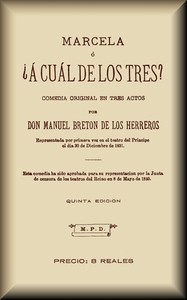
Marcela, o ¿a cuál de los tres? : Comedia original en tres actos
QR code
"Marcela, o ¿a cuál de los tres? : Comedia original en tres actos" by Don Manuel Bretón de los Herreros is a comedic play written in the early 19th century. It’s a sparkling social satire set in Madrid, where the witty young widow Marcela is courted by three very different men—an ardent but shy poet (Don Amadeo), a boastful artillery captain (Don Martín), and a foppish dandy (Don Agapito)—while her loquacious uncle
and sharp-tongued maid complicate the game. The likely focus is a battle of manners, ego, and sincerity as Marcela weighs charm, substance, and freedom in choosing “which of the three.” The opening of the play sets the tone with rapid-fire banter and comic contrasts inside Marcela’s home. Don Timoteo bickers with the maid over his treasured nativity figures, while Don Agapito flatters Marcela with sweets and airs; Don Amadeo arrives to pine in verse and begs Juliana’s help; and Don Martín bursts in, swaggering and talkative. After a garden stroll and a shared meal, Agapito tries to extract a “te quiero,” but Marcela cleverly sends him away for confections and privately coaxes Amadeo’s feelings from a timid letrilla, only for Martín to interrupt with a loud declaration that is itself cut short by the household sensation: the cat Clitemnestra has given birth. Soon after, Amadeo and Martín agree to compete openly for Marcela and to thwart Agapito. At the start of the third act, Timoteo urges Marcela to remarry (hinting at Martín), and Marcela receives three written proposals: Agapito’s syrupy letter, Amadeo’s humble sonnet, and Martín’s bluntly comic plea; undecided, she summons them all to return later for her answer. (This is an automatically generated summary.)
Download for free
For your e-reader or reading app — Kindle, Kobo, Apple Books, Calibre etc.
Kindle → Use Send-to-Kindle
Kobo, Nook etc. → Transfer via USB
Phone, tablet or computer → Open in a reading app
Other formats & older devices
There may be more files related to this item.
About this eBook
| Author | Bretón de los Herreros, Manuel, 1796-1873 |
|---|---|
| Title | Marcela, o ¿a cuál de los tres? : Comedia original en tres actos |
| Original Publication | Madrid: Establecimiento tipográfico de E. Cuesta, 1881. |
| Credits | Produced by Ramón Pajares Box. (This file was produced from images generously made available by The Internet Archive/University of North Carolina at Chapel Hill.) |
| Language | Spanish |
| LoC Class | PQ: Language and Literatures: Romance literatures: French, Italian, Spanish, Portuguese |
| Subject | Comedy plays |
| Subject | Spanish drama -- 19th century |
| Category | Text |
| eBook-No. | 76793 |
| ISBN (HTML) | 979-8-238-76793-2 |
| Release Date | Sep 2, 2025 |
| Copyright | Public domain in the USA. |
| Downloads | 527 downloads in the last 30 days. |
Project Gutenberg eBooks are always free!