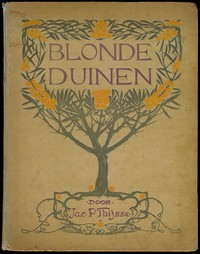
Blonde duinen by Jac. P. Thijsse
QR code
Blonde duinen by Jac. P. Thijsse is an illustrated popular natural history book written in the early 20th century. It offers guided rambles through the Dutch coastal dunes, using vivid observation and approachable explanations to reveal how plants, animals, and landscapes fit together. Expect seasonal field sketches that blend storytelling with fieldcraft, encouraging readers—especially the young—to notice, collect, and care about the living world. The opening of the work sets out a
friendly preface: these “nature albums” are meant to put good color plates and real outdoor experience within easy reach, so that young people learn nature by seeing. It quickly shifts into lively dune vignettes: a teacher’s cheerful “rabbit hunt” with pupils for skulls becomes a lesson in snares, scavengers, and rabbit life (burrows, frosty signs, rampant breeding, evening grazing). A birch-dale chapter follows with bark and fungus, then moths and larvae as masters of disguise (buff-tip, peppered moth, emerald), plus birds such as nightingale, song thrush, willow warbler, and a few deft plant notes (violets’ self-fertilizing flowers, garlic mustard with orange-tip). A June evening piece captures flowers closing and opening, moth- and hawk-moth pollination, and the arrival of bats, toads, hedgehogs, shrews, nightjars, grasshopper warblers, and stone-curlews. A hot June afternoon rounds it out with hedgerow and dune blooms, June beetles in roses, leafcutter bees fashioning brood cells, climbing bryony, showy ragwort and mullein feeders, and small passerines like tree pipit and whinchat—set against the brood-parasitic cuckoo. Overall, these first chapters read as gently didactic rambles that model how to notice, name, and connect dune life. (This is an automatically generated summary.)
Download for free
For your e-reader or reading app — Kindle, Kobo, Apple Books, Calibre etc.
Kindle → Use Send-to-Kindle
Kobo, Nook etc. → Transfer via USB
Phone, tablet or computer → Open in a reading app
Other formats & older devices
There may be more files related to this item.
About this eBook
| Author | Thijsse, Jac. P. (Jacobus Pieter), 1865-1945 |
|---|---|
| Illustrator | Oort, Jan van, 1867-1938 |
| Illustrator | Wenckebach, L. W. R. (Ludwig Willem Reymert), 1860-1937 |
| Title | Blonde duinen |
| Original Publication | Zaandam: Bakkerij "De Ruijter" der firma Verkade & comp., 1910. |
| Credits | Jeroen Hellingman and the Online Distributed Proofreading Team at www.pgdp.net/ for Project Gutenberg |
| Language | Dutch |
| LoC Class | QH: Science: Natural history |
| Subject | Natural history -- Netherlands |
| Subject | Advertising cards -- Netherlands |
| Subject | Koninklijke Verkade (Firm) -- Collectibles |
| Subject | Sand dunes -- Netherlands |
| Category | Text |
| eBook-No. | 76743 |
| ISBN (HTML) | 979-8-238-76743-7 |
| Release Date | Aug 27, 2025 |
| Copyright | Public domain in the USA. |
| Downloads | 494 downloads in the last 30 days. |
Project Gutenberg eBooks are always free!