The Project Gutenberg eBook of Enquire Within Upon Everything, by Anonymous
This eBook is for the use of anyone anywhere in the United States and
most other parts of the world at no cost and with almost no restrictions
whatsoever. You may copy it, give it away or re-use it under the terms
of the Project Gutenberg License included with this eBook or online
at
www.gutenberg.org. If you
are not located in the United States, you will have to check the laws of the
country where you are located before using this eBook.
Title: Enquire Within Upon Everything
The Great Victorian Domestic Standby
Author: Anonymous
Release Date: January 21, 2004 [eBook #10766]
[Most recently updated: February 25, 2021]
Language: English
Character set encoding: UTF-8
Produced by: Jon Ingram, Clytie Siddall and the Online Distributed Proofreading Team
*** START OF THE PROJECT GUTENBERG EBOOK ENQUIRE WITHIN UPON EVERYTHING ***
Enquire Within
Upon Everything
the great Victorian-era domestic standby
with hyperlinked index
"Whether You Wish to Model a Flower in Wax;
to Study the Rules of Etiquette;
to Serve a Relish for Breakfast or Supper;
to Plan a Dinner for a Large Party or a Small One;
to Cure a Headache;
to Make a Will;
to Get Married;
to Bury a Relative;
Whatever You May Wish to Do, Make, or to Enjoy,
Provided Your Desire has Relation to the Necessities of Domestic Life,
I Hope You will not Fail to 'Enquire
Within.'"—Editor.
1894
Table of Contents
- Adulterations of Food, Tests for
- Beverages, Preparation of, and Receipts for
- Bird-Keeping, Bee-Keeping, and Poultry-Keeping
- Carving, Arrangements of the Dinner-Table, etc.
- Children, Rearing and Management of
- Choice of Food, Marketing, etc.
- Confectionery: Cakes, Jellies, Sweetmeats
- Commercial and Monetary Hints, Maxims
- Correct Speaking, Hints on Writing
- Decoration, Painting, Staining, Gilding etc.
- Destruction of Vermin, Noxious Animals
- Dress, Choice, Arrangement, and Care of
- Dyeing, Scouring, Cleaning, Laundry Operations
- Emergencies and Accidents, Drowning, Fire, etc.
- Etiquette, Forms and Ceremonies of
- Food of Various Kinds, When in Season
- Fancy Needlework
- Fuel, Lighting, etc., Economy and Management of
- Furniture, Selection and Arrangement of
- Gardening Operations Throughout the Year
- Household Carpentry, Mending, Repairing
- Indoor Games and Amusements
- Ladies' Employments: Leather-Work, Diaphanie etc.
- Legal Information and Advice
- Medical and Surgical Advice
- Minor Complaints, Cough, Cramp etc.
- Miscellaneous Preparations: Ink, Gum, Cement, etc.
- Outdoor Sports and Pastimes, Lawn Tennis
- Poisoning, Treatment in Cases of
- Preparation of Food, Cooking Operations
- Preserving and Pickling, Hints on
- Modelling, Preparing Botanical Specimens, etc.
- Rules of Conduct: Counsels, Hints, Advice
- Sanitary Precautions and Regulations
- Sauces, Relishes, Zests, How to Prepare
- Tables of Percentages, Interest, Marketing, Wages
- Toilet Requisites, Receipts for, etc.
| title |
price |
| Daily Wants, Dictionary of |
7s. 6d. |
| Useful Knowledge, Dictionary of |
10s. |
| Medical and Surgical Knowledge, Dictionary of |
5s. |
| Reason Why. Christian Denominations |
3s. 6d. |
| Reason Why. Physical Geography and Geology |
3s. 6d. |
| Reason Why. General Science |
2s. 6d. |
| Reason Why. Natural History |
2s. 6d. |
| Historical Reason Why. English History |
2s. 6d. |
| Reason Why. Gardener's and Farmer's |
2s. 6d. |
| Reason Why. Domestic Science for Housewives |
2s. 6d. |
| Biblical Reason Why. Sacred History |
2s. 6d. |
| Family Save-All; or, Secondary Cookery, etc. |
2s. 6d. |
| Journey of Discovery, or, The Interview |
2s. 6d. |
| Practical Housewife and Family Medical Guide |
2s. 6d. |
| Notices to Correspondents |
2s. 6d. |
| Corner Cupboard. A Family Repository |
2s. 6d. |
How a Penny Became a Thousand Pounds
Life Doubled by the Economy of Time
Either of these two Works separately |
2s. 6d.
1s. 6d. cloth |
| Wonderful Things of All Nations, Two Series |
each 2s. 6d. |
| The Historical Finger-Post |
2s. 6d. |
| title |
price |
| History of Progress in Great Britain. Two Series |
each 6s. |
| That's It; or, Plain Teaching. Cloth, gilt edges |
3s. 6d. |
| Walks Abroad and Evenings at Home. Cloth, gilt edges |
3s. 6d. |
| Elegant Work for Delicate Fingers |
1s. |
| Philosophy and Mirth United by Pen and Pencil |
1s. |
| Handy Book of Shopkeeping, or, Shopkeeper's Guide |
1s. |
| Shilling Kitchiner, or, Oracle of Cookery for the Million |
1s. |
If there be any among my Readers who, having turned over the pages of
"Enquire Within," have hastily pronounced them to be confused and
ill-arranged, let them at once refer to The Index, at page 389, and for ever hold their peace.
The Index is, to the vast congregation of useful hints and receipts that
fill the pages of this volume, what the Directory is to the great
aggregation of houses and people in London.
No one, being a stranger to London, would run about asking for "Mr.
Smith." But, remembering the Christian name and the profession of the
individual wanted, he would turn to the Directory, and trace him out.
Like a house, every paragraph in "Enquire Within" has its number,—and
the Index is the Directory which will explain what Facts, Hints, and
Instructions inhabit that number.
For, if it be not a misnomer, we are prompted to say that "Enquire
Within" is peopled with hundreds of ladies and gentlemen, who
have approved of the plan of the work, and contributed something to its
store of useful information. There they are, waiting to be questioned,
and ready to reply. Within each page some one lives to answer for the
correctness of the information imparted, just as certainly as where, in
the window of a dwelling, you see a paper directing you to "Enquire
Within," some one is there to answer you.
Housekeepers of experience live at Nos. 1, 30, 438, 1251 and 2091; old
Dr. Kitchiner lives at 44; Captain Crawley is to be found at 46 and
2568; the well-known Mrs. Warren lives at 1809; Miss Acton at 1310; Dr.
Franklin at 1398; Mrs. Hitching at 215; Mr. Banting at 1768; Dr. Wilson Philip at 1762; Mr. Withering at 2338; Mr. Mechi at 997; Dr. Stenhouse
at 1776; Dr. Erasmus Wilson at 1700; Dr. Southwood Smith at 1743; Dr.
Blair at 2180; M. Soyer at 1130; Dr. Babington at 2407; Miss Gifford at
2337; and Dr. Clark at 2384. In addition to these and many more, a
Doctor lives at 475; a Gardener at 249; a Schoolmaster at 161; a Butcher
at 27; a Dancing-Master at 139; an Artist at 2548; a Naturalist at 2330;
a Dyer at 2682; a Modeller at 2346; a Professed Cook at 1032; a
Philanthropist at 1368; a Lawyer at 1440; a Surgeon at 796; a Chess
Player at 71; a Whist Player, almost next door, at 73; a Chemist at 650;
a Brewer at 2267; a Lawn Tennis Player at 2765; a homœopathic
Practitioner at 925; a Wood-stainer at 1413; two Confectioners at 1628
and 2024; a Poultry-Keeper at 1642; a Meteorologist at 962; Philosophers
at 973 and 1783; a Practical Economist at 985; a Baker at 1002; a Master
of the Ceremonies at 1924 and 2613; a Bird Fancier at 2155: a
Washerwoman at 2729; an Analytical Chemist at 2747; an Accountant at
2769; and so on.
Well! there they live—always at home. Knock at their doors—Enquire
Within. No Fees to Pay!!
Much care has been taken in selecting the information that is given,
and, as is amply shown by the above list, so many kind and competent
friends have lent a hand in the production of this volume that is
impossible to turn to any page without at once being reminded of the
Generous Friend who abides there.
To some extent, though in a far less degree, assistance has been
rendered by the authors of many useful and popular works, for which due
acknowledgment must be made. Chief among these works are Dr. Kitchiner's
"Cooks' Oracle"; "The Cook," in Houlston and Sons' Industrial
Library; "The Shopkeeper's Guide;" "The Wife's Own Cookery," "The
Practical Housewife," and many of the volumes of the "Reason Why"
series.
Lastly, as in everyday life it is found necessary at times to make a
thorough inspection of house and home, and to carry out requisite
repairs, alterations, and additions, this has been done in the recent
editions of "Enquire Within," to which some hundreds of paragraphs have
been added, while others have been remodelled and revised in accordance
with the progress of the times in which we live. Care, however, has been
taken to alter nothing that needed no alteration, so that, practically,
this Popular Favourite is still the old "Enquire Within;"
improved, it is true, but in no way so changed as to place it beyond the
recognition of those to whom it has been a Book Of Constant Reference
since its first appearance.
to the Seventy-Fifth Edition
The unparalleled success achieved by "Enquire Within Upon Everything"
demands special mention from its Publishers at the present moment. Its
prominent characteristics—varied usefulness and cheapness—have won for
it universal esteem. There is scarcely a spot reached by English
civilization to which this book has not found its way, receiving
everywhere the most cordial welcome and winning the warmest praise.
Proof of this world-wide popularity is clearly shown by the record of
the number of copies sold, now amounting to the wonderful total of
One Million Copies
—a sale which the Publishers believe to be absolutely without
precedent among similar books of reference. This result has been
mainly brought about by the kindly interest shown in the book by many
friends, to whom the Publishers' most hearty thanks are tendered for
their generous support and recommendations.
The work of revision has been carried on from year to year with
watchfulness and care, and many Additions have been made, both modern
and interesting, including Homœopathy, Lawn Tennis, &c Enquirers on
the laws of Landlord and Tenant, Husband and Wife, Debtor and Creditor,
are supplied with the latest information. Diseases and their Remedies,
and Medicines, their Uses and Doses, have received special attention.
The Index has been considerably extended, and with the aid of this, and
the Summary of Contents, it is hoped that no Enquirer will fail to
receive complete and satisfactory replies.
The "Enquire Within" and "Reason Why" Series now comprises Twenty-seven
Volumes, containing upwards of Seven Thousand pages of closely printed
matter. They are entirely original in plan, and executed with the most
conscientious care. The Indexes have been prepared with great labour,
and alone occupy about 500 pages. A vast Fund of valuable Information,
embracing every Subject of Interest or Utility, is thus attainable, and
at a merely nominal Cost.
These Works are in such general demand, that the Sale has already
reached considerably upwards of
One-and-a-Half Million Volumes.
The attention of all parties interested in the dissemination of sound
Theoretical Instruction and Practical Knowledge is particularly directed
to the Twenty-seven Volumes in this Series of Popular and Valuable Books.
| volume |
title |
details |
| 1-3 |
Daily Wants, the Dictionary of |
containing
nearly 1,200 pages of Information upon all matters of Practical
and Domestic Utility. Above 118,000 copies have been sold. |
| 4-7 |
Useful Knowledge, the Dictionary of |
a Book
of Reference upon History, Geography, Science, Statistics, &c
A Companion Work to the Dictionary of Daily Wants. |
| 8 & 9 |
Medical and Surgical Knowledge, the Dictionary of |
a Complete Practical Guide on Health and
Disease, for Families, Emigrants, and Colonists. |
| 10 |
Enquire Within Upon Everything |
|
| 11 |
The Reason Why, Christian Denominations |
giving
the Origin, History, and Tenets of the Christian Sects, with
the Reasons assigned by themselves for their Specialities of
Faith and forms of Worship. |
| 12 |
The Reason Why, Physical Geography and Geology |
containing upwards
of 1,200 Reasons, explanatory of the Physical Phenomena of Earth and
Sea, their Geological History, and the Geographical distribution of
Plants, Animals, and the Human Race. |
| 13 |
The Reason Why, Biblical and Sacred History |
a Family Guide to
Scripture Readings, and a Handbook for Biblical Students. |
| 14 |
The Reason Why, General Science |
giving Hundreds of Reasons for
things which, though generally received, are imperfectly understood.
This Volume has reached a sale of 53,000. |
| 15 |
The Reason Why, Historical |
designed to simplify the study of English History. |
| 16 |
The Reason Why, Natural History |
giving Reasons for very numerous
interesting Facts in connection with the Habits and Instincts of the
various Orders of the Animal Kingdom. |
| 17 |
The Reason Why, Gardening and Farming |
giving some Thousands of
Reasons for various Facts and Phenomena in reference to the Cultivation
and Tillage of the Soil. |
| 18 |
The Reason Why, Houswife's Science |
affording to the Manager of
Domestic Affairs intelligible Reasons for the various duties she has to
superintend or to perform. |
| 19 |
Journey of Discovery All Round Our House, or, The Interview |
with
copious Information upon Domestic Matters. |
| 20 |
The Practical Housewife and Family Medical Guide |
a Series of
Instructive Papers on Cookery, Food, Treatment of the Sick, &c, &c |
| 21 |
The Family Save-All |
a System of Secondary Cookery with Hints for
Economy in the use of Articles of Household Consumption. |
| 22 |
Notices to Correspondents |
a Work full of curious Information on
all Subjects, gathered from actual Answers to Correspondents of various
Magazines and Newspapers. |
| 23 |
The Corner Cupboard |
containing Domestic Information, Needlework
Designs, and Instructions for the Aquarium, &c |
| 24 |
Life Doubled by the Economy of Time and How a Penny Became a Thousand Pounds |
The first of these teaches the Value of Moments, and
shows how Life may be abridged by a careless indifference to trifles of
time; the second pursues a similar argument with reference to Money. |
| 25 & 26 |
Wonderful Things |
affording interesting descriptions of the
Wonders of all Nations, with Illustrations. |
| 27 |
The Historical Finger-Post |
giving briefly, but clearly, the
meaning and origin of hundreds of Terms, Phrases, Epithets, Cognomens,
Allusions, &c, in connection with History, Politics, Theology, Law,
Commerce, Literature, Army and Navy, Arts and Sciences, Geography,
Tradition, National, Social, and Personal Characteristics. &c |
1. Choice of Articles of Food
Nothing is more important in the affairs of housekeeping than the choice
of wholesome food. Apropos to this is an amusing conundrum which is as
follows:—"A man went to market and bought two fish. When he
reached home he found they were the same as when he had bought them; yet
there were three! How was this?" The answer is—"He bought two
mackerel, and one smelt!" Those who envy him his bargain need not
care about the following rules; but to others they will be valuable:
2. Mackerel
must be perfectly fresh, or it is a very indifferent fish; it will
neither bear carriage, nor being kept many hours out of the water. The
firmness of the flesh and the clearness of the eyes must be the criteria
of fresh mackerel, as they are of all other fish.
3. Turbot, and all flat white fish
are rigid and firm when fresh; the under side should be of a rich
cream colour. When out of season, or too long kept, this becomes a
bluish white, and the flesh soft and flaccid. A clear bright eye in
any fish is also a mark of its being fresh and good.
4. Cod
is known to be fresh by the rigidity of the muscles (or flesh), the
redness of the gills, and clearness of the eyes. Crimping much
improves this fish.
5. Salmon
The flavour and excellence of this fish depend upon its freshness and
the shortness of time since it was caught; for no method can
completely preserve the delicate flavour that salmon has when just
taken out of the water. A great deal of what is brought to London has
been packed in ice, and comes from the Scotch and Irish rivers, and,
though perfectly fresh, is not quite equal to salmon from English
streams.
6. Herrings
should be eaten when very fresh; and, like mackerel, will not remain
good many hours after they are caught. But they are excellent,
especially for breakfast relishes, either salted, split, dried, and
peppered, or pickled. Mackerel are very good when prepared in either
of these ways.
7. Fresh-Water Fish
The remarks as to firmness and clear fresh eyes apply to this variety
of fish, of which there are carp, tench, pike, perch, &c
8. Lobsters
recently caught, have always some remains of muscular action in the
claws, which may be excited by pressing the eyes with the finger; when
this cannot be produced, the lobster must have been too long kept.
When boiled, the tail preserves its elasticity if fresh, but loses it
as soon as it becomes stale. The heaviest lobsters are the best; when
light they are watery and poor. Hen lobsters may generally be known by
the spawn, or by the breadth of the "flap."
9. Crab and Crayfish
must be chosen by observations similar to those given above in the
choice of lobsters. Crabs have an agreeable smell when fresh.
10. Prawns and Shrimps
when fresh, are firm and crisp.
11. Oysters
If fresh, the shell is firmly closed; when the shells of oysters are
open, they are dead, and unfit for food. The small-shelled oysters,
the Byfleet, Colchester, and Milford, are the finest in flavour.
Larger kinds, as the Torbay oysters, are generally considered only fit
for stewing and sauces, and as an addition to rump-steak puddings and
pies, though some persons prefer them to the smaller oysters, even
when not cooked. Of late years English oysters have become scarce and
dear; and in consequence the American Blue Point oysters find a ready
market.
12. Beef
The grain of ox beef, when good, is loose, the meat red, and the fat
inclining to yellow. Cow beef, on the contrary, has a closer grain and
whiter fat, but the meat is scarcely as red as that of ox beef.
Inferior beef, which is meat obtained from ill-fed animals, or from
those which had become too old for food, may be known by a hard,
skinny fat, a dark red lean, and, in old animals, a line of horny
texture running through the meat of the ribs. When meat rises up
quickly, after being pressed by the finger, it may be considered as
being the flesh of an animal which was in its prime; but when the dent
made by pressure returns slowly, or remains visible, the animal had
probably passed its prime, and the meat consequently must be of
inferior quality.
13. Veal
should be delicately white, though it is often juicy and
well-flavoured when rather dark in colour. Butchers, it is said, bleed
calves purposely before killing them, with a view to make the flesh
white, but this also makes it dry and flavourless. On examining the
loin, if the fat enveloping the kidney be white and firm-looking, the
meat will probably be prime and recently killed. Veal will not keep so
long as an older meat, especially in hot or damp weather: when going,
the fat becomes soft and moist, the meat flabby and spotted, and
somewhat porous like sponge. Large, overgrown veal is inferior to
small, delicate, yet fat veal. The fillet of a cow-calf is known by
the udder attached to it, and by the softness of the skin; it is
preferable to the veal of a bull-calf.
14. Mutton
The meat should be firm and close in grain, and red in colour, the fat
white and firm. Mutton is in its prime when the sheep is about five
years old, though it is often killed much younger. If too young, the
flesh feels tender when pinched; if too old, on being pinched it
wrinkles up, and so remains. In young mutton, the fat readily
separates; in old, it is held together by strings of skin. In sheep
diseased of the rot, the flesh is very pale-coloured, the fat
inclining to yellow; the meat appears loose from the bone, and, if
squeezed, drops of water ooze out from the grains; after cooking, the
meat drops clean away from the bones. Wether mutton is preferred to
that of the ewe; it may be known by the lump of fat on the inside of
the thigh.
15. Lamb
This meat will not keep long after it is killed. The large vein in the
neck is bluish in colour when the fore quarter is fresh, green when it
is becoming stale. In the hind quarter, if not recently killed, the
fat of the kidney will have a slight smell, and the knuckle will have
lost its firmness.
16. Pork
When good, the rind is thin, smooth, and cool to the touch; when
changing, from being too long killed, it becomes flaccid and clammy.
Enlarged glands, called kernels, in the fat, are marks of an ill-fed
or diseased pig.
17. Bacon
should have a thin rind, and the fat should be firm, and tinged red by
the curing; the flesh should be of a clear red, without intermixture
of yellow, and it should firmly adhere to the bone. To judge the state
of a ham, plunge a knife into it to the bone; on drawing it back, if
particles of meat adhere to it, or if the smell is disagreeable, the
curing has not been effectual, and the ham is not good; it should, in
such a state, be immediately cooked. In buying a ham, a short thick
one is to be preferred to one long and thin. Of English hams,
Yorkshire, Westmoreland, and Hampshire are most esteemed; of foreign,
the Westphalian. The bacon and "sugar cured" hams now imported in
large quantities from Canada and the United States are both cheap and
good.
18. Venison
When good, the fat is clear, bright, and of considerable thickness. To
know when it is necessary to cook it, a knife must be plunged into the
haunch; and from the smell the cook must determine whether to dress it
at once, or to keep it a little longer.
19. Turkey
In choosing poultry, the age of the bird is the chief point to be
attended to. An old turkey has rough and reddish legs; a young one
smooth and black. Fresh killed, the eyes are full and clear, and the
feet moist. When it has been kept too long, the parts about the vent
have a greenish appearance.
20. Common Domestic Fowls
when young, have the legs and combs smooth; when old these parts are
rough, and on the breast long hairs are found when the feathers axe
plucked off: these hairs must be removed by singeing. Fowls and
chickens should be plump on the breast, fat on the back, and
white-legged.
21. Geese
The bills and feet are red when old, yellow when young. Fresh killed,
the feet are pliable, but they get stiff when the birds are kept too
long. Geese are called green when they are only two or three months
old.
22. Ducks
Choose them with supple feet and hard plump breasts. Tame ducks have
yellow feet, wild ones red.
23. Pigeons
are very indifferent food when they are kept too long. Suppleness of
the feet shows them to be young; the flesh is flaccid when they are
getting bad from keeping. Tame pigeons are larger than wild pigeons,
but not so large as the wood pigeon.
24. Hares and Rabbits
when old, have the haunches thick, the ears dry and tough, and the
claws blunt and ragged. A young hare has claws smooth and sharp, ears
that easily tear, and a narrow cleft in the lip. A leveret is
distinguished from a hare by a knob or small bone near the foot.
25. Partridges
when young, have yellowish legs and dark-coloured bills. Old
partridges are very indifferent eating.
26. Woodcocks and Snipes
when old, have the feet thick and hard; when these are soft and
tender, they are both young and fresh killed. When their bills become
moist, and their throats muddy, they have been too long killed.
(See Food in Season, Pars. 30—42.)
27. Names and Situations of the Various Joints
28. Meats
In different parts of the kingdom the method of cutting up carcases
varies. That which we describe below is the most general, and is known
as the English method.
| i. Beef |
|
|
| Fore-Quarter |
fore-rib |
(five ribs) |
|
middle rib |
(four ribs) |
|
chuck |
(three ribs) |
|
shoulder piece |
(top of fore leg) |
|
brisket |
(lower or belly part of the ribs) |
|
clod |
(fore shoulder blade) |
|
neck |
|
|
shin |
(below the shoulder) |
|
cheek |
|
| Hind-Quarter |
Sirloin |
|
|
rump |
|
|
aitch-bone |
these are the three divisions of the upper part of the quarter |
|
buttock and mouse-buttock |
which divide the thigh |
|
veiny piece |
joining the buttock |
|
thick flank and thin flank |
(belly pieces) |
|
and leg |
|
|
|
The sirloin and rump of both sides form a baron. |
Beef is in season all the year; best in winter.
The Miser Fasts with Greedy Mind to Spare.
| ii. Mutton |
|
|
|
shoulder |
|
|
breast |
(the belly) |
| over which are the |
loin |
(chump, or tail end) |
|
loin |
(best end) |
|
neck |
(best end) |
|
neck |
(scrag end) |
|
leg |
|
|
haunch |
or leg and chump end of loin |
|
and head |
|
|
A chine |
is two necks |
|
a saddle |
two loins |
Mutton is best in winter, spring, and autumn.
| iii. Lamb |
|
|
| is cut into |
fore quarter |
|
|
hind quarter |
|
|
saddle |
|
|
loin |
|
|
neck |
|
|
breast |
|
|
leg |
|
|
and shoulder |
|
'Grass lamb' is in season from Easter to Michaelmas;
'House lamb' from Christmas to Lady-day.
| iv. Pork |
|
|
| is cut into |
leg |
|
|
hand or shoulder |
|
|
hind loin |
|
|
fore loin |
|
|
belly-part |
|
|
spare-rib, or neck |
|
|
and head |
|
Pork is in season nearly all the year round, but is better relished
in winter than in summer.
| v. Veal |
|
|
| is cut into |
neck |
(scrag end) |
|
neck |
(best end) |
|
loin |
(best end) |
|
loin |
(chump, or tail end) |
|
fillet |
(upper part of hind leg) |
|
hind knuckle |
which joins the fillet |
|
knuckle of fore leg |
|
|
blade |
(bone of shoulder) |
|
breast |
(best end) |
|
and breast |
(brisket end) |
Veal is always in season, but dear in winter and spring.
| vi. Venison |
|
|
| is cut into |
haunch |
|
|
neck |
|
|
shoulder |
|
|
and breast |
|
Doe venison is best in January, October, November, and December,
and buck venison in June, July, August, and September.
vii. Scottish mode of division.
According to the English method the carcase of beef is disposed of more
economically than upon the Scotch plan. The English plan affords better
steaks, and better joints for roasting; but the Scotch plan gives a
greater variety of pieces for boiling. The names of pieces in the Scotch
plan, not found in the English, are:
| the hough |
or hind leg |
| the nineholes |
or English buttock |
| the large and small runner |
taken from the rib and chuck pieces of the English plan |
| the shoulder-lyer |
the English shoulder, but cut differently |
| the spare-rib or fore-sye |
the sticking piece, &c |
The Scotch also cut mutton differently.
viii. Ox-tail
is much esteemed for purposes of soup; so also is the Cheek. The
Tongue is highly esteemed. The Heart, stuffed with veal stuffing,
roasted, and served hot, with red currant jelly as an accompaniment,
is a palatable dish. When prepared in this manner it is sometimes
called Smithfield Hare, on account of its flavour being
something like that of roast hare.
ix. Calves' Heads
are very useful for various dishes; so also are their Knuckles, Feet,
Heart, &c
29. Relative Economy of the Joints
i. The Round
is, in large families, one of the most profitable parts owing to its
comparative freedom from bone: it is usually boiled, and is generally
sold at the same price as the sirloin, and ribs. It is sometimes
divided downwards, close to the bone; one side being known as the
top side, and the other as the silver side. Either of
these parts is as good roasted as boiled.
ii. The Brisket
is always less in price than the roasting parts. It is not so
economical a part as the round, having more bone with it, and more
fat. Where there are children, very fat joints are not desirable,
being often disagreeable to them, and sometimes prejudicial,
especially if they have a dislike to fat. This joint also requires
more cooking than many others; that is to say, it requires a double
allowance of time to be given for simmering it; it will, when served,
be hard and scarcely digestible if no more time be allowed to simmer
it than that which is sufficient for other joints and meats. Joints
cooked in a boiler or saucepan, should always be simmered, that
is to say, boiled as slowly as possible. Meat boiled fast, or "at a
gallop," as the phrase goes, is always tough and tasteless. The
brisket is excellent when stewed; and when cooked fresh (i.e.,
unsalted) an excellent stock for soup may be extracted from it, and
yet the meat will serve as well for dinner.
iii. The Edge-bone, or Aitch-bone
is not considered to be a very economical joint, the bone being large
in proportion to the meat; but the greater part of it, at least, is as
good as that of any prime part. On account of the quantity of bone in
it, it is sold at a cheaper rate than the best joints. It may be
roasted or boiled.
iv. The Rump
is the part of which the butcher makes great profit, by selling it in
the form of steaks, but the whole of it may be purchased as a joint,
and at the price of other prime parts. It may be turned to good
account in producing many excellent dishes. If salted, it is simply
boiled; if used unsalted, it is generally stewed.
v. The Veiny Piece
is sold at a moderate price per pound; but, if hung for a day or two,
it is very good and very profitable. Where there are a number of
servants and children to have an early dinner, this part of beef will
be found desirable.
vi. The Leg and Shin
afford excellent stock for soup; and, if not reduced too much, the
meat taken from the bones may be served as a stew with vegetables; or
it may be seasoned, pounded with butter, and potted; or, chopped very
fine, and seasoned with herbs, and bound together by egg and bread
crumbs, it may be fried in balls, or in the form of large eggs, and
served with a gravy made with a few spoonfuls of the soup.
vii. Ox-cheek
makes excellent soup. The meat, when taken from the bones, may be
served as a stew.
viii. The Sirloin and the Ribs
are the roasting parts of beef, and these bear in all places the
highest price. The more profitable of these two joints at a family
table is the ribs. The bones, if removed from the beef before it is
roasted, are useful in making stock for soup. When boned, the meat of
the ribs is often rolled up on the shape of a small round or fillet,
tied with string, and roasted; and this is the best way of using it,
as it enables the carver to distribute equally the upper part of the
meat with the fatter parts, at the lower end of the bones.
30. Food in Season
There is an old maxim, "A place for everything, and everything in its
place," To which may be added another, "A season for everything, and
everything in season."
[Fish, Poultry, &c, whose names are distinguished by Italics
in each month's "Food in Season," are to be had in the highest
perfection during the month.]
31. In Season in January
i. Fish:
Barbel, brill, carp, cod, crabs, cray-fish, dabs, dace, eels,
flounders, haddocks, herrings, lampreys, ling, lobsters, mussels,
oysters, perch, pike, plaice, prawns, salmon-trout, shrimps, skate,
smelts, soles, sprats, sturgeon, tench, thornback, turbot,
whiting.
ii. Meat:Beef, house-lamb, mutton, pork, veal, and doe venison.
iii. Poultry and Game:Capons, chickens, ducks, wild-ducks, fowls,
geese, grouse, hares, larks, moor-game, partridges, pheasants,
pigeons (tame), pullets, rabbits, snipes, turkeys (hen), widgeons,
woodcocks.
iv. Vegetables:Beet, broccoli (white and purple), Brussels sprouts,
cabbage, cardoons, carrots, celery, chervil, colewort, cresses,
endive, garlic, herbs (dry), Jerusalem artichokes, kale (Scotch),
leeks, lettuces, mint (dry), mustard, onions, parsley, parsnips,
potatoes, rape, rosemary, sage, salsify, Savoy cabbages, scorzonera,
shalots, skirrets, sorrel, spinach (winter), tarragon, thyme, turnips.
v. Forced Vegetables:Asparagus, cucumbers, mushrooms, sea-kale.
vi. Fruit:Almonds.
Apples: Golden pippin, golden russet, Kentish pippin,
nonpareil, winter pearmain.
Pears: Bergamot d'Hollande, Bon Chrétien, Chaumontel,
Colmar, winter beurré.
Grapes: English and foreign.
Chestnuts,
medlars,
oranges,
walnuts,
filbert nuts.
The Hypocrite Will Fast Seem More Holy.
32. In Season in February
i. Fish
Barbel, brill, carp, cockles, cod, crabs, cray-fish, dabs, dace, eels,
flounders, haddocks, herrings, lampreys, ling, lobsters, mussels,
oysters, perch, pike, plaice, prawns, salmon, shrimps, skate, smelts,
soles, sturgeon, tench, thornback, turbot, whiting.
ii. Meat
Beef, house-lamb, mutton, pork, veal.
iii. Poultry and Game
Capons, chickens, ducklings, geese, hares, partridges, pheasants,
pigeons (tame and wild), rabbits (tame), snipes, turkeys, turkey
poults, wild-ducks, woodcocks.
iv. Vegetables
Beet, broccoli (white and purple), Brussels sprouts, cabbage, cardoons,
carrots, celery, chervil, colewort, cresses, endive, garlic, herbs
(dry), Jerusalem artichokes, leeks, lettuces, mint (dry), mushrooms,
onions, parsnips, parsley, potatoes, radish, rape, rosemary, sage,
salsify, Savoys, scorzonera, shalots, skirrets, sorrel, spinach,
sprouts, tarragon, thyme, turnips, winter savoury.
v. Forced Vegetables
Asparagus, cucumbers, mushrooms, sea-kale, &c
vi. Fruit
Apples: Golden pippin, golden russet, Holland pippin, Kentish pippin,
nonpareil, Wheeler's russet, winter pearmain. Chestnuts, oranges.
Pears: Bergamot, winter Bon Chrétien, winter Russelet.
33. In Season in March
i. Fish
Brill, carp, cockles, cod, conger-eels, crabs, dabs, dory, eels,
flounders, ling, lobsters, mackerel, mullets, mussels, oysters, perch,
pike, plaice, prawns, salmon, salmon-trout, shrimps, skate, smelts,
soles, sturgeon, turbot, tench, and whiting.
ii. Meat
Beef, house-lamb, mutton, pork, veal.
iii. Poultry and Game
Capons, chickens, ducklings, fowls, geese, grouse, leverets, pigeons,
rabbits, snipes, turkeys, woodcocks.
iv. Vegetables
Artichokes (Jerusalem), beet, broccoli (white and purple), Brussels
sprouts, cabbage, cardoons, carrots, celery, chervil, colewort,
cresses, endive, garlic, herbs (dry), kale (sea and Scotch), lettuces,
mint, mushrooms, mustard, onions, parsley, parsnips, potatoes, rape,
rosemary, sage, Savoys, shalots, sorrel, spinach, tarragon, thyme,
turnips, turnip-tops.
v. Forced Vegetables
Asparagus, French beans, cucumbers, and rhubarb.
vi. Fruit
Apples: Golden russet, Holland pippin, Kentish pippin, nonpareil,
Norfolk beefing, Wheeler's russet. Chestnuts, oranges. Pears:
Bergamot, Chaumontel, winter Bon Chrétien. Forced: Strawberries.
34. In Season in April
i. Fish
Brill, carp, chub, cockles, cod, conger-eels, crabs, dabs,
dory, eels, floandeis, halibut, herrings, ling, lobsters,
mackerel, mullets, mussels, oysters, perch, pike, prawns,
plaice, salmon, shrimps, skate, smelts, soles, sturgeon,
tench, trout, turbot, whiting.
ii. Meat
Beef, grass-lamb, house-lamb, mutton, pork, veal.
iii. Poultry and Game
Chickens, ducklings, fowls, geese, leverets, pigeons, pullets,
rabbits, turkey poults, wood-pigeons.
iv. Vegetables
Asparagus, broccoli, chervil, colewort, cucumbers, endive, fennel,
herbs of all sorts, lettuce, onions, parsley, parsnips, peas,
radishes, sea-kale, sorrel, spinach, small salad, tarragon,
turnip-radishes, turnip-tops, and rhubarb.
vi. Fruit
Apples: Golden russet, nonpareil, Wheeler's russet. Nuts, oranges.
Pears: Bergamot, Bon Chrétien, Carmelite. Forced: Apricots,
cherries, strawberries.
35. In Season in May
i. Fish
Brill, carp, chub, cod, conger-eels, crab, cray-fish, dabs,
dace, dory, eels, flounders, gurnets, haddock, halibut, herring, ling,
lobsters, mackerel, mullet, perch, pike, plaice, prawns,
salmon, shrimps, skate, smelts, soles, sturgeon, tench,
trout, turbot, whiting.
ii. Meat
Beef, grass-lamb, house-lamb, mutton, pork, veal.
iii. Poultry and Game
Chickens, ducklings, fowls, geese, leverets, pigeons, pullets,
rabbits; wood-pigeons.
iv. Vegetables
Angelica, artichokes, asparagus, balm, kidney-beans, cabbage, carrots,
cauliflowers, chervil, cucumbers, fennel, herbs of all sorts, lettuce,
mint, onions, parsley, peas, new potatoes, radishes, rhubarb, salad of
all sorts, sea-kale, sorrel, spinach, turnips.
vi. Fruit
Apples: Golden russet, winter russet. May-duke cherries; currants;
gooseberries; melons. Pears: L'amozette, winter-green. Forced:
Apricots, peaches, strawberries.
36. In Season in June
i. Fish
Carp, cod, conger-eels, crabs, cray-fish, dabs, dace, dory,
eels, flounders, gurnets, haddocks, herrings, ling, lobsters,
mackerel, mullet, perch, pike, plaice, prawns, salmon,
salmon-trout, skate, smelts, soles, sturgeon, tench, trout,
turbot, whitebait, whiting.
ii. Meat
Beef, grass-lamb, house-lamb, mutton, pork, veal, buck venison.
iii. Poultry and Game
Chickens, ducklings, fowls, geese, leverets, pigeons, plovers,
pullets, rabbits, turkey poults, wheat-ears, wood-pigeons.
iv. Vegetables
Angelica, artichokes, asparagus, beans (French, kidney, and Windsor),
white beet, cabbage, carrots, cauliflowers, chervil, cucumbers,
endive, herbs of all sorts, leeks, lettuce, onions, peas, potatoes,
radishes, salad of all sorts, spinach, turnips, vegetable marrow.
v. For Drying
Burnet, mint, tarragon, lemon thyme.
vi. Fruit
Apples: Quarrenden, stone pippin, golden russet. Apricots. Cherries:
May-duke, bigaroon, white-heart. Currants; gooseberries; melons.
Pears: Winter-green. Strawberries. Forced: Grapes, nectarines,
peaches, pines.
37. In Season in July
i. Fish
Barbel, brill, carp, cod, conger-eels, crabs, cray-fish, dabs,
dace, dory, eels, flounders, gurnets, haddocks, herrings, ling,
lobsters, mackerel, mullet, perch, pike, plaice,
prawns, salmon, skate, soles, tench, thornback, trout.
ii. Meat
Beef, grass-lamb, mutton, veal, buck venison.
iii. Poultry and Game
Chickens, ducks, fowls, green geese, leverets, pigeons,
plovers, rabbits, turkey poults, wheat-ears, wild pigeons, wild
rabbits.
iv. Vegetables
Artichokes, asparagus, balm, beans (French, kidney, scarlet, and
Windsor), carrots, cauliflowers, celery, chervil, cucumbers, endive,
herbs of all sorts, lettuces, mushrooms, peas, potatoes, radishes,
salads of all sorts, salsify, scorzonera, sorrel, spinach, turnips.
v. For Drying
Knotted marjoram, mushrooms, winter savoury.
vi. For Pickling
French beans, red cabbage, cauliflowers, garlic, gherkins,
nasturtiums, onions.
vii. Fruit
Apples: Codlin, jennetting, Margaret, summer pearmain, summer pippin,
quarrenden. Apricots, cherries (black-heart), currants, plums,
greengages, gooseberries, melons, nectarines, peaches. Pears:
Catherine, green-chisel, jargonelle. Pineapples, raspberries,
strawberries.
38. In Season in August
i. Fish
Barbel, brill, carp, cod, conger-eels, crabs, cray-fish, dabs,
dace, eels, flounders, gurnets, haddocks, herrings, lobsters,
mackerel, mullet, oysters, perch, pike, plaice,
prawns, salmon, skate, tench, thornback, turbot, whiting.
ii. Meat
Beef, grass-lamb, mutton, veal, buck venison.
iii. Poultry and Game
Chickens, ducks, fowls, green geese, grouse (from 12th),
leverets, pigeons, plovers, rabbits, turkeys, turkey poults,
wheat-ears, wild ducks, wild pigeons, wild rabbits.
iv. Vegetables
Artichokes, beans (French, kidney, scarlet and Windsor), white beet,
carrots, cauliflowers, celery, cucumbers, endive, pot-herbs of all
sorts, leeks, lettuces, mushrooms, onions, peas, potatoes, radishes,
salad of all sorts, salsify, scorzonera, shalots, spinach, turnips.
v. For Drying
Basil, sage, thyme.
vi. For Pickling
Red cabbage, capsicums, chilies, tomatoes, walnuts.
vii. Fruit
Apples: Codlin, summer pearmain, summer pippin. Cherries, currants,
figs, filberts, gooseberries, grapes, melons, mulberries, nectarines,
peaches. Pears: Jargonelle, summer, Bon Chrétien, Windsor. Plums,
greengages, raspberries, Alpine strawberries.
Without Economy None can be Rich.
39. In Season in September
i. Fish
Barbel, brill, carp, cockles, cod, conger-eels, crab, dace,
eels, flounders, gurnets, haddocks, hake, herrings, lobsters, mullet,
mussels, oysters, perch, pike, plaice, prawns, shrimps, soles,
tench, thornback, turbot, whiting.
ii. Meat
Beef, mutton, pork, veal, buck venison.
iii. Poultry and Game
Chickens, ducks, fowls, green geese, grouse, hares, larks,
leverets, partridges, pigeons, plovers, rabbits, teal, turkeys,
turkey poults, wheat-ears, wild ducks, wild pigeons, wild
rabbits.
iv. Vegetables
Artichokes, Jerusalem artichokes, beans (French and scarlet),
cabbages, carrots, cauliflowers, celery, cucumbers, endive, herbs of
all sorts, leeks, lettuces, mushrooms, onions, parsnips, peas,
potatoes, radishes, salad of all sorts, shalots, turnips.
v. Fruit
Apples: Golden nob, pearmain, golden rennet. Cherries (Morella),
damsons, figs, filberts. Grapes: Muscadine, Frontignac, red and black
Hamburgh, Malmsey. Hazel nuts, walnuts, medlars, peaches. Pears:
Bergamot, brown beurré. Pineapples, plums, quinces, strawberries,
walnuts.
40. In Season in October
i. Fish
Barbel, brill, turbot, carp, cockles, cod, conger-eels, crabs,
dace, dory, eels, gudgeon, haddocks, hake, halibut,
herrings, lobsters, mussels, oysters, perch, pike, prawns,
salmon-trout, shrimps, smelts, soles, tench, thornback, whiting.
ii. Meat
Beef, mutton, pork, veal, doe venison.
iii. Poultry and Game
Chickens, dotterel, ducks, fowls, green geese, grouse, hares, larks,
moor-game, partridges, pheasants, pigeons, rabbits, snipes,
teal, turkey, wheat-ears, widgeon, wild ducks, wild pigeons, wild
rabbits, woodcocks.
iv. Vegetables
Artichokes, Jerusalem artichokes, broccoli, cabbages, cauliflowers,
celery, coleworts, endive, herbs of all sorts, leeks, onions,
parsnips, peas, potatoes, radishes, salad, Savoys, scorzonera,
skirrets, shalots, spinach (winter), tomatoes, truffles, turnips.
v. Fruit
Apples: Pearmain, golden pippin, golden rennet, royal russet. Black
and white bullace, damsons, late figs, almonds, filberts, hazel nuts,
walnuts, filberts. Grapes, medlars. Peaches: Old Newington, October.
Pears: Bergamot, beurré, Chaumontel, Bon Chrétien, swan's-egg.
Quinces, services, walnuts.
41. In Season in November
i. Fish
Barbel, brill, turbot, carp, cockles, cod, crabs, dace, dory,
eels, gudgeons, gurnets, haddocks, hake, halibut, herrings,
ling, lobsters, mussels, oysters, perch, pike, plaice, prawns,
salmon, shrimps, skate, smelts, soles, sprats, tench, thornback,
turbot, whiting.
ii. Meat
Beef, house-lamb, mutton, pork, veal, doe venison.
iii. Poultry and Game
Chickens, dotterel, ducks, fowls, geese, grouse, hares, larks,
partridges, pheasants, pigeons, rabbits, snipes, teal, turkey,
wheat-ears, widgeon, wild ducks, wood-cocks.
iv. Vegetables
Jerusalem artichokes, beet root, borecole, broccoli, cabbages,
cardoons, carrots, celery, chervil, coleworts, endive, herbs of all
sorts, leeks, lettuces, onions, parsnips, potatoes, salad, Savoys,
scorzonera, skirrets, shalots, spinach, tomatoes, turnips.
vi. Fruit
Almonds. Apples: Holland pippin, golden pippin, Kentish pippin,
nonpareil, winter pearmain, Wheeler's russets. Bullace, chestnuts,
hazel nuts, walnuts, filberts, grapes, medlars. Pears: Bergamot,
Chaumontel, Bon Chrétien.
With Economy, Few Need be Poor.
42. In Season in December
i. Fish
Barbel, brill, turbot, carp, cockles, cod, crabs, dab,
dory, eels, gudgeon, gurnets, haddocks, bake, halibut,
herrings, ling, lobsters, mackerel, mussels, oysters, perch,
pike, plaice, ruffe, salmon, shrimps, skate, smelts, soles,
sprats, sturgeon, tench, whitings.
ii. Meat
Beef, house-lamb, mutton, pork, veal, doe venison.
iii. Poultry and Game
Capons, chickens, ducks, fowls, geese, grouse, guinea-fowl, hares,
larks, partridges, pea-fowl, pheasants, pigeons, rabbits, snipes,
teal, turkeys, wheat-ears, widgeon, wild ducks, woodcocks.
iv. Vegetables
Jerusalem artichokes, beet root, borecole, white and purple broccoli,
cabbages, cardoons, carrots, celery, endive, herbs of all sorts,
leeks, lettuces, onions, parsnips, potatoes, salad, Savoys,
scorzonera, skirrets, shalots, spinach, truffles, turnips,
forced asparagus.
v. Fruit
Almonds. Apples: Golden pippin, nonpareil, winter pearmain, golden
russet. Chestnuts, hazel nuts, walnuts, filberts, Almeria grapes,
medlars, oranges. Pears: Bergamot, beurré d'hiver.
43. Drying Herbs
Fresh herbs are preferable to dried ones, but as they cannot always be
obtained, it is most important to dry herbs at the proper seasons:
| Basil |
is in a fit state for drying about the middle of August |
| Burnet |
in June, July, and August |
| Chervil |
in May, June, and July |
| Elder Flowers |
in May, June, and July |
| Knotted Marjoram |
during July |
| Lemon Thyme |
end of July and through August |
| Mint |
end of June and July |
| Orange Flowers |
May, June, and July |
| Parsley |
May, June, and July |
| Sage |
August and September |
| Summer Savoury |
end of July and August |
| Tarragon |
June, July, and August |
| Thyme |
end of July and August |
| Winter Savoury |
end of July and August |
These herbs always at hand will be a great aid to the cook. Herbs should
be gathered on a dry day; they should be immediately well cleansed, and
dried by the heat of a stove or Dutch oven. The leaves should then be
picked off, pounded and sifted, put into stoppered bottles, labelled,
and put away for use. Those who are unable or may not care to take the
trouble to dry herbs, can obtain them prepared for use in bottles at the
green-grocer's.
Do Good to your Enemy, that he may become Your Friend.
44. Dr. Kitchiner's Rules for Marketing
The best rule for marketing is to pay ready money for everything,
and to deal with the most respectable tradesmen in your
neighbourhood. If you leave it to their integrity to supply you with a
good article at the fair market price, you will be supplied with
better provisions, and at as reasonable a rate as those
bargain-hunters who trot "around, around, around about" a
market till they are trapped to buy some unchewable old
poultry, tough tup-mutton, stringy cow-beef, or
stale fish, at a very little less than the price of prime and
proper food. With savings like these they toddle home in
triumph, cackling all the way, like a goose that has got ankle-deep
into good luck. All the skill of the most accomplished cook will avail
nothing unless she is furnished with prime provisions. The best way to
procure these is to deal with shops of established character: you may
appear to pay, perhaps, ten per cent. more than you would were
you to deal with those who pretend to sell cheap, but you would be
much more than in that proportion better served.
Every trade has its
tricks and deceptions; those who follow them can deceive you if they
please, and they are too apt to do so if you provoke the exercise of
their over-reaching talent. Challenge them to a game at "Catch who
can," by entirely relying on your own judgment, and you will soon
find nothing but very long experience can make you equal to the combat
of marketing to the utmost advantage. If you think a tradesman has
imposed upon you, never use a second word, if the first will not do,
nor drop the least hint of an imposition; the only method to induce
him to make an abatement is the hope of future favours; pay the
demand, and deal with the gentleman no more; but do not let him see
that you are displeased, or as soon as you are out of sight your
reputation will suffer as much as your pocket has. Before you go to
market, look over your larder, and consider well what things are
wanting—especially on a Saturday. No well-regulated family can suffer
a disorderly caterer to be jumping in and out to make purchases on a
Sunday morning. You will be enabled to manage much better if you will
make out a bill of fare for the week on the Saturday before; for
example, for a family of half a dozen:
| Sunday |
Roast beef and pudding. |
| Monday |
Fowl, what was left of pudding fried, or warmed in the Dutch oven. |
| Tuesday |
Calf's head, apple pie. |
| Wednesday |
Leg of mutton. |
| Thursday |
Ditto broiled or hashed, and pancakes. |
| Friday |
Fish, pudding. |
| Saturday |
Fish, or eggs and bacon. |
It is an excellent plan to have certain things on certain days. When
your butcher or poulterer knows what you will want, he has a better
chance of doing his best for you; and never think of ordering beef for
roasting except for Sunday. When you order meat, poultry, or fish,
tell the tradesman when you intend to dress it: he will then have it
in his power to serve you with provision that will do him credit,
which the finest meat, &c, in the world will never do, unless it has
been kept a proper time to be ripe and tender.
(Kitchiner's Cook's Oracle 56th Thousand. 5s. Houlston & Sons.)
45. The Family Circle
Under this title a group of acquaintances in London once instituted
and carried out a series of friendly parties. The following form of
invitation, and the rules of the "Family Circle," will be found
interesting, probably useful:
Will you do me the favour of meeting here, as a guest, on ——
next, at seven precisely, a few friends who have kindly joined in an
attempt to commence occasional pleasant and social parties, of which
the spirit and intent will be better understood by the perusal of
the few annexed remarks and rules from
Yours sincerely, ——
"They manage it better in France," is a remark to be often applied
with reference to social life in England, and the writer fancies
that the prevalence here of a few bad customs, easily changed,
causes the disadvantageous difference between ourselves and our more
courteous and agreeable neighbours.
-
Worldly appearance; the phantom leading many to suppose that
wealth is the standard of worth—in the minds of friends, a notion
equally degrading to both parties.
-
Overdress; causing unnecessary expense and waste of time.
-
Expensive entertainments, as regards refreshments.
-
Late hours.
The following brief rules are suggested, in a hope to show the way
to a more constant, easy, and friendly intercourse amongst friends,
the writer feeling convinced that society is equally beneficial and
requisite—in fact, that mankind in seclusion, like the sword in the
scabbard, often loses polish, and gradually rusts.
- That meetings be held in rotation at each member's house,
for the enjoyment of conversation; music, grave and gay; dancing,
gay only; and card-playing at limited stakes.
- That such meetings commence at seven and end about or after
twelve, and that members and guests be requested to remember that
punctuality has been called the politeness of kings.
- That as gentlemen are allowed for the whole season to
appear, like the raven, in one suit, ladies are to have the like
privilege; and that no lady be allowed to quiz or notice the habits
of another lady; and that demi-toilette in dress be considered the
better taste in the family circle; not that the writer wishes to
raise or lower the proper standard of ladies' dress, which ought to
be neither too high nor too low, but at a happy medium.
- That any lady infringing the last rule be liable to reproof
by the oldest lady present at the meeting, if the oldest lady, like
the oldest inhabitant, can be discovered.
- That every member or guest, be requested to bring with them
their own vocal, instrumental, or dance music, and take it away with
them, if possible, to avoid loss and confusion.
- That no member or guest, able to sing, play, or dance,
refuse, unless excused by medical certificate; and that no cold or
sore throat be allowed to last more than a week.
- That as every member or guest known to be able to sing,
play, or dance, is bound to do so if requested, the performer
(especially if timid) is to be kindly criticized and encouraged; it
being a fact well known, that the greatest masters of an art are
always the most lenient critics, from their deep knowledge of the
feeling, intelligence, and perseverance required to at all approach
perfection.
- That gentlemen present do pay every attention to ladies,
especially visitors; but such attention is to be general, and not
particular—for instance, no gentleman is to dance more than three
times with one lady during the evening, except in the case of
lovers, privileged to do odd things during their temporary lunacy,
and also married couples, who are expected to dance together at
least once during the evening, and oftener if they please.
- That to avoid unnecessary expense, the refreshments be
limited to cold meat, sandwiches, bread, cheese, butter, vegetables,
fruits, tea, coffee, negus, punch, malt liquors, &c, &c
- That all personal or face-to-face laudatory speeches
(commonly called toasts, or, as may be, roasts) be for the future
forbidden, without permission or inquiry, for reasons
following:—That as the family circle includes bachelors and
spinsters, and he, she, or they may be secretly engaged, it will be
therefore cruel to excite hopes that may be disappointed; and that
as some well-informed Benedick of long experience may after supper
advise the bachelor to find the way to woman's heart—vice
versa, some deep-feeling wife or widow, by "pity moven," may,
perhaps, after supper advise the spinster the other way, which, in
public, is an impropriety manifestly to be avoided.
- (suggested by a lady). That any lady, after supper,
may (if she please) ask any gentleman apparently diffident, or
requiring encouragement, to dance with her, and that no gentleman
can of course refuse so kind a request.
- That no gentleman be expected to escort any lady home on
foot beyond a distance of three miles, unless the gentleman be
positive and the lady agreeable.
Rule the Last: That as the foregoing remarks and rules are intended,
in perfect good faith and spirit, to be considered general and not
personal, no umbrage is to be taken, and the reader is to bear in
mind the common and homely saying,—
"Always at trifles scorn to take offence,
It shows great pride and very little sense."
P.S.—To save trouble to both parties, this invitation be deemed
accepted, without the necessity to reply, unless refused within
twenty-four hours.
As a Man Lives, so shall he Die.
46. Evening Pastimes
Among the innocent recreations of the fireside, there are few more
commendable and practicable than those afforded by what are severally
termed Anagrams, Arithmorems, Single and Double Acrostics, Buried
Cities, &c, Charades, Conundrums, Cryptographs, Enigmas, Logogriphs,
Puzzles, Rebuses, Riddles, Transpositions, &c Of these there are such
a variety, that they are suited to every capacity; and they present
this additional attraction, that ingenuity may be exercised in the
invention of them, as well as in their solution. Many persons
who have become noted for their literary compositions may date the
origin of their success to the time when they attempted the
composition of a trifling enigma or charade.
47. Acrostics
The acrostic is a short poem in which the first letters of each line,
read collectively, form a name, word, or sentence. The word comes from
the Greek akros, extreme, and stichos, order or line.
The acrostic was formerly in vogue for valentine and love verses. When
employed as a riddle it is called a Rebus, which see.
48. Acrostics (Double)
This very fashionable riddle is a double Rebus, the initial and final
letters of a word or words selected making two names or two words. The
usual plan is to first suggest the foundation words, and then to
describe the separate words, whose initials and finals furnish the
answer to the question. Thus:
A Party to charm the young and erratic—
But likely to frighten the old and rheumatic.
- The carriage in which the fair visitants came:
- A very old tribe with a very old name;
- A brave Prince of Wales free from scandal or shame.
The answer is Picnic.
| 1. |
P |
Phaeton |
N |
| 2. |
I |
Iceni |
I |
| 3. |
C |
Caradoc |
C |
Sometimes the Double Acrostic is in prose, as in this brief example:
A Briton supports his wig, his grand-mother, his comfort, and his
country-women.
The answer is, Beef—Beer:
Bob, Eve, Ease, Fair.
49. Acrostics (Triple)
are formed on the same plan, three names being indicated by the
initial, central, and final letters of the selected words.
50. Anagrams
are formed by the transposition of the letters of words or sentences,
or names of persons, so as to produce a word, sentence, or verse, of
pertinent or of widely different meaning. They are very difficult to
discover, but are exceedingly striking when good. The following are
some of the most remarkable:
| Words |
Transpositions |
| Astronomers |
No more stars |
| Catalogues |
Got as a clue |
| Elegant |
Neat leg |
| Impatient |
Tim in a pet |
| Immediately |
I met my Delia |
| Masquerade |
Queer as mad |
| Matrimony |
Into my arm |
| Melodrama |
Made moral |
| Midshipman |
Mind his map |
| Old England |
Golden land |
| Parishioners |
I hire parsons |
| Parliament |
Partial men |
| Penitentiary |
Nay I repeat it |
| Presbyterian |
Best in prayer |
| Radical Reform |
Rare mad frolic |
| Revolution |
To love ruin |
| Sir Robert Peel |
Terrible poser |
| Sweetheart |
There we sat |
| Telegraphs |
Great help |
51. Arithmorems
This class of riddle is of recent introduction. The Arithmorem is made
by substituting figures in a part of the word indicated, for Roman
numerals. The nature of the riddle—from the Greek arithmos,
number, and the Latin remanere, back again—will be easily seen
from the following example, which is a double Arithmorem:
| H |
51 |
and |
a tub |
—— |
a fine large fish |
| A |
100 |
and |
gore |
—— |
a sprightly movement in music |
| R |
5 |
and |
be |
—— |
a part of speech |
| U |
551 |
and |
as and |
—— |
a Spanish province |
| To |
201 |
and |
ran |
—— |
a stupefying drug |
| R |
102 |
and |
nt |
—— |
an acid |
| OU |
250 |
and |
pap |
—— |
a Mexican town |
The answer is Havanna—Tobacco.
Halibut, Allegro, Verb, Andalusia,
Narcotic, Nitric, Acapulco.
52. Charades
are compositions, poetical or otherwise, founded upon words, each
syllable of which constitutes a noun, the whole of each word
constituting another noun of a somewhat different meaning from those
supplied by its separate syllables. Words which fully answer these
conditions are the best for the purposes of charades; though many
other words are employed. In writing, the first syllable is termed
"My first," the second syllable "My second," and the
complete word "My whole." The following is an example of a
Poetical Charade:
The breath of the morning is sweet;
The earth is bespangled with flowers,
And buds in a countless array
Have ope'd at the touch of the showers.
The birds, whose glad voices are ever
A music delightful to hear,
Seem to welcome the joy of the morning,
As the hour of the bridal draws near.
What is that which now steals on my first,
Like a sound from the dreamland of love,
And seems wand'ring the valleys among,
That they may the nuptials approve?
'Tis a sound which my second explains,
And it comes from a sacred abode,
And it merrily trills as the villagers throng
To greet the fair bride on her road.
How meek is her dress, how befitting a bride
So beautiful, spotless, and pure!
When she weareth my second, oh, long may it be
Ere her heart shall a sorrow endure.
See the glittering gem that shines forth from her hair—
'Tis my whole, which a good father gave;
Twas worn by her mother with honour before—
But she sleeps in peace in her grave.
Twas her earnest request, as she bade them adieu,
That when her dear daughter the altar drew near,
She should wear the same gem that her mother had worn
When she as a bride full of promise stood there.
The answer is Ear-ring. The bells ring, the sound steals
upon the ear, and the bride wears an ear ring. Charades
may be sentimental or humorous, in poetry or prose; they may also be
acted, in which manner they afford considerable amusement.
53. Charades (Acted)
A drawing room with folded doors is the best for the purpose. Various
household appliances are employed to fit up something like a stage,
and to supply the fitting scenes. Characters dressed in costumes made
up of handkerchiefs, coats, shawls, table-covers, &c, come on and
perform an extempore play, founded upon the parts of a word, and its
whole, as indicated already. For instance, the events
explained in the poem given might be acted—glasses might be
rung for bells—something might be said in the course of the dialogues
about the sound of the bells being delightful to the ear; there
might be a dance of the villagers, in which a ring might be
formed; a wedding might be performed, and so on: but for acting
charades there are many better words, because Ear-ring
could with difficulty be represented without at once betraying
the meaning. There is a little work entitled "Philosophy and Mirth
united by Pen and Pencil," and another work, "Our Charades; and How we
Played Them,"1 by Jean Francis, which supply a large number of
these Charades. But the following is the most extensive list of words
ever published upon which Charades may be founded:
Footnote 1: "Philosophy and Mirth, united by Pen and Pencil," One
Shilling.
"Our Charades; and How we played Them," by Jean Francis, One Shilling.
Both published by Houlston and Sons, Paternoster Square, London, EC.
return
A Fool's Bolt Is Soon Shot.
54. Words which may be converted into Acting or Written Charades
| A |
B |
C |
D |
E |
F |
G |
H |
I |
J |
| Aid-less |
Ba-boon |
Cab-in |
Dark-some |
Ear-ring |
False-hood |
Gain-say |
Had-dock |
Ill-nature |
Jac(k)o-bite |
| Air-pump |
Back-bite |
Can-did |
Day-break |
Earth-quake |
Fan-atic |
Gang-way |
Hail-stone |
Ill-usage |
Joy-ful |
| Ale-house |
Back-slide |
Can-ton |
Death-watch |
Ear-wig |
Fare-well |
Glow-worm |
Hail-storm |
In-action |
Joy-less |
| Ann-ounce |
Bag-gage |
Care-ful |
Dog-ma |
|
Far-thing |
Glut-ton |
Half-penny |
In-born |
Justice-ship |
| Arch-angel |
Bag-pipe |
Car-pet |
Don-key |
K |
Fear-less |
God-child |
Ham-let |
In-crease |
|
| Arm-let |
Bag-dad |
Car-rot |
Drink-able |
Key-stone |
Fee-ling |
God-daughter |
Ham-mock |
In-justice |
L |
| Art-less |
Bail-able |
Cart-ridge |
Drug-get |
Kid-nap |
Field-farm |
God-father |
Hand-cuff |
Ink-ling |
Lace-man |
| Ass-ail |
Bale-ful |
Chair-man |
Duck-ling |
King-craft |
Fire-lock |
God-like |
Hang-man |
In-land |
Lady-bird |
|
Band-age |
Chamber-maid |
|
King-fisher |
Fire-man |
God-mother |
Hap-pen |
In-mate |
Lady-ship |
| M |
Band-box |
Cheer-ful |
N |
Kins-man |
Fire-pan |
God-son |
Hard-ship |
In-no-cent |
Lamp-black |
| Ma-caw |
Bane-ful |
Cheer-less |
Name-sake |
Kit-ten |
Fire-ship |
Gold-finch |
Hard-ware |
In-sane |
Land-lady |
| Mad-cap |
Bar-bed |
Christ-mas |
Nan-keen |
Knight-hood |
Fire-work |
Gold-smith |
Harts-horn |
In-spirit |
Land-lord |
| Mad-house |
Bar-gain |
Church-yard |
Nap-kin |
Know-ledge |
Fir-kin |
Goose-berry |
Head-land |
In-tent |
Land-mark |
| Mad-man |
Bar-rack |
Clans-men |
Neck-cloth |
|
Fish-hook |
Grand-father |
Hard-ship |
Inter-meddle |
Land-scape |
| Mag-pie |
Bar-row |
Clerk-ship |
Neck-lace |
O |
Flag-rant |
Grate-ful |
Hard-ware |
Inter-sect |
Land-tax |
| Main-mast |
Bat-ten |
Cob-web |
Nest-ling |
Oak-apple |
Flip-pant |
Grave-stone |
Harts-horn |
Inter-view |
Lap-dog |
| Main-sail |
Beard-less |
Cock-pit |
News-paper |
Oat-cake |
Flood-gate |
Green-finch |
Head-land |
In-valid |
Lap-pet |
| Main-spring |
Bid-den |
Cod-ling |
Nick-name |
Oat-meal |
Fond-ling |
Grey-hound |
Head-less |
In-vent |
Laud-able |
| Mam-moth |
Bird-lime |
Coin-age |
Night-cap |
Off-end |
Foot-ball |
Grim-ace |
Head-long |
In-vest |
Law-giver |
| Man-age |
Birth-right |
Con-fined |
Night-gown |
Oil-man |
Foot-man |
Grind-stone |
Head-stone |
In-ward |
Law-suit |
| Man-date |
Black-guard |
Con-firm |
Night-mare |
O-men |
Foot-pad |
Ground-plot |
Head-strong |
Ire-ful |
Lay-man |
| Marks-man |
Blame-less |
Con-form |
Night-watch |
On-set |
Foot-step |
Ground-sell |
Hear-say |
Iron-mould |
Leap-frog |
| Mar-row |
Block-head |
Con-tent |
Nine-fold |
O-pen |
Foot-stool |
Guard-ship |
Heart-less |
I-sing-lass |
Leap-year |
| Mass-acre |
Boat-man |
Con-test |
Noon-tide |
O-pinion |
For-age |
Gun-powder |
Heart-sick |
|
Lee-ward |
| Match-less |
Boot-jack |
Con-tract |
North-star |
Our-selves |
For-bear |
|
Heart-string |
P |
Life-guard |
| May-game |
Book-worm |
Con-verse |
North-ward |
Out-act |
For-bid |
Q |
Hedge-hog |
Pack-age |
Like-wise |
| Meat-man |
Bound-less |
Cork-screw |
Not-able |
Out-bid |
Found-ling |
Quad-rant |
Heir-less |
Pack-cloth |
Live-long |
| Mis-chance |
Bow-ling |
Count-less |
Not-ice |
Out-brave |
Fox-glove |
Quench-less |
Heir-loom |
Pad-dock |
Load-stone |
| Mis-chief |
Brace-let |
Court-ship |
No-where |
Out-brazen |
Free-hold |
Quick-lime |
Hell-hound |
Pad-lock |
Log-book |
| Mis-count |
Brain-less |
Crab-bed |
Nut-gall |
Out-cast |
Free-stone |
Quick-sand |
Hell-kite |
Pain-ful |
Log-wood |
| Mis-deed |
Break-fast |
Cross-bow |
Nut-meg |
Out-cry |
Fret-work |
Quick-set |
Hence-forth |
Pain-less |
Loop-hole |
| Mis-judge |
Breath-less |
Cur-tail |
|
Out-do |
Fri-day |
Quick-silver |
Hen-roost |
Pal-ace |
Lord-ship |
| Mis-quote |
Brick-bat |
Cur-tail |
R |
Out-grow |
Friend-ship |
|
Herb-age |
Pal-ate |
Love-sick |
| Monks-hood |
Brick-dust |
|
Rain-bow |
Out-law |
Frost-bite |
S |
Herds-man |
Pal-let |
Low-land |
| Moon-beam |
Bride-cake |
T |
Ram-part |
Out-line |
Fur-long |
Safe-guard |
Her-self |
Pan-cake |
Luck-less |
| Moon-light |
Bride-groom |
Tar-get |
Ran-sack |
Out-live |
|
Sal-low |
Hid-den |
Pan-tiler |
Luke-warm |
| Muf-fin |
Broad-cloth |
Tar-tar |
Rap-a-city |
Out-march |
U |
Sand-stone |
High-land |
Pa-pa |
|
|
Broad-side |
Taw-dry |
Rasp-berry |
Out-rage |
Up-braid |
Sat-in |
High-way |
Pa-pal |
V |
| W |
Broad-sword |
Tax-able |
Rattle-snake |
Out-ride |
Up-hill |
Sat-ire |
Hind-most |
Par-able |
Vain-glory |
| Wag-on |
Brow-beat |
Tea-cup |
Red-breast |
Out-run |
Up-hold |
Sauce-box |
Hoar-frost |
Pa-rent |
Van-guard |
| Wag-tail |
Brown-stone |
Teem-ful |
Red-den |
Out-sail |
Up-land |
Sauce-pan |
Hob-goblin |
Pa-ring |
Vault-age |
| Wain-scot |
Bug-bear |
Teem-less |
Rid-dance |
Out-sell |
Up-ride |
Saw-dust |
Hogs-head |
Par-snip |
|
| Waist-coat |
Bull-dog |
Tell-tale |
Ring-leader |
Out-shine |
Up-right |
Saw-pit |
Home-bred |
Par-son |
Y |
| Wake-ful |
Bump-kin |
Ten-able |
Ring-let |
Out-side |
Up-roar |
Scare-crow |
Honey-bag |
Par-took |
Year-ling |
| Wal-nut |
Buoy-ant |
Ten-a-city |
Ring-tail |
Out-sit |
Up-shot |
Scarf-skin |
Honey-comb |
Part-ridge |
Youth-ful |
| Wan-ton |
But-ton |
Ten-ant |
Ring-worm |
Out-sleep |
Up-start |
Scar-let |
Honey-moon |
Pass-able |
|
| Ward-mate |
|
Ten-dance |
Rolling-pin |
Out-spread |
Up-ward |
School-fellow |
Honey-suckle |
Pass-over |
S continued |
| Ward-robe |
O continued |
Ten-don |
Rose-water |
Out-stare |
Use-less |
School-master |
Hood-wink |
Pas-time |
Ship-wreck |
| Ward-ship |
Over-plus |
Ten-dril |
Rot-ten |
Out-stretch |
|
School-mistress |
Horse-back |
Patch-work |
Shirt-less |
| Ware-house |
Over-poise |
Ten-or |
Round-about |
Out-talk |
P continued |
Scot-free |
Horse-shoe |
Pa-tent |
Shoe-string |
| War-fare |
Over-power |
Thank-ful |
Round-house |
Out-vie |
Port-hole |
Screech-owl |
Host-age |
Path-way |
Shoe-waker |
| War-like |
Over-press |
Thank-less |
Run-a-gate |
Out-ward |
Post-age |
Scul-lion |
Hot-bed |
Pat-ten |
Shop-board |
| War-rant |
Over-rack |
Them-selves |
Rush-light |
Out-weigh |
Post-chaise |
Sea-born |
Hot-house |
Peace-able |
Shop-keeper |
| Wash-ball |
Over-rate |
Thence-forth |
|
Out-wit |
Post-date |
Sea-calf |
Hot-spur |
Pea-cock |
Shop-man |
| Waste-ful |
Over-reach |
There-after |
W continued |
Out-work |
Post-house |
Sea-coal |
Hounds-ditch |
Pear-led |
Shore-less |
| Watch-ful |
Over-right |
There-at |
Whit-low |
Out-worn |
Post-man |
Sea-faring |
Hour-glass |
Peer-age |
Short-hand |
| Watch-man |
Over-ripen |
There-by |
Whit-sun-tide |
Over-act |
Post-office |
Sea-girt |
House-hold |
Peer-less |
Short-lived |
| Watch-word |
Over-roast |
There-fore |
Who-ever |
Over-awe |
Pot-ash |
Sea-gull |
House-maid |
Pen-knife |
Short-sighted |
| Water-course |
Over-rule |
There-from |
Whole-sale |
Over-bear |
Pot-hook |
Sea-maid |
House-wife |
Pen-man |
Shot-free |
| Water-fall |
Over-run |
There-in |
Whole-some |
Over-board |
Pound-age |
Sea-man |
Hum-drum |
Pen-man-ship |
Shoulder-belt |
| Water-fowl |
Over-see |
There-on |
Wild-fire |
Over-boil |
Prim-rose |
Seam-less |
Hump-back |
Penny-worth |
Shrove-tide |
| Water-man |
Over-seer |
There-to |
Wil-low |
Over-burden |
Prior-ship |
Seam-stress |
Hurri-cane |
Per-jury |
Side-board |
| Water-mark |
Over-set |
There-with |
Wind-lass |
Over-cast |
Prop-a-gate |
Sea-nymph |
|
Pert-in-a-city |
Side-long |
| Water-mill |
Over-shade |
Thick-set |
Wind-mill |
Over-charge |
Punch-bowl |
Sea-piece |
S continued |
Pick-lock |
Side-saddle |
| Water-work |
Over-shadow |
Thought-ful |
Wind-pipe |
Over-cloud |
|
Sea-port |
Sod-den |
Pick-pocket |
Side-ways |
| Way-lay |
Over-shoe |
Thought-less |
Win-now |
Over-come |
S continued |
Sea-sick |
Sol-ace |
Pie-bald |
Sight-less |
| Way-ward |
Over-shoot |
Thread-bare |
Win-some |
Over-court |
Star-board |
Sea-son |
So-lo |
Pike-staff |
Silk-weaver |
| Weather-cock |
Over-sight |
Three-fold |
Wise-acre |
Over-do |
Star-gazer |
Sea-ward |
Sol-vent |
Pill-age |
Silk-worm |
| Weather-glass |
Over-size |
Three-score |
Wit-less |
Over-due |
Star-less |
Second-hand |
Some-body |
Pin-cushion |
Silver-smith |
| Weather-wise |
Over-sleep |
Thresh-old |
Wolf-dog |
Over-eye |
Star-light |
Seed-cake |
Some-how |
Pine-apple |
Sin-less |
| Web-bed |
Over-spread |
Through-out |
Wood-cock |
Over-feed |
Star-like |
Seed-ling |
Some-time |
Pip-kin |
Six-fold |
| Web-foot |
Over-stock |
Thunder-bolt |
Wood-land |
Over-flow |
Star-ling |
Seed-pearl |
Some-what |
Pitch-fork |
Skim-milk |
| Wed-lock |
Over-strain |
Thunder-struck |
Wood-lark |
Over-grown |
States-man |
Seed-time |
Some-where |
Pit-men |
Skip-jack |
| Week-day |
Over-sway |
Till-age |
Wood-man |
Over-head |
Stead-fast |
Seers-man |
Song-stress |
Plain-tiff |
Sky-lark |
| Wel-come |
Over-swell |
Tip-pet |
Wood-note |
Over-hear |
Steel-yard |
Sex-tile |
Son-net |
Play-fellow |
Sky-light |
| Wel-fare |
Over-take |
Tip-staff |
Wood-nymph |
Over-heard |
Steer-age |
Sex-ton |
Southern-wood |
Play-house |
Slap-dash |
| Well-born |
Over-throw |
Tire-some |
Work-house |
Over-joy |
Step-dame |
Shame-less |
Span-king |
Play-mate |
Sleeve-less |
| Well-bred |
Over-took |
Title-page |
Work-man |
Over-lade |
Step-daughter |
Sham-rock |
Spare-rib |
Play-wright |
Slip-board |
| Wheel-wright |
Over-value |
Toad-stool |
Work-shop |
Over-lay |
Step-father |
Shape-less |
Spar-row |
Plough-man |
Slip-shod |
| Where-at |
Over-work |
Toil-some |
Worm-wood |
Over-leap |
Step-mother |
Sharp-set |
Speak-able |
Plough-share |
Slip-slop |
| Where-by |
Ox-gall |
Tom-boy |
Wrath-ful |
Over-load |
Steward-ship |
Sheep-cot |
Speech-less |
Pole-cat |
Slope-wise |
| Whet-stone |
Ox-lip |
Tooth-ache |
Wrath-less |
Over-look |
Stiff-neck |
Sheep-shearing |
Spite-ful |
Pol-lute |
Slow-worm |
| Whip-cord |
|
Top-knot |
Wrist-band |
Over-mast |
Still-born |
Sheep-walk |
Sports-man |
Pop-gun |
Snip-pet |
| Whip-hand |
S cont. |
Top-most |
Writ-ten |
Over-match |
Stock-jobber |
Sheet-anchor |
Spot-less |
Pop-in-jay |
Snip-snap |
| Whirl-pool |
Stow-age |
Top-sail |
|
Over-pass |
Stone-fruit |
Shell-fish |
Spring-halt |
Port-age |
Snow-ball |
| Whirl-wind |
Strata-gem |
Touch-stone |
S cont. |
Over-pay |
Store-fruit |
Shift-less |
Spruce-beer |
Port-hole |
Snow-drop |
| White-wash |
Straw-berry |
Touch-wood |
Stream-let |
Over-peer |
Store-house |
Ship-board |
Stair-case |
Post-age |
Snuff-box |
|
Sun-dry |
Towns-man |
Strip-ling |
|
Sup-position |
seven |
Sweet-william |
|
|
|
Sun-flower |
Toy-shop |
Sum-mary |
T cont. |
Sup-press |
T cont. |
Sweet-willow |
|
|
|
Sun-less |
Track-less |
Summer-house |
Trod-den |
Swans-down |
Twelfth-night |
Swine-herd |
|
|
|
Sup-plant |
Trap-door |
Summer-set |
Turn-pike |
Sweep-stake |
Twelfth-tide |
Swords-man |
|
|
|
Sup-pliant |
Tre-foil |
Sun-beam |
Turn-spit |
Sweet-bread |
Two-fold |
|
|
|
|
Sup-port |
Trip-let |
Sun-burnt |
Turn-stile |
Sweet-briar |
Two-pence |
|
|
|
|
Sup-port-able |
Trip-thong |
Sun-day |
Tutor-age |
Sweet-heart |
|
|
|
|
A Liar Should Have a Good Memory.
55. Chronograms or Chrono-graphs
are riddles in which the letters of the Roman notation in a sentence
or series of words are so arranged as to make up a date. The following
is a good example:
My Day Closed Is In Immortality.
The initials MDCIII. give 1603, the year of Queen Elizabeth's death.
Sometimes the Chronogram is employed to express a date on coins or
medals; but oftener it is simply used as a riddle:
A poet who in
blindness wrote; another lived in Charles's reign; a third called the
father of English verse; a Spanish dramatist; the scolding wife of
Socrates; and the Prince of Latin poets,—their initials give the year
of the Great Plague—MDCLXV.—1665: Milton, Dryden, Chaucer,
Lope-de-Vega, Xantippe, Virgil.
The word comes from Chronos,
time, and gramma, a letter.
Begin Well and End Better.
56. Conundrums
These are simple catches, in which the sense is playfully cheated, and
are generally founded upon words capable of double meaning. The
following are examples:
Where did Charles the First's executioner dine, and what did he
take?
He took a chop at the King's Head.
When is a plant to be dreaded more than a mad dog?
When it's madder.
What is majesty stripped of its externals?
It is a jest.
[The m and the y, externals, are taken away.]
Why is hot bread like a caterpillar?
Because it's the grub that makes the butter fly.
Why did the accession of Victoria throw a greater damp over England
than the death of King William?
Because the King was missed (mist) while the Queen was
reigning (raining).
Why should a gouty man make his will?
To have his legatees (leg at ease).
Why are bankrupts more to be pitied than idiots?
Because bankrupts are broken, while idiots are only cracked.
Why is the treadmill like a true convert?
Because it's turning is the result of conviction.
When may a nobleman's property be said to be all feathers?
When his estates are all entails (hen-tails).
Every Man Knows Where His Own Shoe Pinches.
57. Cryptography, or secret writing
from the Greek cryptos, a secret, and graphein, to
write—has been largely employed in state despatches, commercial
correspondence, love epistles, and riddles. The telegraphic codes
employed in the transmission of news by electric wire, partakes
somewhat of the cryptographic character, the writer employing certain
words or figures, the key to which is in the possession of his
correspondent. The single-word despatch sent by Napier to the
Government of India, was a sort of cryptographic
conundrum—Peccavi, I have sinned (Scinde); and in the agony
column of the Times there commonly appear paragraphs which look
puzzling enough until we discover the key-letter or figure. Various
and singular have been the devices adopted—as, for instance, the
writing in the perforations of a card especially prepared, so as only
to allow the real words of the message to be separated from the mass
of writing by means of a duplicate card with similar perforations; the
old Greek mode of writing on the edges of a strip of paper wound round
a stick in a certain direction, and the substitution of figures or
signs for letters or words. Where one letter is always made to stand
for another, the secret of a cryptograph is soon discovered, but when,
as in the following example, the same letter does not invariably
correspond to the letter for which it is a substitute, the difficulty
of deciphering the cryptograph is manifestly increased:
Ohs ya h sych, oayarsa rr loucys syms
Osrh srore rrhmu h smsmsmah emshyr snms.
The translation of this can be made only by the possessor of the key.
a b c d e f g h i j k l m n o p q r s t u v w x y z
h u s h m o n e y b y c h a r l e s h r o s s e s q
"Hush Money, by Charles H. Ross, Esq."—twenty-six letters which, when
applied to the cryptograph, will give a couplet from Parnell's
"Hermit":
"Far in a wild, unknown to public view,
From youth to age a reverend hermit grew."
The employment of figures and signs for letters is the most usual form
of the cryptograph. From the following jumble we get a portion of
Hamlet's address to the Ghost:
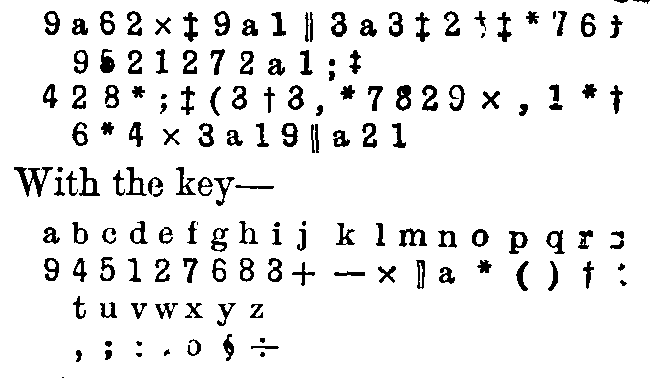
it is easy to write and not very hard to read the entire speech. The
whole theory of the cryptogram is that each correspondent possesses
the key to the secret. To confound an outside inquirer the key is
often varied. A good plan is to take a line from any ordinary book and
substitute the first twenty-six of its letters for those of the
alphabet. In your next cryptogram you take the letters from another
page or another book. It is not necessary to give an example. Enough
will be seen from what we have written to instruct an intelligent
inquirer.
58. Decapitations and Curtailments
are riddles somewhat of the nature of the Logogriph, which see.
In the first, the omission of the successive initials produces new
words, as—Prelate, Relate, Elate, Late, Ate. In the curtailment the
last letter of the word is taken away with a similar result,
as—Patent, Paten, Pate, Pat, Pa. Of like kind are the riddles known
as variations, mutilations, reverses, and counterchanges. A good
example of the last-named is this:
Charge, Chester, Charge: on, Stanley, on!
Were the last words of Marmion.
Had I but been in Stanley's place,
When Marmion urged him to the chase,
A tear might come on every face."
The answer is onion—On, I, on.
Mock Not a Cobbler for His Black Thumb.
59. Enigmas
are compositions of a different character, based upon ideas,
rather than upon words, and frequently constructed so as to mislead,
and to surprise when the solution is made known. Enigmas may be
founded upon simple catches, like Conundrums, in which form they are
usually called Riddles, such as:
"Though you set me on foot,
I shall be on my head."
The answer is, A nail in a shoe. The celebrated Enigma on the
letter H, by Miss Catherine Fanshawe, but usually attributed to Lord
Byron, commencing:
"'Twas whispered in heaven, 'twas muttered in hell,
And echo caught faintly the sound as it fell;"
and given elsewhere in this volume (See par. 215, page 77), is
an admirable specimen of what may be rendered in the form of an Enigma.
60. Hidden Words.
A riddle in which names of towns, persons, rivers, &c, are hidden or
arranged, without transposition, in the midst of sentences which
convey no suggestion of their presence. In the following sentence, for
instance, there are hidden six Christian names:—Here is hid a name
the people of Pisa acknowledge: work at each word, for there are worse
things than to give the last shilling for bottled wine.—The names are
Ida, Isaac, Kate, Seth, Ethel, Edwin. Great varieties of riddles,
known as Buried Cities, Hidden Towns, &c, are formed on this
principle, the words being sometimes placed so as to read backwards,
or from right to left. The example given will, however, sufficiently
explain the mode of operation.
61. Lipogram
from leipein, to leave out, and gramma, a letter—is a
riddle in which a name or sentence is written without its vowels, as:
Thprffthpddngsthtng,
The proof of the pudding is in the eating.
Whnhnorslst ts—rlftd,
Dths bt—sr rtrt fm nfmy.
"When honour's lost 'tis a relief to die,
Death's but a sure retreat from infamy."
This riddle sometimes appears as a proverb.
"Fear's the white feather all cowards wear."
——s' th wht fthr ll cwrds——
62. Logogriph
This is a riddle (logos, a word, and griphos, a riddle)
in which a word is made to undergo several changes. These changes are
brought about by the addition, subtraction, omission, or substitution
of a letter or letters. The following, by the late Lord Macaulay, is
an excellent example:
"Cut off my head, how singular I act:
Cut off my tail, and plural I appear.
Cut off my head and tail—most curious fact,
Although my middle's left, there's nothing there!
What is my head cut off?—a sounding sea!
What is my tail cut off?—a flowing river!
Amid their mingling deaths I fearless play
Parent of softest sounds, though mute for ever!
The answer is cod. Cut off its head and it is od (odd,
singular); its tail, and it is Co., plural, for company; head and tail,
and it is o, nothing. Its head is a sounding C (sea), its tail a flowing
D (river Dee), and amid their depths the cod may fearless play, parent
of softest sounds yet mute for ever.
63. Metagram
a riddle in which the change of the initial letter produces a series
of words of different meanings; from meta, implying change, and
gramma, a letter. Thus:
I cover your head; change my head, and I set you to sleep; change it
again and again, and with every change comes a new idea.—Cap, Nap,
Gap, Sap, Hap, Map, Lap, Pap, Rap, Tap. This kind of riddle is also
known as word-capping.
Gunpowder Made By a Monk at Cologne A.D.1330.
64. Palindrome
from the Greek palin-dromos, running back again. This is a
word, sentence, or verse that reads the same both forwards and
backwards—as, madam, level, reviver; live on no evil; love your
treasure and treasure your love; you provoked Harry before Harry
provoked you; servants respect masters when masters respect servants.
Numerous examples of Palindrome or reciprocal word-twisting exist in
Latin and French; but in English it is difficult to get a sentence
which will be exactly the same when read either way. The best example
is the sentence which, referring to the first banishment of the Great
Napoleon, makes him say, as to his power to conquer Europe:
"Able was I ere I saw Elba."
65. Puzzles
vary much. One of the simplest that we know is this:
Take away half of thirteen and let eight remain.
Write XIII on a slate, or on a piece of paper—rub out the lower
half of the figures, and VIII will remain.
Upon the principle of the square-words, riddlers form Diagonals,
Diamonds, Pyramids, Crosses, Stars, &c These specimens will show
their peculiarities:
66. Oblique Puzzle.
Malice, eight, a polemical meeting, a Scottish river, what I write
with, a decided negative, the capital of Ireland. The initials
downward name a celebrated musician.
(solution in p.67 below.)
67. Diagonal Puzzle
A direction, a singer, a little bird, a lady's ring, a sharp shaver.
Read from left to right and right to left, the centrals show two
famous novelists.
The following are answers to these two puzzles, and afford good
examples of their construction to any one who wishes to try his hand
at their manufacture.
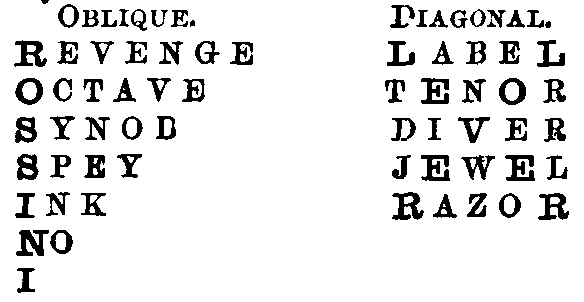
68. Diamond Puzzle
The head of a mouse, what the mouse lives in, the county of calves,
the city of porcelain, a German town, a Transatlantic stream, a
royal county, a Yorkshire borough, Eve's temptation, our poor
relation, myself. Centrals down and across, show a wide, wide, long
river.
The construction of the Diamond Puzzle is exhibited in the following
diagram, which is, at the same time, the answer to it.
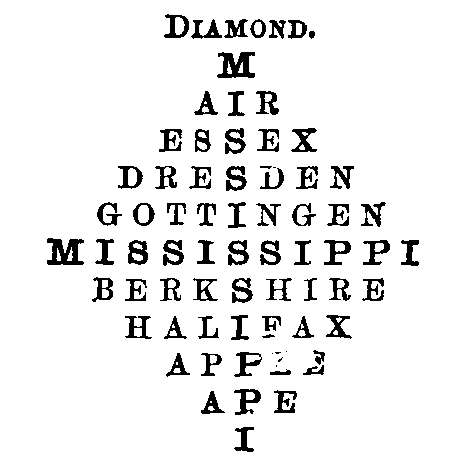
69. Rebuses
are a class of Enigma generally formed by the first, sometimes the
first and last, letters of words, or of transpositions of letters, or
additions to words. Dr. Johnson, however, represents Rebus to be a
word represented by a picture. And putting the Doctor's definition and
our own explanation together, the reader may glean a good conception
of the nature of the Rebus of which the following is an example:
The father of the Grecian Jove;
A little boy who's blind;
The foremost land in all the world;
The mother of mankind;
A poet whose love-sonnets are
Still very much admired;—
The initial letters will declare
A blessing to the tired.
Answer—Saturn; Love; England; Eve;
Plutarch. The initials form sleep.
The excellent little work mentioned in para. 53, entitled "Philosophy
and Mirth united by Pen and Pencil," has this novelty, that many of
the Enigmas are accompanied by enigmatical pictures, so that the eye
is puzzled as well as the ear.
Glass First Brought to England A.D. 668.
70. Square Words
A comparatively modern sort of riddle, in which the letters of each
word selected reads both across and down. With four letters the
making of the riddle is easy, but with five or six the difficulty
increases. We give an example of each.
- Inside, a thought, a liquid gem, a timid creature.
- To run out, odour, to boil, to loosen, unseen essence.
- Compensations, a court favourite, to assist, to bite slightly,
Spanish money, sarcasms.
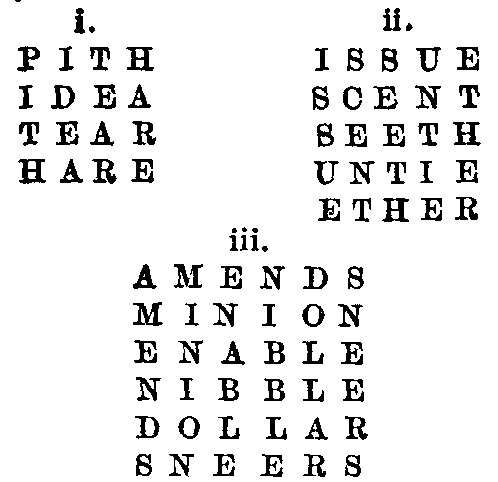
With seven or eight letters the riddle becomes exceedingly difficult,
especially if the selected words are of like character and syllables.
71. Chess, Laws of.
The rules given below are those which are now universally accepted by
English players.
- The board is to be so placed as to leave a white square at the
right hand of the player.
- Any mistake in placing the board or the men may be rectified
before the fourth move is completed, but not after.
- The players draw lots for the first move, and take the move
alternately.
[When odds are given, the player giving them moves first. White
generally moves first; therefore, if black win the move, the board
is turned. It is usual to play with the white and black men
alternately.]
- The piece touched must be moved. When the fingers of the player
have once left the man, it cannot be again removed from the square
it occupies.
[Except the move be illegal, when the opponent can insist on the
piece being moved in the proper manner, or for the opposing King to
be moved.]
- In touching a piece simply to adjust it, the player must notify
to his adversary that such is his intention.
[It is usual, in such a case, to say J'adoube (I adjust); but
he may not touch a piece with the intention of moving it, and then,
when he discover his mistake, say, J'adoube. The phrase is
simply intended to be used when a piece is displaced or overturned
by accident.]
- If a player take one of his own men by mistake, or touch a wrong
man, or one of his opponent's men, or make an illegal move, his
adversary may compel him to take the man, make the right move, move
his King, or replace the piece, and make a legal move.
- A pawn may be played either one or two squares at a time when
first moved.
[In the latter case it is liable to be taken en passant, with
a pawn that could have taken it had it been played only one square.]
- A player cannot castle under any of the following
circumstances:
-
- If he has moved either King or Rook.
- If the
King be in check.
- If there be any piece between the King and the
Rook.
- If the King, in moving, pass over any square commanded by
any one of his adversary's forces.
[You cannot castle to get out of check.]
- If a player give a check without crying "check," the adversary
need not take notice of the check. But if two moves only are made
before the discovery of the mistake, the pieces may be replaced, and
the game properly played.
- If a player say check without actually attacking the King, and
his adversary move his King or take the piece, the latter may elect
either to let the move stand or have the pieces replaced and another
move made.
- If, at the end of a game, the players remain, one with a
superior to an inferior force, or even if they have equal forces,
the defending player may call upon his adversary to mate in fifty
moves on each side, or draw the game.
[If one player persist in giving perpetual check, or repeating the
same move, his opponent may count the moves for the draw; in which
case touching a piece if reckoned a move.]
- Stalemate, or perpetual check is a drawn game.
- Directly a pawn reaches its eighth square it must be exchanged
for a piece.
[It is usual to change the pawn for a Queen, but it may be replaced
by a Rook, Bishop, or Knight, without reference to the pieces
already on the board. In practice it would be changed for a Queen or
a Knight, seeing that the Queen's moves include those of the Rook
and Bishop. Thus you may have two or more Queens, three or more
Rooks, Bishops, or Knights on the board at the end of the game.]
- Should any dispute arise, the question must be submitted to a
bystander, whose decision is to be considered final.
For information as to the best modes of play, the Openings and Endings
of Games, &c, read The Book of Chess, by G.H. Selkirk,
published by Messrs. Houlston and Sons.
72. Draughts, Rules of the Game.
The accepted laws for regulating the game are as follows:
- The board is to be so placed as to have the white or black double
corners at the right hand of the player.
- The first move is taken by chance or agreement, and in all the
subsequent games of the same sitting, the first move is taken
alternately. Black generally moves first.
-
Any action which prevents your adversary from having a full
view of the board is not allowed, and if persisted in, loses the
game to the offending player.
-
The man touched must be moved, but the men may be properly
adjusted during any part of the game. After they are so placed, if
either player, when it is his turn to play, touch a man, he must
move it. If a man be so moved as to be visible on the angle
separating the squares, the player so touching the man must move it
to the square indicated.
[By this it is meant that a player may not move first to one square
and then to another. Once moved on to a square, the man must remain
there.]
- It is optional with the player either to allow his opponent to
stand the huff, or to compel him to take the offered piece.
["Standing the huff" is when a player refuses to take an offered
piece, but either intentionally or accidentally makes another move.
His adversary then removes the man that should have taken the piece,
and makes his own move—huff and move, as it is called.]
-
Ten minutes is the longest time allowed to consider a move,
which if not made within that time, forfeits the game.
-
It is compulsory upon the player to take all the pieces he can
legally take by the same series of moves. On making a King, however,
the latter remains on his square till a move has been made on the
other side.
-
All disputes are to be decided by the majority of the
bystanders present, or by an umpire.
-
No player may leave the room without the consent of his
adversary, or he forfeits the game.
-
A false move must be remedied as soon as it is discovered, or the
maker of such move loses the game.
-
When only a small number of men remain toward the end of the
game, the possessor of the lesser number may call on his opponent to
win in at least fifty moves, or declare the game drawn. With two
Kings to one, the game must be won in at most twenty moves on each
side.
-
The player who refuses to abide by the rules loses the game. In
the losing game a player must take all the men he can by his move.
73. Whist
Great silence and attention should be observed by the players. Four
persons cut for partners; the two highest are against the two
lowest. The partners sit opposite to each other, and he who cuts the
lowest card is entitled to the deal. The ace is the lowest in
cutting.
-
Shuffling—-Each person has a right to shuffle the cards before
the deal; but it is usual for the elder hand only; and the dealer
after.
-
Cutting.—The pack is then cut by the right hand adversary; and
the dealer distributes the cards, one by one, to each of the
players, beginning with the player on his left, until he comes to
the last card, which he turns up for trump, and leaves on the table
till the first trick be played.
-
First Play.—The elder hand, the player on the left of the
dealer, plays first. The winner of the trick plays again; and so on,
till all the cards are played out.
-
Mistakes.—No intimations, or signs are permitted between the
partners. The mistake of one party is the profit of the adversary.
-
Collecting Tricks.—The tricks belonging to each player should be
turned and collected by one of the partners only. All above six
tricks reckon towards game.
-
Honours.—The ace, king, queen, and knave of trumps are called
honours; and when either of the partners hold three separately, or
between them, they count two points towards the game; and in case
they have four honours, they count four points.
-
Game.—Long Whist game consists of ten points, Short Whist
of five points.
74. Terms used in Whist.
-
Finessing, is the attempt to gain an advantage; thus:—If
you have the best and third best card of the suit led you put on the
third best, and run the risk of your adversary having the second
best; if he has it not, which is two to one against him, you are
then certain of gaining a trick.
-
Forcing, is playing the suit of which your partner or
adversary has not any, and which in order to win he must trump.
-
Long Trump, the one or more trumps in your hand when all
the rest are out.
-
Loose Card, a card of no value, and the most proper to
throw away.
-
Points,—Ten make the game; as many as are gained by
tricks or honours, so many points are set up to the score of the
game.
-
Quarte, four successive cards in suit.
-
Quarte Major, a sequence of ace, king, queen, and knave.
-
Quinte, five successive cards in suit.
-
Quinte Major, is a sequence of ace, king, queen, knave,
and ten.
-
See-saw, is when each partner trumps a suit, and when they
play those suits to each other for that purpose.
-
Score, is the number of points set up. The following is a
good method of scoring with coins or counters:

For Short Whist there are regular markers.
-
Slam, is when either side win every trick.
-
Tenance, is possessing the first last and third best
cards, and being the player; you consequently catch the adversary
when that suit is played: as, for instance, in case you have ace and
queen of any suit, and your adversary leads that suit, you must win
two tricks, by having the best and third best of the suit played,
and being the last player.
-
Tierce, three successive cards in suit.
-
xv. Tierce Major, a sequence of ace, king, and queen.
Children and Chickens Must Always be Picking.
75. Maxims for Whist.
-
Lead from your strong suit, be cautious how you change suits, and
keep a commanding card to bring it in again.
-
Lead through the strong suit and up to the weak; but not in
trumps; unless very strong in them.
-
Lead the highest of a sequence; but if you have a quarte or
cinque to a king, lead the lowest.
-
Lead through an honour, particularly if the game is against you.
-
Lead your best trump, if the adversaries be eight, and you have
no honour; but not if you have four trumps, unless you have a
sequence.
-
Lead a trump if you have four or five, or a strong hand; but not
if weak.
-
Having ace, king, and two or three small cards, lead ace and
king if weak in trumps, but a small one if strong in them.
-
If you have the last trump, with some winning cards, and one
losing card only, lead the losing card.
-
Return your partner's lead, not the adversaries'; and if you
hold only three originally, play the best; but you need not return
it immediately, when you win with a king, queen, or knave, and have
only small ones, or when you hold a good sequence, a strong suit, or
five trumps.
-
Do not lead from ace queen, or ace knave.
-
Do not—as a rule—lead an ace, unless you have a king.
-
Do not lead a thirteenth card, unless trumps be out.
-
Do not trump a thirteenth card, unless you be last player, or
want the lead.
-
Keep a small card to return your partner's lead.
-
Be cautious in trumping a card when strong in trumps,
particularly if you have a strong suit.
-
Having only a few small trumps, make them when you can.
-
If your partner refuse to trump a suit, of which he knows you
have not the best, lead your best trump.
-
When you hold all the remaining trumps, play one, and then
try to put the lead in your partner's hand.
-
Remember how many of each suit are out, and what is the best
card left in each hand.
-
Never force your partner if you are weak in trumps, unless you
have a renounce, or want the odd trick.
-
When playing for the odd trick, be cautious of trumping out,
especially if your partner be likely to trump a suit. Make all the
tricks you can early, and avoid finessing.
-
If you take a trick, and have a sequence, win it with the
lowest.
There are None So Wicked as Represented.
76. Laws of Whist
as accepted at the best Clubs.
-
The deal is determined by cutting-in. Cutting-in and cutting-out
must be by pairs.
[Less than three cards, above or below, is not a cut. Ace is lowest.
Ties cut again. Lowest deals. Each player may shuffle, the dealer
last. The right-hand adversary cuts to dealer.]
-
iIf a card be exposed, a fresh deal may be demanded.
-
Dealer must not look at bottom card; and the trump-card must be
left, face upwards, on the table till the first trick be turned, or
opponents may call a fresh deal.
-
Too many or too few cards is a misdeal—an exposed or face card.
In either case, a fresh deal may be demanded.
[In cases of a misdeal, the deal passes to the next player.]
-
After the first round has been played, no fresh deal can be
called.
[If the first player hold fewer than thirteen cards, the other hands
being right, the deal stands.]
-
If two cards be dealt to the same player, the dealer may rectify
his error before dealing another card.
[The dealer must not touch the cards after they have left his hands;
but he may count those remaining in the pack if he suspect a
misdeal, or he may ask the players to count their cards. One partner
may not deal for another without the consent of opponents.]
-
If the trump-card be not taken into the dealer's hand at the
expiration of the first round, it may be treated as an exposed card,
and called.
[After this, no one has a right to ask what was the trump-card, but
he may ask "What are Trumps?"]
-
If the third hand play before the second, the fourth has a
right to play before his partner; or if the fourth hand play before
the second or third, the cards so played must stand, and the second
be compelled to win the trick if he can.
-
If a player lead out of his turn, or otherwise expose a card,
that card may be called, if the playing of it does not cause
a revoke.
[Calling a card is the insisting of its being played when the suit
comes round, or when it may be played.]
-
If a player trump by mistake, he may recall his card, and play to
the suit, if the card be not covered; but he may be compelled to
play the highest or lowest of the suit led, and to play the exposed
trump when it is called by his adversaries.
-
If, before a trick be turned, a player discover that he has not
followed suit, he may recall his card; but the card played in error
can be called when the suit is played.
-
Before a trick is turned, the player who made it may see the
preceding trick.
[Only one trick is to be shown; not more, as is sometimes
erroneously believed.]
-
Before he plays, a player may require his partner to "draw his
card," or he may have each card in the trick claimed before the
trick be turned.
-
When a player does not follow suit his partner is allowed to
ask him whether he has any card of the suit led.
-
The penalty for a revoke—either by wrongfully trumping the suit
led, or by playing a card of another suit—is the loss of three
tricks; but no revoke can be claimed till the cards are abandoned,
and the trick turned.
[Revokes forfeit three tricks from the hand or score: or opponents
may add three to their score; partner may ask and correct a trick if
not turned; the revoking side cannot score out in that deal.]
-
No revoke can be claimed after the tricks are gathered up, or
after the cards are cut for the next deal.
[The wilful mixing up of the cards in such case loses the game.]
-
The proof of a revoke lies with the claimants, who may examine
each trick on the completion of the round.
-
If a revoke occur on both sides, there must be a new deal.
-
Honours cannot be counted unless they are claimed previous to
the next deal.
[No omission to score honours can be rectified after the cards are
packed; but an overscore, if proved, must be deducted.]
-
Honours can only be called at eight points (in Long Whist), and
at nine they do not count.
[In some Clubs, eight, with the deal, cannot call against nine.]
77. Short Whist
is the above game cut in half. Honours are not called at any
part of the game; but, as in Long Whist, they are counted by their
holders and scored—except at the score of four. All the maxims and
Rules belonging to the parent game apply to Short Whist.
78. Points at Short Whist.
The Game consists of Five Points. One for a Single—5 to 3 or 4; Two
for a Double—5 to 1 or 2; Three for a Triple—5 to love. A
Rubber—two Games successively won, or the two best Games out of
three—counts for Two Points. Thus, if the first Game be won by 5 to
4, the Points are 1 to love; the second Game won by the opposite side
by 5 to 1, the Points are then 1 to 2; the third Game won by the side
which won the first, by 5 to love. The Points are then 6 to 2—a
balance of 4. This is arrived at thus: the Single in the first Game,
1; the Triple in the third Game, 3; the Rubber (two Games of three),
2; together, 6. From this deduct 2, for the Double gained by the
opponents in the second Game, which leaves 4, as above. Short Whist is
usually played for points—say, a shilling, or a penny, for each
point; two for the Game, and two for the Rubber.
None are so Good as they Should Be.
79. Advice to all Players.
-
Count, and arrange your cards into suits; but do not always place
your trumps in one particular part of your hand, or your opponents
will discover how many you have.
-
Attend to the game, and play as though your hand consisted of
twenty-six instead of thirteen cards.
-
In the second round of a suit, win the trick when you can, and
lead out for your partner's high cards as soon as possible.
-
Touch only the card you intend to play.
-
Retain a high trump as long as you can, to bring back your strong
suit.
-
With a weak hand, always try to secure the seventh or odd trick
to save the game.
-
Attend to the score, and play as if the whole fortune of the
game depended on yourself.
-
Remember the number of trumps out at every stage of the game.
Note, also, the fall of every court-card in the other suits, so that
you are never in doubt as to the card that will win the trick.
-
Hold the turn-up as long as you can, as by that means you keep
your adversaries from knowing your strength in trumps.
-
Do not force your partner unnecessarily, as by that means you
sometimes become his adversary instead of his friend.
-
When in doubt, play a trump. Play the game in its integrity, and
recollect that Whist is full of inferences as well as facts.
80. Cribbage
The game of Cribbage differs from all other games by its immense
variety of chances. It is played with the full pack of cards, often by
four persons, but it is a better game for two. There are also
different modes of playing—with five, six, or eight cards; but the
best games use those with five or six cards.
Night is not Dark to the Good.
81. Terms Used in Cribbage
-
Crib.—The crib is composed of the cards thrown out by
each player, and the dealer is entitled to score whatever points are
made by them.
-
Pairs are two similar cards, as two aces or two kings.
Whether in hand or play they reckon for two points.
-
Pairs-Royal are three similar cards, and reckon for six
points, whether in hand or play.
-
Double Pairs-Royal are four similar cards and reckon for
twelve points, whether in hand or play. The points gained by pairs,
pairs-royal, and double pairs-royal, in playing, are thus
effected:—Your adversary having played a seven and you another,
constitutes a pair, and entitles you to score two points; your
antagonist then playing a third seven, makes a pair-royal, and he
marks six; and your playing a fourth is a double pair-royal, and
entitles you to twelve points.
-
Fifteens.—Every fifteen reckons for two points, whether
in hand or play. In hand they are formed either by two cards—as a
five and any tenth card, a six and a nine, a seven and an eight, or
by three cards, as a two, a five, and an eight, two sixes and a
three. If in play, such cards as together make fifteen are played,
the player whose card completes that number, scores two points.
-
Sequences are three or four more successive cards, and
reckon for an equal number of points, either in hand or play. In
playing a sequence, it is of no consequence which card is thrown
down first; as thus:—your adversary playing an ace, you a five, he
a three, you a two, then he a four—he counts five for the sequence.
-
Flush.—When, the cards are all of one suit, they reckon
for as many points as there are cards. For a flush in the crib, the
turned-up card must be of the same suit as those put out.
-
Nob.—The knave of the suit turned up reckons for one
point; if a knave be turned up, the dealer marks two.
-
End Hole.—The point scored by the last player, if he
make under thirty-one; if he make thirty-one exactly, he marks two.
-
Last.—Three points taken at the commencement of the game
of five-card cribbage by the non-dealer.
Nor is Day Bright to the Wicked.
82. The Accepted Laws of Cribbage.
-
The players cut for deal. The ace is lowest in cutting. In case
of a tie, they cut again. The holder of the lowest card deals.
-
Not fewer than four cards is a cut; nor must the non-dealer
touch the pack after he has cut it.
-
Too many or too few cards dealt constitutes a misdeal, the
penalty for which is the taking of two points by the non-dealer.
-
A faced card, or a card exposed during the act of dealing
necessitates a new deal, without penalty.
-
The dealer shuffles the cards and the non-dealer cuts them for
the "start."
-
If the non-dealer touch the cards (except to cut them for the
turn-up) after they have been cut for the start, he forfeits two
points.
-
In cutting for the start, not fewer than three cards must be
lifted from the pack or left on the table.
-
The non-dealer throws out for the crib before the dealer. A
card once laid out cannot be recalled, nor must either party touch
the crib till the hand is played out. Either player confusing the
crib cards with his hand, is liable to a penalty of three points.
[In three and four-hand cribbage the left-hand player throws out
first for the crib, then the next; the dealer last. The usual and
best way is for the non-dealer to throw his crib over to the
dealer's side of the board; on these two cards the dealer places his
own, and hands the pack over to be cut. The pack is then at the
right side of the board for the next deal.]
-
The player who takes more points than those to which he is
entitled, either in play or in reckoning hand or crib, is liable to
be "pegged;" that is, to be put back as many points as he has
over-scored, and have the points added to his opponent's side.
[In pegging you must not remove your opponent's front peg
till you have given him another. In order "to take him down,'' you
remove your own back peg and place it where his front peg
ought to be, you then take his wrongly placed peg and put
it in front of your own front, as many holes as he has
forfeited by wrongly scoring.]
-
No penalty attaches to the taking of too few points in play,
hand, or crib.
-
When a player has once taken his hand or crib, he cannot amend
his score.
-
When a knave is turned up, "two for his heels" must be scored
before the dealer's own card be played, or they cannot be taken.
-
A player cannot demand the assistance of his adversary in
reckoning hand and crib.
-
A player may not, except to "peg him," touch his adversary's
pegs, under a penalty of two points. If the foremost peg has been
displaced by accident, it must be placed in the hole behind the peg
standing on the board.
-
The peg once holed cannot be removed by either player till
another point or points be gained.
-
The player who scores a game as won when, in fact, it is not
won, loses it.
-
A lurch—scoring the whole sixty-one before your
adversary has scored thirty-one—is equivalent to a double game, if
agreed to previous to the commencement of the game.
-
A card that may be legally played cannot be withdrawn after
it has been once thrown face upwards on the table.
-
If a player neglect to score his hand, crib, or any point or
points of the game, he cannot score them after the cards are packed
or the next card played.
-
The player who throws up his cards and refuses to score,
forfeits the game.
-
If a player neglect to play when he can play a card within the
prescribed thirty-one, he forfeits two holes.
-
Each player's hand and crib must be plainly thrown down on the
table and not mixed with the pack, under penalty of the forfeiture
of the game.
The player who refuses to abide by the rules, loses the game.
Bystanders must not interfere unless requested to decide any
disputed point.
83. Five-Card Cribbage.
In this the sixty-one points or holes on the cribbage-board mark the
game. The player cutting the lowest card deals; after which, each
player lays out two of the five cards for the crib, which belongs to
the dealer. The adversary cuts the remainder of the pack, and the
dealer turns up and lays upon the crib the uppermost card, the
turn-up. If it be a knave, he marks two points. The card turned up is
reckoned by both in counting their hands or crib. After laying out,
the eldest hand plays a card, which the other should endeavour to
pair, or find one, the pips of which, reckoned with the first, will
make fifteen; then the non-dealer plays another card, and so on
alternately, until the pips on the cards played make thirty-one, or
the nearest possible number under that.
84. Counting for Game in Cribbage.
When he whose turn it is to play cannot produce a card that makes
thirty-one, or comes under that number, he says, "Go," and his
antagonist scores one, or plays any card or cards he may have that
will make thirty-one, or under. If he can make exactly thirty-one, he
takes two points; if not, one. Such cards as remain after this are not
played, but each player then counts and scores his hand, the
non-dealer first. The dealer then marks the points for his hand, and
also for his crib, each reckoning the cards every way they can
possibly be varied, and always including the turned-up card.
| cards |
points |
| For every fifteen |
2 |
| Pair, or two of a sort |
2 |
| Pair-royal, or three of a sort |
6 |
| Double pair-royal, or four ditto |
12 |
| Knave of the turned-up suit |
1 |
| Sequences and flushes |
whatever their number. |
85. Examples of Hands in Cribbage
| cards |
count |
| Two sevens, two eights, and a nine |
24 |
| Two eights, a seven, and two nines |
20 |
| Two nines, a six, seven, and eight |
16 |
| Two sixes, two fives, and a four |
24 |
| Two sixes, two fours, and a five |
24 |
| Two fives, two fours, and a six |
24 |
| Two threes, two twos, and an ace |
16 |
| Two aces, two twos, and a three |
16 |
| Three fives and a tenth card |
14 |
| Three fours and a seven |
12 |
| Three twos and a nine |
8 |
| Six, seven, eight, and two aces |
the ragged 13 |
| 6 + 1 and 8 |
15-2 |
| 6 + 1 and 8 |
16-4 |
| 6 + 1 + 1 + 7 |
15-6 |
| 7 + 8 |
15-8 |
the pair of aces
and the sequence 5 |
13 |
| Three sixes and a nine |
12 |
| Three sevens and an eight |
12 |
| Three eights and a seven |
12 |
| Three nines and a six |
12 |
| Three threes and a nine |
12 |
| Three sixes and a three |
12 |
| Three sevens and an ace |
12 |
| Two tens (pair) and two fives |
12 |
Two tenth cards (not a pair)
and two fives |
10 |
| Two nines and two sixes |
12 |
| Two eights and two sevens |
12 |
| Two sixes and two threes |
8 |
| Two fives, a four, and a six |
12 |
| Two fours, a five, and a six |
12 |
| Two sixes, a four, and a five |
12 |
| Two threes and two nines |
8 |
| Two nines, a seven, and an eight |
10 |
| Two eights, a seven, and a nine |
12 |
| Two sevens, an eight, and a nine |
12 |
| Two sixes, a seven, and an eight |
10 |
| Two sixes, a three, and a nine |
8 |
| A seven, eight, nine, ten, and knave |
7 |
| A six, seven, eight, nine, and ten |
9 |
| A six, seven, eight, and nine |
8 |
| A six, five, and two sevens |
8 |
Any double sequence of three cards
and a pair
(as knave, queen,
and
two kings). |
6 |
| Any sequence of three cards and a
fifteen |
5 |
Any sequence of four cards and a
fifteen
(as seven, eight, nine and ten) |
6 |
| Any sequence of six cards |
6 |
| Any sequence of four cards and a flush |
8 |
| Any flush of four cards and a fifteen |
6 |
| Any flush of four cards and a pair |
6 |
The highest number that can be counted from five cards is 29—made
from four fives and a knave; that is, three fives and a knave of the
suit turned up, and a five on the pack—for the combinations of the
four fives, 16; for the double pair-royal, 12; his nob, 1-29.
Rustle is not Industry.
86. Maxims for laying out the Crib Cards.
In laying out cards for the crib, the player should consider not only
his own hand, but also to whom the crib belongs, as well as the state
of the game; for what might be right in one situation would be wrong
in another. Possessing a pair-royal, it is generally advisable to lay
out the other cards for crib, unless it belongs to the adversary.
Avoid giving him two fives, a deuce and a trois, five and six, seven
and eight, five and any other tenth card. When he does not thereby
materially injure his hand, the player should for his own crib lay out
close cards, in hope of making a sequence; or two of a suit, in
expectation of a flush; or cards that of themselves reckoned with
others will count fifteen. When the antagonist be nearly up, and it
may be expedient to keep such cards as may prevent him from gaining at
play. The rule is to baulk your adversary's crib by laying out cards
not likely to prove of advantage to him, and to lay out favourably for
your own crib. This applies to a stage of the game when it may be of
consequence to keep in hand cards likely to tell in play, or when the
non-dealer would be either out by his hand, or has reason for thinking
the crib of little moment. A king and a nine is the best baulk, as
none can form a sequence beyond it; king or queen, with an ace, six,
seven, eight, or nine, are good ones to put out. Low cards are
generally the most likely to gain at play; the flushes and sequences,
particularly if the latter be also flushes, are eligible hands, as
thereby the player will often be enabled either to assist his own
crib, or baulk that of the opponent; a knave should never be put out
for his crib, if it can be retained in hand.
87. Three or Four-Hand Cribbage
differs little from the preceding. They put out but one card each to
the crib, and when thirty-one, or the nearest to that has been made,
the next eldest hand leads, and the players go on again in rotation,
with the remaining cards, till all are played out, before they proceed
to show hands and crib. For three-handed cribbage triangular boards
are used.
88. Three-Hand Cribbage
is sometimes played, wherein one person sits out, not each game, but
each deal in rotation. In this the first dealer generally wins.
89. Six-Card Cribbage
The two players commence on an equality, without scoring any points
for the last, retain four cards in hand, and throw out two for crib.
At this game it is of advantage to the last player to keep as close as
possible, in hope of coming in for fifteen, a sequence, or pair,
besides the end hole, or thirty-one. The first dealer is thought to
have some trifling advantage, and each player may, on the average,
expect to make twenty-five points in every two deals. The first
non-dealer is considered to have the preference, when he gains ten or
more the first hand, the dealer not making more than his average
number.
90. Eight-Card Cribbage
is sometimes played. Six are retained in hand, and the game is
conducted on the same plan as before.
91. All Fours
is usually played by two persons; not unfrequently by four. Its name
is derived from the four chances, called high, low, Jack, game,
each making a point. It is played with a complete pack of cards, six
of which are to be dealt to each player, three at a time; and the next
card, the thirteenth, is turned up for the trump by the dealer, who,
if it prove a knave, scores one point. The highest card cut deals
first. The cards rank the same as at whist—the first to score ten
points, wins.
92. Laws of All-Fours
-
A new deal can be demanded for an exposed card, too few or too
many cards dealt; in the latter case, a new deal is optional,
provided it be done before a card has been played, but not after, to
draw from the opposing hand the extra card.
-
iNo person can beg more than once in each hand, except by mutual
agreement.
-
Each player must trump or follow suit on penalty of the
adversary scoring one point.
-
If either player score wrongly it must be taken down, and the
adversary either scores four points or one, as may have previously
been agreed.
-
When a trump is played, it is allowable to ask your adversary if
it be either high or low.
-
One card may count all-fours; for example, the eldest hand holds
the knave and stands his game, the dealer has neither trump, ten,
ace, nor court-card; it will follow that the knave will be both
high, low, Jack, and game, as explained by:
93. Terms used in All-Fours
- High.—For the highest trump
out, the holder scores one point.
-
Low.—For the lowest trump out, the original holder
scores one point, even if it be taken by the adversary.
-
Jack.—For the knave of trumps the holder scores one. If
it be won by the adversary, the winner scores the point.
-
Game.—The greatest number that, in the tricks gained,
are shown by either player, reckoning:
| Four |
for an ace |
| Three |
for a king |
| Two |
for a queen |
| One |
for a knave |
| Ten |
for a ten |
The other cards do not count: thus it may happen that a deal may
be played without having any to reckon for game.
-
Begging is when the eldest hand, disliking his cards, uses
his privilege, and says, "I beg;" in which case the dealer
either suffers his adversary to score one point, saying, "Take
one," or gives each player three cards more from the pack, and
then turns up the next card, the seventh for trumps. If, however,
the trump turned up to be of the same suit as the first, the dealer
must go on, giving each three cards more, and turning up the
seventh, until a change of suit for trumps shall take place.
94. Maxims for All-Fours
-
Make your knave as soon as you can.
-
Secure your tens by playing any small cards, by which you may
throw the lead into you adversary's hand.
-
Win your adversary's best cards when you can, either by
trumping or with superior cards.
-
If, being eldest hand, you hold either ace, king, or queen of
trumps, without the knave or ten, play them immediately, as, by this
means, you may chance to win the knave or ten.
95. Loo
This game is played both Limited and Unlimited Loo; it is
played two ways, both with five and three cards. Several may play,
but five or seven make the better game.
96. Three-Card Loo
-
This game is played by any number of persons,
from three, but five or seven make the best game.
-
The cards are cut for deal, the holder of the lowest card being
dealer; after which the deal goes round, from left to right. In case
of a tie, the players cut again. Ace is lowest, and the court-cards
and tens are reckoned of the same value,—namely, ten.
-
The left-hand adversary shuffles or makes the pack, and the
player to the right of the dealer cuts previous to the deal.
-
The cards take their usual value, ace highest; then king, queen,
knave, ten, and so on, down to deuce. The dealer then gives three
cards, one at a time, face downwards, to each player; and also
dealing an extra hand, or "miss," which may be thrown on the table
either as the first or last card of each round.
-
A card too many or too few is a misdeal.
-
The stakes being settled beforehand, the dealer puts into the
pool his three halfpence, pence, or sixpences, and the game
proceeds:
-
The first player on the left of the dealer looks at his hand,
and declares whether he will play or take the miss. If he decide to
play, he says, "I play," or "I take the miss;" but he may elect to
do neither; in which case he places his cards on the pack, and has
nothing further to do with that round. The next player looks at his
hand, and says whether he will play or not; and so on, till the turn
comes to the dealer, who, if only one player stand the chance of the
loo, may either play or give up the stakes.
-
In the first round it is usual either to deal a single;
that is, a round without a miss, when all the players must
play; or each player puts into the pool a sum equal to that staked
by the dealer in which latter case a miss is dealt.
Never Open the Door to a Little Vice.
97. Laws of Loo.
-
For a misdeal the dealer is looed.
-
For playing out of turn or looking at the miss without taking
it, the player is looed.
-
If the first player possess two or three trumps, he must play
the highest, or be looed.
-
With ace of trumps only, the first player must lead it, or be
looed.
-
The player who looks at his own cards, or the miss out of his
turn, is looed.
-
The player who looks at his neighbour's hand, either during the
play or when they lie on the table, is looed.
-
The player who informs another what cards he possesses, or
gives any intimation that he knows such or such cards to be in the
hand or the miss, is looed.
-
The player who throws up his cards after the leading card is
played, is looed.
-
Each player who follows the elder hand must head the trick if he
can, or be looed.
-
Each player must follow suit if he can, or be looed.
The player who is looed pays into the pool the sum agreed.
98. Mode of Play
-
When it is seen how many players stand in the round, the elder
hand plays a card—his highest trump if he has two or more; if not,
any card he chooses. The next plays, and, if he can, follows suit or
heads the trick with a trump. If he can do neither, he throws away
any card.
-
And so the round goes on; the highest card of the suit, or the
highest trump, winning the trick. The winner of the trick then leads
another card.
-
The game consists of three tricks, and the pool is divided
equally among the players possessing them. Thus, if there be three
pence, shillings, or half-crowns, in the pool, the tricks are a
penny, sixpence, or half-a-crown each. The three tricks may of
course be won by a single player, or they may be divided between two
or three. Each player who fails to win a trick is looed, and pays
into the next pool the amount determined on as the loo.
-
When played for a determinate stake, as a penny for the deal and
three pence for the loo, the game is called Limited Loo. When
each player is looed for the sum in the pool, it is Unlimited
Loo.
-
Caution is necessary in playing this game to win. As a
general rule, the first player should not take the miss, as the
dealer's stake is necessarily to be added to the loo. Nor the miss
be taken after two players have "struck in" (declared to play), for
the chances are that they possess good leading cards.
99. Club Law
Another way of playing Loo is for all the parties to play
whenever a club is turned up as trumps. It is merely another mode of
increasing the pool.
100. Five-Card Loo.
-
In principle it is the same as the other game Loo, only instead
of three, the dealer (having paid his own stake into the pool) gives
five cards to each player, one by one, face downwards.
-
After five cards have been dealt to each player, another is
turned up for trump; the knave of clubs generally, or sometimes the
knave of the trump suit, as agreed upon, is the highest card, and is
styled Pam; the ace of trumps is next in value, and the rest on
succession, as at Whist. Each player can change all or any of the
five cards dealt, or throw up his hand, and escape being looed.
Those who play their cards, either with or without changing, and do
not gain a trick, are looed. This is also the case with all who have
stood the game, when a flush or flushes occur; and each, except a
player holding pam, of an inferior flush, must pay a stake, to be
given to him who sweeps the board, or divided among the winners at
the ensuing deal, according to the tricks made. For instance, if
every one at dealing stakes half-a-crown, the tricks are entitled to
sixpence a-piece, and whoever is looed must put down half-a-crown,
exclusive of the deal; sometimes it is settled that each person
looed shall pay a sum equal to what happens to be on the table at
the time. Five cards of a suit, or four with pam, make a flush which
sweeps the board, and yields only to a superior flush, or the elder
hand. When the ace of trumps is led, it is usual to say, "Pam be
civil;" the holder of which last-mentioned card must then let
the ace pass.
-
Any player with five cards of a suit (a flush) looes all the
players who stand in the game.
-
The rules in this game are the same as in Three Card Loo.
101. Put
The game of Put is played with an entire pack of cards, generally by
two, but sometimes by four persons. At Put the cards have a value
distinct from that in other games. The best card in the pack is a
trois, or three; the next a deuce, or two; then the ace,
king, queen, knave, ten in rotation. The dealer distributes three
cards to each player, by one at a time; whoever cuts the lowest card
has the deal, and five points make the game, except when both parties
say, "I put"—for then the score is at an end, and the contest
is determined in favour of the player who may win two tricks out of
three. When it happens that each player has won a trick, and the third
is a tie—that is, covered by a card of equal value—the whole goes
for nothing, and the game must begin anew.
102. Two-Handed Put
The eldest hand plays a card; and whether the adversary pass it, win
it, or tie it, has a right to say, "I put," or place his cards
on the pack. If you accept the first and your opponent decline the
challenge, you score one; if you prefer the latter, your adversary
gains a point; but if, before he play, your opponent says, "I
put," and you do not choose to see him, he is entitled to add one
to his score. It is sometimes good play to say, "I put," before
you play a card: this depends on the nature of your hand.
103. Four-Handed Put.
Each party has a partner, and when three cards are dealt to each, one
of the players gives his partner his best card, and throws the other
two face downwards on the table: the dealer is at liberty to do the
same to his partner, and vice versa. The two who have received
their partners' cards play the game, previously discarding their worst
card for the one received from their partners. The game then proceeds
as at two-handed Put.
104. Laws of Put
-
When the dealer accidentally discovers any of his adversary's
cards, the adversary may demand a new deal.
-
When the dealer discovers any of his own cards in dealing, he
must abide by the deal.
-
When a faced card is discovered during the deal, the cards must
be reshuffled, and dealt again.
-
If the dealer give his adversary more cards than are necessary,
the adversary may call a fresh deal, or suffer the dealer to draw
the extra cards from his hand.
-
If the dealer give himself more cards than are his due, the
adversary may add a point to his game, and call a fresh deal, or
draw the extra cards from the dealer's hand.
-
No bystander must interfere, under penalty of paying the stakes.
-
Either party saying, "I put"—that is, "I play"—cannot
retract, but must abide the event of the game, or pay the stakes.
Knowledge Makes Humble.
105. Speculation
is a lively round game, at which several may play, with a complete
pack of cards, bearing the same value as at whist. A pool is made with
fish or counters, on which such a value is fixed as the company may
agree. The highest trump in each deal wins the pool; and should it
happen that not one trump be dealt, then the company pool again, and
the event is decided by the succeeding deal. After determining the
deal, &c, the dealer pools six fish, and every other player four;
then three cards are given to each, by one at a time, and another
turned up for trump. The cards are not to be looked at, except in this
manner: The eldest hand shows the uppermost card, which, if a trump,
the company may speculate on, or bid for—the highest bidder buying
and paying for it, provided the price offered be approved of by the
seller. After this is settled, if the first card does not prove a
trump, then the next eldest is to show the uppermost card, and so
on—the company speculating as they please, till all are discovered,
when the possessor of the highest trump, whether by purchase or
otherwise, gains the pool. To play at speculation well, recollection
is requisite of what superior cards of that particular suit have
appeared in the preceding deals, and calculation of the probability of
the trump offered proving the highest in the deal then undetermined.
106. Connexions
Three or four persons may play at this game. If the former number, ten
cards each are to be given; but if the latter, only eight are dealt,
which bear the same value as at whist, except that diamonds are always
trumps. The connexions are formed as follows:
-
By the two black aces.
-
The ace of spades and king of hearts.
-
The ace of clubs and king of hearts.
107. For the First Connexion
2s. are drawn from the pool; for the second, 1s.; for the third, and
by the winner of the majority in tricks, 6d. each is taken. These sums
are supposing gold staked: when only silver is pooled, then pence are
drawn. A trump played in any round where there is a connexion wins the
trick, otherwise it is gained by the player of the first card of
connexions; and, after a connexion, any following player may trump
without incurring a revoke: and also, whatever suit may be led, the
person holding a card of connexion is at liberty to play the same; but
the others must, if possible, follow suit, unless one of them can
answer the connexion, which should be done in preference. No money can
be drawn till the hands are finished; then the possessors of the
connexions are to take first, according to precedence, and those
having the majority of tricks take last.
108. Matrimony
This game is played with an entire pack of cards, by any number of
persons from five to fourteen. It consists of five chances, usually
marked on a board, or sheet of paper, as follows:
|
Best
The Ace of Diamonds turned up. |
|
Confederacy
King and Knave |
INTRIGUE; OR
QUEEN AND KNAVE |
Matrimony
King and Queen. |
|
Pairs
The Highest. |
|
Matrimony is generally played with counters, and the dealer puts what
he pleases on each or any chance, the other players depositing each
the same quantity, less one—that is, when the dealer stakes twelve,
the rest of the company lay down eleven each. After this, two cards
are dealt round to every one, beginning on the left; then to each
person one other card, which is turned up, and he who so happens to
get the ace of diamonds sweeps all.
If it be not turned up, then each
player shows his hand; and any of them having matrimony, intrigue,
&c, takes the counters on that point; and when two or more people
happen to have a similar combination, the oldest hand has the
preference; and, should any chance not be gained, it stands over to
the next deal.—Observe: The ace of diamonds turned up takes
the whole pool, but when in hand ranks only as any other ace; and if
not turned up, nor any ace in hand, then the king, or next superior
card, wins the chance styled best.
Ignorance Makes Proud.
109. Pope Joan.
A game somewhat similar to Matrimony. It is played by any number, with
an ordinary pack of cards, and a marking or pool board, to be had of
most fancy stationers. The eight of diamonds must first be taken from
the pack. After settling the deal, shuffling, &c, the dealer dresses
the board. This he does by putting the counters into its several
compartments—one counter or other stake to Ace, one each to King,
Queen, Knave, and Game; two to Matrimony, two to Intrigue, and six to
the nine of diamonds, styled the Pope. This dressing is, in some
companies, at the individual expense of the dealer, though, the
players usually contribute two stakes each towards the pool.
The cards
are then dealt round equally to every player, one turned up for trump,
and about six or eight left in the stock to form stops. For example,
if the ten of spades be turned up, the nine becomes a stop. The four
kings, and the seven of diamonds, are always fixed stops, and the
dealer is the only person permitted, in the course of the game, to
refer occasionally to the stock for information what other cards are
stops in their respective deals. If either ace, king, queen, or knave
happen to be the turned-up-trump, the dealer may take whatever is
deposited on that head; but when Pope be turned up, the dealer is
entitled both to that and the game, besides a stake for every card
dealt to each player.
Unless the game be determined by Pope being
turned up, the eldest hand begins by playing out as many cards as
possible; first the stops, then Pope, if he have it, and afterwards
the lowest card of his longest suit—particularly an ace, for that
never can be led through. The other players follow, when they can, in
sequence of the same suit, till a stop occurs. The player having the
stop becomes eldest hand, and leads accordingly; and so on, until some
player parts with all his cards, by which he wins the pool (game), and
becomes entitled besides to a stake for every card not played by the
others, except from any one holding Pope, which excuses him from
paying.
If Pope has been played, then the player having held it is not
excused. King and Queen form what is called matrimony; queen and
knave, when in the same hand, make intrigue; but neither these nor
ace, king, queen, knave, or pope, entitle the holder to the stakes
deposited thereon, unless played out; and no claim can be allowed
after the board be dressed for the succeeding deal. In all such cases
the stakes remain for future determination. Pope Joan needs only a
little attention to recollect what stops have been made in the course
of the play. For instance, if a player begin by laying down the eight
of clubs, then the seven in another hand forms a stop, whenever that
suit be led from any lower card; or the holder, when eldest, may
safely lay it down, in order to clear his hand.
Knowledge Talks Lowly.
110. Cassino
The game of cassino is played with an entire pack of cards, generally
by four persons, but sometimes by three, and often by two.
111. Terms used in Cassino
-
Great Cassino, the ten of diamonds, which reckons for two
points.
-
Little Cassino, the two of spades, which reckons for one
point.
-
The Cards is when you have a greater share than your
adversary, and reckons for three points.
-
The Spades is when you have the majority of that suit,
and reckons for one point.
-
The Aces: each of which reckons for one point.
-
Lurched is when your adversary has won the game before
you have gained six points.
In some deals at this game it may so happen that neither party win
anything, as the points are not set up according to the tricks, &c,
obtained, but the smaller number is constantly subtracted from the
larger, both in cards and points; and if they both prove equal, the
game commences again, and the deal goes on in rotation. When three
persons play at this game, the two lowest add their points together,
and subtract from the highest; but when their two numbers together
either amount to or exceed the highest, then neither party scores.
112. Laws of Cassino.
-
The deal and partners are determined by cutting, as at whist, and
the dealer gives four cards, one at a time, to each player, and
either regularly as he deals, or by one, two, three, or four at a
time, lays four more, face upwards, upon the board, and, after the
first cards are played, four others are dealt to each person, until
the pack be concluded; but it is only in the first deal that any
cards are to be turned up.
-
The deal is not lost when a card is faced by the dealer, unless
in the first round, before any of the four cards are turned up upon
the table; but if a card happen to be faced in the pack, before any
of the said four be turned up, then the deal begins again.
-
Any person playing with less than four cards must abide by the
loss; and should a card be found under the table, the player whose
number is deficient takes the same.
-
Each person plays one card at a time, with which he may not only
take at once every card of the same denomination upon the table, but
likewise all that will combine therewith; as, for instance, a ten
takes not only every ten, but also nine and ace, eight and deuce,
seven and three, six and four, or two fives; and if he clear the
board before the conclusion of the game, he is to score a point; and
whenever any player cannot pair or combine, then he is to put down a
card.
-
The tricks are not to be counted before all the cards are played;
nor may any trick but that last won be looked at, as every mistake
must be challenged immediately.
-
After all the pack is dealt out, the player who obtains the last
trick sweeps all the cards then remaining unmatched upon the table
and wins the game.
113. Vingt-un
Description of the Game.—The game of Vingt-un, or twenty-one,
may be played by two or more persons; and, as the deal is
advantageous, and often continues long with the same person, it is
usual to determine it at the commencement by turning up the first ace,
or knave.
114. Method of Playing Vingt-un
The cards must all be dealt out in succession, unless a natural
Vingt-un occur, and in the meantime the pone, or youngest hand, should
collect those that have been played, and shuffle them together, ready
for the dealer, against the period when he shall have distributed the
whole pack. The dealer first gives two cards, one at a time, to each
player, including himself; then he asks each player in rotation,
beginning with the eldest hand on the left, whether he stands or
chooses another card. If he need another card, it must be given from
off the top of the pack, and afterwards another, or more, if desired,
till the points of the additional card or cards, added to those dealt,
exceed or make twenty-one exactly, or such a number less than
twenty-one as the player thinks fit to stand upon.
When the points on
the player's cards exceed twenty-one, he throws the cards on the
table, face downwards, and pays the stake. The dealer is, in turn,
entitled to draw additional cards; and, on taking a Vingt-un, receives
double stakes from all who stand the game, except such other players,
likewise having twenty-one, between whom it is thereby a drawn game.
When any adversary has a Vingt-un, and the dealer not, then the
opponent so having twenty-one, wins double stakes from him. In other
cases, except a natural Vingt-un happen, the dealer pays single stakes
to all whose numbers under twenty-one are higher than his own, and
receives from those who have lower numbers; but nothing is paid or
received by such players as have similar numbers to the dealer. When
the dealer draws more than twenty-one, he pays to all who have not
thrown up. In some companies ties pays the dealer.
Ignorance Talks Loud.
115. Natural Vingt-un
Twenty-one, when dealt in a player's first two cards, is styled a
Natural. It should be declared at once, and entitles the
holder to double stakes from the dealer, and to the deal, except it be
agreed to pass the deal round. If the dealer turns up a natural he
takes double stakes from all the players and retains the deal. If
there be more than one natural, all after the first receive single
stakes only. Aces count either eleven or one; court cards, ten; the
rest according to their points.
116. The Odds of natural Vingt-un
depend upon the average number of cards likely to come under or exceed
twenty-one; for example, if those in hand make fourteen exactly, it is
seven to six that the one next drawn does not make the number of
points above twenty-one; but if the points be fifteen, it is seven to
six against that hand; yet it would not, therefore, always be prudent
to stand at fifteen, for as the ace may be calculated both ways, it is
rather above an even bet that the adversary's first two cards amount
to more than fourteen. A natural Vingt-un may be expected once in
seven coups when two, and twice in seven when four, people play, and
so on, according to the number of players.
117. Quadrille
This game, formerly very popular, has been superseded by Whist.
Quadrille, the game referred to by Pope in his "Rape of the Lock," is
now obsolete.
118. Ecarté
This game, which has lately revived in popularity, is played by two
persons with a pack of cards from which the twos, threes, fours,
fives, and sixes have been discarded. In the clubs it is usual to play
with two packs, used alternately. The players cut for deal, the
highest card deals. The pack is shuffled and the non-dealer cuts. The
dealer then from the united pack gives five cards to each, beginning
with his adversary, by twos and threes, or threes and twos; and always
dealing in the same way throughout the game. The eleventh card is
turned up for trump. If the turn-up be a king, the dealer marks one
point; five points being game. The non-dealer looks at his cards, and
if he be dissatisfied with them, he may propose—that is, change any
or all of them for others from the stock, or remainder of the pack on
the table. Should he propose, he says, "I propose," or "cards," and it
is in the option of the dealer to give or refuse cards. When he
decides to give, he says, "I accept," or "How many?" Should he refuse
to change he says, "I decline," or "Play." The dealer may, if he
accept the proposal, change any or all the cards in his own hand.
Sometimes a second discard is allowed, but that must be by previous
agreement. Of course the non-dealer may play without discarding, in
which case the dealer must play his own hand without changing any of
his cards. When the hands are arranged the non-dealer plays a card,
which is won or lost by the playing of a superior card of the suit
led. The second must follow suit, or win the trick if he can;
otherwise he may throw any card he chooses. The order in value of the
cards is—king, queen, knave, ace, ten, nine, eight, seven. The winner
of the trick leads for the next trick, and so on, till the five cards
on each side are played. The winner of three tricks scores one point;
if he win the whole five tricks—the rôle—he scores two
points; if he hold the king, he names it before playing his first
card—"I mark king." Should the non-dealer play without proposing, and
fail to make three tricks, his adversary marks two points; should the
dealer refuse to accept and fail to win three tricks, his opponent
scores two. The game is five up; that is, the player who first marks
five points, wins. The score is marked by two cards, a three and a
two, or by counters. The deal is taken alternately; but when the play
is for rubbers it is usual to cut for deal at the end of each rubber.
Knowledge is Modest, Cautious, and Pure.
119. Rules of Ecarté
-
Each player has right to shuffle the cards above the table.
-
The cut must not be fewer than two cards off the pack, and at
least two cards must be left on the table.
-
When more than one card is exposed in cutting, there must be a
new deal.
-
The highest ecarté card cut secures the deal, which holds good
even though the pack be imperfect.
-
The dealer must give five cards to each by three and two, or by
two and three, at a time, which plan must not be changed, during the
game.
-
An incorrect deal, playing out of turn, or a faced card,
necessitates a new deal.
-
The eleventh card must be turned up for trumps; and the
remaining cards placed, face downwards, on the table.
-
The king turned up must be marked by the dealer before the
trump of the next deal is turned up.
-
A king of trumps held in hand must be announced and marked
before the player lays down his first card, or he loses his right to
mark it. If played in the first trick, it must be announced before
it is played to.
-
A proposal or acceptance cannot be retracted or altered.
-
Before taking cards, the player must place his discarded cards,
face downwards, on the table, and neither look at or touch them till
the round be over.
-
The player holding king marks one point; making three tricks,
one point; five tricks, two points.
-
The non-dealer playing without proposing and failing to win
the point, gives two tricks to his opponent.
-
The dealer who refuses the first proposal and fails to win the
point (three tricks), gives his opponent two points.
-
An admitted overscore or underscore may be amended without
penalty before the cards are dealt for the following round.
120. Euchre
which is founded on Ecarté, and is the national game of the United
States, is played with a pack of cards from which the twos, threes,
fours, fives, and sixes have been withdrawn. In the Euchre pack the
cards rank as at Whist, with this exception—the knave of trumps,
called the Right Bower, and the other knave of the same colour, known
as the Left Bower take precedence over the rest of the trumps. Thus,
when hearts are trumps, the cards rank thus:—Knave of hearts, knave
of diamonds, ace, king, queen, ten, nine, eight, and seven of hearts.
When diamonds are trumps, the knave is right bower, and the knave of
hearts left bower; and in like manner the knaves of spades and clubs
become right and left bower, when the black suits are trumps.—In
Four-handed Euchre, two play against two, and the tricks taken by both
partners count for points.
Ignorance Boastful, Conceited, and Sure.
121. Rules for Euchre
-
The players cut for deal; the higher card cut dealing.
-
The cards are dealt by twos and threes, each player having five.
-
The eleventh card is turned up for trumps.
-
Five points constitute game.
-
The player winning three or four tricks marks one point; winning
five tricks, two points.
-
When the first player considers his hand strong enough to score,
he can order it up—that is, he can oblige the dealer to discard one
of his cards and take up the trump in its stead.
-
When the first player does not find his hand strong enough, he
may pass—" I pass;" with the view of changing the suit.
-
In case of the first player "ordering it up," the game begins
by his playing a card, to which the dealer must follow suit or
trump, or throw away. The winner of the trick then leads: and so on
till all the five cards in each hand are played.
-
If the player order up the trump and fail to make three tricks,
he is euchred, and his opponent marks two points.
-
If the player, not being strong enough, passes, the dealer can
say, "I play," and take the trump into his own hand; but, as before,
if he fail to score, he is euchred.
-
If both players pass, the first has the privilege of altering
the trump, and the dealer is compelled to play. Should the first
player fail to score, he is euchred.
-
If he pass for the second time, the dealer can alter the trump,
with the same penalty if he fail to score.
-
When trumps are led and you cannot follow suit, you must play
the left bower if you have it, to win the trick.
The score is marked as in Ecarté, by each side with a two and three.
122. Bézique
This fashionable game is played with two packs of cards, from which
the twos, threes, fours, fives, and sixes, have been discarded. The
sixty-four cards of both packs, shuffled well together, are then dealt
out, eight to each player, by threes, twos, and threes; the
seventeenth turned up for trump, and the rest left, face downwards, on
the table. If the trump card be a seven, the dealer scores ten points.
An incorrect deal or an exposed card necessitates a new deal, which
passes to the other player. A trump card takes any card of another
suit. Except trumping, the higher card, whether of the same suit or
not, takes the trick—the ace ranking highest, the ten next, and then
the king, queen, knave, nine, &c When two cards of equal value are
played, the first wins.
Some players require the winning card to be
of the same suit as that led, unless trumped. After each trick is
taken, an additional card is drawn by each player from the top of the
pack—the taker of the last trick drawing first, and so on till all
the pack is exhausted, including the trump card. Players are not
obliged to follow suit or trump until all the cards have been drawn
from the pack. Tricks are of no value, except for the aces and tens
they may contain. Tricks should not be looked at till the end of the
deal, except by mutual consent. When a player plays without drawing,
he must draw two cards next time, and his opponent scores ten. When a
player draws out of turn, his opponent scores ten, if he has not drawn
a card himself. When a player draws two cards instead of one, his
opponent may decide which card is to be returned to the pack—it
should not be placed at the top, but towards the middle of the pack. A
player discovering his opponent holding more than eight cards, while
he only holds eight, adds 100 to his score. Should both have more than
their proper number there is no penalty, but each must play without
drawing.
Be Not the First by Whom the New is Tried.
123. Mode of Playing
-
Immediately after taking a trick, and then only, a player can
make a Declaration; but he must do so before drawing another card.
Only one Declaration can be made after each trick.
-
If, in making a declaration, a player put down a wrong card or
cards, either in addition to or in the place of any card or cards of
that declaration, he is not allowed to score until he has taken
another trick. Moreover, he must resume the cards, subject to their
being called for as "faced" cards.
-
The seven of trumps may be exchanged for the trump card, and
for this exchange ten is scored. This exchange is made immediately
after he has taken a trick, but he may make a declaration at the
same time, the card exchanged not being used in such declaration.
-
Whenever the seven of trumps is played, except in the last eight
tricks, the player scores ten for it, no matter whether he wins the
trick or not.
-
When all the cards are drawn from the pack, the players take up
their eight cards. No more declarations can he made, and the play
proceeds as at Whist, the ten ranking higher than the king, and the
ace highest.
-
In the last eight tricks the player is obliged to follow suit,
and he must win the trick if possible, either by playing a higher
card, or, if he has not a card of the same suit, by playing a trump.
-
A player who revokes in the last eight tricks, or omits to take
when he can, forfeits the eight tricks to his opponent.
-
The last trick is the thirty-second, for which the winner
scores ten. The game may be varied by making the last trick the
twenty-fourth—the next before the last eight tricks. It is an
unimportant point, but one that should be agreed upon before the
game is commenced.
-
After the last eight tricks are played, each player examines his
cards, and for each ace and ten that he holds he scores ten.
-
The non-dealer scores aces and tens first; and in case of a tie,
the player scoring the highest number of points, less the aces and
tens in the last deal, wins the game. If still a tie, the taker of
the last trick wins.
-
All cards played in error are liable to be called for as "faced"
cards at any period of the game, except during the last eight
tricks.
-
In counting forfeits a player may either add the points to his
own score or deduct them from the score of his opponent.
124. Terms used in Bezique.
-
A Declaration is the exhibition on the table of any cards
or combination of, cards, as follows:
-
Bezique is the queen of spades and knave of diamonds, for
which the holder scores 40 points. A variation provides that when
the trump is either spades or diamonds, Bezique may be queen of
clubs and knave of hearts. Bézique having been declared, may be
again used to form Double Bezique—two queens of spades and two
knaves of diamonds. All four cards must be visible on the table
together—500 points.
-
Sequence is ace, ten, king, queen, and knave of
trumps—250 points.
-
Royal Marriage is the king and queen of trumps—40
points.
-
Common Marriage is the king and queen of any suit,
except trumps—20 points.
-
Four aces are the aces of any suits —100 points.
-
Four kings are the kings of any suits—80 points.
-
Four Queens are the queens of any suits—60 points.
-
Four knaves are the knaves of any suits—40 points.
Nor Yet the Last to Cast the Old Aside.
125. Marriages, Sequences, &c
-
The cards forming the declarations are placed on the table to
show that they are properly scored, and the cards may thence be
played into tricks as if in your hand.
-
Kings and queens once married cannot be re-married, but can be
used, while they remain on the table, to make up four kings, four
queens, or a sequence.
-
The king and queen used in a sequence cannot afterwards be
declared as a royal marriage.
-
If four knaves have been declared, the knave of diamonds may be
used again for a bézique, or to complete a sequence.
-
If four aces have been declared, the ace of trumps may he again
used to perfect a sequence.
-
If the queen of spades has been married, she may he again used
to form a bézique, and vice versâ, and again for four queens.
-
Playing the seven of trumps—except in last eight tricks—10;
exchanging the seven of trumps for the trump card—10; the last
trick—10; each ace and ten in the tricks—at the end of each
deal—10.
-
The game is 1,000, 2,000, or 4,000 up. Markers are sold with
the cards.
126. Forfeits at Bezique
The following are Forfeits:
| i. |
For drawing out of turn |
10 |
| ii. |
For playing out of turn |
10 |
| iii. |
For playing without drawing |
10 |
| iv. |
For overdrawing |
100 |
| v. |
For a revoke in the last eight tricks |
all the eight tricks. |
127. Cautions in Bezique.
In playing Bézique, it is best to keep your tens till you can make
them count; to retain your sequence cards as long as possible; to
watch your opponent's play; to declare a royal marriage previous to
declaring a sequence or double bezique; to make sure of the last trick
but one in order to prevent your opponent from declaring; to declare
as soon as you have an opportunity.
128. Three-Handed Bezique
-
The above rules hold good in the case of three-handed
games—treble bézique counting 1,500. An extra pack of cards is
required for the third other player; so that, in the case of three,
the trump card is the twenty-fifth.
-
The game is always played from left to right, the first player
on the left of the dealer commencing. Three-handed bézique is
sometimes played with two packs of cards, suppressing an eight, thus
rendering them divisible by three.
129. Four-Handed Bezique.
-
Four-handed Bezique may be played by partners decided either by
choice or cutting. Partners sit opposite each other, one collecting
the tricks of both, and the other keeping the score, or each may
keep his own score, which is preferable.
-
A player may make a declaration immediately after his partner
has taken a trick, and may inquire of his partner if he has anything
to declare, before drawing.
-
Declarations must be made by each player separately, as in
two-handed bézique.
-
The above descriptions will serve to sufficiently acquaint the
reader with the rules and modes of play adopted in this excellent
game. Bézique is said to be of Swedish origin, and to have been
introduced to English players through the medium of some Indian
officers who had learned it of a Scandinavian comrade. Variations in
the play occur in different companies. These, however, having been
indicated above, need not be more particularly noted.
130. Napoleon
This popular game is played by four, five, or six persons with a full
pack of cards, which take the same value as in Whist. The object of
the game is to make tricks, which are paid to or received from the
dealer at a fixed rate, a penny or more a trick, as previously
arranged. The deal being decided in the usual way, the pack is cut and
five cards are dealt one at a time to each player, beginning at the
left. After every round the deal passes. Each player looks at his
cards, the one to the left of the dealer being the first to declare.
When he thinks he can make two or three tricks he says, "I go two," or
"I go three." The next may perhaps think he can make four tricks; and
if the fourth believes he can do better he declares Napoleon, and
undertakes to win the whole five tricks. The players declare or pass
in the order in which they sit; and a declaration once made cannot be
recalled.
The game then, proceeds. The first card played is the trump
suit; and to win the trick, a higher card than that led in each suit
must be played. The winner of the first trick leads for the second,
and so on till each of the five tricks are played out. Each player
must follow suit, but he is not bound to head the trick or to trump.
Each card as played remains face upwards on the table. Supposing the
stake to be a penny a trick, the declarer, if he win all the tricks he
declared, receives from each of his adversaries a penny for each of
the declared tricks; but if he fail to win the required number, he
pays to each of them a penny a trick. For Napoleon he receives double
stakes from each player; but failing to win the five tricks, he pays
them single stakes. The game, though simple, requires good judgment
and memory to play it well. In some companies it is varied by the
introduction of a Wellington, which is a superior call after the
Napoleon, and takes triple stakes; or a Sedan, in which the player
undertakes to lose all his tricks. This declaration takes precedence
of all the others. Each player may Pass, or decline to make a
declaration; and when all the players pass, the deal is void.
Occasionally a pool or kitty is made by each dealer paying a half
stake; or the players may purchase new cards from the pack. In either
case, the pool is taken by the winner of the first Napoleon, or
divided according to arrangement at the close of the play. The best
play in Napoleon is not to win tricks, but to co-operate in defeating
the declaring hand.
131. Picquet
A game for two players, once very fashionable in France and of some
repute in England; but now quite obsolete. Like Quadrille, it is
encumbered with a vast number of rules and maxims, technical terms and
calculations; all too long and tiresome for modern card-players.
132. Poker, or Draw Poker
a gambling game common in the United States. An elaboration of the old
English game of Brag, which, like Blind Hookey and Baccarat, is purely
one of chance, generally played by two or three sharpers opposed to
three or four greenhorns. And, for these reasons, is unworthy a place
in this volume.
133. Lansquenet
This is a game for a large company, much played in France, where it is
the custom to mix three, four, or more packs of cards together. In
England it is played with one pack, after the following plan:—The
dealer, who has rather an advantage, begins by shuffling the cards,
and having them cut by any of the party. He then deals two cards on
his left hand, turning them up; then one for himself, and a fourth,
which he places in the middle of the table for the company, called the
rejouissance. Upon this card any or all of the company, except
the dealer, may stake their counter or money, either a limited or
unlimited sum, as may be agreed on, which the dealer is obliged to
answer, by staking a sum equal to the whole put upon it by different
players. He continues dealing, and turning the cards upwards, one by
one, till two of a sort appear: for instance, two aces, two deuces,
&c, which, in order to separate, and that no person may mistake for
single cards, he places on each side of his own card; and as often as
two, three, or the fourth card of a sort comes up, he always places
them, as before, on each side of his own.
Any single card the company
have a right to take and put their money upon, unless the dealer's own
card happens to be double, which often occurs by this card being the
same as one of the two cards which the dealer first of all dealt out
on his left-hand. Thus he continues dealing till he brings either
their cards, or his own. As long as his own card remains undrawn he
wins; and whichever card comes up first, loses. If he draw or deal out
the two cards on his left, which are called the hand-cards, before his
own, he is entitled to deal again; the advantage of which is no other
than being exempted from losing when he draws a similar card to his
own, immediately after he has turned up one for himself. This game is
often played more simply without the rejouissance card, giving
every person round the table a card to put his money on. Sometimes it
is played by dealing only two cards, one for the dealer, and another
for the company. —Generally Lansquenet is played with counters
instead of money. With counters at (say) a penny a dozen, it is a
lively and amusing game.
A Lady in America Made a Quilt in 55,555 Pieces.
134. Quinze or Fifteen
is played by two persons. The cards are shuffled by both players, and
when they have cut for deal (which falls to the lot of him who cuts
the lowest), the dealer has the liberty to shuffle them again. When
this is done, the adversary cuts them; after which, the dealer gives
one card to his opponent, and one to himself. Should the dealer's
adversary not approve of his card, he is entitled to have as many
cards given to him, one after the other, as will make fifteen, or come
nearest to that number; which are usually given from the top of the,
pack: for example—if he should have a deuce, and draw a five, which
amounts to seven, he must continue going on, in expectation of coming
nearer to fifteen. If he draw an eight, which will make just fifteen,
he, as being eldest hand, is sure of winning the game. But if he
overdraw himself, and make more than fifteen, he loses, unless the
dealer should happen to do the same; which circumstance constitutes a
drawn game; and the stakes are consequently doubled. In this manner
they persevere, until one of them has won the game, by standing and
being nearest to fifteen. At the end of each game the cards are packed
and shuffled, and the players again cut for deal. The advantage is
invariably or the side of the elder hand.
135. Solitaire
This is a game for one person, played on a board pierced with
thirty-seven holes, in each one of which is placed a marble or peg.
The art or motive of the game is to remove one marble and then to
shift the rest about, so as to bring the last marble to the hole
whence the first was removed. One marble or man takes any other over
which it can leap into a vacant hole beyond; or any number of men in
succession, so long as there is a hole into which it can go. An
example of a game played will better explain the method, than any
amount of verbal instruction.
Remove the marble from the centre hole; then bring the marble from 1
in the upper limb of the diagram, to the centre, jumping over and
taking the piece between. By following the direction of the figures,
it will be found that the last place arrived at will be the centre
from which you started. With practice and patience the Solitaire
player will be able to start from and return to any hole on the board.
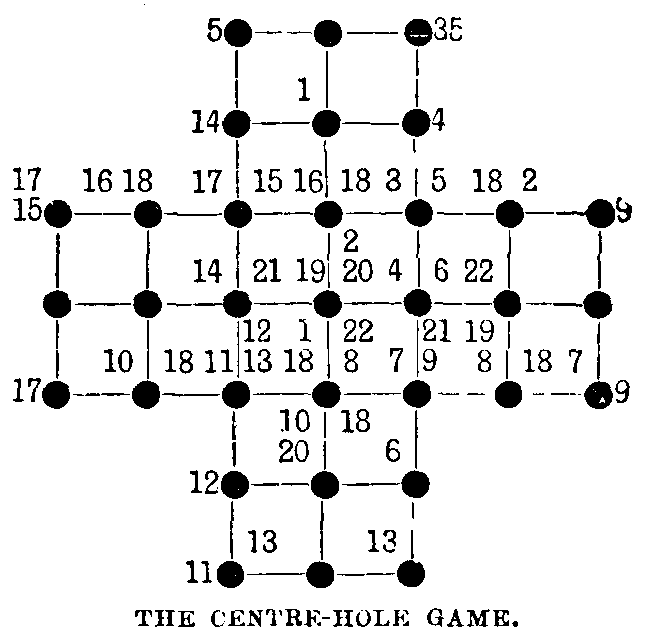
Many variations of the game will suggest themselves as you proceed;
but the above will suffice to show the plan and system of Solitaire.
136. Backgammon
A game of mingled chance and skill, played on a board marked with
points, and generally to be found inside the box draughtboard. The
board has twenty-four points, coloured alternately red and blue; the
implements of play are fifteen draught-men on each side, and the
movements of the men are determined by the throw of two dice; each
player being provided with a dice box and dies. It is an elaborate
game to explain on paper, and would occupy too much space to be given
in detail in this work. Those, however, who desire to be fully
informed as to its various intricacies, may consult "Bohn's Handbook
of Games," or the cheaper and more concise treatise by Captain Crawley.
137. Dominoes
This game is played by two or four persons, with twenty-eight pieces
of oblong ivory, plain at the back, but on the face divided by a black
line in the middle, and indented with spots, from one to a double-six,
which pieces are a double-blank, ace-black, double-ace, deuce-blank,
deuce-ace, double-deuce, trois-blank, trois-ace, trois-deuce,
double-trois, four-blank, four-ace, four-deuce, four-trois,
double-four, five-blank, five-ace, five-deuce, five-trois, five-four,
double-five, six-blank, six-ace, six-deuce, six-trois, six-four,
six-five, and double-six. Sometimes a double set is played with, of
which double-nine is the highest.
138. Method of Play
At the commencement of the game the dominoes are well mixed together,
with their faces upon the table. Each player draws one, and if four
play, those who choose the two highest are partners against these who
take the two lowest. Drawing the latter also serves to determine who
is to lay down the first piece—a great advantage. Afterwards each
player takes seven pieces at random. The eldest hand having laid down
one, the next must pair him at either end of the piece he may choose,
according to the number of pips, or the blank in the compartment of
the piece; but whenever any one cannot match the part, either of the
domino last put down, or of that unpaired at the other end of the row,
then he says, "Go;" and the next is at liberty to play. Thus
they play alternately, either until one party has played all his
pieces, and thereby won the game, or till the game be blocked;
that is, when neither party can play, by matching the pieces where
unpaired at either end; then that player wins who has the smallest
number of pips on the pieces remaining in his hand. It is to the
advantage of every player to dispossess himself as early as possible
of the heavy pieces, such as a double-six, five, four, &c Sometimes,
when two persons play, they take each only three or five pieces, and
agree to play or draw, i.e., when one cannot come in, or
pair the pieces upon the board at the end unmatched, he draws from the
pieces in stock till he finds one to suit. There are various other
ways of playing dominoes, but they are all dependent on the matching
of the pips.
139. Quadrilles
The First Set:
| Figure |
Name |
Actions |
Repeat |
| First Figure |
Le Pantalon |
Right and left. Balancez to partners;
turn partners. Ladies' chain. Half promenade; half right and left. |
four times |
| Second Figure |
L'Été |
Leading lady and opposite gentleman advance
and retire; chassez to right and left; cross over to each other's
places; chassez to right and left. Balancez and turn partners. |
four times |
| or |
Double L'Été |
Both couples advance and retire at the same
time; cross over; advance and retire again; cross to places.
Balancez and turn partners. |
four times |
| Third Figure |
La Poule |
Leading lady and opposite gentleman cross
over, giving right hands; recross, giving left hands, and fall in a
line. Set four in a line; half promenade. Advance two, and retire
(twice). Advance four, and retire; half right and left. |
four times |
| Fourth Figure |
Trenise |
The first couple advance and retire
twice, the lady remaining on the opposite side; the two ladies go
round the first gentleman, who advances up the centre; balancez and
turn hands. |
four times |
| Fifth Figure |
La Pastorale |
The leading couple advance twice,
leaving the lady opposite the second time. The three advance and
retire twice. The leading gentleman advance and set. Hands four half
round; half right and left1. |
four times |
| Sixth Figure |
Galop Finale |
Top and bottom couples galopade quite
round each other. Advance and retire; four advance again, and change
the gentlemen. Ladies' chain. Advance and retire four, and regain
your partners in your places. The fourth time all galopade for an
unlimited period. |
four times |
|
or |
All galopade or promenade, eight bars. Advance four en
galopade oblique, and retire, then half promenade, eight bars.
Advance four, retire, and return to places with the half promenade,
eight bars. Ladies' chain, eight bars. Repeated by the side couples,
then by the top and bottom, and lastly by the side couples,
finishing with grand promenade. |
|
In different companies the Quadrille varies slightly. For instance,
in the last figure, sometimes called Flirtation, the four couples
set in a circle, the gentlemen turn their partners, the ladies
advance to the centre and retire, the gentlemen advance and retire;
the gentlemen turn the ladies to the left and promenade: the whole
figure being repeated four times.
Footnote 1: This or the Trenise must be omitted.
return to footnote mark
140. Lancers
-
La Rose.—First gentleman and opposite lady advance and
set—turn with both hands, retiring to places—return, leading
outside—set and turn at corners.
-
La Lodoiska.—First couple advance twice, leaving the
lady in the centre—set in the centre—turn to places—all advance
in two lines—all turn partners.
-
La Dorset.—First lady advance and stop, then the
opposite gentleman—both retire, turning round—ladies' hands across
half round, and turn the opposite gentlemen with left hands—repeat
back to places, and turn partners with left hands.
-
L'Étoile.—First couple set to couple at right—set to
couple at left—change places with partners, and set, and pirouette
to places—right and left with opposite couple,
-
Les Lanciers.—The grand chain. The first couple advance
and turn facing the top; then the couple at right advance behind the
top couple; then the couple at left and the opposite couple do the
same, forming two lines. All change places with partners and back
again. The ladies turn in a line on the right, the gentlemen in a
line on the left. Each couple meet up the centre. Set in two lines,
the ladies in one line, the gentlemen in the other. Turn partners to
places. Finish with the grand chain.
141. The Caledonians
| Figure |
Actions |
Repeat |
| First Figure |
The first and opposite couples hands across round
the centre and back to places—set and turn partners. Ladies' chain.
Half promenade—half right and left. |
by the side couples |
| Second Figure |
The first gentleman advance and retire twice. All
set at corners, each lady passing into the next lady's place on the
right. Promenade by all. |
by the other couples |
| Third Figure |
The first lady and opposite gentleman advance and
retire, bending to each other. First lady and opposite gentleman
pass round each other to places. First couple cross over, having
hold of hands, while the opposite couple cross on the outside of
them—the same reversed. All set at corners, turn, and resume
partners. All advance and retire twice, in a circle with hands
joined—turn partners. |
|
| Fourth Figure |
The first lady and opposite gentleman advance and
stop; then their partners advance; turn partners to places. The four
ladies move to right, each taking the next lady's place, and
stop—the four gentlemen move to left, each taking the next
gentleman's place, and stop—the ladies repeat the same to the
right—then the gentlemen to the left. All join hands and promenade
round to places, and turn partners. |
by the other couples |
| Fifth Figure |
The first couple promenade or waltz round inside
the figure. The four ladies advance, join hands round, and
retire—then the gentlemen perform the same—all set and turn
partners. Chain figure of eight half round, and set. All promenade
to places and turn partners. All change sides, join right hands at
corners, and set—back again to places. Finish with grand
promenade. |
|
These three are the most admired of the quadrilles: the First Set
invariably takes precedence of every other dance.
Coffee was First Brought to England in 1641.
142. Spanish Dance
Danced in a circle or a line by sixteen or twenty couples. The couples
stand as for a Country Dance, except that the first gentleman must
stand on the ladies' side, and the first lady on the gentlemen's side.
First gentleman and second lady balancez to each other, while first
lady and second gentleman do the same, and change places. First
gentleman and partner balancez, while second gentleman and partner do
the same, and change places. First gentleman and second lady balancez,
while first lady and second gentleman do the same, and change places.
First gentleman and second lady balancez to partners, and change
places with them. All four join hands in the centre, and then change
places, in the same order as the foregoing figure, four times. All
four poussette, leaving the second lady and gentleman at the top, the
same as in a Country Dance. The first lady and gentleman then go
through the same figure with the third lady and gentleman, and so
proceed to the end of the dance. This figure is sometimes danced in
eight bars time, which not only hurries and inconveniences the
dancers, but also ill accords with the music.
143. Waltz Cotillon.
Places the same as quadrille. First couple waltz round inside; first
and second ladies advance twice and cross over, turning twice; first
and second gentlemen do the same; third and fourth couples the same;
first and second couples waltz to places, third and fourth do the
same; all waltz to partners, and turn half round with both hands,
meeting the next lady; perform this figure until in four places; form
two side lines, all advance twice and cross over, turning twice; the
same, returning; all waltz round; the whole repeated four times.
144. La Galopade
is an extremely graceful and spirited dance, in a continual chassez.
An unlimited number may join; it is danced in couples, as waltzing.
145. The Galopade Quadrilles.
| 1st. |
Galopade. |
| 2nd. |
Right and left, sides the same. |
| 3rd. |
Set and turn, hands all eight. |
| 4th. |
Galopade. |
| 5th. |
Ladies' chain, sides the same. |
| 6th. |
Set and turn partners all eight. |
| 7th. |
Galopade. |
| 8th. |
Tirois, sides the same. |
| 9th. |
Set and turn partners all eight. |
| 10th. |
Galopade. |
| 11th |
Top lady and bottom gentleman advance and retire, the other six do the same. |
| 12th. |
Set and turn partners all eight. |
| 13th. |
Galopade. |
| 14th. |
Four ladies advance and retire, gentlemen the same. |
| 15th. |
Double ladies' chain. |
| 16th. |
Set and turn partners all eight. |
| 17th. |
Galopade. |
| 18th. |
Poussette, sides the same. |
| 19th. |
Set and turn. |
| 20th. |
Galopade waltz. |
146. The Mazurka.
This dance is of Polish origin—first introduced into England by the
Duke of Devonshire, on his return from Russia. It consists of twelve
movements; and the first eight bars are played (as in quadrilles)
before the first movement commences.
147. The Redowa Waltz
is composed of: three parts, distinct from each other. 1st, The
Pursuit. 2nd, The waltz called Redowa. 3rd, The waltz a Deux Temps,
executed to a peculiar measure, and which, by a change of the rhythm,
assumes a new character. The middle of the floor must he reserved for
the dancers who execute the promenade, called the pursuit, while those
who dance the waltz turn in a circle about the room. The position of
the gentleman is the same as for the waltz. The gentleman sets out
with the left foot, and the lady with the right. In the pursuit the
position is different, the gentleman and his partner face, and take
each other by the hand. They advance or fall back at pleasure, and
balance in advance and backwards. To advance, the step of the pursuit
is made by a glissade forward, without springing, coupé with
the hind foot, and jeté on it. You recommence with the other
foot, and so on throughout. The retiring step is made by a sliding
step of the foot backwards, without spring, jeté with the front
foot, and coupé with the one behind. It is necessary to advance
well upon the sliding step, and to spring lightly in the two others,
sur place, balancing equally in the pas de poursuite,
which is executed alternately by the left in advance, and the right
backwards. The lady should follow all the movements of her partner,
falling back when he advances, and advancing when he falls back. Bring
the shoulders a little forward at each sliding step, for they should
always follow the movement of the leg as it advances or retreats; but
this should not be too marked. When the gentleman is about to waltz,
he should take the lady's waist, as in the ordinary waltz. The step of
the Redowa, in turning, may be thus described. For the
gentleman—jete of the left foot, passing before the lady.
Glissade of the right foot behind to the fourth position
aside—the left foot is brought to the third position behind—then the
pas de basque is executed by the right foot, bringing it
forward, and you recommence with the left. The pas de basque
should be made in three very equal beats, as in the Mazurka. The lady
performs the same steps as the gentleman, beginning by the pas de
basque with the right foot. To waltz à deux temps to the measure
of the Redowa, we should make each step upon each beat of the bar, and
find ourselves at every two bars, the gentleman with his left foot
forwards, and the lady with her right, that is to say, we should make
one whole and one half step to every bar. The music is rather slower
than for the ordinary waltz.
Phosphorus was Discovered in 1677.
148. Valse Cellarius
The gentleman takes the lady's left hand with his right, moving one
bar to the left by glissade, and two hops on his left foot,
while the lady does the same to the right, on her right foot; at the
second bar they repeat the same with the other foot—this is repeated
for sixteen bars; they then waltz sixteen bars, glissade and
two hops, taking care to occupy the time of two bars to get quite
round. The gentleman now takes both hands of the lady, and makes the
grand square—moving three bars to his left—at the fourth bar making
two beats while turning the angle; his right foot is now moved forward
to the other angle three bars—at the fourth, beat again while turning
the angle; the same repeated for sixteen bars—the lady having her
right foot forward when the gentleman has his left toot forward; the
waltz is again repeated; after which several other steps are
introduced, but which must needs be seen to be understood.
149. Circular Waltz.
The dancers form a circle, then promenade during the introduction—all
waltz sixteen bars—set, holding partner's right hand, and turn—waltz
thirty-two bars—rest, and turn partners slowly—face partner and
chassez to the right and left—pirouette lady twice with the right
hand, all waltz sixteen bars—set and turn—all form a circle, still
retaining the lady by the right hand, and move round to the left,
sixteen bars—waltz for finale.
150. Polka Waltzes
The couples take hold of hands as in the usual waltz.
First Waltz.
The gentleman hops the left foot well forward, then hack; and
glissades half round. He then hops the right foot forward and
back, and glissades the other half round. The lady performs the
same steps, beginning with the right foot.
Second. The
gentleman, hopping, strikes the left heel three times against the
right heel, and then jumps half round on the left foot; he then
strikes the right heel three times against the left, and jumps on the
right foot, completing the circle. The lady does the same steps with
reverse feet.
Third. The gentleman raises up the left foot,
steps it lightly on the ground forward, then strikes the right heel
smartly twice, and glissades half round. The same is then done
with the other foot. The lady begins with the right foot.
151. Valse a Deux Temps.
This waltz contains, like the common waltz, three times, but
differently divided. The first time consists of a gliding step; the
second a chassez, including two times in one. A chassez is performed
by bringing one leg near the other, then moving it forward, backward,
right, left, and round. The gentleman begins by sliding to the left
with his left foot, then performing a chassez towards the left with
his right foot without turning at all during the first two times. He
then slides backwards with his right leg, turning half round; after
which he puts his left leg behind, to perform a chassez forward,
turning then half round for the second time. The lady waltzes in the
same manner, except that the first time she slides to the right with
the right foot, and also performs the chassez on the right, and
continues the same as the gentleman, except that she slides backwards
with her right foot when the gentleman slides with his left foot to
the left; and when the gentleman slides with his right foot backwards,
she slides with the left foot to the left. To perform this waltz
gracefully, care must be taken to avoid jumping, but merely to slide,
and keep the knees slightly bent.
Average Weight of Man's Brain, 3-1/2lbs, Woman's 2lbs. 11oz.
152. Circassian Circle
The company is arranged in couples round the room—the ladies being
placed on the right of the gentlemen,—after which, the first and
second couples lead off the dance.
Figure. Eight and left, set
and turn partners—ladies' chain, waltz.
At the conclusion, the first
couple with fourth, and the second with the third couple, recommence
the figure,—and so on until they go completely round the circle, when
the dance is concluded.
153. Polka
In the polka there an but two principal steps, all others belong to
fancy dances, and much mischief and inconvenience is likely to arise
from their improper introduction into the ball-room.
| First step. |
The gentleman raises the left foot slightly
behind the right, the right foot is then hopped with, and the left
brought forward with a glissade. The lady commences with the right,
jumps on the left, and glissades with the right. The gentleman
during his step has hold of the lady's left hand with his right. |
| Second step. |
The gentleman lightly hops the left foot forward
on the heel, then hops on the toe, bringing the left foot slightly
behind the right. He then glissades with the left foot forward; the
same is then done, commencing with the right foot. The lady dances
the same step, only beginning with the right foot. |
There are a variety of other steps of a fancy character, but they can
only be understood with the aid of a master, and even when well
studied, must be introduced with care. The polka should be danced with
grace and elegance, eschewing all outré and ungainly steps and
gestures, taking care that the leg is not lifted too high, and that
the dance is not commenced in too abrupt a manner. Any number of
couples may stand up, and it is the privilege of the gentleman to form
what figure he pleases, and vary it as often as his fancy and taste
may dictate.
| First Figure. |
Four or eight bars are devoted to setting
forwards and backwards, turning from and towards your partner,
making a slight hop at the commencement of each set, and holding
your partner's left hand; you then perform the same step (forwards)
all round the room. |
| Second Figure. |
The gentleman faces his partner, and does the
same step backwards all round the room, the lady following with the
opposite foot, and doing the step forwards. |
| Third Figure. |
The same as the second figure, only reversed,
the lady stepping backwards, and the gentleman forwards, always
going the same way round the room. |
| Fourth Figure. |
The same step as figures two and three, but
turning as in a waltz. |
Man's Heart Beats 92,160 Times in a Day.
154. The Gorlitza
is similar to the polka, the figures being waltzed through.
155. The Schottische
The gentleman holds the lady precisely as in the polka. Beginning with
the left foot, he slides it forward, then brings up the right foot to
the place of the left, slides the left foot forward, and springs or
hops on this foot. This movement is repeated to the right. He begins
with the right foot, slides it forward, brings up the left foot to the
place of the right foot, slides the right foot forward again, and hops
upon it. The gentleman springs twice on the left foot, turning half
round; twice on the right foot; twice encore on the left foot,
turning half round; and again twice on the right foot, turning half
round. Beginning again, he proceeds as before. The lady begins with
the right foot, and her step is the same in principle as the
gentleman's. Vary, by a reverse turn; or by going in a straight
line round the room. Double, if you like, each part, by giving four
bars to the first part, and four bars to the second part. The
time may be stated as precisely the same as in the polka; but
let it not be forgotten that La Schottische ought to be danced
much slower.
156. Country Dances. Sir Roger de Coverley
First lady and bottom gentleman advance to centre, salute, and retire;
first gentleman and bottom lady, same. First lady and bottom
gentleman advance to centre, turn, and retire; first gentleman and
bottom lady the same. Ladies promenade, turning off to the right down
the room, and back to places, while gentlemen do the same, turning to
the left; top couple remain at bottom; repeat to the end of dance.
157. La Polka Country Dances.
All form two lines, ladies on the right, gentlemen on the left.
| Figure |
Top lady and second gentleman heel and toe (polka
step) across to each other's place—second lady and top gentleman
the same. Top lady and second gentleman retire back to
places—second lady and top gentleman the same. Two couples polka
step down the middle and back again—two first couples polka waltz.
First couple repeat with the third couple, then with fourth, and so
on to the end of dance. |
158. The Highland Reel
This dance is performed by the company arranged in parties of three,
along the room in the following manner: a lady between two gentlemen,
in double rows. All advance and retire—each lady then performs the
reel with the gentleman on her right hand, and retires with the
opposite gentleman to places—hands three round and back again—all
six advance and retire— then lead through to the next trio, and
continue the figure to the end of the room. Adopt the Highland step,
and music of three-four time.
159. Terms used to Describe the Movements of Dances.
| Balancez |
Set to partners. |
| Chaine Anglaise |
The top and bottom couples right and left. |
| Chaine Anglaise double |
The right and left double. |
| Chaine des Dames |
The ladies' chain. |
| Chaine des Dames double |
The ladies' chain double, which is performed by all the ladies commencing at the same time. |
| Chassez |
Move to the right and left. |
| Chassez croisez |
Gentlemen change places with partners, and back again. |
| Demie Chaine Anglaise |
The four opposite persons half right and left. |
| Demie Promenade |
All eight half promenade. |
| Dos-à-dos |
The two opposite persons pass round each other. |
| Demie Moulinet |
The ladies all advance to the centre, giving hands, and return to places. |
| La Grande Chaine |
All eight chassez quite round, giving alternately right and left hands to partners, beginning with the right. |
| Le Grand Rond |
All join hands and advance and retire twice. |
| Pas d'Allemande |
The gentlemen turn the partners under their arms. |
| Traversez |
The two opposite persons change places. |
| Vis-à-vis |
The opposite partner. |
The Human Body has 240 Bones.
160. Scandal—Live it down.
Should envious tongues some malice frame,
To soil and tarnish your good name,
Live it down!
Grow not disheartened; 'tis the lot
Of all men, whether good or not:
Live it down!
Him not in answer, but be calm;
For silence yields a rapid balm:
Live it down!
Go not among your friends and say,
Evil hath fallen on my way:
Live it down!
Far better thus yourself alone
To suffer, than with friends bemoan
The trouble that is all your own:
Live it down!
What though men evil call your good!
So Christ Himself, misunderstood,
Was nailed unto a cross of wood!
And now shall you for lesser pain,
Your inmost soul for ever stain,
By rendering evil back again?
Live it down!
161. Errors in Speaking
There are several kinds of errors in speaking. The most objectionable
of them are those in which words are employed that are unsuitable to
convey the meaning intended. Thus, a person wishing to express his
intention of going to a given place, says, "I propose going,"
when, in fact, he purposes going. The following affords an
amusing illustration of this class of error:—A venerable matron was
speaking of her son, who, she said, was quite stage-struck. "In fact,"
remarked the old lady, "he is going to a premature performance
this evening!" Considering that most amateur performances are
premature, it cannot be said that this word was altogether
misapplied; though, evidently, the maternal intention was to convey
quite another meaning.
162. Other Errors
arise from the substitution of sounds similar to the words which
should be employed; that is, spurious words instead of genuine ones.
Thus, some people say "renumerative," when they mean "remunerative." A
nurse, recommending her mistress to have a perambulator for her
child, advised her to purchase a preamputator!
163. Other Errors (2)
are occasioned by imperfect knowledge of the English grammar: thus,
many people say, "Between you and I," instead of "Between you and
me." And there are numerous other departures from the rules of
grammar, which will be pointed out hereafter.
164. By the Misuse of the Adjective:
"What beautiful butter!" "What a nice landscape! "They
should say, "What a beautiful landscape!" "What nice
butter!" Again, errors are frequently occasioned by the following
causes:
165. By the Mispronunciation of Words.
Many persons say pronounciation instead of
pronunciation; others say pro-nun'-she-a-shun, instead of
pro-nun-ce-a-shun.
166. By the Misdivision of Words and syllables.
This defect makes the words an ambassador sound like a
nam-bassador, or an adder like a nadder.
167. By Imperfect Enunciation,
as when a person says hebben for heaven, ebber
for ever, jocholate for chocolate, &c
168. By the Use of Provincialisms
or words retained from various dialects, of which we give the
following examples:
169. Cambridgeshire, Cheshire, Suffolk, &c
Foyne, twoyne, for fine, twine; ineet for night;
a-mon for man; poo for pull.
170. Cumberland, Scotland, &c
Cuil, bluid, for cool, blood; spwort, seworn, whoam, for
sport, scorn, home; a-theere for there;
e-reed, seeven, for red, seven; bleedin' for
bleeding; hawf for half; saumon for salmon.
171. Devonshire, Cornwall, &c
F-vind for find; fet for fetch; wid for with; zee
for see; tudder for the other; drash, droo, for
thrash, and through; gewse for goose, &c
172. Essex, London, &c
V-wiew for view; vent for went; vite for white;
ven for when; vot for what. Londoners are also prone to
say Toosday for Tuesday; noomerous for numerous;
noospaper for newspaper, &c
The Musical Scale was Invented in 1022.
173. Hereford, &c
Clom for climb; hove for heave; puck for pick;
rep for reap; sled for sledge.
174. Leicestershire, Lincolnshire, Lancashire, &c
Housen for houses; a-ioyne for lane; mon for man;
thik for this; brig for bridge; thack, pick, for
thatch, pitch.
175. Yorkshire, &c
Foyt for foot; foight for fight; o-noite, foil, coil,
hoil, for note, foal, coal, hole; loyne for lane;
o-nooin, gooise, fooil, tooil, for noon, goose, fool, tool;
spwort, scworn, whoam, for sport, scorn, home; g-yet for
gate.
176. Examples of Provincial Dialects
The following will be found very amusing:
177. The Cornish Schoolboy
An ould man found, one day, a young gentleman's portmantle, as he were
a going to es dennar; he took'd et en and gived et to es wife, and
said, "Mally, here's a roul of lither, look, see, I suppoase some poor
ould shoemaker or other have los'en; tak'en, and put'en a top of the
teaster of tha bed; he'll be glad to hab'en agin sum day, I dear say."
The ould man, Jan, that was es neame, went to es work as before.
Mally then opened the portmantle, and found en et three hunderd
pounds. Soon after thes, the ould man not being very well, Mally said,
"Jan, I'ave saaved away a little money, by the bye, and as thee
caan't read or write, thee shu'st go to scool" (he were then nigh
threescore and ten). He went but a very short time, and comed hoam one
day and said, "Mally, I waint go to scool no more, 'caase the childer
do be laffen at me: they can tell their letters, and I caan't tell my
A, B, C, and I wud rayther go to work agen." "Do as thee wool," ses
Mally. Jan had not been out many days, afore the young gentleman came
by that lost the portmantle, and said, "Well, my ould man, did'ee see
or hear tell o' sich a thing as a portmantle?" "Port-mantle, sar,
was't that un, sumthing like thickey?" (pointing to one behind es
saddle). "I vound one the t'other day zackly like that." "Where es,
et?" "Come along, I carr'd'en and gov'en to my ould 'ooman, Mally;
thee sha't av'en, nevr vear.—Mally, where es that roul of lither I
broft en tould thee to put en a top o' the teaster of the bed,
afore I go'd to scool?" "Drat thee emperance," said the young
gentleman; "thee art bewattled; that were afore I were born."
So he druv'd off, and left all the three hunderd pounds with Jan and
Mally.
178. Yorkshire
Men an' women is like so monny cards, played wi' be two oppoanents,
Time an' Eternity: Time gets a gam' noo an' then, and hez t' pleasure
o' keepin' his cards for a bit, bud Eternity's be far t'better hand,
an' proves, day be day, an' hoor be hoor, 'at he's winnin incalcalably
fast.—"Hoo sweet, hoo varry sweet is life!" as t' fiee said when he
wur stuck i' treacle!
179. Effect of Provincialisms
Persons bred in these localities, and in Ireland and Scotland, retain
more or less of their provincialisms; and, therefore, when they move
into other districts, they become conspicuous for their peculiarities
of speech. Often they appear vulgar and uneducated, when they are not
so. It is, therefore, desirable for all persons to approach the
recognised standard of correctness as nearly as possible.
180. Correction of Errors in Speaking
To correct these errors by a systematic course of study would involve
a closer application than most persons could afford, and require more
space than we can devote to the subject. We will therefore give
numerous Rules and Hints, in a concise and simple form, which will be
of great assistance to inquirers. These Rules and Hints will be
founded upon the authority of scholars, the usages of the bar, the
pulpit, and the senate, and the authority of societies formed for the
purpose of collecting and diffusing knowledge pertaining to the
language of this country.
A Salmon has been Known to Produce 10,000,000 Eggs.
181. Rules and Hints for Correct Speaking.
-
Who and whom are used in relation to persons, and
which in relation to things. But it was once common to say,
"the man which." This should now be avoided. It is now usual
to say, "Our Father who art in heaven," instead of
"which art in heaven."
-
Whose is, however, sometimes applied to things as well as
to persons. We may therefore say, "The country whose
inhabitants are free." Grammarians differ in opinion upon this
subject, but general usage justifies the rule.
-
Thou is employed in solemn discourse, and you in common
language. Ye (plural) is also used in serious addresses, and
you in familiar language.
-
The uses of the word It are various, and very perplexing
to the uneducated. It is not only used to imply persons, but things,
and even, ideas, and therefore, in speaking or writing, its
assistance is constantly required. The perplexity respecting this
word arises from the fact that in using it in the construction of a
long sentence, sufficient care is not taken to ensure that when
it is employed it really points out or refers to the object
intended. For instance, "It was raining when John set out in his
cart to go to the market, and he was delayed so long that it was
over before he arrived." Now what is to be understood by this
sentence? Was the rain over? or the market? Either or both might be
inferred from the construction of the sentence, which, therefore,
should be written thus:— "It was raining when John set out in his
cart to go to the market, and he was delayed so long that the market
was over before he arrived."
-
Rule.—After writing a sentence always look through it,
and see that wherever the word It is employed, it refers to or
carries the mind back to the object which it is intended to point
out.
-
The general distinction between This and That may
be thus defined: this denotes an object present or near, in
time or place, that something which is absent.
-
These refers, in the same manner, to present objects,
while those refers to things that are remote.
-
Who changes, under certain conditions, into whose
and whom. But that and which always remain the
same.
-
That may be applied to nouns or subjects of all sorts; as,
the girl that went to school, the dog that bit me, the
ship that went to London, the opinion that he
entertains.
-
The misuse of these pronouns gives rise to more errors in
speaking and writing than any other cause.
-
When you wish to distinguish between two or more persons, say,
"Which is the happy man?"—not who—"Which of
those ladies do you admire?"
-
Instead of "Who do you think him to be?"—say,
"Whom do you think him to be?"
-
Whom should I see?
-
To whom do you speak?
-
Who said so?
-
Who gave it to you?
-
Of whom did you procure them?
-
Who was he?
-
Who do men say that I am?
-
Whom do they represent me to be1?
-
In many instances in which who is used as an
interrogative, it does not become whom; as "Who do you
speak to?" "Who do you expect?" "Who is she married
to?" "Who is this reserved for?" "Who was it made by?" Such sentences are found in the writings of our best authors, and
it would be presumptuous to consider them as ungrammatical. If the
word whom should be preferred, then it would be best to say,
"For whom is this reserved?" &c
-
Instead of "After which hour," say "After that
hour."
-
Self should never be added to his, their, mine, or
thine.
-
Each is used to denote every individual of a number.
-
Every denotes all the individuals of a number.
-
Either and or denote an alternative: "I will take
either road, at your pleasure;" "I will take this or
that."
-
Neither means not either; and nor means
not the other.
-
Either is sometimes used for each—"Two thieves
were crucified, on either side one."
-
"Let each esteem others as good as themselves," should
be, "Let each esteem others as good as himself."
-
"There are bodies each of which are so small,"
should be, "each of which is so small."
-
Do not use double superlatives, such as most straightest,
most highest, most finest.
-
The term worser has gone out of use; but lesser is
still retained.
-
The use of such words as chiefest, extremest, &c,
has become obsolete, because they do not give any superior force to
the meanings of the primary words, chief, extreme, &c
-
Such expressions as more impossible, more
indispensable, more universal, more
uncontrollable, more unlimited, &c, are objectionable,
as they really enfeeble the meaning which it is the object of the
speaker or writer to strengthen. For instance, impossible
gains no strength by rendering it more impossible. This class
of error is common with persons who say, "A great large
house," "A great big animal," "A little small foot,"
"A tiny little hand."
-
Here, there, and where, originally denoting
place, may now, by common consent, he used to denote other meanings;
such as, "There I agree with you," "Where we differ,"
"We find pain where we expected pleasure," "Here you
mistake me."
-
Hence, whence, and thence, denoting
departure, &c, may be used without the word from. The idea
of from is included in the word whence—therefore it
is unnecessary to say "From whence."
-
Hither, thither, and whither, denoting to a
place, have generally been superseded by here, there,
and where. But there is no good reason why they should not be
employed. If, however, they are used, it is unnecessary to add the
word to, because that is implied—"Whither are you
going?" "Where are you going?" Each of these sentences is
complete. To say, "Where are you going to?" is redundant.
-
Two negatives destroy each other, and produce an
affirmative. "Nor did he not observe them," conveys
the idea that he did observe them.
-
But negative assertions are allowable. "His manners are not
unpolite," which implies that his manners are, in some degree,
marked by politeness.
-
Instead of "I had rather walk," say "I would
rather walk."
-
Instead of "I had better go," say "It were better that I
should go."
-
Instead of "I doubt not but I shall be able to go," say
"I doubt not that I shall be able to go."
-
Instead of "Let you and I," say "Let you and me."
-
Instead of "I am not so tall as him," say "I am not so
tall as he."
-
When asked "Who is there?" do not answer "Me," but "I."
-
Instead of "For you and I," say "For you and me."
-
Instead of "Says I," say "I said."
-
Instead of "You are taller than me," say "You are taller
than I."
-
Instead of "I ain't," or "I arn't," say "I am
not."
-
Instead of "Whether I be present or no," say "Whether I
be present or not."
-
For "Not that I know on," say "Not that I know."
-
Instead of "Was I to do so," say "Were I to do
so."
-
Instead of "I would do the same if I was him," say "I
would do the same if I were he."
-
Instead of "I had as lief go myself," say "I would as
soon go myself," or "I would rather."
-
It is better to say "Bred and born," than "Born and bred."
-
It is better to say "Six weeks ago," than "Six weeks back."
-
It is better to say "Since which time," than "Since when."
-
It is better to say "I repeated it," than "I said so over
again."
-
It is better to say "A physician," or "A surgeon," than "A
medical man."
-
Instead of "He was too young to have suffered much," say
"He was too young to suffer much."
-
Instead of "Less friends," say "Fewer friends." Less
refers to quantity.
-
Instead of "A quantity of people," say "A number of
people."
-
Instead of "He and they we know," say "Him and them."
-
Instead of "As far as I can see," say "So far as I can
see."
-
Instead of "If I am not mistaken," say "If I mistake
not."
-
Instead of "You are mistaken," say "You mistake."
-
Instead of "What beautiful tea!" say "What good tea!"
-
Instead of "What a nice prospect!" say "What a
beautiful prospect!"
-
Instead of "A new pair of gloves," say "A pair of new
gloves."
-
Instead of saying "He belongs to the house," say
"The house belongs to him."
-
Instead of saying "Not no such thing," say " Not any such
thing."
-
Instead of "I hope you'll think nothing on it," say "I
hope you'll think nothing of it."
-
Instead of "Restore it back to me," say "Restore it to
me."
-
Instead of "I suspect the veracity of his story," say "I
doubt the truth of his story."
-
Instead of "I seldom or ever see him," say " I seldom see
him."
-
Instead of "Rather warmish" or "A little warmish,"
say "Rather warm."
-
Instead of "I expected to have found him," say "I
expected to find him."
-
Instead of "Shay," say "Chaise."
-
Instead of "He is a very rising person," say "He is rising
rapidly."
-
Instead of "Who learns you music?" say "Who teaches you
music?"
-
Instead of "I never sing whenever I can help it,"
say "I never sing when I can help it."
-
Instead of "Before I do that I must first ask leave," say
"Before I do that I must ask leave."
-
Instead of "To get over the difficulty," say "To overcome
the difficulty."
-
The phrase "get over" is in many cases misapplied, as, to
"get over a person," to "get over a week," to "get over an
opposition."
-
Instead of saying "The observation of the rule," say "The
observance of the rule."
-
Instead of "A man of eighty years of age," say "A man
eighty years old."
-
Instead of "Here lays his honoured head," say "Here lies
his honoured head."
-
Instead of "He died from negligence," say " He died
through neglect," or "in consequence of neglect."
-
Instead of "Apples are plenty," say "Apples are plentiful."
-
Instead of "The latter end of the year," say "The end, or
the close of the year."
-
Instead of "The then government," say "The government of
that age, or century, or year, or time."
-
Instead of "For ought I know," say "For aught I know."
-
Instead of "A couple of chairs," say "Two chairs."
-
Instead of "Two couples," say "Four persons."
-
But you may say "A married couple," or, "A married pair," or, "A
couple of fowls," &c, in any case where one of each sex is to be
understood.
-
Instead of "They are united together in the bonds of
matrimony," say "They are united in matrimony," or, "They are
married."
-
Instead of "We travel slow," say "We travel slowly."
-
Instead of "He plunged down into the river," say "He
plunged into the river."
-
Instead of "He jumped from off of the scaffolding," say
"He jumped off from the scaffolding."
-
Instead of "He came the last of all," say "He came the
last."
-
Instead of "universal," with reference to things that
have any limit, say "general;" "generally approved," instead of
"universally approved;" "generally beloved," instead of "universally
beloved."
-
Instead of "They ruined one another," say "They ruined
each other."
-
Instead of "If in case I succeed," say "If I succeed."
-
Instead of "A large enough room," say "A room large
enough."
-
Instead of "This villa to let," say "This villa to be
let."
-
Instead of "I am slight in comparison to you," say "I am
slight in comparison with you."
-
Instead of "I went for to see him," say "I went to see
him."
-
Instead of "The cake is all eat up," say "The cake is
all eaten."
-
Instead of "It is bad at the best," say "It is very
bad."
-
Instead of "Handsome is as handsome does," say "Handsome
is who handsome does."
-
Instead of "As I take it," say "As I see," or, "As I
under stand it."
-
Instead of "The book fell on the floor," say "The book
fell to the floor."
-
Instead of "His opinions are approved of by all," say
"His opinions are approved by all."
-
Instead of "I will add one more argument," say "I will
add one argument more," or "another argument."
-
Instead of "Captain Reilly was killed by a bullet," say
"Captain Reilly was killed with a bullet."
-
Instead of "A sad curse is war," say "War is a sad curse."
-
Instead of "He stands six foot high," say "He measures
six feet," or "His height is six feet."
-
Instead of "I go every now and then," say "I go often,
or frequently."
-
Instead of "Who finds him in clothes," say "Who provides him
with clothes."
-
Say "The first two," and "the last two," instead of "the two
first," "the two last;" leave out all expletives, such as "of
all," "first of all," "last of all," "best of all," &c, &c
-
Instead of "His health was drank with enthusiasm," say
"His health was drunk enthusiastically."
-
Instead of "Except I am prevented," say "Unless I am
prevented."
-
Instead of "In its primary sense," say "In its primitive
sense."
-
Instead of "It grieves me to see you," say "I am grieved
to see you."
-
Instead of "Give me them papers," say "Give me those
papers."
-
Instead of "Those papers I hold in my hand," say "These
papers I hold in my hand."
-
Instead of "I could scarcely imagine but what," say "I
could scarcely imagine but that."
-
Instead of "He was a man notorious for his benevolence,"
say "He was noted for his benevolence."
-
Instead of "She was a woman celebrated for her crimes,"
say "She was notorious on account of her crimes."
-
Instead of "What may your name be?" say "What is your name?"
-
Instead of "Bills are requested not to be stuck here," say
"Billstickers are requested not to stick bills here."
-
Instead of "By smoking it often becomes habitual," say
"By smoking often it becomes habitual."
-
Instead of "I lifted it up," say "I lifted it."
-
Instead of "It is equally of the same value," say "It is
of the same value," or "equal value."
-
Instead of "I knew it previous to your telling me," say
"I knew it previously to your telling me."
-
Instead of "You was out when I called," say "You were
out when I called."
-
Instead of "I thought I should have won this game," say
"I thought I should win this game."
-
Instead of "This much is certain," say "Thus much is
certain," or, "So much is certain."
-
Instead of "He went away as it may be yesterday week,"
say "He went away yesterday week."
-
Instead of "He came the Saturday as it may be before the
Monday," specify the Monday on which he came.
-
Instead of "Put your watch in your pocket," say "Put
your watch into your pocket."
-
Instead of "He has got riches," say "He has riches."
-
Instead of "Will you set down?" say "Will you sit down?"
-
Instead of "The hen is setting," say "The hen is
sitting."
-
Instead of "It is raining very hard," say "It is
raining very fast."
-
Instead of "No thankee," say "No thank you."
-
Instead of "I cannot do it without farther means," say
"I cannot do it without further means."
-
Instead of "No sooner but," or "No other but,"
say "than."
-
Instead of "Nobody else but her," say "Nobody but her."
-
Instead of "He fell down from the balloon," say "He fell
from the balloon."
-
Instead of "He rose up from the ground," say "He rose
from the ground."
-
Instead of "These kind of oranges are not good,"
say "This kind of oranges is not good."
-
Instead of "Somehow or another," say "Somehow or other."
-
Instead of "Undeniable references required," say
"Unexceptionable references required."
-
Instead of "I cannot rise sufficient funds," say "I
cannot raise sufficient funds."
-
Instead of "I cannot raise so early in the morning," say
"I cannot rise so early in the morning."
-
Instead of "Well, I don't know," say "I don't know."
-
Instead of "Will I give you some more tea?" say "Shall I
give you some more tea?"
-
Instead of "Oh dear, what will I do?" say "Oh dear, what
shall I do?"
-
Instead of "I think indifferent of it," say "I think
indifferently of it."
-
Instead of "I will send it conformable to your orders,"
say "I will send it conformably to your orders."
-
Instead of "Give me a few broth," say "Give me some
broth."
-
Instead of "Her said it was hers," say "She said it was
hers."
-
Instead of "To be given away gratis," say "To be given
away."
-
Instead of "Will you enter in?" say "Will you enter?"
-
Instead of "This three days or more," say "These three
days or more."
-
Instead of "He is a bad grammarian," say " He is not a
grammarian."
-
Instead of "We accuse him for," say "We accuse him of."
-
Instead of "We acquit him from," say "We acquit
him of."
-
Instead of "I am averse from that," say "I am averse to
that."
-
Instead of "I confide on you," say "I confide in you."
-
Instead of "I differ with you," say "I differ from you."
-
Instead of "As soon as ever," say "As soon as."
-
Instead of "The very best" or "The very worst,"
say "The best or the worst."
-
Instead of "A winter's morning," say "A winter morning,"
or "A wintry morning."
-
Instead of "Fine morning, this morning," say "This is a
fine morning."
-
Instead of "How do you do?" say "How are you?"
-
Instead of "Not so well as I could wish," say "Not quite well."
-
Avoid such phrases as "No great shakes," "Nothing to boast of,"
"Down in my boots," "Suffering from the blues." All such sentences
indicate vulgarity.
-
Instead of "No one cannot prevail upon him," say "No one
can prevail upon him."
-
Instead of "No one hasn't called," say "No one has
called."
-
Avoid such phrases as "If I was you," or even, "If I were you."
Better say, "I advise you how to act."
-
Instead of "You have a right to pay me," say "It is
right that you should pay me."
-
Instead of "I am going on a tour," say "I am about to
take a tour," or "going."
-
Instead of "I am going over the bridge," say "I am going
across the bridge."
-
Instead of "He is coming here," say "He is coming hither."
-
Instead of "He lives opposite the square," say "He lives
opposite to the square."
-
Instead of "He belongs to the Reform Club," say "He is a
member of the Reform Club."
-
Avoid such phrases as "I am up to you," "I'll be down upon
you," "Cut," or "Mizzle."
-
Instead of "I should just think I could," say "I think I
can."
-
Instead of "There has been a good deal," say "There has
been much."
-
Instead of "Following up a principle," say "Guided by a
principle."
-
Instead of "Your obedient, humble servant," say "Your
obedient," or, "Your humble servant."
-
Instead of saying "The effort you are making for meeting
the bill," say "The effort you are making to meet the bill."
-
Instead of saying "It shall be submitted to
investigation and inquiry," say "It shall be submitted to
investigation," or "to inquiry."
-
Dispense with the phrase "Conceal from themselves the
fact;" it suggests a gross anomaly.
-
Never say "Pure and unadulterated," because the phrase
embodies a repetition.
-
Instead of saying "Adequate for," say "Adequate to."
-
Instead of saying "A surplus over and above," say "A
surplus."
-
Instead of saying "A lasting and permanent peace," say
"A permanent peace."
-
Instead of saying "I left you behind at London," say "I
left you behind me at London."
-
Instead of saying "Has been followed by immediate
dismissal," say "Was followed by immediate dismissal."
-
Instead of saying "Charlotte was met with Thomas," say
"Charlotte was met by Thomas." But if Charlotte and Thomas were
walking together, "Charlotte and Thomas were met by," &c
-
Instead of "It is strange that no author should never
have written," say "It is strange that no author should ever have
written."
-
Instead of "I won't never write," say "I will never write."
-
To say "Do not give him no more of your money,"
is equivalent to saying "Give him some of your money." Say "Do not
give him any of your money."
-
Instead of saying "They are not what nature designed
them," say "They are not what nature designed them to be."
-
Instead of "By this means," say "By these means."
-
Instead of saying "A beautiful seat and gardens," say "A
beautiful seat and its gardens."
-
Instead of "All that was wanting," say "All that was
wanted."
-
Instead of saying "I had not the pleasure of hearing his
sentiments when I wrote that letter," say "I had not the pleasure of
having heard," &c
-
Instead of "The quality of the apples were good," say
"The quality of the apples was good."
-
Instead of "The want of learning, courage, and energy
are more visible," say "Is more visible."
-
Instead of "We are conversant about it," say "We are
conversant with it."
-
Instead of "We called at William," say "We called on
William."
-
Instead of "We die for want," say "We die of want."
-
Instead of "He died by fever," say "He died of fever."
-
Instead of "I enjoy bad health," say "My health is not
good."
-
Instead of "Either of the three," say "Any one of the
three."
-
Instead of "Better nor that," say "Better than that."
-
Instead of "We often think on you," say "We often think
of you."
-
Instead of "Though he came, I did not see him," say "Though he
came, yet I did not see him."
-
Instead of "Mine is so good as yours," say "Mine is as
good as yours."
-
Instead of "He was remarkable handsome," say "He was remarkably
handsome."
-
Instead of "Smoke ascends up the chimney,'I say "Smoke
ascends the chimney."
-
Instead of "You will some day be convinced," say "You
will one day be convinced."
-
Instead of saying "Because I don't choose to," say "Because I
would father not."
-
Instead of "Because why?" say "Why?"
-
Instead of "That there boy," say "That boy."
-
Instead of "Direct your letter to me," say "Address your letter
to me."
-
Instead of "The horse is not much worth," say "The horse
is not worth much."
-
Instead of "The subject-matter of debate," say "The subject of
debate."
-
Instead of saying "When he was come back," say "When he
had come back."
-
Instead of saying "His health has been shook," say "His
health has been shaken."
-
Instead of "It was spoke in my presence," say "It was
spoken in my presence."
-
Instead of "Very right," or "Very wrong," say
"Right," or "Wrong."
-
Instead of "The mortgager paid him the money," say "The
mortgagee paid him the money." The mortgagee lends; the mortgager
borrows.
-
Instead of "This town is not as large as we thought,"
say "This town is not so large as we thought."
-
Instead of "I took you to be another person," say "I
mistook you for another person."
-
Instead of "On either side of the river," say "On each
side of the river."
-
Instead of "There's fifty," say "There are fifty."
-
Instead of "The best of the two," say "The better of the
two."
-
Instead of "My clothes have become too small for me,"
say "I have grown too stout for my clothes."
-
Instead of "Is Lord Lytton in?" say "Is Lord Lytton within?"
-
Instead of "Two spoonsful of physic," say "Two spoonfuls
of physic."
-
Instead of "He must not do it." say "He need not do it."
-
Instead of "She said, says she," say "She said."
-
Avoid such phrases as "I said, says I," "Thinks I to myself,
thinks I," &c
-
Instead of "I don't think so," say "I think not."
-
Instead of "He was in eminent danger," say "He was in
imminent danger."
-
Instead of "The weather is hot," say "The weather is
very warm."
-
Instead of "I sweat," say "I perspire."
-
Instead of "I only want two shillings," say "I want only
two shillings."
-
Instead of "Whatsomever," always take care to say "Whatever,"
or "Whatsoever."
-
Avoid such exclamations as "God bless me!" "God deliver me!"
"By God!" "By Gor'!" "My Lor'!" "Upon my soul," &c, which are
vulgar on the one hand, and savour of impiety on the other, for:
-
"Thou shalt not take the name of the Lord thy God in vain."
Footnote 1: Persons who wish to become well acquainted with the
principles of English Grammar by an easy process, are recommended
to procure "The Useful Grammar," price 3d., published by Houlston and
Sons.
return to footnote mark
Some Female Spiders Produce 2,000 Eggs.
182. Pronunciation
Accent is a particular stress or force of the voice upon certain
syllables or words. This mark ' in printing denotes the syllable upon
which the stress or force of the voice should he placed.
There are 9,000 Cells in a Square Foot of Honeycomb.
183. A Word may have more than One Accent.
Take as an instance aspiration. In uttering this word we give a marked
emphasis of the voice upon the first and third syllables, and
therefore those syllables are said to be accented. The first of these
accents is less distinguishable than the second, upon which we dwell
longer, therefore the second accent in point of order is called the
primary, or chief accent of the word.
A Cow Consumes 100 lbs. of Green Food Daily.
184. When the full Accent falls on a Vowel
that vowel should have a long sound, as in vo'cal; but when
it, falls on or after a consonant, the preceding vowel has a short
sound, as in hab'it.
2,300 Silkworms Produce 1lb of Silk.
185. To obtain a Good Knowledge of Pronunciation
it is advisable for the reader to listen to the examples given by good
speakers, and by educated persons. We learn the pronunciation of
words, to a great extent, by imitation, just as birds acquire
the notes of other birds which may be near them.
A Queen Bee Produces 100,000 Eggs in a Season.
186. Double Meaning
But it will be very important to bear in mind that there are many
words having a double meaning or application, and that the difference
of meaning is indicated by the difference of the accent. Among these
words, nouns are distinguished from verbs by this means:
nouns are mostly accented on the first syllable, and
verbs on the last.
A Cow Yields 168 lbs. of Butter per Annum.
187. Noun signifies Name
Nouns are the names of persons and things, as well as of things
not material and palpable, but of which we have a conception and
knowledge, such as courage, firmness, goodness,
strength; and verbs express actions, movements,
&c If the word used signifies that anything has been done, or is
being done, or is, or is to be done, then that word is a verb.
It would Take 27,600 Spiders to Produce 1 lb. of Web
188. Examples of the above.
Thus when we say that anything is "an in'sult," that word is a
noun, and is accented on the first syllable; but when we say he
did it "to insultsult' another person," the word insult' implies
acting, and becomes a verb, and should be accented on the last
syllable. The effect is, that, in speaking, you should employ a
different pronunciation in the use of the same word, when uttering
such sentences as these:—"What an in'sult!" "Do you mean to insult'
me?" In the first sentence the stress of voice must be laid upon the
first syllable, in', and in the latter case upon the second
syllable, sult'.
189. Meaning varied by Accentuation.
A list of nearly all the words that are liable to this variation is
given in the following page. It will be noticed that those in the
first column, having the accent on the first syllable, are mostly
nouns; and that those in the second column, which have the accent on
the second and final syllable, are mostly verbs:
| noun |
verb |
noun |
verb |
noun |
verb |
| abject |
abject |
contrast |
contrast |
inlay |
inlay |
| absent |
absent |
converse |
converse |
inlay |
inlay |
| abstract |
abstract |
convert |
convert |
object |
object |
| accent |
accent |
convict |
convict |
outleap |
outleap |
| afsix |
affix |
convoy |
convoy |
perfect |
perfect |
| aspect |
aspect |
decrease |
decrease |
perfume |
perfume |
| attribute |
attribute |
descant |
descant |
permit |
permit |
| augment |
augment |
desert |
desert |
prefix |
prefix |
| august |
august |
detail |
detail |
premise |
premise |
| bombard |
bombard |
digest |
digest |
presage |
presage |
| colleague |
colleague |
discord |
discord |
present |
present |
| collect |
collect |
discount |
discount |
produce |
produce |
| comment |
comment |
efflux |
efflux |
project |
project |
| compact |
compact |
escort |
escort |
protest |
protest |
| complot |
complot |
essay |
essay |
rebel |
rebel |
| comport |
comport |
exile |
exile |
record |
record |
| compound |
compound |
export |
export |
refuse |
refuse |
| compresss |
compress |
extract |
extract |
retail |
retail |
| concert |
concert |
ferment |
ferment |
subject |
subject |
| concrete |
concrete |
forecast |
forecast |
supine |
supine |
| conduct |
conduct |
foretaste |
foretaste |
survey |
survey |
| confine |
confine |
frequent |
frequent |
torment |
torment |
| conflict |
conflict |
impart |
impart |
traject |
traject |
| conserve |
conserve |
import |
import |
transfer |
transfer |
| consort |
consort |
impress |
impress |
transport |
transport |
| contest |
contest |
imprint |
imprint |
undress |
undress |
| context |
context |
incense |
incense |
upcast |
upcast |
| contract |
contract |
increase |
increase |
upstart |
upstart |
190. Exceptions
Cement is an Exception to the above rule, and should always be
accented on the last syllable. So also the word Consols.
191. Hints to "Cockney Speakers."
The most objectionable error of the Cockney, that of substituting the
v for the w, and vice versâ, is, we believe,
pretty generally abandoned. Such sentences as "Are you going to Vest
Vickkam?" "This is wery good weal," &c, were too intolerable to be
retained. Moreover, there has been a very able schoolmaster at work
during the past forty years. This schoolmaster is no other than the
loquacious Mr. Punch, from whose works we quote a few admirable
exercises:
-
Low Cockney.—"Seen that party lately?" "What! the party with the
wooden leg, as come with—" "No, no—not that party. The party, you
know, as—" "Oh! ah! I know the party you mean, now." "Well, a party
told me as he can't agree with that other party, and he says that if
another party can't be found to make it all square, he shall look
out for a party as will."—(And so on for half an hour.)
-
Police.—"Lor, Soosan, how's a feller to eat meat such weather
as this! Now, a bit o' pickled salmon and cowcumber, or a lobster
salid, might do."
-
Cockney Yachtsman.—(Example of affectation.) Scene: the
Regatta Ball.—"I say, Tom, what's that little craft with the black
velvet flying at the fore, close under the lee scuppers of the
man-of-war?" "Why, from her fore-and-aft rig, and the cut of her
mainsail, I should say she's down from the port of London; but I'll
signal the commodore to come and introduce us!"
-
Omnibus Driver.—Old acquaintance. "'Ave a drop, Bill?"
Driver. "Why, yer see, Jim, this 'ere young hoss has only
been in 'arness once afore, and he's such a beggar to bolt, ten to
one if I leave 'im he'll be a-runnin' hoff, and a smashin' into
suthun. Howsoever—here—(handing reins to a timid
passenger)—lay hold, sir, I'll Chance It!"
-
Costermonger (to extremely genteel person).—"I say,
guv'ner, give us a hist with this 'ere bilin' o' greens!' (A large
hamper of market stuff.)
-
Genteel Cockney (by the seaside).—Blanche. "How
grand, how solemn, dear Frederick, this is! I really think the ocean
is more beautiful under this aspect than under any other!"
Frederick.—"H'm—ah! Per-waps. By the way, Blanche, there's
a fella shwimping. S'pose we ask him if he can get us some pwawns
for breakfast to-mowaw mawning?"
-
Stuck-up Cockney.—(Small Swell enters a tailor's shop.)
"A—Brown, A—want some more coats!" Snip. "Yes, sir. Thank
you, sir. How many would you please to want?" Small Swell.
"A—let me see; A—ll have eight. A—no, I'll have nine; and look
here! A—shall want some trousers." Snip. "Yes, sir, thank
you, sir. How many would you like?" Small Swell.—"A— don't
know exactly. S'pose we say twenty-four pairs; and look here! Show
me some patterns that won't be worn by any snobs!"
-
Cockney Flunkey,—(Country Footman meekly inquires of
London Footman)—"Pray, sir, what do you think of our town? A
nice place, ain't it" London Footman (condescendingly).
"Vell, Joseph, I likes your town well enough. It's clean: your
streets are hairy; and you have lots of rewins.
But I don't like your champagne, it's all gewsberry!"
-
Cockney Cabby (with politeness). — "Beg pardon, sir;
please don't smoke in the keb. sir; ladies do complain o' the 'bacca
uncommon. Better let me smoke it for yer outside, sir!"
-
Military Cockney.—Lieutenant Blazer (of the
Plungers).—"Gwood wacious! Here's a howible go! The ifan [?word illegible] v's
going to gwow a moustache! Cornet Huffey
(whose face is whiskerless). "Yaw don't mean that! Wall! there's
only one alternative for us. We must shave!"
-
Juvenile Low Cockney.—"Jack; Whereabouts is Amstid-am?"
Jack. "Well, I can't say exackerley, but I know it's
somewhere near "Ampstid-'eath!"
-
Cockney Domestic.—Servant girl—" Well,
mam—Heverythink considered, I'm afraid you won't suit me. I've
always bin brought up genteel: and I couldn't go nowheres where
there ain't no footman kep'."
-
Another.—Lady. "Wish to leave! why, I thought,
Thompson, you were very comfortable with me!" Thompson (who is
extremely refined). "Ho yes, mum! I don't find no fault with
you, mum—nor yet with master—but the truth his, mum—the
hother servants is so orrid vulgar and hignorant, and speaks
so hungrammaticai, that I reely cannot live in the same 'ouse with
'em—and I should like to go this day month, if so be has it won't
illconvenience you!"
-
Cockney Waiter.—"'Am, sir? Yessir? Don't take anything with
your 'am, do you, sir?" Gentleman. "Yes, I do; I take the
letter H!"
-
Cockney Hairdresser.—"They say, sir, the cholera is in the
Hair, sir!" Gent (very uneasy). "Indeed! Ahem! Then I hope
you're very particular about the brushes you use."
Hairdresser. "Oh, I see you don't nunderstand me, sir; I
don't mean the 'air of the 'ed, but the hair hof the
hatmosphere?"
-
Cockney Sweep (seated upon a donkey).—"Fitch us out
another penn'orth o' strawberry hice, with a dollop o' lemon water
in it."
-
Feminine Cookney (by the sea-side.)—"Oh, Harriet,
dear, put on your hat and let us thee the stheamboat come in. The
thea is tho rough!—and the people will be tho abthurdly thick!"
Alum First Discovered A.D. 1300.
192. Correction
Londoners who desire to correct the defects of their utterance
cannot do better than to exercise themselves frequently upon those
words respecting which they have been in error.
193. Hints for the Correction of the Irish Brogue
According to the directions given by Mr. B. H. Smart, an Irishman
wishing to throw off the brogue of his mother country should avoid
hurling out his words with a superfluous quantity of breath. It is not
broadher and widher that he should say, but the
d, and every other consonant, should be neatly delivered by the
tongue, with as little riot, clattering, or breathing as possible.
Next let him drop the roughness or rolling of the r in all
places but the beginning of syllables; he must not say stor-rum
and far-rum, but let the word be heard in one smooth syllable.
He should exercise himself until he can convert plaze into
please, planty into plenty, Jasus into
Jesus, and so on. He should modulate his sentences, so as to
avoid directing his accent all in one manner—from the acute to the
grave. Keeping his ear on the watch for good examples, and exercising
himself frequently upon them, he may become master of a greatly
improved utterance.
Tea First Used In England A. D. 1698.
194. Hints for Correcting the Scotch Brogue.
The same authority remarks that as an Irishman uses the closing accent
of the voice too much, so a Scotchman has the contrary habit, and is
continually drawling his tones from the grave to the acute, with an
effect which, to southern ears, is suspensive in character. The smooth
guttural r is as little heard in Scotland as in Ireland, the
trilled r taking its place. The substitution of the former
instead of the latter must be a matter of practice. The peculiar sound
of the u, which in the north so of ten borders on the French
u, must be compared with the several sounds of the letter as
they are heard in the south; and the long quality which a Scotchman is
apt to give to the vowels that ought to be essentially short, must he
clipped. In fact, aural observation and lingual exercise are the only
sure means to the end; so that a Scotchman going to a well for a
bucket of water, and finding a countryman bathing therein, would not
exclaim, "Hey, Colin, dinna ye ken the water's for drink, and nae for
bathin'?"
195. Of Provincial Brogues
it is scarcely necessary to say much, as the foregoing advice applies
to them. One militiaman exclaimed to another, "Jim, you hain't in
step" "Bain't I?" exclaimed the other; "well, change yourn!" Whoever
desires knowledge must strive for it. It must not be dispensed with
after the fashion of Tummus and Jim, who held the following dialogue
upon a vital question:—Tummus. "I zay, Jim, be you a
purtectionist?" Jim. "E'as I be." Tummus. "Wall, I zay,
Jim, what be purtection?" Jim. " Loa'r, Tummus, doan't
'ee knaw? " Tummus. "Naw, I doan't." Jim. "Wall, I
doan't knaw as can tell 'ee, Tummus, vur I doan't exakerly knaw
mysel'!"
196. Rules of Pronunciation.
-
C before a, o, and u, and in some other situations,
is a close articulation, like k. Before e, i, and
y, c is precisely equivalent to s in same,
this; as in cedar, civil, cypress, capacity.
-
E final indicates that the preceding vowel is long; as in hate,
mete, sire, robe, lyre, abate, recede, invite, remote, intrude.
-
E final indicates that c preceding has the sound of
s; as in lace, lance; and that g preceding has
the sound of j, as in charge, page, challenge.
-
E final, in proper English words, never forms a syllable, and in
the most-used words, in the terminating unaccented syllable it is
silent. Thus, motive, genuine, examine, granite, are
pronounced motiv, genuin, examin, granit.
-
E final, in a few words of foreign origin, forms a syllable; as
syncope, simile.
-
E final is silent after l in the following
terminations,—ble, cle, dle, fle, gle, kle, ple, tle, zle;
as in able, manacle, cradle, ruffle, mangle, wrinkle, supple,
rattle, puzzle, which are pronounced a'bl, mana'cl, cra'dl,
ruf'fl man'gl, wrin'kl, sup'pl, puz'zl.
-
E is usually silent in the termination en; as in
token, broken; pronounced tokn, brokn.
-
ous, in the termination of adjectives and their derivatives,
is pronounced us; as in gracious, pious, pompously.
-
ce, ci, ti before a vowel, have the sound of sh; as in
cetaceous, gracious, motion, partial, ingratiate; pronounced
cetashus, grashus, moshun, parshal, ingrashiate.
-
si, after an accented vowel, is pronounced like zh; as in
Ephesian, confusion; pronounced Ephezhan, confuzhon
-
When ci or ti precede similar combinations, as in
pronunciation, negotiation, they
should be pronounced ze instead of she, to prevent a
repetition of the latter syllable; as pronunceashon instead of
pronunsheashon.
-
gh, both in the middle and at the end of words ia silent; as in
caught, bought, fright, nigh, sigh; pronounced caut, baut,
frite, ni, si. In the following exceptions, however, gh
are pronounced as f:—cough, chough, clough, enough, laugh,
rough, slough, tough, trough.
-
When wh begins a word, the aspirate h precedes w
in pronunciation; as in what, whiff, whale; pronounced
hwat, hwiff, hwale, w having precisely the sound of
oo, French ou. In the following words w is
silent:—who, whom, whose, whoop, whole.
-
h after r has no sound or use; as in rheum,
rhyme; pronounced reum, ryme.
-
h should be sounded in the middle of words; as in
forehead, abhor, behold, exhaust,
inhabit, unhorse.
-
H should always be sounded except in the following
words:—heir, herb, honest, honour, hospital, hostler, hour, humour,
and humble, and all their derivatives,—such as humorously, derived
from humour.
-
k and g are silent before n; as know, gnaw;
pronounced no, naw.
-
w before r is silent; as in wring, wreath;
pronounced ring, reath.
-
b after m is silent; as in dumb, numb; pronounced
dum, num.
-
L before k is silent; as in balk, walk, talk;
pronounced bauk, wauk, tauk.
-
ph has the sound of f; as in philosophy;
pronounced filosofy.
-
ng has two sounds, one as in anger, the other as in
fin-ger.
-
nafter m, and closing a syllable, is silent; as in
hymn, condemn.
-
pbefore s and t is mute; as in psalm,
pseudo, ptarmigan; pronounced sarm, sudo, tarmigan.
-
r has two sounds, one strong and vibrating, as at the
beginning of words and syllables, such as robber, reckon,
error; the other as at the terminations of words, or when
succeeded by a consonant, as farmer, morn.
-
Before the letter r, there is a slight sound of e
between the vowel and the consonant. Thus, bare, parent,
apparent, mere, mire, more, pure, pyre, are pronounced nearly
baer, paerent, appaerent, me-er,mier, moer,puer, pyer. This
pronunciation proceeds from the peculiar articulation of r,
and it occasions a slight change of the sound of a, which can
only be learned by the ear.
-
There are other rules of pronunciation affecting the
combinations of vowels, &c; but as they are more difficult to
describe, and as they do not relate to errors which are commonly
prevalent, we shall content ourselves with giving examples of them
in the following list of words. When, a syllable in any word in this
list is printed in bold, the accent or stress of voice should be
laid on that syllable.
Auctions Commenced in Britain in A.D. 1779.
197. Proper Pronunciations of Words often Wrongly Pronounced.
| Again |
usually pronounced a-gen, not as spelled. |
| Alien |
á-li-en not ale-yen. |
| Antipodes |
an-tip-o-dees. |
| Apostle |
as a-pos'l, without the t. |
| Arch- |
artch in compounds of our own language,
as in archbishop, archduke; but
ark in words derived from the Greek, as
archaic, ar-ka-ik; archaeology, ar-ke-ol-o-gy;
archangel, ark-ain-gel; archetype,
ar-ke-type; archiepiscopal, ar-ke-e-pis-co-pal;
archipelago, ar-ke-pel-a-go; ar-chives,
ar-kivz, &c |
| Asia |
a-sha. |
| Asparagus |
as spelled, not asparagrass. |
| Aunt |
ant, not aunt. |
| Awkward |
awk-wurd, not awk-urd. |
| Bade |
bad |
| Because |
be-cawz, not ba-cos |
| Been |
bin |
| Beloved |
as a verb, be-luvd; as an adjective,
be-luv-ed. Blessed, cursed, &c, are subject
to the same rule. |
| Beneath |
with the th in breath, not with
the th in breathe. |
| Bio'graphy |
as spelled, not beography. |
| Buoy |
boy, not bwoy. |
| Canal' |
as spelled, not ca-nel. |
| Caprice |
capreece |
| Catch |
as spelled, not ketch. |
| Chaos |
ka-oss. |
| Charlatan |
shar-latan. |
| Chasm |
kazm |
| Chasten |
chasn |
| Chivalry |
shiv-alry. |
| Chemistry |
kem'-is-tre, not kim-is-tre. |
| Choir |
kwire |
| Clerk |
klark |
| Combat |
kum-bat. |
| Conduit |
kun-dit. |
| Corps |
kor: the plural corps is pronounced korz. |
| Covetous |
cuv-e-tus, not cov-e-tus. |
| Courteous |
curt-yus. |
| Courtesy |
1. (politeness), cur-te-sey.
2. (a lowering of the body), curt-sey. |
| Cresses |
as spelled, not cree-ses. |
| Cu'riosity |
cu-re-os-e-ty, not curosity. |
| Cushion |
coosh-un, not coosh-in. |
| Daunt |
dawnt, not dant or darnt, as some
erroneously pronounce it. |
| Design and Desist |
have the sound of s, not of z. |
| Desire |
should have the sound of z. |
| Despatch |
de-spatch, not dis-patch. |
| Dew |
due, not doo. |
| Diamond |
as spelled, not dimond. |
| Diploma |
de-plo-ma, not dip-lo-ma. |
| Diplomacy |
de-plo-ma-cy, not dip-lo-ma-cy. |
| Direct |
de-reckt, not di-rect. |
| Divers |
(several), di-verz; but diverse (different),
di-verse. |
| Dome |
as spelled, not doom. |
| Drought |
drowt, not drawt. |
| Duke |
as spelled, not dook. |
| Dynasty |
dyn-as-te, not dy-nas-ty. |
| Edict |
e-dickt, not ed-ickt. |
| E'en and e'er |
een and air. |
| Egotism |
eg-o-tizm, not e-go-tism. |
| Either |
e-ther or i-ther. |
| Engine |
en-jin, not in-jin. |
| Ensign |
en-sign; ensigncy, en-sin-se. |
| Epistle |
without the t. |
| Epitome |
e-pit-o-me |
| Epoch |
e-pock, not ep-ock. |
| Equinox |
e-qui-nox, not eck-wi-nox. |
| Europe |
U-rope, not U-rup. Euro-pean
not Eu-ro-pean. |
| Every |
ev-er-y, not ev-ry. |
| Executor |
egz-ec-utor, not with the sound of x. |
| Extraordinary |
as spelled, not ex-tror—di-ner-i, or ex-traordinary, nor extrornarey |
| February |
as spelled, not Febuary. |
| Finance |
fe-nance, not finance. |
| Foundling |
as spelled, not fond-ling. |
| Garden |
gar-dn, not gar-den, nor gard-ing. |
| Gauntlet |
gawnt-let, not gant-let. |
| Geography |
as spelled, not jography, or gehography. |
| Geometry |
as spelled, not jom-etry. |
| Haunt |
hawnt, not hant. |
| Height |
hite, not highth. |
| Heinous |
hay-nuss, not hee-nus. |
| Highland |
hi-land, not hee-land. |
| Horizon |
ho-ri-zn, not hor-i-zon. |
| Housewife |
pronounced in the ordinary
way when it means the mistress of a
house who is a good manager, but huz-wif,
when it means a small case for needles. |
| Hymeneal |
hy-men-e-al, not hy-menal. |
| Instead |
in-sted, not instid. |
| Isolate |
i-so-late; not iz-o-late, nor is-olate. |
| Jalap |
jal-ap, not jolup. |
| January |
as spelled, not Jenuary nor Janewary. |
| Leave |
as spelled, not leaf. |
| Legend |
lej-end, not le-gend. |
| Lieutenant |
lef-ten-ant, not leu-ten-ant. |
| Many |
men-ney, not man-ny. |
| Marchioness |
mar-shun-ess, not as spelled. |
| Massacre |
mas-sa-ker, not mas-sa-cre. |
| Mattress |
as spelled, not mat-trass. |
| Matron |
ma-trun, not mat-ron. |
| Medicine |
med-e-cin, not med-cin. |
| Minute |
1. (sixty seconds), min-it.
2. (small), mi-nute. |
| Miscellany |
mis-cel-lany, not mis-cellany. |
| Mischievous |
mis-chiv-us, not mis-cheev-us. |
| Ne'er |
for never, nare. |
| Neighbourhood |
nay-bur-hood, not nay-burwood. |
| Nephew |
nev-u, not nefu. |
| New |
nu, not noo. |
| Notable |
(worthy of notice), no-tu-bl. |
| Obilge |
as spelled, not obleege. |
| Oblique |
ob-leek, not o-blike. |
| Odorous |
o-der-us, not od-ur-us. |
| Of |
ov, except when compounded with the
here, and where, which should be pronounced
here-of, there-of, and where-of. |
| Off |
as spelt, not awf. |
| Organization |
or-gan-i-za-shun, not or-ga-ne-za-shun. |
| Ostrich |
os-tr'ch, not os-tridge. |
| Pageant |
paj-ent, not pa-jant. |
| Parent |
pare-ent, not par-ent. |
| Partisan |
par-te-zan, not par-te-zan, nor
par—ti-zan. |
| Patent |
pa-tent, not pat-ent. |
| Physiognomy |
as fiz-i-ognomy, not phy-sionnomy. |
| Pincers |
pin-cerz, not pinch-erz. |
| Plaintiff |
as spelled, not plan-tiff. |
| Pour |
pore, not so as to rhyme with our. |
| Precedent |
(an example), pres-e-dent; pre-ce-dent
(going before in point of time,
previous, former), is the pronunciation
of the adjective. |
| Prologue |
pro-log, not prol-og. |
| Quadrille |
ka-dril, not quod-ril. |
| Quay |
key, not as spelled. |
| Radish |
as spelled, not red-ish. |
| Raillery |
rail'-er-y, or ral-er y, not as spelled. |
| Rather |
rar-ther, not ray-ther. |
| Resort |
re-sort. |
| Resound |
re-zound. |
| Respite |
res-pit, not as spelled. |
| Rout |
(a party; and to rout), should be pronounced
rowt.
Route (a road), root. |
| Saunter |
saun-ter, not sarn-ter or san-ter. |
| Sausage |
saw-sage not sos-sidge, nor sassage. |
| Schedule |
shed-ule, not shed-dle. |
| Seamstress |
is pronounced seem-stress, but
semp-stress, as the word is now commonly
spelt, is pronounced sem-stress. |
| Sewer |
soo-er or su-er, not shore, nor shure. |
| Shire |
as spelled, when uttered as a single word, but shortened into shir in composition. |
| Shone |
shon, not shun, nor as spelled. |
| Soldier |
sole-jer. |
| Solecism |
sol-e-cizm, not sole-cizm. |
| Soot |
as spelled, not sut. |
| Sovereign |
sov-er-in, not suv-er-in. |
| Specious |
spe-shus, not spesh-us. |
| Stomacher |
stum-a-cher. |
| Stone |
(weight), as spelled, not stun. |
| Synod |
sin-od, not sy-nod. |
| Tenure |
ten-ure, not te-nure. |
| Tenet |
ten-et, not te-net. |
| Than |
as spelled, not thun. |
| Tremor |
trem-ur, not tre-mor. |
| Twelfth |
should have the th sounded. |
| Umbrella |
as spelled, not um-ber-el-la. |
| Vase |
vaiz or varz, not vawze. |
| Was |
woz, not wuz. |
| Weary |
weer-i, not wary. |
| Were |
wer, not ware. |
| Wont |
wunt, not as spelled. |
| Wrath |
rawth, not rath: as an adjective it
is spelled wroth, and pronounced with
the vowel sound shorter, as wrath-ful,
&c |
| Yacht |
yot, not yat. |
| Yeast |
as spelled, not yest. |
| Zenith |
zen-ith, not ze-nith. |
| Zodiac |
zo-de-ak. |
| Zoology |
should have both o's sounded,as
zo-ol-o-gy, not zoo-lo-gy. |
Note.—The tendency of all good elocutionists is to pronounce as
nearly in accordance with the spelling as possible.
Pronounce:
| ace |
not iss, as furnace, not furniss. |
| age |
not idge, as cabbage, courage, postage, village. |
| ain, ane |
not in, as certain, certane, not
certin. |
| ate |
not it, as moderate, not moderit. |
| ect |
not ec, as aspect, not aspec; subject,
not subjec. |
| ed |
not id, or ud, as wicked, not wickid,
or wickud. |
| el |
not l, model, not modl; novel,not novl. |
| en |
not n, as sudden, not suddn.—Burden,
burthen, garden, lengthen, seven,
strengthen, often, and a few others,have
the e silent. |
| ence |
not unce, as influence, not influ-unce. |
| es |
not is, as pleases, not pleasis. |
| ile |
should be pronounced il, as fertil, not
fertile, in all words except chamomile
(cam), exile, gentile, infantile, reconcile
and senile, which should be pronounce
ile. |
| in |
not n, as Latin, not Latn. |
| nd |
not n, as husband, not husban, thousand,
not thousan. |
| ness |
not niss, as carefulness, not carefulniss.
|
| ng |
not n, as singing, not singin; speaking,
not speakin. |
| ngth |
not nth, as strength, not strenth. |
| son |
the o should be silent; as in treason;
tre-zn, not tre-son. |
| tal |
not tle, as capital, not capitle; metal,
not mettle; mortal, not mortle; periodical;
not periodicle. |
| xt |
not x, as next, not nex. |
Publication of Banns of Marriage Commenced A.D.1210.
198. Punctuation
Punctuation teaches the method of placing Points, in written
or printed matter, in such a manner as to indicate the pauses which
would be made by the author if he were communicating his thoughts
orally instead of by written signs.
Silk First Brought From India A.D. 274.
199. Writing and Printing
are substitutes for oral communication; and correct punctuation is
essential to convey the meaning intended, and to give due force to
such passages as the author may wish to impress upon the mind of the
person to whom they are being communicated.
Wines were First Made in Britain A.D. 276.
200. The Points are as follows:
| comma |
, |
| semi-colon |
; |
| colon |
: |
| Period, or Full Point |
. |
| Apostrophe |
' |
| Hyphen |
- |
| Note of Interrogation |
? |
| Note of Exclamation |
! |
| Parenthesis |
( ) |
| Asterisk, or Star |
* |
As these are all the points required in simple epistolary composition,
we will confine our explanations to the rules which should govern the
use of them.
201. The Other Points
however, are:
| the paragraph |
¶ |
| the section |
§ |
| the dagger |
† |
| the double dagger |
‡ |
| the parallel |
|| |
| the bracket |
[ ] |
and some others.
These, however, are quite unnecessary, except for elaborate works, in
which they are chiefly used for notes or marginal references. The rule
— is sometimes used as a substitute for the bracket or parenthesis.
202. Pauses
| The comma |
, |
denotes the shortest pause |
| the semi-colon |
; |
a little longer pause than the comma |
| the colon |
: |
a little longer pause than the semicolon |
| The period |
. |
or full point, the longest pause. |
203. The Relative Duration
of these pauses is described as:
| Comma |
while you count |
One |
| Semicolon |
while you count |
Two |
| Colon |
while you count |
Three |
| Period |
while you count |
Four |
This, however, is not an infallible rule, because the duration of the
pauses should be regulated by the degree of rapidity with which the
matter is being read. In slow reading the duration of the pauses
should be increased.
204. The Other Points
are rather indications of expression, and of meaning and connection,
than of pauses, and therefore we will notice them separately.
205. Misplacing
of even so slight a point, or pause, as the comma, will often alter
the meaning of a sentence. The contract made for lighting the town of
Liverpool, during the year 1819, was thrown void by the misplacing of
a comma in the advertisements, thus:
"The lamps at present are about 4,050, and have in general two
spouts each, composed of not less than twenty threads of cotton."
The contractor would have proceeded to furnish each lamp with the said
twenty threads, but this being but half the usual quantity, the
commissioners discovered that the difference arose from the comma
following instead of preceding the word each. The parties
agreed to annul the contract, and a new one was ordered.
206. Without Punctuation
The Following Sentence shows how difficult it is to read without the
aid of the points used as pauses:
Death waits not for storm nor sunshine within a dwelling in one of
the upper streets respectable in appearance and furnished with such
conveniences as distinguish the habitations of those who rank among
the higher clashes of society a man of middle age lay on his last
bed momently awaiting the final summons all that the most skillful
medical attendance all that love warm as the glow that even an
angel's bosom could do had been done by day and night for many long
weeks had ministering spirits such as a devoted wife and loving
children are done all within their power to ward off the blow but
there he lay his raven hair smoothed off from his noble brow his
dark eyes lighted with unnatural brightness and contrasting strongly
with the pallid hue which marked him as an expectant of the dread
messenger.
Coals First Brought to London A.D. 1357.
207. With Punctuation
The same sentence, properly pointed, and with capital letters placed;
after full-points, according to the adopted rule, may be easily read
and understood:
Death waits not for storm nor sunshine. Within a dwelling in one of
the upper streets, respectable in appearance, and furnished with
such conveniences as distinguish the habitations of those who rank
among the higher classes of society, a man of middle age lay on his
last bed, momently awaiting the final summons. All that the most
skilful medical attendance—all that love, warm as the glow that
fires an angel's bosom, could do, had been done; by day and night,
for many long weeks, had ministering spirits, such as a devoted
wife; and loving children are, done all within their power to ward
off the blow. But there he lay, his raven hair smoothed off from his
noble brow, his dark eyes lighted with unnatural brightness, and
contrasting strongly with the pallid hue which marked him as an
expectant of the dread messenger.
208. The Apostrophe '
is used to indicate the combining of two words in one,—as John's
book, instead of John, his book; or to show the omission of parts of
words, as Glo'ster, for Gloucester—tho' for though. These
abbreviations should be avoided as much as possible. Cobbett says the
apostrophe "ought to be called the mark of laziness and
vulgarity." The first use, however, of which we gave an example, is a
necessary and proper one.
209. The Hyphen -
or conjoiner, is used to unite words which, though they are separate
and distinct, have so close a connection as almost to become one word,
as water-rat, wind-mill, &c. It is also used in writing and printing,
at the end of a line, to show where a word is divided and continued in
the next line. Look down the ends of the lines in this column [in the original printed text], and you
will notice the hyphen in several places.
210. The Note of Interrogation ?
indicates that the sentence to which it is put asks a question; as,
"What is the meaning of that assertion? What am I to do?"
211. The Note of Exclamation !
or of admiration, indicates surprise, pleasure, or sorrow; as "Oh! Ah! Goodness!
Beautiful! I am astonished! Woe is me!"
Sometimes, when an expression of strong surprise or pleasure is
intended, two notes of this character are employed, thus!!
212. The Parenthesis ( )
is used to prevent confusion by the introduction to a sentence of a
passage not necessary to the sense thereof. "I am going to meet Mr.
Smith (though I am not an admirer of him) on Wednesday next." It is
better, however, as a rule, not to employ parenthetical sentences.
213. The Asterisk *
or star, may be employed to refer from the text to a note of explanation at the
foot of a column, or at the end of a letter. [***] Three stars are
sometimes used to call particular attention to a paragraph.
Paper Made of Cotton Rags A.D. 1000.
214. Hints upon Spelling
The following rules will be found of great assistance in writing,
because they relate to a class of words about the spelling of which
doubt and hesitation are frequently felt:
-
All words of one syllable ending in l, with a single vowel
before it, have double l at the close; as, mill,
sell.
-
All words of one syllable ending in l, with a double
vowel before it, have one l only at the close: as,
mail, sail.
-
Words of one syllable ending in l, when compounded,
retain but one l each; as, fulfil, skilful.
-
Words of more than one syllable ending in l have one
l only at the close; as, delightful, faithful;
except befall, downfall, recall, unwell,
&c.
-
All derivatives from words ending in l have one l
only; as, equality, from equal; fulness, from
full; except they end in er or ly; as,
mill, miller; full, fully.
-
All participles in ing from verbs ending in e lose
the e final; as have, having; amuse, amusing; unless
they come from verbs ending in double e, and then they
retain, both; as, see, seeing; agree, agreeing.
-
All adverbs in ly and nouns in ment retain the
e final of the primitives; as, brave, bravely; refine,
refinement; except acknowledgment, judgment, &c.
-
All derivatives from words ending in er retain the
e before the r; as, refer, reference; except
hindrance, from hinder; remembrance from remember;
disastrous from disaster; monstrous from monster;
wondrous from wonder; cumbrous from cumber, &c.
-
Compound words, if both end not in i, retain their
primitive parts entire; as, millstone, changeable, graceless;
except always, also, deplorable, although, almost, admirable,
&c.
-
All words of one syllable ending in a consonant, with a single
vowel before it, double that consonant in derivatives; as, sin,
sinner; ship, shipping; big, bigger; glad, gladder, &c.
-
Words of one syllable ending in a consonant, with a double vowel
before it, do not double the consonant in derivatives: as, sleep,
sleepy; troop, troopers.
-
All words of more than one syllable ending in a single
consonant, preceded by a single vowel, and accented on the last
syllable, double that consonant in derivatives; as, commit,
committee; compel, compelled; appal, appalling; distil,
distiller.
-
Nouns of one syllable ending in y preceded by a
consonant, change y into ies in the plural; and verbs
ending in y, preceded by a consonant, change y into
ies in the third person singular of the present tense, and
into ied in the past tense and past participle, as, fly,
flies; I apply, he applies; we reply, we replied, or have
replied. If the y be preceded by a vowel, this rule is
not applicable; as key, keys; I play, he plays; we have
enjoyed ourselves.
-
Compound words whose primitives end in y change y
into i; as, beauty, Beautiful; lovely, loveliness.
215. H or no H? That is the Question.
Few things point so directly to the want of cultivation as the
misuse of the letter H by persons in conversation. We hesitate to
assert that this common defect in speaking indicates the absence of
education—for, to our surprise, we have heard even educated
persons frequently commit this common, and vulgar error. Now, for the
purpose of assisting those who desire to improve their mode of
speaking, we intend to tell a little story about our next door
neighbour, Mrs. Alexander Hitching,—or, as she frequently styled
herself, with an air of conscious dignity, Mrs. Halexander 'Itching.
Her husband was a post-captain of some distinction, seldom at home,
and therefore Mrs. A. H. (or, as she rendered it, Mrs. H. I.) felt it
incumbent upon herself to represent her own dignity, and the dignity
of her husband also. Well, this Mrs. Hitching was a next-door
neighbour of ours—a most agreeable lady in many respects, middle
aged, good looking, uncommonly fond of talking, of active, almost of
fussy habits, very good tempered and good natured, but with a most
unpleasant habit of misusing the letter H to such a degree that our
sensitive nerves have often been shocked when in her society. But we
must beg the reader, if Mrs. H. should be an acquaintance of his, not
to breathe a word of our having written this account of her—or there
would be no limit to her "hindignation." And, as her family is
very numerous, it will be necessary to keep the matter as quiet as can
be, for it will scarcely be possible to mention the subject anywhere,
without "'orrifying" some of her relations, and instigating them to
make Mrs. H. become our "henemy," instead of remaining, as we
wish her to do, our intimate friend.
One morning, Mrs. H. called upon me, and asked me to take a walk,
saying that it was her hobject to look out for an 'ouse, as her
lease had nearly terminated; and as she had often heard her dear
'Itching say that he would like to settle in the neighbourhood of
'Ampstead 'Eath, she should like me to assist her by my judgment in
the choice of a residence.
"I shall he most happy to accompany you," I said.
"I knew you would," said she; "and I am sure a hour or two in
your society will give me pleasure. It's so long since we've 'ad a
gossip. Besides which, I want a change of hair."
I glanced at her peruke, and for a moment laboured under the idea
that she intended to call at her hairdresser's; but I soon
recollected.
"I suppose we had better take the homnibus," she remarked,
"and we can get out at the foot of the 'ill."
I assented, and in a few minutes we were in the street, in the line
of the omnibus, and one of those vehicles soon appearing—
"Will you 'ail it?" inquired she.
So I hailed it at once, and we got in. Now Mrs. H. was so fond of
talking that the presence of strangers never restrained her—a fact
which I have often had occasion to regret. She was no sooner within
the omnibus than she began remarking upon hinconveaience of
such vehicles, because of their smallness, and the hinsolence
of many of the conductors. She thought that the proprietors ought
only to 'ire men upon whose civility they could depend. Then she
launched out into larger topics—said she thought that the
Hemperor of Haustria—(here I endeavoured to interrupt
her by asking whether she had any idea of the part of Hampstead she
would like; but she would complete her remarks by saying) —must be
as 'appy as the days are long, now that the Hempress had
presented him with a hare to the throne! (Some of the
passengers smiled, and turning round, looked out of the windows.)
I much wished for our arrival at the spot where we should alight,
for she commenced a story about an 'andsome young nephew of hers,
who was a distinguished hofficer of the harmy. This
was suggested to her, no doubt, by the presence in the omnibus of a
fine-looking young fellow with a moustache. She said that at present
her nephew was stationed in hireland; but he expected soon to
be hordered to South Hafrica.
The gentleman with the moustache seemed much amused, and smilingly
asked her whether her nephew was at all hambitious? I saw
that he (the gentleman with the moustache) was jesting, and I would
have given anything to have been released from the unpleasant
predicament I was in. But what was more annoyance when Mrs. H.
proceeded to say to this youth, whose face was radiant with humour,
that it was the 'ight of her nephew's hambition to serve his
country in the hour of need; and then she proceeded to ask
her fellow-traveller his opinion, of the hupshot of the
war—remarking that she 'oped it would soon be hover!
At this moment I felt so nervous that I pulled out my handkerchief,
and endeavoured to create a diversion by making a loud nasal noise,
and remarking that I thought the wind very cold, when an accident
happened which took us all by surprise: one of the large wheels of
the minibus dropped off, and all the passeigers were jostled down
into a corner but, fortunately without serious injury. Mrs. H.,
however, happening to be under three or four persons, raised a loud
cry for "'elp! 'elp!" She was speedily got out, when she assured us
that she was not 'urt; but she was in such a state of
hagitation that she wished to be taken to a chemist's shop,
to get some haromatic vinegar, or some Hoe de Cologne!
The chemist was exceedingly polite to her, for which she said she
could never express her hobligations—an assertion which
seemed to me to be literally true. It was some time before she
resumed her accustomed freedom of conversation; but as we ascended
the hill she explained to me that she should like to take the house
as tenant from 'ear to 'ear!—but she thought
landlords would hobject to such an agreement, as when they
got a good tenant they liked to 'old 'im as long as they could. She
expressed an opinion that 'Amstead must be very 'ealthy, because it
was so 'igh hup.
We soon reached the summit of the hill, and turned through a lane
which led towards the Heath, and in which villas and cottages were
smiling on each side. "Now, there's a helegant little place!"
she exclaimed, "just suited to my hideas—about height
rooms and a horiel hover the hentrance." But it
was not to let—so we passed on.
Presently, she saw something likely to suit her, and as there was a
bill in the window, "To be let—Enquire Within," she gave a loud
rat-a-tat-tat at the door.
The servant opened it.
"I see this 'ouse is to let."
"Yes, ma'am, it is; will you walk in?"
"'Ow many rooms are there?"
"Eleven, ma'am; but if you will step in, mistress will speak to
you."
A very graceful lady made her appearance at the parlour door, and
invited us to step in. I felt exceedingly nervous, for I at once
perceived that the lady of the house spoke with that accuracy and
taste which is one of the best indications of refinement.
"The house is to let—and a very pleasant residence we have
found it."
"'Ave you hoccupied it long?"
"Our family has resided here for more than nine years."
"Then, I suppose, your lease 'as run hout!"
"No! we have it for five years longer: but my brother, who is a
clergyman, has been appointed to a living in Yorkshire, and for his
sake, and for the pleasure of his society, we desire to remove."
"Well—there's nothing like keeping families together for the sake
of 'appiness. Now there's my poor dear 'Itching" [There she paused,
as if somewhat affected, and some young ladies who were in the room
drew their heads together, and appeared to consult about their
needlework; but I saw, by dimples upon their cheeks, which they
could not conceal, that they were smiling], "'e's 'itherto been
hat 'ome so seldom, that I've 'ardly hever known what
'appiness his."
I somewhat abruptly broke in upon the conversation, by suggesting
that she had better look through the house, and inquire the
conditions of tenancy. We consequently went through the various
rooms, and in every one of them she had "an hobjection to
this," or "a 'atred for that," or would give "an 'int which might be
useful" to the lady when she removed. The young ladies were heard
tittering very much whenever Mrs. H. broke out, in a loud voice,
with her imperfect elocution, and I felt so much annoyed, that I
determined to cure her of her defective speaking.
In the evening, after returning home, we were sitting by the fire,
feeling comfortable and chatty, when I proposed to Mrs. Hitching the
following enigma from the pen of the late Henry Mayhew:
The Vide Vorld you may search, and my fellow not find;
I dwells in a Wacuum, deficient in Vind;
In the Wisage I'm seen—in the Woice I am heard,
And yet I'm inwisible, gives went to no Vurd.
I'm not much of a Vag, for I'm vanting in Vit;
But distinguished in Werse for the Wollums I've writ.
I'm the head of all Willains, yet far from the Vurst—
I'm the foremost in Wice, though in Wirtue the first.
I'm not used to Veapons, and ne'er goes to Vor;
Though in Walour inwincible—in Wictory sure;
The first of all Wiands and Wictuals is mine—
Rich in Wen'son and Weal, but deficient in Vine.
To Wanity given, I in Welwets abound;
But in Voman, in Vife, and in Vidow ain't found:
Yet conspicuous in Wirgins, and I'll tell you, between us,
To persons of taste I'm a bit of a Wenus;
Yet none take me for Veal—or for Voe in its stead,
For I ranks not among the sweet Voo'd, Vun, and Ved!
Before the recital of the enigma was half completed, Mrs. Hitching
laughed heartily—she saw, of course, the meaning of it—that it was a
play upon the Cockney error of using the V instead of the W, and the
latter instead of the V. Several times, as I proceeded, she exclaimed
"Hexcellent! hexcellent!" and when I had finished, she
remarked that is was very "hingenious," and enough to
"hopen the heyes" of the Cockneys to their stupid and
vulgar manner of speaking.
A more difficult and delicate task lay before me. I told her that as
she was so much pleased with the first enigma, I would submit another
by the same author. I felt very nervous, but determined to proceed:
I dwells in the Herth, and I breathes in the Hair;
If you searches the Hocean, you'll find that I'm there.
The first of all Hangels, in Holympus am Hi,
Yet I'm banished from 'Eaven, expelled from on 'Igh.
But though on this Horb I am destined to grovel,
I'm ne'er seen in an 'Ouse, in an 'Ut, nor an 'Ovel;
Not an 'Oss nor an 'Unter e'er bears me, alas!
But often I'm found on the top of a Hass.
I resides in a Hattic, and loves not to roam,
And yet I'm invariably absent from 'Ome.
Though 'ushed in the 'Urricane, of the Hatmosphere part,
I enters no 'Ed, I creeps into no 'Art.
Only look, and you'll see in the Heye I appear,
Only 'ark, and you'll 'ear me just breathe in the Hear;
Though in sex not an 'E, I am (strange paradox!)
Not a bit of an 'Eifer, but partly a Hox.
Of Heternity Hi'm the beginning! And, mark,
Though I goes not with Noah, I am first in the Hark.
I'm never in 'Ealth—have with Fysic no power;
I dies in a Month, but comes back In a Hour!
In re-citing the above I strongly emphasized the misplaced h's.
After a brief pause, Mrs. Hitchings exclaimed, "Very good; very
clever." I then determined to complete my task by repeating the
following enigma upon the same letter written by Miss Catherine
Fanshawe and often erroneously attributed to Byron:
'Twas whispered in heaven, 'twas muttered in hell,
And echo caught faintly the sound as it fell;
On the confines of earth 'twas permitted to rest,
And the depths of the ocean its presence confessed.
'Twill be found in the sphere when 'tis riven asunder,
Be seen in the lightning, and heard in the thunder.
'Twas allotted to man with his earliest breath,
Attends at his birth, and awaits him in death;
It presides o'er his happiness, honour, and health,
Is the prop of his house, and the end of his wealth.
In the heaps of the miser 'tis hoarded with care,
But is sure to be lost on his prodigal heir.
It begins every hope, every wish it must bound,
With the husbandman toils, with the monarch is crowned.
Without it the soldier and seaman may roam,
But woe to the wretch who expels it from home.
In the whispers of conscience its voice will be found,
Nor e'en in the whirlwind of passion be drowned.
'Twill not soften the heart, and though deaf to the ear,
'Twill make it acutely and instantly hear.
But in shade let it rest, like a delicate flower—
Oh, breathe on it softly—it dies in an hour.
She was much pleased, but seemed thoughtful, and once or twice in
conversation checked herself, and corrected herself in the
pronunciation of words that were difficult to her.
A few days afterwards., I called upon her, and upon being introduced
to the parlour to wait for her appearance, I saw lying upon her table
the following:
Memorandum on the Use of the Letter H.
| Pronounce |
Herb |
'Erb |
| Pronounce |
Heir |
'Eir |
| Pronounce |
Honesty |
'Onesty |
| Pronounce |
Honour |
Onour |
| Pronounce |
Hospital |
Ospital |
| Pronounce |
Hostler |
'Ostler |
| Pronounce |
Hour |
'Our |
| Pronounce |
Humour |
'Umour |
| Pronounce |
Humble |
'Umble |
| Pronounce |
Humility |
'Umility |
In all other cases the H is to be sounded when it begins a
word.
Mem.—Be careful to sound the H slightly in such words
as where, when, what, why—don't say
were, wen, wat, wy.
I am happy to say that it is now a pleasure to hear Mrs. Hitching's
conversation. I only hope that others may improve as she has done.
Glass Manufacturing in England A.D. 1457.
216. Conversation
There are many talkers, but few who know how to converse agreeably.
Speak distinctly, neither too rapidly nor too slowly. Accommodate the
pitch of your voice to the hearing of the person with whom you are
conversing. Never speak with your mouth full. Tell your jokes, and
laugh afterwards. Dispense with superfluous words—such as, "Well, I
should think," etc.
Tabacco Brought to England from Virginia A.D. 1588.
217. The Woman who wishes her conversation to be agreeable
will avoid conceit or affectation, and laughter which is not natural
and spontaneous, Her language will be easy and unstudied, marked by a
graceful carelessness, which, at the same time, never oversteps the
limits of propriety. Her lips will readily yield to a pleasant smile;
she will not love to hear herself talk; her tones will bear the
impress of sincerity, and her eyes kindle with animation as she
speaks. The art of pleasing is, in truth, the very soul of good
breeding; for the precise object of the latter is to render us
agreeable to all with whom we associate—to make us, at the same time,
esteemed and loved.
Telescopes Invented in Germany A.D. 1590.
218. Rudeness
We need scarcely advert to the rudeness of interrupting any one who is
speaking, or to the impropriety of pushing, to its full extent, a
discussion which has become unpleasant.
219. Pedantry
Some Men have a Mania for Greek and Latin quotations: this is
peculiarly to be avoided. It is like pulling up the stones from a tomb
wherewith to kill the living. Nothing is more wearisome than pedantry.
220. Proportion
If you feel your Intellectual Superiority to any one with whom you are
conversing, do not seek to bear him down: it would be an inglorious
triumph, and a breach of good manners. Beware, too, of speaking
lightly of subjects which bear a sacred character.
221. Writing and Talking
It is a Common Idea that the art of writing and the art of
conversation are one; this is a great mistake. A man of genius may be
a very dull talker.
222. Interesting Conversation
The two grand modes of making your conversation interesting, are to
enliven it by recitals calculated to affect and impress your hearers,
and to intersperse it with anecdotes and smart things. Count Antoine
Rivarol, who lived from 1757 to 1801, was a master in the latter mode.
223. Composition
If you would write to any purpose, you must be perfectly free from
without, in the first place, and yet more free from within. Give
yourself the natural rein; think on no pattern, no patron, no paper,
no press, no public; think on nothing, but follow your own impulses.
Give yourself as you are, what you are, and how you see it. Everyman
sees with his own eyes, or does not see at all. This is
incontrovertibly true. Bring out what you have. If you have nothing,
be an honest beggar rather than a respectable thief. Great care and
attention should be devoted to epistolary correspondence, as nothing
exhibits want of taste and judgment so much as a slovenly letter.
Since the establishment of the penny postage it is recognised as a
rule that all letters should be prepaid; indeed, many persons make a
point of never taking in an unpaid letter. The following hints may be
worthy of attention:
224. Stamps
Always put a Stamp on your envelope, at the top, in the right-hand
corner.
225. Direction
Let the Direction be written very plain; this will save the postman
trouble, and facilitate business by preventing mistakes.
226. Postal District
If the Address be in London add the letters of the postal district in
which it happens to be, for this also saves trouble in the General
Post Office. Thus in writing to the publishers of "Enquire Within,"
whose house of business is in the East Central (E.C.) postal district,
address your letter to Messrs. Houlston and Sons, Paternoster Square,
London, E.C.
227. Heading
At the head of your Letter, in the right-hand corner, put your address
in full, with the day of the month underneath; do not omit this,
though you may be writing to your most intimate friend for the third
or even the fourth time in the course of a day.
228. Subject
What you have to say in your Letter, say as plainly as possible, as if
you were speaking; this is the best rule. Do not revert three or four
times to one circumstance, but finish as you go on.
229. Signature
Let your signature be written as plainly as possible (many mistakes
will be avoided, especially in writing to strangers), and without any
flourishes, as these do not add in any way to the harmony of your
letter. We have seen signatures that have been almost impossible to
decipher, being a mere mass of strokes, without any form to indicate
letters. This is done chiefly by the ignorant, and would lead one to
suppose that they were ashamed of signing what they had written.
230. Crossing the Page
Do not cross your letters: surely paper is cheap enough now to admit
of using an extra half-sheet, in case of necessity.
231. Return Envelope
If you write to a stranger for information, or on your own business,
be sure to send a stamped envelope with your address plainly written;
this will not fail to procure you an answer.
232. Good Materials
If you are not a good writer it is advisable to use the best ink,
paper, and pens. For although they may not alter the character of your
handwriting, yet they will assist to make your writing look better.
233. Clean and Neat
The paper on which you write should be clean, and neatly folded.
234. Stains
There should not be stains on the envelope; if otherwise, it is only
an indication of your own slovenliness.
235. Individual Respect
Care must be taken in giving titled persons, to whom you write, their
proper designations.
236. Addresses of Letters.
As this branch of epistolary correspondence is one of the most
important, we subjoin a few additional hints which letter writers
generally would do well to attend to.
-
When writing several letters, place each in its envelope, and
address it as soon as it is written. Otherwise awkward mistakes may
occur, your correspondents receiving letters not intended for them.
If there be a town of the same name as that to which you are writing
existing in another county, specify the county which you mean or,
the address. Thus, Richmond, Yorkshire.
-
When the person to whom you are writing is visiting or residing
at the house of another person, it is considered vulgar to put "at
Mr. So-and-So's," but simply "Mr. So-and-So's," at being
understood.
-
It is more respectful to write the word "Esquire" in full. The
—— substituted for initials is vulgar, and pardonable only in
extreme cases; if the Christian name or initials of your
correspondent do not occur to you at the moment, endeavour to
ascertain them by inquiry.
-
When addressing a gentleman with the prefix "Mr.," the Christian
name or initials should always follow, being more polite, as well as
avoiding confusion where persons of the same surname may reside in
one house.
-
In addressing a letter to two or more unmarried ladies, write
"The Misses Johnson," and not "The Miss Johnsons;" and,
lastly, always write an address clearly and legibly, so that it may
not be delayed in delivery, nor be missent.
237. Addresses of Persons of Rank and Distinction1
238. The Royal Family.
Superscription.—To the Queen's (King's) Most Excellent
Majesty.
Commencement.—Most Gracious Sovereign; May it please your
Majesty.
Conclusion.—I remain, with the profoundest veneration, Your
Majesty's most faithful subject and dutiful servant.
239. Princes of the Blood Royal
-
The Sons and Daughters, Brothers and Sisters, Uncles and Aunts
of the Sovereign.—Sup.—To His (Her) Royal Highness the
Prince of Wales (Princess Beatrice).
Comm.—Your Royal Highness.
Con.—I remain, with the greatest respect (I have the honour to
be), your Royal Highness's most obedient servant.
-
Other branches of the Royal Family.—Sup.—To His Royal
Highness the Duke of Cambridge.
Comm.—Your Royal Highness.
Con.—I remain, with the greatest respect, your Royal
Highness's most humble and obedient servant.
240. Nobility and Gentry.
-
Duke or Duchess.—Sup.—To His Grace the Duke (Her Grace
the Duchess) of Northumberland.
Comm.—My Lord Duke (Madam).
Con.—I have the honour to be, My Lord Duke (Madam),
Your Grace's most devoted and obedient servant.
-
Marquis or Marchioness.—Sup.—To the Most Honourable the
Marquis (Marchioness) of Salisbury.
Comm.—My Lord Marquis (Madam).
Con.—I have the honour to be, My Lord Marquis, Your Lordship's
(Madam, Your Ladyship's) most obedient and most humble servant.
-
Earl or Countess.—Sup.—To the Right Honourable the Earl
(Countess) of Aberdeen.
Comm.—My Lord (Madam).
Con.—I have the honour to be, My Lord, Your Lordship's
(Madam, Your Ladyship's) most obedient and very, humble
servant.
-
Viscount or Viscountess.—Sup.—To the Right Honourable
Lord Viscount (Lady Viscountess) Gough.
Comm. and Con. same as Earl's.
- Baron or Baroness.—Sup.—To the Right Honourable Lord
(Lady) Rowton.
Comm. and Con. same as Earl's.
-
Younger Sons of Earls, and all the Sons of Viscounts and
Barons.—Sup.—To the Honourable Arthur Hamilton Gordon.
Comm.—Honoured Sir.
Con.—I have the honour to be, Honoured Sir, Your most obedient
and very humble servant.
-
Baronet and His Wife.—Sup.—To Sir Stafford Northcote,
Bart. (Lady Northcote).
Comm.—Sir (Madam).
Con.—I have the honour to be, Sir, Your most humble and
obedient (Madam, Your Ladyship's most obedient and very humble)
servant.
-
Knight and his Wife.—Sup.—To Sir Francis Wyatt
Truscott (Lady Truscott).
Comm. and Con. as preceding.
-
Esquire.—This title is now accorded to every man of
position and respectability, but persons entitled to superior
consideration are distinguished by "&c., &c., &c.," added to their
superscription.
The wives of Gentlemen, when several of the same name are married, are
distinguished by the Christian name of their husbands, as Mrs.
John Harvey, Mrs. William Temple.
-
Privy Councillors.—These have the title of Right
Honourable, which is prefixed to their name thus:
Sup.—To the Right Honourable William Ewart Gladstone, M. P.
Comm.—Sir.
Con.—I have the honour to be, Sir, Your most obedient very
humble servant.
Footnote 1: Adapted from the "Dictionary of Daily Wants," published
by Houlston and Sons, Paternoster Square, E.C., in one volume, half
bound, at 7s. 6d., or in three separate volumes, cloth, each 2s. 6d.
return to footnote mark
241. The Clergy
-
Archbishop.—Sup.—To His Grace the Archbishop of
Canterbury.
Comm.—Your Grace.
Con.—I remain, Your Grace's most devoted obedient servant.
-
Bishop.—Sup.—To the Right Reverend the Bishop of
Winchester.
Comm.—Right Reverend Sir.
Con.—I remain, Right Reverend Sir, Your most obedient humble
servant.
-
Doctor of Divinity.—Sup.—To the Reverend James
William Vivian, D.D., or, To the Reverend Dr. Vivian.
Comm.—Reverend Sir.
Con.—I have the honour to be, Reverend Sir, Your most obedient
servant.
-
Dean.—Sup.—To the Very Reverend The Dean of St.
Paul's; or, To the Very Reverend Richard William Church, M.A., D.C.L.,
D.D., Dean of St. Paul's.
Comm.—Mr. Dean; or, Reverend Sir.
Con.—I have the honour to be, Mr. Dean (or Reverend Sir), Your
most obedient servant.
-
Archdeacon.—Sup.—To the Venerable Archdeacon
Hessey, D.C.L.
Comm.—Reverend Sir.
Con.—I have the honour to remain, Reverend Sir, Your most
obedient servant.
-
Clergymen.—Sup.—To the Reverend Thomas Dale.
Com. and Con. same as the preceding.
-
Clergymen with Titles.—When a Bishop or other Clergyman
possesses the title of Right Honourable or Honourable,
it is prefixed to his Clerical title, but Baronets and Knights have
their clerical title placed first, as in the following examples:
Sup.—To the Right Honourable and Rigt Reverend the Lord Bishop
of Bath and Wells.
Sup.—To the Honourable and Right Reverend the Lord Bishop of
Norwich.
Sup.—To the Right Honourable and Reverend Lord Wriothesley
Russell, M.A.
Sup.—To the Honourable and Reverend Baptist Wriothesley Noel,
M.A.
Sup.—To the Reverend Sir Henry R. Dukinfield, Bart, M.A.
No clerical dignity confers a title or rank on the wife of the
dignitary, who is simply addressed Mistress, unless possessing
a title in her own right, or through her husband, independently of his
clerical rank.
242. Judges &c.
-
Lord Chancellor. —Sup.—To the Right Honourable
Roundell Palmer, Lord Selborne, Lord High Chancellor of Great Britain.
-
Master of the Rolls.—Sup.—To the Right Honourable
the Master of the Rolls.
-
Chief Justice.—Sup.—To the Right Honourable the
Lord Chief Justice; or, the Right Honourable Lord Coleridge, Lord
Chief Justice of England.
The Chief Justice of the Court of Common Pleas is addressed in the
same form, and are all styled My Lord.
-
Lords Justices of Appeal.—The Lords Justices of Appeal are
Knights, and should be addressed thus:
Sup.—To the Right Honourable Sir W. Milbourne James, Knt.
-
Judge of County Courts.—Sup.—To His Honour John
James Jeffreys, Judge of County Courts.
A Dirty Grate Makes Dinner Late.
243. Officers of the Navy and Army.
-
Naval Officers.—Admirals have the rank of their flag added
to their own name and title thus:
Sup.—To the Honourable Sir Richard Saunders Dundas, Admiral of
the White.
If untitled, they are simply styled Sir.
Commodores are addressed in the same way as admirals.
Captains are addressed either to "Captain William Smith, R.N.;"
or if on service, "To William Smith, Esquire, Commander of H.M.S.—"
Lieutenants are addressed in the same way.
-
Military Officers.—All officers in the army above
Lieutenants, Cornets, and Ensigns, have their military rank prefixed
to their name and title.
Sup.—To General Sir Frederick Roberts.
Subalterns are addressed as Esquire, with the regiment
to which they belong, if on service.
244. Municipal Officers.
-
Lord Mayor.—Sup.—To the Right Honourable the Lord Mayor
(The Lady Mayoress) of London, York, Dublin; The Lord Provost
(The Lady Provost) of Edinburgh.
Comm.—My Lord (Madam).
Con.—I have the honour to be, my Lord, Your Lordship's
(Madam, Your Ladyship's) most obedient humble servant.
-
The Mayors of all Corporations, with the Sheriffs, Aldermen, and
Recorder of London, are styled Right Worshipful; and the
Aldermen and Recorder of other Corporations, as well as Justices of
the Peace, Worshipful.
245. Ambassadors
Ambassadors have Excellency prefixed to the other titles, and
their accredited rank added.
Sup.—To His Excellency Count Karolyi, Ambassador Extraordinary
and Plenipotentiary from H.I.M. (His Imperial Majesty) The Emperor of
Austria.
Sup.—To His Excellency The Right Honourable Earl of Dufferin,
K.P., G.C.M.G., K.C.B., Her Britannic Majesty's Ambassador
Extraordinary and Plenipotentiary to the Sublime Ottoman Porte.
Comm.—My Lord.
Con.—I have the honour to be, My Lord, Your Excellency's Most
humble obedient servant.
The wives of Ambassadors have also Excellency added to their other
titles.
Envoys and Chargés d'Affaires are generally styled Excellency, but by
courtesy only.
Consuls have only their accredited rank added to their names or
titles, if they have any.
246. Addresses of Petitions
-
Queen in Council.—All applications to the Queen in Council,
the Houses of Lords and Commons, &c., are by Petition, as
follows, varying only the title:
To the Queen's most Excellent Majesty in Council, The humble
Petition of M.N., &c., showeth That your Petitioner.... Wherefore
Your Petitioner humbly prays that Your Majesty will be graciously
pleased to.... And Your Petitioner, as in duty bound, will ever
pray.
-
Lords and Commons.—To the Right Honourable the Lords
Spiritual and Temporal (To the Honourable the Commons) of the United
Kingdom of Great Britain and Ireland, in Parliament assembled.
The humble Petitioner &c. And your Petitioner [or Petitioners] will
ever pray, &c.
247. To those who Write for the Press
It would be a great service to editors and printers if all who write
for the press would observe the following rules. They are reasonable,
and correspondents will regard them as such:
-
write with black ink, on white paper, wide ruled.
-
Make the pages or folios small, one-fourth of a foolscap sheet
is large enough.
-
Leave the second page of each leaf blank; or, in other words,
write on one side of the paper only.
-
Give to the written page an ample margin all round; or
fold down the left hand side to the extent of one-fourth the width
of the entire paper so as to leave a broad margin on the left side
of the paper.
-
Number the pages; in the order of their succession.
-
Write in a plain, bold, legible hand, without regard to beauty
of appearance.
-
Use no abbreviations which are not to appear in print.
Punctuate the manuscript as it should be printed.
For italics underscore one line; for small capitals, two;
capitals, three.
Never interline without the caret (^) to show its place.
Take special pains with every letter in proper names.
Review every word, to be sure that none is illegible.
Put directions to the printer at the head of the first page.
-
Never write a private letter to the editor on the printer's
copy, but always on a separate sheet.
248. Hints to those who have Pianofortes
-
Damp is very injurious to a pianoforte; it ought therefore to be
placed in a dry place, and not exposed to draughts.
-
Keep your piano free from dust, and do not allow needles, pins, or
bread to be placed upon it, especially if the key-board is exposed, as
such articles are apt to get inside and produce a jarring or whizzing
sound.
-
Do not load the top of a piano with books, music, &c., as the
tone is thereby deadened, and the disagreeable noise alluded to in the
last paragraph is often produced likewise.
-
Have your piano tuned about every two months; whether it is used
or not, the strain is always upon it, and if it is not kept up to
concert pitch it will not stand in tune when required, which it will
do if it be attended to regularly.
-
An upright instrument sounds better if placed about two inches from
the wall.
-
When not in use keep the piano locked.
-
To make the polish look nice, rub it with an old silk
handkerchief, being careful first of all to dust off any small
particles, which otherwise are apt to scratch the surface.
-
Should any of the notes keep down when struck, it is a sure sign
that there is damp somewhere, which has caused the small note upon
which the key works to swell.
249. Gardening Operations for the Year
250. January.—Flowers of the Month.
Christmas Rose, Crocus, Winter Aconite, Alyssum, Primrose, Snowdrop.
251. Gardening Operations
In-door preparations for future operations must be made, as in this
month there are only five hours a day available for out-door work,
unless the season be unusually mild. Mat over tulip beds, begin to
force roses. Place pots over seakale and surround them with manure,
litter, dried leaves, &c. Plant dried roots of border flowers in mild
weather. Take strawberries in pots into the greenhouse. Take cuttings
of chrysanthemums and strike them under glass. Prune and plant
gooseberry, currant, fruit, and deciduous trees and shrubs. Cucumbers
and melons to be sown in the hot-bed. Apply manures to the soil.
252. February.—Flowers of the Month.
Snowdrop, Violet, Alyssum, Primrose.
253. Gardening Operations
Transplant pinks, carnations, sweet-williams, candy-tuft, campanulas,
&c. Sow sweet and garden peas and lettuces, for succession of crops,
covering the ground with straw, &c. Sow also Savoys, leeks, and
cabbages. Prune and nail fruit trees, and towards the end of the month
plant stocks for next year's grafting; also cuttings of poplar, elder,
willow trees, for ornamental shrubbery. Sow fruit and forest tree
seeds.
254. March.—Flowers of the Month
Primrose, Narcissus, Hyacinth, Wallflower, Hepatica, Daisy,
Polyanthus.
255. Gardening Operations
Seeds of "spring flowers" to be sown. Border flowers to be planted
out. Tender annuals to be potted out under glasses. Mushroom beds to
be made. Sow artichokes, Windsor beans, and cauliflowers for autumn;
lettuces and peas for succession of crops, onions, parsley, radishes,
Savoys, asparagus, red and white cabbages, and beet; turnips, early
brocoli, parsnips and carrots. Plant slips and parted roots of
perennial herbs. Graft trees and protect early blossoms. Force
rose-tree cuttings under glasses.
256. April.—Flowers of the Month.
Cowslip, Anemone, Ranunculus, Tulip, Polyanthus, Auricula, Narcissus,
Jonquil, Wallflower, Lilac, Laburnum.
257. Gardening Operations
Sow for succession peas, beans, and carrots; parsnips, celery, and
seakale. Sow more seeds of "spring flowers." Plant evergreens,
dahlias, chrysanthemums, and the like, also potatoes, slips of thyme,
parted roots, lettuces, cauliflowers, cabbages, onions. Lay down turf,
remove caterpillars. Sow and graft camelias, and propagate and graft
fruit and rose trees by all the various means in use. Sow cucumbers
and vegetable marrows for planting out. This is the most important
month in the year for gardeners.
258. May.—Flowers of the Month
Hawthorn, Gentianella, Anemone, Ranunculus, Columbine, Honeysuckle,
Laburnum, Wistaria.
259. Gardening Operations
Plant out your seedling flowers as they are ready, and sow again for
succession larkspur, mignonette, and other spring flowers. Pot out
tender annuals. Remove auriculas to a north-east aspect. Take up
bulbous roots as the leaves decay. Sow kidney beans, broccoli for
spring use, cape for autumn, cauliflowers for December; Indian corn,
cress, onions to plant out as bulbs next year, radishes, aromatic
herbs, turnips, cabbages, savoys, lettuces, &c. Plant celery,
lettuces, and annuals; thin spring crops; stick peas, &c. Earth up
potatoes, &c. Moisten mushroom beds.
260. June.—Flowers of the Month
Water-lily, Honeysuckle, Sweet-william, Pinks, Syringa, Rhododendron,
Delphinium, Stock.
261. Gardening Operations
Sow giant stocks to flower next spring. Take slips of myrtles to
strike, pipings of pinks, and make layers of carnation. Put down layers
and take cuttings of roses and evergreens. Plant annuals in borders,
and place auriculas in pots in shady places. Sow kidney beans,
pumpkins, cucumbers for pickling, and (late in the month) endive and
lettuces. Plant out cucumbers, marrows, leeks, celery, broccoli,
cauliflowers, savoys, and seedlings, and plants propagated by slips.
Earth up potatoes, &c. Cut herbs for drying when in flower.
262. July.—Flowers of the Month
Rose, Carnation, Picotee, Asters, Balsams.
263. Gardening Operations
Part auricula and polyanthus roots. Take up summer bulbs as they go
out of flower, and plant saffron crocus and autumn bulbs. Gather
seeds. Clip evergreen borders and edges, strike myrtle slips under
glasses. Net fruit trees. Finish budding by the end of the month. Head
down espaliers. Sow early dwarf cabbages to plant out in October for
spring; also endive, onions, kidney beans for late crop, and turnips.
Plant celery, endive, lettuces, cabbages, leeks, strawberries, and
cauliflowers. Tie up lettuces. Earth celery. Take up onions, &c., for
drying.
264. August.—Flowers of the Month
Geranium, Verbena, Calceolaria, Hollyhock.
265. Gardening Operations
Sow annuals to bloom indoors in winter, and pot all young stocks
raised in the greenhouse. Sow early red cabbages, cauliflowers for
spring and summer use, cos and cabbage lettuce for winter crop. Plant
out winter crops. Dry herbs and mushroom spawn. Plant out strawberry
roots, and net currant trees, to preserve the fruit through the
winter.
266. September.—Flowers of the Month
Clematis, or Traveller's Joy, Jasmine, Passion Flower, Arbutus.
267. Gardening Operations
Plant crocuses, scaly bulbs, and evergreen shrubs. Propagate by
layers and cuttings of all herbaceous plants, currant, gooseberry, and
other fruit trees. Plant out seedling pinks. Sow onions for spring
plantation, carrots, spinach, and Spanish radishes in warm spots.
Earth up celery. House potatoes and edible bulbs. Gather pickling
cucumbers. Make tulip and mushroom beds.
268. October.—Flowers of the Month
Asters, Indian Pink, Chrysanthemum, Stock.
269. Gardening Operations
Sow fruit stones for stocks for future grafting, also larkspurs and
the hardier annuals to stand the winter, and hyacinths and smooth
bulbs in pots and glasses. Plant young trees, cuttings of jasmine,
honeysuckle, and evergreens. Sow mignonette for pots in winter. Plant
cabbages, &c., for spring. Cut down asparagus, separate roots of
daisies, irises, &c. Trench, drain, and manure.
270. November.—Flowers of the Month
Laurestinus, Michaelmas Daisy, Chrysanthemum.
271. Gardening Operations
Sow sweet peas and garden peas for early flowers and crops. Take up
dahlia roots. Complete beds for asparagus and artichokes. Plant dried
roots of border flowers, daisies, &c. Take potted mignonette indoors.
Make new plantations of strawberries, though it is better to do this
in October. Sow peas, leeks, beans, and radishes. Plant rhubarb in
rows. Prune hardy trees, and plant stocks of fruit trees. Store
carrots, &c. Shelter from frost where it may be required. Plant shrubs
for forcing. Continue to trench and manure vacant ground.
272. December.—Flowers of the Month
Cyclamen and Winter Aconite Holly berries are now available for floral
decoration.
273. Gardening Operations
Continue in open weather to prepare vacant ground for spring, and to
protect plants from frost. Cover bulbous roots with matting. Dress
flower borders. Prepare forcing ground for cucumbers, and force
asparagus and seakale. Plant gooseberry, currant, apple, and pear
trees. Roll grass-plats if the season be mild and not too wet. Prepare
poles, stakes, pea-sticks, &c., for spring.
274. Kitchen Garden
This is one of the most important parts of general domestic economy,
whenever the situation of a house and the size of the garden will
permit the members of a family to avail themselves of the advantages
it offers. It is, indeed, much to be regretted that small plots of
ground, in the immediate vicinity of the metropolis more especially,
are too often converted into flower gardens and shrubberies, or used
as mere play-grounds for children, when they might more usefully be
employed in raising vegetables for the family. With a little care and
attention, a kitchen garden, though small, might be rendered not only
useful, but, in fact, as ornamental as a modern grass lawn; and the
same expense incurred to make the ground a laboratory of sweets, might
suffice to render it agreeable to the palate as well as to the
olfactory nerves, and that even without offending the most delicate
optics. It is only in accordance with our plan to give the hint and to
put before the reader such novel points as may facilitate the proposed
arrangement.
It is one objection to the formation of a kitchen garden
in front of the dwelling, or in sight of the drawing-room and parlour,
that its very nature makes it rather an eyesore than otherwise at all
seasons. This, however, may be readily got over by a little attention
to neatness and good order, for the vegetables themselves, if properly
attended to, may be made really ornamental; but then, in cutting the
plants for use, the business must be done neatly—all useless leaves
cleared from the ground, the roots no longer wanted taken up, and the
ravages of insects guarded against by sedulous extirpation. It will
also be found a great improvement, where space will admit of it, to
surround the larger plots of ground, in which the vegetables are
grown, with flower borders stocked with herbaceous plants and others,
such as annuals and bulbs in due order of succession, or with neat
espaliers, with fruit trees, or even gooseberry and currant bushes,
trained along them, instead of being suffered to grow in a state of
ragged wildness, as is too often the case.
A Waiting Appetite Kindles Many a Spite.
275. Artificial Mushroom Beds
Mushrooms may be grown in pots, boxes, or hampers. Each box may be
about three feet long, one and a half broad, and seven inches in
depth. Let each box be half filled with manure in the form of fresh
horse-dung from the stables, the fresher the better, but if wet, it
should be allowed to dry for three or four days before it is put into
the boxes. When the manure has been placed in the box it should be
well beaten down. After the second or third day, if the manure has
begun to generate heat, break each brick of mushroom spawn (which may
be obtained from any seedsman) into pieces about three inches square,
then lay the pieces about four inches apart upon the surface of the
manure in the box; here they are to lie for six days, when it will
probably be found that the side of the spawn next to the manure has
begun to run in the manure below; then add one and a half inch more of
fresh manure on the top of the spawn in the box, and beat it down as
formerly. In the course of a fortnight, when you find that the spawn
has run through the manure, the box will be ready to receive the mould
on the top; this mould must be two and a half inches deep, well beaten
down, and the surface made quite even.
In the space of five or six
weeks the mushrooms will begin to come up; if the mould then seems
dry, give it a gentle watering with lukewarm water. The box will
continue to produce from six weeks to two months, if duly attended to
by giving a little water when dry, for the mushrooms need neither
light nor free air. If cut as button mushrooms each box
will yield from twenty-four to forty-eight pints, according to the
season and other circumstances. They may be kept in dry dark cellars,
or any other places where the frost will not reach them. By preparing
in succession of boxes, mushrooms may be had all the year
through.—They may be grown without the manure, and be of a finer
flavour. Take a little straw, and lay it carefully in the bottom of
the mushroom box, about an inch thick, or rather more. Then take some
of the spawn bricks and break them down—each brick into about ten
pieces, and lay the fragments on the straw, as close to each other as
they will lie. Cover them up with mould three and a half inches deep,
and well pressed down. When the surface appears dry give a little
tepid water, as directed for the mode of raising them described above,
but this method needs about double the quantity of water that the
former does, owing to having no moisture in the bottom, while the
other has the manure. The mushrooms will begin to start in a month or
five weeks, sometimes sooner, sometimes later, according to the heat
of the place where the boxes are situated.
Some Hours We Should Find for the Pleasures of the Mind.
276. Dwarf Plants
The following method of producing miniature trees is taken from an
article on this subject in Gardening Illustrated.
"Take an
orange, and having cut a hole in the peel about the size of a
shilling, take out the juice and pulp. Fill the skin thus emptied with
some cocoa-nut fibre, fine moss, and charcoal, just stiffened with a
little loam, and then put an acorn or a date stone, or the seed or
kernel of any tree that it is proposed to obtain in a dwarfed form in
this mixture, just about the centre of the hollow orange peel. Place
the orange peel in a tumbler or vase in a window, and occasionally
moisten the contents with a little water through the hole in the peel,
and sprinkle the surface apparent through the hole with some fine
woodashes. In due time the tree will push up its stem through the
compost and the roots will push through the orange peel. The roots
must then be cut off flush with the peel, and this process must be
repeated at frequent intervals for about two years and a half. The
stem of the tree will attain the height of four or five inches and
then assume a stunted gnarled appearance, giving it the appearance of
an old tree. When the ends of the roots are cut for the last time, the
orange peel, which, curiously enough, does not rot, must be painted
black and varnished."
The writer of the article saw this process
carried out by a Chinaman that he had in his service, and the trees
thrived and presented a healthy appearance for eight years, when the
Chinaman left his employ and took the trees with him. He tried the
plan which has been described but failed, but he was successful with
an acorn and a datestone which were planted each in a thumb-pot in a
mixture of peat and loam. The dwarfing was effected by turning the
plants out of the pots at intervals of six weeks and pinching off the
ends of the roots that showed themselves behind the compost. This
shows that the production of dwarf plants is chiefly due to a constant
and systematic checking of the root growth.
277. To Clear Rose Trees from Blight
Mix equal quantities of Sulphur and tobacco dust, and strew the
mixture over the trees of a morning when the dew is on them. The
insects will disappear in a few days. The trees should then be
syringed with a decoction of elder leaves.
278. To prevent Mildew on all sorts of Trees
The best preventive against mildew is to keep the plant subject to it
occasionally syringed with a decoction of elder leaves, which will
prevent the fungus growing on them.
279. Your Friend the Toad
Toads are among the best friends the gardener has; for they live
almost exclusively on the most destructive kinds of vermin. Unsightly,
therefore, though they may be, they should on all accounts be
encouraged; they should never be touched nor molested in any way; on
the contrary, places of shelter should be made for them, to which they
may retire from the burning heat of the sun. If you have none in your
garden, it will be quite worth your while to search for them in your
walks, and bring them home, taking care to handle them tenderly, for
although they have neither the will nor the power to injure you, a
very little rough treatment will injure them; no cucumber or melon
frame should be without one or two.
280. Slugs and Snails
Slugs and snails are great enemies to every kind of garden plant, whether flower or
vegetable; they wander in the night to feed, and return at daylight to
their haunts. In order to catch them lay cabbage leaves about the
ground, especially on the beds which they frequent. Every morning
examine these leaves, and you will find a great many taking refuge
beneath, and these may be killed by sprinkling them with a little lime
or salt. These minerals are very annoying to snails and slugs; a pinch
of salt kills them, and they will not touch fresh lime. It is a common
practice to sprinkle lime over young crops, and along the edges of
beds, about rows of peas and beans, lettuces and other vegetables; but
when it has been on the ground some days, or has been moistened by
rain, it loses its strength.
Let the Ticking Clock Guide the Boiling Crock.
281. Traps for Snails
Snails are particularly fond of bran; if a little is spread on the
ground, and covered over with a few cabbage-leaves or tiles, they will
congregate under them in great numbers, and by examining them every
morning, and destroying them, their numbers will be materially
decreased.
282. Grubs
Grubs on orchard trees, and gooseberry and currant bushes, will
sometimes be sufficiently numerous to spoil a crop; but if a bonfire
be made with dry sticks and weeds on the windward side of the orchard,
so that the smoke may blow among the trees, you will destroy
thousands; for the grubs have such an objection to smoke, that very
little of it makes them roll themselves up and fall off: they must be
swept up afterwards and destroyed.
283. Caterpillars and Aphides
A garden syringe or engine, with a cap on the pipe full of very minute
holes, will wash away these disagreeable visitors very quickly. You
must bring the pipe close to the plant, and pump hard, so as to have
considerable force on, and the plant, however badly infested, will
soon be cleared, without receiving any injury. Afterwards rake the
earth under the trees, and kill the insects that have been dislodged,
or many will recover and climb up the stems of the plants. Aphides may
also be cleared by means of tobacco smoke, but after this has been
applied the plant should be well syringed.
284. Butterflies and Moths
Butterflies and moths however pretty, are the worst enemies one can have in a garden; a
single insect of this kind may deposit eggs enough to overrun a tree
with caterpillars, therefore they should be destroyed at any cost of
trouble.
285. Birds
To prevent destruction of fruit buds by birds.—Just before the buds
are ready to burst, and again when they have begun to expand, give
them a plentiful dusting with chimney soot. The soot is unpalatable to
the birds, and they will attack no bush that is thus sprinkled. It in
no way injures the nascent blossom or leaf, and is washed off in due
course of time by the rain.
286. Wasps
Wasps destroy a good deal of fruit, but every pair of wasps killed in
spring saves the trouble and annoyance of a swarm in autumn.
287. Cure for Sting of Wasp or Bee
A little ammonia applied to the puncture will speedily relieve the
pain, and so will the juice of an onion obtained by cutting an onion
in half and rubbing the cut part over the part affected. It is
necessary, however, to be very careful in any attempt upon a wasp, for
its sting, like that of the bee, causes much pain and frequently
induces considerable swelling. In case of being stung, get the
blue-bag from the laundry, and rub it well into the wound as soon as
possible. Later in the season, it is customary to hang vessels of
beer, or water and sugar, in the fruit-trees, to entice them to drown
themselves. A wasp in a window may be killed almost instantaneously by
the application of a little sweet oil on the tip of a feather.
288. To protect Dahlias from Earwigs
Dip a piece of wool or cotton in oil, and slightly tie it round the
stalk, about a foot from the earth. The stakes which you will put into
the ground to support your plants must also be surrounded by the oiled
cotton or wool, or the insects will climb up them to the blossoms and
tender tops of the stems. Insects may be prevented from climbing up
stakes, trees, &c., by encircling them with a broad ring of tar, which
may be renewed as often as may be necessary. Small pots inverted and
placed on the top of stakes form a useful trap for slugs, snails,
earwigs, &c., which crawl into them for shelter in the early morning,
and may thus be caught and destroyed. When it is sought to take
earwigs by this means, the bottom of each pot should be filled with a
wisp of hay or dried grass, or a little cotton wool.
289. To free Plants from Leaf-Lice
The following is recommended as a cheap and easy mode of getting
rid of this pest:—Mix one ounce of flowers of sulphur with one bushel
of sawdust; scatter this over the plants infected with these insects:
they will soon be freed, though a second application may possibly be
necessary.
290. A Moral
I had a little spot of ground,
Where blade nor blossom grew,
Though the bright sunshine all around
Life-giving radiance threw.
I mourned to see a spot so bare
Of leaves of healthful green,
And thought of bowers, and blossoms fair,
I frequently had seen.
Some seeds of various kinds lay by—
I knew not what they were—
But, rudely turning o'er the soil,
I strewed them thickly there;
And day by day I watched them spring
From out the fertile earth,
And hoped for many a lovely thing
Of beauty and of worth.
But as I marked their leaves unfold
As weeds before my view,
And saw how stubbornly and bold
The thorns and nettles grew—
I sighed to think that I had done,
Unwittingly, a thing
That, where a beauteous bower should thrive,
But worthless weeds did spring.
And thus I mused; the things we do,
With little heed or ken,
May prove of worthless growth, and strew
With thorns the paths of men;
For little deeds, like little seeds,
May flowers prove, or noxious weeds!
291. Taking a House
Before taking a house, be careful to calculate that the rent is not
too high in proportion to your means; for remember that the rent is a
claim that must be paid with but little delay, and that the landlord
has greater power over your property than any other creditor. It is
difficult to assign any fixed proportion between income and rental to
suit all cases, but a reasonable basis for the settlement of this
point may be found in the assertion that while not less than one-tenth
of a man's entire income need be set apart for rent, not more than a
sixth, or at the very utmost a fifth should be devoted to this
purpose, and this amount ought to include parochial rates and taxes.
292. Having determined the Amount of Rent
Having determined the amount of rent
which you can afford to pay, be careful to select the best and most
convenient house which can be obtained for that sum. And in making
that selection let the following matters be carefully considered:
293. First—Carefully regard the Healthfulness of the Situation
Find out the nature of the sub-soil on which the house stands—for
example, a gravel or chalk subsoil is better than a subsoil of clay,
because the former admits of a speedy escape of the surplus water in
time of heavy and continuous rain, while the latter does not. Avoid
the neighbourhood of graveyards, and of factories giving forth
unhealthy vapours. Avoid low and damp districts, the course of canals,
and localities of reservoirs of water, gas works, &c. Make inquiries
as to the drainage of the neighbourhood, and inspect the drainage and
water supply of the premises. A house standing on an incline is likely
to be better drained than one standing upon the summit of a hill, or
on a level below a hill. Endeavour to obtain a position where the
direct sunlight falls upon the house, for this is absolutely essential
to health; and give preference to a house the openings of which are
sheltered from the north and east winds.
294. Second—Consider the Distance of the House
Consider the distance of the house
from your place of occupation: and also its relation to provision
markets, and shops in the neighbourhood.
295. Examine the House in Detail
Having considered these material and leading features, examine the
house in detail, carefully looking into its state of repair; notice
the windows that are broken; whether the chimneys smoke; whether they
have been recently swept; whether the paper on the walls is damaged,
especially in the lower parts, and the corners, by the skirtings;
whether the locks, bolts, handles of doors, and window fastenings are
in proper condition; make a list of the fixtures; ascertain whether
all rates and taxes have been paid by the previous tenant, and whether
the person from whom you take the house is the original landlord, or
his agent or tenant. And do not commit yourself by the signing of any
agreement until you are satisfied upon all these points, and see
that all has been done which the landlord may have undertaken to do,
before you take possession of the house.
A Blunt Knife Shows a Dull Wife.
296. If you are about to Furnish a House
If you are about to furnish a house,
buy merely enough to get along with at first, and add other things by
degrees. It is only by experience that you can tell what will be the
wants of your family. If you spend all your money, you will find you
have purchased many things you do not actually want, and have no means
left to get many things which you do want. If you have enough, and
more than enough, to get everything suitable to your situation, do not
think you must spend all, you may be able to lay out in furniture,
merely because you happen to have it. Begin humbly. As riches
increase, it is easy and pleasant to increase in comforts; but it is
always painful and inconvenient to decrease. Neatness, tastefulness,
and good sense may be shown in the management of a small household,
and the arrangement of a little furniture, as well as upon a larger
scale. The consideration which many purchase by living beyond their
income, and, of course, living upon others, is not worth the trouble
it costs. It does not, in fact, procure a man valuable friends, or
extensive influence.
297. Carpets
In buying carpets, as in everything else, those of the best quality
are cheapest in the end. As it is extremely desirable that they should
look as clean as possible, avoid buying carpeting that has any white
in it. Even a very small portion of white interspersed through the
pattern will in a short time give a dirty appearance to the whole.
298. A Carpet in which all the Colours are Light
A carpet in which all the colours are light
never has a clean, bright effect, from the want of dark tints to
contrast and set off the light ones.
299. For a Similar Reason
carpets whose colours are all of what artists call middle tint
(neither dark nor light), cannot fail to look dull and dingy, even
when quite new.
300. For a Carpet to be really Beautiful
and in good taste, there should be, as in a picture, a judicious
disposal of light and shadow, with a gradation of very bright and of
very dark tints; some almost white, and others almost or quite black.
301. The Best Carpets
The most truly chaste, rich, and elegant carpets are those which are
of one colour only, the pattern, if pattern it may be called, being
formed by a judicious arrangement of every variety of shade of this
colour. For instance, a Brussels carpet entirely red; the pattern
formed by shades or tints varying from the deepest crimson (almost a
black), to the palest pink (almost a white). Also one of green only,
shaded from the darkest bottle-green, in some parts of the pattern, to
the lightest pea-green in others. Or one in which there is no colour
but brown, in all its various gradations, some of the shades being
nearly black, others of a light buff.
302. The Curtains, Sofas, &c.
The curtains, sofas, &c.,
must be of corresponding colours, that the effect of the whole may be
satisfactory to the eye.
303. Colours of Carpets.
Carpets of many gaudy colours are much less in demand than formerly.
Two or three colours only, with the dark and light shades of each,
make a very handsome carpet.
304. Hearth-Rug
If you cannot obtain a Hearth-rug that exactly corresponds with the
carpet, get one entirely different; for a decided contrast looks
better than a bad match. The hearth-rug, however, should reflect the
colour or colours of the carpet if possible.
305. Sheepskin Rugs
Large rugs of sheepskin, in white, crimson, or black, form comfortable
and effective hearth-rugs for a drawing-room or dining-room. In the
winter these may be removed and an ordinary woollen rug laid down as
long as fires are kept up.
A Bad Broom Leaves a Dirty Room.
306. Wallpaper
In choosing paper for a room, avoid that which has a variety of
colours, or a large showy figure, as no furniture can appear to
advantage with such. Large figured papering makes a small room look
smaller, but, on the contrary, a paper covered with a small pattern
makes a room look larger, and a striped paper, the stripes running
from ceiling to floor, makes a low room look higher.
307. Kitchen Floors
The best covering for a kitchen floor is a thick unfigured oil-cloth,
of one colour. Linoleum or kamptulicon is warmer to the feet than the
ordinary painted oilcloth.
308. Family Tool Chests
Much inconvenience and considerable expense might be saved if it were
the general custom to keep in every house certain tools for the
purpose of performing at home what are called small jobs, instead of
being always obliged to send for a mechanic and pay him for executing
little things that, in most cases, could be sufficiently well done by
a man or boy belonging to the family, if the proper instruments were
at hand.
309. The Cost
The cost
of these articles is very trifling, and the advantages of having them
always in the house are far beyond the expense.
310. Example Contents
For instance, there should be an axe, a hatchet, a saw (a large wood
saw also, with a buck or stand, if wood is burned), a hammer, a
tack-hammer, a mallet, three or four gimlets and bradawls of different
sizes, two screw-drivers, a chisel, a small plane, one or two
jack-knives, a pair of large scissors or shears, and a carpet fork or
stretcher.
311. Nails
Also an assortment of nails of various sizes, from large spikes down
to small tacks, not forgetting some large and small brass-headed nails.
312. Screws
An assortment of screws, likewise, will be found very convenient, and
iron hooks of different sizes on which to hang things.
313. Container
The nails and screws should be kept in a wooden box, made with
divisions to separate the various sorts and sizes, for it is very
troublesome to have them mixed.
314. Maintain Supply
And let care be taken to keep up the supply, lest it should run out
unexpectedly, and the deficiency cause delay and inconvenience at a
time when some are wanted.
315. Tool Closet
It is well to have somewhere, in the lower part of the house, a roomy
light closet, appropriated entirely to tools, and things of equal
utility, for executing promptly such little repairs as may be required
from time to time, without the delay or expense of procuring an
artisan. This closet should have at least one large shelf, and that
about three feet from the floor.
316. Drawer
Beneath this shelf may be a deep drawer, divided into two
compartments. This drawer may contain cakes of glue, pieces of chalk,
and balls of twine of different size and quality.
317. Shelves
There may be shelves at the sides of the closet for glue-pots,
paste-pots and brushes, pots for black, white, green, and red paint,
cans of oil and varnish, paint-brushes, &c.
318. Hanging Tools
Against the wall, above the large shelf, let the tools be suspended,
or laid across nails or hooks of proper size to support them.
319. More Effective.
This is much better than keeping them in a box, where they may be
injured by rubbing against each other, and the hand may be hurt in
feeling among them to find the thing that is wanted.
320. Visible
But when hung up against the back wall of the closet, of course each
tool can be seen at a glance.
321. Organization
There is an excellent and simple contrivance for designating the exact
places allotted to all these articles in a very complete tool closet.
322. Outlined Tools
On the closet wall, directly under the large nails that support the
tools, is drawn with a small brush dipped in black paint or ink, a
representation in outline of the tool or instrument belonging to that
particular place.
A Husband's Wrath Spoils the Best Broth.
323. Examples of Outlining
For instance, under each saw is sketched the outline of that saw,
under each gimlet a sketch of that gimlet, under the screw-drivers are
slight drawings of screw-drivers.
324. Place Shown
So that when any tool that has been taken away for use is brought back
to the closet, the exact spot to which it belongs can be found in a
moment; and the confusion which is occasioned in putting tools away in
a box and looking for them again when they are wanted, is thus
prevented.
325. Wrapping Paper
Wrapping paper may be piled on the floor under the large shelf. It
can be bought at a low price by the ream, at the large paper
warehouses; and every house should keep a supply of it in several
varieties. For instance, coarse brown paper for common purposes, which
is strong, thick, and in large sheets, is useful for packing heavy
articles; and equally so for keeping silks, ribbons, blondes, &c., as
it preserves their colours.
326. Printed Papers
Printed papers are unfit for wrapping anything, as the printing ink
rubs off on the articles enclosed in them, and also soils the gloves
of the person that carries the parcel.
327. Waste Newspapers
Waste newspapers had best be used for lighting fires and singeing
poultry. If you have accumulated more than you can use, your butcher
or grocer will generally buy them of you if they are clean.
328. Waste Paper
Waste paper that has been written on, cut into slips, and creased and
folded, makes very good allumettes or lamp-lighters. These matters may
appear of trifling importance, but order and regularity are necessary
to happiness.
329. Beds for the Poor.
Beech-tree leaves are recommended for filling the beds of poor
persons. They should be gathered on a dry day in the autumn, and
perfectly dried. It is said that the smell of them is pleasant and
that they will not harbour vermin. They are also very springy.
330. To Preserve Tables
A piece of oilcloth (about twenty inches long) is a useful appendage
to a common sitting-room. Kept in the closet, it can be available at
any time, in order to place upon it jars, lamps, &c., whose contents
are likely to soil your table during the process of emptying or
filling them. A wing and duster are harmonious accompaniments to the
oilcloth.
331. Protecting Gilt Frames
Gilt frames may be protected from flies and dust by pinning tarlatan
over them. Tarlatan fit for the purpose may be purchased at the
draper's. It is an excellent material for keeping dust from books,
vases, wool work, and every description of household ornament.
332. Damp Walls
The following method is recommended to prevent the effect of damp
walls on paper in rooms:—Line the damp part of the wall with sheet
lead, rolled very thin, and fastened up with small copper nails. It
may be immediately covered with paper. The lead is not to be thicker
than that which is used to line tea-chests.
333. Another Method
Another mode of preventing the ill effects of damp in walls on
wall-paper, is to cover the damp part with a varnish formed of naphtha
and shellac, in the proportion of 1/4 lb. of the latter to a quart of the
former. The smell of the mixture is unpleasant, but it wears off in a
short time, and the wall is covered with a hard coating utterly
impervious to damp, and to which the wall paper can be attached in the
usual way.
334. No Wet Scouring In Winter
Bedrooms should not be scoured in the winter time, as colds and
sickness may be produced thereby. Dry scouring upon the French plan,
which consists of scrubbing the floors with dry brushes, may be
resorted to, and will be found more effective than can at first be
imagined. If a bedroom is wet scoured, a dry day should be chosen—the
windows should be opened, the linen removed, and a fire should be lit
when the operation is finished.
A Wife's Art is Displayed in a Table Well Laid.
335. To Get Rid of a Bad Smell in a Room Newly Painted.
Place a vessel full of lighted charcoal in the middle of the room, and
throw on it two or three handfuls of juniper berries, shut the
windows, the chimney, and the door close; twenty-four hours
afterwards, the room may be opened, when it will be found that the
sickly, unwholesome smell will be entirely gone. The smoke of the
juniper berry possesses this advantage, that should anything be left
in the room, such as; tapestry, &c., none of it will be spoiled.
336. Smell of Paint
To get rid of the smell of oil paint, let a pailful of water stand in
the room newly painted.
337. Airing a Larder
If a larder, by its position, will not admit of opposite windows, a
current of air should be admitted by means of a flue from the outside.
338. Keeping a Door Open
To keep a door open, place a brick covered neatly with a piece of
carpeting against it, when opened sufficiently.
339. To Ascertain whether a Bed be Aired
Introduce a drinking glass between the sheets for a minute or two,
just when the warming-pan is taken out; if the bed be dry, there will
only be a slight cloudy appearance on the glass, but if not, the damp
of the bed will collect in and on the glass and assume the form of
drops—a warning of danger.
340. To prevent the Smoking of a Lamp
Soak the wick in strong vinegar, and dry it well before you use it;
the flame will then burn clear and bright.
341. Encrusted Tea-Kettles
Water of every kind, except rain water, will speedily cover the inside
of a tea-kettle with an unpleasant crust; this may easily be guarded
against by placing a clean oyster-shell or a piece of stone or marble
in the tea-kettle. The shell or stone will always keep the interior of
the kettle in good order, by attracting the particles of earth or of
stone.
342. To Soften Hard Water
To soften hard water.
or purify river water, simply boil it, and then leave it exposed to
the atmosphere.
343. Cabbage Water
Cabbage water
should be thrown away immediately it is done with, and the vessel
rinsed with clean water, or it will cause unpleasant smells.
344. Disinfectants
A little charcoal mixed with clear water thrown into a sink will
disinfect and deodorize it. Chloride of lime and carbolic acid
considerably diluted, if applied in a liquid form, are good
disinfectants, and carbolic powder—a pink powder with a smell
resembling tar, and sold at about 2d. per lb.—is both useful and
effective. The air of a bedroom may be pleasantly sweetened by
throwing some ground coffee on a fire shovel previously heated.
345. Chimney Smoking
Where a chimney smokes only when a fire is first lighted, it may be
guarded against by allowing the fire to kindle gradually, or by
heating the chimney by burning straw or paper in the grate previous to
laying in the fire.
346. Ground Glass
The frosted appearance of ground glass may be very nearly imitated by
gently dabbing the glass over with a paint brush dipped in white paint
or any other oil colour. The paint should be thin, and but very little
colour taken up at one time on the end of the bristles. When applied
with a light and even touch the resemblance is considerable.
347. Oiling Clocks
Family clocks ought only to be oiled with the very purest oil,
purified by a quart of lime water to a gallon of oil, in which it has
been well shaken, and suffered to stand for three or four days, when
it may be drawn off.
348. Neat Mode of Soldering
Cut out a piece of tinfoil the size of the surfaces to be soldered.
Then dip a feather in a solution of sal ammoniac, and wet over the
surfaces of the metal, then place them in their proper position with
the tinfoil between. Put the metals thus arranged on a piece of iron
hot enough to melt the foil. When cold the surfaces will be found
firmly soldered together.
Who Never Tries Cannot Win the Prize.
349. Maps and Charts
Maps, charts, or engravings may be effectually varnished by brushing a
very delicate coating of gutta-percha solution over their surface. It
is perfectly transparent, and is said to improve the appearance of
pictures. By coating both sides of important documents they can be
kept waterproof and preserved perfectly.
350. Temperature of Furniture
Furniture made in the winter, and brought from a cold warehouse into a
warm apartment, is very liable to crack.
351. Paper Fire-Screens
Paper fire-screens
should be sized and coated with transparent varnish, otherwise they
will soon become soiled and discoloured.
352. Pastilles for Burning
Cascarilla bark, eight drachms; gum benzoin, four drachms; yellow
sanders, two drachms; styrax, two drachms; olibanum, two drachms;
charcoal, six ounces; nitre, one drachm and a half; mucilage of
tragacanth, sufficient quantity. Reduce the substances to a powder,
and form into a paste with the mucilage, and divide into small cones;
then put them into an oven, used quite dry.
353. Breaking Glass
Easy method of breaking glass to any required Figure.—Make a small
notch by means of a file on the edge of a piece of glass, then make
the end of a tobacco-pipe, or of a rod of iron of the same size, red
hot in the fire, apply the hot iron to the notch, and draw it slowly
along the surface of the glass in any direction you please: a crack
will follow the direction of the iron.
354. Bottling and Fining
Corks should be sound, clean, and sweet. Beer and porter should be
allowed to stand in the bottles a day or two before being corked. If
for speedy use, wiring is not necessary. Laying the bottles on their
sides will assist the ripening for use. Those that are to be kept
should be wired, and put to stand upright in sawdust. Wines should be
bottled in spring. If not fine enough, draw off a jugful and dissolve
isinglass in it, in the proportion of half an ounce to ten gallons,
and then pour back through the bung-hole. Let it stand a few weeks.
Tap the cask above the lees. When the isinglass is put into the cask,
stir it round with a stick, taking great care not to touch the lees at
the bottom. For white wine only, mix with the isinglass a quarter of a
pint of milk to each gallon of wine, some whites of eggs, beaten with
some of the wine. One white of an egg to four gallons makes a good
fining.
355. To Sweeten Casks
Mix half a pint of vitriol with a quart of water, pour it into the
barrel, and roll it about; next day add one pound of chalk, and roll
again. Bung down for three or four days, then rinse well with hot
water.
356. Wrinkly Paintings
Oil paintings hung over the mantel-piece are liable to wrinkle with
the heat.
357. To Loosen Glass Stoppers of Bottles
With a feather rub a drop or two of salad oil round the stopper, close
to the mouth of the bottle or decanter, which must then be placed
before the fire, at the distance of about eighteen inches; the heat
will cause the oil to insinuate itself between the stopper and the
neck. When the bottle has grown warm, gently strike the stopper on
one side, and then on the other, with any light wooden instrument;
then try it with the hand: if it will not yet move, place it again
before the fire, adding another drop of oil. After a while strike
again as before; and, by persevering in this process, however tightly
it may be fastened in, you will at length succeed in loosening it.
358. The Best Oil for Lamps
The best oil for lamps,
whether animal, vegetable, or mineral, is that which is clear and
nearly colourless, like water.
359. China or Wedgwood Teapots
China teapots are the safest, and, in many respects, the most
pleasant. Wedgwood ware is very apt, after a time, to acquire a
disagreeable taste.
The Best Physicians are Dr. Diet, Dr. Quiet and Dr. Merryman.
360. Care of Linen
When linen is well dried and laid by for use, nothing more is
necessary than to secure it from damp and insects. It may he kept free
from the latter by a judicious mixture of aromatic shrubs and flowers,
cut up and sewed in silken bags, which must be interspersed among the
drawers and shelves. The ingredients used may consist of lavender,
thyme, roses, cedar shavings, powdered sassafras, cassia, &c., into
which a few drops of otto of roses, or other strong-scented perfume
may be thrown.
361. Repairing Linen
In all cases it will he found more consistent with economy to examine
and repair all washable articles, more especially linen, that may
stand in need of it, previous to sending them to the laundry. It will
also be prudent to have every article carefully numbered, and so
arranged, after washing, as to have their regular turn and term in
domestic use.
362. Mending
When you make a new article always save the pieces until "mending
day," which may come sooner than expected. It will be well even to buy
a little extra quantity for repairs. Read over repeatedly the
"Domestic Hints" (pars. 1783-1807). These numerous paragraphs
contain most valuable suggestions, that will be constantly useful if
well remembered. They should be read frequently that their full value
may be secured. Let your servants also read them, for nothing more
conduces to good housekeeping than for the servant to understand the
"system" which her mistress approves of.
363. Cleansing of Furniture
The cleaning of furniture forms an important part of domestic economy,
not only in regard to neatness, but also in point of expense.
364. Method of Cleansing
The readiest mode indeed consists in good manual rubbing, or the
application of a little elbow-grease, as it is whimsically termed; but
our finest cabinet work requires something more, where brilliancy of
polish is of importance.
365. Italian Varnish
The Italian cabinet-work in this respect excels that of any other
country. The workmen first saturate the surface with olive oil, and
then apply a solution of gum arabic dissolved in boiling alcohol.
This mode of varnishing is equally brilliant, if not superior, to that
employed by the French in their most elaborate works.
366. Another Method
But another mode may be substituted, which has less the appearance of
a hard varnish, and may always be applied so as to restore the
pristine beauty of the furniture by a little manual labour. Heat a
gallon of water, in which dissolve one pound and a half of potash; and
a pound of virgin wax, boiling the whole for half an hour, then suffer
it to cool, when the wax will float on the surface. Put the wax into a
mortar, and triturate it with a marble pestle, adding soft water to it
until it forms a soft paste, which, laid neatly on furniture, or even
on paintings, and carefully rubbed when dry with a woollen rag, gives
a polish of great brilliancy, without the harshness of the drier
varnishes.
367. Marble Chimney-Pieces
Marble chimney-pieces may also be rubbed with it, after cleaning the
marble with diluted muriatic acid, or warm soap and vinegar; but the
iron or brass work connected with them requires other processes.
368. Polished Iron Work
Polished iron work
may be preserved from rust by an inexpensive mixture, consisting of
copal varnish intimately mixed with as much olive oil as will give it
a degree of greasiness, adding thereto nearly as much spirit of
turpentine as of varnish.
369. Cast Iron Work
Cast iron work
is best preserved by the common method of rubbing with black-lead.
370. Rust
If rust has made its appearance on grates or fire-irons, apply a
mixture of two parts of tripoli to one of sulphur, intimately mingled
on a marble slab, and laid on with a piece of soft leather. Or emery
and oil may be applied with excellent effect; not laid on in the usual
slovenly way, but with a spongy piece of fig wood fully saturated with
the mixture. This will not only clean but impart a polish to the metal
as well.
371. Brass
Brass ornaments, when not gilt or lacquered, may be cleaned in the
same way, and a fine colour given to them, by two simple processes.
372. First Brass Process
The first is to beat sal ammoniac into a fine powder, then to moisten
it with soft water, rubbing it on the ornaments, which must be heated
over charcoal, and rubbed dry with bran and whiting.
373. Second Brass Process
The second is to wash the brasswork with roche alum boiled in strong
ley, in proportion of an ounce to a pint; when dry, rub it with fine
tripoli. Either of these processes will give to brass the brilliancy
of gold.
374. Carpets
If the corner of a carpet becomes loose and prevents the door opening,
or trips every one up that enters the room, nail it down at once. A
dog's-eared carpet marks the sloven as well as the dog's-eared book.
An English gentleman, travelling some years ago in Ireland, took a
hammer and tacks with him, because he found dog's-eared carpets at all
the inns where he rested. At one of these inns he tacked down the
carpet, which, as usual, was loose near the door, and soon afterwards
rang for his dinner. While the carpet was loose the door could not be
opened without a hard push; so when the waiter came up, he just
unlatched the door, and then going back a couple of yards, he rushed
against it, as his habit was, with a sudden spring, to force it open.
But the wrinkles of the carpet were no longer there to stop it, and
not meeting with the expected resistance, the unfortunate waiter fell
full length into the room. It had never entered his head that so much
trouble might be saved by means of a hammer and half a dozen tacks,
until his fall taught him that makeshift is a very unprofitable kind
of shift. There are a good many houses in England where a similar
practical lesson might be of service.
375. Cleaning Carpets
Take a pail of cold water, and add to it three gills of ox-gall. Rub
it into the carpet with a soft brush. It will raise a lather, which
must be washed off with clear cold water. Rub dry with a clean cloth.
Before nailing down a carpet after the floor has been washed, be
certain that the floor is quite dry, or the nails will rust and injure
the carpet. Fuller's earth is used for cleaning carpets, and weak
solutions of alum or soda are used for reviving the colours. The crumb
of a hot wheaten loaf rubbed over a carpet has been found effective.
376. Carpet-Beating
Beat a carpet on the wrong side first; and then more gently on the
right side. Beware of using sticks with sharp points, which may tear
the carpet.
377. Sweeping Carpets
Persons who are accustomed to use tea-leaves for sweeping their
carpets, and find that they leave stains, will do well to employ fresh
cut grass instead. It is better than tea-leaves for preventing dust,
and gives the carpets a very bright, fresh look.
378. Making a Carpet Last Longer
A half-worn carpet may be made to last longer by ripping it apart, and
transposing the breadths.
379. Sweeping a Stair-Carpet
A stair carpet should never be swept down with a long broom, but
always with a short-handled brush, a dust-pan being held closely under
each step of the stairs during the operation of sweeping.
380. Cleaning Oilcloth
Oilcloth should never be scrubbed with a brush, but, after being first
swept, it should be cleansed by washing with a large soft cloth and
lukewarm or cold water. On no account use soap or hot water, as either
will injure the paint, and in time remove it.
381. Cleaning Straw Matting
Straw matting may be cleaned with a large coarse cloth dipped in salt
and water, and then wiped dry. The salt prevents the matting from
turning yellow.
Eat Not to Dulness — Drink Not To Elevation.
382. Method of Cleaning Paper-Hangings
Cut into eight half quarters a quartern loaf, two days old; it must be
neither newer nor staler. With one of these pieces, after having blown
off all the dust from the paper to be cleaned, by the means of a good
pair of bellows, begin at the top of the room, and, holding the crust
in the hand, wipe lightly downward with the crumb, about half a yard
at each stroke, till the upper part of the hangings is completely
cleaned all round. Then go round again, with the like sweeping stroke
downwards, always commencing each successive course a little higher
than the upper stroke had extended, till the bottom be finished. This
operation, if carefully performed, will frequently make very old paper
look almost equal to new. Great care must be taken not to rub the
paper hard, nor to attempt cleaning it the cross or horizontal way.
The surface of the bread, too, must be always cut away as soon as it
becomes dirty, and the pieces renewed as often as may be necessary.
383. Cleaning Rosewood Furniture
Rosewood furniture should be rubbed gently every day with a clean soft
cloth to keep it in order.
384. Cleaning Ottomans and Sofas
Ottomans and sofas, covered with cloth, damask, or chintz, will look
better for being cleaned occasionally with bran and flannel.
385. Polishing Dining-Tables
Dining tables may be polished by rubbing them for some time with a
soft cloth and a little linseed oil.
386. Mahogany
Mahogany frames of sofas, chairs, &c., should be first well dusted,
and then cleaned with a flannel dipped in sweet oil or linseed oil.
387. To Clean Cane-bottom Chairs
Turn the chair bottom upwards, and with hot water and a sponge wash
the canework well, so that it may become completely soaked. Should it
be very dirty you must add soap. Let it dry in the open air, or in a
place where there is a thorough draught, and it will become as tight
and firm as when new, provided none of the strips are broken.
388. Alabaster
Stains may be removed by washing with soap and water, then
whitewashing the stained part, letting it stand some hours, then
washing off the whitewash, and rubbing the stained part with a flannel
moistened with lukewarm soap and water.
389. To Clean Marble
Take two parts of common soda, one part of pumice stone, and one part
of finely powdered chalk; sift it through a fine sieve, and mix it
with water. Rub the marble well all over with the mixture, and the
stains will be removed; then wash the marble with soap and water, and
it will be as clean as it was at first.
390. Glass
Glass should be washed in cold water, which gives it a brighter and
clearer look than when cleansed with warm water; or, what is better,
wash in warm water and rinse in cold water.
391. Using Charcoal (1)
Glass vessels, and other utensils, may be purified and cleaned by
rinsing them out with powdered charcoal.
392. Bottles
There is no easier method of cleaning glass bottles than putting into
them fine coal-ashes, and well shaking, either with water or not, hot
or cold, according to the substance that fouls the bottle. Charcoal
left in a bottle or jar for a little time will take away disagreeable
smells.
393. Cleaning Japanned Waiters, Urns, &c.
Rub on with a sponge a little white soap and some lukewarm water, and
wash the waiter or urn quite clean. Never use hot water, as it will
cause the japan to scale off. Having wiped it dry, sprinkle a little
flour over it; let it remain untouched for a short time, and then rub
it with a soft dry cloth, and finish with a silk handkerchief. White
heat marks on the waiters are difficult to remove; but rubbing them
with a flannel dipped in sweet oil, and afterwards in spirits of wine,
may be tried. Waiters of papier maché should be washed with a
sponge and cold water only, and dredged with flour while damp. After
the lapse of a few minutes the flour must be wiped off, and the
article polished with a silk handkerchief.
Disease is Soon Shaken by Physic Soon Taken.
394. Papier Maché
Papier Maché articles of all kinds should be washed with a sponge and
cold water, without soap, dredged with flour while damp, and polished
with a flannel or a silk handkerchief.
395. Brunswick Black for Varnishing Grates
Melt four pounds of common asphaltum, and add two pints of linseed
oil, and one gallon of oil of turpentine. This is usually put up in
stoneware bottles for sale, and is used with a paint brush. If too
thick, more turpentine may be added.
396. Blacking for Stoves
may be made with half a pound of black-lead finely powdered, and (to
make it stick) mix with it the whites of three eggs well beaten; then
dilute it with sour beer or porter till it becomes as thin as
shoe-blacking; after stirring it, set it over hot coals to simmer for
twenty minutes; when cold it may be kept for use.
397. To Clean Knives and Forks
Wash the blades in warm (but not hot) water, and afterwards rub them
lightly over with powdered rotten-stone mixed to a paste with a little
cold water; then polish them with a clean cloth.
398. For Cleaning Painted Wainscot or Other Woodwork
For cleaning painted wainscot or other woodwork,
fuller's earth will be found cheap and useful: on wood not painted it
forms an excellent substitute for soap.
399. To Scour Boards
Lime, one part; sand, three parts; soft soap, two parts. Lay a little
on the boards with the scrubbing brush, and rub thoroughly. Rinse with
clean water, and rub dry. This will keep the boards of a good colour,
and keep away vermin.
400. Charcoal (2)
All sorts of glass vessels and other utensils may be purified from
long-retained smells of every kind, in the easiest and most perfect
manner, by rinsing them out well with charcoal powder, after the
grosser impurities have been scoured off with sand and potash. Rubbing
the teeth and washing out the mouth with fine charcoal powder, will
render the teeth beautifully white, and the breath perfectly sweet,
where an offensive breath has been owing to a scorbutic disposition of
the gums. Putrid water is immediately deprived of its bad smell by
charcoal. When meat, fish, &c., from intense heat, or long keeping,
are likely to pass into a state of corruption, a simple and pure mode
of keeping them sound and healthful is by putting a few pieces of
charcoal, each about the size of an egg, into the pot or saucepan
wherein the fish or flesh is to be boiled. Among others, an experiment
of this kind was tried upon a turbot, which appeared to be too far
gone to be eatable; the cook, as advised, put three or four pieces of
charcoal, each the size of an egg, under the strainer in the
fish-kettle; after boiling the proper time, the turbot came to the
table sweet and firm.
401. To take Stains out of Mahogany Furniture
Stains and spots may be taken out of mahogany with a little aquafortis
or oxalic acid and water, rubbing the part with a cork dipped in the
liquid till the colour is restored. Then wash the wood well with
water, and dry and polish as usual.
402. To take Ink-Stains out of Mahogany
Put a few drops of spirits of nitre in a teaspoonful of water; touch
the spot with a feather dipped in the mixture, and as soon as the ink
disappears, rub it over with a rag wetted in cold water, or there will
be a white mark, which will not be easily effaced.
403. To remove Ink-Stains from Silver
Ink-stains on the tops and other portions of silver ink-stands may be
completely eradicated by making a little chloride of lime into a paste
with water, and rubbing it upon the stains. Chloride of lime has been
misnamed "The general bleacher," but it is a great enemy to all
metallic surfaces.
Disease is the Punishment of Neglect.
404. To take Ink-Stains out of a Coloured Table-Cover
Dissolve a teaspoonful of oxalic acid in a teacup of hot water; rub
the stained part well with a flannel or linen rag dipped in the
solution.
405. Ink Stains
Very frequently, when logwood has been used in manufacturing ink, a
reddish stain still remains, after the use of oxalic acid, as in the
former directions. To remove it, procure a solution of the chloride of
lime, and apply it in the same manner as directed for the oxalic acid.
406. To take Ink out of Boards
Apply strong muriatic acid, or spirits of salts, with a piece of
cloth; afterwards wash well with water.
407. Oil or Grease
Oil or grease
may be removed from a hearth by covering it immediately with hot
ashes, or with burning coals.
408. Marble may be Cleaned
Marble may be cleaned
by mixing up a quantity of the strongest soap-lees with quick-lime, to
the consistence of milk, and laying it on the marble for twenty-four
hours; clean it afterwards with soap and water.
409. Silver and Plated Ware
Silver and plated ware
should be washed with a sponge and warm soapsuds every day after
using, and wiped dry with a clean soft towel.
410. Bronzed Chandeliers, Lamps, &c.
Bronzed chandeliers, lamps, &c.,
should be merely dusted with a feather-brush, or with a soft cloth, as
washing them will take off the bronzing.
411. To clean Brass Ornaments
Wash the brasswork with roche alum boiled to a strong ley, in the
proportion of an ounce to a pint. When dry it must be rubbed with fine
tripoli.
412. For Cleaning Brasses Belonging to Mahogany Furniture
For cleaning brasses belonging to mahogany furniture,
use either powdered whiting or scraped rotten-stone, mixed with sweet
oil and rubbed on with chamois leather.
413. Brasses, Britannia Metal, Tins, Coppers, &c.
Brasses, Britannia metal, tins, coppers, &c.,
may be cleaned with a mixture of rotten-stone, soft soap, and oil of
turpentine, mixed to the consistency of stiff putty. The stone should
be powdered very fine and sifted. The articles should first be washed
with hot water, to remove grease; then a little of the above mixture,
mixed with water, should be rubbed over the metal; then rub off
briskly with dry, clean rag or leather, and a beautiful polish will be
obtained.
414. To preserve Steel Goods from Rust
After bright grates have been thoroughly cleaned, they should be
dusted over with unslacked lime, and thus left until wanted. Coils of
piano wires, thus sprinkled, will keep from rust for many years.
Table-knives which are not in constant use ought to be put in a case
in which sifted quicklime is placed, about eight inches deep. They
should be plunged to the top of the blades, but the lime should not
touch the handles.
415. To keep Iron and Steel Goods from Rust
Dissolve half an ounce of camphor in one pound of hog's lard; take off
the scum: mix as much black lead as will give the mixture an iron
colour. Iron and steel goods, rubbed over with this mixture, and left
with it on twenty-four hours, and then dried with a linen cloth, will
keep clean for months. Valuable articles of cutlery should be wrapped
in zinc foil, or be kept in boxes lined with zinc. This is at once an
easy and most effective method.
416. Iron Wipers
Old soft towels, or pieces of old sheets or tablecloths, make
excellent wipers for iron and steel goods.
417. To Clean Looking-Glasses
First wash the glass all over with lukewarm soapsuds and a sponge.
When dry, rub it bright with a chamois leather on which a little
prepared chalk, finely powdered, has been sprinkled.
Keep the Blood Pure and Spare the Leech.
418. To Clean Mirrors, &c.
If they should be hung so high that they cannot be conveniently
reached, have a pair of steps to stand upon; but mind that they stand
steady. Then take a piece of soft sponge, well washed, and cleaned
from everything gritty, dip it into water and squeeze it almost dry,
dip it into some spirit of wine, and then rub it over the glass. Next,
dust the glass over with some powder blue or whiting sifted through
muslin; wipe the powder lightly and quickly off again with a cloth;
then take a clean cloth, and rub the glass well once more, and finish
by rubbing it with a silk handkerchief. If the glass be very large,
clean one-half at a time, as otherwise the spirit of wine will dry
before it can be rubbed off. If the frames are not varnished, the
greatest care is necessary to keep them quite dry, so as not to touch
them with the sponge, as this will discolour or take off the gilding.
To clean the frames, take a little raw cotton in the state of wool,
and rub the frames with it; this will take off all the dust and dirt
without injuring the gilding. If the frames are well varnished, rub
them with spirit of wine, which will take out all spots, and give them
a fine polish. Varnished doors may be done in the same manner. Never
use any cloth to frames or drawings, or oil paintings,
when cleaning and dusting them.
419. China and Glass
The best material for cleansing either porcelain or glass, is fuller's
earth: but it must be beaten into a fine powder, and carefully cleared
from all rough or hard particles, which might endanger the polish of
the surface.
420. Porcelain
In cleaning porcelain, it must also be observed that some species
require more care and attention than others, as every person must have
observed that chinaware in common use frequently loses some of its
colours.
421. Red Fading
he red, especially of vermilion, is the first to go, because that
colour, together with some others, is laid on by the Chinese after
burning.
422. Modern Porcelain Fades Less
The modern Chinese porcelain is not, indeed, so susceptible of this
rubbing or wearing off, as vegetable reds are now used by them
instead of the mineral colour.
423. Temperature with China and Glass
It ought to be taken for granted that all china or glass ware is well
tempered: yet a little careful attention may not be misplaced, even on
that point; for though ornamental china or glassware is not exposed to
the action of hot water in common domestic use, yet it may be
injudiciously immersed therein for the purpose of cleaning; and as
articles intended solely for ornament are not so highly annealed as
others, it will be proper never to apply water beyond a tepid
temperature.
424. Annealing Glass
An ingenious and simple mode of annealing glass has been some time in
use by chemists. It consists in immersing the vessel in cold water,
gradually heated to the boiling point, and suffered to remain till
cold, when it will be fit for use. Should the glass be exposed to a
higher temperature than that of boiling water, it will be necessary to
immerse it in oil.
425. To take Marking-Ink out of Linen
Use a solution of cyanide of potassium applied with a camel-hair
brush. After the marking ink disappears, the linen should be well
washed in cold water.
426. To take Stains of Wine out of Linen
Hold the articles in milk while it is boiling on the fire, and the
stains will soon disappear.
427. Fruit Stains in Linen
To remove them, rub the part on each side with yellow soap, then tie
up a piece of pearlash in the cloth, &c., and soak well in hot water,
or boil; afterwards expose the stained part to the sun and air until
the stain is removed.
428. Mildewed Linen
may be restored by soaping the spots while wet, covering them with
fine chalk scraped to powder, and rubbing it well in.
429. To keep Moths, Beetles, &c., from Clothes
Put a piece of camphor in a linen bag, or some aromatic herbs, in the
drawers, among linen or woollen clothes, and no insects will come near
them.
Loose Habits Lead to Tight Bandages.
430. Moths
Clothes closets that have become infested with moths, should be well
rubbed with a strong decoction of tobacco, and repeatedly sprinkled
with spirits of camphor.
431. To Remove Stains from Floors
For removing spots of grease from boards, take fuller's earth and
pearlash, of each a quarter of a pound, and boil in a quart of soft
water. While hot lay the mixture on the greased parts, allowing it to
remain on them from ten or twelve hours; after which it may be scoured
off with sand and water. A floor much spotted with grease should be
completely washed over with this mixture the day before it is scoured.
Fuller's earth and ox-gall, boiled together, form a very powerful
cleansing mixture for floors or carpets. Stains of ink are removed by
the application of strong vinegar, or salts of lemon.
432. Scouring Drops for removing Grease
There are several preparations of this name; one of the best is made
as follows:—Camphine, or spirit of turpentine, three ounces: essence
of lemon, one ounce; mix and put up in a small phial for use when
required.
433. To take Grease out of Velvet or Cloth
Pour some turpentine over the part that is greasy; rub it till quite
dry with a piece of clean flannel; if the grease be not quite removed,
repeat the application, and when done, brush the part well, and hang
up the garment in the open air to take away the smell.
434. Medicine Stains
Medicine stains
may be removed from silver spoons by rubbing them with a rag dipped in
sulphuric acid, and washing it off with soapsuds.
435. To Extract Grease Spots from Books or Paper
Gently warm the greased or spotted part of the book or paper, and then
press upon it pieces of blotting-paper, one after another, so as to
absorb as much of the grease as possible. Have ready some fine clear
essential oil of turpentine heated almost to a boiling state, warm the
greased leaf a little, and then, with a soft clean brush, apply the
heated turpentine to both sides of the spotted part. By repeating this
application, the grease will be extracted. Lastly, with another brush
dipped in rectified spirit of wine, go over the place, and the grease
will no longer appear, neither will the paper be discoloured.
436. Stains and Marks from Books.
A solution of oxalic acid, citric acid, or tartaric acid, is attended
with the least risk, and may be applied to paper and prints without
fear of damage. These acids, which take out writing ink, and do not
touch the printing, can be used for restoring books where the margins
have been written upon, without injuring the text.
437. To take Writing Ink out of Paper
Solution of muriate of tin, two drachms; water, four drachms. To be
applied with a camel-hair brush. After the writing has disappeared,
the paper should be passed through water, and dried.
438. A Hint on Household Management
Have you ever observed what a dislike servants have to anything cheap?
They hate saving their master's money. I tried this experiment with
great success the other day. Finding we consumed a vast deal of soap,
I sat down in my thinking chair, and took the soap question into
consideration, and I found reason to suspect we were using a very
expensive article, where a much cheaper one would serve the purpose
better. I ordered half a dozen pounds of both sorts, but took the
precaution of changing the papers on which the prices were marked
before giving them into the hands of Betty. "Well, Betty, which soap
do you find washes best?" "Oh, please sir, the dearest, in the blue
paper; it makes a lather as well again as the other." "Well, Betty,
you shall always have it then;" and thus the unsuspecting Betty saved
me some pounds a year, and washed the clothes better—Rev. Sydney
Smith.
Bottles of Brandy are Followed by Bottles of Physic.
439. Domestic Rules
Mrs Hamilton, in her "Cottagers of Glenburnie," gives three simple
rules for the regulation of domestic affairs, which deserve to be
remembered, and which would, if carried into practice, be the means of
saving time, labour, and patience, and of making every house a
"well-ordered" one. They are as follows:
-
Do everything in its proper time.
-
Keep everything to its proper use.
-
Put everything in its proper place.
440. An Ever-dirty Hearth
An ever-dirty hearth,
and a grate always choked with cinders and ashes, are infallible
evidences of bad housekeeping.
441. Economy
If you have a strip of land, do not throw away soapsuds. Soapsuds are
good manure for bushes and young plants.
442. Washing Woollens
Woollen clothes should be washed in very hot suds, and not rinsed.
Lukewarm water shrinks them.
443. Keeping Coffee and Tea
Do not let coffee and tea stand in tin.
444. Freshness of Surfaces
Scald your wooden-ware often, and keep your tin-ware dry.
445. Re-using Letters
Preserve the backs of old letters to write upon.
446. Make Writing-Books
If you have children who are learning to write, buy coarse white paper
by the quantity, and make it up into writing-books. This does not
cost half so much as it does to buy them ready made at the stationer's.
447. No Waste
See that nothing is thrown away which might have served to nourish
your own family or a poorer one.
448. Bread
As far as possible, have pieces of bread eaten up before they become
hard: spread those that are not eaten, and let them dry, to be pounded
for puddings, or soaked for brewis.
449. Brewis
Brewis is made of crusts and dry pieces of bread, soaked a good while
in hot milk, mashed up, and eaten with salt. Above all, do not let
crusts accumulate in such quantities that they cannot be used. With
proper care, there is no need of losing a particle of bread.
450. Regular Mending
All the Mending in the house should be done once a week if possible.
451. Never put out Sewing.
If it be not possible to do it in your own family, hire some one to
come to the house and work with them.
452. White Spots on Furniture
A warming-pan full of coals, or a shovel of coals, held over varnished
furniture, will take out white spots. Care should be taken not to hold
the pan near enough to scorch; the place to which heat has thus been
applied, should be rubbed with a flannel while warm.
453. Acid Fading
Sal-Volatile or hartshorn will restore colours taken out by acid. It
may be dropped upon any garment without doing harm.
454. New Iron
New iron
should be very gradually heated at first. After it has become inured
to the heat, it is not as likely to crack.
455. Before Using a Brass Kettle
Clean a brass kettle, before using it for cooking, with salt and
vinegar.
456. Shaking Carpets
The oftener carpets are shaken the longer they wear; the dirt that
collects under them grinds out the threads.
457. Saving Rags
All linen rags should be saved, for they are useful in sickness. If
they have become dirty and worn by cleaning silver, &c., wash them and
scrape them into lint.
458. Softening Washing-Water
If you are troubled to get soft water for washing, fill a tub or
barrel half full of wood ashes, and fill it up with water, so that you
may have ley whenever you want it. A gallon of strong ley, put into a
great kettle of hard water, will make it as soft as rain water. Some
people use pearlash, or potash; but this costs something, and is very
apt to injure the texture of the cloth.
459. Protecting Knife-Handles
Do not let knives be dropped into hot dish-water. It is a good plan to
have a large tin pot to wash them in, just high enough to wash the
blades without wetting the handles.
460. Do It Well
It is better to accomplish perfectly a very small amount of work, than
to half do ten times as much.
Be Temperate in All Things.
461. Polishing Knives with Charcoal
Charcoal Powder will be found a very good thing to give knives a
first-rate polish.
462. Preventing Wear
A bonnet and trimmings may be worn a much longer time, if the dust be
brushed well off after walking.
463. Good Examples
Much knowledge may be obtained by the good housewife observing how
things are managed in well-regulated families.
464. Apple Pips
Apples intended for dumplings should not have the core taken out of
them, as the pips impart a delicious flavour to the dumpling.
465. Rice Pudding
A rice pudding is excellent without either eggs or sugar, if baked
gently: it keeps better without eggs.
466. "Wilful Waste makes Woeful Want."
Do not cook a fresh joint whilst any of the last remains uneaten
—hash it up, and with gravy and a little management, eke out another
day's dinner.
467. Shanks of Mutton
The shanks of mutton make a good stock for nearly any kind of gravy,
and they are very cheap—a dozen may be had for a penny, enough to
make a quart of delicious soup.
468. Lack of Fresh Air
Thick curtains, closely drawn around the bed, are very injurious,
because they not only confine the effluvia thrown off from our bodies
whilst in bed, but interrupt the current of pure air.
469. Regular Accounting
Regularity in the payment of accounts is essential to housekeeping.
All tradesmen's bills should be paid weekly, for then any errors can
be detected whilst the transactions are fresh in the memory.
470. Enough Talk
Allowing children to talk incessantly is a mistake. We do not mean to
say that they should be restricted from talking in proper seasons, but
they should be taught to know when it is proper for them to cease.
471. Blacking for Leather Seats, &c.
Beat well the yolks of two eggs and the white of one: mix a
tablespoonful of gin and a teaspoonful of sugar, thicken it with ivory
black, add it to the eggs, and use as common blacking; the seats or
cushions being left a day or two to harden. This is good for dress
boots and shoes
472. Black Reviver for Black Cloth
Bruised galls, one pound; logwood, two pounds; green vitriol, half a
pound; water, five quarts. Boil for two hours, and strain. Use to
restore the colour of black cloth.
473. Enamel Paint
Special preparations of paint, styled "enamel," are now made, suitable
for both useful and decorative purposes—garden stands, indoor
furniture or ornaments, baths, &c. They are ready mixed in a variety
of shades, can be easily applied, and dry with a hard glossy surface.
Keep the Head Cool and the Feet Warm.
474. Hints for Home Comfort
-
Eat slowly and you will not overeat.
-
Keeping the feet warm will prevent headaches.
-
Late at breakfast—hurried for dinner—cross at tea.
-
A short needle makes the most expedition in plain sewing.
-
Between husband and wife little attentions beget much love.
-
Always lay your table neatly, whether you have company or not.
-
Put your balls or reels of cotton into little bags, leaving the
ends out.
-
Whatever you may choose to give away, always be sure to
keep your temper.
-
Dirty windows speak to the passer-by of the negligence of the
inmates.
-
In cold weather a leg of mutton improves by being hung three,
four, or five weeks.
-
When meat is hanging, change its position frequently, to equally
distribute the juices.
-
There is much more injury done by admitting visitors to
invalids than is generally supposed.
-
Matches, out of the reach of children, should be kept in every
bedroom. They are cheap enough.
-
Apple and suet dumplings are lighter when boiled in a net than
a cloth. Skim the pot well.
-
When sheets or chamber towels get thin in the middle, cut them
in two, sew the selvedges together, and hem the sides.
-
When you are particular in wishing to have precisely what you
want from a butcher, go and buy it yourself.
-
A flannel petticoat will wear as nearly as long again, if
turned hind part before, when the front begins to wear thin.
-
People in general are not aware how very essential to the
health of the inmates is the free admission of light into their
houses.
-
When you dry salt for the table, do not place it in the salt
cellars until it is cold, otherwise it will harden into a lump.
-
Never put away plate, knives and forks, &c., uncleaned, or great
inconvenience will arise when the articles are wanted.
-
Feather beds should be opened every third year, the ticking
well dusted, soaped, and waxed, the feathers dressed and returned.
-
Persons of defective sight, when threading a needle, should
hold it over something white, by which the sight will be assisted.
-
In mending sheets and shirts, put in pieces sufficiently
large, or in the first washing the thin parts give way, and the work
done is of no avail.
-
When reading by candle-light, place the candle behind you,
that the rays may pass over your shoulder on to the book. This will
relieve the eyes.
-
A wire fire-guard, for each fire-place in a house, costs
little, and greatly diminishes the risk to life and property. Fix
them before going to bed.
-
In winter, get the work forward by daylight, to prevent
running about at night with candles. Thus you escape grease spots,
and risks of fire.
-
Be at much pains to keep your children's feet dry and warm.
Don't bury their bodies in heavy flannels and wools, and leave their
arms and legs naked.
-
Apples and pears, cut into quarters and stripped of the
rind, baked with a little water and sugar, and eaten with boiled
rice, are capital food for children.
-
A leather strap, with a buckle to fasten, is much more
commodious than a cord for a box in general use for short distances;
cording and uncording is a tedious job.
-
After washing, overlook linen, and stitch on buttons, hooks and
eyes, &c.; for this purpose keep a "house-wife's friend," full of
miscellaneous threads, cottons, buttons: hooks, &c.
-
For ventilation open your windows both at top and bottom. The
fresh air rushed in one way, while the foul escapes the other. This
is letting in your friend and expelling your enemy.
-
There is not any real economy in purchasing cheap calico for
night-shirts. Cheap calico soon wears into holes, and becomes
discoloured in washing.
-
Sitting to sew by candle-light at a table with a dark cloth
on it is injurious to the eyesight. When no other remedy presents
itself, put a sheet of white paper before you.
-
Persons very commonly complain of indigestion; how can it be
wondered at, when they seem, by their habit of swallowing their food
wholesale, to forget for what purpose they are provided with teeth.
-
Never allow your servants to put wiped knives on your table,
for, generally speaking, you may see that that have been wiped with
a dirty cloth. If a knife is brightly cleaned, they are compelled to
use a clean cloth.
-
There is not anything gained in economy by having very young
and inexperienced servants at low wages; the cost of what they
break, waste, and destroy, is more than an equivalent for higher
wages, setting aside comfort and respectability.
-
No article in dress tarnishes so readily as black crape
trimmings, and few things injure it more than damp; therefore, to
preserve its beauty on bonnets, a lady in nice mourning should in
her evening walks, at all seasons of the year, take as her companion
an old parasol to shade her crape.
Guard the Foot, and the Head will Seldom Harm.
475. Domestic Pharmacopœia
In compiling this part of our hints, we have endeavoured to supply
that kind of information which is so often wanted in the time of need,
and cannot be obtained when a medical man or a druggist is not near.
The doses are all fixed for adults, unless otherwise specified. The
various remedies are arranged in sections, according to their uses, as
being more easy for reference,
476. Collyria, or Eye Washes
477. Alum
Dissolve half a drachm of alum in eight ounces (half a pint) of water.
Use as astringent wash. When twice as much alum and only half
the quantity of water are used, it acts as a discutient, but not as an
eye-water.
Note that this and the following washes are for
outward application only.
478. Common
Add half an ounce of diluted acetic acid to three ounces of decoction
of poppy heads.
Use as anodyne wash.
479. Compound Alum
Dissolve alum and white vitriol, of each one drachm, in one pint of
water, and filter through paper.
Use as astringent wash.
480. Zinc and Lead
Dissolve white vitriol and acetate of lead, of each seven grains, in
four ounces of elder-flower water; add one drachm of laudanum
(tincture of opium), and the same quantity of spirit of camphor, then
strain.
Use as detergent wash.
481. Acetate of Zinc
Dissolve half a drachm of white vitriol in five ounces of water.
Dissolve two scruples of acetate of lead in five ounces of water. Mix
these solutions, then set aside for a short time, and afterwards
filter.
Use as astringent wash; this forms a most valuable
collyrium.
482. Sulphate of Zinc
Dissolve twenty grains of white vitriol in a pint of water or rose
water.
Use for weak eyes.
483. Zinc and Camphor
Dissolve a scruple of white vitriol in ten ounces of water; add one
drachm of spirit of camphor, and strain.
Use as a stimulant.
484. Compound Zinc
Dissolve fifteen grains of white vitriol in eight ounces of camphor
water (Mistura camphoræ), and the same quantity of decoction of
poppy heads.
Use as anodyne and detergent wash: it is useful
for weak eyes.
485. Confections and Electuaries
486. Purpose
Confections are used as vehicles for the administration of more active
medicines, and Electuaries are made for the purpose of
rendering some remedies palatable. Both should be kept in closely
covered jars.
487. Almond Confection
Remove the outer coat from an ounce of sweet almonds, and beat them
well in a mortar with one drachm of powdered gum arabic, and half an
ounce of white sugar.
Use to make a demulcent mixture known as
"almond emulsion."
488. Alum Confection
Mix two scruples of powdered alum with four scruples of treacle.
Dose, half a drachm.
Use as astringent in sore throat, relaxed uvula, and
ulcerations of mouth.
489. Orange Confection
Take one ounce of the freshly rasped rind of orange, and mix it with
three ounces of white sugar, and beat together till perfectly
incorporated.
Dose, from one drachm to one ounce.
Use as a gentle stomachic and tonic, and as a vehicle for
administering tonic powders.
490. Black Pepper Confection
Take of black pepper and elecampane root, each one ounce; fennel
seeds, three ounces; honey and sugar, of each two ounces. Rub the dry
ingredient to a fine powder, and when the confection is wanted, add
the honey, and mix well.
Dose, from one to two drachms.
Use in hæmorrhoids, or piles.
Better Pay the Cook than the Doctor.
491. Cowhage
Mix in treacle as much of the fine hairs or spiculæ of cowhage as the
treacle will take up.
Dose, a teaspoonful every morning and evening.
Use as an anthelmintic.
492. Senna Confection. No. 1.
Take of senna, powdered, four ounces; figs, half a pound, viassia
pulp, tamarind pulp, and the pulp of prunes, each four ounces;
coriander seeds, powdered, two ounces; liquorice root, one ounce and a
half; sugar, one pound and a quarter; water, one pint and a half. Rub
the senna with the coriander, and separate, by sifting, five ounces of
the mixture. Boil the water, with the figs and liquorice added, until
it is reduced to one half; then press out and strain the liquor.
Evaporate the strained liquor in a jar by boiling until twelve fluid
ounces remain; then add the sugar, and make a syrup. Now mix the pulps
with the syrup, add the sifted powder, and mix well.
Use as a purgative.
493. Senna Confection. No. 2.
A more simple confection, but equally efficacious, may be made in the
following manner. Infuse an ounce of senna leaves in a pint of boiling
water, pouring the water on the leaves in a covered mug or jug, or
even an old earthenware teapot. Let the infusion stand till it is
cold, then strain off the liquor, and place it in a saucepan or
stewpan, adding to it one pound of prunes. Let the prunes stew gently
by the side of the fire till the liquor is entirely absorbed.
Use as a purgative or laxative, giving half a teaspoonful to
little children and a teaspoonful to children over ten years of age.
494. Castor Oil and Senna Confection
Take one drachm of powdered gum arabic, and two ounces of confection
of senna, and mix, by gradually rubbing together in a mortar, with
half an ounce of castor oil.
Dose, from half an ounce to an ounce.
Use as a purgative.
495. Sulphur and Senna Confection
Take of sulphur and sulphate of potash, each half an ounce; confection
of senna, two ounces; oil of aniseed, twenty minims; mix well.
Dose, from one to two drachms.
Use as a purgative.
496. Cream of Tartar Confection
Take one ounce of cream of tartar, one drachm of jalap, and half a
drachm of powdered ginger; mix into a thick paste with treacle.
Dose, two drachms.
Use as a purgative.
497. Antispasmodic Electuary
Take six drachms of powdered valerian and orange leaves, mixed and
made into an electuary, with a sufficient quantity of syrup of
wormwood.
Dose, from one to two drachms, to be taken two or
three times a day.
498. Decoctions
These should only be made as they are wanted; pipkins or tin saucepans
should be used for the purpose; and no decoction should be boiled
longer than ten minutes.
499. Chimaphila
Take one ounce of pyrola (chimaphila, or winter-green), and boil it in
a pint and a half of water until the water is reduced to one pint;
then strain.
Dose, from one to two ounces, four times a day.
Use in dropsies, as a diuretic.
500. Logwood
Boil one ounce and a half of bruised logwood in two pints of water
until the water is reduced to one pint; then add one drachm of bruised
cassia, and strain.
Dose, from one to two ounces.
Use as an astringent.
501. Dandelion
Take two ounces of the freshly-sliced root, and boil in a quart of
water until it comes to a pint.
Dose, from two to four ounces, that is to say, from an eighth
of a pint to a quarter of a pint.
Use for sluggish state of the liver.
502. Embrocations and Liniments
These remedies are used externally as local stimulants, to relieve
deep seated inflammations when other means cannot he employed, as they
are more easily applied locally.
503. Anodyne and Discutient
Take two drachms of scraped white soap, half a drachm of extract of
henbane, and dissolve them by a gentle heat in six ounces of olive
oil.
Use for glandular enlargements which are painful and
stubborn, about half an ounce to be well rubbed into the part twice a
day.
504. Strong Ammoniated
Add one ounce of strong liquid ammonia to two ounces of olive oil,
shake well together until properly mixed.
Use as a stimulant in rheumatic pains, paralytic numbnesses,
chronic glandular enlargements, lumbago, sciatica, &c.
Note that this embrocation must be used with care, and only
employed in very obstinate cases.
505. Compound Ammoniated
Add six drachms of oil of turpentine to the strong ammoniated liniment
above.
Use for the diseases mentioned in the preceding paragraph and
chronic affections of the knee and ankle joints.
506. Lime and Oil
Take equal parts of common linseed oil and lime water and shake well.
Use for burns, scalds, sun peelings, &c.
507. Camphorated
Take half an ounce of camphor and dissolve it in two ounces of olive
oil.
Use as a stimulating and soothing application for stubborn
breasts, glandular enlargements, dropsy of the belly, and rheumatic
pains.
508. Soap Liniment with Spanish Flies
Take three ounces and a half of soap liniment, and half an ounce of
tincture of Spanish flies, mix and shake well.
Use as stimulant to chronic bruises, sprains, rheumatic pains,
and indolent swellings.
509. Turpentine
Take two ounces and a half of resin cerate, and melt it by standing
the vessel in hot water, then add one ounce and a half of oil of
turpentine, and mix.
Use as stimulant to ulcers, burns, scalds, &c.
510. Enemas
These are a peculiar kind of medicines, administered by injecting them
into the rectum or outlet of the body. The intention is either to
empty the bowels, kill worms, protect the lining membrane of the
intestines from injury, restrain copious discharges, allay spasms in
the bowels, or to nourish the body. These clysters, or glysters, are
administered by means of bladders and pipes, or a proper apparatus.
511. Laxative
Take two ounces of Epsom salts, and dissolve in three quarters of a
pint of gruel, or thin broth, with an ounce of olive oil.
512. Nutritive
Take twelve ounces of strong beef tea, and thicken with hartshorn
shavings or arrowroot.
513. Turpentine
Take half an ounce of oil of turpentine, the yolk of one egg, and half
a pint of gruel. Mix the turpentine and egg, and then add the gruel.
Use as an anthelmintic.
514. Common
Dissolve one ounce of salt in twelve ounces of gruel.
515. Castor Oil
Mix two ounces of castor oil with one drachm of starch, then rub them
together, and add fourteen ounces of thin gruel.
Use as a purgative.
516. Opium
Rub three grains of opium with two ounces of starch, then add two
ounces of warm water.
Use as an anodyne in colic, spasms, &c.
517. Oil
Mix four ounces of olive oil with half an ounce of mucilage and half a
pint of warm water.
Use as a demulcent.
518. Asafœtida
Mix one drachm of the tincture of asafœtida in a pint of barley
water.
Use as an anthelmintic, or in convulsions from teething.
519. Gargles
These are remedies used to stimulate chronic sore throats, or a
relaxed state of the swallow, or uvula.
520. Acidulated
Mix one part of white vinegar with three parts of honey of roses, and
twenty-four of barley water.
Use in chronic inflammation of the throat, malignant sore
throat, &c.
521. Astringent
Take two drachms of roses and mix with eight ounces of boiling water,
infuse for one hour, strain, and add one drachm of alum and one ounce
of honey of roses.
Use for severe sore throat, relaxed uvula, &c.
Violent Passions Lead to Great Depressions.
522. For Salivation
Mix from one to four drachms of bruised gall-nuts with a pint of
boiling water, and infuse for two hours, then strain and sweeten.
523. Tonic and Stimulant
Mix six ounces of decoction of bark with two ounces of tincture of
myrrh, and half a drachm of diluted sulphuric acid.
Use in scorbutic affections.
524. Alum
Dissolve one drachm of alum in fifteen ounces of water, then add half
an ounce of treacle, and one drachm of diluted sulphuric acid.
Use as an astringent.
525. Myrrh
Add six drachms of tincture of myrrh to seven ounces of infusion of
linseed, and then add one drachm of diluted sulphuric acid.
Use as a detergent.
526. For Slight Inflammation of the Throat
Add one drachm of sulphuric ether to half an ounce of syrup of
marsh-mallows, and six ounces of barley water. This may be used
frequently.
527. Lotions
Lotions are usually applied to the parts required by means of a piece
of linen rag or piline, wetted with them, or by wetting the bandage
itself.
They are for outward application only.
528. Emollient
Use decoction of marsh-mallow or linseed.
529. Elder Flowers
Add two drachms and a half of elder flowers to one quart of boiling
water, infuse for one hour, and strain.
Use as a discutient.
530. Sedative
Dissolve one drachm of extract of henbane in twenty-four drachms of
water.
531. Opium
Mix two drachms of bruised opium with half a pint of boiling water.
Use, when cold, for painful ulcers, bruises, &c.
532. Stimulant
Dissolve one drachm of caustic potash in one pint of water, and then
gradually pour it upon twenty-four grains of camphor and one drachm of
sugar, previously bruised together in a mortar.
Use for fungoid and flabby ulcers.
533. Ordinary
Mix one drachm of salt with eight ounces of water.
Use for foul ulcers and flabby wounds.
534. Cold Evaporating
Add two drachms of Goulard's extract, and the same quantity of
sulphuric ether to a pint of cold water.
Use as lotion for contusions, sprains, inflamed parts, &c.
535. Hydrochlorate of Ammonia
Dissolve two drachms of sal ammoniac in six ounces of water, then add
an ounce of distilled vinegar and the same quantity of rectified
spirit.
Use as a refrigerant.
536. Yellow Lotion
Dissolve one grain of corrosive sublimate in an ounce of lime water,
taking care to bruise the crystals of the salt in order to assist its
solution.
Use as a detergent.
Note, that corrosive sublimate is a violent and deadly
poison.
537. Black Wash
Add half a drachm of calomel to four ounces of lime water, or eight
grains to an ounce of lime water; shake well.
Use as a detergent.
538. Acetate of Lead with Opium
Take twenty grains of acetate of lead, and a drachm of powdered opium,
mix, and add an ounce of vinegar and four ounces of warm water, set
aside for an hour, then filter.
Use as an astringent.
539. Creosote
Add a drachm of creosote to a pint of water, and mix by shaking.
Use as an application in cutaneous diseases.
540. Galls
Boil one drachm of bruised galls in twelve ounces of water until only
half a pint remains, then strain, and add one ounce of laudanum.
Use as an astringent and sedative.
541. Ointments and Cerates
These remedies are used as local applications to parts, generally
ulcers. They are usually spread upon linen or other materials.
542. Camphorated
Mix half an ounce of camphor with one ounce of lard, having, of
course, previously powdered the camphor, by adding a few drops of
spirits of wine.
Use as a discutient and stimulant in indolent tumours.
543. Chalk
Mix as much prepared chalk as you can into some lard, so as to form a
thick ointment.
Use as an application to burns and scalds.
544. For Itch
Mix four drachms of sublimed sulphur, two ounces of lard, and half a
drachm of diluted sulphuric acid together.
Use as an ointment to be rubbed into the body.
545. For Scrofulous Ulcerations
Mix one drachm of ioduret of zinc and one ounce of lard together.
Use twice a day to the ulcerations.
546. Catechu
Mix one ounce of powdered catechu, two drachms and a half of powdered
alum, one ounce of powdered white resin, and two ounces and a half of
olive oil, together.
Use for flabby and indolent ulcerations.
547. Tartar Emetic
Mix twenty grains of tartar emetic and ten grains of white sugar with
one drachm and a half of lard.
Use as a counter-irritant in white
swellings, &c.
548. Pills
549. Strong Purgative
Take of powdered aloes, scammony, and gamboge, each fifteen grains,
mix, and add sufficient Venice turpentine to make into a mass, then
divide into twelve pills.
Dose, one or two occasionally.
550. Milder Purgative
Take four grains of powdered scammony and the same quantity of
compound extract of colocynth, and two grains of calomel; mix well,
and add two drops of oil of cloves, or thin gum-water, to enable the
ingredients to combine properly, and divide into two pills.
Dose, one or two when necessary.
551. Common Purgative
Take of powdered jalap and compound extract of colocynth each four
grains, of calomel two grains, mix as usual, and divide into two
pills.
Dose, one or two occasionally.
552. Tonic
Mix twenty-four grains of extract of gentian and the same of purified
green vitriol (sulphate of iron) together, and divide into
twelve pills.
Dose, one or two when necessary. Use in debility.
553. Cough
Mix one drachm of compound powder of ipecacuanha with one scruple of
gum ammoniacum and one of dried squill bulb in powder. Make into a
mass with mucilage, and divide into twenty pills.
Dose, one, three times a day.
554. Astringent
Mix sixteen grains of acetate of lead (sugar of lead) with four
grains of opium, and make into a mass with extract of dandelion, so as
to make eight pills.
Dose, from one to two. Use as an astringent in obstinate diarrhœa,
dysentery, and spitting of blood.
555. Mixtures
556. Fever, Simple
Add three ounces of spirit of mindererus (Liquor ammonia acetatis),
three drachms of spirits of sweet nitre, four drachms of antimonial
wine, and a drachm of syrup of saffron, to four ounces of water, or
medicated water, such as cinnamon, aniseed, &c.
Dose, for an adult, one or two tablespoonfuls every three hours. Use
as a diaphoretic.
557. Aromatic
Mix two drachms of aromatic confection with two drachms of compound
tincture of cardamoms, and eight ounces of peppermint water.
Dose, from one ounce to one and a half. Use in flatulent colic and
spasms of the bowels.
558. Cathartic
Dissolve two ounces of Epsom salts in six ounces of compound infusion
of senna, then add two ounces of peppermint water.
Dose, from one and a half to two ounces. Use as a warm and active
cathartic.
559. Diuretic
Dissolve one drachm of powdered nitre in three ounces of camphor
mixture; add five ounces of the decoction of broom, with six drachms
of sweet spirits of nitre, and three drachms of tincture of squills;
mix.
Dose, one teaspoonful every two hours, or two tablespoonfuls every
three hours. Use, excellent in dropsies
560. Cough
Dissolve three grains of tartar emetic and fifteen grains of opium in
one pint of boiling water, then add four ounces of treacle, two ounces
of vinegar, and one pint more of boiling water.
Dose, from two teaspoonfuls to two tablespoonfuls, according to
circumstances, every three hours, or three times a day. Use in common
catarrh, bronchitis, and irritable cough.
561. Cough (for Children)
Mix three drachms of ipecacuanha wine with half an ounce of oxymel of
squills, the same quantity of spirits of tolu, one ounce of mucilage,
and two ounces of water.
Dose, one teaspoonful for children under one year, two teaspoonfuls
from one to five years, and a tablespoonful from five years, every
time the cough is troublesome.
562. Antispasmodic
Dissolve fifty grains of camphor in two drachms of chloroform, and
then add two drachms of compound tincture of lavender, six drachms of
mucilage of gum arabic, eight ounces of aniseed, cinnamon, or some
other aromatic water, and two ounces of distilled water; mix well.
Dose, one tablespoonful every half hour if necessary. Use in cholera
in the cold stage, when cramps are severe, or exhaustion very great;
and as a general antispasmodic in doses of one dessert spoonful when
the spasms are severe.
563. Tonic and Stimulant
Dissolve one drachm of extract of bark, and half a drachm of powdered
gum arabic, in six ounces of water, and then add one ounce of syrup of
marshmallow, and the same quantity of syrup of tolu.
Dose, one tablespoonful every three hours. Use after fevers and
catarrhs.
564. Stomachic
Take twenty grains of powdered rhubarb, and rub it down in three
ounces and a half of peppermint water, then add sal volatile and
compound tincture of gentian, each one drachm and a half; mix.
Dose, from one to one ounce and a half. Use this mixture as a tonic,
stimulant, and stomachic.
565. Drinks
566. Tamarind (1)
Boil two ounces of the pulp of tamarinds in two pints of milk, then
strain. Use as cooling drink.
567. Tamarind (2)
Boil two ounces of the pulp in two pints of warm water, and allow it
to get cold, then strain. Use as cooling drink.
568. Powders
569. Compound Soda
Mix twenty-four grains of calomel, thirty-six grains of
sesquicarbonate of soda, and one drachm of compound chalk powder,
together. Divide into twelve powders. One of the powders to be given
for a dose when required. Use as a mild purgative for children during
teething.
570. Tonic
Mix one drachm of powdered rhubarb with the same quantity of dried
carbonate of soda, then add two drachms of powdered calumba root.
Dose, from ten to twenty grains as a tonic after fevers, in all
cases of debility, and dyspepsia attended with acidity.
571. Rhubarb and Magnesia
Mix one drachm of powdered rhubarb with two drachms of carbonate of
magnesia, and half a drachm of ginger.
Dose, from fifteen grains to one drachm. Use as a purgative for
children.
572. Sulphur and Potash
Mix one drachm of sulphur with four scruples of bicarbonate of potash,
and two scruples of nitre.
Dose, from half a drachm to one drachm. Use as a purgative,
diuretic, and refrigerant.
573. Anti-Diarrhœal
Mix one grain of powdered ipecacuanha, and one grain of powdered
opium, with the same quantity of camphor.
Dose, one of these powders to be given in jam, treacle, &c., once or
twice a day; but to adults only.
574. Antispasmodic
Mix four grains of subnitrate of bismuth, forty-eight grains of
carbonate of magnesia, and the same quantity of white sugar, and then
divide in four equal parts.
Dose, one-fourth part. Use in obstinate pain in the stomach with
cramps, unattended by inflammation.
575. Antipertussal, or against Whooping-Cough
Mix one drachm of powdered belladonna root, and two ounces of white
sugar, together.
Dose, six grains morning and evening for children under one year;
nine grains for those under two and three years of age; fifteen grains
for those between five and ten; and thirty grains for adults.
Caution, this should be prepared by a chemist, as the belladonna is
a poison, and occasional doses of castor oil should be given while it
is being taken.
576. Purgative (Common)
Mix ten grains of calomel, with one drachm of powdered jalap, and
twenty grains of sugar.
Dose, one-half of the whole for adults.
577. Sudorific
Mix six grains of compound antimonial powder, two grains of
ipecacuanha, and two grains of sugar together.
Dose, as mixed, to be taken at bed-time. Use in catarrh and fever.
578. Miscellaneous
579. Anthelmintic, or Vermifuge
For ridding the bowels of tape-worms, an excellent medicine exists in
the male fern—Aspidium felix mas. A decoction may be made of the
fresh roots, or the root may be dried and powdered.
Dose, of the powdered root, from ten to thirty grains; of the
decoction, from a tablespoonful to a wineglassful, according to age. Use
to kill tape-worm.
580. Another Anthelmintic
For thread-worms, which infest the rectum and especially the lower
portion, near the orifice of the body, an injection of salt and water,
in the proportion of one ounce and a half of salt to a pint, or twenty
ounces of water, or of quassia chips, will generally prove effectual,
and obviate the necessity of administering medicine.
581. Emulsion, Laxative
Rub down an ounce of castor oil in two drachms of mucilage of gum
arabic, add three ounces of dill water, and a drachm of tincture of
jalap, gradually.
Dose, as prepared, the whole to be taken while fasting in the
morning.
582. Emulsion, Purgative
Rub down six grains of scammony with six drachms of white sugar in a
mortar, and gradually add four ounces of almond emulsion, and two
drops of oil of cloves.
Dose, as prepared, early in the morning.
583. To Prevent Pitting after Small Pox
Spread a sheet of thin leather with the ointment of ammoniacum with
mercury, and cut out a place for the mouth, eyes, and nostrils. This
forms what is called a mask, and, after anointing the eyelids with a
little blue ointment, it should be applied to the face, and allowed to
remain for three days for the distinct kind, and four days for the
running variety. Apply before the spots fill with matter, although
it will answer sometimes even after they have become pustulous. It may
be applied to any part in the same way.
584. Another Method
Another method,
and one more reliable, is that of touching every pustule, or poc, on
the face or bosom with a camel-hair pencil dipped in a weak solution
of lunar caustic (nitrate of silver), made in the proportion of two
grains of nitrate of silver to one ounce of distilled water. The time
for application is about the seventh day, while each pustule is filled
with a limpid fluid, or before suppuration takes place, the lotion
arresting that action, and by preventing the formation of matter,
saving the skin from being pitted; a result that follows from the
conversion of the adipose tissue into pus.
585. A Third Method
of effecting the same purpose is by passing a fine needle through each
poc, when fully distended with lymph; the escape of the fluid
averting, as in the other mode, the suppuration which would otherwise
ensue.
A Fool or a Physician at Forty.
586. Another Method (4)
A fourth and much more simple method of preventing pitting from
small-pox is to lightly touch every part of the face with a feather
dipped in sweet oil. It also tends to prevent this disfigurement to
cause the light in the patient's apartment by day to assume a yellow
tinge or colour, which may be easily managed by fitting the room with
yellow or brownish yellow linen blinds.
587. Mucilage of Gum Arabic
Rub one ounce of gum arabic in a mortar, with four ounces of warm
water. Use for coughs, &c.
588. Mucilage of Starch
Rub one drachm of starch with a little water, and gradually add five
ounces of water, then boil until it forms a mucilage. Use for enemas,
topical applications, and demulcents.
589. Diseases
For the proper Remedies and their Doses see "Prescriptions" (par.
650).
590. Seek Medical Advice
It should be clearly understood, that in all cases of disease, the
advice of a skilful physician is of the first importance. It is not,
therefore, intended by the following information to supersede the
important and necessary practice of the medical man; but rather, by
exhibiting the treatment required, to show in what degree his aid is
imperative. In cases, however, where the disorder may be simple and
transient, or in which remote residence, or other circumstances, may
deny the privilege of medical attendance, the following particulars
will be found of the utmost value. Moreover, the hints given upon what
should be avoided will be of great service to the patient, since the
physiological is no less important than the medical treatment of
disease.
591. Apoplexy
Immediate and large bleeding from the arm, cupping at the back of the
neck, leeches to the temples, aperients Nos. 1 and 7, one or two drops
of croton oil rubbed or dropped on the tongue. Avoid excesses,
intemperance, animal food.
592. Bile, Bilious, or Liver Complaints
Abstinence from malt liquors, cool homœopathic cocoa for drink, no
tea or coffee, few vegetables, no broths or soups; lean juicy meat not
over-cooked for dinner, with stale bread occasionally and a slice of
toasted bacon for breakfast. Nos. 44 and 45.
593. Chicken Pox
Mild aperients, No. 4, succeeded by No. 7, and No. 8, if much fever
accompany the eruption.
594. Chilblains
Warm, dry woollen clothing to exposed parts in cold weather, as a
preventive. In the first stage, friction with No. 48, used cold. When
ulcers form they should be poulticed with bread and water for a day or
two, and then dressed with calamine cerate. Or, chilblains in every
stage, whether of simple inflammation or open ulcer, may always he
successfully treated by Goulard's extract, used pure or applied on
lint twice a day.
595. Common Continued Fever
Aperients in the commencement, No. 1, followed by No. 7, then
diaphoretics, No. 8, and afterwards tonics, No. 13, in the stage of
weakness. Avoid all excesses.
596. Common Cough
The linctus, No. 42 or No. 43, abstinence from malt liquor, and
protection from cold damp air. Avoid cold, damp, and draughts.
597. Constipation
The observance of a regular period of evacuating the bowels, which is
most proper in the morning after breakfast. The use of mild aperients,
No. 47, and brown bread instead of white. There should be an entire
change in the dietary for a few days while taking opening medicine.
598. Consumption
The disease may be complicated with various morbid conditions of the
lungs and heart, which require appropriate treatment. To allay the
cough, No. 42 is an admirable remedy. Avoid cold, damp, excitement,
and over exertion.
599. Convulsions (Children)
If during teething, free lancing of the gums, the warm bath, cold
applications to the head, leeches to the temples, an emetic, and a
laxative clyster, No. 20.
600. Croup
Leeches to the throat, with hot fomentations as long as the attack
lasts; the emetic, No. 16, afterwards the aperient, No. 5. Avoid cold
and damp.
Despise School and Remain a Fool.
601. Dropsy
Evacuate the water by means of No. 10, and by rubbing camphorated oil
into the body night and morning.
602. Epilepsy
If accompanied or produced by fulness of the vessels of the head,
leeches to the temples, blisters, and No. 1 and No. 7. If from
debility or confirmed epilepsy, the mixture, No. 18. Avoid drinking
and excitement.
603. Eruptions on the Face
The powder, No. 30, internally, sponging the face with the lotion, No.
31. Avoid excesses in diet.
604. Erysipelas
Aperients, if the patient be strong, No. 1, followed by No. 7, then
tonics, No. 27. No. 27 may be used from the commencement for weak
subjects.
605. Faintness
Effusion of cold water on the face, stimulants to the nostrils, pure
air, and the recumbent position; afterwards, avoidance of the exciting
cause. Avoid excitement.
606. Frost-Bite and Frozen Limbs
No heating or stimulating liquors must be given. Rub the parts
affected with ice, cold, or snow water, and lay the patient on a cold
bed.
607. Gout
The aperients No. 1, followed by No. 24, bathing the parts with
gin-and-water; for drink, weak tea or coffee. Warmth by flannels.
Abstain from wines, spirits, and animal food.
608. Gravel
No. 5, followed by No. 7, the free use of magnesia as an aperient. The
pill No. 22. Abstain from fermented drinks and hard water. Another
form of gravel must be treated by mineral acids, given three times a
day.
609. Whooping Cough
Whooping cough may be complicated with congestion or inflammation of
the lungs, or convulsions, and then becomes a serious disease. If
uncomplicated, No. 43.
610. Hysterics
The fit may be prevented by the administration of thirty drops of
laudanum, and as many of ether. When it has taken place open the
windows, loosen the tight parts of the dress, sprinkle cold water on
the face, &c. A glass of wine or cold water when the patient can
swallow. Avoid excitement and tight lacing.
611. Indigestion
The pills No. 2, with the mixture No. 18, at the same time abstinence
from veal, pork, mackerel, salmon, pastry, and beer; for drink,
homœopathic cocoa, a glass of cold spring water the first thing every
morning. Avoid excesses.
612. Inflammation of the Bladder
Bleeding, aperients No. 5 and No. 7, the warm bath, afterwards opium;
the pill No. 11, three times a day till relieved. Avoid fermented
liquors, &c.
613. Inflammation of the Bowels
Leeches, blisters, fomentations, hot baths, iced drinks, the pills No.
19; move the bowels with clysters, if necessary, No. 20. Avoid cold,
indigestible food, &c.
614. Inflammation of the Brain
Application of cold to the head, bleeding from the temples or back of
the neck by leeches or cupping; aperients No. 1, followed by No. 7;
mercury to salivation, No. 15. Avoid excitement, study, intemperance.
615. Inflammation of the Kidneys
Bleeding from the arm, leeches over the seat of pain, aperients No. 5,
followed by No. 49, the warm bath. Avoid violent exercise, rich living.
616. Inflammation of the Liver
Leeches over the right side, the seat of pain, blisters, aperients No.
1, followed by No. 7, afterwards the pills No. 19, till the gums are
slightly tender. Avoid cold, damp, intemperance, and anxiety.
617. Inflammation of the Lungs
Bleeding from the arm or over the painful part of the chest by
leeches, succeeded by a blister; the demulcent mixture, No. 14, to
allay the cough, with the powders No. 15. Avoid cold, damp, and
draughts.
618. Inflammation of the Stomach
Leeches to the pit of the stomach, followed by fomentations, cold iced
water for drink, bowels to be evacuated by clysters; abstinence from
all food except cold gruel, milk and water, or tea. Avoid excesses,
and condiments.
619. Inflammatory Sore Throat
Leeches and blisters externally, aperients No. 1, followed by No. 7,
gargle to clear the throat, No. 17. Avoid cold, damp, and draughts.
620. Inflamed Eyes
The bowels to be regulated by No. 5, a small blister behind the ear or
on the nape of the neck—the eye to be bathed with No. 35.
621. Influenza
No 4 as an aperient and diaphoretic. No. 14 to allay fever and cough.
No. 27 as a tonic, when weakness only remains. Avoid cold and damp,
use clothing suited to the change of temperature.
622. Intermittent Fever, or Ague
Take No. 13 during the intermission of the paroxysm of the fever;
keeping the bowels free with a wine-glass of No. 7. Avoid bad air,
stagnant pools, &c.
623. Itch
The ointment of No. 28, or lotion No. 29.
624. Jaundice
The pills No. 1, afterwards the mixture No. 7, drinking freely of
dandelion tea.
625. Looseness of the Bowels (English Cholera)
One pill No. 19, repeated if necessary; afterwards the mixture No. 21.
Avoid unripe fruits, acid drinks, ginger beer; wrap flannel around the
abdomen.
626. Measles
A well-ventilated room, aperients No. 4, with No. 14 to allay the
cough and fever.
627. Menstruation (Excessive)
No. 40 during the attack, with rest in the recumbent position; in the
intervals, No. 39.
628. Menstruation (Scanty)
In strong patients, cupping the loins, exercise in the open air, No.
40, the feet in warm water before the expected period, the pills No.
38; in weak subjects, No. 39. Gentle and regular exercise. Avoid hot
rooms, and too much sleep. In cases of this description it is
desirable to apply to a medical man for advice. It may be useful to
many to point out that pennyroyal tea is a simple and useful medicine
for inducing the desired result.
629. Menstruation (Painful)
No. 41 during the attack; in the intervals, No. 38 twice a week, with
No. 39. Avoid cold, mental excitement, &c.
630. Mumps
Fomentation with a decoction of camomiles and poppy heads; No. 4 as an
aperient, and No. 9 during the stage of fever. Avoid cold and attend
to the regularity of the bowels.
631. Nervousness
Cheerful society, early rising, exercise in the open air, particularly
on horseback, and No. 12. Avoid excitement, study, and late meals.
632. Palpitation of the Heart
The pills No 2, with, the mixture No. 12.
633. Piles
The paste No. 34, at the same time a regulated diet. When the piles
are external, or can be reached, one or two applications of Goulard's
extract, with an occasional dose of lenitive electuary, will generally
succeed in curing them.
634. Quinsey
A blister applied all round the throat: an emetic, No. 16, commonly
succeeds in breaking the abscess; afterwards the gargle No. 17. Avoid
cold and damp.
635. Rheumatism
Bathe the affected parts with No. 23, and take internally No. 24, with
No. 25 at bedtime, to ease pain, &c. Avoid damp and cold, wear flannel.
636. Rickets
The powder No. 33, a dry, pure atmosphere, a nourishing diet.
637. Ringworm
The lotion No. 32, with the occasional use of the powder No. 5. Fresh
air and cleanliness.
638. Scarlet Fever
Well-ventilated room, sponging the body when hot with cold or tepid
vinegar, or spirit and water; aperients, No 4; diaphoretics No. 8. If
dropsy succeed the disappearance of the eruption, frequent purging
with No. 5, succeeded by No. 7.
639. Scrofula
Pure air, light but warm clothing, diet of fresh animal food; bowels
to be regulated by No. 6 and No. 26, taken regularly for a
considerable time.
640. Scurvy
Fresh animal and vegetable food, and the free use of ripe fruits and
lemon juice. Avoid cold and damp.
641. Small Pox
A well-ventilated apartment, mild aperients; if fever be present, No.
7, succeeded by diaphoretics No. 8, and tonics No. 13 in the stage of
debility, or decline of the eruption.
642. St. Vitus's Dance
The occasional use, in the commencement, of No. 5, followed by No. 7,
afterwards No. 46.
643. Thrush
One of the powders No. 6 every other night; in the intervals a
dessertspoonful of the mixture No. 18 three times a day; white spots
to be dressed with the honey of borax.
644. Tic Doloreux
Regulate the bowels with No. 3, and take in the intervals of pain, No.
27. Avoid cold, damp, and mental anxiety.
645. Toothache
Continue the use of No. 3 for a few alternate days. Apply liquor
ammoniæ to reduce the pain, and when that is accomplished, fill the
decayed spots with silver succedaneum without delay, or the pain will
return. A drop of creosote, or a few drops of chloroform on cotton,
applied to the tooth, or a few grains of camphor placed in the decayed
opening, or camphor moistened with turpentine, will often afford
instant relief.
646. Typhus Fever
Sponging the body with cold or tepid water, a well-ventilated
apartment, cold applications to the head and temples. Aperients No.
4, with refrigerants No. 9, tonics No. 13 in the stage of debility.
647. Water on the Brain
Local bleeding by means of leeches, blisters, aperients No. 5, and
mercurial medicines, No. 15.
648. Whites
The mixture No. 36, with the injection No. 37. Clothing light but
warm, moderate exercise in the open air, country residence.
649. Worms in the Intestines
The aperient No. 5, followed by No. 7, afterwards the free use of lime
water and milk in equal parts, a pint daily. Avoid unwholesome food.
650. Prescriptions
To be used in the Cases enumerated under the head "Diseases" (page
112).
651. List of Prescriptions
The following prescriptions, originally derived from various
prescribers' Pharmacopœias, embody the favourite remedies employed by
the most eminent physicians:
652. Medicines, Aperient
-
Take of powdered aloes, nine grains; extract of colocynth,
compound, eighteen grains; calomel, nine grains; tartrate of
antimony, two grains; mucilage, sufficient to make a mass, which is
to be divided into six pills; two to be taken every twenty-four
hours, till they act thoroughly on the bowels: in cases of
inflammation, apoplexy, &c.
-
Powdered rhubarb, Socotrine aloes, and gum mastic, each one
scruple; make into twelve pills: one before and one after dinner.
-
Compound extract of colocynth, extract of jalap, and Castile
soap, of each one scruple; make into twelve pills.
-
James's powder, five grains; calomel, three grains: in fevers,
for adults. For children, the following:—Powdered camphor, one
scruple; calomel and powdered scammony, of each nine grains; James's
powder, six grains; mix, and divide into six powders. Half of one
powder twice a day for an infant a year old; a whole powder for two
years: and for four years, the same three times a day.
-
James's powder, six grains; powdered jalap, ten grains; mix, and
divide into three or four powders, according to the child's age: in
one powder if for an adult.
-
Powdered rhubarb, four grains; mercury and chalk, three grains;
ginger in powder, one grain: an alterative aperient for children.
-
Dried sulphate of magnesia, six drachms; sulphate of soda, three
drachms; infusion of senna, seven ounces; tincture of jalap, and
compound tincture of cardamoms, each half an ounce: in acute
diseases generally; take two tablespoonfuls every four hours till it
operates freely.
-
Nitrate of potass, one drachm and a half; spirits of nitric
ether, half an ounce; camphor mixture, and the spirit of mindererus,
each four ounces: in fevers, &c.; two tablespoonfuls, three times a
day, and for children a dessertspoonful every four hours.
-
Spirit of nitric ether, three drachms; dilute nitric acid, two
drachms; syrup, three drachms; camphor mixture, seven ounces; in
fevers, &c., with debility; dose as in preceding prescription.
-
Decoction of broom, half a pint; cream of tartar, one ounce,
tincture of squills, two drachms: in dropsies; a third part three
times a day.
-
Pills of soap and opium, five grains for a dose, as directed.
-
Ammoniated tincture of valerian, six drachms; camphor mixture,
seven ounces; a fourth part three times a day; in spasmodic and
hysterical disorders.
-
Disulphate of quina, half a drachm; dilute sulphuric acid,
twenty drops; compound infusion of roses, eight ounces: two
tablespoonfuls every four hours, in intermittent and other fevers,
during the absence of the paroxysm.
-
Almond mixture seven ounces and a half; wine of antimony and
ipecacuanha, of each one drachm and a half: a tablespoonful every
four hours; in cough with fever, &c.
-
Calomel, one grain; powdered white sugar, two grains; to make a
powder to be placed on the tongue every two or three hours. Should
the calomel act on the bowels, powdered kino is to be substituted
for the sugar.
-
Antimony and ipecacuanha wines, of each an ounce; a teaspoonful
every ten minutes for a child till vomiting is produced; but for an
adult a large tablespoonful should be taken.
-
Compound infusion of roses, seven ounces; tincture of myrrh, one
ounce.
-
Infusion of orange peel, seven ounces; tincture of hops, half an
ounce; and a drachm of carbonate of soda: two tablespoonfuls twice a
day. Or, infusion of valerian, seven ounces; carbonate of ammonia,
two scruples; compound tincture of bark, six drachms; spirits of
ether, two drachms: one tablespoonful every twenty-four hours.
-
Blue pill, four grains; opium, half a grain: to be taken three
times a day.
-
For a Clyster.—A pint and a half of gruel or fat broth, a
tablespoonful of castor oil, one of common salt, and a lump of
butter; mix, to be injected slowly. A third of this quantity is
enough for an infant.
-
Chalk mixture, seven ounces; aromatic and opiate confection, of
each one drachm; tincture of catechu, six drachms: two
tablespoonfuls every two hours.
-
Carbonate of soda, powdered rhubarb, and Castile soap, each one
drachm; make thirty-six pills; three twice a day.
-
Lotion.—Common salt, one ounce, distilled water, seven ounces;
spirit of wine, one ounce: mix.
-
Dried sulphate of magnesia, six drachms; heavy carbonate of
magnesia, two drachms; wine of colchicum, two drachms; water, eight
ounces: take two tablespoonfuls every four hours.
-
Compound powder of ipecacuanha, ten grains; powdered guaiacum,
four grains: in a powder at bedtime.
-
Brandish's solution of potash; thirty drops twice a day in a
wineglass of beer.
-
Disulphate of quina, half a drachm; dilute sulphuric acid, ten
drops; compound infusion of roses, eight ounces: two tablespoonfuls
every four hours, and as a tonic in the stage of weakness succeeding
fever.
-
Flowers of sulphur, two ounces; hog's lard, four ounces; white
hellebore powder, half an ounce: oil of lavender, sixty drops.
-
Hydriodate of potass, two drachms; distilled water, eight
ounces.
-
Flowers of sulphur, half a drachm; carbonate of soda, a scruple;
tartarized antimony, one-eighth of a grain: one powder, night and
morning, in eruptions of the skin or face.
-
Milk of bitter almonds, seven ounces; bichloride of mercury,
four grains; spirits of rosemary, one ounce: bathe the eruption with
this lotion three times a day.
-
Sulphate of zinc, two scruples; sugar of lead, fifteen grains;
distilled water, six ounces: the parts to be washed with the lotion
two or three times a day.
-
Carbonate of iron, six grains; powdered rhubarb, four grains:
one powder night and morning.
-
Elecampane powder, two ounces; sweet fennel-seed powder, three
ounces; black pepper powder, one ounce; purified honey, and brown
sugar, of each two ounces; the size of a nutmeg, two or three times
a day.
-
Sulphate of zinc, twelve grains; wine of opium, one drachm; rose
water, six ounces.
-
Sulphate of magnesia, six drachms; sulphate of iron, ten grains;
diluted sulphuric acid, forty drops; tincture of cardamoms
(compound), half an ounce; water, seven ounces: a fourth part night
and morning.
-
Decoction of oak bark, a pint; dried alum, half an ounce: for an
injection, a syringeful to be used night and morning.
-
Compound gamboge pill, and a pill of assafœtida and aloes, of
each half a drachm: make twelve pills; two twice or three times a
week.
-
Griffiths' mixture—one tablespoonful three times a day.
-
Ergot of rye, five grains; in a powder, to be taken every four
hours. This should only be taken under medical advice and sanction.
-
Powdered opium, half a grain; camphor, two grains in a pill; to
be taken every three or four hours whilst in pain.
-
Syrup of balsam of tolu, two ounces; the muriate of morphia, two
grains; muriatic acid, twenty drops: a teaspoonful twice a day.
-
Salts of tartar, two scruples, twenty grains of powdered
cochineal; 1/4 lb. of honey; water, half a pint; boil, and give a
tablespoonful three times a day.
-
Calomel, ten grains; Castile soap, extract of jalap, extract of
colocynth, of each one scruple; oil of juniper, five drops: make
into fifteen pills; one three times a day.
-
Infusion of orange peel, eight ounces; carbonate of soda, one
drachm; and compound tincture of cardamoms, half an ounce: take a
tablespoonful three times a day, succeeding the pills.
-
Carbonate of iron, three ounces; syrup of ginger, sufficient to
make an electuary: a teaspoonful three times a day.
-
Take of Castile soap, compound extract of colocynth, compound
rhubarb pill, and the extract of jalap, each one scruple; oil of
caraway, ten drops; make into twenty pills, and take one after
dinner every day whilst necessary.
-
Spirit of rosemary, five parts; spirit of wine, or spirit of
turpentine, one part.
-
Take of thick mucilage, one ounce; castor oil, twelve drachms;
make into an emulsion: add mint water, four ounces; spirit of nitre,
three drachms; laudanum, one drachm; mixture of squills, one drachm;
and syrup, seven drachms; mix; two tablespoonfuls every six hours.
652. Medicines (Aperient)
In the spring time of the year, the judicious use of aperient
medicines is much to be commended.
653. Spring Aperients
For children, an excellent medicine is
-
Brimstone and treacle, prepared by mixing an ounce and a half of
sulphur, and half an ounce of cream of tartar, with eight ounces of
treacle; and, according to the age of the child, giving from a small
teaspoonful to a dessertspoonful, early in the morning, two or three
times a week.
As this sometimes produces sickness, the following may be used:
-
Take of powdered Rochelle salts one drachm and a half, powdered
jalap and powdered rhubarb each fifteen grains, ginger two grains,
mix. Dose, for a child above five years, one small teaspoonful;
above ten years, a large teaspoonful; above fifteen, half the
whole, or two teaspoonfuls: and for a person above twenty, three
teaspoonfuls, or the whole, as may be required by the habit of the
person.
This medicine may be dissolved in warm water, mint, or common tea. The
powder can be kept for use in a wide-mouthed bottle, and be in
readiness for any emergency. The druggist may be directed to treble or
quadruple the quantities, as convenient.
654. Aperient Pills.
To some adults all liquid medicines produce such nausea that pills are
the only form in which aperients can be exhibited; the following is a
useful formula:
-
Take of compound rhubarb pill a drachm and one scruple, of
powdered ipecacuanha ten grains, and of extract of hyoscyamus one
scruple; mix, and beat into a mass, and divide into twenty-four
pills; take one or two, or if of a very costive habit, three at
bedtime.
-
For persons requiring a more powerful aperient, the same
formula, with twenty grains of compound extract of colocynth, will
form a good purgative pill. The mass receiving this addition must be
divided into thirty, instead of twenty-four pills.
655. Black Draught
The common aperient medicine known as black draught is made in the
following manner:
-
Take of senna leaves six drachms, bruised ginger half a drachm,
sliced liquorice root four drachms, Epsom salts two and a half
ounces, boiling water half an imperial pint. Keep this standing on
the hob or near the fire for three hours, then strain, and after
allowing it to grow cool, add of sal volatile one drachm and a half,
of tincture of senna, and of tincture of cardamoms, each half an
ounce. This mixture will keep a long time in a cool place. Dose, a
wineglassful for an adult; and two tablespoonfuls for young persons
about fifteen years of age. It is not a suitable medicine for
children.
656. Tonic Aperient
The following will be found a useful medicine for persons of all ages.
-
Take of Epsom salts one ounce, diluted sulphuric acid one drachm,
infusion of quassia chips half an imperial pint, compound tincture
of rhubarb two drachms. Dose, half a wineglassful twice a day.
657. Infants' Aperient
The following may be used with safety for young children.
-
Take of rhubarb five grains, magnesia three grains, white sugar a
scruple, grey powder five grains; mix. Dose, for an infant from
twelve to eighteen months of age, from one-third to one-half of the
whole.
-
A useful laxative for children is composed of calomel five
grains, and sugar a scruple, made into five powders. Dose, half of
one of these for a child from birth to one year, and a whole one
from that age to three years.
658. Flour of Brimstone
Flour of brimstone
is a mild aperient in doses of about a quarter of an ounce; it is best
taken in milk. Flour of brimstone, which is also called sublimed
sulphur, is generally put up in ounce packets at 7d.; its wholesale
price is 4d. per pound.
A Spark may Raise an Awful Blaze.
659. Medicines
Preparations of them.—The following directions are of the utmost
value in connection with the Domestic Pharmacopœia, Diseases,
Prescriptions, and Poisons.
They will be found most important to emigrants, attendants upon the
sick, and persons who reside out of the reach of medical aid, sailors,
&c., &c. They contain instructions not only for the compounding of
medicines, but most useful hints and cautions upon the application of
leeches, blisters, poultices, &c.
660. Articles Required for Mixing Medicines
- Three glass measures, one to measure ounces, another to measure
drachms, and a measure for minims, drops, or small doses.
- A pestle and mortar, both of glass and Wedgwood-ware.
- A spatula, or flexible knife, for spreading ointments, making pills,
&c.
- A set of scales and weights.
- A small slab of marble, or porcelain, for making pills upon, mixing
ointments, &c.
661. Medicine Weights and Measures.—Weights
When you open your box containing the scales and weights, you will
observe that there are several square pieces of brass, of different
sizes and thicknesses, and stamped with a variety of characters. These
are the weights, which may now be explained.
662. Troy Weight
Medicines are made up by troy weight, although drugs are bought by
avoirdupois weight. There are twelve ounces to the pound troy, which
is marked lb.; the ounce, which contains eight drachms, is marked  i; the drachm, containing
three scruples, is marked
i; the drachm, containing
three scruples, is marked  i; and the
scruple of twenty grains is marked
i; and the
scruple of twenty grains is marked  i. The grain weights are marked
by little circles, thus:
i. The grain weights are marked
by little circles, thus:
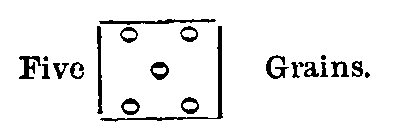
Each of the grain weights, in addition to the circles denoting their
several weights, bears also the stamp of a crown. Care must be taken
not to mistake this for one of the numerals. Besides these weights
there are others marked ss, which means half a scruple;
ss, meaning half a drachm; and ss, meaning half an
ounce. When there are ounces, drachms, or scruples, the number of them
is shown by Roman figures, thus:—i. ii. iii. iv. v., &c., and
prescriptions are written in this style.
663. Measures—Liquid
Liquid medicines are always measured by the following table:
| 60 minims |
are contained in |
1 fluid drachm |
| 8 fluid drachms |
are contained in |
1 fluid ounce |
| 20 fluid ounces |
are contained in |
a pint |
| 8 pints |
are contained in |
1 gallon |
And the signs which distinguish each are as follows:
| c |
a gallon |
| o |
a pint |
| fl. |
a fluid ounce |
| fl. |
a fluid drachm |
| m |
a minim, or drop |
Formerly drops used to be
ordered, but as the size of a drop must necessarily vary, minims are
always directed to be employed now for any particular medicine,
although for such medicines as oil of cloves, essence of ginger, &c.,
drops are frequently ordered.
664. Specific Measuring Vessels
In order that medicines may be measured accurately, there are
graduated glass vessels for measuring ounces, drachms, and minims.
665. Approximate Measures
When proper measures are not at hand, it is necessary to adopt some
other method of determining the quantities required, and therefore the
following table has been drawn up for that purpose:
| A tumbler |
usually contains about |
10 ounces |
| A cup |
usually contains about |
6 ounces |
| A wineglass |
usually contains about |
2 ounces |
| A tablespoon |
usually contains about |
4 drachms |
| A dessertspoon |
usually contains about |
2 drachms |
| A teaspoon |
usually contains about |
1 drachm |
These quantities refer to ordinary sized spoons and vessels. Some cups
hold half as much more, and some tablespoons contain six drachms. A
medicine glass, which is graduated so as to show the number of
spoonfuls it contains, should be kept in every family.
To-day, Man Lives in Pleasure, Wealth and Pride.
666. Process of Making Medicines
To powder substances.—Place the substance in the mortar, and strike
it gently with direct perpendicular blows of the pestle, until it
separates into several pieces, then remove all but a small portion,
which bruise gently at first, and rub the pestle round and round the
mortar, observing that the circles described by the pestle should
gradually decrease in diameter, and then increase again, because by
this means every part of the powder is subjected to the process of
pulverization. In powdering substances, making emulsions, and whenever
using a mortar, the pestle should always travel from the right to the
left.
667. Preparation and Assistance
Some substances require to be prepared in a particular manner before
they can be powdered, or to be assisted by adding some other body. For
example, camphor powders more easily when a few drops of spirits of
wine are added to it; mace, nutmegs, and such oily aromatic substances
are better for the addition of a little white sugar; resins and
gum-resins should be powdered in a cold place, and if they are
intended to be dissolved, a little fine well-washed white sand mixed
with them assists the process of powdering. Tough roots, like gentian
and calumba, should be cut into thin slices; and fibrous roots, like
ginger, cut slanting, otherwise the powder will be full of small
fibres. Vegetable matter, such as peppermint, loosestrife, senna, &c.,
requires to be dried before it is powdered.
668. Care of the Mortar
Be careful not to pound too hard in glass, porcelain, or Wedgwood-ware
mortar; they are intended only for substances that pulverize easily,
and for the purpose of mixing or incorporating medicines. Never use
acids in a marble mortar, and be sure that you do not powder galls or
any other astringent substances in any but a brass mortar.
669. Sifting
Sifting is frequently required for powdered substances, and this is
usually done by employing a fine sieve, or tying the powder up in a
piece of muslin, and striking it against the left hand over a piece of
paper.
670. Filtering
Filtering is frequently required for the purpose of obtaining clear
fluids, such as infusions, eye-washes, and other medicines; and it is,
therefore, highly important to know how to perform this simple
operation. First of all take a square piece of white blotting paper,
and double it over so as to form an angular cup. Open out this filter
paper very carefully, and having placed it in a funnel, moisten it
with a little water. Then place the funnel in the neck of the bottle,
and pour the liquid gently down the side of the paper, otherwise the
fluid is apt to burst the paper.
671. Maceration
Maceration is another process that is frequently required to be
performed in making up medicines, and consists simply in immersing the
medicines in cold water or spirits for a certain time.
672. Digestion
Digestion resembles maceration, except that the process is assisted by
a gentle heat. The ingredients are placed in a flask, such as salad
oil is sold in, which should be fitted with a plug of tow or wood, and
have a piece of wire twisted round the neck. The flask is held by
means of the wire over the flame of a spirit lamp, or else placed in
some sand warmed in an old iron saucepan over the fire, care being
taken not to place more of the flask below the sand than the portion
occupied by the ingredients.
673. Infusion
Infusion is one of the most frequent operations required in making up
medicines, its object being to extract the aromatic and volatile
principles of substances, that would be lost by decoction, or
digestion; and to extract the soluble from the insoluble parts of
bodies. Infusions may be made with cold water, in which case they are
weaker, but more pleasant. The general method employed consists in
slicing, bruising, or rasping the ingredients first, then placing them
in a common jug (which should be as globular as possible), and pouring
boiling water over them. Cover the jug with a cloth folded six or
eight times, but if there be a lid to the jug so much the better. When
the infusion has stood the time directed, hold a piece of very
coarse linen over the spout, and pour the liquid through it into
another jug.
To-morrow, Poor—or Life Itself Denied.
674. Decoction
Decoction, or boiling, is employed to extract the mucilaginous or
gummy parts of substances, their bitter, astringent, or other
qualities, and is nothing more than boiling the ingredients in a
saucepan with the lid slightly raised. Be sure never to use an iron
saucepan for astringent decoctions, such as oak-bark, galls, &c., as
they will turn the saucepan black, and spoil the decoction. The
enamelled saucepans are very useful for decoctions, but an excellent
plan is to put the ingredients into a jar and boil the jar, thus
preparing it by a water bath, as it is technically termed; or by using
a common pipkin, which answers still better. No decoction should be
allowed to boil for more than ten minutes.
675. Extracts
Extracts are made by evaporating the liquors obtained by infusion or
decoction, but these can be bought much cheaper and better of chemists
and druggists, and so can tinctures, confections, cerates and
plasters, and syrups: but as every one is not always in the
neighbourhood of druggists, we shall give recipes for those most
generally useful, and the method of making them.
676. Precautions to be Observed in Giving Medicines.
677. Sex
Medicines for females should not be so strong as those for males,
therefore it is advisable to reduce the doses about one-third.
678. Temperament
Persons of a phlegmatic temperament bear stimulants and purgatives
better than those of a sanguine temperament, therefore the latter
require smaller doses.
679. Habits
Purgatives never act so well upon persons accustomed to take them as
upon those who are not, therefore it is better to change the form of
purgative from pill to potion, powder to draught, or aromatic to
saline. Purgatives should never be given when there is an irritable
state of the bowels.
680. Use of Alcohol
Stimulants and narcotics never act so quickly upon persons accustomed
to use spirits freely as upon those who live abstemiously.
681. Climate
The action of medicines is modified by climate and seasons. In summer,
certain medicines act more powerfully than in winter, and the same
person cannot bear the dose in July that he could in December.
682. General Health
Persons whose general health is good bear stronger doses than the
debilitated and those who have suffered for a long time.
683. Idiosyncrasy
By this is meant a peculiar temperament or disposition not common to
people generally. For example, some persons cannot take calomel in the
smallest dose without being salivated, or rhubarb without having
convulsions; others cannot take squills, opium, senna, &c.; and this
peculiarity is called the patient's idiosyncrasy, therefore it is
wrong to insist upon their taking these medicines.
684. Forms best suited for Administration
Fluids act quicker than solids, and powders sooner than pills.
685. Best Method of Preventing the Nauseous Taste of Medicines
Castor oil may be taken in milk, coffee, or spirit, such as brandy;
but the best method of covering the nauseous flavour is to put a
tablespoonful of strained orange juice in a wineglass, pour the castor
oil into the centre of the juice, and then squeeze a few drops of
lemon juice upon the top of the oil. The wineglass should first be
dipped, rim downwards, into water, so that the interior may be wetted.
Cod liver oil may be taken, like castor oil, in orange juice.
Peppermint water neutralizes, to a great extent, the nauseous taste of
Epsom salts; a strong solution of extract of liquorice, that of aloes;
milk, that of cinchona bark; and cloves that of senna.
To-day, Lays Plans for Many Years to Come.
686. An Excellent Way to Prevent the Taste of Medicines
An excellent way to prevent the taste of medicines
is to have the medicine in a glass, as usual, and a tumbler of water
by the side of it; take the medicine, and retain it in the mouth,
which should be kept closed, and if drinking the water be then
commenced, the taste of the medicine is washed away. Even the
bitterness of quinine and aloes may be prevented by this means. If the
nostrils are firmly compressed by the thumb and finger of the left
hand, while taking a nauseous draught, and so retained till the mouth
has been washed out with water, the disagreeable taste of the medicine
will be almost imperceptible.
687. Giving Medicines to Persons
Medicines should be given in such a manner that the effect of the
first dose shall not have ceased when the next dose is given,
therefore the intervals between the doses should be regulated
accordingly.
688. Doses of Medicine for Different Ages
It must be plain to every one that children do not require such
powerful medicine as adults or old people, and therefore it is
desirable to have some fixed method of determining or regulating the
administration of doses of medicine. Now let it be supposed that the
dose for a full-grown person is one drachm, then the following
proportions will be suitable for the various ages given; keeping in
view other circumstances, such as sex, temperament, habits, climate,
state of general health, and idiosyncrasy.
| Age |
Proportion |
Proportionate Dose |
| 7 weeks |
one-fifteenth |
or grains 4 |
| 7 months |
one-twelfth |
or grains 5 |
| under 2 years |
one-eighth |
or grains 7.5 |
| under 3 years |
one-sixth |
or grains 10 |
| under 4 years |
one-fourth |
or grains 15 |
| under 7 years |
one-third |
or scruple 1 |
| under 14 years |
one-half |
or drachm 1/2 |
| under 20 years |
two-fifths |
or scruples 2 |
| above 21 years |
the full dose |
|
| above 65 years |
the inverse gradation |
|
689. Drugs, with their Properties and Doses
The various drugs have been arranged according to their properties,
and the doses of each have been given. Many, however, have been
necessarily omitted from each class, because they cannot be employed
except by a medical man. The doses are meant for adults.
690. Classes of Drugs
Medicines have been divided into four grand classes
-
General stimulants;
- Local stimulants;
- Chemical remedies;
- Mechanical remedies.
691. General Stimulants
General stimulants are subdivided into two classes, diffusible and
permanent stimulants: the first comprising narcotics and
antispasmodics, and the second tonics and astringents.
692. Narcotics
Narcotics are medicines which stupefy and diminish the activity of the
nervous system. Given in small doses, they generally act as
stimulants, but an increased dose produces a sedative effect. Under
this head are included alcohol, camphor, ether, the hop, and opium.
693. Alcohol
Alcohol, or rectified spirit, is a very powerful stimulant, and is
never used as a remedy without being diluted to the degree called
proof spirit; and even then it is seldom used internally. It is used
externally in restraining bleeding, when there is not any vessel of
importance wounded. It is also used as a lotion to burns, and is
applied by dipping a piece of lint into the spirit, and laying it over
the part. Freely diluted (one part to eighteen) with water, it forms a
useful eye-wash in the last stage of ophthalmia.
Used internally, it acts as a very useful stimulant when diluted and
taken moderately, increasing the general excitement, and giving energy
to the muscular fibres; hence it becomes very useful in certain cases
of debility, especially in habits disposed to create acidity; and in
the low stage of typhus fevers.
Dose.—It is impossible to fix anything like a dose for this remedy,
as much will depend upon the individual; but diluted with water and
sweetened with sugar, from half an ounce to two ounces may be given
three or four times a day. In cases of extreme debility, however, much
will depend upon the disease.
Caution.—Remember that alcohol is an irritant poison, and that
daily indulgence in its use originates dyspepsia, or indigestion, and
many other serious complaints. Of all kinds of spirits the best as a
tonic and stomachic is brandy.
To-morrow, Sinks into the Silent Tomb.
694. Camphor
Camphor is not a very steady stimulant, as its effect is transitory;
but in large doses it acts as a narcotic, abating pain and inducing
sleep. In moderate doses it operates as a diaphoretic, diuretic,
antispasmodic, increasing the heat of the body, allaying irritation
and spasm.
It is used externally as a liniment when dissolved in oil, alcohol,
or acetic acid, being employed to allay rheumatic pains; and it is
also useful as an embrocation in sprains, bruises, chilblains, and,
when combined with opium, it has been advantageously employed in
flatulent colic, and severe diarrhœa, being rubbed over the bowels.
When reduced to a fine powder, by the addition of a little spirit of
wine and friction, it is very useful as a local stimulant to indolent
ulcers, especially when they discharge a foul kind of matter; a pinch
is taken between the finger and thumb, and sprinkled into the ulcer,
which is then dressed as usual.
When dissolved in oil of turpentine, a few drops placed in a hollow
tooth and covered with jeweller's wool, or scraped lint, give almost
instant relief to toothache.
Used internally, it is apt to excite
nausea, and even vomiting, especially when given in the solid form.
As a stimulant it is of great service in all low fevers, malignant
measles, malignant sore throat, and confluent small-pox; and when
combined with opium and bark, it is extremely useful in checking the
progress of malignant ulcers, and gangrene.
As a narcotic it is very useful, because it allays pain and
irritation, without increasing the pulse very much.
When powdered and sprinkled upon the surface of a blister, it
prevents the cantharides acting in a peculiar and painful manner upon
the bladder.
Combined with senna, it increases its purgative properties; and it
is also used to correct the nausea produced by squills, and the
irritating effects of drastic purgatives and mezereon.
Dose, from four grains to half a scruple, repeated at short
intervals when used in small doses, and long intervals when employed
in large doses.
Doses of the various preparations.—Camphor mixture, from half an
ounce to three ounces; compound tincture of camphor (paregoric
elixir), from fifteen minims to two drachms.
Caution.—When given in an overdose it acts as a poison, producing
vomiting, giddiness, delirium, convulsions, and sometimes death. Opium
is the best antidote for camphor, whether in excess or taken as a
poison.
Mode of exhibition.—It may be rubbed up with almond
emulsion, or mucilage, or the yolk of eggs, and by this means
suspended in water, or combined with chloroform as a mixture, in which
form it is a valuable stimulant in cholera and other diseases. (See
Mixtures, 556-564).
695. Ether
Ether is a diffusible stimulant, narcotic and antispasmodic.
696. Sulphuric Ether
Sulphuric Ether is used externally both as a stimulant and a
refrigerant. In the former case its evaporation is prevented by
covering a rag moistened with it with oiled silk, in order to relieve
headache; and in the latter case it is allowed to evaporate, and thus
produce coldness: hence it is applied over scalded surfaces by means
of rags dipped in it.
As a local application, it has been found to afford almost instant
relief in earache, when combined with almond oil, and dropped into the
ear.
It is used internally as a stimulant and narcotic in low fevers and
cases of great exhaustion.
Dose, from fifteen minims to half a drachm, repeated at short
intervals, as its effects soon pass off. Give in a little camphor
julep, or water.
697. Nitric Ether
Nitric Ether is a refrigerant, diuretic, and antispasmodic, well known
as "sweet spirit of nitre."
Used externally, its evaporation relieves headache, and it is
sometimes applied to burns. It is used internally to relieve nausea,
flatulence, and thirst in fevers; also as a diuretic.
Dose, from ten minims to one drachm. The smaller dose taken in a
little warm water or gruel is useful as a sudorific in cases of cold
and chill, to induce and promote the proper action of the skin which
has been checked. If a larger dose be taken, it acts as a diuretic and
not as a sudorific, and so fails to produce the desired effect.
To-day, His Food is Dressed in Dainty Forms.
698. Compound Spirit of Sulphuric Ether
Compound Spirit of Sulphuric Ether is a very useful stimulant,
narcotic, and antispasmodic.
Used internally in cases of great exhaustion, attended with
irritability.
Dose, from half a drachm to two drachms, in camphor julep. When
combined with laudanum, it prevents the nauseating effects of the
opium, and acts more beneficially as a narcotic.
699. The Hop
The Hop is a narcotic, tonic, and diuretic; it reduces the frequency
of the pulse, and does not affect the head, like most anodynes.
Used externally, it acts as an anodyne and discutient, and is useful
as a fomentation for painful tumours, rheumatic pains in the joints,
and severe contusions. A pillow stuffed with hops acts as a narcotic.
When the powder is mixed with lard, it acts as an anodyne dressing in
painful ulcers.
Dose, of the extract, from five grains to one scruple; of the
tincture, from half a drachm to two drachms; of the powder, from
three! grains to one scruple; of the infusion, half an ounce to one
and a half ounce.
700. Opium
Opium is a stimulant, narcotic, and anodyne.
Used externally it acts almost as well as when taken into the
stomach, and without affecting the head or causing nausea. Applied to
irritable ulcers in the form of tincture, it promotes their cure, and
allays pain. Cloths dipped in a strong solution, and applied over
painful bruises, tumours, or inflamed joints, allay pain. A small
piece of solid opium stuffed into a hollow tooth relieves toothache. A
weak solution of opium forms a valuable collyrium in ophthalmia. Two
drops of the wine of opium dropped into the eye acts as an excellent
stimulant in bloodshot eye; or after long-continued inflammation, it
is useful in strengthening the eye. Applied as a liniment, in
combination with ammonia and oil, or with camphorated spirit, it
relieves muscular pain. When combined with oil of turpentine, it is
useful as a liniment in spasmodic colic.
Used internally, it acts as a very powerful stimulant: then as a
sedative, and finally as an anodyne and narcotic, allaying pain in the
most extraordinary manner, by acting directly upon the nervous system.
In acute rheumatism it is a most excellent medicine when combined with
calomel and tartrate of antimony; but its exhibition requires the
judicious care of a medical man.
Doses of the various preparations.—. Confection of opium, from
five grains to half a drachm; extract of opium, from one to five
grains (this is a valuable form, as it does not produce so much after
derangement of the nervous system as solid opium); pills of soap and
opium, from five to ten grains; compound ipecacuanha powder
("Dover's Powder"), from ten to fifteen grains; compound kino
powder, from five to fifteen grains; wine of opium, from ten minims
to one drachm.
Caution.—Opium is a powerful poison when taken in
too large a quantity (See Poisons, pars. 1340-1367), and thus
should be used with extreme caution. It is on this account that we
have omitted some of its preparations. The best antidote for opium is
camphor.
701. Antispasmodics
Antispasmodics are medicines which possess the power of overcoming the
spasms of the muscles, or allaying any severe pain which is not
attended by inflammation. The class includes a great many, but the
most safe and serviceable are ammonia, assafœtida, galbanum,
valerian, bark, ether, camphor, opium, and chloroform; with the
minerals, oxide of zinc and calomel.
702. Ammonia
Ammonia, or Sal Volatile, is an antispasmodic antacid, stimulant and
diaphoretic.
Used externally, combined with oil, it forms a cheap and useful
liniment, but it should be dissolved in proof spirit before the oil
is added. One part of this salt, and three parts of extract of
belladonna, mixed and spread upon leather, makes an excellent plaster
for relieving rheumatic pains. As a local stimulant it is well known,
as regards its effects in hysterics, faintness, and lassitude, when
applied to the nose, as common smelling salts.
It is used internally as an adjunct to infusion of gentian in
dyspepsia or indigestion, and in moderate doses in gout.
Dose, from five to fifteen grains.
Caution.—Overdoses act as a
narcotic and irritant poison.
To-morrow, is Himself a Feast for Worms.
703. Bicarbonate of Ammonia
Bicarbonate of Ammonia is used internally the same as sal volatile.
Dose, from six to twelve grains. It is frequently combined with Epsom
salts.
704. Solution of Sesquicarbonate of Ammonia
Solution of Sesquicarbonate of Ammonia, used the same as sal
volatile.
Dose, from half a drachm to one drachm, combined with some milky
fluid, like almond emulsion.
705. Asafœtida
Asafœtida is an antispasmodic, expectorant, excitant, and
anthelmintic.
Used internally, it is extremely useful in dyspepsia, flatulent
colic, hysteria, and nervous diseases; and where there are no
inflammatory symptoms, it is an excellent remedy in hooping cough and
asthma.
Used locally as an enema, it is useful in flatulent colic, and
convulsions that come on through teething.
Doses of various preparations.—Solid gum, from five to ten grains
as pills; mixture, from half an ounce to one ounce; tincture, from
fifteen minims to one drachm; ammoniated tincture, from twenty
minims to one drachm.
Caution. —Never give this drug when inflammation exists.
706. Galbanum
Galbanum is stimulant, antispasmodic, expectorant, and deobstruent.
Used externally, it assists in dispelling tumours when spread upon
indolent leather as a plaster, and is useful in weakness of the legs
from rickets, being applied as a plaster to the loins.
Employed internally, it is useful in chronic or old-standing
rheumatism and hysteria.
Doses of preparations.—Of the gum, from ten to fifteen grains as
pills; tincture, from fifteen minims to one drachm. It may be made
into an emulsion with mucilage and water.
707. Valerian
Valerian is a powerful antispasmodic, tonic, and excitant, acting
chiefly on the nervous centres.
Used internally, it is employed in hysteria, nervous languors, and
spasmodic complaints generally. It is useful in low fevers.
Doses of various preparations. —Powder, from ten grains to half a
drachm, three or four times a day; tincture, from two to four
drachms; ammoniated tincture, from one to two drachms; infusion,
from two to three ounces, or more.
708. Peruvian Bark
Bark, or, as it is commonly called, Peruvian bark, is an
antispasmodic, tonic, astringent, and stomachic.
Used externally, it is an excellent detergent for foul ulcers, and
those that heal slowly.
Used internally, it is particularly valuable in intermittent fever
or ague, malignant measles, dysentery, diarrhœa, intermittent
rheumatism, St. Vitus's dance, indigestion, nervous affections,
malignant sore throat, and erysipelas; its use being indicated in all
cases of debility.
Doses of its preparations.—Powder, from five grains to two
drachms, mixed in wine, water, milk, syrup, or solution of liquorice;
infusion, from one to three ounces; decoction, from one to three
ounces; tincture and compound tincture, each from one to three
drachms.
Caution.—If it causes oppression at the stomach, combine it with an
aromatic; if it causes vomiting, give it in wine or soda water; if it
purges, give opium; and if it constipates give rhubarb.
709. Sulphuric Ether
Sulphuric Ether is given internally as an antispasmodic in difficult
breathing and spasmodic asthma; also in hysteria, cramp of the
stomach, hiccough, locked jaw, and cholera. It is useful in checking
sea-sickness.
Dose, from twenty minims to one drachm.
Caution.—An overdose produces apoplectic symptoms.
To-day He's Clad in Gaudy, Rich Array
710. Camphor (2)
Camphor is given internally as an antispasmodic in hysteria, cramp in
the stomach, flatulent colic, and St. Vitus's dance.
Dose, from two to twenty grains.
711. Opium (2)
Opium is employed internally in spasmodic affections, such as cholera,
spasmodic asthma, whooping cough, flatulent colic, and St. Vitus's
dance.
Dose, from one-sixth of a grain to two grains of the solid opium,
according to the disease.
712. Oxide of Zinc
Oxide of Zinc is an antispasmodic, astringent, and tonic.
Used externally, as an ointment, it forms an excellent astringent in
affections of the eyelids, arising from relaxation; or as a powder, it
is an excellent detergent for unhealthy ulcers.
Used internally, it has proved efficacious in St. Vitus's dance, and
some other spasmodic affections.
Dose, from one to six grains twice a day.
713. Calomel
Calomel is an antispasmodic, alterative deobstruent, purgative, and
errhine.
Used internally, combined with opium, it acts as an antispasmodic in
locked jaw, cholera, and many other spasmodic affections. As an
alterative and deobstruent, it has been found useful in leprosy and
itch, when combined with antimonials and guaiacum, and in enlargement
of the liver and glandular affections. It acts beneficially in
dropsies, by producing watery motions. In typhus it is of great
benefit when combined with antimonials; and it may be given as a
purgative in almost any disease, provided there is not any
inflammation of the bowels, irritability of the system, or great
debility.
Dose, as a deobstruent and alterative, from one to five grains,
daily; as a cathartic, from five to fifteen grains; to produce
ptyalism, or salivation, from one to two grains, in a pill, with a
quarter of a grain of opium, night and morning.
Caution.—When taking calomel, exposure to cold or dampness should
be guarded against, as such an imprudence would bring out an eruption
of the skin, attended with fever. When this does occur, leave off the
calomel, and give bark, wine, and purgatives; take a warm bath twice a
day, and powder the surface of the body with powdered starch.
714. Tonics
Tonics are given to improve the tone of the system, and restore the
natural energies and general strength of the body. They consist of
bark, quassia, gentian, camomile, wormwood, and angostura bark.
715. Quassia
Quassia is a simple tonic, and can be used with safety by any one, as
it does not increase the animal heat, or quicken the circulation.
Used internally, in the form of infusion, it has been found of great
benefit in indigestion and nervous irritability, and is useful after
bilious fevers and diarrhœa.
Dose, of the infusion, from one and a half to two ounces, three
times a day.
716. Gentian
Gentian is an excellent tonic and stomachic; but when given in large
doses, it acts as an aperient.
It is used internally in all cases of general debility, and when
combined with bark is used in intermittent fevers. It has also been
employed in indigestion, and it is sometimes used, combined with sal
volatile, in that disease; but, at other times alone, in the form of
infusion. After diarrhœa, it proves a useful tonic. Its infusion is
sometimes applied externally to foul ulcers.
Dose, of the infusion, one and a half to two ounces; of the
tincture, one to four drachms; of the extract, from ten to thirty
grains.
717. Camomile
The flowers of the camomile are tonic, slightly anodyne,
antispasmodic, and emetic.
They are used externally as fomentations, in colic, faceache, and
tumours, and to unhealthy ulcers.
They are used internally in the form of infusion, with carbonate of
soda, ginger, and other stomachic remedies, in dyspepsia, flatulent
colic, debility following dysentery and gout. Warm infusion of the
flowers acts as an emetic; and the powdered flowers are sometimes
combined with opium or kino, and given in intermittent fevers.
Dose, of the powdered flowers, from ten grains to one drachm,
twice or thrice a day; of the infusion, from one to two ounces, as a
tonic, three times a day: and from six ounces to one pint as an
emetic; of the extract, from five to twenty grains.
To-morrow, Shrouded for a Bed of Clay.
718. Wormwood
Wormwood is a tonic and anthelmintic.
It is used externally as a discutient and antiseptic.
It is used internally in long-standing cases of dyspepsia, in the
form of infusion, with or without aromatics. It has also been used in
intermittents.
Dose, of the infusion, from one to two ounces, three times a day;
of the powder, from one to two scruples.
719. Angostura Bark
Angostura Bark, or Cusparia, is a tonic and stimulant. It expels
flatulence, increases the appetite, and produces a grateful warmth in
the stomach.
It is used internally in intermittent fevers, dyspepsia, hysteria,
and all cases of debility, where a stimulating tonic is desirable,
particularly after bilious diarrhœa.
Dose, of the powder, from ten to fifteen grains, combined with
cinnamon powder, magnesia, or rhubarb; of the extract, from three to
ten grains; of the infusion, from one to two ounces.
Caution. —This drug should never be given in inflammatory diseases
or hectic fever.
720. Astringents
Astringents are medicines given for the purpose of diminishing
excessive discharges, and to act indirectly as tonics. This class
includes catechu, kino, oak bark, log wood, rose leaves, chalk, and
white vitriol.
721. Catechu
Catechu is a most valuable astringent.
It is used externally, when powdered, to promote the contraction of
flabby ulcers. As a local astringent it is useful in relaxed uvula, a
small piece being dissolved in the mouth; small, spotty ulcerations of
the mouth and throat, and bleeding gums, and for these two affections
it is used in the form of infusion to wash the parts.
It is given internally in diarrhœa, dysentery, and hemorrhage from
the bowels.
Dose, of the infusion, from one to three ounces; of the
tincture, from one to four drachms; of the powder, from ten to
thirty grains.
Caution.—It must not be given with soda or any alkali; nor metallic
salts, albumen, or gelatine, as its property is destroyed by this
combination.
722. Kino
Kino is a powerful astringent.
It is used externally to ulcers, to give tone to them when flabby,
and discharging foul and thin matter.
It is used internally in the same diseases as catechu.
Dose, of the powder, from ten to fifteen grains; of the tincture,
from one to two drachms; of the compound powder, from ten to twenty
grains; of the infusion, from a half to one and a half ounce.
Caution.—Kino is used in combination with calomel, when salivation
is intended, to prevent, by its astringency, the action of the calomel
on the bowels, and thereby insure its affecting the constitution.—
(See Catechu).
723. Oak Bark
Oak Bark is an astringent and tonic.
It is used externally in the form of decoction, to restrain bleeding
from lacerated surfaces. As a local astringent, it is used in the
form of decoction, as a gargle in sore throat and relaxed uvula.
It is used internally in the same diseases as catechu, and when
combined with aromatics and bitters, in intermittent fevers.
Dose of the powder, from fifteen to thirty grains; of the
decoction, from two to eight drachms.
724. Logwood
Logwood is not a very satisfactory astringent.
It is used internally in diarrhœa, the last stage of dysentery, and
a lax state of the intestines.
Dose, of the extract, from ten grains to one drachm; of the
decoction from one to three ounces, three or four times a day.
725. Rose Leaves
Rose Leaves are stringent and tonic.
They are used internally in spitting of blood, hemorrhage from the
stomach, intestines, &c., as a gargle for sore throat, and for the
night sweats of consumption. The infusion is frequently used as a
tonic with diluted sulphuric acid (oil of vitriol), after low fevers,
or in combination with Epsom salts and sulphuric acid in certain
states of the bowels.
Dose of infusion, from two to four ounces.
To-day, Enjoys his Halls, Built to his Mind.
726. Chalk
Chalk, when prepared by washing, becomes an astringent as well as
antacid.
It is used internally in diarrhœa, in the form of mixture, and
externally as an application to burns, scalds, and excoriations.
Dose of the mixture, from one to two ounces.
727. White Vitriol
White Vitriol, or Sulphate of Zinc, is an astringent, tonic, and
emetic.
It is used externally as a collyrium for ophthalmia (See Domestic
Pharmacopœia,), and as a detergent for scrofulous
ulcers, in the proportion of three grains of the salt to one ounce of
water.
It is used internally in indigestion, and many other diseases; but
it should not be given unless ordered by a medical man, as it is a
poison.
728. Local Stimulants
Local stimulants comprise emetics, cathartics, diuretics,
diaphoretics, expectorants, sialogogues, errhines, and epispastics.
729. Emetics
Emetics are medicines given for the purpose of causing vomiting, as in
cases of poisoning. They consist of ipecacuanha, camomile, antimony,
copper, zinc, and several others.
730. Ipecacuanha
Ipecacuanha is an emetic, diaphoretic, and expectorant.
It is used internally to excite vomiting, in doses of from ten to
twenty grains of the powder, or one to one and a half ounce of the
infusion, every half hour until vomiting takes place. To make it act
well and easily, the patient should drink half pints of warm water
after each dose of the infusion. As a diaphoretic, it should be given
in doses of three grains, mixed with some soft substance, such as
crumbs of bread, and repeated every four hours.
Dose of the wine, from twenty minims to one drachm as a
diaphoretic, and from one drachm to one and a half ounces as an
emetic.
Caution.—Do not give more than the doses named above, because,
although a safe emetic, yet it is an acrid narcotic poison.
731. Mustard
Mustard is too well known to require describing. It is an emetic,
diuretic, stimulant, and rubefacient.
It is used externally as a poultice. Mustard poultices are made of
the powder, bread crumbs, and water; or of one part of mustard to two
of flour; or, especially for children, of linseed meal, mixed with a
little of the powder, or having some of the powder slightly sprinkled
on the surface. Sometimes a little vinegar is added under the idea
that it increases the strength of the poultice, but this is not
necessary. In all cases where a stimulant is required, such as sore
throats, rheumatic pains in the joints, cholera, cramps in the
extremities, diarrhœa, and many other diseases. When applied it
should not he left on too long, as it is apt to cause ulceration of
the part. From ten to thirty minutes is quite long enough.
When used internally as an emetic, a large teaspoonful mixed with a
tumbler of warm water generally operates quickly and safely,
frequently when other emetics have failed. In dropsy it is sometimes
given in the form of whey, which is made by boiling half an ounce of
the bruised seeds in a pint of milk, and straining off the curd.
From three to four ounces of this is to be taken for a dose three
times a day.
732. Cathartics
Cathartics are divided into laxatives and purgatives. Manna,
tamarinds, castor oil, sulphur, and magnesia are laxatives; senna,
rhubarb, jalap, colocynth, buckthorn, aloes, cream of tartar,
scammony, calomel, Epsom salts, Glauber's salts, sulphate of potash,
and Venice turpentine are purgatives.
733. Manna
Manna is a very gentle laxative, and therefore used for children and
delicate persons.
Dose for children, from one to two drachms; and for adults, from
one to two ounces, combined with rhubarb and cinnamon water.
734. Tamarinds
Tamarinds are generally laxative and refrigerant. As it is agreeable,
this medicine will generally be eaten by children when they will not
take other medicines.
Dose, from half to one ounce. As a refrigerant beverage in fevers it
is extremely grateful.
To-morrow, in a Coffin is Confined.
735. Castor Oil
Castor Oil is a most valuable medicine, as it generally operates
quickly and mildly.
It is used externally, combined with citron ointment, as a topical
application in common leprosy.
It is used internally as an ordinary purgative for infants, as a
laxative for adults, and in diarrhœa and dysentery. In colic it is
very useful and safe; and also after delivery.
Dose for infants, from forty drops to two drachms; for adults,
from half an ounce to one and a half ounces.
736. Sulphur
Sublimed sulphur is laxative and diaphoretic.
It is used externally in skin diseases, especially itch, both in the
form of ointment and as a vapour bath.
It is used internally in hemorrhoids, combined with magnesia, as a
laxative for children, and as a diaphoretic in rheumatism.
Dose, from one scruple to two drachms, mixed in milk or with
treacle. When combined with an equal proportion of cream of tartar, it
acts as a purgative.
737. Magnesia
Calcined magnesia possesses the same properties as the carbonate.
Dose, from ten to thirty grains, in milk or water.
Carbonate of magnesia is an antacid and laxative, and is very useful
for children when teething, and for heartburn in adults.
Dose, from a half to two drachms, in water or milk.
Fluid Magnesia is a useful preparation by whose use is avoided the
grittiness that is inseparable from magnesia when taken in the form of
powder.
738. Senna
Senna is a purgative, but is apt to gripe when given alone; therefore
it is combined with some aromatic, such as cloves or ginger, and the
infusion should be made with cold instead of hot water. It usually
acts in about four hours, but its action should be assisted by
drinking warm fluids.
Dose, of the confection, commonly called "lenitive electuary,"
from one to three or four drachma at bedtime; of the infusion, from
one to two ounces; of the tincture, from one to two drachms; of the
syrup (used for children), from one drachm to one ounce.
Caution.—Do not give senna, in any form except confection, in
hæmorrhoids, and never in irritability of the intestines.
739. Rhubarb
Rhubarb is a purgative, astringent and stomachic.
It is used externally in the form of powder to ulcers, to promote a
healthy action.
It is given internally in diarrhœa, dyspepsia, and a debilitated
state of the bowels. Combined with a mild preparation of calomel, it
forms an excellent purgative for children.
Dose, of the infusion, from one to two ounces; of the powder,
from one scruple to half a drachm as a purgative, and from six to ten
grains as a stomachic; of the tincture and compound tincture, from
one to four drachms; of the compound pill, from ten to twenty grains.
740. Jalap
Jalap is a powerful cathartic and hydrogogue, and is therefore apt to
gripe.
Dose, of the powder, from ten to thirty grains, combined with a
drop or two of aromatic oil; of the compound powder, from fifteen to
forty grains; of the tincture, from one to three drachms; of the
extract, from ten to twenty grains. The watery extract is better
than the alcoholic.
741. Colocynth
Colocynth is a powerful drastic cathartic, and should never be given
alone, unless ordered by a medical man, as its action is too violent
for some constitutions.
Dose, of the extract, from five to fifteen grains; of the
compound extract, from five to fifteen grains; of the compound
colocynth pill, the best of all its preparations, from ten to twenty
grains.
742. Buckthorn
Buckthorn is a brisk purgative for children in the form of syrup.
Dose of the syrup, from one to six drachms.
743. Aloes
Aloes is a purgative and cathartic in large, and tonic in smaller
doses.
Dose, of powder, from two to ten grains, combined with soap,
bitter extracts, or other purgative medicines, and given in the form
of pills; of the compound pill, from five to twenty grains; of the
pill of aloes and myrrh from five to twenty grains; of the
tincture, from four drachms to one ounce; of the compound
tincture, from one to four drachms; of the extract, from six to ten
grains; of the compound decoction, from four drachms to two ounces.
To-day, He Floats on Honour's Lofty Wave.
744. Cream of Tartar
Cream of Tartar is a purgative and refrigerant.
It is used internally in dropsy, especially of the belly, in doses
of from one scruple to one drachm. As a refrigerant drink it is
dissolved in hot water, and sweetened with sugar, and is used in
febrile diseases, care being taken not to allow it to rest too much
upon the bowels.
Dose, as a purgative, from two to four drachms, as a hydrogogue,
from four to six drachms, mixed with honey or treacle.
Caution.—Its use should be followed by tonics, especially gentian
and angostura.
745. Scammony
Scammony is a drastic purgative, generally acting quickly and
powerfully; sometimes producing nausea, and even vomiting, and being
very apt to gripe.
It is used internally, to produce watery evacuations in dropsy, to
remove intestinal worms, and correct the slimy motions of children.
Dose, of the powder, from five to sixteen grains, given in
liquorice water, treacle, or honey; of the confection, from twenty
to thirty grains.
Caution.—Do not give it in an irritable or inflamed state of the
bowels.
746. Epsom Salts
Epsom Salts is a purgative and diuretic. This medicine generally
operates quickly, and therefore is extremely useful in acute diseases.
It is found to be beneficial in dyspepsia when combined with infusion
of gentian and a little ginger. It forms an excellent enema with olive
oil.
Dose, from a half to two ounces, dissolved in warm tea or water.
Infusion of roses partially covers its taste and assists its action.
Note, that with regard to Epsom salts, the larger in reason is the
amount of water in which they are taken, the smaller the dose of
salts required: thus, half an ounce properly dissolved may be made a
strong dose. The action and efficacy of Epsom salts may be greatly
increased by adding one grain of tartar emetic to a dose of salts.
747. Glauber's Salt
Glauber's Salt is a very good purgative.
Dose, from a half to two ounces, dissolved in warm water
748. Sulphate of Potash
Sulphate of Potash is a cathartic and deobstruent. It is used
internally, combined with aloes or rhubarb, in obstructions of the
bowels, and is an excellent saline purgative in dyspepsia and
jaundice.
Dose, from ten grains to one drachm.
749. Venice Turpentine
Venice Turpentine is cathartic, diuretic, stimulant, and anthelmintic.
It is used externally as a rubefacient, and is given internally in
flatulent colic, in tapeworm, rheumatism, and other diseases.
Dose, as a diuretic, from ten grains to one drachm; as a
cathartic, from ten to twelve drachms; as an anthelmintic, from
one to two ounces every eight hours, till the worm be ejected.
750. Diuretics
Diuretics are medicines which promote an increased secretion of urine.
They consist of nitre, acetate of potassa, squills, juniper, oil of
turpentine, and others, vegetable and mineral.
751. Nitre
Nitre is a diuretic and refrigerant.
It is used externally as a detergent when dissolved in water, and as
a lotion to inflamed and painful rheumatic joints.
It is given internally in doses of from ten grains to half a drachm,
or even one drachm; in spitting blood it is given in one drachm doses
with great benefit. It is beneficial in sore throat, a few grains
being allowed to dissolve in the mouth.
752. Acetate of Potassa
Acetate of Potassa is diuretic and cathartic.
It is given internally as a diuretic, in combination with infusion
of quassia; in dropsy, in doses of from one scruple to one drachm,
every three or four hours.
Dose, as a cathartic, from two to three drachms.
753. Squills
Squills is diuretic and expectorant when given in small doses; and
emetic and purgative when given in large doses.
It is used internally in dropsy, in combination with calomel and
opium; in asthma, with ammoniacum; in catarrh, in the form of oxymel.
Dose, of the dried bulb powdered, from one to two grains every six
hours; of the compound pill, from ten to fifteen grains; of the
tincture, from ten minims to half a drachm; of the oxymel, from a
half to two drachms; of the vinegar, from twenty minims to two
drachms.
To-morrow, Leaves his Title for a Grave.
754. Juniper
Juniper is diuretic and stomachic.
It is given internally in dropsy.
Dose, of the infusion, from two to three ounces every four hours,
of the oil, from one to five minims.
755. Oil of Turpentine
Oil of Turpentine is a diuretic, anthelmintic, and rubefacient.
It is used externally in flatulent colic, sprinkled over flannels
dipped in hot water and wrung out dry.
It is used internally in the same diseases as Venice turpentine.
Dose, from five minims to two drachms.
756. Diaphoretics
Diaphoretics are medicines given to increase the secretion from the
skin by sweating. They comprise acetate of ammonia, calomel, antimony,
opium, camphor, sarsaparilla.
757. Solution of Acetate of Ammonia
Solution of Acetate of Ammonia is a most useful diaphoretic.
It is used externally as a discutient, as a lotion to inflamed
milk-breasts, as an eye-wash, and a lotion in scald head.
It is given internally to promote perspiration in febrile diseases,
which it does most effectually, especially when combined with camphor
mixture. This is the article so frequently met with in prescriptions,
and called spirits of mindercrus.
Dose, from a half to one and a half ounces every three or four hours.
758. Antimony.—Tartar emetic
Tartar emetic is diaphoretic, emetic, expectorant, alterative, and
rubefacient.
It is used externally as an irritant in white swellings and
deep-seated inflammations, in the form of an ointment.
It is given internally in pleurisy, bilious fevers, and many other
diseases, but its exhibition requires the skill of a medical man, to
watch its effects.
Dose, from one-sixth of a grain to four grains.
Caution. —It is a poison, and therefore requires great care in
its administration.
759. Antimonial Powder
Antimonial Powder is a diaphoretic, emetic, and alterative.
It is given internally, in febrile diseases, to produce
determination to the skin, and is useful in rheumatism, when combined
with opium or calomel.
Dose, from three to ten grains every four hours, taking plenty of
warm fluids between each dose.
760. Sarsiparilla
Sarsiparilla is diaphoretic, alterative, diuretic, and tonic.
It is given internally in cutaneous diseases, old-standing
rheumatism, scrofula, and debility.
Dose, of the decoction, from four to eight ounces; of the
compound decoction, from four to eight ounces; of the extract,
from five grains to one drachm.
761. Expectorants
Expectorants are medicines given to promote the secretion from the
windpipe, &c. They consist of antimony, ipecacuanha, squills,
ammoniacum, and tolu.
762. Ammoniacum
Ammoniacum is an expectorant, antispasmodic, diuretic, and
deobstruent.
It is used externally as a discutient, and is given internally,
with great benefit in asthma, hysteria, and chronic catarrh.
Dose, from ten to twenty grains.
763. Tolu
Tolu is an excellent expectorant, when there are no inflammatory
symptoms.
It is given internally in asthma and chronic catarrh.
Dose, of the balsam, from five to thirty grains, combined with
mucilage and suspended in water; of the tincture, from a half to one
drachm; of the syrup, from a half to four drachms.
764. Sialogogues
These are given to increase the flow of saliva or spittle. They
consist of ginger and calomel, pellitory of Spain, tobacco, the acids,
and some others.
765. Ginger
Ginger ia a sialogogue, carminative, and stimulant.
It is used internally in flatulent colic, dyspepsia, and to prevent
the griping of medicines. When chewed, it acts as a sialogogue, and is
therefore useful in relaxed uvula.
Dose, from ten to twenty grains of the powder; of the tincture,
from ten minims to one drachm.
To-day, his Beauteous Visage we Extol.
766. Epispastics and Rubefacients
These are remedies which are applied to blister and cause redness of
the surface. They consist of cantharides, ammonia, Burgundy pitch, and
mustard.
767. Cantharides, or Spanish flies
Cantharides, or Spanish flies, when used internally, are diuretic and
stimulant; and epispastic and rubefacient when applied externally.
Mode of application.—A portion of the blistering plaster is spread
with the thumb upon brown paper, linen, or leather, to the size
required; its surface then slightly moistened with olive oil and
sprinkled with camphor, and the plaster applied by a light bandage:
or it is spread on adhesive plaster, and attached to the skin by the
adhesive margin of the plaster.
Caution.—If a blister is to be applied to the head, shave it at
least ten hours before it is put on; it is better to place a thin
piece of gauze, wetted with vinegar, between the skin and the blister.
If a distressing feeling be experienced about the bladder, give warm
and copious draughts of linseed tea, milk, or decoction of quince
seeds, and apply warm fomentations of milk and water to the blistered
surface. The period required for a blister to remain on varies
from eight to ten hours for adults, and from twenty minutes to two
hours for children: as soon as it is removed, if the blister is not
raised, apply a "spongio-piline" poultice, and it will then rise
properly. When it is required to act as a rubefacient, the blister
should remain on from one to three hours for adults, and from fifteen
to forty minutes for children.
To dress a blister.—Cut the bag of cuticle containing the scrum at
the lowest part, by snipping it with the scissors, so as to form an
opening like this—V; and then apply a piece of calico, spread with
spermaceti or some other dressing. Such is the ordinary method; but a
much better and more expeditious plan, and one that prevents all pain
and inconvenience in the healing, is, after cutting the blister as
directed above, to immediately cover it with a warm bread and water
poultice for about an hour and a half, and on the removal of the
poultice to dust the raw surface with violet powder; apply a
handkerchief to retain the powder, and lastly dust the part every two
hours. It will be healed in twelve hours.
Caution.—Never attempt to take cantharides internally, except under
the advice of a medical man, as it is a poison, and requires extreme
caution in its use.
768. Burgundy Pitch
Burgundy Pitch is warmed and spread upon linen or leather, and applied
over the chest in cases of catarrh, difficult breathing, and hooping
cough; over the loins in debility or lumbago; and over any part that
it is desirable to excite a mild degree of inflammation in.
769. Chemical Remedies
These comprise refrigerants, antacids, antalkalies, and escharotics.
770. Refrigerants
These are medicines given for the purpose of suppressing an unnatural
heat of the body. They are Seville oranges, lemons, tamarinds, nitre,
and cream of tartar.
771. Seville Oranges
Seville Oranges and sweet oranges are formed into a refrigerant
beverage, which is extremely grateful in febrile diseases.
The rind is an agreeable mild tonic, carminative, and stomachic.
Dose, of the tincture, from one to four drachms; of the
infusion, from one to two ounces.
To-morrow, Loathsome in the Sight of All.
772. Lemons
Lemons are used to form a refrigerant beverage, which is given to
quench thirst in febrile and inflammatory diseases,
Lemon juice given with carbonate of potash (half an ounce of the
juice to twenty grains of the salt), and taken while effervescing,
allays vomiting; a tablespoonful, taken occasionally, allays
hysterical palpitations of the heart, it is useful in scurvy caused by
eating too much salt food, but requires to be taken with sugar.
The rind forms a nice mild tonic and stomachic in certain forms of
dyspepsia.
Dose of the infusion (made the same as orange peel), from one to
two ounces.
773. Antacids
These are given to correct acidity in the system. They are soda,
ammonia, chalk, and magnesia.
774. Soda, Carbonate of, and Sesquicarbonate of Soda
Soda, Carbonate of, and Sesquicarbonate of Soda, are antacids and
deobstruents.
They are used internally in acidity of the stomach and dyspepsia.
Dose of both preparations, from 10 grains to half a drachm.
775. Antalkalies
These are given to neutralize an alkaline state of the system. They
are citric acid, lemon juice, and tartaric acid.
776. Citric Acid
Citric Acid is used to check profuse sweating, and as a substitute for
lemon juice when it cannot be procured.
Dose, from ten to thirty grains.
777. Tartaric Acid
Tartaric Acid, when largely diluted, forms an excellent refrigerant
beverage and antalkali. It enters into the composition of
extemporaneous soda and Seidlitz waters.
Dose, from ten to thirty grains.
778. Escharotics
These are remedies used to destroy the vitality of a part. They
comprise lunar caustic, bluestone, and solution of chloride of zinc.
779. Bluestone, or Sulphate of Copper
Bluestone, or Sulphate of Copper, is used in a solution of from four
to fifteen grains to the ounce of water, and applied to foul and
indolent ulcers, by means of rag dipped in it. It is rubbed in
substance on fungous growths, warts, &c., to destroy them.
Caution.—It is a poison.
780. Lunar Caustic; or Nitrate of Silver
Lunar Caustic; or Nitrate of Silver, is an excellent remedy in
erysipelas when applied in solution (one drachm of the salt to one
ounce of water), which should be brushed all over the inflamed part,
and for an inch beyond it. This blackens the skin, but it soon peels
off. To destroy warts, proud flesh, and unhealthy edges of ulcers,
&c., it is invaluable; and as an application to bed sores, pencilled
over with a solution of the same strength, and in the same manner as
for erysipelas.
Caution.—It is a poison.
781. Solution of Chloride of Zinc
Solution of Chloride of Zinc, more commonly known as Sir William
Burnett's "Disinfecting Fluid," is a valuable escharotic in
destroying the parts of poisoned wounds, such as the bite of a mad
dog. It is also very useful in restoring the hair after the scalp has
been attacked with ringworm; but its use requires extreme caution, as
it is a powerful escharotic. In itch, diluted (one part to thirty-two)
with water, it appears to answer very well.
Caution.—It is a most powerful poison.
782. Mechanical Remedies
These comprise anthelmintics, demulcents, diluents, and emollients.
783. Anthelmintics
These are medicines given for the purpose of expelling or destroying
worms. They are cowhage, scammony, male fern root, calomel, gamboge,
tin, and turpentine.
784. Cowhage
Cowhage is used to expel the round worm, which it does by wounding it
with the fine prickles.
Dose of the confection, for a child three or four years old, a
teaspoonful early, for three mornings, followed by a dose of castor
oil. (See par 491.)
The mechanical anthelmintics are strictly confined to those agents
which kill the worm in the body by piercing its cuticle with the sharp
darts or spiculae of the cowhage hairs, or the fine metallic points of
powdered tin (pulvis stanni). When these drops are employed, they
should be given in honey or treacle for ten or fifteen days, and an
aperient powder every fourth morning, to expel the killed worms.
785. Male Fern Root
Male Fern Root is a powerful anthelmintic, and an astringent. It is
used to kill tapeworm.
Dose, three drachms of the powdered root mixed in a teacupful of
water, to be taken in the morning while in bed, and followed by a
brisk purgative two hours afterwards; or from a tablespoonful to a
wineglassful, according to age, to be taken early in the morning.
(See par 569).
786. Gamboge
Gamboge is a powerful drastic and anthelmintic.
It is used internally in dropsy, and for the expulsion of tapeworm;
but its use requires caution, as it is an irritant poison.
Dose, from two to six grains, in the form of pills, combined with
colocynth, soap, rhubarb, or bread-crumbs.
787. Demulcents
These are used to diminish irritation, and soften parts by protecting
them with a viscid matter. They are tragacanth, linseed, marsh-mallow,
mallow, liquorice, arrowroot, isinglass, suet, wax, and almonds.
788. Tragacanth
Tragacanth is used to allay tickling cough, and lubricate abraded
parts. It is usually given in the form of mucilage.
Dose, from ten grains to one drachm, or more.
789. Linseed
Linseed is emollient and demulcent.
It is used externally, in the form of powder or "meal," as a
poultice; and the oil, combined with lime water, is applied to burns
and scalds.
It is used internally as an infusion in diarrhœa, dysentery, and
irritation of the intestines after certain poisons, and in catarrh.
The best form of linseed meal is that which is obtained from seed from
which the oil has not been extracted.
Dose, of the infusion, as much as the patient pleases.
790. Marsh-Mallow
Marsh-Mallow is used internally in the same diseases as linseed.
The leaves are used externally as a fomentation, and the boiled
roots are bruised and applied as an emollient poultice.
Dose, the same as for linseed.
791. Mallow
Mallow is used externally as a fomentation and poultice in
inflammation, and the infusion is used internally in dysentery,
diseases of the kidneys, and the same diseases as marsh-mallow and
linseed. It is also used as an enema.
Dose, same as for linseed and marsh-mallow.
792. Liquorice
Liquorice is an agreeable demulcent, and is given in the form of
decoction in catarrh, and some forms of dyspepsia, and the extract is
used in catarrh.
Dose, of the extract, from ten grains to one drachm; of the
decoction, from two to four ounces.
793. Arrowroot etc.
Arrowroot, islinglass, almonds, suet, and wax, are too well known to
require descriptions. (See par 487, for "Almond Confection" for
preparations.)
794. Diluents
These are chiefly watery compounds, such as weak tea, water, thin
broth, gruel, weak infusions of balm, hore-hound, pennyroyal, ground
ivy, mint, and sage.
795. Emollients
These consist of unctuous remedies, such as cerates and ointments, and
any materials that combine heat with moisture, —poultices of bread,
bran, linseed meal, carrots, and turnips. (See par 809.)
796. Domestic Surgery
This will comprise such hints and advice as will enable any one to act
on an emergency, or in ordinary trivial accidents requiring simple
treatment: and also to distinguish between serious and simple
accidents, and the best means to adopt in all cases that are likely to
fall under a person's notice.
These hints will be of the utmost value to heads of families, to
emigrants, and to persons who are frequently called upon to attend the
sick. We strongly recommend the Parent, Emigrant, and Nurse, to read
over these directions occasionally, —to regard it as a duty to do so
at least three or four times a year, so as to be prepared for
emergencies whenever they may arise. When accidents occur, people are
too excited to acquire immediately a knowledge of what they should do;
and many lives have been lost for want of this knowledge.
Study, therefore, at moderate intervals, the Domestic Surgery,
Treatment of Poisons, Rules for the Prevention of Accidents, How
to Escape from Fires, the Domestic Pharmacopœia, &c., which will
he found in various pages of Enquire Within.
And let it be impressed upon your mind that The Index will enable you
to refer to anything you may require In A Moment. Don't trouble to
hunt through the pages; but when you wish to Enquire Within, remember
that the Index is the knocker, by which the door of knowledge may be
opened.
To-morrow, Cries Too Late to be Forgiven.
797. Dressings
These are substances usually applied to parts for the purpose of
soothing, promoting their reunion when divided, protecting them from
external injuries, absorbing discharges, protecting the surrounding
parts, insuring cleanliness, and as a means of applying various
medicines.
798. Certain Instruments
Certain Instruments are required for the application of dressings in
domestic surgery, viz.—scissors, a pair of tweezers or simple
forceps, a knife, needles and thread, a razor, a lancet, a piece of
lunar caustic in a quill, and a sponge.
799. Materials for dressings
These consist of lint, scraped linen, carded cotton, tow, ointment
spread on calico, adhesive plaster, compresses, pads, bandages,
poultices, old rags of linen or calico, and water.
800. Rules
The following rules should be attended to in applying dressings:
-
Always prepare the new dressing before removing the old one.
-
Always have hot and cold water at hand, and a vessel to place
the foul dressings in.
-
Have one or more persons at hand ready to assist, and, to
prevent confusion, tell each person what they are to do before you
commence; thus, one is to wash out and hand the sponges, another to
heat the adhesive plaster, or hand the bandages and dressings, and,
if requisite, a third to support the limb, &c.
-
Always stand on the outside of a limb to dress it.
-
Place the patient in as easy a position as possible, so as not to
fatigue him.
-
Arrange the bed after changing the dressings; but in some
cases you will have to do so before the patient is placed on it.
-
Never be in a hurry when applying dressings, do it quietly.
-
When a patient requires moving from one bed to another, the
best way is for one person to stand on each side of the patient,
and each to place an arm behind his back, while he passes his arms
over their necks, then let their other arms be passed under his
thighs, and by holding each other's hands, the patient can be raised
with ease, and removed to another bed. If the leg is injured, a
third person should steady it; and if the arm, the same precaution
should be adopted. Sometimes a stout sheet is passed under the
patient, and by several people holding the sides, thy patient is
lifted without any fatigue or much disturbance.
801. Lint, how made
Lint, how made. This may be quickly made by nailing a piece of old
linen on a board, and scraping its surface with a knife. It is used
either alone or spread with ointment. Scraped lint is the fine
filaments from ordinary lint, and is used to stimulate ulcers and
absorb discharges; it is what the French call charpie.
802. Uses of Scraped Lint
This is made into various shapes for particular purposes. When it is
screwed up into a conical or wedge-like shape, it is called a tent,
and is used to dilate fistulous openings, so as to allow the matter to
escape freely; and to plug wounds, so as to promote the formation of a
clot of blood, and thus arrest bleeding. When rolled into little
balls, called boulettes, it is used for absorbing matter in
cavities, or blood in wounds. Another useful form is made by rolling a
mass of scraped lint into a long roll, and then tying it in the middle
with a piece of thread; the middle is then doubled and pushed into a
deep-seated wound, so as to press upon the bleeding vessel, while the
ends remain loose and assist in forming a clot; or it is used in
deep-seated ulcers to absorb the matter and keep the edges apart. This
form is called the bourdonnet. Another form is called the pelote,
which is merely a ball of scraped lint tied up in a piece of linen
rag, commonly called a dabber. This is used in the treatment of
protrusion of the navel in children.
803. Carded Cotton
Carded cotton is used as a dressing for superficial burns, and care
should be taken to free it from specks, as flies are apt to lay their
eggs there, and generate maggots.
804. Tow
Tow is chiefly employed as a padding for splints, as a compress, and
also as an outer dressing where there is much discharge from a surface.
805. Ointments
Ointments are spread on calicoes, lint, or even thin layers of tow, by
means of a knife; they should not be spread too thick. Sometimes
ointment is applied to discharging surfaces on a piece of linen,
folded over on itself several times, and then cut at the corners with
scissors, in order to make small holes in it. The matter discharged
passes out freely through these holes, and is received in a layer of
tow spread over the linen.
806. Adhesive Plaster
Adhesive plaster is cut into strips, ranging in width, according to
the nature of the wound, &c., but the usual width is about
three-quarters of an inch. Isinglass plaster is not so irritating as
diachylon, and is more easily removed.
807. Compresses
Compresses are made of pieces of linen, calico, lint, or tow, doubled
or cut into various shapes, according to the purposes for which they
are required. They are used to confine dressings in their places, and
to apply an equal pressure on parts. They should be free from darns,
hems, and knots. Ordinary compresses are square, oblong, and
triangular. Compresses are also graduated by placing square pieces of
folded cloth on one another, so arranged that they decrease in size
each time. They are used for keeping up pressure upon certain parts.
808. Pads
Pads are made by sewing tow inside pieces of linen, or folding linen
and sewing the pieces together. They are used to keep off pressure
from parts such as that caused by splints in fractures.
809. Poultices
Poultices are usually made of linseed meal, oatmeal, or bread, either
combined with water or other fluids; sometimes they are made of
carrots, charcoal, potatoes, yeast, and linseed meal, mustard, &c.,
but the best and most economical kind of poultice is a fabric made of
sponge and wool felted together, and backed by Indian rubber, called
"spongio piline."
The method of using this poultice is as follows:— A piece of the
material of the required form and size is cut off, and the edges are
pared or bevelled off with a pair of scissors, so that the caoutchouc
may come in contact with the surrounding skin, in order to prevent
evaporation of the fluid used; for, as it only forms the vehicle, the
various poultices generally used can be employed with much less
expenditure of time and money, and increased cleanliness.
For example,—a vinegar poultice is made by moistening the fabric
with distilled vinegar; an alum poultice, by using a strong solution
of alum; a charcoal poultice, by sprinkling powdered charcoal on the
moistened surface of the material; a yeast poultice, by using warmed
yeast, and moistening the fabric with hot water, which is to be well
squeezed out previous to the absorption of the yeast; a beer
poultice, by employing warm porter-dregs or strong beer as the fluid;
and a carrot poultice, by using the expressed and evaporated liquor
of boiled carrots.
Spongio-piline costs about one farthing a square inch, and may be
obtained of the chemist. As a fomentation it is most invaluable, and
by moistening the material with compound camphor liniment or
hartshorn, it acts the same as a mustard poultice.
To-morrow, Dies in Anguish and Despair.
810. Mustard Poultices
These may be made of the mustard powder alone, or in combination with
bread crumbs, or linseed meal. When mustard only is used, the powder
should be moistened with water, and the paste thus produced spread on
a piece of linen, and covered with muslin to intervene between the
mustard and the skin. When mixed with linseed the powder and the meal
may be incorporated before water is added, or the meal may be
moistened and spread on linen for application, and the mustard be then
strewn on the surface, more or less thickly according to the age of
the patient. Rigollot's Mustard leaves, which can be procured from any
chemist, are now much used in the place of mustard poultices. They
only require wetting before application, and are both clean and
economical.
811. Bandages
Bandages are strips of calico, linen, flannel, muslin, elastic
webbing, bunting, or some other substance, of various lengths, and
from one to six inches wide, free from hems or darns, soft and
unglazed. They are better after they have been washed. Their uses are
to retain dressings, apparatus, or parts of the body in their proper
positions, support the soft parts, and maintain equal pressure.
812. Simple and Compound Bandages
Bandages are simple and compound; the former are simple slips rolled
up tightly like a roll of ribbon. There is also another simple kind,
which is rolled from both ends—this is called a double-headed
bandage. The compound bandages are formed of many pieces.
813. Bandages for Different Parts of the Body
Bandages for the head should be two inches wide and five yards long;
for the neck, two inches wide, and three yards long; for the arm, two
inches wide, and seven yards long; for the leg, two inches and a half
wide and seven yards long; for the thigh three inches wide, and eight
yards long; and for the body, four or six inches wide and ten or
twelve yards long.
814. To Apply a Single-Headed Bandage
To apply a single-headed bandage, lay the outside of the end near to
the part to be bandaged, and hold the roll between the little, ring
and middle fingers, and the palm of the left hand, using the thumb and
forefinger of the same hand to guide it, and the right hand to keep it
firm, and pass the bandage partly round the leg towards the left hand.
It is sometimes necessary to reverse this order, and therefore it is
well to be able to use both hands.
Particular parts require a different method of applying bandages, and
therefore it is necessary to describe the most useful separately; and
there are different ways of putting on the same bandage, which consist
in the manner the folds or turns are made. For example, the circular
bandage is formed by horizontal turns, each of which overlaps the one
made before it; the spiral consists of spiral turns; the oblique
follows a course oblique or slanting to the centre of the limb; and
the recurrent folds back again to the part whence it started.
815. Circular Bandages
Circular bandages are used for the neck, to retain dressings on any
part of it, or for blisters, setons, &c.; for the head, to keep
dressings on the forehead or any part contained within a circle
passing round the head; for the arm, previous to bleeding; for the
leg, above the knee; and for the fingers, &c.
816. To Confine the Ends of Bandages
To confine the ends of bandages some persons use pins, others slit the
end for a short distance, and tie the two strips into a knot, and some
use a strip of adhesive plaster. Always place the point of a pin in
such a position that it cannot prick the patient, or the person
dressing the limb, or be liable to be drawn out by using the limb;
therefore, as a general rule, turn the head of the pin from the free
end of the bandage, of towards the upper part of the limb. The best
mode is to sew the bandage on. A few stitches will hold it more
securely than pins can.
Little Deeds are Like Little Seeds.
817. The Oblique Bandage
The oblique bandage is generally used for arms and legs, to retain
dressings.
818. The Spiral Bandage
The spiral bandage is generally applied to the trunk and extremities,
but is apt to fall off even when very carefully applied; therefore the
recurrent bandage, which folds back again, is generally used.
819. The Recurrent Bandage
The recurrent bandage is the best kind of bandage that we can employ
for general purposes. The method of putting it on the leg is as
follows: —Apply the end of the bandage that is free, with the outside
of it next the skin, and hold this end with the finger and thumb of
the left hand, while some one supports the heel of the patient; then
with the right hand pass the bandage over the piece you are holding,
and keep it crossed thus, until you can place your right forefinger
upon the spot where it crosses the other bandage, where it must be
kept firm. Now hold the roll of the bandage in your left hand, with
the palm turned upwards, and taking care to keep that part of the
bandage between your right forefinger, and the roll in your left hand,
quite slack; turn your left hand over, and bring the bandage down
upon the leg; then pass the roll under the leg towards your right
hand, and repeat this until the leg is bandaged up to the knee, taking
care not to drag the bandage at any time during the process of
bandaging. When you arrive at the knee, pass the bandage round the leg
in circles just below the knee, and pin it as usual.
Bandaging is very easy, and if you once see any one apply a bandage
properly, and attend to these rules, there will not be any difficulty;
but bear one thing in mind, without which you will never put on a
bandage even decently; and that is, never to drag or pull at a
bandage, but make the turns while it is slack, and you have your right
forefinger placed upon the point where it is to be folded down. When a
limb is properly bandaged, the folds should run in a line
corresponding to the shin-bone. Use, to retain dressings, and for
varicose veins.
820. A Bandage for the Chest
A bandage for the chest is always placed upon the patient in a sitting
posture; and it may be put on in circles, or spirally. Use, in
fractures of the ribs, to retain dressings, and after severe
contusions.
821. A Bandage for the Belly
A bandage for the belly is placed on the patient as directed for the
chest, carrying it spirally from above downwards. Use, to compress
belly after dropsy, or retain dressings.
822. Bandaging the Hand
The hand is bandaged by crossing the bandage over the back of the hand
Use, to retain dressings.
823. Different Bandages for the Head
For the head, a bandage may be circular, or spiral, or both; in the
latter case, commence by placing one circular turn just over the ears;
then bring down from left to right, and round the head again, so as to
alternate a spiral with a circular turn. Use, to retain dressings on
the head or over the eye; but this form soon gets slack. The circular
bandage is the best, crossing it over both eyes.
824. For the Foot
Place the end just above the outer ankle, and make two circular turns,
to prevent its slipping: then bring it down from the inside of the
foot over the instep towards the outer part; pass it under the sole of
the foot, and upwards and inward over the instep towards the inner
ankle, then round the ankle and repeat again. Use, to retain dressings
to the instep, heel, or ankle.
825. For the Leg and Foot
For the leg and foot, commence and proceed as directed in the
preceding paragraph; then continue if up the leg as ordered in the
Recurrent Bandage.
826. Substitutes
As it sometimes happens that it is necessary to apply a bandage at
once, and the materials are not at hand it is desirable to know how to
substitute something else that any one may apply with ease. This can
be readily done with handkerchiefs.
They Grow to Flowers, or to Weeds.
827. Handkerchiefs
Any ordinary handkerchief will do; but a square of linen folded into
various shapes answers better. The shapes generally required are as
follows:—The triangle, the long square, the cravat, and the cord.
828. The Triangular Handkerchief
The triangular handkerchief is made by folding it from corner to
corner. Use, as a bandage for the head.
Application.—Place the base round the head, and the short part
hanging down behind, then tie the long ends over it.
829. The Long Square
The long square is made by folding the handkerchief in three. Use, as
a bandage to the ribs, belly, &c. If one handkerchief is not long
enough, sew two together.
830. The Cravat
The cravat is folded as usual with cravats. Use, as a bandage for the
head, arms, legs, feet, neck, &c.
831. The Cord
The cord is used to compress vessels, when a knot is made in it, and
placed over the vessel to be compressed. It is merely a handkerchief
twisted in its diagonal.
832. Multiple Handkerchiefs
Two or more handkerchiefs must sometimes be applied, as in a broken
collar-bone, or when it is necessary to keep dressings under the arm.
The bandage is applied by knotting the opposite comers of one
handkerchief together, and passing the left arm through it, then
passing another handkerchief under the right arm, and tying it. By
this means we can brace the shoulders well back, and the handkerchief
will press firmly over the broken collar-bone: besides, this form of
bandage does not readily slip or get slack, but it requires to be
combined with the sling, in order to keep the arm steady.
833. For an Inflamed Breast
For an inflamed breast that requires support, or dressings to be kept
to it, pass one corner over the shoulder, bring the body of it over
the breast, and pass it upwards and backwards under the arm of that
side, and tie the opposite corners together.
834. An Excellent Sling
An excellent sling is formed by placing one handkerchief around the
neck, and knotting opposite corners ever the breast bone, then placing
the other in triangle under the arm, to be supported with the base
near to the hand; tie the ends over the handkerchief, and pin the top
to the other part, after passing it around the elbow.
835. Apparatus
When a person receives a severe contusion of the leg or foot, or
breaks his leg, or has painful ulcers over the leg, or is unable from
some cause to bear the pressure of the bedclothes, it is advisable to
know how to keep them from hurting the leg. This may be done by
bending up a fire-guard, or placing a chair, resting upon the edge of
its back and front of the seat, over the leg, or putting a box on each
side of it, and placing a plank ever them; but the best way is to make
a cradle, as it is called. This is done by getting three pieces of
wood, and three pieces of iron wire, and passing the wire or hoop
through the wood. This can be placed to any height, and is very useful
in all cases where pressure cannot be borne. Wooden hoops cut in
halves answer better than the wire.
836. When a Person Breaks his Leg
When a person breaks his leg, and splints cannot he had directly,
get bunches of straw or twigs, roll them up in handkerchiefs, and
placing one on each side of the leg or arm, bind another handkerchief
firmly around them; or make a long bag about three inches in diameter,
or even more, of coarse linen duck, or carpet, and stuff this full of
bran, sawdust, or sand, sew up the end, and use this the same as the
twigs. It forms an excellent extemporaneous splint. Another good plan
is to get a hat-box made of chip, and cut it into suitable lengths; or
for want of all these, take some bones out of a pair of stays, and run
them through a stout piece of rug, protecting the leg with a fold of
rug, linen, &c. A still better splint or set of splints can be
extemporized by cutting a sheet of thick pasteboard into proper sized
slips, then passing each piece through a basin of hot water to soften
it. It is then applied to the fractured limb like an ordinary splint,
when it hardens as it dries, taking the exact shape of the part to
which it is applied.
Good-Nature Collects Honey from Every Herb.
837. Applying Dry Warmth
When dry warmth is required to be applied to any part of the body, fry
a flour pancake and lay it over the part; or warm some sand and place
in the patient's socks, and lay it to the part; salt put into a paper
bag does as well; or warm water put into a stone jar, and rolled up in
flannel.
838. Minor Operations.
839. Bleeding
Bleeding is sometimes necessary at once in certain accidents, such as
concussion, and therefore it is well to know how to do this. First of
all, bind up the arm above the elbow with a piece of bandage or a
handkerchief pretty firmly, then place your finger over one of the
veins at the bend of the arm, and feel if there is any pulsation; if
there is, try another vein, and if it does not pulsate or beat, choose
that one. Now rub the arm from the wrist towards the elbow, place the
left thumb upon the vein, and hold the lancet as you would a pen, and
nearly at right angles to the vein, taking care to prevent its going
in too far, by keeping the thumb near to the point, and resting the
hand upon the little finger. Now place the point of the lancet on the
vein, push it suddenly inwards, depress the elbow, and raise the hand
upwards and outwards, so as to cut obliquely across the vein.
When sufficient blood is drawn off, which is known by feeling the
pulse at the wrist, and near the thumb, bandage the arm. If the pulse
feel like a piece of cord, more blood should be taken away, but if it
is soft, and can be easily pressed, the bleeding should be stopped.
When you bandage the arm, place a piece of lint over the opening made
by the lancet, and pass a bandage lightly but firmly around the arm,
so as to cross it over the bend of the elbow, in form of a figure 8.
840. Dry Cupping
Dry cupping is performed by throwing a piece of paper dipped into
spirit of wine, and ignited, into a wineglass, and placing it over the
part, such as the neck, temples, &c. It thus draws the flesh into the
glass, and causes a determination of blood to the part, which is
useful in headache, and many other complaints. This is an excellent
method of extracting the poison from wounds made by adders, mad dogs,
fish, &c.
841. Ordinary Cupping
Ordinary cupping is performed the same as dry cupping, with this
exception, that the part is scarified or scratched with a lancet, so
as to cause the blood to flow; or by the application of a
scarificator, which makes by one action from seven to twenty-one light
superficial cuts. Then the glass is placed over it again with the
lighted paper in it, and when sufficient blood has been taken away,
the parts are then sponged, and a piece of sticking plaster placed
over them.
842. Leeches and their Application
The leech used for medical purposes is called the hirudo medicinalis
to distinguish it from other varieties, such as the horse-leech and
the Lisbon leech. It varies from two to four inches in length, and is
of a blackish brown colour, marked on the back with six yellow spots,
and edged with a yellow line on each side. Formerly leeches were
supplied by Lincolnshire, Yorkshire, and other fenny countries, but
latterly most of the leeches are procured from France, where they are
now becoming scarce.
843. When Leeches are Applied
When leeches are applied to a part, it should be thoroughly freed from
down or hair by shaving, and all liniments, &c., carefully and
effectually cleaned away by washing. If the leech is hungry it will
soon bite, but sometimes great difficulty is experienced in getting
them to fasten. When this is the case, roll the leech into a little
porter, or moisten the surface with a little blood, or milk, or sugar
and water. Leeches may be applied by holding them over the part with a
piece of linen cloth, or by means of an inverted glass, under which
they must be placed.
844. When applied to the Gums
When applied to the gums, care should be taken to use a leech glass,
as they are apt to creep down the patient's throat: a large swan's
quill will answer the purpose of a leech glass. When leeches are
gorged they will drop off themselves; never tear them off from a
person, but just dip the point of a moistened finger into some salt
and touch them with it.
Ill-Nature Sucks Poison from the Sweetest Flower.]
845. Quantity Removed
Leeches are supposed to abstract about two drachms of blood, or six
leeches draw about an ounce; but this is independent of the bleeding
after they have come off, and more blood generally flows then than
during the time they are sucking. The total amount of blood drawn and
subsequently lost by each leech-bite, is nearly half an ounce.
846. After Leeches Come Away
After leeches come away, encourage the bleeding by flannels dipped in
hot water and wrung out dry, and then apply a warm spongiopiline
poultice. If the bleeding is not to be encouraged, cover the bites
with a rag dipped in olive oil, or spread with spermaceti ointment,
having previously sponged the parts clean.
847. When Bleeding Continues
When bleeding continues from leech-bites, and it is desirable to stop
it, apply pressure with the fingers over the part, or dip a rag in a
strong solution of alum and lay over them, or use the tincture of
sesquichloride of iron, or apply a leaf of matico to them, placing the
under surface of the leaf next to the skin, or touch each bite with a
finely-pointed piece of lunar caustic, or lay a piece of lint soaked
in the extract of lead over the bites; and if all these tried in
succession fail, pass a fine needle through a fold of the skin so as
to include the bite, and twist a piece of thread round it. Be sure
never to allow any one to go to sleep with leech-bites bleeding,
without watching them carefully; and never apply too many to children;
or place them where their bites can be compressed if necessary. In
other words, never apply leeches to children except over a bone.
848. After Leeches have been Used
After leeches have been used they should be placed in water containing
sixteen per cent. of salt, which facilitates the removal of the blood
they contain; and they should afterwards be placed one by one in
warm water, and the blood forced out by _gentle_ pressure. The leeches
should then be thrown into fresh water, which is to be renewed every
twenty-four hours: they may then be re-applied after an interval of
eight or ten days, and be disgorged a second time. The best plan,
however, is to empty the leech by drawing the thumb and forefinger of
the right hand along its body from the tail to the mouth, the leech
being firmly held at the sucker extremity by the fingers of the left
hand. By this means, with a few minutes' rest between each
application, the same leech may be used four or five times in
succession.
849. If a Leech be Accidentally Swallowed
If a leech be accidentally swallowed, or by any means should get into
the body, employ an emetic, or enema of salt and water.
850. Scarification
Scarification is useful in severe contusions, and inflammation of
parts. It is performed by scratching or slightly cutting through the
skin with a lancet, holding the lancet as you would a pen when you are
ruling lines on paper.
851. Terms used to express the Properties of Medicines
852. Absorbents
Absorbents are medicines which destroy acidity in the stomach and
bowels, such as magnesia, prepared chalk, &c.
853. Alteratives
Alteratives are medicines which restore health to the constitution,
without producing any sensible effect, such as sarsaparilla, sulphur,
&c.
854. Analeptics
Analeptics are medicines that restore the strength which has been lost
by sickness, such as gentian, bark, &c.
855. Anodynes
Anodynes are medicines which relieve pain, and they are divided into
three kinds, sedatives, hypnotics, and narcotics (see these
terms); camphor is anodyne as well as narcotic.
856. Antacids
Antacids are medicines which destroy acidity, such as lime, magnesia,
soda, &c.
One Watch Set Right will Do to Set Many by.
857. Antalkalies
Antalkalies are medicines given to neutralize alkalies in the system,
such as citric, nitric, and sulphuric, acids, &c.
858. Anthelmintics
Anthelmintics are medicines used to expel and destroy worms from the
stomach and intestines, such as turpentine, cowhage, male fern, &c.
859. Antibilious
Antibilious are medicines which are useful in bilious affections, such
as calomel, &c.
860. Antirheumatics
Antirheumatics are medicines used for the cure of rheumatism, such as
colchicum, iodide of potash, &c.
861. Antiscorbutics
Antiscorbutics are medicines against scurvy, such as citric acid, &c.
862. Antiseptics
Antiseptics are substances used to correct putrefaction, such as bark,
camphor, charcoal, vinegar, and creosote.
863. Antispasmodics
Antispasmodics are medicines which possess the power of overcoming
spasms of the muscles, or allaying severe pain from any cause
unconnected with inflammation, such as valerian, ammonia, opium, and
camphor.
864. Aperients
Aperients are medicines which move the bowels gently, such as rhubarb,
manna, and grey powder.
865. Aromatics
Aromatics are cordial, spicy, and agreeably-flavoured, medicines, such
as cardamoms, cinnamon, &c.
866. Astringents
Astringents are medicines which contract the fibres of the body,
diminish excessive discharges, and act indirectly as tonics, such as
oak bark, galls, &c.
867. Attenuants
Attenuants are medicines which are supposed to thin the blood, such as
ammoniated iron, &c.
868. Balsamics
Balsamics are medicines of a soothing kind, such as tolu, Peruvian
balsam, &c.
869. Carminatives
Carminatives are medicines which allay pain in the stomach and bowels,
and expel flatulence, such as aniseed water, &c.
870. Cathartics
Cathartics are strong purgative medicines, such as jalap, &c.
871. Cordials
Cordials are exhilarating and warming medicines, such as aromatic
confection, &c.
872. Corroborants
Corroborants are medicines and food which increase the strength, such
as iron, gentian, meat, and wine.
873. Demulcents
Demulcents correct acrimony, diminish irritation, and soften parts by
covering their surfaces with a mild and viscid matter, such as
linseed-tea, gum, mucilage, honey, and marsh-mallow.
874. Deobstruents
Deobstruents are medicines which remove obstructions, such as iodide
of potash, &c.
875. Detergents
Detergents clean the surfaces over which they pass, such as soap, &c.
876. Diaphoretics
Diaphoretics produce perspiration, such as tartrate of antimony,
James's powder, and camphor.
877. Digestives
Digestives are remedies applied to ulcers or wounds, to promote the
formation of matter, such as resin, ointments, warm poultices, &c.
878. Discutients
Discutients possess the power of repelling or resolving tumours, such
as galbanum, mercury, and iodine.
879. Diuretics
Diuretics act upon the kidneys and bladder, and increase the flow of
urine, such as nitre, squills, cantharides, camphor, antimony, and
juniper.
880. Drastics
Drastics are violent purgatives, such as gamboge, &c.
881. Emetics
Emetics produce vomiting, or the discharge of the contents of the
stomach, such as mustard and hot water, tartar-emetic, ipecacuanha,
sulphate of zinc, and sulphate of copper.
882. Emmenagogues
Emmenagogues are medicines which exercise a direct action on the
uterus or womb, provoking the natural periodical secretion, such as
castor, asafœtida, galbanum, iron, mercury, aloes, hellebore, savine,
ergot of rye, juniper, and pennyroyal.
883. Emollients
Emollients are remedies used externally to soften the parts they are
applied to, such as spermaceti, palm oil, &c.
884. Epispastics
Epispastics are medicines which blister or cause effusion of serum
under the cuticle, such as Spanish flies, Burgundy pitch, rosin, and
galbanum.
885. Errhines
Errhines are medicines which produce sneezing, such as tobacco, &c.
886. Escharotics
Escharotics are medicines which corrode or destroy the vitality of the
part to which they are applied, such as lunar caustic, &c.
One that Goes Wrong may Mislead a Whole Neighbourhood.
887. Expectorants
Expectorants are medicines which increase expectoration, or the
discharge from the bronchial tubes, such as ipecacuanha, squills,
opium, ammoniacum.
888. Febrifuges
Febrifuges are remedies used in fevers, such as all the antimonials,
bark, quinine, mineral acids, arsenic.
889. Hydragogues
Hydragogues are medicines which have the effect of removing the fluid
of dropsy, by producing watery evacuations, such as gamboge, calomel,
&c.
890. Hypnotics
Hypnotics are medicines that relieve pain by procuring sleep, such as
hops, henbane, morphia, poppy.
891. Laxatives
Laxatives are medicines which cause the bowels to act rather more than
natural, such as manna, &c.
892. Narcotics
Narcotics are medicines which cause sleep or stupor, and allay pain,
such as opium, &c.
893. Nutrients
Nutrients are remedies that nourish the body, such as sugar, sago, &c.
894. Paregorics
Paregorics are medicines which actually assuage pain, such as compound
tincture of camphor, henbane, hops, opium.
895. Prophylactics
Prophylactics are remedies employed to prevent the attack of any
particular disease, such as quinine, &c.
896. Purgatives
Purgatives are medicines that promote the evacuation of the bowels,
such as senna, aloes, jalap, salts.
897. Refrigerants
Refrigerants are medicines which suppress an unusual heat of the body,
such as wood-sorrel, tamarind, &c.
898. Rubefacients
Rubefacients are medicaments which cause redness of the skin, such as
mustard, &c.
899. Sedatives
Sedatives are medicines which depress the nervous energy, and destroy
sensation, so as to compose, such as foxglove. (See Paregorics.)
900. Sialogogues
Sialogogues are medicines which promote the flow of saliva or spittle,
such as salt, calomel, &c.
901. Soporifics
Soporifics are medicines which induce sleep, such as hops, &c.
902. Stimulants
Stimulants are remedies which increase the action of the heart and
arteries, or the energy of the part to which they are applied, such as
food, wine, spirits, ether, sassafras, which is an internal stimulant,
and savine, which is an external one.
903. Stomachics
Stomachics restore the tone of the stomach, such as gentian, &c.
904. Styptics
Styptics are medicines which constrict the surface of a part, and
prevent the effusion of blood, such as kino, Friar's balsam, extract
of lead, and ice.
905. Sudorifics
Sudorifics promote profuse perspiration or sweating, such as
ipecacuanha, antimony, James's powder, ammonia.
906. Tonics
Tonics give general strength to the constitution, restore the natural
energies, and improve the tone of the system, such as all the
vegetable bitters, most of the minerals, also some kinds of food,
wine, and beer.
907. Vesicants
Vesicants are medicines which blister, such as strong liquid ammonia,
&c.
908. Special Rules for the Prevention of Cholera
-
It is impossible to urge too strongly the necessity, in all cases
of cholera, of instant recourse to medical aid, and also in every form
and variety of indisposition; for all disorders are found to merge in
the dominant disease.
-
Let immediate Relief be sought under disorder of the bowels
especially, however slight. The invasion of cholera may thus be
readily prevented.
-
Let every Impurity, animal and vegetable, be quickly removed to a
distance from the habitation, such as slaughterhouses, pig-sties,
cesspools, necessaries, and all other domestic nuisances.
-
Let all Uncovered Drains be carefully and frequently cleansed.
-
Let the Grounds in and around the habitation be drained, so as
effectually to carry off moisture of every kind.
-
Let all Partitions he removed from within and without habitations,
which unnecessarily impede ventilation.
-
Let every Room be daily thrown open for the admission of fresh
air; this should be done about noon, when the atmosphere is most
likely to be dry.
-
Let Dry Scrubbing be used in domestic cleansing in place of
water cleansing.
-
Let excessive Fatigue, and exposure to damp and cold, especially
during the night, be avoided.
-
Let the Use of Cold Drinks and acid liquors, especially under
fatigue, be avoided, or when the body is heated.
-
Let the Use of Cold Acid Fruits and vegetables be avoided.
-
Let Excess in the use of ardent and fermented liquors and tobacco
be avoided.
-
Let a Poor Diet, and the use of impure water in cooking, or for
drinking, be avoided.
-
Let the Wearing of wet and insufficient clothes be avoided.
-
Let a Flannel or woollen belt be worn round the belly.
-
Let Personal Cleanliness be carefully observed.
-
Let every cause tending to depress the moral and physical
energies be carefully avoided. Let exposure to extremes of heat and
cold be avoided.
-
Let Crowding of persons within houses and apartments be
avoided.
-
Let Sleeping in low or damp rooms be avoided.
-
Let Fires be kept up during the night in sleeping or adjoining
apartments, the night being the period of most danger from attack,
especially under exposure to cold or damp.
-
Let all Bedding and clothing be daily exposed during winter and
spring to the fire, and in summer to the heat of the sun.
-
Let the Dead be buried in places remote from the habitations of
the living. By the timely adoption of simple means such as these,
cholera, or other epidemic, will be made to lose its venom.
The Loveliest Bird has No Song.
909. Rules for the Preservation of Health
910. Fresh Air
Pure atmospheric air is composed of nitrogen, oxygen, and a very
small proportion of carbonic acid gas. Air once breathed has lost the
chief part of its oxygen, and acquired a proportionate increase of
carbonic acid gas.
Therefore, health requires that we breathe the same air once only.
911. Diet and Exercise
The solid part of our Bodies is continually wasting, and requires to
be repaired by fresh substances.
Therefore, food which is to repair the loss, should be taken with
due regard to the exercise and waste of the body.
912. Water
The fluid part of our bodies also wastes constantly; there is but one
fluid in animals, which is water.
Therefore, water only is necessary, and no artifice can produce a
better drink.
913. Proportion of Food and Drink
The fluid of our bodies is to the solid in proportion as nine to one.
Therefore, a like proportion should prevail in the total amount of
food taken.
914. Sunshine
Light exercises an important influence upon the growth and vigour of
animals and plants.
Therefore, our dwellings should freely admit the solar rays.
915. Bad Odours
Decomposing animal and vegetable substances yield various noxious gases
which enter the lungs and corrupt the blood.
Therefore, all impurities should be kept away from our abodes, and
every precaution be observed to secure a pure atmosphere.
916. Warmth
Warmth is essential to all the bodily functions.
Therefore, an equal bodily temperature should be maintained by
exercise, by clothing, or by fire.
917. Exercise and Clothing
Exercise warms, invigorates and purifies the body; clothing preserves
the warmth the body generates; fire imparts warmth externally.
Therefore, to obtain and preserve warmth, exercise and clothing are
preferable to fire.
918. Ventilation
Fire consumes the Oxygen of the air, and produces noxious gases.
Therefore, the air is less pure in the presence of candles, gas, or
coal fire, than otherwise, and the deterioration should be repaired by
increased ventilation.
So the Loveliest Woman may Lack Virtue.
919. Clean Skin
The skin is a highly-organized membrane, full of minute pores, cells,
bloodvessels, and nerves; it imbibes moisture or throws it off,
according to the state of the atmosphere and the temperature of the
body. It also "breathes," as do the lungs (though less actively). All
the internal organs sympathize with the skin.
Therefore, it should be repeatedly cleansed.
920. Over-Work
Late hours and anxious pursuits exhaust the nervous system, and produce
disease and premature death.
Therefore, the hours of labour and study should be short.
921. Body and Mind
Mental and bodily exercise are equally essential to the general health
and happiness.
Therefore, labour and study should succeed each other.
922. Over-Indulgence
Man will live most healthily upon simple solids and fluids, of which a
sufficient but temperate quantity should be taken.
Therefore, over indulgence in strong drinks, tobacco, snuff, opium,
and all mere indulgences, should be avoided.
923. Moderate Temperature
Sudden alternations of heat and cold are dangerous (especially to the
young and the aged).
Therefore, clothing, in quantity and quality, should be adapted to the
alternations of night and day, and of the seasons; and drinking cold
water when the body is hot, and hot tea and soups when cold, are
productive of many evils.
924. Summary
Moderation in eating and drinking, short hours of labour and study,
regularity in exercise, recreation, and rest, cleanliness, equanimity
of temper and equality of temperature, —these are the great
essentials to that which surpasses all wealth, health of mind and
body.
925. Homœopathy
926. Principle of Homœopathy
As homœopathy is now practised so widely and, indeed, preferred to
the older system in many families, the Domestic Pharmacopœia could
scarcely lay claim to be considered complete without a brief mention
of the principal remedies used and recommended by homœopathic
practitioners, and the disorders for which these remedies are
specially applicable. The principle of homœopathy is set forth in the
Latin words "similia similibus curantur," the meaning of which is
"likes are cured by likes."
The meaning of this is simply that the homœopathist in order to cure
a disease, administers a medicine which would produce in a perfectly
healthy subject, symptoms like, but not identical with or the
same as, the symptoms to counteract which the medicine is given. The
homœopathic practitioner, therefore, first makes himself thoroughly
acquainted with the symptoms that are exhibited by the sufferer;
having ascertained these, in order to neutralize them and restore the
state of the patient's health to a state of equilibrium, so to speak,
he administers preparations that would produce symptoms of a like
character in persons in good health.
It is not said, be it remembered, that the drug can produce in a
healthy person the disease from which the patient is suffering: it is
only advanced by homœopathists that the drug given has the power of
producing in a person in health, symptoms similar to those of the
disease under which the patient is languishing, and that the correct
mode of treatment is to counteract the disease symptoms by the
artificial production of similar symptoms by medicinal means, or in
other words, to suit the medicine to the disorder, by a previously
acquired knowledge of the effects of the drug, by experiment on a
healthy person.
927. Allopathy
Allopathy is the name given to the older treatment of disorders, and
the name is obtained from the fact, that the drugs given, do not
produce symptoms corresponding to those of the disease for whose
relief they are administered as in homœopathy. The introduction of
the term is contemporary with homœopathy itself. It was merely given
to define briefly the distinction that exists between the rival modes
of treatment, and it has been accepted and adopted by all medical men
who have no faith in homœopathy, and the treatment that its followers
prescribe.
Deep Rivers Flow with Silent Majesty.
928. Comparison
Allopathic treatment is said to be experimental, while homeopathic
treatment is based on certainty, resulting from experience. The
allopathist tries various drugs, and if one medicine or one
combination of drugs fails, tries another; but the homœopathist
administers only such medicaments as may be indicated by the symptoms
of the patient. If two drugs are given, as is frequently, and perhaps
generally, the case, it is because the symptoms exhibited are of such
a character that they cannot be produced in a healthy person by the
action of one and the same drug, and, consequently cannot be
counteracted or neutralized by the action of a single drug.
929. Homœopathic Medicines
Homœopathic medicines are given in the form of globules or tinctures,
the latter being generally preferred by homeopathic practitioners.
When contrasted with the doses of drugs given by allopathists, the
small doses administered by homœopathists must at first sight appear
wholly in adequate to the purpose for which they are given; but
homœopathists, whose dilution and trituration diffuse the drug given
throughout the vehicle in which it is administered, argue that by this
extension of its surface the active power of the drug is greatly
increased; and that there is reason in this argument is shown by the
fact that large doses of certain drugs administered for certain
purposes will pass through the system without in any way affecting
those organs, which will be acted on most powerfully by the very same
drugs when administered in much smaller doses. Thus a small dose of
sweet spirit of nitre will act on the skin and promote perspiration,
but a large dose will act as a diuretic only, and exert no influence
on the skin.
930. Treatment of Ailments by Homœopathy
Great stress is laid by homœopathists on attention to diet, but not
so much so in the present day as when the system was first introduced.
The reader will find a list of articles of food that may and may not
be taken in par. 961. For complete direction on this point, and on
diseases and their treatment and remedies, he must be referred to
works on this subject by Dr. Richard Epps and others. All that can be
done here is to give briefly a few of the more common ailments "that
flesh is heir to," with the symptoms by which they are indicated, and
the medicines by which they may be alleviated and eventually cured.
931. Asthma
Asthma, an ailment which should be referred in all cases to the
medical practitioner.
Symptoms. Difficulty of breathing, with cough, either spasmodic and
without expectoration, or accompanied with much expectoration.
Medicines. Aconitum napellus, especially with congestion or slight
spitting of blood; Antimonium tartaricum for wheezing and rattling in
the chest; Arsenicum for chronic asthma; ipecacuanha; Nux vomica.
932. Bilious Attacks
Bilious attacks, if attended with diarrhœa and copious evacuations of
a bright yellow colour.
Medicines. Bryonia, if arising from sedentary occupations, or from
eating and drinking too freely; or Nux vomica and Mercurius in
alternation, the former correcting constipation and the latter nausea,
fulness at the pit of the stomach, and a foul tongue.
933. Bronchitis
Symptoms. Catarrh accompanied with fever, expectoration dark, thick,
and sometimes streaked with blood; urine dark, thick, and scanty.
Medicines. Aconitum napellus, especially in earlier stages; Bryonia
for pain in coughing and difficulty of breathing; Antimonium
tartaricum, loose cough with much expectoration and a feeling of, and
tendency to, suffocation; Ipecacuanha, accumulation of phlegm in
bronchial tubes and for children.
Shallow Brooks are Noisy.
934. Bruises and Wounds
For all bruises, black eyes, etc., apply Arnica lotion; for slight
wounds, after washing well with cold water, apply Arnica plaster; to
stop bleeding when ordinary means fail, and for larger wounds, apply
concentrated tincture of Calendula.
935. Cold in the Head or Catarrh
Symptoms. Feverish feeling generally, and especially about the head,
eyes, and nose, running from, and obstruction of, nose; soreness and
irritation of the throat and bronchial tubes.
Medicines. Aconitum napellus for feverish symptoms; Belladonna for
sore throat and headache with inclination to cough; Mercurius for
running from nose and sneezing; Nux vomica for stoppage of nostrils;
Chamomilla for children and women, for whom Pulsatilla is also useful
in such cases.
936. Chilblains
Symptoms. Irritation and itching of the skin, which assumes a bluish
red colour.
Medicines. Arnica montana, taken internally or used as outward
application, unless the chilblain be broken, when arsenicum should be
used. If the swelling and irritation do not yield to these remedies
use Belladona and Rhus toxicodendron.
937. Cholera
- Bilious or English cholera.
Symptoms. Nausea, proceeding to vomiting, griping of the bowels,
watery and offensive evacuations, in which much bile is present,
accompanied with weakness and depression.
Medicines. Bryonia, with ipecacuanha at commencement of attack.
- Malignant or Asiatic cholera.
Symptoms as in English cholera, but in a more aggravated form,
followed by what is called the "cold stage," marked by great
severity of griping pain in the stomach, accompanied with frequent
and copious watery evacuations, and presently with cramps in all
parts of the body; after which the extremities become chilled, the
pulse scarcely discernible, the result of which is stupor and
ultimately death.
Medicines. Camphor, in the form of tincture, in frequent doses,
until the sufferer begins to feel warmth returning to the body, and
perspiration ensues. In the later stages, Cuprum and Veratrum.
938. Tincture of Camphor
Tincture of camphor is one of the most useful of the homœopathic
remedies in all cases of colic, diarrhœa, etc. In ordinary cases
fifteen drops on sugar may be taken every quarter of an hour until the
pain is allayed. In more aggravated cases, and in cases of cholera, a
few drops may be taken at intervals of from two to five minutes. A
dose of fifteen drops of camphor on sugar tends to counteract a chill
if taken soon after premonitory symptoms show themselves, and act as a
prophylactic against cold.
939. Colic or Stomach-Ache
This disorder is indicated by griping pains in the bowels, which
sometimes extends upwards into and over the region of the chest.
Sometimes the pain is attended with vomiting and cold perspiration. A
warm bath is useful, and hot flannels, or a jar or bottle filled with
hot water should be applied to the abdomen.
Medicines. Aconitum napellus, especially when the abdomen is tender
to the touch, and the patient is feverish; Belladonna for severe
griping and spasmodic pains; Bryonia for bilious colic and diarrhœa;
Chamomilla for children.
940. Constipation
Women are more subject than men to this confined state of the bowels,
which will, in many cases yield to exercise, plain nutritious diet,
with vegetables and cooked fruit, and but little bread, and an enema
of milk and water, or thin gruel if it is some time since there has
been any action of the bowels.
Medicines. Bryonia, especially for rheumatic patients, and disturbed
state of the stomach; Nux vomica, for persons of sedentary habits,
especially males; Pulsatilla, for women; Sulphur, for constipation
that is habitual or of long continuance.
941. Convulsions
For convulsions arising from whatever cause, a warm bath is desirable,
and a milk and water enema, if the child's bowels are confined.
Medicines. Belladonna and Chamomilla, if the convulsions are caused
by teething, with Aconitum napellus if the little patient be feverish;
Aconitum napellus, Cina, and Belladonna, for convulsions caused by
worms; Aconite and Coffœa, when they arise from fright; Ipecacuanha
and Nux vomica, when they have been caused by repletion, or food that
is difficult of digestion.
942. Cough
For this disorder, a light farinaceous diet is desirable, with plenty
of out-door exercise and constant use of the sponging-bath.
Medicines. Aconitum napellus, for a hard, dry, hacking cough;
Antimonium, for cough with wheezing and difficulty of expectoration;
Belladonna, for spasmodic cough, with tickling in the throat, or sore
throat; Bryonia, for hard, dry cough, with expectorations streaked
with blood; ipecacuanha, for children.
943. Croup
As this disorder frequently and quickly terminates fatally, recourse
should be had to a duly qualified practitioner as soon as possible.
The disease lies chiefly in the larynx and bronchial tubes, and is
easily recognisable by the sharp, barking sound of the cough. A warm
bath and mustard poultice will often tend to give relief.
Medicines. Aconitum napellus, in the earlier stages of the disorder,
and spongia and Hepar sulphuris, in the more advanced stages, the
latter medicine being desirable when the cough is not so violent and
the breathing easier.
944. Diarrhœa
The medicines to be used in this disorder are those which are
mentioned under colic and bilious attacks.
945. Dysentery
Dysentery is somewhat similar to diarrhœa, but the symptoms are more
aggravated in character, and the evacuations are chiefly mucus
streaked with blood. As a local remedy hot flannels or a stone jar
filled with hot water and wrapped in flannel, should be applied to the
abdomen.
Medicines. Colocynthis and Mercurius in alternation.
946. Dyspepsia
Dyspepsia or Indigestion arises from weakness of the digestive organs.
Symptoms. Chief among these are habitual costiveness, heartburn and
nausea, disinclination to eat, listlessness and weakness, accompanied
with fatigue after walking, &c., restlessness and disturbed sleep at
night, bad taste in the mouth, with white tongue, especially in the
morning, accompanied at times with fulness in the region of the
stomach, and flatulence which causes disturbance of the heart.
The causes of indigestion are too numerous to be mentioned here, but
they may be inferred when it is said that scrupulous attention must be
paid to diet (see par. 961); that meals should be taken at regular
and not too long intervals; that warm drinks, stimulants, and tobacco
should be avoided; that early and regular hours should be kept, with a
cold or chilled sponge bath every morning; and that measures should be
taken to obtain a fair amount of exercise, and to provide suitable
occupation for both body and mind during the day.
Medicines. Arnica montana for persons who are nervous and irritable,
and suffer much from headache; Bryonia for persons who are bilious and
subject to rheumatism, and those who are listless, disinclined to eat,
and have an unpleasant bitter taste in the mouth; Hepar sulphuris for
chronic indigestion and costiveness, attended with tendency to vomit
in the morning; Mercurius in cases of flatulence, combined with
costiveness; Nux vomica for indigestion that makes itself felt from 2
a.m. to 4 a.m., or thereabouts, with loss of appetite and nausea in
the morning, and for persons with a tendency to piles, and those who
are engaged in sedentary occupations; Pulsatilla for women generally,
and Chamomilla for children.
947. Fevers
For all fevers of a serious character, such as scarlet fever, typhus
fever, typhoid fever, gastric fever, intermittent fever, or ague, &c.,
it is better to send at once for a medical man. In cases of ordinary
fever, indicated by alternate flushes and shivering, a hot dry skin,
rapid pulse, and dry foul tongue, the patient should have a warm bath,
take but little nourishment, and drink cold water.
Medicine. Aconitum napellus.
And Faith be Our Staff.
948. Flatulency
This disorder, which arises from, and is a symptom of, indigestion,
frequently affects respiration, and causes disturbance and quickened
action of the heart. The patient should pay attention to diet, as for
dyspepsia.
Medicines. China and Nux vomica; Pulsatilla for women, and
Chamomilla for children. See Dyspepsia (946).
949. Headache
This disorder proceeds from so many various causes, which require
different treatment, that it is wiser to apply at once to a regular
homœopathic practitioner, and especially in headache of frequent
occurrence.
Medicines. Nux vomica when headache is caused by indigestion;
Pulsatilla being useful for women; Belladonna and Ignatia, for sick
headache; Aconitum napellus and Arsenicum for nervous headache.
950. Heartburn
For this unpleasant sensation of heat, arising from the stomach,
accompanied by a bitter taste, and sometimes by nausea, Nux vomica is
a good medicine. Pulsatilla may be taken by women.
951. Indigestion
See Dyspepsia (946).
952. Measles
This complaint, which seldom attacks adults, is indicated in its early
stage by the usual accompaniments and signs of a severe cold in the
head—namely, sneezing, running from the nose and eyelids, which are
swollen. The sufferer also coughs, does not care to eat, and feels
sick and restless. About four days after the first appearance of these
premonitory symptoms, a red rash comes out over the face, neck, and
body, which dies away, and finally disappears in about five days. The
patient should be kept warm, and remain in one room during the
continuance of the disorder, and especially while the rash is out,
lest, through exposure to cold in any way, the rash may be checked and
driven inwards.
Medicines. Aconitum napellus, and Pulsatilla, which are sufficient
for all ordinary cases. If there be much fever, Belladonna; and if the
rash be driven in by a chill, Bryonia.
953. Mumps
This disorder is sometimes consequent on measles. It is indicated by
the swelling of the glands under the ears and lower jaw. It is far
more painful than dangerous. Fomenting with warm water is useful.
Medicines. Mercurius generally; Belladonna may be used when mumps
follow an attack of measles.
954. Nettlerash
This rash, so called because in appearance it resembles the swelling
and redness caused by the sting of a nettle, is generally produced by
a disordered state of the stomach.
Medicines. Aconitum napellus, Nux vomica, or Pulsatilla, in
ordinary cases; Arsenicum is useful if there be much fever; Belladonna
if the rash is accompanied with headache.
955. Piles
The ordinary homœopathic remedies for this painful complaint are Nux
vomica and Sulphur.
956. Sprains
Apply to the part affected a lotion formed of one part of tincture of
Arnica to two of water. For persons who cannot use Arnica, in
consequence of the irritation produced by it, a lotion of tincture of
Calendula may be used in the proportion of one part of the tincture to
four of water.
957. Teething
Infants and very young children frequently experience much pain in the
mouth during dentition, and especially when the tooth is making its
way through the gum. The child is often feverish, the mouth and gums
hot and tender, and the face flushed. There is also much running from
the mouth, and the bowels are disturbed, being in some cases confined,
and in others relaxed, approaching to diarrhœa.
Medicines. These are Aconitum napellus, in ordinary cases; Nux
vomica, when the bowels are confined; Chamomilla, when the bowels are
relaxed; Mercurius, if the relaxed state of the bowels has deepened
into diarrhœa; Belladonna, if there be symptoms of disturbance of the
brain.
958. Whooping-Cough
This disease is sometimes of long duration, for if it shows itself in
the autumn or winter months, the little patient will frequently retain
the cough until May or even June, when it disappears with the return
of warmer weather. Change of air when practicable is desirable,
especially when the cough has been of long continuance.
In this cough there are three stages. In the first the symptoms are
those of an ordinary cold in the head and cough. In the second the
cough becomes hard, dry and rapid, and the inhalation of the air,
after or during the paroxysm of coughing produces the peculiar sound
from which the disease is named. In the final stage the cough occurs
at longer intervals, and the paroxysms are less violent and ultimately
disappear. In this stage the disease is subject to fluctuation, the
cough again increasing in frequency of occurrence and intensity if the
patient has been unduly exposed to cold or damp, or if the weather is
very changeable.
Children suffering from whooping-cough should have a light nourishing
diet and only go out when the weather is mild and warm.
Medicines. Aconitum napellus in the very commencement of the
disorder, followed by Ipecacuanha and Nux vomica when the second stage
is just approaching and during its continuance. These medicines may be
continued if necessary during the third stage.
959. Worms
The presence of worms is indicated by irritation of the membrane of
the nose, causing the child to thrust its finger into the nostrils; by
irritation of the lower part of the body; by thinness, excessive
appetite and restlessness in sleep. Children suffering from worms
should eat meat freely and not take so much bread, vegetables, and
farinaceous food as children generally do. They should have as much
exercise as possible in the open air, and be sponged with cold water
every morning. The worms that mostly trouble children are the thread
worms, which are present chiefly in the lower portion of the
intestines, and the round worm.
Medicines, &c.. Administer an injection of weak salt-and-water, and
give Aconitum napellus, to be followed by Ignatia and Sulphur in the
order in which they are here given. These are the usual remedies for
thread worms. For round worms, whose presence in the stomach is
indicated by great thinness, sickness and discomfort, and pain in the
stomach, Aconitum napellus, Cina, Ignatia and Sulphur are given.
960. Extent of Doses in Homœopathy
Homœopathic medicines are given in the form of globules, pilules, or
tincture, the last-named being generally preferred. The average doses
for adults are from half a drop to one drop of the tincture given in a
tablespoonful of water, from two to four pilules, or from three to six
globules. In using the tincture it is usual to measure out a few
tablespoonfuls of water and to add to it a certain number of drops
regulated by the quantity of water that is used. For children medicine
is mixed at the same strength, but a less quantity is given. The
proper quantity for a dose is always given in books and manuals for
the homœopathic treatment of disease. Small cases of the principal
medicines used in homœopathy can be procured from most chemists, and
with each case a little book showing the symptoms and treatment of all
ordinary complaints is usually given.
961. Diet in Homœopathy
The articles of food that are chiefly recommended when attention to
diet is necessary are stale bread, beef, mutton, poultry, fresh game,
fish, chiefly cod and flat fish, avoiding mackerel, &c., eggs and
oysters. Rice, sago, tapioca, and arrowroot are permitted, as are also
potatoes, carrots, turnips, broccoli, cauliflower, asparagus, French
beans, and broad beans. Water, milk, cocoa, and chocolate may be
drunk. It is desirable to avoid all things that are not specified in
the foregoing list. Ripe fruit may be eaten, but unripe fruit, unless
cooked should be scrupulously avoided.
Part 2
962. Signs of the Weather
963. Dew
If the dew lies plentifully on the grass after a fair day, it is a
sign of another fair day. If not, and there is no wind, rain must
follow. A red evening portends fine weather; but if the redness spread
too far upwards from the horizon in the evening, and especially in the
morning, it foretells wind or rain, or both.
964. Colour of Sky
When the sky, in rainy weather, is tinged with sea green, the rain
will increase; if with deep blue, it will be showery.
965. Clouds
Previous to much rain falling, the clouds grow bigger, and increase
very fast, especially before thunder. When the clouds are formed like
fleeces, but dense in the middle and bright towards the edges, with
the sky bright, they are signs of a frost, with hail, snow, or rain.
If clouds form high in air, in thin white trains like locks of wool,
they portend wind, and probably rain. When a general cloudiness covers
the sky, and small black fragments of clouds fly underneath, they are
a sure sign of rain, and probably will be lasting. Two currents of
clouds always portend rain, and, in summer, thunder.
966. Heavenly Bodies
A haziness in the air, which dims the sun's light, and makes the orb
appear whitish, or ill-defined—or at night, if the moon and stars
grow dim, and a ring encircles the former, rain will follow. If the
sun's rays appear like Moses' horns—if white at setting, or shorn of
his rays, or if he goes down into a bank of clouds in the horizon, bad
weather is to be expected. If the moon looks pale and dim, we expect
rain; if red, wind; and if of her natural colour, with a clear sky,
fair weather. If the moon is rainy throughout, it will clear at the
change, and, perhaps, the rain return a few days after. If fair
throughout, and rain at the change, the fair weather will probably
return on the fourth or fifth day.
967. Weather Precautions
If the weather appears doubtful, always take the precaution of having
an umbrella when you go out, as you thereby avoid the chance of
getting wet—or encroaching under a friend's umbrella.—or being under
the necessity of borrowing one, which involves the trouble of
returning it, and possibly puts the lender to inconvenience.
968. Leech Barometer
Take an eight ounce phial and three-parts fill it with water, and
place in it a healthy leech, changing the water in summer once a week,
and in winter once in a fortnight, and it will most accurately
prognosticate the weather. If the weather is to be fine, the leech
lies motionless at the bottom of the glass, and coiled together in a
spiral form; if rain may be expected, it will creep up to the top of
its lodgings, and remain there till the weather is settled; if we are
to have wind, it will move through its habitation with amazing
swiftness, and seldom goes to rest till it begins to blow hard; if a
remarkable storm of thunder and rain is to succeed, it will lodge for
some days before almost continually out of the water, and discover
great uneasiness in violent throes and convulsive-like motions; in
frost as in clear summer-like weather it lies constantly at the
bottom; and in snow as in rainy weather it pitches its dwelling in the
very mouth of the phial. The top should be covered over with a piece
of muslin.
969. The Chemical Barometer
Take a long narrow bottle, such as an old-fashioned Eau-de-Cologne
bottle, and put into it two and a half drachms of camphor, and eleven
drachms of spirit of wine; when the camphor is dissolved, which it
will readily do by slight agitation, add the following mixture:—Take
water, nine drachms; nitrate of potash (saltpetre), thirty-eight
grains; and muriate of ammonia (sal ammoniæ), thirty-eight grains.
Dissolve these salts in the water prior to mixing with the camphorated
spirit; then shake the whole well together. Cork the bottle well, and
wax the top, but afterwards make a very small aperture in the cork
with a red-hot needle. The bottle may then be hung up, or placed in
any stationary position. By observing the different appearances which
the materials assume, as the weather changes, it becomes an excellent
prognosticator of a coming storm or of fine weather.
970. Signification of Names
971. Christian Names of Men
| name |
origin |
meaning |
| Aaron |
Hebrew |
a mountain, or lofty |
| Abel |
Hebrew |
vanity |
| Abraham |
Hebrew |
the father of many |
| Absalom |
Hebrew |
the father of peace |
| Adam |
Hebrew |
red earth |
| Adolphus |
Saxon |
happiness and help |
| Adrian |
Latin |
one who helps |
| Alan |
Celtic |
harmony; or Slavonic, a hound |
| Albert |
Saxon |
all bright |
| Alexander |
Greek |
a helper of men |
| Alfred |
Saxon |
all peace |
| Alonzo |
|
form of Alphonso, q. v. |
| Alphonso |
German |
ready or willing |
| Ambrose |
Greek |
immortal |
| Amos |
Hebrew |
a burden |
| Andrew |
Greek |
courageous |
| Anthony |
Latin |
flourishing |
| Archibald |
German |
a bold observer |
| Arnold |
German |
a maintainer of honour |
| Arthur |
British |
a strong man |
| Augustus /
Augustin |
Latin |
venerable, grand |
| Baldwin |
German |
a bold winner |
| Bardulph |
German |
a famous helper |
| Barnaby |
Hebrew |
a prophet's son |
| Bartholemew |
Hebrew |
the son of him who made the waters to rise |
| Beaumont |
French |
a pretty mount |
| Bede |
Saxon |
prayer |
| Benjamin |
Hebrew |
the son of a right hand |
| Bennet |
Latin |
blessed |
| Bernard |
German |
bear's heart. |
| Bertram |
German |
fair, illustrious |
| Bertrand |
German |
bright raven |
| Boniface |
Latin |
a well-doer |
| Brian |
French |
having a thundering voice |
| Cadwallader |
British |
valiant in war |
| Cæsar |
Latin |
adorned with hair |
| Caleb |
Hebrew |
a dog |
| Cecil |
Latin |
dim-sighted |
| Charles |
German |
noble-spirited |
| Christopher |
Greek |
bearing Christ |
| Clement |
Latin |
mild-tempered |
| Conrad |
German |
able counsel |
| Constantine |
Latin |
resolute |
| Cornelius |
Latin |
meaning uncertain |
| Crispin |
Latin |
having curled locks |
| Cuthbert |
Saxon |
known famously |
| Dan |
Hebrew |
judgment |
| Daniel |
Hebrew |
God is judge |
| David |
Hebrew |
well-beloved |
| Denis |
Greek |
belonging to the god of wine. |
| Douglas |
Gaelic |
dark grey |
| Duncan |
Saxon |
brown chief |
| Dunstant |
Saxon |
most high |
| Edgar |
Saxon |
happy honour |
| Edmund |
Saxon |
happy peace |
| Edward |
Saxon |
happy keeper |
| Edwin |
Saxon |
happy conqueror |
| Egbert |
Saxon |
ever bright |
| Elijah |
Hebrew |
God the Lord |
| Elisha |
Hebrew |
the salvation of God |
| Emmanuel |
Hebrew |
God with us. |
| Enoch |
Hebrew |
dedicated |
| Ephraim |
Hebrew |
fruitful |
| Erasmus |
Greek |
lovely, worthy to be loved |
| Ernest |
Greek |
earnest, serious |
| Esau |
Hebrew |
hairy |
| Eugene |
Greek |
nobly descended |
| Eustace |
Greek |
standing firm. |
| Evan or Ivan |
British |
he same as John |
| Everard |
German |
well reported |
| Ezekiel |
Hebrew |
the strength of God. |
| Felix |
Latin |
happy |
| Ferdinand |
German |
pure peace |
| Fergus |
Saxon |
manly strength |
| Francis |
German |
free |
| Frederic |
German |
rich peace |
| Gabriel |
Hebrew |
the strength of God |
| Geoffrey |
German |
joyful |
| George |
Greek |
a husbandman |
| Gerard |
Saxon |
all towardliness. |
| Gideon |
Hebrew |
a breaker |
| Gilbert |
Saxon |
bright as gold |
| Giles |
Greek |
a little goat |
| Godard |
German |
a godly disposition |
| Godfrey |
German |
God's peace |
| Godwin |
German |
victorious in God |
| Griffith |
British |
having great faith |
| Guy |
French |
a leader |
| Hannibal |
Punic |
a gracious lord |
| Harold |
Saxon |
a champion |
| Hector |
Greek |
a stout defender |
| Henry |
German |
a rich lord |
| Herbert |
German |
a bright lord |
| Hercules |
Greek |
the glory of Hera, or Juno |
| Hezekiah |
Hebrew |
cleaving to the Lord |
| Horace / Horatio |
Latin / Italian |
worthy to be beheld |
| Howel |
British |
sound or whole |
| Hubert |
German |
a bright colour |
| Hugh |
Dutch |
high, lofty |
| Humphrey |
German |
domestic peace |
| Ignatius |
Latin |
fiery |
| Ingram |
German |
of angelic purity |
| Isaac |
Hebrew |
laughter |
| Jabez |
Hebrew |
one who causes pain |
| Jacob |
Hebrew |
a supplanter |
| James / Jacques |
Hebrew / French |
beguiling |
| Joab |
Hebrew |
fatherhood |
| Job |
Hebrew |
sorrowing |
| Joel |
Hebrew |
acquiescing |
| John |
Hebrew |
the grace of the Lord. |
| Jonah |
Hebrew |
a dove |
| Jonathon |
Hebrew |
the gift of the Lord |
| Joscelin |
German |
just |
| Joseph |
Hebrew |
addition |
| Joshua |
Hebrew |
a Saviour |
| Josiah / Josais |
Hebrew |
the fire of the Lord |
| Julius |
Latin |
soft-haired |
| Lambert |
Saxon |
a fair lamb |
| Lancelot |
Spanish |
a little lance |
| Laurence |
Latin |
crowned with laurels |
| Lazarus |
Hebrew |
destitute of help |
| Leonard |
German |
like a lion |
| Leopold |
German |
defending the people |
| Lewis / Louis |
French |
the defender of the people |
| Lionel |
Latin |
a little lion |
| Llewellin |
British |
like a lion |
| Llewellyn |
Celtic |
lightning |
| Lucius |
Latin |
shining |
| Luke |
Greek |
a wood or grove |
| Manfred |
German |
great peace |
| Mark |
Latin |
a hammer |
| Martin |
Latin |
martial |
| Matthew |
Hebrew |
a gift or present. |
| Maurice |
Latin |
sprung of a Moor |
| Meredith |
British |
the roaring of the sea |
| Michael |
Hebrew |
who is like God? |
| Morgan |
British |
a mariner |
| Moses |
Hebrew |
drawn out |
| Nathaniel |
Hebrew |
the gift of God |
| Neal |
French |
somewhat black |
| Nicholas |
Greek |
victorious over the people |
| Noel |
French |
belonging to one's nativity |
| Norman |
French |
one born in Normandy |
| Obadiah |
Hebrew |
the servant of the Lord |
| Oliver |
Latin |
an olive |
| Orlando |
Italian |
counsel for the land |
| Orson |
Latin |
a bear |
| Osmund |
Saxon |
house peace |
| Oswald |
Saxon |
ruler of a house |
| Owen |
British |
well-descended |
| Patrick |
Latin |
a nobleman |
| Paul |
Latin |
small, little |
| Paulinus |
Latin |
little Paul |
| Percival |
French |
a place in France |
| Percy |
English |
adaptation of "pierce eye" |
| Peregrine |
Latin |
outlandish |
| Peter |
Greek |
a rock or stone |
| Philip |
Greek |
a lover of horses |
Ralph, contracted
from Randolph,
or Randal, or Ranulph |
Saxon |
pure help |
| Raymond |
German |
quiet peace |
| Reuben |
Hebrew |
the son of vision |
| Reynold |
German |
a lover of purity |
| Richard |
Saxon |
powerful |
| Robert |
German |
famous in counsel |
| Roderick |
German |
rich in fame |
| Roger |
German |
strong counsel |
Roland / Rowland
/ Rollo |
German |
counsel for the land |
| Rufus |
Latin |
reddish |
| Samson |
Hebrew |
a little son |
| Samuel |
Hebrew |
heard by God |
| Saul |
Hebrew |
desired |
| Sebastian |
Greek |
to be reverenced |
| Seth |
Hebrew |
appointed |
| Silas |
Latin |
sylvan or living in the woods |
| Simeon |
Hebrew |
hearing |
| Simon |
Hebrew |
obedient |
| Solomon |
Hebrew |
peaceable |
| Stephen |
Greek |
a crown or garland |
| Swithin |
Saxon |
very high |
| Theobold |
Saxon |
bold over the people |
| Theodore |
Greek |
the gift of God |
| Theodosius |
Greek |
given of God |
| Theophilus |
Greek |
a lover of God |
| Thomas |
Hebrew |
a twin |
| Timothy |
Greek |
a fearer of God |
| Titus |
Greek |
meaning uncertain |
| Toby / Tobias |
Hebrew |
the goodness of the Lord |
| Valentine |
Latin |
powerful |
| Victor |
Latin |
conqueror |
| Vincent |
Latin |
conquering |
| Vivian |
Latin |
living |
| Walter |
German |
a conqueror |
| Walwin |
German |
a conqueror |
| Wilfred |
Saxon |
bold and peaceful |
| William |
German |
defending many |
| Zaccheus |
Syriac |
innocent |
| Zachary |
Hebrew |
remembering the Lord |
| Zebedee |
Syriac |
having an inheritance |
| Zechariah |
Hebrew |
remembered of the Lord |
| Zedekiah |
Hebrew |
the justice of the Lord |
972. Christian Names of Women
| name |
origin |
meaning |
| Ada |
German |
same as Edith |
| Adela |
German |
same as Adeline |
| Adelaide |
German |
same as Adeline |
| Adeline |
German |
a princess |
| Agatha |
Greek |
good |
| Agnes |
German |
chaste |
| Alethea |
Greek |
the truth |
| Althea |
Greek |
hunting |
| Alice / Alicia |
German |
noble |
| Alma |
Latin |
benignant |
| Amabel |
Latin |
loveable |
| Amy / Amelia |
French |
a beloved |
| Angelina |
Greek |
lovely, angelic |
| Anna / Anne |
Hebrew |
gracious |
| Arabella |
Latin |
a fair altar |
| Aureola |
Latin |
like gold |
| Aurora |
Latin |
morning brightness |
| Barbara |
Latin |
foreign or strange |
| Beatrice |
Latin |
making happy |
| Bella |
Latin |
beautiful |
| Benedicta |
Latin |
blessed |
| Bernice |
Greek |
bringing victory |
| Bertha |
Greek |
bright or famous |
| Bessie |
|
short form of Elizabeth |
| Blanche |
French |
fair |
| Bona |
Latin |
good |
| Bridget |
Irish |
shining bright |
| Camilla |
Latin |
attendant at a sacrifice |
| Carlotta |
Italian |
same as Charlotte |
| Caroline |
Latin |
feminine of Carolus (Charles): noble-spirited |
| Cassandra |
Greek |
a reformer of men |
| Catherine |
Greek |
pure or clean. |
| Cecilia |
Latin |
from Cecil |
| Charity |
Greek |
love, bounty |
| Charlotte |
French |
all noble |
| Chloe |
Greek |
a green herb |
| Christiana |
Greek |
belonging to Christ |
| Cicely |
|
a corruption of Cecilia |
| Clara |
Latin |
clear or bright |
| Clarissa |
Latin |
clear or bright |
| Constance |
Latin |
constant |
| Dagmar |
German |
joy of the Danes |
| Deborah |
Hebrew |
a bee |
| Diana |
Greek |
Jupiter's daughter |
| Dorcas |
Greek |
a wild roe |
| Dorothy / Dorothea |
Greek |
the gift of God |
| Edith |
Saxon |
happiness |
| Eleanor |
Saxon |
all fruitful |
| Eliza / Elizabeth |
Hebrew |
the oath of God |
| Ellen |
|
another form of Helen |
| Emily |
|
corrupted from Amelia |
| Emma |
German |
a nurse |
| Esther / Hesther |
Hebrew |
secret |
| Eudoia |
Greek |
prospering in the way |
| Eudora |
Greek |
good gift |
| Eudosia |
Greek |
good gift or well-given |
| Eugenia |
French |
well-born |
| Eunice |
Greek |
fair victory |
| Eva / Eve |
Hebrew |
causing life |
| Fanny |
|
diminutive of Frances |
| Fenella |
Greek |
bright to look on |
| Flora |
Latin |
flowers |
| Florence |
Latin |
blooming, flourishing |
| Frances |
German |
free |
| Gertrude |
German |
all truth |
| Grace |
Latin |
favour |
| Hagar |
Hebrew |
a stranger |
| Hadassah |
Hebrew |
form of Esther |
| Hannah |
Hebrew |
gracious |
| Harriet |
German |
head of the house |
| Helen / Helena |
Greek |
alluring |
| Henrietta |
|
fem. and dim. of Henry |
| Hepzibah |
Hebrew |
my delight is in her |
| Hilda |
German |
warrior maiden |
| Honora |
Latin |
honourable |
| Huldah |
Hebrew |
a weazel |
| Isabella |
Spanish |
fair Eliza |
| Jane / Jeanne |
|
feminine of John |
| Janet / Jeannette |
|
little Jane |
| Jemima |
Hebrew |
a dove |
| Joan |
Hebrew |
fem. of John |
| Joanna / Johanna |
|
form of Joan |
| Joyce |
French |
pleasant |
| Judith |
Hebrew |
praising |
| Julia / Juliana |
|
feminine of Julian |
| Katherine |
|
form of Catherine |
| Keturah |
Hebrew |
incense |
| Keziah |
Hebrew |
cassia |
| Laura |
Latin |
a laurel |
| Lavinia |
Latin |
of Latium |
| Letitia |
Latin |
joy of gladness |
| Lilian / Lily |
Latin |
a lily |
| Lois |
Greek |
better |
| Louisa |
German |
fem. of Louis |
| Lucretia |
Latin |
a chaste Roman lady |
| Lucy |
Latin |
feminine of Lucius |
| Lydia |
Greek |
descended from Lud |
| Mabel |
Latin |
lovely or loveable |
| Madeline |
|
form of Magdalen |
| Magdalen |
Syriac |
magnificent |
| Margaret |
Greek |
a pearl |
| Maria / Marie |
|
forms of Mary |
| Martha |
Hebrew |
bitterness |
| Mary |
Hebrew |
bitter |
| Matilda |
German |
a lady of honour |
| Maud |
German |
form of Matilda |
| May |
Latin |
month of May, or dim. of Mary |
| Mercy |
English |
compassion |
| Mildred |
Saxon |
speaking mild |
| Minnie |
|
dim. of Margaret |
| Naomi |
Hebrew |
alluring |
| Nest |
British |
the same as Agnes |
| Nicola |
Greek |
feminine of Nicholas |
| Olive / Olivia |
Latin |
an olive |
| Olympic |
Greek |
heavenly |
| Ophelia |
Greek |
a serpent |
| Parnell / Petronilla |
|
little Peter |
| Patience |
Latin |
bearing patiently |
| Paulina |
Latin |
feminine of Paulinus |
| Penelope |
Greek |
a weaver |
| Persis |
Greek |
destroying |
| Philadelphia |
Greek |
brotherly love |
| Philippa |
Greek |
feminine of Philip |
| Phœbe |
Greek |
the light of life. |
| Phyllis |
Greek |
a green bough |
| Polly |
|
variation of Molly, dim. of Mary |
| Priscilla |
Latin |
somewhat old |
| Prudence |
Latin |
discretion |
| Psyche |
Greek |
the soul |
| Rachel |
Hebrew |
a lamb |
| Rebecca |
Hebrew |
fat or plump |
| Rhoda |
Greek |
a rose |
| Rosa / Rose |
Latin |
a rose |
| Rosalie / Rosaline |
Latin |
little rose |
| Rosalind |
Latin |
beautiful as a rose |
| Rosabella |
Italian |
a fair rose |
| Rosamund |
Saxon |
rose of peace |
| Roxana |
Persian |
dawn of day |
| Ruth |
Hebrew |
trembling, or beauty |
| Sabina |
Latin |
sprung from the Sabines |
| Salome |
Hebrew |
perfect |
| Sapphira |
Greek |
like a sapphire stone |
| Sarah |
Hebrew |
a princess |
| Selina |
Greek |
the moon |
| Sybilla |
Greek |
the counsel of God |
| Sophia |
Greek |
wisdom |
| Sophronia |
Greek |
of a sound mind |
| Susan / Susanna |
Hebrew |
a lily |
| Tabitha |
Syriac |
a roe |
| Temperance |
Latin |
moderation |
| Theodosia |
Greek |
given by God |
| Tryphena |
Greek |
delicate |
| Tryphosa |
Greek |
delicious |
| Victoria |
Latin |
victory |
| Vida |
Erse |
feminine of David |
| Ursula |
Latin |
a she bear |
| Walburga |
Saxon |
gracious |
| Winifred |
Saxon |
winning peace |
| Zenobia |
Greek |
the life of Jupiter |
Nor break the ties of friendship needlessly.
973. Hints on the Barometer
974. Why does a Barometer indicate the Pressure of the Atmosphere?
Because it consists of a tube containing quicksilver, closed at one
end and open at the other, so that the pressure of air upon the open
end balances the weight of the column of mercury (quicksilver); and
when the pressure of the air upon the open surface of the mercury
increases or decreases, the mercury rises or falls in response thereto.
975. Why is a Barometer called also a "Weather Glass"?
Because changes in the weather are generally preceded by alterations
in the atmospheric pressure. But we cannot perceive those changes as
they gradually occur; the alteration in the height of the column of
mercury, therefore, enables us to know that atmospheric changes are
taking place, and by observation we are enabled to determine certain
rules by which the state of the weather may be foretold with
considerable probability.
976. Why docs the Hand of the Weather Dial change its Position when the Column of Mercury rises or falls?
Because a weight which floats upon the open surface of the mercury is
attached to a string, having a nearly equal weight at the other
extremity; the string is laid over a revolving pivot, to which the
hand is fixed, and the friction of the string turns the hand as the
mercury rises or falls.
977. Why does Tapping the Face of the Barometer sometimes cause the Hand to Move?
Because the weight on the surface of the mercury frequently leans
against the side of the tube, and does not move freely. And, also, the
mercury clings to the sides of the tube by capillary attraction;
therefore, tapping on the face of the barometer sets the weight free,
and overcomes the attraction which impedes the rise or fall of the
mercury.
978. Why does the Fall of the Barometer denote the Approach of Rain?
Because it shows that as the air cannot support the full weight of the
column of mercury, the atmosphere must be thin with watery vapours.
979. Why does the Rise of the Barometer denote the Approach of Fine Weather?
Because the external air, becoming dense, and free from highly elastic
vapours, presses with increased force upon the mercury upon which the
weight floats; that weight, therefore, sinks in the short tube as the
mercury rises in the long one, and in sinking, turns the hand to
Change, Fair, &c.
980. When does the Barometer stand highest?
When there is a duration of frost, or when north-easterly winds
prevail.
981. Why does the Barometer stand highest at these Times?
Because the atmosphere is exceedingly dry and dense, and fully
balances the weight of the column of mercury.
982. When does the Barometer stand lowest?
When a thaw follows a long frost, or when south-west winds prevail.
983. Why does the Barometer stand lowest at these Times?
Because much moisture exists in the air, by which it is rendered less
dense and heavy1.
Footnote 1: From "The Reason Why—General Science, containing 1,400
Reasons for things generally believed but imperfectly understood."
London: Houlston and Sons.
return to footnote mark
984. Cheap Fuel
One bushel of small coal or sawdust, or both mixed together, two
bushels of sand, one bushel and a half of clay. Let these be mixed
together with common water, like ordinary mortar; the more they are
stirred and mixed together the better; then make them into balls, or,
with a small mould, in the shape of bricks, pile them in a dry place,
and use when hard and sufficiently dry. A fire cannot be lighted with
them, but when the fire is lighted, put two or three on behind with
some coals in front, and the fire will be found to last longer than if
made up in the ordinary way.
985. Economy of Fuel
There is no part of domestic economy which everybody professes to
understand better than the management of a fire, and yet there is no
branch in the household arrangement where there is a greater
proportional and unnecessary waste than arises from ignorance and
mismanagement in this article.
986. The Use of the Poker
The use of the poker should be confined to two particular points—the
opening of a dying fire, so as to admit the free passage of the air
into it, and sometimes, but not always, through it; or else, drawing
together the remains of a half-burned fire, so as to concentrate the
heat, whilst the parts still ignited are opened to the atmosphere.
987. The Use of Bellows (1)
When using a pair of bellows to a fire only partially ignited, or
partially extinguished, blow, at first, not into the part that is
still alight, but into the dead coals close to it, so that the air may
partly extend to the burning coal.
988. The Use of Bellows (2)
After a few blasts blow into the burning fuel, directing the stream
partly towards the dead coal, when it will be found that the ignition
will extend much more rapidly than under the common method of blowing
furiously into the flame at random.
989. Ordering Coals
If the consumer, instead of ordering a large supply of coals at once,
will at first content himself with a sample, he may with very little
trouble ascertain who will deal fairly with him; and, if he wisely
pays ready money, he will be independent of his coal merchant; a
situation which few families, even in genteel life, can boast of.
990. The Truest Economy (1)
To deal for ready money only in all the departments of domestic
arrangement, is the truest economy. This truth cannot be repeated too
often.
991. The Truest Economy (2)
Ready money will always command the best and cheapest of every article
of consumption, if expended with judgment; and the dealer, who intends
to act fairly, will always prefer it.
992. Cash vs. Credit (1)
Trust not him who seems more anxious to give credit than to receive
cash.
993. Cash vs. Credit (2)
The former hopes to secure custom by having a hold upon you in his
books, and continues always to make up for his advance, either by an
advanced price, or an inferior article, whilst the latter knows that
your custom can only be secured by fair dealing.
994. Buy at Proper Seasons
There is, likewise, another consideration, as far as economy is
concerned, which is not only to buy with ready money, but to buy at
proper seasons; for there is with every article a cheap season and a
dear one; and with none more than coals, insomuch that the master of a
family who fills his coal cellar in the middle of the summer, rather
than the beginning of the winter, will find it filled at far less
expense than it would otherwise cost him.
995. Waste
It is now necessary to remind our readers that chimneys often smoke,
and that coals are often wasted by throwing too much fuel at once upon
a fire.
996. Preventing Waste
To prove this it is only necessary to remove the superfluous coal from
the top of the grate, when the smoking instantly ceases; as to the
waste, that evidently proceeds from the injudicious use of the poker,
which not only throws a great portion of the small coals among the
cinders, but often extinguishes the fire it was intended to foster.
997. The "Parson's" or Front Fire Grate
The construction of most of the grates of the present day tends very
much to a great consumption of fuel without a proportionate increase
in the heat of the room. The "Parson's" grate was suggested by the
late Mr. Mechi, of Tiptree Hall, Kelvedon, Essex, in order to obtain
increased heat from less fuel. Speaking of this grate, Mr. Mechi
says:
"The tested gain by the use of this grate is an increase of 15
degrees of temperature, with a saving of one-third in fuel. I
believe that there are several millions of grates on the wrong
principle, hurrying the heat up the chimney instead of into the
room, and thus causing an in-draught of cold air. This is especially
the case with strong drawing registers. No part of a grate should be
of iron, except the thin front bars; for iron is a conductor away of
heat, but fire-bricks are not so."
The principle of the grate is thus explained by a writer in The
Field, who says:
"If any of your readers are troubled with smoky fires and cold
rooms, allow me to recommend them to follow Mr. Mechi's plan, as I
have done. Remove the front and bottom bars from any ordinary grate;
then lay on the hearth, under where the bars were, a large fire
tile, three inches thick, cut to fit properly, and projecting about
an inch further out than the old upright bars. Then get made by the
blacksmith a straight hurdle, twelve inches deep, having ten bars,
to fit into the slots which held the old bars, and allow it to take
its bearing upon the projecting fire-brick. The bars should be
round, of five-eighth inch rod, excepting the top and bottom, which
are better flat, about 1-1/4 in. broad. My dining-room grate was
thus altered at a total cost of eighteen shillings two years ago,
the result being that a smoky chimney is cured, and that the room is
always at a really comfortable temperature, with a smaller
consumption of coal than before. The whole of the radiation is into
the room, with perfect slow combustion."
998. Oil Lighting
Whenever oil, whether animal, vegetable, or mineral, is used for the
purpose of artificial light, it should be kept free from all exposure
to atmospheric air; as it is apt to absorb considerable quantities of
oxygen. If animal oil is very coarse or tenacious, a very small
quantity of oil of turpentine may be added.
999. Improving Candles
Candles improve by keeping a few months. If wax candles become
discoloured or soiled, they may be restored by rubbing them over with
a clean flannel slightly dipped in spirits of wine.
1000. Lighting Candles
In lighting candles always hold the match to the side of the wick, and
not over the top of it, as is generally done.
1001. Night Lights
Field's and Child's night lights are generally known and are easily
obtainable. But under circumstances where they cannot be procured, the
waste of candles may be thus applied. Make a fine cotton, and wax it
with white wax. Then cut into the requisite lengths. Melt the grease
and pour into pill boxes, previously either fixing the cotton in the
centre, or dropping it in just before the grease sets. If a little
white wax be melted with the grease, all the better. In this manner,
the ends and drippings of candles may be used up. When set to burn,
place in a saucer, with sufficient water to rise to the extent of the
16th of an inch around the base of the night light.
1002. Revolving Ovens
These ovens may be easily made by any tin-man. They are not now
manufactured for sale, which is to be regretted, on account of their
obvious utility. When suspended in front of any ordinary fire by means
of a bottle-jack or a common worsted string, the Revolving Oven will
bake bread, cakes, pies, &c., in a much more equal and perfect manner
than either a side oven or an American oven, without depriving the
room of the heat and comfort of the fire. Before an ordinary fire, in
any room in the house, it will bake a four-pound loaf in an hour and
twenty minutes. It also bakes pastry remarkably well, and all the care
it requires is merely to give it a look now and then to see that it
keeps turning.
The bottom of the oven1, is made in the form of two saucers, the
lower one of which is inverted, while the other stands on it in the
ordinary position. A rim, from 1 in. to 2 in. in height, is fixed
round the edge of the upper saucer, but a little within it, and over
this rim fits a cylinder with a top, slightly domed, which also
resembles a saucer turned upside-down. In the centre of the top is a
circular ventilator, through which steam, generated in baking, can
escape, and the ventilator is covered by a domed plate, as large as
the top of the oven. This acts as a radiator to reflect heat on the
top of the oven, and is furnished with a knob, by which the cylinder
that covers the article to be baked may be removed, in order to view
the progress of the baking. Two strong wires project from the bottom
on either side, terminating in loops or eyes for the reception of the
hooks of a handle, by which the entire apparatus may be suspended in
front of the fire.
Footnote 1: An illustration of this oven is given in the "Dictionary of
Daily Wants," under the word "Oven." This work is published by Messrs.
Houlston and Sons, Paternoster-square, E.C.
return to footnote mark
1003. Yeast (1)
Boil, say on Monday morning, two ounces of the best hops in four
quarts of water for half an hour; strain it, and let the liquor cool
to new-milk warmth; then put in a small handful of salt, and half a
pound of sugar; beat up one pound of the best flour with some of the
liquor, and then mix well all together. On Wednesday add three pounds
of potatoes, boiled, and then mashed, to stand till Thursday; then
strain it and put it into bottles, and it is ready for use. It must
be stirred frequently while it is making, and kept near the fire.
Before using, shake the bottle up well. It will keep in a cool place
for two months, and is best at the latter part of the time. This yeast
ferments spontaneously, not requiring the aid of other yeast; and if
care be taken to let it ferment well in the earthen bowl in which it
is made, you may cork it up tight when bottled. The quantity above
given will fill four seltzer-water bottles.
Never spend your money before you have it.
1004. Yeast (2)
The following is an excellent recipe for making yeast:—For 14 lbs. of
flour (but a greater quantity does not require so much in
proportion),—into two quarts of water put a quarter of an ounce of
hops, two potatoes sliced, and a tablespoonful of malt or sugar; boil
for twenty minutes, strain through a sieve, let the liquor stand till
new-milk warm, then add the quickening; let it stand in a large jar or
jug till sufficiently risen; first put into an earthen bottle from a
pint to two quarts of the yeast, according to the size of the baking,
for a future quickening. Let it stand uncorked an hour or two, and put
into a cool place till wanted for a fresh baking. Put the remainder of
it, and two quarts of warm water, to half or more of the flour; stir
well, let it stand to rise, knead up with the rest of the flour, put
it into or upon tins, and let it stand to rise. Then bake in a
moderately quick oven. For a first quickening a little German yeast
will do.
1005. Economical Yeast
Boil one pound of good flour, a quarter of a pound of brown sugar, and
a little salt, in two gallons of water, for one hour. When milk-warm,
bottle it, and cork it close. It will be fit for use in twenty-four
hours. One pint of this yeast will make eighteen pounds of bread.
1006. Pure and Cheap Bread
Whole meal bread may be made by any one who possesses a small hand
mill that will grind about twenty pounds of wheat at a time. This
bread is far more nutritious than ordinary bread made from flour from
which the bran has been entirely separated. The meal thus obtained may
be used for puddings, &c. There are mills which grind and dress the
wheat at one operation. Such mills may be obtained at any
ironmonger's. The saving in the cost of bread amounts to nearly
one-third, which would soon cover the cost of the mill, and effect a
most important saving, besides promoting health, by avoiding the evil
effects of adulterated flour.
1007. Home-made Bread
To one quartern of flour (three pounds and a half), add a
dessertspoonful of salt, and mix them well; mix about two
tablespoonfuls of good fresh yeast with half a pint of water a little
warm, but not hot; make a hole with your hand in the middle of the
flour, but not quite touching the bottom of the pan; pour the water
and yeast into this hole, and stir it with a spoon till you have made
a thin batter; sprinkle this over with flour, cover the pan over with
a dry cloth, and let it stand in a warm room for an hour; not near the
fire, except in cold weather, and then not too close; then add a pint
of water a little warm, and knead the whole well together, till the
dough comes clean through the hand (some flour will require a little
more water; but in this, experience must be your guide); let it stand
again for about a quarter of an hour, and then bake at pleasure.
1008. Indian Corn Flour and Wheaten Bread
The peculiarity of this bread consists in its being composed in part
of Indian corn flour, which will be seen by the following analysis by
the late Professor Johnston, to be much richer in gluten and fatty
matter than the flour of wheat, to which circumstance it owes its
highly nutritive character:
|
English Fine
Wheaten Flour |
Indian
Corn Flour |
| water |
16 |
12 |
| gluten |
10 |
12 |
| Fat |
2 |
8 |
| Starch, etc. |
72 |
66 |
| Total |
100 |
100 |
Take of Indian corn flour seven pounds, pour upon it four quarts of
boiling water, stirring it all the time; let it stand till about
new-milk warm, then mix it with fourteen pounds of fine wheaten flour,
to which a quarter of a pound of salt has been previously added. Make
a depression on the surface of this mixture, and pour into it two
quarts of yeast, which should be thickened to the consistence of cream
with some of the flour; let it stand all night; on the following
morning the whole should be well kneaded, and allowed to stand for
three hours; then divide it into loaves, which are better baked in
tins, in which they should stand for half an hour, then bake.
Thirty-two pounds of wholesome, nutritive, and very agreeable bread
will be the result. It is of importance that the flour of Indian corn
should be procured, as Indian corn meal is that which is commonly met
with at the shops, and the coarseness of the husk in the meal might to
some persons be prejudicial.
Never trouble another for what you can do yourself.
1009. To make Bread with German Yeast
To one quartern of flour add a dessertspoonful of salt as before;
dissolve one ounce of dried German yeast in about three tablespoonfuls
of cold water, add to this one pint and a half of water a little warm,
and pour the whole into the flour; knead it well immediately, and let
it stand as before directed for one hour: then bake at pleasure. It
will not hurt if you make up a peck of flour at once, and bake three
or four loaves in succession, provided you do not keep the dough too
warm. German yeast may be obtained at almost any corn-chandler's in
the metropolis and suburbs. In winter it will keep good for a week in a
dry place, and in summer it should be kept in cold water, and the
water changed every day. Wheat meal requires a little more yeast than
fine flour, or a longer time to stand in the dough for rising.
1010. Unfermented Bread
Three pounds wheat meal, or four pounds of white flour, two heaped
tablespoonfuls of baking powder, a tablespoonful of salt, and about
two and a half pints of lukewarm water, or just sufficient to bring
the flour to a proper consistence for bread-making; water about a
quart. The way of making is as follows:
First mix the baking powder, the salt, and about three fourths of the
flour well together by rubbing in a pan; then pour the water over the
flour, and mix well by stirring. Then add most of the remainder of the
flour, and work up the dough with the hand to the required
consistence, which is indicated by the smoothness of the dough, and
its not sticking to the hands or the sides of the pan when kneaded.
The rest of the flour must then be added to stiffen the dough, which
may then be placed in tins or formed by the hand into any shape that
may be preferred and placed on flat tins for baking.
The tins should be well floured. Put the loaves at once into a
well-heated oven. After they have been in the oven about a quarter of
an hour open the ventilator to slacken the heat and allow the steam to
escape. In an hour the process of baking will be completed. Bread made
in this way keeps moist longer than bread made with yeast, and is far
more sweet and digestible. This is especially recommended to persons
who suffer from indigestion, who will find the brown bread invaluable.
1011. Baking Powders and Egg Powders
These useful preparations are now much used in making bread and pastry
of all kinds, and have the merit of being both cheap and wholesome.
They may be procured of all grocers and oilmen. The basis of all
baking powders consists of carbonate of soda and tartaric acid or
cream of tartar, and egg powders are made of the same materials, with
a little harmless colouring matter such as turmeric. By the action of
these substances, carbonic acid is generated in the dough, which
causes it to rise in the same manner as the so-called "aërated bread "
made on Dr. Dauglish's system, by which carbonic acid is forced into
the dough before baking.
Never Put Off Till To-morrow What You Can Do To-day.
1012. How to Use Baking Powder, &c.
Baking powder may be used instead of yeast in making all kinds of
bread, cake, teacakes, &c., and for biscuits and pastry, either
without or in combination with butter, suet, &c. Bread, &c., made with
baking powder is never placed before the fire to rise as when made
with yeast, but the dough may be shaped and put into the oven as soon
as it is made. The chief points to bear in remembrance are that in
making bread two teaspoonfuls of baking powder should be used to every
pound of flour, but for pastry, cakes, buns, &c., three teaspoonfuls
should be used. The ingredients should always be thoroughly
incorporated by mixing; the tins on which or in which the dough is
placed to bake should be well floured, and not greased; and the oven
should always be very hot, so that the baking may be effected as
rapidly as possible.
1013. Bread (Cheap and Excellent)
Simmer slowly, over a gentle fire, a pound of rice in three quarts of
water, till the rice has become perfectly soft, and the water is
either evaporated or imbibed by the rice: let it become cool, but not
cold, and mix it completely with four pounds of flour; add to it some
salt, and about four tablespoonfuls of yeast. Knead it very
thoroughly, for on this depends whether or not your good materials
produce a superior article. Next let it rise well before the fire,
make it up into loaves with a little of the flour—which, for that
purpose, you must reserve from your four pounds—and bake it rather
long. This is an exceedingly good and cheap bread.
1014. Economical and Nourishing Bread
Suffer the miller to remove from the flour only the coarse flake bran.
Of this bran, boil five or six pounds in four and a half gallons of
water; when the goodness is extracted from the bran,—during which
time the liquor will waste half or three-quarters of a gallon,—strain
it and let it cool. When it has cooled down to the temperature of new
milk, mix it with fifty-six pounds of flour and as much salt and yeast
as would be used for other bread; knead it exceedingly well; let it
rise before the fire, and bake it in small loaves: small loaves are
preferable to large ones, because they take the heat more equally.
There are two advantages in making bread with bran water instead of
plain water; the one being that there is considerable nourishment in
bran, which is thus extracted and added to the bread; the other, that
flour imbibes much more of bran water than it does of plain water; so
much more, as to give in the bread produced almost a fifth in weight
more than the quantity of flour made up with plain water would have
done. These are important considerations to the poor. Fifty-six pounds
of flour, made with plain water, would produce sixty-nine and a half
pounds of bread; made with bran water, it will produce eighty-three
and a half pounds.
1015. Use Bran-Water
A great increase on Home-made Bread, even equal to one-fifth, may be
produced by using bran water for kneading the dough. The proportion is
three pounds of bran for every twenty-eight pounds of flour, to be
boiled for an hour, and then strained through a hair sieve.
1016. Rye and Wheat Flour
Rye and wheat flour, in equal quantities, make an excellent and
economical bread.
1017. Potatoes in Bread
Place in a large dish fifteen pounds of flour near the fire to warm;
take five pounds of good potatoes, those of a mealy kind being
preferable, peel and boil them as if for the table, mash them fine,
and then mix with them as much cold water as will allow all except
small lumps to pass through a coarse sieve into the flour, which will
now be ready to receive them; add yeast, &c., and mix for bread in the
usual way. This plan has been followed for some years: finding that
bread made according to it is much superior to that made of flour
only, and on this ground alone we recommend its adoption; but in
addition to this, taking the high price of flour, and moderately low
price of potatoes, here is a saving of over twenty per cent., which is
surely an object worth attending to by those of limited means.
All Things have a Beginning, God Excepted.
1018. Use of Lime Water in making Bread
It has lately been found that water saturated with lime produces in
bread the same whiteness, softness, and capacity of retaining
moisture, as results from the use of alum; while the former removes
all acidity from the dough, and supplies an ingredient needed in the
structure of the bones, but which is deficient in the cerealia. The
best proportion to use is, five pounds of water saturated with lime,
to every nineteen pounds of flour. No change is required in the
process of baking. The lime most effectually coagulates the gluten,
and the bread weighs well; bakers must therefore approve of its
introduction, which is not injurious to the system, like alum, &c.
1019. Rice Bread
Take one pound and a half of rice, and boil it gently over a slow fire
in three quarts of water about five hours, stirring it, and afterwards
beating it up into a smooth paste. Mix this, while warm, into two
gallons or four pounds of flour, adding at the same time the usual
quantity of yeast. Allow the dough to work a certain time near the
fire, after which divide it into loaves, and it will be found, when
baked, to produce twenty-eight or thirty pounds of excellent white
bread.
1020. Apple Bread
A very light, pleasant bread is made in France by a mixture of apples
and flour, in the proportion of one of the former to two of the
latter. The usual quantity of yeast is employed, as in making common
bread, and is beaten with flour and warm pulp of the apples after they
have boiled, and the dough is then considered as set; it is then put
in a proper vessel, and allowed to rise for eight or twelve hours, and
then baked in long loaves. Very little water is requisite: none,
generally, if the apples are very fresh.
1021. Pulled Bread
Take from the oven an ordinary loaf when it is about half baked, and
with the fingers, while the bread is yet hot, dexterously pull the
half-set dough into pieces of irregular shape, about the size of an
egg. Don't attempt to smooth or flatten them—the rougher their shapes
the better. Set upon tins, place in a very slow oven, and bake to a
rich brown. This forms a deliciously crisp crust for cheese. If you do
not bake at home, your baker will prepare it for you, if ordered.
Pulled bread may be made in the revolving ovens. It is very nice with
wine instead of biscuits.
1022. French Bread and Rolls
Take a pint and a half of milk; make it quite warm; half a pint of
small-beer yeast; add sufficient flour to make it as thick as batter;
put it into a pan; cover it over, and keep it warm: when it has risen
as high as it will, add a quarter of a pint of warm water, and half an
ounce of salt, —mix them well together,—rub into a little flour two
ounces of butter; then make your dough, not quite so stiff as for your
bread; let it stand for three-quarters of an hour, and it will be
ready to make into rolls, &c.:—let them stand till they have risen,
and bake them in a quick oven.
1023. Rolls
Mix the salt with the flour. Make a deep hole in the middle. Stir the
warm water into the yeast, and pour it into the hole in the flour.
Stir it with a spoon just enough to make a thin batter, and sprinkle
some flour over the top. Cover the pan, and set it in a warm place for
several hours. When it is light, add half a pint more of lukewarm
water, and make it, with a little more flour, into a dough. Knead it
very well for ten minutes. Then divide it into small pieces, and knead
each separately. Make them into round cakes or rolls. Cover them, and
set them to rise about an hour and a half. Bake them, and, when done,
let them remain in the oven, without the lid, for about ten minutes.
God is the First of All.
1024. Sally Lunn Tea Cakes
Take one pint of milk quite warm, a quarter of a pint of thick
small-beer yeast; put them into a pan with flour sufficient to make it
as thick as batter, —cover it over, and let it stand till it has
risen as high as it will, i. e., about two hours: add two ounces of
lump sugar, dissolved in a quarter of a pint of warm milk, a quarter
of a pound of butter rubbed into the flour very fine, —then make the
dough the same as for French rolls, &c.; let it stand half an hour;
then make up the cakes, and put them on tins:—when they have stood to
rise, bake them in a quick oven. Care should be taken never to mix the
yeast with water or milk too hot or too cold, as either extreme will
destroy the fermentation. In summer it should he lukewarm,—in winter
a little warmer, —and in very cold weather, warmer still. When it has
first risen, if you are not prepared, it will not harm if it stand an
hour.
1025. Cooking Instruments
1026. The Gridiron
The gridiron, though the simplest of cooking instruments, is by no
means to be despised. In common with all cooking utensils the
Gridiron should be kept scrupulously clean; and when it is used, the
bars should be allowed to get warm before the meat is placed upon it,
otherwise the parts crossed by the bars will be insufficiently
dressed. The fire should be sharp, clear, and free from smoke. The
heat soon forms a film upon the surface of the meat, by which the
juices are retained. Chops and steaks should not be too thick nor too
thin. From a half to three-quarters of an inch is the proper
thickness. Avoid thrusting the fork into the meat, by which you
release the juice. There is a description of gridiron in which the
bars are grooved to catch the juice of the meat, but a much better
invention is the upright gridiron, which is attached to the front of
the grate, and has a pan at the bottom to catch the gravy. Kidneys,
rashers, &c., dressed in this manner will he found delicious.
1027. The Frying-pan
The frying-pan is a noisy and a greasy servant, requiring much
watchfulness. Like the Gridiron, the Frying-pan requires a clear but
not a large fire, and the pan should be allowed to get thoroughly hot,
and be well covered with fat, before meat is put into it. The
excellence of frying very much depends upon the sweetness of the oil,
butter, lard, or fat that may be employed. The Frying-pan is very
useful in the warming of cold vegetables and other kinds of food, and
in this respect may be considered a real friend of economy. All know
the relish afforded by a pancake, to say nothing of eggs and bacon,
and various kinds of fish, to which both the Saucepan and the Gridiron
are quite unsuited, because they require that which is the essence of
frying, boiling and browning in fat.
1028. The Spit
The spit is a very ancient and very useful implement of cookery.
Perhaps the process of roasting stands only second in the rank of
excellence in cookery. The process is perfectly sound in its chemical
effects upon the food, while the joint is kept so immediately under
the eye of the cook, that it must be the fault of that functionary if
it does not go to the table in the highest state of perfection. The
process of roasting should be commenced very slowly, the meat being
kept a good distance from the fire, and gradually brought forward,
until it is thoroughly soaked within and browned without. The Spit has
this advantage over the Oven, and especially over the common oven,
that the meat retains its own flavour, not having to encounter the
evaporation from fifty different dishes, and that the steam from its
own substance passes entirely away, leaving the essence of the meat in
its primest condition.
Virtue is the Fairest of All.
1029. The Meat Hook
The meat hook has in the present day superseded the use of the Spit in
middle class families. It is thrust into the meat, and the joint
thereby suspended before the fire. For roasting in this manner the
lintel of the mantel-piece is furnished with a brass or iron arm,
turning on pivots in a plate fastened to the lintel, and notched along
its upper edge. From this arm, which is turned back against the lintel
when not in use, the meat is hung and turned by means of a bottle-jack
or a skein of worsted, knotted in three or four places, which answers
the purpose equally well, and may be replaced by a new one when
required, at a merely nominal cost. Meat roasted in this manner should
be turned occasionally, the hook being inserted first at one end and
then at the other.
1030. The Dutch Oven
The Dutch oven is of great utility for small dishes of various kinds,
which the Spit would spoil by the magnitude of its operations, or the
Oven destroy by the severity of its heat. It combines, in fact, the
advantages of roasting and baking, and may be adopted for compound
dishes, and for warming cold scraps: it is easily heated, and causes
no material expenditure of fuel.
1031. The Saucepan
When we come to speak of the Saucepan, we have to consider the claims
of a very large, ancient, and useful family. There are large
saucepans, dignified with the name of Boilers, and small saucepans,
which come under the denomination of Stewpans. There are few kinds of
meat or fish which the Saucepan will not receive, and dispose of in a
satisfactory manner; and few vegetables for which it is not adapted.
When rightly used, it is a very economical servant, allowing nothing
to be lost; that which escapes from the meat while in its charge forms
broth, or may be made the basis of soups. Fat rises upon the surface
of the water, and may be skimmed off; while in various stews it
combines, in an eminent degree, what we may term the fragrance of
cookery, and the piquancy of taste. The French are perfect masters
of the use of the Stewpan. And we shall find that, as all cookery is
but an aid to digestion, the operations of the Stewpan resemble the
action of the stomach very closely. The stomach is a close sac, in
which solids and fluids are mixed together, macerated in the gastric
juice, and dissolved by the aid of heat and motion, occasioned by the
continual contractions and relaxations of the coats of the stomach
during the action of digestion. This is more closely resembled by the
process of stewing than by any other of our culinary methods.
1032. Various Processes of Cooking
1033. Utility of the Kitchen
"In the hands of an expert cook," says Majendie, "alimentary
substances are made almost entirely to change their nature, their
form, consistence, odour, savour, colour, chemical composition, &c.;
everything is so modified, that it is often impossible for the most
exquisite sense of taste to recognise the substance which makes up
the basis of certain dishes. The greatest utility of the kitchen
consists in making the food agreeable to the senses, and rendering
it easy of digestion."
1034. Theory of Cooking
To some extent the claims of either process of cooking depend upon the
taste of the individual. Some persons may esteem the peculiar flavour
of fried meats, while others will prefer broils or stews. It is
important, however, to understand the theory of each method of
cooking, so that whichever may be adopted, may be done well. Bad
cooking, though by a good method, is far inferior to good cooking by a
bad method.
1035. Roasting—Beef
A sirloin of about fifteen pounds (if much more in weight the outside
will be done too much before the inner side is sufficiently roasted),
will require to be before the fire about three and a half or four
hours. Take care to spit it evenly, that it may not be heavier on one
side than the other; put a little clean dripping into the dripping
pan (tie a sheet of paper over it to preserve the fat) baste it well
as soon as it is put down, and every quarter of an hour all the time
it is roasting, till the last half-hour; then take off the paper and
make some gravy for it, stir the fire and make it clear; to brown and
froth it, sprinkle a little salt over it, baste it with butter, and
dredge it with flour; let it go a few minutes longer, till the froth
rises, take it up, put it on the dish, &c. Garnish it with
horseradish, scraped as fine as possible with a very sharp knife.
Vice is the Most Hurtful of All.
1036. Yorkshire Pudding
A Yorkshire Pudding is an excellent accompaniment to roast beef.
1037. Ribs of Beef
The first three ribs, of fifteen or twenty pounds, will take three
hours, or three and a half; the fourth and fifth ribs will take as
long, managed in the same way as the sirloin. Paper the fat and the
thin part, or it will be done too much, before the thick part is done
enough.
1038. Ribs of Beef boned and rolled
Keep two or three ribs of beef till quite tender, take out the bones,
and skewer the meat as round as possible, like a fillet of veal. Some
cooks egg it, and sprinkle it with veal stuffing before rolling it. As
the meat is in a solid mass, it will require more time at the fire
than ribs of beef with the bones: a piece of ten or twelve pounds
weight will not be well and thoroughly roasted in less than four and a
half or five hours. For the first half-hour it should not be less than
twelve inches from the fire, that it may get gradually warm to the
centre; the last half-hour before it is finished, sprinkle a little
salt over it, and, if you like, flour it, to froth it.
1039. Mutton
As beef requires a large sound fire, mutton must have a brisk and
sharp one: if you wish to have mutton tender it should be hung as long
as it will keep, and then good eight-tooth (i. e.,four years old)
mutton, is as good eating as venison.
1040. The Leg, Haunch, and Saddle
The leg, haunch, and saddle, will be the better for being hung up in a
cool airy place for four or five days, at least; in temperate weather,
a week: in cold weather, ten days, A leg of eight pounds will take
about two hours; let it be well basted.
1041. A Chine or Saddle
i. e. the two loins, of ten or eleven pounds —two hours and a half.
It is the business of the butcher to take off the skin and skewer it
on again, to defend the meat from extreme heat, and preserve its
succulence. If this is neglected, tie a sheet of paper over it; baste
the strings you tie it on with directly, or they will burn. About a
quarter of an hour before you think it will be done, take off the skin
or paper, that it may get a pale brown colour, and then baste it, and
flour it lightly to froth it.
1042. A Shoulder
A shoulder, of seven pounds, an hour and three-quarters, or even two
hours. If a spit is used, put it in close to the shank-bone, and run
it along the blade-bone.
1043. A Loin of Mutton
A loin of mutton, from an hour and a half to an hour and
three-quarters. The most elegant way of carving this is to cut it
lengthwise, as you do a saddle. A neck, about the same time as a loin.
It must be carefully jointed to prevent any difficulty in carving.
1044. The Neck and Breast
The neck and breast are, in small families, commonly roasted together.
The cook will then crack the bones across the middle before they are
put down to roast. If this is not done carefully, the joint is very
troublesome to carve. Time for a breast, an hour and a quarter. The
breast when eaten by itself is better stewed. It may be boned, rolled,
and then roasted. A belly of pork is excellent in this way, when
boned, stuffed, and roasted.
1045. A Haunch.
i. e., the leg and part of the loin of mutton. Send up two
sauce-boats with it; one of rich-drawn mutton gravy, made without
spice or herbs, and the other of sweet sauce. A haunch generally
weighs about fifteen pounds, and requires about three hours and a half
to roast it.
Thought is the Most Swift of All.
1046. Mutton (Venison fashion)
Take a neck of good four or five-year-old Southdown wether mutton, cut
long in the bones; let it hang in mild weather, at least a week. Two
days before you dress it, take allspice and black pepper, ground and
pounded fine, a quarter of an ounce each, rub them together and then
rub your mutton well with this mixture twice a day. When you dress it,
wash off the spice with warm water, and roast it in paste.
1047. Veal
Veal requires particular care to roast it a nice brown. Let the fire
be the same as for beef; a sound large fire for a large joint, and a
brisker for a smaller; put it at some distance from the fire to soak
thoroughly, and then draw it nearer to finish it brown. When first
laid down it is to be basted; baste it again occasionally. When the
veal is on the dish, pour over it half a pint of melted butter; if you
have a little brown gravy by you, add that to the butter. With those
joints which are not stuffed, send up forcemeat in balls, or rolled
into sausages, as garnish to the dish, or fried pork sausages. Bacon
is always eaten with veal.
1048. Fillet of Veal
Fillet of veal of from twelve to sixteen pounds, will require from
four to five hours at a good fire: make some stuffing or forcemeat,
and put it under the flap, that there may be some left to eat cold, or
to season a hash: brown it, and pour good melted butter over it.
Garnish with thin slices of lemon, and cakes or balls of stuffing, or
duck stuffing, or fried pork sausages, curry sauce, bacon, &c.
1049. A Loin
A loin is the best part of the calf, and will take about three hours
roasting. Paper the kidney fat, and the back: some cooks send it up on
a toast, which is eaten with the kidney and the fat of this part,
which is more delicate than any marrow, &c. If there is more of it
than you think will be eaten with the veal, before you roast it cut it
out, it will make an excellent suet pudding: take care to have your
fire long enough to brown the ends.
1050. A Shoulder of Veal
A shoulder of veal, from three hours to three hours and a half: stuff
it with the forcemeat ordered for the fillet of veal, in the under
side.
1051. Neck
Neck, best end, will take two hours. The scrag part is best made into
a pie or broth. Breast, from an hour and a half to two hours. Let the
caul remain till it is almost done, then take it off to brown the
meat; baste, flour, and froth it.
1052. Veal Sweetbread.
Trim a fine sweetbread—it cannot be too fresh; parboil it for five
minutes, and throw it into a basin of cold water; roast it plain, or
beat up the yolk of an egg, and prepare some fine bread-crumbs. Or
when the sweetbread is cold, dry it thoroughly in a cloth, run a lark
spit or a skewer through it, and tie it on the ordinary spit; egg it
with a paste brush, powder it well with bread-crumbs, and roast it.
For sauce, put fried bread-crumbs round it, and melted butter with a
little mushroom ketchup and lemon juice, or serve on buttered toast,
garnished with egg sauce, or with gravy.
1053. Lamb
Lamb is a delicate, and commonly considered tender meat; but those who
talk of tender lamb, while they are thinking of the age of the animal,
forget that even a chicken must be kept a proper time after it has
been killed, or it will be tough eating. To the usual accompaniments
of roast meat, green mint sauce or a salad is commonly added: and some
cooks, about five minutes before it is done, sprinkle it with a little
minced parsley.
1054. Grass-Lamb
Grass-Lamb is in season from Easter to Michaelmas.
1055. House-Lamb
House-lamb from Christmas to Lady-day.
1056. Mint
When green mint cannot be got, mint vinegar is an acceptable
substitute for it.
1057. Roasting a Hind-Quarter
Hind-quarter of eight pounds will take from an hour and three-quarters
to two hours; baste and froth it.
1058. Roasting a Fore-Quarter
Fore-quarter of ten pounds, about two hours.
1059. Preparation
It is a pretty general custom, when you take off the shoulder from the
ribs, to rub them with a lump of butter, and then to squeeze a lemon
or Seville orange over them, and sprinkle them with a little pepper
and salt.
Hope is the Most Common of All.
1060. Roasting a Leg
Leg of five pounds, from an hour to an hour and a half.
1061. Roasting a Shoulder
Shoulder, with a quick fire, an hour.
1062. Roasting Ribs
Ribs, about an hour to an hour and a quarter; joint it nicely; crack
the ribs across, and bend them up to make it easy for the carver.
1063. Roasting Loin, Neck or Breast
Loin, an hour and a quarter. Neck an hour. Breast, three-quarters of
an hour.
1064. Poultry, Game, &c.
|
H. |
M. |
| A small capon, fowl, or chicken requires |
0 |
26 |
| A large fowl |
0 |
45 |
| A capon, full size |
0 |
35 |
| A goose |
1 |
0 |
| Wild ducks, and grouse |
0 |
15 |
| Pheasants, and turkey poults |
0 |
20 |
| A moderate sized turkey, stuffed |
1 |
15 |
| Partridges |
0 |
25 |
| Quail |
0 |
10 |
| A hare, or rabbit, about |
1 |
0 |
| Leg of pork, 1/4 hour for each pound, and above that allowance |
0 |
20 |
| Chine of pork, as for leg, and |
0 |
20 |
| A neck of mutton |
1 |
30 |
| A haunch of venison, about |
3 |
30 |
1065. Effectiveness of Roasting
Roasting, by causing the contraction of the cellular substance which
contains the fat, expels more fat than boiling. The free escape of
watery particles in the form of vapour, so necessary to produce
flavour, must be regulated by frequent basting with the fat which has
exuded from the meat, combined with a little salt and water—otherwise
the meat would burn, and become hard and tasteless. A brisk fire at
first will, by charring the outside, prevent the heat from
penetrating, and therefore should only be employed when the meat is
half roasted.
1066. The Loss by Roasting (General)
The loss by roasting is said to vary from 14-3/8ths to nearly double
that rate per cent. The average loss on roasting butcher's meat is 22
percent.: and on domestic poultry, 20-1/2.
1067. The Loss by Roasting (Specific)
The loss per cent, on roasting beef, viz., on sirloins and ribs
together is 19-1/6th; on mutton, viz., legs and shoulders together,
24-4/5ths, on fore-quarters of lamb, 22-1/3rd; on ducks, 27-1/5th;
on turkeys, 20-1/2; on geese, 19-1/2; on chickens, 14-3/5ths. So that
it will be seen by comparison with the percentage given of the loss by
boiling, that roasting is not so economical; especially when we take
into account that the loss of weight by boiling is not actual loss of
economic materials, for we then possess the principal ingredients for
soups; whereas, after roasting, the fat only remains. The average loss
in boiling and and roasting together is 18 per cent. according to
Donovan, and 28 per cent. according to Wallace—a difference that may
be accounted for by supposing a difference in the fatness of the meat,
duration and degree of heat, &c., employed.
1068. Boiling
This most simple of culinary processes is not often performed in
perfection; it does not require quite so much nicety and attendance as
roasting; to skim your pot well, and keep it really boiling, or
rather, simmering, all the while—to know how long is required for
doing the joint, &c., and to take it up at the critical moment when it
is done enough—comprehends almost the whole art and mystery. This,
however, demands a patient and perpetual vigilance, of which,
unhappily, few persons are capable.
The cook must take especial care that the water really boils all the
while she is cooking, or she will be deceived in the time; and make up
a sufficient fire (a frugal cook will manage with much less fire for
boiling than she uses for roasting) at first, to last all the time,
without much mending or stirring, and thereby save much trouble. When
the pot is coming to a boil, there will always, from the cleanest meat
and clearest water, rise a scum to the top of it; proceeding partly
from the foulness of the meat, and partly from the water: this must be
carefully taken off, as soon as it rises. On this depends the good
appearance of all boiled things—an essential matter.
When you have skimmed well, put in some cold water, which will throw
up the rest of the scum. The oftener it is skimmed, and the clearer
the surface of the water is kept, the cleaner will be the meat. If let
alone, it soon boils down and sticks to the meat, which, instead of
looking delicately white and nice, will have that coarse appearance we
have too often to complain of, and the butcher and poulterer will be
blamed for the carelessness of the cook, in not skimming her pot with
due diligence.
Many put in milk, to make what they boil look white, but this does
more harm than good; others wrap it up in a cloth; but these are
needless precautions; if the scum be attentively removed, meat will
have a much more delicate colour and finer flavour than it has when
muffled up. This may give rather more trouble—but those we wish to
excel in their art must only consider how the processes of it can be
most perfectly performed: a cook who has a proper pride and pleasure
in her business will make this her maxim and rule on all occasions.
Put your meat into cold water, in the proportion of about a quart of
water to a pound of meat; it should be covered with water during the
whole of the process of boiling, but not drowned in it; the less
water, provided the meat be covered with it, the more savoury will be
the meat, and the better will be the broth in every respect. The water
should be heated gradually, according to the thickness, &c., of the
article boiled; for instance, a leg of mutton of ten pounds weight
should be placed over a moderate fire, which will gradually make the
water hot without causing it to boil, for about forty minutes; if the
water boils much sooner, the meat will be hardened, and shrink up as
if it was scorched—by keeping the water a certain time heating
without boiling, its fibres are dilated, and it yields a quantity of
scum, which must be taken off as soon as it rises, for the reasons
already mentioned.
"If a vessel containing water be placed over a steady fire, the
water will grow continually hotter, till it reaches the limit of
boiling; after which, the regular accessions of heat are wholly
spent in converting it into steam: the water remains at the same
pitch of temperature, however fiercely it boils. The only difference
is, that with a strong fire it sooner comes to boil, and more
quickly boils away, and is converted into steam."
Such are the opinions stated by Buchanan in his "Economy of Fuel."
There was placed a thermometer in water in that state which cooks call
gentle simmering—the heat was 212°, i. e., the same degree as the
strongest boiling. Two mutton chops were covered with cold water, and
one boiled fiercely, and the other simmered gently, for three-quarters
of an hour; the flavour of the chop which was simmered was decidedly
superior to that which was boiled; the liquor which boiled fast was in
like proportion more savoury, and, when cold, had much more fat on its
surface; this explains why quick boiling renders meat hard,
&c.—because its juices are extracted in a greater degree.
A Scraper at the Door Keeps Dirt from the Floor.
1069. Time of Boiling
Reckon the time from the water first coming to a boil. The old rule,
of fifteen minutes to a pound of meat, is, perhaps, rather too little;
the slower the meat boils, the tenderer, the plumper, and whiter it
will be. For those who choose their food thoroughly cooked (which all
will who have any regard for their stomachs), twenty minutes to a
pound will not be found too much for gentle simmering by the side of
the fire; allowing more or less time, according to the thickness of
the joint and the coldness of the weather; always remembering, the
slower it boils the better. Without some practice it is difficult to
teach any art; and cooks seem to suppose they must be right, if they
put meat into a pot, and set it over the fire for a certain
time—making no allowance, whether it simmers without a bubble, or
boils at a gallop.
A Letter-box Saves Many Knocks.
1070. Before Boiling
Fresh killed meat will take much longer time boiling than that which
has been kept till it is what the butchers call ripe, and longer in
cold than in warm weather. If it be frozen it must be thawed before
boiling as before roasting; if it be fresh killed, it will be tough
and hard, if you stew it ever so long, and ever so gently. In cold
weather, the night before you dress it, bring it into a place of which
the temperature is not less than forty-five degrees of Fahrenheit's
thermometer.
The size of the boiling-pots should be adapted to what they are to
contain; the larger the saucepan the more room it takes upon the fire;
and a larger quantity of water requires a proportionate increase of
fire to boil it. In small families block tin saucepans are best, as
being lightest and safest: moreover, if proper care is taken of them,
and they are well dried after they are cleansed, they are by far the
cheapest; the purchase of a new tin saucepan being little more than
the expense of tinning a copper one. Take care that the covers of your
boiling-pots fit close, not only to prevent unnecessary evaporation of
the water, but that the smoke may not insinuate itself under the edge
of the lid, and give the meat a bad taste.
1071. Average Boiling Times.
The following Table will be useful as an average of the time required
to boil the various articles:
|
H. |
M. |
| A ham, 20 lbs. weight, requires |
6 |
30 |
| A tongue (if dry), after soaking |
4 |
0 |
A tongue out of pickle
to |
2
3 |
30
0 |
| A neck of mutton |
1 |
30 |
| A chicken |
0 |
20 |
| A large fowl |
0 |
45 |
| A capon |
0 |
35 |
| A pigeon |
0 |
15 |
1072. Remove Immediately
If you let meat or poultry remain in the water after it is done
enough, it will become sodden and lose its flavour.
1073. Degree of Cooking
Beef and mutton is preferred by some people a little underdone. Very
large joints if slightly underdone, will make the better hash or
broil. Lamb, pork, and veal are uneatable if not thoroughly
boiled—but these meats should not be overdone. A trivet, a
fish-drainer, or an American contrivance called a "spider"—which is
nothing more than a wire dish raised on three or four short legs—put
on the bottom of the boiling-pot, raising the contents about an inch
and a half from the bottom, will prevent that side of the meat which
comes next the bottom being done too much; and the lower part will be
as delicately done as the upper; and this will enable you to take out
the meat without inserting a fork, &c., into it. If you have not a
trivet, a drainer, or a "spider," use a soup-plate laid the wrong side
upwards.
1074. Stock
Take care of the liquor you have boiled poultry or meat in, as it is
useful for making soup.
1075. Using the Stock
The good housewife never boils a joint without converting the broth
into some sort of soup.
1076. Reducing Salt
If the liquor be too salt, use only half the quantity, and add some
water; wash salted meat well with cold water before you put it into
the boiler.
1077. The Process of Boiling
Boiling extracts a portion of the juice of meat, which mixes with the
water, and also dissolves some of its solids; the more fusible parts
of the fat melt out, combine with the water, and form soup or broth.
The meat loses its red colour, becomes more savoury in taste and
smell, and more firm and digestible. If the process is continued too
long, the meat becomes indigestible, less succulent, and tough.
1078. Loss by Boiling (General)
The loss by boiling varies from 6-1/4 to 16 per cent. The average loss
on boiling butcher's meat, pork, hams, and bacon, is 12; and on
domestic poultry, is 14-3/4.
1079. Loss by Boiling (Specific)
The loss per cent, on boiling salt beef is 15; on legs of mutton, 10;
hams, 12-1/2; salt pork, 13-1/3; knuckles of veal, 8-1/3; bacon,
6-1/4; turkeys, 16; chickens, 13-1/2.
1080. Economy of Fat
In most families many members are not fond of fat—servants seldom
like it: consequently there is frequently much wasted; to avoid which,
take off bits of suet fat from beefsteaks, &c., previous to cooking;
they can be used for puddings. With good management there need be no
waste in any shape or form.
A Bell Hung Well its Tale will Tell.
1081. Broiling
Broiling requires a brisk, rapid heat, which by producing a greater
degree of change in the affinities of the raw meat than roasting,
generates a higher flavour, so that broiled meat is more savoury than
roast. The surface becoming charred, a dark-coloured crust is formed,
which retards the evaporation of the juices; and, therefore, if
properly done, broiled meat may he as tender and juicy as roasted meat.
1082. Baking
Baking does not admit of the evaporation of the vapours so rapidly as
by the processes of broiling and roasting; the fat is also retained
more, and becomes converted, by the agency of the heat, into an
empyreumatic oil, which renders the meat less fitted for delicate
stomachs, and more difficult to digest. The meat is, in fact, partly
boiled in its own confined water, and partly roasted by the dry, hot
air of the oven. The loss by baking has not been estimated and reduced
to a tabular form.
1083. Frying
Frying is of all methods the most objectionable, from the foods being
less digestible when thus prepared, as the fat employed undergoes
chemical changes. Olive oil in this respect is preferable to lard or
butter. The crackling noise which accompanies the process of frying
meat in a pan is occasioned by the explosions of steam formed in fat,
the temperature of which is much above 212 degrees. If the meat is
very juicy it will not fry well, because it becomes sodden before the
water is evaporated; and it will not brown, because the temperature is
too low to scorch it. To fry fish well the fat should be boiling hot
(600 degrees), and the fish well dried in a cloth; otherwise, owing
to the generation of steam the temperature will fall so low that it
will be boiled in its own steam, and not be browned. Meat, or indeed
any article, should be frequently turned and agitated during frying to
promote the evaporation of the watery particles. To make fried things
look well, they should be done over twice with egg and stale
bread-crumbs.
1084. Bastings
- Fresh butter.
- Clarified suet.
- Minced sweet herbs, butter, and claret, especially for mutton and lamb.
- Water and salt.
- Cream and melted butter, especially for a flayed pig.
- Yolks of eggs, grated biscuit and juice of oranges.
1085. Dredgings
- Flour mixed with grated bread.
- Sweet herbs dried and powdered, and mixed with grated bread.
- Lemon-peel dried and pounded, or orange-peel, mixed with flour.
- Sugar finely powdered, and mixed with pounded cinnamon, and flour or grated bread.
- Fennel seeds, corianders, cinnamon, and sugar, finely beaten and mixed with grated bread or flour.
- For young pigs, grated bread or flour, mixed with beaten nutmeg, ginger, pepper, sugar, and yolks of eggs.
- Sugar, bread, and salt mixed.
1086. Estimating Meat for Cooking
The housewife who is anxious to dress no more meat than will suffice
for the meal, should remember that beef loses about one pound in four
in boiling, but in roasting, loses in the proportion of one pound five
ounces, and in baking about two ounces less, or one pound three
ounces; mutton loses in boiling about fourteen ounces in four pounds;
in roasting, one pound six ounces.
1087. Caution on Charcoal
Cooks should be cautioned against the use of charcoal in any quantity,
except whore there is a free current of air; for charcoal is highly
prejudicial in a state of ignition, although it may be rendered even
actively beneficial when boiled, as a small quantity of it, if boiled
with meat on the turn, will effectually cure the unpleasant taint.
An Ill-Fixed Blind No One Can Wind.
1088. Preparation of Vegetables
There is nothing in which the difference between an elegant and an
ordinary table is more seen, than in the dressing of vegetables, more
especially of greens; they may be equally as fine at first, at one
place as at another, but their look and taste are afterwards very
different, entirely from the careless way in which they have been
cooked. They are in greatest perfection when in greatest plenty, i. e.,
when in full season. By season, we do not mean those early days, when
luxury in the buyers, and avarice in the sellers about London, force
the various vegetables, but the time of the year in which, by nature
and common culture, and the mere operation of the sun and climate,
they are most plenteous and in perfection.
1089. New Potatoes and Green Peas
New Potatoes and green peas, unless sent to us from warmer latitudes
than our own, are seldom worth eating before Midsummer.
1090. Unripe Vegetables
Unripe vegetables are as insipid and unwholesome as unripe fruits.
1091. The Quality of Vegetables
As to the quality of vegetables, the middle size are preferable to the
largest or the smallest; they are more tender, juicy, and full of
flavour, just before they are quite full-grown: freshness is their
chief value and excellence. The eye easily discovers if they have been
kept too long; they soon lose their beauty in all respects.
1092. Freshness of Vegetables
Roots, greens, salads, &c., and the various productions of the garden,
when first gathered, are plump and firm, and have a fragrant freshness
no art can give them again; though it will refresh them a little to put
them into cold spring water for some time before they are dressed.
1093. To Boil Vegetables
Soft water will best preserve the colour of such as are green; if you
have only hard water, put to it a teaspoonful of carbonate of potash.
1094. Preparing Vegetables
Take care to wash and cleanse Vegetables thoroughly from dust, dirt,
and insects—this requires great attention. Pick off all the outside
leaves, trim them nicely, and if they are not quite fresh-gathered and
have become flaccid, it is absolutely necessary to restore their
crispness before cooking them, or they will be tough and unpleasant.
To do this, lay them in a pan of clean water, with a handful of salt
in it, for an hour before you dress them. Most vegetables being more
or less succulent, it is necessary that they possess their full
proportion of fluids in order to retain that state of crispness and
plumpness which they have when growing.
1095. Staleness
On being cut or gathered, the exhalation from their surface continues,
while from the open vessels of the cut surface there is often great
exudation or evaporation, and thus their natural moisture is
diminished; tho tender leaves become flaccid, and the thicker masses
or roots lose their plumpness. This is not only less pleasant to the
eye, but is a serious injury to the nutritious powers of the
vegetable; for in this flaccid and shrivelled state its fibres are
less easily divided in chewing, and the water which exists in the form
of their respective natural juices is less directly nutritious.
1096. Preservation
The first Care in the preservation of succulent vegetables, therefore,
is to prevent them from losing their natural moisture. They should
alway be boiled in a saucepan by themselves, and have plenty of water:
if meat is boiled with them in the same pot, the one will spoil the
look and taste of the other.
1097. Cleaning
To have vegetables delicately clean, put on your pot, make it boil,
put a little salt in, and skim it perfectly clean before you put in
the greens, &c., which should not be put in till the water boils
briskly: the quicker they boil the greener they will be.
1098. When Done
When the vegetables sink, they are generally done enough, if the water
has been kept constantly boiling. Take them up immediately, or they
will lose their colour and goodness, Drain the water from them
thoroughly before you send them to table. This branch of cookery
requires the most vigilant attention.
Keep Your Keys and Be at Ease.
1099. Over-Cooked
If vegetables are a minute or two too long over the fire, they lose
all their beauty and flavour.
1100. Undercooked
If not thoroughly boiled tender, they are very indigestible, and much
more troublesome during their residence in the stomach than underdone
meats.
1101. Take Care your Vegetables are Fresh
To preserve or give colour in cookery many good dishes are spoiled;
but the rational epicure, who makes nourishment the main end of
eating, will be content to sacrifice the shadow to enjoy the
substance. As the fishmonger often suffers for the sins of the cook,
so the cook often gets undeservedly blamed instead of the greengrocer.
1102. To Cleanse Vegetables of Insects
Make a strong brine of one pound and a half of salt to one gallon of
water; into this, place the vegetables with the stalk ends uppermost,
for two or three hours: this will destroy all the insects which
cluster in the leaves, and they will fall out and sink to the bottom
of the water.
1103. Potatoes
Most people esteem potatoes beyond any other vegetable, yet few
persons know how to cook them. The following will be found to be
excellent methods of cooking this delicious esculent.
1104. To Boil Potatoes
Put them into a saucepan with scarcely sufficient water to cover them.
Directly the skins begin to break, lift them from the fire, and as
rapidly as possible pour off every drop of the water. Then place a
coarse (we need not say clean) towel over them, and return them to the
fire again until they are thoroughly done, and quite dry. A little
salt, to flavour, should be added to the water before boiling.
1105. To Peel Potatoes
The above recipe is for boiling potatoes in their jackets, as the
phrase goes. When potatoes are to be peeled prior to cooking, the
tubers should first be well washed and put in a bowl of clean water.
As each potato is taken out of this receptacle and peeled, it should
be thrown into another bowl of cold water, close at hand to receive
them. This prevents undue discolouration of the potatoes.
1106. To Steam Potatoes
Some kinds of potatoes are better steamed than boiled. Whether
dressed with the skins on or off a careful eye must be kept on them,
and when they are nearly done the steamer should be removed, the water
in the saucepan thrown off, and the steamer then replaced, in order to
allow the process of cooking to be completed. Some people shake the
steamer when potatoes are somewhat close and heavy, under the idea
that it renders them floury, and in many cases the shaking has this
effect.
1107. Potatoes Fried with Fish
Take cold fish and cold potatoes. Pick all the bones from the former,
and mash the fish and the potatoes together; form into rolls, and fry
with lard until the outsides are brown and crisp. For this purpose,
the drier kinds of fish, such as cod, hake, &c., are preferable;
turbot, soles, eels, &c., are not so good. This is an economical and
excellent relish.
1108. Potatoes Mashed with Onions
Prepare some boiled onions, by putting them through a sieve, and mix
them with potatoes. Regulate the portions according to taste.
1109. Potato Cheesecakes
One pound of mashed potatoes, quarter of a pound of currants, quarter
of a pound of sugar and butter, and four eggs, to be well mixed
together; bake them in patty-pans, having first lined them with puff
paste.
1110. Potato Colcanon
Boil potatoes and greens (or spinach) separately; mash the potatoes;
squeeze the greens dry; chop them quite fine, and mix them with the
potatoes with a little butter, pepper, and salt. Put into a mould,
buttering it well first: let it stand in a hot oven for ten minutes.
A Chair Unsound Soon Finds the Ground.
1111. Potatoes Roasted under Meat
Half boil large potatoes; drain the water; put them into an earthen
dish, or small tin pan, under meat roasting before the fire; baste
them with the dripping. Turn them to brown on all sides; send up in a
separate dish.
1112. Potato Balls Ragoût
Add to a pound of potatoes a quarter of a pound of grated ham, or some
sweet herbs, or chopped parsley, an onion or shalot, salt, pepper, and
a little grated nutmeg, and other spice, with the yolk of a couple of
eggs; then dress as Potatoes Escalloped. (1116).
1113. Potato Snow
Pick out the whitest potatoes, put them on in cold water; when they
begin to crack, strain, and put them in a clean stewpan before the
fire till they are quite dry, and fall to pieces; rub them through a
wire sieve upon the dish they are to be sent up on, and do not disturb
them afterwards.
1114. Potatoes Fried Whole
When nearly boiled enough, put them into a stewpan with a bit of
butter, or some clean beef dripping; shake them about often, to
prevent burning, till they are brown and crisp; drain them from the
fat. It will be an improvement if they are floured and dipped into the
yoke of an egg, and then rolled in finely sifted bread-crumbs.
1115. Potatoes Fried in Slices
Peel large potatoes, slice them about a quarter of an inch thick, or
cut them into shavings, as you would peel a lemon; dry them well in a
clean cloth, and fry them in lard or dripping. Take care that the fat
and frying-pan are quite clean; put it on a quick fire, and as soon as
the lard boils, and is still, put in the slices of potato, and keep
moving them until they are crisp; take them up, and lay them to drain
on a sieve. Send to table with a little salt sprinkled over them.
1116. Potatoes Escalloped
Mash potatoes in the usual way; then butter some nice clean
scallop-shells, pattypans, or tea cups or saucers; put in your
potatoes; make them smooth at the top; cross a knife over them; strew
a few fine bread-crumbs on them; sprinkle them with a paste-brush with
a few drops of melted butter, and set them in a Dutch oven. When
nicely browned on the top, take them carefully out of the shells, and
brown on the other side. Cold potatoes may be warmed up this way.
1117. Potato Scones
Mash boiled potatoes till they are quite smooth, adding a little salt;
then knead out the flour, or barley-meal, to the thickness required;
toast on the girdle, pricking them with a fork to prevent them
blistering. When eaten with fresh or salt butter they are equal to
crumpets—even superior, and very nutritious.
1118. Potato Pie
Peel and slice your potatoes very thinly into a pie-dish; between each
layer of potatoes put a little chopped onion, and sprinkle a little
pepper and salt; put in a little water, and cut about two ounces of
fresh butter into bits, and lay them on the top; cover it close with
paste. The yolks of four eggs may be added; and when baked, a
tablespoonful of good mushroom ketchup poured in through a funnel.
Another method is to put between the layers small bits of mutton,
beef, or pork. In Cornwall, turnips are added. This constitutes (on
the Cornish method) a cheap and satisfactory dish for families.
1119. Cold Potatoes
There are few articles in families more subject to waste, whether in
paring, boiling, or being actually wasted, than potatoes; and there
are few cooks who do not boil twice as many potatoes every day as are
wanted, and fewer still who do not throw the residue away as being
totally unfit in any shape for the next day's meal; yet if they would
take the trouble to beat up the despised cold potatoes with an equal
quantity of flour, they would find them produce a much lighter
dumpling or pudding than they can make with flour alone: and by the
aid of a few spoonfuls of good gravy, they will provide a cheap and
agreeable appendage to the dinner table.
Every Receipt is the Basis of Many Others.
1120. Mashed Potatoes and Spinach or Cabbage
Moisten cold mashed potatoes with a little white sauce: take cold
cabbage or spinach, and chop it very finely. Moisten with a brown
gravy. Fill a tin mould with layers of potatoes and cabbage; cover the
top, and put it into a stewpan of boiling water. Let it remain long
enough to warm the vegetables; then turn the vegetables out and serve
them. Prepare by boiling the vegetables separately, and put them into
the mould in layers, to be turned out when wanted. It forms a very
pretty dish for an entrée.
1121. Cold Carrots and Turnips
These may be added to soups, if they have not been mixed with gravies:
or if warmed up separately, and put into moulds in layers, they may be
turned out, and served the same as the potatoes and cabbage described
above.
1122. French Beans
Cut away the stalk-end, and strip off the strings, then cut them into
shreds. If not quite fresh, have a basin of spring water, with a
little salt dissolved in it, and as the beans are cleaned and stringed
throw them in; put them on the fire in boiling water, with some salt
in it; after they have boiled fifteen or twenty minutes, take one out
and taste it; as soon as they are tender take them up, throw them into
a cullender or sieve to drain. Send up the beans whole when they are
very young.
1123. Boiled Turnip Radishes
Boil in plenty of salted water, and in about twenty-five minutes they
will be tender; drain well, and send them to table with melted butter.
Common radishes, when young, tied in bunches, boiled for twenty
minutes, and served on a toast, are excellent.
1124. Asparagus
Asparagus (often mis-called "asparagrass").—Scrape the stalks till
they are clean; throw them into a pan of cold water, tie them up in
bundles of about a quarter of a hundred each; cut off the stalks at
the bottom to a uniform length leaving enough to serve as a handle for
the green part; put them into a stewpan of boiling water, with a
handful of salt in it. Let it boil, and skim it. When they are tender
at the stalk, which will be in from twenty to thirty minutes, they are
done enough.
Watch the exact time of their becoming tender; take them up that
instant. While the asparagus is boiling, toast a round of a a quartern
loaf, about half an inch thick; brown it delicately on both sides; dip
it lightly in the liquor the asparagus was boiled in, and lay it in
the middle of a dish; melt some butter, but do not put it over them.
Serve butter in a butter-boat.
1125. Artichokes
Soak them in cold water, wash them well; put them into plenty of
boiling water, with a handful of salt, and let them boil gently for an
hour and a half or two hours: trim them and drain on a sieve; send up
melted butter with them, which some put into small cups, one for each
guest.
1126. Stewed Water-Cress
The following receipt will be found an agreeable and wholesome
dish:—Lay the cress in strong salt and water, to clear it from
insects. Pick and wash nicely, and stew it in water for about ten
minutes; drain and chop, season with pepper and salt, add a little
butter, and return it to the stewpan until well heated. Add a little
vinegar previously to serving; put around it sippets of toast or fried
bread. The above, made thin, as a substitute for parsley and butter,
will be found an excellent sauce for a boiled fowl. There should be
considerably more of the cress than of the parsley, as the flavour is
much milder.
A Good Suggestion is Often Invaluable.
1127. Stewed Mushrooms
Cut off the ends of the stalks, and pare neatly some middle-sized or
button mushrooms, and put them into a basin of water with the juice of
a lemon as they are done. When all are prepared, take them from the
water with the hands to avoid the sediment, and put them into a
stewpan with a little fresh butter, white pepper, salt, and a little
lemon juice; cover the pan close, and let them stew gently for twenty
minutes or half an hour; then thicken the butter with a spoonful of
flour, and add gradually sufficient cream, or cream and milk, to make
the same about the thickness of good cream. Season the sauce to
palate, adding a little pounded mace or grated nutmeg. Let the whole
stew gently until the mushrooms are tender. Remove every particle of
butter which may be floating on the top before serving.
1128. Indications of Wholesome Mushrooms
Whenever a fungus is pleasant, in flavour and odour, it may be
considered wholesome; if, on the contrary, it have an offensive smell,
a bitter, astringent, or styptic taste, or even if it leave an
unpleasant flavour in the mouth, it should not be considered fit for
food. The colour, figure, and texture of these vegetables do not
afford any characters on which we can safely rely; yet it may be
remarked that in colour the pure yellow, gold colour, bluish pale,
dark or lustre brown, wine red, or the violet, belong to many that are
eatable; whilst the pale or sulphur yellow, bright or blood-red, and
the greenish belong to few but the poisonous. The safe kinds have most
frequently a compact, brittle texture; the flesh is white; they grow
more readily in open places, such as dry pastures and waste lands,
than in places humid or shaded by wood. In general, those should be
suspected which grow in caverns and subterranean passages, on animal
matter undergoing putrefaction, as well as those whose flesh is soft
or watery.
1129. To Distinguish Mushrooms from Poisonous Fungi
-
Sprinkle a little salt on the spongy part or gills of the sample
to be tried. If they turn yellow, they are poisonous,—if black,
they are wholesome. Allow the salt to act, before you decide on the
question.
-
False mushrooms have a warty cap, or else fragments of membrane,
adhering to the upper surface, are heavy, and emerge from a vulva or
bag; they grow in tufts or clusters in woods, on the stumps of
trees, &c., whereas the true mushrooms grow in pastures.
-
False mushrooms have an astringent, styptic, and disagreeable
taste. When cut they turn blue. They are moist on the surface, and
generally of a rose or orange colour.
-
The gills of the true mushroom are of a pinky red, changing to a
liver colour. The flesh is white. The stem is white, solid, and
cylindrical.
1130. Cookery for Soldiers Sailors, Travellers, and Emigrants
The following seven receipts are due to the inventive genius of the
late Alexis Soyer, who at one time was chief cook of the Reform Club:
1131. Stewed Salt Beef and Pork
Put into a saucepan about two pounds of well-soaked beef, cut in eight
pieces; half a pound of salt pork, divided in two, and also soaked:
half a pound of rice, or six tablespoonfuls; a quarter of a pound of
onions, or four middle-sized ones, peeled and sliced; two ounces of
brown sugar, or a large tablespoonful; a quarter of an ounce of
pepper, and five pints of water; simmer gently for three hours, remove
the fat from the top, and serve. This dish is enough for six people,
and it cannot fail to be excellent if the receipt be closely followed.
Butchers' salt meat will require only a four hours' soaking, having
been but lightly pickled.
A Good Beginning Makes a Good Ending.
1132. Mutton Soup
Put into a pan—half a pound of mutton will make a pint of good family
soup—six pounds of mutton, cut in four or six pieces; three quarters
of a pound of mixed vegetables, or three ounces of preserved, three
and a half teaspoonfuls of salt, one teaspoonful of sugar, and half a
teaspoonful of pepper, if handy; five tablespoonfuls of barley or
rice; eight pints of water; let it simmer gently for three hours and a
half, remove this fat, and serve. Bread and biscuit may be added in
small quantities.
1133. Plain Pea Soup
Put in a pan six pounds of pork, well soaked and cut into eight
pieces; pour six quarts of water over; one pound of split peas; one
teaspoonful of sugar; half a teaspoonful of pepper; four ounces of
fresh vegetables, or two ounces of preserved, if handy; let it boil
gently for two hours, or until the peas are tender. When the pork is
rather fat, as is generally the case, wash it only; a quarter of a
pound of broken biscuit may be used for the soup. Salt beef, when
rather fat and well soaked, may be used for pea soup.
1134. French Beef Soup, or Pot au Feu (Camp Fashion)
Put into the kettle six pounds of beef, cut into two or three pieces,
bone included; one pound of mixed green vegetables, or half a pound of
preserved, in cakes; four teaspoonfuls of salt; if handy, one
teaspoonful of pepper, one of sugar, and three cloves; and eight pints
of water. Let it boil gently three hours; remove some of the fat, and
serve. The addition of a pound and a half of bread, cut into slices,
or one pound of broken biscuits, well soaked, will make a very
nutritious soup. Skimming is not required.
1135. How to Stew Fresh Beef, Pork, Mutton, and Veal
Cut or chop two pounds of fresh beef into ten or twelve pieces; put
these into a saucepan, with one and a half teaspoonfuls of salt, one
teaspoonful of sugar, half a teaspoonful of pepper, two middle-sized
onions sliced, half a pint of water. Set on the fire for ten minutes
until forming a thick gravy. Add a good teaspoonful of flour, stir on
the fire a few minutes; add a quart and a half of water; let the whole
simmer until the meat is tender. Beef will take from two hours and a
half to three hours; mutton and pork, about two hours; veal, one hour
and a quarter to one hour and a half; onions, sugar, and pepper, if
not to be had, must be omitted; it will even then make a good dish;
half a pound of sliced potatoes, or two ounces of preserved potatoes;
either fresh or preserved vegetables may be added if they can be
obtained, also a small dumpling.
1136. Plain Boiled Beef
Put in a saucepan six pounds of well-soaked beef, cut in two, with
three quarts of cold water; simmer gently three hours, and serve.
About a pound of either carrots, turnips, parsnips, greens, or
cabbage, as well as dumplings, may be boiled with it.
1137. Cossack's Plum Pudding
Put into a basin one pound of flour, three quarters of a pound of
raisins (stoned, if time be allowed), three quarters of a pound of the
fat of salt pork (well washed, cut into small squares, or chopped),
two tablespoonfuls of sugar or treacle; and half a pint of water; mix
all together; put into a cloth tied lightly; boil for four hours, and
serve. If time will not admit, boil only two hours, though four are
preferable. How to spoil the above:—Add anything to it.
1138. Meat Cookery
1139. Beef Minced
Cut into small dice remains of cold beef: the gravy reserved from it
on the first day of it being served should be put in the stewpan, with
the addition of warm water, some mace, sliced shalot, salt, and black
pepper. Let the whole simmer gently for an hour, A few minutes before
it is served, take out the meat and dish it, add to the gravy some
walnut ketchup, and a little lemon juice or walnut pickle. Boil up the
gravy once more, and, when hot, pour it over the meat. Serve it with
bread sippets.
1140. Beef with Mashed Potatoes
Mash some potatoes with hot milk, the yolk of an egg, some butter and
salt. Slice the cold beef and lay it at the bottom of a pie-dish,
adding to it some sliced shalot, pepper, salt, and a little beef
gravy; cover the whole with a thick paste of potatoes, making the
crust to rise in the centre above the edges of the dish. Score the
potato crust with the point of a knife in squares of equal sizes. Put
the dish before a fire in a Dutch oven, and brown it on all sides; by
the time it is coloured, the meat and potatoes will be sufficiently
done.
Try All Things, Hold Fast That Which is Good.
1141. Beef Bubble and Squeak
Cut into pieces convenient for frying, cold roasted or boiled beef;
pepper, salt, and fry them; when done, lay them on a hot drainer, and
while the meat is draining from the fat used in frying them, have in
readiness a cabbage already boiled in two waters; chop it small, and
put it in the frying-pan with some butter, add a little pepper and
keep stirring it, that all of it may be equally done. When taken from
the fire, sprinkle over the cabbage a very little vinegar, only enough
to give it a slightly acid taste. Place the cabbage in the centre of
the dish, and arrange the slices of meat neatly around it.
1142. Beef or Mutton Lobscous
Mince, not too finely, some cold roasted beef or mutton. Chop the
bones, and put them in a saucepan with six potatoes peeled and sliced,
one onion, also sliced, some pepper and salt; of these make a gravy.
When the potatoes are completely incorporated with the gravy, take out
the bones and put in the meat; stew the whole together for an hour
before it is to be served.
1143. Beef Rissoles.
Mince and season cold beef, and flavour it with mushroom or walnut
ketchup. Make of beef dripping a very thin paste, roll it out in thin
pieces, about four inches square; enclose in each piece some of the
mince, in the same way as for puffs, cutting each neatly all round;
fry them in dripping to a very light brown. The paste can scarcely be
rolled out too thin.
1144. Veal Minced
Cut veal from the fillet or shoulder into very small dice; put into
veal or mutton broth with a little mace, white pepper, salt, some
lemon peel grated, and a tablespoonful of mushroom ketchup or mushroom
powder, rubbed smooth into the gravy, Take out some of the gravy when
nearly done, and when cool enough thicken it with flour, cream, and a
little butter; boil it up with the rest of the gravy, and pour it over
the meat when done. Garnish with bread sippets. A little lemon juice
added to the gravy improves its flavour.
1145. Veal dressed with White Sauce
Boil milk or cream with a thickening of flour and butter; put into it
thin slices of cold veal, and simmer it in the gravy till it is made
hot without boiling. When nearly done, beat up the yolk of an egg,
with a little anchovy and white sauce; pour it gently to the rest,
stirring it all the time; simmer again the whole together, and serve
it with sippets of bread and curled bacon alternately.
1146. Veal Rissoles
Mince and pound veal extremely fine; grate into it some remains of
cooked ham. Mix these well together with white sauce, flavoured with
mushrooms: form this mixture into balls, and enclose each in pastry.
Fry them in butter to a light brown. The same mince may be fried in
balls without pastry, being first cemented together with egg and
breadcrumbs.
1147. Mutton Hashed
Cut cold mutton into thin slices, fat and lean together; make gravy
with the bones whence the meat has been taken, boiling them long
enough in water, with onion, pepper and salt; strain the gravy, and
warm, but do not boil, the mutton in it. Then take out some of the
gravy to thicken it with flour and butter, and flavour it with
mushroom ketchup. Pour in the thickening and boil it up, having
previously taken out the meat, and placed it neatly on the dish in
which it is to go to the table. Pour over it the boiling gravy, and
add sippets of bread.
1148. Lamb
Fry slices or chops of lamb in butter till they are slightly browned.
Serve them on a purée of cucumbers, or on a dish of spinach; or dip
the slices in bread-crumbs, chopped parsley, and yolk of an egg; some
grated lemon and a little nutmeg may be added. Fry them, and pour a
little nice gravy over them when served.
We Learn Something, Even by Our Failures.
1149. Pork
Slices of cold pork, fried and laid on apple sauce, form an excellent
side or corner dish. Boiled pork may also he made into rissoles,
minced very fine like sausage meat, and seasoned sufficiently, but not
over much.
1150. Round of Salt Beef
Skewer it tight and round, and tie a fillet of broad tape about it.
Put it into plenty of cold water, and carefully remove the scum; let
it boil till all the scum is removed, and then put the boiler on one
side of the fire, to continue simmering slowly till it is done. Half a
round may be boiled for a small family. When you take it up, wash the
scum off with a paste-brush—garnish with carrots and turnips.
1151. Aitchbone of Beef
Manage in the same way as the round. The soft, marrow-like fat which
lies on the back is best when hot, and the hard fat of the upper
corner is best cold.
1152. Stewed Brisket of Beef
Stew in sufficient water to cover the meat; when tender, take out the
bones, and skim off the fat; add to the gravy, when strained, a glass
of wine, and a little spice tied up in a muslin bag. (This can he
omitted if preferred.) Have ready either mushrooms, truffles, or
vegetables boiled, and cut into shapes, Lay them on and around the
beef; reduce part of the gravy to glaze, lay it on the top, and pour
the remainder into the dish.
1153. Baked Brisket of Beef
Brisket of beef may lie baked, the bones being removed, and the holes
filled with oysters, fat bacon, parsley, or all three in separate
holes; these stuffings being chopped and seasoned to taste. Dredge it
well with flour, pour upon it half a pint of broth, bake for three
hours, skim off the fat, strain the gravy over the meat, and garnish
with cut pickles.
1154. Pork, Spare-rib
Joint it nicely before roasting, and crack the ribs across as lamb.
Take care not to have the fire too fierce. The joint should be basted
with very little butter and flour, and may be sprinkled with fine
dried sage, It takes from two to three hours. Apple sauce, mashed
potatoes, and greens are the proper accompaniments, also good mustard,
fresh made.
1155. Lamb Stove or Lamb Stew
Take a lamb's head and lights, open the jaws of the head, and wash
them thoroughly; put them in a pot with some beef stock, made with
three quarts of water and two pounds of shin of beef, strained; boil
very slowly for an hour; wash and string two or three good handfuls of
spinach; put it in twenty minutes before serving; add a little
parsley, and one or two onions, a short time before it comes off the
fire; season with pepper and salt, and serve all together in a tureen.
1156. Roast Beef Bones
Roast beef bones furnish a very relishing luncheon or supper, prepared
with poached or fried eggs and mashed potatoes as accompaniments.
Divide the bones, having good pickings of meat on each; score them in
squares, pour a little melted butter over, and sprinkle with pepper
and salt; put them on a dish; set in a Dutch oven for half or three
quarters of an hour, according to the thickness of the meat; keep
turning till they are quite hot and brown: or broil them on the
gridiron. Brown but do not burn them. Serve with piquant sauce.
1157. Marrow Bones
Saw the bones evenly, so that they will stand steadily; put a piece of
paste into the ends; set them upright in a saucepan, and boil till
they are done enough—beef marrow bone will require from an hour and a
half to two hours; serve fresh-toasted bread with them.
1158. Beef (Rump) Steak and Onion Sauce
Peel and slice two large onions, put them into a quart stewpan, with
two tablespoonfuls of water; cover the pan close, and set on a slow
fire till the water has boiled away, and the onions have become a
little browned; then add half a pint of good broth, and boil the
onions till they are tender; strain the broth, and chop very fine;
season with mushroom ketchup, pepper, and salt; put in the onions
then, and let them boil gently for five minutes, pour into the dish,
and lay over it a broiled rump steak. If instead of broth you use good
beef gravy, it will be delicious.
When we Think we Fail, we are Often Near Success.
1159. Beef à la Mode and Veal Ditto.
Take about eleven pounds of the mouse buttock,—or clod of beef,—or
blade bone,—or the sticking-piece, or the like weight of the breast
of veal;—cut it into pieces of three or four ounces each; put in
three or four ounces of beef dripping, and mince a couple of large
onions, and lay them into a large deep stewpan. As soon as it is quite
hot, flour the meat, put it into the stewpan, continue stirring with a
wooden spoon; when it has been on about ten minutes, dredge with
flour, and keep doing so till you have stirred in as much as you think
will thicken it; then add by degrees about a gallon of boiling water;
keep stirring it together; skim it when it boils, and then put in one
drachm of ground black pepper, two of allspice, and two bay-leaves;
set the pan by the side of the fire, or at a distance over it, and let
it stew very slowly for about three hours; when you find the meat
sufficiently tender, put it into a tureen, and it is ready for table.
1160. Ox-Cheek Stewed
Prepare the day before it is to be eaten; clean the cheek and put it
into soft water, just warm; let it lie for three or four hours, then
put it into cold water, to soak all night; next day wipe it clean, put
it into a stewpan, and just cover it with water; skim it well when it
is coming to a boil, then add two whole onions with two or three
cloves stuck into each, three turnips quartered, a couple of carrots
sliced, two bay-leaves, and twenty-four corns of allspice, a head of
celery, and a bundle of sweet herbs, pepper, and salt; lastly, add a
little cayenne and garlic, if liked.
Let it stew gently till perfectly tender, about three hours; then take
out the cheek, divide into pieces fit to help at table; skim and
strain the gravy; melt an ounce and a half of butter in a stewpan;
stir into it as much flour as it will take up; mix with it by degrees
a pint and a half of the gravy; add a tablespoonful of mushroom or
walnut ketchup, or port wine, and boil a short time. Serve up in a
soup or ragoût dish, or make it into barley broth. This is a very
economical, nourishing, and savoury meal.
1161. Hashed Mutton or Beef
Slice the meat small, trim off the brown edges, and stew down the
trimmings with the bones, well broken, an onion, a bunch of thyme and
parsley, a carrot cut into slices, a few peppercorns, cloves, salt,
and a pint and a half of water or stock. When this is reduced to
little more than three quarters of a pint, strain it, clear it from
the fat, thicken it with a large dessertspoonful of flour or
arrowroot, add salt and pepper, boil the whole for a few minutes, then
lay in the meat and heat it well. Boiled potatoes are sometimes sliced
hot into the hash.
1162. Irish Stew
Take two pounds of potatoes; peel and slice them; cut rather more than
two pounds of mutton chops, either from the loin or neck; part of the
fat should he taken off; beef, two pounds, six large onions sliced, a
slice of ham, or lean bacon, a spoonful of pepper, and two of salt.
This stew may be done in a stewpan over the fire, or in a baker's
oven, or in a close-covered earthen pot. First put a layer of
potatoes, then a layer of meat and onions, sprinkle the seasoning,
then a layer of potatoes, and again the meat and onions and seasoning;
the top layer should be potatoes, and the vessel should be quite full.
Then put in half a pint of good gravy, and a spoonful of mushroom
ketchup. Let the whole stew for an hour and a half; be very careful it
does not burn.
Second Trials Often Succeed.
1163. Palatable Stew
Cut pieces of salt beef and pork into dice, put them into a stewpan
with six whole peppercorns, two blades of mace, a few cloves, a
teaspoonful of celery-seeds, and a faggot of dried sweet herbs; cover
with water, and stew gently for an hour, then add fragments of
carrots, turnips, parsley, or any other vegetables at hand, with two
sliced onions, and some vinegar to flavour; thicken with flour or
rice, remove the herbs, and pour into the dish with toasted bread, or
freshly baked biscuit, broken small, and serve hot. When they can be
procured, a few potatoes improve it very much.
1164. Ragoût of Cold Veal
Either a neck, loin, or fillet of veal will furnish this excellent
ragoût with a very little expense or trouble. Cut the veal into
handsome cutlets; put a piece of butter, or clean dripping, into a
frying pan; as soon as it is hot, flour and fry the veal to a light
brown; take it out, and if you have no gravy ready, put a pint of
boiling water into the frying-pan, give it a boil-up for a minute, and
strain it in a basin while you make some thickening in the following
manner:
Put an ounce of butter into a stewpan; as soon as it melts, mix as
much flour as will dry it up; stir it over the fire for a few minutes,
and gradually add the gravy you made in the frying-pan: let them
simmer together for ten minutes; season with pepper, salt, a little
mace, and a wineglassful of mushroom ketchup or wine; strain it
through a tammy, or fine sieve, over the meat, and stew very gently
till the meat is thoroughly warmed, If you have any ready-boiled
bacon, cut it in slices, and put it to warm with the meat.
1165. Economical Dish
Cut some rather fat ham or bacon into slices, and fry to a nice brown;
lay them aside to keep warm; then mix equal quantities of potatoes and
cabbage, bruised well together, and fry them in the fat left from the
ham. Place the mixture at the bottom, and lay the slices of bacon on
the top. Cauliflower, or broccoli, substituted for cabbage, is truly
delicious; and, to any one possessing a garden, quite easily procured,
as those newly blown will do. The dish must be well seasoned with
pepper.
1166. Mock Goose
(being a leg of pork skinned, roasted, and stuffed goose
fashion).—Parboil the leg; take off the skin, and then put it down to
roast; baste it with butter, and make a savoury powder of finely
minced or dried or powdered sage, ground black pepper, salt, and some
bread-crumbs, rubbed together through a cullender: add to this a
little very finely minced onion; sprinkle it with this when it is
almost roasted; put half a pint of made gravy into the dish, and goose
stuffing under the knuckle skin; or garnish the dish with balls of it
fried or boiled.
1167. Roast Goose
When a goose is well picked, singed, and cleaned, make the stuffing,
with about two ounces of onion—if you think the flavour of raw onions
too strong, cut them in slices, and lay them in cold water for a
couple of hours, add as much apple or potato as you have of onion, and
half as much green sage, chop them very fine, adding four ounces,
i. e., about a large breakfast cupful, of stale breadcrumbs, a bit of
butter about as big as a walnut, and a very little pepper and salt,
the yolk of an egg or two, and incorporating the whole well together,
stuff the goose; do not quite fill it, but leave a little room for the
stuffing to swell. Spit it, tie it on the spit at both ends, to
prevent it swinging round, and to prevent the stuffing from coming
out. From an hour and a half to an hour and three-quarters will roast
a fine full-grown goose. Send up gravy and apple sauce with it.
Second Thoughts are Often Best.
1168. Jugged Hare
Wash it very nicely, cut it up in pieces proper to help at table, and
put them into a jugging-pot, or into a stone jar, just sufficiently
large to hold it well; put in some sweet herbs, a roll or two of rind
of a lemon, and a fine large onion with five cloves stuck in it; and,
if you wish to preserve the flavour of the hare, a quarter of a pint
of water; but, if you wish to make a ragoût, a quarter of a pint of
claret or port wine, and the juice of a lemon. Tie the jar down
closely with a bladder, so that no steam can escape; put a little hay
in the bottom of the saucepan, in which place the jar; let the water
boil for about three hours, according to the age and size of the hare,
keeping it boiling all the time, and till up the pot as it boils away.
Care, however, must be taken that it is not overdone, which is the
general fault in all made dishes. When quite tender, strain off the
gravy from the fat, thicken it with flour, and give it a boil up; lay
the pieces of hare in a hash dish, and pour the gravy over it. You may
make a pudding the same as for roast hare, and boil it in a cloth, and
when you dish up your hare, cut it in slices, or make forcemeat balls
of it for garnish. For sauce, red currant jelly.
1169. Stewed Hare
A much easier and quicker way is the following: —Prepare the hare as
for jugging; put it into a stewpan with a few sweet herbs, half a
dozen cloves, the same of allspice and black pepper, two large onions,
and a roll of lemon peel; cover it with water: when it boils, skim it
clean, and let it simmer gently till tender (about two hours); then
take the meat up with a slice, set it by a fire to keep hot while you
thicken the gravy; take three ounces of butter and some flour, rub
together, put in the gravy, stir it well, and let it boil about ten
minutes; strain it through a sieve over the meat, and it is ready.
1170. Curried Beef, Madras Way
Take about two ounces of butter, and place it in a saucepan, with two
small onions cut up into slices, and let them fry until they are a
light brown; then add a tablespoonful and a half of curry powder, and
mix it up well. Now put in the beef, cut into pieces about an inch
square; pour in from a quarter to a third of a pint of milk, and let
it simmer for thirty minutes; then take it off, and place it in a
dish, with a little lemon juice. Whilst cooking stir constantly, to
prevent it burning. Send to table with a wall of mashed potatoes or
boiled rice round it. It greatly improves any curry to add with the
milk a quarter of a cocoa-nut, scraped very small, and squeezed
through muslin with a little water; this softens the taste of the
curry, and, indeed, no curry should be made without it.
1171. Ragoût of Duck, or any kind of Poultry or Game
Partly roast, then divide into joints, or pieces of a suitable size
for helping at table. Set it on in a stewpan, with a pint and a half
of broth, or, if you have no broth, water, with any little trimmings
of meat to enrich it; a large onion stuck with cloves, a dozen berries
of allspice, the same quantity of black pepper, and the rind of half a
lemon shaved thin. When it boils, skim it very clean, and then let it
simmer gently, with the lid close, for an hour and a half. Then strain
off the liquor, and take out the pieces, which keep hot in a basin or
deep dish.
Rinse the stewpan, or use a clean one, in which put two ounces of
butter, and as much flour or other thickening as will bring it to a
stiff paste; add to it the gravy by degrees. Let it boil up, then add
a glass of port wine, a little lemon juice, and a teaspoonful of salt;
simmer a few minutes. Put the meat in a deep dish, strain the gravy
over, and garnish with sippets of toasted bread. The flavour may be
varied at pleasure by adding ketchup, curry powder, or vinegar.
1172. To Dress Cold Turkey, Goose, Fowl, Duck, Pigeon, or Rabbit
Cut the cold bird or rabbit in quarters, beat up an egg or two
(according to the quantity to be dressed) with a little grated nutmeg,
and pepper and salt, some parsley minced fine, and a few crumbs of
bread; mix these well together, and cover the pieces with this batter:
broil them, or put them in a Dutch oven, or have ready some dripping
hot in a pan, in which fry them a light brown colour; thicken a little
gravy with some flour, put a large spoonful of ketchup to it, lay the
fry in a dish, and pour the sauce round it; garnish with slices of
lemon and toasted bread.
Read Frequently the Medical Hints.
1173. Pulled Turkey, Fowl, or Chicken
Skin a cold chicken, fowl, or turkey; take off the fillets from the
breasts, and put them into a stewpan with the rest of the white meat
and wings, side-bones, and merry-thought, with a pint of broth, a
large blade of mace pounded, a shalot minced fine, the juice of half a
lemon, and a strip of the peel, some salt, and a few grains of
cayenne; thicken it with flour and butter, and let it simmer for two
or three minutes, till the meat is warm. In the meantime score the
legs and rump, powder them with pepper and salt, broil them in a dish
and lay the pulled chicken round them. Three tablespoonfuls of good
cream, or the yolks of as many eggs, will be a great improvement to it.
1174. Hashed Poultry, Game, or Rabbit
Cut them into joints, put the trimmings into a stew pan with a quart
of the broth in which they were boiled, and a large onion cut in four;
let the whole boil half an hour: strain it through a sieve; then put
two tablespoonfuls of flour in a basin, and mix it well by degrees
with the hot broth; set it on the fire to boil up, then strain it
through a fine sieve: wash out the stewpan, lay the poultry in it, and
pour the gravy on it (through a sieve); set it by the side of the fire
to simmer very gently (it must not boil) for fifteen minutes; five
minutes before you serve it up, cut the stuffing in slices, and put it
in to warm, then take it out, and lay it round the edge of the dish,
and put the poultry in the middle; skim the fat off the gravy, then
shake it round well in the stewpan, and pour it over the hash. Garnish
the dish with toasted sippets.
1175. Ducks or Geese Hashed
Cut an onion, into small dice: put it into a stewpan with a bit of
butter; fry it, but do not let it get any colour; put as much boiling
water into the stewpan as will make sauce for the hash; thicken it
with a little flour; cut up the duck, and put it into the sauce to
warm; do not let it boil; season it with pepper and salt and ketchup.
1176. Broiled Goose
The legs of geese, &c., broiled, and laid on a bed of apple sauce,
form an appetising dish for luncheon or supper.
1177. Grilled Fowl
Take the remains of cold fowls, and skin them or not, at choice;
pepper and salt them, and sprinkle over them a little lemon juice, and
let them stand an hour; wipe them dry, dip them into clarified butter,
and then into fine bread-crumbs, and broil gently over a clear fire. A
little finely minced lean of ham or grated lemon peel, with a
seasoning of cayenne, salt, and mace, mixed with the crumbs, will vary
this dish agreeably. When fried instead of broiled, the fowls may be
dipped into yolk of egg instead of butter.
1178. A Nice Way of serving up a fowl that has been dressed
Beat the whites of two eggs to a thick froth; add a small bit of
butter, or some salad oil, flour, a little lukewarm water, and two
tablespoonfuls of beer, beaten altogether till it is of the
consistency of very thick cream. Cut up the fowl into small pieces,
strew over it some chopped parsley and shalot, pepper, salt, and a
little vinegar, and let it lie till dinner-time; dip the fowl in the
batter, and fry it in boiling lard, of a nice light brown. Veal that
has been cooked may be dressed in the same way.
1179. Curry of any Kind
Cut up a good fowl; skin it or not, as you please; fry it nicely
brown: slice two or three onions, and fry them; put the fried fowl and
onions into a stew-pan with a tablespoonful of curry powder, and one
clove of garlic: cover it with water or veal gravy: let it stew slowly
for one hour, or til very tender; have ready, mixed in two or three
spoonfuls of good cream, one teaspoonful of flour, two ounces of
butter, juice of a lemon, some salt; after the cream is in, it must
only have one boil up, not to stew. Any spice may be added if the
curry powder is not highly seasoned. With chicken, rabbit, or fish,
observe the same rule. Curry is made also with sweetbreads, breast of
veal, veal cutlets, lamb, mutton or pork chops, lobster, turbot,
soles, eels, oysters, &c. Any kind of white meat is fit for a curry.
And Study All the Precautions.
1180. Curried Eggs
Slice two onions and fry them in butter, add a tablespoonful of curry
powder; let the onions and curry powder stew in a pint of good broth
till the former are quite tender; mix a cup of cream, and thicken with
arrowroot, or rice flour. Simmer a few minutes, then add six or eight
hard-boiled eggs cut in slices; heat them thoroughly, but do not let
them boil.
1181. Cold Meat Broiled, With Poached Eggs
The inside of a sirloin of beef or a leg of mutton is the best for
this dish. Cut the slices of equal thickness, and broil and brown
them carefully and slightly over a clear smart fire, or in a Dutch
oven; give those slices most fire that are least done; lay them in a
dish before the fire to keep hot, while you poach the eggs and mash
the potatoes. This makes a savoury luncheon or supper. The meat should
be underdone the first time.
1182. Curried Oysters
This receipt may be greatly modified, both in quantity and
ingredients. Let a hundred of large oysters be opened into a basin
without losing one drop of their liquor. Put a lump of fresh butter
into a good-sized saucepan, and when it boils, add a large onion, cut
into thin slices, and let it fry in the uncovered stewpan until it is
of a rich brown: now add a bit more butter, and two or three
tablespoonfuls of curry powder. When these ingredients are well mixed
over the fire with a wooden spoon, add gradually either hot water, or
broth from the stock-pot; cover the stewpan, and let the whole boil
up. Meanwhile, have ready the meat of a cocoa-nut, grated or rasped
fine, put this into the stewpan with an unripe apple, chopped. Let the
whole simmer over the fire until the apple is dissolved, and the
cocoa-nut very tender; then add a cupful of strong thickening made of
flour and water, and sufficient salt, as a curry will not bear being
salted at table. Let this boil up for five minutes.
Have ready also a vegetable marrow, or part of one, cut into bits, and
sufficiently boiled to require little or no further cooking. Put this
in with a tomato or two. These vegetables improve the flavour of the
dish, but either or both of them may be omitted. Now put into the
stewpan the oysters with their liquor, and the milk of the cocoa-nut,
if it be perfectly sweet; stir them well with the former ingredients;
let the curry stew gently for a few minutes, then throw in the
strained juice of half a lemon. Stir the curry from time to time with
a wooden spoon, and as soon as the oysters are done enough, serve it
up with a corresponding dish of rice on the opposite side of the
table. This dish is considered at Madras the ne plus ultra of Indian
cookery.
1183. Fried Oysters
Large oysters are the best. Simmer for a minute or two in their own
liquor; drain perfectly dry; dip in yolks of eggs, and then in
bread-crumbs, seasoned with nutmeg, cayenne, and salt; fry them of a
light brown. They are chiefly used as garnish for fish, or for rump
steaks; but if intended to be eaten alone, make a little thick melted
butter, moistened with the liquor of the oysters, and serve as sauce.
1184. Stewed Oysters
The beard or fringe is generally taken off. When this is done, set on
the beards with the liquor of the oysters, and a little white gravy,
rich, but unseasoned; having boiled for a few minutes, strain off the
beards, put in the oysters, and thicken the gravy with flour and
butter (an ounce of butter to half a pint of stew), a little salt,
pepper, and nutmeg, or mace, a spoonful of ketchup, and three of
cream; some prefer a little essence of anchovy to ketchup, others the
juice of a lemon, others a glass of white wine; the flavour may be
varied according to taste. Simmer till the stew is thick, and the
oysters warmed through, but avoid letting them boil. Lay toasted
sippets at the bottom of the dish and round the edges.
Study the Precautions Respecting Fire.
1185. Bologna Sausages
Take equal quantities of bacon, fat and lean, beef, veal, pork, and
beef suet; chop them small, season with pepper, salt, &c., sweet
herbs, and sage rubbed fine. Have a well-washed intestine, fill, and
prick it; boil gently for an hour, and lay on straw to dry. They may
be smoked the same as hams.
1186. Oxford Sausages
To each pound of lean pork allow one pound of lean veal, one pound of
fat, part pork and part veal. Chop and beat well with a lard-beater.
Allow one pound of bread-crumbs, thyme, a little parsley; an ounce of
sage leaves, chopped very small; two heads of leeks, or a little
garlic, or shalot, chopped very fine; salt, pepper, and nutmeg. To
each pound allow one egg, the yolks and whites separately; beat both
well, mix in the yolks, and as much of the whites as is necessary to
moisten the bread. Then make the sausages in the usual way.
1187. Worcester Sausages
Worcester sausages are made of beef, &c.; add allspice, and any other
spices and herbs you may choose.
1188. Mutton Sausages
The lean of the leg is the best. Add half as much of beef suet; that
is, a pound of lean and half a pound of suet (this proportion is good
for all sausages). Add oysters, anchovies chopped very fine, and
flavour with seasoning. No herbs. These will require a little fat in
the pan to fry.
1189. Veal Sausages
Veal sausages are made exactly as Oxford sausages, except that you add
ham fat, or fat bacon; and, instead of sage, use marjoram, thyme, and
parsley.
1190. Preparing Sausage Skins
Turn them inside out, and stretch them on a stick; wash and scrape
them in several waters. When thoroughly cleansed, take them off the
sticks, and soak in salt and water two or three hours before filling.
1191. Saveloys
Saveloys are made of salt pork, fat and lean, with bread-crumbs,
pepper, and sage; they are always put in skins: boil half an hour
slowly. These are eaten cold.
1192. Black Hog Pudding
Catch the blood of a hog; to each quart of blood put a large
teaspoonful of salt, and stir it without ceasing till it is cold.
Simmer half a pint or a pint of Embden groats in a small quantity of
water till tender; there must be no gruel. The best way of doing it is
in a double saucepan, so that you need not put more water than will
moisten them. Chop up (for one quart of blood) one pound of the inside
fat of the hog, and a quarter of a pint of bread-crumbs, a
tablespoonful of sage, chopped fine, a teaspoonful of thyme, three
drachms each of allspice, salt, and pepper, and a teacupful of cream.
When the blood is cold, strain it through a sieve, and add to it the
fat, then the groats, and then the seasoning. When well mixed, put it
into the skin of the largest gut, well cleansed; tie it in lengths of
about nine inches, and boil gently for twenty minutes. Take them out
and prick them when they have boiled a few minutes.
1193. Scotch Woodcock
Three or four slices of bread; toast and butter well on both
sides,—nine or ten anchovies washed, scraped, and chopped fine; put
them between the slices of toast,—have ready the yolks of four eggs
well beaten, and half a pint of cream—which set over the fire to
thicken, but not boil,—then pour it over the toast, and serve it to
table as hot as possible.
1194. Sweetbread
Trim a fine sweetbread (it cannot be too _fresh_); parboil it for five
minutes, and throw it into a basin of cold water. Then roast it
plain—or beat up the yolk of an egg, and prepare some fine
breadcrumbs; or when the sweetbread is cold, dry it thoroughly in a
cloth; run a lark-spit or a skewer through it, and tie it on the
ordinary spit; egg it with a paste-brush; powder it well with
bread-crumbs, and roast it. For sauce, fried bread-crumbs, melted
butter, with a little mushroom ketchup, and lemon juice, or serve on
buttered toast, garnished with egg sauce, or with gravy. Instead of
spitting the sweetbread, you may put it into a tin Dutch oven, or fry
it.
Read the Hints to Husbands and Wives.
1195. Sweetbreads Plain
Parboil and slice them as before, dry them in a clean cloth, flour
them, and fry them a delicate brown; take care to drain the fat well,
and garnish with slices of lemon, and sprigs of chervil or parsley, or
crisp parsley. Serve with sauce, and slices of ham or bacon, or
force-meat balls.
1196. Kidneys
Cut them through the long way, score them, sprinkle a little pepper
and salt on them, and run a wire skewer through to keep them from
curling on the gridiron, so that they may be evenly broiled. Broil
over a clear fire, taking care not to prick the kidney with the fork,
and turning them often till they are done; they will take about ten or
twelve minutes, if the fire is brisk. Another mode is to fry them in
butter, and make gravy for them in the pan (after you have taken out
the kidneys), by putting in a teaspoonful of flour; as soon as it
looks brown, put in as much water as will make gravy. Kidneys will
take five minutes more to fry than to broil.
1197. Devil
The gizzard and rump, or legs, &c., of a dressed turkey, capon, or
goose, or mutton or veal kidney, scored, peppered, salted, and
broiled, sent up for a relish, being made very hot, has obtained the
name of a "devil."
1198. Bacon
Dr. Kitchiner very justly says:
"The boiling of bacon is a very simple subject to comment upon; but
our main object is to teach common cooks the art of dressing common
food in the best manner. Cover a pound of nice streaked bacon with
cold water, let it boil gently for three quarters of an hour; take
it up, scrape the under side well, and cut off the rind: grate a
crust of bread not only on the top, but all over it, as you would
ham, put it before the fire for a few minutes, not too long, or it
will dry and spoil it. Bacon is sometimes as salt as salt can make
it, therefore before it is boiled it must be soaked in warm water
for an hour or two, changing the water once; then pare off the rusty
and smoked part, trim it nicely on the under side, and scrape the
rind as clean as possible."
1199. Ham or Bacon Slices
Ham or bacon slices should not be less than one-eighth or more than a
quarter of an inch thick, and, for delicate persons, should be soaked
in hot water for a quarter of an hour, and then well wiped and dried
before broiling. If you wish to curl a slice, roll it up, and put a
wooden skewer through it; then in may be dressed in a cheese-toaster
or a Dutch oven.
1200. Relishing Rashers of Bacon
If you have any _cold bacon_, you may make a very nice dish of it by
cutting it into slices about a quarter of an inch thick. Then grate
some crust of bread as directed for ham, and powder the slices well
with it on both sides; lay the rashers in a cheese-toaster,—they will
be browned on one side in about three minutes:—turn them and do the
other. These are a delicious accompaniment to poached or fried
eggs:—the bacon, having been boiled first, is tender and
mellow.—They are an excellent garnish round veal cutlets,
sweetbreads, calf's head hash, green peas, or beans, &c.
1201. Anchovy Sandwiches
Anchovy sandwiches made with the above, will be found excellent.
1202. Anchovy Toast
Anchovy toast is made by spreading anchovy paste upon bread either
toasted or fried.
Fire Is A Good Servant But A Bad Master.
1203. Scotch Porridge
For four persons.—Boil three pints of water in a clean saucepan,
add a teaspoonful of salt; mix very gradually, while the water is
boiling, one pound of fine oatmeal, stirring constantly, while you put
in the meal, with a round stick about eighteen inches long, called a
"spirtle." Continue stirring for fifteen minutes; then pour into soup
plates, allow it to cool a little, and serve with sweet milk. Scotch
porridge is one of the most nutritive diets that can be given,
especially for young persons, on account of the bone-producing
elements contained in oatmeal. It is sometimes boiled with milk
instead of water, but the mixture is then rather rich for delicate
stomachs.
1204. Scotch Brose
This favourite Scotch dish is generally made with the liquor in which
meat has been boiled. Put half a pint of oatmeal into a porringer with
a little salt, if there be not enough in the broth,—of which add as
much as will mix it to the consistence of hasty pudding or a little
thicker,— lastly, take a little of the fat that swims on the broth
and put it on the porridge, and eat it in the same way as hasty
pudding.
1205. Barley Broth, Scotch
Dr. Kitchiner, from whose "Cook's Oracle,"1 we take this receipt,
after testing it, says:
"This is a most frugal, agreeable, and nutritive meal. It will
neither lighten the purse nor lie heavy on the stomach. It will
furnish you with a pleasant soup, and meat for eight persons.
Wash three-quarters of a pound of Scotch barley in a little cold
water; put it in a soup-pot with a shin or leg of beef, of about ten
pounds weight, sawn into four pieces (tell the butcher to do this
for you); cover it well with cold water; set it on the fire; when it
boils, skim it very clean, and put in two onions, of about three
ounces weight each; set it by the side of the fire to simmer very
gently for about two hours; then skim all the fat clean off, and put
in two heads of celery and a large turnip cut into small squares;
season it with salt, and let it boil for an hour and a half longer,
and it will be ready: take out the meat carefully with a slice (and
cover it up, and set it by the fire to keep warm), and skim the
broth well before you put it in the tureen.
Put a quart of the soup into a basin, and about an ounce of flour
into a stewpan, and pour the broth to it by degrees, stirring it
well together; set it on the fire, and stir it till it boils, then
let it boil up, and it is ready. Put the meat in a ragoût dish, and
strain the sauce through a sieve over the meat; you may put to it
some capers, or minced gherkins, or walnuts, &c. If the beef has
been stewed with proper care, in a very gentle manner, and taken up
at 'the critical moment when it is just tender,' you will obtain an
excellent and savoury meal."
Footnote 1: Published by Messrs. Houlston and Suns,
Paternoster-square. London, E.C.
return to footnote mark
1206. Hotch-Potch for Summer
Make a stock from the neck or ribs of lamb or mutton, reserving some
chops, which cook for a shorter time and serve in the tureen. Chop
small, four turnips, four carrots, a few young onions, a little
parsley, and one lettuce; boil for one hour. Twenty minutes before
they are done, put in a cauliflower cut small, one quart of shelled
peas, and a pint of young beans.
1207. Hotch-Potch for Winter
This can be made of beef or mutton, or, for those who are partial to
Scotch cookery, a sheep's head and feet, one pound of old green peas,
steeped all the night previously, one large turnip, three carrots,
four leeks, a little parsley, all cut small, with the exception of one
carrot, which should be grated; add a small bunch of sweet herbs,
pepper, and salt. The peas take two hours and a half to cook; the
other vegetables, two hours; the head, three hours; and the feet, four
hours.
There is No Balm for Every Wound.
1208. Beef Broth
Beef broth may be made by adding vegetables to essence of beef —or
you may wash a leg or shin of beef, the bone of which has been well
cracked by the butcher; add any trimmings of meat, game, or poultry,
heads, necks, gizzards, feet, &c.; cover them with cold water; stir
the whole up well from the bottom, and the moment it begins to simmer,
skim it carefully. Your broth must be perfectly clear and limpid; on
this depends the goodness of the soups, sauces, and gravies of which
it is the basis. Add some cold water to make the remaining scum rise,
and skim it again.
When the scum has done rising, and the surface of the broth is quite
clear, put in one moderate sized carrot, a head of celery, two
turnips, and two onions,—it should not have any taste of sweet herbs,
spice, or garlic, &c.; either of these flavours can easily be added
after, if desired,—cover it close, set it by the side of the fire,
and let it simmer very gently (so as not to waste the broth) for four
or five hours, or more, according to the weight of the meat. Strain it
through a sieve in to a clean and dry stone pan, and set it in the
coldest place you have, if for after use.
1209. Beef Tea
Beef extract, by adding water, forms the best beef tea or broth for
invalids. (See Beef Extract, par. 1220.)
1210. Clear Gravy Soup
This may be made from shin of beef, which should not be large or
coarse. The meat will be found serviceable for the table. From ten
pounds of the meat let the butcher cut off five or six from the thick
fleshy part, and again divide the knuckle, that the whole may lie
compactly in the vessel in which it is to be stewed. Pour in three
quarts of cold water, and when it has been brought slowly to boil, and
been well skimmed, throw in an ounce and a half of salt, half a large
teaspoonful of peppercorns, eight cloves, two blades of mace, a faggot
of savoury herbs, a couple of small carrots, and the heart of a root
of celery; to these add a mild onion or not, at choice.
When the whole has stewed very softly for four hours, probe the large
bit of beef, and, if quite tender, lift it out for table; let the soup
he simmered from two to three hours longer, and then strain it through
a fine sieve, into a clean pan. When it is perfectly cold, clear off
every particle of fat: heat a couple of quarts; stir in, when it
boils, half an ounce of sugar, a small tablespoonful of good soy, and
twice as much of Harvey's sauce, or, instead of this, of clear and
fine mushroom ketchup. If carefully made, the soup will be perfectly
transparent, and of good colour and flavour. A thick slice of ham will
improve it, and a pound or so of the neck of beef with an additional
pint of water, will likewise enrich its quality. A small quantity of
good broth may be made of the fragments of the whole, boiled down with
a few fresh vegetables.
1211. Beef Glaze
Beef glaze, or portable soup, is simply the essence of beef condensed
by evaporation. It may be put into pots, like potted meats, or into
skins, as sausages, and will keep for many months. If further dried in
cakes or lozenges, by being laid on pans or dishes, and frequently
turned, it will keep for years, and supply soup at any moment.
1212. Vermicelli Soup
To three quarts of gravy soup, or stock, add six ounces of vermicelli.
Simmer for half an hour; stir frequently.
1213. Vegetable Soup
Peel and cut into very small pieces three onions, three turnips, one
carrot, and four potatoes, put them into a stewpan with a quarter of a
pound of butter, the same of lean ham, and a bunch of parsley, pass
them ten minutes over a sharp fire; then add a large spoonful of
flour, mix well in, moisten with two quarts of broth, and a pint of
boiling milk; boil up, keeping it stirred; season with a little salt
and sugar, and run it through a hair sieve; put it into another
stewpan, boil again, skim, and serve with fried bread in it.
1214. Asparagus Soup
Two quarts of good beef or veal stock, four onions, two or three
turnips, some sweet herbs, and the white parts of a hundred young
asparagus,—if old, half that quantity,—and let them simmer till fit
to be rubbed through a tammy; strain and season it; have ready the
boiled green tops of the asparagus, and add them to the soup.
Books and Thought;—They Should Not Supersede It.
1215. Carrot Soup
Scrape and wash half a dozen large carrots; peel off the red outside
(which is the only part used for this soup); put it into a gallon
stewpan, with one head of celery, and an onion cut into thin pieces;
take two quarts of beef, veal, or mutton broth, or liquor in which
mutton or beef has been boiled, as the foundation for this soup. Stock
that is equally good may be made by boiling down some cold roast
mutton or beef bones. When you have put the broth to the roots, cover
the stewpan close, and set it on a slow stove for two hours and a
half, when the carrots will be soft enough. At this stage some cooks
put in a teacupful of bread-crumbs. Next boil the soup for two or
three minutes; rub it through a tammy or hair sieve, with a wooden
spoon, and add as much broth as will make it a proper thickness,
i. e., almost as thick as pea soup; put it into a clean stewpan, make
it hot and serve.
1216. Cock-a-Leekie
Boil from four to six pounds of good shin of beef well broken, until
the liquor is very good. Strain it and add a good-sized fowl, with two
or three leeks cut in pieces about an inch long, put in pepper and
salt to taste, boil slowly about an hour, then put in as many more
leeks, and give it three-quarters of an hour longer. A somewhat
similar soup may be made of good beef stock, and leeks cut up and put
in without a fowl, though this cannot be called Cock-a-Leekie with
propriety.
1217. Mince Meat
Take seven pounds of currants well picked and cleaned; of finely
chopped beef suet, and finely chopped apples (Kentish or golden
pippins), each three and a half; pounds; citron, lemon peel, and
orange peel cut small, each half a pound; fine moist sugar, two
pounds; mixed spice, an ounce; the rind of four lemons and four
Seville oranges; mix well, and put in a deep pan. Mix a bottle of
brandy, another of white wine, and the juice of the lemons and oranges
that have been grated, together in a basin; pour half over and press
down tight with the hand, then add the other half and cover closely.
This may be made one year so as to be used the next.
1218. Minced Collops
Two pounds of good rump steak, chopped very fine; six good-sized
onions, also chopped small; put both into a stewpan, with as much
water or gravy as will cover the meat; stir it without ceasing till
the water begins to boil; then set the stewpan aside, where the
collops can simmer, not boil, for three-quarters of an hour. Just
before serving, stir in a tablespoonful of flour, a little pepper and
salt, and boil it up once. Serve with mashed potatoes round the dish.
The above quantity will be enough for four persons.
1219. Forcemeat Balls
(For turtle, mock turtle, or made dishes.)— Pound some veal in a
marble mortar, rub it through a sieve with as much of the udder as you
have veal, or about n third of the quantity of butter: put some
bread-crumbs into a stewpan, moisten them with milk, add a little
chopped parsley and shalot, rub them well together in a mortar, till
they form a smooth paste; put it through a sieve, and when cold,
pound, and mix all together, with the yolks of three eggs boiled hard;
season the mixture with salt, pepper, and curry powder, or cayenne;
add to it the yolks of two raw eggs, rub it well together, and make it
into small balls which should be put into the soup or hash, as the
case may be, ten minutes before it is ready.
There is Something to be Learned from the Merest Trifle.
1220. Beef Extract
(As recommended by Baron Liebig).—Take a pound of good juicy beef
from which all the skin and fat has been cut away, chop it up like
sausage meat; mix it thoroughly with a pint of cold water, place it on
the side of the stove to heat very slowly, and give it an occasional
stir. It may stand two or three hours before it is allowed to simmer,
and will then require but fifteen minutes of gentle boiling. Salt
should be added when the boiling commences, and this for invalids in
general, is the only seasoning required. When the extract is thus far
prepared, it may be poured from the meat into a basin, and allowed to
stand until any particles of fat on the surface can he skimmed off,
and the sediment has subsided and left the soup quite clear, when it
may be poured off gently, heated in a clean saucepan, and served. The
scum should be well cleared as it accumulates.
1221. Potted Beef
Take three or four pounds, or any smaller quantity, of lean beef, free
from sinews, and rub it well with a mixture made of a handful of salt,
one ounce of saltpetre, and one ounce of coarse sugar; let the meat
lie in the salt for two days, turning and rubbing it twice a day. Put
it into a stone jar with a little beef gravy, and cover it with a
paste to keep it close. Bake it for several hours in a very slow oven
till the meat is tender; then pour off the gravy, which should be in a
very small quantity, or the juice of the meat will be lost; pound the
meat, when cold, in a marble mortar till it is reduced to a smooth
paste, adding by degrees a little fresh butter melted. Season it as
you proceed with pepper, allspice, nutmeg, pounded mace, and cloves,
or such of these spices as are thought agreeable. Some flavour with
anchovy, ham, shalots, mustard, wine, flavoured vinegar, ragoût
powder, curry powder, &c., according to taste. When it is thoroughly
beaten and mingled together, press it closely into small shallow pots,
nearly full, and fill them up with a layer a quarter of an inch thick
of clarified butter, and tie them up with a bladder, or sheet of
Indian rubber. They should be kept in a cool place.
1222. Strasburg Potted Meat
Take a pound and a half of rump of beef, cut into dice, and put it in
an earthen jar, with a quarter of a pound of butter at the bottom; tie
the jar close up with paper, and set over a pot to boil; when nearly
done, add cloves, mace, allspice, nutmeg, salt, and cayenne pepper to
taste; then boil till tender, and let it get cold. Pound the meat,
with four anchovies washed and boned; add a quarter of a pound of
oiled butter, work it well together with the gravy, warm a little, and
add cochineal to colour. Then press into small pots, and pour melted
mutton suet over the top of each.
1223. Brown Stock (1)
Put five pounds of shin of beef, three pounds of knuckle of veal, and
some sheep's trotters or cow-heel into a closely-covered stewpan, to
draw out the gravy very gently, and allow it to become nearly brown.
Then pour in sufficient boiling water to entirely cover the meat, and
let it boil up, skimming it frequently; seasoning it with whole
peppers, salt, and roots, herbs, and vegetables of any kind. That
being done, let it boil gently five or six hours, pour the broth off
from the meat, and let it stand during the night to cool. The
following morning take off the scum and fat, and put it away in a
stone jar for further use.
1224. Brown Stock (2)
Brown stock may be made from all sorts of meat, bones, remnants of
poultry, game, &c. The shin of beef makes an excellent stock.
1225. Brown Gravy
Three onions sliced, and fried in butter to a nice brown; toast a
large thin slice of bread until quite hard and of a deep brown. Take
these, with any piece of meat, bone, &c., and some herbs, and set them
on the fire, with water according to judgment, and stew down until a
rich and thick gravy is produced. Season, strain, and keep cool.
1226. Goose or Duck Stuffing
Chop very fine about two ounces of onion, of _green_ sage leaves about
an ounce (both unboiled), four ounces of bread-crumbs, a bit of butter
about as big as a walnut, &c., the yolk and white of an egg, and a
little pepper and salt; some add to this a minced apple.
Strive to Learn from All Things.
1227. Bacon
Bacon is an extravagant article in housekeeping; there is often twice
as much dressed as need be; when it is sent to table as an
accompaniment to boiled poultry or veal, a pound and a half is plenty
for a dozen people, A good German sausage is a very economical
substitute for bacon; or fried pork sausage.
1228. Culinary Economy
The English, generally speaking, are very deficient in the practice of
culinary economy; a French family would live well on what is often
wasted in an English kitchen: the bones, dripping, pot-liquor, remains
of fish, vegetables, &c., which are too often consigned to the
grease-pot or the dust-heap, especially where pigs or fowls are not
kept, might, by a very trifling degree of management on the part of
the cook, or mistress of a family, be converted into sources of daily
support and comfort, at least to some poor pensioner or other, at an
expense that even the miser could scarcely grudge.
1229. Calf's Head Pie
Boil the head an hour and a half, or rather more. After dining from
it, cut the remaining meat off in slices. Boil the bones in a little
of the liquor for three hours; then strain it off, let it remain till
next day, and then take off the fat.
To make the Pie.—Boil two eggs for five minutes; let them get cold,
then lay them in slices at the bottom of a pie-dish, and put alternate
layers of meat and jelly, with pepper and chopped lemon also
alternately, till the dish is full; cover with a crust and bake it.
Next day turn the pie out upside down.
1230. Sea Pie
Make a thick pudding crust, line a dish with it, or what is better, a
cake-tin; put a layer of sliced onions, then a layer of salt beef cut
in slices, a layer of sliced potatoes, a layer of pork, and another of
onions; strew pepper over all, cover with a crust, and tie down
tightly with a cloth previously dipped in boiling water and floured.
Boil for two hours, and serve hot in a dish.
1231. Rump-Steak Pie
Cut three pounds of rump-steak (that has been kept till tender) into
pieces half as big as your hand, trim off all the skin, sinews, and
every part which has not indisputable pretensions to be eaten, and
beat them with a chopper. Chop very fine half a dozen shalots, and add
to them half an ounce of pepper and salt mixed; strew some of the
seasoning at the bottom of the dish, then a layer of steak, then some
more of the seasoning, and so on till the dish is full; add half a
gill of mushroom ketchup, and the same quantity of gravy, or red wine;
cover it as in the preceding receipt, and bake it two hours. Large
oysters, parboiled, bearded, and laid alternately with the
steaks—their liquor reduced and substituted instead of the ketchup
and wine, will impart a delicious flavour to the pie.
1232. Raised Pies
Put two pounds and a half of flour on the pasteboard, —and set on the
fire, in a saucepan, three quarters of a pint of water, and half a
pound of good lard. When the water boils, make a hole in the middle of
the flour, pour in the water and lard by degrees, gently incorporating
the flour with a spoon, and when it is well mixed, knead it with your
hands till it becomes stiff; dredge a little flour to prevent it
sticking to the board, or you cannot make it look smooth. Roll the
dough with your hands—the rolling-pin must not be used—to about the
thickness of a quart pot; leave a little for the covers, and cut the
remainder into six circular discs. Take each of these pieces in
succession; put one hand in the middle, and keep the other close on
the outside till you have worked it either into an oval or a round
shape.
Have your meat ready cut, and seasoned with pepper and salt; if pork,
cut it in small slices—the griskin is the best for pasties: if you
use mutton, cut it in very neat cutlets, and put them in the pies as
you make them; roll out the covers with the rolling-pin, and cut them
to the size of the pies, wet them round the edge, put them on the pie.
Then press the paste of each pie and its cover together with the thumb
and finger, and lastly, nick the edge all round with the back of a
knife, and bake them an hour and a half.
Observation is the Best Teacher.
1233. Wild Duck, To Dress
The birds are roasted like common ducks, but without stuffing, and
with a rather less allowance of time for cooking. For example, a
full-sized duck will take from three-quarters of an hour to an hour in
roasting, but a wild duck will take from forty to fifty minutes.
Before carving the knife should be drawn longitudinally along the
breast, and upon these a little cayenne pepper must be sprinkled, and
a lemon squeezed. They require a good made gravy, as described below.
They are excellent half roasted and hashed in a good gravy made as
follows:
1234. Sauce for Wild Duck
Simmer a teacupful of port wine, the same quantity of good gravy, a
small shalot, with pepper, nutmeg, mace, and salt to taste, for about
ten minutes; put in a bit of butter and flour; give it all one boil,
and pour it over the birds, or serve in a sauce tureen.
1235. Widgeon and Teal, To Dress
These birds may be roasted or half roasted and baked, according to the
directions given for wild duck, and served up with, a sauce or gravy
made in precisely the same way. A widgeon will take as long to roast
as a wild duck, but a teal, being a smaller bird, will take only from
twenty to thirty minutes.
1236. Roast Duck
Put into the body of the bird a seasoning of parboiled onions mixed
with finely-chopped sage, salt, pepper, and a slice of butter. Place
it before a brisk fire, but not sufficiently near to be scorched;
baste it constantly, and when the breast is well plumped, and the
steam from it draws towards the fire, dish and serve it quickly, with
a little good brown gravy poured round them, and also some in a gravy
tureen. Young ducks will take about half an hour to roast; full-sized
ones from three-quarters of an hour to an hour.
1237. Roast Partridge
Let the bird hang as long as it can be kept without being offensive.
Pick it carefully, and singe it; wipe the inside thoroughly with a
clean cloth, truss it with the head turned under the wing and the legs
drawn close together, but not crossed. Flour partridges prepared in
this manner when first laid to the fire, and baste them plentifully
with butter. Serve them with bread sauce and good brown gravy.
1238. Partridge Pudding
Skin a brace of well-kept partridges, and cut them into pieces; line a
deep basin with suet crust, and lay in the pieces, which should be
rather highly seasoned with white pepper and cayenne, and moderately
with salt. Pour in water for the gravy, close the pudding carefully,
and boil it for three hours or three hours and a half. When mushrooms
are plentiful, put a layer of buttons or small mushrooms, cleaned as
for pickling, alternately with a layer of partridge in filling tho
pudding. The crust may he left untouched and merely emptied of its
contents, where it is objected to, or a richer crust made with butter
may be used instead of the ordinary suet crust.
1239. Roast Ptarmigan
The ptarmigan, which is either a variety of grouse or grouse in its
winter plumage, and black game, when roasted, are cooked in precisely
the same manner as grouse.
1240. Roast Grouse
Truss the birds in the same manner as pheasants, and set down before a
brisk fire. When nearly ready—they will be done in from twenty to
twenty-five minutes—baste well with butter and sprinkle with flour in
order to froth them, and send to table with some good brown gravy and
some fried bread crumbs and bread sauce. These accompaniments should
be served in different sauce tureens.
Small Beginnings may Lead to Large Ends.
1241. To Truss and Roast a Pheasant
The following method of trussing a pheasant—which applies equally to
partridges, grouse, &c., and to fowls, guineafowls, &c.—is prescribed
by Francatelli in his "Cook's Guide":
"Rub the scaly cuticle off the legs with a cloth; trim away the
claws and spurs; cut off the neck close up to the back, leaving the
skin of the breast entire; wipe the pheasant clean and truss it in
the following manner, viz.:—Place the pheasant upon its breast, run
a trussing needle and string through the left pinion (the wings
being removed); then turn the bird over on its back, and place the
thumb and forefinger of the left hand across the breast, holding the
legs erect; thrust the needle through the middle joint of both
thighs, draw it out and then pass it through the other pinion, and
fasten the strings at the back; next pass the needle through the
hollow of the back, just below the thighs, thrust it again through
the legs and body and tie the strings tightly; this will give it an
appearance of plumpness."
Roast and send to table in the same manner, and with the same
accompaniments as directed for Roast Partridge (par. 1237.)
1242. Cold Partridge Pie
Bone as many partridges as the size of pie to be made may require. Put
a whole raw truffle, peeled, into each partridge, and fill up the
remaining space in each bird with good forcemeat. Make a raised crust;
lay a few slices of veal in the bottom, and a thick layer of
forcemeat; then the partridges, and four truffles to each partridge;
then cover the partridges and truffles over with sheets of bacon,
cover the pie in, and finish it. It will take four hours baking.
Cut two pounds of lean ham (if eight partridges are in the pie) into
very thin slices, put it in a stewpan along with the bones and giblets
of the partridges, and any other loose giblets that are at hand, an
old fowl, a faggot of thyme and parsley, a little mace, and about
twenty-four shalots: add about a pint of stock. Set the stewpan on a
stove to simmer for half an hour, then put in three quarts of good
stock; let it boil for two hours, then strain it off, and reduce the
liquid to one pint; add sherry wine to it, and put aside till the pie
is baked.
When the pie has been out of the oven for half an hour, boil the
residue strained from the bones &c., of the partridges, and put it
into the pie. Let it stand for twenty-four hours before it is
eaten.—Do not take, any of the fat from the pie, as that is what
preserves it. A pie made in this manner will be eatable for three
months after it is cut; in short, it cannot spoil in any reasonable
time. All cold pies are made in this manner. Either poultry or game,
when put into a raised crust and intended not to be eaten until cold,
should be boned, and the liquor that is to fill up the pie made from
the bones, &c.
1243. Veal Pie
Take some of the middle or scrag of a small neck; season it with
pepper and salt, and, put to it a few pieces of lean bacon or ham. If
a high seasoning is required, add mace, cayenne, and nutmeg to tho
salt and pepper, and forcemeat and egg balls, truffles, morels,
mushrooms, sweetbreads cut into small bits, and cocks' combs blanched,
can form part of the materials, if liked, but the pie will be very
good without them. Have a rich gravy to pour in after baking.
1244. Mutton Pie
The following is a capital family dish:—Cut mutton into pieces about
two inches square, and half an inch thick; mix pepper, pounded
allspice, and salt together, dip the pieces in this; sprinkle stale
bread-crumbs at the bottom of the dish; lay in the pieces, strewing
the crumbs over each layer; put a piece of butter the size of a hen's
egg at the top; add a wineglassful of water, and cover in, and bake in
a moderate oven rather better than an hour. Take an onion, chopped
fine; a faggot of herbs; half an anchovy; and add to it a little beef
stock or gravy; simmer for a quarter of an hour; raise the crust at
one end, and pour in the liquor—not the thick part. (See Potato
Pie. par, 1118).
If None Endeavour, there would be an End to Discovery.
1245. Seven-Bell Pasty
Shred a pound of suet fine, cut salt pork into dice, potatoes and
onions small, rub a sprig of dried sage up fine; mix with some pepper,
and place in the corner of a square piece of paste; turn over the
other corner, pinch up the sides, and bake in a quick oven. If any
bones, &c., remain from the meat, season with pepper and sage, place
them with a gill of water in a pan, and bake with the pasty; when
done, strain and pour the gravy into the centre of the pasty.
1246. Apple Pie
Pare, core, and quarter the apples; boil the cores and parings in
sugar and water; strain off the liquor, adding more sugar; grate the
rind of a lemon over the apples, and squeeze the juice into the syrup;
mix half a dozen cloves with the fruit, put in a piece of butter the
size of a walnut; cover with puff paste.
1247. Cup in a Pie-Dish
The custom of placing an inverted cup in a fruit pie, is to retain the
juice while the pie is baking in the oven, and prevent its boiling
over. When the cup is first put in the dish it is full of cold air,
and when the pie is placed in the oven, this air will expand by the
heat and fill the cup, and drive out all the juice and a portion of
the present air it contains, in which state it will remain until
removed from the oven, when the air in the cup will condense, and
occupy a very small space, leaving the remainder to be filled with
juice; but this does not take place till the danger of the juice
boiling over is passed.
1248. Excellent Paste for Fruit or Meat Pies
Excellent paste for fruit or meat pies may be made with two-thirds of
wheat flour, one-third of the flour of boiled potatoes, and some
butter or dripping; the whole being brought to a proper consistence
with warm water, and a small quantity of yeast or baking powder added
when lightness is desired. This will also make very pleasant cakes
for breakfast, and may be made with or without spices, fruits, &c.
1249. Pastry for Tarts, &c.
Take of flour one pound; baking powder, three teaspoonfuls; butter,
six ounces; water, enough to bring it to the consistence required.
1250. Preparation
When much pastry is made in a house, a quantity of fine flour should
be kept on hand, in dry jars, and quite secured from the air, as it
makes lighter pastry and bread when kept a short time, than when fresh
ground.
1251. My Wife's Little Suppers
1252. Meat Cakes
Take any cold meat, game, or poultry (if underdone, all the better),
mince it fine, with a little fat bacon or ham, or an anchovy; season
it with pepper and salt; mix well, and make it into small cakes three
inches long, an inch and a half wide, and half an inch thick; fry
these a light brown, and serve them with good gravy, or put into a
mould, and boil or bake it. Bread-crumbs, hard yolks of eggs, onions,
sweet herbs, savoury spices, zest, curry-powder, or any kind of
forcemeat may be added to these meat cakes.
1253. Oyster Patties
Roll out puff paste a quarter of an inch thick, cut it into squares
with a knife, sheet eight or ten patty pans, put upon each a bit of
bread the size of half a walnut; roll out another layer of paste of
the same thickness, cut it as above, wet the edge of the bottom paste,
and put on the top; pare them round to the pan, and notch them about a
dozen times with the back of the knife, rub them lightly with yolk of
egg, bake them in a hot oven about a quarter of an hour: when done,
take a thin slice off the top, then with a small knife, or spoon, take
out the bread and the inside paste, leaving the outside quite entire;
then parboil two dozen of large oysters, strain them from their
liquor, wash, beard, and cut them into four; put them into a stewpan
with an ounce of butter rolled in flour, half a gill of good cream, a
little grated lemon peel, the oyster liquor, free from sediment,
reduced by boiling to one-half, some cayenne pepper, salt, and a
teaspoonful of lemon juice; stir it over a fire five minutes, and fill
the patties.
The Steam Engine is a Mighty Agent of Good.
1254. Lobster Patties
Prepare the patties as in the last receipt. Take a hen lobster already
boiled; pick the meat from the tail and claws, and chop it fine; put
it into a stewpan with a little of the inside spawn pounded in a
mortar till quite smooth, an ounce of fresh butter, half a gill of
cream, and half a gill of veal consommé, cayenne pepper, and salt, a
teaspoonful of essence of anchovy, the same of lemon juice, and a
tablespoonful of flour and water: stew for five minutes.
1255. Egg and Ham Patties
Cut a slice of bread two inches thick, from the most solid part of a
stale quartern loaf: have ready a tin round cutter, two inches in
diameter; cut out four or five pieces, then take a cutter two sizes
smaller, press it nearly through the larger pieces, then remove with a
small knife the bread from the inner circle: have ready a large
stewpan full of boiling lard; fry the discs of bread of a light brown
colour, drain them dry with a clean cloth, and set them by till
wanted; then take half a pound of lean ham, mince it small, add to it
a gill of good brown sauce; stir it over the fire a few minutes, and
put to it a small quantity of cayenne pepper and lemon juice: fill the
shapes with the mixture, and lay a poached egg upon each.
1256. Veal and Ham Patties
Chop about six ounces of ready-dressed lean veal, and three ounces of
ham, very small; put it into a stewpan with an ounce of butter rolled
in flour, half a gill of cream, half a gill of veal stock, a little
grated nutmeg and lemon peel, some cayenne pepper and salt, a spoonful
of essence of ham, and lemon juice, and stir it over the fire some
time, taking care it does not burn.
1257. Puff Paste
To a pound and a quarter of sifted flour, rub gently in with the hand
half a pound of fresh butter, mix up with half a pint of spring water,
knead it well, and set it by for a quarter of an hour; then roll it
out thin, lay on it in small pieces three quarters of a pound more of
butter, throw on it a little flour, double it up in folds, and roll it
out thin three times, and set it by for about an hour in a cold
place. Or, if a more substantial and savoury paste be desired, use
the following:
1258. Paste for Meat or Savoury Pies
Sift two pounds of fine flour to a pound and a half of good salt
butter, break it into small pieces, and wash it well in cold water;
rub gently together the butter and flour, and mix it up with the yolks
of three eggs, beat together with a spoon, and nearly a pint of spring
water; roll it out, and double it in folds three times, and it is
ready.
1259. Chicken and Ham Patties
Use the white meat from the breast of the chickens or fowls, and
proceed as for veal and ham patties.
1260. Prime Beef Sausages
Take a pound of lean beef, and half a pound of suet, remove the skin,
chop it fine as for mince collop, then beat it well with a roller, or
in a marble mortar, till it is all well mixed and will stick together;
season highly, and make into flat round cakes, about an inch thick,
and shaped with a cup or saucer, and fry of a light brown. The
sausages should be served up on boiled rice, as for curry, if for
company, you may do them with eggs and bread-crumbs; but they are
quite as good without. Or they may be rolled in puff or pie paste, and
baked.
1261. Potato Puffs
Take cold roast meat, either beef, or mutton, or veal and ham, clear
it from the gristle, cut it small, and season with pepper, salt, and
pickles, finely minced. Boil and mash some potatoes, and make them
into a paste with one or two eggs; roll out the paste, with a dust of
flour, cut it round with a saucer, put some of your seasoned meat on
one half, and fold the other half over it like a puff; pinch or nick
it neatly round, and fry of a light brown. This is an elegant method
of preparing meat that has been dressed before.
The Steam from a Kettle Suggested the Steam Engine.
1262. Fried Eggs and Minced Ham or Bacon
Choose some very fine bacon streaked with a good deal of lean; cut
this into very thin slices, and afterwards into small square pieces;
throw them into a stewpan and set it over a gentle fire, that they may
lose some of their fat. When as much as will freely come is thus
melted from them, lay them on a warm dish. Put into a stewpan a
ladleful of melted bacon or lard; set it on a stove; put in about a
dozen of the small pieces of bacon, then incline the stewpan and break
in an egg. Manage this carefully, and the egg will presently be done:
it will be very round, and the little dice of bacon will stick to it
all over, so that it will make, a very pretty appearance. Take care
the yolks do not harden. When the egg is thus done, lay it carefully
on a warm dish, and do the others.
1263. Fish Cake
Take the meat from the bones of any kind of cold fish, and put the
bones with the head and fins into a stewpan with a pint of water, a
little salt, pepper, an onion, and a faggot of sweet herbs, to stew
for gravy. Mince the meat, and mix it well with crumbs of bread and
cold potatoes, equal parts, a little parsley and seasoning. Make into
a cake, with the white of an egg, or a little butter or milk; egg it
over, and cover with bread crumbs, then fry a light brown. Pour the
gravy over, and stew gently for fifteen minutes, stirring it carefully
twice or thrice. Serve hot, and garnish with slices of lemon, or
parsley. These cakes afford a capital relish from scraps of cold fish.
Housekeepers who would know how to economise all kinds of nutritious
fragments, should refer to the "Family Save-all," which supplies a
complete course of "Secondary Cookery."1
Footnote 1: : Published by Houlston and Sons, Paternoster-square,
London, E.C. Price 2s. 6d.
return to footnote mark
1264. Marbled Goose
The following is suitable for larger supper parties, or as a stock
dish for families where visitors are frequent; it is also excellent
for breakfasts, or for picnics :—Take a fine mellow ox-tongue out of
pickle, cut off the root and horny part at the tip, wipe dry, and boil
till it is quite tender. Then peel it, cut a deep slit in its whole
length, and lay a fair proportion of the following mixture within
it:—Mace half an ounce, nutmeg half an ounce, cloves half an ounce,
salt two tablespoonfuls, and twelve Spanish olives. The olives should
be stoned, and all the ingredients well pounded and mixed together.
Next take a barn-door fowl and a good large goose, and bone them. Put
the tongue inside the fowl, rub the latter outside with the seasoning,
and having ready some slices of ham divested of the rind, wrap them
tightly round the fowl. Put the fowl and its wrapping of ham inside
the goose, with the remainder of the seasoning, sew it up, and make
all secure and of natural shape with a piece of new linen and tape.
Put it in an earthen pan or jar just large enough to hold it, with
plenty of clarified butter, and bake it for two hours and a half in a
slow oven; then take it out, and when cold take out the goose and set
it in a sieve; take off the butter and hard fat, which put by the fire
to melt, adding, if required, more clarified butter. Wash and wipe out
the pan, put the bird again into it, and take care that it is well
covered with the warm butter; then tie the jar down with bladder and
leather. It will keep thus for a long time. When wanted for the table
the jar should be placed in a tub of hot water, so as to melt the
butter, the goose then can he taken out, and sent to table cold.
Be Bold Enough to Experiment.
1265. Oyster Pie
The following directions may be safely relied upon. Take a large dish,
butter it, and spread a rich paste over the sides and round the edge,
but not at the bottom. The oysters should be fresh, and as large and
fine as possible. Drain off part of the liquor from the oysters. Put
them into a pan, and season them with pepper, salt, and spice. Stir
them well with the seasoning. Have ready the yolks of some hard-boiled
eggs, chopped fine, and the grated bread.
Pour the oysters (with as much of their liquor as you please) into the
dish that has the paste in it. Strew over them the chopped egg and
grated bread. Roll out the lid of the pie, and put it on, crimping the
edges handsomely. Take a small sheet of paste, cut it into a square,
and roll it up. Cut it with a sharp knife into the form of a double
tulip. Make a slit in the centre of the upper crust, and stick the
tulip in it. Cut out eight large leaves of paste, and lay them on the
lid. Bake the pie in a quick oven.
1266. Salad
The mixing of salad is an art which it is easy to attain with care.
The main point is to incorporate the several articles required for the
salad, and to serve up at table as fresh as possible. The herbs
should be "morning gathered," and they will be much refreshed by
laying an hour or two in spring water. Careful picking, and washing,
and drying in a cloth, in the kitchen, are also very important, and
the due proportion of each herb requires attention.
The sauce may be thus prepared:—Boil two eggs for ten or twelve
minutes, and then put them in cold water for a few minutes, so that
the yolks may become quite cold and hard. Rub them through a coarse
sieve with a wooden spoon, and mix them with a tablespoonful of water
or cream, and then add two tablespoonfuls of fine flask oil, or melted
butter; mix, and add by degrees a teaspoonful of salt, and the same
quantity of mustard: mix till smooth, and then incorporate with the
other ingredients about three tablespoonfuls of vinegar.
Pour this sauce down the side of the salad bowl, but do not stir up
the salad till wanted to be eaten. Garnish the top of the salad with
the white of the eggs, cut in slices; or these may be arranged in such
manner as to be ornamental on the table. Some persons may fancy they
are able to prepare a salad without previous instruction, but, like
everything else, a little knowledge in this case is not thrown away.
1267. French Mode of Dressing Salad
Fill the salad bowl with lettuce and small salading, taking care not
to cut up the lettuce into too small strips. Sprinkle with salt and
pepper, and, if liked, drop some mustard, mixed thin, over the salad,
and strew a little moist sugar over it. Then pour over the whole three
tablespoonfuls of good salad oil and one of Orléans vinegar, and turn
over the lettuce lightly with a salad spoon and fork, that every
portion of it may be brought into contact with the mixture. This mode
of preparing a salad is far more expeditious than the ordinary way.
1268. Salad Mixture in Verse
Two large potatoes, passed through kitchen sieve,
Unwonted softness to the salad give;
Of mordant mustard add a single spoon—
Distrust the condiment which bites so soon;
But deem it not, thou man of herbs, a fault
To add a double quantity of salt;
Three times the spoon with oil of Lucca crown,
And once with vinegar procured from town.
True flavour needs it, and your poet begs
The pounded yellow of two well-boiled eggs;
Let onion atoms lurk within the bowl,
And, scarce suspected, animate the whole;
And lastly, on the favoured compound toss
A magic teaspoon of anchovy sauce;
Then, though green turtle fail, though venison's tough,
And ham and turkey be not boiled enough
Serenely full, the epicure may say,—
"Fate cannot harm me—I have dined today."
1269. Apple Puddings
One pound of flour, six ounces of very finely minced beef suet; roll
thin, and fill with one pound and a quarter of boiling apples; add the
grated rind and strained juice of a small lemon, tie it in a cloth;
boil for one hour and twenty minutes, or longer. A small slice of
fresh butter stirred into it when it is sweetened will be an
acceptable addition; grated nutmeg, or cinnamon in fine powder, may be
substituted for lemon rind. For a richer pudding use half a pound of
butter for the crust, and add to the apples a spoonful or two of
orange or quince marmalade.
He is Unfortunate who Cannot Bear Misfortune.
1270. Boston Apple Pudding
Peel and core one dozen and a half of good apples; cut them small; put
them into a stewpan with a little water, cinnamon, two cloves, and the
peel of a lemon; stew over a slow fire till soft; sweeten with moist
sugar, and pass it through a hair sieve; add the yolks of four eggs
and one white, a quarter of a pound of good butter, half a nutmeg, the
peel of a lemon grated, and the juice of one lemon; beat well
together; line the inside of a pie-dish with good puff paste; put in
the pudding, and bake half an hour.
1271. Bread Pudding
Unfermented brown bread, two ounces; milk, half a pint; one egg;
sugar, quarter of an ounce. Cut the bread into slices, and pour the
milk over it boiling hot; let it stand till well soaked, and stir in
the egg and sugar, well beaten, with a little grated nutmeg; and bake
or steam for one hour.
1272. Plum Pudding
Take of flour, one pound; three teaspoonfuls of baking powder; beef
suet, eight ounces; currants, eight ounces; nutmeg and orange peel,
grated fine, quarter of an ounce; three eggs. To be boiled or steamed
four hours.
1273. Cabinet Pudding
Cut three or four muffins in two, pour over them boiling milk
sufficient to cover them, cover them up until they are tender. Make a
rich custard with the yolks of eight eggs and the whites of four, a
pint of cream, a quarter of a pound of loaf sugar, an ounce of
almonds, blanched and cut, lemon peel and nutmeg grated, and a glass
of ratafia or brandy, and add to the soaked muffins. Butter a tin
mould for boiling—for baking, a dish. Put a layer of dried cherries,
greengages, apricots, or French plums; cover with the mixture, adding
fruit and mixture alternately, until the mould or dish is quite full.
Boil an hour, and serve with wine sauce. In boiling this pudding it
should be placed in a stewpan with only water enough, to reach half
way up the mould. If for baking, it will not take so long. Lay a puff
paste round the edges of the dish.
1274. Elegant Bread Pudding
Take light white bread, and cut it in thin slices. Put into a pudding
shape a layer of any sort of preserve, then a slice of bread, and
repeat until the mould is almost full. Pour over all a pint of warm
milk, in which four beaten eggs have been mixed; cover the mould with
a piece of linen, place it in a saucepan with a little boiling water,
let it boil twenty minutes, and serve with pudding sauce.
1275. Economical Family Pudding
Bruise with a wooden spoon, through a cullender, six large or twelve
middle-sized boiled potatoes; beat four eggs, mix with a pint of good
milk, stir in the potatoes; sugar and seasoning to taste; butter the
dish; bake half an hour. A little Scotch marmalade makes a delicious
accompaniment.
1276. Batter Pudding
Take of flour, four ounces; a teaspoonful of baking powder; a little
sugar, and one egg. Mix with milk to a thin batter, and bake in a
well-buttered tin, in a brisk oven, half an hour. A few currants may
be strewed in the bottom of the tin if preferred.
1277. Batter Pudding, Baked or Boiled
Six ounces of fine flour, a little salt, and three eggs; beat well
with a little milk, added by degrees until it is the thickness of
cream; put into a buttered dish: bake three-quarters of an hour: or if
boiled put it into a buttered and floured basin, tied over with a
cloth; boil one hour and a half or more.
Falsehood, Like a Nettle, Stings Those who Meddle with It.
1278. Half-Pay Pudding
Four ounces of each of the following ingredients, viz., suet, flour,
currants, raisins, and bread-crumbs; two tablespoonfuls of treacle,
half a pint of milk—all of which must be well mixed together, and
boiled in a mould, for four hours.
1279. Fig Pudding
Three-quarters of a pound of grated bread, half a pound of best figs,
six ounces of suet, six ounces of moist sugar, a teacupful of milk,
and a little nutmeg. The figs and suet must be chopped very fine. Mix
the bread and suet first, then the figs, sugar, and nutmegs, one egg
beaten well, and lastly the milk. Boil in a mould four hours. To be
eaten with sweet sauce.
1280. Plain Suet Pudding
Take of flour, one pound and a half; bicarbonate of soda, three
drachms; or two teaspoonfuls of baking powder; beef suet, four ounces;
powdered ginger, half a drachm; water or milk, one pint. Mix according
to the directions given for the tea cake (par. 2099) and boil or
steam for two hours.
1281. Barley Pudding
Take a quarter of a pound of Scotch or pearl barley. Wash, and simmer
it in a small quantity of water; pour off the water, and add milk and
flavouring as for rice puddings. Beat up with sugar and nutmeg, and
mix the milk and barley in the same way. It may be more or less rich
of eggs, and with or without the addition of butter, cream, or marrow.
Put it into a buttered deep dish, leaving room for six or eight ounces
of currants, and an ounce of candied peel, cut up fine, with a few
apples cut in small pieces. An hour will bake it.
1282. Carrot Pudding
Grate a raw red carrot; mix with double the weight of bread-crumbs or
biscuit, or with the same weight of each: to a pound and a half of
this mixture, put a Pint of new milk or cream, or half a pint of each,
four or six ounces of clarified butter, three or four eggs well
beaten, sugar to taste, a little nutmeg, and a glass of brandy; line
or edge a dish with puff paste; pour in the mixture; put slices of
candied lemon or orange peel on the top, and bake in a moderately hot
oven.
1283. Potato Pudding
Boil mealy potatoes in their skins, according to the plan laid down
(par. 1104) skin and mash them with a little milk, pepper and salt:
this will make a good pudding to bake under roast meat. With the
addition of a bit of butter, an egg, milk, pepper, and salt, it makes
an excellent batter for a meat pudding baked.
Grease a baking dish; put a layer of potatoes, then a layer of meat
cut in bits, and seasoned with pepper, salt, a little allspice, either
with or without chopped onions; a little gravy of roast meat is a
great improvement: then put another layer of potatoes, then meat, and
cover with potatoes. Put a buttered paper over the top, to prevent it
from being burnt, and bake it from an hour to an hour and a half.
1284. Almond Pudding
A large cupful of finely-minced beef suet, a teacupful of milk, four
ounces of bread-crumbs, four ounces of well-cleaned currants, two
ounces of almonds, half a pound of stoned raisins, three well-beaten
eggs, and the whites of another two; sugar, nutmeg, and cinnamon, and
a small glass of rum. Butter a shape, and place part of the raisins
neatly in rows. Blanch the almonds; reserve the half of them to be
placed in rows between the raisins just before serving. Mix all the
remaining ingredients well together, put into the shape, and boil
three hours.
1285. Sauce for Almond Pudding
One teaspoonful of milk, and two yolks of eggs well beaten, and some
sugar; place on the fire and stir till it just comes to the boil:
then let it cool. When lukewarm, stir into it a glass of sherry or
currant wine, and serve in a sauce tureen. This sauce is a great
improvement to raisin pudding.
1286. Peas Pudding
Dry a pint or quart of split peas thoroughly before the fire; then tie
them up loosely in a cloth, put them into warm water, boil them a
couple of hours, or more, until quite tender; take them up, beat them
well in a dish with a little salt, the yolk of an egg, and a bit of
butter. Make it quite smooth, tie it up again in a cloth, and boil it
an hour longer. This is highly nourishing.
Let Truth be our Guide.
1287. Apple Dumplings
Paste the same as for apple pudding, divide into as many pieces as
dumplings are required; peel and core the apples; roll out your paste
large enough; put in the apples; close the dumplings, tie each in a
cloth very tightly. Boil them one hour; when you take them up, dip
them quickly in cold water, and put them in a cup while you untie
them; they will turn out without breaking.
1288. Rice Dumplings
Pick and wash a pound of rice, and boil it gently in two quarts of
water till it becomes dry—keeping the pot well covered, and not
stirring it. Then take it off the fire, and spread it out to cool on
the bottom of an inverted sieve, loosening the grains lightly with a
fork, that all the moisture may evaporate. Pare a dozen pippins, or
some large juicy apples, and scoop out the core; then fill up the
cavity with marmalade, or with lemon and sugar. Cover every apple all
over with a thick coating of the boiled rice. Tie up each in a
separate cloth, and put them into a pot of cold water. They will
require about an hour and a quarter after they begin to boil, perhaps
longer.
1289. Boiled Custard
Boil half a pint of new milk, with a piece of lemon peel, two peach
leaves, half a stick of cassia, a few whole allspice, from four to six
ounces of white sugar. Cream may be used instead of milk; beat the
yolks and white of four eggs, strain the milk through coarse muslin,
or a hair sieve; then mix the eggs and milk very gradually together,
and stir it well from the bottom, on the fire, till it thickens.
1290. Baked Custard
Boil in a pint of milk a few coriander seeds, a little cinnamon and
lemon peel; sweeten with four ounces of loaf sugar, mix with it a pint
of cold milk; beat eight eggs for ten minutes; add the other
ingredients; pour it from one pan into another six or eight times,
strain through a sieve; let it stand; skim the froth from the top,
pour it into earthen cups, and bake immediately in a hot oven till
they are of a good colour; ten minutes will be sufficient.
1291. French Batter
Two ounces of butter cut into bits, pour on it less than a quarter of
a pint of water boiling; when dissolved, add three-quarters of a pint
of water cold, so that it shall not be quite milk warm; mix by degrees
smoothly with twelve ounces of fine dry flour and a small pinch of
salt, if the batter be for fruit fritters, but with more if for meat
or vegetables. Before used, stir into it the whites of two eggs beaten
to solid froth; previously to this, add a little water if too thick.
This is excellent for frying vegetables, and for fruit fritters.
1292. A Black Man's Recipe to Dress Rice
Wash him well, much wash in cold water, the rice flour make him stick.
Water boil all ready very fast. Throw him in, rice can't burn, water
shake him too much. Boil quarter of an hour or little more; rub one
rice in thumb and finger, if all rub away him quite done. Put rice in
cullender, hot water run away; pour cup of cold water on him, put back
rice in saucepan, keep him covered near the fire, then rice all ready.
Eat him up!
1293. Yellow Rice
Take one pound of rice, wash it clean, and put it into a saucepan
which will hold three quarts; add to it half a pound of currants
picked and washed, one quarter of an ounce of the best turmeric
powder, previously dissolved in a cupful of water, and a stick of
cinnamon; pour over them two quarts of cold water, place the saucepan
uncovered on a moderate fire, and allow it to boil till the rice is
dry, then stir in a quarter of a pound of sugar, and two ounces of
butter: cover up, and place the pan near the fire for a few minutes,
then mix it well and dish up. This is a favourite dish with the
Japanese, and will be found excellent as a vegetable with roast meat,
poultry, &c. It also forms a capital pudding, which may be improved by
the addition of raisins, and a few blanched almonds.
The Fall of the Leaf is a Whisper to the Living.
1294. Boiled Rice for Curry
Put the rice on in cold water, and let it come to a boil for a
minute or so: strain it quite dry, and lay it on the hob in a stewpan
without a cover to let the steam evaporate, then shake it into the
dish while very hot. A squeeze of lemon juice after it boils will make
it separate better.
1295. Lemon Rice
Boil sufficient rice in milk, with white sugar to taste, till it is
soft; put it into a pint basin or an earthenware blanc-mange mould,
and leave it till cold. Peel a lemon very thick, cut the peel into
shreds about half or three-quarters of an inch in length, put them
into a little water, boil them up, and throw the water away, lest it
should be bitter, then pour about a teacupful of fresh water upon
them; squeeze and strain the juice of the lemon, add it with white
sugar to the water and shreds, and let it stew gently at the fire for
two hours. (When cold it will be a syrup.) Having turned out the
jellied rice into a cutglass dish, or one of common delf, pour the
syrup gradually over the rice, taking care the little shreds of the
peel are equally distributed over the whole.
1296. Remains of Cold Sweet Dishes
1297. Rice Pudding
Over the cold rice pudding pour a custard, and add a few lumps of
jelly or preserved fruit. Remember to remove the baked coating of the
pudding before the custard is poured over it.
1298. Apple Tart
Cut into triangular pieces the remains of a cold apple tart: arrange
the pieces around the sides of a glass or china bowl, and leave space
in the centre for a custard to be poured in.
1299. Plum Pudding
Cut into thin round slices cold plum pudding, and fry them in butter.
Fry also Spanish fritters, and place them high in the centre of the
dish, and the fried pudding all round the heaped-up fritters. Powder
all with lump sugar, and serve them with wine sauce in a tureen.
1300. Fritters
Make them of any of the batters directed for pancakes, by dropping a
small quantity into the pan; or make the plainer sort, and dip pared
apples, sliced and cored, into the batter, and fry them in plenty of
hot lard. Currants, or sliced lemon as thin as paper, make an
agreeable change. Fritters for company should be served on a folded
napkin in the dish. Any sort of sweetmeat, or ripe fruit, may be made
into fritters.
1301. Oyster Fritters
Make a batter of flour, milk, and eggs; season with a very little
nutmeg. Beard the oysters, and put as many as you think proper in
each fritter.
1302. Potato Fritters
Boil two large potatoes, bruise them fine, beat four yolks and three
whites of eggs, and add to the above one large spoonful of cream,
another of sweet wine, a squeeze of lemon, and a little nutmeg. Beat
this batter well half an hour. It will be extremely light. Put a good
quantity of fine lard into a stewpan, and drop a spoonful at a time of
the batter into it. Fry the fritters; and serve as a sauce, a glass of
white wine, the juice of a lemon, one dessert-spoonful of peach-leaf
or almond water, and some white sugar, warmed together; not to be
served in a dish.
1303. Apple Fritters
Peel and core some fine pippins, and cut into slices. Soak them in
wine, sugar, and nutmeg, for a few hours. Make a batter of four eggs
to a tablespoonful of rose water, a tablespoonful of wine, and a
tablespoonful of milk, thickened with enough flour, stirred in by
degrees; mix two or three hours before wanted. Heat some butter in a
frying-pan; dip each slice of apple separately in the batter, and fry
brown; sift pounded sugar, and grate a nutmeg over them.
The hope is sure which has its foundation in virtue.
1304. Pancakes
Make a light batter of eggs, flour, and milk; a little salt, nutmeg,
and ginger may be added; fry in a small pan, in hot dripping or lard.
Sugar and lemon should be served to eat with them. Or, when eggs are
scarce, make the batter with small beer, ginger, and so forth; or
water, with flour, and a very little milk, will serve, but not so well
as eggs and all milk.
1305. Cream Pancakes
Mix two eggs, well beaten, with a pint of cream, two ounces of sifted
sugar, six of flour, a little nutmeg, cinnamon, and mace. Fry the
pancakes thin, with a bit of butter.
1306. Rice Pancakes
Boil half a pound of ground rice to a jelly in a pint of water or
milk, and keep it well stirred from the bottom to prevent its being
burnt; if too thick add a little more milk; take it off the fire; stir
in six or eight ounces of butter, a pint of cream, six or eight eggs
well beaten, a pinch of salt, sugar, and nutmeg, with as much flour as
will make the batter thick enough. Fry with lard or dripping.
1307. Scones
Flour, two pounds; bicarbonate of soda, quarter of an ounce; salt,
quarter of an ounce; sour buttermilk, one pint, more or less. Mix to
the consistence of light dough, roll out about half an inch thick, and
cut them out to any shape you please, and bake on a _griddle_ over a
clear fire about ten or fifteen minutes; turning them to brown on both
sides—or they may be done on a hot plate, or ironing stove. A griddle
is a thin plate of cast iron about twelve or fourteen inches in
diameter, with a handle attached, to hang it up by.—These scones are
excellent for tea, and may be eaten either cold or hot, buttered, or
with cheese.
1308. Friar's Omelette
Boil a dozen apples, as for sauce; stir in a quarter of a pound of
butter, and the same of white sugar; when cold, add four eggs, well
beaten; put it into a baking dish thickly strewed over with crumbs of
bread, so as to stick to the bottom and sides; then put in the apple
mixture; strew crumbs of bread over the top; when baked, turn it out
and grate loaf sugar over it.
1309. Ordinary Omelette
Take four eggs, beat the yolks and whites together with a
tablespoonful of milk, and a little salt and pepper; put two ounces of
butter into a frying-pan to boil, and let it remain until it begins to
brown; pour the batter into it, and let it remain quiet for a minute;
turn up the edges of the omelette gently from the bottom of the pan
with a fork; shake it, to keep it from burning at the bottom, and fry
it till of a bright brown. It will not take more than five minutes
frying.
1310. Miss Acton's Observations on Omelettes, Pancakes, Fritters, &c.
"There is no difficulty in making good omelettes, pancakes, or
fritters; and, as they may be expeditiously prepared and served,
they are often a very convenient resource when, on short notice, an
addition is required to a dinner. The eggs for all of them should be
well and lightly whisked; the lard for frying batter should be
extremely pure in flavour, and quite hot when the fritters are
dropped in; the batter itself should be smooth as cream, and it
should be briskly beaten the instant before it is used. All fried
pastes should be perfectly drained from the fat before they are
served, and sent to table promptly when they are ready.
Eggs may be dressed in a multiplicity of ways, but are seldom more
relished in any form than in a well-made and expeditiously served
omelette. This may be plain, or seasoned with minced herbs and a
very little shalot, when the last is liked, and is then called
Omelettes aux fines herbes; or it may be mixed with minced ham or
grated cheese: in any case it should be light, thick, full-tasted,
and fried only on one side; if turned in the pan, as it frequently
is in England, it will at once be flattened and rendered tough.
Should the slight rawness, which is sometimes found in the middle of
the inside when the omelette is made in the French way, be objected
to, a heated shovel, or a salamander, may be held over it for an
instant, before it is folded on the dish.
The pan for frying it should be quite small; for if it be composed
of four or five eggs only, and then put into a large one, it will
necessarily spread over it and be thin, which would render it more
like a pancake than an omelette; the only partial remedy for this,
when a pan of proper size cannot be had, is to raise the handle of
it high, and to keep the opposite side close down to the fire, which
will confine the eggs into a smaller space. No gravy should be
poured into the dish with it, and, indeed, if properly made, it will
require none. Lard is preferable to butter for frying batter, as it
renders it lighter; but it must not be used for omelettes. Filled
with preserves of any kind, it is called a sweet omelette."
1311. Baked Pears
Take twelve large baking pears; pare and cut them into halves, leaving
on about half an inch of the stem. Take out the core with the point of
a knife, and place the pears thus prepared close together in a block
tin saucepan, the inside of which is quite bright, and whose cover
fits quite close. Put to them the rind of a lemon cut thin, with half
its juice, a small stick of cinnamon, and twenty grains of allspice;
cover them with spring water, and allow one pound of loaf sugar to a
pint and a half of water: cover up close, and bake for six hours in a
very slow oven;—they will be quite tender, and of a good colour.
Prepared cochineal is generally used for colouring the pears; but if
the above is strictly attended to, it will be found to answer best.
1312. Apples served with Custard
Pare and core apples; cut them in pieces; bake or stew them with as
little water as possible; when they have become pulpy, sweeten and put
them in a pie-dish, and, when cold, pour over them an unboiled
custard, and put back into the oven till the custard is fixed. A Dutch
oven will do. Equally good hot or cold.
1313. Apples in Syrup
Pare and core some hard apples, and throw them into a basin of water.
When all are done, clarify as much loaf sugar as will cover them; put
the apples in along with the juice and rind of a lemon, and let them
simmer till they are quite clear; care must be taken not to break
them; place them on the dish they are to appear upon at table, and
pour the syrup over. These are for immediate use.
1314. Apricots Stewed in Syrup
Wipe the down from young apricots, and stew them as gently as possible
in a syrup made of four ounces of sugar to half a pint of water,
boiled the usual time.
1315. Mother Eve's Pudding
If you want a good pudding, to teach you I'm willing:
Take two pennyworth of eggs, when twelve for a shilling;
And of the same fruit that Eve had once chosen,
Well pared and well chopped, at least half a dozen;
Six ounces of bread (let your maid eat the crust),
The crumbs must be grated as small as the dust;
Six ounces of currants from the stones you must sort,
Lest they break out your teeth, and spoil all your sport;
Six ounces of sugar won't make it too sweet;
Some salt and some nutmeg will make it complete;
Three hours let it boil, without hurry or flutter,
And then serve it up, without sugar or butter.
1316. Accidents
Always send for a surgeon immediately an accident occurs, but treat
as directed until he arrives.
An Evil Conscience is the Greatest Plague.
1317. In both Scalds and Burns
In both scalds and burns, the following facts cannot be too firmly
impressed on the mind of the reader, that in either of these accidents
the first, best, and often the only remedies required, are sheets
of wadding, fine wool, or carded cotton, and in default of these,
violet powder, flour, magnesia, or chalk. The object for which these
several articles are employed is the same in each instance; namely, to
exclude the air from the injured part; for if the air can be
effectually shut out from the raw surface, and care is taken not to
expose the tender part till the new cuticle is formed, the cure may be
safely left to nature.
The moment a person is called to a case of scald or burn, he should
cover the part with a sheet, or a portion of a sheet, of wadding,
taking care not to break any blister that may have formed, or stay to
remove any burnt clothes that may adhere to the surface, but as
quickly as possible envelope every part of the injury from all access
of the air, laying one or two more pieces of wadding on the first, so
as effectually to guard the burn or scald from the irritation of the
atmosphere; and if the article used is wool or cotton, the same
precaution, of adding more material where the surface is thinly
covered, must be adopted; a light bandage finally securing all in
their places.
Any of the popular remedies recommended below may be employed when
neither wool, cotton, nor wadding are to be procured, it being always
remembered that that article which will best exclude the air from a
burn or scald is the best, quickest, and least painful mode of
treatment. And in this respect nothing has surpassed cotton loose or
attached to paper as in wadding.
1318. If the Skin is much Injured
If the skin is much injured in burns, spread some linen pretty thickly
with chalk ointment, and lay over the part, and give the patient some
brandy and water if much exhausted; then send for a medical man. If
not much injured, and very painful, use the same ointment, or apply
carded cotton dipped in lime water and linseed oil. If you please, you
may lay cloths dipped in ether over the parts, or cold lotions. Treat
scalds in the same manner, or cover with scraped raw potato; but the
chalk ointment is the best. In the absence of all these, cover the
injured part with treacle, and dust over it plenty of flour.
1319. Body in Flames
Lay the person down on the floor of the room, and throw the
tablecloth, rug, or other large cloth over him, and roll him on the
floor.
1320. Dirt in the Eye
Place your forefinger upon the cheek-bone, having the patient before
you; then slightly bend the finger, this will draw down the lower lid
of the eye, and you will probably be able to remove the dirt; but if
this will not enable you to get at it, repeat this operation while you
have a netting-needle or bodkin placed over the eyelid; this will turn
it inside out, and enable you to remove the sand, or eyelash, &c.,
with the corner of a fine silk handkerchief. As soon as the substance
is removed, bathe the eye with cold water, and exclude the light for a
day. If the inflammation is severe, let the patient take a purgative,
and use a refrigerant lotion.
1321. Lime in the Eye
Syringe it well with warm vinegar and water in the proportion of one
ounce of vinegar to eight ounces of water; take a purgative, and
exclude light.
1322. Iron or Steel Spiculæ in the Eye
These occur while turning iron or steel in a lathe, and are best
remedied by doubling back the upper or lower eyelid, according to the
situation of the substance, and with the flat edge of a silver probe,
taking up the metallic particle, using a lotion made by dissolving six
grains of sugar of lead, and the same of white vitriol, in six ounces
of water, and bathing the eye three times a day till the inflammation
subsides. Another plan is—Drop a solution of sulphate of copper (from
one to three grains of the salt to one ounce of water) into the eye,
or keep the eye open in a wineglassful of the solution. Take a
purgative, bathe with cold lotion, and exclude light to keep down
inflammation.
Sleep Falls Sweetly upon the Virtuous.
1323. Dislocated Thumb
This is frequently produced by a fall. Make a clove hitch, by passing
two loops of cord over the thumb, placing a piece of rag under the
cord to prevent it cutting the thumb; then pull in the same line as
the thumb. Afterwards apply a cold lotion.
1324. Cuts and Wounds
Clean cut wounds, whether deep or superficial, and likely to heal by
the first intention, should never be washed or cleaned, but at once
evenly and smoothly closed by bringing both edges close together, and
securing them in that position by adhesive plaster. Cut thin strips of
sticking-plaster, and bring the parts together; or if large and deep,
cut two broad pieces, so as to look like the teeth of a comb, and
place one on each side of the wound, which must be cleaned previously.
These pieces must be arranged so that they shall interlace one
another; then, by laying hold of the pieces on the right side with one
hand, and those on the other side with the other hand, and pulling
them from one another, the edges of the wound are brought together
without any difficulty.
1325. Ordinary Cuts
Ordinary cuts are dressed by thin strips, applied by pressing down the
plaster on one side of the wound, and keeping it there and pulling in
the opposite direction; then suddenly depressing the hand when the
edges of the wound are brought together.
1326. Contusions
Contusions are best healed by laying a piece of folded lint, well
wetted with the extract of lead, on the part, and, if there is much
pain, placing a hot bran poultice over the dressing, repeating both,
if necessary, every two hours. When the injuries are very severe, lay
a cloth over the part, and suspend a basin over it filled with cold
lotion. Put a piece of cotton into the basin, so that it shall allow
the lotion to drop on the cloth, and thus keep it always wet.
1327. Hæmorrhage
Hæmorrhage, when caused by an artery being divided or torn, may be
known by the blood issuing out of the wound in leaps or jerks, and
being of a bright scarlet colour. If a vein is injured, the blood is
darker and flows continuously. To arrest the latter, apply pressure by
means of a compress and bandage. To arrest arterial bleeding, get a
piece of wood (part of a mop handle will do), and tie a piece of tape
to one end of it; then tie a piece of tape loosely over the arm, and
pass the other end of the wood under it; twist the stick round and
round until the tape compresses the arm sufficiently to arrest the
bleeding, and then confine the other end by tying the string round the
arm. A compress made by enfolding a penny piece in several folds of
lint or linen, should, however, be first placed under the tape and
over the artery.
If the bleeding is very obstinate, and it occurs in the arm, place a
cork underneath the string, on the inside of the fleshy part, where
the artery may be felt beating by any one; if in the leg, place a
cork in the direction of a line drawn from the inner part of the knee
towards the outer part of the groin. It is an excellent thing to
accustom yourself to find out the position of these arteries, or,
indeed, any that are superficial, and to explain to every person in
your house where they are, and how to stop bleeding.
If a stick cannot be got, take a handkerchief, make a cord bandage of
it, and tie a knot in the middle; the knot acts as a compress, and
should be placed over the artery, while the two ends are to be tied
around the thumb. Observe always to place the ligature between the
wound and the heart. Putting your finger into a bleeding wound, and
making pressure until a surgeon arrives, will generally stop violent
bleeding.
1328. Bleeding from the Nose
Bleeding from the nose, from whatever cause, may generally be stopped
by putting a plug of lint into the nostrils, if this does not do,
apply a cold lotion to the forehead; raise the head, and place over it
both arms, so that it will rest on the hands; dip the lint plug,
slightly moistened, into some powdered gum arabic, and plug the
nostrils again; or dip the plug into equal parts of powdered gum
arabic and alum, and plug the nose. Or the plug may be dipped in
Friar's balsam, or tincture of kino. Heat should be applied to the
feet; and, in obstinate cases, the sudden shock of a cold key, or cold
water poured down the spine, will often instantly stop the bleeding.
If the bowels are confined, take a purgative.
Morning is Welcome to the Industrious.
1329. Violent Shocks
Violent shocks will sometimes stun a person, and he will remain
unconscious. Untie strings, collars, &c.; loosen anything that is
tight, and interferes with the breathing; raise the head; see if there
is bleeding from any part; apply smelling-salts to the nose, and hot
bottles to the feet.
1330. Concussion
In concussion, the surface of the body is cold and pale, and the pulse
weak and small, the breathing slow and gentle, and the pupil of the
eye generally contracted or small. You can get an answer by speaking
loud, so as to arouse the patient. Give a little brandy and water,
keep the place quiet, apply warmth, and do not raise the head too
high. If you tickle the feet, the patient feels it.
1331. Compression of the Brain
In compression of the brain from any cause, such as apoplexy, or a
piece of fractured bone pressing on it, there is loss of sensation. If
you tickle the feet of the injured person he does not feel it. You
cannot arouse him so as to get an answer. The pulse is slow and
laboured; the breathing deep, laboured, and snorting; the pupil
enlarged. Raise the head, loosen strings or tight things, and send
for a surgeon. If one cannot be got at once, apply mustard poultices
to the feet and thighs, leeches to the temples and hot water to the
feet.
1332. Choking
When a person has a fish bone in the throat, insert the forefinger,
press upon the root of the tongue, so as to induce vomiting; if this
does not do, let him swallow a large piece of potato or soft bread;
and if these fail, give a mustard emetic.
1333. Fainting, Hysterics, &c.
Loosen the garments, bathe the temples with water or eau-de-Cologne;
open the window, admit plenty of fresh air, dash cold water on the
face, apply hot bricks to the feet, and avoid bustle and excessive
sympathy.
1334. Drowning
Attend to the following essential rules:
-
Lose no time.
-
Handle the body gently.
-
Carry the body face downwards, with the head gently raised, and
never hold it up by the feet.
-
Send for medical assistance immediately, and in the meantime act
as follows:
-
Strip the body, rub it dry: then wrap it in hot blankets, and
place it in a warm bed in a warm room.
-
Cleanse away the froth and mucus from the nose and mouth.
-
Apply warm bricks, bottles, bags of sand, &c., to the armpits,
between the thighs, and to the soles of the feet.
-
Rub the surface of the body with the hands enclosed in warm
dry worsted socks.
-
If possible, put the body into a warm bath.
-
To restore breathing, put the pipe of a common bellows into one
nostril, carefully closing the other, and the mouth; at the same
time drawing downwards, and pushing gently backwards, the upper part
of the windpipe, to allow a more free admission of air; blow the
bellows gently, in order to inflate the lungs, till the breast be
raised a little; then set the mouth and nostrils free, and press
gently on the chest: repeat this until signs of life appear. The
body should be covered the moment it is placed on the table, except
the face, and all the rubbing carried on under the sheet or blanket.
When they can be obtained, a number of tiles or bricks should be
made tolerably hot in the fire, laid in a row on the table, covered
with a blanket, and the body placed in such a manner on them, that
their heat may enter the spine. When the patient revives, apply
smelling-salts to the nose, give warm wine or brandy and water.
Cautions.
-
Never rub the body with salt or spirits.
-
Never roll the body on casks.
-
Continue the remedies for twelve hours without ceasing.
Pure Water is Better than Foul Wine.
1335. Hanging
Loosen the cord, or whatever it may be by which the person has been
suspended. Open the temporal artery or jugular vein, or bleed from the
arm; employ electricity, if at hand, and proceed as for drowning,
taking the additional precaution to apply eight or ten leeches to the
temples.
1336. Apparent Death from Drunkenness
Raise the head, loosen the clothes, maintain warmth of surface, and
give a mustard emetic as soon as the person can swallow.
1337. Apoplexy and Fits Generally
Raise the head; loosen all tight clothes, strings, &c.; apply cold
lotions to the head, which should be shaved; apply leeches to the
temples, bleed, and send for a surgeon.
1338. Suffocation from Noxious Gases, &c.
Remove to the fresh air; dash cold vinegar and water in the face,
neck, and breast; keep up the warmth of the body; if necessary, apply
mustard poultices to the soles of the feet and spine, and try
artificial respirations as in drowning, with electricity.
1339. Lightning and Sun Stroke
Treat the same as apoplexy.
1340. Poisons, General Observations
The abbreviations used are as follows:—
| E |
effects or symptoms |
| T |
treatment |
| A |
antidotes or counter poisons |
| DA |
dangerous antidotes. |
1341. Poison
A poison is a substance which is capable of altering or destroying
some or all of the functions necessary to life. When a person is in
good health, and is suddenly attacked, after having taken some food or
drink, with violent pain, cramp in the stomach, feeling of sickness or
nausea, vomiting, convulsive twitchings, and a sense of suffocation;
or if he be seized, under the same circumstances, with giddiness,
delirium, or unusual sleepiness, then it may be supposed that he has
been poisoned.
1342. Classes of Poisons
Poisons have been divided into four classes:
- Those causing local symptoms.
- Those producing spasmodic symptoms.
- Narcotic or sleepy symptoms; and
- Paralytic symptoms.
Poisons may be mineral, animal, or vegetable.
1343. Procedure
-
Always send immediately for a Medical Man.
-
Save all fluids vomited, and articles of food, cups, glasses,
&c., used by the patient before being taken ill, and lock them up.
-
Examine the cups to guide you in your treatment; that is, smell
them, and look at them.
1344. Give and Apply
As a rule give emetics after poisons that cause sleepiness and
raving;—chalk, milk, eggs, butter, and warm water, or oil, after
poisons that cause vomiting and pain in the stomach and bowels, with
purging; and when there is no inflammation about the throat, tickle it
with a feather to excite vomiting.
1345. Arsenic
(White arsenic; orpiment, or yellow arsenic; realgar, red arsenic;
Scheele's green, or arsenite of copper; King's yellow; ague drops;
and arsenical paste.)
| E |
Little or no taste. Within an hour, heat and pain in the stomach,
followed by vomiting of green, yellow, and bloody matter, burning,
and violent thirst; purging, and twisting about the navel; pulse
small, quick, and irregular, breathing laboured, voice hoarse,
speaking painful; skin cold and clammy. Sometimes there are cramps
and convulsions, followed by death. |
| T |
Give plenty of warm water, _new milk_ in large quantities, lime
water, white of egg, mixed with gruel or honey, gruel, linseed tea;
apply leeches to the bowels, foment, and give starch or gruel
enemas. Scrape the iron rust off anything you can get at, mix it
with plenty of water, and give in large draughts frequently, and
give an emetic of mustard or ipecacuanha. The chief dependence,
however, must be placed on the use of the stomach-pump. |
| Caution |
Never give large draughts of fluid until those given
before have been vomited, because the stomach will not contract
properly if filled with fluid, and the object is to get rid of the
poison as speedily as possible. |
1346. Copper
(Blue vitriol, or bluestone; verdigris; verditer; verdigris
crystals.)
| E |
An acid, rough, disagreeable taste in the mouth; a dry, parched
tongue, with sense of strangling in the throat; coppery eructations;
frequent spitting; nausea; frequent desire and effort to vomit, or
copious vomiting; severe darting pains in the stomach; griping;
frequent purging; belly swollen and painful; skin hot, and violent
burning thirst; breathing difficult; intense headache and giddiness,
followed by cold sweats, cramps in the legs, convulsions, and death. |
| A |
White of eggs mixed with water (twelve to one pint), to be given
in wineglassfuls every two minutes; iron filings mixed with water,
or very strong coffee, accompanied by small and repeated doses of
castor oil. |
| DA |
Vinegar, bark, alkalies, gall nuts. |
| T |
If there is much pain in the belly or stomach, apply leeches.
Give large draughts of milk and water, to encourage vomiting |
1347. Mercury
(Corrosive sublimate; calomel; red precipitate; vermilion; turbeth
mineral; prussiate of mercury.)
| E |
Acid metallic taste; tightness and burning in the throat; pain in
the back part of the mouth, stomach, and bowels; anxiety of
countenance; nausea; and vomiting of bloody and bilious fluids;
profuse purging, and difficulty of making water; pulse small, hard,
and quick; skin clammy, icy coldness of the hands and feet; and
death in 24 or 36 hours. |
| A |
White of eggs mixed with water, given as above; milk; flour and
water, mixed pretty thick; linseed tea; and barley water. |
| T |
Give large draughts of warm water, if you cannot get anything
else; strong emetic of ipecacuanha, the stomach-pump, a dose of
castor oil and laudanum. Apply poppy-head fomentations to bowels,
and leeches if the belly is very tender. |
1348. Antimony
(Tartar emetic; butter of; Kermes' mineral.)
| E |
A rough metallic taste in the mouth, nausea, copious vomitings,
sudden hiccough, purging, pains resembling those caused by colic,
frequent and violent cramps, sense of choking, severe heartburn,
pain at the pit of the stomach, difficult breathing, wildness of
speech, cramp in the legs, and death. |
| A |
Decoction or tincture of galls; strong tea; decoction or powder
of Peruvian bark. |
| DA |
White vitriol, ipecacuanha, as emetics. |
| T |
Give large draughts of water, or sugar and water, to promote
vomiting; apply leeches to the throat and stomach if painful; and
give one grain of extract of opium dissolved in a wineglassful of
sugar and water, as soon as the vomiting ceases, and repeat three
times at intervals of a quarter of an hour; and finally, one grain,
in a little castor oil emulsion, every six hours. |
1349. Tin
(Butter of tin; putty powder.)
| E |
Colic and purging. |
| A |
Milk |
| T |
Give warm or cold water to promote vomiting, or tickle the throat
with a feather. |
1350. Zinc
(White vitriol; flowers of; chloride of.)
| E |
An astringent taste, sensation of choking, nausea, vomiting,
purging, pain and burning in the throat and stomach, difficult
breathing, pallor and coldness of the surface, pinched face, cramps
of the extremities, but, with the exception of the chloride, seldom
death. |
| A |
For the two first give copious draughts of milk, and white of
eggs and water, mucilage, and olive oil; for the third, carbonate of
soda, and warm water in frequent draughts, with the same as for the
other compounds. |
| T |
Relieve urgent symptoms by leeching and fomentations, and after
the vomiting give castor oil. For the chloride, use friction and
warmth. |
Breath may Blow out a Candle, an Extinguisher Prevent Fire.
1351. Silver, Gold and Bismuth
Silver: (Lunar caustic; flowers of silver);
Gold (Chloride of);
and Bismuth (Nitrate; flowers of; pearl white),
are not frequently met with as poisons.
| E |
Burning pain in the throat, mouth, accompanied with the usual
symptoms of corrosive poisons. |
| A |
For silver, common salt and water; for gold and bismuth, no
antidotes are known. |
| T |
Give milk and mucilaginous fluids, and castor oil. |
1352. Acids
(Hydrochloric, or spirit of salt; nitric, or aquafortis;
sulphuric, or oil of vitriol.)
| E |
Acid burning taste, acute pain in the gullet and throat, vomiting
of bloody fluid, which effervesces when chalk is added to it;
hiccough, tenderness of the belly, cold sweats, pinched face,
convulsions, and death. |
| A |
Give calcined magnesia, chalk, soap and water. Administer
frequent draughts of water to weaken the acid with carbonate of
soda, potass, or magnesia, to neutralize it; thick soap-suds made
with common soap; chalk, or in default of the alkalies and chalk,
break down the plaster of the wall or ceiling, mix in water, and
give the sufferer. Excite vomiting, and repeat the remedies till all
the acid is neutralized. |
1353. Chlorine (gas)
| E |
Violent coughing, tightness of the chest, debility, inability to
stand. |
| A |
The vapour of caustic ammonia to be inhaled, or ten drops of
liquid ammonia to one ounce of water to be taken. |
| T |
Dash cold water over the face, and relieve urgent symptoms. |
1354. Lead
(Sugar of; red lead; wine sweetened by; and water impregnated with).
| E |
Sugary astringent metallic taste, tightness of the throat, pains
as if caused by colic, violent vomiting, hiccough, convulsions, and
death. |
| A |
Epsom or Glauber's salt; plaster of Paris; or phosphate of soda. |
| T |
An emetic of sulphate of zinc (twenty-four grains to half a pint
of water); leeches to belly; fomentations if necessary; and a dose
of castor oil mixed with laudanum. |
1355. Phosphorus
| E |
Intense burning and pain in the throat and stomach. |
| A |
Magnesia and carbonate of soda. |
| T |
Large draughts of cold water, and tickle the throat with a
feather. |
| Caution |
Do not give oil or milk. |
1356. Lime
| E |
Burning in the throat and stomach, cramps in the belly, hiccough,
vomiting, and paralysis of limbs. |
| A |
Vinegar or lemon juice. |
| T |
Thin starch water to be drunk frequently. |
1357. Alkalies
(Caustic potash; soda; ammonia.)
| E |
Acrid, hot, disagreeable taste; burning in the throat, nausea,
and vomiting bloody matter; profuse purging, pain in the stomach,
colic, convulsions, and death. |
| A |
Vinegar and vegetable acids |
| T |
Give linseed tea, milk, almond or olive oil, and excite vomiting. |
1358. Baryta
(Carbonate, pure, and muriate of, See Lime para. 1356.)
1359. Nitre
| E |
Heartburn, nausea, violent vomiting, purging, convulsions,
difficult breathing, violent pain in the bowels, kidneys, and
bladder, with bloody urine. |
| T |
Emetics, frequent draughts of barley water, with castor oil and
laudanum. |
1360. Narcotic Poisons
(Bane berries; fool's parsley; deadly nightshade; water hemlock;
thorn apple; opium, or laudanum; camphor, &c.)
| E |
Giddiness, faintness, nausea, vomiting, stupor, delirium, and
death. |
| T |
Give emetics, large draughts of fluids, tickle the throat, apply
smelling salts to the nose, dash cold water over the face and chest,
apply mustard poultices, and, above all, endeavour to rouse the
patient by walking between two persons; and, if possible, by
electricity; and give forty drops of sal-volatile in strong coffee
every half-hour. |
1361. Vegetable Irritating Poisons
(Mezsreon; monk's-hood; bitter apple; gamboge; white hellebore, &c.)
| E |
Acrid, biting, bitter taste, choking sensation, dryness of the
throat, retching, vomiting, purging, pains in the stomach and
bowels, breathing difficult, and death. |
| T |
Give emetics of camomile, mustard, or sulphate of zinc; large
draughts of warm milk, or other bland fluids; foment and leech the
belly if necessary, and give strong infusion of coffee. |
Take Care of Pence, Pounds will Take Care of Themselves.
1362. Oxalic Acid
| E |
Vomiting and acute pain in the stomach, general debility, cramps,
and death. |
| A |
Chalk |
| T |
Give large draughts of lime water or magnesia. |
1363. Spanish Flies
| E |
Acrid taste, burning heat in the throat, stomach, and belly,
bloody vomitings, colic, purging, retention of urine, convulsions,
death. |
| T |
Large draughts of olive oil; thin gruel, milk, starch enemas,
linseed tea, laudanum, and camphorated water. |
1364. Poisonous Fish
(Old-wife; sea-lobster; mussel; tunny; blower; rock-fish, &c.)
| E |
Intense pain in the stomach after swallowing the fish, vomiting,
purging, and sometimes cramps. |
| T |
Give an emetic; excite vomiting by tickling the throat, and
plenty of warm water. Follow emetics by active purgatives,
particularly of castor oil and laudanum, or opium and calomel, and
abate inflammation by the usual remedies. |
1365. Bites of Reptiles
(Viper; black viper; Indian serpents; rattle-snake.)
| E |
Violent and quick inflammation of the part, extending towards the
body, soon becoming livid; nausea, vomiting, convulsions, difficult
breathing, mortification, cold sweats, and death. |
| T |
Suppose that the wrist has been bitten: immediately tie a tape
between the wound and the heart, scarify the parts with a penknife,
razor, or lancet, and apply a cupping-glass over the bite,
frequently removing it and bathing the wound with volatile alkali,
or heat a poker and burn the wound well, or drop some of Sir Wm.
Burnett's Disinfecting Fluid into the wound, or cauterize the bite
freely with lunar caustic, but not till the part has been well
sucked with the mouth, or frequently washed and cupped. The strength
is to be supported by brandy, ammonia, ether, and opium. Give plenty
of warm drinks, and cover up in bed. |
1366. Mad Animals, Bite of
| E |
Hydrophobia, or a fear of fluids. |
| T |
Tie a string tightly over the part, cut out the bite, and
cauterize the wound with a red-hot poker, lunar caustic, or Sir Wm.
Burnett's Disinfecting Fluid. Then apply a piece of
"spongio-piline," give a purgative, and plenty of warm drink.
Whenever chloroform can be procured, sprinkle a few drops upon a
handkerchief, and apply to the nose and mouth of the patient before
cauterizing the wound. When the breathing appears difficult, cease
the application of the chloroform. A physician, writing in the
Times, strongly urged this course, and stated, many years ago,
that there is no danger, with ordinary care, in the application of
the chloroform, while the cauterization may be more effectively
performed. |
1367. Insect Stings
(Wasp, bee, gnat, hornet, gadfly, scorpion.)
| E |
Swelling, nausea, and fever. |
| T |
Press the barrel of a watch-key over the part, so as to expose
the sting, which must be removed. Give fifteen drops of hartshorn
or sal-volatile in half a wine-glassful of camomile tea, and cover
the part stung with a piece of lint soaked in extract of lead. |
1368. Cautions for the Prevention of Accidents
The following regulations should be engraved on the memory of all:
-
As many sudden deaths come by water, particular caution is
therefore necessary in its vicinity.
-
Do not stand near a tree, or any leaden spout, iron gate, or
palisade, in times of lightning.
-
Lay loaded guns in safe places, and never imitate firing a gun
in jest.
-
Never sleep near charcoal; if drowsy at any work where charcoal
fires are used, take the fresh air.
-
Carefully rope trees before they are cut down, that when they
fall they may do no injury.
-
When benumbed with cold beware of sleeping out of doors; rub
yourself, if you have it in your power, with snow, and do not
hastily approach the fire.
-
Beware of damp.
-
Air vaults, by letting them remain open some time before you
enter, or scattering powdered lime in them. Where a lighted candle
will not burn, animal life cannot exist; it will be an excellent
caution, therefore, before entering damp and confined places, to try
this simple experiment.
-
Never leave saddle or draught horses, while in use, by
themselves; nor go immediately behind a led horse, as he is apt to
kick. When crossing a roadway always go behind a cart or carriage,
never in front of it.
-
Do not ride on footways.
-
Look closely after children, whether they are up or in bed; and
particularly when they are near the fire, an element with which they
are very apt to amuse themselves.
-
Leave nothing poisonous open or accessible; and never omit to
write the word "POISON" in large letters upon it, wherever it may be
placed.
-
In walking the streets keep out of the line of the cellars,
and never look one way and walk another.
-
Never throw pieces of orange peel, or broken glass bottles,
into the streets.
-
Never meddle with gunpowder by candle-light.
-
In trimming a lamp with naphtha, never fill it. Leave space for
the spirit to expand with warmth.
-
Never quit a room leaving the poker in the fire.
-
When the brass rod of the stair-carpet becomes loose, fasten
it immediately.
-
In opening effervescing drinks, such as soda water, hold the
cork in your hand.
-
Quit your house with care on a frosty morning.
-
Have your horses' shoes roughed directly there are indications
of frost.
-
Keep lucifer matches in their cases, and never let them be
strewed about.
-
Kick into the gutter any piece of orange peel that you may
see on the pavement or the roadway. By so doing you may save many
from meeting with dangerous accidents.
-
Never allow your servants to leave brooms, brushes,
slop-pails, water cans, &c. in outside doorways, or at the head of a
flight of stairs when engaged in house-work.
If You are in Debt, Somebody Owns Part of You.
1369. Accidents in Carriages
It is safer, as a general rule, to keep your place than to jump out.
Getting out of a gig over the back, provided you can hold on a little
while, and run, is safer than springing from the side. But it is best
to keep your place, and hold fast. In accidents people act not so much
from reason as from excitement: but good rules, firmly impressed upon
the mind, generally rise uppermost, even in the midst of fear.
1370. Life Belts
An excellent and cheap life belt, for persons proceeding to sea,
bathing in dangerous places, or learning to swim, may be thus
made:—Take a yard and three quarters of strong jean, double, and
divide it into nine compartments. Let there be a space of two inches
after each third compartment. Fill the compartments with very fine
cuttings of cork, which may be made by cutting up old corks, or (still
better) purchased at the corkcutter's. Work eyelet holes at the bottom
of each compartment, to let the water drain out. Attach a neck-band
and waist-strings of stout boot-web, and sew them on strongly.
1371. Another
Cut open an old boa, or victorine, and line it with fine cork-cuttings
instead of wool. For ladies going to sea these are excellent, as they
may be worn in stormy weather, without giving appearance of alarm in
danger. They may be fastened to the body by ribands or tapes, of the
colour of the fur. Gentlemen's waistcoats may be lined the same way.
1372. Charcoal Fumes
The usual remedies for persons overcome with the fumes of charcoal in
a close apartment are, to throw cold water on the head, and to bleed
immediately; also apply mustard or hartshorn to the soles of the feet.
Economy is the Easy Chair of Old Age.
1373. Cautions in Visiting the Sick
Do not visit the sick when you are fatigued, or when in a state of
perspiration, or with the stomach empty—for in such conditions you
are liable to take the infection. When the disease is very contagious,
place yourself at the side of the patient which is nearest to the
window. Do not enter the room the first thing in the morning, before
it has been aired; and when you come away, take some food, change your
clothing immediately, and expose the latter to the air for some days.
Tobacco smoke is a preventive of malaria.
1374. Children and Cutlery
Serious accidents having occurred to babies through their catching
hold of the blades of sharp instruments, the following hint will be
useful. If a child lay hold of a knife or razor, do not try to pull it
away, or to force open the hand; but, holding the child's hand that is
empty, offer to its other hand anything nice or pretty, and it will
immediately open the hand, and let the dangerous instrument fall.
1375. Directing Letters
It may sound like being over particular, but we recommend persons to
make a practice of fully addressing notes, &c., on all occasions;
when, in case of their being dropped by careless messengers (which is
not a rare occurrence), it is evident for whom they are intended,
without undergoing the inspection of any other person bearing a
similar name.
1376. Prevention of Fires
The following simple suggestions are worthy of observation:
Add one ounce of alum to the last water used to rinse children's
dresses, and they will be rendered uninflammable, or so slightly
combustible that in event of coming into contact with fire, they would
only smoulder away very slowly, and not burst into flame. This is a
simple precaution, which may be adopted in families of children. Bed
curtains, and linen in general, may also be treated in the same way.
Tungstate of soda has been recommended for the purpose of rendering
any article of female dress incombustible. Any chemist will intimate
to the purchaser the manner in which the tungstate of soda should be
employed.
1377. Precautions in Case of Fire
The following precautions should be impressed upon the memory of all
our readers:
1378. Fire!
Should a Fire break out, send off to the nearest engine or police
station.
1379. Water
Fill Buckets with Water, carry them as near the fire as possible, dip
a mop into the water, and throw it in showers on the fire, until
assistance arrives.
1380. A Wet Blanket
If a Fire is violent, wet a blanket, and throw it on the part which is
in flames.
1381. Chimney Fire (1)
Should a Fire break out in the Kitchen Chimney, or any other, a
blanket wetted should be nailed to the upper ends of the mantelpiece,
so as to cover the opening entirely; the fire will then go out of
itself: for this purpose two knobs should be permanently fixed in the
upper ends of the mantelpiece, on which the blanket may be hitched.
1382. Curtains on Fire
Should the Bed or Window Curtains be on fire, lay hold of any woollen
garment, and beat it on the flames until extinguished.
1383. No Draughts
Avoid leaving the Window Or Door open in the room where the fire has
broken out, as the current of air increases the force of the fire.
1384. Burning Staircase: Escape
Should the Staircase be burning, so as to cut off all communication,
endeavour to escape by means of a trap-door in the roof, a ladder
leading to which should always be at hand.
1385. Avoid Hurry and Confusion
Avoid hurry and confusion; no person except a fireman, friend, or
neighbour, should be admitted.
1386. Dress on Fire
If a Lady's Dress takes Fire, she should endeavour to roll herself in
a rug, carpet, or the first woollen garment she meets with.
1387. Handy Baize
It is a Good Precaution to have always at hand a large piece of baize,
to throw over a female whose dress is burning, or to be wetted and
thrown over a fire that has recently broken out.
Little Sticks Kindle the Fire, but Great Ones Put it Out.
1388. Use Pearlash
A Solution of Pearlash in Water, thrown upon a fire, extinguishes it
instantly. The proportion is a quarter of a pound, dissolved in some
hot water, and then poured into a bucket of common water.
1389. Buckets and Mops
It is recommended to Householders to have two or three fire-buckets
and a carriage-mop with a long handle near at hand; they will be found
essentially useful in case of fire.
1390. Check before Retiring
All householders, but particularly hotel, tavern, and inn-keepers,
should exercise a wise precaution by directing that the last person up
should look over the premises previous to going to rest, to ascertain
that all fires are safe and lights extinguished.
1391. To Extinguish a Fire in a Chimney (2)
So many serious fires have been caused by chimneys catching fire, and
not being quickly extinguished, that the following method of doing
this should be made generally known. Throw some powdered brimstone on
the fire in the grate, or ignite some on the hob, and then put a board
or something in the front of the fireplace, to prevent the fumes
descending into the room. The vapour of the brimstone, ascending the
chimney, will then effectually extinguish the fire.
1392. To Extinguish a Fire in a Chimney (3).
To Extinguish a Fire in the chimney, besides any water at hand, throw
on it salt, or a handful of flour of sulphur, as soon as you can
obtain it; keep all the doors and windows tightly shut, and hold
before the fireplace a blanket, or some woollen article, to exclude
the air.
1393. Escaping from a Fire
In escaping from a fire, creep or crawl along the room with your face
close to the ground. Children should be early taught how to press out
a spark when it happens to reach any part of their dress, and also
that running into the air will cause it to blaze immediately.
1394. Don't Read in Bed
Reading in bed at night should be avoided, as, besides the danger of
an accident, it never fails to injure the eyes.
1395. Warming a Bed
To heat a bed at a moment's notice, throw a little salt on the hot
coals in the warming-pan, and suffer it to burn for a minute previous
to use.
1396. No Plant Life
Flowers and shrubs should be excluded from a bed-chamber.
1397. Swimming
Every person should endeavour to acquire the power of swimming. The
fact that the exercise is a healthful accompaniment of bathing, and
that lives may be saved by it, even when least expected, is a
sufficient argument for the recommendation. The art of swimming is, in
reality, very easy. The first consideration is not to attempt to learn
to swim too hastily. That is to say, you must not expect to succeed in
your efforts to swim, until you have become accustomed to the water,
and have overcome your repugnance to the coldness and novelty of
bathing. Every attempt will fail until you have acquired a certain
confidence in the water, and then the difficulty will soon vanish.
What Thou Canst Do Thyself, Commit Not to Another.
1398. Dr. Franklin's Advice to Swimmers
"The only obstacle to improvement in this necessary and
life-preserving art is fear: and it is only by overcoming this
timidity that you can expect to become a master of the following
acquirements. It is very common for novices in the art of swimming
to make use of cork or bladders to assist in keeping the body above
water; some have utterly condemned the use of them; however, they
may be of service for supporting the body while one is learning what
is called the stroke, or that manner of drawing in and striking out
the hands and feet that is necessary to produce progressive motion.
But you will be no swimmer till you can place confidence in the
power of the water to support you; I would, therefore, advise the
acquiring that confidence in the first place; especially as I have
known several who, by a little practice, necessary for that purpose,
have insensibly acquired the stroke, taught, as it were, by nature.
The practice I mean is this: choosing a place where the water
deepens gradually, walk coolly into it till it is up to your breast;
then turn round your face to the shore, and throw an egg into the
water between you and the shore; it will sink to the bottom and be
easily seen there if the water be clear. It must lie in the water so
deep that you cannot reach to take it up but by diving for it. To
encourage yourself in order to do this, reflect that your progress
will be from deep to shallow water, and that at any time you may, by
bringing your legs under you, and standing on the bottom, raise your
head far above the water; then plunge under it with your eyes open,
which must be kept open on going under, as you cannot open the
eyelids for the weight of water above you; throwing yourself toward
the egg, and endeavouring by the action of your hands and feet
against the water to get forward, till within reach of it.
In this attempt you will find that the water buoys you up against
your inclination; that it is not so easy to sink as you imagine, and
that you cannot, but by active force, get down to the egg. Thus you
feel the power of water to support you, and learn to confide in that
power, while your endeavours to overcome it, and reach the egg,
teach you the manner of acting on the water with your feet and
hands, which action is afterwards used in swimming to support your
head higher above the water, or to go forward through it.
1399. Advice to Swimmers (2)
"I would the more earnestly press you to the trial of this method,
because I think I shall satisfy you that your body is lighter than
water, and that you might float in it a long time with your mouth
free for breathing, if you would put yourself into a proper posture,
and would be still, and forbear struggling; yet, till you have
obtained this experimental confidence in the water, I cannot depend
upon your having the necessary presence of mind to recollect the
posture, and the directions I gave you relating to it. The surprise
may put all out of your mind.
1400. Advice to Swimmers (3)
"Though the legs, arms, and head of a human body, being solid parts,
are specifically somewhat heavier than fresh water, as the trunk,
particularly the upper part, from its hollowness, is so much lighter
than water, so the whole of the body, taken altogether, is too light
to sink wholly under water, but some part will remain above until
the lungs become filled with water, which happens when a person, in
the fright, attempts breathing while the mouth and nostrils are
under water.
1401. Advice to Swimmers (4)
"The legs and arms are specifically lighter than salt water, and
will be supported by it, so that a human body cannot sink in salt
water, though the lungs were filled as above, but from the greater
specific gravity of the head. Therefore a person throwing himself on
his back in salt water, and extending his arms, may easily lie so as
to keep his mouth and nostrils free for breathing; and, by a slight
motion of his hand, may prevent turning, if he should perceive any
tendency to it.
1402. Advice to Swimmers (5)
"In fresh water if a man throw himself on his back near the surface,
he cannot long continue in that situation, but by proper action of his
hands on the water; if he use no such action, the legs and lower part
of the body will gradually sink till he come into an upright position,
in which he will continue suspended, the hollow of his breast keeping
the head uppermost.
1403. Advice to Swimmers (6)
"But if in this erect position the head be kept upright above the
shoulders, as when we stand on the ground, the immersion will, by the
weight of that part of the head that is out of the water, reach above
the mouth and nostrils, perhaps a little above the eyes, so that a man
cannot long remain suspended in water with his head in that position.
1404. Advice to Swimmers (7)
"The body continuing suspended as before, and upright, if the head be
leaned quite back, so that the face look upward, all the back part of
the head being under water, and its weight consequently in a great
measure supported by it, the face will remain above water quite free
for breathing, will rise an inch higher every inspiration, and sink as
much every expiration, but never so low as that the water may come
over the mouth.
1405. Advice to Swimmers (8)
"If therefore a person unacquainted with swimming and falling
accidentally into the water, could have presence of mind sufficient to
avoid struggling and plunging, and to let the body take this natural
position, he might continue long safe from drowning, till, perhaps,
help should come; for, as to the clothes, their additional weight when
immersed is very inconsiderable, the water supporting it; though when
he comes out of the water, he will find them very heavy indeed.
1406. Advice to Swimmers (9)
"But I would not advise any one to depend on having this presence of
mind on such an occasion, but learn fairly to swim, as I wish all men
were taught do in their youth; they would on many occasions, be the
safer for having that skill; and on many more, the happier, as free
from painful apprehensions of danger, to say nothing of the enjoyment
in so delightful and wholesome an exercise. Soldiers particularly
should, methinks, all be taught to swim; it might be of frequent use,
either in surprising an enemy or saving themselves; and if I had now
boys to educate, I should prefer those schools (other things being
equal) where an opportunity was afforded for acquiring so advantageous
an art, which, once learned, is never forgotten.
1407. Advice to Swimmers (10)
"I know by experience, that it is a great comfort to a swimmer, who
has a considerable distance to go, to turn himself sometimes on his
back, and to vary, in other respects, the means of procuring a
progressive motion.
1408. Advice to Swimmers (11)
"When he is seized with the cramp in the leg, the method of driving it
away is to give the parts affected a sudden, vigorous, and violent
shock; which he may do in the air as he swims on his back.
1409. Advice to Swimmers (12)
"During the great heats in summer, there is no danger in bathing,
however warm we may be, in rivers which have been thoroughly warmed by
the sun. But to throw one's self into cold spring water, when the body
has been heated by exercise in the sun, is an imprudence which may
prove fatal. I once knew an instance of four young men who, having
worked at harvest in the heat of the day, with a view of refreshing
themselves, plunged into a spring of cold water; two died upon the
spot, a third next morning, and the fourth recovered with great
difficulty. A copious draught of cold water, in similar circumstances,
is frequently attended with the same effect in North America.
1410. Advice to Swimmers (13)
"The exercise of swimming is of the most healthy and agreeable in the
world. After having swum for an hour or two in the evening one sleeps
coolly the whole night, even during the most ardent heat of summer.
Perhaps, the pores being cleansed, the insensible perspiration
increases, and occasions this coolness. It is certain that much
swimming is the means of stopping diarrhœa, and even of producing a
constipation. With respect to those who do not know how to swim, or
who are affected with diarrhœa at a season which does not permit them
to use that exercise, a warm bath, by cleansing and purifying the
skin, is found very salutary, and often effects a radical cure. I
speak from my own experience, frequently repeated, and that of others,
to whom I have recommended this.
1411. Advice to Swimmers (14)
"When I was a boy, I amused myself one day with flying a paper kite;
and approaching the banks of the lake, which was nearly a mile broad,
I tied the string to a stake, and the kite ascended to a very
considerable height above the pond, while I was swimming. In a little
time, being desirous of amusing myself with my kite, and enjoying at
the same time the pleasure of swimming, I returned, and loosening from
the stake the string, with the little stick which was fastened to it,
went again into the water, where I found that, lying on my back, and
holding the stick in my hand, I was drawn along the surface of the
water in a very agreeable manner. Having then engaged another boy to
carry my clothes round the pond, to a place which I pointed out to him
on the other side, I began to cross the pond with my kite, which
carried me quite over without the least fatigue, and with the greatest
pleasure imaginable. I was only obliged occasionally to halt a little
in my course, and resist its progress, when it appeared that by
following too quickly, I lowered the kite too much; by doing which
occasionally I made it rise again. I have never since that time
practised this singular mode of swimming, and I think it not
impossible to cross, in this manner, from Dover to Calais."
1412. Using Life-Belts.
Those who prefer the Aid of Belts will find it very easy and safe to
make belts upon the plan explained in pars. 1370, 1371; and by
gradually reducing the floating power of the belts from day to day,
they will gain confidence, and speedily acquire the art of swimming.
A Child is the Brightest Ray in the Sunshire of the Parent's Heart.
1413. Staining—General Observations
When alabaster, marble, and other stones are coloured, and the
stain is required to be deep, it should be poured on boiling hot, and
brushed equally over every part, if made with water; if with spirit,
it should be applied cold, otherwise the evaporation, being too rapid,
would leave the colouring matter on the surface, without any, or very
little, being able to penetrate. In greyish or brownish stones, the
stain will be wanting in brightness, because the natural colour
combines with the stain; therefore, if the stone be a pure colour, the
result will be a combination of the colour and stain.
In staining bone or ivory, the colours will take better before
than after polishing; and if any dark spots appear, they should be
rubbed with chalk, and the article dyed again, to produce uniformity
of shade. On removal from the boiling hot dye-bath, the bone should be
immediately plunged into cold water, to prevent cracks from the heat.
If paper or parchment is stained, a broad varnish brush should be
employed, to lay the colouring on evenly.
When the stains for wood are required to be very strong, it is
better to soak and not brush them; therefore, if for inlaying or
fine work, the wood should be previously split or sawn into proper
thicknesses; and when it is necessary to brush the wood several times
over with the stains, it should be allowed to dry between each
coating.
When it is wished to render any of the stains more durable and
beautiful, the work should be well rubbed with Dutch or common rushes
after it is coloured, and then varnished with seed-lac varnish, or if
a better appearance is desired, with three coats of the same, or
shell-lac varnish. Common work only requires frequent rubbing with
linseed oil and woollen rags. The remainder, with the exception of
glass, will be treated in the following sections:
A Laughing Child is the Best Portrait of Happiness.
1414. Alabaster, Marble, and Stone
Alabaster, marble, and stone, may be stained of a yellow, red, green,
blue, purple, black, or any of the compound colours, by the stains
used for wood.
1415. Bone and Ivory: Black
-
Lay the article for several hours in a strong solution of nitrate
of silver, and expose to the light.
-
Boil the article for some time in a strained decoction of
logwood, and then steep it in a solution of persulphate or acetate
of iron.
-
Immerse frequently in ink, until of sufficient depth of colour.
1416. Bone and Ivory: Blue
-
Immerse for some time in a dilute solution of sulphate of
indigo—partly saturated with potash—and it will be fully stained.
-
Steep in a strong solution of sulphate of copper.
1417. Bone and Ivory: Green
-
Dip blue-stained articles for a short time in nitro-hydrochlorate
of tin, and then in a hot decoction of fustic.
-
Boil in a solution of verdigris in vinegar until the desired
colour is obtained.
1418. Bone and Ivory: Red
-
Dip the articles first in the tin mordant used in dyeing, and
then plunge into a hot decoction of Brazil wood—half a pound to a
gallon of water—or cochineal.
-
Steep in red ink until sufficiently stained.
1419. Bone and Ivory: Scarlet
Use lac dye instead of the preceding.
1420. Bone and Ivory: Violet
Dip in the tin mordant, and then immerse in a decoction of logwood.
1421. Bone and Ivory: Yellow
-
Impregnate with nitro-hydrochlorate of tin, and then digest with
heat in a strained decoction of fustic.
-
Steep for twenty-four hours in a strong solution of the neutral
chromate of potash, and then plunge for some time in a boiling
solution of acetate of lead.
-
Boil the articles in a solution of alum—a pound to half a
gallon—and then immerse for half an hour in the following
mixture:—Take half a pound of turmeric, and a quarter of a pound of
pearl-ash; boil in a gallon of water. When taken from this, the bone
must be again dipped in the alum solution.
Avoid Yourself What You Think Wrong in Your Neighbour.
1422. Horn
Horn must be treated in the same manner as bone and ivory for the
various colours given under that heading.
1423. Imitation of Tortoiseshell
First steam and then press the horn into proper shapes, and afterwards
lay the following mixture on with a small brush, in imitation of the
mottle of tortoiseshell:—Take equal parts of quicklime and litharge,
and mix with strong soap-lees; let this remain until it is thoroughly
dry, brush off, and repeat two or three times, if necessary. Such
parts as are required to be of a reddish brown should be covered with
a mixture of whiting and the stain.
1424. Iron: Black, for ships' guns, shots, &c.
To one gallon of vinegar add a quarter of a pound of iron rust, let it
stand for a week; then add a pound of dry lampblack, and
three-quarters of a pound of copperas; stir it up at intervals for a
couple of days. Lay five or six coats on the gun, &c., with a sponge,
allowing it to dry well between each. Polish with linseed oil and soft
woollen rag, and it will look like ebony.
1425. Paper and Parchment: Blue
-
Stain the material green with the verdigris stain given in No.
1433, and brush over with a solution of pearlash—two ounces to the
pint—till it becomes blue.
-
Use the blue stain for wood.
1426. Paper and Parchment: Green and Red
The same as for wood.
1427. Paper and Parchment: Orange
Brush over with a tincture of turmeric, formed by infusing an ounce of
the root in a pint of spirit of wine; let this dry, and give another
coat of pearlash solution, made by dissolving two ounces of the salt
in a quart of water.
1428. Paper and Parchment: Purple
-
Brush over with the expressed juice of ripe privet berries.
-
The same as for wood.
1429. Paper and Parchment: Yellow
-
Brush over with tincture of turmeric.
-
Add anatto or dragon's-blood to the tincture of turmeric, and
brush over as usual.
1430. Wood: Black
-
Drop a little sulphuric acid into a small quantity of water,
brush over the wood and hold to the fire; it will turn a fine black,
and take a good polish.
-
Take half a gallon of vinegar, an ounce of bruised nut galls, of
logwood chips and copperas each half a pound—boil well; add half an
ounce of the tincture of sesquichloride of iron, formerly called the
muriated tincture and brush on hot.
-
Use the stain given for ships' guns.
-
Take half a gallon of vinegar, half a pound of dry lampblack,
and three pounds of iron rust, sifted. Mix, and let stand for a
week. Lay three coats of this on hot, and then rub with linseed oil,
and you will have a fine deep black.
-
Add to the above stain an ounce of nut galls, half a pound of
log-wood chips, and a quarter of a pound of copperas; lay on three
coats, oil well, and you will have a black stain that will stand any
kind of weather, and one that is well suited for ships' combings,
&c.
-
Take a pound of logwood chips, a quarter of a pound of Brazil
wood, and boil for an hour and a half in a gallon of water. Brush
the wood several times with this decoction while hot. Make a
decoction of nut galls by simmering gently, for three or four days,
a quarter of a pound of the galls in two quarts of water; give the
wood three coats of this, and, while wet, lay on a solution of
sulphate of iron (two ounces to a quart), and when dry, oil or
varnish.
-
Give three coats with a solution of copper filings in
aquafortis, and repeatedly brush over with the logwood decoction,
until the greenness of the copper is destroyed.
-
Boil half a pound of logwood chips in two quarts of water, add
an ounce of pearlash, and apply hot with a brush. Then take two
quarts of the logwood decoction, and half an ounce of verdigris, and
the same of copperas; strain, and throw in half a pound of iron
rust. Brush the work well with this, and oil.
The Highest Happiness is to be Good and to Do Good.
1431. Wood: Blue
-
Dissolve copper filings in aquafortis, brush the wood with it,
and then go over the work with a hot solution of pearlash (two
ounces to a pint of water) till it assumes a perfectly blue colour.
-
Boil a pound of indigo, two pounds of woad, and three ounces of
alum, in a gallon of water; brush well over until thoroughly stained.
1432. Imitation of Botany Bay Wood
Boil half a pound of French Berries (the unripe berries of the
rhamnus infectorius) in two quarts of water till of a deep yellow,
and while boiling hot give two or three coats to the work. If a deeper
colour is desired, give a coat of logwood decoction over the yellow.
When nearly dry form the grain with No. viii. black stain (see
par. 1430) used hot; and when dry, dust and varnish.
1433. Wood: Green
Dissolve verdigris in vinegar, and brush over with the hot solution
until of a proper colour.
1434. Wood: Mahogany Colour: Dark
-
Boil half a pound of madder and two ounces of logwood chips in a
gallon of water, and brush well over while hot; when dry, go over
the whole with pearlash solution, two drachms to the quart.
-
Put two ounces of dragon's-blood, bruised, into a quart of oil
of turpentine; let the bottle stand in a warm place, shake
frequently, and, when dissolved, steep the work in the mixture.
1435. Wood: Light Red Brown
-
Boil half a pound of madder and a quarter of a pound of fustic in
a gallon of water; brush over the work when boiling hot, until
properly stained.
-
The surface of the work being quite smooth, brush over with a
weak solution of aquafortis, half an ounce to the pint, and then
finish with the following:— Put four ounces and a half of dragon's
blood and an ounce of soda, both well bruised, to three pints of
spirits of wine; let it stand in a warm place, shake frequently,
strain, and lay on with a soft brush, repeating till of a proper
colour; polish with linseed oil or varnish.
1436. Wood: Purple
Brush the work several times with the logwood decoction used for No.
vi. black (see par. 1430), and when perfectly dry, give a coat of
pearlash solution—one drachm to a quart—taking care to lay it on
evenly.
1437. Wood: Red
-
Boil a pound of Brazil wood and an ounce of pearlash in a gallon
of water, and while hot brush over the work until of a proper
colour. Dissolve two ounces of alum in a quart of water, and brush
the solution over the work before it dries.
-
Take a gallon of the above stain, add two more ounces of
pearlash; use hot, and brush often with the alum solution.
-
Use a cold infusion of archil, and brush over with the pearlash
solution used for No. 1434.
1438. Imitation of Rosewood
-
Boil half a pound of logwood in three pints of water till it is
of a very dark red, add half an ounce of salt of tartar; stain the
work with the liquor while boiling hot, giving three coats; then,
with a painter's graining brush, form streaks with No. viii. black
stain (see par. 1430); let the work dry, and varnish.
-
Brush over with the logwood decoction used for No. vi. black,
three or four times; put half a pound of iron filings into two
quarts of vinegar; then with a graining brush, or cane bruised at
the end, apply the iron filing solution in the form required, and
polish with bees'-wax and turpentine when dry, or varnish.
1439. Wood: Yellow
-
Brush over with the tincture of turmeric.
-
Warm the work and brush over with weak aquafortis, then hold to
the fire. Varnish or oil as usual.
1440. Laws of Employers and Employed
1441. Hiring and Dismissal
It is customary with respect to domestic servants, that if the terms
are not otherwise defined, the hiring is by the month, and may be put
an end to by either party giving a month's warning; or, at the will of
the employer, a month's wages.
1442. Dismissal
An employer may dismiss a servant upon paying wages for one month
beyond the date of actual dismissal, the wages without service being
deemed equivalent to the extra board and lodging with service.
1443. Distinctions
There are Distinctions with respect to clerks, and servants of a
superior class. A month's warning or wages will not determine the
engagements of servants of this class.
1444. Terms
The Terms on which clerks and superior servants are employed being
very various, it is desirable to have some specific agreement, or
other proof of the conditions of service and wages.
1445. Need for Stamping
Agreements with menial servants need not be stamped; but contracts of
a higher and special character should be.
1446. Terms of Agreement
The Terms of an Agreement should be distinctly expressed, and be
signed by both parties. And the conditions under which the agreement
may be terminated by either party should be fully stated.
1447. Mutuality of Interest
Every Agreement should bear Evidence of Mutuality of interest. If one
party agrees to stay with another, and give gratuitous services, with
the view of acquiring knowledge of a business, and the other party
does not agree to employ and to teach, the agreement is void, as
being without consideration.
1448. Contract
An employer must Contract to employ, as well as a servant to serve,
otherwise the employer may put an end to the contract at his own
pleasure. In such a case a servant may be dismissed without notice.
1449. Permanency
An Agreement to give Permanent Employment is received as extending
only to a substantial and reasonable period of time, and that there
shall be no immediate and peremptory dismissal, without cause.
1450. Stipulation
When no Stipulation is made at the time of the hiring, or in the
agreement, that a servant shall be liable for breakages, injuries from
negligence, &c., the employer can only recover from the servant by due
process of law.
1451. Prudent Stipulation
It is a Prudent Stipulation that, if a servant quit his employ before
the specified time, or without due notice, a certain amount of wages
shall be forfeited; otherwise the employer can only recover by action
for damages.
1452. Livery Servants
In the case of Livery Servants, it should be agreed that, upon
quitting service, they deliver up the liveries; otherwise disputes may
arise that can only be determined by recourse to law.
1453. Change of Trade
When a Master to whom an Apprentice is bound for a particular trade,
changes that trade for another, the indenture binding the apprentice
becomes null and void.
1454. Act of God
If a Servant, retained for a year, happen within the period of his
service to fall sick, or to be hurt or lamed, or otherwise to become
of infirm body by the act of God, while doing his master's business,
the master cannot put such servant away, nor abate any part of his
wages for such time.
1455. Terms of Discharge
But this does not interfere with the Right of an Employer to determine
a contract for services in those cases where terms of discharge are
specified in the contract of hiring. In such cases, inability to
serve, through sickness or other infirmity, puts an end to right to
wages, which are in consideration of such services.
1456. Forfeit
When the Hiring of a Superior Servant is for a year, if the servant,
prior to the expiration of the year, commits any act by which he may
be lawfully discharged, he cannot claim wages for the part of the year
which he may have served.
1457. Claim
But a Menial Servant may claim up to the date of his dismissal, unless
his discharge be for embezzlement or other felonious acts.
1458. Death
Upon the Death of a Servant, his personal representative may claim
arrears of wages due, unless the contract of employment specified and
required the completion of any particular period.
1459. Bankrupt Master
When a Master becomes Bankrupt, the wages or salary of any clerk or
servant in his employ, not exceeding four months' wages or salary, and
not more than £50, is payable in full before the general creditors
receive anything. So also the wages of any labourer or workman not
exceeding two months' wages. For any further sums due to him, the
clerk, servant, or workman must prove against the bankrupt's estate
the same as other creditors.
1460. Receipts
Receipts should be taken for Wages paid. Where servants have been
under age, it has been held that moneys advanced for fineries and
extravagances unbecoming to a servant did not constitute payment of
wages, and the employer has been compelled to pay again.
1461. Moneys paid to a Married Woman
The receipt of a married woman is a good discharge for any wages or
earnings, acquired or gained by her in any employment or occupation in
which she is engaged separately from her husband.
1462. Medical Attendance
A Master may become liable for Medical Attendance upon his sick
servant if he calls in his own medical man, and orders him to attend
to the servant.
1463. End of Claim
When a Servant is Discharged for any just cause, he cannot claim wages
beyond the last pay-day under the contract of hiring.
1464. General Hiring
A General Hiring of a Clerk or warehouseman is for a year, even though
the wages be paid by the month, unless a month's warning or wages be
specified in the contract of employment.
1465. Special Privileges
Where a Servant Reserves to Himself Special Privileges, such as
particular portions of his time, the hiring becomes special, and
cannot be governed by the terms of general engagements. So, also,
where a servant stipulates to be exempted from particular duties that
usually belong to his situation.
1466. Refusal of Duty
Should a Servant Refuse to perform any duty required from him, his
right so to refuse will generally be determined by the usages
prevailing among servants of a similar class.
1467. Seduction from Employment
A Servant being Seduced from the Employment of a master, the latter
has a right of action against the seducer for losses sustained.
1468. Masters Responsible
It is an Established Maxim in Law, that whoever does an act by the hands
of another shall be deemed to have done it himself. And hence, in many
matters, masters are responsible for the acts of their servants. But if
a servant does an unlawful act, not arising out of the discharge of his
duties to his master, then the employer is not responsible.
1469. Purchase of Goods by Servants for Employer
A servant cannot by buying goods for his employer's use pledge his
master's credit, unless his master authorized him to do so, or unless
the master has previously paid for goods bought by the servant in like
manner on a former occasion. If a master contracts with a servant to
provide certain things and pays him for so doing, a tradesman
supplying the things can only sue the servant and not the master for
his money.
1470. Privileged Communications
An action will not lie against an employer for giving an unfavourable
character of a servant, even though it be in writing. Communications
of this nature, in answer to inquiries, are considered privileged. But
if it can be proved that an employer has given a false character
from motives of malice, then an action for libel will lie against
him; but the representations must be proved to be false as well as
malicious.
1471. Laws of Landlord and Tenant
1472. Leases
A lease is a conveyance of premises or lands for a specified term of
years, at a yearly rent, with definite conditions as to alterations,
repairs, payment of rent, forfeiture, &c. Being an instrument of much
importance, it should always be drawn by a respectable attorney, who
will see that all the conditions, in the interest of the lessee, are
fulfilled.
Saving Affords the Means of Giving.
1473. Precaution
In taking a lease, the tenant's solicitor should carefully examine the
covenants, or if he take an underlease, he should ascertain the
covenants of the original lease, otherwise, when too late, he may find
himself so restricted in his occupation that the premises may be
wholly useless for his purpose, or he may be involved in perpetual
difficulties and annoyances; for instance, he may find himself
restricted from making alterations convenient or necessary for his
trade; he may find himself compelled to rebuild or pay rent in case of
fire; he may find himself subject to forfeiture of his lease, or other
penalty, if he should underlet or assign his interest, carry on some
particular trade, &c.
1474. Covenants
The covenants on the landlord's part are usually for the quiet
enjoyment of the premises by the lessee. On the tenant's part, they
are usually to pay the rent and taxes; to keep the premises in
suitable repair; and to deliver up possession when the term has
expired.
1475. Rent and Taxes
The lessee covenants to pay the rent and all taxes, except the land
and property taxes, which may be deducted from the rent.
1476. Assignments
Unless there be a covenant against assignment, a lease may be
assigned, that is, the whole interest of the lessee may be conveyed to
another, or it may be underlet; if, therefore, it is intended that it
should not, it is proper to insert a covenant to restrain the lessee
from assigning or underletting. Tenants for terms of years may assign
or underlet, but tenants at will cannot.
1477. Repairs
A tenant who covenants to keep a house in repair is not answerable for
its natural decay, but is bound to keep it wind and water tight, so
that it does not decay for want of cover. A lessee who covenants to
pay rent and keep the premises in repair, is liable to pay the rent
although the premises may be burned down, unless a stipulation to the
contrary be inserted in the lease.
1478. Neglect of Repairs by Landlord
If a landlord covenant to repair, and neglect to do so, the tenant may
do it, and withhold so much of the rent. But it is advisable that
notice thereof should be given by the tenant to the landlord, in the
presence of a witness, prior to commencing the repairs.
1479. Right of Landlord to Enter Premises
A landlord may enter upon the premises (having given previous notice,
although not expressed in the lease), for the purpose of viewing the
state of the property.
1480. Termination of Leases
A tenant must deliver up possession at the expiration of the term (the
lease being sufficient notice), or he will continue liable to the rent
as tenant by sufferance without any new contract; but if the landlord
recognises such tenancy by accepting a payment of rent after the lease
has expired, such acceptance will constitute a tenancy; but previous
to accepting rent, the landlord may bring his ejectment without
notice; for, the lease having expired, the tenant is a trespasser. A
lease covenanted to be void if the rent be not paid upon the day
appointed, is good, unless the landlord make an entry.
1481. Rights of Married Women
Married Women, with the concurrence of their husbands, may grant
leases by deed for any term. Husbands, seised in right of their wives,
may grant leases for twenty-one years. If a wife is executrix, the
husband and wife have the power of leasing, as in the ordinary case of
husband and wife. A married woman living separate from her husband may
by taking a lease bind her separate estate for payment of the rent and
performance of the covenants.
1482. Copyholders
Copyholders may not grant a lease for longer than one year, unless by
custom, or permission of the lord: and the lease of a steward of a
manor is not good, unless he is duly invested with a power for that
purpose.
1483. Notices
All notices, of whatever description, relating to tenancies, should be
in writing, and the person serving the said notice should write on the
back thereof a memorandum of the date on which it was served, and
should keep a copy of the said notice, with a similar memorandum
attached.
1484. Yearly Tenancies
Houses are considered as let for the year, and the tenants are
subject to the laws affecting annual tenancies, unless there be an
agreement in writing to the contrary.
1485. Agreement for taking a House on an Annual Tenancy
Memorandum of Agreement, entered into this —— day of ——-18——,
between R.A., of ——, and L.O., of of ——, as follows:
The said R.A. doth hereby let unto the said L.O. a dwelling-house,
situate in ——, in the parish of ——-, for the term of one year
certain, and so on from year to year, until half a year's notice to
quit be given by or to either party, at the yearly rent of ——
pounds, payable quarterly; the tenancy to commence at —— day next.
And the said R.A. doth undertake to pay the land-tax, the
property-tax, and the sewer-rate, and to keep the said house in all
necessary repairs, so long as the said L.O. shall continue therein.
And the said L.O. doth undertake to take the said house of R.A. for
the before-mentioned term and rent, and pay all rates and taxes,
except as aforesaid. The said R.A. to be at liberty to re-enter if
any rent shall be in arrear for 21 days, whether such rent has been
demanded or not.
Witness our hands, the day and year aforesaid.
Witness, G.C.
R.A.
L.O.
1486. Payment of Taxes by Landlord
If the landlord agree to pay all the rates and taxes, then a different
wording of the agreement should take place, as thus:
And the said R.A. doth undertake to pay all rates and taxes, of
whatever nature or kind, chargeable on the said house and premises,
and to keep the said house in all necessary repairs, so long as the
said L.O. shall continue therein.
1487. Indemnity from Arrears
If the landlord agree to secure the incoming tenant from all arrears
(and the tenant should see to this) due on account of rent, rates, and
taxes, the indemnification should be written on a separate paper, and
in something like the following terms:
1488. Indemnification against Rents, Rates and Taxes in Arrear
I, R.A., landlord of a certain house and premises now about to be
taken and occupied by L.O., do hereby agree to indemnify the said
L.O. from the payment of any rent, taxes, or rates in arrear, prior
to the date of the day at which his said tenancy commences. As
witness my hand this —— day of —— 18——
R.A., Landlord of the above premises.
Witness, G.C.
1489. Agreement for taking a House for Three Years
Memorandum of an agreement made the —— day of ——, 18 , between
R.A., of ——, and L.O. of ——, as follows:
The said R.A. doth let unto the said L.O. a house (and garden, if
any) with appurtenances, situate in ——, in the parish of ——, for
three years certain. The rent to commence from —— day next, at and
under the yearly rent of ——, payable quarterly, the first payment
to be at —— day next.
The said L.O. doth agree to take the said house (and garden) of the
said R.A. for the term and rent payable in manner aforesaid; and
that he will, at the expiration of the term, leave the house in as
good repair as he found it [reasonable wear and tear excepted]. The
said R.A. to be at liberty to re-enter, if any rent shall be in
arrear for 21 days, whether such rent has been demanded or not.
Witness our hands.
R.A.
L.O.
Witness, G.C.
1490. Payment of Rent
Rent is usually payable at the regular quarter-days, namely, Lady-day,
or March 25th; Midsummer-day, or June 24th; Michaelmas-day, September
29th; and Christmas-day, December 25th. It is due at mid-day; but no
proceedings for non-payment, where the tenant remains upon the
premises, can be taken till the next day.
1491. Payment of Rent Imperative
No consideration will waive the payment of the rent, should the
landlord insist on demanding it. Even should the house be burnt,
blown, or fall down, the tenant is still liable for rent; and the
tenancy can only be voidable by the proper notice to quit, the same as
if the house remained in the most perfect condition.
1492. Demanding Rent
The landlord himself is the person most proper to demand rent; he may
employ another person, but if he does, he must authorize him by
letter, or by power of attorney; or the demand may be objected to.
1493. Receipt for Rent
When an agent has been duly authorized, a receipt from him for any
subsequent rent is a legal acquittance to the tenant, notwithstanding
the landlord may have revoked the authority under which the agent
acted, unless the landlord should have given the tenant due and proper
notice thereof.
1494. Legal Tender
A tender of rent should be in the current coin of the kingdom. But a
tender of Bank of England notes is good, even in cases of distress.
1495. Form of a Receipt for Rent
Received of Mr. L.O. the sum of ten pounds ten shillings, for a
quarter's rent due at Lady-day last, for the house, No. ,— —
street.
£10 10s. [Stamp] R. A.
———
1496. Receipt Given by an Agent
If the receipt be given by an agent, it should be signed:
G. C.,
Agent for R.A., landlord of the above premises.
1497. Care of Receipts for Rent
Be careful of your last quarter's receipt for rent, for the production
of that document bars all prior claim. Even when arrears have been due
on former quarters, the receipt, if given for the last quarter,
precludes the landlord from recovery thereof.
1498. Notice to Quit
When either the landlord or tenant intends to terminate a tenancy, the
way to proceed is by a notice to quit, which is drawn up in the two
following ways:
1499. Form of a Notice to Quit from a Tenant to his Landlord
Sir,—I hereby give you notice, that on or before the ——day of
——next, I shall quit and deliver up possession of the house and
premises I now hold of you, situate at ——, in the parish of
——, in the county of ——.
Dated the ——day of ——, 18
Witness, G.C.
L.O.
To Mr. R. A.
1500. Notice from Landlord to his Tenant
—Sir,—I hereby give you notice to quit and deliver up possession
to me of the house and appurtenances, situate No ——, which you
now hold of me, on or before ——next.
Dated ——, 18 .
(Signed) R.A. (landlord).
To Mr. L. O.
1501. Notice to Quit
An opinion is very generally entertained, however, that a quarter's
warning to quit, where the house is of small rental, is sufficient
notice; but where the rent is payable quarterly, or at longer
intervals, this is a mistake, for unless a special agreement is made
defining the time to be given as a warning, six months' notice to quit
must be given, to expire on the same day of the year upon which the
tenancy commenced. Where the rent is payable weekly or monthly, the
notice to quit will be good if given for the week or month, provided
care be taken that it expires upon the day of the week or month of the
beginning of the tenancy.
1502. Form of Notice from a Landlord to his Tenant to Quit or Pay an
increased Rent
To Mr. R. A.—Sir,—I hereby give you notice to deliver up
possession, and quit on or before ———, the [_here state the house
or apartment_] and appurtenances which you now hold of me in
[_insert the name of street, &c._], and in default of your
compliance therewith, I do and will insist on your paying me for the
same, the [_annual or monthly_] rent of ——, being an additional
rental of —— pounds per annum [_over and above the present annual
rental_] rent, for such time as you shall detain the key and keep
possession over the said notice.
Witness my hand, this —— day of ——, 18.
Witness, G.C.
L.O.
A Hungry Man Sees Far.
1503. Refusal to Give up Possession
If a tenant holds over, after receiving a sufficient notice to quit,
in writing, he becomes liable to pay double the yearly value; if he
holds over after having himself given even parole notice to quit, he
is liable to pay double rent.
1504. Lodgings and Lodgers
1505. The Goods of a Lodger
The goods of a lodger are not liable to distress for rent due to the
superior landlord.
1506. Distraint on Furniture, etc., of Lodger
If any furniture, goods, or chattels of a lodger are distrained for
rent due to the superior landlord, the lodger should immediately serve
the superior landlord or his bailiff with a declaration in writing,
setting forth that the immediate tenant of the house has no interest
in the things distrained which belong to the lodger, and also setting
forth whether any and what rent is due, and for what period, from the
lodger to his immediate landlord; and the lodger should pay to the
superior landlord, or his bailiff, the rent so due from him, so much
as shall be sufficient to discharge the claim of the superior
landlord. The lodger should make out and sign an inventory of the
things claimed by him, and annex it to this declaration.
1507. Application to Magistrate, etc., if Landlord proceed with Distress.
If, after taking these steps, the superior landlord, or his bailiff,
should proceed with a distress upon the lodger's goods, the lodger
should apply to a stipendiary magistrate or to two justices of the
peace, who will order his goods to be restored to him.
1508. Broker Entering Apartments
A broker having obtained possession through the outer door, may break
open any of the private doors of the lodgers, if necessary, for the
purpose of distraining the goods of the tenant.
1509. Renting for a specific Term
If lodgings are taken for a certain and specified time, no notice to
quit is necessary. If the lodger, however, continues after the
expiration of the term, he becomes a regular lodger, unless there is
an agreement to the contrary. If he owes rent, the housekeeper can
detain his goods whilst on the premises, or distrain, as a landlord
may distrain the goods of a tenant.
1510. Lodgers and Householders bound by the same Law
No distinction exists between lodgers and other tenants as to the
payment of their rent, or the turning them out of possession; they are
also similarly circumstanced with regard to distress for rent, as
householders, except that (as above mentioned) the goods of lodgers
cannot be distrained for rent due to the superior landlord.
1511. Weekly Tenants
In case of weekly tenants, the rent should be paid weekly, for if it
is once let to run a quarter, and the landlord accept it as a quarter,
the tenant cannot be forced to quit without a quarter's notice.
1512. Yearly Lodgers
Lodgings by the year should only be taken from a person who is either
proprietor of the house, or holds possession for an unexpired term of
years.
1513. Furnished Lodgings
Furnished lodgings are usually let by the week, on payment of a fixed
sum, part of which is considered as rent for the apartment, and part
for the use of the furniture. In some instances an agreement is made
for so much per week rent, and so much for the use of the furniture,
and to place all moneys received to the account of the furniture,
until that part of the demand shall be satisfied, as the landlord
cannot distrain for the use of his furniture.
He that Plays with Fire may be Burnt.
1514. Lodgers Leaving Apartments Without Notice
Persons renting furnished apartments frequently absent themselves
without apprising the householder, perhaps with the rent in arrear. If
there is probable reason to believe that the lodger has left, on the
second week of such absence the householder may send for a policeman,
and in his presence enter the lodger's apartment and take out the
latter's property, and secure it until application is made for it.
1515. Verbal Agreements
If a person make a verbal agreement to take lodgings at a future day,
and decline to fulfil his agreement, the housekeeper has no remedy,
and even the payment of a deposit makes no difference.
1516. Landlord using Lodger's Apartment
If a landlord enter and use apartments while his tenant is in legal
possession, without his consent, he forfeits his right to recover
rent.
1517. Lodgings to Immodest Women
If lodgings are let to an immodest woman, to enable her to receive
visitors of the male sex, the landlord cannot recover his rent. But if
the landlord did not know the character of the woman when he let the
lodgings, he may recover, but not if after he knew the fact he
permitted her to remain as his tenant. If the woman, however, merely
lodges there, and has her visitors elsewhere, her character will not
affect his claim for rent.
1518. Rent Recoverable
If a lodger quit apartments without notice, the landlord can still
recover his rent by action, although he has put up a bill in the
window to let them.
1519. Removing Goods
Removing goods from furnished lodgings, with intent to steal, is a
felony: unlawfully pledging is a misdemeanour.
1520. Liability for Rent
Where the lodger has removed, and there are no goods whereon to make a
levy, the rent becomes a debt, and can only be recovered as such in
the County Court of the district.
1521. Agreement for Letting a Furnished House or Apartment
Memorandum of an agreement made and entered into this —— day of
——, 18 , between R.A., of ——, of the one part, and L.O., of
——, of the other part, as follows:—That the said R.A. agrees to
let, and the said L.O. to take, all that messuage or tenement (with
the garden and appurtenances thereto) situate at, &c. [or if an
apartment be the subject of demise, all the entire first floor,
particularly describing the other appurtenances], together with
all the furniture, fixtures, and other things mentioned and
comprised in the schedule hereunder written, for the space of ——
months, to be computed from the —— day of ——, at the rent of
—— pounds per quarter, payable quarterly, the first quarterly
payment to be made on the —— day of —— next ensuing the date
hereof. And it is further agreed, by and between the said parties,
that each party shall be at liberty to determine the said tenancy,
on giving to the other a quarter's notice in writing. And the said
L.O. agrees, that in the determination of the tenancy, he will
deliver up the said dwelling-house (or the entire first floor, &c.),
together with all the fixtures and furniture as aforesaid, in as
good a condition as the same now are, reasonable wear and tear
thereof excepted, and shall and will replace any of the crockery and
china or other utensils that shall be broken or otherwise damaged.
In witness, &c.—[Here is to follow the Inventory, or List of
Articles referred to above.]
1522. Remedies to Recover Rent
Distress is the most efficient remedy to recover rent, but care should
be taken that it be done legally; if the distress be illegal, the
party aggrieved has a remedy by action for damages. Excessive
distresses are illegal. The distrainer ought only to take sufficient
to recover the rent due, and costs; if, however, the articles sell for
a greater sum than is sufficient to pay these, the remainder must be
returned to the tenant, who can demand a bill of the sale, and recover
the overplus, if any.
Play Not with Edged Tools.
1523. Distress, Legal and Illegal
A distress can be made only for rent that is due, and cannot be made
until the day after, nor unless it has been demanded by the landlord
or his agent. The outer door must not be broken open for the purpose
of distraining, neither can the distress be made between sun-setting
and sun-rising, nor on Sunday, Good Friday, or Christmas-day; nor
after the rent has been tendered to the landlord or his agent. A
second distress can be made, if the value of the first is not enough
to pay the real and costs, but not if, at the time of making the first
distress, there were sufficient goods upon the premises to satisfy the
full amount, if the landlord had then thought proper to take them.
Wearing apparel and bedding of debtor and his family, and tools or
implements of trade to the value of £5 are exempt from seizure, except
where a tenant holds possession after term of tenancy or notice to
quit has expired.
1524. Seizure of Goods removed
Goods conveyed off the premises to prevent a distress may be seized
anywhere within thirty days after the removal, and if force is
resorted to by the landlord, it must be in the presence of a
constable; but goods removed before the rent is actually due cannot be
followed, but the rent can be recovered by action as a debt in the
County Court. The general rule is, that nothing can be distrained
which cannot be returned in the same condition as before the distress
was made.
1525. Appraisement
Section 1 of the Act 2 W. and M., cap. 5, requiring appraisement
before sale of goods, is repealed, and appraisement is not necessary
unless demanded in writing by the tenant, or owner of the goods, who
must pay the cost of such appraisement and subsequent removal of goods
for sale. Appraisement made by the distraining broker, or any
interested person, is illegal.
1526. Bankrupts' Rent
In cases of bankruptcy not more than one year's lent is obtainable by
distress; if more be due, the landlord is only entitled to come in
with the rest of the creditors for the further sum due.
1527. Illegal Charges for Distraint
By the 51 and 52 Vic. cap. 21 (Law of Distress Amendment Act, 1888),
no person distraining for rent shall take other charges than those
hereafter scheduled: any party charging more can be sued for treble
the amount unlawfully taken.
1528. Expenses of Distraint
|
£ |
s. |
d. |
Levying a distress (under £20)
[Over £20 and under £50, 3 p.c.
on the amount;
£50 to £200,
2-1/2 p.c.; above £200, 1 p.c.] |
0 |
3 |
0 |
Man in possession, per day,
if
rent due be under £20. |
0 |
4 |
6 |
Ditto, over £20
(Man to provide his own board in all cases.) |
0 |
5 |
0 |
The above charges are payable on account simply of the levy: if the
sum due, with the above charges, be not paid within five days (or 15
days on written request of debtor), and the goods are removed and sold
by auction, all expenses of such removal and sale are deductible from
the amount realized.
1529. Brokers' Charges
Brokers must give copies of charges in all cases.
1530. Valuation and Sale of Goods
The goods, when valued, are usually bought by the appraiser at his own
valuation, and a receipt at the bottom of the inventory, witnessed by
the person who swore them, is a sufficient discharge.
1531. Stamped Agreements
Much uncertainty having existed as to the legal nature of the
agreements on paper between landlords and tenants, the following
communication to the proper authorities, and their reply, will be
interesting to all concerned:
1532. About Agreements
"To the Commissioners of Inland Revenue,
Somerset House,
London.—Middlesbro',
Aug. 18th, 1855.
Sirs,—The sea-port town of Middlesbro', in the county of York,
contains about 14,000 inhabitants, and many dwelling-houses and
shops are let from quarter to quarter, and from year to year, upon
written memorandums of agreement, where the rents are under £20 a
year; and as some difference of opinion exists respecting the proper
stamp duties to be paid on such agreements, your opinion is
requested, whether the common lease stamp for such an agreement will
be sufficient, or what other stamps (if any) will such memorandums
require?
Your most obedient servant,
Wm. Myers, Solicitor."
Answer
"Inland Revenue Office,
Somerset House,
London,
27th August, 1855.
Sir,—The Board having had before them your letter of the 18th
inst., I am directed, in reply, to state that the documents therein
referred to will be chargeable with stamp duty as leases whether
the tenancy be from quarter to quarter, or from year to year.
I am, sir, your obedient servant,
Thomas Fingle.
W. Myers, Esq."
1533. Stamped Documents
In all cases where the law requires a stamp, whether for an agreement
or a receipt, do not omit it. As the stamp laws are liable to frequent
alterations, it is best to refer to the tables in the recognised
almanacks for the year, or to make inquiries at the stamp offices.
1534. Debtor and Creditor
1535. Bankruptcy
The former distinction between insolvents and bankrupts is now
abolished. All debtors, traders or not, are now subject to the laws
of bankruptcy. Married Women are now liable to be made bankrupt; but
no person under age, except under certain circumstances, with the
sanction of the Receiver. Liquidation by private arrangement is
abolished.
1536. Bankruptcy Proceedings
Bankruptcy proceedings commence with a petition, either by the debtor
himself or by a creditor or creditors. All petitions go before the
High Court (or the district County Court), and no composition or
arrangement is sanctioned until after the debtor has been publicly
examined. All proceedings are controlled by the Court. For bankruptcy
purposes, the County Courts have all the powers and jurisdiction of
the High Court of Justice.
1537. Acts of Bankruptcy
"Acts of Bankruptcy" comprise:—Assignment of property for benefit of
creditors; fraudulent transfer of property; leaving, or remaining out
of, England, or absence from dwelling-house to defeat or delay
creditors; filing declaration of insolvency or presenting a bankruptcy
petition against self; levy of execution; failure to comply with a
bankruptcy notice to pay a judgment debt; giving notice to creditors
of suspension of payment; and having a receiving order made against
one.
1538. Receiving Order
If a debtor commit an act of bankruptcy, the Court may, on petition
either by creditor or debtor, make a receiving order for the
protection of the estate. All receiving orders to be advertised in the
London Gazette and locally.
1539. Petition
A creditor (or creditors) cannot present a petition unless the debt
(or debts) amount to £50; the debt must be a liquidated sum, payable
now or at some future time; the act of bankruptcy on which the
petition is grounded must have occurred within three months before
presentation of petition; and the debtor must be domiciled in, or
within a year before petition have resided in or had a place of
business in, England. No petition can, after presentment, be withdrawn
without leave of the Court. A creditor's petition must be accompanied
by affidavits verifying the statements therein.
1540. Official Receiver
On a receiving order being made, the debtor's property vests in the
Official Receiver, who must summon a first meeting of creditors,
giving to each not less than seven days' notice of time and place in
the Gazette and locally.
1541. The Meeting of Creditors
The meeting of creditors summoned as above shall consider whether a
proposal for a composition or scheme of arrangement shall be
entertained, or whether the debtor shall be adjudged bankrupt, and the
mode of dealing with the debtor's property.
1542. Duties of Debtor
The debtor must furnish the Official Receiver with a full statement of
his affairs in the prescribed form, verified by affidavit, and all
such information as the Receiver may require. This statement, if made
on a debtor's petition, must be submitted to the Receiver within
three days of the date of the receiving order; if on a creditor's
petition, within seven days; or the debtor will be liable to be
adjudged bankrupt on petition to the Court by Receiver or creditor.
A Swallow Makes not Summer or Spring-time.
1543. Public Examination
Before any resolution or composition is approved by creditors, a
public examination of the bankrupt, on oath, must be held by the
Court, at which the Receiver must be present.
1544. Composition or Scheme of Arrangement
The creditors may at their first meeting or any adjournment thereof,
by special resolution, entertain a composition or scheme of
arrangement, and if the same be accepted by the creditors, application
must be made to the Court to approve it, the Official Receiver
reporting as to the terms of the composition or arrangement, which the
Court will approve or reject according to the circumstances.
1545. Default in Payment of Instalments
Default in payment of instalments, in composition or scheme, renders
the debtor liable to be adjudged bankrupt on application by any
creditor to the Court.
1546. Adjudication of Bankruptcy when a Composition is not accepted
If after a receiving order has been made the creditors resolve that
the debtor be adjudged bankrupt, or pass no resolution, or do not
meet, or if a composition or scheme is not accepted and approved
within fourteen days after the debtor's public examination, the Court
will adjudge the debtor bankrupt, and his property shall become
divisible among his creditors, and shall vest in a Trustee. Notice of
such adjudication must be advertised in the _London Gazette_ and
locally.
1547. Appointment of Trustee
The creditors of a bankrupt may, by resolution, appoint a Trustee of
the debtor's property. If this has not been done prior to
adjudication, the Official Receiver shall call a creditors' meeting
for that purpose. The creditors may resolve to leave the appointment
to the committee of inspection. The person appointed shall give
security to the Board of Trade, which shall, if it sees fit, certify
the appointment. If no Trustee is appointed by the creditors, the
Board may appoint one.
1548. Committee of Inspection
A committee of inspection must not exceed five, nor be less than
three, in number, and must be creditors qualified to vote, or their
authorised representatives.
1549. Bankrupt's Responsibilities
The bankrupt must render every assistance to creditors in realizing
his property. He must produce a clear statement of his affairs at the
first meeting. He must be present for public examination on the day
named by the Court and the adjournment thereof. He must also furnish a
list of debts due to or from him. He must attend all meetings of
creditors, and wait on the Trustee when required to answer any
questions regarding his property, and to execute all documents and to
carry out anything that may be ordered by the Trustee or the Court.
1550. Trustee's Duties (1)
The trustee's duties are to manage the estate and distribute the
proceeds, under regulation of the committee of inspection, or of
resolutions arrived at by the creditors at any general meeting. He
has to call meetings of committee and creditors when necessary. He can
transfer or dispose of the bankrupt's property for the benefit of the
creditors as the bankrupt could have done himself prior to his
bankruptcy. He can also carry on the bankrupt's business if necessary,
compromise or arrange with creditors, and sell bankrupt's property by
public auction or private contract.
1551. Trustee's Duties (2)
The trustee must render accounts to the Board of Trade not less than
twice a year; and must pay all money received into the Bankruptcy
Estates Account, kept by the Board of Trade at the Bank of England,
and not, in any circumstances, into his private banking account.
1552. Priority Debts
Certain debts have priority, and must be paid in full, or as far as
assets will admit. These are—parochial and local rates, due at date
of receiving order, or within a year before; assessed land, property,
and income tax, up to April 5th next before date of order, not
exceeding one year's assessment; wages and salaries of clerks,
servants, labourers, or workmen, not exceeding £50, due for four
months' service.
What is Done Well Enough, is Done Quickly Enough.
1553. Distraint with Bankruptcy
Landlord may distrain for rent either before or after bankruptcy, but
only for one year's rent if after bankruptcy. Any balance beyond one
year's rent must be proved as in case of an ordinary debt.
1554. Allowance for Maintenance
Allowance for maintenance may be made to bankrupt by the Trustee with
consent of committee of inspection, for his support, or for services
in winding up the estate. Where the bankrupt is a beneficed clergyman,
the Trustee may apply for sequestration of profits, and, with
concurrence of the bishop, allow a sum equal to a curate's stipend for
bankrupt's services in the parish. In the case of officers and civil
servants, in receipt of salary, the Court directs what part of
bankrupt's income shall be reserved for benefit of creditors.
1555. Declaration of Final Dividend
A final dividend may be declared when the Trustee and committee of
inspection consider that as much of the estate has been realised as
can be done fairly without needlessly protracting the bankruptcy.
1556. Close of Bankruptcy
Bankruptcy may be declared closed, and order to that effect published
in the London Gazette, when the Court is satisfied that all
bankrupt's property has been realised, or a satisfactory arrangement
or composition made with the creditors.
1557. Grant of Order of Discharge
Order of discharge may be granted by the Court on the application of
the bankrupt at any time after adjudication. The Court may suspend or
withhold order if bankrupt has kept back property or acted
fraudulently.
1558. Fraud
In cases of fraud, the bankrupt may be proceeded against under the
Debtors Act, 1869, under which he may be imprisoned for not exceeding
two years with or without hard labour.
1559. Void Settlement
Settlement of property by a Debtor on wife and children will become
void if the settlor becomes bankrupt within two years after date of
settlement, and within ten years unless it can be proved that the
settlor was able to pay his debts when settlement was made without aid
of property settled. This does not apply to a settlement made before
marriage, or after marriage of property accruing in the right of wife,
or settlement made in favour of purchaser in good faith for valuable
consideration.
1560. Arrest of the Debtor
Arrest of the debtor may be ordered by the Court if, after a
bankruptcy notice or petition, there is reason to believe he is about
to abscond or to remove, conceal, or destroy any of his goods, books,
&c., or if, after a receiving order, he removes any goods above the
value of £5, or if, without good cause, he fails to attend the Court
for examination.
1561. Breach of Promise of Marriage
Oral engagements and promises to marry will sustain an action, unless
the marriage is limited to take place upwards of a year from the
making of the contract, in which case the agreement to marry must be
in writing. No plaintiff can recover a verdict unless his or her
testimony shall be corroborated by some other material evidence in
support of the promise. The conduct of the suitor, subsequent to the
breaking off the engagement, would weigh with the jury in estimating
damages. An action may be commenced although the gentleman is not
married. The length of time which must elapse before action must be
reasonable. A lapse of three years, or even half that time, without
any attempt by the gentleman to renew the acquaintance, would lessen
the damages very considerably—perhaps do away with all chance of
success, unless the delay could be satisfactorily explained.
The mode of proceeding is by an action at law. For this an attorney
must be retained, who will manage the whole affair to its termination.
The first proceeding (the writ, service thereof, &c.) costs from £2 to
£5. The next proceeding—from a fortnight to a month after service of
the writ—costs about £5 more. The whole costs, to the verdict of the
jury, from £35 to £50, besides the expenses of the lady's witnesses.
If the verdict be in her favour, the other side have to pay her costs,
with the exception of about £10. If the verdict be against her, the
same rule holds good, and she must pay her opponent's costs—probably
from £60 to £70.
Too Many Cooks Spoil the Broth.
1562. Before Going to Law
Before legal proceedings are commenced, a letter should be written to
the gentleman, by the father or brother of the lady, requesting him to
fulfil his engagement. A copy of this letter should be kept, and it
had better be delivered by some person who can prove that he did so,
and that the copy is correct: he should make a memorandum of any
remarks or conversation.
1563. Examples
We give an abstract or two from the law authorities: they will, we
have no doubt, be perused by our fair readers with great attention,
and some satisfaction.
"A man who was paying particular attentions to a young girl, was
asked by the father of the latter, after one of his visits, what his
intentions were, and he replied, 'I have pledged my honour to marry
the girl in a month after Christmas'; and it was held that this
declaration to the father, who had a right to make the inquiry, and
to receive a true and correct answer, taken in connection with the
visits to the house, and the conduct of the young people towards
each other, was sufficient evidence of a promise of marriage."
1564. Length of Engagement
"The Common Law does not altogether discountenance long engagements
to be married. If parties are young, and circumstances exist,
showing that the period during which they had agreed to remain
single was not unreasonably long, the contract is binding upon them;
but if they are advanced in years, and the marriage is appointed to
take place at a remote and unreasonably long period of time, the
contract would be voidable, at the option of either of the parties,
as being in restraint of matrimony. If no time is fixed and agreed
upon for the performance of the contract, it is in contemplation of
law a contract to marry within a reasonable period after request."
1565. Call or Refusal
"Either of the Parties, therefore, after the making of such a
contract, may call upon the other to fulfil the engagement; and in
case of a refusal, or a neglect so to do on the part of the latter
within a reasonable time after the request made, the party so
calling upon the other for a fulfilment of the engagement may treat
the betrothment as at end, and bring an action for damages for a
breach of the engagement. If both parties lie by for an unreasonable
period, and neither renew the contract from time to time by their
conduct or actions, nor call upon one another to carry it into
execution, the engagement will be deemed to be abandoned by mutual
consent, and the parties will be free to marry whom they please."
1566. Roman Law
"The Roman Law very properly considered the term of two years amply
sufficient for the duration of a betrothment; and if a man who had
engaged to marry a girl did not think fit to celebrate the nuptials
within two years from the date of the engagement, the girl was
released from the contract."
1567. Deed of Separation between a Man and his Wife
This indenture, made the —— day of ——, in the year of our Lord
1864, between Charles B——, of ——, of the first part, Anna R——
B—— (the wife of the said Charles B——), of the second part, and
G—— R—— B—— of the third part: Whereas the said Charles B——
and Anna R——, his wife, have, for good reasons, determined to live
separate and apart from each other, and on that consideration the
said Charles B—— hath consented to allow unto the said Anna R——
B—— a clear weekly payment or sum of ——s., for her maintenance
and support during her life, in manner hereinafter contained: And
whereas the said G—— R—— B—— hath agreed to become a party to
these presents, and to enter into the covenant hereinafter contained
on his part:
Now this indenture witnesseth, that in pursuance of the said
agreement, he, the said Charles B—, for himself, his heirs,
executors, and administrators, doth covenant, promise, and agree, to
and with the said G—R—B—, his executors, administrators, and
assigns in manner following, that is to say, that he, the said
Charles B—, shall and will, from time to time, and at all times
hereafter, permit and suffer the said Anna R—B—to live separate
and apart from him, the said Charles B—, as if she were sole and
unmarried, and in such place and places as to her from time to time
shall seem meet; and that he, the said Charles B—, shall not nor
will molest or disturb the said Anna R—B—in her person or manner
of living, nor shall, at any time or times, hereafter require, or by
any means whatever, either by ecclesiastical censures, or by taking
out citation, or other process, or by commencing or instituting any
suit whatsoever, seek or endeavour to compel any restitution of
conjugal rights, nor shall not nor will commence or prosecute
proceedings of any description against the said Anna R—B—in any
ecclesiastical court or elsewhere; nor shall nor will use any force,
violence, or restraint to the person of the said Anna R—B—; nor
shall nor will, at any time during the said separation, sue, or
cause to be sued, any person or persons whomsoever for receiving,
harbouring, lodging, protecting, or entertaining her, the said Anna
R—B—, but that she, the said Anna R—B—, may in all things live
as if she were a feme sole and unmarried, without the restraint
and coercion of the said Charles B—, or any person or person by his
means, consent, or procurement; and also that all the clothes,
furniture, and other the personal estate and effects, of what nature
or kind soever, now belonging or at any time hereafter to belong to,
or be in the actual possession of her, the said Anna R—B—; and all
such sums of money and personal estate as she, the said Anna R—B—,
or the said Charles B—in her right, shall or may at any time or
times during the said separation acquire or be entitled to at law or
in equity, by purchase, gift, will, intestacy, or otherwise, shall
be the sole and separate property of the said Anna R—B—, to
manage, order, sell, dispose of, and use the same in such manner, to
all intents and purposes, as if she were a feme sole and
unmarried:
And further, that he, the said Charles B—, his executors or
administrators, or some or one of them, shall and will well and
truly pay, or cause to be paid, unto the said G—R—B, his
executors, administrators, or assigns, a clear weekly payment or sum
of —s., on Monday in each and every week during the life of the
said Anna R—B—, but in trust for her, the said Anna R—B—, for
her separate maintenance and support: And the said G—R—B—, for
himself, his heirs, executors, and administrators, doth hereby
covenant and agree to and with the said Charles B—, his executors,
administrators, and assigns, that she, the said Anna R—B—, shall
not nor will not, at any time or times hereafter, in any wise molest
or disturb him the said Charles B—, or apply for any restitution of
conjugal rights, or for alimony, or for any further or other
allowance or separate maintenance than the said weekly sum of —s;
and that he, the said G—R— his heirs, executors, or
administrators, shall and will, from time to time, at all times
hereafter, save, defend, and keep harmless and indemnify the said
Charles B—, his heirs, executors, and administrators, and his and
their lands and tenements, goods and chattels, of, from, and against
all and all manner of action and actions, suit and suits, and all
other proceedings whatsoever which shall or may at any time
hereafter be brought, commenced, or prosecuted against him the said
Charles B—, his heirs, executors, or administrators, or any of
them, and also of, from, and against all and every sum and sums of
money, costs, damages, and expenses which he, the said Charles B—,
his executors, administrators, and assigns, shall or may be obliged
to pay, or shall or may suffer, sustain, or be put unto, for, or by
reason, or on account of any debt or debts which shall, at any time
hereafter, during such separation as aforesaid, be contracted by the
said; Anna R— B—, or by reason, or means, or on account of any
act, matter, cause, or thing whatsoever relating thereto. In witness
whereof, the said parties to these presents have hereunto set their
hands and seals, the day and year first above written.
At Open Doors Dogs Come In.
1568. Divorce and other Matrimonial Causes
The powers of the Ecclesiastical Court are abolished in these cases,
which are now taken in the Probate, Divorce, and Admiralty Division of
the High Court.
Idle Folks Take the Most Pains.
1569. Divorce à mensâ et thoro
By Divorce à mensâ et thoro is meant a separation only; it does not
sever the matrimonial tie, so as to permit the parties to contract
another marriage. These are now called judicial separations.
1570. Suits of Jactitation of Marriage
By suits of jactitation of marriage is meant suits which are brought
when a person maliciously and falsely asserts that he or she is
already married to another, whereby a belief in their marriage is
spread abroad, to the injury of the complaining party.
1571. Absolute Divorce
By absolute divorce is meant a dissolution of the marriage, by which
the parties are set absolutely free from all marital engagements, and
capable of subsequent marriage. In these cases a decree nisi is
first obtained, which is made absolute after the lapse of a certain
time, unless the decree should be set aside by subsequent appeal.
1572. Grounds of Divorce
The grounds of divorce are very various, and in most cases fit only
for confidential communication to a solicitor. In all cases a highly
respectable professional adviser should be employed.
1573. Sentence of Judicial Separation
A sentence of judicial separation may be obtained either by the
husband or the wife, on the ground of desertion without cause for two
years or upwards. To constitute wilful desertion on the part of the
husband, his absence must be against the will of his wife, and she
must not have been a consenting party to it.
1574. Insufficient Grounds
Persons cannot be legally separated upon the mere disinclination of
one or both to live together. The disinclination must be proved upon,
reasons that the law recognises; and the court must see that those
reasons actually exist.
1575. Costs
The amount of costs of a judicial separation or a divorce varies from
£25 to £500 or more, according to the circumstances of the suit, and
the litigation that may ensue. But a person being a pauper may obtain
relief from the court by suing in forma pauperis. Any such person
must lay a case before counsel, and obtain an opinion from such
counsel that he or she has reasonable grounds for appealing to the
court for relief. The opinion of the counsel must then be laid before
the judge ordinary, and leave be obtained to proceed with the suit.
1576. Magisterial Order for Protection of Wife's Property
When a wife is able to prove that her husband has deserted her without
cause and against her will, she may obtain from the Matrimonial Court,
or from the judge ordinary, an order to protect her against his
creditors, and against any person claiming under him, by way of
purchase or otherwise, any property she may acquire by her own lawful
industry, or may become possessed of after such desertion.
1577. Obtaining an Order
The order may in any case be obtained from the court, and when the
wife lives in London, from a police magistrate; or where she lives in
the country, from two magistrates sitting in petty sessions.
1578. Nature of the Order (1)
The order does not prevent the Husband returning to his Wife, but only
prevents his taking her earnings while the desertion continues.
Home is Home, be it Ever So Homely.
1579. Nature of the Order (2)
The order, when obtained, puts the wife in the same position with
regard to ownership of property and the right to sue and be sued upon
contracts (that is, all bargains and business transactions), as if she
had obtained the decree of judicial separation, placing her, in fact,
if the situation of a single woman.
1580. Penalty
If after this Order is made, the husband, or any creditor of his, or
person claiming through him by purchase or otherwise, should seize or
continue to hold any property of the wife, after notice of such order,
the wife may bring an action against her husband or such other person,
and may recover the property itself, and double its value in money.
1581. Liability of Husband for Wife's Debts
A husband is only liable for the debts and liabilities of his wife
contracted before marriage to the extent of the property which he
receives from, or becomes entitled to through his wife. The wife
herself is liable to the extent of her separate property for all debts
incurred by her either before or after marriage.
1582. Earnings, etc., of Married Women
A married woman, after January 1, 1883, may carry on business separate
from her husband, and is entitled absolutely for her separate use to
all wages and earnings acquired by her in any employment, occupation,
or trade, in which she is engaged, and which she carries on separately
from her husband, and to all money acquired by her through the
exercise of any literary, artistic, or scientific skill, and her
receipt alone is a good discharge for the amount.
1583. Personal Property, etc., of Married Women
A woman married after January 1, 1883, is entitled to hold all real
and personal property which she was entitled to either at or after
marriage, for her separate use.
1584. To Search for Wills
If you wish to examine a will, your best course is to go to "The Wills
Office," at Somerset House, Strand, have on a slip of paper the name
of the testator—this, on entering, give to a clerk whom you will see
at a desk on the right. At the same time pay a shilling, and you will
then be entitled to search all the heavy Index volumes for the
testator's name. The name found, the clerk will hand over the will for
perusal, and there is no difficulty whatever, provided you know about
the year of the testator's death. The Indexes are all arranged and
numbered according to their years.
Not only the names of those who left wills are given, but also of
those intestates to whose effects letters of administration have been
granted. There is no charge beyond the shilling paid for entering. If
you require a copy of the will, the clerk will calculate the expense,
and you can have the copy in a few days. No questions whatever are
asked—nor does the length of the will, or the time occupied in
reading it, make any difference in the charge. Beyond the shilling
paid on entering, there is no other demand whatever, unless for
copying the whole or a portion of the will.
If the deceased at the time of his death had a fixed place of abode
within the district of any of the District Registries attached to the
Court of Probate, the will may now be proved, or letters of
administration obtained from the district registrar. There are
numerous district registries, viz., at Liverpool, Manchester, Bristol,
York, Newcastle, Durham, and other places. If the will has not been
proved in London, it will be found in the registry of the district in
which the deceased dwelt at the time of his death. The same rules are
observed in the country as in London, with regard to examination, &c.
The fee—one shilling—is the same in all. Having ascertained that the
deceased left a will, and that it has been proved, the next inquiry
is, "Where was it proved?" The above explanation and remarks apply
also to the administrations granted to the effects of those who died
without wills.
Every Man's House is His Castle.
1585. Making a Will
The personal property of any person deceased, left undisposed of by
deed or will, is divisible among his widow, should he leave one, and
his next of kin, in the following order:
-
Children, grandchildren, great-grandchildren, &c. The next
inheritors, in the absence of these, are,
-
Father;—if none, mother, and brothers and sisters, and their
children (but not their grandchildren);
-
His grandfathers and grandmothers;—if none,
-
His uncles and aunts;—if none,
-
His cousins, and great-nephews and nieces.
1586. Further Details on Intestacy
If the Deceased leave a Widow, but no child or children, one half of
his personal estate will fall to his widow, and the other half will be
divisible among the next of kin. The father of an intestate without
children is entitled to one half of his estate, if he leave a widow,
and to the whole if he leave no widow. When the nearest of kin are the
mother and the brothers and sisters, the personal estate is divisible
in equal portions, one of which will belong to the mother, and one to
each of the brothers and sisters; and if there be children of a
deceased brother or sister, an equal portion is divisible among each
family of children.
1587. Valid Wills (1)
Wills, to be Valid, can only be made by persons at or above the age of
twenty-one, and in a sound state of mind at the time of making the
last will and testament; not attainted of treason; nor a felon; nor an
outlaw. As regards the power of married women to make wills, a married
woman may make a will, disposing, as she may think fit, of all
property to which she is entitled for her separate use.
1588. Valid Wills (2)
No will is valid unless it is in writing, signed at the foot or end
thereof by the testator, or by some other person in his presence and
by his direction. And such signature must be made or acknowledged by
the testator, in the presence of two or more witnesses, all of whom
must be present at the same time, and such witnesses must attest and
subscribe the will in the presence and with the knowledge of the
testator.
1589. Irrevocable
A Will or Codicil once made cannot be altered or revoked, unless
through a similar formal process to that under which it was made; or
by some other writing declaring an intention to revoke the same, and
executed in the manner in which an original will is required to be
executed; or by the burning, tearing, or otherwise destroying the same
by the testator, or by some person in his presence and by his
direction with the intention of revoking the same.
1590. Loses Effect
No Will or Codicil, or any part of either, that has once been revoked
by any or all of these acts, can be revived again, unless it be
executed in the manner that a fresh will or codicil is required to be.
1591. Alterations
Alterations in Wills or Codicils require the signature of the testator
and of two witnesses to be made upon the margin, or upon some other
part of the will, opposite or neat to the alteration.
1592. Revoked by Marriage
Every Will is revoked by the subsequent marriage of the testator or
testatrix, except a will made in the exercise of a power of
appointment, when the property appointed thereby would not, in default
of appointment, pass to the heir, executor, or administrator, or next
of kin of the testator or testatrix.
1593. Basic Requirements
There being no Stamp Duty, or tax, on a will itself, it should be
written on plain parchment or paper. Nor is it necessary, though
always advisable where means are sufficient, to employ a professional
adviser to draw up and complete the execution of a will.
1594. Identifying a Illegitimate Child
If it be intended to give a legacy to an illegitimate child, the
testator must not class him with the lawful children, or designate him
simply as the child of his reputed parent, whether father or mother,
but must describe the child by name as the reputed child of —— or
——, so as to leave no doubt of identity.
1595. Paraphernalia
Wearing apparel, jewels, &c., belonging to a wife are considered in
law her "paraphernalia;" and though liable for the husband's debts
while living, cannot be willed away from her by her husband, unless he
wills to her other things in lieu thereof, expressing such intention
and desire in the will.
The wife may then make her choice whether she will accept the
substituted gift, or remain possessed of what the law declares her
entitled to.
Half a Loaf is Better than No Bread.
1596. Property of Different Kinds
Where property is considerable, and of different kinds,—or even where
inconsiderable, if of different kinds, and to be disposed of to
married or other persons, or for the benefit of children, for
charities, or trusts of any description, it is absolutely necessary
and proper that a qualified legal adviser should superintend the
execution of the will.
1597. Executors
When a person has resolved upon making a will, he should select from
among his friends persons of trust to become his executors, and should
obtain their consent to act. And it is advisable that a duplicate copy
of the will should be entrusted to the executor or executors. Or he
should otherwise deposit a copy of his will, or the original will, in
the office provided by the Probate Division of the High Court for the
safe custody of wills.
1598. Simple Form of Will
The following is a simple Form Of Will:
This is the last will and testament of J—— B——, of No. 3, King's
Road, Chelsea. I hereby give, devise, and bequeath to my wife, Mary
B——, her heirs, executors, and administrators, for her and their
own use and benefit, absolutely and for ever, all my estate and
effects, both real and personal, whatsoever and wheresoever, and of
what nature and quality soever; and I hereby appoint her, the said
Mary B——, sole executrix of this my will. In witness whereof I
have hereunto set my hand this —— day of ——, one thousand eight
hundred and ——.
John B——.
Signed by the said John B—— in the presence of us, present at the
same time, who, in his presence, and in the presence of each other,
attest and subscribe our names as witnesses hereto.
John Williams, 15, Oxford Street, Westminster.
Henry Jones, 19, Regent Street, Westminster.
1599. Other Forms of Wills
Other forms of wills give particular legacies to adults, or to
infants, with direction for application of interest during minority;
to infants, to be paid at twenty-one without interest; specific
legacies of government stock; general legacies of ditto; specific
legacies of leasehold property or household property; immediate or
deferred annuities; to daughters or sons for life, and after them
their children; legacies with directions for the application of the
money; bequests to wife, with conditions as to future marriage; define
the powers of trustees, provide for and direct the payment of debts,
&c. All these more complicated forms of wills require the
superintendence of a professional adviser.
1600. Crossing Cheques
If cheques have two parallel lines drawn across them, with or without
the addition of the words "& Co.," they will only be paid to a
banker.
1601. Banker's Name across Cheque
If, in addition, the name of any particular banker be written across
the cheque, it will only be paid to that banker or his agent.
1602. Effect of Words "Not Negotiable" on Cheque
If the words "Not Negotiable" be written across a cheque, the lawful
holder of the cheque is not prevented thereby from negotiating it. The
effect of these words is to prevent any person receiving a cheque so
marked from acquiring a better title to it than the person had from
whom he received it. If, therefore, such a cheque has been stolen, the
thief cannot, by passing it away for value, vest in the person so
acquiring it a good title.
1603. Repayment of Money, etc., borrowed when under Age
An infant, or person under twenty-one years of age, is not liable to
repay money borrowed by him, nor to pay for goods supplied to him,
unless they be necessaries.
1604. Acceptance of Liability
Even if a person after coming of age promise to pay debts contracted
during infancy, he is not liable, whether the promise be made in
writing or not.
Wilful Waste Makes Woeful Want.
1605. Limitation of Recovery of Land or Real Estate
A person becoming entitled to any land or real estate, must bring an
action to recover it within twelve years from the time when his
right accrued, otherwise his claim will be barred by the "Statute of
Limitations."
1606. Recovery of Damages by Workmen from Employer
By the "Employers' Liability Act," 1880, a workman may recover from
his employer damages for personal injuries sustained by him in the
course of his employment, if the accident happen through any one of
the following causes:
-
A defect in the way, works, machinery, or plant used in the
employer's business, and which defect the employer negligently
allows to remain unremedied.
-
The negligence of some superintendent or overlooker in the
service of the employer.
-
The negligence of the foreman or other person in the service of
the employer, whose orders or directions the workman was bound to
obey and did obey.
-
The act or omission of any person in the service of the employer
done or made in obedience to the rules, bye-laws, or instructions
of the employer.
-
The negligence of any person in the service of the employer who
has the charge or control of any signal, points, locomotive engine,
or train upon a railway.
1607. Amount Recoverable
The largest sum which a workman can recover in any of the above cases
is limited to the amount of the average earnings for three years of
a person in his situation.
1608. Notice to Employer
Notice in writing of the injury must be given to the employer, or sent
by registered post, giving the name and address of the person injured,
the date of the accident, and stating in ordinary language the cause
of the injury.
1609. Actions for Compensation to be brought in County Court
All actions for compensation under the above Act must be brought in
the County Court, and commenced within six months of the accident, or,
in case the workman die and the action is brought by his
representatives, then within twelve months from his death.
1610. Bills of Sale
The "Bills of Sale Act," which came into operation on November 1,
1882, effects several noteworthy changes of the utmost importance. It
repeals part of the Act of 1878, which repealed the Act of 1854.
1611. What the term "Bill of Sale" includes
The term "bill of sale" is made to include, in addition to those
assignments of personal property which were within its meaning under
the Act of 1854, "inventories of goods with receipt thereto attached;
and receipts for purchase-moneys of goods," where the goods remain in
the possession of the seller, and also an agreement to give a bill of
sale.
1612. What the term "Personal Chattels" includes
The term "personal chattels" has also a wider meaning than under the
old law, as it includes fixtures and growing crops when separately
assigned, and trade machinery when assigned, together with an interest
in land so as to require registration.
1613. Chief Provisions of the Act
All bills of sale made or given in consideration of any sum under £30
are void. No bill of sale executed after the Act shall be any
protection to the goods comprised therein against distress for poor
and other parochial rates.
1614. Instruments giving Powers of Distress
Certain instruments giving powers of distress are also to be
registered under the Act to be of any validity against the trustees in
bankruptcy or execution creditors.
1615. Registration of Bill of Sale
Every bill of sale must be registered within seven days of its
making, instead of within twenty-one days as under the old law; and
provision is made to prevent the evasion of the Act of 1878 by means
of renewed bills of sale in respect of the same debt—a practice much
resorted to up to the passing of that Act in order to avoid
registration.
Wise People are the Most Modest.
1616. Renewal of Registration
Registration of unsatisfied bills of sale must he renewed every five
years.
1617. Voidance of Bill of Sale
A bill of sale executed within seven days after the execution of a
prior unregistered bill of sale, if comprising all or part of the same
chattels, and if given as a security for the same debt or any part
thereof, will be absolutely void.
1618. Bills of Sale to be Executed in presence of Solicitor
To prevent necessitous persons being inveigled by sharpers into
signing bills of sale for sums in excess of advances, or in blank, as
has been done in some cases, every bill of sale had to be executed in
the presence of a solicitor, but under the Bills of Sale Act, 1882,
this is no longer imperative, the condition only affecting bills drawn
under the Act of 1878.
1619. Preserving Fruit
The grand secret of preserving is to deprive the fruit of its water of
vegetation in the shortest time possible; for which purpose the fruit
ought to be gathered just at the point of proper maturity. An
ingenious French writer considers fruit of all kinds as having four
distinct periods of maturity—the maturity of vegetation, of
honeyfication, of expectation, and of coction.
1620. The First Period
The first period he considers to be that when, having gone through the
vegetable processes up to the ripening, it appears ready to drop
spontaneously. This, however, is a period which arrives sooner in the
warm climate of France than in the colder orchards of England; but its
absolute presence may be ascertained by the general filling out of the
rind, by the bloom, by the smell, and by the facility with which it
may be plucked from the branch. But even in France, as generally
practised in England, this period may be hastened, either by cutting
circularly through the outer rind at the foot of the branch, so as to
prevent the return of the sap, or by bending the branch to a
horizontal position on an espalier, which answers the same purpose.
1621. The Second Period
The second period, or that of Honeyfication, consists in the ripeness
and flavour which fruits of all kinds acquire if plucked a few days
before arriving at their first maturity, and preserved under a proper
degree of temperature. Apples may acquire or arrive at this second
degree of maturity upon the tree, but it too often happens that the
flavour of the fruit is thus lost, for fruit over-ripe is always found
to have parted with a portion of its flavour.
1622. The Third Stage
The third stage, or of Expectation, as the theorist quaintly terms it,
is that which is acquired by pulpy fruits, which, though sufficiently
ripe to drop off the tree, are even then hard and sour. This is the
case with several kinds both of apples and pears, not to mention other
fruits, which always improve after keeping in the confectionery,—but
with respect to the medlar and the quince, this maturity of
expectation is absolutely necessary.
1623. The Fourth Degree
The fourth degree of maturity, or of Coction, is completely
artificial, and is nothing more nor less than the change produced upon
fruit by the aid of culinary heat.
1624. Maturity of Vegetation
We have already pointed out the first object necessary in the
preservation of fruit, its maturity of vegetation, and we may apply
the same principle to flowers or leaves which may be gathered for use.
1625. Flowers
The flowers ought to be gathered a day or two before the petals are
ready to drop off spontaneously on the setting of the fruit: and the
leaves must he plucked before the season has begun to rob them of
their vegetable juices. The degree of heat necessary for the purpose
of drying must next be considered, as it differs considerably with
respect to different substances.
1626. Degrees of Heat Required
Flowers or aromatic plants require the smallest increase of heat
beyond the temperature of the season, provided that season be genial:
something more for rinds or roots, and a greater heat for fruits; but
this heat must not be carried to excess.
Fools Have an Abundance of Vanity.
1627. Proportions of Heat
Philosophic confectioners may avail themselves of the thermometer; but
practice forms the best guide in this case, and therefore we shall
say, without speaking of degrees of Fahrenheit or Réaumur, that if the
necessary heat for flowers is one, that for rinds and roots must be
one and a quarter, that for fruits one and three quarters, or nearly
double of what one may be above the freezing point.
1628. Hints about making Preserves
It is not generally known that boiling fruit a long time, and
skimming it well, without sugar, and without a cover to the
preserving pan, is a very economical and excellent way—economical,
because the bulk of the scum rises from the fruit, and not from the
sugar; but the latter should be good. Boiling it without a cover
allows the evaporation of all the watery particles therefrom, and
renders the preserves firm and well flavoured. The proportions are,
three quarters of a pound of sugar to a pound of fruit. Jam made in
this way of currants, strawberries, raspberries, or gooseberries, is
excellent. The sugar should be added after the skimming is completed.
1629. To make a Syrup
Dissolve one pound of sugar in about a gill of water, boil for a few
minutes, skimming it till quite clear. To every two pounds of sugar
add the white of one egg well beaten. Boil very quickly, and skim
carefully while boiling.
1630. Covering for Preserves
White paper cut to a suitable size, dipped in brandy, and put over the
preserves when cold, and then a double paper tied over the top. All
preserves should stand a night before they are covered. Instead of
brandy, the white of eggs may be used to glaze the paper covering, and
the paper may be pasted round the edge of the pot instead of tied—it
will exclude the air better.
1631. To Bottle Fruits
Let the fruit to be preserved be quite dry, and without blemish. Take
a bottle that is perfectly clean and dry within, and put in the fruit
in layers, sprinkling sugar between each layer, put in the bung, and
tie bladder over, setting the bottles, bung downwards, in a large
stewpan of cold water, with hay between to prevent breaking. When the
skin is just cracking, take them out. All preserves require exclusion
from the air. Place a piece of paper dipped in sweet oil over the top
of the fruit; prepare thin paper, immersed in gum-water, and while
wet, press it over and around the top of the jar; as it dries, it will
become quite firm and tight.
1632. Keeping Apples
Apples for keeping should be laid out on a dry floor for three
weeks. They may then be packed away in layers, with dry straw between
them. Each apple should be rubbed with a dry cloth as it is put away.
They should be kept in a cool place, but should be sufficiently
covered with straw to protect them from frost. They should be plucked
on a dry day.
1633. Dried Apples
Dried apples are produced by taking fine apples of good quality, and
placing them in a very slow oven for several hours. Take them out
occasionally, rub and press them flat. Continue until they are done.
If they look dry, rub over them a little clarified sugar.
1634. Preserved Rhubarb
Peel one pound of the finest rhubarb, and cut it into pieces of two
inches in length; add three quarters of a pound of white sugar, and
the rind and juice of one lemon—the rind to be cut into narrow
strips. Put all into a preserving kettle, and simmer gently until the
rhubarb is quite soft; take it out carefully with a silver spoon, and
put it into jars; then boil the syrup a sufficient time to make it
keep well,—say one hour,—and pour it over the fruit. When cold, put
a paper soaked in brandy over it, and tie the jars down with a bladder
to exclude the air. This preserve should be made in the spring.
1635. Dry Apricots
Gather before ripe, scald in a jar put into boiling water, pare and
stone them; put into a syrup of half their weight of sugar, in the
proportion of half a pint of water to two pounds of sugar; scald, and
then boil until they are clear. Stand for two days in the syrup, then
put into a thin candy, and scald them in it. Keep two days longer in
the candy, heating them each day, and then lay them on glasses to dry.
1636. Preserved Peaches
Wipe and pick the fruit, and have ready a quarter of the weight of
fine sugar in powder. Put the fruit into an ice-pot that shuts very
close; throw the sugar over it, and then cover the fruit with brandy.
Between the top and cover of the pot put a double piece of grey paper.
Set the pot in a saucepan of water till the brandy is as hot as you
can bear to put your finger into, but do not let it boil. Put the
fruit into a jar, and pour on the brandy. Cover in same manner as
preserves.
1637. Brandy Peaches
Drop them into a weak boiling lye, until the skin can be wiped off.
Make a thin syrup to cover them, boil until they are soft to the
finger-nail; make a rich syrup, and add, after they come from the
fire, and while hot, the same quantity of brandy as syrup. The fruit
must be covered.
1638. Preserved Plums (1)
Cut your plums in half (they must not be quite ripe), and take out the
stones. Weigh the plums, and allow a pound of loaf sugar to a pound of
fruit. Crack the stones, take out the kernels, and break them in
pieces. Boil the plums and kernels very slowly for about fifteen
minutes, in as little water as possible. Then spread them on a large
dish to cool, and strain the liquor. Next day add your syrup, and boil
for fifteen minutes. Put into jars, pour the juice over when warm, and
tie up with bladder when cold, with paper dipped in brandy over the
preserve.
1639. Preserved Plums (2)
Another Way.—Plums for common use are very good done in treacle. Put
your plums into an earthen vessel that holds a gallon, having first
slit each plum with a knife. To three quarts of plums put a pint of
treacle. Cover them over, and set them on hot coals in the chimney
corner. Let them stew for twelve hours or more, occasionally stirring,
and next day put them up in jars. Done in this manner, they will keep
till the next spring.
1640. To Preserve Lemons, Whole, for Dessert
Take six fine, fresh, well-shaped lemons, cut a hole just round the
stalk, and with a marrow-spoon scoop out the pips, and press out the
juice, but leave the pulp in the lemons. Put them into a bowl with two
or three quarts of spring water, to steep out the bitterness. Leave
them three days, changing the water each day; or only two days if you
wish them to be very bitter. Strain the juice as soon as squeezed
out, boil it with one pound of loaf sugar (setting the jar into which
it was strained in a pan of boiling water fifteen or twenty minutes);
tie it up, quite hot, with bladder, and set by till wanted. Taste
the water the lemons are lying in at the end of the third day; if not
bitter, lift the lemons out into a china-lined pan, pour the water
through a strainer upon them, boil gently one or two hours; set by in
a pan. Boil again next day, until so tender that the head of a large
needle will easily pierce the rind. Put in one pound of loaf sugar,
make it just boil, and leave to cool. Next day boil the syrup, and
pour it on the lemons; add one pound of sugar, and hot water to supply
what was boiled away. Lift out the lemons, and boil the syrup and pour
on them again every day for a fortnight, then every three or four
days, adding gradually three pounds of sugar. When the lemons look
clear and bright, boil the syrup pretty hard, add the lemon juice
which had been set by, just boil, skim; put the lemons into jars, pour
the syrup upon them, and tie up the jars instantly with bladder.
Vice Cheats its Votaries.
1641. Preserved Ginger
Scald the young roots till they become tender, peel them, and place in
cold water, frequently changing the water: then put into a thin syrup,
and, in a few days, put into jars, and pour a rich syrup over them.
1642. To Preserve Eggs (1)
It has been long known to housewives, that the great secret of
preserving eggs fresh is to place the small end downwards, and keep it
in that position—other requisites not being neglected, such as to
have the eggs perfectly fresh when deposited for keeping, not allowing
them to become wet, keeping them cool in warm weather, and avoiding
freezing in winter. Take an inch board of convenient size, say a foot
wide, and two and a half feet long, and bore it full of holes, each
about an inch and a half in diameter; a board of this size may have
five dozen holes bored in it, for as many eggs. Then nail strips of
thin board two inches wide round the edges to serve as a ledge. Boards
such as this may now be made to constitute the shelves of a cupboard
in a cool cellar. The only precaution necessary is to place the eggs
as fast as they are laid in these holes, with the small end downwards,
and they will keep for months perfectly fresh. The great advantage of
this plan is the perfect ease with which the fresh eggs are packed
away, and again obtained when wanted. A carpenter would make such a
board for a trifling charge.
1643. Preserving Eggs (2)
Another Method.—The several modes recommended for preserving eggs any
length of time are not always successful. The egg, to be preserved
well, should be kept at a temperature so low that the air and fluids
within its shell shall not be brought into a decomposing condition;
and, at the same time, the air outside of its shell should be
excluded, in order to prevent its action in any way upon the egg.
1644. Preserving Eggs (3), Mixture for
The following mixture for preserving eggs was patented several years
ago by Mr. Jayne, of Sheffield. He alleged that by means of it he
could keep eggs two years. A part of his composition is often made use
of—perhaps the whole of it would be better. Put into a tub or vessel
one bushel of quicklime, two pounds of salt, half a pound of cream of
tartar, and mix the same together, with as much water as will reduce
the composition, or mixture, to that consistence that it will cause an
egg put into it to swim with its top just above the liquid; then place
the eggs therein.
1645. Preserving Eggs (4)
Eggs may be preserved by applying with a brush a solution of gum
arabic to the shells, and afterwards packing them in dry charcoal dust.
1646. Improving Bad Butter
Bad butter may be improved greatly by dissolving it in thoroughly hot
water; let it cool, then skim it off, and churn again, adding a little
good salt and sugar. A small portion can be tried and approved before
doing a larger quantity. The water should be merely hot enough to melt
the butter, or it will become oily.
1647. Rancid Butter
This may be restored by melting it in a water bath, with some coarsely
powdered animal charcoal, which has been thoroughly sifted from dust,
and strained through flannel.
1648. Salt Butter
Salt butter may be freshened by churning it with new milk, in the
proportion of a pound of butter to a quart of milk. Treat the butter
in all respects in churning as fresh. Cheap earthenware churns for
domestic use may be had at any hardware shop.
1649. To Preserve Milk
Provide bottles, which must be perfectly clean, sweet, and dry; draw
the milk from the cow into the bottles, and as they are filled,
immediately cork them well up, and fasten the corks with pack-thread
or wire. Then spread a little straw at the bottom of a boiler, on
which place the bottles, with straw between them, until the boiler
contains a sufficient quantity. Fill it up with cold water; heat the
water, and as soon as it begins to boil, draw the fire, and let the
whole gradually cool. When quite cold, take out the bottles and pack
them in sawdust, in hampers, and stow them in the coolest part of the
house. Milk preserved in this manner, and allowed to remain even
eighteen months in bottles, will be as sweet as when first milked from
the cow.
1650. Keeping Meat
Meat may be kept several days in the height of summer, sweet and good,
by lightly covering it with bran, and hanging it in some high or windy
room, or in a passage where there is a current of air.
1651. Hams, Tongues, &c., Glazing for
Boil a shin of beef twelve hours in eight or ten quarts of water; draw
the gravy from a knuckle of veal in the same manner; put the same
herbs and spices as if for soup, and add the whole to the shin of
beef. It must be boiled till reduced to a quart. It will keep good for
a year; and when wanted for use, warm a little, and spread over the
ham, tongue, &c., with a feather.
1652. Curing of Hams and Bacon
The most simple method is to use one ounce and a half of common soda
and the same quantity of saltpetre, to fourteen pounds of ham or
bacon, using the usual quantity of salt. The soda prevents that
hardness in the lean of the bacon which is so often found, and keeps
it quite mellow all through, besides being a preventive of rust.
1653. Preserving Mackerel
Mackerel are at certain times exceedingly plentiful, especially to
those who live near the coast. They may be preserved so as to make an
excellent and well-flavoured dish, weeks or months after the season is
past, by the following means. Having chosen some fine fish, cleanse
them perfectly, and either boil them or lightly fry them in oil. The
fish should be divided, and the bones, heads, and skins removed; they
should then be well rubbed over with the following seasoning:—For
every dozen good-sized fish use three tablespoonfuls of salt (heaped),
one ounce and a half of common black pepper, six or eight cloves, and
a little mace, finely powdered, and as much nutmeg, grated, as the
operator chooses to afford,—not, however, exceeding one nutmeg. Let
the whole surface be well covered with the seasoning; then lay the
fish in layers packed into a stone jar (not a glazed one); cover the
whole with good vinegar, and if they be intended to be long kept, pour
salad oil or melted fat over the top. Caution.—The glazing on
earthen jars is made from lead or arsenic, from which vinegar draws
forth poison.
1654. Preserving Potatoes
The preservation of potatoes by dipping them in boiling water is a
valuable and useful discovery. Large quantities may be cured at once,
by putting them into a basket as large as the vessel containing the
boiling water will admit, and then just dipping them a minute or two,
at the utmost. The germ, which is so near the skin, is thus destroyed
without injury to the potato. In this way several tons might be cured
in a few hours. They should be then dried in a warm oven, and laid up
in sacks, secure from the frost, in a dry place.
1655. To Preserve Cucumbers
Take large and fresh-gathered cucumbers; split them down and take out
all the seeds, lay them in salt and water, sufficiently strong to bear
an egg, for three days; set them on a fire with cold water, and a
small lump of alum, and boil them a few minutes, or till tender; drain
them, and pour on them a thin syrup:—let them lie two days; boil the
syrup again, and put it over the cucumbers; repeat this part of the
process a second and a third time; then have ready some fresh
clarified sugar, boiled to a blow (which may be known by dipping the
skimmer into the sugar, and blowing strongly through the holes of it;
if little bladders appear, it has attained that degree); put in the
cucumbers, and simmer for five minutes;—set by till next day;—boil
the syrup and cucumbers again, and put them in glasses for use.
1656. Pickling
There are three methods of pickling; the most simple is merely to put
the article into cold vinegar. The strongest pickling vinegar of white
wine should always be used for pickles; and for white pickles, use
distilled vinegar. This method may be recommended for all such
vegetables as, being hot themselves, do not require the addition of
spice, and such as do not require to be softened by heat, as capsicum,
chili, nasturtiums, button-onions, radish-pods, horseradish, garlic,
and shalots. Half fill the jars with best vinegar, fill them up with
the vegetables, and tie down immediately with bladder and leather.
One advantage of this plan is that those who grow nasturtiums,
radish-pods, and so forth, in their own gardens, may gather them from
day to day, when they are exactly of the proper growth. They are very
much better if pickled quite fresh, and all of a size, which can
scarcely be obtained if they be pickled all at the same time. The
onions should be dropped in the vinegar as fast as peeled; this
secures their colour. The horseradish should be scraped a little
outside, and cut up in rounds half an inch deep.
1657. The Second Method of Pickling.
The second method of pickling is that of heating vinegar and spice,
and pouring them hot over the vegetables to be pickled, which are
previously prepared by sprinkling with salt, or immersing in brine. Do
not boil the vinegar, for if so its strength will evaporate. Put the
vinegar and spice into a jar, bung it down tightly, tie a bladder
over, and let it stand on the hob or on a trivet by the side of the
fire for three or four days; shake it well three or four times a day.
This method may be applied to gherkins, French beans, cabbage,
brocoli, cauliflowers, onions, and so forth.
1658. The Third Method of Pickling
The third method of pickling is when the vegetables are in a greater
or less degree done over the fire. Walnuts, artichokes, artichoke
bottoms and beetroots are done thus, and sometimes onions and
cauliflowers.
1659. French Beans
The best sort for this purpose are white runners. They are very large,
long beans, but should be gathered quite young, before they are
half-grown; they may be done in the same way as described in par. 1656.
1660. Onions
Onions should be chosen about the size of marbles; the silver-skinned
sort are the best. Prepare a brine, and put them into it hot; let them
remain one or two days, then drain them, and when quite dry, put them
into clean, dry jars, and cover them with hot pickle, in every quart
of which has been steeped one ounce each of horseradish sliced, black
pepper, allspice, and salt, with or without mustard seed. In all
pickles the vinegar should always be two inches or more above the
vegetables, as it is sure to shrink, and if the vegetables are not
thoroughly immersed in pickle they will not keep.
1661. Red Cabbage
Choose fine firm cabbages—the largest are not the best; trim off the
outside leaves; quarter the cabbage, take out the large stalk, slice
the quarters into a cullender, and sprinkle a little salt between the
layers; put but a little salt—too much will spoil the colour; let it
remain in the cullender till next day, shake it well, that all the
brine may run off; put it in jars, cover it with a hot pickle composed
of black pepper and allspice, of each an ounce, ginger pounded,
horseradish sliced, and salt, of each half an ounce, to every quart of
vinegar (steeped as above directed); two capsicums may be added to a
quart, or one drachm of cayenne.
1662. Garlic and Shalots
Garlic and shalots may be pickled in the same way as onions.
1663. Melons, Mangoes and Long Cucumbers
Melons, mangoes and long cucumbers may all be done in the same manner.
Melons should not be much more than half-grown; cucumbers full grown,
but not overgrown. Cut off the top, but leave it hanging by a bit of
rind, which is to serve as a hinge to a box-lid; with a marrow-spoon
scoop out all the seeds, and fill the fruit with equal parts of
mustard seed, ground pepper, and ginger, or flour of mustard instead
of the seed, and two or three cloves of garlic. The lid which encloses
the spice may be sewed down or tied, by running a white thread through
the cucumber and through the lid, then, after tying it together, cut
off the ends. The pickle may be prepared with the spices directed for
cucumbers, or with the following, which bears a nearer resemblance to
the Indian method:—To each quart of vinegar put salt, flour of
mustard, curry powder, bruised ginger, turmeric, half an ounce of
each, cayenne pepper one drachm, all rubbed together with a large
glassful of salad oil; shalots two ounces, and garlic half an ounce,
sliced; steep the spice in the vinegar as before directed, and put the
vegetables into it hot.
1664. Brocoli or Cauliflowers
Choose such as are firm, and of full size; cut away all the leaves,
and pare the stalk; pull away the flowers by bunches, steep in brine
two days, then drain them, wipe them dry, and put them into hot
pickle; or merely infuse for three days three ounces of curry powder
in every quart of vinegar.
1665. Walnuts
Be particular in obtaining them exactly at the proper season; if they
go beyond the middle of July, there is danger of their becoming hard
and woody. Steep them a week in brine. If they are wanted to be soon
ready for use, prick them with a pin, or run a larding-pin several
times through them; but if they are not wanted in haste, this method
had better be left alone. Put them into a kettle of brine, and give
them a gentle simmer, then drain them on a sieve, and lay them on fish
drainers (or what is equally good, the cover of a wicker hamper), in
an airy place, until they become black; then make a pickle of vinegar,
adding to every quart, black pepper one ounce, ginger; shalots, salt,
and mustard seed, one ounce each. Most pickle vinegar, when the
vegetables are used, may be turned to use, walnut pickle in
particular; boil it up, allowing to each quart, four or six anchovies
chopped small, and a large tablespoonful of shalots, also chopped. Let
it stand a few days, till it is quite clear, then pour off and bottle.
It is an excellent store sauce for hashes, fish, and various other
purposes.
1666. Beetroots
Boil or bake them gently until they are nearly done; according to the
size of the root they will require from an hour and a half to two
hours; drain them, and when they begin to cool, peel and cut in slices
half an inch thick, then put them into a pickle composed of black
pepper and allspice, of each one ounce; ginger pounded, horseradish
sliced, and salt, of each half an ounce to every quart of vinegar,
steeped. Two capsicums may be added to a quart, or one drachm of
cayenne.
1667. Artichokes
Gather young artichokes as soon as formed; throw them into boiling
brine, and let them boil two minutes; drain them; when cold and dry,
put them in jars, and cover with vinegar, prepared as method the
third, but the only spices employed should be ginger, mace, and nutmeg.
1668. Artichoke Bottoms
Select full-grown artichokes and boil them; not so much as for eating,
but just until the leaves can be pulled; remove them and the choke; in
taking off the stalk, be careful not to break it off so as to bring
away any of the bottom; it would be better to pare them with a silver
knife, and leave half an inch of tender stalk coming to a point; when
cold, add vinegar and spice, the same as for artichokes.
1669. Mushrooms
Choose small white mushrooms; they should be of but one night's
growth. Cut off the roots, and rub the mushrooms clean with a bit of
flannel and salt; put them in a jar, allowing to every quart of
mushrooms one ounce of salt, one ounce of ginger, half an ounce of
whole pepper, eight blades of mace, a bay-leaf, a strip of lemon rind,
and a wineglassful of sherry; cover the jar close, and let it stand on
the hob or on a stove, so as to be thoroughly heated, and on the point
of boiling. Let it remain thus a day or two, till the liquor is
absorbed by the mushrooms and spices; then cover them with hot
vinegar, close them again, and stand till it just comes to a boil;
then take them away from the fire. When they are quite cold, divide
the mushrooms and spice into wide-mouthed bottles, fill them up with
the vinegar, and tie them over. In a week's time, if the vinegar has
shrunk so as not entirely to cover the mushrooms, add cold vinegar. At
the top of each bottle put a teaspoonful of salad or almond oil; cork
close, and dip in bottle resin.
1670. Samphire
On the sea coast this is merely preserved in water, or equal parts of
sea-water and vinegar; but as it is sometimes sent fresh as a present
to inland parts, the best way of managing it under such circumstances
is to steep it two days in brine, then drain and put it in a stone jar
covered with vinegar, and having a lid, over which put thick paste of
flour and water, and set it in a very cool oven all night, or in a
warmer oven till it nearly but not quite boils. Then let it stand on
a warm hob for half an hour, and allow it to become quite cold before
the paste is removed; then add cold vinegar, if any more is required,
and secure as other pickles.
1671. Indian Pickle
The vegetables to be employed for this favourite pickle are small hard
knots of white cabbage, sliced; cauliflowers or brocoli in flakes;
long carrots, not larger than a finger, or large carrots sliced (the
former are far preferable); gherkins, French beans, small button
onions, white turnip radishes half grown, radish-pods, shalots, young
hard apples; green peaches, before the stones begin to form; vegetable
marrow, not larger than a hen's egg; small green melons, celery,
shoots of green elder, horseradish, nasturtiums, capsicums, and
garlic.
As all these vegetables do not come in season together, the best
method is to prepare a large jar of pickle at such time of the year as
most of the things may be obtained, and add the others as they come in
season. Thus the pickle will be nearly a year in making, and ought to
stand another year before using, when, if properly managed, it will be
excellent, but it will keep and continue to improve for years.
For preparing the several vegetables, the same directions may be
observed as for pickling them separately, only following this general
rule—that, if possible, boiling is to be avoided, and soaking in
brine to be preferred. Be very particular that every ingredient is
perfectly dry before it is put into the jar, and that the jar is very
closely tied down every time that it is opened for the addition of
fresh vegetables. Neither mushrooms, walnuts, nor red cabbage are to
be admitted.
For the pickle:—To a gallon of the best white wine vinegar add salt
three ounces, flour of mustard half a pound, turmeric two ounces,
white ginger sliced three ounces, cloves one ounce, mace, black
pepper, long pepper, white pepper, half an ounce each, cayenne two
drachms, shalots peeled four ounces, garlic peeled two ounces; steep
the spice in vinegar on the hob or trivet for two or three days. The
mustard and turmeric must be rubbed smooth with a little cold vinegar,
and stirred into the rest when as near boiling as possible. Such
vegetables as are ready may be put in; when cayenne, nasturtiums, or
any other vegetables mentioned in the first method of pickling (par.
1656) come in season, put them in the pickle as they are; for the
preparation of vegetables mentioned in the second method (par.
1657), use a small quantity of hot vinegar without spice; when cold,
pour it off, and put the vegetables into the general jar.
If the vegetables are greened in vinegar, as French beans and
gherkins, this will not be so necessary, but the adoption of this
process will tend to improve all. Onions had better not be wetted at
all; but if it be desirous not to have the full flavour, both onions,
shalots, and garlic may be sprinkled with salt in a cullender, to draw
off all the strong juice; let them lie two or three hours. The elder,
apples, peaches, and so forth, should be greened as gherkins. The
roots, radishes, carrots, celery, are only soaked in brine and dried.
Half a pint of salad oil is sometimes added. It should be rubbed up in
a bowl with the flour of mustard and turmeric.—It is not essential to
Indian pickle to have every variety of vegetable here mentioned; but
all these are admissible, and the greater the variety the more the
pickle is approved.
1672. To Pickle Gherkins
Put about two hundred and fifty in strong brine, and let them remain
in it three hours. Put them in a sieve to drain, wipe them, and place
them in a jar. For a pickle, best vinegar, one gallon; common salt,
six ounces; allspice, one ounce; mustard seed, one ounce; cloves, half
an ounce; mace, half an ounce; one nutmeg, sliced; a stick of
horseradish, sliced; boil fifteen minutes; skim it well. When cold,
pour it over them, and let stand twenty-four hours, covered up; put
them into a pan over the fire, and let them simmer only until they
attain a green colour. Tie the jars down closely with bladder and
leather.
1673. Pickled Eggs
If the following pickle were generally known, it would be more
generally used. It is an excellent pickle to be eaten with cold meat,
&c. The eggs should be boiled hard (say ten minutes), and then
divested of their shells; when quite cold put them in jars, and pour
over them vinegar (sufficient to quite cover them), in which has
been previously boiled the usual spices for pickling; tie the jars
down tight with bladder, and keep them till they begin to change
colour.
1674. Pickling, Mems. relating to
Do not keep pickles in common earthenware, as the glazing contains
lead, and combines with the vinegar. Vinegar for pickling should be
sharp, though not the sharpest kind, as it injures the pickles. If you
use copper, bell-metal, or brass vessels for pickling, never allow the
vinegar to cool in them, as it then is poisonous. Vinegar may be
prepared ready for use for any kind of pickling by adding a
teaspoonful of alum and a teacupful of salt to three gallons of
vinegar, with a bag containing pepper, ginger root, and all the
different spices that are used in pickling. Keep pickles only in wood
or stone ware. Anything that has held grease will spoil pickles. Stir
pickles occasionally, and if there are soft ones take them out, and
scald the vinegar, and pour it hot over the pickles. Keep enough
vinegar in every jar to cover the pickles completely. If it is weak,
take fresh vinegar and pour on hot. Do not boil vinegar or spice above
five minutes.
1675. To Make British Anchovies
Procure a quantity of sprats, as fresh as possible; do not wash or
wipe them, but just take them as caught, and for every peck of the
fish take two pounds of common salt, a quarter of a pound of bay salt,
four pounds of saltpetre, two ounces of salprunella, and two
pennyworth of cochineal. Pound all these ingredients in a mortar,
mixing them well together. Then take stone jars or small kegs,
according to your quantity of sprats, and place a layer of the fish
and a layer of the mixed ingredients alternately, until the pot is
full; then press hard down, and cover close for six months, when they
will be fit for use.
1676. Aromatic/Moth Repellant
A very pleasant perfume, and also preventive against moths, may be
made of the following ingredients:—Take of cloves, caraway seeds,
nutmeg, mace, cinnamon, and Tonquin beans, of each one ounce; then add
as much Florentine orris root as will equal the other ingredients put
together. Grind the whole well to powder, and then put it in little
bags among your clothes, &c.
1677. Lavender Scent Bag
Take of lavender flowers, free from stalk, half a pound; dried thyme
and mint, of each half an ounce; ground cloves and caraways, of each a
quarter of an ounce; common salt, dried, one ounce, mix the whole well
together, and put the product into silk or cambric hags. In this way
it will perfume the drawers and linen very nicely.
1678. Lavender Water
Essence of musk, four drachms; essence of ambergris, four drachms; oil
of cinnamon, ten drops; English lavender, six drachms; oil of
geranium, two drachms; spirit of wine, twenty ounces. To be all mixed
together.
1679. Honey Water
Rectified spirit, eight ounces; oil of cloves, oil of bergamot, oil of
lavender, of each half a drachm; musk, three grains; yellow sanders
shavings, four drachms. Let it stand for eight days, then add two
ounces each of orange-flower water and rose water.
1680. Honey Soap
Cut thin two pounds of yellow soap into a double saucepan,
occasionally stirring it till it is melted, which will be in a few
minutes if the water is kept boiling around it, then add a quarter of
a pound of palm oil, a quarter of a pound of honey, three pennyworth
of true oil of cinnamon; let all boil together another six or eight
minutes; pour out and let it stand till next day, it is then fit for
immediate use. If made as directed it will be found to be a very
superior soap.
1681. The Hands
Take a wineglassful of eau-de-Cologne, and another of lemon juice;
then scrape two cakes of brown windsor soap to a powder, and mix well
in a mould. When hard, it will be an excellent soap for whitening the
hands.
1682. To Whiten the Nails
Diluted sulphuric acid, two drachms; tincture of myrrh, one drachm;
spring water, four ounces: mix. First cleanse with white soap and then
dip the fingers into the mixture. A delicate hand is one of the chief
points of beauty; and these applications are really effective.
1683. Removing Stains
Stains may be removed from the hands by washing them in a small
quantity of oil of vitriol and cold water without soap. Salts of lemon
is also efficacious in removing ink-stains from the hands as well as
from linen.
1684. Cold Cream
-
Oil of almonds, one pound; white wax, four ounces. Melt together
gently in an earthen vessel, and when nearly cold stir in gradually
twelve ounces of rose-water.
-
White wax and spermaceti, of each half an ounce; oil of almonds,
four ounces; orange-flower water, two ounces Mix as directed for
No. i.
1685. To Soften the Skin and Improve the Complexion
If flowers of sulphur be mixed in a little milk, and after standing an
hour or two, the milk (without disturbing the sulphur) be rubbed into
the skin, it will keep it soft and make the complexion clear. It is to
be used before washing. The mixture, it must be borne in mind, will
not keep. A little should be prepared over night with evening milk,
and used the next morning, but not afterwards. About a wine-glassful
made for each occasion will suffice.
1686. Eyelashes
To increase the length and strength of the eyelashes, simply clip the
ends with a pair of scissors about once a month. In eastern countries
mothers perform the operation on their children, both male and female,
when they are mere infants, watching the opportunity whilst they
sleep. The practice never fails to produce the desired effect.
1687. The Teeth
Dissolve two ounces of borax in three pints of water; before quite
cold, add thereto one teaspoonful of tincture of myrrh, and one
tablespoonful of spirits of camphor: bottle the mixture for use. One
wineglassful of the solution, added to half a pint of tepid water, is
sufficient for each application. This solution, applied daily,
preserves and beautifies the teeth, extirpates tartarous adhesion,
produces a pearl-like whiteness, arrests decay, and induces a healthy
action in the gums.
1688. Camphorated Dentifrice
Prepared chalk, one pound; camphor, one or two drachms. The camphor
must be finely powdered by moistening it with a little spirit of wine,
and then intimately mixing it with the chalk.
1689. Myrrh Dentifrice
Powdered cuttlefish, one pound; powdered myrrh, two ounces.
1690. American Tooth Powder
Coral, cuttlefish bone, dragon's blood, of each eight drachms; burnt
alum and red sanders, of each four drachms; orris root, eight drachms;
cloves and cinnamon, of each half a drachm; vanilla, eleven grains;
rose-wood, half a drachm; rose-pink, eight drachms. All to be finely
powdered and mixed.
1691. Quinine Tooth Powder.
Rose pink, two drachms; precipitated chalk, twelve drachms; carbonate
of magnesia, one drachm; quinine (sulphate), six grains. All to be
well mixed together.
1692. Hair Dye
To make good hair dye some lime must be first obtained, and reduced to
powder by throwing a little water upon it. The lime must then be mixed
with litharge in the proportion of three parts of lime to one of
litharge. This mixture, when sifted through a fine hair sieve, forms
the most effectual hair dye that has yet been discovered.
1693. Directions for Application
Put a quantity of the mixture in a saucer, pour boiling water upon it,
and mix it up with a knife like thick mustard; divide the hair into
thin layers with a comb, and plaster the mixture thickly into the
layers to the roots, and all over the hair. When it is completely
covered with it, lay over it a covering of damp blue or brown paper,
then bind over it, closely, a hankerchief, then put on a night-cap,
over all, and go to bed; in the morning brush out the powder, wash
thoroughly with soap and warm water, then dry, curl, oil, &c. Hair
thus managed will be a permanent and beautiful black.
1694. Hair Dye, usually styled Colombian, Argentine, &c., &c.
Solution No. i., Hydrosulphuret of ammonia, one ounce; solution of
potash, three drachms; distilled or rain water, one ounce (all by
measure). Mix, and put into small bottles, labelling it No. i.
Solution No. ii. Nitrate of silver, one drachm; distilled or rain
water, two ounces. Dissolve and label No. ii.
1695. Directions for Application
The solution No. i. is first applied to the hair with a tooth brush,
and the application continued for fifteen or twenty minutes. The
solution No. ii. is then brushed over, a comb being used to separate
the hairs, and allow the liquid to come in contact with every part.
Care must be taken that the liquid does not touch the skin, as the
solution No. ii. produces a permanent dark stain on all substances
with which it comes in contact. If the shade is not sufficiently deep,
the operation may be repeated. The hair should be cleansed from
grease before using the dye.
1696. To test Hair Dye
To try the effect of hair dye upon hair of any colour, cut off a lock
and apply the dye thoroughly as directed above. This will be a
guarantee of success, or will at least guard against failure.
1697. The proper Application of Hair Dyes
The efficacy of hair dyes depends as much upon their proper
application as upon their chemical composition. If not evenly and
patiently applied, they give rise to a mottled and dirty condition of
the hair. A lady, for instance, attempted to use the lime and litharge
dye, and was horrified on the following morning to find her hair
spotted red and black, almost like the skin of a leopard. The mixture
had not been properly applied.
1698. Compounds to Promote the Growth of Hair
When the hair falls off, from diminished action of the scalp,
preparations of cantharides often prove useful; they are sold under
various high-sounding titles. The following directions are as good as
any of the more complicated receipts:
Thrive by Honesty, or Remain Poor.
1699. Pomade against Baldness
Beef marrow, soaked in several waters, melted and strained, half a
pound; tincture of cantharides (made by soaking for a week one drachm
of powdered cantharides in one ounce of proof spirit), one ounce; oil
of bergamot, twelve drops.
1700. Erasmus Wilson's Lotion against Baldness
Eau-de-Cologne, two ounces; tincture of cantharides, two drachms; oil
of lavender or rosemary, of either ten drops. These applications must
be used once or twice a day for a considerable time; but if the scalp
become sore, they must be discontinued for a time, or used at longer
intervals.
1701. Bandoline or Fixature
Several preparations are used; the following are the best:
-
Mucilage of clean picked Irish moss, made by boiling a quarter of
an ounce of the moss in one quart of water until sufficiently thick,
rectified spirit in the proportion of a teaspoonful to each bottle,
to prevent its being mildewed. The quantity of spirit varies
according to the time it requires to be kept.
-
Gum tragacanth, one drachm and a half; water, half a pint; proof
spirit (made by mixing equal parts of rectified spirit and water),
three ounces; otto of roses, ten drops; soak for twenty-four hours
and strain. Bergamot may be substituted for the otto of roses.
1702. Excellent Hair Wash
Take one ounce of borax, half an ounce of camphor; powder these
ingredients fine, and dissolve them in one quart of boiling water;
when cool, the solution will be ready for use; damp the hair
frequently. This wash effectually cleanses, beautifies, and
strengthens the hair, preserves the colour, and prevents early
baldness. The camphor will form into lumps after being dissolved, but
the water will be sufficiently impregnated.
1703. Hair Oils—Rose Oil
Olive oil, one pint; otto of roses, five to sixteen drops. Essence of
bergamot, being much cheaper, is commonly used instead of the more
expensive otto of rose.
1704. Red Rose Oil
The same. The oil coloured before scenting, by steeping in it one
drachm of alkanet root, with a gentle heat, until the desired tint is
produced.
1705. Oil of Roses
Olive oil, two pints; otto of roses, one drachm; oil of rosemary, one
drachm: mix. It may be coloured red by steeping a little alkanet root
in the oil (with heat) before scenting it.
1706. Pomatums
For making pomatums, the lard, fat, suet, or marrow used must be
carefully prepared by being melted with as gentle a heat as possible,
skimmed, strained, and cleared from the dregs which are deposited on
standing.
1707. Common Pomatum
Mutton suet, prepared as above, one pound; lard, three pounds;
carefully melted together, and stirred constantly as it cools, two
ounces of bergamot being added.
1708. Hard Pomatum
Lard and mutton suet carefully prepared, of each one pound; white wax,
four ounces; essence of bergamot, one ounce.
1709. Castor Oil Pomade
Castor oil, four ounces; prepared lard, two ounces; white wax, two
drachms; bergamot, two drachms; oil of lavender, twenty drops. Melt
the fat together, and on cooling add the scents, and stir till cold.
1710. Superfluous Hair
Any remedy is doubtful; many of those commonly used are dangerous. The
safest plan is as follows:—The hairs should be perseveringly plucked
up by the roots, and the skin, having been washed twice a day with
warm soft water, without soap, should be treated with the following
wash, commonly called Milk of Roses:
Beat four ounces of sweet almonds in a mortar, and add half an ounce
of white sugar during the process; reduce the whole to a paste by
pounding; then add, in small quantities at a time, eight ounces of
rose water. The emulsion thus formed should be strained through a fine
cloth, and the residue again pounded, while the strained fluid should
be bottled in a large stoppered vial. To the pasty mass in the mortar
add half an ounce of sugar, and eight ounces of rose water, and strain
again. This process must be repeated three times.
To the thirty-two ounces of fluid, add twenty grains of the bichloride
of mercury, dissolved in two ounces of alcohol, and shake the mixture
for five minutes. The fluid should be applied with a towel,
immediately after washing, and the skin gently rubbed with a dry
cloth, till perfectly dry. Wilson, in his work on Healthy Skin,
writes as follows:
"Substances are sold by the perfumers called depilatories, which are
represented as having the power of removing hair. But the hair is
not destroyed by these means, the root and that part of the shaft
implanted within the skin still remain, and are ready to shoot up
with increased vigour as soon as the depilatory is withdrawn. The
effect of the depilatory is the same, in this respect, as that of a
razor, and the latter is, unquestionably, the better remedy. It must
not, however, be imagined that depilatories are negative remedies,
and that, if they do no permanent good, they are, at least,
harmless; that is not the fact; they are violent irritants, and
require to be used with the utmost caution."
1711. To Clean Hair Brushes
As hot water and soap very soon soften the hair, and rubbing completes
its destruction, use soda, dissolved in cold water, instead; soda
having an affinity for grease, it cleans the brush with little
friction. Do not set them near the fire, nor in the sun, to dry, but
after shaking well, set them on the point of the handle in a shady
place.
1712. To Clean Sponge
Immerse it in cold buttermilk, and soak for a few hours, then wash out
in clean water.
1713. The Young Lady's Toilette
-
Self-Knowledge—The Enchanted Mirror.
This curious glass will bring your faults to light,
And make your virtues shine both strong and bright.
-
Contentment—Wash to Smooth Wrinkles.
A daily portion of this essence use,
'Twill smooth the brow, and tranquillity infuse.
-
Truth—Fine Lip-salve.
Use daily for your lips this precious dye.
They'll redden, and breathe sweet melody.
-
Prayer—Mixture, giving Sweetness to the Voice.
At morning, noon, and night this mixture take,
Your tones, improved, will richer music make.
-
Compassion—Best Eye-water.
These drops will add great lustre to the eye;
When more you need, the poor will you supply.
-
Wisdom—Solution to prevent Eruptions.
It calms the temper, beautifies the face,
And gives to woman dignity and grace.
-
Attention and Obedience—Matchless Pair of Ear-rings.
With these clear drops appended to the ear,
Attentive lessons you will gladly hear.
-
Neatness and Industry—Indispensable Pair of Bracelets.
Clasp them on carefully each day you live,
To good designs they efficacy give.
-
Patience—An Elastic Girdle.
The more you use the brighter it will grow,
Though its least merit is external show.
-
Principle—Ring of Tried Gold.
Yield not this golden bracelet while you live,
'Twill sin restrain, and peace of conscience give.
-
Resignation—Necklace of Purest Pearl.
This ornament embellishes the fair,
And teaches all the ills of life to bear.
-
Love—Diamond Breast-pin.
Adorn your bosom with this precious pin,
It shines without, and warms the heart within.
-
Politeness—A Graceful Bandeau.
The forehead neatly circled with this band,
Will admiration and respect command.
-
Piety—A Precious Diadem.
Whoe'er this precious diadem shall own,
Secures herself an everlasting crown.
-
Good Temper—Universal Beautifier.
With this choice liquid gently touch the mouth,
It spreads o'er all the face the charms of youth.
1714. Bathing
If to preserve health be to save medical expenses, without even
reckoning upon time and comfort, there is no part of the household
arrangement so important as cheap convenience for personal ablution.
For this purpose baths upon a large and expensive scale are by no
means necessary; but though temporary or tin baths may be extremely
useful upon pressing occasions, it will be found to be finally as
cheap, and much more readily convenient, to have a permanent bath
constructed, which may be done in any dwelling-house of moderate size,
without interfering with other general purposes. There is no necessity
to notice the salubrious effects resulting from the bath, beyond the
two points of its being so conducive to both health and cleanliness,
in keeping up a free circulation of the blood, without any violent
muscular exertion, thereby really affording a saving of strength, and
producing its effects without any expense either to the body or to the
purse.
1715. Fitting up a Bath
Whoever fits up a bath in a house already built must be guided by
circumstances; but it will always be better to place it as near the
kitchen fireplace as possible, because from thence it may be heated,
or at least have its temperature preserved, by means of hot air
through tubes, or by steam prepared by the culinary fireplace without
interfering with its ordinary uses.
1716. A Small Boiler
A small boiler may be erected at very little expense in the bath-room,
where circumstances do not permit these arrangements. Whenever a bath
is wanted at a short warning, to boil the water necessary will always
be the shortest mode; but where it is in general daily use, the
heating the water by steam will be found the cheapest and most
convenient method.
1717. Cleanliness
The want of cleanliness is a fault which admits of no excuse. Where
water can be had for nothing, it is surely in the power of every
person to be clean.
1718. Perspiration
The discharge from our bodies by perspiration renders frequent changes
of apparel necessary.
1719. Change of Apparel
Change of apparel greatly promotes the secretion from the skin, so
necessary to health.
1720. Cause of Illness
When that matter which ought to be carried off by perspiration is
either retained in the body, or reabsorbed in dirty clothes, it is apt
to occasion fevers and other diseases.
1721. Diseases of the Skin
Most diseases of the skin proceed from want of cleanliness. These
indeed may be caught by infection, but they will seldom continue long
where cleanliness prevails.
1722. Vermin
To the same cause must we impute the various kinds of vermin that
infest the human body, houses, &c. These may generally be banished by
cleanliness alone.
1723. Inducing Cleanliness
Perhaps the intention of Nature, in permitting such vermin to annoy
mankind, is to induce them to the practice of this virtue.
1724. Cause of Fevers
One common cause of putrid and malignant fevers is the want of
cleanliness.
1725. Incubation of Fevers
These fevers commonly begin among the inhabitants of close dirty
houses, who breathe bad air, take little exercise, eat unwholesome
food, and wear dirty clothes. There the infection is generally
hatched, which spreads far and wide, to the destruction of many. Hence
cleanliness may be considered as an object of public attention. It is
not sufficient that I be clean myself, while the want of it in my
neighbour affects my health as well as his own.
1726. Avoid Dirt
If dirty people cannot be removed as a common nuisance, they ought at
least to be avoided as infectious. All who regard their health should
keep at a distance, even from their habitations. In places where
great numbers of people are collected, cleanliness becomes of the
utmost importance.
1727. Tainted Air
It is well known that infectious diseases are caused by tainted air.
Everything, therefore, which tends to pollute the air, or spread the
infection, ought with the utmost care to be avoided.
1728. Clean Streets Necessary
For this reason, in great towns, no filth of any kind should be
permitted to lie upon the streets. We are sorry to say that the
importance of general cleanliness in this respect does by no means
seem to be sufficiently understood.
1729. Imitate the Dutch
It were well if the lower classes of the inhabitants of Great Britain
would imitate their neighbours the Dutch in their assiduity in
cleansing their streets, houses, &c.
1730. No Excuse
Water, indeed, is easily obtained in Holland; but the situation of
most towns in Great Britain is more favourable to cleanliness.
1731. Good Impression
Nothing can be more agreeable to the senses, more to the honour of the
inhabitants, or conducive to their health, than a clean town; nor does
anything impress a stranger sooner with a disrespectful idea of any
people than its opposite.
1732. Cleanliness in Religion
It is remarkable that, in most eastern countries, cleanliness makes a
great part of their religion. The Mahometan, as well as the Jewish
religion, enjoins various bathings, washings, and purifications. No
doubt these were designed to represent inward purity; but they are at
the same time calculated for the preservation of health.
1733. Not Only Ceremonial
However whimsical these washings may appear to some, few things would
seem more to prevent diseases than a proper attention to many of them.
1734. Wash Your Hands
Were every person, for example, after handling a dead body, visiting
the sick, &c., to wash before he went into company, or sat down to
meat, he would run less hazard either of catching the infection
himself, or communicating it to others.
1735. Frequent Washing
Frequent washing not only removes the filth which adheres to the skin,
but likewise promotes the perspiration, braces the body, and enlivens
the spirits.
1736. Including the Feet
Even washing the feet tends greatly to preserve health. The
perspiration and dirt with which these parts are frequently covered,
cannot fail to obstruct their pores. This piece of cleanliness would
often prevent colds and fevers.
1737. Warm Water After Exposure
Were people to bathe their feet and hands in warm water at night,
after being exposed to cold or wet through the day, they would seldom
experience any of the effects from these causes which often prove
fatal.
1738. Especially Among the Sick
In places where great numbers of sick people are kept, cleanliness
ought most religiously to be observed. The very smell in such places
is often sufficient to make one sick. It is easy to imagine what
effect that is likely to have upon the diseased.
1739. Bad Chance
A person in health has a greater chance to become sick, than a sick
person has to get well, in an hospital or infirmary where cleanliness
is neglected.
1740. Animal Example
The brutes themselves set us an example of cleanliness. Most of them
seem uneasy, and thrive ill, if they be not kept clean. A horse that
is kept thoroughly clean will thrive better on a smaller quantity of
food, than with a greater where cleanliness is neglected.
1741. Our Feelings
Even our own feelings are a sufficient proof of the necessity of
cleanliness. How refreshed, how cheerful and agreeable does one feel
on being washed and dressed; especially when these have been long
neglected.
Every Day of Your Life is a Page in Your History.
1742. Gains Esteem
Superior cleanliness sooner attracts our regard than even finery
itself, and often gains esteem where the other fails.
1743. Notification of Infectious Diseases
By a recent enactment (52 and 53 Vic. c. 72) it is made compulsory
that notice of infectious disease shall in all cases be given to the
local authority. By section 3 this duty is imposed on the head of the
family, or, failing him, the nearest relative of the patient. The
notice must be in writing or print, in an approved form, and must be
sent to the medical officer of health of the district. In addition to
this, the medical man attending the patient must send a certificate,
with all particulars, to the same official. Omitting to send either
the notice or the certificate, renders the legally responsible person
liable to a fine not exceeding £2. Each local authority must publish a
list of the diseases to which the Act applies in its district.
1744. Exercise
Exercise in the open air is of the first importance to the human
frame, yet how many are in a manner deprived of it by their own want
of management of their time! Females with slender means are for the
most part destined to indoor occupations, and have but little time
allotted them for taking the air, and that little time is generally
sadly encroached upon by the ceremony of dressing to go out. It may
appear a simple suggestion, but experience only will show how much
time might be redeemed by habits of regularity: such as putting the
shawls, cloaks, gloves, shoes, clogs, &c., &c., or whatever is
intended to be worn, in readiness, instead of having to search one
drawer, then another, for possibly a glove or collar—wait for shoes
being cleaned, &c.—and this when (probably) the outgoing persons have
to return to their employment at a given time. Whereas, if all were in
readiness, the preparations might be accomplished in a few minutes,
the walk not being curtailed by unnecessary delays.
1745. Three Principal Points
Three principal points in the manner of taking exercise should be
attended to:
-
The kind of exercise.
-
The proper time for exercise,
-
The duration of it.
With respect to the kinds of exercise, the various species of it may
be divided into active and passive. Among the first, which admit of
being considerably diversified, may be enumerated walking, running,
leaping, swimming, riding, fencing, different sorts of athletic games,
&c. Among the latter, or passive kinds of exercise may be comprised
riding in a carriage, sailing, friction, swinging &c.
1746. Active Exercises
Active exercises are more beneficial to youth, to the middle-aged, to
the robust in general, and particularly to the corpulent and the
plethoric.
1747. Passive Exercises
Passive kinds of exercise, on the contrary, are better calculated for
children; old, thin, and emaciated persons of a delicate and
debilitated constitution; and particularly for the asthmatic and
consumptive.
1748. Time
The time at which exercise is most proper depends on such a variety of
concurrent circumstances, that it does not admit of being regulated by
any general rules, and must therefore be collected from the
observations made on the effects of air, food, drink, &c.
1749. Duration
With respect to the duration of exercise, there are other particulars,
relative to a greater or less degree of fatigue attending the
different species, and utility of it in certain states of the mind and
body, which must determine this consideration as well as the preceding.
1750. Accustomed Exercise
That exercise is to be preferred which, with a view to brace and
strengthen the body, we are most accustomed to. Any unusual one may be
attended with a contrary effect.
1751. Gradual Beginning and End
Exercise should be begun and finished gradually, never abruptly.
1752. Open Air Preferable
Exercise in the open air has many advantages over that used within
doors.
1753. Over-Indulgence
To continue exercise until a profuse perspiration or a great degree of
weariness takes place, is far from being wholesome.
1754. Early Exercise
In the forenoon, when the stomach is not too much distended, muscular
motion is both agreeable and healthful; it strengthens digestion, and
heats the body less than with a full stomach; and a good appetite
after it is a proof that it has not been carried to excess.
1755. Care Before Eating
But at the same time it should be understood, that it is not advisable
to take violent exercise immediately before a meal, as digestion might
thereby be retarded.
1756. Time Before Eating
Neither should we sit down to a substantial dinner or supper
immediately on returning from a fatiguing walk, at the time when the
blood is heated, and the body in a state of perspiration from previous
exertion, as the worst consequences may arise, especially when the
meal is commenced with cooling dishes, salad, or a glass of cold drink.
1757. Not After Meals
Exercise is always hurtful after meals, from its impeding digestion,
by propelling those fluids too much towards the surface of the body
which are designed for the solution of the food in the stomach.
1758. Walking
To walk gracefully, the body must be erect, but not stiff, and the
head held up in such a posture that the eyes are directed forward. The
tendency of untaught walkers is to look towards the ground near the
feet; and some persons appear always as if admiring their shoe-ties.
The eyes should not thus be cast downward, neither should the chest
bend forward to throw out the back, making what are termed round
shoulders; on the contrary, the body should be held erect, as if the
person to whom it belongs were not afraid to look the world in the
face, and the chest by all means be allowed to expand. At the same
time, everything like strutting or pomposity must be carefully
avoided. An easy, firm, and erect posture is alone desirable. In
walking, it is necessary to bear in mind that the locomotion is to be
performed entirely by the legs. Awkward persons rock from side to
side, helping forward each leg alternately by advancing the haunches.
This is not only ungraceful but fatiguing. Let the legs alone advance,
bearing up the body.
1759. Utility of Singing
It has been asserted, and we believe with some truth, that singing is
a corrective of the too common tendency to pulmonic complaints. Dr.
Rush, an eminent physician, observes on this subject:
"The Germans are seldom afflicted with consumption; and this, I
believe, is in part occasioned by the strength which their lungs
acquire by exercising them in vocal music, for this constitutes an
essential branch of their education. The music master of an academy
has furnished me with a remark still more in favour of this opinion.
He informed me that he had known several instances of persons who
were strongly disposed to consumption, who were restored to health
by the exercise of their lungs in singing."
1760. The Weather and the Blood
In dry, sultry weather the heat ought to be counteracted by means of a
cooling diet. To this purpose cucumbers, melons, and juicy fruits are
subservient. We ought to give the preference to such alimentary
substances as lead to contract the juices which are too much expanded
by the heat, and this property is possessed by all acid food and
drink. To this class belong all sorts of salad, lemons, oranges,
pomegranates sliced and sprinkled with sugar, for the acid of this
fruit is not so apt to derange the stomach as that of lemons; also
cherries and strawberries, curds turned with lemon acid or cream of
tartar; cream of tartar dissolved in water; lemonade, and Rhenish or
Moselle wine mixed with water.
1761. How to get Sleep
How to get sleep is to many persons a matter of high importance.
Nervous persons who are troubled with wakefulness and excitability,
usually have a strong tendency of blood on the brain, with cold
extremities. The pressure of the blood on the brain keeps it in a
stimulated or wakeful state, and the pulsations in the head are often
painful. Let such rise and chafe the body and extremities with a brush
or towel, or rub smartly with the hands, to promote circulation, and
withdraw the excessive amount of blood from the brain, and they will
fall asleep in a few moments. A cold bath, or a sponge bath and
rubbing, or a good run, or a rapid walk in the open air, or going up
and down stairs a few times just before retiring, will aid in
equalizing circulation and promoting sleep. These rules are simple,
and easy of application in all cases.
1762. Early Rising
Dr. Wilson Philip, in his "Treatise on Indigestion," says:
"Although it is of consequence to the debilitated to go early to
bed, there are few things more hurtful to them than remaining in it
too long. Getting up an hour or two earlier often gives a degree of
vigour which nothing else can procure. For those who are not much
debilitated, and sleep well, the best rule is to get out of bed soon
after waking in the morning. This at first may appear too early, for
the debilitated require more sleep than the healthy; but rising
early will gradually prolong the sleep on the succeeding night, till
the quantity the patient enjoys is equal to his demand for it. Lying
late is not only hurtful, by the relaxation it occasions, but also
by occupying that part of the day at which exercise is most
beneficial."
1763. Appetite
Appetite is frequently lost through excessive use of stimulants, food
taken too hot, sedentary occupation, costiveness, liver disorder and
want of change of air. The first endeavour should be to ascertain and
remove the cause. Change of diet, and change of air will frequently be
found more beneficial than medicines.
1764. Temperance
"If," observes a writer, "men lived uniformly in a healthy climate,
were possessed of strong and vigorous frames, were descended from
healthy parents, were educated in a hardy and active manner, were
possessed of excellent natural dispositions, were placed in
comfortable situations in life, were engaged only in healthy
occupations, were happily connected in marriage, and kept their
passions in due subjection, there would be little occasion for
medical rules."
All this is very excellent and desirable; but, unfortunately for
mankind, unattainable.
1765. More than Man
Man must be something more than Man to be able to connect the
different links of this harmonious chain—to consolidate this summum
bonum of earthly felicity into one uninterrupted whole; for,
independent of all regularity or irregularity of diet, passions, and
other sublunary circumstances, contingencies, and connections,
relative or absolute, thousands are visited by diseases and
precipitated into the grave, independent of accident, to whom no
particular vice could attach, and with whom the appetite never
overstepped the boundaries of temperance. Do we not hear almost daily
of instances of men living near to and even upwards of a century? We
cannot account for this either; because of such men we know but few
who have lived otherwise than the world around them; and we have known
many who have lived in habitual intemperance for forty or fifty years,
without interruption and with little apparent inconvenience.
1766. No Link to Background
The assertion has been made by those who have attained a great age
(Parr, and Henry Jenkins, for instance), that they adopted no
particular arts for the preservation of their health; consequently, it
might be inferred that the duration of life has no dependence on
manners or customs, or the qualities of particular food. This,
however, is an error of no common magnitude.
1767. Moderation
Peasants, labourers, and other hard-working people, more especially
those whose occupations require them to be much in the open air, may
be considered as following a regulated system of moderation; and hence
the higher degree of health which prevails among them and their
families. They also observe rules; and those which it is said were
recommended by Old Parr are remarkable for good sense; namely,
"Keep your head cool by temperance, your feet warm by exercise; rise
early, and go soon to bed; and if you are inclined to get fat, keep
your eyes open and your mouth shut,"
in other words, sleep moderately, and be abstemious in
diet;—excellent admonitions, more especially to these inclined to
corpulency.
1768. Corpulence
The late Mr. William Banting, author of a "Letter on Corpulence,"
gives the following excellent advice, with a dietary for use in cases
of obesity (corpulence):
-
Medicine.—None, save a morning cordial, as a corrective.
-
Dietary.
Breakfast.—Four or five ounces of beef, mutton, kidneys,
broiled fish, bacon, or any kind of cold meat except pork, a large
cup (or two) of tea without milk or sugar, a little biscuit or dry
toast.
Dinner.—Five or six ounces of any fish except salmon, any meat
except pork, any vegetables except potatoes; one ounce of dry
toast; fruit out of a pudding; any kind of poultry or game, and
two or three glasses of claret or sherry. Port, champagne, and
beer forbidden.
Tea.—Two or three ounces of fruit; a rusk or two, and a cup or
two of tea, without milk or sugar.
Supper.—Three or four ounces of meat or fish as at dinner, with
a glass or two of claret.
Nightcap (if required).—A glass or two of grog,—whisky, gin,
or brandy,—without sugar; or a glass or two of sherry.
Mr. Banting adds,
"Dietary is the principal point in the treatment of corpulence (also
in rheumatic diseases, and even in incipient paralysis). If properly
regulated, it becomes in a certain sense a medicine. It purifies the
blood, strengthens the muscles and viscera, and sweetens life if it
does not prolong it."
1769. Advantages of a Regular Life
The advantages to be derived from a regular mode of living, with a
view to the preservation of health and life, are nowhere better
exemplified than in the precepts and practice of Plutarch, whose rules
for this purpose are excellent; and by observing them himself, he
maintained his bodily strength and mental faculties unimpaired to a
very advanced age. Galen is a still stronger proof of the advantages
of a regular plan, by means of which he is said to have reached the
great age of 140 years, without having ever experienced disease. His
advice to the readers of his "Treatise on Health" is as follows:
"I beseech all persons who shall read this work not to degrade
themselves to a level with the brutes, or the rabble, by gratifying
their sloth, or by eating and drinking promiscuously whatever
pleases their palates, or by indulging their appetites of every
kind. But whether they understand physic or not, let them consult
their reason, and observe what agrees, and what does not agree with
them, that, like wise men, they may adhere to the use of such things
as conduce to their health, and forbear everything which, by their
own experience, they find to do them hurt; and let them be assured
that, by a diligent observation and practice of this rule, they may
enjoy a good share of health, and seldom stand in need of physic or
physicians."
1770. Health in Youth
Late hours, irregular habits, and want of attention to diet, are
common errors with most young men, and these gradually, but at first
imperceptibly, undermine the health, and lay the foundation for
various forms of disease in after life. It is a very difficult thing
to make young persons comprehend this. They frequently sit up as late
as twelve, one, or two o'clock, without experiencing any ill effects;
they go without a meal to day, and to-morrow eat to repletion, with
only temporary inconvenience. One night they will sleep three or four
hours, and the next nine or ten; or one night, in their eagerness to
get away into some agreeable company, they will take no food at all,
and the next, perhaps, will eat a hearty supper, and go to bed upon
it. These, with various other irregularities, are common to the
majority of young men, and are, as just stated, the cause of much bad
health in mature life. Indeed, nearly all the shattered constitutions
with which too many are cursed, are the result of a disregard to the
plainest precepts of health in early life.
1771. Disinfecting Liquid
In a wine bottle of cold water, dissolve two ounces acetate of lead
(sugar of lead), and then add two (fluid) ounces of strong nitric acid
(aquafortis). Shake the mixture, and it will be ready for use.
A very small quantity of the liquid, in its strongest form, should be
used for cleansing all kinds of chamber utensils. For removing
offensive odours, clean cloths thoroughly moistened with the liquid,
diluted with eight or ten parts of water, should be suspended at
various parts of the room.—In this case the offensive and deleterious
gases are neutralized by chemical action.
Fumigation in the usual way is only the substitution of one odour for
another. In using the above, or any other disinfectant, let it never
be forgotten that fresh air, and plenty of it, is cheaper and more
effective than any other material.
1772. Disinfecting Fumigation
Common salt, three ounces; black manganese, oil of vitriol, of each
one ounce; water two ounces; carried in a cup through the apartments
of the sick; or the apartments intended to be fumigated, where
sickness has been, may be shut up for an hour or two, and then opened.
1773. Coffee a Disinfectant
Numerous experiments with roasted coffee prove that it is the most
powerful means, not only of rendering animal and vegetable effluvia
innocuous, but of actually destroying them. A room in which meat in an
advanced degree of decomposition had been kept for some time, was
instantly deprived of all smell on an open coffee-roaster being
carried through it, containing a pound of coffee newly roasted. In
another room, exposed to the effluvium occasioned by the clearing out
of the dung-pit, so that sulphuretted hydrogen and ammonia in great
quantities could be chemically detected, the stench was completely
removed in half a minute, on the employment of three ounces of
fresh-roasted coffee, whilst the other parts of the house were
permanently cleared of the same smell by being simply traversed with
the coffee-roaster, although the cleansing of the dung-pit continued
for several hours after.
The best mode of using the coffee as a disinfectant is to dry the raw
bean, pound it in a mortar, and then roast the powder on a moderately
heated iron plate, until it assumes a dark brown tint, when it is fit
for use. Then sprinkle it in sinks or cess-pools, or lay it on a plate
in the room which you wish to have purified. Coffee acid or coffee oil
acts more readily in minute quantities.
1774. Charcoal as a Disinfectant
The great efficacy of wood and animal charcoal in absorbing effluvia,
and the greater number of gases and vapours, has long been known.
Charcoal powder has also, during many centuries, been advantageously
employed as a filter for putrid water, the object in view being to
deprive the water of numerous organic impurities diffused through it,
which exert injurious effects on the animal economy. Charcoal not only
absorbs effluvia and gaseous bodies, but especially, when in contact
with atmospheric air, oxidize, and destroys many of the easily
alterable ones, by resolving them into the simplest combinations they
are capable of forming, which are chiefly water and carbonic acid. It
is on this oxidizing property of charcoal, as well as on its absorbent
power, that its efficacy as a deodorizing and disinfecting agent
chiefly depends.
1775. Charcoal as an Antiseptic
Charcoal is an antiseptic, that is to say, a substance which arrests
the decay and decomposition of animal substances. Meat, poultry, game
or fish, &c., may be preserved for a longer period in hot weather by
sprinkling it with powdered charcoal, which should be washed off in
clean cold water before the article is cooked.
1776. Charcoal Respirators
It has been proposed to employ charcoal ventilators, consisting of a
thin layer of charcoal enclosed between two thin sheets of wire gauze,
to purify the foul air which is apt to accumulate in water-closets, in
the close wards of hospitals, and in the impure atmospheres of many of
the back courts and mews-lanes of large cities, all the impurities
being absorbed and retained by the charcoal, while a current of pure
air alone is admitted into the neighbouring apartments. In this way
pure air may be obtained from exceedingly impure sources. The proper
amount of air required by houses in such situations might be admitted
through sheets of wire gauze or coarse canvas, containing a thin layer
of coarse charcoal powder.
A tolerably thick charcoal ventilator, as described above, could be
very advantageously applied to the gully-holes of common sewers, and
to the sinks in private dwellings, the foul water in both cases being
carried into the drain by means of tolerably wide syphon pipes,
retaining always about a couple of inches of water. Such an
arrangement would effectually prevent the escape of any effluvia,
would be easy of construction, and not likely to get soon out of
order.
In respirators for the mouth the air is made to pass through a quarter
of an inch of coarsely powdered charcoal, retained in its place by two
sheets of silvered wire gauze, covered over with thin woollen cloth,
by which means its temperature is greatly increased. The charcoal
respirator possesses a decided advantage over respirators of the
ordinary construction, in that all disagreeable effluvia are absorbed
by the charcoal, so that comparatively pure air is alone inhaled.
Adaptations may be made to cover the nostrils as well as the mouth,
for protecting the wearer against fevers and other infectious
diseases, and chiefly for use in chemical works, common sewers, &c.,
to protect the workmen from the noxious effects of the deleterious
gases to which they are frequently exposed.
1777. Charcoal applied to Sores, &c.
Charcoal powder has been most successfully employed at hospitals, to
arrest the progress of gangrene and other putrid sores. The charcoal
does not require to be put immediately in contact with the sores, but
is placed above the dressings, not unfrequently quilted loosely in a
little cotton wool. In many cases patients who were rapidly sinking
have been restored to health.
1778. Disinfection of Rooms
Any room, however offensive it may be, can be perfectively deodorized
by means of a few trays filled with a thin layer of freshly-heated
wood charcoal. From these and other considerations it is evident that
charcoal is one of the cheapest and best disinfectants. Unlike many
other disinfectants, it evolves no disagreeable vapours, and if heated
in close vessels will always act, however long it has been in use,
quite as effectively as at first. The efficiency of the charcoal may
be greatly increased by making it red-hot before using it. This can
easily be done by heating it in an iron saucepan covered with an iron
lid. When the charcoal is to be applied to inflammable substances,
such as wooden floors, &c., of course it must be allowed to cool in
close vessels before being used.
1779. Sir William Burnett's Disinfecting Fluid
Of late years new disinfectants for the removal of disagreeable and
offensive odours, and the preservation of meat, &c., have been brought
into use. Sir William Burnett's disinfecting fluid is too well known
to require description. It is invaluable in a sick room, and is sold
by all chemists and druggists.
1780. Glacialine
This is a new disinfectant and antiseptic, which is highly recommended
and largely used for the preservation of meats, liquids, and all goods
of a perishable character from acidity, as in the case of beer, or
decomposition. It is sold by most chemists, druggists, and oilmen.
1781. Chloride of Lime
This substance, which is well known for its bleaching properties is a
useful disinfectant. It will neutralise the foul smell arising from
drains, closets, &c., when mixed with water and thrown down the pipes
whence the smell proceeds. A little dissolved in a bucket of water,
when used in scrubbing rooms and passages, will purify them and render
them wholesome, and also whiten the boards. It is sold by oilmen &c.,
at 3d. or 4d. per lb.—a much lower rate than that at which it is sold
by chemists.
1782. Carbolic Powder and Fluid
Carbolic acid in a fluid state is a highly concentrated disinfectant,
and a strong irritant poison. Care should be taken in its use and
storage, as many lives have been lost through taking carbolic acid
under the impression that it was some medicine or beverage. It is far
safer when in the form of powder which has been impregnated with the
acid. The powder has a pink colour, is recommended by the Government,
and is sold at the rate of 2d. per pound by oilmen, &c.
1783. Domestic Hints
Why is the flesh of sheep that are fed near the sea more nutritious
than that of others?
Because the saline particles (sea salt) which they find with their
green food give purity to their blood and flesh.
1784. Domestic Hints (Marbled Fat in Meat)
Why does the marbled appearance of fat in meat indicate that it is
young and tender?
Because in young animals fat is dispersed through the muscles, but
in old animals it is laid in masses on the outside of the flesh.
1785. Domestic Hints (White and Red Meat)
Why is some flesh white and other flesh red?
White flesh contains a larger proportion of albumen, (similar to the
white of egg) than that which is red. The amount of blood retained
in the flesh also influences its colour.
1786. Domestic Hints (Raw and Cooked Oysters)
Why are raw oysters more wholesome than those that are cooked?
When cooked they are partly deprived of salt water, which promotes
their digestion; their albumen also becomes hard (like hard boiled
eggs).
1787. Domestic Hints (Green Oysters)
Why have some oysters a green tinge?
This has been erroneously attributed to the effects of copper; but
it arises from the oyster feeding upon small green sea-weeds, which
grow where such oysters are found.
1788. Domestic Hints (Twice-Boiled Cabbage)
Why is cabbage rendered more wholesome by being boiled in two
waters?
Because cabbages contain an oil, which is apt to produce bad
effects, and prevents some persons from eating "green" vegetables.
When boiled in two waters, the first boiling carries off the greater
part of this oil.
1789. Domestic Hints (Just-Scraped Horseradish)
Why should horseradish be scraped for the table only just before it
is required?
Because the peculiar oil of horseradish is very volatile; it quickly
evaporates, and leaves the vegetable substance dry and insipid.
1790. Domestic Hints (Mint with Pea Soup)
Why is mint eaten with pea soup?
The properties of mint are stomachic and antispasmodic. It is
therefore useful to prevent the flatulence that might arise,
especially from soups made of green or dried peas.
1791. Domestic Hints (Apple Sauce with Pork and Goose)
Why is apple sauce eaten with pork and goose?
Because it is slightly laxative, and therefore tends to counteract
the effects of rich and stimulating meats. The acid of the apples
also neutralizes the oily nature of the fat, and prevents
biliousness.
1792. Domestic Hints (Thunderstorms Souring Milk)
Why does milk turn sour during thunderstorms?
Because, in an electric condition of the atmosphere, ozone is
generated. Ozone is oxygen in a state of great intensity; and oxygen
is a general acidifier of many organic substances. Milk may be
prevented from becoming sour by boiling it, or bringing it nearly to
boiling point, for, as the old proverb says, "Milk boiled is milk
spoiled." Heating the milk expels the oxygen.
1793. Domestic Hints (Butter from Churning)
Why does the churning of cream or milk produce butter?
Because the action of stirring, together with a moderate degree of
warmth, causes the cells in which the butter is confined to burst;
the disengaged fat collects in flakes, and ultimately coheres in
large masses.
1794. Domestic Hints (Blue Mould on Cheese)
What is the blue mould which appears sometimes upon cheese?
It is a species of fungus, or minute vegetable, which may be
distinctly seen when examined by a magnifying glass.
1795. Domestic Hints (Tenderness in Birds)
Why are some of the limbs of birds more tender than others?
The tenderness or toughness of flesh is determined by the amount of
exercise the muscles have undergone. Hence the wing of a bird that
chiefly walks, and the leg of a bird that chiefly flies, are the
most tender.
1796. Domestic Hints (Tea Curing Headache)
Why does tea frequently cure headache?
Because, by its stimulant action on the general circulation, in
which the brain participates, the nervous congestions are overcome.
1797. Domestic Hints (Clothes for Hot Weather)
Why are clothes of smooth and shining surfaces best adapted for hot
weather?
Because they reflect or turn back the rays of the sun, which are
thus prevented from penetrating them.
1798. Domestic Hints (Loose Clothing Warmer)
Why is loose clothing warmer than tight articles of dress?
Because the loose dress encloses a stratum of warm air which the
tight dress shuts out; for the same reason, woollen articles, though
not warmer in themselves, appear so, by keeping warm air near to the
body.
1799. Domestic Hints (Tea Made Best with Boiling Water)
Why should the water poured upon tea be at the boiling point?
Because it requires the temperature of boiling water to extract the
peculiar oil of tea.
1800. Domestic Hints (First Infusion Best)
Why does the first infusion of tea possess more aroma than the
second?
Because the first infusion, if the water used is at the boiling
temperature, takes up the essential oil of the tea, while the second
water receives only the bitter extract supplied by the tannic acid
of tea.
1801. Domestic Hints (Sky-Blue for Fair People)
Why does a head-dress of sky-blue become a fair person?
Because light blue is the complementary colour of pale orange, which
is the foundation of the blonde complexion and hair.
1802. Domestic Hints (Brighter Colours for Dark People)
Why are yellow, orange, or red colours suitable to a person of dark
hair and complexion?
Because those colours, by contrast with the dark skin and hair, show
to the greater advantage themselves, while they enrich the hue of
black
1803. Domestic Hints (Light Green for Fair Complexions)
Why is a delicate green favourable to pale blonde complexions?
Because it imparts a rosiness to such complexions—red, its
complementary colour, being reflected upon green.
1804. Domestic Hints (Light Green Unfavourable for Ruddy Complexions)
Why is light green unfavourable to ruddy complexions?
Because it increases the redness, and has the effect of producing an
overheated appearance.
1805. Domestic Hints (Violet Unfavourable for All)
Why are violet draperies unfavourable to every kind of complexion?
Because, reflecting yellow, they augment that tint when it is
present in the skin or hair, change blue into green, and give to an
olive complexion a jaundiced look.
1806. Domestic Hints (Blue Unsuitable for Brunettes)
Why is blue unsuitable to brunettes?
Because it reflects orange, and adds to the darkness of the
complexion.
1807. Domestic Hints (Blue Veils for Complexion)
Why do blue veils preserve the complexion?
Because they diminish the effect of the scorching rays of light,
just as the blue glass over photographic studios diminishes the
effect of certain rays that would injure the delicate processes of
photography1.
Footnote 1: "Housewife's Reason Why," containing upwards of 1,500
Reasons upon every kind of Domestic Subject. London: Houlston and
Sons. 2s. 6d.
return to footnote mark
Part 3
1808. Fancy Needlework
Although there is a continual change in designs and materials for
fancy needlework of every description, the fundamental principles on
which this kind of work in all its various branches is executed remain
the same. These are carefully, though briefly set forth in the
following series of instructions on this subject.
1809. Instructions in Crochet
1810. Popularity of Crochet
Perhaps no kind of work has ever attained such popularity as
Crochet. Whether as a simple trimming, as an elaborate quilt, or as
a fabric, almost rivalling Point Lace, it is popular with every woman
who has any time at all for fancy work, since it is only needful to
understand the stitches, and the terms and contractions used in
writing the descriptions of the different designs, to be enabled to
work with ease the most beautiful pattern that ever appeared in
crochet.
1811. Stitches used in Crochet
These, with their abbreviations, are:
| ch |
chain stitch |
| s |
single crochet |
| dc |
double crochet |
| L |
long stitch |
|
double and treble long |
1812. Chain Stitch, ch.
Hook the cotton into a loop, and keep on looping the cotton through a
previous stitch till a succession of chains are made to form a
foundation.
1813. Single Crochet, s.
This occurs only in working designs; the hook is inserted in a stitch,
and the cotton is pulled through that and the cotton which is on the
hook at the same time; it thus makes a close tie.
1814. Double Crochet, or dc.
With cotton on the hook insert the latter into a stitch, draw the
cotton through; there are now two loops on the hook, take up the
cotton on the hook, and with cotton again upon the hook draw it
through the two loops.
1815. Long Stitch, or l.
With the loop of last stitch on the hook, twist the cotton over the
hook, place the latter through a stitch, draw the cotton through, then
put the cotton over the hook, draw the cotton through two loops, and
again through two loops.
1816. Double and Treble Long
With the hook in a loop, twist the cotton twice or three times over
the hook, and draw the hook successively through either two or three
loops.
1817. Square Crochet
Square crochet is also sometimes used. The squares are either open or
close. An open square consists of one L, two Ch, missing two on the
line beneath, before making the next stitch. A close square has three
successive L's. Thus, any given number of close squares, followed by
an open, will have so many times three L's; consequently any
foundation for square crochet must have a number that can be divided
by three.
1818. To Contract an Edge
This may be done in Dc, or long stitch. Twist the thread round the
hook as often as required, insert it in the work, and half do a
stitch. Instead of finishing it, twist the thread round again, until
the same number of loops are on, and work a stitch entirely; so that,
for two stitches, there is only one head.
1819. To Join on a Thread
Joins should be avoided as much as possible in open work. In joining,
finish the stitch by drawing the new thread through, leaving two
inches for both ends, which must be held in.
1820. To Use Several Colours
This is done in single crochet. Hold the threads not in use on the
edge of the work, and work them in. Change the colour by beginning the
stitch in the old colour, and finishing it with the new, continuing
the work with the latter holding in the old. If only one stitch is
wanted in the new colour, finish one stitch, and begin the next with
it; then change.
1821. To Join Leaves, &c.
When one part of a leaf or flower is required to be joined to another,
drop the loop from the hook, which insert in the place to be joined;
draw the loop through and continue.
1822. To Work over Cord
Hold the cord in the left hand with the work, and work round it, as
you would over an end of thread, working closely. When beads are used
they must be first threaded on silk or thread, and then dropped,
according to the pattern, on the wrong side of the work. This side
looks more even than the other: therefore, when bead purses are worked
from an engraving, they are worked the reverse of the usual way, viz.,
from right to left.
1823. Oriental Crochet erroneously termed Tricotee
This is worked by just making a chain the length required. Then put
the hook through a loop of the chain, pull the wool through without
twisting it, and so continue to the end, keeping all the stitches on
the hook. In returning, twist the wool over the hook, pull it
through the first loop, twist the wool again over the hook, pull it
through the next, and so continue to the end. There will now be a row
of flat loops, but not on the edge. Work exactly as at the first row
which was worked with the chain row, but in this there is no chain row.
1824. Instructions in Netting
1825. Regularity in Netting
The beauty of netting consists in its firmness and regularity. All
joins in the thread must be made in a very strong knot; and, if
possible, at an edge, so that it may not be perceived.
1826. Implements used in Netting
These are a netting needle and mesh. In filling a netting needle with
the material, be careful not to make it so full that there will be a
difficulty in passing it through the stitches. The size of the needle
must depend on the material to be employed, and the fineness of the
work. Steel needles are employed for every kind of netting except the
very coarsest. They are marked from 12 to 24, the latter being
extremely fine. The fine meshes are usually also of steel; but, as
this material is heavy, it is better to employ bone or wooden meshes
when large ones are required. Many meshes are flat; and in using them
the width is given.
1827. Diamond Netting
The first stitch in this work is termed diamond netting, the holes
being in the form of diamonds. To do the first row, a stout thread,
knotted to form a round, is fastened to the knee with a pin, or passed
over the foot, or on the hook sometimes attached to a work cushion for
the purpose. The end of the thread on the needle is knotted to this,
the mesh being held in the left hand on a line with it. Take the
needle in the right hand; let the thread come over the mesh and the
third finger, bring it back under the mesh, and hold it between the
thumb and first finger. Slip the needle through the loop over the
third finger, under the mesh and the foundation thread. In doing this
a loop will be formed, which must be passed over the fourth finger.
Withdraw the third finger from the loop, and draw up the loop over the
fourth, gradually, until it is quite tight on the mesh. The thumb
should be kept firmly over the mesh while the stitch is being
completed. When the necessary number of stitches is made on this
foundation, the future rows are to be worked backwards and forwards.
To form a round, the first stitch is to be worked into immediately
after the last, which closes the netting into a circle.
1828. Round Netting
Round Netting is very nearly the same stitch. The difference is merely
in the way of putting the needle through the loop and foundation, or
other stitch. After passing the needle through the loop, it must be
brought out, and put downwards through the stitch. This stitch is
particularly suitable for purses.
1829. Square Netting
Square Netting is exactly the same stitch as diamond netting, only it
is begun at a corner, on one stitch, and increased (by doing two in
one) in the last stitch of every row, until the greatest width
required is attained. Then, by netting two stitches together at the
end of every row, the piece is decreased to a point again. When
stretched out, all the holes in this netting are squares.
One Kind Word may Turn Aside a Torrent of Anger.
1830. Darning on Netting
Square and diamond netting are the most frequently used, and are
ornamented with patterns darned on them, in simple darning or in
various point stitches. In the latter case it forms a variety of the
sort of work termed guipure d'Art.
1831. Grecian Netting
-
Do one plain row. First pattern row. Insert the needle in the
first stitch, and, without working it, draw through it the second
stitch, through the loop of which draw the first, and work it in the
ordinary way. This forms a twisted stitch, and the next is a very
small loop formed of a part of the second stitch. Repeat this
throughout the row.
-
The second row is done plain.
-
The third like the first; but the first and last stitches are
to be done in the usual manner, but begin the twisting with the
second and third loops.
-
The fourth is plain. Repeat these four rows as often as
required.
-
Use No. 20 mesh for the fancy rows, and No. 14 for the plain.
1832. Counting Stitches
Stitches in Netting are always counted by knots.
1833. Instructions in Tatting, or Frivolité
1834. Implements for Tatting
The only necessary implements for tatting are a thin shuttle or short
netting-needle, and a gilt pin and ring, united by a chain. The cotton
used should be strong and soft. There are three available sizes, Nos.
1, 2, and 3. Attention should be paid to the manner of holding the
hands, as on this depends the grace or awkwardness of the movement.
Fill the shuttle with the cotton (or silk) required, in the same
manner as a netting needle. Hold the shuttle between the thumb and
first and second fingers of the right hand, leaving about half a yard
of cotton unwound. Take up the cotton, about three inches from the
end, between the thumb and first finger of the left hand, and let the
end fall in the palm of the hand; pass the cotton round the other
fingers of the left hand (keeping them parted a little), and bring it
again between the thumb and forefinger, thus making a circle round the
extended fingers. There are only two stitches in tatting, and they are
usually done alternately; this is therefore termed a double stitch.
1835. English Stitch
The first stitch is called the English stitch, and made thus:—Let
the thread between the right and left hands fall towards you; slip the
shuttle under the thread between the first and second fingers; draw it
out rather quickly, keeping it in a horizontal line with the left
hand. You will find a slipping loop is formed on this cotton with that
which went round the fingers. Hold the shuttle steadily, with the
cotton stretched tightly out, and with the second finger of the left
hand slip the loop thus made under the thumb.
1836. French Stitch
The other stitch is termed French stitch; the only difference being,
that instead of allowing the cotton to fall towards you, and passing
the shuttle downwards, the cotton is thrown in a loop over the left
hand, and the shuttle passed under the thread between the first and
second fingers upwards. The knot must be invariably formed by the
thread which passes round the fingers of the left hand. If the
operation is reversed, and the knot formed by the cotton connected
with the shuttle, the loop will not draw up. This is occasioned by
letting the cotton from the shuttle hang loosely instead of drawing it
out and holding it tightly stretched. When any given number of these
double stitches are done, and drawn closely together, the stitches are
held between the first finger and thumb, and the other fingers are
withdrawn from the circle of cotton, which is gradually diminished by
drawing out the shuttle until the loop of tatting is nearly or
entirely closed. The tatted loops should be quite close to each other,
unless directions to the contrary are given.
1837. Ornamental Edging
The pin is used in making an ornamental edge, something like purl
edging, thus:—Slip the ring on the left-hand thumb, that the pin
attached may be ready for use. After making the required number of
double stitches, twist the pin in the circle of cotton, and hold it
between the forefinger and thumb, whilst making more double stitches;
repeat. The little loops thus formed are termed picots.
1838. Trefoil Tatting
This is done by drawing three loops up tightly, made close together,
and then leaving a short space before making more. The trefoil is
sewed into shape afterwards with a needle.
1839. To Join Loops
When two loops are to be connected, a picot is made in the first,
wherever the join is required. When you come to the corresponding
part of the second loop, draw the thread which goes round the
fingers of the left hand through the picot with a needle, pulling
through a loop large enough to admit the shuttle. Slip this through,
then draw the thread tight again over the fingers, and continue the
work. In many patterns a needle is used to work over, in buttonhole
stitch, the thread which passes from one loop to another. A long
needleful of the same cotton or silk used for the tatting is left at
the beginning of the work, and a common needle used to buttonhole over
bars wherever they occur.
1840. Alternative Picots
Picots are also sometimes made with the needle and cotton in working
over these bars.
1841. Instructions in Knitting
1842. Improvements in Process
Although the art of knitting is known perhaps more generally than
almost any other kind of fancy work, still as the knowledge is not
universal, and there have been of late years great improvements in
many of the processes, we hope that a short account of all the
stitches, and the elementary parts of the craft, will be welcomed by
many of our friends—and most seriously would we recommend them to
attain perfection in this branch of work, because, above all others,
it is a resource to those who, from weak eyes, are precluded from many
kinds of industrial amusement, or who, as invalids, cannot bear the
fatigue of more elaborate work. The fact is that knitting does not
require eyesight at all; and a very little practice ought to enable
any one to knit whilst reading, talking, or studying, quite as well as
if the fingers were unemployed. It only requires that the fingers
should be properly used, and that one should not be made to do the
duty of another.
1843. Implements for Knitting
These are rods or pins of ivory, bone, or steel. The latter are most
commonly used, and should have tapered points, without the least
sharpness at the extremity.
1844. Casting On
The first process in knitting is casting on. To effect this, hold the
end of cotton between the first and second fingers of the left hand;
bring it over the thumb and forefinger, and bend the latter to twist
the cotton into a loop; bend the needle in the loop; hold the cotton
attached to the reel between the third and little fingers of the right
hand, and over the point of the forefinger; bring the thread round the
needle by the slightest possible motion; bend the needle towards you,
and tighten the loop on the left-hand finger, in letting it slip off
to form the first stitch.
1845. Formation of Stitches
Now take that needle with the loop on it in the left hand, and another
in the right. Observe the position of the hands. The left hand needle
is held between the thumb and the second finger, leaving the
forefinger free, to aid in moving the points of the needles. This mode
of using the forefinger, instead of employing it merely to hold the
needle, is the great secret of being able to knit without looking at
the work, for so extremely delicate is the sense of touch in this
finger, that it will, after a little practice, enable you to tell the
sort of stitch coming next, in the finest material, so that knitting
becomes merely mechanical. Insert the point in the loop, bringing it
behind the other needle, slip the thread round it, bring the point in
front, and transfer the loop to the left-hand needle without
withdrawing it from the right hand. Repeat the process for any number
of stitches required.
1846. Plain Knitting
Slip the point of the right-hand needle in a loop, bring the thread
round it, and with the forefinger push the point of the needle off the
loop so that the thread just twisted round forms a new one on the
right hand.
1847. Purling
The right-hand needle is slipped in the loop in front of the
left-hand one, and the thread, after passing between the two, is
brought round it; it is then worked as before. The thread is always
brought forward before beginning a purled stitch, unless particular
directions to the contrary are given.
1848. Mode of making Stitches
To make one, merely bring the thread in front before knitting, when,
as it passes over the needle, it makes a loop; to make two, three, or
more, pass the thread round the needle in addition, once for 2,
twice for 3, and so on.
1849. To Decrease
Take one stitch off without knitting; knit one, then slip the point of
the left-hand needle in the unknitted stitch and draw it over the
other. It is marked in receipts d. To decrease 2 or more, slip 1, knit
2, 3, or more together, as one, and pass the slip stitch over.
1850. How to Join a Round
Four or five needles are used in round work, such as socks, stockings,
&c. Cast on any given number of stitches on one needle, then slip
another needle in the last stitch, before casting any on it; repeat
for any number. When all are cast on, knit the first 2 stitches off
on to the end of the last needle. One needle is always left unused in
casting on for a round.
1851. How to Join Toe of Sock, &c.
Divide all the stitches on to two needles, hold both in the left hand,
as if they were one, and in knitting take a loop off each one, which
knit together.
1852. To Cast off
Knit 2 stitches; with the left-hand needle draw the first over the
second; knit another; repeat. Observe that the row before the casting
off should never be very tightly knitted.
1853. To Knit Three Stitches Together
To knit three stitches together, so that the centre one shall be in
front.—Slip 2 off the needle together knit the third, and draw the
others over together.
1854. To Raise a Stitch
To raise a stitch is to knit the bar of thread between the two
stitches as one.
1855. Abbreviations
The abbreviations used are:
| K |
knit |
| P |
purl |
| D |
decrease |
| K 2 t |
knit 2 together |
| P 2 t |
purl 2 together |
| M 1 |
make 1 |
1856. Size of Needles
Take care to have needles and cotton or wool that are suitable to each
other in size. The work of the best knitter in the world would appear
ill done if the needles were too fine or too coarse. In the former
case, the work would be close and thick; in the latter it would be too
much like a cobweb.
1857. Instructions in Embroidery and Canvas Work
1858. Embroidery
Embroidery, properly speaking, includes every sort of ornamental work
done with a sewing needle of any kind; but in its popular acceptation,
it applies only to the ornamentation of any article by the eye, or
from drawn or marked patterns—whatever may be the material, or
combination of materials employed; Berlin or canvas work, on the
contrary, is the usual designation of all kinds of embroidery on
canvas, done by counting threads, and frequently by the aid of a
painting on checked paper.
1859. Distinction in Embroidered Work
Although these two different sorts of work are really equally entitled
to the designation of embroidery, yet for the sake of making our
hints as intelligible as possible, we will adopt the popular terms,
and confine our present remarks to that sort of embroidery which is
not executed by the stitch.
Be A Friend to Virtue—a Stranger to Vice.
1860. Materials
Every sort of embroidery material may be used for embroidering upon.
The most common are muslin, cambric, velvet, satin, cloth, and leather.
1861. Application
The simplest style of embroidery is that termed Application,—that
is, where the pattern is in one material, laid on another which forms
the ground. In this way muslin is worked on net, velvet is laid on
cloth, or on another velvet, and cretonne designs cut out and laid on
another material, the edges being either sewed over, or ornamented
with fancy cord, braid, gold thread, or any other appropriate material.
1862. Braiding
Another very easy style of ornamentation is that known as braiding.
Children's dresses are worked with narrow silk or worsted braid, the
latter being also used for ladies' aprons, flounces, &c. Gold and
silver braid enter largely into various sorts of decorated needlework,
and the Victoria braid, of cotton, which has something of the
appearance of satin stitch, is generally known.
1863. Stitches in Braiding
There is considerable art required to achieve putting on the Victoria
braid evenly and firmly. The stitches should be taken across the
braid. This makes it lie flat.
1864. Elaborate Embroidery
But the most elaborate kinds of embroidery are those which represent
flowers, fruit, and other devices on any material; and these may be
divided into white and coloured embroidery.
1865. Broderie Anglaise
White embroidery, or embroidery on muslin, is used for a great variety
of articles of ladies' dress. The simplest is termed Broderie
Anglaise. In this style, the pattern is either in satin stitch, or
from left to right, formed of holes cut out of the muslin, and sewed
over with embroidery cotton. The great art in working broderie is to
make the holes all of the same size, and to take the stitches closely
and regular.
1866. Satin Stitch
Satin stitch is a smooth raised work, used for leaves, flowers, &c. It
is done by first tracing the outlines accurately with soft cotton,
then taking stitches from point to point of the part to be raised, so
as to have the greatest thickness of cotton in the centre, and sewing
it over, in stitches taken close together, but slightly slanting, and
completely across the part outlined. The veining of leaves is
generally formed by taking the stitches from the vein to the edge,
first on one side and then on the other. The borders of embroidered
muslin collars, &c., are usually finished with buttonhole stitch,
worked either the width of an ordinary buttonhole, or in long
stitches, and raised like satin stitch. Eyelet holes are made by
piercing round holes with a stiletto, and sewing them round.
1867. Fancy Stitches
There are many fancy stitches introduced into muslin work, but these
require to be practically taught.
1868. Frame for Embroidery
The kind of frame on which muslin is most easily worked, consists of
two hoops of wood, about eight inches in diameter. One is rather
smaller than the other. On it the muslin is stretched, and the larger
one being slipped over it, and fitting tightly, keeps the muslin in
its place.
1869. Embroidery on Satin, &c.
Satin and velvet are embroidered in coloured silks, gold and silver
bullion, pearls, &c. A very fashionable style is the work with ombre
or shaded silks.
1870. Netting Silk in Embroidery
The most delicate kinds of embroidery are worked with fine netting
silk, one strand of which is drawn out. This makes the silk appear
softer and richer.
1871. Shading in Silks
It requires considerable care to work well with ombre silks, to avoid
incorrect shading. Nature should be followed as closely as possible.
Not only must the form be carefully preserved, but the lights and
shades must be disposed in an artistic manner. For instance: the point
of a leaf is never the darkest part, nor should the lower leaves and
flowers of a group of the same kind be light.
1872. Materials used in Embroidery and Canvas Work
The materials for canvas work and embroidery may be classed under the
names of wool, silk, chenille, and braid; beads, straw, and a variety
of other fancy materials, are also brought into use. A knowledge of
the proper mode of using them, and the varieties of each which are
made, is one of the most useful things it is possible for the amateur
needle-woman to become acquainted with. We will, therefore, take them
in their order.
1873. Wool
German wool (or Berlin wool, as it is commonly called) is the most
beautiful material manufactured for canvas-work. The vast variety of
shades, the exquisite tints produced, the softness and evenness of the
fabric, are beyond all praise. We speak of Berlin wool as it ought to
be; for no article is more frequently of inferior quality. From damp,
or bad packing, or many other causes, it is frequently crushed and
injured, and in that state is not fit to be used for good work. Berlin
wool is supposed to be all dyed, as well as made, abroad; at present a
large proportion is entirely produced in our own country, which is
little, if at all, inferior to the foreign. Berlin wool is made only
in two sizes, 4-thread and 8-thread; unless the latter is specified in
directions, the other is always implied.
Berlin wools are either dyed in one colour, or in shades of the same
colour, or (very rarely) in shades of several colours. Technically,
a silk or wool dyed in shades of the same colour, going gradually from
light to dark, and from dark to light again, is termed an ombre, or
shaded wool or silk, whereas chine is the term employed when there
are several colours used. There are, also, what are called short
and long shades; that is, in the former the entire shades, from the
lightest to the lightest again, will occur within a short space, a
yard or so; whereas, in long shades the gradation is much more
gradually made.
We notice these apparently trifling differences that readers may
comprehend the importance of obtaining precisely the proper materials
for each design. If we prescribe a certain article, it is because it
and no other will give the effect. Transparent, white, or silver beads
are usually worked with white silk, but clear glass beads, threaded on
cerise silk, produce a peculiarly rich effect by the coloured silk
shining through transparent glass. The silk used must be extremely
fine, as the beads vary much in size. A change of material, which
might appear of no consequence whatever, would completely spoil the
effect of the design.
1874. Fleecy Wool
Fleecy wool is the sort of wool used for jackets and other large
articles. Some of the tints are quite as brilliant as those of Berlin
wool. It is made in 3, 4, 6, 8, and 12 threads, and is much cheaper
than German wool. It does very well for grounding large pieces of
canvas work.
1875. Shetland Wool
Shetland wool is very fine and soft, is much used, and prized for
shawls and neckties and for veils.
1876. Eis Wool
A pure German wool of silky brightness, is used for the same purpose
as Shetland wool excepting for veils. It is also used instead of silk
for embroidering on velvet, as tea cosies, &c.
1877. Andalusian Wool
Andalusian wool is a medium wool, less thick than Berlin wool, is used
for cuffs and shawls.
1878. Other kinds of Wool
There are also other names given to wools by the vendors or
manufacturers of them: for instance, "The Peacock Wool" and "The Coral
Wool" are trade marks, and not particular wools.
1879. Scotch Fingering Wool
Scotch fingering wool is used for knitting stockings and socks, and
gentlemen's kilt hose.
1880. Thin Lambs' Wool and Wheeling Yarn
Scotch yarns, used principally for children's socks and stockings.
1881. Merino Wool
Merino wool is the produce of a Spanish breed of sheep. The wool was
introduced into this country about the close of the last century.
George III. was a great patron of this breed. French Merino is made
from this peculiariy soft wool; so also Berlin wool, used for canvas
embroidery.
1882. Angola Wool
The produce of an African breed of sheep; is a soft hairy wool. Is
used for making Angola shawls and gloves, valued for their extreme
softness and warmth. These were popular till the cotton manufacturers
introduced a very poor imitation make entirely of cotton.
1883. Camel-hair Wool
Camel-hair wool is the production of the llama, or al-lama, a native
of South America. This ruminant animal resembles in its nature, but
not in its form, a camel. The back and sides of the llama are clothed
with fine long woolly hairs, becoming smooth, silky, and shining
towards the tips, the general colours being of a uniform bright brown.
The native Indians use it in the manufacture of stuffs, ropes, bags,
and mats.
1884. Alpaca
Al-Paco produces the alpaca wool. This creature is also a species of
camel, though different in shape. Cavier regarded the paco as a
variety of the llama; so also the vicugua. The llama is generally used
as a beast of burden, while the former are used chiefly for their
flesh and wool.
1885. Yak Lace and Fringe
This is said to be made from the tail hair of an animal resembling an
ox, a horse, and sheep; the first for its shape, the next for its
tail, and the third for its wool. The tail, under the Indian name of
Chowrie, is often mounted in horns and silver, and used as a switch
to keep off flies. The yak inhabits the coldest parts of Tibet, India.
1886. Silk
This well known production of the silk-worm in its natural state, as
reeled from the cocoon, is termed "raw silk;" and before this can be
used for weaving it requires to be twisted, or, as it is technically
termed, "thrown;" that is to say, it is not two threads twisted one
over the other, but the single filament itself is twisted so as to
render it firmer; this is termed "singles." The next process is termed
"tram." This is two threads loosely twisted together. This usually
constitutes the "weft" silk, which is thrown by the shuttle across the
long threads, or "warp," of the piece-silk.
1887. Organzine
Organzine, or hard silk, generally constitutes the "warp," or length
of the silk. This is made by first twisting each individual thread of
silk, and then two or more of the threads are twisted together by the
"throwing" mill (throw one thread over the other). In this state it
must be boiled, to discharge the gum which renders the silk hard to
the touch, and unfit to receive the dye. It is now boiled in soap and
water for four hours, and then boiled in clear water to discharge the
soap; after which it is glossy, soft, and fit for wearing.
1888. Filoselle Silk
Filoselle silk was formerly a "spun silk," and the product chiefly of
the silkworm, which naturally eats its way through its cocoon. It is
only comparatively of late years that this silk has been used. The
short filaments are spun in the same way that cotton and wool are
spun, and is afterwards woven. A great deal of this silk is used for
stockings and socks, and for weaving in with wool-fabrics, but there
is also another kind of Filoselle used in needlework. This is
two-thread silk, or "tram." Eight or ten of these slightly twisted
threads form a strand of silk, so that, according to the purpose
required, one, two, or more threads of it can be used for embroidery.
This is glossy as satin.
1889. Floss Silk
Floss silk consists of several filaments of untwisted silk sufficient
to make a strand of silk. It is used for working on the surface of
wool stitches to heighten the effect and give brilliancy.
1890. Tusseh Silk
Tusseh silk or, as some term it, "Tussore," is spun from the silk of
the perforated cocoon of the tusseh-moth. This silk is seldom dyed,
being the natural colour of the cocoon, which cannot be satisfactorily
extracted; nor will it absorb dye perfectly.
1891. Embroidery Silk
Embroidery silk is bright and lustrous, and composed of two rather
loosely twisted large threads. Sadler's Silk and Purse-Silk have
three threads. Sewing Silk has two. Tailor's Twist three threads.
1892. Chenille
Chenille is of two kinds. Chenille à broder (the finest sort), and
chenille ordinaire, which is stiff, and about the thickness of a
quill: both are round. The extreme richness of the appearance of
chenille makes it suitable for any work requiring great brilliancy; as
the plumage of birds, some flowers, and arabesques. Silk canvas is
much embroidered with chenille, but is extremely expensive, and very
soon injured by dust. It should only be employed for articles intended
to be glazed, such as pole-screens, the tops of work-boxes, and
screens.
1893. Arrasene
Arrasene is a perfectly flat silk-chenille—and is used for
embroidery on all descriptions of material.
1894. Braids
Braids are of various kinds. Russian silk braids are generally
employed for dresses, slippers, &c.; but for many of these purposes
the new Albert braid recently manufactured in England is much richer
and far more effective. Russian silk braid is generally narrow, and
the plait is of that kind which is termed Grecian—all the strands
going from the edge to the centre. In French braid, on the contrary,
the plait of every two strands over each other. French braid, in
silk, is very little used in this country. Slippers and other small
articles worked in braid have the effect greatly improved by laying a
gold thread on one or both sides of the braid.
1895. Victoria, Adelaide, or Coronation Braid
Victoria, Adelaide, or Coronation braid (for the same article has
been called by all these various names), is a cotton braid, which,
when laid on net or muslin, looks something like satin-stitch. It is
composed of thick and thin parts alternately, and is made in only two
sizes.
1896. Albert Braid
Albert braid is a sort of silk cord, made in many beautiful colours.
It is intended for either application, in braiding, and being
raised, looks extremely well, with very small outlay of time or
money.
1897. Gold and Silver Braids
Gold and silver braids are often used in Mosaic work, and for
slippers, blotting-cases, &c. The Mosaic braid, which is comparatively
cheap, is generally used.
1898. Stitches
Various stitches are used in embroidery with crewels and silk.
1899. Stem Stitch
Stem stitch, also Crewel stitch, is that used for stems and for
ordinary filling-in of flowers and arabesques. Instead of working from
right to left, the stitches are smoother if worked from left to right.
In stems a long stitch is made, and then a second halfway the length
of the first, and half-way beyond it, till a stem is formed; and to
complete it work from right to left, placing the needle under a stitch
of the stem, not of the material, and so work back upon the top of the
previous stitches. In the stem first worked only the tiniest piece of
the material is taken up on the needle, so that the wool or silk is
all on the surface.
1900. Stem Stitch in Flowers, &c.
In flowers and arabesques the stem-stitch is worked straight, but each
stitch differing in length from the other, so as to make the wool
smooth. Commence the work at the lowest part of the petals, and work
upwards to the edge.
1901. Split Stem Stitch
Having worked one stitch, in making the second split the first stitch
in the centre with the needle. In the stitch, the thread is continued
under the material.
1902. Couching
Couching is a laying down on the outline of the design, a thick strand
of filoselle, or cord or wool or silk of any kind, and then
over-stitching it down with a fine silk of the same, or a contrasting
colour.
1903. Basket-work Stitch and Diaper Stitch
These are done with gold, silver, or silk cords, stitched on the
material in patterns, with silk of another, or of the same colour. The
cords are just passed through the back of the work to its surface;
either one, two, or three at a time are held in place by the left
hand, the over-stitching being done by the right hand.
1904. Canvas for Cross-stitch Work
The Penelope is now universally used where the ground is filled in.
Formerly it resembled the silk canvas now used where no grounding is
required, but by accident a manufacturer observing some cross-stitch
work unpicked, took the hint, and the result was the "Penelope
canvas," of which there are different degrees of fineness, determined
by the number of double-crossed threads that may fill the space of one
inch.
1905. Elephant Penelope Canvas
Elephant Penelope Canvas is extremely coarse—fitted for working rugs
and eight or twelve thread wools.
1906. Silk Canvas
Silk canvas requires no grounding; it is made of a cotton thread
overcast with silk, and resembles coarse even-threaded cheese cloths,
but is silky.
1907. Mode of doing Canvas Work
This is always done by the thread,—particular care should in all
cases be taken that the size of the various materials is properly
proportioned. Placing the canvas in a frame, technically termed
dressing the frame, is an operation which requires considerable
care. The frame itself, especially for a large piece of work, should
be substantially made; otherwise the stress upon it will be apt to
warp it, and drag the canvas. If this occurs to any extent, the injury
can never be repaired.
1908. To Frame Canvas
After herringboning the raw edges of the canvas, sew them, by the
thread, to the webbing of the frame,—that is, to the top and bottom.
Then stretch the ends till the canvas is extended to its utmost
length, put in the pegs, and brace the sides with fine twine. If the
canvas is too long for the frame, and any part has to be rolled over
the end, let the wood be first covered with a few thicknesses of
silver paper.
1909. Design on Cloth
Sometimes, to save the trouble of grounding, a design is worked on
cloth, over which canvas is laid. Whenever this is the case, the cloth
must be carefully damped, to remove the gloss, before it is put into
the frame. Then, as cloth will always stretch much more than canvas,
it must be cut a little smaller both ways. The raw edges of the cloth
should be turned in, and tacked to the canvas before they are framed.
Some people withdraw the threads of canvas after the work is done; but
it has a much richer effect if the threads of canvas are cut close to
the outer stitches; and if there are any small spaces in the pattern,
where the ground should be seen, they may be worked in wool of the
colour of the ground.
1910. Stretching Work
Should a piece of work be a little drawn when taken out of the frame,
damp the back well with a clean sponge, and stretch it again in the
frame in the opposite direction. Whenever Berlin-work is done on any
solid thick material, as cloth, velvet, &c., a needle should be used
with an eye sufficiently large to form a passage for this wool. This
prevents the latter from being crushed and impoverished as it passes
through.
1911. Stitches in Canvas Work
There are five kinds of stitch used in canvas work—Cross Stitch,
Tent Stitch, Tapestry Stitch, German Stitch, and Irish Stitch.
1912. Cross Stitch
Cross stitch is generally known. The needle is brought up in one pole
of the canvas and down on another, two threads higher and more to the
right. The slanting thread is then crossed in the opposite direction.
A cross-stitch covers two threads in each direction.
1913. Tent Stitch
Tent stitch occupies one-fourth the space of cross-stitch. It is taken
from one hole to the next above, and on the right hand side of a
previous stitch.
Every One Basteth the Fat Hog, while the Lean One Burneth.
1914. Tapestry Stitch
Tapestry stitch crosses two threads of the canvas in the length, and
one in the width. It is sometimes called Gobelin stitch, because it
resembles somewhat the Gobelin tapestry. It is not suited for coarse
canvas, and, in working from a Berlin pattern, two straight stitches
must be counted as one square cross stitch.
1915. German Stitch
German stitch is worked diagonally, and consists of the first part of
a cross stitch, and a tent stitch alternately worked.
1916. Irish Stitch
Irish stitch is worked parallel with the selvedges of the canvas. None
of the stitches cross the threads in the width. In the first row,
take the thread alternately over four and two threads; in all future
rows take the stitches over four threads,—which, as they rise—first
from the long and then from the short stitch, will produce the same
appearance in others.
1917. Handling Wool
With regard to wools, they should never be wound, as the least
handling crushes the pile and spoils them. Chenille needs still more
careful handling.
1918. Stiffening Work
To stiffen large pieces of work, wet the wrong side thoroughly with
gum water or gum tragacanth, and dry it before a fire (the wet side
nearest the fire), before removing it from the frame.
1919. Beads in Canvas Work
Beads in canvas work have the treble merit of being at once brilliant,
durable, and attractive.
1920. Tapestry Painting
Tapestry painting is an imitation of the famed Gobelin tapestry, which
is hand-woven over fine cord. The imitation is painted on a
machine-woven rep canvas: the term rep is a corruption of the Saxon
term wrepp, or rape, a cord, Dutch roop, from which we get the
word rope. In the Gobelins the shading of the different tints of wool
that form a picture, or other designs, are put in by hand work, or
shuttles moved by the hand, and on the wrong side of the picture, and
the threads of wool, the weft run longitudinally, not horizontally, so
that when the design is finished the picture is turned horizontally,
and is complete. In Tapestry Painting the rep of the canvas is from
right to left (horizontal), and this is then painted over and forms a
picture in imitation of the Gobelin tapestry. The latter is so named
after its French inventor, Giles Gobelin, about 1520. He was a famous
dyer who discovered the celebrated Gobelin's scarlet dye. The house in
which he lived was purchased by Louis XIV for a manufactory of
tapestry for adorning palaces, the designs for which were drawn by Le
Brun, a celebrated French painter, about 1666. Her Majesty Queen
Victoria has recently caused to be established at Windsor, an
establishment where the art of making "Gobelin Tapestry" is
successfully taught.
1921. Tapestry of Auxerre
This town, in the northern part of the province of Burgundy, was once
famous for its tapestry of a peculiar make. The design was handwoven
in small patches of colour, and then was sewed together at the back to
form the picture. Tapestry painting in blocks or masses of a single
colour successfully imitate this tapestry, only that where the joining
is of the real Auxerre tapestry is in tapestry painting marked by a
black outline.
1922. Terra Cotta Painting
Terra Cotta is an Italian term for "burnt-earth." Bricks are a coarse
kind of terra cotta. The new building erected at Kensington for the
reception of valuable remains and subjects of natural history, is
built entirely of terra cotta slabs. Terra Cotta vases of the early
and late Etruscan period, such as those in the British Museum, are
priceless. These are painted in various designs, and burnt in. The
Doulton Ware is a close, if not exact, representation of these
matchless specimens. Terra Cotta painting is simply vases and plates
of red terra cotta, painted in Greek designs with ordinary black
paint, and then varnished, or plates painted with a similar medium, in
flowers of various colours. These last, of course, are no imitations
of the antique.
Time and Tide Tarry for No Man.
1923. Lustra Painting
Lustra painting is a recent invention that so much resembles silk
embroidery as to be mistaken for it. The outline of a design is
sketched either on Roman satin or any smooth fabric, and then bronze
powders of different colours are rubbed in with a preparation which is
a trade secret. The leaves and stems are outlined in silk, this
rendering the imitations more complete.
1924. Hints upon Etiquette1
Footnote 1: See "Etiquette and Social Ethics." 1s. London: Houlston
and Sons
return to footnote mark
1925. Introduction to Society
Avoid all extravagance and mannerism, and be not over-timid at the
outset. Be discreet and sparing of your words. Awkwardness is a great
misfortune, but it is not an unpardonable fault. To deserve the
reputation of moving in good society, something more is requisite than
the avoidance of blunt rudeness. Strictly keep to your engagements.
Punctuality is the essence of politeness.
1926. The Toilet
Too much attention cannot be paid to the arrangements of the toilet. A
man is often judged by his appearance, and seldom incorrectly. A neat
exterior, equally free from extravagance and poverty, almost always
proclaims a right-minded man. To dress appropriately, and with good
taste, is to respect yourself and others. A gentleman walking, should
always wear gloves, this being one of the characteristics of good
breeding. Fine linen, and a good hat, gloves, and boots, are evidences
of the highest taste in dress.
1927. Visiting Dress
A black coat and trousers are indispensable for a dinner, or a ball.
Either a white or black waistcoat is proper on such occasions. Morning
dress is sufficient for an ordinary visit of ceremony.
1928. Officers' Dress
Upon public and state occasions all officers should appear in uniform.
1929. Ladies' Dress
Ladies' dresses should be chosen so as to produce an agreeable
harmony. Never put on a dark-coloured bonnet with a light spring
costume. Avoid uniting colours which will suggest an epigram; such as
a straw-coloured dress with a green bonnet.
1930. Arrangement of the Hair
The arrangement of the hair is most important. Bands are becoming to
faces of a Grecian caste. Ringlets better suit lively and expressive
heads. Avoid the extremes of fashion, whatever the fashion may be,
especially those fashions which tend to spoil the hair and render it
unfitted for plainer styles.
1931. Excess of Lace and Flowers
Whatever be your style of face, avoid an excess of lace, and let
flowers be few and choice.
1932. Appropriateness of Ornaments
In a married woman a richer style of ornament is admissible. Costly
elegance for her—for a young girl, a style of modern simplicity.
1933. Simplicity and Grace
The most elegant dress loses its character if it is not worn with
grace. Young girls have often an air of constraint, and their dress
seems to partake of their want of ease. In speaking of her toilet, a
women should not convey the idea that her whole skill consists in
adjusting tastefully some trifling ornaments. A simple style of dress
is an indication of modesty.
1934. Cleanliness
The hands should receive special attention. They are the outward signs
of general cleanliness. The same may be said of the face, the neck,
the ears, and the teeth. The cleanliness of the system generally, and
of bodily apparel, pertains to Health, and is treated of under this
head.
1935. The Handkerchief
There is considerable art in using this accessory of dress and
comfort. Avoid extreme patterns, styles, and colours.
Never be without a handkerchief. Hold it freely in the hand, and do
not roll it into a ball. Hold it by the centre, and let the corners
form a fan-like expansion. Avoid using it too much. With some persons
the habit becomes troublesome and unpleasant.
Punctuality Begets Confidence.
1936. Visits and Presentations
-
Friendly calls should be made in the forenoon, and require
neatness, without costliness of dress.
-
Calls to give invitations to dinner-parties, or balls, should be
very short, and should be paid in the afternoon.
-
Visits of condolence require a grave style of dress.
-
A formal visit should never be made before noon. If a second
visitor is announced, it will be proper for you to retire, unless
you are very intimate both with the host and the visitor announced;
unless, indeed, the host expresses a wish for you to remain.
-
Visits after balls or parties should be made within a month.
-
In the latter, it is customary to enclose your card in an
envelope, bearing the address outside. This may be sent by post, if
you reside at a distance.
-
But, if living in the neighbourhood, it is polite to send your
servant, or to call in person. In the latter case a corner should be
turned down.
-
Scrape your shoes and use the mat. Never appear in a
drawing-room with mud on your boots.
-
When a new visitor enters a drawing-room, if it be a gentleman,
the ladies bow slightly, if a lady, the guests rise.
-
Hold your hat in your hand, unless requested to put it down. Then
lay it beside you.
-
The last arrival in a drawing-room takes a seat left vacant near
the mistress of the house.
-
A lady is not required to rise to receive a gentleman, nor to
accompany him to the door.
-
When your visitor retires, ring the bell for the servant. You
may then accompany your guest as far towards the door as the
circumstances of your friendship seem to demand.
-
Request the servant, during the visits of guests, to attend to
the door the moment the bell rings.
-
When you introduce a person, pronounce the name distinctly, and
say whatever you can to make the introduction agreeable. Such as "an
old and valued friend," a "schoolfellow of mine," "an old
acquaintance of our family."
-
Never stare about you in a room as if you were taking stock of
those who are present.
-
The gloves should not be removed during a visit.
-
Be hearty in your reception of guests; and where you see much
diffidence, assist the stranger to throw it off.
-
A lady does not put her address on her visiting card.
1937. Balls and Evening Parties
-
An invitation to a ball should be given at least a week
beforehand.
-
Upon entering, first address the lady of the house; and after
her, the nearest acquaintances you may recognise in the room.
-
If you introduce a friend, make him acquainted with the names
of the chief persons present. But first present him to the lady of
the house, and to the host.
-
Appear in full dress.
-
Always wear gloves.
-
Do not wear rings on the outside of your gloves.
-
Avoid an excess of jewellery.
-
Do not select the same partner frequently.
-
Distribute your attentions as much as possible.
-
Pay respectful attention to elderly persons.
-
Be cordial when serving refreshments, but not importunate.
-
If there are more dancers than the room will accommodate, do
not join in every dance.
-
In leaving a large party it is unnecessary to bid farewell,
and improper to do so before the guests.
-
In balls and large parties there should be a table for cards,
and two packs of cards placed upon each table.
-
Chess and all unsociable games should be avoided.
-
Although many persons do not like to play at cards except for a
stake, the stakes agreed to at parties should be very trifling, so
as not to create excitement or discussion.
-
The host and hostess should look after their guests, and not
confine their attentions. They should, in fact, attend chiefly to
those who are the least known in the room.
-
Avoid political and religious discussions. If you have a
hobby, keep it to yourself.
-
After dancing, conduct your partner to a seat.
-
Resign her as soon as her next partner advances.
(For the Figures of Dances, see pars. 139-159.—See Hints Upon Etiquette, par 2024.)
1938. Marriage Arrangements
1939. Special Licences
Special licences are dispensations from the ordinary rule, under which
marriages can only take place canonically in the parish church, or
other places duly licensed for that purpose. They can only be obtained
from the Metropolitan or archbishop of the province, and often with no
small difficulty, not being readily granted; and when obtained the
fees are about £50.
1940. Common Licences
Common Licences enable persons of full age, or minors with consent of
parents or guardians, to be married in the church of the parish in
which one of them has resided for three weeks. They are procured from
Doctors' Commons, or from any surrogate, at the cost of about £2 10s.
1941. Banns
Banns must be published three times in the parish church, in _each
place_ where the persons concerned reside. The clerk is applied to on
such occasions; his fee varies from 1s. 6d. upwards. When the marriage
ceremony is over, the parties repair to the vestry, and enter their
names in the parish registry. The registry is signed by the clergyman
and the witnesses present, and a certificate of the registry is given
to the bridegroom if desired. The charge for a certificate of marriage
is 2s. 7d., including the penny stamp on the documents, as by law
required, and the clergyman's fee varies according to circumstances.
The clerk will at all times give information thereupon; and it is best
for a friend of the bridegroom to attend to the pecuniary arrangements.
1942. Marriage by Registration
An Act was passed in the reign of William the Fourth, by which it was
rendered legal for persons wishing to be married by a civil ceremony,
to give notice of their intention to the Registrar of Marriages in
their district or districts. Three weeks' notice is necessary, to give
which the parties call, separately or together, at the office of the
registrar, who enters the names in a book. When the time of notice
has expired, it is only necessary to give the registrar an intimation,
on the previous day, of your intention to attend at his office on the
next day, and complete the registration. The ceremony consists of
merely answering a few questions, and making the declaration that you
take each other to live as husband and wife. The fee amounts only to
a few shillings, and in this form no wedding ring is required, though
it is usually placed on the ring-finger of the bride's left hand, in
the presence of the persons assembled. The married couple receive a
certificate of marriage, which is in every respect lawful.
One To-day is Worth Two To-morrow.
1943. Wedding Dress
It is impossible to lay down specific rules for dress, as fashions
change, and tastes differ. The great art consists in selecting the
style of dress most becoming to the person. A stout person should
adopt a different style from a thin person; a taLl one from a short
one. Peculiarities of complexion, and form of face and figure, should
be duly regarded; and in these matters there is no better course than
to call in the aid of any respectable milliner and dressmaker, who
will be found ready and able to give the best advice. The bridegroom
should simply appear in morning dress, and should avoid everything
eccentric and conspicuous in style. The bridesmaids should always be
made aware of the bride's dress before they choose their own, which
should be determined by a proper harmony with the former.
1944. The Order of Going to Church
The order of going to church is as follows:—The Bride, accompanied by
her father, occupies the last carriage. The father hands out the
bride, and leads her direct to the altar, round which those who have
been invited have already grouped themselves, leaving room for the
father, the bride, and the bridesmaids, who usually await the bride's
coming at the entrance to the church, or at the bottom of the chancel,
and follow her to the communion rails.
1945. The Bridegroom
The Bridegroom, who has made his way to the church, accompanied by his
"best man," or principal groomsman —an intimate friend or
brother—should be waiting at the communion rails to receive his
future wife on her arrival. He and she then stand facing the altar, he
being on the right of the bride, and the father or the gentleman who
is to "give away" the bride, on the left.
1946. The Chief Bridesmaid
The Chief Bridesmaid occupies a place immediately behind the bride,
to hold her gloves and handkerchief, and flowers; her companions
range themselves close to, and slightly in the rear of the principal
bridesmaid. If any difficulties occur from forgetfulness, or want of
knowledge, the woman who is usually in attendance at the church can
set everything right.
1947. Important Details
Remember to take the License and the Ring with you.—The fee to a
clergyman is according to the rank and fortune of the bridegroom; the
clerk if there be one, expects five shillings, and a trifle should
be given to the pew opener, and other officials of the church. There
is a fixed scale of fees at every church, to which the parties married
can add if they please.
1948. Afterwards
When the Ceremony is concluded, the bride, taking the bridegroom's
arm, goes into the vestry, the others following; signatures are then
affixed, and a registration made, after which the married pair enter
their carriage, and proceed to the breakfast, everyone else following.
1949. The Order of Return
The order of return from Church differs from the above only in the
fact that the bride and bridegroom now ride together in the first
carriage, the bride being on his left. The bridesmaids and other
guests find their way home in the remaining carriages, but to prevent
confusion some preconcerted arrangement is desirable.
1950. The Wedding Breakfast
The Wedding Breakfast having been already prepared, the wedding party
return thereto. If a large party, the bride and bridegroom occupy
seats in the centre of the long table, and the two extremities should
be presided over by the father and mother of the bride, or, failing
these, by elderly relatives, if possible one from each family.
Everyone should endeavour to make the occasion as happy as possible.
One of the senior members of either the bride or bridegroom's family
should, sometime before the breakfast has terminated, rise, and in a
brief but graceful manner, propose the "Health and happiness of the
wedded pair." It is much better to drink their healths together than
separately; and, after a brief interval, the bridegroom should return
thanks, which he may do without hesitation, since no one looks for a
speech upon such an occasion. A few words, feelingly expressed, are
all that is required. The breakfast generally concludes with the
departure of the happy pair upon their wedding tour.
An Hour in the Morning is Worth Two at Night.
1951. Cards
A newly married couple send out cards immediately after the ceremony
to their friends and acquaintance, who, on their part, return either
notes or cards of congratulation on the event. As soon as the lady is
settled in her new home, she may expect the calls of her acquaintance;
for which it is not absolutely necessary to remain at home, although
politeness requires that they should be returned as soon as possible.
But, having performed this, any further intercourse may be avoided
(where it is deemed necessary) by a polite refusal of invitations.
Where cards are to be left, the number must be determined according to
the various members of which the family called upon is composed. For
instance, where there are the mother, aunt, and daughters (the latter
having been introduced to society), three cards should be left.
Recently, the custom of sending cards has been in a great measure
discontinued, and instead of this, the words "No cards" are appended
to the ordinary newspaper advertisement, and the announcement of the
marriage, with this addition, is considered all sufficient.
1952. Reception
When the married pair have returned, and the day of reception arrives,
wedding cake and wine are handed round, of which every one partakes,
and each expresses some kindly wish for the newly married couple. The
bride ought not to receive visitors without a mother, or sister, or
some friend being present, not even if her husband be at home.
Gentlemen who are in professions, or have Government appointments,
cannot always await the arrival of visitors; when such is the case,
some old friend of the family should represent him, and proffer an
apology for his absence.
1953. The Wedding Tour
The Wedding Tour must depend upon the tastes and circumstances of the
married couple. Home-loving Englishmen and women may find much to
admire and enjoy without ranging abroad. Those whose time is somewhat
restricted should visit some spot which may be reached without
difficulty. Cornwall and Devonshire, the Isle of Wight, &c., are each
delightful to the tourist; and the former is now accessible by railway
as far as the Land's End. The scenery of the North of Devon, and of
both coasts of Cornwall, is especially beautiful. North Wales offers a
delightful excursion; the lakes of Westmoreland and Cumberland; the
lakes of Killarney, in Ireland; also the magnificent scenery of the
Scottish lakes and mountains. To those who wish for a wider range,
France, Germany, Switzerland, and the Rhine offer charms which cannot
be surpassed.
1954. Wedding Cakes
Four pounds of fine flour, well dried; four pounds of fresh butter;
two pounds of loaf sugar; a quarter of a pound of mace, pounded and
sifted fine; the same of nutmegs. To every pound of flour add eight
eggs; wash four pounds of currants, let them be well picked and dried
before the fire; blanch a pound of sweet almonds, and cut them
lengthwise very thin; a pound of citron; one pound of candied orange;
the same of candied lemon; half a pint of brandy. When these are made
ready, work the butter with your hand to a cream; then beat in the
sugar a quarter of an hour; beat the whites of the eggs to a very
strong froth; mix them with the sugar and butter; beat the yolks half
an hour at least, and mix them with the cake; then put in the flour,
mace, and nutmeg, keep beating it well till your oven is ready—pour
in the brandy, and beat the currants and almonds lightly in. Tie three
sheets of white paper round the bottom of your hoop to keep it from
running out; rub it well with butter, put in your cake; lay the
sweetmeats in layers; with cake between each layer; and after it is
risen and coloured cover it with paper before your oven is stopped up.
It will require three hours to bake properly.
Morning for Work, Evening for Contemplation.
1955. Almond Icing for Wedding Cake
Beat the whites of three eggs to a strong froth, pulp a pound of
Jordan almonds very fine with rose water, mix them, with the eggs,
lightly together; put in by degrees a pound of common loaf sugar in
powder. When the cake is baked enough, take it out, and lay on the
icing; then put it in to brown.
1956. Sugar Icing for Wedding Cake
Beat two pounds of double refined sugar with two ounces of fine
starch, sift the whole through a gauze sieve, then beat the whites of
five eggs with a knife upon a pewter dish for half an hour; beat in
the sugar a little at a time, or it will make the eggs fall, and
injure the colour; when all the sugar is put in, beat it half an hour
longer, and then lay on your almond icing, spreading it even with a
knife. If put on as soon as the cake comes out of the oven, it will
harden by the time the cake is cold.
1957. Marriages of Dissenters
Marriages of Dissenters may be solemnized at any place of worship duly
licensed, and in accordance with the forms of their worship. In some
cases, the service of the Church of England is read, with slight
additions or modifications. The clerk of the place of worship should
be applied to for information.
1958. Christenings
Christenings may be performed either in accordance with the rites of
the Established Church, or of dissenting congregations; the time of
birth, and the name of every child, must also be registered. The fees
paid for christening vary with a variety of circumstances. Particulars
should in each case be obtained of the clerk of the place of worship.
It is usual to make a christening the occasion of festivity; but not
in such a manner as to require special remark. The parents and
god-parents of the child appear at church at the appointed hour. The
child is carried by the nurse. The dress of the parties attending a
christening should be what may be termed demi-costume, or
half-costume; but the infant should be robed in the choicest manner
that the circumstances will allow. It is usual for the sponsors to
present the child with a gift to be preserved for its future years.
Silver spoons, a silver knife and fork, a clasp-bible, a silver cup,
and other such articles, are usually chosen. It is usual, also, to
give a trifling present to the nurse.
1959. Registration of Births
The law of registration requires the parents, or occupiers of houses
in which the births happen, to register such birth at the registrar's
office within six weeks after the date thereof. For registration,
within the time specified, no charge is made. But after the
expiration of the forty-second day from the birth, a fee of seven
shillings and sixpence must be paid. After the expiration of six
months from the date of the birth, no registration is allowed. It is
therefore most important, as soon as possible after the birth of a
child, for the father or mother, or in default of either, the occupier
of the house in which to his knowledge the child is born, or any one
who may have been present at the birth, to go to the office of the
registrar of the district, and communicate the following particulars:
- Date when born.
- Name of the child.
- Boy or girl.
- Name of the father.
- Name and maiden name of the mother.
- Rank or profession of the father.
- Signature, description, and residence of the person giving the information.
- Date of the registration.
1960. Baptismal Name
If any child born in England, whose birth has been registered, shall,
within six months of such registration, have any name given to it in
baptism other than that originally registered, such baptismal name may
be added to the previous registration, if, within seven days of such
baptism, application be made to the registrar by whom the child was
originally registered. For this purpose a certificate of the baptism
must be procured of the clergyman, for which a fee of 2s. 7d.
(including stamp) must he paid. This certificate must he taken to the
registrar, who will charge another fee of one shilling for adding
the baptismal name to the original registration.
Frugality Proves an Easy Chair for Old Age.
1961. Choice of Names
To choose names for children, parents should consult the list of names
in pars. 971, 972.
1962. Children born at Sea
If any child of an English parent shall be born at sea on board a
British vessel, the captain or commanding officer shall make a minute
of the particulars touching the birth of the child, and shall, on the
arrival of the vessel at any part of the kingdom, or sooner, by any
other opportunity, send a certificate of the birth through the
post-office (for which no postage will be charged), to the Registrar
General, General Registrar Office, London.
1963. Funerals and Registration of Deaths
It is always best to place the direction of a funeral under a
respectable undertaker, with the precaution of obtaining his estimate
for the expenses, and limiting him to them. He can best advise upon
the observances to be attended to, since the style of funerals differs
with the station of the deceased's family, and is further modified by
the customs of particular localities, and even by religious views.
1964. Registration of Deaths
The father or mother of any child that dies, or the occupier of a
house in which any person may die, must, within _five days_ after such
death, give notice to the registrar of the district. Some person
present at the death should at the same time attend and give to the
registrar an account of the circumstances or cause of the death, to
the best of his or her knowledge or belief. Such person must sign his
or her name, and give the place of abode at which he or she resides.
The following are the particulars required:
- Date of Death.
- Name in full.
- Sex and age.
- Rank or profession.
- Cause of death.
- Signature, description, and residence of the person giving the information.
- Date of the registration.
A certificate of the cause of death must be obtained from the medical
man in attendance, who is required to state when he last saw the
patient.
1965. Persons dying at Sea
The commander of any British vessel, on board of which a death occurs
at sea, must act the same as in a case of birth.
1966. Certificates of Death
Every registrar must deliver to the undertaker, without fee, a
certificate of the death, which certificate shall be delivered to the
officiating minister. No dead body can be buried without such
certificate, under a penalty of £10.
1967. Observances of Deaths and Funerals
It is usual, when a death takes place, to communicate it immediately,
upon mourning note-paper, to the principal members of the family, and
to request them to notify the same to the more remote relatives in
their circle. A subsequent note should state the day and hour at which
the funeral is fixed to take place.
1968. Special Invitations
Special invitations to funerals are not considered requisite to be
sent to near relatives; but to friends and acquaintances such
invitations should be sent.
1969. Gloves
Most persons who attend funerals will provide themselves with gloves;
but it is well to have a dozen pairs, of assorted sizes, provided in
case of accident. An arrangement can be made for those not used to be
returned.
1970. Hatbands and Cloaks
Hatbands and Cloaks will be provided by the undertaker.
1971. Mourning
The dressmaker will advise upon the "degree" of mourning to be worn,
which must be modified according to the age of the deceased, and the
relationship of the mourner. The undertaker will advise respecting the
degree of mourning to be displayed upon the carriages, horses, &c.
1972. Going to the Funeral
In going to the Funeral the nearest relatives of the deceased occupy
the carriages nearest the hearse. The same order prevails in
returning. Only the relatives and most intimate friends of the family
should return to the house after the funeral; and their visit should
be as short as possible.
1973. Walking Funerals
In Walking Funerals it is considered a mark of respect for friends to
become pall-bearers. In the funerals of young persons, the pall should
be borne by their companions, wearing white gloves. It is a pretty and
an affecting sight to see the pall over the coffin of a young lady
borne by six of her female friends. Flowers may be placed, upon the
coffin, and strewed in and over the grave.
1974. Societies
As funerals in England, when conducted in ths ordinary way, with the
usual display of hearse, mourning carriages, and costly mourning, are
attended with considerable expense, societies have been formed in many
parishes with the view of reducing the outlay resorted to on these
occasions, and at a time perhaps when it would be better in many cases
to observe the strictest economy. The members of these societies
agree among themselves to do all that is possible to reduce
expenditure at funerals, and to render the accompaniments of the sad
ceremony as inexpensive as possible. Instead of going into mourning,
many now content themselves with wearing a simple band of cloth round
the left arm. This is done by women as well as by men.
1975. Visits of Condolence
Visits of condolence after funerals should be paid by relatives within
from a week to a fortnight; by friends within the second week of the
fortnight; friends of less intimacy should make enquiries and leave
cards.
1976. Correspondence
Correspondence with families in mourning should be upon black-edged
paper, if from members of the family; or upon the ordinary notepaper,
but sealed with black, if from friends.
1977. Ceremonies
All ceremonies are in themselves superficial things; yet a man of the
world should know them. They are the outworks of manners and decency,
which would be too often broken in upon, if it were not for that
defence which keeps the enemy at a proper distance. It is for that
reason we always treat fools and coxcombs with great ceremony, true
good-breeding not being a sufficient barrier against them.
1978. Love's Telegraph
If a gentleman want a wife, he wears a ring on the first finger of
the left hand; if he be engaged, he wears it on the second finger;
if married, on the third; and on the fourth if he never intends to
be married. When a lady is not engaged, she wears a hoop or diamond
on her first finger; if engaged, on the second; if married, on the
third; and on the fourth if she intends to die unmarried. When a
gentleman presents a fan, flower, or trinket, to a lady with the
left hand, this, on his part, is an overture of regard; should she
receive it with the left hand, it is considered as an acceptance of
his esteem; but if with the right hand, it is a refusal of the
offer. Thus, by a few simple tokens explained by rule, the passion of
love is expressed; and through the medium of the telegraph, the most
timid and diffident man may, without difficulty, communicate his
sentiments of regard to a lady, and, in case his offer should be
refused, avoid experiencing the mortification of an explicit refusal.
1979. Wedding Rings
The custom of wearing wedding rings appears to have taken its rise
among the Romans. Before the celebration of their nuptials, there was
a meeting of friends at the house of the lady's father, to settle
articles of the marriage contract, when it was agreed that the dowry
should be paid down on the wedding day or soon after. On this occasion
there was commonly a feast, at the conclusion of which the man gave to
the woman, as a pledge, a ring, which she put on the fourth finger of
her left hand, because it was believed that a nerve reached thence to
the heart, and a day was then named for the marriage.
1980. Why the Wedding Ring is placed on the Fourth Finger
"We have remarked on the vulgar error which supposes that an artery
runs from the fourth finger of the left hand to the heart. It is
said by Swinburn and others, that therefore it became the wedding
finger. The priesthood kept up this idea by still retaining it as
the wedding finger, but the custom is really associated with the
doctrine of the Trinity; for, in the ancient ritual of English
marriages, the ring was placed by the husband on the top of the
thumb of the left hand, with the words, 'In the name of the father;'
he then removed it to the forefinger, saying, 'In the name of the
Son;' then to the middle finger, adding, 'And of the Holy Ghost;'
finally, he left it as now, on the fourth finger, with the closing
word, 'Amen.' "
The History and Poetry of Finger Rings.
1981. The Art of being Agreeable
The true art of being agreeable is to appear well pleased with all the
company, and rather to seem well entertained with them than to bring
entertainment to them. A man thus disposed, perhaps may not have much
learning, nor any wit; but if he has common sense and something
friendly in his behaviour, it conciliates men's minds more than the
brightest parts without this disposition; and when a man of such a
turn comes up to old age, he is almost sure to be treated with
respect. It is true, indeed, that we should not dissemble and flatter
in company; but a man may be very agreeable, strictly, consistent with
truth and sincerity, by a prudent silence where he cannot concur, and
a pleasing assent where he can. Now and then you meet a person so
exactly formed to please, that he will gain upon everyone that hears
or beholds him: this disposition is not merely the gift of nature, but
frequently the effect of much knowledge of the world, and a command
over the passions.
1982. Artificial Manners
Artificial manners, and such as spring from good taste and refinement,
can never be mistaken, and differ as widely as gold and tinsel. How
captivating is gentleness of manner derived from true humility, and
how faint is every imitation! That suavity of manner which renders a
real gentlewoman courteous to all, and careful to avoid giving
offence, is often copied by those who merely subject themselves to
certain rules of etiquette: but very awkward is the copy. Warm
professions of regard are bestowed on those who do not expect them,
and the esteem which is due to merit appears to be lavished on every
one alike. And as true humility, blended with a right appreciation of
self-respect, gives a pleasing cast to the countenance, so from a
sincere and open disposition springs that artlessness of manner which
disarms all prejudice. Feeling, on the contrary, is ridiculous when
affected, and, even when real, should not be too openly manifested.
Let the manners arise from the mind, and let there be no disguise for
the genuine emotions of the heart.
1983. Hints upon Personal Manners
It is sometimes objected to books upon etiquette that they cause those
who consult them to act with mechanical restraint, and to show in
society that they are governed by arbitrary rules, rather than by an
intuitive perception of what is graceful and polite.
1984. Unsound Objection
This objection is unsound because it supposes that people who study
the theory of etiquette do not also exercise their powers of
observation in society, and obtain, by their intercourse with others,
that freedom and ease of deportment which society alone can impart.
Better Go to Bed Supperless than Rise in Debt.
1985. Books upon Etiquette
Books upon Etiquette are useful, inasmuch as they expound the laws of
polite society. Experience alone, however, can give effect to the
precise manner in which those laws are required to be observed.
1986. Simple Hints
Whatever objections may be raised to the teachings of works upon
etiquette, there can be no sound argument against a series of simple
and brief hints, which shall operate as precautions against mistakes
in personal conduct.
1987. No Gossip
Avoid intermeddling with the affairs of others. This is a most common
fault. A number of people seldom meet but they begin discussing the
affairs of some one who is absent. This is not only uncharitable, but
positively unjust. It is equivalent to trying a cause in the absence
of the person implicated. Even in the criminal code a prisoner is
presumed to be innocent until he is found guilty. Society, however, is
less just, and passes judgment without hearing the defence. Depend
upon it, as a certain rule, that the people who unite with you in
discussing the affairs of others will proceed to your affairs and
conduct in your absence.
1988. Consistent Principles
Be consistent in the avowal of Principles. Do not deny to-day that
which you asserted yesterday. If you do, you will stultify yourself,
and your opinions will soon be found to have no weight. You may fancy
that you gain favour by subserviency; but so far from gaining favour,
you lose respect.
1989. Avoid Falsehood
Avoid falsehood. There can be found no higher virtue than the love of
truth. The man who deceives others must himself become the victim of
morbid distrust. Knowing the deceit of his own heart, and the
falsehood of his own tongue, his eyes must be always filled with
suspicion, and he must lose the greatest of all happiness—confidence
in those who surround him.
1990. Elements of Manly Character
The following elements of manly character are worthy of frequent
meditation:
-
To be wise in his disputes.
-
To be a lamb in his home.
-
To be brave in battle and great in moral courage.
-
To be discreet in public.
-
To be a bard in his chair.
-
To be a teacher in his household.
-
To be a council in his nation.
-
To be an arbitrator in his vicinity.
-
To be a hermit in his church.
-
To be a legislator in his country.
-
To be conscientious in his actions.
-
To be happy in his life.
-
To be diligent in his calling.
-
To be just in his dealing.
-
To do whatever he doeth as being done unto God, and not unto men.
1991. Good Temper
Avoid Manifestations of Ill-temper. Reason is given for man's
guidance. Passion is the tempest by which reason is overthrown. Under
the effects of passion, man's mind becomes disordered, his face
disfigured, his body deformed. A moment's passion has frequently cut
off a life's friendship, destroyed a life's hope, embittered a life's
peace, and brought unending sorrow and disgrace. It is scarcely worth
while to enter into a comparative analysis of ill-temper and passion;
they are alike discreditable, alike injurious, and should stand
equally condemned.
1992. Be Humble
Avoid Pride. If you are handsome, God made you so; if you are learned,
some one instructed you; if you are rich, God gave you what you own.
It is for others to perceive your goodness; but you should be blind to
your own merits. There can be no comfort in deeming yourself better
than you really are: that is self-deception. The best men throughout
all history have been the most humble.
1993. Affectation is a Form of Pride
It is, in fact, pride made ridiculous and contemptible. Some one
writing upon affectation has remarked as follows:
"If anything will sicken and disgust a man, it is the affected,
mincing way in which some people choose to talk. It is perfectly
nauseous. If these young jackanapes, who screw their words into all
manner of diabolical shapes, could only feel how perfectly
disgusting they were, it might induce them to drop it. With many, it
soon becomes such a confirmed habit that they cannot again be taught
to talk in a plain, straightforward, manly way. In the lower order
of ladies' boarding-schools, and indeed, too much everywhere, the
same sickening, mincing tone is too often found. Do, pray, good
people, do talk in your natural tone, if you don't wish to be
utterly ridiculous and contemptible."
1994. Vulgarity
We have adopted the foregoing Paragraph because we approve of some of
its sentiments, but chiefly because it shows that persons who object
to affectation may go to the other extreme—vulgarity. It is vulgar,
we think, to call even the most affected people "jackanapes, who screw
their words into all manner of diabolical shapes." Avoid vulgarity in
manner, in speech, and in correspondence. To conduct yourself vulgarly
is to offer offence to those who are around you; to bring upon
yourself the condemnation of persons of good taste; and to incur the
penalty of exclusion from good society. Thus, cast among the vulgar,
you become the victim of your own error.
1995. Avoid Swearing
An oath is but the wrath of a perturbed spirit. It is mean. A man of
high moral standing would rather treat an offence with contempt than
show his indignation by an oath. It is vulgar, altogether too low
for a decent man. It is cowardly, implying a fear either of not
being believed or obeyed. It is ungentlemanly, A gentleman,
according to Webster, is a genteel man—well-bred, refined. It is
indecent, offensive to delicacy, and extremely unfit for human ears.
It is foolish. "Want of decency is want of sense." It is
abusive—to the mind which conceives the oath, to the tongue which
utters it, and to the person at whom it is aimed. It is venomous,
showing a man's heart to be as a nest of vipers; and every time he
swears, one of them starts out from his head. It is contemptible,
forfeiting the respect of all the wise and good. It is wicked,
violating the Divine law, and provoking the displeasure of Him who
will not hold him guiltless who takes His name in vain.
1996. Be a Gentleman
Moderation, decorum, and neatness distinguish the gentleman; he is at
all times affable, diffident, and studious to please. Intelligent and
polite, his behaviour is pleasant and graceful. When he enters the
dwelling of an inferior, he endeavours to hide, if possible, the
difference between their ranks of life; ever willing to assist those
around him, he is neither unkind, haughty, nor over-bearing. In the
mansions of the rich, the correctness of his mind induces him to bend
to etiquette, but not to stoop to adulation; correct principle
cautions him to avoid the gaming-table, inebriety, or any other foible
that could occasion him self-reproach. Gratified with the pleasures of
reflection, he rejoices to see the gaieties of society, and is
fastidious upon no point of little import. Appear only to be a
gentleman, and its shadow will bring upon you contempt; be a
gentleman, and its honours will remain even after you are dead.
1997. The Happy Man, or True Gentleman
How happy is he born or taught,
That serveth not another's will,
Whose armour is his honest thought,
And simple truth his only skill:
Whose passions not his masters are.
Whose soul is still prepared for death
Not tied unto the world with care
Of prince's ear, or vulgar breath:
Who hath his life from rumours freed,
Whose conscience is his strong retreat
Whose state can neither flatterers feed.
Nor ruin make oppressors great,
Who God doth late and early pray
More of His grace than gifts to lend;
And entertains the harmless day
With a well-chosen book or friend;
This man is freed from servile bands,
Of hope to rise or fear to fall;
Lord of himself, though not of lands,
And having nothing, yet hath all.
Sir Henry Wotton, 1530.
Riches are but the Baggage of Fortune.
1998. Be Honest
Not only because "honesty is the best policy," but because it is a
duty to God and to man. The heart that can be gratified by dishonest
gains; the ambition that can be satisfied by dishonest means; the mind
that can be devoted to dishonest purposes, must be of the worst order.
1999. General Principles
Having laid down these General Principles for the government of
personal conduct, we will epitomize what we would still enforce:
2000. Idleness
Avoid Idleness. It is the parent of many evils. Can you pray, "Give us
this day our daily bread," and not hear the reply, "Do thou this day
thy daily duty"?
2001. Idle Tales
Avoid telling Idle Tales, which is like firing arrows in the dark: you
know not into whose heart they may fall.
2002. Self-Praise
Avoid talking about yourself, praising your own works, and proclaiming
your own deeds. If they are good they will proclaim themselves, if
bad, the less you say of them the better.
2003. Envy
Avoid Envy; for it cannot benefit you, nor can it injure those against
whom it is cherished.
2004. Disputation
Avoid Disputation for the mere sake of argument. The man who disputes
obstinately, and in a bigoted spirit, is like the man who would stop
the fountain from which he should drink. Earnest discussion is
commendable; but factious argument never yet produced a good result.
2005. Kindness
Be Kind in Little Things. —The true generosity of the heart is more
displayed by deeds of minor kindness, than by acts which may partake
of ostentation.
2006. Politeness
Be Polite.—Politeness is the poetry of conduct—and like poetry, it
has many qualities. Let not your politeness be too florid, but of
that gentle kind which indicates a refined nature.
2007. Sociable
Be Sociable—avoid reserve in society. Remember that the social
elements, like the air we breathe, are purified by motion. Thought
illumines thought, and smiles win smiles.
2008. Punctuality
Be Punctual.—One minute too late has lost many a golden opportunity.
Besides which, the want of punctuality is an affront offered to the
person to whom your presence is due.
2009. Hints
The foregoing Remarks may be said to apply to the moral conduct,
rather than, to the details of personal manners. Great principles,
however, suggest minor ones; and hence, from the principles laid down,
many hints upon personal behaviour may be gathered.
2010. Hearty
Be Hearty in your salutations, discreet and sincere in your
friendships.
2011. Listen
Prefer to Listen rather than to talk.
2012. Respect
Behave, even in the presence of your relations, as though you felt
respect to be due to them.
2013. Humble
In Society never forget that you are but one of many.
2014. House Rules
When you Visit a Friend, conform to the rules of his household; lean
not upon his tables, nor rub your feet against his chairs.
2015. Privacy
Pry not into Letters that are not your own.
2016. Ladies
Pay unmistakable Respect to ladies everywhere.
2017. Silliness
Beware of Foppery, and of silly flirtation.
2018. Considerate
In Public Places be not too pertinacious of your own rights, but find
pleasure in making concessions.
2019. Conversation
Speak Distinctly, look at the person to whom you speak, and when you
have spoken, give him an opportunity to reply.
2020. Temperance
Avoid Drunkenness as you would a curse; and modify all appetites,
especially those that are acquired.
2021. Correct Dress
Dress Well, but not superfluously; be neither like a sloven, nor like
a stuffed model.
2022. Cleanliness
Keep away all Uncleanly Appearances from the person. Let the nails,
the teeth, and, in fact, the whole system receive salutary rather
than studied care. But let these things receive attention at the
toilet—not elsewhere.
2023. Jewellery
Avoid displaying Excess of Jewellery. Nothing looks more effeminate
upon a man.
2024. Central Ideas
Every one of these Suggestions may be regarded as the centre of many
others, which the earnest mind cannot fail to discover. (See Hints on
Etiquette, par. 1924.)
2025. Children
Happy indeed is the child who, during the first period of its
existence, is fed upon no other aliment than the milk of its mother,
or that of a healthy nurse. If other food become necessary before the
child has acquired teeth, it ought to be of a liquid form; for
instance, biscuits or stale bread boiled in an equal mixture of milk
and water, to the consistence of a thick soup; but by no means even
this in the first week of its life. Children who are brought up by
hand, that is to say, who are not nursed by mother or wet nurse,
require an occasioned change of diet, and thin gruel affords a
wholesome alternation to milk. When cows' milk is used it should be
obtained, if possible, from one and the same cow, and diluted with
boiled water. Swiss milk is recommended by some medical men. The
Aylesbury Dairy Company furnish a speciality for young children under
the name of "Artificial Human Milk," which is recommended.
2026. Thickening
Flour or Meal ought never to be used for soup, as it produces viscid
humours, instead of a wholesome nutritious chyle.
2027. Introducing Solid Food
After the first Six Months, weak veal or chicken broth may be given,
and also, progressively, vegetables that are not very flatulent, for
instance, carrots, endive, spinach, parsnips, with broth, and a little
stewed fruit, such as apples, pears, plums, and cherries.
2028. After Weaning
When the Infant Is Weaned, and has acquired its proper teeth, it is
advisable to let it have small portions of meat, and other vegetables,
as well as dishes prepared of flour, &c., so that it may gradually
become accustomed to every kind of strong and wholesome food.
2029. Simple Food
We ought, however, to be cautious, and not upon any account to allow a
child pastry, confectionery, cheese, heavy dishes made of boiled or
baked flour, onions, horseradish, mustard, smoked and salted meat,
especially pork, and all compound dishes; for the most simple food is
the most wholesome.
2030. Potatoes
Potatoes should be allowed only in moderation, and not to be eaten
with butter, but rather with other vegetables, either mashed up or in
broth.
2031. Time-Table
The Time of Taking Food is not a matter of indifference; very young
infants make an exception; for, as their consumption of vital power is
more rapid, they may be more frequently indulged with aliment.
2032. Regularity
It is, however, advisable to accustom even them to a certain
regularity, so as to allow them their victuals at stated periods of
the day; for it has been observed that those children which are fed
indiscriminately through the whole day, are subject to debility and
disease. The stomach should be allowed to recover its tone, and to
collect the juices necessary for digestion, before it is supplied with
a new portion of food.
2033. Daily Diet
The following Order of giving Food to children has been found proper,
and conducive to their health:—After rising in the morning, suppose
about six o'clock, a moderate portion of lukewarm milk, with well
baked bread, which should by no means be new; at nine o'clock, bread
with some fruit, or, if fruit be scarce, a small quantity of fresh
butter; about twelve o'clock, the dinner, of a sufficient quantity;
between four and five o'clock, some bread with fruit, or, in winter,
some preserve as a substitute for fruit.
2034. Tea
On this Occasion, Children should be allowed to eat till they are
satisfied, without surfeiting themselves, that they may not crave for
a heavy supper, which disturbs their rest, and is productive of bad
humours: lastly, about seven o'clock they may be permitted a light
supper, consisting either of milk, soup, fruit, or boiled vegetables
and the like, but neither meat nor mealy dishes, nor any article of
food which produces flatulency; in short, they ought then to eat but
little, and remain awake at least for an hour after it.
2035. Bread
It has often been contended that Bread is hurtful to children; but
this applies only to new bread, or such as is not sufficiently baked;
for instance, nothing can be more hurtful or oppressive than rolls,
muffins, and crumpets. Good wheaten bread, especially that baked by
the aerated process, is extremely proper during the first years of
infancy; but that made of whole wheat meal, or wheat flour from which
the bran has not been eliminated is, perhaps, more conducive to health
after the age of childhood.
2036. Drink
With respect to Drink, physicians are decidedly against giving it to
children in large quantities, and at irregular periods, whether it
consists of the mother's milk, or any other equally mild liquid.
2037. Improper
It is improper and pernicious to keep infants continually at the
breast; and it would be less hurtful, nay, even judicious, to let them
cry for a few nights, rather than to fill them incessantly with milk,
which readily turns sour on the stomach, weakens the digestive organs,
and ultimately generates scrofulous affections.
2038. Liquids
In the latter part of the First Year, pure water, milk-and-water, or
toast-and-water may occasionally be given. On no account should a
young child be permitted to taste beer or wine, unless specially
ordered by a medical man. Those parents who accustom their children to
drink water only, bestow on them a fortune, the value and importance
of which will be sensibly felt through life.
2039. Drinking with Meals
Many Children acquire a Habit of Drinking during their meals; it would
be more conducive to digestion if they were accustomed to drink only
after having made a meal. This salutary rule is too often neglected,
though it is certain that inundations of the stomach, during the
mastication and maceration of the food, not only vitiate digestion,
but they may be attended with other bad consequences; as cold drink,
when brought in contact with the teeth previously heated, may easily
occasion cracks or chinks in these useful bones, and pave the way for
their carious dissolution.
2040. Crying
If we Inquire into the Cause which produces the crying of infants, we
shall find that it seldom originates from pain, or uncomfortable
sensations, for those who are apt to imagine that such causes must
always operate on the body of an infant, are egregiously mistaken;
inasmuch as they conceive that the physical condition, together with
the method of expressing sensations, is the same in infants and adults.
2041. Difference
It requires, however, no demonstration to prove that the state of the
former is essentially different from that of the latter.
2042. Power
In the First Year of Infancy, many expressions of the tender organs
are to be considered only as efforts of manifestations of power.
2043. Exertions
We observe, for instance, that a child, as soon as it is undressed, or
disencumbered from swaddling clothes, moves its arms and legs, and
often makes a variety of strong exertions; yet no reasonable person
would suppose that such attempts arise from a preternatural or
oppressive state of the little agent.
2044. Exercise
It is therefore equally absurd to draw an unfavourable inference from
every inarticulate cry; because, in most instances, these vociferating
sounds imply the effort which children necessarily make to display the
strength of their lungs, and exercise the organs of respiration.
Haste Makes Waste.
2045. Functions
Nature has wisely ordained that by these very efforts the power and
utility of functions so essential to life should be developed, and
rendered more perfect with every inspiration.
2046. Development of the Breast
Hence it follows, that those over-anxious parents or nurses, who
continually endeavour to prevent infants crying do them a material
injury; for, by such imprudent management, their children seldom or
never acquire a perfect form of the breast, while the foundation is
laid in the pectoral vessels for obstructions and other diseases.
2047. Independent
Independently of any particular causes, the cries of children, with
regard to their general effects, are highly beneficial and necessary.
2048. Sole Exercises
In the First Period of Life, such exertions are almost the only
exercises of the infant; thus the circulation of the blood, and all
the other fluids, is rendered more uniform; digestion, nutrition, and
the growth of the body are thereby promoted; and the different
secretions, together with the very important office of the skin, or
insensible perspiration, are duly performed.
2049. Extremely Improper
It is Extremely Improper to consider every noise of an infant as a
claim upon our assistance, and to intrude either food or drink, with a
view to satisfy its supposed wants. By such injudicious conduct,
children readily acquire the injurious habit of demanding nutriment at
improper times, and without necessity; their digestion becomes
impaired; and consequently, at this early age, the whole mass of the
fluids is gradually corrupted.
2050. Cold
Sometimes, however, the Mother or Nurse removes the child from its
couch, carries it about frequently in the middle of the night, and
thus exposes it to repeated colds, which are in their effects
infinitely more dangerous than the most violent cries.
2051. Indulgence
We learn from Daily Experience, that children who have been the least
indulged, thrive much better, unfold all their faculties quicker, and
acquire more muscular strength and vigour of mind, than those who have
been constantly favoured, and treated by their parents with the most
solicitous attention: bodily weakness and mental imbecility are the
usual attributes of the latter.
2052. Free and Independent Agent
The First and Principal Rule of education ought never to be
forgotten—that man is intended to be a free and independent agent;
that his moral and physical powers ought to be spontaneously
developed; that he should as soon as possible be made acquainted with
the nature and uses of all his faculties, in order to attain that
degree of perfection which is consistent with the structure of his
organs; and that he was not originally designed for what we endeavour
to make of him by artificial aid.
2053. Guide and Watch
The Greatest Art in educating children consists in a continued
vigilance over all their actions, without ever giving them an
opportunity of discovering that they are guided and watched.
2054. Instances
There are, however, Instances in which the loud complaints of infants
demand our attention.
2055. Causes
Thus, if their Cries be unusually violent and long continued, we may
conclude that they are troubled with colic pains; if, on such
occasions, they move their arms and hands repeatedly towards the face,
painful teething may account for the cause; and if other morbid
phenomena accompany their cries, or if these expressions be repeated
at certain periods of the day, we ought not to slight them, but
endeavour to discover the proximate or remote causes.
2056. Sleep
Infants cannot Sleep too Long; and it is a favourable symptom when
they enjoy a calm and long-continued rest, of which they, should by no
means be deprived, as this is the greatest support granted to them by
by nature.
2057. Faster Life
A Child lives comparatively much faster than an adult; its blood flows
more rapidly; every stimulus operates more powerfully; and not only
its constituent parts, but its vital resources also, are more speedily
consumed.
Do a Little Well, and You Do Much.
2058. Aid of Sleep
Sleep promotes a more Calm and Uniform Circulation of the blood; it
facilitates the assimilation of the nutriment received, and
contributes towards a more copious and regular deposition of
alimentary matter, while the horizontal posture is the most favourable
to the growth and development of the child.
2059. Proportion
Sleep ought to be in Proportion to the age of the infant. After the
age of six months, the periods of sleep, as well as all other animal
functions, may in some degree be regulated; yet, even then, a child
should be suffered to sleep the whole night, and several hours both in
the morning and in the afternoon.
2060. Night Preferable
Mothers and Nurses should endeavour to accustom infants, from the time
of their birth, to sleep in the night preferably to the day, and for
this purpose they ought to remove all external impressions which may
disturb their rest, such as noise, light, &c., but especially not to
obey every call for taking them up, and giving food at improper times.
2061. Day Sleep
After the Second Year of their age, children will not instinctively
require to sleep in the forenoon, though after dinner it may be
continued to the third and fourth year of life, if the child shows a
particular inclination to repose; because, till that age, the full
half of life may safely be allotted to sleep.
2062. Proportion of Sleep
From that period, however, sleep ought to be shortened for the space
of one hour with every succeeding year, so that a child of seven years
old may sleep about eight, and not exceeding nine hours: this
proportion may be continued to the age of adolescence, and even
manhood.
2063. Gradual Awakening
To awaken Children from their sleep with a noise, or in an impetuous
manner, is extremely injudicious and hurtful; nor is it proper to
carry them from a dark room immediately into a glaring light, or
against a dazzling wall; for the sudden impression of light
debilitates the organs of vision, and lays the foundation of weak
eyes, from early infancy.
2064. Room for Sleeping
A Bedroom or Night Nursery ought to be spacious and lofty, dry, airy,
and not inhabited through the day.
2065. No Contamination
No Servants, if possible, should be suffered to sleep in the same
room, and no linen or washed clothes should ever be hung there to dry,
as they contaminate the air in which so considerable a portion of
infantile life must be spent.
2066. Consequences
The Consequences attending a vitiated atmosphere in such rooms are
serious, and often fatal.
2067. Feather Beds
Feather Beds should be banished from nurseries, as they are unnatural
and debilitating contrivances.
2068. Windows
The Windows should never be opened at night, but may be left open the
whole day in fine clear weather.
2069. Position of Bedstead
Lastly, the Bedstead must not be placed too low on the floor; nor is
it proper to let children sleep on a couch which is made without any
elevation from the ground; because the most mephitic and pernicious
stratum of air in an apartment is that within one or two feet from the
floor, while the most wholesome, or atmospheric air, is in the middle
of the room, and the inflammable gas ascends to the top.
2070. Cookery for Children
2071. Food for an Infant
Take of fresh cow's milk, one tablespoonful, and mix with two
tablespoonfuls of hot water; sweeten with loaf sugar, as much as may
be agreeable. This quantity is sufficient for once feeding a new-born
infant; and the same quantity may be given every two or three
hours,—not oftener,—till the mother's breast affords natural
nourishment.
2072. Milk for Infants Six Months Old
Take one pint of milk, one pint of water; boil it, and add one
tablespoonful of flour. Dissolve the flour first in half a teacupful
of water; it must he strained in gradually, and boiled hard twenty
minutes. As the child grows older, one-third water. If properly made,
it is the most nutritious, at the same time the most delicate food
that can be given to young children.
2073. Broth
Broth, made of mutton, veal, or chicken, with stale bread toasted, and
broken in, is safe and wholesome for the dinners of children when
first weaned.
2074. Milk
Milk, fresh from the cow, with a very little loaf sugar, is good and
safe food for young children. From three years old to seven, pure
milk, into which stale bread is crumbled, is the best breakfast and
supper for a child.
2075. For a Child's Luncheon
Good sweet butter, with stale bread, is one of the most nutritious, at
the same time the most wholesome articles of food that can be given
children after they are weaned.
2076. Milk Porridge
Stir four tablespoonsfuls of oatmeal, smoothly, into a quart of milk,
then stir it quickly into a quart of boiling water, and boil up a few
minutes till it is thickened: sweeten with sugar. Oatmeal, where it is
found to agree with the stomach, is much better for children, being a
mild aperient as well as cleanser; fine flour in every shape is the
reverse. Where biscuit-powder is in use, let it be made at home; this,
at all events, will prevent them getting the sweepings of the baker's
counters, boxes, and baskets, All the waste bread in the nursery, hard
ends of stale loaves, &c., ought to be dried in the oven or screen,
and reduced to powder in the mortar.
2077. Meats for Children
Mutton and poultry are the best. Birds and the white meat of fowls
are the most delicate food of this kind that can be given. These meats
should be slowly cooked, and no gravy, if made rich with butter,
should be eaten by a young child, Never give children hard, tough,
half-cooked meats, of any kind.
2078. Vegetables for Children. Eggs, &c.
For children rice ought to be cooked in no more water than is
necessary to swell it; apples roasted, or stewed with no more water
than is necessary to steam them; vegetables so well cooked as to make
them require little butter, and less digestion; eggs boiled slowly and
soft. The boiling of milk ought to be directed by the state of the
bowels; if flatulent or bilious, a very little currie-powder may be
given with vegetables with good effect. Turmeric and the warm seeds
(not hot peppers) are also particularly useful in such cases.
2079. Potatoes and Peas
Potatoes, particularly some kinds, are not easily digested by
children; but this may be remedied by mashing them very fine, and
seasoning them with salt and a little milk. When peas are dressed for
children, let them be seasoned with mint and salt, which will take off
the flatulency. If they are old, let them be pulped, as the skins
cannot be digested by children's stomachs. Never give them vegetables
less stewed than would pulp through a cullender.
2080. Rice Pudding With Fruit
In a pint of new milk put two large spoonfuls of rice, well washed;
then add two apples, pared and quartered, or a few currants or raisins.
Simmer slowly till the rice is very soft, then add one egg beaten to
bind it: serve with cream and sugar.
2081. Puddings and Pancakes for Children
Sugar and egg, browned before the fire, or dropped as fritters into a
hot frying-pan, without fat, will make a nourishing meal.
2082. To prepare Fruit for Children
A far more wholesome way than in pies or puddings, is to put apples
sliced, or plums, currants, gooseberries, &c., into a stone jar, and
sprinkle among them as much sugar as necessary. Set the jar in the
oven, with a teacupful of water to prevent the fruit from burning, or
put the jar into a saucepan of water till its contents be perfectly
done, Slices of bread or some rice may be put in to the jar to eat
with the fruit.
Honest Loss is Preferable to Shameful Gain.
2083. Rice and Apples
Core as many nice apples as will fill the dish; boil them in light
syrup; prepare a quarter of a pound of rice in milk with sugar and
salt; put some of the rice in the dish, put in the apples, and fill up
the intervals with rice; bake it in the oven till it is a fine colour.
2084. A nice Apple Cake for Children
Grate some stale bread, and slice about double the quantity of apples;
butter a mould, and line it with sugar paste, and strew in some
crumbs, mixed with a little sugar; then lay in apples, with a few bits
of butter over them, and so continue till the dish is full; cover it
with crumbs, or prepared rice; season with cinnamon and sugar. Bake it
well.
2085. Fruits for Children
That fruits are naturally healthy in their season, if rightly taken,
no one who believes that the Creator is a kind and beneficent Being
can doubt. And yet the use of summer fruits appears often to cause
most fatal diseases, especially in children. Why is this? Because we
do not conform to the natural laws in using this kind of diet. These
laws are very simple, and easy to understand. Let the fruit be ripe
when you eat it; and eat when you require food. Fruits that have
seeds are much more wholesome than the stone fruits. But all
fruits are better, for very young children, if baked or cooked in some
manner, and eaten with bread. The French always eat bread with raw
fruit. Apples and winter pears are very excellent food for
children,—indeed, for almost any person in health,—but best when
eaten for breakfast or dinner. If taken late in the evening, fruit
often proves injurious. The old saying, that apples are gold in the
morning, silver at noon, and lead at night, is pretty near the truth.
Both apples and pears are often good and nutritious when baked or
stewed, and when prepared in this way are especially suitable for
those delicate constitutions that cannot bear raw fruit. Much of the
fruit gathered when unripe might be rendered fit for food by
preserving in sugar.
2086. Ripe Currants
Ripe Currants are excellent food for children. Mash the fruit,
sprinkle with sugar, and let them eat freely, taking some good bread
with the fruit.
2087. Blackberry Jam
Gather the fruit in dry weather; allow half a pound of good brown
sugar to every pound of fruit; boil the whole together gently for an
hour, or till the blackberries are soft, stirring and mashing them
well. Preserve it like any other jam, and it will be found very useful
in families, particularly for children, regulating their bowels, and
enabling you to dispense with cathartics. It may be used in the
ordinary way in roll-over puddings, and for tarts, or spread on bread
instead of butter; and even when the blackberries are bought, it is
cheaper than butter. In the country every family should preserve at
least half a peck of blackberries.
2088. Blackberry Pudding or Pie
Pudding or pie made of blackberries only, or of blackberries and
apples mixed in equal proportions is excellent. For suitable suet
crust see par. 1269. and for puff paste see par. 1257.
2089. To make Senna and Manna Palatable
Take of senna leaves and manna a quarter of an ounce of each, and pour
over them a pint of boiling water; when the strength is abstracted,
pour the infusion over from a quarter to half a pound of prunes and
two large tablespoonfuls of West India molasses. Stew the whole slowly
until the liquid is nearly absorbed. When cold it can be eaten with
bread and butter, without detecting the senna, and is excellent for
children when costive.
2090. Discipline of Children
Children should not be allowed to ask for the same thing twice. This
may be accomplished by parents, teacher, or whoever may happen to have
the management of them, paying attention to their little wants, if
proper, at once, when possible. Children should be instructed to
understand that when they are not answered immediately, it is because
it is not convenient. Let them learn patience by waiting.
Care in Summer, Comfort in Winter.
2091. My Wife's Little Tea Parties
My wife is celebrated for her little parties,—not tea parties alone,
but dinner parties, pic-nic parties, music parties, supper parties—in
fact, she is vhe life and soul of All Parties, which is more than any
leading politician of the day can boast. But her great forte is her
little tea parties—praised and enjoyed by everybody. A constant
visitor at these little parties is Mrs. Hitching (spoken of
elsewhere), and before a certain epoch in her life (See par. 215)
she was wont to remark that she " never knew hany one who understood
the hart of bringing so many helegancies together" as my wife.
Nobody makes tea like her, and how she makes it she will impart at a
future time. But for her little "nick nacks," as she calls them, which
give a variety and a charm to the tea-table without trenching too
deeply upon our own pocket, she has been kind enough to give a few
receipts upon the present occasion.
2092. Good Plum Cake
One pound of flour, quarter of a pound of butter, quarter of a pound
of sugar, quarter of a pound of currants, three eggs, half a pint of
milk, and a small teaspoonful of carbonate of soda or baking powder.
The above is excellent. The cakes are always baked in a common earthen
flower-pot saucer, which is a very good plan.
2093. Gingerbread Snaps
One pound of flour, half a pound of treacle, half a pound of sugar,
quarter of a pound of butter, half an ounce of best prepared ginger,
sixteen drops of essence of lemon, potash the size of a nut dissolved
in a tablespoonful of hot water.
2094. Drop Cakes
One pint of flour, half a pound of butter, quarter of a pound of
pounded lump sugar, half a nutmeg grated, a handful of currants, two
eggs, and a large pinch of carbonate of soda, or a little baking
powder. To be baked in a slack oven for ten minutes or a quarter of an
hour. The above quantity will make about thirty excellent cakes.
2095. A very Nice and Cheap Cake
Two pounds and a half of flour, three quarters of a pound of sugar,
three quarters of a pound of butter, half a pound of currants or
quarter of a pound of raisins, quarter of a pound of orange peel, two
ounces of caraway seeds, half an ounce of ground cinnamon or ginger,
four teaspoonfuls of carbonate of soda or some baking powder; mixed
well, with rather better than a pint of new milk. The butter must be
well melted previous to being mixed with the ingredients.
2096. "Jersey Wonders"
The oddity of these "wonders" consists solely in the manner of
cooking, and the shape consequent. Take two pounds of flour, six
ounces of butter, six ounces of white sugar, a little nutmeg, ground
ginger, and lemon peel; beat eight eggs, and knead them all well
together; a taste of brandy will be an improvement. Roll the paste
into a long mass about the thickness of your wrist; cut off a slice
and roll it into an oval, about four inches long and three inches
wide, not too thin; cut two slits in it, but not through either end,
there will then be three bands. Pass the left one through the aperture
to the right, and throw it into a brass or bell-metal skillet of
boiling lard or beef or mutton dripping. You may cook three or four at
a time. In about two minutes turn them with a fork, and you will find
them browned, and swollen or risen in two or three minutes more.
Remove them from the pan to a dish, when they will dry and cool.
They Must Hunger in Frost who will Not Work in Heat.
2097. Muffins
Add a pint and a half of good ale yeast (from pale malt, if possible)
to a bushel of the very best white flour; let the yeast lie all night
in water, then pour off the water quite clear; heat two gallons of
water just milk-warm, and mix the water, yeast, and two ounces of salt
well together for about a quarter of an hour. Strain the whole, and
mix up your dough as light as possible, letting it lie in the trough
an hour to rise; next roll it with your hand, pulling it into little
pieces about the size of a large walnut. These must be rolled out thin
with a rolling-pin, in a good deal of flour, and if covered
immediately with a piece of flannel, they will rise to a proper
thickness; but if too large or small, dough must be added accordingly,
or taken away; meanwhile, the dough must be also covered with flannel.
Next begin baking; and when laid on the iron, watch carefully, and
when one side changes colour, turn the other, taking care that they do
not burn or become discoloured. Be careful also that the iron does not
get too hot. In order to bake muffins properly, you ought to have a
place built as if a copper were to be set; but instead of copper a
piece of iron must be put over the top, fixed in form like the bottom
of an iron pot, underneath which a coal fire is kindled when required.
Toast the muffins crisp on both sides with a fork; pull them open
with your hand, and they will be like a honeycomb; lay in as much
butter as you intend; then clap them together, and set by the fire:
turn them once, that both sides may be buttered alike. When quite
done, cut them across with a knife; but if you use a knife either to
spread or divide them, they will be as heavy as lead. Some kinds of
flour will soak up more water than others; when this occurs, add
water; or if too moist, add flour: for the dough must be as light as
possible.
2098. Unfermented Cakes, &c.
All cakes of this description may be made with the aid of a little
baking-powder, or egg-powder. For instructions respecting these
preparations the reader is referred to pars. 1011, 1012.
2099. Tea Cakes
Take of flour one pound; sugar, one ounce; butter, one ounce;
baking-powder, three teaspoonfuls; milk, six ounces; water, six
ounces. Rub the butter and baking powder into the flour; dissolve the
sugar in the water, and then add the milk. Pour this mixture gradually
over the flour, and mix well together; divide the mass into three
portions, and bake twenty-five minutes. Flat round tins or
earthen-pans are the best to bake the cakes in. Buttermilk may be used
instead of milk and water, if preferred.
2100. Unfermented Cake
Take of flour one pound and a half; baking powder, four teaspoonfuls;
sugar, one ounce and a half; butter, one ounce and a half; milk,
twenty ounces; currants, six ounces, more or less. Mix the baking
powder and butter into the flour by rubbing them together; next
dissolve the sugar in the milk, and add it gradually to the flour,
mixing the whole intimately, and adding fruit at discretion. Bake in a
tin or earthen pan.
2101. Luncheon Cakes
Take of flour one pound; baking powder, three teaspoonfuls; sugar,
three ounces; butter, three ounces; currants, four ounces; milk, one
pint, or twenty ounces: bake one hour in a quick oven.
2102. Nice Plum Cake
Take of flour one pound; baking powder, three teaspoonfuls; butter,
six ounces; loaf sugar, six ounces; currants, six ounces; three eggs;
milk, about four ounces; bake for one hour and a half in a tin or pan.
2103. Lemon Buns
Take of flour one pound; baking powder, three teaspoonfuls; butter,
six ounces; loaf sugar, four ounces; one egg; essence of lemon, six or
eight drops: make into twenty buns, and bake in a quick oven for
fifteen minutes.
2104. Soda Cake
Take of flour half a pound; bicarbonate of soda, two drachms; tartaric
acid, two drachms; butter, four ounces; white sugar, two ounces;
currants, four ounces; two eggs; warm milk, half a teacupful.
An Honest Word is Better than a Careless Oath.
2105. Excellent Biscuits
Take of flour two pounds; carbonate of ammonia, three drachms, in fine
powder; white sugar, four ounces; arrowroot one ounce; butter, four
ounces; one egg: mix into a stiff paste with new milk, and beat them
well with a rolling-pin for half an hour; roll out thin, and cut them
out with a docker, and bake in a quick oven for fifteen minutes.
2106. Wine Biscuits
Take of flour half a pound; butter, four ounces; sugar, four ounces;
two eggs; carbonate of ammonia, one drachm; white wine, enough to mix
to a proper consistence. Cut out with a glass.
2107. Ginger Cakes
To two pounds of flour add three quarters of a pound of good moist
sugar, one ounce best Jamaica ginger well mixed in the flour; have
ready three quarters of a pound of lard, melted, and four eggs well
beaten: mix the lard and eggs together, and stir into the flour, which
will form a paste; roll out in thin cakes, and bake in a moderately
heated oven. Lemon biscuits may be made in a similar way, by
substituting essence of lemon for ginger.
2108. Sponge Cake (1)
(Very Easy Method.)—The following receipt is as excellent as it is
simple, it gives less trouble than any other, and has never been known
to fail:—Take five eggs and half a pound of loaf sugar, sifted; break
the eggs upon the sugar, and beat all together with a steel fork for
half an hour. Previously take the weight of two eggs and a half, in
their shells, of flour. After you have beaten the eggs and sugar the
time specified, grate in the rind of a lemon (the juice may be added
at pleasure), stir in the flour, and immediately pour it into a tin
lined with buttered paper, and let it be instantly put into rather a
cool oven.
2109. Sponge Cake (2)
Take equal weight of eggs and sugar; half their weight in sifted
flour; to twelve eggs add the grated rind of three lemons, and the
juice of two. Beat the eggs carefully, white and yolks separately,
before they are used. Stir the materials thoroughly together, and bake
in a quick oven.
2110. Almond Sponge Cake
Almond Sponge Cake is made by adding blanched almonds to the above.
2111. Yule Cake
Take one pound of fresh butter; one pound of sugar; one pound and a
half of flour; two pounds of currants; a glass of brandy; one pound of
sweetmeats; two ounces of sweet almonds; ten eggs; a quarter of an
ounce of allspice; and a quarter of an ounce of cinnamon. Melt the
butter to a cream, and put in the sugar. Stir it till quite light,
adding the allspice and pounded cinnamon; in a quarter of an hour,
take the yolks of the eggs, and work them two or three at a time; and
the whites of the same must by this time be beaten into a strong snow,
quite ready to work in. As the paste must not stand to chill the
butter, or it will be heavy, work in the whites gradually, then add
the orange peel, lemon, and citron, cut in fine strips, and the
currants, which must be mixed in well, with the sweet almonds; then
add the sifted flour and glass of brandy. Bake this cake in a tin
hoop, in a hot oven, for three hours, and put twelve sheets of paper
under it to keep it from burning.
2112. Cake of Mixed Fruits
Extract the juice from red currants by simmering them very gently for
a few minutes over a slow fire; strain it through folded muslin, and
to one pound of the juice add a pound and a half of freshly gathered
cooking apples, pared, and rather deeply cored, that the fibrous part
may be avoided. Boil these quite slowly until the mixture is perfectly
smooth; then, to evaporate part of the moisture, let the boiling be
quickened. In from twenty-five to thirty minutes, draw the pan from
the fire, and throw in gradually a pound and a quarter of sugar in
fine powder; mix it well with the fruit, and when it is dissolved,
continue the boiling rapidly for twenty minutes longer, keeping the
mixture constantly stirred; put it into a mould, and store it, when
cold, for winter use, or serve it for dessert, or for the second
course; in the latter case, decorate it with spikes of almonds,
blanched, and heap solid whipped cream round it, or pour a custard
into the dish. For dessert, it may be garnished with dice of the
palest apple jelly.
Plain Words Make the Most Ornamental Sentences.
2113. Banbury Cakes
Roll out the paste about half an inch thick, and cut it into pieces;
then roll again till each piece becomes twice the size; put some
Banbury meat in the middle of one side; fold the other over it, and
pinch it up into a somewhat oval shape; flatten it with your hand at
the top, letting the seam be quite at the bottom; rub the tops over
with the white of an egg, laid on with a brush, and dust loaf sugar
over them: bake in a moderate oven.
2114. Meat for Banbury Cakes
The meat for Banbury cakes is made thus:—Beat up a quarter of a pound
of butter until it becomes in the state of cream; then mix with it
half a pound of candied orange and lemon peel, cut fine; one pound of
currants, a quarter of an ounce of ground cinnamon; and a quarter of
an ounce of allspice: mix all well together, and keep in a jar till
wanted for use.
2115. Bath Buns
A quarter of a pound of flour; four yolks and three whites of eggs,
with four spoonfuls of solid fresh yeast. Beat in a bowl, and set
before the fire to rise; then rub into one pound of flour ten ounces
of butter; put in half a pound of sugar, and caraway comfits; when the
eggs and yeast are pretty light, mix by degrees all together; throw a
cloth over it, and set before the fire to rise. Make the buns, and
when on the tins, brush over with the yolk of egg and milk; strew them
with caraway comfits; bake in a quick oven. If baking powder is used
instead of yeast, use two teaspoonfuls, and proceed as directed,
omitting to set the dough before the fire to rise, which is useless as
regards all articles made with baking powder.
2116. Belvidere Cake for Breakfast or Tea
Take a quart of flour; four eggs; a piece of butter the size of an
egg; a piece of lard the same size: mix the butter and lard well in
the flour; beat the eggs light in a pint bowl, and fill it up with
cold milk; then pour it gradually into the flour; add a teaspoonful of
salt; work it for eight or ten minutes only: cut the dough with a
knife to the size you wish it; roll them into cakes about the size of
a breakfast plate, and bake in a quick oven.
2117. To Make Gingerbread Cake
Take one pound and a half of treacle; one and a half ounces of ground
ginger; half an ounce of caraway seeds; two ounces of allspice; four
ounces of orange peel, shred fine; half a pound of sweet butter; six
ounces of blanched almonds; one pound of honey; and one and a half
ounces of carbonate of soda; with as much fine flour as makes a dough
of moderate consistence.
Directions for making. Make a pit in five
pounds of flour; then pour in the treacle, and all the other
ingredients, creaming the butter; then mix them altogether into a
dough; work it well; then put in three quarters of an ounce of
tartaric acid, and put the dough into a buttered pan, and bake for two
hours in a cool oven. To know when it is ready, plunge a fork into it,
and if it comes out sticky, put the cake in the oven again; if not it
is ready. This is a good and simple test, which may be resorted to in
baking bread and all kinds of cakes.
2118. Pic-Nic Biscuits
Take two ounces of fresh butter, and well work it with a pound of
flour. Mix thoroughly with it half a saltspoonful of pure carbonate of
soda, two ounces of sugar; mingle thoroughly with the flour, make up
the paste with spoonfuls of milk; it will require scarcely a quarter
of a pint. Knead smooth, roll a quarter of an inch thick, cut in
rounds about the size of the top of a small wineglass; roll these out
thin, prick them well, lay them on lightly floured tins, and bake in a
gentle oven until crisp. When cold put into dry canisters. Thin cream
used instead of milk, in the mixture will enrich the biscuits. To
obtain variety caraway seeds or ginger can be added at pleasure.
A Duel is Folly Playing at Murder.
2119. Ginger Biscuits and Cakes
Work into small crumbs three ounces of butter, two pounds of flour,
and three ounces of powdered sugar and two of ginger, in fine powder;
knead into a stiff paste, with new milk; roll thin, cut out with a
cutter: bake in a slow oven until crisp through; keep of a pale
colour. Additional sugar may be used when a sweeter biscuit is
desired. For good ginger cakes, butter six ounces, sugar eight, for
each pound of flour; wet the ingredients into a paste with eggs: a
little lemon-peel grated will give an agreeable flavour.
2120. Sugar Biscuits
Cut the butter into the flour. Add the sugar and caraway seeds. Pour
in the brandy, and then the milk. Lastly, put in the soda. Stir all
well with a knife, and mix it thoroughly, till it becomes a lump of
dough. Flour your pasteboard, and lay the dough on it. Knead it very
well. Divide it into eight or ten pieces, and knead each piece
separately. Then put them all together, and knead them very well into
one lump. Cut the dough in half, and lay it out into sheets, about
half an inch thick. Beat the sheets of dough very hard on both sides
with the rolling pin. Cut them out into round cakes with the edge of a
tumbler. Butter tins and lay the cakes on them. Bake them of a very
pale brown. If done too much they will lose their taste. Let the oven
be hotter at the top than at the bottom. These cakes kept in a stone
jar, closely covered from the air, will continue perfectly good for
several months.
2121. Lemon Sponge
For a quart mould—dissolve two ounces of isinglass in a pint and
three quarters of water; strain it, and add three quarters of a pound
of sifted loaf sugar, the juice of six lemons and the rind of one;
boil the whole for a few minutes, strain it again, and let it stand
till quite cold and just beginning to stiffen; then beat the whites of
two eggs, and put them to it, and whisk till it is quite white; put it
into a mould, which must be first wetted with cold water. Salad oil is
much better than water for preparing the mould for turning out jelly,
blancmange, &c., but great care must be taken not to pour the jelly
into the mould till quite cool, or the oil will float on the top,
and after it is turned out it must be carefully wiped over with a
clean cloth. This plan only requires to be tried once to be invariably
adopted.
2122. Almond Custards
Blanch and pound fine, with half a gill of rose water, six ounces of
sweet and half an ounce of bitter almonds; boil a pint of milk, with a
few coriander seeds, a little cinnamon, and some lemon-peel; sweeten
it with two ounces and a half of sugar, rub the almonds through a fine
sieve, with a pint of cream; strain the milk to the yolks of eight
eggs, and the whites of three well beaten; stir it over a fire till it
is of a good thickness, take it off the fire, and stir it till nearly
cold, to prevent its curdling.
2123. Arrowroot Blancmange
A teacupful of arrowroot to a pint of milk; boil the milk with twelve
sweet and six bitter almonds, blanched and beaten; sweeten with loaf
sugar, and strain it; break the arrowroot with a little of the milk as
smooth as possible; pour the boiling milk upon it by degrees, stir the
while; put it back into the pan and boil a few minutes, still
stirring: dip the shape in cold water before you put it in, and turn
it out when cold.
2124. Red Currant Jelly
With three parts of fine ripe red currants mix one of white currants;
put them into a clean preserving-pan, and stir them gently over a
clear fire until the juice flows from them freely; then turn them in a
fine hair sieve, and let them drain well, but without pressure. Pass
the juice through a folded muslin, or a jelly bag; weigh it, and then
boil it fast for a quarter of an hour; add for each pound, eight
ounces of sugar coarsely powdered, stir this to it off the fire until
it is dissolved, give the jelly eight minutes more of quick boiling,
and pour it out. It will be firm, and of excellent colour and flavour.
Be sure to clean off the scum as it rises, both before and after the
sugar is put in, or the preserve will not be clear. Juice of red
currants, three pounds; juice of white currants, one pound: fifteen
minutes. Sugar, two pounds: eight minutes. An excellent jelly may be
made with equal parts of the juice of red and of white currants, and
of raspberries, with the same proportion of sugar and degree of
boiling as mentioned in the foregoing receipt.
Revenge is the Only Debt which is Wrong to Pay.
2125. White Currant Jelly
White currant jelly is made in the same way as red currant jelly, only
double refined sugar should be used, and it should not be boiled above
ten minutes. White currant jelly should be put through a lawn sieve.
2126. Another Receipt for White Currant Jelly
After the fruit is stripped from the stalks, put it into the pan, and
when it boils, run it quickly through a sieve: take a pound of sugar
to each pint of juice, and let it boil twenty minutes.
2127. Black Currant Jelly
To each pound of picked fruit allow one gill of water; set them on the
fire in the preserving-pan to scald, but do not let them boil; bruise
them well with a silver fork, or wooden beater; take them oft and
squeeze them through a hair sieve, and to every pint of juice allow a
pound of loaf or raw sugar; boil it ten minutes.
2128. Apricot Jelly
Divide two dozen ripe apricots into halves, pound half of the kernels
in a gill of water, and a teaspoonful of lemon juice; reduce the fruit
to a pulp, and mix the kernels with it; put the whole into a stewpan
with a pound of sugar, boil thoroughly, skim till clear, and put into
small pots.
2129. Ox-heel Jelly
Ox-heel Jelly is made in the same way as Calves' Feet Jelly (See
par. 2132).
2130. Arrowroot Jelly
A tablespoonful of arrow-root, and cold water to form a paste; add a
pint of boiling water; stir briskly, boil for a few minutes. A little
sherry and sugar may be added. For infants, a drop or two of the
essence of caraway seed or cinnamon is preferable.
2131. An Excellent Jelly
(For the Sick room.)—Take rice, sago, pearl-barley, hartshorn
shavings, each one ounce; simmer with three pints of water to one, and
strain it. When cold, it will be a jelly, which give, dissolved in
wine, milk, or broth, in change with the other nourishment.
2132. Calves' Feet Jelly
It is better to buy the feet of the butcher, than at the tripe-shop
ready boiled, because the best portion of the jelly has been
extracted. Slit them in two, and take every particle of fat from the
claws; wash well in warm water, put them in a large stewpan, and cover
with water; skim well, and let them boil gently for six or seven
hours, until reduced to about two quarts, then strain and skim off any
oily substance on the surface. It is best to boil the feet the day
before making the jelly, as, when the liquor is cold, the oily part
being at the top, and the other being firm, with pieces of blotting
paper applied to it, you may remove every particle of the oily
substance without wasting the liquor. Put the liquor in a stewpan to
melt, with a pound of lump sugar, the peel of two lemons, and the
juice of six, six whites and shells of eggs beat together, and a
bottle of sherry or Madeira; whisk the whole together until it is on
the boil, then put it by the side of the stove, and let it simmer a
quarter of an hour; strain it through a jelly-bag: what is strained
first must be poured into the bag again, until it is as bright and
clear as distilled water; then put the jelly in moulds, to be cold and
firm; if the weather is too warm, it requires some ice or some of
Nelson's gelatine.
If required to be very stiff, half an ounce of isinglass may be added
when the wine is put in. It may be flavoured by the juice of various
fruits and spices, &c., and coloured with saffron, cochineal, the
juice of beetroot, spinach juice, claret, &c. It is sometimes made
with cherry brandy, red noyeau, curaçao, or essence of punch.
2133. Orange Marmalade
Select the largest Seville oranges, as they usually contain the
greatest quantity of juice, and take those that have clear skins, as
the skins form the largest part of the marmalade. Weigh the oranges,
and weigh also an equal quantity of loaf sugar. Peel the oranges,
dividing the peel of each into quarters, and put them into a
preserving-pan; cover them well with water, and set them on the fire
to boil. In the meantime prepare your oranges; divide them into gores,
then scrape with a teaspoon all the pulp from the white skin; or,
instead of peeling the oranges, cut a hole in the orange and scoop out
the pulp: remove carefully all the pips, of which there are
innumerable small ones in the Seville orange, which will escape
observation unless they are very minutely examined. Have a large basin
near you with some cold water in it, to throw the pips and peels
into—a pint is sufficient for a dozen oranges.
Boil these in the water, and having strained off the glutinous matter
which comes from them, add it to the other parts. When the peels have
boiled till they are sufficiently tender to admit of a fork being
stuck into them, scrape away all the pith from the inside of them; lay
them in folds, and cut them into thin slices of about an inch long.
Clarify the sugar; then throw the peels and pulp into it, stir it
well, and let it boil for half an hour. Then remove it from the fire,
and when it becomes cool, put it by in pots. Marmalade should be made
at the end of March, or at the beginning of April, as Seville oranges
are then in their best state.
2134. Apple Marmalade
Peel and core two pounds of sub-acid apples—Wellingtons are excellent
for the purpose—and put them in an enamelled saucepan with one pint
of sweet cider, or half a pint of pure wine, and one pound of crushed
sugar. Cook them by a gentle heat three hours, or longer, until the
fruit is very soft, then squeeze it first through a cullender and then
through a sieve. If not sufficiently sweet, add powdered sugar to
taste, and put away in jars made air-tight by covering them with a
piece of wet bladder.
2135. Plum, Green-gage, or Apricot Jam
After taking away the stones from the fruit, and cutting out any
blemishes, put them over a slow fire, in a clean stewpan, with half a
pint of water, and when scalded, rub them through a hair sieve. To
every pound of pulp put one pound of sifted loaf sugar, put it into a
preserving pan over a brisk fire, and when it boils skim it well, and
throw in the kernels of the apricots and half an ounce of bitter
almonds, blanched. Then boil it fast for a quarter of an hour longer,
stirring it all the time. Store away in pots in the usual manner.
2136. Almond Flavour
(Essence of Peach Kernels—Quintessence of Noyeau.)—Dissolve one
ounce of essential oil of bitter almonds in one pint of spirit of
wine. Use it as flavouring for cordials and pastry. In large
quantities is exceedingly poisonous. A few drops only should be used
to several pounds of syrups, pastry, &c. This and other flavourings
may be bought in small bottles, ready for use, of grocers or oilmen.
2137. Syrup of Orange or Lemon Peel
Of fresh outer rind of Seville orange or lemon-peel, three ounces,
apothecaries' weight; boiling water, a pint and a half; infuse the
peel for a night in a close vessel; then strain the liquor; let it
stand to settle; and having poured it off clear from the sediment,
dissolve in it two pounds of double refined loaf sugar, and make it
into a syrup with a gentle heat.
Pride Costs More than Hunger, Thirst, or Cold.
2138. Indian Syrup
(A delicious summer drink.) Five pounds of lump sugar, two ounces of
citric acid, a gallon of boiling water: when cold add half a drachm of
essence of lemon and half a drachm of spirit of wine; stir it well and
bottle it. About two tablespoonfuls to a glass of cold water.
2139. Apples in Syrup for Immediate Use
Pare and core some hard round apples, throwing them into a basin of
water as each is peeled. Clarify as much loaf sugar as will cover
them; put the apples in water with the juice and rind of a lemon, and
let them simmer till they are quite clear; great care must be taken
not to break them. Place them on the dish they are to appear upon at
table, and pour the syrup over.
2140. Pounding Almonds
The almonds should be dried for a few days after being blanched. Set
them in a warm place, strewn singly over a dish or tin. A little
powdered lump sugar will assist the pounding. They may be first
chopped small, and rolled with a rolling pin.—Almond Paste may be
made in the same manner.
2141. Blanched Almonds
Put the almonds into cold water, and heat them slowly to scalding;
then take them out and peel them quickly, throwing them into cold
water as they are done. Dry them in a cloth before serving.
2142. Freezing without Ice or Acids
The use of ice in cooling depends upon the fact of its requiring a
vast quantity of heat to convert it from a solid into a liquid state,
or in other words, to melt it; and the heat so required is obtained
from those objects with which it may be in contact. A pound of ice
requires nearly as much heat to melt it as would be sufficient to make
a pound of cold water boiling hot; hence its cooling power is
extremely great. But ice does not begin to melt until the temperature
is above the freezing point, and therefore it cannot be employed in
freezing liquids, &c., but only in cooling them. If, however, any
substance is mixed with ice which is capable of causing it to melt
more rapidly, and at a lower temperature, a still more intense cooling
effect is the result; such a substance is common salt, and the degree
of cold produced by the mixture of one part of salt with two parts of
snow or pounded ice is greater than thirty degrees below freezing.
In making ice-creams and dessert ices, the following articles are
required:—Pewter ice-pots with tightly-fitting lids, furnished with
handles; wooden ice-pails, to hold the rough ice and salt—the pails
should be stoutly made, about the same depth as the ice pots, and nine
or ten inches more in diameter, with a hole in the side, fitted with a
good cork, in order that the water from the melted ice may be drawn
off as required. In addition, a broad spatula, about four inches long,
rounded at the end, and furnished with a long wooden handle, is
necessary to scrape the frozen cream from the sides of the ice-pot,
and for mixing the whole smoothly together. When making ices, place
the mixture of cream and fruit to be frozen in the ice-pot, cover it
with the lid, and put the pot in the ice-pail, which proceed to fill
up with coarsely-pounded ice and salt, in the proportion of about one
part of salt to three of ice; let the whole remain a few minutes (if
covered by a blanket so much the better), then whirl the pot briskly
by the handle for a few minutes, take off the lid, and with the
spatula scrape the iced cream from the sides, mixing the whole
smoothly; put on the lid, and whirl again, repeating all the
operations every few minutes until the whole of the cream is well
frozen.
Great care and considerable labour are required in stirring, so that
the whole cream may be smoothly frozen, and not in hard lumps. When
finished, if it is required to be kept any time, the melted ice and
salt should be allowed to escape, by removing the cork, and the pail
filled up with fresh materials. It is scarcely necessary to add, that
if any of the melted ice and salt is allowed to mix with the cream,
the latter is spoiled. From the difficulty of obtaining ice in places
distant from large towns, and in hot countries, and from the
impracticability of keeping it any length of time, or, in fact, of
keeping small quantities more than a few hours its use is much
limited, and many have been the attempts to obtain an efficient
substitute. For this purpose various salts have been employed, which,
when dissolved in water, or in acids, absorb a sufficient amount of
heat to freeze substances with which they may be placed in contact. We
shall not attempt, in this article, to describe all the various
freezing mixtures that have been devised, but speak only of those
which have been found practically useful.
Many of the freezing mixtures which are to be found described in books
are incorrectly so named, for although they themselves are below the
freezing point, yet they are not sufficiently powerful to freeze any
quantity of water, or other substances, when placed in a vessel within
them. In order to be efficient as a freezing mixture, as distinguished
from a cooling one, the materials used ought to be capable of
producing by themselves an amount of cold more than thirty degrees
below the freezing point of water, and this the ordinary mixtures will
not do. Much more efficient and really freezing mixtures may be made
by using acids to dissolve the salts. The cheapest, and perhaps the
best, of these for ordinary use, is one which is frequently employed
in France, both for making dessert ices, and cooling wines, &c. It
consists of coarsely powdered Glauber salt (sulphate of sodium), on
which is poured about two-thirds its weight of spirit of salts
(hydrochloric acid).
The mixture should be made in a wooden vessel, as that is preferable
to one made of metal, which conducts the external heat to the
materials with great rapidity; and when the substance to be cooled is
placed in the mixture, the whole should be covered with a blanket, a
piece of old woollen carpet doubled or some other non-conducting
material, to prevent the access of the external warmth; the vessel
used for icing wines should not be too large, that there may be no
waste of the freezing mixture. This combination produces a degree of
cold thirty degrees below freezing; and if the materials are bought of
any of the wholesale druggists or dry salters, it is exceedingly
economical. It is open, however, to the very great objection, that the
spirit of salt is an exceedingly corrosive liquid, and of a pungent,
disagreeable odour: this almost precludes its use for any purpose
except that of icing wines.
Fair And Softly Go Sure And Far.
2143. Further Directions
Actual quantities—one pound of chloride of ammonium, or sal ammoniac,
finely powdered, is to be intimately mixed with two pounds of
nitrate of potassium or saltpetre, also in powder; this mixture we may
call No. 1. No. 2 is formed by crushing three pounds of the best
Scotch soda. In use, an equal bulk of both No. 1 and No. 2 is to be
taken, stirred together, placed in the ice-pail, surrounding the
ice-pot, and rather less cold water poured on than will dissolve the
whole; if one quart of No. 1, and the same bulk of No. 2 are taken, it
will require about one quart of water to dissolve them, and the
temperature will fall, if the materials used are cool, to nearly
thirty degrees below freezing. Those who fail, may trace their want of
success to one or other of the following points:—the use of too small
a quantity of the preparation,—the employment of a few ounces;
whereas, in freezing ices, the ice-pot must be entirely surrounded
with the freezing material: no one would attempt to freeze with four
ounces of ice and salt. Again, too large a quantity of water may be
used to dissolve the preparation, when all the excess of water has to
be cooled down instead of the substance it is wished to freeze. All
the materials used should be pure, and as cool as can be obtained. The
ice-pail in which the mixture is made must be of some non-conducting
material, as wood—which will prevent the access of warmth from the
air; and the ice-pot, in which the liquor to be frozen is placed,
should be of pewter, and surrounded nearly to its top by the freezing
mixture. Bear in mind that the making of ice-cream, under any
circumstances, is an operation requiring considerable dexterity and
practice.
2144. To Make Dessert Ices, both Cream and Water
2145. Strawberry Ice Cream
Take one pint of strawberries, one pint of cream, nearly half a pound
of powdered white sugar, the juice of a lemon; mash the fruit through
a sieve, and take out the seeds: mix with the other articles, and
freeze. A little new milk added makes the whole freeze more quickly.
2146. Raspberry Ice Cream
The same as strawberry. These ices are often coloured by cochineal,
but the addition is not advantageous to the flavour. Strawberry or
raspberry jam may be used instead of the fresh fruit, or equal
quantities of jam and fruit employed. Of course the quantity of sugar
must be proportionately diminished.
2147. Strawberry Water Ice
One large pottle of scarlet strawberries, the juice of a lemon, a
pound of sugar, or one pint of strong syrup, half a pint of water.
Mix,—first rubbing the fruit through a sieve,—and freeze.
2148. Raspberry Water Ice
Raspberry Water Ice is made in precisely the same manner as
Strawberry-water ice.
2149. Lemon-Water Ice
Lemon juice and water, each half a pint; strong syrup, one pint: the
rind of the lemons should be rasped off, before squeezing, with lump
sugar, which is to be added to the juice; mix the whole; strain after
standing an hour, and freeze. Beat up with a little sugar the whites
of two or three eggs, and as the ice is beginning to set, work this in
with the spatula, which will be found to much improve the consistence
and taste.
2150. Orange-Water Ice
Orange-Water Ice is made in the same way as Lemon-water ice.
2151. Nitrate of Ammonium as a Freezing Mixture
Another substance, which is free from any corrosive action or
unpleasant odour, is nitrate of ammonium, which, if simply dissolved
in rather less than its own weight of water, reduces the temperature
about twenty-five degrees below freezing. The objections to its use
are that its frigorific power is not sufficiently great to freeze
readily; and if it be required to form dessert ices, it is requisite
to renew the process, at the expiration of a quarter of an hour, a
second time, and, if the weather is very hot, and the water used is
rather warm, even a third or fourth time. Again, nitrate of ammonium
is a very expensive salt; even in France, where it is manufactured
expressly for this purpose, it is sold at the rate of three francs a
pound; and in England it cannot be obtained under a much higher price.
One great recommendation, however, attends its use, namely, that it
may be recovered again, and used any number of times, by simply
boiling away the water in which it is dissolved, by a gentle fire,
until a small portion, on being removed, crystallizes on cooling.
2152. Washing Soda as a Freezing Mixture
If, however, nitrate of ammonium in coarse powder is put into the
cooler, and there is then added twice its weight of freshly crushed
washing soda, and an equal quantity of the coldest water that can be
obtained, an intensely powerful frigorific mixture is the result, the
cold often falling to forty degrees below freezing. This is by far
the most efficacious freezing mixture that can be made without the use
of ice or acids. But, unfortunately, it has an almost insuperable
objection, that the nitrate of ammonium is decomposed by the soda, and
cannot be recovered by evaporation; this raises the expense to so
great a height, that the plan is practically useless.
All is Not Gold that Glitters.
2153. Sal Ammoniac as a Freezing Mixture
If the ordinary sal ammoniac of the shops is used, it will be found
both difficult to powder, and expensive; in fact, it is so exceedingly
tough, that the only way in which it can be easily divided, except in
a drug mill, is by putting as large a quantity of the salt into water
which is actually boiling as the latter will dissolve; as the solution
cools, the salt crystalizes out in the solid form, and if stirred as
it cools, it separates in a state of fine division. As this process is
troublesome, and as the sal ammoniac is expensive, it is better to use
the crude muriate of ammonium, which is the same substance as sal
ammoniac, but before it has been purified by sublimation. This is not
usually kept by druggists, but may be readily obtained of any of the
artificial manure merchants, at a very moderate rate; and its purity
may be readily tested by placing a portion of it on a red-hot iron,
when it should fly off in a vapour, leaving scarcely any residue.
2154. Coldness of the Materials used
It is hardly necessary to add, that in icing wines, or freezing, the
effect is great in proportion to the coldness of the materials used;
therefore, every article employed, viz., the water, tubs, mixtures,
&c., should be as cool as possible.
2155. Blackbirds
The cock bird is of a deep black, with a yellow bill. The female is
dark brown. It is difficult to distinguish male from female birds when
young; but the darkest generally are males. Their food consists of
German paste, bread, meat, and bits of apple. The same treatment as
given for the thrush (See par. 2157) applies to the blackbird.
2156. Food of Blackbirds
The natural food of the blackbird is berries, worms, insects, shelled
snails, cherries, and other similar fruit; and its artificial food,
lean fresh meat, cut very small, and mixed with bread, or German paste.
2157. Thrushes
A cock may be distinguished from a hen by a darker back, and the more
glossy appearance of the feathers. The belly also is white. Their
natural food is insects, worms, and snails. In a domesticated state
they will eat raw meat, but snails and worms should be procured for
them. Young birds are hatched about the middle of April, and should be
kept very warm. They should be fed with raw meat, cut small, or bread
mixed in milk with hemp seed well bruised; when they can feed
themselves give them lean meat cut small, and mixed with bread or
German paste, plenty of clean water, and keep them in a warm, dry, and
sunny situation.
2158. Canaries
To distinguish a cock bird from a hen, observe the bird when it is
singing, and if it be a cock you will perceive the throat heaving with
a pulse-like motion, a peculiarity which is scarcely perceptible in
the hen. Feed young canaries with white and yolk of hard egg, mixed
together with a little bread steeped in water. This should be pressed
and placed in one vessel, while in another should be put some boiled
rape seed, washed in fresh water. Change the food every day. When they
are a month old, put them into separate cages. Cut the claws of
cage-birds occasionally, when they become too long, but in doing so be
careful not to draw blood.
2159. Treatment of Canaries
Care must be taken to keep canaries very clean. For this purpose, the
cage should be strewed every morning with clean sand, or rather, fine
gravel, for small pebbles are absolutely essential to life and
health in cage-birds: fresh water must be given every day, both for
drinking and bathing; the latter being in a shallow vessel; and,
during the moulting season, a small bit of iron should be put into the
water for drinking. The food of a canary should consist principally of
summer rape seed that is, of those small brown rape seeds which
are obtained from plants sown in the spring, and which ripen during
the summer; large and black rape seeds, on the contrary, are
produced by such plants as are sown in autumn and reaped in spring. A
little chickweed in spring, lettuce leaves in summer, and endive in
autumn, with slices of sweet apple in winter, may be safely given; but
bread and sugar ought to be generally avoided. Occasionally, also, a
few poppy or canary seeds, and a small quantity of bruised hemp seed
may be added, but the last very sparingly.
Cleanliness, simple food, and fresh but not cold air, are essential
to the well-being of a canary. During the winter, the cage should
never be hung in a room without a fire, but even then, when the air is
mild, and the sun shines bright, the little prisoner will be refreshed
by having the window open. The cage should never be less than eight
inches in diameter, and a foot high, with perches at different heights.
2160. Bullfinches
Old birds should be fed with German Paste, (See par. 2164), and
occasionally rapeseed. The Germans sometimes give them a little
poppy-seed, and a grain or two of rice, steeped in Canary wine, when
teaching them to pipe, as a reward for the progress they make. Bird
organs, or flageolets, are used to teach them. They breed three or
four times a year. The young require to be kept very warm, and to be
fed every two hours with rape seed, soaked for several hours in cold
water, afterwards scalded and strained, bruised, mixed with bread, and
moistened with milk. Not more than one, two, or three mouthfuls should
be given at a time.
2161. Linnets
Cock birds are browner on the back than the hens, and have some of the
large feathers of the wings white up to the quills. Canary and hemp
seed, with occasionally a little groundsel, water-cress, chickweed,
&c., constitute their food.
2162. Skylarks
The cock is recognised by the largeness of his eye, the length of his
claws, the mode of erecting his crest, and by marks of white in the
tail. It is also a larger bird than the hen. The cage should be of the
following proportions:—Length, one foot five inches; width, nine
inches; height, one foot three inches. There should be a circular
projection in front to admit of a fresh turf being placed every two or
three days, and the bottom of the cage should be plentifully and
constantly sprinkled with river sand. All vessels containing food
should be placed outside, and the top of the cage should be arched and
padded, so that the bird may not injure itself by jumping about.
Their food, in a natural state, consists of seeds, insects, and also
buds, green herbage, as clover, endive, lettuce, &c., and occasionally
berries. When confined, they are usually fed with a paste made in the
following manner:—Take a portion of bread, well-baked and stale, put
it into fresh water, and leave it until quite soaked through, then
squeeze out the water and pour boiled milk over it, adding two-thirds
of the same quantity of barley meal well sifted, or, what is better,
wheat meal. This should be made fresh every two days. Occasionally the
yolk of a hard-boiled egg should be crumbled small and given to the
birds, as well as a little hemp seed, meal, worms, and elder berries
when they can be got. The cages of these birds should be kept very
clean.
2163. Parrots
Parrots may best be taught to talk by covering the cage at night, or
rather in the evening, and then repeating to them slowly and
distinctly, the words they are desired to learn. They should not be
kept in places where they are liable to hear disagreeable noises, such
as street cries, and the whistling and shouts of boys at play, for
they will imitate them, and become too noisy to be tolerated. Parrots
may be fed upon soaked bread, biscuit, mashed potatoes, and rape seed.
They are fond of nuts. They should be kept very clean, and allowed a
bath frequently. When parrots appear sickly in any way, it is best to
keep them warm, change their food for a time, and give them lukewarm
water to bathe in.
Short Reckonings Make Long Friends.
2164. German Paste
Good German paste for cage birds may be made in the following
manner:—Boil four eggs until quite hard, then throw them into cold
water; remove the whites and grate or pound the yolks until quite |
fine, and add a pound of white pea-meal and a tablespoonful of olive
oil. Mix the whole up together, and press the dough through a tin
cullender so as to form it into small grains like shot. Fry these over
a gentle fire, gradually stirring them until of a light brown colour,
when they are fit for use.
2165. Insects in Birdcages
To keep away insects suspend a little bag of sulphur in the cage. This
is said to be healthful for birds generally, as well as useful in
keeping away insects by which they become infested.
2166. Squirrels
In a domestic state these little animals are fed with hazel nuts, or
indeed any kind of nuts; and occasionally bread and milk. They should
be kept very clean.
2167. Rabbits
Rabbits should be kept dry and warm. Their best food is celery,
parsley, and carrots; but they will eat almost any kind of vegetable,
especially the dandelion, milk-thistle, &c. In spring it is
recommended to give them tares. A little bran, and any kind of grain
occasionally is beneficial, as too much green food is very hurtful.
Care should be taken not to over-feed them. When fed upon dry food a
little skim milk is good for them. Tea leaves also, in small
quantities, may be given to them.
2168. White Mice
White Mice are fed upon bread soaked in milk, peas, oats, beans, &c.,
and any kind of nuts.
2169. Monkeys
Monkeys feed upon bread, and fruit of any kind. Do not give them
meat, but occasionally they may I have small bones to pick.
2170. Guinea Pigs
Guinea Pigs very much resemble rabbits in their mode of living, and
may be treated in much the same manner. They should be kept dry,
warm, and very clean.
2171. To Fatten Poultry
Poultry should be fattened in coops, and kept very clean. They should
be furnished with gravel, but with no water, except that with which
their only food, barley-meal, is mixed. Their thirst makes them eat
more than they would, in order to extract the moisture from the food.
This should not be put in troughs, but laid upon a board, which should
be washed clean every time fresh food is put upon it.
2172. To Fatten Fowls in a Short Time
Mix together ground rice well scalded with milk, and add some coarse
sugar. Feed them with this in the daytime, but do not give them too
much at once; let it be rather thick.
2173. Egg Shells for Poultry
It is a bad thing to give fowls egg-shells. They supply nothing that
is not equally well furnished by lime, and especially bricklayers'
rubbish, old ceilings, &c. Never do anything that has a tendency to
make them eat eggs. They are apt scholars. If they find worms in a
natural way they are good food, but it is a bad plan to give them by
the handful.
2174. Gold Fish
Great care must be taken of gold fish, as they are very sensitive; and
hence a loud noise, strong smell, violent or even slight shaking of
the vessel, will sometimes destroy them. Small worms, which are common
to the water, suffice for their food in general, but the Chinese, who
bring gold fish to great perfection, throw small balls of paste into
the water, of which they are very fond. They give them also lean pork,
dried in the sun, and reduced to a very fine and delicate powder.
Fresh river-water should be given them frequently, if possible.
Gold-fish seldom deposit spawn when kept in glass-vessels. In order to
procure a supply, they must be put into reservoirs of a considerable
depth, in some part at least, well shaded at intervals with
water-lilies, and constantly supplied with fresh water.
First be Just, then you may be Generous.
2175. Dogs
The best way to keep dogs healthy is to let them have plenty of
exercise, and not to over-feed them. Let them at all times have a
plentiful supply of clean water, and encourage them to take to
swimming, as it assists their cleanliness. Naldire's soap is
recommended as highly efficacious in ridding dogs of fleas. After
using any soap rinse it well off with clean water. Properly treated,
dogs should be fed only once a day. Meat boiled for dogs, and the
liquor in which it is boiled thickened with barley meal, or oatmeal,
forms capital food.
2176. Distemper in Dogs
The distemper is liable to attack dogs from four months to four years
old. It prevails most in spring and autumn. The disease is known by
dulness of the eye, husky cough, shivering, loss of appetite and
spirits, and fits. When fits occur, the dog will most likely die,
unless a veterinary surgeon be called in. During the distemper, dogs
should be allowed to run on the grass; their diet should be spare; and
a little sulphur be placed in their water. Chemists who dispense
cattle medicines can generally advise with sufficient safety upon the
diseases of dugs, and it is best for unskilful persons to abstain from
physicing them. In many diseases dogs will be benefited by warm baths.
2177. Hydrophobia in Dogs
Hydrophobia is the most dreadful of all diseases. The first symptoms
are attended by thirst, fever, and languor. The dog starts
convulsively in his sleep, and when awake, though restless, is
languid. When a dog is suspected, he should he firmly chained in a
place where neither children nor dogs nor cats can get near him. Any
one going to attend him should wear thick leather gloves, and proceed
with great caution. When a dog snaps savagely at an imaginary object,
it is almost a certain indication of madness; and when it exhibits a
terror of fluids, it is confirmed hydrophobia. Some dogs exhibit a
great dislike of musical sounds, and when this is the case they are
too frequently made sport of. But it is a dangerous sport, as dogs
have sometimes been driven mad by it.
2178. Mange in Dogs
The mange is a contagious disease, which it is difficult to get rid of
when once contracted. The best way is to apply to a veterinary chemist
for an ointment, and to keep applying it for some time after the
disease has disappeared, or it will break out again.
2179. Cats
It is generally supposed that cats are more attached to places than to
individuals, but this is an error. They obstinately cling to certain
places, because it is there they expect to see the persons to whom
they are attached. A cat will return to an empty house, and remain in
it many weeks. But when at last she finds that the family does not
return, she strays away, and if she chance then to find the family,
she will abide with them. The same rules of feeding which apply to
dogs apply also to cats. They should not be over-fed, nor too
frequently. Cats are liable to the same diseases as dogs; though they
do not become ill so frequently. A little brimstone in their milk
occasionally is a good preventive. The veterinary chemist will also
prescribe for the serious diseases of cats.
2180. Choice of Friends
Dr. Blair has said:
"We should ever have it fixed in our memories, that by the
character of those whom we choose for our friends our own character
is likely to be formed, and will certainly be judged of by the
world. We ought, therefore, to be slow and cautious in contracting
intimacy; but when a virtuous friendship is once established, we
must ever consider it as a sacred engagement."
2181. Words
Soft words soften the soul—angry words are fuel to the flame of
wrath, and make it blaze more freely. Kind words make other people
good-natured—cold words freeze people, and hot words scorch them, and
bitter words make them bitter, and wrathful words make wrathful. There
is such a rush of all other kinds of words in our days, that it seems
desirable to give kind words a chance among them. There are vain
words, and idle words, and hasty words, and spiteful words, and silly
words, and empty words, and profane words, and boisterous words, and
warlike words. Kind words also produce their own image on men's souls,
and a beautiful image it is. They smooth, and quiet, and comfort the
hearer. They shame him out of his sour, and morose, and unkind
feelings. We have not yet begun to use kind words in such abundance as
they ought to be used.
2182. Gossiping
If you wish to cultivate a gossiping, meddling, censorious spirit in
your children, be sure when they come home from church, a visit, or
any other place where you do not accompany them, to ply them with
questions concerning what everybody wore, how everybody looked, and
what everybody said and did; and if you find anything in this to
censure, always do it in their hearing. You may rest assured, if you
pursue a course of this kind, they will not return to you unladen with
intelligence; and rather than it should be uninteresting, they will by
degrees learn to embellish, in such a manner as shall not fail to call
forth remarks and expressions of wonder from you. You will, by this
course, render the spirit of curiosity, which is so early visible in
children, and which, if rightly directed, may be made the instrument
of enriching and enlarging their minds, a vehicle of mischief which
will serve only to narrow them.
2183. Rules of Conduct
The following rules of conduct were drawn up by Mrs. Fry, who combined
in her character and conduct all that is truly excellent in woman:
-
Never lose any time,—I do not think that time lost which is
spent in amusement or recreation some part of each day; but always
be in the habit of being employed.
-
Never err the least in truth.
-
Never say an ill thing of a person when thou canst say a good
thing of him; not only speak charitably, but feel so.
-
Never be irritable or unkind to anybody.
-
Never indulge thyself in luxuries that are not necessary.
-
Do all things with consideration; and when thy path to act right
is most difficult, feel confidence in that Power alone which is able
to assist thee, and exert thy own powers as far as they go.
2184. The Female Temper
No trait of character is more agreeable in a female than the
possession of a sweet temper. Home can never be happy without it. It
is like the flowers that spring up in our pathway, reviving and
cheering us. Let a man go home at night, wearied and worn by the toils
of the day, and how soothing is a word dictated by a good disposition!
It is sunshine falling on his heart. He is happy, and the cares of
life are forgotten. A sweet temper has a soothing influence over the
minds of a whole family. Where it is found in the wife and mother, you
observe a kindness and love predominating over the natural feelings of
a bad heart. Smiles, kind words and looks, characterize the children,
and peace and love have their dwelling there. Study, then, to acquire
and maintain a sweet temper.
2185. Counsels for the Young
-
Never be cast down by trifles. If a spider break his thread
twenty times, he will mend it again as often.
-
Make up your mind to do a thing, and you will do it.
-
Fear not if a trouble comes upon you; keep up your spirits,
though the day be a dark one. If the sun is going down, look up to
the stars. If the earth is dark, keep your eye on heaven. With God's
promises, a man or a child may be cheerful.
-
Mind what you run after. Never be content with a bubble that
will burst—firewood that will end in smoke and darkness. Get that
which you can keep, and which is worth keeping.
-
Fight hard against a hasty temper. Anger will come, but resist it
strongly. A fit of passion may give you cause to mourn all the days
of your life.
-
Never revenge an injury. If you have an enemy, act kindly to
him, and make him your friend. You may not win him over at once, but
try again. Let one kindness be followed by another, till you have
compassed your end. By little and little, great things are
completed; and repeated kindness will soften the heart of stone.
-
Whatever you do, do it willingly. A boy that is whipped to
school never learns his lessons well. A man who is compelled to work
cares not how badly it is performed. He that pulls off his coat
cheerfully, turns up his sleeves in earnest, and sings while he
works, is the man of action.
2186. Advice to Young Ladies
-
If you have blue eyes you need not languish: if black eyes, you
need not stare.
-
If you have pretty feet there is no occasion to wear short
petticoats: if you are doubtful as to that point, there can be no
harm in letting the petticoats be long.
-
If you have good teeth, do not laugh in order to show them: if
bad teeth do not laugh less than the occasion may warrant.
-
If you have pretty hands and arms, you may play on the harp if
you play well: if they are disposed to be clumsy, work tapestry.
-
If you have a bad voice, speak in a subdued tone: if you have the
finest voice in the world, never speak in a high tone.
-
If you dance well, dance but seldom; if ill, never dance at all.
-
If you sing well, make no previous excuses: if indifferently,
do not hesitate when you are asked, for few people are judges of
singing, but every one is sensible of a desire to please.
-
To preserve beauty, rise early.
-
To preserve esteem, be gentle.
-
To obtain power, be condescending.
-
To live happily, try to promote the happiness of others.
2187. Daughters
Mothers who wish not only to discharge well their own duties in the
domestic circle, but to train up their daughters for a later day to
make happy and comfortable firesides for their families, should watch
well, and guard well, the notions which they imbibe and with which
they grow up. There will be many persons ready to fill their young
heads with false and vain fancies, and there is so much always afloat
in society opposed to duty and common sense, that if mothers do not
watch well, their children may contract ideas very fatal to their
future happiness and usefulness, and hold them till they grow into
habits of thought or feeling. A wise mother will have her eyes open,
and be ready for every emergency. A few words of common, downright
practical sense, timely uttered by her, may be enough to counteract
some foolish idea or belief put into her daughter's head by others,
whilst if it be left unchecked, it may take such possession of the
mind that it cannot be corrected at a later time.
One false notion rife in the present age is the idea that women,
unless compelled to it by absolute poverty, are out of place when
engaged in domestic affairs. Now mothers should have a care lest their
daughters get hold of this conviction as regard themselves—there is
danger of it; the fashion of the day engenders it, and even the care
that an affectionate family take to keep a girl, during the time of
her education, free from other occupations than those of her tasks, or
her recreations, may lead her to infer that the matters with which she
is never asked to concern herself are, in fact, no concern to her, and
that any attention she may ever bestow on them is not a matter of
simple duty, but of grace, or concession, or stooping, on her part.
Let mothers bring up their daughters from the first with the idea
that in this world it is required to give as well as to receive, to
minister as well as to enjoy; that every person is bound to be useful
in his own sphere, and that a woman's first sphere is the house, and
its concerns and demands. Once really imbued with this belief, a young
girl will usually be anxious to learn all that her mother is disposed
to teach, and will be proud and happy to aid in any domestic
occupations assigned to her. These need never be made so heavy as to
interfere with the peculiar duties or enjoyments of her age. If a
mother wishes to see her daughter become a good, happy, and rational
woman, never let there be contempt for domestic occupations, or suffer
them to be deemed secondary.
2188. A Wife's Power
The power of a wife for good or evil is irresistible. Home must be the
seat of happiness, or it must be for ever unknown. A good wife is to a
man wisdom, and courage, and strength, and endurance. A bad wife is
confusion, weakness, discomfiture, and despair. No condition is
hopeless where the wife possesses firmness, decision, and economy.
There is no outward prosperity which can counteract indolence,
extravagance, and folly at home. No spirit can long endure bad
domestic influence. Man is strong, but his heart is not adamant. He
delights in enterprise and action; but to sustain him he needs a
tranquil mind, and a whole heart. He needs his moral force in the
conflicts of the world. To recover his equanimity and composure, home
must be to him a place of repose, of peace, of cheerfulness, of
comfort; and his soul renews its strength again, and goes forth with
fresh vigour to encounter the labour and troubles of life. But if at
home he find no rest, and is there met with bad temper, sullenness, or
gloom, or is assailed by discontent or complaint, hope vanishes, and
he sinks into despair.
2189. Husband and Wife
Being hints to each other for the good of both, as actually delivered
at our own table:
2190. Hints for Wives (1)
If your husband occasionally looks a little troubled when he comes
home, do not say to him, with an alarmed countenance, "What ails you,
my dear?" Don't bother him; he will tell you of his own accord, if
need be. Be observant and quiet. Let him alone until he is inclined
to talk; take up your book or your needlework pleasantly and
cheerfully; and wait until he is inclined to be sociable. Don't let
him ever find a shirt-button missing. A shirt-button being off a
collar or wrist-band has frequently produced the first impatient word
in married Life.
2191. Hints for Husbands (1)
If your wife complain that young ladies of the present day are very
forward, don't accuse her of jealousy. A little concern on her part
only proves her love for you, and you may enjoy your triumph without
saying a word. Don't evince your weakness either, by complaining of
every trifling neglect. What though her knitting and crochet seem to
absorb too large a share of her attention; depend upon it, that as her
eyes watch the intertwinings of the threads, and the manoeuvres of the
needles, she is thinking of the events of byegone times, which
entangled your two hearts in the network of love, whose meshes you can
neither of you unravel or escape.
2192. Hints for Wives (2)
Never complain that your husband pores too much over the newspaper, to
the exclusion of that pleasing converse which you formerly enjoyed
with him. Don't hide the paper, but when the boy leaves it at the
door, take it in pleasantly, and lay it down before him. Think what
man would be without a newspaper, and how much good newspapers have
done by exposing bad husbands and bad wives, by giving their errors to
the eye of the public. When your husband is absent, instead of
gossiping or looking into shop windows, sit down quietly, and look
over that paper; run your eye over its home and foreign news; glance
rapidly at the accidents and casualties; carefully scan the leading
articles; and at tea-time, when your husband again takes up the paper,
make some brief remarks on what you have read, and, depend upon it, he
will put it down again. If he has not read the information, he will
hear it all from your lips, and when you have read, he will ask
questions in his turn, and, gradually, you will get into as cosy a
chat as you ever enjoyed; and you will soon discover that, rightly
used, the newspaper is the wife's real friend, for it keeps the
husband at home, and supplies capital topics for every-day table-talk.
2193. Hints for Husbands (2)
You can hardly imagine how refreshing it is to occasionally call up
the recollection of your courting days. How tediously the hours rolled
away prior to the appointed time of meeting; how swiftly they seemed
to fly when you had met; how fond was the first greeting; how tender
the last embrace; how vivid your dreams of future happiness, when,
returning to your home, you felt yourself secure in the confessed love
of the object of your warm affections! Is your dream realised?—are
you as happy as you expected? Consider whether, as a husband, you are
as fervent and constant as you were when a lover. Remember that the
wife's claims to your unremitting regard, great before marriage, are
now exalted to a much higher degree. She has left the world for
you—the home of her childhood, the fireside of her parents, their
watchful care and sweet intercourse have all been yielded up for you.
Look, then, most jealously upon all that may tend to attract you from
home, and to weaken that union upon which your temporal happiness
mainly depends; and believe that in the solemn relationship of husband
is to be found one of the best guarantees for man's honour and
happiness.
2194. Hints for Wives (3)
Perchance you think that your husband's disposition is much changed;
that he is no longer the sweet-tempered, ardent lover he used to be.
This may be a mistake. Consider his struggles with the world—his
everlasting race with the busy competition of trade. What is it makes
him so eager in the pursuit of gain—so energetic by day, so sleepless
by night—but his love of home, wife, and children, and a dread that
their respectability, according to the light in which he has conceived
it, may be encroached upon by the strife of existence? This is the
true secret of that silent care which preys upon the hearts of many
men, and true it is, that when love is least apparent, it is
nevertheless the active principle which animates the heart, though
fears and disappointments make up a cloud which obscures the warmer
element. As above the clouds there is glorious sunshine, while below
are showers and gloom, so with the conduct of man—behind the gloom of
anxiety is a bright fountain of high and noble feeling. Think of this
in those moments when clouds seem to lower upon your domestic peace,
and, by tempering your conduct accordingly, the gloom will soon pass
away, and warmth and brightness take its place.
2195. Hints for Husbands (3)
Summer is the season of love and innocent enjoyment. What shall the
husband do when summer returns to gladden the earth, and all who live
upon it? Must he still pore over the calculations of the
counting-house, or ceaselessly pursue the toils of the
work-room—sparing no moment to taste the joys which Heaven measures
out so liberally? No! Let him ask his wife once more to breathe with
him the fresh air of heaven, and look upon the beauties of earth. The
summers are few that they may dwell together; so let him not give them
all to Mammon, but seek invigorating and health-renewing recreation
abroad, which shall make the hearts of each glow with emotions of
renewed love.
Truth is a Rock Large Enough for All to Stand Upon.
2196. Hints for Wives (4)
"It was!" "It was not!" "It was!" "It was not!" "Ah!" "Ha!"—Now
who's the wiser or the better for this contention for the last word?
Does obstinacy establish superiority or elicit truth? Decidedly not!
Woman has always been described as clamouring for the last word, and
men, generally, have agreed in attributing this trait to her, and in
censuring her for it. This being so it remains for some one of the
sex, by an exhibition of noble example, to aid in sweeping away the
unpleasant imputation. The wife who will establish the rule of
allowing her husband to have the last word, will achieve for herself
and her sex a great moral victory! Is he right?—it were a great
error to oppose him. Is he wrong?—he will soon discover it, and
applaud the self-command which bore unvexed his pertinacity. And
gradually there will spring up such a happy fusion of feelings and
ideas, that there will be no "last word" to contend about, but a
steady and unruffled flow of generous sentiment.
2197. Cider
A beverage made from the juice of the apple, and for which sour and
rough-tasted apples are generally preferred. The process of making
cider varies in different localities, but in every case essentially
consists of the collection of the fruit, and the expression and
fermentation of the juice. The collection of the fruit should not be
commenced before it has become sufficiently mature. The apples, after
being gathered, are usually left for fourteen or fifteen days in a
barn or loft to mellow, during which time the mucilage is decomposed,
and alcohol and carbonic acid developed.
The expression of the juice is the next step in cider-making. The
apples are ground to a pulp in a mill, consisting of two fluted
cylinders of hard wood or cast iron working against each other. The
pulp is afterwards put into coarse strong bags, and pressed with a
heavy weight so as to squeeze out all the juice. This is then placed
in large open tubs, and kept at a heat of about sixty degrees. After
two or three days for weak cider, and eight or ten days for strong
cider, or as soon as the sediment has subsided, the liquor is drawn
off into clean casks. The casks are then stored in a cellar, shaded
barn, or other cool place, where a low and regular temperature can be
insured, and are left to mature and ripen until the following spring.
The refuse pulp may be given to pigs and store cattle.
2198. Bottling Cider
Preparatory to bottling cider, it should always be examined, to see
whether it is clear and sparkling. If not so, it should be clarified,
and left for a fortnight. The night previous to bottling, the bung
should be taken out of the cask, and the filled bottles should not be
corked down until the day after; as, if this is done at once, many of
the bottles will burst by keeping. The best corks should be used.
Champagne bottles are the best for cider. When the cider is wanted
for immediate use, or for consumption during the cooler season of the
year, a small piece of lump sugar may be put into each bottle before
corking it. When intended for keeping, it should be stored in a cool
cellar, when the quality will be greatly improved by age.
2199. Cider Champagne
Cider, eighteen gallons; spirit, three pints; sugar, five pounds. Mix
and let them rest for a fortnight, then fine with one pint of skimmed
milk. Bottle in champagne bottles: when opened, it will be found to
approach very nearly to genuine champagne.
2200. Properties of Cider
Cider is a pleasant and refreshing beverage, and with persons in good
health is not unwholesome when drunk in moderation. By persons
suffering from indigestion, however, it should be carefully avoided;
nor should it be drunk by persons when they are overheated, as it is
apt to cause colic and other disagreeable symptoms. Persons who suffer
from rheumatism, or have a tendency to it should not drink cider.
Knowledge is the Wing whereby we Fly To Heaven.
2201. Perry
A beverage made from pears. The fruit used for this purpose should
contain a large proportion of sugar, and be likewise astringent, or
the liquor from it will be acetous when it ceases to be saccharine. In
the making of perry, the pears are pressed and ground in precisely the
same manner as apples are in the making of cider. The method of
fermenting perry is nearly the same as that for cider; but the former
does not afford the same indications as the latter by which the proper
period of racking off may be known. The thick scum that collects on
the surface of cider rarely appears in the juice of the pear, and
during the time of the suspension of its fermentation, the excessive
brightness of the former liquor is seldom seen in the latter; but when
the fruit has been regularly ripe, its produce will generally become
moderately clear and quiet in a few days after it is made, and it
should then be drawn off from its grosser lees.
In the after management of perry the process is the same as that of
cider; but it does not so well bear situations where it is much
exposed to change of temperature. In bottle it almost always retains
its good qualities, and in that situation it is always advisable to
put it, if it remain sound and perfect at the conclusion of the first
succeeding summer.
2202. Servants
There are frequent complaints in these days, that servants are bad,
and dependents and aiding hands generally are bad. It may be so. But
if it is so, what is the inference? In the working of the machine of
society, class moves pretty much with class; that is, one class moves
pretty much with its equals in the community (equals so far as social
station is concerned), and apart from other classes, as much those
below as those above itself; but there is one grand exception to this
general rule, and that is, in the case of domestic servants. The same
holds, though in less degree, with assistants; and in less degree
only; because in this last case, the difference of grade is slighter.
Domestic servants, and assistants in business and trade, come most
closely and continually into contact with their employers; and they
are about them from morning till night, and see them in every phase of
character, in every style of humour, in every act of life. How
powerful is the force of example! Rectitude is promoted, not only by
precept but by example, and, so to speak, by contact it is increased
more widely. Kindness is communicated in the same way. Virtue of every
kind acts like an electric shock. Those who come under its influence
imbibe its principles. The same with qualities and tempers that do no
honour to our nature. If servants come to you bad, you may at least
improve them; possibly almost change their nature. Here follows, then,
a receipt to that effect:
Receipt for obtaining good servants.—Let them observe in your
conduct to others just the qualities and virtues that you would desire
they should possess and practise as respects you. Be uniformly kind
and gentle. If you reprove, do so with reason and with good temper. Be
respectable, and you will be respected by them. Be kind, and you will
meet kindness from them. Consider their interests, and they will
consider yours. A friend in a servant is no contemptible thing. Be to
every servant a friend; and heartless, indeed, will be the servant who
does not warm in love to you.
2203. Oyster Ketchup
Take some fresh oysters; wash them in their own liquor, strain it,
pound them in a marble mortar; to a pint of oysters add a pint of
sherry; boil them up, and add an ounce of salt, two drachms of pounded
mace, and one of cayenne; let it just boil up again, skim it, and rub
it through a sieve; and when cold, bottle it, cork well, and seal it
down.
2204. Walnut Ketchup
Take two sieves of green walnut shells, put them into a tub, mix them
up well with from two to three pounds of common salt, let them stand
for six days, frequently beating and mashing them. By this time the
shells become soft and pulpy, then by banking the mass up on one side
of the tub, and at the same time raising the tub on that side, the
liquor will drain clear off to the other; then take that liquor out:
the mashing and banking-up may be repeated as often as liquor is
found. The quantity obtained will be about six quarts. When done, let
it be simmered in an iron boiler as long as any scum arises; then
bruise a quarter of a pound of ginger, a quarter of a pound of
allspice, two ounces of long pepper, and two ounces of cloves. Let it
slowly boil for half an hour with the above ingredients; when bottled,
let an equal quantity of the spice go into each bottle. Before
corking, let the bottles be filled quite up: cork them tight, seal
them over, and put them into a cool and dry place for one year before
they are used.
2205. Essence of Mushrooms
This delicate relish is made by sprinkling a little salt over either
flap or button mushrooms: three hours after, mash them,—next day,
strain off the liquor that will flow from them, put it into a stewpan,
and boil it till it is reduced one half. It will not keep long, but is
preferable to any of the ketchups containing spice, &c., to preserve
them, which overpowers the flavour of the mushrooms. An artificial
mushroom bed will supply these all the year round.
2206. Essence of Celery
This is prepared by soaking for a fortnight half an ounce of the seeds
of celery in a quarter of a pint of brandy. A few drops will flavour a
pint of soup or broth equal to a head of celery.
2207. Tincture of Allspice
Bruised allspice, one ounce and a half; brandy, a pint. Steep for a
fortnight, occasionally shaking, then pour off the clear liquor. This
is excellent for many of the uses of allspice, such as making bishop,
mulling wine, flavouring gravies, potted meats, &c.
2208. Horseradish Vinegar
Pour a quart of best vinegar on three ounces of scraped horseradish,
an ounce of minced shalot, and one drachm of cayenne; let it stand a
week, and you will have an excellent relish for cold beef, salads,
&c., costing but little. Horseradish is in the highest perfection
about November.
2209. Mint Vinegar
Put into a wide-mouthed bottle, fresh nice clean mint leaves enough to
fill it loosely; then fill up the bottle with good vinegar; and after
it has been corked close for two or three weeks, pour it off clear
into another bottle, and keep well corked for use. Serve with lamb
when mint cannot be obtained.
2210. Cress Vinegar
Dry and pound half an ounce of cress seed (such as is sown in the
garden with mustard), pour upon it a quart of the best vinegar, let it
steep for ten days, shaking it up every day. This is very strongly
flavoured with cress, and is useful for salads, and as a sauce for
cold meats, &c. Celery vinegar may be made in the same manner.
2211. Cheap and Good Vinegar
To eight gallons of clear rain water, add three quarts of molasses;
turn the mixture into a clean, tight cask, shake it well two or three
times, and add three spoonfuls of good yeast; place the cask in a warm
place, and in ten or fifteen days add a sheet of common wrapping
paper, smeared with molasses, and torn into narrow strips, and you
will have good vinegar. The paper is necessary to form the "mother,"
or life of the vinegar.
Little Boats Must Keep Near the Shore.
2212. Cayenne Pepper
Dr. Kitchiner says (in his excellent book, "The Cook's Oracle"1):
"We advise all who are fond of cayenne not to think it too much
trouble to make it of English chilis,—there is no other way of
being sure it is genuine,—and they will obtain a pepper of much
finer flavour, without half the heat of the foreign. A hundred large
chilis, costing only two shillings, will produce you about two
ounces of cayenne,—so it is as cheap as the commonest cayenne. Four
hundred chilis, when the stems were taken off, weighed half a pound;
and when dried produced a quarter of a pound of cayenne pepper. The
following is the way to make it:—Take away the stalks, and put the
pods into a cullender; set them before the fire,—they will take
full twelve hours to dry;—then put them into a mortar, with
one-fourth their weight of salt, and pound them and rub them till
they are as fine as possible, and put them into a well-stoppered
bottle."
Footnote 1: London: Houlston & Sons.
return to footnote mark
2213. Peas Powder
Pound in a marble mortar half an ounce each of dried mint and sage, a
drachm of celery seed, and a quarter of a drachm of cayenne pepper;
rub them together through a fine sieve, this gives a very savoury
relish to pea soup and even to gruel. A drachm of allspice, or black
pepper, may be pounded with the above as an addition, or instead of
the cayenne.
2214. Horseradish Powder
The time to make this is during November and December: slice the
radish the thickness of a shilling, and lay it to dry very gradually
in a Dutch oven (a strong heat soon evaporates its flavour); when dry
enough, pound it and bottle it.
2215. Curry Powder (1)
(a genuine Indian receipt).—Turmeric, coriander, black pepper, four
ounces each; fenugreek, three ounces; ginger, two ounces; cummin seed,
ground rice, one ounce each; cayenne pepper, cardamums, half an ounce
each.
2216. Another Curry Powder (2)
Coriander, twelve ounces; black pepper, six ounces; turmeric, four
ounces and three-quarters; cummin seed, three ounces; cayenne, one
ounce and a half; ground rice, one ounce; cardamums, half an ounce;
cloves, quarter of an ounce.—It is best to have the above receipts
prepared at a chemist's.
2217. Another Curry Powder (3)
Take two ounces of turmeric, six ounces of coriander seed, half an
ounce of powdered ginger, two drachms of cinnamon, six drachms of
cayenne pepper, four drachms of black pepper, one drachm of mace and
cloves, powdered fine, two drachms of pimento, four drachms of nutmeg,
and an ounce and a half of fennel seed; powder finely, mix, dry, and
bottle for use.
2218. Another Curry Powder (4)
Take of coriander seed and turmeric, each six drachms; black pepper,
four drachms; fennel seed and powdered ginger, each two drachms;
cayenne pepper, half a drachm: powder finely, mix, dry, and bottle for
use.
2219. True Indian Curry Powder (5)
Turmeric, four ounces; coriander seeds, eleven ounces; cayenne, half
an ounce; black pepper, five ounces; pimento, two ounces; cloves, half
an ounce; cinnamon, three ounces; ginger, two ounces; cummin seed,
three ounces; shalots, one ounce. All these ingredients should be of a
fine quality, and recently ground or powdered.
2220. Oyster Powder
Open the oysters carefully, so as not to cut them, except in dividing
the gristle which adheres to the shells. Put them into a mortar, and
when you have got as many as you can conveniently pound at once, add
salt in the proportion of about two drachms to a dozen oysters; pound
them, and rub them through the back of a hair sieve, dry them
thoroughly, and put them into the mortar again, with as much flour as
will convert them into a paste; roll this paste out several times, and
lastly, flour it, and roll it out the thickness of half a crown, and
cut it into pieces about one inch square; lay them in a Dutch oven,
where they will dry so gently as not to get burned; turn them every
half hour, and when they begin to dry, crumble them. They will take
about four hours to dry. Pound them, sift them, and put them into dry
bottles; cork and seal them.
Three dozen of natives require seven
ounces and a half of flour to make them into a paste weighing eleven
ounces, which, when dried, is reduced to six and a half ounces. To
make half a pint of sauce, put one ounce of butter into a stewpan with
three drachms of oyster powder, and six tablespoonfuls of milk; set it
on a slow fire, stir it till it boils, and season it with salt. As a
sauce, it is excellent for fish, fowls, or rump steaks. Sprinkled on
bread and butter, it makes a good sandwich.
2221. Anchovy Butter
Scrape the skin from a dozen fine anchovies, take the flesh from the
bones, pound it smooth in a mortar; rub through a hair sieve, put the
anchovies into the mortar with three-quarters of a pound of fresh
butter, a small quantity of cayenne, and a saltspoonful of grated
nutmeg and mace; beat together until thoroughly blended. If to serve
cold, mould the butter in small shapes, and turn it out. For
preservation, press the butter into jars, and keep cool.
2222. Lobster Butter
Lobster Butter is made in the same manner as anchovy butter. A mixture
of anchovy butter and lobster butter is considered excellent.
2223. Liver Sauce for Fish
Boil the liver of the fish, and pound it in a mortar with a little
flour, stir it into some broth, or some of the liquor the fish was
boiled in, or melted butter, with some chopped parsley, a few grains
of cayenne, and a little essence of anchovy, soy, or ketchup;—give
the whole a boil up, and rub it through a sieve; a little lemon juice,
or lemon cut in dice, may be added, if liked.
2224. Sauce for Fish
Twenty-four anchovies, chopped; ten shalots; two ounces of
horseradish, scraped; four blades of mace; one lemon, sliced; twelve
cloves; one quarter of an ounce of black pepper, whole; one gill of
the anchovy liquor; one quart of best vinegar; one quart of water. Let
the whole simmer on the fire, in a covered saucepan, until reduced to
one quart, strain, and bottle for use. If required for long keeping,
add a quarter of an ounce of cayenne pepper.
2225. Apple Sauce
Pare and core three good-sized baking apples, put them into a
well-tinned pint saucepan, with two tablespoonfuls of cold water;
cover the saucepan close, and set it on a trivet over a slow fire a
couple of hours before dinner,—some apples will take a long time
stewing, others will be ready in a quarter of an hour. When the apples
are done enough pour off the water, let them stand a few minutes to
get dry; then beat them up with a fork, with a bit of butter about as
big as a nutmeg, and a teaspoonful of powdered sugar; some persons add
lemon-peel, grated or minced fine,—or boil a small piece with the
apples. Many persons are fond of apple sauce with cold pork.
2226. Grill Sauce
To a quarter of a pint of gravy add half an ounce of butter and a
dessertspoonful of flour, well rubbed together; the same of mushroom
or walnut ketchup; a teaspoonful of lemon juice; half a teaspoonful of
made mustard, and of minced capers; a small quantity of black pepper;
a little lemon-peel grated very thin; a saltspoonful of essence of
anchovies; a very small piece of minced shalot, and a little chili
vinegar, or a few grains of cayenne; simmer together for a few
minutes; pour a portion of it over the grill, and send up the
remainder in a sauce-tureen.
2227. Tomato Sauce
Twelve tomatoes, ripe and red; take off the stalk; cut in halves; put
them in a stewpan with a capsicum, and two or three tablespoonfuls of
beef gravy; set on a slow stove till properly melted; rub them through
a sieve into a clean stewpan; add a little white pepper and salt, and
let them simmer a few minutes.—French cooks add an onion or shalot, a
clove or two, or a little tarragon vinegar.
One Story is Good until Another is Told.
2228. Beef Gravy Sauce
(Or Brown Sauce for ragoût, Game, Poultry, Fish, &c..)—If you want
gravy, put in a thick and well-tinned stewpan a thin slice of fat ham
or bacon, or an ounce of butter, and a middling-sized onion; on this
lay a pound of nice juicy gravy-beef (as the object in making gravy is
to extract the nutritious qualities of the meat, it must be beaten so
as to reduce the containing vessels, and scored to render the surface
more susceptible to the action of the water); cover the stewpan. Set
it on a slow fire; when the meat begins to brown, turn it about, and
let it get slightly browned (but take care it is not at all burnt):
then pour in a pint-and-a-half of boiling water, set the pan on the
fire;—when it boils, carefully catch the scum, and then put in a
crust of bread toasted brown (don't burn it), a sprig of winter
savoury, or lemon thyme and parsley, a roll of thin-cut lemon peel, a
dozen berries of allspice, and a dozen of black pepper; cover the
stewpan close, let it stew very gently for about two hours, then
strain it through a sieve into a basin.
If you wish to thicken it, set a clean stewpan over a slow fire, with
about an ounce of butter in it; when it is melted, dredge into it (by
degrees) as much flour as will dry it up, stirring them intimately;
when thoroughly mixed, pour in a little of the gravy,— stir it well
together, and add the remainder by degrees; set it over the fire, let
it simmer gently for fifteen or twenty minutes longer, and skim off
the fat, &c., as it rises; when it is about as thick as cream, squeeze
it through a tamis or fine sieve, and you will have a fine rich brown
sauce, at a very moderate expense, and without much trouble.
Observe—If you wish to make it still more relishing—for
poultry, you may pound the liver with a piece of butter, rub it
through a sieve, and stir it into the sauce when you put in the
thickening.
2229. Chutney
One pound of salt, one pound of mustard seed, one pound of stoned
raisins, one pound of brown sugar, twelve ounces of garlic, six ounces
of cayenne pepper, two quarts of unripe gooseberries, two quarts of
best vinegar. The mustard seed gently dried and bruised; the sugar
made into a syrup with a pint of the vinegar; the gooseberries dried
and boiled in a quart of the vinegar; the garlic to be well bruised in
a mortar. When cold, gradually mix the whole in a large mortar, and
with the remaining vinegar thoroughly amalgamate them. To be tied down
close. The longer it is kept the better it will become.
2230. Wow Wow Sauce
Chop parsley leaves fine; take two or three pickled cucumbers, or
walnuts, and divide into small squares, and set them by in readiness;
put into a saucepan a piece of butter as big as an egg; when it is
melted, stir into it a tablespoonful of fine flour, and half a pint of
the broth of the beef; add a tablespoonful of vinegar, one of mushroom
ketchup, or port wine, or both, and a tablespoonful of made mustard;
simmer together till it is as thick as you wish, put in the parsley
and pickles to get warm, and pour it over the beef, or send it up in a
sauce-tureen. This is excellent for stewed or boiled beef.
2231. Sage-and-Onion, or Goose-Stuffing Sauce
Chop very fine an ounce of onion and half an ounce of green sage
leaves, put them into a stewpan with four spoonfuls of water, simmer
gently for ten minutes, then put in a teaspoonful of pepper and salt,
and one ounce of fine bread-crumbs; mix well together; then pour to it
a quarter of a pint of broth, or gravy, or melted butter; stir well
together, and simmer it a few minutes longer. This is an excellent
relish for roast pork, poultry, geese or ducks, or green peas.
2232. Garnishes
-
Parsley is the most universal garnish for all kinds of cold meat,
poultry, fish, butter, cheese, and so forth. Horseradish is the
garnish for roast beef, and for fish in general; for the latter,
slices of lemon are sometimes laid alternately with the horseradish.
-
Slices of lemon for boiled fowl, turkey, and fish, and for roast
veal and calf's head.
-
Carrot in slices for boiled beef, hot or cold.
-
Barberries, fresh or preserved, for game.
-
Red beetroot sliced for cold meat, boiled beef, and salt fish.
-
Fried smelts as garnish for turbot.
-
Fried sausages or forcemeat balls are placed round turkey,
capon, or fowl.
-
Lobster coral and parsley round boiled fish.
-
Fennel for mackerel and salmon, either fresh or pickled.
-
Currant jelly for game, also for custard or bread pudding.
-
Seville orange or lemon in slices for wild ducks, widgeons,
teal, and so forth.
-
Mint, either with or without parsley, for roast lamb, either
hot or cold.
-
Pickled gherkins, capers, or onions, for some kinds of boiled
meat and stews.
The Sea is the Heaving Bosom of the World.
2233. Relish, for Chops, &c.
Pound fine an ounce of black pepper, and half an ounce of allspice,
with an ounce of salt, and half an ounce of scraped horseradish, and
the same of shalots, peeled and quartered; put these ingredients into
a pint of mushroom ketchup, or walnut pickle, and let them steep for a
fortnight, and then strain it.
Observe.—A teaspoonful or two of this is generally an acceptable
addition, mixed with the gravy usually sent up for chops and steaks;
or added to thick melted butter.
2234. Mock Crab
Take any required quantity of good fat mellow cheese, pound it well in
a mortar, incorporating made mustard, salad oil, vinegar, pepper
(cayenne is the best), and salt sufficient to season and render it
about the consistence of the cream of a crab. Add and mix well half a
pint or more of pickled shrimps, and serve in a crab-shell, or on a
dish, garnished with slices of lemon.
2235. Female Dress
It is well known that a loose and easy dress contributes much to give
the sex the fine proportions of body that are observable in the
Grecian statues, and which serve as models to our present artists,
nature being too much disfigured among us to afford any such. The
Greeks knew nothing of those ligatures and bandages with which our
bodies are compressed. Their women were ignorant of the use of stays,
by which ours distort their shape instead of displaying it. This
practice, carried to excess as it is in England, is in bad taste. To
behold a woman cut in two in the middle, as if she were like a wasp,
is as shocking to the eye as it is painful to the imagination. Such a
deformity would be shocking in a naked figure; wherefore, then, should
it be esteemed a beauty in one that is dressed? Everything that
confines and lays nature under restraint is an instance of bad taste.
This is as true in regard to the ornaments of the body as to the
embellishments of the mind. Life, health, reason, and convenience
ought to be taken first into consideration. Gracefulness cannot
subsist without ease.
2236. How to take care of your Hat
-
Should you get caught in a shower, always remember to brush your
hat well while wet. When dry, brush the glaze out, and gently iron
it over with a smooth flat iron.
-
If your hat is very wet, or stained with sea water, get a
basin of clean cold water, and a good stiff brush; wash it well all
over, but be careful to keep the nap straight; brush it as dry as
you can, then put it on a peg to dry. When dry, brush the glaze
out, and gently iron it over as above.
-
Should you get a spot of grease on your hat, just drop one drop
of benzine or sapine on the place, and then rub it briskly with a
piece of cloth until out.
-
Should you be travelling, always tie your hat up in a
handkerchief before putting it into your case; this will save it
from getting rubbed or damaged through the friction of the rail or
steamboat.
-
Never put your hat flat on the brim, as it will spoil its shape;
but always hung it up on a peg.
-
Never put your hat, wet or dry, in front of the fire, as it will
soften it, and throw it all out of shape.
-
Before putting your hat down, be careful to see if the place is
free from spots of grease, beer, sugar, &c., as these things often
spoil a good hat more than a twelvemonths' wear, and are often very
difficult to remove.
These simple rules will save a good hat for a very long time.
Music is Soul Embodied in Sound.
2237. French Polishes
-
Naphtha Polish.—Shell-lac, three pounds; wood naphtha, three
quarts. Put the shell-lac in the naphtha and let it dissolve.
-
Spirit Polish.—Shell-lac, two pounds; powdered mastic and
sandarac, of each one ounce; copal varnish, half a pint; spirits of
wine, one gallon. Digest in the cold till dissolved.
2238. French Polish for Boots and Shoes
Mix together two pints of the best vinegar and one pint of soft water;
stir into it a quarter of a pound of glue, broken up, half a pound of
logwood chips, a quarter of an ounce of finely powdered indigo, a
quarter of an ounce of the best soft soap, and a quarter of an ounce
of isinglass. Put the mixture over the fire, and let it boil for ten
minutes or more. Then strain the liquid, and bottle and cork it: when
cold it is fit for use. Apply it with a clean sponge.
2239. To Polish Enamelled Leather
Two pints of the best cream, one pint of linseed oil; make them each
lukewarm, and then mix them well together. Having previously cleaned
the shoe, &c., from dirt, rub it over with a sponge dipped in the
mixture: then rub it with a soft dry cloth until a brilliant polish is
produced.
2240. Boots and Shoes
Boots and shoes should be cleaned frequently, whether they are worn or
not, and should never be left in a damp place, nor be put too near to
the fire to dry. In cleaning them, be careful to brush the dirt from
the seams, and not to scrape it off with a knife, or you may cut the
leather. Let the hard brush do its work thoroughly well, and the
polish will be all the brighter.
2241. Blacking
Blacking is generally made with ivory black, treacle, linseed, or
sweet oil, and oil of vitriol. The proportions vary in the different
directions, and a variable quantity of water is added, as paste or
liquid blacking is required; the mode of making being otherwise
precisely the same.
2242. Liquid Blacking
Ivory black and treacle, of each, one pound; sweet oil and oil of
vitriol, of each, a quarter of a pound. Put the first three together
until the oil is perfectly mixed or "killed;" then add the oil of
vitriol, diluted with three times its weight of water, and after
standing three hours add one quart of water or sour beer. The ivory
black must be very finely ground for liquid blacking, otherwise it
settles rapidly. The oil of vitriol is powerfully corrosive when
undiluted, but uniting with the lime of the ivory black, it is partly
neutralized, and does not injure the leather, whilst it much improves
the quality of the blacking.
2243. Paste Blacking
Ivory black, two pounds; treacle, one pound; olive oil and oil of
vitriol, of each, a quarter of a pound. Mix as before, adding only
sufficient water to form into a paste.
2244. Best Blacking for Boots and Shoes
Ivory black, one ounce and a half; treacle, one ounce and a half;
sperm oil, three drachms; strong oil of vitriol, three drachms; common
vinegar, half a pint. Mix the ivory black, treacle, and vinegar
together, then mix the sperm oil and oil of vitriol separately, and
add them to the other mixture.
2245. Waterproofing for Boots and Shoes (1)
Linseed oil, one pint; oil of turpentine, or camphine, a quarter of a
pint; yellow wax, a quarter of a pound; Burgundy pitch, a quarter of a
pound. Melt together with a gentle heat, and when required for use,
warm and well rub into the leather before a fire, or in the hot sun.
The composition should be poured, when melted, into small gallipots,
or tin boxes.
2246. To Render Shoes Waterproof (2)
Warm a little bees'-wax and mutton suet until it is liquid, and rub
some of it slightly over the edges of the sole, where the stitches are.
Out of Debt, Out of Danger.
2247. Directions for putting on Gutta-Percha Soles
Dry the old sole, and rough it well with a rasp, after which, put on a
thin coat of warm solution of gutta percha with the finger, rub it
well in; let it dry, then hold it to the fire, and whilst warm, put on
a second coat of solution thicker than the first; let it dry. Then
take the gutta percha sole, and put it in hot water until it is soft;
take it out, wipe it, and hold the sole in one hand and the shoe in
the other to the fire, and they will become sticky; immediately lay
the sole on, beginning at the toe, and proceed gradually. In half an
hour, take a knife and pare it. The solution should be warmed by
putting as much as you want to use in a cup, and placing it in hot
water, taking care that no water mixes with it.
2248. Boot Tops (1)
Clean boot tops with one ounce of white vitriol, and one ounce of
oxalic acid dissolved in a quart of warm water. Apply with a clean
sponge. Or, sour milk, one pint; gum arabic, half an ounce; juice of a
lemon, white of an egg, and one ounce of vitriol, well mixed.
2249. Boot-top Liquid (2)
Oxalic acid and white vitriol, of each one ounce; water, one pint and
a half. To be applied with a sponge to the leather, previously washed,
and then wiped off again. This preparation is poisonous.
2250. Care of Gloves
Nothing looks worse than shabby gloves; and, as they are expensive
articles in dress, they require a little management. A good glove will
outlast six cheap ones with care. Do not wear your best gloves at
night, the heat of the gas, &c., gives a moisture to the hands, that
spoils the gloves; do not wear them in very wet weather; as carrying
umbrellas, and drops of rain, spoil them.
2251. To Clean Kid Gloves (1)
Make a strong lather with curd soap and warm water, in which steep a
small piece of new flannel. Place the glove on a flat, clean, and
unyielding surface —such as the bottom of a dish, and having
thoroughly soaped the flannel (when squeezed from the lather), rub the
kid till all dirt be removed, cleaning and re-soaping the flannel
from time to time. Care must be taken to omit no part of the glove, by
turning the fingers, &c. The glove must be dried in the sun, or before
a moderate fire, and will present the appearance of old parchment.
When quite dry, they must be gradually "pulled out," and will look new.
2252. To Clean French Kid Gloves (2)
Put the gloves on your hand and wash them, as if you were washing your
hands, in some spirits of turpentine, until quite clean; then hang
them up in a warm place, or where there is a current of air, and all
smell of the turpentine will be removed.
2253. How to Wash Kid Gloves (3)
Have ready a little new milk in one saucer, and a piece of brown soap
in another, and a clean cloth or towel folded three or four times. On
the cloth, spread out the glove smooth and neat. Take a piece of
flannel, dip it in the milk, then rub off a good quantity of soap to
the wetted flannel, and commence to rub the glove downwards towards
the fingers, holding it firmly with the left hand. Continue this
process until the glove, if white, looks of a dingy yellow, though
clean; if coloured, till it looks dark and spoiled. Lay it to dry; and
old gloves will soon look nearly new. They will be soft, glossy,
smooth, well-shaped, and elastic.
2254. Preserving the Colour of Dresses
The colours of merinos, mousseline-de-laines, ginghams, chintzes,
printed lawns, &c., may be preserved by using water that is only milk
warm; making a lather with white soap, before you put in the dress,
instead of rubbing it on the material; and stirring into a first and
second tub of water a large tablespoonful of oxgall. The gall can be
obtained from the butcher, and a bottle of it should always be kept in
every house. No coloured articles should be allowed to remain long in
the water. They must be washed fast, and then rinsed through two cold
waters. In each, rinsing water stir a teaspoonful of vinegar, which
will help to brighten the colours; and after rinsing, hang them out
immediately. When ironing-dry (or still a little damp), bring them
in; have irons ready heated, and iron them at once—as it injures the
colours to allow them to remain damp too long—or sprinkle and roll
them up in a cover for ironing next day. If they cannot be
conveniently ironed immediately, let them hang till they are quite
dry, and then damp and fold them on the, following day, a quarter of
an hour before ironing.
It is better not to do coloured dresses on the day of the general
wash, but to give them a morning by themselves. They should only be
undertaken in clear bright weather. If allowed to freeze, the colours
will be irreparably injured. We need scarcely say that no coloured
articles should ever be boiled or scalded. If you get from a shop a
slip for testing the durability of colours, give it a fair trial by
washing it as above; afterwards pinning it to the edge of a towel, and
hanging it to dry. Some colours (especially pinks and light greens),
though they may stand perfectly well in washing, will change as soon
as a warm iron is applied to them; the pink turning purplish, and the
green bluish. No coloured article should be smoothed with a hot
iron.
A Gambler and a Swindler are Near Neighbours.
2255. To Renovate Silks (1)
Sponge faded silks with warm water and soap, then rub them with a dry
cloth on a flat board; afterwards iron them on the inside with a
smoothing iron. Old black silks may be improved by sponging with
spirits; in this case, the ironing may be done on the right side, thin
paper being spread over to prevent glazing.
2256. Black Silk Reviver (2)
Boil logwood in water for half an hour; then simmer the silk half an
hour; take it out, and put into the dye a little blue vitriol, or
green copperas; cool it, and simmer the silk for half an hour. Or,
boil a handful of fig-leaves in two quarts of water until it is
reduced to one pint; squeeze the leaves, and bottle the liquor for
use. When wanted, sponge the silk with this preparation.
2257. Restoring Colour to Silk (3)
When the colour has been taken from silk by acids, it may be restored
by applying to the spot a little hart's-horn, or sal volatile.
2258. To Remove Water Stains from Black Crape
When a drop of water falls on a black crape veil or collar, it leaves
a conspicuous white mark. To obliterate this, spread the crape on a
table (laying on it a large book or a paper-weight to keep it steady),
and place underneath the stain a piece of old black silk. With a large
camel's-hair brush dipped in common ink go over the stain, and then
wipe off the ink with a small piece of old soft silk. It will dry at
once, and the white mark will be seen no more.
2259. To Remove Stains from Mourning Dresses
Boil a handful of fig-leaves in two quarts of water until reduced to a
pint. Bombazines, crape, cloth, &c., need only be rubbed with a
sponge dipped in this liquor, and the stains will be instantly removed.
2260. Wax
Wax may be taken out of cloth by holding a red-hot iron within an inch
or two of the marks, and afterwards rubbing them with a soft clean rag.
2261. Grease Spots from Silk
Upon a deal table lay a piece of woollen cloth or baize, upon which
lay smoothly the part stained, with the right side downwards. Having
spread a piece of brown paper on the top, apply a flat iron just hot
enough to scorch the paper. About five or eight seconds is usually
sufficient. Then rub the stained part briskly with a piece of
whity-brown paper.
2262. Liquid for Preserving Furs from Moth
Warm water, one pint; corrosive sublimate, twelve grains. If washed
with this, and afterwards dried, furs are safe from moth. Care should
be taken to label the liquid—Poison.
One Doubt may Lead to Disbelief.
2263. Velvet
When Velvet gets crushed from pressure, hold the parts over a basin of
hot water, with the lining of the article next the water; the pile
will soon rise, and assume its original beauty.
2264. Stockings
Worsted and Lambs'-Wool stockings should never be mended with worsted
or lambs'-wool, because, the latter being new, it shrinks more than
the stockings, and draws them up till the toes become short and
narrow, and the heels have no shape left.
2265. Making Flannels
All Flannels should be soaked before they are made up, first in cold,
then in hot water, in order to shrink them.
2266. Washing Flannel
Flannel should always he washed with white soap, and in warm but not
boiling water.
2267. Brewing
The best time of the year for brewing is the autumn. The spring is
also suitable, but less so. It is a great object to secure a moderate
temperature for the cooling of the worts, and to insure gradual
fermentation. To those who wish to enter upon the practice, without
any previous knowledge, we would advise their calling in the aid of
some one practically acquainted with the process for the first
operation. By so doing they will save a great deal of trouble,
disappointment, and expense. In all places, town or country, there
are persons who have worked in brewing establishments, or in
gentlemen's families where they have superintended the operations of
the brew-house, and the aid of such persons would be valuable. With
such assistance, the following receipts will be of importance, since
many who are able to go through the manipulations of brewing are
unaware of the proper proportions to employ:
2268. Ale
Take three bushels of malt, three pounds of hops, fifty-two gallons of
water, for two workings. Or,—malt, two bushels and a half; sugar,
three pounds; hops, three pounds; coriander seeds, one ounce;
capsicum, a drachm. Thirty-six gallons. This gives a pleasant ale,
with a good body.
2269. Amber Ale
Three bushels of amber malt, three quarters of a bushel of pale amber
malt, two pounds of hops, a tablespoonful of salt. Three mashes, forty
to fifty gallons. Skim, and fine with isinglass.
2270. Burton Ale
One quarter of pale malt, eight pounds and a half pale hops; mash
three times. Work the first mash at 170°, second at 176°, third at
150°. Boil the first wort by itself; when boiling add three pounds of
honey, a pound and a half of coriander seeds, one ounce of salt. Mix
the worts when boiled, cool to 61°, set to work with a pint and a half
of yeast. As soon as the liquor gets yeasty, skim the head half off;
rouse the rest with another pint and a half of yeast, three quarters
of an ounce of bay salt, and a quarter of a pound of malt or bean
flour. This makes a hogshead.
2271. Edinburgh Ale
Mash two barrels per quarter, at 183°; mash for three quarters of an
hour; let it stand one hour, and allow half an hour to run off. Or,
mash one barrel per quarter, at 190°; mash three quarters of an hour,
let it stand three quarters of an hour, and tap.
2272. Porter
Brown amber and pale malt, in equal quantities; turn them into the
mash-tub. Turn on the first liquor at 165°; mash one hour, then coat
the whole with dry malt. In one hour set the tap. Mix ten pounds of
brown hops to a quarter of malt, half old, half new; boil the first
wort briskly with the hops for three quarters of an hour, after
putting into the copper one pound and a half of sugar, and one pound
and a half of extract of liquorice to the barrel, turn it into
coolers, rousing the wort the while. Turn on the second liquor at
174°, set tap again in an hour. The second wort having run off, turn
on again at 145°; mash an hour, and stand an hour; boil the second
wort with the same hops for one hour. Turn into the coolers, and let
into the tub at 64°, mixing the yeast as it comes down. Cleanse the
second day at 80°, previously adding a mixture of flour and salt, and
rousing well.
When in Motion, to Push on is Easy.
2273. Making Wines
Wines from Rhubarb, Unripe Grapes, Currants, Gooseberries, &c.—The
whole art of wine-making consists in the proper management of the
fermenting process; the same quantity of fruit, whether it be rhubarb,
currants, gooseberries, unripe grapes, leaves, tops, and tendrils,
water, and sugar, will produce two different kinds of wine, by varying
the process of fermentation only—that is, a dry wine like sherry, or
a brisk beverage like champagne; but neither rhubarb, currants, nor
gooseberries will produce a wine with the true champagne flavour; it
is to be obtained only from the fruit of the grape, ripe or unripe,
its leaves, tops, and tendrils. The following receipt will do for
rhubarb, or any of the above-mentioned fruits.
2274. English Champagne
Take fifty pounds of rhubarb and thirty-seven pounds of fine moist
sugar. Provide a tub that will hold from fifteen to twenty gallons,
taking care that it has a hole for a tap near the bottom. In this tub
bruise the rhubarb; when done, add four gallons of water; let the
whole be well stirred together; cover the tub with a cloth or blanket,
and let the materials stand for twenty-four hours; then draw off the
liquor through the tap; add one or two more gallons of water to the
pulp, let it be well stirred, and then allowed to remain an hour or
two to settle, then draw off; mix the two liquors together, and in it
dissolve the sugar.
Let the tub be made clean, and return the liquor to it, cover it with
a blanket, and place it in a room the temperature of which is not
below 60° Fahr.; here it is to remain for twenty-four, forty-eight, or
more hours, until there is an appearance of fermentation having begun,
when it should be drawn off into the ten-gallon cask, as fine as
possible, which cask must be filled up to the bung-hole with water, if
there is not liquor enough; let it lean to one side a little, that it
may discharge itself; if there is any liquor left in the tub not quite
fine, pass it through flannel, and fill up with that instead of water.
As the fermentation proceeds and the liquor diminishes, it must be
filled up daily, to encourage the fermentation, for ten or twelve
days; it then becomes more moderate, when the bung should be put in,
and a gimlet hole made at the side of it, fitted with a spile; this
spile should be taken out every two or three days, according to the
state of the fermentation, for eight or ten days, to allow some of the
carbonic acid gas to escape. When this state is passed, the cask may
he kept full by pouring a little liquor in at the vent-hole once a
week or ten days, for three or four weeks.
This operation is performed at long intervals, of a month or more,
till the end of December, when on a fine frosty day it should be drawn
off from the lees as fine as possible; and the turbid part passed
through flannel. Make the cask clean, return the liquor to it, with
one drachm of isinglass (pure) dissolved in a little water; stir the
whole together, and put the bung in firmly.
Choose a clear dry day in March for bottling. The bottles should be
champagne bottles—common wine bottles are not strong enough; secure
the corks in a proper manner with wire, &c. The liquor is generally
made up to two or three pints over the ten gallons, which is bottled
for the purpose of filling the cask as it is wanted. The wine contains
spirit enough without the addition of brandy, which spoils all wines;
a proper fermentation producing spirit enough.
The way to obtain a dry wine from these materials is to keep the cask
constantly filled up to the bung-hole, daily or every other day, as
long as any fermentation is perceptible by applying the ear near to
the hole; the bung may then be put in lightly for a time, before
finally fixing it; it may be racked off on a fine day in December, and
fined with isinglass as above directed, and bottled in March.
A Word Before is Worth Two Behind.
2275. Parsnip Wine
Take fifteen pounds of sliced parsnips, and boil until quite soft in
five gallons of water; squeeze the liquor well out of them, run it
through a sieve, and add three pounds of coarse lump sugar to every
gallon of liquor. Boil the whole for three quarters of an hour. When
it is nearly cold, add a little yeast on toast. Let it remain in a tub
for ten days, stirring it from the bottom every day; then put it into
a cask, in which it should remain for a year. As it works over, fill
it up every day.
2276. Turnip Wine
Take a large number of turnips, pare and slice them; then place in a
cider-press, and obtain all the juice you can. To every gallon of
juice add three pounds of lump sugar, and half a pint of brandy, Pour
the liquor into a cask, and when it has done working, bung it close
for three months, and draw off into another cask. When it is fine,
bottle, and cork well.
2277. Blackberry Wine
Gather the fruit when ripe, on a dry day. Put into a vessel, with the
head out, and a tap fitted near the bottom; pour on boiling water to
cover it. Mash the berries with your hands, and let them stand covered
till the pulp rises to the top and forms a crust, in three or four
days. Then draw off the fluid into another vessel, and to every
gallon add one pound of sugar; mix well, and put it into a cask, to
work for a week or ten days, and throw off any remaining lees, keeping
the cask well filled, particularly at the commencement. When the
working has ceased, bung it down; after six to twelve months it may be
bottled.
2278. Black or White Elderberry Wine
Gather the berries ripe and dry, pick them, bruise them with your
hands, and strain them. Set the liquor by in glazed earthen vessels
for twelve hours, to settle; put to every pint of juice a pint and a
half of water, and to every gallon of this liquor three pounds of good
moist sugar; set in a kettle over the fire, and when it is ready to
boil, clarify it with the white of four or five eggs; let it boil one
hour, and when it is almost cold work it with strong ale yeast, and
tun it, filling up the vessel from time to time with the same liquor,
saved on purpose, as it sinks by working. In a month's time, if the
vessel holds about eight gallons, it will be fine and fit to bottle,
and after bottling, will be fit to drink in twelve months.
2279. Arrack (Imitation)
Dissolve two scruples of flowers of benjamin in a quart of good rum,
and it will impart to the spirit the fragrance of arrack.
2280. Devonshire Junket
Put warm milk into a bowl, turn it with a little rennet, then add some
scalded cream, sugar, and cinnamon on the top, without breaking the
curd.
2281. A Nightcap For Travellers
Take your pocket handkerchief, and laying it out the full square,
double down one-third over the other part. Then raise the whole and
turn it over, so that the third folded down shall now be underneath.
Take hold of one of the folded corners, and draw its point towards the
centre; then do the same with the other, as in making a cocked-hat, or
a boat, of paper. Then take hold of the two remaining corners, and
twisting the hem of the handkerchief, continue to roll it until it
meets the double corners brought to the centre, and catches them up a
little. Lift the whole, and you will see the form of a cap, which,
when applied to the head, will cover the head and ears, and, being
tied under the chin, will not come off. Very little practice will
enable you to regulate the size of the folds so as to fit the head.
2282. Scotch Punch, or Whisky Toddy
Pour about a wineglassful of boiling water into a half-pint tumbler,
and sweeten according to taste. Stir well up, then put in a
wineglassful of whisky, and add a wineglassful and a half more boiling
water. Be sure the water is boiling. Never put lemon into toddy.
The two in combination, in almost every instance, produce acidity in
the stomach. If possible, store your whisky in the wood, not in
bottles as keeping it in the cask mellows it, and dissipates the
coarser particles.
Man Doubles his Evils by Brooding upon them.
2283. Athol Brose
Put a wineglassful of whisky into a half-pint tumbler; sweeten with a
large teaspoonful of honey, and fill up with milk that has been
nearly brought to boiling over a clear fire. Remember that "milk
boiled is milk spoiled."
2284. Buttered Rum
Put a wineglassful of good rum into a half-pint tumbler, with a lump
or two of sugar and a piece of butter the size of a filbert. Fill up
with boiling water. This is excellent for hoarseness and husky
condition of the throat.
2285. Raspberry Vinegar
Put a pound of very fine ripe raspberries in a bowl, bruise them
well, and pour upon them a quart of the best white wine vinegar; next
day strain the liquor on a pound of fresh ripe raspberries; bruise
them also, and the following day do the same, but do not squeeze
the fruit, or it will make it ferment; only drain the liquor as dry
as you can from it. Finally, pass it through a canvas bag, previously
wet with the vinegar, to prevent waste. Put the juice into a stone
jar, with a pound of sugar, broken into lumps, to every pint of
juice; stir, and when melted, put the jar into a pan of water; let it
simmer, and skim it; let it cool, then bottle it; when cold it will be
fine, and thick, like strained honey, newly prepared.
2286. Ginger Beer
The following receipt is taken from the celebrated treatise of Dr.
Pereira on Diet. The honey gives the beverage a peculiar softness, and
from not being fermented with yeast, it is less violent in its action
when opened, but requires to be kept a somewhat longer time before
use. White sugar, five pounds; lemon juice, one quarter of a pint;
honey, one quarter of a pound; ginger, bruised, five ounces; water,
four gallons and a half. Boil the ginger in three quarts of the water
for half an hour, then add the sugar, lemon juice and honey, with the
remainder of the water, and strain through a cloth; when cold add a
quarter of the white of an egg, and a small teaspoonful of essence of
lemon; let the whole stand four days, and bottle; it will keep for
many months. This quantity will make 100 bottles.
2287. Ginger-beer Powders
Blue paper; Carbonate of soda, thirty grains; powdered ginger, five
grains; ground white sugar, one drachm to one drachm and a half;
essence of lemon, one drop. Add the essence to the sugar, then the
other ingredients. A quantity should be mixed and divided, as
recommended for Seidlitz powders.—White paper; Tartaric acid,
thirty grains. Directions.—Dissolve the contents of the blue paper
in water; stir in the contents of the white paper, and drink during
effervescence. Ginger-beer powders do not meet with such general
acceptation as lemon and kali, the powdered ginger rendering the
liquid slightly turbid.
2288. Lemonade
Powdered sugar, four pounds; citric or tartaric acid, one ounce;
essence of lemon, two drachms; mix well. Two or three teaspoonfuls
make a very sweet and agreeable glass of extemporaneous lemonade.
2289. Milk Lemonade
Dissolve three quarters of a pound of loaf sugar in one pint of
boiling water, and mix with them one gill of lemon juice, and one gill
of sherry, then add three gills of cold milk. Stir the whole well
together, and strain it.
2290. Champagne Lemonade
Champagne Lemonade, composed of two bottles of champagne, one bottle
of seltzer water, three pomegranates, three lemons, and of sugar
sufficient, is a princely beverage in hot weather; only care must be
taken that perspiration is not hereby too much encouraged.
2291. Summer Champagne
To four parts of seltzer water add one of Moselle wine (or hock), and
put a teaspoonful of powdered sugar into a wineglassful of this
mixture; an effervescence takes place, and the result is a sort of
champagne, which is more wholesome in hot weather than the genuine
wine known by that name.
Think of Ease but Work on.
2292. Lemon and Kali, or Sherbet
Large quantities of this wholesome and refreshing preparation are
manufactured and consumed every summer; it is sold in bottles, and
also as a beverage, made by dissolving a large teaspoonful in a
tumbler two-thirds filled with water. The ingredients are—ground
white sugar, half a pound; tartaric acid and carbonate of soda, of
each a quarter of a pound; essence of lemon, forty drops. All the
powders should be well dried; add the essence to the sugar, then the
other powders; stir all together, and mix by passing twice through a
hair sieve. Must be kept in tightly-corked bottles, into which a damp
spoon must not be inserted. The sugar must be ground, or very finely
pulverized, in a pestle and mortar. The powdered sugar sold for icing
cakes will do.
2293. Soda Water Powders
One pound of carbonate of soda, and thirteen and a half ounces of
tartaric acid, supply the materials for 256 powders of each sort. Put
into blue papers thirty grains of carbonate of soda, and into white
papers twenty-five grains of tartaric acid.
Directions.—Dissolve the contents of the blue paper in half a
tumbler of water, stir in the other powder, and drink during
effervescence. Soda powders furnish a saline beverage which is very
slightly laxative, and well calculated to allay the thirst in hot
weather.
2294. Seidlitz Powders
Seidlitz powders are usually put up in two papers. The larger blue
paper contains tartarized soda (also called Rochelle salt) two
drachms, and carbonate of soda two scruples; in practice it will he
found more convenient to mix the two materials in larger quantity by
passing them twice through a sieve, and then divide the mixture either
by weight or measure, than to make each powder separately. One pound
of tartarized soda, and five ounces and a half of carbonate of soda,
will make sixty powders. The smaller powder, usually placed in white
paper, consists of tartaric acid, half a drachm.
Directions for Use.—Dissolve the contents of blue paper in half a
tumbler of cold water, stir in the other powder, and drink during
effervescence. (See par. 2291.)
2295. Economy of Tea
A given quantity of tea is similar to malt—only imparting strength to
a given quantity of water, therefore any additional quantity is waste.
Two small teaspoonfuls of good black tea and one three parts full of
green, is sufficient to make three teacupfuls agreeable, the water
being put in, in a boiling state, at once; a second addition of water
gives a vapid flavour to tea.
2296. Preparing Tea
In preparing tea a good economist will be careful to have the best
water, that is, the softest and least impregnated with foreign
mixture; for if tea be infused in hard and in soft water, the latter
will always yield the greatest quantity of the tannin matter, and will
strike the deepest black with sulphate of iron in solution.
2297. Tea-making
Dr. Kitchiner recommends that all the water necessary should be poured
in at once, as the second drawing is bad. When much tea is wanted, it
is better to have two tea-pots instead of two drawings.
2298. Another Method
The water should be fresh boiled, not exhausted by long boiling. Scald
the teapot and empty it; then put in as much water as necessary for
the first cups; put the tea on it as in brewing, and close the lid as
quickly as possible. Let it stand three minutes and a half, or, if the
quantity be large, four minutes, then fill the cups. This is greatly
superior to the ordinary method, the aroma being preserved instead of
escaping with the steam, as it does when the water is poured on the
tea.
2299. Substitute for Cream in Tea or Coffee
Beat the white of an egg to a froth, put to it a very small lump of
butter, and mix well. Then stir it in gradually, so that it may not
curdle. If perfectly mixed, it will be an excellent substitute for
cream.
Perseverance is the Bridge by which Difficulty is Overcome.
2300. Making Coffee
In making Coffee, observe that the broader the bottom and the smaller
the top of the vessel, the better the coffee will be.
2301. Turkish Mode of Making Coffee
The Turkish way of making coffee produces a very different result from
that to which we are accustomed. A small conical saucepan something
like our beer-warmer, with a long handle, and calculated to hold about
two tablespoonfuls of water, is the vessel used. The fresh roasted
berry is pounded, not ground, and about a dessertspoonful is put into
the minute boiler; it is then nearly filled with water, and thrust
among the embers. A few seconds suffice to make it boil, and the
decoction, grounds and all, is poured out into a small cup, which fits
into a brass socket, much like the cup of an acorn, and holding the
china cup as that does the acorn itself. The Turks seem to drink this
decoction boiling, and swallow the grounds with the liquid. We allow
it to remain a minute, in order to leave the sediment at the bottom.
It is always taken plain; sugar or cream would be thought to spoil it;
and Europeans, after a little practice, are said to prefer it to the
clear infusion drunk in France. In every hut these coffee boilers may
be seen suspended, and the means for pounding the roasted berry are
always at hand.
2302. Coffee Milk
(For the Sick-room.)—Boil a dessertspoonful of ground coffee, in
nearly a pint of milk, a quarter of an hour, then put into it a
shaving or two of isinglass, and clear it; let it boil a few minutes,
and set it by the side of the fire to clarify. This is a very fine
breakfast beverage; but it should be sweetened with sugar of a good
quality.
2303. Iceland Moss Chocolate
(For the Sick-room.)—Iceland moss has been in the highest repute on
the Continent as the most efficacious remedy in incipient pulmonary
complaints; combined with chocolate, it will be found a nutritious
article of diet, and may be taken as a morning and evening beverage.
Directions.—Mix a teaspoonful of the chocolate with a teaspoonful
of boiling water or milk, stirring it constantly until it is
completely dissolved.
2304. Alum Whey
A pint of cow's milk boiled with two drachms of alum, until a curd is
formed. Then strain off the liquor, and add spirit of nutmeg, two
ounces; syrup of cloves, an ounce. It is useful in diabetes, and in
uterine fluxes, &c.
2305. Barley Water
Pearl barley, two ounces; wash till freed from dust, in cold water.
Boil in a quart of water a few minutes, strain off the liquor, and
throw it away. Then boil the barley in four pints and a-half of water,
until it is reduced one half.
2306. Agreeable Effervescent Drink for Heartburn, &c.
Orange juice (of one orange), water, and lump sugar to flavour, and in
proportion to acidity of orange, bicarbonate of soda about half a
teaspoonful. Mix orange juice, water, and sugar together in a tumbler,
then put in the soda, stir, and the effervescence ensues.
2307. Apple Water
A tart apple well baked and mashed, on which pour a pint of boiling
water. Beat up, cool, and strain. Add sugar if desired. Cooling drink
for sick persons.
2308. Tincture of Lemon Peel
A very easy and economical way of obtaining and preserving the flavour
of lemon peel, is to fill a wide-mouthed pint bottle half full of
brandy, or proof spirit; and when you use a lemon pare the rind off
very thin, and put it into the brandy, &c.; in a fortnight it will
impregnate the spirit with the flavour very strongly.
2309. Camomile Tea
One ounce of the flowers to a quart of water boiling. Simmer for
fifteen minutes and strain. Emetic when taken warm; tonic when cold.
Dose, from a wine-glassful to a breakfast cup.
Solitude is the Nurse of Wisdom.
2310. Borax and its Uses
The utility of borax for medicinal purposes, such as relieving
soreness of the throat, and for the cure of thrush in young children,
has long been known, but it is only in the present day that its good
qualities as an antiseptic have become known, and its use in every
kind of domestic work, in the laundry, in the garden, vinery, and
greenhouse, and even for the toilet, under various forms and in
different preparations bearing the general name of "Patent Californian
Borax," specially prepared for all personal and domestic purposes, has
been promoted by its production in small packets, varying in price
from 1d. to 6d., which may be purchased of almost any chemist, oilman,
grocer, or dealer, throughout the world.
2311. Its Antiseptic Qualities
The Patent Borax, which consists of a combination of boron and sodium,
acts in a marvellous manner as an arrester of decay, and as such is
useful for the preservation of meat, milk, butter, and all articles of
animal food liable to taint and decay, especially in hot weather.
When infused in small quantities in water, it preserves and softens it
for drinking, cooking, washing, and all household purposes; it whitens
linen and cleanses it far better than soda, it kills harmful insect
life, though perfectly harmless to human beings and domestic animals;
it cleanses and heals ulcers, festering wounds, sore throat, &c.; is
useful in the nursery for washing the heads of children, cleans
sponges, destroys unpleasant and unwholesome smells, and is beneficial
to teeth and gums when used as a tooth-powder, or put in water used
for washing the teeth.
2312. Borax as a Disinfectant
Alone or dissolved in water, and used freely to pour down closets,
sinks, &c., it removes all noisome smells, acting as a purifier, and
rendering even impure water wholesome. It should be used frequently
where sewer gas is suspected.
2313. Borax for Cleansing Purposes
A solution Patent in hot water, allowed to cool, is useful for washing
any kind of glass or china, imparting a lustre and brightness to them
that they never exhibit when washed in the ordinary way. When it is
put into water used for washing floors it destroys all vermin with
which the solution comes in contact.
2314. Borax as a Vermin Killer
When sprinkled in the form of powder on places infested with insects,
black beetles, &c., these troublesome pests with soon disappear.
2315. Its use in Cleansing Marble
Sprinkle some borax on the marble, wherever it is stained or soiled,
and then wash the marble with hot water and a little borax soap
powder, applied with a soft flannel.
2316. Borax in Cookery
A few grains added to the tea before the water is poured on it greatly
improves the flavour of the infusion. When used instead of soda, or
carbonate of soda, in cooking vegetables, such as greens, peas, beans,
&c., it improves their flavour, preserves their colour, and renders
them tender. Vegetables, eaten in an uncooked state, as, salad, are
rendered more crisp and of better flavour, by steeping them for a
short time before they are brought to table in a solution of borax.
2317. Borax as a Preservative of Meat, &c.
Meat may be preserved, and taint removed by soaking it for a short
time in a solution of Patent Californian Borax, or by sprinkling it
with the dry powder. Game, poultry, hams, bacon, and all kinds of
meat may be thus preserved. Milk cans should be washed with the
solution, and milk itself may be preserved and kept sweet for some
time by adding to each quart about half a thimbleful of this prepared
borax dissolved in a tablespoonful of hot water. Butter may also be
preserved by washing it in a solution of borax, or sprinkling the
powder over it, or the cloths in which it is wrapped.
Judgement is the Throne of Prudence.
2318. Borax in the Laundry
For washing add a threepenny packet to every ten gallons of hot water
used; let the clothes soak all night in the solution; in the morning
give them a slight boil, adding a little more Patent Borax, if they be
very greasy or dirty. By this means the clothes are rendered whiter,
soap is saved, and the hands are uninjured. It acts, moreover, as a
disinfectant, if the clothes have been taken from the bed or person of
anyone who is suffering from any infectious disorder. Flannels are
rendered softer, and the appearance of lace, fine articles, coloured
prints, soiled ribbons, &c., greatly improved by washing them in this
solution. A teaspoonful to each pint of starch, when hot, will add to
the stiffness and gloss of linen when ironed.
2319. To Revive Black Lace
Lay the lace on a piece of clean smooth board, and moisten it all over
with a piece of black silk dipped in a solution of a teaspoonful of
Patent Borax to a pint of warm water. Iron while damp, after covering
the lace with a piece of black silk or cloth.
2320. Borax for the Toilet
As a wash for the mouth add half a teaspoonful of spirits of camphor,
and a teaspoonful of tincture of myrrh to a pint of hot water, in
which a penny packet of Patent Borax has been dissolved, and use a
wineglassful of this mixture in half a tumbler of water, when brushing
the teeth. When the mouth is washed out with this solution, it removes
the smell of tobacco and any unpleasant odour arising from decayed
teeth. Camphorated chalk dentrifice is improved as a tooth powder by
the addition of a little powdered borax. For washing hair brushes,
sponges, etc., a solution of a small packet in a pint of hot water
should be used.
2321. Borax in the Nursery
A little borax added to water for bathing infants and children has a
beneficial effect on the skin. For cleaning the hair and removing
scurf or dandruff wash the head with a solution of a small packet of
borax in a pint of hot water, after which the head should be rinsed
with cold water, and carefully dried. This wash may be improved by the
addition of half an ounce of rosemary spirit sold by any chemist.
2322. Borax in the Garden
A solution made by dissolving borax in hot water in the proportion of
a penny packet of the former to a pint of the latter, will kill the
green fly on roses, and other plants. A weaker solution may be used
for syringing the plants. When applied to the stems of fruit trees,
and other trees, it destroys all insects in and about the bark, and
clears the blight on apple trees. For these purposes the solution
should be applied with a brush. For washing the shelves, boards, and
woodwork of greenhouses, the solution is especially valuable, and when
used for syringing vines in the proportion of a pint of the solution
to ten gallons of water, and half a pound of borax dry soap, as soon
as the grapes have been thinned, it will keep them free from red
spider and all other insects.
2323. Fever or Infection
In all cases of fever or infectious diseases, it should be freely used
in the room by dusting the dry powder over floors, carpets, mats, &c.
(it will not injure the finest fabrics), and by placing in dishes or
other vehicles, into which hot water should be poured. It has no
smell, but quickly removes all smells. In cases of death it is most
valuable; the corpse may be kept perfectly sweet by merely dusting
into ears, nose, mouth, under arm-pits, feet, &c., or when any
moisture exudes. It will preserve features and skin fresh as in life
for many weeks, and keep the corpse free from decomposition.
2324. Vaseline
What it is.—This indispensable household requisite is a product of
petroleum, from which it is obtained by an elaborate system of
nitration, without the addition or aid of any chemical whatever. The
substance thus produced, to which the name of "Vaseline" has been
given, is in the form of a lemon-coloured jelly, completely devoid of
either smell or taste, and of exquisite softness and smoothness to the
touch. This jelly, which is one of the finest emollients known, and is
possessed of healing and other medicinal properties, forms the basis
of many preparations which are now widely used all the world over.
2325. Vaseline for Medicinal Use
The pure jelly itself, without any addition, is an invaluable family
remedy for burns, chilblains, chapped hands, and skin roughened by
exposure to wind and water in cold weather; as well as for sun-burns,
wounds, sprains, and all diseases of the skin; for inflamed eyelids,
and for preventing pitting in small-pox, when used externally as an
ointment. When taken internally, in doses of half a teaspoonful, or in
smaller quantities, it forms a cure for diseases of the throat, chest,
and stomach, and gives speedy relief in cases of diphtheria, croup,
&c. For convenience in using it, a confection is prepared from it for
complaints of the throat and lungs. No one need fear to use it, for
although it is a product of petroleum, it is the only one that is not
dangerous to use, and is possessed of no poisonous qualities. It may
be procured from or through any chemist and druggist.
2326. Vaseline for the Toilet
The toilet soap and tar soap made from vaseline are superior in
emollient and healing properties, to similar preparations from
glycerine. For the hair, an excellent hair tonic and pomade are
supplied, which have the effect not only of strengthening, but of
promoting its growth. For the complexion, vaseline cold cream should
be used, and for the lips, when sore and chapped by cold winds or any
other cause, vaseline camphor ice.
2327. Vaseline for the Household
As time progresses there can be no doubt that this valuable
preparation will be turned to good account for many domestic uses. It
has already been found an excellent anti-corrosive, being an efficient
protection against rust, when smeared over guns, bicycles, arms,
knives, tools, and steel goods, of any kind in general household use.
An excellent boot and shoe paste is prepared from it, which renders
boots and shoes absolutely waterproof, and over which any ordinary
blacking may be used to produce a polish.
2328. Vaseline in the Stable
When mixed with graphite, vaseline affords a valuable lubricant for
application to the axles of light and heavy carriages of every
description, and for all bearings in machinery of any kind, especially
where great speed is required. A paste is also prepared from it which
renders leather harness soft, pliable, impervious to wet, and free
from any tendency to crack, thus increasing its durability. Another
preparation is found most useful for the cure of injuries and diseases
of cattle and domestic animals. This, which is supplied under the name
of Veterinary Vaseline, has been found to promote the growth of the
hair, unchanged in colour, in the case of broken knees. Its use will
also improve the condition of the coat on horses, and will keep off
the flies, and cure the mange, and all skin diseases commonly met with
in the stable, including injuries to the frogs, hoofs, and fetlocks.
2329. Damp Situations, Remedy for
People who live in damp localities, particularly near undrained land,
are apt to think that there is no help for them save in removal. They
are mistaken. Successful experiments have shown that it is possible to
materially improve the atmosphere in such neighbourhoods by the
planting of the laurel and the sunflower. The laurel gives off an
abundance of ozone, whilst the sunflower is potent in destroying the
malarial condition. These two, if planted on the most restricted scale
in a garden or any ground close to the house, will be found to
speedily increase the dryness and salubrity of the atmosphere.
2330. Plant Skeletons
The leaves should be put into an earthen or glass vessel, and a large
quantity of rain water poured over them; after this they must be left
in the open air, and to the heat of the sun, without covering the
vessel. As the water evaporates and the leaves become dry, more water
must be added; the leaves will by this means putrefy, but the time
required for this varies; some plants will be finished in a month,
others will require two months or longer, according to the toughness
of their parenchyma. When they have been in a state of putrefaction
for some time, the two membranes will begin to separate, and the green
part of the leaf to become fluid; then the operation of clearing is to
be performed.
The leaf is to be put upon a flat white earthen plate, and covered
with clear water; and being gently squeezed with the finger, the
membranes will begin to open, and the green substance will come out at
the edges; the membranes must be carefully taken off with the finger,
and great caution must be used in separating them near the middle rib.
When once there is an opening towards this separation, the whole
membrane always follows easily; when both membranes are taken off, the
skeleton is finished, and it has to be washed clean with water, and
then dried between the leaves of a book.
2331. Fruit Skeletons
Fruits are divested of their pulp and made into skeletons in a
different manner. Take, for an instance, a fine large pear which is
soft, and not tough; let it be carefully pared without squeezing it,
and without injuring either the crown or the stalk; put it into a pot
of rain water, covered, set it over the fire, and let it boil gently
till perfectly soft, then take it out and lay it in a dish filled with
cold water; then holding it by the stalk with one hand, rub off as
much of the pulp as you can with the finger and thumb, beginning at
the stalk and rubbing it regularly towards the crown. The fibres are
most tender towards the extremities, and are therefore to be treated
with great care there. When the pulp has thus been cleared pretty well
off, the point of a fine penknife may be of use to pick away the pulp
sticking to the core. In order to see how the operation advances, the
soiled water must be thrown away from time to time, and clean poured
on in its place. When the pulp is in this manner perfectly separated,
the clean skeleton is to be preserved in spirits of wine.
2332. To make Impressions of Leaves
Prepare two rubbers by tying up wool or any other substance in
wash-leather; then prepare the colours in which you wish to print
leaves, by rubbing up with cold drawn linseed oil the tints that are
required, as indigo for blue, chrome for yellow, indigo and chrome for
green, &c. Get a number of leaves the size and kind you wish to stamp,
then dip the rubbers into the paint, and rub them one over the other,
so that you may have but a small quantity of the composition upon the
rubbers; place a leaf upon one rubber and moisten it gently with the
other; take the leaf off and apply it to the substance on which you
wish to make an imprint of the leaf. Upon the leaf place a piece of
white paper, press gently, and a beautiful impression of all the veins
of the leaf will be obtained.
2333. To make a Fac-simile of a Leaf in Copper
This beautiful experiment can be performed by any person in possession
of a common galvanic battery. The process is as follows:
Soften a piece of gutta percha over a candle, or before a fire; knead
it with the moist fingers upon a table, until the surface is perfectly
smooth, and large enough to cover the leaf to be copied; lay the leaf
flat upon the surface, and press every part well into the
gutta-percha. In about five minutes the leaf may be removed, when, if
the operation has been carefully performed, a perfect impression of
the leaf will be made in the gutta percha.
This must now be attached to the wire in connection with the zinc end
of the battery (which can easily be done by heating the end of the
wire, and pressing it into the gutta percha), dusted well over with
the best blacklead with a camel-hair brush—the object of which is to
render it a conductor of electricity; it should then be completely
immersed in a saturated solution of sulphate of copper. A piece of
copper attached to the wire in connection with the copper end of the
battery must also be inserted into the copper solution facing the
gutta percha, but not touching it; this not only acts as a conductor
to the electricity, but also maintains the solution of copper of a
permanent strength.
In a short time the copper will be found to creep over the whole
surface of the gutta percha, and in about twenty-four hours a thick
deposit of copper will be obtained, which may then be detached from
the mould. The accuracy with which a leaf may thus be cast is truly
surprising.
2334. Leaf Printing
After warming the leaf between the hands apply printing ink, by means
of a small leather ball containing cotton, or some soft substance, or
with the end of the finger. The leather ball (and the finger, when
used for that purpose), after the ink is applied to it, should be
pressed several times on a piece of leather, or some smooth surface,
before each application to the leaf, that the ink may be smoothly and
evenly applied. After the under surface of the leaf has been
sufficiently inked, apply it to the paper where you wish the
impression to be; and, after covering it with a slip of paper, use the
hand or roller to press upon it.
2335. Directions for Taking Leaf Impressions
Hold oiled paper in the smoke of a lamp or of pitch, until it becomes
coated with the smoke; to this paper apply the leaf of which you wish
an impression, having previously warmed it between your hands, that it
may he pliable. Place the lower surface of the leaf upon the blackened
surface of the oil-paper, that the numerous veins, which are so
prominent on this side, may receive from the paper a portion of the
smoke. Lay a paper over the leaf, and then press it gently upon the
smoked paper with the fingers, or with a small roller covered with
woollen cloth, or some similarly soft material, so that every part of
the leaf may come in contact with the sooted oil-paper. A coating of
the smoke will adhere to the leaf. Then remove the leaf carefully, and
place the blackened surface on a sheet of white paper, or in a book
prepared for the purpose, covering the leaf with a clean slip of
paper, and pressing upon it with the fingers, or roller, as before.
Thus may be obtained the impression of a leaf, showing the perfect
outlines, together with an accurate exhibition of the veins which
extend in every direction through it, more correctly than the finest
drawing. And this process is so simple, and the materials so easily
obtained, that any person, with a little practice to enable him to
apply the right quantity of smoke to the oil-paper, and give the leaf
a proper pressure, can prepare beautiful leaf impressions, such as a
naturalist would be proud to possess.
2336. Dry Botanical Specimens for Preservation
The plants to be preserved should be gathered when the weather is dry.
Place the ends in water, and let them remain in a cool place till the
next day. When about to be submitted to the process of drying, place
each plant between several sheets of blotting paper, and iron it with
a large smooth heater, pretty strongly warmed, till all the moisture
is dissipated. Colours may thus be fixed, which otherwise become pale,
or nearly white. Some plants require more moderate heat than others,
and herein consists the nicety of the experiment; but it is generally
found that if the iron be not too hot, and is passed rapidly yet
carefully over the surface of the blotting paper, it answers the
purpose equally well with plants of almost every variety of hue and
thickness.
In compound flowers, with those also of a stubborn and solid form, as
the Centaurea, some little art is required in cutting away the under
part, by which means the profile and forms of the flowers will be more
distinctly exhibited. This is especially necessary when the flowers
are fixed down with gum upon the paper previous to ironing, by which
means they become almost incorporated with the surface. When this very
delicate process is attempted, blotting-paper should be laid under
every part excepting the blossoms, in order to prevent staining the
white paper. Great care must be taken to keep preserved specimens in a
dry place.
2337. Collecting and Laying out Sea-weeds
"First wash the sea-weed in fresh water, then take a plate or dish
(the larger the better), cut your paper to the size required, place
it in the plate with fresh water, and spread out the plant with a
good-sized camel-hair pencil in a natural form (picking out with the
pin gives the sea-weed an unnatural appearance, and destroys the
characteristic fall of the branches, which should be carefully
avoided); then gently raise the paper with the specimen out of the
water, placing it in a slanting position for a few moments, so as to
allow the super-abundant water to ran off; after which, place it in
the press. The press is made with either three pieces of board or
pasteboard. Lay on the first board two sheets of blotting-paper; on
that lay your specimens; place straight and smooth over them a piece
of old muslin, fine cambric, or linen; then some more
blotting-paper, and place another board on the top of that, and
continue in the same way.
The blotting-paper and the muslin should
be carefully removed and dried every day, and then replaced; at the
same time, those specimens that are sufficiently dried may be taken
away. Nothing now remains but to write on each the name, date, and
locality. You can either gum the specimens in a scrap-book, or fix
them in, as drawings are often fastened, by making four slits in the
page, and inserting each corner. This is by far the best plan, as it
admits of their removal, without injury to the page, at any future
period, if it be required either to insert better specimens, or
intermediate species.
Some of the large algae will not adhere to the
paper, and consequently require gumming. The following method of
preserving them has been communicated by a botanical friend:
'After well cleaning and pressing, brush the coarser kinds of
algae over with spirits of turpentine, in which two or three small
lumps of gum mastic have been dissolved, by shaking in a warm
place; two-thirds of a small phial is the proper proportion, and
this will make the specimens retain a fresh appearance.'"
Miss Gifford's Marine Botanist.
2338. To Preserve Fungi
Receipt of the celebrated botanist, William Withering, by which
specimens of fungi may be beautifully preserved.
"Take two ounces of sulphate of copper, or blue vitriol, and reduce
it to powder; pour upon it a pint of boiling water; and when cold,
add half a pint of spirits of wine; cork it well, and call it 'the
pickle.' To eight pints of water, add one pint and a half of spirits
of wine, and call it 'the liquor.' Be provided with a number of
wide-mouthed bottles of different sizes, all well fitted with corks.
The fungi should be left on the table as long as possible, to allow
the moisture to evaporate; they should then he placed in the pickle
for three hours, or longer, if necessary; then place them in the
bottles intended for their reception, and fill with the liquor. They
should then be well corked and sealed, and arranged in order, with
their names in front of the bottles."
Trust not the Man who Promises with an Oath.
2339. To Stuff Birds, Quadrupeds, &c.
Large animals should be carefully skinned, with the horns, skull,
tail, hoofs, &c., entire. Then rub the inside of the skin thoroughly
with the mixture of salt, pepper, and alum, and hang up to dry. Large
birds may be treated in the same way, but should not be put into
spirits.
2340. Small Birds may be preserved as follows:
Take out the entrails, open a passage to the brain, which should be
scooped out through the mouth; introduce into the cavities of the
skull and the whole body, some of the mixture of salt, alum, and
pepper, putting some through the gullet and whole length of the neck;
then hang the bird in a cool, airy place—first by the feet, that the
body may be impregnated by the salt, and afterwards by a thread
through the under mandible of the bill, till it appears to be free
from smell; then hang it in the sun, or near a fire: after it is well
dried, clean out what remains loose of the mixture, and fill the
cavity of the body with wood, oakum, or any soft substance, and pack
it smooth in paper.
2341. Birds' Eggs
In selecting eggs for a cabinet, always choose those which are newly
laid; make a medium-sized hole at the sharp end with a pointed
instrument, and one at the blunt end: let this last hole be as small
as possible; this done, apply your mouth to the blunt end, and blow
the contents through the sharp end. If the yolk will not come freely,
run a pin or wire up into the egg, and stir the yolk well about; now
get a cupful of water, and immersing the sharp end of the shell into
it, apply your mouth to the blunt end and suck up some of the water
into the empty shell; then put your finger and thumb upon the two
holes, shake the water well within, and after this, blow it out. The
water will clear the egg of any remains of yolk or of white which may
stay in after blowing. If one injection of water will not suffice,
make a second or third.
An egg, immediately after it is produced, is very clear and fine; but
by staying in the nest, and coming in contact with the feet of the
bird, it soon assumes a dirty appearance. To remedy this, wash it well
in soap and water, and use a nail-brush to get the dirt off. The
eggshell is now as it ought to be, and nothing remains to be done but
to prevent the thin white membrane (which is still inside) from
corrupting.
Take a wineglass and fill it with a solution of corrosive sublimate in
alcohol, then immerse the sharp end of the eggshell into it, keeping
the finger and thumb which hold the egg just clear of the solution.
Apply the mouth to the little hole at the blunt end, and suck up some
of the solution into the shell. There need be no fear of getting the
liquor into the mouth, for as soon as it rises in the shell the cold
will strike the finger and thumb, and then the sucking must be
immediately discontinued. Shake the shell in the same manner as when
the water was in it, and then blow the solution back into the glass.
The eggshell will now be beyond the reach of corruption; the membrane
for ever retains its pristine whiteness, and no insect, for the time
to come, will ever venture to prey upon it. If you wish your egg to
appear extremely brilliant, give it a coat of mastic varnish, put on
very sparingly with a camel-hair pencil: green or blue eggs must be
done with gum arabic, as the mastic varnish is apt to injure the
colour.
2342. Fishes
Large fishes should be opened in the belly, the entrails taken out,
and the inside well rubbed with pepper, and stuffed with oakum. Small
fishes may be put in spirit, as well as reptiles, worms, and insects
(except butterflies and moths); insects of fine colours should be
pinned down in a box prepared for that purpose, with their wings
expanded.
2343. Tracing Paper
Mix together by a gentle heat, one ounce of Canada balsam, and a
quarter of a pint of spirits of turpentine; with a soft brush spread
it thinly over one side of good tissue paper. The composition dries
quickly, is very transparent, and not greasy, and therefore, does not
stain the paper to which it is applied.
Never Walk One Way and Look Another.
2344. Impressions from Coins
Melt a little isinglass glue with brandy, and pour it thinly over the
medal, &c., so as to cover its whole surface; let it remain on for a
day or two, till it has thoroughly dried and hardened, and then take
it off, when it will be fine, clear, and hard, and will present a very
elegant impression of the coin. It will also resist the effects of
damp air, which occasions all other kinds of glue to soften and bend
if not prepared in this way.
2345. Method of Hardening Objects in Plaster of Paris
Take two parts of stearine, two parts of Venetian soap, one part of
pearlash, and twenty-four to thirty parts of a solution of caustic
potash. The stearine and soap are cut into slices, mixed with the cold
lye, and boiled for about half an hour, being constantly stirred.
Whenever the mass rises, a little cold lye is added. The pearlash,
previously moistened with a little rain water, is then added, and the
whole boiled for a few minutes. The mass is then stirred until cold,
when it is mixed with so much cold lye that it becomes perfectly
liquid, and runs off the spoon without coagulating and contracting.
Previously to using this composition, it should be kept for several
days well covered. It may be preserved for years.
Before applying it to the objects, they should be well dusted, the
stains scraped away, and then coated, by means of a thick brush, with
the wash, as long as the plaster of Paris absorbs it, and left to dry.
The coating is then dusted with leather, or a soft brush. If the
surface has not become shining, the operation must be repeated.
2346. Modelling
Modelling in Cork, Gutta Percha, Leather, Paper, Plaster of Paris,
Wax, Wood, &c.—Modelling, in a general sense, signifies the art of
constructing an original pattern, which is to be ultimately carried
out on an enlarged scale, or copied exactly.
2347. Scale of Construction
When models are constructed to give a miniature representation of any
great work, elevation, or topographical information, they are executed
in detail, with all the original parts in just and due proportions, so
that the work may be conducted or comprehended better; and if the
model is a scientific one, viz., relating to machinery, physical
science, &c., then it requires to be even still more accurate in its
details. In fact, all models should be constructed on a scale, which
should be appended to them, so that a better idea may be obtained of
the proportions and dimensions.
2348. Materials
The materials used in modelling are plaster of Paris, wax, whiting,
putty, clay, pipeclay; common and factory cinders; sand of various
colours; powdered fluor-spar, oyster-shells, bricks, and slate; gums,
acacia and tragacanth; starch; paper, white and brown, cardboard and
millboard; cork sheets, cork raspings, and old bottle-corks; gutta
percha; leather and leather chips; wood; paints, oil, water, and
varnish; moss, lichen, ferns, and grass; talc, window and
looking-glass; muslin and net; chenille; carded wool; tow; wire; hay
and straw; various varnishes, glue, and cements.
2349. Tools
The tools consist of brushes for paints, varnishes, and cements; two
or three bradawls; a sharp penknife; a chisel, hammer, and punches;
scissors and pencil.
2350. Caves
Caves may be modelled readily in cork, wood, starch-paste, or cinders
covered with brown paper soaked in thin glue.
2351. To Construct Caves of Cinders
Arrange the cinders, whether common or factory, in such a manner as to
resemble the intended design; then cover in such parts as require it
with brown paper soaked in thin glue until quite pulpy. When nearly
dry, dust over with sand, powdered brick, slate, and chopped lichen or
moss, from a pepper-box; touch up the various parts with either oil,
water, or varnish colours; and if necessary, form your trees of wire,
covered with brown paper and moss, glued on.
Better Go Round than Fall into the Ditch.
2352. Cave Effect
When a Cave is constructed in the above manner, on a large scale, and
the interior sprinkled with powdered fluor-spar or glass, the effect
is very good by candle-light.
2353. Stalactites
Stalactites may be represented by rough pieces of wood, which must be
smeared with glue, and sprinkled with powdered fluor-spar, or glass.
2354. To Model Caves in Cork
Construct the framework of wood, and fill up the outline with old
bottle-corks. The various projections, recesses, and other minutiae,
must be affixed afterwards with glue, after being formed of cork, or
hollowed out in the necessary parts, either by burning with a hot wire
and scraping it afterwards, or by means of a sharp-pointed bradawl.
2355. Small Trees
If small cork models are constructed, the trees should be formed by
transfixing short pieces of shaded chenille with a fine wire (.), and
sticking them into the cork.
2356. Decoration
Various parts of the model must be touched up with oil, water, or
varnish colours; and powdered brick, slate, and chopped lichen, or
moss, dusted on as usual.
2357. Wooden Models
Wooden models are constructed roughly in deal, according to the proper
design, and the various fine parts afterwards affixed with glue or
brads.
2358. Finer Work in Wood
In forming the finer parts of the wooden model, a vast amount of
unnecessary labour may be saved, and a better effect obtained, by
burning much of the outline, instead of carving it. By this plan,
deeper tones of colouring, facility of operating, and saving of time
and labour, are the result.
2359. Decorating Wooden Models
In common with other models, those constructed of wood require the aid
of lichen, moss, powdered slate, &c., and colours, to complete the
effect.
2360. Water
When water issues from the original cave, and it is desirable to copy
it in the model, a piece of looking glass should be glued on the
stand, and the edges surrounded by glue, and paper covered with sand.
Sometimes it is requisite to cut away the wood of the stand, so as to
let in the looking glass; this, however, is only when the water is
supposed to be much lower than the surface of the land.
2361. Starch-Paste Models
Starch-paste models are formed in the usual way, of the following
composition:—Soak gum tragacanth in water, and when soft, mix it with
powdered starch till of a proper consistence. It is much improved by
adding some double-refined sugar finely powdered. When the model is
finished, it must be coloured correctly, and varnished with white
varnish, or left plain. This is the composition used by confectioners
for modelling the various ornaments on cakes.
2362. Ancient Cities
Ancient cities may be constructed of cork or starch-paste, in the same
manner as directed above; bearing in mind the necessity for always
working models according to a scale, which should be afterwards
affixed to the stand of the model.
2363. Modern Cities
Modern cities are better made of cardboard, starch-paste, or
pipe-clay; the houses, public buildings, and other parts being
constructed according to scale.
2364. Houses
Houses should be cut out of a long thin strip of cardboard, partially
divided by three strokes of a penknife, and glued together; this must
afterwards be marked with a pencil, or pen and ink, to represent the
windows, doors, stones, &c.; and the roof—cut out of a piece of
square cardboard, equally and partially divided—is then to be glued
on, and the chimney—formed of a piece of lucifer match, or wood
notched at one end and flat at the other—is to be glued on, A square
piece of cardboard must be glued on the top of the chimney; a hole
made with a pin in the card and wood; and a piece of grey worsted,
thinned at the end, fixed into the hole for smoke.
Examples do not Authorize Sins.
2365. Public Buildings
Cathedrals, churches, and other public buildings are made in the same
way; but require the addition of small chips of wood, ends of lucifer
matches, cork raspings, or small pieces of cardboard, for the various
ornaments, if on a large scale, but only a pencil-mark if small.
2366. Starch-Paste or Pipeclay
When constructed of starch-paste, or pipeclay, the material is rolled
flat on a table or marble slab, and the various sides cut out with a
sharp penknife; they are then gummed together, and coloured properly.
2367. Large Models
If large models of houses or buildings are made, the windows are
constructed of talc or thin glass, covered with net or muslin. The
frames of the windows are made of cardboard, neatly cut out with a
sharp penknife.
2368. Countries
Countries should be made of cork, because it is easier to work.
Although the starch-paste is very agreeable to model with, yet it is
liable to shrink, and therefore, when in the mass, one part dries
quicker than another, so that there is not equal contraction—a great
objection to its employment in accurate models. Cork, on the contrary,
may be easily cut into all forms, and from abounding with pores, it is
remarkably light—no little consideration to travellers.
2369. Topographical Models
Topographical models may, however, be formed of plaster of Paris, but
the weight is an objection. A model of a country on a moderate
scale—say one-eighth of an inch to a square mile—with its mountains,
valleys, and towns, may be thus made:—A model having been first made
in clay, according to scale and plan, moulds should then be taken of
various parts in gutta percha, rendered soft by dipping it into hot
water, and the parts cast in paper cement.
2370. Paper Cement
-
Reduce paper to a smooth paste by boiling it in water; then add
an equal weight each of sifted whiting and good size; boil to a
proper consistence, and use.
-
Take equal parts of paper, paste, and size, sufficient
finely-powdered plaster of Paris to make into a good paste, and use
as soon as possible after it is mixed. This composition may be used
to cast architectural ornaments, busts, statues, &c., being very
light, and susceptible of a good polish, but it will not stand
weather.
2371. Other Parts
The several mountains and other parts being formed, join them together
in their proper places with some of the No. i. paper cement, rendered
rather more fluid by the addition of a little thin glue. The towns are
made of a piece of cork, cut and scratched to the form of the town;
steeples of cardboard, and trees of blades of moss. Sand is sprinkled
in one part; looking-glass in others, for the lakes, bays, and rivers;
and green baize flock for the verdant fields.
2372. Monuments
Monuments, ancient or modern, are better constructed of cork, on
account of the lightness and facility in working, more especially the
ancient ones.
2373. Ruins
Ruins should be constructed of cork, according to the directions given
above, and when it is necessary to represent the mouldering walls
covered with moss or ivy, a little green baize flock, or moss
chippings, should be attached by mucilage to the part; and oftentimes
a brush of raw sienna, combined with varnish, requires to be laid
underneath the moss or flock, in order to improve the effect.
Prostrate columns and huge blocks are effectively represented in cork,
and should be neatly cut out with a sharp knife, and the various parts
supposed to be destroyed by age picked away with a pin or blunt knife
afterwards.
2374. Cities and Temples
We will suppose that the model is to represent the Temple of Theseus
at Athens, which was built by Cimon, the son of Miltiades. In the
first place we must obtain the necessary dimensions, and then,
reducing the number of feet to fractional parts of an inch, form a
scale suitable for carrying out the whole. A piece of wood of the
necessary size is procured, the plan marked out in pencil, and the
ground on which it stands imitated in cork, by cutting away the parts
that are not required with a sharp penknife, and adding others with
glue.
The floor of the temple is now to be glued on with common glue, for we
should remark that the liquid glue does not dry quickly enough for
cork modelling, and is not so good as the old plan; the sides and ends
are formed of cork sheets, marked with a lead pencil to represent the
blocks of stone; and ruined and broken parts imitated, by pricking the
cork with a blunt penknife or needle. The frieze, representing the
battle between the Centaurs and Lapithæ and the metopes in
mezzo-relievo, containing a mixture of the labours of Hercules and
Theseus, should be drawn upon the sheets of cork according to scale,
and coloured with a little lampblack and raw sienna, to represent the
subject intended, if the scale is small; but if the model admits of
it, the groups may be neatly carved with a sharp penknife from the
cork, which has been previously outlined with pencil.
The next thing we shall have to do is to strengthen the interior of
the model, and this is done by glueing small pieces of cork, at
irregular intervals, at the angles formed by the junction of any
parts; these are put on the inside, and lastly, the roof is affixed.
Any parts that require to be coloured, may be touched up with varnish
or water colours, and lichen, &c., affixed with mucilage where it is
requisite.
2375. To Model from Living Objects
We will imagine that the reader desires to model the features of some
friend, and as there is some difficulty in the matter, on account of
the person operated upon having a natural tendency to distort the
features when the liquid plaster is poured upon the face, and some
danger of suffocation if the process is not well managed, we will
proceed at once to describe the various stages of operating:
2376. Procedure (1)
Mix the plaster of paris with warm water, and have it about as thick
as cream, but do not mix it until all is ready. Lay the person upon
his back, and having raised his head to the natural position when
walking, by means of a pillow of bran or sand, cover the parts
intended to be cast with oil of almonds or olives, applied by means of
a feather, brush, or lump of cotton: plug the ears with cotton or
wool, and insert two quills into the nostrils, and plug the space
between each quill and the nostril very carefully with cotton.
2377. Procedure (2)
Cover the face with the plaster, beginning at the upper part of the
forehead, and spread it downwards over the eyes, which should be kept
firmly closed, but not in such a manner as to produce any distortion
by too violent compression—and continue the plaster as far as the
lower border of the chin; cover that part of the chest and arms that
is to be represented, and carry the plaster upwards, so as to join the
cast of the face; then carefully remove each, and season for casting,
by soaking or brushing with linseed oil boiled with sugar of lead or
licharge. Some persons boil the moulds in the oil; and many, instead
of casting the face in one piece, and the chest in another, lay
threads across the face and up and down it, leaving the ends out. As
the plaster sets, or is nearly set, the threads are pulled through, so
as to divide the cast into four, five, or more pieces.
2378. Procedure (3)
The back part of the head is moulded by having an oval trencher sort
of vessel, deeper than half the head, and generally made of plaster,
and boiled in oil. The back of the head being oiled, and this trencher
partially filled with liquid plaster of Paris, the head is lowered
into it, and the cast taken. The back of the neck is cast with the
person turned over on his face.
2379. Procedure (4)
Each part of the mould is marked so as to secure accurate junction
with the adjoining part or parts; sometimes with a x or ||, which,
passing over the junction of two pieces, serves to distinguish them.
2380. Procedure (5)
To model the face, join the several pieces, and tie them together with
twine; then wrap some rag round the joints, to prevent the plaster
oozing out, and pour in the plaster, made tolerably fluid, taking care
to oil the inside of the mould very carefully first. When the outer
part of the mould is nearly set, scoop out the centre with a spoon,
and let the whole dry; then remove the strings, &c., and smooth off
the edges of the joints upon the model with a sharp penknife, and
carve out the eyes from the mass, otherwise they will appear as if
closed.
2381. Wax Models
Wax models may be made from the moulds used for the plaster; but when
the wax sets at the outside to about one-eighth of an inch, the rest
should be poured out of the mould; or, a smaller portion being poured
in, it may be shaken about the inside of the mould until it is coated.
The pieces are removed, and the seams trimmed up, as in the plaster
cast.
2382. Making a Cast
If a cast be made in Gutta Percha from the model in plaster—or, what
is still better, in fusible metal,—then, by pressing basil leather,
moistened with water, into the mould, and strengthening the back and
centre with chips of wood affixed by liquid glue, a very nice model
may be obtained in leather, which, when varnished, will look like oak
carving—especially if it be stained with Stephens's Oak Stain.
2383. Rustic-Work Seats
Rustic-work seats, &c., may be constructed of wire twisted to the
proper shape and size, and then covered with gutta percha, rendered
soft by being dipped in hot water. The gutta percha should be twisted
round the wire previously warmed, and gently heated over a spirit
lamp, or dipped again into hot water, so as to allow the various parts
to be covered with it. When the model is finished, it should be
touched up here and there with oil colours—green, yellow, sienna, and
Venetian red—according to fancy, and the effect produced will be very
good.
2384. Dr. Clark's Pills for Nervous Headache
Socotine aloes, powdered rhubarb, of each one drachm; compound powder
of cinnamon, one scruple; hard soap, half a drachm; syrup enough to
form the mass. To be divided into fifty pills, of which two will be
sufficient for a dose; to be taken occasionally.
2385. Pains in the Head and Face
A severe attack of tic-doulou-reux is said to have been cured by the
following simple remedy:—Take half a pint of rose water, add two
teaspoonfuls of white vinegar, to form a lotion. Apply it to the part
affected three or four times a day. It requires fresh linen and lotion
at each application; this will, in two or three days, gradually take
the pain away.
2386. Sore Throat
Those subject to sore throat will find the following preparation
simple, cheap, and highly efficacious when used in the early stage:
Pour a pint of boiling water upon twenty-five or thirty leaves of
common sage; let the infusion stand for half an hour. Add vinegar
sufficient to make it moderately acid, and honey according to the
taste. This combination of the astringent and the emollient principle
seldom fails to produce the desired effect. The infusion must be used
as a gargle several times a day. It is pleasant to the taste, and if
swallowed, contains nothing to render it dangerous in any way.
2387. Deafness
It is now considered injurious to use water for the ear in cases of
ear complaint. Pure glycerine has been found to act most beneficially
as a solvent. In some forms of ear complaint powdered borax, as a
constituent of the "drops" to be used has been found useful, and
tannic acid in other forms. Carbolic acid mixed with glycerine is
used when a disinfectant is necessary. So delicate, however, is the
structure of the internal ear that in all cases it is desirable to
consult a medical practitioner.
One is not so Soon Healed as Hurt.
2388. A Cure for Weak and Sore Eyes
Sulphate of zinc, three grains; tincture of opium, ten drops; water,
two ounces. To be applied three or four times a day.
2389. Squinting
Squinting frequently arises from the unequal strength of the eyes, the
weaker eye being turned away from the object, to avoid the fatigue of
exertion. Cases of squinting of long standing have often been cured by
covering the stronger eye, and thereby compelling the weaker one to
exertion.
2390. Pills for Gout and Rheumatism
Acetic extract of colchicum, two grains; powdered ipecacuanha, four
grains; compound extract of colocynth, half a drachm; blue pill, four
grains. Divide into twelve pills; one to be taken night and morning.
2391. Gout Mixture
Wine of colchicum, one ounce; spirit of nitrous ether, one ounce;
iodide of potassium, two scruples; distilled water, two ounces. A
teaspoonful of this mixture to be taken in camomile tea two or three
times a day.
2392. Mixture for Rheumatic Gout or Acute Rheumatism
Half an ounce of nitre (saltpetre), half an ounce of sulphur, half an
ounce of flour of mustard, half an ounce of Turkey rhubarb, quarter of
an ounce of powdered gum guaiacum. A teaspoonful to be taken in a
wineglassful of cold water, every other night for three nights, and
omit three nights. The water should have been well boiled.
2393. To Arrest Bleeding at the Nose
Introduce, by means of a probe, a small piece of lint or soft cotton,
previously dipped into some mild styptic, as a solution of alum,
Friar's balsam, solution of blue stone, or even cold water. This will
generally succeed; but should it not, cold water may be snuffed up the
nostrils. Should the bleeding be very profuse, medical advice should
be procured. In cases of hæmorrhage of a severe character, Ruspini's
styptic is most beneficial, and may be recommended.
2394. Biting the Nails
This is a habit that should be immediately corrected in children, as,
if persisted in for any length of time, it permanently deforms the
nails. Dipping the finger-ends in some bitter tincture will generally
prevent children from putting them into their mouth; but if this
fails, as it sometimes will, each finger-end ought to be encased in a
stall until the propensity is eradicated.
2395. To Prevent Galling in Invalids
The white of an egg beaten to a strong froth; then drop in gradually,
whilst you are beating, two teaspoonfuls of spirits of wine; put it
into a bottle, and apply occasionally with a feather.
2396. Jaundice
One penny-worth of allspice, ditto of flowers of brimstone, ditto of
turmeric; these to be well pounded together, and afterwards to be
mixed with half a pound of treacle. Two tablespoonfuls to be taken
every day.
2397. Convulsions
The following remarkable case, in which a surgeon saved the life of an
infant in convulsions, by the use of chloroform, will be read with
interest. He commenced the use of it at nine o'clock one evening, at
which period the child was rapidly sinking, numerous remedies having
been already tried without effect. He dropped half a drachm of
chloroform into a thin muslin handkerchief, and held it about an inch
from the infant's face. In about two minutes the convulsions gave way,
and the child fell into a sleep. By slightly releasing the child from
the influence of the chloroform, he was able to administer food, by
which the child was nourished and strengthened. The chloroform was
continually administered, in the manner described, from Friday evening
at nine o'clock until Monday morning at nine. This treatment lasted
sixty hours, and sixteen ounces of chloroform were used. No injurious
effects, however trivial from the treatment adopted, subsequently
appeared.
Hide thy Domestic Wounds.
2398. Asthma
The following is recommended as a relief:—Two ounces of the best
honey, and one ounce of castor oil, mixed. A teaspoonful to be taken
night and morning.
2399. Coughs
It is said that a small piece of resin dipped in the water which is
placed in a vessel on a stove (not an open fireplace), will add a
peculiar property to the atmosphere of the room which will give great
relief to persons troubled with a cough. The heat of the stove is
sufficient to throw off the aroma of the resin, and gives the same
relief that is afforded by the combustion, because the evaporation is
more durable. The same resin may be used for weeks.
2400. For a Cough
Syrup of poppies, oxymel of squills, simple oxymel, in equal parts,
mixed, and a teaspoonful taken when the cough is troublesome. It is
best to have it made up by a chemist. The cost is trifling.
2401. A Mixture for a Bad Cold and Cough
Solution of acetate of ammonia, two ounces; ipecacuanha wine, two
drachms; antimony wine, two drachms; solution of muriate of morphine,
half a drachm; treacle, four drachms; water, add eight ounces. Two
tablespoonfuls to be taken three times a day.
2402. Pills for a Bad Cough
Compound ipecacuanha powder, half a drachm; fresh dried squills, ten
grains; ammoniacum, ten grains; sulphate of quinine, six grains;
treacle, sufficient quantity to make a mass. Divide into twelve pills;
one to be taken night and morning.
2403. Whooping Cough
Dissolve a scruple of salt of tartar in a quarter pint of water; add
to it ten grains of cochineal; sweeten it with sugar. Give to an
infant a fourth part of a tablespoonful four times a day; two years
old, half a spoonful; from four years, a tablespoonful. Great care is
required in the administration of medicines to infants.
2404. Roche's Embrocation for Whooping Cough
Olive oil, two ounces; oil of amber, one ounce; oil of cloves, one
drachm. Mix: to be rubbed on the chest at bedtime.
2405. Offensive Breath
For this purpose, almost the only substance that should be admitted at
the toilette is the concentrated solution of chloride of soda, from
six to ten drops of it in a wineglassful of pure spring water, taken
immediately after the operations of the morning are completed. In some
cases, the odour arising from carious teeth is combined with that of
the stomach. If the mouth be well rinsed with a teaspoonful of the
solution of the chloride in a tumbler of water, the bad odour of the
teeth will be removed.
2406. Breath tainted by Onions
Leaves of parsley, eaten with vinegar, will prevent the disagreeable
consequences of eating onions.
2407. Mixture for Indigestion
Infusion of calumba, six ounces; carbonate of potass, one drachm.
Compound tincture of gentian, three drachms. Dose, two or three
tablespoonfuls daily at noon.
2408. Ointment for Sore Nipples
Take of tincture of tolu, two drachms; spermaceti ointment, half an
ounce; powdered gum, two drachms. Mix these materials well together
to make an ointment. The white of an egg mixed with brandy is the best
application for sore nipples; the person should at the same time use a
nipple shield.
2409. Ointment for the Piles, or Hæmorrhoids
Take of good lard, four ounces; camphor, two drachms; powdered galls,
one ounce; laudanum, half an ounce. Apply the ointment made with these
ingredients every night at bed-time.
2410. Ointment for Broken Chilblains or Chapped Hands, &c.
Sweet oil, one pint; Venice turpentine, three ounces; hog's-lard, half
a pound; bees'-wax, three ounces. Put all into a pipkin over a slow
fire, and stir it with a wooden spoon till the bee's wax is all
melted, and the ingredients simmer. It is fit for use as soon as cold,
but the longer it is kept the better it will be. It must be spread
very thin on soft rag, or (for chaps or cracks) rubbed on the hands
when you go to bed.
An Act is Better than a Word.
2411. Camphor Balls to prevent Chaps
Melt three drachms of spermaceti, four drachms of white wax, with one
ounce of almond oil, and stir in three drachms of camphor (previously
powdered by moistening it with a little spirits of wine); pour small
quantities into small gallipots, so as to turn out in the form of
cakes.
2412. Cramp in Bathing
For the cure of the cramp when swimming, Dr. Franklin recommends a
vigorous and violent shock of the part affected, by suddenly and
forcibly stretching out the leg, which should be darted out of the
water into the air if possible.
2413. Cramp in the Legs
Stretch out the heel of the leg as far as possible, at the same time
drawing up the toes as far as possible. This will often stop a fit of
the cramp after it has commenced.
2414. Hiccough or Hiccup
This is a spasm of the diaphragm, caused by flatulency, indigestion,
or acidity. It may be relieved by the sudden application of cold, also
by two or three mouthfuls of cold water, by eating a small piece of
ice, taking a pinch of snuff, or anything that excites counteraction.
2415. Scratches
Trifling as scratches often seem, they ought never to be neglected,
but should be covered and protected, and kept clean and dry, until
they have completely healed. If there is the least appearance of
inflammation, no time should be lost in applying a large
bread-and-water or linseed-meal poultice, or hot flannels may be
repeatedly applied. Leeches should be applied only when ordered by a
medical man, as in some cases erysipelas may be the consequence.
2416. Ring-worm
The head should be washed twice a day with soft soap and warm soft
water, and when dry the places should be rubbed with a piece of linen
rag dipped in ammonia from gas tar. The patient should take a little
sulphur and treacle, or some other gentle aperient, every morning.
Brushes and combs should be washed every day, and the ammonia kept
tightly corked.
2417. Ointment for Scurf in the Heads of Infants
Lard, two ounces; sulphuric acid, diluted, two drachms; rub them
together, and anoint the head once a day.
2418. Scurf in the Head
Into a pint of water drop a lump of fresh quicklime, the size of a
walnut; let it stand all night, then pour the water off clear from
sediment or deposit, add a quarter of a pint of the best vinegar, and
wash the head with the mixture, which is perfectly harmless, and forms
a simple and effectual remedy.
2419. To Restore Hair when removed by Ill-health or Age
Rub onions frequently on the part requiring it. The stimulating powers
of this vegetable are of service in restoring the tone of the skin,
and assisting the capillary vessels in sending forth new hair; but it
is not infallible. Should it succeed, however, the growth of these new
hairs may be assisted by the oil of myrtle-berries, the repute of
which, perhaps, is greater than its real efficacy. Even if they do no
good, these applications are harmless.
2420. Baldness
The decoction of boxwood, which has been found successful in some
cases of baldness, is thus made:—Take of the common box, which grows
in garden borders, stems and leaves four large handfuls; boil in three
pints of water, in a closely covered vessel, for a quarter of an hour,
and let it stand in a covered earthenware jar for ten hours or more;
strain, and add an ounce and a half of eau-de-Cologne or
lavender-water, to make it keep. The head should be well washed with
this solution every morning.
Never Quit Certainty for Hope.
2421. Lotion for the Cure and Prevention of Baldness
Eau-de-Cologne, two ounces; tincture of cantharides, two drachms; oil
of rosemary, oil of nutmeg, and oil of lavender, each ten drops. To be
rubbed on the bald part of the head every night.
2422. Remedy for Rheumatism, Lumbago, Sprains, Bruises, Chilblains, and Bites of Insects.
One raw egg well beaten, half a pint of vinegar, one ounce of spirits
of turpentine, a quarter of an ounce of spirits of wine, a quarter of
an ounce of camphor. These ingredients to be beaten well together,
then put in a bottle and shaken for ten minutes, after which, to be
corked down tightly to exclude the air. In half an hour it is fit for
use.
Directions.—To be well rubbed in, two, three, or four times a day.
For rheumatism in the head, to be rubbed at the back of the neck and
behind the ears. This mixture should not be used for broken chilblains.
2423. Excellent Remedy for Sprains
Put the white of an egg into a saucer; keep stirring it with a piece
of alum about the size of a walnut, until it becomes a thick jelly;
apply a portion of it on a piece of lint or tow large enough to cover
the sprain, changing it for a fresh one as often as it feels warm or
dry. The limb should be kept in a horizontal position by placing it on
a chair.
2424. Remedy for Blistered Feet
Rub the feet, on going to bed, with spirits mixed with tallow, dropped
from a lighted candle into the palm of the hand.
2425. Boils
These should be brought to a head by warm poultices of camomile
flowers, or boiled white lily root, or onion root; by fermentation
with hot water, or by stimulating plasters. When perfectly ripe and
ready to break, they may be discharged by a needle or the lancet.
Constitutional treatment:—Peruvian bark, and port wine, and
sea-bathing are desirable. Gentle purgatives should be given
occasionally.
2426. Bunions
Bunions may be checked in their early development by binding the joint
with adhesive plaster, and keeping it on as long as any uneasiness is
felt. The bandaging should be perfect, and it might be well to extend
it round the foot. An inflamed bunion should be poulticed, and larger
shoes be worn. Iodine, twelve grains; lard or spermaceti ointment,
half an ounce, makes a capital ointment for bunions. It should be
rubbed on gently twice or thrice a day.
2427. Cure of Warts
The easiest way to get rid of warts is to pare off the thickened skin
which covers the prominent wart; cut it off by successive layers;
shave it till you come to the surface of the skin, and till you draw
blood in two or three places. When you have thus denuded the surface
of the skin, rub the part thoroughly over with lunar caustic. One
effective operation of this kind will generally destroy the wart; if
not, cut off the black spot which has been occasioned by the caustic,
and apply the caustic again, or acetic acid may be applied in order
to get rid of it.
2428. Corns (1)
Any remedy for these painful growths, to be effectual, must include
removal of the usual cause—pressure by tight or ill-fitting boots.
Strong acetic acid may be used, but great care is necessary in
applying it, to avoid burning the adjacent parts. Soft corns may be
cured by extract of lead.
2429. Corns (2)
A very good remedy for corns is that known as "Celandine," which is
harmless and easily applied. Any chemist will supply it.
2430. To Cure Stings of Bees and Wasps
The sting of a bee is generally more virulent than that of a wasp, and
with some people attended with very violent effects. The sting of a
bee is barbed at the end, and is consequently always left in the
wound; that of a wasp is pointed only, so that the latter insect can
sting more than once, which a bee cannot do. When stung by a bee, let
the sting be instantly pulled out; for the longer it remains in the
wound, the deeper it will pierce, owing to its peculiar form, and emit
more of the poison. The sting is hollow, and the poison flows through
it, which is the sole cause of the pain and inflammation. The pulling
out of the sting should he done carefully, and with a steady hand; for
if any part of it breaks in, all remedies then, in a great, measure,
will be ineffectual. When the sting is extracted, suck the wounded
part, if possible, and very little inflammation, if any, will ensue.
If hartshorn drops are immediately afterwards rubbed on the part, the
cure will be more complete.
2431. A Cure for Bee Stings, etc.
Among other simple remedies for this purpose, rubbing the part
affected with sweet oil, the juice of onion, or the blue bag used in
washing, slightly moistened, will be found efficacious.
2432. Nettle Stings
The sting of a nettle may be cured by rubbing the part with rosemary,
mint, or sage leaves. Dock leaves are also said to supply an effectual
remedy.
2433. Arnica for Bites
A correspondent of the Times says:
"Noticing in your paper an account of the death of a man from the
bite of a cat, I beg to trouble you with the following case, which
occurred to myself about three weeks ago:—I took a strange dog
home, which produced consternation among the cats. One of them I
took up, to effect a reconciliation between her and the dog. In her
terror, she bit me so severely on the first finger of the left hand,
as not only to cause four of the teeth of her lower jaw to enter the
flesh, but so agonizing was her bite that the pressure of her palate
caused the finger to swell at the joint on the opposite side to
where the lower teeth entered the finger. In a minute or two the
pain was about as excruciating as anything I ever felt—certainly
greater than I have suffered from a wound. I got some tincture of
arnica, diluted with about twelve times the quantity of water, and
proceeded to bathe the finger well with it. In about half a minute
the blood began to flow freely, the pain ceased, and the swelling
abated, and up to this moment I have had no further inconvenience or
pain, not even soreness."
2434. Cure for Burns
Of all applications for a burn, there are none equal to a simple
covering of common wheat flour. This is always at hand; and while it
requires no skill in using, it produces most astonishing effects. The
moisture produced upon the surface of a slight or deep burn is at once
absorbed by the flour, and forms a paste which shuts out the air. As
long as the fluid matters continue flowing, they are absorbed, and
prevented from producing irritation, as they would do if kept from
passing off by oily or resinous applications, while the greater the
amount of those absorbed by the flour, the thicker the protective
covering. Another advantage of the flour covering is, that next to the
surface it is kept moist and flexible. It can also be readily washed
off, without further irritation in removing. It may occasionally be
washed off very carefully, when the crust that it forms has become
dry, and a new covering be sprinkled on.
2435. Remedy for Burns and Scalds
Take chalk and linseed, or common olive oil, and mix them in such
proportions as will produce a compound as thick as thin honey; then
add vinegar so as to reduce it to the thickness of treacle; apply with
a soft brush or feather, and renew the application from time to time.
Each renewal brings fresh relief, and a most grateful coolness. If the
injury is severe, especially if it involve the chest, give ten drops
of laudanum to an adult, and repeat it in an hour, and again a third
time. To a child of ten years give, in like manner, only three drops,
but beware of giving any to an infant. This plan with an internal
stimulant, according to age, as brandy, or salvolatile, or both,
should be at once adopted, until the arrival of the medical attendant.
2436. Lime-Water
Lime-water beaten up with sweet oil is an excellent application for
burns.
2437. Pitting in Small Pox
The following is a simple process that has been adopted most
successfully, not only in cases of small pox, in which it completely
prevented pitting, but in all eruptive diseases generally, such as
measles, scarlatina, nettlerash, chicken pox, &c., relieving the
itching, tingling, and irritation of those complaints, and thereby
affording great relief, especially in the case of children. It
consists in smearing the whole surface of the body, after the eruption
is fairly out, with bacon fat; and the simplest way of employing it is
to boil thoroughly a small piece of bacon with the skin on, and when
cold to cut off the skin with the fat adhering to it, which is to be
scored crosswise with a knife, and then gently rubbed over the surface
once, twice, or thrice a day, according to the extent of the eruption
and the recurrence of itching and irritation.
Another plan, practised by Dr. Allshorn, of Edinburgh, is to mix three
parts of oil with one of white wax, by heat, and while warm and fluid
to paint over the face and neck with a camel-hair brush. As this cools
and hardens it forms a mask, which effectually excludes the air, and
prevents pitting. It is said that if light is admitted into the
patient's room through yellow blinds, so that the red and blue rays of
the sun are excluded, pitting will be prevented.
2438. Cutaneous Eruptions
The following mixture is very useful in all cutaneous eruptions:
Ipecacuanha wine, four drachms; flowers of sulphur, two drachms:
tincture of cardamoms, one ounce. Mix: one teaspoonful to be taken
three times a day, in a wineglassful of water.
2439. Wash for a Blotched Face
Rose water, three ounces: sulphate of zinc, one drachm. Mix; wet the
face with it, gently dry it, and then touch it over with cold cream,
which also dry gently off.
2440. Freckles
To disperse them, take one ounce of lemon juice, a quarter of a drachm
of powdered borax, and half a drachm of sugar; mix, and let them stand
a few days in a glass bottle till the liquor is fit for use, then rub
it on the hands and face occasionally.
2441. To Remove Freckles
Dissolve, in half an ounce of lemon juice, one ounce of Venice soap,
and add a quarter of an ounce each of oil of bitter almonds, and
deliquated oil of tartar. Place this mixture in the sun till it
acquires the consistency of ointment. When in this state add three
drops of the oil of rhodium and keep it for use. Apply it to the face
and hands in the manner following:—Wash the parts at night with
elder-flower water, then anoint with the ointment. In the morning
cleanse the skin by washing it copiously in rose water.
2442. Wash for Sunburn
Take two drachms of borax, one drachm of Roman alum, one drachm of
camphor, half an ounce of sugar candy, and a pound of ox-gall. Mix and
stir well for ten minutes or so, and repeat this stirring three or
four times a day for a fortnight, till it appears clear and
transparent. Strain through blotting-paper, and bottle up for use.
2443. Teething
Young children, whilst cutting their first set of teeth, often suffer
severe constitutional disturbance. At first there is restlessness and
peevishness, with slight fever, but not unfrequently these are
followed by convulsive fits, as they are commonly called, which are
caused by the brain becoming irritated; and sometimes under this
condition the child is either cut off suddenly, or the foundation of
serious mischief to the brain is laid.
The remedy, or rather the safeguard against these frightful
consequences, is trifling, safe, and almost certain, and consists
merely in lancing the gum covering the tooth which is making its way
through. When teething is about it may be known by the spittle
constantly drivelling from the mouth and wetting the frock. The child
has its fingers often in its mouth, and bites hard any substance it
can get hold of. If the gums be carefully looked at, the part where
the tooth is pressing up is swollen and redder than usual; and if the
finger be pressed on it the child shrinks and cries, showing that the
gum is tender.
When these symptoms occur, the gum should be lanced, and sometimes the
tooth comes through the next day, if near the surface; but if not so
far advanced the cut heals and a scar forms, which is thought by some
objectionable, as rendering the passage of the tooth more difficult.
This, however, is not so, for the scar will give way much more easily
than the uncut gum. If the tooth do not come through after two or
three days, the lancing may be repeated; and this is more especially
needed if the child be very fractious, and seems in much pain.
Lancing the gums is further advantageous, because it empties the
inflamed part of its blood, and so relieves the pain and inflammation.
The relief children experience in the course of two or three hours
from the operation is often very remarkable, as they almost
immediately become lively and cheerful.
Contentment will Both Clothe and Feed.
2444. Cure for Toothache
Two or three drops of essential oil of cloves put upon a small piece
of lint or cotton wool, and placed in the hollow of the tooth, will be
found to have the active power of curing the toothache without
destroying the tooth or injuring the gums.
2445. Gutta Percha Tooth-Stopping
Since the introduction of gutta-percha, the use of metallic
succedaneum for filling decayed teeth has been superseded, especially
in cases where the cavities are large. The gutta-percha is inodorous,
cheap, and can be renewed as often as required. It is only necessary
to soften it by warmth, either by holding it before a fire, or
immersing it in boiling water. Succedaneum is best when the decayed
spots are very small.
2446. Succedaneum
Take an old silver thimble, an old silver coin, or other silver
article, and with a very fine file convert it into filings. Sift
through gauze, to separate the coarse from the fine particles. Take
the finer portion, and mix with sufficient quicksilver to form a stiff
amalgam, and while in this state fill the cavities of decayed teeth.
This is precisely the same as the metallic amalgam used by all
dentists.
Caution.—As it turns black under the action of the acids of the
mouth, it should be used sparingly for front teeth. A tooth should
never be filled while it is aching.
2447. Rose Lipsalve
-
Oil of almonds, three ounces; alkanet, half an ounce. Let them
stand together in a warm place, then strain. Melt one ounce and a
half of white wax and half an ounce of spermaceti with the oil; stir
it till it begins to thicken, and add twelve drops of otto of roses.
-
White wax, one ounce; almond oil, two ounces; alkanet, one
drachm; digest in a warm place, stir till sufficiently coloured,
strain and stir in six drops of otto of roses.
2448. Ventilating Bedrooms
A sheet of finely perforated zinc, substituted for a pane of glass in
one of the upper squares of a chamber window, is the cheapest and best
form of ventilator; there should not be a bedroom without it.
2449. A Simple Method of Ventilation
Get a piece of deal two inches wide and one inch thick, and as long as
the width of the sashes of the window in which it is to be used. Care
should be taken to ascertain the width of the sashes exactly, which
may be done by measuring along the top of the lower sash, from one
side of the sash frame to the other. Raise the lower sash—drop in
the piece of wood, so that it rests on the bottom part of the window
frame, the ends being within the stops on either side, and then close
the sash upon it. If properly planed up, no draught can enter between
the wood and the bottom of the sash; but the air can enter the room in
an upward direction, through the opening between the top of the lower
sash and the bottom of the upper sash, any direct draught into the
interior of the room being prevented by the position of the lower sash.
The Quiet Mind Enjoys the Sweetest Rest.
2450. Bedclothes
The perfection of dress, for day or night, where warmth is the
purpose, is that which confines around the body sufficient of its own
warmth, while it allows escape to the exhalations of the skin. Where
the body is allowed to bathe protractedly in its own vapours we must
expect an unhealthy effect upon the skin. Where there is too little
allowance for ventilation, insensible perspiration is checked, and
something analogous to fever supervenes; foul tongue, ill taste, and
lack of morning appetite betray the evil.
2451. Vapour Baths
Vapour baths may be made by putting boiling water in a pan, and
placing a cane-bottom chair in the pan, the patient sitting upon it,
enveloped from head to foot in a blanket covering the bath. Sulphur,
spirit, medicinal, herbal, and other baths may be obtained in the same
manner. They should not be taken except under medical advice.
2452. Vapour Bath at Home
Another equally easy but far more effectual method of procuring a
vapour bath at home is to attach one end of a piece of gutta-percha
tubing to the snout of a kettle on the fire, and to introduce the
other end below the chair, on which the person who requires the bath
is sitting, enveloped in a blanket as described above.
2453. Hot Water
In bruises, hot water is the most efficacious, both by means of
insertion and fomentation, in removing pain, and totally preventing
discoloration and stiffness. It has the same effect after a blow. It
should be applied as quickly as possible, and as hot as it can be
borne. The efficacy of hot water in preventing the ill effects of
fatigue is too well-known to require notice.
2454. Thinning the Blood
It is desirable to consider the means of thinning the blood, when it
has been deprived, by too profuse transpiration in hot, dry winds, of
its aqueous particles, and rendered thick and viscid. Water would
easily supply this want of fluidity if it were capable of mingling
with the blood when in this state; acid matter cannot be ultimately
combined with the blood when the body is in this state. In order to
find a menstruum by which water may be rendered capable of combining
ultimately with the blood, of remaining long in combination with it,
and of thinning it, we must mix it with a substance possessing the
property of a soap, and consequently fit to dissolve viscous matters,
and make them unite with water.
The soap must contain but little salt, that it may not increase the
thirst of the parched throat. It must not have a disagreeable taste,
that it may be possible to drink a considerable quantity of it: and it
must be capable of recruiting the strength without overloading the
stomach.
Now all these qualities are to be found in the yolk of egg. No
beverage, therefore, is more suitable (whilst it is very agreeable)
for hot, dry weather than one composed of the yolk of an egg beaten up
with a little sugar according to taste, and mixed with a quart of cool
spring or filtered water, half a glass of Moselle or any other Rhenish
wine, and some lemon juice. The wine, however, may be omitted, and
only the lemon juice be used; in like manner, hartshorn shavings
boiled in water may be substituted for the yolk of egg. Equal
quantities of beef tea and whey are good for delicate infants.
2455. Beverage for Hot Weather
The yolk of eggs beaten up, lump sugar (to taste), Rhenish wine or
not, citric acid powdered, or tartaric acid (small quantity, exact
quantity soon found); one or two drops of essence of lemon on a lump
of sugar, to make it mix readily with the water; one quart of water.
This is really an excellent, agreeable, and, without the wine, an
inexpensive beverage.
Little Comforts Beget Much Happiness.
2456. To Ascertain the State of the Lungs
Persons desirous of ascertaining the true state of their lungs should
draw in as much breath as they conveniently can, they are then to
count as far as they are able, in a slow and audible voice, without
drawing in more breath. The number of seconds they can continue
counting must be carefully observed; in cases of consumption the time
does not exceed ten, and is frequently less than six seconds; in
pleurisy and pneumonia it ranges from nine to four seconds. When the
lungs are in a sound condition, the time will range as high as from
twenty to thirty-five seconds.
2457. To Avoid Catching Cold
Accustom yourself to the use of sponging with cold water every morning
on first getting out of bed. It should be followed by a good deal of
rubbing with a wet towel. It has considerable effect in giving tone
to the skin, and maintaining a proper action in it, and thus proves a
safeguard to the injurious influence of cold and sudden changes of
temperature. Sir Astley Cooper said,
"The methods by which I have preserved my own health are—temperance, early rising, and sponging the body every morning
with cold water, immediately after getting out of bed,—a practice
which I have adopted for thirty years without ever catching cold."
2458. How to Prepare Artificial Sea-Water
In each gallon of river or rain water dissolve about six ounces of
sea-salt, either by stirring it or suspending it in the water in a
linen or muslin bag. It dissolves as readily in cold as in hot water.
Sea-salt is produced by evaporation of sea-water. Common salt is
sometimes supplied in place of it; but the genuine sea-salt,
manufactured by well-known firms, which can be procured of any grocer
or of most chemists, is specially prepared to enable persons to have a
salt-water bath at home.
2459. Change the Water in which Leeches are Kept
Once a month in winter, and once a week in summer, is sufficiently
often, unless the water becomes discoloured or bloody, when it should
be changed every day. Either clean pond water or clean rain water
should be employed.
2460. Damp Linen
Few things are attended with more serious consequences than sleeping
in damp linen. Persons are frequently assured that the sheets have
been at a fire for many hours, but the question is as to what sort of
fire, and whether they have been properly turned, so that every part
has been exposed to the fire. The fear of creasing the linen, we know,
prevents many from unfolding it, so as to be what we consider
sufficiently aired: but health is of more importance than appearances;
with gentleness there need be no fear of want of neatness.
2461. Improving Camomile Tonic
Dried orange peel added to camomile flowers, in the proportion of half
the quantity of the flowers, improves the tonic.
2462. Gingerbread Aperient
Gingerbread, made with oatmeal or with barley flour, is a very
agreeable aperient for children. Beware of giving children medicines
too frequently.
2463. Cod Liver Oil
This very beneficial drug, formerly so unpopular on account of its
rank odour and nauseous taste, has of late years largely increased in
consumption through the skilful manipulations of modern science in its
preparation, whereby both the smell and the flavour have been almost
entirely removed, rendering it capable of being taken by even the most
delicate stomach. It is extremely efficacious in cases of consumption
and debility, checking the emaciation, regulating the appetite, and
restoring vitality. Coffee, new milk, and orange wine, whichever the
patient may fancy, are among the best mediums for taking the oil.
A Cup must be Bitter that a Smile will not Sweeten.
2464. Camomile Flowers
Camomile flowers should be gathered on a fine day, and dried upon a
tray placed in the sun. All herbs for medicinal purposes and uses
should be treated in the same manner.
2465. Decoction of Sarsaparilla
Take four ounces of the root, slice it down, put the slices into four
pints of water, and simmer for four hours. Take out the sarsaparilla,
and beat it into a mash; put it into the liquor again, and boil down
to two pints, then strain and cool the liquor. Dose, a wineglassful
three times a day.
Use—to purify the blood after a course of mercury;
or, indeed, whenever any taint is given to the constitution, vitiating
the blood, and producing eruptive affections.
2466. Preston Salts
Take of sal-ammoniac and salts of tartar of each about two ounces;
pound up the sal-ammoniac into small bits, and mix them gently with
the salts of tartar. After being well mixed, add a few drops of oil of
lavender, sufficient to scent, and also a little musk; stop up in a
glass bottle, and when required for use, add a few drops of water, or
spirits of hartshorn, when you will immediately have strong smelling
salts. The musk being expensive, may be omitted, as the salts will be
good without it. Any person can for a few pence obtain these
ingredients at any druggist's, and they will make salts, which, to buy
prepared, would cost, at the least, eighteen pence.
2467. Destruction of Rats
The following receipt for the destruction originated with Dr. Ure, and
is highly recommended as the best known means of getting rid of these
most obnoxious and destructive vermin.
Melt hog's-lard in a bottle plunged in water, heated to about 150
degrees of Fahrenheit; introduce into it half an ounce of phosphorus
for every pound of lard; then add a pint of proof spirit, or whisky;
cork the bottle firmly after its contents have been heated to 150
degrees, taking it at the same time out of the water, and agitate
smartly till the phosphorus becomes uniformly diffused, forming a
milky-looking liquid. This liquid, being cooled, will afford a white
compound of phosphorus and lard, from which the spirit spontaneously
separates, and may be poured off to be used again for the same
purpose, but not for drinking, for none of it enters into the
combination, but it merely serves to comminute the phosphorus, and
diffuse it in very small particles through the lard.
This compound, on being warmed very gently, may be poured out into a
mixture of wheat flour and sugar, incorporated therewith, and then
flavoured with oil of rhodium, or not, at pleasure. The flavour may be
varied with oil of aniseed, &c. This dough, being made into pellets,
is to be laid into rat-holes. By its luminousness in the dark, it
attracts their notice, and being agreeable to their palates and noses,
it is readily eaten, and proves certainly fatal.
2468. To Kill Slugs (1)
Take a quantity of cabbage leaves, and either put them into a warm
oven, or heat them before the fire till they get quite soft; then rub
them with unsalted butter, or any kind of fresh dripping, and lay them
in places infested with slugs. In a few hours the leaves will be found
covered with snails and slugs, which may then, of course, be destroyed
in any way the gardener may think fit.
2469. To Destroy Slugs (2)
Slugs are very voracious, and their ravages often do considerable
damage, not only to the kitchen garden, but to the flower-beds also.
If, now and then, a few slices of turnip be put about the beds, on a
summer or autumnal evening, the slugs will congregate thereon, and may
be destroyed.
2470. To Exterminate Beetles
-
Place a few lumps of unslaked lime where they frequent.
-
Set a dish or trap containing a little beer or syrup at the
bottom, and place a few sticks slanting against its sides, so as to
form a sort of gangway for the beetles to climb up it, when they
will go headlong into the bait set for them.
-
Mix equal weights of red lead, sugar, and flour, and place it
nightly near their haunts. This mixture, made into sheets, forms the
beetle wafers sold at the oil shops.
Where Reason Rules Appetite Obeys.
2471. To Kill Cockroaches
A teacupful of well-bruised plaster of Paris, mixed with double the
quantity of oatmeal, to which a little sugar may be added, although
this last-named ingredient is not essential. Strew it on the floor, or
in the chinks where they frequent.
2472. Earwigs
Earwigs are very destructive insects, their favourite food being the
petals of roses, pinks, dahlias, and other flowers. They may be caught
by driving stakes into the ground, and placing on each an inverted
flower-pot, for the earwigs will climb up and take refuge under the
pot, when they may be taken out and killed. Clean bowls of
tobacco-pipes, placed in like manner on the tops of smaller sticks,
are very good traps: or very deep holes may be made in the ground with
a crowbar, into which they will fall, and may be destroyed by boiling
water.
2473. To Destroy Ants
Drop some quicklime on the mouth of their nest, and wash it in with
boiling water; or dissolve some camphor in spirits of wine, then mix
with water, and pour into their haunts; or tobacco-water, which has
been found effectual. They are averse to strong scents. Camphor, or a
sponge saturated with creosote, will prevent their infesting a
cupboard. To prevent their climbing up trees, place a ring of tar
about the trunk, or a circle of rag moistened occasionally with
creosote.
2474. To Prevent Moths
In the month of April or May, beat your fur garments well with a small
cane or elastic stick, then wrap them up in linen, without pressing
the fur too hard, and put betwixt the folds some camphor in small
lumps; then put your furs in this state in boxes well closed. When the
furs are wanted for use, beat them well as before, and expose them for
twenty-four hours to the air, which will take away the smell of the
camphor. If the fur has long hair, as bear or fox, add to the camphor
an equal quantity of black pepper in powder.
2475. To get rid of Moths
-
Procure shavings of cedar wood, and enclose in muslin bags, which
can be distributed freely among the clothes.
-
Procure shavings of camphor wood, and enclose in bags.
-
Sprinkle pimento (allspice) berries among the clothes.
-
Sprinkle the clothes with the seeds of the musk plant.
-
To destroy the eggs—when deposited in woollen cloths, &c., use a
solution of acetate of potash in spirits of rosemary, fifteen grains
to the pint.
2476. Bugs
Spirits of naphtha rubbed with a small painter's brush into every part
of a bedstead is a certain way of getting rid of bugs. The mattress
and binding of the bed should be examined, and the same process
attended to, as they generally harbour more in these parts than in the
bedstead. Three pennyworth of naphtha is sufficient for one bed.
2477. Bug Poison
Proof spirit, one pint; camphor, two ounces; oil of turpentine, four
ounces: corrosive sublimate, one ounce, mix. A correspondent says,
"I have been for a long time troubled with bugs, and never could get
rid of them by any clean and expeditious method, until a friend told
me to suspend a small bag of camphor to the bed, just in the centre,
overhead. I did so, and the enemy was most effectually repulsed, and
has not made his appearance since—not even for a reconnaissance!"
This is a simple method of getting rid of these pests, and is worth a
trial to see if it be effectual in other cases.
2478. Mixture for Destroying Flies (1)
Infusion of quassia, one pint; brown sugar, four ounces; ground
pepper, two ounces. To be well mixed together, and put in small
shallow dishes when required.
2479. To Destroy Flies (2)
To destroy flies in a room, take half a teaspoonful of black pepper in
powder, one teaspoonful of brown sugar, and one tablespoonful of
cream, mix them well together, and place them in the room on a plate,
where the flies are troublesome, and they will soon disappear.
When Appetite Commands, the Pocket Pays.
2480. Flies (3)
Cold green tea, very strong and sweetened with sugar, will, when set
about the room in saucers, attract flies and destroy them.
2481. Inks
There are many receipts published for making ink; the following is as
useful and economical a mode of producing good ink as any of them:
2482. Dr. Ure's Ink
For twelve gallons of ink take twelve pounds of bruised galls, five
pounds of gum, five pounds of green sulphate of iron, and twelve
gallons of rain-water. Boil the galls with nine gallons of the water
for three hours, adding fresh water to supply that lost in vapour; let
the decoction settle, and draw off the clear liquor. Add to it the
gum, previously dissolved in one and a half gallons of water; dissolve
the green vitriol separately in one and a half gallons of water, and
mix the whole.
2483. Ink Powder
Ink powder is formed of the dry ingredients for ink, powdered and
mixed. Powdered galls, two pounds; powdered green vitriol, one pound;
powdered gum, eight ounces. Two ounces of this mixture will make one
pint of ink. Cost: galls, 1s. 4d. per pound; green vitriol, 1d. per
pound; powdered gum, 1s. 5d. per pound.
2484. Red Writing Ink
Best ground Brazil wood, four ounces; diluted acetic acid, one pint;
alum, half an ounce. Boil the ingredients slowly in an enamelled
vessel for one hour, strain, and add an ounce of gum.
2485. Marking Ink without Preparation
There are several receipts for this ink, but the following is said to
be one of the best of its kind:
Dissolve separately, one ounce of nitrate of silver, and one and a
half ounce of best washing soda in distilled or rain water. Mix the
solutions, and collect and wash the precipitate in a filter; whilst
still moist, rub it up in a marble or Wedgwood mortar with three
drachms of tartaric acid; add two ounces of distilled water, mix six
drachms of white sugar, and ten drachms of powdered gum arabic, half
an ounce of archil, and water to make up six ounces in measure.
2486a. Ink for Zinc Garden Labels
Verdigris, one ounce; sal-ammoniac, one ounce; lampblack, half an
ounce; water, half a pint. Mix in an earthenware mortar, without using
a metal spatula.
Directions.—To be shaken before use, and used with a clean _quill_
pen, on bright zinc.
Note.— Another kind of ink for zinc is also used, made of chloride
of platinum, five grains, dissolved in one ounce of distilled or rain
water; but the first, which is much less expensive, answers perfectly,
if used as directed, on clean bright zinc.
2486b. Manifold Writing1
The demand for a rapid and simple method of multiplying letters,
circulars, &c., has led in recent years to the invention of several
ingenious processes. So few copies are obtainable by the ordinary
reporters' system of sheets of tissue paper, or "flimsy," interleaved
with sheets of prepared black paper, that various kinds of "graphs"
have been produced, by which upwards of a hundred, and in some cases
many more, copies may be produced from one writing.
The "graph" process usually consists of transferring a writing made in
an aniline dye on to a gelatine surface, from which, by the
application of successive sheets of paper, subjected to a smoothing
pressure by the hand, a number of copies may be obtained, in a manner
very similar to the ordinary lithographic process. All those which may
be classed as "gelatine transfer" processes are, however, open to the
objection that, after a certain number of copies, the colour grows
very faint.
Some other methods of manifold writing, such es the Edison, the
Trypograph, the Cyclostyle, &c. (by which 1,000 copies can be taken
from one writing), do not possess this fault, being based on a
principle of a fine stencil on prepared paper, and squeezing ink
through the minute perforations on to a sheet of paper fixed
underneath. The writing in these stencil systems, however, has a
"dotty" and broken appearance, displeasing to many eyes—the
Cyclostyle being, perhaps, least faulty in this respect. For those who
would like to make a gelatine "graph," we append the following recipe:
Six parts by weight of pure glycerine, four parts by weight of water,
two parts of barium sulphate, and one part of sugar. Mix them, and let
them soak for twenty-four hours; then melt at a gentle heat, stir
until thoroughly mixed, and pour the composition into a tray. Any
chemist will supply an aniline dye for the ink.
Footnote 1: Both these sections were numbered 2486 in the original text.
return to footnote mark
Every Pea Helps to Fill the Peck.
2487. Cements
The term "cement" includes all those substances employed for the
purpose of causing the adhesion of two or more bodies, whether
originally separate, or divided by an accidental fracture. As the
various substances that may require cementing differ very much in
texture, &c., a number of cements possessed of very different
properties are required, because a cement that answers admirably under
one set of circumstances may be perfectly useless in others. The
general principles upon which the success or failure of cementing
usually depends are:
The different parts of a solid are held together by an attraction
between their several particles, which is termed the attraction of
cohesion. This attraction acts only when the particles are in the
closest possible contact: even air must not be between them. If, after
breaking any substance, we could bring the particles into as close a
contact as before, and perfectly exclude the air, they would re-unite,
and be as strongly connected as ever. But in general this is
impossible: small particles of grit and dust get between them; the
film of interposed air cannot be removed; and thus, however firmly we
press the edges of a broken cup together, it remains cracked china
still.
The cohesion between the particles of the cement is very much less
than the adhesion of the cement to other bodies; and if torn apart,
the connected joint gives way, not by the loosening of the adhesion,
but by the layer of cement splitting down the centre. Hence the
important rule that the _less_ cement in a joint the stronger it is.
To unite broken substances with a thick cement is disadvantageous, the
object being to bring the surfaces as closely together as possible.
The general principles that ought always to be borne in mind having
been mentioned, the manufacture and uses of some of the more useful
cements may be described.
2488. Mouth Glue
The very useful preparation sold under this title is merely a thin
cake of soluble glue, which, when moistened with the tongue, furnishes
a ready means of uniting papers, &c. It is made by dissolving one
pound of fine glue or gelatine in water, and adding half a pound of
brown sugar, boiling the whole until it is sufficiently thick to
become solid on cooling; it is then poured into moulds, or on a slab
slightly greased, and cut into the required shape when cool. (See
Liquid Glue, No. 2491.)
Economy is the Household Mint.
2489. Paste
Paste is usually made by rubbing up flour with cold water, and
boiling; if a little alum is mixed before boiling it is much improved,
being less clammy, working more freely in the brush, and thinner, a
less quantity is required, and it is therefore stronger. If required
in large quantity, as for papering rooms, it may be made by mixing one
quartern of flour, one quarter pound of alum, and a little warm water;
when mixed, the requisite quantity of boiling water should be poured
on whilst the mixture is being stirred. Paste is only adapted to
cementing paper; when used it should spread on one side of the paper,
which should then be folded with the pasted side inwards, and allowed
to remain a few minutes before being opened and used; this swells the
paper, and permits its being mere smoothly and securely attached. If
kept for a few days, paste becomes mouldy, and after a short time
putrid; this inconveince may be obviated by the use of:
2490. Permanent Paste
Permanent Paste, made by adding to each half-pint of flour paste
without alum, fifteen grains of corrosive sublimate, previously rubbed
to powder in a mortar, the whole to be well mixed; this, if prevented
from drying, by being kept in a covered pot, remains good any length
of time, and is therefore convenient; but unfortunately it is
extremely poisonous, though its excessively nauseous taste would
prevent its being swallowed accidentally. It possesses the great
advantage of not being liable to the attacks of insects.
2491. Liquid Glue
The liquid glue of the shops is made by dissolving shellac in water, by
boiling it along with borax, which possesses the peculiar property of
causing the solution of the resinous lac. This preparation is
convenient from its cheapness and freedom from smell; but it gives way
if exposed to long-continued damp, which that made with naphtha
resists.
2492. Common Glue
Of the use of common glue very little need be said; it should always
be prepared in a gluepot or double vessel, to prevent its being
burned, which injures it very materially. The chief objection to the
use of this contrivance is, that it renders it impossible to heat the
glue in the inner vessel to the boiling point; this, however, can be
obviated by employing in the outer vessel some liquid which boils at a
higher temperature than pure water, such as a saturated solution of
salt (made by adding one-third as much salt as water). This boils at
224° Fahr., 12° above the heat of boiling water, and enables the glue
in the inner vessel to be heated to a much higher temperature than
when pure water is employed. If a saturated solution of nitre is used,
the temperature rises still higher.
2493. Diamond Cement
Soak isinglass in water till it is soft; then dissolve it in the
smallest possible quantity of proof spirit, by the aid of a gentle
heat; in two ounces of this mixture dissolve ten grains of ammoniacum,
and whilst still liquid add half a drachm of mastic, dissolved in
three drachms of rectified spirit; stir well together, and put into
small bottles for sale.
Directions for Use.— Liquefy the cement by plunging the bottle in
hot water, and use it directly. The cement improves the oftener the
bottle is thus warmed; it resists the action of water and moisture
perfectly.
2494. Rice Flour Cement
An excellent cement may be made from rice flour, which is at present
used for that purpose in China and Japan. It is only necessary to mix
the rice flour intimately with cold water, and gently simmer it over a
fire, when it readily forms a delicate and durable cement, not only
answering all the purposes of common paste, but admirably adapted for
joining together paper, cards, &c., in forming the various beautiful
and tasteful ornaments which afford much employment and amusement to
the ladies. When made of the consistence of plaster-clay, models,
busts, bas-relievos, &c., may be formed of it; and the articles, when
dry, are susceptible of high polish, and are very durable.
2495. Using Egg
The white of an egg, well beaten with quicklime, and a small quantity
of very old cheese, forms an excellent substitute for cement, when
wanted in a hurry, either for broken china or old ornamental glassware.
2496. Cement for Broken China, Glass, &c.
This cement being nearly colourless, possesses advantages which liquid
glue and other cements do not.—Dissolve half an ounce of gum acacia,
in a wineglass of boiling water; add plaster of Paris sufficient to
form a thick paste, and apply it with a brush, to the parts required
to be cemented together.
At Night Nature is in Mourning for the Loss of the Sun.
2497. Lime and Egg Cement
Lime and Egg Cement is frequently made by moistening the edges to be
united with white of egg, dusting on some lime from a piece of muslin,
and bringing the edges into contact. A much better mode is to slake
some freshly-burned lime with a small quantity of boiling water;
this occasions it to fall into a very fine dry powder, if excess of
water has not been added. The white of egg used should be intimately
and thoroughly mixed, by beating with an equal bulk of water, and the
slaked lime added to the mixture, so as to form a thin paste, which
should be used speedily, as it soon sets. This is a valuable cement,
possessed of great strength, and capable of withstanding boiling
water. Cements made with lime and blood, scraped cheese, or curd, may
be regarded as inferior varieties of it.
2498. White Lead as Cement
Cracked vessels of earthenware and glass may often be usefully, though
not ornamentally, repaired by white lead spread on strips of calico,
and secured with bands of twine.
2499. Marine Glue
In point of strength, all ordinary cements yield the palm to Jeffery's
Patent Marine Glue, a compound of India-rubber, shellac, and coal-tar
naphtha. Small quantities can be purchased at most of the tool
warehouses, at cheaper rates than it can be made. The colour of this
glue, however, prevents its being much used.
2500. Coaguline
An exceedingly strong, and at the same time a transparent and
colourless cement is made by Messrs. Kay Brothers, of Stockport, and
is sold by most fancy stationers and chemists under the name of
Coaguline. It is easily and quickly applied, and will be found
extremely serviceable in repairing glass, china, and stone articles.
It is inexpensive.
2501. Red Cement
Red Cement which is employed by instrument makers for cementing glass
to metals, and which is very cheap, and exceedingly useful for a
variety of purposes, is made by melting five parts of black rosin, one
part of yellow wax, and then stirring in gradually one part of red
ochre or Venetian red, in fine powder, and previously well dried.
This cement requires to be melted before use, and it adheres better if
the objects to which it is applied are warmed.
2502. A Soft Cement for Corks
A soft cement, of a somewhat similar character to that just described,
is useful for covering the corks of preserved fruit, and other
bottles. It is made by melting yellow wax with an equal quantity of
rosin, or of common turpentine (not oil of turpentine, but the resin),
using the latter for a very soft cement, and stirring in, as before,
some dried Venetian red.
2503. Mastic Cement
This is employed for making a superior coating to inside walls, but
must not be confounded with the resin mastic. It is made by mixing
twenty parts of well-washed and sifted sharp sand with two parts of
litharge and one of freshly burned and slaked quicklime, in fine _dry_
powder. This is made into a putty, by mixing with linseed oil. It
sets in a few hours, having the appearance of light stone; and we
mention it, as it may be frequently employed with advantage in
repairing broken stone-work (as steps), by filling up the missing
parts. The employment of Roman cement, plaster, &c., for masonry
work, hardly comes within the limits of Domestic Manipulation.
2504. Cement for Leather and Cloth
An adhesive material for uniting the parts of boots and shoes, and for
the seams of articles of clothing, may be made thus:—Take one pound
of gutta-percha, four ounces of India rubber, two ounces of pitch, one
ounce of shellac, two ounces of oil. The ingredients are to be melted
together, and used hot.
Go to Bed with the Lamb and Rise with the Lark.
2505. Birdlime
Take any quantity of linseed oil, say half a pint; put it into an old
pot, or any vessel that will stand the fire without breaking—the
vessel must not be more than one-third full; put it on a slow fire,
stir it occasionally until it thickens as much as required; this will
be known by cooling the stick in water, and trying it with the
fingers. It is best to make it rather harder than for use. Then pour
it into cold water. It can be brought back to the consistency required
with a little Archangel tar.
2506. Anglo-Japanese Work
This is an elegant and easy domestic art. Take yellow withered
leaves, dissolve gum, black paint, copal varnish, &c. Any articles,
such as an old tea-caddy, flower-pots, fire-screens, screens of all
descriptions, work-boxes, &c., may be ornamented with these simple
materials. Select perfect leaves, dry and press them between the
leaves of books; rub the surface of the article to be ornamented with
fine sand paper, then give it a coat of fine black paint, which should
be procured mixed at a colour shop.
When dry rub smooth with pumice-stone, and give two other coats. Dry.
Arrange leaves in any manner and variety, according to taste. Gum the
leaves on the under side, and press them upon their places. Then
dissolve some isinglass in hot water, and brush it over the work. Dry.
Give three coats of copal varnish, allowing ample time for each coat
to dry. Articles thus ornamented last for years, and are very
pleasing.
2507. Ornamental Leather Work
An excellent imitation of carved oak, suitable for frames, boxes,
vases, and ornaments in endless variety, may be made of a description
of leather called basil. The art consists in simply cutting out this
material in imitation of natural objects, and in impressing upon it by
simple tools, either with or without the aid of heat, such marks and
characteristics as are necessary to the imitation. The rules given
with regard to the imitation of leaves and flowers apply to ornamental
leather work. Begin with a simple object, and proceed by degrees to
those that are more complicated.
Cut out an ivy or an oak leaf, and impress the veins upon it; then
arrange these in groups, and affix them to frames, or otherwise. The
tools required are ivory or steel points of various sizes, punches,
and tin shapes, such as are used for confectionery. The points may be
made out of the handles of old tooth-brushes. Before cutting out the
leaves the leather should be well soaked in water, until it is quite
pliable. When dry, it will retain the artistic shape. Leaves and stems
are fastened together by means of liquid glue, and varnished with any
of the drying varnishes, or with sealing-wax dissolved to a suitable
consistency in spirits of wine. Wire, cork, gutta-percha, bits of
stems of trees, &c., may severally be used to aid in the formation of
groups of buds, flowers, seed-vessels, &c.
2508. Black Paper Patterns
Mix some lamp-black with sweet oil. With a piece of flannel cover
sheets of writing-paper with the mixture; dab the paper dry with a bit
of fine linen. When using, put the black side on another sheet of
paper, and fasten the corners together with small pins. Lay on the
back of the black paper the pattern to be drawn, and go over it with
the point of a steel drawing pencil: the black will then leave the
impression of the pattern on the undersheet, on which you may draw it
with ink.
2509. Patterns on Cloth or Muslin
Patterns on cloth or muslin are drawn with a pen dipped in stone blue,
a bit of sugar and a little water; wet to the consistence wanted.
2510. Feather Flowers: Materials
Procure the best white swan or goose feathers; have them plucked off
the fowl with care not to break the web; free them from down, except a
small quantity on the shaft of the feather. Get also a little fine
wire, different sizes; a few skeins of fine floss silks, some good
cotton wool or wadding, a reel of No. 4 Moravian cotton, a skein of
Indian silk, some starch and gum for pastes, and a pair of small sharp
scissors, a few sheets of coloured silk paper, and some water colours.
Eating and Drinking Shouldn't Keep Us from Thinking.
2511. Patterns for Petals
Having procured two good specimens of the flower you wish to imitate,
carefully pull off the petals of one, and, with a piece of tissue
paper, cut out the shape of each, taking care to leave the shaft of
the feather at least half an inch longer than the petal of the flower.
Carefully bend the feather with the thumb and finger to the proper
shape; mind not to break the web.
2512. Stem and Heart of a Flower
Take a piece of wire six inches long; across the top lay a small piece
of cotton wool, turn the wire over it, and wind it round until it is
the size of the heart or centre of the flower you are going to
imitate. If a single flower, cover it with paste or velvet of the
proper colour, and round it must be arranged the stamens; these are
made of fine Indian silk, or feathers may be used for this purpose.
After the petals have been attached, the silk or feather is dipped
into gum, and then into the farina. Place the petals round, one at
time, and wind them on with Moravian cotton, No. 4. Arrange them as
nearly like the flower you have for a copy as possible. Cut the stems
of the feathers even, and then make the calyx of feathers, cut like
the pattern or natural flower. For the small flowers the calyx is made
with paste. Cover the stems with paper or silk the same as the
flowers; the paper must be cut in narrow strips, about a quarter of an
inch wide.
2513. Pastes of Calyx, Hearts, and Buds of Flowers
Take common white starch and mix it with gum water until it is the
substance of thick treacle; colour it with the dyes used for the
feathers, and keep it from the air.
2514. To make the Farina
Use common ground rice, mixed into a stiff paste with any dye; dry it
before the fire, and when quite hard, pound it to a fine powder. The
buds, berries, and hearts of some double flowers are made with cotton
wool, wound around wire, moulded to the shape with thumb and finger.
Smooth it over with gum water, and when dry, cover the buds, berries,
or calyx with the proper coloured pastes; they will require one or two
coats, and may be shaded with a little paint, and then gummed and left
to dry.
2515. Flowers of Two or More Shades
Flowers of two or more shades are variegated with water colours, mixed
with lemon juice, ultramarine and chrome for blue; and to produce
other effects, gold may also be used in powder, mixed with lemon juice
and gum water.
2516. To Dye Feathers Blue
Into two pennyworth of oil of vitriol mix two pennyworth of the best
indigo in powder; let it stand a day or two; when wanted shake it
well, and into a quart of boiling water put one tablespoonful of the
liquid. Stir it well, put the feathers in, and let them simmer a few
minutes.
2517. Yellow
Put a tablespoonful of the best turmeric into a quart of boiling
water; when well mixed put in the feathers. More or less of the
turmeric will give them different shades, and a very small quantity of
soda will give them an orange hue.
2518. Green
Mix the indigo liquid with turmeric, and pour boiling water over it;
let the feathers simmer in the dye until they have acquired the shade
you want them.
2519. Pink
Three good pink saucers in a quart of boiling water, with a small
quantity of cream of tartar. If a deep colour is required, use four
saucers. Let the feathers remain in the dye several hours.
2520. Red
In a quart of boiling water dissolve a teaspoonful of cream of tartar;
put in one tablespoonful of prepared cochineal, and then a few drops
of muriate of tin. This dye is expensive, and scarlet flowers are best
made with the plumage of the red ibis, which can generally be had of a
bird-fancier or bird-stuffer, who will give directions how it should
be applied.
We Seldom Repent of Having Eaten Too Little.
2521. Lilac
About two teaspoonfuls of cudbear into about a quart of boiling water;
let it simmer a few minutes before you put in the feathers. A small
quantity of cream of tartar turns the colour from lilac to amethyst.
2522. Black; Crimson
See Instructions upon Dyeing, par. 2682, et seq,
2523. Preparation of Feathers for Dyeing
The feathers must be put into hot water, and allowed to drain before
they are put into the dyes. After they are taken out of the dye, rinse
them two or three times in clear cold water (except the red, which
must only be done once), then lay them on a tray, over which a cloth
has been spread, before a good fire; when they begin to dry and
unfold, draw each feather gently between your thumb and finger, until
it regains its proper shape.
2524. Leaves of the Flowers
These are made of green feathers, cut like those of the natural
flower, and serrated at the edge with a very small pair of scissors.
For the calyx of a moss-rose the down is left on the feather, and is a
very good representation of the moss on the natural flower.
2525. Waxen Flowers and Fruit
There is no art more easily acquired, nor more encouraging in its
immediate results, than that of modelling flowers and fruit in wax.
The art, however, is attended by this draw-back—that the materials
required are somewhat expensive.
2526. Materials for Wax Flowers
The appliances required for commencing the making of waxen flowers
will cost from 20s. to 30s., and may be obtained at most fancy
repositories in large towns. Persons wishing to commence the art would
do well to inquire for particulars, and see specimens of materials;
because in this, as in every other pursuit, there are novelties and
improvements being introduced, which no book can give an idea of.
2527. Petals and Leaves of Wax Flowers
Petals and leaves of wax flowers are made of sheets of coloured wax,
which may be purchased in packets of assorted colours.
2528. Stems
The stems are made of wire of suitable thicknesses, covered with silk,
and overlaid with wax; and the leaves are frequently made by thin
sheets of wax pressed upon leaves of embossed calico. Leaves of
various descriptions are to be obtained of the persons who sell the
materials for wax flower making.
2529. Models for Wax Flowers
Ladies will often find among their discarded artificial flowers,
leaves and buds that will serve as the base of their wax models.
2530. Natural Models for Wax Flowers
The best guide to the construction of a flower—far better than
printed diagrams or patterns—is to take a flower, say a tulip, a
rose, or a camellia. If possible, procure two flowers, nearly
alike; and carefully pick one of them to pieces; lay the petals down
in the order in which they are taken from the flower, and then cut
paper patterns from them, and number them from the centre of the
flower, that you may know their relative positions.
2531. Putting Petals Together
The perfect flower will guide you in getting the wax petals together,
and will enable you to give, not only to each petal but to the
contour of the flower, the characteristics which are natural to it.
In most cases, they are merely pressed together and held in their
places by the adhesiveness of the wax. From the paper patterns the wax
petals or other portions of the flowers may be cut. They should be
cut singly, and the scissors should be frequently dipped into water,
to prevent the wax adhering to the blades.
2532. Utilisation of Scraps of Wax
The scraps of wax that fall from the cutting will be found useful for
making seed vessels, and other parts of the flowers.
He who Serves Well Need not be Afraid to Ask his Wages.
2533. Leaves of Flowers
Where the manufactured foundations cannot be obtained, patterns of
them should be cut in paper; the venous appearance may be imparted to
the wax by pressing the leaf upon it.
2534. Sprigs of Plants
In the construction of sprigs, it is most important to be guided by
sprigs of the natural plant, as various kinds of plants have many
different characteristics in the grouping of their flowers, leaves and
branches.
2535. Selection of Sheets of Wax
When about to copy a flower, take care in the selection of good sheets
of wax, and see that their colours are precisely those of the flower
you desire to imitate.
2536. Imitation of Tints, Stripes, Spots, &c.
For the tints, stripes, and spots of variegated flowers, you will be
supplied with colours among the other materials; and the application
of them is precisely upon the principle of water-colour painting.
2537. Fruit, &c., in Wax
For the imitating of fruit in wax, very different rules are to be
observed. The following directions may, however, be generally
followed:
The material of which moulds for waxen fruit should be composed is the
best plaster of Paris, such as is used for plaster casts, &c. If
this cannot be procured, the inferior plaster, from the oil-shop, may
be substituted, if it can be obtained quite fresh. If, however, the
plaster is faulty, the results of the modelling will of course be more
or less faulty also. It is the property of plaster of Paris to form a
chemical union with water, and to form a pasto winch rapidly "sets" or
hardens into a substance of the density of firm chalk. The mould must
therefore be formed by impression from the object to be imitated, made
upon the plaster before it sets.
2538. Causes of Want of Accuracy
The use of an elastic fruit in early experiments leads to a want of
accuracy in the first, steps of the operation, which causes very
annoying difficulties afterwards; and therefore a solid, inelastic
body—an egg boiled hard—is recommended as the first object to be
imitated.
2539. Making the Moulds—First Half
Having filled a small pudding basin about three-quarters full of damp
sand (the finer the better), lay the egg lengthways in the sand, so
that half of it is above, and half below, the level of the sand, which
should be perfectly smooth around it. Then prepare the plaster in
another basin, which should be half full of water. Sprinkle the
plaster in quickly till it comes to the top of the water, and then,
having stirred it for a moment with a spoon, pour the whole upon the
egg in the other basin.
2540. Making the Moulds—Second Half
While the half mould thus made is hardening thoroughly, carefully
remove every particle of plaster from the basin in which it was mixed,
and also from the spoon which has been used. This must be done by
placing them both in water and wiping them perfectly clean. This is
highly important, since a small quantity of plaster which has set will
destroy the quality of a second mixing if it is incorporated
therewith. In about five minutes the half mould will be fit to
remove, which may be done by turning the basin up with the right hand
(taking care not to lose the sand), so that the mould falls into the
left hand.
The egg should then be gently allowed to fall back on the sand out of
the mould; if, however, it adheres, lightly scrape the plaster from
the edge of the mould, and then shake it out into the hollow of the
hand. If, however, the exact half of the egg has been immersed in the
sand, no such difficulty will arise; this shows how important is
exactness in the first position of the object from which a tasting is
to be taken.
The egg being removed and laid aside, the moulder casting must be
"trimmed;" that is, the sand must be brushed from the flat surface of
the mould with a nail-brush very slightly, without touching the
extreme and sharp edges where the hollow of the mould commences. Then
upon the broad edge from which the sand has been brushed, make four
equi-distant hollows (with the round end of a table-knife), like the
deep impression of a thimble's-end. These are to guide hereafter in
the fixing of the second half of the mould. The egg should now be
replaced in the casting, and the edge of the cast, with the holes,
thoroughly lubricated with sweet oil, laid on with a feather, or what
is better, a large camel-hair brush.
Father and Mother are Kind, but God is Kinder.
2541. Casting Second Half of Mould
Into the small pudding basin from which the sand has been emptied,
place with the egg upper-most the half mould, which, if the operation
has been managed properly, should fit close at the edges to the side
of the vessel; then prepare some more liquid plaster as before, and
pour it upon the egg and mould, and while it is hardening, round it
with the spoon as with the first half.
2542. Completion of Mould
In due time remove the whole from the basin; the halves will be found
readily separable, and the egg being removed, the mould is ready to
cast in, after it has been set aside for an hour or two, so as to
completely harden. This is the simplest form of mould, and all are
made upon the same principle.
2543. Casting Egg in Wax
The casting of an egg is not merely interesting as the first step in a
series of lessons, but as supplying a means of imitating peculiarly
charming objects, which the student of natural history tries almost in
vain to preserve. We shall proceed, then, with the directions for the
casting of an egg in the mould.
2544. Materials required
For the first experiments, common yellow wax may be used as the
material, or the ends of half-burnt wax candles. The materials of the
hard (not tallow) composition mould candles will also answer.
2545. Large Castings made Hollow
Every large object to be imitated in wax should be cast hollow; and
therefore, though the transparent lightness required in the imitation
of fruits is not requisite in an artificial egg, the egg may be cast
upon the same principle as a piece of fruit, in the following manner.
Firstly. The two pieces of the plaster of Paris mould must be soaked
in hot water for ten minutes.
Secondly. The wax should in the meantime be very slowly melted in a
small tin saucepan, with a spout to it, care being taken not to allow
it to boil, or it will be discoloured. As to the quantity of wax to be
melted, the following is a general rule:—If a lump, the size of the
object to be imitated, be placed in the saucepan, it should be
sufficient for casting twice, at least.
Thirdly. As soon as the wax is melted thoroughly, place the saucepan
on the hob of the grate, and taking the parts of the mould from the
hot water, remove the moisture from their surfaces by pressing them
gently with a handkerchief or soft cloth. It is necessary to use what
is called in some of the arts "a very light hand" in this operation,
especially in drying moulds of fruits whose aspect possesses
characteristic irregularities—such as those on the orange, the lemon,
or the cucumber. The mould must not be wiped, but only pressed. If
the water has not been hot enough, or if the drying is not performed
quickly, the mould will be too cold, and the wax will congeal too
rapidly, and settle in ridges and streaks; on the other hand, if the
wax has been made too hot, it will adhere to the mould, and refuse to
come out entire.
Fourthly. Having laid the two halves of the mould so that there can be
no mistake in fitting the one in its exact place quickly on the other,
pour from the saucepan into one of the half moulds nearly as much
wax as will fill the hollow made by the model (egg), quickly fit the
other half on the top of it, squeeze the two pieces tightly together
in the hand, and still holding them thus, turn them over in every
possible position, so that the wax which is slowly congealing in the
internal hollow of the mould may be of equal thickness in all parts.
Having continued this process at least two minutes, the hands (still
holding and turning the mould) may be immersed in cold water to
accelerate the cooling process. The perfect congealment of the wax may
be known after a little experience by the absence of the sound of
fluid on shaking the mould.
Fifthly. As soon as the mould is completely cooled, the halves may be
separated carefully, the upper being lifted straight up from the
under, and if the operation has been properly managed, a waxen egg
will be turned out of the mould.
Lastly. The egg will only require trimming, that is, removing the
ridge which marks the line at which the halves of the mould joined,
and polishing out the scratches or inequalities left by the knife with
a piece of soft rag, wet with spirits of turpentine or spirits of
wine.
It is always desirable to make several castings of the same object, as
the moulds are apt to get chipped when laid by in a cupboard; and for
this reason, as well as for the sake of practice, we recommend our
pupils to make at least a dozen waxen eggs before they proceed to any
other object. If they succeed in this completely, they may rest
assured that every difficulty which is likely to meet them in any
future operation will be easily overcome.
He Doeth Well Who Doeth Good.
2546. Colouring the Wax
While the wax is yet on the hob, and in a fluid state, stir into it a
little flake white, in powder, and continue to stir the mixture
while it is being poured into the half mould. It will be found that
unless the fixing and shaking of the moulds is managed quickly, the
colouring matter will settle on the side of the half into which the
mixture is poured; a little care in manipulation is therefore again
requisite. The colouring of the wax is a matter which comes easily
enough by experiment. Oranges, lemons, large gooseberries, small
cucumbers, &c.,&c., are excellent objects for practice.
2547. Close Imitation of the Surface
It will be noted by the accurate observer that the shell of the common
hen's egg has a number of minute holes, which destroy the perfect
smoothness of its appearance. This peculiarity is imitated in the
following simple manner:—In the first place, very slightly prick with
a fine needle the surface of your waxen egg, and then, having smeared
it with spirits of turpentine, rub the surface all over. So as
nearly to obliterate the marks of the needle point.
2548. Diaphanie
This is a beautiful, useful, and inexpensive art easily acquired, and
producing imitations of the richest and rarest stained glass; and also
of making blinds, screens, skylights, Chinese lanterns, &c., in every
variety of colour and design.
2549. Imitation of Coloured Glass
In decorating his house an Englishman spends as much money as he can
conveniently spare; the elegances and refinements of modern taste
demand something more than mere comfort; yet though his walls are hung
with pictures, his drawing-rooms filled with bijouterie, how is it
that the windows of his hall, his library, his staircase, are
neglected? The reason is obvious. The magnificent historical old
stained glass might be envied, but could not be brought within the
compass of ordinary means.
Recent improvements in printing in colours led the way to this
beautiful invention, by which economy is combined with the most
perfect results. A peculiar kind of paper is rendered perfectly
transparent, upon which designs are printed in glass colours (vitre
de couleurs), which will not change with the light. The paper is
applied to the glass with a clear white varnish, and when dry, a
preparation is finally applied, which increases the transparency, and
adds tenfold brilliancy to the effect.
2550. Imitation of Half-Light
There is another design, printed in imitation of the half-light
(abat-jour); this is used principally for a ground, covering the
whole surface of the glass, within which (the necessary spaces having
been previously cut out before it is stuck on the glass) are placed
medallion centres of Watteau figures, perfectly transparent, which
derive increased brilliancy from the semi-transparency of the
surrounding ground. This is by far the cheapest method, though
involving extra trouble, as the plain grounds printed in sheets are
only a fourth the price of the sheets which contain the medallion
Watteau centres or other small designs suitable for the purpose.
2551. Sheets of Designs
The transparent sheets measure 20-1/2 in. by 16-1/2, and are ready for
immediate use. The other articles required are some clear white
varnish, some liqueur diaphane, brushes, metal palettes, and ivory
sticks. These are all the appliances required.
2552. Calculation of Quantities
To ascertain the quantity of designs required, measure your glass
carefully, and then calculate how many sheets it will take (the sheets
being 20-1/2 in. by 16-1/2 in. as given above). The sheets are
arranged so that they can be joined together continuously, or cut to
any size or shape.
2553. Practical Instructions
Choose a fine day for the operation, as the glass should be perfectly
dry, and unaffected by the humidity of the atmosphere. Of course, if
you have a choice, it is more convenient to work on your glass
before it is fixed in the frame. If you are working on a piece of
unattached glass, lay it on a flat table (a marble slab is
preferable), over which you must previously lay a piece of baize or
cloth to keep the glass steady.
The glass being thus fixed, clean and polish the side on which you
intend to operate (in windows this is the inner side), then with your
brush lay on it very equably a good coat of the prepared varnish; let
this dry for an hour, more or less, according to the dryness of the
atmosphere and the thickness of the coat of varnish; meantime cut and
trim your designs carefully to fit the glass (if it is one entire
transparent sheet you will find little trouble); then lay them on a
piece of paper, face downwards, and damp the back of them with a
sponge, applied several times, to equalize the moisture.
In ths operation arrange your time so that your designs may now be
finally left to dry for fifteen minutes before application to the
glass, the varnish on which has now become tacky or sticky, and in a
proper state to receive them. Apply the printed side next to the glass
without pressure; endeavour to let your sheet fall perfectly level and
smooth on your glass, so that you may avoid leaving creases, which
would be fatal.
Take now your palette, lay it flat on the design, and press out all
the air-bubbles, commencing in the centre, and working them out at the
sides; an ivory stick will be found useful in removing creases: you
now leave this to dry, and after twenty-four hours apply a slight coat
of the liqueur diaphane, leaving it another day, when, if dry, apply a
second coat of the same kind, which must be left several days;
finally, apply a coat of varnish over all.
2554. Probable Results
If these directions are carefully followed, your glass will never be
affected by time or any variations in the weather; it will defy hail,
rain, frost, and dust, and can be washed the same as ordinary stained
glass, to which, in some respects, it is even superior.
2555. Application of Diaphanie
It is impossible to enumerate the variety of articles to the
manufacture of which Diaphanie may be successfully applied, as it is
not confined to glass, but can be done on silk, parchment, paper,
linen, &c., after they have been made transparent which may be
accomplished in the following manner:
2556. Management of Paper, &c.
Stretch your paper, or whatever it may be, on a frame or drawing
board, then apply two successive coats (a day between each) of
diaphanous liquor, and after leaving it to dry for several days,
cover it with a thin layer of very clear size, and when dry it will be
in a fit state to receive the coat of varnish and the designs.
2557. Management of Textile Fabrics
Silk, linen, or other stuffs should be more carefully stretched, and
receive a thicker coat of size than paper or parchment; the latter may
be strained on a drawing or any other smooth board, by damping the
sheet, and after pasting the edges, stretching it down while damp.
Silk, linen, and other stuffs require to be carefully stretched on a
suitable frame. Whatever you use, take great care to allow time to
dry before applying the liqueur diaphane.
2558. Screens, &c., in Diaphanie
All kinds of screens, lamp shades and glasses, lanterns, &c., &c., may
be made in this way, as heat will produce no effect upon them. The
transparent pictures are successful, because they may be hung on a
window frame or removed at will, and the window blinds are superior to
anything of that kind yet produced.
2559. Vitremanie
Vitremanie is a process of imitating painting on glass similar to
Diaphanie, and Potichomanie is a process of like nature by which glass
plates, vases, &c., are made to resemble porcelain.
2560. Decalcomanie
This recently discovered and beautiful art consists in transferring
coloured drawings to glass, porcelain, china, wood, silk, furniture,
plaster of Paris, alabaster, ivory, paper, paper hangings, windows,
tea trays, oil cloth, and all kinds of fancy articles; in short,
materials of any kind, shape, or size, provided they possess a smooth
surface, can be decorated with Decalcomanie; the immediate result
being an exact resemblance to painting by hand. The art itself is
simple and ingenious, and while affording agreeable occupation to
ladies, it may be made to serve many useful purposes, on account of
the numerous objects which will admit of being thus ornamented.
2561. Materials Employed in Decalcomanie
-
A bottle of transfer varnish for fixing the drawings.
-
A bottle of light varnish to pass over the drawings when fixed.
-
A bottle of spirit to clean the brushes, and to remove those
pictures which may not be successful.
-
A piece of beaver cloth about nine inches square.
-
A paper-knife and roller.
-
Two or three camel-hair brushes.
-
A basin of water.
-
A bottle of opaque varnish.
2562. Instructions
Thoroughly clean and free from grease the article to be decorated;
then, having cut off the white paper margin of the drawing, dip one of
the brushes into the transfer varnish, and give it a very light coat,
being especially careful to cover the whole of the coloured portion,
but not to allow it to touch the blank paper; then lay the drawing,
face downwards, on the object to be ornamented, taking care to place
it at once where it is to remain, as it would be spoilt by moving. If
the varnish, on its first application, is too liquid, allow the
picture to remain for about ten minutes to set.
Moisten the cloth with water, and lay it gently on the drawing which
has been previously laid in its place on the object to be decorated;
then rub it over with the paper-knife or roller, so as to cause the
print to adhere in every part; this done, remove the cloth, well soak
the paper with a camel-hair brush dipped in water, and immediately
after lift the paper by one corner, and gently draw it off.
The picture will be left on the object, while the paper will come off
perfectly white. Care must be taken that the piece of cloth, without
being too wet, is sufficiently so to saturate the paper completely.
The drawing must now be washed with a camel-hair brush, in clean
water, to remove the surplus varnish, and then left till quite dry. On
the following day, cover the picture with a light coat of the fixing
varnish, to give brilliancy to the colours.
The Stranger in his Wretchedness...
2563. To Ornament Dark-coloured Objects
To ornament dark-coloured objects, such as the bindings of books,
Russia leather, blotting-cases, leathern bags, &c., the picture must
be previously covered with a mixture of opaque white varnish, taking
care not to pass beyond the outline of the design. On the following
day, proceed according to the instructions given in the preceding
paragraph.
2564. To ornament Silk, Paper, or Articles which will not bear wetting
Varnish the picture with the transfer varnish, as previously
explained, following the outline of the design, then allow it to dry
for an hour or two; when quite dry, pass a damp sponge over the entire
surface of the sheet, so as to remove the composition which surrounds
the picture, and which may spoil the object.
Let the paper dry once more, and varnish the picture again with the
transfer varnish; in about ten minutes, place it face downward on the
object to be decorated, and rub it with the paper-knife or roller,
over the whole of its surface. Finally, moisten the paper with a wet
brush, allow it to remain sufficiently long to become moist, then
strip the paper off.
To remove a spoilt picture from any object, dip a soft rag in the
essence, and rub it over the surface.
2565. To Insure a Successful Result
To insure a successful result, care must be taken to give a very light
coating of varnish to the parts to be transferred. When the varnish is
first applied it is very liquid, and must remain ten minutes, the best
condition for transferring being when the varnish is only just sticky,
without being too dry.
2566. The Following Designs will be found the most Elegant and Appropriate
English flowers of every variety: bouquets, tropical birds, flowers
and fruits in imitation of aqua-tint; garlands with cupids after
Watteau, and garlands with birds; domestic scenes; pears and cherries,
apples and plums, white grapes and plums, black grapes and peaches,
plums and mulberries, large bouquet of roses; bouquets of moss roses
and pansies.; bouquets of small camellias; bouquets of wall-flowers
and poppies; bouquets of orange-blossom, medallions, various subjects;
birds'-nests; Gothic initials and monograms, fleurs-de-lis; borders
various.
2567. Heraldic Decalcomanie
Heraldic Decalcomanie is an extended application of this art, the arms
and crests of persons or families being emblazoned in their proper
colours according to the rules of heraldry, and prepared for
Decalcomanie. Armorial bearings, thus embellished, serve admirably to
ornament and identify the books of a library and pictures of a
gallery, to decorate menus for dinner, the invitations to a soirée,
&c. By their brilliant colours they give an elegant effect to the
table decorations.
2568. Croquet
This out-door pastime is of comparatively modern creation, and until
quite lately was very much in vogue. It nay be played by persons of
all ages and of either sex; but it is especially adapted for ladies
and young persons, as it demands but slight personal exertion, while
it affords delightful and health-giving sport.
2569. The Ground
The ground is preferably a grass plot of an oblong form; but an
ordinary lawn or expanse of even turf will answer the purpose, so long
as it is of sufficient extent for the operations of the game.
2570. Implements
The implements are balls, mallets, starting and turning pegs, croquet
clips or markers, hoops or arches.
2571. Arrangement of the Hoops
As much of the interest of this game depends upon the arrangement of
the hoops, it is essential that they should be fixed in the ground on
definite principles. In the first place, the starting peg is driven
in at one end of the ground, and the turning peg is driven in at the
other extremity. From each of these pegs a space of twelve feet
intervenes; here a hoop is fixed; another space of ten feet
intervenes, when a second hoop is fixed; a space of eight feet then
succeeds, and at this point is formed what may be termed the base, on
each side of which, at a distance of twenty feet, and succeeding each
other at intervals of ten feet, three hoops are driven in. By this
arrangement, a square is formed, the starting peg leading into its
centre, and the turning peg leading from it. Where the ground is
small, the distances may be contracted proportionally. Other
arrangements of the hoops may he made at the discretion of the
players, but the first-named plan will be found best worthy of
adoption, as it affords the most excellent opportunities for the
display of address and skill.
2572. The Game
The game consists in striking the balls from the starting peg through
the hoops to the peg at the opposite extremity. The balls are then
driven back again to the starting peg. The game may be played by any
number of persons not exceeding eight. A larger number renders the
game tedious. The best number is four. If two only play, each player
may take two balls, and when as many as eight play, there should be
two sides or sets. Each player takes a mallet, ball, and croquet clip
of the same colour or number, the clip being used to indicate the hoop
at which, in his turn, he aims. The division into sides, choice of
balls, mallets, &c., is determined by the players among themselves.
2573. Laws of Croquet
In this game, as with many other sports when first established, there
were differences of opinion on certain points of practice. In 1870,
however, at a conference of Croquet players, the following rules were
settled and adopted. They are now accepted by all players.
-
There shall be no restriction to the number, weight, size, shape,
or material of the mallets: nor as to the attitude or position of
the striker.
-
The players shall toss for choice of lead and of balls: and a
succession of games shall take the lead alternately and keep the
same balls.
-
In commencing, each ball shall be placed at one foot from the
first hoop in a direct line between the pegs; and a ball having been
struck is at once in play, and croquetable whether it shall have
made the first hoop or not.
-
A stroke is considered to have been taken if a ball is moved
perceptibly; but should the player have struck it accidentally, and
the umpire be satisfied that the stroke was accidental, the ball is
replaced and the stroke taken again.
-
If the player make a foul stroke he loses his turn and all the
points made therein, and the balls remain where they lie, at the
option of the adversary. The following are considered foul strokes:
-
To strike with the mallet another ball instead of or besides
one's own in making the stroke.
-
To spoon, that is, to push a ball without an audible knock.
-
To strike a ball twice in the same stroke.
-
To stop a ball with the foot in taking a loose Croquet.
-
To allow a ball to touch the mallet in rebounding from the
turning peg.
-
To fail to stir the passive ball in taking Croquet.
-
If a player, in striking at a ball which lies against a peg
or wire, should move it from its position by striking a peg or
wire, the ball must be replaced, and the stroke taken again.
-
A player continues to play so long as he makes a point or hits a
ball. A point consists in making a hoop or hitting the turning peg
in order.
-
The ball has made its hoop when, having passed through from the
playing side and ceased to roll, it cannot be touched by a
straight-edge placed across the wires on the side from which it was
played.
-
A player who hits a ball must take Croquet: that is, must
strike his own ball while in contact with the other, so as
perceptibly to stir both. In doing this he is _not_ allowed to place
his foot on his ball. A player, when his turn comes round, may hit
and Croquet each ball in succession, and can do this again after
each point made, but between the points can only take Croquet once
off each ball.
-
A playing ball which hits another after making a point is in
hand, and the striker can score no point till he has taken Croquet.
After hitting another, a ball may be stopped by any player; but
should it, in rolling, displace any of the other balls, such balls
must remain where they are driven.
-
When, at the commencement of a turn, two balls are found
touching, Croquet must be taken at once, without repeating the hit.
-
When a player, in his stroke, hits one or more balls, he must
take Croquet off the ball that is struck first; but if he has hit
two simultaneously, he may choose from which of them he will take
it, and in both cases a second hit is required before he can take it
from the other ball.
-
Should the ball in making its hoop strike another that lies
beyond the hoop and then pass through it, the hoop and the hit both
count; but, should any part of the ball that is hit have been lying
beneath the hoop, the Croquet must be taken, but the hoop does not
count.
-
A rover which strikes or is driven by another ball against the
winning peg is out of the game, and must be removed from the ground.
-
A player who pegs out a rover by a first hit cannot take
Croquet from it, as the ball is out of the game, and he is not
entitled to another stroke.
-
Should a player play out of his turn, or with a wrong ball, and
this be discovered by his antagonist before a second stroke in error
has been made, the turn is lost, and all points made after the
mistake, and the balls shall remain as they lay at the time the
mistake was discovered, or be replaced to the satisfaction of the
antagonist. But if he has made a second stroke before the error is
discovered, he continues his break, and the next player follows with
the ball that is next in rotation to the one with which he has
played, and is liable to lose his turn, and all points made therein,
if he plays with that which would have been the right ball if no
mistake had been made.
-
Should a player make the wrong hoop by mistake, or Croquet a
ball that he is not entitled to Croquet, and the mistake be
discovered before he has made a second stroke, he loses his turn,
and any point so made in error; but if he has made a second stroke
before the discovery, he shall be allowed to continue his break.
-
In order to prevent the occurrence of the errors noticed in
the above rules (Nos. xv. and xvi), a player is bound, upon being
appealed to, to declare truly what is his next hoop or point in
order, and is entitled to demand of his antagonist what he his
played last, and to insist upon his clip being properly placed.
-
When clips are used they should be moved by the umpire, or
with his cognisance, at the end of each turn, and their position
shall he conclusive as to the position of the balls in the game.
-
Should a ball in play be accidentally stopped by the umpire, he
places it where he considers that it would have rolled to. Should it
be stopped by a player, it will rest with the side opposed to that
player to say whether the ball shall remain where it stopped, or be
placed by the umpire, or the stroke be taken again.
-
If a ball lies within a mallet's length of the boundary, and is
not the playing ball, it must at once be put out three feet at right
angles from the boundary; but if it is the playing ball, it may, at
the discretion of the player, either be put out or played from where
it lies.
-
If it is found that the height of the boundary interferes with
the stroke, the player may, at the umpire's discretion, bring out
the ball so far as to allow of the free swing of the mallet, and in
taking a Croquet both the balls.
-
Should a player, in trying to make his hoop, knock a wire out
of the ground with his ball or mallet, the stroke shall be taken
again.
-
Any player may set upright a peg or hoop except the one next
in order; and that, however loose, awry, or slanting it may be, must
not be altered except by the umpire.
-
No ball may be moved because of its lying in a hole or on bad
ground, except by the umpire or with his permission.
-
Where there is no umpire present, permission to move a ball, or
to set up a hoop or peg or other indulgence for which an umpire
would have been appealed to, must be asked of the other side.
-
The decision of the umpire shall in all cases be final. His
duties are:
-
To move the clips, or see that they are properly moved;
-
to decide on the application of the laws;
-
to satisfy any player as to the point that is next to be
made, or the right ball to play;
-
to keep the score. But he shall not give his opinion, or
notice any error that may be made, unless appealed to by one of
the players.
-
It was also decided that the mallet should be held within
twelve inches of its head.
2574. Supplementary Laws
The following were added from the Draft Club Laws of Croquet.
-
If a ball be driven partly through its hoop from the non-playing
side, and remain so that a straight-edge placed in contact with the
hoop on the non-playing side touches the ball, the ball cannot run
its hoop at its next stroke.
-
If in taking Croquet the striker's ball go off the ground, the
striker loses the remainder of his turn; but if by the same stroke
the striker make a point or a Croquet, he continues his turn.
-
If, after a Croquet, the striker's ball, while rolling, be
touched by the striker or his partner, the stroke is foul.
2575. Difference between Old and New Laws
The chief difference (says Captain Crawley) between these and previous
laws will be found in the method of taking the Croquet. The new laws
say that the foot must not be placed on the player's ball; the
generally accepted practice was to take the Croquet by putting your
foot on your ball and striking it so as to send the other bill off to
a distance; or if the other ball belonged to your partner to merely
tap it in the direction desired. The foot practice is still observed
by many players; and some think with advantage.
2576. Technical Terms Used in Croquet
-
Roquet.—To strike another ball with your own.
-
Croquet.—When two balls are in contact, the player strikes
the other away, either with or without putting the foot on your own
ball, as may be previously arranged.
-
A loose Croquet is made by striking your opponent's ball
without putting your foot on your own ball. In taking "two off" it
is, however, necessary that the ball should be seen to move.
-
Wired.—A ball is in contact with a hoop, so as to prevent it
going through.
-
Bridge Ball.—One that has passed the first arch.
-
Dead Ball.—One in hand after having roqueted another.
-
To Peg.—To play for either of the pegs in regular order.
-
The Tour.—The run given to each player till he fails to
strike through a hoop.
-
To Dismiss a ball is to Croquet it to a distance.
-
Rover.—You become a Rover when you have completed the hoops
from point to point, and instead of hitting the starting-peg and
retiring, you prefer to strike your ball to any part of the ground,
croqueting friends or foes.
-
The terms side stroke, straight stroke, following ball,
over-running a bridge, running a bridge, &c., explain themselves.
2577. Bagatelle
An indoor game played on an oblong board usually from six to ten feet
long by a foot and a half to three feet in width. The bed of the table
is of slate covered with a fine green cloth; and at the upper end,
which is rounded, there are nine holes or cups, numbered from 1 to 9,
thus:
Into these holes ivory balls are driven by a leather pointed cue. The
player stands at the lower end of the table; and his object is to hole
the balls successively into the several cups. Nine balls are used,
eight white and one red; or seven white with two coloured balls. The
red is placed on a spot just in front of the 1 hole; and the game is
played according to the following:
2578. Rules
-
Any number of persons may play, whether singly or on sides.
-
Each player strings for lead, and he whose ball falls into the
highest hole begins.
-
The winner of the lead plays the nine balls successively up the
table from baulk, first striking at the red ball on the spot.
-
The red ball counts double when holed, and each white ball
scores towards game a number corresponding to that marked in the
hole (when two coloured balls are used, each counts double).
-
The red ball must be first struck; and the rest of the balls are
played up to the holes, the sum total of all the holes filled being
the striker's score.
-
Any number of rounds agreed on may be played, and the highest
aggregate total by a player or by partners wins the game.
-
A ball rebounding beyond the baulk line, or forced off the
table, is put aside and not re-used in that round.
2579. The French Game (or Sans Egal)
The French Game (or Sans Egal) is played as follows:—The player who
wins the lead takes four balls, leaving the other four for his
opponent, and placing the black ball on the spot. He plays at it from
baulk, and scores all he can. The other player then strikes up one of
his balls, and so on alternately; the maker of the highest number of
points winning. While the coloured ball is on the table, it must be
struck, and when it is holed it counts double, in addition to any
other score made by the same stroke. If either player hole his
adversary's ball he forfeits to him the number scored by the stroke.
If he fail to strike the black ball he forfeits five points. The rules
as to rebounding balls, foul strokes, &c., are the same as in the
ordinary game.
2580. Old Canon Game
Old Canon Game, sometimes played on a table without holes or pockets,
consists entirely of canons—two balls struck in succession by the
player's ball. The game, 50 or 100 up, each canon counting two points,
is played with three balls only—a white, spot-white, and black (or
red) ball. When played on the ordinary bagatelle table, the holes
filled after making a canon score to the player. One point is
forfeited for missing the white, five points for missing the red; and
all points made without a canon. The players go on alternately, the
first who scores the stipulated number winning the game.
2581. Other Games
Mississippi, Trou Madame, Cockamaroo, and other toy-games are
sometimes played on the bagatelle table; but they need no description.
To play well at any of the games, however, requires great care and
nicety. Much depends on the manner of holding and using the cue, and
the slight degree of force employed in making the stroke. Some experts
are able to fill all the holes at one essay, placing the coloured
balls in the 8 and 7 at the first stroke, and then playing direct at
the cups or at the cushion, till all the balls are holed. At the
French Game a hundred or more canons at a break is by no means unusual.
2582. Billiards
This well-known game of skill is played on a rectangular table with
three ivory balls,—white, spot-white, and red; the object being to
drive one or other of them into either of the six pockets, and to
strike one ball against the two others. The first stroke is known as a
hazard, and the second as a canon. The instrument for striking at the
ball, is a long tapering stick called a cue; and the game is scored by
hazards, canons, misses, and forfeitures. The ball struck with the
cue is known as the player's ball; the ball played as the object ball.
A ball struck into a pocket, is a winning hazard; the player's ball
falling into a pocket after contact with the white or red, is a losing
hazard. Three principal games are played on the billiard table—the
English game, or Billiards, Pyramids, and Pool.
2583. English Billiards
English Billiards,—the best of all the games,—is usually played 50
or 100 up. The points are thus reckoned—three for each red hazard,
two for each white hazard, and two for each canon. A coup—that is
running in a pocket, or off the table without striking a ball—is a
forfeiture of three points,—a miss gives one point to the adversary.
The game commences by stringing for lead and choice of balls. The red
ball is placed on the spot at the top of the table, and the first
player either strikes at it, or gives a miss. Every time the red ball
is pocketed, it is replaced on the spot. He who makes a hazard or
canon goes on playing till he fails to score. Then the other goes on,
and so they play alternately till one or other completes the required
number of points, and wins the game.
2584. Pyramids
Pyramids is a game played by two persons, or by four in sides, two
against two. Fifteen balls are placed close together in the form of a
triangle or pyramid, with the apex towards the player, thus:
| 0 |
|
0 |
|
0 |
|
0 |
|
0 |
|
|
|
|
|
|
|
|
|
|
0 |
|
0 |
|
0 |
|
0 |
|
|
|
|
|
|
|
|
|
|
|
|
0 |
|
0 |
|
0 |
|
|
|
|
|
|
|
|
|
|
|
|
|
|
0 |
|
0 |
|
|
|
|
|
|
|
|
|
|
|
|
|
|
|
|
0 |
|
|
|
|
The centre of the apex ball covers the second or pyramid spot; and the
first player strikes at the mass with a white ball from baulk.
Pyramids is a game consisting entirely of winning hazards, and he who
succeeds in pocketing the greatest number of balls, wins. A single
point is scored for each winning hazard, and a forfeiture of a point
for each losing hazard; the game being usually played for a stake—so
much (say 6d.) a ball, and so much (say 1s. 6d.) for the game.
2585. Pool
A game played by two or more persons, consisting of winning hazard
only. Each player subscribes a certain stake to form a pool or gross
sum, and at starting has three chances or lives. He is then provided
with a marked or coloured ball, and the game proceeds thus:
The white ball is placed on the spot, and the red is played on to it
from baulk. If the player pocket the white he receives the price of a
life from the owner of the ball; but if he fail, the next player
(yellow) plays on the red; and so on alternately till all have played,
or till a ball is pocketed. When a ball is pocketed, the striker plays
at the ball nearest his own, and goes on playing as long as he can
score. The first player who loses his three lives can star: that is,
he can purchase as many lives as are held by the lowest number
remaining in the pool. The order of play is usually red upon white,
yellow upon red, green upon yellow, brown upon green, blue upon brown,
black upon blue, spot-white upon black, white upon spot-white; and
this order is retained so long as all the original players remain in
the game. When the number of players is reduced to two, they can, if
they possess an equality of lives, as two each, or one each, divide
the stake; or they may by agreement play out the game for the entire
pool.
2586. Single Pool
Single Pool is a game for two players, the white winning game,
originally played with two balls, for a money stake upon each life.
2587. Nearest Ball Pool
Nearest Ball Pool is the same as ordinary pool, except that the
player, after taking a life, plays upon the ball nearest to the upper
or outer side of the baulk; or, if his ball be in hand, upon the ball
nearest the baulk semi-circle.
2588. Black Pool
Black Pool is ordinary pool with the addition of a black ball, which
is placed on the centre spot. When, after pocketing the ball proper to
be played on, the black is struck into a pocket, each player pays the
price of a life to the striker.
2589. Skittle Pool
Skittle Pool is pool with three balls and twelve little skittles,
placed in order round the table. A stake is determined on, and a price
paid out of the pool for every skittle knocked over after striking a
ball. An amusing game for a party of ladies and gentlemen.
2590. Penny Pot
Penny Pot is pool without restriction as to the number of lives,
played by any number of players, who pay a penny each to the taker of
every life or winning hazard. For the scientific principles of
billiards, and the full rules of the several games played on the
billiard-table, the reader is referred to the excellent little
shilling volume, "Billiards Made Easy,"1 and the more elaborate
treatise by Captain Crawley.
Footnote 1: Billiards made Easy. With the scientific Principles of
the Spot-stroke, and the Side-stroke, familiarly explained: By Winning
Hazard. Illustrated by practical diagrams. With a chapter on
Bagatelle: Houlston and Sons.
return to footnote mark
2591. Boss; or the Fifteen Puzzle
Apparently simple, this game is really difficult of solution, Fifteen
cubes of wood, severally marked from I to 15, are placed indifferently
in a box made to hold sixteen; thus:
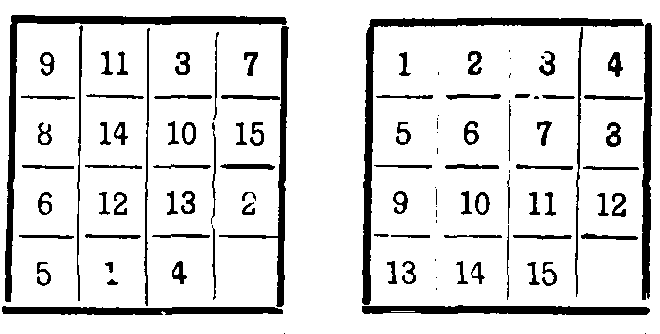
The puzzle consists in sliding the cubes from square to square,
without lifting them or removing them from the box, until they are
placed in their natural order. It is easy enough to move the squares
up to 12; but to get the last three into order is often a puzzle
indeed. If the figures fall in either of the following positions—13,
15, 14; 14, 13, 15; or 15, 14, 13—the problem is unsolvable; it
follows, therefore, that the last row must be either 14, 15, 13; or
15, 13, 14. If you get the cubes into either of these positions, you
can easily bring them right; but if you cannot, the only way is to
begin the game all over again. Several other ways are suggested.
Cavendish (Mr. H. Jones) thinks he solves the puzzle by turning the
box half round; but as this is only possible when the figures are on
circular pieces of wood, his solution merely cuts the knot, instead of
unravelling it.
2592. The Thirty-Four Puzzle
This is an adaptation of tho old magic square, which amused the
philosophers of old. A sketch of it appears in Albert Durer's painting
of Melancholia. Sixteen discs or squares, numbered from 1 to 16, are
placed indifferently on the table—or they may be in the fifteen box;
and the puzzle is to so arrange them as to make the sum of the figures
add up to 34, whether counted up, down, across or angularly. Here is
the solution:
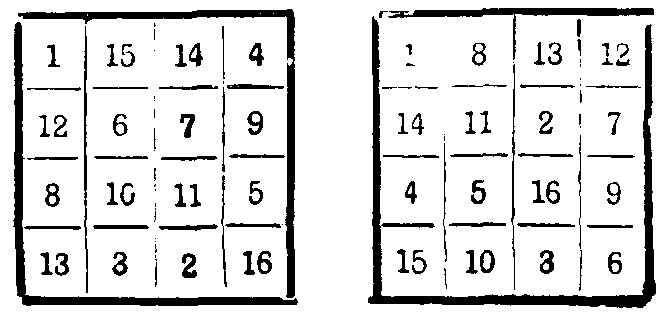
This is the simplest; but a more elaborate plan is to so arrange the
figures that any form of the blocks will form a square sum of 34. See
the annexed solution, which the ingenious in may still further
complicate:
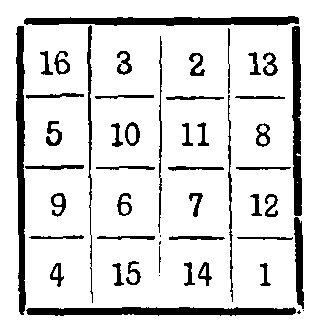
2593. Fox and Geese
This old-fashioned game is played on a solitaire board. Seventeen
geese occupy the upper part of the board lines, with the fox in the
middle, thus:
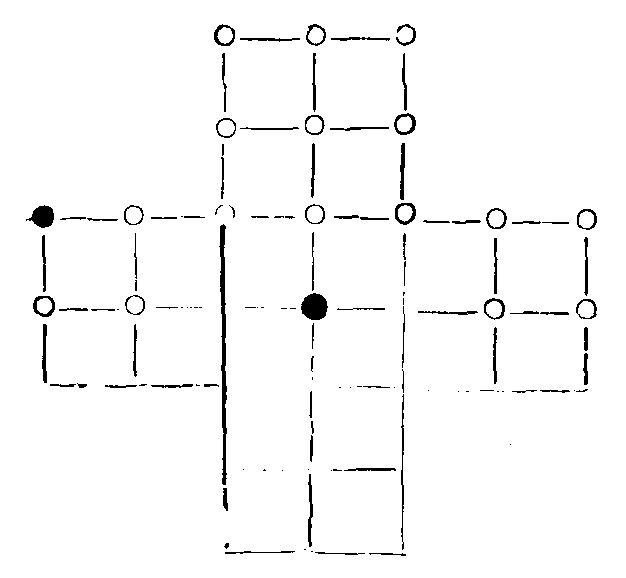
The object of the game is to confine the fox in a corner, so that he
cannot move. The geese march forward in straight lines, not on the
diagonals; and whenever a goose is on the spot next the fox, the
latter can take him, as in draughts, by jumping over to the vacant
spot beyond. The fox can move backwards, forwards, or sideways on the
straight lines; but the geese must go forward, and are not allowed to
retreat. Properly played, the geese must win; but when the number of
geese is reduced to six, it is impossible for them to confine the fox.
There are several ways of playing the game, by placing the fox and
geese in other positions, or by insisting on the fox catching all the
geese. In the latter case, the fox chooses his own starting place. The
game may also be played with eight geese and a fox.
Another way of playing this game is on an ordinary draughtboard, with
four white men for the geese, and a black king for the fox. The geese
can only move forward, but the fox moves either way. The object of the
geese is to pen up the fox so that he cannot move; the object of the
fox is to break through the line of defence. If the game be properly
played, the geese must win. Place them on the draughtboard thus:
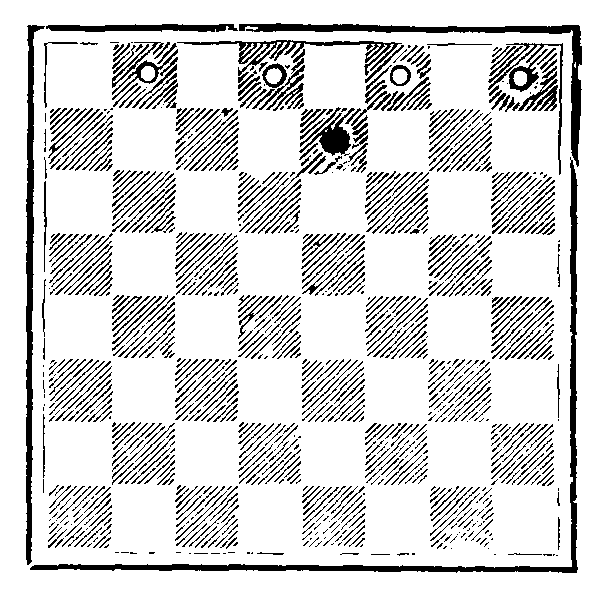
The secret is to keep the geese in a line. The fox tries to prevent
this, and if he can succeed in doubling the geese, or getting one to
stand before the other, he is nearly sure to pass through them.
2594. The Royal Game of Goose
In the old German game the figure of a goose is printed on a large
sheet of paper, and divided into 63 squares or divisions. The object
of the players,—any number of whom may join in the game—is to make
63 points by successive throws of two dice. A pool is made by equal
contributions by the players, the first of whom gaining the required
number wins. The players throw alternately and add each individual
throw to that already made.
Each player's position is shown on the
goose by a counter, a wafer, or any small article. Any number beyond
63 sends the thrower back as many points as he exceeds 63. Thus if he
were 58, and by a 6 and 5 he threw eleven he would go forward 5
squares to 63, and back 6 squares from 63. In addition to this,
certain numbers on the goose are barred; and if the player make them
he is fined two counters, which are added to the pool. The numbered
goose is sold at most toy shops, but a numbered draughtboard will
serve as well.
2595. Troco or Lawn Billiards
This is a game that may be played by any number of persons in a field
or open space. The implements are wooden balls and long-handled cues
at the ends of which are spoonlike ovals of iron. In the centre of the
Troco ground is fixed a ring of iron, which moves freely on a pivot,
the spike of the ring being driven into a piece of wood let into the
ground. The wooden ball is lifted from the ground by means of the
spoon-ended cue, and thrown towards the ring—the object of the player
being to pass the ball through the ring; and he who succeeds in making
any given number of points by fairly ringing his ball, or canoning
against the other balls, wins the game.
Canons are made by the player striking two balls successively with his
own ball fairly delivered from his spoon. Thus (says the most recent
writer on the game) a clever player may make a large number of
points—five, seven, or more at a stroke: two the first canon, two for
a second canon, and three for the ring. This, however, is very seldom
accomplished.
Considerable skill is required in throwing the ball, as the ring,
turning freely on its pivot, twists round on being struck. To "make
the ring," it is necessary, therefore, that the ball be thrown fairly
through its centre. But in order to get nearer to it a judicious
player will endeavour to make two or three canons, if the balls lie
within a convenient distance and at a proper angle to each other. If
the ball be thrown with sufficient force, it will glance off from the
ball struck in a line corresponding to its first or original line of
projection.
2596. Rules
-
Troco may be played by two or more persons, each of whom is
provided with a ball and a cue. When more than two play, sides are
chosen, and the side which first makes the requisite number of
points wins the game.
-
The players stand in a circle, in the centre of which is set up
the pivot-ring.
-
Each player starts from any portion of the circle distant not
less than four yards from the ring. The first player lifts his ball
with the spoon-cue, and throws it towards the ring; each of the
others taking his turn alternately—the balls remaining on the
ground where they stop rolling.
-
If the first player fail to "make his ring," the next goes on,
who may either throw at the ring or at the ball in the circle.
-
Partners may assist each other in getting near the ring; but no
player, at starting, may step within four yards of the ring.
-
Two points are counted for every canon, and three for every
fairly-made ring; and successive points are reckoned for any number
of rings or canons.
-
Each player goes on till he fails to canon or ring his ball;
when the next plays; and so on, till the required number of points
are made.
-
One point is taken off the player's score for every foul
stroke. Foul strokes are made by touching a ball with hand or person
while it is in play; by playing with a wrong ball; by playing out of
turn; by overturning the ring; and by making two or more steps while
throwing the ball.
-
Each player, after the start, must go on from the place at which
his ball was left after the previous stroke.
-
All disputed points must be settled by the umpire, whose decision
is final.
-
No ball in-play must be removed from its position except by a
stroke from another ball, and every ball is considered to be in-play
while it is within the circle, which may be of any dimensions chosen
by the players previous to the commencement of the game.
-
Any player leaving a game before it is finished, loses it.
The game is played fifteen, twenty-one, or any other determined number
of points. The balls should be perfectly round and smooth. They are
generally made of boxwood or lignum vitæ, and weigh about three to
five lbs. each; the balls, cues, &c., are sold by most dealers in
croquet implements.
2597. Habits of a Man of Business
A sacred regard to the principles of justice forms the basis of every
transaction, and regulates the conduct of the upright man of business.
The following statements afford a bird's-eye view, as it were, of his
habits, practice, and mode of procedure:
-
He is strict in keeping his engagements.
-
He does nothing carelessly or in a hurry.
-
He employs nobody to do what he can easily do himself.
-
He keeps everything in its proper place.
-
He leaves nothing undone that ought to be done, and which
circumstances permit him to do.
-
He keeps his designs and business from the view of others.
-
He is prompt and decisive with his customers, and does not
over-trade his capital.
-
He prefers short credits to long ones; and cash to credit at
all times, either in buying or selling; and small profits in credit
cases with little risk, to the chance of better gains with more
hazard.
-
He is clear and explicit in all his bargains.
-
He leaves nothing of consequence to memory which he can and ought
to commit to writing.
-
He keeps copies of all his important letters which he sends
away, and has every letter, invoice, &c., belonging to his business,
titled, classed, and put away.
-
He never suffers his desk to be confused by many papers lying
upon it.
-
He is always at the head of his business, well knowing that if
he leaves it, it will leave him.
-
He holds it as a maxim that he whose credit is suspected is not
one to be trusted.
-
He is constantly examining his books, and sees through all his
affairs as far as care and attention will enable him.
-
He balances regularly at stated times, and then makes out and
transmits all his accounts current to his customers, both at home
and abroad.
-
He avoids as much as possible all sorts of accommodation in
money matters, and lawsuits where there is the least hazard.
-
He is economical in his expenditure, always living within his
income.
-
He keeps a memorandum-book in his pocket, in which he notes
every particular relative to appointments, addresses, and petty cash
matters.
-
He is cautious how he becomes security for any person; and is
generous when urged by motives of humanity.
Let a man act strictly to these habits—ever remembering that he hath
no profits by his pains whom Providence doth not prosper—and success
will attend his efforts.
2598. Taking a Shop or Place of Business
If you are about to take a place of business, you will do well to
consider the following remarks:
2599. Small Capitalists
Let us take the case of a person who has no intimate knowledge of any
particular trade, but having a very small capital, is about to embark
it in the exchange of commodities for cash, in order to obtain an
honest livelihood thereby. It is clear, that unless such a person
starts with proper precaution and judgment, the capital will be
expended without adequate results; rent and taxes will accumulate, the
stock will lie dead or become deteriorated, and loss and ruin must
follow. For the last absorption acting upon a small capital will soon
dry up its source; and we need not picture the trouble that will arise
when the mainspring of a tradesman's success abides by him no more.
2600. Larger Capitalists
The case of the larger capitalist can scarcely be considered an
exception to the same rule. For it is probable that the larger
capitalist, upon commencing a business, would sink more of his funds
in a larger stock—would incur liability to a heavier rent; and the
attendant taxes, the wages of assistants and servants would be
greater, and, therefore, if the return came not speedily, similar
consequences must sooner or later ensue.
2601. Localities
Large or small capitalists should, therefore, upon entering on a
shopkeeping speculation, consider well the nature of the locality in
which they propose to carry on trade, the number of the population,
the habits and wants of the people, and the extent to which they are
already supplied with the goods which the new adventurer proposes to
offer them.
2602. New Neighbourhoods
There is a tendency among small capitalists to rush into new
neighbourhoods with the expectation of making an early connection. Low
rents also serve as an attraction to these localities. General
experience, however, tends to show that the early suburban shops
seldom succeed. They are generally entered upon at the very earliest
moment that the state of the locality will permit—often before the
house is finished the shop is tenanted, and goods exposed for
sale—even while the streets are unpaved, and while the roads are as
rough and uneven as country lanes.
The consequence is, that as the few inhabitants of these localities
have frequent communication with adjacent centres of business, they,
as a matter of habit or of choice, supply their chief wants thereat;
and the newly arrived shopkeeper has to depend principally for support
upon the accidental forgetfulness of his neighbour, who omits to bring
something from the cheaper and better market; or upon the changes of
the weather, which may sometimes favour him by rendering a "trip to
town" exceedingly undesirable.
2603. Failures
"While the grass is growing the horse is starving;" and thus, while
the new district is becoming peopled the funds of the small shopkeeper
are gradually eaten up, and he puts up his shutters just at the time
when a more cautious speculator steps in to profit by the connection
already formed, and to take advantage of the new improved condition of
the locality. It seems, therefore, desirable for the small capitalists
rather to run the risk of a more expensive rent, in a well-peopled
district, than to resort to places of slow and uncertain demand; for
the welfare of the small shopkeeper depends entirely upon the
frequency with which his limited stock is cleared out and replaced by
fresh supplies.
2604. Precautions
But should the small capitalist still prefer opening in a suburban
district, where competition is less severe, and rents and rates less
burdensome, there are certain precautions which he will do well to
observe. He should particularly guard against opening a shop to
supply what may be termed the superfluities of life; for the
inhabitants of new suburban districts are those who, like himself,
have resorted to a cheap residence for the sake of economy. Or if this
be not the case—if they are people of independent means, who prefer
the "detached villa" to the town house, squeezed up on both sides,
they have the means of riding and driving to town, and will prefer
choosing articles of taste and luxury from the best marts, enriched by
the finest display.
2605. Necessaries or Luxuries
The suburban shopkeeper should, therefore, confine himself to
supplying the necessaries of life. Hungry people dislike to fetch
their bread from five miles off; and to bring vegetables from a long
distance would evidently be a matter of considerable inconvenience.
The baker, the butcher, the greengrocer, the beer retailer, &c., are
those who find their trade first established in suburban localities.
And not until these are doing well should the tailor, the shoemaker,
the hatter, the draper, the hosier, and others, expect to find a
return for their capital and reward for their labour.
2606. Civility
In larger localities, where competition abounds, the small shopkeeper
frequently outstrips his more powerful rival by one element of
success, which may be added to any stock without cost, but cannot be
withheld without loss. That element is civility. It has already been
spoken of elsewhere, but must be enforced here, as aiding the little
means of the small shopkeeper to a wonderful degree. A kind and
obliging manner carries with it an indescribable charm. It must not be
a manner which indicates a mean, grovelling time-serving spirit, but a
plain, open, and agreeable demeanour, which seems to desire to oblige
for the pleasure of doing so, and not for the sake of squeezing an
extra penny out of a customer's pocket.
2607. Integrity
The sole reliance of the shopkeeper should be in the integrity of his
transactions, and in the civility of his demeanour. He should make it
the interest and the pleasure of the customer to come to his shop. If
he does this, he will form the very best "connections," and so long as
he continues this system of business, they will never desert him.
2608. Duties of a Shopkeeper
He should cheerfully render his best labour and knowledge to serve
those who approach his counter, and place confidence in his
transactions; make himself alike to rich and poor, but never resort to
mean subterfuge and deception to gain approbation and support. He
should be frugal in his expenditure, that in deriving profits from
trade, he may not trespass unduly upon the interest of others; he
should so hold the balance between man and man that he should feel
nothing to reprove his conscience when the day comes for him to repose
from his labours and live upon the fruits of his industry. Let the
public discover such a man, and they will flock around him for their
own sakes.
2609. A Very Useful Book
A very useful book, "The Handy Book of Shopkeeping, Shopkeeper's
Guide"1 (published at one shilling), enlarges upon these subjects in
a very able manner, and gives most useful hints to people in every
department of trade.
Footnote 1: Houlston and Sons, London.
return to footnote mark
2610. Early Rising
The difference between rising every morning at six and eight, in the
course of forty years, amounts to 29,200 hours, or three years one
hundred and twenty-one days and sixteen hours, which are equal to
eight hours a day for exactly ten years So that rising at six will be
the same as if ten years of life (a weighty consideration) were added,
wherein we may command eight hours every day for the cultivation of
our minds and the despatch of business.
2611. Frugality
-
The great philosopher, Dr. Franklin, inspired the mouthpiece of
his own eloquence, "Poor Richard," with "many a gem of purest ray
serene," encased in the homely garb of proverbial truisms. On the
subject of frugality we cannot do better than take the worthy Mentor
for our text, and from it address our remarks. A man may, if he
knows not how to save as he gets, "keep his nose all his life to the
grindstone, and die not worth a groat at last. A fat kitchen makes a
lean will."
"Many estates are spent in getting,
Since women for tea forsook spinning and knitting,
And men for punch forsook hewing and splitting."
-
If you would be wealthy, think of saving as well as of getting.
The Indies have not made Spain rich, because her out-goes are
greater than her in-comes.
-
Away with your expensive follies, and you will not have so much
cause to complain of hard times, heavy taxes, and chargeable
families.
-
"What maintains one vice would bring up two children."
-
You may think, perhaps, that a little tea, or superfluities now
and then, diet a little more costly, clothes a little finer, and a
little entertainment now and then, can be no great matter; but
remember, "Many a little makes a mickle."
-
Beware of little expenses: "A small leak will sink a great
ship," as Poor Richard says; and again, "Who dainties love, shall
beggars prove;" and moreover, "Fools make feasts and wise men eat
them."
-
Here you are all got together to this sale of fineries and
nick-nacks. You call them goods; but if you do not take care they
will prove evils to some of you. You expect they will be sold cheap,
and perhaps they may, for less than they cost; but if you have no
occasion for them they must be dear to you.
-
Remember what Poor Richard says, "Buy what thou hast no need
of, and ere long thou shalt sell thy necessaries."
-
"At a great pennyworth, pause awhile." He means, perhaps, that
the cheapness is apparent only, and not real; or the bargain, by
straightening thee in thy business, may do thee more harm than good;
for in another place he says, "Many have been ruined by buying good
pennyworths."
-
"It is foolish to lay out money in the purchase of repentance;"
and yet this folly is practised every day at auctions for want of
minding the Almanack.
2612. Cash and Credit
If you would get rich, don't deal in bill books. Credit is the
"Tempter in a new shape." Buy goods on trust, and you will purchase a
thousand articles that cash would never have dreamed of. A shilling in
the hand looks larger than ten shillings seen through the perspective
of a three months' bill. Cash is practical, while credit takes
horribly to taste and romance. Let cash buy a dinner, and you will
have a beef-steak flanked with onions. Send credit to market, and he
will return with eight pairs of woodcocks and a peck of mushrooms.
Credit believes in diamond pins and champagne suppers. Cash is more
easily satisfied. Give him three meals a day, and he doesn't care much
if two of them are made up of roasted potatoes and a little salt. Cash
is a good adviser, while credit is a good fellow to be on visiting
terms with. If you want double chins and contentment, do business with
cash.
2613. Hints upon Money Matters
Have a supply of change in hand—shillings, sixpences, halfpence. This
will obviate the various inconveniences of keeping people at the door,
sending out at unreasonable times, and running or calling after any
inmate in the house, supposed to be better provided with "the
needful." The tradespeople with whom you regularly deal will always
give you extra change, when you are making purchases or paying
bills; while those to whom you apply for it, on a sudden emergency,
may neither be willing nor able to do so. Some housekeepers object to
this arrangement, that, "as soon as five-pound notes or sovereigns are
changed, they always seem to go, without their understanding how;" but
to such persons I would humbly intimate, that this is rather the fault
of their not getting understanding, than any inevitable consequence
of getting change.
The fact is, that it is the necessity of parting with your money which
obliges you to get the larger pieces changed, and not the circumstance
of having smaller coin that necessitates your parting with your
money, though it certainly facilitates your doing so when the
necessity arrives. However, as it is easier to count a few sovereigns
than many shillings, and loose money is most objectionable, it is well
to put up reserve change in small collective packets, and to replenish
the housekeeping purse from these daily or weekly, as may be most
convenient.
Death does not Blow a Trumpet.
2614. Save Time and Trouble
If Money for daily expenses has to pass through the hands of a
servant, it is a time-and-trouble-saving plan to settle with her
every night, and to make up her cash in hand to a certain similar
sum. This will prevent such puzzling calculations as the
following:
"Let me see: I gave you 10s. on Saturday, and 9d. the day before.
Was it 9d.? No, it must have been 11d., for I gave you 1s., and you
gave me 1d. out for the beggar; then there was 6s. 6d. on Monday,
and 8d. you owed me from last money; and then the 1s. 6d. your
master gave you for a parcel—you brought him 2d. back, and 3d-1/2.
out of the butcher's bill; no—you had to give 3-1/2d. to the
butcher, but you came to me for the 1/2d., and I had no coppers, so
we still owe him the 1/2d.; by the way, don't forget to pay him the
next time you go. Then there's the baker—no, I paid the baker
myself, and I think the housemaid paid the butter-man; but you got
in the cheese the day before, and I have a sort of recollection that
I may possibly owe you for that, all but a few pence you must have
had left of mine, that I told you to take from off the
chimney-piece. Well, cook, I think that's nearly all! Now how do
your accounts stand?"
This the poor cook, who is a cook, and not a conjuror, finds it no
easy matter to discover; all that she is quite certain of is, that her
disbursements have somewhat exceeded her receipts, and being an honest
woman, though a poor one, she wishes to cheat neither her mistress nor
herself; but what with her memory and her want of it, her involved
payments, and different receipts; what she owed her mistress, and what
her mistress owes her; what she got from her master, and what was
partly settled by the housemaid; the balance from the butcher's bill,
and the intricacies of the cheese account, the poor woman is perfectly
bewildered.
She counts again and again; recapitulates her mistress's data and her
own; sums upwards, backwards, and forwards, and endeavours to explain
the differences between them; then, if she can read and write, she
brings her slate to "explain the explanation," and the united
calculations of maid and mistress, which are after all entirely
unavailing to produce a more correct account, probably consume more
time, and are expressed in more words, than would suffice to fill
another volume like the present. Two minutes' daily reckoning from a
regular sum in hand would do the business effectually, and prevent
either party from being out of pocket or out of temper. Thus, for
instance, the maid has her usual sum of five shillings to account for;
she pays during the day, for:
|
s. |
d. |
| Bread |
1 |
9 |
| Beer |
0 |
6 |
| Vegetables and fruit |
0 |
10 |
| Milk |
0 |
4 |
| Matches |
0 |
1 |
| Parcel |
1 |
0 |
| Total |
4 |
6 |
This is easily reckoned, even by the unlearned; the mistress enters
the items in her day-book, takes the remaining sixpence, and again
gives her servant 5s., in convenient change, to be as readily
accounted for on the succeeding day.
Home Truths for Home Peace; or, Muddle Defeated.
Time Brings Everything to Those who can Wait.
2615. Don't Run in Debt
"Don't run in debt;"—never mind, never mind
If your clothes are faded and torn:
Mend them up, make them do; it is better by far
Than to have the heart weary and worn.
Who'll love you the more for the shape of your hat,
Or your ruff, or the tie of your shoe,
The cut of your vest, or your boots, or cravat,
If they know you're in debt for the new?
There's no comfort, I tell you, in walking the street
In fine clothes, if you know you're in debt,
And feel that, perchance, you some tradesman may meet,
Who will sneer—"They're not paid for yet."
Good friends, let me beg of you, don't run in debt;
If the chairs and the sofas are old,
They will fit your back better than any new set,
Unless they are paid for—with gold;
If the house is too small, draw the closer together,
Keep it warm with a hearty good-will;
A big one unpaid for, in all kinds of weather,
Will send to your warm heart a chill.
Don't run in debt—now, dear girls, take a hint,
if the fashions have changed since last season,
Old Nature is out in the very same tint,
And old Nature, we think, has some reason;
But just say to your friend, that you cannot afford
To spend time to keep up with the fashion;
That your purse is too light and your honour too bright,
To be tarnished with such silly passion.
Men, don't run in debt—let your friends, if they can.
Have fine houses, and feathers, and flowers:
But, unless they are paid for, be more of a man
Than to envy their sunshiny hours.
If you've money to spare, I have nothing to say—
Spend your silver and gold as you please;
But mind you, the man who his bill has to pay
Is the man who is never at ease.
Kind husbands, don't run into debt any more;
'Twill fill your wives' cup full of sorrow
To know that a neighbour may call at your door,
With a claim you must settle to-morrow
Oh! take my advice—it is good, it is true!
But, lest you may some of you doubt it,
I'll whisper a secret now, seeing 'tis you—
I have tried it, and know all about it,
The chain of a debtor is heavy and cold.
Its links all corrosion and rust;
Gild it o'er as you will, it is never of gold,
Then spurn it aside with disgust.
2616. Carving, Ceremonies of the Table, &c.
A dinner-table should be well laid, well lighted, and always afford a
little spare room. It is better to invite one friend less in number,
than to destroy the comfort of the whole party.
2617. The Laying out of a Table
The laying out of a table must greatly depend upon the nature of the
dinner or supper, the taste of the host, the description of the
company, and the appliances possessed. It would be useless, therefore,
to lay down specific rules. The whiteness of the table-cloth, the
clearness of glass, the polish of plate, and the judicious
distribution of ornamental groups of fruits and flowers, are matters
deserving the utmost attention.
2618. A Sideboard
A sideboard will greatly relieve a crowded table, upon which may be
placed many things incidental to the successive courses, until they
are required.
2619. Menu
A bill of fare or Menu at large dinner parties, where there are
several courses, should be provided neatly inscribed upon small
tablets, and distributed about the table, that the diners may know
what there is to come.
2620. Napkins
Napkins should be folded neatly. The French method, which is very
easy, of folding the napkin like a fan, placing it in a glass, and
spreading out the upper part, is very pleasing. But the English method
of folding is like a slipper, and placing the bread inside its folds
is convenient as well as neat.
As the Virtue is in the Tree, Such is the Fruit.
2621. Bread
Bread should be cut into thick squares, the last thing after the table
is laid. If cut too early it becomes dry. A tray should he provided,
in which there should be a further supply of bread, new, stale, and
brown. For cheese, pulled bread should be provided.
2622. Carving-knives
Carving-knives should be "put in edge" before the dinner commences,
for nothing irritates a good carver, or perplexes a bad one, more than
a knife which refuses to perform its office; and there is nothing more
annoying to the company than to see the carving-knife gliding to and
fro over the steel while the dinner is getting cold, and their
appetites are being exhausted by delay.
2623. Joints
Joints that require carving should be set upon dishes sufficiently
large. The space of the table may be economised by setting upon small
dishes those things that do not require carving.
2624. The Carver
The carver should have plenty of room, however closely the diners are
compelled to sit together.
2625. The Vegetables
The vegetables, if the table is very crowded, may be placed upon the
sideboard, and handed round by those who wait upon the guests.
2626. Smaller Joints
Geese, Turkeys, Poultry, Sucking-pigs, &c., should be carved before
being set on table; especially in those cases where the whole or the
principal part of such dishes is likely to be consumed.
2627. Handing Round
The carver should supply the plates, and the waiter hand them round,
instead of putting the question to each guest as to which part he
prefers, and then striving to serve him with it, to the prejudice of
others present.
2628. Ladies
Ladies should be helped before gentlemen.
2629. Waiters
Waiters should present dishes on the left hand; so that the diner may
help himself with his right.
2630. Wine
Wine should be taken after the first course; and it will be found more
convenient to let the waiter serve it, than to hand the decanters
round, or to allow the guests to fill for themselves.
2631. Removal
Waiters should be instructed to remove whatever articles upon the
table are thrown into disuse by the progress of the dinner, as soon as
they are at liberty.
2632. Finger-Bowls
Finger-glasses, or glass bowls, filled with water, slightly scented or
not, as may be preferred, and slightly warm in winter, and iced in
summer, should be handed round.
2633. Dessert
When the dessert is served, the wine should be set upon the table, and
the decanters passed round by the company.
2634. Fried Fish
Fried fish should be divided into suitable slices, before the fire, as
soon as it leaves the frying-pan.
2635. Cod's Head and Shoulders
The thick part of the back is best. It should be carved in unbroken
slices, and each solid slice should be accompanied by a bit of the
sound, from under the back-bone, or from the cheek, jaws, tongue, &c.,
of the head.
2636. Hake
Hake, if sent to table, simply boiled, is served as cod. The better
way of dressing hake is to cut it transversely to the length into
slices about one inch in thickness. These should be fried and sent to
table garnished with parsley.
2637. Turbot
Strike the fish-slice along the back-bone, which runs from head to
tail, and then serve square slices from the thick part, accompanying
each slice with some of the gelatinous skin of the fins and thin part,
which may be raised by laying the fish-slice flat.
2638. Brill
Brill is served in the same manner.
2639. John Dory
John Dory is also served in the same way. This fish has a favourite
piece on the cheek.
2640. Plaice and Flat-fish
Plaice and flat-fish generally, are served in the same manner.
2641. Soles
Soles, when large, may be served as turbot; but when small they should
be sliced across.
2642. Salmon
Serve a slice of the thick with a smaller slice of the thin part.
Keep the flakes of the thick part as unbroken as possible.
2643. Mackerel
Mackerel should be served in pieces cut through the side when they are
large. It small, they may be divided through the back-bone, and served
in halves. The shoulder part is considered the best.
2644. Haddock and Gurnet
Haddock and Gurnet are served as directed for mackerel.
2645. Whiting
Whiting are usually fried and curled; they should be cut in halves
down the back, and served. The shoulder-part is best.
2646. Eels
Eels are usually cut into several pieces, either for stewing or
frying. The thick parts are considered best.
2647. Trout
Trout, if small, are served whole; if large, they may be divided
through the back-bone and served in halves. The same applies to perch
and other smaller fresh-water fish.
2648. Pike and Jack
Pike and Jack should be served in thick unbroken pieces taken from the
side or shoulder of the fish accompanied by a piece of the stuffing
with which these fish are usually filled.
2649. Remarks
The roes of mackerel, the sound of cod, the head of carp, the
cheek of John Dory, the liver of cod, &c., are severally
considered delicacies, though not by all persons.
2650. Saddle of Mutton
Cut thin slices parallel with the back-bone; or slice it obliquely
from the bone to the edge.
2651. Haunch of Mutton or Venison
Make an incision across the knuckle-end, right into the bone, and set
free the gravy. Then cut thin slices the whole length of the haunch.
Serve pieces of fat with slices of lean.
2652. Rump or Sirloin of Beef
The undercut, called the "fillet," is exceedingly tender, and some
carvers will turn the joint and serve the fillet first, reserving the
meat on the upper part to be eaten cold. From the upper part, whether
hot or cold, the slices should be cut lengthways from top to bottom,
so that the fat and lean may be distributed in fair proportions.
2653. Ribs of Beef
Ribs of beef are carved in the same way as the sirloin; but there is
no fillet.
2654. Round of Beef
First cut away the irregular outside pieces, to obtain a good surface,
and then serve thin and broad slices. Serve bits of the udder fat with
the lean.
2655. Brisket of Beef
Cut off the outside, and then serve long slices, cut the whole length
of the bones.
2656. Shoulder of Mutton
Make a cross incision on the fore-part of the shoulder, and serve
slices from both sides of the incision; then cut slices lengthways
along the shoulder-blade. Cut fat slices from the round corner.
Another and more economical way, is to cut slices from the under part
when first brought to table. The joint then presents a better
appearance when cold.
2657. Leg of Mutton
Make an incision across the centre, and serve from the knuckle-side,
or the opposite, according to choice. The knuckle-side will be
generally found well done, and the opposite side underdone, for those
who prefer it.
2658. Loin of Mutton
Cut down between the bones, into chops.
2659. Quarter of Lamb
Lay the knife flat, and cut off the shoulder. The proper point for
incision will be indicated by the position of the shoulder. A little
lemon juice may be squeezed over the divided part, and a little
Cayenne pepper, and the shoulder transferred to another dish, for the
opposite end of the table. Next separate the brisket, or short
bones, by cutting lengthways along the breast. Then serve from either
part as desired.
Travel North, or South, or East, or West...
2660. Loin of Veal
Loin of veal may be cut across through the thick part; or slices may
be taken in the direction of the bones. Serve pieces of kidney and fat
with each plate.
2661. Fillet of Veal
Fillet of veal is carved as a round of beef. The browned bits of the
outside are esteemed, and should be shared among the company, with
bits of fat, and of forcemeat from the centre.
2662. Breast of Veal
Breast of veal should be divided by cutting the brisket, or soft
bones, the same as the basket of lamb. When the sweetbread comes to
table with the breast, a small piece should be served on each plate.
2663. Sucking-Pig
Sucking-pig should be sent to table in two halves, the head divided,
and one half laid at each end of the dish. The shoulders and legs
should be taken off by the obvious method of laying the knife under
them, and lifting the joint out. They may be served whole, or divided.
The ribs are easily divided, and are considered choice.
2664. Tongues
Tongues are cut across in tolerably thick slices.
2665. Calves' Heads
Calves' heads are carved across the cheek, and pieces taken from any
part that is come-at-able. The tongue and brain sauce are served
separate.
2666. Knuckle of Veal
Knuckle of veal is carved by cutting off the outside pieces, and then
obtaining good slices, and apportioning the fat to the lean, adding
bits of the sinew that lie around the joint.
2667. Leg of Pork
Leg of pork is carved as a ham, but in thicker slices; when stuffed,
the stuffing must be sought for under the skin at the large end.
2668. Loin of Pork
Loin of pork is carved the same as a loin of mutton.
2669. Spare-rib of Pork
Spare-rib of pork is carved by separating the chops, which should
previously have been jointed. Cut as far as the joint, then return the
knife to the point of the bones, and press over, to disclose the
joint, which may then be relieved with the point of the knife.
2670. Hams
Hams are cut in very thin slices from the knuckle to the blade.
2671. Pheasants
Carve the breast in slices. Then take off the legs and wings.
2672. Fowls
Fix the fork firmly into the breast, then slip the knife under the
legs, and lay it over and dis-joint; detach the wings in the same
manner. Do the same on both sides, The smaller bones require a little
practice, and it would be well to watch the operations of a good
carver. When the merry-thought has been removed (which it may be by
slipping the knife through at the point of the breast), and the
neck-bones drawn out, the trunk may be turned over, and the knife
thrust through the back-bone.
2673. Partridges
Partridges are best carved by cutting off the breast, and then
dividing it. But for more economical carving, the wings may be cut
with a small breast slice attached.
2674. Woodcocks
Woodcocks may be cut right through the centre, from head to tail.
Serve with each portion a piece of the toast upon which they come to
table.
2675. Pigeons
Pigeons may be carved as woodcocks, or as partridges.
2676. Snipes
Snipes may be carved the same as woodcocks.
2677. Turkey
Cut slices from each side of the breast down, to the ribs; the legs
may then be removed, and the thighs divided from the drumsticks, which
are generally tough; but the pinions of the wing are very good, and
the white part of the wing is preferred by many to the breast. The
stuffing is usually put in the breast; but when truffles, mushrooms,
or oysters are put into the body, an opening must be made into it by
cutting through the apron.
2678. Goose
The apron must be cut off in a circular direction, when a glass of
port wine, mixed with a teaspoonful of mustard, may be poured into the
body or not. Some of the stuffing should then be drawn out, and, the
neck of the goose being turned a little towards the carver, the flesh
of the breast should be sliced on each side of the bone. The wings may
then be taken off, then the legs. The other parts are carved the same
as a fowl.
A Man's Own Hose is Still the Best.
2679. Ducks
Ducks may be carved, when large, the same as geese; but when young,
like chickens. The thigh joints, however, lie much closer into the
trunk than those of fowls.
2680. Hares
Hares should be placed with their heads to the left of the carver.
Slices may be taken down the whole length of the back; the legs,
which, next to the back, are considered the best eating, may then be
taken off, and the flesh divided from or served upon them, after the
small bones have been parted from the thighs. The shoulders, which are
not much esteemed, though sometimes liked by sportsmen, may be taken
off by passing the knife between the joint and the trunk. When a hare
is young, the back is sometimes divided at the joints into three or
four parts, after being freed from the ribs and under-skin.
2681. Remarks
Sufficient general instructions are here given to enable the carver,
by observation and practice, to acquit himself well. The art of
carving does not consist merely in dissecting the joints sent to
table, but in the judicious and economical distribution of them, and
the grace and neatness with which this distribution is effected. Every
dish should be sent to table properly garnished (where needed), and
the carver should preserve the neatness of the arrangement as much as
possible.
2682. Dyeing
The filaments from which stuffs of all kinds are fabricated are
derived either from the animal or vegetable kingdom. We recognise the
former by the property they possess of liberating ammonia on being
treated with potash; while the latter afford a liquor having an acid
reaction under the same treatment. The animal kingdom furnishes three
varieties—silk, wool, and the furs, &c., of various animals; the
vegetable kingdom also three—flax, hemp, and cotton: all of which
require certain preliminary preparations to render them fit for the
dyer, which do not come within our province, our space only admitting
of a rapid glance at the production of the various colours.
2683. General Observations
The various shades produced by colouring matters may be classed in one
or other of the following groups:
| 1. |
Blue |
|
| 2. |
Red |
Simple |
| 3. |
Yellow |
|
| 4. |
Violets |
|
| 5. |
Orange colours |
Binary |
| 6. |
Green |
|
| 7. |
Compound colours |
Ternary |
| 8. |
Black |
|
Some colours adhere at once to the stuff, and are called substantial
colours; while others require that the material to be dyed should
undergo some previous preparation in order to render it permanent. The
substances used to fix the colouring matters are called mordants,
which should possess four qualifications:
-
They should possess an equal affinity for the fibre of the
material and the colouring matter.
-
They should be incapable of injuring or destroying either by
prolonged action.
-
They should form, with the colour, a compound capable of
resisting the action of air and water.
-
They should be capable of readily conforming to the various
operations of the dyer.
2684. The Mordants
For the reasons just given, the acetate or tartrate of iron is
preferable to the sulphate; and the acetate or tartrate of alumina to
alum. For reds, yellows, green, and pinks, aluminous mordants are to
be used. For blacks, browns, puces, and violets, the acetate or
tartrate of iron must be employed. For scarlets, use a tin mordant,
made by dissolving in strong nitric acid one-eighth of its weight of
sal-ammoniac, then adding by degrees one-eighth of its weight of tin,
and diluting the solution with one-fourth of its weight of water.
Cunning Men's Cloaks Sometimes Fall.
2685. Calico, Linen, and Muslin (Blue)
Blue.—Wash well to remove dressing, and dry; then dip in a strong
solution of sulphate of indigo—partly saturated with potash—and hang
up. Dry a piece to see if the colour is deep enough; if not dip again.
Saxon Blue.—Boil the article in alum, and then dip in a strong
solution of chemical blue.
2686. Calico, Linen, and Muslin (Buff)
Buff.—Boil an ounce of anatto in three quarts of water, add two
ounces of potash, stir well, and put in the calico while boiling, and
stir well for five minutes; remove and plunge into cold pump water,
hang up the articles without wringing, and when almost dry, fold.
2687. Calico, Linen, and Muslin (Pink)
Pink.—Immerse in the acetate of alumina mordant, and then in the
colouring of a pink saucer.
2688. Calico, Linen, and Muslin (Green)
Green.—Boil the article in an alum mordant, and then in a solution
of indigo mixed with any of the yellow dyes until the proper colour is
obtained.
2689. Calico, Linen, and Muslin (Yellow)
Yellow.
-
Cut potato tops when in flower, and express the juice;
steep articles in this for forty-eight hours.
- Dip in a strong
solution of weld after boiling in an aluminous mordant. Turmeric,
fustic, anatto, &c., will answer the same as weld.
2690. Cloth (Black)
Impregnate the material with the acetate of iron mordant, and then
boil in a decoction of madder and logwood.
2691. Cloth (Madder Red)
Boil the cloth in a weak solution of pearlash—an ounce to a gallon of
water,—wash, dry, and then steep in a decoction of bruised nutgalls.
After drying it is to be steeped twice in dry alum water, then dried,
and boiled in a decoction made of three quarters of a pound of madder
to every pound of the article. It should then be taken out and dried,
and steeped in a second bath in the same manner. When dyed, the
articles should be washed in warm soap and water, to remove a
dun-coloured matter given out by the madder.
2692. Cloth (Scarlet)
Three quarters of a pint of a tin mordant, made by dissolving three
pounds of tin in sixty pounds of hydrochloric acid, is added to every
pound of lac dye, and digested for six hours. To dye twenty-five
pounds of cloth, a tin boiler of seventy-five gallons capacity should
be filled nearly full with water, and a fire kindled under it. When
the heat is 150° Fahr., half a handful of bran and two ounces of tin
mordant are to be thrown into it. The froth which arises is skimmed
off, the liquor is made to boil, and two pounds and three quarters of
lac dye, previously mixed with a pound and three quarters of the
solvent, and fourteen ounces of the tin solvent, are added.
Immediately afterwards two pounds and three quarters of tartar, and a
pound of ground sumach, both tied up in a linen bag, are to be added,
and suspended in the bath for five minutes. The fire being withdrawn,
five gallons of cold water and two pints and three quarters of tin
mordant being poured into the bath, the cloth is immersed in it. The
fire is then replaced, and the liquid made to boil rapidly for an
hour, when the cloth is removed and washed in pure water.
2693. Cloth (Yellow)
Use No. ii. for calico. Quercitron and weld produce a solid yellow;
fustic a very brilliant tint; while turmeric yields a less solid
yellow.
2694. Feathers (Black)
Use the same as for cloth.
2695. Feathers (Blue)
Every shade may be given by indigo—or dip in silk dye.
2696. Feathers (Crimson)
Dip in acetate of alumina mordant, then in a boiling-hot decoction of
Brazil-wood—and, last of all, pass through a bath of cudbear.
2697. Feathers (Pink, or Rose-colour)
Pink, or rose-colour, is given by safflower and lemon juice.
2698. Feathers (Deep Red)
Proceed as for crimson, omitting the cudbear bath.
The Fat Man Knoweth not what the Lean Think.
2699. Feathers (Yellow)
Mordant with acetate of alumina, and dip in a bath of turmeric or weld.
2700. Hair (Black)
As the object in view is simply to dye the hair without tingeing the
skin, the following will be found the best:—Take equal parts of
litharge and lime; mix well, and form into a paste with water, if a
black is desired; with milk if brown. Clean the head with a small
tooth comb, and then well wash the hair with soda and water to free it
from grease; then lay on the paste pretty thick, and cover the head
with oilskin or a cabbage-leaf, after which go to bed. Next morning
the powder should be carefully brushed away, and the hair oiled.
2701. Leather (Black)
Use No. iv. black stain (see par. 1430), and polish with oil.
2702. Gloves (Nankeen)
Steep saffron in boiling-hot soft water for about twelve hours; sew
up the tops of the gloves, to prevent the dye staining the insides,
wet them over with a sponge dipped in the liquid. A teacupful of dye
will do a pair of gloves.
2703. Gloves (Purple)
Boil four ounces of logwood and two ounces of roche alum in three
pints of soft water till half wasted; strain, and let it cool. Sew up
the tops, go over the outsides with a brush or sponge twice; then rub
off the loose dye with a coarse cloth. Beat up the white of an egg,
and rub it over the leather with a sponge. Vinegar will remove the
stain from the hands.
2704. Silk (Black)
The same as for cloth, but black dyeing is difficult.
2705. Silk (Blue)
-
Wash quite clean, rinse well, and then dip in a hot solution of
sulphate of iron: after a short time take it out and rinse again.
Have ready in another vessel a hot solution of prussiate of potash,
to which a small quantity of sulphuric acid has been added. Dip the
silk in this liquid; on removal rinse in clean water, and expose to
the air to dry.
-
Wash well, rinse, wring out, and then dip in the
following:—Boil a pound of indigo, two pounds of woad, and three
ounces of alum, in a gallon of water. When the silk is of a proper
colour, remove, rinse, and dry.
2706. Silk (Carnation)
Boil two gallons of wheat and an ounce of alum in four gallons of
water; strain through a fine sieve; dissolve half a pound more of alum
and white tartar; add three pounds of madder, then put in the silk at
a moderate heat.
2707. Silk (Crimson)
Take about a spoonful of cudbear, put it into a small pan, pour
boiling water upon it; stir and let it stand a few minutes, then put
in the silk, and turn it over in a short time, and when the colour is
full enough, take it out; but if it should require more violet or
crimson, add a spoonful or two of purple archil to some warm water;
steep, and dry it within doors. It must be mangled, and ought to be
pressed.
2708. Silk (Lilac)
For every pound of silk, take one and a half pounds of archil, mix it
well with the liquor; make it boil for a quarter of an hour, dip the
silk quickly, then let it cool, and wash it in river water, and a fine
half violet, or lilac, more or less full, will be obtained.
2709. Silk (Madder Red)
Use the dye for cloth.
2710. Silk (Yellow)
Take clear wheat bran liquor fifteen pounds, in which dissolve three
quarters of a pound of alum; boil the silk in this for two hours, and
afterwards take half a pound of weld, and boil it till the colour is
good. Nitre used with alum and water in the first boiling fixes the
colour.
2711. Wool (Blue)
Boil in a decoction of logwood and sulphate or acetate of copper.
2712. Wool (Brown)
Steep in an infusion of green walnut-peels.
2713. Wool (Drab)
Impregnate with brown oxide of iron, and then dip in a bath of
quercitron bark. It sumach is added, it will make the colour a dark
brown.
No Lock will Hold gainst Keys of Gold.
2714. Wool (Green)
First imbue with the blue, then with the yellow dye.
2715. Wool (Orange)
Dye first with the red dye for cloth, and then with a yellow.
2716. Wool (Red)
Take four and a half pounds of cream of tartar, four and a quarter
pounds of alum; boil the wool gently for two hours; let it cool, and
wash it on the following day in pure water.
Infuse twelve pounds of madder for half an hour with a pound of
chloride of tin, in lukewarm water; filter through canvas, remove the
dye from the canvas, and put it in the bath, which is to be heated to
100° Fahr.; add two ounces of aluminous mordant, put the wool in, and
raise to boiling heat.
Remove the wool, wash, and soak for a quarter of an hour in a solution
of white soap in water.
2717. Wool (Yellow)
Dye with that used for calico, &c.
2718. Dyeing Bonnets
Chip and straw bonnets or hats may be dyed black by boiling them three
or four hours in a strong liquor of logwood, adding a little green
copperas occasionally. Let the bonnets remain in the liquor all night,
then take out to dry in the air. If the black is not satisfactory, dye
again after drying. Rub inside and out with a sponge moistened in fine
oil. Then block.
2719. To Dye Hair and Feathers Green
Take of either verdigris or verditer one ounce; gum water, one pint;
mix them well, and dip the hair or feathers into the mixture, shaking
them well about.
2720. To Clean White Satin and Flowered Silks
-
Mix sifted stale bread-crumbs with powder blue, and rub it
thoroughly all over the article; then shake it well, and dust it
with clean soft cloths. Afterwards, where there are any gold or
silver flowers, take a piece of crimson ingrain velvet, rub the
flowers with it, which will restore them to their original lustre.
-
Pass them through a solution of fine hard soap of a moderate
heat, drawing them through the hand; rinse in lukewarm water, dry,
and finish by pinning out. Brush the flossy or bright side with a
clean clothes-brush, the way of the nap. Finish them by dipping a
sponge into a size, made by boiling isinglass in water, and rub the
wrong side. Rinse out a second time, and brush, and dry near a fire
in a warm room.
Silk may be treated in the same way, but not brushed.
2721. Cleaning Silk, Satins, Coloured Woollen Dresses, &c.
Four ounces of soft soap, four ounces of honey, the white of an egg,
and a wineglassful of gin; mix well together, and scour the article
with a rather hard brush thoroughly; afterwards rinse it in cold
water, leave to drain, and iron whilst quite damp.
2722. To Clean Black Cloth Clothes
Clean the garments well, then boil four ounces of logwood in a boiler
or copper containing two or three gallons of water for half an hour;
dip the clothes in warm water and squeeze dry, then put them into the
copper and boil for half an hour. Take them out, and add three drachms
of sulphate of iron; boil for half an hour, then take them out and
hang them up for an hour or two; take them down, rinse them thrice in
cold water, dry well, and rub with a soft brush which has had a few
drops of olive oil applied to its surface. If the clothes are
threadbare about the elbows, cuffs, &c., raise the nap with a teasel
or half worn hatter's card, filled with flocks, and when sufficiently
raised, lay the nap the right way with a hard brush.
2723. To Clean Furs
Strip the fur articles of their stuffing and binding, and lay them as
nearly as possible in a flat position They must then be subjected to
a very brisk brushing, with a stiff clothes-brush; after this any
moth-eaten parts must be cut out, and neatly replaced by new bits of
fur to match.
Sable, chinchilla, squirrel, fitch, &c., should be treated as follows:
Warm a quantity of new bran in a pan, taking care that it does not
burn, to prevent which it must be actively stirred. When well warmed,
rub it thoroughly into the fur with the hand. Repeat this two or three
times: then shake the fur, and give it another sharp brushing until
free from dust.
White furs, ermine, &c., may be cleaned as follows:—Lay the fur on a
table, and rub it well with bran made moist with warm water; rub until
quite dry, and afterwards with dry bran. The wet bran should be put on
with flannel, and the dry with a piece of book muslin.
The light furs, in addition to the above, should be well rubbed with
magnesia, or a piece of book muslin, after the bran process.
Furs are usually much improved by stretching, which may be managed as
follows: To a pint of soft water add three ounces of salt, dissolve;
with this solution, sponge the inside of the skin (taking care not to
wet the fur) until it becomes thoroughly saturated; then lay it
carefully on a board with the fur side downwards, in its natural
position; then stretch as much as it will bear, and to the required
shape, and fasten with small tacks. The drying may be accelerated by
placing the skin a little distance from the fire or stove.
Gold is no Balm to a Wounded Spirit.
2724. Cleansing Feathers of their Animal Oil
The following receipt gained a premium from the Society of Arts:—Take
for every gallon of clean water one pound of quicklime, mix them well
together, and when the undissolved lime is precipitated in fine
powder, pour off the clean lime water for use. Put the feathers to be
cleaned in another tub, and add to them a quantity of the clean lime
water, sufficient to cover them about three inches when well immersed
and stirred about therein. The feathers, when thoroughly moistened,
will sink, and should remain in the lime water three or four days;
after which the foul liquor should be separated from them, by laying
them in a sieve.
The feathers should be afterwards well washed in clean water, and
dried upon nets, the meshes of which may be about the fineness of
cabbage nets. The feathers must be from time to time shaken on the
nets, and, as they get dry, they will fall through the meshes, and
must be collected for use. The admission of air will be serviceable in
drying. The process will be completed in three weeks. When thus
prepared, the feathers need only be beaten to get rid of the dust.
2725. To Clean White Ostrich Feathers
Four ounces of white soap, cut small, dissolved in four pints of
water, rather hot, in a large basin; make the solution into a lather,
by beating it with birch rods, or wires. Introduce the feathers, and
rub well with the hands for five or six minutes. After this soaping,
wash in clean water, as hot as the hand can bear. Shake until dry.
2726. Cleaning Straw Bonnets
They may be washed with soap and water, rinsed in clear water, and
dried in the air. Then wash them over with white of egg well beaten,
Remove the wire before washing. Old straw bonnets may be picked to
pieces, and put together for children, the head parts being cut out.
2727. To Bleach a Faded Dress
Wash it well in hot suds, and boil it until the colour seems to be
gone, then wash, and rinse, and dry it in the sun; if still not quite
white, repeat the boiling.
2728. Bleaching Straw Bonnets, &c.
Wash them in pure water, scrubbing them with a brush. Then put them
into a box in which has been set a saucer of burning sulphur. Cover
them up, so that the fumes may bleach them.
2729. Clothes Balls
Take some fullers' earth, dried till it crumbles to powder: moisten it
with the juice of lemon, add a small quantity of pearlash, work and
knead carefully together till it forms a thick paste; make into balls,
and dry them in the sun. Moisten the spot on clothes with water, then
rub it with the ball. Wash out the spot with pure water.
O Heart! But Try it Once;— 'Tis Easy to Be...
2730. To Wash China Crêpe Scarves, &c.
If the fabric be good, these articles of dress can be washed as
frequently as may be required, and no diminution of their beauty will
be discoverable, even when the various shades of green have been
employed among other colours in the patterns. In cleaning them, make a
strong lather of boiling water; suffer it to cool; when cold or nearly
so, wash the scarf quickly and thoroughly, dip it immediately in cold
hard water in which a little salt has been thrown (to preserve the
colours), rinse, squeeze, and hang it out to dry in the open air; pin
it at its extreme edge to the line, so that it may not in any part be
folded together: the more rapidly it dries the clearer it will be.
2731. To Wash a White Lace Veil
Put the veil into a strong lather of white soap and very clear water,
and let it simmer slowly for a quarter of an hour; take it out and
squeeze it well, but be sure not to rub it: rinse it twice in cold
water, the second time with a drop or two of liquid blue. Have ready
some very clear weak gum arabic water, or some thin starch, or rice
water; pass the veil through it, and clear it by clapping; then
stretch it out evenly, and pin it to dry on a linen cloth, making the
edge as straight as possible, opening out all the scallops, and
fastening each with pins. When dry, lay a piece of thin muslin
smoothly over it, and iron it on the wrong side.
2732. Blond Lace
Blond lace may be revived by breathing upon it, and shaking and
flapping it. The use of the iron turns the lace yellow.
2733. Washing Bed Furniture, &c.
Before putting into the water, see that you shake off as much dust as
possible, or you will greatly increase your labour. Use no soda, or
pearlash, or the articles will lose their colour. Use soft water, not
hot, but warm: have plenty of it. Rub with mottled soap. On wringing
out the second liquor, dip each piece into cold hard water for
finishing. Shake out well, and dry quickly. If starch is desired, it
may be stirred into the rinsing water.
2734. Washing with Lime (1)
Half a pound of soap; half a pound of soda; quarter of a pound of
quick-lime. Cut up the soap and dissolve it in half a gallon of
boiling water; pour half a gallon of boiling water over the soda, and
enough boiling water over the quick-lime to cover it. The lime must
be quick and fresh; if quick, it will bubble up when the hot water is
poured over it. Prepare each of these in separate vessels; put the
dissolved lime and soda together, and boil them for twenty minutes;
then pour them into a jar to settle.
2735. Washing with Lime (2)
After having made the Preparation, set aside the flannels and coloured
articles, as they must not be washed in this way. They may be washed
in the usual way while the others are boiling. The night before, the
collars and wristbands of shirts, the feet of stockings, &c., should
be rubbed well with soap and set to soak. In the morning pour ten
gallons of water into the copper, and having strained the mixture of
lime and soda well, taking great care not to disturb the settlings,
put it, together with the soap, into the water, and make the whole
boil before putting in the clothes.
A plate should be placed at the bottom of the copper, to prevent the
clothes from burning. Boil each lot of clothes from half an hour to an
hour, then rinse them well in cold blue water. When dry they will be
beautifully white. The same water will do for three lots. Wash the
finer things first.
2736. Washing. (Supremacy of Soapsuds over Lime)
To save your linen and your labour,—pour on half a pound of soda two
quarts of boiling water, in an earthenware pan; take half a pound of
soap, shred fine; put it into a saucepan with two quarts of cold
water; stand it on a fire till it boils; and when perfectly dissolved
and boiling, add it to the former. Mix it well, and let it stand till
cold, when it will have the appearance of a strong jelly. Let your
linen be soaked in water, the seams and any other soiled part rubbed
in the usual way, and remain till the following morning. Get your
copper ready, and add to the water about a pint basin full; when
lukewarm put in your linen, and allow it to boil for twenty minutes.
Rinse it in the usual way, and that is all which is necessary to get
it clean, and to keep it in good colour. Housekeepers will find the
above receipt invaluable.
...But to Appear so, what a Strain and Misery!
2737. Hard Water
When water is hard, and will not readily unite with soap, it will
always be proper to boil it before use; which will be found
sufficiently efficacious, if the hardness depends solely upon the
impregnation of lime. Even exposure to the atmosphere will produce
this effect in a great degree upon spring water so impregnated,
leaving it much fitter for lavatory purposes.
In both cases the water ought to be carefully poured off from the
sediment, as the neutralized lime, when freed from its extra quantity
of carbonic acid, falls to the bottom by its own gravity. To
economize the use of soap, put any quantity of pearlash into a large
jar, covered from the dust, in a few days the alkali will become
liquid, which must be diluted in double its quantity of soft water,
with an equal quantity of new-slacked lime. Boil it half an hour,
frequently stirring it; adding as much more hot water, and drawing off
the liquor, when the residuum may be boiled afresh, and drained, until
it ceases to feel acrid to the tongue.
2738. Washing Machines
Much labour in washing has been saved by the introduction of washing
machines, by which the toil of washing day, formerly so severe, has
been much abridged. Suitable machines for washing, wringing, and
mangling may be purchased at comparatively low prices of any of the
makers of what is termed "labour-saving machinery," such as Kent,
Bradford, Twelvetrees, &c. Preparations for softening water, and
facilitating the process, exist in the Extract of Soap, and the
various washing powders now to be purchased of most grocers and oil
and colourmen. Cold water soap, too, has achieved considerable
popularity, for by its use a lather can be quickly produced, even in
the hardest water.
2739. Save Soap and Labour
Soap and labour may he saved by dissolving alum and chalk in bran
water, in which the linen ought to be boiled, then well rinsed out,
and exposed to the usual process of bleaching.
2740. Hardly Any Soap
Soap may be dispensed with, or nearly so, in the getting up of muslins
and chintzes, which should always be treated agreeably to the Oriental
manner; that is, to wash them in plain water, and then boil them in
rice water; after which they ought not to be submitted to the
operation of the smoothing iron, but rubbed smooth with a polished
stone. This work, which is known as "calendering," is very heavy and
laborious, and is done by men.
2741. Improvements
The economy which must result from these processes renders their
consideration important to every family, in addition to which, we must
state that the improvements in philosophy extend to the laundry as
well as to the wash-house.
2742. Gum Arabic Starch
Procure two ounces of fine white gum arabic, and pound it to powder.
Next put it into a pitcher, and pour on it a pint or more of boiling
water, according to the degree of strength you desire, and then,
having covered it, let it set all night. In the morning, pour it
carefully from the dregs into a clean bottle, cork it, and keep it for
use. A tablespoonful of gum water stirred into a pint of starch that
has been made in the usual manner will give to lawns (either white or
printed) a look of newness to which nothing else can restore them
after washing. It is also good (much diluted) for the white muslin and
bobbinet.
Life's but a Means to an End...
2743. Mildew out of Linen
Rub the linen well with, soap; then scrape some fine chalk, and rub it
also on the linen. Lay it on the grass. As it dries, wet it a little,
and the mildew will come out with a second application.
2744. To Render Linen, &c., Incombustible
All linen, cotton, muslins, &c., &c., when dipped in a solution of
tungstate of soda or common alum, will become incombustible.
2745. Sweet Bags for Linen
These may be composed of any mixtures of the following
articles:—flowers, dried and pounded; powdered cloves, mace, nutmeg,
cinnamon; leaves—dried and pounded—of mint, balm, dragon-wort,
southernwood, ground-ivy, laurel, hyssop, sweet marjoram, origanum,
rosemary; woods, such as cassia, juniper, rhodium, sandal-wood, and
rosewood; roots of angelica, zedoary, orris; all the fragrant
balsams—ambergris, musk, and civet. These latter should be carefully
used on linen.
2746. Rings
Rings which have stones in them should always be taken off the finger
when the hands are washed, or they will become discoloured.
2747. Adulterations
A series of papers were published in the Lancet and elsewhere a few
years back on the subject of Adulteration. These brought about a
parliamentary inquiry; the inquiry ended in demonstrating that nearly
everything we ate and drank was adulterated—in many cases with
ingredients very prejudicial to human health. The result of the
inquiry was the passing of an Act of Parliament in 1875 for the
purpose of putting a stop to this wholesale adulteration by making it
a criminal offence. The Act is called the "Sale of Foods and Drugs
Act," and the following are the most important clauses it contains:
"No person shall mix, colour, stain, or powder any article of food
with any ingredient or material, so as to render the article
injurious to health, with the intent that the same may be sold in
that state, and no person shall sell such article under a penalty
not exceeding £50."
"No person shall sell to the prejudice of the purchaser any article
of food, or any drug which is not of the nature, substance, and
quality of the article demanded under a penalty not exceeding £20."
The Act also provides for the appointment of public analysts for
counties and boroughs. An Act passed in 1887 provides that all
substances or compounds made to imitate butter shall be sold as
Margarine, and all wrappers, &c., used in its sale must be plainly
marked. These Acts are intended for the protection of the public; but
we give below the names of a few of the chief articles of consumption
that are liable to be adulterated, and when possible how to detect the
adulteration, or the best mode of avoiding it.
2748. Bread
The chief adulteration of bread is alum. This is added to give the
bread a pure white colour, which is supposed to be an advantage, thus
enabling the baker to use inferior or damaged flour. The presence of
alum can be detected by soaking a piece of the bread in an ammoniaca
tincture of logwood. If alum be present the bread will be turned
blue, whereas pure bread will remain pink. Recent investigations
have proved that the presence of alum is extremely injurious,
especially to children, affecting the coats of the stomach and
impairing the digestion.
2749. Butter
Butter is made heavy by water, being beaten up with it. Cheap samples
are sometimes adulterated with other fats and grease, which however
require an experienced analyst to detect.
2750. Cayenne Pepper
The cayenne of commerce is adulterated with brickdust, red wood dust,
cochineal, vermilion, and red lead. The last two are highly injurious.
These can be detected by any one possessing a good microscope. The
best way to avoid the impurities is to purchase the capsicums or
chilies, pounding them with a pestle and mortar, and rubbing through a
sieve, in small quantities as required. The pepper is far better
flavoured when fresh ground.
...Beginning, Mean and End to All Things—God.
2751. Chocolate and Cocoa
Those who prefer the pure cocoa can obtain the "nibs," or more
properly "beans," and grind them. But many prefer the soluble cocoa,
which is simply cocoa modified by admixture with less stimulating
substances.
2752. Coffee
Coffee is adulterated with roasted beans, peas, and acorns; but
chiefly with chicory. Having your own mill, buy the roasted beans;
find out a respectable grocer, ascertain his roasting-days, and
always buy from a fresh roast. If you like the flavour of chicory,
purchase it separately, and add to taste. Chicory in small quantities
is not injurious, but you need not pay the coffee price for it. Grind
your coffee, and mix it with chicory for yourself.
2753. Milk
Milk is "adulterated" by skimming off part of the cream, also by the
addition of water.
2754. Mustard
Mustard is adulterated with flour and turmeric; as, however, mustard
is usually sold in tins it is easy to obtain it pure, as under the
Sale of Foods and Drugs Act, all that is mixed with flour and other
flavourings has to be labelled as such on the outside of the package.
Many prefer this mixture to the pure article.
2755. Pepper
Pepper is adulterated with inferior grain, husks of seeds, and even
dust of a variety of descriptions. Having your pepper-mill, purchase
the seed whole, and grind for yourself. You will then obtain the pure
article at a moderate cost.
2756. Sausages
The most offensive of all adulterations are found in these savoury
morsels. Horseflesh, diseased animals, and odds and ends of every
description appear in the tempting guise of "sausages." To escape this
evil, make your own sausages by the aid of the sausage machine, which
will enable you to add many savoury morsels to the attractions of your
table. The same machine may be used for chopping vegetables, which
it will do to such perfection that they will perfectly dissolve in
soups and stews, and afford most delicious made-dishes. And in this
you will soon save the cost of the machine.
2757. Tea
Tea is all examined now by the Customs' authorities before "duty" is
allowed to be paid upon it; it is, therefore, practically pure. This
was only done about a year ago.
2758. Water
This perhaps is more often adulterated than any other article of
consumption. As a rule the water supplied by the companies to the
large towns is exceedingly pure, that supplied by the London companies
being analysed every month by a government official; but the
adulteration chiefly rests with the consumer or householder, in not
keeping the cisterns clean, dust, soot, and even dead mice,
cockroaches, &c., being allowed to contaminate the water; also by
permitting the overflow pipe to be connected with the soil pipe, or
drain, whence the water absorbs poisonous gases. The overflow pipes
should in all cases be entirely disconnected with, all drains, and the
cisterns should, if possible have a cover. The cisterns should
invariably be cleaned out thoroughly at least every three months.
In places where the water is drawn from wells great care should be
taken that the well cannot be contaminated by any drain or cesspool
leaking into it. Many cases of serious illness, notably diphtheria,
have been traced to this cause. When there is the least reason to
doubt the purity of the well all the water for drinking purposes
should be boiled before using, and no time should be lost in having it
examined by an experienced analyst. All water that is used for
drinking should be first filtered through a reliable filter. Small
glass filters for the table can now be obtained in every town for two
or three shillings.
Good Ware Makes a Quick Market.
2759. Other Evils besides "Adulterations"
The butcher cannot adulterate the beef and the mutton, but he can send
home short weight; and in casting up a bill, he can reckon the odd
ounces at one penny each, instead of one halfpenny; and the baker,
besides putting alum into the bread, to make it white and retain
water, can send home deficient weight; the same with the grocer, the
greengrocer, and the coal merchant; the publican can give short
measure, and froth up the porter to fill the jug and disguise the
shortness of quantity; and the draper can slip his scissors on the
wrong side of his finger, and make a yard contain only thirty-three
inches. We don't mean to say that they do this, nor do we mean to
say that they don't. We argue, that people ought to possess the
means of ascertaining who among shopkeepers are honest, and who are
not; then the just would meet with justice, and the unjust would
suffer for their own sins.
2760. Nutritious Proportions
Bread contains eighty nutritious parts in 100; meal, thirty-four in
100; French beans, ninety-two in 100; common beans, eighty-nine in
100; peas, ninety-three in 100; lentils, ninety-four in 100; cabbages
and turnips, the most aqueous of all the vegetables compared, produce
only eight pounds of solid matter in 100 pounds; carrots and spinach
produce fourteen in the same quantity; whilst 100 pounds of potatoes
contain twenty-five pounds of dry substance. From a general estimate
it results, that one pound of good bread is equal to two pounds and a
half or three pounds of potatoes; that seventy-five pounds of bread
and thirty of meat may be substituted for 300 pounds of potatoes. The
other substances bear the followed proportions: four parts of cabbage
to one of potatoes; three parts of turnips to one of potatoes; two
parts of carrots and spinach to one of potatoes; and about three parts
and a half of potatoes to one of rice, lentils, beans, French beans,
and dry peas.
2761. Use of Fruit
Instead of standing in any fear of a generous consumption of ripe
fruits, we regard them as conducive to health. We have no patience in
reading the endless rules to be observed in this particular department
of physical comfort. No one ever lived longer or freer from disease by
discarding the fruits of the land in which he finds a home. On the
contrary, they are necessary to the preservation of health, and are
therefore designed to make their appearance at the very time when the
condition of the body, operated upon by deteriorating causes not
always understood, requires their renovative influences.
2762. Blackberries
Blackberries are very beneficial in cases of dysentery. The berries
are healthful eating. Tea made of the roots and leaves is good; and
syrup made from the berries excellent.
2763. Sloe Wine
Sloe wine is useful in cases of diarrhœa, the astringent properties
of this fruit tending to counteract relaxation of the bowels. It is
made by steeping sloes in water, and letting them stand therein until
a thick coating of mildew is formed on the surface. This is removed,
and the liquor is then strained and bottled, and tightly corked down.
Not more than from half a wine-glassful to a wine-glassful should be
taken when required.
2764. Early Milk
"Morning's Milk," says an eminent German philosopher, "commonly
yields some hundredths more cream than the evening's at the same
temperature. That milked at noon furnishes the least; it would
therefore be of advantage, in making butter, &c., to employ the
morning's milk, and keep the evening's for domestic use."
Of All Smells, Bread; of All Tastes, Salt.
2765. Lawn Tennis
This fashionable and delightful game, suitable for both ladies and
gentlemen, is generally played on a lawn or grass-plat by two, three,
or four players, with balls and racquet bats. The object of the game
is to strike a ball over a net and keep it in play backwards and
forwards within certain limits. The court or ground may be of any size
consistent with the lawn, the base lines being marked out by chalk, or
tapes slightly pinned to the turf, which should be frequently mown and
rolled. The mode of play may be seen from the following leading rules,
which are now generally accepted by all players.
2766. Rules of Lawn Tennis
-
The Court, for a single-handed game, should be 78 ft. long and
27 ft. wide, and for a double-handed game the same length, but 36
ft. wide, divided across the centre by a net attached to two
upright posts. The net should be 3 ft. 6 in. high at the posts, and
3 ft. at the centre. At each end of the court, parallel with the
net, are the base lines, whose extremities are connected by the
side lines. The half-court line is halfway between the side
lines and parallel with them. The service lines are 21 ft. from
the net and parallel with it.
-
The balls should be 2-1/2 in. in diameter and 2 oz. in weight.
-
The players stand on opposite sides of the net. The player who
first delivers the ball is called the server, the other the
striker-out.
-
At the end of each game the striker-out becomes server, and the
server striker-out.
-
The server stands with one foot beyond the base line, and
delivers the service from the right and left courts alternately.
-
The balls served must, without touching the net, drop within the
court nearest to the net, diagonally opposite to that from which the
striker serves it.
-
If the service be delivered from the wrong court it is a
fault. It is also a fault if the server does not stand in the
manner as stated above, or if the ball served drop in the net or
beyond the service line, or if it drop out of court, or go in the
wrong court.
-
A fault must not be taken, that is, played back to the server.
-
The striker-out may not volley the service. Volleying is
striking the ball back before it has touched the ground.
-
The ball, having been returned, must be kept in play either by
volleying it, or striking it back after the first bounce. A ball
bouncing twice is out of play.
-
If, in serving, the ball touch the net and go over into the
proper court, it counts to neither server nor striker-out.
-
The server scores if the striker-out volley the service, or
fail to return the service in such a way that the ball would fall
within the opponents' court.
-
Two consecutive faults count a stroke against the server.
-
If the ball when in play touch either player it scores a stroke
for his opponent.
-
The first stroke won by either player scores 15 to that player;
the second, won by the same player, raises his score to 30, his
third stroke to 40, and his fourth counts game. If, however, the
players have both scored 40, it is called deuce, and the next
stroke won by either is called advantage to the winner of it, and
if he also win the following stroke he scorea game. Should he lose
it the score returns to deuce. The player winning two consecutive
strokes directly following a deuce scores game.
-
Whichever player first scores six games is considered to win
the set.
2767. Three—Handed and Four-Handed Lawn Tennis
-
The laws as given above apply equally to these games. The
difference in the width of the court has been stated.
-
In Four-handed Tennis the players deliver the service in turns:
thus supposing A and B are partners opposed to C and D; A serves in
the first game, C in the second, B serves in the third, and D in the
fourth, and so on.
-
In Three-handed Tennis the single player serves in each
alternate game.
-
No player may return a service that has been delivered to his
partner.
2768. Badminton
Badminton is a game similar to Lawn Tennis, but it is played with
shuttlecocks instead of balls, and over a higher net.
That Thou mayest Injure No Man, Dove-like be.
2769. Bills of Exchange and Promissory Notes
Inland Bill of Exchange, Draft, or Order for the payment to the
bearer, or to order, at any time, otherwise than on demand, of any sum
of money,
|
|
|
|
Duty |
|
|
|
|
|
|
£ |
s. |
d. |
| Not above |
...... |
...... |
£5 |
0 |
0 |
1 |
| above |
£5 |
and not above |
£10 |
0 |
0 |
2 |
| above |
£10 |
and not above |
£25 |
0 |
0 |
3 |
| above |
£25 |
and not above |
£50 |
0 |
0 |
6 |
| above |
£50 |
and not above |
£75 |
0 |
0 |
9 |
| above |
£75 |
and not above |
£100 |
0 |
1 |
0 |
| above |
£100 |
and not above |
£200 |
0 |
2 |
0 |
| above |
£200 |
and not above |
£300 |
0 |
3 |
0 |
| above |
£300 |
and not above |
£400 |
0 |
4 |
0 |
| above |
£400 |
and not above |
£500 |
0 |
5 |
0 |
| above |
£500 |
and not above |
£600 |
0 |
6 |
0 |
| above |
£600 |
and not above |
£700 |
0 |
7 |
0 |
| above |
£700 |
and not above |
£800 |
0 |
8 |
0 |
| above |
£800 |
and not above |
£900 |
0 |
9 |
0 |
| above |
£900 |
and not above |
£1000 |
0 |
10 |
0 |
And for every additional £100 or fractional part of £100, 1s.
2770. Percentages or Discounts
Showing the Reduction per £ on Discounts allowed for Cash Purchases,
at Rates ranging from 1 to 50 per cent.
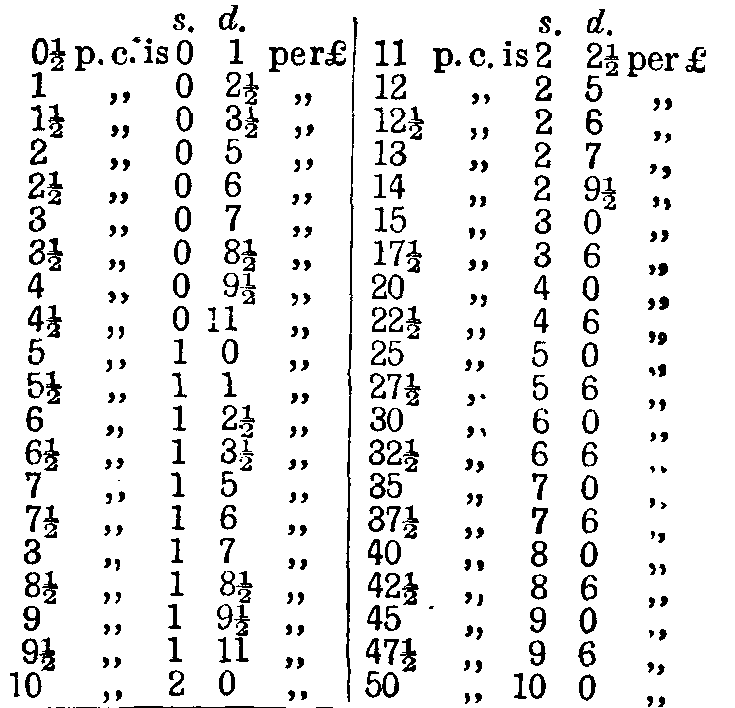
2771. A Table of the Number of Days, from any Day of any one Month to the same Day of any other Month.
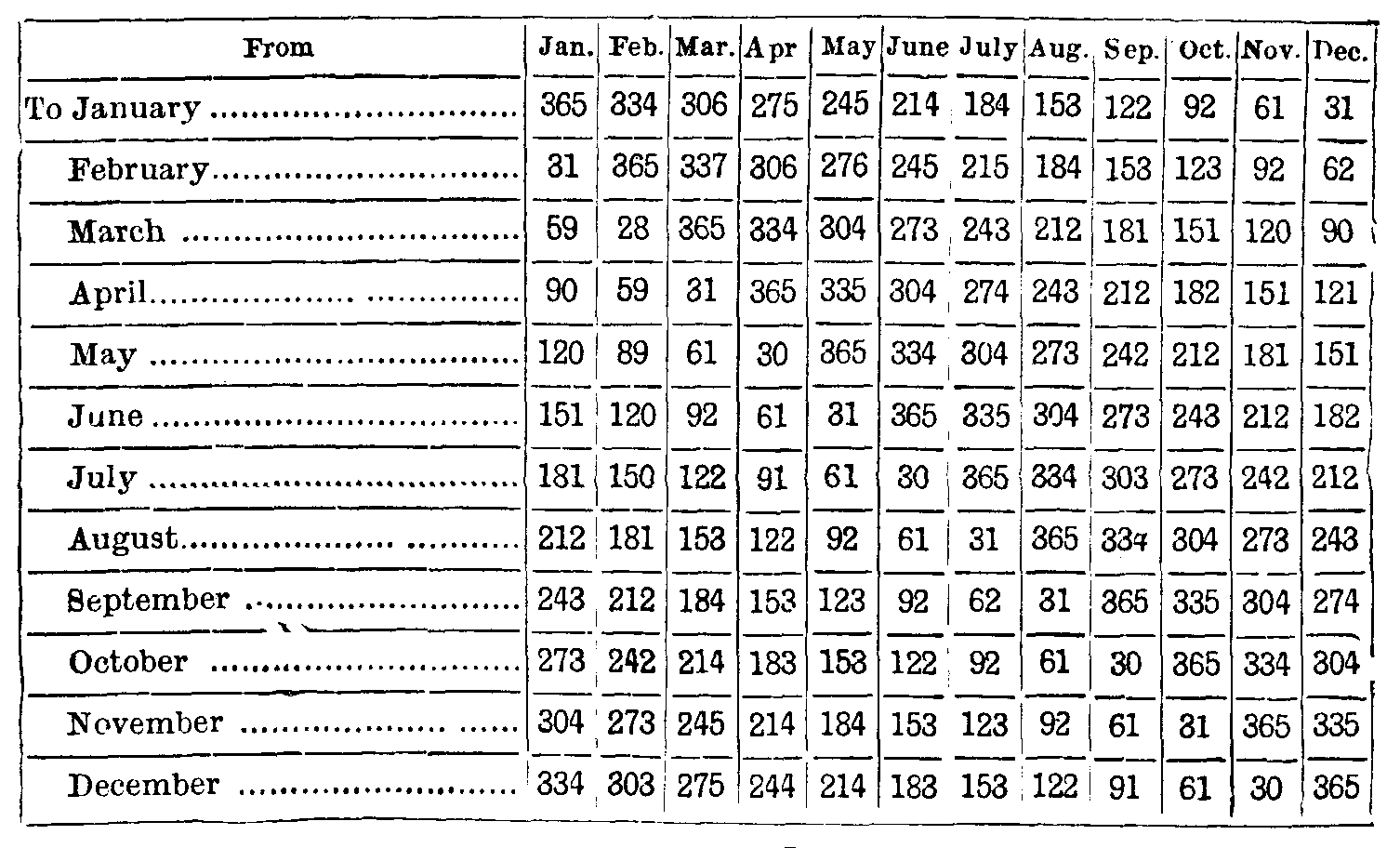
What is the number of days from 10th of October to 10th July? Look in
the upper line for October, let your eye descend down that column till
you come opposite to July, and you will find 273 days, the exact
number of days required.
Again, what is the number of days from 16th
of February to 14th August?
| Under February, and opposite to August, is |
181 days |
| From which subtract the difference between 14 and 16: |
2 days |
| The exact number of days required is: |
179 days. |
N.B.—In Leap Year, if the last day February comes between, add one
day for the day over to the number in the Table.
...and Serpent-like, that None may Injure Thee.
2772. For Mistresses and Servants: Table of Expenses, Income and Wages
Showing at one view what any sum, from £1 to £1,000 per Annum, is per
Day, Week, or Month.
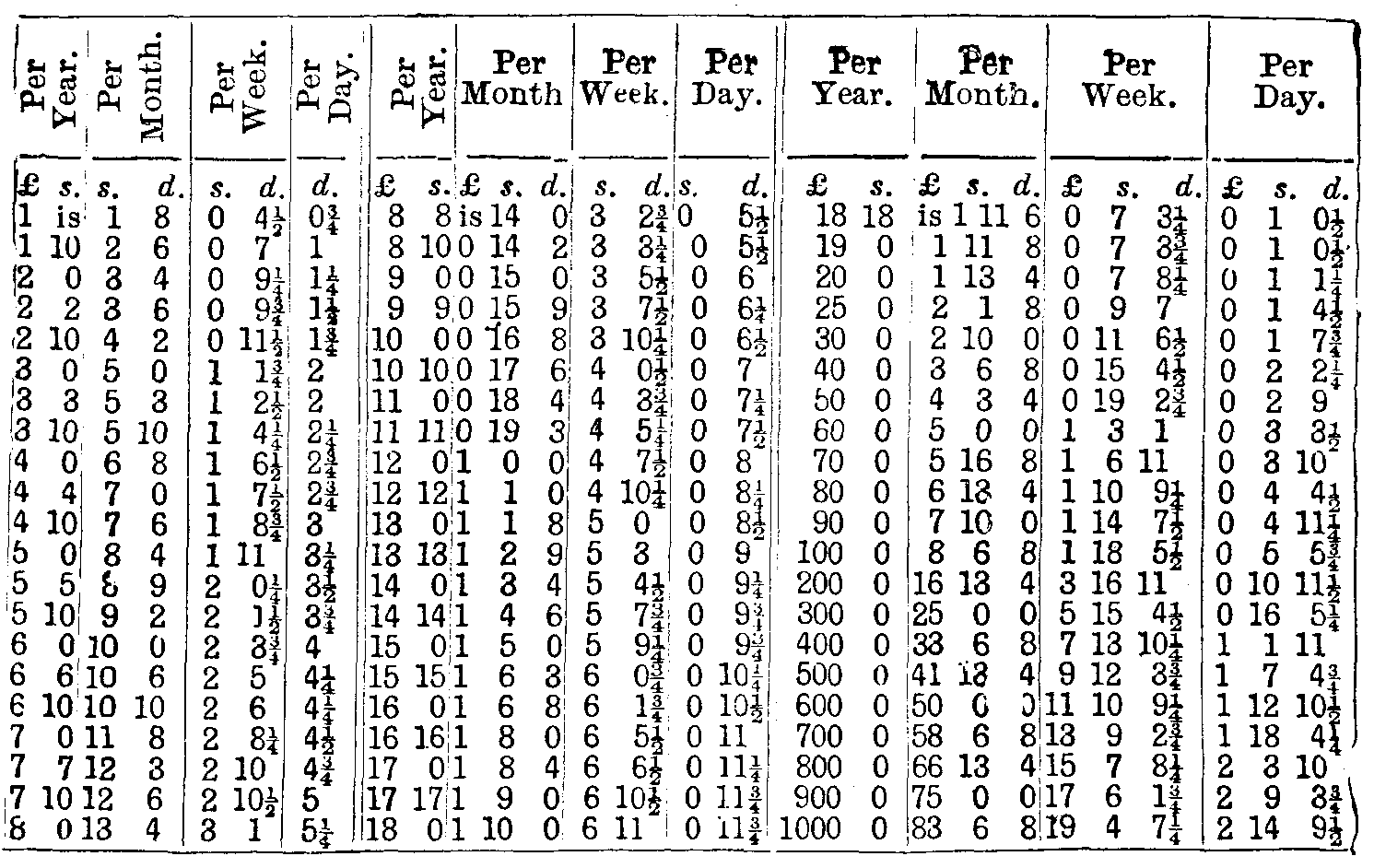
2773. Interest Table for Savings, Investments, &c.
Showing what any sum, from £1 to £500, will produce for a given
number of days, which may be, by simple addition, calculated at £5 per
cent. for Months or Years, for sums up to £5,000 or any other amount.
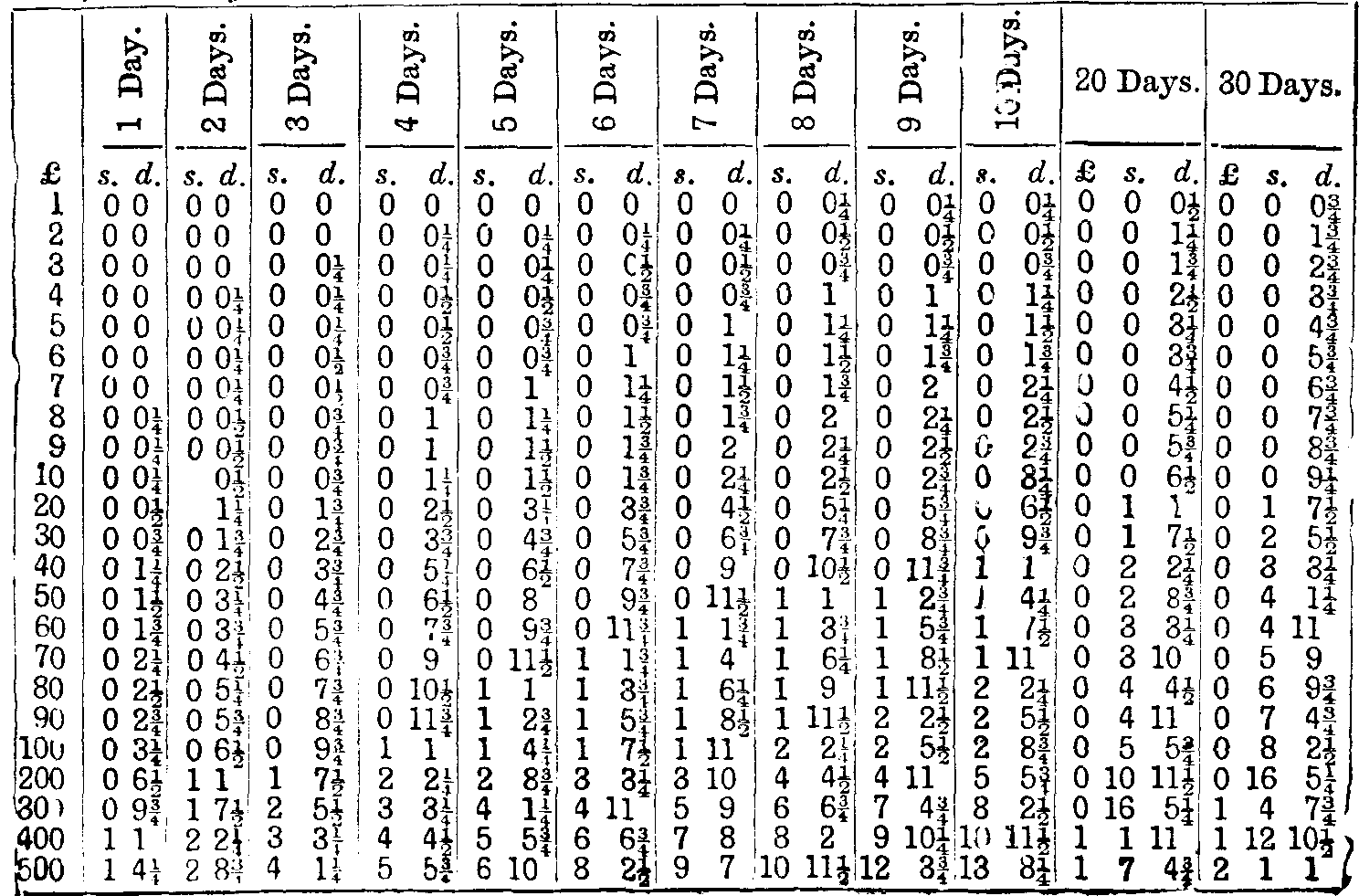
The Groat is Ill Saved Which Shames its Master.
2774. Interest Table for One Year
By this Table unlimited calculations may made. Thus, to find interest
on £1,250 per annum, add sums given for £1,000, £200, and £50. 2 per
cent, is found by taking half of 4 p.c; 8 p.c., by doubling 4 p.c.;
7-1/2 p.c., by adding 5 to 2-1/2 p.c., and so on.
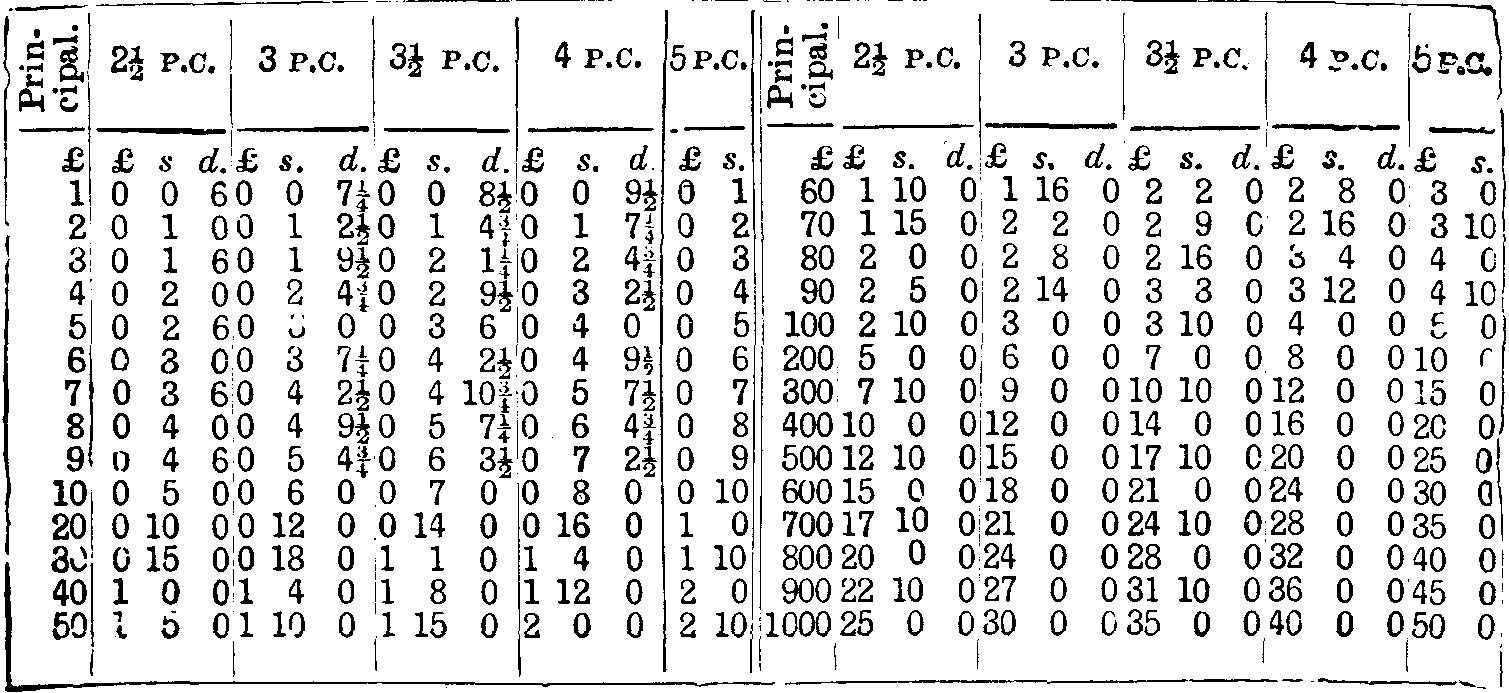
2775. Ready-Reckoning or Marketing Table
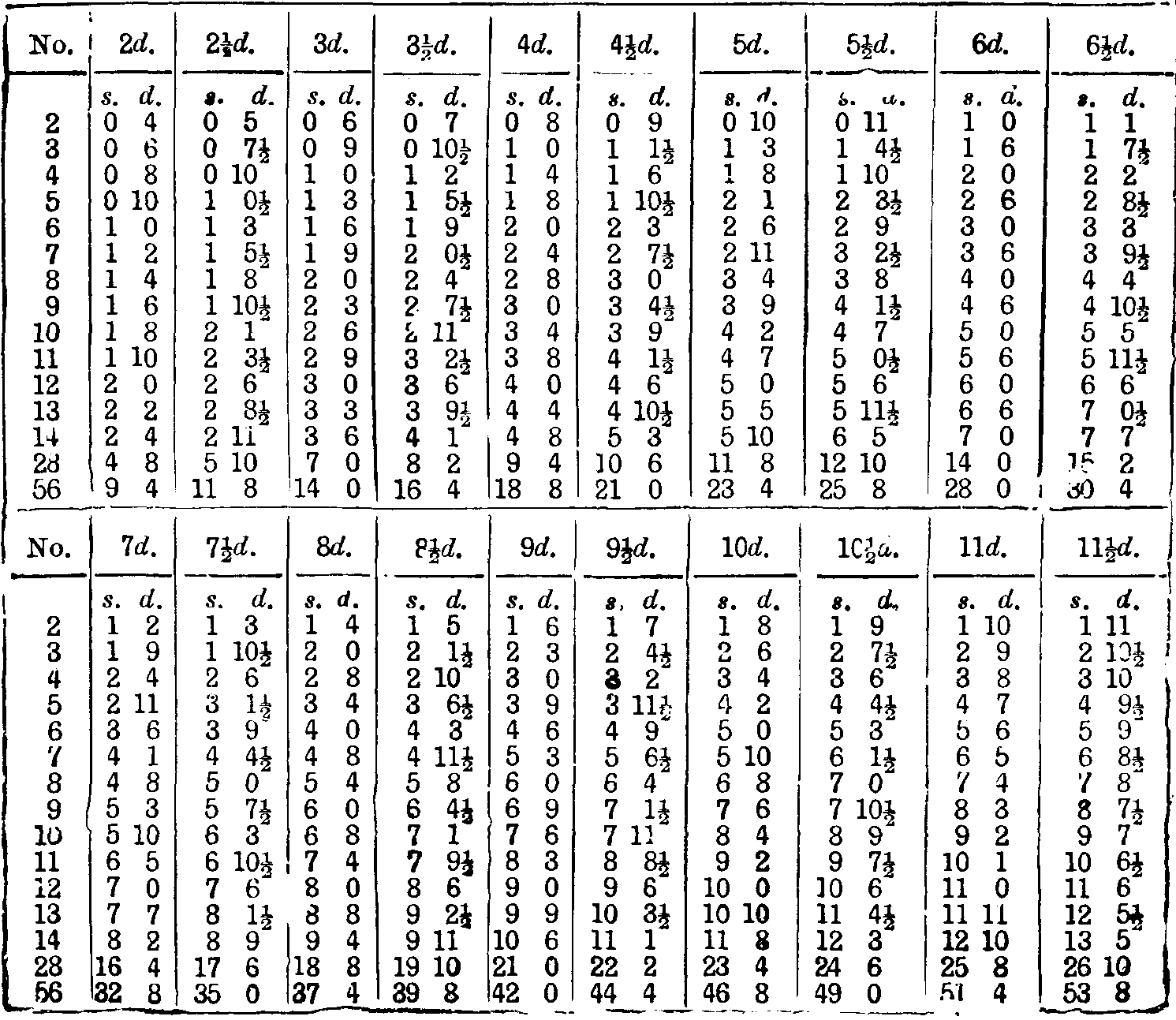
the hyperlinked index
A -
B -
C -
D -
E -
F -
G -
H -
I -
J -
K -
L -
M -
N -
O -
P -
Q -
R -
S -
T -
U -
V -
W -
Y -
Z
Ablutions, Frequent, Salutary Effects of
Absorbents, Medical Properties of
Accent,
Accidents, Cautions for Prevention of
Accounts, Regularity of Paying
Acetate,
Acids, Poisoning by, Treatment for
Acidulated Gargle
Acrostics
Acted Charades
Acute Diseases, Prescriptions for
Address at Head of Letter
Addresses
Addressing
Adhesive Plaster, to Prepare
Adjective, Misuse of
Adulterations,
Advice
Affectation, Avoidance of
Agreeable, Art of Being
Agreement
Ague, Remedy for
Ailments, Treatment of by Homœopathy
Air, Pure, what Composed of
Alabaster,
Alamode, Beef or Veal
Alcohol, Nature and Uses of
Ale,
Alkalies, Poisoning by, Treatment for
All-Fours,
Allopathic Treatment, Method of
Allopathy, Principle of
Allspice, Tincture of
Almond
Almonds,
Aloes, Properties and Uses of
Alpaca Wool
Alteratives, Medical Properties of
Alternations, Sudden, of Heat and Cold Prejudicial to Health
Alum
Ambassadors, to Address
Amber Ale, to Brew
American
Ammonia
Ammoniacum, Properties and Uses of
Ammoniated Embrocation (Compound)
Anagrams, Specimens of
Analeptics, Properties of
Anchovies, British, to Prepare
Anchovy
Andalusian Wool
Anglo-Japanese Work
Angola Wool
Angostura Bark
Animals, to Stuff
Annealing Glass
Anodyne Liniment
Anodynes, Properties of
Antacids,
Antalkalies,
Anthelmintics (1)-(2)
Antibilious Medicines, Properties of
Anti-Diarrhœal Powders
Antimonial Powder, Properties and Uses of
Antimony,
Antipertussal Powders
Antirheumatics, Properties of
Antiscorbutics, Properties of
Antiseptic,
Antiseptics, Properties of
Antispasmodic
Antispasmodics,
Ants, to Destroy
Anxiety, Effects of
Apartments,
Aperient,
Aperients,
Aphides, to Destroy
Apoplexy,
Apostrophe, Definition of
Apparatus to keep Bedclothes from Leg, &c.
Apparel, Frequent Change of, Necessary (1)-(2)
Appetite, How Lost and Regained
Apple
Apples,
Appraisement
Apprentice Indentures
Apricot
Apricots,
April,
Arithmorems
Arnica for Bites
Aromatic Mixture
Aromatics, Properties of
Arrack, Imitation
Arrasene
Arrowroot
Arsenic, Poisoning by, Treatment for
Art of being Agreeable
Artichokes,
Articles of Food, Choice of
Artificial
Arts of Writing and Conversation, Common Idea of
Asiatic Cholera
Asparagus
Assafœtida
Asterisk, Definition of
Asthma,
Astringent
Astringents,
Athol Brose
Atmosphere, Pure, near Dwellings, Essential
Attenuants, Properties of
August,
Auxerre, Tapestry of
Backgammon, Game of
Bacon,
Badminton
Bagatelle
Baking Powders (1)-(2)
Baking, Rationale of
Baldness,
Balls, Etiquette of
Balsamics, Properties of
Banbury Cakes
Bandage,
Bandages,
Bandoline, Recipes for
Bankruptcy
- Acts of Bankruptcy
- Adjudication when Composition not Accepted
- Arrest, Powers of
- Bankrupt to render every assistance
- Maintenance Allowance of
- Closing Bankruptcy
- Committee of Inspection
- Composition or Arrangement
- Default of Payment under
- Debtor, Duties of
- Debtors, all kinds of, subject to Laws of Bankruptcy
- Discharge, Order of
- Dividend Final
- Fraud, in Cases of
- Landlord, Power of, to Distrain
- Liquidation by Private Arrangement
- Official Receiver
- Petition, all Proceedings to commence with
- Conditions of Presentment
- Priority of certain Debts
- Public Examination
- Receiving Order
- Settlement on Wife or Children
- Trustee, Appointment of
- Duties of (1)-(2)
Banns of Marriage
Banting's Hints on Corpulence
Baptism, Ceremony of
Baptismal Name, Change of, after Registration
Bark
Barley
Barometer,
Baryta, Poisoning by, Treatment of
Bastings for Roast Meats, &c.
Bath Buns
Bath,
- to Fit up (1)-(2)
- Vapour (1)-(2)
Bathing,
Batter,
Beads, Use of, in Canvas Work
Beans, French, to Cook
Bed,
Bedclothes, Management of
Bed-curtains
Bedrooms
Beds for the Poor, How to Make
Beef,
- Aitchbone, Economy of / to Boil
- à la mode
- Bones, Grilled
- Brisket, Economy of / to Bake / to Carve / to Stew
- Broth
- Bubble and Squeak
- Curried (Madras Fashion)
- Extract (Liebig's Method)
- Fore-quarter, Joints of
- Fresh to Stew
- Glaze, to Prepare
- Gravy Sauce
- Hashed
- Leg and Shin, Economy of
- Hind-quarter, Joints of
- Hints on Choosing
- Lobscous
- Loss of, in Roasting / in Boiling
- Minced
- Potted
- Ribs, Boned and Rolled, to Roast / Economy of / to Carve / to Roast
- Rissoles
- Round, to Carve / Economy of
- Rump, Economy of / to Carve
- Rump Steak, and Onion Sauce
- Salted, Plain Boiled / Round of, to Boil / Stewed with Pork
- Sausages
- Shin, Economy of
- Silver side of
- Sirloin, to Carve / Economy of
- Soup, French
- Top side of Round
- Various Joints of, Described
- Veiny Piece, Economy of
- When in Season
- With Mashed Potatoes
Beef-tea, to Prepare
Bee-sting, Cure for (1)-(2)
Beer Poultice
Beetles,
Beetroot, to Pickle
Behaviour, Hint on
Bellows, How to Use (1)-(2)
Belvidere Cakes
Berlin or German Wool
Beverage for Hot Weather
Bézique,
Bicarbonate of Ammonia, Nature and Uses
Bile, Remedy for
Bilious or English Cholera (1) (2)
Bill of Fare for Large Dinner Parties
Billiards, Games at (1)-(2)
Bills of Exchange, &c., Stamps for
Bills of Sale (1)-(2)
Birdcages, to drive away Insects from
Birdlime, to Prepare
Birds,
Birth, Registration of (1)-(2)
Biscuits,
Bismuth, Poisoning by, Treatment for
Bites,
Biting the Finger Nails
Black
Blackberries, Properties of
Blackberry
Blackbirds, Care of (1)-(2)
Blacking,
Bladder, Inflammation of, Remedy for
Blancmange, Arrowroot
Bleeding,
Blistered Feet, Remedy for
Blond Lace, to Revive
Blonde Complexion, Why Favoured by Green
Blood,
Blotched Face, Wash for
Bluestone, Properties and Uses of
Blue Veils,
Boards
Body Lighter than Water (1)-(2)
Boiling,
Boils, Treatment of
Bologna Sausages
Bone,
Bonnets,
Books,
Boot Tops,
Boots,
Borax, and its Uses (1)-(2)
Borrowed Money, Repayment of, by Minor
Boss, or the Fifteen Puzzle
Boston Apple Pudding
Botanical Specimens, to Preserve
Botany Bay Wood, Imitation of
Bottles,
Bottling Liquors
Boulettes of Lint
Bourdonnet of Lint
Bowels,
Braids,
Brain,
Brandy Peaches
Brass Kettles, to Clean
Ornaments, to Clean (1)-(2), (3)-(4)
Breach of Promise of Marriage (1)-(2)
Bread,
- Adulterated, to Detect
- Apple, to Make
- Baking and Egg Powders in (1)-(2)
- Cheap and Excellent, to Make
- Cheap and Pure
- for Children
- for Dinner, to Cut
- Economical and Nourishing, to Make
- Economy of
- French, to Make
- German Yeast, to Make with
- Home-made
- Home-made, to Increase
- of Indian Corn Flour and Wheat
- Nutritious Properties of
- Potatoes in
- Pudding (1) (2)
- Pulled, to Make
- Rice, to Make
- Rye and Wheat Flour, to Make
- Unfermented
- Use of Lime Water in
Breakage by a Servant, Law Respecting
Breakfast, Late at
Breath,
Brewing, Hints on
Brewis, to Make
Brill, to Carve
Brimstone, Flour of
Britannia Metal, to Clean
Brocoli, to Pickle
Broderie Anglaise
Brogue,
Broiling, Rationale of
Broken Leg, Splints for
Brokers, Appraisement by
Bronchitis,
Bronzed Chandeliers, &c., to Clean
Brose,
Broth,
Brown
Bruises,
Brunettes, Why Blue Unsuitable to
Brunswick Black
Bubble and Squeak
Buckthorn, Uses of
Bugs, to Destroy (1)-(2)
Bullfinches, Care of
Bunions, Remedy for
Buns,
Burgundy Pitch, Properties and Uses of
Burnett's Disinfecting Fluid, Uses of (1) (2)
Burns,
- Cure for (1)-(2)
- Treatment of (1)-(2)
Burton Ale, to Brew
Business,
Butcher's Meat, to Purchase
Butter,
Buttered Rum
Butterflies, to Destroy
Let All Things have their Places.
Cabbage,
Cabinet
Cake
Caledonians
Calf's Feet,
Calf's Head
Calico,
Calomel, Uses of
Calves' Heads, &c., Uses and Economy of
Cambridgeshire Dialect
Camel-hair Wool
Camomile
Camp Cookery
Camphorated
Camphor,
Canaries,
Candle-light
Candles,
Cane Chairs, to Clean
Cantharides, Uses of
Canvas
Capitalists, Advice to, on Embarking in Business (1)-(2)
Carbolic Powder and Fluid as Disinfectants
Carbonate of Soda, Uses of
Carded Cotton, Surgical Uses of
Cards, Games at (1)-(2)
Carminatives, Properties of
Carpets,
Carriage Accidents, Cautions Respecting
Carrot
Carrots, Cold, to Dress
Carver,
Carving
Carving-knives,to Set
Cash and Credit, Advice on
Casks, to Sweeten
Cassino,
Cast-iron Work,to Preserve
Castor Oil
Casts, Gutta Percha
Catarrh,
Catechu
Caterpillars, to Destroy
Cathartic Mixture
Cathartics,
Cats, Care of
Cauliflower, to Pickle
Cautions
Cayenne Pepper
Celery, Essence of
Cement
Cerates (1)-(2)
Ceremonies, Importance of
Chairs, Cane, to Clean
Chalk
Champagne,
Chandeliers, Bronze, to Clean
Chapped Hands, Ointment for
Chaps,Camphor Balls for
Character, Manly, Elements of
Charades,
Charcoal
Charpie, or Lint
Charts,to Varnish
Chattels, Personal (1)-(2)
Cheap
Cheese, Blue Mould on
Chemical
Chenille
Cheques,
Cheshire Dialect
Chess, Laws of
Chicken,
Chicken-Pox, Remedy for
Chilblains,
Children,
Chimaphila Decoction
Chimney,
Chimneypieces, Marble, to Clean
China,
Chinese Porcelain, Modern
Chintzes, to Wash
Chloride
Chlorine, Poisoning by, Treatment for
Chocolate,
Choice of Friends
Choking, Treatment for
Cholera,
Chops, Relish for
Christening, Ceremony and Etiquette of
Christian Name or Initials,Use of in Letter-writing
Christian Names
Chronograms
Churning, Why Action of, Produces Butter
Chutney (Sauce)
Cider
Cinders, Models of (1)-(2)
Circassian Circle, Dance
Citric Acid, Uses of
Civility in Business
Clark's Pills for Nervous Headache
Cleanliness,
Cleansing Purposes, Borax for (1) (2)
Clergy, How to Address
Clerk, General Terms of Hiring
Clerks, Law of, Employment Respecting (1)-(2)
Cloaks at Funerals
Clocks, to Oil
Closet for Tools, &c.
Closets, to Remove Moths from
Cloth,
Clothes,
Clouds as a Sign of the Weather
Clyster, Prescription for
Coaguline, Kay's
Coal,
Cock-a-Leekie
Cockney Speakers, Hints to
Cockroaches, to Kill
Cocoa, Adulteration of
Cod
Cod-Liver Oil
Coffee,
Coins, to Take Impressions from
Cold,
Colic, homœopathic Treatment of
Collops, Minced
Collyria or Eye-Washes (1)-(2)
Colocynth, Uses of
Colon, Nature and Value of
Colour of Dresses, to Preserve
Colours,
Comfort, Home, Hints for
Comma, Nature and Value of
Complexion,
Composition (Literary) Art of
Compresses, Surgical, Nature of
Compression of the Brain, Treatment of
Concussion, Treatment of
Conduct, Rules of
Confections, Various (1)-(2)
Connexions, Game of, Described (1)-(2)
Consistency, Advisability of
Constipation,
Consumption, Remedy for
Contusions, to Heal
Conundrums, Selection of
Conversation
Convulsions,
Cookery,
Cooking,
Copper,
Cordials, Properties of
Cork Models, to Construct (1)-(2) (3) (4)
Corks, Soft Cement for
Cornish
Corns, Cure for (1)-(2)
Coronation Braid
Corpulence, Banting's Hints on
Correct Speaking, Rules and Hints for
Correction of Errors in Speaking
Corroborants, Properties of
Cossack's Plum Pudding
Cotillon Waltz
Cotton,
Cough,
Counsels for the Young
Country Dances
Covering for Preserves
Cowhage
Crab, Mock
Crabs, to Choose
Cradle, for the Protection of Limbs, to Form
Cramp
Crape,
Crayfish, to Choose
Cream,
Credit, Deceitful Appearance of (1)-(2)
Creditor and Debtor, Laws of
Creosote Lotion
Cress Vinegar
Crewel Work
Cribbage,
Crochet,
Croquet,
Crossing Letters
Croup,
Crying of Children, Cause of (1)-(2)
Cryptography
Cucumbers,
Culinary Economy
Cumberland Dialect
Cup in Pie-dish, Use of
Cupping,
Curing of Hams and Bacon
Curiosity about Contents of Letters
Currant Jelly,
Currant Wine
Curried
Curtailments
Curtains,
Cusparia, Nature and Uses of
Custard,
Cutaneous Eruptions, Remedy for
Cutlery and Children, Caution as to
Cuts and Wounds,
Dahlias, to Protect from Earwigs
Damages,
Damp
Dances
Dandelion Decoction
Darning on Netting
Daughters, Management of
Days, Table of Number of, from One Month to Another
Deafness, Remedy for
Dealings, Cash and Credit, Advice on
Death,
Debt, Don't run in
Debtor and Creditor, Laws of (1)-(2)
Decalcomanie, Art of (1)-(2)
Decapitations
December,
Decoction of Medicines
Decoctions
Decomposing Substances, Effect of
Deed of Separation between Man and Wife
Delicacies, Fish
Demulcents, Nature of
Dentifrice,
Deobstruents, Properties of
Dessert,
Detergents, Properties of
Devil (in Cookery)
Devonshire
Dew as a Sign of the Weather
Dialects, Provincial (1) (2)
Diamond Cement
Diaphanie, Art of (1)-(2)
Diaphoretics,
Diarrhœa, Homeopathic Treatment of
Digestion of Medicines
Digestives, Properties of
Diluents, Nature of
Dining Tables, to Polish
Dinner,
Dirt in the Eye, to Remove
Dirty
Discipline of Children
Discounts, Table of
Discutient Liniment
Discutients, Properties of
Diseases, of the Skin,
Dish, Economical
Disinfectant,
Disinfectants, Various
Disinfecting
Disinfection of Rooms
Dislocated Thumb
Dismissal, Summary, of Domestic Servants
Disputation, Avoidance of
Dissenters, Marriage of
Distress for Rent,
Distinctness in Speaking, Importance of
Diuretic Mixture
Diuretics,
Diving for Eggs to test Buoyancy of Water (1)-(2)
Divorce,
Documents, Stamped, Importance of
Dogs,
Domestic
Dominoes,
Door, to Keep Open
Double Accentuation of Words
Drastics, Properties of
Draughts, Rules of the Game
Dredgings for Roast Meats, &c.
Dress,
Dressing Well, Advice on
Dressings,
Drink
Drinks, Medicinal (1)-(2)
Drop Cakes
Dropsy, Prescription for
Drowning, Treatment for
Drugs,
Drunkenness,
Dry Warmth to any Part of Body, to Apply
Drying Herbs
Duck,
Dumplings,
Dutch Oven, to Use
Dutch People, Cleanliness of
Dwarf Plants, Management of
Dyeing (1)-(2)
Dysentery,
Dyspepsia,
Early Rising, Advantages of (1) (2)
Earnings, &c., of Married Women
Earwigs, to Kill (1) (2)
Eat Slowly
Eating, Moderation in
Ecarté (1)-(2)
Economical Dish
Economy (1)-(2)
Edinburgh Ale, to Brew
Education, First Principle of (1)-(2)
Eels, to Carve
Egg
Eggs
Eis Wool
Elderberry Wine
Elderflower Lotion
Electuaries (1)-(2) (3)
Elephant Penelope Canvas
Embrocations (1)-(2)
Embroidery (1)-(2)
Emetic,
Emetics,
Emigrants, Cookery for
Emmenagogues, Properties of
Emollient Lotion
Emollients,
Employer,
Employers' Liability Act, Recovery for Damages under (1)-(2)
Employers and Employed, Laws Relating to (1)-(2)
Employment, Permanent, Agreement to Give
Emulsion,
Enemas (1)-(2)
English
Enigmas, Description of
Enunciation, Imperfect
Envelope, Place of Stamp on
Envy, Avoidance of
Epilepsy, Remedies for (1) (2)
Epispastics,
Epistolary Correspondence, Hints on
Epsom Salts, Properties and Uses of
Errhines, Properties of
Errors in Speaking (1)-(2)
Eruptions,
Erysipelas, Remedy for
Escharotics,
Esquire to be written in full
Essence
Essex Dialect, Errors of
Ether,
Etiquette,
Euchre, Game of (1)-(2)
Evaporating Lotion, Cold
Evening
Excess of Lace and Flowers in Dress
Exclamation, Note of, Defined
Executors to Will
Exercise,
Expectorants,
Expenses, Table of
Extract of Beef, to Make
Extracts, How Made
Eye,
Eyelashes, to Strengthen and Improve
Eyes,
Eye-washes, Various (1)-(2)
Little Strokes Fell Great Oaks.
Face,
Faded Dress, to Bleach
Failures in Business, Hints on Avoiding
Fainting, Treatment for
Faintness, Remedy for
Fair Person, Sky Blue Becoming to
Falling into Water, How to Act
Falsehood, Avoidance of
Family
Fancy Needlework
Fat,
Feather Beds,
Feathers,
Febrifuges, Properties of
February,
Feet,
Female
Fern Root, Male, Uses of (1) (2)
Fever,
Fifteen Puzzle, or Boss
Fig Pudding
Filoselle Silk
Filtering Medicines
Finger Glasses, Use of
Fining Liquors
Fire
Fire-grate,
Fire-guards, Necessity of
Fire-irons, Rusty, to Clean
Fire-screens, Paper, to Make
Fish,
Fits, Treatment for
Fixature for Hair
Flannel
Flatulency, homœopathic Treatment of
Flavouring, Almond
Fleecy Wool
Flesh, Why some is White and some Red
Flies, to Destroy (1)-(2)
Flirtation, Avoidance of
Floating in Water, Test of Capability of (1)-(2)
Floors, to Remove Stains from
Floss Silk
Flour
Flowers,
Fluid, to Drink, Proper Proportion of (1)-(2)
Fluor Spar, Use of, in Modelling
Food,
Food and Drugs Act, Extracts from
Foppery, Avoidance of
Forced Vegetables, when in Season (1)-(2)
Forcemeat Balls
Forks and Knives,
Fowl,
Fox and Geese
Frame for Embroidery
Frames,
Freckles, Remedies for (1)-(2)
Freezing Mixture,
French
Fresh-killed Meat, Time for Cooking
Fresh-water Fish, to Choose
Fresh Water, Floating on
Friar's Omelette
Friend,
Friendships, Advice on
Fritters,
Frivolité, or Tatting, Instructions in
Frost Bite, Remedy for
Frugality, Dr. Franklin's Maxims
Fruit
Frying, Rationale of
Frying-pan, to use
Fuel
Full-point, Nature and Value of
Fumigator, Disinfecting
Funerals,
Fungi, to Preserve
Furnished
Furnishing House, Hints for
Furniture,
Furs,
Galbanum, Uses of
Galling in Invalids, Prevention of
Galls, for Lotion
Galopade,
Gamboge, Uses of
Game,
Garden,
Gardening Operations for every Month in the Year (1)-(2)
Gargles, Prescriptions for (1)-(2) (3)
Garlic, to Pickle
Garnishes, Various
Geese, to Choose
Gentian, Uses of
Gentleman,
German Paste, for Birds
Gherkins, to Pickle
Gilt Frames, to Preserve
Ginger
Gingerbread
Girls, Management of
Glacialine
Glass,
Glazing, for Hams, Tongues, &c.
Glauber's Salts, Properties and Uses of
Gloves,
Glue,
Gold, Poisoning by, Treatment for
Gold-fish, Care of
Goods Removed, Seizure of
Goose,
Gooseberry Wine
Gorlitza (Dance)
Gossiping, Consequences of
Gout
Grammar, Errors from Imperfect Knowledge of
Grape Wine
Grate,
Gravel, Remedy for
Gravy,
Grease,
Grecian Netting
Green
Greengage Jam
Greens, to Choose
Grill Sauce
Grilled Fowl
Gridirons, How to Use
Griffiths's Mixture
Ground Glass, to Imitate
Grouse, to Roast
Growth Influenced by Light
Grubs, to Destroy
Guinea Pigs, Care of
Gum-Arabic,
Gurnet, to Carve
Gutta-percha
H,
Habits of a Man of Business
Haddock, to Carve
Hæmorrhage, How to Stanch
Hæmorrhoids, Ointment for
Hair,
Hake, to Carve
Half-Pay Pudding
Ham,
Handkerchief, Etiquette of
Hands,
Hanging,
Hard Water, to Soften
Hare,
Hashing Cold Meat, Economy of
Hat, How to take Care of
Hatbands at Funerals
Headache,
Head-dress, Sky Blue, Why Becoming to Fair Persons
Health,
Heartburn,
Hearth,
Hearth-rug,
Heat and Cold, Sudden Alternations of, Injurious
Heavenly Bodies as a Sign of the Weather
Herbs,
Herefordshire Dialect
Herrings, to Choose
Hiccough, Remedy for
Hidden Words
Highland Reel (Dance)
Hints
Hiring and Dismissal of Servants
Hitching, Mrs. Alexander
Hog Pudding, Black
Home Comfort, Hints for
Homœopathy (1)-(2)
Honesty, Importance of
Honey
Hooping Cough,
Hops as a Narcotic
Horn, to Stain
Horseradish,
Hotch Potch,
Hot
Hours of Labour and Study Must be Regulated
House,
Household Management,
Husband and Wife
Husbands, Hints for (1) (2) (3)
Hydragogues, Properties of
Hydrochlorate of Ammonia Lotion
Hydrophobia in Dogs
Hyphen, Definition of
Hypnotics, Properties of
Hysterical Disorders, Prescription for
Hysterics,
Ice,
Ice-creams (1)-(2)
Iceland Moss Chocolate
Ices,
Icing for Wedding Cakes (1)-(2)
Idle Tales, Avoid Telling
Idleness, Avoidance of
Illegitimate Child, Legacy to
Ill-Temper, Manifestations of, to Avoid
Imitation Tortoiseshell
Income, Table of
Indemnification against Rents, Rates, and Taxes, Form of
Indenture, Apprentice's, When Void
Indian
Indigestion,
Indulgence of Appetite, Pernicious Effects of
Infants,
Infectious Diseases, (1)-(2)
Inflammation,
Inflammatory Sore Throat, Remedy for
Influenza, Remedy for
Infusion of Medicines
Ink,
Ink-stains,
Insects,
Integrity in Business
Intellectual Superiority not to be Boasted of
Interest-Table
Intermeddling, Avoidance of
Intermittent Fever, Remedy for
Interrogation, Note of, Defined
Interruptions, Rudeness of
Intestate's Estate, Division of
Introduction to Society, Etiquette of
Invalids, Caution to Visitors to
Ipecacuanha, Nature and Uses of
Irish
Iron,
Isinglass Plaster
Italian Cabinet Work, Varnish for (1)-(2)
Itch,
Ivory, to Stain (1)-(2)
Jack, to Carve
Jactitation of Marriage
Jalap, Uses of
Jam, Plum, Greengage, or Apricot
January,
Japanned Articles, to Clean
Jaundice, Remedy for (1) (2)
Jelly,
Jersey Wonders (Cakes)
Jewellery, Excess of, Deprecated
John Dory, to Carve
Joints of Meat:
Judges, How to Address
Judicial Separation,
Jugged Hare
July,
June,
Juniper, Properties and Uses of
Junket, Devonshire
Ketchup,
Kettle,
Kidneys,
Kind Words, Power of
Kindness in Little Things
Kino, Uses of
Kitchen,
Kitchiner's (Dr.) Rules for Marketing
Kite, Use of, in Swimming
Knitting,
Knives and Forks,
Knowledge in Housewifery, How Gained
Kreosote Lotion
Labour and Study,
Lace,
Ladies,
Lamb
- to Choose
- Chops, or Cutlets, to Dress
- to Dress, before Carving
- Fore-Quarter, to Roast / Dressing for
- Grass, When in Season
- Hind-Quarter of, to Roast
- House, When in Season
- Leg of, to Roast
- Loin of, to Roast
- Quarter of, to Carve
- Ribs of, to Roast
- Shoulder of, to Roast
- Stove or Stew
- Various Joints of Described
- When in Season (1) (2)
Lambswool Stockings,
Lamps,
Lancashire Dialect
Lancers (Dance)
Landlord, and Tenant,
Lansquenet
Larder, to Ventilate
Larks, Care of
Laundry, Borax in the
Late Hours, Effect of
Lavender
Lawn Billiards, or Troco
Lawn Tennis
Laws
Laxative
Laxatives, Properties of
Lead, Poisoning by, Treatment for
Leaf,
Lease, Definition of a
Leases,
Leather,
Leaves,
Leech
Leeches,
Legacy to Illegitimate Child
Legal Separation, Good Reasons Necessary for
Legs, Cramp in
Leicestershire Dialect
Lemon
Lemonade
Lemons,
Letters,
Letter-writing,
Liability for Debts contracted under Age, Acceptance of
Lice, to Free Plants from
Licences,
Life Belts, Excellent Kinds of (1)-(2)
Light
Lightning, Persons Struck by, to Treat
Lime
Lime-water a Cure for Burns
Limitation of Recovery of Land or Real Estate
Lincolnshire Dialect
Linen,
Liniments (1)-(2)
Linnets, Care of
Linseed, Properties and Uses of
Lint,
Lip Salve, Rose
Lipogram
Liquid Glue
Liquor of Boiled Meat, Economy of (1)-(2)
Liquorice, Uses of
Listening Preferable to Talking
Little
Liver
Living Objects, to Model
Lobscous, Beef or Mutton
Lobster
Local Stimulants, Nature of
Localities for Business, Hints on
Lodgers, and Lodgings,
Lodgings,
Logograph
Logwood,
London
Londoners, Advice to, on Errors in Speaking
Loo,
Looking Glasses, to Clean
Looseness of the Bowels, Remedy for
Loss of Meat
Lotions,
- Prescriptions for (1) (2) (3) (4) (5) (6)
- Various (1) (2)
Love's Telegraph
Lumbago, Remedy for
Lunar Caustic, Uses of
Luncheon,
Lungs,
Lustra Painting
A Sooty Chimney Costs Many a Beefsteak.
Maceration of Medicines
Mackerel,
Mad Animals, Bite of, to Treat
Magisterial Order for Protection of Wife's Property (1)-(2)
Magnesia,
Mahogany,
Male Fern Root, Properties and Uses of (1) (2)
Mallow, Uses of
Man and Wife, Deed of Separation Between
Man of Business, Habits of
Management, Household,
Mange in Dogs
Mangoes, to Pickle
Mania for Greek and Latin Quotations
Manifold Writing
Manly Character
Manna,
Manners,
Maps, to Varnish
Marble,
Marbled Goose
March,
Margarine
Marine Glue
Marketing,
Marking Ink,
Marmalade,
Marriage,
Married Women,
Marrow Bones, to Cook
Marshmallow, Uses of
Mastic Cement
Matches, Keep from Children's Reach
Matrimonial Causes and Divorce (1)-(2)
Matrimony, Game of
Matting, Straw, to Clean
May,
Mazurka (Dance)
Meaning of Words
Measles,
Measures in Medicine,
Meat,
- Baking
- Basting
- Boiled, Liquor from, Use of (1)-(2)
- Boiling, Effect of, on
- Broiling
- Cakes
- for Children
- Cold, Broiled with Poached Eggs / Economy of
- Cookery
- Dredging
- Fat of, What it Indicates
- Flesh of, Why sometimes Red and sometimes White
- Fresh Killed, Length of Time Required for Boiling
- Frying
- Hook, How to Use
- How to Cook Properly
- Hung, Treatment of (1)-(2)
- Joints of, Names and Situations / Relative Economy of
- Marbled, Why Best
- Method of Cutting up
- Pie, Paste for
- Potted (Strasburg Mode)
- to Preserve (1) (2)
- to be Purchased in Person
- Time Required for Boiling
- Underdone
- When in Season (1)-(2)
Mechanical Remedies, Enumeration of
Medical Man's Advice Desirable in Illness
Medicinal Uses of Vaseline
Medicine,
Melons, to Pickle
Mending,
Menial Servants, Agreements with
Menstruation,
Mental and Bodily Exercise, Alternation of
Menu for Large Dinner Parties
Mercury, Poisoning by, Treatment for
Merino Wool
Metagram
Mice, White, Care of
Mildew
Milk,
Minced
Mincemeat, to Prepare
Minor Operations in Surgery
Mint,
Mirrors, to Clean
Misdivision of Words
Mispronunciation of Words
Mississippi, Game of
Mistress and Servants, Table of Expenses
Mixtures, Medicinal, Various (1)-(2)
Mock
Modelling (1)-(2)
Moderation in Eating and Drinking Beneficial
Money,
Monkeys, Care of
Moral, A (Poetry)
Mordants, in Dyeing
Morning Milk
Mortars, Proper Kinds of, for Medicines
Mother Eve's Pudding
Moths,
Mourning,
Mouth Glue
Mucilage
Muffins, to Make
Mumps,
Mushrooms,
Muslin,
Mustard,
Mutton,
- Advantages of Hanging (1) (2)
- Breast of, to Roast
- Chine of, to Roast
- Choice of
- Fed near Sea, Nutritious
- Hashed (1)-(2)
- Haunch of, to Carve / to Roast
- Leg of, to Carve
- Lobscous
- Loin of, to Carve / to Roast
- Loss of, in Roasting and Boiling
- Neck of, to Roast
- Pie
- Saddle of, to Carve / to Roast
- Sausages, to Make
- Shanks for Stock
- Shoulder of, to Carve / to Roast
- Soup, to Prepare
- Stew
- Various Joints of, Described
- Venison Fashion, to Roast
- When in Season
Myrrh
Nail-box
Nails and Screws (1)-(2)
Nails, Finger
Names, Signification of
Naphtha Polish
Napkins, Table, to Fold
Napoleon, Game of
Narcotic Poisons, Treatment for
Narcotics,
Needles,
Needlework, Fancy
Nervous Headache, Pills for
Nervousness, Remedy for
Netting (1)-(2)
Nettlerash, Homœopathic Treatment of
Nettle-sting, Cure for
New Neighbourhoods for Business
New Paint, Smell of, to Remove
Newspapers,
Nightcap for Travellers
Nightlights, to Make
Nipples, Sore, Ointment for
Nitrate
Nitre,
Nitric Ether, Uses of
Nobility, Directions for Addressing
Nose, Bleeding at, to Arrest (1) (2)
Notice to Quit,
Noun,
November,
Noxious Gases, How Generated (1) (2)
Nursery,
Nutrients, Properties of
Nutritive Enema
Oak Bark, Uses of
October,
Offensive Breath
Officers' Dress, Etiquette
Official Members of the State, to Address
Oil,
Oilcloth, to Clean
Ointments
Omelette,
Onions,
Open Doors or Windows in Fire
Operations, Surgical, Minor
Opium
Orange
Ordinary Lotion
Organzine, What it is
Ornamental Leather Work
Ornaments,
Ostrich Feathers, to Clean
Ottomans, to Clean
Oven,
Ox-Cheek,
Ox-Heart
Ox-Heel Jelly
Ox-Tail, Uses and Properties of
Ox-Tongue
Oxalic Acid, Poisoning by, Treatment for
Oxide of Zinc, Uses of
Oxygen of Air, Consumed by Fire
Oyster
Oysters,
Pads, Surgical Employment of
Pains in Head and Face
Paint
Painted Wainscot, to Clean
Paintings, Oil, Caution Respecting
Palatable Stew
Palpitation of Heart
Pancakes
Paper
Papier-Mâché Articles, to Clean
Parchment, to Stain (1)-(2)
Paregorics, Properties of
Parenthesis
Parliament, Members of, to Address (1) (2)
Parrots, Care of
Parsnip Wine
Parson's Grate
Parties, Evening, Etiquette of
Partridge,
Paste
Pastilles, for Burning, to Make
Pastime, Evening, Suggestions for
Pastry,
Pasty, Seven-Bell
Patterns,
Patties,
Pea Soup, Plain
Peaches
Pears
Peas,
Pelote of Lint, its Use
Penelope Canvas
Penny Pot (Billiards)
Pepper,
Percentage of Loss in Roasting (1)-(2)
Percentages, Table of
Perfume, A Pleasant
Period, or Full-stop, Nature and Value of
Perry
Person on Fire
Personal,
Persons of Rank, How to Address
Perspiration
Peruvian Bark, Nature and Uses of
Petticoat, Flannel, Economy of
Pharmacopœia, Domestic
Pheasant,
Phosphorus, Poisoning by, Treatment for
Pianofortes, Hints on Keeping
Pickle, Indian, to Make
Pickles, Various Kinds of (1)-(2)
Pickling, Hints on (1)-(2) (3)
Pic-Nic Biscuits
Picquet, Game of
Pie,
Pie-dish, Cup in, Use of
Pigeon,
Pike, to Carve
Piles,
Pills,
- Aperient (1) (2) (3) (4)
- Various (1)-(2)
Pitch, Burgundy
Pitting in Small-Pox, to Prevent (1)-(2) (3)
Plaice, to Carve
Plant Skeletons
Plants, to Protect from Leaf Lice
Plaster,
Plate, Uncleaned, Don't put by
Plated Ware, to Clean
Plum
Plums, to Preserve (1)-(2)
Points in Punctuation
Poison, a, Definition of
Poisoning, Treatment for,
Poisoning
Poisons
Poker,
Polish for Enamelled Leather
Polishes, French
Politeness, to Practise
Polka
Pomade,
Pomatum,
Pool (Billiards) (1) (2)
Poor, Beds for the
Pope Joan, Game of
Porcelain
Pork,
Porridge, Scotch
Portable Soup
Porter, to Brew
Possession, Giving up, Refused
Postage Stamp, Where to Place on Envelope
Postal Districts in London
Potash
Potassa, Acetate of
Potato Balls
Potato,
Potatoes
Pot-au-Feu, to Prepare
Pot-Herbs for Drying, When in Season (1)-(2)
Potichomanie, Art of
Potted
Poultices, Uses of
Poultry,
Powders, Medicinal (1)-(2)
Prawns, to Choose
Precautions
Prescriptions, Various (1) (2)
Presence of Mind a Safeguard against Drowning (1)-(2)
Presentations, Etiquette of
Preserves,
Preserving
- Eggs (1)-(2)
- Fruit (1)-(2)
Press, Direction for those who Write for
Preston Salts
Pride, Avoidance of
Principles
Printed Papers, Unfit for Wrapping
Privileges of Servants
Promise of Marriage, Breach of (1)-(2)
Promissory Notes, Stamps for
Pronunciation,
Prophylactics, Properties of
Provincial
Provincialisms,
Ptarmigan, to Roast
Public Places, Behaviour in
Pudding,
Puddings for Children
Puff Paste
Puffs, Potato
Pulled Bread, to Make
Punch, Scotch
Punctuality, Practice of
Punctuation,
Pure Air, Necessity of
Purgative
Purgatives, Properties of
Put
Puzzle,
Puzzles, Specimens of
Pyramids (Billiards)
Quadrille, Game of
Quadrilles
Quadrupeds, to Stuff
Quassia, Uses of
Quinine Tooth-powder
Quinsey, Remedy for
Quinze, Game of
Quotations, Greek and Latin, to be avoided
Rabbits,
Radishes, Turnip, to Boil
Ragoût
Rags, Linen, Economy of
Raised Pie
Raspberry
Rates and Taxes in Arrear, Indemnification against
Rats, to Destroy
Reading
Ready
Rebuses, Example of
Receipts for Wages paid
Recipes, Miscellaneous Medicinal (1)-(2)
Recovery
- of Damages by Workmen from Employer (1)-(2)
- of Land or Real Estate, Limitation of
Red
Redowa Waltz, Described
Refrigerants,
Registration
Regularity in Living, Benefits of
Relish for Chops
Remedies,
Rent,
Repairs
Reptiles, Bites of, to Treat
Respirators, Charcoal
Revolving Ovens
Rheumatic Gout, Mixture for
Rheumatism,
Rhubarb,
Rice,
Rickets, Remedy for
Rigollot's Mustard Leaves for Poultices
Rings,
Ringworm,
Roasting,
Roche's Embrocation for Hooping Cough
Rolls,
Roots, Greens, Salads, How to Refresh
Rose
Roses,
Rose-trees, to Clear from Blight
Rosewood Furniture,
Royal Family, How to Address (1)-(2)
Royal Game of Goose
Rubefacients,
Rules,
Rum, Buttered
Rumpsteak,
Rust,
- on Steel and Iron, to Remedy
- Steel Goods, to Preserve from (1)-(2)
Rustic Work Seats for Models
Rye and Wheat Flour
Sage and Onion Sauce
Sailors, Cookery for
St. Vitus's Dance
Sal-Ammoniac as a Freezing Mixture
Salad,
Sale of Food and Drugs Acts, Extracts from
Salivation, Gargle for
Sally Lunn Tea Cakes, to Make
Salmon
Salt,
Salts, Preston
Salutations, Advice on
Sal-Volatile,
Samphire, to Pickle
Sandwiches, Anchovy
Sarsaparilla,
Satin
Sauce,
Saucepan, Uses of
Sausages
Saveloys, to Make
Scalds,
Scammony, Uses of
Scandal, Live it Down
Scarification, Surgical Use of
Scarlet Fever, Remedy for
Scent-bag, Lavender
Schottische
Scones, to Make
Scotch
Scottish
Scouring
Scratches, Treatment of
Screw-box
Screws and Nails (1)-(2)
Scrofula, Remedy for
Scrofulous Ulcerations, Ointment for
Scurf,
Scurvy, Remedy for
Sea Pie
Sea water, Artificial, to Prepare
Seaweeds, to Collect and Prepare
Sedative Lotion
Sedatives, Properties of
Seidlitz Powders
Self-Praise, Avoidance of
Selling on Credit, Reasons for
Semicolon, Nature and Value of
Senna
Separation of Man and Wife, Deed of
September,
Servant,
Servants,
Sesquicarbonate
Seven-Bell Pasty
Seville Oranges, Properties and Uses of
Sewing,
Shalots, to Pickle
Shanks of Mutton for Stock
Sheep, fed near Sea, Why Flesh of Nutritious
Sheepskins, Dried, for Hearthrugs
Sheets, to Mend (1) (2)
Shelves in Tool Closet (1) (2)
Sherbet, to Prepare
Shetland Wool
Shirts, to Mend
Shocks, Violent, Treatment of
Shoes,
Shop, Directions for Taking (1)-(2)
Shopkeeper, Duties of
Shopkeeping, Useful Work on
Shrimps, to Choose
Sialogogues,
Sick, Visiting the, Cautious as to (1) (2)
Sick-room,
Sideboard, Utility of
Signature, How to Write it
Signification of Names
Signs of the Weather
Silk,
Silver,
Simmering Meat
Simplicity and Grace, Desirability of
Singing, Utility of
Single Pool (Billiards)
Sinks, to Disinfect
Sir Roger de Coverley Dance Described
Skeleton
Skin,
Skittle Pool (Billiards)
Sky, Colour of, a Sign of the Weather
Skylarks, Care of
Sleep,
Sling for the Arm
Sloe Wine
Slugs, to Destroy (1) (2)-(3)
Small Birds, to Stuff
Small-pox, Pitting in,
Smell of Paint, to Remove (1) (2)
Smithfield Hare
Smoky Chimney, to Guard Against
Snails,
Snipe,
Soap,
Soapsuds, Economy of
Sociable, How to be
Society,
Soda
Soda-water Powders
Sofa,
Soft Water, to Prepare (1) (2)
Soldering, Neat Mode of
Soldiers, Cookery for
Sole, to Carve
Soles of Boots, Gutta Percha, to Put on
Solitaire, Game of
Song Birds, Care of (1)-(2)
Soporifics, Properties of
Sore
Sores, Charcoal applied to
Soup,
Spanish
Spasmodic Disorders, Prescription for
Speaking,
Special Marriage Licences
Speculation, Game of
Spelling, Hints upon
Spirit Polish
Spit, How to Use
Splints, Substitutes for
Sponge Cake (1)-(2)
Sponges, to Clean
Spongio-Piline for Poultices
Spots from Furniture, to Remove
Sprains,
Spring Aperients
Square Words
Squills, Uses of
Squinting, Remedy for
Squirrels, Care of
Stable, Vaseline in the
Staining, General Observations on
Stains from
Stair Carpet, to Sweep
Staircase on Fire
Stamp On Envelope, Where to Place
Stamped
Star (or Asterisk), Definition of
Starch,
Steel,
- Rust on, to Remedy
- Goods, to Preserve from Rust (1)-(2)
Stew,
Stimulant
Stimulants,
Sting of Nettle, Cure for
Stings
- of Bees and Wasps, Cure for (1)-(2)
- of Insects, to Treat
Stock,
Stockings, Worsted and Lambswool, to Mend
Stomach, Inflammation of, Remedy for
Stomachic Mixture
Stomachics, Properties of
Stone, to Stain
Stoppers of Bottles, to Loosen
Stoves,
Strap, Leather, Convenience of
Strasburg Potted Meat
Straw
Strawberry
Stuffing Birds, Quadrupeds, &c. (1)-(2)
Stuffing for Goose or Duck
Styptics, Properties of
Succedaneum, Tooth Stopping
Sucking Pig, to Carve (1) (2)
Sudorific Powders
Sudorifics, Properties of
Suet
Suffocation
Suffolk Dialect
Sugar
Sulphate
Sulphur
Sulphuric Ether,
Summer Champagne
Sun, Warmth of, in Dwelling, Essential
Sunburn, Wash for
Sunstroke, Treatment for
Superiority, Intellectual, Rudeness in Boasting of
Suppers, My Wife's
Surgery, Domestic
Surgical
Swearing, Avoidance of
Sweet
Sweetbread, to Prepare (1)-(2)
Swimming (1)-(2)
Syrup,
Table
Table, Dinner, How to Lay Neatly (1) (2) / Room, Economy of
Table-covers, to Remove Ink Stains from
Tables, Dining, to Polish / to Preserve
Tamarind
Tapestry
Tart, Cold Apple, to Re-dress
Tartar,
Tartaric Acid, Uses of
Tarts, Paste for
Taste of Medicine, to Prevent (1)-(2)
Tatting,
Taxes Payable by Landlord
Tea,
Tea-cakes
Tea-kettle, to Keep Clean
Teal, to Dress
Teapots, China, Desirability of
Teeth, Solution for
Teething
Telegraph, Love's
Temper,
Temperance, Benefits of (1)-(2)
Tenancies,
Tenant
Tent of Lint
Termination of Leases
Terra Cotta Painting
Theory of Cooking
Thinning the Blood, Mode of
Thirty-four Puzzle, The
Throat,
Thrush, Remedy for
Thrushes, Care of
Thumb, Dislocated, Remedy for
Tic-Douloureux, Remedy for (1) (2)
Tincture
Tin, Poisoning by, Treatment for
Tin-ware,
Titled Persons, to Address Properly
Toads, Uses of, in Gardens
Toast, Anchovy
Toddy, Whisky
Toilet,
Tolu, Uses of
Tomato Sauce
Tongues,
Tonic,
Tonics,
Tools,
Toothache, Cure for (1) (2)
Tooth-powder,
Tooth-stopping,
Tortoiseshell, Imitation of
Tow, Surgical Uses of
Towels, Worn, to Mend
Tracing Paper, to Make
Tragacanth, Properties and Uses of
Travellers,
Trays, Japanned, to Clean
Trees, Mildew on, to Remove
Tricotee, or Oriental Crochet
Troco, or Lawn Billiards
Trou, Madame
Trout, to Carve
Turbot, to Carve
Turkey,
Turnip Radishes, to Boil
Turnips, Cold, to Dress
Turnip-wine
Turpentine
Tusseh Silk
Typhus Fever, Remedy for
Uncleanliness of Person Deprecated
Underdone Meat
Unfermented Cakes (1)-(2)
Unmarried Ladies, How to Address
Ure's, (Dr.,) Ink
Urns, Japanned, to Clean
V, Use of, for W, Enigma on
Valerian, Nature and Uses of
Valse
Vapour Bath, Improvised (1)-(2)
Varnish
Vaseline, Uses of (1)-(2)
Veal
- à la mode
- Breast of, to Carve
- to Choose
- Cold, Ragoût of
- Fillet of, to Carve / to Roast
- and Ham Patties
- Knuckle of, to Carve
- Loin of, to Carve / to Roast
- Minced
- Neck of, to Roast
- Pie
- Rissoles
- to Roast
- Sausages, to Make
- Shoulder of, to Roast
- to Stew
- Sweetbread, to Roast
- Various Joints of, Described
- When in Season
- with White Sauce
Vegetable Irritant Poisons, Treatment for
Vegetables,
Vegetation, Maturity of (1)-(2)
Veil, White Lace, to Wash
Velvet,
Venice Turpentine, Properties and Uses of
Venison,
Ventilation,
Verb, Accent on
Vermicelli Soup
Vermifuges (1)-(2)
Vermin, How Generally Bred (1)-(2)
Vermin-killer, Borax as a
Vesicants, Medical Properties of
Vinegar,
Vingt-un,
Violent Shocks, Effects of, Treatment for
Violet, Why Unfavourable to Every Complexion
Visiting,
Visits of Condolence, Etiquette of
Vitremanie, Art of
Vitriol, White, Nature and Uses of
Volatile Salt, Nature and Uses of
Vowels, Sounds of, Influenced by Accentuation
Vulgarity, Avoidance of
W, Use of, for V, Enigma on
Wages,
Wainscot, Painted, to Clean
Waiter at Table, Duties of (1)-(2)
Waiters, to Clean
Walking, Proper Mode of
Walls, Damp, to Remedy (1)-(2)
Walnut Ketchup
Walnuts, to Pickle
Waltz
Warehouseman, General Terms of Hiring
Warmth,
Warts, Cure for
Washing,
Wasps,
Waste, Caution Against (1) (2)
Waste-paper, Economy of
Wasting
Water,
Watercress, to Stew
Waterproofing for Boots and Shoes (1)-(2)
Wax
Weather,
Wedding
Weights for Medicines
Wet Blankets for Fire
Wheeling Yarn
Whey, Alum
Whisky Toddy
Whist,
White-Currant Jelly (1)-(2)
White-Lead as Cement
White-Mice, Care of
White-Vitriol, Nature and Uses of
Whites, Remedy for
Whiting, to Carve
Whooping Cough (see Hooping Cough)
Widow's Claim on Intestate Estate
Wife,
Widgeon, to Dress
Wild Duck,
Will,
Window-curtains on Fire, How to Act
Windows,
Wine,
Wives, Hints for (1) (2) (3) (4)
Woman's Conversation
Women, Christian Names of
Wood,
- Models of, to Construct (1)-(2)
- to stain (1)-(2)
Woodcock,
Wooden Ware, Care of
Wool,
Woollen
Words,
Work
Wormwood, Nature and Uses of
Worms,
Worsted Stockings, to Mend
Wounds
Wow-Wow Sauce
Wrapping-Paper, to Purchase
Writing,
Yak Lace and Fringe
Yeast,
Yellow
Yorkshire,
Young,
Youth, to Preserve Health in
Yule Cake
Zinc,
Enquire Within
By the Editor.
(Written on the publication of the Four Hundred and Thirtieth Thousand.)
Only a few short years have sped
Since I this work of love begun;
By thousands sought, by millions read,
All their approving smiles I've won.
Now, while reflecting on the past,
My day of life seems closing in,
Let me, while powers of reason last,
"Enquire Within,"
Oh, ye—who gentle are and fair—
Who to these modest pages turn,
To raise a smile, to soothe a care,
Or some moot point of duty learn,—
Forget not this: that whilst you live,
Your hearts may yield to pride or sin,
Take, then, the warning here I give,—
"Enquire Within."
Would you acquire the greatest peace—
The sweetest joy—this world can give?
Bid hatred, pride, and envy cease,
And learn a Christian's life to live;
Each eve, before your eyelids close,
And slumbers of the night begin,
That your own heart may find repose,
"Enquire Within."
*** END OF THE PROJECT GUTENBERG EBOOK ENQUIRE WITHIN UPON EVERYTHING ***
This file should be named 10766-h.htm or 10766-h.zip
This and all associated files of various formats will be found in https://www.gutenberg.org/1/0/7/6/10766/
Updated editions will replace the previous one—the old editions will
be renamed.
Creating the works from print editions not protected by U.S. copyright
law means that no one owns a United States copyright in these works,
so the Foundation (and you!) can copy and distribute it in the United
States without permission and without paying copyright
royalties. Special rules, set forth in the General Terms of Use part
of this license, apply to copying and distributing Project
Gutenberg™ electronic works to protect the PROJECT GUTENBERG™
concept and trademark. Project Gutenberg is a registered trademark,
and may not be used if you charge for an eBook, except by following
the terms of the trademark license, including paying royalties for use
of the Project Gutenberg trademark. If you do not charge anything for
copies of this eBook, complying with the trademark license is very
easy. You may use this eBook for nearly any purpose such as creation
of derivative works, reports, performances and research. Project
Gutenberg eBooks may be modified and printed and given away--you may
do practically ANYTHING in the United States with eBooks not protected
by U.S. copyright law. Redistribution is subject to the trademark
license, especially commercial redistribution.
START: FULL LICENSE
THE FULL PROJECT GUTENBERG LICENSE
PLEASE READ THIS BEFORE YOU DISTRIBUTE OR USE THIS WORK
To protect the Project Gutenberg™ mission of promoting the free
distribution of electronic works, by using or distributing this work
(or any other work associated in any way with the phrase “Project
Gutenberg”), you agree to comply with all the terms of the Full
Project Gutenberg™ License available with this file or online at
www.gutenberg.org/license.
Section 1. General Terms of Use and Redistributing Project Gutenberg™ electronic works
1.A. By reading or using any part of this Project Gutenberg™
electronic work, you indicate that you have read, understand, agree to
and accept all the terms of this license and intellectual property
(trademark/copyright) agreement. If you do not agree to abide by all
the terms of this agreement, you must cease using and return or
destroy all copies of Project Gutenberg™ electronic works in your
possession. If you paid a fee for obtaining a copy of or access to a
Project Gutenberg™ electronic work and you do not agree to be bound
by the terms of this agreement, you may obtain a refund from the person
or entity to whom you paid the fee as set forth in paragraph 1.E.8.
1.B. “Project Gutenberg” is a registered trademark. It may only be
used on or associated in any way with an electronic work by people who
agree to be bound by the terms of this agreement. There are a few
things that you can do with most Project Gutenberg™ electronic works
even without complying with the full terms of this agreement. See
paragraph 1.C below. There are a lot of things you can do with Project
Gutenberg™ electronic works if you follow the terms of this
agreement and help preserve free future access to Project Gutenberg™
electronic works. See paragraph 1.E below.
1.C. The Project Gutenberg Literary Archive Foundation (“the
Foundation” or PGLAF), owns a compilation copyright in the collection
of Project Gutenberg™ electronic works. Nearly all the individual
works in the collection are in the public domain in the United
States. If an individual work is unprotected by copyright law in the
United States and you are located in the United States, we do not
claim a right to prevent you from copying, distributing, performing,
displaying or creating derivative works based on the work as long as
all references to Project Gutenberg are removed. Of course, we hope
that you will support the Project Gutenberg™ mission of promoting
free access to electronic works by freely sharing Project Gutenberg™
works in compliance with the terms of this agreement for keeping the
Project Gutenberg™ name associated with the work. You can easily
comply with the terms of this agreement by keeping this work in the
same format with its attached full Project Gutenberg™ License when
you share it without charge with others.
1.D. The copyright laws of the place where you are located also govern
what you can do with this work. Copyright laws in most countries are
in a constant state of change. If you are outside the United States,
check the laws of your country in addition to the terms of this
agreement before downloading, copying, displaying, performing,
distributing or creating derivative works based on this work or any
other Project Gutenberg™ work. The Foundation makes no
representations concerning the copyright status of any work in any
country other than the United States.
1.E. Unless you have removed all references to Project Gutenberg:
1.E.1. The following sentence, with active links to, or other
immediate access to, the full Project Gutenberg™ License must appear
prominently whenever any copy of a Project Gutenberg™ work (any work
on which the phrase “Project Gutenberg” appears, or with which the
phrase “Project Gutenberg” is associated) is accessed, displayed,
performed, viewed, copied or distributed:
This eBook is for the use of anyone anywhere in the United States and most
other parts of the world at no cost and with almost no restrictions
whatsoever. You may copy it, give it away or re-use it under the terms
of the Project Gutenberg License included with this eBook or online
at
www.gutenberg.org. If you
are not located in the United States, you will have to check the laws
of the country where you are located before using this eBook.
1.E.2. If an individual Project Gutenberg™ electronic work is
derived from texts not protected by U.S. copyright law (does not
contain a notice indicating that it is posted with permission of the
copyright holder), the work can be copied and distributed to anyone in
the United States without paying any fees or charges. If you are
redistributing or providing access to a work with the phrase “Project
Gutenberg” associated with or appearing on the work, you must comply
either with the requirements of paragraphs 1.E.1 through 1.E.7 or
obtain permission for the use of the work and the Project Gutenberg™
trademark as set forth in paragraphs 1.E.8 or 1.E.9.
1.E.3. If an individual Project Gutenberg™ electronic work is posted
with the permission of the copyright holder, your use and distribution
must comply with both paragraphs 1.E.1 through 1.E.7 and any
additional terms imposed by the copyright holder. Additional terms
will be linked to the Project Gutenberg™ License for all works
posted with the permission of the copyright holder found at the
beginning of this work.
1.E.4. Do not unlink or detach or remove the full Project Gutenberg™
License terms from this work, or any files containing a part of this
work or any other work associated with Project Gutenberg™.
1.E.5. Do not copy, display, perform, distribute or redistribute this
electronic work, or any part of this electronic work, without
prominently displaying the sentence set forth in paragraph 1.E.1 with
active links or immediate access to the full terms of the Project
Gutenberg™ License.
1.E.6. You may convert to and distribute this work in any binary,
compressed, marked up, nonproprietary or proprietary form, including
any word processing or hypertext form. However, if you provide access
to or distribute copies of a Project Gutenberg™ work in a format
other than “Plain Vanilla ASCII” or other format used in the official
version posted on the official Project Gutenberg™ website
(www.gutenberg.org), you must, at no additional cost, fee or expense
to the user, provide a copy, a means of exporting a copy, or a means
of obtaining a copy upon request, of the work in its original “Plain
Vanilla ASCII” or other form. Any alternate format must include the
full Project Gutenberg™ License as specified in paragraph 1.E.1.
1.E.7. Do not charge a fee for access to, viewing, displaying,
performing, copying or distributing any Project Gutenberg™ works
unless you comply with paragraph 1.E.8 or 1.E.9.
1.E.8. You may charge a reasonable fee for copies of or providing
access to or distributing Project Gutenberg™ electronic works
provided that:
• You pay a royalty fee of 20% of the gross profits you derive from
the use of Project Gutenberg™ works calculated using the method
you already use to calculate your applicable taxes. The fee is owed
to the owner of the Project Gutenberg™ trademark, but he has
agreed to donate royalties under this paragraph to the Project
Gutenberg Literary Archive Foundation. Royalty payments must be paid
within 60 days following each date on which you prepare (or are
legally required to prepare) your periodic tax returns. Royalty
payments should be clearly marked as such and sent to the Project
Gutenberg Literary Archive Foundation at the address specified in
Section 4, “Information about donations to the Project Gutenberg
Literary Archive Foundation.”
• You provide a full refund of any money paid by a user who notifies
you in writing (or by e-mail) within 30 days of receipt that s/he
does not agree to the terms of the full Project Gutenberg™
License. You must require such a user to return or destroy all
copies of the works possessed in a physical medium and discontinue
all use of and all access to other copies of Project Gutenberg™
works.
• You provide, in accordance with paragraph 1.F.3, a full refund of
any money paid for a work or a replacement copy, if a defect in the
electronic work is discovered and reported to you within 90 days of
receipt of the work.
• You comply with all other terms of this agreement for free
distribution of Project Gutenberg™ works.
1.E.9. If you wish to charge a fee or distribute a Project
Gutenberg™ electronic work or group of works on different terms than
are set forth in this agreement, you must obtain permission in writing
from the Project Gutenberg Literary Archive Foundation, the manager of
the Project Gutenberg™ trademark. Contact the Foundation as set
forth in Section 3 below.
1.F.
1.F.1. Project Gutenberg volunteers and employees expend considerable
effort to identify, do copyright research on, transcribe and proofread
works not protected by U.S. copyright law in creating the Project
Gutenberg™ collection. Despite these efforts, Project Gutenberg™
electronic works, and the medium on which they may be stored, may
contain “Defects,” such as, but not limited to, incomplete, inaccurate
or corrupt data, transcription errors, a copyright or other
intellectual property infringement, a defective or damaged disk or
other medium, a computer virus, or computer codes that damage or
cannot be read by your equipment.
1.F.2. LIMITED WARRANTY, DISCLAIMER OF DAMAGES - Except for the “Right
of Replacement or Refund” described in paragraph 1.F.3, the Project
Gutenberg Literary Archive Foundation, the owner of the Project
Gutenberg™ trademark, and any other party distributing a Project
Gutenberg™ electronic work under this agreement, disclaim all
liability to you for damages, costs and expenses, including legal
fees. YOU AGREE THAT YOU HAVE NO REMEDIES FOR NEGLIGENCE, STRICT
LIABILITY, BREACH OF WARRANTY OR BREACH OF CONTRACT EXCEPT THOSE
PROVIDED IN PARAGRAPH 1.F.3. YOU AGREE THAT THE FOUNDATION, THE
TRADEMARK OWNER, AND ANY DISTRIBUTOR UNDER THIS AGREEMENT WILL NOT BE
LIABLE TO YOU FOR ACTUAL, DIRECT, INDIRECT, CONSEQUENTIAL, PUNITIVE OR
INCIDENTAL DAMAGES EVEN IF YOU GIVE NOTICE OF THE POSSIBILITY OF SUCH
DAMAGE.
1.F.3. LIMITED RIGHT OF REPLACEMENT OR REFUND - If you discover a
defect in this electronic work within 90 days of receiving it, you can
receive a refund of the money (if any) you paid for it by sending a
written explanation to the person you received the work from. If you
received the work on a physical medium, you must return the medium
with your written explanation. The person or entity that provided you
with the defective work may elect to provide a replacement copy in
lieu of a refund. If you received the work electronically, the person
or entity providing it to you may choose to give you a second
opportunity to receive the work electronically in lieu of a refund. If
the second copy is also defective, you may demand a refund in writing
without further opportunities to fix the problem.
1.F.4. Except for the limited right of replacement or refund set forth
in paragraph 1.F.3, this work is provided to you ‘AS-IS’, WITH NO
OTHER WARRANTIES OF ANY KIND, EXPRESS OR IMPLIED, INCLUDING BUT NOT
LIMITED TO WARRANTIES OF MERCHANTABILITY OR FITNESS FOR ANY PURPOSE.
1.F.5. Some states do not allow disclaimers of certain implied
warranties or the exclusion or limitation of certain types of
damages. If any disclaimer or limitation set forth in this agreement
violates the law of the state applicable to this agreement, the
agreement shall be interpreted to make the maximum disclaimer or
limitation permitted by the applicable state law. The invalidity or
unenforceability of any provision of this agreement shall not void the
remaining provisions.
1.F.6. INDEMNITY - You agree to indemnify and hold the Foundation, the
trademark owner, any agent or employee of the Foundation, anyone
providing copies of Project Gutenberg™ electronic works in
accordance with this agreement, and any volunteers associated with the
production, promotion and distribution of Project Gutenberg™
electronic works, harmless from all liability, costs and expenses,
including legal fees, that arise directly or indirectly from any of
the following which you do or cause to occur: (a) distribution of this
or any Project Gutenberg™ work, (b) alteration, modification, or
additions or deletions to any Project Gutenberg™ work, and (c) any
Defect you cause.
Section 2. Information about the Mission of Project Gutenberg™
Project Gutenberg™ is synonymous with the free distribution of
electronic works in formats readable by the widest variety of
computers including obsolete, old, middle-aged and new computers. It
exists because of the efforts of hundreds of volunteers and donations
from people in all walks of life.
Volunteers and financial support to provide volunteers with the
assistance they need are critical to reaching Project Gutenberg™’s
goals and ensuring that the Project Gutenberg™ collection will
remain freely available for generations to come. In 2001, the Project
Gutenberg Literary Archive Foundation was created to provide a secure
and permanent future for Project Gutenberg™ and future
generations. To learn more about the Project Gutenberg Literary
Archive Foundation and how your efforts and donations can help, see
Sections 3 and 4 and the Foundation information page at www.gutenberg.org.
Section 3. Information about the Project Gutenberg Literary Archive Foundation
The Project Gutenberg Literary Archive Foundation is a non-profit
501(c)(3) educational corporation organized under the laws of the
state of Mississippi and granted tax exempt status by the Internal
Revenue Service. The Foundation’s EIN or federal tax identification
number is 64-6221541. Contributions to the Project Gutenberg Literary
Archive Foundation are tax deductible to the full extent permitted by
U.S. federal laws and your state’s laws.
The Foundation’s business office is located at 809 North 1500 West,
Salt Lake City, UT 84116, (801) 596-1887. Email contact links and up
to date contact information can be found at the Foundation’s website
and official page at www.gutenberg.org/contact
Section 4. Information about Donations to the Project Gutenberg Literary Archive Foundation
Project Gutenberg™ depends upon and cannot survive without widespread
public support and donations to carry out its mission of
increasing the number of public domain and licensed works that can be
freely distributed in machine-readable form accessible by the widest
array of equipment including outdated equipment. Many small donations
($1 to $5,000) are particularly important to maintaining tax exempt
status with the IRS.
The Foundation is committed to complying with the laws regulating
charities and charitable donations in all 50 states of the United
States. Compliance requirements are not uniform and it takes a
considerable effort, much paperwork and many fees to meet and keep up
with these requirements. We do not solicit donations in locations
where we have not received written confirmation of compliance. To SEND
DONATIONS or determine the status of compliance for any particular state
visit
www.gutenberg.org/donate.
While we cannot and do not solicit contributions from states where we
have not met the solicitation requirements, we know of no prohibition
against accepting unsolicited donations from donors in such states who
approach us with offers to donate.
International donations are gratefully accepted, but we cannot make
any statements concerning tax treatment of donations received from
outside the United States. U.S. laws alone swamp our small staff.
Please check the Project Gutenberg web pages for current donation
methods and addresses. Donations are accepted in a number of other
ways including checks, online payments and credit card donations. To
donate, please visit: www.gutenberg.org/donate
Section 5. General Information About Project Gutenberg™ electronic works
Professor Michael S. Hart was the originator of the Project
Gutenberg™ concept of a library of electronic works that could be
freely shared with anyone. For forty years, he produced and
distributed Project Gutenberg™ eBooks with only a loose network of
volunteer support.
Project Gutenberg™ eBooks are often created from several printed
editions, all of which are confirmed as not protected by copyright in
the U.S. unless a copyright notice is included. Thus, we do not
necessarily keep eBooks in compliance with any particular paper
edition.
Most people start at our website which has the main PG search
facility:
www.gutenberg.org.
This website includes information about Project Gutenberg™,
including how to make donations to the Project Gutenberg Literary
Archive Foundation, how to help produce our new eBooks, and how to
subscribe to our email newsletter to hear about new eBooks.
![[Illustration]](images/EI1.gif)