The Project Gutenberg EBook of The Passing of the Storm and Other Poems, by
Alfred Castner King

This eBook is for the use of anyone anywhere at no cost and with
almost no restrictions whatsoever.  You may copy it, give it away or
re-use it under the terms of the Project Gutenberg License included
with this eBook or online at www.gutenberg.org


Title: The Passing of the Storm and Other Poems

Author: Alfred Castner King

Release Date: March 28, 2013 [EBook #42422]

Language: English

Character set encoding: ISO-8859-1

*** START OF THIS PROJECT GUTENBERG EBOOK PASSING OF THE STORM ***


Produced by D Alexander, Mary Akers and the Online
Distributed Proofreading Team at http://www.pgdp.net
Transcriber's note:
The original hyphenation, spelling, and use of accented words has
been retained. Missing page numbers are page numbers that were
not shown in the original text.
THE PASSING OF THE STORM
AND OTHER POEMS
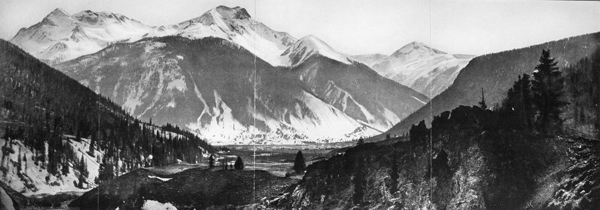
See page 17
BY
ALFRED CASTNER KING

New YorkChicagoToronto
Fleming H. Revell Company
London and Edinburgh
Copyright, 1907, by
FLEMING H. REVELL COMPANY
New York: 158 Fifth Avenue
Chicago: 80 Wabash Avenue
Toronto: 25 Richmond St., W.
London: 21 Paternoster Square
Edinburgh: 100 Princes Street
DEDICATION
TO A RAPIDLY DISAPPEARING CLASS, THE PIONEER
PROSPECTORS, WHOSE BRAVERY, INTELLIGENCE AND
INDUSTRY BLAZED THE TRAILS IN THE WESTERN
WILDERNESS FOR ADVANCING CIVILIZATION, AND MADE
POSSIBLE THE DEVELOPMENT OF THE GREAT WEST,
THIS VOLUME IS VERY RESPECTFULLY DEDICATED
Oh that my words were now written!
Oh that they were inscribed in a book!—Job xix, 23.
Books have, from time immemorial, been the conservators of human wisdom, the repositories of information, the mentors of youth and adolescence, the counsellors of manhood, the comfort and companionship of age.
The experience of an individual, school or era, when committed to book form, becomes the common property of all succeeding time, and the accumulated knowledge of the past, transmitted from generation to generation, through the medium of books, may with justice be regarded as the most valuable of human heritages.
But they have not always been unmixed blessings; they have both led and misled; they have elucidated, yet have mystified.
They have dissipated the shadows of ignorance and superstition, but in some instances have confused and obscured the searchlight of truth. In the economy of human affairs, books have been factors of no small importance. They have proved the most potent expositors of iniquitous systems, and when properly directed against crying evils have accomplished 8 speedy reforms. They have precipitated wars, incited revolts and seditions in the cause of progress, yet have intensified prejudice, political, religious and racial. With silent eloquence, they have cried out against the wrongs of those who had none to plead their cause, while in other cases, their influence has tended to perpetuate existing abuses. In some instances they have taught men to be content with servitude, in others have ignited the beacon fires of liberty. Though they are usually found enlisted under the banners of justice, yet no cause has ever been so unworthy, and no institution so unholy, that books have not been written in their defence. In verity, they have sown both wheat and tares.
Books have been written on every conceivable subject, under all conditions, by all sorts of writers, and from an endless variety of motives. The recompense of those who have written them has been equally various. Some have been apotheosized and worshipped, others have been the recipients of orders and decorations of honor at the hands of kings and potentates, while others have received the ovations of admiring multitudes. Some have anonymously contributed their mite toward the enrichment of literature, others have appeared, from whence we know not, and after placing their offerings upon the altars of poesy and art have departed unrewarded into the shadows of obscurity, leaving as footprints innumerable quotations which have become proverbial. 9 Some, as the bards and minnesingers of old who in mediæval castles ate their bread by the sufferance of the feudal lords and barons, have in more recent years been dependent upon the bounty of some munificent, and usually titled patron, to whom they, as a matter of policy, dedicated their strains and panegyrics, consequently wielding mercenary pens. Some who have presumed to write in a manner displeasing to those who sat in high places have met with vilification, exile, imprisonment, decapitation, and have not been strangers to the pillory. Criticism and ridicule are the patent rewards of incipient authorship, while want, neglect and starvation have terminated the career of more than one name afterwards great in the world of letters.
Aside from motives common to all who with reverent steps humbly strive to follow where the great lights of poesy have led, the author of these unpretentious pages has been actuated by a desire to portray, in his correct light, a very frequently misrepresented character, viz.: the pioneer prospector. It has long been customary for writers of western fiction to picture this character as a large-hearted but rough and untutored individual, expressing himself in a vernacular consisting of equal parts of slang, profanity and questionable grammar, possessing no ambitions above the card table or the strong waters which cause all men to err who drink them. An intimate acquaintance with this class, extending from the years of infancy to middle age, 10 convinces the writer that the common description is manifestly unjust and misleading.
The men who flocked to the early gold excitements, and who subsequently prospected the western mountain ranges for their hidden wealth, were the cream of American and European manhood; men possessed of more than ordinary endowments of intellect, education and physique, while their industry, bravery and hardihood have never been questioned.
Proof of this exists in the names which have lingered behind them as a matter of record, for it was the prospector who christened the mountains, gulches and mining locations of the west. A cursory perusal of the maps of mineral surveys in any western mining district, will reveal in abundance such names as Hector, Ajax, Golden Fleece, Atlas, Pegasus, etc.; indicating that those who applied them were, if not college graduates, men not unfamiliar with the classics. The use of such names as Cleopatra, Crusader or Magna Charta, by a prospector unversed in history, would naturally be unexpected. One without knowledge of literature would hardly grace his location stakes with such names as Dante, Hamlet or Mephistopheles, while one entirely unlettered could not by chance hit upon such names as Pandora, Medusa or Sesostris.
Of the pioneer prospectors but few remain; many have fallen asleep, others tiring of the privation and uncertainty incident to a miner's life, are pursuing other vocations, while many have become prosperous 11 ranch and cattle-men and may now be found in almost any western valley. A few, a very few in comparison with the less fortunate majority, acquiring a competence, removed to other localities, and in not a few instances, have become conspicuous figures in the world of business, politics and finance.
In the mountainous districts of the west, you may still occasionally see a veteran prospector of the old school, living the life of a hermit in his log cabin, situated in some picturesque park or gulch, near his, sometimes valuable but more frequently worthless, mining locations. There he lives winter and summer, his only companion a cat or dog; the ambitions of his youth still unrealized, but at three score and ten, hopeful and expectant. His bent form, white hair, and venerable bearing impress you strangely at first, but it is only when you overcome the reticence peculiar to those who have long dwelt in solitude, and engage him in conversation, that his mental status becomes apparent. To your surprise you discover that he can converse entertainingly on any subject, from the Mosaic dispensation, to the latest inventions in the world of mechanism. You may find him to be, not only a Shakspearean scholar, but a deep student of that volume which, whether considered from a sacred or secular point of view, stands preeminently forth as the Book of Books. You may find him able to translate Homer, or Virgil, and that the masterpieces of literature are as familiar to him as his own cabin walls. A glimpse at the 12 interior of his cabin discloses an ample stock of newspapers and magazines, while books are not strangers. There is something pathetic about his loneliness; you leave him with the feeling that society has been the loser by his voluntary banishment, and are reminded of Gray's immortal lines:
You speculate upon the story of his life, for you feel that it has a secret, if not a tragedy, connected with it, into which you may not probe. You ask yourself the question, "Has not his life been wasted?" and if he alone is to be considered, there is none but an affirmative answer. But his life has not been barren of results. He has been a contributory factor in the upbuilding of an empire, for he is one of the class who laid the foundations of western prosperity.
These men came west for various reasons, some actuated by the spirit of adventure, some to acquire fortunes or to retrieve vanished ones, others possibly to outlive the stigma of youthful mistakes. In the lives of many of them are sealed chapters. It is with such that these pages have to do.
Alfred Castner King.
Ouray, Colo., 1907.
| The Passing of the Storm | Page | |
| I. | The Storm | 17 |
| II. | A Chapter from an Old Man's Life | 28 |
| III. | The Prisoner | 36 |
| IV. | A Sequel of the Lost Cause | 49 |
| V. | The Avalanche | 58 |
| VI. | The Rescue | 65 |
| VII. | The Blight of War | 72 |
| VIII. | The Story of an Exile | 93 |
| IX. | Conclusion | 115 |
| Dolores | 120 | |
| Great Shepherd of the Countless Flocks of Stars | 12214 | |
| The Ruined Cabin | 123 | |
| An Idyll | 124 | |
| The Borderland of Sleep | 125 | |
| Stellar Nocturne | 126 | |
| Father, at Thy Altar Kneeling | 127 | |
| Dreams | 128 | |
| Nocturne | 129 | |
| The True Faith | 131 | |
| A Fragment | 131 | |
| Mortality | 13215 | |
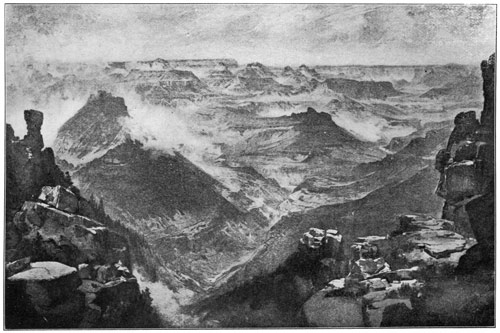
See page 19
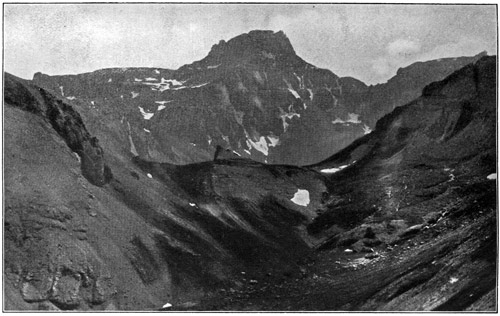
See page 19
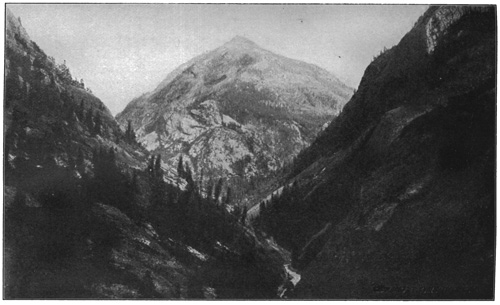
See page 20
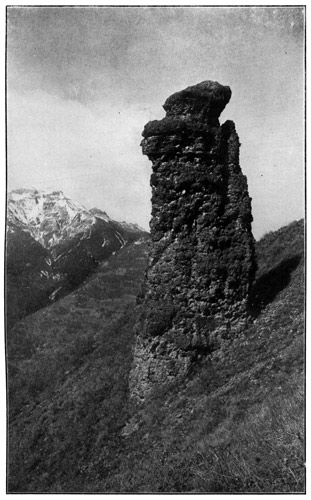
See page 20

See page 22
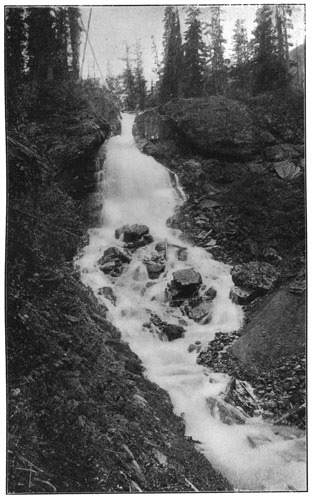
See page 29

See page 57
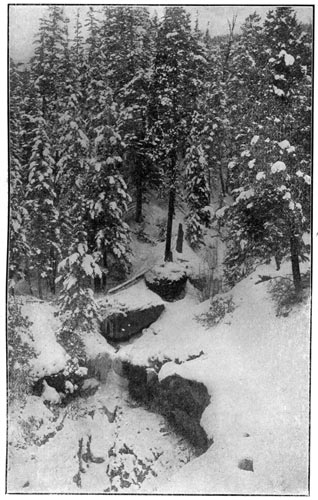
See page 119
[THE END] 120


"See page 121"
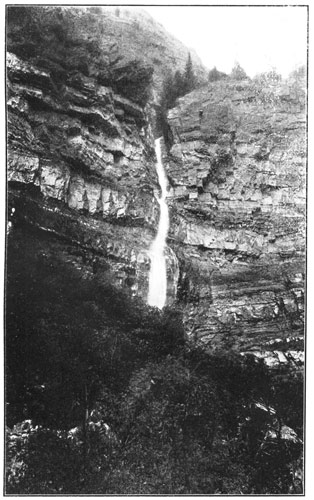
"See page 124"
"If a man die, shall he live again?"—Job xiv. 14.
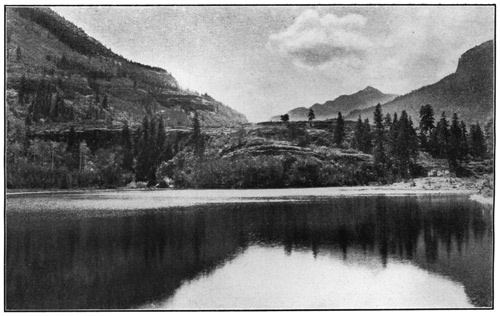
"See page 125"
[FINIS]
[1] Norwegian snowshoes.
End of the Project Gutenberg EBook of The Passing of the Storm and Other
Poems, by Alfred Castner King

*** END OF THIS PROJECT GUTENBERG EBOOK PASSING OF THE STORM ***

***** This file should be named 42422-h.htm or 42422-h.zip *****
This and all associated files of various formats will be found in:
        http://www.gutenberg.org/4/2/4/2/42422/

Produced by D Alexander, Mary Akers and the Online
Distributed Proofreading Team at http://www.pgdp.net


Updated editions will replace the previous one--the old editions
will be renamed.

Creating the works from public domain print editions means that no
one owns a United States copyright in these works, so the Foundation
(and you!) can copy and distribute it in the United States without
permission and without paying copyright royalties.  Special rules,
set forth in the General Terms of Use part of this license, apply to
copying and distributing Project Gutenberg-tm electronic works to
protect the PROJECT GUTENBERG-tm concept and trademark.  Project
Gutenberg is a registered trademark, and may not be used if you
charge for the eBooks, unless you receive specific permission.  If you
do not charge anything for copies of this eBook, complying with the
rules is very easy.  You may use this eBook for nearly any purpose
such as creation of derivative works, reports, performances and
research.  They may be modified and printed and given away--you may do
practically ANYTHING with public domain eBooks.  Redistribution is
subject to the trademark license, especially commercial
redistribution.


*** START: FULL LICENSE ***

THE FULL PROJECT GUTENBERG LICENSE
PLEASE READ THIS BEFORE YOU DISTRIBUTE OR USE THIS WORK

To protect the Project Gutenberg-tm mission of promoting the free
distribution of electronic works, by using or distributing this work
(or any other work associated in any way with the phrase "Project
Gutenberg"), you agree to comply with all the terms of the Full Project
Gutenberg-tm License available with this file or online at
  www.gutenberg.org/license.


Section 1.  General Terms of Use and Redistributing Project Gutenberg-tm
electronic works

1.A.  By reading or using any part of this Project Gutenberg-tm
electronic work, you indicate that you have read, understand, agree to
and accept all the terms of this license and intellectual property
(trademark/copyright) agreement.  If you do not agree to abide by all
the terms of this agreement, you must cease using and return or destroy
all copies of Project Gutenberg-tm electronic works in your possession.
If you paid a fee for obtaining a copy of or access to a Project
Gutenberg-tm electronic work and you do not agree to be bound by the
terms of this agreement, you may obtain a refund from the person or
entity to whom you paid the fee as set forth in paragraph 1.E.8.

1.B.  "Project Gutenberg" is a registered trademark.  It may only be
used on or associated in any way with an electronic work by people who
agree to be bound by the terms of this agreement.  There are a few
things that you can do with most Project Gutenberg-tm electronic works
even without complying with the full terms of this agreement.  See
paragraph 1.C below.  There are a lot of things you can do with Project
Gutenberg-tm electronic works if you follow the terms of this agreement
and help preserve free future access to Project Gutenberg-tm electronic
works.  See paragraph 1.E below.

1.C.  The Project Gutenberg Literary Archive Foundation ("the Foundation"
or PGLAF), owns a compilation copyright in the collection of Project
Gutenberg-tm electronic works.  Nearly all the individual works in the
collection are in the public domain in the United States.  If an
individual work is in the public domain in the United States and you are
located in the United States, we do not claim a right to prevent you from
copying, distributing, performing, displaying or creating derivative
works based on the work as long as all references to Project Gutenberg
are removed.  Of course, we hope that you will support the Project
Gutenberg-tm mission of promoting free access to electronic works by
freely sharing Project Gutenberg-tm works in compliance with the terms of
this agreement for keeping the Project Gutenberg-tm name associated with
the work.  You can easily comply with the terms of this agreement by
keeping this work in the same format with its attached full Project
Gutenberg-tm License when you share it without charge with others.

1.D.  The copyright laws of the place where you are located also govern
what you can do with this work.  Copyright laws in most countries are in
a constant state of change.  If you are outside the United States, check
the laws of your country in addition to the terms of this agreement
before downloading, copying, displaying, performing, distributing or
creating derivative works based on this work or any other Project
Gutenberg-tm work.  The Foundation makes no representations concerning
the copyright status of any work in any country outside the United
States.

1.E.  Unless you have removed all references to Project Gutenberg:

1.E.1.  The following sentence, with active links to, or other immediate
access to, the full Project Gutenberg-tm License must appear prominently
whenever any copy of a Project Gutenberg-tm work (any work on which the
phrase "Project Gutenberg" appears, or with which the phrase "Project
Gutenberg" is associated) is accessed, displayed, performed, viewed,
copied or distributed:

This eBook is for the use of anyone anywhere at no cost and with
almost no restrictions whatsoever.  You may copy it, give it away or
re-use it under the terms of the Project Gutenberg License included
with this eBook or online at www.gutenberg.org

1.E.2.  If an individual Project Gutenberg-tm electronic work is derived
from the public domain (does not contain a notice indicating that it is
posted with permission of the copyright holder), the work can be copied
and distributed to anyone in the United States without paying any fees
or charges.  If you are redistributing or providing access to a work
with the phrase "Project Gutenberg" associated with or appearing on the
work, you must comply either with the requirements of paragraphs 1.E.1
through 1.E.7 or obtain permission for the use of the work and the
Project Gutenberg-tm trademark as set forth in paragraphs 1.E.8 or
1.E.9.

1.E.3.  If an individual Project Gutenberg-tm electronic work is posted
with the permission of the copyright holder, your use and distribution
must comply with both paragraphs 1.E.1 through 1.E.7 and any additional
terms imposed by the copyright holder.  Additional terms will be linked
to the Project Gutenberg-tm License for all works posted with the
permission of the copyright holder found at the beginning of this work.

1.E.4.  Do not unlink or detach or remove the full Project Gutenberg-tm
License terms from this work, or any files containing a part of this
work or any other work associated with Project Gutenberg-tm.

1.E.5.  Do not copy, display, perform, distribute or redistribute this
electronic work, or any part of this electronic work, without
prominently displaying the sentence set forth in paragraph 1.E.1 with
active links or immediate access to the full terms of the Project
Gutenberg-tm License.

1.E.6.  You may convert to and distribute this work in any binary,
compressed, marked up, nonproprietary or proprietary form, including any
word processing or hypertext form.  However, if you provide access to or
distribute copies of a Project Gutenberg-tm work in a format other than
"Plain Vanilla ASCII" or other format used in the official version
posted on the official Project Gutenberg-tm web site (www.gutenberg.org),
you must, at no additional cost, fee or expense to the user, provide a
copy, a means of exporting a copy, or a means of obtaining a copy upon
request, of the work in its original "Plain Vanilla ASCII" or other
form.  Any alternate format must include the full Project Gutenberg-tm
License as specified in paragraph 1.E.1.

1.E.7.  Do not charge a fee for access to, viewing, displaying,
performing, copying or distributing any Project Gutenberg-tm works
unless you comply with paragraph 1.E.8 or 1.E.9.

1.E.8.  You may charge a reasonable fee for copies of or providing
access to or distributing Project Gutenberg-tm electronic works provided
that

- You pay a royalty fee of 20% of the gross profits you derive from
     the use of Project Gutenberg-tm works calculated using the method
     you already use to calculate your applicable taxes.  The fee is
     owed to the owner of the Project Gutenberg-tm trademark, but he
     has agreed to donate royalties under this paragraph to the
     Project Gutenberg Literary Archive Foundation.  Royalty payments
     must be paid within 60 days following each date on which you
     prepare (or are legally required to prepare) your periodic tax
     returns.  Royalty payments should be clearly marked as such and
     sent to the Project Gutenberg Literary Archive Foundation at the
     address specified in Section 4, "Information about donations to
     the Project Gutenberg Literary Archive Foundation."

- You provide a full refund of any money paid by a user who notifies
     you in writing (or by e-mail) within 30 days of receipt that s/he
     does not agree to the terms of the full Project Gutenberg-tm
     License.  You must require such a user to return or
     destroy all copies of the works possessed in a physical medium
     and discontinue all use of and all access to other copies of
     Project Gutenberg-tm works.

- You provide, in accordance with paragraph 1.F.3, a full refund of any
     money paid for a work or a replacement copy, if a defect in the
     electronic work is discovered and reported to you within 90 days
     of receipt of the work.

- You comply with all other terms of this agreement for free
     distribution of Project Gutenberg-tm works.

1.E.9.  If you wish to charge a fee or distribute a Project Gutenberg-tm
electronic work or group of works on different terms than are set
forth in this agreement, you must obtain permission in writing from
both the Project Gutenberg Literary Archive Foundation and Michael
Hart, the owner of the Project Gutenberg-tm trademark.  Contact the
Foundation as set forth in Section 3 below.

1.F.

1.F.1.  Project Gutenberg volunteers and employees expend considerable
effort to identify, do copyright research on, transcribe and proofread
public domain works in creating the Project Gutenberg-tm
collection.  Despite these efforts, Project Gutenberg-tm electronic
works, and the medium on which they may be stored, may contain
"Defects," such as, but not limited to, incomplete, inaccurate or
corrupt data, transcription errors, a copyright or other intellectual
property infringement, a defective or damaged disk or other medium, a
computer virus, or computer codes that damage or cannot be read by
your equipment.

1.F.2.  LIMITED WARRANTY, DISCLAIMER OF DAMAGES - Except for the "Right
of Replacement or Refund" described in paragraph 1.F.3, the Project
Gutenberg Literary Archive Foundation, the owner of the Project
Gutenberg-tm trademark, and any other party distributing a Project
Gutenberg-tm electronic work under this agreement, disclaim all
liability to you for damages, costs and expenses, including legal
fees.  YOU AGREE THAT YOU HAVE NO REMEDIES FOR NEGLIGENCE, STRICT
LIABILITY, BREACH OF WARRANTY OR BREACH OF CONTRACT EXCEPT THOSE
PROVIDED IN PARAGRAPH 1.F.3.  YOU AGREE THAT THE FOUNDATION, THE
TRADEMARK OWNER, AND ANY DISTRIBUTOR UNDER THIS AGREEMENT WILL NOT BE
LIABLE TO YOU FOR ACTUAL, DIRECT, INDIRECT, CONSEQUENTIAL, PUNITIVE OR
INCIDENTAL DAMAGES EVEN IF YOU GIVE NOTICE OF THE POSSIBILITY OF SUCH
DAMAGE.

1.F.3.  LIMITED RIGHT OF REPLACEMENT OR REFUND - If you discover a
defect in this electronic work within 90 days of receiving it, you can
receive a refund of the money (if any) you paid for it by sending a
written explanation to the person you received the work from.  If you
received the work on a physical medium, you must return the medium with
your written explanation.  The person or entity that provided you with
the defective work may elect to provide a replacement copy in lieu of a
refund.  If you received the work electronically, the person or entity
providing it to you may choose to give you a second opportunity to
receive the work electronically in lieu of a refund.  If the second copy
is also defective, you may demand a refund in writing without further
opportunities to fix the problem.

1.F.4.  Except for the limited right of replacement or refund set forth
in paragraph 1.F.3, this work is provided to you 'AS-IS', WITH NO OTHER
WARRANTIES OF ANY KIND, EXPRESS OR IMPLIED, INCLUDING BUT NOT LIMITED TO
WARRANTIES OF MERCHANTABILITY OR FITNESS FOR ANY PURPOSE.

1.F.5.  Some states do not allow disclaimers of certain implied
warranties or the exclusion or limitation of certain types of damages.
If any disclaimer or limitation set forth in this agreement violates the
law of the state applicable to this agreement, the agreement shall be
interpreted to make the maximum disclaimer or limitation permitted by
the applicable state law.  The invalidity or unenforceability of any
provision of this agreement shall not void the remaining provisions.

1.F.6.  INDEMNITY - You agree to indemnify and hold the Foundation, the
trademark owner, any agent or employee of the Foundation, anyone
providing copies of Project Gutenberg-tm electronic works in accordance
with this agreement, and any volunteers associated with the production,
promotion and distribution of Project Gutenberg-tm electronic works,
harmless from all liability, costs and expenses, including legal fees,
that arise directly or indirectly from any of the following which you do
or cause to occur: (a) distribution of this or any Project Gutenberg-tm
work, (b) alteration, modification, or additions or deletions to any
Project Gutenberg-tm work, and (c) any Defect you cause.


Section  2.  Information about the Mission of Project Gutenberg-tm

Project Gutenberg-tm is synonymous with the free distribution of
electronic works in formats readable by the widest variety of computers
including obsolete, old, middle-aged and new computers.  It exists
because of the efforts of hundreds of volunteers and donations from
people in all walks of life.

Volunteers and financial support to provide volunteers with the
assistance they need are critical to reaching Project Gutenberg-tm's
goals and ensuring that the Project Gutenberg-tm collection will
remain freely available for generations to come.  In 2001, the Project
Gutenberg Literary Archive Foundation was created to provide a secure
and permanent future for Project Gutenberg-tm and future generations.
To learn more about the Project Gutenberg Literary Archive Foundation
and how your efforts and donations can help, see Sections 3 and 4
and the Foundation information page at www.gutenberg.org


Section 3.  Information about the Project Gutenberg Literary Archive
Foundation

The Project Gutenberg Literary Archive Foundation is a non profit
501(c)(3) educational corporation organized under the laws of the
state of Mississippi and granted tax exempt status by the Internal
Revenue Service.  The Foundation's EIN or federal tax identification
number is 64-6221541.  Contributions to the Project Gutenberg
Literary Archive Foundation are tax deductible to the full extent
permitted by U.S. federal laws and your state's laws.

The Foundation's principal office is located at 4557 Melan Dr. S.
Fairbanks, AK, 99712., but its volunteers and employees are scattered
throughout numerous locations.  Its business office is located at 809
North 1500 West, Salt Lake City, UT 84116, (801) 596-1887.  Email
contact links and up to date contact information can be found at the
Foundation's web site and official page at www.gutenberg.org/contact

For additional contact information:
     Dr. Gregory B. Newby
     Chief Executive and Director
     gbnewby@pglaf.org

Section 4.  Information about Donations to the Project Gutenberg
Literary Archive Foundation

Project Gutenberg-tm depends upon and cannot survive without wide
spread public support and donations to carry out its mission of
increasing the number of public domain and licensed works that can be
freely distributed in machine readable form accessible by the widest
array of equipment including outdated equipment.  Many small donations
($1 to $5,000) are particularly important to maintaining tax exempt
status with the IRS.

The Foundation is committed to complying with the laws regulating
charities and charitable donations in all 50 states of the United
States.  Compliance requirements are not uniform and it takes a
considerable effort, much paperwork and many fees to meet and keep up
with these requirements.  We do not solicit donations in locations
where we have not received written confirmation of compliance.  To
SEND DONATIONS or determine the status of compliance for any
particular state visit www.gutenberg.org/donate

While we cannot and do not solicit contributions from states where we
have not met the solicitation requirements, we know of no prohibition
against accepting unsolicited donations from donors in such states who
approach us with offers to donate.

International donations are gratefully accepted, but we cannot make
any statements concerning tax treatment of donations received from
outside the United States.  U.S. laws alone swamp our small staff.

Please check the Project Gutenberg Web pages for current donation
methods and addresses.  Donations are accepted in a number of other
ways including checks, online payments and credit card donations.
To donate, please visit:  www.gutenberg.org/donate


Section 5.  General Information About Project Gutenberg-tm electronic
works.

Professor Michael S. Hart was the originator of the Project Gutenberg-tm
concept of a library of electronic works that could be freely shared
with anyone.  For forty years, he produced and distributed Project
Gutenberg-tm eBooks with only a loose network of volunteer support.

Project Gutenberg-tm eBooks are often created from several printed
editions, all of which are confirmed as Public Domain in the U.S.
unless a copyright notice is included.  Thus, we do not necessarily
keep eBooks in compliance with any particular paper edition.

Most people start at our Web site which has the main PG search facility:

     www.gutenberg.org

This Web site includes information about Project Gutenberg-tm,
including how to make donations to the Project Gutenberg Literary
Archive Foundation, how to help produce our new eBooks, and how to
subscribe to our email newsletter to hear about new eBooks.