
Title: A Pennsylvania bison hunt
being the results of an investigation into the causes and period of the destruction of these noble beasts in the Keystone state, obtained from descendants of the original hunters. Including a sketch of the career of Daniel Ott, a Pennsylvanian who has killed many buffaloes in the West.
Compiler: Henry W. Shoemaker
Release date: November 10, 2026 [eBook #79963]
Language: English
Original publication: Middleburg: The "Middleburg Post" Press, 1915
Other information and formats: www.gutenberg.org/ebooks/79963
Credits: Charlene Taylor, Steve Mattern and the Online Distributed Proofreading Team at https://www.pgdp.net (This file was produced from images generously made available by The Internet Archive/American Libraries.)
1
BEING THE RESULTS OF AN INVESTIGATION INTO THE CAUSES AND PERIOD OF THE DESTRUCTION OF THESE NOBLE BEASTS IN THE KEYSTONE STATE OBTAINED FROM DESCENDANTS OF THE ORIGINAL HUNTERS. INCLUDING A SKETCH OF THE CAREER OF DANIEL OTT, A PENNSYLVANIAN WHO HAS KILLED MANY BUFFALOES IN THE WEST.
COMPILED BY
HENRY W. SHOEMAKER
(Author Of “PENNSYLVANIA DEER AND THEIR HORNS”)
COPYRIGHT: ALL RIGHTS RESERVED.
MIDDLEBURG, PA.,
Published By The “MIDDLEBURG POST” Press.
1915.
2

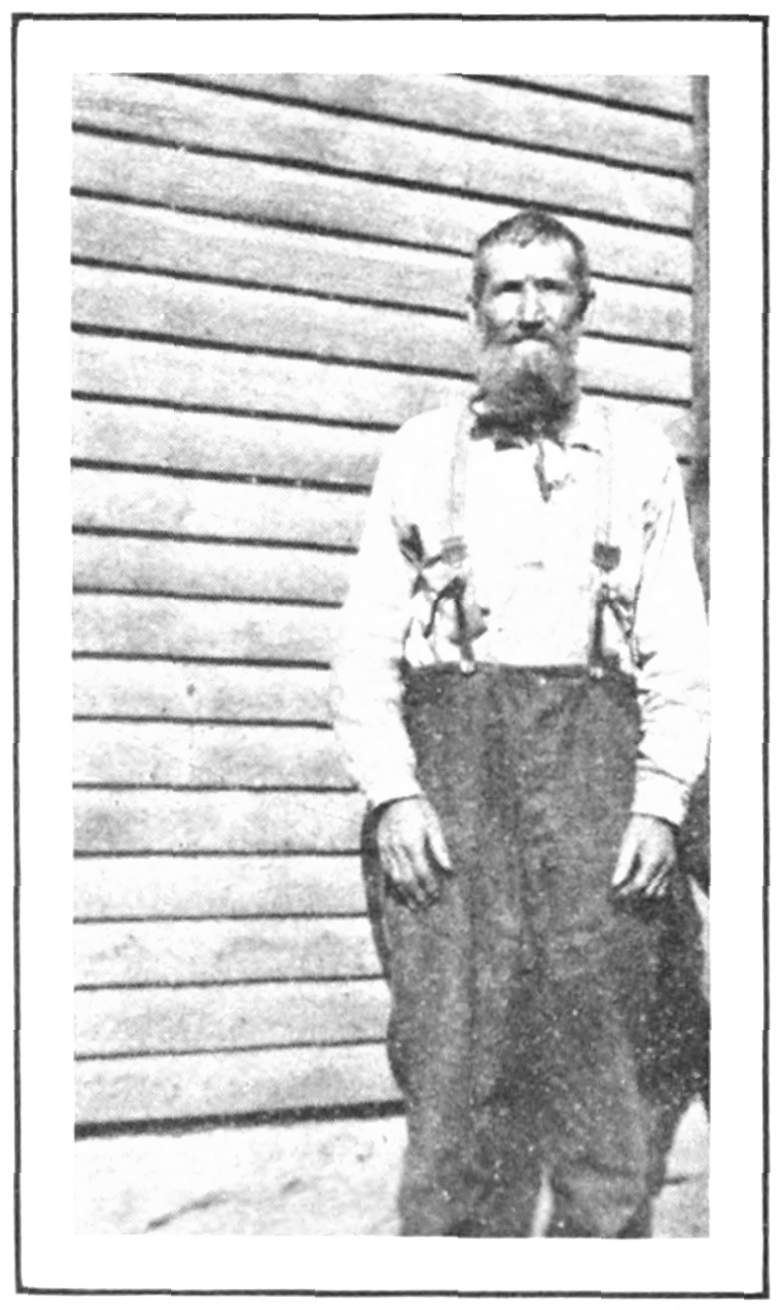
ex-commissioner of Clinton County, grandson of Philip Quigley, Early Pennsylvania Buffalo Hunter.
3
| I. | Introduction | 7 | 10 |
| II. | Definitely Located | 11 | 15 |
| III. | Description | 16 | 19 |
| IV. | The Passing | 20 | 27 |
| V. | The Last Stand | 28 | 37 |
| VI. | Last of His Race | 38 | 43 |
| VII. | Re-Introduced | 44 | 49 |
| VIII. | Daniel Ott | 50 | 60 |
4-5
Being The Results of an Investigation into the Causes and Period of The Destruction of These Noble Beasts in The Keystone State, Obtained from Descendants of the Original Hunters. Including a Sketch of the Career of Daniel Ott, a Pennsylvanian Who Has Killed Many Buffaloes in the West.
“Perhaps the most gigantic task ever undertaken on this continent in the line of game slaughter was the extermination of the bison.—Probably the brilliant rapidity and success with which that lofty undertaking was accomplished was a matter of surprise even to those who participated in it. The story of the slaughter is by no means a long one.”—Dr. W. T. Hornaday.
COMPILED BY
HENRY W. SHOEMAKER,
MIDDLEBURG, PA.,
Published By The “MIDDLEBURG POST” Press,
1915.
COPYRIGHT: ALL RIGHTS RESERVED.
6

7

When a supposedly authoritative publication like “Report of the Pennsylvania Department of Agriculture” for 1896 states that “perhaps two hundred years ago the lordly bison inhabited what is now the Keystone State,” it would seem well nigh impossible to trace down the animal’s existence within our borders to a more comparatively recent date. The published references to the buffaloes in Pennsylvania are few and far between. The earliest travelers and 8chroniclers like Peter Kalm, Dr. Schoepf, and even William Penn make little mention of them, but that is entirely due to the fact that in their travels they passed just outside of the bison’s limited range, although Albert Gallatin has much to say concerning them. Dr. W. T. Hornaday in his monograph on the extermination of the American Bison has devoted more space to the existence of these animals in the State than any other writer. In the map which he prepared showing the former range of the buffaloes in North America he has drawn a line approximately just west of the Susquehanna showing where the herds and then the stragglers lingered until the last years of the eighteenth century. This would bring the range a trifle west of Harrisburg, of Liverpool, of Sunbury, Lewisburg, Lock Haven, Emporium and Bradford. West of that the buffalo’s range extended unbrokenly to the Rocky Mountains. S. N. Rhoads in his “Mammals of Pennsylvania and New Jersey” has furnished some interesting information on the Bison in Pennsylvania, as has Prof. J. A. Allen in his very complete treatise. But they have failed to give anything like a description of the Pennsylvania Bison, how he looked, his size, habits, or the details of his extermination. With meagre records the hunt for traces of the Bison of the Keystone State might seem discouraging, were it not for the wealth of 9oral traditions, embracing every topic connected with life in colonial days, which still runs like an underground stream through the hearts and minds of the old pioneers. These people, with their clear intellects, well-developed consciences, and kindly natures, are fast falling beneath the hand of the Reaper, but from them some record of the Pennsylvania Bison has been obtained, and on the following pages is preserved. However, much of what has been thus obtained will only interest the scientist and the student, for it matters little to most persons to learn that the Pennsylvania Bison was different in appearance from most of his western congeners, that he belonged to the type known as the wood bison. At the same time it does seem worth while to present a description of our bison, from the lips of the grandson of a noted hunter of the species. It brings us closer to this vanished forest monarch, makes Bison americanus seem more real. But from points of difference he deserves to be called Bison americanus Pennsylvanicus. Doubtless west of the Alleghanies the individuals shaded into the true bison of the plains, but those which ranged between the east and west slopes of the Alleghanies, migrating between the Great Lakes and the valleys of Southern Pennsylvania, Maryland and Virginia, to Georgia represented the type of bison of the Keystone State. Doubtless in Georgia they encountered the Northern migrations 10of a Southern or Southwestern type of bison, the bison of Louisiana, but probably it too was closely related to the Pennsylvania type. The lengthy migrations were hardly in keeping with known characteristics of the wood bison of Colorado, Wyoming, and Montana, and of the Canadian Northwest. But this can be clearly judged and determined after the stated facts are weighed and digested. But most interesting of all seems the vast numbers of bison which roamed through the Central and Western parts of our state, now gone and forgotten through man’s rapacious greed.

11

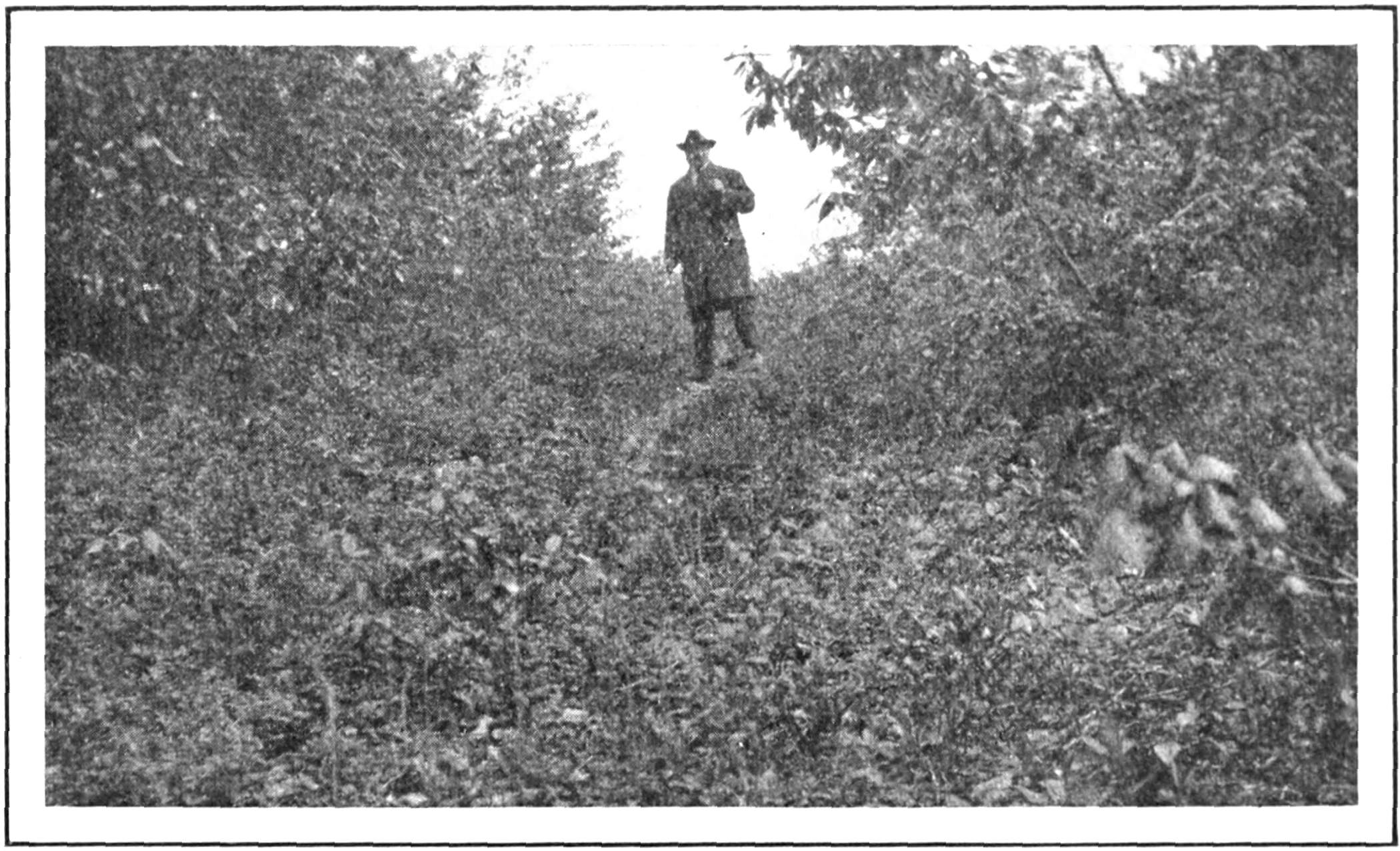
It was early in the month of August, 1911, that a “clam bake” was given at Quiggle Springs near McElhattan in Clinton County. Though the bake was far from a success, as those present well remember, the information concerning the bison in Pennsylvania gleaned at it made it a memorable occasion. About nine o’clock in the evening, while waiting for the clams to be served, the moon began to rise from behind the Bald Eagle Mountain which towered above the Park. The conversation had turned to old Hyloshotkee, the Cayuga chief who once resided at the Five Springs, to the eloquent Logan who often camped there and then drifted to the subject of hunting adventures. One of the guests, Jacob Quiggle, formerly a Commissioner of Clinton County, 12at that time nearing his ninetieth birthday, remarked that he had often heard of Hyloshotkee’s prowess as a buffalo hunter. Immediately the writer’s curiosity was aroused—he has previously interrogated the aged gentleman on almost every other subject of Pennsylvania antiquity—and now he was to learn something definite about the bison. Mr. Quiggle’s keen gray eyes kindled with interest in the subject, and he went on to say that his grandfather, Philip Quigley or Quiggle, who settled in what is now Wayne Township, Clinton County, in 1773, and later was an officer in the Revolutionary War, had been known far and wide as a buffalo hunter. He had been born in Cumberland County in 1745, and grew to manhood with the buffaloes just across the Blue Ridge from his home. As they were gradually driven west and north, to Buffalo Creek in Bedford County, to Buffalo Valley in Union County he had followed them, until finding a spot of ground which suited him on the West Branch, he had settled in the heart of the Indian and big game country. The famous “Buffalo Path” had run within a few rods of his cabin, extending through the valley of Henry Run, to the east end of Sugar Valley, thence across the Red Hills, through the west end of White Deer Valley, across the Buffalo Mountains, into Buffalo Valley, across that valley, over Jack’s and the White Mountains, into 13Middle Creek Valley where the giant beasts wintered in countless numbers. Earlier they had continued their migrations probably as far as Georgia, many bison crossing from the Ohio country into Southern Pennsylvania via Clearfield. Thomas Ashe, in his “Travels in America” in 1806 says: “The best roads to the Onondargo from all parts, are the buffalo-tracks; so called from having been observed to be made by the buffaloes in their annual visitations to the lake from their pasture-grounds: and though this is a distance of above two hundred miles, the best surveyor could not have chosen a more direct course, or firmer or better ground. I have often traveled these tracks with safety and admiration: I perceived them chosen as if by the nicest judgment; and when at times I was perplexed to find them revert on themselves nearly in parallel lines, I soon found it occasioned by swamps, ponds, or precipices, which the animals knew how to avoid: but that object being affected, the road again swept into its due course, and bore towards its destination as if under the direction of a compass.” Rev. John Ettwein in his “Notes of Travel in 1772” says, “Reached Clearfield Creek, where the buffaloes formerly cleared large tracts of undergrowth, so as to give them the appearance of cleared fields; hence the Indians call the creek Clearfield.” The herds had been cut in two by the settlers in Philip Quigley’s time the 14Northern and Western herds could move no further South than the Valley of Middle Creek. Those in the South had to remain there. Mr. Quiggle stated that when the persimmons became ripe along the Bald Eagle Mountains it was time to look for southern migrations of the buffaloes. In single file they crossed the Susquehanna River just below the Great Island, a short distance east of Lock Haven, followed approximately the line of the New York Central Railroad easterly through Wayne Township, and thence south through the gap in the Bald Eagle Mountains, made by the waters of Henry Run, formerly called Love Run. In Penn’s and Middle Creek Valley they were joined by herds which came from the Western part of the State via Clearfield. When the red bud was in bloom it was time to look for the Northerly migration. In the Autumn migrations, they were mostly killed for their hides, but in Spring mainly calves were killed, as buffalo calf meat was highly relished by the pioneers. The calves were born from March to July. When the settlers harassed the buffaloes, they tried to migrate at night as much as possible, and at the Great Island crossing split into three streams, one pouring through Castanea Gap, to the head of the Kammerdiner Run, and following it east to where it joins with McElhattan Run, to connect with the file which went through McElhattan Gap. Thence these two files went out 15the valley of Spring Run, where they joined the file that had come through the Henry Run Gap. The bison traveled not only with order but with time, as they came together like clock-work, as if by preconceived orders, at the head of Spring Run.

16

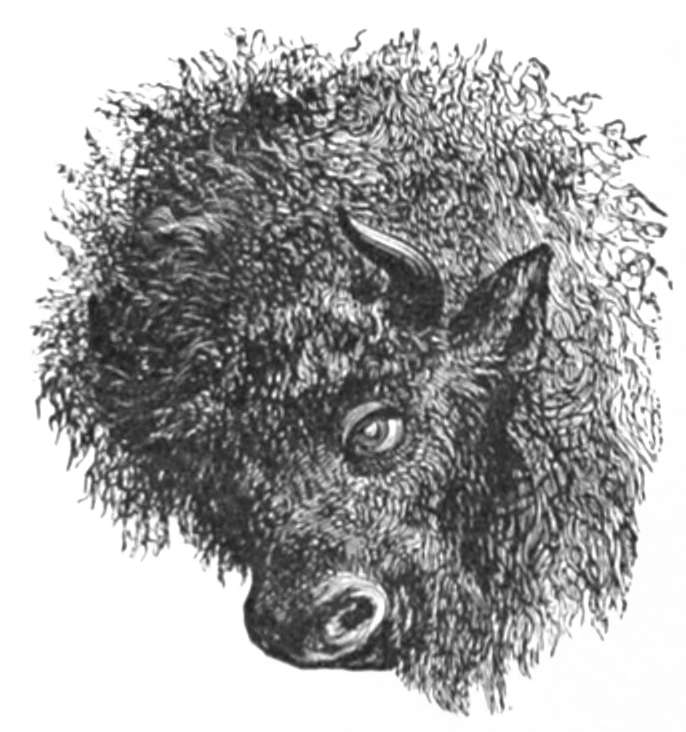
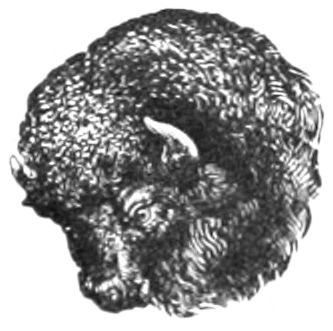
Asked definitely to describe the Pennsylvania bison, Mr. Quiggle stated that his memory was clear on that point, for although his grandfather, the hunter, had died before his birth, and his father had passed on while he was still a young boy, from his mother and other older relatives he had heard the subject gone over again and again. In the first place, the bison of Pennsylvania was a tremendous animal. Like the wood bison of the flanks of the Rocky Mountains and Canada Northwest, he exceeded in size the buffaloes met with west of Ohio, Kentucky and Tennessee. In color the Pennsylvania bison was very dark, many of the old bulls being coal 17black, with grizzly white hairs around the nose and eyes. The hair was very short, with a tendency to crispness or curliness, especially at the joints. The hump, so conspicuous on the western bison was notable by its absence. The first settlers on seeing the animals called them “wild bulls.” The legs were long, and fore and back legs evenly placed, the heavy front and meagre hindquarters of the western bison were not present, in other words the Pennsylvania bison was a beautifully proportioned beast. He was an agile runner and climber, carried no superfluous flesh, was adapted in every way for life in a rough, mountainous country. The bulls often weighed a ton, the mature cows half that much. The hair on the neck and shoulders was no longer than on other parts of the body, except with mature bulls, who carried a sort of mane or crest which reached its maximum length where the hump grows on the prairie buffalo. Both males and females wore beards but they were not heavy and consisted of tufts of straight, stiff black hair. The horns, which in mature specimens were very long, grew upwards, like the horns of Ayrshire cattle. Apparently the horns were much like those of Bison bonasus of Lithuania and the Caucasus. The Pennsylvania bison preferred dense forests, although on warm sunshiny days in winter they could be found sunning themselves in abandoned 18Indian fields in Middle Creek Valley. In early Summer they could be found pasturing along Lake Erie and Lake Ontario, but as the season advanced, gradually retired to the cool mountain tops in Northern Pennsylvania, where they lingered until the first snows—the “persimmon time” further south. By the time of the Fall migration calves which had been born mostly in March and April were well advanced, and many appeared to be the size of yearling cattle. The impression among the early hunters was that the great northern herd, which when Philip Quigley settled on the West Branch in 1773, still numbered about 12,000 animals, was split up into a vast number of “families,” consisting of a mature bull and a dozen cows with a like number of yearlings and calves. At the end of the migration followed the weaker and aged bulls, which had no mates, also the buffalo oxen of still greater size than the biggest bulls, these last named castrated by the wolves of Northern Pennsylvania. Behind the stragglers skulked troops of grey wolves, which followed the herd as far as the Great Island crossing, where they retired, the pursuit being taken up by packs of smaller brown wolves, which followed the bison from the famous wolf rocks on Henry Run as far South as White Deer Valley, where they retired in favor of the larger black wolves. These black wolves, whose stronghold was in the Seven Mountains, 19preyed on the sickly, wounded and aged buffaloes during their entire winter’s stay in the Valley of Middle Creek.
20

On the Northerly migrations, according to Mr. Quiggle, bands of buffalo were constantly dropping out of the great herd, these were the “families,” each led by a giant bull. Many of these groups summered in the high table-lands of the Seven Mountains, in what is now Gregg Township, Centre County, where they seemed to feel particularly content. By 1770 no bison 21summered in the ridges adjacent to the West Branch Valley, as the settlers kept them on the run, even at migration time they would have avoided crossing the valley had not the instinct of countless centuries been too difficult to overcome. When the part of the herd which once summered at the northern limit of the range, which was where the city of Buffalo, New York, now stands, commenced their southern journey, in some mysterious way, probably by an acute sense of smell, knowledge of this was imparted to the heads of the bison families which had “dropped off” at each sequestered and grassy spot on the way north in the Spring. These heads of families would ascend to the tops of high peaks, and bellow loudly for several days, drawing their little colonies around them, and when the herd passed down the path, fall into line for the journey to the southland. This bellowing or drawing together of the clans, informed the hunters of the proximity of the migration, and all they had to do was to post themselves along the paths, and kill as many bison as they wished. Many were killed for sport, or to prevent the settlers further south from enjoying them. These buffalo paths, which all converged with the main path, were often worn two feet deep with the tread of the countless herds for countless years. The bark of the adjacent trees had been all worn off by the 22huge creatures rubbing themselves. Along Buffalo Path Run, in Buffalo Gap, Union County the path is very plainly marked today, although no buffaloes have tramped over it in a hundred and fifteen years! Until it was cut some years ago a large hemlock tree by this path showed the marks where it had been rubbed by the bison. The path is a familiar landmark, and part of it is a trail to this day for prospectors, hunters, fishermen and berry-pickers. Although the Indians of Pennsylvania killed many buffaloes, they only did so for food and clothing, and were careful to keep alive plenty of good healthy breeders. They only killed such animals as were absolutely necessary to them, not a single bone or sinew was wasted. With such hunting there was no danger of buffaloes or any other animals becoming extinct. It was only when the white hunters came, men of lowly origin, whose forbears were not allowed to carry firearms, or enter in the game preserves and parks of the gentry of the old country, who slaughtered the bison without rime or reason. They killed for the sheer love of gore and brutality, they killed until ammunition and strength became exhausted, they killed lest somebody else later on have something left to kill. In Pennsylvania these rapacious beings speedily wiped out the tens of thousands of buffaloes, as well as the moose, elk, brown bears, beavers, otters, fishers, heath cocks, paroquets, pileated woodpeckers, 23wild pigeons, and other valuable and necessary animals and birds. It is a horrible story to relate, but it is not ended, as the descendants of these gauche marauders have ravished and burned forests, and now their factories pollute our rivers and streams and kill the fish. They will not be content until Pennsylvania is as desolate as China, and they have prevented posterity from having anything worth while! Gradually the herds which headed south became less and less in numbers. The aggregation which passed through Henry Run annually undoubtedly joined a still larger body in Middle Creek Valley in an early day on their march to Georgia. But towards the end the Valley of Middle Creek was as far South as they dared to travel, and some of the vast armies from Western Pennsylvania came to join them no more. In various parts of the State we get glimpses of how plentiful were the bison at the end of the eighteenth century. Prof. Allen quotes from Thomas Ashe’s well-known book, “Travels in America” in 1806, as follows: “In the vicinity of the spot where the town of Clarion now stands, in Northwestern Pennsylvania, one of the first settlers built a log cabin near a salt spring which was visited by buffaloes in such numbers that he supposed there could not have been less than two thousand there at a time.” Professor Allen stated that near the heads of Oil Creek and the Clarion River there were at one 24time thousands of buffaloes. Waterford, in Erie County, was originally called Le Boeuf, and is situated on Le Boeuf Lake. French Creek in Venango County was originally Riviere des Boeufs. Big Buffalo Creek is in Armstrong County—all famous resorts of the bison in the old days. They were more prevalent in Pennsylvania than all the vast herds of various wild animals which were found by the first pioneers in South and South Central Africa. S. N. Rhoads further quotes Ashe as saying that the old settler at Clarion declared that for the first several seasons the buffaloes visited his salt spring with the utmost regularity. They traveled in single file always following each other at equal distances, forming droves on their arrival of about three hundred each. These embraced probably a score of family groups, which perhaps had some “clan” relationship. The first and second years, so unacquainted were these poor brutes with this man’s house or with his nature, that in a few hours they rubbed the house completely down, taking delight in turning the logs of wood off with their horns, while he had some difficulty to escape from being trampled under their feet or crushed to death in his own ruins. At that time he estimated there could not have been less than ten thousand in the neighborhood of the spring. They sought for no manner of food but only bathed and drank three or four times a day and 25rolled in the earth, or reposed with their flanks distended, in the adjacent shades, and departed in single files, according to the exact order of their arrival. They all rolled successively in the same hole and each thus carried away a coat of mud to preserve the moisture of the skin, and which when hardened and baked by the sun would resist the stings of millions of insects that otherwise would persecute these peaceful travelers to madness or even death. In the first and second years this old man with some companions killed from six to seven hundred of these noble creatures, merely for the sake of the skins, which to them were worth only two shillings each, and after this “work of death” they were obliged to leave the place till the following season, or till the wolves, bears, panthers, eagles, rooks, ravens, etc., had devoured the carcasses and abandoned the place for other prey. In the two following years the same persons killed great numbers out of the first droves that arrived, skinned them and left the bodies exposed to the sun and air; but they soon had reason to repent of this; for the remaining droves, as they came up in succession, stopped, gazed on the mangled and putrid bodies, sorrowfully moaned or furiously lowed aloud, and returned instantly to the wilderness in an unusual run without tasting their favorite spring or licking the impregnated earth, which was also once their most agreeable occupation; nor did 26they or any of their race ever revisit that neighborhood. There was a salt spring in Dauphin County which the bison visited in Spring and Fall. It was situated in the wilds of the Stony Creek Country, and the vast herds to reach it crossed the river at Haldeman’s Island, near the mouth of the Juniata. Many were drowned at high water, so intent were they to reach their favorite retreat. Thomas Ashe says elsewhere in his book referring to the bloody scenes at Clarion “The simple history of this spring is that of every other in the settled parts of this Western World. I met with a man who had killed two thousand buffaloes (in Pennsylvania) with his own hand, and others no doubt have done the same thing. In consequence of this proceeding not one buffalo is at this time (1811) found east of the Mississippi, except a few domesticated by the curious or carried through the country on a public show.” John Filson, writing in 1784, of the Blue Licks in Kentucky stated, “I have heard a hunter assert he saw about one thousand buffaloes at these licks at once; so numerous were they before the first settlers had wantonly sported away their lives.” All through Pennsylvania the story was the same, wanton, sordid, and unnecessary, the annihilation of a race of animals which could have been domesticated and furnished hides and beef to a vast population. Perhaps it is just as well that so few of the details of the 27passing of the Pennsylvania bison are available, as they would sicken and disgust all thoughtful and sensible persons. It is best that the waters of oblivion have closed over the entire horrible transaction, yet a word to the wise is sometimes sufficient to stay the hand that is bent on wiping out the remaining forms of wild life in the Keystone State. The passing of our bison should serve as an object lesson of the need of organized conservation, if our deer, bears, wild cats, wild turkeys, and grouse are to be saved. Thomas Ashe, in commenting on the cruel annihilation of the lordly bison says: “The first settlers not content with this sanguinary extermination of the animals, also destroyed the food to which it was most partial, which was the cane, growing in forests and brakes of immeasurable extent. To this the unsparing wretches set fire in dry seasons; in order to drive out every living creature, and then hunt and persecute them to death.”
28

Old Flavel Bergstresser was for several years a familiar figure about the ancient Kleckner House at New Berlin. The former seat of justice of Union County, lies immediately east of the White Mountains, where the bison made their last stand in Pennsylvania. The aged man, who picked up an honest penny hostlering and doing chores for travelling men, was a genial soul, and on occasion could be induced to tell of his illustrious family connections. Chief among his celebrated forbears was his great grandfather, Martin Bergstresser, a Snyder County pioneer, who helped to wipe out the last herd of wild bison in the Keystone State. Incidentally through marriage he was related to 29Flavel Roan, an eccentric genius who in his youth had been famed as a slayer of Pennsylvania bison. About twelve years ago, when the writer was in Union and Snyder Counties, gathering the old folk-tales and legends of the Pennsylvania mountains, he was directed to Flavel Bergstresser as the possessor of a retentive memory and a seemingly inexhaustible stock of information. It happened that one of the writer’s companions on the excursion was Captain John Q. Dyce, of Clinton County, famed in Central Pennsylvania as a poet, orator, and student of folk-lore. Captain Dyce and Bergstresser recognized one another as old friends, as they had gone through Muncy Dam together on a raft which followed the one which was wrecked causing the loss of three young men, one memorable May morning in 1843. One tale of the long ago led to another, old Bergstresser waxing eloquent when he realized that he was being treated as an equal and a man of intelligence and not as a broken down hostler, to be sworn at and kicked about. The conversation passed from rafting to politics, from politics to religion, from religion to hunting, where it stuck, for both old men were enthusiastic devotees of the chase. It began with wild pigeons, passed to brown bears, to panthers, to elks, and then to buffaloes, to a time before the memory of most living Pennsylvanians. Sitting down in a comfortable corner 30of the steps of the hotel, and leaning against an upright, old Bergstresser took off his hat, stroked his long white beard, and related the story of an annihilation of the last bison herd and the last individual buffalo in Pennsylvania. The story is given in full in Chapter XVII of the writer’s “More Pennsylvania Mountain Stories,” but the salient facts will be given in the ensuing paragraphs. It appeared from what Bergstresser said that by the close of the Eighteenth century the last herd of Pennsylvania bison, numbering nearly four hundred animals of all ages had take refuge in the wilds of the Seven Mountains. The settlements in Middle Creek Valley prevented them from wintering there as of yore and the persistent slaughter in the West Branch Valley made it unsafe for them to try to escape to the North. Hemmed in on all sides, they survived a while by hiding on the highest and most inaccessible mountains, or in the deepest and darkest ravines. The winter of 1799-1800 was particularly severe, and life on the bleak mountain tops became unbearable to the starving brutes. They must penetrate into the valleys, where grass could be dug out from under the snow, or perish of hunger. Led by a giant coal black bull called “Old Logan,” after the Mingo chieftain of that name, the herd started in single file one winter’s morning for the clear and comfortable stretches of the Valley of Middle Creek. 31While passing through the woods at the edge of a clearing belonging to a young man named Samuel McClellan, they were attacked by that nimrod, who killed four fine cows. Previously, while still on the mountain, a count of the herd had been made, and it numbered three hundred and forty-five animals. Passing from the McClellan property the herd fell afoul of the barnyard and haystack of Martin Bergstresser, a settler who had recently arrived from Berks County. His first season’s hay crop, a good-sized pile, stood beside his recently completed log barn. This hay was needed to feed for the winter to a number of cows and sheep, and a team of horses. The cattle and sheep were sidling close to the stack, when they scented the approaching buffaloes. With “Old Logan” at their head, the famished bison herd broke through the stump fence, crushing the helpless domestic animals beneath their mighty rush, and were soon complacently pulling to pieces the hay-pile. Bergstresser, who was in a nearby field cutting wood, heard the commotion, and rushed to the scene. Aided by his daughter Katie, a girl of eighteen, and Samuel McClellan, who joined the party, four buffaloes were slain. The deaths of their comrades and the attacks of the settlers’ dogs terrified the buffaloes and they swept out of the barnyard and up the frozen bed of the creek. When they were gone, awful was the desolation left behind. The barn was still 32standing, but the fences, spring house, and haystack were gone, as if swept away by a flood. Six cows, four calves, and thirty-five sheep lay crushed and dead among the ruins. The horses which were inside the barn remained unharmed. McClellan started homeward after the departure of the buffaloes, but when he got within sight of his clearing he uttered a cry of surprise and horror. Three hundred or more bison were snorting and trotting around the lot where his cabin stood, obscuring the structure by their huge dark bodies. The pioneer rushed bravely through the roaring, crazy, surging mass, only to find “Old Logan,” his eyes bloodshot and flaming, standing guard in front of the cabin door. He fired at the monster, wounding him which so further infuriated the giant bull, that he plunged headlong through the door of the cabin. The herd, accustomed at all times to follow their leader, forced their way after him as best they could through the narrow opening. Vainly did McClellan fire his musket, and when the ammunition was exhausted; he drove his bear knife into the beasts’ flanks to try and stop them in their mad course. Inside were the pioneer’s wife and three little children, the oldest five years, and he dreaded to think of their awful fate. He could not stop the buffaloes, which continued filing through the doorway until they were jammed in the cabin as tightly as wooden animals in a toy Noah’s ark. 33No sound came from the victims inside; all he could hear was the snorting and bumping of the giant beasts in their cramped quarters. The sound of the crazy stampede brought Martin Bergstresser and three other neighbors to the spot, all carrying guns. It was decided to tear down the cabin, as the only possible means of saving the lives of the McClellan family. When the cabin had been battered down, the bison, headed by “Old Logan” swarmed from the ruins like giant black bees from a hive. McClellan had the pleasure of shooting “Old Logan” as he emerged, but it was small satisfaction. When the men entered the cabin, they were shocked to find the bodies of the pioneer’s wife and three children dead and crushed deep into the mud of the earthen floor by the cruel hoofs. Of the furniture, nothing remained of larger size than a handspike. The news of this terrible tragedy spread all over the valley, and it was suggested on all sides that the murderous bison be completely exterminated. The idea took concrete form when Bergstresser and McClellan started on horseback, one riding towards the river and the other towards the headwaters of Middle Creek, to invite the settlers to join the hunt. Meanwhile, there was another blizzard but every man invited accepted with alacrity. About fifty hunters assembled at the Bergstresser home, and marched like an invading army in the direction 34of the mountains. Among them were Jacob Stuck, George Ott, Emmanuel Snyder, Abraham Sourkill, George Schnable, John Young, William Doran, George Everhart, Gottfried Fryer, Jacob Fryer, Dennis Mucklehenny, Peter Fisher, Christian Fisher, John Hager, Jacob Long, Sr., George Michael, Francis Rhoads, Conrad Weiser, Jr., Peter Arbogast, Joseph Pauling, Albert Swineford, John Swineford, George Swineford, Jacob Jarrett, Sr., John Middleswarth, George Good, John Hittardantive, Harry Lauder, Harry Lehr, Jonathan Farnsworth, George Wickersham, George Weirick, John Hartman, Adam Dressier, George Kessler, John Kreigbaum, George Benfer, John Hummel, Solomon Miller, Moses Troup, Peter Troup. After all these years, some of the names have a strangely familiar ring. Many dogs, some partly wolf, accompanied the hunters. They were out two days before discovering their quarry, as the fresh snow had covered all the buffalo paths. The brutes were all huddled together up to their necks in snow in a great hollow space known as the “Sink” formed by Boonestiel’s Tongue in the heart of the White Mountains, near the present town of Weikert, Union County, and the hunters looking down on them from the high plateau above, now known as the Big Flats, estimated their number at three hundred. When they got among the animals they found them numb from cold and 35hunger, but had they been physically able they could not have moved, so deeply were they “crusted” in the drifts. The work of slaughter quickly began. Some used guns, but the most killed them by cutting their throats with long bear knives. The snow was too deep to attempt skinning them, but many tongues were saved, and these the backwoodsmen shoved into the huge pockets of their deerskin coats until they could hold no more. After the last buffalo had been dispatched, the triumphant hunters climbed back to the summit of Council Kup where they lit a huge bonfire which was to be a signal to the women and children in the valleys below that the last herd of Pennsylvania bison was no more, and that the McClellan family had been avenged. Then the party marched down to the lowlands singing German hymns. It was a horrible sight that they left behind them in the Sink. Three hundred dead buffaloes stood upright in the frozen crust most with jaws broken, and all with tongues gone, while the ice about them resembled a sheet of crimson glass. Later in the season some of the hunters returned to see if they could procure a few of the hides, but the alternate freezes and thaws had rendered them valueless. To this day the barren flat where the McClellan cabin stood is known as the Buffalo Field. It is situated on high ground a short distance to the east of the old distillery near Troxelville. The 36date of the annihilation of the last bison herd is put by Bergstresser at December 31, 1799. He comes to this conclusion as he always heard it was “after Christmas and before the New Year.” If there were other herds from the Western part of the State wiped out at about this time or later, the writer has been unable to obtain an inkling. Most probably they were driven into Ohio and West Virginia and were annihilated. Dr. Schoepf journeying from Harrisburg to Pittsburgh in 1783 states in his valuable book, “Travels in the Confederation” that the buffaloes in the vicinity of Pittsburgh had been driven to Ohio before his arrival in the future “Smoky City.” However, only a few years before, bison were found in large numbers on Buffalo Creek in Bedford County. The year 1795 marked the disappearance of the last herds from the Northwestern part of the State, and the migrations from Lake Erie to Southern Pennsylvania had ceased before the “Great Runaway” on the West Branch in 1778. Doubtless at one time, probably as late as 1770, the streams of bison from New York and the Ohio Country united in the Southern Pennsylvania valleys and swarmed in solid phalanx into the warmer regions of the Carolinas and Tennessee, each winter. Settlements in Southern Pennsylvania checked the migrations, and no bison moved farther South than Middle Creek Valley after that. To come 37North meant death. The Seven Mountains became the final stronghold of the buffaloes from the North and Northwest of Pennsylvania. Gradually these were killed off, or perished from severe winters and lack of food. The herd killed at the close of 1799 were probably the last, except for a few stragglers remaining in the State. If they had not blundered into the valley of Middle Creek, impelled by blind instinct and starvation, they might have lasted a score of years longer, or into the memory of men now living. Their extinction therefore was en masse, and not gradual like the later extermination of the elk. This accident caused their wiping out, as they were otherwise as able to care for themselves as the elks. The elks traveled in herds, migrated between the Northern mountains and Southern Valleys in Pennsylvania, were no more fleet of foot or shy than the buffaloes. One by one the elks were shot out, until the last met its end in the Black Gap, on October 1, 1878. From the point where Capt. Daniel Engle slew the last native wild Elk in Pennsylvania to where Col. John Kelly killed the last known buffalo on February 19, 1801, is less than a dozen miles “as the crow flies.” These noble brutes met their end bravely amid the wild scenery they loved so well.
38

Col. John Kelly, slayer of the last wild buffalo in Pennsylvania, was born within a stone’s throw of the birthplace of Robert Fulton, in Lancaster County, on Feb. 11, 1744. Little is known of his early career except that he chafed at the monotony of life in a settled country, and longed for the “sweet dangers” of the frontier. In 1768 he removed to Buffalo Valley, which had long been noted as a feeding ground for vast herds of bison. Buffalo Creek, which flowed through the valley, was the favorite bathing place for the “vanished millions.” Numbers of these noble brutes always summered on Buffalo Mountain. Six feet tall, with sandy hair, and 39blue eyes, John Kelly made an ideal pioneer. He never knew such a thing as fatigue or discouragement. He became a famous Indian fighter, and is said to have had one hundred “nicks” on his trusty rifle, indicating the number of redmen whom he made “bite the dust.” Many anecdotes are told of his prowess in battling with the fierce savages. They are among the most thrilling in the annals of Indian warfare. When the Revolutionary War broke out, he was among the first to enlist for the colonists. Being rapidly promoted for bravery, he soon attained the rank of Colonel. His bravery at the battle of Princeton was conspicuous. After the Revolution, he returned to his comfortable homestead in what is now Kelly Township, Union County. There were still a few marauding Indians to kill, but he devoted his time principally to farming and hunting big game. His specialty was buffaloes, and his friends stated that he killed over a hundred of these animals. The stories of some of his hunts have been handed down to us by Michael Grove, one of the pioneers of Buffalo Valley who died in 1827. Late in the fall of 1800, after the first snowfall, while out with one of his neighbors, Michael McClister, looking for wolf tracks, he noticed three buffaloes, a bull, a cow and a calf, at the edge of a wood in one of his clearings. This clearing is a short distance south of the Kelly home. McClister fired, killing 40the calf, but the bull and cow escaped into the forest. This pair, which were of enormous size, were noticed from time to time in the neighborhood, but managed to elude their pursuers. But it seemed as if fate was preserving this, the last of the bison in Pennsylvania, to fall to the unerring bullet of the intrepid Colonel. On the morning of January 19, 1801, Kelly was riding horseback on his way to mill, mounted of “Brandywine,” his old charger of the Revolution. It was a misty morning, and had not his horse snorted he would have ridden squarely into a mammoth buffalo bull which completely blocked the narrow crossroads. Kelly dismounted from his horse, and taking leisurely aim, shot the bison through the heart. The spot where this buffalo was killed, which proved to be the last of its species shot in Pennsylvania in a wild state, as far as proved, became known as Buffalo Cross-Roads. The huge skull, nailed to a pitch-pine tree, was a familiar landmark for many years. About 1820, it was blown from the tree in a gale, being picked up by one of the Kleckner children, relatives of the Kelly’s, and for half a century reposed in the garret of the Kleckner homestead in the vicinity of Buffalo Cross-Roads. When the mansion was remodeled some years ago, a careless house-cleaner threw the horns into a basket of trash, and they were burned in a bonfire in the yard before their value was ascertained. 41A slightly different version from the lips of a Dr. Beck, is recorded in Prof. Allen’s “History of the American Bison,” page 485. The buffalo cow which escaped McClister and Col. Kelly in 1800 ultimately took refuge in the “tight end” of Buffalo Valley. There in the wilderness, it defied its pursuers for several years. Jonas J. Barnett, aged 77 years a splendid old gentleman residing at Weikert, Union County, informed the writer that his great uncle, Jacob Weikert, who settled on the site of the town bearing his name in 1800, went after this buffalo repeatedly, at last driving it out of the valley in the direction of Lewistown. Thus the ultimate fate of the really last buffalo in Pennsylvania is unknown, unless later research in Mifflin County will bring it to light. A buffalo is said to have been killed on Buffalo Run, Centre County (hear Hunter’s Park). This might have been the same animal. The career of Jacob Weikert reads like romance. He was a native of Berks County, but preferring life in the unsettled regions, moved into the “narrow point” of Buffalo Valley. For seven years, he was unable to keep hogs on his place, owing to the depredations of panthers. All told, he probably killed over one thousand panthers, wolves and bears, as well as countless deer and other game. The Kelly homestead was remodelled in 1914. The giant open fire-places where the old pioneer sat 42on winter evenings and told Indian and hunting stories were torn away, and the attic stripped of relics. It is said that the horns of several buffaloes killed by Col. Kelly prior to 1800 hung there for many years, but the writer, who visited the spot while the remodelling was in progress, accompanied by Mr. S. N. Rhoads, the Philadelphia naturalist, could not learn if they had been destroyed or lost. As few horns were preserved as trophies by the old timers, it was an unsentimental age, it would be unusual if these priceless souvenirs had been kept. In the field east of the Kelly mansion is the grave of an Indian who came very near to putting an end to the Colonel’s life. Years after the revolution, when Kelly was seated one fine June evening on his porch, he noticed something stir behind a large gum tree in his pasture-lot. As he never moved without his trusted rifle, he lifted it to a position quickly, in time to let fly a ball at the head of a redskin as he poked it out for a moment from behind the tree. Before the savage could discharge his firearm, he was a dead Indian. Not wishing to terrify his women folks, Kelly strode down to the pasture, and with the aid of a manure-fork, buried the Indian, whom he recognized as Bull Head, so named on account of his broad skull, and a redman who cherished an old grudge against him. One Christmas day, a few years later, when Col. Kelly’s grandchildren and great-grandchildren 43were playing in the yard, a hunting dog ran up with the Indian’s skull in his mouth. There was great excitement for a time, to be sure. Explanations being necessary, the old Indian fighter retailed the episode to his family circle that evening as they were gathered around the inglenook. Col. Kelly was fond of young people, and until within four years of his death was known as the most accomplished dancer in Buffalo Valley. He died on February 18, 1832, aged 88 years. His remains rest under a handsome monument in the picturesque New Cemetery at Lewisburg. His grave has been a favorite shrine for lovers of history and sport, and for years it was pointed out to visitors by the late lamented sexton of the cemetery, Capt. W. L. Donachy. As far as is known, no portrait of Col. Kelly exists. His descendants aver that, like William Penn, the mighty buffalo hunter steadfastly refused to have his portrait painted. There is a rumor, however, that a travelling German artist sketched him unawares at the request of one of his sons. There are some persons who claim to have seen this likeness, and they say that it shows a man strikingly like George Washington in contour of features. Such a portrait if in existence now would be of priceless value, and diligent search should be made for it, and it should be deposited in the State Museum at Harrisburg.


44
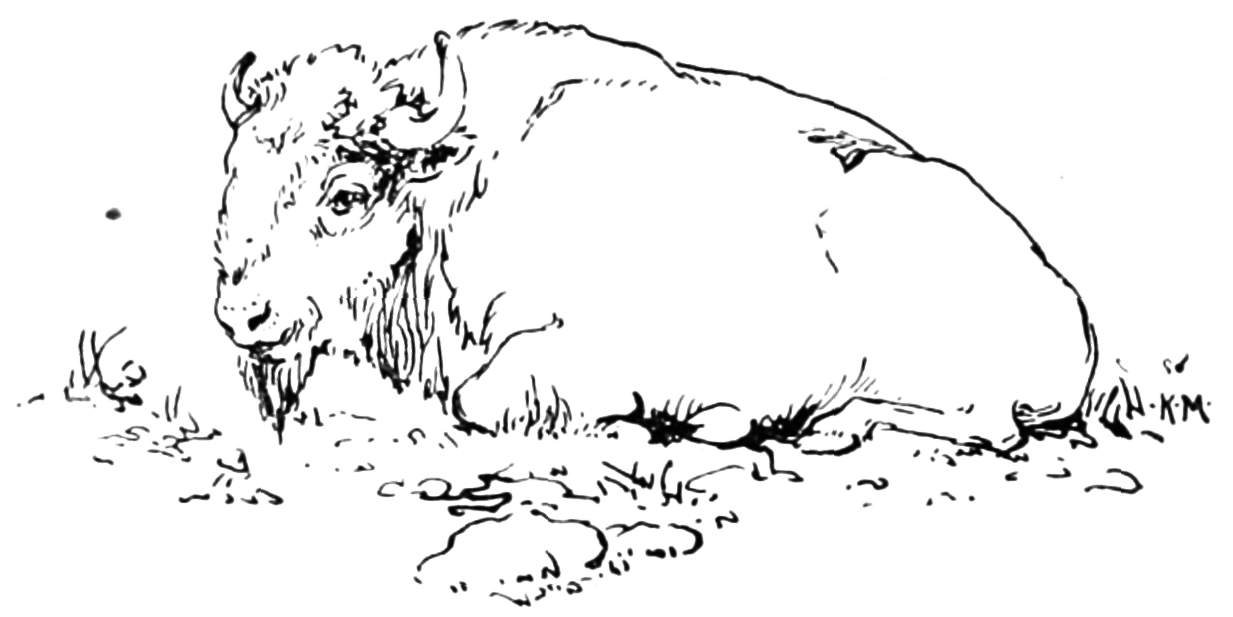
For nearly half a century Pennsylvania enjoyed the melancholy distinction of being the leading tanning ground for western buffalo hides. From about 1845 to 1885, it is estimated that one million bison hides were tanned in this State, mostly at the big tannery at Wilcox, Elk County. Many hides were sent there to be tanned and sold, in consequence of which they became a drug on the local market. They were sold to neighboring lumbermen and farmers at $20 per bale, a bale containing 12 hides. There are still a few of these hides to be picked up about Wilcox, those in good condition bringing never less than $50 apiece. All through Pennsylvania buffalo robes were familiar sights in farmhouses, in livery stables, and sleighs, until very recently. Now they are scarce, except 45perhaps in Snyder County. The writer has a magnificent robe purchased from the estate of the late Cornelius Cromley, of Clinton County, who had bought it in 1880 from John Wanamaker of Philadelphia at the price of $3.50. But the re-introduction of the buffalo in living form will be more interesting to the readers of these pages. Shortly after the Civil War, a number of bison were shipped to this State, butchered and served at barbecues. One of the most famous of these was when a Kansas buffalo weighing a ton was slaughtered at Reading at a big political barbecue during the Tilden campaign of 1876. A live buffalo calf was shipped from Nebraska to Abe Sheesley of Jersey Shore in 1879, and for a year or two made a gentle and affectionate pet. During the running season in the animal’s third year, he jumped fences, butted down small buildings, chased dogs and children, making himself generally obnoxious. Finally the animal was chained in a stable where he was kept for several years. He was mated with several cows of the domestic variety, and his offspring were said to be handsome creatures. Unfortunately, they had little respect for fences or enclosures, and generally had to be killed when two or three years old. Mr. Sheesley became tired of his unmanageable pet, and had him butchered. The animal weighed dressed a ton, and the good people of Jersey Shore and Chatham’s Run besieged 46butcher W. H. Schwer’s travelling market wagon to taste the flesh of the late monarch of the plains. The horns adorned the Sheesley home for many years. In Col. John G. Millais’ interesting book “British Deer and Their Horns,” is an amusing account of a herd of buffaloes exported from the United States to Scotland by Sir William Stewart, who served at the Battle of Waterloo. It is as follows: “Sir William was one of the first men ‘out west’ and his life was a complete romance. Certain aspersions were cast on his pluck after Waterloo, and to show that they were false he went out to the Rocky Mountains and lived amongst the Sioux for five years. There he became a first-class bandit, but displayed such courage that they made him a chief. Wearying of his wild life, he returned to Murthly, bringing with him however, almost a dozen of his pals amongst the Sioux and a herd of Buffaloes. The latter he lodged in a beautiful park at Rohallion, surrounding it with a stone wall seven feet high and with a wire fence on top of that. If my reader is a lover of Punch, which he is pretty sure to be, he will recollect a drawing by John Leech of Mr. Briggs being taken through Buffalo Park by his friend. That friend was my father (Sir John E. Millais), and Mr. Briggs was of course Leech himself. I have often heard the story of that day amongst the buffaloes. By and by the buffaloes died off or were killed, and the 47last old bull broke out of the park somehow, and meeting the mail coach going north, proceeded to knock the stuffin’ out of the horses. But there was an unfeeling man on the coach who had a rifle and no sense of humor, so the last of the Scotch buffaloes had to go.” In various Zoological Gardens in Pennsylvania, buffaloes have thriven remarkably well. The Philadelphia Zoo in Fairmount Park, which was founded in 1859, and opened to the public in 1874, has usually maintained a group of about a dozen head. In 1886, the Gardens sold an adult bull and cow to Col. W. F. Cody (Buffalo Bill) for $300. At the Zoo in Highland Park, Pittsburgh, at present there are two young female bison, purchased last year from Earl E. Bennett, Newport, N. H. A male from Yellowstone Park, is shortly to be added to this herd. At the Reading Zoo there are no buffaloes at present, but as soon as an appropriation can be secured for their maintenance, a cow and bull will be shipped there from Yellowstone Park. In several private parks in different parts of the State buffaloes are kept, notably at the magnificent game preserve of Col. Harry C. Trexler, “The Cement King,” near Allentown, where there is a herd of 20 of these noble brutes. As game animals, the buffaloes will probably never be re-introduced in Pennsylvania, although their docile habits and hardy natures would make 48them adaptable in some of the wilder sections of the State. Perhaps with the spread of the hoof and mouth disease and bovine tuberculosis, a sentiment in favor of full-bred or half-bred bison to replace the present breeds of domestic cattle will be instituted. The bison are not subject to these diseases, and would flourish on the abandoned slashings and bare mountain tops in the Pennsylvania wilds. Berks County farmers have been talking about starting to pasture herds of steers on the Blue Mountains, but buffaloes would be hardier and more remunerative. Between 1870 and 1875 it is conservatively estimated that one million wild buffaloes were killed annually in the west. Most of these were wasted, and their hides frittered away for paltry sums. May the day come when a like number of tame bison are butchered in Pennsylvania to our citizens’ advantage. Albert Gallatin, the financier, of New Geneva, Fayette County, wrote considerable about the domestication of the bison, which he believed was entirely feasible. He said that many had been kept and successfully bred by farmers South of Mason and Dixon’s line. At one period for eight months he lived off buffalo meat, and enjoyed it. He also believed in the practicability of crossing bison with domestic cattle and mentioned a farmer living on the Monongahela River who owned a large buffalo bull which he allowed to roam at large with his farm 49cattle and which was “no more dangerous to man than any bull of the common species.” Mr. J. W. Cunningham, of Erie, formerly of Howard County, Nebraska, successfully experimented with crossing bison and domestic cattle.
50
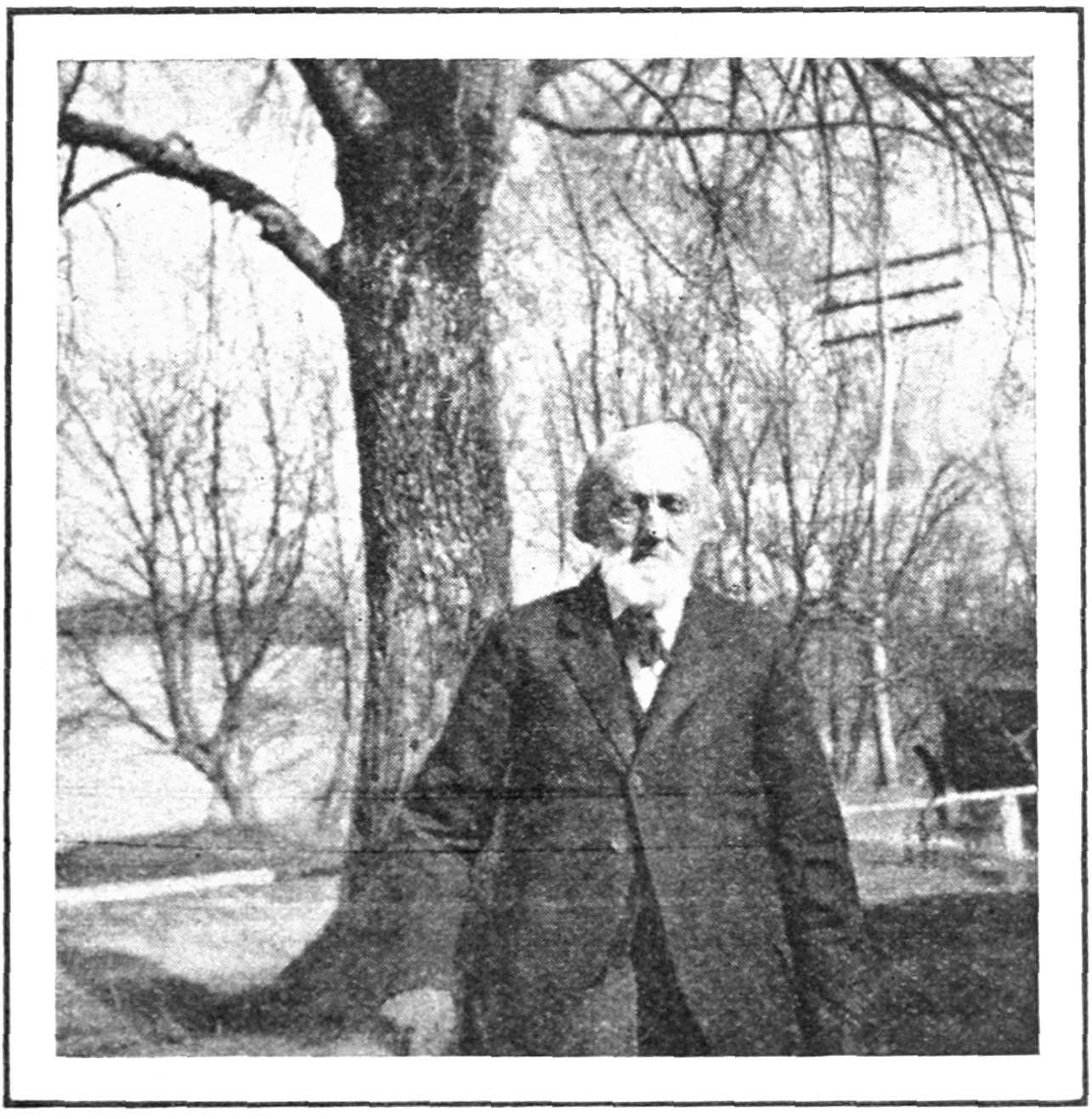
Grandson of George Ott, one of the original buffalo hunters of Central Pennsylvania and himself slayer of many hundreds of bison on the plains of the Great West, Daniel Ott of Selin’s Grove, Snyder County, is one of the historically noteworthy personages of the Keystone State. In company with Hon. George W. Wagenseller, editor of the Middleburg Post, and J. Herbert Walker, associate editor of the Lewisburg Journal, the writer recently visited the venerable nimrod at his cozy home on the outskirts 51of the quaint old town of Selin’s Grove. Nimble and mentally alert, despite his 95 years, the old hunter, who is still a handsome man and has the aquiline nose and tight drawn lips which are usually signs of character, greeted his guests cordially, and unfolded to them the marvelous story of his life. Frequently during the narrative he told jokes, which convulsed his hearers, and his fine amber colored eyes, as clear as those of the poet Keats, were alive with keenness and humor. Daniel Ott was born in Selin’s Grove on May 27, 1820, being the son of Daniel Ott, Sr., (1784-1852) and grandson of George Ott, (1745-1814), one of the original pioneers on the Karoondinha, now known as Penn’s Creek. George Ott, who was a native of Chester County, took up 400 acres of wild land in what is now Snyder County in 1796, when that region still abounded with wild beasts and roving Indians. In Daniel Ott’s own words let him describe his thrilling life’s pilgrimage. “I was born in the house where I now reside, and am of Dutch and English ancestry. My father and grandfather, the pioneers, were not hunters in the modern meaning of the word, as the game came up to their doors to be shot. Buffaloes and other game were plentiful north of Jack’s Mountain when they came into this country. When I was a boy wolves were numerous, and at night we could hear them howling from the summits of the Spangenberg and the Mahanoy Mountain, and they even howled 52from the top of the Blue Hill at the good people across the river at Sunbury. In those early days, I killed and helped to kill many wolves, they were grayer in color than the ones I afterwards met with in the west. I hunted all kinds of game in Pennsylvania and was a fisherman as well. I have killed too many deer to count them, the first when I was a mere boy, and the last when I was eighty years old I brought down on Jack’s Mountain. The horns of that stag I still have. I was a good-sized boy when Halley’s comet appeared in 1834; I saw it again 76 years later in 1910. I saw the famous falling stars one night in 1835. In the White Mountains, back of Jack’s Mountain, I once killed a half deer half elk. It had one horn like a deer and the other like an elk, and dressed over 200 pounds. In addition to wolves and deer I killed many bears, catamounts, and wild cats. On two occasions, I came face to face with big panthers, but they eluded me. The flights of wild pigeons which used to come to Selin’s Grove darkened the sun. I have trapped 1300 wild pigeons in one day. The nesting grounds of the wild pigeons were arranged with military precision. Sometimes they were in the shape of squares, other times circles. The trees marking the boundary had no nests on the branches outside the line. It was strange to see trees full of nests on one side and with none on the other. I remember when the Susquehanna 53River and Penn’s Creek were alive with shad. That was before the days of pollution from the tanneries and paper mills. I have caught 500 shad at a single haul. When I was a boy, there were still a few Indians in this country; they used to travel along the river bank, and rest under the big trees in the shade. In 1841 I came to the conclusion that I would like to visit the big game regions of the West. As there were no railroads and stage travelling was expensive I resolved to set out on foot. The stages and freighters which crossed the Alleghanies were drawn by the now extinct Conestoga horses. The Conestoga horses were better looking than any draft animals of the present day. They were chunky built, with full necks, short heads, and fine full eyes. Although they would weigh on the average 1200 pounds they did not stand over 15.2 hands. They had particularly good hoofs, much like those of the fast traveling Percherons. I walked from Selin’s Grove to the Big Valley, to Bedford, to Wheeling, to Columbus, to Dayton, across the Black Swamp on the Corduroy Road to Indianapolis. The Indiana capital then consisted of a few wooden houses and was surrounded by magnificent hard-wood forests. Deer, wolves, and coyotes abounded. Raccoons were a nuisance to the settlers. One night with several friends I was out hunting ’coons along the White River, when we became 54lost in the woods. We got in a hollow buttonwood tree for safety, and none too soon, for we were surrounded by a yelping pack of coyotes, which kept us prisoners until daylight. West of Indianapolis was a wild prairie country, where wolves roamed, and where there were millions of prairie chickens. I decided to walk to Springfield, which I found to be a small village like Indianapolis. Abe Lincoln was there, carelessly dressed and ungainly, a familiar figure about the streets. The inaccessibility of the country between Indianapolis and Springfield led me to say to my companion ‘Nobody will ever live in this region, it is too hard to reach with supplies.’ West of Springfield in Missouri, there were still great herds of buffaloes and antelopes. I decided to walk to Chicago, through the wild prairie region. Each night I trusted to reach some settler’s cabin, as I hated to sleep out on the plains on account of the wolves and coyotes. I saw coyotes and prairie chickens on the outskirts of the Windy City. When I got there I found only a single line of frame houses, one story and one story and a half high, facing the Lake on what is now Michigan Avenue. It was a dreary place, so I struck out for Indianapolis, which town I liked very much. I travelled through the West for a number of years, my experiences would fill a book, meeting Indians, traders and hunters and killing much 55game myself. In the height of the buffalo excitement I organized a hide hunting expedition to go to the Panhandle district in Texas, where herds of hundreds of thousands of these noble animals roamed the plains. Our outfit left Dodge City, which is in Ford County, Kansas, and headed South. Dodge City was in those days (in the early seventies,) one of the headquarters of the buffalo trade. Piles of hides a hundred feet high were stacked in all parts of the town. Only the choicest hides, those from the cows and heifers, were used for robes, the tough hides of the old bulls went for belting. We were soon in the buffalo country, as the plains were covered with the carcasses of dead bison. Some were killed for “fun” and never even skinned, others had their hides stripped off and left for the wolves. We could see where they had been killed in former years, as where they laid the buffalo grass died, and weeds sprang up, and the skulls and horns were mournful relics of man’s wastefulness. When we camped at night, bands of noisy coyotes came close to our camps, and I shot many of them. When they barked, the large grey wolves often answered them, but the big wolves were shy and we seldom saw them. In Indian Territory now Oklahoma, near the Cimarron River, I saw a herd of wild horses. They were the most beautiful animals I have ever seen. They were blood bays, with black manes and tails. 56Their heads were small, their ears short, and they stood higher in front than in back. My companions wanted to shoot them, but I told them not to, as it would be a shame to kill such handsome creatures for no good purpose. Meanwhile the grand stallion which led them, sighted us, snorted, which was the signal to the herd to make off, and they started away in single file at a trot. Buffaloes always run with the wind, nothing can turn them. The aim of the hunters is to get them off the wind, approach close and shoot them. The first herd we surprised was given the signal by a big bull, and started for us. We waved our hats as they came near, but they would not turn from their course. Fearing that they would run us down, we took to our heels. As the big brutes passed, my companion, George Harrison, fired a dozen shots into them. I asked him why he fired at them when he knew he could not kill them. He said he did it because they ‘kicked so funny’ when hit. I told him that the buffaloes so wounded would die a lingering death on the prairie, would be eaten by the wolves and their hides wasted. Harrison said he had never thought of that before. Ever after I made it the rule of our expedition only to kill such buffaloes as we could use the hides, or in self-defense. As for arms, our expedition used Sharp’s Needle Guns, which were calculated to carry a one ounce ball 1000 yards. Some hunters used breech loading U. S. Muskets or Winchester rifles. In the 57fall of the year when we did most of our killing the small family groups of buffaloes were beginning to come together in the vast herds which assembled during the winter months for mutual protection. In the Summer they separated into parties of about one hundred animals each, and slept, pastured and travelled in such groups. Every party of buffaloes had their watchers, which gave the signal of the approach of human or animal foes, while the others rested or munched the sweet buffalo grass. We stalked our buffaloes, crawling along through the grass until we got near them, then before we could be seen, as we approached “off” the wind, we selected our victims and fired. We always carried five skinners to one killer, as it took a great amount of care to scrape all the fat off the hides, and unless this was done, they were hard to keep. The air in the buffalo country was so dry that no odor emanated from the carcasses which strewed the plains, looking in the distance like hillocks. At nightfall, the hordes of wolves drawn to the neighborhood by the food, feasted and fought over the remains. At our camps we made our fires with buffalo chips which furnished a clean and very hot fire. We usually selected a hole in the turf made by the buffalo’s hoofs, laid a sheet of newspaper at the bottom of the hole, and placed the chips on top. Then we touched a match to the paper, soon having a splendid blaze. 58The size of the buffalo bulls was enormous. They would average over a thousand pounds, and some weighed close to a ton. They were covered with layer after layer of thick fat. When we collected as many hides as we could transport on our wagons, we started for Dodge City, where we sold the hides at an average price of two dollars apiece. We generally took a ton of selected buffalo meat with us on our northern journeys. On our trips we met many Indians, Comanches, Cherokees, Arapahoes, Cheyennes, and so on. They all chided us for our wholesale killing of what they called their cattle. They were particularly upset over the white man’s wasteful methods of killing the bison. They only killed what they absolutely needed, they maintained. Many persons have wondered why the United States Government made no effort to stop the killing of the buffaloes on Uncle Sam’s Farm as the boundless plains were called. The Government in those days could not control the Indians, it had its hands full there, consequently, a ‘side issue’ like game protection was out of the question. But it was a great pity, as the buffaloes might have become the cattle of the West, as they were hardier than any of the varieties brought there. I saw many long-horned Texas steers. They were wonderful animals, and adapted themselves to local conditions; it is a pity their stock has been allowed to die out. On the 59plains with the buffaloes were vast herds of prong-horned antelopes. We killed many of these as their flesh was good and their hides were of some value. Many hunters killed them for sport, firing into the herds at random, and letting the poor creatures die lingering deaths. I am glad I hunted buffaloes, and while I killed a great number, I do not have it on my soul that I killed a single one for sport. All I killed were used as much as possible. I cut out the best meat, and saved and sold the hides. I tried to induce the other hunters to be less wasteful, and think I had influence with some of them. I had an experience that I would not exchange with anyone in the world. As I sit here, looking down the river to the towering Mahanoy, I think how things have changed. All the big timber which covered the Mahanoy Range is gone, and there is no game here any more worthy of name. There are few ducks in the river, no flights of wild pigeons darken the sun, an Indian is a curiosity, rafting is done, there are no more arks, gone is the canal which I saw built, everything is becoming tame and commonplace. I have lived a long while—ninety-five years, but I would like to live longer in this beautiful world if I can retain my faculties and not become a burden to my family. I can read without glasses, have my own teeth and have a good head of hair. Last week I chopped down a dead apple tree; you can see the pile of stove wood I made from it if you look 60out the back door. Yesterday I butchered a big hog, and shot the head off a rooster. Up to a few years ago, I often walked to Middleburg, ten miles; I take some pretty long walks still. Lots of people come to see me, I have a loving considerate family. Over in the next room I keep my hunting trophies, in the evenings when the wind howls about the old house I go in and sit beside them, the heads and horns of buffaloes, deer and antelopes I shot in the old days. Then I feel myself back in the wilds of Jack’s Mountain, or in Clearfield County, or in the endless plains. I hear the tramp of the bison herds, the shouts of the victorious hunters, or maybe the blood-curdling cry of the panther. Then my mind goes back still further, and I hear my father tell of how his father took part in the hunting of the last herds of bison in old Pennsylvania, of Indian massacres, of pioneer hardships and I feel proud to be the scion of such sturdy stock. Yes, indeed, I have much to be thankful for in this grand world; I have lived, I have struggled, I have harmed no one, in my advanced age I am at peace, I am content.”

Perceived typographical errors have been silently corrected.
New original cover art included with this eBook is granted to the public domain.
Illustrations have been moved to appropriate locations in the text.