Title: Tales of Muscovy and the Ukraine
Author: George Bernard Hamilton Bishop
Release date: October 26, 2026 [eBook #79866]
Language: English
Original publication: London: Society of SS. Peter & Paul, 1916
Other information and formats: www.gutenberg.org/ebooks/79866
Credits: Tim Lindell, Paul Fatula and the Online Distributed Proofreading Team at https://www.pgdp.net (This file was produced from images generously made available by The Internet Archive/Canadian Libraries)
TALES OF
MUSCOVY
AND THE
UKRAINE
TO BORIS BORISOVICH
IN REMEMBRANCE OF UKRAINIAN DAYS
By G. B. H. BISHOP
VICAR OF CARDINGTON
LONDON: SOCIETY OF SS. PETER
& PAUL, 32 GEORGE ST., HANOVER
SQ., & 302 REGENT ST., W. MCMXVI
5
PRINTED AT
THE
GARDEN CITY
PRESS
6
7
The kindly reception given to his sketch of The Religion of Russia emboldened the author to embark upon an enterprise which for some little while had occupied his thoughts, namely, the publication of a series of short stories which should exhibit the characteristic features of Russian Christianity in a guise more attractive to the general reader. However, the design proved easier to conceive than to execute. It was difficult to avoid, on the one hand, the sentiment and sensationalism of a novelette, and, on the other hand, the aggressive piety of a penny tract. In the end, therefore, the project was abandoned, and four of the tales in this collection represent the scanty results achieved.
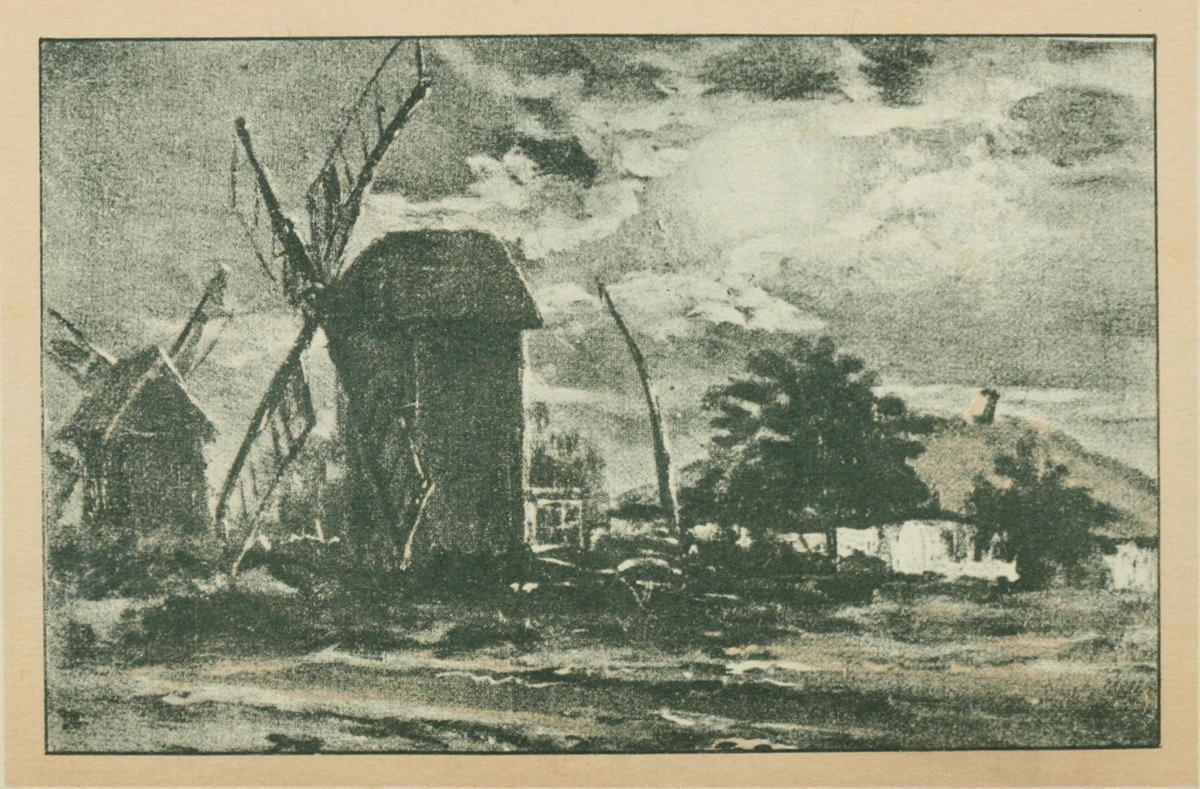
It is, perhaps, desirable to say something about the Ukraine, the pleasant land of the Little Russians, since it forms the background of most of these narratives. It is a geographical rather than a political entity, comprising the rolling plains which cover the greater part of Southern Russia. Owing to its inexhaustible fertility the Ukraine is the most valuable tract of land in the whole empire. If the rich black soil were properly worked, sufficient grain 8could be produced to meet the needs of half the countries in Europe. Its climate, although naturally less temperate than our own, is nevertheless far more equable than that of Great Russia. In summer time the heat is usually so intense as to make labour a burden. Under the circumstances it is not surprising to find that the peasants differ considerably in disposition and manner of living from their northern compatriots. Mentally they are more alert and self-reliant; physically, less diligent and enterprising. Before the advent of machinery they displayed much artistic taste in the adornment of their homes and persons, and in the manufacture of utensils. Their cottages are far more comfortable and picturesque, their music, poetry, and dances more attractive than those of the north; but they lack the determination and patient endurance of the Great Russian, and it is on the broad shoulders of the latter that the stability of the empire depends.
It only remains to say that the people of the Ukraine have a political grievance of their own, and have long agitated for a fuller recognition of their dialect and local institutions than they have yet secured.
To avoid anachronism the capital of Russia retains its old name in most of these tales.
p. 9
9
In a quiet little street branching off from the Tverskaia Oulitsa in a western suburb of Moscow stands a house known to certain members of smart society—and to the police—as the Golden Net. You might suppose, if you were fresh from the country, that this romantic title was derived from the yellow paint which adorned its plaster façade, though why the house should be a net, golden or otherwise, you would be at a loss to surmise. If you were not only very innocent but also very rich, the probabilities were that before you had been long in Moscow you would be in a position to explain more accurately how this very ordinary place came by its very unusual name. The fact is that the Golden Net exists (or existed) for the purpose of relieving the Muscovite gilded youths of their superfluous roubles. Many a lad, fresh from his mother’s apron strings, who 10had entered its undistinguished portals with a well-filled purse, had been compelled on leaving to borrow the money with which to pay the cab-fare back to his quarters. And Herr Müller, the genial proprietor, was always willing to lend money to his friends, whether for cab-fares or for other purposes; such, for example, as a little game of cards, or an elegant present for one of his extraordinarily numerous, charming, and guileless nieces.
Needless to say the Golden Net had many habitués. Its large gilded salon, deserted and a little tawdry by day, presented quite a brilliant appearance towards midnight when spangled with the uniforms of smart officials, and the vivid toilettes of the ladies. You would fancy yourself in very distinguished circles, if it were not for the occasional quarrels among the gamesters, or the loud coarse laughter of Herr Müller’s gentle nieces. There were people, jealous interfering prigs, of course, who wondered why the police allowed the establishment to exist, and hinted that the salaries of certain officials were not infrequently augmented by handsome presents. At any rate, the Golden Net not only existed, but flourished exceedingly.
It was, perhaps, in answer to the prigs that Herr Müller was wont to mark the great winter festivals of the Church by providing additional 11attractions on those days at the Golden Net. On Christmas Eve a troupe of gipsies entertained an unusually large and brilliant assembly with their barbaric songs and dances. A censored play, cards, and unlimited choice wines, were among the minor attractions, and the fun waxed faster and more furious until the dawn, when the revellers suddenly vanished like those strange and glittering beings who, in popular belief, haunt the Russian woodlands by night.
Among the last to depart was Alexis Koslevin, one of the most regular members. On the doorstep of the Club he hailed a droshky, and was driven swiftly and silently through the falling snow to his flat, a comfortably furnished suite of rooms in one of the best streets in Moscow. The door was opened by the svitsar, who smothered a yawn behind his large hand, scowling the while at the disturber of his dreams. Koslevin slowly ascended the white marble staircase to his quarters on the third floor. His man had timed his arrival accurately. A little samovar[1] was boiling on a tray, and near it was a teapot with a glass and a sliced lemon. Koslevin made himself some tea, and then, lighting a cigarette, sat down to consider his affairs.
To judge from the gloomy expression of his countenance, his meditations afforded him small 12cause for satisfaction. He had lost about fifteen hundred roubles during the night’s play. On reckoning up his total assets he found that after paying this debt he would possess exactly one hundred and eighty-five roubles—about eighteen pounds ten shillings in hard cash. In addition to this sum there was the furniture of the flat, worth, perhaps, a couple of thousand roubles, and an estate in the Poltavsky Government, the last of four properties left him by his father. To sell the estate was out of the question. It was the home of his childhood, and now sheltered his mother, the one being for whom he felt any affection. At the moment, therefore, he was worth little more than two thousand roubles in cash and saleable properties, not an impressive sum to one who had scattered the price of three fine estates in gambling saloons, and other unsavoury resorts. It was necessary, then, to come to a decision. He felt tired of everything, himself most of all.
Few young men had had a more promising start in life. The son of a wealthy and distinguished general officer, endowed with good looks and more than ordinary ability, he had without difficulty obtained a commission in his father’s old regiment, the chevaliers-gardes. He found himself associated with a set of young blades whose principal aim appeared to be to 13get the most out of life with a minimum of inconvenience to themselves. Koslevin at once took his place among the leaders of the clique. He was no worse than the others, but his lack of caution often led him into difficulties which cooler men escaped. On several occasions he was reprimanded by his colonel, but he took such matters lightly, and plunged at once into some new folly. The crash came when he had been in the regiment for about a year. There was a peculiarly unpleasant little society scandal with which Koslevin’s name was associated. He received a hint that the resignation of his commission would be acceptable in exalted quarters, and accordingly sent in his papers.
Finding himself a social failure after this occurrence, he left Petersburg and took up his abode at Moscow, where he flung himself into the whirlpool of fast society circling round the Golden Net. But there was a difference in his gaiety. At Petersburg his were the high spirits of a thoughtless lad; at Moscow, the feverish attempts at enjoyment of a disappointed man of the world. Here he had helped to pluck the rich young fools of his circle; and now he was plucked himself. Well, it could not go on any longer. There was nothing to do but go to the country, he told himself—go home and “be a vegetable.” He smiled sarcastically as he 14pictured himself acting the prodigal son. Happily he could reckon on the fatted calf. His face softened as he thought of the little grey mother who would so willingly pardon all if he returned. It was to his credit that he never dreamt of selling the house and property where she lived.
On a bureau near the window lay some letters, and a registered parcel containing, apparently, a large book of some kind. He glanced at the letters. One was addressed in his mother’s handwriting. He opened it and read her affectionate Christmas greetings, and how the estate was prospering. The letter closed with a disquieting account of her health, and a loving appeal for his return: she was so lonely.
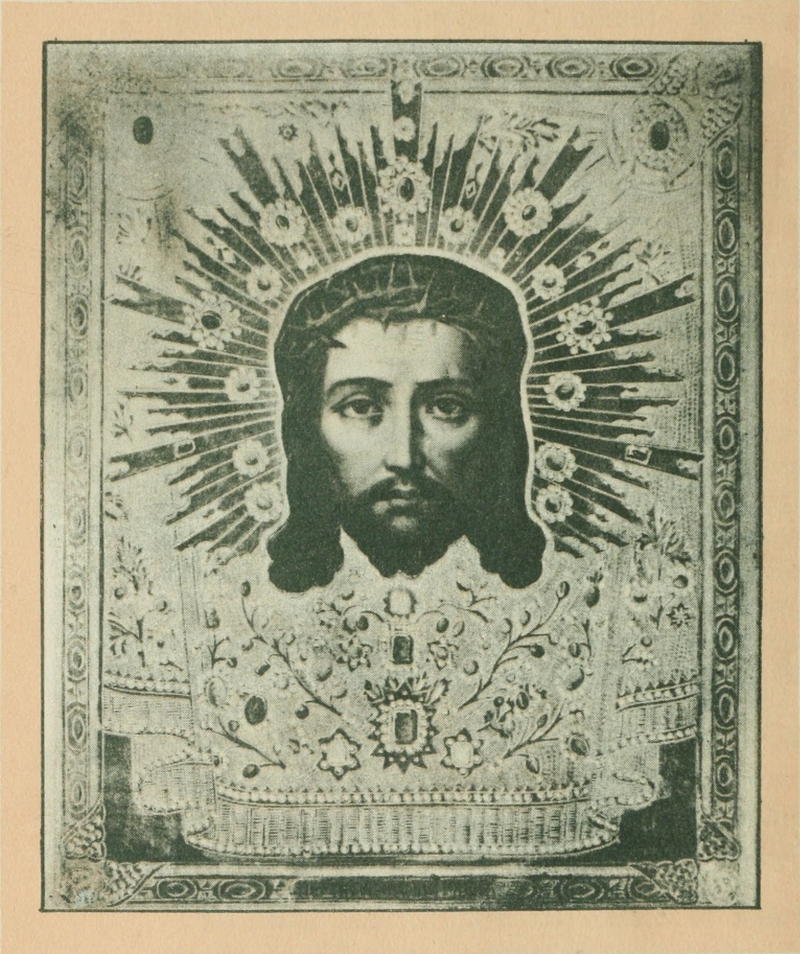
Koslevin was more moved than he had thought possible. He laid down the letter and took up the parcel. This, too, was from his mother. He removed the outer wrapper, wondering what the gift could be. A little card fell out. On it was written, “A small gift for Christmas, with my love.” When the remaining cover was off, Koslevin saw that the gift was a fine old ikon, one of the sacred pictures of the Orthodox Church. It was that known as the “Ikon not made with hands,” called in the West Saint Veronica’s Handkerchief. The handkerchief was engraved upon a thin sheet of gold, and was fantastically and richly ornamented 15with seed pearls and small rubies. But it was the face of the Redeemer, painted upon the wood beneath, which rendered the ikon remarkable. It was the work of some unknown artist, a veritable master of his craft. While adhering strictly to the Byzantine traditions of his school, he had contrived to produce a portrait—it could be called nothing else—of the most wondrous beauty and realism. A strange feature of this painting was that none could say exactly what expression the artist intended the Divine Countenance to wear. Looking upon It intently, one felt the mysterious Eyes piercing through to the soul and beholding all manner of imperfections there. The most worldly of connoisseurs experienced a sense of discomfort to which they had long been strangers, and hastily transferred their attention to other matters. Only young children, mourners, and penitents could endure that steadfast gaze, and to them it seemed aglow with divine charity.
To Koslevin the ikon made a double appeal. It had been a cherished possession of his mother ever since he could remember, and he had learnt to say his first prayers kneeling before it in her private room. As he stood now regarding it, the shame and guilt of his life seemed almost unendurable. He crossed the room and placed it on a sideboard near the door, as far as possible 16from the bureau where he had been standing. Then he returned and read the other letters, with an occasional uneasy glance behind him.
Most of the letters were uninteresting enough. The last was directed in an unfamiliar hand. He tore it open, and found it was a communication from a young lad, one whom he had helped to fleece a few nights earlier. A cheque for thirteen hundred roubles was enclosed. The writer apologized for not having paid this “debt of honour” earlier. It had been difficult to raise the sum as he had reached the limit of his allowance. Thanks, however, to Herr Müller he was now able to pay in full. He hoped to have the pleasure—and so on. The cheque seemed to burn Koslevin’s fingers. He dared not look towards the ikon, but seizing pen and paper he wrote to the lad saying that he could not take his money, and urged him to end his visits to the Golden Net. This done he felt easier in his mind. He sealed the envelope and left it on his desk, intending to post it after he had had some sleep.
On his way to the bedroom he passed the ikon. It seemed to him that the Eyes were fixed on him with a look of kindness and encouragement. He was so relieved at this that he fell asleep almost at once.
It was evening when he awoke. The bells of 17the Kremlin were pealing forth their sonorous melodies, calling the faithful to Vespers. Koslevin was much refreshed by his sleep, and, as he dressed, wondered a little at his sentiments earlier in the day. There was that cheque now. Was he really going to return it? He had won it fairly. True the lad was the merest novice at cards, but it was all the more his own fault if he ventured to play with experienced gamblers. “Well,” Koslevin thought, “I shall decide this little matter later. Meanwhile I will have something to eat.”
During the meal he heard the door bell ring. A minute later a visitor was announced. It was Belinsky, one of his boon companions at the Golden Net. Belinsky was the last person Koslevin wished to see just then. Handsome, clever, and amusing, he was a greater favourite with women than men, most of whom secretly feared him for his sarcastic wit, often exercised at their expense. At the Golden Net Belinsky’s word was final, none caring to oppose him.
With his entrance Koslevin knew that his course of action was settled. Forgetting that he had already practically decided to retain the cheque which had recently disquieted him, he felt annoyed with Belinsky for forcing his hand. To refuse to accompany him to the Club never seriously occurred to Koslevin. To go without 18money was absurd. He went to his desk, opened the letter he had written, and transferred the cheque to his pocket book. Ten minutes later they set out for the Golden Net.
That evening festivities began with a dinner, an unusual feature in Herr Müller’s arrangements. While eating the zakouska[2] Koslevin found himself face to face with the lad whose money was in his pocket. All the shame and misgivings of the early morning returned as he noted the anxiety underlying the boy’s assumed good humour. With an effort he turned away and addressed himself to his neighbour, a brilliant young woman named Anna Loubova, with whom he had long been very intimate. Anna was more than usually vivacious and charming. Under the spell of her companionship Koslevin rapidly regained his sang-froid, and before the company rose he had jotted his initials against half a dozen items on her dance programme.
Dancing, however, was not to commence before eleven o’clock. Until that hour arrived, Koslevin proposed to amuse himself in the card-room. He had arranged to play against Belinsky whom he found waiting with their partners. Belinsky was rather annoyed at the slight delay, and greeted him with a cynical smile. “You 19are a little behindhand, my friend,” he said; “but who expects a comrade of Anna Loubova to remember an appointment elsewhere? A nice little pigeon, eh, Koslevin?”
Koslevin flushed with annoyance, but made no reply. He sat down and began to play; but his thoughts wandered, and he was not able to attend to the game. Opportunities of scoring passed unnoticed, and there was a constant flow of notes and gold into the pockets of his opponent.
Belinsky’s humour had improved with his good fortune, and he advised Koslevin to stop playing. “You are in a bad mood to-night. If you are to go on playing like this, you might as well hand over your money now.”
Koslevin looked at the clock. It was twenty minutes to eleven, and he still had nearly one hundred and fifty roubles.
“Thanks,” he said; “I will play until eleven.”
Belinsky shrugged his shoulders, and the game went on. At eleven o’clock, when Herr Müller came to rally the dancers, Koslevin’s total possessions amounted to five or six silver pieces. He remained seated, tired and restless, some minutes after the others had gone. All sorts of irrelevant thoughts passed through his mind; but one image remained constant. However 20much he strove to banish the illusion, he felt always upon him the melancholy burning gaze of the “Ikon not made with hands.” It seemed to be calling him to leave the Club—to return to his quarters.
He rose unsteadily and slipped away, apparently unnoticed, to the hall, where a surprised attendant brought his cloak and found him a conveyance. Ten minutes later he let himself into his flat. His man, perceiving that all was not well, discreetly retired, after satisfying himself that nothing was required. As soon as the door was closed, Koslevin looked for the ikon. It had fallen on its face upon the sideboard. He took it in his hand and looked fixedly upon it. He was possessed with the idea that it lived, that it was a Person.
“Well,” he said aloud, “here I am. You have called me and I have come. What can You want with me? You spoke to me before, and I would not listen. I had some money then, and I could have obeyed You while still retaining a little self-respect. I had a choice, and I could have chosen the good. Now the opportunity has gone, and I am the worst kind of cur—one who calls ‘Peccavi’ when he has exhausted all the possibilities of evil. What do You want with me?”
He fully expected the ikon to speak, but no 21word came. Yet, as he looked, it seemed the expression of the Face underwent a change. Instead of stern reproof there was compassion, and—yes, the Lips seemed about to part in a smile of infinite tenderness. As the frozen steppe melts under the sun of early spring, so he felt the cold rigidity of his soul soften under that steadfast gaze. Tears filled his eyes, and he fell on his knees.
“Christ pardon me,” he whispered.
A loud burst of mocking laughter echoed through the room. Koslevin winced. It was profanation—sacrilege. Without rising, he turned to see who had violated his sanctuary. Belinsky stood in the doorway rocking with mirth. Behind him was Anna Loubova.
“Good God,” he cried; “here is Satan turned monk. This is too rich. I must pass on the jest,” and he departed with another shout of laughter.
Anna lingered a minute longer. She came swiftly and touched Koslevin’s shoulder. He had already forgotten them both.
“Aleosha,” she said in a low voice, “you forget. You promised to dance with me.”
Koslevin’s eyes were still fixed on the ikon, to which he now pointed.
“Look!” was all he said in reply. She 22stooped and looked intently on the Face of the Christ.
“Ah!” she said quietly, and a moment later was gone.
23
It was oppressively hot on the feast of S. Boris, and the good Orthodox folk of Spasskoe Selo frequently thanked God that there was no need for them to work in the fields. Of all the pious traditions of the Church none was observed in the village with more rigour than that which forbids work on a holy day. Bátushka Nikolai, the parish priest, had been heard to remark on several occasions that he could not remember ever having to rebuke a parishioner for breaking the rule: and there are many holy days in the Russian kalendar.
Out in the fields the crops gleamed like burnished gold in the July sun; but there was no sign of life save for a few slow-circling birds. Most of the inhabitants of Spasskoe Selo slept in the shade of their isbas. Some naked children splashed about in the village pond, while in the shady aisles of a neighbouring wood two lovers sang with powerful reedy voices one of the sad little folk-songs of the Ukraine, a song[3] of which 24the words were indistinguishable at the distance, but of which the music ran thus:
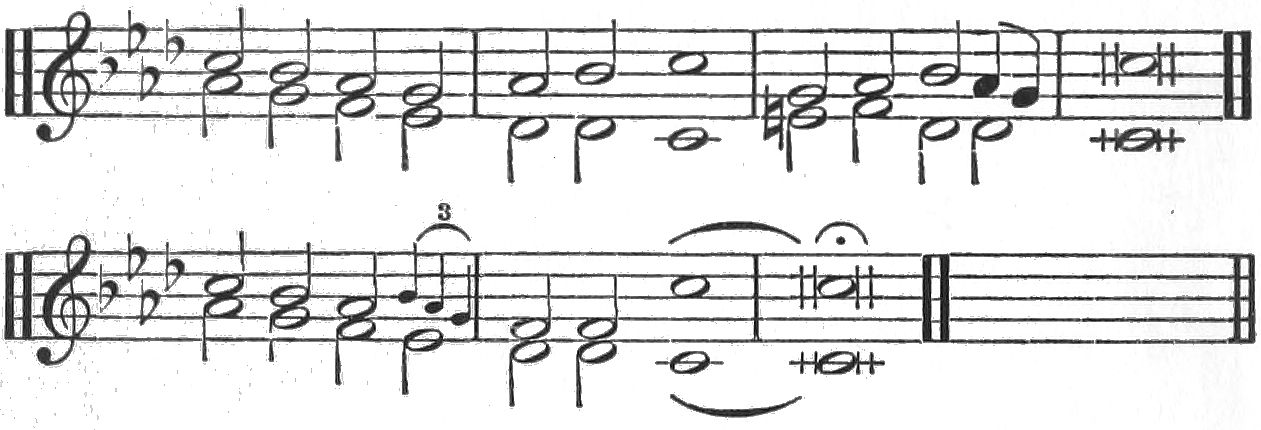
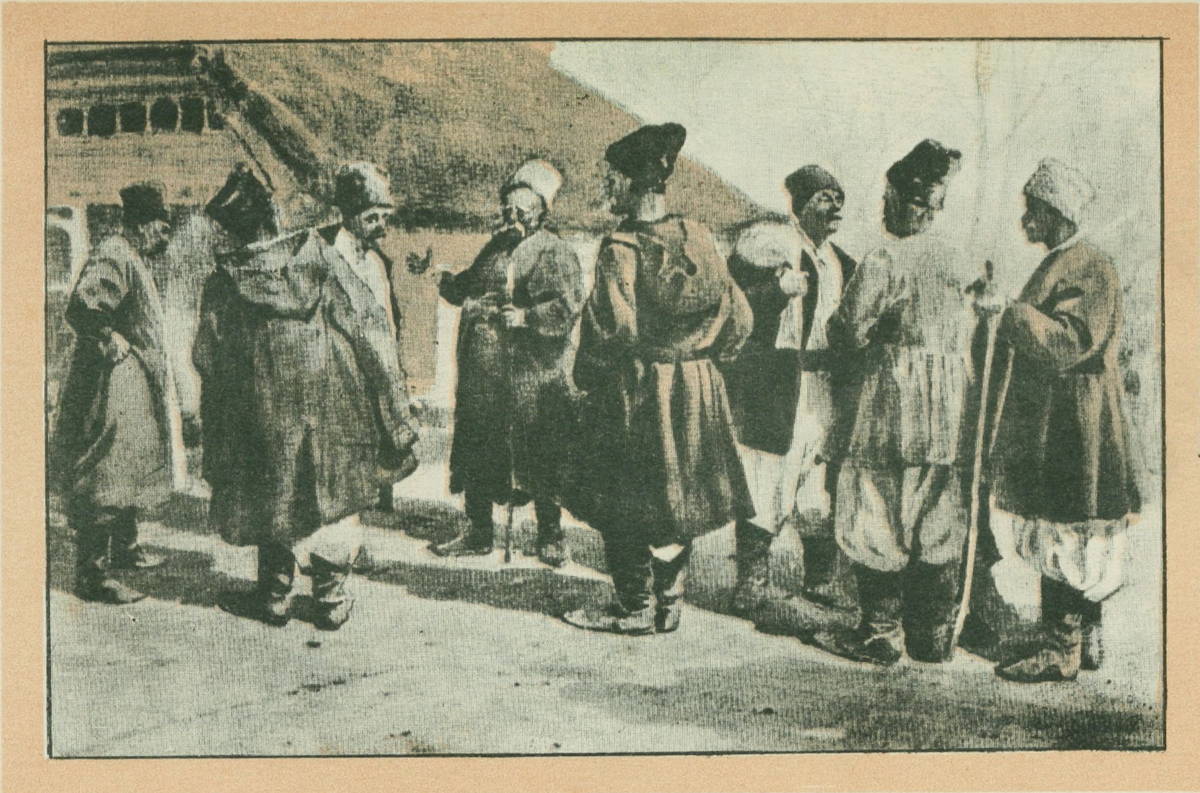
Near one of the isbas, the largest and cleanliest in the place, a few elderly peasants punctuated their desultory talk with the consumption of the inevitable sunflower seeds. From time to time Vasili Ivanoff, starosta[4] of the parish and owner of the aforesaid cottage, alleged that it was very hot. Several resolutions to that effect were carried unanimously, which did not surprise Vasili, for he was accustomed to having his own way. If he had stated that it was freezing it would have been all the same. A clumsy giant of a man with a leonine head, he was by far the most able and prosperous inhabitant of the village, which he ruled with a rod of iron. Vasili was not very popular; he was too magisterial, too interfering for that; but there was not a man in the place who had the courage to oppose him. He was a pocket edition of the great white Tsar.
p. 24
25
For a few minutes nobody had spoken. Suddenly the schoolmaster, a mild little fellow, ventured to remark that someone was approaching the village.
“Hey! what’s that?” said Vasili, sitting up. “Someone coming from the town?”
The company was visibly stirred at this remarkable piece of intelligence, and every pair of eyes turned down the wide uneven track along which travellers usually approached the village. In the distance a solitary pedestrian was observed, all but enveloped in a cloud of black dust. His pace was slow and his gait unsteady.
“Ouf! he’s drunk, the dirty rascal,” continued the starosta. Nobody made any reply. Probably it was felt that an unquenchable thirst was natural on such a day.
But the traveller was not drunk. As he drew nearer it became obvious that he was suffering from exhaustion and thirst. He was painfully thin and weak; his eyes were dull and heavy; his tongue protruded.
“Water, brothers, water for the love of Christ,” he whispered.
The water at Spasskoe Selo was not fit to drink, but Vasili’s samovar was boiling as a matter of course, and his wife soon produced a bowl of tea which the wayfarer drank in one long draught. He ate like a wolf the black 26bread and smoked fish which they set before him, and then, with a brief word of thanks, stretched himself on the ground and fell asleep.
The onlookers felt aggrieved. They had been looking forward to hearing his story. The village tailor wanted to wake him up and ask questions, but Vasili vetoed the proposal. The great man was not wont to be so considerate, but then it was certain that the stranger would remain with him for the night, and he would have an opportunity of finding out his history later on. The company was reduced to discussing his appearance.
He was plainly a pilgrim, and the condition of his bast shoes, of which the soles had almost disappeared, indicated that he had come from afar. There was a long scar on his forehead, and several fingers were missing from his left hand. In the other hand he held a dirty blue envelope, which one of the onlookers, who was a fairly expert pickpocket, endeavoured to secure, but without success. As soon as the envelope was touched the sleeper stirred uneasily. What could it contain?
“Perhaps it is an ikon,” said the schoolmaster.
“You’re a fool,” said Vasili gruffly. “Ikons are not so thin as that. It’s his passport.”
Nevertheless, Vasili was wrong. It was an ikon.
27
The ringing of a distant bell interrupted the conversation, and all rose and set out for the manor house, where there was to be dancing that evening, for the feast of S. Boris was the Bárin’s[5] namesday.
It was late when the starosta reached home. The pilgrim was no longer outside, and an uncomfortable suspicion seized his host. He crept noiselessly up to the half-open door and peeped inside. The place was in darkness except for the tiny light burning before the ikon in the corner. There he saw the pilgrim, who was praying in a low voice. However, his gaze was not fixed on the ikon of the house, but on one held in his hand. Vasili listened:
“Little Doves,” he murmured, “dear little Souls, you are with God, but you do not forget your poor Mikhail. He cannot hear you, but you can hear him. You are close to him now. Pray for poor Mikhail that he may be forgiven and may come to you very soon, dear little Souls.” He kissed the ikon again and again.
Involuntarily Vasili made a slight movement and the man looked round startled and confused. He began hurriedly to wrap the ikon in its envelope, but the starosta interrupted him.
28
“You pray with strange words, brother,” he said. “Show me your ikon.”
The pilgrim refused. “It is too holy to be shown,” he said.
“But I am Orthodox,” said Vasili. “Come, let me see it.”
“No, I cannot show it,” the pilgrim replied; “but you have been kind to me and I will tell you about it. Let us go outside.”
The garden was bathed in moonlight, all but one corner behind an outhouse. Here the pilgrim seated himself upon a pile of wood and began his story.
“There is not much to tell,” he said. “A few years ago I was an artisan in Moscow. I had a wife and a little son, whom I loved very dearly. In the middle of our happiness came the war with Japan, and I was ordered to join my regiment. My wife went home to my parents in the Poltavsky Government, and I went to the war. You know the story of the war, brother. I was badly wounded in the battle of Liao-yang, where I lost my fingers and had this cut in my forehead. They sent me back to Russia and I spent some time in hospital. It was good to be back again, but one thing troubled me. I could get no news from my wife. When they let me out from the hospital I walked all the way home (it took me three weeks, brother), expecting to 29find my family. All the way I was thinking how surprised and happy they would be. At last I reached the village, and saw the isba where they lived. It was very still and I wondered that I could not hear my little son playing in the yard. In the doorway was my mother. She was surprised to see me; but when I asked for my wife she burst into tears. Brother, my wife and son, and my old father, too, were all dead. The smallpox had come to the village, and not many had escaped.
“I need not tell you what happened during the next few months, how I wandered like an idiot all over Little Russia. I will only tell you how I learned to bear my grief.
“One day, when I was very sad and weary, I came to a monastery, a little lonely place in the steppes. There were only twelve monks besides the igumen,[6] and they were very poor; but they treated me kindly, washing my feet and giving me food. The igumen himself came to me when I had eaten. Christ must have sent him, brother. After looking at me for a minute, he said: ‘You seem very sad, little brother.’
“‘I am indeed sad, little father,’ I answered, and told him why.
“‘That is hard for you,’ he said. ‘But do you not pray for them?’
30
“I answered that since I found my dear ones gone I had not prayed.
“‘Then you have not asked them to pray for you either?’ said he.
“‘No,’ I replied.
“‘Then how can you expect to bear your grief, little brother?’ said the igumen. ‘You will not use your Christ-given privilege. Remember this, that Death is only a thin veil. Those who have passed beyond are, like us, in God’s hands. And we can help them and they us, by prayer and loving remembrance. Pray for them, and ask them to pray for you. Then you will know how close they are to you. Instead of being separated from them by a great emptiness, you will feel their companionship again.’
“Brother, the monk’s words are true. At times I am almost happy. That is all my story.”
“But your ikon,” said the starosta. “What about that?”
“My ikon is only a photograph of those whom I had lost and have found.”
A sound of distant horse-play and singing broke the silence. The starosta’s relatives and friends were returning from the festivities. He went to the yard gate to meet them. When he returned, the pilgrim was gone.
p. 31
31
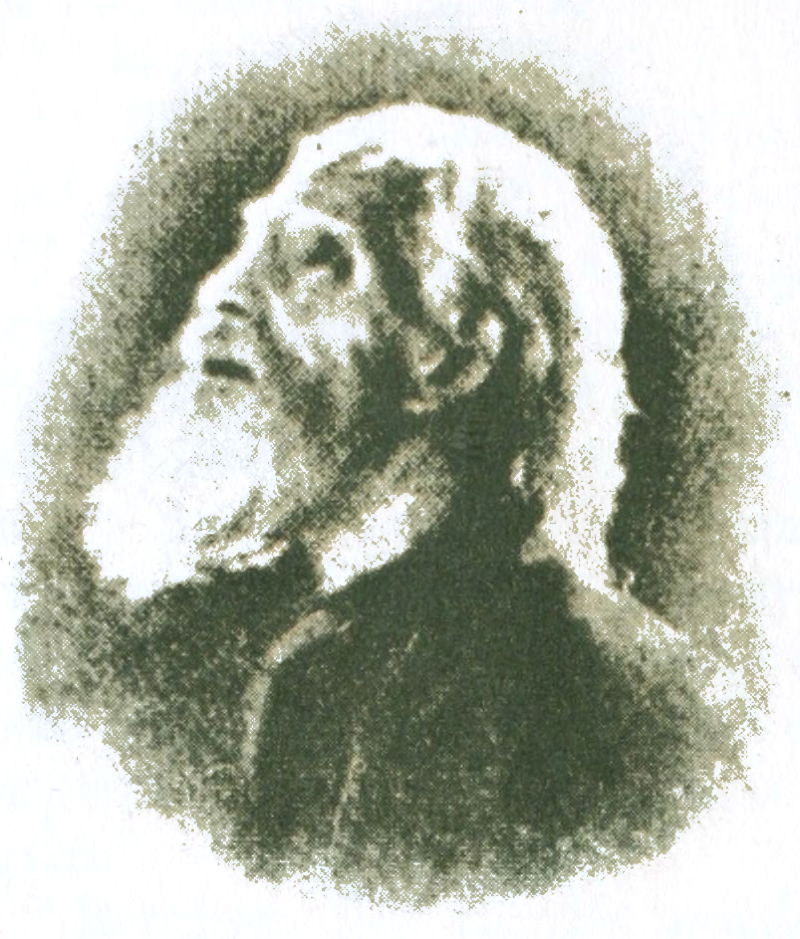
In the dingy little Church of the Archangel at Zharaima a solitary old man was praying before the sacred ikons. His general appearance was in keeping with his surroundings. He was long past his prime; his rugged features, softened by the influence of religion, bore witness to his peasant origin; his patched and shabby cassock and badly wrought pectoral cross denoted his profession. If you had inquired his name you would have been told that he was Father Efraim Gorastchenko, for nearly fifty years parish priest of Zharaima. If you could have looked into his heart you would have found there love of God, love of Russia, love of his little flock, and love of his tumble-down wooden church. For the rest, men said he was very simple and very poor—a saint of God. On one occasion in the street, a stranger, 32an atheistic pedlar, had jeered at Father Efraim. The old priest paused a moment in pathetic bewilderment, and then crept into the church. When he was gone his parishioners beat the scoffer to death. They were wild, rough folk, and they loved Father Efraim better than they had yet learnt to love God.
Every day at noon it was his custom to go to the silent church and there to pray for his people; and every day, when his prayers were ended, he made a tour of the building, patting the walls lovingly with his trembling hands and noting the places where the rain came through. The inspection always terminated at the same place, where Father Efraim had a little conversation with himself and came away with a happy smile. Those who met him used to wonder what he was smiling at. On one occasion the village gossip, old Granny Agrafina Ivanovna, listening at the church door, heard the priest talking to himself, and hobbled off to spread the news that Bátushka Efraim was having an interview with the Archangel Michael.
“God bless my soul!” said everybody and then they agreed that it was what they had suspected all along.
To-day Father Efraim took rather longer than usual over his prayers, but at length, making the sign of the Cross, he began his customary perambulation, 33and finally stopped before the ikons which decorated the screen. The ikons had never possessed much artistic merit; but now, after years of exposure to the smoke of tapers and incense, they were so blackened as to be almost indistinguishable one from another. The worst of the four was that of Christ, because it had been smoked more than the others. It was before this ikon that the Bátushka began his little soliloquy.
“Ai! but what a disgrace! It’s quite black. One can’t see the Face at all. How can one blame the poor people who do wrong? They’ve never seen the Face. But you’re coming down, black one. Yes! it’s all in the house—two hundred and forty-five roubles tied up in a bag! Soon there will be five more, and then we shall have a fine new ikon with gold on it.”
Father Efraim turned and walked out of the church smiling to himself as usual. He was anticipating the pleasures of writing to the bishop, of the dedication service, of his people’s surprise and delight. From his scanty income he had been setting aside twenty-five kopecks every week for many years, and now he was nearing the sum he had aimed at, two hundred and fifty roubles, to be spent for the glory of God and the Church of the Archangel at Zharaima.
34
Bátushka Efraim felt that he could not keep his secret much longer. It was getting too hot to hold.
As he was entering his house a man came up, doffing his cap. “Little Father, have you heard the news? Old Sasha is dead—died suddenly half an hour ago. Nobody knows what was the matter.”
The priest looked grave. “I will come at once,” he said, going indoors to fetch his stole. A few minutes later he was in the death-chamber reciting some prayers for the departed. There was nothing else to be done at the moment, for Sasha had no relatives.
On the way home Bátushka Efraim’s thoughts were naturally occupied with the dead man, one of the few parishioners who could remember his coming to Zharaima. “An old, old man,” he said, talking to himself. “And I, too, am old, very old. God will call me soon; but perhaps he will let me see the new ikon first.”
Perhaps! The possibility of his dying before the ikon was set up had not occurred to the priest before. It alarmed him to think that after his death the money he had saved might be put to other uses, for nobody knew his intentions. He decided to make a will to guard against the possibility. This is what he wrote:
35
“Behind the holy picture in the corner of this room is a bag. This bag contains my savings, nearly two hundred and fifty roubles. I am going to buy a new ikon of Christ with gold on it, instead of the one on the screen in church. If I die first, have the kindness to buy the ikon just the same.
Efraim Gorastchenko.”
He folded up the paper and placed it in a black earthenware pot on a bench near his bed.
The next morning nine more people were ill, and one had died during the night. The patients all manifested the same symptoms—cramp, weakness, vomiting, loss of voice. Father Efraim was busy hearing their confessions and anointing the poor ill-nourished bodies. In one isba he met the doctor, who greeted him courteously:
“Take care of yourself, Bátushka,” he said, “or you will be ill too.”
“What is the matter with them?” asked the priest. “Is it—is it——?”
“Cholera,” said the doctor gravely.
Father Efraim shuddered. “Can you stop it from spreading?” he inquired.
“If your people will do what I tell them,” was the reply. “But I want disinfectants, ice, 36nourishing food, and so forth, plenty of everything. Can you get me any money?”
It had been a bad year for the peasants, and there was nobody in residence at the manor house. The priest hesitated for a moment. “Yes,” he said slowly, “I can get you some money.”
He hurried back to his house and reached down the leathern bag containing his savings. A large tear rolled down his wrinkled cheek and splashed on to the bag.
“God wills it; God wills it,” he said.
A week later, thanks to the doctor’s energy and skill, the epidemic was well in hand. A dozen or so of the inhabitants were dead, but with a few exceptions most of the sick were on the road to recovery.
Father Efraim was one of the exceptions. He was already weakened by overwork when the dread disease fastened upon him, and from the first it was plain that there was no hope.
Outside the little parsonage a number of people had gathered, regardless of the doctor’s orders. The women were weeping; the men stood gravely conversing in whispers.
Within, a neighbouring priest was administering the last Sacraments. As the end drew near 37Father Efraim’s mind began to wander. He talked excitedly of his little hoard and the purpose for which he intended it. He told them of the paper in the black pot, pointing to it with trembling fingers.
The doctor found the will and read it aloud. “Yes, yes; that’s right,” said the old man. And then he remembered. “There is no money now,” he added. “The people needed it, so I gave it. It was God’s will.” A minute later the call came.
Some years after Father Efraim’s death a stranger was being shown over the church at Zharaima. It had changed very little except in one respect. A beautifully carved and painted screen had replaced the old one which had done service for so many years. The four large new ikons were real works of art, but the picture of the Christ puzzled the visitor. All the details of the painting were in accordance with tradition except the Face. It was the face of an old man, rugged but beautiful, crowned with silvery white hair. The visitor’s inquiries elicited the story which has been told already, but with this addition.
It appeared that his eminence the bishop had been informed of Father Efraim’s holy life and pious intention, and had come in person to 38Zharaima to make inquiries. He called together the village elders and announced his intention of placing not merely one ikon but the whole screen of them in the church as a memorial to their late priest. “My children,” said his eminence, “while Bátushka Efraim was with you, an ikon of the Lord was not needed here. He himself was a living ikon. When you saw him you knew better than any ikon could tell you what Christ is like. Now that he is gone you shall have your ikon for the church, and it shall be painted to resemble Father Efraim.”
And that is the explanation of the curious ikon in the Church of the Archangel at Zharaima.
39
The great Lavroff-Pravezhsky squabble, like many other squabbles, arose from a very small incident. One Saturday morning the Pravezhsky cockerel, advancing solemnly through a gap in the Lavroff hedge, discovered a bowl of prostokwasha[7] which Mother Lavroff had set in the shade to keep cool. Yielding to his natural curiosity, the intelligent bird proceeded to sample the concoction, which he found to be so delectable that he got into it in order to investigate the matter more fully. It was unfortunate that Mother Lavroff appeared upon the scene at that moment, especially as she was of rather hasty temper. With a yell of rage she hurled a pot at the astonished cockerel, who departed, cackling indignantly, to his own side of the fence. It was still more unfortunate that Mother Lavroff was a very bad shot, for the missile smashed upon a stone, and a piece flying off at a tangent hit Mother Pravezhsky in the ear as she looked over to see what was happening.
“What’s the matter, blockhead?” cried that lady angrily, rubbing the injured member.
40
“Devil take the bird,” was the no less angry reply. “Why can’t you keep him in your own yard?”
“Why can’t you mend your fence, you fat object?” screamed Mother Pravezhsky, leaning over to box her opponent’s ears. In this amiable intention she was frustrated by the agility of Mother Lavroff, who not only escaped personal injury to herself, but also managed to give a good tug at her neighbour’s hair. The yells and screams with which the viragos embellished their intercourse quickly summoned their respective husbands, who entered into the fray, pummelling each other over the hedge as well as they could. The fracas bade fair to assume alarming proportions. A neighbour ran off to summon the starosta, who arrived just in time to check a determined assault of the whole Pravezhsky forces upon the Lavroff front gate. Foiled in their efforts to come to closer quarters, the belligerents maintained for some minutes a withering fire of invective, which exploded harmlessly on both sides of the fence. When their ammunition was exhausted the starosta was able to make himself heard.
“Now, then, Orthodox, what’s all this about?”
Instantly the uproar broke out again, all the combatants talking at once. Accusations, 41counter-charges, and insults flew from one side to the other until the place became a very babel.
“Stop,” roared the starosta, with his fingers in his ears. “This will have to come before the Mir[8] to-morrow. It’s disgraceful, that’s what it is. Get on with your work now. And mind—no setting fire to houses. We don’t want the village burnt down.”
With sullen faces the offending parties retired unwillingly to their cottages to brood over schemes of revenge. It was just as well that the night-watchman spent the dark hours prowling in the vicinity.
On the Sunday afternoon the neighbouring heads of families assembled under the presidency of the starosta to consider the case. Lavroff and Pravezhsky were present, looking very sheepish and surly. After several hours of desultory discussion the blame was divided equally between the two households, and the men were admonished to that effect. They went home fuming with annoyance and disappointment.
For more than a month the two households kept up the feud. Their mutual resentment had practically died down, and there had been no renewal of active hostilities; but with rustic obstinacy neither party would take the first step towards a restoration of the old friendliness.
42
Meanwhile the great Lenten fast was nearing its close. The parish priest, a young man fresh from the seminary, urged them repeatedly to settle their differences, but without effect. Not until Maunday Thursday, when the whole of the villagers made their Easter Communion, did their stubborn resistance begin to weaken; and the cause was a serious one. They were refused both Absolution and Communion. It was a great disgrace. Such a thing had not been heard of for years, for the last priest had been a slack, easy-going old fellow, who never asked inconvenient questions, or bothered himself about the spiritual welfare of his flock. Plainly something would have to be done.
During the next two days Mothers Lavroff and Pravezhsky spent a great deal of time working in their respective yards. Each hoped eagerly that the other would open the conversation; each would gladly have spoken first only that she feared a rebuff. Once it seemed as though a suitable moment had come; but just then the Pravezhsky cockerel crowed insultingly from the top of the Lavroff gate, and the crestfallen women slunk indoors. At six o’clock, when the church bells rang for Vespers, they lit the little hanging lamps before the ikons in their houses and began to prepare for the midnight Mass. The creamy paskha, or Easter 43cake, was wrapped up carefully, and all the other little delicacies destined for the first Easter meal were set out ready to be carried along for the bátushka’s blessing. Then they tidied the house, washed themselves and the children, and donned their best clothes.
p. 43
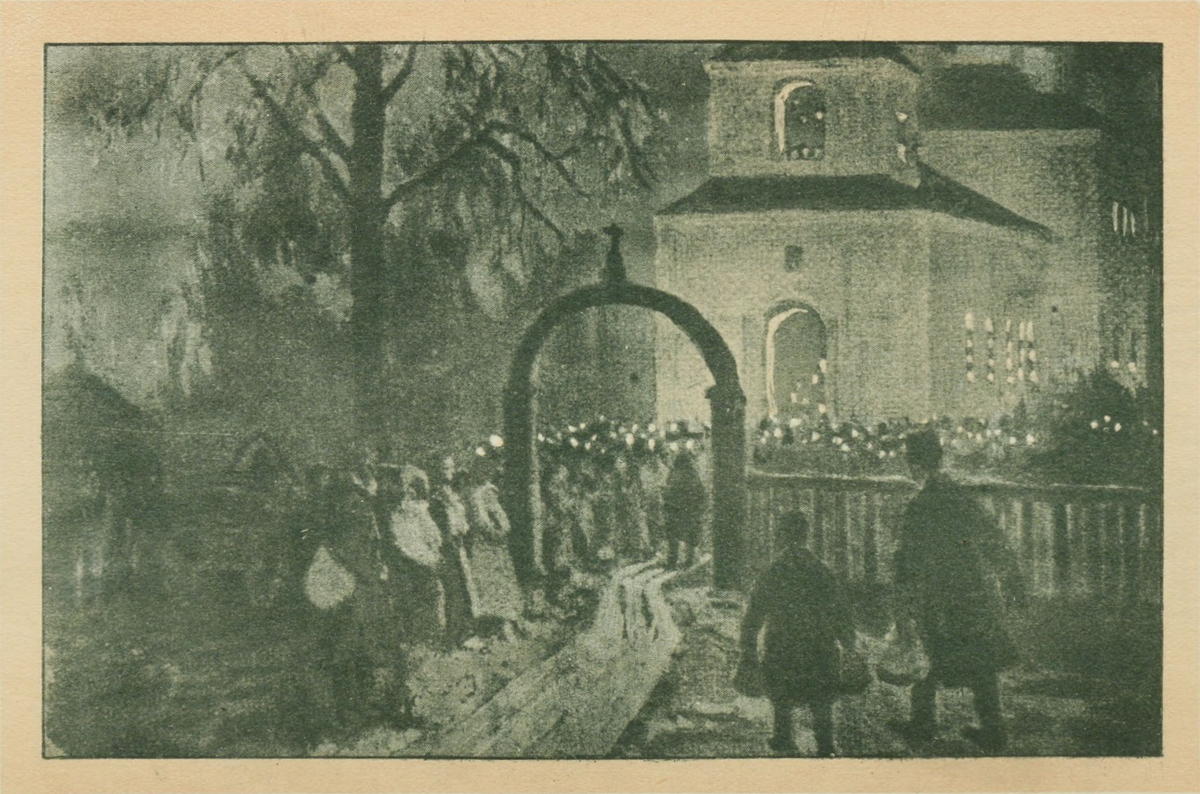
It seemed a long while to the Lavroffs before they reached the Church. When they took up their penitential position in the narthex they found that the Pravezhsky family had arrived just before them. The two parties greeted each other with silent nods, and then turned to survey the scene which lay before them.
All their friends and acquaintances were there, each one holding a lighted taper according to custom. Except for one small hanging chandelier and the tiny lamps burning before the ikonostas, these tapers were the sole illuminants in the gloomy nave, and very quaint was their effect. Only the lower part of each countenance was visible; and many odd shadows were thrown dancing on to the roof.
When the clergy entered a hush fell over the congregation, and then the clear tenor of the priest rang out in the opening benediction, followed immediately by the fine old Hymn of the Day, Christós vóskres:
Christ is risen from the dead. By his death he 44hath overcome Death, and giveth Life to them in the Tomb.
Like as smoke vanisheth, so do thou drive them away; and as wax melteth at the fire, so let the ungodly perish at the presence of God.
Christós vóskres!
For several hours the people stood, following with rapt interest and devotion the great drama of Calvary which, by a startling paradox, is everywhere in Christendom the supreme thank-offering for the Resurrection. At the Communion, when the royal gates were flung open, they half expected to see the Christ emerge triumphant over Hell and Death. And yet if they had seen him, they could hardly have had a more vivid sense of his presence than they possessed already.
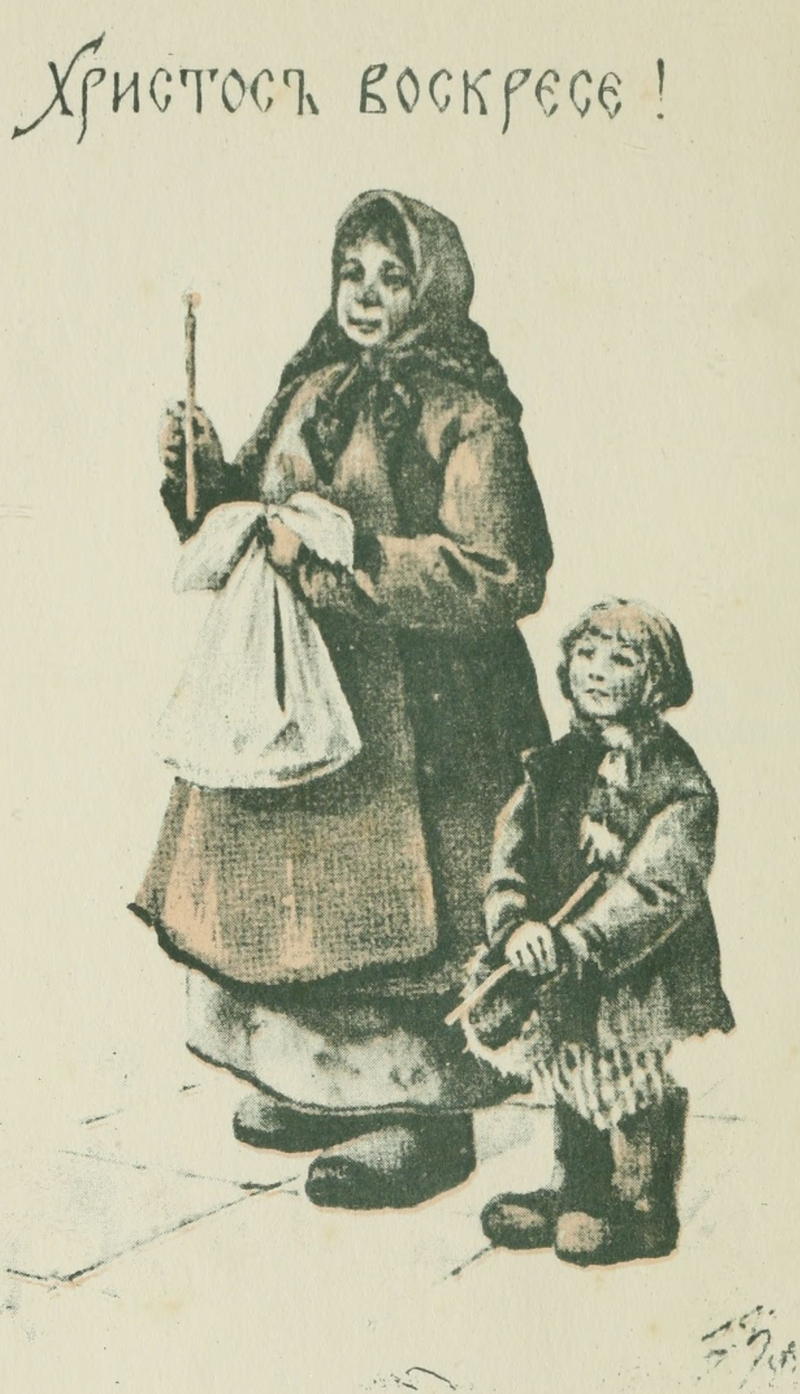
At length the Mass ended. A riotous peal rang forth from the belfry as the people once more exchanged with each other the Easter kiss of charity and peace. In the shadow of the narthex Stepan Lavroff looked at his neighbour. Their quarrel suddenly seemed a very petty, childish affair. The two men stepped towards each other and embraced.
“Christós vóskres,” said Pravezhsky.
“Vo ístinê vóskres, he is risen indeed,” replied Lavroff simply.
45
The woods of Bassianova were veiled in almost complete darkness. Here and there the pale rays of the moon filtered through an opening in the branches and shed a ghostly light upon the tangled undergrowth. Silent, too, were the woods of Bassianova; silent, as though the furtive things that stir in the night watched with bated breath a figure moving stealthily along the rugged paths.
“Curse it! How dark it is!” muttered the man nervously. “One needs the eyes of a cat.”
He stopped for a moment and appeared to take his bearings; then, with resolution, continued on his way. For some time he crept on, getting deeper and deeper into the heart of the woods. The gloom seemed to him to increase, the eerie silence to become more intense.
“God! what is that?” He sprang back in sudden terror as some large creature rose almost at his feet and crashed away through the bushes. A cold perspiration broke out on his brow; his heart was beating like a drum. He 46leant against a tree until his self-possession was restored, and then, fingering a revolver, pursued his journey. A determined man this? Yes, and a cruel, secretive, dangerous man. At length he saw in the distance the glow of a small fire. With a sigh of relief he hurried forward, and in a few minutes reached a clearing where some dozen peasants seated in a ring received him in silence.
“Is this wise, brothers?” he asked, pointing to the fire.
“Safe enough, messenger,” replied one of the men. “The woods of Bassianova are not a coppice. But you are late, messenger.”
“Can you wonder at it?” asked the newcomer angrily. “You have just reminded me that your cursed woods are not a coppice.”
He sat down opposite to the spokesman, and after a swift survey of his audience began to speak with a vehemence the more compelling by reason of its repression. His features were cast in the Semitic rather than in the Russian mould. The powerful jaw, covered but not concealed by a closely-cut black beard, resembled a steel trap. The glowing embers of the fire were not more suggestive of smouldering evil than were his small shifty eyes. If Satan ever took human form it would surely be in some such mould as this. The peasants watched 47him closely, fascinated as if by a snake. For nearly half an hour he spoke, exciting the anger of his hearers by a skilful exposition of their grievances, fanning their resentment against their rulers, and urging them to take action in their own interests.
“Nothing can be achieved without the help of the people,” he said. “Hitherto we have failed because we have lacked your support. Surely you will not refuse it now, you who have groaned so long under a hateful tyranny. You will strike now, and the sound of your blow will echo through all Russia. The troops are far away, and before they can be mobilized you will have lit a blaze which they cannot put out. Your rising will be the signal for the revolution. In less than a week Russia will be in flames, and the dawn of freedom will be at hand.”
He ceased speaking, and eagerly awaited their reply. Of its nature there was small room for doubt. His cunning eloquence had stung into activity these patient, slow-moving peasants. Long conscious that something was wrong, but unable to discover a remedy, they were dazzled by his forecast of the future when all men should be equal and freed from State control, each living and working as might seem good in his own eyes. Yes, they would join the movement; but what were they to do? A curious 48smile curled the thin lips of the messenger as he outlined what was required of them.
“The committee have received information that Zubov, Minister of the Interior, will visit Bassianova to-morrow. Is that right?”
“It is true,” said one of the men, a gardener at the manor-house. “Zubov is the bárin’s cousin, and he comes for a little holiday.”
“Good,” said the messenger. “To-morrow night Zubov must be killed. I shall provide you with enough dynamite to blow up the greater part of the house. Next——”
“But that means killing our bárin too,” interrupted the gardener.
“Of course it does, fool,” said the nihilist. “The whole brood of snakes, young and old alike, must be stamped out.”
They had not bargained on this. They knew nothing of Zubov, and were willing to believe that he was responsible for their troubles and so worthy of death; but to kill the bárin and his family, that was another matter. They had no complaint against him, and did not wish to harm him. The messenger felt his hold upon them to be loosening.
“But you are slaves, not men,” he cried. “I would sacrifice my own brother for the cause. It is necessary to act regardless of sentiment. Suppose your bárin catches you trying to kill 49Zubov. What will he do? Shoot you down like dogs! Then why should you not kill him? Do you want freedom, or would you rather go on living like cattle? There is no time to lose. Answer me now. Will you do what I have said, or will you not?”
“They will not,” said a voice from the darkness.
With an oath the man sprang to his feet. At first his companions were too frightened to move, but gradually they too arose and huddled together, peering into the gloom. As they looked, a tall spare figure dressed in a ragged cassock stepped from behind a tree and came fearlessly towards them.
“Lazarus the Hermit,” they whispered among themselves.
“Take hold of him, some of you,” said the messenger angrily; but nobody stirred at his bidding. “What? you won’t?” he added. “Well, see this, you crow. If you attempt to escape I shall put a bullet through you.” He sat down again, and placed his revolver ready to hand.
Utterly disregarding the threat, Lazarus addressed himself to the peasants.
“You will not do this man’s bidding, brothers,” he said gently. “You will not be so wicked or so foolish.”
50
The men looked sheepish under his steadfast gaze; but one of them, who had worked in a town and had lost much of his reverence for holy things, ventured a reply:
“What do you know about such matters?” he said roughly. “Go back to your prayers and leave us to decide.”
The messenger laughed, and his laugh was more terrible than his curse. “Will you listen to this old fowl’s cackle?” he asked.
“Let him speak,” said the gardener. “We have listened to you; now we will hear him, and afterwards we will decide.”
They sat down again round the fire and waited for the hermit to begin. For a minute he stood silent, looking with unflinching eye at the messenger. Then he turned to his audience and spoke.
“It is now fifteen years since Lazarus the pilgrim, returning from the life-giving Tomb, set up his khata in the woods of Bassianova and became Lazarus the hermit. For fifteen years you have sought my counsel in your difficulties. I have helped you in your work, tended your sick, comforted your mourners, prayed for the health of your souls. I have proved my goodwill towards you by every means in my power.”
“Brothers, he speaks the truth,” said the gardener.
51
“During all this time,” he continued, “not one of you has known my real name and origin. Only you have known that I have no father but God, no home but Russia. Now it seems that I should tell you something of my history, so that you may understand that I have a right to speak. Shall I go on?”
“Pray do so,” sneered the messenger. “We are comfortable as you see, and time is no object.”
Without looking at his adversary, the hermit continued:
“My father was a well-to-do peasant of White Russia, and I was his only son. He was an ignorant man, but he desired that I should have the benefit of education, especially as I was not strong enough to work on the land. He sent me to one of the best schools open to people of our class, proposing to have me trained for the medical profession. Outwardly the school was normal enough, but as time passed I found that a great deal was going on beneath the surface. Several of the more prominent teachers were revolutionaries, and, in private, utilized their influence for the promotion of their views. As soon as a student was admitted to the senior classes he was invited to attend one of the secret meetings. Nobody ever refused. We were led on by excitement and love of the mysterious. 52The lofty principles taught by our leaders blinded us to the wickedness of their methods, which were those of the bullet, the knife, and the bomb. When I left the school I was an ardent terrorist. My instructors put me in touch with the leaders of the movement, whose approval I soon won by my zeal and caution. They entrusted me with several dangerous missions, which I accomplished successfully. Then for several years I worked among the artisans at Moscow and other large towns, securing hundreds of adherents to the cause. In 1878 I joined the party called the Will of the People, which was pledged to more violent measures. Three years later, only a month before the assassination of Alexander II, I was badly wounded in a police raid and narrowly escaped capture. During my recovery I lived in the country with a peasant, a simple-minded man who took no interest in politics. For the first time for many years I found time to think and to observe. I tried to estimate the results of our activities, and what did I find? The vast majority of people looked upon us as murderers, foul beasts who ought to be exterminated without mercy. Many of those who had sympathized with us previously, were alienated by the murder of the Tsar. The only result of that incident was the restoration to power of 53the reactionary party. Our policy had completely failed.
“The realization of this fact upset all my ideas, and I decided to dismiss the matter from my mind until I was sufficiently recovered to be able to think clearly. But one evening I saw my friend the peasant spelling out the words of a small book.
“‘What are you reading, little father?’ I said.
“‘The Gospel,’ he replied simply, handing me the book. ‘Will you read it for me? I cannot read well myself.’
“To humour him I read several chapters. It was the first time I had read the Gospel for years, and I was surprised to find in it most of the principles for which we had been working. But I found also that our methods were strongly condemned. Evil had to be overcome by good. A corrupt tree could only produce evil fruit. It was plain enough. Six months earlier I should have laughed at the argument, but in the light of actual experience I could not deny it. The discovery was the turning point in my life. I read more and more of the Gospel, and became a Christian. When I was strong enough I went on pilgrimage to the life-giving Tomb of Christ, and on my return I came to live in these woods. Here I have tried to teach you 54that if you want to improve your lot you must begin at home. If you cannot govern yourselves how can you be fit to govern our country? ‘Seek ye first the kingdom of God, and all these things shall be added unto you.’”
“Well, crow, have you finished your sermon?” said the messenger cynically. “If so we will wish you good-night.”
Hitherto the hermit had spoken gently and slowly, but now he turned on the scoffer like an avenging angel.
“Do you think I have forgotten you, Yakub Schwartz, Jew and Austrian agent?” he cried. “How much did you expect to receive for creating trouble in our land? Go, and tell your masters that you have failed.”
The messenger stood up, and the smile on his evil face was not pleasant to behold. He walked slowly to the edge of the clearing, turned, and ere he disappeared into the gloom, swiftly raised his arm. A shot rang out, two, three in quick succession. Lazarus the Hermit fell on his face. When they raised him he was quite dead. They buried him where he had lived, in the woods of Bassianova.

p. 55
55
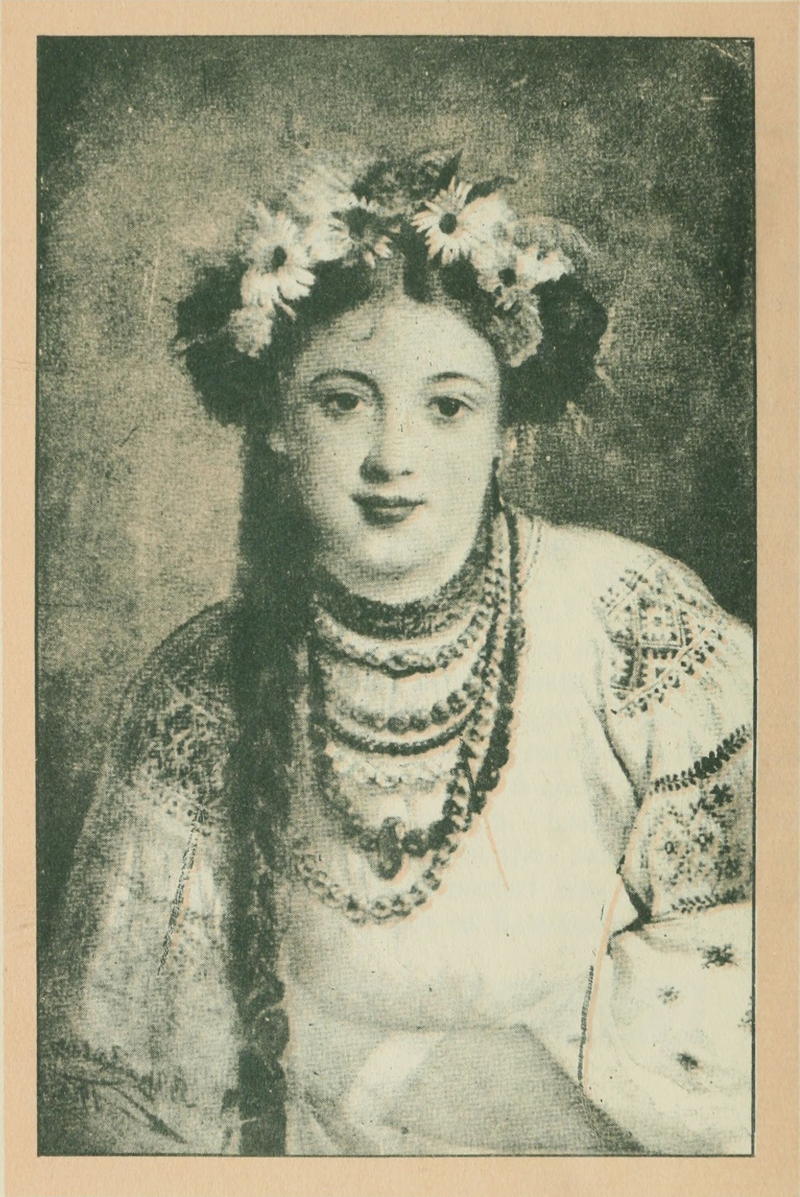
On a sunny day in June several girls were at work in the flower gardens of the great house at Orsovitsa. It was nearing one o’clock, when the ringing of a bell would proclaim their release for the mid-day meal. Some little distance away the head gardener, Arkady Trofimich, was engaged in abstruse calculations rendered necessary by the notorious irregularity of his watch. At length he came to a decision, and strolled in a leisurely fashion towards the bell-rope. Without waiting for the signal, the girls threw down their implements and, with merry jests and laughter, sped down a long alley to the lake, on the shady margin of which they sat down and began to unfasten their parcels of food.
A charming little picture they made in their snowy kerchiefs and white embroidered blouses. They were still in their ’teens; several were quite good-looking; all were barefoot, and tanned a healthy brown by the warm Ukrainian sun. To-day their idle chatter held more of interest than was usual, for it was the Vigil of S. John 56the Baptist, when strange things might be seen by those who ventured into the woods by night, witches and goblins and sirens rioting with their lord, the Tsar of the Underworld.
“When my father was a young man,” said Tania, “he saw a russalka once, sitting on the banks and combing jewels out of her long hair. She sang strange wild songs to him, and beckoned him to come near.”
“Oh dear!” said one of her friends, Nadia by name. “Whatever did he do?”
“He made the holy Sign, though a goblin held his arm at first, and after that he ran away home.”
“A good thing, too,” said Nadia seriously. “She’d have tickled him to death. The russalke always do that, don’t they, Marina?” She turned to a languid young beauty of some eighteen years.
“I don’t believe there are any russalke, or goblins, or anything like that,” was the reply. “My brother Pavel has been to the big school, and he says that russalke are all nonsense.”
“Well, anyhow,” said Tania indignantly, “your Pavel and Kostia and Deema are going down to the Soula to-night to look for them. I know because I heard them talking about it yesterday.”
Marina sat up quickly, her brown eyes 57sparkling with mischief. “I say, girls,” she said, “do let us follow them and give them a fright.”
“Oh, what fun!” said Tania, clapping her hands, “but I’m afraid.”
“Nothing will happen, silly little soul,” replied Marina. “And if it did, we could make the holy Sign, all of us together.”
The end of it all was that the three girls met Marina in the shadow of the parish church at eleven o’clock that night. Drab-coloured autumn jackets concealed their white blouses, and dark kerchiefs veiled their hair in place of the gayer ones of the afternoon. Just as the last comer crept up, something happened which all but drove them home again. An uncouth bent figure shuffled past in the moonlight, breathing heavily as it went.
“Akh te Gospody!” whispered Tania, trembling. “It’s the znakharka, the old witch.”
The girls shivered, and even Marina of the strong mind crossed herself. So great, however, was her confidence in the doctrines of brother Pavel, that she soon rallied her nervous companions by recounting her scheme for the discomfiture of the young fellows.
“Now, listen, little sisters,” she said. “I’ve found out where they are going. You know the island down by the birch wood, where Erofay 58keeps his boat. Well, that’s the place. We will row across to the island, and when they come we will sing The Kazak’s Bride. Then I will go into the water and call to them. What a fright they’ll have! Now come, quickly. They will be starting soon.”
Giggling nervously the girls followed her down to the river. Half an hour later they lay concealed in some bushes on the little island. Marina quickly changed her clothes for a thin white robe, and loosing her long black hair shook it round her like a cloak. They had not long to wait. The moon was now high overhead, and some distance off they could see the three young men walking slowly along the bank. Except for the occasional cry of a heron the night was absolutely still. Pavel was talking loudly to his companions, who glanced fearfully around as they approached.
“All our teachers at the big school said it was nonsense,” Pavel was saying in a lordly tone. “Only stupid old muzhiks believe in such things. Ask the bátushka if you don’t believe me. He will——”
The three stopped dead. A weird mournful song floated softly over the placid river, and from the shadow of some tall bushes on the island a slender white form passed slowly to the water’s edge and gazed at them in silence. 59Then she too joined in the song and entered the stream. The silver rays of the moon transmuted into shining jewels the drops which fell from her white arms now outstretched towards the trembling youths. For a moment they stood transfixed with horror. Then they turned and fled, pursued by the shrill laughter of their tormentors.
As soon as Marina was ready the girls regained the bank and set out for home. They were so delighted at the success of their stratagem that all their own fears were banished, and they laughed and chatted freely. As they approached the village, however, they saw a dark object lying across the path. It was their turn to be alarmed. They stopped and huddled together, conversing in frightened whispers. While they looked the figure moved and moaned. Nadia began to cry. Marina alone retained some degree of self-command. She advanced a few paces and peered ahead. Just then a cloud passed from the veiling of the moon, and a clear cold light fell upon the prostrate form. It was Akulina, the wise woman. Returning from some unhallowed orgy in the woods, she had tripped over the protruding root of a withered tree and fallen heavily, injuring her leg. The girls were hardly less alarmed than if she had been a ghoul, and would gladly have 60avoided her had it been possible; but there was no other way home. While they were hesitating the znakharka saw them, and cried for help in a quavering voice. Marina ran towards her, followed slowly by the others. When they raised her to a sitting posture she looked at them with such piteous appeal in her sunken eyes that all their alarm vanished. She was just a poor old woman who needed their help. Between them the girls managed to convey her to her cottage, a solitary abode on the fringe of the village. There they left her, after ascertaining that no bones were broken, and Marina promised to visit her on the morrow.
For some time the terrible experiences of the young men and the illness of the witch formed the staple subjects of conversation in the village. With regard to Akulina the generally received opinion was that the Dyavol had given her more than she had bargained for, and that it served her right too, though the latter verdict was usually implied rather than expressed, having in view her abnormal powers. Had not her nose been seen to shine with unearthly lustre at night? As for the youths, naturally enough their story lost nothing in the telling. Everybody knew how they were surrounded by goblins and russalke, and thrust towards the river, and how they were only saved from a 61horrid fate by the intervention of S. Nikolai the Wonder-Worker. Pavel was even reconciled to his loss of caste as a philosopher on finding himself a popular hero.
The parish priest, Bátushka Sergius, was the only person who made himself really unpleasant in the matter, suggesting that the young men had had more than a nodding acquaintance with the vodka bottle; whereat the general indignation reached such a pitch that several old women publicly stated that he ought to be reported to the rural dean for impugning the merits of blessed S. Nikolai. As the harvest time approached, however, the peasants found little time for gossip, and soon the incidents gave place in public interest to the latest births, marriages, and deaths.
Among the weddings was that of Marina, who for some months had been “promised” to a stalwart young carpenter, Maksim by name. According to custom she did little work for twelve months, and so found many opportunities to visit the old witch, who made but slow progress towards recovery. At first Marina found the undertaking far from pleasant. The bones and frogs and black cats which graced the znakharka’s cottage were not calculated to remove any superstitions which may have lingered in her breast. In time, however, she grew 62accustomed to them, and there sprang up a strange friendship between the girl and her incongruous charge. Indeed, friendship is too mild a term to express the sentiments with which the old hag regarded Marina. For forty years and more no living soul had shown her any kindness, and it was with a devotion quite pathetic in its intensity that she welcomed the young woman to her den.
Bátushka Sergius was much interested in the course of events. When several months had elapsed he sent Marina a hallowed ikon of the God-bearer with her Divine Child, which was to be given anonymously to the znakharka for the good of her soul. Akulina received it with small show of gratitude; but on her next visit Marina found all the paraphernalia of witchcraft swept away, and the ikon set in a place of honour. It was about that time that she first noticed the absence of that expression of malicious cunning which had at one time disfigured the old woman’s wrinkled face.
Throughout the long winter Akulina kept her bed, but with the advent of spring she began once more to creep round her little hut, and even sometimes to venture into the garden. Yet she was less happy than she might have been, for Marina came less and less frequently to see her, and finally ceased coming altogether. 63Day after day the old woman hobbled to the gate and waited with slowly fading hope for the sight of Marina coming up the steep path. Day after day the old hard feeling returned with increasing bitterness as she found herself deserted. So she had lost her husband long years ago, and so one by one her children. Now she was alone in the world, her hand against every man, and every man’s hand against her. Matters came to a head one evening towards the end of May. She had risen from her hard couch full of hope, and had spent the whole day at the wicket-gate, leaving it only for food. When the sun set, and she knew that hope was useless, a hideous change came over her face. Uttering a torrent of imprecations she hurried indoors and with a violent blow of her stick smashed down the sacred ikon from its place of honour and ground her heel upon it. Then the thought came that she would extend her vengeance to Marina, whom she felt she hated. She passed out of her gate and hobbled painfully down to the village. Few peasants were abroad; but those who saw her shuddered, and whispered a “Gospody pomilui”—Lord have mercy—as they met her malignant gaze. At length she reached Marina’s cottage, the door of which was open. Voices could be heard within, among them that of Bátushka Sergius.
64
The witch crept to the window and glared inside. At first she saw only Marina, seated on the couch and looking pale and delicate. As her eyes became more accustomed to the light, she saw that Marina held something carefully in her arms. It was a little rosy child, fresh from its baptism. Everything became plain then. A scalding tear rolled down her withered cheeks and for a moment she reeled. Then with a low cry she limped into the room and flung herself sobbing at the mother’s feet.
“Akh! the little angel,” she said, “just like the Baby Christ on the ikon. Forgive me, Marinichka, I didn’t know, I didn’t know.”
The priest stooped and raised her gently from the ground, but she knelt again and made confession of her manifold sins before them all. And that night there was joy in Heaven.
p. 65
65
Dawn was breaking over the blood-soaked plains of Russian Poland. On all sides lay heaps of mangled bodies, stiff, cold, and silent. In a ruined village, littered with discarded baggage, the flames of a burning church leapt high to greet the angry sun, terrible as the wrath of God blazing against the German hosts. In earth and sky red ruin.
For days a ghastly struggle had raged in the neighbourhood. Backwards and forwards swayed the grappling hordes, enveloped in a Gehenna of blasting shells and poisonous gases. Now it was finished—for a time. The Russians, having exhausted their stores of ammunition, had been forced back, badly mauled but still unconquered, ready to fight again for the Faith and the Fatherland.
A short distance to the west of the village lay the German armies occupying the abandoned 66trenches. They, too, had suffered frightful losses, and were for the time being incapable of advancing another yard. And so the night had passed in silence, a truce of exhaustion tacitly accepted by the opposing forces.
Hidden behind the smoking church was a little group of Russians, an officer, a chaplain, and six soldiers, all of them wounded. The priest was dying, but before the end came, that end which is only a beginning, he was able to shrive his companions in preparation for death, which was inevitable for all. They had spent the long night in silence, sometimes praying, sometimes snatching a few minutes’ troubled sleep. With the coming of dawn they began to converse in low tones, glancing often at the young officer who knelt motionless by the dead priest, oblivious to his surroundings. His face was thin and worn, and his eyes, shining with an unnatural light, indicated that he was in a state of spiritual exaltation bordering on religious ecstasy. He had not many hours to live, and the veil of the unseen was wearing thin. Suddenly he started, and held out his hands.
The soldiers looked in the direction of his gaze, but they perceived no one.
“He can see the White Knight,”[9] whispered 67one of them. “If we pray, maybe we shall see him too.”
Boom! The thunder of a great gun recalled them to a sense of their danger. Even the lieutenant was shaken back to earth, and began to think of his military duties.
“Listen to me, brothers,” he said. “We cannot escape death. We are all wounded, and the army is now miles away. The enemy has again begun to advance, and will be here in a short while. What will you do? Will you surrender, or will you die fighting for the Fatherland?”
“We will die, your nobility,” said a sergeant stepping forward. “If we surrender they will only torture us; but if we fight we shall do something for the Tsar.”
“Yes, yes, we will fight,” cried the rest.
“Good,” said the officer. “Have you rifles and ammunition?”
There were rifles enough, but hardly any bullets. Suddenly one of the men remembered having seen a broken box of cartridges lying in the main street as he was seeking shelter. He crept away, and returned a few minutes later with as many as he could carry.
“I found this too,” he said, producing an altar crucifix, which had been dropped during the retreat.
68
“It shall be our standard,” said the lieutenant. “Who will carry it?”
“Let me have it, your honour,” said one of the men. “I have been reader in a church at Strelna.”
They gave him the privilege of bearing the Cross, and then the little band stumbled painfully after their leader to a deserted trench on the outskirts of the village. What splendid insolence! Seven wounded Russians facing a brigade of the Prussian Guards. Yes, but the White Knight——
On it came, the Protestant army, wearily yet irresistibly, ignorant of the proximity of danger. An aeroplane whirred overhead, but its occupants were looking towards the horizon and failed to perceive the little squad of patriots. They remained motionless until the German advance-guard was within a hundred and fifty yards, and then opened a rapid fire upon the dense masses. Several men dropped at once, and a scene of horrible confusion ensued. Men ran this way and that, stumbling over the bodies of the dead and wounded; officers shouted and cursed, beating their soldiers with the flat of the sword; and all the while a thin stream of bullets came pouring into their ranks, each with its message of pain and death. By the time the Germans had deployed and were lying in safety, their opponents had exhausted their 69ammunition. A curious silence followed. The Prussian commander was puzzled and suspected some trick. For some minutes he directed a heavy rifle and machine-gun fire upon the village, while from either wing parties of men advanced in spasmodic rushes to encircle the place. But there was no reply, and after a while the order was given to cease fire. Then was heard the sound of chanting, as if from the ruined church. The reader was intoning the Great Litany from the Orthodox Mass, and to each petition his companions gave the customary response, “Gospody pomilui”—Lord have mercy.
A shell exploded on the parapet of the trench near where they were standing. No one was hurt, but it was plain that their exact whereabouts was discovered. The lieutenant went to the breach and looked out. His wound had been bleeding afresh, and he was even weaker than before. Then he saw the White Knight again standing before the German lines. Snatching the Cross from the reader he staggered out into the open, followed by his men, and ran down upon the bayonets of the Guard. And there, verily and indeed, all the little band of heroes saw the White Knight, for it is written, “If I go down to Hell, thou art there also.”
p. 71
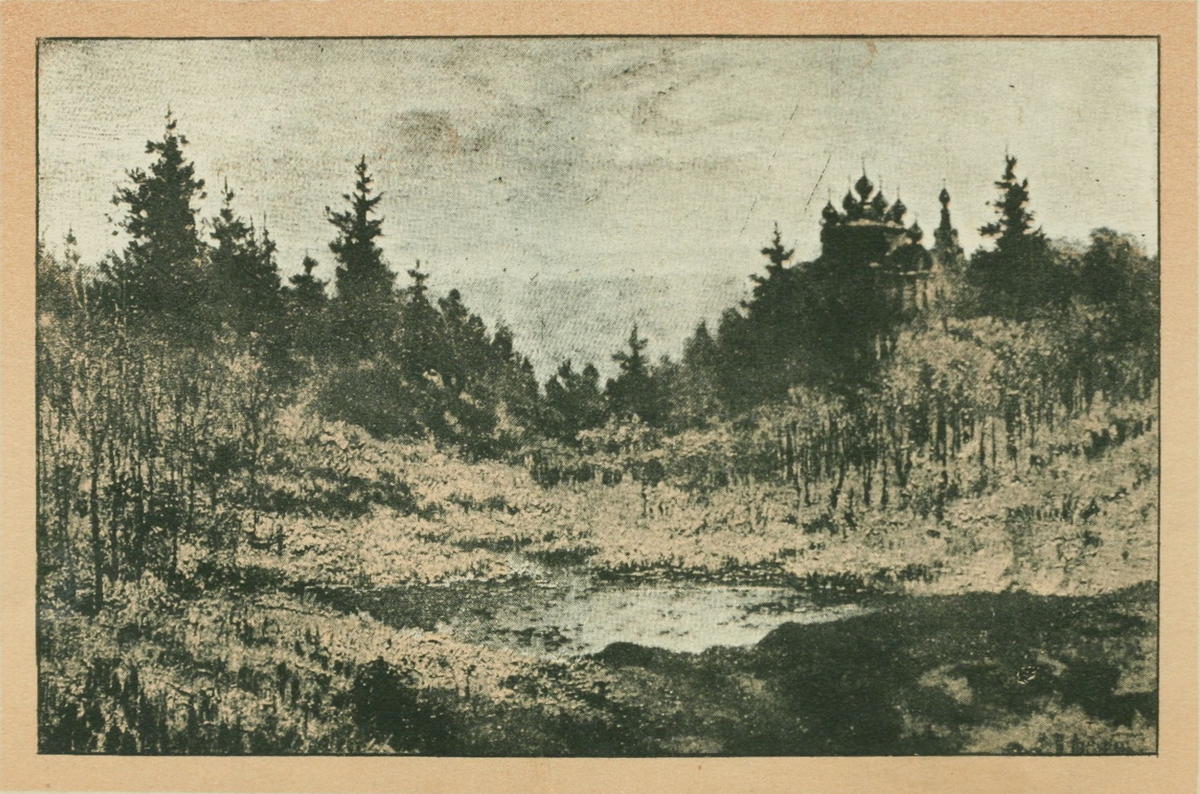
71
One evening in September two men were standing on the piazza of a large manor house in the province of Olonetz. Alexis Talietsin, the taller, bore himself with that air of authority and dignified ease which characterizes a country gentleman dwelling on his own broad lands. His companion, Féodor Gordanoff, was obviously a man of lesser rank, a tutor in fact, but the quiet gravity and kindliness of his demeanour caused him to be regarded with a certain deference and sympathy sometimes denied to men in his position. For some minutes no word had passed between the two men. A solemn, almost religious, silence brooded over the landscape, a silence broken only by the deep notes of a bell chiming from a distant monastery, the gilded domes of which reflected the fading lights of the sunset. Talietsin was the first to stir.
“It is very beautiful, this Russia of ours,” he said. “On such a night as this one could almost believe in God.”
Gordanoff looked at him in surprise. “Then you do not believe, M’sieur?”
72
“Believe?” said Talietsin. “Is it possible for a man of education and intelligence to believe? The Christian myth serves very well for peasants and women-folk. It keeps them out of mischief; but it will not do for such as you and I. Listen to that bell now. I suppose the church is filling with monks and other deluded fools; and to-morrow morning they will all be there again for the Mass, the most incredible of all their superstitions. You agree with me, of course?”
Gordanoff hesitated for a moment, not desiring to discuss the matter; but seeing that Talietsin awaited his reply, he said gently, “No, M’sieur, I do not; I believe in God.”
Talietsin was a little taken aback at the avowal. “Well, well, Féodor Ivanich, I dare say there is something to be said for the existence of a supreme being, a first cause, eh? But surely you do not believe in all this,” he pointed towards the monastery, “in the Mass, for example?”
“M’sieur,” Gordanoff replied, “since you ask me, I do.”
“Is it possible?” cried Talietsin with amazement. “But you are joking, surely. A man of your ability to believe in the Mass! What nonsense!”
“I do not jest about religion, M’sieur,” said 73the tutor. “And I have my reasons for believing.”
Talietsin looked at him with curiosity. “Oho! you have your reasons. Come, you must tell me what they are. But it’s getting chilly out here. Let us go indoors.”
He led the way into the study, which was dimly lighted by a couple of candles, and settled himself comfortably in an arm-chair opposite to his companion.
“Now,” he said with a touch of sarcasm, “let us hear these weighty reasons which can induce an otherwise intelligent man to part with his common sense.”
Gordanoff was troubled by his irony and endeavoured to change the subject, but his patron, with the quick generosity so often characteristic of Russians, had already repented of his words and urged him to begin.
“Forgive me, Féodor Ivanich, if I have hurt your feelings. You took me by surprise; but I like you, and I shall respect your convictions, however extraordinary they may be.”
“Thank you, M’sieur,” said Gordanoff. “If it will really interest you I will tell you how I feel about these matters. To begin with, let me say that at one time I shared the opinions you have just expressed. The education I had received led me to suppose that any form of 74religious belief was impossible to a man of intelligence. I thought, with you, that science had dethroned God, and banished him like a pallid ghost to the realm of exploded superstitions. I regarded science as not only infallible but even omnipotent. There was no ill which science could not redress, no department of human activity in which it was not supreme. The successes already achieved were nothing in comparison with the victories of the future. M’sieur, it required a great sorrow to change my attitude towards science and towards God.”
“Excuse me,” Talietsin broke in, “but you do not despise the achievements of science?”
“Not at all,” replied Gordanoff, “but I have learned, what few scientists will admit, that science has its limitations. Let me give you just one example. I used to be enthusiastic over the scientific doctrine of the survival of the fittest. When I saw some unhappy wretch dying from consumption or cancer, I was accustomed to say to myself, ‘Soon all disease will be banished from the earth. The unfit will become extinct.’ It did not at the time occur to me that this doctrine was cold comfort for the unfit and for those who loved them. Not until my sorrow came did I realize that science had no consolation for the broken-down. While I was happy and contented science filled my 75head; but in my hour of need only God could soothe my heart. Yes, M’sieur, I have discovered that religion concerns the heart as well as the intellect, and to a far greater degree. I found no difficulty in believing in God as soon as I needed him. But perhaps I am boring you?”
Talietsin sat upright. “On the contrary, my friend, I am deeply interested. Your point of view is novel to me. I have never suffered. Please go on.”
“Well, M’sieur, having got so far I desired to go further. We Russians are a gregarious race; we need companionship and sympathy. I could not remain satisfied with my former friends; I had to find new friends with whom I could pray, so I decided to join a church. I studied theology with care, and every Sunday for some months I went to places of worship of different types—for example, the Polish Cathedral, the Lutheran Temple, and even to the English Church on the Quay. In each case I found something attractive, something helpful. Perhaps, owing to my rationalistic training, the Protestant system appealed most to my head. It made few demands on my faith, for everything was so obvious and natural. But I had learnt already that what seems most natural and obvious in religion is not always most true. And certainly the worship of the older churches, 76the Roman and the English, brought more comfort to my heart. I began to consider the possibility of joining one of them. There were two obstacles, however, which hindered my doing so. First of all I did not desire to abandon my nationality. I was a Russian and I had a Russian heart. Both of these communions were of foreign origin, and few Russians attended their services. If I joined either I should never know the religious companionship of my countrymen. And then there was the question of the Mass. I could not see a great deal of difference between the doctrines of the two churches in this respect, and they were doctrines which I was not prepared to accept at the time. At last I decided, in spite of Tolstoi, to try the Russian religion. I began to attend with regularity the services at the Nevsky Monastery. Here at least were Russians at prayer, and I felt my heart warm towards God and my fellows. One difficulty had disappeared. There remained the Mass, always the Mass.”
Gordanoff paused for a moment, and then went on: “M’sieur, what I am about to tell you will no doubt seem to be nothing but the wild hallucinations of one whose mind was already unbalanced by grief and over-much study. For my own part I firmly believe that it was God’s answer to my prayers.
77
“I dreamed one night that I was in a vast cathedral. The building was shrouded in almost complete darkness, and all around me stood a great concourse of those who had been stricken in the battle of life. Each one bent under a heavy burden of sin or of sorrow. From within the screen came the sound of a voice chanting the Divine Liturgy, and the hymns and responses were taken up very sweetly by an invisible choir of those who no longer dwelt on the earth. As the Mass proceeded I peered through the gloom at my neighbours, and I saw on each uplifted face a look of expectancy and eager hope which contrasted strangely with their bowed forms. It seemed that they awaited One who could relieve their pain, as men waited long years since at the pool of Bethesda. And still the Mass went on; but, alas! I had no share in it. How I envied those worshippers who were about to lose their burdens! At last I began to pray for faith and vision, and as I prayed I heard a voice from beside the altar, a low, sweet voice, which somehow I knew was that of the Mother of God, and it said: ‘Lord, open the young man’s eyes that he may see.’ Almost before the words were spoken the great screen faded from sight, and I could see within the sanctuary. The consecration was taking place.
78
“As the prayer reached its climax the small jewelled cross upon the altar slowly increased in size until it was large enough to bear the figure of a man. In the centre of the cross there was a small white object which I recognized as the Holy Sacrament. It was shaped like a heart, the Heart of Christ, and glowed with a mysterious flame which was the Divine Compassion. Rays of dazzling light streamed in all directions from the Heart, driving gloom and sadness from the church, and passing through the walls into the world outside. As my eyes became accustomed to the brilliancy I saw, with increasing distinctness, in the midst of the flame a figure like to the Son of God, his arms outspread against the shining Cross. It appeared that at the same moment my companions saw him too, for all in the Cathedral sank on their knees, and a cry like a great sob broke from them as from one mouth:
‘Salve, Christe Consolator.’
And then, one by one, we approached the altar, and from the throne of the Cross our Lord bent down and embraced us, blessing us with the pierced Hands. All our burdens were consumed in the fire of his Heart, and we returned to our places erect, purified, and strong.
“The vision faded as the Mass came to an end. 79I stood aside while the congregation poured into the street, and I perceived that though the Christ was no longer visible, the Glory of his Presence was enshrined in the hearts of all, as it was in my own.
“M’sieur, I have never forgotten my dream. Whenever I go to Mass I know that it is all happening again behind that veil which hides spiritual things from our eyes. Sometimes I see from the face of some poor peasant that he, too, has eyes to see, and then I pray for those who are blinded by ignorance or materialism, and for those who would limit God’s operations to what they themselves regard as rational and probable. No, M’sieur, I no longer have any difficulty with regard to the Mass. As I contrast it with other services of human origin I can see clearly how infinitely greater and nobler are God’s ordinances than ours.”
Gordanoff had been speaking with intense earnestness, and his evident sincerity impressed his companion. “Féodor Ivanich,” he said, “I cannot say that you have convinced me of the truth of your beliefs; but you have done what I thought was impossible. You have given me the desire to believe.”
Gordanoff smiled. “Then you are not far from the Kingdom of God,” he said.
The music files are the music transcriber’s interpretation of the printed notation and are placed in the public domain.
Footnotes have been renumbered and moved to follow the paragraph from which they are referenced.
Illustrations have been moved from within to between paragraphs as needed.
Minor typographical and formatting errors have been corrected.