Title: Romance in science
Lectures from a course called "Browse"
Author: Bessie Irving Miller
Release date: October 24, 2026 [eBook #79853]
Language: English
Original publication: Boston: The Stratford Company, 1924
Other information and formats: www.gutenberg.org/ebooks/79853
Credits: Vicki Parnell, Fay Dunn, Laura Natal and the Online Distributed Proofreading Team at https://www.pgdp.net (This book was produced from images made available by the HathiTrust Digital Library.)
by
BESSIE IRVING MILLER
A. B., Ph. D.
Professor of Mathematics in Rockford College
1924
THE STRATFORD CO., Publishers
Boston, Massachusetts
Copyright, 1924
The STRATFORD CO., Publishers
Boston, Mass.
The Alpine Press, Boston, Mass., U. S. A.
TO MY FRIENDS
Annie Davisson Kelly
A painter of the exquisite out-of-doors
and
Grace Elizabeth Benjamin
A scholarly student,
through whose efforts the publication
of this book was made possible.
THE SERIES of lectures collected under the title “Browse” have no original contribution to make to the subject of Mathematics. The debt to Pearson, Schlick, Poincaré, Keyser, Korzybski, and others is obvious to the most casual reader. The author has, however, for many years cultivated the study of Mathematics without any real hope of ever having the opportunity of using it professionally. Frequently a friend has asked her if she thought her study profitable from the personal point of view. Her reply was always in the affirmative. It is in the spirit of that college girl who found in Mathematics work and play, support and inspiration, that these lectures were delivered to college girls, some of whom do not even elect the subject in college after the freshman year. These lectures are but invitations to other students to walk in a pleasant meadow along paths which are always beautiful and which at times disclose unexpected vistas of glorious ideals.
Bessie Irving Miller.
Rockford College, 1923.
IT IS with real pleasure that I at this time express my appreciation of the work of those through whose efforts these lectures have been given permanent form. “Browse” is a series of lectures which are the outgrowth of occasional lectures, talks, discussions, questions, and essays, the need of which grows more and more apparent to those of us who are interested in teaching mathematics rather than in teaching a text. It is at the request and expense of the members of the course that the lectures have been typed. In particular, Miss Bohnmilla Hrdlicka, a former student, has done much of the reading aloud and the collecting of collateral material. Miss Wilma Anderson has attended to the business details, and Miss Grace Benjamin has not only given much time and energy to the taking of notes in class but has also contributed much of her own marked literary ability in editing and arranging the lectures so as to preserve something of the vividness with which I speak but cannot write. It is therefore to my students that I express my thanks.
B. I. M.
May 27, 1923.
1
Browse has several titles. It was first named Mathematics XVIII, and under this number appeared in the catalogue. The description given it bore the double heading: “The Romance of Science” or “The Grammar of Science,” According to Which You Wish to Get Out of It. Officially it is now known as Some Literature of Science. But in the registrar’s office it has always been known as Browse.
The first title and the last are perhaps the most descriptive. Under the first a history and description of the course was presented to a not altogether frivolous body of mathematicians in their meeting, of May, 1922, at Rockford College, in conjunction with the Illinois Academy of Science. Although the last title of the course may seem frivolous, the course itself was distinctly not of the dime-novel variety. Some literature of science constitutes its subject matter, and both in content and in treatment it is decidedly scientific.
But where comes the likeness between science 2and romance, you ask? The likenesses are both many and excellent. A spirit of adventure, the willingness to depart from the beaten path, is absolutely necessary to both. In each my advice is: go until you are completely lost. It is a glorious sensation. Test it for yourselves, and determine whether there is any romance like unto the romance of going forward into the intellectually unknown. There is, however, one caution to be observed. Remember that you must go straight forward, for a circle in thinking, like a circle in Mathematics, is a completely closed curve.
But it is Browse which best describes the method of study advised in the course. Have you ever seen a sleek, biscuit-colored Jersey cow, hock-deep in the lush grass of a meadow where it slopes down toward a transparent stream tinkling over brown stones in the shadow of large weeping-willow trees? It is a Jersey cow which browses. A Jersey does not crop continuously, as do the startlingly black and white Holsteins in their short-grass pastures. A Jersey crops only now and then, and between times gazes meditatively over the landscape.
Browse is a beautiful road through a country of phenomenal richness. At times we shall come to a shady lane, too inviting to be neglected. At 3such times we shall gaze about us, eschewing the three-mile gate which limits others to a glance at only the most outstanding beauties about them.
The lanes which are to entice us must necessarily be subject in variety to certain restrictions imposed by my own environment and by the college equipment. In the first place I am limited by what I have studied or read in the past. My references to Mathematics, Astronomy, Architecture, Physics, Biology, English, Literature, and Philosophy must therefore be more frequent, exact, and interesting than my references to Geology, Chemistry, and Music. This is the result, not of taste, but of training. Again, there is the practical consideration—our library. The books which other departments than my own have ordered in the past necessarily restrict the references given, since I shall rarely refer you to a book not in our own library.
The list in your hands is in no sense complete, or even representative. It is submitted to you in the hope that it may be suggestive. For the degree of success of the course is in your hands. It must depend on the individual student. I am trying to introduce to you a literature of objective, rather than of subjective, value and appeal, a field so often open to men, one so rarely open to 4women. It seems to me that this factor is a necessity in the life of every woman who hopes to be successful. I can point out to you the beauties and glories of it. I can suggest a thousand more. But whether or not you will learn, as a result of this course, the essentials of the scientific method, whether or not you will learn to apply them, whether or not you will be able to walk through the world because of your intelligent knowledge of them as one who sees more than he has seen and understands better than he has understood—all this must depend largely on you.
5
IN CONTRAST to poetry, essays, and fiction, which deal very largely with the subjective side of life, scientific literature aims to be objective. This is the fact upon which much of its value depends. For a great many years it has been the practise of men to read both types—Shakespeare and Darwin, Dickens and Tyndall. But if you were to inquire about the reading of the women of these same generations, you would find that while they were well-versed in literature of the subjective type, they were often ignorant of even the names of works of the objective type. These they frequently conceive to be always and only text-books. This is even true of some members of college faculties. How much more true must it be of others.
This difference between the intellectual diet of men and women is due partly to a failure of women to observe those factors which create success for men, partly to the lack of competition between women and men. These again are inter-dependent, since if women had always competed in business with men, they would have been 6forced to observe for themselves the factors which had made their competitors successful. But however the difference may have arisen, it exists even today. There are always times in a man’s life when escape from his own point of view is essential both to his happiness and to his mental vigor. He needs relief from strain and worry. He secures it, frequently, from his objective reading. Many college women, on the other hand, take their degrees without ever realizing the possibility of finding relief in objective literature. It is to fill the need for a new, fresh point of view among women that such a list as the one I have given you is framed. It embraces many of the best works in literature among the products of the scientific world, and is adequate to point you to that universe outside yourself in which you can find relief from the constant and wearing contact of personalities.
Books such as these, which help to lessen the emotional intensity and mental acidity of a business or professional man’s life, are products of what is known as the scientific method. It is well that we should spend some time considering the steps in this method, together with illustrations of them, before we attempt to peruse any of the books themselves.
7
The scientific method consists essentially in the following processes: the observation of phenomena, the collection and classification of data concerning these phenomena, the formation of a generalization, a theory, which shall attempt to describe all the data thus classified, and, finally, a statement of the law according to which the observed phenomena occur.
Observation is, of course, one of the earliest mental processes of a child. A fly moves. The sun rises and sets. A child observes them; but he makes no progress scientifically. Neither would the race have made any progress scientifically had it not observed also that a given length of time intervened between the rising and the setting of the sun, that there were variations, and that those variations were concomitant with the seasons. There you have the beginning of a scientific method. There are the observation of phenomena, and the collection of data.
Next began an orderly classification of all the data collected. Data concerning the motions of the moon were classified, for example, in a separate category from those concerning the motions of the sun. The present day biological sciences still furnish many specific illustrations of this 8stage in the scientific method, as in the study of heredity.
To generalize required much more advanced work. In mathematics, for
example, men made such generalizations as this:
 At length the further idea occurred to someone that simple numbers
being added could be rearranged in order without any effect upon the
truth of their results, and the commutative law of arithmetic could
be stated. In astronomy we find that men once said: “The sun revolves
about the earth.” This was an early generalization, or theory. Then
the conclusion was forced upon them that that theory could not be
maintained unless certain other phenomena were to be over-looked,
phenomena which contradicted the former theory, and could not possibly
be explained, that is, described, by it. Then men said: “No, the earth
moves about the sun.” Still the theory was not quantitative, nor even
altogether comprehensive. At this time, for example, the earth’s orbit
was thought to be necessarily a circle, since theology taught that
this was the symbol of perfection in nature. This belief is not so
inexplicable in light of the fact that a perfect circle is sufficient
as a description of certain phenomena 9observed in other fields. But
further observations forced men to change even this description, so
that they traced the earth’s orbit as a series of sections of circles.
Even this was not an entirely adequate version of the truth. But granted that a given theory accounts for only a part of the phenomena observed, still it is more nearly ideal than the chaos in thought that preceded it. Changes in theories can be accounted for by that same phenomenon, evolution, which explains so many biological changes.
As soon as a theory has been devised which will explain two or more of the phenomena observed, it can be tested. Then, and then only, can you discover wherein it is weak. Whether or not it is true does not, of course, matter. It is for this reason that theories are sometimes called “working hypotheses.” Their object is merely to make some progress toward accurate knowledge. As for their usefulness, it is obvious. If some man had not been bold enough to suggest that the sun moved about the earth, no one would ever have discovered what we now believe to be the fact, that the sun and earth move about their common center of gravity. Now, these former theories are still convenient as methods of describing 10the phenomena they attempted to explain. They are therefore still useful. It is, for instance, sometimes more simple to consider one motion of the earth-sun system at a time. It is then that these older theories are used. A theory is discarded only when it is inconsistent within itself, when it is both inconvenient and incorrect, or when it does not explain even one phase of the phenomena which it attempts to explain. A further example of the out-of-date but by no means useless hypothesis is the commutative law referred to above. At first it applied only to simple numbers. Then the invention of algebra widened its scope. Here again we see that the partial nature of an explanation need not condemn it, but that only incorrectness, that is, inconsistency within itself, and the failure to describe any of the phases of that which it attempts to describe in entirety, prove it to be worthy of abandonment.
In general we are interested in so wording a principle that it will classify and refer to many phenomena. We are interested, therefore, in Darwin, who had the intellectual courage to take the facts he found, and to base his conclusions upon them, irrespective of his personal opinion. He was then free to feel that anyone with 11vocabulary, training, and intelligence like his would, after similar investigations, reach the same conclusions. His ideas were not, it is worth while to note, received with any considerable degree of warmth, in his day as, in some cases, in ours. (It is certain, however, that the greatest disparagement of them today comes from ignorance, although it is also true that some of his theories have not been upheld in exactness and entirety by later experiments.)
A theory differs from speculation in this respect: no theory has a right to exist which cannot be tried and verified by experiment.
The laws of the younger sciences have not yet reached the place where they can be stated mathematically. But in Physics, for example, this is not true. “Any two bodies in the universe are attracted to each other by a force equal to a constant times the product of the two masses divided by the square of the distance between them,” said Newton. “The attractive force varies as the masses and inversely as the distance between them,” his predecessors had said. But no predictions could be made on the theory they had stated. On Newton’s theory predictions can be made. It is therefore called a law, a mathematically worded, and therefore rigorously precise, law. It is on 12such laws, and on such laws alone, that prophecies can be safely based. This type of law is the summit of man’s attempt to treat life by the scientific method.
13
THERE is today, I believe, but one university in this country which has been founded not for the purpose of educating the youth of the land, but for the purpose of carrying on research work and making scientific investigation, to the end that it might make permanent additions to the sum of the world’s knowledge. That university chose for its motto these words: “Veritas vos liberabit,” “the truth shall set you free.” Let us ask ourselves why a university with such an aim should have chosen such a motto.
In Pearson’s “Grammar of Science” there occurs an analysis of the types of “laws,” with their meanings, and the results of their operation. You will recall his opinions. A civil law can be evaded. As Crothers has observed in his essay “The Alphabetical Mind,” if a law of the commonwealth is broken, the breaker pays the penalty only if he is caught. For broken moral laws you pay the penalty within yourself, and society shares it.
14
But you cannot violate a scientific law. You can only illustrate it. When it is said that a natural law is broken, the meaning is not that the law itself is broken, but that the breaker is broken. If I attempt to fly off the roof, not knowing the consequences, my ignorance does not save me. I merely furnish an additional example of the impartiality of the scientific law. “Can’t” does indeed exist even in “the bright lexicon of youth,” for nature’s laws cannot be broken. These laws can, however, be disregarded. Thus when a flyer falls, it is not the law which has been at fault, but the flyer who has been ignorant. His fall is merely the fulfillment of a law which he did not fully appreciate.
It is, then, only when a law of nature becomes known that it is possible for the individual not to break the law, but rather to avoid illustrating it except at will. That is the least reason for your need of knowing the law.
Now, at the basis of every science there lie two assumptions, namely that a cause will produce its effects and that a similar cause will produce similar effects, irrespective of 15time and place, except so far as absolute time and space are concerned. For example, if today an apple falls to the ground from a given height at a given place, it will fall in precisely the same way tomorrow, and would have fallen just so a thousand years ago. Change its place and position, and it will still fall so, except for those changes and their effects. These, then, are the assumptions underlying science. The scientific method, as we have said, consists in the observation of phenomena, the collection and classification of data, generalizations concerning the phenomena observed and the attempt to describe all of them; and, where the science has become exact, mathematical statements of the laws found to govern the phenomena. Sciences so built up are divided into two classes. Those stating laws which are used for the purpose of contributing to man’s knowledge are called pure sciences. Those which are used for commercial or industrial purposes, or for investigation in fields different from their own, are called applied sciences.
Sometimes a fifth step intervenes between 16the generalizations and the statement in mathematical form. This step is the formation of what is known as a “working hypothesis,” a statement which covers some, but not all, of the phenomena observed and classified, a statement which will serve as a basis for experimental and logical tests, and as a point of departure for investigation in new fields. One of the most remarkable illustrations of such a process is found in the history of the Newtonian Theory of Gravitation. Galileo believed that any object falling to the ground changed its velocity at the same rate as any other object falling at the same place at the same time, and consequently that if two objects fell from the same place at the same time they would reach their common destination together. (Now, velocity is distance per unit of time; the change in velocity per unit of time is the “acceleration.”) Galileo’s idea was that these objects would have the same acceleration. He used the modern experimental method of verification. He dropped balls of unequal weight and size from the leaning tower of Pisa. They reached the ground at almost the same time. 17The variation observed was due to the fact that a ball of larger size would meet a greater air resistance. (Verification of this deviation had to wait, however, for the invention of the vacuum tube.)
After Galileo had made so much progress in his search for the law that
governed the attraction of two bodies, Huygens measured the constant
acceleration by means of a pendulum experiment. The period of the
pendulum is known to be 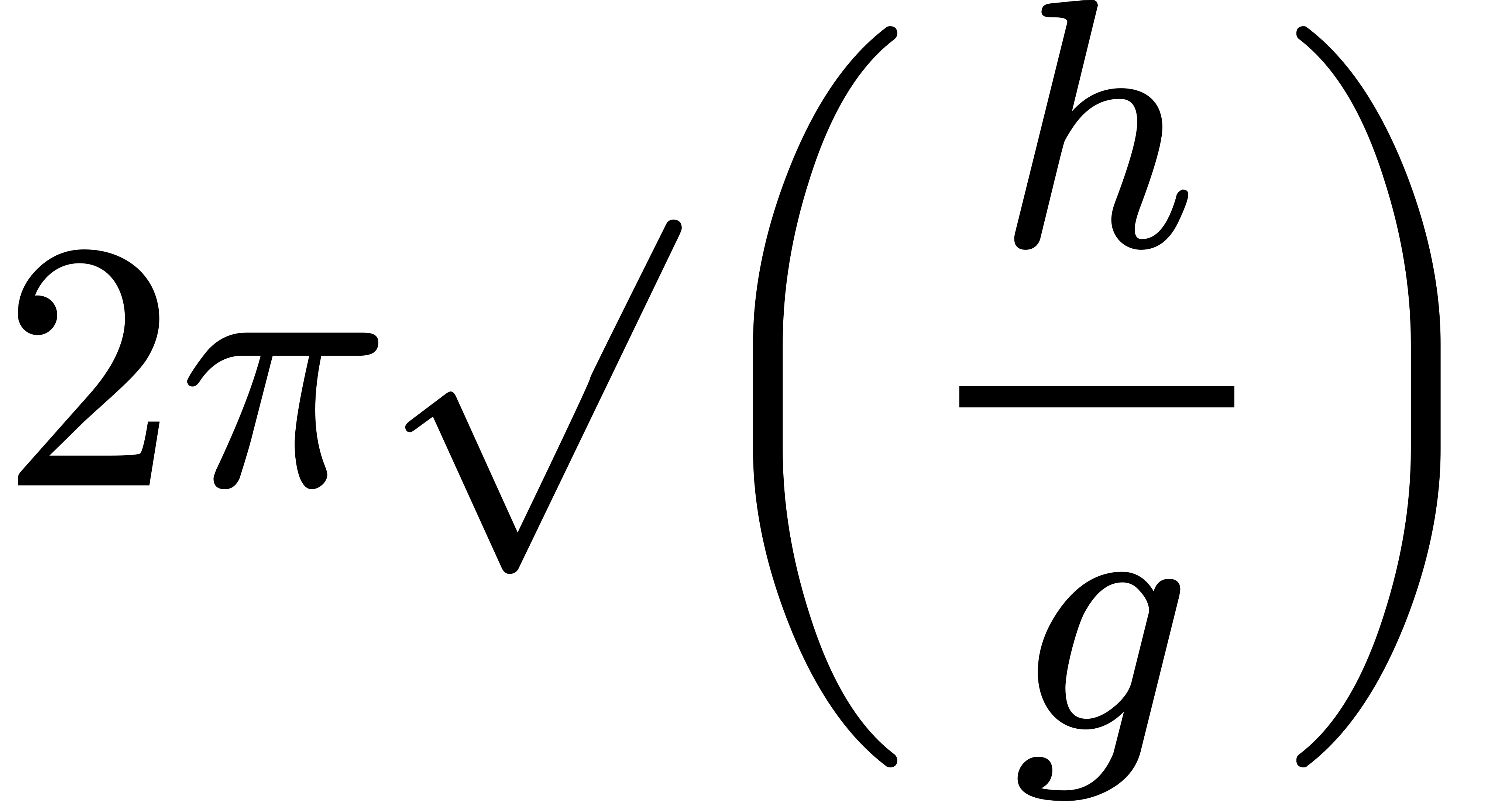 [1]. Huygens’ error was due solely to
time errors of his day.
Next, Copernicus, working in an entirely different field, decided that the motions of the planets could better be described by thinking of them as moving about the sun, a description which involved the change from a geocentric to a heliocentric concept, since they had formerly been supposed to have moved about the earth. Kepler further advanced this descriptive process by the statement of three laws governing that motion: (1) every planet moves in an elliptical orbit with the sun at 18one focus, (2) each planet moves in such a fashion that equal areas are swept out by the focal radii in equal periods of time (this involves a change of velocity), (3) the ratio of the square of the period to the cube of the distance (from the center of the planet to the center of the sun) in each case is a constant.
It was Newton who deduced from these laws concerning the attractions
of planets and sun generalizations concerning the attractions of
any two bodies. He did not do this, however, until he had further
deduced from Kepler’s laws certain statements: (1) that the force
acting on the planet is directed along the focal radius, and varies
inversely as the distance from the planet to the sun (this from the
first law of Kepler); (2) that the only force acting on the planet
is a deflecting force (this from Kepler’s second law); (3) that the
force acting is proportional to the product of the masses of the
planet and the sun (this from Kepler’s third law). It was on these
specific generalizations that Newton based his general one: any two
masses attract each other by a force which is directly proportional
to the 19product of the masses, and inversely proportional to the
square of the distance between them 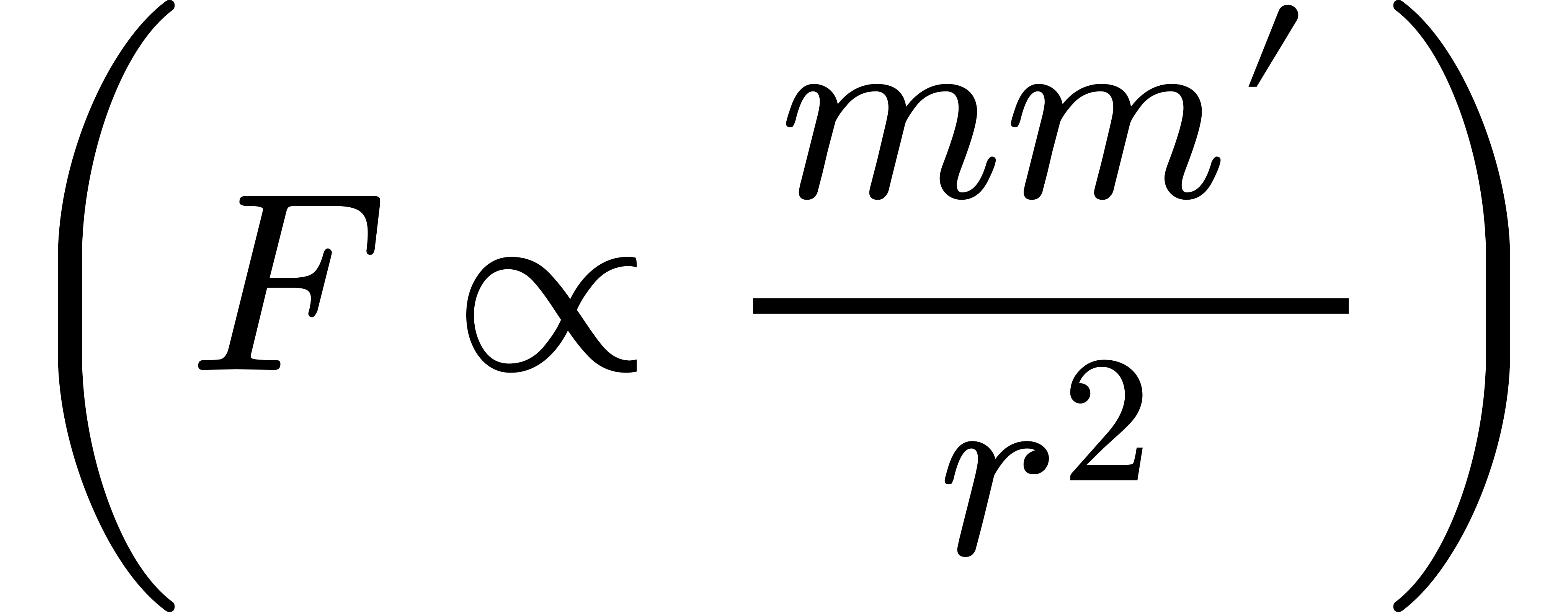 . With the aid of
certain experiments he came to this conclusion:
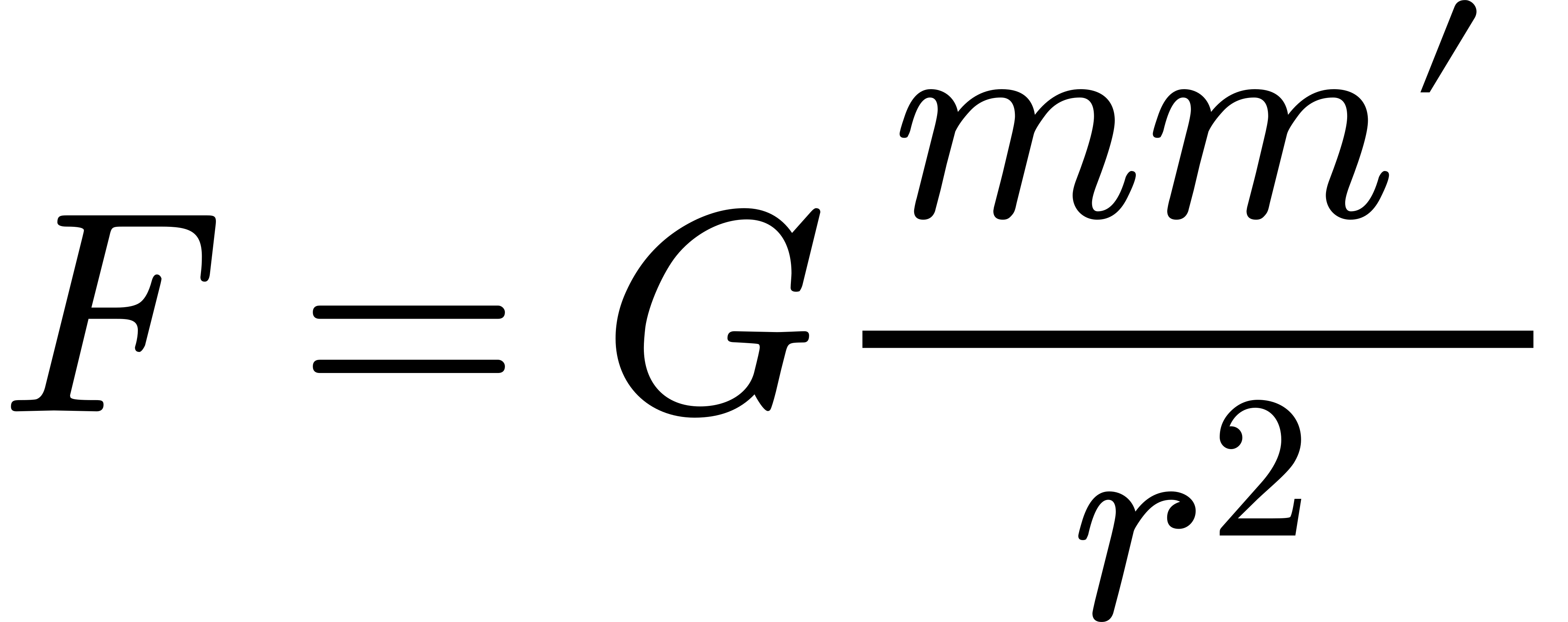 (
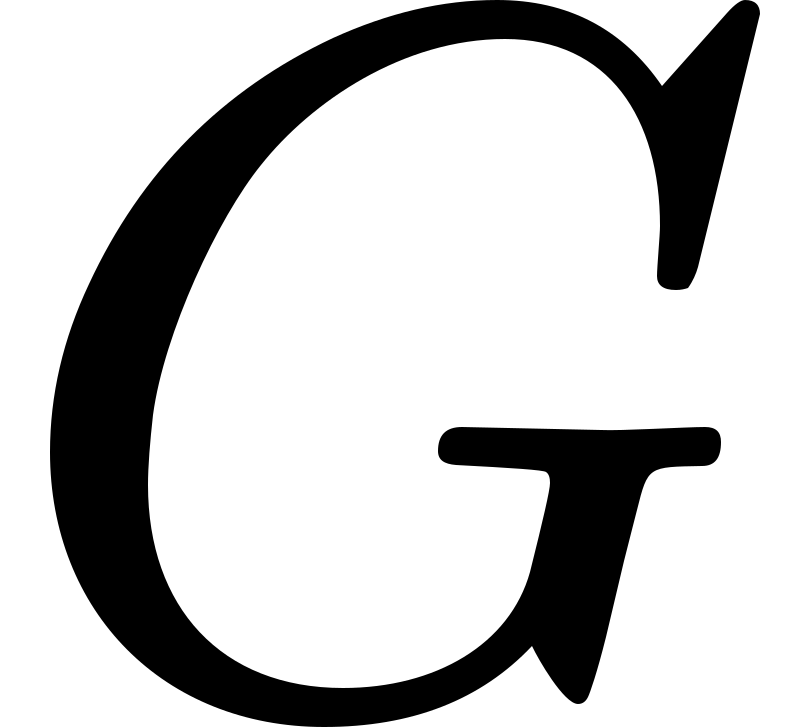 being
definitely determined by the choice of units),
 in the
c. g. s. system.
Here, then, we have a law formulated which expresses the attraction
of any two objects anywhere. Weight (the force with which an object
is attracted to the earth) is but an illustration of this law. That
one statement accurately describes both the apple falling to the earth
and the earth moving about the sun. That same law once devised for
finite attractions has been applied to the infinitesimal and infinite
fields. Here, in the fields of electricity and astronomy respectively,
variations occur. In both cases either velocity or mass, or both, have
approached either 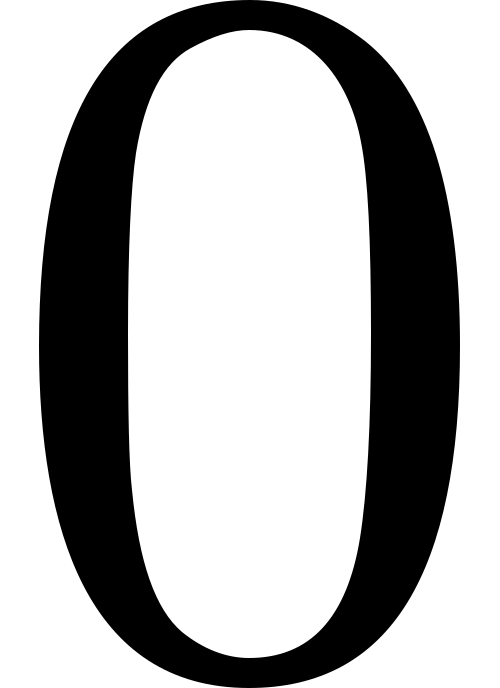 or
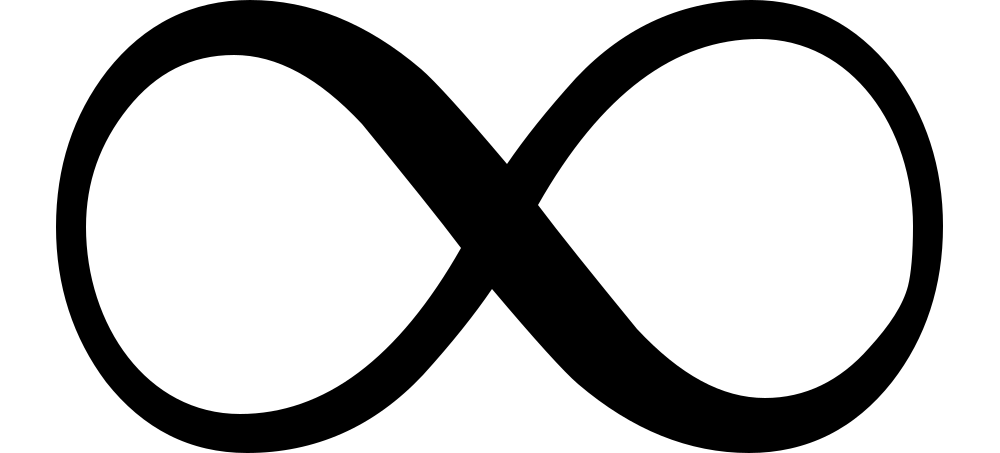 as a limit. We are then trying to measure one
set of quantities in terms of another set not comparable with them.
For instance, 50,000 miles of error is unavoidable in astronomical
measurements. Here centimeters 20would be useless. With these two
explicable exceptions the law of gravity explains all the observed
phenomena.
It must not be supposed that simplicity is indeed the final ideal of a statement of law. Henry Adams bewails, nay, laments, in his autobiography, this idea that we should alternate between the complex and the simple in an infinite series! Yet we can see that Galileo’s statement was simple; Kepler’s complex; Newton’s first, more complex; his later one, more simple; Einstein’s far more complex. Poincaré, over whom Mr. Adams weeps, states only what he has observed, seeing, as Mr. Adams could not, that it is futile to bewail a fact or a law, and that it is sensible to understand it, if possible.
For many years physicists believed that a simple law existed to describe all phenomena observable. This was an assumption. Poincaré works upon no such theory. He has observed; he has stated his observations. There is, he thinks, no indication of whether or not the statement finally evolved will be simple. That will depend upon the stage the 21race has reached when it shall have ceased to exist, or shall have created something to take its place. If this seems unorthodox, consider that in his day Galileo was thought theologically incorrect.
Illustrations of scientific law are, however, to be found in other than physical and mathematical fields.
“Omnis cellula a cellula,” says the biologist. This is a scientific law. It, too, is based on the assumption that a cause produces its effect irrespective of time and place. To be sure, it cannot be experimentally proved to have been true throughout past ages, or to be about to be true in the future; yet it is, indeed, a scientific law. But this type we call a general law.
“Every individual,” says the biologist again, “repeats the history of the race. Ontogeny recapitulates phylogeny.” This is the general law which has governed many teachers in their methods. Such teachers have preferred to the logical development that arrangement of their subject matter which most 22nearly corresponds to the actual historical development of the subject itself.
“Qualities developed by individuals during their life-time are not inherited by their offspring.” Here again comes the familiar ring of the scientific law. Let us notice here, as in the discussion of the law of gravity, that the ability to use the forces described in a law, not ignorance of the law, enables men to rise above circumstances. Here in the law of the inheritance of man by man we see it. The evil is not inherited. True. Neither is the good inherited. It is a two-edged sword which works both ways. But notice this: those who have developed good qualities can, if they realize the importance of this law, surround their children with a good environment.
It is knowledge of the truth which sets men free. Thus, and thus only, can we walk freely through the universe, controlling our actions, not controlled by our environment. Thus, and thus only, can we be masters of our fates. “Veritas vos liberabit!”
[1]
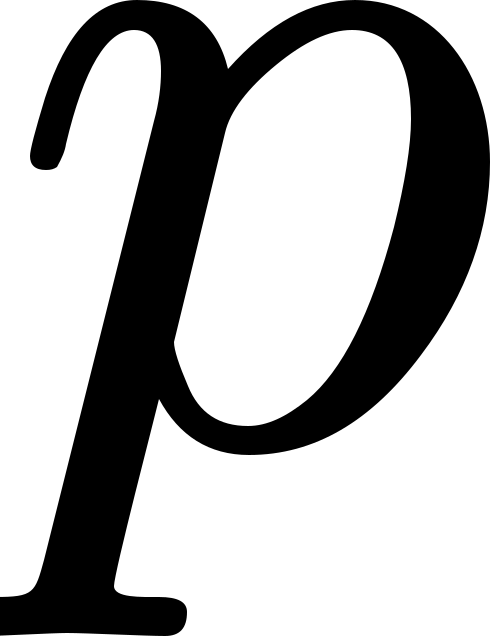 = period of pendulum,
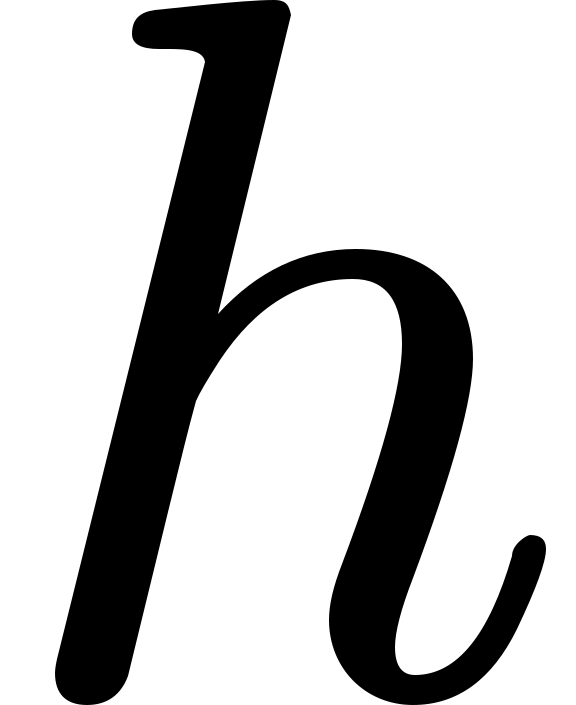 = length of pendulum,
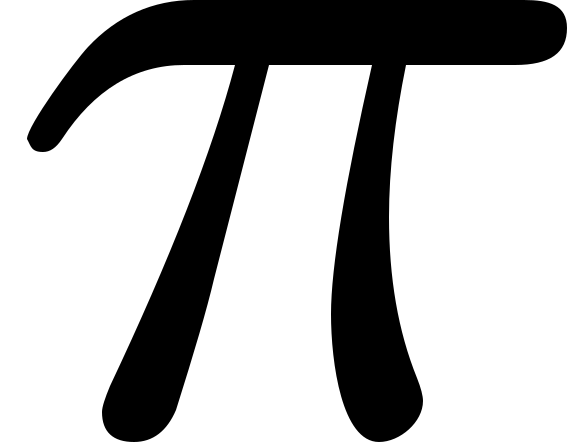 =
3.14159+,
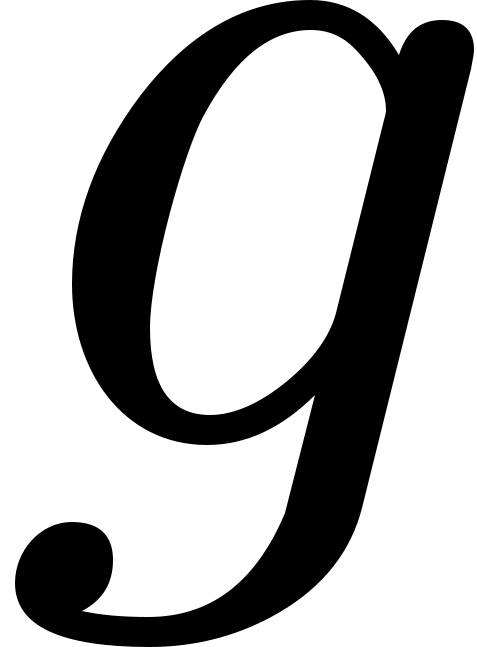 = acceleration of gravity.
23
References:
Published by Munn & Co., Inc.
Edited by Henry P. Manning, Ph. D.
THE fourth dimension, however simply it may have been explained, was quickly adopted by the spiritualists as a place of abode for those spirits with whom they claimed to have communication. The confusion which followed was alarmingly wide-spread. One Schubert, a mathematician, writes quite seriously for the express purpose of meeting this pernicious propaganda with accurate information concerning the mathematician’s use and the spiritualists’ misuse of this term “fourth dimension.”
That misconception is no longer vital. But another has arisen, especially persistent since the time when Einstein’s theory became a 24matter of interest to the general public, which is causing trouble in its own fashion among non-mathematical thinkers. This newest misconception is based on the idea that there is a physical fourth dimension, similar to the third dimension and of a like nature.
Since both of these misconceptions rest upon a misunderstanding of the same mathematical concept (that of dimension), it seems worth while for us to examine in some detail the precise scope of those algebraic and geometric concepts which the mathematician denominates “dimensionality.”
Let us consider the matter first from a geometer’s point of view. A point is assumed by the mathematician to have no dimension. As soon as a line is supposed to exist, there are an infinite number of points existent on that line. In order to locate any particular point on the line, certain conventions are necessary. Of these the first is the assumption of an origin; the next, the choice of a unit of measurement, and a one-to-one correspondence between a number system and the points on the line. To express this less technically, 25it is usual to mark one point zero and, after a unit of measurement has been adopted, first to assign a positive and a negative direction from the zero point, then to establish a one-to-one correspondence between the points on the line and the members of the real number system.
A thermometer scale is an application of this mathematical theory. On the centigrade thermometer, for example, to every positive number there corresponds a temperature above freezing, and to every negative number there corresponds a temperature below freezing. Notice that word “application.” It illustrates a point of view much used in mathematics and applied sciences. The mathematical theory of which the thermometer scale was an “application” does not deal with the temperature, nor with the thermometer; but since that particular mathematical theory describes a thermometer scale more accurately than any other mathematical theory describes it, we may speak of the thermometer as an application of the theory, and, therefore, as an illustration of the one-dimensional geometry.
26
If in our mathematical theory we have assumed the existence of a straight line, that line may be used to represent a one-dimensional form, or manifold; for a single measurement will locate uniquely any point on the line, and a single point on the line will locate uniquely any measurement. A two-dimensional form, or plane, can be obtained by assuming the existence of a single point outside the given line. It is then possible to derive all other points and lines in the plane.
Now, in order to locate uniquely any particular point in this plane we set up a so-called co-ordinate system, consisting of two intersecting straight lines called axes. The point of their intersection is called the origin. A unit of measurement is chosen for each axis, two directions are chosen for each axis, and a one-to-one correspondence is established between the points on each axis and the members of the real number system.
This is a very commonly used scheme for the location of houses in a city in which the two principal streets divide the city, north and south, east and west. The mathematical theory 27had made it evident that two numbers, or measurements, made parallel to each axis, are sufficient to locate a point uniquely, and that a point is sufficient to determine two numbers or measurements. But notice this. As the thermometer scale could not be said to have been identical with the mathematical theory of a one-dimensional manifold, so this mathematical theory of a two-dimensional plane is used to describe the streets of the city not because the streets can be considered to have no breadth or thickness, but because the elements on which the attention of a stranger are focused are more adequately described by the geometric plane, lines, and points than by any other mathematical theory.
It is, then, clear, that in none of these discussions has the physical existence of the geometric forms—points, lines, and planes—been assumed or proved, except as concepts in the physical mind of the mathematician. Their physical existence does not enter into the discussion; and although the physical phenomena are described in terms of the mathematical concepts, they are no more 28identical with them than a table, the physical object, is identical with “table,” the word which describes it.
As it was possible to obtain a two-dimensional plane from a one-dimensional manifold by assuming a point to lie outside the one-dimensional form, so it is possible to obtain a three-dimensional form, or space, by assuming a point to lie outside the two-dimensional plane. Further, by adding to our previous co-ordinate system a third straight line perpendicular to the other two at their point of intersection, we can use three measurements to determine a point in three-dimensional space, and conversely we can use a point in three-dimensional space to determine three measurements, or three numbers.
This mathematical theory of three dimensions is frequently used to describe the physical space in which we live. The reasons for so using it are rather obvious. It is to be noticed, however, that latitude and longitude, having for their axes the equator and the great circle through Greenwich, determine points on the earth’s surface, which is not a plane, 29but a curved surface, and that they involve only two measurements, and not three. A mathematician would therefore call geography a two-dimensional geometry, although points in a physical space on a curved surface are located by that scheme. This being understood, it becomes evident that the mathematician does not confine himself to the use of any single theory for the description of physical space, but rather chooses for each purpose a theory which, while consistent with itself, brings out most adequately those features in physical space in which he is at the time most interested.
Suppose we turn to algebra and see what there corresponds to the
geometric development we have been tracing. You remember that in the
one-dimensional geometry one measurement determined a point. Now, in
algebra, an equation in one variable can be used to represent
that point; that is,  , where a is
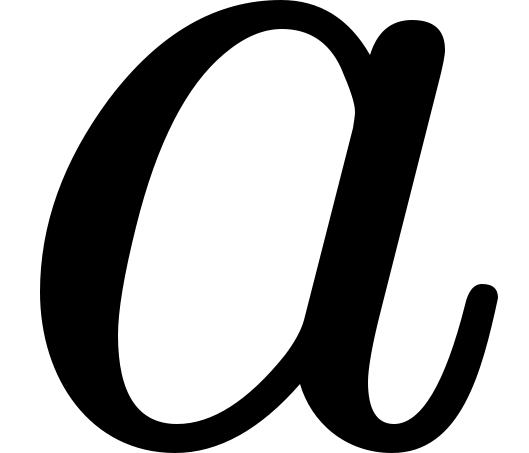 constant representing
any member of the real number system. The equation in algebra and the
point on the line in geometry are merely different expressions of the
same 30mathematical fact. Again, in correspondence to a line in the
plane there is an equation of the first degree in two variables:
 One may thus talk with equal truth and ease of the intersection of
two lines in the plane or of a solution of two linear equations in
two variables. Or we may speak on the one hand of two straight lines
in geometry being perpendicular to each other, and on the other hand
of the algebraic coefficients of two linear equations satisfying a
condition. In geometry there exists a plane, and in algebra there is
correspondingly a linear equation in three variables. In geometry three
lines may be perpendicular to each other; in algebra the coefficients
of the equations of the three lines satisfy a condition. We represent
these parallel developments in algebra and geometry by the following
table:
| GEOMETRY | ALGEBRA |
| Point on a line | |
| Line in a plane |  |
| Plane in three-dimensional space |  |
31
Two methods, one algebraic and one geometric, thus often appear for the description of the same fact. It is merely a matter of convenience to the mathematician as to which he will use for the description of any particular phenomenon.
Now, it is easily to be seen that we can conceive of more than three
variables in algebra. In fact, so soon as the thought occurs to us we
can write down an equation involving four variables:
 and if we have four such equations we can find a common solution. Since
there are many quantities in nature which involve four variables or
more, we obviously have a use for the algebra which deals with four
variables or more. Yet we know that the four variables used for a
description of such phenomena do not exist physically. In the same way,
as we have said, we know that the mathematical point does not exist in
the physical sense. Yet why should we limit our use of the geometrical
language to those fields in which there is a physical representation
of the point? In 32geometry a point of intersection corresponds to a
common solution of sets of equations. Equations in four variables have
a common solution. Is it not therefore as reasonable to assert that,
since the values of the four variables are uniquely determined, four
three-dimensional spaces then have a common point of intersection; as
it is to say that, since three equations in three variables determine
the values of the variables, three two-dimensional planes then have a
point of intersection? The planes,
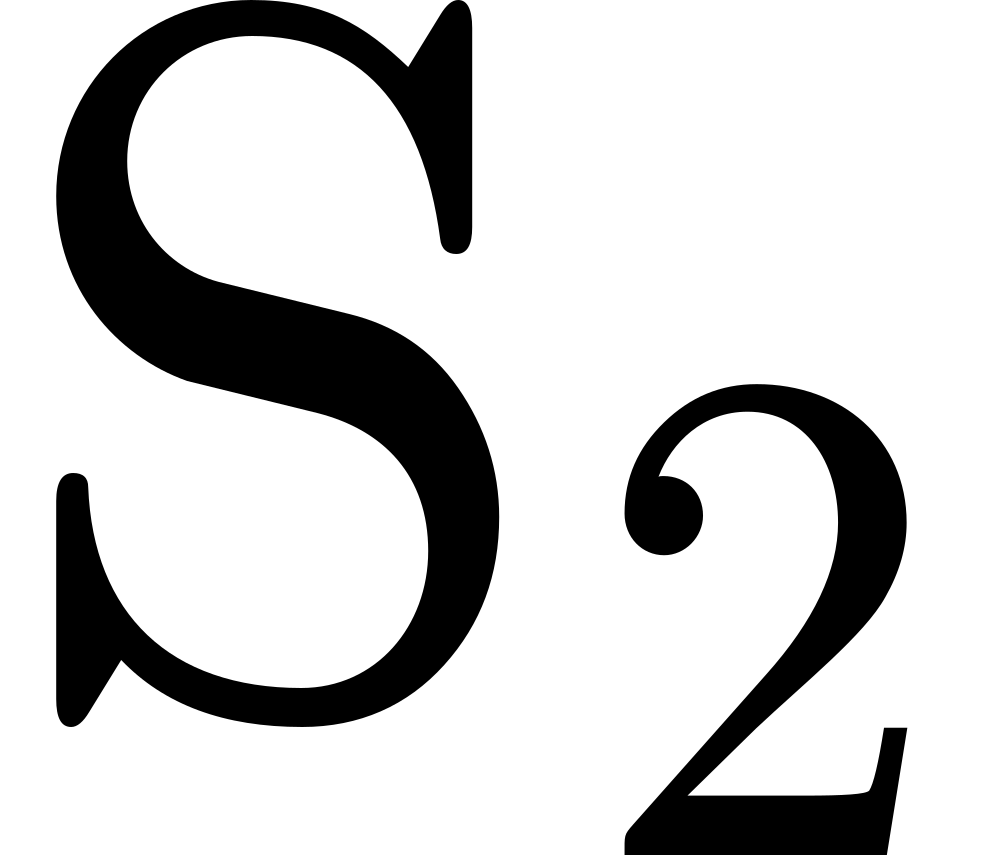 ’s, lie in an
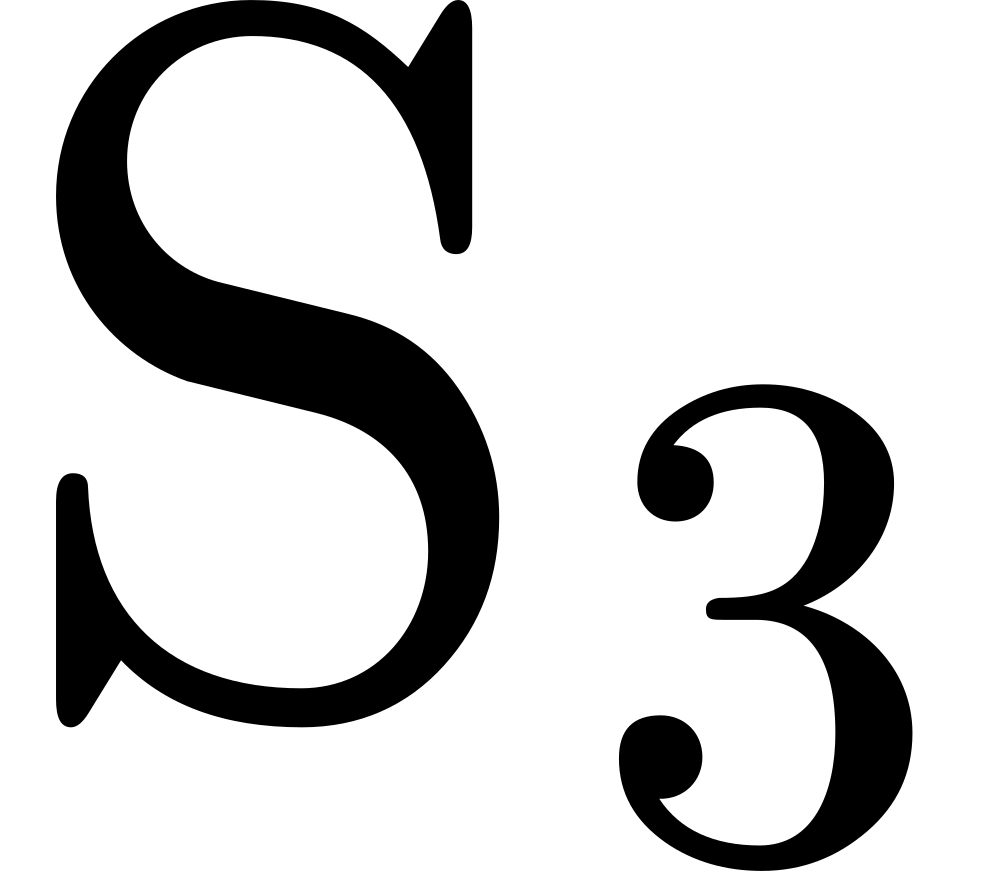 . Extending
the geometric conventions we may then state that four ’s lying in
a four-dimensional form
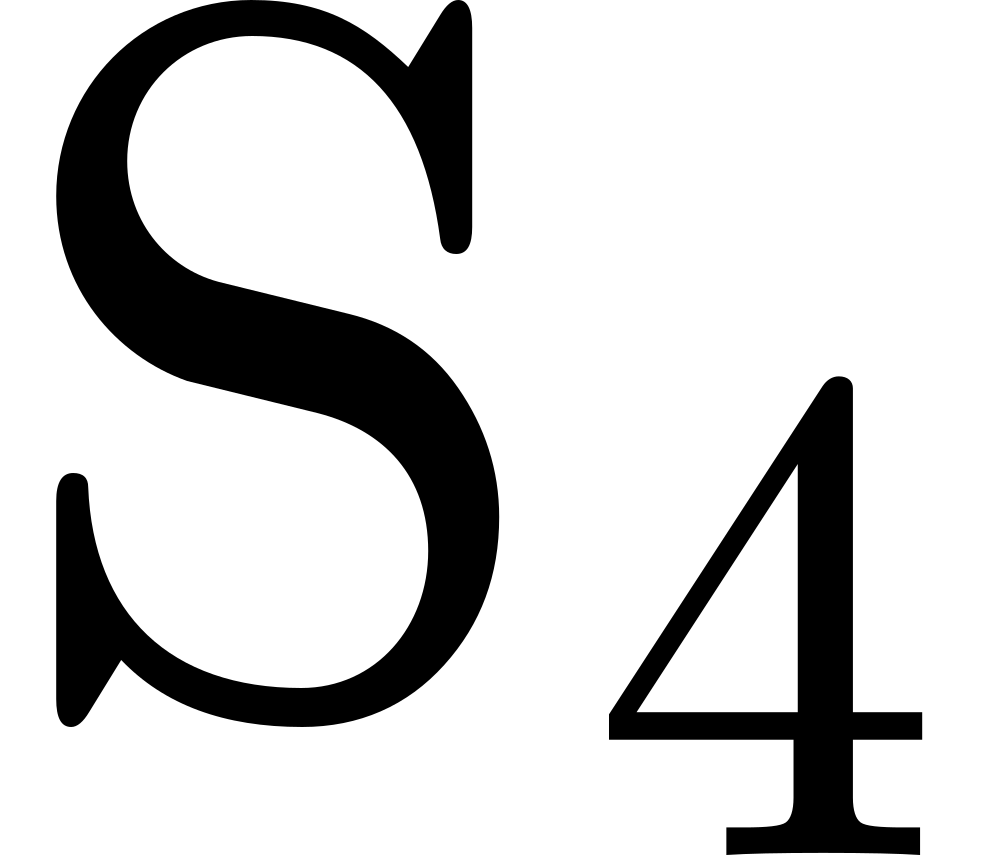 , meet in a point.
There is in this language no implication concerning the physical
existence of any space. Then what shall we say of the question:
shall we or shall we not speak of a fourth dimension? Why, simply
that it mathematically reduces itself to this question: when four
variables must be used, are the geometric terms ever a more convenient
description than the algebraic terms? Inasmuch as the algebraic
scheme can be extended indefinitely, 33must not the question of an
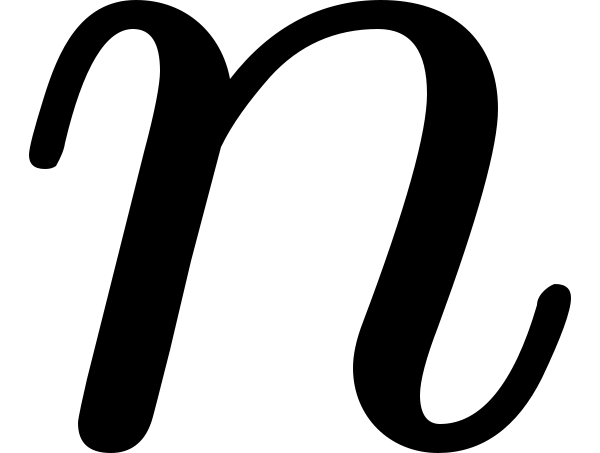 -dimensional geometry be considered?
When this is understood, and the possibilities of the transformation of the expressions of one language into those of the other are clear, the connection supposed to have existed between the fourth dimension of the mathematicians and the fourth dimension of the spiritualists dims from faintness to non-existence. Henceforth it is unmistakably clear that those who scoff at the Einstein Theory or who object to it because to them it seems to imply the existence of a physical fourth dimension, are dupes of their own incorrect thinking upon incorrect hypotheses and flagrant misuses of the mathematical term, fourth dimension.
34
WE ARE to study the application of the ideas concerning the fourth dimension and non-Euclidean geometry which is found in Einstein’s theory. But since Einstein’s theory is expressed in terms which involve an understanding of these ideas, it may be well to try first to understand the ideas themselves.
We have seen that a mathematician could use a geometrical form of
four dimensions, 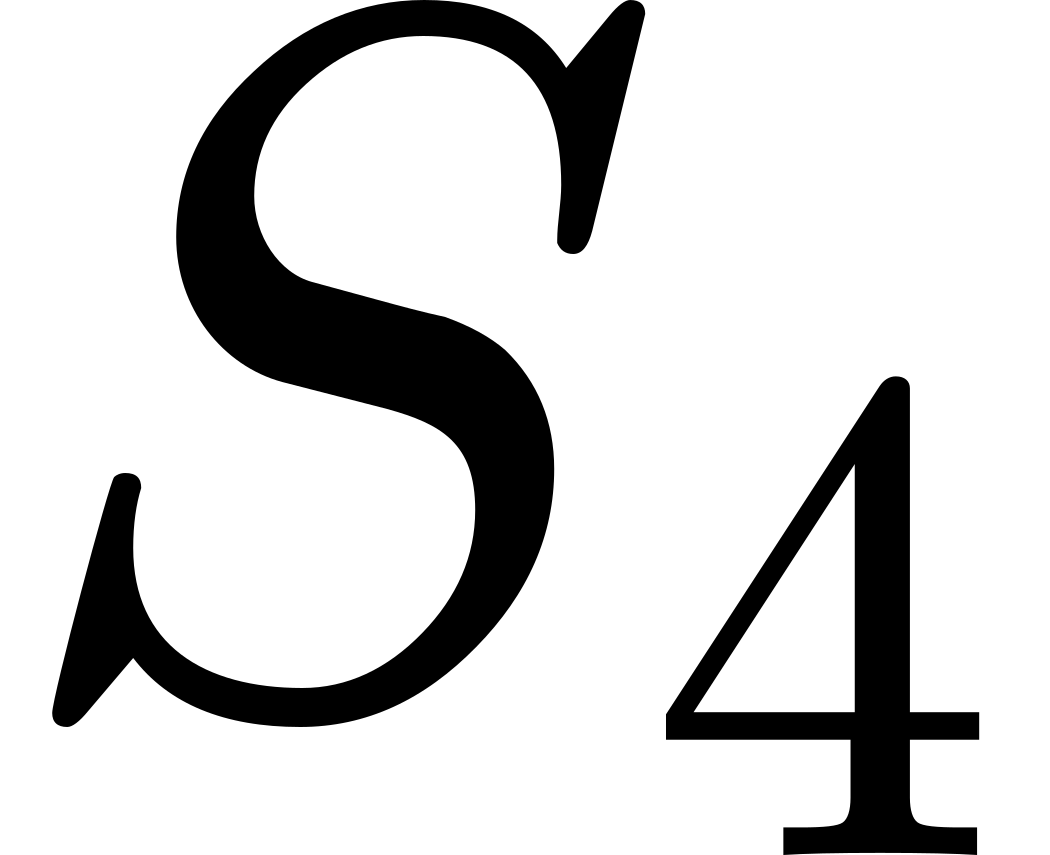 , to represent any function dependent upon four
variables. If you will further consider for a moment that any event or
phenomenon of the physical universe can be located in physical space by
three measurements, and that a fourth is needed to locate it in time,
you will readily see why a four-, rather than a three-, dimensional
geometry is used whenever time affects an event.
But some of you object to time being thus 35associated with space,
because the units of measurement used to locate a point in are
in terms of miles or meters, while time is measured by units of hours
and years. Yet you are entirely accustomed to such mathematical usage
as that the area of a rectangle (measured in square inches) equals the
product of the length and the breadth (each measured by linear inches),
and to the interest on a sum of money being equal to the principal
(given in dollars) times the rate of interest (given in percentage).
Moreover in statistical graphs do you not mark the time (in years) on
the 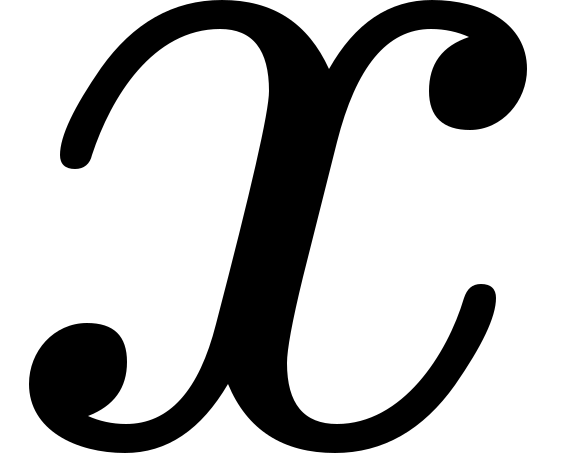 -axis, and the price (in dollars) of the commodity on the
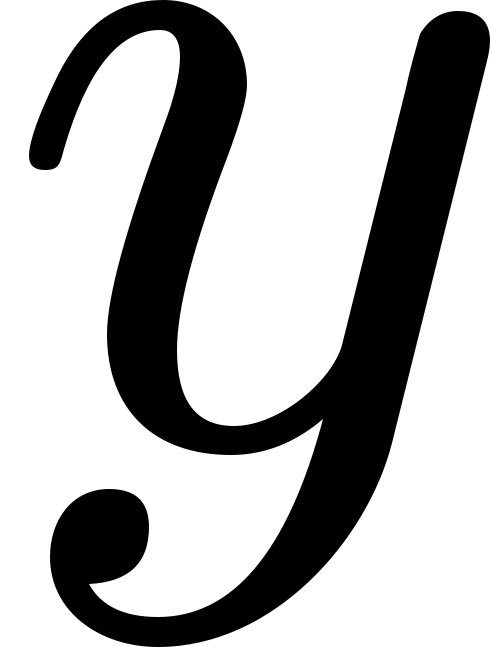 -axis? Can you not then interpret the resulting curve with
ease? Every physicist is accustomed to associating the volume and the
pressure of a gas, nor does he require that the units be the same. So
the association of time and space can, from the point of view of the
mathematician, be readily associated and with equal readiness described
by a four-dimensional geometry.
But there is still another reason why it is convenient to use a four-dimensional geometry. 36Have you ever observed that if the ends of a loop are considered as fixed in a plane, and motions are assumed to be limited to rotation and translation in the plane, the loop cannot be unlooped?
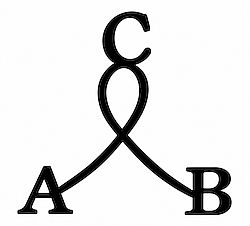
If, however, motion in is permitted, the cord may be unlooped by
picking up the portion at 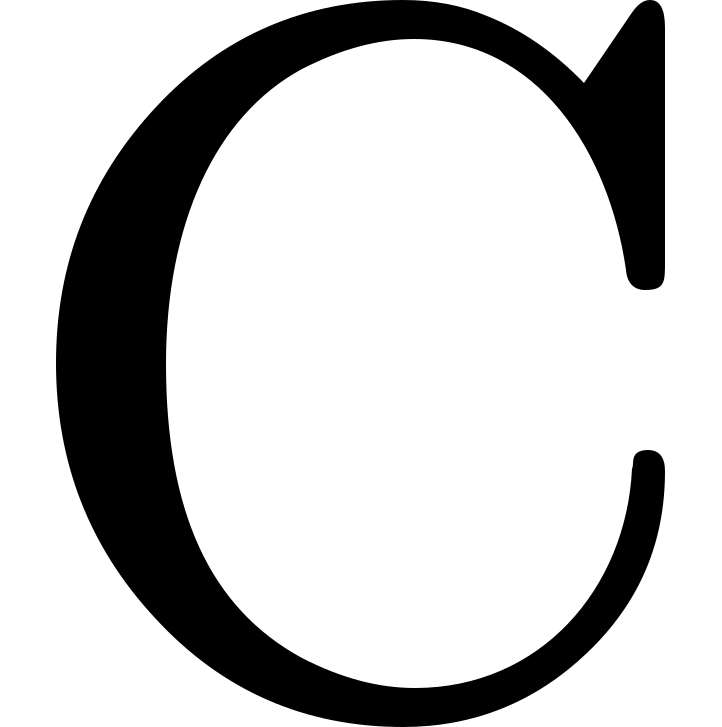 , turning it towards the right, and laying
it down again, a motion which can be described algebraically as well
as geometrically. Similarly, a knot with the ends fastened cannot be
untied in . But the algebraic conditions similar to those in the
previous case can be set up, and, by an extension of the geometrical
language, the knot can be untied in . Since this last geometrical
expression is easier to say than the corresponding expression in
algebra, it is more apt to be used than the algebraic terms are, to
explain this phenomenon.
Again, it is sometimes easier to use Euclidean than non-Euclidean geometry in a description 37of phenomena of space. For example, you use Euclidean geometry in every-day life in the measurements of plots of ground. Although you know that physical phenomena in space have three, not two, dimensions, you assume a field to be a plane, and, if it be a rectangle in shape, you assume that it has an area equal to its length times its breadth. Why? Because that describes it more nearly than any other mathematical figure does. You know that the earth’s surface is curved. Yet in measuring fields you do not use the method of measuring a part of the surface of a sphere. Why? Because the difference in measurement between a plane surface and the slight degree of curvature of the earth’s surface over a very few acres or miles is so slight as to be nearly negligible. It is a disregard of the curvature of the earth’s surface which makes it possible for us to use Euclidean geometry in this case. The Euclidean postulate, sometimes stated: the sum of the angles of a triangle cannot exceed 180°, is not fulfilled if the triangle is traced on a curved surface instead of on a plane. This can be easily seen by drawing 38such a triangle on a baseball. But even on the surface of a sphere Euclidean geometry may sometimes be preferable to non-Euclidean geometry as a convenient description of existing phenomena.
39
MAY we for a moment recall a few facts and a point of view from the preceding lecture? Since three measurements are needed to determine the position of an event or a phenomenon in space and a fourth is necessary to determine the time of the event, physical phenomena are said to take place in a four-dimensional manifold. A second fact to be recalled is that a change of curvature sometimes makes it more convenient to use non-Euclidean geometry instead of Euclidean geometry. For Euclidean geometry is based on the assumption that the sum of the angles of a triangle is equal to two right angles. This assumption is fulfilled if measurements are made on small sections of the earth’s surface: that is, the deviation from this assumption is so small with respect to the quantities measured that it cannot be detected. When, however, a triangle is measured from New York to London to Naples, the deviation is noticeable, and it is then more convenient to 40use non-Euclidean geometry in which the straight line is replaced by the shortest line between two points, the geodetic. Either geometry can be used for each case, but it is more convenient to use sometimes one and sometimes the other. This is an illustration of the scientist’s point of view in choosing the most convenient of two equally logical methods of representing phenomena.
The Ptolemaic method of describing the motions of the sun and planets about the earth as a center is not more incorrect than the Copernican method of describing the earth’s motions about the sun as a center, nor is the latter more incorrect than the Newtonian method of considering the sun and earth as revolving about the center of gravity of the system. But sometimes one method is more convenient than another and one is more general than the others. Similarly while Newton’s law of gravitation will probably always be used to describe slow motions, Einstein’s theory may be used to explain fast motions and to account for some apparent exceptions to Newton’s law.
41
Since Einstein’s theory rests essentially upon the concept of relativity applied to space and time as well as to motion, we shall briefly discuss the theory of relativity and then state Einstein’s deductions and the mathematical and experimental verifications of these deductions.
The concept of relative motion is old. The table, for instance, is at rest with respect to the earth, but it with the earth is rushing through space as the earth moves around the sun. Again, if a man in a moving train lets a ball fall, to him it appears to fall in a straight line if the train has a constant velocity, while to a man on the street it appears to follow a parabolic curve. Newtonian mechanics admits the relativity of motion, but assumes space and time absolute, that is, independent of the observer.
On the assumption of absolute time and space it should be possible to
detect the earth’s motion through the ether, the medium by means of
which light is supposed to be transmitted. For if the light waves were
to move through the ether with a velocity  (186,000 42miles
per second), and the earth with a velocity
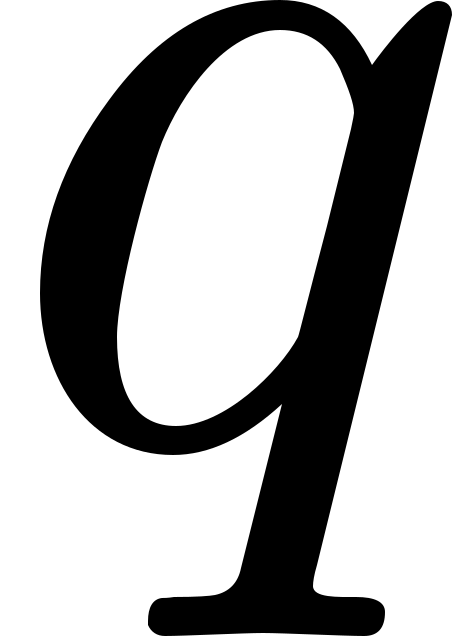 , then when the
earth is moving in the direction of the light waves, we should obtain
for the apparent velocity of light
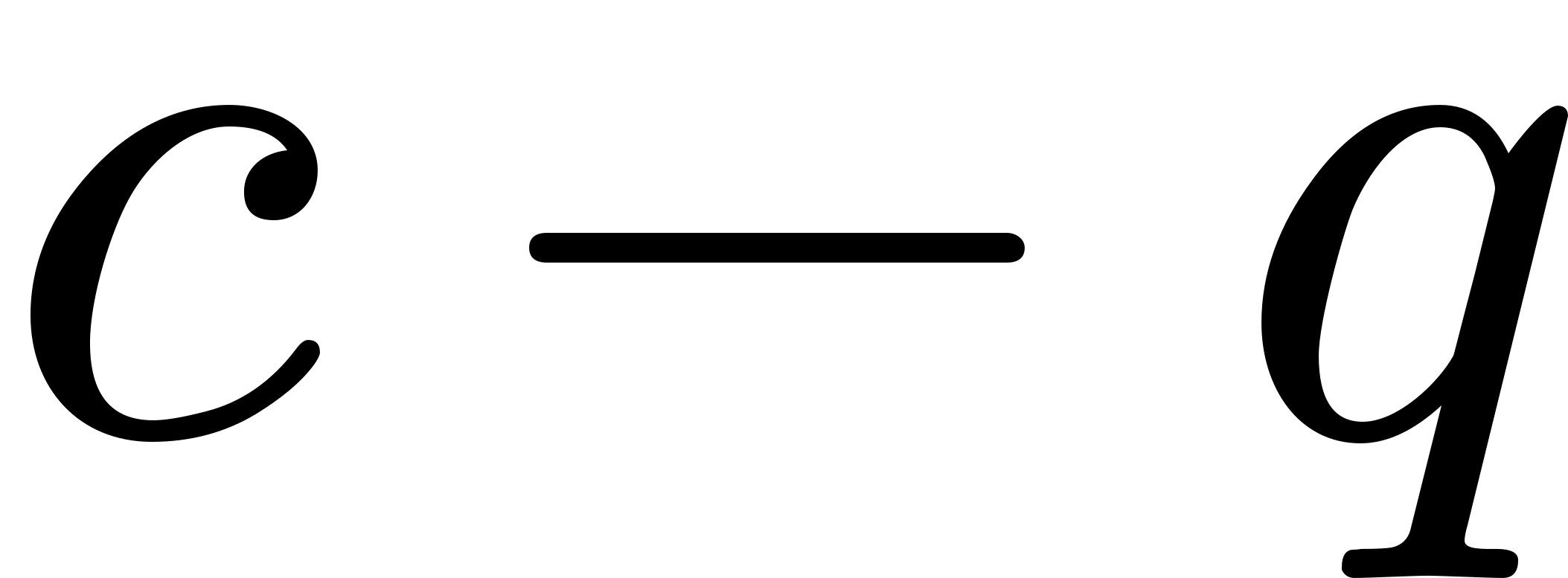 , and when the earth moves in
the opposite direction, we should obtain for the apparent velocity of
light
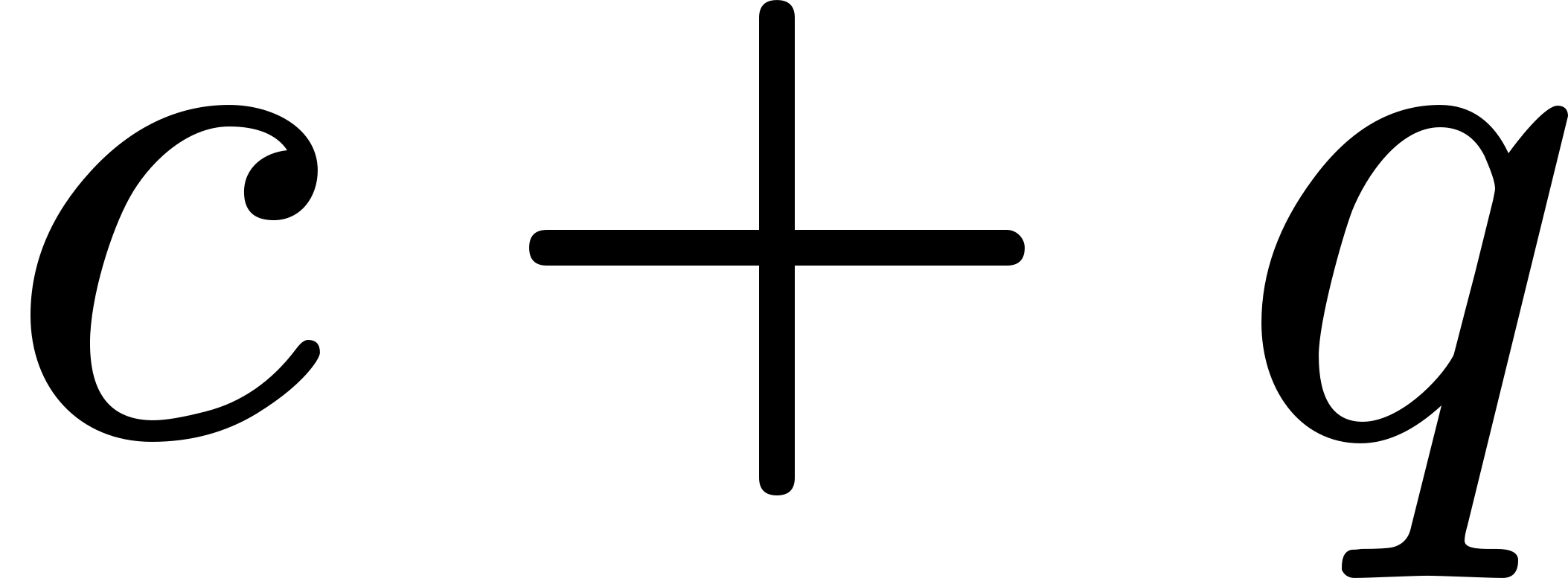 . Hence different velocities for the transmission of light
would be obtained according to the relative directions of the light
waves with respect to the direction of the earth’s motion. Did such a
difference exist, the Michelson-Morley experiment would have detected
it, for the experimental error was only
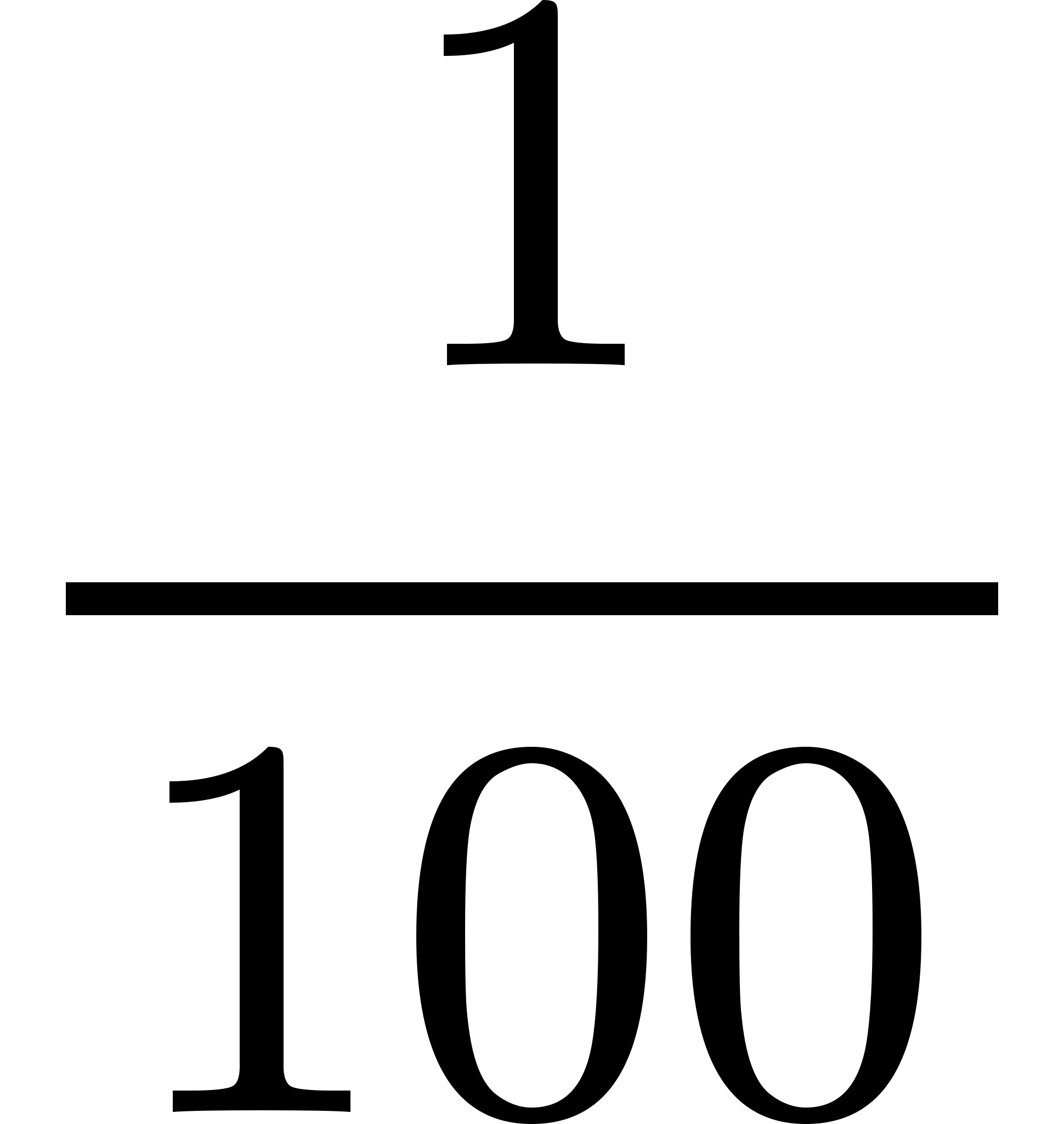 of the quantity to be
measured. The experiment had a negative result, proving that absolute
motion with respect to the ether cannot be detected. It had long been
accepted that absolute uniform rectilinear motion could not be detected
by a mechanical experiment. For example, an experiment on a moving
train is the same as on the earth, provided the train moves without
acceleration. Michelson’s experiment added that electro-dynamical
experiments do not indicate whether or not the observer is moving
uniformly 43and rectilinearly. Then from experiment is deduced the
following “special theory of relativity.” This theorem states: “All
laws of physical nature which have been formulated with reference to a
definite co-ordinate system are valid, in precisely the same form, when
referred to another co-ordinate system which is in uniform rectilinear
motion with respect to the first.” This empirical law is called the
special theory of relativity because it affirms the relativity of
uniform translations only, that is, of a very special class of motions
(Vide pages 10-11). This contradiction of the ether theory is
the point of divergence of the old and new physics.
Lorentz and Fitzgerald solve the logical difficulty by making a new
physical hypothesis, that “all bodies, which are put in motion with
reference to the ether, suffer contraction to 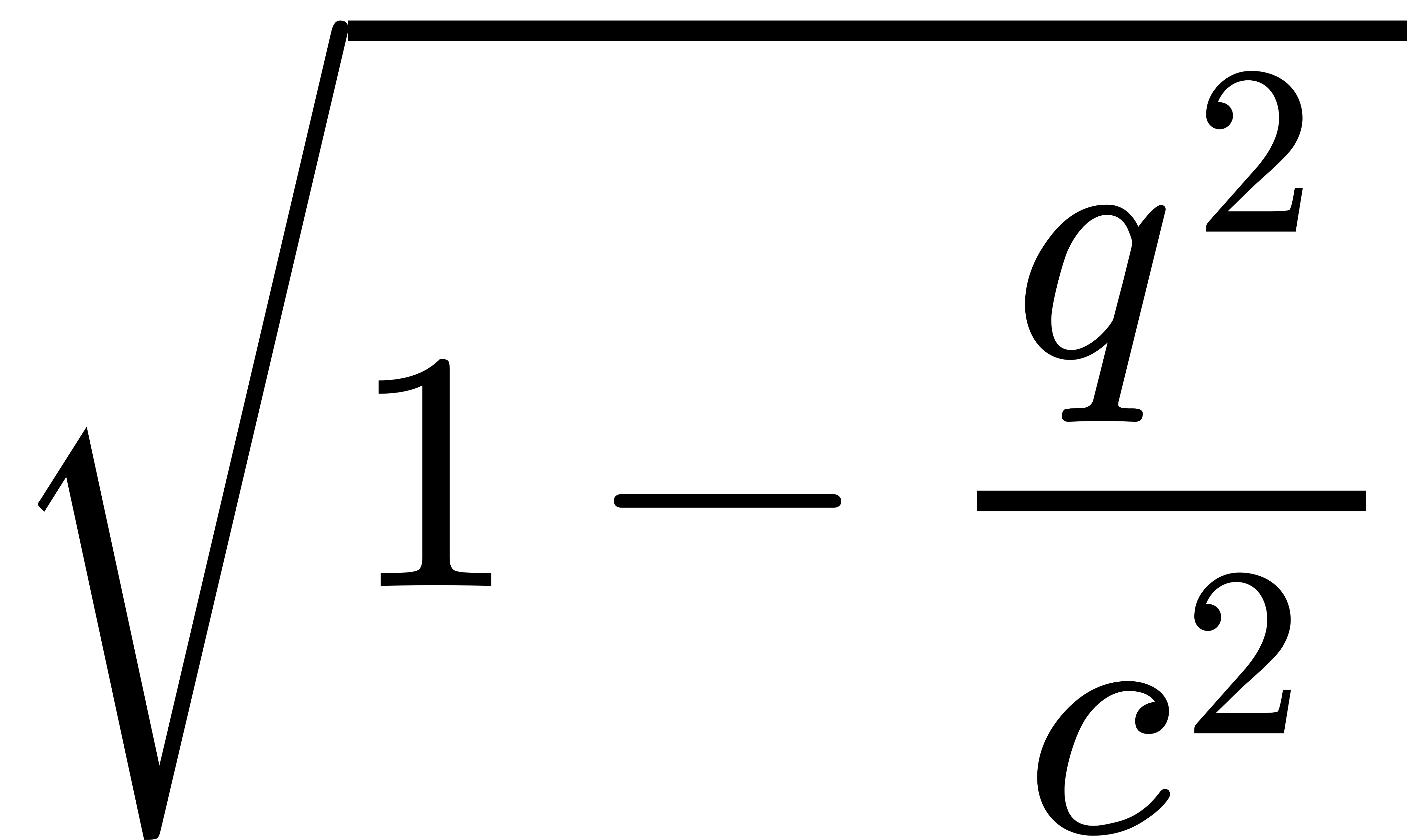 of their
length in the direction of their motion.” (Vide page 11.)
The state of affairs is this, then. According to the old theory absolute motion with respect to the material ether exists. But such motion cannot be observed experimentally. Therefore, 44special hypotheses must be invented to explain why it cannot be perceived. In other words the special theory of relativity does not hold, but since physical phenomena take place as if it were true, special hypotheses must be invented in terms of which the experimental evidence can be expressed. According to the new physics, since phenomena occur as if ether did not exist, ether lacks meaning physically and therefore does not exist in the physical sense. Hence the special theory of relativity is a more convenient and simpler expression of physical phenomena than the older theory.
Einstein claims to reconcile the principle of relativity, the non-existence of the ether, and the transmission of light, by a revision of the assumptions concerning the measurement of time and space, a revision which he accomplishes by generalizing his special theory of relativity, that is, by applying the principle of relativity to all motions instead of to uniform rectilinear motions only. In other words all measurements of space and time depend upon systems moving with respect to each other. If you were in an empty box, would you hit the 45box or would the box hit you? If you fell with the acceleration of gravity, your hat, dropped at the same time, would stay beside you. In that case you would suppose the hat to be at rest or in uniform motion.
The following is an illustration of what is meant by the relativity of the measurement of time. The illustration deals with two events of equal duration measured first in two systems at rest or moving uniformly with respect to each other, secondly in two systems not so restricted in their motions.
Case I. Let  and
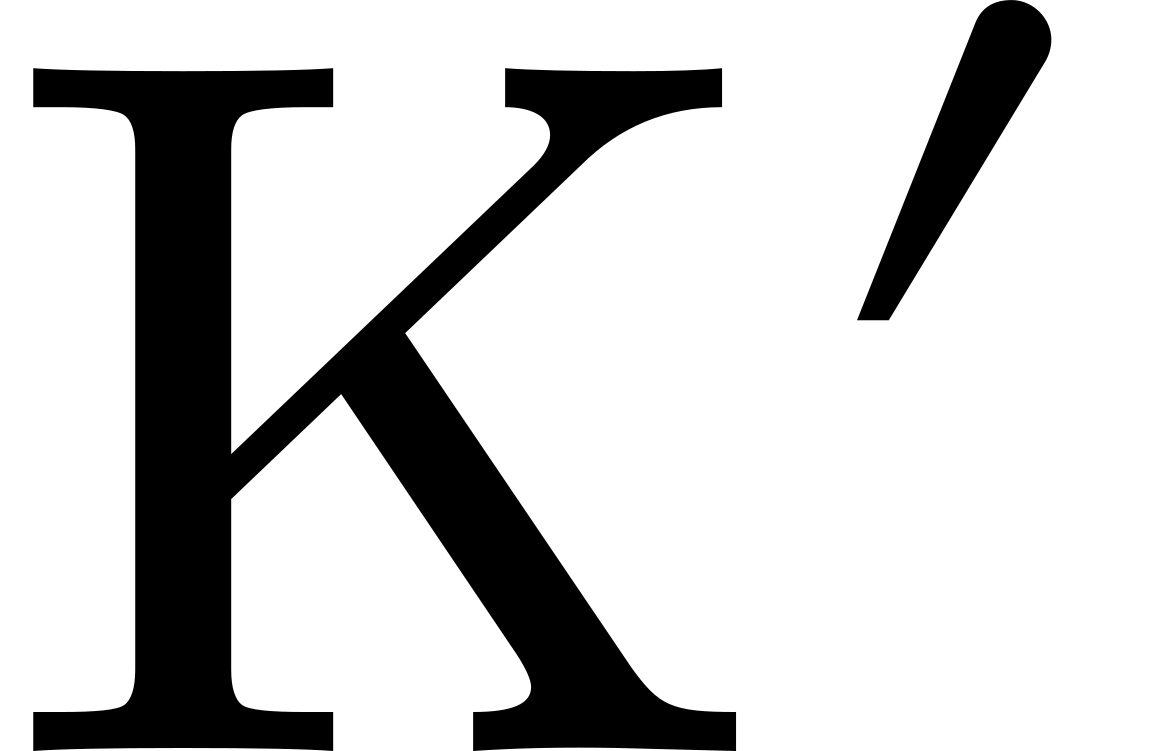 be two trains standing side by side;
 and
 ,
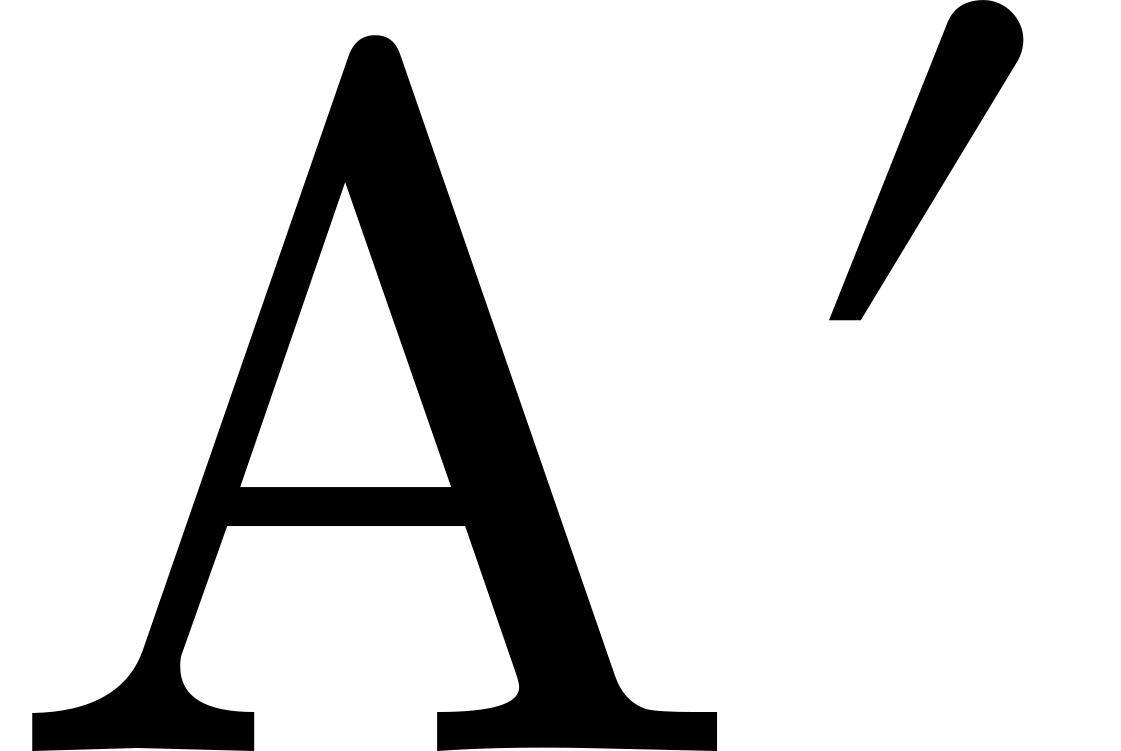 and
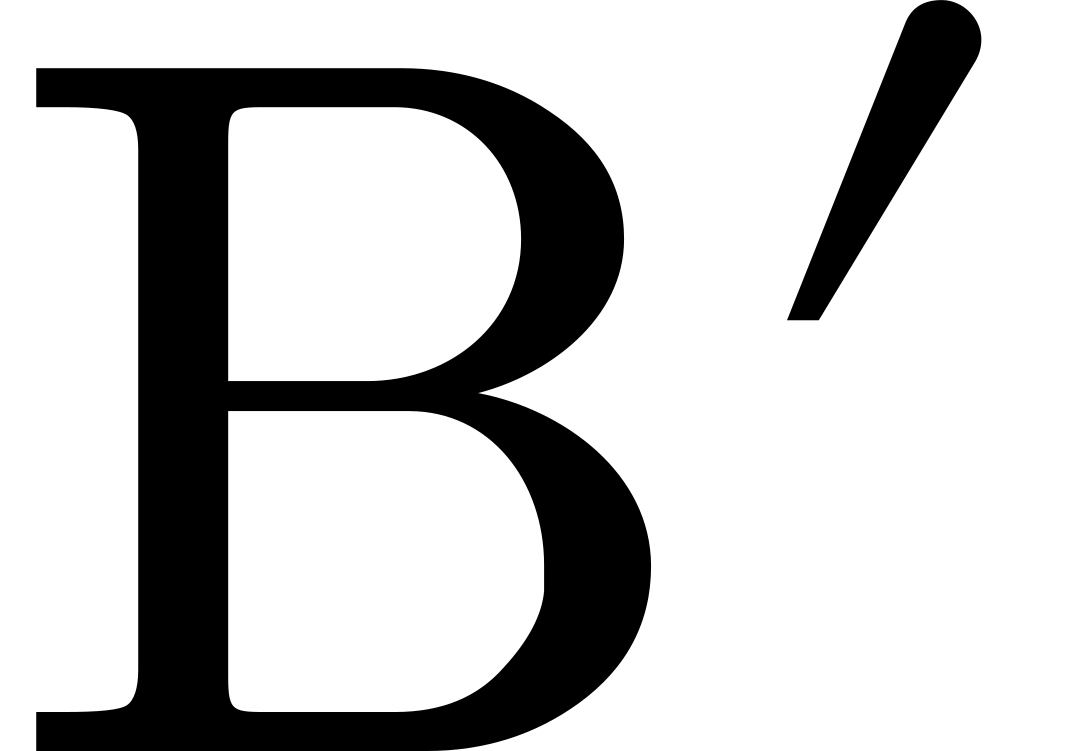 , clocks in the trains, also side by side. Send a light
signal from clock to clock and reflect it back again to . Suppose
that clock has run 2 seconds. Then it takes 2 seconds for light to
travel the distance
 twice. Since according to our postulate light
is propagated in all directions with the same speed (the
Michelson experiment), it takes as long to go the distance as it
takes to go the distance
 . If, then, clock registers 12 when the
light signal is sent, and an observer at has 46been told to set his
clock at 12.1 when he receives the light signal, then clocks and
are synchronized. Similarly the clocks in can be synchronized with
those in as well as with those in , since the two systems are at
rest or in uniform motion with respect to each other.
Case II. Let all four clocks be synchronized by the preceding method.
Let move relatively to with terrific velocity in the
direction to . Then and are at rest in , and are at rest
in . Suppose and are in immediate proximity when both register
12, and that is in immediate proximity to , which also registers
12. An observer on will say that coincides with simultaneously
when coincides with . Now flash a light signal from the common
position , when both clocks there indicate 12. The rays reach when
its clock reads 12.1 by case I. Clock , however, has moved a distance
from the position at the end of one second, and will have
moved slightly farther before the light will have reached it. Hence
for an observer on the light will take longer 47than one second to
travel from to . If now it is reflected back to , it will take less
than one second to reach , according to an observer on , because
is moving towards the light. To an observer in , however, the time
light takes to travel the distance in one direction is the same that
it takes to travel that distance in the opposite direction, according
to the postulate established by the Michelson-Morley experiment, that
light is propagated with equal velocities in all directions.
The conclusion is that events of equal duration in system are of
unequal duration when measured from . The conception of duration has
become relative. (Vide pages 14-16.) Similarly the lengths of
a body determined according as to whether the observer is or is not
in a system at rest with respect to the body being measured, vary in
accordance with the Lorentz-Fitzgerald contraction. This contraction is
not, however, a physical effect, as they thought, but is an indication
of the differences in the methods of measurement. A mathematical
transformation is used to express this fact.
48
One of the results of this special theory of relativity is to connect the Law of the Conservation of Mass with the Law of the Conservation of Energy, and to show that the former is not strictly in agreement with the latter and must be considered as being only approximately true. (Vide page 19.) For mass is not independent of velocity, energy is found to have the property of inertia, and mass depends upon energy.
Einstein’s next step is to make the mathematical generalizations which enable him to remove the restriction on the application of his theory of relativity. Geometrical relativity of space can be expressed by a transformation. Non-Euclidean geometry of a fourth dimensional space is next used to simplify the expression of physical laws. Einstein then shows the connection between gravitation and inertia (Vide page 42), and arrives at the “principle of equivalence,” according to which gravitational and inertial mass are the same. This implies the postulate of an unlimited relativity of motions; “for since all phenomena are to depend only on the mutual position 49and motion of bodies, reference to any particular co-ordinate system no longer occurs, i. e., no reference system plays a unique role in the statement of physical laws, as was required by the Newtonian system.” Newtonian laws then appear as special cases, applicable in an infinitely small domain and as a first approximation of Einstein’s law.
Einstein’s work leads then to this result: “The Law of Inertia of Newton and Galileo states: ‘A point under no forces moves uniformly and rectilinearly.’ The Einstein Law, which comprises both inertial and gravitational effects, asserts: ‘The world-line of a material point is a geodetic line in the space-time continuum.’”
The mathematical and experimental confirmations of the Einstein
Law are as follows: The new equations, developed from a different
hypothesis and by a different method, actually degenerate into the
Newtonian formula for general mass-attraction 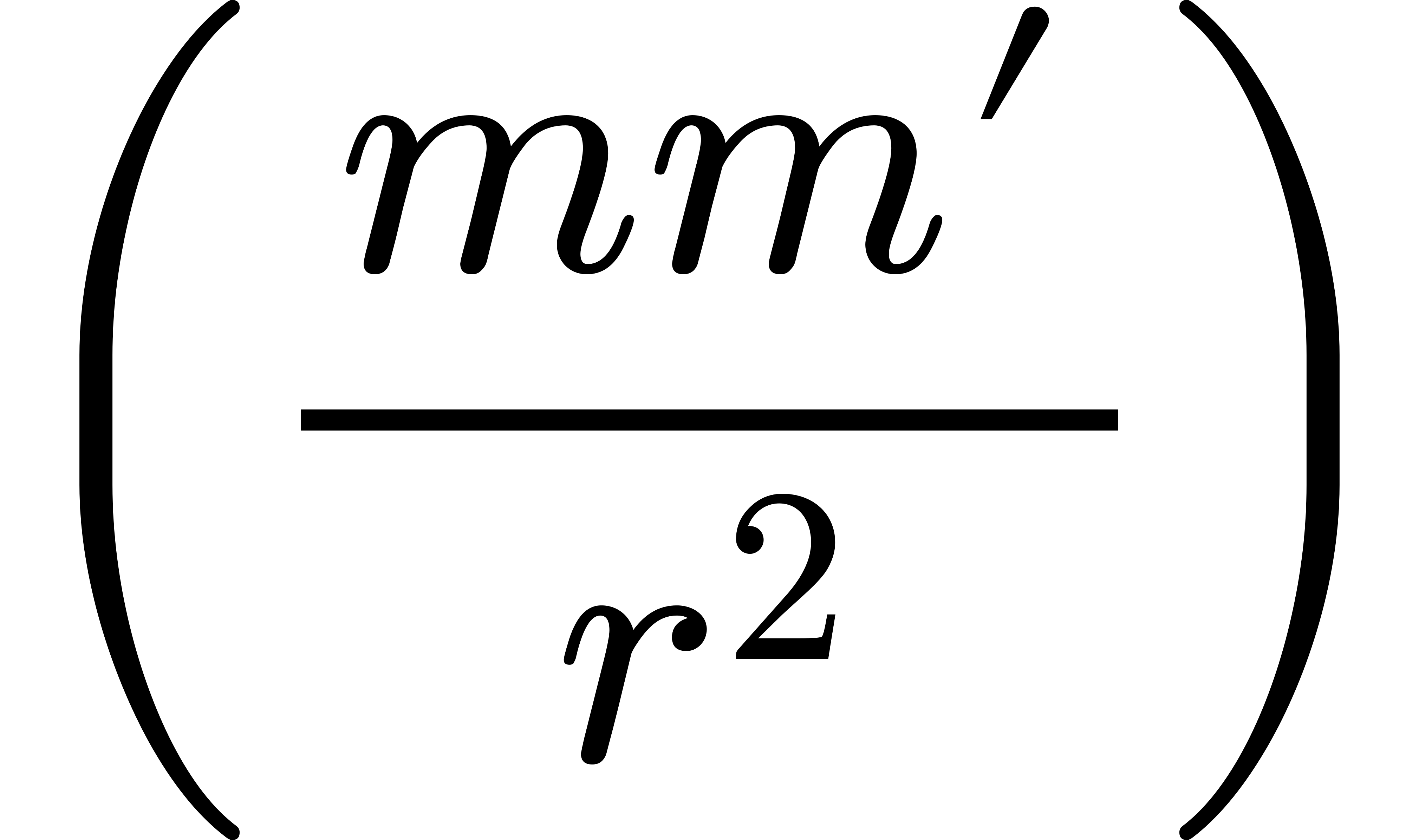 for a first approximation. If the equations are worked out to a
second approximation, a quantitatively exact explanation of the
anomalous 50motion of Mercury’s perihelion appears. In a strong
gravitational field curvature of light rays should be manifested.
This was verified by an observation of the stars near the sun during
the total eclipse of the sun, May 29, 1919. The observed displacement
of the apparent position of the stars is both quantitatively and
qualitatively exactly as prophesied by Einstein. Again there should
be a perceptible lengthening of the time of oscillation of light in a
very strong gravitational field. This was not confirmed when Schlick
wrote in January 1920, but has since been confirmed according to the
Scientific American for November 27, 1920, page 541.
Note: References by pages are to Schlick’s Space and Time in Contemporary Physics.
Introduction. To be read before and after.
Chapter
I. General and of interest to any one.
II. Special Theory of Relativity. Essential to argument.
III. Geometrical Relativity of Space. Clear and easy for the non-mathematician. Mathematician may omit.
IV. Mathematical Formulation of Spacial Relativity. Presentation non-technical. Explains to the non-scientist 51why sometimes a mathematician uses one geometry, sometimes another.
V. Inseparability of Geometry and Physics in Experience. Appeals primarily to the philosophical reader.
VI. Relativity of Motion and its Connection with Inertia and Gravitation. Essential to argument. Principle of equivalence and of general relativity stated.
VII. General Postulate of Relativity. Essential to argument. More difficult to read. Simple mathematics used.
VIII. Fundamental Law of the New Theory. Essential to argument. Mathematical formulæ can easily be omitted. Contains statement of one mathematical and two experimental verifications.
IX. Finitude of the Universe. Interesting to those who enjoy speculations about the universe.
X. Relations to Philosophy. Of interest to the psychologist and philosopher.
52
ONE sunshiny day last spring my friend and I sat talking in her office, the office of a children’s home of which she was the head. A child came in to get a nickel to buy a tablet. My friend, finding no change in the cash drawer, had started to go upstairs after a nickel when I recalled her by offering her one. She accepted it with thanks, saying she would get one for me as soon as we went upstairs. To her suggestion I merely replied: “Please don’t bother. It is of no moment.”
Two hours later I was sitting in the sun on the windswept platform of the interurban. Suddenly I was aroused from my absorbing plans for the next day’s lecture by a note of panic in a girl’s voice, rough and strident though the voice itself was. “Say, could ya lend me two cents? I’ve lost my ticket, and I ain’t got quite enough to git home, and it’s several miles down the line.” “Sure,” I said, 53and fished out the pennies. As they changed hands, she asked for my address so that she might return them to me. “Oh, that’s all right. Forget it,” I said, and we parted.
The thought which I had expressed was the same in both cases—the desire to be of service, on my part, and the disparagement of the service—but I had transformed the thought so that my very dignified friend and the rough working girl would equally well understand it.
A transformation, like all other fundamental mathematical processes, is, as Keyser suggests, a name for a process carried out with finesse in mathematics, but used in a crude fashion throughout life. A dictionary affords countless illustrations of this process. The telephone directory is a more precise transformation, for in it each number corresponds definitely to one house. Even in this illustration, however, notice that the correspondence is not usually a one-to-one correspondence, but a one-to-several correspondence.
Sometimes a transformation is so simple a thing as a change in the
unit of measurement. 54Early in school one learns that four pecks equal
one bushel; four quarters equal one dollar. And by means of this
transformation one finds that sixteen pecks equal four bushels; sixteen
quarters equal four dollars. Again, one inch on a map corresponds to
one hundred miles on the earth’s surface. Each of these is a concrete
example of the general type (1) 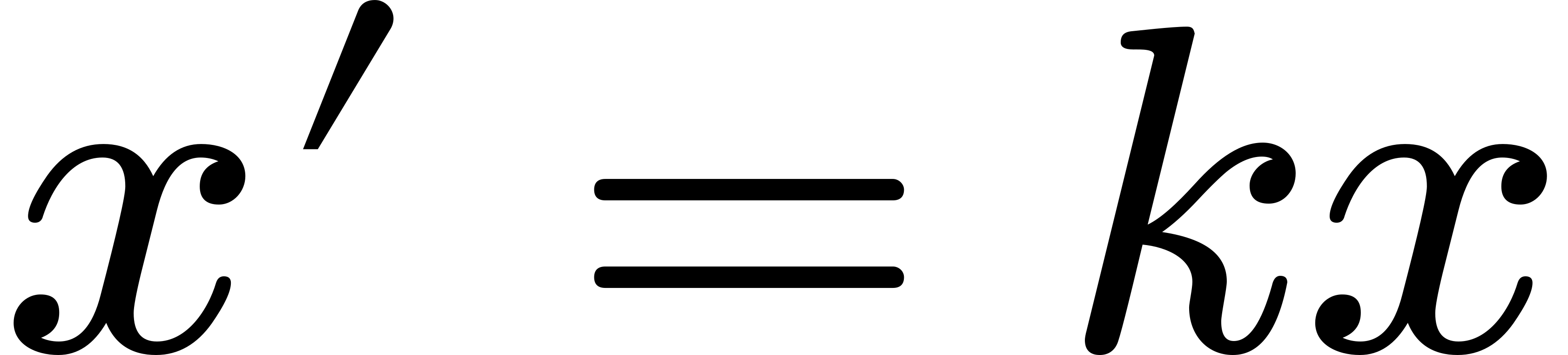 , when
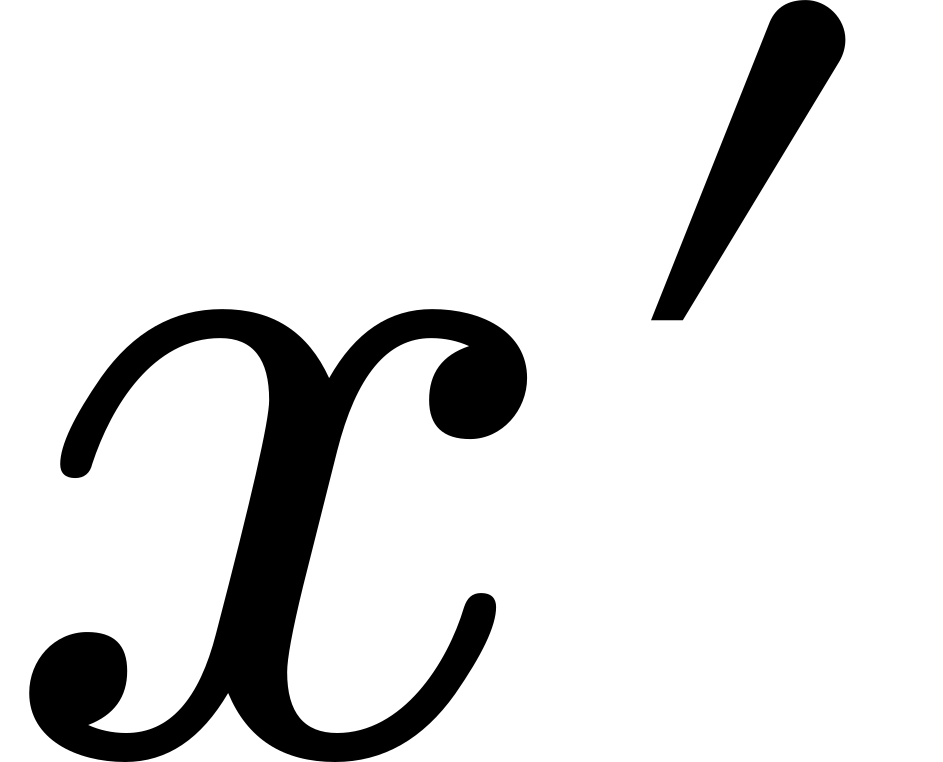 is measured in one
unit, and in a second, and when
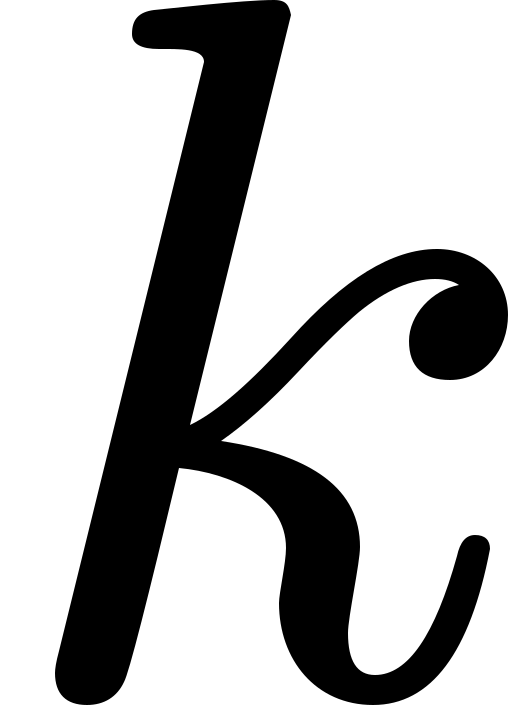 is the constant ratio of the two
units.
Now, instead of using , introduce . Then (1) becomes (1ʹ) 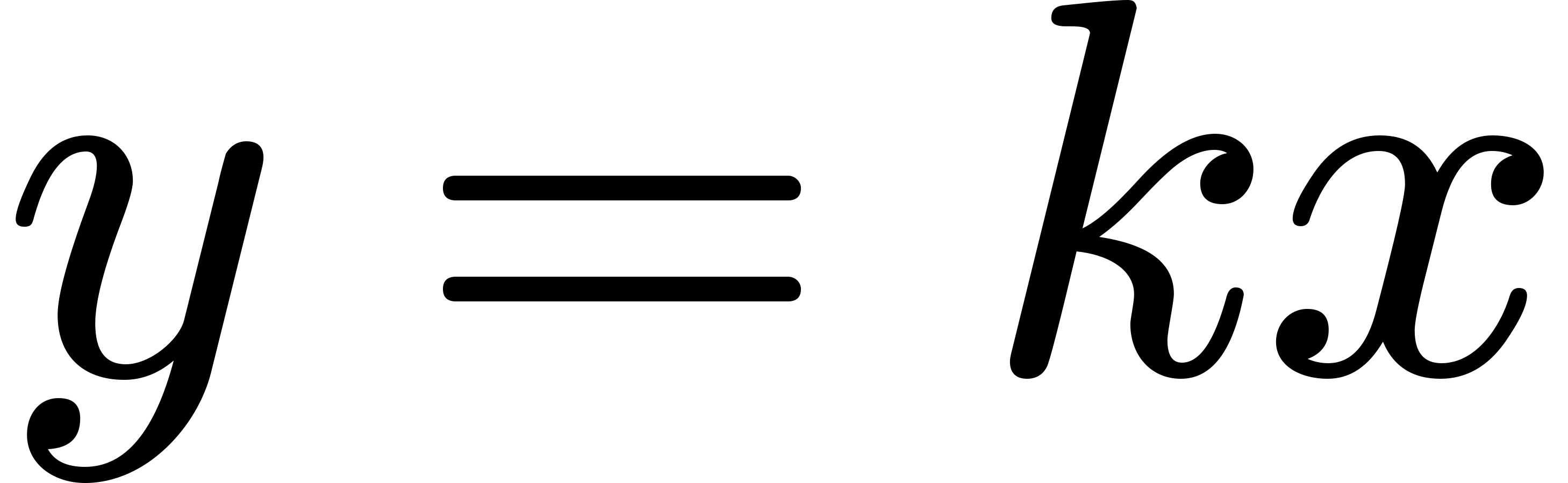 ,
a type of equation readily interpreted by freshmen as the equation
representing all the straight lines passing through the origin, if
and are considered the co-ordinates of a point in plane analytical
geometry. Analytical geometry, a whole subject, may, then, be viewed as
a special kind of transformation.
In the field of analytical geometry, however, transformations appear more fundamentally and more explicitly than indicated above. Let us consider the assumptions upon which 55that scientific subject rests. They are as follows:
(a) Two intersecting straight lines are assumed to exist. These are called axes. The point of their intersection is called the origin.
(b) A unit on each axis is assumed, usually the same unit on each axis but not necessarily so.
(c) On each axis directions are assigned arbitrarily as positive and negative.
(d) A one-to-one correspondence is assumed to exist between the points of each axis and the members of the real number system.
In accordance with an idea suggested by Keyser, to the effect that a transformation is a psychological process of directing the attention from one object to another, it is found that the assumptions are in themselves transformations; that the fourth assumption stated above is in fact a very precise transformation.
In analytical geometry, however, there is an even more explicit use of the transformation, 56frequently introduced for the purpose of simplifying a discussion.
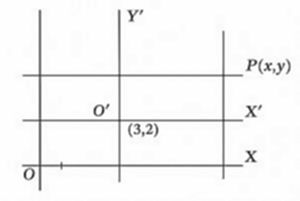
Suppose the co-ordinate scheme having 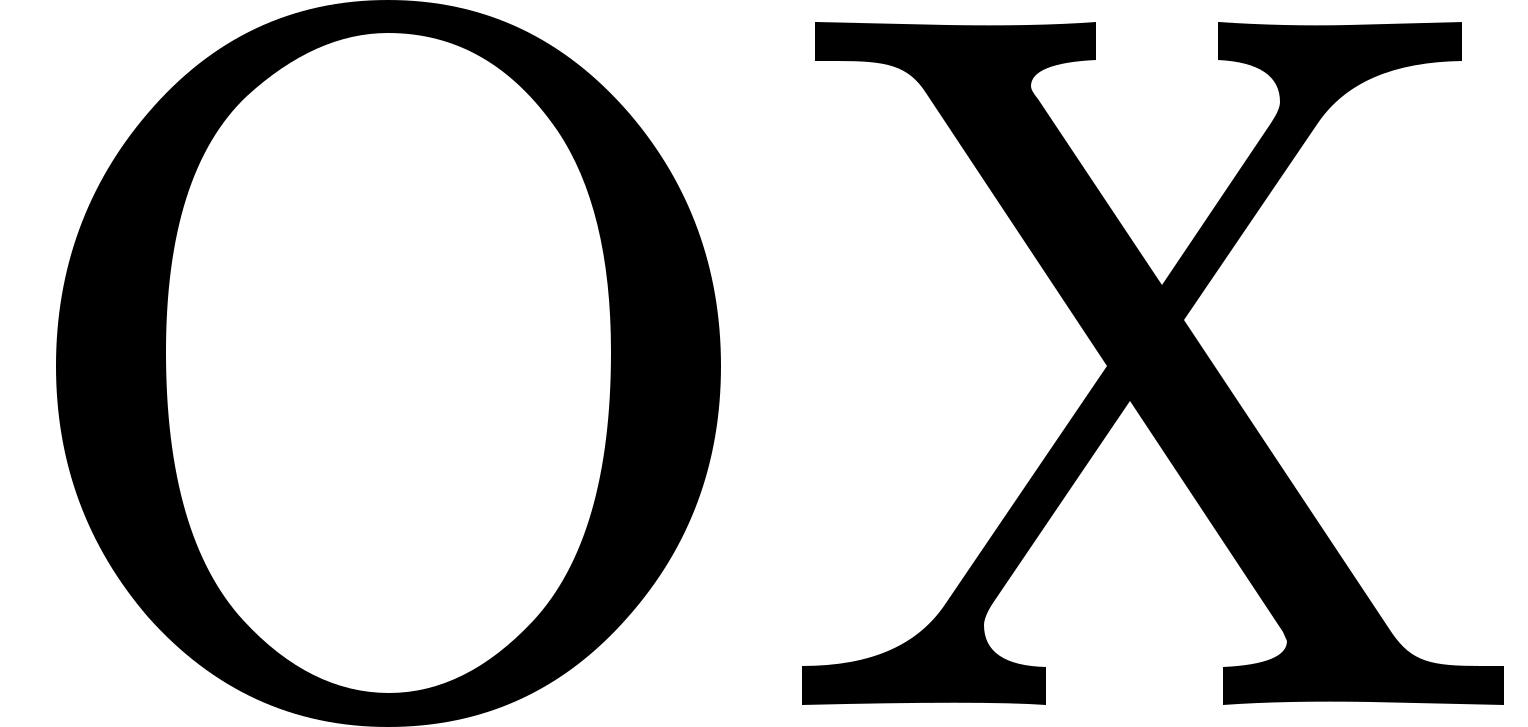 and
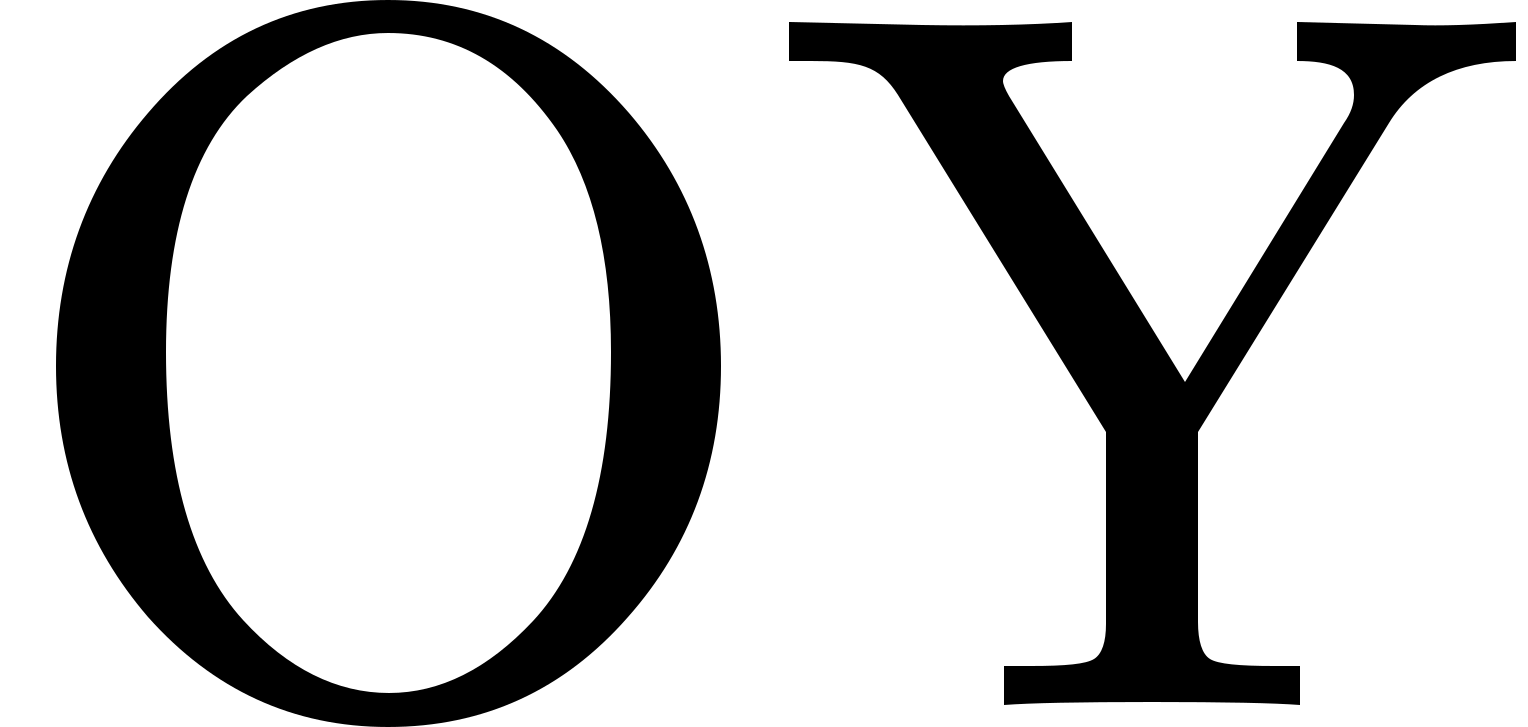 as axes has been chosen
in accordance with the form of the fundamental assumptions. Then a
point
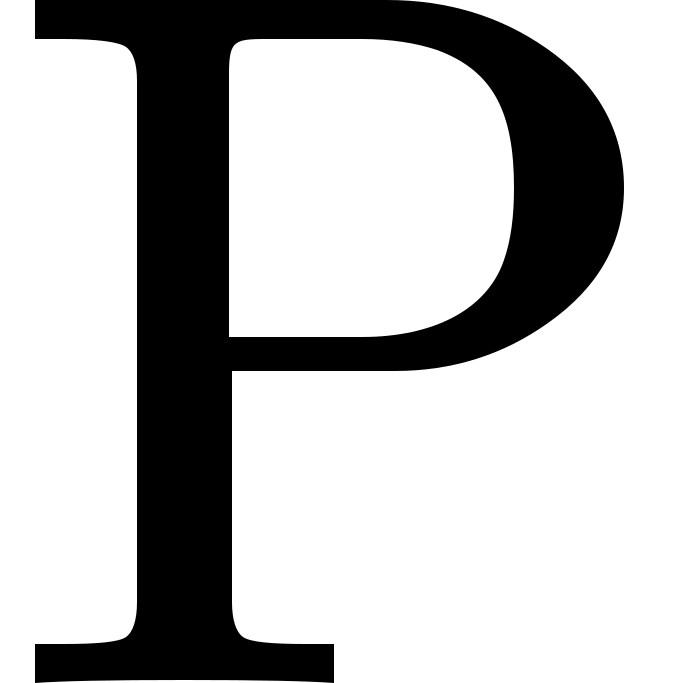 is units from the
 axis, and units from the
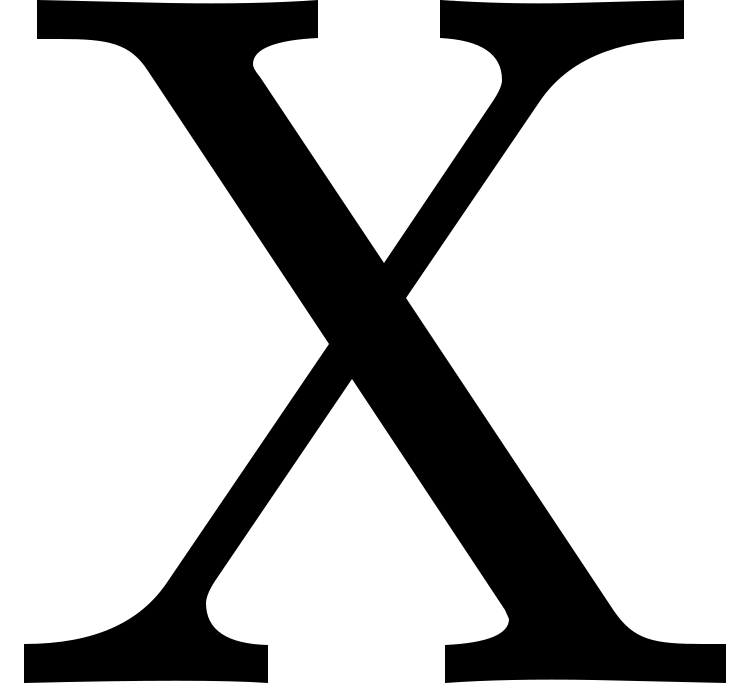 axis; the
point
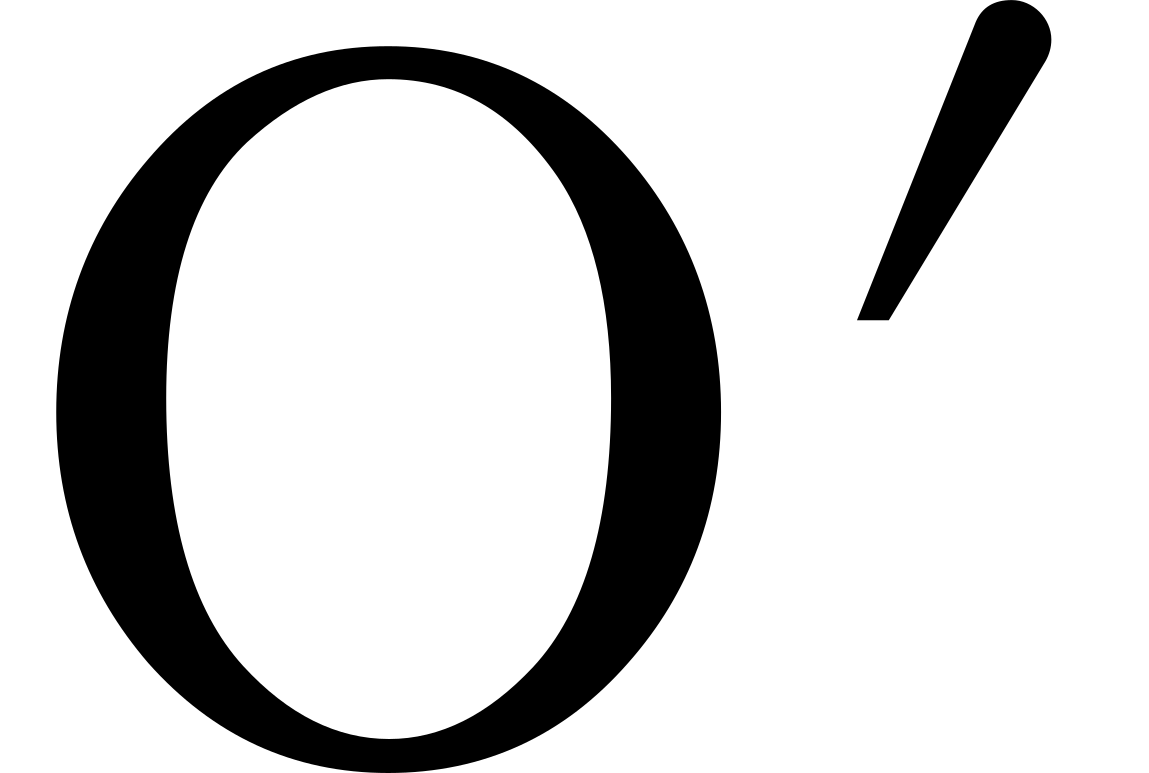 is three units from the axis, and two units from the
axis. Since the axes are arbitrarily chosen, the point would not be
essentially altered if we located it by measuring its distances from
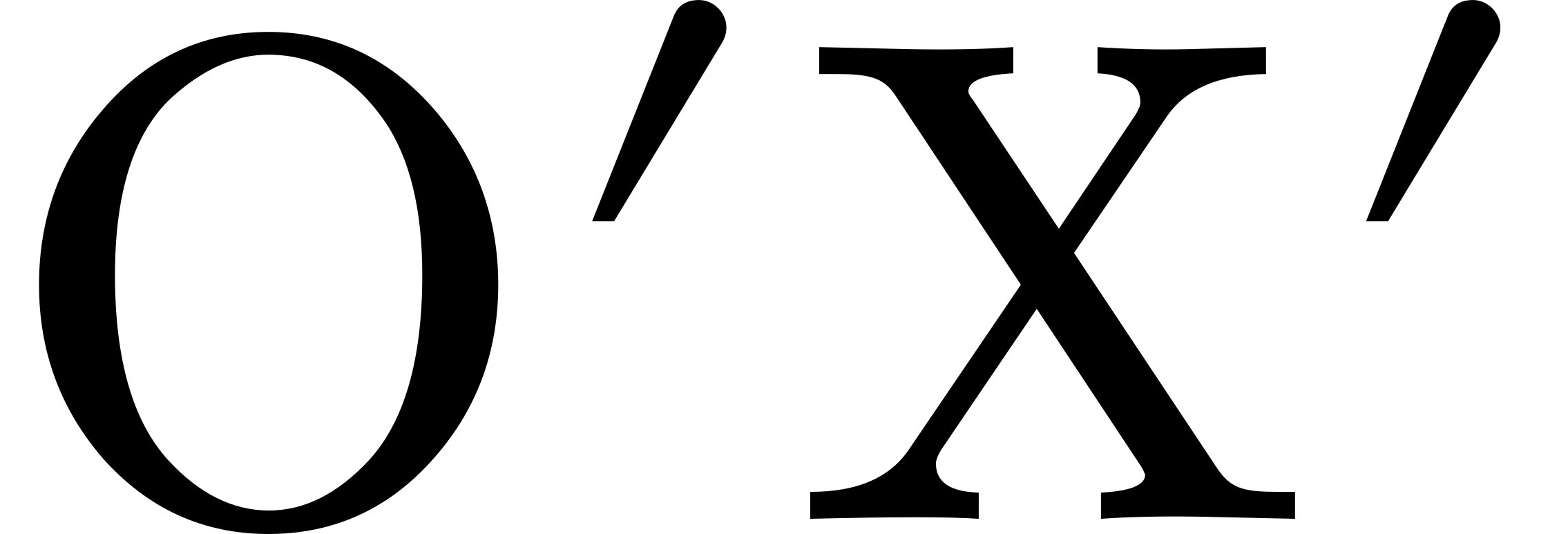 and
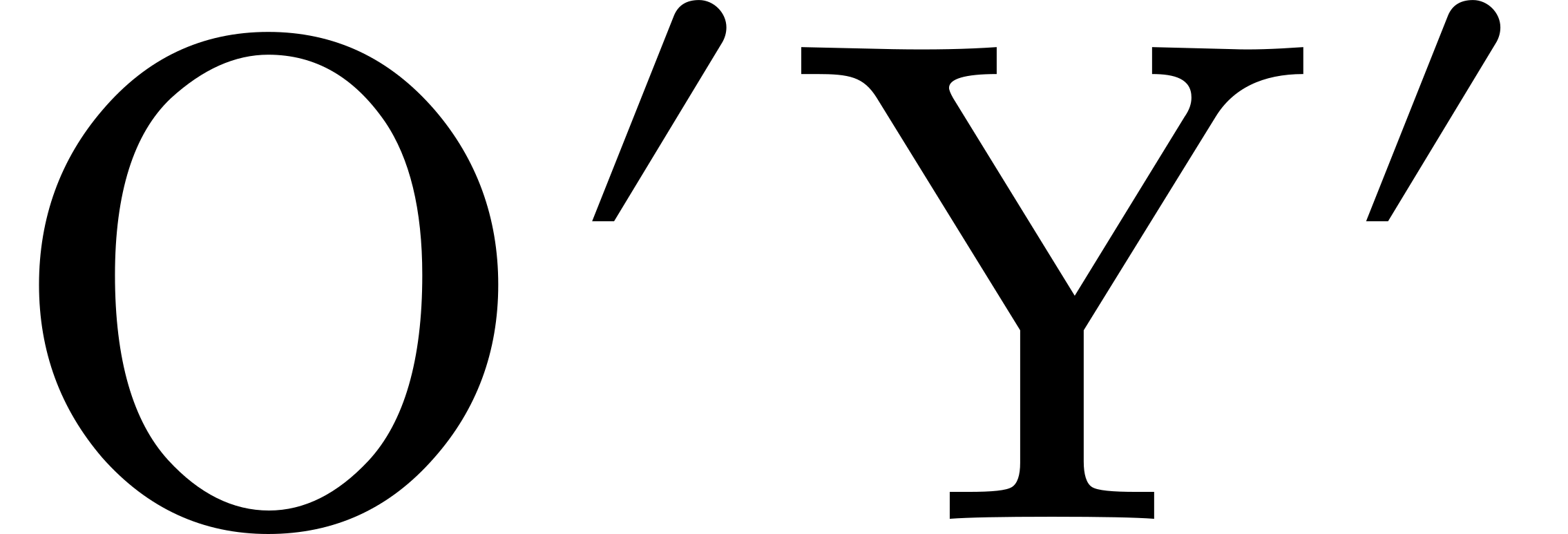 , lines parallel to and , instead of by its distances
from and . 57But its distance from
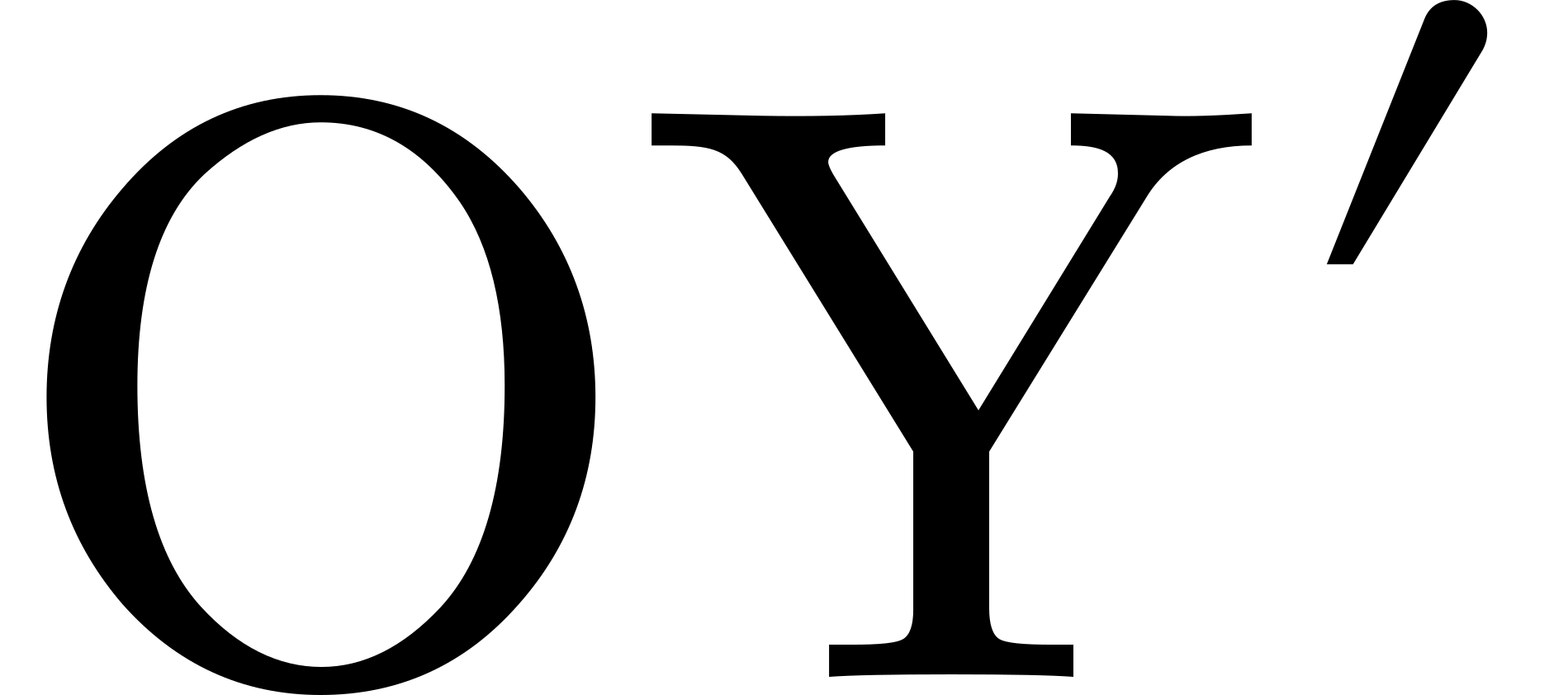 , which we shall call
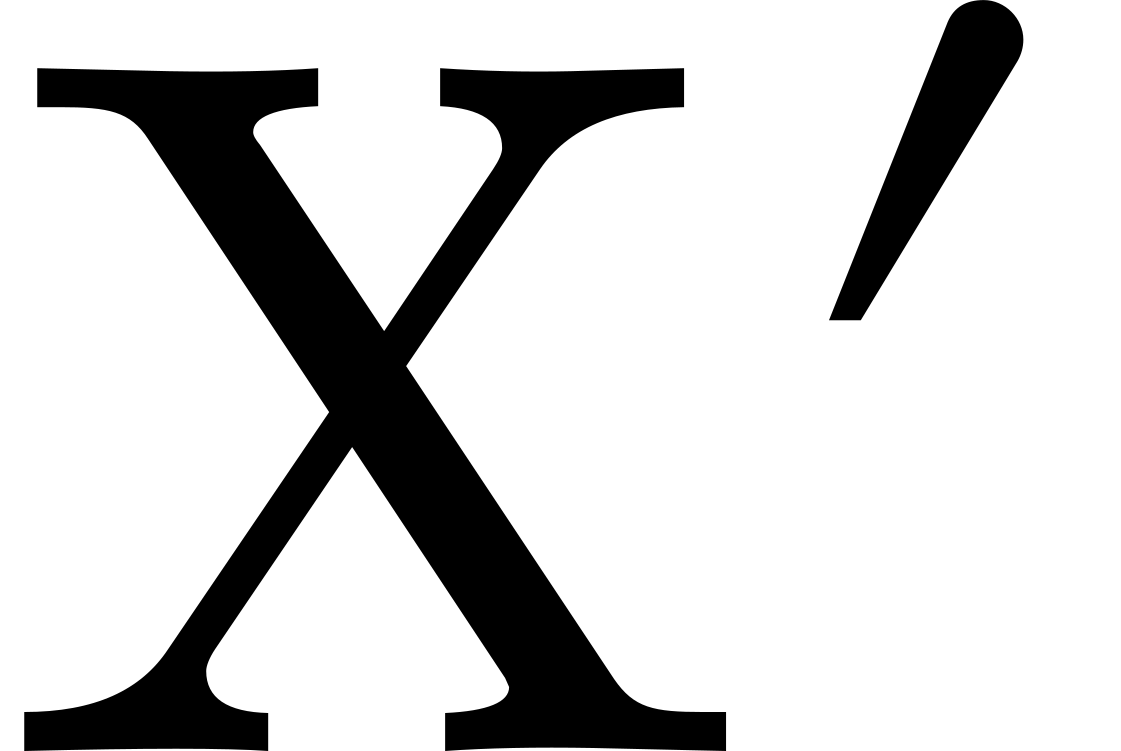 ,
equals
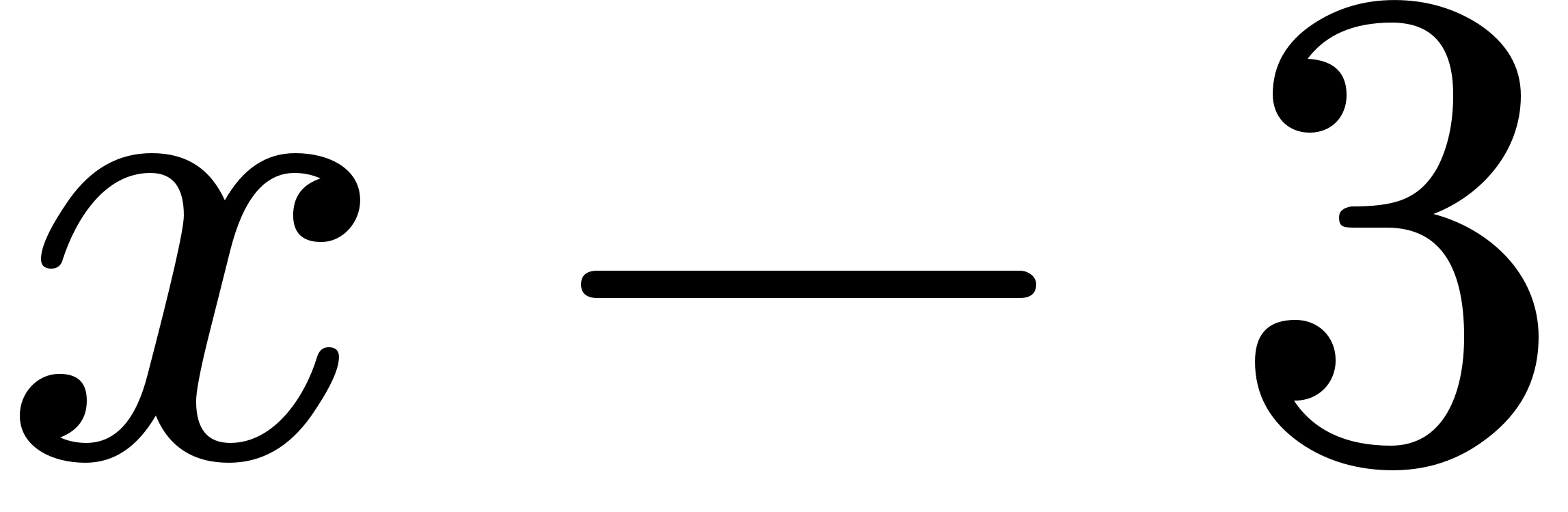 ; and its distance from
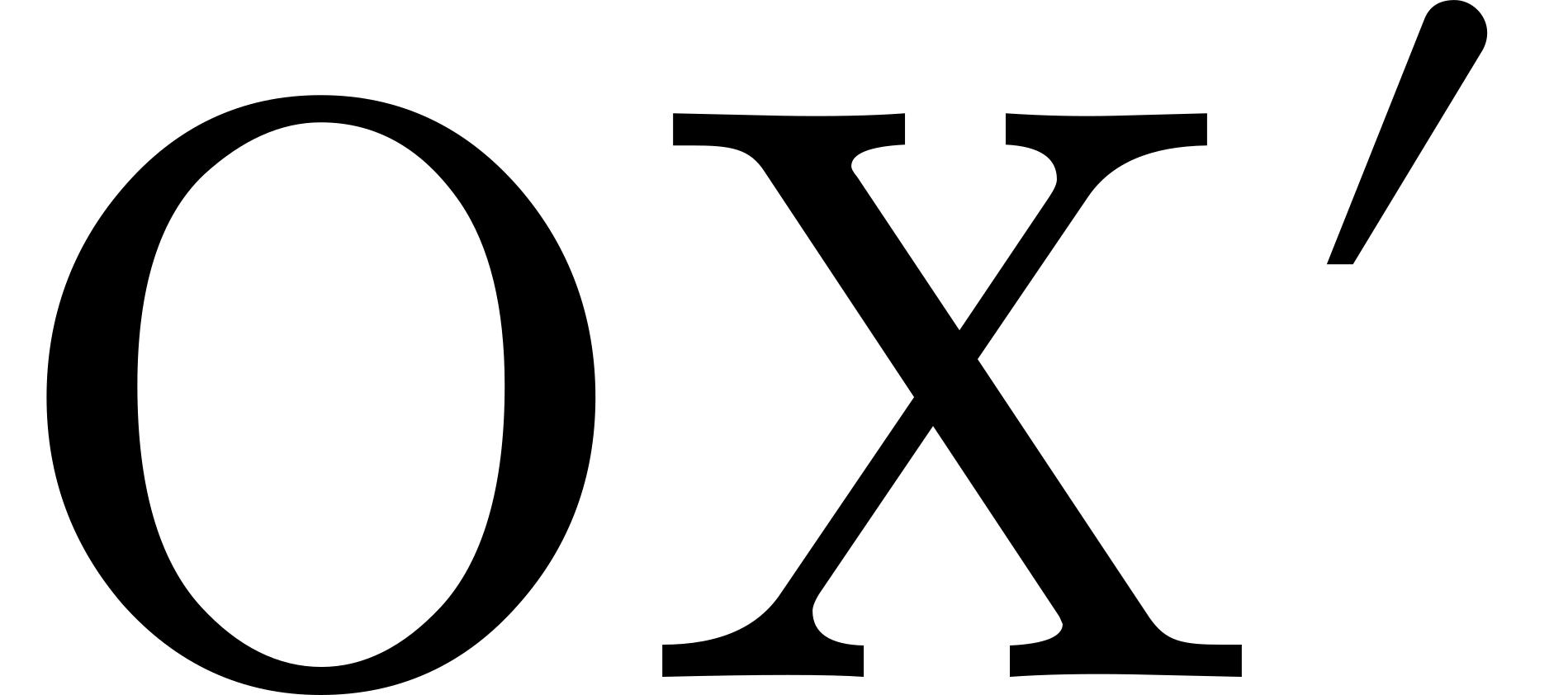 , which we shall call
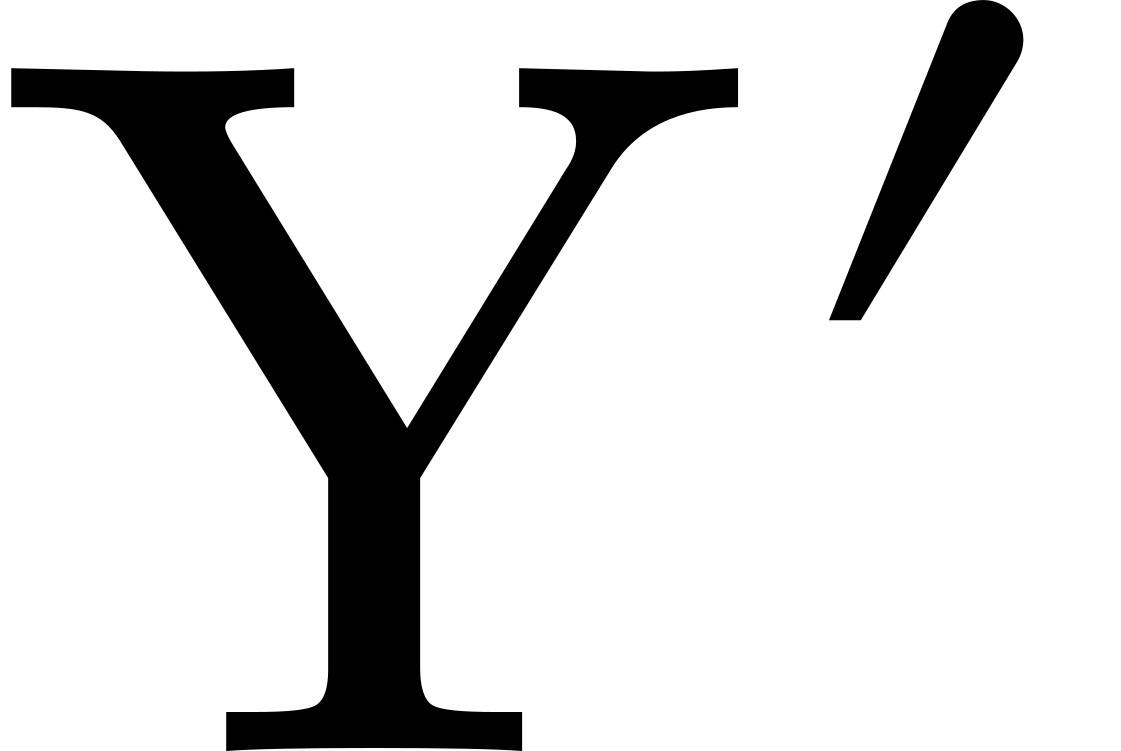 , equals
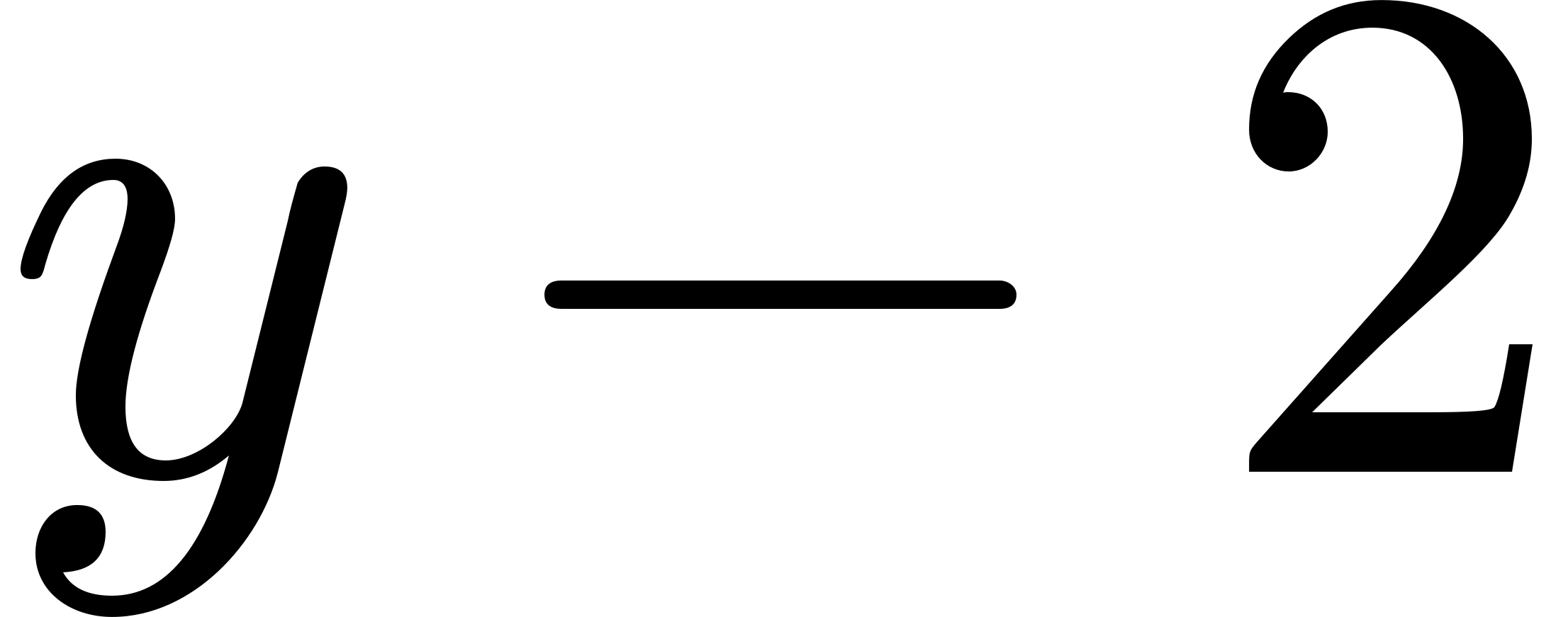 . In fact, any point referred to in the old scheme is named in
the new scheme by substituting and respectively for its
old co-ordinates. The point is not altered. Its name is altered. The
relationship
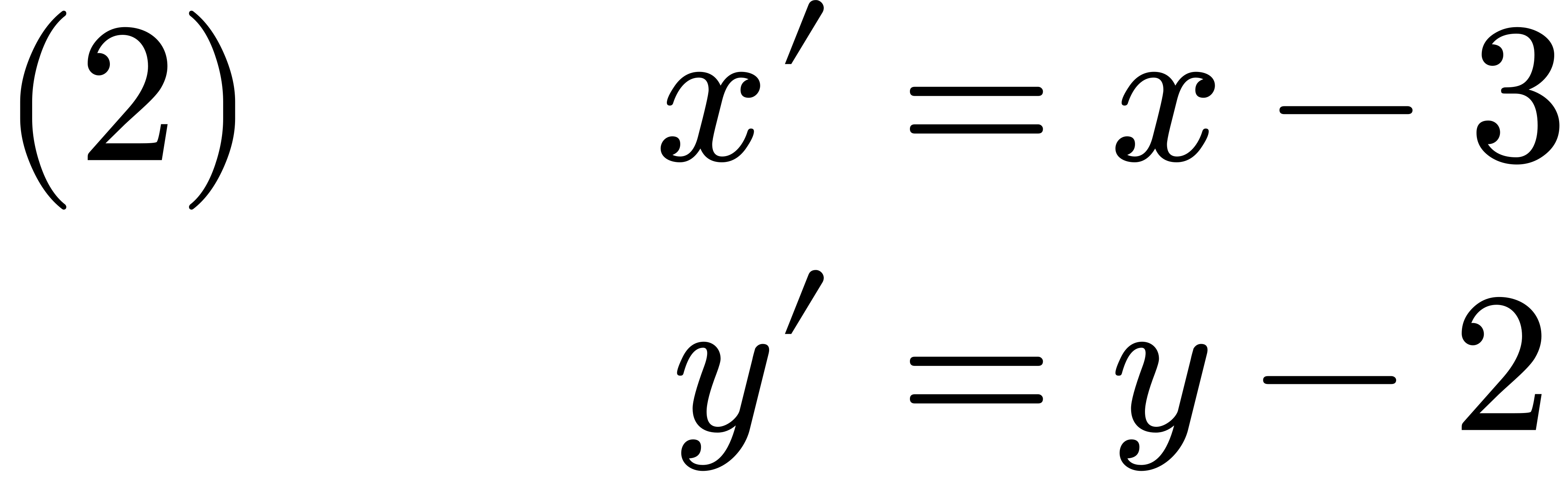 is a special form of transformation called a translation. It amounts to
giving every point an alias, and to relating one set of assumptions to
another.
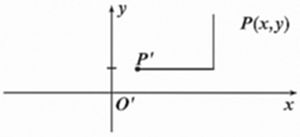
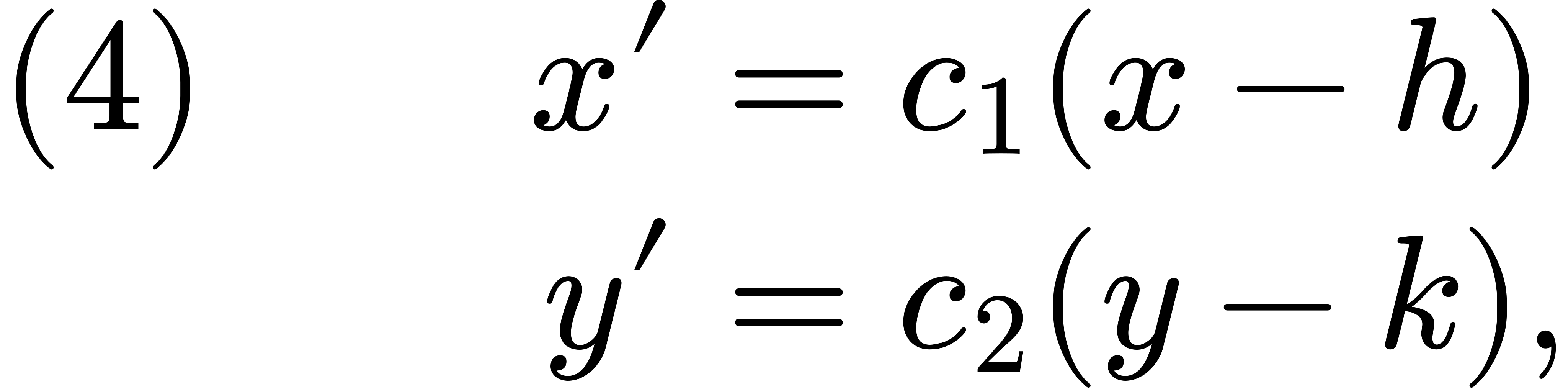
If, however, we had thought of the plane being shifted while the axes remained fixed, we should have had this state of affairs: 58P would have been moved two units down, and three to the left. Its new position would have to the old the relationship indicated by (2), as before. This amounts to giving every point an alibi.
With either interpretation it can be shown that certain geometrical
properties are unaltered by such a transformation, that is, a circle
remains a circle, an ellipse an ellipse. Even if a translation is
combined with a change of scale,
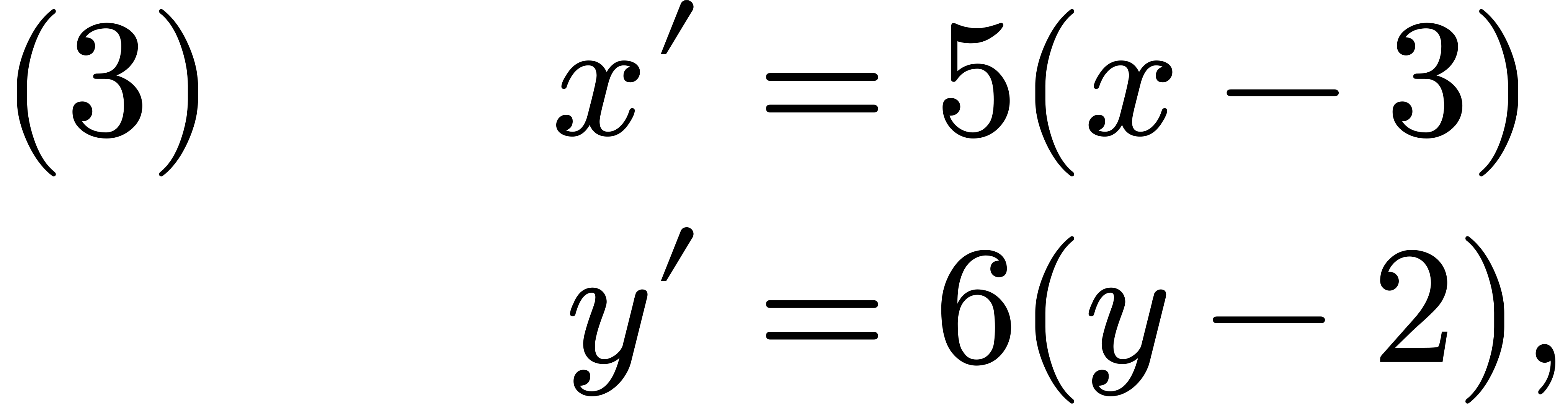 some properties are not altered, such as the intersection of two
curves. Equations [such as (3)] are merely special cases of
 a transformation which can be shown to leave unaltered many such
properties as those mentioned. Properties thus unaltered are said to
be invariant under transformation. For instance it can be shown that
under any translation a circle remains a circle, an ellipse an ellipse,
intersections of curves are preserved, 59et cetera. Now, when the origin
of the co-ordinate system is assumed to be in coincidence with the
center of a circle, the equation of the circle has the simple form
 while when that assumption is not made, the equation is
 a much more complicated equation. Since, however, theorems proved
for one form have a corresponding statement for the other, we will
naturally use the simpler form to be secured by applying a translation
which will place the origin at the center of the circle.
The confusion of tongues at the building of the tower of Babel, and the giving of understanding on the day of Pentecost have always seemed to me to show the logical extremes of no transformation and of a perfect transformation in the use of language to convey thought, itself an invariant.
The modern study of invariants in mathematics has led to a knowledge of the behavior of curves and functions so much deeper and broader than that open to earlier generations 60that one is awed by the greatness of the concepts developed. But when one looks at the meagre study of invariants in human conduct, one is tempted to agree with Korzybski that humanity is only in its childhood, or even in its infancy. How many of you really do recognize the same emotion in the expression of a swearing, dirty, scrub-woman as she slams a hot dish on the table (long ago cleared of the supper things) before her husband, who is engaged in some such dangerous occupation as that of a lineman; and in the expression of a well-dressed, prominent club-woman, as she presses her bridge-building husband into a seat at the table (cleared of the dinner dishes several hours ago) and pushes the button to summon the butler? Poets sometimes call our attention to some of the invariants and the transformations by which one may pass from one to the other, as Kipling, in The Ladies: “For the colonel’s lady and Judy O’Grady are sisters under their skins!” The historian is more scientific, and points out that a government conducted by the mentally unfit falls. This transformation has many concrete illustrations 61both in public and in national life. Yet there is no law in the United States to secure the removal from the office of president of a man who becomes unfit mentally during his term. You decide to make friends with a girl, and do not once determine whether or not those qualities which she displays under “translation” or “rotation” are those which you understand and find agreeable, or whether those qualities of hers which attract you are hers only when she is centrally located, that is, so located that those qualities of hers which are agreeable to you are most readily perceived.
When the mathematician points to the law of the multiplication of the degenerates, and to the evils arising therefrom, the people reply by making a translation, which in no way affects that ability to multiply; that is, they proclaim against birth-control by law.
In résumé, then, we may say that transformations are performed by us willy-nilly every time we think, every time we speak, every time we listen to one another. Whether or not we know the laws of transformations, we fulfill 62them just as truly as we fulfill the law of gravitation. Knowledge of these laws of transformations enables us to think more correctly, and hence to act more accurately. Thus bitter experiences in misunderstandings between friends, and in maladjustments to society, are diminished in proportion to our knowledge. We have also learned that a transformation can be viewed as a functional relationship, that it is frequently interpretable as a functional relationship called causal.
Infinite possibilities appear to the thoughtful student of
transformations. But one more use of transformations it seems
impossible to omit, those of the type which directs the mind from the
contemplation of the finite to that of the infinite. An illustration
from geometry will serve to symbolize the idea. Let and  be two
limited line segments such that
 .
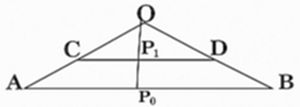
Let  be the intersection of
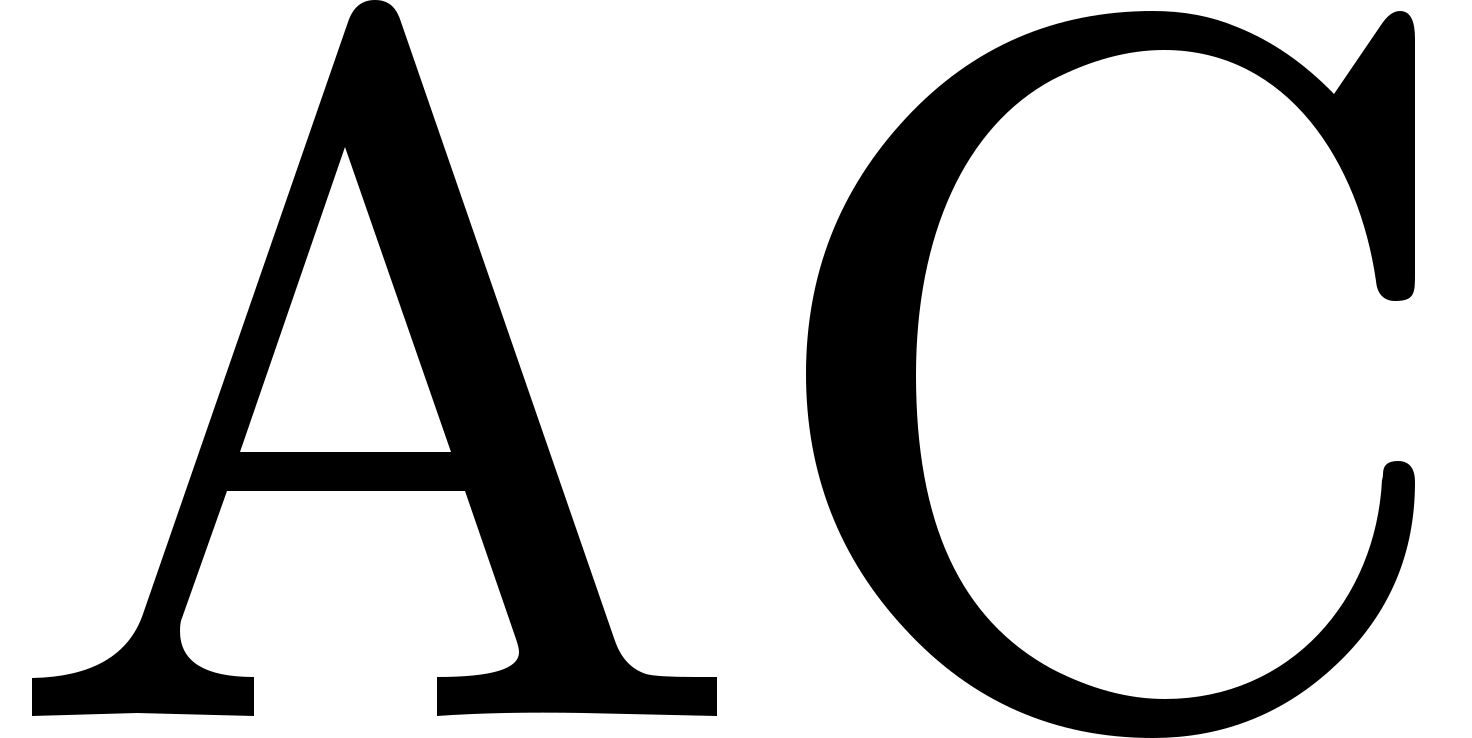 and
 . Then we have the transformation
that to every 63point on there corresponds a point on obtained
by joining that point on to , and finding the intersection of the
resulting line with , e. g.
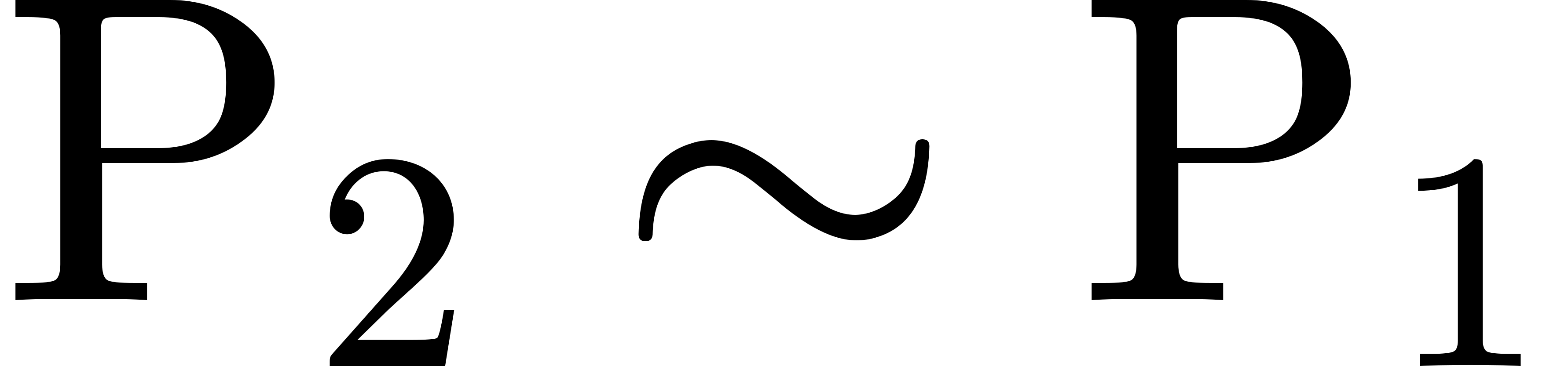 . It is evident that to
every point on there corresponds a point on , and vice versa. Yet
, that is, a part seems to have become equal to the whole, a
paradox indeed, reconcilable only by introducing explicitly a precise
concept of infinity: that the infinity of points in is an infinity
comparable to the infinity of points on , that is, that infinities
may be compared in magnitude, as are finite numbers. Thus we find the
human mind conceiving of that which it may not represent concretely,
and studying the laws governing those concepts.
64
References:
The Human Worth of Rigorous Thinking, by Keyser; the two essays “The Human Worth of Rigorous Thinking” and “The Human Significance of Mathematics.”
BERTRAND RUSSELL has given a definition of mathematics which is treated facetiously by the ignorant, disparagingly by the superficial, and with an almost awed consideration by the thoughtful. “Mathematics,” he says, “is the science in which one never knows what one is talking about, nor whether what one says is true.” (Keyser’s Mathematical Philosophy, page 133.) You smile as I read it. The cause of the facetiousness is obvious. In fact it is so tempting that no one wishes to miss it. Even when one stops smiling, it seems that a science so characterized is as far removed from having a human significance as any science could possibly be.
65
That most practical, utilitarian subject, arithmetic, seems much more closely allied to the human race. Its origin is almost contemporaneous with that of speech, arising from so elemental a source as man’s need to speak of more than one animal or enemy. Yet arithmetic is applied mathematics according to Russell. It is largely the result of experience and has the lack of generality which characterizes any such purely experimental science.
But let us take an illustration; not however, from the beginnings of
civilization, but only as far back as the elementary school work in
which you learned that:
 This represents an advanced stage of arithmetic, a change in the units
of measurements, but it still has all the concreteness possible.
Yet see what imagination and logic have done. They have developed
generalizations in arithmetic, generalizations now called the Theory of
Numbers and Algebra. Algebra shows that (1) is merely a special case of
all sets of numbers which have the ratio 4, and represents this by66
 where the units of measure are no longer stated. This is a true
relation in a great many concrete cases, for example, in
 Analytical geometry then makes a notable addition by disclosing
the fact that (2) not only has all the algebraic and arithmetical
interpretations previously suggested, but that it also may be used to
represent a geometric concept, namely that of a straight line traced by
a moving point. It is, then, the logical form, of which all of those
interpretations which Russell calls mathematics are true.
Then laws which may be proved true for this form, independent of its
content, are true also for the special cases of this form, and will
likewise have an interpretation. A very simple example is this:
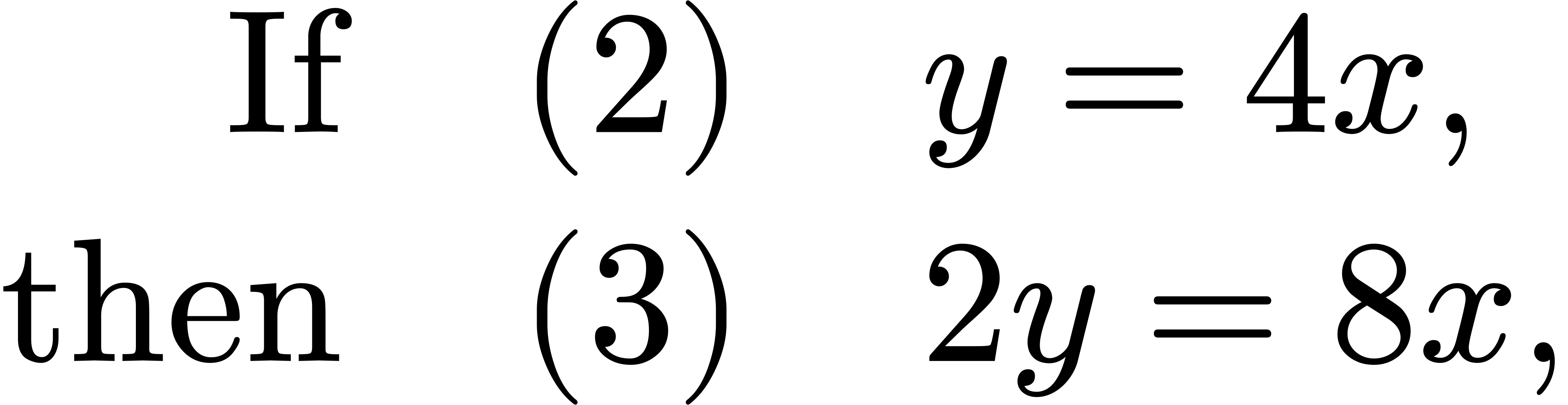 no matter whether be pecks and equal bushels; or , quarters and ,
dollars; or and y co-ordinates of a point: Cartesian geometry.
Although now you see something serious, 67something not wholly facetious in Russell’s definition, even so the science seems a little thin, perhaps lacking in warmth and in the ability to inspire men to noble conceptions of life. Perhaps the obvious fields of applied mathematics which are the foundations of the engineering sciences,—trigonometry, analytical geometry, and calculus,—seem to bind the subject more closely to the lives of the individual. And assuredly they have a human value in that the appalling waste of human life and human energy as exemplified in the building of the pyramids no longer occurs, although much greater engineering feats—such as swinging Brooklyn Bridge, and burrowing under the Hudson River—are accomplished, and in much less time.
Is there, then, a still deeper human significance in Mathematics? For these things according to Russell cannot be included. He would even eliminate in his definition the geometric series by means of which we can prophesy the number of children to be born in a given locality, provided no earthquakes, et cetera, should occur (the probability of the 68occurrence of which event can also be determined). Even applications in art fail to be classified under his definition.
Let us grant that such sciences and arts be excluded; yet we shall find in the residue of that great and ancient mass of knowledge usually designated “mathematics,” a significance more closely bound to human life than that thus cast aside.
Generalizations have been made on these generalizations, and we have
called them algebra and geometry. Great underlying principles have
been discovered. Out of Descartes’ idea of thinking of a point moving
so that it traces a curve, has developed a realization of variation,
emphasized and augmented by the fluxions of Leibnitz and Newton, now
known as the calculus. In this day and generation variable and function
are closely associated terms. A function is a variable which is known
only when the independent variable and the relationship between them
is known. Here in the study of functions one meets a principle of such
wide application that the existence of a field of human endeavor in
69which it does not hold is inconceivable. Let me illustrate, instead of
stating, the principle. The area, , of a rectangle, having the base,
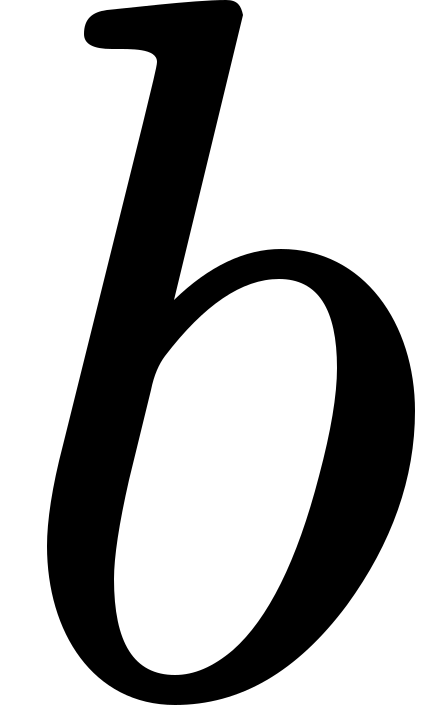 , and altitude, , is given by
 If equals six inches, and equals two inches, then equals twelve
square inches. But if we are given only one value of the function, for
example, twelve square inches, how difficult it is to determine the
dimensions of the rectangle! They might be any of the following:
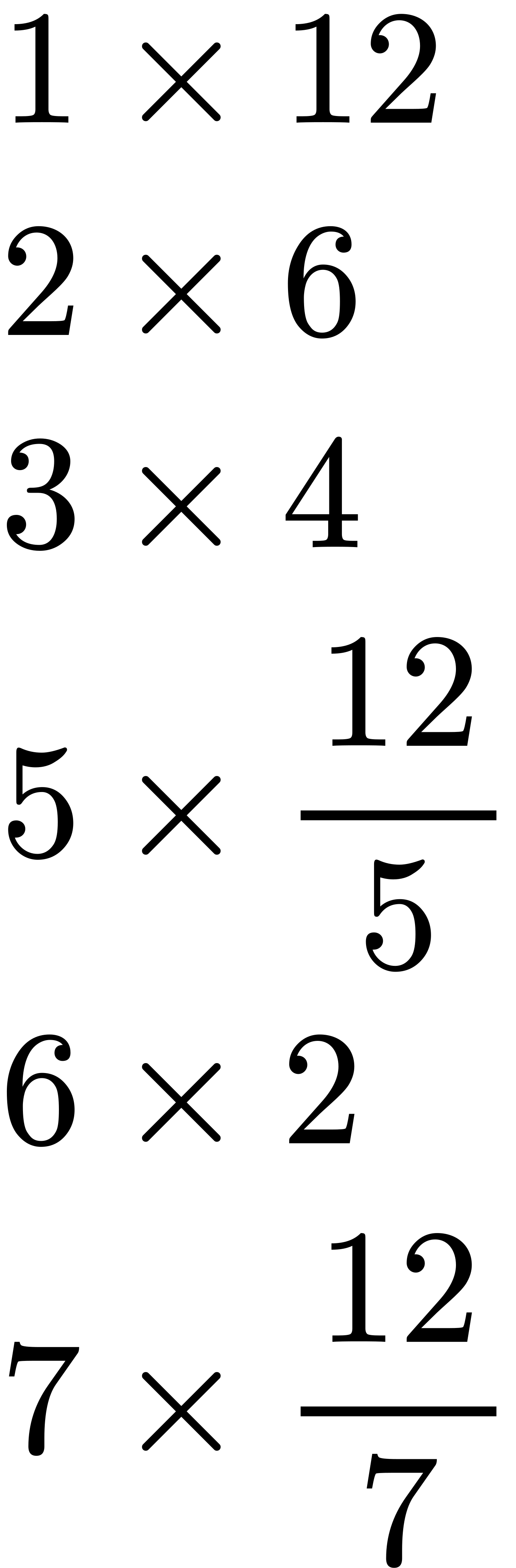 and so on ad infinitum. It is, therefore, not possible to know the
independent variables if only one value of the function is known and no
further data is given.
It is, then, not possible to know a man’s motive if one sees but one act of a given type. A child brought up in a crowded street will, when grown, still dodge the traffic downtown 70in Chicago without displaying any real bravery, while he who has grown up in the wilderness will exhibit commendable courage in crossing a street without waiting for the signal of the traffic policeman.
If equals an act, remember that and can not only represent an
infinite number of motives, but can also admit of an infinite number of
misinterpretations.
Let us suppose that the area of twelve square inches is the area of a paper sheet which is to fit into one of two note-books. The base and height will at once be limited to a small range of numbers. If, in addition, we know that the paper is a common commercial product, we may be able to determine those dimensions with exactitude.
Similarly if we have the framework into which to fit the lives of those individuals whose motives we desire to learn from observation of their conduct, our guesses become increasingly accurate.
Long ago Christ said, “Judge not, that ye be not judged.” This is an
ethical application of  . Now, when an idea reaches the 71point
where it can be logically handled, man’s ability to use it, like his
artistic appreciation of it, is increased. Mathematics shows that a
generalization from a single instance, when the instance is a function
and the generalization is the independent variable, is tommy-rot. You
may choose to regard it so or not. The results of your choice will
follow regardless. The choice may be a matter of free-will, but the
results are guaranteed by mathematics. Laws of thought can no more be
violated than can physical laws. They can only be fulfilled, precisely
as the man who flies from the housetop fulfills the law of gravity as
he falls to the ground. “Veritas vos liberabit.”
Generalization upon generalization has been made. Then, laws concerning those forms themselves will be true for all the concrete illustrations of these forms. Have you a picture of all the concrete applications, one by one uniting under abstractions, which in turn are united under fewer but more inclusive abstractions, all governed by laws? The laws are proved for these great abstract forms, and thus, far out along all the lines of concreteness, 72flash interpretations known to be true.
Now, a superficial thinker cannot conceive of form itself having laws. But mathematicians are constantly studying the laws of the non-representable.
Thought, that property characteristic of man, is, in the end, all that can be truly said to exist.
That eternal change observed in every phenomenon of life (studied in mathematics under the name of variable) ever presses upon man, at times almost overwhelming him. Then man searches eagerly for something lasting, at rest (in contrast to in motion), purposeful—something to reconcile him to the continuous changes of this life. This quest is an ideal of thought, an ideal of rigor. Mathematics accomplishes with finesse that towards which crude thought drifts; not always to perfection, of course, but in a degree ever approaching perfection as a limit. “Mathematics is an ideal, a creation of the intellect in its quest for harmony.” (Keyser: Human Worth of 73Rigorous Thinking.) Nay, it is even more. That lack of stability in life leads man to seek a resting place in thought, as the dove set free by Noah sought a resting place far and wide over the surface of the tumbling waters. Here, then, we come to mathematics as defined by Keyser: “Transcending the flux of the sensuous universe, there exists a stable world of pure thought, a divinely ordered world of ideas, accessible to men, free from the mad dance of time, infinite, and eternal.” Here, then, lies the deepest law and inmost process of the universe of thought.
From that most abstract of definitions we descend along the paths of utilitarianism, and ascend along the roads of art and philosophy, to this most artistic of definitions. On the one peak stands Russell’s definition. (The content is unessential.) You have still to determine the laws of the form, for as Keyser says, these things are eternal. On the other hand stands Keyser’s definition. Bushels and pecks may go out of fashion. We may not know whether or not what we say is true, but we 74have passed from the realm of sense to the realm of concept. Two definitions of mathematics, both involving a human significance as deep and as broad as life itself!
[2] This paper was read before the meeting of the Illinois section of the Mathematical Association, April 28, 1922.
[3] Many have asked if it is possible to work up a “Browse” course while it is being given. It seems to me to be impossible if the lectures are to be well done. A year’s reading and listening to many lectures were needed to produce the two lectures on the Einstein Theory which were given so as to convey a real meaning to the class with only the preparations mentioned in the paper. A superficial knowledge of any of the subjects presented in the courses would seem to me to be fatal to the scholarship of the course.
—B. I. M.
75
AT THE beginning of the second semester of this year we opened a two-hour course, popularly called “Browse,” with a description of a sleek, cream-colored Jersey, standing in deep grass and pausing, after a luscious bite, to gaze meditatively over the landscape. Before the spring vacation, in that same course, I gave an examination on the content of the Einstein Theory and its relation to the Newtonian Theory. Why, how, and with what results I made that transition are the subjects of this paper.
Two years ago at a section meeting of the Association, Dr. Slaught urged that, since we mathematicians had an interesting subject, we might profitably take time occasionally to show the students how interesting it was. This, combined with a previously observed fact that the survey 76course of English literature not infrequently left the science student with either a distaste for reading of any sort, or with the expectation of usually being bored by it, galvanized me into making some more definite observations, with the purpose of getting a solution for the pedagogical problem presented.
The results of these observations on my own classes are as follows: first, that a liking for reading can be aroused in the scientific student by references to scientific literature, not to text-books; second, that interest in scientific ideas can be aroused in the arts student by relating mathematics to other fields of knowledge through essays; third, that a greater lack of scientific literary background than was usual in the preceding generation exists now among all types of students.
With these results in mind I announced the new course under the double title “The Romance of Science or The Grammar of Science, Whichever You Wish,” to show the arts student that science had the imaginative quality which she so enjoyed, and to show the science student that poetry, fiction and opinions did not constitute the whole of the world’s literature. In the college catalogue the course is described as being “Some Literature of Science,” a somewhat commonplace title, which would not attract too much attention on the part of the ultra-conservatives in scientific teaching. “Browse” is the unconventional nickname which was given the course because of its appropriateness to the purpose without having the unfortunate connotation for the student that words such as “Meditate” 77might have, for no American student is willing to acknowledge that she thinks, much less meditates.
The prerequisite for the course is Freshman Mathematics or enrollment in that course with a grade of “B” for the first semester. This secures some knowledge of analytical geometry, limits and differentiation on the part of all, although it is a very elementary knowledge.
The main topics of the course are six in number. The first was the scientific method, ancient and modern. This was illustrated by the various theories of the earth’s motions, which led to Newton’s Law of Gravitation, and which included a study of hypothesis and conclusion. The second was dimensionality in algebra and geometry, including, of course, the fourth dimension; and the third, the distinction between Euclidean and Non-Euclidean geometries. These two involved a discussion of some popular fallacies and also of the scientist’s point of view, when he chooses the most convenient mathematical hypothesis from several, any one of which is equally logical. The fourth topic was the Einstein Theory, which involved no proof, but included a description of the theory and of its relation to the Newtonian Theory, a statement of the mathematical and experimental verifications up to date, and the present status of the theory in the scientific field. The fifth topic, which I am now working on, is applications of mathematics in other fields than that of physics. This includes a discussion of the human value of mathematical thinking and the place held by mathematics in civilization. The last subject will be some of the famous 78concepts of mathematics, such as number, limit, function, group.
In addition to the main fields of investigation indicated above, side excursions into the domains of art, astronomy, biology, chemistry, mathematics, medicine and physics are made. This is possible because of the method of conducting the course. Once a week references and lectures are given on one of the main topics. Supplementary reading of two kinds is assigned over a considerable period of time. Each student chooses one long or two short books for her “browsing” throughout the semester. She is guided only by her own taste except that her selection must be made from the official bibliography of the course. In addition, essays or short books are so assigned that each student will have read by the end of the semester one or more pieces of good literature in each of five scientific fields not covered by her “browse” book. A second class appointment is devoted to discussions or speeches or papers. The last two are sometimes expository and sometimes critical.
Some of the more obvious results of the course can be listed as follows:
1. An answer to the student’s query, “Why study mathematics?”
2. An increased vocabulary for all and a remarkable improvement in correctness of speech and flow of language for the science student.
3. A rebuttal of the statements, “Books Are Dull,” and 79“Science Is Dull,” made by the science and arts students respectively.
4. An extension of the intellectual horizon and a consequent increase in intellectual tolerance.
5. A knowledge of a scientific but literary reading list.
6. A knowledge of some fundamental concepts of mathematics, the lack of which Henry Adams so bewails.
7. A knowledge of some of the modern developments of mathematics. After further experimentation it is probable that a co-efficient can be attached to some of these results.
The less obvious result aimed at by the course, which I cannot now measure and perhaps may never be able to measure, are a permanent taste for reading and even more for “browsing.” The necessity of “browsing” is rather well expressed by Arnold Bennett in the last chapter of his little book called Literary Taste and How to Form It. I shall quote a little from this chapter called “Mental Stocktaking” in the hope that you will be lured on to read more. “The superlative cause of disastrous stocktaking remains. * * * It consists in the absence of meditation. * * * If a man does not spend at least as much time in actively and definitely thinking about what he has read as he has spent in reading, he is simply insulting his author. * * * Reading with him is a pleasant pastime and nothing else. This is a distressing fact. * * * It is distressing for the reason that meditation is not a popular exercise. If a friend asks you what you did last night, you may answer, ‘I was reading,’ and he will be impressed and you will be 80proud. But if you answer, ‘I was meditating,’ he will have a tendency to smile and you will have a tendency to blush. I know this. * * * (I cannot offer any explanation). But it does not shake my conviction that the absence of meditation is the main origin of disappointing stocktakings.” Most of us who teach will agree with Mr. Bennett.
Although the results from the course have been very satisfactory, there are some difficulties and dangers inherent in the very character of the course.[3] Depth may be sacrificed to breadth. Confusion may be caused by the introduction of too many ideas, in which event it would have one of the disadvantages of the literature course whose effect upon science students is so often to be deprecated. Idle dreaming may be cultivated instead of leisurely thinking. But it is not very difficult to avoid these dangers, and they are offset somewhat by the flexibility of the course and its very general appeal, for it can be given each year with variations, can be adapted to all classes of students by means of the supplementary reading, can be used to eliminate popular fallacies concerning the study, content and applications of mathematics, and to stimulate interest in all the sciences. It has certainly 81proved successful if the students’ interest, the extraordinary improvement shown by some, and the very high quality of work attained by others can be used as criteria.
The reading list which follows contains not necessarily the best books which could be found anywhere, but the best which were accessible in our library this semester. Moreover, it does not aim to be exhaustive, but suggestive.
1. Astronomy. Hinks. This is an elementary, non-technical little book, written in a somewhat commonplace style and addressed to any man.
2. Origin of the Earth. Chamberlain. This is well written, presents interesting facts and theories, is trustworthy scientifically and is addressed to an audience of intelligence having little technical training. This was apparently the source of Prof. Salisbury’s lecture last year.
3. The Sun. Sampson. This is one of the set of small, scientific books, written in a good and interesting style, for popular reading, where popular is used in the best sense of the term. They require thinking, but not too much; they are printed very clearly and are easy to hold. In fact their advantages are many, but the shade of their binding, an unbelievable shade of pink, is somewhat wearing.
4. The Earth. Poynting. This is another of the pink series.
82
1. Curves of Life. Cook. This is a large, well illustrated book giving illustrations of some mathematical curves, drawn from the field of biology, art, etc. Much of it can be read by freshmen.
2. Physical Basis of Music. Wood. This is one of the best of the pink series. There is little in it that is not very enjoyable.
1. Creative Chemistry. Slosson. This is so popularly written that it gives incorrect scientific ideas by the assignment of the powers to feel and to will to inanimate objects. The Egyptians of the Pharaohs’ times would probably have approved of it. Its facts, however, are trustworthy.
1. Descent of Man. Darwin. Darwin needs no introduction. You might read it and find that he did not say what he is frequently said to have said.
2. Origin of Species. Darwin. This proved to be very delightful reading one summer, spent in the mountains. It served as a transition from the writing of a mathematical dissertation to a “Sherlock Holmes” story.
3. Living Plants. Ganong. Such an artistic piece of scientific writing is rarely seen in these days of industrial science, except in mathematics. Ganong’s book is as scholarly as it is interesting, as clear in its style as in its type.
4. Life of the Spider. Fabre. I have not read it but know it by reputation.
83
5. Heredity. Doncaster. This belongs to the pink series.
6. Coming of Evolution. Judd. This belongs to the pink series.
7. Harvard Classics No. 38. Harvey, Jenner, Pasteur, etc.
1. Harvard Classics No. 30. Physics, chemistry, astronomy, geology. Faraday, Helmholtz, Kelvin, Newcomb, Geikie.
2. Harvard Classics No. 33. Physiology, medicine, surgery, geology. Harvey, Jenner, Lister, Pasteur.
3. Harvard Classics No. 29. The Voyage of the Beagle. Darwin.
4. Discourses. Biological and Geological Essays. Huxley.
5. The Forest. S. E. White. This is not scientific but it is a well written description.
6. Jungle Peace. Beebe. This is a charming piece of writing in the familiar essay style, and about such interesting things, that one lingers in reading in order to prolong the pleasure.
7. Science and the Nation.
8. Realities of Modern Science. Mills. The style is clear, but commonplace. The facts presented are interesting and readily understood. The book gives one quite a good idea of the scientific method.
9. Outlook for Research and Invention. Hopkins.
10. Grammar of Science. Pearson. The first part is interesting, the middle rather dull, the last part somewhat interesting.
11. Education of Henry Adams.
12. Manhood of Humanity. Korzybski.
84
1. Earth Features. Hobbs. This is addressed to a nonspecialized intelligent reader. The illustrations are drawn from the United States, especially the north and west.
2. Physiography. Salisbury. This is long but interesting.
3. Geology. Lyell. This is old but interesting.
1. Flatland. A Square. This small book is useful rather than beautiful, but it is amusing and stimulating, if read with care at the beginning, and glanced at casually towards the end. It is easy to understand and yet gives the idea of dimension in space so that it can be applied.
2. John Napier and the Invention of Logarithms. Hobson. This is a half hour’s reading about an instrument all Rockford graduates have used.
3. Number System in Algebra. Fine. This is interestingly written and not hard to read. It deals with that familiar but little understood thing called numbers and tells how they came to be.
4. Study and Difficulties of Mathematics. De Morgan. This is pleasant reading. It is one of the books bound in red.
5. Mathematical Recreations. Ball. This is full of games and puzzles as well as of other things. It is something of a scrap book.
6. Mathematical Essays. Schubert. If you enjoy the somewhat serious essay as a form of literature, you will probably enjoy some of these.
7. Memorabilia Mathematica. Mortiz. If you want an epigram or a definition, a topic for a paper or a proof of the diversities of men’s ideas, read a few bits here 85and there. The book is a collection of notable sayings and writings either by or about either Mathematics or mathematicians.
8. Human Worth of Rigorous Thinking. Keyser. This is a collection of essays and lectures. Numbers I-VIII, XIV, XV are of general cultural value. The style is excellent and the ideas are sometimes interesting and sometimes inspiring.
9. Fundamental Concepts of Algebra and Geometry. Young. This is non-technical in that it assumes no knowledge of mathematics beyond elementary high school algebra and geometry. It is a series of lectures addressed to an audience interested in mathematics.
10. Foundations of Geometry. Hilbert. This is perhaps the most polished expression and the most scholarly treatment of the subject that has ever been written.
11. Fundamental Concepts of Modern Mathematics. Richardson and Landis. This is one of the disappointments of this generation. Its mathematics cannot be trusted.
12. Philosophy of Mathematics. Shaw.
13. Space and Time. Schick. This gives Einstein’s theory, omitting the mathematical proofs.
14. Organization of Thought. Whitehead. This is more interesting than 15 both in style and content. Chapters I, II, VI, VII, VIII are perhaps the best. I read them with pleasure when sitting in the lobby of the Auditorium Hotel, where one may while away many an hour, musing over a book of this type and collecting data on human nature. It is not a book to hurry through, yet it is not so profound as to require one’s study for its perusal. Perhaps this is because it consists of a series of lectures originally addressed to an 86attentive audience but one which was enjoying a vacation from routine duties. It is non-technical.
15. Principles of Natural Knowledge. Whitehead. This is an “enquiry.” It has a most interesting origin you will find, if you read the introduction. The book is concerned with theories of the nature of matter, and the ultimate data of matter, the relation of geometry to science, the effects of the theories of relativity. If you think you know all about lines and points, read and be disillusioned.
16. Foundations of Science. Poincaré. This requires maturity of mind, not a specialist’s training. Remember it, so that when you reach the point where much that you read seems commonplace, because of its familiarity, and you really have the thrill of coming in contact with a new idea or a new correlation of ideas, where the beauty of the abstract seems greater than the beauty of the concrete, then read Poincaré, leisurely, sometimes dreaming, sometimes meditating, sometimes experimenting, but always thinking. Then the simplicity of the language, the dignity of the concepts, the inspirational suggestiveness of the thought may give you that permanent acquisition, a moment in which you live nobly and below which you may never sink as low as you have in the past. But beware, lest having eyes, ye see not.
17. Science. March, 1912. Organization of Knowledge.
18. The Absolute Relations of Time & Space. A. A. Robb.
19. The Einstein Theory of Relativity. Prof. H. A. Lorentz.
1. Wireless Telegraphy. Fortescue.
2. The Atmosphere. Berry.
87
3. Beyond the Atom. Cox. These three belong to the pink series.
4. Experimental Researches in Electricity. Faraday. Notice the motto used as the frontispiece.
5. Soap Bubbles. Boys.
6. Light, Visible and Invisible. Thompson. This has a pleasing style, interesting contents and is easily understood.
7. Surface Tension. Willows and Hotschek.
8. Electricity and Matter. Thompson.
9. The Electron. Milliken.
10. Sound. Tyndall.
11. Light. Tyndall.
12. The New Physics. Poincaré.
13. Visual Illusions & Their Applications. Luckiesh.
14. The Concept of Nature. Whitehead.
1. Mysticism, Freudianism and Scientific Psychology. Dunlap.
Simple typographical errors have been silently corrected.
Punctuation, hyphenation, and spelling were made consistent when a predominant preference was found in the original book; otherwise they were not changed.