The Project Gutenberg eBook of Thirty years of lynching in the United States
This eBook is for the use of anyone anywhere in the United States and
most other parts of the world at no cost and with almost no restrictions
whatsoever. You may copy it, give it away or re-use it under the terms
of the Project Gutenberg License included with this eBook or online
at www.gutenberg.org. If you are not located in the United States,
you will have to check the laws of the country where you are located
before using this eBook.
Title: Thirty years of lynching in the United States
1889-1918
Author: National Association for the Advancement of Colored People
Release date: October 17, 2026 [eBook #79816]
Language: English
Original publication: New York: National Association for the Advancement of Colored People, 1919
Credits: Lisa Corcoran, MFR, Shawn Carraher and the Online Distributed Proofreading Team at https://www.pgdp.net (This file was produced from images generously made available by The Internet Archive)
*** START OF THE PROJECT GUTENBERG EBOOK THIRTY YEARS OF LYNCHING IN THE UNITED STATES ***
President Wilson’s Lynching and Mob Violence Pronouncement (of
July 26, 1918).
Lynchings of May, 1918, in Brooks and Lowndes Counties, Georgia;
an investigation by the N. A. A. C. P.; 8 pages.
The Massacre of East St. Louis; an account of an Investigation by W. E. Burghardt
Du Bois and Martha Gruening, for the N. A. A. C. P., illustrated,
20 pages, reprinted from The Crisis for September, 1917.
The Burning of Ell Person at Memphis, Tenn.; an account taken from
the Memphis daily papers of May 22, 23, 24 and June 3, 1917; 4 pages.
The Burning of Ell Person at Memphis, Tenn.; an investigation by
James Weldon Johnson for the N. A. A. C. P.; reprinted from The Crisis
for July, 1917; 8 pages.
The Lynching of Anthony Crawford (at Abbeville, S. C., October 21, 1916).
Article by Roy Nash (then) Secretary, N. A. A. C. P.; reprinted from the
Independent for December, 1916; 4 pages, large size.
Notes on Lynching in the United States, compiled from The Crisis, 1912;
16 pages.
Thirty Years of Lynching in the United States, 1889–1918, April, 1919;
105 pages, fifty cents.[2]
The Fight Against Lynching; Anti-Lynching Work of the National Association
for the Advancement of Colored People for the year 1918; April,
1919; 20 pages, ten cents.
1
THIRTY YEARS
OF LYNCHING IN THE
UNITED STATES
1889–1918
Published by the National Association for the Advancement of Colored People
National Office
70 Fifth Avenue, New York
APRIL, 1919
PRICEFIFTY CENTS
2
THIRTY YEARS OF LYNCHING 1889–1918
3
CONTENTS
4
LYNCHINGS OF LAST TEN YEARS 1909–1918
5
FOREWORD
Until the recent outbreaks in Germany, where, under revolutionary
conditions, a few lynchings have taken place, the United
States has for long been the only advanced nation whose government
has tolerated lynching. The facts are well known to
students of public affairs. It is high time that they became the
common property, since they are the common shame, of all
Americans.
The National Association for the Advancement of Colored People,
within the limits of its financial resources, has been carrying
on an educational and publicity campaign in the public press,
through its own pamphlet publications and the columns of The
Crisis, and through public meetings, to bring home to the American
people their responsibility for the persistence of this monstrous
blot upon America’s honor. Lynching has had, and to some
degree still has, its apologists, who have alleged one and another
excuse for it in given cases. But, none of the several pleas
which has been made to explain or excuse it can stand the light
of reason or find the slightest real justification in a nation governed
by law, which has found ample means to cope with lawlessness
whenever and wherever the public authorities have taken
seriously their oaths of office.
On July 26, 1918, when the nation was at war with the Central
Powers, President Wilson appealed to “the governors of all the
states, the law officers of every community and, above all, the
men and women of every community in the United States, all
who revere America and wish to keep her name without stain or
reproach, (to) cooperate, not passively merely, but actively and
watchfully, to make an end of this disgraceful evil,” saying, “It
cannot live where the community does not countenance it.”
Despite President Wilson’s earnest appeal, made under such
extraordinary circumstances, lynchings continued during the
remaining period of the war with unabated fury. Sixty-three
Negroes, five of them women, and four white men fell victims to
mob ruthlessness during 1918 and in no case was any member of
the mobs convicted in any court and in only two instances were
trials held. In both of these instances the mob members were
6acquitted. One case was that of the lynchers of the white man,
Robert P. Praeger, in Illinois, the other that of the lynchers of a
Negro, Will Bird, in Alabama.
The present publication, “Thirty Years of Lynching in the
United States, 1889–1918,” sums up the facts for this period. It
is believed that more persons have been lynched than those
whose names are given in Appendix II following. Only such
cases have been included as were authenticated by such evidence
as was given credence by a recognized newspaper or confirmed
by a responsible investigator.
In presenting this material we have refrained from editorial
comment, restricting our text to a brief summary of the facts
which are more fully illustrated in the tables printed in Appendix
I. In addition to the two appendices named, and to the summary
of the facts disclosed in the tables, we have included a short
summary of the actual happenings in the cases of one hundred
persons lynched, as taken from press accounts and, in a few
cases, from the reports of our own investigators. These data
appear under the heading, The Story of One Hundred Lynchings.
Acknowledgment is made to Miss Martha Gruening and to
Miss Helen Boardman, who assisted her, for work done in examining
the files of leading newspapers and other records for a
period of thirty years and in compiling data from which The
Story of One Hundred Lynchings has been taken.
John R. Shillady, Secretary.
National Association for the Advancement
of Colored People.
7
SUMMATION OF THE FACTS DISCLOSED IN TABLES
More or less accurate records of lynchings have been kept by
the Chicago Tribune, Tuskegee Institute and, since 1912, The
Crisis and the National Association for the Advancement of
Colored People. These records go back to 1885. In the present
study of the subject, we have confined ourselves to the story of
the past thirty years, from 1889 to 1918, inclusive. During these
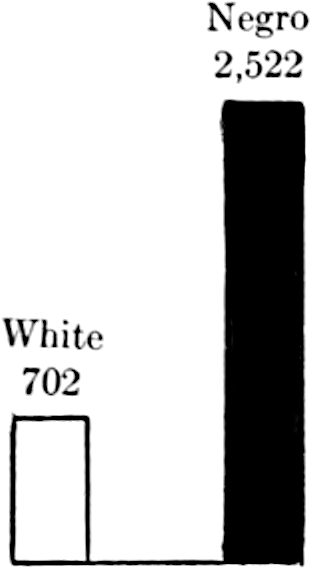
years 3,224 persons have been killed by lynching mobs.[3] Seven
hundred and two white persons and 2,522 Negroes have been
victims.[4] Of the whites lynched, 691 have been men and 11
women; of the colored, 2,472 were men and 50 were women.
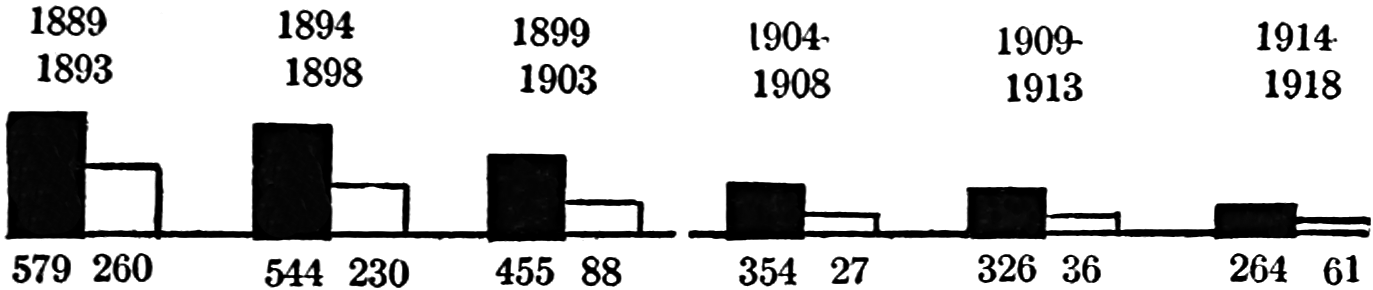
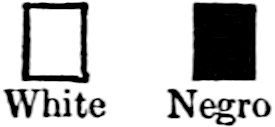
For the whole period, 78.2 per cent. of the victims were Negroes
and 21.8 per cent. white persons.
Distribution of the Lynchings
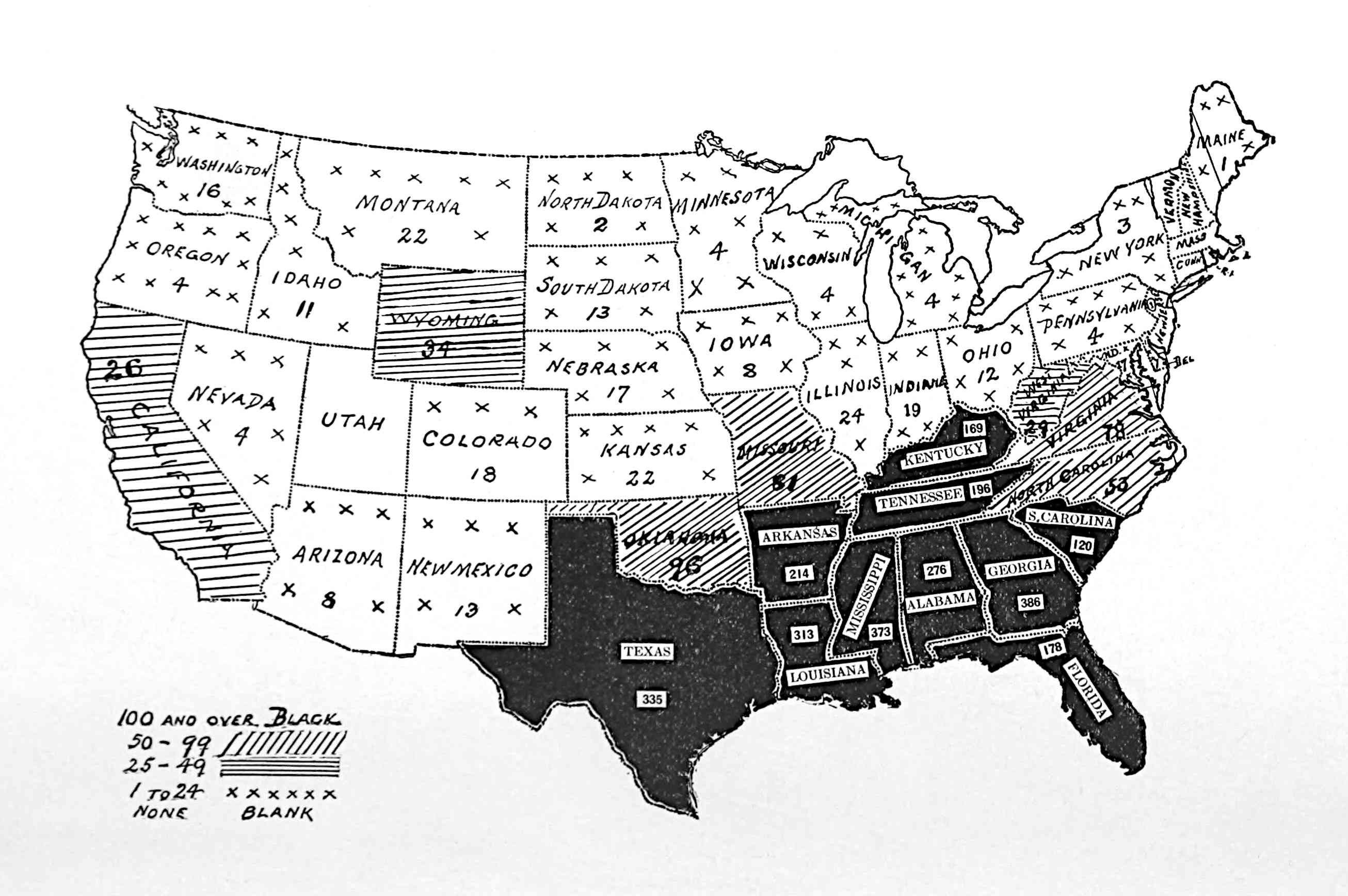
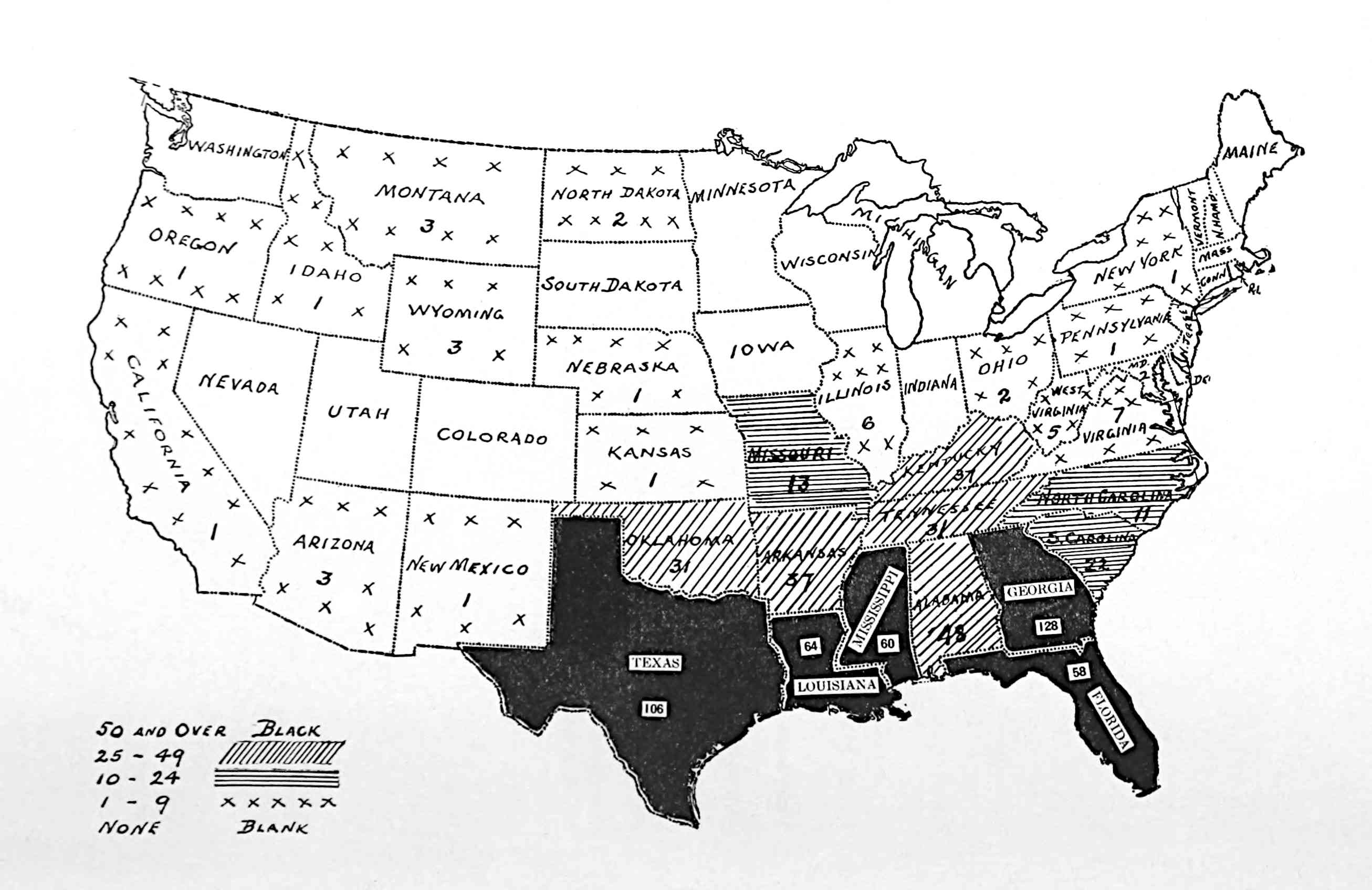
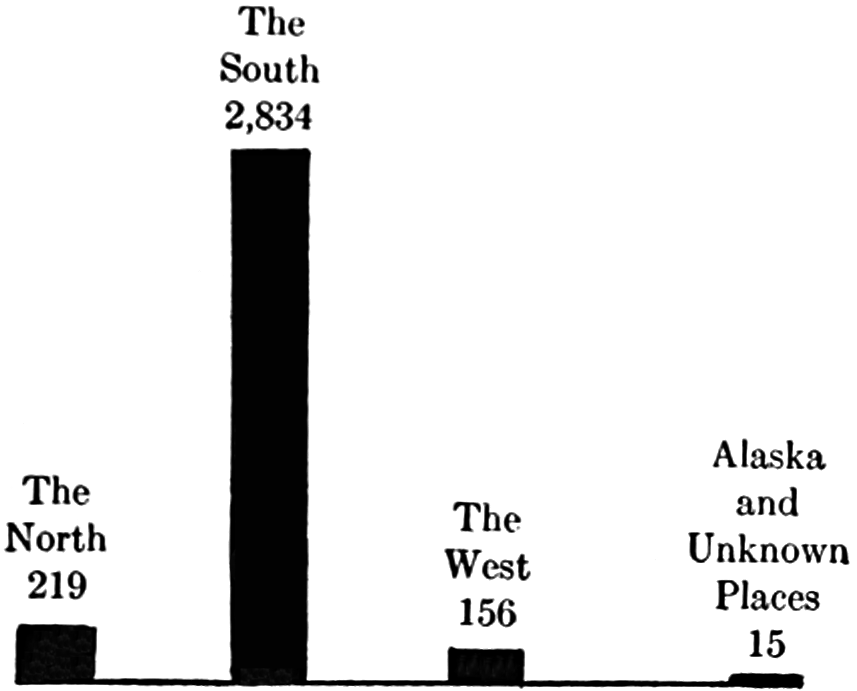
For the thirty years’ period as a whole, the North has had 219
victims, the South, 2,834, the West, 156, and Alaska and unknown
localities, 15 victims. An examination of Table No. 3 will show
that the eight South Atlantic States are responsible for 862 of
the total of 2,834 for the South as a whole; the four East South
Central States have had 1,014 victims, and the four West South
Central States 958. Georgia leads in this unholy ascendancy
with 386 victims, followed closely by Mississippi with 373 victims,
Texas with 335, Louisiana with 313, Alabama with 276,
Arkansas with 214, Tennessee with 196, Florida with 178 and
Kentucky with 169. The nine states above named are those
8which, for the thirty years’ period, have each a percentage of the
total number of lynchings in excess of five per cent.
Fifty colored women and 11 white women were lynched in 14
states. Thirteen of the 14 states in which women fell victims
to mobs were Southern states, Nebraska being the only state
outside the South which lynched women.
Comparing the northern, southern and western states by five
years’ periods (see Table No. 5), the following is noted:
NUMBER OF PERSONS LYNCHED
Geographical
Division
1889–1893
1894–1898
1899–1903
1904–1908
1909–1913
1914–1918
The North
66
73
44
9
15
12
The South
690
661
474
362
343
304
The West
76
34
24
9
4
9
This summation shows that while in all sections of the country
there has been a progressive decrease in the number of lynchings
at each of the five years’ periods, this decrease in the North and
West has far outrun the decrease in the South. The North and
West together have lynched 21 persons during the last five years’
period, whereas during the same time 304 persons were lynched
in the South.
Georgia began the first five years’ period with 61 lynchings
and ended the last five years’ period with exactly the same number.
This number, by the way, was the lowest, with one exception,
which Georgia reached during the thirty years. Alabama,
on the contrary, began with 84, a number one-third greater than
Georgia’s, which had been reduced during the last five years’
period to 19. Mississippi began with 91 for the first period and
ended with 28 in the latter five years’ period. Georgia and Texas
alone, of all the states, have made no proportionate decrease in
the number of lynchings during the thirty years’ period. Texas
shows an increase during the last five years over her record for
three preceding five years’ periods.
In considering these facts it should be borne in mind that the
number of lynchings has steadily been decreasing. When, therefore,
9Georgia and Texas show no decrease in the former state
and only a small decrease in the latter state, it means that relative
to the country as a whole, lynchings have been on the increase in
these two states.
Decrease in Lynching During Past Thirty Years
Table No. 8 shows the percentage of decrease in the number of
persons lynched during each five years’ period. Comparing the
five years, 1914–1918, with the five years, 1889–1893, the table
shows a decrease of 61.3 per cent. in the total number of persons
lynched. The percentage of decrease in the number of whites
lynched was 77.6 and of colored, 54.4. Since 1903 the number of
whites lynched has been decreasing steadily. The increase for
the period 1914–1918 to 61 white persons lynched is largely
accounted for by the fact that in 1915, 43 whites were lynched.
Twenty-seven of these were Mexicans who were lynched in the
state of Texas. Many citizens of Texas look upon Mexicans in
somewhat the same way as they look upon Negroes (alas for
democracy), so that the lynching of this number of Mexicans
would not be regarded by them in the same light as would the
lynching of so many white Texans or other white citizens of the
United States.
Except in 1915 and in 1909 and 1910, the number of whites
lynched in any year since 1903 has been less than ten. The percentage
of whites lynched in the first ten years’ period of our
study was 30 per cent; in the second ten years’ period, 12.4 per
cent, and in the third ten years’ period, 15 per cent.
Alleged Offenses which Appear as “Causes” for the
Lynchings
Table No. 6 sums up the known facts regarding the alleged
offenses committed by the men and women lynched. It is to be
remembered that the alleged offenses given are pretty loose descriptions
of the crimes charged against the mob victims, where
actual crime was committed. Of the whites lynched, nearly 46
per cent were accused of murder; a little more than 18 per cent
were accused of what have been classified as miscellaneous crimes,
i.e., all crimes not otherwise classified; 17.4 per cent were said
to have committed crimes against property; 8.7 per cent crimes
10against the person, other than rape, “attacks upon women,” and
murder; while 8.4 per cent were accused of rape and “attacks
upon women.”
Among colored victims, 35.8 per cent were accused of murder;
28.4 per cent of rape and “attacks upon women” (19 per cent of
rape and 9.4 per cent of “attacks upon women”); 17.8 per cent
of crimes against the person (other than those already mentioned)
and against property; 12 per cent were charged with miscellaneous
crimes and in 5.6 per cent of cases no crime at all was
charged. The 5.6 per cent. classified under “Absence of Crime”
does not include a number of cases in which crime was alleged
but in which it was afterwards shown conclusively that no crime
had been committed. Further, it may fairly be pointed out that
in a number of cases where Negroes have been lynched for rape
and “attacks upon white women,” the alleged attacks rest upon
no stronger evidence than “entering the room of a woman” or
brushing against her. In such cases as these latter the victims
and their friends have often asserted that there was no intention
on the part of the victim to attack a white woman or to commit
rape. In many cases, of course, the evidence points to bona fide
attacks upon women.
An examination of Table No. 7 shows that the decreases in
succeeding five years’ periods in the number of victims charged
with rape and “attacks upon women” have been more pronounced
than for any other alleged cause. The percentage of
Negroes lynched for alleged rape and attacks upon white women
(compared with the total number of Negroes lynched for all
causes) in the several five years’ periods is shown in the following
summary:
1889–1893
1894–1898
1899–1903
1904–1908
1909–1913
1914–1918
31.8
30.7
28.1
27
28
19.8
It is apparent that lynchings of Negroes for other causes than
the so-called “one crime” have for the whole period been a large
majority of all lynchings and that for the past five years, less
than one in five of the colored victims have been accused of rape
or “attacks upon women” (rape, 11 per cent; attacks upon
women, 8.8 per cent; total, 19.8 per cent).
To give concreteness and to make vivid the facts of lynching in
the United States, we give below in chronological order an account
of one hundred lynchings which have occurred in the period from
1894 to 1918. These “stories,” as they are technically described
in newspaper parlance, have been taken from press accounts and,
in a few cases, from the reports of investigations made by the
National Association for the Advancement of Colored People.
Covering twenty-five years of American history, these accounts
serve to present a characteristic picture of the lynching sport, as
it was picturesquely defined by Henry Watterson.
The last of the “stories” describes one of the rare events in connection
with lynchings, that of the conviction of members of a
mob involved in such affairs. In this case no lynching was consummated,
it having been prevented by the prompt and public-spirited
action of the mayor of the city (Winston-Salem, North
Carolina), and members of the “Home Guard” and Federal
troops who defended the jail against a mob.
ALABAMA, 1894
Three Negroes, Tom Black, Johnson Williams and Tony Johnston, were
lynched at Tuscumbia, Alabama. They were in the local jail, awaiting trial
on the charge of having burnt a barn. A mob of two hundred masked men
entered the jail, after having enticed away the jailer with a false message,
took the keys from the jailer’s wife and secured the three prisoners. They
were carried to a near-by bridge. Here a rope was placed around the neck
of each victim, the other end being tied to the timbers of the bridge, and
they were compelled to jump.
New York Tribune, April 23, 1894.
TENNESSEE, 1894
Six Negroes, Daniel Hawkins, Robert Haines, Warner Miller, Edward
Hale, John Hayes and Glenn White, were taken from the custody of detective
W. S. Richardson and shot to death at Millington, Tennessee, September
1st.
12
They were charged with barn burning but none of them had been tried.
The prisoners, who were handcuffed together in a wagon, were ambushed
and shot as Richardson was driving them down a ravine. He had been led
into the ambush by being told that the bridge he wished to cross had been
washed away.
The Coroner’s jury reported that the Negroes came to their death “at the
hands of parties unknown.”
New York Tribune, Sept. 2, 1894.
TEXAS, 1895
News has been received of the lynching of a Negro in this part of Madison
County on Tuesday night. He was accused of riding his horse over a little
white girl and inflicting serious injuries on her. Later developments go to
show that the mob got hold of the wrong negro. The guilty one made his
escape.
Chicago Tribune, November 22, 1895.
TEXAS, 1897
Robert Henson Hilliard, a Negro, for a murder to which he confessed and
for alleged rape, was burned to death by a mob at Tyler, Texas. Hilliard
confessed the murder but stated that he killed his victim because he had unwittingly
frightened her and feared that he would be killed.
A report of the crime and its punishment was written by an eye-witness
and printed by a local publishing house. It ended as follows:
“Note: Hilliard’s power of endurance was the most wonderful thing on
record. His lower limbs burned off before he became unconscious and his
body looked to be burned to the hollow. Was it decreed by an avenging
God as well as an avenging people that his sufferings should be prolonged
beyond the ordinary endurance of mortals?
The End
“We have sixteen large views under powerful magnifying lenses now on
exhibition. These views are true to life and show the Negro’s attack, the
scuffle, the murder, the body as found, etc. With eight views of the trial
and burning. For place of exhibit see street bills. Don’t fail to see this.”
Breckenridge-Scruggs Co.
No indictments were found against any of the mob’s members.
GEORGIA, 1899
Sam Hose, a Negro farm laborer, was accused of murdering his employer
in a quarrel over wages. He escaped. Several days later, while he was being
hunted unsuccessfully, the charge was added that he raped his employer’s
wife. He confessed the murder, but refused, even under duress, to confess
the other crime.
13
The following account of the lynching is taken from the New York Tribune
for April 24, 1899:
“In the presence of nearly 2,000 people, who sent aloft yells of defiance
and shouts of joy, Sam Hose (a Negro who committed two of the basest
acts known to crime) was burned at the stake in a public road, one and a
half miles from here. Before the torch was applied to the pyre, the Negro
was deprived of his ears, fingers and other portions of his body with surprising
fortitude. Before the body was cool, it was cut to pieces, the bones were
crushed into small bits and even the tree upon which the wretch met his
fate was torn up and disposed of as souvenirs.
“The Negro’s heart was cut in several pieces, as was also his liver. Those
unable to obtain the ghastly relics directly, paid more fortunate possessors
extravagant sums for them. Small pieces of bone went for 25 cents and a
bit of the liver, crisply cooked, for 10 cents.”
No indictments were ever found against any of the lynchers.
LOUISIANA, 1899
A peculiarly horrible affair occurred two days ago at Lindsay, near Jackson,
La. Mitchell Curry, hearing that someone was in his cornfield, took
two Negroes and went to drive away the intruder. There had been an attempted
assault on a white woman by a Negro, Val Bages, and by some
unexplained course of reasoning, Mitchell Curry, on seeing a large Negro in
the field, became convinced that the man was the criminal.
The fellow took flight, was followed, and finally climbed a magnolia tree.
The tree was surrounded and the Negro ordered to remain where he was
while one of the pursuers was sent for rope to hang him. Presently, however,
the man deliberately slid down out of the tree, and halfway down he was
shot to death. On examination of the body the man’s clothing marked No.
43, was found to be that worn at the State Insane Asylum in the neighboring
town of Jackson. On investigation it was learned that the insane occupant
had escaped a few days before and the helpless fellow, wandering at large,
had suffered death for a crime he had not committed.
Special despatch to New York Tribune, July 27, 1899.
FLORIDA, 1901
Will Wright and Sam Williams, charged with being implicated in a murder,
were lynched without trial in jail at Dade City, by a mob of thirty or
more men. Sheriff Griffin refused to give up the keys and they broke down
the outer door. Unable to break down the steel doors of the cells, they opened
fire through the steel bars, shooting both the Negroes to death.
The Coroner’s jury found that they came to their death at the hands of
“parties unknown.”
New York Tribune, February 7, 1901.
14
TENNESSEE, 1901
Ballie Crutchfield, a colored woman, was lynched by a mob at Rome,
Tennessee, because her brother stole a purse.
The mob took Crutchfield from the custody of the sheriff, and started
with him for the place of execution, when he broke from them and escaped.
“This,” says the despatch, “so enraged the mob, that they suspected Crutchfield’s
sister of being implicated in the theft and last night’s work was the
culmination of that suspicion.”
The Coroner’s jury found the usual verdict that the woman came to her
death at the hands of parties unknown.
New York Tribune, March 16, 1901.
LOUISIANA, 1901
Louis Thomas, at Girard, La., a Negro, broke into a local store and stole
six bottles of soda-pop. He was later found by a white man named Brown,
disposing of its contents, and on being accused of theft, struck his accuser.
Brown procured a rifle and shot the Negro twice through the body, but as
neither wound proved fatal, a mob of white men took the Negro from the
house where he lay wounded and strung him up.
New York Tribune, July 16, 1901.
GEORGIA, 1903
Griffin, Ga.—William Fambro, a Negro, was shot to death on the outskirts
of this city late last night by a mob of white men, who fired on his house.
Fambro’s wife, who was in the house, escaped injury. The Negro some time
ago was arrested on the charge of insulting a white woman and was tried
and sentenced to a term in the county chain gang. His fine afterwards was
paid by his employer. Over a thousand shots were sent into the building
before the mob retired.
Special to the Chicago Tribune, February 24, 1903.
DELAWARE, 1903
George White, a Negro, accused of rape and murder, was taken out of jail
at Wilmington, Del., dragged to the scene of his alleged crime and forced
to confess. He was tied to a stake, burned and riddled with bullets, even
as he was being burned. The Chamber of Commerce of Wilmington, which
met a few days later, refused to pass a resolution condemning the lynching
but passed one against forest fires.
New York Tribune, June 23, 24, 1903.
15
GEORGIA, 1903
A mob, formed near Liberty County, pursued through seven counties a
Negro supposed to be Ed Claus, who had assaulted Susie Johnson, a young
white woman, and lynched him, hanging him and shooting him full of holes.
After he was lynched it was found he was not Claus.
New York Tribune, July 27, 1903.
MISSISSIPPI, 1904
Luther Holbert, a Doddsville Negro, and his wife were burned at the stake
for the murder of James Eastland, a white planter, and John Carr, a Negro.
The planter was killed in a quarrel which arose when he came to Carr’s cabin,
where he found Holbert, and ordered him to leave the plantation. Carr and
a Negro, named Winters, were also killed.
Holbert and his wife fled the plantation but were brought back and burned
at the stake in the presence of a thousand people. Two innocent Negros had
been shot previous to this by a posse looking for Holbert, because one of
them, who resembled Holbert, refused to surrender when ordered to do so.
There is nothing in the story to indicate that Holbert’s wife had any part in
the crime.
New York Tribune, February 8, 1904.
ALABAMA, 1904
For murdering and robbing a peddler, Horace Maples, a Negro, was hung
and then shot full of holes at Huntsville, September 7th. The mob secured
his release from jail by building a fire in the hallway in the jail, the jailer surrendering
the prisoner finally because there seemed no other way of saving
the other prisoners from asphyxiation.
Ray Stannard Baker, “Following the Color Line.”
GEORGIA, 1904
For the brutal murder of a white family (the Hodges family) at Statesboro’,
Georgia, two Negroes, Paul Reed and Will Cato, were burned alive
in the presence of a large crowd. They had been duly convicted and sentenced,
when the mob broke into the courtroom and carried them away, in
spite of the plea of a brother of the murdered man, who was present in the
court, that the law be allowed to take its course. None of the lynchers were
ever indicted.
Ray Stannard Baker, “Following the Color Line,”
Chicago Tribune, December 31, 1904.
16
GEORGIA, 1904
Because of the race prejudice growing out of the Hodges murder by Reed
and Cato and their lynching, Albert Roger and his son were lynched at
Statesboro’, Ga., August 17, for being Negroes. A number of other Negroes
were whipped for no other offense.
Ray Stannard Baker’s “Following the Color Line,”
Chicago Tribune, December 31, 1904.
GEORGIA, 1904
On account of the race riots which grew out of the above murder (Hodges)
and lynching, McBride, a respectable Negro of Portal, Ga., was beaten,
kicked and shot to death for trying to defend his wife, who was confined
with a baby, three days old, from a whipping at the hands of a crowd of
white men.
Ray Stannard Baker, “Following the Color Line,”
Chicago Tribune, December 31, 1904.
GEORGIA, 1905
At Watkinsville, Georgia, a masked mob entered the jail at 2 A.M. and
took out nine prisoners, one white man and eight Negroes. Eight were shot
to death and one, a Negro, escaped only by shamming death. The mob
overpowered the town marshall and the jailer, carried the men out and tied
them to fence posts by their necks and then fired five volleys into their bodies.
Only one of the prisoners had been convicted. This was Rich Allen, a Negro,
under sentence of death for the murder of another Negro. All the others
were awaiting trial, the various charges against them being murder, larceny
and attempted rape. The mob had announced its intention of clearing the
jail, but one Negro, charged with gambling on the misdemeanor side of the
jail, escaped their notice.
New York Tribune, June 30, 1905.
LOUISIANA, 1906
For the crime of killing a white man’s cow, William Carr, a Negro, was
killed at Planquemines, Louisiana. The lynching was conducted in a most
orderly manner, Carr being taken from the Sheriff without resistance by a
mob of thirty masked men, hurried to the nearest railroad bridge and hanged
without ceremony.
Despatch to New York Tribune, March 18, 1906.
17
TENNESSEE, 1906
Ed Johnson, a Negro, convicted of rape and sentenced to be hanged, was
granted an appeal by the Supreme Court of the United States. Johnson
was in jail at Chattanooga, Tennessee. A mob broke down the jail door,
took him out and hanged him.
New York Tribune, March 20, 1906.
SOUTH CAROLINA, 1906
For attempting to enter a house and frightening a child who was alone in
it, Willie Spain, a young Negro at St. George, S. C., was taken from jail and
hung to a tree. The mob then shot five hundred bullets into his body.
New York Tribune, August 24, 1906.
ARKANSAS, 1910
Pine Bluff, Ark., March 25.—Resenting alleged improper conduct on the
part of Judge Jones, a Negro, and a young white woman, a mob of forty
men gathered at the county jail here tonight, overpowered the jailer and his
deputies, and hanged the Negro.
Special to the Chicago Tribune, March 26, 1910.
KENTUCKY, 1911
Shelbyville, Ky., January 15, 1911
(Special)
Just at sunrise this morning two local Negroes took the hemp cure for propensity
to insult white women. So effective was it that the mob who administered
it decided to hold one more clinic. At this session an aged Negro
paid the penalty for beheading a Negro woman.
An unusual feature of the lynching was that the two young Negroes who
were strung up for insulting white girls, both broke the rope by which they
were suspended. Each made a dash for safety and was riddled with bullets,
although one of the bodies has not yet been discovered, and the suspicion
is that he crawled to some underbrush to die. The mob numbered only
twenty men, all masked.
Before they went to the Shelby County jail, the lynchers raided a blacksmith
shop and obtained sledge hammers and bolt cutters and other tools.
On account of the smallness of the mob and the conduct of its members, entrance
was gained to the jail office before the deputies on watch realized that
a lynching was to be attempted. The officials were covered with a dozen rifles
and ordered to give up the keys to the cells, but this they refused to do, and
the lynchers did not insist. Instead, they began battering down the cell
doors with the sledges and the bolt cutters. When they had taken Wade
Patterson and Jim West from their cells, some one suggested that they might
18as well hang old Gene Marshall, a Negro awaiting death sentence. All three
Negroes pleaded for their lives but the lynchers paid no attention to them.
The lynching was devoid of the minor brutalities that frequently mark such
occasions. There was no abuse of the prisoners. The mob was made of
quiet, determined men whose mission was to execute but not to torture.
The prisoners were led in silence to the Chesapeake and Ohio bridge over the
Emminance Pike.... The two Negroes were to have been arraigned tomorrow.
Special to the Chicago Tribune, January 16, 1911.
OKLAHOMA, 1911
At Okemah, Oklahoma, Laura Nelson, a colored woman, accused of murdering
a deputy sheriff who had discovered stolen goods in her house, was
lynched together with her son, a boy about fifteen. The woman and her
son were taken from the jail, dragged about six miles to the Canadian River,
and hanged from a bridge. The woman was raped by members of the mob
before she was hanged.
The Crisis, July, 1911.
FLORIDA, 1911
At Lake City, Fla., a Negro named Norris quarreled with a white man,
apparently over a trivial matter, the result being a murderous assault on the
Negro by the white man. The matter came up before a justice of the peace
and the Negro was exonerated.
Later, the white man accompanied by several other white men, came to
the Negro’s house and reopened the quarrel. In the shooting affray that followed
one white man was killed and another wounded. Norris and his associates
awaited the coming of the sheriff and surrendered to him. Six of
them were arrested and sent to Lake City for safe-keeping. A party of
lynchers gained admission to the jail by means of a forged telegram and secured
the Negroes under pretext of taking them to Jacksonville for greater protection.
They then took them to the outskirts of the town and shot them to
death.
Investigation by the National Association for the Advancement
of Colored People.
SOUTH CAROLINA, 1911
Will Jackson was lynched at Honeapath, S. C., for an alleged attack on a
white child. He was hanged to a tree by his feet and his body riddled with
bullets. His fingers were cut off for souvenirs. The mob was led by Joshua
W. Ashleigh, a local member of the State Legislature, and his son, while
Victor B. Chesire, editor of a local newspaper, The Intelligencer, after taking
part in the lynching, got out a special edition telling about it in the following
words: “The Intelligencer man went out to see the fun without the least
19objection to being a party to help lynch the brute.” The then Governor of
the State, Cole Blease, absolutely refused to use the power of his office to
bring the lynchers to justice, and the Coroner’s jury found that the Negro
came to his death “at the hands of parties unknown.”
The Crisis, December, 1911.
GEORGIA, 1911
Two colored men, Allen and Watts, were lynched in Monroe, Georgia,
one for an alleged attack on a white woman, the other for “loitering in a
suspicious manner.” Judge Chas. H. Brand ordered Allen brought to Monroe
for trial although it was known that the citizens had organized a mob
to lynch him. The Judge was offered troops by the Governor to protect
the prisoner but refused. Allen was sent to Monroe in charge of two officers.
The train was stopped and he was taken off and shot. The mob then proceeded
to Monroe where they stormed the jail, took out Watts and hanged
and shot him. The same Judge had refused to ask for troops on a previous
occasion, saying that he “would not imperil the life of one man to save the
lives of a hundred Negroes.”
No indictments were found against the lynchers.
The Crisis, August, 1911.
PENNSYLVANIA, 1911
For shooting and killing a constable in a fight, the details of which were
not known, Zach Walker, a Negro of Coatesville, Pennsylvania, was taken
from the hospital, where he lay wounded as a result of the fight, dragged
through the streets on the cot to which he was chained and burned alive.
The bedstead was broken in half, and the man, still chained to the lower
half, was dragged half a mile along the ground, thrown upon a pile of wood,
drenched with oil and burned alive.
Other human beings, to the number of several hundred, looked on in
approval. When Walker, with superhuman strength, burst his bonds and
tried to escape, they drove him back with pitchforks and fence rails and held
him there until his body was burnt to ashes. Those who could get fragments
of his charred bones, took them off as souvenirs.
Albert Jay Nock in the American Magazine, February, 1913.
All attempts to indict members of the mob failed. They were given an
ovation by their fellow-citizens when they returned from the Grand Jury.
GEORGIA, 1911
T. W. Walker, a colored man of Washington, Ga., killed C. S. Hollinshead,
a wealthy planter of the same place. It was stated that there was no apparent
cause for the crime, but a Northern colored paper published the charge that
Walker killed Hollinshead for attacking his wife and an Atlanta paper reprinted
20it. A crowd of white men tried to lynch Walker, who had been sentenced
to death, but were so drunk that he succeeded in escaping. He was
caught and resentenced to instant execution. Before he could be taken
from the court room, a brother of Hollinshead shot and severely wounded
him. He was then taken out and hanged, the court announcing that the
brother would not be prosecuted. The only arrest made in connection with
the affair was that of the Negro editor who published the charge against
Hollinshead.
The Crisis, January, 1912.
TENNESSEE, 1911
Ben Pettigrew, a successful Negro farmer, and his two daughters, were on
their way to Savannah, Tenn., taking a load of seed cotton to a cotton gin
there. They were ambushed by four white men who shot the father, hanged
the daughters and then drove the load of cotton under the tree from which
their bodies dangled and set fire to it.
The case is remarkable, because two of the murderers, friendless, ignorant
white boys, were ultimately hanged for their part in it.
The Crisis, January, 1912.
LOUISIANA, 1912
At Yellowpine, La., Ernest Allums, a colored boy of nineteen, was whipped
for insulting women. The accounts vary as to the manner in which they
were insulted, one report saying that he wrote “suggestive letters” and another
that the insults were sent over the telephone. He was ordered to leave
town but refused and was lynched.
The Crisis, June, 1912.
WEST VIRGINIA, 1912
In Bluefield, W. Va., September 4, 1912, Robert Johnson was lynched for
attempted rape. When he was accused he gave an alibi and proved every
statement that he made. He was taken before the girl who had been attacked
and she failed to identify him. She had previously described very minutely
the clothes her assailant wore. When she failed to identify Johnson in the
clothes he had, the Bluefield police dressed him to fit the description and
again took him before her. This time she screamed on seeing him, “That’s
the man.” Her father had also failed to identify him but now he declared
himself positive that he recognized Johnson as the guilty man. Thereupon
Johnson was dragged out by a mob, protesting his innocence, and after
being severely abused, was hung to a telegraph pole. Later his innocence
was conclusively established.
“The Lynching of Robert Johnson,” James Oppenheim in The
Independent, October 10, 1912.
21
GEORGIA, 1912
Anne Bostwick, a Negro servant woman subject to violent fits of insanity,
who stabbed her mistress to death in one of them, was lynched at Pinehurst,
Ga., June 24th. According to the Coroner’s jury “she came to her
death at the hands of parties unknown.” A special correspondent to the
Cincinnati Inquirer, however, writes:
“Great crowds attended and saw the shot-riddled body of the Negress cut
from the tree. Sheriff Bennett has made no arrests and none are expected.
The truth is that there is general rejoicing over the lynching of the Negress
and the lynchers are known to everybody. The Negress was lynched from
an auto. The machine in which she was sitting was driven under a tree, a
rope placed about her neck and the other end tied to a limb of the tree. The
machine was started at high speed and the Negress left hanging. Her body
was then shot to pieces. Her eyes were shot out and such a fusillade directed
at her waist that she was cut in two.”
The same paper says of the verdict:
“The verdict was rendered in the face of the fact that the automobiles in
which the lynching party pursued the slayer and the sheriff are known to
be owned by some of the most prominent citizens of Cordele, Vienna and
Pinehurst.”
The Macon Telegraph said as to the woman’s sanity:
“While living here (Fort Valley) the lynched Negress was tried by a jury
and found a fit subject for the lunatic asylum but owing to the crowded
condition of that institution she could not be received. In her rational moments
she was a good reliable servant, but became violent at times.”
The Crisis, August, 1912.
GEORGIA, 1912
At Jackson, Georgia, Henry Etheridge was lynched April 26 for being
active in securing recruits for a colony to Africa. Race prejudice is also given
as the cause.
The Crisis, June, 1912.
Chicago Tribune, December 31, 1912.
TEXAS, 1912
Dan Davis, a Negro, was burned at the stake at Tyler, Texas, for the
crime of attempted rape, May 25, 1912.
There was some disappointment in the crowd and criticism of those who
had bossed the arrangements, because the fire was so slow in reaching the
Negro. It was really only ten minutes after the fire was started that smoking
shoe soles and twitching of the Negro’s feet indicated that his lower extremities
were burning, but the time seemed much longer. The spectators had
waited so long to see him tortured that they begrudged the ten minutes before
his suffering really began.
The Negro had uttered but few words. When he was led to where he was
to be burned he said quite calmly, “I wish some of you gentlemen would be
22Christian enough to cut my throat,” but nobody responded. When the fire
started, he screamed “Lord, have mercy on my soul,” and that was the last
word he spoke, though he was conscious for fully twenty minutes after that.
His exhibition of nerve aroused the admiration even of his torturers.
A slight hitch in the proceedings occurred when the Negro was about half
burned. His clothing had been stripped off and burned to ashes by the
flames and his black body hung nude in the gray dawn light. The flesh had
been burned from his legs as high as the knees when it was seen that the
wood supply was running short. None of the men or boys were willing to
miss an incident of the torture. All feared something of more than usual
interest might happen, and it would be embarrassing to admit later on not
having seen it on account of being absent after more wood.
Something had to be done, however, and a few men from the edge of the
crowd, ran after more dry-goods boxes, and by reason of this “public service”
gained standing room in the inner circle after having delivered the fuel.
Meanwhile the crowd jeered the dying man and uttered shocking comments
suggestive of a cannibalistic spirit. Some danced and sang to testify to their
enjoyment of the occasion.
Special correspondence of the St. Louis Post-Despatch.
The Crisis, June, September, 1912.
MISSISSIPPI, 1914
Sam Petty, a Negro, accused of having killed a deputy sheriff, Chas. W.
(Kirkland), was lynched at Leland, Miss.
Petty, wanted on a trivial charge, killed Kirkland with a shot-gun when
the officer entered a cabin late today, in which the Negro had taken refuge.
Petty was captured by a posse, bound and placed in an oil-soaked, dry-goods
box and the match applied. A moment later, the man, his clothing aflame,
broke from his fastenings and started to run, but before he could gain headway,
was shot dead.
The body was put in the box, fresh inflammables were piled about it and
within half an hour it was burnt to ashes.
Associated Press Despatch, February 24, 1914.
LOUISIANA, 1914
K. McKnight, T. Lewis and M. Suden were lynched without trial because
they were accused of murdering a postmaster. One of them, an old man,
bore an excellent reputation in the neighborhood. There was no evidence
against him and even under duress he refused to confess to the crime. He
was burnt at the stake in the presence of a large crowd, which included a
local theatrical troupe.
The Crisis, January, February, 1915.
The conviction is irresistible that the old man who was burned to death
had nothing whatever to do with the crime. If he had been guilty, the torture
23to which he was subjected would have forced a confession and the wonder
is that he did not confess, anyhow, in the agony of his roasting flesh, as
many innocent victims have done in the vain hope of escaping torture. In
all probability the guilty murderers of the village postmaster are at large,
while the blood of innocents rests upon the hands of those who took it upon
themselves to discharge the functions of the law.
Editorial, Houston, Texas, Post.
OKLAHOMA, 1914
Marie Scott of Wagoner County, a seventeen-year-old Negro girl, was
lynched by a mob of white men because her brother killed one of two white
men who had assaulted her. She was alone in the house when the men entered,
but her screams brought her brother to the rescue. In the fight that
ensued one of the white men was killed. The next day the mob came to
lynch her brother, but as he had escaped, lynched the girl instead. No one
has ever been indicted for this crime.
The Crisis, June, 1914.
GEORGIA, 1915
The Aftermath
A Georgia sheriff was murdered something over a year ago. Naturally,
there was intense excitement (in Worth County) where the crime was committed
and of the six Negroes who were arrested, five were promptly hanged
by a mob. The sixth one, Jim Keith, chanced to be rescued from the lynchers,
much to their indignation. He was put on trial and convicted of complicity
in the murder, but not of actual participation in it, and he was sentenced
to imprisonment for life. Recently some new facts came to light and in the
second trial that was accorded to Keith, because of their importance, not
only was he cleared by the jury of having any hand at all in the killing, but
it was also proved that the five Negroes who were lynched were equally
guiltless.
From an editorial in the New York Times, February 12, 1917.
NORTH CAROLINA, 1916
Joseph Black was hanged at Kingston, N. C., because his son was accused
of attacking a white child. He was arrested and taken out of the reach of
mob violence by the officer, so the mob lynched the father instead.
The Crisis, May, 1916.
TEXAS, 1916
Jesse Washington, a defective Negro boy, of about nineteen, unable to
read and write, was employed as farm hand in Robinson, a small town near
Waco, Texas. One day, the wife of his employer found fault with him,
24whereupon he struck her on the head with a hammer and killed her. There
is some, but not conclusive, evidence that he raped her. He was arrested,
tried, found guilty and sentenced to death by hanging within ten days of
the commission of the crime. As the sentence was pronounced, a mob of
fifteen hundred white men, who feared the law’s delays, broke into the courtroom
and seized the prisoner. He was dragged through the streets, stabbed,
mutilated and finally burned to death in the presence of a crowd of 15,000
men, women and children. The Mayor and Chief of Police of Waco also
witnessed the lynching.
After death what was left of his body was dragged through the streets
and parts of it sold as souvenirs. His teeth brought $5 apiece and the chain
that had bound him 25 cents a link. No one was ever indicted for participating
in the lynching.
Investigation by the National Association for the Advancement
of Colored People.
FLORIDA, 1916
Boisy Long, a Negro farmer of Newberry, Fla., was accused by some white
farmers of hog stealing. The sheriff came to arrest Long at two o’clock in
the morning. With him was another white man, who was supposed to be
the owner of the hogs in question, and to have sworn out the warrant. What
occurred in the house is not known, but both the white men were shot, the
sheriff dying of the wound.
Long escaped, so that when the Newberry people came to get him they
took his wife, Stella Long, and a friend of hers, Mrs. Dennis, on the ground
that they refused to give information. It is said that they were tortured to
get the information.
The citizens of Newberry and Gainesville continued to look for Long.
They did not find him but they met James Dennis, and shot him. James
Dennis’s brother went into Newberry to buy a coffin and they threw him
in jail. Then they met Josh Baskin, a neighbor of the Longs and Dennises,
and a preacher. They hanged him. Then they went to the jail, brought
out the three Negroes already in jail and hanged them. Mary Dennis was
the mother of two children and was pregnant. Stella Long had four children.
Boisy Long has been captured and indicted for shooting the sheriff and
the other white man. None of the lynchers has been indicted.
Investigation by the National Association for the Advancement
of Colored People.
SOUTH CAROLINA, 1916
Anthony Crawford, a wealthy Negro farmer of Abbeville, S. C., came into
town to sell a load of cotton and cotton seed. He got into a dispute with a
white storekeeper over the price of the cotton seed and cursed him. He was
arrested for disorderly conduct and released on $15 bail. A mob, enraged
25at this miscarriage of justice, pursued him into a cotton gin and in self-defense,
he struck the leader with a hammer, crushing his skull but not fatally injuring
him. The mob then dragged him out, beat, kicked, stabbed and partially
blinded him. He was rescued with some difficulty by the sheriff and
removed to the county jail. The same afternoon the mob broke into the
jail, dragged him out through the streets to the fair grounds, hung him to
a tree and riddled his body with bullets. Not one of the lynchers was ever
indicted.
Roy Nash, Independent, Dec. 11, 1916, Investigation by the
National Association for the Advancement of Colored People.
TENNESSEE, 1917
On April 30, Antoinette Rappal, a sixteen-year-old white girl, living on the
outskirts of Memphis, disappeared on her way to school. On May third her
body was found in a river, her head severed from it. On May 6 a Negro
woodchopper, Ell Person, was arrested on suspicion. Under third degree
methods he confessed to the crime of murder. The Grand Jury of Shelby
County immediately indicted him for murder in the first degree.
The prisoner was taken secretly to the State penitentiary at Nashville.
It was known that he would be brought back for trial to Memphis. Each
incoming train was searched, and arrangements were made for a lynching.
On May 15 the sheriff disappeared from Memphis. He returned on May
18, announcing that he was informed that several mobs were between Arlington
and Memphis. The men were reported to be drinking. “I didn’t want
to hurt anybody and I didn’t want to get hurt,” he said, “so I went South
into Mississippi.”
The press did nothing to quell the mob spirit, and on May 21 announced
that Ell Person would be brought to Memphis that night. Thousands of
persons on foot and in automobiles went to the place that had been prepared
for the lynching.
With a knowledge of these conditions, Person was brought back from
Nashville, guarded only by two deputies. Without difficulty he was taken
from the train, placed in an automobile, and driven to the spot prepared for
his death.
The Memphis Press reported the lynching in full. We give a few of its
statements.
“Fifteen thousand of them—men, women, even little children, and in
their midst the black-clothed figure of Antoinette Rappal’s mother—cheered
as they poured the gasoline on the axe fiend and struck the match.
“They fought and screamed and crowded to get a glimpse of him, and the
mob closed in and struggled about the fire as the flames flared high and the
smoke rolled about their heads. Two of them hacked off his ears as he burned;
another tried to cut off a toe but they stopped him.
“The Negro lay in the flames, his hands crossed on his chest. If he spoke
no one ever heard him over the shouts of the crowd. He died quickly, though
fifteen minutes later excitable persons still shouted that he lived when they
saw the charred remains move as does meat on a hot frying pan.
26
“‘They burned him too quick! They burned him too quick!’ was the
complaint on all sides.”
Investigation of the burning of Ell Person at Memphis, by James
Weldon Johnson. Published by the National Association for
the Advancement of Colored People.
TENNESSEE, 1918
Jim McIlherron, was prosperous in a small way. He was a Negro who
resented the slights and insults of white men. He went armed and the sheriff
feared him. On February 8 he got into a quarrel with three young white
men who insulted him. Threats were made and McIlherron fired six shots,
killing two of the men.
He fled to the home of a colored clergyman who aided him to escape, and
was afterwards shot and killed by a mob. McIlherron was captured and
full arrangements made for a lynching. Men, women and children started
into the town of Estill Springs from a radius of fifty miles. A spot was chosen
for the burning. McIlherron was chained to a hickory tree while the mob
howled about him. A fire was built a few feet away and the torture began.
Bars of iron were heated and the mob amused itself by putting them close
to the victim, at first without touching him. One bar he grasped and as it
was jerked from his grasp all the inside of his hand came with it. Then the
real torturing began, lasting for twenty minutes.
During that time, while his flesh was slowly roasting, the Negro never
lost his nerve. He cursed those who tortured him and almost to the last
breath derided the attempts of the mob to break his spirit.
Walter F. White, in The Crisis, May, 1918.
GEORGIA, 1918
Hampton Smith, a white farmer, had the reputation of ill treating his
Negro employees. Among those whom he abused was Sidney Johnson, a
Negro peon, whose fine of thirty dollars he had paid when he was up before
the court for gaming. After having been beaten and abused, the Negro
shot and killed Smith as he sat in his window at home. He also shot and
wounded Smith’s wife.
For this murder a mob of white men of Georgia for a week, May 17 to 24,
engaged in a hunt for the guilty man, and in the meantime lynched the following
innocent persons: Will Head, Will Thompson, Hayes Turner, Mary
Turner, his wife, for loudly proclaiming her husband’s innocence, Chime
Riley and four unidentified Negroes. Mary Turner was pregnant and was
hung by her feet. Gasoline was thrown on her clothing and it was set on
fire. Her body was cut open and her infant fell to the ground with a little
cry, to be crushed to death by the heel of one of the white men present. The
mother’s body was then riddled with bullets. The murderer, Sidney Johnson,
was at length located in a house at Valdosta.
27
The house was surrounded by a posse headed by the Chief of Police and
Johnson, who was known to be armed, fired until his shot gave out, wounding
the Chief. The house was entered and Johnson found dead. His body
was mutilated. After the lynching more than 500 Negroes left the vicinity
of Valdosta, leaving hundreds of acres of untilled land behind them.
The Lynchings of May, 1918, in Brooks and Lowndes Counties,
Georgia, by Walter F. White. Published by the National
Association for the Advancement of Colored People.
CORRECTION.
We are advised by competent medical authority, since the publication of this report and
before it was entirely distributed, that the statement concerning Alma Howze in the concluding
paragraph of the account of her lynching describes a highly improbable occurrence, and
that the movement spoken of was probably due to a purely mechanical process within the
body and not to the movement of the unborn infant.
MISSISSIPPI, 1918
On Friday night, December 20, 1918, four Negroes, Andrew Clark, age 15;
Major Clark, age 20; Maggie Howze, age 20; and Alma Howze, age 16, were
taken from the little jail at Shubuta and lynched on a bridge over the Chickasawha
River. They were suspected of having murdered a Dr. E. L. Johnston,
a dentist.
An investigation disclosed the following facts: That Dr. Johnston was
living in illicit relations with Maggie Howze and Alma Howze. That Major
Clark, a youth working on Johnston’s plantation wished to marry Maggie.
That Dr. Johnston went to Clark and told him to leave his woman alone.
That this led to a quarrel, made the more bitter when it was found that
Maggie was to have a child by Dr. Johnston; and that the younger sister
was also pregnant, said to be by Dr. Johnston.
Shortly after this Johnston was mysteriously murdered. There were two
theories as to his death; one that he was killed by Clark, the other that he
was killed by a white man who had accused him of seducing a white woman.
It was generally admitted that Johnston was a loose character.
Alma Howze was so near to motherhood when lynched that it was said
by an eye-witness at her burial on the second day following, that the
movements of her unborn child could be detected.
Investigation by the National Association for the Advancement
of Colored People.
NORTH CAROLINA, 1918
Mob Leaders Go To Prison
Realizing that if a lyncher is permitted to remain unpunished the decency
of the community is greatly endangered, Judge B. F. Long of the Superior
Court sentenced fifteen white men, indicted for participation in a riot in
Winston-Salem, Nov. 17, to serve from fourteen months to six years in
prison. The men were found guilty of attempting to lynch Russell High, a
prisoner in the city jail.
The fifteen men were a part of a mob that for a night and morning terrorized
Winston-Salem, and in their efforts to lynch a black man, innocent
of the crime of assault for which he had been arrested on suspicion, put life
and property in peril and incidentally killed four people, one a little white
28girl. The Mayor of the city acted with promptitude and courage, calling
out the Home Guards and the fire department which played water on the
mob. Nearly every policeman was hurt. The Governor rushed troops
from Camp Green at Charlotte. For many days cannon guarded the streets.
“We don’t mean to be sentimental on this matter,” a prominent business man
is quoted as saying, “but we aren’t going to have our city’s good name spoilt
by a lynching.”
Condensed from reports of the North Carolina press.
29
APPENDIX I
Analyses of Number of Persons Lynched
TABLE NO. 1
NUMBER OF WHITE AND COLORED PERSONS LYNCHED IN
UNITED STATES, 1889–1918[6]
Years
Total
White
Colored
1889
175
80
95
1890
91
3
88
1891
194
67
127
1892
226
71
155
1893
153
39
114
1894
182
54
128
1895
178
68
110
1896
125
46
79
1897
162
38
124
1898
127
24
103
1899
109
22
87
1900
101
12
89
1901
135
27
108
1902
94
10
84
1903
104
17
87
1904
86
7
79
1905
65
5
60
1906
68
4
64
1907
62
3
59
1908
100
8
92
1909
89
14
75
1910
90
10
80
1911
71
8
63
1912
64
3
61
1913
48
1
47
1914
54
5
49
1915
96
43
53
1916
58
7
51
1917
50
2
48
1918
67
4
63
3,224
702
2,522
30
TABLE NO. 2
NUMBER OF PERSONS LYNCHED, BY FIVE YEARS’ PERIODS AND BY COLOR AND SEX,
1889–1918
Years
Grand Total
WHITE
Per Cent. White
NEGRO
Per Cent. Negro
Total
Male
Female
Total
Male
Female
1889–1893
839
260
258
2
32.2
579
571
8
67.8
1894–1898
774
230
221
9
29.7
544
529
15
70.3
1899–1903
543
88
88
0
16.2
455
451
4
83.8
1904–1908
381
27
27
0
7.0
354
348
6
93.0
1909–1913
362
36
36
0
10.2
326
320
6
89.8
1914–1918
325
61
61
0
18.8
264
253
11
81.2
Total
3,224
702
691
11
21.8
2,522
2,472
50
78.2
31
TABLE NO. 3
NUMBER OF PERSONS LYNCHED, BY GEOGRAPHICAL DIVISIONS
AND STATES AND BY COLOR, 1889–1918[7]
Section and Division
Total No.
White
Per Cent.
Negro
Per Cent.
UNITED STATES
3,224
702
21.8
2,522
78.2
THE NORTH
219
118
54.4
101
45.6
New England
1
1
100.0
0
0
Maine
1
1
100.0
0
0
New Hampshire
0
0
0
0
0
Vermont
0
0
0
0
0
Massachusetts
0
0
0
0
0
Rhode Island
0
0
0
0
0
Connecticut
0
0
0
0
0
Middle Atlantic
8
4
50.0
4
50.0
New York
3
2
66.6
1
33.4
New Jersey
1
1
100.0
0
0
Pennsylvania
4
1
25.0
3
75.0
East North Central
63
33
53.1
30
46.9
Ohio
12
4
33.4
8
66.6
Indiana
19
10
55.0
9
45.0
Illinois
24
12
50.0
12
50.0
Michigan
4
3
75.0
1
25.0
Wisconsin
4
4
100.0
0
0
West North Central
147
80
54.7
67
45.3
Minnesota
4
4
100.0
0
0
Iowa
8
5
62.5
3
37.5
Missouri
81
30
37.0
51
63.0
North Dakota
2
2
100.0
0
0
South Dakota
13
13
100.0
0
0
Nebraska
17
15
90.0
2
10.0
Kansas
22
11
50.0
11
50.0
THE SOUTH
2,834
425
15.0
2,409
85.0
South Atlantic
862
78
9.1
784
90.9
Delaware
1
0
0
1
100.0
Maryland
17
2
11.7
15
88.3
32Virginia
78
11
15.1
67
84.9
West Virginia
29
7
24.0
22
76.0
North Carolina
53
12
22.6
41
77.4
South Carolina
120
3
2.5
117
97.5
Georgia
386
26
6.7
360
93.3
Florida
178
17
9.6
161
90.4
District of Columbia
0
0
0
0
0
East South Central
1,014
134
13.3
880
86.7
Kentucky
169
45
26.7
124
73.3
Tennessee
196
34
17.7
162
82.3
Alabama
276
32
11.6
244
88.4
Mississippi
373
23
6.1
350
93.9
West South Central
958
213
21.7
745
78.3
Arkansas
214
32
15.1
182
84.9
Louisiana
313
49
15.8
264
84.3
Oklahoma
96
60
62.8
36
37.2
Texas
335
72
21.9
263
78.1
THE WEST
156
144
92.3
12
7.7
Mountain
110
101
91.8
9
8.2
Montana
22
22
100.0
0
0
Idaho
11
11
100.0
0
0
Wyoming
34
29
85.3
5
14.7
Colorado
18
16
88.8
2
12.2
New Mexico
13
11
84.6
2
15.4
Arizona
8
8
100.0
0
0
Utah
0
0
0
0
0
Nevada
4
4
100.0
0
0
Pacific
46
43
93.5
3
6.5
Washington
16
16
100.0
0
0
Oregon
4
3
75.0
1
25.0
California
26
24
92.3
2
7.7
ALASKA and UNKNOWN
15
15
100.0
0
0
Alaska
4
4
100.0
0
0
Places Unknown
11
11
100.0
0
0
33
TABLE NO. 4
WOMEN AND GIRLS LYNCHED, BY STATES, 1889–1918[8]
Total
White
Colored
UNITED STATES
61
11
50
Alabama
—
—
7
Arkansas
—
—
5
Florida
—
—
2
Georgia
—
—
5
Kentucky
—
1
3
Louisiana
—
1
4
Mississippi
—
1
11
Nebraska
—
1
—
North Carolina
—
1
—
Oklahoma
—
—
2
South Carolina
—
—
4
Tennessee
—
2
1
Texas
—
3
6
Virginia
—
1
—
34
TABLE NO. 5
NUMBER OF PERSONS LYNCHED, BY STATES AND BY FIVE
YEAR PERIODS, 1889–1918
Section and Division
Total
1889–1893
1894–1898
1899–1903
1904–1908
1909–1913
1914–1918
UNITED STATES
3,224
839
774
543
381
362
325
THE NORTH
219
66
73
44
9
15
12
New England
1
0
0
0
1
0
0
Maine
1
0
0
0
1
0
0
New Hampshire
0
0
0
0
0
0
0
Vermont
0
0
0
0
0
0
0
Massachusetts
0
0
0
0
0
0
0
Rhode Island
0
0
0
0
0
0
0
Connecticut
0
0
0
0
0
0
0
Middle Atlantic
8
2
2
2
0
1
1
New York
3
1
1
0
0
0
1
New Jersey
1
0
0
1
0
0
0
Pennsylvania
4
1
1
1
0
1
0
East North Central
63
20
20
12
3
5
3
Ohio
12
4
5
0
1
2
0
Indiana
19
7
7
5
0
0
0
Illinois
24
4
7
5
2
3
3
Michigan
4
3
0
1
0
0
0
Wisconsin
4
2
1
1
0
0
0
West North Central
147
44
51
30
5
9
8
Minnesota
4
2
2
0
0
0
0
Iowa
8
3
3
1
1
0
0
Missouri
81
18
26
20
4
6
7
North Dakota
2
0
0
0
0
2
0
South Dakota
13
4
8
1
0
0
0
Nebraska
17
9
7
0
0
1
0
Kansas
22
8
5
8
0
0
1
THE SOUTH
2,834
690
661
474
362
343
304
South Atlantic
862
180
182
164
103
132
101
Delaware
1
0
0
1
0
0
0
Maryland
17
3
7
1
4
2
0
Virginia
78
35
16
14
6
3
4
West Virginia
29
11
4
9
0
4
1
35North Carolina
53
16
8
10
8
3
8
South Carolina
120
28
36
19
15
14
8
Georgia
386
61
69
73
55
67
61
Florida
178
26
42
37
15
39
19
District of Columbia
0
0
0
0
0
0
0
East South Central
1,014
276
247
173
142
94
82
Kentucky
169
41
52
20
19
13
24
Tennessee
196
60
55
32
18
20
11
Alabama
276
84
79
36
29
29
19
Mississippi
373
91
61
85
76
32
28
West South Central
958
234
232
138
116
117
121
Arkansas
214
64
47
34
32
21
16
Louisiana
313
83
73
61
32
31
33
Oklahoma
96
16
40
4
5
19
12
Texas
335
71
72
39
47
46
60
THE WEST
156
76
34
24
9
4
9
Mountain
110
58
19
16
6
4
7
Montana
22
12
1
6
0
2
1
Idaho
11
9
0
0
1
1
0
Wyoming
34
24
2
4
1
1
2
Colorado
18
1
12
4
1
0
0
New Mexico
13
9
1
0
2
0
1
Arizona
8
3
1
1
0
0
3
Utah
0
0
0
0
0
0
0
Nevada
4
0
2
1
1
0
0
Pacific
46
18
15
8
3
0
2
Washington
16
8
7
1
0
0
0
Oregon
4
1
1
1
0
0
1
California
26
9
7
6
3
0
1
ALASKA and UNKNOWN
15
7
6
1
1
0
0
Alaska
4
0
4
0
0
0
0
Places Unknown
11
7
2
1
1
0
0
36
TABLE NO. 6
NUMBER OF PERSONS LYNCHED, BY OFFENSES CHARGED
AND BY COLOR, 1889–1918[9]
July
15
UNNAMED NEGRO
Beaumont, Jefferson Co.
Mistaken identity
“
28
SMITH, TAD
Greenboro
Rape
Aug.
15
JACKSON, MOSES
Bellville, Austin Co.
Unknown reason
Sept.
13
NEWTON, DANIEL
Brodeshire
Murder
1909
Mar.
7
ELLIS, ANDERSON
Rockwall, Rockwall Co.
Rape
Apr.
27
HODGES, JAS.
Marshall, Harrison Co.
Rape
“
30
“CREOLE MOSE”
Marshall, Harrison Co.
Murder
“
30
HILL, “PIE”
Marshall, Harrison Co.
Murder
“
30
CHASE, MATTHEW
Marshall, Harrison Co.
Murder
May
28
BURNETT, THOS.
Abilene, Taylor Co.
Murder
Sept.
13
UNNAMED NEGRO
Bellamy
Murder
“
13
UNNAMED NEGROES (2)
Sandy Point, Brazoria Co.
Murder
Dec.
20
MILLS, COPE
Rosebud, Falls Co.
Murder
1910
Feb.
2
UNKNOWN NEGRO
Beaumont, Jefferson Co.
Rape
Mar.
3
BROOKS, HOLLAND
Dallas, Dallas Co.
Rape
Apr.
5
BATES, FRANK
Centerville, Leon Co.
Murder
June
26
JOHNSON, LEONARD
Rusk, Cherokee Co.
Murder
July
5
UNNAMED NEGRO
Rodney
Attempted rape
“
12
GENTRY, HENRY
Belton, Bell Co.
Murder and alleged rape
(There were fifteen victims of race rioting in Texas in July, which are not included as
lynchings. Race Riot in Texas growing out of a quarrel between a colored and white man.)
Nov.
8
RODIGUEZ, ANTONIO
Rock Springs, Edwards Co.
Murder
1911
June
20
MEXICAN BOY
Thorndale, Milan Co.
Murder
Aug.
12
JONES, “COMMODORE”
Farmersville, Collin Co.
Insulting women
Oct.
29
UNNAMED NEGRO
Marshall, Harrison Co.
Attempted rape
Nov.
8
JOHNSON, RILEY
Clarksville, Red River Co.
Attempted rape
99
1912
Feb.
13
SAUNDERS, GEO.
Marshall, Harrison Co.
Complicity in murder
“
13
JACKSON, MARY
Marshall, Harrison Co.
Complicity in murder
May
25
DAVIS, DAN.
Tyler, Smith Co.
Rape
1913
Jan.
17
MONSON, HENRY
Paris, Lamar Co.
Murder
“
23
STANLEY, RICHARD
Fullbright, Red River Co.
Rape
Feb.
25
ANDERSON, ——
Near Marshall, Harrison Co.
Murder
“
25
PERRY, ROBERT
Karnach, Harrison Co.
Horse stealing
June
4
UNNAMED NEGRO
Beaumont, Jefferson Co.
Murderous assault
“
5
GALLOWAY, RICHARD
Newton Co.
Race trouble
Sept.
21
DAVIS, WILLIAM
Franklin, Robertson Co.
Murder
1914
Jan.
8
LEE, DAVID
Jefferson, Marion Co.
Murderous assault
Mar.
13
WILLIAMS, WILLIAM
Hearne, Robertson Co.
Murder
June
7
ROBERTSON, WILLIAM
Navasota, Grimes Co.
Murder
Oct.
17
DURFEE, JOSEPH
Angleton, Brasoria Co.
Murder
1915
May
9
UNIDENTIFIED NEGRO
Big Sandy, Upshur Co.
Murder
July
29
MUNZ, ADOLFO
Brownsville, Cameron Co.
Murder
Aug.
20
SIX MEXICANS (6)
San Benito, Cameron Co.
Pillage and murder
“
24
SLOVAK, JOHN
Shiner, Lavaca Co.
Wife beating
“
29
RICHMOND, KING
Sulphur Springs, Hopkins Co.
Murder
Sept.
3
THREE MEXICANS (3)
Murder
“
14
SIX MEXICANS (6)
San Benito and Edenburg, Co.
Banditry
Oct.
10
TEN MEXICANS (10)
Near Brownsville, Cameron Co.
Train-wrecking and murder
1916
Jan.
24
MAXFIELD, W. J.
Boston, Bowie Co.
Murder
May
5
DIXON, THOMAS
Hempstead, Waller Co.
Rape
“
15
JESS, WASHINGTON
Waco, McLennan Co.
Rape and murder
June
20
LERMA, JERONIMO
Brownsville, Cameron Co.
Murderous assault
Aug.
7
BROWN, STEPHEN
Seymour, Baylor Co.
Murder
“
19
LANG, EDWARD
Rice, Navarro Co.
Murder
Oct.
5
SPENCER, WILLIAM
Graceton, Upshur Co.
Alleged murder
Nov.
5
JOHNSON, JOSEPH
Bay City, Matagorda Co.
Murder
“
29
THOMAS, BUCK
Clarksville, Red River Co.
Murderous assault
1917
June
22
HARPER, BENJAMIN
Courtney, Grimes Co.
Murder
“
23
HAYS, ELIJAH
Reisel
Striking white woman
“
25
SAWYER, CHARLES
Galveston, Galveston Co.
Rape
“
29
JEFFERSON, ROBT.
Temple
No cause
July
3
GUIDRY, GILBERT
Orange
Attempted rape
“
23
UNNAMED
Elysian Fields
Entering white woman’s room
Aug.
22
JONES, CHARLES
Near Marshall, Harrison Co.
Attempted rape
Sept.
3
JENNINGS, CHARLES
Beaumont
Cause unknown
“
21
SMITH, BERT.
Goose Creek, Harris Co.
Attempted rape
VIRGINIA
1889
Mar.
14
FLETCHER, MAGRUDER
Tasley, Accomac Co.
Rape
Apr.
3
ROLAND, MARTIN
Abingdon, Washington Co.
Murder
“
23
BAILEY, SCOTT
Halifax
Rape
June
11
FORBES, JOHN
Petersburg, Dinwiddie Co.
Alleged rape
Sept.
16
GARNER, SAMUEL
Bluefield, Mercer Co.
Rape
Nov.
25
OLSEN, HANS JACOB
Preston, Grant Co.
Cause unknown
1891
Sept.
21
SIEBOLT, ANTON
Darlington, Lafayette Co.
Murder
1894
Feb.
6
PIKKARIEN, A.
Ewen
Rape
103
1903
Jan.
30
MITCHELL, EDWARD
Madison, Dane Co.
Murder
WYOMING
1889
July
22
AVERILL, JAMES
Sweetwater
Cattle stealing
“
22
WATSON, ELLA
Sweetwater
Cattle stealing
Dec.
11
ELEVEN OUTLAWS
Big Horn Basin, Sheridan Co.
Murder
1890
Aug.
15
LASHMAN, F.
Roslyn
Murder
1891
June
18
WAGGONER, JAMES
Cook Co.
Stealing horse
1892
Aug.
16
THREE HIGHWAYMEN
Nassau Creek
Oct.
12
TWO HORSE-THIEVES
Casper, Natrona Co.
“
16
BEDFORD, J. S.
Big Horn, Sheridan Co.
Horse-thief
Nov.
16
TWO HORSE-THIEVES
Fremont Co., Wyoming Territory
1898
Mar.
7
JOHNSON, LOUIS P.
Near Cheyenne, Laramie Co.
Murder
“
7
BANVRET, J.
Near Cheyenne, Laramie Co.
Murder
1902
Mar.
28
WOODWARD, CHAS.
Casper, Natrona Co.
Murder
1903
May
27
CLIFTON, W. C.
Newcastle, Weston Co.
Murder
July
10
GORMAN, JAMES
Basin, Big Horn Co.
Murder
“
19
WALTERS, J. P.
Basin, Big Horn Co.
Murder
1904
Aug.
30
MARTIN, JOHN
Laramie, Albany Co.
Assault
Oct.
2
WIGFALL, FRANK
Rawlins, Carbon Co.
Murder
1917
Dec.
14
HAMPTON, WADE
Rock Springs, Sweetwater Co.
Annoying white women
PLACE UNKNOWN
1889
Mar.
5
THREE HORSE-THIEVES
“No Man’s Land.”
1890
—
——
INDIAN
1891
May
22
LUPERSKY, F.
Rape
1893
Feb.
7
GONZALEZ, IRENO L.
Desperado
Nov.
21
JOHNSON, F. O.
Rape
1894
Mar.
6
RODGERS, JOHN
Larceny
1897
May
15
ALIVATE (INDIAN)
Murder
1902
Aug.
12
SALYERS, CHARLES
Murder
1908
Dec.
19
FRANKLIN, CLEVELAND
Murderous assault
104
List of Persons Lynched in 1918,
by States
ALABAMA
May
22
WOMACK, JOHN
Redlevel, Covington Co.
Assault on white woman
Nov.
11
BIRD, WILLIAM
Sheffield, Colbert Co.
Creating disturbance
“
12
WHITESIDE, GEORGE
Sheffield, Colbert Co.
Murdering policeman
ARKANSAS
June
13
MITCHELL, ALLEN
Earle, Crittenden Co.
Wounding white woman
Aug.
28
WAGNER, FREDERICK
(near Hot Springs) Garland Co.
Disloyal remarks
Dec.
18
ROBINSON, WILLIS
Newport, Jackson Co.
Murdering policeman
CALIFORNIA
Sept.
3
CZERICH, MARION
San Pedro, Los Angeles Co.
Murder
FLORIDA
May
22
JACKSON, HENRY
Miami, Dade Co.
Throwing white man under train
Aug.
—
UNIDENTIFIED NEGRO
Quincy, Gadsden Co.
Throwing white man under train
GEORGIA
Feb.
7
COSBY, “BUD”
Fayetteville, Fayette Co.
Intent to rob and kidnapping
“
7
DANSY, ED.
Willacoochee, Coffee Co.
Killed two officers, wounded two
Mar.
22
EVANS, SPENCER
Crawfordville, Taliaferro Co.
Assault on colored woman
May
17
⎧
⎪
⎪
⎪
⎨
⎪
⎪
⎪
⎩
HEAD, WILLTHOMPSON, WILLTURNER, HAYESRILEY, CHIMETURNER, MARYJOHNSON, SYDNEYRICE, EUGENESCHUMAN, SIMONTHREE UNIDENTIFIED NEGROES
⎫
⎪
⎪
⎪
⎬
⎪
⎪
⎪
⎭
Brooks and Lowndes Cos.
Murdering white man
May
23
COBB, JAMES
Cordele, Dooly Co.
Murdering white woman
“
25
CALHOUN, JOHN
Barnesville, Pike Co.
Murdering white man
Aug.
11
RADNEY, IKE
Colquitt, Miller Co.
Killing officer, wounding one
Sept.
3
GILHAM, JOHN
Macon, Bibb Co.
Attacking white woman
“
24
REEVES, SANDY
Way Cross, Ware Co.
Assaulting white girl
ILLINOIS
April
4
PRAEGER, ROBERT P.
Collinsville, Madison Co.
Making disloyal remarks
KENTUCKY
Dec.
16
LEWIS, CHARLES
Hickman, Fulton Co.
Beating sheriff
LOUISIANA
Jan.
26
HUDSON, JIM (NELSON)
Benton, Bossier Parish
Living with white woman
Feb.
26
⎧
⎨
⎩
LEWIS, JIMJONES, JIMPOWELL, WILL
⎫
⎬
⎭
Rayville, Richland Parish
Stealing hogs
Mar.
16
RICHARDS, JOHN
Monroe, Ouachita Parish
Attack on white woman
“
16
McNEEL, GEORGE
Monroe, Ouachita Parish
Attack on white woman
105April
22
WILLIAMS, CLYDE
Monroe, Ouachita Parish
Shooting white man
June
18
CLAYTON, GEORGE
Mangham, Richland Parish
Murdering white man
Aug.
7
HALL, BUBBER
Bastrop, Morehouse Parish
Attacking white woman
MISSISSIPPI
Jan.
17
EDWARDS, SAM
Hazlehurst, Copiah Co.
Murdering 17-year old girl
April
20
SINGLETON, CLAUD
Poplarville, Pearl River Co.
Murdering white man
Aug.
15
DUKES, BILL
Natchez, Adams Co.
Dec.
21
⎧
⎨
⎪
⎩
CLARK, MAJORCLARK, ANDREWHOUSE, MAGGIEHOUSE, ALMA
⎫
⎬
⎪
⎭
Shubuta, Clarke Co.
Murdering white man
NORTH CAROLINA
Mar.
26
RAZEMORE, PETER
Lewiston, Bertie Co.
Attack on white woman
Nov.
5
TAYLOR, GEORGE
Rolesville, Wake Co.
Rape
OKLAHOMA
June
29
MAGILL, L.
Madill, Marshall Co.
Assaulting white woman
SOUTH CAROLINA
Feb.
23
BEST, WALTER
Fairfax, Barnwell Co.
Murder
TENNESSEE
Feb.
10
LYCH, G. W.
Estill Springs, Franklin Co.
Aiding colored man (McIlheron) in escape
“
12
McILHERON, JIM
Estill Springs, Franklin Co.
Shooting two white men
April
22
NOYES, BERRY
Lexington, Henderson Co.
Murdering sheriff
May
20
DEVERT, THOMAS
Erwin, Unicoi Co.
Murdering white girl
TEXAS
May
27
GOOLSIE, KIRBY
Beaumont, Jefferson Co.
Attacking white girl
June
“
“
“
“
“
4
4
4
4
4
4
CABANISS, SARAHCABANISS, PETECABANISS, CUTECABANISS, TENOLACABANISS, THOMASCABANISS, BESSIE
⎫
⎪
⎪
⎬
⎪
⎪
⎭
Huntsville, Walker Co.
⎧
⎨
⎩
Alleged threat by
Geo. Cabaniss to
white man
“
4
VALENTINE, EDW.
Sanderson, Terrell Co.
Murder
July
27
BROWN, GENE
Benhur, Terrell Co.
Assault on white woman
Sept.
18
O’NEAL, ABE
Buff Lake, Terrell Co.
Shooting white man
Nov.
14
SHIPMAN, CHARLES
Ft. Bend Co.
Disagreement with white man
VIRGINIA
Nov.
24
THOMPSON, ALLIE
Culpepper Co.
Assaulting white woman
WYOMING
Dec.
10
WOODSON, EDWARD
Green River, Sweetwater Co.
Killing R.R. switchman
107
NATIONAL ASSOCIATION
FOR THE
ADVANCEMENT OF COLORED PEOPLE
70 Fifth Avenue, New York City
Official Organ—THE CRISIS, published Monthly.
NATIONAL OFFICERS
President
Moorfield Storey
Vice-Presidents
Archibald H. Grimké
Rev. John Haynes Holmes
Bishop John Hurst
Capt. Arthur B. Spingarn
Oswald Garrison Villard
EXECUTIVE OFFICERS
John R. Shillady, Secretary
Oswald Garrison Villard, Treasurer
Dr. W. E. B. Du Bois, Director of Publications and Research
James Weldon Johnson, Field Secretary
Walter F. White, Assistant Secretary
BOARD OF DIRECTORS
Chairman, Mary White Ovington
Baltimore
Bishop John Hurst
Boston
Joseph Prince Loud
Moorfield Storey
Butler R. Wilson
Buffalo
Mary B. Talbert
Chicago
Jane Addams
Dr. C. E. Bentley
Memphis
R. R. Church
New Haven
George W. Crawford
New York
Rev. Hutchens C. Bishop
Dr. W. E. B. Du Bois
Rev. John Haynes Holmes
Dr. V. Morton Jones
Florence Kelley
Paul Kennaday
John E. Milholland
Mary White Ovington
Capt. Arthur B. Spingarn
Major J. E. Spingarn
Charles H. Studin
Oswald Garrison Villard
Lillian D. Wald
William English Walling
Philadelphia
Dr. William A. Sinclair
Springfield
Rev. G. R. Waller
St. Louis
Hon. Charles Nagel
Wilberforce
Col. Chas. Young, U. S. A.
Washington
Prof. Geo. William Cook
Archibald H. Grimké
Charles Edward Russell
Transcriber’s Notes
For printer’s errors and other inconsistencies in punctuation, spelling, etc.,
only the changes listed below were made.
Footnotes were reindexed and moved to a nearby paragraph break.
Graphs were moved for standardization.
Multi-page tables were standardized, removing duplicate headings.
Between page 26 and page 27 an insert correction was moved onto page 27
before the entry to which it referred. It was formatted as a sidenote.
It consists of “CORRECTION” and the following paragraph.
On page 18 “exonorated” was corrected to “exonerated” in
“the Negro was exonerated”.
On page 23 “was.lynched” was corrected to “was lynched” in
“was lynched by a mob”.
On page 23 “convited” was corrected to “convicted” in
“He was put on trial and convicted”.
On page 26 the quotation mark in “They burned him too quick!”” was corrected to
“They burned him too quick!’”.
On page 27 “movement of the unborn infant” was corrected to
“movement of the unborn infant.” in the correction.
In Appendix I, “No.” was standardized to “NO.” in
the table headings for tables 2, 3, 5, and 8.
On page 37 in footnote 11 “foot-note” was changed to “foot-note 10” for
standardization.
On page 39 missing hyphens were added to the year ranges
“1889–1893”, “1894–1898”, and “1899–1903”.
On page 40 identical footnotes beneath each chart were
consolidated to a single footnote, being footnote 12.
On page 40 in footnote 12 “foot-note *” was standardized to “foot-note 9”.
In Appendix II all instances of “Co” were silently corrected to “Co.”
In Appendix II most inconsistencies and misspellings were retained as
printed. Some examples are odd names, inconsistent county names, and
incorrect county names.
On page 43 “BROWN CALVIN” was corrected to “BROWN, CALVIN”.
On page 43 “CANTOR WILLIAM” was corrected to “CANTOR, WILLIAM”.
On page 45 “Montmery” was corrected to “Montgomery” in “Montgomery Co.”.
On page 46 “Washingington” was corrected to “Washington” in the second
instance of “Vinegar Bend, Washington, Co.”.
On page 47 “Azariah” was corrected to “AZARIAH” in “CURTIS, AZARIAH”
for standardization.
On page 52 “Frankiln” was corrected to “Franklin” in the first instance
of “Redding, Franklin Co.”.
On page 53 “undertermined” was corrected to “undetermined” in the entry
for “A NEGRO”.
On page 54 “Murerr” was corrected to “Murder” in the entry for
“JONES, SAM”.
On page 56 “Popular prejudice,” was corrected to “Popular prejudice” in
“OWENS, H. M.”.
On page 62 “asault” was corrected to “assault” in the entry for
“BARKER, JESSE”.
On page 63 and page 64 the page numbers were misprinted as 85 and 86,
respectively. These were corrected to their current state, and the
context suggests only the numbers were in error, not the pages’ location.
On page 63 “1011” was corrected to “1911” for the “IDAHO” entries.
On page 63 “Dnaville” was corrected to “Danville” in the entry for
“ROYCE, WILLIAM”.
On page 65 “De.” was standardized to “Dec.” in the entry for
“TURNER, JOHN”.
On page 65 “Lct.” was corrected to “Oct.” in the entry for
“HUMPHREYS, ERNEST”.
On page 68 a missing ditto mark was added in the entry for
“FOUR UNKNOWN WHITES”.
On page 68 “Ineria” was corrected to “Iberia” in the entry for
“HECTOR, Jr.”.
On page 68 “KEYES. FELIX” was corrected to “KEYES, FELIX”.
On page 68 through page 73, 197 instances of “Co.” were silently corrected to
“Parish” in application of the noted erratum for “LOUISIANA”. For reference, Parish was correctly
printed on page 104 and page 105.
On page 71 “SMITH JAMES L.” was corrected to “SMITH, JAMES L.”.
On page 73 “Ouchaita” was corrected to “Ouachita” in “HOLMES, HENRY”.
On page 76 “JACKSON BENJAMIN” was corrected to “JACKSON, BENJAMIN”.
On page 76 “Weaaon” was corrected to “Wesson” in “JONES, CHAS.”.
On page 78 an additional “1904” was removed between the entries
“THREE UNKNOWN MEN (3)” and “UNKNOWN NEGRO”.
On page 80 “Lousiville” was corrected to “Louisville” in “UNNAMED NEGRO”.
On page 81 “JONES,, BENJAMIN” was corrected to “JONES, BENJAMIN”.
On page 82 “Feb” was corrected to “Feb.” in “WILLIAMS, W. F.”.
On page 84 “SevenSprings” was corrected to “Seven Springs” in “JONES, THOMAS”.
On page 86 “WILLIAM, JAS,” was corrected to “WILLIAM, JAS.”.
On page 90 “REUB” was corrected to “REUB.” in “ELROD, REUB.”.
On page 102 “Linclon” was corrected to “Lincoln” in “HALEY, MILTON”.
On page 102 “Gilman,” was corrected to “Gilman” in “SHAFFORD, ALFRED”.
On page 102 “Ewen,” was corrected to “Ewen” in “PIKKARIEN, A.”.