Title: History of Unity, Maine
Author: James R. Taber
Release date: September 19, 2026 [eBook #79610]
Language: English
Original publication: Augusta: Maine Farmer Press, 1916
Other information and formats: www.gutenberg.org/ebooks/79610
Credits: Charlene Taylor, Steve Mattern and the Online Distributed Proofreading Team at https://www.pgdp.net (This file was produced from images generously made available by The Internet Archive/American Libraries.)
[Pg 1]
[Pg 2]
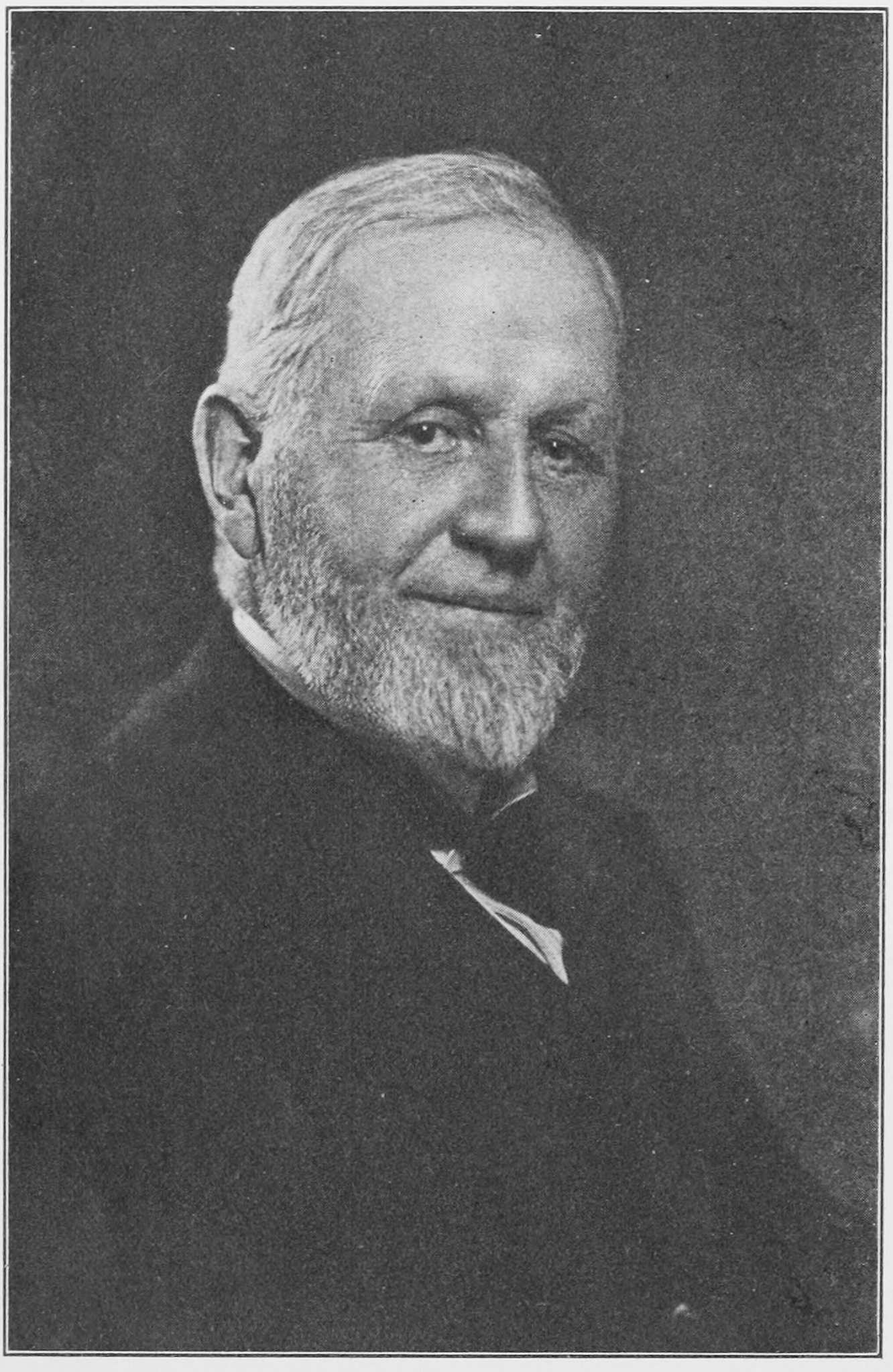
By James R. Taber
MAINE FARMER PRESS, AUGUSTA
1916
[Pg 3]
To
THOSE MEN AND WOMEN OF UNITY WHO
HAVE LOYALLY GIVEN THEIR SUBSTANCE
AND THEIR SERVICES TO THE BETTERMENT
OF THEIR TOWN THIS SMALL VOLUME IS
DEDICATED BY THE AUTHOR
[Pg 4]
To the Reader:
You may ask why I write these historical notes of Unity. I will answer that inquiry briefly. First, I have been asked to do so by many of my townsmen, interested like myself in the records of the past; second, research into historical matters has always afforded me great enjoyment. For many years I have been in the habit of noting everything of an historical nature relating to Unity or her people, with the hope that at some time I might gather my notes into some useful form for my fellow citizens, which I have now attempted to do. My great regret is that I had not commenced before those who were conversant with the town’s early history had passed away.
To the casual observer, the collecting of these brief notes may seem a simple task, but I find that all those who have undertaken a similar work tell a different story. It is evident that but little care was given our early records, as we find them in bad condition, many entirely missing. I have spent much time in looking over what we have, and in searching the records of Massachusetts prior to 1820. It has been difficult to trace the ownership of the different farms back to their first owners. Often there have been conflicting statements, which has rendered it impossible to give a correct version. I wish to say that if errors or omissions occur, the absence of the requisite information must be my apology. I intend to leave blank pages at the back of the book, where any error may be recorded for the benefit of the future historian.
To the “Brief History of Unity,” published in 1892 by our worthy townsman, the late Edmund Murch, I am indebted for many notes of interest. I wish also to thank the many friends who have assisted me in compiling these statistics and to express at this time to the citizens of Unity my appreciation of the loyal support they have given me during the many years that I have lived and worked among them.
James R. Taber.
[Pg 5]
The town of Unity, Waldo County, Maine, is situated twenty-five miles northwest of Belfast, on the Belfast branch of the Maine Central Railroad. The town was a part of the Plymouth Grant. It was incorporated June 22, 1804, the one hundred fifty-third town, and was called Unity because of “Unison in Political Sentiment.” The boundaries are as follows: Beginning at the northerly corner of the Waldo Patent, thence running westerly on the fourthly line of township number four, one hundred and sixty rods; thence west northwest five miles; thence four-fourths west six miles; thence east fourth east to the Waldo Patent line thence on said line to the first mentioned bounds, containing about 21,000 acres. [Taken from the Massachusetts records.]
Population in 1799— 264.
Population in 1850—1557.
Population in 1860—1320.
Population in 1870—1201.
Population in 1880—1092.
Population in 1890— 922.
Population in 1900— 877.
Population in 1910— 899.
The town was first settled by two men by the names of Carter and Ware. According to Surveyor Hayden, it was then called “Twenty-five Mile Pond Plantation,” it being that distance from the junction of the Sebasticook and Kennebec rivers, known as Fort Halifax, to the twenty-five mile pond, now called Lake Winnecook.
This was before the French and Indian war commenced. When hostilities broke out, the settlers were [Pg 6]obliged to flee for fear of the Indians, moving their families to the fort at Winslow. After the close of the war, Thaddeus Carter returned, and with him a man by the name of Philbrook. They settled upon land now owned by Clarence Brown on the west side of Sandy Stream, near the Outlet Bridge. Mr. Carter had two sons, Bunker and Joseph. One of the Carter girls married Samuel Philbrook.
In 1782, Stephen Chase came from Durham, Maine, and settled on the shore of the pond. His wife’s name before marriage was Hannah Blethen. She was from Durham, Maine. They belonged to the Society of Friends. The ruins of the old cellar may be plainly seen today on the farm now owned by F. A. Whitten. Mr. Chase built the first frame house in Unity. He died at the age of eighty years. Mrs. Chase was one hundred and six years old at the time of her death. Their resting place is marked by a Welsh slate tablet in the Chase lot in Lakeside Cemetery.
A few years after Mr. Chase’s settlement, we find in Hayden’s field notes this note: “Upon the stream leading from Unity pond to the Sebasticook river, I found a man by the name of Mitchell building a mill on what I called a very good privilege.”
In 1788, Mr. Henry Farwell moved from Chester, N. H., and settled on the farm afterward owned by a Mr. Ordway, later by Jacob Truworthy, opposite Mr. Frank Mussey’s. He then moved to the farm later owned by the late Hon. Joseph Farwell, where he and a Mr. Pettie built a grist mill, and the place became known as Farwell’s Mills.
In 1792, Mr. Clement Rackliff moved from Limington, Maine. He came with an ox-team and cleared the farm afterward owned by William Taber, Elisha Mosher, E. A. Hussey and Duncan Jones.
[Pg 7]
In 1792, Aaron Kelley came from Boothbay to Unity. He was a Revolutionary soldier, having served under General Wadsworth. He walked through the forest with his family and chose his place of settlement about two and one-half miles south of where the village now is, on the Bangor and Augusta road, at the southeast corner, where the Belfast road crosses, where he built a log house and planted an orchard. His wife was Mary Canady, and they had the following five children: Mary, married Cummings and lived in Jonesport; Jane, never married; Hannah, married John Smith and lived in Knox; Eleazar, went to sea and never returned; and Samuel lived in Unity. Samuel, the youngest son, was born in Boothbay, and was twelve years of age when the family came to Unity. In the war of 1812, he served with the Unity quota. He succeeded his father in title to the land and built a fine stand of buildings, with two large barns and a lumber camp, where he made oars for the United States navy. He married Sarah Vickery, daughter of David Vickery, also a Revolutionary soldier, and they had twelve children.
In 1794, Mr. Simeon Murch came from Gorham, Maine. He and his wife came over one hundred miles on horseback and settled the place now owned by Ephraim Jones.
In 1795, Mr. John Melvin came from Manchester, N. H., and settled the place now owned by J. Arthur Thompson. Mr. James Packard lived just east of Mr. Thompson’s, at the corner where the road leads to the Clifford place. This road was laid out by the town, two rods wide.
In 1796, Mr. Joseph Woods came from Standish, Maine, and settled on the farm sold by Wesley F. Woods to William Walton. Joseph Woods died at the [Pg 8]age of 93, his wife at 89. They lived together for 73 years.
In 1800, Mr. John Perley moved from Winchenden, Mass., and cleared the farm now owned by William Taber Stevens. He then bought from Charles Bickmore the farm now owned by Roscoe J. Perley.
In 1802, Mr. William McGray moved from Durham, Maine, and settled the farm now owned by George Webb. His last days were passed on the farm of his son, William, now owned by Harry Waning. He died at the age of 84 years.
In 1802, three brothers, Frederick, John and Nathaniel Stevens, came from Gorham, Maine, and cleared the place owned by the late Chandler Stevens, now owned by Frank L. Chase, and the land north to the Bacon brook.
In 1803, Mark Libby came from Gorham, Maine, and settled on what is called the McKenny place, now owned by A. J. Harding, but moved to the place now owned by his grandson, Mr. Nathan P. Libby. He died at the age of 84.
In 1807, Mr. Robert Carll came from Lyman, Maine. At this time Mr. Carll said there were but two frame houses in Unity.
In 1810, Mr. Richard Cornforth came from Readfield, Maine. He settled at Farwell’s Mills, on the farm now owned by the heirs of the late Otis Cornforth.
In 1842, Mr. Nathaniel Rice came from Hartford, Maine. His house stood just west of the residence of Mrs. Chas. Taylor. It was moved from there onto the Waterville road, and is now owned by Walter Bacon.
Mr. David Vickery came from Standish, Maine, and cleared the farm of the late Edwin Rand. He married Lydia Bartlett. They had a family of eight sons and three daughters.
[Pg 9]
Rufus Burnham, M. D., came from Scarborough, Maine. He lived at first with the family of John Chase, in the brick house near the station. Afterward he built and lived in the main part of the house where J. R. Taber now lives.
Gibbs Tilton came from Chillmark, Martha’s Vineyard, Mass., and lived where S. A. Myrick now lives.
Ephraim Hunt came from Gorham, Maine, and settled where James O. Pillsbury now lives.
Isaac Myrick came from Gorham, Maine, and settled the F. H. Hunt place. He also owned what is now known as Windemere Park.
Col. James Connor came from Gardiner, Maine, and settled on the place now owned by his grandchildren. He married Mary Whitmore, daughter of Daniel Whitmore.
Archelaus Hunt came from Gorham, Maine, and settled near the E. T. Reynolds place. His father was a Revolutionary soldier and fought at Bunker Hill.
Daniel Whitmore came from Gorham, Maine.
Alexander Boothby, M. D., was born in Limington, Maine. He married Eliza A. Grant and lived on the place now owned by Miss Ruth Berry.
Chandler Hopkins came from Standish, Maine, and settled where George Murch now lives.
Amos Jones came from Lunenburg, Mass., and settled the farm now owned by Seth W. Mills.
Frederick Stevens was born in Gorham, Maine, in 1779, was elected to the General Court, Boston, Mass., in 1809, and died in Unity, Maine, June, 1839, aged 62 years.
This is the record of the early settlers of our town, and here for the most part the record ceases, but with our mind’s eye we can see these men, the pioneers of [Pg 10]our town, strong, brave, sturdy men with brain and brawn and a sense of power and mastery over nature almost unknown now, in the pampered civilization of the present. These forefathers of ours here on the edge of our lake and on the banks of our stream toiled to fill the primitive needs of man. With an indomitable belief in their power to conquer, they fought with wind and snow and merciless cold. They felled trees for fire and shelter; they made the waters yield their toll of food; they dug the soil and built mills to grind their corn. Later they sought places for a real settlement, cleared the land, built roads, bridged streams, and put up their homes. They laid the foundation for our modern civilization; they made our way easy. We should honor them when we can with a thought of gratitude.
An account of life in those early days, interesting in the extreme, has been put into my hands by Mr. Reuben Murch. Mr. Murch, son of Josiah Murch, was born on the farm now owned by E. M. Jones, and spent his early manhood in this town.
Hampden Cor., Mar. 2, 1909.
My Dear Mr. Taber:
I send you today some facts and incidents relative to the early settlers of Unity. They are at your disposal. You may use them as you choose, alter, eliminate or add to them to suit your pleasure. I have written them in a hurried, offhand manner, without time to review and make alterations.
Sincerely your friend,
R. W. Murch.
At the time my grandfather, Simeon Murch, moved into Unity, the country was an unbroken forest east [Pg 11]of Augusta, so that people were guided by blazed lines (spotted trees). The method of moving was unique, but neither comfortable nor convenient. As there was no road, the only means of travel at hand was on horseback. A strong bedtick was fixed astride the horse’s back, and the furniture was packed on each side. The load was completed by putting father, then one year and a half old, on one side, and an older sister on the other to balance. Thus they moved from Gorham to what is now the town of Unity, grandfather walking on one side of the horse and grandmother on the other.
Upon arriving at their destination, they found a small opening and a log house which grandfather had provided the year before. Here they began life in the wilderness. There were no stores, no shops of any description, no mills, nor any of the conveniences of modern times. They had not to wait long for food, for beans, potatoes and other vegetables could be used as soon as grown, but corn before it could be used had to be converted into meal, and there being no mill nearer than Winslow, it had to be carried through the woods, by spotted trees, to that town, to be ground. A number of neighbors would go together, each taking a bushel of corn on his shoulders. They travelled a distance of eighteen miles to the mill. They stayed in the mill all night and returned the next day with the meal, less what two quarts would make, which the miller took for toll.
Game was plentiful, the streams and brooks abounded with fish, so that all they had to do was to go to the stream with hook and line and in a few moments they could catch all they needed for their present use. In those early times, shad and herring came up the outlet to the “twenty-five mile pond.” After the Sinclair dam was built, I have heard my father say that one [Pg 12]could stand on the shore, and, with a sieve, dip up a year’s supply of herring in a few moments.
In the clearing of the land in those days, there was a great deal of hard work to be done, which required a number of men, such as rolling large logs together to be burned. In such cases the neighbors used to assist each other by changing work.
One day while a party were at work piling logs, they heard a loud and prolonged squealing. It was evident that there was trouble among the hogs, so they started for the point from which the noise came, and saw a bear carrying off a hog. They gave chase and got so close upon the bear that he dropped the hog, made for the woods and escaped. They saved the hog, but it was so mutilated it had to be killed.
The first carriage that passed through Unity was a queer contrivance. It consisted of two spruce poles fastened together at a convenient distance apart. It was drawn by a bull fastened between the small ends of the poles, the large ends dragging on the ground. On these poles was fastened a large box suitable for what was to be transported. This was an improvement on the horseback method. This car was driven by Thomas Fowler.
We have but little conception of the struggles and hardships the pioneers had to endure. They could not, as now, go into a store and purchase clothing and footwear. In fact, these things were all home-made, except boots and shoes. One pair of the latter had to do service for a number of people. My father told me that at one time there was only one pair of shoes in the neighborhood. Children had to go barefoot the year around, except for the covering the mother could furnish by knitting and old clothes.
[Pg 13]
Nowadays every family has its supply of wood on hand; then it was supplied from day to day, as needed. Trees were twitched to the dooryard when not too large, but large trees were hauled in sections and cut for use from day to day. In winter it was sometimes pretty cold for boys who had no shoes to protect their feet from the snow while preparing wood for the fireplace. In order to avoid standing barefoot on the snow, a large chip was heated and carried out to stand upon until it became cold, when it was reheated. This method was adopted only in cases of emergency.
The following is from Bunker Carter, who told me the story many years ago. He said the first men who ever came to what is now Unity to make a settlement were Mr. Carter and Mr. Ware. They came up the outlet of the pond and landed on the “horseback,” did a little work and went back. But the following year, Mr. Carter and another man, a Mr. Philbrook, came back and made a settlement in the vicinity of the “horseback,” but I have forgotten the exact locality.
What I have written of the hardships of my forefathers is just a type of the struggle of all the pioneers of the town. Notwithstanding their hardships, they were a contented people. The sun shone on their little clearings as warmly and as brightly as it ever did on the larger clearings of the wealthy, and the birds sang as sweetly as ever they did in the parks of the nobles. They looked out on the growing crops covering the charcoal stumps of the clearings, with thanksgiving to God for what they enjoyed and for the bright prospects before them in the results of their promising crops. They were happy, happier, I sometimes think, than the people who now cultivate the large open fields of the lands our forefathers struggled so hard to clear.
[Pg 14]
In our next glimpse of the town, the early settlers, having overcome the rigors of a new land and cleared for themselves sufficient farmlands, are turning their attention to civic duties. Below is an account of the first meetings of the town’s citizens.
To DANIEL WHITMORE, one of the inhabitants of
Twenty-five Mile Pond Plantation (so-called),
Greeting:
Whereas, application has been made to me, the subscriber, by Stephen Chase and ten other inhabitants of said Plantation, requesting that a meeting of the inhabitants may be held for choosing such officers as the law directs.
These are, therefore, in the name of the Commonwealth of Massachusetts, to wit, required to notify and warn a meeting of the inhabitants of said Plantation qualified to vote in Plantation meetings to assemble at the dwelling house of Lemuel Bartlett of said Plantation, on Tuesday, the third day of August, 1802, at two o’clock afternoon, then and there to choose a moderator for said meeting. Secondly, to choose a clerk, three selectmen, three assessors, a collector, a treasurer, and such other officers as may be deemed necessary. Hereof, fail not and make returns of this warrant and your doings herein unto Benj. Bartlett, on or before the time of said meeting.
Given under my hand and seal at Augusta, Maine, in the County of Kennebec and Commonwealth of Massachusetts, this thirtieth (30) of July, in the year of our Lord, one thousand eight hundred and two.
Daniel Coney,
Justice of the Peace through the Commonwealth.
[Pg 15]
The following officers were chosen:
Joseph Carter, moderator.
Abner Knowles, clerk.
Lemuel Bartlett, John Perley, Nathan Parkhurst, selectmen and overseers of the poor.
Daniel Whitmore, Frederick Stevens, Benj. Bartlett, assessors.
Benj. Bartlett, treasurer.
Benj. Rackliff, constable.
Isaac Mitchell, collector—at seven cents on the dollar.
At this meeting it was voted to raise “one hundred dollars to defray necessary charges for the past year and the present, which have or may accrue in the Plantation.”
The first town meeting was held at the dwelling house of Benj. Rackliff, which was at that time called a tavern. It was situated west of the house now owned by D. E. Loveland, and directly south of the place owned by Mr. Rackliff’s son, Hosea B. Rackliff, who sold the farm to the town for a poor farm.
Although, as we have seen, the earliest settlements were made near the pond and stream, it was not this section of the town which was first built up. The next settlers pressed on to the south part of the town and occupied the land extending from the George Varney farm, known then as the Benj. Bartlett place, to C. R. Jones’ corner, known as the John Rackliff place. This was called “The Settlement.” Here the store, the school, the church sprang up, and one by one, as necessity demanded, the smaller industries. Here for twenty-five years nearly all the business of the town was transacted.
[Pg 16]
The first schoolhouse in town was built in these early days about five rods north of the building now known as the Cook Creamery; the second one in this district was built about ten rods south of this creamery. This is where the writer first went to school. The building mentioned as the Cook Creamery was also built for a schoolhouse by Edmund Mussey. Nelson Dingley, Jr., father of the Dingley Tariff Bill, was at one time a teacher there.
The Friends’ Church was built in 1827 by Benj. R. Stevens and Clement Rackliff on land purchased from Asa Jones. It has been remodeled and the entrance changed to the east end. Between the church and the large maple tree, still standing, which was planted when the church was built, Uncle John Chase, always, each Wednesday and Sunday, hitched his horse. After his death, Elias Jones used the same place.
The first town house was built by James Gilkey just across the road, a little south of George Murch’s house. On April 8, 1874, it was sold by auction to Thomas B. Cook for thirty-four dollars. Following its sale, the town meeting was held in George Clark’s barn (on the S. P. Larrabee place). It was voted to locate the new town house on land purchased from James B. Vickery on the west side of the road, opposite J. J. Varney’s house. The vote was taken by forming a line in the road, ninety-one in favor, seventy-one against.
Mr. Reuben Brackett lived where Chas. S. Cook now lives, and there manufactured clocks and oilcloth carpets. It was here that the noted painter, Walter M. Brackett, was born.
The first store in town was where George Murch now lives. It was owned by Chandler Hopkins, who came from Standish, Maine. His ancestors came over [Pg 17]in the Mayflower. His partner in business was John Rackliff.
Joseph Ames lived on the Alonzo Bacon place and made hand rakes. Robert Jackson lived there at one time and was town clerk.
Doctor Abner Knowles lived east of the Bacon place, nearly opposite the watering trough. He was town clerk for twenty-six years, from 1803 to 1829.
About 1810, people began to settle in what was then called “Antioch,” now the village. Mr. Stephen Chase, as I have said before, built the first framed house, also the first framed barn. The second was built on the farm of the Hon. Crosby Fowler.
The brick house on the Chase place, now owned by F. A. Whitten, was built by Stephen Chase’s son, Judge Hezekiah Chase, in 1826. The brick was made by Levi Bacon.
A little later the brick house in front of the church was built by Lemuel Bartlett. It was long owned by the late Benj. Fogg and is now in the possession of Mrs. J. W. Harmon. The carpenter was a Mr. Berry from Rockland.
Rufus Burnham, M. D., in 1827 built the main house where James R. Taber now lives.
Elijah Winslow built the house now owned by J. A. Adams in 1842. Henry Kelley did the masonry.
I have no data concerning the building of the other older houses.
The first schoolhouse in the village was built beyond Chas. J. Bartlett’s barn, toward the cemetery. It was later moved near the Chas. E. Stevens place, [Pg 18]thence by Gorham Hamilton to the Damon place, thence across the street to the land of the late Benj. Fogg. It passed through several hands and was later bought by H. H. Grant and torn down.
This building was followed by a white schoolhouse, upon land purchased from Daniel Whitmore. That was burned and a brick one was erected upon the same lot. This in time was also consumed by fire. A two-story building was built upon the same site. This was afterward sold to Eli E. York, who later sold it to the Masonic Fraternity, Star in the West Lodge, No. 85. It has been enlarged and remodeled into the present fine hall.
In 1898 the town purchased one acre of land from James R. Taber for $125.00 and built the present school building. The basement was built by Mr. Joseph Brown of Benton Station, costing $428.92. The house was built by Joseph Sawyer of Fairfield at a cost of $2195.00. The building committee consisted of J. R. Taber, L. H. Mosher and N. C. Knight, the plan being drawn by J. R. Taber.
In the sixties there were thirteen schoolhouses in town, to wit:
1. District number one building, where the Cook Creamery stands.
2. Village building.
3. Mill district building. School now discontinued, and the scholars conveyed to the village.
4. Schoolhouse in the Parkhurst district, which was torn down.
5. Building in the Fowler district, which was burned. The two districts were then consolidated and a new house built. The house and lot cost $420.50. The builder was Edgar Harding.
[Pg 19]
6. The Woods house, which was repaired and refitted.
7. The Ayer house, which was discontinued.
8. The Clark house, which was burned. The scholars in these districts are conveyed to the nearest schools.
9. Worth house, originally built by Elisha Mosher, which was repaired at a cost of $311.70. The first teacher was Alonzo Roberts of Brooks.
10. Farwell’s Corner school. The first building was sold and moved to a location near the Hussey bridge. The present building has been repaired and refitted.
11. The Crosby house.
12. The Adams house. The two latter buildings have been torn down and the children are conveyed to the village school.
13. The Reynolds house, which was sold to Eugene Reynolds. The scholars are conveyed to the village.
At this date there are four houses occupied outside of the village. Here a standard high school is maintained for scholars from all parts of the town. There are also primary, intermediate and grammar schools in the same building.
The first church built in Unity was a Methodist church, built in 1826 in the south part of the town, near the home of the late Peter W. Ayer. It was built by Benj. Ayer and others. Benj. Ayer settled on the P. W. Ayer place afterward, and died on the Thos. Ayer place. I have the information from his grandson, Joseph Ayer.
[Pg 20]
The next church was the Friends’ church, built, as stated above, in 1827. Benj. R. Stevens and Clement Rackliff were the builders.
In 1837 the Congregationalists built a church on the northeast corner of land belonging to Josiah Murch, adjoining the land of B. B. Stevens. The Murch farm is now owned by E. M. Jones. This church was built by Ephraim Murch, Elisha Parkhurst, David Vickery and Jonathan Stone. The ministry was largely supported by contributions from the village, and it resulted in moving the building to the village. The principal contributors from the village were Thomas Snell, John L. Seavy, Hiram Whitehouse and Nelson Dingley. It was through the influence of these men that the move to the village was made. The building was placed near Dr. E. M. Soule’s residence. The steeple was put in place by Edwin S. Stevens, Chas. E. Taber, Howard Carter and Archelaus Hunt. After services were suspended in it, it was sold to Albert F. Watson. Asa Stevens, his administrator, sold it to Thomas B. Cook, who took it down, moved it to the station, and made it into a store. He then sold it to S. S. & R. M. Berry, who carried on a grain business and dealt in potatoes. They rented it to William Rand. It was burned later.
Union church was built in the village in 1840-41. It was built by Hale Parkhurst, Rufus Burnham, M. D., and Samuel Kelley, for the Universalist Society. Failing to receive the necessary support, it was sold by them to whomsoever wished to own a pew, regardless of the religious society to which they belonged; neither did it matter if they did not belong to any. The name was changed to Union church. The steeple was put in place by Jacob Taber, Jefferson Bartlett, [Pg 21]Hezekiah Rackliff and Noah Linscott. In the sixties it was repaired and a bell purchased. Nelson Dingley, Jr., presented the present pulpit, Sprague and James Adams of Bangor the chandelier. Within a few years the building has been shingled and a weather vane has been placed upon the spire. It has been painted inside and out, a furnace has been placed in the basement, seats furnished with new cushions, floors carpeted, and several memorial windows added. These improvements have largely been accomplished by the efforts of the Ladies’ Aid Society, to whom the credit should be given.
Unity, Me., Oct. 5, 1900.
To Paul F. Foss, a Justice of the Peace in and for the
County of Waldo, State of Maine:
The undersigned, who are all of lawful age and owners of pews in Union church, in Unity village, being desirous of calling a legal meeting of said owners, in accordance with the provisions of the Revised Statutes, Chap. 12, Sec. 34, request you to issue your warrant to one of them, directing him to notify the other applicants to meet at some proper place, to be expressed in said warrant, on the 27th day of October, 1900, for the purpose of reorganizing said Union church, by choosing a clerk and other needful parish officers, and performing any business that may lawfully come before said meeting.
Signed by Charles Taylor, H. B. Rice, J. R. Taber, C. E. Mitchell, A. R. Myrick, W. H. Rolfe, and J. E. Cook, M. D.
State of Maine, Waldo Co., S.S. L.S.
W. H. ROLFE,Greeting:
Pursuant to the foregoing application, you are hereby directed in the name of the State of Maine to notify [Pg 22]the persons whose names appear thereon as applicants to meet at the said Union church in Unity, in said county of Waldo, on the 27th day of October, A. D. 1900, at ten o’clock in the forenoon, for the purpose mentioned, made a part of this warrant, on the outer door of said Union church, and in the postoffice in said Unity, and to publish in some newspaper published in said county of Waldo, three weeks at least before said meeting. Hereof, fail not and make your return of your doing thereon. Given under my hand and seal this 5th day of October, 1900.
Paul F. Foss, Justice of the Peace.
I certify that the foregoing is a true copy of application, warrant, and notice of said meeting is hereby given.
W. H. Rolfe.
Waldo, ss. Personally appeared the above named W. H. Rolfe and made oath to the above certificate by me made.
Paul F. Foss, Justice of the Peace.
Pursuant to the said warrant, said applicants met at time and place and proceeded to elect officers. Elected James R. Taber, president; Andrew R. Myrick, clerk; James R. Taber, Charles Taylor, William H. Rolfe, Charles Parsons and Jesse E. Cook, M. D., trustees; said trustees to act as custodians of said church. Voted to add two more trustees to the above board; elected John M. Thompson and Andrew R. Myrick.
Voted to elect a committee to draw and make a code of by-laws suitable to govern said organization; elected W. H. Rolfe and J. R. Taber as said committee. Voted that the above chosen officers serve in their respective places until new ones are chosen to fill their places.
[Pg 23]
Voted that the president and clerk be appointed to grant permission to whom they may think proper persons or parties to occupy said church.
Voted to adjourn.
A. R. Myrick, Clerk.
March 20th, 1904. Meeting called to order by the president. Voted to choose a select committee of ladies and gentlemen on repairs; elected Mrs. E. D. Chase, Mrs. C. E. Mitchell, Mrs. Willis Giles, Mrs. Charles Taylor, Mrs. Fannie Bartlett, Mrs. Fred A. Whitten, Henry A. Bacon, E. S. Stevens and F. A. Whitten, who shall spend the money on repairs as they think best. Voted to construct steps at the outside doors instead of a platform. Voted to adjourn subject to call.
A. R. Myrick, Clerk.
May 4th, 1912. Met according to call. A. R. Myrick not being present, E. D. Chase was elected clerk and treasurer. Adjourned.
E. D. Chase, Clerk.
At a meeting called in 1915, no quorum appeared.
This property was purchased from Nelson Dingley, senior, by members of the Methodist church for six hundred dollars. A. M. Green of Troy, father of the late Lyman Green, gave two hundred dollars. Elijah Ware, Luther Mitchell, Josiah Harmon, Stephen, Harrison and John Chase, Col. Seth Thompson and others gave liberally.
The house was built by Hiram Whitehouse and sold by him to Nelson Dingley. It was here that Frank L. Dingley, present editor of the Lewiston Journal, was born. Within recent years this building has been enlarged and put into good condition, for which credit should be given the Ladies’ Aid.
[Pg 24]
April 30th, 1821. At a town meeting held this day, the following report on cemeteries was made:
Gentlemen: The committee appointed by the town at their last meeting, to provide one or more suitable places for graveyards, having attended to the duty assigned them, report:
That Lemuel Bartlett and Hezekiah Chase will make a donation and deed of gift to the town of one-half acre of ground where they and others have interred on their land, and Amos Jones will sell for fifteen dollars per acre any quantity for the above use where the burying ground now is, near his house (now called the Farwell yard), and Daniel Whitmore will also convey by deed to the town one-half acre of his field near the liberty pole for seventeen dollars.
Respectively submitted, Isaac Adams, Joseph Stevens, Jacob Truworthy, committee.
We have been told that the militia used to train in Mr. Whitmore’s field, now owned by H. B. Rice, which accounts for reference to the flag pole. Saturday afternoon before starting for California, Lawyer Wm. Weeks set out the elm trees on the west side of the Whitmore yard. He said it was for him to be remembered by.
This yard was from Thomas Fowler, father of the late Hon. Crosby Fowler.
The Friends’ burial ground was purchased from Asa Jones in 1828. In this yard, Sarah Pattie, aged 97 years, was buried. A small slate stone marked [Pg 25]S. P. was placed at her grave by James H. Cook. This was the first stone set in this yard. She was a sister of James Mitchell’s mother.
The towns of Unity and Freedom own a yard together near the residence of the late P. W. Ayer. The town also owns a small yard on the Freedom road near Unity’s south line.
This cemetery is located on a section of land somewhat withdrawn from the village, and overlooking Lake Windemere. The old section of the yard is that which was originally donated to the town by Lemuel Bartlett and Hezekiah Chase. In this yard are two slate stones of interest. That of Stephen Chase has been set 95 years; that of his wife, Hannah, 71 years. Additions to this yard have been made on the east and west sides. On the opposite side of the street a section of land has been purchased from F. A. Whitten for burial purposes.
The first mill of which I find any record was built by John Mitchell in 1782, just above the Moulton Mills. It was a rude affair, the water being conducted through a hollow log onto an overshot wheel. Mr. Mitchell lived on the lot now owned by Archie Tozier, near the Moulton Mill.
Henry Farwell built a sawmill about one-half mile from the junction of the Half Moon and Sandy Streams, on the latter, which he afterwards sold to Benj. R. Stevens. Pettie & Farwell built a grist mill at the junction of the above named streams, then sold it to Benj. R. Stevens, who sold it to his son, Benj. Stevens. He sold to his brother, Otis F. Stevens, he [Pg 26]to his brother, Joseph Stevens, his heirs to Joseph Farwell. John Stewart heired it from Joseph Farwell and sold it to the Pendletons.
In 1810, Richard Cornforth built at Farwell’s Mills a wool carding and cloth mill, said to be the first in the state. The machinery came from England. Mr. Cornforth sold to Benj. Nickerson and Hall Scribner, they to Abner Young, he to Benj. Stevens, he to his brother, Otis F. Stevens, he to his brother, Joseph Stevens, his heirs to Joseph Farwell.
In 1831, a Mr. Pingrey of Salem, Mass., erected a large tannery at the village. Mr. Joseph Larrabee superintended the building, and Thomas Snell took charge of the business. His office and store were in the first story of the building now owned by Frank Fairbanks. Mr. Southwick of Vassalboro became the owner. For several years it was a prosperous venture. In time, the supply of bark failing, the business was abandoned, the buildings soon became valueless, and were consumed by fire in the late 50’s.
Col. James Conner and Lemuel Bartlett built the grist mill at the village in 1840. Later, Bartlett sold his interest to Conner. Mr. Conner built a mill on the west side of the grist mill for threshing grain, which was taken down in a few years. Mr. Chase built a carding mill on the north end of the dam, which was swept away in a freshet.
About seventy-five years ago, Thomas B. Hussey built a small mill for sawing short lumber, also a foundry on the Sandy Stream, near Walter Hurd’s farm, and manufactured plows, stoves, and many farm implements.
[Pg 27]
Isaac Mitchell built a gristmill and sawmill near Silas W. Bither’s place, known as Mitchell’s Mills. He also built the house where Mr. Bither lives.
Jefferson Sinclair built a fine grist and sawmill where the Moulton Mills now stand. Weeks & Ames were the carpenters. It was afterward owned by Samuel Hall. It was burned, rebuilt, and afterward owned by Eben F. Thompson and O. J. Whitten. The present mill was built by W. H. J. Moulton & Sons.
Levi Bacon built a sawmill on the Bacon brook, which was carried away. He built another, and at different times had four brickyards. James Banks had a tannery on this brook, which he sold to Mr. Bacon.
Bartlett & Chase bought from Mathew Pendleton a small mill at the station, which they enlarged, fitting it up with steam and installing up-to-date machinery. This mill is used for sawing lumber, spool bars a specialty.
Charles E. Stevens, Ira P. Libby and Melzor Stevens built the steam mill opposite Frank Kelley’s, in 1911. It is now owned by Ira P. Libby.
F. M. Fairbanks built his mill in 1911. This was burned. He rebuilt near the site of the Snell tannery. He now uses electric power.
[Pg 28]
John Woods built his gasoline mill in 1914, upon land purchased from J. R. Taber. He also uses electricity.
Ira Trafton built a sawmill on the spot where John Shirley’s sawmill stood, directly south from E. B. Hunt’s residence. This was burned.
Amaziah T. Woods had a small mill on the McKenney brook, afterwards taken down.
Duncan M. Jones built a sawmill on his place in 1915. This farm was originally settled by Clement Rackliff, who sold to William Taber. Mr. Jones purchased from E. A. Hussey.
Elijah Tozier built a mill on the Fowler brook, afterwards owned by different parties.
In 1915 this firm built a mill for getting out lumber for making boxes.
In early times, Samuel G. Otis owned a carriage shop situated in front of the residence of G. T. Whitaker, and there manufactured carriages. The building is now used for a barn on the J. L. Ames place. Mr. Otis’ blacksmith shop stood a little to the south, near the burial ground.
[Pg 29]
Thomas Chandler made furniture at one time in what is now Guy Morse’s stable.
James Myrick owned the N. C. Knights tinshop, and made boots and shoes. The original shop, a one-story building about half the size of the present, was moved from the road in front of L. P. Foster’s, leading to the poor farm.
At different times, R. B. Stone, Nathaniel Rice, Benj. Fogg, Bryant and Ames Moore, Otis and Daniel Starkey, Joseph Small and John Chase were engaged in the making of boots and shoes. Mr. Chase induced Mr. Woodsum to come here to manufacture morocco shoes.
George E. Linkfield and Stephen Dyer purchased from Henry Kelley the store that stood where the Taber store now stands, and there manufactured straw goods. Mrs. Linkfield carried on a millinery business. Mr. Dyer sold to Mr. Linkfield, who later sold the store and millinery business to James R. Taber.
The Unity cheese factory was built in 1874, upon ground now occupied by the Portland Packing Company. It did business but a short time, when it passed into the hands of James R. Taber, who sold the machinery for use in a cheese factory in Aroostook county. The building was sold to Russell Reynolds, who built the house now owned by Leon Bagley out of the lumber taken from it.
The Portland Packing Company built the corn factory in 1887. W. H. Rolfe was foreman for several years. He was succeeded by Albert Bacon. The Unity Canning Company sold their plant to the Portland Packing Company.
The Crystal Spring Creamery was built in 1891, on land purchased from F. A. Bartlett. The property [Pg 30]passed into the hands of the Hon. Joseph Farwell. Charles Smith of Newport was manager. It was purchased from the heirs of Mr. Farwell by H. P. Hood & Sons, who have built additions and greatly improved it. R. F. Jaynes was manager for some time and was succeeded by E. G. Roberts.
In 1895, Chas. S. Cook fitted up the unused schoolhouse of District one, and there for some years carried on the creamery business.
In 1908 the Turner Center Creamery was built on the E. K. Adams property. It was destroyed by fire, but in the fall of 1900 was rebuilt, at a cost of $10,000. Additions have since been made. Mr. Guy P. Norton is the popular and efficient manager.
Chandler Hopkins built the house in which George Murch now lives, in which he kept a store, the first in town.
The first store in the village was owned by Isaac Adams, afterward by Allen Taber. This store was situated where Jack Van Deets now lives.
Elijah Winslow built a store where the L. H. Mosher store now stands, and traded there afterwards. Allen Taber traded there, as did Joseph B. Gilkey. It was burned, rebuilt by Josiah Harmon, and sold by his heirs to Mrs. L. H. Mosher, who now owns and conducts the store.
The store where A. R. Myrick now trades was purchased by him from Charles Taylor; he purchased it from J. R. Taber, he from Moses Hanson, he from Hiram Whitehouse, who built it. At one time in the late 50’s the farmers used it for a union store. Alfred Berry and Moses Hanson were the agents.
[Pg 31]
Thomas Snell conducted a store connected with the tannery where F. M. Fairbanks now lives.
The store now owned by C. Boyce Mitchell, he had from his father, G. E. Mitchell, he from the heirs of Chas. Taylor, Taylor from J. F. Parkhurst, he from Nelson Dingley, who built it in 1852. Mr. Dingley bought the original store from Daniel Spring, who built it. Dingley and Spring traded in it, also C. Snell, W. R. Chandler, Robert Webb and A. R. Myrick. This early store was sold to A. W. Myrick and moved onto a lot adjoining the place owned by Jack Van Deets. Here it was used as a carriage shop until it was torn down.
The first store on the lot now owned by F. L. Tozier was built by E. D. Williams, sold by him to James G. Patterson, by him to Mrs. Daniel Dummer, by her to J. R. Taber, and was then burned. He built a new store and sold to Josiah and Ansel Kelly, they to Green Carter. This was burned. The lot was then purchased by Lucretia Moulton from the Carter heirs. Mrs. Moulton sold to Mrs. H. C. Chandler, she to Mrs. W. G. Fuller, she to J. P. Libby, he to F. L. Tozier, the present owner.
On the lot now owned by Nellie M. and Vivian H. Taber, the first store was built by Henry Kelly, and sold by him to G. E. Linkfield. He sold to Taber & Moulton. This building was burned. The present store, now occupied by E. T. Whitehouse for store and postoffice, was built in 1880. The original store was occupied by H. B. Rice, Henry Baker, O. J. Whitten. The present store was occupied for a long period by J. R. Taber, for short periods by John Van Deets and E. D. Chase.
H. L. Glines had his store from C. D. Connor, he from H. H. Grant, he from J. S. Bither. Mr. Grant [Pg 32]moved it to its present location from Bither’s Mills. Prior to these transactions, C. E. Mitchell purchased the old store from Nelson Vickery, Vickery bought of Luther Mitchell. Henry Kelly, Webb & Call, Augustus Broad, C. E. Mitchell and T. B. Cook traded in it. This store burned and was rebuilt by C. E. Mitchell. It was rented by Asa Howe, and at the time of the fire by L. H. Mosher. The lot is owned by heirs of C. E. Mitchell.
F. A. Whitehouse built the first store where J. A. Adams’ store now stands, and used it for a time in company with Albert Bacon for the manufacture of clothing. It was afterward rented by Willard Rand and Robert Cookson, and then sold to J. A. Adams. It was later burned. Adams & Knight, in 1904, built the present store now occupied by J. A. Adams.
Dr. E. M. Soule built his store in ........ The lower part of the building has been used for the millinery business by Mrs. E. M. Soule and Mrs. Ethel Whitehouse. On the second floor, Dr. Soule carries on a large and successful dental business.
Grant & Whitehouse purchased their store at the station from E. E. McCauslin, he from Frank Rice, who built it. The large storehouse was purchased from E. E. McCauslin, who built it.
The store now occupied by the Farmers’ Union was built and for some time occupied by Joseph H. Farwell.
O. J. Whitten moved a shop from the Damon place to the location where H. L. Truworthy’s stable now stands, for a shoeshop. It was occupied as a store by N. W. Vickery. F. H. Hunt moved it to the station where the Turner Center Creamery now stands, and traded there for a time. It was later occupied by E. K. Adams and by E. T. Walker, and was afterward burned.
[Pg 33]
At one time there was a store where the Whitehouse garage now stands, occupied by the contractors who were building the railroad, afterward by F. H. Hunt and N. C. Knight. This was burned. A store with two halls above, which for many years were occupied by the Odd Fellows and Masons, was then built, but this shared the same fate. Ed. Tolman, John Van Deets and Asa Howe traded here at different times.
Alfred Clark built a small store at the station, in which L. H. Whitaker traded. It was burned.
Outside of the village there have been several stores—one at Farwell’s Mills was owned by Henry Farwell, one at the corner near Esburn Nutts’ was owned by Thomas Cornforth, one near L. P. Foster’s was owned by J. S. Rollins, and one at Moulton’s Mills was owned by Samuel Hall and Mr. Lane. Edwin S. Stevens and his brother, Benjamin, had a small store at one time at Farwell’s Mills.
I find records of old roads, but the trees and marks have long since passed away. There is a record reading like this: “Starting from where John Mitchell lived, called the Sandhill (now owned by Archie Tozier), across land now owned by Eli Moulton and Clarence Brown, to land of Stephen Chase, thence across said Chase land by the burial ground to the house of Lemuel Bartlett (now owned by Mrs. J. W. Harmon), thence northeasterly across said Bartlett land to Woodbridge Webb’s house (now owned by F. H. Dutton), thence to the Mayo fall down.”
Another old road ran from what is now the Waterville road, on the south side of Sandy Stream, across land of Joseph A. Bacon to the main road. It can be traced a part of the way today. It is said that this is [Pg 34]the trail followed by the early settlers mentioned in R. W. Murch’s letter when they went to Winslow to get their corn ground.
There is a record of a road starting from Daniel Whitmore’s land, running by Benj. Bartlett’s (now owned by G. W. Varney), by the Friends’ church, where it intersected a road from ’Squire Hale Parkhurst’s (now L. P. Foster’s), to Farwell’s Corner, thence to Pettie’s Mill, thence to John Scribner’s, thence following the country road to Hezekiah Chase’s place (now owned by E. D. Chase).
There was also a road starting from near Alonzo Bacon’s place and coming out near F. R. Cornforth’s. The ruins of a house which was on this road are to be seen near George Taylor’s south line.
Still another road started east from near Alonzo Bacon’s place, by the Ordway and Truworthy places, intersecting a road to Pettie’s mill. The birch trees mentioned have long since passed away.
A road leading from Packard’s Corner, near J. Arthur Thompson’s, by the Samuel Webb place to D. E. Loveland’s, was discontinued when the new road from Loveland’s to Jones’ Corner was laid out.
Nothing of value is attached to these incomplete records. I mention them only as a matter of “ancient history.”
Sandy Stream rises in Montville, runs through Unity, and is spanned by six bridges, namely: The Douglass, Hussey, Farwell, Village, Moulton, and Outlet bridges. There are several minor bridges over small streams.
The first bridge at the village which the writer can remember was a frame bridge similar to a barn, but [Pg 35]without a roof; the posts were about fifteen feet high, not boarded. After that was a bridge with X-work sides about six feet high, and a partition through the middle.
The iron bridge at the village was built in 1907. The committee in charge of the building consisted of W. H. J. Moulton, Frank Bartlett, George E. Grant, Amander Rackliff, E. T. Reynolds, Jacob L. Ames and D. R. McGray. The abutments were built by John Brown of Benton Station. The cost of the bridge was $3500.00.
The large elm trees standing upon the sides of our main street were set out by Jefferson Bartlett, Russell Reynolds and Isaac Childs. Lawyer William Weeks set those on the West and north sides of the Whitmore cemetery, near G. L. Whitten’s residence. Edwin E. Stevens set those on both sides of the trotting park, also those on the north side of the road leading east from Thomas Watton’s place to Farwell’s Corner. The maples in front of James R. Taber’s main house were set by William Taber in 1876, those in front of the rest of the residence by James Taber in 1880. The trees belonging to Mrs. G. W. Fuller were set by her husband, Dr. W. G. Fuller. Those in front of Mrs. J. W. Harmon’s house, she caused to be set, as did Mr. C. E. Stevens and Mr. W. S. Merrick those on their respective lawns.
The oak tree in front of Thomas Carll’s place was planted by his father, Robert Carll, one hundred years ago. The great willow on the opposite side of the road grew from a twig used by Robert Carll as a walking stick on a day’s journey.
[Pg 36]
The first hotel—at that time called a tavern—was kept by Benj. Rackliff. It was situated due south of the old poor farm, near the north line of D. E. Loveland’s farm. Here the occasional traveller of the olden times might find food and lodging.
In the village the first hotel was kept by Thomas Chandler. After his death, the house was carried on by Mrs. Chandler and her son, Benjamin. The house was near the center of the village, where Mrs. Chas. E. Stevens’ house now stands. It was conducted as a temperance house.
The Hale Parkhurst house, now owned by L. P. Foster; the Jesse Whitmore house, now owned by H. B. Rice; the Rufus Burnham house, now owned by J. R. Taber; the Amos Webb house, now owned by Mrs. Mantie Gregg; and the Stone house, afterward burned, were at different times used as hotels, but when the Central House was built, these were discontinued, except the Chandler House. For years the Central House has been the town’s only hotel.
The Central House was built by Elijah Winslow. It was at first a small one-story house, to which he made a two-story addition. He sold the building to John L. Seavey, who afterward sold to Fred Burrill, he to Daniel Dummer, he to T. J. Whitehouse and G. A. Hunt. It was burned at this time. Mr. Whitehouse then purchased Mr. Hunt’s interest and built the present Central House in 1878. It is now owned by Mr. F. A. Whitehouse. This hotel was situated half way between Augusta and Bangor, on the old stage road—hence its name.
[Pg 37]
As we pass the Central House today, we see drawn up before it auto trucks, touring cars, limousines, and we realize that our little town is in the clutch of the modern life. All this makes for convenience and speed, it is necessary, but with its coming we have lost the quaint picturesque quality of the earlier days.
There are but few people alive who can recall when V. D. Pinkham of Augusta owned the stage line from Augusta to Bangor, but those of us who can, remember well the thrill of excitement that ran through the village when the great stage coach, drawing near, blew its horn to announce to the townspeople that the mail was about to arrive. The Concord coach, resplendent with paint and varnish, drawn by four horses, caused a stir as it rolled through the town loaded with passengers for Bangor, often followed by a second four-horse coach equally loaded. Among the “Knights of the Whip” in those good old days, we distinctly remember Isaac Holmes, Wm. Nason, Davis Crocker and Mr. Flannigan.
Landlord John L. Seavey did a flourishing business in those days, this being the halfway place between Augusta and Bangor. Mr. Seavey had two large stables in which was kept a relay of horses.
When the Pinkham line was discontinued, a one-horse stage was run from China to Bangor, owned by the Brown boys. Later the route was shortened to run from Unity to Dixmont Center, and now it runs from Unity to Troy and is called a Star Route.
After the train ran from Augusta to Fairfield, the western mail for Unity came by stage from Fairfield to Unity via East Benton, daily leaving Unity at 6.15 A. M. and returning at 8.45 P. M. This was continued until the railroad from Burnham to Belfast was built. [Pg 38]The mail for Thorndike and Brooks left Unity once a week, on Saturday. It was carried by a Mr. Ham.
In 1902 the rural free delivery was instituted, by which all mail is carried to the door of the man who lives outside of the village. Thus civilization sweeps on, bringing comforts and privileges to the rural sections. Gurney Stevens was appointed as carrier of the rural free delivery and has kept at his post for fourteen years.
In the late sixties, the first excitement concerning a railroad arose. The land was surveyed from Augusta to Bangor, passing through Unity, but the project failed to materialize. The farmers, however, were tired of hauling potatoes and other produce to Belfast and Fairfield. They grew restless, capitalists began to get interested, and a survey was made for a road to be known as the Belfast and Moosehead Lake Railroad.
For some time it was a question whether the road should pass through Unity or Troy, and surveys were made through each town, under Col. A. W. Wilds. Before a decision was made, there was much excitement. Unity called a town meeting and voted to take thirty thousand dollars’ worth of stock if the company would locate a station within one-half mile of the town pump, and sent the company a record of its vote.
Several public-spirited citizens had, prior to this action by the town, signed the following paper:
The undersigned, being desirous of having the Belfast and Burnham railroad built through Unity, do agree to pay to Chas. Taylor, treasurer of our railroad association, each subscriber being a member thereof, the sum set against our names, for the purpose of paying [Pg 39]for the right of way across the lands of such persons in Unity as cannot be persuaded to give and relinquish their damages for the right of crossing their land. Albert F. Watson, $20.00; William Taber, $25.00; George Clark, $25.00; J. R. Taber, $25.00; James Fowler, Jr., $25.00; Chas. Taylor, $20.00; Ruel Mussey, $20.00; John T. Main, M. D., $10.00; Eben Thompson, $20.00; Josiah Harmon, $20.00; Jefferson Bartlett, $20.00; Stephen Dyer, $25.00 and right of way through his land; N. C. Knight, $5.00; Alfred Berry, $10.00; Joseph Chase, $20.00; B. B. Rackliff, $10.00; G. E. Linkfield, $10.00; Jonathan Stone, $10.00; Harrison Chase, $20.00; John Crie, $5.00; Simon Connor, $10.00; E. E. Hall, $5.00; H. B. Rice, $10.00; Daniel Starkey, $5.00; S. S. Coller, $5.00; J. R. Munroe, $5.00; C. E. Mitchell, $20.00; R. M. Munroe, $5.00; Shepard Giles, $2.00; Samuel Stevens, $5.00; John Royal, $5.00.
When the town made its offer, this paper was withdrawn.
The railroad company replied that it would not accept the town’s offer, and it looked as if we should lose the road. Unity people thought they had made a good offer, and when the company refused to accept it, they immediately called another meeting and rescinded their vote, in which they had offered to take thirty thousand dollars’ worth of stock, and directed the clerk to forward to the company a record of their doings.
It was finally decided to build through Unity, and the company called for the thirty thousand dollars. The town refused to pay, and left the matter with Lawyer Artemus Libby (later associate justice of the Supreme Court). Mr. Libby offered to leave it to the Supreme Court to decide whether the railroad had [Pg 40]cause for action or not, to which the company agreed. A verdict was rendered for the town. Consequently, Unity and her people had nothing to pay.
The railroad was opened in 1870.
Life in our village has for the most part been quiet and uneventful, with a slow but steady progress toward material success, yet fate has not left us entirely unscathed, for the older men and women can remember four times when the dreaded cry of “Fire!” has rung through the village, calling them out to find the stores in flames. They remember the quick rush of the villagers to the spot, the long, heavy strokes of the church bell calling the townspeople to aid, the dogged, persistent courage with which every man fell to work, handicapped at every move. They remember the great darting flames, which, as they watched, wrapped one store after another, until the quick call came to save the homes if possible, since the rest must go. They recall that the next day they stood over the ruins and planned to build again.
The first of these great fires was in November, 1871. It was on the west side of the street, and caught in the Mitchell store, occupied then by T. B. Cook. Nothing could be done—the fire swept over the whole block.
The second fire was on March 2, 1878, on the east side of the street. The fire broke out in the shoeshop of Daniel Starkey. Alfred Berry was one of the first on the spot, and he declared that if he had had a pailful of water at that moment he could have put the fire out, but no water was at hand and the fire was soon out of control. It swept up over the hotel store, hall, two stables and the hotel itself, occupied at that time [Pg 41]by Thomas Whitehouse. In the opposite direction it destroyed the house and stable of H. B. Rice and the Thomas Snell house and stables, owned by Daniel Harmon.
Within three months, June 9, 1878, fire came again and the startled people fought, this time almost despairingly, to save the stores on the west side of the street. They failed and all were burned. Then for twenty-six years fire passed us by, until on January 5, 1904, the stores on the east side burned again, together with the halls where the Odd Fellows and Masons were located.
LIST OF BUILDINGS WHICH HAVE BEEN BURNED
The Randlett store and tannery.
The Lincoln Hussey house near Freedom line.
The John Larrabee house at the Douglass bridge.
The Cudworth Clark buildings.
The barn nearly opposite the Williams place, owned by G. E. Linkfield.
The Jacob Clark buildings.
The Washington Nickless buildings.
The schoolhouse in the Clark district.
Silver Greenleaf’s place, near Freedom.
The Hussey foundry.
The Clement Rackliff house, called “The Quaker Hotel.”
James Gilkey’s house on the south side of the Friends’ burial ground.
The Sinclair house, where Chas. S. Cook now lives.
The Fowler schoolhouse.
Farm buildings of Chas. C. Fowler.
[Pg 42]
Robert Carll’s barn, struck by lightning.
Ansel Stone’s farm buildings.
Samuel Kelly’s farm buildings, place now owned by heirs of late Edwin Rand.
The Hezekiah Stevens house, on place now owned by Joseph Bacon.
The Levi Bacon buildings, on land now owned by G. A. Stevens.
The Harrison Chase farm buildings.
The William Crosby house, near the old Crosby place.
The James Chase house, where A. R. McManus lives.
The Ira Trafton sawmill, south of E. B. Hunt’s place.
The Jacob McKenny place, near the Troy line.
The Chas. Stone hotel, store and stable at the station.
The E. K. Adams house, near the station.
Turner Center Creamery.
The J. S. Bither house and sawmill at Mitchell’s Mills.
The Amos Webb house.
Thomas Winter’s house, on the road leading from L. P. Foster’s to Unity Plantation.
Mill house near Moulton’s Mills.
Mills where the Moulton Mills are located.
House built by E. T. Thompson near Moulton’s Mills.
House and barn, known as the White place, built by Samuel Hall.
The E. E. Hall place.
[Pg 43]
House of Russell Reynolds, where Thos. B. Cook now lives.
The W. R. Chandler place, now owned by Ira Parkhurst.
Two small houses below Joseph Libby’s, owned by the Southwick Tannery Company.
The old Snell tannery, so-called.
The Weed house, where H. L. Truworthy, M. D., now lives.
The Snell house and stables, where George Mosher now lives.
The house and stable of H. B. Rice, north of G. R. Mosher’s.
Two small shops at the north end of Adams’ store.
The hotel where the Central House now stands, two large stables, shed, and store with hall.
The second fire on this spot burned the store erected by F. A. Whitehouse for manufacturing clothing, Tozier’s barber shop, the building occupied by the Karam Clothing Company, and the Odd Fellows’ and Masonic halls.
The first framed barn on the Chase place, where F. A. Whitten now lives.
The white, also the brick, schoolhouses.
The first fire on the west side of the street, among the stores, started in the L. H. Mosher store, then owned by Elijah Winslow. This was early in the town’s history.
The second originated in the C. E. Mitchell store, occupied by T. B. Cook; that, together with the Harmon store and house, where Ira P. Libby now lives, the J. R. Taber store, then occupied by John Crie, and the Kelly store, owned by Taber & Moulton, were burned.
[Pg 44]
The third fire originated in the Harmon store, occupied by Asa Howe, and a block of three stores, built by C. E. Mitchell and J. R. Taber, were burned. Mr. Harmon rebuilt. Mr. H. H. Grant moved the Bither store onto the Mitchell lot. Mrs. Lucretia Moulton built the Frank Tozier store, and J. R. Taber built the store now used as a postoffice.
The barn of George Taylor.
The house of James Clifford.
The cottage of Mrs. J. W. Harmon, situated at Windemere Park.
The Masonic Lodge: It is reported that the first Masonic meetings were held in Richard Cornforth’s house. The early records have been destroyed, but as near as I can learn, William McGray was the first worshipful master of Star in the West Lodge, 85. Since its organization the lodge has changed its location several times, but is now permanently located in a fine hall of its own. G. T. Whitaker is the present worshipful master, and Ruel M. Berry is secretary.
Antioch Chapter, 163, O. E. S.: Was organized March 26, 1913, constituted October 11, 1913. Cora M. Whitaker, matron; Addie L. Fogg, assistant matron; Mary W. Mosher, secretary; Chas. L. Gannett, worthy patron.
Sons of Temperance: This society was organized in Chandler’s hall in 1851. They built the building for years known as the “Temperance Hall,” upon land purchased from Jefferson Bartlett, now owned by Benj. Fogg. Among the prominent members of this society, we find the names of Jefferson Bartlett, Nelson Dingley, Gorham and Alonzo Hamilton, Adam, Hall and Washington Myrick, Solomon Hollis and S. S. Coller. [Pg 45]Nelson Dingley, Jr., trained the cadets in the upper part of this building.
Glenwood Division, S. of T., 22: Occupied the hall over the postoffice, where it flourished for a time. John T. Main, M. D., Benj. Williams, M. D., J. E. Stone, J. R. Taber and Frank B. Lane were among its members.
Then came the Ironclads. In this lodge, John A. Van Deets was the leader. It had an active but short career.
The Order of Good Templars was several times organized, the last time in 1899, in Taber’s hall; Henry Bacon, C. F.
Grange: The Sandy Stream Grange, P. of H., 72, was organized March 11, 1875, in the Temperance hall. It prospered for many years, but afterward was discontinued because of lack of interest.
Invictus Lodge, 38, I. O. O. F.: The Invictus Lodge was organized July 2, 1882, in Taber’s hall. The charter members were J. R. Taber, A. R. Myrick, James Craig, M. D., Oakley Giles, Joseph C. Whitney, M. D., Joseph P. Libby, George W. Murch, Albert McManus, Alton Pilley, Samuel A. Myrick, Leslie L. Higgins, Marion Blanchard.
The officers elected at the first meeting were J. R. Taber, N. G.; A. R. Myrick, V. G.; J. C. Whitney, Sec.
Owing to increased membership, the lodge purchased from J. R. Taber the hall upon the opposite side of the street, and remained there until burned out, January 5, 1904. It then sold its lot to J. R. Taber and purchased another from him, upon which the present hall stands. The building and furnishings cost over $5000.
[Pg 46]
Favori Rebekah Lodge, 98, I. O. O. F.: This was organized Dec. 13, 1900. The officers elected were Fannie Bartlett, N. G.; Jennie A. Frost, V. G.; Grace A. Bartlett, Sec.; Grace M. Cook, Treas.; Clara E. Fuller, Ida P. Libby, Joseph P. Libby, trustees.
Knights of Pythias, 114: This organization was formed June 23, 1914, in Taber’s hall. E. T. Reynolds, C. C.; J. C. Van Deets, V. C; W. J. Getchell, K. of R. S.; G. B. Pillsbury, M. of F.; W. S. Libby, M. of E.
Commandery: The Commandery was instituted November 24, 1914. The officers were Carlton Kidder, C. P.; Clare Reynolds, S. W.; D. V. Rollins, H. P.; W. L. Fairbanks, J. W.
North Waldo Agricultural Society: This was organized in the early sixties. Seth Thompson, president; Benj. Fogg, vice president; Eli Vickery, treasurer; H. B. Rice, agent and collector.
Grand Army, Calvin F. Pilley, 35: For years the Grand Army has held its meetings among us, with a reunion each thirteenth of August at Windemere Park.
Ladies’ Aid: The women of our town, banded together for service, have for several years proved efficient workers. Where they have seen a need, especially in connection with church and parsonage, they have worked seriously and accomplished the end in view.
The following odd items cannot be classified. I jot them down as they came to me, sometimes in full, sometimes in fragments, thinking that here and there a reader may find something of interest.
[Pg 47]
Maine Militia: To Robert Cornforth, you being duly enrolled as a soldier in the company of which Capt. Rufus Berry is commanding officer, are hereby ordered to appear at the usual place of parade of said company, at Lieutenant George Wood’s dwelling, in said Unity, on Tuesday, the fourth day of May, 1824, at 10 o’clock in the forenoon, armed and equipped as the law directs for military duty and inspection, and there await further orders.
By order of said commanding officer. Dated at Unity, this 20th day of April, 1824. Edmund Murch, Adjutant.
Elizabeth Fowler was the first female born in Unity.
The first juror drawn in town was Daniel Whitmore.
The first orchard was known as the Melvin orchard. It was on the place now owned by John M. and Arthur Thompson. The seeds were planted in a sap trough. One year, it is reported, they raised one thousand bushels of apples.
Dog Hill received its name in this way: Matthew Fowler, known as “Duke,” when going to “Antioch,” was usually accompanied by his dog. One day this dog attacked a sheep belonging to a Mr. Stevens, who took his gun and shot the dog as he stood by his master’s side. From that time it has always been called Dog Hill.
Choosing a Guardian: Unity, March 3, 1815. Remember this day a lad by the name of Ben Skiff, belonging to Lincoln, informed me that he had chosen Henry Farwell of Unity, Kennebec County, for his guardian. Abner Knowles, Town Clerk.
Gold: In the seventies there was quite an excitement in town, as it was reported that gold had been [Pg 48]discovered upon the James Mitchell farm, south of where D. E. Loveland now lives, and opposite the George Webb place. Mining was begun in earnest, a stock company was formed and the blasting of the ledge commenced. Experts were called in, who, alas, reported that “all is not gold that glitters,” which caused a fall in the price of stock. The miners retired from work, and the mine remains for future generations to develop. The certificates of stock are held as souvenirs. The property is now owned by George Murch.
Range Lines: Range lines are the old lines between the Penobscot and Kennebec rivers, by which land was formerly located. One of these lines runs between the Rufus Burnham farm, now owned by J. R. Taber, and the Judge Hezekiah Chase farm, now owned by F. A. Whitten. The well on F. A. Bartlett’s place (the brick house near the station) is exactly on that line.
Lines: After the first store was burned, where the L. H. Mosher store now stands, a dispute arose with regard to the line, Elijah Winslow wishing to build. It was finally settled that the southeast corner of the foundation where the Mosher store now stands was the legal corner of the main street and the Waterville road, the Waterville road being a three-rod road like the road leading from the Chandler hotel to Chase’s Corner, on the Belfast road.
General Meeting: The Friends’ General Meeting was held in Union church, February 22, 1873. Mary Comstock of New York was the principal speaker, assisted by Eli Jones of China, Maine, and Chas. R. Tucker of New Bedford, Mass. A heavy snowstorm prevailed and no trains ran for one week.
[Pg 49]
Mast of the Constitution: One of the masts of the frigate Constitution was cut on the farm of the Hon. Crosby Fowler. It took twelve yoke of oxen to haul the mast to the river and one to haul the runs. A piece of wood cut from the same stump is in the writer’s possession.
Cider Mills: The first cider mill of which I have any knowledge was on the Jacob Truworthy place, now owned by G. W. Varney, nearly opposite the Frank Mussey place. The next one was the Parkhurst mill, now owned by L. P. Foster, which went out of commission several years ago. Thomas O. Knight has a modern mill on his place. There is also one near A. J. Harding’s, belonging to George Trull.
The Circus: The first circus in town was held on the lawn between the residences of J. A. Adams and J. R. Taber. The ring marks are still to be seen. Joe Pentland’s circus was held upon the grounds now occupied by the Portland Packing Company. The treasurer of that company said that they took more money at Unity than at any other place between the Penobscot and Kennebec rivers.
Kernoclis Bog and Kernoclis Brook: In the southern part of the town of Unity there is a bog called Kernoclis Bog, and along the eastern border flows a brook or stream, which is never dry, called Kernoclis Brook. This bog and this brook are both referred to in the ancient deeds, where it is sometimes found spelled Knock-Wallis. The name is derived from the name of an Indian who dwelt in the forest on the borders of the bog when the white men first came to the region. The bog itself in the centre is muddy peat to an unknown depth, covered, except in places, with a thick growth of moss. In places the water shows through the surface and is never dry. A person standing [Pg 50]on a mound of this moss can cause the surface of the bog for a long distance around him to wave like the waves of the sea, from which circumstance this part of the bog is called the “Shaking Bog.” It contains about a thousand acres, and its borders are covered with a dense, dark growth, consisting mainly of spruce, fir and pine. In the winter it is the haunt of deer, as it is very warm, and the surface of the water holes in the “Shaking Bog” never freezes over.
At an election held May 17, 1810, to elect a representative to the General Court, Lemuel Bartlett received seventeen votes; Samuel Kelly, two.
May 11, 1818, Rufus Burnham was elected representative to the General Court.
July 6, 1819, the vote to become an independent state stood ninety-eight in favor, five against.
September 20, 1819, Rufus Burnham, M. D., was chosen to attend the convention at Portland which met to draft a constitution for the state.
April 13, 1820, Hon. William King received seventy-two votes for governor.
April 25, 1824, voted to pay each soldier the sum of twenty cents before the General Muster.
March 31, 1828, the support of the poor and all liabilities therefor were sold to Isaac Mitchell for $152.50.
April 26, 1829, the vote for representative to Congress stood: Hon. Ruel Williams, 40; Gen. Jesse Robinson, fifteen; Nathan Cutler, eleven; George Evans, one.
Postmaster: J. R. Taber was appointed postmaster in 1865 and held the office at three different times. The last appointment was May 31, 1895, resigned September, 1914, age seventy-five years, total [Pg 51]service twenty years; succeeded by E. T. Whitehouse, October 27, 1914.
Station Agent: Railroad opened in 1870; Alfred Berry, station agent.
Mail Carriers: Thos. J. Whitehouse was appointed mail carrier in 1870, Fred A. Whitehouse appointed mail carrier in 1889. This service has been in the Whitehouse family since the railroad was built in 1870, with the exception of a short time after the Central House was burned, when it was conducted by J. R. Taber, who entertained the traveling public while the Central House was being rebuilt.
Rural Free Delivery: On October 1, 1902, the rural free delivery was established, with Gurney A. Stevens as carrier.
September 14, 1901, William McKinley, President of the United States, was killed. The church bell was tolled for forty-five minutes by Peter Whitney, after which fifty-eight strokes, suggesting the President’s age, were made.
December 15, 1901, a heavy rain was in progress. No trains ran from Burnham from Saturday, the fourteenth, until Sunday, the twenty-second, at 3 P. M., when a freight passed through to Belfast. The following Monday the writer handled over sixty bags of mail.
July 16, 1901, the glass in the shade at noon stood at 100 degrees above zero.
The mill house opposite Connor’s mill was built by Sherwin Crosby.
Nathan and Joseph Farwell, sons of Henry Farwell, were born in Unity and moved to Rockland. Nathan was elected to the United States Senate, and Joseph to the Governor’s Council.
[Pg 52]
On March 24, 1904, the sharp shock of an earthquake was felt here at 1.50 A. M.
Clement Rackliff and his wife, H. Chase Rackliff, were members of the Society of Friends and used to attend the Friends’ Yearly Meeting, held at Newport, Rhode Island, making the entire journey oh horseback.
When Walter Hurd’s barn was raised, Elias Jones made a speech from the ridgepole.
March 27, 1827, the support of Lydia Davis was sold to Isaac Mitchell for four cents a week.
Joseph Stevens built a house near a spring on the Jackson farm, now owned by Alonzo Bacon, it being east of south of Mr. Bacon’s house. The six acres directly in front of Mr. Bacon’s house were formerly owned by Henry Farwell. He left it unfenced for years, and it was called “Farwell’s Common.”
The first bridge at the village was built opposite the mill house.
Hezekiah Tilton, son of Gibbs and Huldah Tilton, was a noted Methodist minister, at one time bishop of the diocese of Milwaukee, Wisconsin.
Copps Opening was the section one mile west of the Elias Fowler place, now owned by William Gerald. Samuel Copps and a man named French built a log house here, each family occupying one-half. One-half mile this side lived a man by the name of Samuel Davis, one-fourth mile away a man by the name of Plummer, who built a log house north of the Fowler place on the main road. Isaiah Whitten built a house afterward owned by a Mr. Taylor.
Electricity was turned on in Unity Village for the first time on January 1, 1916.
The Unity postoffice will become a third-class office during 1916.
[Pg 53]
In the records of the Revolutionary War, we find from this town the names of James Packard, John Melvin, William Hanna, Thomas Fowler, Aaron Kelly, David Vickery, John McKenny, Nathan Parkhurst, Thomas Pearson and Ichabod Hunt.
James Packard enlisted January 1, 1781, for three years, under Col. Joseph Vose, was transferred to the artillery, under Col. Swift, September, 1781.
John Melvin enlisted July 1, 1775, served seven months and one day, transferred from Massachusetts to New York, mustered out at West Point, transferred into the regular army.
Thomas Fowler served one month and six days, was a scout under Col. Josiah Brown and Gen. Wadsworth.
Aaron Kelly served under Major Dummer Sewall, discharged at Boothbay, November 10, 1775, enlisted again July 12, 1776, served six months and four days for the defense of the sea. In 1780 in service again one month, under Brig. Gen. Wadsworth.
David Vickery enlisted at Fort George, December 1, 1775.
John McKenny, private in Capt. Daniel Strout’s Company, enlisted July 17, 1775, served to December 31, 1775, five months, twenty-seven days, company stationed at Cape Elizabeth and Scarborough.
Thomas Pearson enlisted July 7, 1779, in Capt. John Gray’s company, Col. Jonathan Mitchell’s regiment, discharged December 12, 1799, re-enlisted at North Yarmouth.
No record can be found concerning the service of William Hanna, Ichabod Hunt and Nathan Parkhurst.
I believe the above record to be correct. I have spent many hours searching the records made in those days.
[Pg 54]
In Lieut. Benj. J. Rackliff’s company, Lieut. H. Morris’ regiment from September 12-27, 1814, the following names appear from Unity: George I. Fowler, Archelaus Hunt, Robert Blanchard, Nathaniel Carll, Robert Carll, Eben Reynolds, Nathaniel Stevens, Dean Libby, Mark Libby, Elisha Bither, Josiah Murch, David Vickery, Samuel Kelly, Joel Vickery, Elisha Parkhurst, Nathan Parkhurst, Jacob Truworthy, Thomas Fowler, Daniel McManus, Richard Cornforth, Eben Farwell, Reuben Cookson, Benj. Melvin, Aaron McKenny, John Larrabee, Jeremiah Connor.
Otis Whitmore, Joseph Bither.
The Civil War began in 1861 and lasted four years. Unity was among the first to respond to the call for soldiers, and promptly furnished her quota of men, who proved themselves valiant fighters and of whom the town has always been proud. A large number lived to return. If I remember right, Unity sent ninety men, and I believe there are now twenty-two living among us, honored and respected by all.
The names of those who went to the war are: Isaac Avery, Ruel M. Berry, John Berry, Rufus B. Bither, Silas Bither, William Bither, Augustus Broad, Joseph A. Bacon, Eugene Boulter, Phineas Bennett, Rev. Jacob Crosby, Jefferson Clifford, John Crie, George Clifford, Eli Chase, Chas. O. Chase, Frank Cookson, Robert Cookson, Thomas Cookson, Alonzo Carter, Asa Douglas, Amos Douglas, Chas. Fogg, Daniel Flye, Elijah Flye, Walter Flye, Rufus Flye, William Hamilton, Myrick Hagaty, Frank Hamilton, Edwin [Pg 55]Hall, John W. Hall, Streeter Harding, Marcellus Harding, Denis Hartford, Ralph Harmon, Cyrus Haskell, Eugene Hunt, Hoyt Hunt, Andrew A. Hurd, Boyd Hines, James Hines, Warren Jones, Jonathan Kelly, Joel Kelly, Joseph P. Libby, Nathan P. Libby, Alvano Lowell, Alonzo Libby, John T. Main, M. D., Chas. Marshall, Marcian McManus, Edwin Moore, William Moore, Daniel McManus, S. A. Myrick, Jeptha Murch, David H. Myrick, Otis McGray, Amos Moore, William Nason, Cyrus Myrick, E. R. Parkman, Thomas Phinney, Thean Randlett, John Randlett, Josiah Reynolds, Amander Rackliff, Amander Rackliff, Jr., Henry Robinson, Lemuel Reynolds, Hiram Reynolds, James Reynolds, Joseph Reynolds, Joseph E. Stone, Edwin E. Stevens, Josiah Scribner, Fred Seavy, Daniel Scribner, Daniel Starkey, Daniel Small, John Smith, Lewis Thompson, Marcellus Whitney, William Whitten, Benj. Williams, M. D., Samuel Webb, Richard Whitten, Chas. Webster, John Van Deets.
Marcian McManus was in Libby Prison nine months, and contracted a disease there from which he died a few years after the war closed.
Daniel Small, 2nd, was killed in battle.
Phineas Bennett died soon after getting home.
Cyrus Myrick was killed.
Jeptha Murch died soon after getting home.
Lemuel Reynolds died in the hospital.
Alonzo Libby contracted disease in the army, from which he died soon after reaching home.
When gold was discovered in California, Unity, like most other eastern towns, in spite of distance and perils, sent out her quota of men in the great search.
[Pg 56]
In 1849, Hon. Crosby Fowler, his brother, Dutton Fowler, Joseph Bartlett, William Weeks, Stephen T. Rackliff and Joseph Rackliff sailed from Bath, Maine, in September, in the ship, “Hampden,” arriving in San Francisco in a little’ less than six months. They went around Cape Horn. It took forty cents to send a letter to California in those days.
In 1851, Gorham Hamilton, Joseph Chandler and Seth Thompson started west, and in 1852 C. E. Mitchell and Chas. E. Taber, with his cousin, Albert Taber of Albion, went. In 1856, Joseph Kelly, Burnham Kelly and Simon Knight followed. In 1864, Crosby Fowler, J. F. Parkhurst and Wilbur Mitchell drove a herd of cattle across the plains, through Kansas, Nebraska, Wyoming, Utah and Nevada, a long, hard journey. The cattle were mostly cows, which were sold to the dairymen. Job Chase, Bartlett and Harrison G. Otis also went to California, but the date I am unable to ascertain.
I append a letter written home recently by one of the “boys” who left Unity in those early days, which gives a mind picture of the journey to California:
Grass Valley, California,
Dec. 24, 1910.
I am going to hark back a long way and tell you when, where and how the California gold fever bacillus got into my system, so that as a result I have for nearly fifty-nine years been separated from all my kindred and the companions of my youth.
The time was the spring of 1851, and reports were in circulation of the finding of gold in the northern part of Maine. There was much excitement, and a rush for the mines was started. Four from Unity joined it, E. S. Stevens, Robert Lytte, the hotel keeper [Pg 57]at the village, and myself. “Shelly” and I went together with a little horse that grandfather had for his use. When we got on the main road up the Kennebec river, we were sometimes in a procession, all bound for the new Eldorado, but as we neared the boundary we began to meet teams returning, and after a brief examination of the mines a little farther on, we, too, turned and wended our way homeward.
Up to that time, I think I had never had any idea of going to California, but in three weeks from my return I was getting ready for the trip. At that time there was such a rush for California that tickets for passage were sold two or three months ahead. I paid three hundred and ten dollars for a steerage ticket.
We left New York on the 24th of February. My berth was away down in the lower regions of the steamer, but by the third night it was warm enough to sleep on deck, rolled in blankets, which I did for the rest of the trip. The steamer, the “Georgia,”, had as many—probably more—passengers as the law allowed. Food of all kinds was cooked by the barrel, and it didn’t come out in a condition to invite. Often I passed through the mess room without taking more than a bite of what looked best, but I had a box of food with me and got along fairly well. Such fare wouldn’t have seemed quite so bad to me after I had been in this state two or three years.
In due course of time we reached Havana, and at the same time the “Ohio” reached there with a load of passengers from New Orleans. Both steamers had all the passengers allowed, but at Havana all were taken upon the “Ohio” for the Isthmus. And such a crowd as there was! It was a jam upon decks and between decks and under decks. The cooks and waiters were kept “on the jump” from early morning till [Pg 58]late at night to provide two meals a day. The first mess would be called in quite early in the morning, and it would be ten or eleven at night before the last mess had its second meal.
I think we were eight or nine days from New York to the Isthmus. At Aspinwall (now Colon) the railroad had been finished for about fourteen miles, at which point it reached the river, so, for the purpose of making a little easy money for the road, we were landed at Aspinwall. The fare for this ride on flat cars, with no seats, was five dollars. At one place where a stop was made for water, the engine could not start the train without help, and I was one of a number who got off to help boost.
When we reached the river, we found flat-bottomed boats with a capacity of from six to twenty. They were propelled by natives, standing upon the board walk on each side of the boat. In places where there was considerable current, the natives would jump off and push the boat along. Clad in the snug-fitting, waterproof garments provided by nature, the water being warm, they experienced no discomfort.
The end of boat navigation was at Gorgona, from which place one could proceed by “foot and walker’s line,” by jack or mule back, or be carried by natives. The four of us hired three jacks, upon one of which we packed our blankets and extra clothing, and took turns in riding the others.
Arriving at Panama, we found two steamers, “The Panama” and “The Isthmus,” waiting for us. Our party was taken out to “The Panama,” a mile or more from the shore. “The Isthmus” started several hours ahead of us, and we saw no more of her until we were making the Golden Gate. Heavy drafts were made upon our fuel, so a stop was made at San Diego—then [Pg 59]a sleepy little hamlet, now preparing for a World’s Fair in 1915.
On the morning of April 1, “The Isthmus” was sighted, apparently a little in advance, though being outside, she was no nearer San Francisco than we. It soon became evident that a race was on between the two steamers. The passengers were made to keep in position to maintain an even keel. Fuel was wanting, and partitions and bulkheads were knocked down and fed to the furnaces. Our steamer had a little the advantage, but so little that the passengers were landed at the same time.
I recall here one sad event on the way up. A monkey had been chained on the upper deck. One day a passenger was having a little sport with him, stepping back when the monkey jumped at him. There was an airshaft leading to the engine room far below. In retreating, the man went down the shaft and was taken up dead. Nothing could be found upon him by which to learn his name or home; so I suppose that somewhere there was a long waiting for tidings that never came from the victim of this tragedy.
But here I am at last in San Francisco.
Chas. E. Taber.
Joseph Farwell, Reuben Files.
Hezekiah Chase, Amander Rackliff, Samuel S. Berry, James R. Taber.
Rufus Burnham, Frederick Stevens, Lemuel Bartlett, [Pg 60]Thomas Fowler, Seth Thompson, James B. Murch, Hale Parkhurst, Eli Vickery, James Connor, Abram Cookson, William Taber, James Fowler, Jr., Alfred Berry, John T. Main, M. D., James H. Cook, Ruel M. Berry, Jesse E. Cook, M. D.
Crosby Fowler.
Peter Jackson, S. S. Berry, Alfred Berry, Augustus Fogg, Frank Mussey, James A. Adams, Joseph H. Farwell.
Abner Knowles, Robert Jackson, S. S. Berry, Chenery Broad, Benj. Chandler, James Patterson, Gorham Hamilton, J. F. Parkhurst, Alfred Berry, Benj. Fogg, N. B. Parkhurst, A. R. Myrick, D. W. Parkhurst, Charles Taylor, Mott Cates, J. H. Cook, E. P. Blanchard, E. D. Chase.
Jacob L. Ames, Lemuel Bartlett, Rufus Burnham, S. S. Berry, Benj. Bartlett, R. M. Berry, Jefferson Bartlett, F. A. Bartlett, Walter Bessey, Hezekiah Chase, John Carll, Richard Cornforth, Otis Cornforth, B. F. Chase, Nelson Dingley, Crosby Fowler, James Fowler, Jr., Benj. Fogg, Joseph Farwell, Joseph H. Farwell, A. W. Fletcher, C. R. Jones, A. J, Hurd, B. R. Hunt, E. B. Hunt, Newell Harding, Walter Hurd, Peter Jackson, James Libby, Jr., James W. Libby, Raymond McManus, Edmund Murch, D. R. McGray, L. H. Mosher, W. H. J. Moulton, John Murch, Elisha Mosher, Ruel Mussey, Ansel Perkins, John Perley, N. B. Parkhurst, H. B. Rackliff, Amander Rackliff, Edwin Rand, E. T. Reynolds, Edward Rand, B. B. Rackliff, Frederick [Pg 61]Stevens, Alonzo Small, Daniel Small, E. S. Stevens, R. R. Spinney, Joseph Stevens, Chas. Stevens, William Taber, J. A. Thompson, Daniel Whitmore, B. J. Woods, Wesley Woods, Eli Vickery, Nelson Vickery, John Vickery, George Varney.
Benj. Bartlett, Hale Parkhurst, Seth Thompson, Josiah Harmon, H. B. Rackliff, J. R. Taber, Benj. Fogg, T. H. Parkhurst, J. H. Damon, B. B. Whitney, Chas. Taylor, L. H. Mosher, E. B. Hunt, E. E. McCauslin, J. H. Farwell, L. J. Stevens, R. C. Whitaker.
John T. Main, M. D., N. B. Parkhurst, John Gilman, Clara Vickery, James Craig, M. D., James Taber, James Libby, Jr., A. R. Murch, W. G. Fuller, George Fletcher, T. O. Knight, Myra Libby, E. M. Soule, C. M. Whitney, M. D., D. V. Rollins, Joseph Farwell, H. B. Arey, Arthur E. Irish.
Hezekiah Chase, Peter Jackson, William McGray, Asa Jones, Chenery Broad, R. W. Murch, J. F. Fernald, B. B. Stevens, John T. Main, M. D., E. K. Boyle, Rev. E. H. Prescott, Alvano Lowell, Otis Cornforth, C. S. Cook, John Stewart, John Perley, George Grant, J. E. Cook, M. D., E. D. Chase, Harry Waning, T. O. Knight, J. B. Vickery, C. L. Gannett, E. M. Soule.
| Lemuel Bartlett, | Apr. 1, 1807 |
| Daniel Whitmore, | Oct. 10, 1815 |
| Rufus Burnham, | Jan. 23, 1829 |
| Hiram Whitehouse, | July 13, 1841 |
| Joseph B. Gilkey, | July 29, 1845 |
| James G. Patterson, | Apr. 9, 1849 |
| James B. Murch, | July 29, 1853 |
| J. F. Parkhurst, | June 15, 1858 |
| Alfred Berry, | Aug. 31, 1861 |
| James R. Taber, | Dec. 13, 1865 |
| Clement R. Taber, | July 15, 1867 |
| Josiah Harmon, | Dec. 7, 1868 |
| L. H. Whitaker, | June 15, 1874 |
| I. F. Carter, | June 30, 1875 |
| H. B. Rice, | Mar. 17, 1880 |
| James R. Taber, | Nov. 24, 1885 |
| H. C. Chandler, | Mar. 27, 1889 |
| Robert B. Cookson, | Aug. 17, 1893 |
| James R. Taber, | May 31, 1895 |
| Edgar T. Whitehouse, | Oct. 17, 1914 |
Abner Knowles, Rufus Burnham, John Milliken, —— Parker, Alexander Boothby, Stephen Boothby, John Cook, —— West, Henry Hamilton, —— Dunlap, Loring Brown, John T. Main, Austin Thomas, J. M. Mussey, B. B. Whitney, C. L. McCurdy, James Craig, H. F. Benson, O. L. Emerson, C. M. Whitney, J. E. Cook, H. L. Truworthy, P. W. Whitaker.
W. G. Fuller, E. P. Blanchard, E. M. Soule.
Albert Bingham, Mr. Dinsmore, Samuel Benson, William Weeks, J. F. Fernald, James B. Murch, E. K. Boyle, A. F. Watson, James Libby, Jr.
Thos. Perry, John Atwell (1817), Sullivan Bray (1820), Benj. Bryant, Eliot Fletcher (1828), Peter Burgess, Rufus Day, Cyrus Scammon, Theodore Hill, Geo. Pratt, James Hutchinson, John Benson, John Pingree, [Pg 63]Isaac Moore, Gould Elliot, Kendrick Meservey, Mace Clough, Otis Jenkins, Josiah Brown, Wm. Bray, Levi Shaw, John Marsh, Henry Blood, Isaac Roberts, Phineas Higgins, Nelson Whitney, Rufus Dixon, Chas. Knowlton, John Simonton, Moses Miller, Alonzo Clifford, Gustavus Chadwick, Wm. Clifford, Edmund Tunnicliff, James Morelan, John Bennett, Seth Beal, Wilson Lermond, Thos. Wright, Willis Meservey, Mr. Dodge, Wm. Baker, Mr. Merrill, Edwin Burrill, Willis Luce, Chas. Ross, Erastus Wall, B. H. Tucker, James Ainslee, Wm. Snow.
Eastern State Normal School
James E. Kelly, Herbert L. Rand, Harry Moore, Ethel Clark, Mabel A. Bacon, Marietta Bacon, Joseph Farwell, Thos. Knight.
Herbert L. Rand.
George C. Chase, J. Aubery Chase, F. Wallace Chase, George B. Files, Fred J. Chase, Chas. Roseland, Harold Roseland.
James E. Kelly (Law School).
Vivian H. Taber (post-graduate work at Columbia University).
Frank L. Dingley, Granville C. Waterman, Stephen Boothby, Herbert Chase, Albert Winslow Paine, William Spinney, James Craig (Med.), B. Bartlett Whitney (Med.), Clarendon M. Whitney (Med.).
[Pg 64]
George Snell, Chas. Chase, Chas. Foster, Solomon Hunt, William Lincoln Jones, Benj. Fowler, E. Kelly, Herbert Kelly, Austin Thomas, Asa Jones, Albert Blanchard.
Nelson Dingley, Jr., Ephraim Murch, 2d, Jesse E. Cook (Med.).
Stillman S. Berry (post-graduate work at Harvard).
Wesley Webb, Joseph Rackliff, Curtis Boyce Mitchell, Benj. W. Blanchard, Maurice D. Jones, Lynn Rand, Philip Grant.
Alexander Boothby.
Eliza J. Perley (also studied in France and Germany).
Harry L. Truworthy (Med.).
Sybil Berry.
P. W. Whitaker.
Ellery P. Blanchard, E. M. Soule.
Arthur Rand.
[Pg 65]
The first store in “The Settlement” was owned by Chandler Hopkins. In the village, Isaac Adams and Thomas Chandler traded where Jack Van Deets lives, and Allen Taber where Mrs. L. H. Mosher’s store now is. They were the first traders in the village. Then came the following: E. K. Ada, J. A. Adams, C. A. Adams, Henry Baker, Alfred Berry, S. S. Berry, J. S. Bither, Gustavus Broad, Thos. Chandler, W. R. Chandler, A. H. Clark, H. M. Clark, Sanford Colson, T. B. Cook, Thos. Cornforth, John Crie, Nelson Dingley, A. L. Estes, Henry Farwell, Joseph Farwell, Joseph Gilkey, George E. Grant, H. H. Grant, Moses Hanson, B. F. Harmon, Josiah Harmon, Fred Hunt, Asa Howe, Karam Brothers, Henry Kelly, Ansel Kelly, Samuel Kelly, George E. Linkfield, E. E. McCauslin, C. E. Mitchell, C. B. Mitchell, L. H. Mosher, A. R. Myrick, James G. Patterson, J. F. Parkhurst, Benj. Pattie, John Rackliff, Willard Rand, Frank Rice, J. S. Rollins, Thos. Snell, Daniel Spring, Harry Stearns, Benj. Stevens, Jr., Allen Taber, Clement R. Taber, James R. Taber, Chas. Taylor, Edgar Tolman, N. D. Webb, Robert Webb, L. H. Whitaker, F. A. Whitehouse, E. T. Whitehouse, Hiram Whitehouse, Elijah Winslow, Nelson Vickery, N. W. Vickery, Volney Vickery, John A. Van Deets.
Alfred Berry, G. Fred Terry, Harry Walker, Fred A. Whitehouse, E. T. Whitehouse, Mr. Files, H. M. Gregory, Beverley Robinson.
Chas. Taylor, Chas. Stevens, George Taylor, Lynn Stevens.
[Pg 66]
Sarah Colbroth, Susan and Hannah Sturgis, Mrs. Heman Fowler, Mrs. Rhoda Mitchell, Lydia Harmon, Mrs. Nellie Turner, Mrs. G. E. Linkfield, Mrs. Lucretia Moulton, Mrs. L. H. Mosher, Mrs. Lottie Nutter, Caroline Fuller, Sonnie Mallett, Mrs. E. M. Soule, Lelia Smith, Mrs. Ethel Whitehouse.
R. B. Stone, Benj. Fogg, Otis and Daniel Starkey, Thorndike Blethen, Nathaniel Rice, Bryant and Amos Moore, John Chase, W. N. Woodsum, James Myrick, Asa Jones, Joseph Small, O. J. Whitten, Lewis Thompson.
Chenery Broad, Fred Burrill, Isaac Avery, Miller Munroe, Joseph Munroe, David Dyer, George Sherman, B. T. March, Chas. Means, William Gerrish, Chas. Graffam, Chas. Stroples, D. H. Davis.
—— Call, N. C. Knight, H. M. Clark.
John Van Deets, Archie Tozier, Lewis Thompson, Frank L. Tozier, C. A. Adams.
The following items concerning men who have gone out from our town to make places for themselves in a larger world, and who have met with unusual success, may be of interest:
But few of the present generation are aware that the well-known Brackett family once lived in Unity. [Pg 67]Their home was where Chas. S. Cook now lives. Mr. Reuben Brackett married Elizabeth Starkey of Vassalboro. Being members of the Friends’ Society, they settled near that church. That Mr. Brackett was esteemed and acknowledged a leader among his friends, is corroborated by the fact that there are those still living who remember hearing their parents quote him as authority on matters under discussion.
Besides the work on his farm, he manufactured clocks and oilcloth carpets, and was the first man in the United States to use rubber on fabrics. He had a family of four sons and one daughter. Edward Augustus was chairman of the Fish Commission of Massachusetts for thirty-five years. Col. Gustavus B. was colonel of an Iowa regiment during the Civil War and head of the Pomological Department of Agriculture, Washington, D. C., for fifteen years. Walter M. is the greatest painter of fish in America. When you visit the House of Representatives in Boston and look at the historic codfish hanging in their hall, remember that the finishing touches upon it show the skill of Walter M. Brackett.
I have visited Mr. Brackett several times in his studio. He is now over ninety years old, but he does not look it, and is, he says, perfectly well. He gives one a cordial greeting, which seems to come from his heart. A man of sterling character, strong in his friendships, he attracts to him many friends. That my readers may know the estimation in which he is held by those who have known him many years, I give a letter written by Edgar Aldrich, judge of the United States Court of Appeals, which he gave me permission to use:
[Pg 68]
United States Courts
Boston
Boston, April 21, 1913.
Mr. Frederick H. Mills,
Secretary of the Boston Art Club,
Boston, Massachusetts.
Dear Mr. Mills:
My heart is broken because I find myself obliged to go away, and because I cannot be present at the complimentary dinner to be given by the Boston Art Club to Walter Brackett, in celebration and in honor of his coming 90th birthday. A complimentary dinner to a man of ninety “whom time in passing has forgotten to make old”—a complimentary dinner to a man who has painted “to immortality”—is something which ought not to be missed. But, alas! alas!
Mr. Brackett is one of those rare men whose lot it has been to touch manifold things, and sweetly to adorn everything he has touched: the course of his life stretches across a broad field of social and industrial development and change, yet through it all he has scattered only sunshine and sweet flavor. His life has been full of helpful good cheer, happy generosities, and glorious optimisms.
Whether beneficent graces are born with the man, or whether they are acquired, Walter Brackett has used them most graciously, and while helping himself to a happier life, he has spread their sunny influence upon all who have been fortunate enough to know him, and have companionship with him.
While he has toiled with the brush, his inspiration, his impulse, his genius, and his skilful touch have given life and energy to canvas.
[Pg 69]
He has made the beauties that grace the seas, the world’s forest streams, and its silvery lakes, grace and adorn the homes, and entrance the lives of admiring men, women and children.
Still, because truth must be told, it must be said that Walter Brackett’s salmon sometimes disturb the poise of those who look upon them. They are so full of life and energy that admiration is often startled by the sudden fear that they may dart away to their natural haunts, and find a hiding place under the shelving rocks of some deep, dark pool of the rushing mountain waters.
While we admire Walter Brackett’s creations, in the field of art, for their richness and beauty, we admire the man the more for the richness, the simplicity, and the beauty of his life. Whether he talks to you of the closer and sweeter companionships of life—the acme of art—the sports of the woods, the streams, and the seas—the reposeful life of the camp, in the forests, under the starlit blue skies of the north—the magic spell of the wondrous eloquence of Ingersoll—the strangeness, and the mysteries, of the caprices of Rufus Choate, or of Edwin Booth—or of Webster and his cavernous eyes, and his stately walk as he appeared upon the streets of Boston—he is ever a man of fascinating interest.
He is happy and safe in his ninety years; and he has made this world better by living in it. He will brighten the broader sphere when he enters there, yet may his years here be many and happy.
With affection and esteem for Mr. Brackett, I remain,
Sincerely yours,
Edgar Aldrich.
[Pg 70]
Nearly eighty years ago, Mr. Nelson Dingley of Durham, Maine, moved into this town, and at once took a prominent place in town affairs. He purchased the place now known as the Methodist parsonage, and built the store now owned by C. Boyce Mitchell, where he engaged in trade.
He had at that time one son, Nelson Dingley, Jr., who afterward made a name for himself in the political life of his state and country. He graduated from Dartmouth College in 1855, edited the Lewiston Journal for twenty years, served in the legislature (1862-73), was elected governor in 1874, and elected to Congress in 1881. He was chairman of the Ways and Means Committee. His name survives in the Dingley Tariff Bill, passed in 1897.
Frank Lambert Dingley, brother of Nelson, Jr., was born in Unity, Maine. He is a graduate of Bowdoin College, and is the present editor of the Lewiston Journal.
Members of the Chase family, as has been mentioned earlier, were among our earliest settlers. William Chase, 1st, and Mary, his wife, came to America with Governor Winthrop in 1630 and settled in Roxbury, Mass. One of his descendants, Stephen Chase, 5th, born in Durham, Maine, and his wife, Hannah Blethen, born in Swansea, Mass., came to Unity in 1782. They raised a family of ten children, three boys and seven girls, nearly all of whom settled in Unity. Descendants of the Chase family have always remained with us as men respected and influential. George C. Chase, born in this town, is now the president of Bates College, a man well known in the educational circles of New England.
[Pg 71]
Among the older people, the name of Doctor Main is always spoken with respect, and they will tell you at once that he was not only a fine physician, but a gentleman of the first order, whose influence was always toward the uplifting of all with whom he came in contact. For a number of years he was the only doctor in Unity, where he had a large practice.
Dr. Main was born in Albion, May 25, 1831. By the law of heredity, young Main, whose father was a teacher as well as a farmer, showed an aptitude for study. He taught school in Freedom and Thomaston, and was sent to China Academy, to the Medical College at Castleton, Vermont, and finally to Harvard, where he was a private tutor. He was for some years a private pupil of Oliver Wendell Holmes, giving special attention to microscopy. He married Miss Ferrie Williams and settled in Unity. They had one son, Dr. Frederick W. Main of Jackson, Michigan.
During the Civil War, Dr. Main served as assistant surgeon in the Second Maine Regiment. In 1872 he went to Jackson, Michigan, where he became one of the well-known physicians of central Michigan. He belonged to the Masonic Fraternity and was also a member of the G. A. R.
In early times the stretch of water lying to the northwest of Unity Village was called the “Twenty-five Mile Pond,” because of its distance from Fort Halifax. During the childhood of the older citizens and up to fairly recent times, it was designated by the simple name of “Unity Pond.” It was a good fishing ground on dull days when there chanced to be [Pg 72]spare time, and the pond lilies attracted in the summer season, but no one guessed the possibilities hidden away in its blue depths and pine groves for many years. In later years this piece of water has been called “Lake Winnecook.”
The lake is seven miles long and three miles wide. It is bounded by the towns of Unity, Troy and Burnham, Unity lying on the south and easterly sides. The section of land beyond the cemetery, extending into the lake toward Burnham, was named “The Horseback,” the extreme north end was called “The Point.” At some seasons of the year, the water is very low between this and the Burnham shore, and used to be forded by a few daring ones like Ephraim Braley. Near the end of “The Horseback” was the Indian burial ground. Before the railroad was built, this was one of the finest sections of land to be found.
The lake was well stocked with shad and alewives before dams were built on the rivers. I have heard old people say that when the wind was northerly, the fish would be driven into the cove in such numbers that one could take a basket and dip them up. Gibbs Tilton was very fond of fishing; his favorite place was the deep hole near the northeast end of “The Horseback.” The boys envied Uncle Gibbs his skill, for he always had a good catch. Some of the boys—and I think Editor Dingley was one of them—used to say that his luck was caused by the spitting of tobacco juice on the bait. As a fisherman, he was followed by “Didymus” Thompson, who had great luck in catching pickerel.
Soon after the railroad was built, considerable ice was cut in the lake for shipment, but owing to the cost of transportation, the work was given up, and now only enough for local consumption is harvested.
[Pg 73]
There was a time when George Fred Terry, F. A. Whitehouse, Albert Bacon and others were greatly interested in iceboating, but that has passed.
The lake is now a great pleasure resort in summer. Cottages have been built on its shores, motorboats may be seen conveying summer visitors across the lake, while on smaller boats the young of both sexes exhibit their skill in capturing the wily bass, the elusive pickerel and the pretty little perch with which these waters abound.
Camp Winnecook for boys is under the direction of Herbert L. Rand, principal of the Training School, State Normal School, Salem, Mass. The camp was established in 1903, and ranks high among camps for boys.
I quote from Mr. Rand’s booklet:
“This camp has one of the most beautiful and healthful locations to be found in New England. The lake is seven miles long and three miles wide. Its water is as clear as crystal and as pure as spring water. The camp occupies a tract of twenty-five acres of fine forest, having a westerly slope to the water’s edge.
The purpose of this camp is to develop in its boys a worthy character, to make them sound and vigorous of body and mind, to weave their days into a larger pattern, and draw the outline of a more self-reliant type of boy.”
This park is situated upon the east shore of Lake Winnecook, one mile from Unity Village. It was purchased [Pg 74]from Eben F. Thompson by the Unity Lake Land and Improvement Association, and covers thirty acres. One-half of the lot is covered with noble pines, and thrifty cedar and fir trees, making it one of the healthiest spots to be found—an ideal resting place.
For eleven years, James R. Taber was president and general manager of the association. When he took charge, there was no water upon the place. A meeting of the stockholders was called to see what action they would take about piping water from a spring which they owned, about one-half mile distant. Authority was given to do this work. Capt. Chas. Baker, James R. Taber and L. H. Mosher were placed in charge. The job cost $700.00.
Hon. A. J. Billings, then a member of the State Senate, took some of the water to the State Board of Health at Augusta for analysis. Doctor Billings received the following letter:
Hon. A. J. Billings,
Senate Chamber,
Augusta, Maine.
Dear Sir: On a separate sheet herein enclosed, I give the figures obtained in the analysis of the sample of water sent by Mr. Libby, February 25. The result shows no evidence of polluting matter, and there is almost complete absence of all organic matter. It is a good and pure water for drinking purposes, with a medium degree of hardness.
Yours truly,
A. G. Young, Secretary.
Silica 48.15; alumina 32.5; magnesia 10.14; protoprid of mangonese 0.28; protoprid of iron 7.92; water 0.5, equals 99.49.
[Pg 75]
The Clough Veteran Association, G. A. R., have a large memorial hall at Windemere, built in 1896, where the veterans of the G. A. R. and their friends meet annually on the 13th of August for a reunion. Gorham Clough gave liberally for the building of this hall, ably assisted by the Hon. A. J. Billings of Freedom.
Windemere Lodge and Cottages: The Park hotel, a commodious and attractive building, well fitted up for the convenience and pleasure of summer visitors, is under the management of Norman J. Merrill. Eighteen or twenty cottages, some under the hotel management, others owned by private individuals, are filled each summer with visitors.
Along the shore, both to the north and south of Windemere, are the summer homes, both of our own citizens and of those who came to us as strangers, but who in their long sojourn with us have been adopted as friends.
On July 4, 1904, Unity celebrated her one hundredth birthday. A few days later, the following account was printed in one of our dailies. As it contains all details, I give it exactly as it then appeared.
The one hundredth anniversary of the incorporation of the town of Unity, and the one hundred and twenty-eighth of the signing of the Declaration of Independence, was observed Monday by a celebration such as has seldom been seen within the boundaries of Waldo county.
Gurney A. Stevens was marshal of the day, with George B. Pillsbury, Arthur Rand, and W. S. Libby as aids.
[Pg 76]
On all the committees the names of leading citizens were placed. Hon. James R. Taber was chosen president, and has labored faithfully to this end. This gentleman has been a member of the State Senate for two terms, and has held the positions of superintendent of town schools and postmaster for almost twenty unbroken years. He is president of the Windemere Park Association, church trustee, and holds other important positions in the town and society affairs. To the present affair he has brought ripe judgment and unflagging zeal, and now has the pleasure of knowing that his labors have not been in vain.
Another indefatigable worker in this celebration has been Dr. J. E. Cook, of the school board, and one of the prominent physicians of Waldo county. Upon the shoulders of this gentleman has fallen a large share of the burdens of the day, and he has been a powerful factor in its success. As chairman of the entertainment committee, he has had full charge of getting up the parade, and this feature alone has been worth going miles to see. Never has anything of a like nature been undertaken on so great a scale here before, and never has anything been carried out with such perfect success in every detail.
The other committees were as follows: Reception, L. H. Mosher, chairman, Dr. W. G. Fuller, C. E. Mitchell, Crosby Fowler and George Mosher. With each of these gentlemen were associated their wives, and to their tact and diplomacy much of the success of this committee was due.
The committee on music was made up of F. M. Fairbanks, E. D. Chase and Dr. E. M. Soule. All the affairs connected with printing and advertising were conducted by E. D. Chase, Dr. C. M. Whitney and F. A. Whitehouse.
[Pg 77]
Not least among these various committees was the one on fireworks, and this was composed of J. A. Adams, L. S. Knights and Dr. E. M. Soule. These committeemen had to arrange a vast amount of details, as anyone who has ever got up one of these celebrations must know. They did it, however, and they did it well.
The procession was led by the marshal, mounted, followed by the Second Regiment band of Belfast, numbering 21 pieces. Next came the town officers, special guests and old residents in carriages.
The first float was an allegorical representation of “Liberty.” The goddess was represented by Miss Edna Whitten, and she was attended by twenty-five young ladies, all dressed in white.
Lyle Stevens and Miss Isador Stevens, representing George and Martha Washington, followed, mounted.
The float following had for its subject, “An Old-fashioned Kitchen.” Howard Taylor drove, accompanied by Clifford Whitten.
Next in line came Freedom Lodge, K. of P., 16 men, and a small delegation from Burnham Lodge.
A feature of the parade was a decorated pony cart driven by Master Borden Granger.
Following this was a float advertising Sprague’s fly killer, driven by E. B. Moulton.
Next in line came several antiquated vehicles. F. A. Bartlett drove a rig of the style of 1776. He Was accompanied by Miss Thompson in antiquarian costume. In addition to the time-worn condition of the wagon, the style was also followed in respect to the harness, which had wooden hames without the collar. J. S. Rollins drove an outfit, the carriage dating from 1804, while Crosby Fowler and John M. Thompson rode in a one-horse phaeton built in 1838. Mr. [Pg 78]Thompson is the oldest man in Unity, being in his 75th year. In contrast, A. H. Winters of Waterville and C. E. Stevens drove up-to-date turnouts.
Considerable interest was aroused by the exhibit of the Portland Packing Company, on whose float was a miniature corn shop in full operation.
The fact that the occasion was a patriotic one was emphasized by the presence of the members of the G. A. R., led by a drum corps. Some were on foot and others were in carriages. Unity’s contribution to the list of the preservers of the Union was a generous one, but the number of survivors is rapidly decreasing.
“The Twentieth Century Kitchen” was a fine exhibit furnished by Adams & Knight. Not only did it show the full equipment, but also the busy housewife was present to add human interest to the display.
The first duty of the Maine pioneers after they had felled the trees, uprooted the stumps and removed the boulders was plowing the ground, and this was ably illustrated by E. E. Getchell and A. J. Harding. Two pairs of oxen, driven by the former, pulled a plow in the hands of the latter. The costumes were true to life, and the accessories corresponded well. The plow was of the type of 1798. The same scheme of contrast which was followed elsewhere in the parade here held sway. Directly behind appeared the latest thing in plows, a “nobby” article, drawn by one horse. This latter exhibit was furnished by B. R. Hunt & Son.
The Sunny Vale Farm, J. H. Ames, proprietor, and the Crescent Shore Farm, Wilbur E. Reynolds, proprietor, furnished respectively a harrow and a potato planter, both of the newest type. A sprayer, drawn by one horse, was exhibited by George Webb.
[Pg 79]
Much admiration was aroused by the fancy grocery exhibit of L. H. Mosher.
A fine appearance was presented by Invictus Lodge, No. 38, I. O. O. F., which had 41 men in line. The centennial year will be marked by still another event, when in September their fine new hall, now in process of erection, will be dedicated.
Considerable laughter was occasioned along the line by an ox team with clowns in black faces. The driver was George Braley, and the following were the members of the chorus that sang along the route: Mont Lassell, Benjamin Jones, Milton Lovejoy, Bertie Braley, Ralph E. Reynolds, Oramendal Braley, E. W. Reynolds and R. B. Hillman.
More farm machinery followed. A horse hay-fork was displayed by E. M. Jones. Leslie Bennett carried a scythe and an old-fashioned short-tined hay-fork. Frank Harding drove a mowing machine for B. R. Hunt & Son, Paul Ames a tedder and Wilbur C. Nutt a hay-rake for the same firm.
A hayrack load of school children from various parts of the town was chaperoned by Miss Grace Bartlett, one of the teachers.
Miss Lelia Smith drove a rig that caused many a pleased exclamation from onlookers. The carriage was prettily decorated with daisies, the color scheme being yellow and white. Her companion was Miss Edith Frost.
C. C. Fowler’s creamery exhibit was driven by Herbert Whitten.
Green and white was the color scheme of the decorations displayed by Miss Grace Pendleton and Miss Ellen Reynolds. Daisies were used to advantage, and the effect was very pleasing.
[Pg 80]
To the interest of the parade from the manufacturers’ standpoint, W. H. J. Moulton & Son contributed largely. Their exhibit was a dray load of spool bars, shingles, laths and clapboards.
Herbert Mitchell was the driver of a float bearing an old-fashioned flax pounder and wheel and a rag-carpet loom.
A squad of reapers with sickles was next in order. They were Rufus C. Danforth, J. H. West, William Hamlin and James Dickey. Following came a McCormick reaper, driven by George Mosher.
The Unity band appeared in black face, but rendered some lively selections, notwithstanding. The driver of their float was Herbert West, and the members of the band who participated were Harry West, Frank Tozier, Frank Ross, Luville Whitten, Dr. Soule, Shepard Shute and Seth Pendleton.
A unique feature of the parade was an “automobile.” It was a home-made affair. From the rear projected a pair of shafts, and in these a horse was fastened. George Parsons steered the outfit, while Ernest Hogg gave attention to the source of motive power.
The following, dressed as clowns, occupied the float representing the old-fashioned trades from Unity Plantation: Perley Getchell, Arthur Marr, Mott Reynolds, James Bacon, James Brown, George Bickford, Irving Ryant, F. W. Danforth, H. C. Stover, Herbert Cook and Robert Styles.
Next in order came a well-mounted troupe of “rough riders,” as follows: Warren Spinney, Fitz Hamilton, Lynne Stevens, Edwin Webb, Everett Jones, Arthur Goodrich, C. A. Means, A. W. Spaulding, Nelson [Pg 81]Rackliffe, Delmont Gerry, C. W. Willey, H. L. Waning, C. A. Harding, N. W. Pushor.
“The Barge of State” was a prettily decorated float occupied by twenty-eight girls. J. A. Winters was the driver.
Six boys constituted the Unity juvenile fire department, and they were thoroughly equipped with a hand-tub, hose and a ladder.
The last, but not by any means the least, amusing feature of the parade was A. L. Bennett in diabolical costume, bearing the legend, “And the devil came also.”
Such was the great parade, which was witnessed by fully 2000 persons. It was not a mere agglomeration of haphazard contrivances, but it showed throughout a plan that had been carefully executed. All praise is due the indefatigable members of the various committees and the participants.
The literary exercises came at 1.30 P. M. The crowd, now greatly increased, gathered on the Central House grounds, where the speakers were to make their addresses. Hon. J. R. Taber presided, and called on the local pastor, Mr. C. H. Ross, for prayer. President Taber then gave the historical address, which was followed by President Chase’s address and the reading of the Centennial Poem.
Read at the Unity Centennial by
Hon. James R. Taber
Ladies and Gentlemen:
We have gathered today to commemorate the one hundredth anniversary of the founding of our town. One hundred years of continuous growth and continuous [Pg 82]prosperity lie behind us. In 1804, the primeval forest stood here undisturbed save where, here and there, some hardy settler had made a clearing for his home. In 1904 a prosperous town has taken its place.
As we recalled the past, as we recalled that from which we have developed, it seemed fitting that we should celebrate our progress and that we should invite to rejoice with us those who are interested in the present development of the town, and those who also knew it in its earlier days.
You have responded loyally to the summons, and, in the name of the citizens of Unity, I welcome you here today. Come to our homes—they stand open to you; appeal to our hospitality—you will not find it lacking; visit the scenes of your childhood—you will be welcome.
You are our guests. It is our pleasure to make you feel that you have indeed come home; that the old town welcomes back her sons and daughters with joy and pride, and asks in return only their loyalty and support.
The human mind has always a passion for beginnings, for the first things in a man’s or nation’s life, and it is for the gratification of this natural interest that I have been asked to give before this assembly a few facts which I have gathered from time to time concerning the beginnings and early history of Unity.
It is only a few days since I was informed that this labor would devolve upon me, otherwise I might have presented the subject matter in greater detail and more pleasing form.
A hundred and twenty-five years ago, Unity was like the greater part of Maine, all forest land. Not [Pg 83]an axe nor a hammer had been heard within its limits. Occasionally, a wandering Indian passed through, or a settler in search of a home, but that was all, until two of the latter, Carter and Ware, journeying across the country, pitched their tent near the outlet of Unity pond and finally settled there.
This is the first settlement of which we have any record, and the first name by which the town was known was the Twenty-five Mile Pond Plantation, so called from its distance from Fort Halifax in Winslow, which still stands. It was at the time of the Indian troubles and the new settlers were soon driven from their home, but when these difficulties had ceased, Carter returned and became the founder of one of the early families of the town.
In 1782, Stephen Chase, many of whose descendants are today citizens of Unity, came riding through the forest with his family, a strong, hardy man, ready to battle with difficulties in clearing and settling the new land. His settlement was on the “horseback,” near the east shore of the pond, but later he built the first frame barn and frame house in the town, on the site now occupied by the residence of F. A. Whitten.
Stephen Chase was a preacher of the Society of Friends, and for many years ministered to the people in that capacity. He lived to the age of eighty years, and his wife attained the remarkable age of one hundred and six years.
A few years after Mr. Chase’s settlement, in the field notes of Hayden, the surveyor, this minute was made: “I found upon the stream leading from Unity pond to the Sebasticook a man by the name of Mitchell, building a mill upon what I called a very good mill privilege.” This was on the site of the present Moulton Mill. The first grist mill of which we have any knowledge [Pg 84]was built upon the rapids, just above this. A rude dam was constructed, and water conducted through a hollow log, onto an overshot wheel, which furnished power for the mill.
Civilization having advanced thus far, new settlers were not lacking. Between 1792 and 1810, the following men came to the town: Clement Rackliff, Benjamin and Lemuel Bartlett from Limington; Simeon Murch from Gorham; John Melvin from Manchester, N. H., the latter settling on a farm now owned by his grandson, John Thompson. This same Mr. Melvin brought with him apple seeds and planted the first orchard in the town.
Joseph Woods came from Standish and settled on the farm now owned by Wesley Woods. Mark Libby, Robert Carll, Henry Farwell and John Perley arrived here at about this time. They came on horseback, sometimes guided only by the blazed trees, bringing with them their tools, a few household implements and indomitable courage.
We find in the records that it was during this early period that the first barn was built on the F. A. Whitten place, and the second, which still stands, on the C. C. Fowler farm. A grist mill also was built at the Farwell Mills.
Rufus Burnham, M. D., for whom the town of Burnham was named, moved to town and afterward purchased the first stove ever brought into Unity. This was set up in the house now occupied by the speaker. Other settlers were Cornforth, Kelley, Parkhurst and Hunt.
The first settlements had been made on the “horseback”; here and there a house arose in different parts of the town, but the real trend of civilization tended [Pg 85]now toward the central part of the town, or what is now the J. H. Cook district, and it is there that we find houses were going up and schools and churches built. This was called “The Settlement,” and it was at this time the business center.
A man by the name of Brackett lived on the place now owned by C. S. Cook, and manufactured clocks and oilcloth carpeting. The first store was kept by a man by the name of Hopkins, in the house now belonging to George Murch. In this same settlement, Joseph Ames made hand rakes, and beyond to the eastward was the dwelling of Dr. Knowles, who served thirty years in succession as town clerk. Houses were erected on the sites of the present Varney, Hussey and Larrabee homesteads, and the settlement became large and prosperous for the period.
Meantime, municipal government was to be thought of. The first plantation meeting was held at the home of John Chase, on June 30, 1803, and the second at the residence of Lemuel Bartlett. The first town meeting was held at the home of Benjamin Rackliff, an innholder.
Like the Massachusetts brethren who founded churches almost before they founded their homes, these settlers early looked to the religious welfare of the community. Before a church building could be thought of, two societies had been formed, the Friends and the Baptists, the former under the leadership of Stephen Chase, the latter under John Whitney. The first church, however, of which I find any record was built by the Methodists, not far from the home of Peter Ayer, in 1826. One year later, the Friends’ church was built, on the site of the present church of this denomination. A Congregationalist church, erected [Pg 86]on the main road, near the B. B. Stevens place, was afterward moved to the village, and, the society having disbanded, was sold and taken down. The present Union church was finished in 1841.
But even earlier than this, the little settlement on the hill, in spite of the work incident to settlement in a new and uncleared land, had remembered the need of education, had felt the stimulus that leads fathers to wish for their sons a better education than they themselves had, and had built schoolhouses for their youth.
A little after the nineteenth century came in, clearings were made and business was transferred to Unity Village, or Antioch, as it was then called. The first schoolhouse built at the village was on the Pond road, beyond Bartlett’s barn, and was moved to the C. E. Stevens place, afterward to the present site of Harrison Damon’s house, and is now occupied as a dwelling by A. W. Harding. The old brick school building followed, which stood on the site of the old White schoolhouse, both of which have been superseded by our present modern building, which ranks among the finest in the villages of the state.
These are a few of the facts which may be of interest to you. Of the life of the period, interesting though it is, I have no time to speak. Our ancestors were honest, hardworking, God-fearing men, who struggled for existence at home in the early life of our state; and when the call came, four went out bravely to help conquer the British. These men were John Melvin, Thomas Fowler, James Packard and Nathan Parkhurst.
In the war of 1812, eleven responded to the call: Robert Blanchard, Nathaniel Stevens, Josiah Murch, Elisha Bither, George I. Fowler, Archelaus Hunt, Eben [Pg 87]Reynolds, Robert Carll, Nathaniel Carll, Dean and Mark Libby. Two went to the Mexican war: Otis Whitmore and Joseph Bither. I find on the roll the names of eighty who fought loyally for the Stars and Stripes in the Rebellion of 1861. Those who remained at home, worked with a will, we read in the records of the industries that now sprang up. A grist mill was built, now called “Conners’ Mill,” which is nearly a hundred years old; plows and stoves were manufactured by T. B. Hussey; a grist and cloth mill was put up at the Farwell Mills; other mills followed in different parts of the town, and factories were built.
Among the early California pioneers who went around Cape Horn in the ship, Hampden, in 1849, were Hon. Crosby Fowler and his brother, Dutton, Stephen and Joseph Rackliffe. In 1852, Charles Taber and Gorham Hamilton went by way of the Isthmus, and in 1854, J. F. Parkhurst, Crosby Fowler and Wilbur Mitchell went to Missouri, bought two hundred head of cattle, and drove them over the mountains to California.
It should be noted as an item of interest that one of the masts of the ship, Constitution, was cut on the C. E. Fowler place and hauled to the Sebasticook river by sixteen yoke of oxen, one pair being necessary to haul the rum.
But the glory of a town, like that of a nation, is in the men and women that it sends forth. Unity has sons who have won high place in the business, the political and the educational world. Go to Florida and you will find there as manager of the Ponce De Leon, one of the largest hotels in the country, a son of our former hotel keeper, John L. Seavey. One of the worthy citizens of Jackson, Mich., is John T. Main, M. D., formerly of Unity; Nelson Dingley, Jr., who [Pg 88]was afterward governor, member of Congress, chairman of the Ways and Means Committee, spent his boyhood days here.
Hon. John Crosby, whose eloquence has electrified vast audiences, first practiced upon the school boys of Unity; George C. Chase, now the honored president of Bates College, is a native of our town; the noted painter, Walter M. Brackett of Boston, was also born in Unity.
Friends and Fellow Citizens:
We are proud of our ancestors and their work, we are proud of our town as you see it today, and if this anniversary shall strengthen our pride, shall increase the loyalty of our citizens, and cause our hearts to beat with a stronger love and patriotism for our native town, those who have labored for this day will feel that the recompense has indeed been sufficient.
Mr. President, Sons and Daughters of Unity, Friends and Fellow Citizens:
We celebrate today the birth of a nation and the beginning of a town. One hundred and twenty-eight years ago today was born the United States of America. One hundred years ago was held the first town meeting of Unity. To the hasty thinker, the connection between the events that we commemorate may seem remote and obscure. But every student of history knows that the impulse of the men who planned this double commemoration was sane and true to fact.
The nation and the town! Both are representatives of popular government. Both are products of a movement whose origin is lost in the mists of antiquity, [Pg 89]but a movement whose genuineness and significance arrested the attention of Tacitus 2000 years ago as he gazed with wonder upon the independent communal life of our ancestors ere yet they had left the forests of Germany.
Of the progress of this movement toward representative government until it issued in the destruction of feudalism and the dominance of the people, through their House of Commons, over vested rights and hereditary privileges, over the long endured self-assertion of lords temporal and lords spiritual, we are told in the pages of Macaulay, Hallam and Greene.
But we all know that it has had its splendid and complete culmination upon this continent. And it began upon these shores with local self-government. We know, also, that of the two variations of the old English stock, the country in the south and the town in New England, the town has proved itself the true exponent and embodiment of the democratic ideal. Barring some perversions and inequalities due to the narrowness and bigotry of the times, town government as set up in Plymouth, Salem, Lynn, Dorchester, Newton and Boston, was the beginning of that government of the people, by the people and for the people, “which shall not perish from the earth.”
First the town, then the state, and finally the nation. And the nation existed in the town as the oak exists in the acorn. As settlement after settlement was formed and sent off its hardy children to make new beginnings in the wilderness, it was simply inevitable that the towns when developed and organized should combine to form the state; and in spite of local pride and short-sighted views of public policy, it was equally inevitable that the states should in due time combine to form the nation.
[Pg 90]
In the town was the genesis both of state and of nation. It was the town that first inured men to the atmosphere of self-government, that produced a body of genuine free men, disciplined them to healthy self-control, and taught them to subordinate individual aims to the public welfare. It was the town that awakened and developed public spirit, patriotic pride, and generous self-denial. It was in the rude legislation of the town that the talent for leadership was evoked and developed. The men who had faced and had solved the problems of building roads, of caring for the poor, of maintaining order, and of promoting health, intelligence and morality under the conditions presented in the administration of the town became the men capable of dealing with the larger and more complicated problems of the state and the nation. John and Samuel Adams, Hancock, Warren and Otis did not suddenly present themselves as leaders of the people in the struggle against British tyranny and in the still sharper struggle that followed in the building of the nation. They were already picked men, tried and approved as wise counsellors and able executives in the life and management of the town.
So in each of the original New England States. So in Maine when the district of Massachusetts had attained to the dignity of statehood. The men who came to the front and who proved themselves equal to the discussion and decision of different questions were the men who had been trained amid the humbler exigencies of the town. Nine-tenths of the men whose names appear upon our lengthening list of governors, congressmen and United States senators were born and bred and prepared for leadership amid the life and activities of the country town. This is no less true of the educators, journalists, speakers, writers, jurists, [Pg 91]and thinkers that have moulded public opinion and shaped the destinies of our country. Most of the early champions of the anti-slavery cause had breathed the pure air and felt the quickening life of the country town.
We cannot forget that the first martyr to that cause was born and reared but a few miles hence in a town adjoining our own. The poets whose genius has brought lustre to our literature were first aroused and inspired while living the simple life of the town. Whittier and Longfellow were country boys; and Lowell tells us that in his youth and young manhood, Cambridge was only a village. Horace Greeley was born in a humble town of New Hampshire, prepared for his great career as journalist in the woods of Vermont, and disciplined for his great editorial responsibilities of after years by hard apprenticeship in the service of rural printing offices and country newspapers. So with Seward. So before Seward with Webster. So with the political giants of our own State of Maine, with Fessenden, the Hamlins and the Morrills.
These and others like them were the men who formed public opinion, and by their courage, conviction, earnestness and persistence brought on the irrepressible conflict that issued in the war for the Union, the downfall of slavery, and the nationalization of freedom. The men who by their valor on the battlefield and their wise and courageous leadership in Congress saved our Union were not during their childhood and youth clothed in soft raiment or brought up in the enervating atmosphere of the city. It is not too much to say that we owe to the town and the moulding, educating and inspiring influences of its healthy and straightforward methods of government, the preservation [Pg 92]of our nation and its position as the leader in the civilization of the world.
But if the town conditioned the nation, no less did the nation condition the town. No less is it essential to the very existence of the town today. The towns found themselves obliged to unite to form the state; the states to form the United States. The towns had early learned their inter-dependence; the states more slowly learned theirs. Today no one of our forty-five states would dream of a separate independence. Imagine if you can the condition of forty-five or fifty sovereign and separate nationalities within the territory of the United States—forty-five to fifty distinct monetary, tariff, postal and commercial systems, with custom houses and customs officers all along the boundaries of each, with conflicting charters for our great industrial organizations, with different currency for each sovereignty, with endless jealousies, bickerings, strifes, reprisals, contentions, and conflicts. Compare these nameless and indefinable aggregations of people with the nation that now presents its solid front to the world. How long would one of these petty nationalities be proof against the cupidity of the great powers of Europe?
And what would citizenship mean under such conditions? Today the humblest American finds safety at home and protection abroad. Whether within his own municipality, state or nation, whether upon the high seas, or upon foreign soil, whether among civilized men or barbarians, his life, his property and his rights find shelter beneath a flag known and honored throughout the entire world. There is no thinking man in all our territory today who does not know that all he possesses, all he enjoys, and all he hopes for depend upon the maintenance of our national government. [Pg 93]Indeed, it is difficult to comprehend how only forty years ago the dream of a southern confederacy was possible. It was possibly only to men who for sixty years had been perverting their moral sense and warping their judgment in the endeavor to find arguments for an institution that seemed to them so essential to their material welfare.
We all know that without the protection and support of our noble government the vast material resources of our country would still be undeveloped—its quarries comparatively untouched, its mines unexplored or reserved to the cupidity of foreigners, its great prairies uncultivated, its commerce undeveloped, its railroads unbuilt, and the entire structure of our civilization material, intellectual and moral, still lacking a foundation. We might indeed have in part our territory, our sea coast, our mountains, forests and rivers. But in the words of Wooster, “What are lands and seas and skies without society, without government, without laws? And how can these be preserved and enjoyed in all their extent and all their excellence but under the protection of wise institutions and a free government?”
All these advantages of our great Republic are obvious. But there is one advantage less likely to be appreciated, and that is the effect of a great and growing free government like ours upon the ideas and aspirations of its people. It was nearly 2000 years ago that the Great Teacher uttered the words, “Life is more than meat.” But we have not yet fully grasped their significance. The breadth and value of any life, whether that of beast, bird or man, are determined by that life’s relations. Mere animal life through its whole wide range from polyp to man is a helpless routine of obedience to blind instincts. In the true meaning [Pg 94]of the word, education is possible only for human beings. Guided by instinct, the bird can affect certain adjustments to its environment. But these adjustments are few, sharply limited, and can scarcely be said to be the product of thought. The sparrow of today flies, feeds, builds its nest, rears its young, and makes a periodical migration precisely as the sparrow did these things in the time of our Saviour. We speak of training the dog, of educating him. But at best he learns a few tricks, forms a few blind habits, exhibits a wealth of unreasoning affection, and lives and dies within the definite boundaries prescribed for a dog. The best educated dog of today has never advanced in intelligence and attainments beyond the dog that welcomed Ulysses to his island home and died from excess of sudden delight.
Man is man and not a mere brute because of the infinite number and variety of relations that he can sustain and appreciate. In all this universe of matter and mind with their myriad manifestations, there is nothing alien to the thought of man. He alone can find “sermons in stones, books in the running brooks, and good in everything.”
But to the savage, only a few of these relations are actual. To prepare men to enter into the endless, the illimitable relations for which they were created, is the work of civilization, of education, and there is nothing that so civilizes, so educates, as the union of human beings with their fellows in the pursuit of common interests, the attainment of common purposes. Would you know how meagre even human life may be, visit the solitary hermit, the lonely dweller in the forest, or the prisoner confined in his cell, shut out from communion with his fellow beings. The grandest service rendered by our country to its citizens is the broadening [Pg 95]of their horizon, the multiplying of their interests, the exalting of their ambitions, the summoning into exercise of the dormant powers of heart and mind.
Imagine if you can how “cribb’d, cabin’d and confined” were the first settlers of Unity. Twenty miles remote at the beginning from the nearest settlement, most of them a hundred miles away from their earlier homes; in the heart of a great forest, with no roads, with scarcely a pathway leading out into a life of larger activities; without schools, without churches, without books or newspapers, almost without neighbors; centering of necessity their entire thought upon their humble homes, with their wives and their children; passing whole days, nay months, with no companions save their families and their own thoughts; dependent upon some new immigrant or chance comer for even an echo from the outside world—how dreary, how distressingly limited must have been the lives of their souls.
And they were only more isolated than their fellows. All Maine was largely a wilderness 100 years ago, and even in the most favored portions of New England the only means of communication was on the seaboard by slow-moving sloops and schooners, and in the interior by horseback riding, or at best by the lumbering stage coach. It was exactly 100 years ago that Lewis and Clark began their famous expedition across the continent, first making an exploration of the Missouri. They were 171 days in making 1600 miles, a little more than nine miles a day. A journey that required nearly six months can now be made by railroad in less than two days. They were, indeed, in a country remote from the habitation of men; and yet it was a country not so very different in its main [Pg 96]features and its means of communication from what was then, for the greater part, the wilderness of Maine.
Now, our fathers and mothers who settled this town were men and women of vigorous minds, of warm human sympathies, and of the largest potential interests and activities. They exercised their minds upon the problems immediately confronting them, and thus attained an intellectual vigor that made them masters of the situation. As their number increased, as settlements multiplied, roads were built, schools established, trade and occupations developed at their doors, their horizon grew and they attained through these instrumentalities to some good degree of mental freedom.
When the State was organized in 1820, they found a new field for political activities and were brought into new and important civic and social relations. But it is safe to say that the great, enlarging, fructifying and inspiring influence that quickened their minds, created their ideals, sharpened their mental and moral vision and put them in good degree into possession of their inheritance as human beings, was the developing life of our common country. When in 1782 our ancestors first set foot upon the shores of yonder pond, they probably brought with them the knowledge of the surrender of Cornwallis at Yorktown in the fall of the preceding year. But it could not long have reached them before they began that toilsome journey by boats and rafts up the Kennebec and Sebasticook into the waters of the lake on whose borders they settled. Little they knew of the issues of the long conflict. But doubtless their hearts were lighter and their feet trod more firmly as they talked with one another of victory and of peace.
[Pg 97]
How much they knew of the treaty of peace with England in 1782, of the heated discussion and threatened divisions between that time and 1789, when the Constitution was adopted, whether they clearly understood the distinction between the Federalist and the Republican conception of what the new government should be, whether they awaited with eager interest the ratification of the new form of government by one state after another until its adoption was secured, about all this we know absolutely nothing. But we may reasonably believe that news of these exciting matters occasionally reached them and drew their attention from their own toilsome lives to the broader interests of their country. We may be sure that they rejoiced in the election of Washington to the Presidency, and that in some way when he declined to be a candidate for a third time in 1796 they became acquainted with the spirit and tenor of his immortal farewell letter, with its forecast of the greatness and glory of the nation at length safely launched, and with his fatherly warnings against the dangers which his prophetic eyes saw only too keenly.
However meagre the news that reached them, however little of the spirit and life of the growing country was communicated directly to them, yet even that little was broadening the scope of their thoughts, relieving the drudgery of their toil, and developing in them an appreciation of their privileges as American citizens. In 1804, when Unity was incorporated, the country seemed on the verge of war with Great Britain; and the exciting stories passing from lip to lip, of the impressment of American seamen, of the destruction of our navigation by the decrees of France and the blockades of Great Britain, finally of our own Embargo Act, resulting in the loss of all our commerce and the [Pg 98]paralysis of all our infant industries, must have reached the citizens of the new town, and have aroused their anxiety and kindled their indignation. That the War of 1812 was of absorbing interest to them, is clear from their own contribution of nearly a half dozen men to the ranks of our soldiery. It is clear, also, from the fact that Andrew Jackson, the hero of that brilliant after-battle at New Orleans, was henceforth the popular idol of the State of Maine. From 1815 onward, the name of Jackson rivalled that of Washington in the place that it held in the affections of our people. A study of family records with the first names of children clearly establishes this.
When in 1820 the question of Maine’s admission to the Union as an independent state was before Congress, the coupling of the fate of our membership in the Union with that of Missouri and the heated discussion that followed whether the admission of a free state must be balanced by that of a slave state, the people first began to follow with an interest that steadily increased the multiplying problems presented by the institution of slavery. Probably the long conflict which then began was the most potent factor in developing a consciousness of the dignity and meaning of American citizenship. The discussion kept up for the forty years between the admission of Maine to the Union and the beginning of the Civil War, considered simply as a means of mental development and especially of training men to analyze the functions and aims of our government, probably effected more than any other agency in awakening true patriotism, in developing the spirit of humanity, and in giving to legislation a distinctly moral scope and purpose. In 1830 followed the great speech of Webster in reply to Hayne. And soon its most brilliant passages were upon the lips of every schoolboy in declamation and debate.
[Pg 99]
Other great issues, such as internal improvements, the Monroe Doctrine, tariff system, and the United States bank, were also powerful educators. The closing of the United States Bank by Jackson, in particular made an impression upon the people of Maine, and the $2 or more received by every inhabitant of the State in the distribution of the surplus still further endeared Old Hickory to the hearts of our people.
The Presidential elections played an important part in helping the people to feel the unity of their government and its direct relations to themselves. Possibly there are persons in this audience who can remember the wild excitement that prevailed in the Harrison campaign of 1840, when log cabins, cider barrels and raccoons were carried about in procession and the rallying cry was, “Old Tippecanoe and Tyler, too!”
But it was the slavery question, its various phases, that most steadily held the attention and summoned to its discussion, in protest or apology, the whole people. The Mexican War, with its results, derived its chief interest from its relation to this question, and the brilliant orators who opposed it furnished another supply of fervid declamations to the school boys. From 1845 to 1860, political discussions superseded in large part the ordinary themes of conversation. They were in vogue not merely at the caucus, the convention and the election, but at the dinner table, the neighborhood party, in the corner grocery, and even in the shop and the field. During this period, references to the Wilmot Proviso, Mason and Dixon’s Line, the repeal of the Missouri Compromise, the Fugitive Slave Law, the Dred Scott Decision, Squatter Sovereignty, the conflicts and troubles of “bleeding Kansas,” the threats of such ultra southerners as Toombs of Georgia, and citations from Webster’s Seventh of [Pg 100]March speech, together with Theodore Parker’s terrible denunciation of our foremost stateman gave color and direction to public speech, newspaper criticism, and ordinary conversation. Although I was but six years old at the time, I distinctly remember hearing my father read aloud in the family sitting room one evening Parker’s scathing rebuke to Daniel Webster and his unmeasured invectives in character. Greeley through his Tribune gained his greatest power. In half the farm houses in Maine, the Weekly Tribune was awaited with an eagerness only less intense than that with which we watched for the news from the Potomac.
It was in this period that the various organizations formed in opposition to slavery were at length concentrated in the new Republican party. The campaign of Fremont and Dayton versus Buchanan and Breckinridge repeated the excitement and enthusiasm of the Harrison campaign, but there was much more seriousness in discussion and a far profounder appreciation of the issue involved. How well I can remember the clear and logical and yet impassioned discussion in which leading Democrats and Republicans of Unity engaged when on town meeting days they gathered in an open spot or in some angle of the fence near the old town house. I received no small part of my education during some six years of that period in listening to these discussions and in reading the Tribune.
In ’59, the audacious invasion of Virginia by John Brown startled the whole country, and in ’60 came the nomination and election of Lincoln. And with these events came the premonitions and beginning of secession. Never was the newspaper of more absorbing interest to the people of the north than in that [Pg 101]eventful winter, spring and summer of ’61. Practically the whole body of northern people were awakening to a great purpose to crush the rebellion, the determination to save the Union. How vividly it all comes back, the rapid organization of volunteer companies and regiments! I seem to hear now the stirring music of the fife and drum as through our own streets and past our own doors marched the first company formed in Unity. It was getting to be serious business and the nation grew in a few months more than in many years previous. Everybody present past fifty years of age has at least some memories of the tragic events of the war for the Union.
People of Unity, along with the people of the whole north, attained during these brief four years to a stature as patriots, to a mental and moral growth as men and women, to a conception of the purpose and destiny of our nation of which they had not dreamed themselves capable. They had learned to subordinate individual interests to great public ends; and with the people generally they attained a moral elevation that has not been wholly lost in the nearly forty years that have passed since these stirring scenes.
The fortunes of our nation since the period of war and reconstruction have been less fascinating and absorbing, but they have constantly been contributing to the development of our people, to an appreciation of the inheritance bequeathed to us by our fathers. The discussions over the issue of paper money and the resumption of specie payments, the arguments by our political leaders for and against the protective tariff, the theories presented respecting the function of gold and silver in meeting the monetary needs of the people, the sympathy of our republic with the oppressed Cubans, the Spanish war followed by the [Pg 102]dwindling power of Spain—and the reconstruction of the political map of our territories, the returning loyalty of the people of the south, the interminable discussions as to the nature and value of the fifteenth amendment—and the status of the negro, the rapid development of the material resources of our country following the construction of the great railroads to the Pacific, the agitation over the construction of an inter-oceanic canal, the modifications of our treaties with England in order to secure this result, and the adoption at last of a definite plan for the realization of this great ocean highway—all these movements and events have been upon a scale quite in contrast with the humble beginnings of our national life, and have furnished themes rich, varied and stimulating for the further education of our people.
Within the last fifteen years the rapid consolidation of wealth, the enormous and still growing power of corporations and trusts, the more than princely fortunes acquired by individual citizens, the extremes of poverty and wealth more marked than at any previous period of our history, and great questions respecting the ownership of the means of production and the moral rights to the soil have brought to us questions largely still unsolved and requiring for their solution the broadest popular intelligence, the most constructive statesmanship, and the highest order of patriotism to which we can hope to attain. That with the blessing of God the agitation of these questions will result in still further strengthening and enriching the popular mind and developing the spirit of philanthropy and mutual helpfulness, and will in due time lead to their successful solution, history, experience, the evident providence of God in the unfolding of our nation hitherto, and the world’s need of the blessings that we [Pg 103]alone seem prepared to give, afford reasonable ground for inspiring hope.
Citizens of Unity: Amid all this growth in the wealth, power and influence of your country, you and your predecessors have been no passive spectators, no selfish and satisfied receivers. Freely indeed have ye received, but you have also freely given. The example and influence of this town have on the whole contributed to the welfare of your State and your country. From the beginning, industry, thrift, intelligence and morality have in the main been characteristic of our population. You have been faithful to the inheritance bequeathed to you by your ancestors. You have shown a commendable energy, wisdom and skill in developing the resources of the town, you have taken a noteworthy interest in the education of your children. Through your fidelity in these and in other respects, the town has always borne a good name. You have contributed your quota of reputable men to the various callings and professions. You have done your share in providing wise and prudent political counsellors, patriotic and efficient legislators, public-spirited men and women.
One of the most honored and useful governors of our State, afterward for years a recognized leader in the national Congress, a writer, a thinker, an economist of international reputation, passed his youth and early manhood and received his elementary education in this town. His brother, the leading journalist of our State, and one of the trenchant and vigorous writers of our time, passed a still longer period of his life in this community. Still another of your sons has won distinction in journalism in another State. You have reared one United States senator, five State senators and two counsellors to our chief executive. Your sons [Pg 104]and daughters are not unknown in educational work. You have sent out lawyers and physicians who will become distinguished in their professions, business men who have reflected credit in the training that you gave them. The great body of your citizens have been honest and true in all the relations of life. You have contributed soldiers to all of the wars in which our country has been engaged. More than 80 of your sons represented you in the war for the Union.
Unity, like Maine, has been a good place from which to migrate, and hundreds, perhaps thousands, of your children since our town was incorporated have become citizens in remote parts of the country. Some of the most enterprising and energetic of your sons made their way around Cape Horn to California in 1849. And others subsequently reached the same destination by means of the isthmus. Within the last twenty years, large numbers of your most vigorous young men have gone to the far west; 100 of them, I am told, to the single State of Montana.
As civilization advances and pioneer conditions disappear, families diminish in size. This is a law co-extensive with the human race. Instead of families of twelve, fifteen, and even of twenty-one, records of your early life which I do not exaggerate, the parents of this town now number their children by twos and threes. The remarkable change in the great industrial enterprises of our century which has occurred within the last forty years has still further reduced your population. The butter factory and the creamery have superseded the home dairy, and a hundred domestic duties once assigned to women have wholly disappeared. The development of the vast grain fields of the west has made it uneconomic for the farmers of Maine to raise wheat and other cereals. The application [Pg 105]of inventive skill to the production of farm implements now enables one man to perform in planting, hoeing, haying and harvesting what formerly required three. These and other industrial changes enable a population scarcely one-half of that once credited to our town to develop its resources and protect its business interests.
Under circumstances like these, it is not strange that the census of 1900 reported a population of a little less than 900, in contrast with the 1557 reported forty years earlier. But if the population of our town has declined, not so its wealth. In 1860 its valuation was $297,564. In 1900 its valuation was $364,683. Since the warm rays of the July sun found their way into the first clearing in 1782, never has it looked down within the boundaries of this town upon families so prosperous and happy, upon material comforts so general and pronounced, upon fields so well filled, schoolhouses so tasteful and substantial, evidence of thrift so significant.
In only one respect does it seem to me that we have occasion for serious concern. Unity, so far as I can learn, still maintains worthy moral standards. Her people as a whole are still honest, neighborly and just. These results, must we not confess, are due in great part to the sturdy moral character, and, I may add, to the piety, reverence and practical Christian lives of many of her earlier settlers. We cannot lose in one generation or in two, the fruitage of the noble lives that have preceded us. But if Unity is to maintain her reputation for thrift, intelligence and character, she must look carefully to the sources of all that is good in modern civilization—to the Bible, to the church with its doors open every Sunday and its pulpit occupied by an intelligent and efficient pastor. Unity can [Pg 106]prove herself and her citizens no exception to the great law that “the fear of God is the beginning of wisdom,” that reverence and the inculcation and practice of the golden rule are essential alike to manhood and womanhood and to material prosperity.
Citizens of Unity: As you gaze upon the goodly prospect before you, wherever you turn your eyes you find evidence of the toils, the sacrifices, the devotion to home and family, the wise foresight, the generous public spirit, the care for education, the respect for character, and the reverence for God that have brought you this choice inheritance. As you ride with your families in comfortable carriages along your highways, do you try to recall and imagine the patient toil, the energy, the inventive skill that constructed these roads, built these bridges, and made the homes of this town accessible one to another? As you walk over your fertile fields and your beautiful pasture lands, as you wander amid the fruitful orchards that bring you wealth and happiness, do you think of the men and women who first came to this town? Into these fields, into these homes, they wrought their very lives. Many of you bear the names which they bore, and retain the distinctive family features, the peculiar mental traits of your fathers.
We all owe a debt to them that we can never pay, save as in the spirit with which they wrought we maintain, improve and enrich the heritage that they have left us, and in turn bequeath it to our children, that they with energies unimpaired by us, but rather increased, intensified, and ennobled, may in turn pass on to their descendants a legacy ever more ample, more precious, more helpful to our country and to mankind.
[Pg 107]
By Miss Muriel Chase
“The Song of Freedom”
[Pg 111]
A band concert and a reception now followed. At eight in the evening the fireworks were set off, under the management of F. M. Fairbanks, aided by E. D. Chase, Geo. E. Grant and John Hamilton, and at a late hour the grand ball was opened in the new hall of Adams & Knight. Morning came and the Unity Centennial was over.
The Unity Centennial has long since passed. More than a hundred and thirty years have gone by since Ware and Carter tramped through the forest and began their little settlement. The forests have gone, few traces are left of the rude beginnings from which our town was shaped, the twentieth century is all around us.
A stranger passing through our town sees everywhere evidences of skill and prosperity, fine farm buildings, carefully cultivated acres, up-to-date machinery, good roads. Everything is well kept. It speaks of New England order and thrift. It suggests wholesome, wide-awake men and women. In the village a broad, level, straight street, shaded by noble trees, extends the entire length. The streets are lighted with electricity, there are telephones and electricity within the homes. Old homes are here, built nearly a hundred years ago, with broad fronts and colonial doorways, suggestive of early days when the home was the center of all social life; trim, modern homes are found, too, better suited to the needs of the modern family. Within the limits of the village are twelve stores, a church, high school building, bank, hotel, central telephone station, two public garages, blacksmith, tin and shoe shops, two steam mills, two creameries, corn factory, grist mill, and two large public [Pg 112]halls. Property values have increased rapidly in the last few years. Many strangers have found homes among us and have received a genuine welcome. They have found our people honest, upright and industrious.
Transportation and mail service is no longer a problem. The rural free delivery visits all parts of the town. Automobiles for business or pleasure are at one’s call. The railroad affords quick transportation for all products with three daily trains to Boston. This is the Unity of 1916.
Our town has an honorable past, a prosperous present, its future will be as broad and worthy as the vision of its citizens permits.
Adams, C. A., built his store in 1914, lot from J. A. Adams.
Adams, J. A., had his place from Ellen M. Taber, she from her father, Eli Moulton, he from Austin Thomas, M. D., he from John T. Main, M. D., he from heirs of Rufus Burnham, M. D., they from Mr. and Mrs. Elijah Winslow, who built the house in 1842. The lot was from Rufus Burnham, the masonry was done by Henry Kelly.
Ames, Jacob, had his place from his father, he from E. E. York, he from E. L. Woods, he from John White, he from Amos Webb. Some of the land was formerly owned by Benj. Fogg. The barn was the carriage shop owned by Harrison G. Otis, and stood opposite G. T. Whitaker’s residence.
Bacon, Alonzo, from J. H. Farwell, he from O. J. Farwell, he from Weston Whitten, he from his father, Oliver Whitten, he from Jonathan Stone, who bought the Doctor Knowles place and moved the barn onto [Pg 113]this place. The Knowles house was torn down. Stone bought the north half of the Peter Jackson place, and moved the large barn down to this place. The Jackson house was torn down. Stone bought one acre of ground where the buildings now stand, of Otis Starkey, a shoemaker. Starkey had it from John W. Ames, he from Robert Jackson.
Bacon, George, from Melville Willey, he from R. R. Spinney, he from John Royal, he from Ansel Perkins.
Bacon, Henry A., from heirs of Mrs. A. H. Clark, they from L. H. Mosher, he from Wm. Hamilton, he from Sarah, widow of Hoyt Hunt, she from Albert Watson, he from the Roberts heirs, Roberts from Josiah Harmon, he from Sherwin Crosby, who built the original house. A. H. Clark built the stable. The house has recently been remodeled.
Bacon, Joseph A., from Hezekiah Stevens, he from Nathaniel Stevens, he from the proprietors. The house Mr. Bacon now lives in was built by Amos Billings. Levi Bacon, father of Joseph A., purchased the buildings on the east side of the road from James Banks. He built two sawmills and had four brickyards; the buildings were destroyed. The land is now owned by H. B. Rice and G. A. Stevens. Daniel Whitmore first settled the Bacon place, but the proprietors shifted him into the village. The White Indians made more or less trouble at this time and drove the surveyor out of the woods.
Bacon, Walter, from Eleanor Perkins, she from Benj. March, he from Chas. Taylor, who purchased the lot from Jesse Whitmore and moved the Nathaniel Rice house onto it.
Bagley, Elmer, from Mrs. Julia Mitchell, she from Eugene Reynolds, he from William Bither, he from Jerry Connor.
[Pg 114]
Bagley, Leon, from J. S. Bither, he from Lemuel Reynolds, he from Russell Reynolds, he from Blin Fuller of Albion. Russell Reynolds bought the cheese factory from J. R. Taber and built the present house.
Barlow, William, from James Libby, he from the Clough, Fogg and Moulton syndicate, by which the house was built, lot from Benj. Fogg.
Bartlett, Chas. J., from his father, Jefferson Bartlett, he from his father, Lemuel Bartlett. Jefferson built the house and stable; Charles, the large barn in 1880.
Bartlett, F. A., from his father, Benj. Bartlett, he from his father, Stephen Bartlett. The brick house near the station was inherited from his father; he had it from Stephen Dyer, he from John Chase, he from his father, John Chase, who built the house and barn. The new stable was built by F. A. Bartlett. This farm originally embraced all the land where now stand the Bartlett & Chase steam mill, the railroad station, the Leonard property, the Hood and Turner Center creameries, the bank, the Ward place and the western part of E. D. Chase’s place.
Berry, Ruel M., purchased his place from Gorham Clough, he from Eli Moulton, he from Lucretia Moulton, widow of his son Luke, Luke from Newell Murch, he from Josiah Harmon, who built the buildings, lot from Benj. Fogg; carpenter, W. R. Chandler.
Berry, Ruth, from her father, Hon. Samuel Berry, he from Chas. Marshall, he from Jonathan Stone, he from Solomon Files, he from heirs of Alexander Boothby, they from a Mr. Twitchell. Dr. Boothby built the two-story part of the house, Mr. Berry the shed and stable, Mr. Twitchell the ell. The lot was from Jefferson Bartlett.
[Pg 115]
Bessey, Walter, from Chas. Flye, he from George Flye, he from his father, Elijah Flye.
Betts, R. W., from J. A. Tweedy, he from Stephen Files, he from heirs of A. W. Fletcher, Fletcher from James Morse, he from Benj. Williams, he from Jacob Severance, he from Raymond McManus, he from Clement and Nathaniel Seger.
Bither, Silas, from heirs of Elisha Bither, he from Joseph Green, he from Madison Mitchell, he from Isaac Mitchell, who built the house in 1812, also the sawmill. Elisha Bither built a grist mill.
Blanchard, A. L., from Amander Rackliff, he from his father, Capt. Amander Rackliff, he from his father, D. Rackliff, who cleared it.
Blanchard, Alton, from heirs of Jeremiah Harding, he from his father, Josiah Harding, he from his father, who cleared it. He came from Cape Cod, Mass.
Blethen, Mrs. I. R., from her husband, I. R. Blethen, he from N. C. Knight, he from heirs of William Bither, he from heirs of Albert Watson, he from Nelson Webb, he from Rev. Dexter Waterman, he from Rufus Burnham, he from Luther Mitchell, who built the house in 1840.
Bridges, George, from the widow of Eugene Boulter, Boulter from his father, Royal Boulter, he from his father, Daniel Boulter, he from Simeon Harding.
Brown, Clarence, had his place from J. P. Libby, he from Henry Bacon, he from T. J. Whitehouse, he from James Hall, he from A. T. Woods, he from heirs of B. Carter.
Brown, Mrs. Joseph, from her husband, Joseph Brown, he from heirs of Mrs. Edwin Hall, she from Wheeler Danforth, he from N. C. Knight. This house was built by H. G. Otis and has been owned by several [Pg 116]different persons. Mr. Chapman, pastor of the Congregational church, lived there at one time.
Carll, Thomas, from his father, Robert Carll, who cleared the place. He had his title from the State of Massachusetts.
Chase, Alice, from heirs of Jacob Chase, who built the buildings. The land was purchased from Jesse Mitchell.
Chase, E. D., from his father, B. F. Chase, he from his father, Hezekiah Chase, he from Harrison Chase, he from his father, Job Chase.
Chase, Frank L., from heirs of Herbert Stevens, he from his father, Chandler Stevens, who built the present buildings, he from Frederick Stevens, who settled it.
Chase, Horace F., from D. V. Rollins, who built the original house, lot from C. J. Bartlett. Mr. Chase rebuilt and remodeled the building into the present fine cottage, he also purchased from C. J. Bartlett the large adjoining lot upon the lake shore.
Clark, Alfred, from heirs of his father, D. P. Clark, D. P. Clark from Aaron Davis, he from ’Squire Harvey, he from the proprietors.
Clark, H. M., from Jacob Stearn, he from Archie Tozier, he from Austin Thomas, he from W. H. Rolfe, he from T. J. Whitehouse, he from Jonathan Stone, he from W. R. Chandler, he from Hiram Whitehouse, who built it. For many years the shop was used for the millinery business.
Clifford, Augustus, from J. O. Clifford, he from John Waning, he from Ira Parkhurst, he from Chas. Hathaway, he from Abial Knight, he from N. C. Knight, he from Roscoe Chandler, he from Henry Moody, he from Asa Small’s widow. The main house [Pg 117]was built by Capt. Chas. Baker, near T. O. Knights’ place, and moved to its present location, where additions were made.
Clifford, J. O., from James Libby, he from Elias Fowler, he from James Libby, he from J. H. Damon, he from R. W. Files, he from Charlotte Kelley, she from Amos Moore, he from Samuel Stevens, he from James Banks, who built the buildings upon land purchased from Joseph Chase.
Clifford, Walter, from heirs of Salome Harding, she from George Murch, who built the house. The barn was moved from the E. M. Jones place.
Coffin, Mrs. Sarah, house built by a Mr. Murch, lot from the George Murch farm.
Connor, Harry, Simon and Etta, from their father, Simon Connor, he from his father, Col. James Connor, he from Daniel Whitmore. Col. Connor and Lemuel Bartlett built the grist mill in 1840.
Cook, Chas. S., from his father, James H. Cook, he from his father, Daniel Cook, he from Jacob Taber, he from Reuben Brackett, he from Joshua Sinclair, who built the original buildings, which were burned.
Cook, Thos. B., from Isaiah Tuttle, he from Hollis Reynolds. The lot where the house stands was from the Col. Connor farm, the remainder of the land was from the Burnham farm, the main house was formerly Dr. Burnham’s office, and stood where Taber’s stable now stands. L. B. Fogg bought it and moved it to its present location. Mr. Tuttle built the stable.
Cookson, Orzilla B., from Elisha Cookson, he from his father, George Cookson, he from Daniel Webster, he from Ichabod Spencer, he from a Mr. Linn. Mr. Carr built the house.
[Pg 118]
Cornforth, F. R., from Mrs. B. T. March, she from the widow of Levi Whitten, he from Stephen Files, he from heirs of James Kelly, who built the buildings.
Cornforth, Isabel, and sister, from their father, Robert Cornforth, he from Robert Cornforth of Waterville.
Cornforth, Mrs. Leon, from heirs of Mott Cates, he from his father, Allen Cates, he from R. W. Files, he from Thomas Carter, he from Abraham Cookson, he from Sumner Glidden, he from John Scribner, who settled it.
Cornforth, Richard, and Eli V., from their father, Otis Cornforth, he from his father, Richard Cornforth.
Crosby, Mrs. Frank, from her husband, he from Esbon Nutt, he from G. A. Hunt, he from William Crosby.
Crosby Percy, from heirs of Peoples Crosby, he from Josiah Crosby, he from John Scribner, he from the proprietors.
Damon, Mabel, from her father, Harrison G. Damon, he from Samuel Kelly, he from widow of Joseph Small, Joseph Small from a Mr. Lamb, he from Mrs. H. C. Chandler, she from Greene Carter, he from Daniel Carter, he from O. J. Whitten, he from Gorham Hamilton, who built the buildings.
Dean, Chas., from his father, he from John M. Thompson, he from A. T. Woods, he from his father, Joseph Woods.
Denaco, Charles B., from Buchaner Bryant, he from his father, Hiram Bryant, he from Joseph Larrabee.
Dobson, William, from A. R. Murch, he from his father, Edmund Murch, he from Daniel Cook, he from James Hussey. The “Point” belonging to this farm, [Pg 119]Edmund Murch bought from William Taber, he from Joseph Stevens, he from his father, B. R. Stevens.
Dodge, Mrs. E. C., from her husband, E. C. Dodge, he from heirs of William Hamilton, he from L. B. Fogg, he from A. W. Myrick. The lot was from Daniel Harmon, who bought it from the Southwick heirs. The barn was purchased from N. C. Knight, where he lived, where Clarence Brown now lives.
Douglass, Asher, from Walter Besse, he from Washington Nickless, he from Alfred Clark, he from Asa Douglass, he from Lemuel Mosher. Asher Douglass’ place on the other side of the road he had from Hiram Bryant.
Douglass, William H., from Warren Kendall, he from Henry Douglass, he from Robert Douglass.
Downer, Edwin, from Fred Nichols, he from George Nichols, he from James M. Libby, he from Thos. Keene, he from Thos. and Nathaniel Banton, they from their father.
Dutton, F. H., from John Murch, he from N. D. Webb, he from his father, Woodbridge Webb, he from his father, Samuel Webb, who was born in England. John Murch built the stable.
Edwards, Leon, from his father, C. F. Edwards, he from Ralph Pillsbury, he from his father, George Pillsbury, he from L. H. Whitaker, he from Nelson Rackliff, he from A. R. Myrick, he from John Harvey, he from Samuel Davis. Fifty acres on the north side were purchased from J. R. Taber, which he had from his father, William Taber, he from Jesse Connor.
Eldridge, A. D., from S. P. Larrabee, he from G. W. Clark, he from S. S. Berry, he from his father, James Berry. The original buildings on this farm were on the other side of the road. S. S. Berry built [Pg 120]the present house, Washington Small was the carpenter.
Fairbanks, F. M., from A. W. Myrick, he from L. B. Fogg, he from Daniel Harmon, he from the Southwick heirs. Thomas Snell built the house; the basement was used as the tannery store.
Farwell, Almond, from heirs of John Farwell, they from Eben Farwell’s heirs, Eben from his father, Henry Farwell.
Farwell, Fred, from Wheeler Danforth, he from S. P. Larrabee, he from Marcellus Whitney, he from Elias Jones’ heirs.
Farwell, J. H., from Arlow Twitchell, who built the house in 1907. George L. Whitten was the carpenter. Farwell built the stable in 1908, lot purchased from G. B. Pillsbury.
Farwell, Joseph, from heirs of E. A. Patno, he from Byron Pillsbury, he from Rev. C. H. Ross, he from Julia Mitchell, she from Nathaniel Jackson, he from heirs of Burnham Bither, land from Jesse Connor and William Taber.
Fisher, Joseph, from John Snedbery’s heirs, he from John Coffin, he from R. W. Files, he from a Mr. Elwin, he from D. B. Harding, he from Simeon Harding, who settled the place.
Fogg, B. A., from Flora Watson, she from her mother, Mrs. A. F. Watson, she from her father, Asa Stevens, he from Miller Monroe, he from Alonzo Hamilton, he from Gorham Hamilton, who built the first buildings, the lot from Jefferson Bartlett. William Hamilton was born here in 1838. B. A. Fogg built the present buildings.
Foster, Henry, from his father, Ephraim Foster, he from Samuel Rollins, he from Gustavus Morse, he [Pg 121]from Charles Hudson, he from John Webb, he from Richard Whitten, he from Reuben W. Murch, he from Wm. Fergeson, he from Nahum Fergeson, he from George Hunt. Mr. Foster also owns the place known as the town farm. The town had it from Hosea B. Rackliff, he from his father, Benjamin Rackliff, he from the proprietors.
Foster, Llewellyn P., from Mrs. S. E. Parkhurst, she from N. P. Parkhurst, he from his father, Hale Parkhurst, he from his father, Nathan Parkhurst, who came from Rowly, England.
Fowler, Charles S., from heirs of Henry Moody, Moody from Charles Bessey, he from David Gilpatrick, he from Thomas Gilpatrick.
Fowler, Charles S., from his father, Hon. Crosby Fowler, he from his father, Thomas Fowler, he from the proprietors.
Fuller, W. G., built his house on lot purchased from F. A. Bartlett.
Gallison, B. F., from J. A. Adams, he from Charles Stone, he from Henry Prescott, he from Isaac Adams, he from Joshua Adams.
George, Charles, from Fred Nichols, he from the Witham’s estate. This place has been owned by G. E. Linkfield and Shepherd Giles.
Gerald, George, from Ruel Willey, he from John L. Parkhurst heirs, John L. from his father, Thomas Parkhurst, he from the proprietors.
Gerald, Walter, from heirs of R. R. Spinney, Spinney from Melvin Willey, he from N. G. Webster, he from heirs of Nathan Parkhurst, Parkhurst from his father, Elisha Parkhurst.
Gerald, William, from Elias Fowler, who built the buildings; the land from his father, Gen. James Fowler. [Pg 122]Mr. Gerald also owns the Gen. James Fowler place, which used to be owned by James Fowler, Jr.
Gerrish, Willis A., from L. H. Mosher, he from J. R. Monroe, he from Daniel Harmon, he from the Southwick heirs. Mr. Monroe moved the shop from the place now owned by W. F. Woods to the H. H. Grant place, then owned by Monroe, who moved it to its present location.
Gerry, Chester, from Turner Center Creamery Co., they from E. L. Woods, he from Consider Gerry, he from heirs of Frank Connor, he from Stewart Mitchell.
Gerry, Orlando, from Francis Webb, she from John Webb, he from his father, John Webb.
Giles, Willis A., built his buildings, had the lot from F. A. Bartlett.
Grady, Henry, from Mrs. Horace Tyler, she from George Works, he from Mrs. Horace Tyler, she from Louis Robinson, he from Wilbur & Eastman, they from heirs of Hannah McGray and Abigail Gilpatrick, sisters of Asher Gilpatrick, they from David Moody estate, Moody from Susan Gilpatrick.
Grant, H. H., from heirs of Harrison Chase, Chase from Samuel Kelly, he from J. R. Munroe, he from Betsey Whitney, she from Solomon Hamilton, he from W. N. Woodsum, who built it; lot purchased from Benj. Fogg.
Grant, Leander A., from his grandfather, Richard Meservey, he from a Mr. Mathews, he from Nathan Woodman, who built the original buildings. Mr. Grant built the present house.
Gregg, Mrs. Mantie, from E. H. Garcelon, he from Horace Mitchell, he from his father, Joseph Mitchell, he from Amos Webb.
[Pg 123]
Hall, William H., from Charles B. Wellington, who built the house, Wellington from A. H. Clark, who built the long barn, farm from heirs of Jesse Whitmore.
Hamilton, Mrs. William, from E. E. York, he from Thomas Morton, he from Mrs. William Scribner, she from heirs of R. B. Carter, who built the house, lot from Dr. Burnham.
Hamlin, Charles, from John M. Waning, he from Charles Hathaway, he from Albert Rackliff, he from widow of Samuel Parkhurst, Parkhurst from heirs of Elisha Parkhurst, he from Elbridge Parkhurst, he from Mr. Lasalle, who cleared it. He sold the first house to Daniel Whitmore, who moved it to where now stands the residence of Mrs. Charles Taylor.
Harding, A. J., from Edwin Rand, he from A. T. Woods, he from Joseph Hubbard, he from Thomas Keen, he from Alonzo Libby, he from Daniel Webster, he from Clement Webster, he from Ambrose Strout.
Harding, Hiram, land from heirs of G. B. Blanchard. Harding built the house.
Harding, Newell, from his father, Knowles Harding, who cleared the place.
Harmon, Mrs. J. W., from G. B. Pillsbury, he from Frank Cole of Rhode Island, he from Mrs. Florence Grant, she from Andrew Pendleton, he from B. A. Fogg, he from his father, B. Fogg, he from Lemuel Bartlett, who built the house. John Berry of Rockland was the carpenter.
Hatch, Charles A., from E. H. Gould, he from Thomas Chase, he from Charles O. Chase, he from Jesse Mitchell. Jacob Chase built the present main house and Thomas Chase built the barn.
[Pg 124]
Hillman, Elmer, from Chester Gerry, he from Lemuel Reynolds, he from J. S. Bither, he from I. C. Libby Co., they from H. H. Grant, he from Lumber Small, he from Gardiner Jackson, he from Thomas Waterhouse.
Hillman, Mrs. Louisa, from her husband, A. N. Hillman, he from W. B. Morse, Morse from Charles B. Murch, he from Benj. Glidden.
Hunt, B. R. and E. B., from E. H. Moulton, he from John Hussey, he from a Mr. Philbrook. The present farm includes the Rev. Stephen Chase and Ira Trafton places.
Hunt, Mrs. F. H., from E. F. Thompson, she from B. B. Rackliff, he from Augustus Myrick, he from Washington Myrick, he from his father, Isaac Myrick, he from a Mr. Warren from Thomaston.
Hunter, Gaunce, from Addison Weed, he from A. J. Hurd, he from David G. Dyer, he from George Flye, he from Stephen Dyer, he from Mr. Billings’ brother to A. J. Billings, M. D.
Hurd, Walter, from his father, A. J. Hurd, he from Sumner Abbott; the farm on the south side of the road, A. J. had from his father, Abner Hurd. The place nearly opposite Walter Hurd’s, now owned by him, was owned by Washington Small, he from Joseph Mosher. It was settled by a Mr. Tracy.
Hustus, C. B., from Fred R. Call, he from Stephen Stewart, he from heirs of Abram Getchell, he from Amaziah Truworthy, he from Stewart Mitchell, who built the house.
Jackson, A. D., from Richard Lambard, who built the house; the land and barn were purchased from John Murch.
[Pg 125]
Jones, Daniel, from Ephraim Foster, he from D. V. Rollins, who built the house, he from Lew Robinson, he from F. R. Parkhurst, who built the barn, he from Ansel Stone, he from Wm. Stone, he from Bartlett Vickery, he from Jonathan Stone.
Jones, Duncan M., from E. A. Hussey, he from G. W. Clark, he from heirs of Elisha Mosher, Mosher from Joseph Stevens, he from William Taber, he from Clement Rackliff, he from John Winthrop, governor of Massachusetts, and Lady Temple of Boston. In 1824, Rackliff cleared the place. The original house was burned.
Jones, E. M., from Daniel Harding, he from R. W. Murch, he from his father, Josiah Murch, he from his father, Simeon Murch. Josiah Murch built the brick house.
Jones, Mrs. Helen M., from her husband, Clement R. Jones, he from his father, Asa Jones, he from James Gilkey, he from John Rackliff, who cleared it.
Jones, Warren, from Philip Blethen, he from James Blethen, he from George Blethen, he from William Whitten, he from Warren Jones, he from Stephen Files, who built the house.
Joy, Elmer and his wife, from her father, Andrew Gilpatrick, he from Grant Gilpatrick; a man by the name of Flye was the first settler.
Kelly, Claude, from Herbert Smith, he from William Robinson, he from Joseph Kelly, he from heirs of Samuel Kelly.
Kelly, Frank, from his father, Benj. F. Kelly, he from Abial Knight, he from Nathaniel Stevens, he from Dean Libby. Knight built the house in 1842, barn built in 1854.
[Pg 126]
Kelly, Joseph, from Benj. Chandler, he from his mother, Martha Chandler, she from A. W. Myrick, he from Henry Kelly, he from Joseph Gilky, who built the buildings.
Kelly, W. S., from his father, Burnham Kelly, who built the buildings.
Kidder, J. K., from J. L. Ames, he from Alton Blanchard, he from his father, Abner K. Blanchard, he from J. R. Taber, he from John Smedbury, who built the house.
Knight, N. C., from heirs of Edgar Harding, Harding built the house in 1893, lot purchased from F. A. Bartlett.
Knight, Orzo, from W. L. Hutching Co., they from N. C. Knight, he from Caleb Parmetor, he from David Y. Dyer, he from Stephen Boothby.
Knight, T. O., from his father, Orrin Knight, he from Abial Knight, he from Nathaniel Carll.
Lane, Marsh, from L. H. Mosher, he from W. A. Gerrish, he from George Getchell, he from Thomas Winters, he from Hale Parkhurst.
Larrabee, S. P., from James Dickey, he from Elias Fowler, he from Richard Whitten, he from heirs of Eben Taylor, who cleared it. House is the oldest one now standing in town.
Leonard, F. M., from E. E. McCauslin, he from F. L. Chase, he from Archie Tozier, he from N. C. Knight, he from Bert Earl, he from Charles Stone, he from Eli Moulton, he from Stephen Dyer, he from John Chase, he from his father, John Chase.
Lewis, John, from John Woods, he from J. L. Ames, he from Joseph P. Libby, he from Amos Webb, he from George Woods, he from the proprietors.
[Pg 127]
Libby, Ira P., from Mrs. C. E. Stevens, she from Emily Mosher, she from Gorham Clough, he from J. W. Harmon, he from his father, Josiah Harmon, he from Elijah Winslow.
Libby, James W., from D. R. McGray, he from his father, D. W. McGray, he from a Mr. Leavitt, he from a Mr. Meservey, who cleared it.
Libby, Joseph P., from heirs of Joseph Chase, they from Thomas B. Cook, he from Shepherd Giles, he from Daniel Harmon, who purchased it from the Southwick heirs. There were two small houses on this lot toward the bridge.
Libby, Nathan P., from Rufus B. Libby, he from Mark Libby.
Loveland, D. E., from G. W. Varney, he from William McGray, he from George Fletcher, he from Geo. Bennett, he from James Mitchell, he from his father, James Mitchell. Young James Mitchell built the house; the barn was moved from the west part of the farm.
Lowell, W. L., from heirs of George W. Clark, Clark from Samuel Kelly, he from Mrs. Hannah Berry, she from Frank Harmon, he from James G. Patterson, he from E. D. Williams, who built the house; lot from Rufus Burnham, garden bought by Clark from J. R. Taber.
Magee, Terry, from Albert Foster, M. D., he from William Winslow, a nephew of William Taber, he from Willard Farwell, who built the buildings.
Magee, William, from his father, Terry Magee. William built the house.
McGray, D. R., from George Nickless, he from Joseph Harding, he from his father, Hiram Harding, he [Pg 128]from Thomas Harding, he from a Mr. Daggett, he from a Mr. Prescott.
McManus, A. F., from J. M. Evans, he from Mrs. G. A. Hunt, she from Mrs. Sarah Webster, she from Consider Knowles, he from Philip Scribner, he from Zeblan Murch, he from Benj. Chase, who was the first settler.
Means, Mrs. Charles, purchased her lot from J. R. Taber and built the house. She bought the adjoining lot of W. J. Getchell, he from J. R. Taber. Charles Means built the blacksmith shop.
Merrick, W. S., built his house; the lot from F. A. Bartlett.
Mills, Seth W., from heirs of Joseph Farwell, he from heirs of Jewett Farwell, Jewett from his father, Henry Farwell, he from Amos Jones.
Mitchell, C. Boyce, from his father, C. E. Mitchell, he from Charles Taylor, he from J. F. Parkhurst, he from W. R. Chandler, he from Nelson Dingley, who built it.
Mitchell, Charles W., from his father, Jesse Mitchell, he from his father, James Mitchell.
Mitchell, Curtis E., from Nelson Vickery, he from Luther Mitchell, who built the house; lot from Rufus Burnham, garden from William Taber.
Mitchell, H. E., from heirs of Joseph Stevens, Stevens from Joseph Small, he from Stephen Dyer, he from his father, William Dyer.
Morrill, J. W., from John Pillsbury, who built the buildings; lot from F. A. Bartlett.
Morse, Guy, from his mother, Annie Morse, and grandmother, Olive J. Morse, they from Frank Walker, he from Adolphus Myrick, he from Adam W. Myrick, he from Daniel Dummer, he from Martha Chandler. [Pg 129]The stable was originally Thomas Chandler’s furniture shop; afterwards used for a tannery by James Banks. A. W. Myrick bought the main house of Jacob Chase. It stood where Charles A. Hatch’s house now stands. Myrick took it down and moved it to its present location.
Mosher, George R., built his buildings. He had the land from L. H. Mosher, he from Daniel Harmon, he from the Southwick heirs, they from Thomas Snell, he from Hiram Whitehouse, who built the buildings that were burned.
Mosher, L. H., from Zolome Washburn, he from Jonathan Parkhurst, he from Fred Burrill, who built it.
Moulton, E. B., from his father, E. H. Moulton, he from heirs of James Shirley, Shirley from Hill Whitmore, a brother of Jesse Whitmore.
Moulton, Eli, from his father, W. H. J. Moulton, he from heirs of John Vickery, Vickery from James Hall, he from A. T. Woods, he from the Philbrook heirs, they from Thaddeus Carter, he from the proprietors. Carter first built a house on the west side of the Burnham road, a few rods from the Waterville road; his son, Bunker, built on the place now owned by Clarence Brown.
Murch, Charles E., from Eben C. Dodge, he from John A. Stevens, he from his father, B. B. Stevens, he from his father, John Stevens, he from Benj. Bartlett.
Murch, E. K., from his father, Charles B. Murch, he from his father, Ephraim Murch, who built the brick house, he from his father, Simeon Murch.
Murch, Fred L., from James Flye, he from heirs of Silva Greenleaf. Flye built the house.
[Pg 130]
Murch, George, from his father, Joseph Murch, he from John Murch, he from James Murch, he from his brother, Edmund Murch, he from Chandler Hopkins, who built the main house—the first store in town.
Murray, Carroll, from Thomas Winters, he from J. H. Damon, he from Watts Jones, he from Charles Baker, he from John Vickery, he from Samuel G. Stevens, he from Nathaniel Stevens.
Murray, Orrin J., from F. A. Bartlett, he from B. P. Rollins, he from Benj. Bartlett, he from John Webb.
Mussey, Frank, from his father, Ruel Mussey, he from his father, Edmund Mussey, he from the proprietors.
Mussey, Mrs. Frank, from the heirs of her father, W. H. J. Moulton, who built the house in 1908; the lot was purchased from George Pillsbury.
Myrick, A. R., from a Mr. Belcher, he from John Crie, he from James Myrick, he from Chenery Broad, who built the house.
Myrick, S. A., from George Cheney, he from Chas. Marshall, he from Mrs. Peasley. This house has been owned by several different people. It was built by the Friends, assisted by the Chase connections, for Gibbs and Huldah Chase Tilton. They belonged to the Friends’ Society. The porch used to stand where Taber’s store now stands, and was used by Enoch Hilton, a tailor; afterwards moved to where Myrick’s pump now stands, and used by Miss Hannah Tilton, a tailoress.
Nichols, Fred, from Marcellus Whitney, he from Roscoe Gould, he from Horace Bacon, who cleared it.
Nickless, George, from Evander Harding, he from his father, Thomas Harding, he from Thomas Ayer, who built the buildings.
[Pg 131]
Nickless, Martin, from his father, George W. Nickless, he from James Blethen, he from Alden Woods, he from his father, Levi Woods.
Nutt, Esbon, from George Roseland, he from heirs of Freeman Farwell, he from Thomas Cornforth, he from Oliver Farwell, who manufactured the revolving horse rake, he also built the house. Thomas Cornforth traded at the corner; the store was sold to B. R. Stevens and moved to his place.
Parkhurst, Ira P., from heirs of George Crosby, Crosby from David Vickery, he from Adelbert Chandler, he from his father, W. R. Chandler, he from Joel Vickery.
Parsons, Robie, from heirs of Elisha Mosher, he from Robert Douglass. The first house was moved from near the old Stevens sawmill below the Hussey bridge by Elisha Mosher for John Larrabee, later burned. The place has been occupied by several different families, Rendalls, Blethens and Haneys.
Pendleton, Seth and mother, from John Stewart, he from the late Joseph Farwell. I fail to find any one that knows who built the house that Seth lives in. The one that his mother lives in was built by Watts Jones, and has been owned by several different people.
Perley, Roscoe J., from his father, John Perley, he from his father, John Perley, he from Charles Bickmore.
Phillips, Stillman, from Alexander Worth, he from Elisha Mosher.
Pillsbury, George Byron, had his lot from his father; Byron built the buildings.
Pillsbury, James O., from heirs of G. A. Hunt, he from his father, Ephraim Hunt, who settled it.
[Pg 132]
Pillsbury, Ralph, from Scott Reynolds. Pillsbury rebuilt and improved the buildings.
Pomeroy, Albert F., from L. H. Mosher, he from Josiah West. The house was built by Abner Pendleton. This place at one time was owned by E. E. Hall. The first house was burned while Hall owned it.
Purrington, H. M., from Addison Weed.
Pushor, George P., from his father, George Pushor, he from Martin Stevens, he from Charles Vose, he from A. H. Clark, he from N. G. Webster, he from his father, Daniel Webster, he from the proprietors.
Pushor, Leo, from Fred Murch, he from Fred Nichols, he from a Mr. Rockwell.
Pushor, Norris W., from Osro Knight, he from Amos Webb, he from Jerry Harding, he from Hiram Harding, he from Josiah Harding, he from his father, Thomas Harding.
Rackliff, Amander, from his father, Capt. Amander Rackliff, he from his father, Dominicus Rackliff.
Rand, Edwin, from John Vickery, he from Nelson Vickery, he from his father, David Vickery, Jr., he from his father, David Vickery, who came from Standish, Me. Mr. Rand also owns the Samuel Kelly farm opposite L. P. Foster’s. Mr. Samuel Kelly built a large set of farm buildings, which were burned several years ago. Edwin Rand purchased the place from John McGray, he from Byron Morse, he from James Fowler, Jr., he from Benj. F. Kelly, he from his father, Samuel Kelly.
Reynolds, Eugene L., purchased from the town the old schoolhouse and lot and built the buildings.
Reynolds, E. T., from E. S. Stevens, he from S. T. Rackliff, he from John Vickery, he from Eugene Hunt, he from John L. Seavy, who built the original house; [Pg 133]stable by E. T. Reynolds. Race course by E. S. Stevens.
Reynolds, George, from his father, Wm. H. Reynolds, he from Ansel Perkins. Wm. H. built the house.
Reynolds, George Dana, from Archie Tozier, he from Eben C. Dodge, he from his father, Mial Dodge, he from Hiram Whitehouse. The first house was built by Augustus Carter.
Reynolds, P. W., built his cottage, lot from J. L. Ames.
Reynolds, Shirley, built his house, had the lot from E. E. York, he from J. R. Taber.
Reynolds, W. L., from Isaac Howard, he from Ansel Davis, he from Horace Bacon. Buildings built by Isaac Howard.
Rice, H. B., from heirs of Rufus Whitmore, they from George Hancock, he from Jesse Whitmore, he from his father, Daniel Whitmore. Mr. Rice remodeled the house, built the ell and stable.
Rines, Lester, from heirs of G. B. Pillsbury, house built by Ezra Roberts.
Rines, Roscoe, from heirs of J. H. Lancaster, he from Mott Reynolds, he from H. A. Bacon, he from Wesley Reynolds, he from Otis Hamlin, he from Nelson Rackliff, he from Otis Hamlin, he from Horace Bacon, who built the house, he from George Bacon.
Rollins, D. V., built his house in 1908; the lot from Jacob L. Ames.
Rollins, S. P., land from E. E. York, he from J. R. Taber, he from William Taber, he from Wm. Stone, he from heirs of Rufus Burnham, M. D.
Ryan, Roscoe, his wife and her mother, Mrs. Martha Haggaty, from N. C. Knight, he from Henry Bacon, [Pg 134]he from L. J. Whitten, he from Richard Whitten, he from Samuel Whitten, he from George O. Fowler. The buildings have been remodeled by Mr. Ryan. They also own the Abram Clifford place adjoining on the east.
Sawyer, Asa, from Bartlett & Chase, they from C. B. Wellington, he from M. L. Pendleton. The house was built by Ira Trafton, and moved to its present location. Mr. Sawyer built the stable, the lot from the Fogg farm.
Small, Mrs. Daniel, from her husband, Daniel Small, he from his father, David Small, he from his father, Alonzo Small, he from his father, David Small.
Soule, E. M., from Moses Stevens, he from C. E. Stevens, he from Isaiah Tuttle, who built the house, land from Mrs. W. G. Fuller, she from John G. Hunt, he from J. R. Taber, he from his father, William Taber, he from Wm. Stone, he from heirs of R. Burnham, M. D. Dr. Soule had his store lot from E. T. Whitehouse, he from J. R. Taber, he from Star in the West Lodge, No. 85, they from Charles Collar, he from John Shirley and Thomas Blethen. Others have owned it at different times; at one time Josiah Twitchell had a shoe shop there.
Stevens, Mrs. Charles, from Melzer Stevens, he from Samuel Kelly, he from Mrs. Lizzie Craig, she from J. R. Taber, he from Judge Thomas Haskell of Portland, he from Grover Carter’s estate, Carter from Daniel Dummer, he from Adam W. Myrick, he from Mrs. Martha Chandler, widow of Thomas Chandler. Mrs. Chandler conducted it as a temperance hotel. Dummer ran it as a hotel while the railroad was building; James La Bree, manager. James Craig, M. D., built the house and stable. This house was kept as a hotel before the Central House was built.
[Pg 135]
Stevens, Clare, from Berton Stevens, he from R. J. Perley, he from heirs of Benj. Perley.
Stevens, Guy, lives on the place that was formerly owned by George Randlette. For particulars, the reader is referred to letter of Hannibal Lampson, near the close of this book.
Stevens, G. A., from Daniel Starkey, he from Zoleme Washburn, he from Chenery Broad. Mr. Stevens also owns what was the Samuel Hall place at Moulton’s Mills. This at one time was owned by E. F. Thompson. Stevens also owns the John White place and a piece of land opposite J. A. Bacon’s. J. F. Parkhurst’s brickyard was on this lot.
Stevens, Mrs. Jane, from Osborn Whitney, he from a Mr. McClure of Hallowell, he from heirs of Ansel Perkins, who built the buildings, land from Hale Parkhurst. Mrs. Stevens also owns a farm at Farwell’s Corner. She had it from a Mr. Woodman, he from J. L. Merrick, he from Isaac and J. M. Coffin, they from Thatcher Friend, he from E. F. Thompson for $1050.00, he from Samuel M. Howard.
Stevens, Joseph F., from his father, Joseph Stevens, he from his father, B. R. Stevens, he from James Rich.
Stevens, Lynn, from Melzer Stevens, who built the house, land from G. B. Pillsbury.
Stevens, Mrs. Melzer, from her mother, Mrs. D. P. Clark, who built the house, lot from F. A. Bartlett.
Stevens, Melzer and Benjamin, the “Prairie” land cleared by E. S. Stevens, who built the large barn. This tract of land was purchased by Alexander Boothby and Jesse Whitmore, at one time for 12-1/2 cents per acre.
[Pg 136]
Stevens, Moses Haxter, from his father, Otis F. Stevens, he from Charles Segar. Mr. Stevens also owns a house in Unity Village on the Waterville road, land purchased from J. R. Taber.
Stevens, William Taber, from his father, Otis F. Stevens, he from Daniel McManus, he from John Perley, Mr. Stevens’ house in the village, from Charles E. Stevens, he from Mrs. Lizzie Trafton, she from N. C. Knight, he from J. T. Main, M. D. The house was built by John Chase, who employed W. N. Woodsum to take charge of making Morocco shoes in it.
Stewart, Eugene L., from heirs of Nelson Rackliff. The house was built by Adam W. Myrick, has been occupied by Washington and A. R. Myrick, also by Mr. Reynolds, E. R. Parkman, Simon Prescott and Martha Whitney.
Stone, R. E., from heirs of E. R. Parkman, Parkman from Isaac Childs, he from Jacob Chase, who built the house, land purchased from Silas Bither.
Stroples, Mrs. Charles, from Sarah Thompson, she from Luther Mitchell, who built the building in 1880, land purchased from Jefferson Bartlett.
Taber, James R., from his father, William Taber, he from William Stone, he from heirs of Rufus Burnham, M. D. Burnham built the main house in 1827 and had the first stove in town. Wm. Taber built the northerly part and stable in 1863; J. R. Taber, the south addition. J. R. Taber also owns the A. W. Myrick and Henry Kelly lots.
Taber, Nellie M. and Vivian H., heired the double house on the Waterville road from their mother, Ellen M. Taber, she from heirs of her father, Eli Moulton, he from Coffin Mitchell, he from Samuel G. Otis, who built it. They also own the store built in 1880, which [Pg 137]they heired from their mother’s estate, she from heirs of Eli Moulton, he from J. R. Taber, he from G. E. Linkfield, he from Henry Kelly, who built the first store. The lot from Otis Dunbar, he from Dr. Burnham.
Taylor, Mrs. Charles, from her husband, Charles Taylor, he from Samuel Whitten, who built the house upon land purchased from E. D. Williams, he from Jesse Whitmore, who heired it from his father, Daniel Whitmore. Mrs. Taylor also heired the house now occupied by W. A. Gerrish. Mr. Taylor had it from Mrs. Althea Coombs, she from Daniel Starkey, he from Otis Starky, who built it.
Taylor, George M., from F. A. Whitten, he from N. W. Vickery, he from James B. Vickery, who built the house in 1858. The present barn, with house additions, was built by Mr. Taylor.
Thompson, George and Eben, from James H. Ames, he from his father, Paul Ames, he from Nelson Rackliff, he from Nathaniel Fernald. Part of the old buildings were moved from near the railroad bridge and remodeled and the barn enlarged. Mr. Ames cleared a large part of the farm.
Thompson, J. Arthur, from his father, John M. Thompson, he from his father, Col. Seth Thompson, he from John Melvin, who settled it. Mr. Melvin was 92 years old at his death; Seth Thompson, 87; his wife 82, at the time of their deaths.
Thompson, Lewis, land from Joseph Chase, house from Samuel G. Stevens. Martha Stevens used to live there, and in the other small house a Mr. Dyer. These houses have all been built over and enlarged by Mr. Thompson.
[Pg 138]
Tozier, Archie, from W. H. Rolfe, he from Austin Thomas, M. D., he from T. J. Whitehouse, he from Jonathan Stone, he from W. E. Chandler, he from Heman Fowler, he from Hiram Whitehouse, who built it and the A. R. Myrick store.
Tozier, Frank, from Joseph P. Libby, he from Mrs. W. G. Fuller, she from Mrs. H. C. Chandler, she from Lucretia Moulton, who built the present store. She had the lot from the heirs of Green Carter, Carter from J. E. Taber, he from Mrs. Daniel Dummer, she from James G. Patterson, he from E. D. Williams, who built the first store, lot from Rufus Burnham, M. D.
Trask, Alfred, from Jerry Connor, he from his father, Jerry Connor, he from Gardiner Jackson, he from a Mr. Fisher, he from Edmund Murch, he from Hezekiah Williams, he from Isaac Mitchell.
Truworthy, H. L., M. D., from heirs of J. E. Cook, M. D., Cook from W. H. Rolfe, who built the house, land from heirs of Nelson Rackliff, he from widow of Samuel Weed, he from Hiram Whitehouse, who built the first house, which was burned while Rackliff owned it.
Ulmer, John, from his father, John Ulmer, he from John Kelley.
Van Deets, Jackson C., from his father, John A. Van Deets, he from heirs of Phoebe Washburn, she from Mrs. Hadley, she from L. B. Fogg, he from Nelson Rackliff. This place has been owned by Isaac Adams, Thomas Chandler and Allen Taber. At one time Adams traded there, as also did Taber.
Varney, George W., from his father, Jedediah J. Varney, he from James Gilkey, he from Benj. Bartlett, who built the house.
[Pg 139]
Vickery, James B., Jr., from his father, James B. Vickery, he from his father, Eli Vickery, who built the buildings; he had the land from Benj. Bartlett.
Walton, Thomas, from D. F. Walton, he from Horace Graves, he from S. P. Larrabee, he from Charles Flye, he from Daniel C. Hodge, he from J. L. Merrick, he from Joseph Knowlton, he from A. H. Clark, he from E. S. Stevens, he from his father, Benj. R. Stevens, he from his father, Joseph Stevens.
Walton, William, from Wesley Woods, he from his father, Benj. J. Woods, he from his father, Joseph Woods.
Waning, Charles, from Joseph P. Libby, he from David Vickery, he from Nelson Vickery, he from Ellison Libby, he from Elisha Libby, he from George Whitney, he from Elisha Bither.
Waning, Harry, from heirs of Wm. McGray, McGray from his father, William McGray, he from the proprietors.
Waning, John, from Henry Foster, he from D. V. Rollins, he from Henry Winters, he from heirs of Richard Murch, he from the proprietors.
Ward, Ruel S., from F. R. Cornforth, he from Harrison Chase, he from Hezekiah Chase.
Webb, George, from his grandfather, Samuel Webb, he from Albert Rackliff, he from E. S. Stevens, he from Nelson Vickery, he from S. T. Rackliff, he from John Vickery, he from Joseph Vickery, he from Enoch Frost. S. T. Rackliff built the house.
Webb, LaForest, from his father, John Webb, he from Simon Prescott, he from Augustus Fogg, he from Mrs. William Webb, she from Mrs. Chick, she from George Woods, he from Hoyt Hunt, he from his father, Archelaus Hunt.
[Pg 140]
Webster, Charles M., from Joseph Kelly, he from Wm. Whitten, he from Watts Jones. It has been owned by Gorham Hamilton, Joel Kelly and Isaac Stevens, who built it.
Weed, P. A., from heirs of Fred Hall, Hall from heirs of G. B. Blanchard, Blanchard from T. B. Hussey, he from Lemuel B. Rackliff, he from his father, Clement Rackliff. This place includes the Robert Blanchard place.
Wellington, Charles B., from John Hodgdon, he from E. L. Woods, he from I. C. Libby Co., they from J. S. Bither. The buildings were improved by Mr. Wellington.
Whitaker, G. F., from G. L. Whitten, who built the buildings, lot from J. R. Taber.
Whitaker, R. C., from Fred Connor, he from his mother, Almira Connor, she from heirs of Joseph Wiggins, Wiggins from Hannah, widow of Hall Scribner, Scribner from Otis Dunbar, who built it.
Whitehouse, E. T., from Albert Bump, he from Peter Whitney, he from Albert R. McManus, he from James Libby, he from A. W. Myrick, he from Sarah Chase, she from Nathan Call, he from Daniel Spring, who built the first house; he also owns the house where he lives on Main street, which he built; lot from J. R. Taber.
Whitehouse, F. A., from heirs of his father, T. J. Whitehouse, Thomas J. from Whitehouse & Hunt, they from Daniel Dummer, he from Fred Burrill, he from John L. Seavey, he from Elijah Winslow, who built the first house, which was burned in 1878, and rebuilt by T. J. Whitehouse.
Whitney, Clair M., M. D., from Archie Tozier, he from W. G. Grinnell of Searsport, he from Bartlett P. [Pg 141]Whitney, M. D., he from Austin Thomas, M. D., he from Taber & Moulton, they from Mrs. G. E. Linkfield, she from Henry Kelly, he from Otis Dunbar, who built it; lot from Dr. Burnham.
Whitney, Harry, from John M. Hamilton, he from Isaiah Tuttle, who built the house; the lot from J. R. Taber.
Whitney, Mrs. Marcellus, from her husband, he from J. W. Harmon, he from his father, Josiah Harmon, he from Robie Frye of Montville.
Whitten, F. A., from his father, Oliver J. Whitten, he from T. B. & W. H. Cook, they from heirs of Joseph Chase, Chase from his father, Judge Hezekiah Chase, who built the brick house in 1826. The first framed barn in town was built on this place, in the 60’s, was burned. The brick for the house was made by Levi Bacon.
Whitten, George L., the lot from H. B. Rice; Whitten built the house.
Winslow, W. F., built the house; lot from F. H. Dutton.
Woods, E. L., from J. L. Ames, he from Joseph Mason, he from J. S. Bither.
Woods, John, lot and building from J. R. Taber, 1913.
Woods, Wesley F., from heirs of John Pillsbury, Pillsbury from his father, G. B. Pillsbury, he from A. H. Clark, he from heirs of S. S. Collar. The house was moved by Enoch Savage from the E. D. Chase place.
Worth, George W., from his father, Alexander Worth, he from Elisha Mosher, who built the buildings. Alexander Worth had a place from Ralph Wiggins, Wiggins from Osha Clark. This place was conveyed [Pg 142]to Charles Denaco by George W. Worth, Denaco to Walter Besse, Jr.
York, E. E., from Joseph Clifford, he from Isaiah Tuttle, who built the house in 1899. York repaired the house and built the ell and barn; the lot from J. R. Taber.
York, Mrs. Milford, from Mrs. Merrill, she from heirs of Gardiner Webb, he from Joshua Adams. Sprague Adams built the house for his mother.
In the south part of the town, I have been bothered to some extent in getting a record of the real estate. In 1908 I received the following letter from H. H. Lamson, son of Hon. James D. Lamson, of Freedom:
Freedom, February 7, 1908.
Hon. James R. Taber, Unity.
Dear Sir:—Something over eighty years ago, Joseph Larrabee bought of Ruel Williams of Augusta, Me., a proprietor, a lot of land situated in South Unity and extending to the Freedom line, containing 300 acres, more or less. Sandy Stream flows through a part of this land, on which one-quarter mile from Freedom Village is situated an excellent water privilege. Larrabee and John Sears of Knox built a stone dam on this privilege, which is standing today in good condition, and erected a large sawmill, which they ran successfully for several years. Samuel Hadley then bought part of this privilege, and erected a carding mill and house nearby, in which he lived. Larrabee built a set of buildings on the land, which he afterwards sold to Hiram Bryant, together with fifty acres of land. This property remained in the Hiram Bryant family until the spring of 1908. It is now owned by Addison Weed of Unity. Larrabee then built another set of buildings near the Bryant place, in which [Pg 143]he lived until his death, sometime in the latter part of 1840. In the meantime he had sold various parcels of land, on which those who bought erected some sort of buildings. Lincoln Hussey erected a two-story house, a barn and workshop within a few rods of the Freedom line. This house was afterwards burned, and Enos Briggs of Freedom was burned in it. George Randlett, a former resident of Montville, a gentleman of marked business ability, bought of Larrabee, Sears & Hadley the mills and privileges, together with the Hadley house, to which he moved his family. He also bought about 150 acres of land adjoining. He afterward bought of Albert Monroe the place that Larrabee occupied at his death, Monroe having bought it of Larrabee’s widow. Randlett kept on buying until he owned nearly all of the original Larrabee purchase, with the exception of the Bryant farm, and about fifteen acres known as the Cunningham lot. Mr. Randlett built a two-story store near his house. The lower story was devoted to groceries, and the upper was conducted by Mr. Randlett’s wife, a most estimable lady of great business ability, who was very ably assisted by her daughter, who is now Mrs. Sophia Mosher of Unity, a lady who seemed to inherit the very best qualities of mind and heart of both of her excellent parents. These ladies carried on an extensive millinery, fancy goods and dressmaking business. Mr. Randlett erected a large tannery, in which he made both sole and upper leather; he also manufactured boots and shoes for the trade. It was a sad blow when Mrs. Randlett died at the early age of forty-four years. Mr. Randlett never recovered from this affliction, and at the age of fifty-seven he passed away, sincerely mourned by the community. The property then came into the hands of George Thean [Pg 144]Randlett, who in 1872 sold it to James D. Lamson of Freedom, who, hale and hearty at the age of 93, still owns it, or at least what time has left of it, the tannery, sawmill and store having been burned some years ago. Mr. Taber, that is all that I am able to tell you, and I send it with pleasure.
Very respectfully yours,
H. H. Lamson.
Perceived typographical errors have been silently corrected.
Inconsistencies in hyphenation and compound words have been maintained as printed.