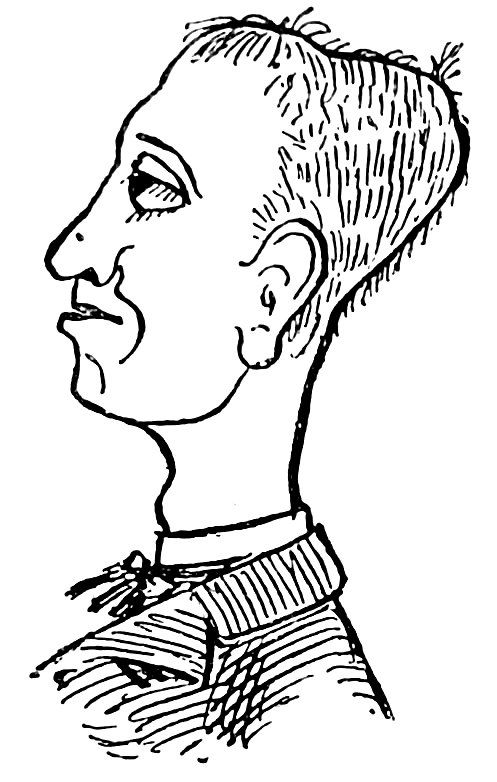
THE AUTHOR AT THE AGE OF 30
[A.D. 1880]
Title: Culture's garland
Being memoranda of the gradual rise of literature, art, music and society in Chicago, and other western ganglia
Author: Eugene Field
Author of introduction, etc.: Julian Hawthorne
Release date: June 26, 2026 [eBook #78956]
Language: English
Original publication: Boston: Ticknor and Company, 1887
Other information and formats: www.gutenberg.org/ebooks/78956
Credits: Richard Tonsing, Hannah Wilson, and the Online Distributed Proofreading Team at https://www.pgdp.net (This book was produced from scanned images of public domain material from the Google Books project.)
Transcriber’s Note:
New original cover art included with this eBook is granted to the public domain.
THE AUTHOR AT THE AGE OF 30
[A.D. 1880]

It has come to pass, I know not how, that what is accepted as American humor has largely become the prey of specialists. When we see the signature of Mark Twain, Bill Nye, Artemus Ward, Bob Burdette, Bret Harte, or any one of a dozen more, we know what kind of humor will accompany the name. Each man has his particular and familiar line, and never diverges from it. But there is something wrong about this. Humor—whatever it used to mean in Ben Jonson’s days—now means something more than the comic eccentricity of an individual. It means the arch smile, half quizzical and half tender, that glimmers upon the countenance of human nature when contemplating its own follies and perversities.
The name of Eugene Field, of the Chicago “Daily News,” though heard for the first time only a few years ago, is already a famous and a favorite name in journalism. He, too, bears the reputation of a humorist: but his humor is not of the conventional order; it has a wider and a loftier scope. He has a gentle yet intrepid heart, a penetrating but broad viiiintellect, and a pen that is at once trenchant and kindly, sensible and imaginative. He is the author of some of the purest and most charming fairy-tales that have been written since Hans Christian Andersen’s time. He has produced poems whose effortless art and tender pathos have brought them to the knowledge of perhaps half the newspaper readers of America; and, withal, he has poured out genuine and spontaneous fun enough to restore that gayety of nations which the death of a certain renowned comedian was said to have eclipsed. Yet, in all his jesting, he has never jested heedlessly or cruelly. If he has laughed at what is foolish, he has honored what is good: if he has unsparingly satirized what is absurd or unworthy in our civilization, he has always reverenced what is sacred and holy in our nature. His is no common mind, and we have as yet seen but a small arc of its complete circle. No man born on this continent is a more robust American than he; no man scents a sham more unerringly, or abominates it more effectively; no man’s ideal of American literature is higher or sounder. And though circumstances have hitherto confined his contributions to that literature within comparatively narrow limits, yet he has given ample indications of vigorous powers and a catholic range. He is sometimes as homely and pithy as a New-England farmer; sometimes as refined and subtle as a French epigrammatist; now he chuckles like a Gargantuan, and again he ixevinces the artistic grace of a trained poet or romancer. But above all and beneath all he is a man, full of the strength and the richness of human nature, and loving human nature with all his heart, as only a man can.
The present little volume comprises mainly a bubbling-forth of delightful badinage and mischievous raillery, directed at some of the foibles and pretensions of his enterprising fellow-townsmen; who, however, can by no means be allowed to claim a monopoly of either the pretensions or the foibles herein exploited. Laugh, but look to yourself: mutato nomine, de te fabula narratur. It is a book which should, and doubtless will, attain a national popularity; but admirable, and indeed irresistible, though it be in its way, it represents a very inconsiderable fraction of the author’s real capacity. We shall hear of Eugene Field in regions of literature far above the aim and scope of these witty and waggish sketches. But, as the wise orator wins his audience at the outset of his speech by the human sympathy of a smile, so does our author, in these smiling pages, establish genial relations with us, before betaking himself to more ambitious flights. If he have half the confidence that his friends have in his power of wing, he will be far aloft ere long; and then, as now, we shall all wish him heartily God-speed!
June, 1887.
| PAGE | |
|---|---|
| Mr. Kinsley’s Book | 1 |
| Literature and Art | 4 |
| The Cooley Poems | 5 |
| Judge Cooley’s Denial | 16 |
| Literary Notes | 18 |
| Mr. Doty Mad | 19 |
| Chicago Palmistry | 21 |
| A Marvellous Invention | 24 |
| Books and Authors | 30 |
| Chicago Hamlets | 31 |
| The Literary Wayside | 38 |
| A Beautiful Article of Virtue | 39 |
| The Shakespeares Identified | 42 |
| Among the Literati | 50 |
| The Markeesy di Pullman | 51 |
| Literary Laconics | 58 |
| As to the Garter of a Markeesy | 59 |
| Mr. Emerson in ’Frisco | 64 |
| A Summer Philosopher | 66 |
| The Truth about Dante | 68 |
| The Good Cause | 76 |
| The Convention of Western Writers | 77 |
| The Poet’s Corner | 80 |
| A Western Boy’s Lament | 80 |
| The Story of Xanthippe | 81 |
| Philadelphia | 89 |
| Humanity | 91 |
| Baked Beans and Culture | 92 |
| xiiMr. Isaac Watts, Tutor | 96 |
| The Revision | 104 |
| The Official Explanation | 106 |
| Yankee Chorus Girls | 107 |
| Mr. Dixey as a Nemesis | 109 |
| Professor Lowell in Chicago | 113 |
| Mr. Elder’s Fright | 131 |
| Ethel’s Christmas Tale | 135 |
| Chicago Weather | 137 |
| A Chicago Christmas Legend | 138 |
| A Plea for the Classics | 141 |
| Mlle. Prud’homme’s Book | 142 |
| Her Genuine Culture | 146 |
| The Demand for Condensed Music | 147 |
| Opera, Opuses, and Opi | 150 |
| Chicago the Music Centre | 151 |
| Still Blooming | 152 |
| The Offence | 153 |
| A Lament | 155 |
| The Apology | 156 |
| A German Personal | 157 |
| Col. Aldrich’s “Last Cæsar” (1) | 158 |
| Col. Aldrich’s “Last Cæsar” (2) | 163 |
| Miss Bayle’s Romance | 168 |
| A Humorist’s Courtship | 170 |
| That One Floating Vote | 174 |
| A Persian Mission | 175 |
| A Senator’s Valor | 179 |
| A Season of New Music | 182 |
| Apollo Located | 184 |
| An Exile’s Nuptials | 185 |
| Patronize Home Art | 187 |
| An Old Feud | 189 |
| A Hegira Threatened | 192 |
| A Spanish Romance | 197 |
| More about Miss Field | 200 |
| A Kentuckian’s Sagacity | 202 |
| Col. Judd’s Narrow Escape | 203 |
| xiiiA White-House Ballad.—I. | 206 |
| An Editorial Schedule | 207 |
| A White-House Ballad.—II. | 209 |
| The Haskells, Père et Fils | 210 |
| A White-House Ballad.—III. | 211 |
| More about Col. Haskell | 212 |
| Another New Book | 213 |
| Mr. Slattery of Boston | 214 |
| Mme. L’Allemand’s Humor | 218 |
| A Veteran Actor | 220 |
| A White-House Ballad.—IV. | 221 |
| Life, Death, and Love | 222 |
| Pike’s Peak | 225 |
| Christian-County Mosquitoes | 226 |
| The Dying Soldier | 228 |
| His First Day at Editing | 229 |
| The Little Peach | 236 |
| Learning and Literature | 237 |
| Some Famous Apologies | 240 |
| Victoria at the Show | 242 |
| A Farmer’s Advice | 243 |
| A Chicago German Lyric | 244 |
| The Works of Sappho | 245 |
| November | 253 |
| A Novelette | 254 |
| Inter-State Commerce Bill Items | 257 |
| The Wizard of Vermilion | 258 |
| Why He was Tardy | 261 |
| Base-Ball as a Classic | 262 |
| Culled in Helicon | 265 |
| Oon Criteek de Bernhardt | 267 |
| Oon Conversarzyony Frongsay | 274 |
| A Fearless Protector | 277 |
| Mr. Knapp’s Scheme | 278 |
| A Fine Old Book | 279 |
| Stealing our Thunder | 282 |
| Lost, Strayed, or Stolen | 285 |
| Condensed Literature | 286 |
| xivDr. Warner in Chicago | 288 |
| An Anxious Inquiry | 289 |
| A Chip of the Old Block | 290 |
| The Crown Jewels | 291 |
| Mr. Goodwin’s Yacht | 295 |
| A Laudable Scheme | 297 |
| The Era of Reform | 298 |
| The Drama Discussed | 307 |
| The Vale of Cashmere | 308 |
| The Friend of the Indian | 309 |
| The Way of the Sex | 310 |
| After Many Years | 311 |
| A Society Item | 313 |
| “Die Walküre” und der Boomerangelungen | 314 |
| An Angered Teuton | 319 |
| “Die Walküre” Analyzed | 320 |
| A Felicitous Toast | 321 |
| The Farmer Candidate | 322 |
| The Mummy’s Conundrum | 325 |
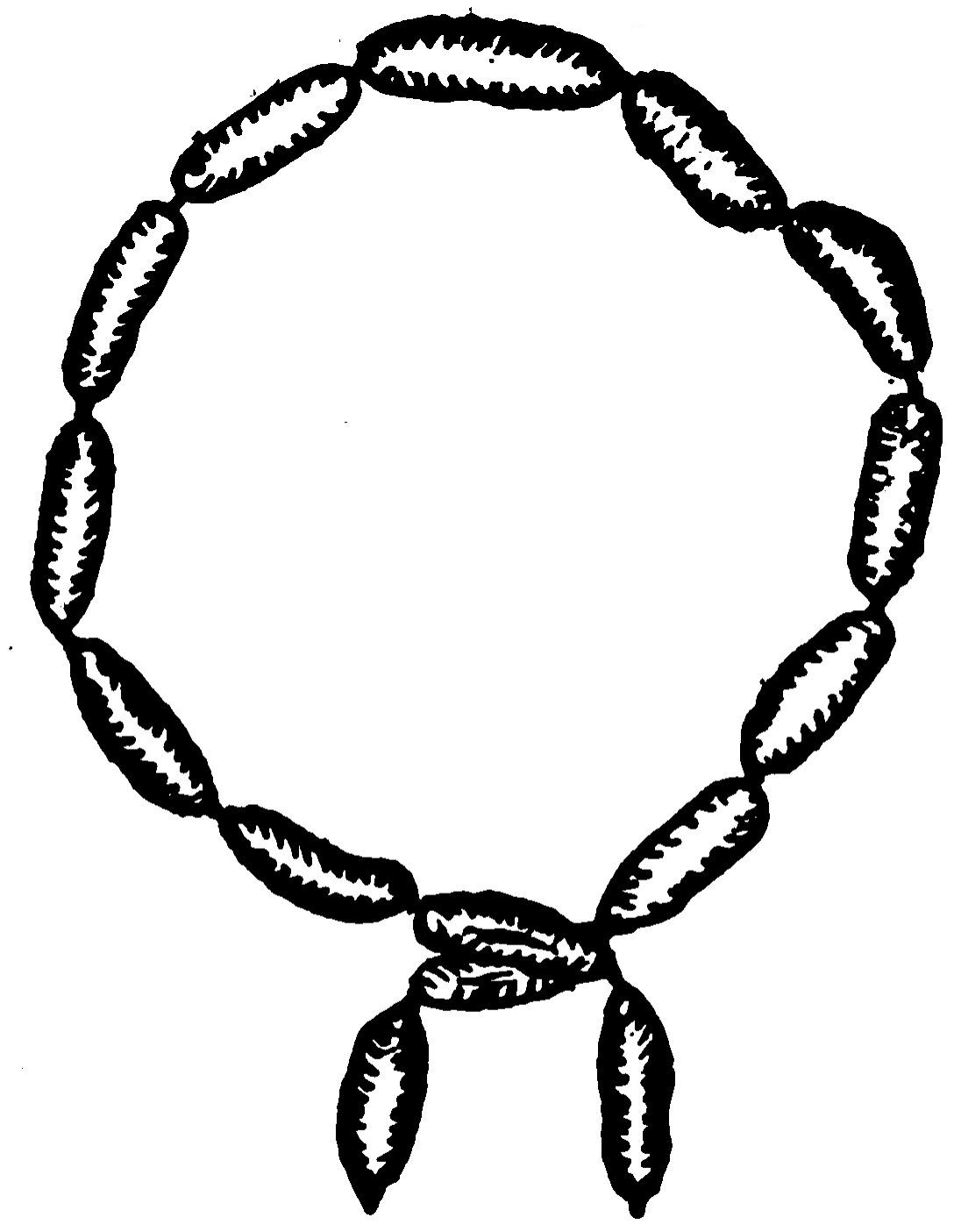
A CHICAGO LITERARY CIRCLE
IN THE SIMILITUDE OF A LAUREL WREATH
While it is universally conceded that Chicago is rapidly achieving world-wide reputation as the great literary centre of the United States, it is distressing to note that local critics are slow to recognize and to encourage the efforts of Chicago littérateurs. We have been plunged into a most unhappy condition of mind by the continued neglect with which a recent literary work of our esteemed fellow-townsman, Mr. H. M. Kinsley, has been treated by the moulders of literary thought in Chicago. We do not know whether it is envy that lurks in the bosom of our literary critics, and instigates them to ignore home industries, but we do know that for the last three months “The Dial,” “Scandinavia,” “The Current,” and other hypercritical reviews, have devoted much space to literature in Norway, France, Italy, Belgium, England, and Prussia, but have had never a word to say of Mr. Kinsley’s valuable treatise. We mention this plain truth more in sorrow than in anger.
2Mr. Kinsley’s book, which now lies before us, treats of topics of the greatest social importance. The introductory pages give a careful description of Mr. Kinsley’s palatial refectory; and following these are several chapters upon the prices of viands, upon the lofty dignity of which (the prices) Mr. Kinsley’s claims to literary recognition would appear to be based. We learn that we can obtain a quart of Nesselrode pudding with Maraschino sauce for one dollar and a quarter, a quart of tutti-frutti ice for one dollar, a dozen pommes de terre fraises for three dollars, sauterne frappe for two dollars and a half per gallon, chicken à la Rheine soup for one dollar per quart, à la Marengo sauce for two dollars per quart, fricadelle de foie gras for seventy-five cents per pound, etc. This important, not to say necessary, information is supplemented with a large number of recipes, which should prove of vast value to the humbler classes in this city. These recipes give careful instruction as to the compounding of mushroom salads, terrapin croquettes, bisque of whitebait tongues, fricassee of canary-birds’ livers, and other viands common to the groaning board of the metropolitan day-laborer. These recipes are stated in that idiomatic, direct English which instantly conveys intelligence to the mind of the reader, and joy ineffable to the soul of the printer at forty cents per one thousand ems. So much for what we may term the sordid, worldly, practical part of the book. 3On the succeeding pages the versatile author proceeds to treat of weddings, parties, receptions, etc., and we note with pleasure that the importance of elaborate and costly refreshments is urged in each instance. But it is in his chapter on “Etiquette of the Table,” that—if we may be allowed to use the figure—Mr. Kinsley out-Kinsleys Kinsley. Perchance it was this chapter that gave our contemporary, “The Dial,” and other critical reviews, pause. Howbeit, we shall venture to regale our readers with a very few specimen excerpts,—
“Fashions change in modes of eating.”
“Never appear impatient, and employ the time in agreeable conversation.”
“Soup should be eaten carefully.”
“Never eat with a knife.”
“Never rise until the meal is finished.”
“Sit upright, with grace and dignity.”
“A fork should be used gracefully.”
“Do not pick the teeth with the cutlery.”
“Do not break the china or glassware unless you expect to pay double price for it.”
These are a few of the pleasant and admirable fundamental laws which author Kinsley lays down for the guidance of his patrons, presumably the élite, the crême de la crême, of Chicago. And, possibly with economic ends in view, Mr. Kinsley warns his readers, “Never eat so much of any article as to attract attention.”
So we say we like the book; and, having perused 4it carefully, we feel warranted in declaring that it appears to us that none could quit Mr. Kinsley’s soothing influences without exclaiming, in the historic language once employed by Ali Baba, “Allah be praised for this deliverance!”
We acknowledge the receipt of a handsome volume entitled “The Trunk Tragedy: A Complete History of the Murder of Preller and the Trial of Maxwell.” The author is none other than Judge E. A. Noonan of St. Louis, a real-estate and house-renting agent, and littérateur of marked ability. The book is strongly written, and a number of stirring illustrations by leading local artists give the work a peculiar value. Bound in paper, with a full-page illustration of the unfortunate victim on the cover, for the reasonable price of twenty cents, this chef-d’œuvre should find its way into every home.
Angelo Ludovico, the famous Chicago sculptor, has just completed a bass-relief bust of William Shakespeare, the immortal bard of Avon. The likeness is a superb one, the artist having made his designs from the only authentic autograph, now in possession of Mr. Gunther, the well-known candy-virtuoso.
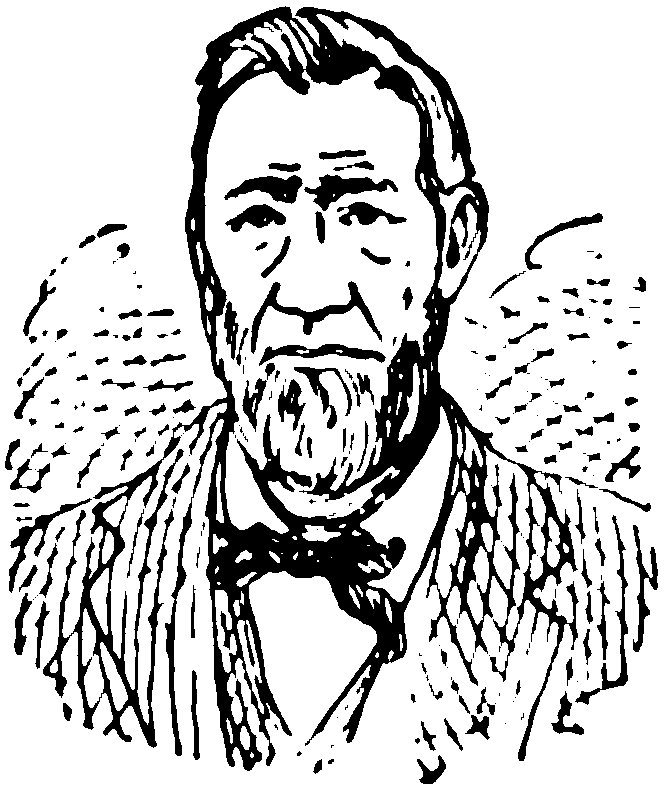
Col. Jasper Eastman, one of the oldest and most respected citizens of Adrian, Mich., sends us twenty-eight poems, which he says were written by Judge Thomas M. Cooley, the venerable and learned jurist recently appointed to the Inter-state Commission. These poems, we are told, were published originally in “The Ann Arbor News,” which paper was owned and conducted twenty-five years ago by one of Judge Cooley’s most intimate friends. The period between the publication of the first of these poems and the publication of the last was eight years (from 1853 to 1861); and, as they appeared, they were cut out, and pasted into Col. Eastman’s scrap-book: it is to this old scrap-book that we are indebted for the specimen gems which we are enabled to put before our readers at this time. Col. Eastman says, that, while it is generally known among his old associates that Judge Cooley used to be a great hand for writing poems, it is not known nor believed outside of that limited circle that the learned jurist ever did, or ever could, unbend to the muse. “People who know him to be a severe moralist and a profound 6scholar,” writes this old friend, “will laugh you to scorn if you try to make them believe that Cooley ever condescended to express his fancies in verse. Yet you will agree with me, I think, when I say that most of the learned men of all ages have written poetry, and that, therefore, there is no positive reason why the leading intellect of Michigan should not write poetry.”
There is among psychologists a very pronounced belief that the practice of writing verse serves as the best escape-valve (if we may so term it) for the emotional nature of man. The emotional nature, albeit it is the lowest part of man’s intellectual being, is earliest developed in the race and in the individual. Hence it is the first to spring to the control of the mind when the intellect is urged in any direction which prevents his nature having an escape-valve. It has been observed from the most ancient times, that the severe legislator and moralist has often exhibited secret vices or peculiarities which were but the expression of his repressed emotional nature. This repression has produced, as its resulting rebound, ruthless and horrible crimes; but very often—even in the cases of illustrious statesmen guilty of monstrous crimes—further crime has been prevented by an outburst of the emotional nature in the direction of poetry, which afforded the escape-valve so imperatively demanded.
It is very probable that Solon’s occasional pursuit 7of the art of poetical composition served to prevent him from falling victim to the laws he himself made, and enabled him to stand for all time as the stern moralist. The poetry of the ancient Spartans, Romans, Germans, Saxons, and Scandinavians did much to preserve those races from the degeneration which must have resulted had their otherwise repressed emotional natures not found a vent in song. It was only his devotion to poetry that prevented Chaucer from becoming the utterly corrupt politician which such court associations as his made others. Had Edward V. stuck to the poetry of his early years, his crimes would not have lost the crown to his descendants. The poetic tendencies of James I. served to prevent his utterly vicious character from fully demonstrating itself. Francis Bacon’s secret poetizing kept him from becoming totally depraved by the court around him. Richelieu’s poetry served to prevent his indulgence in dangerous methods of satisfying the emotional nature, gave him an extended lease of life, and in divers ways assisted him in the accomplishment of his ends. Mazarin’s poetry gave utterance in a healthy way to an emotionalism which would have been dangerous to repress. The poetry of the statesmen of the era of the English revolution—Montague, Somers the jurist, and Harley—saved them the disgrace of finding satisfaction for their emotional natures in secret excesses, like those of Jeffreys. Great lawyers, 8statesmen, and divines—Mansfield, Maule, Mackintosh, Macaulay, Fox, Burke, Beust, Disraeli, Thiers, Seward, Webster, Leo XIII.—have recognized that the proper balance of the intellectual nature required that the emotional nature, repressed by daily tasks and natural environments, should find an escape-valve in some honest and healthy direction; and all found it in poetic composition.
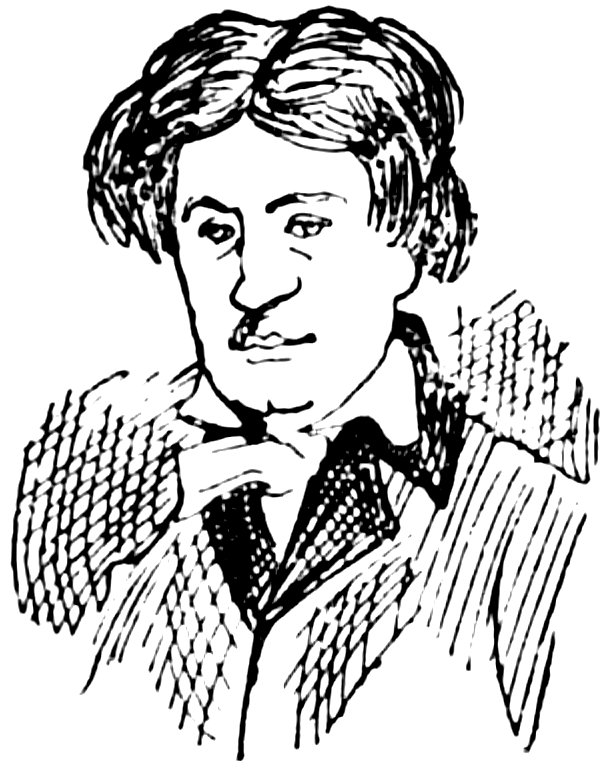
But it is not our purpose to seek to explain, or to apologize for, the poems which Judge Cooley has written: we will say simply, that, environed as he was by a sternly moral community, his emotional nature found vent in song, and these songs speak most eloquently for themselves.
Those who knew Judge Cooley at that time say that he was “a long, awkward boy, with big features, moony eyes, a shock of coarse hair, and the merest shadow of a mustache.” A faded daguerrotype of the young poet is preserved, and from it we have produced a tolerably fair copy, which will surely interest the admirers of good verse. It appears that young Cooley’s first poetical attempts were in the direction of versifications and paraphrases of the ancients. Fully half the specimens before us are illustrations of work of this kind, at which the young man exhibited 9great proficiency. Here is a bit from Menecrates that is really prime; it is as good a piece of versification as any done by the more pretentious dabblers in Greek anthology:—
In a lighter vein, but with consummate delicacy, and with wonderful fidelity to the text of Lucian, young Cooley thus pays his respects to
And here is Plato’s famous quatrain to
In the collection before us, there are two Latin poems, showing that the young poet was quite as felicitous at Latin composition as in versification in his native tongue. One of these poems 10is entitled “De Consuetudine et de Gustibus,” and treats in hexameter the evils of political methods at that time (1859). The other is a rollicking song which (a foot-note explains) was sung at the junior class supper at Ann Arbor, May 14, 1854. We give a specimen stanza:—
In 1855 the following poem appeared anonymously in “The Ann Arbor News,” and at once elicited general attention. N. P. Willis wrote out from New York to the editor of the “News,” asking the name of the author; and to this inquiry the editor answered, “A young barrister of this village, named Thomas M. Cooley.”
This beautiful hymn was reprinted far and wide, and was incorporated, we are told, in “The Golden Harp” series of choice religious lyrics compiled by Ticknor & Co., Boston, 1857.[1]
1. This lullaby has been set to music by Rev. Hon. N. K. Griggs of Beatrice, Neb. The composer has changed the phraseology of the lullaby somewhat, “so as to make the tune sing smoothly,” as he says.
But the most pretentious of Cooley’s poems—with the exception of his Latin hexameter discourse—was his “Vision of the Holy Grail,” a graceful imitation of Old English, printed in the holiday edition of “The Ann Arbor News” in 1856. Although this poem is somewhat longer than we could wish at this time, when our space is limited, we are fain to make room for it as a delicately conceived and artistically executed piece of literature.
15It appears that Judge Cooley had, and exhibited ever and anon, a humorous tendency. His “Lines to a Blue Jay” is as delicate a bit of fun as we have ever read. It represents the poet addressing a blue jay that seeks by its querulous carping to keep the poet from plucking plums: having got possession of the disputed branch, the poet facetiously concludes,—
In one of the poems, entitled “The Unknown Bards,” occurs this quatrain, which is another fair illustration of Judge Cooley’s skill in dealing with the anthology of the dead languages:—
The last poem which Judge Cooley printed was a parody on the old song of “Dixie.” It was published in the Ann Arbor paper on July 4, 1861; and from it we take two specimen stanzas:—
It seems a pity that such poetic talent as Judge Cooley evinced was not suffered to develop. His increasing professional duties and his political employments put a quietus to those finer intellectual indulgences with which his earlier years were fruitful. Still, we doubt not that, through all the noble practical service he has rendered to his country, he has carried the old-time fondness for the muse, and that now, in the fulness of his distinguished career, he will view without regret the buds of his poetic genius herein recalled.
In a speech at one of the collegiate suppers, Judge Cooley has taken occasion to deny that he ever wrote the poems so ably criticised in the foregoing paper. It is rather late for the judge to 17come lumbering to the front with his disclaimer, yet it is possible that he required a good deal of time to hunt up and examine the back files of his poetical works. The judge is now about sixty years of age; and his friends assure us that he has been writing poetry all his life,—not for publication, but simply for the pleasure he finds in weaving into rhyme the beautiful fancies of his active imagination. It is estimated by a friend, who has known him intimately for forty years, that if Judge Cooley’s poems were collected and printed, they would fill sixteen royal octavo volumes. These poems, we are told, treat of every theme imaginable, from “To Niagara Falls by an August Moonlight” to “The Dimple in my Thisbe’s Arm.” It seems a great pity that the several thousand epics, ballads, sonnets, roundels, triolets, odes, jigs, etc., which Judge Cooley has composed and will confess to—it seems a pity, we say, that these masterpieces are not to be had in collected form for the edification and instruction of our public. Since we have referred to his Niagara ode, we will ask what sentiment could be finer than this:—
And what a startling contrast to this sublime treatment do Judge Cooley’s playful, amorous lines present:—
Yet we find Judge Cooley advising his young friends not to indulge in poetizing! A man who has made a success in the highest of literary arts ought to encourage others to follow in his footsteps—ought he not? Or does the judge want all the glory himself?
“The Swine-Breeder’s Studbook” for 1887 is at hand, and brings its usual amount of valuable information. Not an unimportant feature of this volume is the portrait of the magnificent barrow “Chester White King,” which took the first premium at the Kewanee fair last fall.
Squire Enos Hapgood, who expired by a vicious mule’s kick on the West Side last Monday, was one of the most prominent patrons of literature in the West. Before her death, his wife had been a subscriber to “Godey’s Lady’s Book” for twenty odd years.
Mr. Henry K. Doty, one of the most prominent citizens, and the leading hide and pelt dealer, in the North-West, has just returned from a European tour. He has been absent about four months; and in that time he has made a visit to every European country, and has become thoroughly acquainted with the customs, manners, and languages of the different people. He spent about seventy-five thousand dollars on the trip; but this could not be called an extravagant sum when one takes into consideration the superb paintings, statuary, and other works of virtue, that he brought back with him. In Paris, upon the Roo de Rivoly alone, he purchased fifteen thousand dollars’ worth of pictures; and in Brussels he bought several thousand dollars’ worth of those elegant carpets from which that city derives its name. Mr. Doty says that he was well treated everywhere except in England. He is specially bitter against Mr. Phelps, our representative at the court of St. James.
“This man Phelps,” says he, “is a little, dried-up, snobbish Vermont lawyer, with a soul no bigger than a huckleberry. I dyed my mustache, and put on my dress-suit and my twenty-thousand-dollar diamond bosom-pin, and called to see him. A fine specimen he is to represent our wealth and 20culture! I don’t believe his clothes cost more than twenty dollars a suit.
“‘I suppose I ought to call on the queen,’ says I.
“He didn’t say any thing; and I continued, ‘Would you mind introducing me?’
“‘Really, Mr. Doty,’ says he, ‘I do not feel like presenting an entire stranger to her Majesty.’
“‘Oh! you needn’t be scared,’ says I, ‘for I carry as big a letter of credit as any American in London; and when it comes to culture, and that sort of thing, I can knock the socks off any of your lords and marqueezies.’
“Well, will you believe it? he had the impudence to shove a printed list of questions at me.
“‘You will have to answer these on oath before I can tell you whether I can present you to her Majesty,’ says he.
“I was as mad as a Texas steer. Here are some of the questions: ‘Did you ever have a grandfather? and, if so, what was his vocation?’ ‘Have you contracted the tooth-brush habit?’ ‘Are you addicted to the use of the double negative?’ ‘Spell phthisis, strychnine, and pneumonia.’ Fine questions these to put to a gentleman worth a cool million! I told him to go to —— with his queen; and I’m going to have my private secretary write a letter to the President, complaining of Phelps, and demanding that he be discharged.”
Mr. Heron-Allen, the handsome and talented young hand-reader, is making a barrel of money in Chicago. Our most distinguished society leaders are consulting him, and are delighted with the flattering pictures which he finds in their dainty palms. It is understood that the enterprising young professor—who is as ingenious as he is learned—has found it necessary to invent a system particularly adapted to the requirements of the average Chicago hand. It would be quite as unfair to judge the Chicago hand by the ordinary rules of palmistry as it would be to drag the Shakspearian drama down to the level of criticism required in the appreciation of a modern horse-play comedy. The truth seems to be, that the Chicago hand is the ideal one—the realization of the poetic dreams of the palmister: it is the perfection of every thing—not necessarily a purely spiritualized hand, but a beautiful and symmetrical combination or blending of the best features of the human hand.
The line marked A in this accurate exhibit is what Mr. Heron-Allen most felicitously terms the pork-line. In every Chicago hand, it is distinct and long. If at the lower end it rounds off toward the ball of the thumb (the Mons Prudentiœ), it is a sure indication that the patient attends strictly to prudent business methods; that he pursues only 22the vocation in which he has embarked, and that he eschews all those gambling exploits commonly called speculation. If, on the contrary, this pork-line turns to the outside of the palm (the Mons Asinorum), it indicates positively that the subject is inclined to desultory deals in wheat, corn, and other fluctuating staples of trade.
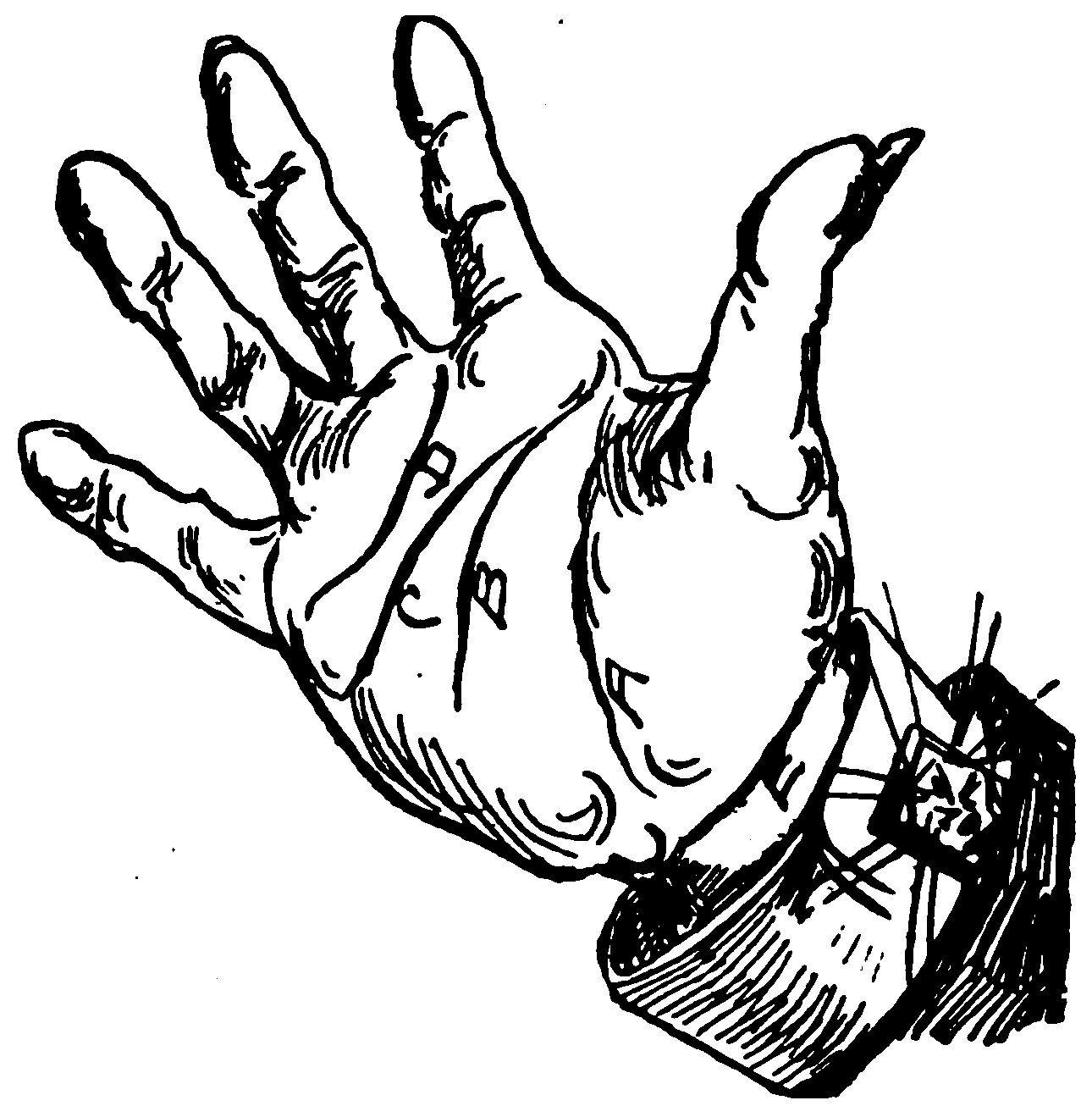
The sand-line is B: it betokens prowess and valor in the execution of those designs inspired by the pork-line (A). This line (B) is deeply marked in the average Chicago hand. It is generally conceded, we think, that in all grades, brands, and departments of business and culture, the Chicagoan exhibits more sand than is to be found anywhere else on the surface of the earth. In a great many 23instances it is so strongly marked that its shadow is plainly outlined on the back of the hand.
These two lines—A and B—exhaust what are called the physical lines. Next comes the intellectual or literary line C. It is this demarcation, broad and distinct, that causes the wearer to take pleasure in literature, to join literary clubs, to inquire into the mysteries of summer philosophy, to subscribe for the local trade weeklies, to buy handsome wall-paper, and to have the seaside novels rebound in half-calf. If it were not for this line in our hands, the newsboys would sell mighty few books on our trains, and Billy Pinkerton would never have become famous as an author.
The line D is common to the Chicago hand: it argues a fondness for the fine arts, for music, and for all articles of vertoo—such as piano-fortes, folding-beds, wax flowers, race-horses, perfumery, $4 opera, pug dogs, statuary, Browning’s poems, dyspepsia, and lawn tennis. Of late this art-line has got so deep in a great many Chicago hands, that it had to be sewed up by a doctor.
The line E is not found in every instance. It is most commonly met with among the wealthiest of our cultured people—those whose culture has come to them with their sudden acquisition of great wealth. It extends about the wrist, and is clearly marked about three times a day. It is called the water-line.
It is narrated, that, once upon a time, there lived a youth who required so much money for the gratification of his dissolute desires, that he was compelled to sell his library in order to secure funds. Thereupon, he despatched a letter to his venerable father, saying, “Rejoice with me, O father! for already am I beginning to live upon the profits of my books.”
Professor Andrew J. Thorpe has invented an ingenious machine which will be likely to redound to the physical comfort and the intellectual benefit of our fellow-citizens. We are disposed to treat of this invention at length, for two reasons: first, because it is a Chicago invention; and, second, because it seems particularly calculated to answer an important demand that has existed in Chicago for a long time. Professor Thorpe’s machine is nothing less than a combination parlor, library, and folding bedstead, adapted to the drawing-room, the study, the dining-room, and the sleeping apartment,—a producer capable of giving to the world thousands upon thousands of tomes annually, and these, too, in a shape most attractive to our public. Professor Thorpe himself is of New-England birth and education; and, until he came West, he was called “Uncle Andy Thorpe.” For many years he lived in New Britain, Conn.; and there 25he pursued the vocation of a manufacturer of sofas, settees, settles, and bed-lounges. He came to Chicago three years ago; and not long thereafter, he discovered that the most imperative demand of this community was for a bed which combined, “at one and the same time” (as he says, for he is no rhetorician), the advantages of a bed and the advantages of a library. In a word, Chicago was a literary centre; and it required, even in the matter of its sleeping apparata, machines which, when not in use for bed-purposes, could be utilized to the nobler ends of literary display. In this emergency the fertile Yankee wit of the immigrant came to his assistance; and about a year ago, he put upon the market the ingenious and valuable combination, which has commanded the admiration and patronage of our best literary circles, and which at this moment we are pleased to discourse of.
It has been our good fortune to inspect the superb line of folding library-bedsteads which Professor Thorpe offers to the public at startlingly low figures, and we are surprised at the ingenuity and the learning apparent in these contrivances. The Essay bedstead is a particularly handsome piece of furniture, being made of polished mahogany, elaborately carved, and intricately embellished throughout. When closed, this bedstead presents the verisimilitude of a large book-case filled with the essays of Emerson, Carlyle, Bacon, 26Montaigne, Hume, Macaulay, Addison, Steele, Johnson, Budgell, Hughes, and others. These volumes are made in one piece, of the best seasoned oak, and are hollow within throughout; so that each shelf constitutes in reality a chest or drawer which may be utilized for divers domestic purposes. In these drawers a husband may keep his shirts or neckties; or in them a wife may stow away her furs or flannel underwear in summer, and her white piqués and muslins in winter. These drawers (each of which extends to the height of twelve inches) are faced in superb tree-calf, and afford a perfect representation of rows of books, the title and number of each volume being printed in massive gold characters. The weight of the six drawers in this Essay bedstead does not exceed twelve pounds; but the machine is so stoutly built as to admit of the drawers containing a weight equivalent to six hundred pounds without interfering with the ease and nicety of the machine’s operation. Upon touching a gold-mounted knob, the book-case divides, the front part of it descends; and, presto! you have as beautiful a couch as ever Sancho could have envied.
This Essay bedstead is sold for four hundred and fifty dollars. Another design, with the case and bed in black walnut, the books in papier maché, and none but English essayists in the collection, can be had for a hundred dollars.
A British Poets’ folding-bed can be had for 27three hundred dollars. This is an imitation of the blue-and-gold edition published in Boston some years ago. Busts of Shakespeare and of Wordsworth appear at the front upper corners of the book-case, and these serve as pedestals to the machine when it is unfolded into a bedstead. This style, we are told by Professor Thorpe, has been officially indorsed by the poetry committee of the Chicago Literary Club. A second design, in royal octavo white pine, and omitting the works of Chaucer, Spenser, Ben Jonson, and Herrick, is quoted at a hundred and fifty dollars.
The Historical folding-bed contains complete sets of Hume, Gibbon, Guizot, Prescott, Macaulay, Bancroft, Lingard, Buckle, etc., together with Haines’s “History of Lake-County Indians” and Peck’s “Gazetteer of Illinois,” bound in half-calf, and having a storage space of three feet by fourteen inches to each row, there being six rows of these books. You can get this folding-bed for two hundred dollars, or there is a second set in cloth that can be had for a hundred dollars. The Dramatists’ folding-bed (No. 1) costs three hundred dollars, bound in tree-calf hard maple, the case being in polished cherry, elaborately carved. The works included in this library are Shakespeare’s, Schiller’s, Molière’s, Goethe’s, Jonson’s, Bartley Campbell’s, and many others. Style No. 2 of this folding-bed has not yet been issued, owing to some difficulty which Professor Thorpe has had with 28Eastern publishers; but when the matter of copyright has been adjusted, the works of Plautus, Euripides, Thucydides, and other classic dramatists, will be brought out for the delectation of appreciative Chicagoans.
The Novelists’ bed can be had in numerous styles. One contains the novels of Mackenzie, Fielding, Smollett, Walpole, Dickens, Thackeray, and Scott, and is bound in tree-calf: another, better adapted to the serious-minded (especially to young women), is made up of the novels of Maria Edgeworth, Miss Jane Porter, Miss Burney, and the Rev. E. P. Roe. This style can be had for fifty dollars. But the Novelists’ folding-bed is manufactured in a dozen different styles, and one should consult the catalogue before ordering.
The folding-bed that pleased us most in all Professor Thorpe’s collection was the one that is called the Chicago Authors’ Own. It is issued in numerous styles, it being the wish of the manufacturer to place the boon within the reach of all. This series (if we may so term it) is made up of the works of Professor William Mathews, Col. George P. Upton, Col. Franc B. Wilkie, Franklin H. Head, Esq., Isaac E. Adams, the Rev. George C. Lorimer, Helen Starrett, Frank Gray, Col. Andrew Shuman, Capt. John Coulter, Michael Ahern, and of the many, many other littérateurs whose genius has raised Chicago to her enjoyment of the proudest literary distinction. These works 29can be had in every style. The cheapest, which is bound in modest papier maché, and includes a durable husk mattress, costs but twenty dollars; from this minimum the price runs up to two hundred dollars; and a special order (including Haines’s “Indian History” and the folio libretto of Pratt’s “Zenobia”) has recently been filled for a wealthy South-side gentleman of letters, who paid six hundred dollars for the collection.
There is no telling to what extent this folding-bed industry may not reach. As our community grows more and more literary each year, there will, of course, be an increasing demand for these luxuries, and accumulating wealth will enable our people to gratify their elevated tastes. Professor Thorpe seems to be just the man to be at the head of an industry calculated to pander to the literary instincts of Chicago folk. He is earnest and enterprising: even now he is at work upon a folding trundle-bed for children, which will contain a library adapted to develop proper traits in the young,—such standard books as Watts’s divine poems, the Rollo series, Bunyan’s “Pilgrim’s Progress,” Cotton Mather’s “Spiritual Milk for Babes,” etc.
Speaking of the delights of literary pursuits, the eloquent Cicero once said, “These things [studia] nourish our youth, they fortify us in our age, they make life beautiful, they afford us a refuge and a solace in adversity, they delight us at home, 30they do not hinder our practical relations with men, they are with us in our sleep, they accompany us upon our journeys, and, even afar from civilization, they grant us unceasing pleasure.” There were no patent library-beds in Cicero’s time. There was no Professor Thorpe to unfold the fruit of his Yankee ingenuity upon Roman civilization. Old Cicero must have had the spirit of prophecy upon him when he uttered the words we have italicized above. The propitious gods must have given him an inkling of the Professor Thorpe that was to be.
Among the articles of virtue recently purchased by our esteemed fellow-townsman, Mr. Townley J. Morris, is one of the first English translations of Virgil’s Æneid. This translation was made, we understand, under the personal supervision of the eminent poet himself.
There is a current rumor that Judge Thomas M. Cooley, chairman of the interstate Comus commission, has written a poem entitled “Trunk Lines to a Railroad System.”
Capt. Ben Wingate has named his new barge the “Felicia Hemans,” and the same departed for Saginaw last evening for a cargo of shingles.
The highly successful engagement which Mr. George C. Miln is playing in this city at this time, affords us the long-desired opportunity of paying that tribute of admiration and of respect which the genius of the eminent Chicago tragedian would seem to merit. We confess that we have viewed with considerable alarm the homage which certain foreign and Eastern actors (invading our territory with an audacity amounting almost to effrontery) have wrung from our populace, which we fear is too ready to depreciate the paramount work of home-production, and to fly into ecstasies over less meritorious, but more pretentious, importations. Recognizing it to be a lamentable truth, that, whether he be an actor or only a prophet, a man is not without honor save at home,—still we believe that Mr. Miln’s re-appearance in the city that claims him for her own will go a long way toward relieving the public mind hereabouts of that cruel misapprehension, that, when Mr. Miln quitted theology for theatrics, a good preacher was spoiled for a bad actor. We doubt not that if they were called upon to testify touching this matter, the large and enthusiastic church sociables which are crowding the Columbia Theatre this week, would heartily indorse us when we said that Mr. Miln’s personations evinced the possession of a 32genius that is rarely met with upon the dramatic stage.
Returning from a provincial tour, as vicissitudinous as it was extended, and heralded by the encomiums of the discriminating press of such intelligent communities as Topeka, Leadville, Cheyenne, Des Moines, Tipton, etc., it beliked Mr. Miln to inaugurate his engagement in Chicago with a presentation of his favorite tragedy, the chef d’œuvre of his long list of dramatic successes; namely, the sublime tragedy of “Hamlet.” Sombre as this play is, it has, nevertheless, become so popular in this city, that not infrequently are whole scenes of it enacted in the private theatres of our wealthy citizens; many of our people have committed to memory the beautiful soliloquies in which it abounds; our literati have composed ingenious screeds about its alleged author, and it is about this same author that distinguished Eastern scholars came here to discourse,—in short, the tragedy of “Hamlet” has become so well known in Chicago, that he who attempts its public production must possess rare powers in order to succeed in winning the public plaudits.
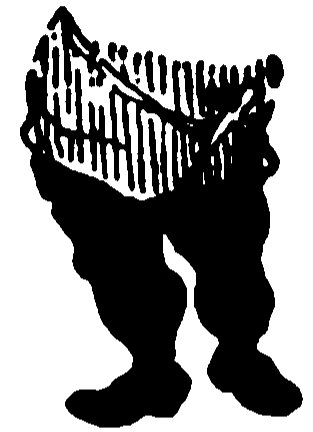
It was Edwin Forrest, we think, who first played “Hamlet” in Chicago. At that time this was but a ragged town—the rival of St. Louis. The muskrat and the wagtail snipe then frolicked and disported where now the palatial residence of George M. Pullman rears its pretentious front; at that 33time, too, Uncle Dick Hooley sang topical songs with great éclat; Col. J. H. McVicker flourished as the popular comedian; Dr. Patterson and Long John Wentworth snowballed each other on the bleak prairie where Marshall Field’s big wholesale stone fort now stands; and the untrammelled Indian coped with the buffalo on the rolling waste where now are to be found the packing-houses, the lard-refineries, and the rendering-establishments, of our most cultured fellow-townsmen, the members of the Chicago Literary Club. To this community, as it existed at that time, Edwin Forrest’s “Hamlet” was a revelation, and a delightful one. It came as a kind of encouragement to the ambitious, bustling, noisy Western town. It was a lusty Hamlet,—stout, stubborn, forceful, and vigorous as a prosperous butcher. It was not the boyish Hamlet of a Wilson Barrett, nor the melancholy Hamlet of a Booth, nor the impressive Hamlet of a Lawrence Barrett, nor yet the foundered Hamlet of an Irving: it was the sturdy, square-toed, honest, varicose-veined personation of the actor whose greatness is most keenly appreciated by those who have heard tell of him.

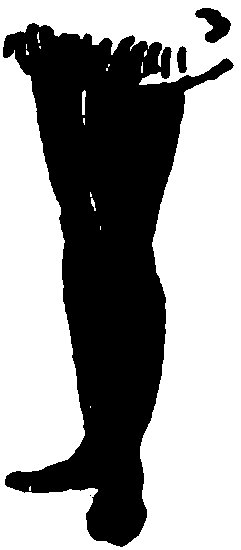
Mr. Edwin Booth has given Chicago two Hamlets,—the first many years ago, the second quite recently. His first Hamlet was of the cold-feet order: it was the particular admiration of young 34women who ate slate-pencils, and of men who believed in female suffrage. Having seen this Hamlet several times, we were convinced, that, if the original Hamlet were in reality what Mr. Booth represented, he could have been relieved of his malady by judicious prescriptions of vermifuge. Mr. Booth’s second Hamlet—the one he now presents—is a much healthier one; a trifle lame and a trifle slow, perhaps, but still a great improvement upon the morbid impersonation of twenty years ago.
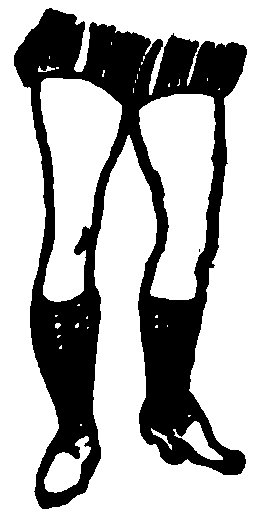
While Mr. Booth’s dyspeptic Dane was in the height of his popularity, along came a Frenchman from Alsace—a parley-voo of the name of Fechter—who startled us with a Hamlet which seemed to be the child of that heartless, prurient Dutchman Goethe’s imagination. This grotesque innovation shocked our sensitive optics with gaudy silk tights and colored hosiery. Yet there were those who professed to admire this refined blasphemy. Even so famous a critic as Miss Kate Field declared that Fechter’s Hamlet—the left one—was a poem. But this was many years ago: at that time Miss Field was a giddy, sentimental girl, just out of a 35convent. It is probable that her ideal Hamlet is no longer a strawberry blonde with Dolly Varden nether garments.

Another Hamlet which we must speak of is Mr. Lawrence Barrett’s; and, to quote a cant phrase, we speak of it more in sorrow than in anger. We regard it as a cold, passionless, bloodless Hamlet, with just the faintest suggestion of bronchitis. It is a self-conscious Hamlet, and a well-bred Hamlet: it never forgets the “l. u. e.,” nor neglects to measure off so much carpet to as much heptameter. It is our opinion,—the result of long and conscientious study,—that the most comfortable time in the year to hear Mr. Lawrence Barrett’s Hamlet is August; but even then, in order to insure against the hostile effects of low temperature, one should be provided with a lap-robe.
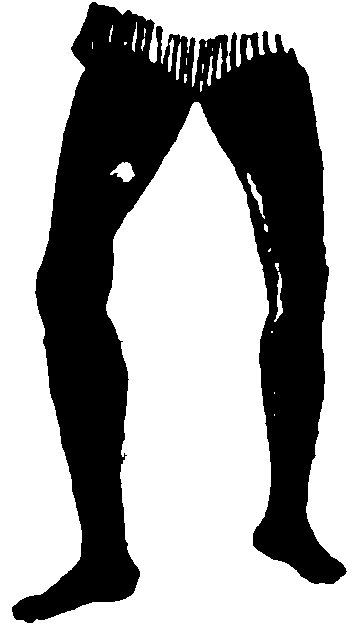
Two Hamlets have come over to us from England. The first was Mr. Henry Irving, who reaped a golden harvest as a reward for his admirable imitations of the young American comedian, Henry E. Dixey. Of this gentleman’s Hamlet we have little praise. It was stiff, halting, and jerky throughout. Perceiving how unevenly it ran, we would not have been surprised had the spavined Dane interrupted his death-soliloquy with Gloster’s lines,—

A much more symmetrical Hamlet was Mr. Wilson Barrett’s, yet even this performance was not without its defects. It was too reposeful, too undulating, too effeminate in its contours, and too sensuous in its movement. It was such a Hamlet as, we surmise, would create a profound sensation among the dudes if it were to appear at the head of the procession in the grand march in the third act of one of Col. John A. McCaull’s comic operas. Still, this kind of Hamlet has its admirers; and as it is called the boy Hamlet, we can at least hope that it will acquire the sharply defined angles of virility when it has put on the toga virilis.

We prefer not to speak of Miss Anna Dickinson’s Hamlet: we shall be content to give our readers a picture of it. The creation, as will be observed, is tolerably symmetrical; and, in spite of those environments which naturally and properly curtail a complete view of its merits, it is altogether of the substantial order.
But all these Hamlets fade into comparative nothingness when we place them beside Mr. Miln’s 37Hamlet, and attempt to judge them by those same rules and specifications and between the very lines which are required in a fair criticism of Mr. Miln’s genius and art.
How vividly occurs to us at this moment the heart-cry of Sir Andrew Aguecheek, “I had rather than forty shillings I had such a leg!” Or these others, quoting old Toby Belch, might say to our Chicago tragedian, “I did think by the excellent constitution of thy leg, it was formed under the star of a galliard!”
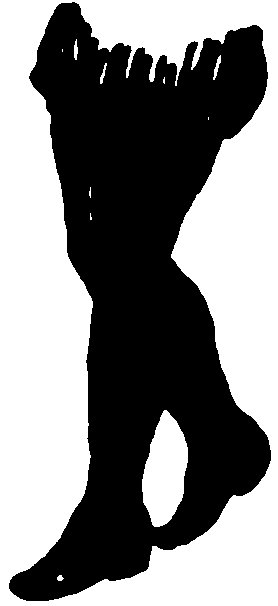
’Tis not hyperbole to say, that by as much as these shapely, sentient, palpitating columns exceed and surpass in grandeur and in beauty those other misshapen supports which the bard of Avon has stigmatized as riding-rods, by so much does the genius of our tragedian transcend the strutting, tottering pretences that are served up by his competitors. What strength, what decision, what grace, what durability, what forcefulness, what nobility, do we perceive herein! What breadth of understanding, what continuity, what power of endurance, what bottom, do we instantly recognize! And these beauties will continue to expand and to grow, just as they have in the past, provided that the distance between one-night stands is not shortened, and the walking holds out good. We remember, 38that, when we first saw Mr. Miln’s Hamlet, three years ago, it was crude and angular: now we behold it rounded out and symmetrized. This is the blossoming of our friend’s genius: what will the harvest be? Ah! who can say what a perfect art-picture will be presented when the whole nature of the actor becomes permeated with, and symmetrized by, the subtile beauty of that shapely calf? We hail the prospect with delight, and most cordially do we congratulate Melpomene thereupon.
During the base-ball tourney between Chicago and St. Louis we are issuing extra editions of “The Daily News,” containing such excellent reports of the all-important contest as to excite the warmest admiration in leading literary circles.
At the meeting of the West-Side Literary Lyceum last week, the question, “Are Homer’s poems better reading than Will Carleton’s?” was debated. The negative was sustained by a vote of 47 to 5. On this occasion Miss Mamie Buskirk read an exquisite original poem entitled “Hope; or, The Milkman’s Dream.”
Col. T. Weston Briggs, the well-known real-estate agent, offers his magnificent private library for sale at four dollars per front foot.
Our esteemed fellow-townsman, Mr. Charles F. Gunther, the well-known candy-manufacturer, is indefatigable in collecting rare old curiosities. Not very long ago he discovered a genuine autograph of William Shakespeare, and he paid five thousand dollars for it; subsequently he found and bought a volume of Ella Wheeler Wilcox’s poems containing the autograph of Dante Alighieri written in a clean, round hand on one of the fly-pages; but still more recently he has come into possession of a relic more valuable than all the rest combined—in fact, so highly does Mr. Gunther prize this latest acquisition, that he freely confesses that he would not exchange it for an Ossa of caramels piled upon a Pelion of gum-drops. This relic is an Egyptian mummy, and Mr. Gunther exhibited it to us the other day. It seems that when Mr. Gunther was in Egypt some years ago, he fell in with Professor Schliemann, the famous excavator, archæologist, explorer, etc. At that time the professor was tunnelling into the pyramids, excavating the sphinx, and pursuing divers other humorous fads, whims, and crochets. Mr. Gunther took quite a fancy to the professor, showed him his autograph of Shakespeare, gave him a recipe for making lemon-taffy, and presented him with a photograph of McVicker’s theatre before the fire. For these 40manifestations of sympathy, Professor Schliemann was deeply grateful, and he promised to reciprocate in due course of time.
About a month ago Mr. Gunther was charmed to receive from the professor an express-package containing a mummy of the first water. Considering the wear and tear to which it must have been subjected for the last twenty or thirty centuries, this mummy is in excellent condition. We shall refer to the mummy as “it,” although Mr. Gunther chooses to call it “he.” It is not more than three feet in length, and its weight is perhaps equal to that of a two-dollar box of jujube paste. Its girth does not exceed twenty-eight inches. Such of its complexion as is exposed, is of the pronounced hue of chocolate-drops; and the few strands of hair remaining on the shrivelled scalp are as black and straight as a stick of licorice. Beginning at the upper part of the neck, and extending down beyond the toes, are tightly wrapped swathings of linen which have become begrimed with the dust of many hundreds of years. Outside the swathings which envelop the breast of this singularly unappetizing object of virtu, appears a broad strip of thin cloth, upon which is printed a large number of figures, which we supposed might have been used in ancient times as the advertisement of a zoölogical garden, but which, Mr. Gunther told us, was in fact a group of Egyptian hieroglyphics stating in brief 41the biography of the enclosed deceased. Mr. Gunther said he could not read the hieroglyphics, but he had asked a committee of members of the Chicago Literary Club—that quintessence of local learning and culture—to sit in inquest, as it were, upon this prehistoric corpse, and to decipher the rude characters emblazoned upon its pectoral envelopment. Mr. Gunther said that the committee had not yet made a report, but that, until it did, he would continue to indulge the belief that the remains were those either of Rameses II. or of Cambyses I. These persons, he went on to say, were Babylonian kings, who flourished in that pagan age when every man had several hundred wives,—a barbaric custom which most men openly denounce, but secretly covet. He knew that this specimen was a king, because of the evident care that had been taken to preserve him against the ravages of time; and he was confident that he was either Rameses II. or Cambyses I., because he had read recently in a number of the “Candy-Manufacturer’s Journal” that both these monarchs had been sepultured in one of the pyramids. It was with a good deal of anxiety, he added, that he awaited either the report of the Chicago Literary Club committee, or advices from Professor Schliemann, clearing away the clouds of doubt and mystery now surrounding the identity of this antique bric-à-brac.
In the “Florida” of Lucius Apuleius it is narrated that Socrates, having looked for a long time upon a certain handsome but silent youth, exclaimed, “Say something, that I may see you.” From this it is inferred that the grand old philosopher saw not with his eyes, and that he thought that men were to be considered rather with the rays of the intellect and with the gaze of the soul. In the practical times of the present, however, the Socratic theory goes for naught; and humanity, justified in so doing by the counsel of the law, holds to the opinion of the soldier mentioned by Plautus as having declared that “one eye-witness is worth more than ten ear-witnesses.” Therefore, it is remarkable, we think, that, while the scholars of these days are searching for clews to the authorship of certain works of antiquity, none of them has been pleased to accept and to make the most of the ocular evidence that has come down from remote times and that bears directly upon these things.
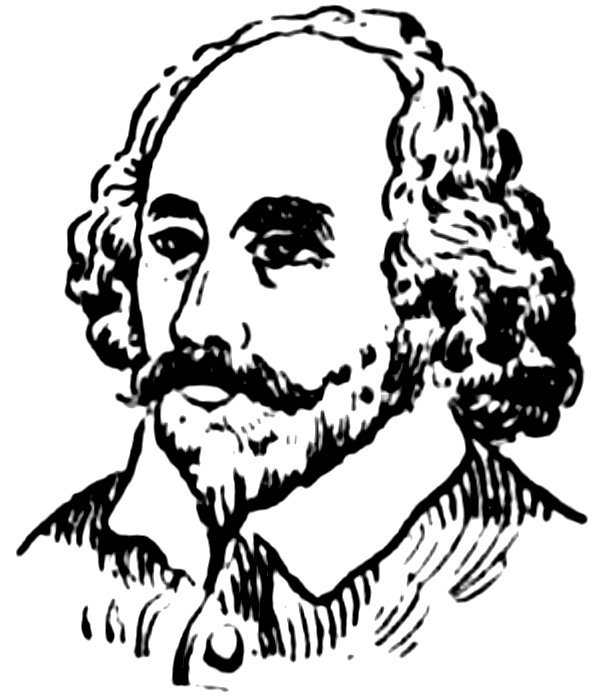
Several portraits of the much-discussed William Shakespeare are in existence: two corresponding closely are the Droeshout engraving and the Chandos painting. The Droeshout engraving was produced in 1623 in the first collected edition of the so-called Shakespearian plays; and it was eulogized 43by the critics of that time, and accepted as a true likeness by William Blake, the idealist poet and painter. This engraving represents Shakspere as an intellectual man with regular but strong features, a small, shapely mouth, large, speaking eyes, and a wondrous expanse of forehead. In all the authentic pictures, Shakespeare is represented as wearing a loose jerkin, about the top of which a broad, unstarched shirt-collar is turned down in a charmingly négligé fashion.

Of Sir Francis Bacon, so-called, but one portrait has come down to posterity. The original is now in possession of the British Museum, having been given to that institution by the Earl of Ripon, whose father had it from Katherine, Duchess of Marlborough, in payment of a debt. This portrait would seem to give us the duplicate of the facial features of Shakespere; the eyes, mouth, nose, and expression being the same, likewise the cut of the beard, the curl of the mustache, and the style of wearing the hair. But Bacon is pictured with his hat on,—a prim affair, worn cocked somewhat to one side,—and a ruffle about his neck, as was the fashion among 44courtiers and gentlemen of the Elizabethan time. It was to Bacon that the ingenious Jonson addressed the lines,—
Yet in his “Masque of the Roses,” which was performed under royal auspices, Jonson makes Bacon say,—
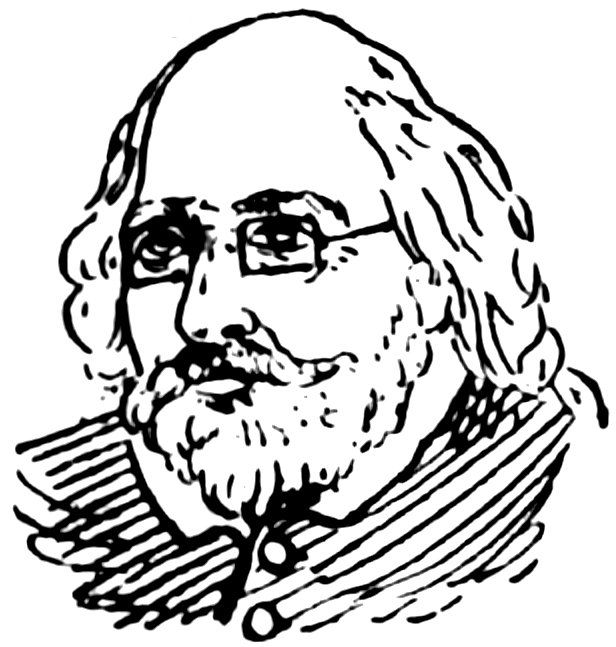
Of Ben Jonson, the author of these lines, there are three authentic portraits. That which is known as the Dinwiddie portrait is the most popular. It was made while Jonson was visiting his friend Herbert Latshawe at that fine old artist’s country-seat near Patmore. Jonson was then in his sixty-third year, and therefore the portrait is that of a man considerably beyond the prime of life. Yet, is there any so blind that he cannot detect under these spectacles the calm, intelligent eyes of Shakspur and Bacon, and cannot recognize in the other features, the features delineated in the Droeshout engraving of Shakspere and in the Marlborough 45portrait of Bacon? Several years before this picture was made by Latshawe, Jonson wrote his remarkable play of “The Fox.” In the course of this play (act 3, scene 1), one of the characters, a literary man, has this to say:—
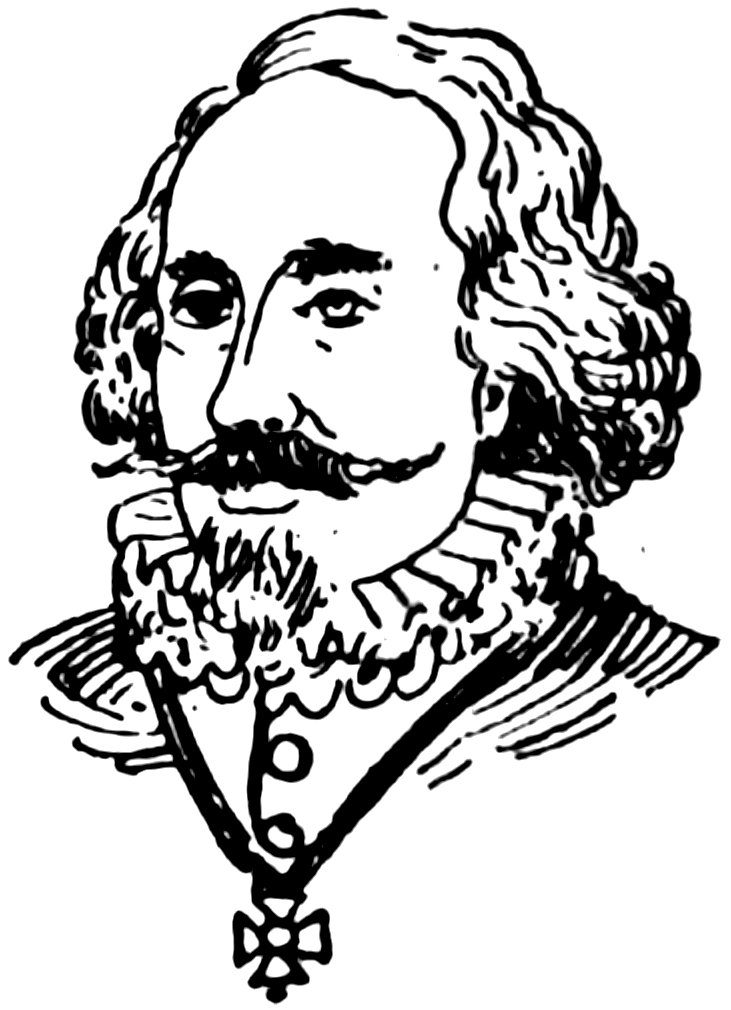
Francis Beaumont, thus prettily referred to, was a precocious creature. He is said to have died at the age of twenty-nine; yet during his short life, he earned so great a reputation as a poet and dramatist, that to this day he is accorded half the credit of the work which Fletcher really did. It is narrated that Ben Jonson had so high an opinion of the young man’s critical genius, that he used to refer his plays in manuscript to Beaumont for revision, when Beaumont was scarce turned of twelve. The only portrait of Beaumont is to be found in the collection of the Duke of Ayrshire: it is in a state of excellent preservation, and is, perhaps, the handsomest portrait that has come down from the sixteenth century. It is 46interesting to compare this picture with those of Shaxspere, Bacon, and Jonson. Leigh Hunt said, “When he was a boy, how much the poet of the Elizabethan period must have looked like the other fellow!” We think so too. Does it require more than a hasty glance to assure one that, at twenty-eight years of age, William Shakspeare, Francis Bacon, and rare Ben Jonson must have been the very counterparts of handsome, gifted, winning Francis Beaumont?

And how about John Fletcher? Well, there is but one portrait of him, and that is now in the British Museum. It was painted by a Hollander named Bruggmarx, and Fletcher was then sixty years old. The face, it will be noted, is still the face that we have seen in the authentic pictures of Shakspear, Bacon, and Jonson! An older face, perhaps, but the strong, inspired features are there, and we are forced to declare it the same face. The hair is scantier than in the other pictures, but the effect which is produced by curling the one surviving tuft over and about the bald cranium so as to give an appearance of hair—this effect, we say, is artistic.
In one of his letters which are still preserved for the edification of posterity, the gifted Walter Raleigh writes, “Right sorely hath her Majesty the queen been displeased with my lord Bacon for 47that he hath caused privily to be made a likeness of himself in the similitude of an old man, the which being carried to the Green Boar, and therein exhibited under the divers names of Jonson, Fletcher, Shakesper, and the like, hath brought a grievous scandal upon the queen, and such sorrow withal, that, hearing of the same, she did swound, and even now maintaineth secrecy in her closet, making great moan, and weeping beyond all measure.”
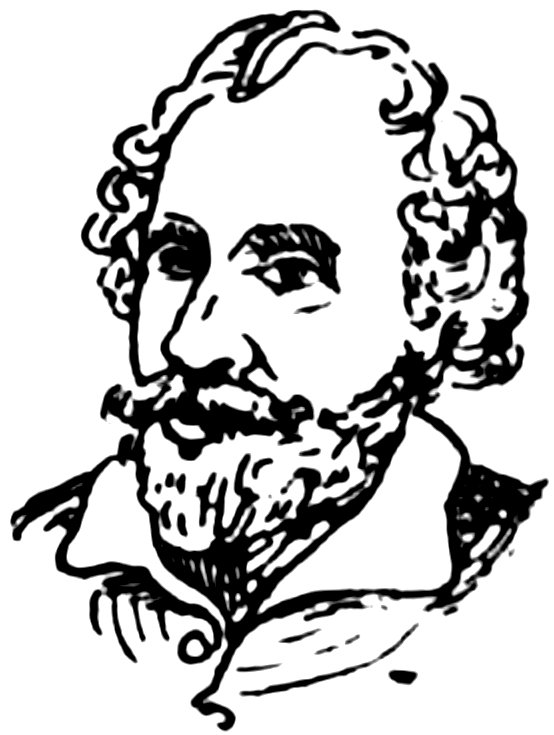
Two other so-called British dramatists are entitled to our attention. One is Robert Greene, and the other is George Peele, of whom capital portraits have been handed down. Greene is said to have been a dissipated, rakish fellow, and the picture we have of him would appear to confirm this story. It is not hard to detect traces of dissipation in this handsome face: it is such a face as old Ben Jonson might have had, if, instead of devoting himself to quiet symposiums at the Green Boar and the Blue Dragon, he had rioted about the slums of London with evil women. Such a face might William Shakspeare have been favored with if, instead of invading his neighbors’ preserves with his gum-shoes on, he had seen fit to debauch his talents in the ale-houses of the British metropolis. And such a face, too, might “that ponderous sink of learning,” Francis Bacon, have had, if he 48had abandoned the writing of Shakspear’s plays for the pursuit of Robert Greene’s midnight orgies. In a word, with the exception of the trifling detail of his coiffure, happy-go-lucky Bob Greene bears a striking personal resemblance to the other distinguished littérateurs who flourished in his time. And here is a curious extract from a letter which Greene wrote to his friend Raleigh shortly after the production of his tragedy of “James IV.” It is dated in London: “Vastly distraught is my good Anne Hathaway by the evil rumors that hath gained prevalence in these parts, and that do grievously belie me in that they make me to be a thief by night. But his grace hath signed and given into my hands a paper confessing it to be a libel and his bucks to be properly accounted, whereat methinketh my dame Anne should be set aright as touching her vexation.” The astute critic, Malone, wonders how it is that Robert Greene should have been accused of poaching, the same charge that was preferred against Shakspeare; he wonders, too, how Anne Hathaway, Shaxpeare’s wife, could be the wife of Robert Greene also. His wonderment is not amazing.
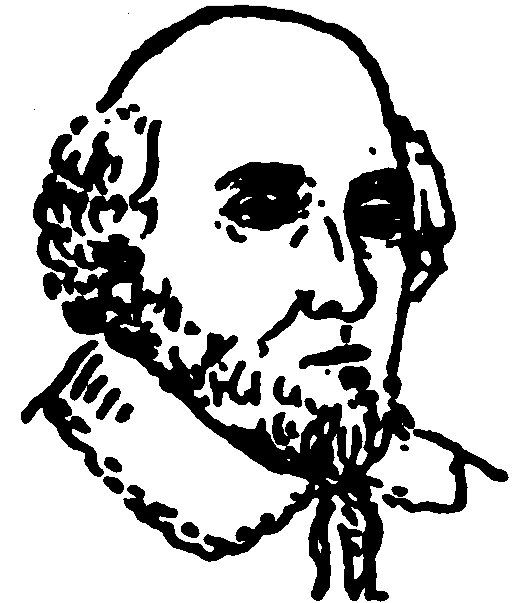
This interesting portrait is of George Peele; and its striking likeness to the portraits of Bacon, Jonson, Shakspur, Beaumont, Greene, and Fletcher has been remarked by critics from time immemorial. 49In short, the likeness which the pictures of all the dramatists of the Elizabethan period bear to each other is so marked that we think there is good reason for believing that Sheksper, Jonson, Beaumont, Greene, Fletcher, Peele, and Bacon were not different individuals, but one man.
It is quite true that the scholarly Donnelly and the learned Holmes have proved to their own satisfaction that Shaxpeare did not write the plays commonly imputed to Shaikspore; but they have not proved who wrote the plays commonly imputed to Jonson, Peele, and the other alleged dramatists of the glorious old days when a lady was designated as a lousy wench, and when liaisons were made the text of popular society plays. It seems to us that the pictures of these old dramatists fill this hiatus, if so we may term it, and these pictures teach us that once upon a time there was a humorous genius who figured under many names, who tossed off many plays, and who posed for many portraits. We do not know his name, but we know that he is variously called Shakspeare, Bacon, Jonson, Beaumont, Fletcher, Peele, and Greene. And we know, too, that his glory will illumine the world long after wiseacres and charlatans have abandoned the task of trying to determine his identity.
The old poet, George Chapman,—he who was the contemporary of these puzzlingly numerous one,—understood what he was about when he 50penned these lines to his friend, Francis Shaxpur:—
It is reported in high literary circles that the McAfee Refining Company will take two pages of “The Easter Current” for the purpose of advertising the excellences of its new brand of leaf-lard.
At the formal dedication of the Blue-Island Avenue toboggan-slide last Saturday evening, a beautiful poem in imitation of the Pindaric odes was read by the gifted authoress, Miss Birdie McLaughlin.
Among the recent additions to the valuable collection of our esteemed fellow-townsman, N. Hawthorne Smith, is an autograph of Joaquin Miller, the poet of the Sahara.
We are informed that a Browning Society has been organized by the inmates of the Cook-County Imbecile Asylum.
Never since the great fire of 1871 has Chicago society been so profoundly agitated as it was when it became noised about that King Humbert of Italy had created our esteemed fellow-townsman, Col. George M. Pullman, a knight of the first water. At first, grave doubts as to the genuineness of the report were indulged; but when, later in the day, it became known that the rumor was credited at the headquarters of the Italian legation, the joy of the public burst all restraints, and manifested itself in every variety of ebullition.
Col. Pullman is, we believe, the first citizen of Chicago who has been honored in so distinguished a manner by royalty. It is true that the Pshaw of Persia craved the boon of investing the Hon. Frederick H. Winston with the order of the Yellow Dromedary, but the negotiations fell through as soon as the eminent American diplomate 52declined to advance the pshaw the ten thousand golden pistoles which his serene majesty expected as an evidence of Mr. Winston’s good faith in the premises. It is true, also, that there are in the midst of us a number of royal personages—or perhaps we should say a number of persons of noble descent. Very many of our Irish citizens are of high extraction,—descendants of dukes, earls, booyars, barons, and knights, who for political offences have been exiled from the land of their nativity. To our certain knowledge, Col. John F. Finerty is a lineal descendant of Brian Boroihme; and many other fellow-townsmen of ours can boast ancestries almost as noble. Ex-Senator Millard B. Hereley is one of the Bourbons from Bourbon co., France; and we could, if we had the space wherein to tell it, specify who the Duke of Eniscarty, the Earl of Ballanasloe, the Duke of Cork, etc., are, and by what aliases they are known to the people of this city.
In spite of these facts which we have stated, it is true that Mr. Pullman is the first citizen of Chicago to be recognized and honored by a crowned head of Europe. As near as we can come to it, Mr. Pullman’s elevation to knighthood was brought about in this wise: Last year he made a tour through Italy; and when he reached Naples he called upon King Humbert, and made a formal complaint touching the railroad facilities with which his Majesty’s kingdom is, and always has 53been, cursed. His Majesty was struck at once with the learning, the eloquence, the earnestness, the sang froid, and the swaviter in modo, of the petitioner; and he besought him to suggest an improvement, if he could, upon the system of travel then in vogue. Thereupon Mr. Pullman caused to be made by the Herculaneum and Pompeii Manufacturing Company (limited) a palace sleeping-coach, which he presented to King Humbert with his compliments, demanding no recompense for the distinguished gift further than the privilege of appointing and controlling the porters for said car. The grateful potentate readily granted this request; for he was charmed, positively delighted, with the luxurious innovation introduced by the enterprising American. For the next six months King Humbert did nothing but travel around: the chances are that he would be travelling still, if he had not been compelled to suspend operations until after the Senate voted him another appropriation. At the end of the six months, the king found himself out of pocket about 1,500,000 lires; and about this time Mr. Pullman’s porter in Naples, one Giacomo Fiozzo, began buying corner-lots, and erecting ten-story apartment-buildings on the principal Neapolitan thoroughfares. Kings, however, are liberal folk; and well can they afford to be, even when dealing with a Chicago businessman. So when King Humbert fell to thinking of all the pleasures (not to say benefits) he had 54derived from his six months’ experience in Mr. Pullman’s coach, he paid not even the tribute of a passing thought to the financial outlay involved, but rather set his wits to work at inventing some means whereby he might further distinguish the gentleman, whom he viewed in the light of a benefactor. The result is this elevation of Mr. Pullman from the ranks of the hoi polloi to the dignity and the title of a marchese, which, in the Italian tongue, corresponds to the knighthood of Great Britain, the booyars of Roosha, and the flambustules of Siam.
Sig. Pietro Casa del Comma, secretary of the Italian legation in this city, tells us that when the official communication from his Majesty reaches Chicago, it will become the duty of the consul at this point to proceed at once to Mr. Pullman’s palatial residence on Prairie Avenue, and there, in the presence of the Italian legation, and in the name of his Catholic majesty, to dub Mr. Pullman a marchese or (as Mr. Pullman may prefer to be called) a chevalier. Sig. del Comma says that “marchese” is pronounced “mar-kee-sy,” and that “chevalier” is pronounced “shee-val-ya:” we are inclined to think that markeesy sounds just a trifle more bong tong than sheevalya, and we hope that Mr. Pullman will choose that title.
After he has been invested with this honor, Mr. Pullman—or, we should say, the Markeesy Pullman—will be visited by the gardener of the legation 55(for this is an old custom), who will present him with a bouquet, saying, “Io ho l’onore, onorevole signor, di presentarvi le queste fiori e di gratularvi.” Upon receiving this bouquet, the markeesy will be expected to hand the simple gardener fifty francs (or ten dollars), and this is all the money the markeesy will have to pay out for the honor. By a singular coincidence, the gardener of the Italian legation in Chicago at this time is one Patrick Murphy, a kinsman of the late Markeesy di Potata (née Murphy) of San Francisco, who was elevated from obscurity by the late Pope Pius IX.
Sig. del Comma tells us furthermore that one of the first things the Markeesy Pullman will have to do will be to choose a coat-of-arms, for a markeesy without a coat-of-arms would be an anomaly which the Italian potentate could not well endure. With a view to relieving the markeesy of much anxiety and labor, the signor has compiled a coat-of-arms, which he will submit for the markeesy’s approval and adoption.
This chaste design represents a shield engrailed, bordured, and vert, with a supporting figure at each side; the figures are what in the vernacular of heraldry is called expectant and demandant; the shield dexter is quartured—that is to say, divided into four berths, or compartments, which are left blank for posterity to fill; the shield sinister is decorated with the portraiture of a small feather pillow issuant, this being the heraldic symbol of 56luxury and ease; upon this pillow appears the personification of indefatigable industry and ceaseless vigilance, rampant, illustrating not only the means by which the markeesy has achieved his noble ends, but also the still nobler teaching of the most wise Solomon, who said, “Go to the ant, you sluggard, or you will go to the dogs.”
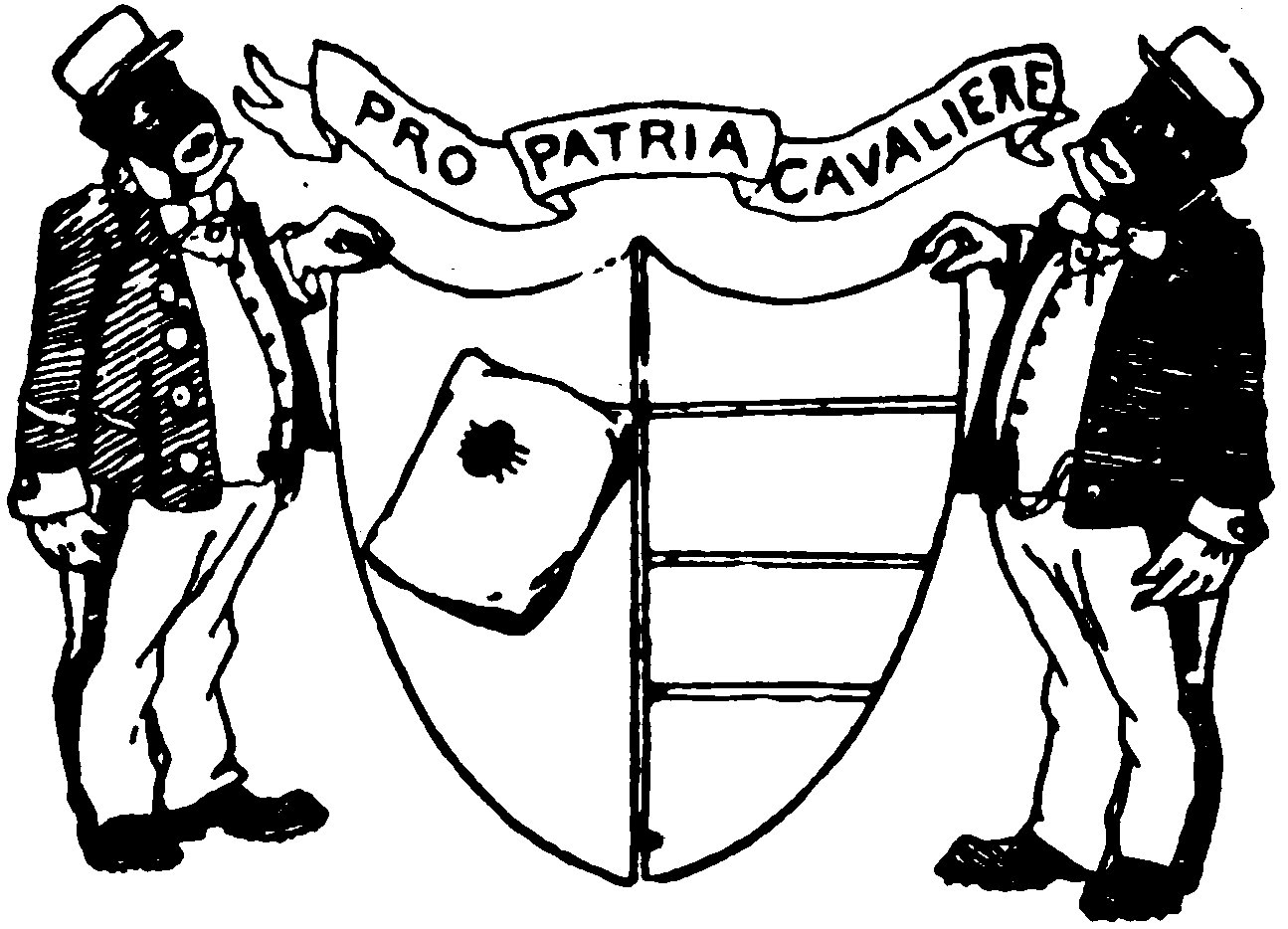
Above the shield appears a motto, “Pro Patria Caveliere,” which is the Latin for “For His Country, a Knight;” but the particular beauty of this motto is, that it can be abridged to P. P. C., and thus be made to serve a business purpose.
As we understand it, the Markeesy di Pullman becomes, immediately upon the acceptance of this title, the local protector, patron, promoter, and chaperon of Italian art. When Col. J. H. Mapleson comes to Chicago with his wheezy old cantatrices and spavined tenors, it will be the markeesy’s duty to go security for advertising, hotel-bills, and 57theatre-rent; it will also be the markeesy’s duty to advance Mapleson and his troupe enough money to take them to St. Louis; this will be a great boon to our Opera Festival Association, and we presume that the markeesy will be glad to make the trifling sacrifice for the dignity of the crown that has honored him. As soon as Mme. Adelina Patti heard of the rumor of the markeesy’s elevation to the peerage, she sent him a bouquet by Sig. Nicolini. The markeesy gracefully acknowledged the compliment in a note made up of polite Italian phrases judiciously culled from the libretto of “Il Trovatore.”
The Italian population of Chicago is highly gratified with the distinguished tribute paid by their monarch to our popular fellow-townsman. At a meeting of the Societa d’Italia in Poggio’s restaurant last evening, several speeches were made in eulogy of the Markeesy di Pullman’s many virtues, his enterprise, his munificence, his philanthropy, etc. An address to his Majesty King Humbert, congratulating him upon having recemented the ties which bind Italy and the United States, was read by Giovanni Bianco, the banana-merchant, and approved by the meeting: it was ordered that the address be cabled to his Majesty, provided that the Markeesy di Pullman would pay the toll.
The effect of the Italian boom has already become apparent in our literary circles. The leading 58book-sellers say that incessant have been the calls for Dante, for Petrarch, and for Tasso, since the news of the Pullman affair reached Chicago. The markeesy’s portrait in the rooms of the dancing-class was draped with Italian flags last evening; and already the caterer at Caveroc’s on Wabash Avenue has invented a new dish of macaroni, which is entitled macaroni di Pullman. We mention these trifling details merely to indicate how generally and how deeply this compliment of royalty to our amiable and gifted townsman is appreciated by his fellow-citizens.
We understand that Mr. Gunther, the autograph virtuoso, recently paid two hundred and fifty dollars for an autograph of Dante Alighieri, which he discovered on the fly-leaf of a volume of Ella Wheeler Wilcox’s poems.
Mr. Mæcenas B. Fulsomtone, the well-known purveyor of green hams, and president of the Michael Angelo Art Club, has just sent to his London agent an order for fifteen thousand dollars’ worth of books. The choice of volumes is left with the agent; the only specification made by Mr. Fulsomtone being that the books contain plenty of pictures, and be bound in red morocco.
Within the last two days we have received a large number of communications touching the handsome coat-of-arms which the secretary of the Italian legation has designed for the marchese di Pullman. Several of the communications contain comment upon the picture of the industrious insect represented as sprawling rampant on the feather pillow in the sinister half of the so-called Pullman shield. One correspondent says that the insect is not an ant, but a potato-bug; another declares that it is a busy bee; and still a third maintains that it is neither a chinch-bug, nor a busy bee, nor yet an ant, but one of those predatory vampires known (by name only) in polite society as “the flat-backed militia.” A gentleman, signing his letter “Scholasticus,” writes that he is deeply learned in heraldic lore, and that he has studied with increasing pleasure and profit the design submitted by Sig. Pietro Casa del Comma. He says, however, that he has one important suggestion to submit, and it is this: That the dexter quartures of the shield, which have been left blank for posterity to fill, should be designated as No. 1 upper, No. 1 lower, No. 2 upper, and No. 2 lower.
The suggestion submitted by “Scholasticus” strikes us most favorably, and we have sent it 60around to the Italian legation. As for the communications of the other correspondents, we have to say this only: That the form of animal life depicted upon the pillow of the shield was designed by the artist to represent an ant, the most industrious, the most frugal, and the most provident, of creatures. It may be that chinch-bugs and busy bees are in the habit of spending their precious time gallivanting around over feather pillows, but we have never met with any of this kind in the course of our travels. On the other hand, the ant is to be found everywhere, and in every employment. As Aristotle truly has it,—
In connection with this little affair, we will say that a matter of much more importance than the marchese di Pullman’s coat-of-arms is bothering us just at present. We are informed that when a man is invested with the order of knighthood, he is expected to wear a garter upon (or around) his left leg. We have been devoting some time to an investigation of the subject of garters, and we think that we are competent to give a pretty able 61opinion thereupon. Garters, we maintain, are divided into three grand divisions or schools. The first is the Elizabethan, the second is the Boston, and the third is the Reform school. This picture will give a pretty fair idea of the three:—
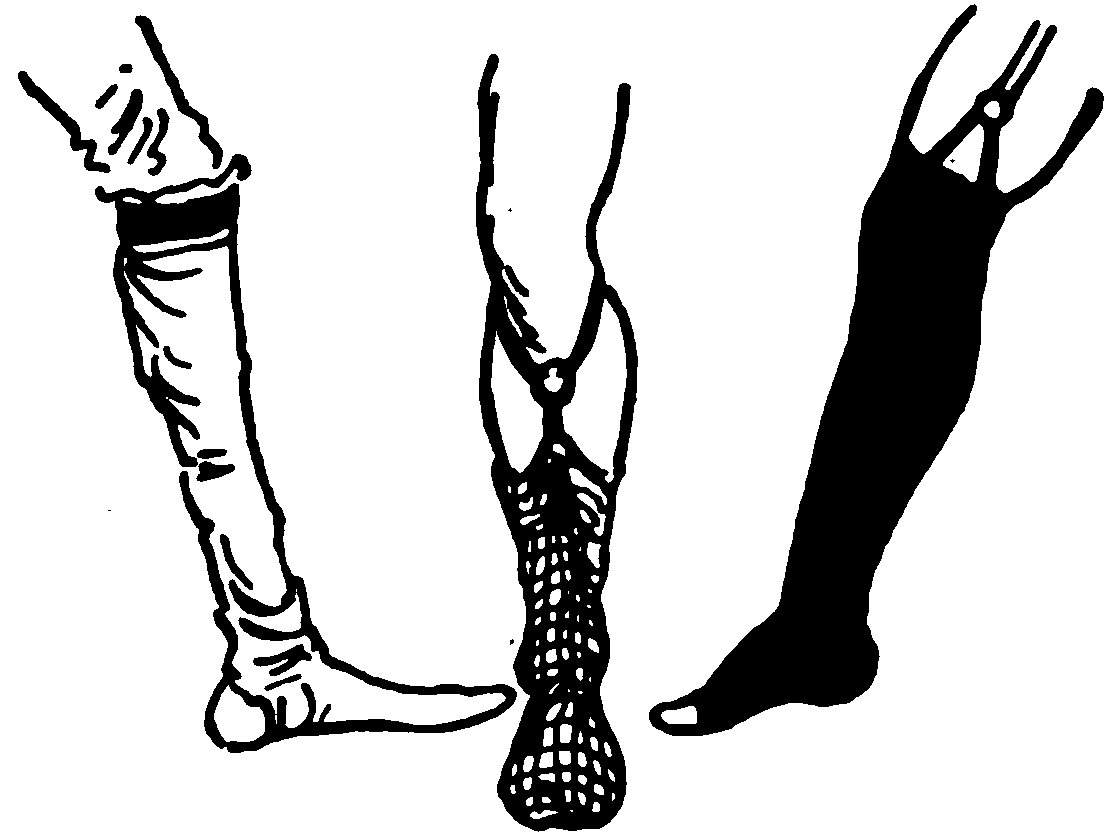
Now, here in Fig. 1 (which is the verisimilitude to the left) is a tableau of the Elizabethan garter upon the left leg of a knight: we will suppose the knight to be the marchese di Pullman. The garter encircles the leg below the knee, and it clasps the leg so tightly as to shut off the blood-supply from that part of the member below it: the result is, that the marchese di Pullman’s left calf shrivels and abates, until it falls to the level of the ankle, and, when that unhappy climax is reached, it becomes necessary to sew the garter to the hose, else it will not retain the position required by the etiquette of the court. We doubt very much whether there could be imagined a more pitiable spectacle 62than that of the marchese di Pullman travelling about the world in his knightly robe, with his right calf normally plump and shapely, and his left calf all wizened and shrunken under the baleful effects of the knightly garter. In Fig. 2 (the illustration in the centre of our design) we have a representation of the marchese’s left leg adorned with the Boston garter, which we consider a great improvement upon the garter of the Elizabethan period. This modern innovation conduces to the development of the muscles in the lower part of the leg, and at the same time it supports the hose in a most ingenious manner. It permits the blood to course unimpeded on its way, thus insuring against cold feet, and proving a very salvation for corns and bunions.
The third illustration is of the Reform garter. We hear it highly spoken of, but we have not looked into its merits. Inasmuch as it is so warmly recommended by those who have tried it, we think we can safely say that we hope to see more of it in the future. As we are told, this machine consists of divers straps and pulleys so ingeniously contrived as to bring its weight upon no particular part of the body, but to distribute it (or diffuse it, if you please) over the whole system. One part of it, as we are told, girds the neck, and the other part holds the hose in a deathlike grip. This establishes such an immediate and close relationship between the pedal and the pectoral regions, that, 63if the wearer have corns, a palpitation of the heart is likely to ensue, or, if the wearer’s feet happen to get wet, a sore throat is invariably the consequence.
We think, therefore, that, viewed from every stand-point, the Boston garter has notable advantages over its competitors; and, if we are called upon, we shall advise the marchese di Pullman to adopt it as the insignia of his noble office.
We heartily sympathize with our ennobled fellow-townsman, the marchese di Pullman, in the sorrow entailed upon him by the official announcement that the Italian olive-crop is almost a total failure this year. Yet when one accepts the burdensome responsibilities of the peerage, he is expected to endure with Spartan fortitude the providential dispensations that remorselessly crush those less honorably fortified.
“The Chicago Tribune” is rather late in the day: still, we are glad to find it lumbering to the front with the venerable information that the Markeesy Giorgio di Pullman is not entitled to the title of sir. This is what we said last week. The title which our cultured and opulent fellow-townsman has, in recognition of his philanthropics, been honored with, is the Italian title of markeesy, which corresponds with the English title of sir; 64but the bearer cannot Anglicize the title: he must remain a markeesy all the days of his natural life, or until, at least, he is promoted to some higher dignity. The Markeesy di Pullman understands this perfectly, and he would not exchange his markeesyship for the cream and flower of English knighthood. In connection with this subject, we beg to say that we deeply deplore the existence of a bitter malice against, and a rancorous envy of, the Markeesy di Pullman in certain local society circles. The existence of this insidious hostility was first brought to our knowledge by means of a song composed by a Chicago poet, and set to music by one of our amateur musicians. The chorus to this ribald song runs as follows:—
While Ralph Waldo Emerson was on his way to California, several years ago, he fell in with a gentleman who was altogether so sociable and chatty that an otherwise tedious journey was rendered as cheerful as you please. This gentleman’s name was Sackett, and he told Mr. Emerson that he resided in San Francisco: this was 65all the information he ventured concerning himself, but from his conversation Mr. Emerson gathered that his newly made acquaintance was indeed a gentleman of intelligence and standing. Mr. Sackett pointed out all the points of interest along the way, retailed a lot of amusing anecdotes, and, best of all, was an attentive listener when Mr. Emerson fell to discoursing upon the Is, the To Be, the Seeming, and other frothy subjects with which his scholarly and saintly intellect seemed thoroughly conversant.
The natural consequence was that Mr. Emerson came to the conclusion that Mr. Sackett was as charming a gentleman as he had ever met with, and it was in this positive conviction that he accepted Mr. Sackett’s invitation to dine with him immediately upon their arrival in San Francisco. The next morning Mr. Emerson was well-nigh paralyzed to find in all the local papers this startling personal notice: “Professor Ralph Waldo Emerson, the eminent philosopher, scholar, and poet, is in our city as the guest of Mr. H. J. Sackett, the well-known proprietor of the Bush-Street Dime Museum; matinées every half-hour, admission only ten cents. The double-headed calf and the dog-faced boy this week!”
Mr. Sackett is now in the amusement business in Chicago, and he refers to his experience with the sage of Concord as one of the most profitable strokes of enterprise in his long and active career.
To the Editor.—I cannot express to you how charmed I am to learn through the columns of your valued paper that the littérateurs and the thinkers of Chicago are going to have a School of Western Philosophy in this city early in July. Although I have but recently come from the East (having resided in Michigan for the last five years), I take a keen interest in the growth of Western culture; and, knowing the great good effected by these re-unions whereat sympathetic intellects may revel in mutual delights, I am exceedingly anxious that this promised School of Western Philosophy shall eventuate. I was visiting friends in Boston in 1879, and went with my Aunt Holbrook to the first Concord School of Summer Philosophy. It was then and there that I got my first taste of the joys which accrue from the scholarly discussion of such subjects as the Am, the To Be, and the Knowing. The grandest minds of the century were there,—Emerson, Harris, Sanborn, Alcott, Mrs. Cheney, H. K. Jones, Wasson, Professor Pierce, Higginson, Dr. Bartol, Harrison G. O. Blake, Aunt Holbrook, and myself. It was the first and only time I met Emerson—oh, how I revere that divine man’s memory! He read an essay on “Memory;” and we hung upon his utterances, as bees cluster at 67the swarming. When I was introduced to him, he smoothed my hair kindly, and murmured, “Sweet child; sweet child.” He was a dreamy, poetic man, and his saintly thoughts were always amid the clouds of the vast Above. While he was discoursing of metempsychosis, or carving apple-pie, there was about him a subtile prescience and an ineffable psychic consciousness that were beauteous to cognize. Frank Sanborn was another philosopher-poet who charmed me deeply. I have in my scrap-book his entire “Address to the Mutability of Things,” and his tender lines in memory of Emerson’s dead canary-bird, beginning,—
I am preparing a voluminous paper on the subject of the immortal intellects I met at Concord, and criticisms upon the various philosophies of the same. If I get this work completed by that time, I would like to read it at the Western School of Summer Philosophy next July. My well-known maiden effort, “The Chautauqua Cook Book, with Hints to Young Mothers,” may be cited as an earnest of my capability; and as a further proof of my acquaintance with the notables of whom I am treating, I can produce my album in which are inscribed the autographs of the same. Yours in the Noble work,
Folco di Ricovero Portinari had a daughter named Beatrice, a comely and amiable child, who had just turned of nine years when her estimable father gave a fashionable party to numerous friends in his palatial Florentine residence. There came to this party, in company of his father and mother, a lad named Durante Alighieri, himself but a few months older than little Beatrice. These two children, being the only little folk at the party, took a fancy to each other, and romped and played together on this occasion, as any other two children would have played under similar circumstances. Being somewhat the elder, and considerably the stronger, of the two, little Durante, or Dante as he was called, had pretty much his own way; and having robbed little Beatrice of most of her cake and all her candies, and having threatened to thrash her if she ever told, Dante declared to his doting parents that he had never before met with so sweet a little playmate as was this same little Beatrice.
We are given to understand that from an acquaintance thus made, grew an affection that endured until death removed the two principals to another sphere. In fact, the love of Dante for Beatrice has been the theme of many a sentimental poem and emotional essay.
69The truth, however, is, that although Beatrice lived to be twenty-five years of age, Dante could at no time, during the sixteen years he associated with her, convince himself that he loved her well enough to make her his wife. It was not until he heard of her death that he became satisfied that he had loved Beatrice with an all-consuming love; and, having satisfied himself on this point, he began at once to indite elegiac verse to her memory,—a habit which, we regret to observe, he had the infinite bad taste to persist in up to the very date of his demise.
Fortunately, there have been preserved, by the genius of a Bostonian named Prang, a countless number of copies of a portrait of Beatrice made several months previous to that estimable maiden-lady’s death; and the sad beauty of the unhappy woman’s face has appealed to the compassion of all beholders. This portrait, as we interpret its expression, represents the patient Beatrice as gazing pensively into space, and wondering when Dante was going to propose.
Beatrice had been buried scarcely a year when her heart-broken lover made up his mind that the best consolation for the loss of one sweetheart was the procuring of another; and so he began paying his devoirs to a wealthy and beautiful girl named Gemma Donati, one of the belles of Florence. While he was courting this bright, pretty, and unsuspecting lady, however, he continued to indite 70whining elegies, sonnets, triolets, quatrains, couplets, etc., to the memory of Beatrice, the woman who had died of a broken heart because Dante didn’t have spunk enough to pop the question. We take it for granted that none of these mortuary verses ever reached the eyes or the ears of Gemma Donati before she was married. Otherwise, you can depend upon it, she would have given Mr. Alighieri the mitten he deserved, for she was a proud, spirited girl. She believed Dante loved her; and believing in him, and trusting in his love, she went to the altar with him.
It was not long, however, before Gemma discovered that she had caught a Tartar. Instead of the bright, happy fellow she had a right to expect in her bridegroom, she found that Dante was capricious, moody, and dyspeptic. He had a habit of sitting up late of nights, groaning and sighing, writing poetry which he industriously hid away from her, but read to everybody else,—doing, in fine, all manner of things beseeming a person afflicted with a chronic disorder of the liver and a natural wrongness of the heart. Truly, an enviable honeymoon it must have been that poor Gemma passed with this bridegroom of hers! One day, at last, she found a verse that explained much to her. It was a verse in Dante’s chirography; and Gemma read the cruel lines, and fell down in a swoon.
That night she taxed Dante with having deceived her, and he was mean enough to accuse her of being jealous. When he discovered that his bride was hopelessly miserable, he clinched the general cussedness of the situation by applying himself more diligently than ever before to the business of composing maudlin poetry to the memory of the defunct old maid,—“his sainted Beatrice,” as he called her in his miserable dago hypocrisy.
This delectable state of affairs continued a number of years; and meantime, in spite of his devotion to the sacred memory of his “first and only love in heaven,” Dante contrived to become the father of six children, one of whom was a girl. This girl should have been named after her estimable mother; but in order, apparently, to grind the iron even deeper into his wife’s soul, Dante stole away to a priest’s house with the baby one day, and had the little creature christened Beatrice. There seems to have been no end to this man’s indecent cruelty.
Well, having wrecked his wife’s life, Dante proceeded to make a public nuisance of himself; and 72he embarked in politics, and began sloshing around at a great rate. But dealing with a discriminating and exacting public is very different from bully-ragging a patient, submissive wife; and the first thing he knew, Dante was in deep water,—hot water too. He was banished from the province; and, although he made vigorous and persistent efforts to get back again, his fellow-townsmen were wise enough to let the decree stand. Of course Gemma sympathized with her husband in his troubles, but the burden of these troubles fell rather upon her; for now it became her duty to provide for the six children which Dante had left behind when he made his escape. A small part of Dante’s property she saved from confiscation by claiming it as her dower; and it was upon this pittance that Gemma reared and educated their children,—Dante’s and hers. It was a hard struggle, involving countless sacrifices; but it was a struggle to which Gemma applied herself courageously, patiently, and grandly,—courageous, patient, noble woman that she was!
The biographies that have come down to us are all biographies of Dante. Therefore we can only surmise at the magnitude of the suffering which Gemma endured. But we know this, that Gemma brought her six children to maturity, and that she lived to see them prosperous and honored. During all the intervening years, it was one continuous fight to make the ends meet; and every now and 73then Gemma squeezed out of her paltry savings a little money to send to her exiled husband.
Meantime, instead of trying to earn means whereby to contribute to the support of his family, Dante seems to have devoted all his time to writing poetry and things calculated to make trouble for the home-folk. His most pretentious composition was a grotesque production purporting to be an account of a visit to hell and purgatory. His dyspeptic stomach, his torpid liver, and his malignant temper, qualified him for a work of this character; and, having consistently raised —— all his life, it is not surprising that he should have left to posterity a minute description of that undesirable locality, and the industries therein abounding. With the utmost care, Dante drew his pen-pictures of the infernal regions, and introduced as figures therein all the Florentines he disliked, particularly those who were likely to be of kindly service to his wife and his children. At one time, having heard that the noble Duke della Caseras had advanced Gemma the sum of ten ducats to keep her and her babies from starving, Dante at once proceeded to represent the noble duke in hell, with his body submerged in a lake of sulphurous flame, and his legs sticking up in a preposterous manner. If any citizen of Florence was good to Dante’s wife, he was promptly put in hell by Dante himself. In fact, hell, as Dante pictured it, was peopled with men and women 74who treated Dante’s wife and children humanely. This made life rather awkward for Mrs. Alighieri and the rising generation of Alighieris; but their feelings were not to be considered, so long as Mr. Alighieri’s demoniacal spite was being gratified.
Many of the Florentine people whom Dante utilized in this scandalous manner overlooked his offences in a good-natured way. They regarded Gemma as a very worthy woman; and they were prepared at all times to do her kindnesses, no matter how rudely Gemma’s husband treated them in his spiteful poems. But there were others who refused to take kindly to Dante’s ungrateful methods. Giovanni Ferato, the baker, was one of these. “Signora,” said he to Gemma one day, “I have suffered your account to run for many months. Whenever you came for bread, or called for rolls, or ordered pie, or sent for cake, I have permitted you to have them without question; for I knew you were pressed by poverty, and I thought to do you a kindness. But your husband has paid the debt by devoting seven lines of blank verse to me and my family, representing us as floating about in a sea of molten lead, with winged devils shooting flaming darts into our bodies. You will have to go elsewhere for your pastry hereafter.”
Guiseppe Angelo once let Gemma have a load of fagots at half price, whereupon Dante represented Guiseppe as being nailed down with red-hot nails to the very floor of hell; while a vulture 75tore out his entrails, and devoured them without seasoning. When Gemma went for another load of fagots, she had to pay a double price.
In like manner, Torquato Rovera, the cobbler; Michael Levato, the huckster; Hermozo Bambino, the butcher; and a score of other tradefolk,—were prejudiced against this modest, amiable, and unoffending woman. To put the case as mildly as possible, it was, so far as Gemma was concerned, awkward.
But of all the mean, despicable things done in Dante’s career of incomparable meanness, the meanest was his allusion to his wife in the sixteenth canto of his “Hell.” Heedless of the wrongs he had done her, and forgetting all her sacrifices for him and for his children, the jaundiced ingrate left to posterity these lines:—
Dante died at Ravenna. While he was ill, he wrote his wife a dismal letter, begging for money: she borrowed three ducats, and sent them to him. The gold reached him just as he lay at the point of death. He read the accompanying letter, and groaned. “She does not say who lent her the money,” he sighed. “Would that I knew his name, that I might put him with the others in that brimstone pit!”
76Then he raised himself feebly, and said to Pietro Alfieri, his friend, “Take this gold, and with it pay the printer, who delays too long the publication of my last poem.” With these words he expired.
Alfieri took the money to the printer. “Have you a poem here, the work of Dante Alighieri?” he asked.
“I have,” said Fernando Pizaro. “There is due upon it three ducats, else it shall not leave the shop.”
“Let me see the poem,” demanded Alfieri.
The printer brought forth the manuscript. It was entitled, “To My Beatrice in Heaven!”
“Whistle for your money!” said Alfieri laconically; and he threw down the manuscript, and walked out of the shop.
Pietro Alfieri was a man of decency. He sent the three ducats back to Gemma Alighieri; and with the money the frugal widow bought shirtwaists for her five boys, and a nice new jersey for her little girl.
We understand that our talented fellow-townsman, T. Babbington Greenleaf, is engaged upon a rhythmical translation of the tripods of Horace.
The Book-Binders’ Union will give its regular annual ball in Brand’s Hall immediately after Lent.
The Chicago people who went down to Indianapolis last Tuesday, to attend the convention of Western writers, have returned; and they are telling a great many amusing stories of their experiences. It would appear that the convention was not as numerously attended as its promoters had hoped it would be; the mistake seems to have been in calling a second convention so soon after the date of the first: once a year is often enough for authors and poets to get together for consultation. The Chicago delegates were treated very hospitably; and it is perhaps to their credit that they took no part in the proceedings, except to stand around, look dignified, and hear what the other people had to say.
“So you’re from Chicago, are you?” would be the first question asked.
“Yes.”
“What have you written?”
Here would follow a modest confession, made in tones indicative of embarrassment.
“But have you never written any thing for ‘The Current’?” and this question would be put with an expression of countenance that seemed to add, “If you have, you must be all right; but if you haven’t, you can’t amount to much.”
The rooms of the Chicago contingent were the 78resort of the rural littérateurs with “something to read you for your private opinion.” Poets came in from every part of Indiana, and each of these poets had a bundle of original dialect poetry. Mad because they were not billed in the programme of the convention, these inspired creatures insisted upon reading their verses to everybody they met. Mr. Maurice Thompson seems to have been the man who impressed the Chicago visitors most favorably: he was president of the convention, and one of the first things he did was to tell the poets that they were nuisances. As the convention proceeded, and bedlam began to prevail, Mr. Thompson sat quietly in his chair, regarding the scene with an expression of hopelessness and contempt commingled. When the last hours of the convention drew on apace, the poets and authors made a constant tumult for the privilege of reading their poems and things. Of course, there was not time for all to be heard; and the result was, that each tried to make himself or herself heard. The confusion was indescribably ludicrous.
Bill Nye was so disgusted that he retired early from the fray; and so did James Whitcomb Riley; Thompson staid because he had to.
One old lady about seventy-five years of age had prepared a poem; but when she looked in her reticule for the manuscript, she could not find it. Her efforts to recover her lost poem would have been funny had they not been pathetic. She set 79everybody to looking under the chairs and on the tables for the manuscript; and even the cover of the piano was lifted, in the suspicion that the lost poem might have found its way into that instrument.
“Oh, I’m so glad to meet you!” said one gushing Hoosier littérateur to a Chicago lady, “for you can tell me whether the author of ‘The Humbler Poets’ came down from Chicago with you. I would so like to see him!”
It was a good thing for the gentleman in question that he was a thousand miles away. But there were constant and numerous inquiries after him by poets and poetesses who claimed to have “several little gems” of their own which they felt he would “be glad to add to his collection.”
At first it was determined to hold the next convention in Chicago; but subsequently this determination was reconsidered, and the executive committee was empowered to call the next convention at any place it might choose. One of the Indiana poetesses approached a Chicago visitor, and said triumphantly, “Well, you aren’t goin’ to get it, after all!”
“Get what?”
“The next convention.”
“Well, that is a matter that doesn’t concern me at all,” replied the Chicagoan. “I’m not here representing Chicago: I’ve come simply to report your proceedings for my paper.”
“Oh, yes! I know,” said the poetess; “but Chicago 80has acted so indifferent about it that she can’t have it now. Why, if they had agreed upon Terry Hut, I’d have risen right up in the convention, and thanked ’em, and bid ’em welcome!”
“M. E. B.”—The only English translation of Goethe’s “Faust” we can recommend is that made by Gen. Zachary Taylor, one of our ex-presidents.
Mrs. Hannah More Gardiner, president of the West-Side Browning Club, has suffered a keen bereavement in the demise of her pet poodle, whom she had named Robert, in honor of her favorite poet. While not wishing to invade the sanctity of the gifted lady’s grief, we cannot forbear saying that this lamentable occurrence has cast a gloom over the whole community; and the dispensation seems all the more distressing, since deceased left a numerous infant progeny.
Chicago, Ill.To the Editor.—I am in a great dilemma, and I come to you for counsel. I love and wish to marry a young carpenter who has been waiting on me for two years. My father wants me to marry a literary man fifteen years older than myself,—a very smart man I will admit, but I fancy he is too smart for me. I much prefer the young carpenter, yet father says a marriage with the literary man would give me the social position he fancies I would enjoy. Now, what am I to do? What would you do, if you were I?
Yours in trouble,Priscilla.
Listen, gentle maiden, and ye others of her sex, to the story of Xanthippe, the Athenian woman.
Very, very many years ago there dwelt in Athens a fruit-dealer of the name of Kimon, who was possessed of two daughters,—the one named Helen and the other Xanthippe. At the age of twenty, Helen was wed to Aristagoras the tinker, and went with him to abide in his humble dwelling in the suburbs of Athens, about one parasang’s distance from the Acropolis. Xanthippe, the younger sister, gave promise of singular beauty; and at an early age she developed a wit that was the marvel and the joy of her father’s household, and of the society that was to be met with there. Prosperous in a worldly way, Kimon was enabled to give this favorite daughter the best educational advantages; and 82he was justly proud when at the age of nineteen, Xanthippe was graduated from the Minerva Female College with all the highest honors of her class. There was but one thing that cast a shadow upon the old gentleman’s happiness, and that was his pain at observing that among all Xanthippe’s associates, there was one upon whom she bestowed her sweetest smiles; namely, Gatippus, the son of Heliopharnes the plasterer.
“My daughter,” said Kimon, “you are now of an age when it becomes a maiden to contemplate marriage as a serious and solemn probability: therefore I beseech you to practise the severest discrimination in the choice of your male associates, and I enjoin upon you to have naught to say or to do with any youth that might not be considered an eligible husband; for, by the dog! it is my wish to see you wed to one of good station.”
Kimon thereupon proceeded to tell his daughter that his dearest ambition had been a desire to unite her in marriage with a literary man. He saw that the tendency of the times was in the direction of literature: schools of philosophy were springing up on every side, logic and poetry were prated in every household. Why should not the beautiful and accomplished daughter of Kimon the fruiterer become one of that group of geniuses who were contributing at that particular time to the glory of Athens as the literary centre of the world? The truth was, that, having prospered in his trade, 83Kimon pined for social recognition: it grieved him that one of his daughters had wed a tinker, and he had registered a vow with Pallas that his other daughter should be given into the arms of a worthier man.
Xanthippe was a dutiful daughter; she had been taught to obey her parents; and although her heart inclined to Gatippus, the son of Heliopharnes the plasterer, she smothered all rebellious emotions, and said she would try to do her father’s will. Accordingly, therefore, Kimon introduced into his home one evening a certain young Athenian philosopher,—a typical literary Bohemian of that time, one Socrates, a creature of wondrous wisdom and ready wit. The appearance of this suitor, presumptive if not apparent, did not particularly please Xanthippe. Socrates was an ill-favored young man. He was tall, raw-boned, and gangling. When he walked, he slouched; and when he sat down, he sprawled like a crab upon its back. His coarse hair rebelled upon his head and chin; and he had a broad, flat nose, that had been broken in two places by the kick of an Assyrian mule. Withal, Socrates talked delightfully; and it is not hard to imagine that Xanthippe’s pretty face, plump figure, and vivacious manners, served as an inspiration to the young philosopher’s wit. So it was not long ere Xanthippe found herself entertaining a profound respect for Socrates.
At all events, Xanthippe, the Athenian beauty, 84was wed to Socrates the philosopher. Putting all thought of Gatippus, the son of Heliopharnes the plasterer, out of her mind, Xanthippe went to the temple of Aphrodite, and was wed to Socrates. Historians differ as to the details of the affair; but it seems generally agreed that Socrates was late at the ceremony, having been delayed on his way to the temple by one Diogenes, who asked to converse with him on the immortality of the soul. Socrates stopped to talk, and would perhaps have been stopping there still had not Kimon hunted him up, and fetched him to the wedding.
A great wedding it was. A complete report of it was written by one of Socrates’ friends, another literary man, named Xenophon. The literary guild, including philosophers by the score, were there in full feather, and Xenophon put himself to the trouble of giving a complete list of these distinguished persons; and to the report, as it was penned for “The Athens Weekly Papyrus,” he appended a fine puff of Socrates, which has led posterity to surmise that Socrates conferred a great compliment on Xanthippe in marrying her. Yet, what else could we expect of this man Xenophon? The only other thing he ever did was to conduct a retreat from a Persian battle-field.
And now began the trials of Xanthippe, the wife of the literary man. Ay, it was not long ere the young wife discovered, that, of all husbands in the worlds, the literary husband was the hardest to 85get along with. Always late to his meals, always absorbed in his work, always indifferent to the comforts of home—what a trial this man Socrates must have been! Why, half the time, poor Xanthippe didn’t know where the next month’s rent was coming from; and as for the grocer’s and butcher’s bills—well, between this creditor and that creditor the tormented little wife’s life fast became a burden to her. Had it not been for her father’s convenient fruit-stall, Xanthippe must have starved; and, at best, fruit as a regular diet is hardly preferable to starvation. And while she scrimped and saved, and made her own gowns, and patched up the children’s kilts as best she might, Socrates stood around the streets talking about the immortality of the soul and the vanity of human life!
Many times Xanthippe pined for the amusements and seductive gayeties of social life, but she got none. The only society she knew was the prosy men-folk whom Socrates used to fetch home with him occasionally. Xanthippe grew to hate them, and we don’t blame her. Just imagine that dirty old Diogenes lolling around on the furniture, and expressing his preference for a tub; picking his teeth with his jack-knife, and smoking his wretched cob-pipe in the parlor!
“Socrates, dear,” Xanthippe would say at times, “please take me to the theatre to-night: I do so want to see that new tragedy by Euclydides.”
86But Socrates would swear by Hercules, or by the dog, or by some other classic object, that he had an engagement with the rhetoricians, or with the sophists, or with Alcibiades, or with Crito, or with some of the rest of the boys—he called them philosophers, but we know what he meant by that.
So it was toil and disappointment, disappointment and toil, from one month’s end to another’s; and so the years went by.
Sometimes Xanthippe rebelled; but, with all her wit, how could she reason with Socrates, the most gifted and the wisest of all philosophers? He had a provoking way of practising upon her the exasperating methods of Socratic debate,—a system he had invented, and for which he still is revered. Never excited or angry himself, he would ply her with questions until she found herself entangled in a network of contradictions; and then she would be driven, willy-nilly, to that last argument of woman—“because.” Then Socrates—the brute!—would laugh at her, and would go out and sit on the front door-steps, and look henpecked. This is positively the meanest thing a man can do!
“Look at that poor man,” said the wife of Edippus the cobbler. “I do believe his wife is cruel to him: see how sad and lonesome he is.”
“Don’t play with those Socrates children,” said another matron. “Their mother must be a dreadful shiftless creature to let her young ones run the streets in such patched-up clothes.”
87So up and down the street the neighbors gossiped—oh! it was very humiliating to Xanthippe.
Meanwhile Helen lived in peace with Aristagoras the tinker. Their little home was cosey and comfortable. Xanthippe used to go to see them sometimes, but the sight of their unpretentious happiness made her even more miserable. Meanwhile, too, Xanthippe’s old beau, Gatippus, had married; and from Thessaly came reports of the beautiful vineyard and the many wine-presses he had acquired. So Xanthippe’s life became somewhat more than a struggle: it became a martyrdom. And the wrinkles came into Xanthippe’s face, and Xanthippe’s hair grew gray, and Xanthippe’s heart was filled with the bitterness of disappointment. And the years, full of grind and of poverty and of neglect, crept wearily on.
Time is the grim old collector who goes dunning for the abused wife, and Time finally forced a settlement with Socrates.
Having loafed around Athens for many years to the neglect of his family, and having obtruded his views touching the immortality of the soul upon certain folk who believed that the first duty of a man was to keep his family from starving to death, Socrates was apprehended on a bench-warrant, thrown into jail, tried by a jury, and sentenced to die.
It was in this emergency that the great, the divine nobility of the wife asserted itself. She 88had been neglected by this man, she had gone in rags for him, she had sacrificed her beauty and her hopes and her pride, she had endured the pity of her neighbors, she had heard her children cry with hunger—ay, all for him; yet, when a righteous fate o’ertook him, she forgot all the misery of his doing, and she went to him to be his comforter.
Well, she could not have done otherwise, for she was a woman.
Where was his philosophy now? where his wisdom, his logic, his wit? What had become of his disputatious and learned associates that not one of them stood up to plead for the life of Socrates now? Why, the first breath of adversity had blown them away as though they were but mist; and, with these false friends scattered like the coward chaff they were, grim old Socrates turned to Xanthippe for consolation. She burdened his ears with no reproaches, she spoke not of herself. Her thoughts were of him only, and it was to his chilled spirit that she alone ministered. Not even the horrors of the hemlock draught could drive her from his side, nor unloose her arms from about his neck; and when at last the philosopher lay stiff in death, it was Xanthippe that bore away his corpse, and, with spices moistened by her tears, made it ready for the grave.
“The Philadelphia News,” which is justly entitled to the great success it enjoys in the field of evening journalism, has published a double paper containing divers opinions of Philadelphia as expressed by certain distinguished men of the country. We are pleased to see what these eminent critics have had to say. But we are surprised that none of them has called attention to the fact that Philadelphia is one of three American cities into which and out of which all railway trains back? The other two cities are Toledo, O., and Atchison, Kan. St. Louis is the only city we know of that can be approached from the civilized world by means only of a tunnel. Philadelphia discounts this underground or woodchuck method by running her railroad-line over the tops of houses; and, as this line is constructed in the shape of a Y, all incoming trains back in, and all outgoing trains back out.
Another curiosity in Philadelphia is its railway station. It is the only structure in America that is composed simply of a roof and a basement. All trains come in upon and depart from the roof: cabmen and hack-drivers lie in wait in the basement for travellers descending from the roof.
There are but two topics of conversation indulged by the patriotic Philadelphian. The first 90is a Clover-Club dinner that has been, and the second is the new City Hall that is going to be. The Clover Club is an erotic social organization, founded with a view to stuffing strangers with terrapin, and then flattening them out with a triphammer. The new City Hall is a hollow square of marble, covered with aerial derricks, and medallions of B. Franklin and W. Penn. It has already cost as many million dollars as the Philadelphian narrator believes you capable of swallowing.
“The Record” office is said to be the finest newspaper building on the continent. The counting-room has a tessellated floor: over the cashier’s desk hangs an oil-painting of the Holstein cow that chased the dog that worried the cat that ate the rat printer. Mr. Singerly, editor of “The Record,” owns this cow. He is very proud of her, and she of him. She can set up more ems of solid brevier milk at one sitting than any other lacteal compositor now on earth.
Philadelphia is the only city in the country where street-car fare is six cents, where New-York papers are sold for seven cents apiece, and where the barbers charge twenty cents for shaving a stranger. It is the only city, too, where Twelfth (as the name of a street) is spelled T-w-e-l-f-v-t-h on the lamp-posts. It is the only city, too, where people scrub their front-steps every morning in the dead of winter, and then sprinkle ashes on the steps to keep folks from slipping down. It is the only 91city, too, where editors of morning papers go home from work at 4.30 P.M. every day.
Philadelphia is also the only city that has beaten Chicago four straight games at base-ball.
Still, Chicago is hardly in a position to criticise Philadelphia unprejudicedly. Chicago has been so unfortunate as to become the adopted home of three of Philadelphia’s most enterprising sons.
One of these gentlemen is Mr. Joseph C. Mackin, who, owing to circumstances over which he has no control, is temporarily absent from this city.
Another is Mr. Gallagher, who ought to be absent, but isn’t.
The third is Mr. Charles T. Yerkes.
The members of the Boston Commercial Club are charming gentlemen. They are now the guests of the Chicago Commercial Club, and are being shown every attention that our market affords. They are a fine-looking lot, well-dressed and well-mannered, with just enough whiskers to be impressive without being imposing.
“This is a darned likely village,” said Seth Adams last evening. “Everybody is rushin’ ’round an’ doin’ business as if his life depended on it. Should think they’d git all tuckered out ’fore night, but I’ll be darned if there ain’t just as many folks on the street after nightfall as afore. We’re stoppin’ at the Palmer tavern; an’ my chamber is up so all-fired high, that I can count all your meetin’-house steeples from the winder.”
Last night five or six of these Boston merchants sat around the office of the hotel, and discussed matters and things. Pretty soon they got to talking about beans: this was the subject which they dwelt on with evident pleasure.
“Waal, sir,” said Ephraim Taft, a wholesale dealer in maple-sugar and flavored lozenges, “you kin talk ’bout your new-fashioned dishes an’ highfalutin vittles; but, when you come right down to it, there ain’t no better eatin’ than a dish o’ baked pork ’n’ beans.”
93“That’s so, b’ gosh!” chorussed the others.
“The truth o’ the matter is,” continued Mr. Taft, “that beans is good for everybody,—’t don’t make no difference whether he’s well or sick. Why, I’ve known a thousand folks—waal, mebbe not quite a thousand; but,—waal, now, jest to show, take the case of Bill Holbrook: you remember Bill, don’t ye?”
“Bill Holbrook?” said Mr. Ezra Eastman; “why, of course I do! Used to live down to Brimfield, next to the Moses Howard farm.”
“That’s the man,” resumed Mr. Taft. “Waal, Bill fell sick,—kinder moped round, tired like, for a week or two, an’ then tuck to his bed. His folks sent for Dock Smith,—ol’ Dock Smith that used to carry round a pair o’ leather saddlebags,—gosh, they don’t have no sech doctors nowadays! Waal, the dock, he come; an’ he looked at Bill’s tongue, an’ felt uv his pulse, an’ said that Bill had typhus fever. Ol’ Dock Smith was a very careful, conserv’tive man, an’ he never said nothin’ unless he knowed he was right.
“Bill began to git wuss, an’ he kep’ a-gittin’ wuss every day. One mornin’ ol’ Dock Smith sez, ‘Look a-here, Bill, I guess you’re a goner: as I figger it, you can’t hol’ out till nightfall.’
“Bill’s mother insisted on a con-sul-tation bein’ held; so ol’ Dock Smith sent over for young Dock Brainerd. I calc’late, that, next to ol’ Dock Smith, 94young Dock Brainerd was the smartest doctor that ever lived.
“Waal, pretty soon along come Dock Brainerd; an’ he an’ Dock Smith went all over Bill, an’ looked at his tongue, an’ felt uv his pulse, an’ told him it was a gone case, an’ that he had got to die. Then they went off into the spare chamber to hold their con-sul-tation.
“Waal, Bill he lay there in the front room a-pantin’ an’ a-gaspin’, an’ a wond’rin’ whether it wuz true. As he wuz thinkin’, up comes the girl to git a clean tablecloth out of the clothes-press, an’ she left the door ajar as she come in. Bill he gave a sniff, an’ his eyes grew more natural, like: he gathered together all the strength he had, an’ he raised himself up on one elbow, an’ sniffed again.
“‘Sary,’ says he, ‘wot’s that a-cookin’?’
“‘Beans,’ says she, ‘beans for dinner.’
“‘Sary,’ says the dyin’ man, ‘I must hev a plate uv them beans!’
“‘Sakes alive, Mr. Holbrook!’ says she: ‘if you wuz to eat any o’ them beans, it’d kill ye!’
“‘If I’ve got to die,’ says he, ‘I’m goin’ to die happy: fetch me a plate uv them beans.’
“Waal, Sary she pikes off to the doctors.
“‘Look a-here,’ says she, ‘Mr. Holbrook smelt the beans cookin’, an’ he says he’s got to have a plate uv ’em. Now, what shall I do about it?’
“‘Waal, doctor,’ says Dock Smith, ‘what do you think ’bout it?’
95“‘He’s got to die anyhow,’ says Dock Brainerd; ‘an’ I don’t suppose the beans’ll make any diff’rence.’
“‘That’s the way I figger it,’ says Dock Smith: ‘in all my practice I never knew of beans hurtin’ anybody.’
“So Sary went down to the kitchen, an’ brought up a plateful of hot baked beans. Dock Smith raised Bill up in bed, an’ Dock Brainerd put a piller under the small of Bill’s back. Then Sary sat down by the bed, an’ fed them beans into Bill until Bill couldn’t hold any more.
“‘How air you feelin’ now?’ asked Dock Smith.
“Bill didn’t say nuthin’: he jest smiled sort uv peaceful, like, an’ closed his eyes.
“‘The end hez come,’ said Dock Brainerd sof’ly: ‘Bill is dyin’.’
“Then Bill murmured kind o’ far-away, like (as if he was dreamin’), ‘I ain’t dyin’: I’m dead an’ in heaven.’
“Next mornin’ Bill got out uv bed, an’ done a big day’s work on the farm, an’ he hain’t hed a sick spell since. Them beans cured him! I tell you, sir, that beans is,” etc.
Our valued fellow-townsman, Mr. F. L. Blake, tells us that he was considerably interested by our remarks recently on the subject of Dr. Isaac Watts’s poetry. Such an interest, in fact, did our words awaken, that, upon reading them, Mr. Blake threw aside the paper, went to his book-case, and took down an old volume of Watts’s hymns and poems. He had not read the volume in many years, and sweet were the memories that came to him as he thumbed over the musty pages. “Still,” says he, “I cannot agree with you when you speak of Dr. Watts’s verse as ‘quaint, simple poetry.’ One of the first hymns I struck was a recital of the joys of the redeemed, and I shuddered when I read this stanza:—
“I don’t believe you really think that this is ‘quaint, simple poetry.’”
Few men have been more read and less understood than Dr. Isaac Watts. He was in many particulars a remarkable man. Old Sam Johnson described him as a little man not more than five feet tall, with an austere expression, and a deep, 97resonant voice. Watts was always more or less of a valetudinarian. He was unwise enough at the age of twenty-five to hire himself to Sir John Hartopp of Stoke-Newington as tutor to Sir John’s children—a lad named Ralph, aged sixteen, and a girl named Delia, aged eighteen. The care which this engagement involved so seriously impaired Watts’s health that he was never thereafter a robust man. Ralph Hartopp was a wild boy; and Delia, the girl, appears to have been a rather flippant miss. There dwelt in Stoke-Newington, at this time, one Richard Steele, a reckless but bright fellow, who fell in love with Delia Hartopp, and by his attentions gave Tutor Watts grave uneasiness; for Watts recognized in Steele a “godless young man, given over to the vanities and frivolities of the world.” Steele had a friend named Addison,—Joseph Addison,—a taciturn young man, who exhibited a fondness for sitting around in ale-houses and at street-corners, merely for the purpose of watching people, and of hearing them talk. This Addison had one ambition, and that was to print a satirical daily paper in London; and he calculated that when his friend Steele married Sir John Hartopp’s daughter, Sir John himself would advance the capital necessary to set Steele and Addison up in the newspaper business. So, in his quiet, unobtrusive way, Addison helped Steele with his wooing of Sir John’s pretty daughter.
98We can imagine how grievously Steele and Addison tormented Tutor Watts: both were shrewd and witty, had seen much of the world, and were keen satirists of human character. When it got to them that Watts was in the habit of writing “religious and moral poems for the better guidance and wiser admonition” of his pupils, they set themselves to writing poems too; and these poems they cast in Watts’s way, and right often was the good man grievously scandalized thereby. One of these poems, which appears to have been the work of Steele and Addison conjointly, has come down to posterity under the ostentatious title of “The Redemption of Mistress Prudence told in Rhyme for the Better Understanding of Our Sovereign Beauty, the Fair Delia.” These lines, thus addressed to Delia Hartopp, were as follow:—
It is narrated that these verses shocked Tutor Watts beyond all telling, and we can believe it. Sir John Hartopp was a jolly old fellow, immensely proud of his children, and confident that, after the wildness natural to youth toned down, they would be a credit to their family. So Sir John simply laughed at these verses and others that poor Watts brought to him as the work of “those evil-minded young men.” It appears that the conscientious tutor got very little sympathy from his employer.
The following lines, said to have been instigated by Richard Steele, were found in Ralph Hartopp’s copy-book one morning:—
Yet, however much Dick Steele and his friend enjoyed the business of satirizing Tutor Watts’s poems, they occasionally let slip verse that not only served to assuage the tutor’s anger, but also redounded to their own credit. It was Watts’s custom to take his pupils for a walk every pleasant day, and during these walks he was wont to discourse upon profitable topics. The following lines, written under date of July 21, 1697, are supposed to have been addressed to Ralph and Delia Hartopp by Tutor Watts; but Dr. Johnson pronounces them “clearly the work of Joseph Addison:”—
At another time, in evident imitation of Watts’s style,—though the imitation is not particularly clever,—Steele framed an evening hymn, the original manuscript of which is still preserved, we believe, among the Hartopp collection in the British Museum:—
Verses of this kind were not objectionable in the eyes of Tutor Watts, but we can imagine how outraged he felt when he discovered that the following stanzas were being circulated in Stoke-Newington as a poem from his pen:—
Well, to make a long story short, Isaac Watts broke down at last under the pressure brought to bear upon him by Sir John Hartopp’s good-natured indifference, Ralph’s recklessness, Delia’s giddiness, Dick Steele’s wit, and Joe Addison’s humor. He went to Sir John one day, and in a husky, weary voice said, “Good-by, Sir John: I’m off by next coach.” He was tired, sick, discouraged. He sought and found refuge in the house of a hospitable and wealthy friend, and there he abode for the rest of his life. He never again served as tutor; but he lived to see his old pupils, Ralph and Delia, become proper and pious members of society. Subsequently, too, his relations with Steele and Addison became of the friendliest character; and, when “The Spectator” rose to popularity in London, Dr. Watts not infrequently contributed to its columns. Delia Hartopp did not marry Steele, after all, but a Nottinghamshire gentleman named Mulgrave.
Most of Dr. Watts’s hymns were written, as we understand, during the later years of his life. He was such a prolific writer that much of his work was necessarily indifferent. But his hymns have, as a whole, been admired by the severest and most eminent critics; and they have been 104read and sung by people of all classes for many, many years. We think that they have come to be almost a part of the Protestant faith.
It is probable that Watts’s “Divine and Moral Songs for the Young” will live as long as English literature survives. We can conceive of no seismic phenomenon capable of obliterating the two poems, “How doth the little busy bee,” and “Let dogs delight to bark and bite;” and we have yet to read a tenderer bit of religious verse than Watts’s cradle-hymn, “Hush, my babe, lie still and slumber.”
Touching the stanza which Mr. Blake quotes for our consideration, we will say that it is quaint and simple. Its meaning is clear, and its language is forcible: it expresses in four lines what the average modern poet could not or would not tell in ten times four lines. Yet we do not believe that Dr. Watts wrote it.
Upon consulting his notes again, we venture to say that Mr. Julian Hawthorne will find that what the Hon. James Russell Lowell did really say was this:—
“The queen? Oh, yes! I have the highest admiration, respect, and veneration for her. Imagine, 105if you can, a woman in the prime of life, in full possession of those physical charms, those personal graces, and those intellectual accomplishments, which enthrall every beholder; a woman of commanding height, of willowy, lissome figure, panther-like in her movements, with a voice like the tones of an Æolian harp, and a laughter like the tinkling exuberance of a sylvan cascade—picture to yourself such a being, and you will have a fair idea of the gifted and beautiful lady who directs, and who for many years will continue to direct, the destinies of the august British Empire.
“Of her talented and amiable young son, I have formed the most pleasing impression. Though still a mere boy, he carries upon his slender shoulders the massive head and thoughtful brain of a ripened statesman. Naturally of a studious and contemplative turn, the prince has from childhood eschewed those temptations which beset royal youth; and, as he blossoms into manhood, his expanding character holds out to his loving country the sweetest and most flattering promises.
“Be sure, Julian, to send me six copies of the paper containing these observations.”
Since, according to Mr. Lowell’s card, the Hawthorne interview was substantially correct in other particulars, we think that Mr. Hawthorne should give the distinguished interviewee the benefit of this revised version of the interviewee’s remarks about the queen and her son.
Col. William H. Foster, the manager of the Boston Ideals, tells us that his principals do not cost him so much worry and vexation as his chorus-girls do. “It is admitted,” says he, “that my chorus-girls are the prettiest on the operatic stage this year. I selected them with great care, and made these three conditions the basis upon which that selection was made: First, each candidate had to be under nineteen years of age; second, each had to weigh over a hundred and thirty pounds, and less than a hundred and sixty pounds; third, each had to agree to subsist on the diet prescribed by me. I have eleven girls in my chorus, and I venture to say they are the cream and flower of New-England beauty. I suffer them to eat but three meals a day.—Their breakfasts consist of hulled corn or oatmeal, rare beefsteak, and graham bread. For dinner they eat boiled mutton with boiled potatoes and Hubbard squash, or corned beef and cabbage, or pork and beans; and their only dessert is pumpkin-pie or apple-pie. Their suppers consist of smoked halibut, dried beef, graham bread, dried-apple sauce, cold doughnuts, 108and cookies. I watch them all the time lest some foolish admirer sends them candy or fruit, two godless luxuries which I never countenance. The consequence of my jealous care is, that my chorus-girls are plump, rosy, and vigorous, the paragons of girlish beauty. I shall never forget the scene that took place the night we opened this season in Syracuse, N.Y. Barnabee came off the stage after the first act, looking like a boy of nineteen. His eyes were afire, his cheeks were flushed, his step was bounding, and a joyous smile wreathed his face.
“‘In Heaven’s name, Foster,’ said he, ‘how can I ever thank you,—how can I express to you my gratitude for the inestimable boon you have conferred upon me!’
“‘What do you mean?’ I asked, aghast; for his unusual excitement alarmed me.
“‘Look at me,’ said he. ‘Scrutinize me closely, and search me well. I am an old man. Age has frosted my sparse locks, chilled my blood, and traced furrows in my cheeks. For twenty-three years I have been identified with this Boston Ideal Company; and for twenty-three years have I groped my way around among the sphinxes, the obelisks, the ivy-mantled towers, and the grand old ruins, of ancient female history. So inured had I become to this hardship, that it came like second nature to me to weave my arms about relics, and to sing impassioned sonnets in the dull, cold ears of survivors of the silurian epoch. To-night, 109however, when I clasped in my embrace, in view of an enthusiastic public, the female to whom my serenade had been addressed, I found her not the mossy reminiscence I expected, but a living, breathing, palpitating girl, with rosebud lips and peachy cheeks. Instantly I experienced a blissful change percolating through my being. For twenty-three years I had felt like a government mule hauling a load of pig-iron, but now I feel like a two-year-old colt behind a band of music. Don’t you think, Foster, that McDonald needs a rest? I believe I would like to sing his rôles for the balance of the season.’”
Mr. Henry E. Dixey is the owner of a St. Bernard dog that weighs, perhaps, three hundred pounds; and, after the fashion of the lamb that was platonically attached to Mary, this dog accompanies Mr. Dixey wherever Mr. Dixey goes. Twice across the ocean and all over this continent makes Prince the most extensive traveller of the canine kind. Day before yesterday Mr. Dixey and his leviathan dog were having a romp through the four or five rooms occupied by the Clan Dixey at the Hotel Richelieu. First, Mr. Dixey would shut the dog up in the folding-bed, and hide himself in the wardrobe: then the dog would break away from the folding-bed, and begin a hunt for 110Dixey, humorously tipping over tables and chairs, as humorously breaking the crockery, and still more humorously accompanying his labors with volcanic vocal eruptions expressive of fear, hope, anticipation, joy, etc. This play lasted for about an hour; Mrs. Dixey sitting in the front-room meanwhile, smiling contentedly, and thinking to herself how much better it was for Henry to be passing a quiet afternoon at home than to be frittering away his time in the company of frivolous men about town. But Mme. Patti, whose apartments at the Richelieu are located directly under the Dixey rooms, must have thought differently: for while Mr. Dixey and his dog were in the midst of their genial sport,—or, we might say, while the festivities were at their height,—there came a knock at the door; and Mme. Patti’s maid Hortense, looking like one of the Two Orphans, presented this message: “Mme. Patti complemongs Mme. Dix-see, and will Mme. Dix-see have ze goodness to make her leetle boy stop to play wiz ze dog?”
Mr. Dixey was highly indignant. He did not care so much for himself, but the insult to the dog was one he could scarcely brook. Next morning, as he lay in his bed, he became cognizant of an angelic voice soaring in song,—a voice so heavenly that it tarried not in the porches of his ear, but penetrated to the innermost recesses of Mr. Dixey’s very soul, and filled his whole being with an ecstasy of ineffable delight.
111“Ida, my dear,” called Mr. Dixey to his wife, who was sewing in the adjoining room.
“What is it, Henry?” she answered.
“You’re in unusually good voice this morning, my dear,” said Mr. Dixey. “I don’t know when I’ve heard you sing so pleasantly.”
“Why, Henry!” exclaimed Mrs. Dixey. “I’ve not been singing. That was Mme. Patti you heard. She is practising Proch’s variations; and isn’t it just too lovely?”
But there was a cold, meaningful glitter in Mr. Dixey’s eye as he straightway arose from his bed, donned his trousers, and put on one of his red Hibernian wigs. A few moments later, when, in answer to a brutal knock, Mme. Patti opened the door of her parlor, the incomparable song-bird’s sloe-like orbs beheld what seemed to be a gaunt, raw Irishman standing in the portal. “Misther Dixey’s compliments to yees, mum,” said this hulking apparition; “and wad yees moind sthopping the tra-la-la-loo, mum, till Misther Dixey have a bit av slape?”
Mr. James R. Lowell, a Boston writer whose poems give promise of a brilliant future for the author, will visit Chicago next week as the guest of one of our most enterprising citizens, whose reduction in the price of green hams is noted in our advertising columns.
112Mr. James Russell Lowell will be cordially welcomed and hospitably entertained by the people of Chicago. Our citizens have always had the kindliest feelings for the Boston people, and they have ever been prepared to pay the tribute of their respect to the distinguished son whom Boston delights to honor. Chicago feels a special interest in Mr. Lowell at this particular time, because he is perhaps the foremost representative of the enterprising and opulent community which within the last week has secured the services of one of Chicago’s honored sons for the base-ball season for 1887. The fact that Boston has come to Chicago for the captain of her base-ball nine has re-invigorated the bonds of affection between the metropolis of the Bay State and the metropolis of the mighty West: the truth of this will appear in the hearty welcome which our public will give Mr. Lowell next Tuesday.
Our enterprising fellow-townsmen, the proprietors of the Home Restaurant, have added to their popular dinner bill of fare, a new viand entitled Beans à la Lowell, a delicate compliment to the distinguished poet now visiting among us.
In justice to Mr. James Russell Lowell, it should be said that his lecture upon “Richard III.” last Tuesday afternoon did not refer to Richard J. Oglesby, our honored governor.
The presence of Mr. James Russell Lowell has given Chicago a tremendous boom as a literary centre. In literary circles this boom is not spoken of as a boom, but as an impetus—impetus being a word of such classic pedigree as to render it preferable to the lowly and vulgar word boom. This impetus first became apparent last Saturday afternoon, when one of the distinguished members of the Chicago Literary Club—a manufacturer of linseed-oil—happened to call at the business office of another distinguished member of the club, a wholesale dealer in hides and pelts.
“I see by the papers,” said the first littérateur, “that James Russell Lowell is going to be in town next week.”
“Lowell? Lowell?” queried the second littérateur, as if he were trying to place the name. “Oh, yes! I remember—the author of ‘The One-Hoss Shay’!”
“Yes: he’s going to read a poem in Central Music Hall next Tuesday,” explained the first littérateur, “and it has occurred to me that we ought to elect him an honorary member of the club.”
“Well,” said the second littérateur, “we’ll think about that—there’s no special hurry. You know, we have to be a little careful about taking up with every stranger that comes along: however, we’ll 114talk it over at the next meeting. Here, you Jim, go up on the back roof, and drag in them calf-pelts out of the rain!”
Since Mr. Lowell’s address last Tuesday afternoon, we have taken pains to mingle pretty freely with the recognized literary folk of the town, and we have been mightily interested in the opinions that are expressed of Mr. Lowell and his work. We are told at the house of A. C. McClurg & Co., that during the last forty-eight hours there has been a terrific demand for Lowell’s books. One order came from a wealthy pork-packer, and was for “Lowell’s works in binding to match my ‘Vues de Paris.’” Another order was for Lowell’s books, provided the whole set cost more than a hundred dollars. These little incidents pleased us greatly, because they evidence that there is springing up among our people a choice, a discriminating, an exacting taste, which demands only the best works of an author.
“Last evening,” said two board-of-trade men, “we had the pleasure of a long talk with Mr. Lowell. We were fully prepared to create a favorable impression; for in anticipation of meeting him, and following the example of our other fellow-townsmen, we had secured a complete line of Mr. Lowell’s poems and essays, and had been feeding upon them for a fortnight. Much to our disappointment, however, Mr. Lowell appeared disinclined to traverse the poetic and misty vistas of 115the past with us; and when we contrived—with consummate art and ineffable subtilty, as we fondly imagined—to introduce into our introductory remarks an apt quotation from ‘Hosea Biglow,’ he dampened our ardor by adverting to the location of Chicago, its salubrious climate, and the immense volume of its trade. Mr. Lowell said that he had driven about the city a good deal, had been charmed with the beauty of our avenues, the extent and embellishments of our commons, the magnitude of our pond, and hospitality of our citizens. He said that he had visited the packing-houses on the South Side, and that he was convinced that the Western methods of flaying and disembowelling live-stock had its advantages over the conventional New-England way of removing the bristles of a pig with an iron candlestick. At one of the rendering-establishments the proprietor received the distinguished poet with great cordiality. After escorting him about the place, and acquainting him with the delicate details of the art, this hospitable host conducted Mr. Lowell to the private office, and insisted upon opening a case of champagne. To make the situation all the more comfortable for his guest, the host remarked pleasantly, ‘We always whoop it up to you newspaper men; for, like as not, when you get back home, you’ll write us up.’”
Another gentleman who called on Mr. Lowell was a Mr. Elisha K. Robbins, who represented that 116he was organizing a club which he wanted to call the James Russell Lowell Literary and Debating Lyceum. He sought Mr. Lowell’s sympathy with the enterprise to the extent of a donation of twenty-five dollars. Mr. Lowell was really very much embarrassed; he sympathized heartily with the scheme suggested, and he appreciated very keenly the compliment which Mr. Robbins and his associates were ambitious to confer; but he was compelled to inform Mr. Robbins in the most delicate manner possible, that, in the hurry and excitement of starting upon his Western tour, he had carelessly left his wallet on the escritoire in his room at home. Mr. Robbins so heartily shared Mr. Lowell’s regret at this awkward occurrence, that, at a meeting of his accomplices last evening, he formally moved that “this organization be, and hereby is, named the Julian Hawthorne Literary Club.”
It were useless to deny that many of our citizens were much disappointed at the change which substituted a lecture on “Richard III.” for a political address. We heard several of our most cultured fellow-townsmen say that Dick Oglesby could talk all around Lowell: one of our most influential citizens—a wholesale liquor-dealer—remarked, “I have heard ’em all now,—Lowell and Logan, and Gin’ral Palmer and all of ’em; but for real eloquence and scholarship, give me Carter H. Harrison in a spring campaign, every time!”
117Austin Fisher, the well-known art-connoisseur, and dealer in leaf-lard, said, “This man Lowell is a scholar and a nice gentleman—there’s no denying that; but, do you know, after all, I think I prefer Bill Nye.”
Col. Ben Higgins, the owner of Prairie Belle, Sly Boots, and other noted flyers, thought that Mr. Lowell’s address was an outrage. “The club is very indignant,” he said. “We were all there in our best harness, and we expected that the race would come off as advertised. Of course, we were mad when we found that the programme had been changed. The event was billed as a mile-and-a-quarter dash; and it was, in fact, only a best-three-in-five trot, and slow at that!” Col. Higgins went on to say that Mr. Lowell had offended all the leading turfmen in Chicago by choosing to talk about Shakespeare when he had agreed to come here and make an oration on the Washington Park Club.
The theatrical people, too, are berating Mr. Lowell for having maintained that Shakespeare did not write “Richard III.” “If the governor were here,” said Mr. Horace McVicker yesterday, “you can just bet he’d have a card in all the papers, doing Mr. Lowell up in great shape! The governor is a great admirer of Shakespeare: when he was but four years old, he played one of the little princes in ‘Richard III.’”
Manager R. M. Hooley was the only theatrical 118man who approved the Lowell theory. “I remember having experimented with ‘Richard III.’ once on a time,” said he. “It was about three years ago that George Edgar brought a company to my theatre, and tried to convince me that Shakespeare wrote ‘Richard III.’ After he had tried it for two weeks, I paid railroad-fares for the whole crowd back East. After Mr. Lowell’s lecture the other afternoon, I walked up to the platform, and grasped Mr. Lowell’s hand. ‘You have told the truth,’ said I: ‘I know how it is myself, for I have been there.’”
Mr. T. Percy Bottom-Jones, one of our wealthiest and most cultured citizens, tells us that he entertained Mr. Lowell at dinner the other evening; and, from the description Mr. Bottom-Jones gives, we judge that the entertainment was in every way worthy of Chicago’s reputation. “We had eighteen courses,” says Mr. Bottom-Jones, “and the whole spread cost me in the neighborhood of seven thousand dollars. Lowell seemed to be particularly pleased with the sherry. ‘I must compliment you,’ he said, ‘upon the nice discrimination you have evinced in your choice of sherries: this is simply delicious.’—‘Well, it ought to be,’ says I; ‘for I paid sixteen dollars a bottle for it!’”
“What did Mr. Lowell say to that?” we asked.
“Say?” echoed Mr. Bottom-Jones. “He didn’t say any thing; but you never saw a more surprised-looking man in all your born days.”
119This brought to mind very vividly the lines of Paulinas Varro, the Latin poet:—
We do not know how this epigram will impress others; but, taking it with the results of our daily observations, it goes a long way toward convincing us that (to indulge in a pardonable metaphor) the mantle of the most luxurious, the most fastidious, and the most refined, of grand old Roman times has fallen, so to speak, upon the shoulders of the representatives of Chicago wealth and culture.
Writing to us upon one of his bill-heads, a prominent member of the Chicago Literary Club takes us severely to task for “indulging in unseemly sarcasm and untimely levity at the expense of Mr. Lowell and those cultured Chicagoans who are seeking to create a healthy literary atmosphere in the West.” Our correspondent goes on to set up a defence of Mr. Lowell’s lecture last Tuesday afternoon, as if a defence were necessary! He says that we should remember that any utterance coming from Mr. Lowell is worth listening to; that to the study of the subject which he treated last Tuesday, Mr. Lowell devoted much time, and that 120Chicago ought to regard it as a high compliment that Mr. Lowell had prepared especially for her edification a discourse at once so scholarly and so eloquent, and necessarily involving so much time, patience, and discrimination in its preparation.
Our correspondent’s burning words would have great weight with us did they not come to us written upon a sheet whose prefatory printed matter informs us that the writer is the proprietor of a soap-manufactory. We decline to take kindly to that atmosphere, literary or otherwise, which a soap-factory is likely to create. As far as regards the suggestion that we have aimed sarcasms at Mr. Lowell, we will say that there is no truth in it; and touching the allegation that Mr. Lowell wrote his Shakespeare lecture especially for the edification of the Chicagoans, we will say that there is no truth in that, either.
We have before us a copy of “The Boston Evening Transcript” of last Wednesday; and in it we find a scholarly, thoughtful, and elegant editorial, entitled “Mr. Lowell in Chicago.” We quote a few lines:—
“While Mr. Lowell’s praises were being sounded here yesterday, Mr. Lowell himself was creating a great deal of discussion at Chicago by suddenly changing the topic of his address before the Union League Club from a political to a literary one, and talking about the authorship of ‘Richard III.,’ instead of American politics. No doubt, it is quite 121natural that there should be a good deal of disappointment expressed at the change of programme, since, in lieu of a piquant and healthy political sensation, Mr. Lowell gave his audience a critical address, which had already been delivered at Edinburgh; but he had looked the ground over, and doubtless had reason to believe that he did wisely in altering his programme.”
This is startling information: it gives us to understand, as distinctly as if we had been hit with a club, that, so far from serving up to us a specially prepared discourse, Mr. Lowell regaled us with a chestnut—and a Scotch one, at that! We regard it as the severest joke ever played upon our community.
Speaking of jokes reminds us of a little incident that is being told of the experience Mr. Lowell had at a dinner given in his honor the other evening. A wealthy patron of the arts and sciences wanted to entertain the distinguished poet in fine style, and he invited in all his rich neighbors to help him do the hospitable act. As soon as Mr. Lowell entered the parlors, and was presented to the company, one of the ladies, giggling and gushing, said, in those tones peculiar to giddy female idiocy, “O Mr. Lowell! we’ve been anticipating this pleasure so much; for we’ve all read your poetry, and we know you can be ever so funny when you try!”
Another genial imbecile, who wore about twenty 122thousand dollars’ worth of big, vulgar diamonds, smilingly assured Mr. Lowell, that, although she had never met him before, she had always felt as if she were well acquainted with him; “for,” she added, “my maiden name was Bigelow.”
In its editorial discussion of Mr. Lowell’s lecture, “The Boston Transcript” says that the distinguished critic has obtained his heterodox opinions touching the genuineness of “Richard III.” from a study of the folio edition. This strikes us as a plausible explanation of the instigation of the melancholy heresy which Mr. Lowell has disseminated in the midst of us. From a scholarly gentleman who is regarded hereabouts as an authority in literary quotations, we learn that the so-called folio edition of Shakespeare’s works is the most palpable fraud ever put upon the market. Its proof-reading alone, so says our informant, is so loose and incorrect as to render the work a bane to admirers of proper orthography and correct punctuation. Among the Chicago people, the most popular edition of Shakespeare is that sold on our trains and at all news-stands for fifty-five cents net. The folio edition costs eight dollars; and we agree with this scholarly gentleman who tells us about it, that a man must be a pitiful idiot indeed to pay eight dollars for a volume of Shakespeare when he can get a great deal better edition for fifty-five cents net. One of the beauties of the Chicago edition of Shakespeare’s works is the numerous elegant 123engravings, made from designs of local artists. The picture of “Margaret Mather in the Tomb of the Capulets under the Management of J. M. Hill” is said by local art connoisseurs and critics to be a chef d’œuvre; and one of the finest iambic tetrameter poems we ever read was inspired by a view of that superb engraving representing that distinguished member of the Citizens’ Association, Col. J. H. McVicker, disguised as the first grave-digger. We have heard the pictures of Tom Keene as “Hamlet,” Master Walker Whitesides as “Richard III.,” George C. Miln as “Romeo,” and N. S. Wood, the boy-actor, as “Lear,”—these portraitures we have heard spoken of as masterpieces. It is impossible, we think, that an edition embellished with such works of art should be supplanted by an edition whose typographical incorrectness is so violent as to be the surest and quickest cause of ophthalmia.
We have not said any thing about it before, because we surmised that Col. James Russell Lowell’s cup of bitterness was quite full enough without having any more rue and gall poured into it. The fact remains, however, that the Union League Club is not the only Chicago club that feels aggrieved at Col. Lowell. The Chicago Literary Club has a grievance against Lowell,—at least we infer so from divers and sundry bitter 124invectives which we have heard fired at Col. Lowell by certain distinguished members of that organization. It seems that a formal invitation to visit the club was sent to Lowell some time before he came to Chicago. It was supposed, that, being a literary man himself, he would naturally feel like identifying himself to a degree with the literary characters of this metropolis. It was believed that an association, however brief, with the intellect and culture of our Literary Club, would reinvigorate, refresh, and re-inspire the Boston poet,—in a word, it was, if we mistake not, purely a charitable motive that prompted the Chicago Literary Club to signify to Col. Lowell its willingness to have him commingle with it while he was in this city. Instead of viewing this dainty boon in the proper light, Col. Lowell appears to have regarded it much as he would the cheap effort of a country debating-club, or a commonplace literary lyceum, to get some notoriety out of his patronage. At any rate, he returned a very prompt and equally decisive negative answer to the invitation; and this is why the giant literary intellects of Chicago are so very hostile to Col. Lowell just now. It is far from our intention to be drawn into this unhappy complication; but we cannot forbear giving it as our opinion, that, without the co-operation of the Chicago Literary Club, Col. Lowell will find a literary life hardly worth living.
125In our most refined society circles, Col. James Russell Lowell’s recent visit to Chicago is still being discussed with a good deal of relish; and a number of amusing stories are leaking out concerning the eminent Boston littérateur’s experiences in this city. One of our most beautiful and accomplished belles (the eighteen-year-old daughter of a wealthy distiller) is assuring the large circle of her admirers that she doesn’t think Col. Lowell is half as bright a man as he has the credit of being. “I wath introduthed to him at the rethepthion,” says she, “and he indulged in a few commonplatheth until he found out that I uthed to live in Kentucky. Then he thaid, ‘I wonder whether you ever knew my friend Baker of Kentucky: he uthed to be a particular friend of mine, and I’ve often wondered what ever became of him.’—‘Baker?’ thays I, ‘let me thee,—I am acquainted with theveral gentlemen named Baker: what ith hith firtht name?’—‘It ithn’t pothible you could have known him,’ thaid Mr. Lowell: ‘I hadn’t thought of it before, but he’th been dead thirty-theven yearth.’ Now, did you ever hear any thing quite tho thilly ath that? I’d have been real provoked if I’d thought he wath quithing me, but he looked tho theriouth that I made up my mind he wathn’t very thmart; and, ath thoon ath I could get away, I went off to the thupper-room with Tham Thawyer.”
One of the most cultured gentlemen in Chicago 126society was invited to meet Col. Lowell at a dinner given by a South-Side friend. He arrived very late, and was so profuse and so persistent in his apologies as to make himself really offensive.
“Oh! never mind, my dear sir,” said the genial host in a consoling tone; “it is all right; you’ve arrived in time for the sal-lad.”
The host’s patronizing tone and air deeply offended the tardy guest. Telling his club-friends about the circumstance next day, he exclaimed, in a voice full of contempt and scorn, “The idea of that —— bowlegged Michigan farmer’s ‘sal-lading’ me!”
To the Lowell literature that is flooding the Western country at the present time, Col. Horace Rublee, the distinguished editor of “The Milwaukee Sentinel,” contributes an interesting page, reminiscent in character. “It was in 1855,” says Col. Rublee, “that Col. Lowell visited Milwaukee: he was then in the prime of his intellectual and physical manhood, and to this day I can remember with what pride I introduced him to the large and enthusiastic audience which had assembled in Turner Hall to hear his eloquent and thoughtful address on Early English ballads. This lecture was conducted under the auspices of the Milwaukee Lecture Lyceum Bureau. In those days, lectures were all the rage, and none but the very best talent was employed. The week after Lowell’s appearance 127here, Bayard Taylor came with his lecture on ‘The Rhine;’ and Lowell remained in town just for the sake of having a visit with his bright young friend. Taylor must have been about thirty years of age, and he was as brilliant and as companionable a fellow as you could expect to meet. Well, Lowell and Taylor had a great time together; and as I knew the town pretty well, and was inclined to be somewhat coltish myself in those days, it was my good fortune to be chosen as the third member of the party. Every night we would go around to Schimpfermann’s Hall, and sit there, drinking beer, and telling stories, until nearly morning. Lowell was a great hand for Yankee stories, and Taylor could mimic the German dialect and Irish brogue most artistically. As for me, I did most of the singing,—for I had a fine baritone voice in those days; and when it came to the chorus, Taylor would help me out with his deep, mellow bass, and Lowell would chip in with his clear, ringing, bird-like tenor. The last night they were in town (ah, how distinctly I remember it!), we all met at Schimpfermann’s; and—how it came about, I don’t know—we got into a game of ten-pins. I was an old hand at it, and so was Taylor; but Lowell had never played before. Well, Taylor beat the first game with 215 pins, I followed with 187, and Lowell brought up the rear with 96. He was a preposterously bad player, but he was so earnest and so solemn about it that we 128didn’t dare laugh at him. We played away until eight o’clock in the morning. In six hours Taylor had rolled 3,136 pins, my score was 2,944, and Lowell’s was 1,082. I am able to give the figures, because I wrote them on the back of a daguerrotype that Lowell had made of himself that morning before he started away on the train. It lacked an hour of train-time; and we went up into Bumblegarten’s gallery, and had our pictures taken just as we looked when we got through that five hours’ bowling-match. I have the daguerrotype still, and would not part with it for the wealth of a Midas. Lowell was pretty well played out, poor fellow! but he did not make any complaint. When he reached St. Louis, however, he wrote me a pathetic letter, full of scholarly reference and classical allusion. ‘I am as sore,’ said he, ‘as if I had engaged with the Pythian monster, or had been drawn on the Procrustean bed: not a muscle in all my anatomy that does not ache, nor a joint that is not as stiff as the senile Anchises. What Simothean balm is there for me, and where is there a Mnestheus to restore me? I am, in short, reduced to such a condition that neither Pisistratus nor the afflicted son of Ægeus would envy me; and I have changed the subject of my St. Louis lecture from that of ‘Italian Literature’ to that of ‘The Fall of Ilium.’”’
When Col. Lowell lectured on “The American Richard of Politics III.,” in this city last month, 129Col. Rublee came down from Milwaukee to renew acquaintance with him. They got together one evening in Col. Wirt Dexter’s back parlor, and talked about the old Grecian and Latin poets until daylight. Neither gentleman could sing as well as he used to; but in his travels abroad, Col. Lowell had picked up a number of jocose Horatian odes and mirthful classic stories, which he recited with exceeding zest; and Col. Rublee kept up his end of the conversation by narrating the many humorous tales and sketches he had heard at Madison during the sessions of the Wisconsin Legislature,—all which Col. Lowell enjoyed mightily, and made memoranda of, that he might repeat them to his family physician, a Dr. Holmes, whom he credited with being a fellow of hearty appreciation and keen wit.
The Chicago Literary Club is still feeling very unkindly toward Col. James Russell Lowell because that eminent Bostonian declined to visit the club during his sojourn in Chicago. Every preparation had been made to give the poet a cordial welcome; and several of the most eloquent members had prepared speeches abounding in quotations from the old Greek, Latin, and Hindoo poets, and full of that classic allusion and mythological lore so pleasing to Col. Lowell’s cultured taste. One of the most scholarly members had written an essay on “The Pork Industry in Ancient Athens,” 130and another had prepared a poem, “Dante:” in short, Col. Lowell would have been astonished at the learning and the culture that would have manifested themselves had he but accepted the club’s invitation. It is said that Col. Lowell took an unjust prejudice against the club, because, having met and having engaged in conversation with one of the members thereof, he was shocked to hear him say that he had always supposed that Sappho was a kind of tooth-paste. But, be this as it may, the club is hostile to Col. Lowell now; and upon the colonel’s picture in the club-room, some sarcastic linseed-oil littérateur has scribbled the following venomous quotation from an ancient satire:—
Col. James Russell Lowell tells the story that one of the gentlemen he met in Chicago had a great deal to say of his travels in Europe. Col. Lowell remarked that he greatly enjoyed the French literature, and that George Sand was one of his favorite authors.
“Oh, yes!” exclaimed the Chicago gentleman: “I have had many a happy hour with Sand.”
“You knew George Sand, then?” asked Col. Lowell, with an expression of surprise.
131“Knew him? Well, I should rather say I did,” cried the Chicago man; and then he added as a clincher, “I roomed with him when I was in Paris.”
It is understood that the private dinners given to Mr. Lowell during his stay here have called for an expenditure of not less than forty thousand dollars. Yet there are carping critics who say that Chicago is not a great literary centre.
“No words can express the agony of mind I suffered for six hours yesterday,” said Mr. A. P. T. Elder, publisher of “Literary Life.” “I would not for untold millions go through the ordeal again. I had come down to my palatial office, and was sitting in a rosewood rocker, with my patent-leather boots resting gracefully on the cherry desk before me, when my private secretary (who had been setting type, and sweeping out the office) brought me my morning paper. I noticed that his face looked pale; but it did not startle me, for I recollected that he sometimes washed it. But when my eye—in fact, my two eyes—fell upon the paper, my printer’s—no, I mean my secretary’s—pallor was explained. With my blood freezing in my veins, I read that Miss Cleveland’s 132house at Holland Patent had been attacked by flames, and had well-nigh fallen prey to the devouring element. Then I remembered that I had forwarded to Miss Cleveland a large bulk of manuscript,—poems, essays, criticisms, advertisements, and other contributions to our magazine,—and I shrieked with horror when it occurred to me that this treasure might have been destroyed by the fire-fiend. More dead than alive, I hastened to the telegraph-office, and sent a despatch to Miss Cleveland, begging her to advise me at once whether that precious hoard was safe, or had been wrested from immortality by the demon of the flames. For six hours I received no answer, and during that time I suffered the most exquisite tortures.
“‘What will the world say,’ I asked myself, ‘when it learns that it has lost these inestimable intellectual boons? Will not posterity hold me up to eternal scorn for having jeoparded the literary welfare of this country, by consigning to careless hands the product of Western genius? If this wealth of literature, this cream of poesy, and this flower of prose, be destroyed, how will I be able to bear up under the lamentations of a continent that awaits, with feverish expectations and anxious heart-throbbings, the October number of “Literary Life”?’
“Crucifying my soul with these agonizing interrogations, I survived, rather than lived, the six 133hours that elapsed between the sending of my telegram and the receipt of an answer. I tore open the telegram that came at last, and read its welcome tidings as follows:—
“‘To A. P. T. Elder, Chicago Patent, Ill.—Nothing burned except the back-stoop and the rear-eaves.
“‘R. E. C.’
“I have been receiving congratulatory telegrams all day from such literary men as George Sand, George Eliot, Charles Egbert Haddock, and Oliver Wendell Holmes, author of Holmes’s ‘Iliad:’ I also hold in my hand at this moment a kind telegram from Messrs. Laflin & Rand, publishers of the ‘New-York Powder Magazine.’ But nothing has recompensed me for the suffering I endured during those six hours of waiting. It was a narrow escape, and I hope the literary world will appreciate it as well as the torture I experienced in its behalf.”
Professor Elbridge G. Smith, instructor in English literature, and professor of elocution, honored us with a call yesterday for the purpose of pointing out what he called “a remarkable error, or series of errors,” we made yesterday. He referred to that part of our interview with Mr. A. P. T. Elder, the scholarly editor of “Literary Life,” wherein George Sand, George Eliot, and 134Charles Egbert Haddock are spoken of as literary men; and wherein, furthermore, Dr. Oliver Wendell Holmes is said to be the author of Holmes’s “Iliad.” Professor Smith assures us that Sand, Eliot, and Craddock were not men at all, but women; the first two being now deceased, and the third having taken up her permanent abode in a St. Louis suburb. “As for Holmes,” said the professor, “he may have translated the ‘Iliad,’ but he certainly did not compose it; the author of that majestic epic having lived so many centuries ago, that the exact time is not known.” We referred these corrections to Mr. Elder, and asked him what he meant by filling our valuable space with blundering statements that were likely to hold us up to the scorn and the derision of society. He declared most solemnly that he had never had so base a purpose in view; and he expressed deep regret that he had left the telegrams from George Sand, George Eliot, and Mr. Craddock in the pocket of his other coat at home.
“But how came you,” we asked, “to say that Oliver Wendell Holmes wrote the ‘Iliad’?”
“Well, didn’t he write it?” inquired Mr. Elder.
“No, sir,” we thundered, for we were deeply mortified. “Homer wrote it.”
“Yes, that’s it—that’s the name,” cried Mr. Elder: “I acknowledge the mistake. Homer was the name I meant: he was the feller who sent me the telegram.”
Chicago, Ill., Dec. 2.To the Editor.—My little daughter Ethel, who is only eleven years old, has written a Christmas story, which I send to you, in the hope that you will recognize in it some indication of latent literary and imaginative talent.
Yours truly,H. G. B.
It was a sad sight to see Mrs. Jamison and her little family gathered about the fire one Christmas Eve, for she had been a widow for twenty years. Yes, twenty years before had Mr. Jamison, her husband, set sail on a ship for a foreign land, and nevermore had been heard of. The snow was falling fast, and the wind was howling without.
“Alas!” Mrs. Jamison said, as she pressed her hungry babe to her bosom: “I fear we shall have no turkey to-morrow.”
“Why not, mother?” asked Robin, a bright lad of fourteen.
“Listen,” said Mrs. Jamison. “I have only thirty cents left. To-day I pawned my jewels, and thus we are cast upon the mercy of the cold world.”
Mrs. Jamison wept bitterly, and so did the children.
“Oh, if Henry were only here!” moaned Mrs. 136Jamison. Henry was Mr. Jamison’s name before he was lost at sea, never, never to return. By and by Mrs. Jamison said, “Put on your fur cape, Lucy, and take this thirty cents, and go down to the grocery-store, and buy one dozen eggs. It is all the money I have; but the eggs will allay our hunger, and keep the wolf from the door another day.”
So Lucy, who was a beautiful girl of fifteen, put on her fur cape; and Robin went with her. Having bought the eggs, each of them took an apple when Mr. Sinclair, the kind-hearted grocer, was not looking; and with joyous hearts they rode home in the street-car. While Lucy was eating her apple, she put the bag of eggs on the seat; and suddenly a big man entered the car, and sat down on the bag. Then Lucy began to cry, and Robin too.
“Children,” said the big man in kind tones, “why do you weep?”
“Alas!” said Lucy: “you have sat on our bag of eggs.”
“Never mind the eggs,” said the man. “But, tell me, have I not heard that voice before, and have I not seen those features? Is your name Lucy Jamison?”
“Yes, sir,” said Lucy.
“Then look upon me, child,” cried the man, “and tell me if you do not know me. Has time and sorrow changed me so that my children do not know me?”
137“Father, father!” cried Lucy, throwing herself into her father’s arms.
It was indeed Mr. Jamison. He had been wrecked on a lone island for twenty years; but a passing ship picked him up, and brought him home. He was very rich; and, oh, what a happy meeting it was for Mrs. Jamison and the children! They had turkey for dinner, and cranberries, and lived in peace all the rest of their lives.
Gabriel Barton was an editor. After years of patient toil and continuous self-denial he had succeeded in amassing as large a competency of boys and girls as you could expect to find in a monogamic community.
Yet Gabriel was not content. Instead of being thankful for the blessings with which his family-board was surrounded three times a day, he pined for other boons which he did not possess. He yearned ever for gold,—that insidious canker that gnaws the soul beyond reparation, and leaves a dark, indelible stain on the proudest escutcheons.
“Gold—gold! I must have gold!” he cried incessantly.
His strange demeanor was the occasion of grievous perplexity to his wife; for Estelle Barton was a simple, unaffected woman, ill acquainted with the selfish nature and ways of the cold world.
“But why, dear husband,” she asked, “why clamor for the unattainable? Be satisfied with what we have; ’tis humble, I know; but so long as our nine children are in good health, and so long as the water-tax is not due, we surely shall not perish of thirst. Would this sordid gold you crave deepen the color in our darlings’ cheeks, or better the quality of the nourishment we drink? Prithee, be content.”
139But, alas! Estelle Barton’s wise words weighed naught with Gabriel. Ceaselessly he yearned for debasing lucre; and his morbid appetite made him thin and pale, and brought a faltering into his gait, and a tremulousness into his voice.
One bitter cold Christmas Eve little Eugenia Barton, the nine-year-old daughter and the senior child of the family, asked pleadingly, “Papa, do you not know what day to-morrow is?”
Gazing into the depths of the child’s innocent blue eyes, Mr. Barton said, “How came you to know, child, that my note fell due to-morrow?”
“Nay, papa,” interposed Eugenia, “I did not know it. But surely you cannot have forgotten! To-morrow is Christmas—Christmas, papa! the gladdest, merriest day in all the year!”
A far-off look came into Mr. Barton’s lack-lustre eyes.
“Well?” he uttered inquiringly.
“Tell me, papa,” cried Eugenia, “tell me, will Santa Claus come this year?”
“I think I can safely say, that, unless he intends to break his record, he will not,” replied Mr. Barton promptly.
“Alas!” sighed Eugenia; and with this she hung her beautiful golden head.
Mr. Barton regretted that he had cast a gloom over the child’s hopes. He sought to explain his seeming harshness.
“Why should Santa Claus come?” he asked 140bitterly. “Haven’t the neighbors got through lending us what we need? Where, in all this great but heartless city, can we expect to borrow any thing to hang up?”
“True,” said Eugenia: “I had not thought of that. Forgive me, dear papa, if, in my puerile heedlessness, I have caused you pain!”
That night Eugenia sobbed herself to sleep on the sofa with a volume of old files tucked around her shivering form. How long she slept, we will not presume to say. But the golden sunbeams of the early Christmas morn were dancing through the window-frames, and floating o’er the hardwood floor, when she awoke. A man stood before her,—a man clad in habiliments of fur. Eugenia uttered a cry of joy.
“Santa Claus!” she cried.
The man smiled pleasantly with that part of his personality that was exposed to the rigorous temperature of the editor’s home.
“O Santa Claus!” said Eugenia, “I knew you would come: we’ve been waiting for you year after year until the rest had given you up, but I—I knew you would come!”
Again the exposed surface of the fur-clad stranger wrinkled into a smile.
“Thank you for coming,” continued Eugenia. “I knew that my faith in you would be rewarded. So tell me, dear Santa Claus, what gifts—what wealth of beauteous things—have you 141brought to pour out into our grateful laps at last?”
The strange, fur-clad figure stood still a moment, as if dazed; then drew a bit of coin from the mysterious depths of his shaggy robe, and tossed it to the anxious child.
“There’s a nickel for you, little un,” he said; and his tones betokened a kindly heart. “But, bless you, I’m not Santa Claus: I’m the constable!”
Washington, D.C., Mai 3.M. le Redacteur,—D’apres votre article dans la New-York Tribune, copie du Chicago News, je me figure que les habitants de Chicago ayant grand besoin d’un systeme de prononciation francaise, je prends la liberte de vous envoyer par la malle-poste le No. 2 d’un ouvrage que je viens de publier; si vous desirez les autres numeros, je me ferai un plaisir de vous les envoyer aussi. Les emballeurs de porc ayant peu de temps a consacrer a l’etude, vu l’omnipotent dollar, seront je crois enchantes et reconnaissants d’un systeme par lequel ils pourront apprendre et comprendre, la langue de la fine Sara, au bout de trente lecons, si surtout Monsieur le redacteur vent bien au bout de sa plume spirituelle leur en indiquer le chemin. Sur ce l’auteur du systeme a bien l’honneur de le saluer.
V. Prud’homme.
This is a copy of a pleasant letter we have received from a distinguished Washington lady: we do not print the accentuations, because the Chicago patwor admits of none. A literal rendering of the letter into English is as follows: “From after your article in ‘The New-York Tribune,’ copied from ‘The Chicago News,’ I to myself have figured that the inhabitants of Chicago having great want of a system of a pronunciation French, I take the liberty to you to send by the mail-post the number two of a work which I come from to publish: if you desire the other numbers, I to myself will make 143the pleasure of to you them to send also. The packers of porkers, having little of time to consecrate to the study (owing to the omnipotent dollar), will be, I believe, enchanted and grateful of a system by the which they may learn and understand the language of the clever Sara, at the end of thirty lessons, especially if Mister the editor will at the end of his pen witty to them thereof indicate the road. Whereupon the author of the system has much the honor of him to salute,” etc.
We have not given Mdlle. Prud’homme’s oovray that conscientious study and that careful research which we shall devote to it just as soon as the tremendous spring rush in local literature eases up a little. The recent opening up of the Straits of Mackinaw, and the prospect of a new railroad-line into the very heart of the dialectic region of Indiana, have given Chicago literature so vast an impetus, that we find our review-table groaning under the weight of oovrays that demand our scholarly consideration. Mdlle. Prud’homme must understand (for she appears to be exceedingly amiable) that the oovrays of local littérateurs have to be reviewed before the oovrays of outside littérateurs can be taken up. This may seem hard, but it cannot be helped. Still, we will say that we appreciate, and are grateful for, the uncommon interest which Mdlle. Prud’homme seems to take in the advancement of the French language and French literature in the midst of us. We have heard 144many of our leading savants and scholiasts frequently express poignant regret that they were unable to read “La Fem de Fu,” “Mamzel Zheero Mar Fem,” and other noble old French classics whose fame has reached this modern Athens. With the romances of Alexandre Dumas, our public is thoroughly acquainted, having seen the talented James O’Neill in Monty Cristo, and the beautiful and accomplished Grace Hawthorne (“Only an American Girl”) in Cameel; yet our more enterprising citizens are keenly aware that there are other French works worthy of perusal—intensely interesting works, too, if the steel engravings therein are to be accepted as a criterion.
We doubt not that Mdlle. Prud’homme is desirous of doing Chicago a distinct good; and why, we ask in all seriousness, should this gifted and amiable French scholar not entertain for Chicago somewhat more than a friendly spirit, merely? The first settlers of Chicago were Frenchmen; and, likely as not, some of Mdlle. Prud’homme’s ancestors were of the number of those Spartan voyageurs who first sailed down Chicago River, pitched their tents on the spot where Kirk’s soap-factory now stands, and captured and brought into the refining influences of civilization Long John Wentworth, who at that remote period was frisking about on our prairies, a crude, callow boy, only ten years old, and only seven feet tall. Chicago was founded by Jean Pierre Renaud, one of the original 145two orphans immortalized by Claxton & Halevy’s play in thirteen acts of the same name. At that distant date it was any thing but promising; and its prominent industries were Indians, muskrats, and scenery. The only crops harvested were those of malaria, twice per annum,—in October and in April,—but the yield was sufficient to keep the community well provided all the year round. Certain dabblers in etymology have argued that the name “Chicago” was derived from an Indian word meaning “a skunk.” There is in the Sioux dialect, we believe, a word “She-Kag,” literally meaning Cat-that-Perfumes. Other alleged scholars insist that the name of our fair city is derived from the Crow Indian word “Chee-kar-goh,” meaning “wild onion,” an exotic that is said to have bloomed hereabouts in the early times. But this whole matter, which is revived every now and then to our discredit by envious and ribald writers, has been set at rest in Howden’s “History of Illinois,” vol. i. p. 289 (we think Howden is the name: at any rate, it will serve the purpose of giving people to understand that we know what we’re talking about). Howden, who was a conscientious student, and painstaking historian, asserts (and we believe him) that the early French settlers gave to this town the name of Chicago, and that the name is derived from the two French words chic and hog, meaning the live (or piquant or frisky) hog. This, of course, is the literal 146meaning; but the subtile idea of old Jean Pierre Renaud and his fellow-tramps (if so we may term his distinguished coparceners), was to imply that Chicago was a living, bustling reality,—a community made up, if you please, of people now on earth. Even at that early day the hog was the national bird of the mighty West; and how proper it was that the founders of Chicago should couple indissolubly with the name of this metropolis the name of that proud animal that has served as the noble foundation upon which the vast superstructure of our wealth, our art, and our culture has been reared. Did their inspired eyes not see in this sagacious and graceful association what old Sam Johnson, puttering about at the auction in Thrale’s brewery, called “the potentiality of acquiring riches beyond the dreams of avarice”?
There is no longer any doubt that Chicago is the literary centre of the country. Adam Forepaugh says so.
“I had three times as many people under my canvas every day last week,” says he, “than I had in Boston; and I turned away about three thousand people every night. I know what I am talking about when I say that for genuine git-up-and-git culture, Chicago beats the world!”
There is a general belief that the mistake made by the managers of the symphony concert in Central Music Hall night before last was in not opening the concert with Beethoven’s “Eroica,” instead of making it the last number on the programme. We incline to the opinion, however, that, in putting the symphony last, the managers complied with the very first requirement of dramatic composition. This requirement is to the effect that you must not kill all your people off in the first act.
There doubtless are a small number of worthy people who enjoy these old symphonies that are being dragged out of oblivion by glass-eyed Teutons from Boston. It may argue a very low grade of intellectuality, spirituality, or whatsoever you may be pleased to call it; but we must confess in all candor, that, much as we revere Mr. Beethoven’s memory, we do not fancy having fifty-five-minute chunks of his musty opi hurled at us. It is a marvel to us, that, in these progressive times, such leaders as Thomas and Gericke do not respond to the popular demand by providing the public with symphonies in the nutshell. We have condensations in every line except music. Even literature is being boiled down; because in these busy times, people demand a literature which they can read 148while they run. We have condensed milk, condensed meats, condensed wines,—condensed every thing but music. What a joyous shout would go up if Thomas or Gericke would only prepare and announce
What Chicago demands, and what every enterprising and intelligent community needs, is the highest class of music on the “all-the-news-for-two-cents” principle. Blanket-sheet concertizing must go!
Now, here was this concert, night before last. Two hours and a half to five numbers! Suppose we figure a little on this subject:—
| EXHIBIT A—SYMPHONY. | |
| Total number of minutes | 150 |
| Total number of pieces | 5 |
| Minutes to each piece | 30 |
| EXHIBIT B—TRADE. | |
| Total number of minutes | 150 |
| Hog-slaughtering capacity per minute | 3 |
| Total killing | 450 |
Figures will not lie, because (as was the reason with George) they cannot. And figures prove to us, that, in the time consumed by five symphonic 149numbers, the startling number of four hundred and fifty hogs could be (and are daily) slaughtered, scraped, disembowelled, hewn, and packed. While forty or fifty able-bodied musicians are discoursing Beethoven’s rambling “Eroica,” it were possible to despatch and to dress a carload of as fine beeves as ever hailed from Texas; and the performance of the “Sakuntala” overture might be regarded as a virtual loss of as much time as would be required for the beheading, skinning, and dismembering of two hundred head of sheep.
These comparisons have probably never occurred to Mr. Thomas or to Mr. Gericke; but they are urged by the patrons of music in Chicago, and therefore they must needs be recognized by the caterers to popular tastes. Chicago society has been founded upon industry, and the culture which she now boasts is conserved only by the strictest attention to business. Nothing is more criminal hereabouts than a waste of time; and it is no wonder, then, that the crême de la crême of our élite lift up their hands, and groan, when they discover that it takes as long to play a classic symphony as it does to slaughter a carload of Missouri razor-backs, or an invoice of prairie-racers from Kansas.
Mr. Gericke, the kappelmeister of the Boston Symphony Orchestra, called upon us yesterday, and, with some show of acrimony, asked us what we meant by calling the symphonies he played “opi.” He, for his part, insisted that they were opera, and not opi; and what the poor, misguided fellow said in defence of his theory indicated very clearly that his education in music had never been brought up to the standard of Chicago culture. There are three kinds of music compositions: they belong to the one general family of music, yet each is a distinct class. We divide them into (1) opera, (2) opuses, and (3) opi. To the first class, or to the opera, belong such dramatic compositions (set to light music) as “Evangeline,” “Il Trovatore,” “Chimes of Normandy,” “Lohengrin,” “Pinafore,” “Rienzi,” “The Mascot,” and “Tannhauser;” and the best-known producers of these opera are Verdi, Ed Rice, Offenbach, Wagner, Sullivan, Flotow, Gounod, and Edward Solomon. Among the second class (the opuses) are to be mentioned the more pretentious and the heavier compositions, such as “Lucille” and “Zenobia,” and a large number of other works that have had their origin in the West, and whose appearance has incited fears that, perhaps, a renaissance of the old Italian masters was likely to occur in the midst of us. 151But astrologers assure us that these portents with which the public is sporadically afflicted signify simply that music in the Western country is now passing through its porcine period. As for the opi, they are the heaviest of all music compositions. They must be a hundred years old, or they are not regarded as acceptable. No man can perform them until he has become addicted to the spectacles and onion habits, and even then a certain fineness of expression is said to be lacking unless to these accomplishments the performer has added that further accomplishment of enjoying cheeses that are old enough to vote.
This is the last week of Mr. Theodore Thomas’s present concert season in Chicago. After next Saturday night the Exposition Building will be relegated to oblivion. Mr. Milward Adams will skip out for Saratoga, and the Thomas orchestra will drift Eastward to resume rehearsals for the approaching American opera season. Mr. Thomas is deeply gratified with the result of his labors in Chicago. “There are several music-centres in this country,” said he last night, “but Chicago is the grandest of them all. She has responded nobly to my call, and it is my sweetest hope that she will ever retain her proud pre-eminence among the 152music-loving cities of the earth. When I came here six weeks ago, I found the cause languishing in the midst of you; but the revival of interest in music set in at once, and I am rejoiced to find my humble efforts crowned with such glorious fruition. Two negro-minstrel companies are in full blast at the leading theatres, and a third will be with you next week. These are the sweetest rewards a man in my profession can hope for. Pecuniary profit is a secondary consideration: it is a mere bagatelle in the eyes of the true friend of music, when compared with that calm joy and that ineffable peace which permeate my bosom when I see that three negro-minstrel shows are springing into existence in immediate answer to the demand for higher music which my work in Chicago has created.”
To the Editor.—As a gratifying indication that there is in the midst of us a great and growing interest in literature, will you please note that Chicago has a Waverley Temperance Coffee House, named in honor of the famous Scotch novels of the same name? I see, too, that Addison’s Livery Stable and Wordsworth’s Coal and Kindling Yard are institutions recently established on the West Side.
Col. Milward Adams is going to pander to the refined tastes of the élite of Chicago next week by giving a series of concerts in his Central Music Hall. The performers he has engaged as his tools in this laudable enterprise, are that justly famed band of peripatetic minstrels known as the Boston Symphony Orchestra. This organization consists of sixty-five performers, and it plays only the most intricate music. A programme of the three prospective concerts now lies before us; and from it we learn that the orchestra will interpret at the first concert the overture of Carl Goldmark’s “Sakuntala,” Wieniawski’s allegro and andante for violin, and Beethoven’s Symphony No. 3 (“Eroica”), Op. 55; at the second concert, the overture of Cherubini’s “Anacreon,” Beethoven’s first movement for the violin, Bach’s adagio and gavotte, Saint-Saens’s “Danse Macabre,” and Schumann’s symphony in B flat, No. 1, Op. 38; at the third concert, the overture of Weber’s “Freischuetz,” Mendelssohn’s andante and finale for the violin, Schubert’s unfinished Symphony No. 8 in B minor, Brahms’s “Hungarian Dances,” and Wagner’s vorspiel and liebestod from “Tristan and Isolde.” A special interest will (or should) attach to the first concert; for it is for that occasion, as Mr. George Fair tells us, that Beethoven has 154composed the eroica symphony which will then be given. We do not know what an eroica symphony is; but in our most cultured circles, it is believed that eroica is a misprint for erotica. There will be three soloists (one male and two female) to give these performances additional éclat. These soloists are very famous ones. The first is Helene Hastreiter, the pianiste; the second is Timothee Adamowski, the renowned Italian lyric tenor; and the third is Adele Aus der Ohe, the eminent soprano. Miss Aus der Ohe is a niece of Chris Von der Ohe, president of the St. Louis Base-ball Club; and the fact that she is unmarried should forever set at rest the current rumor that she is the original Ohe mamma. It will be a great treat to hear this brilliant vocalist, and our public is indebted to Col. Adams for billing a number of Mendelssohn’s “Songs Without Words” for the gifted young song-bird’s rendition. Mme. Hastreiter has never before been in Chicago; but her fame has preceded her, and it is with intense enthusiasm that we await the renowned pianiste’s début in this great music-centre. As for Sig. Adamowski, he is said to be one of the most promising robustos on the lyric stage. His real name is Timothy Adams, and he is a first cousin to our own Milward Adams; but having been born and reared in Petersburg, Hampden County, Mass., he preferred to adopt a Russian name for professional uses.
155We shall be surprised and pained if these symphony concerts are not largely attended. Three weeks of Professor Silas G. Pratt’s “Lucille” has elevated and refined Chicago’s music-taste to a degree—we will not specify the degree, but we think that it is high enough to render an appreciation of the symphony concerts a probability.
Col. Milward Adams tells us that we got things terribly mixed in our notice of his symphony concerts yesterday morning. He complains that the whole business was wrong; but this was not our fault, but the fault of Col. Adams’s lieutenant, George Fair, who gave us the written notes upon which we based our article. Of course, it pains us deeply to learn that we have misrepresented the colonel’s entertainments, and we hasten to square ourselves upon the record. In the first place, therefore, it appears that Miss Helene Hastreiter is not a piano-player, but a native German vocalist from Louisville, Ky. She was the prima donna of the American Opera Company for a long time; but when Mapleson severed his connection with the organization, she, too, renounced her allegiance thereto, and went into the concert profession. She is an extraordinarily beautiful woman, and the critics agree that her voice is a soprano of the first water. So far from being a lyric tenor, and a native of Massachusetts, M. Timothee Adamowski is a Russian booyar and a piano-forte player of unbridled ferocity and tremendous learning. His name is pronounced Taymotay, with the accent (a la Frongsay) on the ult, the penult, and the ante-penult. Col. Adams was particular in giving us this seemingly trifling 157detail, because, he said, cultured circles would appreciate the art of a Taymotay more keenly than that of a Timothy. This M. Adamowski was born under the shadow of the Kremlin, in Moscow; and he studied music with Tschktsckffky, the old master whose fugues, symphonies, and other opi in B minor are unequalled in the gamut of intricate composition. Our connoisseurs will be glad to learn that in all his concerts M. Adamowski has none but the sign of Spiegelbaum Bros. displayed on the piano-forte he uses. This is another little detail that always adds to the charm of a refined music entertainment.
In our valued exchange, the “Baden-Baden Freie Blatter” of Aug. 16, we find a pleasant reference to Col. Henry Watterson, the distinguished editor of “The Louisville Courier-Journal.” “On the last night,” says the “Freie Blatter,” “to the springs down a man came which was the great statesman from America, and the journalist, Herr Heinrich Watterson. ‘Let me to see the springs,’ said he to the keeper from the place. Then being shown to her, Herr Watterson cried out, ‘She is the most beautiful springs which I have set eyes on already. Will you let me to have some from the water on the side?’”
Professor W. Thackeray Wilkerson, the well-known littérateur and dentist of the West Side, calls our attention to a poem that is printed in the current number of “The Atlantic Monthly.” For the information of our public we will say that “The Atlantic Monthly” is a magazine published in Boston, being to that intelligent and refined community what “The Literary Life” was to Chicago culture before a fourth-ward constable achieved its downfall with a writ of replevin. “The Atlantic Monthly” is to the élite of the East what “The Century” is to the hoi polloi or the kayneel or the protalyrats. The poem in question is entitled “The Last Cæsar;” and it is from the pen of Col. Thomas Bailey Aldrich, the editor of “The Atlantic.” Professor Wilkerson tells us that Col. Aldrich belongs to the same literary clique as Col. J. Russell Lowell, emeritus professor in the Chicago school of Shakespearian politics, and Dr. O. Wendell Holmes, author of numerous T. B. Peterson novels, and composer of the famous Greek poem entitled “The Iliad.” So it is to be taken for granted that Col. Aldrich is a very cultured and very affable gentleman; although, so far as we can learn, he has never done any thing for Chicago.
“I am very much surprised,” says Professor 159Wilkerson, “that none of the critics has pounced upon this Aldrich poem; for it is as bold a piece of error as I ever met with in the whole course of my existence. The poet claims to treat of one of the Cæsars: yet it is clear that the subject of his verses is Louis Napoleon, the late ex-emperor of the French; in fact, right under the title of his poem, Aldrich has put the figures 1851-1870, with the intention of giving people to understand thereby that the period of time between these dates is the era, or epoch,—or whatever you please,—of which he sings.”
This certainly would appear to be as clear as logic.
“Now,” continues Professor Wilkerson, “there is none so lost in the Egyptian darkness of ignorance as to be unaware of the fact that the last of the Cæsars died very many centuries before 1851. This is a historical matter that is determined in text-books used in our public schools; and if anybody has any doubts on the subject, let him refer to the ‘Lives of the Twelve Cæsars,’ a series of biographies second only in thrilling reliability and positive interest to A. T. Andreas & Co.’s ‘Lives of Prominent Chicagoans’ (half-calf, $14 net).”
The professor then told us that the author of this biography (not the half-calf one) was a Latin gentleman, whose name was Sweetonius. This Sweetonius seems to have been an Elijah M. 160Haines sort of fellow: he lived not for the Is, nor for the To Be, but for the Was. He had a morbid passion for prowling around in rusty old ruins, and for delving into old bureau-drawers, after family manuscripts and private letters: another of his penchants, too, was for sitting around in corners, and listening to scandals and legends about the ancients; and, upon his return to his lodgings, he would make memoranda of the same for elaboration at some future date. On the whole, he appears to have been a kind of premature Poggio, rather than a Haines; for, while our Haines is content with the proper historical literature of the meek and lowly Indian, this man Sweetonius had an appetite for nothing short of the most flagrant scandals of royalty. In after-years this lamentable penchant broke out in Kenelm Digby, old Pepys, G. Y. M. Reynolds, and Mrs. Harriet Beecher Stowe.
“In his poem,” says Professor Wilkerson, “the misguided editor of ‘The Atlantic’ shows a better acquaintance with Paris than with Roman history. He speaks of the Eleezy (sometimes called the Shongzy Leezy), the day zonvyleeds, the Sane, the Tweelyrees, and the Plas de la Concord. Surprisingly enough, he says nothing about the basteel, nor the boorse, nor the zhardan maybeel, nor the Pier la Shays, nor the loover—and, what is still more preposterous, he has the effrontery to write about an alleged Cæsar without 161even alluding to the Latin quarter! Now, flippancy is something that people will not tolerate in poetry: the people of Chicago, at least, will not read with any patience a narrative that takes a Roman monarch all the way to Paris for no other purpose, we will say, than that of satisfying the whim of an erratic Boston poet. What if our own poet, Irving J. Higgins, had tried to play a trick of this kind when he composed the great lyric which he read at the unveiling of the corner-stone of the Fairbanks Lard Refinery? What if, instead of speaking of Apollo as the ‘smiling god of Belvidere, Ill.,’ he had located him in Indiana, or some other heathen community? What if he had assigned Mercury to one of the suburban packing-houses instead of to Dale’s drug-store? Would the Chicago public have stood it?”
“But is there not a certain amount of freedom which is allowed to every poet?”
“There exists in the minds of the vulgar,” said Professor Wilkerson, “a base idea that a poet has license to prance around about as he pleases; but true culture accords the poet no such license. There was a time when poets could commit every sort of—of anarchism—I mean anacreonism—and yet be regarded as poets. That time has passed: its end came when Chicago’s output of pork swept the last prop from under the old Elizabethan school at Cincinnati. Under the new dispensation, 162poets are compelled to observe certain rigid rules; and nowadays none can drive his Pegasus without a snaffle.”
“His Pegasus?”
“That is metaphor. Pegasus is a mythological horse which every poet mounts when he engages in composition. Riding this horse Pegasus is called ‘soaring to empyrean realms,’ or ‘achieving Parnassan heights.’ Parnassus was a mountain in Thessaly near the Attic salt-mines: it has been immortalized by N. P. Willis in his poem of ‘Parnassus and the Captive.’ The trouble with Col. Aldrich’s poem is, that Col. Aldrich mounted his Pegasus in Italy in the second century, and immediately let it gallop away with him over into France and the nineteenth century. Boston critics may wink at this sort of thing, but we of the West are too precise to abide it. We discussed this matter at the monthly meeting of the West-Side Dante Club last Thursday night, and we adopted a resolution expressing a lack of confidence in Col. Aldrich and Boston. The only man who voted against the resolution was a young poet named Algernon Remorse; and he opposed the resolution, because, as he said, he had just sent ‘The Atlantic Monthly’ a poem on ‘The Last Faro; or, The Result of a Spring Election in Chicago.’ Algernon explained that he hoped to have his poem accepted, as he needed the money to buy a railroad ticket to Omaha.”
Professor Wilkerson’s critique upon Col. Thomas B. Aldrich’s “Last Cæsar” appears to have provoked a great deal of criticism in local literary circles, and to this criticism our distinguished dramatic managers have contributed not a little. It is seldom that we pay attention to the critiques upon critiques appearing in our columns; but when gentlemen of wealth and culture take exception to matter printed in this paper, we very properly suffer their objections to be heard. Our respected fellow-townsman, Col. J. H. McVicker, the veteran theatre manager, and the oldest “first grave-digger” now on earth, complains that Professor Wilkerson, so far from correcting the error into which the poet Aldrich has fallen, involves himself in follies more labyrinthian than the Boston poet’s.
“It is my lot (whether good or evil, I will not say) to be personally acquainted with the last Cæsar,” so Col. McVicker remarked yesterday. “When I say the last Cæsar, I mean the Cæsar who last appeared in Chicago; and certainly neither Col. Aldrich’s Cæsar nor Professor Wilkerson’s has been visible in the flesh since the fall of 1885. It was at that time that the Cæsar of whom I speak appeared upon the stage of my theatre under the auspices of Lawrence Barrett. It was on a Thursday: 164the previous Monday, Barrett had come to me, and had said, ‘Can you get me a Cæsar for Thursday night? Southburn, who usually takes the part, is down with a boil on his neck; and, unless I can find a substitute, we will have to change the bill.’ I told Larry that I hated to disappoint the public, and that I would find a Cæsar, or die in the attempt. Well, I found one; and I will venture to say that if he was not the last Cæsar, he ought to have been. His name (I find upon consulting my old play-bills) was Terence O’Toole. Previously he had carried a banner in one of Kiralfy’s spectacles, and had led in the horse in the second act of ‘The Black Hussar’ at the Columbia Theatre. My stage-manager, Louis Sharpe, told me that he had known Terence for several years, having become acquainted with him when he was running the elevator at the Tremont House, and he said he had made up his mind, then, that Terence was a rising young man. Louis is a humorist, you know; but I never suspected that he would take an advantage of me.”
Col. McVicker then proceeded to tell of the ovation of which Mr. O’Toole was the recipient when he made his début that Thursday night as Cæsar; but, inasmuch as this performance was criticised in our columns at that time by a professional hired for that purpose, far be it from us to supplement that criticism with any remarks now. But we will confirm Col. McVicker’s assertion 165that Mr. O’Toole’s was the last Cæsar seen upon the Chicago stage.
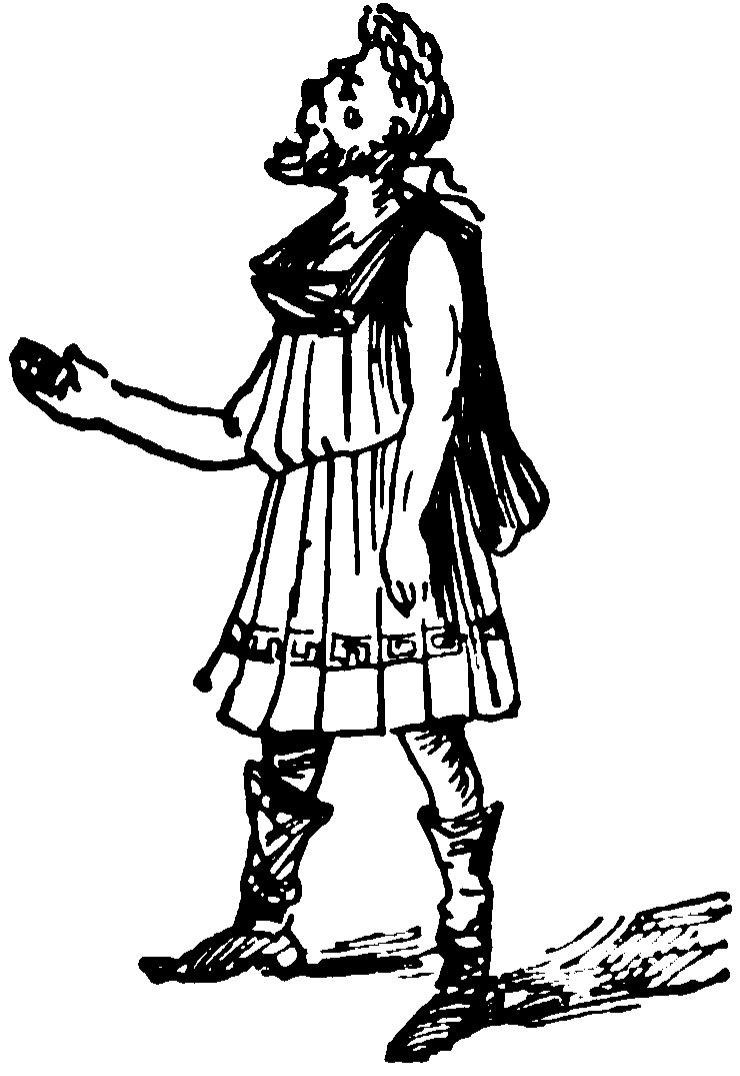
Professor Samuel Kayzer, manager of the Chicago Conservatory of Acting, calls our attention to an interesting matter—in fact, it is so interesting that we would fain lay it before the public. The professor is an accomplished linguist, and he speaks living and dead languages with equal fluency. He says that in the European colleges and universities this word “Cæsar” is pronounced “Kayzer,” and that it is the word from which the Teutonic word “kaiser,” and the Russian “czar,” or “tsar,” are derived. This pronunciation (viz., Kayzer) has been accepted, and is taught, in Harvard and in Yale, and in numerous other fashionable institutions having in view the preparation of our youth for the solemn duty of spending their fathers’ estates. The State University of Missouri, and Knox College at Galesburg, Ill., are the only prominent educational institutions in the country where young men and women are taught to pronounce “Cæsar” as if it were spelt “Seezur” instead of “Kayzer.” The preponderance of fashion and wealth is largely in favor of “Kayzer.”
166“Of course,” said the professor, “I make no boast that Col. Aldrich had me in his mind’s eye when he wrote that poem. He has never met me, nor is it likely that he has ever heard of me; although, now that this question is being agitated, I shall mail him a prospectus of my conservatory, and a programme of our recent engagement at McVicker’s theatre. Still, you will discover, if you but refer to the city directory, that I am the only Kayzer in Chicago: therefore, it follows, consecutively and logically enough, that, to whomsoever Col. Aldrich’s poem may refer, I am indeed the last Kayzer.”
Our distinguished friend, Col. William F. Poole, city librarian, and author of the famous “Index of Salem Witches, with Copious Notes,” tells us that the Sweetonius to whom Professor Wilkerson refers, is a very unreliable historian, and that, although his book is given in the catalogue of the public library, it is not issued to any reader who does not produce a certificate that he has arrived at years of discretion, and is a member of some church in good standing. Col. Poole says that he has not read the Aldrich poem, but, for all that, he stands ready to indorse any thing that Aldrich has written, or will write. Col. Poole is a great admirer of Eastern littérateurs. He comes by this strange infatuation very naturally; for he himself was born and reared in Massachusetts, and would never have come West but for his o’erweening lust 167for gold. He says that he knew Aldrich when Aldrich was a boy; that he used to find Aldrich playing marbles on Boston Common, and that, noting the precocity of the lad, he sought to woo him from his childish sports, and incline his tender mind to nobler pursuits. Many a time, Col. Poole says, he has taken the boy Aldrich upon his lap, and there, under the shade of the gingko-tree, and within a stone’s-throw of the frog-pond, has he recited to the intent child legends and tales of the Salem witches, the Roxbury flubdubs, the Chelsea hobgoblins, and other suburban supernaturals, calculated to insure to a nervous child a refreshing night’s repose. Of course, that was a good many years ago; yet Col. Poole claims the credit of having inculcated into the child those tastes and inclinations upon which the imposing superstructure of Aldrich’s noble poesy has been reared.
New literature just received: “The Dial,” “The Grocer’s Criterion,” “The Hide and Leather Journal,” “The Packer’s Monthly Garland,” “The South Water Street Review,” “The Hyde Park Herald,” “The Elite News,” “The Blue Island Voice and Optic,” “The Tanner’s Guide,” “The South Chicago Bouquet of Friendship,” “The Shingle and Clapboard Review,” and “The Wheat and Grain Journal.” For sale at all book-stores.
Messrs. Henry Holt & Co. send us a circular announcing that they are upon the eve of publishing a volume entitled “Miss Bayle’s Romance,” the same recounting the exploits of “a Miss Bayle and her family—all of Chicago—among the effete aristocracy of the Old World.” When Eastern publishers say “the Old World,” they mean Europe; although there are reasons for suspecting, that, in point of fact, Europe is no older than any other part of the globe. “This novel,” the circular continues, “which is reported to be the work of a hand well known in literature, has been considered important enough to be the subject of some cablegrams to the press.” Now, if “Miss Bayle’s Romance” were the work of a Chicago littérateur, we would not be in any harrowing doubt as to the authorship. Chicago littérateurs deal in a refreshingly candid and open-handed way: in all our voluminous city directory, there is no person (male or female) of the name of Anon. “A hand well known in literature” is an ambiguous phrase,—that is to say, it is ambiguous in the national, broad sense; but here in Chicago, “a hand well known in literature” is the horny, warty, but honest hand, which, after years of patient toil at skinning cattle, or at boiling lard, or at cleaning pork, has amassed a competence sufficient to admit 169of its master’s triumphant reception into the crême de la crême of Chicago culture. We fancy that this “Miss Bayle” is a myth, and that her “romance” is simply the invention of some envenomed Eastern scribbler who has become tainted with the leprosy of Eastern culture, which envies Chicago her output of pork, beef, wheat, lard, and other fruits of a refined civilization.
Col. Alva Eugene Davis, the handsome and talented proprietor of “The Current,” says that the Eastern littérateurs are a very snobbish set. He called on the business editor of “The Century” magazine while he was in New York, and had some trouble in identifying himself. “The Current,” “The Current,” repeated “The Century” business-manager with a puzzled expression on his literary countenance. “Really, I cannot locate that paper—pray tell me where is it published?” Of course Col. Davis got as hot as a cooking-stove right away. “Well, if you don’t know where ‘The Current’ is published, you must be a —— of a littérateur,” said he; and then he added, “And you must be a d——d queer sort of a business-manager too, for you’ve been advertising in ‘The Current’ for the last two years.” “The Century” man thought this was such a good joke, that he took Col. Davis up into the editorial department, and introduced him to the young reporters who write the war reminiscences.
The venerable Phocion Howard, who probably knows more about Illinois and her people than any other human being does, claims to have been the discoverer of Robert J. Burdette, the humorist whose reputation is now world-wide. Col. Howard was editor of a small paper at Peoria when he became acquainted with Burdette. The latter was then a very young man, and he enjoyed the name of being as wild and as harum-scarum a fellow as ever woke up a sleepy community. But Col. Howard saw something more than the mere mischief in the boy; and, calling him into the office one day, he gave him a long talk, and wound up by asking him to go to work on the paper. This was Burdette’s start in literary work. On one of the bluffs back of Peoria lived an old justice of the peace,—sturdy and grim,—who had a bright and pretty daughter. With this daughter, Burdette fell in love; and great was his rapture when he learned, in time, that his affection was reciprocated by the young lady. But the sturdy squire guarded his daughter with an austere and jealous eye, and vast was his rage when he beheld the young reporter swinging on the front-gate at least three evenings per week. The squire saw no good in the boy; and at last he declared in good round terms that the boy must keep away from that particular 171house on the bluff, else perchance the coroner might be called to sit on the mangled remains of a promising journalist that had been cut off in the flower of his youth. This pronunciamento, which would seem to have been emphasized by the important fact that the choleric squire kept a gun swung up on his cottage-wall, and well filled with formidable slugs—this pronunciamento, we say, inspired in the bosoms of the daughter and her lover the most grievous emotions; and it was not long ere they mutually declared that an heroic step must be taken toward abating the poignant anguish which the squire’s harsh declaration imposed. Therefore the two met one afternoon, and, proceeding unostentatiously to another justice of the peace, were married in less time than you could say a paternoster. This, however, they recognized as only the beginning of the struggle by which the Gordian knot was to be untied or cut; but Burdette’s ingenuity and valor were equal to the rest of the task. He stepped into the post-office, and said to one of his friends there employed, “Charlie, I want to go hunting this afternoon: will you lend me your gun?”
“Certainly,” replied his friend; and he handed out as fine a double-barrelled breech-loader as ever you clapped eyes on.
“Is it loaded?” inquired Burdette.
“Yes,” said the friend.
“What kind of shot?” asked Burdette.
172“Duck-shot,” replied the friend.
“Well, I guess that’ll do,” said Burdette. “I’ll stop in as I go down the street, and get some more ammunition of the same kind.”
So, with the gun on his shoulder, and a smile on his face, Burdette rejoined his bride on the street outside. Arm in arm the two toiled up the bluff toward the testy old squire’s residence, Burdette stopping every now and then to see whether his battery was in working-order. It was well-nigh dusk when the truant couple marched into the bride’s home. The testy squire sat in his favorite rocking-chair, grimly reading an evening paper. You can perhaps imagine his amazement when, upon looking up, he beheld Burdette boldly intrude into his presence with the object of his affection on one arm, and a double-barrelled gun on one shoulder.
But, with all his testiness, it was to the squire’s credit that he possessed a fair share of that always admirable and frequently serviceable quality called discretion. This quality asserted itself at this critical moment. Instead of exploding the volcanic fires which had been pent up in his paternal bosom, he calmly laid down his evening paper, scrutinized the twain before him, and in an unruffled tone remarked, “Well?”
All will agree that this was the shrewdest thing the testy squire could have done under the circumstances; for it is universally admitted by authorities 173on rhetorical tactics, that the simple word “well,” when uttered with the proper inflection and at the proper moment, serves as an invincible and incomprehensible skirmish-line. But the happy bridegroom was on this occasion fully equal to the task of meeting the testy squire’s rhetorical skirmish-line—all of which goes to prove that a shotgun in the hand is worth ten thousand “wells” in rhetoric.
“Carrie and I have been getting married,” said Burdette, looking the squire straight in the eyes; “and now I want to know what you are going to do about it?”
If the squire’s calmness but a moment before had been admirable, it was now phenomenal. The announcement of his daughter’s marriage did not seem to even ruffle his temper. He put his paper aside quietly, and glanced out of the window musingly; and he put his tongue in his cheek, and appeared to be absorbed in thought.
“You’d better go down and help your mother get supper, Carrie,” said the squire at last; “and as for you, Robert, sit down, and make yourself at home. I want to get better acquainted with you if you’re my son-in-law.”
So much for the courtship and marriage of our most popular humorist. Of the happy wedded life that succeeded, we all have heard. The girl became a devoted wife; and it is not hard for those who have felt the ennobling influence of woman’s love 174to believe Mr. Burdette when he says that the little woman whom he called wife—whose spiritual beauty we all admired—with whose physical sufferings we all sympathized, and whose death we all deplored—we believe Mr. Burdette when he says that she was indeed the best and sweetest inspiration in his life and of his work.
In “The New-York World” we find this remarkable editorial paragraph: “Mr. Winston, our new minister to Persia, has had himself appointed a brigadier-general of Illinois militia in order that he may be able to shine at the shah’s resplendent court in a gorgeous uniform. We need a minister to Persia about as much as we need a consular agent at the north pole; but, inasmuch as we are carrying on the tomfoolery, we might, as by special enactment, authorize our representative at Teheran to appear in the full dress of a Choctaw chief. Something variegated and humorous in that line would be likely to make an impression on the shah’s mind.”
We are amazed to find a democratic paper speaking in these terms of one of the most distinguished appointments that has been made to our diplomatic service. Yet we think the gross misrepresentation comes merely from misinformation. Gen. Winston’s magnificent record as a citizen and soldier demands an explanation of these things.
We are reliably informed, that, when President Cleveland took his seat as executive of this republic, he cast his eagle eye abroad over all the land, and allowed each of the eminent statesmen to pass before him in review, as candidates for the Persian mission; that after months of careful, 176earnest study, inspired by the sincerest patriotism, President Cleveland made up his mind, that, in all the country, there was one man pre-eminently qualified for this high and responsible office; that the name of that man was Frederick H. Winston.
We are reliably informed that President Cleveland sent privily for Gen. Winston, and informed him of his selection for the Persian mission; that Gen. Winston demurred, alleging that his ambition beckoned him not in the direction of diplomatic exploits; that it was only by personal and constant importunities, and by presenting the matter to him in the light of a patriotic duty, that the president succeeded in overcoming Gen. Winston’s superhuman modesty, and inducing him to accept the mission.
We are reliably informed, that, as soon as he heard of Gen. Winston’s appointment to the court of Persia, Gov. Oglesby said to himself, “Now is the time for me to bestow upon this great and good man some official recognition of his distinguished civic and military services; but how shall I do so best? A commission as notary public would not avail, because the benighted Persian pagans know naught of the notary system; nor, for similar reason, would a commission as grain-inspector, or humane-society agent, or State veterinary agent, or insane-asylum commissioner, or soldiers’-home trustee. No,” thought Gov. Oglesby, “I must bestow upon this human paragon some 177distinction, honor, mark, title, and decoration that will not only be in keeping with his exalted career at home, but also give to him a certain lustre and bedazzling brilliancy in the eyes of the heathen among whom he is soon to exploit most featly. So, therefore, I will create him a brigadier-general; and I will invest him with the ever-to-be-revered authority to wear high top-boots and spurs, as well as gilt buttons, gold epaulets, and a cocked hat withal.”
We are reliably informed that Gov. Oglesby had to wrestle rhetorically three whole days and nights with Gen. Winston before the latter was induced to accept the proffered military decoration, and that even then a squad of militia had to be called out and put on a war-footing before Winston could be induced to go to his tailor to be measured for a suit of regimentals; that even when he did go to said tailor, a corporal and four soldiers had to guard the doors and windows lest the super-modest general should repent his errand, and privily effect his escape from the prick-louse.
We are reliably informed, that, upon calmer and maturer reflection, the embryotic diplomate travailed much in spirit, and groaned, and by the advice of the spirits of Jefferson and Jackson, which did visit him in dreams and visions, finally made up his mind that he would have done with this matter of display, which was opposed in spirit and in truth to the traditions and practices of democracy; 178that he did so advise Gov. Oglesby, the press, and the public at large, and that if he did accept the regimentals from the tailor, and order them to be packed among his official effects, it was merely for the purpose of exhibiting them in Persia as a specimen of American handiwork.
We are reliably informed, that, at a sumptuous feast tendered to the departing, citizen-soldier-diplomate by such exalted social, intellectual, and political stars as Johnnie Hand, Emil Hoechster, Charlie Felton, J. J. Curran, Austin J. Doyle, Charlie Kern, John Mattocks, P. Dudley, W. M. Devine, and other representatives of the cream and flower of native and naturalized gentility, there did prevail an eloquent and piteous protest against the harsh decree of fate which was about to remove from the midst of them the pole-star, the central sun, the inspiration of this incomparable galaxy. So poignant was the grief marking this lachrymose event, that, ill content with the restraining powers of prose and poetry, one of the distinguished chief mourners, to wit, Charlie Kern, did essay the subtile influence of song to alter Gen. Winston’s intention of going abroad.
We are reliably informed, that, having heard Mr. Kern sing, Gen. Winston became more fixed in his patriotic determination to leave his country.
Of Gen. Winston’s eternal fitness for the Persian mission, we have no doubt. Since his appointment he has made a close study of Persia, its history, 179literature, language, people, customs, etc. Hearing that Persia was the land of the date and palm, he took no rest until he had secured the very latest editions of Hayden’s “Dictionary of Dates,” and Fowler’s “Guide to Palmistry.” Having devoured these standard works, as well as an unabridged edition of the “Arabian Nights,” he is, beyond compare, deeply learned in Persian lore.
And who that has beheld him; who that has studied his methods; who that is acquainted with his high and mighty career in the forum, on the mart, upon the field of carnage; who that has seen that undaunted integrity, that unselfish patriotism, that sweet philosophy, and that heroic valor, which have characterized every act and utterance in his life; who, in fine, that knows this good and great man,—will deny that his career in that pagan land, to which he goes anon, promises to redound to his own glory, and to the advantage of the government, which, by his distinguished service, he places under renewed obligations?
It is interesting to read and to study the opinions of different newspapers touching the Hon. John J. Ingalls, senior senator from Kansas. The truth is, that no public man is more generally misunderstood than is Senator Ingalls. By this 180we mean that a vast majority of the writers who have occasion to write about Senator Ingalls, really do not know him at all. Senator Ingalls is, in fact, a tender, gentle, lovable man. He is exceedingly sentimental, as emotional as a woman, as guileless as a child. He loves nature, and to commune with nature’s quiet, subtile influences. Every day he takes long walks in Washington; he is the most tireless pedestrian in Congress; he is acquainted with all the woodland strolls on the Virginia side, and oftentimes his rambles take him far into rural Maryland. There is a peace, a tranquillity, a simplicity about this man’s private life that is as remarkable as it is beautiful; yet, oh, how grievously he is misjudged!
Illustrative of his humane tenderness, a story is told of a characteristic incident of Senator Ingalls’s visit to Colorado some years ago. He undertook to walk from Leadville to Golden, a mighty distance across the mountains. His friends warned him of the dangers that beset travellers of that mountain fastness, but Senator Ingalls laughed them to scorn.
“I have my penknife with me,” he answered. “It will suffice to protect me, I venture.”
Proceeding on his lonely journey, the senator held sweet communion with the giant trees, the gnarled rocks, the tawdry wild-flowers, and the chattering magpies that greeted him from this side and from that; and his soul contemplated 181through his reverential ocular orbs the awful grandeurs of the eternally snow-clad hills that rose beyond these hills, and heard the songs the storm-clouds sang.
Floating placidly, so to speak, upon this pleasant sea of thought, the senator strode along for many a league, until finally, all of a sudden, he distinctly beheld coming down the mountain-road toward him, a monstrous grizzly bear,—an ursine megatherium, whose fur bristled, whose eyes emitted sparks, whose claws rattled, and whose fangs gnashed, as he scuttled along the mountain-road. In Senator Ingalls’s place at that supreme moment, any other man less humane, less tender than he, would have reached instinctively for his penknife, with which to have assailed the shaggy monster, and to have made him pay for his temerity with his life. But not so with Senator Ingalls. “Go thy way, poor devil!” he murmured softly, paraphrasing Uncle Toby. “Go thy way, poor devil. This mountain pathway is wide enough for me and thee!”
And with this humane sentiment, Senator Ingalls crawled into a hollow tree at the roadside, and waited there until the grizzly bear had passed by, and was well on his way toward the bee-hive in a pine-tree near Crazy-Horse Gulch.
The Mapleson Italian Opera Company is billed to appear here shortly, and the programme for the first week is announced with a considerable flourish. We do not hesitate to say that the music-loving public of Chicago has a rich treat in store. Col. Mapleson is indeed a conscientious, painstaking caterer. He is indefatigable in his efforts to provide his patrons with a new and pleasing variety of musical works, and he is constantly introducing to American audiences the freshest and best talent of foreign countries. During his first week in Chicago he will produce the following entirely new operas, composed and written especially for this American tour of Her Majesty’s Opera Company: “Faust,” “Lucia di Lammermoor,” “Manon,” “Fra Diavolo,” “Carmen,” and “La Traviata.” For the second week we are promised “La Girla Bohemiana” (a beautiful new opera by a clever Irishman named Balfe), “Il Trovatore,” “La Favorita,” “Les Huguenots,” “I Puritani,” “Norma,” and a pleasing light opera entitled “Martha.” The eminent ladies and gentlemen who are to interpret the leading rôles of these charming new works, are Mme. Minnie Hauk, Mdlle. Dotti, Mme. Lillian Nordica (a lineal descendant of Frank Mayo’s popular play), Mme. Lablache, Sig. Ravelli, Sig. De Falco, Sig. Del 183Puente, Sig. Cherubini, and Sig. Giannini. None of these great artists has ever appeared in Chicago before: they have been fresh culled, so to speak, from the best musical parterres in Europe, where they have bloomed without competition for the last century. Mr. John McConnell, manager of the Columbia Theatre, has invented a beautiful design for a three-sheet poster announcing the Mapleson season. He showed it to us last evening. It is somewhat as follows:—
![A satirical, hand-lettered performance schedule titled "GRAND ITALIAN OPERA. FIRST WEEK." It lists the days from Monday through Saturday, substituting the names of the operas and the featured singers (preceded by "Mme." or "Mlle.") with small drawings of hazelnuts. The text below reads: "Assisted by a superb company of [hazelnuts] and an able corps de ballet including all the most noted terpsichorean [hazelnuts] of the century."](images/i_183.jpg)
They say, that, just by way of killing time that hung heavy on his hands, Col. Henry Davis, jun., visited the Corcoran Art Gallery in Washington last Monday. When he returned to the hotel, he had a great story to tell of his experiences.
“Bill,” said he to Congressman Springer, “I have been putting in a couple of hours inspecting the shef doovers of the old masters.”
“Ah?” said Springer. “I hope you enjoyed yourself.”
“Amazingly,” continued Davis. “You didn’t know I was a good deal of an art connozher, did you?”
“I can easily believe you,” answered Springer; “for I have always admired your delicate refinement and graceful discrimination.”
“I ran across one statute that paralyzed me,” said Davis. “It was a perfect fac-smile of myself without my clothes on.”
“What could it have been?” asked Springer.
“When I get back to Illinois,” said Davis, “I’m going to hunt up the original; for me and him are as much alike as two peas. He lives at Belvidere!”
“Boone County?”
“Yes; Belvidere, Boone County, Ill. His name is Apollo.”
The Hon. Millard B. Hereley is about to do the wisest act in all his busy and useful career. He is going to be married. On the 10th instant he will lead to the hymeneal altar Miss Hannah, daughter of our esteemed fellow-townsman, Col. Daniel Murphy, who resides at 202 Oak Street. The bride-elect is a beautiful and accomplished young lady, in every particular qualified to adorn the home, and serve as the best inspiration of a bright, ambitious, and honorable man. To her and to him we extend our heartiest congratulations upon the event which is to bind them together indissolubly.
Knocking the tops off champagne-bottles yesterday, Senator Hereley vouchsafed to a select crowd of personal friends the information, that, immediately after the solemnization of their marriage, his bride and he would start upon a six-weeks’ tour through the orange-groves of Louisiana and the everglades of Florida.
“A number of my ancestors, exiled from France a century ago,” said he, “lie buried in the old cemetery just beyond the fortifications at St. Augustine. I hear that no monument marks the last resting-place of the Duc de Troiville, my maternal great-grandfather. If, upon investigation, I find this to be the case, I shall erect a suitable slab 186appropriately inscribed. In New Orleans I have numerous relations among the old French and Creole families: in fact, I may in all modesty confess that in the neighborhood of the French market my name has become a household word.”
“Is it true,” we asked, “that the news of your approaching nuptials has created a stir in foreign circles?”
“In Germany, France, and Spain,—yes,” replied Senator Hereley. “Germany watches with unabating interest the movements of every titled Frenchman abroad, and probably will continue to do so until the intente cordiale between France and Prussia has been fully restored. France takes an interest in my career because I am closely allied by blood with the aristocracy of that country; and Spain is interested in me for the reason that many of the Hereleys fled from Normandy to Madrid after the fall of the empire, and are now united by marriage with the oldest and noblest families in Castile and Aragon.
“I have already received,” continued Senator Hereley, “messages of congratulation from the Duc d’Orleans, Marshal Castiglione, Sir François de Cavagnac, the Duc d’Ormeil, Prince Bourbon de Bonsoir, ex-Queen Isabella, President Grèvy, De Freycine, Queen Regent Christina, the Duc de Ganda, and other royal and eminent personages. I am expecting a good many elegant presents, the most pleasing of which will be a congratulatory 187memorial in a diamond-studded gold case from the council of my native village in Normandy. Mme. Judic and Mme. Aimee, two country-women of mine, have sent me handsome remembrances in the shape of an old-gold toothpick, and a Dresden china shaving-mug.”
“But don’t these things awaken in your bosom a longing to return to the honors, titles, and estates which await you in your native land?”
“Not at all,” replied Senator Hereley. “I love this glorious republic, and am as truly enlisted in her cause as if I had been born upon her soil. The glamour of titles and estates beyond the sea has no charms for me, and my union with a fair daughter of this republic shall re-affirm and emphasize with ecstasy my loyalty to the home of my adoption!”
To the Editor.—Why is it that Western people are so hasty to go daft over the doings Down East, yet are so slow to recognize and to encourage meritorious home enterprises? Quite recently, for instance, Chicago and other Western cities have been all agog over the sale of certain arteffects of a New-York lady, the widow Morgan, a relict of undoubted taste, and possessing abundant 188means wherewith to gratify that taste. Thousands of dollars went out of the West to purchase certain articles of the Morgan collection at the recent sale in New York. A wealthy pork-packer who lives near my house, brought back from the Morgan sale two “rare pieces of virtue,” as he terms them: one was a cut-glass potato-salad dish, manufactured in the third century by Ptolomy Dago, a Spanish stone-cutter of wonderful ingenuity; the other was a superb oil-painting representing mountaineer life in Holland, and painted by Beethoven, the famous Italian sculptor. These “articles of virtue” could not have cost less than twenty thousand dollars. But why go East for these works of art? I understand that a great art-sale is about to take place on the West Side; that the rare and costly collection of one of our wealthiest soap-manufacturers, recently deceased, is about to be disposed of at auction. Why are the papers, which are so ready to advertise Eastern art-sales, silent now touching this home enterprise? Why is our public, ever on the alert to blow in good money for Yankee notions, so slow to patronize this West-Side slaughter of genuine rarities? I think Chicago ought to be ashamed of herself; but here is an excellent opportunity for her to redeem her reputation.
Indirectly we learn that Col. Hiram Atkins, chairman of the Vermont Democratic Committee, thinks he has been unfairly dealt with by “The Daily News.” He complains that the quotations which we gave as coming from his paper, “The Montpelier Argus and Patriot,” were never printed in his paper at all: he declares that he never announced that “Squire Eastman’s tumor has cast a gloom over our little village,” or that “Mrs. Mehitabel Ranney laid an egg on our table last week,” etc. It is possible that we have done Col. Atkins an injustice; if so, the injustice was done unintentionally; and we, lamenting it, do hereby crave pardon therefor. Col. Atkins is a jovial, enterprising, fair, and bright man: he is incapable of a mean action. We wish him a big run of sap every spring, and a powerful harvest of beech-nuts next Michaelmas.
As to the items about Squire Eastman’s tumor, Mrs. Mehitabel Ranney’s eggs, etc., which we printed, and credited to “The Montpelier Argus and Patriot,” we received them from Senator Edmunds, with the remark that he had found them in Atkins’s paper. Edmunds told us that Atkins was a “fat, pussy man, that sweat twelve months in the year, and wore out two paper collars every day:” he said that Atkins had pursued him 190for years, maliciously and relentlessly, there being no species of base piracy to which Atkins would not willingly stoop.
Atkins’s demoniacal animosity was incurred, so Edmunds avers, many years ago, when the two were attending the academy at Rutland. Edmunds, it appears, was in the senior class when Atkins entered the academy as a freshman.
At that time the prettiest girl in the school was a Miss Joyful Higginson, the only daughter of Squire Nathan Higginson of Bennington. She had a trim figure, black eyes, curly hair, and red cheeks; and when she got rigged out in one of her new gingham gowns on a Sunday morning, she was, to use a phrase common in those times, “prettier than a yoke of father’s steers.” To this Miss Joyful did Edmunds and Atkins pay ardent but respectful homage, sending her lumps of maple-sugar, and packages of rose-lozenges, taking her coasting and to picnics on a Saturday, and showing her, in short, delicate attentions of that nature which seldom fail to touch the maidenly heart. The fact, however, that Edmunds was the older of the twain, that he had impressive side-whiskers, and that he sang a delicious bass in the academy-choir, seems to have made him more acceptable to Miss Joyful than any of the other young beaux were: at any rate, Miss Joyful went sliding down hill with Edmunds oftener than with anybody else, and his gifts of pippins, maple-sugar, lozenges, 191nosegays, and the like, appeared to go to the spot which the tokens of other beaux failed to reach.
The preference which Miss Joyful manifested for young Edmunds set Atkins into a frenzy of jealous rage; and one night he threw his Livy upon the floor, trampled upon his Andrew’s Latin Lexicon, and delivered himself of this volcanic eruption of long-pent-up wrath: “Gol darn that bewhiskered crittur! I’ll git even with him if I hev ter live ter be ez old ez Methuselah! With that tarnation bass voice o’ his’n, as hard as Pharaoh’s heart, and them whiskers the color o’ soft-soap, he hez cut the rest on us clean out o’ our swaths. It may take an all-fired long time to do it, but I’m goin’ to, by gosh, knock him higher’n a meetin’-house steeple afore I git thru’ with him!”
This malignant threat was uttered fifty-eight years ago; and ever since then, so Senator Edmunds tells us, Hiram Atkins has had but one grand end in view,—the annihilation of George F. Edmunds. The episode of Miss Joyful Higginson was simply one of the pretty idyls of youth. In 1838 Joyful married Leander Merrick, the popular young man who drove the stage for a great many years between Brattleboro and Townsend.
There was a great stir in Chicago yesterday, and it was all on account of the remarkable speech which Mr. Gladstone delivered in the British House of Commons Thursday afternoon. No sooner was the independence of Ireland assured, than the leaders of the Irish party in Chicago began making preparations to return to the beloved Emerald Isle beyond the sea. The news that these distinguished gentlemen contemplated departure from scenes which they had graced with their presence for many years, spread like a wildfire, and produced a sensation that can be described only by the adjective prodigious. Bands of music paraded the principal streets, discoursing a repertoire made up of such inspired gems as “Wearing of the Green,” “St. Patrick’s Day in the Morning,” and “Croppies, Lie Down.”
Col. John F. Finerty, ex-member of Congress, and editor of our esteemed contemporary, “The Citizen,” spent most of the day in his private apartments, packing his valise, and disposing of the personal effects he did not wish to take back to Ireland with him. “I shall leave for home at once,” he said. “This country has become effete. It is subservient to British gold, and has no longer any appreciation of personal honesty and individual merit. Now that Ireland is to be an independent 193nation, it is my purpose to return to her venerated soil, and to claim the titles and estates which properly descend to me from a long line of lordly ancestors. You may not be aware of it,—for with unflinching assiduity I have concealed the fact,—but I am the thirty-eighth Lord of Tipperary; and I am about to lay claim to the magnificent estates at Ballyclerahan.”
Mr. John F. Scanlan said he had made arrangements for a passage on the steamship “Aurania,” which would sail from New York early in May. “Our triumph,” said he, “has been long delayed; but, Heaven be praised, it has come at last! When once I have set foot on my native soil, you will hear no more of John F. Scanlan; but Baron Ballingarry will dawn upon Europe as one of the peerage of Ireland. Ballingarry, you must understand, is a charmingly romantic estate in Munster County, twelve miles north of Kilmeedy, fifteen miles south of Rathkeale, and twenty miles west of Beuree. Upon a gentle elevation stands the baronial castle which my forefathers erected during the historic reign of Brian Boroihuee, and it is of this ancestral domain that I propose to possess myself. I hear that a St.-Louis man, known as John D. Finney, claims to be the heir-apparent to this baronetcy; but I shall show him that I can handle a blackthorn quite as nimbly as the best of bogtrotters.”
Mr. J. J. Fitzgibbon said he was the Duke of 194Ballaghadereen, a beautiful estate in the county of Mayo. It was his ambition to spend his declining years in enjoyment of those lordly pleasures of which he had long been deprived, but which now were about to be restored to him by the efforts of Mr. Gladstone, the British premier.
Mr. William McClure claimed to be the long-missing heir to the earldom of Armagh, with a moss-covered castle, and a dreamy expanse of peat-bog, awaiting him at Loughall, one of the most picturesque spots in all Ireland. He said he was making preparations to return to his native land, and to claim every thing in sight.
The Hon. Patrick Sanders admitted, that, having wound up an active but brief American career, he was getting ready to start back to Ireland, where he meant to lay claim to the dukedom of Dripsey, in county Cork, only a few miles south of the famous Blarneystone. “Such is my self-abnegation,” said he, “that, if I perceived any desire on the part of the Chicago people to retain me, I would cheerfully abandon every claim to the Irish peerage which awaits me, and would devote myself to the service of humanity in this city. But there is a lack of interest in me hereabouts; and I shall therefore proceed shortly to the country where, I am sure, my ability and my philanthropy will be appreciated. The evening of my life shall be devoted to teaching the simple tenantry of my ducal estates the sward-dance of 195our ancestors: and it is barely possible that I shall put in operation a scheme I have long contemplated; namely, the colonization of Dripsey with Italian emigrants.”
It was learned, either from the gentlemen themselves, or from equally reliable authorities, that the following distinguished citizens of Chicago were on the eve of departure to the sod which they venerate as their common mother:—
Michael Hannigan, claimant to the titles and estates of Denis, sixteenth Duke of Stradbally, in the county Leinster.
Thomas E. Moran, heir-presumptive to the earldom of Knockcroghery, in the county Roscommon, including the extensive peat-privileges at Athleague.
John M. Dunphy, Baron Gortaroo, with the ancestral castle in county Cork, overlooking Youghal Bay, near Knockadoon Head.
Sam Steele (formerly Welsh, but now Irish), claimant to the dukedom of Londonderry, said to have been conquered in the thirteenth century by the Welsh invader, Llewellyn Llnllth.
Michael W. Ryan, Lord Malin More, with a castle on the western coast of county Donegal, enjoying fine privileges for conger eel and finnan haddie fisheries.
Richard Pendergast, heir-apparent to the earldom of Belgooly, in county Cork, twelve miles south of Templemichael.
196Edward J. McPhelim, said to be the long-lost heir to the baronetcy of Kilcullen, enjoying a magnificent ancestral castle on lake Liffey, in county Kildare, within five minutes’ walk of the famous rocky road to Dublin.
Thomas O’Neill (a lineal descendant of the great Hugh O’Neill), Duke of Coleraine, claiming the magnificent estates near Lough Foyle, in Londonderry.
Timothy D’Arcy, Baron Knock, with a grand old castle of mediæval architecture on the river Shannon, one of the most beautiful estates in the county Clare.
James Sullivan, Duke of Tyrone, claiming the old manor and estate at Beltrim, yielding enormous rents.
Alexander Kirkland claims the dukedom of Kerry, which involves large and valuable estates in the Kenmare-river and Bantry-bay districts; but Kirkland’s claim is disputed by Vincent B. Kelly, who alleges that he himself is the lawful duke, and that Kirkland is simply a Scotch interloper, who hails from the Frith of Forth, and who is known at home as the Laird o’ Killiekrankie.
There is a rumor that Joseph Medill becomes, by the Gladstone act, sole heir to that magnificent riparian privilege known as the Giants’ Causeway in Antrim; but it is doubtful whether that distinguished gentleman will, for this giant legacy, relinquish the large interests he has acquired in the country of his adoption.
There is not an iota of truth in “The Philadelphia News” rumor that Miss Kate Field is about to be married to a Western journalist. Miss Field will never wed; and the secret of her celibacy is to be found in a singularly sad and romantic tale which has never yet, we think, been put in print.
Some years ago Miss Field made a visit to Spain with a view to acquainting herself with certain old Castilian legends which she desired to make literary use of. She took with her many letters of introduction to Spanish grandees, among them a letter to Marshal Serrano. This wealthy and influential nobleman received her most cordially, and entertained her at his castle in Madrid for several weeks; his wife, a sister of the Comte de Paris (now deceased), being particularly charmed by the vigor of Miss Field’s intellect, and the insinuating grace of her manners. It happened, that, during her stay at Serrano Castle, the beautiful young American met, among other Spanish noblemen, the young Alvaredo Lopez y Jesus de Ratz, one of the wealthiest, handsomest, and bravest scions of Spanish royalty. He was a hidalgo of the thirty-second magnitude, heir-apparent to the dukedom of Aragon, and, what was considered better than all else, he possessed large political influence, and 198stood high in the favor of the dominant party. Alvaredo Lopez de Ratz fell a willing victim to the personal and intellectual charms of the fascinating American girl; and with that precipitancy peculiar to the impassioned sons of stately old Spain, he avowed his love at the second meeting. Somewhat startled by the suddenness of his fervid declaration, though not insensible to his exceeding eligibility, Miss Field coyly employed those evasive, Fabian arts which so admirably beseem her sex, and which render a beautiful girl all the more beautiful in the opinion of mankind. So, therefore, Alvaredo set himself bravely to the task of melting the marble heart of the proud American at whose imperious feet he had incontinently cast down his heart, his titles, his hopes, his all. Day after day he weaved sonnets to her eyes and hair, or pursued her with sighings and avowals: night after night he lingered beneath her window, blending his rich baritone voice in amorous serenades with the throbbing tones of his mandolin or lute.
One day, Miss Field, accompanied by the young Alvaredo Lopez de Ratz, went to the amphitheatre to witness a bull-fight, the same being a celebration of the feast of St. Isadore. When they reached the place, they found that their seats were on the other side of the amphitheatre; and to save time, they thought to cut across the arena, the combat not yet having begun. Scarcely, however, had 199they reached the centre of the arena, when, by some fatal blunder, the door to the bull-pen was thrown open, and out rushed a monstrous Andalusian bull, lashing his tail wildly, pawing the earth, and bellowing fiercely.
“Suave mio! suave mio!” (“Save me! save me!”) cried Miss Field, in tones that would have wrung the most callous heart.
“Carissima mia,” answered Alvaredo Lopez de Ratz, “te suavo spezza!” (“Dearest, I will save thee!”)
Then, drawing his stiletto, the brave young lover threw himself between the infuriated bull and the red parasol which Miss Field had unfurled, and behind which she stood, pale, shrieking, trembling. While the bull gored at Alvaredo Lopez de Ratz, that valiant young nobleman carved and whittled the shaggy monster’s frothing nostrils right dexterously: meantime, divers picadors, matadors, and cavaliers hastened to the rescue of Miss Field, who was borne insensible from the arena.
But what of Alvaredo Lopez y Jesus de Ratz? Alas! his gored and lifeless remains, mutilated beyond recognition, were raked up and gathered together after the matadors had slain the infuriate bull. A braver man was never borne from the battle-field on two-score and ten dust-pans!
Ever since that tragedy, Miss Field has disdained the advances of the masculine sex. Pondering ever on the fate of her young Spanish suitor, she 200never hears an impassioned avowal that she does not droop her pretty head, and regretfully murmur, “Ratz!”
Miss Kate Field, who is to lecture in this city next Thursday evening, is in many respects a most remarkable woman. None of her sex possesses to so marked a degree every feminine charm, coupled with an intellectual vigor that is certainly masculine. Miss Field’s life has been a romantic one. She was born (about thirty years ago) in New Orleans, and was educated in the Convent de St. Genevieve, near that city. When sixteen years of age she was sent to Europe to “finish off;” but, while travelling in Sicily, she was seized by brigands, who demanded seventy thousand livres for her ransom. This sum was paid by the family of the young girl, after she had been a captive for six weeks, during which time she acquired a thorough acquaintance with the Italian language, and obtained a complete knowledge of the customs of the banditti. A narrative of her experience in the Sicilian fastnesses appeared in “El Banano Napoli” (1865), and is now regarded as a model of Italian romance. In 1867 Miss Field visited Spain as the guest of Signora Serrano; and it was at this time that she was wooed by the young Marquis Miguel Maria Jesus del Ratz, whose melancholy and 201tragic death, while attending a bull-fight in Madrid, has already been detailed in these columns. This was the one love-affair of Miss Field’s life; but the case of Manrico Bolero, the chief of the banditti who abducted the fair girl, deserves more than passing mention. It appears that while she was a captive, this Bolero became deeply sensible of the personal and mental charms of young Kate: his suit was vain, however, the conscientious girl refusing to become the bandit’s bride. After she was ransomed, the image of her beauty, and the recollection of her goodness and her wit, so preyed upon the mind of the brigand, that he forsook his godless occupations, distributed his ill-gotten gains among the poor, became an inmate of a monastery, and even now, under the name of Brother Felix, devotes his remaining days to Benedictine piety, and the manufacture of a well-known cordial of the same name.
Miss Field returned to her native land in the spring of 1883, and since that time has published numerous books, written and delivered several lectures, and superintended a number of social reforms, calculated to alleviate the sufferings of, and to emancipate from political bondage, the feminine sex. The failure of her philanthropic movement in New York some years ago, whereby she sought to introduce a female-suspender system, which would supersede the odious female garter—this failure, we say, was due wholly to the duplicity of 202the one man whom, with many other noble women, she had admitted into a business partnership. But since that unfortunate—though none the less praiseworthy—venture, prosperity has attended the earnest little lady. Her literary work has brought her handsome returns, her lectures have been highly profitable; and certain investments in Washington real-estate have been so fortunate, that she is now quoted by the leading commercial agencies among the wealthy women of America.
Col. William M. Haldeman, proprietor of “The Louisville Courier-Journal,” has a very poor opinion of Henry Watterson’s business capacity. The other day he opened one of Watterson’s editorial correspondences, dated Paris. He handed it to the cashier to send up to the editorial rooms.
“What is it?” asked the cashier.
“A letter from Watterson,” answered Haldeman: “I haven’t read it, but it’s a long one about ‘The Latin Quarter.’”
“The Latin Quarter? What’s that?” asked the cashier, with his mouth agape, and his eyes hanging out on his cheeks.
“I’m —— if I know,” said Haldeman; “but, if Watterson got it in change, I’ll bet fifty to one that it’s a twenty-cent piece.”
The Hon. S. Corning Judd, our able non-partisan postmaster, has returned from the South, where he has been travelling for several weeks. Although his rheumatic pains have reduced his weight somewhat, he is the picture of health; and his sojourn in Florida appears to have been one continued round of excitement. He tells us of a marvellous adventure he had in Florida. He says that when he reached Thomasville, he fell in with his old friend, Col. J. H. McVicker, who inveigled him into going alligator-hunting one day. A negro guide volunteered to conduct them to an old bayou which had not been visited by white men for many years, and which was actually alive with alligators. Col. McVicker was armed with a Louis Sharpe’s rifle; and Col. Judd had the reliable old pepper-box pistol, with which he used to perform prodigies of valor in Southern Illinois during the civil war; so the twain felt tolerably secure. The darkey guide piloted them along through a lone wood, over a deserted rice-field, and through a luxuriant orange-grove, until they came to a slimy pool that lay sequestered among the orange, banana, and palm trees. Myriads of alligators swarmed upon the banks of this pool, and the party paused to observe the ingenious manner in which the monstrous reptiles secured their food. 204Of course, so far away from the haunts of civilization, these alligators were not able to diet upon dogs, cats, sheep, calves, pickaninnies, and other carnivorous prey, but were compelled to subsist wholly upon vegetables and fruits. While Col. McVicker and Col. Judd watched them, they saw the alligators poise themselves on their scaly snouts, and with magnificent sweeps of their long tails knock down the red oranges and yellow bananas from the tall trees o’erhead. It was observed that not less than a barrel of bananas and a bushel of oranges satisfied the average alligator; whereas in other parts of the South, the very largest alligator has been known to be sated with a moderately plump six-year old negro child. Eager for the combat, Col. McVicker rested his old reliable Louis Sharpe’s rifle on the stump of a hemlock, drew a bead on the biggest alligator in range, and blazed away. The unerring ball sped like lightning toward its victim, and struck the alligator on his massive forehead; but, so far from wounding the miserable reptile, it rebounded again, and buried itself to the depth of eight inches in the bark of a palm-tree near by. While Col. McVicker was reloading, Col. Judd popped away at the alligators with his relic of the civil war, and the alligators seemed to regard this as a species of delightful humor. However, one old alligator bethought himself of a device whereby he might circumvent the assailants: he cautiously 205circled around through the orange-grove, and came up behind the two Chicago sportsmen as they lay in ambush. Then, all at once, Col. Judd felt himself nipped rudely by the legs; and the next thing he knew, he was being scuttled off toward the slimy pool, between the remorseless jaws of the monster alligator. His struggles were vain; and what increased his horror of death was the hideous thought that he was about to be cut off in the very flower of his career as postmaster at Chicago. Deaf to his piteous entreaties, the alligator trundled his human prey down into the pool; and there the twain floundered about, amid the green slime and malarious ooze. Catching a fleeting glimpse of his friend McVicker in the crotch of an orange-tree, Col. Judd threw him a farewell kiss with his mud-stained hand. Then the alligator rolled Col. Judd under his tongue, and chewed on him a brief spell with his cruel fangs. But presently the alligator stopped chewing.
“My friend,” said the alligator hesitatingly, “I hate to disappoint you, but I’m afraid I’ll have to let you go ashore.”
Col. Judd listened: a new hope dawned in his bosom.
“The truth is,” continued the alligator, “I’ve been raised on a vegetable diet; but for years I have heard a great deal about that appetizing and palatable delicacy called human blood. I hoped to get a sample of this delicacy in you, but I find 206that I misplaced my confidence. Being somewhat of a dyspeptic, I hardly think that skin and bones would sit well on my stomach, with the fruit I have already eaten to-day. So, if you are so disposed, you may crawl out and go ashore.”
June 2, 1886.
It has occurred to us that there could be no better time than the present for a combined strike among newspaper-men for less work and more pay. The employees of the press throughout the country have been painfully aware for a long time that their services are not remunerated as they should be,—that too little pay is doled out to them for too much work. While train-movers and butcher-boys and dirt-shovellers in divers parts of the republic are demanding compensation commensurate with their toil, why should not the meek and lowly journalist turn like the trodden worm, and sting the iron heel that is grinding him in the dust of starvation and obscurity? We are told that a secret order is now being organized among editors and reporters, and that, within a short time, this continent will be convulsed with the most prodigious uprising that has ever taken place between the shores of the Atlantic and the Pacific. The object of this secret, modest, but puissant organization is to better the condition of the practical journalist, and thus directly benefit the universal cause of literature; and we are confidently informed that upon next Fourth of July,—being the hundred and tenth anniversary of this nation’s independence,—the following schedule of weekly wages to be paid editors and reporters will be 208submitted to the proprietors of American newspapers:—
| To editorial writers who “used to know Thurlow Weed and Horace Greeley,” and who wear long beards and no neckties, and who write essays beginning with “We opine,” or with “Albeit” | $30 |
| To editorial writers who read “The Nation,” and “The Scientific American” | 40 |
| To editorial writers who would like to spend their declining years at the head of an established country weekly | 25 |
| To editorial writers who receive mail addressed to “The Hon.,” and who covet a foreign mission | 20 |
| To reporters who “know Dana, and have worked on ‘The New-York Sun’” | 8 |
| To reporters who say “Yes, sir,” and “No, sir,” to the city editor | 12 |
| To critics who discuss “the rendition,” “the mise en scene,” “the floritures, bravuras,” etc. | 15 |
| To poets of the “Hope,” “Eternity,” “Spring,” “Banana,” “Stovepipe,” and “Bobtail-Flush” kind | 18 |
| To female reporters who seek to demonstrate that a female can do a man’s work | 10 |
| For “society” drivel | 8 |
| To ex-lawyers, ex-preachers, ex-statesmen, and ex-tradesmen who have been starved into journalism | 15 |
| To editorial writers who have held a clerkship in Washington one winter, and are thoroughly acquainted with national politics and the tariff question | 20 |
But we can violate this confidence no further. Suffice it to say, that, when once the grasping 209monopolists who now hold the journalistic intellect of our country by the throat are compelled to accede to the just demands of brain-labor, pale faces and haggard forms will be banished from our newspaper offices, and affluence will reign where the twin vultures, starvation and penury, now brood in hideous silence.
June 2, 1886.
It will delight the venerable editor of “The Boston Herald” to learn that his son, Will E. Haskell, has been commissioned a member of the military staff of the governor of Minnesota, with the title of major. As we learn by reference to Lossing’s “Field-Book of the Massachusetts Militia,” Haskell père himself is a soldier, having been commissioned a captain of militia as far back as 1844. In this same reliable volume we read that “on July 4, 1847, the Cambridge Israel Putnam Fusileers, under command of Capt. Haskell, elicited rapturous huzzas by the alacrity and precision of their evolutions and manœuvres during the general training on Boston Common” (vol. iii. p. 268). As we understand it, young Major Haskell’s military promotion will not necessarily involve service upon the field of battle. Minnesota is now in a condition of peace, and is likely to remain so. All that will be expected of Major Haskell will be the purchase of a suit of regimentals, a roan gelding, and a fine sword: upon state occasions, the major will have to wear these regimentals and this sword, and will have to ride the roan gelding to and fro through the streets of Minnesota’s capital, bearing sealed orders to and from his excellency the governor, and bestowing ineffably fascinating smiles upon the throngs of 211admiring ladies. Young Major Haskell is a handsome man, and it makes us tremble to think of the increased powers and the illimitable possibilities with which his regimentals will invest his native pulchritude.
June 2, 1886.
Capt. Ebenezer Holbrook, one of the oldest and most respected citizens of Waltham, Mass., happens to be in Chicago at the present time on a visit to his son, who is engaged in business here. He tells us that he read with deep interest our article upon Col. Haskell of “The Boston Herald,” and his son, William E. Haskell, who has just been appointed a major upon the military staff of the governor of Minnesota. Capt. Holbrook says that the Haskells have always been noted for their fondness for, and adaptability to, military life. As far back as 1723, old Elizur Haskell (the great-grandfather of the Minnesota editor) led the company of Massachusetts militia which proceeded against the Indians then encamped near Deerfield, and routed them after a most bloody battle. It was during this historic fray that King Philip, the bravest of the Indian chieftains in New England, engaged in a hand-to-hand combat with Elizur Haskell. Finding the sturdy Puritan too much for him, the discreet savage made his escape to the fastnesses of that mountain near the Connecticut River which is now known as Mount Sugarloaf; and to this day, a singularly romantic chain of rocks on the summit of this hill is called “King Philip’s Seat,” for it is here that the dusky chieftain found refuge after his unsuccessful skirmish with Elizur 213Haskell. Capt. Holbrook says that old Elizur’s son, Joshua Haskell, was the best wrestler in Massachusetts for twenty years; that on account of his prowess in this science, he was elected colonel of the Second Regiment of Massachusetts Militia, which distinction he enjoyed continuously until, at a town-meeting in Boston in the fall of 1785, he was thrown best two in three by Zephaniah Newton, son of Squire Newton of Worcester. The “Haskell Book,” compiled by J. Hancock Haskell of Hartford, Conn., shows that, within the last two hundred years, there have been four generals, sixteen colonels, eleven majors, and twenty-eight captains, in the Haskell family, of which number none has ever perished upon the field of battle.
Local literary circles will be pleased to learn that the “Art Epicurean,” a new work from the pen of Mr. H. M. Kinsley, the restaurateur, has just been issued to the trade. This toothsome volume, which is calculated to cater to the higher instincts and tastes of the cultured palate, is illustrated with choice cuts of Mr. Kinsley’s business-house; and, as poetry always gives an agreeable flavor to every kind of literary work, the talented author has interlarded or sandwiched his work with rare old tenderlines from the best poets.
It was our singularly happy fortune to meet with a number of distinguished Massachusetts gentlemen last week. Professional duties constantly bring us into association with people from all over the country, but never before the felicitous occasion to which we now refer had we been accorded the inestimable boon of meeting and conversing with leading representatives of the intelligence and the culture of the grand old Bay State. It appears that these gentlemen whom we met last week, came all the way from Massachusetts to investigate the drainage of that beautiful suburban monarchy conducted by our esteemed fellow-townsman, George M. Pullman. They were members of the Massachusetts Legislature, and had been authorized as a committee to visit Chicago with a view to learning a few facts about the system of drainage in vogue hereabout. As soon as it became known that they had arrived in the midst of us, our hospitable citizens bestirred themselves to contribute to the entertainment of the distinguished delegation. It is to Dr. DeWolf, our popular city physician, that we are indebted for the honor of becoming acquainted with the Massachusetts embassy. Dr. DeWolf gave the distinguished party a formal dinner at the Grand Pacific Hotel last Saturday afternoon, and (as one of the local guests invited to bask in the sunlight of 215the Massachusetts statesmen’s smiles, and to quaff the nectar of the Massachusett’s statesmen’s wit, sentiment, and logic) it became our ever-to-be-remembered but melancholy fortune to sit at table next to the Hon. E. J. Slattery of Framingham, Mass. Certain facial contours, features, and expressions of this honorable person—to say nothing of his habit of eating with his knife—aroused a suspicion that we had met Mr. Slattery before (and it was around the Chicago polls, we thought), but we have since then concluded that it was not Mr. Slattery, but several persons who looked like him that we had met. The New-England vernacular, as spoken by Mr. Slattery, was different from what we had expected to hear. There was a richness and a furriness about it that reminded us of red flannel a yard wide and an inch thick; and what excited our surprise (if not admiration) was the discovery that, although Mr. Slattery had come all the way from Massachusetts to investigate Illinois drainage, Mr. Slattery seemed to care little, and to know less, about that exceedingly useful and interesting system. To be more explicit, Mr. Slattery appeared to be disinclined to converse on the drainage subject, and to be inclined to discuss the wrongs of Erin, and the subversion of Queen Victoria’s iron heel. From this representative Massachusetts gentleman’s remarks, which were too forcible for publication in our conservative columns, we gathered in our feeble way that the 216Commonwealth of Massachusetts was on the threshold of a war with England—that it required but the firebrand of Mr. Slattery’s eloquence to kindle the flame which was to raze the throne of the haughty Guelphs to its nethermost underpinning. Still, this matter did not particularly interest us; and taking advantage of the lull in the conversation, occasioned by Mr. Slattery’s exploiting with his jack-knife in his mouth, we adroitly changed the drift of the discourse by observing, that, of all the distinguished living sons of Massachusetts we most desired to meet, the one particular distinguished son was the Hon. James Russell Lowell, whereupon Mr. Slattery shocked us greatly by saying that Mr. Lowell was not “worth a ——!” We replied deferentially, that we had always had a faint but lingering impression that Mr. Lowell was revered and beloved by the people of Massachusetts; but Mr. Slattery corrected that impression by saying that Mr. Lowell couldn’t be elected road-overseer in his (Slattery’s) district. Mr. Slattery said that Mr. Lowell had never done any thing but sit around all his life, and write poetry—very bad poetry, too—poetry that couldn’t hold a candle to Thomas Moore’s songs. Furthermore, Mr. Slattery said, that, although he had lived in Massachusetts a good many years, he had never read a line of Mr. Lowell’s poetry, and, what was worse, he never would. Another member of the Massachusetts Legislature said that he had come to 217this country from Holland twenty years ago; that he had never read Mr. Lowell’s poetry; that he had no use for Lowell, anyway. With that, Mr. Slattery and his colleague fell to denouncing Mr. Lowell so roundly, that, in our confusion, we protested that we didn’t refer to the man Lowell, but to the town Lowell, where they make shoes by the cord.
The result of our meeting these eminent Massachusetts representatives, who are presumed to reflect the sentiments of their communities, was a solemn conviction that we had overestimated the worth of quite a number of New-England people—men who perhaps were good enough and bright enough in their day, but who had faded into insignificance beneath the scrutiny of these later times. When we heard Mrs. Stowe stigmatized as “a crank who wrote a book about a naygur,” and old Dr. Holmes described as “one of them Harvard professors who never threw an honest shovelful of dirt,”—when we heard these things, we felt that we were indeed the victim of a misplaced confidence. But, even feeling so, we could not help regretting having learned the truth; and much as we revere the wit, the learning, and the culture of Mr. Slattery, and of Mr. Slattery’s colleague from Amsterdam, we would fain protest against the habit into which Massachusetts appears to be drifting; namely, that of sending out broadcast these bold and unanswerable iconoclasts, whose delight is in the demolition of our popular idols.
A young medical practitioner of this city, who had occasion to deal professionally with one of the principals of the National Opera Company a few weeks ago, tells the following capital story of Mme. Pauline L’Allemand. It appears that when the company was in Chicago, the management owed Mme. L’Allemand considerable back salary, much to the charming song-bird’s mental perturbation. It appears also, that, as one of the collateral schemes of the opera management, it was proposed to give a grand concert in Washington, and at this concert it was determined that L’Allemand should figure as the star attraction. To this proposition, the gifted lady cheerfully assented; but when Mr. Jaffray, the treasurer of the company, came to her, and asked her what numbers she was going to sing at the concert, she declined to say until her back salary had been paid to her. Thereupon Mr. Jaffray told her that he would attend to that little detail right away; but it must have slipped his memory, for madam caught no glimpse of the much-desired money.
In a few days, however, Mr. Jaffray hove in sight with another request for madam to give him the names of the songs she intended to contribute to the Washington concert; but madam said, “No money, no songs.”—“Quite true,” said Mr. Jaffray 219smilingly: “I’ll go right away, and have that matter attended to.”
Time sped on, but the back salary came not. One evening Jaffray sought Mme. L’Allemand again. “By ten o’clock to-morrow morning,” said he, “I must have that memorandum of songs for the Washington concert. There is no time to spare.”
“Very well,” answered L’Allemand: “the list will be ready at that hour if my check is.”
“I will see that the check is forthcoming,” said Mr. Jaffray.
But the appointed hour brought neither Mr. Jaffray nor the check. Whereupon Mme. L’Allemand wrote and sent the following note:—
“Mr. Jaffray,—The delay in the coming of the salary due me has led me to select for the Washington concert three numbers peculiarly appropriate to my condition of mind and purse. You can announce that Mme. L’Allemand will sing,—
When My Ship Comes In Locke Waiting Jaffray What Shall the Harvest Be? Thurber “Hoping that these selections will please both management and public, I am respectfully yours,
“PAULINE L’ALLEMAND.”
Major Horace McVicker tells an amusing story of the veteran Frank Rea, who is, perhaps, the oldest actor now on earth. About four years ago, Rea came on from Denver, and took up his abode in New York. He was aged and old-fashioned, but his ambition was as big as ever; and he undertook, with intense enthusiasm, every suburban engagement that was offered him by kindly disposed managers and theatrical bureaus. One time he was sent down to Sunbury, Penn., with a scrub-company, to give the natives a season of melodrama; and Rea himself was cast as the first old man. After the first night’s performance, Rea, accompanied by one of his fellow-actors, strode into one of the Sunbury saloons, and advanced toward the bar with the inevitable precision and unfaltering intrepidity of Mary Queen of Scots going to execution. Laying a dime down upon the counter, he inquired of the barkeeper, in impressive tones, “Tell me, my good sir, what will that buy?”
“That,” answered the barkeeper, riveting his basilisk gaze upon the weather-beaten coin, “that will buy one glass of whiskey, or two glasses of beer.”
The old actor looked searchingly into his companion’s face as if he hoped to discover there some relief from the perplexity which surged in tumultuous 221billows through his bosom. Then he heaved a deep sigh, and, turning again to the mercenary Ganymede, he said, in the profound basso voice of a seventeenth-century tragedian, “That being the case, give us one glass of beer, and half a glass of whiskey!”
A man whose greatness had brought him fame and wealth lay on his death-bed. A woman clasped his hands, and with her kisses, and words of love, strove to soothe his dying agonies.
Many years ago this man and this woman were made husband and wife, and side by side they started upon life’s journey. Youth, love, and hope gave them strength. No other possessions had they, yet the future was full of promise.
The man gloried in his majestic manliness. Health made him a marvel of noble beauty. His frame was of iron, his muscles were of steel, and his brain was clean and vigorous as the sturdy heart that throbbed in his rugged breast. Success—which is another term for wealth and fame—came to him as certainly as it always does to the brave and strong. Who was there that did not admire the manliness of his art?
But in the years that followed this success, the man neglected the woman, his wife. Dazzled by the glory of his triumphs, his eyes were blind to the beauty, the loyalty, and the sweetness of her love. Perhaps he thought the woman whom the sturdy, unknown youth had taken to his heart was unworthy to share the fruits of the great and honored man’s conquests. But he put her away: in all charity let it be said the wrong came not from 223an evil heart, but from the false glitter by which an unparalleled prosperity blinded his eyes, and turned his head.
To this wrong succeeded a greater. Women who knew not the sweetness and sacredness of purity, openly and wantonly gloried in his unholy homage. And into this popular idol’s life, there crept a shame that meant inevitable and irretrievable ruin.
Who counted the tears, who heard the agonized prayers, of the heart-broken wife in all the years of this proud, strong man’s exaltation? That divine, almighty Power that has written in every human bosom this eternal truth,—that he who puts a stain upon his hearthstone, and violates a wifely love, shall pay a sure and dreadful penalty.
So it came to pass that at the very height of his glory, and in the full possession of his powers, an awful retribution came upon the great, strong man. The shame of his splendid life had planted its poisons thick and deep, and the ruin was complete. A cloud fell upon the strong man’s reason, and his majestic frame crumbled and withered with disease. Where, then, were his flatterers, and where the comely sirens that with their false charms had allured him from his hearthstone? At the first warning of impending ruin they disappeared, like sunbeams before the advance of a thunder-cloud. Where was his fame now? where his greatness, the world’s homage, the power of 224riches? All gone, all dissipated, or, at least, as futile against the hand of divine retribution as the winds that play around the tops of the everlasting hills.
From a living dream whose horrors we may never know, the shattered, enfeebled man awakened one day. The cloud was lifted from his brain; and, ere he went to his last judgment, his eyes looked once more for a short moment upon the woman he had so grievously wronged. She, woman that she was! came with forgiveness on her lips, and love in her broken heart, to minister to him in his last moments; to bear him back to the hearthstone he had abandoned. He felt her arms about his neck, and the death-damp on his brow was warmed by her caresses.
Then, at last, we may suppose, this mighty wreck—this shattered fabric of human idolatry—saw and felt the incomparable sweetness and grandeur of wifely love. At least, we are told he stretched out his hands to her as though he pleaded for forgiveness. His lips moved; but from them there came no sound, as if inexorable retribution decreed he should not tell that gentle, noble wife how sweetly her love soothed him. But we are told his eyes were fixed steadily upon hers, and we know—yes, we know it well—they spoke tenderly and reverently to her, and pleaded, oh, so earnestly! for her love and compassion. We know, too, that all the love and compassion the dying great man craved 225was given freely—ay, even before his trembling hands and pleading eyes reached out for it.
Such is thy charity, O godlike womanhood! and in its sweetness and tenderness and purity, God grant we all may live and die!
Dr. Cyrus Thomas, formerly of Carbondale, but now connected with the national entomological department at Washington, is temporarily in Illinois, investigating the habits of the mosquitoes that infest that magnificent Christian-county waterway, Flat Branch. By a judicious system of bear-traps exposed along the banks of Flat Branch, Dr. Thomas has possessed himself of a number of handsome specimens of Christian-county mosquitoes, and he is enabled therefore to pursue his researches with uncommon accuracy and ease. His investigations have not progressed to that extent, however, that he is able to declare positively that the Christian-county mosquito is an insect, and not a bird: in fact, there are numerous reasons for believing that these curious and ravenous creatures are a species of reptile, provided, by an inscrutable dispensation of nature, with wings. But his researches have developed many interesting and hitherto unknown facts about these remarkable and remorseless nondescripts. In the first place, the Flat-Branch mosquitoes are carnivorous mammals: they nurse their young, and they are provided with incisor and molar teeth for the tearing and masticating of flesh. There is something almost human in the way they wear their beards and mustaches, yet they resemble the equine species 227in the particular of the spiked shoes with which they are invariably shod when they arrive at maturity, viz., the twenty-first year. In the matter of rearing their young, their habits seem to be like those of the ordinary prairie-chicken, for they retire in the early spring to quiet burrows or corn-fields along Flat Branch, and raise their broods, which have been known to number six hundred souls to one family; in July they become gregarious, and congregate in the timber, roosting in the high trees, and laying waste the human population of the surrounding country. Christian-county huntsmen—notably the Taylorville Sportsman’s Association—employ different methods of capturing these destructive creatures. One way is by means of quail-nets: another is the old way of hunting them with pointer-dogs and gun, in the latter case, buckshot is used, and the heaviest kind of fowling-piece is preferred. But the most popular method of capture is the pitfall,—the same employed to entrap elephants in India. A deep pit is dug, a light covering is thrown over the opening, and on this covering is placed a hindquarter of beef. Attracted thither by the fumes of the meat, the mosquito unsuspectingly steps upon the deceitful pitfall, the slight fabric yields under the leviathan’s weight, and with a sickening groan the winged monster is precipitated into his gloomy prison, from which he is not hoisted by his captors till he is enfeebled by captivity and starvation. In 228this way thousands of mosquitoes are taken annually by the people of Christian County, who derive a handsome profit from the pelts of the mosquitoes, which are tanned into shoe-leather, and the tusks, which are utilized for those varied purposes to which ivory is usually put. Considering the importance of this industry, it is not strange that the result of Dr. Thomas’s explorations and researches are awaited with a solicitude bordering upon suspense.
March, 1884.
Yesterday morning Mr. Horace A. Hurlbut took formal possession of “The Chicago Times,” in compliance with the mandate of justice making him receiver of that institution. Bright and early he was at his post in “The Times” building; and the expression that coursed over his mobile features as he lolled back in the editorial chair, and abandoned himself to pleasing reflections, was an expression of conscious pride and ineffable satisfaction.
“I have now attained the summit and the goal of earthly ambition,” quoth Mr. Hurlbut to himself. “Embarking in the drug-business at an early age, I have progressed through the intermediate spheres of real estate, brokerage, and money-lending, until finally I have reached the top round of the ladder of fame, and am now the head of the greatest daily newspaper on the American continent. I expect and intend to prove myself equal to the demands which will be made upon me in this new capacity. I have my own notions about journalism,—they differ somewhat from the conventional notions that prevail, but that is neither here nor there; for, as the dictator of this great newspaper, I shall have no difficulty in putting my theories into practice.”
“Here’s the mornin’ mail, major,” said the office-boy, 230laying innumerable packages of letters and circulars on the table before Mr. Hurlbut.
“Why do you call me major?” inquired Mr. Hurlbut, with an amused twinkle in his eyes.
“Oh! we always call the editors majors,” replied the office-boy. “Major Dennett made that a rule long time ago.”
“It is not a bad idea,” said Major Hurlbut; “for it gives one a dignity and prestige which can never maintain among untitled civilians. So this is the morning mail, is it?”
Major Hurlbut picked up one of the letters, scrutinized the superscription, heaved a deep sigh, picked up several other letters, blushed, frowned, and appeared much embarrassed.
“Can you tell me,” he asked, “whether there are any reporters about this office by the names, or aliases, or nom de plume, or pseudonym, of ‘M 33,’ and ‘X 14,’ or ‘S 5,’ or ‘G 38’? I find numerous letters directed in this wise, and I mistrust that some unseemly work is being done under cover of these bogus appellations. I will make bold to examine one of these letters.”
So Major Hurlbut tore open one of the envelopes, and read as follows:—
“G 38, Times Office: I have a nice, quiet, furnished room. Call after eight o’clock P.M., at No. 1143 Elston Road.”
“As I suspected,” cried Major Hurlbut, with a profound groan. “Under these strange pseudonyms, 231the reporters of this paper are engaging in a carnival of vice! But the saturnalia must end at once. From this moment ‘The Times’ becomes a moral institution. I shall ascertain the names of these reporters, and have them peremptorily discharged!”
“H’yar’s a package for you, sah,” said the dusky porter, Martin Lewis, entering, and placing a small bundle before Major Hurlbut.
“Ah, yes! I see,” quoth the major. “They are the new cards I ordered last Saturday. We editors have to have cards, so as to let people know we are editors.”
With this philosophic observation, the major opened the bundle, and disclosed several hundred neat pasteboard cards, printed in red and black as follows:—
“They are very handsome,” said Major Hurlbut, “but I am sorry I did not have the title of major prefixed to my name. However, I will take that precaution with the next lot I have printed.”
“Majah Dennett would like to speak with you, sah,” said Martin, the porter.
232“Although I am very busy with this mail, you may show him in,” remarked Major Hurlbut.
Major Dennett pigeon-toed his way into the new editor’s presence, and was loftily waved to a chair in which he dropped, and sat with his toes turned in. Major Hurlbut heaved a weary sigh, ran his fingers through his hair, and regarded his visitor with a condescending stare.
“This is a busy hour with us editors,” said Major Hurlbut, “therefore I hope you will state your business as succinctly as possible.”
“I merely called to receive orders,” explained Major Dennett, with an astonished look.
“Orders for what?” cried Major Hurlbut. “Perhaps you forget, sir, that I am out of the drug-business, and am an editor. Permit me, sir, to hand you one of my professional cards.”
“You mistake me, sir,” replied Major Dennett: “I am connected with this paper, and have been managing editor for many years.”
Major Hurlbut’s manner changed instantly. His cold reserve melted at once, and he became docile as a sucking-dove.
“My dear major,” he exclaimed cordially, “I am overjoyed to meet you. Draw your chair closer, and let us converse together upon matters which concern us both. Each of us has the interests of this great paper at heart; but I, as the head of the institution, have a fearful responsibility resting upon my shoulders. It behooves you 233to assist me; and, as the first and most important step, I must beg of you to inform me what is expected of me as an editor. I am willing and anxious to edit, but how can I?”
Major Dennett undertook to explain a few of the duties which would fall upon the editor’s shoulders, and would have continued talking all day had not the venerable Major Andre Matteson been ushered into the room, thereby interrupting the conversation. Upon being formally introduced to the new editor, Major Matteson inquired what the policy of “The Times” would be henceforward touching the tariff, the civil service, the war in the Soudan, and the doctrine of the transmigration of souls.
“I have not decided fully what the policy of the paper will be in these minor matters,” quoth Major Hurlbut, “except that we shall favor the abolition of the tariff on quinine, cochineal, and other drugs and dyestuffs. I have made up my mind, however, to advocate the opening of a boulevard in Fleabottom subdivision; and, as you are one of the editorial writers, Major Matteson, I would like to have you compose a piece about the folly of extending the Thirtieth-street sewer through the Bosbyshell subdivision. And you may give the firm of Brown, Jones, & Co. a raking over, for they have seriously interfered with the sale of my lots out in that part of the city.”
Major George McConnell and Major Guy Magee 234filed into the room at this juncture, and were formally presented to Editor Hurlbut, who looked impressive, and received them with a dignity that would have done credit to a pagan court.
“I had hoped to be in a position to boom the city department of the paper,” said Major Magee; “but I find that three of the reporters are sick with headache to-day.”
“Sick? What appears to be the matter?” asked the editor.
“I didn’t ask them,” replied Major Magee; “but they said they had headaches.”
“They should try bromide of potassium, tincture of valerian, and aromatic spirits of ammonia,” observed Major Hurlbut. “By the way, whenever any of our editors or reporters get sick, they should come to me; for I can give them prescriptions that will fix them up in less than no time.”
“I presume the policy of the paper touching the theatres will remain unchanged?” inquired Major McConnell.
“That reminds me,” said Major Hurlbut: “who gets the show-tickets?”
“Well, I have attended to that detail heretofore,” replied Major McConnell.
“We get as many as we want, don’t we?” asked Major Hurlbut.
“Certainly,” said Major McConnell.
“Well, then, we must give the shows good notices,” said the editor: “and, by the way, I 235would like to have you leave six tickets with me every morning; they will come in mighty handy, you know, among my friends. Do we get railroad-passes too?”
“Yes, all we want,” said Major Dennett.
“I am glad I am an editor,” said Major Hurlbut softly but feelingly.
The foreman came in.
“Shall we set it in nonpareil to-night?” he asked.
“Eh?” ejaculated Editor Hurlbut.
“Does nonpareil go?” repeated the foreman.
“What has he been doing?” inquired Editor Hurlbut.
“The minion is so bad that we ought to put the paper in nonpareil,” explained the foreman.
“It must be understood,” thundered Major Hurlbut, “that no bad minions will be tolerated on the premises. If there is any minion here who is dissatisfied, let him quit at once.”
“Then, I am to fire the minion?” asked the foreman.
“No,” said Major Hurlbut, “do not fire him, for that would constitute arson; discharge him, but use no violence.”
We deeply regret that this astute mandate was followed by an interchange of sundry smiles, nods, and winks between the foreman and the members of the editorial staff, which, however, Major Hurlbut did not see, or he most assuredly would have reproved this unseemly and mal-apropos levity.
236And so they talked and talked. And each moment Major Hurlbut became more and more impressed with the importance and solemnity of the new dignity he had attained, and each moment he became more and more impressive in his mien and conversation. And each moment, too, he silently and devoutly thanked High Heaven that in its goodness and mercy it had called him to the ennobling profession of journalism.
Mr. J. N. Whiting writes us from New Litchfield, Ill., asking if we can tell him the name of the author of the poem, of which the following is the first stanza:—
Mr. Whiting says that this poem has been attributed to James Channahon, a gentleman who flourished about the year 1652; “but,” he adds, “its authorship has not as yet been established with any degree of certainty.” Mr. Whiting has noticed that “The Daily News” is a “criterion on matters of literary interest,” and he craves the boon of our valuable opinion, touching this important question. Now, although it is true that we occasionally deal with obsolete topics, it is far from our desire to make a practice of so doing. It is natural, that, once in a while, when an editor gets hold of a catalogue of unusual merit, and happens to have a line of encyclopædias at hand—it is natural, we say, that, under such circumstances, an editor should take pleasure in letting his subscribers know how learnedly he can write about 238books and things. But an editor must be careful not to write above the comprehension of the majority of his readers. If we made a practice of writing as learnedly as we are capable of writing, the proprietors of this paper would soon have to raise its price from two cents to five cents per copy. We say this in no spirit of egotism: it is simply our good fortune that we happen to possess extraordinary advantages. We have the best assortment of cyclopædias in seven States, and the Public Library is only two blocks off. It is no wonder, therefore, that our erudition and our research are of the highest order. Still, it is not practicable that we, being now on earth, should devote much time to delving into, and wallowing among the authors of past centuries. Ignatius Donnelly has been trying for the last three years to inveigle us into a discussion as to the authorship of Shakespeare’s plays. We have declined to participate in any public brawl with the Minnesota gentleman, for the simple reason that no good could accrue therefrom to anybody. If there were an international copyright law, there would be some use in trying to find out who wrote these plays, in order that the author might claim royalties on his works; or, if not the author, his heirs or assigns forever. Mr. Whiting will understand that we cannot take much interest in an anonymous hymn of the seventeenth century. It is enough for us to know that the hymn in question 239could not have been written by a Chicago man, for the very good reason that Chicago did not exist in the seventeenth century; that is to say, it existed merely as the haunt of the musquash and the mud-turtle, and not as the living, breathing metropolis of to-day. We have our hands full examining into, and criticising, the live topics of current times: if we were to spend our days and nights in hunting up the estray poets and authors of the seventeenth century, how long would it be before the sceptre of trade and culture would slip irrecoverably from Chicago’s grasp? Chicago has very little respect for the seventeenth century, because there is nothing in it. The seventeenth century has done nothing for Chicago: she does not even know that this is the greatest hog-market in the world, and she has never had any commercial dealings with us in any line. If Chicago doesn’t cut a wider swath in history than the seventeenth century has, we shall be very much ashamed of her. Of one thing we rest assured,—nobody will be writing to a newspaper two hundred years hence, asking the name of “the Chicago man who wrote that exquisite hymn in the nineteenth century,” beginning,—
Mr. George Riddle, the promising young actor, who is Miss Kate Field’s cousin, has written an open letter of apology to the Boston press. It appears that Mr. Riddle made his début upon the Boston stage about three weeks ago, and was very coldly received by the public and the critics. Before leaving the city, he sent a saucy letter to the local newspapers, informing the Boston people that they could go to thunder, and declaring that he would never again return to Boston in his professional capacity. Coming to think the thing over, however, Mr. Riddle concluded to apologize; and he has done so in very manly words. It almost kills some men to make an apology, but in very many instances it is the handsome and noble thing to do. If Mr. Riddle thinks that he ought to apologize for having played an engagement in Boston, and if he is sincerely sorry for it—why, all that we can say is, that he has done the manly thing in that apology. Greater men than Mr. Riddle have made mistakes, have recognized the folly thereof, and have apologized therefor. Ajax, for instance, defied the lightning once upon a time: he actually girt on his shield, took up his sword, and went out into a pelting storm, for the declared purpose of hurling opprobrious epithets at the electric 241fluid. He invited the press-reporters to be present; and he stood around in the rain for an hour or two, using very wicked old Greek language, and catching a very bad cold in his mucous membrane. Meanwhile the storm continued, and the lightning went right along doing business at the old stand. Next morning the sky was cloudless: the rain had refreshed all nature, and the air was full of the gratitude of flower and foliage. Ajax had been drinking camomile-tea all night, and he stepped out of his tent with his wife’s shawl tied around his head. Raising his grand, Hellenic countenance heavenward, he cried hoarsely, yet in tones of sincere contrition, “O light-dig, I have gub to abologize; dow if you will gure be of this gold in by head, we will be frieds agaid.”
There was another man, of the name of Canute, who had been so flattered by his courtiers that he imagined he was omnipotent. He had a proscenium-box erected on the seashore, and thereinto he ascended; and, in the presence of as many people as would fill our base-ball park three times, he called out to the sea to quit rolling up on the pebbly beach. No sooner, however, had he uttered this command, than a breaker of unusual size broke over the proscenium-box, ruining the furniture, and soaking Canute so thoroughly that he had great difficulty in getting off his underclothes. The next day Canute sent a written 242apology to the sea; and, as an earnest of his contrition, he ordered about fourscore of his courtiers to be bound to the tails of wild horses, as was a custom in those merry old times.
Buffalo Bill’s Wild-West Show has met with a tremendous triumph in London, and people of all conditions, ages, and sizes have rushed to see it. The Prince of Wales set the fashion by attending the first performance, and by lavishing smiles of approval upon Minnewaha, the alleged Indian princess, who is advertised as the daughter of a fiery, untamed Sioux chief named Drink-Heart’s-Blood, but who is really the seventh child of an Omaha journeyman tailor. When this young woman gets on her paint and feathers and wampum and things, she really presents a very aboriginal appearance; and we do not wonder that she sells over seventy dollars’ worth of bead bags to the British noblemen per diem. At the breakfast-table the other morning, Queen Victoria announced that she was going to the show that afternoon: she had heard Wales talking about it, and she proposed to take it in on her own account. So she went, and had a charming time. That evening Col. James Russell Lowell called upon her, and she asked him if he had been to see Buffalo Bill yet.
“No, queen,” answered the colonel; “but I 243passed through his town on my way to Chicago last winter.”
“Well, now, do you know,” said her majesty frankly, “that I suspected as much to-day when I was talking with one of the Indian ladies. She was very strangely dressed, and was really very homely. I invited her into my presence, and asked her how she thought our people compared with American civilization. Then I asked, ‘Did you ever read any of Col. Lowell’s poems?’ and when she said, ‘Humph! me no read—me heap kill,’ I just made up my mind that she couldn’t have very much social standing at home.”
“Pardon me, queen,” said Col. Lowell, “if I remain dumb on this subject. The lady to whom you refer may be a member of the Chicago Union League Club; and that, you know, is a very delicate matter with me.”
“What kind of threshing-machine do you use on your farm?” inquired a Knox-county farmer of Farmer Carter Harrison last week. “To tell you the truth,” replied the modern Cincinnatus, “I have not had any use for one for a long time. My children are all nearly grown. I formerly used the smooth side of a hairbrush; but if I felt the need of one now, I fancy I would use a trunk-strap.”
It would be hard to say whether Chicago society is more deeply interested in the circus which is exhibiting on the lake-front this week, than in the compilation of Sappho’s complete works just published in London, and but this week given to the trade in Chicago. As we understand it, Sappho and the circus had their beginning about the same time: if any thing, the origin of the circus antedated Sappho’s birth some years, and has achieved the more wide-spread popularity. In the volume now before us, we learn that Sappho lived in the seventh century before Christ, and that she was at the zenith of her fame at the time when Tarquinius Priscus was king of Rome, and Nebuchadnezzar was subsisting on a hay-diet. It appears that, despite her wisdom, this talented lady did not know who her father was; seventeen hundred years after her demise, one Suidas claimed to have discovered that there were seven of her father; but Herodotus gives the name of the gentleman most justly suspected as Scamandronymus. Be this as it may, Sappho married a rich man, and subsequently fell in love with a dude who cared nothing for her; whereupon the unfortunate woman, without waiting to compile her writings, and without even indicating whom she preferred for her literary executor, committed suicide by 246hurling herself from a high precipice into the sea. Sappho was an exceedingly handsome person, as we see by the engraving which serves as the frontispiece of the work before us. This engraving, as we understand, was made from a portrait painted from life by a contemporaneous old Grecian artist, one Alma Tadema.
Still, we could not help wondering, as we saw the magnificent pageant of Forepaugh’s circus sweep down our majestic boulevards and superb thoroughfares yesterday; as we witnessed this imposing spectacle, we say, we could not help wondering how many people in all the vast crowds of spectators knew that there ever was such a poetess as Sappho, or how many, knowing that there was such a party, have ever read her works. It has been nearly a year since a circus came to town; and in that time public taste has been elevated to a degree by theatrical and operatic performers, such as Sara Bernhardt, Emma Abbott, Murray and Murphy, Adèle Patti, George C. Miln, Helena Modjeska, Fanny Davenport, and Denman Thompson. Of course, therefore, our public has come to be able to appreciate with a nicer discrimination and a finer zest the intellectual morceaux and the refined tidbits which Mr. Forepaugh’s unparalleled aggregation offers: this was apparent in the vast numbers and in the unbridled enthusiasm of our best citizens gathered upon the housetops and at the street-corners along the line of the circus 247procession. So magnificent a display of silks, satins, and diamonds has seldom been seen: it truly seemed as if the fashion and wealth of our city were trying to vie with the splendors of the glittering circus pageant. In honor of the event, many of the stores, public buildings, and private dwellings displayed banners, mottoes, and congratulatory garlands. From the balcony of the palatial edifice occupied by one of our leading literary clubs, was suspended a large banner of pink silk, upon which appeared the word “Welcome” in white; while beneath, upon a scroll, was an appropriate couplet from one of Robert Browning’s poems. When we asked one of the members of this club why the club made such a fuss over the circus, he looked very much astonished; and he answered, “Well, why not? Old Forepaugh is worth over a million dollars, and he always sends us complimentaries whenever he comes to town!”
We asked this same gentleman if he had read the new edition of Sappho’s poems. We had a good deal of confidence in his literary judgment and taste, because he is our leading linseed-oil dealer; and no man in the West is possessed of more enterprise and sand than he.
“My daughter brought home a copy of the book Saturday,” said he, “and I looked through it yesterday. Sappho may suit some cranks; but as for me, give me Ella Wheeler or Will Carleton. I love good poetry: I’ve got the finest-bound copy of 248Shakespeare in Illinois, and my edition of Coleridge will knock the socks off any book in the country. My wife has painted all the Doray illustrations of the Ancient Marine, and I wouldn’t swap that book for the costliest Mysonyay in all Paris!
“I can’t see where the poetry comes in,” he went on to say. “So far as I can make out, this man Sapolio—I mean Sappho—never did any sustained or consecutive work. His poems read to me a good deal like a diary. Some of them consist of one line only, and quite a number have only three words. Now, I will repeat five entire poems taken from this fool-book: I learned them on purpose to repeat at the club. Here is the first:—
“That’s all there is to it. Here’s the second:—
“A third is complete in—
and the fourth is,—
which, I take it, was one of Sapphire’s juvenile poems addressed to his mother. The fifth poem is simply,—
249which, by the way, reminds me that Forepaugh’s calliope got smashed up in a railroad accident night before last,—a circumstance deeply to be regretted, since there is no instrument calculated to appeal more directly to one versed in mythological lore, or more likely to awaken a train of pleasing associations than the steam-calliope.”
A South-Side packer, who has the largest library in the city, told us that he had not seen Sappho’s works yet, but that he intended to read them at an early date. “I’ve got so sick of Howells and James,” said he, “that I’m darned glad to hear that some new fellow has come to the front.”
Another prominent social light (a brewer) said that he had bought a “Sappho,” and was having it bound in morocco, with turkey-red trimmings. “I do enjoy a handsome book,” said he. “One of the most valuable volumes in my library, I bought of a leading candy-manufacturer in this city. It is the original libretto and score of the ‘Songs of Solomon,’ bound in the tanned pelt of the fatted calf that was killed when the prodigal son came home.”
“I have simply glanced through the Sappho book,” said another distinguished representative of local culture; “and what surprised me, was the pains that has been taken in getting up the affair. Why, do you know, the editor has gone to the trouble of going through the book, and translating every darned poem into Greek! Of course, this 250strikes us business-men of Chicago as a queer bit of pedantry.”
The Hon. Elijah M. Haines says that Sappho was an Indian chief of one of the original Chicago tribes, and founder of the Ancient Order of Red Men. “I have never looked into this book you mention,” says he; “but I presume to say that there’s nothing new in it. We are digging up marble slabs at Kaskaskia every week or two, and they all have Sapphic poems on them; but what is there in the poetry business? There is more philanthropy and business in one reliable recipe for curing hams than in the longest epic poem ever written.”
The scholarly and courtly editor of “The Weekly Lard Journal and Literary Companion,” Professor A. J. Lyvely, criticised Sappho very freely as he stood at the corner of Clark and Madison Streets, waiting for the superb gold chariot drawn by twenty milk-white steeds, and containing fifty musicians to come along. “Just because she lived in the dark ages,” said he, “she is cracked up for a great poet; but she will never be as popular with the masses of Western readers as Ella Wheeler and Marion Harland are. All of her works that remains to us are a few fragments, and they are chestnuts; for they have been printed within the last ten years in the books of a great many poets I could name, and I have read them. We know very little of Sappho’s life. If she had 251amounted to much, we would not be in such ignorance of her doings. The probability is, that she was a society or fashion editor on one of the daily papers of her time,—a sort of Clara-Belle woman, whose naughtiness was mistaken for a species of intellectual brilliancy. Sappho was a gamey old girl, you know. Her life must have been a poem of passion if there is any truth in the testimony of the authorities who wrote about her several centuries after her death. In fact, these verses of hers that are left, indicate that she was addicted to late suppers, to loose morning-gowns, to perfumed stationery, and to hysterics. It is ten to one that she wore flaming bonnets and striking dresses; that she talked loud at the theatres and in public generally; and that she chewed gum, and smoked cigarettes, when she went to the races. If that woman had lived in Chicago, she would have been tabooed.”
The amiable gentleman who reads manuscripts for Rand, McNally, & Co., says that Sappho’s manuscripts were submitted to him a year ago. “I looked them over, and satisfied myself that there was nothing in them; and I told the author so. He seemed inclined to dispute me, but I told him I reckoned I understood pretty well what would sell in our literary circles and on our railroad-trains.”
But while there was a pretty general disposition to criticise Sappho, there was only one opinion as 252to the circus-parade; and that was complimentary. For the nonce, we may say, the cares and vexations of business, of literature, of art, and of science, were put aside; and our populace abandoned itself to a hearty enjoyment of the brilliant pageant which appealed to the higher instincts. And, as the cage containing the lions rolled by, the shouts of the enthusiastic spectators swelled above the guttural roars of the infuriate monarchs of the desert. Men waved their hats, and ladies fluttered their handkerchiefs. Altogether, the scene was so exciting as to be equalled only by the rapturous ovation which was tendered Mdlle. Hortense de Vere, queen of the air, when that sylph-like lady came out into the arena of Forepaugh’s great circus-tent last evening, and poised herself upon one tiny toe on the back of an untamed and foaming Arabian barb that dashed round and round the sawdust ring. Talk about your Sapphos and your poetry! Would Chicago hesitate a moment in choosing between Sappho and Mdlle. Hortense de Vere, queen of the air? And what rhythm—be it Sapphic, or choriambic, or Ionic a minore—is to be compared with the symphonic poetry of a shapely female balanced upon one delicate toe on the bristling back of a fiery, untamed palfrey that whoops round and round to the music of the band, the plaudits of the public, and the still, small voice of the dyspeptic gent announcing a minstrel show “under this canvas after the performance, 253which is not yet half completed”? If it makes us proud to go into our book-stores, and see thousands upon thousands of tomes waiting for customers; if our bosoms swell with delight to see the quiet and palatial homes of our cultured society overflowing with the most expensive wallpapers and the costliest articles of virtue; if we take an ineffable enjoyment in the thousand indications of a growing refinement in the midst of us,—vaster still must be the pride, the rapture, we feel when we behold our intellect and our culture paying the tribute of adoration to the circus. Viewing these enlivening scenes, why may we not cry in the words of Sappho, “Wealth without thee, Worth, is a shameless creature; but the mixture of both is the height of happiness”?
“Sing me the old song!”
The words rang out clear and bell-like upon the mellow September air, and coquetted with the autumnal zephyrs that ruffled the cerulean bosom of the mighty lake. It was night. The moon rolled proudly through the azure heavens, bathing the landscape in a shimmer of silvery sheen, and tipping the dark waters of Chicago River with a wavy, tremulous light. The nightingale throbbed his melodious plaints upon the hushed air; the crickets chirped tunefully in the hedge; and every thing afar and near bespoke the poetry of that sweet time dedicate to slumber and repose.
“Sing me the old song!”
There was a pleading querulousness in the tones that betokened William Bross’s anguish and heartache. The words were wrung from a soul in which pride and anger and sorrow battled for the ascendency. William Bross was the prototype of manly beauty. But now his supple limbs quivered with agony; his brave bosom heaved with tumultuous emotions; his ambrosial locks, brushed back by the hand of despair from his high white forehead, revealed features strikingly handsome, but, oh! so cruelly marked by the ravages of mental woe. What great grief was it that gnawed like a canker-worm at the vitals of this good and 255valorous young man? what secret anguish preyed upon his pure, clean white soul, that ever and anon he stretched forth his pale, quivering hands, and cried, in tones that would have melted an adamantine heart, “Sing me the old song”?
The imperious beauty, Joseph Medill, was not indifferent to the charms of the handsome and chivalric knight kneeling there. Between the two the tenderest sentiments had existed for many years, and ’twere vain to imagine that any passing zephyr of doubt or discontent could rend apart two hearts that for so long a time had throbbed in unison. Joseph Medill’s thoughts went back to the happy hours, the tender conferences, the mutual vows, the sweet obligations, the endearing scenes, the blissful episodes, of the past; and his beautiful bosom heaved, and his large, liquid, fathomless eyes filled with tears, and his ripe red lips quivered, as he momentarily pondered upon that pathetic panorama, and then gazed upon the limp and pleading object at his feet.
“Sing me the old song!”
Yes, Joseph Medill had not forgot that song,—the dear old song William Bross had taught him to sing when years ago they had wandered hand in hand through the primeval forests and tangled jungles where now a teeming, busy city stands. It was the song that Joseph Medill had sung through all the years of his existence since first he met the knightly William Bross, and learned of 256him that wondrous melody: it was the same sweet song, which, speeding from Joseph Medill’s tuneful lips, had spread like a subtile perfume afar and wide, had wooed every human ear, and awakened a response in every human breast.
But now for weary weeks that song had been hushed. A chilling, icy cloud had come between Joseph Medill and William Bross. Half regretfully, yet firmly, Joseph had plucked from his soul the cadences of that harmonious strain, and refused to sweep his waxen, taper fingers across the golden strings of his dulcet lyre. For weary weeks William had brooded o’er his sorrow: for dismal days had he nursed in bitter silence his grewsome grief and unavailing anguish. But, tortured to desperation, he had come at last to implore a reconciliation, and the mercy of that sweet song again.
“What song mean you?” inquired the imperious Joseph Medill, bestowing upon the kneeling William a look of melting tenderness that bespoke a relenting mood.
“What song? What other song but that which you, and you alone, have sung so pathetically and so divinely all these years?”
The imperious Joseph turned his beautiful face away, as if to conceal the emotion that perturbed his delicately chiselled features.
In another moment, William Bross had sprung to his feet, had clasped Joseph Medill in his arms, and was straining him to his breast.
257“Sing me the old song,” he whispered hotly in Joseph’s shell-like ear, “the old, sweet song about free trade.”
The lightning-express train on the Illinois and Iowa route came in last night, three weeks overdue. The report that it had ivy and moss growing on the driving-wheels of its locomotive is not true.
J. Arthur Simpson, city agent of the Topeka and Tophet short line, who has been visiting Joe Bedee and Jake Aull in Omaha for a week, returned home yesterday with a beautiful seal-brown taste in his mouth.
Projectors of railway enterprises are cordially invited to come to Chicago, and to investigate our inducements. We have in the midst of us lands, riparian privileges, terminal facilities, a city council, and other advantages which are for sale at preposterously low figures. Before going elsewhere, give us a trial.
The community will be deeply shocked to hear that by the explosion of his lantern on train No. 11, last evening, genial Conductor Jerseybingle lost the left lobe of his whiskers; also the distinguished wart he had always worn on his right nostril. For some inexplicable reason, the Posey Grand Trunk line seems to have had a long run of bad luck lately.
While the great billiard tournament was in progress in Chicago, Col. Joe Mann came up from Danville, and saw Maurice Vignaux play his remarkable game. Maurice saw Col. Mann among the spectators, and was so much pleased with his appearance that he asked for an introduction. The result was, that Maurice and Joe got pretty thick, and Maurice gave Joe a good many valuable pointers on “the gentleman’s game.” When Col. Mann got back to Danville, he had a good deal to say about billiards; and he talked so loud, that at last Col. Phocion Howard challenged him to a series of match-games of 15-ball pool. The tournament took place last Saturday night; and it was witnessed by the wealth, fashion, and beauty of Vermilion County. The Hon. William H. Calhoun was referee; and he sends us a full report of the tournament, with diagrams of several of the more remarkable shots. We regret that we have not space for this full report and all these diagrams. We print a few of the latter, in order that our readers may know to what an extraordinary height the billiard-art has risen in the provinces.
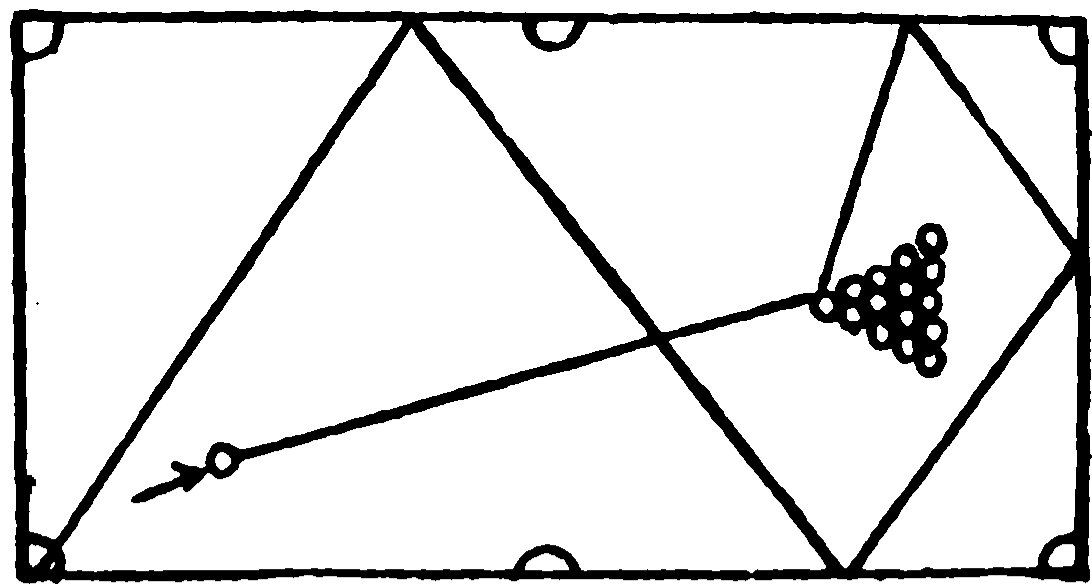
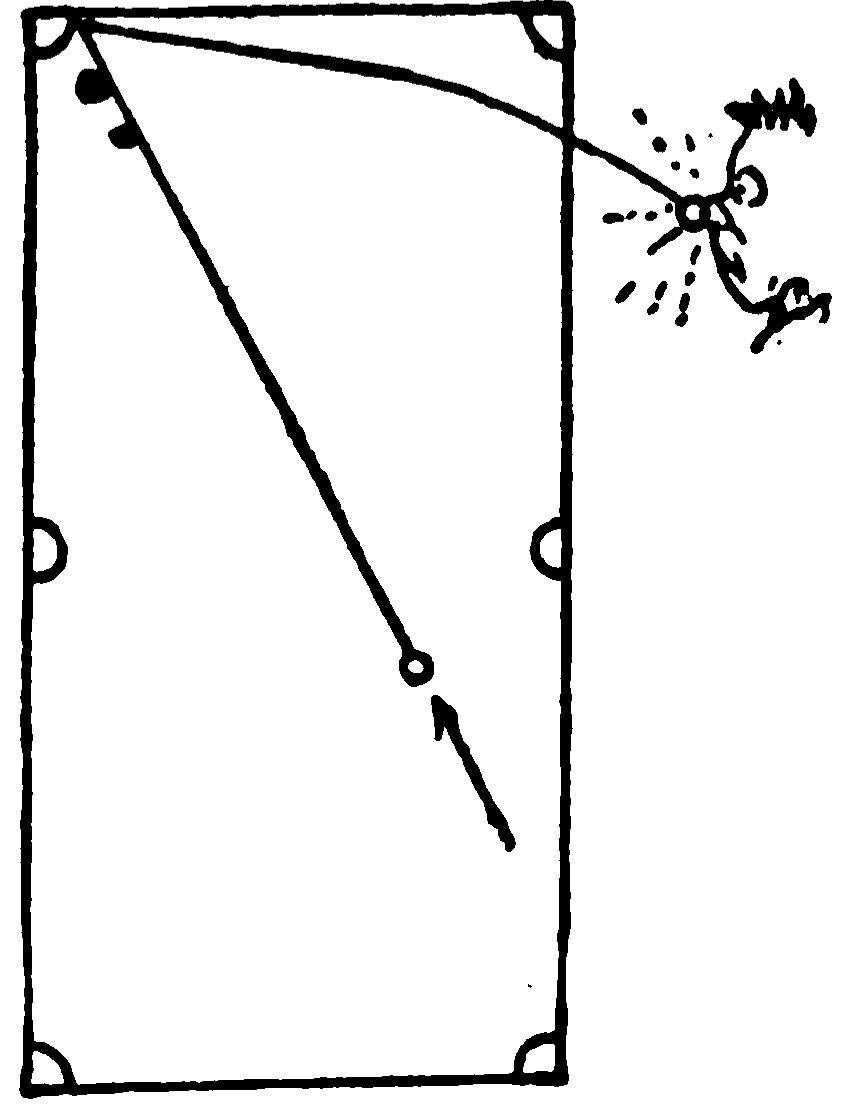
This represents the remarkable around-the-table shot made by Col. Howard at the beginning of the first game. The balls were bunched on the spot at the lower end of the table, and Howard led off 259to break the combination. His cue, not being properly chalked, did not strike the ball full. The ball, therefore, barely touched the maroon-colored ball at the apex of the group, glanced to the left, cushioned to the right, carromed thence to the right cushion, thence to the left across the table, and then shot across into the pocket at the confluence of the right hand and upper rails at the head of the table amid loud applause.

Here we have an extraordinary play made by Col. Mann near the close of the second game. He desired to put the yellow ball in the lower left-corner pocket: to do this, required a long reach across the table; bridges being barred, under the rules of the Danville Billiard Association. Col. Mann overreached himself, and gave his cue-ball such an unusual impetus that it rapidly described two acute angles, bounced across the table and over the right rail, and struck one of the spectators full in the nose. This very properly was accounted one of the marvellous shots of the tourney; and the referee shook hands with Col. Mann, and complimented him in high terms. At the close of the third game, Col. Mann made a remarkable massay shot, the like of which had never before been witnessed in Vermilion County. There were but two balls (the speckled one and the dark-blue) on the table, and Col. Mann determined to try one of the massays Mr. Vignaux had taught him. The dark-blue lay within the 14-inch line, and the speckled ball just outside: the thing was, to tick the speckled one, chassez around it, and strike the dark-blue hard enough to send it into the middle pocket of the left rail. This required a good deal of what is called “English” by the Vermilion-county experts. Col. Mann reached over the table, held his cue perpendicularly over the cue-ball, had jabbed it fiercely down—just as Mr. Vignaux had told him to do. The massay was perfect; but, 261after striking the cue-ball, the cue glanced to the bed of the table, and ploughed up about three cubic inches, or fifteen dollars’ worth, of the cloth.
This ended the tournament; and the championship was awarded to Col. Howard, who is now familiarly known as the “Wizard of the Vermilion-county cue.”
Mr. Ruggles of the Michigan Central road tells of a funny dream he had the other night. He had been eating stewed terrapin at Caveroc’s; and when he finally got to sleep, he dreamed that he had died, and was knocking at the jasper gate of heaven.
“Who’s there?” demanded St. Peter.
“O. W. Ruggles of Chicago,” was the reply.
“Let me see,” said St. Peter, looking over his books, “let me see; when did you die?”
“Last week Tuesday,” said Ruggles.
“A week ago!” cried the saint, “seems to me you’ve been a long time on the way.”
“Well, you can’t blame me for it,” protested Mr. Ruggles; “for under the old system, there’d have been no trouble; but this interstate commerce law is seriously interrupting travel.”
“The St. Paul Globe” must not be too severe on the class of people whom it stigmatizes as base-ball cranks; for base-ball is our national game, and it includes among its admirers many of the wisest and the best of our citizens. Love of the game of ball is no new thing: it is as old as history itself. It is a pity that old Izaak Walton knew nothing of the sport; for how he would have enjoyed it, and how charmingly he would have written of it! It is a particularly desirable game, because it calls into, and keeps in, the open air a large number of people who otherwise would remain cramped up indoors. It is the enemy—call it rival, if you please—of billiards and other house-sports, and we are heartily glad that it is so successful. It has charms not only for those who participate in it, but also for those who are spectators simply; and it is rapidly acquiring those scientific excellences which will ultimately place it far above other athletic sports. A certain class of writers (who cannot know what they are talking about) inveigh against what they are pleased to term the “ball-craze;” and the circumstance that Mike Kelly recently got a large sum of money for leaving the Chicago to join the Boston club, is dished up in every style to prove that these are degenerate times, and that humanity is on the 263highway to idiocy. But the truth of the matter is, ball-playing isn’t made nearly so much of as it was many centuries ago, when even Homer delighted to weave its praises into his immortal verse. Athens had its Mike Kelly. Of course, he was not as good a man as our own Mike Kelly is; but the world was comparatively young then, and we think we can safely say that Aristonicus the Carystian was a worthy representative of our national game at that time. At any rate, Aristonicus won the admiration of King Alexander; and his majesty was not satisfied until he had bought Aristonicus’s release from the Carystian Club, and had signed him with the Athens White Buskins. The sum which Alexander paid for this release is said to have been four didrachms and three tetrobolons, a prodigious price for those days, but a comparatively small amount for modern times. Money was scarce then: if the cashier of an Athenian bank had tried to abscond with four dollars’ worth of money, he would have required thirty elephants and sixteen four-horse chariots to transport the coin. The money which King Alexander paid for Aristonicus’s release was equivalent to a dollar and twenty-five cents in our money; but it was esteemed such an extravagant sum at that time, that the contemporary press of Thrace pounced upon it, and paraded it as an instance of preposterous profligacy. But his majesty felt more than repaid for the investment: his ball-club won 264the championship, and held it until the death of Aristonicus. This famous player became very popular with the Athenians: they made him a free man, and they erected a statue to him! Now, just imagine the Boston people erecting a Monson granite statue to Mike Kelly on the banks of the frog-pond in Boston Common,—ay, and under the very shade of the classic gingko-tree!
Demoxenus, who seems to have been the Browning of Athenian poesy, has left us this word-picture of the Grecian ball-player,—to be more explicit, a picture of the third-base man of the Athens White Buskins:—
It appears, however, that, even among the ancients, there were those who thought that too much attention was being paid to ball-playing. One of the grumblers was a person of the name of Chærephanes, 265who, notwithstanding his blatant and persistent decrying of the sport, was in the habit of attending every game to which he could get a free pass. This inconsistency irritated the alleged base-ball cranks of Athens; and one day, while a match-game was in progress in the park at the base of the Acropolis, Demoteles, who appears to have been the Baby Anson of the White Buskins aforementioned, addressed Chærephanes rather testily. “Tell me, O Chærephanes! how comes it, that, not liking this game, you are always on hand whensoever you can get a free pass?” To him Chærephanes responded, “Because I enjoy seeing you boys play it, think not that I approve the game.”
Here is an important literary item which we find in the current number of “The Chicago Indicator:” “W. S. Crouse of Mitchell, Dak., has given a chattel mortgage for eighty-five dollars.”
It pains us to note that our local literary boom has suffered somewhat of a set-back in the violent interest which, all of a sudden, is being taken in the subject of drainage. It were much better, we think, if these twin arts could go together hand in hand.
The re-appearance of Sara Bernhardt in the midst of us has, of course, set our best society circles into a flutter of excitement; and we have been highly edified by the various criticisms which we have heard passed upon that gifted woman’s performance of “Fedora” night before last. All these criticisms have flavored of that directness, that frankness, and that rugged discrimination, which are so characteristic of true Western culture. Col. J. M. Hill, the esteemed lessee of the Columbia Theatre, told us some weeks ago that his object in securing a season of Bernhardt was to give a series of entertainments which would appeal for appreciation and for patronage to the intellectuality of our crême de la crême, and which would be several degrees above the comprehension of the hoi polloi. We noticed last Monday evening that the hoi polloi were not on hand to welcome the eminent French artiste; and we were ineffably pained to notice, too, that the crême de la crême was very meagrely represented. This amazed as well as pained us: if Sara Bernhardt cannot pack the Columbia at Col. Hill’s popular prices, who, by the memory of Racine and Molière! who—we ask in all solemnity—who can? And what amazed us, furthermore,—perhaps we should say what shocked us,—was the exceeding frigidity with 267which the select few of our crême de la crême received the superb bits of art which Sara Bernhardt threw out, much as an emery-wheel emits beauteous vari-colored sparks.
“Zis eez awful!” exclaimed Sara to her stage-manager, as she came off the stage after the first act of “Fedora.” “Ze play eez in Russia, but ze audiongce eez in ze circle polaire!”
It strikes us that Sara was pretty nearly correct; but for the date on the play-bill, we might have surmised that our French friends were performing amid surroundings of the glacial period.
“Ze play eez ‘Fedora,’” said Sara to M. le General Carson, entre acte, “ze artiste eez Bernhardt, and ze audiongce eez ‘Les Miserables!’”
M. le General came right out, and told this to distinguished friends in the lobby. He said it was a bong mo; but young Horace McVicker, who once conducted a Paris-green manufactory in California, and therefore is an accomplished French scholar, corrected M. le General by alleging that Sara’s witticism was not a bong mo, but a judy spree.
The Markeesy di Pullman applauded the famous actress a great deal after he had once located her. In order to make sure of doing the proper thing, he applauded every woman that appeared on the stage; and by the time the second act was fairly under way, he was able to identify the “cantatreese” (as he called her) by the color of her hair. “But,” 268he remarked to his friend, M. le Colonnel Potter Palmer, later in the evening, “I don’t mind telling you that I don’t like her as well as I do Patti; and as for this man Sardoo”—
“Sardoo? Who’s he?” interrupted M. le Colonnel Palmer.
“Why, he’s the man who wrote this piece,” said the markeesy; “and he doesn’t hold a candle to our Italian poets, Danty and Bockashyo.”
“I don’t know any thing about such things,” said M. le Colonnel Palmer meekly. “As for myself, I like to be amused when I go to a show; and I presume I’d like this woman very much if I could see her in one of the fine old English comedies, such as the ‘Bunch of Keys,’ or the ‘Rag Baby.’”
Now, while these two distinguished personages were aware that the play was “Fedora,” there were many in the auditorium who had not very clear convictions on this point. M. Thomas J. Hooper, the prominent linseed-oil manufacturer (whose palatial residence on Prairie Avenue is the Mecca of our most cultured society),—M. Hooper, we say, sat through three acts without dreaming that the play was “Fedora.”
“I like Clara Morris better in this rôle,” said he to M. T. Desplaines Wiggins, one of the vice-presidents of the Chicago Literary Club.
“But, my dear fellow,” said M. Wiggins, in a tone of expostulation, “Clara Morris never played the part.”
269“Never played Cameel?” cried M. Hooper. “Why, bless you, man, I seen her do it right here in this theatre!”
“But this isn’t Cameel,” said M. Wiggins: “it’s Feedorer.”
“Well, now, I’ll bet you fifty it’s Cameel,” said M. Hooper, calmly but firmly.
M. Wiggins covered the wager, and M. Billy Lyon decided in favor of Wiggins and Fedora.
“I knew I was right,” exclaimed M. Wiggins triumphantly, “for I saw it on the programme.”
M. Hooper was very much put out. “You don’t pronounce that word right, anyway,” he muttered sulkily.
“What word?” demanded M. Wiggins hotly.
“That word programmay,” said M. Hooper. “It’s French; and it isn’t program, but programmay.”
They wagered fifty dollars on it between them, and referred it to M. Jean McConnell.
“At popular prices, it’s program,” said M. McConnell; “but during this engagement, it’s programmay, sure.”
So M. Hooper squared himself financially; and M. Wiggins went down to his seat in the parquettay, muttering something that sounded very like a profane and inexcusable rhyme for program.
But, as we have hinted above, M. Hooper was not the only one in the audience who was unsettled as to what the play was, and what it was 270all about. Throughout the auditorium, messieurs, mesdames, and mademoiselles were sadly bothered to know whether it was Cameel, or Faydorah, or Tayodorah, or Fru-Fru, or some other morso from the Bernhardt repertevoi. M. James M. Billings, the prominent restaurateur, told his family that the bill had been changed, and that the piece was “Jennie Saper.”
“Why, no, ’taint, pa,” protested Mdlle. Billings: “it’s ‘Faydorah.’”
“Now, look here, Birdie,” said M. Billings sternly. “I know what I’m talking about. As we were comin’ in, I asked one of the men in the entry what the piece was, and he said ‘Jennie Saper;’ and he knew, for he was a Frenchman.”
“Our seats,” said M. T. Frelinghuysen Boothby, “were so far back, that we had difficulty in making out what Burnhart said; but from what I did hear, I would judge that she spoke better English than Rhea: at any rate, I could understand her better than I ever could Rhea.”
M. le Colonnel Fitzgerald confessed to being disappointed. “It may be my fault, however,” said he: “for I am very rusty in my French, having paid no attention to it since I visited Montreal in the summer of 1880. I brought my ‘French Conversations’ along with me to-night, but it was of no assistance to me. I hadn’t got half through the first scene in the first act, when Fedora was dying in the last act. This was slow business. 271Of course, there were a good many words and phrases that were familiar, such as, ‘voyla,’ ‘toot sweet,’ ‘tray be-yen,’ ‘mercee,’ ‘pardong,’ ‘bong zhour,’ and ‘wee wee.’ You can depend upon it, that, whenever I heard these old friends, I applauded with the nicest and the heartiest discrimination.”
Now, all these criticisms and features (and there were many, many more such) interested us—or, at least, they entertained us. But we were grieved to discover a disposition (shall we say a pongshong?) on the part of the audience to compare Bernhardt’s Fedora with Fanny Davenport’s. To institute any such comparison would be a sore injustice to both ladies. Bernhardt and Davenport represent two very different dramatic schools: one is the school of avoirdupois, and the other is essentially so different that it must be estimated only under the accepted rules of troy weight. To be more explicit, we will say, that, while you would properly weigh Miss Davenport’s art on a hayscales, you must use a more delicate machine if you would seek to learn the true magnitude and concinnity of Bernhardt’s art. It is quite true that to both Fedoras the same amount of practical appreciation is paid here in Chicago. When Miss Davenport played Fedora at the Columbia Theatre last January, she was applauded rapturously by 2,000 delighted tradesfolk at 50 cents apiece: now Bernhardt comes along with her subtile impersonation, 272and does business to 333⅓ of the crême de la crême of our pork-packers at $3 per head. You see that the box-office receipts are the same in both instances: it would be impossible, therefore, to compare the merits of each actress by the amount of money derived from the performance of each.
It is far from our purpose to institute any invidious comparisons between these two gifted women: each excels in her way; and the way of the one is as far from the way of the other as the beauties of a fat-stock show are removed from the beauties of a floral display. If there is in Fanny’s art a breadth and a weight that remind us of the ponderous thud of a meat-axe, there is (it must also be confessed) in Sara’s art a daintiness and an insinuation that remind us of the covert swish of a Japanese paper-knife. Horace has explained this very difference in that charming ode wherein he tells of Næera, who, “with ruddy, glowing arm, holds out an earthen cup of goat’s milk,” while, on the other hand, Lydia extends to the parched poet a silver flagon, “filled to the brim with old Falernian chilled with snow.” Now, there is no doubt in our mind that Horace chose the Falernian; but we are not all Horaces; and we presume to say, that, as between goat’s milk at popular prices, and Falernian at war-rates, a vast majority of Chicagoans would choose the former.
“The last act was a great disappointment,” said 273one of our most cultured beef-canners. “It is there that Davenport gets away with this French woman. Why, Davenport’s tussle with that young Rooshan is the grandest piece of art I ever saw! she just tears around and horns the furniture like a Texas steer in a box-car.”
George Bowron, leader of the orchestra at the Columbia, says that he knew, just as soon as he saw the score of the incidental music, that Bernhardt’s Fedora was very unlike Davenport’s.
“Bernhardt’s score,” says he, “is interspersed throughout with ‘pianissimo,’ ‘con moto,’ and ‘andante.’ On the other hand, the music of Davenport’s Fedora is in big black type, and every other bar is labelled ‘forte’ or ‘fortissimo;’ and our trombone-player blew himself into a hemorrhage last January, trying to keep up with the rest of the orchestra in the death-struggle in the last act.”
We can see that Bernhardt labors under one serious disadvantage, and that is the fact that her plays are couched in a foreign language. We asked Col. J. M. Hill why Sardoo did not write his plays in English, and he said he supposed it was because Sardoo was a Frenchman. This may be all very well for Paris, but we opine that it will not do in Chicago. What protection has a Chicago audience in a case of this kind? What assurance have we, that, while we are admiring this woman’s art, the woman herself is not brazenly 274guying and blackguarding us in her absurd foreign language?
Now, we would not seek to create the impression that Sardoo’s work is not meritorious: on the contrary, we are free to say, and we say it boldly, that we recognize considerable merit in it. We fancy, however, that Sardoo is not always original: we find him making use of a good many lines that certainly were not born of his creative genius. As we remember now, Sardoo introduces into his dialogue the very “pardonnez-moy,” the very “mong-du,” and the very “too zhoors,” which we hear every day in our best society; and will he have the effrontery to deny that he has stolen from us—ay, brazenly stolen from us—the very “wee-wee” which is the grand commercial basis upon which Chicago culture stands and defies all competition?
Oh, how glad—how proud—Chicago is that Bronson Howard and William Shakespeare and Charley Hoyt, and her other favorite dramatists, have been content to put their plays in honest but ennobling Anglo-Saxon!
The Bernhardt engagement has brought out all the French scholars in Chicago. Never before had we suspected that there were so many able linguists 275in the midst of us. Gen. Stiles, we have just discovered, speaks French like a native of Paris (Edgar County). He attended the “Frou-Frou” performance last evening with his friend Judge Prendergast. The judge is a proficient Greek and Latin scholar; but he knows little of French, his vocabulary being limited to such phrases as “fo par,” “liaison,” “kelky shoze,” and “olly bonnur:” so Gen. Stiles had to explain the play to him as it progressed last evening.
“Now what is she saying?” the judge would ask.
“She said, ‘Good-evening,’” the general would answer.
“Does ‘bung swor’ mean ‘good-evening’?” the judge would inquire.
“Yes.”
“Oh, what rot!” the judge would exclaim; and then a dude usher in one of Willoughby & Hill’s nineteen-dollar dress-suits would teeter down the aisle, and warn the gentlemen not to whisper so loud.
Presently Col. William Penn Nixon, the gifted editor of “The Inter-Ocean,” came along, and slipped into the seat next to Gen. Stiles. He had an opera-glass, and he levelled it at once at Bernhardt’s red, red hair.
“Do you speak French?” asked Gen. Stiles in the confidential tone of a member of the Citizens’ Committee.
276“Oony poo,” said Col. Nixon guardedly.
“Vooley voo donny moy voter ver de lopera?” asked the general, motioning toward the opera-glass.
“See nay par zoon ver de lopera!” protested the colonel. “Say lay zhoomels.”
“Mong doo! What do I want of zhoomels?” cried Gen. Stiles. “Zhoomels is twins!”
“Par bloo!” said Col. Nixon: “it is not twins, it is opera-glasses.”
“You’re all wrong, William,” urged the general. “The French idiom is ‘the glass of the opera.’ ‘Ver’ is glass, and ‘de lopera’ is of the opera.”
“I have heard them called lornyets,” suggested Judge Prendergast, in the deferential tone of a young barrister seeking a change of venue.
“Well, I don’t know what the general’s opera-glass is,” said Col. Nixon; “but this one of mine is a ‘lay zhoomels.’”
“Call it what you please,” replied the judge: “it is de tro as far as I am concerned, until the corpse de bally makes its ontray.”
“I thought you didn’t speak French,” said Gen. Stiles, turning fiercely upon the judge.
“Oh, well!” the judge explained apologetically, “I’m not what you and the colonel would call oh fay—I’m a june primmer at the business; but when the wind is southerly, I reckon I can tell a grizet from a garsong.”
277Chicago society is still in considerable doubt as to where Bernhardt should be located in the artistic scale. A good many of the élite think that her Fedora is second to Fanny Davenport’s, and there are very many others who prefer Clara Morris’s Camille. We notice that the popular inquiry in cultured circles is, “Have you been to see Bernhardt?” not, “Have you been to hear Bernhardt?”
“Oh, you don’t know how I enjoyed Bayernhayerdt the other evening!” exclaimed one of our most beautiful and accomplished belles. “Her dresses are beautiful, and they do say she is dreadfully naughty!”
At the rehearsal of “Frou-Frou” in the Columbia Theatre last Thursday noon, Col. J. M. Hill, the urbane lessee, stood in the lobby chatting with Miss Bernhardt; and, while they were thus chatting, a card bearing the name of a strange gentleman was handed to the eminent actress. Miss Bernhardt took the card, scrutinized it, and exclaimed in her pretty French way, “Sacre bleue! Who eez zis gentilhomme? I haf not ze honaire to know him.”
Noticing the lady’s dilemma, Col. Hill, with characteristic gallantry, was not slow in coming to her rescue.
278“Have no fear, madam,” said he to Miss Bernhardt, “have no fear while I am by your side. Go back, young man, to him who sent you, and ask him if his intentions are honorable.”
Mr. Thomas J. Knapp, manager of the Elgin Opera-House, returned home last evening very much disgusted. He had been in Chicago a week, trying to arrange for one night of Bernhardt in Elgin.
“Our town,” says he, “is the best one-night stand in Illinois. Our watch-factory employs ten thousand hands, and we have the best society in the West. It would pay this French woman to stop over a night with us.”
“Why doesn’t she?”
“The manager wants a guaranty of five thousand dollars,” says Mr. Knapp, “and I wouldn’t give it. I was willing to raise the price of seats to seventy-five cents, and we would have packed the house! But Bernhardt wants the earth,—or at least her manager does. You see, her expenses would be light,—virtually nothing. In the first place, she wouldn’t have had any hotel-bill to pay.”
“No hotel-bill? Why, how’s that?”
“No, none at all: I had made all the arrangements to have her stop with the minister.”
There has come into our hands a small volume which we value very much as illustrating the degree of proficiency to which Boston had attained in 1842. At that time, Boston was about two hundred years older than Chicago now is. This volume, consisting of sixty-three pages, is entitled “Boston Common;” and it bears the imprint of William D. Ticknor and H. B. Williams. The latter gentleman appears to have been the compiler of the work; and he treats of the formation of the Common, the sky over the Common, the liberty-tree, the old elm, the frog-pond, booths around the Common, the National Lancers, Hollis-street steeple, the iron fence, fountains on the Common, the gingko-tree, cows on the Common, etc. The compilation is done very cleverly, and betrays a fine literary taste, and sound literary judgment. Here and there are introduced apt poetical quotations,—one from Homer, one from Robert Treat Paine, and two from Dr. Isaac Watts. We will make a few excerpts at random, from this pleasing work, for the edification of our readers:—
“The iron fence and brick sidewalk which surround the Common are noble monuments of public enterprise, and of the energy of American mechanics.”
“Since the day when Elder Oliver’s horse had 280the exclusive right of pasturage in the Common, there has been various legislation on the subject of admitting the cows to feed there. The gradual and now entire disappearance of the cow from our streets, is a sure sign of the triumph of artificial life over primitive manners.”
“The gingko-tree is enclosed by a slight paling. This species of tree is common in Japan.... It lives and thrives, while the family in whose ancient enclosure it once grew has shared the common destiny of families in this land.... The gingko-tree has left the family enclosure, and grows on the Common. We perceive in this fact a correspondence with that law of republicanism which scatters the names and the wealth of rich men into the great community; or, if they are preserved for a while, allows their continuance, and concedes to them a voluntary regard, even as the gingko-tree, in its careful preservation, is permitted to hold an honorable place amongst the public trees. This particular tree is the object of an interest in which a degree of sadness mingles with respect, at the thought of changes which,” etc.
Here is an interesting paragraph: “The Common with its varied surface is admirably fitted for military exhibitions.... The National Lancers, a company of able-bodied men, mounted on fine-looking horses, each lance bearing a red flag, and the mounted musicians adding not a little to the life and novelty of the moving show, are a most 281interesting sight. A knowledge of the effectiveness of their weapon mingles a little dread with our feelings of admiration. The lance rests in a socket on the stirrup: when a charge is made, the lance, remaining in the socket, is dropped into a horizontal position, and, being so held, the horse is urged against the enemy, and thus the whole power of the animal is thrown into the lance, which is thereby capable of transfixing an assailant with irresistible force.”
At the time this elegant passage was written, the present editor of “The Boston Herald,” the venerable Col. Haskell (father of the editor of “The Minneapolis Tribune,” now in Europe on a bridal tour), was captain of the Lancers; and the lance he used to carry may still be seen in the Boston Museum, hanging on the wall beside the sword of Bunker Hill.
The perusal of this book, “Boston Common,” has awakened in us the hope that some enterprising Chicagoan will do a similar work for this city by writing a history and description of Dearborn Park. This park is the oldest in the city, having been laid out when Long John Wentworth was a rosy-cheeked lad, only nine years old, and only eight feet tall. We cannot say that it has improved with age: it has no frog-pond, nor any old elm, nor any gingko-tree. But it reeks with associations, and we think that some local littérateur ought to compile these associations into a tome.
Boston has been making a great palaver over her “Longfellow memorial readings.” These readings were given in the Boston Dime Museum last Thursday, and the persons who participated were as follows: Col. J. R. Lowell, the Shakespearian lecturer; Mr. Mark Twain, the Missouri humorist; Mr. W. D. Howells, the New-York novelist; Mr. G. William Curtis, the New-Jersey Mugwump; the Rev. E. Everett Hale, editor of “The Lending Hand;” Col. Thomas B. Aldrich, editor of “The Atlantic Monthly;” Dr. Oliver Wendell Holmes, the eminent surgeon; Mrs. Julia Ward Howe, mother of Miss Maud Howe; the venerable John G. Whittier, author of the New-Hampshire idyl, “Joaquin Miller;” and Col. T. Wentworth Higginson, the friend of the late James T. Fields. “The Boston Globe” publishes the pictures of these littérateurs, and we observe that five of them (including Mrs. Howe) part their hair in the middle. But this is neither here nor there. What we wish to say, and what we wish the public at large to believe, is, that Boston stole this idea of giving memorial-fund readings: she stole it from Chicago. Two months ago, a movement was set on foot in this city to secure a fund for the purpose of erecting on the lake-front a splendid monument to the memory of “The 283Literary Life,” that never-to-be-forgotten literary journal, which, under the inspired genius of Rose Elizabeth Cleveland, waxed and waned in the midst of us one all-too-brief year ago. Professor Henry T. Bosbyshell, analytical chemist for Byers & Co., the eminent soap-manufacturers, conceived the laudable plan of securing this monument-fund by giving in Central Music Hall a grand symposium at which Chicago littérateurs would read from their original works. The date fixed for this unique performance was May 28; and the following local authors were bespoken, and promised to participate:—
Professor H. T. Bosbyshell, author of “American Soaps Analyzed,” “The Secret of Perfuming Revealed,” “The Boss Baking Powder,” and “How to Remove Paint Stains.”
Col. T. Shelby Sothers, author of the “Chicago Directory for 1859,” “The Travellers’ Guide to Chicago,” “Compendium of Railroad Information,” and “Chicago Trade Statistics for 1883.”
Professor William Mathews, author of “How to get on in the World.”
Miss Tryphena Cora Swartwout, author of “West-Side Poems,” “Ode to the Chicago River and Other Sonnets,” “An Analysis of Browning,” and “A Complete Cook Book.”
Col. Peter G. Hobby, author of “The New Baconian Theory; or, A Modern Method of Smoking Sidemeats.”
284Mr. Wellington Boothkins, author of “Handbook of Etiquette; or, Ten Years a Chicago Clubman,” and “A Review of the Linseed-Oil Trade in the West.”
Mrs. Martha W. Lester-Tubbs, author of “The Dawn of Chicago Literature,” “The Mother’s Companion,” and compiler of “Epics of the Hennepin Valley.”
Professor Thomas O’B. Swigert, author of “The Art of Composition; or, The Manufacture of Press-Rollers Made Easy.”
Mr. DeLancey Morris Sowerby, author of “Noctes Ambrosianæ; or, Ten Nights in the Chicago Literary Club,” and compiler of “The Record of the Chicago Races for 1886.”
Mrs. Minerva J. Peabody, the Calumet poetess, whose nautical poems, “Will Henry Come when Navigation Opens?” and “Aboard the Three-Mast Schooner when the Shingle Crop Comes In,” are sung in every Chicago household.
Col. James Russell Lowell was let into this secret when he was here last February; and it is probable that he went right back to Boston, and betrayed the whole scheme. It is very aggravating to have our original ideas snapped up in this piratical manner by the conscienceless Yankees; but we hope that our littérateurs will stick to their programme, and show the false Bostonians that here, in the home of the muses, and in this wallow (if we may so term it) of culture, we can prepare 285and execute a literary programme which will put the presumptuous Bostonians to the blush. We can do this, too, without calling on Missouri, New York, New Jersey, and New Hampshire for help.
The enterprising firm of Plankinton, Armour, & Co. announces that it is prepared to meet the demands of the large and constantly increasing demands of our literary public, by putting into the spring market an entirely new line of canned goods, scheduled and classified, in the prominent trade-catalogues as “Condensed Literature.” These ingenious preparations, which promise to become a boon to Western civilization, are so compounded as to serve (each in its proper place) in lieu of that particular kind or branch of literature which may be demanded. There are eleven varieties of these canned goods; to wit, 1, epic poetry; 2, lyric poetry; 3, ancient history; 4, modern history; 5, Grecian romance; 6, Latin romance; 7, German philosophy; 8, English philosophy; 9, English romance; 10, Norse mythology; 11, Chicago belles lettres. If one feels the need of information on any one of these topics, he has but to purchase and consume one of these compounds, and his desire speedily becomes allayed. For instance, when Mr. Jones experiences an appetite for, say, epic poetry, he will pay twenty-five cents for can No. 1, and, having devoured the contents, he will find that appetite temporarily satisfied. Thus, at one and the same time (as the showman says), the cravings of the stomach and the hungerings of 287the mind are satisfied. The value of this invention cannot be overestimated. In this pushing community of ours, time is money: recognizing this fact, Messrs. Plankinton & Armour have invented and patented this grand device for answering in fifteen minutes, and for twenty-five cents, each and every literary craving which years of reading and study would not satisfy. No home, we think, will be complete without a full line of these goods on its library-shelves.
In addition to the above, and in order to meet the demands of those who have more time at their disposal (such as old people, sentimental spinsters, invalids, and professional writers), this firm is now issuing superb editions of sugar-cured hams, upon the canvas covers of which are published the following works: 1, Arnold’s Light of Asia; 2, Tennyson’s In Memoriam; 3, Helen’s Babies; 4, Lives of Famous Highwaymen and Pirates; 5, Longfellow and Rice’s Evangeline; 6, The Complete Cook Book; 7, Baxter’s Saints’ Rest (religious); 8, Spalding’s Base-Ball Guide; 9, Alice in Wonderland; 10, The Complete Letter Writer; 11, Rand & McNally’s Railroad Guide; 12, Browning’s Poems (selected). In ordering, care should be taken to state the title of the ham required. Illustrated editions, containing handsome wood-cut of the author, can be had at a slight advance; tinted covers, and file for preserving same, twenty-five cents extra.
Local literary circles were thrown into a condition of feverish excitement yesterday by the rumor that Mr. Charles Dudley Warner, a well-known Eastern littérateur, had arrived in the city, and was the honored guest of Col. Wirt Dexter, the popular South-Side Boniface. When the rumor first gained circulation, it was discredited by very many, including that cautious and exacting body known as the Chicago Literary Club. Mr. T. Arthur Whiffen, the talented son of the wealthy wholesale fig-dealer, and a member of the club in high standing, refused to believe that Mr. Warner was really in the city.
“As soon as I heard it,” said he, “I stepped around to Dale’s drug-store, and asked the proprietor if he had received any confirmation of the rumor, and he replied in the negative. Mr. Dale is the general Western agent for Mr. Warner’s works; and, as he very pertinently observed, he would have been likely to know if Warner were in this vicinity.”
Later in the day, however, it was learned that Mr. Warner was indeed in the midst of us: in fact, along about three o’clock in the afternoon he was seen bowling down Drexel Boulevard in Mr. Dexter’s elegant St. Bernard dog-cart behind Mr. Dexter’s famous bay gelding, Grover Cleveland. It 289was stated that Mr. Warner had come to Chicago for the purpose of delivering an address before the Clan-na-Gael on St. Patrick’s Day, the 17th inst., and had chosen as the theme for that address, “The Theory that Ben Jonson Did Not Write Rasselas.” Subsequently, however, it was ascertained that this statement was unfounded. In a conversation with Professor Benjamin F. Lawkins, president of the Emerson Literary Society, and author of the scholarly brochure entitled “The Relations Between Fifteen-Ball Poole and the Librarian of Our Public Library,” it was developed that Mr. Warner had produced the following works: “A Liver Safe Cure,” “Some Golden Remedies,” “Comets and Their Relations to Purgative Pellets,” and “What I Know About Farming.” We are told that Mr. Warner will leave for the Pacific slope in a day or two, but will be in Chicago again during the month of June; and we doubt not, that, upon his return, he will be cordially welcomed and handsomely entertained by our appreciative public.
To the Editor.—You said some time ago that Dr. Charles Dudley Warner, the eminent littérateur, and compounder of Warner’s famous safe liver and kidney pills, would visit Chicago on his return 290from California: can you give me the exact date of his coming? As one deeply interested in Chicago culture, I am anxious to become acquainted with Dr. Warner, and to ascertain from him whether a use of his pills would be likely to facilitate the literary movement in this city.
Ex-Postmaster-General Frank Hatton has a fourteen-year-old son who resembles his distinguished father in many particulars.
“Pa,” said he the other day, “I’ve made up my mind where I would like to go to college.”
“Aha,” replied his father; “and where is it, my boy?”
“To Vassar,” said the precocious child.
“Humph!” ejaculated the proud father: “darned if I wouldn’t like to go there myself!”
We understand that Professor Thomas DeQuincey Smythe, the gifted littérateur who edited the famous Chicago edition of Browning’s poems, with copious notes, has recently invented a wonderful powder for removing fleas from pet cats and dogs.
Considerable interest (not to say excitement) has been manifested here in Chicago during the sale of the crown jewels in Paris. There is vast wealth in our most cultured circles; and this wealth, we are gratified to note, is being invested quite largely in articles de virtue, such, for instance, as oil-paintings, St. Bernard dogs, statuary, trotting-horses, tally-ho coaches, upright piano-fortes, Egyptian mummies, crown jewels, Shakespearian autographs, bicycles, and coats-of-arms. Some years ago one of our most prominent citizens (a gentleman of wealth and sand) went to Europe for the express purpose of buying the Venus de Milo; but when he came to see the statue, he refused to pay the price demanded, for the very good reason that the goods were damaged. But he did not return empty-handed: on the contrary, he brought back with him from New York the finest line of Rogers statuette groups you ever clapped eyes on. He told us at the time, that he could have bought a genuine Raphael prima donna for thirty thousand dollars, but had concluded to get along with one of Prang’s Beatrices: on the whole, he rather preferred the Beatrice for two reasons,—first, because he did not go much on opera, anyway; and, second, because his wife belonged to a Dante club, and would like to have a picture of her favorite poet’s 292lady-love in her drawing-room. The famous peachblow vase, for which an Eastern liquor-dealer paid eighteen thousand dollars, would surely have come to Chicago if it had not been so expensive. There was a deep-seated desire among our better classes to have it in the midst of us; but there happened to be an unfortunate flurry in the pork-market just at the time the Morgan sale took place, and the consequent depression in local cultured circles was such that the coveted article de virtue was allowed to go to Baltimore. The truth of the matter is,—and there is no use denying it,—that Chicago is taking a powerful interest in art. It was only last month that Col. N. K. Fairbank had his portrait painted by Michael Angelo. The distinguished artist called at the colonel’s office, and told him he was hard pressed for money, and would paint his portrait at a very reasonable cash-price. Col. Fairbank had some doubts about his being the original Angelo, but these doubts were removed when the artist showed him the original written contract he made for decorating St. Peter’s.
About three weeks ago, the agents of several wealthy Chicagoans sailed for Paris to be present at the sale of the crown jewels. It was understood that this was to be a sheriff’s sale of the diamonds, rubies, emeralds, sapphires, amethysts, pearls, and other gems seized on a writ of attachment under a first mortgage from the unhappy Eugenie, relict of Louis Napoleon, late emperor of 293the French. The sale, as advertised, was to occur at the Hotel de Veal, and was to be conducted on a strictly cash basis. Among the articles listed were brooches, garlands, pendants, flowerets, bracelets, garters, necklaces, tiaras, briolettes, rings, crosses, talismans, lockets, medallions, etc., indefinitely. At the present time, there are, undoubtedly, more diamonds and other precious stones in Chicago than in all the rest of this country combined. On State Street on almost any pleasant afternoon, you can see thousands of beautiful women doing their shopping in superb costumes positively resplendent with diamonds of the first water and the thirty-second magnitude. In short, culture has reached that point in the midst of us, that no lady is received into our most refined circles unless she wears fifteen thousand dollars’ worth of diamonds when she goes marketing. Naturally, therefore, our bong tong were upon the kee veev when they heard of the mammoth sheriff’s sale of crown jewels in Paris. Moses Jacobson, the Dearborn-street connoisseur, was despatched to France at once by a Prairie-avenue syndicate; and he carried with him a cart blonch to buy as many diamonds and valuables as he thought would add to the intellectual and personal charms of his employers’ wives and daughters. No sooner did they hear of this, than a number of prominent millionnaires on Michigan Avenue made up a pool, and hired Abraham Levy, the Monroe-street connoisseur, 294to follow Mr. Jacobson, and to outbid him at the Hotel de Veal sale. Presently the West Side and the North Side waked up, and betimes Wabash Avenue and other fashionable localities became enthused; to make short of a long and thrilling story, there cannot be fewer than a dozen representatives of Chicago culture in Paris at this time, each struggling for possession of those crown jewels. We feel pretty confident that the Frenchmen will not be able to impose upon these representatives; for, if there is one thing which a Chicagoan understands better than he does pork and belles lettres, it is diamonds. When he gets his hands on a stone of unusual lustre, the first thing he does is to draw his tongue across it, to assure himself that it isn’t alum: then he turns it around, to see if there is any tinfoil back of it. If the stone endures these tests, the Chicagoan will pay the handsomest market-price for it; for, as we have frequently remarked with pride, the truly cultured Chicagoan is a man of enterprise and sand. It will not surprise us at all if the Chicago agents now in Paris come back with a box-car load of crown jewels.
Mr. Nat C. Goodwin, the comedian, has gained twenty pounds in weight since his last visit to Chicago five months ago. He says that life on the Massachusetts beach has wrought this marked improvement in his health and appearance: he has done nothing all summer, but cruise around in his yacht, mingle his handsome form with the billows of the Atlantic, eat clams, and drink bilge-water. Mr. Goodwin is a honored member of the famous Hull Yacht Club of Boston, and the experiences of his yacht have been so numerous that they would fill tomes to overflowing. His yacht is, not inappropriately, named “The Sinker;” and it is justly considered the most remarkable craft on the Atlantic coast. Whenever Mr. Goodwin sets sail in it, his Boston friends buy pools on the chances of his ever showing up again. It is worthy of note, that the chances of his never returning are invariably the favorite in the pools. Mr. Goodwin tells us, and we are inclined to believe him, that his yacht is the only sailing-vessel in American waters that can jump a fence. He says, that whenever he leaves the Boston wharf, and heads “The Sinker” for the mighty expanse of brine due east, every tug in the harbor gets up steam, and gives chase; it seeming to be a friendly rivalry among the tugs to see who will earn the ten dollars, and the honor of 296convoying “The Sinker” back into port, when it staves a hole in its hold, or splits its mizzen-mast, or loses its boom, or disables its rudder, or meets with any one of the misfortunes which appear to be inevitable when Mr. Goodwin is in practical command. “When I have my new yacht built,” says Mr. Goodwin, “I shall have it constructed upon ingenious plans which are the result of a long and eventful experience. It will be so devised and built as to be capable of shutting up like an accordion whenever it strikes a rock or a sand-bar. In this way all disaster will be averted, and I will be spared the humiliation and expense of liquidating the damages which now attend every cruise of ‘The Sinker.’ The log of this unfortunate vessel reveals the startling fact, that although ‘The Sinker’ actually sailed only sixty-two miles last summer, the cost for repairs exceeded three thousand dollars.” Mr. Goodwin said he was amazed to discover that William H. Crane, the actor, had such a large reputation in the West for nautical prowess. He was free to confess that Crane was a very indifferent yachtsman, and he seriously doubted whether Crane had ever been out of sight of Bunker-hill Monument in all of his much-vaunted ocean experience. “This man Crane,” says Goodwin, “is an interloper: he talks very glibly about mainstays and jibs and ‘to leeward’ and ‘aft’ and ‘hard-a-port,’ but he knows absolutely nothing about practical marine-service. I had him out with me ten 297minutes in ‘The Sinker’ one afternoon last August; and, when they fished him out of the water with boat-hooks, he cried like a baby, and vowed he would never again test the faith of the bounding billows. Stuart Robson is the sailor of the two,—a regular old salt; but of course he is getting too advanced in years to enter into aquatic sports with enthusiasm.” Mr. Goodwin said Mr. Crane was enjoying more robust health now than ever before. In a year or two we might expect to see him waddling around with a ponderous abdomen, carrying a big cane, and talking sententiously about “the young men in the profession.”
Mrs. Antoinette J. Bascomb, Professor Tremaine Lomax, and Mr. T. Boileau Ransome, have been delegated by the Browning Club of Blue Island to formulate a plan for a Western School of Summer Philosophy, to be held in Kumpf’s Grove, near Sixteen-mile Creek, next August. It is the sense of the club that such a school, conducted largely on the plan of the Concord summer retreat for the feeble-minded, would redound largely to the intellectual reputation of the West; but, in order to throw about the enterprise a practical atmosphere, it is intended to devote the financial proceeds of this series of picnics to the building of a new roller-skating rink on Madison Street.
Having eaten a hearty breakfast of corn-beef hash and johnny-cake, President Cleveland put on his hat and overcoat, and strode toward the front-door of the White House.
“Your excellency,” cried Secretary Lamont, “where are you going at this early hour of the morning? It is hardly five o’clock.”
“I am going for a short walk,” replied the President. “I will be back by half-past seven,—in plenty of time to read the paper, look over my mail, write a proclamation or two, and make out a list of nominations before the Senate convenes. I am going around to the various departments to see if my cabinet officers have caught the spirit of the administration, and have returned to the Arcadian simplicity of the Jacksonian epoch.”
And with these words, President Cleveland opened the front-door, and issued forth into the raw, chilly air of the March morning. The brisk breeze blowing from the south-east bore to his ears the faint echo of the din of hammers busily employed in the distant navy-yard at the good work of restoring American sovereignty on the waters of the globe. The lights in the Treasury Department were dim; yet every room was lighted up, and it was evident that all hands were at work, in accordance with Secretary Manning’s order that 299all employees of the civil service should report for duty at half-past four A.M. every week-day. President Cleveland entered the Treasury building, and asked the janitor where Col. Manning was to be found.
“He is down in the vaults, counting the money,” said the janitor; “and he cannot be disturbed.”
Mr. Cleveland expostulated, and was compelled to disclose his identity before the janitor would listen to him. But, being satisfied at last that the visitor really was the President, the janitor conducted him through devious passages, down winding stairways, and under curious moats, until finally the labyrinthine vaults were reached. Here, surrounded by piles of shining gold and silver pieces, sat the Secretary of the Treasury, counting the national hoard by the dim light of a candle.
“I am sorry you came,” said the secretary to the President; “for I really have so much work to do, that I have no time to talk.”
Then Mr. Cleveland observed that Col. Manning was attired in naught but an undershirt, his trousers, and a pair of high-heeled boots.
“Good!” thought the President. Then he said aloud, “But where is the gas, Dan? and why are you using this wretched tallow-dip?”
“I have had the gas-meter taken out of the building,” said the secretary, “and have returned to the good old democratic simplicity of candles. 300By this means, the sum of ninety thousand dollars will be saved to the country annually.”
“And what are you doing now?” asked the President.
“Counting the money in the Treasury,” replied Col. Manning. “I intend to know for myself whether any peculations have been indulged in by my Republican predecessors. Already I have discovered a number of questionable things. For instance, I have found the tail-feathers pulled out of a large number of the eagles on the 1877 coinage of twenty-dollar gold-pieces, and I intend to trace the burglarious outrage to its uttermost until the guilty party is brought to justice.”
“That is right,” said the President; and as he walked away, he felicitated himself and his country upon having secured the co-operation of such an honest, fearless patriot as the Albany journalist.
In the State Department, too, the tawdry gas-fixtures had been removed, to make way for the unostentatious candle. Owing to a dimness of vision, however, Secretary Bayard was compelled to use a kerosene-lamp; and this stood upon his white-pine table, emitting a fragrance which the rose of Sharon might have envied. Bayard wore no collar nor tie. He was in his shirt-sleeves, and the President observed that the shirt was a woollen one; only to preserve the necessary dignity on state occasions, the secretary wore a white celluloid bosom; but otherwise his attire was rigidly plain.
301“Yes, I am very busy,” said Mr. Bayard, “and I have been hard at work since three o’clock this morning. Having abolished the three hundred typewriters and forty-eight stenographers formerly employed in this department, I have my hands full answering the letters. Here,” he continued, as he wearily laid his pale hand on a mass of crumpled sheets of paper, “here are letters from Queen Victoria, King William, Dom Pedro, Kalakaua, Alfonzo, the Czar, Taing-ho, Gen. Barrios, the Ahkoond of Swet, the Emir of Bagdool, the Begum of Mysore, and a hundred other potentates, which must be answered before the noon-mail goes out.”
In the Navy Department, Secretary Whitney was not to be found. Over a work-bench in one corner of the room leaned a boy, contemplating with awe and admiration the model of a patent canal-boat, which calmly floated on the bosom of a tub of cistern-water.
“Can you tell me where to find the Secretary of the Navy?” sternly demanded the President, who was evidently pained to see one of the lad’s years idling in this manner.
“Dunno,” replied the boy, “but guess he’s in the gymnasium over ’cross the hall.”
President Cleveland stepped across the hall, and opened a door on which was pasted a sheet of paper bearing the written legend “Private.” Yes, there was the Secretary of the Navy, attired in a sleeveless 302jersey and a pair of white cotton drawers, and engaged at pulling vigorously at a rowing-machine.
“Well, I declare!” exclaimed President Cleveland. “What on earth are you doing?”
“Learning the business,” replied Secretary Whitney, between pulls. “I am determined to acquaint myself with every detail of the marine and navy service. My arms have grown an inch and a half in ten days. Bill Chandler knew nothing about the minutiæ of the department, and I am resolved to put his administration to the blush. I am learning to swim, and I go to the natatorium twice a day to take lessons.”
As the President strolled toward the War-Department offices, his bosom heaved with emotions of exultation.
“How admirably have I chosen my associates!” he murmured. “On every hand I find irrefutable evidence that the spirit of my administration has infused every subordinate and co-ordinate branch.”
On the walls of the war-office were divers chromos and lithographic prints of Hannibal, Alexander, Cæsar, Napoleon, Israel Putnam, Zachary Taylor, Andrew Jackson, Winfield Scott Hancock, and other great generals; also a framed daguerrotype of old Admiral Crowninshield, in the costume of an honorary member of the Hull Yacht Club of Boston. Armed soldiers paced to and fro over the sanded floor, or studied the maps of the Sioux, Ute, and Modoc reservations, which were 303spread out on the varnished deal tables. When President Cleveland inquired where Secretary Endicott was, one of the gloomy sentinels pointed in the direction of an inner room; and thither the President drifted. A surprising spectacle greeted him as he entered. Secretary Endicott, clad only in a blouse and trousers of army blue, and wearing a fatigue-cap, stood at one end of the room, holding a cavalry pistol in both hands, and firing at a target at the other end of the room. The target consisted of the head of a barrel, upon which uncertain rings had been described with white chalk. “Bang!” went the big pistol, and the recoil threw the Secretary of War into the President’s arms.
“It is all-fired strange,” explained the secretary, “but I have fired over two hundred cartridges at that gol-darned target, and I hain’t hit it once. I’m a mighty poor shot,—don’t believe I could hit the side of a meetin’-house,—but I’m goin’ to keep on tryin’ till the country owns up I’m the gol-darnedest best cabinet officer they had since Uncle Crowninshield was on deck.”
Then the secretary sat down on the corner of the table, and ate his modest luncheon of nutcakes and cheese, while the President talked with him about the troubles on the Oklahoma border.
“By the way,” said the President, picking up a cartridge from the pile that lay on the floor, “have you been using these all the time?”
304“Yes,” replied the secretary, mopping the powder-dust and perspiration from his undaunted brow. “I’ve fired more’n three hundred of ’em this mornin’.”
“Then, it’s no wonder you haven’t hit the target,” said the President, with an amused chuckle; “for, my dear fellow, these are blank cartridges!”
“Well, I swow!” exclaimed the secretary. “You don’t say so!”
President Cleveland chuckled to himself all the way over to the Post-Office Department. But he was proud of his war-secretary, just the same. Endicott was honest and earnest: that was the kind of man the era of reform demanded.
A beautiful young woman, wearing a calico dress, was carrying a three-hundred-pound mail-sack filled with letters through the hall.
“Is Secretary Vilas in?” inquired the President.
“No, sir,” answered the beautiful being in the calico, as she hurried along with the mail-sack.
President Cleveland was shocked: he had never suspected that Vilas would be the first to grow remiss in his duties. With anguish in his soul, the President entered the Attorney-General’s office. It was in full blast. The subordinates were ranged in two semicircles about Gen. Garland, who, in his shirt-sleeves, was propounding questions upon matters which concerned the intelligent conduct of the department. “What is replevin?” 305“What is the jurisdiction of a Missouri justice of the peace?” “Explain the difference between de jure and de facto.” “What is a posse comitatus, and wherein does it differ from the Arkansas possum?” “What is a change of venue?” These and similar interrogatories did the learned Attorney-General put to his class; and the President was pleased to hear that the responses came quickly, and for the greater part were correct.
“I will not interrupt them,” thought the President; so he retired noiselessly, and slipped over to the Interior Department. All was commotion here, and Secretary Lamar was busiest of the busy.
“We have been hard at work since daylight,” said the secretary. “You see, I have not had time to brush my hair, or comb my beard: in fact, I was in such a hurry that I came down-town with my night-cap on. As Horace said, ‘De juvente pluribus noctantur;’ and in the words of the old Greek philosopher, ‘Kai telos epithalmos gar gignosko.’”
The President applauded the enthusiasm which prevailed. Outside the pension office several hundred one-armed and wooden-legged veterans were seeking admittance: inside the office the crowd of old soldiers was still greater. Standing on tiptoe, and peering over the crowd, the President could see the pension commissioner, Gen. Black, hard at work handing out bags of money to the crippled pensioners.
306“’Tis well,” said President Cleveland, smiling. Then he went back to the Post-Office Department, but Vilas was not there. This was a severe blow,—an awful shock. President Cleveland brooded over it, and the tears came into his eyes. As he passed the Department of Agriculture, he saw the commissioner in the garden, watering the tulips, and pruning the young rhubarb-plants. This sight cheered him somewhat; but still the President brooded over Vilas’s absence from his post of duty, and he indulged in the most melancholy reflections until he nearly reached home,—yes, till he had come to the White-House gate. Then a cheery whistle startled him from his sad revery. Looking up, he beheld Secretary Vilas tripping gayly down the walk, carrying a leathern bag, and whistling a merry air from “Falka.”
“I have just left a bundle of letters with Lamont for you,” said Vilas.
“How do you happen to be here, instead of at your post of duty?” inquired the President gloomily.
“Why, when I got down to the office at four o’clock this morning,” explained Vilas, “I found one of our men sick; so I concluded to carry his route for him myself to-day.”
A few moments later, President Cleveland, having removed his coat, collar, and necktie, seated himself at his desk in the White House, and was ready for work.
307“Daniel,” said he to his private secretary, “I feel encouraged, for I have irrefutable evidence that my cabinet is en rapport with the administration. The republic has indeed entered upon an era of Arcadian simplicity.”
Our esteemed fellow-townsman, Egbert Jamieson, Esq., had a remarkably pleasant interview with President Cleveland the other day. The President was in his best mood, and he produced a favorable impression upon his gifted visitor.
“Col. Lamont tells me,” said Mr. Cleveland, “that you are a dramatic author.”
“Ah!” replied Mr. Jamieson, blushing, “I do not know that I would call myself one, although it is true that in leisure moments I have tossed off a comedy or two.”
“I would like to read your works,” said Mr. Cleveland cordially. “When I was living in Buffalo, and had more time than I have now, I used to go to the theatre quite often. I saw Matilda Heron play ‘Camille’ in 1859; and, although the lady appeared to be suffering with a severe cold at the time, I don’t know when I have witnessed a more satisfactory performance. I have also seen Joseph Winkle in ‘Rip Van Jefferson,’ and Mark Twain in Mulberry Raymond’s play of ‘Millions 308In It.’ I am naturally fond of the drama, and I read Shakespeare, Sheridan, Jonson, and other dramatists every now and then; but I never had the pleasure of meeting with your works.”
“My dramatic work,” explained Mr. Jamieson modestly, “belongs to the modern school: do you like the modern school? have you heard that piece of Dixey’s yet?”
“Yes, often, often,” answered Mr. Cleveland. “The Marine Band plays it every Saturday afternoon, and I fancy it mightily; although I am averse to what might be called sectional or partisan music.”
Thus in pleasant discourse did the President and Mr. Jamieson pass as profitable an hour as ever fell to the lot of two agreeable gentlemen. When Mr. Jamieson returned to Willard’s Hotel, an anxious friend asked him whether Cleveland had promised him the attorneyship he was after.
“Well, no, I can’t say that he has,” said Mr. Jamieson; “but there is a good deal of satisfaction in knowing that the administration and I are en rapport on the subject of the drama.”
When the Hon. F. H. Winston, our minister to Persia, heard that President Cleveland had married without letting him know any thing about it, he was deeply mortified. He brooded in grim silence 309while his dragoman, Prince von Schierbrand, read aloud the official report of the wedding.
“Hold on a minute,” he cried, interrupting the prince at one point in his perusal: “read that last sentence again.”
“‘The bride wore a tulle veil bedecked with orange-blossoms,’” repeated the dragoman slowly and with emphasis.
“Good enough for her!” ejaculated the great diplomate, smiling with diabolical satisfaction. “If they’d only let me into the secret, with my influence here at court, I could have sent the bride the veil of cashmere; and I’ll bet that would have beaten the rest of her trousseau all hollow!”
As President Cleveland was proceeding from the east front of the Capitol, after the inauguration ceremonies yesterday, among the vast throng that surrounded him with congratulatory words was a very neat-looking gentleman wearing a dark-brown overcoat, black kid gloves, and a shiny plug hat, and carrying an umbrella in a nice new silk cover.
“How do you do, Mr. President?” exclaimed the neat-looking gentleman cordially.
“Pretty well, thank you,” replied Mr. Cleveland.
“Can I see you a moment privately?” inquired the neat-looking gentleman, attempting to draw the new President to one side.
310“Really, sir, it is impossible to grant your request just at this moment,” said Mr. Cleveland, stanchly maintaining his ground.
“You seem to have forgotten me,” persisted the neat-looking gentleman: “I am Erskine M. Phelps, president of the Iroquois Club.”
“I can do nothing for you just at this moment,” replied Mr. Cleveland; “but you can depend upon it, I was sincere when I declared in my speech to-day that you Indians should be fairly and honestly treated.”
At the panorama of the Battle of Shiloh in this city a few days ago, a small, shrivelled-up man made himself conspicuous by going around the place snivelling dolorously. He did not appear to be more than five feet high. He was dressed all in black, and his attenuated form and gray whiskers gave him a peculiarly grotesque appearance. He seemed to be greatly interested in the panorama; and, as he moved from one point of view to another, he groaned and wept copiously. A tall, raw-boned man approached him: he wore gray clothes and a military slouch hat, and he had the general appearance of a Missourian away from home on a holiday.
“Reckon you were at Shiloh, eh, stranger?” asked the tall, raw-boned man.
“Yes,” replied the small, shrivelled-up man, “and I shall never forget it: it was the toughest battle of the war.”
“I was thar,” said the tall, raw-boned man; “and my regiment was drawn up right over yonder where you see that clump of trees.”
“You were a rebel, then?”
“I was a Confederate,” replied the tall, raw-boned man; “and I did some right smart fighting among that clump of trees that day.”
“I remember it well,” said the small, shrivelled-up 312man, “for I was a Federal soldier; and the toughest scrimmage in all that battle was just among that clump of trees.”
“Prentiss was the Yankee general,” remarked the tall, raw-boned man; “and I’d have given a pretty to have seen him that day. But, dog-on me! the little cuss kept out of sight, and we uns came to the conclusion he was hidin’ back in the rear somewhar.”
“Our boys were after Marmaduke,” said the small, shrivelled-up man; “for he was the rebel general, and had bothered us a great deal. But we could get no glimpse of him: he was too sharp to come to the front, and it was lucky for him too.”
“Oh, but what a scrimmage it was!” said the tall, raw-boned man.
“How the sabres clashed, and how the minies whistled!” cried the small, shrivelled-up man.
The panorama brought back the old time with all the vividness of a yesterday’s occurrence. The two men were filled with a strange yet beautiful enthusiasm.
“Stranger,” cried the tall, raw-boned man, “we fought each other like devils that day, and we fought to kill. But the war’s over now, and we ain’t soldiers any longer—gimme your hand!”
“With pleasure,” said the small, shrivelled-up man; and the two clasped hands.
“What might be your name?” inquired the tall, raw-boned man.
313“I am Gen. B. M. Prentiss,” said the small, shrivelled-up man.
“The —— you say!” exclaimed the tall, raw-boned man.
“Yes,” re-affirmed the small, shrivelled-up man; “and who are you?”
“I,” replied the tall, raw-boned man, “I am Gen. John S. Marmaduke.”
The observed of all observers at the opera last evening was Mrs. Col. Henry J. Bowers, the beautiful and accomplished wife of Col. Henry J. Bowers, general manager of the Fond du Lac Narrow Gauge. Mrs. Bowers, accompanied by Miss Cecilia Muggins of Grand Rapids, her queenly niece, occupied proscenium-box B, and won universal admiration, not more by the nice discrimination with which she approved the performance, than by the superb toilet in which she was attired. Mrs. B. is the daughter of Peter Muggins, the millionnaire pork-packer of Omaha, who came to this country forty years ago a poor lad, and engaged in commerce as a driver on the Illinois and Michigan Canal. Before her marriage, she was the belle of her native town; and since that auspicious event, she has been the acknowledged queen of the recherche social circle in which she moves.
There is a strange fascination about Herr Wagner’s musical drama of “Die Walküre.” A great many people have supposed that Herr Sullivan’s opera of “Das Pinafore” was the most remarkable musical work extant, but we believe the mistake will become apparent as Herr Wagner’s masterpiece grows in years. We will not pretend to say that “Die Walküre” will ever be whistled about the streets, as the airs from “Das Pinafore” are whistled: the fact is, that no rendition of “Die Walküre” can be satisfactory without the accompaniment of weird flashes of fire; and it is hardly to be expected that our youth will carry packages of lycopodium, and boxes of matches, around with them, for the sole purpose of giving the desired effect to any snatches from Herr Wagner’s work they may take the notion to whistle. But in the sanctity of our homes, around our firesides, in the front-parlor, where the melodeon or the newly hired piano has been set up, it is there that Herr Wagner’s name will be revered, and his masterpiece repeated o’er and o’er. The libretto is not above criticism: it strikes us that there is not enough of it. The probability is, that Herr Wagner ran out of libretto before he had got through with his music, and therefore had to 315spread out comparatively few words over a vast expanse of music. The result is, that a great part of the time the performers are on the stage is devoted to thought, the orchestra doing a tremendous amount of fiddling, etc., while the actors wander drearily around, with their arms folded across their pulmonary departments, and their minds evidently absorbed in profound cogitation. As for the music, the only criticism we have to pass upon it is, that it changes its subject too often: in this particular it resembles the dictionary,—in fact, we believe “Die Walküre” can be termed the Webster’s Unabridged of musical language. Herr Wagner has his own way of doing business. He goes at it on the principle of the twelfth man, who holds out against the eleven other jurors, and finally brings them around to his way of thinking. For instance, in the midst of a pleasing strain in B natural, Herr Wagner has a habit of suddenly bringing out a small reed-instrument with a big voice (we do not know its name), piped in the key of F sharp. This small reed-instrument will not let go: it holds on to that F sharp like a mortgage. For a brief period the rest of the instruments—fiddles, bassoons, viols, flutes, flageolets, cymbals, drums, etc.—struggle along with an attempt to either drown the intruder, or bring it around to their way of doing business; but it is vain. Every last one of them has to slide around from B natural to F sharp, 316and they do it as best they can. Having accomplished its incendiary and revolutionary purpose, the small reed-instrument subsides until it finds another chance to break out. It is a mugwump.
Die Walkuren, as given us by the Damrosch Company, are nine stout, comely, young women, attired in costumes somewhat similar to the armor worn by Herr Lawrence Barrett’s Roman army in Herr Shakespeare’s play of “Der Julius Cæsar.” Readers of Norse mythology may suppose that these weird sisters were dim, vague, shadowy creatures; but they are mistaken. Brunnhilde has the embonpoint of a dowager, and her arms are as robust and red as a dairymaid’s. As for Gerhilde, Waltraute, Helmwige, and the rest, they are well-fed, buxom ladies, evidently of middle age, whose very appearance exhales an aroma of kraut and garlic, which, by the way, we see, by the libretto, was termed “mead” in the days of Wotan and his court. These Die Walkuren are said to ride fiery, untamed steeds; but only one steed is exhibited in the drama, as it is given at the Columbia. This steed, we regret to say, is a restless, noisy brute, and invariably has to be led off the stage by one of das supes, before his act concludes. However, no one should doubt his heroic nature, inasmuch as the cabalistic letters “U. S.” are distinctly branded upon his left flank.
The Sieglinde of the piece is Fraulein Slach, a young lady no bigger than a minute, but with 317wonderful powers of endurance. To say nothing of Hunding’s persecutions, she has to shield Siegmund, elope with him, climb beetling precipices, ride Brunnhilde’s fiery, untamed steed, confront die Walkuren, and look on her slain lover, and, in addition to these prodigies, participate in a Græco-Roman wrestling-match with an orchestra of sixty-five pieces for three hours and a half. Yet she is equal to the emergency. Up to the very last she is as fresh as a daisy; and, after recovering from her swooning-spell in the second act, she braces her shoulders back, and dances all around the top notes of the chromatic scale with the greatest of ease. She is a wonderful little woman, is Fraulein Slach! What a wee bit of humanity, yet what a volume of voice she has, and what endurance!
Down among the orchestra people sat a pale, sad man. His apparent lonesomeness interested us deeply. We could not imagine what he was there for. Every once in a while he would get up and leave the orchestra, and dive down under the stage, and appear behind the scenes, where we could catch glimpses of him practising with a pair of thirty-pound dumb-bells, and testing a spirometer. Then he would come back and re-occupy his old seat among the orchestra, and look paler and sadder than ever. What strange, mysterious being was he? Why did he inflict his pale, sad presence upon that galaxy of tuneful revellers? 318What a cunning master the great Herr Wagner is! For what emergency does he not provide? It was half-past eleven when the third act began. Die Walkuren had assembled in the dismal dell,—all but the den Walkure, Brunnhilde. Wotan is approaching on appalling storm-clouds, composed of painted mosquito-bars and blue lights. The sheet-iron thunder crashes; and the orchestra is engaged in another mortal combat with that revolutionary mugwump, the small reed-instrument, that persists in reforming the tune of the opera. Then the pale, sad man produces a large brass horn, big enough at the business end for a cow to walk into. It is a fearful, ponderous instrument, manufactured especially for “Die Walküre” at the Krupp Gun Factory in Essen. It has an appropriate name: the master himself christened it the boomerangelungen. It is the monarch, the Jumbo of all musical dinguses. The cuspidor end of it protrudes into one of the proscenium-boxes. The fair occupants of the box are frightened, and timidly shrink back. Wotan is at hand. He comes upon seven hundred yards of white tarletan, and fourteen pounds of hissing, blazing lycopodium! The pale, sad man at the other end of the boomerangelungen explains his wherefore. He applies his lips to the brazen monster. His eyeballs hang out upon his cheeks, the veins rise on his neck, and the lumpy cords and muscles stand out on his arms and hands. Boohoop, 319boohoop!—yes, six times boohoop does that brazen megatherium blare out, vivid and distinct, above all the other sixty instruments in the orchestra. Then the white tarletan clouds vanish, the blazing lycopodium goes out, and Wotan stands before the excited spectators. Then the pale, sad man lays down the boomerangelungen, and goes home. That is all he has to do: the six sonorous boohoops, announcing the presence of Wotan, is all that is demanded of the boomerangelungen. But it is enough: it is marvellous, appalling, prodigious. Whose genius but Herr Wagner’s could have found employment for the boomerangelungen? We hear talk of the sword motive, the love motive, the Walhalla motive, and this motive, and that; but they all shrink into nothingness when compared with the motive of the boomerangelungen.
A gentleman living out on Franklin Street sends the following communication to this paper, under date of March 12:—
“To the Editor.—Your to-day’s edition brings an article on ‘The Walküre.’ Are you aware of the fact that your daily issue is, according to your own statement, nearly a hundred and fifty thousand? 320You ought to expect that out of these hundred and fifty thousand, at least fifteen hundred will read your paper. Now, how can you, in the face of this number, print the monstrous pollutions of a Lausbub, who sat down and described his voluptuous ignorance in a manner which ought to drive the blush of shame to his face, if he has any? There is no use going into the details of his work: they, as well as it, are simply disgusting. I would excuse any gentleman who does not like Wagner’s music, for saying so in a gentleman-like manner; but a man of the standing of your correspondent, whose expressions are printed in a paper of the standing of ‘The Daily News,’—I expect without control,—such a man, if he really be the brute he attempts to make out of himself, ought to be tortured to death by Wagner’s music, and the smell of garlic of ‘The Walküre.’ I write this to you as an expression of my disgust,” etc.
Professor Eliphalet J. Snodgrass, emeritus professor of æsthetic chemistry at Chicago University, has analyzed the specimen of Wagner’s “Die Walküre” we sent him last Wednesday morning, and he finds that this inspired work of the great 321German master is composed of the following proportionate parts:—
| Libretto | 06 |
| String-music | 12 |
| Wind-music | 15 |
| Motives | 25 |
| Bass-drums and cymbals | 14 |
| Lycopodium and sheet-iron thunder | 13 |
| Flapdoodle, flubdub, and imagination | 15 |
| Total | 100 |
This chemical analysis is confirmed, we understand, by the numerous musical critics of the Chicago press, who have surveyed the performance of “Die Walküre” at the Columbia this week, with quadrants, theodolites, and tuning-forks, in the parquette circle. We are not sure but what a study of these critics, as they appear under full headway at an opera, is more profitable than a study of the performance on the stage. At least, an observation of their methods teaches us the means by which the human mind can arrive at perfection in the art of musical criticism.
“May your shadow never grow less!” was the singularly felicitous toast which Major M. P. Handy, president of the Clover Club, proposed to Miss Sara Bernhardt at a Philadelphia banquet the other evening.
Farmer Carter H. Harrison, the Democratic candidate for governor, went out to the State Fair yesterday in his honest old lumber-wagon, drawn by a couple of steers. He was received with intense enthusiasm by the simple country-folk, who seem to regard him as the modern Cincinnatus. Much to his chagrin, however, the sturdy old farmer discovered, through the shrewd tactics of the Hon. John W. Bunn, chairman of the State Republican Executive Committee, the fair had assumed the air and appearance of a Blaine and Logan ratification meeting. There were Jim Blaine squashes, John Logan pumpkins, Plumed Knight butter, Black Jack preserves, Magnetic pears, Mulligan potatoes, to say nothing of the cattle, sheep, swine, horses, mules, goats, roosters, drakes, and ganders that bore the inspiring names of Blaine, Logan, Black Eagle, Pride of Maine, Our James, Eloquent John, Little Rock Jim, Sunstroke, etc. In a word, it was evident that the determination on the part of Bunn, and other Republican managers, to give none of the premiums to any exhibiter who was not a reliable Republican, had converted the State Fair into a mammoth Republican ratification meeting. Farmer Harrison’s bosom was perturbed by the contending emotion of wounded pride, righteous indignation, horror, 323and scorn. His eagle eyes flashed, and an ominous scowl clouded his sunburned brow. He determined to do something at once that would counteract the effect of this infamous trickery, and confound the conscienceless Republican managers upon their own vantage-ground. So he approached one of the stock-stalls, where a guileless-looking old rustic was lazily chewing tobacco, and watching over a fine, fat specimen of the bovine kind.
“Ah, my good friend,” said Farmer Harrison, in his oiliest tones, “what a superb animal that is!”
“Yes,” replied the rustic, “a very clever critter.”
“What do you call him?” inquired Farmer Harrison. “Do you call him Jim Blaine?”
“Naw,” replied the rustic.
“Logan or Oglesby?” asked Farmer Harrison.
“Naw.”
“Perhaps you have named him the Plumed Knight, or Black Eagle, or Uncle Dick?” suggested the farmer candidate.
“Naw,” said the rustic: “’tain’t got no name ’t all.”
“I thought not,” cried Farmer Harrison. “There was an indescribable something about your appearance, my good friend,—a certain candor, dignity, and valor,—that told me, ‘This man is no tool of the corrupt ringsters who are now attempting to foist themselves upon the honest yeomanry of Illinois.’ Your erect figure, your manly face, your hearty voice, and your ingenious manner, bespeak your independence of all the subtle influences of 324corruption. You are a Democrat, sir,—a grand old Jacksonian Democrat,—unless your honest looks belie you!”
“Waal, I am, by gosh!” said the rustic earnestly.
“Now, I’ve a proposition to make to you,” said Farmer Harrison softly, “and it is this: you name this noble animal after me, and placard him ‘Carter H. Harrison,’ and I’ll do something for you after I’m elected governor.”
“Waal, now, gov’ner,” said the rustic, confused like, “I’m drefful sorry, but I can’t conscientiously do it.”
“What!” cried Farmer Harrison. “Do you mean to say that you, an old Jacksonian Democrat, decline to perform this simple duty at a moment when the hand of corruption is outstretched to throttle our fair republic? Do you mean to say that in this emergency and at this supreme moment you refuse to name this sleek brute ‘Carter H. Harrison,’ and thereby redeem this State Fair from eternal ignominy?”
“Now, really, gov’ner, I can’t,” persisted the rustic.
“And why not?” demanded Farmer Harrison.
“I don’t care to say: I don’t want to hurt your feelin’s.”
“Speak out, old man,” cried Farmer Harrison. “‘Hew to the line, let the chips fall where they may.’ At this moment, let there be no equivocation, no hesitation, no concealment: speak out, old 325man, that your answer may be recorded, and go thundering down the ages!”
“Waal, then,” said the venerable rustic, “if you insist upon knowin’ my reason, I can’t do it, ’cause the critter’s a heifer!”
A floating item tells us that Omaha is the cheapest place in the country to die in. But why die in Omaha, when one can live as cheap in St. Louis, and at the same time serve all the purposes of being dead in other localities? It is related by one of our most reliable citizens, who has travelled much abroad, that he once visited the catacombs of Rome. Deep in the bowels of the earth, surrounded by the mouldy skeletons of other centuries, and oppressed by the weird gloom of the labyrinth of the dead, the traveller abandoned himself to solemn reflections.
“This, then,” said he, half aloud, “this is the city of the dim, mysterious past—the vast charnel-house in which the glory, the flower, the cream, the ambition, of other generations crumble to dust! Grim mocker of mortality—genius of oblivion! this granary of human clay is thy cherished and supreme abode!”
To this apostrophe, a musty mummy of the time of Nero the violinist, raising himself rheumatically from his couch in a mouldy niche, replied, “Stranger, I reckon you’ve never been in St. Louis, Mo.”

THE END.