Title: Arrian on coursing
the Cynegeticus of the younger Xenophon, translated from the Greek, with classical and practical annotations, and a brief sketch of the life and writings of the author. To which is added an appendix, containing some account of the Canes Venatici of classical antiquity
Author: Arrian
Translator: William Dansey
Release date: February 23, 2026 [eBook #78013]
Language: English
Original publication: London: J. Bohn, 1831
Other information and formats: www.gutenberg.org/ebooks/78013
Credits: Richard Tonsing, Robert Tonsing, and the Online Distributed Proofreading Team at https://www.pgdp.net (This file was produced from images generously made available by The Internet Archive)
1
The following version does not aim at pleasing the mere literary man. It was not undertaken with the ambitious expectation of being generally acceptable. It is addressed to the coursing public alone—to the amateurs of the leash; for whom the original was written, seventeen centuries ago, by their representative of old, a courser of Nicomedia in Asia Minor; and for whose amusement and instruction the same now assumes an English garb.
The general reader will find little in it to interest him. He will perhaps consider it altogether unworthy of his notice. The sportsman, fond of
will read it with indifference, as treating of a branch of rural sport, not congenial to his taste; and wonder that an attempt should be made to bring under public notice so ancient a treatise on a subject of such partial interest. But the courser, 2it is humbly conceived, the active patron of the κύνες Κελτικαὶ proud of his greyhounds, that
will peruse it con amore, and find in its pages much that is entertaining and practically useful, and that utility enhanced in the department of annotation.
The literary courser, whose attention it more particularly solicits, will reap the additional benefit of the light which is thrown on Arrian’s text by the ancient authors of Greece and Rome; and be ready to yield to the translator the humble merit of having collected in one point of view the classical elucidations of the Cynegeticus,[1] and the pertinent observations of writers of a later period.
The original manual is conversant with coursing, as practised in the age of Hadrian and the Antonini, at which period the Celtic hound was well known, and highly prized: but the annotations of the translator have a more extensive range, being selected from various Cynegetica in print and manuscript, from the first institution of coursing to the present time.[2]
3
The imperfect poem of Gratius, the Faliscian, on hunting, and the often-cited simile of his contemporary Ovid, afford the earliest notice of the canis Gallicus—for he was unknown to ancient Greece.[3] The description of a single-handed course by the poet of the Metamorphoses, as it is the first attempt of the kind by any classic author, so is it unrivalled in the accuracy of its technical phraseology, and the beauty of its poetry. Intermediate in point of time between the vivid Ovidian sketch, and the full and perfect picture of Arrian, are the faint outlines of the epigrammatist Martial:Martial. L. iii. Epig. 47. et L. xiv. Epig. 200. and subsequent to the Bithynian’s, the somewhat doubtful portrait of the philologist Julius Pollux,Polluc. Onomast. L. v. Præf. presented to the Emperor Commodus; and yet later, that of Oppian,Oppian. Cyneg. L. i. vs. 401. the Greek poet of Anazarbus, of the reigns of Severus and Caracalla.—In4 these authors alone do we find any allusion to the courser’s hound, till towards the close of the third century, when he again appears in the Cynegeticon of Nemesian;Nemesian. Cyneg. vs. 106. who has cleverly struck out in a few lines the elegant symmetry of his shape, and added thereto some peculiar remarks on the selection, feeding, and entrance of puppies. With the scanty portraiture of the Carthaginian poet we are brought down to the reigns of Carus,Ejusd. vs. 64. his sons, “Divi fortissima pignora Cari,” and Diocletian: at which epoch, memorable alike in the annals of the world and its literature, the classical history of the leash may be said to terminate, and therewith all notice of the Celtic hound.[4]
We have no ancient records of the chase[5] to succeed the Greek and Latin Cynegetica; for though it be true that the barbarian codes of law, the Spelman. Gloss. pp. 113. et 551. Du Cange Gloss. in voce.Salic, Burgundian, and German, extended their protection to our variety of Canis Venaticus, about the year 500, under the title of Veltris and its synonyms; and some of the Cynegetical writers appear to have been well known in the dark ages, and so highly valued in the eighth century, as to be read among the higher Greek and Roman classics, in the time of Charlemagne; and we believe coursing and other sports were as attractive in the field, as the writers upon such subjects were in the schools, (for the court of this prince had its Veltrarii,Spelman. in voce. officers of the greyhound-kennel, “qui veltres custodiebant,”) still, instead of any formal treatise of this date upon the pastime of the leash, we find for several centuries, only incidental allusions to the greyhound, and his high repute, principally as distinctive of the gentility of his possessor, until the publication of “The Booke of Hawkyng, Huntyng, &c.” by Dame Juliana Berners, in the fifteenth century.
5
The didactic discourse of hunting, contained in this volume, commonly known by its territorialHaslewood’s Prolegomena to Book of St. Albans. appellation of “The Book of St. Albans,” may be an amplified versification of the prosaic “Venery of Mayster John Gyfford and Willm Twety, that were with Kyng Edward the Secunde;” or possibly a compilation and translation by the sister of Lord Berners, or the “one sumtyme schole mayster of Warton’s Hist. of Engl. Poetry, Vol. ii. p. 172.Seynt Albons” from earlier Latin and French writers: but such authorities are as yet, I believe, unknown to Antiquaries. Excepting, therefore, the few lines, before alluded to, in the latest of the Latin Cynegetica, and the earlier portrait of Oppian, which I consider referable to the 6hound in question, it may be said that we do not possess in print any full description of “the propriteeBook of St. Albans.s of a good Grehounde” ἐκ τῶν ποδῶν ἐς τὴν κεφαλὴν, from the time of the learned Courser of Nicomedia, till that of the sporting prioress of Sopewell.
Not that I am ignorant of the curious early treatise of Gaston Phœbus, the celebrated Comte de Foix, written in the middle of the fourteenth century, entitled “Des Deduitz de la Chasse de Bestes Sauvaiges et des Oyseaux de Proye;”Ms. Cotton. Vesp. B. xii. Brit. Mus. nor of a more rare work in manuscript, The Mayster of Game, composed by Edmund Duke of York,Henry VI. pt. ii. act ii. “Edmund Langley, Edward the Third’s fifth son,” in the latter part of the fourteenth century; and therefore, in point of date, claiming a priority to the book of St. Albans, as do, of course, the lucubrations of the Second Edward’s attendants before mentioned. But these enchiridia of field sports preceded the Sopewell collection only a few years; and in the Count de Foix’s manual, as given by Fouilloux under the title of “La Chasse du Roy Phebus,” there is nothing on our subject worth noticing.
In The Crafte of Hontyng[6] by Gyfford and Twety, the greyhound is mentioned only once; and hare-coursing is not recorded at all.
The unpublished labours of the Duke of York,[7] “Edmonde, hyght of Langley,” contain much original and valuable information: and it is to be regretted that it is not rendered more available to coursers by being committed to the press. With copious general descriptions of our ancient field-sports, and animals obnoxious to the chase, The Mayster of Game unites specific delineations of the shape of each variety of canis venaticus, employed by British sportsmen of past days, with occasional references to the chace practices of foreign countries “by yonde the see.” The chapter of greyhoundes and of here nature, as cited hereafter in illustration of Arrian, will be read with pleasure. Indeed the Duke’s portrait of the Celtic hound is even more minutely accurate and precise than its Grecian prototype, and her manners as they are quaintly termed, and briefly sketched in the royal Cynegeticus, establish many of the remarks of the younger Xenophon περὶ τῆς γνώμης τῶν κυνῶν.
7
Still Dame Julyan’s compilation being, at least, the first of the kind that issued from the English press, and the type of our modern works of Venery, may be viewed as the earliest attempt, since the revival of letters, to certify by intelligible canons, the corporeal characteristics of a good greyhound. With the traditionary dogmata of Sir Tristrem de Liones,[8] who was the reputed “begynner of all the termes of huntynge and hawkynge,” it incorporates the accumulated knowledge of many centuries. Script. illust. M. B. auct. I. Baleo Cent. 8. 611.And the Dame[9] being no ordinary personage—“Illustris fœmina, corporis et animi dotibus abundans,Oldys in Biograph. Britannica, in voce Caxton, note. ac formæ elegantiâ spectabilis—heroica mulier, ingeniosa virago”—“a second Minerva in her studies, and another Diana in her diversions”—her contemporaries would doubtless receive a cynegetical treatise from her cloister at Sopewell, with gratitude and admiration.
After the publication of the book of St. Albans, other cynegetica poetical and prosaic, in various languages, followed in rapid succession; of which the earliest in my possession are from the presses of Aldus and Feyerabendi; but collectively they afford very scanty instruction on the history and practice of the leash.
8
The Epicedium of the Florentine poet, Hercules Stroza, addressed to the Duchess of Ferrara; the hendecasyllables of Adrian Castellesi, and the quatrains of John Adam Lonicer, with their accompanying “icones artificiosissimæ ad vivum expressæ,” add nothing to our stock of information. And the same may be said of the chaste cynegetical eclogues, “Sarnis et Viburnus,” of Petrus Lotichius Secundus,
9
I have in vain examined the four books of “Natalis Comes de Venatione” for more than the name of the canis Celticus—probably to be interpreted of the war-dog of Gaul, rather than the Vertragus.
The Cynegeticon of Peter Angelio, commonly called, from his Tuscan birth-place, Bargæus, is said to have been the labour of twenty years. It is a splendid specimen of modern Latinity, in beautiful Virgilian hexameters, to which the literary courser will award their merited meed of praise. The most approved shape of the “canis cursor” is correctly portrayed, with a reference to the fabulous tale of the Ovidian Lælaps. Nor has the poet disdained to enter on the minute and necessary details of breeding, and kenneling the pack. Indeed the whole of his fifth book is devoted to the “blanda canum soboles;” and the reader will find incorporated in the instructions therein given, nearly all the arcana of the Greek and Latin Cynegetica, excepting these of Arrian’s Manual, which do not appear to have been known to the poet of Barga. He employs the greyhound in coursing the fox, wolf, deer, and goat, but gives no description of hare-coursing in any of the six books of his Cynegeticon; nor in the eclogues entitled “Venatoria,” forming part of the fifth book of his “Carmina.” Had the manuscript of Arrian’s Cynegeticus been known to him, he would, doubtless, have entered as fully into hare-coursing, as he has into every other variety of chase.
Of Conrad Heresbach’s compendium of fishing, fowling, and hunting,[10] attached to his larger work “de Re Rusticâ,” I 10have in vain endeavoured to procure a copy. It is a prosaic work, treating more of animal history, as I am informed, than of venation: still as this abbreviator of the labours of his predecessors was a man of various acquirements, and extensive erudition, it would have been satisfactory to me to have examined his “Compendium Thereuticæ Universæ;” or at least the first part of it, devoted to the hunting of terrestrial animals.
The Alcon of Fracastor is in every one’s hands; being annexed to the editions of the Poetæ Venatici by Johnson and Kempher. It contains nothing on the subject of coursing.
To Michael Angelo Blondus or Biondi, we are indebted for the first hint on clothing greyhounds in the field, and for other matters connected with the discipline of the kennel and its inmates; and to Joannes Darcius, a truly classic poet of Venusium, not unworthy the natal town of Horace, for an elegant sketch of a hare-course, cited in the subsequent annotations.
It is singular that the greyhound, indigenous as we suppose him of Gallia Celtica, should have been so little noticed by his countrymen—that a variety of chase heretofore peculiar to Gaul should have been omitted in almost all the cynegetical works of Frenchmen of the olden time; and that the same omission should be chargeable on the moderns,—on the “Venerie Normande” of M. Le Verrier de la Conterie, the “Traité de Vénerie” of M. D’Yauville, and even, to a great extent, on the volume of the Encyclopédie Méthodique, which professes to be a “Dictionnaire de toutes les espèces de Chasses.”
11
Savary of Caen published a Latin poem on hare-hunting in seven books,[11] entitled “Album Dianæ Leporicidæ, sive Venationis Leporinæ leges,” of some rarity, but of little merit. He appears to have had an especial dislike to the canis Gallicus, anathematizing the ancient Celtic recreation in the very style of our own Somerville, who in many parts of “The Chase” seemingly had his eye on the poet of Caen:
The courser will scarce recognize his favourite dog in the slanderous abstract misnomer of “Lacedæmonii pernix violentia monstri.”
The celebrated works of Jaques du Fouilloux, and his contemporary Jean de Clamorgan, do not treat of the use of the greyhound, except merely “in setting back-sets, or receytes for deare, wolfe, foxe, or such like:” but in “the noble art of Venerie” by Turbervile and Gascoigne, in “the Jewell for Gentrie,” and the compilations of Gervase Markham, we find much illustration of the science and history of the leash in Great Britain.[12]
12
Turbervile, or whoever be the translator of Fouilloux, has appended an admirable breviary of coursing to “the booke of hunting:” and Wase’s Illustrations of Gratius p. 74.Wase notifies of Gervase Markham, that “he hath reported the fruits of his own experience, as in the whole cycle of husbandry accurately; so in Cynegetiques excellently.” His chapter on coursing with greyhounds[13] is well worthy perusal; as is also the description of the “Leporarius” by Dr. Caius in his “Libellus de canibus Britannicis.”—Need I stop to remark the doubtful features of the “canis alter præpete cursu” of Vanière’s Prædium Rusticum?—Some few points belong apparently to the Celtic hound,
but his latrancy (“insequitur claris lepores latratibus”) would rather assign him to a different kennel. Works of a later date are too well known to need particular notice.
Very few are the improvements, either in the discipline of the courser’s kennel, or his practice in the field, transmitted to us by these collective cynegetica; and modern ingenuity has 13added little to our knowledge in any department of coursing, as the reader of the Nicomedian’s Manual will readily acknowledge. His remarks on the physical indications of excellence in greyhounds, and of speed and good blood,—derived from external shape and character generally,—on the unimportance of colour,—on the indications afforded by temper, tractability in the field, mode of feeding, &c. are perfect as far as they go. Arriani de VenationeNor can we improve on his kennel management, in feeding, bedding, (εὐνὴ μαλθακὴ καὶ ἀλεεινὴ), c. ix.rubbing down, (τρίψις τοῦ σώματος παντὸς,) exercising, c. x.alternated with confinement, &c. &c. As to slipping-law,c. xv. and the number of hounds to be slipped at once, his injunctions μήτε ἐγγύθεν ἐπιλύειν τῷ λαγῷ, μήτε πλείους δυοῖν, are strictly complied with at present by all fair sportsmen.
The Celts, it appears, had four different ways of coursing, all of which are practised by modern amateurs, according to their several tastes, and the nature of the countries in which they follow their sport.
The superior class of Celtic gentlemen, ὅσοι μὲν πλουτοῦσιν αὐτῶν καὶ τρυφῶσιν, employed persons to look out for hares in their forms, early in the morning, and to inform them by a messenger what success they had met with, before they left home themselves.
A second class, probably less opulent, and not able to afford the expense of hare-finders, mustered all their brother-amateurs, and beat the ground in regular array, abreast of each other. Both these parties were mounted on horseback; but a third class sallied forth on foot, and these, Arrian says, were really workmen at the sport, αὐτουργοὶ κυνηγεσίων: if any person 14accompanied the latter on horseback, he was ordered to keep up with the greyhounds. A fourth mode of coursing, sometimes adopted by them, was that of first loosing dogs of scent to find,c. xxi. and start the game, and then slipping the greyhounds, as soon as it came within sight.
Upon all of these different practices the father of the leash has entered most fully in his classical Manual: and if to these points we add his sensible remarks on the entering of puppies, on breeding, management after whelping, feeding and naming of young dogs, comparison of sexes, &c.; his merit will be allowed to be commensurate with his antiquity, and his enchiridion not only the earliest in the annals of the leash, but altogether the most abundant in valuable information.
It is foreign to my purpose and inclination to enter into a prolix defence of the courser’s pursuit, against the objections of its adversaries in the field or closet.Countrey Contentments, B. i. c. i. “I would not goe about,” in the words of Gervase Markham, “to elect and prescribe what recreation the husbandman should use, binding all men to one pleasure—God forbid! my purpose is merely contrary: for I know in men’s recreations, that nature taketh to herselfe an especiall prerogative, and what to one is most pleasant, to another is most offensive; some seeking to satisfie the mind, some the body, and some both in a joynt motion.”
We of the coursing fraternity prefer the “canis Gallicus,” and “arvum vacuum” of Ovid, as instrumental to our choicest diversion;
15
but we do not forbid others
For the refined diversion of coursing may be as disagreeable to the fox-hunter, whose only joy is when
as it is delightful to the genuine amateur, on account of its chaste, and temperate, and contemplative quiet. King James, in his Βασιλικὸν Δῶρον, (himself, according to Sir Theodore Mayerne, “violentissimis olim venationis exercitiis deditus,”) praises “the hunting with running houndes, as the most honourable and noblest sort thereof,” and is supported by the high authority of Edmund de Langley, M. of G. fo. 64.Mayster of Game; adding “it is a thievish forme of hunting to shoote with gunnes and bowes, and greyhounde hunting is not so martiall a game.” B. i. c. 17.But on the other hand, Sir Thomas Elyot, in “The Governour,” speaking of “those exercises apte to the furniture of a gentylman’s personage,” and “not utterly reproved of noble autours, if they be used with oportunitie and in measure,” calls “hunting of the hare with grehoundes a ryght good solace for men that be studiouse, or theim to whom nature hathe not geven personage, or courage apte for the warres; and also for gentilwomen, which feare nether sonne nor wynde for appayryng their beautie. And peradventure they shall be therat lesse idell, than they shold be at home in their chaumbers.”—And the author of “The Booke of Hunting,” annexed to Turbervile’s Falconrie, concludes his treatise with the following singular panegyric “concerning coursing with greyhoundes”—“the which is doubtlesse a noble pastime, and as meet for 16nobility and gentleman, as any of the other kinds of Venerie before declared: especially the course of the hare, which is a sport continually in sight, and made without any great travaile: so that recreation is therein to be found without unmeasurable toyle and payne:[14] whereas in hunting with hounds, although the pastime be great, yet many times the toyle and paine is also exceeding great: and then it may well be called, eyther a painfull pastime, or a pleasant payne.”
Coursing, more than the other laborious diversions of rural life, while it ministers to our moderate sensual enjoyment, admits also during the intervals of the actual pursuit of hound and hare, much rational reflection, opportunities of conversation with our brethren of the leash, and mental improvement. It tends, as Markham quaintly expresses himself, “to satisfie the mind and body in a joynt motion;” for in the beautiful poetry of a living patron of the Celtic dog, there is no interval of idleness with the well-read courser;
17
But there are those who anathematize limiting and coursing, and other rural recreation, either as sinful,[15] or indicative of barbarism and mental degradation, in the ratio of the pursuit. Like Cornelius Agrippa,De Incert. et Vanit. &c. c. lxxvii. they view venation in genere as the worst occupation of the worst of mankind; and say with Philip Stubbes, that The Anatomie of Abuses.“Esau was a great hunter, but a reprobat; Ismael, a great hunter, but a miscreant; Nemrode, a great hunter, but yet a reprobat, and a vessell of wrath;” and bid us, in the poetic badinage of the poet of Cyrene, leave off coursing:
swearing, with the melancholy Jaques,
But if “some habites and customes of delight” are allowable and indispensable to the “contentment” of the human 18mind, and “men of exceeding strickt lives and severity of profession” have indulged in rural diversions, why need we regard the severe reflections of the sensitive Monsieur Paschal, or his more modern plagiarists? why think that wisdom loves not the courser’s sport? or that man is degraded before the tribunal of sound reason by estimating aright the instinct of any of the creatures around him? or made sinful in the eyes of his Creator by availing himself of the adapted powers of the lowliest of the brute race, for the subjugation of such wild animals as were originally designed by a bountiful Creator for the sustenance and recreation of man? Cicero de Nat. Deor. L. ii. c. 63.“Canum verò tam incredibilis ad investigandum sagacitas narium, tanta alacritas in venando, quid significat aliud nisi se ad hominum commoditates esse generatos?”
The inference in regard to the chases and field sports generally is surely just, Manchester Memoirs V. i.“that man, by co-operating with such animals, employs both his and their faculties on the purposes for which they were partially designed: tending thereby to complete the bounteous scheme of Providence, the happiness and well-being of all its creatures.”
Mr. Warton, the talented historian of English Poetry, a bookful Academic, and not a μαθητὴς κυνηγεσίων, Xenophon de Venat. c. i.acquits the hunter of the charge of barbarism, and acknowledges that Hist. of Engl. Poetry, V. ii.“the pleasures of the chase seem to have been implanted by nature; and under due regulation, if pursued as a matter of mere relaxation, and not of employment, are by no means incompatible with the modes of polished life.”
The difference of opinion on the subject of the chase has arisen entirely from the different lights in which it has been viewed; the one exhibiting its rational use, the other its intemperate abuse. Encyclopédie Méthodique sur les Chasses, avertissement.“Elle a trouvé autant de censeurs outrés que d’apologistes enthousiastes, parmi les anciens et les modernes, parce qu’elle a été envisagée sous le double rapport de son utilité et de ses abus.”
Amongst the ancient eulogists, in the Grecian language, will be found Aristotle, Plato, Xenophon, Polybius, and Julius Pollux; in the Latin, Cicero, Horace, Virgil, Seneca, Pliny, Justin, Symmachus, and others. To which numerous phalanx of classic worthies there is no opponent authority, save that of Sallust: and of more recent days, Petrarch, and Cornelius Agrippa. Not to swell this prefatory matter with too many citations from obsolete languages, I have referred the reader, who may wish to know more of the éloges alluded to, severally to the passages in a note subjoined.[16] But 20touching the adverse party, a word or two may be here admitted.
In appreciating the authority of Sallust’s sentiments on the subject of field-sports, as given in the studied preface of his Bell. Catal. c. i.Catilinarian War, “Non fuit consilium socordiâ atque desidiâ bonum otium conterere: neque verò, agrum colendo, aut venando, servilibus officiis intentum, ætatem agere;” we should remark the ambitious tone of pretended philosophy in which the introduction is written: “Nostra omnis vis in animo, et corpore sita est. Animi imperio, corporis servitio magis utimur; alterum nobis cum Diis, alterum cum belluis commune est.” And that this distinction between mental and 21corporeal qualities, their proper relation to each other, and the subordinate character of the latter to that of the former,
are kept up in the passage first adduced: in which he merely means to say that he does not wish to spend his time in slothful idleness; and that the rural vocations of agriculture and hunting, being of a secondary and inferior character, more connected with the body than the mind, are not agreeable to his taste, as the business and occupation of life, “ætatem agere.” And we must allow that the entire and constant dedication of time to practical agriculture, or rural sports, to the care of flocks and herds, or the kenneling and coursing of greyhounds, unvaried by such higher studies and pursuits as are characteristic of well-educated men, must be deemed, in polished life, rather lowly employment;—approachingArist. Polit. L. i. c. vii. too near to the class of occupations, which the Stagirite considers sordid and servile, as being exercised by the corporeal powers alone:—to avoid which, Sallust declares a decided preference to speculative over bodily activity; to the Historia Vitæ et Mortis.“vita in literis” over the “vita rusticana:” “quò mihi rectius videtur,” says he, “ingenii quàm virium opibus gloriam quærere.” Disclaiming that union of both, which we so much admire in the Athenian philosopher of the Scilluntian retreat, and his counterpart, the modern literary country gentleman; a fair example of an individual acting upon the twofold principle on which Mr. Addison regulated his conduct. “As a compound of soul and body, obliged to a double scheme of duties; and thinking that he has not fulfilled the business of the day, unless he has 22employed the one in labour and exercise, as well as the other in study and contemplation.”
“It is not onely called Idelnes,” says Sir Thomas Elyot, “wherin the body or mynde cesseth from laboure, but specially ydelnes is an omission of al honest exercise.”
Passing over, for the present, the objections of Petrarch, let us pause for a moment on the vituperations of Henricus Cornelius Agrippa.Sir T. Elyot’s The Governour, B. i. c. xi. So confessedly crabbed a gentleman as this “noble clerke of Almayn,” can add but little weight to the scanty file of semi-classical oppositionists. Admitting in his dedication to Furnatius his mental approximation to the canine qualities of the metamorphosed Queen of Troy, H. C. Agrippa in Dedicat. D. Aug. Furnatio.“adeò ut ex ipsâ indignatione fermè cum Trojanâ illâ Hecubâ versus sum in canem, ac nullarum virium sim ad benè dicendum, nil amplius memini nisi mordere, oblatrare, maledicere, conviciari,” &c., his verdict cannot be received as that of a candid and unprejudiced adversary. The general contempt with which he visits all the arts and sciences, deprives his De Vanit. et Incert. &c. c. lxxvii.anti-cynegetical calumnies of much of their poignancy, and renders his “ars crudelis et tota tragica, cujus voluptas est in morte et in sanguine, quam ipsa deberet refugere humanitas,”[17] &c. scarce worthy of the courser’s notice.[18]
23
The moderate and occasional recourse to field-diversions, with the same object that influenced Pliny in their pursuit, 24“ut animus agitatione motuque corporis excitetur,” is not reprehensible, nor inconsistent with the due cultivation of the mind, and the fulfilment of the higher duties of life.
But “there is an especiall need,” observes Christopher Wase, in the preface of his translation of Gratius, after much just praise of hunting, “to hold a strict reine over our affections, that this pleasure, which is allowable in its season, may not entrench upon other domesticall affaires. We must consider that it wastes much time, and although it have its own praise, being an honest recreation and exercise, yet it is not of the noblest parts of life. There is great danger lest wee bee transported with this pastime, and so ourselves grow wild, haunting the woods till wee resemble the beasts which are citizens of them,[19] and, by continual conversation with dogs, become altogether addicted to slaughter and carnage, which is wholly dishonorable, being a servile employment. For as it is the privilege of man, who is endued with reason, and 25authorized in the law of his creation to subdue the beasts of the field, so to tyrannize over them is plainly brutish.”
When field amusements are allowed to engross the whole of our attention, and in their pursuit to enslave, as it were, the mind to the body; when they become the ἔργα of life instead of the πάρεργα, its daily occupation, instead of the occasional recreation of its leisure hours;[20] they constitute, as Rittershusius has well observed, a culpable θηρομανία, and certainly tend, by devoting the attention exclusively to inferior objects, to abridge the intellect of that sustenance which it should occasionally derive from more refined and important studies. “Fateor insitam esse nobis corporis nostri caritatem:Senecæ Epist. xiv. fateor nos hujus gerere tutelam: non nego indulgendum illi, serviendum nego.”
With such ultra-sportsmen the translator has no community of sentiment: nor will they experience from common sense less severity of reproofPetrarchæ Remed. Utriusque Fortunæ, Lib. i. Dial. 32. than “Reason” bestows on them in the dialogue with “Joy” in Petrarch’s “Remedia 26Utriusque Fortunæ.” “Ad honestum nihil idonei,” says Ratio, “sylvas colunt, non vitam solitariam acturi, cui non minùs quàm politicæ se ineptos sciunt, sed feris, ac canibus, et volucribus convicturi, quod non facerent, nisi illis similitudine aliquâ juncti essent: qui, si ex hoc voluptatem quandam, seu solam temporis fugam quærunt, utrinque stulti, voti compotes forsan evaserint. Sin, nescio quam, seu ingenii, seu magnificentiæ gloriam aucupantur, errant,” &c.[21]
The whole dialogue is an admirable rebuke of the licentious sporting in the days of this extraordinary genius.[22] “Hic amor, hæc felicitas, et hoc totum, quod Creatori Deo, quod altrici patriæ, quod parentibus, quod amicis redditis? Quis vos ferat, ad aliud natos, in his vivere, si modo vivitis, hoc agentes?” says “Reason:” and I confess that I am unable and unwilling to furnish “Joy” with a reply of defence; approving, as I do, of the joint worship of Minerva and Diana, recommended by Plin. Epist. L. ix. 10.Tacitus to his correspondent Pliny, and of making the health of the body conducive to that of the mind: 27“ut sua menti constet sanitas,” says Christopher Wase to William Lord Herbert, “et justum corpori accedat robur.”
It must ever be borne in mind that the illustrious heroes of Xenophon’s classic file acquired not their renown by hunting prowess alone, but by its union with moral and intellectual endowments:Xenophon. Cyneg. c. i. ἐκ τῆς ἐπιμελείας τῆς τῶν κυνῶν καὶ κυνηγεσίων καὶ ἐκ τῆς ἄλλης παιδείας πολὺ διενεγκόντες κατὰ τὴν ἀρετὴν ἐθαυμάσθησαν. Chiron himself was invested with the privileges and science of the chase on account of his moral worth, διὰ δικαίοτητα—for he was δικαιοτάτος Κενταύρων. Orph. Argon. v. 377.And the numerous disciples of the craft, distinguished in the annals of the world as practical sportsmen, from Cephalus and Æsculapius to Æneas and Achilles, left other claims on the notice of posterity than thoseXenophon. Cyneg. c. i. attached to their characters as μαθηταὶ κυνηγεσίων.[23]
28
But it is time to cease both praise and reprehension: of the latter I have been sparing; of the former, perhaps, too liberal. Symmachus, “the wordy champion of expiring Paganism,” checks his friend and correspondent Agorius in boasting too much of hisSymmachi Epist. L. i. E. 53. “nodosa retia vel pennarum formidines, et sagaces canes, omnemque rem venaticam, meliorum oblitus;” and suggests “quare cum scribis, memento facundiæ tuæ modum ponere. Rustica sunt et inculta, quæ loqueris, ut venator esse credaris.” Wherefore, being myself addicted only to one branch of the craft, viz. that of “greyhound-hunting,” in the phrase of our “pedant king,”
I am fearful of falling into the error of Agorius, and becoming obnoxious to the same rebuke. Enough, therefore: and now for an example.—Will the bookful recluse, the sedentary and learned oppositionist qualify the scorn with which he views our varied course of occupation in the library and the field, if we show him that our opinions and practice Symmachi Epist. L. v. 6.“liberalia studia sylvestri voluptate distinguere” are supported by a renowned example of antiquity; and direct his attention to the latter and sequestered part of the life “secretum iter, et fallentis semita vitæ” of the elder Xenophon,Xenophon. Anab. L. v. in contradiction of the refined antipathies of Sallust?—bid him contemplate the rival of Plato and Thucydides in his delightful retreat at Scillus, “under the protection of the temporal sovereignty of Lacedæmon, and the spiritual tutelage of Diana; diversifying the more refined pleasures of his studious hours with the active amusements of the field; breaking his dogs, training his horses, and attending to the breed of stock; registering the observations of his 29personal experience in these healthful pursuits with his own immortal pen; and affording an example to scholars in all ages, that they should not disdain to refresh their vigour, and renew their animation, by allowing the unharnessed faculties to recreate themselves freely in country sports, and exercise themselves agreeably in country business.”
I wish it were in our power to enrol the name of the accomplished Athenian among the first patrons of our particular branch of field-sports; but the greyhound was unknown to the son of Gryllus. We may, however, place the honour of the leash under the early patronage of his celebrated namesake: whose talents, as a military chief, were distinguished in the age in which he lived; whose works, as a philosopher and historian, have been transmitted with reputation to posterity, and continue to attract sufficient attention from the literary world, to embolden us in directing the notice of such of our opponents as consider the courser in a state of degraded existence, to the younger Xenophon, in his twofold capacity of a man of literature, and a patron of the leash. And we may conclude from the latter having been considered worthy the illustration of his pen, that coursing was not then classed with the “servilia officia” of rural life.
Before I proceed to the reasons which have induced me to lay before the public the following translation, I cannot resist availing myself of the opportunity, which a defence of the 30courser’s pursuit affords, of transcribing a spirited and highly poetical production of the late Mr. Barnard, of Brantinghamthorpe,[24] breathing the refined sentiments of a gifted scholar and ardent courser, fired at the idea of his favourite sport, his greyhounds, and his mountain thoughts being lightly or disdainfully received in the world’s esteem!
31
MY GREYHOUNDS.
But enough—
33
By my literary friends of the leash, who will alone probably condescend to open the following little treatise, it will be expected, after this too prolix defence of active field-amusements, and too selfish gratification of personal regret, that I should particularly state the reasons which have induced me to devote a few intervals of leisure to the version and illustration of an ancient courser, dignified byDecline and Fall, Vol. vii. c. 42. Mr. Gibbon with the title of “the eloquent and philosophic Arrian.”
But an objection in limine must be first answered to a modern reader giving up any of the “horæ vacivæ” of his library even to the perusal of the cynegetical writers of antiquity, much less to their collation; as treating forsooth of lowly animals, in their nature irrational and ferine.
Should any one address me in the language of the old nurse to Phædra—
or of Menedemus to Chremes—
I would reply, that I do not consider these authors as affording unsuitable mental recreation to any literary gentleman, be his vocation what it may; nor as rendering him amenable to the charge of Dr. Young of beingLove of Fame, Sat. i. “a polite apostate.”[25] 34Saint Chrysostom, the most eloquent of the Greek fathers of the church, was so enamoured of Aristophanes, notwithstanding the malignity of his satire, his occasional obscenities, and licentious morals, as “to wake with him at his studies, and to sleep with him under his pillow:” and it was never “objected either to his piety or his preaching, even in those times of pure zeal and primitive religion.” To close the ancient cynegetica against the modern student, merely because the lowly quadruped, that gives a name to such works, forms a part of their subject-matter, pregnant in every page with innumerable other beauties, unconnected with the poor tyke, but scattered around him, would be (in an expressive simile of the Sir T. Elyot’s The Governour, B. i. c. xiii.author of “the Governour”) like “prohibiting a man to come into a fayre gardein, lest in gadring good and holsome herbes, he may happen to be stung with a netle”—“Semblaby yf a man doe rede wanton matter, myxt with wysdom, he putteth the worst under fote, and sorteth out the beste.”
But the “Scriptores Rei Venaticæ” are, of all others on the classic file, most chaste and pure of sentiment. The character bestowed by Price on Gratius in particular, is applicable to all collectively:
Their eminent beauties in poetry and prose, their fine moral reflections and religious aspirations, will bear comparison with the brightest productions of Greek and Roman literature, and can only be lightly esteemed, because they are little known. If a candid and susceptible reader, competent to enjoy their beauties, shall, after a perusal, deem his hours of recreative 35study mispent, I will acknowledge that I have lost a few days of my life. But he, who pretends to decide their claims to attention, must have a mind sensible of the beauties of nature, and of didactic poetry and prose, devoted to the illustration of objects in rural life: and so far, I think, from deeming it beneath the notice of man to mark the hand of Providence among the inferior beings of Creation, and to contemplate the fixed regulations under which they support the economy of the animal world, he will allow that it is rather the entertainment of a correctly-constituted mind to admire the originals in the natural world, and the descriptions of their habits, and the modes of applying them to the service and amusement of mankind in the works of learned men. With such sketches of animal life the cynegetical writers abound: and Oppian, more especially, with the poetic pen of a philosophic naturalist, deduces from the habits of irrational creatures precepts worthy of enrolment in the code of a moralist.
With such instructions, too, for rendering animal powers subservient to the recreation and support of mankind, the works of Xenophon, Arrian, and others De Re Venaticâ are plentifully stored.
Let us hear then no more of the unworthiness of these authors or their subjects—Aristot. de Part. Animal. L. i. c. v.διὸ δεῖ μὴ δυσχεραίνειν παιδικῶς τὴν περὶ τῶν ἀτιμωτέρων ζώων ἐπίσκεψιν. I know the study of them to be eminently entertaining, and believe it to be equally innocent and instructive. Our higher and more grave studies are 36pleasantly diversified by such intermixture, and the mind returns from its lighter to its more serious avocations with renewed vigour.—Lucian. Hist. Veræ, L. i.τοῖς περὶ λόγους ἐσπουδακόσιν ἡγοῦμαι προσήκειν μετὰ τὴν πολλὴν τῶν σπουδαιοτέρων ἀνάγνωσιν ἀνεῖναί τε τὴν διάνοιαν, καὶ πρὸς τὸν ἔπειτα κάματον ἀκμαιοτέραν παρασκευάζειν.
The amusement derived from the Cynegeticus of Arrian, its terse, elegant language, and valuable information, has been my principal inducement to present it to the patrons of the leash in an English dress; that those who might never have read the original, and might be unwilling, or, like Miramont in “the Elder Brother,”Beaumont and Fletcher’s The Elder Brother, act ii. sc. i. (who could “speak no Greek,” and held “the sound sufficient to confirm an honest man” without a knowledge of its sense) unable to peruse it, might have an opportunity of becoming acquainted with the first author who had treated systematically of coursing. For “those,” says Christopher Wase in his preface to Gratius, “which are curious artisans, doe not content themselves that they have attained to so great perfection in their art, but are extremely pleased to look back and reflect upon the periods and steps whereby that art hath made its graduall progresse; if perchance by comparing the former with the latter, even the present state of it may be advanced.”
It was my wish that the copy should read like an original: and if I have failed in this respect, as I fear and feel I have, (for such an object is attended with far greater difficulties of attainment than the inexperienced may suppose,) the failure must be attributed to a fearfulness of assuming too great a licence of translation, and departing too far from the letter of the original—a fear of paraphrasing instead of translating my author; whose lively and spirited language indicates a power of 37description, and accurate knowledge of his subject, to which no translation could do justice, but by as faithful an adherence as the different idioms of different languages would allow. Under this impression, I have spared no pains in rendering the version with fidelity, deeming truth and perspicuity more essential than embellishment of language. For it has been well observed by Mr. Pope in his preface to the Iliad, that “it is the first grand duty of an interpreter to give his author entire and unmaimed.” And again, “it is certain no literal translation can be just to an excellent original in a superior language: but it is a great mistake to imagine (as many have done) that a rash paraphrase can make amends for this general defect; which is no less in danger to lose the spirit of an ancient, by deviating into the modern manners of expression. If there be sometimes a darkness, there is often a light in antiquity, which nothing better preserves than a version almost literal.”
If however this translation should be deemed too close and literal, and greater freedom of language desired in a little coursing manual; I am willing to plead guilty to the fault. Still if its style and manner can neither be defended nor excused on the grounds stated, I trust they will be pardoned, because they are acknowledged.
I am fully sensible that what I have done, might have been done by others far better. For though an occasional worshipper of the classic Minerva—“parcus ... cultor et infrequens.” I know that there are, under the tutelage of Diana, many disciples who have been more richly endowed by 38the goddess of wisdom, and are better qualified for this undertaking. If, however, I have the good fortune to direct the attention of the more learned patrons of the leash to a manual scarce known among them, and to excite the same degree of interest in their minds, which its first perusal excited in my own; I shall rest satisfied that the errors and deficiencies of this attempt will induce them to devote superior knowledge of the Greek language, and greater experience in coursing, to decorating the Athenian Sportsman with an English dress, more becoming the antiquity of his claim to distinction.
Individuals possessed of great accuracy of knowledge in Greek literature, or what Schneider calls “ἀκρίβεια Græcæ doctrinæ,” united to extensive experience in field-sports, must necessarily be rare; and till such shall undertake an improvement on the present version, it may pass its ordeal of utility with the public. Moderate love of the diversion, and moderate experience in the field or on the plain, I conceive to be as indispensable as an acquaintance with the language of the original text to the translator of a courser’s enchiridion, or he will not work in it con amore, Demetrii Constantinop. Hieracosophii i.(πρόδηλον γὰρ εἰ μή τις ἔρως ἐπί τινι παρακολουθήσει πράγματι, ἀμήχανον τοῦτο κατορθωθῆναι,) nor acquit himself to the satisfaction of his readers.
To classic coursers I would particularly recommend the perusal and reperusal of the Greek original; for I am confident that it is far more worthy of their attention than the English version; which “is submitted to the correction and amendment of those worthy and well-knowing gentlemen,” 39under the hope that it may escape the severity of acrimonious criticism, as the work of a retired countryman, with no learned resources at hand, beyond a library moderately furnished with classic authorities, and writings illustrative of some departments of natural history. I wish I had been endowed with all the qualities essential to a more perfect performance. But such as it is, “I crave,” with an old Chronicler, “that it may be taken in good part. I wishe I had bene furnished with so perfect instructions, and so many good gifts, that I might have pleased all kindes of men, but that same being so rare a thing in any one of the best, I beseech thee (gentle reader) not to looke for it in me the meanest.”
Difficulty has occurred in rendering the ancient technical terms of a courser’s manual, with any degree of elegance, in a modern tongue—“ornari res ipsa negat.” This has partly arisen—
and partly from the corresponding English terms being debased into vulgarity by an usage too familiar to be pleasant to polite ears. Expressions of this kind in Arrian are occasioned by the accuracy which he affects in the most minute particulars connected with the subject of coursing, the shape of Celtic dogs, the discipline of the kennel and field, the breeding of whelps, &c.
In relation to this and other defects, it is requested of all my brethren of the leash, in behalf of the oldest courser who has written on their manly diversion, that whatever may appear inelegant, dull, or uninteresting in the following little work, may be laid to the account of the translator: the errors of 40whose style and execution ought not to affect the intrinsic merits of the Cynegeticus.
Many classical quotations have been introduced in the notes to elucidate and enliven the text; some in their original language, others in the English tongue. Where the former appeared more illustrative and expressive, it has been retained. The latter has been occasionally substituted, where the passages selected conveyed information acceptable to an English courser, or a version of acknowledged merit faithfully conveyed the sense of the original. And in a few instances the original and translation have been introduced in juxta-position, to enable the reader to judge of their respective excellencies. To this too I have been “moved,” as Wase very nicely observes, by a wish that the quotations from the dead languages “may be understood with ease, and the delight of attending to the elegancies in them rather doubled than intermitted, by adjoyning a translation in equal consort:” “wherein,” as he adds, “I shall have pleased either those that have an affection to see our language enriched with the wit of former ages; or on the other side, even those men whose inclinations do rather move to look upon the native beauties of every piece.”
The references to antiquity, which have imperceptibly increased to some extent,—“nec dubitamus multa esse, quæ et nos præterierint, homines enim sumus, et occupati officiis,”—have not been introduced for the sake of ostentatious display of knowledge of Greek and Latin literature, like those
41
but that the classical courser might be induced “antiquos exquirere fontes,”
to compare the beauties and defects of the several authors who have treated on the same favourite subject; and that the issue of the comparison might be the illustration of the Nicomedian courser.
To the classic reader (“cui nihil neque non lectum est, neque non intellectum”) no apology is necessary for the number of the extracts made from writers who must ever be prized, while pure and correct taste prevails: and to the courser, who with his academic gown has laid on the shelves of his library the authors of Greece and Rome, to be no more disturbed, like “the rude forefathers” of the rustic cemetery,
and who “wonders” with Sir John Daw in “The Silent Woman,” that “those fellows have such credit with gentlemen;” there is a summary power vested in himself, of reducing the number to the measure of his own taste and capacity. Such, however, not having been the fate of Churchill “The Author.”“the crabbed authors” with myself, I confess that I have found it difficult to check my pen in transcribing apposite and explanatory quotations from these early friends. For in the language of old Gervase, “the minde being preoccupied and busied with a vertuous search, is ever ready to catch hold of whatsoever can adorne or illustrate the excellencie of the thing in which it is imployed.”
42
This, I trust, will be received as an apology; and that the practical notes interspersed with the classical, will redeem my character as a moderate amateur of the sport, and give admission to this translation on the courser’s table.
With the exception of Somerville, “who has shown,” as Dr. Johnson observes, “by the subjects which his poetry has adorned, that it is practicable to be at once a skilful sportsman and a man of letters,” I have extracted very little from writers of the last century: but the natural historians, poetic and prosaic authors of the olden time, whose works are not of very common occurrence in our libraries, have afforded much information confirmatory of Arrian’s opinions. These selections, as well as those from ancient English authors, incorporated with this preface, have been left in their original spelling, so happily expressed by Specimens of English Poets, Vol. i. p. 11.Mr. Ellis as “that fortuitous combination of letters, which the original transcribers or printers had assigned to them.”
A knowledge of what others have written on a subject on which we ourselves are about to write appears indispensable. “Although I were very much experienced,” says the translator of Gratius, “in any art, and were apt to conceive a good opinion of my own ability therein, yet being to publish a discourse concerning it, I was obliged to inform myself of what others had formerly proposed in the same matter, as far as may conveniently be attained. There are some who esteem it glory to be thought to have declined any other helps but 43their own wit, which I should charge upon myself as negligence.” Far be such self-sufficiency from me! I am ever glad to avail myself of the opinions and sentiments of others; and in so doing, to give the merit of originality to its rightful owner, and not to a modern plagiarist. Plin. in Præfat. Vespas.“Est enim benignum ut arbitror, et plenum ingenui pudoris, fateri per quos profeceris, non ut plerique ex iis, quos attigi, fecerunt. Scito enim conferentem autores me deprehendisse à juratissimis et proximis veteres transcriptos ad verbum, neque nominatos,” &c.
Few will think me sparing of citation: but if there be such a one, and well disposed to a brother courser, Ausonius Symmacho. Griphus.“si bonus est, quæ omisi, non oblita mihi, sed præterita existimet. Dehinc qualiscunque est, cogitet secum, quàm multa de his non reperisset, si ipse quæsisset. Sciat enim me non omnibus erutis usum;” I hope he will not add with Ausonius, “et quibusdam oblatis abusum.”
Should curiosity induce any one to inquire who is the translator of this treatise, let it suffice, that he is an humble individual of retired habits, too utterly unknown to the world to expect that any additional interest will be imparted to his labours by the publication of the name of their author:—that he is in the enjoyment of the ease and freedom of a private scene, where, in the felicitous language of Sir W. Temple, On Gardening Miscell. Pt. ii.“a man may go his own way and his own pace:”—that his 44pursuits at home and abroad are rationally diversified. “For honest pleasures,” like Brathwait’s gentleman, “he is neither so Stoicall as wholly to contemne them, nor so Epicureall as too sensually to affect them.” “There is no delight on mountaine, vale, coppice, or river, whereof he makes not an usefull and contemplative pleasure;”
But his “hour-beguiling pastime,” when not occupied in any of the more important duties of life, Plin. Panegyr. Trajan. 81.“si quandò cum influentibus negotiis paria fecit, instar refectionis,” is that of a theoretical and practical courser—desirous of acquiring, in the sedentary retirement of his library, the science of active enjoyment in the field; and of elucidating the mysteries of the leash, and the pertinent anecdotes of animal biography, by collecting in one point of view the scattered glimmerings of classical antiquity, and the illustrations of more modern days, relative to an elegant and manly diversion:—directing the whole under the guidance of experience, and the name of the father of the leash, to the advancement of human recreation.
The translator has his hack, his greyhound, and his slipper, (κυναγωγὸς,) participating of the unimportant character of their master, and equally devoid of interest in the eyes of the public. 45All, therefore, are consigned to the same fate, and merged in one common namelessness; spite of the example of Hippamon of old, in the metrical commemoration of his sporting establishment:
With regard to the Appendix,
I have only a few remarks to make. To many, though mere sciolists in natural history, it must have appeared, during their progress in classical reading, that much ignorance of the varieties of the canine race is shown by annotators. With the gentlemen è societate Jesu, and others who have favoured us with their expositions of the ancients, there is too great an inclination to generalize both as to the names and properties of the canine tribe. The “veloces Spartæ catuli”[26] are all “lévriers,” though there was not, according to Arrian, (and he is supported by Blumenbach,) a greyhound in the whole of ancient Greece: and certainly as “the babbling echo 46mocked them” in their quick-scented pursuit of the Laconian quarry, they could be no more entitled to the appellation, than any sharp-nosed mongrel, bred in modern days, between a sagacious yelping hound, and a prick-eared shepherd’s cur. Upon the same principle of generalization, all truculent Molossi, C. Custodes, Pecuarii, &c. are by these worthies at once dismissed as Gallicè “dogues,” Anglicè “mastiffs,” without an attempt to particularize their respective attributes in warfare, or the chase, or the economy of rural life.
This confusion of nomenclature might pass at school, but not longer. Subsequent experience, and the reflection of maturer years would direct the attention of many literary ruralists to the occasional correction of errors in the canine vocabulary. Such at least has been the case with the writer of these pages; and he conceives that errors, apparent to him, must have been manifest to others. Nor is a misapprehension of some of the names and qualities of the individuals of this multifarious genus
to be wondered at in scholiasts and commentators; when we consider their monkish habits of indolent seclusion, and how unfit and unwilling they were to ascertain by actual experiment,47 whether Pliny was correct in affirming that Minerva was as fond of traversing the hills as Diana. A New Discourse of a Stale Subject, &c.“These bookish fellowes,” in the words of Sir John Harrington, “could judge of no sports, but within the verge of the fair fields of Helicon, Pindus, and Parnassus.” Their practice in the field was not commensurate with their scholastic knowledge. Very few carried their note-books, like the learned and indefatigable Vlitius to the covert side, and examined the difficulties of rural poetry, and obscure allusions to canine instinct in the field of experience. And unless they did so, they had little chance of becoming acquainted with the sylvan goddess, who tells us in her petition to her sire, that she rarely descends from her mountain haunts into the cities of men;
Wherever the different sporting dogs of antiquity are alluded to, or mentioned by name in the Cynegeticus of Arrian, or the classical works to which I have had occasion to refer in illustration of it, I have endeavoured to clear up some of the obscurity, in which they were enveloped; by classifying varieties, and in a few cases even individuals, and comparing ancient types with modern representatives. This I have attempted more especially in relation to the ancient British dogs, and the Celtic greyhound (the subject of Arrian’s Treatise), as being of paramount interest to the British courser.
The observations and extracts on these points, more trite 48probably than recondite, have been thrown together in an appendix, which I hope may be found amusing to any literary sportsman who may condescend to peruse them.
49
50
51
The Cynegeticus was originally written by Arrian, in imitation of Xenophon’s Treatise de Venatione, to supply the lacunæ of that work in the particular department of Coursing.
The manuscript seems to have been neglected in the Vatican library for several years after it had been first discovered, in consequence of its bearing the name of Xenophon: for the persons who accidentally met with it, not being aware of Arrian’s assumption of that title, took no pains to examine it, under an impression that it was the edited Cynegeticus of the elder Xenophon, and not a new and unknown treatise on a different branch of the same subject, by an author of the same assumed name, a pseudo-Xenophon.
We are told by Mausacus that Rigaltius intended to have edited it with the Scriptores de Re Accipitrariâ et de Curâ Canum, (the first edition of which he published in 1612, with a forged epistle in Castilian and Latin from Aquila Symmachus and Theodotion to a Ptolemy, King of Egypt,) but the 52printers refused their consent, unless he added a Latin translation; a desideratum which was afterwards supplied by Holstein in the first edition. Henry Stephens, however, had previously perused the unpublished treatise, and given to the world, in his Schediasmata, some observations on different passages.
Holstein, the first editor, was a celebrated scholar of his day, and is commemorated in the Sept. Illustr. Vir. Poemata as—
His edition issued from the Paris press of Sebastian and Gabriel Cramoisy in the year 1644. The Greek text, and version attached to it, were amended by Blancard in his Amsterdam edition of 1683; which contains also the minor works of Arrian, and the pertinent schediasmata of Henry Stephens above mentioned. My library affords no editions but the above two, and the accurate reprint of Schneider by the University of Oxford in 1817. The last is certainly the best edition of the Cynegeticus of Arrian which I have seen. The Clarendon press also published in the same volume the Cynegeticus of the elder Xenophon, and his Opuscula Politica; the same collection of the minor works as Zeune comprehended in one volume, printed at Leipsic, 1778.
M. Gail is reported to have published a French translation of the work, with critical notes and dissertations, at Paris, in 1801: but, notwithstanding repeated applications to the Parisian booksellers, I have not been able to procure a copy. Equally unsuccessful have been my endeavours to obtain from the same source Defermat’s version, published by Hortemels of Paris, in 1690. The latter, however, in consequence of the literary character given of its author by Belin de Ballu, in his prolegomena to Oppian, I do not much regret. It accompanied53 a French version of the two last books of the Cynegetics of the Cilician poet, which are stated to abound in errors of translation, and to be performed in a tedious and barbarous style by Defermat, eminent as a mathematician, but of moderate attainment in Greek literature.
The present version was completed before I was aware of any prior attempt to translate the Cynegeticus into English: the first notice of which, in the partial labours of Mr. Blane, was derived from Schneider’s annotations. I do not believe any other to exist in the English language, with the exception of such fragments of the treatise as may have been occasionally made to speak English, on the emergency of a periodical publication needing an article on Coursing; or a literary sportsman wishing to enliven his communications by a reference to the manual, and quoting it in his vernacular tongue.
Mr. Blane’s attempt did not extend apparently to the whole treatise. It is in parts inaccurately executed, and omits numerous sentences, where he professes to translate; and whole chapters in sequence, where we can see no reason for omission. The fourth, and ten following chapters to the fourteenth inclusive, and the twenty-third and twelve following chapters to the thirty-fifth inclusive, are entirely omitted by this capricious translator. Since, then, in a work consisting of only thirty-five chapters, he has, without assigning any cause, passed over twenty-four unnoticed, nearly all of them important to practical coursers, some evincing the kindly feelings of their author, (as for instance, the one containing the affectionate history of his beloved dog Hormé,) and others most honourable to his humanity, and confirmative of the purity of his religious faith, operative in a heathen breast, (as the two closing chapters, showing, amidst much fabulous allusion, his unreserved acknowledgment of human dependence on divine aid, and the certainty of evil and misfortune being consequent on irreligion and moral transgression,) I hope a complete translation of this ancient courser’s enchiridion will not be considered an useless undertaking.
54
BIOGRAPHICAL NOTICE OF ARRIAN.
Mr. Addison has remarked, that “a reader seldom peruses a book with pleasure till he knows whether the writer of it be a black or a fair man, of a mild or a choleric disposition, married, or a bachelor, with other particulars of the like nature, that conduce very much to the right understanding of an author.” If, however, the satisfaction of perusing the Cynegeticus of Arrian be dependent on a previous acquaintance with these personal particulars of their author, I fear the modern reader will regret the insufficiency of the following biographical notice. Scanty as it is, it contains all the information I have been able to collect relative to the younger Xenophon.[27]
Flavius Arrianus[28] was a citizen both of Athens and Rome, of Grecian extraction, and born probably in the reign of Domitian, at Nicomedia, a celebrated city of Bithynia; where, according to Photius on the authority of our author’s “Bithynica,”55 a lost work on the subject of his native country, he was priest of Ceres and Proserpine, to whom the city of Nicomedia was sacred. His fondness for polite literature, and celebrity for philosophical knowledge, acquired him the honour of the twofold citizenship. Arriani Bithynica et Parthica apud Photii Eclogas.But, though a friend and disciple of Epictetus, and the first recorder of his Stoical Apophthegms—φιλόσοφος μὲν ἐπιστήμην, εἷς τῶν ὁμιλητῶν Ἐπικτήτου, he appears, like the elder Xenophon, to have been much engaged in military affairs; and as Roman prefect of Cappadocia, in the reign of Hadrian, to have taken an active part in the war against the Alani and Massagetæ, a people bred to eternal warfare—
It is related by Dion Cassius, and the epitomizer Xiphilin, that the Scythian barbarians under Pharasmanes having committed great havock and spoil in Media, (A.D. 136.) had begun to threaten Armenia and Cappadocia; Dion. Cassii Hist. Roman. L. lxix.but finding Flavius Arrianus, the prefect of the latter province, better prepared for their reception than they had anticipated, they were induced, partly by the bribes of Vologæsus, and partly through fear of the governor, to retire from the territory under his jurisdiction.
Suidas, on the authority of Heliconius, states that Arrian was advanced to the senatorial and consular dignities, and that he was denominated “the second Xenophon” from the sweetness of his literary style. And Photius also, in his “Eclogæ,” speaking of our author’s “Parthica” observes, ἐπωνόμαζον αὐτὸν Ξενοφῶντα νέον· διὰ δὲ τὸ παιδείας ἐπίσημον, ἄλλας τε πολιτικὰς ἀρχὰς ἐπιστεύθη, καὶ εἰς τὸ τῶν ὑπάτων ἀνέβη τέλος: and again he adds, δῆλον δὲ ὡς οὐδὲ ῥητορικῆς σοφίας τε καὶ δυνάμεως ἀπελείπετο.
Like his namesake, as I have remarked, he united the character of a man of letters with that of a warrior, dedicating 56a great portion of his time to philosophical and historical research. But it is not my intention to enlarge on his literary character in general, nor to enter in detail into the merits of his several compositions.
His principal historical work, “The Anabasis of Alexander, though composed,” says Dr. Robertson, “long after Greece had lost its liberty, and in an age when genius and taste were on the decline, is not unworthy the purest times of Attic literature.” And his “Indian history is one of the most curious treatises transmitted to us from antiquity.” The latter may be considered an episode to the former. It is partly historical and partly geographical, and will be found to contain a fund of entertainment.
On the model of the Socratic Xenophon, he committed to writing the dictates of Epictetus, during the philosopher’s lifetime, and published them as his dissertations:—[29]subsequently compiling his Enchiridion or manual—a brief compendium of all the principles of his master, and acknowledged to be one of the most valuable and beautiful pieces of morality extant.
His Periplus of the Euxine, in the form of a letter from its author to the Emperor, contains an accurate topographical survey of the coast of that sea,
from the commencement of his voyage at Trapezus, within his own prefecture of Cappadocia, to its completion at Byzantium; and was written probably while he held his office of command in the province, a short time before the breaking out of the 57war against the Alani. Many learned men, as Ramusius, Ortelius, and others, have doubted whether he wrote the Periplus of the Erythrean Sea, which sometimes passes under his name; indeed the late Dean of Westminster says positively “it is not the work of Arrian of Nicomedia:” but his claim to the Circumnavigation of the Euxine has never been disputed. It was compiled expressly for the Emperor; who, according to Spartian and Dion Cassius, was particularly attached to geographical research, and had visited in person a large portion of his extensiveEutropii L. viii. dominions—“orbem Romanorum circumivit.” The elder Xenophon is spoken of, sub initio, by our scientific geographer, in the same relative terms, as in the Cynegeticus, ὡς λέγει ὁ Ξενοφῶν ἐκεῖνος, and it is fair to infer that the Periplus and Cynegeticus are the works of the same individual.
In his Tactics, written, as he states himself, in the 20th year of the reign of Hadrian, there is a brief account of former writers on this subject, and a description of the order and arrangement of an army in general: but in the “Acies contra Alanos,” a short and imperfect fragment annexed thereto, the particular instructions,[30] which were delivered by him as general, for the march of the Roman army against the northern barbarians, are minutely given.
Fragments of other historical works, supposed to have been written by him, are preserved by the learned and indefatigable patriarch of Constantinople—“The History of Events subsequent to Alexander’s Death, in 10 books,” “The Parthica, in 17 books,” and “Bithynica, in 8 books.” Under the review of the first of which works, the Byzantine has left us his opinion58 of Arrian as an historiographer, and of the style of his compositions: ἀνὴρ οὐδενὸς τῶν ἄριστα συνταξαμένων ἱστορίας δεύτερος, κ. τ. λ.
Of the Libellus de Venatione, the treatise on Coursing, I have already made mention; and shall merely add, what is in some degree pertinent to the subject, that there seems to have been a strong similarity of taste between Hadrian and our author. The Emperor, like his prefect, was not only intimately conversant withEutropii L. viii. Greek and Latin literature, “facundissimus Latino sermone, Græco eruditissimus,” but also passionately fond of the chase. While living in his native town of Italica in Spain, Spartian tells us, he bore the title of Græculus, and was, at the same time, “venandi usque ad reprehensionem studiosus—equos et canes sic amavit, ut eis sepulchra constitueret.” To such a height did he carry this regard, that, according to Xiphilin, he graced a monument to the memory of his beloved hunter Borysthenes, with an inscription written by his own pen:
For all which unbounded affection for the brute creation, the reader may remember, De Remediis U. F. L. i. D. xxxii.he incurs the severity of Petrarch’s satire in the dialogue “de Venatu et Aucupio.”
Whether the similarity of Arrian’s rural diversions to those of Hadrian in early life, co-operated with other causes to his elevation by so capricious and eccentric a patron, must ever remain doubtful. He is not mentioned by name in the biography of Hadrian by Spartian: where it is stated, in general terms only, of this singular Emperor, that he was on terms of familiar intimacy with Epictetus, Heliodorus, and all grammarians, rhetoricians, &c. Of his acquaintance with the eminent men of his capital there can be no doubt, and his roving disposition 59must have introduced such to his notice in the colonies and more distant parts of the empire. One, therefore, who had been following the same pursuits with himself from his youth upwards, a sportsman, a military tactician, and a joint friend of Epictetus, was not likely to escape him. Besides, we are assured that he was, on all occasions, sociable in his field amusements, “venationem semper cum amicis participavit;” and therefore we may suppose that the literary founder of Adrianotheræ would gladly avail himself of the earliest opportunity of adding to his personal friends and sporting associates the most accomplished writer and courser of his day. We know how much the pleasure of intercourse is enhanced by identity of pursuit; and how strong the hold which innocent amusements, shared with congenial friends, have on our affections!
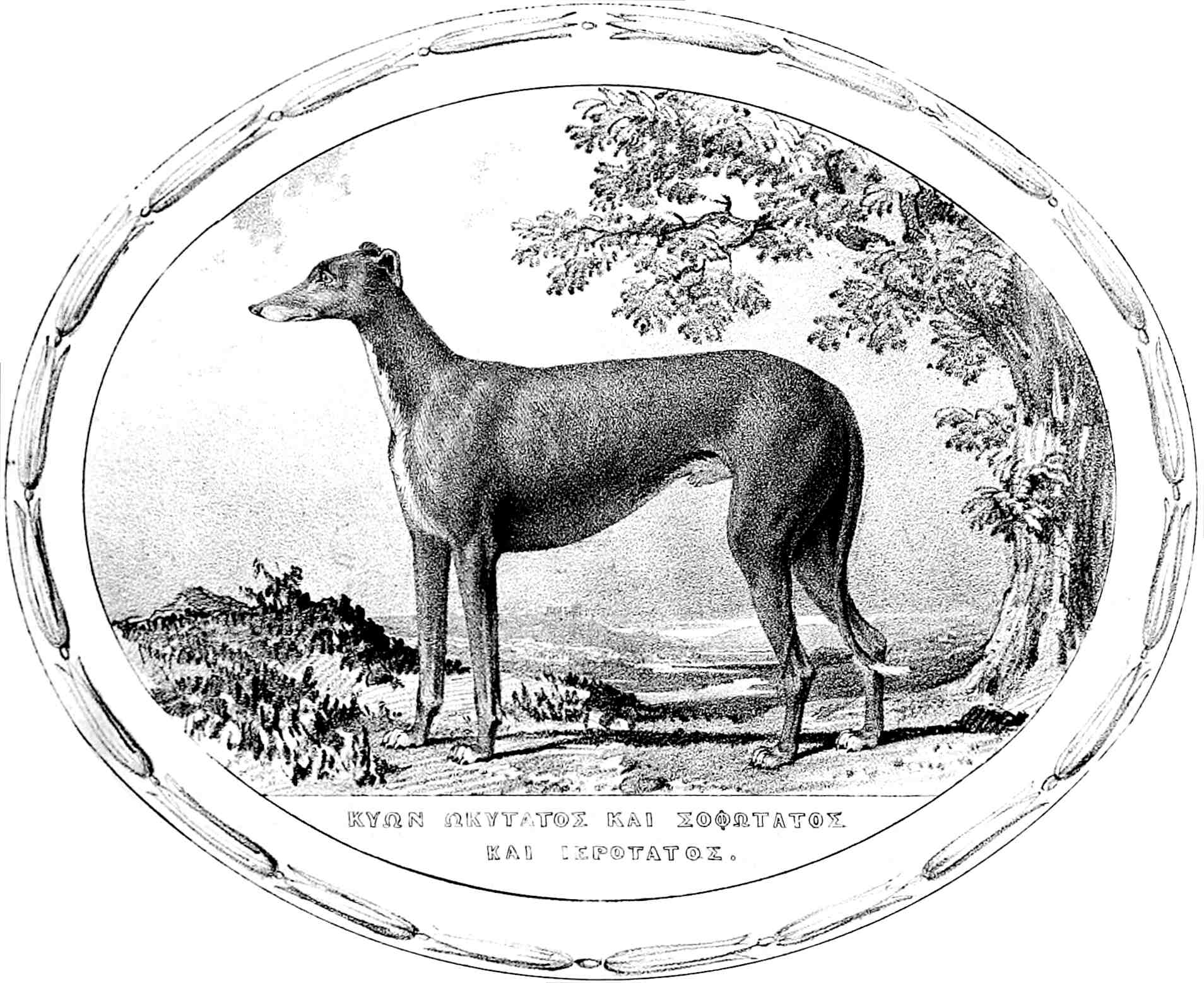
As to the period of his life at which Arrian may be supposed to have written the Cynegeticus, the inference to be drawn from the meagre paragraph of autobiography in the first chapter, wherein he states his fitness to supply the deficiencies of the elder Xenophon’s work,De Venat. c. i. from having been ἀμφὶ ταὐτὰ ἀπὸ νέου ἐσπουδακὼς, κυνηγέσια καὶ στρατηγίαν καὶ σοφίαν, although it establishes the fact of his early predilection for field sports, yet it rather militates against the idea of the Cynegeticus having been written at a very early period of the author’s life. However, be this as it may, his patronage of “the long dogs” continued at the time of his writing this libellus; and his belovedEjusdem c. v. Ὁρμὴ, ὠκυτάτη, καὶ σοφωτάτη, καὶ ἱεροτάτη, was then in his possession, living seemingly in the closest intimacy with his attached and philosophic master, and sharing with Megillus his society at home and abroad, the well-earned recompense in 60declining years of the excellence he had manifested in the vigour of his youthful days on the coursing plain; where, in Arrian’s own words of eulogy, τέτταρσιν ἤδη ποτὲ λαγωοῖς ἐφ’ ἡλικίας ἀντήρκησεν.[31]
Antiquity is almost silent relative to the personal history of the younger Xenophon;[32] and as an autobiographer, he seems to have been desirous that nothing should be known of himself or family; but rather that his personal history should be darkened under the doubtful celebrity of anonymous authorship, or merged in the somewhat arrogant assumption of a fictitious and equivocal title. In the conclusion of the 12th chapter of the 1st book of his History of Alexander’s Anabasis, he says that the number and magnitude of the exploits of the son of Philip, were his inducement to record them, not deeming himself altogether unworthy to transmit them to posterity.Arrian. de Exped. Alexand. L. i. c. xii. Vide Raphelii annotat. in loc. “But who I am,” he continues, “that thus characterise myself, and what my name, (though far from obscure,) it concerns the reader but little to know. Neither would an account of my family, my city, nor such offices as I have there borne, be of any use to him. Be it sufficient for him to know, that an ardent love of literature, in which I have constantly indulged myself from youth, has been with me instead of family connexion, and civic and magisterial honours. Wherefore I may perhaps be little less worthy of a place among the most celebrated authors of Greece, than Alexander among her most illustrious heroes.”
61
After the brief sketch which I have given of the writings of the younger Xenophon, it must strike every one that he was influenced in the choice of his subjects as an author, by a recollection of what had engaged the literary attention of his celebrated namesake; and that while writing under the same personal appellative, he probably proposed to imitate the matter and style of composition of hisPhot. Eclog. Arrian. Parthica. prototype—ἰσχνὸς τὴν φράσιν, καὶ μιμητὴς ὡς ἀληθῶς Ξενοφῶντος.
Under this view of his works we have the dissertations of Epictetus from the pen of his most renowned follower, the Bithynian Xenophon, and the Memorabilia of Socrates from that of the son of Gryllus, the most eminent disciple of the Socratic school: the Anabasis of Alexander for that of Cyrus, with the same distribution of the work into seven books, and the same title. The Hellenica of Xenophon gave birth to the Parthica and Bithynica of Arrian: and in imitation of the Essay on Hunting, our pseudo-Xenophon has left us his Observations on Coursing.
Upon their general similarity of character in active life I have already remarked, and shall only observe farther, that, as far as we can judge from the scanty personal anecdotes which have survived of the younger, for comparison with those of the elder philosopher, this similarity appears to have extended to the frame and composition of their minds. Many of the same excellencies, and respectable weaknesses of character, co-existed in both; the same patient and unerring virtue—the same kind and generous feeling—the same credulous and enthusiastic regard to celestial admonitions—πειθομένους τεράεσσι θεῶν—with a proportionate degree of the purest heathen piety.
If it be stigmatised with the title of superstitious credulity in the priest of Ceres, that he supposed himself led by divine inspiration to write the history of a man,De Expedit. Alexandri L. vii. c. xxx. οὐδενὶ ἄλλῳ ἀνθρώπων ἐοικὼς, I would plead his enthusiastic admiration of his hero in 62palliation of the fond supposition, qualified as it is, with equal good sense and piety, in the concluding sentences of the Anabasis; where he states that as so extraordinary a person as Alexander could not have risen up in the world without divine interference—οὐδ’ ἔξω τοῦ θείου; so, with admiration of his good qualities, and reprobation of his bad ones, with a strict regard to truth, and public utility, he professes himself his historian, writing, as he verily believes, under the same divine influence that first gave being to the subject of his memoir.
Surely such a belief in heavenly interference, exciting its professor to what is just and honourable, and deterring him from every breach of propriety, as an historian of truth, must be applauded by every fair and impartial judge of human character; and more particularly so, when in the person of a Stoic, unenlightened by any philosophy but that of Epictetus, it could have no other foundation than innate rectitude of mind.
Under the conviction that Arrian’s expectation of posthumous fame has been realized in general, and that my brethren of the leash will award him particular honour as the first writer of a Courser’s Manual, I conclude this brief sketch of his life and literary labours; which might have been more full, if his biography by Dion Cassius had come down to us.
As the compiler of the Stoical philosophy of “the Phrygian Slave,” the historian of the son of Philip,[33] the hydrographer of the Euxine, a military tactician, a warrior-prefect, and a 63classic courser, he has left works behind him which will endure as long as literature itself;—he has done all in his power to benefit and instruct mankind in various departments of human learning;—has contributed his mite to the advancement of rational science and healthful recreation, and proved himself worthy of the immortality he so fondly anticipated.
64
65
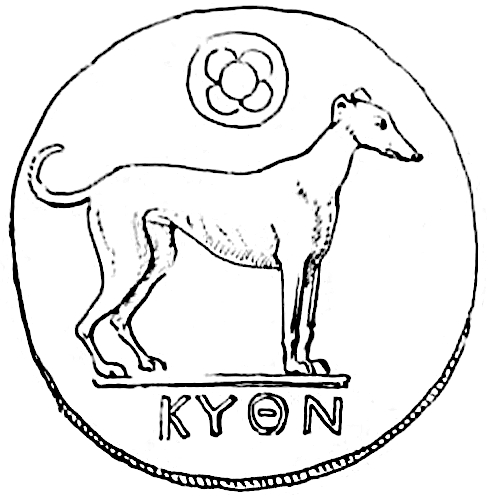
Οὐ γάρ τοι οὐδ’ ἴσος ὁ ἀγὼν λαγωῷ καὶ κυνί· ἀλλ’ ὁ μὲν, ὅποι βούλεται, θεῖ, ἡ δὲ ἄλλῳ ἐφομαρτεῖ· καὶ ὁ μὲν ἐξελίξας τὸν δρόμον καὶ διαῤῥίψας τὴν κύνα ἴεται τοῦ πρόσω, ἡ δὲ, εἰ διαῤῥιφθείη, πλάζεται· καὶ ἀνάγκη φθάσαντα αὖ μεταθεῖν καὶ ἀναλαβεῖν, ὅσον ἐξηνέχθη τοῦ δρόμου.—Arrian. de Venat. c. xvii.
66
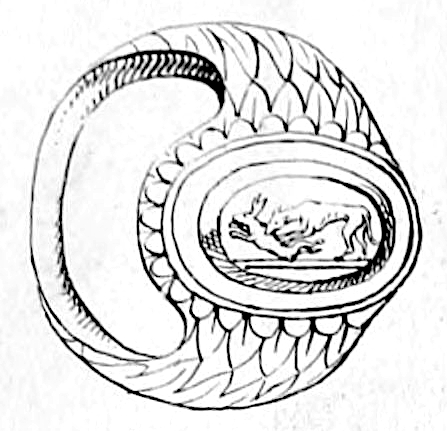
Chap. I.
Preface.The advantages that accrue to mankind from hunting, and the regard of
the Gods for those instructed in it by Chiron,[34] and their honourable
distinction throughout Greece, have been related by Xenophon, the son
of Gryllus.
He has pointed out the similitude between Cynegetical and Military science;[35] and the age, constitution, and frame of mind,[36] 68that essentially qualify for entering on the chase;—has given a description of purse-nets, hayes, and road-nets,[37] such as are necessary to be prepared—the mode of fixing snares for animals that may be entrapped[38]—the natural history of hares, their food, haunts, forms, and the method of searching for them—what dogs are clever at scenting, and what faulty—and how, by their shape and work, each may be ascertained. Some few remarks are also left by him on the boar-hunt, the stag, bear, and lion chases—how these animals may be taken by cunning and stratagem.
The omissions of his work (which do not appear to me to have arisen from negligence, but from ignorance of the Celtic breed of dogs,[39] and the Scythian and African horses,) I shall69 endeavour to fill up: being his namesake and fellow-citizen,[40] of similar pursuits with himself, as a sportsman, a general, and a philosopher—writing under the same feeling that actuated him, when he thought fit to amend the imperfections of Simon’s work on horsemanship;[41] not out of rivalry with its author, but from a conviction that his labours would be useful to mankind.
Chap. II.In my opinion no proof is required that Xenophon was ignorant of the Celtic breed of dogs, beyond this:[42] Proofs of Xenophon’s ignorance of Celtic Dogs. that the nations inhabiting that district of Europe were unknown,[43] 70except the parts of Italy occupied by the Greeks,[44] and those with whom they had commercial intercourse by sea. And 71that he was unacquainted with any other breed of dogs, resembling the Celtic in point of swiftness, is evident from these words:—“whatever hares,” he says, “are caught by dogs, become their prey, contrary to the natural shape of the animal, or accidentally.”[45] Now, if he had been acquainted with the Celtic breed, I think he would have made the very same remark on the dogs; “whatever hares the dogs do not catch at speed, they fail of catching in contradiction of their shape, or from some accidental circumstance.” For assuredly when greyhounds are in good condition, and of high courage, no 72hare can escape them; unless the country present some obstacles, either a covert to conceal her, or a hollow deep pit to break off the course, or a ditch to favour her escape while out of sight of the dogs.
To this ignorance, in my opinion, is to be attributed the length of his instructions on driving the hare into nets,[46] and if she pass them,[47] pursuing and recovering her by scent, till she be taken, at last, completely tired out. But he has no where said either that fleet dogs altogether supersede the necessity of a sportsman having nets,[48] or of his hunting by scent after the hare has escaped them. Indeed he has described only the mode of hunting which is practised by the Carians and Cretans.[49]
73
But such of the Celts as hunt for the beauty of the sport, and not as a means of livelihood, never make use of nets. And yet they have a variety of dog not less clever at hunting on scent than the Carian and Cretan,[50] but in shape sorry brutes.[51] In pursuit these give tongue with a clanging howl like the yelping Carians, but are more eager, when they catch the scent.[52] Sometimes, indeed, they gladden so outrageously, even on a stale trail, that I have rated them for their excessive barking,—alikeTheir Qualities. on every scent, whether it be of the hare going to form, or at speed.[53] In pursuing and recovering her, when 74started, they are not inferior to the Carians or Cretans, save in the one point of speed.
It is good sport, if they kill but a single hare in the winter season, so much resting-time do they give her in the chase; unless, indeed, by being frightened out of her wits at the tumultuous uproar of the pack, she become an easy prey.
These dogs are called Segusians,[54] deriving their name from a Celtic people, amongst whom, I suppose, they were first bred, and held in repute. But[55] all that can be said about them has been anticipated by the elder Xenophon. For they manifest nothing different from others in their mode of finding, or hunting their game;—having no peculiarity, unless one were inclined to speak of their shape,Shape, &c. which I scarce think worth while, except merely to say, that they are shaggy and ugly; and such as are most high-bred are most unsightly. So that the comparison of them to mendicants on the highways is popular with the Celts. For their voice is dolorous and pitiful; and they do not bark on scent of their game, as if eager and savage, but as if plaintively whining after it.
About these, then, I do not think any thing memorable can be written. But the swift-footed Celtic hounds are called in the Celtic tongue Vertragi.οὐέρτραγοι;[56]—not deriving their name from any particular nation, like the Cretan, Carian, or Spartan dogs: 75but, as some of the Cretans are named διάπονοι[57] from working hard, ἰταμαὶ[58] from their keenness, and mongrels from their being compounded of both; so these Celts are named from their swiftness. Their Beauty.In figure, the most high-bred are a prodigy of beauty;[59]—their eyes, their hair, their colour, and bodily shape throughout. Such brilliancy of gloss is there about the spottiness of the parti-coloured, and in those of uniform colour such glistening over the sameness of tint, as to afford a most delightful spectacle to an amateur of coursing.
Chap. IV.[60] I will specify the indications of speed and good breeding in greyhounds,[61]Marks of Speed and good Blood. and by attention to what points ill-bred and slow ones may be distinguished from them.
In the first place, let them be lengthy from head to tail;[62] 76for in every variety of dog, you will find, on reflection, no one point so indicative of speed and good breeding as length; and on the other hand, no such mark of slowness and degeneracy as shortness. So that I have even seen dogs with numerous other faults, that have been, on account of their length, both swift and high-couraged. And farther, the larger dogs,[63] when in other respects equal, show higher breeding than small ones on the very score of size. But those large dogs are bad, whose limbs are unknit, and destitute of symmetry;[64] being indeed, when so formed, worse than small dogs, with an equal share of other faults attached to them.
Your greyhounds should have light and well-articulated heads;[65] whether hooked[66] or flat nosed is not of much consequence:77 nor does it greatly matter whether the parts beneath the forehead be protuberant with muscle.[67] They are alone bad which are heavy-headed, having thick nostrils, with a blunt instead of a pointed termination. Such then are well-headed hounds. Their eyes should be large, up-raised, clear, strikingly bright. The best look fiery, and flash like lightning, resembling those of leopards, lions, or lynxes.[68] Next to these 78are black eyes, provided they are wide-open and grim-looking; and last of all, grey:[69] nor are these to be considered bad, nor indicative of bad dogs, provided they are clear, and have a savage look.
Chap. V.For I have myself bred up a hound whose eyes are the greyest of the grey;[70] a swift,Episode on Arrian’s dog Hormé. hard-working, courageous, sound-footed dog, and, in his prime, a match, at any time, for four hares. He[71] is, moreover, (for while I am writing, he is 79yet alive), most gentle, and kindly-affectioned;[72] and never before had any dog such regard for myself, and friend and fellow-sportsman, Megillus.[73] For when not actually engaged in coursing, he is never away from one or other of us. But while I am at home he remains within, by my side, accompanies me on going abroad,[74] follows me to the gymnasium, 80and, while I am taking exercise, sits down by me. On my return he runs before me, often looking back to see whether I had turned any where out of the road;[75] and as soon as he catches sight of me, showing symptoms of joy, and again trotting on before me. If I am going out on any government business, he remains with my friend, and does exactly the same towards him. He is the constant companion of whichever may be sick;[76] and if he has not seen either of us for only a short time, he jumps up repeatedly by way of salutation, and barks with joy, as a greeting to us. At meals he pats us first with one foot and then with the other,[77] to put us in mind that he is to have his share of food.[78] He has also 81many tones of speech[79]—more than I ever knew in any other dog—pointing out, in his own language, whatever he wants.
Having been beaten, when a puppy, with a whip, if any one, even at this day, does but mention a whip, he will come up to the speaker cowering and begging,[80] applying his mouth 82to the man’s as if to kiss him, and jumping up, will hang on his neck, and not let him go until he has appeased his angry threats.[81]
Now really I do not think that I should be ashamed to write even the name of this dog; that it may be left to posterity, that Xenophon the Athenian had a greyhound called Hormé, of the greatest speed and intelligence,[82] and altogether supremely excellent.[83]
Let the ears of your greyhounds be large and soft,[84] so as to appear, from their size and softness, as if broken. Such are best: but it is no bad indication if they appear erect, provided they are not small and stiff.[85] The neck should be long, 83round, and flexible;[86] so that if you forcibly draw the dogs backwards by their collars, it may seem to be broken, from its flexibility and softness. Broad chests are better than narrow. Let them have shoulders standing wide-apart,[87] not tied together,84 but as loose, and free from each other, as possible—legs round, straight, and well-jointed—sides strong—loins broad, firm, not fleshy, but sinewy—upper flanks loose and supple[88]—hips wide asunder—lower flanks hollow—tails fine, long, rough with hair, supple, flexible, and more hairy towards the tip—haunches85 sweeping, and firm to the touch:[89]—with regard to their legs, if the hind ones are longer than the fore, the greyhound will run best up hill; if the fore legs are longest, down hill; but if both are equal, he will run best on a flat.[90] Since, however, it is more difficult to beat a hare on an acclivity, because she runs best up hill, those are deemed the better class of dogs, whose hind legs are longer than their fore ones.[91] Round and strong feet are decidedly best.[92]
86
Chap. VI.The colour of greyhounds is not of any importance;[93] nor does it matterColour of no importance. if they are perfectly black, red, or white; nor87 is a simple, uniform colour to be suspected as ferine. The colours, such as they are, should be bright and pure; and the hair, whether the dog be of the rough or smooth sort, should88 be fine, close, and soft.[94] The best dogs are such as are large and well put together, and resemble bitches in point of suppleness; and the best bitches are such as resemble dogs in spirit, and muscularity of body.[95]
Now if any one pays attention to these hints, as to the shape of greyhounds, they will fully supply him, in my opinion, with the indications of good blood for his kennel, and the opposite of the reverse.
Chap. VII.Nor will the temperIndications from Temper. of greyhounds afford fewer indications of good and bad blood to a careful observer.[96] Such hounds, in the first place, as are crabbed to all persons alike, are not of a generous breed. But if you find any cross to strangers, and 89good-tempered to their feeder, it is rather a favourable sign than otherwise.[97]
I once knew a greyhound, who was dull and sullen at home, and took no pleasure in any of the persons about him; but, when led out hunting, was beyond measure delighted, and showed, by smiling and fawning at every body that came near him, that he was vexed at staying at home. This may be held a good sign.
The best dogs, however, are those of most attachment to man, and to whom no human countenance is strange.[98] Such, on the other hand, as are afraid of people, and astounded at noise,[99] obstreperous, and often excited without cause, are senseless brutes of no pluck. Like men that are timid and frightened out of their wits, such dogs as these can never be deemed of generous blood.From obedience in the field. Those, too, are bad, which, when let loose from couples in a field, do not come back at the call of their keeper, but gallop away.[100] If you call them in90 mildly, they pay no attention to you;—if threateningly, they keep aloof from fear.
For when a greyhound has had his gallop, and has run about, he ought to come back to his keeper, even without a call,[101]—showing that he is under command at will; but, if the keeper does not choose to take him up, let him again bound away, and again return. Such dogs are well broken in as, at the voice of their keeper, crouch before him;[102] not from fear, but regard and respect for their feeder, cowering like the worshippers[103] of the Great King.[104] It is no good sign for a hound to stand still, when let out of couples on an open91 plain, unless he happen to be advanced in age,[105] for it shows sluggishness.
The most high-bred greyhounds have a prominent brow, and look proud.[106] Their tread is light, quick-stepping, on their toes; and they walk sideways,[107] extending their necks like horses curvetting.[108]
92
Chap. VIII.Some greyhounds eat voraciously, others with delicacy.[109] The latter From their mode of feeding.mode of feeding indicates a dog of better blood than the former.[110] Good dogs are not bad feeders, but fond of bread or gruel.[111] This kind of farinaceous food is most strengthening to them, and there is no fear of their gorging themselves too much with it. I prefer, however, their liking food quite dry;[112] and yet, if it be moistened with water, and they still relish it, it is no evil.
93
When a dog is sick, administer the broth of fat meat to him, or having roasted a bullock’s liver over some hot coals, and rubbed it abroad, sprinkle it like flour into the broth.[113] This is good also for puppies to strengthen their limbs, when they are first weaned from milk.[114] But milk is the best food for the support of puppies till the ninth month, and even longer; and is serviceable to the sick and delicate, both as drink and aliment. Fasting too is beneficial to a sick dog.[115]
Chap. IX.There is nothing like a soft and warm bed for greyhounds; but it is best for them to sleep withManagement of the Kennel. men:—as they become 94thereby affectionately attached—pleased with the Bedding.contact of the human body, and as fond of their bedfellow as of their feeder.[116] If any ailing affect the dog, the man will perceive it, and will relieve him in the night, when thirsty, or urged by any call of nature. He will also know how the dog has rested. For if 95he has passed a sleepless night,[117] or groaned frequently in his sleep,[118] or thrown up any of his food,[119] it will not be safe to take him out coursing. All these things the dog’s bedfellow will be acquainted with.
Nothing can be worse than for dogs to sleep with each other; and more especially so, if they touch one another in bed. For as all cutaneous irritation is removed by a man sleeping with them, so, when they sleep together, they generate every sort of foulness of skin by warmth and close contact, and are generally full of mange.[120] To which cause 96must be referred the very offensive and pungent stench on entering a kennel where many hounds are confined together.
Chap. X.Rubbing the whole bodyRubbing down. is of great service to the greyhound;[121] no less than to the horse.[122] For it is conducive to the firmness and strength of his limbs—renders his hair soft, and skin shining,[123] and cleanses it from all foulness.
97
The back and loins you should rub with your right hand, placing your left under the belly; lest the dog, being forcibly pressed down upon his knees, should suffer injury. The sides should be rubbed with both hands at once, and the haunches quite down to the feet, and the shoulders in the same way. When the dog seems to have had enough of it, lay hold of his tail, and lift him up by it; and then having drawn it through your hand, let him go. As soon as he is at liberty, he will shake himself, and show that he is pleased with the operation.
Chap. XI.It is a point of equal importance with any other, that greyhounds be Kennelling.confined during the day;[124] otherwise they will 98unavoidably become intractable, and, whenever fastened with a collar, will be impatient under the restraint, and whine, and 99gnaw the straps, so as even to require chains like malefactors. Besides, a hound that is at liberty must needs eat every thing that falls in his way;[125] and, from running about during the day-time, lose the acme of his speed. But, though generally at rest, they should still have their appointed times for walking out.
Chap. XII.Four times a day, at least, take your dogs out of kennel to a level and open field,Exercising. and there loose them from couples, to empty themselves, gallop, and run about.[126] But if they have 100quite ceased coursing, let it be done more frequently. Slip them in pairs, a brace at a time, so that by contending and playing with each other, they may enjoy their pleasure, and take their exercise together. But on no account let many loose at once, as they sometimes do great mischief by falling on each other.[127] Never slip a strong and full-grown dog with a puppy; for the old dog is an overpowering and distressing antagonist for the youngster, easily overtaking him in pursuit, and as readily running away from him, and leaving him behind; whereby the pup must of course be cowed and dispirited, having in either case the worst of the contest. And farther, such as are spiteful towards each other, never give these their liberty at one and the same time, lest they injure one another. For there are dogs, as well as men, with mutual antipathies, and others again with mutual attachments.[128] Those of the same sex are particularly inimical to each other, dogs to dogs, and bitches to bitches; and this 101generally from spiteful jealousy. These matters are not to be made light of.
Chap. XIII.In the winter season feed your dogs only once a day,[129] a little before evening;Feeding in winter and summer. for the days are short, and the greyhounds are to be so managed, that if you need their services for coursing till a late hour, they may be able to bear the necessary fasting. But in summer it is right to give them a little bread in addition,[130] that they may not be exhausted by the length of the day; and if thirsty, they will drink with less detriment after having eaten. To thrust down a dog’s throat a piece of salted suet is also found beneficial.[131] But if 102the weather be very hot, I would have you take an egg in your hand, open your dog’s mouth, and push it down, that he may swallow it at one gulp. This will be nourishment enough for him, will cherish his wind, and quench his thirst.[132]
Chap. XIV.
Seasons of Coursing.You may go out coursing frequently in spring and autumn,[133] these
seasons being attended with the least risk to your dogs—but103 rarely in
summer,[134] lying by, generally,[135]
when the heat is oppressive. For greyhounds are impatient of heat, and often, when pursuing a
hare with all their might, have been suffocated from a stoppage of
their wind.[136] To guard against which, a courser should carry eggs
with him, and administer them entire, if his hound’s breathing be
exceedingly distressed. For there is no better refrigerative, nothing
that appeases difficulty of breathing so much. It is not unattended
with danger for a dog, under these circumstances of distress, to drink
immoderately.
For the reasons given, then, be cautious of coursing in hot weather. Never go out in winter when the cold is severe, and, on no account, when the ground is frozen hard. For dogs 104bruise themselves in frost,[137] lose their nails,[138] lacerate the soles of their feet, and if very high-couraged, break even the bones of their toes against the frozen ground from running with excessive eagerness. Whereas the hare is light, with woolly and soft feet,[139] and trips along without injury in frost.
105
Chap. XV.[140]
Slipping law.
Whoever courses with greyhounds[141] should neither slip them near the
hare, nor more than a brace at a time;[142] for though the hare be
remarkably swift-footed, and have often beaten many dogs, yet being
just started from her form, she cannot but be fluttered at heart, and
terrified at the hallooing, and the hounds pressing close upon her:—and
in this way, many a noble hare has often ignobly perished without an
effort, showing no diversion worth mentioning.
Let the hare, therefore, creep away from her form as if unperceived, and recover her presence of mind. And then, if she be a racer,[143] she will prick up her ears, and bound away 106from her seat with long strides; and the greyhounds, having capered about as if they were dancing,[144] will stretch out at full speed after her. And at this time is the spectacle worthy indeed of the pains that must necessarily be bestowed on these dogs.[145]
107
Chap. XVI.
Hares.
Those are the strongest hares which have their forms in open and
exposed places;[146] for, from boldness, they do not 108conceal
themselves, but seem to me to challenge the dogs. When coursed, they do
not fly to the woods or groves, however near, for immediate liberation
from danger, but stretch away to the open country;[147] and during the
contest, if they are pursued by slow hounds, they moderate their own
speed according as they are pressed; but if their pursuers are fast,
they run with all their might.[148]
Often when they have turned aside to the champaign country, if they perceive a fleet dog following so close as to overshadow them, they throw him off by frequent ricks and turns, and again make for the woods, or wherever they know of a place of refuge; and this should be deemed a proof that the dog has beaten the hare. For coursers, such at least as are true sportsmen, do not take their dogs out for the sake of catching a hare, but for the contest and sport of coursing;[149] 109and are glad if the hare meet with an escape: if she fly to any thin brake for concealment, though they may see her trembling and in the utmost distress, they will call off their dogs,[150] and more particularly so, when they have run well.[151]
Often, indeed, when following a course on horseback, have I come up to the hare as soon as caught, and myself saved her alive: and then, having taken away my dog, and fastened him up, allowed her to escape.[152] And if I have arrived too late to save her, I have struck my head with sorrow, that the dogs had killed so good an antagonist.[153]
110
On this point alone I cannot agree with my namesake. I allow indeed that a man may forget every other object of which he is enamoured, when he sees a hare found, and pursued at speed;[154] but to see her taken is, I own, neither a pleasant nor striking spectacle; but disagreeable rather, and not at all likely to make us forgetful of other objects of attachment.[155] And yet we must not blame Xenophon, considering 111he was ignorant of greyhounds, if even the capture of a hare appeared to him a grand sight.
I am aware, (even if my instructions were opposed to it), how strong the inducement is to halloo, when following a course, and that even a dumb man might break forth, as is related of the son of Crœsus.[156]
Chap. XVII.
Cheering greyhounds.
It is proper sometimes to speak to the greyhounds; for they are pleased
at hearing their master’s voice,[157] and have the 112consciousness of
his presence, and of their brilliant running not escaping his notice,
as an encouragement and reward for their exertions.
There is no objection to your cheering your hound as often as you like in his first course; but in his second or third, when it is probable that he is fagged, I think it wrong to cheer him very often by name, lest from his ardour, and desire of pleasing his master, he exert himself beyond his strength, and suffer some inward rupture; an accident which has been fatal to many a high-bred greyhound. But he should be allowed to slacken his running as he chooses. For the contest is by no means equal between the hare and greyhound:[158] the hare runs 113where she likes, and the dog pursues; she shifts her course,[159] throws him off, and darts forward; and if thrown out, the dog is wide of the hare, and must again stretch away after her a-head, and recover what he has lost of the course by overshooting himself.[160]
114
Moreover, the natural difficulties of the country are more in favour of the hare, than the dog—such as rough and stony 115grounds,[161] steeps and inequalities of surface—both because she is light, and because her feet, from their woolliness, are not liable to be lacerated by the roughness of the ground;[162] and 116the running for her life, too, takes away all sense of difficulties.
Chap. XVIII.
Praising, &c.
When the greyhound has caught the hare, or been otherwise victorious
in the course,[163] you should dismount from your horse, pat him with
your hand and praise him, kissing his head, and stroking his ears,
and speaking to him by name—“Well done, Cirras!”[164]—“Well done,
Bonnas!”[165]—“Bravo, my Hormé!”[166]—calling
each hound by his name; for, like men of generous spirit, they love to be praised:[167] and
the dog, if not quite tired out, will come up with joy to caress you.
At this time, it is a good sign for him to roll himself on the ground,
as we see horses do;[168] for it shows that he is not done up with the
course, and, at the same time, rolling refreshes him.
117
Chap. XIX.[169]
Celtic mode of coursing with hare-finders.
The more opulent Celts,[170] who live in luxury, course in the
following manner. They send out hare-finders[171] early in the morning
to look over such places as are likely to afford hares in form;[172]
and a messenger brings word if they have found any, and what number.
They then go out themselves, and having started the hare, slip the dogs
after her, and follow on horseback.[173]
Chap. XX.
Without hare-finders.
But others, who have no hare-finders, go out on horseback, collecting
a large party of fellow-sportsmen together; and coming to likely
lying-ground, when a hare is started, they slip their dogs. While
others again, who are more of workmen at the sport, sally forth on
foot;[174] and if any one 118accompanies them on horseback, it is his
duty to keep up with the dogs.
They beat the ground in regular array, with an extended front, proceeding in a straight line to the completion of a certain extent of country; and then, wheeling about in a body, return in the same way by the side of their former track, omitting as far as possible none of the likely lying.[175]
But it is necessary, if many dogs are taken into the field, that they should not be left at random, and without arrangement. For when the hare is started from her form, not a man would refrain from slipping his hound after her: one from eagerness to see his own dog run, and another from being startled and beside himself at the hallooing; and the hare would be caught, in consequence of the crowd and confusion of the dogs, without a struggle, and the whole value of the 119spectacle destroyed. Steward.On which account a steward should be appointed over the sport,[176] should match the dogs, and give orders to the field:—if the hare start on this side, you and you are to slip, and nobody else; but if on that side, you and you: and let strict attention be paid to the orders given.[177]
120
Chap. XXI.
Coursing with sagacious and swift hounds together.
The Celts sometimes course with a mixture of sagacious and swift-footed
hounds;[178] and while the dogs of scent are trying, 121they stand apart
with the greyhounds, leading them in their hands where it is most
probable the hare will direct her course, that they may slip them at
her when she breaks cover.[179] And here the greyhounds answer the
same purpose as Xenophon’s nets.[180] But the courses in this way
are irregular and confused, and the hare, however good, is generally
so terrified at the barking of the finders, that, unless she get far
enough a-head to be able to recover herself, she is easily caught,
being frightened out of her wits.[181]
122
Whoever, therefore, is a good slipper, should not let go his dog while the hare is at all bewildered, (unless he would destroy the sport,) but should allow her to make her first turns, and then slip.
Chap. XXII.
Ware Leveret.
Let it be deemed unlawful to slip to a young hare;[182] but rather, in
obedience to my namesake, spare such for the Goddess.[183] If possible,
indeed, you should endeavour to call off 123the dogs on scent; though
they are with difficulty checked, being intractable from hunger, and so
keen at devouring whatever prey they take, that you can scarce drive
them away, even by beating them with sticks.
Chap. XXIII.
Stag-coursing.
You should course the stag, or any game of equal size in the same way,
slipping high-couraged hounds;[184] for the animal is 124large, runs a
long while, and is by no means safe to contend with;[185] indeed there
is no little danger of a greyhound being destroyed by a stag.[186]
But where the plains are adapted for riding, as in Mysia, Dacia, Scythia, and Illyricum,[187] they are in the habit of 125coursing deer with Scythian and Illyrian horses; which, though slow at first in pursuit, and utterly despicable, as far as appearance goes, by the side of those of Thessaly, Sicily, or Peloponnesus, hold out to the last under the most severe work.[188] On such occasions you will see the huge, swift, proud-looking horse flagging, and this lean and scrubby little animal at first passing him, then leaving him behind, and at last even driving the stag away from him. He holds on indeed until the stag gives out and stops, gasping with distress;[189] when you may, if 126you choose, spear him at close quarters as if enfettered,[190] or throw a noose over his neck,[191] and lead him away alive.
Chap. XXIV.
African Coursing of Wild Asses.In Africa there is a mode of coursing on Libyan horses,[192] called
Nomades, on which the sportsmen, mounted, catch not only red and roe
deer,[193] (for these are taken with little effort, and the horses are
not esteemed good in consequence,[194]) but also 127wild
asses,[195]
which excel in speed, and power of holding out for the greatest length
of course.
For when the Greeks marched with Cyrus, the son of Darius, against the great king,[196] (in which expedition Xenophon was engaged, who relates the circumstance,[197]) while they were passing over the plains of Arabia,[198] there appeared herds of wild asses, but not one could be caught by any single horseman, and therefore the Greeks pursued them with relays of horsemen at stated distances; and after the asses had held out for a long while against several, they sunk at last from fatigue. Thus even Cyrus himself, the son of the great king, and the brother of the great king, had not horses good enough 128for this chase; and yet the Libyan boys, some at eight years of age, and others not much older, mounted on their naked steeds,[199] and guiding them with a switch, as the Greeks employ 129the rein, press these wild asses so closely in pursuit, that at last they throw a noose around their necks and lead them away quite subdued.[200]
Such are the methods of coursing adopted by those who have fleet hounds and horses: they neither ensnare the animals with toils, nets, or springes;[201] nor employ, in short, any other tricks or wily inventions, but contend with them in a straight-forward trial of speed.[202] And to me, the two spectacles appear nowise 130akin: the former being like thievish depredation; the latter, like a battle fought out with main strength: the one class of sportsmen resembling pirates in their clandestine attack, while the other are as openly victorious as were the Athenians over the Medes in the naval engagement at Artemisium,[203] or at Salamis and Psyttalia, or again at Cyprus.
Chap. XXV.
Age and mode of entering bitch-puppies.
As to the age at which greyhounds should begin coursing,[204] you may
take a bitch out after the eleventh month;[205] or, if she 131be well
set, and not loose-limbed, you may let go a hare from your hand before
her, in an open field, a month earlier than this, starting the pup
close to the hare, that she may enjoy the sight of her game, and, by
seeing it quite close, may work with eagerness.[206] But presently slip
another good dog to the hare, that the puppy may not suffer by too long
a course, nor flag from over-fatigue; and the second dog turning the
hare with ease again and again, will drive her into the puppy’s mouth,
when the latter should be allowed to tear her with her teeth till she
has killed her.[207]
132
As soon as the season arrives for taking out your puppies, let them be first walked over such roads as are rough;[208] 133for this exercise is conducive to forming and strengthening their feet. Then station the man who leads them upon a conspicuous and elevated spot, and be sure that he does not slip a puppy when the hare has got much a-head, and is out of sight; (notwithstanding the elder Xenophon advises it in regard to dogs that are to be practised at running on scent;[209]) for if you slip a greyhound puppy out of sight of her game, she runs wide, and jumps about, and is beside herself and bewildered. And after she is full-grown, if a hare happen to escape her, she is never at rest, neither returning to her keeper, nor obeying his call, but, from eagerness for a course, continuing to run about wildly, like a mad dog, after nothing.[210]
Let the man, then, that holds the puppy stand on such a spot as I have stated,[211] concealed from view at the point where it is most probable the tired hare[212] will come in the course of her 134turns; and when he sees her quite weary, let him slip the puppy close to her, neither before, nor directly opposite to her; for the bitch rushing right upon her will overshoot herself, and the hare, with a wrench, easily skimming by, will of course leave the bitch far behind; the latter with difficulty turning herself, as gallies sailing briskly a-head cannot readily tack, unless the rowing be much slackened before they are brought about. Let the hare, therefore, just pass by, and then let him slip obliquely after her. Some one should follow up quickly, as soon as the hare is caught, before the dogs are gorged with her blood. Not that the flesh of a hare is to be accounted of much worth by a person who courses for the beauty of the sport;[213] but it is a bad thing to teach a greyhound to eat a hare.[214] 135Many a dog, too, has been Ware dead.destroyed by gorging himself while out of breath, after a long course, and has died of suffocation.
Chap. XXVI.
Age of entering dog-puppies.Dog-puppies must not be taken out coursing until they are two years
old,[215] for their limbs become set at a much later period than those
of bitches. Besides it is attended with no little danger to take them
out earlier, many a greyhound having been prematurely destroyed by a
severe course before he was full-grown, and especially those of the
greatest spirit and highest breeding; for, in consequence of their
spirit, they run to the very utmost of their power.
The other practical points, already insisted on in reference to bitches, are equally to be attended to in regard to the other sex. DogsAge of sexual intercourse. are to be kept from copulation within the age stated; for the seed being not yet matured in them, is generally weak and evanid, καθάπερ ἡ τῶν παίδων.[216] The puppies themselves136 too are so utterly ruined by it that you can never afterwards, do what you will, remedy the error. The proper and seasonable time for sexual intercourse is from the completion of the third year.[217]
137
Chap. XXVII.
Time of sexual intercourse.
And it should be thus managed:—watch the opportunity of 138the bitch
being clear of vaginal blood; for if she receive the seed before,
it generally is not retained, but is washed out 139by the blood,[218]
καθάπερ ταῖς γυναιξί; and you must here pay her particular attention,
as it is only for a short interval of time 140that she preserves her heat
after the vaginal blood has stopped.
A bitch’s age may be considered good for the purpose from the second to the seventh year.[219]
Chap. XXVIII.
Mode of sexual intercourse.
It is best for the dog and bitch to be shut up by themselves, and to
be out of sight while together.[220] For open and public copulations,
if we may believe sportsmen, are not prolific;[221] 141but such as are
effected by dogs in private are reported to succeed.[222]
Bitches, after being warded, may be led out, as walking about is conducive to their strength;[223] but they must not be 142slipped again to a hare, for fear of being destroyed by overstraining or excessive fatigue. The dog likewise should not be let loose after a hare until he is recovered from his exhaustion, and invigorated by an interval of at least sixty days’ rest. After which there will be no obstacle to his being coursed.[224]
Chap. XXIX.
Breeding season.The most favourable season for breeding is the spring of the year,[225]
as the temperature is mediate between hot and cold. 143Winter is not
propitious for rearing puppies, more especially on account of the want
of milk:[226] and summer is distressing to the dams for suckling.
Autumn is worse than spring for this reason, that the winter arrests
the whelps before they are thoroughly formed.[227]
144
Chap. XXX.
Management after whelping.
If you wish a brood-bitch to recover her previous speed,[228] you must
not let her suckle her whelps,[229] except merely to 145lighten any
excess of milk,—and then put them to other bitches, selecting such as
are well-bred: for the milk of 146degenerate curs is not congenial to
high-bred puppies.[230] If, however, the dam herself appear no longer
serviceable for 147coursing, it is best to leave the whelps with their
own mother, and not to put them under a foster-parent.[231] For the
growth is 148stinted by a stranger’s nursing, (as the other Xenophon
declares,) but the mother’s milk and breath are cherishing to her
puppies.
Chap. XXXI.
Food of weaned puppies.
When puppies can run about, Xenophon properly recommends that they be
fed with milk;[232] for the filling them with 149heavy food distorts
their legs, and occasions diseases in their bodies. And as to giving
dogs short names of easy pronunciation,150[233] in this we should also
attend to him;Xenophon’s instructions approved. for the names which he has enumerated, (in part the
invention of others, and some of his own creation), are cleverly
composed.
But if you do not as yet wish your bitches to breed up any puppies, you must take the greatest possible care of them while under distress in consequence.[234] For when they have 151ceased to give suck, their teats become turgid and full of milk, and the parts beneath the belly distended . At which time, it is not safe to loose them after a hare,—for their flanks may be burst asunder: nor should you let them play with another dog, as, by contending and striving with him beyond their strength, they may be placed in equal danger.
It is best to wait till their teats are become flaccid. And you will have a proof that it is safe to take them out, when the hair falls off abundantly, as you stroke it with your hand. They are then, I think, free from the distress they laboured under on account of their milk, and are ready for coursing.[235]
Chap. XXXII.
Estimate of Sexes.
The greyhound bitch is fleeter than the dog,[236] but the dog 152has
more bottom than the bitch;[237] and, because he can run through the
whole year, is a much more valuable acquisition: and as good bitches
abound, but it is no easy thing to meet with a thorough-good dog, the
latter is on this account more precious: and again, it is fortunate
if bitches preserve their speed to the fifth year,[238] whereas dogs
retain theirs even to the tenth.[239] For all which reasons, in my
opinion, a really good, high-bred dog is a great treasure[240]—one that
falls not to the lot of a courser without the favour of some god.[241]
For such a blessing, then, he should sacrifice to Diana Venatrix.[242]
He 155should sacrifice, too, whenever successful in his sport, dedicate
156the first-fruits of his spoils to the goddess,[243] and purify his
dogs and sportsmen,[244] as regulated by the established rites of the
country.
Chap. XXXIII.
Celtic hunting rites.
Some of the Celts have a custom of annually sacrificing to Diana;[245]
while others institute a treasury for the goddess,[246]—into157 which
they pay two oboli for every hare that is caught,[247]—a drachma for
a fox,[248] (because he is a crafty animal, and 158destroys hares,)—and
four drachmæ for a roe-deer,[249] in consideration of his size, and
greater value as game.
When the year comes round, on the return of the nativity of Diana,[250] the treasury is opened, and a victim purchased out of the money collected;[251] either a sheep, or kid,[252] or heifer, 159according to the amount of the sum: and then, after having sacrificed, and presented the first-offerings of their victims to the Goddess of the chase,[253] according to their respective rites, they give themselves up, with their hounds, to indulgence and recreation,[254]—crowning the latter on this day with garlands,[255] 160as an indication of the festival being celebrated on their account.[256]
161
Chap. XXXIV.
Injunctions to the observance of religious rites.
This Celtic custom I follow with my fellow-sportsmen,[257] and
declare no human undertaking to have a prosperous issue 162without the
interposition of the Gods.[258] For that Mariners, 163who regard their
safety, supplicate the Gods at embarkation;[259] and, after dangers
escaped, offer up sacrifices of gratitude to the sea-deities, Neptune,
Amphitrite, and the Nereids.[260] Cultivators of the soil do the same
to Ceres, her daughter, and Bacchus;[261] Artificers, to Minerva
and Vulcan;[262]
Professors of instruction,[263]
to the Muses,[264]
Apollo Musagetes,[265] Mnemosyne,[266]
and Mercury;[267] Lovers, to
Venus,[268] Cupid,[269]
Suada,[270] and the Graces.[271]
And, upon the same principle, Sportsmen should not be neglectful of Diana
Venatrix,[272] nor Apollo,[273]
nor Pan,[274] nor the Nymphs,[275]
nor Mercury,[276] the conductor and president of the highways, nor any
other mountain gods[277] that there may be: otherwise their pursuits
must turn out abortive, their dogs injured, their horses lamed,[278]
and themselves disappointed.[279]
Chap. XXXV.
Enforced by examples from Homer.
And of this, Homer gives evidence in his poem.[280] Teucer, he says,
the best bowman of the Greeks, in the archery-contest 172hit the cord
only, and cut it asunder, because he had offered no vow toIliad. L. xxiii. 852. seqq. Apollo;[281]
but that Merion, who was no archer at all, by having invoked Apollo, struck the bird when on the wing.
Again, the posterity of those, who fought against Thebes with Polynices, captured the city,[282]
173
whereas their fathers, not at all inferior to them in valour, had perished before it, because they were disobedient to the signs vouchsafed to them by the Gods.
And lastly, Hector, inattentive to Polydamas when he objected to an attack on the Grecian fleet,[283] (because the Trojans would not return from it with honour to themselves, as he inferred from a serpent dropped by an eagle,) was soon afterwards taught otherwise by experience, that no good comes of being refractory towards the Deity.[284]
174
Following these examples, it is right in field-sports, as in every thing else, to begin with adoration of the Gods;[285] and, after having obtained success, to offer thanksgiving-sacrifices[286] and libations,[287] with auspicious words,[288] and crowns,[289] and hymns,[290] and to dedicate the first-fruits of the captured game,[291] as the conqueror does of the spoils of war.[292]
175
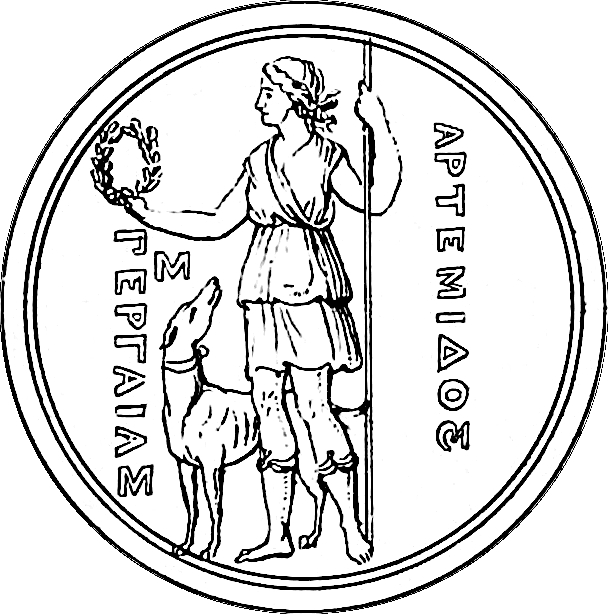
176
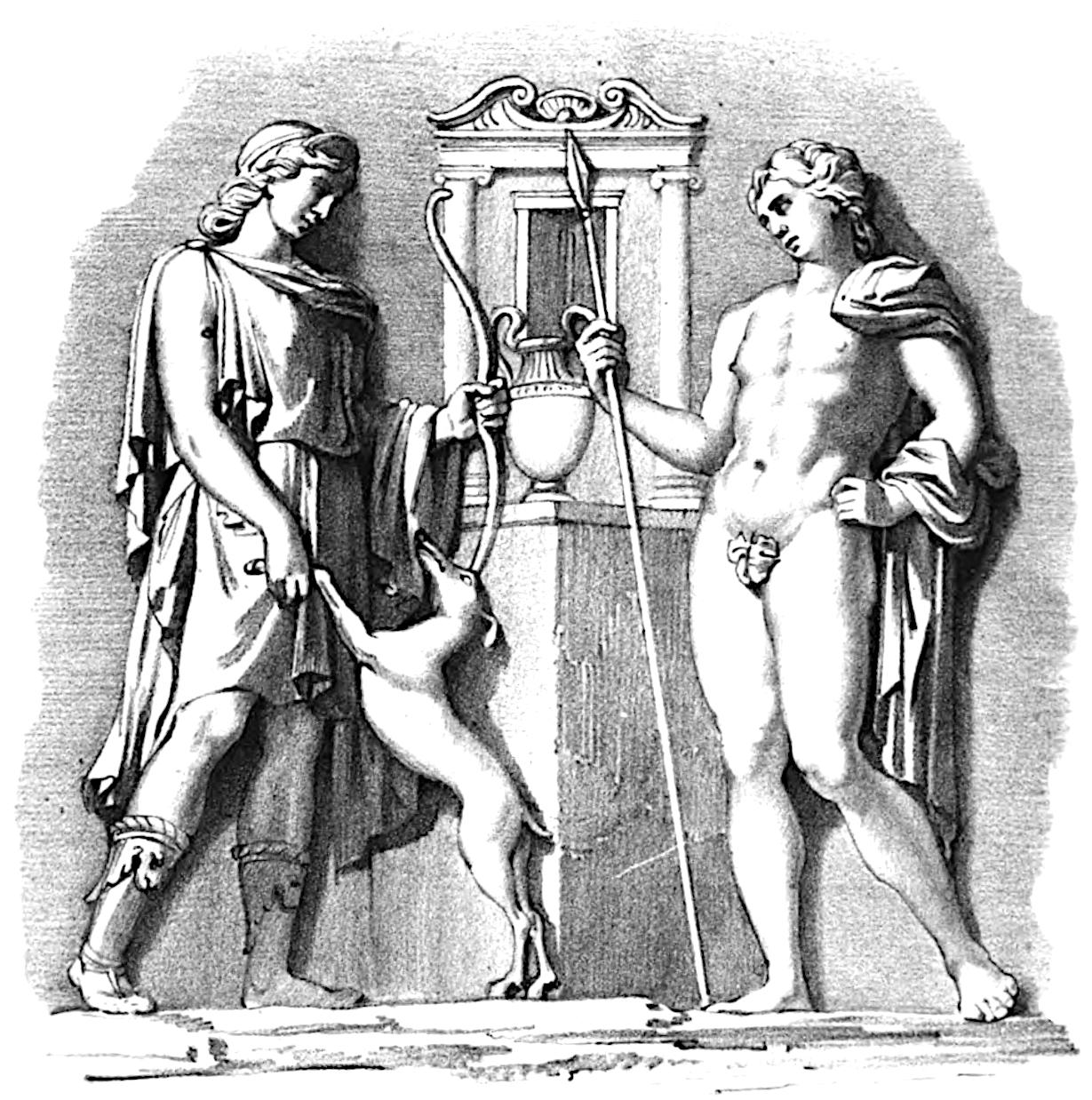
177

178
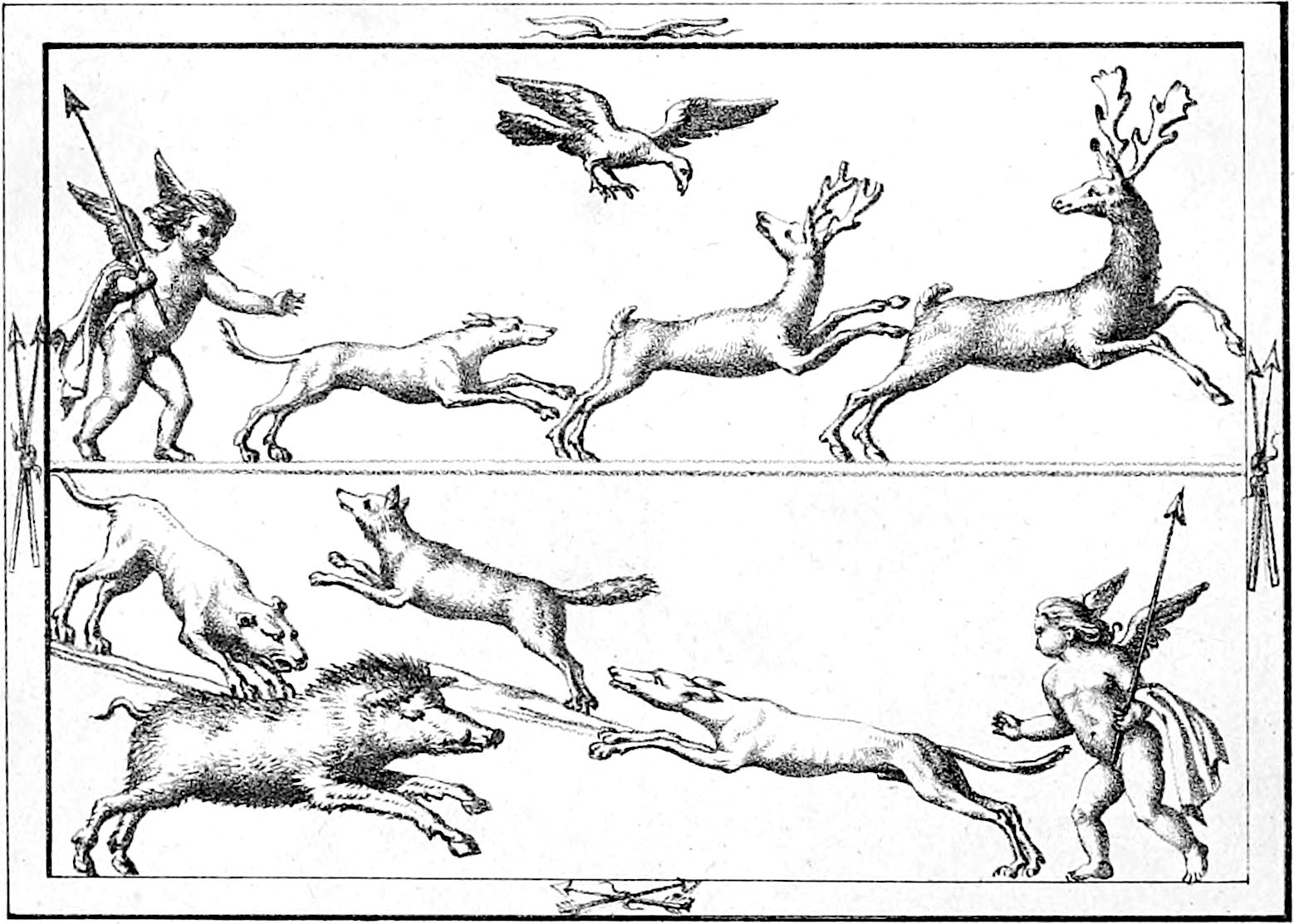
179
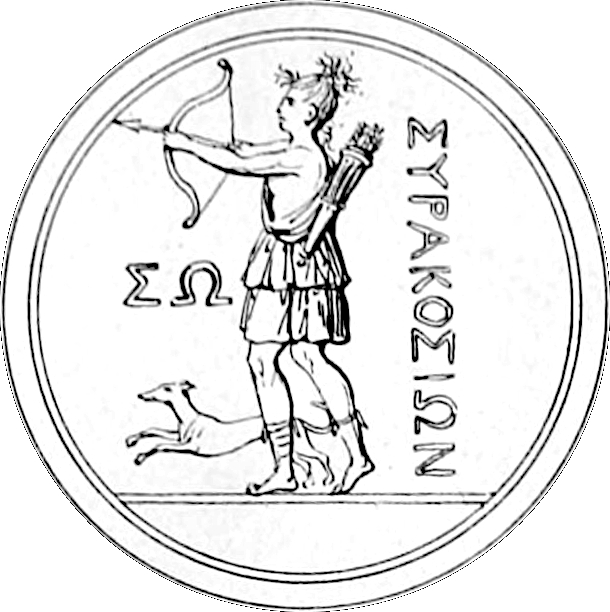
In introducing to the reader’s notice the Canes Venatici of the following monograph—wherein the embellishment of fable is often admitted as the language of truth, and amusement is paramount to instruction—it must not be expected that I should carry back the history of the chase to the early period of the world’s annals, when
and man’s subject creatures revolted from their revolted lord—
the probable date of its institution—(“cum peccato enim animalium noxa simul et persecutio et fuga subintravit, et artes venationum excogitatæ sunt,”)—nor to the later epoch of its Phenician origin, maintained by Polydore Vergil on the authority of Eusebius; nor its more fabulous Theban birth and distribution, the thrice-told tale of John of Salisbury:[293] but rather consider hunting as an art of acquisition and self-defence of remote and undefined antiquity.
180
On Venation, as a pastime, too much has already been said in the preface to Arrian: and I will at present confine my remarks to a few classical anecdotes of its primitive furniture, its founders, and progressional improvement; premising, by the way, that when men were unacquainted with the blessings of civilization, and had no idea of pleasure beyond the gratification of their appetites—when, in short, they were in a state of nature—hunting was not the by-work of leisure hours, but the call of continual urgency—not the jocund diversion of a day, but the toilsome and perilous occupation of a life. In such early times, the nonage of a fallen world, commenced the war of men with beasts:
The personal safety of himself and those dependent on his protection, and the daily cravings of hunger, dictated to man the necessity of animal slaughter; so that, in seeking his quotidian meal, he originated the art of hunting:
The first hostile efforts of the barbarian lords of creation against their biped and quadruped subjects, “joint-tenants of the shade” with themselves, were confined, we may suppose, to manifestations of physical strength and brute courage; by which, under the powerful incentives of self-interest, they procured the vital necessaries of food and clothing:
181
And here at the head of rude pedestrian sportsmen we find the human inventor of the science of the chase, that legendary personage, the Gorgon-killing Ovid. Metam. L. iv. 699.Perseus[295]—“Gorgonis anguicomæ Perseus superator”—(for I would not deprive Latona’s hunting-twins, Apollo and Diana, nor the worshipful raceXen. de Venat. c. i. of Centaurs, φῦλα θηρομιγῆ,[296] of their priority of claim, and patent of precedency, in the apotheosis of the chase,) who,Oppian. Cyneg. L. ii. 5. when he had performed this redoubted act of courage, as we are told by the poet of Anazarbus:
As men in general, however, did not possess the speed of Perseus 182and Achilles,[297] “To sweep with winged feet along the level plain;” nor the power of catching at force, νόσφι κυνοδρομίης, the fleetest animals of chase, like the goddess Dian; it became necessary to add to their naked powers sundry inartificial implements, auxiliary to the subjugation of some, the destruction and expulsion of other beasts.
Acquiring knowledge by experience, man advanced in the mechanism and variety of his hunting gear, as in other articles of increasing civilization.
183
Finding, on patient trial, the χάος εὐρὺ περιστεφὲς of Oppian, with its rude accompaniment of fire, &c. insufficient for capturing the more wary creatures—
he had recourse to the various kinds of weapons, snares, and wily inventions of slaughter described by Xenophon, Gratius, Oppian, and Nemesian; and often alluded to by other writers, both sacred and profane:
But “short of due perfection” were all the hunter’s wiles, till the dog was tutored to assist in the sylvan pursuit and massacre, and to contribute the acuteness of his senses, his speed and courage, to the service of mankind; who consummated their superiority over the animals of the forest, when they had directed to their chase the adapted powers of this faithful ally, and begun, in the words of the cited poet of theEjusdem 140. Georgics—“magnos canibus circumdare saltus,”—redeeming thereby their esculent crops and innocuous herds from the ferocious and depredatory aggression of quadruped felons.[298]
184
The “venandi mille viæ” of the Carthaginian poet have been superseded in the British islands by the superior attraction of the gun:
and of various eminent breeds of fleet and sagacious dogs, adapted to the chase at force. But as these methods were heretofore employed by our less civilized ancestry,[300] are still in vogue in unreclaimed countries, and many of them yet practised on the continent of Europe—whateverCertaine Illustrations, &c. p. 25. be their “incongruity to our present factions,” as Wase expresses himself—a brief description of the “supellex venandi” will not be unacceptable to the modern reader, 185by way of introduction to the subject of classic hunting with the ancient varieties of the canine race.
With seeming accuracy Gratius has described the whole of the antique poaching gear;[301] but it must be confessed that neither Xenophon’s, nor the Faliscian’s, nor the hunting technicalities of the other Cynegetical writers, can be fully explained to modern comprehension.
The deities and demi-deities of sylvan life are objects of invocation in the exordium of Gratius:
and then, under their tutelary aid, the poet begins to handle the “arma venandi;” which, as recorded in the Cynegetica generally, consisted of the linea or formido, nets of various mesh and size and shape, nooses, springes, and other traps—missile weapons, as darts, arrows, &c.; and those for standing-defence, as the halberd-like boar-spear, &c.: many of these, however, were not of very remote antiquity.[302]
186
The feathered line or pinnatum was called, from its effect, metus, formido, and δείματα θηρῶν, (Oppian. Cyneg. iv. 389.) “Cum maximos ferarum greges,” says Seneca, “linea pennis distincta contineat, et in insidias agat; ab ipso effectu dicta formido.”
The line of feathers of various hue, impregnated with artificial odour, “was drawn about the woods Wase’s Illustrations, &c. p. 7.(——ὀλίγον γαίης ἐφύπερθεν, Oppian. Cyneg. iv. 386.) in the intermitted spaces where the toyles were pitched, that so the deer (than which no creature is more timorous) might balk them, and be cast upon the net.” The linea thus flanked the δίκτυ or long net, where not extensive enough to enclose the covert; and filled the intervals, between the purse-nets and nooses, when the latter were set independent of the retia.
187
The Cilician poet has left a graphic description of the formido, as employed in the Armenian bear-hunt—a picture so vividly sketched, Cyneg. iv. 380, that I regret its length prevents transcription. A part of it will be found hereafter under the Eastern “Canis Inductor”—the Armenian limehound. The fourth Halieutic, in an apposite and beautiful simile, describes the startling effect of the feathered line on timid animals of chase:
Many notices of this instrument will occur to the classical reader 188in the works of the Latin poets, but in none more copiously delineated than in the Cynegeticon of Nemesian; who enumerates the many sources whence the feathers of dissimilar tint are to be culled for decorating the “plumed line:”
If the reader be interested in the minutiæ of Grecian and Roman net-making, and the methods of fixing the ἄρκυες, δίκτυα, and ἐνόδια, the casses, retia, and plagæ, he is referred for the former to the Cynegeticus of the elder Xenophon, and that most extraordinary work of human research, the Onomasticon of Julius Pollux—for the latter, to the Venatio Novantiqua of Janus Vlitius, a scholar of deep erudition, and an experienced sportsman:—a summary view being all that can be rendered by the present writer, professedly epitomising the labours of more experienced workmen.
The ἄρκυες or casses were conical, purse or tunnel-like nets, ending in a point at one end, and having a running noose of entrance at the other, resembling somewhat a hooped calash, or cowl.
The δίκτυα or retia were long sean-like nets for open fields, and for encircling brakes and coverts;——“longoque meantia retia tractu.”
The ἐνόδια or plagæ were nets of much less length, to be placed across roads, game-tracks, paths, and narrow openings between bushes.
The ἄρκυες appear to have been sometimes placed independent of the δίκτυα, but more commonly in the course of the main nets; so that when the animals passed along the linear and reticular barrier, exploring a place of egress, terrified by the formido, (which flanked the hayes, and occasionally was drawn along above the net-rope to scare the game from overleaping,) and the meshes of the δίκτυα, (continuous except where the purse-nets were introduced with their 189slip-knot entrance), on attempting to pass out at the apparent opening of the ἄρκυς, they became by their struggles entangled therein[305]—the purse either spontaneously, or by the agency of the men placed there to draw the necessary ropes, immediately closing at the mouth.
The whole management of the nets and lines was vested in the watch αἰζηῶν πυλαωρῶν referred to, who were concealed under copse-wood, for the purpose, more particularly, of attending to the ἐπίδρομος and περίδρομος, the ropes (smooth and knotless) which governed the ἄρκυες, and passed through iron rings, along the course of the δίκτυα, up to the watchmen’s hiding-place:
The length of the δίκτυα or retia, properly so called, would astonish a modern disciple of Diana. So great was the extent of ground sometimes enclosed by these toils, that Plutarch mentions, in his life of Alexander, hunting-nets above twelve miles long. With such it was customary to encircle vast tracts of country, and then, by 190gradually contracting their ambit, to force the animals of the district into a narrower compass;—when at the will of the magister venationis, the work of slaughter commenced.[306] This mode of hunting is very clearly described, with its usual auxiliaries of noise and flame, in a simile of the Achilleid:
The Faliscian poet, in the early part of his Cynegeticon, specifies the best materials for the composition of nets, with particular instructions for their size and shape:
191
On the same subject the Carthaginian summarily touches, distinctly recognizing the three varieties of which we have been just speaking:
And an earlier poet, in his praise of the brumal pleasures of the countryman’s life, sunders plagæ and retia, applying them to such totally different purposes, that it is probable they sometimes differed as much in the structure of the mesh, its size, &c. as in the magnitude of the whole instrument:
Whatever honour be attached to these reticular inventions, and that of the running-noose, the βρόχος or laqueus, is due to Hippolytus:
The βρόχος generally formed a rhomb-shaped entrance to the ἄρκυς, as probably did the laqueus to the cassis:—but as the tunnel was occasionally used separate from the sean-like toil (δίκτυ—rete) and from the road-net (ἐνόδιον—plagæ), so may these slip-knot nooses have been also set independent of the purses, their usual additaments, in narrow passes, or straits frequented by game:
The noose-ropes,[307] being of much ruder manufacture, and more simple 192structure, than any variety of net with meshes, must have been of earlier institution.
These laquei curraces,[308] seemingly from this passage made of other materials than hemp before the days of Gratius, are yet in use, under the form of springes and wires, with deer and hare-poachers; who, I find in Hor. L. iii. Od. iv. vs. 70.Oppian, are indebted to the giant-hunter Orion—“integræ—tentator Orion Dianæ”—for the first establishment of their nocturnal depredations:
We are next introduced by Gratius to dentatæ pedicæ, spiked 193foot-traps or gins, resembling the ποδοστράβαι of Xenophon and Pollux; and formed, as the following lines indicate, of wood, concealed on the ground;
It being no small recommendation to them that one poacher might reap the fruits of another’s labours. Their invention is attributed to a virtuous and holy Arcadian, ycleped Dercylus,[309] in high favour with the Sylvan goddess, and by her initiated in the mysteries of hunting, and the formation of sundry destructive implements of predation, which he first employed in the valleys of Mount Mænalus, and the Lacedæmonian Amyclæ:
And again:
194
But it must not be forgotten that a competitor for the glory of these, and other like discoveries, is mentioned by Plutarch, in Amatorio, and by Nonnus, in Dionysiacis, in the person of Plutarch. in Amatorio.Aristæus—εὔχονται δ’ Ἀρισταίῳ δολοῦντες ὀρύγμασι καὶ βρόχοις λύκους καὶ ἄρκτους, ὃς πρῶτος θήρεσσιν ἔπηξε ποδάγρας:—indeed, if we may credit the Christian poet of Panopolis, the sire of the hapless Actæon is entitled to the invention of almost every article of hunting-gear, the dresses of sportsmen, initiation of hounds of chase, &c.—of many of which he has been deprived by less rightful claimants:
To the first-mentioned Arcadian worthy Gratius attributes the earliest fashioning of hunting-spears with moræ or guards. Virgil sings of “lato venabula ferro,” for close conflict; and Gratius more particularly adds, to the honour of Dercylus’s armoury, the introduction of bifid spears:
But although the Arcadian formed the spear for pedestrian assault, and Meleager was conspicuous in the use of it,—ἐν σταδίοισιν ὀρειοτέροισι μόθοισιν,—a more celebrated hero first wielded it in distant jaculation on horseback:
—a style of hunting, which we may suppose to have been much practised in the Roman empire by persons of noble rank, as Montfaucon gives several representations of it from the sepulchre of the 195Nasoni:—in exact accordance with which, the ἱππελάτης of Oppian is decked out for the equestrian chase.
The reader’s recollection will readily supply, from authors in every one’s hands, the use of bows and arrows,[310] and small darts—“excussâ lancea torta manu,”—in the early annals of field-sports:
The far-famed female ally of Meleager in the attack on the Calydonian boar,
claims the merit of first employing archery; having been instructed[311] both in κυνηλασίη and εὐστοχίη by Dian herself, (see Callim. H. in Dian. vs. 217.)
We are unacquainted with the form and use of many of the weapons,196 with which Oppian accoutres his able-bodied rustics for the covert-side,
and Natalis Comes, with his brief scholiast Ruscellius, throws no light on them, in the borrowed armoury of his first cynegetic. The Oppianic catalogue runs through eight lines, in which we recognize, in addition to the former implements of predatory hunting, others particularly devoted to the capture of the hare, the ἁρπάλαγον and λαγωοφόνος τρίαινα, the hare-pole, and three-pronged hare-fork—belonging probably to the class of murderous instruments mentioned by the poet of Barga:
Among the more simple modes of following wild animals for capture, I should have earlier mentioned that of tracking—from its simplicity, probably, coeval with the rudest species of pursuit. It is alluded to in the 32nd Epigram of Callimachus,
in the 1st Georgic of Virgil vs. 308. and the 2nd Satire of the 1st book of Horace vs. 105. Oppian describes tracking as twofold, by men, and dogs,—the former of course being the more ancient, and more correctly termed tracking, the latter scenting:
197
Savary’s ejaculation on snow-tracking the hare is more amusing than poetical:
The many wily inventions devised by man’s ingenuity of old for ensnaring noxious and timid animals, appear to us more like instruments of lawless poaching, than fair hunting, and fully justify the conclusion of Arrian’s 24th chapter de Venatione; wherein, with the spirit of a genuine courser, he exclaims, “there is as much difference between a fair trial of speed in a good run, and ensnaring a poor animal without an effort, as between the secret piratical assaults of robbers at sea, and the victorious naval engagements of the Athenians at Artemisium, at Salamis, at Psyttalia, and at Cyprus.”
It has been erroneously stated by Montfaucon and others, that the use of nets and snares was not an exercise of pleasure to men of quality, but only to peasants, and persons of inferior grade;—the praise of a noble employment being, on this view, alone awarded to hunting with dogs, or being armed for the sport with venabula, hastilia, &c. either on foot or horseback. But this distinction, however plausible in theory, is not tenable in fact. Discreditable as the use of snares may be deemed, and irreconcilable to modern taste, the philosophic recluse of Scillus, the patrician Xenophon, and every other sportsman, whether high or low, of the classic ages, must plead guilty to their employment:
I do not mean that the gentry had not the aid of servants in these as in other menial occupations—(for it is evident that Xenophon’s ἀρκυωρὸς was a servant; and on the huntsman’s tomb, recorded by Pausanias in Achaicis c. xxii., by the side of the principal is the οἰκέτης ἀκόντια ἔχων, καὶ ἄγων κύνας ἐπιτηδείας θηρεύουσιν ἀνθρώποις—The ostentation too of the Horatian Gargilius,
198
is farther proof; and so likewise the “famuli, comitumque animosa juventus” of Nemesian, engaged in preparing the furniture of hunting;[313])—but I mean that the gentry were practically engaged in this predatory venation, themselves directing and assisting in the distribution of the whole machinery of it. In defence, however, of Xenophon, the most accomplished of ancient sportsmen, and in contradistinction of his habits in the field to those of modern poachers, whom in some of his predatory tackling it must be allowed he resembled, we may observe that he orders all the apparatus to be taken away when the sport isXenophon de Venat. c. v. over—ἀναλύειν χρὴ τὰ περὶ κυνηγέσιον πάντα—a clear indication, that though he and his compeers used nets and dogs together, forestalling their prey, contrary to the custom of the more enlightened moderns, who hunt at force, κατὰ πόδας,—yet it was held illegal, or at least unsportsmanlike, to leave snares on the ground longer than the time of the actual chase.[314]
199
But of “the abrogated styles of hunting in the ignorant non-age of the world,”—to use the language of Christopher Wase,—enough. The pit, the snare, and other supellex venandi, were employed, as already stated, long before the dog was tutored to the chase,[315] and were continued after his initiation, and that of his valued associate and coadjutor the horse, (the joint-presents of the 200twin-sons of Leda,) who contributed their services in common to almost every variety of chase:
We know not at this period whether the different varieties of the canine tribe are to be classed under the same species—whether a specific identity exist in the wolf, the jackal, and the dog—nor whether, in the latter family, the peculiar adaptation of each variety for peculiar functions can be the accidental consequences of mere degeneration, excited to change by the climate of different countries, and the ingenuity of man.
Let the primeval stock be what it may, the race was first initiated in the pursuit of wild animals by that celebrated sportsman, the Amyclean Pollux;—for we must not despise fable where history is silent, and again quote the Greek poet of the chase:
The species being distributed over the habitable world, derived its various names from its geographical distribution[316]—each country having its variety of the race, characterized by remarkable qualities, and distinguished by them in the Cynegetical works of Greece and Rome:—
201
Where the descriptions of these mores or qualities are sufficiently full, in the works alluded to, for a satisfactory classification of the several varieties of the canine tribe, it is the object of the following trivial work to attempt it—
But it must not be expected that it will give an account of all the semi-fabulous dogs of classical antiquity, or attempt to reduce within the pale of a zoological arrangement the shape and properties of every mongrel, however memorable, that has puzzled the discriminative acumen of Conrad Gesner himself; or find archetypes in the kennels of Greece and Rome, forBen Jonson’s Sad Shepherd. Act ii. sc. 3. “all the barkand parishtikes” of the credulous Dr. Caius, and more recent writers of canine biography.
This little monograph being almost exclusively confined to the common Canes Venatici—
it is not incumbent on me to inquire whether a Cerberus, or an Orthrus, Hesiod. Theog. vs. 308.(the κρατερόφρονα τέκνα of Typhaon and Echidna[317]), ever existed in canine shape—whether Anubis was a biped or quadruped “latrator”—a genuine barker, or a dog-faced Virgil. Æn. L. viii. 768. Lucian. Jupiter Tragœdus.Mercury—Ἕρμης ὁ κυνοπρόσωπος—whether Euripides was torn to pieces by ferocious dogs or spiteful women—whether the beauty of the dog of Alcibiades,202 probably a Canis OstiariusPollucis Onomast. L. v. and not a Canis Venaticus, was impaired by the loss of his tail, or the act of decurtation conferred on the eccentric Athenian the notoriety he expected—nor on what variety of the race is to be charged the deaths of In Ibin.Thrasus, Actæon,[318] and Linus, of Ovid’s well-known tetrastic. It is foreign to my purpose to inquire whether Plutarch. de Solert. Animal. &c.Plutarch’s dog, who threw stones into an oil-cruse till he had raised its contents sufficiently high in the neck of the vesselPollucis Onomast. L. v. to lap the oleaginous fluid, surpassed in sagacious ingenuity the cunning brutes of more modern dog-fanciers—whether the disciplined mimic, exhibited before Vespasian in the theatre of Marcellus, must yield to the discriminative feats of his congener before Justinian. All these non-descripts, from the janitor Orci to the theatrical pantomimi, are out of my beat. Amusing too as it might be to the reader to have an account of every faithful dog, recorded by the immortal German naturalist as the σύμμαχοι and σωματοφύλακες of man,—and the anecdotes of canine instinct and affection registered by Plutarch, Ælian, Pliny, Solinus, and Julius Pollux—versified by Johannes Tzetzes and Natalis Comes, and reprinted by the laborious Paullini in the Cynographia Curiosa, presented to his notice,—such a compilation would lead me into too wide a field. For the same reason, and without meaning any disrespect to the ladies of Greece and Rome, I am prevented from enrolling on my file their domestic pets—
the οἱ ἐπὶ τερπωλὴν, καὶ οἱ μελιταῖοι λεγόμενοι of the visionary Artemidorus.[319] I cannot, however, deny the reader the gratification 203of perusing the following lines of Darcius, in which he celebrates these tiny creatures;—of whom Martial. L. i. Ep. 110.Martial’s Issa will be remembered as a classic exemplar—“Deliciæ catella Publî.”
But hold—
It is a favourite notion of classic writers that the qualities and dispositions of the animals of each country are in accordance with those of the human inhabitants: and this opinion prevails more especially relative to domesticated animals, the reclaimed varieties of the dog and horse. Numerous instances might be adduced in corroboration of this hypothesis. Strabo remarks in the Iberian and Albanian people, and their dogs, the same fondness of hunting—θηρευτικοὶ δὲ καὶ αὐτοὶ καὶ οἱ κύνες αὐτῶν εἰς ὑπερβολήν: andÆlian. de Nat. Animal. L. iii. c. 2. Ælian, in the Medes and their horses—σοβαροὶ δὲ Μῆδοι καὶ ἁβροὶ, καὶ μέντοι καὶ οἱ ἐκείνων τοιοῦτοι ἵπποι· φαίης ἂν αὐτοὺς τρυφᾷν σὺν τοῖς δεσπόταις, καὶ τῷ μεγέθει τοῦ σώματος, καὶ τῷ κάλλει, κ. τ. λ. These, 204probably, he meant to contrast, as well as their proud riders, with the sorry-looking, unsightly horses of Libya, (active, however, and patient of fatigue), and the unsightly people of the country.
The naturalist then proceeds to say that such also are his opinions with regard to the dogs of each country; and specifies, as examples corroborative of his hypothesis, the Cretan, Molossian, and Ælian. de Nat. Animal. L. iii. c. 2.Carmanian—κύων Κρῆσσα κούφη, καὶ ἁλτικὴ, καὶ ὀρειβασίαις σύντροφος· καὶ μέντοι καὶ αὐτοὶ Κρῆτες τοιούτους αὑτοὺς παραδεικνῦσι, καὶ ᾄδει ἡ φήμη. θυμικώτατος δὲ κυνῶν Μολοσσὸς, ἐπεὶ θυμωδέστατοι καὶ οἱ ἄνδρες. Ἀνὴρ δὲ Καρμάνιος καὶ κύων ἀμφότερα ἀγριώτατα καὶ μειλιχθῆναι ἄτεγκτα φύσιν. A farther example of this prevalent notion is found in the lines of Gratius on the crafty Acarnanian dog—“clandestinus Acarnan:”—
alluding to a passage of the history of Thucydides, where he relates that Demosthenes placed 400 Acarnanians in ambuscade, in a hollow way near Olpæ; whence they issued forth in the heat of the subsequent engagement, and by their sudden assault on the rear of the Peloponnesians, completely routed them. A similar reference to national character is evident in the passage of Gratius, on crossing defective breeds of dogs with others in which opposite excellencies exist:
205
But to descend from these general remarks on the supposed assimilation of men and animals, cohabitants of the same soil, to the particular kennel-rolls of Greece and Rome. There appears to have been a threefold distinction of Canes Venatici, acknowledged by classic authors, during the imperial government of Rome. I do not mean that this classification is accurately observed by all the cynegetical and popular authorities; but it may be traced, more or less clearly, in the writings of Gratius,[321] Seneca, Artemidorus, Oppian, Claudian, and Julius Firmicus.
The Faliscian notes a triple division in the fragment of his Halieutic poem:
“In cane sagacitas prima est,” says Seneca in one of his Epistles, “si investigare debet feras; cursus, si consequi; audacia, si mordere et invadere.”
We find nearly a similar arrangement in the Oneirocritica of Artemidorus, a strange visionary of Ephesus, who spent his whole life in endeavouring to solve the mysteries, hidden, as he conceived, in Artemidori Oneirocrit. L. ii. c. xi.dreams—τῶν κυνῶν οἱ μὲν ἐπὶ θήραν τρέφονται, καὶ τούτων οἱ μέν εἰσιν ἰχνευταὶ, οἱ δὲ ὁμόσε τοῖς θηρίοις χωροῦσιν· οἱ δὲ ἐπὶ φυλακῇ τῶν κτημάτων, οὓς οἰκουροὺς καὶ δεσμίους λέγομεν, κ. τ. λ.
Claudian, in his third book De Laudibus Stiliconis, describing the active co-operation of Diana and her nymphs in advancing the honour of his hero, “Consulis in plausum,” distinctly specifies a triple division:
206
and then inverting the order of sequence, names, apparently in illustration of his classes, the Cretan, Spartan, and Briton:
The first we must acknowledge to be nare sagaces; the second pedibus celeres, the slenderest and speediest hounds, probably, known to the poet, in the absence of the Vertragus,—whom alone we consider swift of foot, and entitled to rank under the class so denominated. The Britannæ justly exemplify the dogs of combat—gravioribus aptæ morsibus.
Julius Firmicus comprehends the whole genus under the triple distinction of “Molossi, Vertragi, et qui sunt ad venationes accomodati,”—meaning to include in the latter periphrasis the whole class of sagacious hounds, as he does the pugnacious under the title of Molossi.
Of Oppian’s tripartite arrangement, exemplified in the portraits which he has drawn of the individuals representative of each class, and of his farther distinction, founded on purity and commixture of blood, I shall hereafter speak; assuming at present, on the authority of the cited passages, that all the more celebrated varieties of the canine race, mentioned in the Cynegetica of Greece and Rome, of the date referred to, may be classified under the triple division of pugnaces, sagaces, and celeres.[322]
207
In Xenophon, and the earlier Greek writers, we do not trace more than a twofold division into pugnaces and sagaces; the varieties of the latter class differing, perhaps, amongst themselves in degrees of swiftness. Indeed, that they did so is evident from what Socrates remarks of the sagacity and speed of different individuals of the race, in the well-known interview with the beautiful, meretricious Xenophon. Memor. L. iii. c. xi.Theodota:—ὅτι δὲ μεθ’ ἡμέραν ἀποδιδράσκουσιν οἱ λαγὼς ἄλλας κτῶνται κύνας, αἵτινες, ᾗ ἂν ἐκ τῆς νομῆς εἰς τὴν εὐνὴν ἀπέλθωσι, τῇ ὀσμῇ αἰσθανόμεναι, εὑρίσκουσιν αὐτούς· ὅτι δὲ ποδώκεις εἰσὶν, ὥστε καὶ ἐκ τοῦ φανεροῦ τρέχοντες ἀποφεύγειν, ἄλλας αὖ κύνας ταχείας παρασκευάζονται, ἵνα κατὰ πόδας ἁλίσκωνται. The swift-footed of this passage must not be interpreted as the celeres of our third class, which will be found to contain only the Vertragus of Arrian;—on whose authority it is affirmed that the greyhound was unknown in Greece in the days of the Socratic Xenophon. Probably, they were the most speedy of the Canes Laconici, to which the philosopherH. in Dianam. alludes—the θάσσονες αὐράων κυνοσουρίδες of Callimachus.
In accordance with the distinctions pointed out in the classical kennels is the threefold character of ancient hunting: but as coursing properly so called, Vide Jani Vlitii Venat. Novantiq.(the third variety of chase peculiar to the Vertragus), was of late introduction in comparison with hunting, the two grand divisions of the sports of the field may be considered as primarily founded on the twofold distinction of canes pugnaces or bellicosi, and canes sagaces; and by Gratius, under the terms arma and artes, both are vividly depicted.
“The one,” says Christopher Wase, “is a desperate and gladiator-like entering the lists with beasts, and assaulting them by violence; which was the school of cruelty and ignorant course of ancient Nimrods: the other a crafty circumventing them by wiles, which is the child of ingenious invention, much assisting man to reestablish him in his empire over the beasts of the field, that hath been so much empayred.” Then, again, he observes, “the magnum opus is bold and hazardous hunting of great beasts, and leve opus is hard-riding and pursuit of little fugacious quarry.”
It was left to the courser of Nicomedia, the Bithynian Xenophon, to place on record in his supplementary Cynegeticus, and to illustrate from his personal experience, the third variety of chase with dogs peculiar to Celtica;—which we have designated as forming a 208class of themselves, under the title of pedibus celeres, of the greatest speed of foot and least sagacity of nose of the whole genus, running entirely on sight of their game. The Celtic or Gallic hound does not appear to have been introduced generally into the more southern parts of Europe, till after the dissolution of the commonwealth of Rome. He is first mentioned by Ovid; and his style of coursing the hare so exquisitely described, that it must have been derived from actual experience in the field rather than hearsay; which latter alone seems to have given him admission into the Cynegeticon of Gratius, Ovid’s contemporary.
The earliest systematic account of the two first varieties of Venatio, will be found in the Cynegeticus of the elder Xenophon; who describes in the 6th chapter the style of hunting the hare in the mountainous, woodland regions of Greece, with all its poaching-gear: and in the 9th, 10th, and 11th chapters, the chase of deer, boars, lions, pards, lynxes, panthers, and bears. The Greeks were entirely unacquainted with the third species ofJ. Vlitii Venat. Novant. Venatio, named, for distinction’s sake, Venatio cursoria, as the others are V. bellica, and V. indagatoria.
The animals obnoxious to the chase were suitable to its different varieties, and coped with by classic hunters according to the prowess of each game. Some creatures being timid and fugacious, others of great strength and ferocity, and a third class wily and artful,—the hunters were wont, in the words of Plin. Paneg. Trag. dict.Pliny’s panegyric, “certare cum fugacibus feris cursu, cum audacibus robore, cum callidis astu;”—thereby acquiring, in Diana’s school of mimic war, the necessary experimental knowledge for following the flying foe, or contending with the daring, or the subtle, in the field of real battle.[323]
209
Gratius has elegantly sketched the beasts of Venery in his Halieutic fragment:[324]
Oppian’s distribution of them into classes is nearly similar:
And in Claudian we recognise a summary classification of the same distinctive characters, adapted to the threefold varieties of the dog already noticed in his poem:
210
A minute description of each particular chase would exceed the limits of a compendium,[325] and lead me into too extensive a field.
Let a few brief sketches of the more celebrated suffice—beginning with the hare-chase of the keenest and most accomplished sportsman of the classic ages.
After the snares and nets are duly set, and a man placed to watch them, the first-fruits of the sport being vowed to Apollo and De Venatione c. vi. 13.Diana Ἀγροτέρα, Xenophon slips one of his most keen-nosed dogs, σοφωτάτη ἰχνεύειν, the rest of the pack being held singly at the covert. If this finder hit on a scent, a second dog is immediately slipped, and a third, and so on till the whole pack are in full cry after the started hare. The huntsman follows with his pole, and chlamys wrapped about his hand, Sic apud Dindorfii Annot. in loco, pro κακάς.cheering the dogs, Ἰῶ κύνες, ἰῶ κύνες, σαφῶς γε ὦ κύνες, καλῶς γε ὦ κύνες,—taking care not to head the game—μὴ ὑπαντᾷν· ἄπορον γὰρ—for nobody but a bungler and no-sportsman is guilty of this. It is then customary to shout to the watchman at the nets, Αὐτῷ παῖς, αὐτῷ παῖς, παῖ δὴ, παῖ δὴ—To her, boy! to her, boy! now, boy! now, boy!—the latter replying whether the hare be taken or not. If she be captured, the hounds are called off, and begin to draw for a second; but if not, and they again hit off the scent, the halloo should be Εὖγε, εὖγε ὦ κύνες, ἕπεσθε ὦ κύνες. If the dogs are got very forward, so that the huntsman cannot keep up, but is thrown out—neither seeing them, nor hearing their cry—he should keep running on, calling to every one he happens to come near, and inquiring for the pack—ἦ κατεῖδες ὠῆ τὰς κύνας;
When he finds them, if still on scent, he should cheer, and call every dog by name as often as possible, varying the intonations of 211his voice. If the hare has made for the mountains, he should encourage them withSic apud C. Gesner. vox bacchantium in mountibus! Εὖα κύνες, εὖα ὦ κύνες: but if they have over-shot the scent, he should call them back—Hark back, dogs! hark back!—οὐ πάλιν, οὐ πάλιν ὦ κύνες: when brought back to the scent, he should draw around, making many casts,Vide Savary Alb. Dianæ Leporicidæ. (κύκλους,[326]) even up to the line of the nets, encouraging the dogs till they again pick up the Xen. de Venat. c. vi. 23.scent—αἱ δὲ διαῤῥιπτοῦσαι τὰς οὐρὰς, καὶ ἑαυταῖς ἐμπίπτουσαι, καὶ πολλὰ ὑπερπηδῶσαι, καὶ ἐπανακλαγγάνουσαι, ἐπαναίρουσαι τὰς κεφαλὰς, εἰσβλέπουσαι εἰς τὸν κυνηγέτην, ἐπιγνωρίζουσαι ἀληθῆ εἶναι ἤδη ταῦτα, ὑφ’ αὑτῶν ἀναστήσουσι τὸν λαγὼ, καὶ ἐπιᾶσι κεκλαγγυῖαι—starting off again at full cry.
The watchman at the nets gives a particular shout, significant of the hare’s capture in the ἄρκυς, or her escape by going beyond, or stopping short. If she be taken, they try for another; if not, they continue the pursuit of the same. Weary at length with their day’s work, the huntsman must himself, towards evening, assist the pack in searching out the poor tired hare at her quat, Xenophon de Venatione. c. vi.(κατακλίνεται γὰρ ἐν μικρῷ τὸ θηρίον, καὶ οὐκ ἀνίσταται ὑπὸ κόπου καὶ φόβου,) and bring them forward with encouragement; “cheering the meek dogs much, the eager ones little, the intermediate moderately,” till they kill her κατὰ πόδας, at force, or drive her into the nets: and thus at last will the huntsman become master of theJ. Sarisberiensis Policrat. L. i. c. iv. hare—“infelicem bestiolam lepusculum timidum tanto fortassè prædabitur apparatu.”
Oppian’s instructions on hare-hunting, contained in a few verses at the latter end of his fourth Cynegetic, are of little interest. Hares should never be chased up hill, as their shape is particularly adapted for it, and they avail themselves of the advantage whenever they can get to a rising ground:
Beaten roads should be avoided by huntsmen, and ploughed lands preferred for sport. De Naturâ Animal. L. xiii. c. 14.Ælian has left us an animated description of the hare’s shifts and prowess in avoiding her pursuers, and the contempt212 with which she looks down, οἷον ἀπὸ σκοπιᾶς, on their fruitless efforts to overtake her.
The stag-hunt is treated of by Xenophon, in his ninth chapter, with snares, traps, &c. Indian dogs are here preferred, for their size, strength, speed, and courage. But as his name-sake has written on the same variety of chase with Celtic hounds and Scythian horses, I pass on to the boar-hunt, in which the former is diffuse—tooEjusdem c. x. diffuse for more than a bare reference. Indian and Locrian hounds are selected from the pugnacious class, and Cretan and Spartan from the sagacious, to assist the sportsman in his attack of the wild boar. The latter hound appears to be employed, on this occasion, as a lime-dog, or inductor, to find out the lair of the beast. Purse-nets, javelins, προβόλια, and ποδοστράβαι, are in request. “Jamque apud frondosum tumulum,” says Apuleii Met. L. viii. p. 512.Apuleius, in a vivid, but somewhat wordy sketch, “ramorumque densis tegminibus umbrosum, prospectu vestigatorum obseptis campis, canes venationis indagini generosæ, mandato, cubili residentes invaderent bestias, immittuntur: statimque solertis disciplinæ memores partitæ totos præcingunt aditus: tacitâque priùs servatâ mussitatione, signo sibi repentino reddito, latratibus fervidis dissonisque miscent omnia”—“aper immanis atque invisitatus exsurgit,” &c.
Ovid’s Calydonian boar-hunt, with the “lecta manus juvenum” of Meleager’s confederacy, will occur to the classical reader, and farther illustrate this perilous species of chase;[327] which, with others yet more dangerous, described by Xenophon in the 11th chapter of his Manual, and by Oppian in his fourth Cynegetic, constitute examples of the Horat. Od. L. ii. i. 6.bellica Venatio, “periculosæ plenum opus aleæ,” so emblematic of actual war.
The Athenian is very brief on the subject of lion, pard, lynx, panther, and bear-hunting. These ferocious brutes are commonly 213etaken by stratagem; rarely, if ever, at force. Oppian is more diffuse, amplifying the lion-chase with the Libyan, Indian, and Æthiopian practices for capturing the king of beasts.
As a splendid specimen of poetical talent in this too much neglected author, (for he richly deserves the character bestowed on his works by J. C. Scaliger, C. Barthius, and other eminent scholars,) I select, from the latter part of the same book, the following extract—a description of an Armenian bear-hunt. The bear is found with the limehound of the country, the nets, snares, and μήρινθος ἐΰστροφος are set, and the din of pursuit commences:
But farewell the detail of these savage chases![328]—
214
The most lively and striking picture of classic Venation, in genere, which I have met with in the Latin language, is contained in one of Seneca’s tragedies; which, let them be the productions of whom they may, contain much brilliant descriptive poetry. The whole arrangement of the field is admirably given in the Hippolytus. The duties of the δικτυαγωγὸς, ἰχνευτὴς, κυναγωγὸς, ἀρκυωρὸς, and λινόπτης, are successively detailed in the prologue, spoken by this rigid paragon of chastity himself, Xenophon de Venatione c. i.(σωφροσύνῃ καὶ ὁσιότητι μακαρισθεὶς,) in the character of Magister Venationis.
says the son of Theseus to his attendant huntsmen—describing the local scenery of different parts of Attica, most abundant in game—and allotting them their respective stations and duties, with the mute limehounds, (“canibus tacitis,”) the noisy pack, and divers implements of the sylvan chase:[329]
So much for the furniture of the chase, its inventors, and practice, by way of introduction to our triple classification of the Canes Venatici of the classic ages. Oppian. Cyneg L. i. 367.We will now proceed, οἶμον ἐπὶ σκυλάκων.
In the first class of the triple division—quibus est audacia præceps, or gravioribus aptæ morsibus—are included all the canes pugnaces or bellicosi—pugnacious dogs of war.
The Mede, Celt, Ser or Indian, Albanian, Iberian, Lycaonian or Arcadian, Hyrcanian, Locrian, Libyan, Egyptian, Pannonian, Magnesian, Molossian, Briton, Athamanian, Acarnanian, and a few others nearly allied.
In the second class of Canes Venatici, under the title of nare sagaces, are placed all keen-nosed dogs of scent.
The Spartan, Cretan, Carian, Etolian or Calydonian, Metagon, Belgian, Gelonian, Umbrian, Tuscan, Armenian, Petronius, Agassæus or Briton, Segusian, and others of inferior note.
In the third class, entitled pedibus celeres, those dogs alone are comprehended, which ran on sight of their game, as the Vertragus, and possibly the Sicamber: of the latter, however, I know nothing beyond the meagre allusion of Gratius to his speed, and the apparent distinction made between him and the Vertraha, in the Cynegeticon of this poet:
216
Janus Vlitius considers the Sicambrian to be the Gallo-Belgic hound of more modern days, and identical with the Ovidian canis Gallicus: but the latter is more probably the Vertraha of Gratius, the οὐέρτραγος of the younger Xenophon. The Sicambrian people, strictly speaking, were Strabo L. vii.Germans, and not Belgians; as they dwelt on the eastern, or Germanic side of the Rhine.
On first comparing the different types of the Oppianic Canes Venatici with those of the Latin Cynegetica, I was misled by the authority of annotators to an admission that the type, so particularly described by the Greek poet in his first book, μηκεδανὸν κρατερὸν δέμας, κ. τ. λ. vs. 401. ad vs. 412. was of the sagacious hound, the Petronian or such-like. But this interpretation, in addition to the want of resemblance of the picture to the supposed original, implies, in a notorious copyist of his predecessors’ labours and a keen observer of natural history, the entire omission of the swiftest of the canine tribe, the canis Gallicus or Vertragus; which, if known by fame in the age of Gratius, alluded to by him in his Cynegeticon, accurately portrayed by Ovid as to his style of running, and subsequently, and more minutely, by the younger Xenophon, could not, under any balance of probabilities, have been lost to the sporting world, between the time of Arrian and that at which Nemesian flourished:—by the latter of whom the greyhound is most beautifully depicted, and the mode of initiating greyhound puppies in the hare-course detailed with the hand of a master. I am, therefore, on more mature reflection, inclined to consider the passage referred to descriptive of the greyhound type, the third class of ancient hounds, the family of pedibus celeres.[330] That Rittershusius makes no allusion 217to such a resemblance, does not surprise me; for, by pointing out a supposed defect of the picture, compared with a sketch of Gratius, this learned and laborious commentator proves that he was not aware of the variety of dog intended to be delineated by his author—perhaps himself unacquainted with its type in nature. The very feature of the δολίχοσκιος οὐρὴ, condemned by this editor as burthensome to Canes cursores, with a preference of the “cauda brevis” of Gratius, (suited to the Canes bellicosi alone,) is so remarkable and useful an additament to the greyhound’s form, that, instead of burthening, it essentially assists him as a Cynographia Curiosa c. ii. 12.Canis cursor, (“ad conversiones in cursu reciproco regendas,”) and much strengthens the resemblance of the Oppianic picture to its Celtic prototype in Arrian.
The conclusion of this sketch is followed by that of the Canis pugnax or bellicosus of the first class, hereafter cited,Oppian. Cyneg. L. i. 413. θοῦροι δ’ αὖθ’ ἕτεροι, κ. τ. λ.; and this again by the amusing and lively picture of the keen-scented beagle orEjusdem vs. 467. hare-hound—σκυλάκων γένος ἄλκιμον ἰχνευτήρων, κ. τ. λ.—the representative of which is taken from Britain, and constitutes, according to my theory, Oppian’s specimen (rather a sorry one, it must be allowed) of the second class of Canes Venatici, termed nare sagaces. Are we not, then, allowed to conclude that the same tripartite distinction of Canes Venatici was acknowledged by the Cilician poet, as we have already traced in the more systematic authorities cited?[331] The latter did not escape the notice of the 218learned writer of the Venatio Novantiqua, himself an experienced and ardent sportsman; but he has not corroborated the earlier classification of others with the more recent evidence of the poet of Anazarbus—indeed, he seems to view the Oppianic hound (Cyn. i. 401.) as sagaci-celer, and the Vertragus as unknown both to Pollux and Oppian.
The Cilician gives a decided preference to those canine tribes which are specifically pure in their breed—φῦλα μονόφυλα—and enumerates, without any attempt at classification, all the tribes known to him, under their geographical appellations:[332]
But if the kennel-master acted on the principles laid down by this poet, and his Latin predecessor, Gratius, and crossed his pack with irreconcilable varieties out of different families, belonging to different countries, (and that he did so we have evidence in the irregular and ill-disciplined muster-roll of Ovid,) although the names on Oppian’s file might remain, the animals must have been so changed by the “superinduction of opposite qualities,” that a genuine breed of any one variety must have been most rare. To this general amalgamation of heterogeneous forms and qualities in the canine race, must be attributed the custom of applying the terms Molossian and Spartan219 to the Canes bellicosi and Canes sagaces respectively, gregatim—the dogs of Epirus and Sparta being held the best of their several classes.[333] And, for the same reason, a true Molossian or Spartan of pure blood must have fallen to the lot of few of Hist. Animal L. ix. c. i.Dian’s worshippers. Aristotle speaks with praise of the Spartan and Molossian cross,[334] but awards the highest price in the Spartan kennel to the purest blood: and Themistius, in his first oration, states it as an acknowledged rule in breeding, that the kennel be supplied from bitches of the purest and most unadulterated blood.
Even after the introduction of the Vertragus, and the commixture of his breed with the older varieties of sporting dogs—
the names derived from Sparta and Molosse were still kept up, and prostituted in many instances on most degenerate brutes.
With regard to the original geographical distribution of the three varieties of bellicosi, sagaces, and celeres, and of their respective chases,[335] the most prevalent opinion of continental writers, who have 220devoted their attention to the Cynegetica of Greece and Rome, is that the last mentioned originally came from Gaul, the sagacious from Greece, and the bellicose from Asia. War-dogs of pure blood are nearly extinct in the British islands, and are becoming more rare on the continent of Europe; being much crossed with the sagacious and swift-footed tribes. Vlitius, himself a Dutchman, naturally espouses the Belgic origin of the Belgic, or, more correctly speaking, the Celtic dog. Spelmanni Glossar. p. 113.Spelman, on the contrary, claims him for the honour of Britain; and, in addition, we have always deemed some sorts of bellicosi and sagaces indigenous of this country. Mr. Whitaker, in his History of Manchester, gives to the ancient Britons the old English hound, or talbot, as the parent stock of the celebrated sagacious hounds of our island: and it is found, by experience, that this dog degenerates in every other part of the world—a strong presumptive proof of his being indigenous of Britain. The earliest record of the greyhound allots him to Gallia; and we have no hesitation in considering him of Celtic origin, notwithstanding the offensive disclaimer of Savary of Caen—
No exclusive national claim can be made for the pugnacious tribe, almost every nation of antiquity having had its particular variety; of which none surpassed the Britannus and Molossus, natives of regions remote from each other, unconnected, probably, in their lineage, and united alone in untameable ferocity of character.
The translator of Gratius, after enumerating the various sorts of the British hound, greyhound, and mastiff, (which he calls “indigena, or native of England,”) Certaine Illustrations of the Cynegeticall Poem, &c. p. 34.observes:—“all these dogs have deserved to be famous in adjacent and remote countries, whither they are sent for great rarities, and ambitiously sought for by their lords and princes, although only the fighting dogs seem to have been known to the antient authors: and perhaps in that age hunting was not so much cultivated by our own countrymen.”
CANES BELLICOSI or PUGNACES.
The type of this class is given by Gratius in the following lines, which must be taken as a general description, requiring some latitude in its application to individuals:[336]
By its side we may place its counterpart in Greek;—for, notwithstanding the Oppianic sketch has been appropriated by Bodinus to the Albanese, it certainly may be viewed in a broader light, as a picture in outline of the whole pugnacious family, without reference to individuals:
222
The introduction of a third, more recent portrait, will be justified by the chaste Latinity of Peter Angelio, and the faithful accuracy of his pen:
The quarry of these savage hounds consisted of animals more ferocious than their assailants—such as
Following the order of the poetical manual, to which we are indebted for our first-cited outline of the race, the Mede and Celt arrest our earliest attention, followed by the Ser, Lycaonian, Hyrcanian, Briton, Molossian, and others:
The Persian appears to have been a connecting link between the pugnacious and sagacious classes, though his neighbours of Media 223and Hyrcania were a purely savage breed. The Persian was a mongrel variety—
The character of the “indocilis Medus” we may infer from Ælian’s description, already cited, of the men and horses of the country—which at the conclusion he also extends to the De Naturâ Animal. L. iii. c. ii.dogs—ταῦτά τοι καὶ περὶ τῶν κυνῶν ἔπεισι νοεῖν μοι. The latter were fierce, impetuous, and of great size.
There is evidently no connexion between the Celtæ of Gratius and κύνες Κελτικαὶ of Arrian, though deriving their name from the same source, and seemingly of the same country. The former were originally perhaps the only varieties of the canine species inmates of the kennels of Gaul,
the sagacious and swift-footed hounds being subsequently admitted therein;—but not until the older mode of hunting ferocious animals with savage dogs had fallen into disrepute, from the superior attraction of the improved style; or into disuse, from the gradual extirpation of beasts of prey. As the latter disappeared, or were driven into remote fastnesses, we may suppose the more timid and fugacious creatures supplied their place; and, multiplying in the ratio of the others’ diminution, afforded abundant quarry to the Vertragus, and the archetype of the chien courant of modern France.
How beautifully are the more innoxious sports of sylvan life, and superior claims of the hare and deer hunt, touched by Ovid in the fable of Venus and Adonis. The goddess of love turns huntress:
No wonder that the Celtic people by degrees discontinued the warlike chase, fraught with innumerable perils, and substituted the harmless pursuit of fugacious quarry, with keen-scented and swift-footed hounds, according to the injunctions of the meretricious queen to her disobedient “sweete boy;”
which, in the days of Arrian, constituted their principal field sport.
Julius Pollux, in his Onomasticon, mentions the Celtic war-dogs, and Oppian also includes Κελτοὶ in the muster-roll of his first cynegetic.[339] It is probable that they were a-kin to those of ancient Britain; for we are told by Strabo, who lived soon after Gratius, that the exports from this island to Gaul consisted of Strabo L. iv. p. 138.δέρματα, καὶ ἀνδράποδα, καὶ κύνες εὐφυεῖς πρὸς τὰς κυνηγεσίας. Κελτοὶ δὲ καὶ πρὸς τοὺς πολέμους χρῶνται, καὶ τούτοις, καὶ τοῖς ἐπιχωρίοις. Whence it appears that the Celts had native Canes Venatici which they employed in war,[340] as well as those imported from Britain.[341] In this 225adaptation of canine ferocity the Celtæ were not peculiar; but as dogs, thus applied, can scarce be considered in their sporting character, it is unnecessary to multiply citations. Let the few instances hereafter adduced suffice on this head. Whether these Celtic dogs are the Gallic hybrids of the natural historian I cannot say: “hoc idem,” says Pliny,L. viii. c. 40. ex Vlitii Emend. “è lupis Galli, quorum greges suum quisque ductorem è canibus et Lyciscam habent. Illum in venatu comitantur, illi parent. Namque inter se exercent etiam magisteria.” There were whole packs of these dogs in every chase or forest, “that had for their leader some particular demi-wolf, which the rest accompanied in hunting, obeyed, and were directed by; keeping an order among themselves of government and mastership.”
Gratius mentions, in the next place, the Ser, the Lycaonian or Arcadian, the Hyrcanian, and the union of the latter with the tiger.
The Seræ were a nation of Æthiopia near the origin of the Nile, and also of India between the Indus and Hydaspes: but “the famous Seræ were a people of Asia, the farthest to the east beyond China towards Scythia without Imaus,” according to Wase’s geography of Gratius. As the poet does not record the fame of the Canes Indici under their usual denomination, we may consider the Seric dog as the redoubted Indian—“genus intractabilis iræ.”
226
The Indian dog is noticed by Herodotus, Aristotle, Xenophon, Diodorus Siculus, Strabo, Plutarch, Pollux, Ælian, Athenaeus, Themistius, and Phile, among the Greeks; and by Pliny, Solinus, and Quintus Curtius, among the Latins. The size, strength, speed, and courage of this dog induced Xenophon to recommend him for boar and deer hunting—Xenophon, de Venat. c. ix.εἰσὶ γὰρ ἰσχυραὶ, μεγάλαι, ποδώκεις, οὐκ ἄψυχοι, says this experienced sportsman; and Ælian adds to his good qualities keenness of sight or scent in tracking—Ælian. de Natur. Animal. L. viii. c. 1.εὐγενεῖς καὶ ἴχνη καταγνῶναι θηρίων ἀγαθαὶ, κ. τ. λ. J. Pollux, on the authority of Nicander, derives the Canes Indici from Actæon’s pack; who, when they had recovered from their madness, Ovid. Metam. L. iii. 140.“satiatæ sanguine herili,” passed the Euphrates, and wandered into India. Polluc. Onom. L. v. c. v. 39.He particularly distinguishes them from the Hyrcanian, with which they have been by some historians confounded. Both the last-mentioned authors, Ælian. de Nat. Animal. L. iv. c. 19.and also Plutarch, would have us believe that the lion was the only antagonist with whom this courageous dog would willingly contend:Plutarch. p. 1787. Ed. Steph.—τῶν δὲ ἄλλων ζώων ὑπερφρονοῦντα πάντων, says Plutarch; and Ælian affirms his victory over the lion; but Themistius adds the pard to his chosen antagonists, to the exclusion of inferior combatants, as wolves and foxes. Brodæi Annot. in Oppian. p. 43.Fable however and history are so closely blended in the records of canine biography, that we are compelled occasionally to doubt. And did we not relieve ourselves by incredulity, the marvellous tale of patient courage narrated by Ælian, as manifested by this fierce animal, would make us shudder at the bare recital. It is found in detail in the first chapter of his eighth book de Naturâ Animalium,[342] and succinctly copied by Pollux in the fifth chapter of the fifth book of his Onomasticon.
The cruel experiment, transmitted to us by Dr. Goldsmith, as having been practised on the British Molossus, is quite eclipsed by this more barbarous exhibition of the innate fortitude of the dog of India. For in the latter case, the commencement of the inhuman test of patient courage was the amputation of the tail, and the conclusion decollation. The legs of the poor brute were successively cut off, one by one, without his quitting his hold of the lion, his chosen antagonist:—and when at last the neck was severed from the 227body, the teeth still adhered with the trunkless, but still mordacious head, (credat Judæus,) suspended to the wound. But let the credulous story-teller speak for himself:Ælian. de Nat. Animal. L. viii. c. 1.—καὶ τελευτῶντες τῆς κεφαλῆς τὸ λοιπὸν σῶμα ἀφεῖλον· ὀδόντες δὲ ἐκείνῃ ἤρτηντο τῆς ἐξ ἀρχῆς ἀντιλαβῆς, καὶ ἡ κεφαλὴ ἠωρεῖτο μετέωρος ἐκ τοῦ λέοντος, αὐτοῦ μέντοι τοῦ δακόντος ἐξ ἀρχῆς οὐκ ἔτι ὄντος. The dog like the British bull-dog was memorable for never quitting his hold—a feature in his ferocious character remarked by Phile in his iambic versification of Ælian’s marvellous tale.
In the scarce plates of Stradan, engraven by Galle, there is a picture of the Canis Indicus, as I conceive, fighting with the elephant and lion. The annexed quatrain, by Kilian Dufflæus, sufficiently explains it, but is not worthy of citation. The following poetical portrait, however, by a far better scholar, will be read with pleasure, whether viewed as delineating the Indian, or his congener, the Albanian:
Bodin supposes Oppian to allude to the Canis Indicus in his 1st Cynegetic, vs. 413.; but as the poet does not mention any name, and particularly specifies a want of speed in the dogs he describes, I should rather refer his sketch to the Molossian or true Epirote, (if it must have a particular application,) than to the Indian or Albanian. I have no doubt, however, that it is, as already stated, a general description of the pugnacious type, and therefore includes both Indian and Molossian.
Many of the anecdotes of the Indian dog are promiscuously told of the Albanian, Iberian, and Hyrcanian; and it certainly is difficult to point out any distinctive characters between them. Of the latter I shall presently speak, in the rotation in which he is recorded by Gratius. The Albanian and Iberian are undoubtedly consimilars, strongly impregnated with the Molossian cast—natives of the Asiatic district indifferently called Iberia and Albania. They are celebrated by modern travellers as much as by classic historical and cynegetical writers. Hist. Natur. L. viii. c. xl.Pliny does not name the country of the dog “inusitatæ magnitudinis” given to Alexander by a king of Albania;[343] though it would be a fair conclusion that the dog was of 229the same country as the king. Yet Strabo L. xv.Strabo, notwithstanding he commemorates the prowess of the Albanian race of dogs, particularly notes that those presented to the king of Macedonia were Indian; and he is supported by Plutarch, Diodorus Siculus, and Julius Pollux, differing somewhat in the historical detail. Solinus, for the most part a copyist of Pliny and Strabo, is, on this occasion, it may be, mistaken in assigning to them an Albanian origin. Speaking of the Albanese, he says: C. J. Solini Polyhistor. c. xv.“Apud hos populos nati canes feris anteponuntur, frangunt tauros, leones premunt, detinent quid-quid objectum: quibus ex causis meruerunt etiam annalibus tradi. Legimus petenti Indiam Alexandro, à rege Albaniæ dono duos missos,” &c.—and again, “Hoc genus canes crescunt ad formam amplissimam, terrificis latratibus ultra rugitus insonantes.” Vide Bodini Comment. in Oppian. p. 63.May we not reconcile these statements by considering the Albanese dogs of the Latin historians—Pliny, Solinus, and Curtius—the Indians of the Greek authors—Strabo, Plutarch, Diodorus, Ælian, and Pollux—and the Albania of the former, the India of the latter? The inhabitants of Albania and India were both excessively addicted to hunting—Strabo L. xi.θηρευτικοί τε καὶ αὐτοὶ καὶ οἱ κύνες αὐτῶν εἰς ὑπερβολήν.
The Iberian dog is mentioned by Julius Pollux, Oppian, and Nemesian—the latter poet merely saying the breed is not to be despised by sportsmen;
and the former recommending it to be crossed with Sarmatian blood,
Darcius records the strength, courage, and velocity of the Albanian breed;
and two lines below mentions the dogs, “quos dives Iberia pascit,” as if distinct from the Albanese—which, if Asiatic, they certainly resembled. It is, however, possible, that Darcius may allude to 230European Iberia, or Spain. Indeed, the geographical appropriation of Oppian’s Iberian dogs is doubtful in the opinion of commentators. Brodæi Annotationes in Oppian.Brodæus assigns the Iberian horse of Oppian (Cyn. i. vs. 284.) to Asia; but the people mentioned by the poet under the same name, in connexion with the Celts, in the episode at the conclusion of his second Halieutic, are evidently inhabitants of Western Europe. Jones’s Oppian’s Halieutics.And again—his description of the tunnies “rushing from th’ Atlantic deep,” into the Mediterranean, and of their subsequent capture along its shores, places the Iberians a second time in the West:
however, whether Asiatic or European, it is sufficient for our classification that the dogs were of the pugnacious class.
The modern representative of the classical Albanese occupies a more extensive district than his ferocious prototype, who was confined to the region between Colchos and Armenia; whereas his descendant is found in Macedonia, Illyria, Chaonia, and Epirus.
Of the classical Albanian, in his character of a dog of war, Valerius Flaccus has left us the following very animated description:
And the fame of his tribe, as spread over these countries at large, is celebrated by the chaste poet of Barga in his 5th Cynegeticon, with the same song, decies repetita, of leonine and elephantine quarry:
Opportunity offers, in introducing the dog of Arcadia to the reader’s notice, of speaking of the semiferous race of lupine dogs, the demi-wolves of the ancient Cynegetica.[344] The cross of the wolf and dog is of considerable antiquity; indeed the belief of its existence may be traced very generally through the popular works of the classic ages. Under the Spartan dog, in the second class, I shall again allude to hybrid dogs, and refer to Mr. Hunter’s paper on the subject in the Transactions of the Royal Society of London. At present, it may be stated that the cross of the wolf and domestic dog is an established one, and that the breed, so obtained, has been carried forward for many generations. Aristotle, I believe, first remarked the sexual intercourse of these congeners in Cyrene; and, from the fact as stated by him, Cardan Vulgar Errors. B. i.(“a great inquirer after truth, but too greedy a receiver of it,” according to Sir Thomas Brown,) inferred the gradual degeneration of wolves into the canine type.[345] “Ut lupos et canes,” says Brodæus in Oppianum, “mutuò coire fatear, Diodori, Ovidii, (‘Deque lupo concepta Nape,’) ac complurium facit auctoritas.” As the mule is born from the horse and ass, remarks Galen, so a mixed breed may be generated from the wolf and dog.[346] The race of old reported to have been sprung 232from the latter connexion was that of Arcadia, the Lycaonian; thence called, peradventure, Lycas by Simonides, and Lycisca by Virgil and Ovid—Scaliger.“Mista lupo canis est signatâ voce Lycisca.”[347] That the Lycas of the canine epitaph was of lupine origin, we may conjecture from the name; but the Cean poet specifying other localities as the scenes of his hound’s exploits in life, and Pollux calling her Λυκάδα τὴν Θεττάλην, some other kennel may put forward a claim, instead of that of Arcadia, for the honour of the breed; or the name may be merely an appellative distinction, unconnected with lineage;—still the monumental elegy is deserving of citation:
Gratius contrasts the docility of Lycaonian dogs, the Τεγεῆται of Oppian, with the intractability of the Indian,
The breed of the northern part of Peloponnesus, having been of great note, and the son of Pelasgus Ovid. Metam. L. i. 198.(“notus feritate Lycaon”) having been converted into a wolf—the first subject, it may be, of lycanthropy—the dogs indifferently called Arcadian and Lycaonian, were probably, says C. Wase, Vide Pausan. in Arcad. c. ii.“heirs of his own body naturally begotten.” Many Arcadian hounds are found in the Ovidian pack, among the mistaken pursuers of the unfortunate son of Aristæus—
possessed of great speed and resolution:
233
The poet elsewhere bestows on the hound of Arcadia the local epithet of Mænalian, from Mount Mænalus—
Is it not probable that some of the hounds of chase, bestowed by the Arcadian God on the Goddess of hunting, were culled by his goatish majesty from the kennels of the country of Lycaon, where Pan himself gratified his sporting ardour?—the brace of pie-balled—the leash of long-eared—and the spotted hound?
The other seven which Pan contributed to Dian’s pack, being θάσσονες αὐράων, and destined for more timid quarry, are placed under the Spartan family, of which they were the fleetest members.
Whether all the dogs “of Arcas kinde,” as sings Golding’s Ovid’s Metam. B. iii.Sir Arthur Golding in his “worke very pleasant and delectable,” were demi-wolves, and “gaunt as any grewnd,” I cannot take on myself to decide; but it is a fair inference, from the evidence adduced, that lupi-canine crosses predominated, in all their ferocity, in the kennels of Arcadia—not indeed to the exclusion of canine indigenæ of pure blood, but enough to give a ferine character to the general type.[348]
234
The Hyrcanian, savage as he was, is reported to have increased his natural ferocity by engendering with the tiger:
And to the subsequent generations of this cross Bargæus gives speed in pursuit, and courage in attack:
The breed of Hyrcania, having escaped the notice of Aristotle and his copyist Pliny, is of course omitted by Solinus, (whose work entitled The Governour. B. i. c. xi.Polyhistor, however “mervaylous delectable” in the opinion of Sir Thomas Elyot, is a mere breviary of the twice-told tales of the too credulous Aristot. Hist. Animal. L. viii. c. 28.Roman naturalist,) but the same fabulous union with the tiger is recorded by them as the parent stock of the Indian dog. May not the Indian and Hyrcanian, though separated 235by Athenæus and Pollux, have been deemed identical by the Deipnosoph. L. v. c. 8.Stagirite?[349]—To the tiger-cross of Irak, the compound epithet λεοντομιγεῖς is applied by the learned grammarianPollucis Onomast. L. v. c. v. 39. just cited, as if the “fera semina” of the first connexion were leonine. The ferocity of the breed, contrasted with the timidity of the stag, affords an argument to Lucretius against the Pythagorean doctrine of a promiscuous transmigration of souls:
By the archbishop of Thessalonica the Canes Hyrcani are mentioned amongst the ἐπίσημα κυνῶν γένη of his commentary on Homer (ad Iliad. ρʹ.) but they are not found in either of the poems; nor, indeed, do I remember in the Iliad or Odyssey any dogs distinctively marked by their geographical appellations.
The plaintive wailing of the old nurse, Carmé, over her daughter, the nymph Britomartis,
236
in one of Virgil’s minor poems, amended by Heyne, refers very pathetically to the companionship of the Hyrcanian dog in the mountainous chase—
though associates from a Cretan kennel would have been more in place—
The Locrian dog, much esteemed by Grecian sportsmen, is particularly employed by Xenophon in the boar-chase; but I know not to which of the territories called Locris he should be appropriated, nor whether common to all. Nor do I find in him properties sufficiently characteristic of the family of bellicosi to place him here with confidence—and yet I no where see him used in pursuit of timid fugacious quarry.[350] Oppian (no authority for classification) introduces him between the Egyptian and Molossian—here then let him stand—Oppian. Cyneg. L. i. 374.βουκολίων οὖροι, Λοκροὶ χαροποί τε Μολοσσοί. The following beautiful little epitaph of Anyta is admitted, merely because its subject, the fleetest of musical hounds, bears the name of Locris—
for I am by no means convinced that the title is any thing more than an individual appellative (unconnected with locality) bestowed 237by a Grecian lady, perhaps, on a valued pet. Darcius of Venusium places the Locrian with the Arcadian, and others of the pugnacious class.
The Carthaginian poet alone has commemorated the “acres catuli” of Libya, his native country,
and from him probably, Fracastorius (a learned physician of Verona, who wrote a short poem of some merit, “de curâ canum,” eleven centuries later,) may have derived the Canes Libyci of his Alcon, recommended for the savage chase.
It cannot be granted to Conrad Gesner that the Libyan of the African poet is the Metagon of Gratius; nor is the resemblance between the former and the Egyptian of Oppian sufficiently clear to justify an inference of identity. Indeed our materials for forming a judgment are far too scanty. We know no more of the “Incola arundiferi Nili”De Venatione L. i. of Natalis Comes than we cull from the credulous historians of the Egyptian dog, Ælian and Solinus, relative to his fear of crocodiles. The former naturalist reports Ælian. de Nat. Animal. L. vi. c. 53.οἱ μὲν ἄλλοι κύνες καὶ ἑλεῖν, καὶ ἀνιχνεῦσαι τὰ θηρία σοφοί· οἱ δὲ Αἰγύπτιοι φυγεῖν δεινότατοι, κ. τ. λ. Polyhistor. c. xv.“E Nilo nunquam nisi currentes lambitant, dum à crocodilis insidias cavent,” adds the author of the Polyhistor.
The Pannonian breed of Canes bellicosi, of high courage, were employed in actual war, as well as its mimicry the chase. Παίονες stand at the head of Oppian’s long catalogue, and, upon 238his principle of omnifarious commixture, are recommended to be crossed with sagacious Cretans—
The Veronese poet makes a twofold distinction of the dogs of Pannonia in his cynegetical effusion, entitled Alcon. In the first class, he places the Pannonii truces, as already cited, adapted for the chase of fierce prey; in the second, Pannonii agiles, for timid, innoxious quarry:
The Pannonii truces are noticed by Julius Pollux, and also their consimilars of Magnesia—both evidently of the Epirote breed. The former are also mentioned by Nemesian, Cyneg. v. 126.
Ælian characterizes the Magnesian war-hounds as φοβεροί τε, καὶ ἄγριοι, καὶ ἐντυχεῖν ἀμείλικτοι; and states that the horsemen of Magnesia,[351] in the Ephesian war, were each accompanied to the field with a Canis Venaticus, the dogs collectively first assaulting the enemy, backed by the pedestrian soldiers, and lastly by the cavalry; who did not charge till the canine warriors Ælian. Var. Hist. L. xiv. c. 46.προπηδῶντες ἐτάραττον τὴν παρεμβολήν. The Μάγνητες are merely named by the poet of Anazarbus, in his first Cynegetic, vs. 372.
Of all the pugnacious dogs of the classic file, the most renowned were those bred on the continent of Epirus, and denominated, from 239one of its principal districts, Molossian: of which Aristotle records two varieties, the one for ordinary hunting, the other for guarding flocks, houses, and property. The fabled origin of the breed is consistent with its high repute in the kennels of antiquity. For, on the authority of Nicander, we are told by Onomast. L. v. 39.Julius Pollux, that the Epirote was descended from the brazen dog, which Vulcan wrought for Jupiter, and animated with all the functions of canine life—
Of this Molossian prototype the fortunate proprietors were, successively, Europa, Minos, Procris, and Cephalus; and, somehow or other, as he passed from kennel to kennel, amidst heroines and heroes, or whilst in the temporary keeping of Diana, (who seemingly bestowed him on Procris,) he was metamorphosed into a wolf-greyhound, under the name and character of the Ovidian Lælaps. See Class iii. Vertragus.
The prowess of the Canes Molossi rendered them most useful auxiliaries in the field of battle;[352] and they were equally prized in the contests of the circus and amphitheatre. Their war praises are sung by the classic muse of Darcius, in a style worthy the purest age of Roman literature, nor are their other merits forgotten by this accomplished poet:
But our citations must be made from writers of an earlier date, and the character of these dogs derived from coeval, or at least original, sources. The attachment and fidelity of Epirotes to their masters formed a remarkable feature of their tribe—so much so, that Statius tells us the soldiers of Molossia wept over their faithful canine companions, slain in war:
240
—a manifestation of kindly and affectionate feeling, of which their congeners of an earlier date, on the authority of Tryphiodorus, were totally unworthy:
In the capacity of dogs of war, they do not fall under my plan; nor indeed as οἰκουροὶ, nor as fighters in the Venatio of the amphitheatre, do they strictly come within this arrangement. On these points of their character the reader will find illustrative anecdotes in Julius Pollux, Pliny, and Solinus.
As dogs of the chase, their strength, size, and undaunted courage, enabled them to contend with the most terrific wild animals;[353] and we are assured that the lion himself has been mastered by the dog of Epirus—the tiger, pard, panther, and boar, have yielded to him. The epithets applied to the Canis Molossus all indicate his fire and resolution. De Nat. Anim. L. iii. c. ii.Ælian calls him θυμικώτατος; Virgil, “acremque Molossum,” (Georg. iii.); and Seneca uses the same epithet, “teneant acres lora Molossos,” (Hippolyt. Act i.) But there is much difference of opinion whether he was an open or close hound, when employed in the field.[354] To the latter conclusion I am induced to accede from the following passage of Statius,
241
On the trail of his game I believe him to have been a mute limier or limehound, (whence Venationis Aprugnæ Leges. L. i.Savary’s term echemythus,) and never to have opened until the quarry had started from its lair—being even at that time less noisy in his bark than the purely sagacious breeds. His silence or closeness is clearly indicated by Gratius, where he orders the yelping Etolian dam to be crossed with a Molossian sire,
Will not the praises of Lydia, of Martial’s well-known epitaph, place her among the savage inmates of a Molossian kennel?
242
—her education and her quarry will, at least, assign her to the muster-roll of our first class.
But of the Canis Molossus Venaticus, enough;—matchless as he was for stoutness, before Britain was discovered and its race of Canes bellicosi brought into competition with those of Epirus, he at last was compelled to yield the palm of ferocious hardihood to the British bull-dog, and to succumb to his superior prowess:
The second variety of the Epirote noticed by Aristotle, though out of the pale of this epitome, is worth recording from its classical associations, and because it possesses in an eminent degree the canine qualities lauded by Luciani Fugitivi.Lucian, τὸ φυλακτικὸν, τὸ οἰκουρικὸν, καὶ τὸ φιλοδέσποτον—the De Naturâ Deor. L. ii. 63.“tam fida custodia, tamque amans dominorum adulatio, tantumque odium in externos” of Cicero. To this I give the name of Canis Molossus Villaticus, and include under the title the οἰκουρὸς, οἰκοφύλαξ, πυλαωρὸς, τραπεζεὺς, ostiarius, pastoralis, pecuarius, &c.; names derived from the different uses to which the dog was applied. Let the Villæ Custos of Columella be our type:—De Re Rust. L. viii. c. 12.“amplissimi corporis, vasti latratûs canorique, ut prius auditu maleficum, deinde etiam aspectu terreat, et tamen nonnunquam, ne visus quidem, horribili fremitu suo fuget insidiantem,[355] &c.”—Here we place the sharp-toothed watch-dog of Hesiod’s agricultural injunctions;
—here, the “canes rabidos et immanes, et quibusvis lupis et ursis sæviores, quos ad tutelæ præsidia curiosè coloni fuerant alumnati,” 243of Apuleius;—here, the pastoral dogs of Varro (Geopon. L. xix. c. i.) Fronto (Geopon. L. xix. c. ii.) and Varro (De Re R. L. ii. c. ix.);[356]—and here too those, in general, of the poet of Syracuse, the canine guards of flocks and herds, so prettily alluded to, in the instance of Lampurus, by the goat-herd boy of the eighth Idyllium,
and the milk-fattened ban-dog of Claudian,
The notices in Homer of these dogs are numerous; (see Iliad. κʹ. 183. μ′. 302. ρʹ. 109.) and their watchfulness, as nightly centinels, is sung in classic hexameters by the poet of Venusium:
244
Pitiscus tells us, on the authority of Eustathius, that it was customary with the ancients to have porter-dogs[357]—“moris erat atriensibus fores servari à canibus,”—such were the πυλαώροι and τραπεζῆες of Homer, the attendants at the door of Telemachus, κύνες πόδας ἀργοὶ, (Odyss. υʹ. 144.)—the house-dogs of Patroclus, nine in number—of whom two were slain, and offered on his funeral pile, (Iliad. ψʹ. 173.) and the κύνες ὠμησταὶ of Priam—whose anticipated reckless laceration of his dead body—πολίον τε κάρη, πολιόν τε γένειον—by the πυλαώροι, is pleaded by the aged king to deter his ill-fated son from contending with Achilles. (Iliad. χʹ. 69.)—Such too were the gemini custodes of Evander, which followed their rustic king to the dormitory of his Trojan guest. (Æneid. L. viii. 461.)[358]
As an attribute of the porter-dogs, speed was utterly unnecessary, though given to those of Telemachus, above cited: and that they generally possessed it not is implied, I think, in the question of Ulysses to Eumæus, as to the character of the “unhoused, neglected” Argus;
Ulysses Aldrovandus, Spelman, and Ducange, have left us the many titles of the watch-dogs of the classic and middle ages, in their respective works. See Aldrovand. de Quad. Digit. Vivip. L. ii. 245Canis Epitheta; and the Glossaria of Spelman and Ducange. The title οἰκοφύλαξ, derived from the office of the animal,
occurs in a pretty epigram of the Locrian poetess on the picture of a Grecian lady; but is there probably applied to a domestic pet,
To the “hylax in limine” of Virgil (Ecl. viii.)—the “vigilum canum tristes excubiæ” of Horace (L. iii. Od. 16.)—I need not refer; nor indeed to the Catenarius of Seneca (de Irâ, L. iii.), nor the δέσμιος of Artemidorus (Oneirocrit. L. ii. c. xi.) To say that all these passages afford instances of Molossian Canes custodes, would be going too far. They merely exemplify the use to which trusty, vigilant individuals of the pugnacious canine race were applied, and the functions they performed, in the rural and domestic economy of Greek and Roman households. Satir. L. ii. S. vi. vs. 114.Horace, however, particularly specifies Epirotes in the capacity of house-dogs—“domus alta Molossis Personuit canibus”—as if they were the usual custodes of patrician houses. For much of the point of his pretty fable rests on the sumptuousness of the town-house, wherein dwelt the city-mouse, joint-tenant with a biped lord, “in locuplete domo,” the appointed place of rendezvous for the rustic friend.
To the same tribe, for want of a more appropriate one, (unless the reader would place them on a Libyan or Egyptian file,) I assign the “exquisitior custodia” of Massinissa, the canine guardians in whose protection he deemed himself more safe than in that of his fellow-men;
“Parum fidei in pectoribus hominum reponens,” says Valerius Maximus, “salutem suam custodiâ canum vallavit.”[359]
246
But we are going beyond our prescribed bounds, and must return to our text-book, the Cynegeticon of the Faliscian; who next introduces to notice the Canes bellicosi of the British isles, a parent stock of native growth. We have no information of any source from whence these could have been imported into Britain, and, as Strabo states that they were exported from thence into Gaul, it is inferred that they were indigenæ. Whether the De Quad. Digit. Vivip. L. iii. c. viii.Canis bellicosus Anglicus of Aldrovandus, or the Canis Mastivus, omnium maximus, animosus et pugnax of Ray, be alluded to in the following lines of Hist. Animal.Gratius, is doubtful. Possibly the poet may include both breeds, as the animal combats of the Roman amphitheatre were supplied by the Procurator Cynegii with the finest specimens of our war-dogs, without reference to minute distinctions;
Their hardihood in seizing the bull is celebrated by Claudian in the well-known verse,
In the early authentic record of the Canes Venatici of Britain by the royal sportsman, Edmund de Langley, three sub-varieties of our Canis bellicosus are enrolled, in addition to the mastiff:
“Alaunt is a maner and natre of houndes and the good Alauntz ben the which men clepyn Alauntz gentil. Other there byn that men clepyn Alauntz ventreres. Other byn Alauntz of the bocherie.[360]
247
“Thei that ben gentile shuld be made and shape as a greyhounde evyñ of alle thinges sauf of the heved, the whiche shuld be greet and short,” &c. Mayster of Game. c. xvi. fol. 67b.“Commonly Alauntz byn stordy of here owyn nature and have not so good witte as many other houndes have. For if a man prik an hors the Alaunt wil gladly renne and bite the hors. Also thei renne at oxen and at sheep at swyne and to alle othere beestis or to men or to othere houndes for men hav seyn Alauntz sle her maystir, and in alle maner wise Alauntz byn inly fell and evel undirstondyng and more foolish and more sturdy than eny other maner of houndes,” &c.
“That other nature of Alauntz is clepid ventreres, almost thei bene shapon as a greyhounde of ful shap, thei hav grete hedes and greet lippes and greet eeris. And with such men helpeth hem at the baityng of a boole and atte huntynge of a wilde boor. Thei holde fast of here nature but thei byn hevy and foule and ben slayn with wilde boor or with the bulle and it is nat ful grete losse,” &c.
“The Alauntz of the bocherie is soch as ye may alle day see in good tounes that byn called greet bochers houndis,” &c.—“Thei byn good for the baytyng of the bulle and huntyng of the wilde boore whedir it be wt. greihoundis at the tryste or wt. rennyng houndis at abbay with inne the coverte,” &c.
The first and second of the above sub-varieties appear to have had some commixture of Celtic blood in their veins—indeed the name of Ventreres receives a ready solution in the Latin term Ventraha, by which the greyhound is designated, according to Barthius, in an 248ancient MS. of Gratius, where the more usual reading is Vertraha—(Veltracha.)
Viewing the “canes gravioribus aptæ morsibus” of Britain to contain only two principal indigenous sub-varieties, the bull-dog may be adduced as an animal of the most ferociously brutal aspect, and most invincible courage in the creation.[361] The mastiff surpasses his congener as much in size, as he is inferior to him in ferocity.[362] See Caius de Canibus Britannicis.
To these truculent dogs, εὐφυεῖς πρὸς κυνηγεσίας, according to Strabo (L. iv.), as well as resolute in war, our rude ancestors were beholden for the destruction or expulsion of beasts of prey from these 249islands. The wolf and the wild boar yielded to their prowess;[363] and they are thence sometimes called Canes luporarii in ancient tenures.
Having mentioned the bellicosi of Molossia and Britain in verses already cited, Gratius compares others to them in the sequel;
250
These were perhaps very cunning and savage varieties of the dog of Laconia, and classed in consequence by the poet with the family of pugnaces; though more properly belonging to that of nare sagaces. The words of Gratius are of doubtful signification, and the passage may be corrupt. Wase’s Illustrations of Gratius.He either means, as the British dogs excel in courage, so do the Athamanian in cunning—which is his usual antithetical mode of stating opposite qualities—or else, as the British dogs surpass the Molossian in stoutness, so they equal the Athamanian, Thessalian, and Epirote in subtlety. This interpretation accords with the known properties of the British bull-dog. It is singular that dogs of two districts, Acarnania and Etolia, adjoining each other, and only separated by the river Achelous, should have been of such opposite qualities—the former so mute, the latter, in the sportsman’s phrase, so open.
CANES SAGACES.
The multitudinous varieties of this class have one common quality, by which they are united in the same family, and which Gratius terms “venandi sagax virtus,” diversified in its phenomena, and operative under great dissimilarity of external shape.[367]
251
Of the larger and more powerful varieties the type is given by Xenophon in the third and fourth chapters of his Cynegeticus, and by Julius Pollux in the fifth book of his Onomasticon:—that of the smaller and more nimble sorts will be found hereafter in the examples of the Canis Petronius of Gratius, and the Canis Agassæus of Oppian. The names of the hounds, principally derived from the countries of which they were supposed to be indigenous, have been already enumerated. Their mode of hunting is faithfully struck off by the Latin poet of the Halieutica, a fragment of disputed authorship, heretofore attributed to Ovid, but latterly to Gratius:
In our descriptions of the pugnacious class, we followed, where able, the order of the Faliscian’s Cynegeticon,—filling up lacunæ, when apparent, from extraneous sources; but, in the present class, we have no such text-book by which to regulate our progress, and must be beholden to the Greek and Latin Cynegetica, collectively, for an arrangement of the individuals of this class in such sequence, as the scale of their importance in the kennels of antiquity may seem to justify. And first, and foremost, we place the well-known hound of Lacedæmon.
The Spartan dog, in its two varieties of Castorian and Foxite, was employed by Xenophon for the common purposes of hunting.[368] The Καστόριαι were so called Pollucis Onomast. L. v. c. v. 39.ὅτι Κάστωρ ἡσθεὶς τῷ ἔργῳ μάλιστα αὐτὰς διεφύλαξεν; or, in the words of the Onomasticon, because they were Κάστορος θρέμματα, Ἀπόλλωνος τὸ δῶρον.
The ἀλωπεκίδες had their name διότι ἐκ κυνῶν καὶ ἀλωπέκων ἐγένοντο;252 Castor, according to Nicander, having united the dog to the fox, and produced a hybrid sort of sporting hound of great repute.
But as if Castor and Pollux, being twin brothers, born ὠδῖνι μιῇ, (Apollon. L. i.) possessed a common identity, the honour of having first initiated the canine race in the pursuit of game, is indifferently awarded to both. Oppian, we have already seen, bestows it on Pollux, and Xenophon on Castor—“ovo prognatus eodem.” Aristotle considers all the Canes Laconici to be of the sort called ἀλωπεκίδες—not that they were all sprung from the fox and dog, but were fox-like in appearance:—and on the same authority, we hold that the bitches of a Spartan kennel were superior to the dogs—Hist. Animal. L. ix. c. i.Λάκαιναι κύνες αἱ θήλειαι εὐφυέστεραι τῶν ἀῤῥένων εἰσί.
Although the eloquent compiler of the Cynegeticus distinguishes his harriers, as above stated, into Castorian and Foxite hounds, he notes no characteristic peculiarities in either: but Themistius, the Paphlagonian philosopher, induces us to believe that each possessed the distinctive features of a particular family—Oratio xxvii.ἕτερον μὲν κάλλος καστορίδων κύνων, ἕτερον δὲ ἀλωπεκίδων. Vlitius’s fanciful emendation of the text of the Onomasticon has led him into an error, and produced the monstrous birth of a third variety, which he ascribes to Julius Pollux, called ἀλωπεκικαστόρες; but which that learned man’s work will not admit.
Of the whole Spartan tribe the swiftest, perhaps, were the κυνοσουρίδες of Callimachus—deriving their name from Cynosura of Laconia—
They were the gift of the Arcadian God Pan to Diana, and possessed sagacity of nose equal to their speed of foot:[369]
253
—and near a-kin to them, we may suppose, if not of the same blood, were the brace presented by the worshipful Agrotera to her much-favoured Cyrene:
But of fable, enough—The Spartan’s shape, qualities, and style of hunting, singly and in pack, are fully described by Xenophon in the third, fourth, and sixth chapters of his Manual. The quarry is here that of which the Athenian was most enamoured, viz. the hare,—with which the woods and parks of his Scilluntian retreat abounded. But for the boar-chase the hound of Lacedæmon is also employed. To the Indian, Cretan, and Locrian dogs,Xenophon de Venat. c. x. the sportsman, who would successfully combat the savage boar, must add the choicest individuals of the Spartan kennel. And in this chase, he will find one of the latter hounds most useful as a limier,[370] to follow up the trail to the boar’s couch in silence, and then, with the rest of the pack, to bay the started quarry:
Julius Pollux, on the authority of Nicander, has transmitted to us subordinate varieties of the Spartan, entitled Menelaides from Menelaus, Harmodii from Harmodius, and others from other persons, and places of inferior note. Virgil applies the epithets Taygetan to the 254race, from the “juga longa Taygeti” which traverse Laconia, a favourite resort of the Sylvan Goddess:
and Amyclean, from the birth-place of Castor and Pollux:
a local epithet also found in a supposed fragment of Pindar, cited by Plutarch, Quæst. Conviv. ix. 15. 748. and admitted amongst the Fragmenta ex Hyporchematibus. Vol. ii. of Heyne’s edition. (Oxon. 1807.)
But a few words, before we proceed farther, on the lineage of the ἀλωπεκίδες.
Modern naturalists, with the exception of Mons. Desmoulins, are pretty generally agreed that the Canis aureus is the real origin of the domestic dog. And if so, being a native of Asia Minor, and of a dirty fulvous colour, may we not suppose him to have been the cross, from which the foxite hounds of Xenophon were bred? The latter had more or less of a ferine aspect, and fulvous colour, softened down by the admixture of hair of a different hue about the muzzle. Still tawny was the predominant colour—“fulvus Lacon,” (Hor.)
Mr. Hunter denies the existence of a genuine foxite, as the dog and fox are of different species, and will not produce together. Guldenstadt allows the jackal may be the Thos of Aristotle. May he not also be the Thos of Gratius, and “Cat o’ mountaine”[371] of his translator? May not Hagnon’s pack,[372]
255
derived from a Thoan cross, and other such semiferous commixtures, be founded in fact?
May not these possible tales have given currency and belief to the supposed, impossible, fictitious, engendering of the fox and dog, and the breed of semi-wild ἀλωπεκίδες?—Aristotle says roundly, when animals resemble each other in size, outward character, and time of gestation, they may breed together; and that it positively happens with the dog, fox, and wolf—οἱ δὲ θῶες, says the Stagirite also, ὁμοίως κυΐσκονται τοῖς κυσὶ, καὶ τίκτουσι τυφλὰ, κ. τ. λ.—and therefore, by his own canons, may engender with dogs. Galen, Hesychius, and Gesner, seem to allow the possibility of vulpi-canine issue: Caius accounts for such a birth by the “pruriens libido” of the parties concerned:[373] even Blumenbach and Desmoulins, on the authority of others, have given credency to it. Pennant’s Quadrupeds.Pennant reports a case of prolific engendering of the fox and dog, on the word of an Oxfordshire woodman; and Daniel’s Field-Sports. Vol. i. p. 12.Daniel cites a second in London. Hunter, who assumed nothing in natural history of doubtful character as fact, till he had put it to the test, denies this cross, à priori, not from actual experiment; for he did not live to make the trial. The former crosses he fully established: see Phil. Trans. Vol. 77.
256
May not Ovid be supposed to allude to the cross of the Thos and dog, and to exemplify it in the individual of Actæon’s pack whom he calls Thous?
The fanciful origin of Oppian’s Thos from the wolf and panther, ὅθεν κρατερόφρονα φῦλα, baffles all elucidation.
Let the ἀλωπεκίδες, then, be considered as possible hybrids, the produce of authenticated crosses.[374] The wolf, jackal, and dog, all differ but little. “The dog himself,” says Philosoph. Transactions. Vol. 77.Mr. Hunter, 257“may be the wolf tamed, and the jackal may probably be the dog returned to his wild state.”
All animals having been originally wild, the more a specific class may differ from its prototype in appearance, the further it is removed in consequence of variation arising from cultivation. Where dogs have been least cultivated, they still retain most of their original character, or similarity to the wolf, or jackal, both in shape and disposition. Thus the shepherd’s dog, all over the world, has strongly the character of these wild animals—and so I have no doubt had the dog of Laconia.
The wild dogs of modern travellers, as found in Congo, Lower Æthiopia, and towards the Cape of Good Hope, somewhat resemble the Spartan type. They are stated to be “greyhound-like in shape, red-haired, with upright ears, rough tails, and extremely fierce.” The Dingo of Australasia, and Dhole of the East Indies, look very like ἀλωπεκίδες. The North and South-American half-reclaimed varieties have the elongated jaws of the semi-barbarous breeds, and tend to prove from their general shape, their character of countenance, their quick manner, and pricked and erect ears, identity of species in the dog, wolf, and jackal.
But on this subject enough:—let us now return within the pale of the kennel of Lacedæmon. The true Spartan dogs of the olden time were strong, swift, and courageous; and barked on scent of their game. We know that they were strong, on the authority of Ovid’s “prævalidusque Lacon;” and swift, from Virgil calling them “Veloces Spartæ catulos,” and Pindar alluding to the same excellence in the fragment beginning
Still their speed, like that of the Etolian of Gratius, was of a qualified character, and very much below the Vertragus.
Their strength and courage recommended them to shepherds and herdsmen, as guardians of their flocks—the goatherd Lacon’s dog, from his venatico-pastoral cast, being probably, of this variety.
258
Virgil enjoins feeding the Spartan and Molossian on fattening whey, for the safe custody of cattle;
and briefly runs through the ordinary chases in which the canine tribe generally are used;
The trailing quality of the Spartan, and keenness of scent,[375] Plato refers to, in his Parmenides—ὥσπεργε αἱ Λάκαιναι σκύλακες μεταθεὶς καὶ ἰχνεύεις τὰ λεχθέντα, (Zeno Socrati)—and Sophocles in the prologue of the Ajax Flagellifer, where the wily son of Laertes, tracking the murderous maniac, Αἴαντι τῷ σακεσφόρῳ, is likened to a sharp-nosed Spartan hound,
Homer’s kindly and vivid description of the hunting excellencies of the faithful Argus, his keenness of sight and smell, and speed of foot, would lead us to place him amongst the swiftest of the sagacious class: and where can we assign him a more honourable station than in a Spartan kennel?—I am aware some ancient Greek writer (to whom I have lost my clue of reference) considers this far-famed hound an isolated variety of no particular family—ὅμως ἡ φύσις καὶ ἐν ἄλλοις καὶ ἅπασι τόποις διασπείρει κύνας ἀγαθοὺς, ὁποῖός τις καὶ ὁ259 Ἄργος—not reducible within the pale of a general classification founded on geographical distribution; but he has evidently all the characteristic qualities of a genuine Spartan, and I never heard of any breed peculiar to Ithaca.
The answer of Eumæus, in which he fondly dilates on the prowess of the old dog in the better days of his youth, throws farther light on his supposed connexion with a Spartan kennel:
—evidently showing that he ran on sight of his game as well as scent: for the common reading ἴδοιτο is preferable to the δίοιτο of Eustathius, and is followed by Pope in his inimitable translation:
A Spartan huntsman might value such omnifarious qualifications; but we cannot allow such a hound, εἰ δὴ καὶ ταχὺς ἔσκε θέειν, within the precincts of a coursing kennel, where speed and keen-sightedness are essential properties, according to the modern canons of the leash; but to stoop to “the tainted green” with the sagacity of a harrier, 260or even of a Caledonian deer-hound, of which Argus has been deemed a prototype, invalidates the claim to εὐγένεια in the breed.[376]
Diana having been particularly worshipped in Crete,[377]
we naturally look for a race of dogs deriving a local name from her favourite isle. And, accordingly, connected with the last-mentioned tribe of Canes Venatici, we have the Cretan and Carian, powerful, quick-scented, nimble hounds; whom it would be wrong unnaturally to dissever, as having no marked physical peculiarities. Indeed from their parity of character, and supposed identity of origin, the hounds of Crete, and its neighbouring continent of Caria, have generally been united in one family.
Ælian describes the κύων Κρῆσσα κούφη, καὶ ἁλτικὴ, καὶ ὀρειβασίαις σύντροφος. By Seneca the Cretans are called pugnacious—“pugnaces Cressæ;” and by Claudian, wire-haired—“Hirsutæque fremunt Cressæ.” Arrian, when speaking of the Segusian hounds of261 Celtica, their unsightly aspect, their noisy howl, and extraordinary sagacity of nose, indirectly proves the speed and keen-scentedness of the Carian and Cretan. Oppian enjoins the hound of Crete to be crossed with that of Pannonia, and the Carian, as if different, with the Thracian,
but, it is probable, the Pannonian and Thracian resembled each other as much as the Cretan and Carian.
Two sub-varieties are recorded by Julius Pollux under the titles of διάπονοι and πάριπποι:—the former so called from their bustling, indefatigable character—Pollucis Onomast. L. v. c. v.τὰς νύκτας ταῖς ἡμέραις ἐν ταῖς πρὸς τὰ θηρία μάχαις ἐπιλαμβάνειν, καὶ πολλάκις παρευνασθέντας τοῖς θηρίοις μεθ’ ἡμέραν ἄρχεσθαι τῆς μάχης; the latter, from their running at the horse’s side—τοῖς ἵπποις συνθέουσιν οὔτε προθέοντες οὔτε μὴν ἀπολειπόμενοι.
To these the courser of Nicomedia adds a third sub-variety, seemingly produced by the union of the former two—Arriani de Venat. c. iii. αἱ διάπονοι ἀπὸ τοῦ φιλοπονεῖν, καὶ αἱ ἰταμαὶ ἀπὸ τοῦ ὀξέως, καὶ αἱ μικταὶ ἀπ’ ἀμφοῖν; the ἰταμαὶ probably answering to the πάριπποι of the philologist. On the authority of Ejusdem c. ii.Arrian, we conclude the Cretan and Carian modes of hunting to have been the same as generally practised in Greece—such as are described at large by the elder Xenophon in his Cynegeticus. See Meursii Opera, Tom. iii. c. vii. Creta.
Though not used by the elder Xenophon in the common hare-chase, the Cretans are recommended for boar-hunting, and were sometimes employed in pursuit of deer.
How beautifully is their style of hunting described by the poet Varius, “Mæonii carminis ales,” in the fragment preserved by Macrobius!
Varius apud Macrob. L. vi. c. ii.
—affording the Cilician copyist one of a profusion of highly poetical similes, with which he depicts the polypus, or preke, searching for its beloved olive-tree:
In connexion with the kindred Spartans, the Cretans are briefly mentioned by See Wernsdorf in loco.Gratius,—an allusion being, probably, intended to an intermixture of the two allied breeds in order to produce the Metagon,[378] whose praises are subsequently sung:
Ovid specifies them by name in Actæon’s blood-thirsty pack,
263
and subsequently a litter,
as sings Sir Arthur Golding:
Indeed almost all the Ovidian pack were of Cretan, Spartan, and Arcadian blood, well chosen by the poet for the fabled chase of the son of Autonoë,[379] “falsi sub imagine cervi”—[380]
The whole of the Spartan family, inclusive of the Cretan and Carian, appear to have barked, as I have already observed, on scent of their game[381]—a quality reprobated by Gratius (malignum officium!) when shown before the quarry was started from his lair.
264
The noisy bark of the Etolian breed Gratius contrasts with the mute cunning of its neighbour of Acarnania, already considered in the first class:[382]
Too much addicted to gladdening, when near the lair of his game, 265the Etolian is not admitted into the class of Canes Bellicosi, whose general character was closeness till the game was started; at which time a cry, however loud, was not objected to by classic huntsmen,—but the dog, that roused the game by giving tongue beforehand, was strongly reprobated. Such was the faulty dog of Calydon, who needed all his other better qualities to counterbalance this latrant propensity. That he had some valuable properties Gratius allows, and recommends them to be turned to account by judicious commixture with the mute Molossian’s blood:
In consequence of the common Canes Venatici giving tongue or opening, before the game was roused, it was customary with classic sportsmen to employ Inductores, mute finders, “canes tacitæ,” (Senecæ Hippolyt.,) to search out the quarry by the trail;[384]
These are the Metagontes of the Faliscian poet—so called from “drawing after their game”—μετάγοντες:
266
Steadiness and a close mouth are essential attributes of the limehound tribe.[385] Gratius, Lucan, Seneca, Ælian, and others, insist on silence. And Oppian, seemingly forgetful of this negative quality in the Armenian bear-hound, (whom I consider a limehound,) inculcates closeness in sagacious dogs, generally, from their very puppyhood;
They are to be taught it with their names, and other matters of kennel discipline.
The limiers of classical antiquity, more numerous perhaps than the reader may suppose, are found widely distributed. We gather traces of them in Homer, Lucretius, Virgil, Pliny, Gratius, Ælian, Seneca, Nemesian, Oppian, Silius Italicus, and others. The Belgic hound of the poet of the Second Punic War is certainly an inductor or limier:
And it strikes me, that the Gelonian and Umbrian of Gratius, the Tuscan of Nemesian, and the Armenian bear-hound of Oppian, are all varieties of limehound. Of the Metagon, already mentioned, there can be no doubt—he is clearly of the class described by the Greek poet of the Halieutics:
267
The Homeric inductors occur in the boar-hunt of Mount Parnassus, in the van of which Ulysses, οὐτάμεναι μεμαὼς, distinguishes himself, with the sons of Autolycus:
and the abstract phraseology of Lucretius affords a second early notice of them:
The first limehound in the annals of sporting was Glympicus, tutored in the art of harbouring by the Bœotian Hagnon, a huntsman immortalized by Gratius:
We here see the limier’s style of harbouring portrayed to the life—falling on the trail—coming to a fault—recovering the scent—and following it up to the lair. The harbourer of more modern days is the inquisitor of Hist. Nat. L. viii. c. xl.Pliny’s short sketch; “Scrutatur vestigia atque persequitur, comitantem ad feram inquisitorem loro trahens: quâ visâ quàm silens et occulta, quàm significans demonstratio est!” But of all descriptions in the range of classical literature the most exquisitively beautiful is Ælian’s—no painter can surpass this graphic hunting-piece:De Naturâ Animalium L. viii. c. ii.—προηγεῖται τοῦ κυνηγέτου (ὁ κύων ὁ θηρατικὸς) ἱμάντι μακρῷ προσημμένος, καὶ ῥινηλατεῖ, τῆς φωνῆς ἔχων ἐγκρατῶς καἰ σιωπῶν, κ. τ. λ. The hound’s busy manner,—his steady search, even where there is no game,—his burst of silent joy at catching a scent,—his salutation of the harbourer as if sympathizing in his glee at being successful,—his drawing on up to the boar’s couch,—the start—and final pæan of exultation and victory, are all described in masterly style.
The Gelonian breed is very cursorily mentioned by Gratius, as timid and sagacious;
and is recommended to be crossed with the tigrine Hyrcanian; whence spiritless Gelonian bitches have derived that courage and pluck, of which they stood in need:
269
The Umbrian had much of the Gelonian character—timorous and soft—but remarkably keen of nose. Wishing to incorporate every good quality in the same mongrel breed, Gratius ejaculates—
Silius Italicus notes the sagacity of the Umber, and seems to indicate his closeness of mouth in the contrasted barking of the Spartan,
But his habits are most vividly sketched in an elegant simile of Seneca’s Thyestes, where Atreus, exulting in his artful entrapping of his brother, (as a wild beast enveloped in the hunter’s toils—plagis.....clusa dispositis fera,—) exclaims in a strain of ill-dissembled self-gratulation,
The Virgilian Umbrian, to which Æneas in pursuit of Turnus is 270likened in the last book of the Æneid, may be taken to signify any Canis venaticus, and not that of Umbria particularly:
The true Umbrian, I conceive, was mute—certainly so, until his game was on foot; as were all the other finders spoken of. But another reason against the dog of Maro being the native dog of Umbria is this—the poet would never have compared the brave and victorious Æneas to a notoriously timid animal, who “fugit adversos idem quos repperit hostes—” while the hero was dealing death and destruction on all sides of him;
If the character of the hounds of Umbria be such as stated, on the authority of the ancient Cynegetica, the epithet “audaces” bestowed on them by the Latin poet of Barga must be unmerited;
Barthius, erroneously in my opinion, identifies the Tuscan dogs of Nemesian with the fierce Molossian-like animals of Oppian’s first Cynegetic (vs. 413.). To the passage already cited under the Canes Bellicosi, the reader is referred, for the purpose of comparison with the following from the Carthaginian poet:
Oppian’s boar and lion-killers have very little resemblance to these 271indices of the form or seat of the timorous hare. The latter poet recommends the Tuscans (whom he is also supposed to designate under the title of Ausonians in his first kennel-roll) to be crossed with the Spartan race;
The Armenian bear-dog was a sort of lyemmer used by sportsmen of the East for tracking bears;[388]
The poet concludes this part of his description with a singularly beautiful simile of a bare-footed little damsel in joyful search of mountain violets, (discovered by their grateful odour, and plucked for the decoration of her head,) with which she returns singing to the home of her peasant parents:
The δίκτυα and ἄρκυες, the δεῖμα πολύχροον of the feathered line, and the other instruments of the savage chase, combine to secure the ursine quarry. See Oppian. Cyneg. iv. vs. 354 ad vs. 424.
272
Having already noticed the wary employment of the mute finder to search out the lair of animals obnoxious to the chase, let us look at the subsequent proceedings.[389] When the nets and snares were set, the game found, and started by the Canes ductores, the attendants, it seems, slipped the latrant pack, which were held in couples at hand. That this was the ordinary routine is proved by Xenophon, Lucan, Seneca, and others. The Greek sportsman of Scillus does not, indeed, say that the dog first slipped should be mute, but merely quick-scented. Lucan, however, particularly states his quality of closeness in the lines of his Pharsalia, where he likens the naval tactics of Octavius, “Illyricæ custos Octavius undæ,” to the wily stratagems of a huntsman preparing for the attack of his game;
—and Seneca implies the same,
274
Hitherto we have said nothing of the race of sagacious hunting-dogs, most commonly known by the name of hounds,[391] the Petronius of Gratius,[392] the Ἀγασσεὺς of Oppian, and the Segusian of Arrian.[393] The Petronius belongs to the family of fleet sagacious hounds;
We here see the distinction between the harrier and greyhound, the former running on scent, the latter on sight.[394] That the Petronii opened as soon as they hit upon the trail of their game, before it was roused, is much regretted by the poet—
Herein, however, they strikingly resemble their modern representatives; for, with Ducange, I readily grant that the Canes Petronii “ii sunt quos vulgò chiens courans appellamus.” Whoever has heard the din of the fox or hare-chase,
will grant that no Petronian pack could have been more noisy on the trail than their modern representatives.
The Britannus sagax, “the hound sagacious on the tainted green,” next claims our attention. Of the Britannus bellicosus we have already spoken under the first class. The earlier cynegetical writers are silent on the subject of British hounds: nor do they appear to have been known in Italy till towards the decline of the Roman empire; when, having been introduced into Celtic Gaul, their merits became gradually known in southern Europe. And here, in spite of the French Encyclopédie Méthodique: sur les Chasses, p. 138.encyclopedists, (the copyists of Messieurs D’Yauville and Le Verrier de la Conterie,) who gratuitously assume “qu’en général les chiens Anglois n’ont pas autant de noblesse que les beaux chiens François,”—and that where the breed is improved, as they allow it to be in some cases, the amelioration is attributable to Norman crosses,—we must, with our native poet, claim the palm for Britain;
By name, British hunting-dogs (as distinct from the pugnacious class) are mentioned by the poets of Carthage and Anazarbus alone; by the former, where singing the praises of different canine breeds, the merits of the blood of distant countries;
276
—by the latter, in the conclusion of his first cynegetic, vs. 467, hereafter cited. Of Nemesian’s “veloces,” probably not of the sagacious class, I shall, in the sequel, speak. In the absence of any assigned habitat for the Petronius, may we not consider him indigenous of Britain?[396] Our happy isle has ever been famous for excellent breeds of hunting-dogs, for skilful sportsmen, and horses both fleet and patient of the chase. All the Celtic nations indeed, and our ancestors among the rest, were passionately addicted to the diversions of the field, considering the prosecution of such laborious callings a kind of apprenticeship and initiation for war. Thence the superiority of the Celtic breeds of sporting-dogs, and more especially of the Britannus sagax and Britannus bellicosus. With the latter, perhaps, the former may have been sent to Italy by the resident Procurator Cynegii, as worthy of admission into Roman kennels; for at this early period I believe there were only these two native varieties of the canine race in Britain. In the field of battle, in public spectacles, and in the wolf and boar-chases, the bellicosus, the rival of the truculent Epirote, stood pre-eminent: and in the ordinary hunting of timid and fugacious quarry, the hound “naribus 277utilis,” acquired an early name and character.[397] For hideousness of aspect, and ugliness of shape, both were remarkable;
—a notification of Ovid’s contemporary, which may be interpreted of the sagacious with as much truth as of the pugnacious sorts.
Modern ingenuity has taught British hounds of chase to pursue many varieties of prey. J. Caii de Canibus Britan. Libellus.“Alius leporis, alius vulpis, alius cervi, alius platycerotis, alius taxi, alius lutræ, alius mustelæ, alius cuniculi tantùm odore gaudet.” The dog does not himself necessarily differ, for adaptation to different game; and possibly, the old English Talbot was the parent stock, whence all the sub-varieties, at present found in the kennels of Great Britain, originally sprung,[398] modified in shape and character by judicious breeding, and careful management as to quarry:[399]
278
The hounds of Theseus would be correctly placed, from the description of our great dramatic poet, under the old English breed. With it they have more points in common than with their fabled progenitors;
The vigorous and fleet Leverarius being a supposed representative of some ancient types, I cite the masterly picture of Somerville for the purpose of comparison with the classic poets of the Chase:
The Talbot, whose portrait is also sketched by the Latin poet of Barga,P. A. Bargæi Cyneg. v. as well as by the authors cited, is at present fallen into disrepute—his slowness of foot being scarce compensated by his keenness of scent. The fleeter Leverarius, whose consimilarity with the Gratian Petronius almost approaches to identity, was apparently unknown to M. A. Biondi; for he holds it quite impossible (like the elder Xenophon in regard to the fair capture of the hare with his De Canibus et Venatione Libellus.ἀλωπεκίδες at force) that any hounds should have speed sufficient to run down a fox, without the aid of wily instruments of destruction.[400] But the largest varieties of Somerville’s last picture are found a match for the arch-felon, “vulpem captare dolosam,”—the only approach to the modern mode of pursuing whom, which the classics afford, is in the fourth book of Oppian’s Cynegetics, where the κύνες ἀολλέες are evidently a pack of hounds, though we look in vain for the well-mounted hunters;
In no case does he fall an easy prey to the disturbers of his cunningly-wrought latibulum:
Even when, with the din of huntsmen and hounds, driven into nets, the entangled felon, according to Martial, still fights it out, to the no little discomfiture and injury of his canine antagonists;
Identical with the least of the hound tribe of the British isles, the Canis venaticus minor of Ray’s Synopsis, and Charleton’s Onomasticon, is the Oppianic Agassæus; the derivation of whose name has 281puzzled Brodæus in Oppianum, p. 46.Broadæus and other classic commentators not a little.[403] With the hint that Ἀγασσεὺς may be connected with Agassa of Macedonia, Agasus a port of Apulia, the Thracian Agessus, and Agathia a city of Phocis, no reason is alleged why a British dog should deduce his name from countries and places so remote. Of the existence of such a tiny hound of chase in this country, Rittershusius in Oppianum, p. 42.Rittershusius seems not to have been aware. British dogs, he remarks, are exceedingly keen-scented, but he cannot divine why called small, βαιὸν γένος, being, in his days at least, of great size. Brodæus, too, ignorant of any other than the Britannus of Claudian, cannot reconcile the “Anglici canes prodigiosæ staturæ” of this poet, and his own experience, with the portrait of the Oppianic Ἀγασσεύς.[404]
It is scarce necessary to observe that the dog in question has no affinity with the Agasæus of Dr. Caius, who very absurdly borrows, for his gazehound, a name previously engaged by a totally different dog; as if to gratify his etymological mania by connecting the terms Agasæus, a gaze, a gazehound—“neque enim odoratu, sed prospectu attento et diligenti feram persequitur iste canis—(Agasæus, a gazehound)—etsi non sum nescius etiam apud Latinos Agasæi vocabulum inter canum nomina reperiri”—J. Caii de Can. Brit. Libellus.“Agasæum nostri abs re quòd intento sit in feram oculo vocant.”
282
Camden has fallen into the same error with Caius, and confounded the Agasseus of Oppian with the gazehound of Britain; and even Ray has made the gazehound a variety of the Canis venaticus sagax, distinguished from his supposed consimilars of the same family by running on sight of his game—Synopsis Animalium. Countrey Contentments, B. i. c. iv.“qui aspectu feras insequitur.”
From the following portrait, compared with that drawn by Markham, we may decide the identity of the Agassæus and Beagle:
Let the reader compare these little pet-like, weakly, crooked, lank, wire-haired, dull-looking creatures, keen however, and excellent of nose, with his own experience of the beagle’s type and properties, and the representations of authors.[405]
The poet gives some amusing instructions for breaking in the puppy of the Agassæus;
283
comparing his restlessness to that of a young woman in travail with her first child,
The praises of the little beagle have been celebrated in Greek and Latin, verse and prose. Amongst the modern poets, he is found in the Album Dianæ Leporicidæ of Jac. Savary, under the title of “ululatorum ordo minorum”—“gens parvis devota feris;” and placed in the kennels of Britain—still sufficiently marked by her insular, geographical position, and the staunchness of her canine breed, but, unfortunately for the loyalty of Savary’s own countrymen, no longer exclusively characterized by the traitorous, regicide spirit of her inhabitants:
He is also mentioned by Angelinus Gazæus—see the Lagographia Curiosa of Paullini. Of the Greek portrait of Arrian we shall presently speak, under the Segusian dog.
It is to Gervase Markham, our “English master of economical philosophy,” as Wase calls him, that we are indebted for the fullest description of “the little beagle, which may be carried in a man’s glove;”—“bred,” says Gervase, “for delight only, being of curious scents, and passing cunning in their hunting, for the most part tiring, but seldome killing the prey, except at some strange advantage.” Countrey Contentments, B. i. c. iv. 14.“Their musicke is very smalle, like reeds, and their pace like their body, onely for exercise, and not for slaughter.”
The Segusian dog mentioned by Arrian, in the third chapter of his Treatise on Coursing, as a sorry brute, quick-scented, with a pitiful and dolorous whine, instead of bark—rough and unsightly, and the more high-bred the more ugly—I believe to be identical with the last variety. The Bithynian has devoted an entire chapter of his entertaining and original manual to a description of the Ἑγουσίαι κύνες: whose name, he tells us, is derived from a Celtic people,[406] 284amongst whom they were first bred, and held in repute for their nasal sagacity. For a full description of these smaller hounds of Gaul, the reader is referred to the cited chapter; and attached to my translation of the same, he will find a few illustrative notes. The remarks of Belin de Ballu, in his Animadversiones in Oppianum, show strange misapprehension of the ancient distinctions in the Celtic kennels. The Animadvers. in Oppian. Cyneg. i. 373.chiens courans of modern France are not the οὐέρτραγοι κύνες of the younger Xenophon; nor are the latter’s Ἑγουσίαι the “genus canum, quorum pili instar velleris ovium crispantur,” as incorrectly stated by this most learned editor of the Greek poet of the chase. The Segusians are rather the bigles of the present day—perhaps the bassets, a small variety of terrier-beagle, used in rabbit-hunting.[407]
285
CANES CELERES.
Hæ pedibus celeres.
This class,[408] by far the least numerous of the three, contains only the Vertragus or Vertraha,[409] and possibly the Sicamber;—of the latter of whom I have nothing to communicate—being neither mentioned by Xenophon, Pollux, Oppian, nor Nemesian. If he be, as has been supposed, a Belgic hound, he cannot be the boar-hound of Silius Italicus, without losing his claim to admission on our present file. No Canis Venaticus can be enrolled here, who runs otherwise than on sight of his game;—it is his characteristic property—[410]
286
and therefore the Belgian—Canis occultos agitat cum Belgicus apros—must be banished from hence to the sagacious class: amongst the inductores of which division, I have already placed him as a lime-hound.
The best description of the type of the present class will be found in the copious Manual of Arrian, c. iv. v. and vi.—introduced by the memorable summary at the conclusion of c. iii.—τὴν δὲ ἰδέαν, καλόν τι χρῆμά εἰσι, κατά τε τοὺς ὀφθαλμοὺς αἱ γενναιόταται αὐτῶν καὶ κατὰ τὸ σῶμα ἅπαν καὶ τὴν τρίχα καὶ τὴν χρόαν· οὕτω ταῖς τε ποικίλαις ἐπανθεῖ τὸ ποικίλον, καὶ ὅσαις ἁπλῆ ἡ χρόα ἐστὶν ἀποστίλβει καὶ αὕτη, καί ἐστιν ἥδιστον θέαμα ἀνδρὶ θηρευτικῷ. And the following of Nemesian, who may be designated the poet of the pedibus celeres, as Gratius of the bellicosi, is correct as far as it goes;
Nor must I omit the beautiful and minutely faithful portrait of the Greek poet of Anazarbus, though aware that it has been appropriated to a variety of the nare sagaces, and that Rittershusius does not allude to any supposed resemblance to the Celtic dog in his commentary on Oppian. Bearing in mind, however, that this erudite scholar had only the writings of Xenophon and Pollux, and the scanty lines of the Faliscian and African poets, to aid his attempt to give name and place to a doubtful animal;—had no authorities to consult, particularly dedicated to the pedibus celeres in opposition to the nare sagaces, to whose cause, and that of the bellicosi, the Greek Cynegetica were exclusively, and the Latin principally confined, (for the treatise of Arrian was at that period undiscovered in the Vatican,)—and therefore could not assimilate the Oppianic hound to the Celtic type;—I am not at all surprised that he has left this resemblance unnoticed. Subsequent commentators following in his footsteps, the Celtic dog has been as entirely disregarded on Oppian’s page, as if he had been never admitted on his muster-roll. 287The courser, I am confident, will recognize many of the features, as well as the wonted quarry, of his favourite hound, in the following extract;—which, if it cannot be exclusively appropriated to the Vertragus of Celtica, will assuredly admit only the swiftest of the sagacious class to a participation of its type:
The advocate of the Celtic hound may allege, in support of his interpretation, that such ancient dogs as ran on scent were more or less long-eared,[411]—being so represented on the monuments of antiquity;—and may ask how the small ears of Oppian’s dog, if interpreted of the sagacious class, are to be reconciled with the representations of Tempesta, Montfaucon, and others, and the down-hanging ears of modern Canes Venatici of the keen-nosed class? Again—as the Cilician was a perfect adept at versifying with the materials furnished by his predecessors, and certainly made the best use of their labours, is it not improbable that he should have altogether omitted the Celtic greyhound, so faithfully portrayed by the younger Xenophon, (with whose description that of the poet in no essential point differs,) and have mentioned two varieties of sagaces and one of bellicosi, to the entire neglect of the Vertragus type?
The deficiencies, if any, of his classical predecessors have been judiciously and tastefully supplied by the elaborate pen of Bargæus:
288
Let the κύων Κελτικὸς of Arrian be the classic prototype of the modern greyhound—the Canis Gallicus of Ovid[412]—whose style of 289coursing is sketched to the life in the well-known, and often-cited simile;
And again, in the fable of Lælaps, the far-famed “grewnd” of Bœotia;
Nor will the reader of modern Cynegetica forget the vivid sketch of Pterelas’s course by the Latin poet of Venusium:
The many portraits of these classical and semi-classical Cynegetica will be fitly closed with the following elegiac verses on a Canis 291Venatrix, whose characteristic attributes, pathetically written on a monumental stone by an unknown hand, but at once applied by us to the Celtic type, exemplify in the entombed a few of the anecdotes of Arrian’s Hormé:
Epitaphium Canis Venatricis.
The early history of the greyhound is confounded with the Epirote, as if they had a common lineage—a mistake which has arisen from their being considered equally of Grecian origin—whereas the greyhound has no connexion with ancient Greece. Fable, however, assigns them a common descent from the Lælaps of Bœotia,[413]—from whom also sprung other dogs of classic fame. The history of this celebrated hound, and the lineage and geographical distribution of his descendants, are particularized in the Cynegeticon of Bargæus:
Arrian, from whose Manual of Coursing I purposely abstain to quote at length, because the reader can refer to my translation with little trouble, calls the greyhound by the barbarous title of De Venatione. c. iii.οὐέρτραγος κύων,[414] expressly stating that he is so denominated in the Celtic 293tongue, not from any particular people, like the Cretan, Carian, and Spartan hounds, but from his quality of speed, as some of the Cretans are distinguished by certain peculiarities of character. Here, however, our author’s ignorance of the Celtic language has led him into an error. Being unable, probably, to explain a term which had reached him in a corrupt form, he falsely derived it from the dog’s most characteristic property, J. Vlitii Venat. Novant.ἀπὸ τῆς ὠκύτητος: whereas in truth it is compounded of Velt, a plain or open country,[415] the “arvum vacuum” of Ovid, and racha, a hound of chase;[416] and consequently294 signifies a champaign-dog, Encyc. Méthod. Les chasses. p. 290.un lévrier de plaine, a hound adapted for coursing over an open country.
The Vertagus, or Tumbler, (“quòd se, dum prædatur, vertat,” &c.) I scarce need observe, has no affinity whatever with the οὐέρτραγος κύων of Arrian. By Dr. Caius, in his Libellus de Canibus Britannicis, he is fully described; nor are his tricks forgotten by the Latin poet of Caen;
The files of classical antiquity afford no counterpart to the British Tumbler, unless it be in the Vertagus of Martial—a dog already allotted to the Celtic family, as, in some copies of the epigrammatist, written Vertragus.
It remains for me to mention the distinctions which have been made by naturalists in the greyhound type of our own islands,[417] and 295to endeavour to trace its connexion with Gallia Celtica. The modern sub-varieties of our systematic writers on natural history are 296named from the countries in which the respective sorts most abound, English, Scotch, and Irish greyhounds. Spelman, whose authority is entitled to weight, in his remarks “De Canibus Veterum,” speaking of the Gloss. Arch. p. 113.“Leporarius levipes, qui ex visu prædam appetit arripitque, a greyhound, Ovidio Canis Gallicus,” subjoins, “sed propriè magìs Britannicus;” as if he deemed him of British origin,[419] a native of our isle, like the inhabitants of the interior mentioned by Cæsar, De bello Gallico. L. iv. 12.“quos natos in insulâ ipsâ, memoriâ proditum dicunt;”—but he cites no testimony in support of his opinion. I do not believe either of the three sub-varieties of the dog in question indigenous of Great Britain; but rather that all our insular sorts originally sprang from the Celtic Vertragus:—the probability of which is supported by the history of the Symmachi Epist. L. ii. Ep. 77.distribution of the Celts themselves, and the name under which the dogs were sent by Flavian to his brother 297Symmachus at Rome. The Scots, a Celtic tribe, previously inhabiting some part of Western Europe, emigrated into Ireland during the third century, and gave to that, isle, pro tempore, the name of Scotland. Thence they spread over the Western islands, and took possession of the neighbouring district of Argyle, the land of the Gael or Gaul—giving eventually their name to the Northern part of Britain generally. May we not suppose the Irish and Scotch greyhounds to have been primevally derived from the same Celtic stock, accompanying these emigrants of Celtic Europe to Ireland, and thence to Scotland; in one or other of which territories they received the name of Canes Scotici, from the Scotish emigrants of Celtica, who accompanied them?[420] and may not the English greyhound, improved in speed by careful management and judicious breeding, as his master increased in civilization and became more 298reclaimed, be derived, through such intermediate links, from the same parent source? The coarser varieties of the North, and of the sister Isle, are rarely seen in South Britain; and though at first closely connected with the Celt, and amongst his earliest descendants, are now considered farther removed from the genuine type of Celtica, the οὐέρτραγος κύων of the Greek manual, in consequence of commixture with the canes bellicosi and sagaces.
The strongest evidence we possess of the greyhound’s existence in Britain, in the reigns of Carus, his sons, and Diocletian, is afforded by the Cynegeticon of the African poet. For although I deny that this hound can be entitled to the local epithet Britannicus, bestowed on him by Spelman, to the superseding his usual titles, I readily grant, at the same time, that the exported veloces of Britain, of the Nemesian. Cyneget. vs. 124.Cynegeticon alluded to, were greyhounds. Nemesian must be considered almost entirely the poet of the pedibus celeres;—at least, in that portion of his hunting-poem which has survived the ravages of time. But the usual terms by which the greyhound is designated in Ovid, Gratius, Martial, and Arrian, are no where found in the poet of Carthage; in place of which invariably occur the terms catuli veloces. That by these terms the latter author intends hounds of the Celtic type, I have, on a careful re-perusal of his work, not the least doubt; though, when writing the note to the Preface, p. 11, I was inclined to view the veloces, particularly specified by Nemesian as of British export, as nimble harriers, rather than genuine greyhounds; and did not in consequence adduce the passage alluded to, when there endeavouring to fix the period of the latter’s introduction into Britain. Indeed, J. Vlitius, himself sceptical at first as to the nature of these swift-footed hounds, (see his remarks on Nemesian vs. 124.,) comes round to my conclusion in the progress of his annotations, (see his notes on vs. 233.). Nearly the whole of Nemesian’s instructions have reference to canes cursores, beginning with their exportation from our own island—where, doubtless, they had been previously imported from Gaul—
and pursuing the subject in the departments of breeding, feeding, 299and entering of puppies to their game,[421] (his remarks on these subjects being essentially applicable to hounds of the Celtic type,[422]) he adds,
and then speaking of Tuscan dogs of scent, sagacious Inductores, he contrasts their form with that of the hounds in question,
at which point he suddenly arrests his pen, and changes his subject, deferring till a subsequent part of his poem, unfortunately lost, the qualities of this keen-nosed tribe of hounds,
The latter subjects completed, he again takes up the catuli veloces, and slips them on the sporting field, at the period of the year usual with modern coursers for the commencement of their diversion, viz. the beginning of winter;
300
From the view, then, here taken of the identity of these veloces catuli of Nemesian with the Vertragi of Arrian, we may conclude that greyhounds had been exported from the British Isles to some more southern state, Rome or Carthage, when the native poet of the latter place sung their praises in his Cynegeticon. And from the same source, a supply of these rare and valuable dogs was kept up at Rome, in the reign of Theodosius, by the instrumentality of Flavian. Inmates, therefore, of Celto-Britannic kennels, they must have been, on the twofold evidence of Nemesian and Symmachus, at this early period of our dark and semi-fabulous annals. Whether the dogs transported from these isles, as rarities, by Flavian, “solennium rerum largus, et novarum repertor,” to grace with their “incredible force and boldnesse,” the Quæstorate of his brother Symmachi Epist. L. ii. Ep. 77.Symmachus at Rome, “quos prælusionis die ita Roma mirata est ut ferreis caveis putaret advectos,” are to be considered Irish or Scotch, according to modern distinctions, is quite unimportant; for probably at the period of the “oblatio” both were included under the same name. Indeed, it is well known, the inhabitant of Ireland bore the name of Scotus in the age of Claudian, who wrote, as well as Symmachus, in the reigns of Theodosius and Honorius,
and again,
That these Canes Scotici were our Canes bellicosi seems highly improbable; for the latter had been known in Rome for several centuries, and could not have been deemed rarities in the days of Symmachus. I am inclined, then, to view them as high-bred Celtic hounds, Arrian. de Venat. c. vi.εἴτε τοῦ δασέος γένους, εἴτε τοῦ ψιλοῦ, naturalized in these isles, and thence again exported to Rome by Flavian. From the earliest date of their existence, there have ever been two varieties of fleet Gallic hounds. As at this time we have greyhounds with rough, and others with smooth hair, so in the days of Arrian were they distinguished in the same way. In the sixth chapter of his Cynegeticus, on the 301colour of hounds,[423] and its little importance to their merits, he observes that the hair, whether the dog be of the rough or smooth sort, should he fine, close, and soft:—by which I understand that, though the dog be what is termed wire-haired, the hair must not be coarse of texture, nor loose and shaggy. And from these sources we may derive the existing races of England, Scotland, and Ireland, without any necessary commixture with other blood, to account for the wire-haired skin. But the extraordinary sagacity of nose, superinduced on swiftness of foot, in certain varieties of modern Celtic hounds with rough coats, favours the notion of Buffon and others, that a cross has taken place with some alien, sagacious breed, at a remote period. Be this, however, as it may, we will consider the coarse-haired and more powerful varieties of Arrian’s Celt, the representatives of the wolf-hounds of Ireland and Scotland;[424] and the fabulous Lælaps, Ovid. Metam. L. vii. 754.“the goodly grewnd” of Golding, presented by Dian to Procris,
a poetical picture of an individual, whose counterpart the author had seen, or heard of, in Celtic Gaul, or some Celtic colony, and whose eagerness in the wolf or fox chase is fully supported by his high-mettled descendants;
The modern Scotch greyhound differs from the Irish in many respects.[425] The former is rough and wiry, has a bearded snout, and ears half-pricked; the latter has short smooth hair and pendent ears; the Scotch is sharp, swift, and sagacious; the Irish dull-looking, harmless, indolent. The former is still common in North Britain, the latter is become exceedingly rare everywhere. From Mr. Lambert’s description of a modern specimen, the Irish wolf-greyhound seems to have degenerated much in size.[426]
303
The genuine Celtic greyhound, such as he is represented on the Arch of Constantine, is the “Canis venaticus Graius seu Græcus” 304of Ray;—Synopsis Animalium.“qui aspectu feras venatur, cursu velocissimus, formâ corporis et incessu decorus;”[427]—a definition strictly harmonizing with Arrian’s more copious description, in c. iii. c. viii. sub fine, and other parts of his manual. The genuine quarry of this hound is the little fugacious hare; of which the historian of the Celtic chase supplies us with many illustrative anecdotes. That such was Arrian. de Venatione. c. xv. xvi. xvii.“the startled quarry” whereat “the gallant greyhounds,” Hormé, Bonnas, Cirras,[428] were wont to “strain,” over the champaign fields of 305Cisalpine or Transalpine Gaul, or wherever the father of the leash slipped the “proavorum atavi” of the courser’s hound,[429] can admit, I think, of no doubt. Indeed, the field-instructions of the Cynegeticus refer almost exclusively to hare-coursing: nor does it appear that the author himself, sensible, as he confessedly was, of the peculiar physical adaptation of the greyhound to the hare-course, was ever guilty of misapplying the dog to inappropriate quarry. The red-deer, however, is noticed by him, in his 23rd chapter, as a chase of the Vertragus, fraught with imminent danger, and needing high-mettled hounds.[430] And, subsequently, the same animal is pursued with Scythian and Illyrian galloways on the open plains of Mœsia, Dacia, Scythia, and Illyria:[431]—and, in the De Venat. c. xxiv.following chapter, we find the like diversions practised in Africa with barbs;[432] whereby 306red and roe deer, and wild asses of extraordinary agility and endurance, are captured by mere boys—a style of chase resembling the Arabian onager-hunting of the elder Xenophon’s Anabasis. But whatever innovations upon the established field-sport of the mother country may have been effected in remote Celtic colonies, by the substitution of other larger quarry in lieu of the hare, the latter is alone to be viewed as the legitimate prey of the Vertragus.
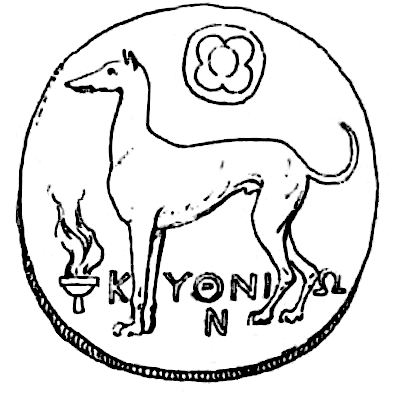
307
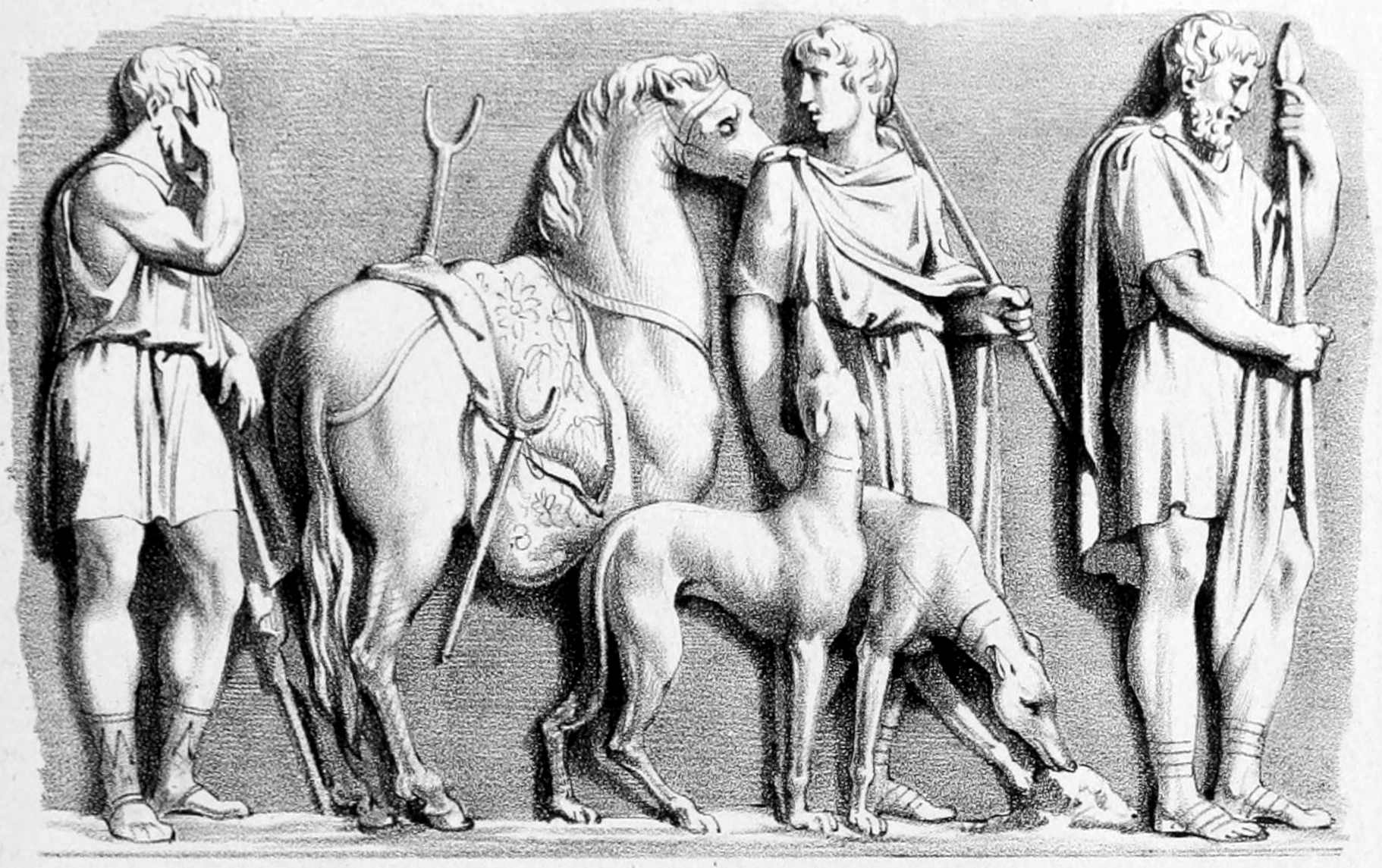
| The Emperor Trajan with hunters and a Celtic greyhound: Medallion from the Arch of Constantine. L’Antiquité Expliquée par Montfaucon. Tom. iii. Liv. iv. Tab. 175. | Frontispiece. |
| Apollo and Diana—Twin-deities of the Chace: Silver coin of Delos. Goltzii Numism. Græc. Ins. T. xviii. fol. iii. | Title-page. |
| The Author’s greyhound—ἄῤῥην κύων τῇ ἀληθείᾳ γενναῖος. Arrian. de Venat. c. xxxii. | Dedication page. |
| Procris presenting Lælaps and the fatal dart to Cephalus.
Metamorphos. Ovid. L. xv. Æneis formis ab Antonio Tempesta Florentino incisi. |
Back of do. |
| Ancient implements of writing;—picture from Herculaneum. Antiquités d’Herculanum gravées par F. A. David. Pl. xxxiv. p. 50. | Page 1 |
| 308 Hunter bearing spoils of the Chace: Ancient gem. Le Gemme Antiche figurate di Michel Angelo Causeo de la Chausse. Cacciatore. T. 135. p. 54. | 48 |
| Diana Aricina seu Nemorensis: Ancient gem. Begeri Thesaur. Brandenb. T. i. Gemmæ p. 64. | 49 |
| Diana in her usual hunting attire: Ancient gem of La Chausse. Diana Cacciatrice. T. 61. p. 21. | 49 |
| Ganymede. pierres gravées d’orléans. Tome i. T. xii. | 50 |
| Celtic greyhound: Brass coin of Cythnus. Goltzii N. G. Ins. T. xviii. fol. vii. | 51 |
| Celtic greyhound: Brass coin of Cythnus. Goltzii N. G. Ins. T. xviii. fol. viii. | 54 |
| Diana Venatrix: a beautiful Cameo of La Chausse. Diana. T. 8. p. 4. | 63 |
| Equestrian Courser: Ancient gem of Maffei. Gemme Antiche. T. iv. Caccia. t. lxxi. p. 116. | 64 |
| Celtic greyhound: Silver coin of Cythnus. Goltzii N. G. Ins. T. xviii. fol. ix. | 65 |
| Greyhound puppies—a groupe in white marble in the British Museum; from the ruins of Antoninus’s Villa at Monte Cagnolo | 66 |
| Celtic greyhound killing a hare: Ancient ring. Gorlæi Dactyliotheca. fol. 120. | 67 |
| Diana Pergæa: Silver coin of Perga in Pamphylia. Begeri Thesaur. Brandenb. T. i. p. 506. | 175 |
| Votum seu Donarium Dianæ Venatrici. In Hortis Mediceis. Admiranda Romanarum Antiquitatum ac Veteris Sculpturæ Vestigia, &c. à Petro Sancti Bartolo. Tab. 33. | 176 |
| Celtic greyhounds and deer from Vaillant. Montfaucon L’Antiq. Expliq. T. iii. | 177 |
| Genii hunting from Maffei: Gemme Antiche. T. iv. Caccia di Genii. T. liv. p. 86. | 178 |
| Diana Venatrix: Silver coin of Syracuse. Begeri Thesaur. Brandenb. T. i. Numism. Siciliæ, p. 384. | 179 |
| Celtic greyhound: Silver coin of Cythnus. Goltzii N. G. Ins. T. xviii. fol. x. | 306 |
| Funeralis Pompa. In Ædibus Barberinis. Admiranda Romanarum Antiquitatum ac Veteris Sculpturæ Vestigia, &c. à Petro Sancti Bartolo. Tab. 70. | 307 |
| Porter or Watch-dog—Canis Custos: Ancient gem of Maffei: Gemme Antiche. T. iv. cane, t. lxxxviii. p. 137. | 315 |
[The Plates and Vignettes are executed by Messrs. Day and Haghe, Lithographers to the King, 17, Gate Street, Lincoln’s Inn Fields.]
Ὅτι μὲν οὖν καὶ ἑτέροις ὑπὲρ τούτων ἐσπούδασται, καλῶς οἶδα· ἐγὼ δὲ ἐμαυτῷ ταῦτα, ὅσα οἷον τε ἦν, ἀθροίσας, καὶ περιβαλὼν αὐτοῖς τὴν συνήθη λέξιν, κειμήλιον οὐκ ἀσπούδαστον ἐκπονῆσαι πεπίστευκα. Εἰ δέ τῳ καὶ ἄλλῳ φανεῖται ταῦτα λυσιτελῆ, χρήσθω αὐτοῖς· ὅτῳ δὲ οὐ φανεῖται, ἐάτω τῷ πατρὶ θάλπειν τε καὶ περιέπειν· οὐ γὰρ πάντα πᾶσι καλὰ, οὐδὲ ἄξια δοκεῖ σπουδάσαι πᾶσι πάντα.
Ælian. de Natura Animalium, Præfat.
For the amusement of such as may be desirous of consulting the Cynegetical works cited in the preceding annotations on Arrian and the Appendix, a list of their respective titles and editions is subjoined.
The author does not pretend to enumerate all the known editions of each Cynegeticon, but only those of his own library. Where two or more of the same work are mentioned, the copy made use of is either pointed out by specification, or the name of the editor and place of publication are printed in italics. In cases of disputed text, different editions have been collated, and the most approved readings selected for use.
Enrolled in the catalogue are a few treatises de re Venaticâ which the present writer has never seen. They are admitted on the authority of earlier compilers, in whose bibliothecæ they appear: but their importance to the θήρης κλυτὰ δήνεα (Oppian. Cyneg. i. 16.) is assumed rather than established. Remoteness of residence from public libraries must plead for the author’s unavoidable ignorance. He could not certify by actual examination the admissibility of any book not on his own shelves. The works in question are distinguished by the prefixture of an asterisk.
A Bibliotheca Cynegetica upon the following plan was first attempted by Rittershusius in his Prolegomena to Oppian, imperfectly executed by Lallemant in his Bibliotheca Historica et Critica Thereuticographῶn, and subsequently, but still far short of perfection, by Belin de Ballu in his prefatory matter to the poet of Anazarbus. The latter’s catalogue professedly excludes all prosaic works, save those of the classic ages—departing from its rule in the solitary instance of Conrad Heresbach’s Compendium. Of the English Cynegetica, Somerville’s Chace is alone admitted, the doggrel of the Book of St. Alban’s possessing insufficient poetical pretensions, perhaps, in the eyes of a foreigner, to place Dame Juliana Berners, or the “one sumtyme scole mayster of seynt Albons,” or whoever be the author of these antique canons, amongst those “qui metricè hanc materiam persecuti sunt.” Proleg. in Oppian. p. xvi. Ed. 4to.
Xenophontis Opuscula Politica, Equestria, et Venatica, cum Arriani Libello De Venatione, &c. J. G. Schneider. Oxonii, mdcccxvii.
Xenophontis Scripta Minora, &c. L. Dindorf. Lipsiæ, mdcccxxiv.
On Hare Hunting, from Xenophon, by W. Blane, Esq. London, 1788.
310
Gratii, qui Augusto principe floruit, de Venatione Lib. i. This edition of the Faliscian is contained in the rare little Aldine volume, entitled Poetæ tres egregii, &c. Aldus, mdxxxiiii. Republished by Sig. Feyerabendius, ad calcem Venatûs et Aucupii J. A. Loniceri. Francoforti, mdlxxxii.
Gratii Falisci Cynegeticon, &c. Th. Johnson, A.M. Londini, mdcxcix.
Poetæ Latini Rei Venaticæ Scriptores, &c. G. Kempheri. Lugdun. Batav. mdccxxviii.
Poetæ Latini Minores. J. C. Wernsdorf. Altenburgi, mdcclxxx.
A Poem of Hunting, by Gratius the Faliscian. Englished and Illustrated by Christopher Wase, Gent. London, 1654.
Arrianus De Venatione, ex interpretatione L. Holstenii. Paris, mdcxliv.
Arriani Tactica, Peripli, Cynegeticus, et Epicteti Stoici Euchiridion, ex Recensione Nicolai Blancardi. Amstelodami, 1683.
[433]ΑΡΡΙΑΝΟΥ ΤΑ ΣΩΖΟΜΕΝΑ κ. τ. λ. Ἐπεξεργασθέντα καὶ Ἐκδοθέντα ὑπὸ ΝΕΟΦΥΤΟΥ ΔΟΥΚΑ εἰς τόμους ἑπτά. ΕΝ ΒΙΕΝΝΗι ΤΗΣ ΑΟΥΣΤΡΙΑΣ, 1809.
Xenophontis Opuscula Politica, &c. cum Arriani Libello de Venatione. J. G. Schneider. Oxonii, mdcccxvii.
Julii Pollucis Onomasticum. Hemsterhuis. Amst. mdccvi. The fifth book, addressed to the Emperor Commodus, affords much valuable information on the technicalities of classical venation.
Oppiani Poetæ Cilicis De Venatione Lib. iiii. &c. Conrad. Rittershusii. Lugduni Batav. mdxcv.
Oppiani Poetæ Cilicis De Venatione Libri iv. &c. Joh. Gottlob Schneider. Argentorati, mdcclxxvi.
Oppiani Poema De Venatione, &c. Jac. Nic. Belin De Ballu. Argentor. 1786.
J. Brodæi Turonensis Annotationes in Oppiani Cyneg. L. iiii. &c. Basileæ. mdlii.
Oppiani De Venatione Libri iiii. Joan. Bodino interprete, &c. Lutetiæ, mdlv.
* The First Book of Oppian’s Cynegetics translated into English Verse, &c. by John Mawer, A.M. London, 1736.
M. Aurelii Olympii Nemesiani Cynegeticôn Lib. i. Aldus, mdxxxiiii. (The same Aldine volume as before referred to, entitled Poetæ tres egregii, &c.) Nemesian also occurs in the collections of Poetæ Venatici of Feyerabendius, Johnson, Kempher, and Wernsdorf.
ΚΥΝΟϹΟΦΙΟΝ. Liber De Curâ Canum. This work of311 Demetrius of Constantinople, written about A.D. 1270, was first published by Aurifaber. Wittembergæ, mdxlv. The author’s editions are those of Rigaltius in the Rei Accipitrariæ Scriptores. Lutetiæ. mdcxii. and of Johnson, attached to his Latin Poets of the Chace. Londini, mdcxcix.
* Le Art de Venerie le quel Maistre Guillame Twici Venour le Roy d’Angleterre fist en son temps per aprandre autres. This Ms. is reported by the Historian of English Poetry, Vol. ii. p. 221. note m. to have been formerly among the Mss. of Mr. Fermor, of Tusmore in Oxfordshire.
The Craft of Hontyng of Mayster John Gyfford and Willm Twety that were with King Edward the Secunde. It is also denominated Le Venery de Twety and of Maystr John Giffarde. Ms. Cotton. Vespas. B. xii. The French work is unknown to the writer: but of The Craft of Hontyng a faithful transcript is in his possession.
* Des Deduitz de la Chasse de Bestes Sauvaiges et des Oyseaux de Proye. The celebrated work of Gaston Phebus, Comte de Foix, and Vicomte de Bearn, written about the year 1347; first printed by Anthoine Verard; secondly, by Jehan Treperel; and, subsequently, by Philippe Le Noir, under the title of Le Miroye de Phebus. The author has no copy of this work.
The Book of Huntyng the which is clepyd Mayster of the Game. Ms. Cotton. Vesp. B. xii. Mayster of Game. Ms. Harl. 5086. The author’s copy is a transcript of the Cottonian text, corrected by collation with the Harleian.
The Boke of St. Albans. The first and second editions (1486 and 1496.) being exceedingly rare, the author is satisfied to quote from Mr. Haslewood’s elegant reprint of Wynkyn de Worde’s edition of the latter date. London, mdcccx.
Hawking, Hunting, and Fishing, with the True Measures of Blowing. At London, printed by Edward Allde, 1586.
Cæsaris Borgiæ Ducis Epicedium, per Herculem Strozam ad divam Lucretiam Borgiam Ferrariæ Ducem. Francoforti, mdlxxxii.
Adriani Cardinalis S. Chrysogoni ad Ascanium Cardinalem S. Viti, Vicecancellarium Venatio. Aldus, mdxxxiiii. (Poetæ tres egregii anteà citati). Francoforti, mdlxxxii.
Venatus et Aucupium Iconibus artificiosiss. ad vivum expressa, et succinctis versibus illustrata per Joan. Adam. Lonicerum, Francfortanum. Francoforti, mdlxxxii.
Venatus et Aucupia Johan. Stradensis et Philip. Galle. 1578. Venationes Ferarum, Avium, Piscium, Pugnæ Bestiariorum; et Mutuæ Bestiarum, depictæ à Joanne Stradano; editæ à Joanne Gallæo: carmine Illustratæ à C. Kiliano Dufflæo.
* Belisarius Aquaviva de Venatione, Aucupio, &c. Nap. 1519. Basil. 1571. apud Conrad. Gesner. Histor. Quadrupedum.
Ad Christianissimum Regem Galliæ de Canibus et Venatione Libellus. Authore Michaele Angelo Blondo. In quo omnia ad 312canes spectantia, morbi, et medicamina continentur, Prisca et Neoterica etiam exempla, à nemine hactenùs accuratiùs scripta, insidiæ ferarum, et proprietates, cum quibusdam venationibus nostri sæculi maximorum principum cognitu dignissimis, Romæ, mdxliiii. One of the rarest of the Cynegetica of the 16th century. A small thin 4to of thirty-seven leaves. The passages cited by the author are principally from Gesner’s H. Q.
* Gulielmus Tardivus de Accipitribus et Canibus Venaticis, apud Conrad. Gesner. Histor. Quadrupedum. (Auctores Gallici.)
Conrad. Heresbachii Rei Rusticæ L. iv. item de Venatione, Aucupio, et Piscatione Compendium, in usum Heroum et Patrumfamilias ruri agentium concinnatum. The latter part is noticed in the preface to Arrian’s Cynegeticus under the name of Compendium Thereuticæ Universæ, a title given it by Rittershusius in his Oppianic Prolegomena. The author’s quotations are principally from Conrad Gesner’s Historia Quadrupedum; but since the prefatory remarks have been sent to press, he has examined a copy of the original (Spiræ Nemetum ciↄ.iↄ.xciv). As an Epitome of Xenophon and Oppian, the appendix has merit—containing brief notices of many varieties of ancient and modern hounds, their style of hunting, quarry, &c. Part of the third book De Re Rusticâ treats of dogs connected with rural economy, the Œcurus, Villaticus, &c.
Hier. Fracastorii Alcon, sive de Cura Canum Venaticorum. Venet. mdlv. Fracastor’s poem is appended to the Poetæ Venatici of Johnson. Lond. mdcxcix. and of Kempher. Lugd. Bat. mdccxxviii.
Petri Lotichii Secundi Eclogæ. The author’s citations are from the Poemata Omnia Petri Lotichii Secundi à P. Burmanno Secundo. Amstel. mdccliv.
Natalis Comitum Veneti de Venatione, Libri iiii. Ald. Fil. Venet. mdli. also attached to his Mythologiæ Libri Decem. Lugduni. mdcv.
Petri Angelii Bargæi Cynegeticon. Poemata Omnia, &c. Florent. apud Juntas, mdlxviii. The poem De Aucupio is also cited in a separate form apud Juntas, mdlxvi.
Joannis Darcii Venusini Canes. Paris, mdxliii. Francofort. mdlxxxii.
Joannis Caii Britanni De Canibus Britannicis Liber Unus. Londini, mdlxx. This Libellus is also annexed to Johnson’s Edition of Gratius and Nemesian, and to Kempher’s Poetæ Venatici, Holinshed’s Account of British Dogs is a translation from Caius’s work.
La Vénerie de Jaques Du Fouilloux, &c. Paris, mdlxxxv. mdcxiiii. The author’s references are to the latter edition, wherein are contained Adjonctions à la Vénerie de Jacques Du Fouilloux. La Chasse du Loup (by Jean de Clamorgan): La Chasse du Connin: and an additional Essay on Cyniatrics, entitled Autres Remèdes pour guarir les Chiens Malades de Diverses Maladies, &c.
The Compendium of Hunting in La Maison Rustique is epitomised, according to Christopher Wase, from Fouilloux’s Treatise.
313
The Noble Art of Venerie or Hunting, &c. London, 1575. 1611. The authorship of this version of Fouilloux is much disputed:—by some it is given to Turbervile, the undoubted translator of the Booke of Falconrie; by others to Gascoigne; and by a third party to C. Burke. The citations are from the edition of 1611, and generally under the name of the first-mentioned author.
* A Short Treatise of Hunting, compyled for the delyght of Noblemen and Gentlemen, by Sir Thomas Cockaine, Knight. London, 1591. The writer has never seen the rare tract of this “professed hunter, and not a schollar.”
The Gentleman’s Academie; or, The Booke of St. Albans, &c. by G. M. London, 1595.
Maison Rustique; or, The Countrie Farme, &c. translated into English by Richard Surflet. London, 1600.
The Countrey Farme, &c. (as the last,) by Gervase Markham. London, 1616.
A Jewell for Gentrie, &c. London, 1614.
Countrey Contentments; or, The Husbandman’s Recreations, &c. by G. M. London, 1633.
* Jacobi Micylli Κυνολόγιον. A Latin poem mentioned by Paullini in his Cynographia Curiosa: where also occur * Angelinus Gazæus, * Ronsæus, and others; the Venatio Medica of the latter being rather above the ordinary stamp of the muse of Æsculapius.
De Venatione Tractatus, in quo de Piscatione, Aucupio, Sylvestriumque insectatione agitur. Auctore Alfonso Isachio. Regii, 1625. A very ridiculous treatise on Piscatorial Licences, &c. of some rarity, but of no value to practical or literary sportsmen. It has been re-published, with other Cynegetical tracts of like description, by Fritsch.
Album Dianæ Leporicidæ, sive Venationis Leporinæ Leges. Auctore Jac. Savary, Cadomæo. Cadomi, mdclv. To some editions of this poem is annexed Venatio Vulpina et Melina of the same author; but the writer’s copy has it not.
Venationis Cervinæ, Capreolinæ, Aprugnæ, et Lupinæ Leges. Autore Jac. Savary Cadomensi. Cadomi, mdclix.
Jacobi Vanierii, &c. Prædium Rusticum. Tolosæ, mdccxxx. mdccxlii. The author’s citations are from the latter edition.
The Gentleman’s Recreation: in four parts. London, 1706.
The Gentleman’s Recreations: in three parts. By R. Blome. London, 1710.
The Chace. A poem by William Somerville, Esq.
To this list might be added the French Cynegetica of Gauchet, Pomey, Passerat, De Salnove, De Serey, Du Sable, Gaffet, De la Conterie, D’Yauville, and others; the Encyclopédie Méthodique, Dictionnaire de toutes les espèces de Chasses; and the Italian Cynegetica of Scandianese, Valvasone, Raimondi, Poggesi, Gatti, and others; to some of which the author is beholden for a few remarks. The catalogue might be amplified, too, by incorporating the numerous tracts on the laws of the Chase collected by Fritsch and Manwood; the notices of early British and Anglo-Saxon hunting gathered by 314Pegge, in the Archæologia; by Strutt, in his Sports and Pastimes; and by Turner, in his History of the Anglo-Saxons; and though last, not least valuable, whether we regard the novelty of such a summary, or the elegance and classic taste of its execution, the article on Hunting by Mr. Smedley, in the Encyclopædia Metropolitana.
Connected with the subject of Venation, the following works on Natural History are referred to, descriptive of the external characters and habits of ferine animals, and their quadrupedal pursuers:
Aristotelis Historia de Animalibus à J. C. Scaligero. Tolosæ, mdcxix.
Scriptores Rei Rusticæ Veteres Latini. J. M. Gesner. Lipsiæ, mdcclxxiii.
ΓΕΩΠΟΝΙΚΑ. Geoponicorum sive De Re Rusticâ Libri xx. Petr. Needham, A.M. Cantabrigiæ, mdcciv.
Plutarchi Opera Omnia (De Solertiâ Animalium, &c.) Paris, mdcxxiv.
Æliani De Naturâ Animalium Libri xvii. J. G. Schneider. Lipsiæ, mdcclxxxiv.
C. Plinii Secundi Historiæ Mundi Libri xxxvii. J. Dalecampii. Lugduni, mdlxxxvii.
C. Julii Solini Polyhistor ex edit. C. Salmasii. M. Andr. Goezio. Lipsiæ, mdcclxxvii.
Phile De Animalium Proprietate à J. C. de Pauw. Trajecti ad Rhenum, mdccxxx.
C. Gesneri Historiæ Animalium Liber primus, de Quadrupedibus Viviparis. Tiguri, mdlix.
U. Aldrovandi Opera. Bononiæ, mdcxxxii.
S. Bocharti Hierozoicon, seu de Animalibus Sacræ Scripturæ. Londini, mdclxiii.
Cynographia Curiosa, &c. à Christ. Franc. Paullini. Norimbergæ, mdclxxxv.
Lagographia Curiosa, &c. à Christ. Franc. Paullini. Aug. Vind. mdcxci.
Synopsis Methodica Animalium Quadrupedum, &c. Auctore Joanne Raio. S. R. S. Londini, 1693.
| P. 15. | l. 8. for general, read genuine. |
| 108. | n. 3. l. 2. τάχος. 5. ἔχει. |
| 117. | n. 4. for Bruyer, read Bruyerinus. |
| 126. | n. 7. l. 2. obtruncant. |
| 145. | Quotation from Gratius, v. 299. read leveis. |
| 148. | Quotation from Nemesian, v. 162. read complere. |
The author craves forgiveness for unnoticed σφάλματα, errors of punctuation, accentuation, &c. whether chargeable on himself or the typothetæ.
315
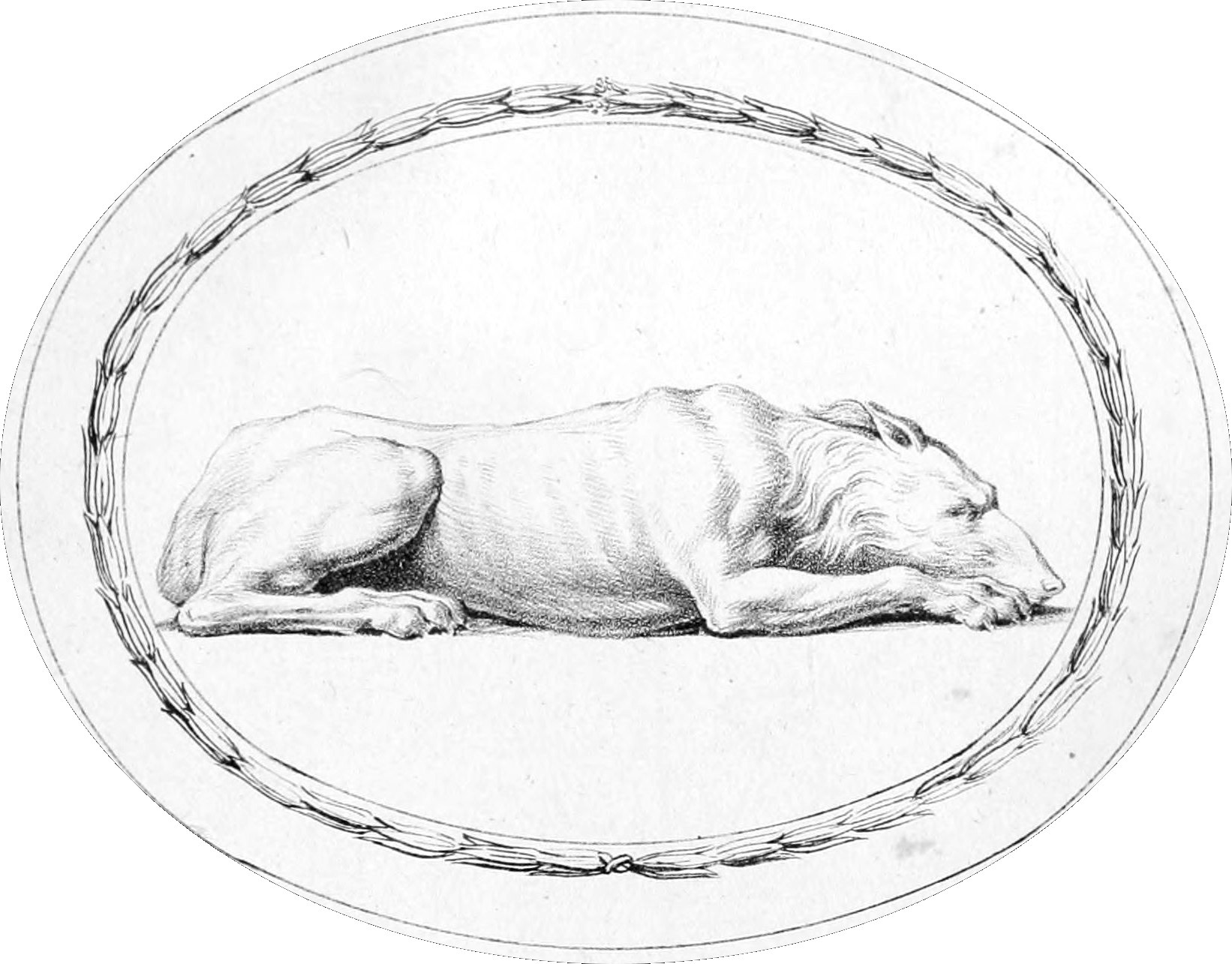
The editors of the Greek libellus confine their remarks almost exclusively to critical annotations on the text. Indeed Holstein’s edition has no notes; Blancard’s, only a few marginal emendations; and Zeune’s and Schneider’s, very few parallel passages. Such classical citations, therefore, as are adduced by the translator, are for the most part of novel application.
The quotations from the Cynegeticus of Xenophon the elder refer to the chase-practices and kennel-discipline of Greece, antecedent to the institution of coursing.
This statement is limited to classical authors alone; the Biblical scholar might possibly arraign its accuracy, if made more general; though it scarce needs qualification to suit the doubtful interpretation of the Hebrew text of Proverbs ch. xxx. ver. 31. No allusion occurring elsewhere in the sacred volume to dogs of the chase, though many to the earlier varieties of Venation with predatory instruments, it is improbable that the words of Agur to his pupils Ithiel and Ucal should refer to the most uncommon of the canine tribe, the canis Leporarius, Gallicus, or Vertragus. The Hebrew expression, however, for Bocharti Hierozoic. L. ii. c. lvi.“accinctus lumbis,” “girt in the loins,” as explained in the margin of the English version, is understood by Jewish lexicographers to designate the greyhound, and is so rendered in the English text. But with the learned Bochart (Præfat. ad Lectorem—wherein he corrects a few errors of the body of his work, and gives his latest and most mature opinions on certain Scriptural difficulties—a part of his writings apparently overlooked by modern annotators, to the farther propagation of error) I should rather understand the horse to be the animal alluded to—Ejusdem Præfat. ad Lectorem.“equum intelligi malim, qui non solùm expeditè, sed et superbè, et cura pompâ quâdam incedit: et lumbos habet cingulâ vel zonâ verè succinctos. Quod an de cane dici possit valdè ambigo.” After all, perhaps, no particular animal may have been intended by the son of Jakeh. The term may have a general reference to any animal of the frame alluded to—Ovid. Metam. L. iii.“substricta gerens—ilia—”. The chapter containing the passage in question is not found in the Septuagint; indeed the Greek version of the LXX. terminates with the 29th chapter.
In the 27th oration of Themistius, the eclectic philosopher of Paphlagonia, a passage occurs, which, as far as merely mentioning Celtic dogs by name, may be said to prolong the notice to the fourth century. The whole passage, as illustrative of the author’s subject, “non loca attendenda sed homines,” is curious and worthy of citation—Themistii Orat. xxvii.ὅστις δὲ ἀγαπᾷ κύνας, τούτῳ προσφιλὲς μὲν κτῆμα, καὶ Κέλται, καὶ Λάκαιναι σκύλακες· δάκνει δὲ αὐτὸν καὶ τὸ Καστορίδων φύλον, καὶ τὸ Ἀρκαδικὸν αὐτὸ, καὶ τὸ Κρητικὸν, αἷς φύσις τῶν θηρίων ἐλέγχειν τὰς εὐνὰς κατὰ τὴν ὁδὸν ἐπισπομέναις. οὐ παρόψεται δὲ οὐδὲ τὰς οἴκοι σκυλακευθείσας, εἰ μήτε κάλλους ἐκείνων μήτε ὠκύτητος λείποιντο. In favour of the greyhound being here cited, it may be remarked that the Bithynian courser calls the Celtic dog μέγα κτῆμα (cap. xxxii.) and his shape καλόν τι χρῆμα, and derives his name ἀπὸ τῆς ὠκύτητος, as the characteristic distinction of the race. See some remarks on the “Canes Scotici” of Symmachus hereafter.
The Cynosophium alone, a Greek work “de Curâ Canum,” breaks the silence of many centuries. It is supposed to have been compiled, about the year 1270, by Demetrius of Constantinople, author of the first treatise “de Re Accipitrariâ,” and physician to the Emperor Michael Palæologus. To what is borrowed from the two Xenophons, nothing is added of novelty or interest, save in the department of canine pathology; indeed it is almost entirely confined to kennel-management and therapeutics. No notice is taken of any variety of dog by name. The reader, who may wish to consult its medical nostrums, will find the treatise attached to the “Rei Accipitrariæ Scriptores” of Rigaltius (Lutetiæ mdcxii.) and to the “Poetæ Venatici” of Johnson (Londini mdcxcix.).
The Crafte of Hontyng is supposed to be a version by Gyfford from a more ancient work by Twety or Twici—“Le art de Venerie le quel Maistre Guillaiue Twici Venour le Roy d’Angleterre fist en son temps per aprandre autres.” The greyhound is mentioned fol. 4. of blowing. Warton’s Engl. Poetry, V. ii. 221.“Whañ a mañ hath set up archerys and greyhoundes, and the beest be founde and passe out the boundys, and myne houndes aftir,” &c.
These instructions were written for Henry Prince of Wales, afterwards Henry V.
The “Morte Arthur” tells us, that “Tristrem laboured ever in hunting and hawking, so that we never read of no gentleman more that so used himself therein,” &c. and in the rich poetry of Spenser, the knight informs Sir Calidore,
The Biographia Britannica is amusingly severe in its strictures on the renowned Mrs. Barnes, and her incongruous occupations in the field and cloister. “There appears such a motley masquerade—Biograph. Brit. note, Caxton, p. 367.such an indistinctness of petticoat and breeches,—such a problem and concorporation of sexes, according to the image that arises out of the several representations of this religious sportswoman or virago, that one can scarcely consider it, without thinking Sir Tristram, the old monkish forester, and Juliana, the matron of the nuns, had united to confirm John Cleveland’s ‘Canonical Hermaphrodite.’”
Should the reader meet with any extracts from the Compendium in the subsequent annotations, they are to be received on the authority of Conrad Gesner, from whose “Historia Quadrupedum” they are selected. The same learned work has afforded the few parallel passages adduced from Albertus Magnus, Belisarius, and Tardif. For all others the translator is himself answerable, having culled them from the original sources, and generally from the most approved editions.
The date of the greyhound’s introduction into these islands is with difficulty ascertained. If the “septem Scoticorum canum oblatio” of Flavian, wherewith he graced the Quæstor’s spectacle of his brother Symmachus at Rome, be really coarse varieties of the Celtic type, as supposed by Christopher Wase, this hound must have been found here as early as the reign of Theodosius. Indeed Hector Boethius and Holinshed place him amongst us at an earlier period: nor is it improbable that he originally accompanied theSee the Appendix Class iii. Scoto-Celts from the continent of Europe at their primary irruption into Ireland and Scotland. We have evidence of his being an inmate of the Anglo-Saxon kennels in the days ofCotton. Mss. Tiber. B. v. Elfric, Duke of Mercia; and manuscriptal paintings have descended to us of a Saxon chieftain and his huntsman, attended by a brace of greyhounds, of the date of the 9th century—the earliest representation which I have seen of this hound as connected with British field-sports.
Contained in his work entitled “Countrey Contentments.” In addition to which, “The Countrey Farme,” by the same author, a compilation from the French, will be read with amusement.
Coursing has ever been held an honourable and gentlemanly amusement in Great Britain, from its earliest annals to the present time. Nor can I discover any authority for the truth of Vlitius’s opinion, as given in his note on the Veltraha of Gratius. Vlitii Venatio Novantiqua.“Ne ideò Vertragis suis sagaces posthabeat ille Xenophon: nam hodiè in Angliâ sagaces nobilissimi quique exercent; Vertrago autem leporem conficere, indignum benè nato parum abest quin habeatur.” Such never was the opinion entertained of “greyhound hunting,” in King James’s phrase:—indeed the farther we go back into the history of the leash, the higher it ranked in the scale of British field-sports. See the “Constitutiones Canuti Regis de forestâ”—and Blount’s Ancient Tenures passim, for instances of the high repute in which the courser’s hound has ever been held in Great Britain.
The reader will be amused with Simon Latham’s epilogue to the third edition of his “Faulconry,” wherein he combats (for he wrote in ticklish times, 1658) with his usual quaintness of style and illustration, the notion of the sinfulness of rural sports: inferring that they may “be lawfully and conscientiously used with moderation by a magistrate or minister, or lawyer or student, or any other seriously employed, which in any function heat their brains, waste their bodies, weaken their strength, weary their spirits; that as a means (and blessing from God) by it their decayed strength may be restored, their vital and animal spirits quickened, refreshed, and revived, their health preserved, and they better enabled (as a bow unbended for shooting) to the discharging of their weighty charges imposed upon them.”
Aristot. de Polit. L. i. c. v. plato de legibus l. vii. Xenophon. Cyropæd. L. i. c. v. l. viii. c. xii. respub. lacedæm. c. iii. cyneget. c. i. xii. xiii. Polybius Hist. L. xxxi. jul. pollux onomast. l. v. Præfat. Commodo.—Cicero de Nat. D. L. ii. de officiis l. i. horat. l. i. epist. xviii. virgil. æneid. l. vii. ix. Seneca de Provid. c. ii. plinii panegyr. traj. d.—justin. hist. epit. l. xxxvii. Symmach. Epist. L. v. Ep. 66.
It will be readily ceded that the amatory expostulation of Sulpitia to her dear Cherinthus,
and the epistle of Ausonius to the ruralist Theon,
are too jocular to place Tibullus and the poet of Bourdeaux on the side of the Catilinarian historian.
The plaintive poet of “The Task,” B. iii. has seemingly borrowed from Agrippa’s page the memorable crimination of the hunter’s pursuit:
I purposely omit all notice of the “Venatio Amphitheatralis,” or “V. in arenâ” of ancient Rome; of which Tertullian, Augustin, Chrysostom, and the Christian Cicero, Lactantius, have written with merited reprobation. J. Lipsii Saturnal. Sermon. L. i. c. 7.“Cum viderent pietatis damno, addictum devinctumque populum his ludis; passim invecti in eos, ut libidinis, sævitiæque fontes; et bene illi.” Not a word can be advanced in palliation of these brutal outrages of humanity,
wherein man was “butcher’d to make a Roman holiday”—“Homo occiditur ad hominis voluptatem.” With this monstrous variety of Venatio, so called κατ’ ἐξοχὴν, and recorded as such with horror, we have nothing to do; with its abettors under any qualified form, the modern frequenters of the cock-pit or bear-garden, the heroes of a bull-bait, and patrons of mercenary pugilists, the rivals of the “municipalis arenæ perpetui comites” of Juvenal’s days, we have no sentiments in common. We have hailed with exultation the victory already effectuated, or in course of gradual achievement, over the ferocious barbarities of the amphitheatre, and the semi-pagan cruelties of more modern spectacles—a victory that is attempering the pastimes of the English people to the religion and morality of the age; and we sincerely deplore the existence of the θεάτρον κυνηγετικὸν of Dio, under any modification, in any part of the civilized world.
Let Christianity transfuse its lenient spirit into all our sports, and instead of the amphitheatrical entertainments, and barbarian amusements of infidels, let us have such as are congenial to the humanity of Christians. Let us be the champions of rational recreation, not of brutal gratification;—the friends of man, and not unnecessarily the enemies of inferior animals;—spectators in our temperate and innocent diversions of the dog’s innate faculties and prowess for the seizure of the destined animals of the chase—K. Henry VI. Pt. ii. act ii. sc. 1.“to see how God in all his creatures works,” and witnesses of “the curious search or conquest of one beast over another, persued by a naturall instinct of enmitie;—” how
but not hostile instigators of canine ferocity to the heartless maiming and slaying an unnatural prey—a species of animal conflict never intended by creative wisdom; and wherein violence is done to natural instinct to minister to man’s unhallowed sport.
Cui dum nimium insistunt, ipsi abjectâ humanitate feræ efficiuntur, morumque prodigiosâ perversitate, tanquam Actæon mutantur in naturam belluarum.
“In using either of these games observe that moderation,” says King James to Prince Henry, “that ye slip not therewith the houres appointed for your affaires, which ye ought ever precisely to keepe; remembering that these games are but ordained for you, in enabling you for your office, for the which ye are ordained,” &c.
According to the decisions of judicial astrology in casting nativities, Julius Firmicus remarks that the following personages, “equorum nutritores, accipitrum, falconum, cæterarumque avium, quæ ad aucupia pertinent, similiter et Molossorum, Vertagrorum, et qui sunt ad venationes accomodati,” being born when the planet Venus is in Aquarius, are incapable of application to any more laudable pursuit than hunting and hawking.
The chasseurs of Agrippa’s days, laical and clerical, were equally reprehensible. From the Thebans, this literary Timonist tells us, the worst of men, Venation passed to the Trojans, not much better, and thence to Greece and Rome, brutalizing the inhabitants of the earth in its progress—De Incert. et Vanit. &c. c. lxxvii.“Tandem hæc exercitia in se reverâ servilia et mechanica eo usque evecta sunt, ut positis quibusque liberalibus studiis, hodie prima nobilitatis elementa atque progressus sint, illis ducibus ad summum gradum perveniatur: hodieque ipsa regum et principum vita, ipsa etiam (proh dolor!) abbatum, episcoporum, cæterorumque ecclesiæ præfectorum religio, tota inquam venatio est,” &c.
The disastrous casualties that have befallen divers of the worshipful but rash disciples of Chiron and his compeers are recorded in terrorem by a Sicilian amateur of falconry. Will the timid courser venture to mount his “smart hack or Zetland shelty,” after reading the following summary of these fatalities? La Fauconnerie de Messire Arthelouche de Alagona.“Meleager en perdit la vie, pour la victoire rapportée sur le sanglier de Calidoine. Le bel Adonis fut tiré par un sanglier. Actéon fut dévoré de ses propres chiens. Cephale y tua sa chère Procris, et Acaste en fut interdict, ayant occis le fils du Roy qui luy avoit esté donné en charge, comme fut Brutus pour avoir tué son père Sylvius par mesgarde. Un Empereur fut occis par la beste qu’il poursuivoit. Un Roy en courant à la chasse se cassa le col en tombant de cheval.” The legitimacy of the inference drawn by Le Conseiller et Chambellan du Roy de Sicile is doubtful—“Que qui craindra ces dangereux effectz qu’il s’adonne à la vollerie, où il trouvera sans doubte plus grand plaisir.” The superior pleasure of the latter is as equivocal as its inferior danger; and pursued to excess, I should think, must share equality of peril and of blame.
Of Mr. Barnard, who was accustomed to enliven the sedentary pleasures of his intellectual pursuits with the active and salutary recreation of coursing, and to shake off, in Horatian language, “inhumanæ senium ... Camœnæ,” in the company of his greyhounds, on the wolds of Yorkshire, the reader must pardon me, if I speak with the deepest regret. He was indeed, like Maximus the friend and correspondent of Symmachus, Symmachi Epist. Lib. ix. Ep. 28.“inter sodales Apollinis ac Dianæ, utriusque sectator,” or in the apposite words of Ercole Strozzi,
But alas! gifted as he was, far beyond the ordinary worshippers of the sylvan goddess, he hath “begun the travel of eternity,”
The periodical publications of the day have given to the world the mournful tribute of a scholar to his memory: and when the voice of affection hath sung “the deathless praise” of a departed son, that of friendship may be silent. But let it not be supposed that the learning and genius of this accomplished man were confined to the inferior and perishable subjects of the courser’s pursuit. The powers of his talented mind were directed also to the high and heavenly callings of his profession; and among other subjects, to the commemoration in verse and prose, of the saints and martyrs of the Protestant Church. In the words of the Nutricia of Politiano, he was indeed
His poetical version of the poems of the younger Flaminio, a celebrated Latinist of the sixteenth century, on which he was engaged till his fatal illness, and the publication of which he fondly anticipated, will add, I trust, to his posthumous fame.
As the originator of the Courser’s Stud Book, and the indefatigable compiler of its genealogical tables, (an attempt “multâ deducere virgâ,” to derive “by trees of pedigrees,” as Dryden says, the speed and shape of each celebrated descendant, in the greyhound kennel, from the recorded genealogies and performances of a far-famed ancestry,—Platonis Menexenus.ἀγαθοὶ δὲ ἐγένοντο διὰ τὸ φῦναι ἐξ ἀγαθῶν,) the name of Mr. Barnard must be recorded in the annals of coursing with lasting gratitude; notwithstanding the prolegomena of a vicarious editor have occasioned the substitution of a second name on the title-page of the work, after the unexpected death of the original projector:
But let us cease this querulous display of individual feeling. Many did not know him; and those who did—his relatives—his friends and correspondents—have felt too much already. And the preface to so trivial a work as a Courser’s Vade-Mecum is not a fit occasion for descanting on the high merits of a Christian scholar; nor is lamentation over the dead a suitable prelude to the entertainment of the living.
Many of the Greek and Latin classics having been edited by English Divines, the latter fell under the lash of Young in the memorable lines,
These terms are also misapplied in the Cynegeticon of the poet of Barga, and in the Album Dianæ Leporicidæ of Savary of Caen. The latter, speaking of Spain and Italy, says—
and of the Italians and their chase he writes,
Arrian invariably calls himself Xenophon; and his predecessor of the same name he designates, for distinction’s sake, τὸν πάλαι, τὸν πρεσβύτερον. In the Cynegeticus he refers to him as τῷ Γρύλλου, τῷ ἐμαυτοῦ ὁμωνύμῳ, ἐκείνῳ τῷ Ξενοφῶντι.
With the citizenship of Rome, bestowed upon him by the Emperor, when in Greece, as it is supposed, A.D. 124, he assumed the Roman name of Flavius: and subsequent to his return from the prefecture of Cappadocia, he was probably raised to the consulate.
Aulus Gellius particularly authenticates his literary connexion with Epictetus, where he alludes (Noct. Attic. L. xix. c. i.) to the latter’s διαλέξεις “ab Arriano digestas,” &c.
These instructions are written, as military orders, in the imperative mood. Ὁ δὲ ἡγεμὼν τῆς πάσης στρατιᾶς Ξενοφῶν, τὸ πολὺ μὲν πρὸ τῶν σημείων τῶν πεζικῶν ἡγείσθω, ἐπιφοιτάτω δὲ τάσῃ τῇ τάξει, κ. τ. λ. Such were some of the duties which he enjoined on himself as commander-in-chief.
The practical courser will not deny to Hormé the merit, which on his lord’s voucher, he is entitled to; few greyhounds, even in their prime, in modern days, could vie with their redoubted prototype and master four hares per diem.
In addition to the authors already cited, or referred to, he is also mentioned by Arnobius, towards the close of his second book.
It is a truth worth recording, that, from Photius to Saint-Croix and Chaussard, the last translator of Alexander’s Anabasis, no writer has impugned his veracity and honesty as an historian, nor his literary style as a scholar.
The vanity which La Mothe Le Vayer discovers, so glaring in his history, and more particularly in what he says of himself in the 12th chapter of the first book of the Anabasis of Alexander, before quoted, and from which Gronovius and Raphelius satisfactorily exculpate him, I confess I do not see. The pride of the historian is not beyond the dignity of his subject.
Chiron, the son of Saturn and the nymph Philyra, is fabled to have received his knowledge of hunting from Apollo and Diana; and to have instructed the numerous disciples, recorded by Xenophon in the first chapter of his Cynegeticus, in the science and practice of the chase.
For the connexion of the Chase with Military Tactics, see Xenophon de Venatione c. xii., the latter part of c. xiii. cyropædia l. i. c. v. διὰ τοῦτο δημοσίᾳ τοῦ θηρᾷν ἐπιμέλονται· ὅτι ἀληθεστάτη δοκεῖ αὕτη ἡ μελέτη τῶν πρὸς τὸν πόλεμον εἶναι. L. viii. c. xii. De Republicâ Lacedæmon. c. iv.
See Xenophon de Venat. c. ii. whence the Greek poet of the chase has derived the manners, dress, and weapons of his hunter: Oppian. Cyneget. i. 81. The curious reader will be amused with the illustration of Xenophon’s second chapter; of Gratius’s Cynegeticon, v. 332. and Oppian loc. cit. (all treating on the subject of the hunter’s character, &c.) in Edmund de Langley’s Mayster of Game: wherein (c. xix. p. 70.) he tutors the hunter from the age of seven or eight (“for oo craft requireth al a mannys lif or he be parfite therof, &c.”) in all the arcana of kennel management; and particularly enjoins that he be “wel avised of his speche, and of his termys, and ever glad to lerne, and that he be no booster ne jangelere,” &c.; and so Xenophon, Xenophon de Venat. c. ii.ἐπιθυμοῦντα τοῦ ἔργου καὶ τὴν φωνὴν Ἕλληνα, τὴν δὲ ἡλικίαν κ. τ. λ.
Three varieties of nets were employed by Grecian sportsmen, ἀρκύες, δικτύα, and ἐνοδία, corresponding to the Roman casses, retia, and plagæ. See Xenophon de V. c. ii. The first were conical, tunnel-shaped, purse-nets; Jul. Pollucis Onomast. L. v. c. iv. 26. 27.κεκρυφάλῳ δὲ ἐοίκασι κατὰ τὸ σχῆμα, εἰς ὀξὺ καταλήγουσαι: the second, nets or hayes for open places, for encircling coverts, &c. τὰ ἐν τοῖς ὁμαλοῖς, καὶ ἰσοπέδοις ἱστάμενα: the third, road-nets, for being placed across roads, and tracks frequented by animals of chase, τὰ ἐν ταῖς ὁδοῖς of Julius Pollux.
Xenophon treats of entrapping deer, &c. de Venat. c. ix.; of hares, &c. c. v. and vi.; of dogs, &c. c. iii. iv. and vii.; of stag-hunting, &c. c. ix.; of the boar-chase, c. x.; of the bear and lion chases, &c. c. xi.; and many of the same subjects are beautifully described in the Cynegetics of the poet of Anazarbus, and delineated in Montfaucon, Tom. iii., and in the rare plates of Joannes Stradanus and P. Galle, under the title of “Venationes Ferarum.”
Τοῦ γένους τῶν κυνῶν τοῦ Κελτικοῦ—the greyhounds of modern days. Coursing having been first practised by the inhabitants of Gallia Celtica, the greyhound was called Minshæi Emendatio in voce Grei-hound.κυὼν Κελτικὸς, canis Gallicus, (quibus Galli maximè utuntur, and not Grei-hound, q. Grecian hound, quòd primùm fuerit in usu inter Græcos). A splendid representation of this most elegant of the canine race is engraven by Pere Montfaucon, Tom. iii. pl. 56. f. 5. from the Arch of Constantine, from whose work it has been again copied on stone to illustrate this treatise. For an account of the Scythian and African horses, see notes on chap. xxiii. and xxiv.
See Biographical Notice of Arrian in the prefatory matter.
Xenophon de Re Equestri, c. i. gives his reason for uniting his own opinions to those of Simon, and filling up the omissions of his predecessor’s work: “because his friends would esteem his own opinions more deserving of confidence from agreeing with those of so able an equestrian;” περὶ Ἱππικῆς, c. i.and moreover he undertakes to supply from his own resources, whatever the dedicator of the brazen horse of the Eleusinium at Athens had omitted to notice.
The two reasons in proof of the elder Xenophon’s ignorance of the Celtic breed of swift-footed hounds are quite satisfactory: the one derived from the limited geographical knowledge of the Greeks, the other from the comparative speed of the hare and hound, as described in his manual; which statement is just the converse of what it would have been, had he been acquainted with the genuine greyhound.
Ἄγνωστα γὰρ ἦν τὰ ἔθνη τῆς Εὐρώπης. The Greeks, in the elder Xenophon’s days, appear to have known very little of the western countries of Europe, and scarce any thing even of Italy itself. It is true that there were, at that time, many Grecian colonies westward, and through them a knowledge of the productions of the more north-western interior might have reached the mother-country. But there was no particular inducement for the Greek merchants to penetrate far inland: and the Celts had not as yet crossed the Alps, nor even arrived at any part of the coast of the Mediterranean—any well-known country. The very distance at which the father of history places the Celts, viz. as Geography of Herodotus.“the most remote people in Europe, after the Cynetes,” is an indication of this fact. It is the opinion of Niebuhr that the navigators of Greece rarely visited the unexplored coasts of the occidental seas. Indeed, the interior of Gaul was unknown even to the Romans before the time of Julius Cæsar. Although they were masters of Romana Provincia, a tract on the sea-coast contiguous to Italy, they knew nothing of the multitudinous tribes spread over the country between the Rhine and the Ocean; which latter were not thoroughly known, nor their manners and natural productions ascertained, till the visit of Augustus Cæsar; when probably the Romans first became acquainted with the native hound of the interior.
It is impossible to speak with any degree of certainty of the origin and distribution of the ancient Celtæ, or ătæ, or Galli, as they were variously called by the Greeks and Romans. Whether derived from Ashkenez, the grandson of Noah; or from Celtus, Gallus, and Illyricus, sons of Polyphemus; or from Celtes, a king of Gaul,—matters not. Leaving these knotty points of genealogy to others, let it suffice that the Celts, at an early period, occupied a large portion of Western Europe. Herodotus mentions them in Melpomene s. 49. οἳ ἔσχατοι πρὸς ἡλίου δυσμέων μετὰ Κύνητας οἰκέουσι τῶν ἐν τῇ Εὐρώπῃ: and our author states that Celtic legates came to Alexander from the shores of the Ionian sea, Expedit. Alexandri, L. i. c. iv.παρὰ Κελτῶν τῶν ἐπὶ τῷ Ἰονίῳ κόλπῳ ᾠκισμένων ἧκον. Extensive as the name must have been at that time, it was subsequently confined to fewer tribes; and, in the days of Julius Cæsar, was appropriated to the inhabitants of Gallia Celtica, a territory between the Loire and Seine, which at a later period borrowed a new denomination from the celebrated colony of Lugdunum, or Lyons. Cæsar. de Bell. Gall. L. i. c. i.“Gallia est omnis divisa in partes tres: quarum unam incolunt Belgæ; aliam Aquitani; tertiam, qui ipsorum linguâ Celtæ, nostrâ Galli appellantur.” But I think it probable that Arrian did not intend to use the term Celtic in its limited sense, as having reference exclusively to the district of Gaul so denominated by Cæsar, but as comprehending also the more southern parts of the country. So also Silius Italicus, L. iii.
And Oppian, in the conclusion of his third Halieutic:
Indeed Strabo, L. i., Plutarch, in Cæsare, in Crasso; Appian, Bell. Civil. 2., and others, call the Gauls in general by the name of Celtæ; and the ancient Greek geographers knew of only two nations in Europe besides themselves, the Celtæ and the Scythæ, the former in the West, the latter in the North.
The specific name of Graius, or Græcus, by which Linnæus, Ray, and others, have designated the greyhound, is unfortunate, as it has led to the erroneous opinion that he was known to ancient Greece; whereas it is satisfactorily proved by the younger Xenophon, that his Athenian namesake was not only not acquainted with the Celtic breed of dogs, but that no dogs of similar qualities were known to his predecessor, when he wrote his celebrated treatise on Hunting. Skinner doubts the truth of Minshew’s assertion, already cited, Skinner, Etymologicon.of the Greeks having first employed the greyhound in the chase; “quod facilè crediderim,” says the former etymologist, “si authorem laudâsset.” I know of no authority for such an assertion, and discredit the fact. Indeed, the belief of the existence of the courser’s hound in ancient Greece may be traced to the misconceptions of the gentlemen “è Societate Jesu,” and others, who have favoured us with their expositions of antiquity; and who have understood every keen-nosed, latrant Spartan to be a genuine greyhound. Scholars, ignorant of natural history, and naturalists ignorant of classical learning, have alike given currency to the opinion, in opposition to the contrary statement of the text. Against which the assumption of Savary of Caen,
and the quaint tale of Holinshed can have no weight. For with all due regard to the laborious Raphael, and his coadjutors in historical research, I think it far more consistent with probability that his “peerlesse hounde” was a Celtic greyhound, (to whom “pleasantnesse of mouth” is incorrectly granted by historic licence,) the associate of a Celtic Scot, proximately from Ireland, remotely from Celtic Gaul, than as “fetched so far as out of Græcia from a citie called Molosse, whence the breed of him first came.”
Contrary to what you would suppose would be the result of a contest of speed between them, on comparing the respective shapes of the two animals. The hare being made for speed, and not so the dog, the former, if caught by the latter, is caught παρὰ φύσιν σώματος: thence the inference of Arrian that Xenophon was unacquainted with greyhounds, who are made for speed, is a fair deduction. The words of the latter are: De Venatione, c. v.κατὰ πόδας δὲ οὐ πολλάκις ὑπὸ τῶν κυνῶν διὰ τὸ τάχος κρατεῖται· ὅσοι δὲ ἁλίσκονται, παρὰ φύσιν τοῦ σώματος, τύχῃ δὲ χρώμενοι· οὐδὲν γὰρ τῶν ὄντων ἰσομέγεθες τούτῳ ὅμοιόν ἐστι πρὸς δρόμον· σύγκειται γὰρ ἐκ τοιούτων, κ. τ. λ.
See Xenophon de Venat. c. vi.
Εἰ παραδράμοι τὰς ἄρκυς—if she pass by the tunnel or purse-nets without entering their mouths. The ἄρκυες or casses were placed, here and there, in the line of the main hayes, δίκτυα or retia; and as the hare passed along exploring a place of escape, terrified by the formido above, and the meshes below, (continuous except where the purse-nets with the running noose, βρόχος or laqueus, were introduced,) she attempted to pass at the supposed opening, and became by her struggles entangled in the purse, which immediately closed at its slip-knot entrance. Arrian, perhaps, uses the term ἄρκυς generically for every variety of net, and not specifically for the tunnel. See the Venationes Ferarum of Johannes Stradensis and Philippus Galle, tab. xviii. “Sic leporem in laqueos agitant,” &c.
In the 21st chapter Arrian remarks that greyhounds answer every purpose, and supersede the use of nets altogether: he there writes τὰς ἀγαθὰς as synonymous to τὰς ὠκείας; and the latter epithet being more distinctive of the hounds intended to be designated, I have so translated the former epithet in the present instance. Any dog may be good of his kind, but a greyhound alone fleet.
Diana having been particularly worshipped in Crete, on the authority of Ovid’s
we expect to find the inhabitants addicted to hunting; and such was their character according to Ælian: De Naturâ Animal. L. iii. c. ii.Κύων Κρῆσσα κούφη, καὶ ἁλτικὴ, καὶ ὀρειβασίαις σύντροφος· καὶ μέντοι καὶ αὐτοὶ Κρῆτες τοιούτους αὑτοὺς παραδεικνῦσιν, καὶ ἄδει ἡ φήμη. But it is worthy of notice that although Arrian attributes to Xenophon a description of the hunting practices alone of the Cretans and Carians, there is no mention, in the Cynegeticus of the latter, of these ardent sportsmen or their hounds, save that in his chapter on boar-hunting he orders Indians, Cretans, Locrians, and Spartans to be taken to the field, as a fit pack to contend with such ferocious game, Xenophon. de Venat. c. x.μὴ τὰς ἐπιτυχούσας (picked dogs) ἵνα ἕτοιμοι ὦσι πολεμεῖν τῷ θηρίῳ.
Arrian’s meaning therefore must be that Xenophon’s description, such as it is, (in hare-hunting confined to the Castorian and Foxite hounds,) is applicable to the Carian and Cretan sporting alone, and can have no reference whatever to the peculiar practices of the Celtic coursers. However, I do not believe the difference between the Ejusdem c. iii.Spartan and Cretan or Carian hounds to have been very marked, and Xenophon, possibly, may have included the two latter with the former in his general classification of καστόριαι and ἀλωπεκίδες.
Τὸ Καρικὸν καὶ Κρητικόν. The Cretan and Carian hounds were amongst the most celebrated of antiquity—powerful, quick-scented, and nimble. For a full account of them see the Appendix.
The Celtic beagle, or Segusian hound, is well known to modern sportsmen, answering exactly to the description here given of him. See the Appendix.
Αὐταὶ ἰχνεύουσαι σὺν κλαγγῇ καὶ ὑλαγμῷ. So Oppian,
Τῷ δρομαίῳ οὐ μεῖον ἢ τῷ εὐναίῳ. Holsten has here misapprehended his author in the version of the 1st edition. Xenophon, with his usual accuracy, explains the difference of the two scents: De Venat. c. v. 7.τὰ μὲν εὐναῖα ὁ λαγὼς πορεύεται ἐφιστάμενος, τὰ δὲ δρομαῖα τάχυ. The former is of course a stronger scent than the latter; for the hare goes slowly to her form, often stopping, and saturating the ground with her trail; but her pace, when pursued, is quickened, and leaves less impregnation. Wase thinks the Wase’s Preface to his Translation of Gratius.“accessusque abitusque ferarum” of Gratius (Cyneg. v. 242.) has the same meaning as these terms of Xenophon. Blane’s translation is here, as in almost every passage of the least difficulty, erroneous.
Ἑγουσίαι. The Segusiani were inhabitants of Gallia Celtica on the western side of the Rhone. “Hi sunt extra provinciam trans Rhodanum primi.” By Cicero they are called Sebusiani (pro P. Quintio). See C. Venatici Class II. in the Appendix.
Xenophon’s observations on the mode of hunting of the dogs he has described, (viz. the Castorian and Foxite hounds of Sparta,) have anticipated all that can be said about these Segusian beagles. See Xenoph. de Venat. c. iii. c. iv. and c. vi. The latter hounds are not mentioned in the Cynegeticus of the elder Xenophon.
Οὐέρτραγοι—Vertragi, Veltrachæ. See the etymology of this Celtic term explained in the Appendix, C. Venatici Class III. Our author is mistaken in deriving the term ἀπὸ τῆς ὠκύτητος. Its roots are velt campus, and racha canis.
Διάπονοι. So named, according to Pollux, because they not only kept up the contest through the day, but slept near their antagonists, and went to work again in the morning. “Perdita nec seræ meminit decedere nocti.” Varius.
The ἰταμαὶ are probably the πάριπποι of Pollux.
Τὴν δὲ ἰδέαν, καλόν τι χρῆμά εἰσι, &c. How characteristic of the ἀνὴρ θηρευτικὸς of the text is this burst of admiration of the Vertragus, the fleetest and most beautiful of hounds! The Countrey Farme. c. xxii.“Of all dogs whatsoever the most noble and princely, strong, nimble, swift, and valient.”
Blane omits this and ten succeeding chapters.
Λέξω δὲ καὶ αὐτὸς, &c. “I too,” says Arrian, “will relate the indications,” &c.; for Xenophon had also written on the external character of dogs, and it was Arrian’s intention not to recapitulate what his predecessor had already discussed, but to fill up the lacunæ of his treatise. The variety of hound, however, described by the elder Xenophon being different, and the indications of excellence equally so, it was necessary for the younger Athenian also to enter on the subject of external character.
Μακραὶ ἔστωσαν ἀπὸ κεφαλῆς ἐπ’ οὐράν. So Xenophon of the Spartans, χρὴ εἶναι μεγάλας, &c. Length of body is insisted on by the ancients as an essential characteristic of γενναιότης in the horse, cow, and dog. Gratius notes the “longum latus” of the latter, and Oppian his μηκεδανὸν κρατερὸν δέμας, as necessary to perfection of form. Such a structure is generally indicative of speed: and as an example the writer may specify a high-bred greyhound in his own possession, 5 feet 2 inches long:
Vlitius, the learned editor of the Poetæ Venatici, mentions that greyhounds were called in his day, κατ’ ἐξοχὴν, “the long dogs,” as by modern coursers.
Καὶ μὴν καὶ αἱ μείζονες—εὐφυέστεραι τῶν σμικρῶν.
Our most distinguished modern greyhounds, as Millar, “facilis cui plurima palma,” Snowball, and others, have been large dogs, lengthy, muscular, and low on the legs:
If we qualify the size by the conditions laid down by Aristotle in the ἀρεταὶ σώματος, we shall probably hit the mark as to Rhetoric. L. i. c. v.μέγεθος, whose ἀρετὴ is defined τὸ ὑπερέχειν κατὰ τὸ μῆκος, καὶ βάθος, καὶ πλάτος, τῶν πολλῶν, τοσούτῳ μείζονι, ὥστε μὴ βραδυτέρας ποιεῖν τὰς κινήσεις διὰ τὴν ὑπερβολήν.
Pollux has well observed ἀρεταὶ δὲ κυνῶν, ἀπὸ μὲν σώματος, μεγάλαι, μηδὲ ἀσυμμετροὶ, μηδὲ ἀνάρμοστοι.
The Vertragi, like Xenophon’s Spartan Foxites, should not be high on the legs, nor loose-made—αἱ ὑψηλαὶ μὲν καὶ ἀσύμμετροι, ἀσύντακτα ἔχουσαι τὰ σώματα, βαρέως διαφοιτῶσιν—they labour in their course.
“The good greyhounde,” says Edmund de Langley, “shuld be of middel asise, neither to moche neither to litel, and then is he good for alle beestis,” &c.
The head of the greyhound is a remarkable feature in his external character:
Xenophon reprobates hook-nosed hounds, αἱ δὲ γρυπαὶ ἄστομοι, καὶ διὰ τοῦτο οὐ κατέχουσι τὸν λαγῶ. Pollux would have the heads light and airy, κοῦφαι καὶ εὔφοροι: and when speaking on human anatomy, explains the terms γρυπαὶ and σιμαὶ, ἐπὶ δὲ τοῦ σιμοῦ, φαίης ἂν ὡς ἔστιν ἡ ῥὶς ἐκ μέσων κοίλη· ὥσπερ ἐπὶ τοῦ γρυποῦ ῥὶς καμπύλη. Many of the features of Pollux’s portrait of the C. Venaticus are appropriate to the Celtic hound. See Onomast. L. v. c. 37.
The more modern Cynegetica agree, in all important points, with the structure approved by Arrian: Mayster of Game, c. xv. fol. 66.“A greihounde shuld have a longe hede and somdele greet ymakyd in the manere of a luce, a good large mouthe and good sesours the on agein the other, so that the nether jawes passe not hem above, ne that thei above passe not hem by nether.”
“Capite et collo oblongis,” says Belisarius: “longo et plano capite,” Albertus. “He should have a fine, long, lean head, with a sharp nose rush-grown, from the eyes downwards.”
Ἰνώδη—sinewy. Xenophon says, ἰνώδη τὰ κάτωθεν τῶν μετώπων: but his namesake is indifferent on this point.
Oppian describes the eyes of lions as
and again,
of the leopard or panther,
of the lynx,
Xenophon de Venat. c. iii. condemns blink-eyed and grey-eyed hounds as bad and unsightly, αἰσχραὶ ὁρᾶσθαι: but Oppian particularly specifies blue eyes as preferable to all others; and I have known many azure-eyed dogs of great merit. The darker the eye, however, the better. Mayster of Game, c. xv. fol. 66.“Her eynne shuld be,” according to De Langley, “reed or blak as of a sphauke:”—“full and clear, with long eye-lids,” according to Markham. The reader of Anacreon will understand the sort of eye admired in the greyhound, from the
of the 29th Ode; and at the same time, perhaps, smile at the quotation.
The early part of this chapter, devoted to the portraiture of the author’s beloved Hormé, interrupts his general description of the greyhound’s shape, which he again resumes after gratifying his personal feelings in an affectionate interlude of canine biography; ostensibly introduced to prove that a blue-eyed hound (κύνα χαροπὴν, οἵαν χαροπωτάτην) may possess all the essential excellencies of his race.
I have taken the liberty of changing the sex of this favourite dog, according to the example of Holsten; because I think it probable that Arrian may have used the feminine gender here, and generally through the treatise, not from the animal spoken of having been really of that sex, but from its being usual with Stephani Schediasm. L. iv.Xenophon and other classic authors to employ the feminine gender when speaking of the dogs of the chase. Indeed, it has been remarked by Eustath. ad Il. H. p. 692.Eustathius and others, that such was the custom of the ancient Greek writers, whenever they spoke of any kind of animals collectively. But Arrian does not apply the feminine gender to dogs gregatim only, but also individually: and the same prevalence of this gender is also observable in the Latin poets. It must be confessed, however, that the name Hormé (Angl. Rush) is more applicable to a bitch than a dog.
It is generally believed that greyhounds have very weak attachments; and the fickle companions of Charles de Blois and of Richard II. favour such an opinion. But against these well-known examples of canine infidelity, we may place others of extraordinary attachment to their lords; at the head of which let Hormé stand, πρᾳοτάτη καὶ φιλανθρωποτάτη, the beloved and affectionate hound of the founder of the leash:
To the tales of inviolable attachment recorded by the royal pen of Edmund Duke of York, of Mayster of Game, c. xii. fol. 47-49.“the greihounde boothe good and faire of Kyng Apollo of Lyonnys,” and the “wel good and faire greihounde that was Aubries of Mondidert,” the reader is referred for farther examples; nor should he forget the martyr Charles’s dying eulogy of the Celtic hound.
Vide J. C. Scaliger de Subtil. ad Card. Exerc. ccii. the last of the Historiæ Duæ Nobilissimæ;, sect. 6.
“Amans dominorum adulatio.”
says the kind-hearted poet of Venusium: and again,
The following lines from a canine epitaph, “De Mopso fidissimo cane,” are not inapposite:
Ἐπανίοντος πρόεισι, θαμινὰ ἐπιστρεφομένη, κ. τ. λ.
So Calpurnius of the pet stag:
The ancients cleansed their hands with the soft crumb of bread after meals, and threw it to their dogs. These pieces of bread were called ἀπομαγδαλίαι: the μειλίγματα of the Homeric simile:
Hence probably Juvenal’s “sordes farris mordere canini.”
Πολύφθογγος.
Did Hormé’s “verba canina” (Ovid, in Ibin) extend to the imitation of spoken language, as in the memorable case of M. Leibnitz’s dog, recorded by him (“témoin oculaire”) in the Hist. de l’Acad. Royale des Sciences, ann. 1715? or are we to understand that this most musical of hounds, Anyta Epidauria.φιλοφθόγγων ὠκυτάτη σκυλάκων, only “gave tongue,” like his congeners, with various intonations of bark?
making up by intelligence, and significancy of action, for deficiency of speech:
Ὑποπτήξασα λιπαρεῖ—
“Plus sensible au souvenir des bienfaits qu’à celui des outrages, il ne se rebute pas par les mauvais traitemens, il les subit, les oublie, ou ne s’en souvient que pour s’attacher davantage; loin de s’irriter ou de fuir, il lèche cette main, instrument de douleur, qui vient de le frapper; il ne lui oppose que la plainte, et la désarme enfin par la patience et la soumission.”
Σοφωτάτη. Plato also has κύων σοφωτάτος.
Ἱεροτάτη—“holiest;” Encycl. Metropol., article “Hunting.” It is scarcely possible to express this epithet in English. Zeune’s Index Græcitatis gives “præstantissima.” I do not like Mr. Smedley’s translation, E. M.; and yet I cannot suggest a better in its place than that of the version. A coursing friend substitutes “perfectly divine.”
He now returns from his beautiful episode on Hormé to the physical indications of excellence in greyhounds generally. The conque of the ear is semi-pendulous, and yet the greyhound has the power of elevating it with as much ease as the less reclaimed varieties of dog. This particular structure gives the appearance, noticed in the text, of the ear being broken; and also adds to its seeming magnitude.
The modern courser prefers the small ears of the Oppianic hound,
and excludes the pricked ear, the “rectæ aures” of Fracastor. Albertus recommends Chap. xv. fol. 66.“aures acutæ retrorsùm directæ, et parvæ:” the Mayster of Game, “the eerys smal and hie in the maner of a serpent:” Gervase Markham, “a sharp ear, short, and close-falling:” but the most correct notion of the ears of a perfect greyhound is imparted in the line
of the Carthaginian poet.
On the necessity of a long neck all the Cynegetica, ancient and modern, are agreed; but there is a difference of opinion on the formation of the chest. Mayster of Game. c. xv. fol. 66.“The neke,” according to De Langley, should be “grete and longe, bowed as a swannes nek.” “Pectore acuto,” says Belisar. Aquiv. Aragoneus de Venatione.Belisarius, “costis inferiùs longis, et ad ima paululùm trahentibus: præcordiis lateribusque ita amplis, ut sine difficultate canes spiritum trahant. Nam quò facilior respiratio fuerit, tantò expeditiores ad cursum erunt.” Albertus agrees with him in all points of importance. Juliana’s portrait is Booke of Hawkyng, &c.“neckyd lyke a drake:” Markham’s, “a long neck, a little bending, with a loose hanging wezand; a broad breast, straight fore-legs, and side-hollow ribs.”
Topsel translates from Albertus an invention “to make a greyhound have a long neck,” far too ridiculous to be extracted. Indeed, this worthy Bishop of Ratisbon fully merits the character given of him by Sir Thos. Brown, “that he hath delivered most conceits, with strict enquiry into few:” and the Rector of St. Botolph’s, Aldersgate, is a close copyist of all his absurdities.
The following lines complete the accurate portrait of the Cilician poet:
Nemesian is brief, but highly illustrative:
Fracastorius’s canine portrait, “Sint armi lati, sint æquè pectora lata,” &c. are of doubtful application.
Pollux adds to the perfection of the fore-legs by saying they should be μὴ προὔχοντα κατὰ τοὺς ἀγκῶνας—“not out at the elbows:” and Xenophon would have the Spartan dog straight both in the leg and at the elbow.
“Ilia sint angusta et compressa: venter exilis, nam crassus currentem gravat. Crura alta, brachia non æquè, ne leporis capturam impediant. Anteriores pedes, ut in fele, rotundi potius quàm longi.”
The terms λαγόνες and κενεῶνες are often confounded as synonymous. Arrian and the elder Xenophon use the term λαγόνες to designate (speaking anatomically) that part of the lumbar region, behind the last or short ribs, where the kidneys are situate, the upper and anterior part of the flanks: κενεῶνες, the lower and posterior part of the flanks.
Aristotle observes that the best Canes Venatici are well tucked-up in the flanks ἴδοι δ’ ἄν τις καὶ τῶν κυνῶν τοὺς φιλοθηροτάτους εὐζώνους ὄντας. Such was the Ovidian Ladon,
The Mayster of Game is here peculiarly illustrative of the text, fashioning the greyhound to perfection: Chap. xv. fol. 66.“her shuldres as a roobuk. The for legges streght and greet ynow and nought to hie legges, the feet straught and rounde as a catte and greet clees,—the boone and the joyntes of the chyne greet and hard as the chyne of an hert. Eke be reson his chynne shuld be a litel hie, for it is better than it were flatt, &c. &c.—the thyes grete and squarred as an hare, the houghes streight and not crompyng as of an oxe, a cattes tayle makyng a ryng at eende and not to hie, the to boonys of the chyne behynd brode of a large pame or more. Also ther byne many greihoundes with longe tailles ryght swift,” &c.
finishes the doggerel of the Sopewell portrait.
Εὐπαγἢ—well-filleted? Fillet, “musculosior pars femoris sic dicta, quia eò loci magni et validi tendines et nervi insignes, qui propter longitudinem, filorum speciem exhibent, occurrunt.”
So Markham: “a straight square and flat back, short and strong fillets; a broad space between the hips; a strong stern or tail, and a round foot, and good large clefts.” Elsewhere, he says: “a long, broad, and square beame back, with high round fillets”—“hee must be deepe swine sided, with hollow bended ribs, and a full brest; he must have rush growne limbes before, and sickell houghs behind; a fine, round, full cat’s foot, with strong cleyes and tough soles, and an even growne long rat’s tail, round turning at the lower end from the leash ward; and hee must bee full set on betweene the buttockes,” &c.
The Cynosophium has the same remarks on the relative length of the fore and hind legs; see sect. iv. p. 262.
And Ælian, De Naturâ Animalium, states the advantage and disadvantage of this shape to the hare: Lib. xiii. c. 14.τὰ δὲ ἀνάντη μὲν καὶ ὑψηλὰ οἱ λαγῲ ἀναθέουσι ῥᾷστα· τὰ γάρ τοι κατόπιν κῶλα μακρότερα ἔχουσι τῶν ἔμπροσθεν, καὶ καταθέουσιν οὐκ ὁμοίως, λυπεῖ γὰρ αὐτοὺς τῶν ποδῶν τὸ ἐναντίον:—a circumstance well known to every courser, and not forgotten in the “Questions” of Dame Juliana’s poetical manual,
Bad-footed hounds, however high-couraged, are unable to bear work, according to Xenophon, on account of the pain they endure in running, διὰ τὸ ἄλγος τῶν ποδῶν. No cynegeticon omits the essential feature of a well-formed foot; which, in Wase’s words, should be “round, high-knuckled, and well-clawed, with a dry hard soal.”
Fracastorius,
Tardif explains the cat-like foot, “pedes parvi, digitis duris, et aptè conjunctis, ne quid terræ aut luti in vià admittant:” and Savary of Caen,
Compare Xenophon de Venat. c. iv. Arrian very rationally combats the notion of a greyhound’s excellence being at all dependent on so variable a distinction as colour. Oppian, more credulous on this point, reprobates white and black dogs, as impatient of heat and cold, and gives a preference to such as are red, russet, or fawn:
The Cynosophium recommends such as are παραπλήσιοι λέουσι, πάρδοις, λύκοις: and adds to its Materia Medica (p. 275.) amongst other ridiculous nostrums, a formula by which the colour of the hair may be changed from white to black—credat Judæus!
In accordance with the general prejudice which bestowed superior virtue on parti-coloured, (for such was Xenophon’s opinion,) Pan confers on the Goddess of the Chase pie-bald and mottled hounds:
Pollux would mix a little variety of colour, ἑκάστῳ παραμεμίχθω τι καὶ ἑτέρας χρόας.
The modern Cynegetica are as fickle and capricious as to colour as their ancient models:
according to the canine canons of Natalis Comes:—whereas Savary gives the preference to a white hound, Album Dianæ, &c.“nunc est in pretio et reliquos supereminet albus;” and is supported by Fouilloux and his copyist Turbervile, who praise those of one homogeneous colour—white, fallow, dun, and black; the latter being the valued breed of St. Hubert, (les chiens courans,) La Vénerie de Fouilloux. p. 4.“qui estoit veneur avec S. Eustache, dont est à conjecturer, que les bons veneurs les ensuysront en Paradis avec la grace de Dieu.”
“Of alle manere of greihoundes there byn,” says De Langley, “both good and evel. Natheless the best hewe is rede falow with a blak moselle.”
After citing so many, and such conflicting opinions, I leave the reader to draw his own conclusion on this most unimportant point; bidding him remember that Markham supports our author, that The Countrey Farme. c. xxii.“colours have (as touching any particular goodnesse) no preheminence one above the other, but are all equal—many good and famous dogs having been of all the several colours; onely the white is esteemed the most beautifull and best for the eie, the black and fallow hardest to endure labour, and the dunne and brended best for the poachers and nightmen, who delight to have all their pleasures performed in darknesse.” Backed by the compiler of “The Countrey Farme,” let him give to Arrian the weight he is entitled to, as a practical courser. My own conviction accords with that of Tardif, “ex colore nihil certi ferè pronunciatur: sæpius enim turpi colore canes, pulchrioribus præstant:” and with the poet of Caen,
I object to no dog merely on account of his colour, though he may rival in variety of tint the renowned Triamour’s marvellous Peticrewe.
εἴτε οὖν τοῦ δασέος γένους, εἴτε τοῦ ψιλοῦ τύχοιεν οἱ κύνες. These two varieties still exist; but the rough, or wire-haired variety of greyhound is banished from the kennel of modern coursers; for though this δασὺ γένος may show some fire and speed in a short course in an enclosed country, it is always beaten by the ψιλὸν γένος over a champaign country, where the duration of the contest defies ignoble competition.
Buffon derives the wiry hair from commixture with the spaniel, “le poil long de certains lévriers vient du mélange des espagneuls:” but if such be its origin, the text proves it to have been of remote antiquity.
“Est strigosum genus,” says Caius, “in quo alii majores sunt, alii minores; alii pilo sessili, alii hirto.” And Ulysses Aldrovandus has left us rude sketches of the two varieties under the titles of “C. leporarius hirsutus albus,” and “C. leporarius alter ferruginei coloris.” See also “The Countrey Farme,” c. xxii. Schneider quotes Synesius Laud. Calvit. p. 67. ἐκεῖναι σοφώταται τῶν κυνῶν, κ. τ. λ.: see the passage in his note on the Greek text. It does not appear to what variety of dog the author alludes.
So also the Cynosophium of Demetrius of Constantinople, καλὸν εἰ τῷ μεγέθει τοῦ σώματος ἡ θήλη προσήκειται ἄῤῥενι. But I do not remember to have seen these remarks of Arrian on the dog partaking of the bitch’s form, and the bitch of the dog’s, in any of the more ancient Cynegetica of Greece and Rome. The Byzantine physician doubtless derived the hint from our author.
Aristotle admits the possibility of distinguishing by outward manifestations the innate qualities and tempers of animals; such discrimination is the result of particular experience: Aristotelis Physiognom.τῶν ἄλλων ζώων οἱ περὶ ἕκαστον ἐπιστήμονες ἐκ τῆς ἰδίας διαθέσεως δύνανται θεωρεῖν, ἱππικοί τε ἵππους, καὶ κυνηγέται κύνας.
τῷ δὲ ἀνατρέφοντι προσφιλεῖς. Oppian would have hounds friendly to all men alike:
κράτισται δὲ αἱ φιλανθρωπόταται—the best greyhounds are the most kindly-affectioned. Martial’s Lydia was gentle at home, but savage in the wood,
and De Langley’s greyhound, “curtaise and nought to felle, wel folowyng his maister and doyng whatever he hym commaundeth. He shuld be good and kyndly and clene, glad and joyful and playeing wel willyng, and goodly to alle maner folkes, save to wilde beestis, upon whom he shuld be felle spitous and egre.”
Ὑπὸ ψόφου ἐκπλήττονται.
All these particulars are, for the most part, matters of education and discipline; but are partially dependent on innate disposition. Education, however, is very important, operating on a good subject. Xenophon. Memorabil. L. iv. c. i.Τῶν κυνῶν, says Socrates, τῶν εὐφυεστάτων, φιλοπόνων τε οὐσῶν, καὶ ἐπιθετικῶν τοῖς θηρίοις, τὰς μὲν καλῶς ἀχθείσας, ἀρίστας γίγνεσθαι πρὸς τὰς θήρας, καὶ χρησιμωτάτας· ἀναγώγους δὲ γιγνομένας, ματαίους τε καὶ μανίωδεις καὶ δυσπειθεστάτας.
The canes Gallici should resemble the Gallic mules of Claudian’s epigram,
Ὑποκατακλίνονται, μὴ ὑπὸ δέους, ἀλλὰ φιλοφρονούμεναι, &c.
The greyhound’s posture is peculiarly graceful, when fondly crouching before his master or keeper; and may be well likened to the ταπεινότης (Arr. Exped. Alex. L. iv. c. xi.) of the Persian, performing his salaam to the King of kings.
Οἱ προσκυνοῦντες. From what Callisthenes says to Alexander (Arrian. Exped. Alexand. L. iv. c. xi.) it appears that Cyrus, the founder of the Persian empire, was the first person to whom adoration was paid on earth by his fellow-men; and it was continued and enjoined to his successors, as a political homage. The ordinary compliments of the modern Greeks are called προσκυνήματα. See Arrian’s account of the προσκυνήσις, loco citato; and Xenophon, Cyropædia, L. viii. for the first occasion of it, πρόσθεν δὲ Περσῶν οὐδεὶς Κῦρον προσεκύνει.
The king of Persia was called μέγας βασιλεὺς, according to Suidas, διὰ τὸ πλείονι δυνάμει χρῆσθαι τῇ Περσικῇ· τοῖς δὲ ἄλλοις προσετίθεσαν καὶ τῶν ἀρχομένων ὀνόματα, οἷον Λακεδαιμονίων, Μακεδόνων. The title still exists in “Le Grand Seigneur.”
Οὐδὲ τὸ ἵστασθαι δὲ ἐν πεδίῳ λυθεῖσαν ἀγαθόν. Constant confinement with chain and collar, made the youthful Celtic hound start from couples with fire, when taken into the field for sport or exercise; not so, however, the aged, whose privileged rest is beautifully touched by our classic poet of the chase, and readily yielded by Arrian as no blemish to his character:
Ἐπισκύνιον—supercilii ruga, frontis ruga: very prominent in our highland breed:
Ἄκρον. So the Paris and Amsterdam editions, quasi ἐπ’ ἄκρων ὀνύχων. Schneider reads ἁβρὸν, a delicate tread, a light tread; but the signification is nearly the same. Linnæus’s definition corresponds with Arrian’s as to the dog’s gait: Systema Naturæ. Canis.“obliquè currit, incedit supra digitos,” μεταβάλλουσι τὰς πλευρὰς, “tranversis incedunt lateribus.”
Λαμπρύνωσιν. “De equo altiùs progrediente,” Zeune. See Xen. de Re Equestri, c. x.
Xenophon uses the term γαυριᾶσθαι, perhaps, with the same meaning. I take λαμπρύνω (magnificè me ostento) to signify the artificial posture in which the horse is placed by a skilful rider, with the aid of rein, whip, spur, &c. as described by Xenophon in the chapter referred to. To this graceful attitude of the well-disciplined war-horse, we may suppose our author to liken that of the Celtic hound in the strictest propriety:
The watchful eye of the Veltrarius is required at the time of feeding: indeed it is best for each hound to have his separate allotment of food; so difficult is it to check the voracious, and encourage the delicate, when placed at the same trough. Ælian. de Naturâ Animal. L. vii. c. 19.Τροφῆς δὲ τὴν κοινωνίαν ἥκιστα ἐνδέχονται κύνες πολλάκις γοῦν καὶ ὑπὲρ ὀστέου ἀλλήλους σπαράττουσιν ὡσπεροῦν ὁ Μενέλεως καὶ ὁ Πάρις ὑπὲρ τῆς Ἑλένης.
Τὸ κόσμιον γενναιότερον τοῦ ἀκόσμου. I never knew a very gross-feeding dog to possess any excellence.
Ἄρτῳ. Demetrius devotes a few sections to the subject of feeding, recommending Cynosophium. p. 270.“milk to be gradually added to bread (the dog’s usual diet) when it is wished to raise him in flesh, until it becomes his only nutriment, morning and evening. From this he is to be again weaned, by the gradual abstraction of the milk, when we desire to reduce him. In the former case, he is not to have his liberty; in the latter, he is to be daily exercised. A second kind of nutritious food consists of oatmeal gruel with fat; and a third, of bean flour, oil, and fat bacon.” Wheaten bread or biscuit, with gruel made from the farina of oats, is the best nutriment for all hounds.
“When you have a perfect and well-shapt greyhound, your next rule is to apply yourselfe to the dyetting and ordering of him, for the pleasure to which you keepe him, that bringing him to the uttermost height or strength of winde, you may know the uttermost goodnesse that is within him, which disorderly and foule keeping will conceale, and you lose a jewell, for want of knowledge of the value. Dyetting then of greyhounds consisteth in four especiall things, viz. foode, exercise, ayring, and kennelling; the first nourishing the body, the second the limbes, the third the winde, and the last the spirits.”
Ἄμεινον δὲ εἰ καὶ ξηρᾷ τῇ τροφῇ χαίροιεν. Hounds readily support themselves with dry oat or wheat meal. Maza is variously interpreted—flour mixed with oil and water, and flour beat up with milk:
Καμούσῃ δὲ ἐμβάλλειν ἢ ὕδωρ, &c. Arrian says nothing on the treatment of canine disease beyond this hint on diet.
The Cynosophium substitutes the lungs for the liver of a bullock, as nutriment for puppies, when deprived of milk—εἰ γάλα μὴ ἔχεις. See Cynosoph. p. 271.
On the feeding of puppies Nemesian observes, that it should be regulated by the season of the year, atmospheric temperature, &c.
but during the intense heat of summer the puppies are to be kept on lighter food, and then again on meal and whey,
Ἀγαθὸν δὲ καὶ ἡ ἀσιτία καμνούσῃ. Arrian probably wrote τῇ ἀσιτίᾳ καμνούσῃ: “prodest etiam lac quando cibi fastidio laborat canis.” The remedy suggested by Demetrius of Constantinople for anorexis, “bad feeding,” I should consider more likely to increase, than cure the disease; Cynosoph. p. 267.ἐὰν ἀνορεκτῇ κύων, κόπριαν ἀνθρωπίαν δίδου φαγεῖν, κ. τ. λ.
A short section of the Cynosophium is given to kennel management—κύνας μετὰ ἀνθρώπων κοιμᾶσθαι καλόν· πραεῖς γὰρ ἐκ τούτου γίνονται, καὶ φιλάνθρωποι, καὶ εὐκόλως καλοῦνται—a practical allurement of canine affection heretofore more common than at present. Modern refinement would ill bear the intimate association recommended by Arrian and Demetrius, and practised by James V. of Scotland, with his favourite Bagsche, who was wont
Indeed, we rarely see the high-bred and elegant Celtic hound within the vestibule of a modern dwelling; though heretofore, in the hall of banquet,
Whether the Duke of York’s “childe” lay with the hounds, I know not; but it seems that he did, though not with the intention specified by our author: “alway bi nyght and bi day I wil that some childe lye or be in the kenel with the houndes for to kepe hem from fyghteng,” &c.
I no where find the close cutaneous contact of man and dog, enjoined in the text, recommended in the ancient Cynegetica; but Xenophon advises an intimate acquaintance between the parties in the kennel at the hours of feeding, &c.: if the hounds be fed by the huntsman, they become attached to his person, τὸν διδόντα στέργουσιν, &c. (c. vi.): and so if the Veltrarii Encyc. Méthod. Les chasses. p. 434.(“les valets de lévriers, qui exercent les lévriers, et qui les lâchent à la courre”) superintend the feeding their charge, the attachment thereby produced will render actual cohabitation unnecessary.
ἰ γὰρ ἀγρυπνήσειεν, ἐξάγειν ἐπὶ θήραν οὐκ ἀσφαλές. We find in the Hieracosophium, undisturbed sleep is deemed necessary for the hawk the night preceding a flight, ἀταράχου ὕπνου μετεχέτω.
Ἐπιστάξειε—the common reading being probably corrupt, I have received the emendation of Zeune in his Index Græcitatis, ἐπιστενάξειε.
Οὐδ’ εἴ τι ἀπεμέσειε τῶν σιτίων. Such rejection of food by vomiting is an indication of indigestion; and the latter, of course, of unfitness for the chase.
Xenophon forbids hounds to be taken out hunting unless they feed heartily; for bad feeding is an indication of bad health. De Venat. c. vi. 2.
Ψώρας ἐμπίπλασθαι. Mange is a chronic inflammation of the skin, constitutional in some dogs, in others infectious, and in a few cases I have known it hereditary.
Ancient sportsmen had great dread of mange in their kennels. Gratius, the only one who has entered much into canine pathology amongst the cynegetical writers, recommends that the first dog affected with mange should be destroyed, to prevent others from catching so loathsome a disease—a radical cure!
If, however, the disease be of a mild type and slow in its progress, it is curable, he says, with an ointment which he prescribes, but which I do not introduce here, as the cutaneous detergents of the scientific Delabere Blaine will be found by the reader far more efficacious. Venesection and purgation, as recommended by Savary, are most important auxiliaries to inunction:
De Langley’s instructions to the kennel-man are excellent: “I wyll hym lerne that onys in the day he voyde the kenel and make it al clene, and remeve her strawe, and putt agayn ffressh new straw, a greet dele and ryght thikke; and ther as he leith it the houndes shall lye, and the place there as thei shuld lye shuld be made of tree a foot hie fro the erthe, and than the strawe should be leide upon, bi cause that the moystnesse of the erthe shuld not make hem morfound, ne engender other siknesse bi the which thei myght be the wors for huntyng,” &c. And before, he says: c. xiii. fol. 56.“The skabbe cometh to hem whan thei abiden in her kenel to longe and gon not on huntyng, or ellis her litter and couche is unclene kept, or ellis the strawe is not remevid and hur water not fressh; and shortly the hound is unclene, I hold, and evel kept or long waterles, havyn comonly this mamewe.”
The courser will not fail to observe Arrian’s intimate knowledge and experience of his subject. The minute instructions communicated in this chapter on rubbing and dressing the Celtic hound, “in cute curandâ,” prove the great care paid by ancient coursers to the condition of the skin in running animals; without which, indeed, no greyhound can compete with an upland champaign hare.
The effect of friction with the hand, or hair-cloth, or flesh-brush, is farther illustrated by Nemesian, on grooming the horse:
Τὴν τρίχα μαλθακὴν ἐργάζεται, &c. This is partially effected in modern days by body-clothes. The clothing of greyhounds, as at present practised by coursers, is of more remote antiquity than the days of Michael Angelo Biondi; having its probable origin in the στελμονίαι of Xenophon, who describes, in the 6th chapter of his Cynegeticus, all the accoutrements of his hunting pack. These consisted of collars, δέραια, soft and broad, so as not to rub off the dog’s hair; leading-thongs or straps, ἱμάντες, independent of the collar, with a handle attached to them; and sur-cingles or body-clothes, στελμονίαι, with straps sufficiently broad not to gall the bellies of the animals. Such was the Athenian’s κυνῶν κόσμος: and it is probable that the latter, though used for the protection of the hound from injury during the chase, and not merely, as at present, against cold, may have been the type of the modern application.
The θοαὶ κύνες were certainly clothed in parti-coloured habiliments in the age of Blondus, and their feet were also protected with shoes: “Canibus venaticis dorsum integunt pannis diversorum colorum, adversus frigoris injuriam, præcipuè leporariis; et pedibus adhibent calceamenta, quò faciliùs illæsi cursum exerceant.” Beckman states that the dogs of Kamschatka are furnished with shoes, so ingeniously made, that their claws project through small apertures—a plausible contrivance for heavy dogs of draught; but how a greyhound is to exhibit his speed on the coursing plain with such incumbrances, I know not.
Arrian recommends confinement for full-grown dogs; but we must not suppose that the same treatment is suited to puppies. They, on the contrary, should have their entire liberty, as Nemesian remarks:
This freedom from restraint is to be continued until they are eight months old, when they should be put into couples, and habituated to confinement:
The whole of this department of kennel discipline is elegantly explained by the classic poet of Barga:
“Dùm non venatur, loris in stabulo vinciendus est; et siccis potiùs eduliis alendus quàm pinguibus jusculentis: hæc enim graviorem reddunt. Educendus tamen nonnunquam est è stabulo vinctus, in vicos tantùm, ut excrementis se exoneret promptiùs; mox iterum coercendus usque ad tempus venationis.”
“Now for the kennelling of greyhounds,” says Gervase Markham, “it is a right necessary action and must be performed with all diligence; for it breeds in the dog lust, spirit, and nimbleness, prevents divers mischances, and keeps the powers from spending till time of necessity: and therefore you shall by no means suffer your dog to be out of the kennel, but in the hours of feeding, walking, coursing, or when you have other necessary business to do about him.” But Arrian means more than mere confinement within the walls of a kennel by the term δεδέσθαι.
The greyhounds are to be actually fastened with a collar and strap or chain; and such, I am informed, is the customary restraint of the boar-hound of continental Europe. The dogs are chained along the walls of their kennel equidistant from each other, a row on each side of the sleeping-room.
A celebrated modern courser adheres very strictly to the system of restraint alternated with exercise, as recommended in this chapter, and appears to have found it conducive to his success at public meetings. Vide Sport. Mag. Vol. 71. p. 256.—Hounds accustomed to such privation of liberty, are said to start from the slips with great fire and speed:
According to the old proverb, cited by Rittershusius in his Commentary on Oppian,
Ἐσθίειν δὲ ἀνάγκη λελυμένην κύνα πᾶν τὸ ἐμπεσόν.
Compare Xenophon de Venatione c. iv. 9. on exercising hounds.
“The child shuld lede the houndes to scombre twies in the day, in the mornyng and in the evenyng, so that the sonne be up, specially in wynter. Than shuld he lat hem renne and play longe in a faire medew in the sonne, and than kembe every hounde after other, and wipe hem with a grette wispe of straw; and thus shal he do every mornyng.”
These simple instructions of Duke Edmund are amplified by old Gervase: Countrey Content. B. i. p. 52.“Touching ayring or walking of greyhounds, which is a great nourisher and increaser of winde, it must be dewly done every morning before sun-rise, and every evening before or after sunne-set in this manner; as soone as you have opened your kennel and rub’d your dogge over with a cleane haire cloath, you shall let him play a little about you before the kennel dore, then take him up into your leashe, and walke him forth into the fields, where for the most parte are no sheepe or other smal cattell, which they may out of wantonness indaunger, and there let him loose, and give him leave to play and scope about you, so that he may skummer and emptie his body; which when he hath done sufficiently, you shall then take him up in your leash againe, and so walk him home and kennell him; this you shall doe after the same manner in the evening; and also if your dogge bee stronge and lustie, at night after supper, and then bringing him home, bring him to the fire, and there let him stretch and beake themselves, and with your hand grope and cleanse them from ticks and other filth, which done leade them to the kennell, and shut them up for all night.”
Ἐμπίπτουσαι γὰρ ἀλλήλαις ἔστιν ὅτε μεγάλα κακὰ ἐργάζονται.
Blancard’s reading of φίλαι is adopted instead of that of the first edition of Paris, ἄφιλαι.
Arrian has already spoken on the subject of feeding, as an indication of good blood, in c. viii.
“Adulti siccis vescantur edulibus: pane videlicet et ossibus, et hoc fiat digestis horis, ut concoctio peragatur, et potiùs famescant paululùm, quàm non exactis horis pascantur.”
It is occasionally necessary to administer food twice a day to delicate hounds: but the more usual practice accords with the text. Gervase Markham, however, recommends the courser to feed twice a day on his prescribed diet-bread, Countrey Content. B. i. p. 51.“to wit, halfe an houre after sunne-rise, and halfe an houre before sun-set, when he comes from walking or ayring his dogge, and it will bring him to exceeding great strength of body and purenesse of winde.”—p. 52.“Upon his coursing days you must by no means give him any meat more than a white bread toast and butter, or a toast and oil,” &c.
Tardif, a French writer cited by Conrad Gesner, agrees with Arrian on the utility of a second meal in summer: “Canis æstate frequentiùs quàm hyeme cibandus est, ut æstivis diebus longis et calidis durare possit. Infringatur ei panis in aquam. Si tamen sæpiùs quàm par est cibetur, ventriculus ei subvertitur, lac aut panis lacte madidus optimè alunt.”
Θέρους δὲ ἀγαθὸν καὶ ἄρτου ὀλίγον δοῦναι ἐμφαγεῖν—as a morning meal, a breakfast.
Στέαρ ταριχευόμενον—salted suet or fat. Στέαρ appears from Pollux, L. ii. c. v. 3. to be the same as πιμελὴ, white adipose substance adherent to the membranes of the abdomen and viscera of men and animals: but if Hesychius be correct in his explanation of ἀπομαγδαλία as στέαρ ἐν ᾧ τὰς χεῖρας ἀπεμάττοντο ἐν τοῖς δείπνοις· βαλόντες δὲ τοῖς κυσὶν ἀναλύοντες ἀπὸ τῶν δείπνων, it must have possessed saponaceous qualities of detergency; for if it were pure fat, with Bochart we might well ask Hierozoicon L. ii. c. iv.“unde abstergantur, qui inde absterguntur?” For the distinctive difference between πιμελὴ and στέαρ, see Aristot. Hist. Animal. L. iii. c. xvii. The properties of each are evidently distinct.
“Sæpè etiam languor et nausea discutitur, si integrum gallinaceum ovum jejunis faucibus inferas,” &c. So also Tardif, as cited by Gesner, “si canis inter venandum nimiâ siti laboret, duo aut tria ova confracta in gulam ei immittes: sic enim sitim extingues, et à periculo hecticæ vel marasmi canem liberabis.”
Ancient sportsmen were accustomed to follow their field sports through the whole year; and often prolonged the chase till midnight. Hor. L. i. od. i.
But the more humane of modern days have abridged this perpetuity of warfare with the animals of the field and forest by legislative enactment.
Nemesian alone, of all the cynegetical writers of Greece and Rome, enjoins us to commence coursing at the period usually adopted:
Dame Juliana, seemingly careless of the “her-hounde’s” impatience of heat, held on till Midsummer;
Natalis Comes allows us to sport during the whole spring, preferring that season for the reasons stated in the text—
but the prudent and humane courser will not slip his greyhound later than the month of February.
Θέρους δὲ ὀλιγάκις. It is not customary with British sportsmen to course in summer.
The Paris and Amsterdam editions read διαπνίγονται, for which Schneider substitutes διαλείποντα (χρόνον)—an emendation which I have adopted in the translation.
Ἀπεπνίγησαν ὑπὸ τοῦ ἄσθματος. Such accidents usually happen from running greyhounds when out of wind, and condition. The state of the muscular and respiratory systems are always in fault—
But the safest plan is to leave the greyhounds in a cool and shady kennel during the intense heat of a midsummer day—if exercised at all, the earlier they have their airing, the better.
Ἀποκναίονται, (radendo vulnerare ἀποκναίειν,)—a preferable reading to the conjectural one of Schneider, ἀποκαίονται—founded on Xenoph. de Venat. c. viii. 2. a passage scarce applicable to the Celtic hound. No wise Veltrarius would think of coursing his greyhounds during severe frost.
Against this havock from frost, Natalis Comes suggests a guard in the use of shoes, so formed according to Ruscellius (Schol. in Nat. Com. L. i.) as to let the nails pass through the calceamenta coriacea:
But should this guard be insufficient, or inapplicable, and the loss of a nail ensue, the poetical physician of Verona supplies a simple restorative:
The Cynosophium of Demetrius gives its earlier sanction to the efficacy of this remedy; and yet it is probable that any of the gum-resins dissolved in spirit of wine will be found more curative.
Δασεῖς ἔχει τοὺς πόδας καὶ μαλθακούς. So Oppian,
Lepus δασύπους vocatur, quòd hirsutos habeat pedes.
In the first and second editions of the Cynegeticus, a chapter is here introduced On the Manner and Time of Coursing among the Celts; but which is more correctly placed by Schneider after the nineteenth chapter. Following his example, I have omitted it here, and shall introduce it into that part of the treatise to which it naturally belongs.
Ὅστις κύνας ἀγαθὰς ἔχει—whoever has good hounds: greyhounds; elsewhere called κύνας ὠκείας.
The laws of the leash in England, subscribed by Thomas Duke of Norfolk, in the reign of Elizabeth, speak to these points:
“That not above one brace of greyhounds do course a hare at one instant.
“That the fewterer shall give the hare twelve score law, ere he loose the greyhounds, except it be in danger of losing sight.”
Turberville, however, gives a little more licence as to number of dogs: “If the greyhounds be but yong or slowe, you may course with a lease at one hare, but that is seldome seene, and a brase of dogges is ynow for such a poore beast.” No fair courser would slip more than a brace of tried and swift dogs (δύω κύνε, εἰδότε θήρης) after a hare.
As to the distance at which the hounds are to be slipped to the hare, which in the ancient English Cynegetica is called law, “it should be,” says Turberville, “xii score yardes or more, according to the ground and country where she sitteth.” So Ben Jonson, in the Sad Shepherd,
Δρομικὸς—a racer. Ὁ δυνάμενος τὰ σκέλη ῥιπτεῖν πως, καὶ κινεῖν ταχὺ, καὶ πόῤῥω, δρομικός: a definition equally applicable to man and beast. See the final note to this chapter.
Διαῤῥίψαντες τὰ μέλη—having tossed about their limbs; capered about. Arrian means to express the anxiety and joy of the greyhound when the hare is just on the start. With the same signification Xenophon uses Onomast. L. v. c. x. 61.διαῤῥίμμα, the τὸ πηδήμα τοῦ σώματος &c. of Pollux. Σκιρτᾷ γοῦν, says Ælian of the hare’s start, Hist. Animal. L. xiii. c. 14.τὰ πρῶτα ἀπὸ τῆς γῆς, καὶ πηδᾷ: and Pollux calls her ἁλτικὸν καὶ πηδητικὸν τὸ ζῶον.
The rush of the greyhound from slips is splendidly described in the Ovidia Lælaps:
Many of the coursing terms employed in the present, the 19th, and 20th chapters, on the Celtic mode of following the sport, are illustrated by Michael Drayton’s prosaic muse:
For the indications of speed, and strength of course, in the hare, see L’Ecole de la Chasse, c. iv. “Lièvre vigoureux, bon à chasser,” &c. “The hare that renneth,” says De Langley, Mayster of Game. c. iii. fol. 19.“wt. right stondyng eeres is but litel a ferd and is strong; and zit whan she holdeth that oone eere upryght stondyng and that other y leyde lowe upon her ryge, she fereth but litel the houndes. An hare that crompes hure tayle upon hure rumpe whan she sterteth out of here forme, as a conyng, it is token she is stronge and wele rennyng.”
Xenophon enters most fully into the description of the hare, her habits, haunts, &c.—De Venat. c. v.ποδωκέστατοι μὲν οὖν εἰσὶν οἱ ὄρειοι, οἱ πεδινοὶ δὲ ἧττον, βραδύτατοι δὲ οἱ ἕλειοι. And so also Ælian, with some difference as to the speed of the mountain and plain hares—De Naturâ Animal. L. xiii. c. 14.Λαγῲ δὲ ὄρειοι οὐκ οὕτως ταχεῖς ὡσπεροῦν οἱ τοῖς πεδίοις ἐνοικοῦντες, εἰ μή ποτε ἄρα κἀκεῖνοι πεδίον ἔχοιεν ὑποκείμενον, ἐν ᾧ κατίοντες διαθέουσι. See also Polluc. Onomast. L. v. c. xii. and varr. de r. r. l. iii. c. xii. Much of Xenophon’s description is versified by Oppian:
“Of hares soom goon faster and ben stronger than other, as of men and of other beestis. And also the pasture and the contre wher thei abiden helpeth moche thereto; ffor whan an hare abideth and formeth in a playn contre ther as no busshes be, suche hares ben comonly strengest and wel rennyng. And also whan thei pasture of too herbes, that oon is clepyd sorpol and that other pulegium, thei be stronge and fast rennyng.”
This superiority of the upland over the lowland hare continues, according to Paullini, after death. The flavour of its flesh on the table is as superior in the former to what it is in the latter, as the prowess of the one during life surpassed that of the other—C. F. Paullini Lagograph. Curios. S. iv.“Lumbi et clunes, seu coxæ,” says the credulous epicure of Eisenach, “gratissimum præbent alimentum et pulmentum, imprimis marium, qui femellis in cibatu meritò præferuntur, præsertim si montium fuerint incolæ planorumque locorum, serpyllo, pulegio, et similibus herbis vescentes. Qui enim in palustribus locis degunt, vilioris conditionis sunt carnis et succi deterioris.” The cause of the inferiority of the latter is furnished by Simon Paulli, Quadripartit. Botanicum.“quia illorum intercus et excrementitia humiditas, quæ carnem reddit manu contumacem, non attenuata et consumpta est, uti horum, qui fugati sunt.”
Turberville observes a hare will take to the open country, if the horsemen stand on the covert-side, “then peradventure when shee ryseth, shee will take towards the champayne;” but I have often seen a hare voluntarily start directly away from the covert, without any such obstacle existing to her nearer escape.
Οὐ μὴν ἀναλίσκει τὴν ἑαυτοῦ δύναμιν ἀταμιεύτως, τηρεῖ δὲ τοῦ διώκοντος τὴν ὁρμήν· καὶ ἐὰν μὲν ᾖ νωθὴς, οὐ πάνυ ἀνῆκε τὸ ἑαυτοῦ τάχος· ἀλλὰ καί τι καὶ ἀνέστειλεν, ὡς προεκθεῖν μὲν τοῦ κυνὸς, οὐ μὴν ἀπαγορεῦσαι ὑπὸ τοῦ συντόνου τοῦ δρόμου αὐτός. Οἶδε γὰρ ἀμείνων ὢν, καὶ ὁρᾷ εἰς τὸ μὴ ὑπερπονεῖσθαι οἱ τὸν καιρὸν ὄντα. Ἐὰν δὲ καὶ ὁ κύων ᾖ ὤκιστος, τηνικαῦτα ὁ λαγὼς φέρεται θέων ᾗ ποδῶν ἔχει, κ. τ. λ.
Οὐ γάρ τοι ἐπὶ τῷ ἁλῶναι τὸ θηρίον ἐξάγουσι τὰς κύνας, ἀλλὰ ἐς ἀγῶνα δρόμου καὶ ἅμιλλαν κ. τ. λ. With the fine feelings of a genuine courser, the author considers the pleasure of the sport as arising solely from the struggle for victory between the hare and dog;—a trial of the former’s speed, its distinctive excellence, (so elegantly alluded to by Anacreon in his complimentary ode to the ladies,
against that of the latter, whose shape marks its natural designation for such a competition. Coursing does not seem to have been otherwise practised as an emulative sport in the classic ages; nor indeed till a very modern period of its annals.
Καὶ καταφυγόντα ἐς ἀκάνθας ἔστιν ὅτε ὀλίγας οἵδε καὶ ἰδόντες ἐπτηχότα κ. τ. λ.—A noble paragraph! conceived and penned in the true spirit of an enlightened sportsman—Read it all ye who dare calumniate, with Savary and Somerville,
Zeune would read διαγωνίσαιτο, as referring to the hare, whose life is spared for having run well. Such a reading, if tenable, (which, I fear, for the reasons given by Schneider, it is not,) would add much to the beauty of the passage.
How different the sentiments of the Bithynian courser from those of the Sciluntian huntsman: like a modern thistle-whipper or pot-hunter, De Venat. c. vi.Xenophon bids us search every hiding-place for the worn-out hare, that we may catch her at force, κατὰ πόδας, or drive her into the snares! while Arrian rejoices in her safety and grieves over her accidental capture and destruction.
Ἔπαισα τὴν κεφαλήν. Blane supposes Arrian to strike the greyhound’s head as a chastisement for having killed the hare: but this interpretation is too absurd to be admitted. Many are the examples of the custom of striking the head with the hand, in indication of sudden grief and vexation. Priam is fearfully apprehensive of Hector’s death, and strikes his head with sorrow:
Psammetichus expresses his grief in the same way over the rich Egyptian monarch, reduced to mendicancy in his old age, Herodot. Thalia.ἐπλήξατο τὴν κεφαλὴν—and Plutarch tells us that Solon began παίειν τὴν κεφαλὴν καὶ τ’ ἄλλα ποιεῖν καὶ λέγειν, ἃ συμβαίνει τοῖς περιπαθοῦσι, as soon as he heard of the death of his son.
The joys of the hare-chase have been celebrated, in prose and verse, by the successors of the Athenian, in even higher strains than by himself:
“The hare is a good lityl beest and moch good sport and lyking is the huntyng of hur more than in eny othere beest that eny man knoweth, &c.” “the sechyns for the hare is a wel faire thing, and the enchasyng of the hare is a wel faire thing, and the sleyng of hym with strength is a faire thing,” &c.
The latter, it is singular, are the very sentiments of Xenophon, reprobated by Arrian; and the passage affords one of many proofs of De Langley’s acquaintance with the Grecian Cynegeticus. See Markham C. C. B. i. p. 33. and Somerville’s Chace.
See Xenophon Cyneg. v. 33. Arrian has spoken throughout his treatise with the greatest respect of his predecessor’s opinions; but ventures to differ from him in this place, as to the feelings which the poor hare, when caught, should excite—
and yet he almost immediately palliates Xenophon’s contrary sentiments, and excuses them on account of his ignorance of the Celtic greyhound.
See Herodot. L. i. sect. 85. ὁ δὲ παῖς οὗτος ὁ ἄφωνος, ὡς εἶδε ἐπίοντα τὸν Πέρσην, ὑπὸ δέους τε καὶ κακοῦ ἔῤῥηξε φωνήν· εἶπε δὲ, Ὤνθρωπε, μὴ κτεῖνε Κροῖσον. The tale of the father of history is somewhat differently told by C. J. Solini Polyhistor. c. i.Solinus:—Atys, filius regis, mutus ad id locorum, in vocem erupit vi timoris: exclamâsse enim dicitur: “Parce patri meo, Cyre, et hominem te esse, vel casibus disce nostris.”
Xenophon de Venat. c. vi. 9. ἀναβοᾷν εὖγε, εὖγε ὦ κύνες, ἕπεσθε ὦ κύνες. He gives a different cheer at different parts of the chase. Pollux explains the whistling halloo by the significant verb ἐπισίξαι—jubilationibus solitis canes cohortari et feris immittere—
So Venus in pursuit of her beloved Adonis,
Nemesian approaches nearer to the text, in his probable allusion to the same variety of sound;
But Arrian means more than is expressed in either of these passages: by ὀνομαστὶ ἐπιλέγειν we are to understand speaking to, and cheering the hounds by name; as in the following chapter—εὖγε ὦ Κιῤῥὰ, εὖγε ὦ Βόννα, καλῶς γε ὦ Ὁρμὴ—
ὁ ἀγὼν λαγωῷ καὶ κυνί—accurately and beautifully described in the Ovidian simile;
and in the fable of Cephalus and Procris, the Teumesian fox being substituted for the hare;
When reading these and other splendid fables of this poet, and his similes illustrative of terror and rapidity of flight, and eagerness of pursuit, in the parties represented, it strikes us as probable that he was a practical courser, “Apollinis et Dianæ utriusque sectator,” and derived his imagery from experience in the field. To the tales of “Cephalus and his greyhound Lælaps,” and of “Daphne in Laurum” with its cited accompaniment, we may add much of the poetical ornament of Arethusa’s plaintive and terrified flight from the lustful Alpheus,
in which the classic courser will discover many allusions to his favourite sport:
And when the affrighted nymph is rescued by the interposition of a cloud from her pursuer’s grasp, and hears the cry “Io Arethusa, Io Arethusa,” the poet compares her to a hare in a brake under similar terror,
as if the chase of this little animal had supplied him with the outline of his picture.
Ὁ μὲν ἐξελίξας τὸν δρόμον &c. So Ælian, δρόμον δὲ ἕνα καὶ ἰθὺν οὐ θεῖ, δεῦρο δὲ καὶ ἐκεῖσε παρακλίνει, καὶ ἐξελίττει τῇ καὶ τῇ, ἐκπλήττων τοὺς κύνας καὶ ἀπατῶν.
Apollonius Rhodius has well expressed the κύνες δεδαημένοι ἄγρης straining after the game with open jaws;
and Virgil in the simile of the “vividus Umber;” copying, probably, the poet of the Argonauts,
The hare under pursuit has a peculiar sensibility of sounds behind her. To this excellence she owes her preservation from the danger of her pursuers. By this faculty she often outstrips the fleetest brace of greyhounds, attentive to the noise of every stretch, and sound of every pant:
“It is a gallant sport,” says Turberville, “to see how the hare will turne and wind to save herselfe out of the dogges mouth. So that sometimes even when you thinke that your greyhound doth (as it were) gape to take her, she will turne and cast them a good way behind her: and so saveth herselfe by turning, wrenching, and winding, until she reach some covert and so save her life.” And a far greater than this translator of Fouilloux has remarked: Bacon, of Discourse, Essay xxxii.“We see in beasts, that those that are weakest in the course, are yet nimblest in the turne; as it is betwixt the greyhound and the hare.”
Scarce inferior to his poetical predecessor of Venusium, the classic Darcius slips his swift-footed Pterelas after the started hare, in a sketch which places the course before the reader’s eyes:
Mr. Gay’s “Rural Sports,” Canto 2nd, afford the only poetical description of a hare-course in the English language, with which I am acquainted, in addition to that already cited from the Polyolbion of Michael Drayton:
Οἱ φελλεῶνες. I have not met with this word elsewhere. Xenophon has τὰ φέλλια, chap. v. De Ven., to signify the same kind of stony ground. The Scholia on the Acharnenses of Aristophanes, Act ii. sc. ii. explains φελλεὺς as rocky ground, stony beneath, with a superficial covering of earth—such as we see on the slopes of hills, perhaps. Φελλὸς occurs in Hesychius: σκληρὸς τόπος καὶ δυσεργὴς, καὶ ἐξ ἐπιπολῆς πετρώδης. Possibly the English term “fell” may be derived from the Greek φελλὸς or φελλεύς.
Πόδας τοὺς πρόσθεν ἄκρως ὑγροὺς, στενοὺς, ὀρθούς· τοὺς δὲ ὄπισθεν στερεοὺς, πλατεῖς· πάντας δὲ οὐδενὸς τραχέος φροντίζοντας.
Πέφυκε γὰρ δασὺς τοὺς πόδας καὶ δὴ καὶ τῶν τραχέων ἀνέχεται. The term δασύπους is evidently derived from the woolly covering of the hare’s feet; originally an adjective expressive of this peculiarity, but subsequently used to designate the hare herself. To the same origin Junius refers the English term Franc. Junii Etymol. Anglican. à Lye. 1743.rabbet—“cuniculus:” “Quotquot unquam observarunt Anglos, in linguæ vernaculæ pronuntiatione, o sonare ut a, facilè mecum credent olim fuisse robbet, quod nunc rabbet pronuntiant et scribunt. Atque ita robbet illud fortasse corruptum fuerint ex roughfet, quod exprimit Gr. δασύπους.”
The English word hare is derived by the same Etymologist from the Anglo-Saxon hara. “A. S. hara videtur esse ab hær, pilus; quoniam, ut est apud Plinium, ‘villosissimum animalium lepus.’”
Let him be made to feel in the words of Ovid,
It is a great point to encourage a young hound, whether he kill or not.
Plutarch remarks in his treatise on the Comparative Instinct of Land and Water Animals, that the Canes Venatici, generally, tear their game and lick up the blood greedily, when they kill it themselves; but if the animal, of which they are in pursuit, expire from exhaustion, before they reach it, they merely wag their tails, and do not lacerate it; showing thereby that the contest was not for the flesh of the animal, but rather for the glory of victory.
Κιῤῥὰ—derived probably from the red colour of the dog.
Βόννα—the derivation of this canine name is unknown to me.
Ὁρμὴ—Arrian’s own much-valued hound: to the same kennel perhaps belonged Cirras and Bonnas.
ἔοικε δὲ ἔχειν τι καὶ φιλοτιμίας ἐν ἑαυτῷ φυσικῆς· μὴ γὰρ δεῖσθαι κρεῶν, ἀλλὰ νίκης ἐρᾷν.
“Trahimur omnes laudis studio,” says Cicero, “et optimus quisque maximè glorià ducitur.”
Pliny also makes the same remark, “Canes à cursu volutatio juvat, ut veterina à jugo.”
In the Paris edition of 1644, in Blancard’s of 1683, and in Zeune’s, this Chapter stands after Chap. xiv.; but, on the authority of Schneider, it is more appropriately introduced in this place. Indeed the present, and two following chapters, treat of the different modes of coursing among the Celts, and might all be united under one title.
Ὅσοι μὲν πλουτοῦσιν αὐτῶν καὶ τρυφῶσιν—the superior class of Celtic gentry, nobility, &c.
Τοὺς κατοπτεύσοντας—finders to look over, &c. The French say, “aller à la vue.”—“c’est découvrir s’il y a dans le pays des bêtes courables.”
Ἀναπαυόμενος λαγώς. No description can surpass in accuracy and elegance that of the hare in her form by the elder De Venat. c. v. 10.Xenophon: Κατακλίνεται δὲ ὑποθεὶς τὰ ὑποκώλια ὑπὸ τὰς λαγόνας, τὰ δὲ πρόσθεν σκέλη τὰ πλεῖστα συνθεὶς καὶ ἐκτείνας, ἐπ’ ἄκρους δὲ τοὺς πόδας τὴν γένυν καταθεὶς, τὰ δὲ ὦτα ἐπιπετάσας ἐπὶ τὰς ὠμοπλάτας· εἶτα δὲ ὑποστέγει τὰ ὑγρά· ἔχει δὲ καὶ τὴν τρίχα στεγανήν· πυκνὴ γὰρ καὶ μαλακή.
The example of the Celtic nobility of Arrian’s days was followed by those of a later date. Bruyerinus relates (de Re Cib. c. 24.) “Gallia omnis leporibus scatet, ideoque horum venatio peculiaris est mediocri nobilitati et primariæ non invisa.” And Baptista Guarinus notes of the Veronese territory, that it abounds with hares, and affords opportunities for long courses:
Αὐτουργοὶ κυνηγεσίων. Upon this expression Henry Stephens merely remarks, “quod loquendi genus observatione dignum est,”—offering no explanation: Zeune interprets “qui pedites venantur, studio rei capti:” Holsten, “qui ipsi per se venationis studio incumbunt:”—those who have to do with the practical part of the sport, as the slippers, leaders of the hounds, &c. the actual workmen. Such were the ἐργοπόνοι κρατεροὶ of Oppian, the bearers of the hunting gear to the covert, &c.
Ἐκπεριΐασι δὲ ἐπὶ μετώπου ταχθέντες. We here see the military tactician: after the lapse of nearly seventeen centuries, no improvement has taken place in the mode of beating for a hare. One of our best English manuals of coursing, whose author was probably as expert in the field as his predecessor of Bithynia, thus describes the plan adopted in the days of good Queen Bess: Turberville’s Booke of Hunting, &c.“To course ye. hare you must send either hare-finders before you to find some hare sitting, or els yourself wh. your company may range and beat over the fields until you either find a hare sitting, or start her. I have marked ye. hare-finders in their seeking of a hare in Northamptonshyre, and they will never beat but one end of a furlong: and that shall be the end which is downe the wind or from the wind; for they hold opinion that a hare will not (by her wil) sit with her head into the wind. He that will seeke a hare must go overthwart the lands; and every land that he passeth over, let him beginne with his eye at his foot, and so looke downe the land to the furlong’s end, first on the one side and then on the other; and so shall he find ye. hare sitting in her forme: assoone as he espyeth her he must cry Sa how. Then they which lead the greyhounds may come neare: and you may appoynt which greyhounds shall course. Then let him which found the hare, go towards her and say, Up, pusse, up! untill she rise out of her forme.”
It appears to me from this passage that the Celts coursed with each hound held in a single slip and collar, and started probably simultaneously with his appointed compeer, held in juxta-position by a second person. Some commentators, however, are of opinion, from the term συνδυαζέτω, that the dogs were held in double collars, or couples; but if so, we must still suppose, from the words σὺ καὶ σὺ ἐπιλύειν, that two persons were appointed to let the dogs loose at the same time:
Xenophon particularly enjoins, in his instructions on hare-hunting, that the Spartan hounds should be held in separate collars at the covert-side: ἑκάστην χωρὶς, (each apart)De Venat. c. vi. ὅπως ἂν εὔλυτοι ὦσι.
The ancient slip or slippe (ab elabendo Vlit. p. 94.) was formed by a leading thong or lyam, passed through the ring of the dog’s collar, the two ends being held in the hand of the slipper, or keeper. When the dog was loosed, the slipper let go one end of the thong, and drew the other with his hand from the eye of the collar, whereby the dog was liberated with the collar on his neck, the lyam remaining in the slipper’s hand. (See Xenophon, Pollux, and Conrad Gesner, on these accoutrements: the latter is copious on the subject in his Hist. Quadrup. “Canis.”) Such a representation of greyhounds coursing, with collars on their necks, we have in Montfaucon, Tom. iii. liv. iv. pl. 176. See the lithograph of Chrysis and Aura.(Chasse au Lièvre.) Nor are the incumbrances, which envelop the necks of Chrysis and Aura in this beautiful gem, got rid of in the coursing plates of “The Gentleman’s Recreations,”—so few are the improvements in the practical department of the leash, from the days of Arrian till those of Richard Blome. The modern method of slipping a brace of greyhounds, at the same instant of time, from double spring or wedge collars, is of recent introduction; having its origin, probably, at the institution of public coursing meetings.
Οἱ δὲ ἐμπεδούντων τὸ ταχθέν. Obedience to the orders of the ἄρχων or ἀγωνοθέτης, in a coursing field, is an essential point of discipline: indeed, we could not select any more important for the regulation of such an assemblage than the brief and emphatic injunction of our author in his Tactics, Arriani Tactic. 71. Ed. Blancard.“silence and attention to orders”—σίγα καὶ πρόσεχε τῷ παραγγελλομένῳ.
This method of coursing was practised in England in the days of Edmund De Langley (A. D. 1380). From the instructions which he gives relative to it, it appears that the greyhounds were placed, as amongst the Celts, on the outside of the covert. So also in the beautiful poetry of Scott:
“Nos autem vidimus,” says Blondus, “venantes in capiendis leporibus hunc modum servare insidiandi. Divisi ac sparsi venatores per inculta frequentiùs quàm per culta, arte quâdam incedunt laqueis canem leporarium detinentes: spineta et sentes, sive dumeta, saltusve potiùs celebrantes quàm nemora. Nonnunquam etiam præmittunt odorum canem qui è latebris pellat timidum leporem, post quem è laqueis mittunt canem fugacem, altis clamoribus persequentes, qui sunt exhortationes fugacium canum.”
“In montosis locis (agri Bononiensis) ob rubetorum frequentiam, canibus sagacibus ad lepores excitandos utuntur, deinde visis leporibus canes leporarios solvunt,” &c.
The classic poet of Barga, although we look in vain for a description of the hare-course throughout his varied and copious Cynegeticon, has left us the following counterpart in the machinery of the fox-chase with swift-footed hounds:
and this is again followed by other chases, wherein the wolf and stag are the greyhound’s quarry.
See also L’Ecole de la Chasse, (Rouen, 1788,) “Manière de prendre les loups avec les lévriers.”
Ὅπως ἄν τοι προχωρῇ. “Quâcunque ratione fieri potest,” Ind. Græc. Z. “When she is going off,” Blane.
Καὶ εἰσὶν αἱ κύνες αὗται, ὅ τι περ αἱ ἄρκυς Ξενοφῶντι ἐκείνῳ. From some curious Dialogues composed by Elfric, Duke of Mercia, in Latin, Mr. Turner has shown that our ancestors resembled their continental neighbours in these field sports.
“I am a hunter to one of the kings.—How do you exercise your art? I spread my nets, and set them in a fit place, and instruct my hounds to pursue the wild deer till they come to the nets unexpectedly, and so are entangled, and I slay them in the nets.—Cannot you hunt without nets? Yes, with swift hounds I follow the wild deer.—What wild deer do you chiefly take? Harts, boars, and rein-deer, and goats, and sometimes hares,” &c.
Ὑπὸ τῆς κλαγγῆς τῶν κυνῶν, &c. Κυνῶν ἐφόβησεν ὁμοκλή: for a practical exemplification of a course conducted upon the principle of uniting speed and sagacity in the same pack, see Mr. Hobhouse’s description of his sport with his host at Votizza. To “four wire-haired Lacouni” were added Journey thro’ Albania, &c. Letter xvii.“three mongrel pointers, and several curs ... with a large party of men on foot and horseback, making as much noise as possible.” It is scarce necessary to state the poor hare was killed “after a short run.”
This method of coursing (if it deserve the name) was much in use in France two centuries or more ago. “They use their greyhounds,” says Book of Hunting. p. 246.Turberville, “only to set backsets, or receytes for deare, wolfe, fox, or such-like. Whereas we here in England do make great account of such pastime as is to be seen in coursing with greyhounds at deare, hare, foxe, or such-like, even of themselves, when there are neyther hounds hunting, nor other meane to help them.”
Edmund De Langley, in his Mayster of Game, condemns the union of sagacious and fleet hounds, “spaynels and greihoundes,” in the same field; for “the spaynel wil make al the ryot and al the harme.” The latter’s mode of hunting is beautifully described by Darcius of Venusium:
Τὰ μὲν οὖν λίαν νεογνὰ οἱ φιλοκυνηγέται ἀφιᾶσι τῇ Θεῷ. But the same mercy was not extended to fawns: see Xenoph. de Venat. c. ix. 1.
Τῇ Θεῷ. Diana ἀγροτέρα, or Venatrix.
So, in the Anacreontic Λιτανεία,
By Pollux the worshipful goddess is variously called ἀγροτέρα, καὶ κυνηγέτις, καὶ φιλόθηρος, καὶ ὀρεία. For the popular belief respecting her many vocations, see Callimach. H. in Dian. How graphically is she decked out, in all her sylvan trim, by Nemesian, in the following address to her, to aid, with her many sporting associates, the essay of his Cynegetical Muse!
See Lucian’s Deorum Dialogi, Venus et Cupido, for the pursuits of Diana; and for several elegant representations of her in her sporting attire, see Montfaucon, Tom. i. perrier, tab. 64. goltzii numismata græciæ, &c. tab. vii. f. 1. Insular Medals, Tab. xvii. f. 1. morell. tab. xv. passerii tom. iii. Tab. 88. &c. A few of the most classic gems and medals have been faithfully copied in outline by Mr. Haghe from the antique, and annexed to this work; they are taken from Montfaucon, who had previously borrowed them from La Chausse and Beger.
The translation of Mr. Blane does not extend beyond this Chapter.
Xenophon De Venat. c. ix. recommends Indian dogs for deer-hunting, as they are strong, large, swift-footed, and resolute.
In the ancient field sports of Britain we find the deer, the wolf, and the fox, and even sometimes the wild cat, (of which last the Mayster of Game c. x. reports, “he hath the Devyllis spyryt,”) coursed with greyhounds: but at present these diversions are discontinued, and the hare alone deemed worthy of the honourable distinction of competing in speed with the Celtic hound:
The coursing of deer was a recreation of high repute, and was divided into two sorts; the paddock, and the forest or purlieu. See Daniel’s Rural Sports. But a better authority, Turberville, in “a short observation set downe by the Translatour, concerning coursing with greyhoundes,” attached to “The Booke of Hunting,” has given us his remarks on coursing deer, and the method of doing it in the olden time with “teasers,” (“to start the deare from the whole heard, or make a low deare strain,”) “side laies,” (“to way-lay him by the midway,”) and “back-sets, or receits,” (to meet him “full in the face—to the end they may the more amase him.”) See Turberville’s Appendix to his translation of Fouilloux, and “The Governour,” B. i. c. 17.
Μέγα τε γὰρ τὸ θηρίον, &c. “He is of all beasts,” says Gervase Markham, “the goodliest, stateliest, and most manly:” and Buffon, after describing the stag with his wonted eloquence, concludes, Hist. Naturelle. “sa grandeur, sa légèreté, sa force le distinguent assez des autres habitans des bois: et comme il est le plus noble d’entre eux, il ne sert aussi qu’aux plaisirs des plus nobles des hommes; il a, dans tous les temps, occupé le loisir des héros.”
“A red deare will beare sometimes foure or five brase of greyhounds before they can pull him downe: such wonderfull force he is of, and can so easily shake off a greyhound when he pincheth him.”
Ὁ κίνδυνος οὐ σμικρὸς, &c. “He that hath a good hare greyhound, shal do very evill to course a deare with him, for it wil both bruse him and make him lyther: and the course at the hare is much the nobler pastime.”
Oppian denies that deer butt with their horns, and thereby endanger the dogs:
but Xenophon, a practical authority, affirms it—τοῖς κέρασι παίει καὶ τοῖς ποσίν. The thrust from the tynes, or branches, of the stag’s horns, were accounted far more dangerous to a human being than those of the boar’s tusk:
Ἔνθα τὰ πεδία εὐήλατα. The Homeric scholar will remember the Nomade tribes of this champaign region, on whom Jupiter cast his eyes in looking from Mount Ida towards Thrace. The Mysians were of the number:
Seneca speaks of the “Vacuisque vagus Sarmata campis,”—Claudian, of the “gens exercita campo,”—and an earlier poet, the exiled Ovid, in one of his mournful elegies, commemorates the Scythian’s skill in horsemanship:
Strabo notices the hunting propensities of the inhabitants of the Scythian and Sarmatian plains Hist. of Rome. vol. iv. c. xxvi.(L. xvii.); and the eloquent historian of the Decline and Fall enlarges on the vigour and patience both of the men and horses in the continual exercise of the chase. From the way in which these pastoral tribes of the Scythian plains are introduced by Arrian in connexion with the Celtic coursing, we may conclude that they were Celto-Scythians.
The highest praise is bestowed by Oppian on Sicilian horses, ὠκύτατοι Σικελοί: but fleeter than these are the Armenians and Parthians; and fleetest of all, the Iberians.
Ὁ δὲ ἐς τοσοῦτον ἄρα ἀντέχει.
Ἔξεστιν ἤδη, εἰ μὲν βούλοιο, ἀκοντίσαι ἐγγύθεν ὡς πεπεδημένην.
Xenophon gives a full description of the mode of ensnaring deer in a variety of trap called ποδοστράβη, and adds: ἁλίσκονται δὲ καὶ ἄνευ ποδοστράβης διωκόμεναι, ὅταν ᾖ ἡ ὥρα θερινὴ, ἀπαγορεύουσι γὰρ σφόδρα, ὥστε ἑστῶσαι ἀκοντίζονται.
Βρόχον—a noose-rope. Such ropes were generally used by rude nations in battle as well as the chase. For a clever representation of this mode of catching deer, see the Venationes Ferarum of Stradanus and Galle, and the accompanying quatrain of Kilian Dufflæus.
Ælian mentions these horses in his second book of Animal History: ὤκιστοι μέν εἰσιν ἵππων καμάτου δὲ δή τι αἴσθονται οὐδέν· λεπτοὶ δὲ, καὶ οὐκ εὔσαρκοι, ἐπιτήδειοί γε μὴν καὶ φέρειν ὀλιγωρίαν δεσπότου εἰσίν:—and Oppian in his first Cynegetic:
Ἐλάφους ἢ δορκάδας. I take ἐλάφος to be the red deer, the cervus elaphus of naturalists; and δόρκας the roe deer, cervus capreolus, the chevreuil of France. To these the poet of Cyneg. ii. v. 293.Anazarbus adds the fallow deer, under the name of εὐρυκέρωτες.
From hence it would appear that it was no great exploit to take a red or roe deer, in Arrian’s opinion; but the latter was deemed very fleet by the last-cited poet,Cyneg. ii. v. 315. ὠκυτάτων δόρκων ἀρίδηλα γένεθλα: and his opinion is supported by the high authority of theMayster of Game. c. v. fol. 32. Mayster of Game, who affirms that “he rennyth wondir fast, and some tyme, at the partyng from his leyre, he shal out goo a brace of good greye houndes.”
The wild ass, or Koulan, is an animal of the greatest speed and beauty. He is elegantly and correctly described by Oppian:
See also the Book of Job, c. xxxix. vs. 5. et seqq. plin. hist. nat. l. viii. c. 44. Varro de R. R. L. ii. c. 6. and the veterinarian apsyrtus, geopon. l. xvi. c. 21. Martial records his beauty, “Pulcher adest onager.” Spelman is mistaken in identifying the onager and zebra, and referring to the stuffed specimen of our college for his example of the former under the type of the latter.
Μέγαν βασιλέα. This is the title given by all Greek authors to the king of Persia; and it is preserved to the successors of Mahomet in that of the Grand Seignor. Cyrus was the youngest son of Darius by Parysatis, and brother to Artaxerxes. His father, therefore, and brother, were both called, κατ’ ἐξοχὴν, “the great king.”
Xenophon. Anabas. L. i. 5. 2.
The inhabitants of this part of Arabia are denominated Σκηνίται Ἄραβες by Strabo; a vagabond people, living by depredation. “Nomades, infestioresque Chaldæorum, Scenitæ,” says Pliny, “à tabernaculis cognominati;” afterwards Saracens.
Ἐπὶ γυμνῶν τῶν ἵππων.
The allusions to the tractable and fleet Numidian horse, and his expert rider, are too numerous in the authors of antiquity for citation of more than a few. The barbs, in the language of our great dramatist,
In the army of Hannibal, the “equi hominesque paululi, discinctus et inermis eques, equi sine frænis,” are eulogized by the Roman historian: and Strabo notices the docility of the African little steeds to be such ὥς τ’ ἀπὸ ῥαβδίου οἰακίζεσθαι.
Virgil speaks of the “Numidæ infræni,” (Æneid. L. iv. 41.): Silius Italicus of the
and again, in the first book of his Punic War:
But the poets of the chase, Oppian and Nemesian, have left us in detail their shape and qualifications:
The same fact is related by Ælian, in his Natural History of Animals, L. xiv. c. 10.; and Beckman (Hist. of Inventions, Vol. iv. p. 292.) observes, on the authority of Vancouver, that the βρόχος, or noose-rope, is still employed by the Hungarians, for the subjugation of wild horses.
See these instruments of predatory hunting described in the early part of the Appendix, and accurately represented in the spirited engravings of the “Venationes Ferarum” of Stradanus and Galle. The metrical skill of A. C. Kilian Dufflæus, the poet of the annexed quatrains, is not commensurate with that of the engraver.
Ἐκ τοῦ εὐθέος διαγωνιζόμενοι. Many are the instances recorded in which the agency of the hound of chase was despised by “the light-footed sons of Chiron’s school.” The heroes and heroines of old were all-sufficient for the capture of the fleetest animals of the forest and plain. This was indeed coursing in good earnest, and is well illustrated by the simile of the text. In this way Diana furnished her chariot with deer, her πρωτάγριον, the swiftest beasts of draught—
In this way, the son of Peleus arrested the attention of her sylvan ladyship and the goddess Pallas,
Mithridates, in later days, was wont, during his rustication, “feras cursu aut fugare, aut persequi, cum quibusdam etiam viribus congredi.” And in our own annals,Description of Britaine. Booke Thirde. c. 7. “King Henrye the fift,” says Holinshed, “thought it a mere scoffery to pursue any fallow deare wyth hounds or greyhounds, but supposed hym selfe alwayes to have done a sufficient acte, when he had tired them by his own travaile on foote, and so kylled them wyth hys handes, in the upshot of that exercise and ende of hys recreation.”
Περὶ Ἀρτεμίσιον.
Plato (λόγος ἐπιτάφιος) gives the first and principal honours (ἀριστεῖα) to the victors of Marathon—τὰ δὲ δευτερεῖα, τοῖς περὶ Σαλαμῖνα καὶ ἐπ’ Ἀρτεμισίῳ ναυμαχήσασι καὶ νικήσασι. Artemisium was a northern promontory of the island of Eubœa; Psyttalia, a small, rocky, and barren isle, off the coast of Attica, and near to Salamis; Cyprus, an island of the Mediterranean Sea. The naval victories of Themistocles and Cimon are too well known to need any detail.
Having taken a summary view of the different modes of coursing amongst the Celts, and elsewhere, he now enters in detail into the treatment, initiation, &c. of young hounds.
The elder Xenophon mentions an earlier date for entering puppies—bitches at eight months, dogs at ten months old: but he does not allude to greyhounds. Pollux would introduce bitches at six months, and dogs at eight; Onomast. L. v. c. ix. The courser will follow the example of his Bithynian predecessor, whose instructions, indeed, are in exact accordance with modern practice.
He recommends a later period for entering dog-puppies; see the next Chapter. Nemesian makes no distinction between the dog and bitch on this point:
Less diffuse than the Carthaginian poet, the Veronese physician enters his “catulus venaticus” in the following lines of his Alcon, without specifying his age:
Ἁλισκομένου δὲ τοῦ λαγῷ, says the elder Xenophon, διδόναι αὐταῖς ἀναῤῥηγνύναι. Every sportsman is fully aware of the importance of blooding young hounds: κύων ἀγρευτικὸς ἅπας αὐτὸς μὲν λαβὼν θηρίον ἥδεται, καὶ κέχρηται τῇ ἄγρᾳ, ὡς ἄθλῳ, ἐὰν αὐτὸν συγχωρήσῃ ὁ δεσπότης: and a greater than Xenophon or Ælian has declared that the curée, or quarry, is to the Spartan hound the object of his chase, οὐδὲ ταῖς ὀσμαῖς τῶν λαγωῶν αἱ κύνες χαίρουσιν, ἀλλὰ τῇ βρώσει—ὅτι βορὰν ἕξουσιν. But Plutarch tells us that they will not touch the game, nor lap the blood of it, unless they kill it themselves; while, in the other case, Plutarchi Utraque animalia, &c.ἥδονται διασπῶντες, καὶ τὸ αἷμα λάπτουσι προθύμως, &c.
Julius Pollux advises that puppies be well blooded, ἵνα προσεθίζωνται τῇ κυνηγετικῇ τροφῇ.
“Ye shal gif yor. houndys the bowellis boyled wh. breed, and it is callyd reward for cause that it is etyn on the erthe and not on the skyn.”
“Goodnesse of greyhoundes cometh of ryght corage and of the good nature of her fader and modir, and also men may wel helpe to make hem good in the encharmyng of hem with other good greihoundes and feede hem wel in the beest that he taketh.”
“In coursing,” says Markham, “you shall observe two things, bloud and labour; bloud, which is a hartening and animating of your dogge to delight in the pleasure, when he findes the reward of his paines taking; for if a dog course continually, and never kill, the sport will growe yrksome to him, and therefore, now and then, give him such advantage that he may kill the hare—then labour, which is contrary to killing; for in it you must give the hare all indifferent advantage, both by lawe and otherwise, whereby she may stand long before the dogge and make him shewe his uttermost strength before he be able to reach her.”
So Xenophon: ἔστι δὲ καὶ, ἄνευ τοῦ εὑρίσκειν τὸν λαγῶ, ἀγαθὸν, ἄγειν τὰς κύνας εἰς τὰ τραχέα· καὶ γὰρ εὔποδες γίγνονται, καὶ τὰ σώματα διαπονοῦσαι ἐν τόποις τοιούτοις ὠφελοῦνται.
“Whan thei be at sojourne, men shuld lede hem out every day a myle or ij upon gravel, or upon right an hard pathe, bi a revere syde, bicause that her feet may be harder.”
Περὶ τῶν εἰς ἰχνείαν ἀσκουμένων κυνῶν—Spartan hounds, Castorians and Foxites—with regard to which, XenophonDe Venat. c. vii. recommends that the hare should be out of sight before they be allowed to follow her; lest, from being too near their game, such as are high-couraged and swift of foot might be injured by too much exertion in pursuit. It is unnecessary to observe that the elder Athenian’s remarks are inapplicable to the courser’s hound, who runs entirely by the eye; and the nearer he is slipped to the hare, if he be only just entered, the better. A hare will always beat a puppy in his noviciate, unaided by an old and experienced hound.
Μαινομένῃ ἔοικεν.
He now gives in detail his instructions for entering greyhound puppies to their appointed game, in opposition to those of Xenophon’s seventh chapter; nor can the most experienced courser add to them any thing worth knowing, nor the most ignorant complain of their insufficiency.
Πονούμενος ὁ λαγὼς ὑποκάμψας ἥξει. To the same point sings the poet of Barga:
Οὐκ ἐπειδὴ τὰ κρέα ἄρα περὶ πολλοῦ ποιητέον ἀνδρὶ ἐς κάλλος κυνηγετοῦντι. And yet we find that the hare’s flesh was in high estimation with epicures of old; and a coursed hare is particularly lauded by Martial among the luxuries of a country table,
In our own country, the sportsman was as attentive to supply the hall of banquet with its due portion of the delicate little animal, as the kennel with its appointed halow.
says the dignified Prioress of Sopewell, in her metrical canons of hunting.
See also “The Venery de Twety and of Mayster John Giffarde.” Fouilloux, p. 69. Turberville, p. 174. and Gervase Markham, C. C. p. 33.
Πονηρὸν μάθημα. It certainly is wrong to allow a greyhound to gorge himself with his game, after he has been sufficiently instructed in the art of killing; but no puppy should be hastily checked, when he has caught his hare, even though, in the words of old Gervase, “he may breake her.”
Few coursers wait till the period specified before they enter their dog-puppies: but it occasionally happens that dogs entered at fifteen months old, if they are large and unset in their limbs, break down under severe work, and are rendered subsequently useless; while others, again, more neat and compact of shape, will run as well at eighteen months as at any later period.
“Men shuld late renne no houndes,” says Duke Edmund, “of what condicions that thei be of, ne nat hunte with hem in to the tyme that thei were a xii mounthis olde and passed, and also thei may hunt but ix yeer at the moost.”
Φυλάττειν δὲ καὶ ἀπὸ ὀχείας.
Columella, who admits the dog and bitch to copulate much earlier than Arrian, is still aware of the mischievous consequences of the practice; De Re Rust. L. vii. c. xii.“si teneris conceditur,” says he, “carpit et corpus et vires, animosque degenerat.”
As to the exact period at which the εὐνῆς ἔργα of Oppian (Hal. i. 532.) should commence, and their probable duration, without risk of breeding from animals too far advanced in years, there is some difference of opinion. According to Pollux,Pollux. L. v. c. vii. ὥρα ἀρίστη κυνῶν πρὸς πλήρωσίν τε καὶ γένεσιν, τῷ μὲν ἄῤῥενι τετάρτου ἔτους ἀρξαμένου, τελευταῖον τὸ ὄγδοον· ἡ δὲ θήλεια τριετὶς, μέχρι ἑξαετίδος συνδυαζέσθω.
“Mares juveniliter usque in annos decem progenerant: post id tempus ineundis fœminis non videntur habiles, quoniam seniorum pigra soboles existit. Fœminæ concipiunt usque in annos novem, nec sunt utiles post decimum,” according to Columella: while PlinyPlin. Hist. Nat. L. viii. c. 40. admits both dog and bitch at a year old—“canum generibus annui partus, justa ad pariendum annua ætas.”
Conrad Gesner cites an ancient, nameless authority, to the following effect: Hist. Quadrup. L. i. De Cane.“Mares quarto anno gignere incipiant, (operâ scilicet hominum admittentium tunc primùm robustioris generandæ sobolis gratiâ,) fœminæ tertio usque in nonum.”
If a courser follow Virgil’s rule as to milch kine, in limiting the age of his brood bitch for the purposes alluded to, he will find it perfectly applicable:
After the fourth year, no greyhound can be depended on for fair running, and therefore may be well spared, to keep up the kennel stock, when no longer useful in the field:
Ἀπὸ τρίτου μὲν ἔτους ἐφίεσθαι—“You shall observe,” says Markham, “to have your dogges and bitches of equal and indifferent ages, as about three or foure years old at the most. But in case of need, your bitch will endure a great deale longer than your dogge, and to breed with a young dogge on an old bitch, may bring forth an excellent whelpe.” Virg. Georg. iii. 96.“Frigidus in Venerem senior—.”
After describing a good-shaped bitch, Nemesian adds:
Gratius would have a general parity of character in both male and female,
And Bargæus agrees with him that the similarity should extend to the essential points of age, shape, and bodily powers:
Columella is mistaken if he intends his observations on breeding in general, (delivered in his chapter on swine-breeding), to apply to the canine race. De Re Rust. L. vii. c. 9.“In omni genere quadrupedum,” says he, “species maris diligenter eligitur, quoniam frequenter patri similior est progenies quàm matri.” Markham’s comparative view of the merits of the male and female in breeding for the Celtic kennel will be found more practically correct. See Countrey Contentments, B.C. C. Booke i. and Countrey Farme, c. xxii. i. The dam should be selected with the greatest attention to shape, pedigree, and character in the field; nor should the same points be disregarded in the sire, but they are not so important in the latter. The chances, however, of producing a good litter are greater in the ratio of excellence (γενναιότης) in both parents, their genealogical distinction, the blood of their “proavorum atavi,” &c. for the reasons stated by the philosophic poet:—
It is evident from what the elder Xenophon says on the accoutrements of the dog, in the sixth chapter of his Cynegeticus, that the Grecian sportsmen took some pains to preserve the purity of breed of certain varieties of the dog. Sharp spikes were attached to the στελμονίαι or body-clothes; ἐγκατεῤῥαμέναι δὲ ἐγκεντρίδες, ἵνα τὰ γένη φυλάττωσι, to prevent promiscuous connexion.
The remarks of the text are defective on the subject of breeding, leaving much to be supplied by experience and reference to other authorities. Arrian, however, was too good a judge of the importance of purity of blood in the greyhound kennel to attend to the mongrel crosses recommended by other cynegetical writers, whose object seems to have been to induce sportsmen to correct the faults or defects of one species by crossing it with another in which the opposite excellencies abounded. The ancients, before the time of Arrian at least, had no idea of correcting the imperfections of individuals of the same species by selecting from it other individuals in which the same defects were not apparent, but rather “a redundancy of the desired excellency, coveted in the imperfect animal.” Such is the plan of Gratius:
Varro, however, speaking of the breed of the shepherd’s dog, says “magni interest ex semine esse canes eodem;” by which he means that it should not be crossed with any hunting breed. But in the “Geoponica” we are cautioned against allowing those of the same litter to have sexual connexion with each other,L. xix. c. i. φυλάττεσθαι μή ποτε οἱ ἐκ τῆς αὐτῆς μητρὸς ὄντες κύνες τῇ πρὸς ἀλλήλους μίξει χρήσαιντο—a circumstance the more remarkable, because breeding in and in (φωνᾶντα συνέτοισι) was general in other animals, though not practised in the canine tribe:
Oppian’s tale to the contrary is not worthy of attention.
The Greek poet of the Chase goes a little farther than his Cynegetical predecessors on the subject of breeding. His concubinage is promiscuous, and he seems indifferent whether the varieties united be both of a mild, or both of a savage disposition, or each different in its type and character. The male and female are to be suited to each other, and of superior excellence—
Then uniting the Arcadian with the Elean, the Cretan with the Pannonian, the Carian with the Thracian, the Tuscan with the Spartan, and the Sarmatian with the Iberian, he concludes with a preference of pure blood:
Belin de Ballu in his “Animadversiones” has evidently mistaken Oppian’s meaning in the latter part of this citation. The poet alludes to an union of the qualities of individuals of the same variety of dog; and not, as supposed by the French critic, to breeding in and in, or proximity of blood, in the same family—a practice as degenerative in the canine race, if persevered in for a length of time, as the Stagirite has observed it to be in the human species. See Aristot. de Rhetoricâ L. ii. c. 17. Brodæus very properly explains μονόφυλα by ἰδιόφυλα in his annotations. And Conrad Gesner, with his usual accuracy, says:Hist. Quad. L. i. p. 259. “Præstantissimi quidem canes in suo quique genere μονόφυλοι sunt, id est, ex unius generis parentibus prognati: verùm superflua venatorum cura miscere etiam diversa genera, quæ quidem innumera sunt, adinvenit.”
Τὰ δὲ καταμήνια ταῖς κυσὶν ἑπτὰ ἡμέραις γίνεται· συμβαίνει δὲ ἅμα καὶ ἔπαρσις αἰδοίου· ἐν δὲ τῷ χρονῷ τουτῷ οὐ προσίενται ὀχείαν, ἀλλ’ ἐν ταῖς μετὰ ταύτας ἑπτὰ ἡμέραις· τὰς γὰρ πάσας δοκεῖ σκυζᾷν ἡμέρας τέτταρας καὶ δέκα ὡς ἐπὶ τὸ πολύ.
The son of Gryllus recommends (c. vii.) the same watchful delay to insure fruitful intercourse: ἄγειν δὲ καταπαυομένας, ἵνα θᾶττον ἐγκύμονες γίγνωνται, πρὸς κύνας ἀγαθούς. The term καταπαυομένας here signifies “when their heat is beginning to remit a little,” and not, as rendered by Blane, “in a quiet manner.”
Ἀγαθὴ δὲ τῇ θηλεία ἡλικία, &c. Marvellous tales are on record of periods much later than the seventh year, in which bitches have given birth to numerous progenies; but Arrian has specified a limited time within which a greyhound bitch may be considered as being at the acme of her bodily powers, and likely to yield such a litter as will not disappoint the expectations of the Veltrarius. To Mr. Pope we are indebted, in his endeavour to reconcile with probability the age of the Homeric Argus,—
for the almost incredible case of a gravid bitch of the age of twenty-two years. After which, we may well exclaim in the words of the Greek naturalist, Ælian. Hist. Animal. L. vii. c. 29.οὔκουν οὐδὲ Ἄργος ὁ κύων μυθοποίημα ἦν, ὦ θεῖε Ὅμηρε, σὸν, οὐδὲ κόμπος ποιητικός!
Xenophon merely says that the dog and bitch should be ἀγαθοὶ, and the Faliscian adds that they be of tried spirit,
Αἱ γὰρ ἐν τῷ ἐμφανεῖ ὁμιλίαι οὐ γόνιμοι. This ridiculous notion, though doubtfully advanced in the manual, is supported by many of the old Cynegetica.
The credulous author of the Cynographia Curiosa adds to the absurdity of the notion by saying, “Si tum videantur canes, venationi inutiles parient,” borrowing the same from the Cynosophium, where such an opinion is said to be the result of long experience. See Cynosoph. c. ii.
κυΐσκεταί τε κύων ἐκ μιᾶς ὀχείας· δῆλον δὲ τοῦτο γίνεται μάλιστα ἐν τοῖς κλέπτουσι τὰς ὀχειάς· ἅπαξ γὰρ ἐπιβάντες πληροῦσι, says the Stagirite: and again he remarks, that the Spartan dog and bitch are more inclined to copulate after exercise, a fact well known to sportsmen: πονήσαντες γὰρ μᾶλλον δύνανται ὀχεύειν, ἢ ἀργοῦντες. (See Scaliger’s note on the passage, L. vi. c. xx.) This circumstance is also noticed by Ælian and Julius Pollux. Indeed the author of the Onomasticon, in a passage that has escaped the observation of commentators, throws considerable light on the text, which is here rather obscure. See L. v. c. vi. 51. of the Onomasticon.
A greyhound bitch may be taken out coursing for ten days after having been warded, but notGratii Cyneg. vs. 286. longer—“Da requiem gravidæ, solitosque remitte labores.” Walking exercise, however, should be continued till the period of parturition arrive.
“Il est prouvé qu’une lice couverte, qu’on laisse au chenil, s’engraisse et s’appésantit en cessant de travailler, et qu’en cet état elle fait ses chiens avec peine, et souvent même elle meurt dans l’opération”—“on la fait promener de tems en tems dehors, par un valet de chiens,” &c. &c.
The period of uterine gestation is in the Celtic greyhound the same as in other varieties of the canine tribe:
Conrad Gesner remarks: “observavi in canibus nostris nonnullas catellas gessisse uterum præcisè diebus 60, nonnullas uno insuper aut duobus. Peregrina leporaria nostra excellens tulit uterum diebus 63.”
Τὸν ἄῤῥενα μὴ ἐφίεναι ἐπὶ λαγών. This caution is unnecessary for modern coursers, who rarely use the same hound in the field and kennel, for coursing the hare, and supplying the pack with high-bred successors. But if the same dog be employed for both purposes, the interval specified for the restoration of his powers is not too long. The Cynosophium, however, suggests a shorter period of 30 days, during which nutritious food is to be administered, and then the stallion hound may be again taken out for sport.
Although the rule has its exceptions, (see Brodæus in Oppianum, p. 42.) Aristotle’s observation, that animals in general ὁρμᾶ πρὸς τὸν συνδυασμὸν in the vernal season, will be found correct.
All the Cynegetica agree with Arrian as to the spring being the most fit season for breeding and rearing puppies.De Venatione. c. vii. Ἡ γὰρ ὥρα πρὸς τὰς αὐξήσεις τῶν κυνῶν κρατίστη αὕτη, says Xenophon; and the same opinion is repeated by the copyists of later date, with little addition. Indeed, the reasons alleged in the text are the best that can be adduced for preferring the spring to any other season:
The Cynosophium specifies January and February as the best breeding months. “La droite saison,” says Fouilloux,La Vénerie. p. 9. “en laquelle doivent naistre est en Mars, Avril, et May, que le temps est tempéré, et que les chaleurs ne sont trop véhémentes.” He gives the same reasons as our author for avoiding summer and autumn, and is, of course, followed verbatim by Turberville. Markham wouldCountrey Contentments. B. i. p. 26. “put them together to ingender and breed, eyther in January, February, or March, according as they shall grow proud; for those are the three most principall monthes in the yeare for hound, bitches, or bratches, to be limed in: not but that they may conceive and bring forth as good whelps in other monthes; but because there will be much losse of time in the entering of them.” He farther enjoins that “the moone be eyther in the signe Aquarius or Gemini; for it is held amongst the best huntsmen of this land, that the whelpes that are ingendred under those two signes, wil never runne mad, and for the most part the litter will have at least double so many dogge whelpes as bitch whelpes.”
Ἄλλως τε καὶ ἀπορίᾳ γάλακτος. The want of this essential article of nutriment renders the winter objectionable for the rearing of whelps; but its abundance in the spring gives to this season an additional claim:
Ὅτι χειμὼν ἐπιλαμβάνει τὰ σκυλάκια. The greyhound puppy is remarkably tender and susceptible of cold; indeed Fronto says that the whelp of the pastoral dog requires to be fostered in warmth,Geoponic. L. xix. c. ii. δυσχείμερον γάρ ἐστι τοῦτο τὸ ζῶον: and if an animal, necessarily of a hardy constitution, be, when young, impatient of severe cold, we shall readily acknowledge the importance of such a seasonable birth for the delicate Celtic whelp, as will give him during his period of growth two summers to one winter.Encyc. Méthod. Les Chasses. p. 139. “Il faut, autant qu’il est possible, faire couvrir les lices à la fin de l’hiver ou au commencement du printems, par la raison que les jeunes chiens, à qui les froids sont toujours nuisibles, ont pour eux deux étés contre un hiver, et qu’en conséquence ils s’élèvent plus aisément.”
It is an essential part of kennel management to support brood bitches with the most nutritious aliment. VarroGeoponic. L. xix. c. i. (in Geoponicis) recommends barley bread, in preference to wheaten, as more nutritious, with mutton broth from bones, &c. poured over the bread, to be given before whelping; and afterwards, barley meal with cow’s or goat’s milk, boiled bones, and water to drink. The same instructions are delivered, almost αὐτολεξεὶ, by Varro, de Re Rusticâ, L. ii. c. ix. In the latter reference, the author expressly says the bitches are more nourished by barley than wheaten bread, “magis eo aluntur, et lactis præbent majorem facultatem.” But the experiments of the late Sir H. Davy on the quantum of nutritious matter contained in the different varieties of bread corn, and the test to which they have been put, in kennel feeding, by practical sportsmen, induce us to believe that the “Scriptores de Re Rusticâ” are mistaken on this point. The farina of wheat is the best food for brood bitches, boiled with milk, or scalded with meat-broth. Of the importance of keeping brood bitches on highly nutritious food, the old huntsman, Pan, “Deus Arcadiæ,” was fully aware; for Diana found him carving a lynx for their repast:
The number of whelps in a litter varies much. The translator’s experience affords instances of twelve at a birth, and of a solitary puppy, from the same Celtic dam. AristotleAristotelis Hist. Animal. L. vi. 286. states the former number to be the greatest in a canine litter; but Julius Cæsar Scaliger (a celebrated dog-fancier) certifies, in his annotations on the Stagirite’s Animal History, a litter of fourteen whelps, as within his own knowledge: and this is again surpassed by the case of the canis leporaria recorded by Aldrovandus,Aldrovandi de Quad. Digit, Vivip. L. iii. “Canis leporaria hic Bononiæ, unicâ fœturâ, catulos septenos supra decem enixa est.”
Μὴ ἐᾲν ἐκτρέφειν αὐτήν. Whether the bitch be again required for the field or not, no humane courser will allow her to suckle more than four or five whelps. If she be young, Columella advises that the first litter should be taken from her:De Re Rust. L. vii. c. 12. “primus effœtæ partus amovendus est, quoniam tiruncula nec rectè nutrit; et educatio totius habitûs aufert incrementum.” Nemesian also destroys the first litter, and the smallest pups of subsequent litters:
“In nutricatu secundum partum,” says Varro, “si plures sunt, statim eligere oportet quos habere velis, reliquos abjicere: quàm paucissimos reliqueris, tam optimi in alendo fiunt propter copiam lactis.” FrontoGeoponic. L. xix. c. 2. also agrees with him, and out of a litter of seven recommends only three or four to be left with the mother; out of three, only two.
Many are the diagnostics, recorded in the ancient Cynegetica, to assist the classic sportsman in selecting the most promising puppies:
Nemesian demands our assent to a novel and somewhat cruel mode of ascertaining the best puppies of a numerous litter, and states that it is founded on actual experiment:
The same diagnostics occur in the Cynosophium of Demetrius, and the Alcon of Fracastorius. The former says, the damCynosoph. c. iii. φυσικῷ τινὶ πόθῳ διακρίσει τὰ βελτίονα, καὶ ἐξάγει, and recommends the refuse to be disposed of by sale or gift, after having been placed under foster-parents. The heavier whelps should be placed, according to this writer, under their own dam. But, of course, our diagnostic canons must vary with each variety of dog.Hist. Quad. L. i. p. 178. De Cane. Gesner reconciles the conflicting opinions of the Greek and Latin Cynegetica, on the selection of puppies, in these words: “ego ita conciliârim, ut ad robur præferendi sunt graviores; ad celeritatem, leviores.”
“Optimus in fœtu,” says Pliny, “qui novissimè cernere incipit, aut quem fert primum in cubile fœta:” and he is supported by the Virgilian poet of Barga—
He condemns the large and heavy pup as likely to be hereafter deficient in speed:
“Touching greyhounds,” says the practical author of Countrey Contentments, “when they are puppies or young whelpes, those which are most raw-boned, leane, loose-made, sickle or crooked hought, and generally unknit in every member, are ever likely to make the best dogges, and most shapely: but such as in the first three or foure monthes, are round, and close trust, fat, straight, and as it were full sum’d and knit in every member, never prove good, swift, or comely.”
The courser, in selecting youngsters from a numerous litter, will not be indifferent to
but will preserve all such “with joy,” while he casts “the dwindling refuse to the merciless flood,” fearful of overloading “the indulgent mother.”
Τὸ γὰρ τῶν ἀγεννῶν γάλα οὐ ξύμφυλον ταῖς γενναίαις. It is difficult to prove that the quality of the milk of varieties of the same species of animal is absolutely different, and productive of effects, beyond its physical nutriment, upon the innate powers and propensities of the young animal supported by it: and yet such an opinion is too much countenanced by naturalists to make us unhesitatingly condemn it as destitute of all foundation. It was a favourite notion of ancient physiologists, and many moral inferences were drawn from it by Galen and others.Noct. Attic. L. xii. c. i. “Non frustrà creditum est,” says A. Gellius, on the authority of the philosopher Favorinus, “sicuti valeat ad fingendas corporis atque animi similitudines vis et natura seminis, non secùs ad eandem rem lactis quoque ingenia et proprietates valere; neque in hominibus id solùm, sed in pecudibus quoque animadversum,” &c. Wherefore Sir Thomas Elyot enjoins, when speaking of nutrication,The Governour. B. i. c. iv. “a nourse shoulde be of no servile condicion, or vyce notable: for as some auncient writers do suppose, oftentymes the chylde sucketh the vyce of hys nouryse with the mylke of her pappe.” See Brathwait’s English Gentleman, p. 94.
Nec unquam eos quorum generosam volumus indolem conservare, patiemur alienæ nutricis uberibus educari; quoniam semper et lac et spiritus maternus longè magis ingenii atque incrementa corporis augent.
Κράτιστον ἐᾷν ὑπὸ τῇ τεκούσῃ.—Arrian here copies his predecessor almost verbatim; but in addition to theDe Venat. c. vii. τὸ γάλα ἀγαθὸν καὶ τὸ πνεῦμα of the former, the latter adds καὶ αἱ περιβολαὶ φίλαι. The classic reader will remember the pathetic address of Andromache in the Troades,
It is true that a foster-mother may “cherish kind—an alien offspring,” and “pleased” we may “behold her tenderness, and hospitable love,” but instances are, I believe, most rare of greyhound puppies, suckled by alien dams of mongrel blood, repaying the courser for the trouble of rearing them.Platonis Menexenus. Πᾶν γὰρ τὸ τεκὸν τροφὴν ἔχει ἐπιτηδείαν ᾧ ἂν τέκῃ: and it is in vain that we make the unnatural attempt, αἱ γὰρ θεραπεῖαι αἱ ἀλλότριαι οὐκ εἰσὶν αὔξιμοι, according to bothEncyclopéd. Méthodique. Les Chasses. p. 140. Xenophons; whereas “les jeunes chiens, nourris par leur propre mère, seroient plus forts et mieux portans que ceux qui sont nourris d’un lait étranger.” “When a bitch hath whelpes,” saysBooke of Hunting, &c. p. 22. Turberville, “let a mastiffe bitch (une matine, Fouilloux) give sucke to one halfe, and you shall find that they will never be so good as those which the damme did bring up.”
Χρὴ γάλακτι ἀνατρέφειν αὐτά. See Ch. viii. where he also speaks of milk food; and Xenophon. de Venat. c. vii. 4. The latter recommends milk for the first year: καὶ οἷς μέλλει τὸν ἅπαντα χρόνον βιώσεσθαι, ἄλλο δὲ μηδέν—αἱ γὰρ βαρεῖαι πλησμοναὶ τῶν σκυλακίων διαστρέφουσι σκέλη, σώμασι νόσους ἐμποιοῦσι, καὶ τὰ ἐντὸς ἄδικα γίγνεται.
Columella also, and the Carthaginian poet, administer milk to the young fry, and Pollux with his copyist Paullini adds thereto the blood of the game to which the hounds are to be afterwards entered;Columella De Re Rust. L. vii. c. 2. “Quod si effœta lacte deficitur, caprinum maximè conveniet præberi catulis, dum fiant mensium quatuor:”
“Probè autem despiciendum,” says the credulous physician of Eisenach, on the authority of Julius Pollux, “cui generi singulos applicare velis, ut eorum animalium, quæ venationi sunt destinata, sanguinem cum offis statim post ablactationem subministres,” &c.
“Thei hav grete nede of hur dame,” according to Duke Edmund, “in to the tyme that thei be ij monethis olde, and than thei shuld be fedde with gootis mylke or with kowes mylk and cromes of brede ymade smale and put there inne; and specially in the morowe and at nyght by cause that ye. nyght is more cold than the day and also men shuld geve hem crommes in fflesh brothe and in this wise men may norfshe hem tyl thei be of half yeere olde.”
It very rarely happens that the κύων ἀρτιτόκος is deficient in milk for six or eight weeks after the birth of her progeny;
but if the puppies do not thrive on the nutriment they derive from their dam, it is probably deficient in quantity, and should be dispensed with altogether as soon as they will lap cow’s milk sufficient for their support.
Turberville says, “the longer they tast of their dammes teat, the more they shall take of her complexion and nature.” And when weaned, “it is best,” he remarks, “to bring them up abroad with milke, bread, and all sorts of pottages, and you shall understand that to bring them up in villages of the country, is much better than to bring them up in a butcherie:” “aux villages, et non aux boucheries,” Fouilloux p. 9.
How close is the analogy “touching the acceleration of growth and stature,” in the human and canine subject! In breeding for the kennel, Lord Bacon’s observations may be turned to some account. “Excess of nourishment,” says he, “is hurtful; for it maketh the child corpulent, and growing in breadth rather than in height.” “The nature of it may not be too dry, and therefore children in dairy countries do wax more tall, than where they feed more upon bread and flesh;” “over-dry nourishment in childhood putteth back stature.” Upon which principle Albertus Magnus orders liquid food for the dog, because his temperament is dry.
It is seldom that the practical courser will differ from the advice of old Gervase Markham; but when he says, “if the house you keep be of great receite, and many servants, you shall let your cooke bring up your whelpes, and your dairy-maide your second best, and the rest you shall put forth amongst your friends or tenants, according unto the love you possesse in the country,” I am inclined to invert the merits of the respective claimants on the litter, placing la cuisinière at the bottom of the list.
See Xenophon de Venat. c. vii. 5. All the names left us by Xenophon, Arrian, and Columella, are dissyllabical.Columella de Re Rust. L. vii. c. 12. Nominibus autem non longissimis appellandi sunt, quo celeriùs quisque vocatus exaudiat; nec tamen brevioribus, quàm quæ duabus syllabis enuntientur. Oppian names his puppies, while young and tractable, νηπιάχοι:
By which Gesner supposes the names should be “oxytona.” Natalis Comes agrees with his predecessors:
The indefatigable German naturalist has alphabetically arranged all the classic names of the Greek and Roman kennels that have descended to us. We find in his canine vocabulary, those of Xenophon, Ovid, Columella, and others of ancient days; and some from Blondus (of which Gesner disapproves) of more modern use. Hyginus has a copious list of canine appellatives in his 181st fable, entitled “Diana.” And one of the most chaste poets of the fifteenth century supplies the kennel with
Εἰ δὲ μή πω ἐθέλοις σκυλακεῦσαι. Schneider is of opinion that Arrian is here cautioning the courser against running a bitch, whom it has been deemed prudent to put aside from taking the dog, and whose milk-vessels are distended towards the close of the period of gestation, as if she were actually pregnant. This interpretation is ingenious, and may be tenable; but as I find no such caution in any ancient author, and have never seen any mischief accrue from running a bitch at the time alluded to, (though her speed is certainly impaired by the constitutional plethora of the period;) and, moreover, as it magnifies a very unimportant circumstance in the physical condition of the bitch, and is, on the whole, rather a far-fetched interpretation, I have followed Blancard and Zeune in the more usual acceptation of the verb σκυλακεύειν, i. e. catulos nutrire. No man in his senses would think of coursing a brood bitch while in the state described in the text.
Καὶ παρίστανται ἤδη ἐς δρόμον. These words commence the 32nd Chapter in all the editions which I have examined; and though Schneider suggests their adaptation to the close of the present Chapter, he does not venture to change their position. Inasmuch, however, as the division into chapters is probably arbitrary, and the words in question are more appropriate here than at the commencement of the ensuing Chapter, they are here introduced.
Κύων θήλεια μὲν ὠκυτέρα ἄῥῤενος. I have already remarked that Arrian and Xenophon invariably use the feminine gender when speaking of the dogs of the chase: and so also the Grecian poets, (as the κυσὶν ταχείαις of Euripides, and σκυλάκεσσι θοαῖς of Oppian,) and in some cases the Latin, (as the “canes montivagæ” of Lucretius, “venatica canis” of Ennius, and “multâ cane” of Horace); as if bitches were more quick-scented, “more fleet of foot, or sure of fang.” Minerva, in the Ajax Flagellifer, compares Ulysses searching for the mad Ajax, to a Spartan bitch; though the verse would have admitted the masculine instead of the feminine gender, and the former would certainly have been more appropriate to the sex of the person represented. The gender is changed by the poet in a marked way:
This opinion, therefore, of the superiority of the bitch over the dog seems to have prevailed in the kennels of antiquity; and such, I believe, is still entertained by sportsmen. “It is an old received opinion,” observes the author ofMarkham’s Countrey Contentments. B. i. p. 47. Countrey Contentments, “amongst many men of the leashe, that the greyhound bitch will ever beate the greyhound dogge, by reason of her more nimblenesse, quicknesse, and agillity; and it is sometimes seene that a perfect good bitch indeed, hath much advantage of an ordinary dogge: but if the good dogge meet with the good bitch, there is then no comparison, but the dogge will be her master, inasmuch as he exceedeth her both in lengthe and strengthe, the two maine helpes in coursing; for her nimblenesse is then no helpe, sith a good dogge in the turne will loose as little ground as any bitch whatsoever.” See also The Countrey Farme, c. xxii. by Markham, ed. 1616. The earliest edition, of 1600, does not contain Markham’s additional remarks on coursing, but merely Surflet’s version of “Maison Rustique.”
Ἄῤῥην δὲ θηλείας διαπονεῖσθαι ἀμείνων. Aristotle remarks, in the Spartan tribe of dogs, that the bitches are longer-lived than the dogs, in consequence of the latter working harder than the former, διὰ τὸ πονεῖν τοὺς ἀῤῥένας μᾶλλον. “Wheresoever,” says Markham, “the course shall stand forth long, the good dogge will beat out the good bitch and make her give over.”
Αἱ θήλειαι μὲν ἀγαπητὸν, κ. τ. λ. I am not aware of any difference having been observed by coursers, in the duration of the comparative speed of the dog and bitch. It is not inability to run that disqualifies a greyhound (generally in his third year from the period of entrance) for appearance on the coursing field, but a propensity, acquired by experience, to skulk and run false:
We can rarely, if ever, say of any greyhound, after he has run two seasons, what Shallow says of Page’s fallow greyhound, whoMerry Wives of Windsor. Act i. “was out-run on Cotsale:”—“He is a good dog, and a fair dog; can there be more said? he is good, and fair.” So soon does the fleetest dog begin to make up by cunning what he wants in willingness to work.
Ἄῤῥενες δὲ καὶ ἐς δέκατον διαφυλάττουσιν. Our author is here at issue with Juliana Berners, who says of the greyhound in his ninth year,
Indeed, it is incredible, however great may have been his youthful vigour, that any dog should retain his full speed till the tenth year; a period at which all the bodily powers begin to feel the gradual approach of infirmity, at which many dogs die apparently of natural decay, and all are incapacitated for strenuous exertion. “Canes Laconici,” says Pliny, “vivunt annis denis, fœminæ duodenis, cætera genera quindecim annos, aliquando viginti.” Instances of the latter protracted period are very rare. I never knew a greyhound to reach the memorable age of the Homeric Argus—
See Ælian de Nat. Animal. Buffon Hist. Natur. and Lord Bacon Hist. Vitæ et Mortis.
Μέγα μοι δοκεῖ τὸ κτῆμα ἄῤῥην κύων τῇ ἀληθείᾳ γενναῖος. Such in the annals of British coursing was Topham’s Snowball, and such Bate Dudley’s Millar!
Καὶ οὐκ ἄνευ θεῶν τοῦ εὐμενείας, κ. τ. λ. With Schneider’s sanction, I have united the 33rd Chapter of the first and second editions of the Greek text with the 32nd of the German editor, from which chapter the former seems to have been most unnecessarily separated by Holstein, or whoever first divided the Cynegeticus into sections, affixing to each a table of contents.
In accordance with Arrian’s notion, the fabulous greyhound of the suspicious Cephalus is conceived, in the imagination of the poet, to have been bestowed on the virtuous Procris by the Goddess of the Chase, with the high character of pre-eminent speed:
Ἀρτέμιδι Ἀγροτέρᾳ. This title of the sylvan goddess is variously derived by etymologists. Scheffer (Ælian. V. H. L. ii. c. 25.) would have her ladyship so called from Agræ in Attica—χωρίον Ἄγραι καλούμενον, the scene of her first essay in hunting on arriving from Delos.Attic. L. i. c. xix. Διαβᾶσι δὲ τὸν Εἱλισσὸν, says Pausanias, χωρίον Ἄγραι καλούμενον, καὶ ναὸς Ἀγροτέρας ἐστὶν Ἀρτέμιδος, κ. τ. λ. But Perizonius objects to Scheffer’s derivation, and also to that ἀπὸ τῆς ἄγρας, à venatione, considering Ἀγροτέρα rather to signify rustica, in agris agens. If ἄγρα, venatio, be the root of the title, to the same may probably be referred the titular epithet by which Apollo is connected with the chase, by Pausanias in Atticis, (L. i. c. xli.) Ἀγραίος: unless the Attic Agræ would here afford a more ready solution. But the true derivation of Ἀγροτέρα is to be sought in ἀγρός. See Etymologicon Magnum.
From whatever source derived, it is sufficient for our purpose that the epithet is commonly applied to her in the character of “Dea Venatrix,” (Ovid. Met. L. ii. 454.)—“Dea sylvarum,” (Ovid. Met. L. iii. 163.)—“sævis inimica virgo—belluis,” (Hor. Od. xii. l. i. 22.)—as presiding over woods, and delighting in hunting. It is so used in the Thesmophoriazusæ of Aristophanes,
and in the Rape of Helen of Coluthus,
To coursers it must be a mighty consolation to know that, by virtue of this distinction, the goddess is ominous of good when seen by them as a night-phantom; at least so says the dream-interpreter of Ephesus, the fortune-tellingOneirocrit. L. ii. c. xxxv. Artemidorus—κυνηγοῖς μάλιστα συμφέρει διὰ τὴν Ἀγροτέραν.
The Odyssey affords the graphic outline from whence Apelles is supposed to have worked off his finished picture of the Goddess of the Chase as an active toxophilite:
The rival copy of Virgil (Æneid. L. i. 502.) will occur to the reader’s recollection; and I need not again exhibit (see c. xxii. note 2.) the elaborate and highly-embellished portrait of the Carthaginian poet, (Nemesian. Cyneg. vs. 86.) Effigies in marble of the Goddess of Hunting are to be seen in almost every collection; alone, with her usual symbols of venation, or accompanied by dogs of chase, or deer—or both, as in an alto-relievo at Wilton House. Temples and altars of Diana Agrotera are mentioned by Pausanias in Atticis c. xix. and c. xli., in eliacis i. c. xv., in Achaicis c. xxvi.
For the honour of Diana, in the character of Agrotera, the shows of wild beasts in the Roman Circus and Amphitheatre were generally designed: so Claudian,
and for their support in splendid variety, the whole world was ransacked for its rarest and most savage animals:
No deity amongst the heathens was more terrible than the masculine daughter of Latona,Lucian. Deor. Dial. Juno et Latona. (ἀῤῥενικὴ πέρα τοῦ μέτρου, καὶ ὄρειος, in Juno’s taunting language,) and none less patient of affront—
The reader will call to recollection the death of the unfortunate son of Autonoë, τὸν Ἀκταίωνος ἄθλιον μόρον, (Euripid. Bacchæ,) and the desolation of the well-cultivated vineyard of Œneus (Homer. Iliad. L. ix.) at the hand of Dian,
It is supposed that the beautiful poetry of Callimachus, in which the anger and favour of the goddess are so feelingly described, (Hymn, in Dian.,) was imitated from the Psalms of David, which the poet, peradventure, had seen at the court of King Ptolemy. See the effects of her wrath, vs. 124. σχέτλιοι οἷς τύνη χαλεπὴν, κ. τ. λ.; with which are contrasted the good luck and happiness of those to whom she is propitious, vs. 129. οὓς δέ κεν εὐμειδής τε καὶ ἵλαος, κ. τ. λ. The conclusion follows, of course, that no man in his right senses should think of slighting the powerful dispenser of so much good andCallimach. H. in Dian. 260. evil—μή τις ἀτιμήσῃ τὴν Ἄρτεμιν.
The reader will find an amusing description of the worshipful Dian in the sulks at the marked insult of Œneus,
in Lucian, περὶ Θυσίων: καί μοι δοκεῖ ὁρᾷν αὐτὴν ἐν τῷ οὐρανῷ τότε μόνην, says the infidel satirist, τῶν ἄλλων θεῶν ἐν Οἰνέως πεπορευμένων, δεινὰ ποιοῦσαν, καὶ σχετλιάζουσαν οἵας ἑορτῆς ἀπολειφθήσεται.
Ἀνατιθέναι ἀπαρχὰς τῶν ἁλισκομένων τῇ Θεῷ, καὶ ἀποκαθαίρειν, κ. τ. λ.—as amended by Schneider. “Ac ne degustabant quidem novas fruges, aut vina,” says Pliny (xviii. 2.) “antequam sacerdotes primitias libassent.” And our venerable courser would have his disciples observe with strictness the same religious ceremonies of dedication, purification, &c. The ancients always purified themselves before Plaut. Aul. iii. 6. 43. sacrificing—“Ego, nisi quid me vis, eo lavatum, ut sacrificem:” and Hector tells his mother he is afraid to pour forth even a libation to Jupiter with unwashed hands,
The τοὺς κύνας καὶ τοὺς κυνηγέτας of our author answers to the “tota juventus” of Gratius, hereafter cited; and his ὡς νόμος, to the “lustralis de more sacri” of the Faliscian.
M. Le Verrier de la Conterie derives the fête of the French Chasseurs called La S. Hubert from this Celtic festival of Diana. As the latter supplanted with her images the unseen divinity of earlier adoration, she in her turn yielded the tutelage of the chase to St. Martin, St. Germain, and St. Hubert. Arrian wrote in the second century, and in the sixth we find Diana stillVénerie Normande. La S. Hubert. predominant:—“Le père Dom Martin nous assure que vers la fin du sixième siècle, les Gaulois célébroient les mystères de cette divinité avec des chants excessifs, et toutes les débauches que peuvent produire l’amour et le vin, sur une montagne des Ardennes qui est dans le Luxembourg, où ils avoient une idole de Diane fort grande et fort célèbre,” &c.
M. Fleuri (Hist. Ecclesiast. Tom. viii. l. xxxv. n. 22.) relates the destruction of Diana’s image, and the erection of the monastery and church of St. Martin on its site. But neither St. Martin, nor St. Germain, (“évêque d’Auxerre, et chasseur de grande réputation,”) were able to preserve their ascendancy against the superior claims of St. Hubert, (“évêque de Liège, plus fin et plus rusé dans l’art de la chasse,”) who subsequently received the first-fruits of the chase, ἀπαρχὰς τῶν ἁλισκομένων, and a tenth part of the game, as an annual consecration, ἐνιαύσια, from the posterity of the Celts.
The worship of Diana Venatrix extended from Celtica to the British Isles, which at an early period were peopled by a Celtic race, (see note 12. at the end of the present chapter). “Amongst other the goddes also,” saysHistorie of Scotland. Mainus. Holinshed, “whiche the Scottishmen had in most reverence, Diana was chiefe, whom they accompted as their peculiar patronesse, for that she was taken to be the goddesse of hunting, wherein consisted their chiefest exercise, pastime, and delite.” And at the same period, we find these Scoto-Celts in possession of greyhounds and hounds of chase of the highest repute, during the reign of Dorvadille.
Θησαυρὸς signifies, primarily, “theca, ubi res pretiosa deponitur;” and secondarily, “ipsa res condita.” See Martinii Lexicon Philologicum.
Ἐπὶ μὲν λαγῷ ἁλόντι δύο ὀβολὼ ἐμβάλλουσιν. The game of the modern courser was valued by the Celtic sportsmen, for Dian’s treasury, at about 2½d. of British currency. The obolus was a small Greek coin of silver, weighing about 11 grains, in ancient money worth 1½d. It was the sixth part of the drachma, which nearly answered to the Roman denarius. The double obolus, or diobolion, exactly hit the value of the hare in the Celtic scale of appreciation.
Ἐπὶ δὲ ἀλώπεκι δραχμὴν—Anglicè, ninepence for a fox. The silver drachma was equal to six oboli, consequently this crafty and destructive felon was estimated at thrice the value of the hare. The reasons of the text for the extra payment must be perfectly satisfactory to the patrons of the leash—ὅτι ἐπίβουλον τὸ χρῆμα, καὶ τοὺς λαγὼς διαφθείρει, κ. τ. λ. “Fraudulentum animal,” saysL. xii. c. ii. Isidorus, “insidiisque decipiens:” and Ælian. de Naturâ Animal. L. xiii. c. xi.Ælian, αἱροῦνται δὲ οἱ λαγῲ ὑπὸ ἀλωπέκων ἐνίοτε, οὐκ ἧττον δρόμῳ, ἀλλὰ καὶ μᾶλλον τέχνῃ· σοφὸν γὰρ ἀπατᾷν ἀλώπηξ, καὶ δόλους οἶδεν. Xenophon, too, remarks that foxes are wont to kill not only hares, but leverets,De Venat. c. v. αὐτοὺς καὶ τὰ τέκνα: and is supported by the Cilician poet of the chase, who says of the fox—
“Foxes done grete harme,” says Duke Edmund, “in wareyns of conynges and of hares, the whiche thei ete, and take hem so gynnously and withe grete malice, and not withe rennyng.”
Ἐπὶ δὲ δορκάδι τέσσαρας δραχμάς. The tetradrachm of silver was worth four drachmas, or three shillings sterling—a high valuation of the roe-deer, an animal of chase, rather scarce in the British Isles, but at all times, I believe, abundant in France.Mayster of Game. c. v. fol. 30. De Langley calls the roe “a good litel beest, and goodly for to hunte to.”
Ὁπόταν γενέθλια ἥκη τῆς Ἀρτέμιδος. The gods of antiquity had their natal days as well as men. “Dies nobis natalitii sunt,” says Arnobius, “et potentias cœlites dies autumant habere natales.” The anniversary of Diana’s birth-day (see Ad. Turnebi Adversar. L. viii. c. xxvi.) was celebrated on the 13th of August—“Augustis redit Idibus Diana.” “Feriis suis, emeritos canes, quietosque à venatione, et immunes habere credebatur, et ipsa etiam feriari,” in the words of Pitiscus.
Pausanias in Achaicis c. xviii. describes a splendid celebration of the sylvan rites of Diana Laphria by the people of Patræ, in costliness and magnificence far surpassing these Celtic ceremonies, but in character somewhat similar. The festival of Patræ was also annual, as in Celtica.
Ἱερεῖον.
The ancient sacrifice consisted of three principal things—libation, incense, and victim; of which the latter was most important—varying according to the character of the deity to whom it was offered, and that of the persons offering. Perfection of form, as described by Ovid, was essential to acceptance at the altar.
Οἱ μὲν ὄϊν, οἱ δὲ αἶγα. So in Horace’s invitation to Phyllis to attend his banquet on Mæcenas’s natal day
The kid of the Celtic hunters is mentioned in the celebration of Diana’s rites by Gratius; see note 10.
Τῶν ἱερείων ἀπαρξάμενοι τῇ Ἀγροτέρᾳ. The first-fruits of the spoil were offered up to Diana Venatrix, (see c. xxxii. n. 8.,) as well as the purchased sacrificial victims. We are told by Plutarch that it was customary to consecrate the horns of the stag to the goddess, and to affix them to her temple; a quiver, too, with bow and arrows, and a canis venaticus, were commonly added.
See Symmach. Epist. L. v. Ep. 68. and Pitisci Lexicon Antiquitatum.
Εὐωχοῦνται αὐτοί τε καὶ οἱ κύνες.
To the hunting jubilations of our early annals (when Dian’s revels were scarce exploded) John of Salisbury alludes in hisDe Nugis Curialium L. i. c. iv. Policraticus: “Si vero clariore prædâ, cervo fortè vel apro, venantium labor effulserit, fit plausus intolerabilis, exultant venatores, caput prædæ et solemnia quædam spolia triumphantibus præferuntur, regem Cappadocum captum credas. Sic cornicines et tibicines videas victoriæ gloriam declarare.”
Τὰς κύνας δὲ καὶ στεφανοῦσιν. The custom of crowning, or decorating with roses and garlands of ribbon, greyhounds which have distinguished themselves in the coursing field, continues, I believe, at the present day. Such were the rewards bestowed on the fleet horses of the hippodrome:
See the medal of Diana Pergæa from Montfaucon Antiq. Expliq. Tom. i. p. 44. The goddess holds a spear, or hunting-pole, in her left hand, and a fillet or crown in her right hand, elevated over the head of a canis venaticus, who is wishfully looking up, as if in expectation of the reward of merit. This medal is copied by the learned Father from Beger, and derives its inscription from Perga in Pamphylia, nigh to which city, I find in Strabo,Strabon. Geograph. L. xiv. stood on an elevated site the temple of ΑΡΤΕΜΙΣ ΠΕΡΓΑΙΑ, whose rites were there annually celebrated.
Vestiges of the Celtic ceremonies of Agrotera seem to have been extant, under a peculiar modification, in London, within a period not very remote. That Dian’s worship was not confined to continental Europe, but extended, as already noticed in note 1. (sub fine) of this chapter, to the insular Britons, is an historical fact, confirmed, according to the learned and ingenious Mr. Douce,Illustrations of Shakspeare, and of Ancient Manners, &c. Vol. i. p. 392. by the remains of such animals as were used in her sacrifices, and also by her own images found on rebuilding St. Paul’s Cathedral—on the site of which, Dr. Woodward very plausibly inferred, a Roman temple of the pagan goddess once stood. “It cannot be controverted,” continues the first-cited able antiquary, “that Diana was reverenced in this country long after the introduction of Christianity, when we find from the testimony of Richard Sporling, a monk of Westminster in 1450, and a diligent collector of ancient materials, that during the persecution of Diocletian the inhabitants of London sacrificed to Diana, whilst those of Thorney, now Westminster, were offering incense to Apollo. Sir W. Dugdale records that a commutation grant was made in the reign of Edward I. by Sir William Le Baud, to the dean and canons of St. Paul, of a doe in winter on the day of the Saint’s conversion, and of a fat buck in summer on that of his commemoration, to be offered at the high altar, and distributed among the canons. To this ceremony Erasmus has alluded in his book De Ratione Concionandi, when he describes the custom which the Londoners had of going in procession to St. Paul’s Cathedral with a deer’s head fixed upon a spear, accompanied with men blowing hunting-horns. Mr. Strype, likewise, in his Ecclesiastical Memorials, Vol. iii. p. 378. has preserved a notice of the custom as practised in Queen Mary’s time, with this addition, that the priest of every parish in the city, arrayed in his cope, and the bishop of London in his mitre, assisted on the occasion. Camden had likewise seen it when a boy, and had heard that the canons of the Cathedral attended in their sacred vestments, wearing garlands of flowers on their heads.”
We cannot but admire the fine feelings of piety, and conscious dependence on an over-ruling Providence, which pervade the closing chapters of the Cynegeticus.
Many splendid passages might be selected from the classical writings of Greece and Rome, demonstrative of the fact that, however darkened by mythological allusions, the most enlightened heathens supported a conviction of the affairs of this lower world being under the guidance of a Supreme Intelligence, and of man himself being utterly weak and destitute when unsupported by the aid and influence of Heaven. This feeling is strongly manifested in the works of Homer, Hesiod, Pindar, Orpheus, Phocylides, and a host of others among the Greeks: and notwithstanding the mischievous attempt of the philosophy of Epicurus to eradicate from the Roman mind all sense of dependency on Heaven, (as if the Divine Essence, in relation to human conduct,Lucretii L. i. 62. “nec benè promeritis capitur, nec tangitur irâ,”) the works of Virgil, Horace, and Claudian afford splendid examples of the important truth that the natural aspirations of poetry tend to the honour of the Gods, and that when rightfully employed, the genius of man is ever directed to the advancement of religion and morality. It is unnecessary to refer to the innumerable passages illustrative of the creed of ancient philosophers, contained in their works; let it suffice that Pliny, in speaking of the unity of the Deity, gives the reason why men commonly spoke of more than one God:Hist. Natur. L. ii. c. vii. “Fragilis et laboriosa mortalitas in partes ista digessit, infirmitatis suæ memor; ut portionibus quisque coleret, quo maximè indigeret,” &c. The catalogue of subordinate deities, enumerated by our author as directing the affairs, destinies, and pursuits of mankind, merged with him in the belief of one Supreme Intelligence, of which these subaltern deities were the several attributes and manifestations, in the government of the universe and its constituent parts. According to Hermesianax,
an opinion which was general with the superior philosophers of Greece and Rome, in opposition to the polytheistic notions of their inferiors, who, while worshipping the “portiones” of Pliny, violated most grossly the unity of the Εἷς Θεὸς of philosophy;—the understandings of the former being too strong (as Sir W. Jones has remarked in the argument of his Hymn to Surya) to admit the popular belief, but their influence too weak to reform it, and establish in its place, in the public mind at large, the supreme unity of the Deity—
For further notice of this subject, the reader is referred to Maximus Tyrius, Dissert. 17., a Greek philosopher of the second century, contemporary, I believe, with Arrian.
Οὐδὲν ἄνευ θεῶν γιγνόμενον ἀνθρώποις ἐς ἀγαθὸν ἀποτελευτᾷ. To this we may cite many parallel passages: πάντες δὲ θεῶν χατέουσ’ ἄνθρωποι, says the son of Nestor to the divine attendant of Telemachus. Hesiod begins and ends his poem of the Works and Days with inculcating piety towards the Gods; the only way to please whom and to be happy, he says, is to be religious and strictly moral—
Nor are the passages, recommendatory of due reverence of the Gods, less numerous in the lyric and tragic poets of Greece, than in her heroic poets:
See also the sublime supplication of Hecuba in the Troades of Euripides, vs. 884.
The hymn of Cleanthes,
is considered the forgery of a later age. Not so, however, the beautiful truths of the Greek poet of the Halieutics:
Ὅσοι ναυτίλλονται, ἀπὸ θεῶν ἄρχονται. The sea-deities were numerous, and of various gradations. Spence arranges them in six classes. See Milton’s invocation of Sabrina, in his Comus, vs. 867. for the names of many of these Dii Marini. Arrian mentions only Neptune, his Queen, and the Nereids—lords of the mediterranean or inland seas: superior to whom were Oceanus, “Pater rerum,” and Tethys. Moreover, it appears from Apollonius Rhodius, that Apollo, for particular reasons,L. i. vs. 359. and vs. 1186. (αὐτὸς γὰρ ἐπαίτιος ἔπλευ ἀέθλων, says Jason, addressing πατρώϊον Ἀπόλλωνα,) was worshipped, under the name of Ἐμβασίος, by the Argonauts at the time of their embarkation, and under that of Ἐκβασίος at disembarking. See also Homer. Odyss. ii. 430. where Telemachus pours forthPope’s Odyss. B. ii. 471. “the holy goblet to the powers divine,” but principally invokes, for a specific reason, “the blue-eyed progeny of Jove.”
Ἀνασωθέντες χαριστήρια θύουσιν,
and again, Æneid. xii. 766.
Several votive monuments are engraven in Père Montfaucon’s Antiq. Expliq. Tom. ii. with inscriptions, SALVOS IRE, SALVOS REDIRE, &c.: and Pitiscus (Lexic. Antiq. Rom. V. ii. p. 164.) has others, NEPTUNO REDUC. SACRUM, &c.
See the indications of the Dii Marini appearing in dreams to sea-faring people, in Artemidorus, L. ii. 38.
Ὅσοι τὴν γῆν ἐργάζονται. Every art and science had, in classic mythology, its divine guardian, from whom it first emanated, and by whose liberal condescension mankind were instructed in the rudiments of their several callings:
The tutelar deities of husbandmen were Ceres, Proserpine, and Bacchus. Hence, in the beginning of the first Georgic, amongst the “agrestum præsentia numina,” Virgil invokes conjointly “Liber et alma Ceres;” and Pindar designates Bacchus,
Δημήτηρ δὲ καὶ Κόρη, καὶ ὁ λεγόμενος Ἴακχος, says the Ephesian visionary, γεωργοῖς καὶ τοῖς κτήσασθαι γῆν προῃρημένοις ἀγαθαί. The department of rural economy under the tutelage of Ceres is succinctly stated by Oppian in the second book of his Halieutics:
The connexion of Proserpine with husbandry is not so clear; but as Nicomedia, our author’s native city, was sacred both to the mother and daughter, and he held the office of priest in the temple of the latter, we may suppose him fully acquainted with all her tutelary distinctions, of which the patronage of agriculture seems to have been one.
Bacchus’s presidency was principally confined, in his character of Vitisator, to the culture of vineyards:Artemidor. Oneirocrit. L. ii. c. 37. Διόνυσος τοῖς γεωργοῖς συμφέρει τοῖς τὸν ξυλικὸν καρπὸν γεωργοῦσι, μάλιστα ἀμπέλους. To the three deities of Arrian here mentioned, Virgil subjoins others, Georgic. L. i. 21.“studium quibus arva tueri,” whom the philosophic courser allows to extend their fostering care to venation—at least some of them, as Pan, the Nymphs, &c.
Οἱ δὲ ἀμφὶ τὰς τέχνας πονούμενοι. The different bodies or colleges of artificers had their particular tutelary deities. Pausanias in Arcadicis mentions a temple of Minerva Machinatrix: ἔστι δὲ Ἀθηνᾶς ἱερὸν ἐπίκλησιν Μαχανίτιδος, ὅτι βουλευμάτων ἐστὶν ἡ θεὸς παντοίων καὶ ἐπιτεχνημάτων εὑρέτις. The connexion of Minerva and Vulcan with handicrafts is noted by Artemidorus: Ἀθηνᾶ χειροτέχναις ἀγαθὴ διὰ τὴν προσηγορίαν, Ἐργάνη καλεῖται γάρ——Ἥφαιστος ... χειρώναξι ἀγαθὸς πᾶσι:—and by Oppian:
Juno tells Latona that Vulcan’s skill as an artificer, is a counterpoise to his claudicant deformity:Lucian. Deor. Dial. Juno et Latona. ἀλλ’ οὗτος μὲν ὁ χωλὸς, ὅμως χρήσιμός γε ἐστὶ, τεχνίτης ὢν ἄριστος, κ. τ. λ.
Οἱ ἀμφὶ παίδευσιν. Instructors—those engaged in education—the μουσοπόλων ἔργων ἐπίσκοποι of the Cilician poet.
Μούσαις. The Muses were thought to preside over the different departments of science, poetry, vocal and instrumental music, and the fine arts generally.
Ἀπόλλωνι Μουσηγέτῃ. When the gods attended the nuptials of Peleus and Thetis on Mount Pelion, Apollo led “the tuneful choir” in the character of Musagetes:
Representations of Apollo in the character of Musagetes or Lyristes, from the Justinian gallery, are given by Père Montfaucon in the first volume of his Antiquities; by Spence, in his Polymetis, Pl. xiii. f. i. ii.; and by Visconti, in the Clementine Museum, Vol. i.
Ἀπόλλων μουσικοῖς ἀγαθὸς, says the Ephesian, λόγων γὰρ εὑρετὴς ὁ θεὸς καὶ μουσικῆς πάσης. In which character the Roman poets of the Augustan age have decked him out to the life. See Ovid’s
Μνήμοσυνῃ. This goddess is celebrated by Hesiod, in his Theogony, as the mother of the Muses:
So Akenside, in The Pleasures of Imagination:
That this mythology is judicious, has been remarked by Plutarch in his rules for the education of children; since nothing so much cherishes learning as memory. There is a statue of Mnemosyne in the Clementine Museum of Visconti, Vol. i.
Ἑρμῇ. Mercury is here introduced in one of his most creditable capacities, as the author of letters, and the god of orators and eloquence:
Ἑρμῆς ἀγαθὸς τοῖς ἐπὶ λόγους ὁρμωμένοις, καὶ ἀθληταῖς, καὶ παιδοτρίβαις, κ. τ. λ.
Οἱ δὲ ἀμφὶ τὰ ἐρωτικὰ Ἀφροδίτῃ. In the Rape of Helen, Venus is called Ἁρμονίης βασίλεια, (v. 26.) θαλάμων βασίλεια, (v. 137.) and γάμων βασίλεια, (v. 306.) queen of marriage. And to the same purport is the description of Nemesian:
μάλιστα δὲ ἀγαθὴ περὶ γάμους καὶ κοινωνίας, καὶ περὶ τέκνων γονὰς, says the dream-interpreter, of the goddess of love,Artemidori Oneirocrit. L. ii. c. 37. συνδέσμων γὰρ καὶ ἐπιγόνων ἐστὶν αἰτία. The reader will remember her angry speech (tangit et ira Deos) in the prologue of the Hippolytus,
and her vengeful and infuriate character, as drawn by Apollonius Rhodius in reference to the Lemnians:
and amplified by Valerius Flaccus, L. ii. vs. 29.
Ἔρωτι. Venus confesses that she has little power without the aid of her favourite son Cupid:
She is accompanied by him and Ἵμερος (whom the Grecian mythologists seem to have distinguished from Ἔρως) in the Theogony of Hesiod.
The Odes of Anacreon afford many graphic sketches of the mischievous little god:
Πειθοῖ. Suada or Suadela—the goddess of persuasion—nuptiarum conciliatrix. In the temple of Jupiter at Olympia, as described by Pausanias, Cupid is seen receiving Venus rising out of the sea, and the goddess Πειθὼ placing a crown on her head: and so in the Rape of Helen, she is the bearer of the bridal chaplet:
Horace unites Suadela and Venus in the attractions of “the well-bemoney’d swain”—“benè-nummatum decorat Suadela Venusque.” AndEpod. L. i. Od. vi. Artemidorus says her appearance is ominous of good to all persons, and on all occasions;Oneirocrit. L. ii. c. 37. Πειθὼ δὲ καὶ Χάριτες, καὶ Ὧραι, καὶ Νύμφαι πρὸς πάντα καὶ πᾶσιν εἰσὶν ἀγαθαί.
Χάρισιν. The Graces of Heathen mythology were ladies of great influence: simplicity of manners, gracefulness of deportment, gaiety of disposition, liberality, eloquence, and wisdom, were all derived from them:
In the Theogony they “keep their court with the God of Love,” and revel in banquets; and in Horace’s supplicatory Ode to Venus, they are associated with the “Regina Cnidi Paphique,” Cupid, the Nymphs, Hebe, and Mercury:
Τοὺς ἐπὶ θήρᾳ ἐσπουδακότας οὐ χρὴ ἀμελεῖν τῆς Ἀρτέμιδος τῆς Ἀγροτέρας. XenophonDe Venat. c. vi. was equally strict in his religious observances towards the rural deities, bidding the sportsman, before he slip a single hound, to vow a participation of the game to Apollo and Diana Agrotera. See Pitisci Lexicon Antiquit. Roman. and Apul. Met. vi. p. 175. The falconer of Demetrius, in later days, offered his morning adoration to the God of heaven before sun-rise, and then flew his hawk at the quarry:Ἱερακοσόφιον. p. 21. τὸν θεὸν ἐπικαλεσάμενος τῇ θήρᾳ εὐμενῶς συλλήψοιτο, κ. τ. λ.
Following his Classic prototypes, Adrian de Castello makes the cardinal hunter supplicate the Sylvan goddess:
as a necessary preliminary to the slaughter of a stag, bayed by the hounds.
Ἀπόλλωνος. Apollo shared with Diana the institution of hunting: Ἀπόλλωνος καὶ Ἀρτεμίδος ἄγραι καὶ κύνες. Whence, with his twin-sister, he is seen on antique relievos with dogs and other emblems of the chase. In his character of Venator, Apollo is described by Maximus Tyrius as a youth armed with a bow, his naked side appearing beneath a chlamys, and his feet raised in the act of running:
The reader is of course familiar with the Apollo of the Belvedere—the Venator of Statuaries—“Venator Apollo:”Statii Achil. L. i. 167. but perhaps not so well acquainted with the Wilton effigy of him, exhibiting in a small compass all the symbols which characterise his presidency over poetry, music, divination, or more probably medicine, and the chase—(προσποιεῖταιLucian. Deor. Dial. Juno et Latona. μὲν πάντα εἰδέναι, καὶ τοξεύειν, καὶ κιθαρίζειν, καὶ ἰατρὸς εἶναι, καὶ μαντεύεσθαι)—in three of which attributes he is cited by our author in the present Chapter. The attitude of the god is easy and graceful; he appears to lean against one of the horns of his lyre, placed on a tripod, around which a serpent twines. Over his right shoulder is seen his quiver, and his head is decorated with a laurelTibull. L. iii. El. iv. 34. crown—“castâ redimitus tempora lauro:” the chlamys of the Venator is thrown off, exposing the belt beneath, and the former with its gem is placed on some fit receptacle beside the right leg.
Πανός. “Officium Panis nullâ alia re,” says Lord Bacon, “tam ad vivum proponi atque explicari potuerit, quàm quòd Deus Venatorum est,” &c. He was the god of the shepherds as well as hunters, the leader of the Nymphs as Apollo was of the Muses, the patron of rural life, and president of the mountains. Happy the man, exclaims the poet of the Georgics in his eulogy of country life, who numbers the rustic deities, and Pan amongst the rest, in the catalogue of his acquaintance:
The most graphic description of the goatish god I have any where seen is in the 13th book of Silius Italicus:
But as this has been cited at length by Spence in his Polymetis, a book of easy reference, I decline introducing it here—wishing, as much as possible, to present my readers with passages omitted by this celebrated scholar. Let Lucian’s more brief delineation be substituted: Deorum Concilium.ὁ μὲν κέρατα ἔχων, καὶ ὅσον ἐξ ἡμισείας ἐς τὸ κάτω αἰγὶ ἐοικὼς, καὶ γένειον βαθὺ καθειμένος, ὀλίγον τράγου διαφέρων ἐστίν.
Νυμφῶν. Beger’s list of these ladies does not much exceed one hundred in number, although it is said that Diana had above a thousand in her retinue. We may suppose those principally interested in Cynegetical pursuits to have been the Oreades, nymphs of the mountains; the νύμφαι Ὀρεστιάδες of Homer (Iliad. vi. 421.) the Ὀρείπλαγκτοι of Aristophanes (Thesmophoriazusæ); the Napææ, nymphs of the meadows, (of whom Virgil, “faciles venerare Napæas,”) and the Dryades and Hamadryades, nymphs of the woods, the φιλορνίθων Δρυάδων χορὸς of Oppian (Cyneg. i. vs. 78.) see claudian. de laudib. stilic. l. iii. for a description of the “acies formosa Dianæ,” and the Epicedium of Hercules Stroza; in which latter the names of many of these inferior Sylvan deities, “turbæ nemoralis,” are registered in chaste hexameters, addressed to the Duchess of Ferrara. Sometimes the Naiads also accompanied the land-nymphs in their hunting pranks:
Ἑρμοῦ Ἐνοδίου καὶ Ἡγεμονίου. “Deum maximè Mercurium colunt,” says Cæsar of the Gauls or Celts: “hujus sunt plurima simulacra; hunc omnium inventorem artium ferunt; hunc viarum atque itinerum ducem; hunc ad quæstus pecuniæ mercaturasque habere vim maximam arbitrantur.” Being the god of every species of gain, and the dog being sacred to him, we have additional reasons for the injunction of the text. He was calledLexicon Antiq. V. ii. 186. Ἐνόδιος or “vialis” according to Pitiscus, “qui viarum præses, in biviis, et compitis ponebatur ad semitas monstrandas:” in which capacity his statues are, what are commonly called Terminal,—that seemingly imperfect, ugly, awkward-looking shape, to which a worthless Roman nobleman, Rubellius Plancus, is assimilated by the satirist of Aquinum;
A Greek medal is extant of Arrian’s native city, of the reign of Antoninus Pius, bearing the impress of the god Terminus. See Nummophylacium Reginæ Christinæ, Tab. lvii.
The old herdsman of Theocritus, with the title εἰνόδιος, affords the reason of its use:
See Eustathius ad Homeri Odyss. xvi. and Ouzelius ad M. Minuc. Felic. Octavium, p. 109.
In his character of guide or conductor, (Ἡγεμόνιος,) amongst many others, the wily god volunteers his services to Cario, in the Plutus of Aristophanes:
Though the messenger of the gods, and supremely Διὸς ἄγγελος, he seems to have been a willing itinerant on earth (ὁδοιπόρος) in the cause of humanity. See Iliad xxiv.
Ὅσοι ἄλλοι ὄρειοι θεοί. Almost every mountain had its tutelar deity; but Arrian probably here means the rural deities hitherto unnamed, as Sylvanus, Silenus, Priapus, Aristæus, the Fauns, Satyrs, Pales, Flora, Feronia, and a host of others. On a due observance of the rites of these gods and goddesses, and demi-deities of “hill and dale, forest and mead,” (to whom might be traced, perhaps, the fairy system of more modern days,) and more particularly on an observance of those of Diana Agrotera, was an abundant supply of game, and avoidance of the ordinary casualties of the chase, entirely dependent:
Καὶ γὰρ καὶ οἱ κύνες βλάπτονται, κ. τ. λ. All that Arrian here anticipates as a consequence of neglect of the rural deities, Savary of Caen, in bitterness of heart, invokes on the ill-fated heads of the brethren of the leash; whom he designates as enamoured of the savage pugnacity of the bull-dog greyhound—with which alone, the wolf-greyhound of his country, this poet was acquainted. Great as may have been his love of the harrier’s chase, and great his admiration of its followers, whom he calls Dian’s legitimate worshippers, I cannot conceive him conversant with the genuine pastime of his Celtic ancestry, nor with thec. xxxiii. κύων τῇ ἀληθείᾳ γενναῖος of Arrian, when he wrote the following virulent anathema:
Ælian tells us there is a temple of Diana in an isle of the Red Sea called Icarus, abounding with goats, roe-deer, and hares, which a sportsman may catch, if the goddess be duly petitioned; but if not, he is not only unsuccessful in his sport, but punished for the transgression—ἐὰν δὲ μὴ αἰτήσῃ, οὔτε αἱρεῖ, καὶ δίδωσι δίκας, ἃς ἄλλοι λεγούσιν.
Ὅμηρος ἐν τῇ ποιήσει. Arrian alludes to the contest for the prize of archery, at the games celebrated by Achilles on the occasion of the funeral of his friend Patroclus. I give Pope’s translation of the passage:
Ἐπειδὴ μὴ ἐπηύξατο τῷ Ἀπόλλωνι. The God of Archers and Archery.
The poet and the courser would both teach us the same lesson—that without addressing supplication to heaven, we cannot succeed in our undertakings. Merion does not conquer because he is the better archer, but because he is the better man.
Τοὺς ἐκγόνους δὲ τῶν ἐπὶ Θήβας σὺν Πολυνείκῃ. The Homeric line cited by Arrian from the speech of Sthenelus, in the fourth book of the Iliad, alludes to the victors of the second Theban war, wherein the sons of the seven captains subdued the city, before which their fathers had perished:
Capaneus, the sire of Sthenelus, was thunder-struck, while blaspheming Jupiter—
Πολυδάμαντι οὐκ ἐῶντι. From Pope’s translation I extract a part of the speech of Polydamas, with the omen referred to:
Pope’s version of Hector’s reply to this speech of Polydamas, is one of the most splendid specimens of his talent to be found in the poem—as the whole incident is perhaps the finest of Flaxman’s beautiful illustrations of the immortal bard.
Οὐκ ἀγαθὸν ἀπειθεῖν τῷ θείῳ. Homer himself draws many similar inferences in the progress of his interesting tales both of the Iliad and the Odyssey—χαλεπόν τοι ἐρισθενέος Κρονίωνος—παισὶν ἐριζέμεναι—and again, θεόθεν δ’ οὐκ ἐστ’ ἀλέασθαι: and Pindar abounds with like injunctions of humble submission to the divinePyth. ii. vs. 161. and 173. will—χρὴ δὲ πρὸς—θεὸν οὐκ ἐρίζειν, κ. τ. λ.—ποτὶ κέντρον δέ τοι—λακτιζέμεν, τελέθει—ὀλισθηρὸς οἶμος. See also vs. 89. ejusd. Carm. The reader cannot but recollect the memorable counterpart to these words, (with reverence be they cited!) in the Act. Apost. c. ix.Apostolic history of the conversion of St. Paul—σκληρόν σοι πρὸς κέντρα λακτίζειν.
How beautiful the metaphor that runs through the following lines of the poet of Cilicia!
See the sensible remarks of Xenophon on the words ΣΥΝ ΘΕΩ ΠΡΑΤΤΕΙΝ, at the conclusion of his treatise De Offic. Magistr. Equit. c. ix.
Ἄρχεσθαί τε ἀπὸ θεῶν. “A Diis immortalibus,” says Cicero, “sunt nobis agendi capienda primordia:” and Julius Pollux, to whom I have frequently referred in the early part of these annotations, concludes his address to Commodus, at the commencement of his Onomasticon, with the same sentiment—ποιήσομαι δὲ τὴν ἀρχὴν, ἀφ’ ὧν μάλιστα προσήκει τοὺς εὐσεβεῖς, ἀπὸ τῶν θεῶν.
Χαριστήρια θύειν εὖ πράξαντα. So in his Anabasis, Arrian writes, θύσαι Ἀλέξανδρον ἐν Καρμανίᾳ χαριστήρια τῆς κατ’ Ἰνδῶν νίκης, κ. τ. λ. These free-will offerings may be considered in the light of grateful acknowledgments to the gods for blessings received. They were paid by soldiers after victory, by husbandmen after harvest, and by sportsmen after success in the field.
Σπένδειν. Wine was generally used in these libations, but not always; for there were νηφάλια ἱερὰ—sober sacrifices, wherein no wine was poured forth. Generally, however, wine was employed, as we learn from Æneid. L. vi. 244.Virgil’s “frontique invergit vina sacerdos.”
Εὐφημεῖν—“favere linguâ, bona verba dicere.” This expression does not seem to mean that the persons present at a sacrifice were to observe profound silence, but rather to abstain only from words of evil omen. Mr. Cowper has preserved its sense correctly in his translation of εὐφημῆσαι, Iliad ix. 171. “That every tongue abstain from speech—Portentous.” Ogilby, Dacier, and Pope, all mistake the signification of εὐφημεῖν.Schol. ad Aristoph. Thesm. Act. i. “Præcones clamantes,” says Festus, “populum sacrificiis favere jubebant. Favere est bona fari.” But Bourdin ad Aristoph. Thesmophor. εὐφημεῖν σημαίνει σιγᾷν καὶ σιωπᾷν δι’ εὐφημίας.
Στεφανοῦν. The sacrificial victims were adorned with garlands and crowns on their horns and necks. The altars were decorated with sacred herbs, and the priests themselves wore crowns upon their heads, composed of the leaves of the tree sacred to the deity to whom they paid their devotions. See Tertullian de Idololatriâ.
Ὑμνεῖν. Hunting-carols, it may be, were chanted to Dian and her sylvan train, by the Celts and other sportsmen of old. It was customary to sing hymns in honour of the Gods, and dance around the altar of sacrifice, on occasion of celebrating the more important religious rites; when the songs, in general, commemorated the exploits of the worshipped, enumerated their virtues, and the benefits conferred upon the worshippers, expressing, at the same time, a wish for their continuance.Arrian. de Exped. Alex. L. iv. c. xi. Ὕμνοι μὲν ἐς τοὺς θεοὺς ποιοῦνται, ἔπαινοι δὲ ἐς ἀνθρώπους, says Callisthenes, in his splendid speech on the line of distinction to be drawn between divine and human honours.
Ἀπαρχὰς τῶν ἁλισκομένων ἀνατιθέναι. The ἀπαρχαὶ, or first-fruits of animal sacrifices, were small pieces of flesh cut from every part of the beast, and offered to the gods, (see Homer, passim): but hunters, according toLexicon Antiq. Roman. Pitiscus, dedicated to the Goddess of the Chase the head, horns, feet, skin, &c. of the slaughtered game; to which custom Nisus alludes in his invocation to Diana:
Ὁ τῇ νίκῃ πολέμου ἀκροθίνια. Before the spoils of victory were distributed among the warriors, they considered themselves obliged to make an offering out of them to the Gods, to whose assistance they were indebted for them all. Those separated to this use were termed, according to the author of the Archæologia Græca, ἀκροθίνια, because taken ἀπ’ ἄκρου τοῦ θινὸς, from the top of the heap.
To Henricus Cornelius Agrippa, and his Origin of the Chase, reference is elsewhere given. Identical with his view of its rise, progress, and demerit, is that of Joannes Sarisberiensis, in his Policraticus, De Venaticâ et autoribus et speciebus ejus, et exercitio licito et illicito. “Et primi quidem Thebani,” says John, (who wrote in the reignDe Nugis Curialium L. i. c. iv. of our second Henry, and from whom later authors have purloined the oft-repeated reprobation,) “si fidem sequamur historiæ, eam communicandam omnibus statuerunt. Et ex quo suspecta sit omnibus gens fœda parricidiis, ipcestibus detestanda, insignis fraude, nota perjuriis, hujus artificii, vel potiùs maleficii, in primis præcepta congessit, quæ postmodum ad gentem mollem imbellemque, levem et impudicam (Phrygios loquor) transmitteret,” &c.
Armis from armi not arma. Wase’s version is wrong. The term is more commonly applied to the shoulder or arm of animals than man: but the sense of the passage requires the interpretation I have put upon it, and is farther illustrated by the “unguibus et pugnis” of Horace,Hor. Sat. L. i. S. iii. vs. 101. and “meræ vires” of Ovid:
Politian elegantly exemplifies the Faliscian’s meaning in his Silva, entitled Nutricia;
For Perseus’s title to this post of honour Oppian is my only voucher; but his words are decisive:
Will the reader admit the explanation of the Policraticus as to the fabulous connexion of these hybrids with the chase:J. Sarisberiensis de N. C. L. i. c. iv. “nempe qui his studiis aut desidiis insistunt, semiferi sunt, et abjectâ potiore humanitatis parte, ratione morum prodigiis conformantur?” and again, “Venatores omnes adhuc institutionem redolent Centaurorum. Rarò invenitur quisquam eorum modestus aut gravis,” &c.
“The light-footed Greek of Chiron’s school,” as Churchill calls him.
Nec mediocre pacis decus habebatur submota campis irruptio ferarum, et obsidione quâdam liberatus agrestium labor.
According to Manilius the power of fashioning implements of hunting, breeding dogs of good pedigrees, breaking them in, &c. is derived from sidereal influence at our nativities:
We have the authority of the most ancient record of British field spoils, called Mayster of Game, (a curious manuscript in the British Museum,) for the general use of much of the classic furniture of the chase in France and England five centuries ago. Let the reader compare the following with the Greek and Latin Cynegetica:c. iii. fol. 21. “Of the Hare, and the methods of taking her. Men slee hares with greyhoundes and with rennynghoundes by strengthe, as in Engelond; but ellis where thei slee hem with smale pocketes and wt prsuetes and wt smale nettis, with hare pipes and with long nettis and with smale cordes that men casten where thei mak here brekyng of the smale twygges whan thei goon to hure pasture,” &c.—“Ofc. iv. fol. 25. the Herte. Men taken hem with houndis, with greyhoundis, with nettis, and with cordes, and with other harnays; with puttes and with shott, and with other gynnes, and with strengthe, as y shal say here after,” &c. Almost all the instruments of this royal armoury, the fruits of De Langley’s extensive experience at home and abroad, and as such recorded in his hunting manual, have their counterparts in the works of Xenophon, Gratius, Oppian, and Nemesian.
“We are not sensible of Gratius’s great care in the choice and ordering of speares,” in the language of his illustrator, “nor of his provision in showing to set engines, and dig pits, which men prize in those countries where beares and lyons, with such ravenous beasts, do abound. We seem to have a different end in our hunting, which hath introduced a different stile of hunting,” &c.
The arts of war and hunting advanced passibus æquis; both at first equally rude, and destitute of ingenuity of contrivance in their respective instruments of assault:
Before the age of Homer, the bow and arrow, “the artillery of ancient heroes,” the ἔγχος or δόρυ, spear or pike, ξίφος the sword, and κορύνη the club, constituted the entire armoury of the warriors and hunters of semi-barbarous Greece. See Iliad xi. and xvii. Odyss. ix. and xix. How scanty was the furniture of Hercules in his attack of the Nemean lion!
The Persian hunting of Cyrus, as described in the Cyropædia, (L. i. c. v.), presents us with warlike weapons alone. “Than tooke every man” (I quote from The GovernourSir T. Elyot’s. The Governour. B. i. c. xviii.) “with hym his bowe and quiver with arowes, his sword or hach of steele, a little tergat, and two dartes.”
“The formido,” Wase admonishes the reader of his Preface to Gratius, “may be in some measure retriv’d by looking into the Sicilian hunting, where it continues in use at this day. When the nobles or gentry are inform’d which way a herd of dear passeth, giving notice to one another, they make a meeting. Every one brings with him a cross-bow or long-bow, and a bundle of staves. These staves have an iron spike at the bottom, and their head is boared with a cord drawn through all of them. Their length is about four foot. Being thus provided, they come to the herd, and there casting themselves about into a large ring, they surround the deer, and then every one of them receives a peculiar stand, and there unbinding his fagot, ties the end of his cord to the other who is set in the next station; then to support it, sticks into the ground each staffe about the distance of ten foot one from another. Then they take out feathers which they bring with them dyed in crimson for this very purpose, and fastned upon a thrid which they tie to the cord, so that with the least breath of wind they are whirl’d round about. Those which keep the severall stands, withdraw, and hide themselves in the next covert. After this the chiefe ranger enters within the line, taking with him only some hounds, which draw after the herd, and coming near with their cry, rouse it. Upon which, the deer fly till they come towards the line, where they turn off to the left, and still gazing upon the shining and shaking feathers, wander about it as if they were kept in with a wall or pale. The chief ranger pursues, and calling to every one by name, as he passeth by their stand, cries to them that they should shoot the first, third, or sixth, as he shall please; and if any of them miss or single out any other then that which was assigned by the ranger, it is counted a disgrace to him: by which means, as they pass by the severall stations, the whole herd is kill’d by diverse hands.... These stakes are of the same use with those ancones[304] mention’d in Gratius, but it might seem that they are farther improv’d.”—“These things,” continues the translator of the Faliscian, “may be of use to have been premitted;” and with the same view they are here introduced by the author of this Appendix.
The staves of the Sicilians are the ancones of Gratius—the στάλικες and σχάλιδες of the Greek hunters.
The complete and helpless entanglement of the victim of the tunnel-net is admirably described by Seneca, in the simile of The Agamemnon, where Cassandra likens the son of Atreus, ensnared in a cassi-form vest (so happily called by Æschylus πημονὴν ἀρκύστατον) by the “semivir” Thyestes and the adulteress queen-consort, to a boar inextricably enveloped in these toils:
See the definitions of Pollux in my notes to the first Chapter of Arrian’s Cynegeticus—ἄρκυες, δίκτυα, ἐνόδια.
“In Poland, when the king hunts,” observes Wase, “his servants are wont to surround a wood, though to the space of a mile or better in compasse, with toiles, which are pitched upon firme stakes: this being done, the whole town, all sexes and ages, promiscuously rush into the inclosure, and with their loud shouts rear all the beasts within that wood, which making forth, are intercepted in the nets. There small and great beasts are together intangled, after the same manner as when amongst us we draw a net over a pond, and after beating it all over with poles, we bring out not only pike and carp, but lesser fry: so they enclose at once, dear, and bores, and roe-bucks, and hares: for so they order their nets, that the space of those meshes which are twisted with greater cords, for the entangling of greater beasts—that space, I say, is made up with smaller whip-cord, for the catching lesser prey.” See Xenophon de Venatione, c. vi., and pausanias in bœoticis, c. xxi. The latter author relates that the Celtic hunters surrounded plains and mountain-thickets with their toils, so as to be certain of catching all the animals within the circumference thereof.
Such were the σειραὶ of the Parthians, applied to the purposes of human warfare: for it is evident from Josephus’s account of Tiridates’s narrow escape from the AlanDe Bell. Judaic. L. vii. c. 27. σειραφόρος—(βρόχον γὰρ αὐτῷ τὶς πόῤῥωθεν περιβαλὼν ἔμελλεν ἐπισπάσειν, εἰ μὴ τῷ ξίφει θᾶττον ἐκεῖνος τὸν τόνον κόψας, ἔφθη διαφυγεῖν,)—that the instrument employed against the king was of the nature of a laqueus. And a farther illustration of the use of the noose-rope in war we find in the lines of Valerius Flaccus,
Some idea of the curraces laquei, and hunting nets duly set, may be formed from the engravings of Strada and Galle (1578.); or those of the Venationes Ferarum &c. of Collært, Mallery, Theodore and Cornelius Galle of later date. The spirited woodcuts of John Adam Lonicer, of Francfort, attached to the Venatus et Aucupium of Sigismund Feyerabendi (1582), are amusing, but far less illustrative than the former.
To Père Montfaucon we are indebted for a few copies from the antique of the larger varieties of nets for hunting, δίκτυα, retia; see his plates of stag-hunting: but we have no representations of other predatory instruments in the latter work. Wase confounds the laquei curraces with the dentatæ pedicæ, where he describes the former Preface to the Reader.as “a round hoop of yeughen wood made of boughs, which stood bent by force, in fashion of a coronet, and all stuck with iron nayles, and wooden pins,” &c. Peradventure, they may have been set together, the gins in a shallow pit beneath the nooses, more superficially placed on the ground. See Xenoph. de Venat. c. ix. Polluc. Onom. L. v. c. iv.
It is remarkable that this inventive genius is noticed by no other writer; high as his character stands with the Faliscian,
unless indeed he be the sly coadjutor of Alebion, who with a thief cleped Dercylus (of a different caste seemingly from the Gratian hero) despoiled Hercules of his bovine booty during its transit through Iberia. See Natal. Comes, Mytholog. L. vii. Perhaps we may with Excursus ii. ad Gratii vs. 103.Wernsdorf consider him the first writer on the science and mechanism of the chase, rather than the actual inventor of its multifarious furniture: or if we cannot thus dispose of his claim to manual dexterity, may we not identify him with Aristæus, the Arcadian nephew of Diana,
a sort of legendary Sir Tristrem in ancient matters of venery, and rural economy.
The decay of archery in England is feelingly deplored by Sir Thomas Elyot, because “in shotyng is a double utilitee:” it is The Governour.“the feate, wherby Englyshmen have been moste dradde and had in estimation with outwarde princes, as wel enemyes as alies,” &c.; and secondly in “kyllynge of deere, wylde foule, and other game, there is both profyte and pleasure above any other artyllery.”
Superior expertness in the chase—“To bend the bow, and aim unerring darts,”—was always attributed to the personal instructions of Diana; so was Scamandrius taught, though his skill availed him nothing before the fatal lance of Menelaus:
The λαγωβόλον of Theocritus Idyll. iv. 49. vii. 128. epigr. ii. 3. (ξύλον, ᾧ διαφεύγοντες οἱ λαγωοὶ βάλλονται,) seems to be the type of Bargæus’s weapon—the lagobolion of Natalis Comes. De Venat. L. i.
Additional evidence of the attendance of servants being usual at hunting expeditions, is afforded by the tale of Cephalus,
The hunting of the ancient Hebrews appears not to have differed materially from that of the Pagan world. “Canaan,” observes Wase, “was hemmed in with deserts: there was the great Lebanon, and there was Mizpeh, and Tabor, and other mountains which abounded with game; and in the royall age, I beleeve, hunting itself was much frequented; for though the sacred history do not ex professo take care to deliver us any thing concerning those lighter recreations, yet the frequent representations made by it throughout the writters of that age, do give some probability that it was a frequent object among them, and taken from the common use. David’s persecutions are sometimes likened to fowling, oftentimes to hunting: his enemies dig a pit for him, they set a snare to catch his feet. No authors of human learning, whose works yet survive, make so much mention of grins as the Psalmes have made: his enemies bend their bow, and make their arrows ready upon the string, to shoot at the righteous. This was Esau’s artillery. So that according to that age, limiting was so instituted; for our author, speaking of these two, intimates that they were courses of an elder date, for Ginns saith he,
He saith likewise for bows and arrows,
David’s enemies hide a net for him. ‘The proud have hid a snare for me, and cords; they have spread a net by the way side; they have set grins for me.’ Neither was it unknown to the Jewish huntsmen the way of driving beasts, by an immission of fear, which is the formido et pinnatum,” &c. The biblical scholar will remember the memorable passage of the book of Job,Job c. xviii. “the steps of his strength shall be straitened, (Gr. hunted,) and his own counsel shall cast him down. For he is cast into a net by his own feet, and he walketh upon a snare. The gin shall take him by the heel, and the robber shall prevail against him (the entangling cord or noose holdeth him fast). The snare is laid for him in the ground, and a trap for him in the way. Terrors shall make him afraid on every side, and shall drive him to his feet.” In the prophet Isaiah almost all the methods of capture given in the Classic Cynegetica contribute their metaphorical signification.Isaiah c. xxiv. “Fear, and the pit, and the snare, are upon thee, O inhabitant of the earth. And it shall come to pass, that he who fleeth from the noise of the fear shall fall into the pit; and he that cometh up out of the midst of the pit shall be taken in the snare.” See also Jeremiah c. xlviii. and Ezekiel c. xix. the παγίδες θανάτου of the lxx. version of proverbs xxi. 1. may be compared to the “mortis laquei” of Horace, L. iii. od. xxiv. vs. 8. and to the “leti plagæ” of Statius Silv. V. i. vs. 155.
It is a curious fact, that in the Hebrew text of the Scriptures there is no allusion whatever to hunting with dogs. Nimrod is called in the Greek version γίγας κυνηγὸς, Genesis x. 9., and Esau ἄνθρωπος εἰδὼς κυνηγεῖν, genesis xxv. 27.; but in the Hebrew, there is no reference to the employment of the dog. TheBochart. Hierozoic. L. ii. c. lvi. canis lumbis tenuibus, quo ad venationem utuntur venatores, introduced by commentators, Proverbs xxx. 31., I believe to be a fanciful rabbinical creation. See a note on the subject in the prefatory matter to my translation of Arrian.
The exceptions to this geographical nomenclature are only four, viz. the Vertragus, otherwise called the Celtic or Gallic hound; the Metagon, a lime-hound; the Agassæus; and Petronius: the origin of which two latter names is uncertain. The sub-varieties of the Cretan, mentioned by Arrian and Julius Pollux, may also constitute exceptions to the general rule; but these, with the Menelaides and Harmodii, Castorii and Alopecides, must be considered as merging in the more general titles of Crete and Lacedæmon: and so likewise the porter and pastoral dogs, and others deriving their names from their vocations, in the topical appellatives of their respective countries.
With the aid of the poet I shall hereafter venture an opinion on the breed of some of the pack of the stag-like huntsman—the most celebrated of the trio—slain by command of Dian:Lucian. Deor. Dial. Juno et Latona. ἐπεὶ ἔμαθε ὀφθεῖσα ὑπὸ τοῦ Ἀκταίωνος, φοβηθεῖσα μὴ ὁ νεανίσκος ἐξαγορεύσῃ τὸ αἶσχος αὐτῆς, ἐπαφῆκεν αὐτῷ τοὺς κύνας. See J. Sarisber. Policrat. L. i. c. iv. for the moral of this tale.
The μελιταῖα κυνίδια were so called, “quia ad fœminarum delicias ex Melito insulâ advehebantur:”—the “smalle ladyes popees that here awaye the flees” of Juliana Berners—“Instruments of folly to play and dally withal, in trifling away the treasure of time, to wythdrawe theyr mindes from more commendable exercises, and to content theyr corrupt concupiscences wyth vaine disport, a silly poore shift to shun theyr irkesome ydlenesse.”
A passage which Wase supposes to allude to the canis Gallicus of Arrian; whose impetuosity of course, and entire want of scent, his peculiar characteristics, resemble the heedless, rash, and head-strong ardour of the Gallic character in general, Antiq. Sept. et Celt. Keysler. s. ii. c. ii. 6.(Ælian. V. H. L. xii. c. 23.) and particularly of the Gallic soldiers of Lucan’s Pharsalia:
But an allusion to the war-dogs of Celtica, the “diversi Celtæ” of vs. 156. of the Cynegeticon, seems equally tenable. At the same time, it is not impossible but that both passages may refer to greyhounds, under the names of Galli and Celtæ.
In the muster-roll of Actæon’s pack by Gratius’s contemporary, amidst various sorts of hounds culled from various countries, the same characteristic distinctions predominate: we have a
The same threefold division runs through many of the modern semi-classical Cynegetica—being founded, as of course it is, in the essential qualities of the canine race:
Ulysses Aldrovandus, in the section of his elaborate work which treats of the canine race, uses the very words of Seneca before cited, to mark theDe Quad. Digit. Vivip. L. iii. “tres præcipuæ canibus venaticis proprietates—sagacitas, cursus, audacia.”
Painter’s Palace of Pleasure amusingly works out the points of resemblance in the field-array of an army and a hunt;—“... by the pursuite of Beastes, sleyghts of warre bee observed: The Houndes be the square battell, the Greyhoundes be the flanquarts and Wynges to follow the enimy, the horseman semeth to gieve the Chase, when the Game speedeth to covert, the Hornes be the Trumpets to sounde the Chase, and Retire, and for incouragement of the Dogges to run. To be short, it seemeth a very Campe in battayle, ordayned for the pleasure and passetyme of noble youth.”
This fragment, highly Gratian in its style and subject, but long mis-appropriated to Ovid on the erroneous authority of Pliny, (L. xxxii. c. 2.) is now considered, on the strength of internal evidence, by Vlitius and Wernsdorf to belong to Gratius.
Spirited representations of the different chases are given in Montfaucon’s Antiquities, Tom. iii. Liv. iii. from ancient gems, the Sepulchre of the Nasoni, Arch of Constantine, &c. See also the Venationes Ferarum of a later date by Strada and Galle, already referred to.
κύκλους, the rings of Gervase Markham, Countrey Contentments, Book I. i. c. 1.
For further particulars, see Xen. de V. c. x. Oppian. Cyn. iii. vs. 379. Adrian. Venat. vs. 55. (Edit. Ald.) Natalis Comes de Ven. L. iii. v. 342. (Edit. Ald. F.) Cæsar. Borgiæ Ducis Epiced. per H. Strozam. P. A. Bargæi Cyneg. iv. p. 104. and Iac. Savary, Syothera L. i. A capital wood-cut of a boar bayed by ferocious hounds is given by I. A. Lonicer in his Venatus et Aucupium, Tab. Aper. and others in the Venationes Ferarum of Strada and Galle. See also the Mayster of Game; of the wylde boor, c. vii.
The reader will find descriptions of many of the different chases, for which I have no room here, in the Latin Cynegetica of the 14th, 15th, and 16th centuries, cited under the boar-hunt of Calydon. For “the chiefe huntyng of the valiaunt Grekes and noble Romaynes,” see “The boke named The Governour, devised by Sir Thomas Elyot, Knyght.” B. i. c. xviii.
The lines of this animated picture, which describe, in the language of experience, the different degrees of restraint to be imposed on the Limiers, the Molossians, the Cretans, and Spartans, are here omitted: inasmuch as they will be more appropriately cited by us, when we come to speak of the family of limiers, the canes inductores of classical antiquity.
If the appropriation of the Oppianic portrait to the Vertragus of Arrian alone be deemed too scrupulously exclusive,—inasmuch as it leaves the Spartan hound of Xenophon undescribed by the Greek poet,—I will allow that preference of the Celtic type to all others may have influenced my decision; and am willing, with the reader’s approval, to admit the hound of Lacedæmon into a participation of the honour bestowed on the Vertragus.
In addition to this triple view, a farther distinction of the canine race is founded by Oppian on purity and commixture of blood. The mongrel or mixed breed is again divided into two varieties, the one constituted of dogs of different countries crossed with each other; the other of dogs crossed with various wild animals, θηρομιγῆ, as tigers, lions, wolves, and foxes;—whence in the opinion of the ancient cynegetical writers originated many varieties of hybrid races; which later experiments have proved to be founded in fable; with the exception of those produced between the wolf and dog, and the jackal and dog. It is not improbable that the latter hybrid production may have given rise to the fabled progeny of the dog and fox, the ἀλωπεκίδες of Xenophon; as the Canis aureus and common dog readily breed together; but we have no very well authenticated case of a litter from the Canis vulpes and dog—to which assumed cross, the attention of John Hunter, “magnus ille naturæ indagator,” had been directed before his death, but not advanced to actual experiment, as in the other crosses of the wolf and jackal with the domestic dog. Dr. Caius, it is true, speaks of theVenatio Novantiqua. vulpi-canine cross as an established one, “quasi protritum aliquid,” says Vlitius, “quod ego rumore tantùm,” continues the latter, “et vix ita compertum habeo,”—but of this, more anon.
Of these the most important are hereafter mentioned under the same or different names: The Παίονες, are Pannonians—the Αὐσόνιοι probably identical with the Tuscan—and those of the town of Tegea, (where Lucian. adversus Indoctum.Lucian tells us, the inhabitants exhibited the hide of the Calydonian boar—δείκνυσιν Τεγέαται τοῦ Καλυδωνίου τὸ δέρμα,) must of course be considered Arcadian sub-varieties. The rest are of the Molossian character. Instead of Ἐπειοὶ Bodin and Belin de Ballu read Ἀμοργοὶ; but of the hounds of Amorgos, one of the Cyclades, I know nothing.
Under the sanction of antiquity, and scarce inferior to the purest poet of the Augustan age, Ioannes Darcius comprehends under the terms Molossi and Lacones all dogs of chase;
Such was the Pard of Ercole Strozzi;
M. Desmoulins is of opinion that the modern numerous races of domestic dogs must be referred, each in its own country, to different unreclaimed species; and if so, allowing somewhat for emigration with man, and somewhat again for crosses among the varieties of each region, we must suppose that those, which manifest remarkable distinctive qualities, derived them originally from the wild indigenæ of each particular region. Exclusive of the jackal, he considers that there are three wild species in Europe, and Western Asia, which have contributed to produce the varieties of our domestic dog, at present known.
We may suppose the muzzle in this class more or less truncated, and the capacity of the cranium diminished. But the sketches of physical structure are too superficial in the ancient cynegetica to found a classification on the principle of M. F. Cuvier.
Aldrovandus explains color helvus as “medius inter rufum et album”—fawn.
The epithet “diversos” may indicate remoteness of birth-place as explained by Johnson; or difference of character as hinted by Wase—Gallia being far distant from Media, and the Celtic dog being sagacious as well as pugnacious, and therefore differing from the “indocilis Medus,” whose character was that of mere truculency, unredeemed by the least sagacity.
Belin de Ballu appears to consider the Oppianic Κελτοὶ Segusian hounds of scent, and not war-dogs. See his Animadversiones in Oppian. L. i. vs. 373. Did the poet include under the term Κελτοὶ all the various sorts of hounds supposed indigenous of Celtica—the war-dogs, the Vertragi, Segusii, and hybrids of Pliny? No country of antiquity affords such numerous varieties of the canine species as Gaul; and as the inhabitants are by the Greeks called Κελτοὶ, by the Romans Galli, and sometimes synonymously with the latter, Celtæ; so may Oppian, an eastern Greek, include under the term Κελτοὶ the various subdivisions of the canine tribe, throughout the whole territory of Gaul, however distinguished by earlier writers, either as indigenous of peculiar localities, or characterized by dissimilar qualities.
The high antiquity of the Canes Venatici of Gaul, espoused by Jaques du Fouilloux in the first chapter of his Vénerie—“De la race et antiquité des chiens courans, et qui premièrement les amena en France,” will amuse such of my readers as may think his work worth referring to. Deducing the breed from the kennel of Brutus,La Vénerie de Jaques du Fouilloux. c. i. (the son of Sylvius, the son of Ascanius, the son of Æneas) under whose fostering care les chiens courans et lévriers were exported from the Trojan territory, Fouilloux exhibits the very vessel of transportation, with its canine cargo aboard.
It is a generally received opinion that the pugnacious and sagacious dogs of Britain were constantly exported to Gaul; and Janus VlitiusVenatio Novantiqua. remarks that the same practice continued within his knowledge.
“Wherein,” says Sir Thomas Brown very justly, “are contained many things suspicious, not a few false, some impossible.”
To this dog Priscian alludes in his Periegesis, vs. 706.:
and John of Salisbury celebrates the race in his Policraticus; the merits of the breed losing nothing of its lustre, but rather gaining, in the prose narration;—“AlbaniDe Nugis Curialium L. i. c. iv. quidem in Asiâ canes habent leonibus fortiores: eos virtute canum, et suæ gentis artificio, quasi imbelles bestiolas populantur. Canibus quidem illis nulla ferarum fortior, nulla animosior est. Hos Hercules, tergemino Geryone victo, ab Italiâ trajecit in Asiam, eis virtutem quâ leones sternerent, quasi hereditariam derelinquens,” &c.
Arcadia boasted not these as her only ferine crosses—φῦλα θηρομιγῆ—for in the country of Lycaon, too, in all their glory, rode the στρατὸς θαυμαστὸς of semi-human centaurs, lords of the chase, around mount Pholoë,
Scaliger denies the inference—“Possunt quidem lupi mitiores fieri, sed nunquàm lupinam formam, et totalem feritatem exuent, quemadmodum et plantæ novo cultu mitescunt.”
Both these hybrid productions are alluded to, in his wonted strain of disgust, by the misanthropic Agrippa, in his 73rd chapter, de Agriculturâ.
In the rare tract of Jean de Clamorgan, I find a practical remark to the point:La Chasse du Loup. c. viii. “Noterez que j’ay veu quelquefois que les levriers font difficulté de prendre une loupe chaude, ains la veulent saillir et covrir comme une chienne: mais s’il y a aux cours quelque bonne levrière, elle la prendra par envie et jalousie.”
Blondus, in his ‘Libellus de Canibus et Venatione,’ remarks on the breed of demi-wolves, as they are called by Shakespeare, that this cross was not had recourse to in his days, because it was not wanted—“tantâ feritate et astutiâ non egemus:” but Wase bears testimony to its historical notoriety.Wase’s Illustrations, &c. of Gratius. p. 67. “From the experience of this country,” says he, “that semifera proles, or whelps, that come of the commixture of a bitch with a dog-wolf, is verified, called anciently lyciscæ; and this ill quality they find inherent to that sort of dogs, that they can by no way of bringing up be restrained from preying uponGratii Cyneg. vs. 167. cattle—‘sed præceps virtus ipsâ venabitur aulâ’—by which they have merited to be esteemed criminal before they be whelped; and there is a law in that behalf, which straitly enjoins, that if any bitch be limed with a wolf, either she must be hanged immediately, or her puppies must be made away: this may serve to avouch somewhat, all that character which Gratius gives of the semiferous mongrels, of his Hyrcanian and the Tiger.”
By the occurrences which took place at Melville Island, recorded in the Appendix of Capt. Parry’s 1st Voyage, we have clear proof that even an undomesticated wolf, in its natural and wild state, will have intercourse with a domestic dog.
The contiguity of India to Hyrcania, and the latter abounding with tigers, may be the cause of the same tale being told by Aristotle and Pliny of the tigri-canine cross of India, as by Gratius of that of Hyrcania. Both are of course purely fabulous. Whatever loss the fierce dog of Irak may occasion to pastoral property, herds and flocks—he is still to be cherished for his superior prowess in the savage hunt:—
The people of Hyrcania fostered their savage race of dogs for the express purpose, amongst others, of devouring the bodies of the dead—a practice noticed by Theodoret as being discontinued by them and the Caspians after their conversion to Christianity.
The hare on the reverse of Locrian numismata cannot be considered as proof of the pursuit of such quarry being the popular diversion of the country, nor as militating against the Locrian hound’s introduction here;—for the same impression occurs on other coins—on those of the Falisci, a colony of Argos, and others—having reference to historical or mythological subjects, unconnected with the field sports of the country.
Οἱ Μαιάνδρῳ παροικοῦντες Μάγνητες. The same are mentioned by Ælian, in his work de Naturâ Animalium, in conjunction with the Hyrcanians, as being attended to battle by canine auxiliaries—καὶ ἦν καὶ τοῦτο συμμαχικὸν ἀγαθὸν αὐτοῖς καὶ ἐπικουρικόν. And Pliny, speaking of the Colophonii and Castabalenses, says they had Plin. L. viii. c. 40.“cohortes canum—fidissima auxilia, nec stipendiorum indigna.”
Ælian tells us of a war-dog, perhaps an Epirote, συστρατιώτην κύνα—who so distinguished himself with his Athenian lord at the battle of Marathon, as to be honoured with an effigy on the same tablet with his master.
For a fine representation of the Canis Molossus Venaticus, see De la Chausse, Museum Romanum, Tab. lxiv. and Montfaucon Antiquité expliquée, Chasse au Sanglier, Tom. iii. pl. 179. Several hunters are returning from the chase with the Magister Venationis, bearing in his hand a shield;—a cart drawn by oxen conveys a dead boar, on which lies a huge dog apparently killed in the fray, and by the side walks a second hound of the type alluded to. See also the Venationes Ferarum of Stradanus and Galle, plate viii. and the Genii hunting, from Maffei, at the beginning of this Appendix, where a Molossian-like hound is on the point of seizing a wild boar.
Lucan has “ora levis clamosa Molossi”—and Claudian “Molossi latrantes”—and into the error of his poetical predecessors Cardinal Adrian has fallen, in his Venatio ad Ascanium Cardinalem;—as if the Molossi were remarkably latrant, whereas closeness of mouth was their more distinctive quality: unless indeed this Cardinal of St. Chrysogonus refer to two different sorts of Molossi, the one latrant, the other mute and sagacious:
for he subsequently slips some boar-hounds, “per invia lustra mussitantes,” and others again are distributed about the covert by the harbourers or huntsmen; the latter being denominated “feros molossos.”
Refer to Surflet’s translation of Maison Rustique, good reader, if you have it, and smile at the portraiture of the watch-dog, the joint execution of my medical brethren, “Charles Stevens and John Liebault, Doctors of Physicke.” C. 27. p. 168.
The answer of the Canis Pastoralis (ὅτε φωνήεντα ἦν τὰ ζῶα) to the dissatisfied sheep is beautifully illustrative of his services in the economy of pastoral Xenophon Memorab. L. ii. c. vii.life:—ἐγὼ γάρ εἰμι ὁ καὶ ὑμᾶς αὐτὰς σώζων, ὥστε μήτε ὑπὲρ ἀνθρώπων κλέπτεσθαι, μήτε ὑπὸ λύκων ἁρπάζεσθαι· ἐπεὶ ὑμεῖς γε, εἰ μὴ ἐγὼ προφυλάττοιμι ὑμᾶς, οὐδ’ ἂν νέμεσθαι δύναισθε, φοβούμεναι μὴ ἀπόλησθε—thereby making good his claim to a share of his master’s food.
Statues and pictures of κύνες φρουροδόμοι were sometimes exhibited on the entrance doors, or walls of vestibules—of which kind were the dogs wrought of gold and silver by Vulcan for Alcinous, Δῶμα φυλασσέμεναι μεγαλήτορος Ἀλκινόοιο—and the Canis Catenarius of Petronius Arbiter—“ad sinistram intrantibus non longè ab ostiarii cellâ, canis ingens catenâ vinctus in pariete erat pictus, superque quadratâ literâ scriptum, CAVE CAVE CANEM.”—Even Mercury himself was sometimes there exhibited—upon the principle, I suppose, of setting a thief to catch a thief.
Aristotle alludes to Porter dogs in his Nicomachean Ethics, L. vii. c. vi. introducing them in a very pertinent illustration of the difference between incontinency of anger, and incontinency as to pleasure: anger seems to listen to reason, though it does not hear it distinctly, &c.—καθάπερ οἱ κύνες, πρὶν σκέψασθαι εἰ φίλος, ἂν μόνον ψοφήσῃ, ὑλακτοῦσιν· οὕτως ὁ θυμὸς, διὰ θερμότητα κ. τ. λ.
On which the indignant historian observes with warmth, “quò tam latè patens imperium? quò tantus liberorum numerus? quò denique tam arctâ benevolentiâ constricta Romana amicitia, si ad hæc tuenda nihil canino latratu ac morsu valentius duxit?”
The duke considers alauntz primarily derived from Spain, not natives of Britain; “As men clepyn greihoundes of England of Scotland and of Bretayn right so the alauntez and the houndes for the hawke cometh out of Spayn.” Minsheu deduces Alani “à regione quadam Epyri, quæ Albania dicitur, undè primùm advecti creduntur hi canes.” But they probably were bull-dogs in the common acceptation of the term.
The reader will remember the Alauntes of Chaucer, on which Dryden has bestowed rejuvenescence under the type of greyhounds, attendants of “the surly king of Thrace:”
It has been observed by an eminent living naturalist, that the cerebral capacity of the bull-dog is sensibly smaller than of any other race: and it is doubtless to the decrease of the encephalon that we must attribute his inferiority to all others, in every thing relating to intelligence. He is scarcely capable of any education, and is fitted for nothing but ferocious combat. In the ancient translation of Caius’s libellus by Holinshed, this savage brute is sketched to the life, as “an huge dogge stubborne, ougly, eagre, burthenous of body (and therefore but of little swiftnesse,) terrible and feareful to behold, and more fearse and fell then any Archadien curre.” Nor is our estimate of his might in conflict weakened by Raphael’s statement thatDescription of Britaine. B. iii. c. 13. “alone and wythout anye help at al, he pulled downe first an huge beare, then a parde, and last of al a lyon, each after other, before the Frenche King in one day.”
Amongst the coins of Cunobelin is a representation of a dog, probably of this native variety, tall enough, according to Pegge, and of sufficient strength “to carry a lady.” And in Thoresby’s Museum is a British coin “exhibiting a dog under a man on horseback.” (p. 338.)
The mastiff is at present principally used in this country as a watch-dog; and such appears to have been his vocation of old. “His office is for to kepe his maistre’s beestis,” says Duke Edmund, “and his maistre’s hous. and it is a good nature of houndis for thei kepen and defenden at her power al her maister goodes. thei byn of cherlich nater and of foule shap &c.”—“ther byn many good for men that hunten for profit of housold as for to gete fflesh. Also of maystifs and of alauntis ther byn many good for the wilde boor;”—but “it is of no greet maistrie ne of grete redynes the huntyng that thei do for here nature ys not tendre nosed in harde nor in sandy nor in dusty grounde.” For the etymology of the term mastiff, the reader is referred to Dr. Caius, Minsheu, Skinner, and Holinshed—and for that of ban-dog, a variety of the same, to Skinner in voce. The Mandatarius, Sarcinarius, Defensor, &c. of Caius, the custos curtis, pastoralis, porcaritius, ursaritius, catenatus, &c. of Spelman and others, are all probably Canes Mastivi.
The existence of these noxious beasts of prey, in the sylvan fastnesses of our islands, is too well authenticated by ancient records to be doubted.
On referring to Blount’s ancient tenures, we find many estates held per serjantiam, whereby the possessor was compelled to furnish these dogs for the destruction of wolves. See A. T. p. 15. p. 52. p. 60. p. 94.The Governour. B. i. c. xviii. “But Almighty God be thanked,” in the ejaculatory language of Sir Thomas Elyot, “in this realme be no such cruel beastes at present to be pursued!”
See Wase’s Illustrations, c. vi. “of the Styles of Hunting different from the English, both Antique and Forreigne.”
Mr. Ritson, in a posthumous work on the Celts, has left it on record that “the Britons, in the last decade of the eighteenth century, made use of Spanish dogs in a war with the Maroon negroes; having no longer any of their own fit for the purpose.”
In Pliny’s animated description of the Indian or Albanian dog’s assault, we observe the crafty wiles or fraudes of the Illyrian and Acarnanian breeds.Hist. Natur. L. viii. c. xl. “Horrentibus quippe per totum corpus villis, ingenti primùm latratu intonuit: mox inruit assultans, contraque belluam exurgens hinc et illinc artifici dimicatione quà maximè opus esset, infestans atque evitans, donec assiduâ rotatum vertigine afflixit.” Indeed all the bellicosi thus attack their prey—but generally in silence. The Indian was latrant, it seems, the Acarnanian mute.
Athamania, called also Illyricum, bordered on Thessaly and Acarnania.
Acyrus, says Wase, is “suspicious of corruption;” which Gronovius proposes to amend by reading Epirus, Vlitius substitutes Taygetus, and Heinsius Argivus.
Pheræ was situate between Demetrias and Pharsalus in Thessaly, near the lake Bœbe—ὑπὸ σκοπιὴν ὄρεος Χαλκωδονίοιο.Apollon. Rhod. L. i. vs. 50. I am not aware of the dogs of these several places being mentioned by any other author. Pheræ was probably celebrated for its breed of game; for, being one of the many haunts of Dian, it bestowed on the Goddess the local name of Pheræa:
This class appears to answer to the second of M. F. Cuvier, having the head and jaws shorter than those proper to our third class of pedibus celeres, but not so much truncated as in the canes bellicosi. The parietal bones, in such types as are supposed to resemble those of antiquity, do not approach each other above the temporal fossæ, but widen so as to enlarge the cerebral cavity of the forehead.
Perhaps Xenophon’s τὰ δὲ γένη τῶν κυνῶν ἐστὶ δισσὰ may not have so confined an application as here stated. The Καστόριαι and ἀλωπεκίδες may comprehend all the Canes Venatici of the Athenian’s day collectively—at least all such as were used by him in hare-hunting at Scillus.
With some of the descendants of the κυνοσουρίδες, the latrant sagacious Lacouni of the modern Votizza, Mr. Hobhouse reports that he enjoyed the sport of coursing with his Grecian host in the Morea. See Journey through Albania, Letter xvii.
A limehound—ἡ δὲ κύων ἐπὶ τὸ πολὺ ἀφίξεται τόπον ὑλώδη ἰχνεύουσα——...—ἐπειδὰν δ’ ἀφίκηται ἐπὶ τὴν εὐνὴν, ὑλακτεῖ, κ. τ. λ.
A term borrowed, according to Mr. Douce, from the Spaniards, who call the wild cat gato-montes.
Hagnon Astylides—as the Cretans used ἀγνεῖν, according to Hesychius, for ἄγειν, ὁ ἀγνῶν may stand for ὁ κυνηγός. See Wernsdorf, Excursus iii. ad Gratii v. 215. Poetæ Latini Minores, Tom. i. p. 242.
Caius’s love of the marvellous in natural history surpasses (considering the age in which he lived) that of Ælian and Albertus Magnus. Under the heads of Urcanus and Lacæna, this credulous correspondent of the acute Conrad Gesner notes, seemingly in good earnest, that the former is the offspring of the Canis Catenarius and bear, the latter of the dog and fox,J. Caii de Canibus Brit. Libell. “quos, licèt inimicos, pruriens tamen libido sæpè ita hic conjungit, ut alibi solet.” The truth, however, of the latter maybe doubted, after the impossibility of the former.
We may suppose the far-famed hound of Sparta, the foxite harrier, “vulpinâ specie,” not very unlike the prick-eared, or at least semi-pendulous-eared lurcher of modern days, employed by a poaching shepherd to guard his flock, and too often to catch at force, κατὰ πόδας, his master’s hares, or drive them into the wily laqueus or snare:
he is too well known by his depredations in the hare-warren to need a fuller delineation.
Janus Vlitius considers the Spartan a long-eared hound, and proposes to read ὦτα μακρὰ instead of μικρὰ in Xenophon’s minute description of the type of excellence in this breed: but Horace’s “aure sublatâ” would rather favour the notion that the ear was small and pricked up in pursuit of game, as we see in lurchers, and such-like poaching tikes:
on which Dacier observes, “plus les chiens sont courageux, plus ils dressent les oreilles en courant;” a quality for which a prick-eared sharp-scented lurching cur might be praised—which is characteristic of the Molossus, but odious in the genuine well-bred greyhound, with which the “veloces catuli” and “fulvus Lacon” of the contemporary poets of Rome have been ignorantly identified by monkish annotators.
This quality Aristotle justly attributes to the length of the nostrils of the Spartan hound, affording a more extensive surface for the distribution of the minute branches of the olfactory nerves—ὅσων οἱ μυκτῆρες μακροὶ, οἷον τῶν Λακωνικῶν, ὀσφραντικά.
To Darcius of Venusium we owe the following description of the ardour of the Spartan pack;
Solinus and Pliny, while they admit the religious adoration of Diana by the natives of Crete, deny to the soil many of the common beasts of chase. “Ager Creticus,” says the former naturalist, “sylvestrium caprarum copiosus est, cervo eget. Lupos, vulpes, aliaque quadrupedum noxia nusquam educat.”
This canine name is not found in any other Cynegeticon. From the construction put on the passage by Wernsdorf, it appears that he would derive the Metagon from a Spartan and Cretan cross: but how, let me ask, could the huntsman breed a mute inductor, whose essential attribute was closeness,Gratii Cyneg. vs. 231. “ne voce lacesseret hostem,” from the union of two such latrant races?—A litter, so bred in Actæon’s pack, was any thing but mute, “Labros, et Agriodos, et acutæ vocis Hylactor,” as above cited. Wase’s interpretation of the passage is more correct—see his version, vs. 211. where the lines of Gratius are differently rendered than in the chapter on the geography of the poem, p. 38.
Claudian bestows the title Molossian on the entire pack, to designate, it may be, their ferocity:
The loud latrancy of the tribe escaped not the notice of the bard of Avon, who has cleverly appropriated much of the borrowed shape and κλαγγὴ of a modern pack (Sir Thomas Lucy’s, perhaps, or other Warwickshire squire’s) to our classic breed of the olden time:
With Angelio’s description of the Cretan hounds, the more striking features of which are drawn from passages already cited, I close their portraiture.
The dog, which sits at the foot of the noble statue of Meleager, is, probably, a representation of the animal which assisted the hero of Calydon in his attack of the wild boar—(Ovid. Metam. L. viii. vs. 272.“infestæ famulus, vindexque Dianæ”)—that had laid waste the domain of his father Œneus. (See F. Perrier, Tab. 51. and 52. ex Ædibus Pichiniis, and Montfaucon Antiq. Expliq. Tom. I.) He is apparently a boar-hound, and perhaps of the type of Etolia or Calydon—the names being indifferently applied to the same dog, from Calydon, (the rocky Calydon of the Homeric catalogue, Iliad ii. 640.) the capital of the state, over which the sons of Œneus once reigned.
Such a sire was most likely to correct the “vanæ linguæ vitium” of the Calydonian breed; and from such parentage may have been deduced the Glympicus of the son of Astylus. No dam could cross more appropriately with a Molossian sire, contributing, on her part, the important qualities of speed, sagacity, and unwearying ardour of pursuit; and receiving, from the male side, courage, strength, and closeness of mouth. The cited lines of Gratius, carefully perused in connexion with those which follow in the text, will, I think, warrant the parentage assigned to the hound in question; and such a view will materially assist the general understanding of a somewhat obscure part of the Cynegeticon.
Without such auxiliaries all the hunter’s toil will be fruitless, says Bargæus:
See the mode of breaking-in the limier, chien de traict, in J. Savary’s rare work, Venationis Cervinæ Leges, L. ii. sub initio.
The Ascrean Poet’s hunting-picture on the shield of Hercules is rather a chase at speed, than trailing after leporine game;
“Umber is here,” says Wase, “the Bracco of Italy; and as their dog is timorous, so their bore is not very courageous. Whence the poet,—Thuscus aper generosior Umbro.”
A close-mouthed hound, probably, with much of the pugnacious disposition of our first class, added to his sagacity. Many of the limehound tribe, at least those used in trailing after fierce prey, must have had a strong dash of the same daring spirit—not so, however, the uncrossed Umbrian and Gelonian.
“The hunting used by the ancients was much like that way which is at present taken with the Raindeare which is seldome hunted at force, or with hounds, but onely drawne after with a blood-hound, and forestall’d with nets and engines. So did they with all beasts; and therefore a dog is never commended by them for opening before hee hath by signes discover’d where the beast lyeth in his layre, as by their drawing stiffe our harbourers are brought to give right judgment. Therefore I doe not finde that they were curious in the musique of their hounds, or in a composition of their kennell and pack, either for deepenesse or lowdnesse, or sweetnesse of cry like to us,” &c.
The Canis ductor, or lime-hound of the middle ages, the ἐμβιβαστὴς and μηνυτὴς of ancient glossaries, “qui odorisequâ nare spelæa ferarum, et diverticula deprehendit,” was strongly allied to, if not identical with, the Sleut-hound of Scotland, the blood-hound, lyme-dog, or limer (from the lyam or leash with which he was led) of authors, employed in the pursuit of animals of chase, and the discovery of murders and ambuscades. See the Glossaries of Spelman and Ducange, in voce.
Skinner defines the Limmer “Hybris, i. e. canis vilior ex cane sagace venatico cum Molosso copulato prognatus,”—and such probably was the parent stock of this much-famed dog. The Lorarius of Caius must have been a more nimble animal than the Sleut-hound—“propter velocitatem et gravius feram urget, et citiùs capit.” The Lymer is fully treated of in De Langley’s curious manuscript intitled Mayster of Game, c. xx. et seqq. Much also will be found relative to him in the Book of St. Alban’s, Fouilloux, Turberville, and Blome: and he is particularly described by the Latin poet of Caen, under the title of “Canis armillaris.”
The following portrait by the poet of Barga is worthy of exhibition:
He is the “Prævius it loro catulus devinctus” of Vanière’s Prædium Rusticum, L. xvi. Great, however, as was his celebrity in the sporting field of the classic and middle ages, and even till a century and a half ago,—
the Limier, in a state of pure blood, is considered almost extinct.
Hound is sometimes applied to all dogs, as if Minshew’s and Junius’s derivation of the term were correct—à κυνίδιον dim. à κύων: but in England the term most commonly signifies a hunting-dog, to which sense the A. S. huntian, hent-an, to pursue, to search after, affords a more probable root.
The etymology of the term Petronius is not of easy solution. By critics it has been fancifully derived from the firmness, strength, and hardness of the feet of this variety of dog; in consequence of which he was enabled to run over rough and rocky ground without Hist. Nat. L. i. 255. Gloss. Arch. p. 114.injury—κύων εὔπους. Gesner mentions a tributary stream of the Tiber called Petronia, “quòd per petras fluat.” Spelman, in his Glossary, gives Petrunculus as a synonym of Petronius, citing the above passage of Gratius; and underEjusd. p. 7. Wase’s illustrations. Acceptor, explains Petrunculus in a marginal note by “a brachet.” The Spanish use Perro, says Wase, as their common appellation of a dog.
Schneider substitutes Ἑγουσίαι for Ἐγουσίαι, (spiritu mutato)—the Latin term being Segusii, as ἓξ, sex. Σεγουσίαι, Blancard.
“Greyhounds are onely for the coursing of all sorts of wilde beasts by main swiftnesse of foot; they doe not any thing more than their eies govern them unto, being led by a natural instinct or hatred which they beare to all sorts of wilde beasts.”—The Countrey Farme, by G. Markham. c. xxii.“Hounds are those which by vertue of their scents, smells, or noses, do find out all manner of wilde beasts,” &c.—See the distinctions of the two races admirably drawn by G. Markham, p. 673. of Surflet’s version of La Maison Rustique.
It is my opinion that these veloces were greyhounds,—which having been exported from Gaul, their native soil, into Britain, were thence again sent to Italy;—and therefore I have nothing to say about them here. The passage is not of easy application—some commentators interpreting it as having reference to one variety of hound, and some to another:—
See some further remarks under the Vertragus of Class III.
Of what country were the Canes Petronii indigenous?—Vlitius claims them, without proof, for Belgium—denies all knowledge of them to Italy, beyond mere report—unceremoniously disallows the pretensions of Gaul—and, for reasons equally inadequate, those of Britain. But the latter, in my opinion, has as well-founded a claim to the breed as Belgium.
Under the Canis venaticus sagax, ferarum indagator et sectator, the primary definition of Ray, we may place the modern sub-varieties; the Sanguinarius seu furum deprehensor of Ray, the Leverarius of Caius, and Venaticus minor of Ray.
The Sanguinarius, or blood-hound, is the Canis Scoticus, ane Sleuth-hound, of Gesner’s Appendix; briefly therein described from Hector Boethius; and answering to the Inductor of the Classical ages more nearly than to any other ancient type. He is beautifully described by Somerville, and faithfully by Caius, and Holinshed; nor is Tickell’s sketch, in his fragment on hunting, unworthy of perusal.
The second sub-variety of the British hound of chase, the Leverarius, harrier or fox-hound, (“sunt ex his,” says Caius, “qui duos, ut vulpem atque leporem, variatis vicibus sequi student,”) is the Canis Scoticus sagax, vulgò dictus ane Rache of Gesner’s Appendix; “the racche the whiche that men clepen the Rennyng hounde” of the Mayster of Game, c. xiiii. fo. 62.
Of the third sub-variety I shall presently speak under the Agassæus.
For further particulars the reader is referred to Gervase Markham’s clear, accurate, and entertaining portraits of “the slow,” “the middle-sized,” and “nimble hounds,” copied by this laborious compiler from the earlier work of Duke Edmund of York, above cited. He may also consult Ducange’s Canis latrabilis.
I am happy to refer to the Historian of Manchester, in corroboration of this opinion. Skinner derives the name of the Talbot from the position of his tail—Etymolog. Ling. Anglic.“Canis caudâ reflexâ præditus, credo ab A. S. Tægl, nobis Tail, cauda, et Butan extrà, ultrà, foràs!”
Ancient sportsmen were equally aware with their modern descendants of the necessity of keeping hounds, when once entered, steady to their particular game. Plutarch (περὶ πολυπραγμοσύνης) alludes to the attention they paid to this point of field discipline: οἱ κυνηγοὶ τοὺς σκύλακας οὐκ ἐῶσιν ἐκτρέπεσθαι καὶ διώκειν πᾶσαν ὀδμὴν, ἀλλὰ τοῖς ῥυτῆρσιν ἕλκουσι καὶ ἀνακρούουσι, καθαρὸν αὐτῶν καὶ ἄκρατον φυλάττοντες τὸ αἰσθήριον ἐπὶ τὸ οἰκεῖον ἔργον.Xenophon De Venat. c. vi. Xenophon, passionately enamoured of the hare-chase, would not allow his harriers to turn aside, and run riot, after foxes—διαφθορὰ γὰρ μεγίστη, καὶ ἐν τῷ δεόντι οὔ ποτε πάρεισιν—it is fatal to their steadiness.
The difficulty of capturing the fox is indicated, according to Bochart, by mythologists, in the fable of the Teumesian fox, the “altera pestis” of Bœotian Thebes, which, in the song of Sir Arthur Golding,
“Men taken hem withe houndes,” says De Langley, “withe greihoundes, withe haies and withe pursnettis, but he kitteth hem withe his teethe as the mascles of the wolf dooth but nat so sone.”
Lonicer’s ratio vulpinandi in his ‘venatus et aucupium’ shows in its accompanying most spirited engraving the fox-chase of three centuries ago:
For the merits of the fox-chase, and its “commoditie of exercise,” see Sir Thomas Elyot’s ‘The Governour,’ Book i. c. xviii. and for “the flying of this chase,” see a Short Treatise of Hunting, compyled for the Delight of Noblemen and Gentlemen, by Sir Thomas Cockaine, Knight—wherein he states “that the author hereof hath killed a foxe distant from the covert where hee was found foureteene miles aloft the ground with hounds,”—a run that would be deemed pretty good, I suppose, even by the modern descendants of any Nimrod knight.
Nor is the etymology of the English term Beagle of more easy solution. Skinner derives it from the French bugler, mugire; and Menage thinks, as the hounds were sent from Britain into Gaul, the name may be of British origin.Skinner, Etymolog. Anglican. A second derivation is proposed by the former philologist, founded on the diminutive stature of the dogs—cani piccoli—Ital. Canes minores. May not a third possible source of the name be found in the barbarous root bigla, vigilia, excubiæ, from the Greek Βίγλα, à Latino vigilia—? The watchful tricks of some of our terrier-beagles in a rabbit-warren, and Oppian’s graphic sketch of the Ἀγασσεὺς, his wiles, &c. favour the notion.
Janus Vlitius, who, as Wase remarks, “owns England to have been the school from which he took the dictates of his learned commentaries,” relates the following anecdote of the tiny beagles of his day:Venatio Novantiqua. “Sunt enim agassæi illi adeò aliquandò exiles, et parvi, ut tres simul leporem in cubili suo invadentes viderim invitos à prædâ suâ, cui mordicùs inhærebant, nihilominùs eluctante relinqui. Et ipse binos nutrivi adeò delicatos et tenellos, ut manu unâ totos circumambirem. Sed hi commensales potiùs, et lusui magis, quàm ad venatum idonei habentur.”
A clever representation of a pack of small, long-eared, beagle terriers at their wonted sport of rabbit-catching is given by J. Stradanus, in his 38th plate, with an explanatory quatrain by K. Dufflæus:
Cæsar places the Segusiani in Gallia Celtica—“Hi sunt extra provinciam trans Rhodanum primi.” Why, then, may we not suppose these hounds correctly denominated by See H. Stephan. Schediasm. iv. 2.Arrian?—why may not their title be of local origin, as affirmed by him, rather than connected with their sagacious qualities, as supposed by Vlitius? who would view them as Canes Segusii vel Secutii—the latter term being applied to the Canes Inductores—“quia hominem sequentem ducit Inductor,” with which the Dutch annotator holds the Segusian to be identical. Spelman enumerates the synonyms of segutius, as seusis, sensius, &c. &c.—See Gloss. Arch. p. 114. and derives them à sequendo.Du Cange Glossar. in voce. Eccard more correctly, I think, refers to the German suchen, or rather Saxon seuken investigare, whence sucher, seuker investigator, and with a Latin termination, suchius, seucius, seusius, secusius, segusius, &c. The Spaniards, according to Wase, “have a blood-hound which is called un podenco,” of small stature, with which they “prick through the woods, or follow any chase.” Possibly Vlitius may have had this hound in his eye when he interpreted the Canes Segusii as Inductores.
There is no variety of sagacious dog, no style of hunting, to which the prefatory encomiums of Wase are more strictly applicable, (however quaint the language in which they are conveyed,) than the beagle tribe, and their various chases. “It is admirable,” says this friend of Edmund Waller, “to observe the naturall instinct of enmity and cunning, whereby one beast being, as it were, confederate with man, by whom he is maintained, serves him in his designes upon others. A curious mind is exceedingly satisfy’d to see the game fly before him, and after that hath withdrawn itselfe from his sight, to see the whole line where it hath pass’d over with all the doublings and cross-works, which the amazed beast hath made, recover’d again, and all that maze wrought out by the intelligence which he holds with dogs: this is most pleasant, and, as it were, a master-piece of natural magique,” &c. See also Gervase Markham’s Countrey Contentments, B. i. c. iv.
The swift-footed dogs of our third class are included, we may suppose, in M. F. Cuvier’s first division; having the head much elongated, the parietal bones insensibly approaching each other, and the condyles of the lower jaw placed in a horizontal line with the upper cheek teeth.
Having had an opportunity of consulting Conrad Heresbach’s “Thereutice” since the earlier part of this work was printed off, I may here subjoin the learned epitomizer’s description of the greyhound type:—“aliud genus Venaticorum, quos leporarios et emissarios vocant ac vertagos;—hos quærimus, qui sint corpore procero, agili et expedito, cruribus prioribus excelsioribus, capite longiusculo, neque carnoso sed levi, cruribus brevibus atque erectis, oculis micantibus, pectore toroso, cæteris expeditis membris, nisi quòd clunes latiusculos habentes magis probantur, et caudâ longâ et levi, non hirsutâ. Vidimus tamen è Norwegiâ et insulâ Thulæ adductos pernicitate non vulgari, qui et caudâ et corpore toto villosi erant. Verùm hi non ad sagacitatem sed ad velocitatem usurpantur. Ejus generis sunt Britannici, simul et pernicitate et robore valentes, nisi quod corpore vasto, cervis persequendis magis idonei.” The latter are doubtless Caledonian deer greyhounds.
This property, I allow, is impaired in certain modern individuals of the Celtic family, hereafter mentioned, in whom the admixture of nasal sagacity indicates impurity of blood, and degeneracy from the parent stock. The lines of Gratius, descriptive of the greyhound’s speed, and keenness of vision, have been already cited under the Sagacious class: Englished by Wase, (totidem versibus, the good man’s only poetical merit) they run thus:
Xenophon’s foxite has small ears, (unless with Vlitius we read ὦτα μακρὰ,) and Arrian’s Celt large, down-falling ears, as if broken—small and stiff ones being deemed a blemish in the greyhound. But in other respects the ears of the Oppianic hound closely resemble Arrian’s type, and also Nemesian’s—both confessedly Celtic. See Arrian de Venat. c. v. 7. and Nemesian. Cyneg. vs. 112.
For a beautiful image of the Celtic greyhound the reader is referred to Père Montfaucon, L’Antiquité expliquée. Tom. iii. Liv. iv. pl. 176. A medallion from the arch of Constantine exhibits the Emperor Trajan with his huntsmen, accompanied by a type of this dog, the most elegant which antiquity has transmitted to us. It has been copied on stone for the preceding work by Messrs. Day and Haghe; who have added to our embellishments Chrysis and Aura from an ancient gem—Lælaps from Tempesta—and some spirited outlines from the antique. But I have most pleasure in referring my readers to the genuine Celtic exemplars—the veloces catuli—of the Townley collection of the British Museum, faithfully lithographed by the same artists. This beautiful group of greyhound puppies, in white marble, was found by Mr. Gavin Hamilton in the year 1774, at Monte Cagnolo, part of the villa of Antoninus Pius, near the ancient Lanuvium, beyond the “lucus et ara Dianæ,” of the Via Appia. A second, nearly similar, was discovered at the same place, and purchased by Visconti for the Vatican Museum. Of an earlier date, however, than these most interesting groupes, is the medallion selected as the frontispiece of the present work. For although the triumphal arch, whence it was originally copied, was not erected till about A. D. 300. that arch was a piece of architectural patch-work, made up of the spoils of earlier structures—its medallions and principal ornaments being derived from one 200 years older, commemorative of Trajan’s victories over the Dacians and Parthians,—amongst the former of whom, on the authority of Arrian, deer-coursing was an established sport in the beginning of the second century. About the latter period, or at the very close of the first century, the medallion of the frontispiece was probably wrought; whereas the Monte Cagnolo groupes, if executed expressly for the decoration of Antoninus’s villa, were half a century later.
I know of few other authentic representations of the οὐέρτραγος κύων,—unless the varying type of Dian’s canine attendant, on antiqueMorell. T. xv. 20. 21. &c. gems, lamps, coins, relievos, &c. (the most beautiful of which is on the Sicilian coins of Augustus Cæsar);
approach, in any instance, near enough to the courser’s hound to be deemed a likeness—sometimes a beagle, sometimes a foxite, at other times a greyhound, let the reader compare the outlines of Beger and La Chausse, seemingly of the Celtic type, with the lop-eared harrier of Visconti and Guattani, (Diana ed Ecate combattono coi Giganti,) and the prick-eared lurcher of the same authors, (Diana ed Apollo,) and then decide on the admissibility of the effigy in this place.
To the medallion of Vaillant, of small dimensions, but of singular beauty, exhibiting a brace of greyhounds in the act of seizing a deer—copied here in outline as a vignette—may be added four impressions of the same hound, in four different attitudes, most elegant and characteristic, on coins or medals of the isle of Cythnus, one of the Cyclades; and a stag pursued by a greyhound, in Recueil d’Antiquités, Tom. i. p. 219.
“The first greyhound,” says Topsel, (translating what Pollux had related of the Molossian,) “was that of Cephalus, fashioned by Vulcan in Monesian brass, and when he liked his proportion, he also quickened him with a soul, and gave him to Jupiter for a gift, who gave him away again to Europa, she also to Minos, Minos to Procris, and Procris to Cephalus, &c.
The etymology of this harsh-sounding term is more readily elucidated by tracing it in the Celtic, than in the Latin language; from the latter of which Henry Stephens, on the authority of Turnebus, attempts a fanciful derivation. “Vertragus—Fertragus—Fertrahus—ex eo nimirùm quòd feram trahat ad dominum, literâ g locum literæ h accipiente, sicut tragulam nomen à trahendo habere grammatici affirmant.” He does not, however, attach much faith to the derivation, though favoured by Martial’s Epigram,
and Turnebus himself, when proposing it, says “Scio ego jocularem istam visum iri audaciam, et risus excitaturam.” Ridiculous enough assuredly it is! The greyhound very rarely brings the hare to his keeper, often devours it—besides, the bearing of his game to his master is not peculiar to this dog, Oppian mentioning the same quality in the Ἀγασσεύς—
Seeing that this derivation could not be upheld, young Gerard Vossius endeavours to adapt his etymology to the little light which Arrian himself throws upon the name, deriving it from veertigh or veerdigh, nimble. But we shall approach nearer to the true root by referring to the passage of Gratius, in which the same dog is mentioned under the title of Vertraha;
Spelman, citing this passage, reads Veltrahum, and gives many synonyms of the same in the column of his Gloss. Arch. ‘de Canibus Veterum’—but all more or less corrupt. The correct term would be Veltracha, which has been changed to Veltrachus, Vertrachus, Vertragus, in which last form it is found in our readings of Arrian—Οὐέρτραγος. Du Cange suggests Velt-jaghere, campestris Venator, ex velt campus, and jaghere venator, as another probable source of Veltragus or Vertragus. See his Glossary, in voce.
The reader need not be informed, that in the term Οὐέρτραγος Arrian employs the Greek οὐ, as the nearest approach to the initial V—whether using the digamma (the V of Dionysius of Halicarnassus, the F of Dr. Marsh) as his prefixture, I leave to others to determine.
From the term Veltris or Veltrahus is derived the class of huntsmen denominated Veltrarii of the court of Charles the Great, “qui veltres custodiebant:” of which class, at a later period, were the masters of the leash whom the lords of the manor of Setene, in Kent, furnished as the condition of their tenure to Edward I. and II. to lead three greyhounds when the king went into Gascony; “so long as a pair of shoes of four-pence price should last”—“donec perusus fuit pari solutarum pretii iiij d.” Neither Blount nor Strutt appear to have been aware of the origin of the term Veltrarius.
The Saxons used racha, and our oldest writers rache and brache. Thomas the Rhymer, the earliest of Scottish poets, has raches in the retinue of his elfin queen—Prophesia Thomæ de Erseldoun.“and raches cowpled by her ran”—and again in Sir Tristrem (Fytte 3rd.). “Raches with hem thai lede.” See Scott’s Glossary, in loco.
The old metrical charter, granted by the Confessor to Cholmer and Dancing in Essex, reads—
And the words rache and brache are of frequent occurrence in the Mayster of Game, the Book of St. Alban’s, and our early poets. See Blount’s Ancient Tenures, pp. 2. 26. and 104.
The term greyhound has confounded English etymologists as much as that of Vertragus has puzzled Latin commentators. It is variously spelt by our old English writers:Book of St. Alban’s. as grehounde by Juliana Berners, “a grehounde sholde be heeded lyke a snake”—greihounde by Chaucer, “greihoundes he hadde as swift as foul of flight.”The Prologue. vs. 190. Lord Berners writes “grayhounde;” Junius, “graihound;” Gesner, “grewhownd;” Harrington, “grewnd;” and the latter contraction is of frequent occurrence in Golding’s translation of Ovid’s Metamorphoses,
Dr. Caius’s derivation of the term, as spelt by R. Brunne, and the Sopewell Prioress, is fanciful enough:—De Canibus Britannicis Libellus.“à gre quoque grehound apud nostros invenit nomen, quòd præcipui gradûs inter canes sit, et primæ generositatis. Gre enim apud nostros gradum denotat.” Whence also grebyche of the Chronicon Vilodunense. §. 222.[418] “Hym thought that his grebyche lay hym besyde.” The gre-hound andM. S. Cotton. Faustina, B. iii. fol. 194. gre-hound bitch being first in degree, or rank, among dogs; and no one under the dignity of a gentleman being allowed by the forest laws of Canute to keep such titled hounds. In support of the Doctor’s notion, it may be stated that Gawin Douglas uses gre for degree in his translation of the Æneid, and so also the prophet of Ercildoun, and the author of the metrical romance of Morte Arthur. In the complaynt of Bagsche by Sir David Lyndsay of the Mount, a satirical poem of the ‘Lion King,’ on court favouritism, we have a farther example peculiarly apposite;—for the hounds, specified by name asLyndsay’s Poems, by Chalmers. “doggis of the hyest gre,” were probably highland deer greyhounds. Whimsical therefore as Caius’s tracing of the term may be, we cannot view it as utterly untenable.
By Skinner, ‘greyhound’ is derived from the Anglo-Saxon grighund; and he farther remarks “Minsevus dictum putat quasi Græcus canis, quia sc. Græci omnium primi hoc genus canum ad venatum adhibebant, quod facilè crediderim si authorem laudâsset.” I know of no authority for so bold an assertion, except the doubtful tales of Hector Boethius, Fordun, and Holinshed, and therefore discredit the fact. Dr. Hickes says:Dictionar. Island. “Grey canis, extat in nostro greyhund. Comp. ex grey et hunta, venator.” q. d. a hunting dog. And Junius notes “quòd Islandis grey est canis.” Skinner, on the contrary, hints that the dog may be aEtymolog. Anglican. badger-hunter, “à grey taxus et hund canis, q. d. taxi insectator.” Thus Hickes and Junius bestow on him double dogship, and Skinner degrades him to a badger-hound. Well may we exclaim with Brodæus,Brodæus in Oppian. p. 123. “Vide quò procedat etymologiarum licentia!—ô joculares ineptias!”
The terms grewhound, grewnd, graihound, grayhound, Canis Græcus, and Graius, all indicate a supposed connexion with Greece. Grew is often used for Greek by Douglas and Lyndsay—(see the Bishop’s Preface to his Virgil, and the Knight’s apology for “The Maternal Language.”)The Monarchie. Still I cannot believe the genuine Celtic hound to have been known to ancient Greece. I would, therefore, rather seek the origin of the English name in the predominant colour of the dog;—Grey, gray, grai, grei, cæsius, leucophæus, canus, A. S. græg; which last, says Junius, might be referredF. Junii Etymolog. Anglican. “ad colorem Græcis γεράνειον gruinum dictum; proptereà quod Threiciam gruem simulet vel imitetur, ut loquitur Ovidius,” &c.—“Quid si deflecterem gray,” says Skinner,Etymolog. Anglican. “à nom. Græcus, q. d. color Græcus, ut color Bæticus ab Hispaniâ Bæticâ, &c. Teut. Graw.”—The varieties of the grey colour, of which Werner’s nomenclature of colours gives us between twenty and thirty shades suited to our purpose, predominate in the greyhound tribe, and more especially the bluish-grey and blackish-grey, (almost peculiar to this race and the great Danish dog of Buffon,) and all the dingy tints which under the epithet dun are found to prevail. Indeed it has been suggested that the line of Gratius, “Et pictam maculâ Vertraham delige falsâ,” may allude to the doubtful tint of colour, denominated grey, (compounded of two colours variously commixed in the Vertraha).—Venatio Novantiqua.“Videntur Angli canes hos grayhounds vocare,” says Vlitius, “id est subfuscos, vel nigro et albo mixtos quod nos graw dicimus.”
A curious remnant of antiquity in the British Museum, lately committed to the press, (for private distribution, to the extent of one hundred copies,) by that liberal and enlightened promoter of classical and British antiquarian research, both with his pen and purse, Sir Richard Colt Hoare, Bart., aided in the editorial department by Mr. William Henry Black;—to whom also the present writer is indebted for an accurate transcript of the Mayster of Game, copied and collated in the same national repository.
“The Greihounde of King Cranthlynth’s dayes,” says Holinshed, “was not fetched so far as out of Grecia, but rather bred in Scotland.”
From Hector Boethius it is clear that the Canes Scotici (qu. Canes Celtici) were superior to the native dogs of the isle: “Ut Picti suos canes Scoticis, pulchritudine, velocitate, laboris patientià, simul atque audaciâ longè inferiores animadvertissent: hujusmodi generis canum cupidi, ut penès se essent, è quibus nascerentur, quosdam utriusque sexûs à Scotis nobilibus dono accepêre: alios finito venatu, rege abeunte in Atholiam, à custodibus clàm abstraxêre, et inter eos venaticum quendam candore nivali, eximiâ pernicitate, formâ eleganti, audentiâque suprà communem canum facultatem, quem Crathlintus habuit in deliciis, insignem,” &c. See also Fordun. Scotichron. L. ii. c. xlii. (Regnante Diocletiano).
Julius Cæsar says of Britain, “Maritima pars ab iis incolitur qui prædæ ac belli inferendi causâ ex Belgis transierant.” Ptolemy and Tacitus confirm the supposed connexion of the Britons and Gauls;Geogr. L. ii. “Proximi Gallis et similes sunt,” says the latter,Taciti Agricola. “seu durante originis vi; seu procurrentibus in diversa terris, positio cœli corporibus habitum dedit. In universum tamen æstimanti, Gallos vicinum solum occupâsse credibile est.” And Juvenal tells us, in Hadrian’s reign, that British lawyers learned Greek and Roman eloquence of their Gallic neighbours—
Indeed, from the coast of Kent to the extremity of Caithness and Ulster, the memory of a Celtic origin was for centuries distinctly preserved in the perpetual resemblance of language, religious rites, and domestic customs and manners. As an example of similarity of habits in the insular and continental Celtæ,De Venatione C. xxxiii. it may be noted that Arrian records the marked adoration paid by the latter to Diana Agrotera; and Holinshed, on the authority of earlier historians, observes,See Note 12. of the Translation, C. xxxiii. “Amongst other the Goddes also, whiche the Scottishmen had in most reverence, Diana was chiefe, whom they accompted as their peculiar patronesse, for that she was taken to be the Goddesse of hunting, wherein consisted their chiefest exercise, pastime and delite.” Not being able to fix with accuracy the date of their irruption into Britain in the dark ages of our early annals, this laborious chronicler is inclined to consider the Celtic ScotiDescription of Britaine, c. 3. “such as by obscure invasion have nestled in this islande;” but subsequently, in his “Historie of Irelande,” he suggests a date later than the birth of Christ for the inhabitancy of the Scoti on British soil (circiter A. D. 300.), though previously in occupation of Ireland and the Hebrides.
Wernsdorf, who does not in general attempt to apply his poet’s instructions to any particular variety of hound, admits the Canis tiro, entered to the hare, vs. 186. seqq., to be of the Vertragus type.
It is worthy of notice that, whereas the earlier Greek and Latin Cynegetica recommend heterogeneous commixture in breeding for the chase—crossing the canine families of different countries with each other, under the hope of improving the pure indigenæ—Nemesian contends for parity of sort, and purity of blood, to supply the greyhound kennel, (“huic parilem submitte parem,” &c.); as if aware, with the modern courser, that the essential attributes of the Celtic type would necessarily be impaired, if not annihilated, by the admixture of alien blood. Arrian’s silence too, on the subject of omnifarious copulation, indicates a conviction of its inapplicability to breeding for the leash.
There are some curious remarks on the colour of hunting-dogs “fit for to course withall,” in chasing of the stag, in The Countrie Farme, B. vii. c. 22. p. 837. edit. 1600,—the reference to which is omitted in my annotations on Arrian.
Under the title of le lévrier d’attache, the French Encyclopedia unites the Irish and Scotch varieties.Encyclopédie Méthodique: Les Chasses. p. 290. “C’est le plus robuste et le plus courageux des lévriers; en Scythie on l’emploie à garder le bétail, qui n’est jamais enfermé. On en trouve en Ecosse, en Irlande, en Tartarie, et chez presque tous les peuples du Nord: il poursuit le loup, le sanglier, quelquefois même le buffle et le taureau sauvage.” The common English greyhound is le lévrier de plaine of France. The former sorts are the Lyciscæ of Savary,
Gesner has introduced into his Appendix a representation of the “Canis Scoticus Venaticus, quem Scoti vocant ane grewhownd, id est canem Græcum:” and calls itHistoria Animalium ex Boethio. “genus venaticum cum celerrimum tum audacissimum: nec modò in feras, sed in hostes etiam latronesque præsertim si dominum ductoremve injuriâ affici cernat, aut in eos concitetur.” SeeSpencer’s Beth Gélert, or The Grave of the Greyhound. “the Complaynt of Bagsche, the Kingis auld hound,” by Lyndsay, for a quaint description of some of the qualities of the highland breed. Poor Cilhart, too, the luckless wolf-hound of the precipitate Llewellyn, will furnish an early example of the mountain sort. Nor should the Ossianic Maida—καλὸς μὲν δέμας ἐστὶν—by Landseer, be overlooked, as a splendid type of the race on canvass; though not quite Celtic in his blood.
A breed of Sagaci-celeres is at present preserved in Scotland, between the English greyhound and Leicestershire fox-hound: the first cross of which is represented to be remarkably handsome, fleet, and courageous. This race is employed for the deer-chase in the forest of Athol and elsewhere.
The hound described in the Linnean Society’s Transactions is stated to have been only 61 inches in length—a size surpassed by an example of the Canis Graius of the purest blood and greatest speed, (“facilis cui plurima palma,”) 62 inches long, now in myDe Venatione c. v. possession—ἔτι γάρ μοι ἦν, as Arrian says of his much-loved Hormé, ὁπότε ταῦτα ἔγραφον. But it is probable that the beautifully-majestic animal, which assisted in extirpating the wolf from the sylvan fastnesses of our islands, was heretofore of far greater size than the writer’sDe Venatione c. xxxii. ἄῤῥην κύων τῇ ἀληθείᾳ γενναῖος—of whom he might farther say in the words of Ovid,
Indeed Mr. Ray’s definition of the Canis Graius Hibernicus makes him of the greatest size of the whole canine race;Raii Synopsis Animal. “Canis omnium quos hactenùs vidimus maximus, Molossum ipsum magnitudine superans—quod ad formam corporis et mores attinet, cani Græco vulgari per omnia similis. Horum usus est ad lupos capiendos.”
If the reader be interested in the arcana of wolf-catching, he will find illustrations, and anecdotes thereof, in Oppian. Cyneg. iv. vs. 212.—in the Venationes Ferarum of Strada and Galle (pl. 49.)—Lupos Venandi Ratio of J. A. Lonicer—La Chasse du Loup of Jean de Clamorgan—Mayster of Game, c. vii. fo. 40.—Turbervile’s Art of Venerie, p. 208.—Venationis Lupinæ Leges of Savary, &c. The latter author turns out his whole kennel and armoury for the annihilation of this “fera bellua”—even the anathematized lévrier is now admitted:
Derived from the Irish greyhound, and not very far removed from the original stock, was the gazehound of past days:
By Dr. Caius, he is supposed to be faithfully portrayed in the following extract:De Canibus Brit. Libel. “Quod visu lacessit, nare nihil agit, sed oculo: oculo vulpem leporemque persequitur, oculo seligit medio de grege feram, et eam non nisi bene saginatam et opimam: oculo insequitur: oculo perditam requirit: oculo, si quando in gregem redeat, secernit, cæteris relictis omnibus, secretamque cursu denuò fatigat ad mortem. Agasæum nostri abs re quod intento sit in feram oculo, vocant,” &c. To this portrait I can assimilate no dog at present known in this country, (though, it is probable, such might be produced between the Irish greyhound and blood-hound,) nor do the classic ages afford any counterpart to it.
For Dacier’s explanation of the “catuli fideles” of Horace—“seu visa est catulis cerva fidelibus”—as des chiens qui suivent bien la bête, qui ne prennent jamais le change, so readily acceded to by the Delphin annotator, as portraying the English gazehound, is far too fanciful to establish a race of these “chasseurs à vue” in ancient Italy. Horace merely gives sagacity and steadiness to deer-hounds, or possibly the negative quality of not opening in pursuit of their game.
To this definition Ray subjoins, “nonnullis Scoticus,” as if he considered the Scotch greyhound of the same type—that there was, in short, only one variety—the English and Scotch being identical. The additional words would of course include the supplementary hound of Gesner’s Appendix, and probably were added with that intent.
Arrian’s work was unknown to the great German naturalist—not having been discovered in the Vatican library, when he compiled his celebrated Historia Animalium, nor indeed till a century later. That Ray, too, was unacquainted with the Greek Manual, seems equally clear. Thence the strong points of resemblance in the ancient and modern descriptions of a dog, hypothetically the same, impart the more interest, and obtain the more credence, from the impossibility of a collusive adaptation of the one to the other, and from both portraits corresponding with the images of the Celtic hound, which have come down to us on ancient monuments, the Arch of Constantine, gems, numismata, &c. &c.
See Arrian. de Venatione, c. xviii. εὖγε ὦ Κιῤῥὰ, εὖγε ὦ Βόννα, καλῶς γε ὦ Ὁρμή. These we may suppose to have been some of the names of the favourite archetypes of the Celtic kennel; but of the particular scene of their exertions we have no evidence to adduce. Born at Nicomedia, and occupied for the most part with civil and military engagements in the East, at a distance from Celtica, properly so called, (within the boundaries of the Pyrenees, the Alps, the Rhine, and the Ocean,) we know not when or where Arrian became acquainted with the Vertragus. Was the hound existing in Asia Minor in the second century, seeing that he is noticed at a later period by the Greek poet of Cilicia, and the Platonic philosopher of Paphlagonia? The Celts themselves are found there, as colonists, at an early date—even in the very district of which Nicomedia was the metropolis. Stephanus of Byzantium mentions the Tolistoboii—ἔθνος Γαλατῶν ἑσπερίων μετοικησάντων ἐκ τῆς Κελτογαλατίας ἐς Βιθυνίαν. (See also Strabo Geogr. L. iv.) And other colonies are recorded by Strabo among the Thracians and Illyrians, Κελτοὺς τοὺς ἀναμεμιγμένους τοῖς τε Θρᾳξὶ καὶ τοῖς Ἰλλυριοῖς—the descendants of whom are perhaps the deer-coursers of Arrian’s 23rd chapter, whom I have there called Celto-Scythians: note 4. sub fine.
Although it is clear, almost to demonstration, that the greyhound was utterly unknown to ancient Greece in the days of the elder Xenophon, I readily allow that Greece may have been Arrian’s coursing-field, with the hound of Celtica, at a later period—an opinion supported by Janus Vlitius;—for into the south of Europe the dog had been introduced as a prodigy of speed—Gratii Cyneg. vs. 204.“ocyor affectu mentis pinnâque”—probably direct from the country of which he was indigenous, viz. Transalpine Gaul,De Venatione c. xxiii. τῆς Κελτικῆς Γαλατίας of Stephanus, (the Gallia Celtica of my annotations, without reference to Cæsar’s more limited appropriation of the term Celtica,) about the commencement of the Christian æra.
Τὰς κύνας τὰς γενναίας,—possibly the coarser and fiercer varieties of the Celtic hound—for Arrian seems to distinguish these noble-spirited dogs from the κύνα ἀγαθὴν, who, he says, may be destroyed by a stag.
The Celtæ with their colonies overran almost all Europe. We trace them from the pillars of Hercules to the extreme wilds of Scythia; the colonists of the latter territory alone being, correctly speaking, Celto-Scythæ;—but in consequence of the ignorance of the ancient Greek geographers as to the exact limits of either Celtica or Scythia, (as already remarked in my annotations on the second chapter of the Cynegeticus,) the term Celto-Scythians has been indefinitely applied to all the inhabitants of mid-Europe, from Celtica to Scythia.
It was Xenophon’s want of acquaintance with these African barbs, along with the Scythian galloways, and Celtic greyhounds, which led to the omission of them all, in hisArrian. de Venat. c. i. Cynegeticus: and to the lacunæ, thereby occasioned, in the older hunting-treatise, is to be attributed the supplementary one, written by the younger Athenian. But it is quite problematical whether hounds were employed at all in the Celto-Scythian and Libyan chases—indeed, it is my opinion, they were not:—for, though it be true, that Arrian recommends picked dogs, of high courage, for the stag-course, at the commencement of chapter 23, we hear nothing of hounds in the stag-chase, immediately following, on the πεδία εὐήλατα of Mœsia, Dacia, Scythia, &c.; where long-winded, and scrubby nags supply their place. And again, in the onager-chase of the Nomadic tribes of Libya, barbs alone are the pursuers, with boys upon their naked backs, continuing at full speed till the game be run down. So that οὕτω τοι θηρῶσιν, ὅσοις κύνες τε ἀγαθαὶ καὶ ἵπποι, κ. τ. λ. with which the author commences the period immediately following the description of the vanquished onager, must in part have a more remote reference than to the hunters spoken of in the same and preceding chapters—ὅσοις κύνες τε ἀγαθαὶ referring to the Celts of Western Europe, perhaps, and ἵπποι to the equestrians just before mentioned—the former class of sportsmen using swift-footed hounds, the latter horses alone. This interpretation harmonizes with Oppian’s description of the horses and hunters of Libya and Mauritania, and their chases, as already cited c. xxiv. note 8.
The Cynegeticus is contained in the third volume of this uncommon edition; which the writer regrets not to have seen till his translation was printed off. Its principal attraction is the novel annexation of some Greek Scholia by the editor, ingenious and explanatory. Those of the Cynegeticus, in a few instances, give a different interpretation of the text to what is given by the translator; but these are not very important.