The Project Gutenberg eBook of Life in Asiatic Turkey
This eBook is for the use of anyone anywhere in the United States and
most other parts of the world at no cost and with almost no restrictions
whatsoever. You may copy it, give it away or re-use it under the terms
of the Project Gutenberg License included with this eBook or online
at www.gutenberg.org. If you are not located in the United States,
you will have to check the laws of the country where you are located
before using this eBook.
Title: Life in Asiatic Turkey
A journal of travel in Cilicia (Pedias and Trachœa), Isauria, and parts of Lycaonia and Cappadocia
Author: E. J. Davis
Release date: February 12, 2026 [eBook #77918]
Language: English
Original publication: London: Edward Stanford, 1879
Credits: WebRover, Tim Lindell, Turgut Dincer and the Online Distributed Proofreading Team at https://www.pgdp.net (This file was produced from images generously made available by The Internet Archive)
*** START OF THE PROJECT GUTENBERG EBOOK LIFE IN ASIATIC TURKEY ***
[i]
LIFE IN ASIATIC TURKEY.
[ii]
BY THE SAME AUTHOR.
Medium 8vo, with Map and numerous Illustrations. Cloth, 10s. 6d.
ANATOLICA; OR,
A VISIT TO SOME OF THE ANCIENT RUINED CITIES OF CARIA,
PHRYGIA, LYCIA, AND PISIDIA.
YOUROUK ENCAMPMENT
in the Taurus
Stanford’s Geogˡ. Estabᵗ.
[iii]
LIFE IN
ASIATIC TURKEY.
A JOURNAL OF TRAVEL IN
CILICIA (PEDIAS AND TRACHŒA), ISAURIA, AND PARTS
OF LYCAONIA AND CAPPADOCIA.
BY THE
REV. E. J. DAVIS, M.A., ENGLISH EPISC. CHAPLAIN, ALEXANDRIA.
AUTHOR OF ‘ANATOLICA; OR, A VISIT TO SOME OF THE ANCIENT RUINED CITIES
OF CARIA, PHRYGIA, LYCIA, AND PISIDIA.’
Map and Illustrations,
FROM ORIGINAL DRAWINGS BY THE AUTHOR AND MR. M. ANCKETILL.
LONDON:
EDWARD STANFORD, 55, CHARING CROSS, S.W.
1879.
[iv]
[v]
PREFACE.
When we consider the great number of European and
American travellers who annually visit the Levant,
it is strange how seldom any of them extends his
journey into Northern Syria, or the adjacent provinces
of Turkey in Asia.
The hard and fast line of travel seems to be drawn
at Beyrout, or a few miles to the northward of it.
Northern Syria is almost a “terra incognita,” the
only good general map of it being that of Mr. E. G.
Rey, published by the Paris Geographical Society.
Indeed, for one traveller who explores this most interesting
region, there are thousands who hurry over the
well-worn and familiar routes of Palestine.
The adjacent territory of Karamania is almost
equally unvisited, and only once perhaps in every
thirty years does a European traveller painfully make
his way through some portion of the province. The
only other Europeans who care to visit it are a few
buyers of walnut wood, or leech merchants, chiefly
Greeks, whose one aim is to forward their trade
interests, and on whom the wonderful antiquities and
surpassing beauties of the country naturally make but
little impression.
Of course there are good reasons to be given for all
this. Until within a few years, so unsettled has been
[vi]the state of the country, that a European traveller
would have incurred no slight personal danger, even
though he bore a firman from the Porte, unless he
could afford the expense of a numerous and well-armed
escort; and even then, many parts of the borderland
between Syria and Karamania, and notably the
Amanus and Giaour Dagh, would have been inaccessible,
being in a state of chronic rebellion against
the Government. Moreover, so unhealthy are many
parts of the country, and so great the labour and
privation an explorer of it must inevitably incur, that
it is not strange the price should have been generally
deemed too high to pay. Of late years, however, the
authority of the Ottoman Government has been considerably
strengthened in S.E. Asia Minor; commerce
has begun to open up districts hitherto almost unknown,
and thus these very interesting regions may
perhaps attract, ere long, that attention which their
unrivalled natural beauty and their many historical
associations deserve.
The following pages contain the record of a journey
made in the summer of 1875 through portions of
Cilicia, Lycaonia, Cappadocia, and the little known
district of Isauria, including a visit to the ruins of
ancient Isaura, which had been previously visited only
by Hamilton in 1836, and by Texier a little before
that period.
At a time when the reputation of the Turks as a
nation and a government is sunk to the lowest depth,
it may be not uninteresting to see what that people is
in a remote province of the empire, almost uninfluenced
by the pseudo-civilization of Stamboul.
[vii]
One cannot help pitying the ill-fortune of a race
which is certainly endowed with many noble qualities,
and regretting the sad destiny of a country which
contains so many elements of material prosperity.
And yet further, one cannot help protesting against
the injustice, and want of fair play, displayed in 1876
towards the subjects of the Porte. The Ottoman
Government is extremely bad, its sins of omission and
commission notorious, but the people should not be
confounded with the corrupt official and governing
class.
I mixed familiarly with them (scarcely coming in
contact with the authorities except when it was
absolutely necessary for the purposes of my journey),
and they made a very favourable impression upon me,
combined with a feeling of deep commiseration.
As for any special class oppression of Christian by
Muslim in Karamania, nothing of the kind exists, so
far as my experience went. Both classes unhappily
suffer alike; both are crushed by the same impartial
tyranny and misrule!
Waiving, however, considerations as to the respective
merits of the parties to the late war, we may at
least admit that a people which has so valiantly
defended itself under overwhelming odds against the
hereditary foe of its name, religion, and race, deserves
careful study, and may not be dismissed in the off-hand
manner so usual with some of our orators and
newspaper writers.
I have endeavoured to give a faithful description of
the country and its inhabitants as I found them. If
the following pages shall in any degree help to make
[viii]known what the Osmanli is at home, they will have
done some service.
Let us hope that the fiery trial of 1876-7 will be
productive of good to the various races under the
sceptre of the house of Othman.
But if the conquest of the Osmanlis by Russia be
the only means of improvement, the result can only
be obtained after an amount of bloodshed and misery
so awful that the whole civilized world will stand
aghast at it; nor will humanity gain anything by
the substitution, for Osmanli misgovernment, of a new
tyranny, more grinding, bigoted, and methodically
merciless than the old!
I take the opportunity of acknowledging the kind
assistance I have received from my friends Mr. M.
Ancketill and Dr. Neroutsos Bey of Alexandria.
Alexandria, November, 1878.
A SKETCH MAP
to illustrate
REVD. E. J. DAVIS’ JOURNEYS
in
CILICIA, &c.
Stanford’s Geogˡ. Estabᵗ.
London: Edward Stanford, 55, Charing Cross.
[ix]
CONTENTS.
PAGE
CHAPTER I. THE COAST OF SYRIA.
Postal Service of the Coast of Syria—Acre, Sidon—A Resident’s
Opinion as to Turkish Administration—Halet Pasha—Essaad
Pasha—Tripoli—The Kadisha—Mosque—Coast
Line and Nusairiyeh Mountains—Alexandretta—Causes
of its Unhealthiness—Its Commercial Advantages—Constant
changes of Governors—Want of means
of Communication—Roads and Railroads could be easily
constructed—Murder of a Missionary—Monuments of
former British Residents—Want of Good Harbours—Mersina
in 1812—Causes of its increase—Description of
Town—Europeans do not thrive there—Why—Plain of
Mersina—Mounds
CHAPTER II. MERSINA. POMPEIOPOLIS. ASAAB-EL-KEF. TCHANDEER.
Heat and Unhealthiness of Mersina—Summer Resorts of
the People—Geuzna—Ichma—Causes of the Misery of
the Turkish Population—The Government does nothing,
and will allow nothing to be done—Corruption of Provincial
Governors—Ingratitude of Turks—Good Qualities,
especially of the Lower Classes—A Comment on the
Charge of Ingratitude brought against the Turks—Pompeiopolis—City
Wall—Port now a Corn-field—Moles—Dimensions
of Port—Colonnade—Inscriptions—Theatre—Utter
Destruction of Town—Colonnade hitherto spared—Greek
Schools—Hospital—Church—Funereal Monument—Purchase
of Horses—Only one Road in Cilicia—Its
History—Khalil, Taki Ed-Deen, and Mahmoud Pashas—Soil
[x] of Plain like that of the Delta of Egypt—Geuzlük
Kalaat a Necropolis—Way in which a Finder of Antiquities
is rewarded here—Filthiness of Tarsus—Its Unhealthiness—The
Christians advancing—Bazaars—Excellent
Iron and Leather Work—Gardens round Tarsus—Nightingales—Armenian
Church—Antique Treasure—Lower
Level of Old City—Gates of Town—Walls—Tomb
of Sardanapalus—Form and Dimensions—Falls of
the Cydnus—Water of the Cydnus Unwholesome—Changes
in Course of Stream—S. Paul’s Well—Excursion to Asaab-el-Kef—Sheikh
of the Mosque and his Family—Imperial
Benefactress—An Ancient Armenian Fortress—Church
and Hermitage—Oppression endured by all Classes, Muslim
and Rayah alike—Rock of Tchandeer—Translation of
Armenian Inscriptions
Plain once a vast Marsh—Look-out Mounds—Vineyards near
Adana—The Seihoun (Sarus)—Ancient Bridge—Its History—Prosperity
of Adana—Visit to the Wali—How the
right of Petition in Turkey is suppressed—Unhealthiness
during Summer—A Mining Engineer in the Ottoman
Service—The Old Gold Mines of Philip II. and Alexander
the Great—A Coal-mine at the Port of Ayass—Why so
few Public Works succeed in Turkey—The Bishop of
Adana—The Congregation—Character of the Bishop—An
Improving Pasha—Exports of Cilicia—Tobacco Culture
Disappearing—Why—Foreign Wheat and Cotton Seed
degenerates in Cilicia—Advances to Cultivators—Risk
in making them—Canals needed—Railway planned, but
not made—Fine Port of Ayass—Scanty Population—No
Trees on Plain—Turkish Population losing Ground—Christians
rising—Great Transfer of Land from Muslim
to Christian throughout the Interior—Slavery not Common—Brigandage
diminished—Bridge of Adana—Deep
and Violent Current of the Sarus—Personal Beauty and
Fine Physique of the People—The Olou Jamaa—Great
Plain—Nour Dagh—Bridge of Messis—Two of its Arches
destroyed—Otter’s Account of it in 1736—Great Inundations—Ruins
of Mopsuestia—Inscriptions—Border
[xi] Fortresses—Ilan Kalesi—Kourt Kalesi—Extreme Beauty
and Fertility of the Plain—Circassian Settlers and their
Villages—Giamli Keui—Legend of Ilan Kalesi
Swiftness and Depth of Pyramus—Toprak Kalesi—A Snake
in the Grass—Osmanieh Recruits—Politeness and Grave
Courtesy of the Osmanlis—Disturbed State of the Borderland—Robber
Chiefs—Government obliged to suppress
them—Stubborn resistance—Occasional Outbreaks occur
even now—Mountaineers forced to settle in Plain—Osmanieh—A
Keurdt like a Sculptured Figure from
Nineveh—A Rayah Host—Yalpouzi River—Devrishli
Bel, the only Pass through the Giaour Dagh—Labourers
to reap the Harvest in the Plain—Keupèk Kalesi—Impracticable
Group of Mountains—An Armenian Protestant
Village—The Billali Pass—Poverty of the People, yet not
without Compensating Advantages—We lose the Way—An
Armenian Country Gentleman’s House—A Warm
Welcome to Starved Guests—Grace before and Music
during Meat—Toros Chakrian’s House—Our Host’s
Children—Our Host attacked by Brigands a few Weeks
before—Giaour Dagh Minor and Lake—Ak Sou and
Bridge—Khan at Marash—An Inspection of Weights and
Measures—American Presbyterian Mission—Population
of Marash—Religious Sects—Success of Protestant Mission—Military
Service Tax—Climate and Health of
Marash—Cheapness of Provisions—Trade and Manufactures—Fortress—Images
of Lion and Panther—Visit to
the Churches of the Protestant Mission—Routes from
Osmanieh to Marash—Pass once closed by an Ancient
Wall—Islahiyeh—Roads from Interior to Alexandretta
could be easily constructed
CHAPTER V. THE KURSOULOU AND KAYISH RIVERS. BAZAAR. BOUDROUM.
Bridge over the Pyramus—Conglomerate—Landslips—An
Armenian Hamlet—Confluence of the Rivers Kursoulou
and Jeihaàn—Bridge over the Kursoulou—The
Pass of Khadj Bel—Dourbin Dagh—Grand Volcanic
Ridges of the Giaour Dagh—Bivouac in the Forest—Endurance
[xii] of the Cappadocian Horses—Little Cultivation—Scanty
Population—Scarcity of Birds and Animals—Great
Heat of Mountain Valleys—Ajemli—An Armenian
United Family—Scorpion—Centipede—Venomous Snakes
in Cilicia—Difficulty of obtaining precise Information from
Orientals—Greek Inscription—The Guide to Boudroum—The
Kayish Sou, and Broken Ancient Bridge—Koum Kalaat—Dangerous
Ford—Churning—Forest Hills—Absence
of Animal Life—Exhilarating Air—The Village of Kars
or Bazaar—Site of a Considerable Ancient City—Antiquities—An
angry Imām—Inscriptions—Exemption
from Military Service Tax—Governor or other Official
gives a Tone to the Administration—Mount Hemita—The
only Relics of former Muslim Villages—Fort of
Boudroum—Temple—Tombs—Site of the Ancient City—Colonnade—Churches—Second
Colonnade—Theatre—Gymnasium—Inscription—Danger
of lingering in such
Solitary Spots near the Frontier—Summer Camp of the
Villagers of Hemita
CHAPTER VI. THE SAVROON AND SOMBAZ RIVERS. ROCK FORTRESS OF
ANAZARBA AND SIS.
Churning and Bread-making—Threshing Machine—Fort of
Hemita—Windlass at the Ferry—Fords on the Savroon—The
Sombaz—The Present Owner of Anazarba—Low
Price of Land—Arslan’s House—System of Cultivation—Double
Wall (ancient) with Towers—Earthquakes
which had Destroyed the Town—Arch of Triumph—Theatre—Stadium—Three
ancient Aqueducts—Ascent
to the Fortress—Church and place of Burial of the
Roupenian Thakavors of Armenia (Minor)—Inner
Enceinte of Fortress inaccessible—Inscription on Rock
outside the City Gate—Turkman Camp—Beauty of the
Approach to Sis—The Khan—Carelessness of Orientals
as to Personal Conveniences—Church of the Patriarchate—Shrines—Coronation
Chair of the Armenian Kings—Bells—Fortress
almost Impregnable in Middle Ages—Captured
by Muslims of Egypt—Intense Heat of the
Plain—No Trees, scarcely even Bushes on it—Bivouac—Suspicious
Visitors—Method of tethering Horses to
prevent Theft—A slight Mistake—A Day of “Thunder,
Lightning, (Hail, and) Rain”—Miserable State of the
People in such a Season—Our Greek Interpreter abandons
us—Fashionable Resorts of the Adaniots
Always try to be a Debtor in the Levant, never a Creditor—My
Friend’s Sickness—Danger of neglecting the Endemic
Diseases of these Lands—Great amount of Malaria in
the Plain—Epidemic of Typhus in 1873-4—Of Small-pox
in 1874—Religious Sects in Adana—Sleeping Cribs in
Summer—Midnight Call to Prayer—Market Day in
Adana—Labourers—Wages—Scarcity of the Precious
Metals—Great Mortality amongst the Labourers—Their
Peaceable Behaviour—A Model to Nations of higher pretensions
to Civilization—Executions in Adana—A Scene
of Horror at an Execution—Prisons in Adana—Increasing
Sickness of my Friend—The End—River-side
Café—Beauty of Adana—Noble Mountain Scenery—Ajemi
Kahve—True Politeness of the Company—Exquisite
Atmospheric Effects—Free Trade not the Rule
here—Supply and Price of Food—No Adulteration in
Turkey—Mechanics’ Wages—Produce and Trade of Cilicia—Scarcity
in 1873—Barley—Transport—Cotton of
Cilicia—Wool—Sesame Seed—Imports—Rate of Interest—Fellahhin
Borrow—but Repayment uncertain—The
Dîme—Protestant Armenian Chapel—Real Religious
Liberty in Turkey—Education in Adana—Christian
Sects fast advancing in Education—Backwardness of
Turks in this respect—The Sheikh of the Sourijis—The
Defterdar of the Province—Scene in his Bureau—Prefect
of Police of Adana—A Conversation on Politics—The
Russians—Yakoob Beg—Environs of Adana unsafe
even now—Support from the Authorities necessary
for the Traveller in Asia Minor
CHAPTER VIII. HIGHLANDS OF CILICIA. THE CILICIAN GATES. PASS OF BOZANTI.
No Travelling by Day in the Plain—A Night March—Jackals—Labourers
exposed to the deadly Night Air—A Fever-stricken
Village—Approach to the Highlands—Turkmans—Yaramiz
Fountain—Specimen of the Way in which a
Turkish Governor recoups himself—Entrance to the Pass
of “Kulek Boghaz”—Geuzlük Khan—“Water, Stones,
[xiv] and a Bench to Sleep on”—Sunstroke most common in
earlier Part of the Day—Snow-range in Brilliant Sunlight—Ravine
leading to the Pylæ Ciliciæ—A Naturalist in
the Mountains—House of the Austrian Botanist, Kotchy—Opinions
as to Russian aims by a Traveller of Experience—The
Village only affords Water—Peak above
Defile—A Night on the Roof of the Police Station—Ibrahim
Pasha’s rule in Cilicia—Passes from the Interior
over the Mountain Chain rendered impracticable—The
Pylæ Ciliciæ—Tremendous Rock-walls—No Egyptian
or Assyrian Inscriptions—Ibrahim Pasha’s Entrenchments—Hadjin
Dagh—Bel Amalik Dagh—Khan at Bozanti—An
Armenian Host who knows how to Charge—Ak
Keupri—Two Sources of unwholesome Water—Ravine of
the Ak Sou—Tahta Keupri—Roman Bath, and Hot
Mineral Spring—Tchifteh Khan—Vast Precipices of the
Bulghar Dagh
CHAPTER IX. OLOUKISHLA. PLAIN OF LYCAONIA. EREGLI.
Visit to the Mines of Bulghar Maden—Hamathite Inscription—Oloukishla—A
Turkish Salaamlik—The Great Khan—Mosque,
Bath, and Bazaar all in Ruins—Contributions to
Supper—A hungry Party—Sufferings of Village during
the Famine—The Lemurs—First View of the Great Plain
of Lycaonia—Symmetrical Volcanic Cones—Extreme
Beauty of Flowers—Lonesomeness of the Country—Village
of Tchaian in Famine Time—Piteous Tale of Suffering—Estimated
Loss of Flocks and Herds not exaggerated—Hassan
Dagh and Karajah Dagh—Causes of the unhealthy
Climate of Lycaonia—Position of Eregli—The Ak Göl
(“White Lake”)—The Duden—Visitors from a Famine-stricken
Village—Hadji Hassan’s Garden—Tameness of
the Birds—Nightingales—Storks—An Osmanli’s Repose—A
Good Waiter—Little Osman and his afflictions—How
we fared at Eregli
Start for Ibreez—Extreme beauty of Landscape—A Picturesque
Karamanian Lane—Number and Tameness of the
Nightingales—The River of Ibreez—The Mukhtar’s House—Great
[xv] Source under Red Precipices—Hamathite Inscriptions
and Bas-relief—Our Armenian Guide—A
would-be Soldier—A ruined Christian Hermitage—Ali
Aga’s Unwelcome Guests—Valuing the Dîme—Bitter
Complaint of Peasants—The Ushirjis discuss the Stream
with me—Their Legend of its Origin—Description of
the Bas-relief and Inscriptions—Ibreez visited by Otter in
1737—In 1840 by Moltke and Fischer—Cruel Oppression
of the People—Yet they submit—Fish of the Ibreez River—A
Night Walk through the Lanes of Eregli—Price of
Provisions in Eregli—Prices in former Days—Baron de
Tott—The Asper—Para—Cost of entertaining Man
and Horse at Van two centuries ago—Price of a Horse
in 1705—A Cheap Entertainment—Cost of a Ship of
War in 1750—in 1657—in 1820—Rent in Khans of Constantinople
two Centuries ago—Visitors—An Armenian
Priest—Magnificence of Flowers on the Great Plain—Dreary
District round Devleh—Suffering and Loss of the
Villagers during the Famine
Rock Cemetery—Brilliant Colouring of the Plain—Treacherous
Climate—Excavating the Sarcophagus—Serpek
on the Site of Ancient Derbe—Derivation of the Name
Devleh—Tradition of Villagers—Our Hostess’s Butter—Storehouses
of the Natives—Wages—Sterling Character
of the Osmanlis—Climate in Winter—Wolves—How the
Peasants pass the Winter—Happy Condition before the
Famine—Laziness of the Men—Inscriptions—Volcanic
Cones—Discovery of the Sarcophagus—Dimensions—It
had been broken into before—Its Contents—Description
of the Sarcophagus—Brilliant Colouring of the Mountain
Ranges—A Wilderness—The Tomb of Hadji Ahmed—Great
Marsh—Clearness of the Air—Sidevre—Inhospitality
of its People—A Keurdt—The Yeni Khan—A
Hospitable Friend, and his History—The Merchants of
Kaisariyeh—Appearance of Karaman—Climate—Former
Importance of the Place—Mosques—Valideh Tekkesi—Khatounieh—Beautiful
Gateway—No Remains of Ancient
Laranda—Courtesy and Kindness of the People of
Karaman
Excursion to Kara Dagh—Extreme Penury of the Provincial
Governments—Village of Kilbassen—Its Sufferings during
the Famine—The Land Changing Hands—Turkish Population
Diminishing—Bin Bir Kilissé (The Thousand and
one Churches)—Village of Maden Shehir—A Turkish
Betrothed Maiden—Pastoral Music—Our Host—Ruins—Probably
this is the Site of Lystra—Kenger Coffee—Huge
Antique Water Vessel—Brigands in Bozalla Dagh—The
Kaimakam’s Warning to us—The People Better
than their Reputation—Deep Limestone Ravine—Village
of Geuèzz—The Mukhtar’s Granary—Thunder-storm—The
Village in Famine Time—A Delicate Question—Passes
through the Taurus to the Sea Coast—Echoes of
Thunder in the Ravine—Native Archæologists—Geudètt—Its
Yaila and Hospitable People—Climate and Appearance
of this Highland District—Kestel Dagh and Village—Hospitality
is refused us—The Kaimakam’s Secretary—Visitors—Their
Discontent with their own Government—A
Conversation on Politics—Ruins of an Ancient
City—Church—Fort—The Valley of the Gieuk Sou
(Calycadnus)—A Night with the Yourouks—The Rock
Fortress of Mauga—Tremendous Rock Precipices and
Abysses—Arabic Inscription—Heat of the River Valley—Intense
Solitude of the Pine Woods—Fountain of
Mout—Castle of Mout, and Mausolea of the Sons of
Karaman Oglou—The Fountain at Evening
CHAPTER XIII. VALLEY OF THE CALYCADNUS. PALÆPOLIS. ERMENEK.
Claudiopolis—The Yatar Tash—Latin Inscription—Guides
to Ford the River—Swiftness of the Gieuk Sou—Adrass,
Bardat, and Geden Mountains—Villagers Refuse a Guide—Churlishness
of the Peasantry of this District—Vast
Forests—Precipices of Adrass and Bardat—Bivouac
with the Miller of Bejeh—The Volcanic Flame on Daoush
[xvii] Tepe—Ruins of Balabolu (Palæpolis)—Sarcophagi—Huge
Old Juniper Trees—Tradition of the Capture of the City—Tombs
of the Muslim Soldiers—Snakes and Snake Bites—Effect
of a Good Cuffing—The Tea Plant Grows Wild
in these Mountains—“Tell us how to find the Buried
Treasures!”—The Korou Deresi (Parched Valley)—Descent
to Ermenek—Terrible Hail-storm—Our Khan
Swamped—Immense Damage done by the Hail—Description
of Ermenek and its Neighbourhood—Difficulty of
Reaching the Sea Coast—Beauty of the Children and Young
Girls—Nahli’s Former Visit to Ermenek, and Adventures
there—Nawàhi—Gelibel Dagh—Yourouk Camp at Altoun
Tash—A Hospitable Old Lady and her Daughter
Passage of Muharram Bel—Kizilja and its Kadi—Guide to
the Inscription of Tchukour—Had been a Prisoner of War
at Tiflis—Coarse Barley Bread—Tchukour—The Officer
from Stamboul—Ravine of the Gieuk Sou—Rock
Fortress—Latin Inscription—Wild District—An Assassination—Fountains
of Yerkooblü—“Black Water”—The
Hospitable Mudir of Durgèller—Derivation of the
word “Durgèller”—Villagers have a Bad Reputation—The
Head Servant warns me against Thieves—Precautions
of our Souriji—Start for Alata—A Disagreeable Zaptieh—View
over Isauria—Anxiety on Account of my Baggage—A
Line of Precipices—Villagers of Alata Inhospitable—Difficulty
of finding a Guide—Remarkable Geology of
the District—Mernak—Handsome Room of the Mukhtar—The
Serai at Khadem—The Kaimakam and his Friends—I
am Suspected of being a Russian Spy—The House of
the Mufti of Khadem—Fever—Visitors—My Host a Fine
Specimen of the Osmanli Country Gentleman—A Native
Doctor—Healthy Climate of Khadem—My Host’s House—His
Hospitality—His Wealth—The History of his
Family, and their Settlement in Khadem—The True
Meccan Coffee—His Sons—Their Great Respect for him—Filial
Piety amongst the Osmanlis—An Examination of
Nahli—“You Tchelebi, I suppose, do drink Raki?”
CHAPTER XV. MOUNTAINS OF ISAURIA. RUINS OF ISAURA.
Birds—Nahli’s Grievance—The Mufti’s Kindness—An Excellent
Zaptieh—Course of the Alata River—Site of an
Ancient Ruined Town—Mosque of Bolat—Ibex Horns—High
Plateau—Extensive Vine Cultivation—Endurance
of our Zaptieh—Ashikler—Dreadful Ascent to it—Wild
Appearance of the Isaurian Country—Temple Tombs—Gateway
of Isaura—Fortifications—Bas-reliefs—Arch of
Triumph—Inscriptions—Agora—The Great Look-out
Tower—Ideas about Buried Treasure—Vast Ranges of
Mountains seen from Isaura—Lake of Seidi Shehir—The
Porch of the Mosque at Aijilar—Origin of the Name—Routes
in the Mountains of Isauria—Elmasun—Inhospitable
Villagers—Obliged to Billet Ourselves—Intense Heat
and Lonesomeness of the Great Plain—Bussola—Kassaba—A
Funeral—Resignation of the Muslim not from Apathy—Anecdote
in Point—Behaviour of the Muslim under
Affliction—Ilisera—Return to Karaman
CHAPTER XVI. PASS OF DUMBELEK. HIGH RANGES OF TAURUS. EFRENK.
Change in the Climate since our Former Visit—Unable to
Obtain Baggage Horses—High Charges of the Khanji—Greed
and Overreaching Spirit of Most Oriental Christians—Their
General Character when they become Rich—Village
of Ibrala—A Cool Reception—The Evening Prayer—Rocky
Plateau above Ibrala to the Base of the High
Mountains—No Water for Seven Hours’ March—Fountain,
but no Shade—Characteristic Reply of an Old Osmanli
Shepherd—Camp of Mustafa Tekerlèk—Appearance and
Behaviour of the Yourouk Chief—An Alvanlö Villager in
Hiding—Yourouks Necessary in these Mountains for the
Safety of Travellers—Mustafa examines our Souriji—A
Starvation Supper—The Tea Plant grows Wild here—Our
Revolvers—Obtrusive Behaviour of the Alvanlö Man—Mustafa’s
Heart fails Him—Turkish Form of Taking
Leave—We Learn more about Mustafa Tekerlèk—Descent
into Valley of Efrenk—Our Lodging for the
Night—Humidity of the Valley—A Case of Sunstroke
Juniper Forest—Fine Forests of Southern Karamania—Complete
Change of Climate and Vegetation on descending
from the Highlands—Great Rainfall on the First Ranges
of the Taurus—Geuzna, the “Yaila” of Mersina—Nahli’s
way of Communicating Bad News—Cholera and Quarantine—Climate
of Geuzna—An English Speculator—A Café Full
of Fever Patients—Deadly Nature of the Fever of Cilicia—Boloukli—Powerful
Sun and Suffocating Heat of Plain—Great
Sickness in Mersina—The Khan—Nahli enters
Government Service—Bad News from Syria—Our Friend
Mustafa Tekerlèk in Trouble—Had been formerly somewhat
of a Brigand—Two of a Trade seldom agree—Our
Souriji a Retired Brigand—Risk to European Travellers—Less
near the Coast—But People of the Country not
Dishonest—Brigandage in Asia Minor—Heat and Malaria—Travelling
in Asia Minor Dangerous in Hot Season—Sickness
in the Town on the Increase—The Naturalist from
Kulek Boghaz—Strength and Health failing—Natives
Suffer Equally—A Crisis—Choice between Fever and
Starvation—Damp Heat—Sea Breeze—Land Breeze—Cholera
Expected at Adana—Nahli’s Experience as a Tax-gatherer—He
is too Honest for Turkey—Ferocity of the
Wolves—My former Interpreter Hanna—I unwittingly
escaped a Serious Danger—Great Interest of Travel in Asia
Minor—But it is Dangerous—A Telegram from Mersina
viâ Diàrbekìr and Constantinople to England—Attack of
Ague—Boatmen and Labourers of Mersina nearly all
Arabs—Last View of Cilicia—The Ex-Pasha of Bagdad—Arab
Horses—Their Peculiarities—Forest on Fire—Tedious
Voyage—Heat—Quarantine—Home
MAP OF ASIA MINOR SHEWING THE DISTRICT VISITED
BY REVD. E. J. DAVIS.
Stanford’s Geogˡ. Estabᵗ.
London: Edward Stanford, 55, Charing Cross.
[1]
LIFE IN ASIATIC TURKEY.
CHAPTER I. THE COAST OF SYRIA.
The postal service of the coast of Syria and Karamania
is discharged by no less than four lines of steamers,
the French, Russian, Austrian, and Egyptian. The
three former receive a subvention from the governments
to which they respectively belong, for the commerce
of these coasts is by no means sufficient to support
so many steamers, and in the case of the Russian and
French lines political considerations are chiefly regarded.
The Egyptian line is worked at a loss; but
so long as Europe is content to lend money to the
Khedive, it will be of no moment whether the undertaking
pays or not. There is a line of Egyptian
steamers, in the Red Sea, which is supposed to be
worked at a profit, but so great is the competition on
the Mediterranean side—to say nothing of other disadvantages—that
it is not possible for the Compagnie
Khédiviale to succeed, although the ships are good
and the commanders experienced Italian or Dalmatian
seamen.
I left Alexandria on April 11th, 1875, for Mersina,
by the Russian steamer ‘Alexander’; the ship was
[2]crowded, and the accommodation bad, but the captain
was most polite, the ship’s steward attentive, and the
cookery excellent. Dinner, according to Russian
custom, is commenced by salted meats, caviar, pickles,
sardines, &c., served with a small glass of vodki or
raki. The wine is of two kinds, black and white, both
the produce of the Crimea. At evening tea is served
in tumblers with slices of lemon.
April 12th.—Arrived at Port Said. The town
seems much increased since my last visit, and I
observe that the deposit of sand on the west side of
the jetty is rapidly advancing.
The Duke of Mecklenburg came on board here on
his way to Jaffa. His suite consisted of five or six
young men, and with him came Count Levachoff, the
Russian Governor of Tiflis, and his wife, an English
lady. The Egyptian frigates in the harbour manned
yards, fired salutes, and their bands played “God save
the Queen.” The larger frigate gave a grand breakfast
to the Duke.
April 13th.—Arrived at Jaffa. The Duke and his
suite went ashore at about 11, and at midday our
steamer left for Acre. There is a fine view of the
long projecting ridge of Mount Carmel as the steamer
coasts along. We passed the Caipha light at about
11 P.M., and at midnight anchored off Acre. There
had been a steady north breeze all day, which died
out suddenly as we entered the bay of Acre. We
left Acre at 1 A.M., and on
April 14th reached Saida at daybreak. The town
is built on a tongue of land under low undulating
hills, covered with the fresh green of corn land and
[3]pasture; the harbour is formed by a small rocky
island, and might easily be made a good port. A
picturesque old castle rises close by the beach. The
site of Saida hardly admits the existence of a large
city, according to modern estimation. It is probable
that the size and importance of ancient cities were
overestimated; Sidon could hardly have been the
rich and populous place which the language of Scripture
would lead us to suppose, but the relatively restricted
commerce and wealth of the Scriptural times
would give importance to what we should now regard
as inferior. Saida is famous for its fruit; and the
delicious fragrance of its orange gardens was wafted
far out to sea. Here I made the acquaintance of
Mr. W., a British merchant of Beyrout. He is leaving
the East, and is glad to escape from it, although he
liked Beyrout, and felt much interest in the people of
the country. He held the gloomiest views about
Turkish finance, and said that great trouble was
expected in the autumn (events have, unfortunately,
only too well verified his fears! 1876-7). He mentioned
his own experience of the utter corruption
and hopeless confusion of Turkish provincial administration,
an experience which I find universal and
everywhere corroborated. Halet Pasha, the late
Governor-General of Syria, was an intensely bigoted,
corrupt, and indolent man. Under him the province
was fast going to utter ruin; many parts were becoming
depopulated owing to excessive taxation, the
inroads of the Bedaween, and village warfare. At
last he was recalled, and Essaad Pasha sent in his
place (since dead, 1876). He was a man of energy
[4]and honesty, and being also a very able man, soon
began to put things in order; but he did not govern
Syria many months, for he was recalled to Stamboul
to marry the Sultan’s niece. The lady, it seems, saw
him at a review, fell in love with him (he was just
then a widower), and asked that he might be married
to her, and, as it was reported, much against his will,
he was obliged to submit. Mr. W. also gave me an
account of the stupid administration of the Beyrout
Custom House.
Reached Beyrout at 8 A.M. Here by appointment
I met my friend and fellow traveller, Mr. Seiff, of
Dresden. The day was occupied in making various
purchases for our intended journey, and in rambling
about this very pretty and flourishing city.
April 15th.—Reached the roadstead of Tripoli at
8 A.M. The town is at a distance of about two miles
from the sea, situated in a hollow under the hills
which form the first slopes of Lebanon.
Tripoli is separated from the sea by a small triangular
plain, about one mile and a half broad. At
the point of this plain, which projects into the sea, is
the landing-place “el Mina,” a little town of itself.
The site of the old town was on the promontory at the
base of which the present city stands. The remains
of a great wall some twenty feet in thickness, with the
ruins of towers, may still be traced across the promontory
from the mouth of the Kadisha to the seashore
on the S.W. The ancient Phœnician city was
formed by colonies from Sidon, Tyre, and Aradus, but
the present city only dates from the time of the Crusades.
Raymond, Count of Toulouse, built the castle
[5]in the twelfth century for the protection of pilgrims,
and gradually the new town sprang up around it along
the course of the river. The castle, of red and yellow
limestone, stands on a ridge a little to the S.E. of the
town. There is a noble background of mountains,
culminating in Jebel Mukhmel, under which is the
famous grove of cedars. On the left is Jebel Akkar;
but none of these mountains, though apparently loftier,
are so thickly covered with snow as Sunnin.
Here too, as at Saida, the scent of the orange
groves was perceptible far off the shore (it was, indeed,
almost too strong), and the short-lived spring verdure
was exquisitely beautiful. The bay of Tripoli is deep
and capacious, defended by a number of rocky islets
extending northwards from the point of the promontory.
But it is only a roadstead, and lies open to
the gales from the N.W., which are frequent and
violent along all this coast.
The waters of the bay are now deeply stained by the
red deposit of the impetuous Kadisha, whose sources
lie far up under the crests of Lebanon, and which
when spring comes, and the snows begin to melt,
“runs purple to the sea,” like the stream of the loved
Adonis.
Between the sea and the town of Tripoli extends
a tract of land of extreme fertility, resembling the
district round Jaffa. It is cultivated with the utmost
care, and from it comes the finest fruit in all Syria.
The soil is a rich red earth, without a stone, and the
gardens are carefully fenced or walled in. The
people look healthy, especially the children, who are
fine stout little creatures, with lustrous eyes, and
[6]deep peach-like tint; many with blonde hair, and I
saw no ophthalmia amongst them. The town is remarkably
clean, and the streets are well paved with
squared stones, yet the place has a bad reputation
for insalubrity. Outside the town a troop of Turkish
cavalry was encamped; their horses looked poor, and
the men, though stout and strong, were clumsy and
ill set-up. We visited a fine mosque, which much
resembled the mosques in Cairo, having high niches
over its gateways, ornamented with stalactites. The
upper lintel of the door was square and straight, the
stones mortised one into the other, exactly as in the
mosques of Cairo. The large courtyard of the mosque
was surrounded by a fine arcade of pointed arches;
the gateway into this courtyard was an arch in imitation
of Greek work, with the abacus and egg ornament,
but cut very shallow: the lower edge of the
arch being of the wreathed cable pattern. The gateways
of several other buildings near the great mosque
are equal in point of execution to the mosques of
Cairo; the material of which they are built is like
that of the castle, a hard reddish limestone, but with
alternate layers of black basalt. The inscriptions on
these mosques are not in Cufic, but in the usual
Arabic characters. A number of false antique coins
were offered to me for sale, but no genuine antiques.
I observed, however, in some of the shops, some fine
Cufic copper vessels. Two large Corinthian capitals
were lying at the gateway of the guard-house, towards
the sea. For many centuries the site of ancient
Tripoli has served as a quarry, and even yet the
supply of marble and hewn stone is far from being
exhausted.
[7]
We left Tripoli at 2 P.M. The coast-line is marked
by long stripes of emerald green, showing the site
of gardens and corn-fields. Between the end of the
Lebanon range, and the beginning of the Nusairiyeh
mountains, is a broad depression; and beyond this,
low hills mark the beginning of the Nusairi country.
Fortunately the sea was smooth, for our ship was
most uncomfortably crowded; though we had happily
escaped the “Cook” and “Stanger” tourist parties—but
many Americans and English had joined us at
Beyrout on their way to Constantinople. One band
of “Stanger” tourists—an aristocratic German party
from Berlin—has been very unfortunate. They had
been miserably provided, had suffered much from
bad weather, and some of their number when near
Damascus, were assaulted and robbed by their own
escort.
April 16th.—Arrived early at the roadstead of
Alexandretta. The town is close to the sea, and
built along the shore upon a low ridge of sand, behind
which, for about three miles, a low marshy plain, only
a very little above sea-level, extends up to the foot
of lofty hills, which are now beautifully green from
the spring verdure. High above these hills rises the
main chain of the Amanus, with here and there a
snow mountain. No trees nor bushes break the dull
uniformity of the plain. There is a certain amount of
movement visible, long trains of camels come and go,
the beach is heaped with bales and merchandise, a
number of large lighters are drawn up along the
shore. But it is a miserable place; there are but few
stone-built houses, and the outskirts of the town consist
of wretched wooden huts, many of them raised a
[8]few feet on posts, so as to be somewhat out of reach
of the malaria, which here is especially deadly.
Landed to visit the English Vice-Consul, Mr.
Francks, and his young wife, just arrived, (who I am
sorry to say is since dead). He spoke of the constant
changes of governors; within eight months there had
been five new governors of Aleppo. One of them was
Mohammed Rushdi Pasha, who was afterwards sent
to the Hedjaz as governor, and died there. The last
new governor came into the port, by the Russian
steamer ‘Vladimir,’ whilst we were lying there. Mr.
Francks told us that Alexandretta, though still very
unhealthy, had less of virulent malignant fever than
formerly, owing, he thought, to improved cultivation.
There was much less game also than in earlier days,
and this too he attributed to the same cause. Still
the health of the place must always be bad. There
is a fetid swamp at the back of the town, and the
mountains which hem in the plain cut off the breeze,
so that in summer the air is perfectly stagnant; and
every little torrent from the heights forms a long
line of marsh, as it slowly makes its way to the sea,
through the rank, oozy soil. But in despite of these
serious drawbacks, the position of Alexandretta, as
the anchorage nearest to Beylan, the only pass through
the mountains towards Aleppo and North Syria, will
always make it an important entrepôt. Some of the
cottages were actually surrounded by a green and fetid
marsh! None but acclimatized residents could have
existed a week in such a position. Even they are
unable to endure it long, and generally the people of
the place, as I heard, are short-lived.
[9]
Alexandretta seems a little improved since I saw it
in 1865; a few new buildings have been erected, and a
road constructed for a little distance towards Beylan.
A man who had just ridden down from Aleppo, to
come on by the steamer, told me that owing to heavy
rain all the bridges had been washed away, and the
road was well-nigh impassable. He said that the
trade between Aleppo and Alexandretta was very
considerable; he thought that some 30,000 to 40,000
camels would be employed in bringing down produce,
between that time and October. About 10,000 bales
of cotton, 30,000 of wool, and an immense quantity of
valonea were exported every year from Alexandretta.
The Government never gave the least help, by road-making
or other improvements (the same complaint
everywhere!), and at times camels could not advance at
all. The Beylan pass once crossed, a railway to Aleppo
would be easy, as nearly the whole country is level.
The people of Aleppo are not at all fanatical, perhaps
in consequence of the large proportion of Christians and
Jews living in the place. The town is clean, but its
water execrable. He mentioned the Aleppo boil, and
said that it was not known what caused it; I think,
however, that he gave a very exaggerated account
of it. Polluted water has been assigned as its cause;
another, and more probable account, is, that it arises
from the puncture of a venomous mosquito. The
scourge is not confined to Aleppo, it prevails in Mesopotamia,
and on the coast of Arabia. The boil almost
invariably appears in the face, especially on the nose,
and strangely enough, it often appears long after the
patient has left the country. It is always obstinate,
[10]lasting for months together, and causing the most disfiguring
scars.
We entered the Greek churchyard at Alexandretta,
and I copied some of the inscriptions.
“In memory of—Rev. Jackson Coffing, A.M., a citizen—of
the United States of America—and—Missionary of the American
Board—resident at Adana—died at Alexandretta—March
16, 1862—from wounds received near—this place at the hands
of—assassins—aged 37 years—fear not them which kill the—body.”
It seems he was riding from Adana to Alexandretta;
but when about half an hour from Alexandretta,
he and his attendant were stopped in a grove
of myrtle,[1] by a party of mountaineers, who demanded
their money. Mr. Coffing drew out a revolver, upon
which the mountaineers fired on them; the attendant
was badly wounded, Mr. Coffing mortally, and he died
in the house of Mr. Levi, the then British Vice-Consul,
at Alexandretta. It is supposed that robbery was
not the real reason for the murder—but Mr. Coffing
was a most zealous missionary—too zealous for his
own safety! and had made many enemies at Adana,
who had determined to be rid of him. Mr. Francks
said that the United States Consul-General at Beyrout
had used every effort to bring the murderers
to justice, but in vain; as the Ottoman authorities
either dared not, or would not, send troops to the
village of the murderers in the Giaour Dagh. I have
heard, however, another account, according to which,
one assassin was caught and executed soon after the
murder, and another several years after, owing to the
[11]unceasing exertions of the American Ambassador at
Constantinople. An American frigate was sent to
see that justice was done, and the man was accordingly
hanged; but my informant, who knew all the facts of
the case, declared that however much the culprit
may have deserved his fate on other grounds, he had
nothing to do with Mr. Coffing’s murder. According
to Mr. Francks’ account, even those arrested on suspicion
were suffered to escape.
On highly ornamented monuments of white marble,
are the following inscriptions:—
“Martinus Loe, Londinensis, Anglorum, per tria fere lustra
accurate curans, Alexandriæ qui loco adeo insaluberrimo tot
sæcula audiant! cum officio et negotiis, si quis alius nequaquam
impar Spartam quam nactus est semper ornans immaturo fato
quadrigenarius licet 24 Novembris A.D. 1677 conterraneis suis
et externis, indigenis et advenis, universis equidem miseris præsertim
et pauperibus flebilis occidit, nulli flebilior quam Luciæ
viduæ afflictissimæ binisque infantibus Martino et Mariæ—quæ
optimo marito hoc monumentum sacravit.”
“Hic jacet D Lucia uxor Q.D. Martini Loe consulis pro S.M.
Britannica Scandarone. Vixit annos L, obiit die XII Julii
MDCC.”
“H L Johannes Wilson Anglo Britannorum agro ... moniæ
natus ex domo satis honesta satis antiquâ, Anglorum mercatorum
res hic loci summâ cum laude per varios annos gessit, vir
qui officio suo et negotiis ne unquam quidem defuit—fato ahi
nimis immaturo in loco insaluberrimo cum triginta et octo
annos summo cum honore superasset—ipsissimo die—anno
autem salutis Christianæ MDCCXII abreptus fuit. Multis ille
bonis flebilis occidit—nulli flebilior quam Mariæ viduæ mœstissimæ
filia Martini Loe ex eadem gente oriundi quæ optimo
marito maximo dolore hoc monumentum posuit. Felices ter et
amplius per XVII annos nos irrupta tenuit copula.”
“Depositum Edmundi Sawyer Armigeri Angli, claris parentibus
orti apud Kettering in Agro Northamptoniensi qui rei
[12]mercatoriæ gratiâ in Aleppo aliquot annos vixisset donec tabe
correptus—et in patriam suam terrestrem patrimonio satis
amplo dilatam reversurus reperta prius magni pretii margarita
fide scilicet verâ cum pœnitentia ad cælestem morte translatus
est.”
I could find no date upon the last monument.
The mountains round the bay of Alexandretta present
many varieties of trachyte; the main range is
limestone, but pierced, upheaved, and modified in its
structure by volcanic action. The forms of the
mountains here are very beautiful.
We left the roadstead of Alexandretta a little
before midnight, and stood over to the coast of Karamania.
After we had passed Cape Mallus, a slight
S.W. breeze sprang up, and the ship began to roll
considerably. The ports of North Syria and Karamania,
though effectually sheltered on the north, offer
but little protection against S. and S.W. winds; indeed,
excepting Ayass, which is comparatively unknown,
there is no good port along the whole coast of
Karamania, before one reaches Marmorice.
April 17th.—Soon after daybreak Mersina was in
sight. This place, which in Captain Beaufort’s time
(1812) consisted of a few wretched huts, raised on
piles, as a means of escaping the malaria of the plain,
owes its development to the active demand for cereals,
consequent upon the Crimean war, and is now a large
and flourishing “Scala,” at which most of the produce
of Cilicia is exported. As at Alexandretta, vessels
of large draught must anchor at a considerable
distance from the shore, and sometimes in winter
cannot approach at all. The sea-coast is here
bordered by a line of light-brown sand-hills; the
[13]plain beyond them, which extends towards the east
till lost to sight, is bounded on the north by the
Taurus, at a distance of about two hours’ ride. The
nearer mountain heights are of a light-grey colour, and
covered with sparse brushwood and trees; the inner
ranges stand thick with forest, and the highest chain
rises to the limit of perpetual snow.
We landed at a ruinous-looking custom-house. The
douaniers were civil, but we heard that this was not
the case usually; indeed some of the European consular
agents had been obliged to complain of their
harshness and incivility. Mersina possesses no inn,
so that unless the traveller bears letters of introduction,
the only shelter to be had is in the khan, good
in its way, but presenting a somewhat abrupt introduction
to the discomforts of travel in Turkey.
Owing, however, to the kindness of the British
Vice-Consul, a lodging in a private house was found
for us.
Mersina seems a flourishing little place; its bazaars,
thronged by the various races who have settled here,
present a scene of great animation; some of its streets
are paved with squared blocks of limestone, the work
of Khalil Pasha, a former governor of the vilayet of
Adana; and there are many really good stone houses.
As usual in the ports of these regions, Greeks and
Christians of Syria are the principal inhabitants—the
Greeks being energetic, enterprising, and many of
them rich. The purely European residents are very
few in number; an unhealthy climate and the lax
commercial morality of the place, render it almost
impossible for a European to thrive, or even live
[14]there. A large proportion of the population consists
of Christians from North Syria, or people of
the Nusairiyeh mountains, who are here called
“fellahhin,” and are not very orthodox Muslims.
Excepting the officials, very few Turks reside in
Mersina; but the floating Turkish population is large,
as almost the entire transport of the province is by
means of camels, and the camel men are invariably
Turks. Their dress is most picturesque; and it was
curious to observe their way of feeding their animals,
by thrusting down their throats huge balls of well-kneaded
meal, in the same way as poultry are fattened
in Europe.
In the afternoon we walked out to see the environs
of the town. For about half an hour’s distance extend
gardens, thickly planted with fruit-trees. Brightly
coloured cottages, or summer huts raised on piles,
project from each mass of foliage; but all is neglected,
and one can nowhere see the fine cultivation of the
gardens around Tripoli. Although the soil is most
fertile, the fruit and vegetables are insipid, the only
exception being peaches, which are here of excellent
quality, and grow to a large size.
Beyond the gardens, an undulating plain of rich red
soil extends to the foot of the mountains; not a third
of it is under cultivation, most is in brushwood, or
scrubby pasture; the wheat, however, is well irrigated,
and grows luxuriantly.
At about equal distances from Mersina, three
mounds, evidently artificial, rise from the plain; one
of them is still crowned by a small fortification, said
to be of Genoese work—in this district all ancient
[15]buildings are attributed to the Genoese. These mounds
were doubtless used in the olden time as fortified
watch-towers, and large hewn stones are still dug
from them, and carried to Mersina for building
purposes. The approach of an enemy could be easily
perceived from them, as they command a view of the
whole plain east and west, far as the eye can reach.
[16]
CHAPTER II. MERSINA. POMPEIOPOLIS. ASAAB EL KEF. TCHANDEER.
April 18th.—To-day we proposed making an excursion
to Pompeiopolis, but heavy rain threatened,
so we gave up our intention. The British Vice-Consul,
Mr. Tattarachi, invited us to his house; I
was much amused by the account he gave of his
appointment to the post through the kind influence of
His Grace the present Archbishop of Canterbury,
“Sir Tait,” as he called him, to whom he had been
of service whilst he was travelling in this country.
Mr. Tattarachi said, that in summer the heat of
Mersina, and of the whole plain, was overpowering,
and that very virulent fever and dysentery prevail in
consequence of the malaria. At present the people
look healthy enough. The food supply of the place is
tolerably good, the bread excellent, and even the
water, though turbid and warm, not of bad quality.
Formerly, all the water used in Mersina was obtained
from wells, and was extremely unwholesome; but a
few years since an aqueduct was made from the river,
which flows to the west of the town.
Mersina has, however, this great advantage, that it
is only six hours distant from the high mountain
ranges, where a pure and healthy atmosphere can be
enjoyed during the sickly summer months. The
chief summer resort is the village of Geuzna, almost
[17]due north from Mersina, and about 4000 feet above
the sea. Here the climate resembles that of England
in a mild April, and a very low temperature can
be obtained by ascending the mountains above the
village.
Ichma is another summer resort. It is situated in
a gorge of the mountains, north by east from Mersina.
A hot sulphurous spring here bursts from the rock,
and traces of ancient baths and other buildings are
yet visible near the stream.
Mr. Tattarachi is no lover of the Turks; he says
that their poverty and misery are due to their own
lazy improvidence. When the harvest happens to be
good, they must go off on a pilgrimage to Mecca, and
spend all they possess; or they must take an extra
wife and give themselves up to idleness and gormandizing
till all is consumed. They never lay by anything
for a bad season, so that when the harvest fails,
which is an event common enough, they have no
resource whatever, and are at once on the brink of
starvation. Then too the Government will do nothing
for the good of the country, nor suffer others to do
anything. As an instance of this dog-in-the-manger
policy, he mentioned their treatment of an offer made
by Mr. Mavromati, the principal Greek merchant of
Mersina. This gentleman, who is very wealthy,
proposed to irrigate the plain of Tarsus and Adana by
canal works from the Cydnus and Sarus, on condition
of receiving for twenty years a certain duty on the
land irrigated; but the Government authorities refused
his offer. He might have obtained the concession,
had he been willing to expend 3000l. to 4000l. in
[18]buckskeesh; but he would not do this, and so a very
beneficial public enterprise fell through. Mr. Tattarachi
gave us some anecdotes touching the bad
conduct of the provincial governors; e.g., a few days
before, he had noticed in the store of an Armenian
merchant in the town, some wheat, which he recognized
as foreign wheat, that is, not grown in Cilicia.
Upon examining it, he found it to be wheat from
Cyprus, and the Armenian, on being closely questioned,
confessed that the Kaimakam of Mersina had sold it
to him, and that it was part of the wheat imported
by the Government from Cyprus for the relief of
the famine-stricken districts of the interior, which
the Governor had embezzled, and was privately
selling.
Speaking of the ingratitude of the Turks, he said,
that do what we would for them, in their eyes we
were still only “Giaours”—blind instruments in all we
did of a higher power, and quite unworthy of gratitude,
supposing an Oriental was even capable of
such a sentiment, a point which appeared to him very
doubtful. I said it was “natural for the Turkish peasant
under so bad a Government, to live only for the
day, probably under a better Government he would
improve;” but our friend said “Never”; even should
their Government be improved, their religion would
still keep them back; and when once a Turk begins to
acquire wealth he becomes corrupt and vicious. He
admitted, however, that the race possessed some good
qualities, especially the poorer classes—they were so
“good,” so quiet, so docile, so obedient; no country
in the world could be more easily governed, and few
[19]present so great advantages. He ended his remarks
by saying, “Would to God they would all disappear!”
Such is the feeling of an intelligent Greek—himself
in a position of complete independence—towards the
ruling race! And it is wonderful that he should
have admitted even thus much! for almost invariably
the Greek finds no single good quality, of any kind or
degree, in the Turkish people.
As illustrative of an Oriental’s gratitude, one of
my friends mentioned the other day an anecdote in
point. He is acquainted with a Syrian of the Greek
Church, whose family had been settled since Mehemet
Ali’s days in Damietta, and in the course of two
generations had managed to scrape together about
80,000l. This man, speaking with my friend about
the Turco-Russian war, could not forbear bursting out
into the most bitter expressions of hatred and ill-will
towards the Turks. “Ah,” said my friend, “indeed!
But you at least have no reason to complain of them;
your fortune and that of your family proceeded from
them; and why should you turn against them? What
harm have they done you?”
“Ah,” replied the other, “in the old days one
could get from a Turk anything one wanted, by
paying him a little court, but now they are beginning
to open their eyes a good deal more, and it is not so
easy to manage them! May God shorten their days!”
(“Allah yiktaa aumrehom!”)
What a cynical comment is this on the words of
my Mersina Greek friend, touching an Oriental’s
gratitude!
The facts of this gentleman’s case are as follows.
[20]By some means his father ingratiated himself with
Mehemet Ali. In those days the great Viceroy
himself farmed all the land of Egypt, yet not so
strictly but that some scraps of the lion’s feast fell
amongst his hungry parasites. It was a gigantic
monopoly, and all the produce of Egypt could be sold
only to the Viceroy, and at a rate fixed by himself.
The father of this Syrian Greek had obtained the
grant of a small rice estate at Damietta, and of course
had to sell the produce of it to the Viceroy; but as he
was in favour, his rice was always classed highly, and
obtained the best price. Of course the opportunity
was too good to be lost; so he began to increase his
fortune by purchasing clandestinely the worst quality
of rice, from such “fellahhin”[2] as dared the risk of
selling to him, for your “fellahh” will make his little
“peculium” though hanging be the penalty of detection;
and this refuse, duly manipulated, well swelled
with water, and mixed with a proper proportion of dry
Nile earth, was passed by the Viceroy’s receivers as
first-class rice, and paid for accordingly. Such was
the main source of the family fortune; but such
chances are not now to be had, and gratitude, being
only a lively expectation of favours to come, has no
longer any raison d’être.
April 19th.—Started at 9 A.M. for Pompeiopolis,
after considerable difficulty in hiring horses fit to ride.
The day was indeed magnificent, heavy clouds hung
about the mountain sides, but the air was soft, balmy,
and of extreme clearness. The road crosses the river
of Mersina, by a bridge of a single arch (Saracenic),
[21]and then follows the sea-shore, passing over the sites
of several ancient villages. After about an hour and a
half’s easy ride, we came to the river of Pompeiopolis
(the Liparis?), and fording its clear and rapid stream,
reached the site of the old city.
Great quantities of débris, fragments of pottery, &c.,
are strewed over the surface of the ground, between
the river and the line of the city walls. There are a
few open stone sarcophagi, and one of large size, lying
on its side, upon a lofty substruction of rubble masonry.
This is supposed to be the tomb of the poet Aratus,
one of the celebrities of Soli, the deserted city, which,
repeopled by Pompeius Magnus, was afterwards called
Pompeiopolis. Aratus, who lived in the reign of
Ptolemy Philadelphus, about the third century before
our era, was the author of a poem on the natural
science of the age, called ‘Phænomena,’ a very celebrated
work, upon which several ancient authors
wrote comments, and which Cicero translated into
Latin.
The general form of Pompeiopolis is an oblong, but
the line of wall is not always straight, and, owing to
the accumulation of rubbish and ruins, and the brushwood
which has thickly overgrown the whole site, it
is impossible to measure it with any degree of exactness.
I should judge it to be about three-quarters of a
mile in breadth, by one mile and a quarter in length.
There are but few foundations of public edifices visible;
the style of construction, too, is mean; the walls of all
the buildings within the city having been built of a
rubble, consisting of rounded pebbles from the beach,
set in strong mortar, and faced with hewn stone. The
[22]best and most expensive construction appears to have
been the city wall, of which some few foundation
stones remain, well wrought, and of very large size.
The port, even in its ruin, is a magnificent work. It
is entirely artificial, in shape an ellipse, with flattened
sides, and formed by very solid walls of rubble, once
faced with blocks of yellow limestone, secured by iron
clamps. The land end of the basin has been quite
destroyed; even its foundation stones have been removed,
but some of the casing stones of the western
mole have been left, probably for the sake of security
from the sea.
Across the mouth of the port runs a petrified beach,
and a row of lofty sand-hills has accumulated inside
this, but the inner portion of the basin is a cultivated
field, in breadth about 250 paces, and I estimated the
length from the extremity of the land oval to the
curve of the sea oval at about 500 yards. The rubble
walls are 30 feet thick.
From the head of the port a double line of columns
once passed through the entire depth of the town, from
south to north. Of these, the western row has almost
entirely disappeared, and the eastern row is not an
unbroken series. Five plain columns stand at the
south end of the western row, and these are all of it
that still remain erect. They are of purer style than
any of the others; and there appears to have been
some roofed building at the end of the colonnade
towards the sea, as great fragments of thick red tiling
cover the ground here.
In Captain Beaufort’s time (1812) there were forty-four
columns erect, now only forty-one are left. The
[23]style of architecture in nearly all is Corinthian, but
debased; the capitals present a great variety; in some
the corners of the abacus rest upon eagles, not ill-executed,
instead of volutes. In some the curves of the
abacus have busts, or even full-length figures, others
have lions rampant. The top of one capital is circular,
and consists of the egg and abacus ornament, below
this is the cable pattern, and then the acanthus.
The measurements of the columns are unequal, but
the average diameter of the shafts at base is 3 feet
3 inches, of the capitals, 2 feet 8 inches. Several of
the standing columns have projecting brackets or consoles
which once supported either busts or figures;
beneath some are inscriptions much obliterated, and
having no means of mounting to them, we could not
decipher them, but I distinguished on one the following:—
On a prostrate fragment of a column is carved—
another has—
[24]
one yet erect has—
on a huge prostrate block—
One of the fallen brackets has the following inscription:—
At the north end of the west row are lying fragments
of very large wreathed columns, with ornate
Corinthian capitals, and in the middle of the row yet
erect there seems to have been a large open space, in
which are pedestals. This may have been the site of
the Agora. Although of a debased style of art and
of coarse workmanship, this colonnade still presents a
noble spectacle. It is assigned to Pompeius Magnus,
but the architecture rather belongs to the end of the
second century after our era.
The theatre was on the N.E. of the town, and
faced almost due west. It was constructed against
[25]the side of a hill, resembling the mounds near Mersina;
but its materials have been entirely removed, not one
of its rows of seats remain; there is not a trace of
the scena, and as the unsupported earthen sides have
fallen in, its size can only be conjectured, perhaps
30 paces in width. The only fragment remaining is
an archway, which was a passage from the outside to
the diazoma. It is now occupied by a peasant as his
house, hence perhaps its preservation. The shape of
the theatre was a horse-shoe, and deep, containing
twenty-five to thirty rows of seats. I saw only one
bit of marble frieze, everything else has been removed,
and so great is the destruction of the place, owing to
the proximity of Mersina, that in a few years the
whole city will have disappeared. The town wall is
almost gone, only a deep excavation showing where it
once ran; the stone facing of the port walls has nearly
all been taken away; the theatre has disappeared; the
colonnade has hitherto been spared, but soon that also
will be attacked. In short, Mersina has been entirely
built of stones brought from Pompeiopolis.
Boats can lie securely just within the mouth of the
port and take in cargoes of hewn stone, so that the
harbour which the old builders constructed, has proved
the most effectual means for the destruction of their
town.
From the top of the theatre there is a noble view
over the plain, which extends east and west as far as
the eye can reach; it seems utterly deserted. Grand
ranges of mountains rise beyond it some six to eight
miles back from the sea; the distant ridges of Bulghar
Dagh, crowned with snow, tower above all. Not a
[26]human habitation was in sight, and the only living
creatures visible were a few half wild buffaloes,
wallowing in the marshy places to the north of the
town.
Perhaps in the old days, when a numerous and
industrious population occupied all this country, Pompeiopolis
may have been a healthy and agreeable
residence; now fever lurks amidst its ruins, and
the unacclimatized stranger must not allow nightfall
to surprise him in this interesting but dangerous
spot.
We passed a delightful day, and at evening rode
back to Mersina, just in time to escape a heavy
thunder-storm, which is very welcome to the people,
as rain will now ensure a good harvest. The soil of
the Cilician plain round Mersina is a rich red earth,
very friable when well turned up by the plough, but
requiring rain in the early spring; then, as summer
advances, a few light showers ensure a good harvest.
The gifts of nature to this land are indeed magnificent,
but they are wasted or neglected by the present
possessors, and the population is far too scanty to
develop the resources of the country.
April 21st.—We visited the Greek schools and
hospital of Mersina. The schools are maintained by
voluntary contribution, and are free, or at least very
few of the pupils pay any fee. The school is a
spacious room, with a similar room adjoining for the
Arab part of the population, which is numerous, both
here and in Tarsus. There were about forty Greek
scholars present, arranged on benches according to
their progress. The course of instruction comprises
[27]ancient and modern Greek, Greek and sacred history,
French, geography, arithmetic, writing, &c. The
master speaks French fluently, and there is many a
town in England which cannot supply so good an
education. I examined the pupils, and one pretty
little fellow was brought forward; he was a Greek
from Kaisariyeh, and, like all his people, could only
speak Turkish. He seemed very quiet, but clever,
and knew French grammar tolerably. He had been
about three months under instruction in Greek. Next
we went to the Arab (Christian) school. Some forty
scholars of all ages were present, and one little girl
read to me some portions of St. John’s Gospel,
pronouncing the Arabic with the Koranic terminations.
We then visited the hospital. It was rough but
clean; there is a resident nurse and a dispensary, but
only male patients can be accommodated in the hospital
(as indoor patients), and no surgical operations are
attempted. It was at first quite free, but now a
small charge of a franc per day is made, in order
that the Muslims admitted there may feel it to be a
benefit.
The church is plain but solid, the font is simply a
large vessel of copper tinned; another church was
about to be built for the Arab-speaking Christians.
In every way the public spirit of this little Greek
colony is most praiseworthy.
Next we entered the warehouse of Mr. Mavromati to
see a funereal monument that had been brought from
Pompeiopolis. It is of limestone, and on it are carved
two busts, husband and wife, set in a kind of frame.
[28]They are evidently portraits, and though of coarse
execution, effective.
ΘΕΟΓΕΝΕΤΟΝ for ΘΕΟΓΕΝΝΗΤΟΙ (“regenerated in God”), which
is equivalent to βαπτισθεντες, “baptized.”
The age of Dionysius is Οʹ = 70. The age of Ammia is ΜΔʹ = 44.
We found great difficulty in obtaining horses, but
at length two were bought for us at T. 12½l. each
(11l. 5s.), and we left for Tarsus at half-past 2 P.M.
There is but one road in Cilicia, that between Mersina,
Tarsus, and Adana, commenced about 1867 by Khalil
Pasha, to whom both Mersina and Adana owe much.
After his removal the road was continued during
1869-1871 by Taki Ed-Deen Pasha, who is said to
have been a very bad governor, ignorant, fanatical,
and corrupt. He was succeeded by Nasheeb Pasha,
who, according to report, was the most corrupt and
“bucksheesh-loving” of all, though in other respects
inoffensive; no bribe, not even a poor 5l., was too
small to be beneath his notice! He continued the
work of the road till 1873, then it was completed by
Mahmoud Pasha (once Grand Vizier), who was an
excellent governor, but had lately been recalled to
Constantinople. The road is slightly made, but as
[29]very few wheeled vehicles are employed there is not
much wear. Beyond Adana there is absolutely no
road, and so bad is the communication that produce
can only be brought down the coast at great cost and
with much delay, the transport camels often sinking up
to the belly in mud and water. So far as it extends
however this road is a great boon to the country.
The first object of interest is the central of the three
mounds on the plain of Mersina; it is crowned by a
fortification, either Byzantine or Genoese. After crossing
a small stream, the Deli Tchai, we saw the village
of Kalaat Keui; near it, in a line towards the east,
is the “fort,” from which the village takes its name,
probably a church, from the remains of arches still
to be seen in it; beyond it, on the sea shore, is Kazanli.
It is not at all the custom in Turkey to repair any
public work, but here gangs of men were occupied in
arranging the drains under the road, for the plain is in
great part artificially irrigated by small canals from
the torrents which descend from the mountains, and
the drains, which are of stonework, serve to convey
the water from one side of the road to the other. A
wider extent of land is cultivated than on the west of
Mersina, but much is lying waste. The crops are
splendid, and wonderfully clear of weeds; I never
saw cleaner crops in England. Usually only one crop—a
grain crop—can be obtained in the year, and this, if
there be sufficient rain, is excellent; it can hardly
be otherwise, for the land lies fallow half the year. In
summer everything is parched up; although sesame,
which needs scarcely any rain, is sometimes sown after
the grain. Much of the land is a black humus,
[30]exactly like the Delta of Egypt, but most is a deep,
rich, red loam.
A short distance to the east of Mersina the coast
begins to trend off southwards, and a magnificent
plain opens out. The distant ranges of Amanus and
Giaour Dagh were clearly visible. We passed, on
the land side, the villages of Yaka Keui and Sari
Ibrahimlü, and on the sea side, Chomourlü, and reached
Tarsus at about a quarter to six. We lodged in an
empty house, belonging to a Greek “medico” (Dr.
Telemaque Papa Dimitri), from the roof of whose house
is a magnificent view of the great plain, and of the
mighty range of snow mountains to the north, extending
all along the horizon. We went first to see the
mound or hill of Geuzlük (or Kutchuk) Kalaat, which
Mr. L’Anglois considers to have been a pre-Christian
cemetery. This is one of a range of low hills which
extend from the N.W. to the S. and S.E. of the town.
A castle built, or perhaps only restored, by Haroun
er Rasheed stood here; and the remains of it were
removed for building-stone only within the last few
years. But for many centuries, commencing long
before Christian times, this hill seems to have been
used as a burial place. About twenty-five years ago
the French traveller L’Anglois obtained permission to
make excavations on its western slope, and an immense
quantity of antique pottery was then extracted,
and sent to the Louvre. It consisted of statuettes,
representations of the deities of Greece and Cilicia,
mythological subjects, human and animal figures,
funereal urns, small phials and vases, lamps, Samian
ware, pins of ivory or bone, and an infinity of similar
[31]objects; and mingled with them were ashes and
remains of human bones, calcined, or unburnt. It is
probable that the most perfect specimens were then
extracted; but great quantities of similar objects are
still found, when sought for, and although a perfect
specimen is rare, yet often very beautiful heads, &c., of
deities or men are discovered. Unrifled tombs have
also been opened here, containing vases and pottery,
just as is still found to be the case in the tombs of
Cyprus. But the soil of the hill has been so often
disturbed, partly in search of supposed buried treasures,
partly during the construction or restoration of the fortifications
of the town, that, excepting in such cases,
nearly every object discovered is broken or mutilated.
TARSUS IN AUGUST
Bulghar Dagh in the distance
Stanford’s Geogˡ. Estabᵗ.
Perhaps the most beautiful antique yet found at
Tarsus is the white marble sarcophagus, presented
by the American Vice-Consul to the Metropolitan
Museum of Art at New York, and to remove which
the “Shenandoah” man-of-war came to Mersina in
1871. With considerable difficulty its transfer was
obtained, and it was dragged to Mersina on a kind of
car by sixteen buffaloes. The bones and teeth of its
quondam owner were found in it, and remain in their
resting place. How would he have marvelled had he
been assured that his bones would be carried away,
some eighteen centuries, it may be, after his death, to
a great city, not then in existence, and some 6000
miles distant from Cilicia!
From the description I had of it, this beautiful
sarcophagus must have been a fine specimen of
ancient art. It was discovered a short distance from
the eastern end of the bridge over the Cydnus, and it is
[32]believed that there are other sarcophagi near the spot;
but the Government will not allow any excavation.
Even those who make accidental discoveries, have
generally cause to rue it; for instance, some three
years ago, a man, whilst working in a garden, not far
from the American Vice-Consulate, came upon three
bronze statues, and four of life size in marble, upon a
basement of beautiful mosaic pavement. The man
immediately gave notice of his discovery to the
Governor, and awaited his reward. The statues were
forwarded to Constantinople, and for his reward the
finder was imprisoned, in order to compel him to confess
if he had discovered other, and more portable,
treasures in his garden.
Since that time, whenever similar treasures are
found, they are either broken up or covered over
again by the finder.
A camp of Turkish troops was stationed on the hill;
we went up nearly to the top, when the sentries
stopped us. The men, who looked far more intelligent
than Arab soldiers, were civil; but we were objects
of much curiosity to them. They were well clad, and
looked a stout, square-built set of men. Their band
was atrocious! Tarsus is governed by a kaimakam,
and has a garrison of about 1000 men.
Leaving the Kalaat, we went through the town.
Of all the dirty towns in the East it is the filthiest.
I am accustomed to Eastern towns, but never did I
see so filthy and miserable a place as this. Jerusalem
itself is not so bad! No wonder the mortality is great;
the bad state of the place, the marshes round the town,
and the intense heat, all combine to render Tarsus
[33]most unhealthy in summer. Yet the people look well
now, and the children show that beautiful peach complexion
I have so often observed in Turkey. The
town is a straggling collection of filthy lanes, with
wretched huts, or houses, deserving only to be called
huts, and a few good houses interspersed. Each house
has its garden, or a large courtyard, attached, so that
the extent of the place is great; but the population
probably does not exceed 7000 to 8000, a very
large proportion of them Arabs. It is, however,
difficult to form a correct estimate. The town and
suburbs are said to contain about 3000 dwellings. If
this be so, the population may amount to 12,000.
Twenty years ago, only a very few houses existed,
and the present inhabitants consist mostly of immigrants,
or their descendants, Turks, Nusairiyeh Arabs
of Syria (Christian and Muslim), Armenians, a few
Persians, and a considerable number of Greeks.
There is a Greek and an Armenian church, and a
school attached to each. The Syrian Christians have
also a church and school. The education in all these
schools is about the same as at Adana (mentioned
afterwards). In the Turkish schools, such as they are,
nothing is taught except the Koran, and to read and
write Turkish, and females receive no education whatever.
There is no hospital at Tarsus.
There are twenty-four families of Protestant Armenians,
communicants, and nearly as many more
attached, but non-communicants. Their chapel is
attended by about one hundred on Sundays. Their
school has about thirty scholars, half boys and half
girls. Instruction is given in reading, writing, arithmetic,
[34]and the Turkish and Armenian languages. The
community is increasing in number and in consideration,
they are a quiet, well-conducted set of people,
and are not at all molested by the Government.
In religion, nearly half the population of Tarsus are
Christians, mostly of the Armenian Church. Both
they and the Greeks are fast becoming large landed
proprietors in this district. Everywhere, indeed, the
Christian element is the element of progress and improvement;
the poor Turks are backward in every
respect. But speaking generally, a more miserable,
poverty-stricken population than that of Tarsus I
never beheld; and moreover the natives of Tarsus
have a very bad reputation, I believe deservedly.
The bazaars (since burnt down, 1876) are a busy
scene. Some of their industries are really good, e.g.
their iron and leather work. Shoes of native make
are amazingly cheap; boys’ boots, well and solidly
made of red or yellow leather, cost only 8 T.P. (about
1½ franc). The bazaars are rows of little shops, made
in general of wooden planks, though some had walls
of stone set in clay. Usually the dealers in one kind
of wares are found occupying the same quarter, as in
most Eastern towns. In some of the narrow lanes of
shops a screen of reeds, or matting, was extended
above, as a defence against the terrible sun of Cilicia.
The amount of miserable poverty in the place is most
distressing. Many of the poor refugees from the
famine districts have found their way here, and wander
about the town begging, their children and themselves
nearly naked. I saw one woman with a little boy,
who wore only a cotton shirt, all the front of which
had been torn away. I could not hear that the
[35]Government did anything to relieve them; Mr.
Avania, a Greek merchant we met, said that the
Government claimed its taxes as usual in the afflicted
districts, and had even exacted arrears, some of long
standing. The Government had imported corn from
Cyprus for the relief of the suffering districts, but
owing to the difficulty of transport, it had only just
been carried up from Mersina; the harvest prospects
this year were however excellent.
The gardens that surround Tarsus for miles on every
side are very lovely, they are wild, beautiful, neglected
spots, full of magnificent trees, especially fine oak, ash,
orange, and lemon trees; the vines run to the top of
the highest branches, but all is in a wretched state of
neglect, and threefold the present produce might be
obtained; the soil is light and chalky, but very fertile,
and well watered by numerous branches of the Cydnus,
which traverse the town in every direction. From
almost every garden one hears the song of the
nightingale.
The environs of Tarsus seen from a height resemble
a great neglected belt of woodland, in which the few
houses seem as if choked and buried; and no doubt
this luxuriant vegetation, and the exhalations from the
damp soil, contribute much to the unhealthiness of the
place. The variety of the trees is very great. I
noticed, on a cursory examination, oak, plane, ash,
poplar, fig, lemon, orange, vine, peach, apricot, pomegranate,
mulberry, quince, olive, almond, and pistachio.
There were other shrubs unknown to me; and there is,
besides, a surprising quantity and variety of vegetables.
The new Armenian church is the finest building in
Tarsus. It has nothing resembling a nave, and
[36]contains only the usual three recesses at the east end,
and a large cupola, supported by four spacious arches,
which, however, appear too unsubstantial for the
weight that rests upon them. In digging the foundations
of this church a very valuable antique treasure
was discovered (I believe it was purchased by my
friend Mr. G. Di Dimitrio, of Ramleh, near Alexandria).
It consisted of some exquisitely wrought
jewellery, and a number of coins, amongst them a very
large gold medallion (contourniate) of Constantius.
On leaving the Armenian church, we heard the bell
(?) of the Orthodox Greek church sounding for morning
prayer. It was simply a long piece of iron hung up
between two poles, this the operator struck rapidly
with two hammers, one in either hand.
The tomb of a Greek archbishop in the
cemetery had a most ornate inscription
(Byzantine style, but I think not very
old); the crozier, of an unusual form,
was carved on the stone.
Of antique remains very little is left
in Tarsus, for the old town has been used
up to build the new, but wherever excavations
are made, a great quantity of
hewn stone is generally found, and that
at a considerable depth below the present
surface. The site of ancient Tarsus is
covered by a vast accumulation of soil.
Is this the effect of subsidence? or, as in
the similar case of the temple of Diana at Ephesus, is it
the alluvium of the river? Whatever be the cause, the
ground-level of the ancient city is at least 15 to 20
feet below the present level. Columns, still erect, are
[37]found buried in earth up to the capital; and arches,
the crown of which is only a very small distance from
the surface. Of the fort towards the Cydnus very
little indeed is left, except a few columns and capitals,
and no inscriptions. Two gates, the Demir Kapou,
on the S.E. of the town, and the Kandji Kapou
towards Mersina, pointed arches of Byzantine work,
and perhaps built under Justinian, still remain, but
the rest of the fortifications have disappeared. They
had been repaired at various times, by Haroun er
Rasheed, by Leon II., and Hethoum I., the Armenian
kings, and still existed at the time of Paul Lucas,
about 1700. The tombs, of the Emperor Julian and
of Maximian Daza, which were on the road towards
the Pylæ Ciliciæ, have disappeared, even their very
site is unknown. The same is the case with the tomb
of the famous and learned Khalifeh, El Mamoun, son of
Haroun er Rasheed, who died near Bozanti, in the
pass above the Cilician Gates, and was buried at
Tarsus in A.D. 833. But near the Demir Kapou, and
in a garden not far from the river, is a monument of
antiquity, which, unless purposely destroyed, bids fair
to last to the end of time. It is the supposed tomb of
Sardanapalus, called the “Dunuk Tash,” or “overturned
rock,” from a Muslim legend that it was the
palace of an ancient prince of Tarsus with whom the
prophet of Mecca was offended, and therefore destroyed
him by overturning the building and burying him
beneath it. There is nothing left from which to
discover its history; but it is of a style of construction
entirely different from the Greek and Roman remains
in Cilicia, and evidently Asiatic. It is a vast parallelogram,
inclosed by walls (or rather by one solid
[38]mass of wall), 282 feet long by 136½ feet broad; the
wall is 24½ feet high by 21 feet thick, and built of an
artificial conglomerate (like pudding stone) composed
of cement (or the finest lime) in which burnt clay,
small flints, sand, and larger flints are mixed, the
whole forming a concrete as hard as the very hardest
rock. Within the inclosure are two cubical masses of
the same material—one at either extremity—of equal
height with the wall, but the cube to the north is the
larger. The upper surface of this is level, but the
surface of the smaller has been cut away so as to leave
three projections, which do not, however, rise beyond
the level of the wall. There are two apertures, one
large, one small, on the N.W. side of the parallelogram;
of these, the latter has been closed with a door, for the
Turks now use the place as a cemetery.
DEMIR KAPOU (IRON GATE)
TARSUS
Stanford’s Geogˡ. Estabᵗ.
Parallel with the N.E. end of the inclosure, and of
the same thickness as the main wall, is another similar
wall; and again parallel with this, and equally distant
from it, is a third wall; the middle wall was once
joined to both this and the main wall by an arched
vaulting. The outer of the two covered galleries thus
formed was lighted by means of a number of openings,
traces of which, resembling shallow embrasures, may
still be seen at the top of the third wall. Beyond this,
and still towards the N.E., there is a large, sloping
accumulation of earth. There is no doubt that what
remains is only the “core” of the edifice. The concrete
has been set on in successive layers, of about
1½ foot thick, and then the whole cased with solid
hewn stones, of which a few yet remain embedded in
it, e.g. in the gallery and on the outer side of the
S.W. cube. These stones seem to have been thicker
[39]at the bottom, and to have diminished in thickness
as the edifice rose; but its outer surface must have
presented a smooth expanse of hewn stone, itself
perhaps cased with polished slabs of
marble: but of marble I saw only a
tiny fragment; though L’Anglois
says there was much in his time
(1852).
1. Courses of hewn stones.
2. Concrete in layers.
In the afternoon we visited the
falls of the Cydnus. This is said to
be the spot in which Alexander the
Great took the bath which nearly
proved fatal to him by the fever it caused. The
fall is only about 30 feet deep, and, though pretty,
is not remarkable, as the stream is much diminished
in volume. The channel in the neighbourhood of the
fall is full of great blocks of conglomerate, formed by
the chemical action of the water, for, like almost all
the streams from the Taurus, the Cydnus also is
charged with carbonate of lime.
As in every alluvial plain traversed by rapid mountain
streams, the changes in the plain round Tarsus
have been very great. In Strabo’s time the river
flowed through the midst of the town “near the
gymnasium of the young men,” and at its mouth on
the sea was a lagoon where there had been old dockyards,
and the lake served as the port of Tarsus.
Although the lagoon is now filled up, vast marshes still
cover the surface of the plain.
The testimony of the writers of antiquity, and of the
middle ages, proves that the Cydnus traversed the
city, e.g. Procopius[3] expressly mentions, amongst
[40]the other public works of the Emperor Justinian,
the construction of a canal which passed through the
city. Tarsus had suffered severely from an immense
inundation caused by the sudden melting of the snow
on Mount Taurus, and the object of this canal was to
relieve the main stream and facilitate the passage of
the swollen waters.
But about the middle of the fifteenth century the river
seems to have changed its course; and since that time
it has flowed outside the town on the N.E. and S.E.
Many canals from it, however, still traverse the town,
and serve to keep up the verdure of its gardens, and
the umbrageous orchards in which Tarsus is almost
buried.
The water of the river is not considered wholesome
for drinking, and the cause assigned is a large spring
which flows into the Cydnus some distance above
Tarsus. In the old days this spring had been carefully
blocked so that it should not enter the river, and
its waters were carried off by a separate canal, but
the curiosity of Ibrahim Pasha caused him to order
the spring to be opened up, and since that time its
waters have contaminated the Cydnus.
It might have been expected that pious credulity
would have discovered at Tarsus some memorials of
the great Apostle to the Gentiles, whether genuine or
not. But strange to say, the only monument connected
with S. Paul is the well traditionally known
as “S. Paul’s Well.” It is in the courtyard of the
American Vice-Consulate. Its mouth is formed of a
perforated white marble block; on the inner rim deep
notches have been worn by the bucket rope or chain.
[41]Two ancient columns, one marble, the other granite,
support the axle of the windlass.
I was told that some years ago the proprietor sent
men down to examine this well; they found a natural
cave in a rock below, and in this part of a slab of
black stone inscribed with Greek letters, but so
illegible that only the word “παυλου” could be read.
Whilst excavating a few feet from the well a marble
baptismal font was found, which the proprietor has
preserved and placed upon a pedestal. The true conclusion
would seem to be that this was the site of a
Christian church which bore the name of S. Paul, and
that from this is derived the traditional name of the
well; but whether the church was built upon the
actual site of S. Paul’s residence must remain doubtful,
though of course not impossible. Other inscriptions
of the Byzantine age were also found. In one of them
mention is made of a bishop “Paulos Magiros,” and of
his wife, “τῆς αὐτοῦ γαμετῆς.”
April 23rd.—Made an excursion to Asaab-el-Kef.
It is about one hour and a half from Tarsus. The
morning was beautiful, and words fail me to describe
the extreme beauty of the landscape. The colouring
is lovely, brilliant beyond comparison. The clouds
cast intense purple shadows on the hills. A noble
range of mountains closes the horizon on the N.E., their
tops glittering like silver, their bases of the tenderest
violet tint; a cool west breeze tempered the heat.
The ride is uninteresting, it lies through sterile hills
almost without water. A number of mules and horses
met us carrying into the town great loads of arachne,
broom, myrtle, and lavender, the latter a shrub four
[42]to five feet high; these are used as firewood, and as
we passed, their fragrance filled the air. The soil is
chalky and sterile, only the valleys being cultivated.
We passed on the right the village of Katbash, and
saw high up on a hill side the turbeh[4] of Asaab-el-Kef.
The hill is of dolomite, and bluish marble veined with
white, and the strata are set edgewise, which renders
the road very difficult, and much like some of the
dreadful roads round Jerusalem.
Arrived at the turbeh we were very courteously
received by the sheikh, a handsome man about fifty
years old. The pure air in this elevated spot, and
a simple, tranquil life, are no doubt conducive to
longevity, for we saw here two old men (one of them
the sheikh’s father) about eighty years of age. There
were several other Turks present, and a very fine, pure-blooded,
aristocratic-looking set of men they were. I
question if their superiors in this respect could be
found in any part of Europe. The sheikh’s pretty
little daughter, and some other little girls, with long,
almond-shaped eyes, came to bring us water and coffee.
We examined the mosque and the cave (which is the
scene of a legend of the seven sleepers, as at Ephesus),
but it is not worth a visit. Seven Christians, all
brothers, are said, during the persecution of Trajan
Decius, to have been walled up in this cavern by the
emperor’s order. But a miraculous sleep fell upon
them, and so they continued for 157 years—others say
309 years—till the time of Theodosius II., when they
were aroused from their sleep and extricated, &c., &c.
This Asaab-el-Kef is a great place of pilgrimage for
[43]the Muslims. The new mosque has been built at the
expense of the Valideh Sultana, mother of the late
Sultan Abd-ul-Aziz. She used also to pay annually
a small sum towards its support.
I extract from the diary of a friend (Mr. M. Ancketill)
the following account of his visit to a much more
interesting place, the rock fortress, church, and
hermitage (Armenian) of Tchandeer:—
“On 28th October, 1875, I started for Tchandeer
Kalesi, which is about eight hours N.W. from Tarsus, in
company of Padre Sibilian—Mekhitariste—an Armenian
priest educated at Vienna. We rested at a small
village an hour beyond El Kef. There were only women
here, who all ran away from us, but when the Padre
cried out, ‘Bājee! Bājee! sisters! sisters!’ they perceived
we were Christians, and returned. This expression
seems to calm the fears of all the Armenian women.
“Leaving the village, we pursued our journey,
but lost our way, and as it was becoming dark we
determined to go on to Dorak, but again we lost our
way, and with great difficulty reached a Yourouk
camp at a place named Buvrekli. When we came in
sight of the fires we shouted for assistance, as we could
not find the road, but the Yourouks made no reply;
when we reached the camp the people excused themselves
by saying they supposed we had been Government
zaptiehs, and therefore had refused to help us;
that the Government had taken away almost everything
they had in the world; and then they asked us
if there was no hope of any European power coming
to relieve them of such tyranny. These people are
Muslim, but all are oppressed alike. The same impartial
[44]tyranny crushes all classes; Rayah or Muslim
it matters not.
“October 29th.—Passed through an enormous mountain
gorge, at the bottom of which is Little Tchandeer.
An hour’s ride up the mountain brought us to Great
Tchandeer, a village to which the inhabitants of Little
Tchandeer retire in the summer; and now the great
rock on which are situated the ancient Armenian
castle and church was in sight. In order to reach the
castle we were obliged to pass round the western and
northern sides of the rock on foot. The grand entrance
is on the west side, but it has fallen down.
We passed with difficulty to the N.E. corner, and here
we found a flight of 172 steps built into the side of
the rock, which led down to the well of the fortress.
The plateau of the rock, which is several acres in
extent, is covered with ruins. At its N.W. corner
are the remains of the castle and church; their roofs
have fallen, but in a room which our guide called the
‘prince’s chamber’ there is a beautifully-carved stone
chimney-piece in fine preservation. Most of the
northern wall of the church has fallen, but the southern
wall and a beautiful arched doorway are still entire.
Traces of fresco painting are visible on the walls of
the interior, and the masonry is of admirable workmanship,
especially the stonework of the door. At
the side of the door is an inscription in Armenian, the
only inscription we could find on the plateau.
“The following is Père Sibilian’s translation of the
inscription:—
“L’Église bâtie (est) l’habitation de la Trinité Unitaire,
maison et autel bien-aimé de Dieu, un endroit de prière, pour
[45]laver les péchés des fidèles, et demander ici un remède pour se
purifier. Dans le temps du roi d’Arménie, Héthoum, mon frère
glorieux, j’ai possédé (?) bâtir la pierre angulaire (cette église),
avec beaucoup de dépense, et trés-nettement. Mon nom arménien
est Sempad, Seigneur de cette forteresse paternelle, et
connétable de l’armée. Je prie tout le monde de prier pour
moi le pécheur, et de mentionner (dans vos prières) mes parents,
Constantin le grand prince, avec les frères, fils, et les parentes,
et le donateur féodale....
“A la grande date (700 + 551 = 1251 A.D.).
“De la dynastie de Roupen désirable (glorieux) (je vous prie?)
cela seulement, que vous vous souviendrez de moi après ma
mort.
“The principal entrance to the fortress was a wide
causeway on the north side, very steep, but practicable
for horses; part of it has fallen down with a portion
of the rock itself.
“We descended by the well staircase, and after
about an hour’s ride in a S.W. direction reached
an ancient Armenian hermitage, built upon a projecting
rock, only accessible on the north side. The
natural beauty of this spot is beyond all description.
Below the rock a river flows, the banks of which
are covered with plane and walnut trees, and a
carpet of grass. The river, again, is inclosed on both
sides by enormous rocks of great height, full of natural
caves, and covered with pine trees, which shoot up at
all angles. The brilliant colours of the rocks, red,
scarlet, yellow, purple, and grey, here distinct, there
blended and running into each other, add greatly to
the beauty of the scene. After crossing the river we
mounted to the hermitage by a most difficult path.
The remains of the little church are very perfect; we
were even told that the roof had fallen in only within
[46]the memory of living men. To the right of the projecting
rock on which the church is built is a natural
gallery, about 10 feet wide, which leads to large caverns,
once the refuge and home of the hermits; the view
from this gallery is truly enchanting. There is a long
inscription in Armenian, of eighteen lines, on the outer
wall of the church, but it cannot be approached, and
is only visible from this gallery. Père Sibilian lay
down upon his back at the edge of the precipice, which
forms one side of the gallery, and by the aid of a field
glass endeavoured to decipher the inscription; the
letters are small and somewhat coarsely cut, but after
nearly two days’ work he succeeded in reading as
follows (translated by himself):—
“L’Église de St. Sauveur, et (de) ce désert, fut bâtie, par
l’ordre et aux dépenses de Constantin, père du roi, maison de
prière, pour sa personne, selon le commandement du Seigneur,
‘Celui qui ne prend pas sa croix et ne vient pas après moi
(me suivre), n’est pas digne de moi;’ ou ‘Celui qui aime
son fils et sa fille (plus de moi), n’est pas digne de moi.’
Donc celui-ci, mettant plusieurs fois sa personne à la mort
(ayant exposé sa vie), pour le monde, et pour la tranquillité
des églises, selon la parole (de l’Évangile) ‘Le pasteur
courageux met sa personne sur (pour) son troupeau.’ Selon St.
Paul, ‘Dieu a tant aimé le monde, qu’il a donné jusqu’à son fils
unique,’—ainsi par volonté de l’esprit pour les fidèles, et pour
ceux qui haïssent leur personne (le corps), et qui veulent se
retirer et parler avec Dieu, selon la parole, ‘Je racconterai mes
iniquités—et je penserai sur mes péchés’—et que—‘c’est bon de
rester en silence, et seul chez soi, donner à la terre sa bouche
(se prosterner par terre), pour l’espérance.’ Donc celui-ci avait
cinq fils et trois filles; il fait regner sur les Arméniens, Dieu
aidant, un de ses fils, Héthoum le glorieux, vénérable, et plein
de vertu; le second fils, Basile, archevêque de royaume; et le
troisième fils, Sempad, le général, et le quatrième fils, Auchin,
bailli (?), et le cinquième fils, Léon, prince des princes;—et sa
[47]fille Ankart, preparée comme une perle du royaume (?)—et fait
marier la Zimpan (?) avec le roi de Cyprus, et la troisième au
bailli de Cyprus, qui étaient seigneurs de Beyrout, et de Joppa
(Jaffa). Donc moi le plus humble, parmi les Vartabeds (docteurs)
de Thaddéé (du Couvent de l’Apôtre Thaddéé) étant élevé
sous la main du roi Héthoum (il) ordonna a mon humilité,
d’établir cette Hermitage, pour sa personne, pour pouvoir se
retirer de la perversité du monde, et penser pour son âme;—et
moi, avec une volonté obéissante, j’ai accompli ce que m’était
ordonné, pour achever l’Hermitage. Je prie donc tout le
monde, pour Dieu (pour l’amour de Dieu), tous vous qui passez
par ici, ou qui habitez ici, de mentionner dans vos prières, le
grand prince des princes, Constantin, père du roi, avec ses fils
et ses parentes; aussi les humbles hermites,—parce que j’ai
souffert beaucoup:—quoique les dépenses étaient royales (de la
part du gouvernement), mais l’endroit étant difficile,—et moi
maladif de corps,—pour l’espérance et pour la résurrection j’ai
travaillé, avec la bonne volonté;—je vous prie de ne pas oublier
les hermites,—et que le Seigneur Jésus aie pitié de tout le
monde. Amen.
“Père Sibilian also gave the following translation
of the Armenian inscription upon a black stone, now
in the new church at Tarsus—which in the time of
L’Anglois was used as an altar in the old church:—
“Avec la volonté du bienfaiteur immortel—qui est le motif
de toutes les existences—le saint et fort roi Auchin—par Dieu
roi de la nation arménienne—éleva cette forteresse formidable—pour
ceux qui se réfugient ici—le fondateur de cette forteresse—Constantin
de la race royale—qui gouverne cette grande forteresse—dont
le nom s’appelle Teghenkar (pierre jaune)—termina
avec ses soins en l’an (768 + 551 = 1319 A.D.)—donc ceux
qui se réfugient ici—ou qui la voient par les yeux de corps—donnent
comme une récompense la prière—.... (Que Dieu
leur fasse grâce?) ... et être héritiers du Paradis. Amen.”
This translation closely corresponds with the translation
of it given by L’Anglois.
[48]
CHAPTER III. ADANA. MESSIS AND THE AMANUS.
April 24th.—Left for Adana at 9.50 A.M.; the distance
being about five hours’ ride. The weather
very hot, and the mountains thickly covered with
vapour. The mirage was quite as vivid on this great
plain as it is on the desert between Alexandria and
Aboukir. The cultivation of the land between Mersina
and Adana is good, but far inferior to the cultivation
between Tarsus and Adana. The grain crops are
especially fine, the fields would do credit to the farmers
of any country, and near Adana the cultivation was
admirable. All this improvement is the result of the
last fifteen to twenty years. I had expected to see a
large extent of marsh and uncultivated land, but here
almost every acre is utilized. This province much
resembles the Delta of Egypt, and might be made
in proportion equally productive. The whole district
has at some remote period formed a vast marsh, but
now it seems to be tolerably well drained. There are
many villages along the high road, all (as we were
told) Mahommedan. We passed, on our left, Yaramish;
opposite to this is a very large, vaulted, ancient
cistern, Merdiballi Koyou. Next, on our left, we
passed Keuteû Keui; opposite to this is one of the
many earthen mounds which rise from the wide level
of the plain. These mounds are raised at regular
[49]intervals, and were evidently intended as places of
observation, from which signals could be given of the
approach of marauders or plunderers. In this part
of the plain their shape is slightly different from
those near Mersina. Their outline is thus. We could
count many, all alike, till they faded away in the
distance.
The bridge over the Cydnus, of three arches, was
probably erected by Justinian, but there is no inscription
on it. The river is here a deep and rapid stream,
but of no great breadth.
We passed many villages, and at length Adana
appeared, surrounded by miles upon miles of flourishing
vineyards.
At a distance, the town looks well, and we found
it an exceptionally clean and bustling place, with
well-kept and (strange to say) well-paved streets.
We lodged at a café kept by two Greek brothers,
named Pierides, and after a little repose went out to
see the town, and found our way to the river. Though
much lower than in the early spring, it is still a noble
stream, flowing with a deep and rapid current. Its
water is thickly charged with whitish mud, and it
would evidently do for the Cilician plain what the
Nile does for Egypt were it utilized.
A bridge of twenty arches (fifteen large, five small)
spans it, measuring 414 paces from one entrance
gate to the other. The arches differ both in size and
[50]shape, and show traces of many different reparations.
The foundations are Roman; it would require more
engineering skill than either Arabs or Turks possessed
to throw a bridge over so large and violent a river
as the Sarus.
The first bridge was built by the Emperor Adrian,
together with many other public constructions that
have disappeared; but its piers, which were of great
hewn stones, had fallen into decay in the time of the
Emperor Justinian. Accordingly, the Emperor turned
aside the course of the river and thoroughly rebuilt
those portions of the bridge, which were out of repair.
Afterwards the river was turned back into its former
channel.[5]
We were told that the population of Adana
amounted to about 35,000 souls; but there are no
“data” that can be trusted, and we had an amusing
instance of the want of accuracy in estimating
numbers which prevails here. One informant said
that Tarsus contained about 15,000 people; another
thought between 4000 and 5000; I should reckon the
population at from 7000 to 8000, for it is an extensive,
straggling place, and we saw a very great number
of children. Adana, on the other hand, is closely built,
and probably has a population of at least 20,000 souls.
There are many very good houses, and it conveys the
impression of being a thriving, bustling place. The
greater part of its people are Muslim; but there are
many Christians, mostly Orthodox Armenians, with a
few Catholic Armenians, a few Greeks, and some Protestants
attached to an American Presbyterian Mission.
[51]
There was no mistaking the look of surprise and
dislike expressed on the faces of the well-to-do and
official class, as we walked through the streets; the
common people took very little notice of us, but in
one place the children favoured us with a few stones,
and some uncomplimentary doggrel verses.
We learnt that the Governor of the vilayet of Adana
was Safvet Pasha, late Governor of Trebizonde. He
had been recalled from Trebizonde in consequence of
his severe treatment of the peasants belonging to the
district round it. These poor people—cruelly oppressed
and defrauded by the farmers of the revenue—had
assembled in Trebizonde to the number of
several thousands, in order to present a petition to
the governor; but when, upon his refusal to receive
it, they were unwilling to disperse, he called out
troops, and ordered them to fire upon the crowd. (I
merely give the account as it appeared in the ‘Levant
Herald.’) Some twenty were killed and many wounded,
and the movement was suppressed. Thereupon he
was removed, but appointed to the post of Governor
of Adana, for which probably he has been obliged to
pay a heavy sum at Stamboul; but opportunities of
recouping himself will no doubt offer.
We went to pay our respects to him, and I presented
my firman. He is a fine-looking, elderly man,
tall and stout, of stately and reserved demeanour.
We found him smoking a very handsome silver
“narghileh,” the tube of which trailed seven or
eight feet along the floor. He received us most
courteously, even rose from his chair as we entered,
ordered cigarettes and coffee to be brought for us, and
[52]gave us every assistance for our journey. He spoke
French with tolerable fluency. We had every reason
to be grateful for his reception of us, and his recommendation
proved afterwards of the utmost use to me
when alone in the interior of Karamania. I mention
all this quite independently of his behaviour to the
peasants of Trebizonde; for which, if correctly described,
no reprobation can be too strong.
We had brought an introduction to one of the very
few pure Europeans in Adana, Mr. Schiffmann, a Swiss
merchant, and we next called upon him. He speaks
German, French, English, and Turkish. He said that
the country was perfectly safe for travellers, and the
climate of Adana, at present, healthy; but that when
the summer heat begins much sickness prevails. The
hot weather lasts from May to the first rainfall in
September or October, and the heat in the great
plain would be unendurable were it not for the sea-breezes.
Every morning the S.W. wind begins to
blow at Mersina at about 10 A.M., it reaches Adana
about an hour later, and dies out at 6 P.M.; the nights
are hot, and the dew-fall heavy. I admired Mr. Schiffmann’s
carpets. One kind he called “Tchali,” for
two of these—enough to cover a divan—he had given
2l.; for a fine Karamanian carpet, called “Killim,”
he had given 4l.; but these prices were low, in consequence
of the great scarcity of money in the country.
I think, however, that these carpets are very inferior
to the Persian carpets sold in the bazaars of Cairo.
We next called upon a mining engineer in the
Turkish service, a German, named “Fishbach.” He
has been so long in the country that he has become
[53]quite like the Turks, and had I met him in the street
I should have taken him for a genuine Osmanli. He
could give us no information about the district through
which we intended to pass; but he gave us an interesting
account of his discovery of the ancient gold
mines, worked by Philip of Macedon and Alexander
the Great, some seven to eight hours from Salonica,
(I think) on the river Kilik. There was a great
number of chambers connected by galleries, many
of which were so low and narrow that they could
only be explored by crawling. He had observed
in one place a rich vein of silver, which the old
miners had neglected, they must therefore have found
something more precious; but he could discover
nothing except oxide of iron, mixed with an earth;
he had tried some of this with mercury, and obtained
a small quantity of gold, enough to “pay,” but the
Turkish Government refused to give a concession for
working the mine. The old Macedonian galleries
were a perfect labyrinth; he had come upon the remains
of people who had been lost in them, and near
one such heap he had found a small earthen lamp,
with incrustations of arsenic upon it; this he showed
to us. Mr. Fishbach thought the old miners worked
in a rough and wasteful way, by washing the mineral,
and gathering the gold as it was precipitated down
the course of the stream, so that much must have been
lost.
He showed us some specimens of coal from Ayass
Youmourtalik, a port to the east of Mersina. Mahmoud
Pasha, the last Governor of Adana, had sent
him to examine and report upon the veins of coal near
[54]that place. He had tried some of the most promising
veins, and had sunk a shaft about fifty metres deep.
The vein became thicker, and the coal improved in
quality as the mine was carried down; and he thought,
if the necessary expense was incurred, good coal might
be obtained; but the first thing a Turk looks to is
what amount of peculation can be made, and unless
there be a good opportunity for this, or the returns
be rich and immediate, the undertaking—whatever
it may be—is soon abandoned. In this case, however,
a French engineer, also in the Ottoman service,
reported unfavourably, and Mahmoud Pasha reproached
Mr. Fishbach; his reply was, that time and expense
were needed to make even a garden productive, much
more a mine. But in consequence of this affair, Mr.
Fishbach was about to leave for Diàrbekìr. One of
the specimens of coal he showed us was good, the
other very poor.
It being Easter Sunday (old style) we visited the
Greek church; a great crowd filled the church, and
the noise, the confusion, the seeming lack of reverence,
were most repulsive. The nasal chant of the Greek
priests is extremely disagreeable, and I have often
thought that the simple worship of the Muslim shows
a far deeper spirit of reverence than the ceremonial of
three-fourths of the Christian Church. The Bishop
of Adana, a remarkably handsome man, splendidly
robed, passed round the church amid the crowd,
slowly waving a thurible, from which the fumes of
incense passed right and left amidst the people as he
walked along, and I must admit that the earnest
devotion displayed by some of the poorer members of
[55]the congregation was very striking. A priest, also
splendidly robed, preceded the bishop. He bore a
staff, on the top of which were tied three lighted tapers.
The bishop carried his crozier; it seemed to have a
griffin’s or eagle’s head in gold at the extremity of
either crook. Most of the congregation, on entering
the church, purchased a small wax taper from a man
near the door. In general, the taper was returned to
the seller after the worshipper had carried it alight a
short time.
Tired of the heat and noise, we returned to our
lodging. Our host spoke very highly of the bishop,
“he was a good man,” “did his duty conscientiously,”
“had established schools, &c.,” “he was very poorly
paid,” “for the Greeks of Adana were not rich, and,
moreover, far from liberal, but the bishop had a private
fortune, which he expended in a most exemplary
manner.”
Later on in the afternoon our friend took us to a
café and garden on the river, where we refreshed ourselves
with coffee and narghilehs. It seems that the
improvements in Adana were entirely due to Khalil
Pasha, the former governor, who had commenced the
road from Mersina in 1867. This man had lived a
long time in Malta, where he had imbibed European
ideas, and he determined to improve Adana till it bore
some resemblance to Malta. The means, however,
which he employed were certainly questionable.
Finding all his wishes thwarted by the opposition or
apathy of the leading people, he purposely set fire to
the bazaar and the most filthy quarter of the town, and
when the people wished to rebuild on the void space,
[56]he forced them to lay out the streets as he desired, and
follow his directions as to the style of houses. The
fire caused a loss of 30,000l. to 40,000l., but Adana,
as a city, benefited immensely. Khalil Pasha’s plan
succeeded so well that he seriously contemplated continuing
the operation on another quarter. The people,
however, strongly objected to being burnt out any
further, and made representations at Constantinople
which led to his recall, and as he was not a taker of
bucksheesh, and had spent all his ready cash, he
actually had not the means of paying his passage to
Constantinople, and was obliged to borrow T. 200l.
from Mavromati, the rich Greek merchant of Mersina,
which he afterwards duly repaid. After him there
were no more “improving” governors.
Our friend spoke of the resources of the province.
The chief productions are wheat, barley, sesame seed,
and cotton—there is a little sugar-cane, but it is
mostly consumed in the towns. Scarcely any peas or
beans are grown. The culture of tobacco is being
abandoned by the peasants in all parts of the empire,
so great is the vexation, and often even heavy loss,
entailed on the grower owing to the monopoly lately
established.
The richest portion of the province lies between
Adana, Messis, and Karadash (Cape Mallus). The
district of Karadash is the head-quarters of the grain
produce and export, and, from some peculiarity in its
position, rain very seldom fails there, so that the
grain crop is tolerably certain.
Most of the cotton land lies between the Sarus and
Pyramus. The Cilician cotton is very white, but poor
[57]in quality and short in staple. Both wheat and
cotton degenerate, and have a tendency to sink back
into the type of the district; e.g. fine white wheat
from Syria, sown in Cilicia, produces a much more
abundant crop than the flinty red wheat of the
country; but unless the seed be constantly renewed
the crop degenerates; the same thing occurs with the
fine Mako cotton seed from Egypt. Ibrahim Pasha,
of Egypt, during the occupation of Cilicia (1832-40)
caused a number of palm trees to be planted in this
district. In Adana they live, and even bear fruit,
but the fruit is not eatable. A few palms remain
also at Messis, and here and there in the plain; but
beyond Messis none are found.
As in Egypt so here it is the custom to advance
money to the cultivator on the security of the incoming
crop. If the harvest be good, the debt is paid;
if it fail, the Government will not help the lender, and
he runs great risk of losing the money advanced, as
the Government never forces the peasant to sell his
land in order to pay such kind of debt.
Land is never manured, except garden land near
towns, but the inundations of the river, though they
do much mischief, also do much good by bringing
down a vast amount of alluvial soil. What is
needed is a system of canalization. There will be a
great future for this province when the Government
ceases to oppose all improvement. There has been
much talk of a railway from Mersina to Adana, and
thence to Karadash, but after great expense had been
incurred in surveys, engineering plans, &c., nothing
was done. The port at Ayass was a very fine natural
[58]harbour, land-locked, deep, and able to contain any
number of ships, but it was quite neglected; a large
naval division of the British fleet had once wintered
there. The Turkish Government, however, were
aware of its great advantages, and would not allow
any of the land near it to be sold. It may one day
be the port for an Euphrates Valley Railway. The
population of this great plain, which in ancient times
probably supported at least 3,000,000 inhabitants, and
was full of great cities, does not now exceed 300,000,
not one-quarter enough for its cultivation. The communications
are very bad. In winter and in the rainy
season the roads, excepting the one road, are impassable
even for horses, much more for camels. Grain,
therefore, for which the merchant had advanced money
to the “fellahhin,” could not be brought down to the
ports, and lay on the farms, at the buyers’ risk, exposed
to damage from the weather, owing to defective
storage, bad barns, &c.
All the trees on the plain had been gradually
destroyed and none planted to replace them, and the
landed proprietors, even the rich Greeks and Armenians,
would not plant.
A few years ago there was a fine oak forest about
six hours up the Sarus, on the east bank of the river,
this had now been destroyed, and it was necessary to
go two hours’ distance from the river before wood
could be obtained. Twenty-five years earlier the
edge of the forest could be seen from Adana! If
ever the forests on the mountains round the plain
should be much diminished, the plain would suffer immensely
from want of rain. Our friend added that
[59]the Turkish portion of the population was losing
ground in wealth, in social influence, even in number.
There were very few rich Turkish families now in
Adana, while, on the contrary, the Christian population
was increasing, and gaining ground also in influence and
wealth. A large number of the Christians were now
rich landed proprietors, but they were ignorant and
prejudiced, and, unlike the Christians in many other
parts of the empire, had not yet begun to recognise
the necessity and advantage of education for their
children. Moreover, they were disunited, the different
sects could not “pull together.” They had begun to
lift up their heads considerably, yet it was only
within the last few years that they had ventured to
display their wealth. Formerly a rich Christian
proprietor, who might have several thousands of
pounds sterling, in cash, in his house, would borrow
money at 2 or 3 per cent. per month, in order to
appear poor, like the Egyptian “fellahh,” but now
they are not so fearful of the authorities.
I have since heard (1876) that the Government is
exacting the taxes, and all arrears, with the utmost
severity, owing to the great financial straits to which
the war has reduced it. But the unfortunate peasants
are utterly impoverished, and, in consequence, large
Governmental sales of real property are taking place
all over the interior. At such sales a human jackal,
some miserable Armenian or Greek, attends as agent
for the rich rayahs, and buys up the peasant’s land and
houses, often for a quarter of their intrinsic value; and
in this way the land is falling into the hands of the
native Christians to a very great extent.
[60]
I was told also that the buying and selling of slaves
is no longer common, white slaves, however (Circassians),
are still bought, generally from their parents, to
become the wives of the purchasers, a sale that could
scarcely be prohibited.
Of late years brigandage had much diminished,
places into which, a few years back, no one could
venture, were now perfectly safe. Once all the east
bank of the Sarus was unsafe, now much of the
country between the Sarus and Pyramus was even
richly cultivated.
After leaving the garden we crossed the bridge and
passed up the other side of the river. Travellers
differ in their account of the number of arches. Pococke
reckons 20; Paul Lucas 15; and L’Anglois 18; if all
be computed, even to the smallest, there are 20, viz.
15 large, 5 small. Of these, probably only one (that
nearest the town on the western side) remains as it was
built by Adrian; the rest were reconstructed under
Justinian, and, having been repaired both by Saracens
and Armenians, are irregular both in size and shape.
Two gates, one at either end, close it, but the fortifications
to which these gates belonged have disappeared.
In the middle of the bridge, and set in a
niche over the largest pier, is a small room, built by
Mahmoud Pasha, to which he constantly resorted at
sunset to enjoy the cool air from the mountains. At
Adana, however, slanderous tongues are not wanting,
and it was asserted that the Wali’s privacy used to
be ofttimes cheered by other draughts besides the
breezes of Bulghar Dagh! The stream is now deep
and violent, like the Nile at flood time, and thickly
[61]charged with white mud. Unlike the Cydnus, the
water of the Sarus is of good quality.
ADANA
Kizil Dagh in the distance
Stanford’s Geogˡ. Estabᵗ.
Under a small clump of trees on the river bank a
party of Turks, about twenty in number, were enjoying
the cool evening breeze. They were finely dressed
in the costume of the country, instead of wearing the
wretched Stamboul uniform, and seemed persons of
some standing. As we returned, all were engaged in
their evening devotions; the chief person, an Imām
or Kadi, was kneeling in front, and the others in a
line behind him; as they bowed their foreheads to
the earth together, and remained prostrate in prayer,
I could not help inwardly contrasting this simple,
solemn, reverential, act of devotion with the noisy
confusion and tawdry ceremonial of the morning in the
Greek church.
Never in any place have I seen such picturesque
costumes as in Adana; almost every other person one
meets wears a different costume. Each district is distinguished
by some variety; it is not merely the
colour but even the shape that differs; and in every
case the dress is striking and picturesque. It is remarkable,
also, what a high degree of personal beauty
these people possess. An absolutely ugly person is
never seen; the children, especially, have a fine, healthy
complexion, splendid eyes and teeth, and beautifully-expressive
countenances. One never sees here the
poor, rickety, cachectic children which are, alas! so
common at home. The men are fine, strong, stalwart
fellows, and, to judge from the young girls, the
women—whom of course one does not see—must
be remarkably good-looking. It is true the weakly
[62]die out; perhaps it is better this should be so;
at all events those who remain are extremely fine
men; such a race, properly governed, need have no
fear of Russia, or of any other foreign power; and I
am now beginning to understand how it was that the
Turks were so formidable to Europe in the olden days.
Man for man, they would hold their ground with any
people.[6]
Iron ornament in one of the grated windows of the Olou Jamaa.
We passed on our return the principal mosque—the
Olou Jamaa. Amidst a population like that of Adana,
any attempt to enter a mosque without the authorization
of the Governor is not advisable, but from the
street we obtained a view of the court through some
windows closed by strong iron gratings. At the intersection
of the bars in this grating are large angular
[63]knobs of iron, upon each of which is carved an ornament
or flower. On two of the knobs are the opening
words of the Koran. The court is surrounded by a fine
arcade of pointed arches in marble and fine limestone.
This mosque, with its handsome minaret, is probably
the most beautiful building in the province. A number
of storks’ nests lodged on the minaret above the
muezzin’s gallery had a strange effect.
The Adaniots seem to know little and care less
about the history of this really handsome building.
Some told me it had been a Christian church, others
that it had been built by the Genoese; its latest
founder was a certain Ramazan Zadeh, a descendant of
El Ramadan Oglou, the Khorassani chief, who, in the
fifteenth century, with his Turkman followers, conquered
most of Cilicia, and founded there a dynasty,
afterwards destroyed by the Osmanlis.
My friend Mr. Ancketill visited this mosque in
1877. He writes of it as follows:—
“Seeing my opportunity, I asked permission to visit
the great mosque, the ‘Olou Jamaa.’ For a whole hour
the Kaimakam of Mersina, who is at present here—an
educated man, and well disposed towards me—strove
to convince the Wali that my request was reasonable,
and only with difficulty could he obtain permission for
me. The Kaimakam himself accompanied me. This
mosque was built in the time of Sultan Suleiman, son
of Selim I. It is in fact, however, an old Christian
church turned into a mosque. A certain Ramazan
Zadeh, one of the Dere Beys of Cilicia, rebuilt almost
the whole structure in 1177, Hejra = A.D. 1763, as
shown by an inscription on the wall close to the
eastern door.
[64]
“The inner walls of the mosque are inlaid for five to
six feet with encaustic tiles of a very beautiful pattern.
These are very ancient, and one portion of the work
is a perfect ‘bijou’ of its class. The prevailing
colour in them is blue. The centre of the edifice is
supported by ancient marble columns—monoliths—their
capitals have either been removed or replaced
by others of a barbarous design, or the sculpture on
them has been cut away and a rude imitation of
foliage carved in its stead.
“On some portions of the side walls the tiles are of
more modern date. These were probably inserted by
Ramazan Zadeh. This man appears to have been a
great public benefactor. He built and endowed a
hospital at Adana, or probably there would be none;
none exists at Tarsus.
“At the S.E. corner in the grounds of the bath
opposite the mosque are the remains of an ancient
Christian church. An old and intelligent scribe told
me that he remembered a Latin inscription on the
wall of this church bearing date 400 years after
Christ. This inscription was taken away by an
Italian, Dr. Orta, in the time of Ibrahim Pasha.”
April 27th.—Left Adana for Messis at 8 A.M.
Although the sky was overcast, the heat was most
oppressive. Our road was through the great plain
towards a ridge of low, rocky hills rising from the
level surface like a small island. Long lines of sheep
and camels were grazing in all directions, and it was
strange to see how the sheep followed their shepherd
in a perfectly regular line, avoiding the cultivated
spaces and keeping only to the pasture. There was
[65]not a tree, nor even a bush, to be seen for many miles.
The soil would produce magnificent trees—indeed,
round Adana itself the oak and ash are very fine—but,
excepting in the immediate neighbourhood of the town,
there is no wood whatever, nothing to break the monotonous
level except a few isolated, rocky hills, and
mounds like those at Mersina, rising at intervals till the
eye can no longer distinguish them from the horizon.
At midday we reached Messis (Mopsuestia). The
modern village contains about 300 houses, some on the
east, some on the west, side of the river. The greater
part of the population is Muslim, but there are seventy
Armenian families, and a few Greeks. Above the
village is a portion of the Amanus Mountain, called
Nour Dagh, of the most graceful shape, with bold,
broken crest; but even at this early season there is
not a bush, nor even a tuft of grass, to vary the light
grey surface of the rocky slopes. A bridge of nine
arches connects the east and west banks; but of these
arches one is entirely, and another partially destroyed.
They were blown up by the Turkish army when
retreating from Syria after their defeat at Beylan, in
1832, by the Egyptians under Ibrahim Pasha. A
temporary bridge of wood had been placed across the
broken arches, and so it has remained ever since. The
construction of this bridge is like that of the bridge of
Adana; both were rebuilt by Justinian, but there was
a more ancient bridge at Messis, which had fallen into
a very ruinous state at the time of Justinian, and was
probably erected by Adrian. Of its later fortunes
nothing seems to be known. Pococke tells us[7] that
[66]in 1737 five of its arches had been carried away
by inundations. Otter, in the previous year, had
passed the river at Messis, in company of the Persian
ambassador and his suite. He says that at that time
only the three arches in the middle of the bridge were
broken down. The company, after long delay, were
obliged to pass on rafts and ferry boats, were much
annoyed and mulcted by the people of Messis, and
lost several of their best horses by drowning in the
rapid stream.
Above Messis the Pyramus passes through a deep
ravine, with rocky slopes at a distance of 50 to
300 yards from the stream. It flows with a full,
deep, even, and majestic current, and when the snows
of the Taurus melt, the inundations of the river
do immense damage. The villagers told me that
every year the inundations last from two to two and
a half months; but in 1874-5, owing to the excessive
rainfall and snow, the inundation had lasted five
months. The bridge was for a long time impassable;
many men and animals were lost, and at Messis itself
one of the floating corn-mills was washed away and
sunk, and eight persons were drowned.
The plain above Messis seems to be at a much
higher level than below it, and the lower course of
the river is bordered by extensive marshes, so that
in the hot season Messis is quite as unhealthy a place
as Tarsus or Mersina.
PLAN OF MESSIS.
ANCIENT MOPSUESTIA.
Stanford’s Geogˡ. Estabᵗ.
London: Edward Stanford, 55, Charing Cross.
The village occupies only a portion of the site of the
old town; its detached houses are built amidst heaps
of débris, fragments of wall, and broken columns of
white limestone, grey Egyptian granite, and rough
[67]conglomerate. A few fine Corinthian capitals remain,
but nothing perfect or unbroken.
The acropolis was near the river, on an eminence
resembling one of the mounds in the plain. There are
foundations of hewn stone all over it, but no building
remains. The steep bank facing the river is full of
foundations of concrete, and very solid walls, but all
this is a reconstruction of a later age, for many broken
columns are built into it. Of the town wall only a
small portion near the gateway remains. It is of great
thickness and solidity, and built of large hewn stones.
The stadium is on the N.E. of the town, but all its
seats have been removed, only huge masses of concrete
remain, in which the rows of seats seem to have been
fixed.
The inscriptions of Messis have been often before
described, few now remain, and those neither new nor
interesting. On a large slab of grey limestone in the
village the following was cut in bold letters:—
The other inscriptions were in the cemeteries to the
N.W. of the village.
The implements carved on the column are perhaps
a symbol of the man’s trade; probably this was the
monument of a stonemason, but it may be an Armenian
tomb. In the Armenian cemetery of Adana is
the tomb of a tailor, on which a pair of scissors and a
pic measure are carved.
[68]
While making a sketch of the bridge I fell in with
a Syrian whose parents had fled from Saida in 1839,
during the war with Mehemet Ali. He was then only
six years old. He complained much of the exactions
of the Government officials; seeing my drawing he
inquired with much interest if a railway was about
to be constructed.
At 3 P.M. we started for Giameli Keui, at which we
intended to remain for the night. The road, after
crossing the bridge of Messis, follows the east bank of
the Pyramus. The river measures here from 90 to
120 yards in breadth, higher up it is broader, but here
[69]deep, rocky banks confine it. Its water is of a redder
tinge than the Sarus; cliffs of chalk and red loam
150 to 200 feet high, rise at some little distance back
from the stream, and the strip of land between them
and the river is very well cultivated. Yet farther
back rise the steep, broken, ash-coloured, volcanic
declivities of the Nour Dagh. I think the Pyramus
is a finer stream than the Sarus, but there is no large
city like Adana upon it, and from what these rivers
now are one cannot accurately judge of their condition
in the hot season. After riding up the river
bank for about half an hour, we crossed a low spur of
the Amanus, where it approaches the river closely, and
entered a very extensive plain, part of the great plain;
on our right it ran up to the foot of the Amanus, but
it was separated from the rest of the plain on our left
by the river. The soil here is of extreme fertility, a
fine, black mould, without a stone or a pebble, and is
covered for (literally) thousands of acres by the finest
natural clover. Even our souriji could not forbear
uttering a few words of admiration as he halted the
horses to let them graze on it awhile.
MESSIS (MOPSUESTIA)
and the Pyramus
Stanford’s Geogˡ. Estabᵗ.
In front of us were two great detached portions of
the mountain, the more easterly crowned by a large
ruined fortress with round towers, called Ilan Kalesi
(Snake Castle), probably built by one of the Armenian
kings, to check the incursions of the fierce mountaineers
from the Amanus. Higher up the river, but
on the opposite side of the stream, is another similar
fortress, Toomlu Kalaat, which we were unable to
visit, as there was no means of crossing the stream.
A few hours farther to the east, in the mountains
[70]beyond Ilan Kalesi, there is yet another fortress,
called Kourt Kalesi (Wolf’s Castle). It is in reality a
fortified khan, built (it is said) by Sultan Murad III.,
about 1580, for the convenience of caravans passing
between Constantinople and Aleppo or Bagdad. It
could accommodate 2000 travellers, with their train
of baggage animals, and is surrounded by a wall of
hewn stone 30 feet in height; but though of the most
massive and solid construction it has been long abandoned,
and is falling to ruin. It was once the stronghold
of Mustak Bey, almost the last of the Dere Beys.
He was son of the famous rebel and brigand Aga, of
Baias, “Kutchuk Ali,” and was as successful as his
father in defying the power of the Padshàh, until
conciliation succeeded where force had failed. Mustak
Bey, after having been confirmed in his father’s
possessions as a loyal subject of his sovereign, died
about ten years ago, at the ripe age of eighty, one of
the very few rebels who managed to escape destruction
from the serpent policy of the Porte.
As we reached the middle of the plain, the clover
was succeeded by some of the finest grass I ever
saw, starred with countless beautiful wild flowers;
enormous thistles 8 to 9 feet high, with great purple
heads, were intermingled with clumps of honeysuckle
and wild rose. Of the soil nothing could be seen,
beyond the narrow and rarely-trodden track, and even
this track was almost smothered by the rich vegetation.
Clouds of bright-winged butterflies flitted from
blossom to blossom. Myriads of little green frogs
leaped backwards and forwards across the path; these
little creatures are only about half an inch in length,
[71]and are of the most brilliant grass green imaginable.
Here and there we came upon a tortoise slowly
waddling onwards; the little frogs would leap about
him, and the butterflies flit around him, as if in playful
salutation; the whole face of nature seemed to beam
with smiles.
The only indications of man’s presence were a few
tobacco plants, growing luxuriantly, a patch of Indian
corn, and one or two deserted shepherds’ huts.
Even in the remotest corners of the plain, the
artificial mounds already described rise at long intervals
from the level surface, yet sufficiently near to
each other for a good look-out to be kept up.
Ages upon ages have passed since this plain bore a
harvest that was worth the watching; but its wondrous
fertility still remains.
It is like some vast neglected garden, only Nature
has avenged herself upon man for his neglect, and
there is a terrible drawback attached to all this
beauty and fertility; it is one of the most unhealthy
districts in the empire. When once the heats of
summer have set in, flight is the only means of preserving
health and life, neither native nor stranger
being able to resist the deadly malaria of this terrestrial
paradise.
Wherever the virgin soil is opened, virulent marsh
fever seems to burst forth and smite down all around,
and nothing but generations of patient culture can
subdue the soil afresh, and render this plain a safe
abode for man. Wherever we approached the higher
ground, the vegetation changed again into a perfect
carpet of flowers, and everywhere the pasture was
[72]most abundant, the lower slopes of Amanus being
especially rich in herbage and grass. Amongst the
bushes the yellow jasmine grew luxuriantly. There
were fine cyclamens, abundance of brilliant poppies
and veronica, the blue bugloss everywhere, with cystus,
and anemones of many colours.
The whole of this district is well watered by abundant
springs from the Amanus, and owing to the
extensive marshes caused by them the route was
rendered extremely difficult. Indeed, a few weeks
earlier, this track would have been quite impracticable
in consequence.
The country seems almost depopulated; during the
whole afternoon we saw only two or three Turkman
huts; it was not till we had come far out upon the
plain that we saw the villages of the Circassians
along the river. These men, immigrants from the
Caucasus, were settled here about ten years ago; but
they are not desirable neighbours. Everywhere
the rest of the people spoke of them in terms of
dislike; they are fierce and predatory, great cattle-lifters
and horse-stealers. Most of them were low
of stature, dark-complexioned and ill-favoured; their
women have a reputation for beauty, but those whom
we saw were by no means good-looking. The Circassian
villages consist of scattered groups of houses
generally made of wattle covered with clay or mortar,
the roof of thatch secured by bands of plaited grass;
fine fields of barley surround some of the houses; but
the Circassians are rather a pastoral than an agricultural
people. One of them conversed some time with
us; he said that the soil was extremely fertile, but
that not a fiftieth part of it is cultivated.
[73]
Giameli Keui is so named from its mosque, whose
whitewashed minaret is conspicuous miles away. We
were told that when the usual tax (the Dîme) was
demanded of these people, they declared they could
not afford to pay it; but that in lieu of it they would
build a mosque. Strange to say, their proposal was
accepted, and the mosque of Giameli Keui was duly
erected.
We found a lodging in an empty house, but fleas,
mosquitos, and the loud croaking of innumerable frogs
from the marshes round the village, banished sleep.
In the evening, some of the villagers came to visit us,
as is customary, and in the course of conversation one
of them, who seemed an intelligent man, told us the
following legend about the old fortress of Ilan Kalesi,
or “Snake Castle,” which crowns one of the rugged
spurs of the Amanus, and is plainly visible from
Messis. Much of it is almost a verbal translation
from the Turkish of our acquaintance, who seemed
thoroughly to believe it all.
“Once upon a time, and a very long time ago, Sheikh Meran,
as everybody knows, the king of the serpents, held his court at
Ilan Kalesi, the Serpents’ Castle, and ruled like our Padshàh
over his numerous subjects. His head and his body down to
the waist were like those of a man, but below he was formed
like a snake, and was all tail.
“At that time there lived in Tarsus a king who was greatly
afflicted with leprosy, of which he desired to be cured.
“Now there was in Tarsus a certain Jew, a very clever
sorcerer, and he told the king that if Sheikh Meran could be
caught, and his tail cut off and boiled, the grease therefrom
would cure the king’s leprosy, but that in order to capture him
it would be necessary to discover a certain man with a black
mark on his back between the shoulders, for he knew where to
find Sheikh Meran in his castle. The king rejoiced at the
prospect of a cure, gave secret orders to the Jew to watch
[74]everyone who came to the public bath, in order to discover the
man with a black mark between his shoulders.
“Sheikh Meran, who knew everything, because he was so
wise, called the shepherd of the castle, who was really the man
with the black mark on his back, and told him all that was
going on in Tarsus, the advice the Jew had given to the king,
and the secret order, ‘and,’ said he, ‘if the Jew discovers you
the king will try to force you to tell where I am, so you must
promise that you will not tell.’ The shepherd promised that
he would not tell, and in order to make sure that the Jew
should not find him he left the place altogether. Seven years
afterwards the shepherd came to Tarsus, and, thinking the affair
forgotten, and the Jew no longer on the watch, he went to the
public bath; but the Jew, who had never given up his search,
was there, and spied the black mark upon his back. Thereupon
he carried him off to the king, who threatened to kill him if he
would not show the place in the castle where Sheikh Meran
was. The terrified shepherd consented, and accompanied the
king, the Jew, and his people to the castle.
“Sheikh Meran, who knew all that had happened, made no
resistance, but he called the shepherd aside and spoke to him
thus: ‘No one can avoid what is foreordained. I know you
could not help telling, because they would have killed you
otherwise. I shall allow myself to be taken, and have given
orders to my subjects to bite no one. When they have killed
me, my serpent part, from the waist down, when boiled, will
cure the king; my head is rank poison, and the Jew will boil
it and give you the soup to drink; my body from head to waist,
when boiled, will make him who drinks the soup a great
physician; the Jew will drink this himself unless you can
manage to exchange cups with him without his seeing you do it.’
“Sheikh Meran allowed himself to be killed accordingly;
the grease of his tail cured the king of his leprosy, the Jew
boiled his head and body in separate pots, and pouring the
soup into cups, he placed the one which he knew contained the
head before the shepherd, and that containing the body before
himself. The shepherd, however, drew his attention to the
beautiful gardens of Tarsus, and whilst his head was turned,
changed the cups. The Jew, turning suddenly, said: ‘Let us
drink! Let us drink!’ in a brisk manner. They drank together,
and the Jew died upon the spot.
[75]
“Then the shepherd returned into the mountains, where, to
his astonishment, the flowers and plants beckoned to him, and
whispered in his ear their several virtues, and as he did not
know how to write he procured a scribe to write down all they
said.
“They vied with each other in whispering their secrets, and
the scribe could not write fast enough so as to set down all
they said.
“One day a beautiful flower told him that one drop of her
essence would restore a man that was nearly strangled. ‘Ha!
ha!’ said the shepherd, ‘that is a secret of great value; I will
try it.’
“Accordingly he prepared the essence, and arranged a cord
to strangle himself. The cord tightened, and just as he was
half strangled he raised the cup of essence to his lips, when,
alas! Satan dashed it out of his hand. And so the shepherd
was hanged; but the scribe who had written down what the
flowers and plants said, became the great physician.”
Such was the legend of Ilan Kalesi.
The distance from Messis to Giameli Keui is about
three hours; the view of the country along the route
is magnificent; at every point of the compass except
the east, high ranges of snow mountains border the
great plain. But we suffered much from the intense
heat in the river valley and ravines. In the hot
season this district must be well-nigh uninhabitable.
[76]
CHAPTER IV. THE PYRAMUS. GIAOUR DAGH AND MARASH.
April 28th.—Rose at daybreak, and went down to
the river. It is here fully 200 yards in width, and
flows with a swift and even current of some five miles
an hour. The banks are so hollow and brittle that it
is dangerous to approach the water’s edge, and anyone
falling into the stream would certainly be lost.
We started at 8.50 A.M.; our road crossed a grassy
plain, cultivated in a few little patches; the soil is
magnificent, a rich black earth, equal to the finest part
of the Delta in Egypt. Most striking is the lonesomeness
of the country. We met a few wandering Turkmans,
and saw only one little village, Azizlü, on the
mountain side to our right. Below it is a large
ancient cemetery, full of tombstones of lava, inscribed
with Roman numerals.
We were now approaching the edge of the plain,
which in this quarter is bordered by an immense
marsh, full of tall canes, and traversed by a clear and
rapid stream, a tributary of the Jeyhoun (or Jeyhāan,
as the people of the country call it). The range of
the Amanus here gradually sinks into low, rounded
hills of lava, and the black and porous stone projects
from the soil everywhere. In front of us, upon a lofty,
conical hill, was a large castle, built entirely of black
[77]lava. We halted near it at a Turkman summer encampment,
consisting of half a dozen huts of sticks
and cane, plastered over with clay; and after rest and
refreshment, ascended the steep hill to visit the old
fort known as Toprak Kalesi. It is a fortress of the
middle ages, probably Armenian, and evidently constructed
in order to command the approach to the
plain on this side. It has a double line of walls (the
inner line of very great solidity), and a keep, with
great vaulted halls under it; all round the walls are
small chambers, loopholed; below these are the stables
and magazines, and in the middle of the great courtyard
is a large cistern for receiving the rain-water.
The whole surface of the hill is so thickly overgrown
with brushwood and plants that it was not easy to
make a way through it. In all these old Cilician fortresses
snakes abound, many of them extremely poisonous,
and half-way up the hill my friend pointed out to
me a large black snake in the brushwood. Below the
fortress had once been a considerable village, but all
is now in ruin, excepting a handsome minaret of black
lava and limestone. Several antique pillars had been
used in building the mosque attached to it, and I
noticed one handsome Corinthian capital of white
marble.
Our arrival excited much curiosity among the Turkman
villagers, but they were very civil, and the
women came round us unveiled. Their headdress was
a tall cap of white muslin, folded under the chin, and
many had large gold or silver coins hanging at the
temples.
The valley, at the mouth of which is the fortress of
[78]Toprak Kalesi, leads into another wild and uncultivated
valley, lying between the main chain of Giaour
Dagh, and the low hills in front of it. The valley is
watered by a fine little stream (the Arra Sou), but
nearly the whole district consists of marsh land and
pasturage, covered with low brushwood.
The aspect of Giaour Dagh from this side is very
fine, the front range being thickly covered with forest,
while behind it tower the main ridges, white with
perennial snow.
In about an hour and a half after leaving Toprak
Kalesi, we came to the village of Osmanieh. Near it
we met some 150 recruits on their march down to
Adana, a fine-looking set of fellows, though for the
most part in rags; several of them saluted us very
civilly as we passed. Nowhere, indeed, during my
whole journey had I any reason to complain of the
behaviour of the people on the score of politeness. I
was a foreigner, a Christian; my appearance, dress, and
manners, could not fail to present many distasteful,
many ridiculous points; yet never once was I treated
with rudeness, and once only, viz. in this very village
of Osmanieh, was there even the smallest laugh raised
at my expense, and even on the occasion referred to
it was all in good humour. The Osmanli, whether of
high or low rank, is naturally a gentleman; whatever
may be his faults, low buffoonery or laughter at the
expense of other people is not amongst them. I
wonder what the experiences of a foreigner would
have been under similar circumstances in many a
village nearer home?
The village of Osmanieh is only about ten years
[79]old, and was established under the following circumstances.
It is well known that at all times the border
between Syria and Turkey has been one of the most
disturbed and unquiet districts in the empire, owing
to the mountaineers and robber chiefs who inhabited
the Giaour Dagh. At present the country is tolerably
safe, but this has only been the case for about five
years past. Before that time the route we took would
have been most dangerous, to a European perhaps
fatal, as the fierce mountaineers would never have
permitted a foreigner, and a Giaour, to pass through
their country unmolested. Until about five years
ago these men were completely masters of this district.
They robbed, murdered, and made raids in all
directions at their pleasure. Caravans could not
pass; at times even a strong armed escort could not
afford protection. At length even the inert authorities
in Stamboul felt that something must be done,
and about eleven years ago Dervish Pasha was
expressly sent from Stamboul to take the command of
a strong force, and put an end to this state of things.
But the mountaineers made a stubborn resistance,
and it required four or five years of active warfare
before they were subdued. The loss of life on both
sides was great, and Dervish Pasha was succeeded by
Ismail, Jevdet, and Daoud Pashas in the operations
against the rebels. The mountain villages were at
length captured, the chiefs taken prisoners and sent
either to Constantinople or “interned” in some
remote part of the empire, the villages were destroyed,
and the common people removed from the mountains
[80]and forced to settle in the plains. For a long time
small detachments of soldiers were kept in the mountains,
at distances of three or four hours apart. Most
of these are now withdrawn, and there is no one
living in the mountains, but the passes are still kept
by strong guards. Yet even now robberies and
murderous attacks are common, especially on the side
towards Alexandretta. We heard of a case which
had just occurred a little to the south of Osmanieh,
where the mountains are much lower, and the caravan
route to Alexandretta crosses them. Indeed, if the
Government at all relaxed its vigilance matters would
soon be as bad as ever.
Osmanieh was one of the villages in which the
mountaineers had been forced to settle. It is a primitive
little place, with a cold, bracing air in winter,
but in summer it is nearly deserted, owing to malaria.
The people live almost entirely by their flocks and
herds, and, although the soil is fertile, there is but
little cultivation. From a distance its whitewashed
houses and high minaret give the impression of a
flourishing little place, but it consists of only 140 to
150 scattered houses.
We entered it just before sunset, and stopped at
the shop of a Syrian tailor to rest, while our interpreter
tried to find us a lodging. In a few minutes
nearly all the population gathered round to stare at
us; conspicuous amongst them was a fine-looking
Keurdt, with a long beard, beautiful teeth, bright
eyes, and a profile resembling the handsomest faces
on the Assyrian monuments. He seemed extremely
amused at us, and his observations caused a little
[81]merriment among the crowd. However they were
not rude, but we were glad to retire to a shed offered
us by an Armenian. It was not a luxurious lodging,
being simply an outhouse in his garden, with great
holes in the wall and roof, freely admitting sun and
air, but here at all events we were secure from intrusion,
and so no doubt more comfortable than if we
had lodged in the Government House, the usual resort
of travellers like ourselves, and been obliged to hold a
kind of levée, which to a tired traveller could not fail
to be irksome, though meant in all kindness by the
visitors.
Our host told us that there were only five Armenian
families in Osmanieh, and complained much
of the hard treatment they endured from the Muslims.
He seemed a good, simple kind of man. He had
lately lost his wife, and was left in a miserable state of
poverty with two or three little children. He told
me that owing to the wildness of the country, and the
want of population, wild animals were numerous, and
sometimes dangerous. A year ago a leopard had
killed four children and a man before it was itself
hunted and killed. In severe winter weather the
wolves are dangerous; about three years back five
persons had been killed by them in that neighbourhood.
The cattle and sheep must be driven into the
villages every night to secure them from wild animals
and robbers.
In the middle of the night I was suddenly awakened
by the cry of a pack of jackals, and the furious barking
of the village dogs.
April 29.—Left Osmanieh at 8 A.M. Rode up the
[82]wide valley, which is marshy, but with here and there
a bit of finely cultivated land. It is well watered.
Half an hour from Osmanieh we crossed a stream
running left to right, soon afterwards another flowing
right to left. This our guide called Yalpouzi Tchai.
The banks of these streams are well wooded, and
literally alive with birds of many kinds, especially
the thrush (or blackbird), and the nightingale filled
the air with melody.
On our right was the village of Tchardak, and
above it, on a towering peak of the mountains, the
ruined fort of Tchardak. The mountains on either
hand, thickly covered with oaks, pines, ash, myrtle,
and arbutus, gradually closed up the extremity of the
valley. At 10 A.M. we reached the military post of
Devrishli, from which the pass has its name, Devrishli
Bel. This pass traverses a chain of mountains connected
with the Giaour Dagh, but not the main chain;
this could be seen at intervals, rising far above all
the mountains round it.
The Yalpouzi Tchai issues from the pass just at the
point where we entered it, and the same stream (I
think) enters the pass on the other side by a tremendous
gorge, at the point of our exit from the pass.
It is the same stream which flows down from Bagtche
and above it, but it is there called by another name.
Almost every village gives a different name to the
river adjoining. Some of the peasants only know a
river as “the river,” e.g. in the Billali Pass above
Bagtche I asked a man the name of the river, to
which he replied “Neh olour? Sou olour!” “What
should it be? It is ‘the river.’” The entrance to the
[83]pass is very marshy, and the road was rendered worse
by a heavy thunderstorm, but we made our way
through thick bushes of myrtle and jasmine rising
high above the horses’ backs, and began the ascent of
the pass.
Though the Devrishli Pass has no very steep, precipitous
ascents, as the mountain passes of Western
Anatolia, it is very long and difficult, and in winter
quite impassable. It runs across the crests of a succession
of broken heights, the offsets of the main
chain, but diving deep at times into ravines. The
ridges along which the pass runs are separated from
the rest of the mountains by deep ravines and river
channels. The slopes on the other side of these
ravines run up to heights more elevated than our
path, but still far lower than the main range, the
snowy ridges of which were visible at intervals.
Many spots on the slopes, to all appearance almost
inaccessible, were nevertheless cultivated, for there
were here and there cleared patches sown with wheat.
The wanton and insensate destruction of the forest
is very striking. In some spots spaces had been
cleared by burning, and the blackened stumps formed
a strong contrast to the bright verdure of the crops
below them. In other spots the trees had been ringed,
and then left to fall through time and decay; and in
others, again, the axe had levelled a whole plantation,
which still cumbered the ground, and would probably
never be used, even for fuel. All the finest pines had
been cut and fired at the base, to make “tcheragh.”[8]
It was melancholy to see such wanton and mischievous
[84]destruction. The Government is said to be taking up
the question of the forests in earnest, and assuredly it
is high time to do so, but it may be doubted whether
anything will really be done.
We met many parties of peasants on their way
down to reap the harvest in the plain of Cilicia.
They were very poorly clad, and appeared a strong,
lithe set of men; not one in twenty of them was
armed.
One party seemed well off. They had their women
with them, who were all well dressed, and wore no
veils, but had many ornaments, amongst others two
large bronze or silver medallions, hung at the left
temple. Their headdress, like that of all the women
in this district, was a tall, square coif of white muslin
or cotton, the ends wrapped under the chin.
At about the middle of the pass, on a rock with
precipitous sides from 400 to 500 feet high, and cut
off by deep gorges from the surrounding heights, was
a ruined fort “Keupèk Kalesi” (Dog Castle),
perhaps one of the many robber holds destroyed by
the Government troops a few years ago. So far as
we could learn, these mountains are only traversed
by the pass through which we came, and its continuation,
the “Billali Pass.” The whole group of mountains
lying N.W. and N. of the high chain of Giaour
Dagh, and E. and N.E. of the continuation of the
Amanus, up to the south edge of the plain of Marash,
forms one chaotic, intricate, and lofty mass, the scenery
of which is of the grandest order. A few streams
make their way through it, but their channels are
impassable and their course only known by conjecture.
[85]No wonder that caravans and travellers,
and all the country round, were at the mercy of the
ruffian chiefs who lived in this great natural fortress.
The general direction of the pass, with but slight
variation, was eastwards. It occupied us nearly three
hours to traverse, and then we made our way through
pleasant, winding valleys, watered by a considerable
river, and amidst well-wooded heights to the village
of Bagtche. This is prettily situated at the junction
of two deep ravines, down which flow the head-waters
of the Yalpouzi. It consists of a few solidly built
houses, clustered round the village mosque, a graceful
and pretty building, the whole buried in a grove of
poplar and walnut trees. The inhabitants consist of
fifteen Muslims and about one hundred and fifty Protestant
Armenians, connected with the American Missions
at Marash and Aintab. But the Mohammedan
is evidently the dominant and established faith. The
village seems new, at least we looked in vain in its
extensive cemetery for any antique remains. The
kaimakam, a fine-looking, elderly gentleman, who was
in very bad health, invited us to drink coffee; afterwards
we adjourned to the shop of the village dyer.
The only food we could procure was a little very
bad bread, and yet worse yaourt, and I was tired,
cold, and faint with hunger, having only been able
to get a little bread and coffee at 6.30 A.M. The
villagers—evidently miserably poor—clustered round
us, glad to exchange a few words with Europeans.
They said they were twenty-four hours distant from
Aintab, which lay to the east, and thirty-six hours
from Aleppo. They had no resident minister, but
[86]at stated times a native clergyman came round from
Marash or Aintab, and sometimes one of the American
Missionaries. They were not at all molested in their
worship by their Mohammedan masters, but showed
their dislike to them very clearly.
The land all round the village is thickly strewn
with great blocks and boulders of stone, red, white,
black, greenish, and yellowish, which rendered the
paths intricate and difficult; some of these rocks
were extremely beautiful in the clear water of the
river.
After a short repose we entered the Billali Bel
(Whetstone Pass). Its general direction is N.E., and
it is traversed by a comparatively good road, which
is kept up with some care, but its declivities are
numerous and very steep. Some of the slopes across
which it passes are at so steep an incline, that a
stone could be thrown down directly, and without
effort, into the roaring river hundreds of feet below.
The scenery is grand and beautiful, with lovely views
down the pass of the great ridges of Giaour Dagh.
All is well wooded, especially the river ravine, which
is full of fine planes, walnuts, and other trees, few as
yet in leaf. The stream itself is very lovely, clear
as crystal, now roaring along in rapid torrent, now
foaming in cascades over great masses of green or
red marble or dolomite, now curling round roots of
gnarled and aged trees, now sleeping in a placid pool,
and every side valley brings its tribute of waters.
Here and there are lonely cottages, with a few
patches of cultivated ground round them, perched high
up in positions almost inaccessible on the sides of the
[87]ravine. What a life their owners must lead! And
yet I am convinced that on the whole it is a far
happier life than that of most persons of a similar
rank in Western Europe. Though poor, their wants
are few, and at least they can enjoy the bright sun
and free air of heaven, and are not condemned to
pass an existence of monotonous toil and trouble—only
varied by an occasional drinking bout—in the thick,
murky, joyless atmosphere of some great manufacturing
town, or in the close courts and reeking alleys of some
populous city.
They are a simple-minded, honest, and really religious
race, free, moreover, from many of the vices of
civilized society.
After all, life is a system of compensations!
I thought we should not require more than two
hours to traverse the pass, but it occupied us four and
a half hours. We followed the course of the river till
it received a large tributary from the east, and then
we approached the water-parting, which, according to
my friend’s mountain barometer, was about 3500 feet
above the sea, and was formed by a series of low,
rounded hills, full of magnificent pine forests. Just
then darkness came on; our cavass hesitated, he had
lost the way, and we had the unpleasant prospect of
spending the night out in the cold. But presently
we met a party of woodcutters returning to the
village, who took us back in quite a different direction,
and at 8 P.M. we reached the Armenian mountain-village
of Kizil Aghadj Oldousou, and alighted
at the house of the mukhtar, a rich Armenian landholder,
named Toros Chakrian, welcomed by the
[88]fierce baying of a pack of huge wolf dogs; but I
was so cold, so stiff, so exhausted by fatigue and
want of food, that I could scarcely mount the staircase
of wood that led up to the house. The hospitable
host kindly helped me up, and we entered a
handsome room, well carpeted, well lighted, and with
cushions and silken coverlets on the floor. A raised
daïs ran along one side of the room, and a blazing
wood fire cast its cheerful gleam over the company.
Nothing could exceed their hospitality. I was so
benumbed that I could not take off my boots and
riding gaiters (a necessary piece of etiquette for a
guest), so that the master himself kindly helped me,
and I was soon seated at the fireside. Two more
candelabras were brought in, and coffee and cigarettes
offered. Two splendid silver narghilehs succeeded,
which Toros himself lighted for us. Then, seeing that
I was still shivering with cold, he ordered glasses of
hot tea to be prepared, but it was long before I could
recover the natural heat, so chilled was I by the
sharp mountain air and by want of food; and our
host, with the best intentions, kept us waiting till
nearly eleven o’clock for an elaborate supper, instead
of giving us what was at hand. In the meantime
we sat and conversed. Our host was a well-made
man of about thirty-five years of age, with handsome
features, splendid teeth, bright eyes, and a look of
great determination. His dress was of the Marash
style, a maroon-coloured woollen robe, heavily embroidered
with gold and crimson silk, a waistcoat of
the same, thick cloth trousers, and a Syrian silk
turban round his fez. He had been indulging in a
[89]little raki, and was very voluble. He seemed delighted
to welcome us, and repeated twenty times at
least, “memnoùn im̆,” “I am thankful” (i.e. that
you are come). Now, pleased at finding that I could
converse a little with him, he would take me by the
hand and squeeze it affectionately. Anon he would
order one of his children, or servants, to bring out
something for our honour or amusement, a plate of
preserved violets, Samsoun and Latakia tobacco, fresh
narghilehs, a bag of antique coins (very few of the least
value, but I saw one good Demetrius Theos), a Persian
decoration—an order of some kind, but I forget how
obtained—a handsome rifle, which he said he had
taken about eight years before in the attack on Zeytin,
a semi-independent Armenian village, where he had
served under Atesh Pasha. In the meantime his
tongue ran on incessantly. He told us about his
land, his cattle, his business transactions, how at
times he drove down herds of his own cattle to
Alexandretta for sale, and only a short time back
had been attacked by robbers on the road, whom he
had beaten off, but not before one of their shots had
wounded his horse in the breast. He had been to
Constantinople, and showed us his photograph taken at
Sabah’s, with all his “accoutrements” on, and with
his captured rifle in his hand. Our interpreter said
that Toros had an income of about $4000 a year,
a very large revenue for this country, but the Government
taxes absorb a considerable part of it. With
the remainder he lives a happy life enough, keeping
open house, and exercising the greatest hospitality.
It is a pity the Government do not employ men like
[90]this in the public service. This man I am sure would
serve the State well, and as an officer would lead his
men valiantly. But they dare not give power to men
of this stamp. If they did so to any extent, the
present miserable system of misrule would soon come
to an end.
Supper was at length announced, and our host took
my hand, led me into an adjoining room, and placed
me near the great copper tray on which the dishes
were arranged. Small pieces of calico were given to
us as napkins. Raki and home-made wine were served,
the latter very palatable. It is invidious to criticise
the cuisine of an hospitable host, but the result after
three hours’ preparation was but poor. The only
really good things were the bread and the yaourt.[9]
The rice pilaff was gritty, the meat so tough that one
could not eat it, and one dish so strongly flavoured
with garlic that I did not venture upon a second taste
of it. By way of grace before meat, a young Armenian,
who acts as schoolmaster to the village, and as a
kind of extra servant to Toros—no very pleasant berth,
by the way—chanted the Lord’s Prayer in Turkish;
the children accompanied him, and I noticed that
they turned the palms of their hands upwards all the
time (“manus supinas”). Then, while we were eating,
they stood in front of us and chanted hymns in
Turkish, with those peculiarly loud and nasal intonations
which are only to be heard amongst the Eastern
Christians. The master of the house kept time during
the intervals of eating by gently waving his spoon,
and when the hymn languished he would rap the dish
[91]sharply, and utter a loud “ha!” with a few words of
command, which acted like an electric shock on the
performers, and set them off again vigorously. I did
not eat as much as I could have eaten, in pity for the
chorus, and so rose hungry but warm. The attendants
quickly finished the remains of our supper. We returned
to the “salaamlik,”[10] smoked a narghileh, and
at midnight lay down to sleep.
April 30th.—Rose at 6 A.M.
Toros Chakrian’s house is of two stories, the upper
used as the lodging of the family. The projecting roof,
supported by great pine trunks, forms a covered gallery
extending along the front of the house, and into this
the various rooms open. The house is stone built,
and one of the best I saw in the country. In front
of it rise mountains thickly covered with forest, and
with a great quantity of snow only a few hundred feet
above us. Our host was sitting in a summer-house,
near which lay a number of pretty white marble capitals,
which he told us he had brought from Anazarba, and
meant to use some day in building a church.
The morning was bright and sunny, but the wind
was piercing, and we waited so long for breakfast that
we all became miserably cold, but, en revanche,
Toros supplied raki and cigarettes in abundance.
Breakfast consisted of rice soup, some milk, and
another garlic-flavoured dish, so that I only took
bread and milk. The same prayer and hymn as the
evening before accompanied our meal. After breakfast
our host brought his children to show us. They
were one boy and two girls, the eldest a fine girl of
[92]thirteen to fourteen years, with handsome, strongly
marked features, and dark, rich complexion. She wore
a thick necklace of gold coins, and made haste to
escape when the inspection was over. When we left,
Toros escorted us a little distance, and I noticed that
the wound in his horse’s breast was even yet not
thoroughly healed.
We descended through hills, partially cleared and
sown with grain, the direction of the pass being still
N.E., but after mounting a ridge the road turned S.E.,
and we began to descend. Before us in the plain
was a lower mountain, which our guide called Giaour
Dagh, and a lake of considerable size, which we were
told abounds with splendid fish, but few are ever
brought to market, as the Turks do not like fish;
they think it produces fever. The fish of the Jeyhoun
and Sarus are of very poor quality.
The road gradually descended into a valley full of
oak, and of hawthorn in full bloom, and with a
beautiful little river, the Imalu Sou, flowing towards
the lake. The extensive plain that runs up to Marash
was so inundated that we had great difficulty even in
skirting the edge of it owing to the marshes. The
number of brooks and streams is very great; besides
the Imalu, we passed two large brooks, and soon after
I observed another large and rapid stream running
parallel with the road. Our cavass, whose pronunciation
was very imperfect, called it the “Keulpoir Sou”
(i.e. “Keulpongar Sou” = the Ash Springs River),
and said that it burst all at once out of the ground.
Soon after, we passed the villages of El Oglou Tajirlis
and Tchakallu and came to the “Ak Sou” (which our
[93]cavass called the “Āās̄i”), a rapid, eddying torrent,
turbid and muddy, spanned by a bridge of six arches,
none of them even or alike. It is of the same style
as the bridge of Messis, and is doubtless a work of
Justinian, but repaired at various ages since. Marash
was visible a long way off on the hill side across the
plain, but we were obliged to make a long détour to
avoid the marshes along the Ak Sou. We reached
the town at 4.30 P.M., wet, tired, hungry, and shivering
from the cold north wind, which swept down from
the mountains.
Our choice of a khan was unfortunate, our room
very bad, the khanji’s cuisine detestable, and the
people, especially the Armenians, impertinent and
inquisitive. I was obliged literally to close the door
in their faces, but I slept soundly, for I was exhausted
by cold, hunger, and fatigue.
May 1st.—The khanji inclined to be troublesome,
but he changed his tone considerably, when he found I
could talk with him in his own language.
We have made a most unlucky choice of lodgings.
The bazaars are close beneath, and all night long the
“bekjis” (watchmen) keep up an intermittent sound
of howls, fifes, and whistles. Our door is exactly
opposite the staircase, up which people came to stare
at us. They would calmly take a bench or chair, and
watch us for half an hour at a time. Then, too, an
inspection of the weights and measures of the town
was being held, and this khan had been chosen as the
place in which the examination should take place,
so that all the tradesmen of the town were obliged to
bring their weights and endazeh (measure) to have
[94]the Government stamp fixed upon them, and loud and
long were the protestations, reproofs, abuse! All
these people could look directly into our room as
they came up the stairs, and it was laughable to see
their surprise and curiosity. The “endazeh” measured
exactly 2 feet 3 inches, but it may be a local
measure.
Marash is the chief seat of a most flourishing
American Protestant mission (United Presbyterian),
with branches at Killis, Aintab, and throughout the
whole district as far to the west as Nigdeh. The
number of Armenians in Cilicia is estimated at 153,000
souls, and nearly 14,000 of these are Protestant, with
twenty-six churches and chapels, many of them having
schools attached. In Marash alone there are four
chapels and eleven schools (large and small), with an
attendance of 450 children for five days in the week.
In each chapel divine service is held twice on Sundays
and twice during week days.
I called upon the Rev. Mr. Montgomery, who is in
charge here. He was absent, but I was most kindly
received by Mrs. Montgomery, from whom, and from
some of the principal members of the congregation, I
gathered much information about this town. Marash
contains from about 25,000 to 30,000 people (this
is a probable estimate). Of these 7000 to 8000 are
Christians, principally Orthodox Armenians and Protestants—the
Protestants being about 2700 in
number.
Of Greeks, there are scarcely any, and only a few
Roman Catholics, although there is a Jesuit mission
here, which expends much money, and has a large and
[95]finely built college, situated on a hill in the middle of
the town. On the other hand, the success of the
Protestant mission is surprising. I was told that even
many Muslims would join if they did not fear the
persecution that would assuredly result. Much depends
on the case of a Muslim named Mustafa, who
had become a Protestant Christian, but had suffered
severe persecution. Indeed, his life had only been
spared at the strong instance (so at least I understood)
of the American and British ambassadors—this probably
was an exaggeration on my informants part—but
he had been exiled to Smyrna.
The American mission lives on good terms with
the Orthodox Armenians, but, with few exceptions, the
leading Muslims, and indeed all classes of Muslims,
are hostile. Sometimes the governors are favourably
disposed, but dare not display their good will
to any great extent, lest the influence of the rich
and powerful Beys should be used against them at
Constantinople; and a fear was openly expressed, that
should any disturbance or war of Europeans against
Turks take place, the native Christians would be the
victims. The bitterness of the Osmanlis had much
increased of late. Above all, the influential Turks are
opposed to the opening of schools.[11] Yet Mrs. Montgomery
spoke highly of some of the Turks, and said
that very often men of high probity and honour were
found amongst them. The condition of the poorer
[96]Christians is very pitiable, and they suffer extremely
at times, more so than the poorer Muslims, the latter
being here greatly assisted by their own people, who
are better able to afford help. The bedeliyeh, or exemption
tax from military service, presses heavily
upon the poorer Christians, although its amount is
trifling, and cases of Christians becoming Muslim were
not uncommon; sometimes an Armenian would
apostatize in order to spite and vex his relations.
Except during a part of the summer, the town is
healthy. This is chiefly due to the fine supply of
water, which descends from a group of springs in the
mountain above the town, and flows in many channels
down the declivity on which the town stands, thus
also the place is kept tolerably clean. A surprising
quantity of water bursts out from these springs, which
give to the river its name “Kirk-geuz-pongar Sou,”
“the river of the Forty-eyes Springs.”
The people suffer much from ophthalmia, doubtless
caused by damp and the sudden changes of temperature,
but they attribute it in great measure to the
violent winds which prevail at certain seasons. These
winds are almost entirely local, for at the summer
station of the mission, a place called Kara Khan, two
hours up in the mountains, they are never felt, and
seldom far beyond the town; Kara Khan is situated
in a gorge of the mountains, and whenever there is a
thunderstorm in the high ranges of Taurus, a violent
gust of wind sweeps down through it upon the plain.
The local wind is doubtless caused by some peculiar
formation of the mountains round the town. The
people look robust, but all the weakly die out before
[97]they are three years of age, and the loss of a child
is very little thought of.
The height of the town above the sea is about
2500 feet; the heat in summer is great, and changes
of temperature are very sudden. Living is extremely
cheap. Meat in winter costs 3 T. piastres per oke
(equivalent to about 7d. per 2¾ English lbs.), in
summer, 1½ piastres per oke. Milk, in summer, 30
paras per oke, in winter, 40 to 50 paras (equivalent to
about 2d. per 2¾ lbs.). Eggs very cheap; peaches
5½ piastres per batman of 2½ okes; apples not of good
quality, about the same price; grapes are amazingly
cheap, viz. 30 paras per batman. But in the town
the fruit sold is not of good quality, owing to the
mutesarrif, who, with the best intentions, and with a
view to benefit the poor, has fixed an arbitrary price
on all fruit brought to market, in consequence of which
law the cultivators send only their worst fruit into the
town, and consume the best at home. All octroi
duties are now removed.
At present the trade of Marash, as also that of
Adana, is suffering in consequence of the famine in
the interior. The chief trade of Marash is the manufacture
of woollen fabrics used for clothing. Some of
these are very beautiful, being embroidered or interwoven
with gold and silk, and all are wonderfully
cheap, so great is the lack of money in the country.
The leather work of all kinds is excellent, and we saw
some fine specimens of saddlery inlaid with gold.
The boots are very good, being strong and well made,
but the waste of leather in them is strange. In the
goldsmiths’ bazaar I saw some jewellery, principally
[98]bracelets and brooches; it was strong but not
elegant.
Marash contains about twenty mosques, some with
very graceful minarets in the style usual in Cilicia.
In one mosque, which bore some resemblance to the
beautiful Olou Jamaa of Adana, was a fine Norman
zigzag arch. There are twelve Christian churches,
but some of these are rather houses used as churches.
The old fort stands upon a conical hill to the west
of the town; it is Saracenic, but built, I think, on
earlier foundations. The arches of the gateways are
made of stones, mortised in the style so common in
Cairo, but less elaborately. The stones, which are
cubes of limestone, yellow and brown, cause the whole
building to appear, at a distance, of a deep orange
colour. On the wall near the great gate are the
statues of a lion and a panther, exactly like the lions
of the Alhambra. The fort is dismantled and ruinous,
but the thick iron ribs with which its ponderous gate
is covered, pitted and dented all over with balls,
testify to many a desperate combat for its possession.
The sentry at first refused us permission to enter, but
through the kindness of the second surgeon of the
Military Hospital, an Italian, we were allowed to
visit the interior. The hospital is very clean, and
well kept, and the diet and treatment of the sick
soldiers good, but the dispensary seemed poorly furnished.
The site of Germanicia is a little to the east of
Marash, but absolutely no remains, except a few lines
of foundation wall, are to be seen; nor did I notice
any antiquities in Marash, save one or two sarcophagi,
[99]used now as water troughs. At the mission house,
however, a curious bronze statuette was shown to me.
It was the figure of a woman wearing a tall, conical
cap, and mounted on a bull or ox, hunched like the
Brahminy cattle. It had been washed up by the rain,
in a ravine upon the mountain behind the town. I
bought a similar figure of an ox only at Karaman,
the figure mounted on it had been lost.
May 2nd.—Went at 8 A.M. to visit the churches of
the Protestant community. The first church, a plain
but very spacious building, contained a congregation
of 380 to 400 people, the men together on one side,
the women on the other, all seated on the ground, and
listening to the reader, who was reading a Psalm.
The order, the cleanliness, the devout attention of
these poor people was truly admirable. At the conclusion
of divine service they formed into little circles
of fifteen to twenty each, with the instructor of each
class addressing them from a book, either a Catechism,
or some portion of Scripture. The quiet, unassuming
attention of all was in strong contrast with the noisy
confusion usually prevailing in a Greek or Armenian
church. In an adjoining building was a school of
about 150 children.
From this I went to another and larger church,
where a congregation of at least 450 were present.
The spectacle was exactly the same, and a school of
not less than 200 children was attached to this church.
All the books used are in Turkish, but printed in the
Armenian character. Lastly I visited the Theological
School. The instruction is from a translation of the
United Presbyterian Theological Catechism. A small
[100]class of little children was here also, and the pupils
were being catechized on “duty to parents.”
These people are all served by their own native
pastors, and the churches are self-supporting, the
American clergymen simply directing and superintending;
the only support sent from America is for
the Theological School. A piece of land had been
bought for the purpose of building a Theological
College, but permission to build had not yet been
obtained. The land is “wakf” (mortmain), and the
Muslims of Marash object to buildings being erected
on it, as they say “no fruit can then be grown from
it,” their real reason probably being their dislike of
education for the rayahs. At the same time it is
only just to say that in Alexandria I have known
most advantageous offers of purchase for “wakf”
lands refused for the same reason alleged by the Muslims
of Marash. Mr. Montgomery was then at Aleppo,
endeavouring to obtain the Wali’s permission to go on
with the building.
The students, after graduating, are sent out as
preachers to the various villages throughout the district.
Their farthest station on the west is Nigdeh,
on the east Aintab; at Killis and at Kashab (on
Mount Cassius) are flourishing little Protestant communities,
but at Aleppo very little is effected.
The ladies of the mission used to take part in the
work, but from ill-health and other causes had ceased
to do so.
It was truly a touching sight to see this zealous
little community of Christians. Many of the women
had brought their little children with them, some
[101]quite infants, and there were many lovely children’s
faces to be seen. A great number of elderly men and
women, too, were present. The whole congregation
was most attentive, and though in large part poorly
dressed, of exemplary cleanliness.
After the inspection I paid a visit to the mission
house, which is on the hill above the town, and commands
a most extensive view of the plain of Marash and
the mountains round it. Looking south, one sees on
the extreme right two peaks of Karajah Dagh. This
mountain is visible from Adana. Next, Dourbin Dagh
(Telescope Mountain); lower than this, and between it
and Marash, is Seur̀r̀ Dagh; next Giaour Dagh, sweeping
off towards the S.W.; then the long line of Kapujan
Dagh, across the extremity of the plain; lower than it,
and between it and Marash, the smaller Giaour Dagh
and its lake before mentioned; almost due south, and
faintly visible, is what is called in Mr. Montgomery’s
manuscript map of the country “Saddleback Mountain”;
one of the Armenians called it “Keurdt Dagh.”
The higher ridge of Achyr Dagh, the mountain behind
Marash, cannot be seen from the town; only its nearer
and lower ranges are visible. Its continuation (Nadjar,
Sakar, and Kanlu Daghler) stretches far away to the
N.E., and forms a long wall of snowy heights.
I sketched out a conjectural map of our route through
the Devrishli and Billali passes, and was told that
we had taken a long and difficult road, that the easiest
way of coming to Marash is from Osmanieh, to a place
called Tejli Ova, which is five hours from Baghtche, on
the side towards Adana. Then from Tejli Ova to
Baghtche. From Baghtche four hours through the
[102]mountains to a place called Kazan Ali, which is on
the edge of the plain, six hours farther from Marash
than the spot at which we came down upon the plain.
The reason why muleteers preferred the route we took
was that the descent to Kazan Ali was very abrupt,
and did not suit their loaded animals. This route,
moreover, was very interesting, because the pass between
these two places had been closed up by an
ancient fortification, of which considerable remains yet
exist. About one hour and a half from Baghtche, on
the side towards Kazan Ali, was a deep gorge, through
which the road passed; on the left or north side of this
the mountain ended in a vast, precipitous cliff, and a
wall of great hewn stones had been built at an angle
with this precipice so as completely to block the passage.
This wall had been pulled down, and through the
breach Mrs. Montgomery had once travelled with her
husband; but a piece of the wall some thirty to forty
feet high was still standing, and on it were several
Greek inscriptions. Mr. Montgomery and another of
the American missionaries had examined the whole line
of the mountains, and thought that this must be the
true Pylæ Amanides, which are usually placed much
farther south. I afterwards asked our muleteer about
these passes, and he confirmed what I had heard from
Mrs. Montgomery, only he declared there was no other
pass from Osmanieh to Baghtche except the Devrishli
Bel by which we had come.
There is a bed of extremely fine slate on the table-land
at the top of the pass between Baghtche and
Kazan Ali.
MARASH
Giaour Dagh in the distance
Stanford’s Geogˡ. Estabᵗ.
I took leave of my kind hostess with regret and a
[103]feeling of high esteem. She is a good, zealous woman,
very sympathetic, and full of sound good sense. Unfortunately
her health is not strong, perhaps from the
malaria of the climate. Her two sons were fine, healthy
little fellows, speaking Turkish better than English,
and often employing Turkish idioms when speaking
English, which had the oddest effect.
There is a direct road from Marash to Alexandretta
(36 hours) through a place called Islahiyeh, marked
in Mr. Montgomery’s manuscript map. This is one
of the villages formed by the forcible settlement of
the mountaineers removed from the Giaour Dagh after
the government troops had subdued them. It was a
very marshy and unhealthy place, and corvée labourers,
masons, and carpenters, had been sent from Marash to
build houses for the forced immigrants. The health
of the place had, however, now much improved. The
country is so level (until the road reaches the pass of
Beylan above Alexandretta) that very little would be
needed to make a good carriage road, and there are
fine oak forests along the route. But the unhealthiness
of the country would be a great obstacle to colonization.
[104]
CHAPTER V. THE KURSOULOU AND KAYISH RIVERS. BAZAAR. BOUDROUM.
May 3rd.—We had forgotten to engage our muleteer
for the return journey to Adana; we had some
difficulty in finding him again, and could not start
till 10.45 A.M. Of all the unpleasant khans it has
been my lot to inhabit, this of Marash is amongst
the worst. The inspection of weights and measures
had not ceased when we left, so that the staircase was
always full, and a group of curious idlers was constantly
inspecting us and our doings. After crossing
the bare hills which extend from the foot of Achyr
Dagh we came, at 12.30, to the little village and mill
of Oongoot, and at 1.25 we reached the bridge over the
Jeihaàn. It is of pointed arches, the main arch very
wide and high, and five small arches. The remains
of another bridge are still to be seen in the stream a
little above.
Close to the bridge on the west side of the river is
a range of conglomerate hills intersected by great
veins of sandstone. Some of the conglomerate may
vie with the Dunuk Tash of Tarsus in hardness, and
it contains the strangest variety of stones of all sorts,
sizes, and colours. The geological features of the district
were most varied. The great rib of conglomerate
extended far back into the country to the foot of the
mountains. It was plainly to be distinguished by its
[105]deep colour, by the rounded forms it assumed, and
the complete absence of vegetation.
After crossing the bridge, we turned towards the
left. Before us rose the serrated, broken summits of
Khadj Bel Dagh, over which our route lay. Delik
Tash was on the N.W., and great ranges of snow mountains
were visible in every direction. The country is
full of bush and pasturage, and with a considerable
breadth of land sown with grain; some peasants were
at work, but there were few houses, and until we
came, on the evening of May 5th, to Ajemli there was
nothing deserving the name of a village, only scattered
houses and Turkman huts (summer). This scarcity of
inhabitants is the more remarkable, as the district we
were traversing must be extremely fertile, to judge
from the aspect of the crops. The soil is a rich
yellowish-brown loam, with scarcely a stone or pebble
in it, thickly overgrown with bushes, and falling in
steep slopes towards the river, or towards the little
brooks, of which there was one at the bottom of every
ravine we passed. These ravines were numerous; no
sooner was one rounded height surmounted, than we
had to mount up from the ravine to another. For
some distance our road lay along the river, but the
difficulty of advancing was very great, owing to the
continual and extensive landslips. Wherever a spring
bursts forth or a rain gully descends, there a landslip
occurs, often so marshy that it could not be passed
except by making a long détour. It seemed as if the
whole surface of the hill side was slipping downwards
bodily towards the river, and hence it is that the waters
of the Pyramus are so thickly charged with mud.
[106]
As I was descending one of the banks a brace of
rock partridges rose with a great clamour, and the
moment afterwards I caught a glimpse of a wild cat
as he rushed off. This is the only game I saw; the
scarcity of game is caused by the peasants, who kill
the game in season and out of season. We had started
so late, and the passage of the banks, full of landslips,
delayed us so long, that we were forced to stop at
a small Armenian (Christian) hamlet called Tchairlan
Tchiftlik, at the confluence of the Kursoulou River
with the Jeihaàn. Here the river is forded when the
water is low; but now both rivers are furious, deep
streams, swollen by the melting snows. The family
with whom we lodged consisted of a weaver, his wife,
a good-looking young woman, and two children. They
were so poor that, as the man told me, they never
drank coffee, and his wife did not seem to know what
it was, for it required much persuasion from the interpreter
before she would accept a cup. After a long
search the villagers found us a few eggs, which our
interpreter at once put aside for our breakfast. But
he made a large rice pilaff from our stores, to which all
did justice, and then I unadvisedly slept inside the
house, which was spacious enough, but by its very look
indicated fleas! Slept, did I say? No! it was a
wretched doze, and when I arose I was covered with
innumerable bites. My arms presented twenty bites
at least to the square inch. The man is a weaver of
native cotton cloth, which in this district they make
very strong and good, and his trade no doubt encouraged
fleas.
May 4th.—Started at 6.30 A.M. Our course led up
[107]the Kursoulou River, in order to cross the bridge, and
then returned along the opposite bank to the spot over
against our last night’s lodging; a loss of two and a half
hours, but unavoidable, as that is the only line by which
loaded animals can cross the Khadj Bel. The number
of ravines and small streams is very great, in some
places there is a ravine every 200 or 300 yards, and
some are deep and with abrupt banks.
Much more use seems to be made of the streams for
irrigation than in West Anatolia. We were forced
continually to cross dykes and deep currents of water
directed to some distant cornfield, and this rendered
our progress slow and difficult. The birds are very
numerous in this district; I noticed this especially,
because in some parts we rode for hours and saw
scarcely a bird, but here the bee bird, oriole, and blue
jay were seen in great numbers, and the thrush or
blackbird was as numerous as in England. We reached
the bridge at 7.45 A.M. It spans the river by a single
pointed arch, broad and high to allow free passage to
the swollen stream. Long, sloping banks of earth,
generally at a steep angle, border the river, some of
them 700 to 800 feet in height, and the soil is being
constantly washed down by the river; one perpendicular
bank was kept in its place by horizontal bands
and veins of sandstone.
At about nine o’clock we reached the mouth of the
Kursoulou, and from this point began the ascent of
the pass. As we mounted we could see the respective
courses of the Jeihaàn and Kursoulou for many miles.
The river enters what appears from the heights above,
a narrow ravine between Dourbin Dagh and Khadj
[108]Dagh. The mountains seem as if they rose straight
up from the river, but from the river valley the highest
ranges could not of course be seen, as the nearer heights
would obstruct the view. But we could see all, and
grand and vast indeed was the prospect! The summits
and deep ravines of the mountains were covered with
dense forests of pine. Here and there, far up the
mountain side, were patches of cultivation (cornfields).
But although we carefully examined the whole range
of country before us with the telescope we could see
only one small village. On our side of the Pyramus
there was a little hamlet called “Kaia Sholi,” just
under the ridge of Khadj Bel, and below the pass the
village of Dŭngălă, or Dunkalaat, and that was all,
in a district rich enough to support a large population.
The highest point of the pass was still high above us,
the ascent to it was along a great rib of sandstone,
and we reached the top about 1 P.M. Here we bade
adieu to the plain of Marash, and a new prospect
opened before us. In front rose the high and jagged
peaks of the main chain of the Giaour Dagh; they
resembled huge slates set edgewise, and the range
stretched backwards till it culminated in the rounded,
snowy Dourbin. These jagged peaks are so abrupt
that the snow only lodges in the deep crevices on the
mountain sides, and it looks like a number of narrow
white streaks on the dark blue-grey of the limestone
or lava ridges. Whilst the horses were resting I made
a pencil outline of the scene, but it is impossible to
give any adequate idea of the wild beauty of these
mountains.
From the bottom of the first great descent, on the
[109]other side of Khadj Bel, a deep ravine runs up without
any break to the top of this great mountain wall, so
that there is an uninterrupted view of the rugged
edge, towering far over head, and supported by its
mighty rock buttresses, like so many huge, square,
projecting towers. The descent occupied us nearly
as long as the ascent, at length we reached a narrow
and beautifully wooded valley, watered by a little
river that took its rise in the watershed of the mountain
pass. We were still encompassed with lofty and
well-wooded mountains; but after leaving the top of
the pass we could not see the higher snowy ranges.
Scarcely a human habitation was visible, and during
the whole day we did not meet more than two or
three peasants or travellers, the country seems almost
a wilderness. At last, just as night was closing in,
and after we had been nearly twelve hours in the
saddle, the muleteer halted, saying that it would be
impossible to reach any village to-night. There was
not even a house for a long distance; if I liked he
would try to go on still, but it would soon be dark,
the road was bad, and we had better rest here until the
morning. The spot was evidently often used for a
resting place, as the remains of camp fires testified.
It was a group of large rocks in the forest; from the
side of one of them a shelf of rock projected six or seven
feet, thus forming a kind of shelter. The river was near,
and a beautiful spring of ice-cold water burst from
the rock close by. There was abundance of firewood,
so we kindled a huge fire, prepared our well-earned
evening meal of pilaff and tea, spread our mattresses,
and slept comfortably enough; the night was excessively
[110]damp, but I found that my mackintosh spread
over the blanket kept off both cold and dew, and a
silken keffieh protected head and eyes. The “keffieh”
is an effectual protection against sun and damp, and
an invaluable defence to the traveller in the Levant.
The river by the side of which we bivouacked is called
the “Sara Toprak Sou” (Yellow Earth River).
May 5th.—Left our bivouac at 6.30 A.M. Whilst
at breakfast two travellers came up and stopped to
warm themselves at our fire, for the early morning
was cold. The muleteer had told me the road was
bad, but I little expected how bad. The track passed
over sheets of smooth limestone lying at a considerable
inclination. I have seen similar roads in Anatolia, but
there at least there is much traffic, and in the course of
ages holes have been worn in the rock into which the
animals can place their feet, and so scramble along;
such roads are difficult, but not dangerous, at least
with a sure-footed horse. But here the traffic was
only enough to render the surface of the stone
slippery. These sheets of rock extended for hundreds
of yards together, and sometimes the only means of
passing over them is to follow the fissures up and
down. Here and there, in the worst places, a few
loose stones had been placed in a row to catch a little
earth as it was washed down by the rain, and so
form a footway. In most places no such pains had
been taken, and riding over these smooth surfaces
would have been a nervous matter at any time; but,
added to all this, my horse was very restive, and a
great enemy of my friend’s horse, continually trying to
bite or kick him, and then rushing off without noticing
[111]in what direction he went. Many times we slipped a
yard or more at a time, once, especially, he rushed on
to a large sheet of smooth rock that sloped rapidly
to the river, and stood fast in the middle of it, afraid
to move, and trembling in every limb. I dared not
try to dismount, but gathered up my feet on the top of
the saddle, so that if he fell I might not have a leg
broken. At length he slipped down to a slight crevice,
and thus we escaped from this dangerous position.
After about an hour’s riding over rocky slopes of this
kind we entered a district of stiff, yellow clay,
tenacious as pitch, and filled with great angular pieces
of black lava, which rang like metal under our horses’
hoofs. Into this pudding-like mass of tenacious clay,
mud, and stones, the horses plunged up to the knees,
at times up to the belly. The river had to be crossed
continually, where it flowed over sheets of smoothly
worn rock. For hours the poor animals floundered
along in this way. No epithet can be too strong to
describe the difficulties of a road like this. At length
we emerged from this district, and entered another of
clay and limestones. I noticed here a number of
fossils, mostly like the scallop; others, of a round form,
seemed as if vitrified and embedded in the stone.
Next came a succession of grassy meadows, with
some ploughed land, where a peasant was turning up
a rich humus with a wooden plough and a pair of
half-starved oxen, but the soil was so sodden by long
rains that the horses’ feet sank deeply into it at every
step. Altogether it was a most wearisome and painful
route, trying alike to temper and to physical endurance.
Our animals, however, did their best, and if
[112]anyone would form an idea of the pluck and strength
of these hardy little Cappadocian horses, and of the
dreadful tracks over which they will carry their
riders, let him make the journey from Marash to Sis
by the same road as ourselves.
After leaving the cultivated ground we passed
through a tract filled with nodules of black lava as
large as a man’s head, and polished like glass, and
with other lava of many and varied colours. But
this was not a difficult road, as the disintegrated lava
formed a dark soil over which the horses moved in
full security. Beyond this was a region of great,
rounded limestone hills, but their surface cloven into
innumerable blocks, and these again split up and
cracked into countless fissures and crevices. It seemed
as if these hills had been forced up in a state of
glowing heat from the earth, had been suddenly exposed
to the action of intense cold or water, and so had
been riven into innumerable fissures great and small.
The term “ragged” rocks exactly expresses their
appearance. The supply of water from these rocky
hills was plentiful, and of good quality. The hills were
covered with large oak and ash trees, but with the
exception of the pines on the higher ranges, and the
plane trees in the river valleys, the country for the
most part produced no finely grown trees. Three-fourths
of the soil, even in the plains, is covered with
brushwood, and only affords pasture for great herds of
goats, which gnaw off and destroy the young trees,
while the axe strikes down all the larger specimens,
often, as it seemed, in sheer waste. All this fine land,
which now only supports a scanty and poverty-stricken
[113]population by means of goat pasture, might
grow great crops of grain, and doubtless did produce
them in the old times.
The whole region is very wild, but the absence of
birds and wild animals is remarkable. The natives
never stir out without a long flint-and-steel gun at
their back, and being merely pot-hunters, nothing
comes amiss to them at any season, for a meal of flesh
is an attraction they are unable to resist.
At midday we came to the little hamlet of Sooranji
Oushara, inhabited by Armenian Christians. It is at
the side of one of these ragged rock mountains, and
overlooking the plain, but high enough to enjoy a
cool and healthy climate. For hours we had been
hoping to find a place in which to rest, and obtain
some food and a draught of milk, but one rough
mountain ascent and dangerous descent followed the
other, until we were quite exhausted. At last the
muleteer told us that after passing one more mountain
ridge we should reach the long-expected village.
The latter part of the way was most dangerous, and
my spirited little horse again gave considerable
trouble.
Our route followed the course of a small stream,
which here descended into the plain; and the path
passed along the face of steep banks 200 to 300 feet
above the river, so that the stream appeared almost
under our feet, without even a fringe of bushes or
vegetation to mask the descent; in such spots the
path seemed to run in a kind of shallow track at the
side of the bank, over and around great masses
of rock, and along a narrow rim of earth. One
[114]false step would have sufficed to roll both horse and
rider to the bottom. In the middle of this difficult
passage the baggage horses were jammed, and unable
to advance; my own horse began to be restive, and
nearly backed over the precipice. Becoming aware
of his danger, he rushed forward up a small goat-track
above the path on which we were standing, and could
neither go forward nor backward. To look down
was enough to make one giddy, so I hastened to slip
off on the side next the bank, and left him to take
care of himself; this he did by drawing his feet
together, trembling all the while, and then slipping
down to the path below, where we had some difficulty
in securing him again. Very serious, if not fatal
accidents, might easily happen in places of this
nature.
The women of the hamlet gathered round us, and
brought some milk and a little native bread. They
were tall and good-looking, somewhat masculine in
manner, and, in spite of their poverty, wore many
ornaments, large silver armlets, gold coins hanging
at their temples, and belts of bright red, or yellow, or
green leather, studded with large knobs of silver, and
with a great silver clasp in front. Their hair was
plaited in a number of tails, secured at the end with
silk and with small silver coins attached.
The descent from Sooranji to the plain was long
and tedious, and the heat intense; the sun’s rays
nearly all day had been absolutely scorching, but
once fairly upon the plain we felt the oppression less,
as the sea-breeze can penetrate thus far, while the
ranges of hill and mountain prevent it from reaching
[115]the valleys, which, as summer advances, are like so
many furnaces. Yet, owing to the abundant rainfall,
the verdure of the plain, and of the hills round it,
is very lovely.
On the edge of the plain were the ruins of a small
church and of a castle; with some difficulty we found
a ford upon the Andren Sou, the river which here
flows through the plain, passed it, and after about
another hour’s ride through hills covered with brush
and low trees, all bursting out in their spring foliage,
we came to the village of Ajemli.
We had been nearly eleven hours in the saddle,
and both men and horses were exhausted. The house
in which we were lodged was inhabited by three
brothers, Armenian Christians, each with his wife and
family, and, strange to say, they seemed to agree very
well. I may observe, indeed, that never once in
Turkey have I heard bickering, quarrelling, or abuse
amongst the people, either Christian or Muslim; this
seems to me a very creditable trait in their character.
Each of these families had a separate portion of the
house, but at present all were lodging, both day and
night, in the open gallery which ran along the whole
front of the house, some fifty or sixty feet in length,
the heat of the lowlands being already too great for
sleeping inside the house. One end of this gallery
was assigned to us, our hosts occupied the other end;
the lodging was clean and airy, but the pertinacity
and inquisitiveness of the visitors was very annoying,
and at last I was obliged to request them to leave us,
as we required rest.
Our interpreter killed a large brown centipede
[116]just before he retired. The people say its bite is
worse than the sting of the scorpion; one of the
children who had been tending sheep had been stung
by a scorpion, and was crying bitterly from the
pain; a little ammoniac and a plaster of moist
earth relieved him, and the people wrote down in
Turkish characters the word “ammoniac,” in order
to procure some from the Greek pharmacy at Adana
on the first occasion any of them went to that
town. The hot weather is bringing out all these
venomous creatures. In reply to my inquiries, the
people said there were many poisonous snakes in the
country, and that the old ruined forts, of which there
are many in Cilicia, abound with them. They mentioned
two kinds as sometimes giving mortal bites;
one rather black, but not very large, and a smaller
thin snake, of grey or “dust” colour as they called it.
The black one puffed out his neck when about to strike.
If true, can this be the cobra? I asked them whether
they actually knew any instance of a mortal bite, but
from Orientals precise information can seldom be
obtained, and with them it was all hearsay. However
one of the minor exports of Cyprus is a kind of
wooden shoe, for the peasants of Karamania, said to
be used on account of the dangerous snakes that
abound in their province.
Our hosts’ principal means of livelihood seems to
be their flocks. A large quantity of milk is brought
in every evening to be turned into “yaourt,” and
their bread, eggs, milk, and yaourt are excellent.
Their house is a large stone-built edifice, situated in
a most beautiful position, but looking south, which
[117]causes it to be very hot in summer. It commanded
an extensive view down the river valley of the
Kayish Sou and the plain along its banks, bordered
with low hills on either side, low mountains
in the middle distance, far to the south the Amanus,
and on the east the romantic, jagged ridges of the
Giaour Dagh, with vast sheets of dazzling snow
on the rounded summit of Dourbin Dagh, above
10,000 feet in height.
In answer to my inquiries about the antiquities of
the country, one of the villagers said he knew a place
called Boudroum, lying about ten hours south of
Ajemli, where he had seen many columns still erect,
and very many prostrate, besides old buildings, &c.,
so we decided to go there next day, and thence to
Bazaar (or Kars, as it is also called). The man
agreed to guide us all the way for 1½ mejidiehs
= about 6s. 3d.
May 6th.—Rose at daybreak. Took a paper impression
of a Greek inscription carved on a block of
limestone built into the wall of the gallery where we
lodged. The inscription had been inserted upside
down. The letters are cut in relief, and between
each line is a rib, also in relief. It was brought from
a village to the west of Ajemli, not far distant. Our
guide could not be found, having drawn back, owing,
it seemed, to his fear that we should not be able to
ford the Kayish. A second, however, offered his
services, and as the people thought the river would
prove to be fordable, we started at 8 A.M. The heat
was great, and the sun’s rays very powerful. We
passed due southwards over the same kind of hills as
[118]yesterday, thickly covered with brushwood and low
trees. Our route lay along a range of low heights in
[119]the middle of the plain, and on all sides stretched a
rich and beautifully green pastoral district; the hills
that bounded the plain being wooded to the top,
while beyond, as already described, were the high
ranges. After passing a Turkman encampment we
came to the Turkish village of Bahadurli. The villagers
thought that we could pass the ford, but when
I saw the rapid stream, with its sinuous course and
muddy, snow-fed waters, I began to have misgivings.
However, we descended to the plain, and for nearly
an hour rode through thick brush and low trees. The
country in front of us and on the west side of the
[120]Kayish was well wooded with trees of a size uncommon
in this district, and in a dell on the other
side of the river was one of the old border fortresses
in ruin, which our guide called Koum Kalaat.
In the beginning was the Word, and the Word was God of Gods; all
things through Him had their being. In the fifteenth year (i.e. of the
Emperor’s reign) in the fourteenth year of the indiction (i.e. the current
indiction), God willing (it), and S. John approving (it), the work of
S. John was accomplished (i.e. probably a church dedicated to S. John)
in the time of our most serene and God-protected Emperors Maurice
and Theodosius his son, and of Peter the most holy Bishop, Georgius the
very magnificent, with his son Joannalius fulfilled his vow, &c.
“In the fifteenth year” (i.e. of the reign of Maurice), Maurice reigned
twenty years, from A.D. 582 to 602; this fifteenth year was, therefore,
A.D. 596.
“Ινδικτιῶνος ιδ” (i.e. in the fourteenth year of the current indiction).
The “indiction” was a period of fifteen years, or thrice the Roman
lustrum; perhaps originally some fresh arrangement of taxation or
new assessment was made every fifteen years. The imperial indiction
was established in memory of Constantine’s victory over Maxentius on
VIII. Kal. Octobres, A.D. 312, by which entire freedom was given to
Christianity. The Council of Nice, in honour of the emperor, ordained
that account of time should no longer be reckoned by olympiads but by
indictions.
The indiction of Constantinople, established by Constantine, was calculated
from Sept. 1st, A.D. 312.
From 596 subtract 312 = 284. Divide this by 15, the result is 18 full
indictions, and a remainder of 14 years, which belongs to the 19th indiction.
It is strange that in inscriptions of the Byzantine times the number of the
indiction itself is not given, but only the year of the current indiction (as
here).
Ornamental signs are often found in Greek and Latin inscriptions of the
times of the Emperors in the middle or at the end of a line in order to fill
up a vacant space. The Φ in the third line is an instance, it is not to be
considered here as a letter.
“ἐπὶ τῶν γαληνοτάτων,” &c., &c. “In the reign of our most serene and
God-defended emperors.”
In the Byzantine language γαληνότατος means “serenissimus,” βασιλεύς
means αὐτοκράτωρ—“Imperator”: thus βασιλεύς Ρωμαίων = Imperator
Romanorum.
In contradistinction—Kings were styled Ῥῆγες: thus, the King of France
was Ῥηξ Φραγκίας, Rex Franciæ; Ῥηξ Ἀγγλίας, the King of England
Γεώργιος ὁ μεγαλοπρεπέστατος, “Georgius magnificentissimus,” a title
equivalent to “illustrissimus,” which was borne by high functionaries of
equestrian rank. Ιωανναλιω = Ιο(υβεν)αλιω, i.e. Juvenal.
The faults of grammar and orthography in this inscription attest the
barbarism of the age, and of this province, at the end of the sixth century.
The Emperor Mauricius Tiberius was dethroned in A.D. 602 by his
revolted troops, who proclaimed Phocas Emperor. The ex-emperor endeavoured
to escape with his family by sea, but a tempest forced him to
land at a place about eight leagues from Constantinople. He was there
captured, and his four sons Peter, Paul, Justin, and Justinian successively
beheaded before him, Nov. 27, 602 A.D.; last of all he was himself slain.
There is a very affecting account, that as in each case the fatal blow was
struck the unfortunate emperor exclaimed, “Righteous art Thou, O Lord,
and upright are Thy judgments” (Psalm cxix. 137). Theodosius, his
eldest son, escaped for the moment, but was arrested whilst endeavouring
to make his way to the Court of Khosroes II., King of Persia, and put to
death, with his uncle, by order of Phocas.
Two years later (in 604) the ex-empress and her five daughters were
beheaded at Chalcedon by order of Phocas, and thus the family was exterminated.
It is perhaps the most hideous amongst the many hideous
tragedies in the history of the Byzantine emperors.
About half-way to the ford we passed the remains
of an ancient bridge. Two of its piers, and much
masonry of solid construction, still stood on our side of
the river; the opposite pier was destroyed, and lay
in huge fragments on the bank. With a very little
expense and engineering skill a wooden bridge might
be thrown across the stream, and thus save the
trouble, delay, and at times even danger of crossing
the ford, for our guide admitted that three persons
had been drowned in trying to cross it during the
last five months. At length we came to the spot.
Our guide, after long hesitation, entered the water.
It was very rapid, and soon reached above his waist,
so the interpreter went in with his horse, and the
guide holding by the stirrup, they struggled to the
opposite side, the water coming up to the middle of
the saddle. That was enough; the ford was certainly
not passable for the baggage horses, and dangerous
even for a single cavalier; but when the interpreter
reached the opposite bank he found that the stream
had hollowed it away beneath, and the water was so
deep close in shore, and the ascent so steep, that it
would have been impossible to climb the bank. A
horse would probably have fallen back in trying to
do it, both the horse and its rider would have been
washed away by the rapid stream, and the man at
least would inevitably have been drowned. With
some difficulty our interpreter came back, his clothes
[121]and saddle-bags all wet, and we returned disappointed,
after losing six hours in this vain attempt. We were
exhausted by the heat, and my friend’s horse having
broken down, we determined to remain at Ajemli,
and go on to Bazaar next day. Such is the stupidity
of these people, and the general carelessness of a
dragoman, that I found out afterwards from the guide
that had we gone “up” the river about three-quarters
of an hour’s distance we should have found a bridge,
and that he knew the way on that side also. When
I asked the dragoman why he had not found this out,
he stoutly maintained that there was no road on that
side, although the guide had just told me there was,
and that he had gone by it. So the antiquities of
Boudroum are left for some more fortunate travellers
to explore. The heat did not abate till six o’clock.
May 7th.—Awakened early by a great splashing,
and discovered that the mistress of the house was
engaged in churning. The churn was a large goat-skin
full of milk, and suspended to a triangle of three
small poles; in this she was working up and down a
wooden churner. It seems that they have now but
little cows’ milk, as the pasturage is beginning to
become scarce. What they now use is goats’ milk,
and out of this large skin of milk only about 1 to 1½
okes of butter (about 4 lbs.) could be made, and this
is entirely for home consumption. The butter is
worth upon the spot about 16 piastres per oke, a
price which seemed to me very dear for Turkey,
being at the rate of nearly a shilling per pound.
We left Ajemli at 7.30 A.M.; course N. and
N.E., over a series of lofty hills, such as those
[122]which bound the plain on every side. The material
of these hills is a conglomerate of black lava mixed
with stones, in great part limestones rounded by the
long action of water. About half an hour north of
Ajemli is a bridge over the Kayish, of two small
and two larger pointed arches, which seems to be of
the same age as the bridge of Adana. After crossing
it we went up the course of a beautiful and clear
stream (towards west), called the “Akar Jarun Sou.”
This whole district is thickly wooded with oaks of
considerable size. After crossing the stream many
times, we left it at 8.45. From this point for a long
distance there was no spring or water of any kind.
Our direction was N. and N.W. The ground was
covered with rounded limestones, disintegrated from
the conglomerate. Here and there sandstone and
chalk, with red loam, are mixed with the conglomerate.
Very little of the surface of these hills
can be cultivated, except where the earth has been
washed down into the ravines, the rest, forming forest
or scrub, serves only as a pasture for goats. There
was a thick undergrowth of myrtle and other shrubs;
some of them had bright magenta-coloured flowers,
and others a flower like the snowdrop, which has a
faint, sickly fragrance, like honey. The absence of
birds, indeed of all animal life, was strange. I only
saw the blue jay, some hawks and vultures, and one
or two small birds; even insects seemed rare, and the
deep silence of these forest hills was very remarkable.
The flora, too, was poor. I saw variegated trefoil,
salvia, cystus of various colours, but scarcely any
other flowers, and no cyclamens, so plentiful in the
Khadj Bel. At 10.20 we reached the top of the
[123]ridge, and again beheld the great plain stretching
out level as the sea, with its border of hills, and a few
heights rising here and there in it like islands. The
Amanus was faintly visible; the Bulghar Dagh veiled
in vapour; Kizil Dagh and Giaour Dagh clear. The
temperature here was delicious, affording a striking
contrast to the stifling heat of the less elevated
districts, and so exhilarating was the air that our
muleteer, who rejoiced in the name of “Kesh,” burst
forth into one of those melancholy, howling, nasal
songs of which the Turks are fond!
As we approached the end of our journey the oak
woods gradually gave way to woods of red arbutus.
We reached Bazaar at 1.40 P.M., and found the heat
in the plain by no means so great as it had been in
the valleys we had traversed during the preceding
two days. There was not a tree to be seen on the
great plain, but many Turkman tents, and great herds
of cattle and sheep attended by the shepherds, all
armed with gun and yataghan. We were so exhausted
by fatigue, heat, and hunger, that we at once
lay down and slept till nearly six o’clock.
The lodging provided for us by the kaimakam was
a small room in the house of a dyer, having on
either side a raised ledge, used as a seat. The
walls were of unplastered mud bricks. Before taking
possession of the room we had it thoroughly swept
and then washed out, but despite this precaution the
fleas were very annoying, and to add to this inconvenience
I was troubled with fever, in consequence of
the bad food and heat of the last few days. The
utmost care and precaution are needed in this malarious
country, and from its position and its filthy
[124]condition Bazaar must be exceedingly unhealthy.
When summer has fairly set in, the place is nearly
deserted, and the people enjoy the purer air of the
mountains.
In the evening we went out to see the place.
Bazaar is one of several small villages known by the
general name of Kars. It is on the edge of the great
plain, surrounded by fine fields of barley, already nearly
ripe. All these villages together may contain about
700 houses, and Bazaar is the largest. It occupies
the site of some ancient town, which, to judge from its
remains, must have been a place of considerable importance.
Everywhere are columns, whole, or in
fragments, pieces of white marble, architraves, &c.;
wherever any excavation is made large hewn stones
are found, even to the depth of 10 to 12 feet.
The principal ruin is that of a church or monastery,
containing in its enclosure a smaller church, now used
as a mosque; both are of late date, probably the
monastery of about 500 A.D., the church still later,
and both are constructed of fragments from earlier
buildings. The monastery measures about forty-four
paces by twenty-three (a parallelogram); at the end
is a fine apse, still in good preservation. The whole
building is made of massive hewn stones of all sorts
and sizes. To the apse, the Christian church, now the
mosque, had been attached at a later period, but the
church is much smaller than the original building. A
kind of corridor, entered by a number of strong
arched doorways, runs round both sides of the court
thus formed. Above the corridor are square windows
in the wall. I had examined the south side, and was
proceeding to examine the north, when I was interrupted
[125]by the Imām of the mosque, who came up in
a state of towering indignation. For some time I
allowed him to proceed, till having quietly written
down my description of the place I turned to him,
and addressing him in the most polite Turkish I could
command, told him that I had a firman from the
Sadr-el-Azum (Grand Vizier) to examine any building
in the country, and if I pleased could even enter
the mosque. I have always found it produces the
best effect, when one is able to converse a little with
a Turk in his own language. So it was now; the
man was quite mollified, permitted me to draw the
apse and the doorway of the mosque, and we parted
good friends. My guide said there were inscriptions
inside the mosque, but defaced. Not far from the
church was another large building, constructed of old
materials put together pêle-mêle, large blocks with
small portions of ornamented work inserted in the
wall, &c., &c. This also was a reconstruction of a
later age; and there are vaulted remains of some
large building near the church, the arches pointed.
The walls and courtyards of the houses are full of
funereal inscriptions (much defaced), pedestals, sarcophagi,
&c. In the courtyard of the village school
are several finely preserved inscriptions, carved on
polished pedestals of grey limestone.
[126]
The name Commodus has been carved in place of
another name erased.
Round the courtyard of the Government House are
columns, to the number of twenty-five or thirty; none
rise more than a few feet from the ground, some are
quite level with it. It is not possible without excavating
to say whether or not they are on their
original site. A small statue was shown to us, it was
about 1½ feet long, of inferior workmanship, and broken;
probably it had been part of some monument, for it
represented a youth asleep, reclining on his left elbow.
A number of antique coins were brought for sale, but
none of any value; amongst them I noticed two false
silvered coins (as if electroplated), perhaps antique
forgeries. A considerable river, the Savroon, runs
through Bazaar. There is no bridge, but we saw a
few remains of the old bridge. Nearly all the population
of Bazaar are Muslim; there are, however, a few
Armenian Christians, and amongst them from twenty
to thirty Protestants, connected with the American
mission. In reply to my questions, the guide told me
that the Muslims here were not bad or oppressive, and
that the Government behaved with tolerable justice
and fair dealing, “only they are ‘up,’ and we Christians
are ‘down.’” The “Bedeliyeh” (exemption tax for
military service), is paid by every Christian of military
age, till he is seventy years old. It amounts to
35 piastres per annum, equal to about 6s., not at all
a heavy charge, considering the benefit it secures to
the Christian payer; our guide of yesterday told us
that he paid 30 piastres, and that he preferred “not
serving,” but if it must be so, he would go and serve
[127]with a good will. This I found to be a very general
feeling. The misfortune is that so much depends upon
the personal character of the Wali, Mudir, Kaimakam,
or whoever may be the superior Government
official; the whole administration will take its tone
from him. It is not just to conclude that there are
not upright and good officials, but unfortunately they
are in a hopeless minority.
May 8th.—Our host confirms what we had heard
about Boudroum, and says it is easily reached from
Bazaar, so we determined to go there, and engaged a
cavass as guide. We started at 7 A.M. Our direction
was southwards, towards a low conical mountain. On
a spur of it stands the fort of Hemita, close to the
Jeihaàn. After riding about an hour, we had Anazarba
on our right; between us and it, so that all were in a
line south by west, were two villages, Waiwai and
Nazli; farther off on our right, and N.W. from
Anazarba, is a large village Kereli. Great flocks of
goats and sheep were feeding on the plain, but not a
tenth of the land is cultivated, much being covered by
a kind of wild lily.
A pleasant sea-breeze was coming in, the sky overcast,
and the air so full of mist, that even the high
snow mountains could not be seen. Anazarba, and
several other rocky heights, rose from the plain like
so many islands in the sea. At 9.15 we reached
Bozkoyou Keui. There is here a magnificent cistern
of excellent water, doubtless antique. The name
signifies “the village of the ice-well.” At about
10 A.M. we were opposite the rock of Hemita, but we
turned away from it towards our left, in a S.E.
[128]direction, through some wild valleys. Here were
some very extensive and ancient Muslim cemeteries,
but the villages to which they once belonged have
disappeared. The country is gradually becoming a
little more peopled, though even yet it is almost
deserted, but a dozen years ago there was not a house,
much less a village, in all this district, and the
marauders from the mountains around, and the wild
Turkman tribes, rendered the passage through it
always more or less dangerous. For about two hours
we continued to pass through valleys filled with dense
herbage, amongst it acres of fine clover, as deep as the
horses’ knees, growing as nature sowed it. There was
not a tree nor a bush for miles around, and scarcely a
living being to be seen, only at long intervals a boy
or an old woman tending a little flock of goats, and
watching a patch or two of barley. At length we
crossed a rocky ridge to our left, and at about midday
saw before us the fort of Boudroum on a lofty
spur of the mountain, faced by deep precipices of dark
grey rock, and all down the slope of the hill beneath
it, the remains of the old city. Between us and it
extended magnificent fields of wheat and barley.
Opposite to us, on the east side of the Pyramus, we
could see the country through which we had ridden on
our way to Marash. We could see Toprak Kalesi
lying S.W. by S. from Boudroum; even the white
houses of Osmanieh were faintly visible; and the
opening of the pass of Devrishli. We left our people
with the baggage, in a patch of deep clover, to which
the baggage horses began to do ample justice, and
passed on towards the ruins. The first building was a
[129]solid masonry tomb. It had once borne an inscription,
now obliterated. As we approached we could distinguish
the row of columns, and almost in a line
between us and them, were four sepulchral buildings,
one of which had been a large and handsome edifice,
like the temple tombs at Isaura. Its inner wall was
of rubble, faced with hewn stone blocks, but it had no
inscription. The other tombs were not remarkable.
Crossing a marshy brook at the bottom of the bank,
I mounted the slope towards the left. The whole
space under the S.W. side of the cliff on which the fort
is built is full of tombs quarried in the rock, on the
surface of the ground, intermixed with tombs of solid
masonry, vaults, and many sarcophagi. All the sarcophagi
have been overturned from their bases of native
rock, or masonry, and smashed to fragments; not one
remains in its place, or is left entire. There were also
some funereal pedestals, like those at Bazaar. This
resemblance, coupled with the name Commodus on the
monument at Bazaar, and the general similarity of
these ruins to those of Pompeiopolis, would seem to
show that this old town was of the time of the Antonines,
but other ruins prove that it was subsequently
reconstructed, and later still again renewed, on the
last occasion during Christian times, as appears from
the remains of the two large churches near the
colonnade. There seems to have been a double row
of columns, as at Pompeiopolis, passing entirely
through the town; they begin not far from the bottom
of the hill, run all up the slope, and extend for some
distance beyond the top. Their direction is nearly
due east and west. Of the row on the north side
[130]only two perfect columns still remain erect, these are
immediately under the fort; portions of five others still
stand. One of the perfect columns has a bracket for
supporting a bust, or statue, the only example of the
kind we saw here. Of the row of columns to the south
eight perfect columns still stand, and two without their
capitals; of the rest belonging to this row portions of
sixteen or eighteen still stand, the remainder of the
colonnade is lying broken in pieces, amidst heaps of
huge stones, portions of the architrave and capitals,
few of which last remain unbroken. The material
employed was limestone and conglomerate, the latter
rock being very common throughout this district.
There was no marble, but a few columns of granite
near the top of the bank. I saw no monolith; the
shafts are of two, three, or four pieces. The capitals
are Corinthian, less ornate than those of Pompeiopolis,
but the bases Ionic, and placed on a low plinth. The
diameter of the shafts was on an average 2 feet 8 inches,
their height 20½ feet, the two rows sixteen paces apart,
and the entire length of the colonnade nearly 320 yards.
So far as I could make out, each row had contained
seventy-eight columns, and the portion at the bottom
of the hill seems to have belonged to some building,
as a very massy wall, now level with the ground,
connects their bases. Just at the brow of the hill,
and in the line of the colonnade, appears to have been
the Agora, on a site slightly elevated above the level
of the colonnade, and now covered with huge blocks of
stone. On one side of it ran a line of square pedestals,
with doorways at intervals between them. The
colonnade seems to have extended beyond this over
[131]the brow of the hill, but it is difficult to trace; and
fragments of columns are scattered in all directions.
Just at the brow of the hill, and on the south side of
the colonnade, are the ruins of a church. It has an
angular apse with three arched windows, the apse had
been domed, the stones being cut to follow the inner
curve. This church has been built of fragments from
the old city, some of the capitals of the colonnade
having been employed in the windows; and an
entablature of egg and abacus work runs round the
apse, and serves as the window sills. In a line with
the church to the east is a building of Roman brickwork
faced on the west with great hewn stones; under
it is a large arched vault, the entrance to which is on
the south side.
At a distance of about 200 yards to the south is
another church, which is almost a counterpart of
the first; the west doorway still in part remains.
From the north side of the church another line of
colonnade once ran, in a direction E.N.E. and W.S.W.
The north row of this has entirely disappeared; of the
south row portions only of seven columns remain; but
there are many bases left in their original site. The
theatre is at the east end of the town, and faces south.
The scena is gone, only a few stones remaining; there
is no sculpture, except one or two masks, defaced.
An arched corridor on either side opened on the
proscenium—both now blocked up—and from the
corridors again were arched doorways to the scena.
I counted fourteen rows of seats from the ground
to the diazoma, others probably are buried; the rows
of seats above the diazoma are nearly all removed or
[132]destroyed. There are two arched passages from the
outside to the diazoma, and many scalæ; these are
simply steps, cut in the stone seats; the height of
each seat is 1 foot 3 inches, and the row immediately
below the diazoma had a high back. The breadth of
the scena is about 44 paces, the depth of the orchestra
about 36. The latter was entirely covered by a fine
crop of barley, nearly ripe. I could find no inscription.
The priest of the Armenian church at Sis told
me that he had seen an inscription in the theatre
(“steps,” as he called it), on a small marble slab, but
it has doubtless been removed. The thermæ and
gymnasium, constructed of rubble faced with brick,
was about 150 yards south of the theatre; its thick
and solid walls are rent and shattered, and the roof has
fallen in. A ravine runs up through the city towards
the east, becoming shallower as it rises; at distances
walls are built across it.
There did not appear to have been in the old city
either a town wall, stadium, arch of triumph, or aqueduct,
nor did I observe any cisterns. We searched
carefully for inscriptions, hoping thus to discover the
name of the town, but found only one, on a broken
slab, at the south side of the colonnade, and in about
the middle of it. (See page 133.)
The Pyramus is from a half to three-quarters of a
mile distant towards the south. It runs here nearly
due north and south, and many miles of its course can
be seen from the top of the sloping hill on which the
old city stood.
The whole site of the city is overgrown with rank
vegetation and thick grass, and it was no easy matter
[133]to drag the horses after us, over the loose blocks and
amidst the masses of ruin.
We did not ascend the rock in order to examine the
fort, for evening was fast approaching, and our guide
was impatient to be gone. For some time he had
seemed ill at ease, and at last insisted on our leaving
this wild and solitary place before nightfall, as he
said that the whole of this border country was far
from safe, and both mountaineers and Circassians
would have but little scruple in plundering us if the
occasion offered. Accordingly we contented ourselves
with looking at the castle from below. It is one of
the many mediæval border fortresses of Cilicia, built
probably by the Armenians (unless, indeed, it be one
of Justinian’s fortresses). It is constructed of reddish
yellow limestone, in hewn blocks, obtained from the
ruins of the city. It stands on a projecting spur of the
[134]neighbouring mountain; on three sides the rock is
quite precipitous, like a huge slab of dark grey slate.
It is separated from the mountain on the fourth side
by a deep cutting quarried in the native rock. A
round tower to the S.E., immediately overhangs the
upper end of the colonnade, and here was the gateway
of the fort, though it seemed almost impossible for
men, much more for horses, to mount up to it. I made
a conjectural plan of it by walking round the base of
the rock and carefully noting the position of the
walls.
We left Boudroum at about 5.30 P.M., and followed
the bank of the Pyramus towards Hemita. In about
an hour and a half we came to the summer encampment
of the villagers of Hemita. The village, which
was on the other side of the mountain, consisted of
about fifty houses. The banks of the river are here
low and marshy, and the stream appears to be often
changing its channel during the season of inundation.
A great number of horses were tethered in the plain,
the property of the Circassian villagers in the neighbourhood.
These people are great horse-breeders, and
we were told that their head Bey had as many as 2000
horses for sale. In a cleft of the rock on the right
side, as we neared Hemita, I noticed a palm tree, the
only one we had seen since leaving Adana. We were
received with the usual hospitality by the villagers of
Hemita; a large hut made of a framework of wood,
with walls of reeds, and thatched with reeds and
rushes, was our lodging. These summer encampments
are generally clean and comfortable, and our present
resting-place formed no exception. Yorghans were
[135]brought out, a fire kindled, the usual fussy ceremonial
of coffee-making gone through: a boy seated himself
near the fire, placed some coffee berries in a large iron
spoon hinged in the middle. When roasted, the
berries were placed in a wooden mortar, the boy took
an iron pestle, and with much ceremony and noise
pounded the coffee. In about half an hour we
were presented with a few teaspoonfuls of a bitter
muddy mixture, without sugar. Our interpreter prepared
a pilaff; some yaourt was brought, and after
the usual amount of staring had been gone through,
and the usual style of conversation kept up, our hosts
left us, and we slept.
[136]
CHAPTER VI. THE SAVROON AND SOMBAZ RIVERS. ROCK FORTRESSES OF ANAZARBA AND SIS.
May 9th.—Awakened by the sound of many goat-skin
churns all around us. The women of the village
were hard at work churning last night’s and this
morning’s milk. In another place milking was going
on, and in a third bread-making. Two women
squatted facing each other, each with a small round
wooden table in front of her, by her side was a mass
of well-kneaded flour and water in a wooden bowl;
taking a bit of this, as large as the fist, the woman
dexterously rolled it out flat on the table, by means of
a small rolling-pin, about as thick as a ruler, and then
presented it, hanging on the roller, to a third woman,
seated near a fire close by, over which stood a tripod,
covered with a round plate of iron, slightly convex,
on this she laid the thin sheet of
dough, which she had dexterously
received from the other woman
upon a similar rolling-pin. It was
just warmed through, and then the baking was sufficient;
soon a heap of these thin cakes was piled at
her side.
Near the door of our hut was one of the native
threshing machines. This primitive instrument is a
thick piece of pine wood, thickly set on the under side
[137]with flint stones, fixed along the grain of the wood
(Isaiah xli. 15); on this a man sits and is dragged by
a pair of bullocks round and round upon the heap of
grain which is to be threshed out.
The fort consists of a large square keep and another
square tower, at some distance towards the S.W. of
the cliff. On the N.E. side is an enclosure, surrounded
by walls, and a small tower, with a gateway and
pointed arch. The cliff is as steep but not quite so
high as Boudroum. The line of turf was in strong
contrast with the deep red of the rock.
I observed here the only ferry on the river for
several days’ distance (as we heard), but there was at
present no boat. It consisted of a wooden stage, with
upright posts, and a windlass
on which to roll the tow rope,
set horizontally between the
uprights; the bars were fixed
in the roller. It would not
be easy to punt or row a boat
at present across the rapid
stream, and this, perhaps,
may account for the extremely
few boats there are on the river. Although both the
Jeihaàn and Seihoun have fish, though not of good
quality, and abound with enormous eels, there are
[138]no fishermen; the Osmanlis are not fish-eaters, at
least in Cilicia.
We started at 7.30 A.M., passing along the river
bank, between the river and the foot of the cliff. Then
turning round the S.W. corner of the mountain, we
made for Anazarba. The immediate neighbourhood
of the mountain, and the plain for some distance round
it, is covered with fields of fine barley, which seemed
especially luxuriant under the mountain, owing to the
shade and moisture it afforded; there was abundance
of clover, equal to the sown clover of an English
field, as deep as the horses’ knees (of course growing
wild), and a perfect parterre of brilliant flowers, red,
blue, white, and yellow, colouring the whole surface
of the plain, and filling the air with their scent. The
marigold, buttercup, poppy, and bugloss of an intense
blue, were the most plentiful. Although the sun is
very powerful, the stiff, tenacious soil has not yet
parted with its moisture, and the heavy night dews,
with an occasional thunder shower, keep every place
full of verdure; still, rain is much needed for the
cotton and sesame crops.
Anazarba is about four hours distant in a direct line,
but the plain was full of marshes, and the Savroon,[12]
a deep and rapid stream, had to be crossed. There
was a bridge on the direct road, but it had been
broken down, and, it is needless to add, not repaired.
We were obliged, therefore, to make a long détour.
Every now and then we turned towards Anazarba in
hope of being able to cross to it, but at every encampment
we heard the same report, namely, that it was
[139]impossible to cross the river or the marshes. At
length, after passing through Endal and Boz-Koyou
Keui, and retracing our road nearly to Bazaar, we
came to Orta Oglou Keui, about one hour S.W. from
Bazaar, and were told of a ford, a little below Bazaar,
by which we should be able to cross. The Savroon
here separates into two branches, which unite again
a little below. We crossed the first branch, the water
being up to the horse’s belly, and the stream very
rapid; a number of cattle and people were also
crossing, amongst others a Turk and his wife; the
woman was supported on either side by her husband
and another man. Fords such as this are sometimes
very dangerous, so easily may one be carried off and
drowned when trying to cross these rapid mountain
streams. The second ford was about one hour to the
S.W., but this was easy to cross; we rested awhile on
the opposite bank, but there was not a tree, scarcely a
bush, to afford shelter from the scorching sun, and
then continued our way, always keeping the great rock
of Anazarba on our left till we had passed three-fourths
round it. Then we turned towards it, and at
2.50 P.M. crossed the Sombaz by a bridge of two
arches. This, too, is a deep and rapid stream, but
less of a mountain torrent than the Savroon. Its
source is a great spring, or collection of springs, in the
mountains at Boujak, six hours from Anazarba, on the
edge of the plain to the N.E., and its water is clearer
than the Savroon. It flowed from our right to our
left at the bridge, and its general course is towards the
south. These streams unite not far from Anazarba,
then the Sombaz sweeps round the east end of the
[140]mountain and falls into the Jeihaàn, about three
hours from Anazarba.
We reached Anazarba at 4.30 P.M., having been
eight hours and a half in the saddle. This great rock
fortress, once the chief stronghold of the earlier princes
in the Armenian dynasty of Roupen, is on the top of
a high mountain, which in most places presents only
precipitous walls of rock. The site of the ancient
city is under the precipice, and a double line of wall
with an exterior ditch surrounds it. After passing
through a ruined sally-port in the wall near the great
gate, which is itself blocked up, we alighted at the
house of a Syrian of Tripoli, named Nicola Arslan.
This man had been a farmer of the revenue, and
had purchased the dîme of the district round Anazarba.
The speculation turned out badly, and according to
his own account, which is probably exaggerated, he
lost 70,000 piastres (nearly 660l.); not discouraged,
however, he bought from the Government the land
round Anazarba, including, I suppose, the site of the
old city. The price paid seems ridiculously small, it
was fifteen Turkish piastres (about three francs) per
“douloum” (the douloum equals about forty square
metres). The conditions of purchase were as usual,
payment of the Government dîme, and obligation to
keep the land under cultivation; if left uncultivated
for five years (I think) the land “ipso facto” reverts
to the Government.
Arslan is said to be a very daring and resolute man,
so that even the thievish prowling Circassians avoid
him; and I should say, judging from his looks, that
he would not hesitate to shoot down any one of them
whom he might catch stealing his cattle.
[141]
A little colony of Syrians (Greek Christians) has
gathered round him here, nearly all of whom are in
his employ, and they suffer no Muslim or Circassian
to reside amongst them. We heard that before this
man settled in the place, Anazarba was by no means
secure, owing to marauders from the Circassian villages
around; now however it is safe. The village consists
of some twenty houses, built inside the circuit of the
wall; and the houses are much superior to those in
most of the villages we had seen. Arslan lived in a
long low house of one story, with an open corridor all
along the front. From this corridor the door opens
into a wide barn-like place, the roof of which is supported
by stout timber pillars. One portion of this
is used as a stable, another part as a storehouse, where
the grain, &c., is kept, and a third part serves for a
kitchen; the flooring of all this is earth. At the
farther end is a small room with a floor of planking,
fitted up with cupboards, &c. This serves for Arslan’s
parlour, bedroom, and everything else. Like most
of the rooms we saw, it is low and dark, its small
windows only admitting a feeble light, although the
sun may be shining brilliantly outside. It was furnished
with a number of fine yorghans, carpets, and
cushions. We were hospitably received, and I kept up
a conversation with our host in Arabic. He said he
hoped for a good harvest this year to make up for
some of his losses. He did not like the country, but
what could he do? The inundations of the past few
months had caused him much damage, and he had not
been able to bring down his supply of firewood, so
deep and wide had been the flood on the plain. His
land was very fertile, and never required manure.
[142]He sowed cotton one year, the next either barley or
wheat, but in consequence of want of water, no
second crop could be grown in the year, so that the
land lay fallow three to four months. The villagers
never grew beans or peas because “it was not the
custom.”
Arslan did not indulge in the luxury of knives,
spoons, and forks, but ate with his fingers, in the
native style. He seemed a soured and disappointed
man, and his athletic form, and strongly marked
and gloomy features, as he sat smoking his narghileh,
testified that he would prove an awkward customer
in a “difficulty.” He was, however, very polite to
us. After a long conversation, and pledging us repeatedly
in some “raki” which we had brought with
us from Bazaar, he lent us some yorghans, and we
lay down to sleep, but the heat of the room, and the
multitude of fleas, kept me awake nearly all night!
May 10th.—Rose at sunrise. A dense fog over the
whole country. Asked my host if this place was
healthy; he replied, “Yes! he had lived here some
six or seven years, and had always enjoyed good
health; the heat was not excessive, as it was tempered
by the sea-breeze. They had only cistern or well
water, somewhat brackish, but abundant, and not unwholesome.”
As I have before said, the great rock of Anazarba
forms on one side a line of vast precipitous cliffs,
which sink like a wall to the depth of some 600 to
800 feet. Under this stupendous rock lay the old
city enclosed by a double wall and ditch; the latter,
although almost filled up, can still be plainly traced;
[143]the outer wall also is quite ruined, and in some parts
very little of it is left. A great part of the inner
wall is still in excellent preservation. It is a thick
wall of large hewn stones, with upwards of fifty
square towers at regular intervals, the towers being
about 33 feet square. It is entirely a restoration
of a debased age, and constructed from the ruins of
the former city, all sorts of fragments having been
inserted in it in course of building. The general outline
of the site is an irregular parallelogram, of which
the precipice forms one side, the end of the wall at
either side being built up to the precipice. The
interior presents nothing but a confused mass of ruins,
overgrown with brushwood, turf, weeds, and long
rank grass. Scarcely a portion of any building stands
erect and perfect. There are the ruins of a large
church and of a gymnasium, great shapeless masses of
rubble wall faced with brick. Four gates remain.
The principal is the great gateway near which we
entered; this is blocked up, and only a small broken
sally-port is now used; opposite to it is the triumphal
arch. Between them ran a line of street, once bordered,
as at Boudroum and Pompeiopolis, by two lines of
columns. But not a column remains erect, and not
one is perfect; indeed, it would appear as if they had
never been finished, for I did not observe a single
capital. Most of them are of limestone, some of grey
granite, and they are scattered about the town in the
strangest manner, as if rolled out of the way after
the earthquake which destroyed the town, and there
left.
Anazarba has suffered from earthquakes almost
[144]more than any city known. Three great earthquakes
are recorded, each of which almost utterly destroyed
it; the first was in the reign of Nerva, the second
and worst was in the reign of Justin. In the reign of
his successor, Justinian, it was again destroyed in the
same way, and the existing walls of the town were
built by order of the Emperor. Strangely enough
one edifice alone of the old city seems to have escaped
destruction. It is the Arch of Triumph, which still
stands—magnificent, though shorn of its original grandeur—at
the other extremity of the colonnade, and
within the circuit of Justinian’s wall. It contains
a central arch of ornate Corinthian style, and two
smaller side arches of plain Ionic. A wall on either
side, with Corinthian pilasters, forms an approach to
the archway, and is as high as the archway itself,
thus making a kind of large open court in front of it,
but this is cumbered with huge masses of carved
stone and fragments of columns that have fallen
from their bases; all three arches, however, are still
perfect.
Each of the piers at the side of the great arch was
once faced by two granite columns, resting on a base
that projected from the general frontage of the archway.
These columns had supported a massive architrave,
adorned with wreaths of foliage, &c. Above
the architrave was an equally massive pediment, ornamented
in a similar way, and although the columns
have fallen, much of the architrave and its pediment
still remain in their place, so great and solid are the
blocks of which they are carved, and the huge stones
by which their weight is still partly sustained.
[145]
The whole upper portion of the Arch of Triumph is
in ruin, its great stones dislocated and threatening to
fall; but it is strange how even so much of this fine
monument should have survived the many shocks of
earthquake by which this country has been convulsed.
Besides the three arches, an arched passage traverses
the piers from side to side.
The subjoined are the measurements which I took
of the dimensions of the gateway, but I find that they
differ both from those given by Texier, and from the
measurements of my companion, which themselves
also widely differ.
There is no inscription upon the Arch of Triumph,
but it is of a style common towards the end of the
second century, and in many respects it resembles the
architecture of the Roman part of the temple at
Baalbec.
On the left-hand side, beyond the Arch of Triumph,
and close under the precipice, is the site of the theatre.
Only its general outline can be made out, nothing is
left of it but a few pieces of granite columns and
fragments of rudely carved architrave. Behind the
theatre is a roughly hewn rock staircase, which forms
the shortest ascent to the first enceinte of the fortress.
Directly in front of the archway, but at a distance
of about 200 yards, is the site of the stadium. It
was formed by cutting away some projecting pieces of
[146]rock, and the precipice formed one side of it. The
position of the seats is still visible.
Three aqueducts supplied Anazarba with water, all
derived from different spots in the mountains on the
edge of the plain northwards from the city. One
of them is of pipes carried underground, the two
others were on arches. Of one, thirty-two large arches
are still standing, a little way outside the north gate
by which we entered, and its line of fallen arches
may be traced all across the plain till lost to sight.
The line of the other may be traced, but none of its
arches are standing. In front of the gate is a building
into which these aqueducts led, and which seems to
have served for the distribution of the water. The
construction of the remaining aqueduct was simple,
but strong, of rubble masonry, cased with hewn
stones. The water-way was of brickwork lined with
cement. A great accumulation of stony deposit
from the water has formed on the piers and in the
arches.
The “prise d’eau” of the great aqueduct is about
six hours to the north of Anazarba, near the village of
Boujak. A vast number of springs rise here, and the
source of the Sombaz is at this spot; there is also not
far from the village one of the border fortresses. The
“prise d’eau” of the second aqueduct is at a place
called Hammamkeui, some two hours distant N.W.
by W. of Anazarba. The “prise d’eau” of the underground
aqueduct is about two hours distant to the
N.W., at a place called “Allahpongar,” or, as my informant
pronounced it, “Allahpoir.” The Sombaz sweeps
along the N.E. side of the mountain, and falls into the
[147]Savroon, and their united streams enter the Jeihaàn,
about three hours from Anazarba.
After breakfast a guide came to show us over the
fortress; the easiest way of ascent is by the rock steps
behind the theatre, but he said there was another path
up a ravine, a little way outside the Arch of Triumph.
The ravine winds upwards amidst great fallen blocks
of rock, and under smooth overhanging rock walls; a
little distance up it are some inscriptions, apparently
funereal, but scarcely legible. After emerging from
the ravine, we began to mount the rock. The whole
surface of this rock and of the neighbouring mountain
slopes are covered with huge sarcophagi, all broken
and displaced, and with many arched tombs of
masonry. About half-way up to the fortress are the
remains of a church, the lower part of which (fully
half) is quarried in the hard blue rock; the upper
part was built of extremely massy blocks of the same
materials. It had three apse windows, and pilasters
of the Ionic order. Bulky and heavy as are the
blocks of which it was constructed, they have been
thrown or rolled to some considerable distance, and
testify to the violent shocks of earthquake, which
have destroyed the town. A road quarried in the
rock, and bordered by sarcophagi, led us at last to the
outer wall of the first enceinte. This wall is of yellow
limestone, with towers at regular intervals, and extends
quite across the mountain top, from the cliff
above the city to the cliff on the other side. The
gateway, now in ruin, is on the left-hand side over the
city; all the towers are of like construction, the upper
story is vaulted, and each one has a large cistern
[148]under it for collecting rain-water. A way, which is
reached from the inside by a number of flights of stone
steps, runs all along the battlements. The wall along
the edge of the east cliff, on the side away from the city,
has fallen down in places, and although on that side
the precipices are not perpendicular, as over the city,
yet they are practically inaccessible. The garrison,
however, must have had some means of descent, as
there is a gateway on that side. It was closed by
folding doors, which of course have long since disappeared.
On either side of the doorway are strong
stone sockets, to receive the upright bar on which the
gate swung, and there is a deep orifice in the wall at
the side of the door, into which to push back the bar
which fastened it, exactly as one sees on a smaller
scale in the native houses in Egypt.
In the middle of the first enceinte is a small square
church, the sepulchral chapel of the Roupenian barons
of Cilicia as long as Anazarba was the capital of the
country. It is composed of a nave and two aisles, arched
and vaulted with brick. The roof was supported by
four square pillars of hewn stone, one of which has
fallen. It has a triple apse at the east end, in which
and in other parts of the building, traces of fresco
painting may be seen, but all imperfect. It has three
doors; round the arch of the south door is a pretty
Arabic ornamentation, and a long Armenian inscription
runs round the building on the outside under the
eaves. In other respects this chapel is of extremely
plain construction.
Between the first and second enceinte of the fortress
is a large tower standing alone. It is possible to reach
[149]this tower, and we succeeded in doing so, by climbing
over a rock at the left-hand corner, but it requires
a steady eye and foot, for the edge of the great precipice
above the city is at the foot of this rock, only a
few yards distant, and slightly concealed by a thin
fringe of grass and herbage. On a stone high up on
the near side of the tower is a long Armenian inscription.
The inner enceinte is quite inaccessible from
this side, for between it and the tower the rock has
been cut away so as to form a kind of ditch, over
which a drawbridge afforded a passage in the old days.
The rock at the bottom of this ditch is not flat, but
cut to a sharp angle like the high pitched roof of a
house, and even if this could be crossed, there is no
direct access to the fortress beyond, except by a most
dangerous path at the foot of the wall, where the least
false step would inevitably prove fatal, as close below,
the great precipice descends like a wall. I should
have supposed that nothing but a chamois or a mountain
goat could traverse such a path, but our guide
said he had passed along it several times. There is
an easier access from the other side of the old city
below, but we did not visit this inner enceinte, the
heat of the sun and the fatigue of mounting being very
great. There are a few Armenian and (we were told)
Italian inscriptions in it.
I observed no inscription inside the city, but in the
rock, about 300 yards beyond the great gate, on the
road to Sis, and opposite the arches of the aqueduct,
is a bas-relief, the upper part of which is still in tolerably
good preservation. A long inscription had been
carved in the rock below it, but only a small portion
[150]of it remains, the whole of the lower part being
obliterated. I give it as well as I could decipher it,
but it is high up, and in the brilliant sunlight very
difficult to make out. In front of the first figure in
the second compartment is carved what appears like
the head and beak of a vulture.
After resting awhile at Arslan’s house, we started
at about 2 P.M. for Sis. We followed the line of the
aqueduct till we came to the village of Hadjilar,
about one hour from Anazarba. The villagers had
gone to their yaila in the mountains, and there did
not seem to be a single inhabitant left to keep watch
over the luxuriant crops of wheat and barley, round
the place. Here we crossed by a bridge one of the
tributaries of the Sombaz, a deep and sluggish stream,
but were obliged to make a long détour to avoid the
deep mud in front of the bridge. If this be the condition
[151]of the road, now summer is so nigh, what must
it be during winter! The arches of the aqueduct,
which had been gradually diminishing in size, and
becoming constantly more ruinous since we left Anazarba,
continue in a straight line towards the mountains.
We left them on the right, and turned towards
the N.W. A short distance beyond Hadjilar we
entered the hills, and a succession of smaller plains, at
a higher level than the great plain.
The country is covered by the flocks and herds of
the Turkmans. At several of their encampments I
noticed fine greyhounds. Although the heat was
great, these dogs had a covering on the back and loins.
These Turkmans are the makers of the Karamanian
“Killim” carpets, which they weave on an upright
frame. The designs are traditional, and probably
have been handed down from generation to generation
for thousands of years. The material is entirely of
sheep’s wool, spun by the women; the dyes are mostly
vegetable; the red, of the madder root (kizil boya)
and cochineal insect; the yellow, of the yellow berry;
the blue, of indigo; the green, a preparation of copper
or arsenic, is imported from Europe. They have also
a beautiful deep brown dye, but I could not learn
what it was. Although these carpets are inferior to
the carpets of Persia or Khorassan, their beauty and
brilliancy are remarkable. A number of very fine
“Killim” carpets (I heard) had been exhibited at
the Vienna Exhibition, by a Greek merchant of
Adana. They had attracted much attention, and
gained a prize, but the poor weavers themselves appear
to draw but little profit from their skill. “Sic vos
[152]non vobis,” is the rule in Turkey. At one of the
encampments the people showed me some specimens;
they asked a price for them at the rate of 3l. to
3l. 10s. for a carpet measuring about 13 feet by 4 feet.
But I was told by our interpreter that their selling
price was less than this. Of course it is the Oriental
custom always to ask more than the amount for which
the article will be sold.
The approach to Sis is very beautiful, from the
picturesque appearance of the great red rock, with the
fortress on its top, backed by a broken range of
mountains of the deepest purple tint. A little stream
descends the valley, along which the road from
Anazarba passes, and its course is marked by gardens
and orchards full of orange and lemon trees, an
uncommon sight in Cilicia.
The town of Sis is on the steep slope at the base of
the mountain. It looks well from a distance, but like
most Eastern towns its beauty is all external. It is
a wretched decaying place, consisting of ruinous stone
houses, filthy in the extreme, and (unlike Marash)
appears to have no special industry. The people,
who are chiefly Armenian Christians, present a very
wretched appearance.
We alighted at the khan after about four hours’
ride. The appearance of our lodging was not very
inviting, and I preferred to sleep outside on a bench,
rather than in the room which the khanji offered.
The room was fitted up with a stage about 3 feet high,
but in place of stairs a loose stone was placed. This
was the only help for mounting the stage, so that
every time one descended there was a risk of spraining
[153]the ankle, and every time one mounted it was necessary
to be very cautious not to strike the head against
a beam placed exactly above the edge of the stage,
and carefully arranged as to height above the stage
for the head to dash against it; my friend, who was
tall, struck his head against the beam several times.
TOWN AND FORTRESS OF SIS
(Afternoon)
Stanford’s Geogˡ. Estabᵗ.
And here I must digress, in order to make a few
remarks on the stupid “insouciance” of the Orientals.
If, as was the case at Sis, a stage be placed in a
room, it is usually so high that there is difficulty in
mounting, and risk of a fall in stepping down from
it, and very seldom is it thought necessary to arrange
two or three steps, by which to go up or down. I
noticed in several places flights of stairs, stone and
wood, the upper step of which is less in width than
the others, so that a stranger descending in the dark
is very apt to fall, for who could anticipate such a
perverse arrangement? Holes in stairs or floors are
never repaired, and if you put your foot through one
of them and hurt yourself, so much the worse for
you! Nothing will be done until the stairs or floors
are so utterly ruined that they cannot be repaired, but
must be renewed. Again, if there be any inconvenient
place in which to fix a nail, or a piece of wood, in itself
utterly useless! so that it may wound hand, or face,
or eye, or head, there, where one has least reason to
expect it, it is certain to be found.
The Oriental, however, is seldom or never “in a
hurry,” and by reason of his slow, deliberate, movements
suffers less from such inconveniences than the
more impetuous European. Still, all these little matters
mark the general character of the people, and if there
[154]are two ways of arranging anything, or doing anything,
the one easy, safe, and convenient, the other
difficult, inconvenient, or dangerous, the latter is that
which these Orientals will prefer to adopt; and I am
convinced that the Osmanlis, if left to themselves,
would go on for centuries exactly as they go on now;
there would be no change, no improvement, nothing
but stagnation and decay!
May 11th.—The fatigue and heat of the last two
or three days had quite exhausted us, and we felt
but little inclination for the hard work of ascending
to the top of the mountain, on which is the old fortress
of Sis, an expedition, as we heard, far more laborious
and difficult than the examination of the fortress of
Anazarba. But besides this, my friend was already
suffering from the first attacks of the disease which a
fortnight later, alas! was to prove fatal to him.
We therefore determined to give up to-day to comparative
rest, and on the morrow to make the best of
our way to Adana, where some degree of comfort, and
medical help if needed, could be obtained.
Excepting the fortress and the Church of the Patriarchate,
which is on the site of the old palace of
the Armenian kings, Sis offers nothing whatever of
interest. Although Sis is the seat of the Patriarchate,
the Patriarch prefers to reside at Aintab, only coming
to Sis at intervals “because (we heard) the Armenians
of Sis do not show him much respect or regard.”
The monastery containing his palace, with its garden,
and the church, is some hundreds of feet above the
town, and the whole forms a triangular space, surrounded
by a high wall.
[155]
Although unable to exert himself to any great
extent, my friend paid a visit with me to the church.
We were received by the resident priest, a man of
about fifty, with an extremely handsome face, aquiline
nose, and bright piercing eyes. We saw no other
ecclesiastic, and he appeared to be living almost alone,
in this dreary solitude.
After entering the lower gate of the enclosure, we
passed, by means of successive flights of steps, from
one platform to another. The whole is a confused
assemblage of courtyards, corridors, rooms large and
small, but all in a dirty and neglected condition. The
priest received us in the house of the Patriarch, which
is at the highest point of the triangular enclosure, and
looks down upon the town, with its flat-roofed houses
built in terraces, one row rising above the other.
The monastery with most of the church was built by
the Patriarch Kyriakos in about 1810, but already is
falling to ruin, being in a sad state of neglect and disrepair.
This Patriarch was afterwards murdered by
the chief Turkman Bey of the district.
The church is a spacious square building, with a
flat roof supported by square pillars of masonry. At
its east end are the usual three apse-like recesses, each
with its altar. Over the central altar is a canopy of
Italian stucco work, covered with gilding, all in very
bad taste. The walls at this end of the church are
inlaid for some feet from the ground with porcelain
tiles resembling those in the mosque of Sultan Suleiman
at Constantinople. There is another shrine on the
north side of the church, to which a steep flight of
stone steps led up. This shrine also was richly ornamented
[156]with stucco work and gilding. The Patriarch
had a seat there, as well as one in the nave. Pictures
of the usual quaint style were hung in various
parts of the church. In front of the central apse, the
floor of which was raised high above the floor of the
church, are a number of quaintly carved bronze lions,
which serve as stands for two large and rather fine
brass candelabras. The most remarkable thing in the
church is the marble chair in which the kings of
Armenia sat at their coronation. On the back and
sides of the chair is carved their blazon, a lion
rampant, and a double eagle. In the north-west
corner are the tombs of several of the patriarchs. The
portico along the west front of the church is in a most
dangerous state of disrepair, and may fall at any
moment. Our guide said that on the return or next
visit of the Patriarch it would be repaired; but it
appeared doubtful whether it would remain erect for
many days!
Against the wall, under the portico, were hung
what served as the bells of the church (for the
Muslims in general hold bells in the utmost abhorrence),
viz. a large piece of iron, a large and thick
piece of wood, and a smaller similar piece. These are
sounded at different times, according to the divine
service that is to be celebrated.
Although I put many questions through our interpreter
to the Armenians with whom I came in contact,
not one could give me the least information about the
history or antiquities of their town; so that, though
there are several other churches (all, however, in a
ruinous state), I could find out nothing about them;
[157]my account of Sis is, therefore, of necessity very incomplete.
The fortress, as seen from below, appears to crown
the rugged points of the mountain in several places,
and a high wall enclosing the whole follows the undulations
of the surface. It has precipices of enormous
depth on almost every side, and must have been nearly
impregnable in the old days. With the capture of
the fortress of Sis, by El Melek el Ashraf, Sultan
of Egypt, in 1374, the Armenian dynasty in Cilicia
ceased to reign; for, although the king, Leo VI. (of
Lusignan) succeeded in escaping to the mountains, he
was blockaded in the fortress of Capan, which is to
the N.W. of Sis, and after a siege of nine months was
forced to surrender by famine, and with his family
sent prisoner to Cairo. To my great regret I was
prevented from visiting the fortress, owing to the
intense heat and to my friend’s ill-health.
May 12th.—Left at 9 A.M. for Adana. We crossed
the river of Sis, the Kesik Tchai, by a bridge of ten
arches, some round, some pointed. Messis, and the
fortress of Toumlo Kalaat, were in a line S.W. by S.
The number of springs in the mountain range to the
north of Sis must be very great, for we crossed no less
than three large streams and several brooks in the
course of the morning, all flowing southwards toward
the Jeihaàn. At 10 A.M. we crossed Deli Tchai; at
10.30 A.M. another stream equally large, the Kara
Pongar Tchai; at 11 A.M. the brook of Idam, near the
village of the same name. We passed the sites of
several ancient villages. At 11.30 we came to a
single standing column amidst many fallen columns
[158]and bases “in situ,” with cisterns and rock tombs,
amongst them several blocks of rock roughly carved
into the form of steps. The route was dreary and
uninteresting. None of the high mountains could be
seen, as they were enveloped in mist and vapour.
The heat was intense, and there was not a tree, nor
even a bush, to afford the slightest shelter from the
burning rays of the sun. At 1 P.M. we came to a
deep muddy brook bordered by bushes; on the outside
of the parapet of the bridge which spanned it,
was a single tree, but it cast no shade on our side,
and there was not a bush large enough to afford
cover, so that I was obliged to hang my coat upon the
highest I could find, and crouch beneath it for shelter.
At 1.50 we crossed another large brook, and from
this point the country became more broken and
mountainous. At 3.30 we crossed a large brook fed
by melted snow, and having a considerable village
near it.
We were now in a district of the most beautiful
hills and downs, with dells full of pasturage rich and
green, and watered by an abundance of small streams.
These hills are of conglomerate, covered with clay,
and the stiff, tenacious soil parts with its moisture
very slowly, so that, although the sun is fierce, the
verdure is still fresh. A cool breeze from the S.W.
was blowing, and we had emerged from the dull,
stifling heat of the plain. It is strange how quickly
air and vegetation change as one ascends; the
air becomes pure and bracing, and the cystus, with
the snow-drop tree and other mountain shrubs, again
begin to appear. We had intended to halt for the
[159]night at a khan called Khan Deresi, but a peasant
whom we met told us it was closed, and no one living
in it. After continually ascending we reached at 6 P.M.
a district of poor and rocky soil, covered with brushwood,
and dismounted at the summer encampment of
the villagers of Keumerdli Keui; this was merely a
few huts of wattle and brushwood, and there were no
tents. The villagers offered us yorghans, but could
give us no kind of shelter, except a goats’ hair rug
stretched upon poles. It was but a poor defence
against rain, but it was all they could provide, so we
piled our baggage under it, hoping thus to secure it in
some measure from wet, and prepared to bivouac.
Yaourt and milk were brought. Our interpreter made
coffee and pilaff, but no barley could be had for the
horses, so they were tethered out at a little distance
from the camp to graze, and, for fear of thieves, two
of the villagers were told off to keep watch over them
during the night. In the midst of these arrangements
the headman came up to say that two suspicious
characters, known to be thieves, had come into the
camp. Hereupon a council was held. Nothing would
have been easier than for such rogues, when everyone
was asleep, to make a dash upon the horses, to escape
with them, and to sell them for anything they would
fetch in some remote village, where there would be no
danger of inconvenient inquiries. In order to prevent
such thefts, it is the custom at night to fetter the
horses’ fore-legs by means of a chain, with clips passing
round the leg. The chain is fastened by a very
ingenious contrivance, which, however, it is not easy
to describe. At one end of the chain is a small
[160]cylinder of iron, closed at either end by a plate pierced
in such a shape as to admit the passage of an iron bolt,
which is attached to the other end of the chain. To
the sides of this bolt pieces of iron are fastened, like
springs, which, as the bolt is forced in, close up, and so
all can pass through the opening in the cylinder plate.
After passing through it they again expand, and thus
the bolt cannot be withdrawn except by means of the
key, which is inserted at the other end of the cylinder,
and has notches or angles exactly fitting the springs,
so that when this key is forced down upon the bolt
the springs are again closed up, and the bolt can be
withdrawn. After awhile the headman came to me,
and asked if they should “put on the irons.” “Yes,”
said the interpreter, “you must do it.” “Of course,”
I said, “then there will be no danger,” thinking they
meant to fetter the horses’ legs. Hearing a scuffle soon
afterwards, I went up to see what was the matter, and
great was my surprise at finding that the two rogues
had been clapped in the irons instead of the horses!
They did not, however, seem at all indignant, as
honest men would have been, but laughed, and took it
all good-humouredly enough. By-and-by one of them
drew out a kind of fife, and began to play a tune.
We appointed another watchman to look after them,
and then lay down to sleep. It rained heavily in the
night, and the most vivid lightning was playing in all
directions along the distant mountain ridges, displaying
their jagged crests and peaks for a moment in brilliant
light, to be succeeded instantly by pitchy darkness.
The thunder was extremely heavy, but I slept at
intervals. In the morning the villagers gave our
[161]prisoners their breakfast, and let them go. I went to
take a look at them, and was convinced that the headman
had done wisely in securing them. Thief and
vagabond were written on their faces. They did not
seem at all disconcerted, but laughed at me, when I
came up. One was dressed in an old cotton quilted
gown, the other in a dress of sheepskins with the
wool inside. They had been lying out in the rain all
night, but seemed none the worse for it, and accepted
all as a matter of course. The headman said he was
sure they had come with the intention of stealing anything
they could lay hands on, and had he not put
them in irons, we should probably have missed some
of our horses in the morning. I fear such an interference
with the liberty of the subject would hardly
have passed off so easily in Europe!
May 13th.—Left our bivouac at 6 A.M. The route
was over hills of conglomerate covered with stiff clay,
a very difficult road in wet weather. The horses
slipped continually, sometimes even to the very edge
of the deep ravines cut by the streams. In about half
an hour we passed the khan; a small party of travellers
had taken shelter in one of the buildings belonging to
it, but the people of the khan were absent; and here
began a succession of thunderstorms, which, with brief
intervals, lasted all the day. The lightning, thunder,
and rain were most violent; the passage of the valleys
was literally through miles of mud and water; sometimes
the road crossed a ridge of hills, where there was
a rocky or sandy soil, but it was extremely difficult to
advance at all through the valleys, and over the clay
slopes. At length, amidst incessant rain, we reached
[162]the edge of the great plain, and came in sight of
Adana. It was still about an hour and a half
distant. For more than seven hours on that day we
had suffered, with but slight intermissions, from a
violent tempest of rain and hail, with lightning and
thunder, and now the storm raged more heavily than
ever. The road was a perfect quagmire, covered with
water a foot deep. The ditches became great running
streams, and we could only advance step by step. We
passed many of the country people; their condition in
wet weather is wretched in the extreme. Their food,
their clothing, and their lodging, are ill adapted to
resist the inclement weather that sometimes prevails
here in winter and spring; and at seasons like the
present, fever and dysentery commit great ravages
amongst them. Some of them were toiling up to the
middle in mud and water, under great loads of firewood,
others were tugging along camels that looked
as miserable as their owners! There was no shelter
for miles: even the very cattle were shrinking together
from the pitiless storm! The entrance to the
bridge of Adana, and the bridge itself, were crowded
with flocks of sheep and goats driven in from the
neighbourhood of the town, and the poor little lambs
and goats, only a few days or weeks old, were cowering
under the parapet to shelter themselves from the
storm. We rode through the town to our lodging
amidst a deluge of water-spouts from the roofs, and
were highly contented at finding ourselves once more
in the comparative civilization of Adana.
The interpreter who had hitherto accompanied us
was a young Greek of Antioch, named Hanna (John),
[163]who could speak a little French. He had received a
month’s wages in advance before we left Mersina, and
on the journey I had given him various sums. I must
admit that hitherto he had behaved extremely well,
but either he was tired of the rough life and hardships
we had been obliged to endure of late, or perhaps he
had received some more eligible offer. However this
may have been, he left us at Adana; but with the
usual shifty and cunning spirit which seems innate in
the Christians of the Levant, he could not do it in a
straightforward way. After supper he came in and
asked for another advance of wages, which I very
unwisely gave him; then later on he returned, said he
wished to go to Tarsus to see his family, and promised
faithfully to return on the morrow. My companion
was most unwilling to consent, but as we should not
be able to start again for some days, I persuaded him
to agree, although of course it was very embarrassing
to be deprived of our interpreter in such a place. I
found out afterwards that Hanna remained at the
khan, gambling and drinking raki, till near midnight,
and then took one of our poor tired horses and started
for Tarsus, without any intention of returning; of
course, had he said plainly that he wished to leave us,
and had he not drawn more money than was due to
him, I should have had no ground of complaint whatever
against him. Fortunately, I was able to manage
tolerably well without him, and our excellent friend
Mr. Schiffmann gave us his assistance; so that the
man’s conduct did not cause any serious inconvenience.
May 14th.—A day of rest. All the afternoon, I
[164]was vainly expecting the return of our interpreter,
according to his promise. At evening we accompanied
Mr. Schiffmann to some gardens a little way out of
the town, a very general resort of the Adaniotes.
Here they sit among alleys of vine, lemon, and orange
trees, and listen to the music of some Cypriote Greeks,
which is superior to most of the music to be heard in
Turkey. The Christians drink small glasses of “raki”
(a spirit distilled from grape “must” and flavoured
with gum mastic, and which is in consequence called
all over Turkey “mastica”), the more sober Muslims
drink only coffee. All alike smoke the Syrian water-pipe
(narghileh). Very few ladies appear, and even
they are veiled up to the eyes, and for the most part
keep away from the gentlemen.
[165]
CHAPTER VII. LIFE IN ADANA.
May 15th.—Early this morning a young Syrian
entered our room, and handed me a note. It was from
our interpreter Hanna, to say that on the way to
Tarsus he had fallen from his horse, had broken his
leg, and therefore could not come; he had, however,
sent back the horse by the bearer of the note, his
brother, and if we pleased to take him instead as our
interpreter, he would be happy to serve us. The
young man looked far too young and inexperienced,
and moreover spoke only Arabic. I saw he would
not suit us, so at Mr. Schiffmann’s recommendation
I telegraphed to Mersina for another interpreter, a
native of Beyrout, named Michel Sabbagh, but whom
I shall call for the future “Nahli,” which is the
Armenian equivalent for his Christian name “Michel.”
He was a man whose worth I soon discovered, and
whom I cannot praise too highly, a thoroughly good,
honest fellow, a capital companion, who knew how to
manage the natives admirably, and with whom I
would willingly travel through any part of Asia
Minor. As yet I believed in the truth of Hanna’s
story, but soon afterwards, chancing to walk through
the bazaar, I met the Greek cavass of Mr. Tattarachi,
the British Vice-Consul at Mersina, who had been
sent by his master to Adana on some business, and as
[166]he had come through Tarsus, I inquired after Hanna.
To my great disgust I found that Hanna’s story of
the broken leg was a fabrication. He had probably
gambled away the money received in advance, and
not caring to come back, had invented this lie to
excuse himself. On previous occasions whilst travelling
in the Levant I have had considerable trouble, in
consequence of too readily advancing money for prospective
services, and experience has taught me that,
if possible, a traveller in these countries should always
be in debt to the people whom he employs; so long as
this is the case, he is master of the position, but if
ever, through too great complaisance, or from any
other reason, the relation is reversed, and he becomes
a creditor, good-bye to all comfort; the tables are then
turned, the servant becomes the master. But I admit
that it is difficult, indeed almost impossible, to avoid
becoming the creditor, for the Oriental has cunning
and inveigling ways for extracting money in advance,
and the European is no match for him on that point.
May 16th.—My poor friend suffering from slight
dysentery, and too unwell to leave his room, but
unwilling to admit anything more than a passing
indisposition. Knowing from long experience how
insidious and how dangerous are the special diseases
of these lands, I urged him to employ the treatment
usual in Egypt; and above all, to send at once for the
Greek doctor of the vilayet. But he had always
hitherto enjoyed the most robust health, he was a
traveller of considerable experience, and could not be
induced to believe himself really ill. By dint of importunity,
I persuaded him to lie up, and submit to
[167]something like proper treatment, but he refused to see
the doctor, for he had a very low opinion of the
medical skill to be obtained in Turkey. In this
particular instance he was much mistaken, for when at
last he allowed me to bring in Dr. Parascevopoulo, the
governmental doctor of the province, he was treated
with all possible skill, and with the most friendly and
unremitting attention; but, alas! the disease was then
too firmly fixed and too malignant for any human
means to combat successfully.
There are at present only three residents in Adana
of pure European descent (for as to the Greeks they
are in effect Orientals), amongst them our friend Mr.
Schiffmann, and an Englishwoman married to a Syrian
merchant named Schalfoun. This afternoon I was
introduced to the lady; she is a tall, handsome woman,
and speaks English quite grammatically, but with the
same strange accent as the Smyrniote British. She
left England with her parents when only six years
old, was educated at Smyrna, and had ever since lived
in Adana or Beyrout. On the way back, I called at
the khan, to take a look at our horses; they seemed
starved and hollow, so I fear that our muleteer,
“Kesh,” is stealing their food, although he is charging
exorbitantly for them. He made a clumsy attempt
at imposition by declaring that our interpreter, Hanna,
had only given him on account T. 1l. instead of T. 2l. as
agreed; but when I refused to pay it, he remembered
that Hanna had paid him, but had afterwards borrowed
it of him. But neither did this serve, and at last he
came to say that Hanna’s brother had repaid him. It
was a little attempt at extortion, but the Turks are
[168]not so cunning in such matters as the native Christians.
Afterwards he said that two of the horse coverings
were missing, “Hanna had given them to Arslan at
Anazarba,” but when I reminded him that I had seen
them all at Keumerdli Keui the night before we
reached Adana, and that if they were missing the
price would be deducted from his pay, he managed to
find them.
May 17th.—In the course of the day my friend’s
condition became so much worse that he allowed us to
remove him to the hospitable roof of Mr. Schiffmann,
and we sent for Dr. Parascevopoulo. His diagnosis
was most unfavourable from the first; the disease,
very serious in itself, had been much aggravated by
delay, and neglect of proper treatment. He told us
that it was a malarious time, and that there was quite
an epidemic of dysentery both amongst the general
population and especially amongst the Redif (militia)
encamped near the town; and he attributed it to the
late unseasonable heavy rain and the damp steaming
exhalations from the whole country caused by it.
Rain as heavy as that which fell upon May 13th is
most unusual so late in the season. A few showers
in the spring are enough to secure the crops, and
sometimes even these fail, in which case the harvest
is either deficient or almost entirely lost. Heavy rain
is always unhealthy in this malarious plain, because of
the damp it causes, and even in winter, when the cold
is sometimes severe, the inundations of the river,
besides doing much material damage, cause great
mortality amongst the inhabitants from fever and
dysentery. But the people are forced to live in a
[169]miserable way through their poverty, and the sudden
and violent changes of temperature in spring and
autumn tell very severely upon them.
The residents of Adana say, however, that its air is
healthy in spite of the great heat in summer; it can
however, only be so, in comparison with such places as
Tarsus and Mersina. The water of the river (Sarus),
though turbid, is wholesome, unlike the water of the
Cydnus. There was a terrible epidemic of typhus in
1873 and 1874, caused by the immigration of the
poor starving people from the interior; not less than
20,000 came to Adana last winter, of whom fully
one-half died, and typhus is still prevalent in the
town; also, during about eight weeks of last year
(1874) a most fatal outbreak of small-pox occurred;
for a considerable time thirty to forty children of
Christians alone died of it daily; as for the Turks, no
account of their losses was taken. About half the
population of Adana is Christian, chiefly Armenians;
there are about five hundred Greek houses, but very
few Roman Catholics. The Muslims of Adana are
fanatical, the rich and the higher classes being
extremely bigoted, and the poorer classes of course
follow their example. In fact, the society of Adana
is a relic of the old state of things; all the women—not
excepting the Christians—go out veiled up to
the eyes, not in the semi-transparent Stambouli
“yashmak”; and even the Christian women never
meet strange male society, but lead a life as retired
as that of the Turkish women.
The ignorance of all classes is, of course, intense.
The town is really well paved (I have before related
[170]how the improvement of the place came about, see
p. 55), the streets are kept well swept every night
and in some places even lighted; of course much more
might be done; still, all this is creditable. The
houses are of brick, set in clay; much wood is used in
their construction; the better kind of houses have
large open galleries in which the people live during
summer. The roofs are flat, and the people are now
obliged to sleep out “à la belle étoile,” in consequence
of the heat inside the houses. On the roof of nearly
every house is a crib, or summer bedstead of wood, in
which the inmates sleep, thus securing a cool night’s
rest. It is curious to see the people rising early in
the morning, all about you, and tossing off the mattresses
by which they had been covered. The whole
family generally repose together in the same great
crib.
The street cries of Adana are very curious, but I
can only remember a few: Dymasoon! (Look out!),
Donderma! (Ices!), Kar istyan? (Who wants snow?).
The town is well supplied with frozen snow, which
is brought daily on mules from the high chain of
the Taurus, some nine to ten hours distant. Regularly
at about 3 A.M. the muezzin of a neighbouring
mosque used to begin the call to prayer; the chant
lasted for about half an hour; it was extremely
beautiful in itself, and the man had a remarkably fine
voice; he always began very softly, and the effect of
the sound coming from the lofty minaret in the deep
silence of night was quite entrancing; the end of the
chant was always abrupt and in a high note. My
poor sick friend did not like it, it seemed to disturb
[171]him, and he would mutter, “Those madmen!” but to
me the effect was extremely beautiful. Sometimes
another voice could be heard far off in the darkness,
from the minaret of a more distant mosque.
May 18th.—Market day. A vast number of labourers
and villagers entered the town soon after
daybreak. On this day wages are paid, and the rate
of wages for the following week settled, as the hiring
is by the week. The great cultivators fix the rate,
others follow their lead. The pay this week was, for
grass cutters, 1½ piastre per day; for reapers, 2½
piastres—equivalent to about 3¼d. and 5½d. per day,
but as the number of piastre in the mejidieh or silver
dollar varies continually, I only give this as an approximation.
Gold is seldom or never seen, except in
the largest cities; even silver, though it has become a
little more plentiful, is scarce; the usual money is a
debased coinage of alloy that had once been silvered
over (one of the heritages of the Crimean war).
Endeavours have been made to call it in, and replace
it by a silver coinage, but, like the many other good
projects and intentions in Turkey, the success of this
attempt had been very partial.
The food of the labourers is also found by the employer,
such as bread, soup, pilaff of “burghoul” (i.e.
pilled wheat), onions, &c., &c. Sometimes wages are
very much higher than now. On one occasion, a few
years back, they were at 10 to 12 piastres a day—a
heavy cost to the farmers. The rate depends upon
the number of labourers and the state of the crops.
So great and sudden is the heat, that the whole crop
must be reaped almost all together, otherwise there
[172]is great loss by shedding of the grain. The mortality
amongst the labourers is high. These poor fellows
come down from a pure mountain air to the deadly
heat of the Cilician plain; they are exposed all day to
the burning sun, often with very insufficient protection
on the head or body, and all night to the dews
and damp, in a climate always more or less malarious,
with nothing but the chance shelter of a tree—and
trees are very rare in the plain—or their own
poor clothing, as their covering, so that sunstroke,
fever, and dysentery, are very common and fatal
amongst them. A man feels a little ill, headache and
shivering come on, he is obliged to retire, and in an
hour or two he is dead; for though strong and stalwart
men enough, they seem to have no great vital
power.
From 50,000 to 70,000 labourers annually come to
reap the harvest in the vilayet of Adana (i.e. the
great Cilician plain); of these, about 20,000 are
Syrian Arabs, from the districts of Latakia, Tripoli,
Antioch, &c. Some 30,000 to 40,000 are Keurdts
(Koords) and men of Marash, Aintab, Kharpout, or
Diàrbekìr. Some even come from Aleppo. In a few
weeks all is finished, and many of these men return
to their homes with enough ready money to keep themselves
and their families for several months in this
cheap, because moneyless, country. Most of them
probably have each his own cottage and his little plat
of land, and his little flock of goats or sheep in his
native mountain village. Naturally, there is at times
a great deal of bickering amidst this motley multitude;
and on such occasions knives and reaping hooks and
[173]clubs are freely used, but the tranquillity and peaceable
demeanour of the great multitude assembled in Adana
on the 18th, certainly not less (so I was told) than
20,000 men, was truly admirable; and at evening, all
had gone off to the country to their work; no riotous,
drunken companies remained, “making night hideous.”
By sunset the town was as quiet as if no such assemblage
had taken place. How many countries of civilized
Europe could present a similar spectacle?
It may be unfashionable to say so, but I confess that
I see much to admire in the character of the Osmanli
people, as distinct, of course, from their government
and their political system. To an impartial observer,
not without some experience in the matter, the senseless
outcry against them as a people, which prevailed
in England in the latter half of 1876, could hardly
fail to appear both cruel and unjust. There are many
points in their character, which it would be well could
nations of higher pretensions than they, imitate and
practise.
I saw no reaping hook like our own bill-hook, and
very few indeed of the sickle shape. When engaged
in cutting the grain the reaper wears a wooden defence,
like a finger-stall, on several fingers of the left hand.
When not in use, it is usually hung by a thong to his
belt.
There were five executions in Adana in the year
1874, all for murder; two by hanging, three by
beheading. The Wali has not the power of life and
death. An order for an execution must come from
Constantinople—I believe from the Sultan himself;
and the usual way in which the punishment of death
[174]is inflicted is by beheading, although sometimes criminals
are hanged. A tree on the road to Tarsus was
pointed out to me, which in the old days used to be
the gallows. It happened to be in the line of the new
road, and the engineers wished to remove it, but the
feeling of the population was in favour of sparing it,
and it was spared accordingly. Generally, however,
the criminal is hung up in any convenient place, without
ceremony; in the bazaar, to a lamp-post, to the
projecting eave of a shop, &c. The usual place of
beheading is in the open space at the entrance of the
bridge. A horrid scene took place there last year, on
occasion of the execution of a Persian for murder.
Great exertions were made to induce the wife of the
murdered man to accept blood-money. The Persians
of Adana even offered her as much as 300l. Turkish
(= 260l.) to spare the criminal, but she was inexorable,
and stood by, all the time. The executioner, either
nervous or wanting in skill, mangled the poor wretch
horribly; he did not, however, stir or cry out, the
first stroke having probably stupified him. The first
stroke cut his cheek and the side of his neck, the
second his shoulder; the rest was a horrid chopping
and sawing. The body, with the head under the arm,
or, if a Christian, between the legs, is exposed an hour
or so, and then buried. The wife of the murdered man
looked calmly on till all was over, and then exclaimed,
“Now I am satisfied.” In similar cases, when the
relatives of a murdered man have insisted on the
utmost penalty of the law being inflicted, it is no
uncommon incident for the nearest relations to take
up with the hand some of the criminal’s blood and
[175]smear it on their faces, thus taking his blood upon
themselves. The Persians in this district give the
authorities much trouble. They used formerly to
enjoy a kind of extra-territorial jurisdiction, but this
is now much curtailed. It is only by severity, and
keeping a very firm hand, that the Government maintains
order in this turbulent border population.
There are two prisons in Adana, one for debtors,
the other for criminals; debtors to the State are
invariably treated with severity, for whatever may
be done in the case of private debts, arrears of taxes,
&c., are exacted, if possible, to the last “para.”
The debtor prisoners are obliged to provide themselves
with food through their friends; no bedding is
supplied, each man covers himself as well as he can,
and sleeps on the ground, which in a close prison is
very unhealthy. After three months’ imprisonment,
if it is evident that the debtor (private) cannot pay,
he is liberated. Thus a creditor rarely keeps his
man in prison for the whole three months, so as not
to lose his right of imprisoning the man again should
there appear any chance of recovering payment later
on. This system, which is apparently humane, is the
mainspring of innumerable abuses, petty tyranny, and
corruption. A debtor, if he be poor and defenceless,
is clapped into prison at once, on the demand of the
creditor, if the latter have any influence. The execution
of the law in this respect is scandalous beyond all
belief; on the other hand, it is practically impossible
to imprison a rich or powerful debtor; he is protected
from harm, and is the pet of every official, high and
low. False swearing, corruption, and oppression, is
[176]the rule throughout; the meaning of “right” and
“wrong” is not understood; no sense of truth seems
to exist in the ruling class, and when such is the
case, how can truth be expected from the governed?
True, there are men who would be just if they dared,
but either they yield to intimidation, or if this fail,
intrigues are set on foot for their removal. The Vice-President
of the Medjlis told one of my friends, “I
know the law and I know my duty; in the morning
I point out what is the law in a certain case, but
before evening I have a dozen warnings that I must
not administer the law! What can I possibly do?”
Criminal prisoners are chained, excepting such as have
committed petty offences. There are, however, various
grades of chain according to the sentence against the
man, but these grades are of “term” not of “weight,”
the chains being all of the same weight. The chain is
fastened from leg to leg at the ankle, and another
which encircles the waist has a pendant attached to
the centre of the leg chain; the leg chain is sufficiently
long to allow the man to walk. Three-quarters of an
oke of bread (= 300 drams) per day is allowed to
each criminal prisoner, and nothing else, but occasionally
charitable people send a “pilaff,” or food of
some kind, to the prisoners. The prisoners of all
classes are obliged to keep the prison clean; the two
prisons in Adana are thus swept regularly, but yet
they have a bad odour and must be most unhealthy.
A man who falls sick in the debtors’ prison is
taken to the hospital, but from all I could learn,
little or no care is taken of a sick criminal, he is
allowed to live or die as nature decides!
[177]
May 18th to 23rd.—A sad, dreary, monotonous
time. I shall remember Adana to the end of my days.
Heat intense, from early morning till sunset. My time
is fully occupied in attending on my sick friend, whose
condition gradually becomes worse in spite of everything
that can be done. Dr. Parascevopoulo proposed
a consultation with the doctor who has charge of the
troops. He is a Greek, speaks French, and has a
very good professional reputation in the town. By his
advice a change was made in some of the medicines,
and for one day there was a decided improvement in
the patient, but the good effect was only transient.
The treatment pursued was nearly as follows:—No
food, except rice soup, rice water, gum water, a little
tea; nothing else did he take, and very little even
of these from 17th to 22nd inclusive. Castor oil,
bismuth, and opium, emulsions and lavements continually;
hot cataplasms of linseed meal, fresh every
hour; tinct. opii. and ipecac. pulvis. 21st and 22nd,
acetate of lead and opium; external applications same.
23rd, another change in the medicines, and symptoms
of peritonitis having appeared, vesicatories were
applied.
On 23rd there was an improvement, but he was so
weak I begged the doctors to give him some support
in wine and food. After a long consultation they said
his only chance of life was to take nothing solid or
disturbing, they could not, therefore, recommend anything
but the same diet, and although there was but
little hope now, even that little depended on the
punctual use of the means they recommended. But
he was rather a refractory patient, and would not
[178]always submit to the treatment prescribed! Already
a glacial chill had invaded his hands; he was easier—alas!
it was but the ease that precedes death. On
the 24th the patient was manifestly sinking, and the
doctors allowed wine and a little chicken soup. His
mind did not wander in the least, but both voice and
sight began to fail, and he would not now submit to
any further treatment. To-day he fainted twice, the
last time as we were carrying him back from the
balcony to his room. We attended him all night.
At 8 A.M. on 25th we took charge of his property. I
had before asked him if he was satisfied with what we
had done for him, and he nodded yes! At eleven
coma came on, and at two all was over.
The Armenian Protestant community took charge
of the funeral. Their burial-place is an unenclosed
spot just outside of the town, and there, close to the
waving corn, my poor friend was laid. During the
funeral a heavy thunderstorm came on. After all
was finished, one of the pupils of the American
Theological College at Marash, who was present and
understood English, came up and remonstrated with
me because during the funeral service I had uttered a
short prayer that his sins might be forgiven. “But
he was dead,” said he. To confess the truth, the
thought and words came naturally. It never occurred
to me that in this I was departing from the practice
of our Church. It seemed at the time a very natural
thing to do. I turned off the conversation by quoting
1 Timothy ii. 1. “But,” said he, “that was praying
for the dead, and we are Protestants.” In the evening
another came to me, and, speaking through Mr. Schiffmann,
[179]began to say something on the subject; but I
declined to enter upon any discussion with him, and
would not converse upon the matter. Possibly the
doctrine of the Reformed Church on this point may
be more orthodox, but the Roman doctrine is more
loving and tender. Such was the end of my poor
friend and fellow-traveller. He contributed very
much to his own death by his neglect and imprudence.
Had he taken proper and timely remedies, he would
no doubt have still been dangerously sick, but perhaps
his life might have been saved. As it is, the climate
of Cilicia, unhealthy enough assuredly, will have a yet
worse reputation.
During all this sad time the only relief was a ride
now and then, towards sunset, through the gardens in
the neighbourhood of the town. They were pretty,
but neglected and wild. Some of them were full of
fine oak and ash trees. Grape-vines trailed from tree
to tree, and clambered even to the topmost branches.
Sometimes I rode up the west bank of the Sarus. A
line of conglomerate hills here borders the river, and
from them the distant view of Adana, backed by
mountains, is very pretty. But our usual resort was
a café on the river side, to which was attached a very
fine garden. Here, under the shade of vines or orange
trees, we could sit and watch the turbid, impetuous
Sarus, as it rolled its waters swiftly past. A glorious
panorama of noble mountain ranges surrounded us.
Everywhere the eye rested on some object of beauty.
The huge creaking Persian water-wheels turned by the
stream; the floating mills; the tents of the wandering
Turkmans on the opposite side; the cemetery, with
[180]its countless grey stones; the fine groups of trees;
the rich foliage of the gardens; the grand old bridge,
with its scores of loungers, and its long lines of
heavily laden camels, bringing in the produce of the
harvest—such were the nearer objects. Higher up
the river could be seen through the arches of the
bridge the white tents of the “redif” encamped
on a meadow called the “meidan.” How shall I
describe the glorious mountain scenery, from the
graceful ridge over Messis and the hills of Kara Dagh,
all up the long Amanus range, through the distant
Giaour Dagh, and round to the towering, jagged sierra
of Kizil Dagh, resplendent with perpetual snow, and
generally shrouded in mist? Once only, on the day
before I left Adana, I saw it distinctly, unveiled by
cloud or mist, when a heavy thunderstorm had cleared
the distance.
We used to sit either on the river bank or on a
stage in front of the café overgrown with vine. Sometimes
there was music in the garden—Cypriote music,
not unmusical, or the zoorna (Turkish fife), which if
well played is really pleasing, with its wild, high-pitched
notes.
An observant traveller might while away half an
hour not unprofitably on the old bridge itself, and he
would remark scenes and incidents which he would
not easily forget.
In the clear bright sun, although not a ray of his
light is perceptible to them, sit the blind, propped
against the parapets, but always separately, never in
groups. Each member of the fraternity appears to
have one particular spot appropriated to him by
[181]common consent; for the blind are never molested,
on the contrary, nearly every passer-by bestows his
mite (and few are rich enough to afford more) on one
or other of these poor sufferers. All respect that
misfortune which may some day be their own; for
disease of the eyes is very common, and but little care
is taken by the people themselves to arrest the malady
(too often, poor fellows, the means of doing so are not
within their reach), and many a well-to-do mechanic
is suddenly deprived by blindness of the power to gain
his livelihood. A blind man making his way through
a crowded thoroughfare is not at all an uncommon
sight, and he has to depend upon the kindness of
others, which is never wanting, to avoid the difficulties
of the road. Amongst the chief of these are the laden
camels. This animal, unlike the horse, never turns
aside, but pushes heedlessly forward, and although the
animal himself may pass, his cargo is very likely to
knock the pedestrian down. One of these blind men
had trained a donkey, unbridled, to carry him to and
fro between his residence and the bridge; and one
evening, with a true spirit of brotherly feeling, he had
invited a companion in affliction to avail himself of
the opportunity, and to hold on by the donkey’s tail!
thus giving an amusing though pathetic illustration of
“the blind leading the blind.”
We often formed part of the groups of loungers on
the old bridge, and I noted many an amusing, many a
touching sight too, which, had some of our “public-meeting”
orators of last summer been present, would,
I think, have modified their views concerning the
“unspeakable” and “anti-human” Turk!
[182]
Sometimes, again, we used to visit for a change the
“Ajemi Kahve,” or Persian café, which supplied the
best coffee and narghilehs in Adana. This was a
tumbledown structure of wood near the bridge; its
walls were adorned with a grotesque series of paintings,
in black and the three primitive colours, representing
scenes in the life of Keur Oglou, the celebrated
brigand and poet, who flourished some 300 years ago,
but whose apparition, mounted on his famous grey
horse, is said to be no uncommon sight in the lonely
valleys and mountain passes of Cilicia. The company
at the Ajemi Kahve was not very select, but it was
curious and interesting, and never once did I experience
anything but true courtesy and politeness from
the guests, whatever might be their rank. Take him
whence you will, the Osmanli is naturally a gentleman—a
man who respects himself, and therefore
respects others. My appearance was no doubt strange
enough to them; the majority of them had probably
never seen an European before, but not even an unpolite
stare, much less anything approaching ridicule
or amusement, could be discerned on the grave, and
often strikingly handsome faces of the frequenters of
the Ajemi Kahve. It was interesting to observe the
different figures and dresses of the guests, and the
people on the bridge and on the river. Sometimes a
large raft of timber would shoot one of the arches of the
bridge; it was brought down from the distant mountains
by the woodcutters, and the stream would sweep
it past with great rapidity. Beyond the bridge the
great plain stretched to the mountains which bordered
the horizon. Harvest is in progress everywhere. As
[183]the corn is reaped it is piled up in the field in a great
circular heap (“harmàn”), a space is left in the
middle, and the threshing is begun from the inside.
The grain is gathered in the open interior space, and
so left till the ushirji—the farmer of the revenue—has
come to take the dîme—the Government tax—which
is not a tithe, but 12½ per cent., and as much
more as can be wrung from the cultivator.
THE AJEMI CAFÉ AT ADANA
Stanford’s Geogˡ. Estabᵗ.
I will not attempt to describe the beauty of the
heavens. Nothing that I have ever yet seen can rival
the cloud and sunset effects in this most beautiful but
dangerous land. Especially beautiful they were on the
evening before I left Adana. The plain, and the hills
above Messis, were bathed in golden green sunlight, so
clear that every ravine and inequality on their slopes
could be distinguished. Kara Dagh and its hills were
of a deep violet tone, which formed a magnificent contrast
with the masses of bright orange and golden clouds
above them, illumined by the setting sun. Far off in
the north, heavy thunder-clouds of deep purple and
fleecy white, veiled the towering ridge of Kizil Dagh,[13]
and after the storm had burst, the long outline of the
jagged sierra shone forth, sharply defined in brilliant
white against the murky sky beyond it.
May 26th.—The large public bath at Adana is one
of the best I have ever seen in the East. But it is far
inferior to similar establishments in Europe. I was
occupied nearly all day in writing. At sunset we
took a long ride up the Sarus and dined at the river-side
café.
[184]
May 27th.—Free trade is not quite the rule in
Adana, e.g., the town council (medjlis) fixes the price
of bread and meat, and butchers and bakers must
obey. To-day no bread of the usual shape (a long
thick cake) appeared in the market. On inquiring
the reason, I was told that the bakers had struck,
because the medjlis had ordered the price of bread to
be reduced. As the price of wheat had fallen, the
price of an oke (2¾ lbs.) of bread was fixed at 36 paras,
instead of 40 paras (equivalent to about 2d. for 2¾ lbs.
of bread which is generally of very good quality).
The medjlis summons the bakers when it is thought
that their profits are becoming too high; a calculation
is made, e.g. so much wheat will produce so much
flour, from that so much bread can be made; the cost
of production being computed, and the legitimate
profit added, the council then informs the bakers at
what price they must sell their bread. The unfortunate
fellows vociferate and protest, but all is of no
avail. Sometimes, however, a little incarceration is
requisite, in order to bring them to a fitting state of
mind, and they are not released till they submit. I
wonder what our English tradesmen would say to such
a mode of procedure! The same course is pursued
with the butchers; e.g. in February and March, 1875,
meat was 5 to 6 piastres per oke; a little pressure was
applied by the medjlis, and it gradually descended
to 3½ piastres. In general, however, meat is very
cheap. Good mutton in summer costs 2½ piastres per
oke (= a little less than 2d. per lb. English); in
winter it costs 5 piastres per oke. But usually in
winter only goat’s meat can be obtained, and it is both
[185]bad and dear. In the spring very few animals are
slaughtered, as they are in bad condition, and also on
account of the Greek and Armenian Lenten Fast,
which is observed very strictly by the women,
although not by the men. In October and November
about 1500 head of cattle are slaughtered in the
vilayet of Adana, and their flesh made into “Pastourma,”
i.e. dried and spiced beef highly flavoured
with garlic. Very little fresh beef is eaten, as the
meat is generally lean and tough, for no care is taken
to supply the animals with good food, and only a
little straw is given to them in the stalls; but in the
ploughing season the oxen which do all the ploughing
(no horses being employed), are fed with half an oke
to an oke of cotton-seed in the morning, and again at
night, besides straw. If cotton-seed be dear, barley
is given instead. All through the spring and early
summer there is a great abundance of grass. Very
few vegetables are grown. Potatoes have only been
introduced within the last year or two. The soil of
Adana is too rich for them, but they flourish in the
more sandy soil of the plain of Mersina. Excepting
grapes, nearly all the fruit is poor and wanting in
flavour, but all articles of food, such as bread, sugar,
flour, milk, butter, &c., are pure. Adulteration would
be severely punished. The coffee is seldom of good
quality, but as it is bought in the berry and roasted
immediately before being used, it cannot be mixed
with inferior substitutes. Tea is never used, and seems
almost unknown, although it grows wild in many
parts of the mountainous interior. Mechanics’ wages
are rather high; carpenters, who are very inferior
[186]to European carpenters, are paid 1 mejidieh, = 1
dollar per day. Ironworkers receive a little less,
but should a mechanical engineer be required, his
charge for the least job is T. 1l. These men are all
European.
Mr. Schiffmann kindly gave me the following particulars
concerning the produce and trade of the province
of Adana. I must premise that the Turkish
pound is worth about 18s. English, and here contains
106 piastres, but this rate constantly varies in different
parts of the empire. In Syria I have found the
£ Turk. worth from 112 to 115 piastres. A few years
back a considerable issue of silver piastres was made;
but of course since the sad events of 1876, paper
money has replaced metal.
The kileh of Karamania = an English quarter;
or eight Constantinople kilehs = about 480 English
lbs.
In 1873 there was a general failure of the harvest
from want of rain, and a Karamanian kileh of wheat
cost 400 piastres = a trifle above 67s. per quarter.
This high rate lasted till May, 1874; there was not
sufficient grain for the population of the vilayet of
Adana, and a frightful famine had begun in the interior,
so that grain was urgently needed, even for the
vilayet of Koniah. But the harvest of 1874 was
extremely abundant; one grain produced from thirty
to sixty fold, and prices would have been very low,
only Europe needed grain, and scarcity still continued
throughout the interior of Karamania. Prices therefore
were steady at 200 piastres per kileh on the spot,
and 240 piastres at the seaports, and might even
[187]have risen had not the Wali of Adana, Mahmoud
Pasha, afterwards Grand Vizier, prohibited exportation,
in the month of August. This was done with a
view of relieving the suffering districts; but it was
evident that what was needed was means of transport
into the interior—had this existed, the famine would
have been stayed long before—and now the Wali’s
well-intentioned but mistaken prohibition caused heavy
injury to the cultivators, for the harvest was much
above the average, and not only sufficient for home
consumption and the relief of the interior, but a large
surplus would have remained for exportation to Europe.
At present (May, 1875), last year’s wheat of good
quality costs 180 piastres per kileh at the seaports.
Cilician wheat makes excellent bread, but it is not
well suited for the English market.
The amount of barley exported is 100,000 to 300,000
quarters, according to the crop. It is sent principally
to England. In this roadless land transport is a
costly matter. In winter the country is well-nigh
impassable, and the only road that can be used is the
new road from Mersina to Adana, which has been
finished this year. Already the Circassians do a good
deal of business on it by means of their arabahs, and
the Government proposes to establish a transport
company with 2000 shares at T. 5l. per share, and
to provide forty carriages with the necessary horses.
Several meetings about this matter have been held at
the Commercial Tribunal in Adana, but as yet nothing
has been arranged. Camels hitherto have been the
chief means of transport, and the transport varies from
15 to 35 piastres per kileh of grain, according to the
[188]season and distance from the port. But now the road
is opened it is hoped the tariff will be more regular.
Cotton, barley, sesame seed, and wheat are the
staple exports of Cilicia. About half the cotton crop
is usually sent to Smyrna, to which port there are
lines of steamers, and thence exported to Europe.
Cilician cotton is much used by manufacturers in Spain,
and their mills have been specially adapted for it;
it is of short staple, though beautifully clean and white.
In 1872-3, the crop was 80,000 bales, of excellent
colour and staple. In 1873-4 the crop was only
about 30,000 bales; in 1874-5 owing to the ravages
of the cotton worm, about 20,000 bales. In the last
year its price was from 24 to 27 piastres in Adana or
Tarsus, per “batman” of 4 okes = 1600 drams
English. Cotton is made up in bales, weighing about
340 to 350 English lbs. each. It is pressed by
hydraulic presses, of which there are six in Adana
and two steam presses. There are in Adana five steam
cotton-ginning factories; in Tarsus one steam and two
worked by water power; at Giameli Keui near Messis
one steam. The transport to Mersina, as I have said,
varies considerably. It averages 20 to 25 piastres per
bale.
Only about 2000 bales of wool are exported, chiefly
to Marseilles. Sesame seed is sold either by the kileh
or in okes delivered at Mersina. The kileh costs in
the villages or at Adana, according to distance from
the port, from 240 to 280 piastres. Its price is generally
ruled by the price in Marseilles, to which port
most of the crop is sent. The net weight of the kileh
varies extremely according to the cleanness and quality
[189]of the seed, so that it is more convenient for the
merchant to buy it by the oke, the price of which
varies from 2½ to 3 piastres, and he can thus clearly
make up his account of cost. In buying by the kileh
the buyer incurs much risk on account of the variations
of cost in transport, and especially from the risk
of excessive loss of weight after cleaning.
There is a large import of Manchester goods, chiefly
prints and shirtings. These are mostly imported viâ
Beyrout, i.e. the principal native commission merchants
in Adana buy their goods from English and Syrian
houses established in Beyrout. Strange to say, this
pays them better than to import directly from England.
The import of woollen cloths is inconsiderable.
About 5000 to 10,000 small bales of cotton, each 50
to 70 okes, are annually sent into the interior for hand
weaving, and the cotton cloth thus produced is a good
and durable material. Very few imports come directly
from Europe, but generally from Beyrout, Smyrna, or
Constantinople. Only colonial goods, as coffee, rice,
sugar, pepper, &c., come directly from Marseilles,
often in sailing vessels chartered for homeward cargoes
of grain or sesame seed. English manufactures come
from Beyrout only; small wares chiefly from Constantinople.
Throughout Turkey the legal rate of interest is 12
per cent. per annum, but in practice it varies from
18 to 24 per cent. The interest paid by the peasants
rises even to 15-20 per cent., for six months’ use, as
they only need money from March or May to September
or October, when the cotton and sesame crops
have been sold. Lending money to the villagers is
[190]most hazardous; sometimes the borrower will bring a
guarantor, or will deposit the ornaments of his wife,
&c., as a security; but in effect, the security depends
entirely upon the goodness of the harvest, and bad
harvests are by no means uncommon. The Government
never forces a peasant to sell his land or stock,
in satisfaction of the debt due to a money-lender,
although inexorably strict in exacting its own taxes,
even at the cost of utter ruin to the debtor. The
creditor is therefore obliged to wait for a good harvest
to recover his money, and thus losses are often heavy.
The dîme is nominally 10 per cent., but now that the
internal transit duty of 8 per cent. has been abolished,
it has been 12½ per cent. since 1874. Only land
transport duty has been abolished. Strange to say,
goods sent by sea are treated as foreign merchandise.
May 28th.—Life in Adana is not a little monotonous;
the heat, and that a damp heat, is too great for exertion.
Thermometer indoors, 32½° centigrade = 90½
Fahrenheit; in the sun it amounted to 130° or 140°
Fahrenheit, and it is not possible to go out of doors
until towards evening. To-night we had a pleasant
break; the head of the telegraph, a young Armenian,
Mr. Boghosian, had been very civil to me, both in
helping to despatch the various messages rendered
necessary by my friend’s death, and in other ways.
He had intended inviting my friend, when he had
recovered from his sickness, to a sort of congratulatory
feast; and I discovered that a lamb had been already
set aside for the occasion, but to-night we begged him
to become our guest. Most people have read in the
‘Thousand and One Nights’ of lamb stuffed with
[191]pistachio nuts; this dish was our supper. The lamb
is stuffed with rice, raisins, and pistachio nuts, then
roasted whole, and is a very savoury and excellent
dish. The table was spread under the boughs of a
fine orange tree, laden with fragrant blossoms. The
evening was lovely, and my friends enjoyed the
entertainment, but not unnaturally I was in somewhat
low spirits.
May 29th.—Occupied in packing and despatching
home my late friend’s property, and writing up my
journal and letters.
May 30th.—Attended the Protestant Armenian
chapel: a large room, well filled. The service was
in Turkish. I could understand most of it, the more
so as the preacher gave a plain, extemporaneous discourse
containing many repetitions. Since I left Adana
two Armenian Protestants have been admitted to the
medjlis as representatives of the community to which
they belong. It would be interesting and instructive
also, could we see how such religious bodies as the
Protestant communities of Adana and Marash would
be treated in holy Russia, or Spain, or Italy, aye, and
even in republican France!
I made some inquiries as to the state of education
in Adana; and this, I think, is a fair sample of
education throughout the more civilized portions of
the empire, excepting in North Syria and the Lebanon,
which are far before the rest of the Ottoman
empire, owing principally to the efforts of the various
missionary bodies. There are in Adana, of Orthodox
Armenians, from 3200 to 3500 residents, and from
1200 to 1500 only temporary dwellers there; the
[192]number of families is reckoned at 1700, which, if
correct, would give less than four to the family, so
that this estimate cannot be quite relied upon, but I
believe the number is nearly correct. Very many of
the Armenians, however, are unmarried. There are
two Armenian churches, with two schools attached,
the number of scholars ranging from 300 to 450, one-third
of them girls. The instruction given comprises
reading, writing, arithmetic, and the Armenian language
only. The community is in general very poor.
There are also two small Orthodox Armenian schools,
not connected with the churches, but the attendance
of scholars is altogether irregular.
In answer to my inquiry why Turkish was not
taught in any of these schools, the answer was, “Inability
to raise sufficient money for the master’s salary;”
but I suspect that there is a dislike to teach it.
Of Protestant Armenians there are about 120
families, in general young people, and the families
small, but it is an increasing community. Their
school has sixty pupils, about a third of them girls,
and the instruction at present is in reading, writing,
arithmetic, geography, grammar, and the Armenian
language only. This community is very poor, only
five families being in circumstances at all independent.
From the Greek bishop, the following information
was obtained:—There are in Adana about 250 Greek
families; one church; one school, number of pupils
120 boys, 60 girls; instruction, Greek, French, history,
geography, arithmetic and mathematics, grammar,
writing, the Greek Church Catechism, and sewing for
the girls. In one or two smaller towns of the province
[193]there are schools attached to the churches. About
2000 Greek families reside in the vilayet of Adana.
The commerce of the province is almost entirely in
the hands of the Greeks. The Armenians are generally
either retail traders or agriculturists.
The Turks have schools throughout the country, but
the only instruction given appears to be in reading,
writing, and the Turkish language, and the girls seem
to be left without any education whatever. There is,
however, in Adana a government school, supported
by the town council of Adana. The masters were
Muslim, but well educated. They taught reading
and writing in Turkish, Persian, and Arabic (but not
in Armenian), and instructed besides in geography,
elementary mathematics, and arithmetic. At first
the school was chiefly attended by Muslim children.
But both the town council and the Governor wished
to throw the school open to all, and make it general.
Accordingly, a large meeting was held of all religious
persuasions, Muslim, Orthodox and Catholic Armenians,
Greeks, and Protestants, and they decided that the
school should be free for all. However, the Christians
preferred their own schools, partly because of late the
government school was not well managed, and for
other sufficient reasons.
It may well be supposed that I was much shocked
at the death of my companion, and for some little time
was in doubt whether or not it would be advisable to
give up the idea of travelling alone through a country
of which I knew nothing, and when the season was so
far advanced that the heat would certainly be great.
But I reflected that in all probability the opportunity
[194]would never occur again; I had an excellent interpreter,
two good horses, the route would be chiefly in
the mountains where there would not be much malaria,
I could endure heat, and therefore I determined to go
at least as far as Karaman, and then to proceed
farther, or to return, according to circumstances.
And now came one of the great troubles of travel
in this country, viz. transport. I should require two
baggage horses, as it would be necessary to take at
least six days’ supply of barley for the animals, and
the route lay through a part of the famine-stricken
district where no barley could be had till the new crop
was ripe. Accordingly I went to the sheikh of the
sourijis (men who hire out horses) in order to engage
through him a souriji with his two horses as far as
Eregli. He received me in a flippant manner, and
made, as I expected, considerable difficulty: “There
were no men nor horses to be had in Adana just now,
all were engaged in the harvest,” &c. However, the
promise of a bucksheesh removed that difficulty, and
in the course of the day he came to say that he
had found a man; but when he mentioned the terms,
my interpreter declared they were double the usual
rate, and though I was willing to agree to some extra
payment, I could not accept such exorbitant terms;
moreover, he insisted upon my paying a large part
beforehand to himself, not to the souriji. Of course I
demurred to this condition also, having regard to my
recent experience of a similar arrangement; whereupon
the gentleman was mightily huffed, and retired
unceremoniously.
I saw therefore that it would be necessary to apply
[195]to the authorities for help. The day after my friend’s
death the Defterdar (Treasurer) of the vilayet had
sent his secretary to offer assistance. It seems that
Sadik Pasha, then Minister of Finance at Constantinople,
informed by friends there of my companion’s
sickness, had sent an order by telegraph to the Defterdar
to help in any way required. The offer, though
too late, was kind; but everything possible had been
done for the patient. Accordingly I called on the
Defterdar to thank him, and at the same time to ask
for a “bouyourdi” (passport) from the Governor, and
an order for horses. The Defterdar was a tall, handsome
man, said to be a sad mangeur of the public revenue:
this may be only scandal, but it is a common vice
in all Turkish functionaries. He received me most
politely, caused a bouyourdi to be written out, and
promised to have the Governor’s signet set to it. For
the horses he sent me to the Prefect of Police, with
an order to him to see that I was provided. Whilst
waiting in the room I was witness to a scene between
two of the subordinates, the sub-treasurer and the
cashier. It seems that some defalcation had been
discovered, and each accused the other of the robbery.
If a man’s countenance be any conclusive evidence
against him, there could be no doubt which of the pair
was guilty. I have seldom seen a more villanous
expression than upon the face of the cashier. It was
the face of an infuriated cat, a compound at once of
fear, anger, and malignity; but the officials who were
inquiring into the matter evidently suspected the sub-treasurer,
a smooth, plausible gentleman, who put on
an unctuous air of injured innocence.
[196]
I especially noticed here the cringing obsequiousness
of the lower officials to their superiors.
The Defterdar’s secretary took me to the room of
Ali Bey, the Prefect of Police; a soldier in attendance
drew back the curtain at the door and we entered.
It was a huge apartment, with a beautifully-carved
wooden ceiling. On the divans round the room were
a number of officers in the army, and in the middle of
the room stood unshod a dozen or more mountaineers
from some out-of-the-way village in the Taurus, stout,
stalwart men of all ages, with huge turbans and dresses
of bright-coloured homespun stuff. After the case
was over, the Prefect and some of the officers began
to converse with me. Ali Bey asked the object of my
visit to Karamania, and I observed that he appeared
acquainted with all our movements since we had come
to Adana on the former occasion; of course it was
his business to know what two foreigners were about
in the country. He is a tall, muscular, middle-aged
man, with the eye and beaked nose of an eagle; said
to be an able prefect of police, but by no means
averse to bucksheesh.
After I had mentioned my wants he began to
converse on politics. On several occasions Turkish
officials have asked me about Yakoob Beg of Kashgar,
and seemed much interested in him. I had to explain
that just at present he was in greater danger from the
Chinese than from the Russians; but Ali Bey seemed
never to have heard of China or the Chinese. Like all
the Turks, he had a deep dread and hatred of Russia.
He complained of attacks of malarious fever, I recommended
certain medicines, and then asked how it was
[197]that “people did not build country houses upon the
hills on the west bank of the Sarus, two or three miles
out of Adana, and live there in an air that would be
purer and more free from malaria.” Whereupon those
present smiled a grim smile, and, said Ali Bey, “Ah!
of course you don’t know, but only a year or two
back the state of the vilayet of Adana was so bad
that people hardly dared to venture outside the town.
Now all is safe, but even now if people ventured to
live in those solitary places they would run great risk
some fine night of having their throats cut.”
This city is a “colluvies omnium furum,” Persians,
Keurdts, Arabs, and mountaineers of all kinds, &c.,
and requires a very tight hand.
The sheikh of the sourijis was sent for. He came
in with a very bumptious air, but changed his tone
considerably, when told by Ali Bey that he must find
me a souriji who would give me satisfaction, for if I
telegraphed a complaint against him from Eregli, he,
the sheikh, would be put in prison. The price, too,
was arranged, high, but considerably less than at first
demanded. After this all went smoothly, and I may
here remark that our souriji behaved well. On the
whole these men are good, inoffensive fellows, and I
always managed them easily enough. Talk to them a
little, give them a few cigarettes, and the remainder of
your pilaff at night, and you will not have much
trouble with them.
I sent Nahli in the afternoon for my bouyourdi,
but the Governor’s signet had not been set to it, so
another day will be lost. What a procrastinating
people these Osmanlis are!
[198]
CHAPTER VIII. HIGHLANDS OF CILICIA. THE CILICIAN GATES. PASS OF BOZANTI.
June 1st.—Still no seal to my bouyourdi. Are we
to lose yet another day in this dreadful city? Nahli
had to run about nearly all the morning in the
overpowering heat, for we could obtain nothing; the
Governor’s secretary had not given in our bouyourdi
to be sealed, and no souriji appeared.
I was obliged to go again to Ali Bey, and after
much trouble and vexation everything was at last
arranged. The bouyourdi was not only a passport
for the vilayet of Adana, but it contained also a
recommendation of me to the officials of any other
vilayet through which I might pass, and it was well I
waited for it, as I am certain that I could not have
gone on without it. In this part of Asia Minor it
would be very difficult, indeed almost impossible, to
travel without official assistance.
The heat of the plain is now so intense that no one
who can avoid it travels by day, even the camel trains
only work at night. It was therefore arranged that
we should start in the evening; we should thus reach
by sunrise a little village, Kazouk Bash, near the edge
of the mountains, where we could rest till the afternoon,
and so enter the mountains at the close of the day.
Accordingly, at 7 P.M., Nahli and I started. Crowds
of people were coming into town from the country, in
[199]order to attend market next day. By the side of the
road a sick man was lying. Two friends were bringing
him into Adana. He was suffering from sunstroke,
and appeared very ill, though able now and then to
walk on a little with the help of his friends. The
night soon closed in—a still, dark, starry night, without
a breath of wind. Fireflies sparkled in all directions;
not a sound broke the deep silence, except
that now and then a troop of jackals would open out
their long, wailing cry, sometimes close at hand; then
another troop in the distance would take up the weird
chorus. Everywhere the smell of the marshes—that
damp, deadly, indescribable odour—was clearly perceptible.
We passed several companies of labourers
lying down on the roadside to sleep, without any
covering. No wonder so many die, poor fellows!
The intense sun by day is succeeded by the chill night
with its deadly dews, and they have no proper protection
against either.
I had taken a zaptieh (mounted policeman) to act
as guard (!) and guide, and wherever it was possible
on the journey I always engaged one. Some of them
give great assistance; but of course, in case of a
serious attack, they would be of but little use. Our
present zaptieh was quite a young fellow, and though
both he and the souriji knew the country well, they
managed to lose the way, and after long wandering
about, floundering through mud and water, and into
and out of fields, we came back again to the Tarsus
road, almost at the spot where we had left it! At
last the zaptieh impressed into the service a man we
found on the road, and for fear he should escape made
[200]him mount behind himself on the horse. He put us in
the right direction, and I dismissed him well pleased
with a little bucksheesh.
We turned off the road again northwards, at a
village called Zeyteen. The people of the village
were sick of marsh fever, and we could actually
“hear” the shivering and groans of the poor patients,
many of whom were lying at their doors.
The darkness had now begun to pass away a little;
but at least an hour before the first peep of dawn the
larks and other birds were astir, and even beginning
to warble. At 2.30 A.M. we halted in a corn-field, and
our horses were turned in to graze, which they did
with a will. If only the proprietor had seen them!
But all my people assured me that the cultivators are
very indulgent, provided their kindness is not abused.
The men all lay down to sleep, but I did not care to
do so, for both air and ground were very damp.
We reached our destination at 3.15 A.M., just before
sunrise, and a few minutes after our arrival the moon
rose in a bright silver crescent. It was a beautiful
sight to see the thin line of silver rise above the horizon,
till the resplendent colours of dawn effaced it.
The village was a miserable collection of mud-built
houses. We chose a kind of open portico to rest in,
but the flies and fleas prevented me from sleeping.
There was an open-air sleeping place on a large scale
(like the cribs at Adana) not far from the house, but
some women and children were occupying it. These
sleeping stages, raised a few feet above the ground,
are a slight defence against malaria. The sun became
very hot towards 8 A.M., so we removed to the shade
[201]of a large fig tree, but even there the flies and fleas
prevented sleep.
June 2nd.—Left Kazouk Bash at 1 P.M. The ascent
to higher ground commences here, and as we mounted
upwards from the plain the heat began at once to
diminish. Our route lay amid low, rounded hills,
parched and dry. Tarsus was in sight at a distance
of about two hours, and the whole breadth of the plain,
green, brown, and yellow with its magnificent crops,
lay outspread before us. At frequent intervals we
passed extensive cemeteries, which I have observed in
every well-frequented mountain pass in Asia Minor.
This pass is very much used, as being the chief passage
to and from the interior. Immensely long strings of
camels or donkeys passed to and fro; those coming
down from the interior are mostly unladen, those going
up carry loads of grain for the famine-stricken districts
round Nigdeh and Kaisariyeh. There are many
encampments of Turkmans throughout this district.
Their tents, unlike the Yourouks, are of lattice work
covered with thick felt cloths, and afford protection
against the severest weather. They spend the winter
on the plains, and gradually, as summer advances,
make their way up into the mountains. Large flocks
of their sheep and goats were pasturing along the hill-sides;
each flock followed its shepherd wherever he
led the way, and the melodious notes of the shepherd’s
pipe fell pleasantly upon the ear.
After passing through a region of chalky hills we
came to the village of Melemendji, a settlement belonging
to a rich Armenian of Adana. Near it, in a valley
to the right, is a church much visited by Armenian
[202]pilgrims. At 3.30 we reached a very pretty little
spot, Yaramiz Chèshmé, where a fountain pours forth a
slender, trickling stream, and forms, in consequence,
one of the chief halting places on the passage through
the mountains. Several tents were pitched here, belonging
to a wealthy Muslim of Adana, and President
of the Tribunal of Commerce there, named Abd-el-Kader,
a native of Bagdad. He and his family were
on their way to their summer quarters in the mountain
above Kulek Boghaz. I had met him in the
room of the Prefect of Police a few days before, and
when he heard at what place I intended remaining
that night he kindly sent me a large leg of mutton
as a present, for he said I should “find nothing but
stones there.” Unfortunately the meat was very
tough, but the zaptiehs nevertheless fully appreciated
it. I have heard since that he met with great trouble
in 1876, having been accused, with a dozen or more
of the chief Muslims of Adana, by the Wali, of conspiring
to get up a massacre of the Christians. Abd-el-Kader
was imprisoned, but managed to send a letter
to the principal Europeans in Mersina, in which he
implored their help. “You know,” he wrote in it,
“that I am and have been always friendlily disposed
to you and other Christians.” They sent up a memorial
in his favour to the Governor, who reluctantly
released his prey, not however, in all probability, till
he had wrung money from the prisoner. There may
have been some suspicious circumstances which led to
this arrest, for most of these men were pounced upon
by the Wali in secret conclave, and at night. Soon
afterwards several of the richest Armenians in Adana
[203]were arrested on a charge of conspiracy against the
Government; but this time the object of the arrest
was evidently to extort money, and the Mersina
Europeans sent a respectful but very firm memorial
to the Governor, in which they said that, unless such
proceedings were abandoned, they should feel it their
duty to send a formal complaint against him to Constantinople,
which no doubt, under present circumstances,
would lead to his recall, whereupon the unlucky
prisoners were released only half shorn. It is very
creditable that a little body of Europeans should show
so good a spirit as this.
Left Yaramiz Chèshmé at about 5 P.M., road still
very good, through bare rounded hills and along a
valley full of splendid fields of standing corn; large
gangs of men were at work reaping, generally under
the eye of the proprietor. In this district women do
not labour in the fields as in Anatolia. The place at
which we should halt for the night was in sight
(Geuzlük Khan), but it was much farther off than it
seemed. About half an hour out of our road was one
of the old border fortresses, “Dorak”; we could not
visit it, and, indeed, the whole of this district is full
of similar forts. After riding along the course of a
stream bordered by thickets of oleander in full
blossom, we began the ascent of the Great Pass; by
this time night had come on, it was too dark to see
either the country round or the road, the latter was
here very bad, being formed of great blocks of marble
or dolomite, smooth and slippery as ice; but in some
parts of the roadway the great blocks, not having been
set in cement, had been washed up by the torrents.
[204]We had to trust entirely to our animals, and my good
little horse carried me safely through it all. The
khan is a complete ruin and roofless, so we lodged
at the zaptieh station close by, and, as Abd-el-Kader
had told me, the place supplied nothing but water,
firewood, and a share of a long wooden bench to sleep
on. It was really laughable to receive the reply
“Yōk! Yōk!” (No! No!) to every inquiry, and the
zaptiehs themselves at last burst out laughing as they
gave it. The night was windy and bracing, very
different from the dull, enervating, sultry nights of
the plain, but not unpleasantly cold. The pass is
here a deep ravine, cleft in the limestone mountain,
and all travellers must pass this spot, so that the
zaptiehs know everything that goes on in the passage
of the mountains. The ride from Kazouk Bash had
occupied us nearly seven and a half hours, but we had
come very leisurely.
June 3rd.—Rose extremely tired, after only about
three hours’ sleep; the loud talking of the people, and
the burning rays of the morning sun, beating upon me
as I lay upon my bench, soon roused me up. None
but those who have travelled in these regions during
summer can know the power of the sun’s rays soon
after he rises above the horizon; it is during these
early hours of the morning that a sunstroke is most
to be dreaded; when the sun is in the zenith the
danger is much less. Breakfasted under a fine mulberry
tree; some boys climbed it to shake down some
fruit for me, but I found it of very poor quality. Left
Geuzlük Khan at 8.30 A.M. The road, though now
and then rough, is on the whole very good. As I have
[205]before said, it passes up a valley, itself a huge cleft in
the limestone mountain, hedged in by deep rock
precipices, and all its slopes finely wooded. Although
the heat of the sun is intense, the air is light and
bracing, and I could feel that I was breathing mountain
air. At 10 A.M. we reached the water-parting, and
from it I had the first clear view of the central chain
of Bulghar Dagh, its higher summits covered with an
unbroken sheet of snow, resplendent in the clear
sunshine with a dazzling whiteness, such as I have
never before beheld; huge ribs of rocky heights,
themselves great mountains, run out at right angles
with the central chain. At 10.30 A.M. we reached two
fine springs, “Tchatal Cheshmasi;” a great crowd of
camels were drinking at the first, and in the café close
by sat Abd-el-Kader, waiting for his family; we had
passed two “taktrovans” (horse litters) containing
the ladies and children. His young son rode ahead,
and kept up an occasional fire with his pistol to let
the father know they were coming. As the heat had
been great, and no water was to be had on the road
from Geuzlük Khan, the pure, cold water of these
springs was very grateful. All the mountains round
are finely wooded. At 11.30 we reached Sarichek
Khan, situated at the bottom of a deep valley; here
also was a noble fountain of ice-cold water. We
halted at a little roadside café kept by a Greek, and
were fortunate enough to obtain a luncheon of fried
eggs; I noticed that his price for bread is only a trifle
higher than the price at Adana, but we had not yet
entered the famine district. A little rill of water ran
through the garden, and we sat by it and smoked
[206]nargilehs, whose bottles rested in the running stream.
The cafeji seemed to be doing a good business, and
we noticed a number of scattered tobacco plants in his
compound, grown for home consumption, and which
no doubt he hoped would escape the notice of the
Tobacco Regie officials. After lunch I enjoyed a
sound sleep on a bench by the side of the rill, the
first “sound” sleep for three days. The zaptieh who
had been our escort from Kazouk Bash began to tell
us of his life; it seemed hard enough. The cavasses
receive from the Government only 160 piastres per
month (equal to about 24s.) and food for a horse, but
they must provide their own horse; most of those we
met complained much, and this man said that he
would quit his present service if he could find any
other way of making a livelihood. Several of the
men took a great fancy to my horse, and one offered
to give me his own horse and T. 4l. besides to
exchange; but I suspect the poor fellow had never
possessed as much as T. 4l., at a time, in his life.
From Sarichek Khan begins the ravine of the
Pylæ Ciliciæ (Kulek Boghaz); the road, which is
well kept, follows the course of a small river; up the
ravine on both sides are lofty walls of rock, their sides
and tops thickly covered with fine forest trees; here
and there they receded, and left a little plain at the
bottom; in many places they came close up to the
stream, leaving only room for a narrow path; at
intervals were sheer precipices, sometimes quite overhanging,
some 800 to 1000 feet high; everywhere the
scenery is very grand. At about 3.20 we came to a
large khan on the right-hand side of the stream, and
[207]my interpreter entered it to inquire if they knew
anything of an European who was living, as we heard,
in that neighbourhood; the people said he was a
“chichekji,” a “florist” (i.e. botanist), and the khanji
pointed to a little village high up on the mountain
side, which he called Tchukour Bagh, and said “the
man lived there, and we should find him at home; it
would take us about half an hour to reach the village.”
As we ascended the side of the mountain I could not
help observing the number and beauty of the flowers,
but the season is already so far advanced that many
varieties are no longer in bloom. The village consists
of thirty to forty huts, embosomed in groves of fruit
trees, and the village fountain is surrounded by a
number of huge walnut trees; some of the women who
had come for water directed us to the house of the
European, a Mr. Haberhauer, an entomologist employed
by the Imperial Museum of Vienna. He lived
in the very house occupied about twenty years ago by
the Austrian botanist Kotchy, and the man who had
been servant to Kotchy was also his servant. He
had just returned from an excursion, and was occupied
in arranging the insects he had found. He received
me very cordially, offered “schnapps,” coffee, and
tobacco, and we sat down for a long conversation; he
had been a great traveller, having explored Persia,
Russia, the Caucasus, part of Siberia, and a large
part of Asiatic Turkey; he could not speak French,
but spoke and wrote Russian, and speaks fluently
Turkish and Persian. He had a beautiful collection
of beetles and butterflies, all from this district, and
intended to stay about two months longer. He apologized
[208]for the roughness of his room, “But what could
a man do in such a position? Such a life was only
endurable when occupied, as he was, all day. Life
was hard in Turkey, but it was much worse in Persia;
here, at least, one might always reckon on finding
water, but in Persia, even that was often not to be
had. In a few weeks, however, the Adaniots would
come up to their country houses, and then supplies
could be obtained at Kulek Bazaar.” Then, speaking
in Turkish, “At present the only thing the village
afforded was ‘water,’ good and plentiful it is true, but
to inquiries for anything else the invariable reply was
‘Yōk! Yōk! Yōk!’ (No! No!),” at which the
villagers present laughed. After a long and interesting
conversation I rose to go, and he came out to
show me the view. It was indeed magnificent. We
were at least 5000 feet above the sea, and could see
all down the rock ravine to Sarichek; far beyond it
spread the great Cilician plain, of a dull, greenish
grey, and still farther, the sea, a dull, bluish grey
expanse; all round us were the rock precipices of the
pass, reaching their greatest height in Hadjin Dagh,
just above the Boghaz itself. The village is very
pretty, every house has a garden with fruit trees and
walnuts, but the cultivated ground is scanty and unproductive,
and the villagers, though they look healthy
enough, are wretchedly poor, and can only afford to
eat rye bread.
Mr. Haberhauer complained that he could find
nothing, not even the commonest necessaries of life,
in the village; even for his bread he was obliged to
send down to the khan. He spoke of the indifferent,
[209]procrastinating, careless spirit of the people; of the
bad government; predicted the overthrow of the empire
by the Russians; mentioned their great preparations
on every frontier of the land which he had visited;
asked if I did not think they had designs on India, a
question, by the way, put to me many times during
my journey. Ali Bey of Adana asked it, and all the
better-informed officials seemed to think an attack on
India very probable. It is curious how Herr Haberhauer’s
opinions have been confirmed by the course of
events in 1876. The revolt in Herzegovina had not
yet commenced.
After bidding our friend adieu, we ascended to the
top of the ridge above Tchukour. On our right, upon
a towering peak which overhangs the narrowest part
of the pass, is an old Genoese fortress; from this, on
the side opposite to us, one immense, unbroken precipice
descends sheer down to the narrow cleft of
the Pylæ Ciliciæ. At the top of the ridge, above
Tchukour Bagh, and at the foot of the peak on the side
towards us, are a number of pretty little country
houses, built within the last few years by residents of
Tarsus and Adana, who escape every summer to this
pure and healthy air from the heat and malaria of the
plain. Just over the brow of the ridge is another
small village, Kulek Bazaar. From this point, the
whole of the central chain, with its great projecting
offshoots, is visible; and on the left (the west), far as
the eye could reach, stretches a long extent of mountain
pastures, green and fresh, the domain of the
wandering Turkmans. From the top of the ridge a
steep descent leads through magnificent pine woods
[210]to the khan and the zaptieh station, which are only
about ten minutes distant from the Pylæ themselves.
The khan was so filthy that we claimed the hospitality
of the zaptiehs. The chief cavass, a young and
smart officer, received me most courteously, and advised
me to sleep on the roof of the house, as the interior
swarmed with fleas. Wood and water were brought;
Nahli made a pilaff; but they had no lanthorn, so
we were obliged to eat it by firelight. The night
was clear but cold (this pass being more than 3800
feet above the sea), the smoke from the fragrant
cedar was pungent, and the fleas tormenting, so that I
did not enjoy much sleep. Before lying down I had
a long conversation with the chief cavass, and some of
the others who were off guard. They mentioned that
the people of the district still spoke highly of Ibrahim
Pasha’s rule, though they did not like the Arab
soldiery. There is a great deal of discontent with
the present government (I have since heard that the
despatch of the redif (militia) to the war has greatly
increased it), and the people perhaps attribute to the
Egyptian rule more virtues than it deserved. The
head cavass said, that excepting a pass over Dumbelek
Dagh (far to the west of this, and only practicable
about five months in the year), absolutely the only way
of passing from the interior to the coast is by the
Kulek Boghaz, and the side passage over the ridge
above Tchukour, by which we had come. Ibrahim
Pasha’s engineers had quite destroyed all the other
routes, so that even for foot passengers they were well-nigh
impassable, and for animals utterly impracticable.
This had been done for a distance of many days’
[211]journey to the east and west of Kulek Boghaz; even
the foot-paths and mule-paths over the higher ridges
had been carefully obstructed by blowing up portions
of the cliff at the most difficult points. A guard of
zaptiehs held the Boghaz itself, and there was another
guard at the descent from Tchukour Bagh, so that no
one could pass without their knowledge, and this contributed
very much to the safety of the route. He
said that a great many of Ibrahim Pasha’s cannon
were still lying in the forts above the pass, though
the most serviceable had been removed at the time of
the Crimean war; those that remained were of all
descriptions. In the middle of our conversation a
cavass came up, said a few words to him in a low tone,
and he hastily mounted his horse and rode off. I
suppose some suspicious passengers had been arrested,
and that his presence was needed.
June 4th.—Rose at daybreak. After breakfast I
mounted the hillside above the police station, and
made a sketch of the pass. Afterwards we rode back
through it; the rocky sides of the ravine, which had
extended all along the route from Sarichek Khan, here
almost touch. The Pylæ itself is formed by two
immense rock precipices, 700 to 800 feet in height,
which here, for the distance of about 120 yards,
approach so closely that certainly not more than
three carriages could be driven abreast between
them. But this is only the bottom of the pass. On
either side the mountains rise far above. By the
eye, I judged the passage to be in places about 25
feet wide, in others, 30 to 45 feet, nowhere more,
and the passage through is not straight but winding.
[212]The vast rock, on which is the old Genoese fort, towers
high above all, and the side towards the pass presents
an almost precipitous scarp of 1500 to 1800 feet—like
a wall. A little river ripples along through this deep
cleft, over a bed of rounded pebbles of dolomite, and
black marble veined with white. Huge blocks and
masses of rock obstruct the road on the south of the
Pylæ; on the north of it the valley opens wider out,
but the same rock walls, only far higher than in the
ravine above Sarichek, still border it on the east side.
In a place so interesting, and so full of historical
associations, one naturally expects to find inscriptions.
But nothing remains, excepting, at the south entrance
of the Pylæ, on the west side, a tablet, and a pillar by
the side of it, roughly hewn in the rock. Both had
once been covered with inscriptions, now utterly obliterated.
(I thought this pillar might perhaps have
been the milestone on which was once carved the
distance of this spot from the great milestone in the
Capitol at Rome?) On an isolated rock, which lies in
the middle of the passage at the northern entrance of
the pass, and a little beyond its narrowest part, is a
similar tablet. The inscription upon this also is almost
entirely obliterated. I could, however, decipher two
or three letters, enough to show that the inscription
had been in Latin; it was impossible to make out
more. Doubtless Assyrian and Egyptian hosts must
have passed through this defile, but no record of them
remains; and if ever any memorial of such an event
existed, it has perished in the lapse of time.
THE PYLÆ CILICIÆ
(Sunset)
Stanford’s Geogˡ. Estabᵗ.
Left the police station at 9.30 A.M. The road leads
up the course of the torrent, which passes through the
[213]Boghaz, and the valley opens out. About half an
hour from the pass are the forts and entrenchments of
Ibrahim Pasha. The valley is here about two miles
wide; on either side of it are mountain plateaux, quite
inaccessible except from Kulek Boghaz, and the works
of the Egyptian army extend all across it; so strong are
they, that it would be almost impossible for an army
from the north to force the passage if properly held.
At present they are falling into decay, but the strong
masonry batteries and entrenchments are still in good
condition. The ground rises on either side from the
middle of the valley up to the mountain precipices in
successive plateaux, and the line of works is terminated
on either end by a strong fortress with high round
towers. Being on higher ground than the other works,
these forts could command with their guns the whole
front of the line, and an army advancing from the
north would have been exposed to a direct and cross
fire from more than 120 pieces of cannon and mortars,
with which the works were originally armed. Many
of the cannon are still lying in their places, and our
guide pointed to a high peak above the fort at the
west end of the works, and said that Ibrahim had even
mounted a cannon there after immense difficulty, and
that the piece was still there. Even to an unmilitary
eye the immense strength of this position is evident.
No serious attempt was ever made upon it by the
Sultan’s army, and it secured to the Egyptians the
unmolested possession of Cilicia. The engineer who
planned these formidable works was a Polish colonel
named Schultze (Youssouf Aga), the same engineer
who fortified S. Jean d’Acre for Mehemet Ali. The
[214]road passes through the centre of the works, and the
ruins of Ibrahim Pasha’s house, and long lines of
ruined buildings, magazines, &c., are still to be seen.
The great feature in the landscape here, is the
tremendous front of Hadjin Dagh, on the east side of
the valley. For many miles an unbroken, rocky wall,
of the most brilliant red or grey, borders the valley,
with precipices varying from 800 to 2000 feet in
height. The plateau above is crowned with magnificent
pines, cedars, and cypresses. The Lebanon
cedar grows in some places in great groves, and on
the highest declivities are deep green (almost black)
forests of “ketràn” (pitch pine). In only one or two
other spots did I see, during my entire journey, forests
that could be compared with the noble woods round
Kulek Boghaz. In front of us the view towards the
N.E. was closed by a snow mountain, which our guide
called Bulderoòhh, but which is part of the great
range of Allah Dagh. Everywhere the landscape is
of a grandeur and beauty that cannot be surpassed.
A short distance beyond the Egyptian entrenchments
is the water-parting. From it the road descends
into the valley of a little river called the “Haiwaabeh”;
deep, sloping banks of red and grey earth
border the stream, and in these the trees grow to an
enormous size. At 11.15 A.M. we came to a mill,
and two bridges over the river. Opposite to this, and
high up on the mountain side, under the precipices of
Hadjin, is the yaila of our acquaintance Abd-el-Kader.
It must be a delightful place at this season! We could
still hear the echoes of the boy’s pistol shots as the
cavalcade made its way through beautiful groves of
[215]forest trees (as I could see by the glass), high up the
mountain side, to their pleasant summer home.
The number of baggage animals, mostly camels and
donkeys, that were going through the pass was very
great; we must have passed in two days several thousands
of them. At about 12.30 P.M. we came to an
extensive cemetery, and rested under one of the cypress
trees in it, and I began to draw another fine mountain
in front, of a strange shape, but an approaching thunderstorm
forced us to resume our journey. It appeared
to be the crater of an enormous extinct volcano. The
precipices on its inner edge are of vast depth, not
less, I should imagine, than 2500 to 3000 feet, sinking
abruptly down from the topmost ridge. Our guide
called it Bel Amalik Dagh.
A little beyond the cemetery the road turns sharply
to the left, and at about 1 P.M. we came to Bozanti
Khan, just in time to escape one of the violent thunderstorms
so common in the mountains at this season.
The khan supplied nothing but bad water and a few
live coals for our narghileh, but after awhile the servant
of the khan procured for us a little bread, and
some “petmez” (grape treacle), nasty and dear, for which
he charged 7 piastres, and for the three little loaves
of bread another 7 piastres, altogether about 2s. 6d.
The bread is half of barley flour, but not unpalatable;
it costs more than twice as much as at Adana, but we
are now on the edge of the famine district. The
people of the khan are Armenians, certainly not the
least smart in a sharp, smart generation; they supplied
us with very little and charged exorbitantly for it.
Not content with the bucksheesh which custom obliged
[216]us to give in addition to their high charge, the servant
continued to pester me for more, till I was obliged to
speak very sharply to him, on which he slunk off; and
the khanji came to try if he could pump some information
about me from my interpreter. But the extravagant
replies he received made me roar with laughter,
till the man, seeing he was only being made game of,
followed his servant.
A little beyond Bozanti Khan the road reaches the
Ak Sou, one of the head waters of the Sarus, and
follows up the course of the river, which runs through
a broad, open valley bordered by extensive oak groves,
not yet in leaf. A quarter of an hour beyond the
khan are the ruins of a bridge and some heaps of
débris, marking the site of Podandus. And here
one comes suddenly upon a bit of macadamized road,
the work, we were told, of a former Wali of Adana,
Taki ed-Deen Pasha, but it only extends for a short
distance, and is practically useless; an excellent illustration
of the aimless, purposeless way in which public
works are often carried on in Turkey.
At about an hour’s distance from Bozanti Khan
begins another pass, which almost equals the Pylæ
Ciliciæ in grandeur and difficulty. It commences at
Ak Keupri, a good bridge of one large pointed arch over
the Ak Sou, which is the division between the vilayets
of Adana and Koniah. At this place the sides of the
mountain on the west comes sheer down from a very
great height to the river, like so many walls, and the
road is only a narrow causeway at their foot. Just in
front of the bridge a great source issues from the mountain
side and bursts out into the river in a considerable
[217]volume. Its waters, perfectly clear but dark in colour,
contrast strongly with the turbid Ak Sou. Just beyond
the bridge, on the left side of the stream, another very
much larger source issues with tremendous force from
beneath the mighty rock wall of the mountain, which
rises sheer above it 800 to 900 feet, straight as a
plumb line, and perhaps some thousands more above
that in a very steep, though not perpendicular, ascent.
This source bursts forth with a mighty jet and loud
roar, casting its foaming waters high up into the air.
The waters of this source also are clear but dark, and
it is long before they blend thoroughly with the white
river water. The Turks, who are very choice as to
the water they drink, call all such springs “Kara Sou”
(black water), and declare that they cause fever and
many other kinds of disease. Beyond the bridge is a
spot much resembling the Kulek Boghaz, but neither
so long nor on so large a scale. The valley is sometimes
a few hundred yards wide, at others only just
wide enough for the river to pass between the mountain
sides. The whole pass is full of the grandest
mountain scenery; high precipices and peaks, on which
human foot has never trodden, and never probably
will tread, rise far above the valley, and are covered
with forests of pitch pine, which appear from below
of the blackest hue, while lower down the mountain
sides are covered with dark pines, and with cypresses
of a yet darker green. Here and there are a few oak
forests; all the lower slopes and accessible spots have
been bared of wood, cut in the usual wasteful way; the
great timber rafts I had seen at Adana are brought
down from this district, but much wood is left to
[218]decay on the spot. The pine-wood timber is most
solid, and of excellent quality.
At several places galleries had been quarried in the
rock—apparently ancient work—as the river did not
admit a passage. In general the road was very good,
but occasionally there were difficult and even dangerous
places, where the roadway is merely the native rock.
By dint of traffic these places had become slippery as
ice, and it was truly a nervous business to ride over
them, especially where they were on an incline. The
horses were obliged to slip from one hole to another,
just large enough for the leg to enter, the stone ringing
like metal under their hoofs. Happily the animals
are very sure-footed and cautious, for a fall would be
fatal. There were many such spots, but on the whole
the road was very good. The geological formation is
most varied, sandstone of various colours, red conglomerate,
cream-grey limestone, and a great variety
of trachyte occur. There are only two or three houses
in the whole pass, and very few Turkman encampments,
but a great number of passengers with laden
animals were carrying corn to the famine-stricken
districts of the interior; the animals bound towards
the coast were mostly unladen. At about 4 P.M. we
crossed the Ak Sou by a wooden bridge called “Tahta
Keupri,” its supports are fixed on stone piers in the
bed of the river, and consist of rows of beams rising
one above the other, and each row projecting a little
beyond the row below it; close by it are the ruins of
four piers, part of an ancient bridge. Some distance
beyond the bridge, in a ravine on the right, about ten
minutes from the road, is a hot mineral spring; a bath
[219]of Roman construction stands over it, with vaulted
roofs of masonry. This is somewhat ruined, and the
cut stones with which it was once cased have nearly
all disappeared; but it is still serviceable and much
employed by the people of the country, families even
from Adana resorting to it. The water of the spring
is at about 105° Fahrenheit. It enters at a corner
of the chief room, a large, vaulted hall, with a soft
and gentle current, and flows into an oblong basin
about 40 feet by 25, and about 6 feet deep. There
seems to be no deposit from the water, and it had no
bad taste or smell, it resembled the springs of Aix-la-Chapelle.
The rocks here are thrown up in vertical
layers, and present a variety of deep and rich colours.
About half an hour from the bath is Tchifteh Khan, at
which we were to halt for the night; we reached it
after having been about seven hours in the saddle. It
is situated at the junction of a stream which flows
along the north front of Bulghar Dagh and falls into
the Ak Sou. The highest peaks of the main chain
that we had seen from Kulek Boghaz, streaked with
snow, and having wide snow-fields in their ravines
and on the flatter portions, here sink down, steep as a
wall, some 4000 to 5000 feet into the valley of this
little river. There must be a vast quantity of snow
on this north side throughout the year. All the base
of the mountain is thickly wooded, and great projecting
ridges of rock, like huge and long walls, run
up from the hills at Tchifteh Khan to the base of the
precipices. Tchifteh Khan is a miserable and most
unhealthy place. As usual, the khanji could supply
nothing. There was plenty of milk and yaourt according
[220]to his account, but when we asked for it we found
that we should be obliged to send to villages several
miles distant. A man who travels in this country
without supplies, and trusting to such chance resources
as he can find, runs great risk of fasting very often.
Our room was utterly comfortless, but, thanks to the
liberal use of flea powder, I enjoyed a refreshing sleep,
which I much needed.
[221]
CHAPTER IX. OLOUKISHLA. PLAIN OF LYCAONIA. EREGLI.
June 5th.—Rose at sunrise. No wonder this place
is unhealthy; there is a considerable traffic, and all
the camel trains halt here for a longer or shorter time,
but of course the litter, &c., is never cleared away, the
only purifiers are the sun and rain.
This is the nearest station to the silver and lead
mines of Bulghar Maden. I did not see them, but
extract the following particulars from the diary of a
friend who visited them in 1876:—
“From Tchifteh Khan to Bulghar Maden, about
four hours over a dreadful road; when about half
way, halted under a sycamore tree. An old villager
came up and told me of an inscription on a rock in
the mountain above; I went to see it, and copied all
I could of it. At Maden, stayed in the house of the
head man, Kantarji Georgi. Visited the mines, and
descended one so narrow that only one man at a time
can pass along or work in it. The system here is
that the concessionaire extracts the ore from the mine,
the Government officials carry it to the smelting place,
it is smelted at Government expense, and then purchased;
silver at 32 paras the dram, lead at 32 paras
per oke. (The oke = 400 drams; 40 paras = 1 piastre;
106 piastres = 18s. English.) The system of smelting
is primitive, indeed everything is badly managed. I
[222]was told that the Government expend about 24,000l.
per annum, and recover 50,000l.; but upon this statement
no reliance can be placed. The great profit is
made by cheating the Government in weight of ore,
&c., and the head workman is as rich as Crœsus.
Anyone can obtain permission to open a mine.
Inscription on a rock about half-way between Tchifteh
Khan and the silver mines of Bulghar Maden.
“Georgi says that this is one of the very few places
where the ancient Greek is still spoken.[14] I asked him
to pronounce for me a few words from Homer which I
remembered, and the pronunciation was much nearer
the English method than the modern Greek, which
[223]seems to confirm what I once heard on this subject
from Mr. Skene, of Aleppo.
“All the fine pine and cypress timber has been cut
down in this neighbourhood for smelting the ore, and
none replanted. The people complain of want of rain,
but seem ignorant that destroying all the trees will
much affect the rain supply. Timber for smelting the
ore has now to be brought from a distance of nine
hours. Excepting six Turkish families, all the people
here are Greek.”
Left Tchifteh Khan at 9.30 A.M. The route was
up ravines, between rounded hills of lava and
trachyte, sparsely covered with stunted trees, chiefly
juniper. It was a dreary ride, but always with noble
views of Bulghar Dagh on our left. At 10.40 A.M.
we descended from the highlands to the Ak Sou, and
crossed it by a ford, for the bridge had been long
broken down; near it were the remains of an ancient
bridge. At present the stream is low, but in winter
it is often impassable; close by the ford are the mill
and hamlet of Toussoun Ali Khan. We were now
in a wide, open valley, filled with scattered Turkman
encampments, and very numerous flocks of goats;
their sheep and cattle, requiring better pasturage, are
higher up in the mountains. Parched by the heat
and dust, we stopped at several of these encampments
to buy some milk or yaourt; it seemed, however, that
the supply of milk was only just sufficient for the
young animals and they had not enough to spare for
making yaourt. The Turkmans of the last encampment
were evidently in very comfortable circumstances,
their tents were spacious, solidly made of thick camels’-hair
[224]cloth, and well furnished with good carpets and
“yorghans.” Both men and women were well dressed
for their station, and many of the women wore a
quantity of gold ornaments, and had several large gold
coins hung round the head and at the temples; they
were dressed in home-spun woollen cloth, mostly dyed
of a deep blue colour (indigo), or “kermezy,” “deep
red” (madder). Several of them were extremely good-looking—even
handsome—and did not veil themselves
or run away at our approach, but answered
our inquiries with a modest confidence; I can well
imagine that they make good wives, for they are most
industrious. Some of them were washing clothes at
the brook hard by, some bread making, others weaving
carpets, their lords and masters, meanwhile, sat, or
slept, or smoked; their duty being to look after the
flocks, and beyond this all is left to the women. They
are a very good and hospitable set of people, and had
we asked we might have had bread and coffee gratis.
Amongst other little marks of comparative refinement,
I noticed in the chief’s tent a pretty set of “zarfs”
and porcelain “finjans” for coffee.[15]
Higher up the valley is a village surrounded by
groups of fine walnut trees, but cultivation and trees
are only found in the valleys, and most of the hills
around are bare even of grass. After a ride of about
eight hours we came to the large village of Oloukishla,
inhabited entirely by Turks. Just at the entrance of
the village we met two well-dressed men, one of whom
[225]beckoned to us, and we rode up to him; he asked to
what house we were going? We said we had a
recommendation to Berber Oglou, who was one of the
leading people of the place. “I am he,” said our new
acquaintance, and invited us to his house, promising
to meet us there in a few minutes. It turned out,
however, that he was the son of Khalil Aga, another
of the notables of the place; he sent a boy to show us
the way to his father’s “salaamlik,” and we were soon
seated in the midst of a curious company, and, which
is always unpleasant, with our faces to the light, while
most of the company sat in front of us, having the
windows at their back, and so could inspect us
without our being able to see them in the dim light
of a Turkish “salaamlik.” The usual fussy ceremonial
of coffee was gone through, the usual questions
asked. Who is this gentleman? Whence comes he?
Whither goes he? What is his business here? What
is he in his own country? Is he rich? &c., &c. In
Europe such questions would seem impertinent, but
here they signify nothing; you can answer them or
not as you please, although it is always politic to give
a frank account of yourself. Sometimes I was plainly
asked, “What is your employment?” and “How
much pay do you receive per month?” To such
questions I used to return no answer. In general,
the “bouyourdi” of the Governor of Adana, together
with such explanations as Nahli thought fit to give,
secured me a civil reception; and the impression
usually produced on the country people was, that I
had been specially sent by the British Government
to “go all about Anatolia” on a tour of inspection,
[226]amongst other things to copy the antiquities, inscriptions,
&c.
After resting awhile, I went out to see the village;
the only thing in it worthy of notice is the khan. I
have seen few such buildings in Turkey out of Constantinople,
and this I should imagine was built by
some Italian architect—perhaps some poor captive of
war or piracy, whose architectural skill had recommended
him to his new masters—for the style is
thoroughly Italian, and it has a form and finish such
as no Turk could produce, especially at the time of its
construction, which was probably the early part of the
sixteenth century. It consisted of a very handsome
khan, composed of rooms and an arcade of pointed
arches enclosing a spacious square area; attached to it
was a mosque, a bath, and a magnificent bazaar, which
was not inferior (except in size) to the finest bazaars
in Constantinople. The whole was built of large hewn
stones, cube and oblong—of trachyte and hard limestone—brought
(so the villagers told me) from
quarries six hours distant, and roofed with great
slabs of limestone. Like almost everything else in
Turkey, it is fast falling to ruin, but so solid is its
construction that it might still be thoroughly repaired,
and we heard that the Government engineers for the
railways had designed to change it into a great railway
station and point of departure for all this district—supposing,
that is, a railway should ever be constructed
beyond Angora. It is entirely deserted and
abandoned now, and the only tenant of the khan was
a poor villager, a wayfarer from Kaisariyeh, sick of
[227]typhus fever, who had been placed here, and was in
some measure tended and cared for by public charity.
In former days a large portion of the pilgrims to
Mecca went by this route, and the khan, under those
circumstances, would be well frequented, but now few
or none come this way. The villagers could tell me
nothing of its history, but I afterwards heard from the
village moollah, “Hadji Ahmed,” who was a dervish
of Beshiktash, and a very intelligent man, that it was
supposed to have been built by Sultan Selim II., and
had been afterwards repaired by a certain Eukeuz
Mohammed Pasha, one of the Memlook Governors of
Egypt, but he could give me no date. Hereupon one
of the villagers present said that a few years ago
a man died in the village at the age of one hundred
years, but he knew nothing of the history of the khan,
and the old people before him had been unable to give
him any information about it. What a strange difference
there is between Orientals and ourselves on such
points! It might have been expected that tradition
would have preserved the date of this really magnificent
construction, and the name of its founder, but although
I questioned many of the people I could obtain no
further information. As we returned from the old
khan a shower of rain forced us to take shelter in the
house of a weaver; his wife was at work weaving a
kind of thick woollen sash, commonly worn in this
district. The work was solid, but, in my opinion, displayed
little taste. The cost of a sash was from fifty
to sixty piastres (about 10s.), of which the material
cost twenty to twenty-five piastres; as it occupied
[228]fifteen or sixteen days to weave, the labour seems but
poorly paid.
On our return we found the evening meal ready.
We were supposed to be the guests of Khalil Aga,
but of course next day I should have to pay for our
accommodation. The son had asked for rice to make
a pilaff, and considerably more than usual had been
given. Then Nahli had paid for eggs, and for butter
to cook them and the pilaff; our host’s contribution
was a soup of rice and milk, and a dish of yaourt
flavoured with garlic and served up on spinach. To
my surprise, six other persons besides the master of
the house and his son sat down to eat with us; they
helped themselves so quickly and greedily that in a
trice all the dishes were cleared, and I should have
fared badly had not Nahli brought me a separate
plate, and helped me first to pilaff before the rest
attacked the dish. Poor fellows! It was not every
day they could get such a supper, and most of it at
another’s expense. It was evident we were in a famine-stricken
district.
After supper, in answer to my inquiries, the men
told me of their experience during the years 1873-5.
Very sad it was, of a truth! Before 1873, Oloukishla
contained 400 inhabited houses; of these about 300
are now deserted and falling fast to ruin; in every
direction we saw empty, ruinous houses. They had
lost 1200 cows and oxen, they had lost 20,000 sheep
and goats—of this number only about 1000 were
goats, and “if I chose to walk up a little way into
the mountains I could see a ravine full of their bones.”
They had lost about 300 horses and camels, and,
[229]lastly, they estimated the loss of inhabitants at about
1000, of these a great many died of absolute starvation
in and round Oloukishla itself, but yet more in their
flight to Koniah or Adana. The latter city seemed
to have been the general resort of the fugitives from
the whole district; too often they only found a grave
there!
It was the destruction of their flocks and herds
which ruined the people. Had this not occurred they
might have tided over the bad harvests, but the loss
of their flocks meant utter starvation; “the rich had
become poor, the poor were dead, or had emigrated, or
were starving.” There is still a short period of severe
distress to be endured before the new harvest can be
reaped, and the straits to which they are reduced are
shown by the high price of wheat, which at Adana
costs 18 piastres per Stamboul kileh (= 1 English
bushel), but here in the interior costs from thirty to
forty piastres.
They said that the prospects of the harvest were
very good, but much loss was caused by the ravages
of an animal which they called “sitchan” (a species
of lemur, of which I observed several on the roadside
as we came to Oloukishla, they are of the colour
of a squirrel, and have the eye of a jerboa). When I
asked why they did not set to work to destroy them,
“Oh!” they replied, “of what use would it be to
try, there are thousands of them.” “But,” we said,
“if everybody killed a dozen or so, and kept on doing
it, that would surely finish them off in the end.”
“Well, some had been killed by a stick placed at the
mouth of their holes, in such a way that when they
[230]touched a string, which served as a trigger, the stick
would strike them, but after awhile they became
wary, and would lurk in their hole for days; besides,
they came to ravage the fields at night, when no one
could see them.” Such were the excuses made, but
the fact is that the men are a lazy set, and pass their
time in smoking and gossip, leaving “work” to the
women.
Amongst the company was a very intelligent man,
the moollah of the village, Hadji Ahmed, a dervish of
Beshiktash, who had lived at Constantinople. He
was very handsome, evidently not averse to Europeans,
and spoke Turkish beautifully, a striking contrast to
the language used by the villagers. He conversed a
good deal with me, but asked no impertinent questions,
indeed, his manners were really polished. He said that
Bulghar Dagh had many veins of silver and even of
gold, but there were “few seekers” for them (“arayaǹ
az”). He spoke of the vast forests under and around
the mountain, but said that the waste and destruction
of forest in all the districts round was very great,
especially near the mine. He seemed greatly interested
about the prospect of a railway through the
province. I said I did not think that Europe would
advance more money to the Turkish Government, for
they took the money and simply wasted it. “Yes,”
he said, “the walis eat, the mudirs eat, everybody
eats, and so the money disappears.”
June 6th.—Roused at daybreak by the master of
the house, who insisted on entering before we were
astir; and soon a curious crowd collected to watch
the process of washing and dressing, which was not
[231]pleasant. A number of boys were assembled round
the door; they were children whose parents were dead,
and who lived on the charity of those in the village
who had still a little property left. One boy was
pointed out to us who was quite alone in the world,
not a single relative having survived. “If you choose,
we will give him to you,” said the son of Khalil Aga,
in joke.
There is a school in the village; but I suppose it is
of the kind usual in a Turkish community. I asked
what the name of the village meant. Some said it
meant “people die here of the winter,” i.e. of cold.
But the mudir of the telegraph at Eregli gave a better
explanation, “the great or perfect barrack,” referring
to the great khan. This is the same as the title of the
great mosque at Adana, “Olou Jamaa” (“the perfect
mosque”).
We left Oloukishla at 6.45 A.M. Our route was
amidst low, rounded hills, with only a few stunted
juniper trees growing on them. On the side towards
Bulghar Dagh there were, first, grassy hills; then high
ridges thickly covered with forest; then a deep valley,
very wide and green; then the steep, towering ridges
and peaks of the high mountain chain, covered with
great snow-fields, such as it was at Tchifteh Khan.
Another great range, “Allah Dagh,” was on N.E. by
E., but seemed far off, farther than it is represented in
Kiepert’s map.
At 9 A.M. we reached the water-parting, and saw
before us the great Lycaonian Plain, a vast and perfectly
level expanse, extending towards the west till the
horizon line faints away in the blue, misty distance.
[232]At various points of the compass, great volcanic
mountains rise, grand and abrupt, from the level
surface. On the north was the double cone of Hassan
Dagh, over the site of ancient Nazianzus, covered
with snow. N.W. by W. was the long and jagged
chain of Karajah Dagh, of a dull grey colour. From
its south-western extremity extended a long line of
abrupt smaller hills and rocky heights, amongst them
two extinct volcanic cones, of a form so strangely
regular that even art itself could scarcely shape them
more evenly and smoothly. Far away to the west
rose the great volcanic mass of Kara Dagh (Parlais).
The soil of the plain is almost entirely chalk, not
fitted for agriculture, but supplying plentiful and
excellent pasturage, which, before the terrible winter
of 1873-74, supported innumerable flocks, the property
of the various villages. The water, as well as
the pasturage, was very good; the little valley by
which we descended to the plain was full of emerald
verdure; and from one little fountain here, flowed the
finest water I drank on my whole journey.
The plain is treeless; far as the eye can reach there
is not even a thicket or a bush; but the number, the
variety, and the beauty of the flowers are truly
wonderful. There must have been at least fifty different
species at once in bloom, and mingled with
them, all over the plain, was a great variety of
aromatic herbs. I noticed wild thyme, rosemary,
mignonette, and lavender; but the muleteer gathered
four or five other kinds, two then in flower, which
I had never before seen.
The road was very solitary, not a living creature
[233]could be seen, it was like the sea in its vast lonesomeness.
The great plain was covered with a thin, blue
vapour, through which a few distant villages could be
faintly discerned. The mountains rose from the level
surface grand and abrupt, their bases veiled in mist,
their summits bathed in the bright sunlight.
At 10.30 A.M. we came to the village of Tchaian,
and halted at the house of the mukhtar (head man).
This village, like all the others in the district, had
suffered horribly from the famine. It once contained
about 2000 inhabitants, but of these more
than half are dead or have disappeared. When
the famine became severe many tried to escape to
Koniah and Adana; by far the larger portion of the
fugitives perished on the way, but all who succeeded
in reaching Koniah were saved. The fate of the
fugitives who reached Adana was less happy, for
typhus and dysentery cut off nearly all. “We used
to find the dead,” said the mukhtar, “lying in the
roads or on the mountains, and how many little
children died Allah only knows!” The village had
been inscribed on the Government register as possessing
10,000 sheep and goats—all are dead. It had
about 300 cows and oxen, and as many camels; only
some 150 in all are left! There seems to have been
no epidemic; they died principally of hunger, for no
food could be obtained. Owing to the failure of the
crops there was no straw (saman), and the snow lay
on the ground four feet deep for nearly five months;
a horse-load of saman cost 60 piastres, 12s. The
men used to go out into the mountains to cut what
little grass they could find under the frozen snow, but
[234]it was impossible to supply food for the animals, and
so all died. “Formerly I used always to have a
horse,” said our informant, “but I have either lost, or
been obliged to sell, everything, and now I must go
afoot.” Many petitions for aid were sent to the
authorities, but in 1874 no help was given; however,
by selling at half their value the household furniture
they had, their casseroles, yorghans, carpets, &c., the
villagers contrived to purchase a little “jundàri”
(millet? or rye?). For this they were forced to
pay at the rate of 120 piastres the kileh; the price at
Mersina being 5 to 6 piastres! There was little or no
rain at sowing time, but a little fell just in time, and
they sowed the dear-bought grain in all the moist
places they could find, and so obtained a miserable
harvest. At last an order came to give to each head
of a family 4½ kilehs of a mixture of wheat and
barley, and they actually received 2½ kilehs of barley,
and wheat for sowing, the latter, however, as a debt
to the Government. They had few or no oxen left,
but in the sowing time of 1875 the poor fellows helped
each other by putting their few remaining animals
together, and combining to plough and sow; not half
the land, however, could be sowed, but at least that
which is sowed will be productive this year. Of
course the villagers are deeply in debt; they hope,
however, to clear off their debt if they should have
two good harvests in succession, but the net proceeds
of this year’s harvest will be required for replacing
their oxen, so as to be ready for the coming season,
and they fear that this year’s crop will hardly suffice
even for that. I asked if, under these sad circumstances,
[235]the Government remitted any of the taxes.
They replied that last year the tax farmers took the
dîme as usual, even of the miserable crops of millet and
rye; and this year, of course, the dîme and the vergui
(property tax) would be taken. (They called the latter
tax “salyan”; it has different names according to the
district.) Already this year zaptiehs had been sent
from Eregli with orders to exact the vergui by force,
if necessary, and about 4000 piastres had been wrung
from them. This amount had been obtained by forcing
them to sell the miserable remnants of their furniture,
animals, &c. Some had even been beaten and roughly
treated.
The conscription had gone on as usual, but the
conscripts, though chosen, had not been called out for
service; the sum for which the village was inscribed
in the Government register as annual tax was 32,000
piastres. The village medjlis (council) and the
mukhtar apportion the payment of this sum amongst
the villagers, according to their property. Their land
is good, but depends entirely upon rain. In winter
the communication with Koniah and Adana, though
difficult and expensive, is still maintained, but for one
month and a half no caravans can pass.
Such is the experience of a Turkish village in time
of scarcity, and sad as the case of Tchaian was, the
case of others was very much worse. As regards the
number of animals lost, I may mention that a Government
register of the flocks is kept for the purpose of
taxation, so that the calculation of loss is tolerably
exact and not exaggerated; and, indeed, the whole
interior of Asia Minor has suffered so much, that many
[236]years must pass before it can recover its former
prosperity.
In the mukhtar’s house I first saw a fire of “zybeel,”
dried camel dung (the “fimus bubulus” of Livy,
xxxviii. 18). We are no longer in the region of pine
and oak forests.
We left Tchaian at 1.45 P.M. and crossed the little
river and the cultivated land of the village. On our
left were low, rounded hills, covered with scanty
herbage; on our right the great plain, extending
westwards, till the eye could no longer distinguish its
boundary lines, and northwards, to the base of Hassan
Dagh, a double, snow-topped cone, more than 8000 feet
high, and to the long, serrated ridge of Karajah Dagh;
but even this wide level is but a small portion of the
great central Lycaonian Plain. The range of Bulghar
Dagh still bounded the horizon on the south, not now
so lofty as at Kulek Boghaz, but still rising far above
all the neighbouring mountains.
Very sad and depressing was the strange loneliness
of the country. For some three hours from Tchaian
we saw not a living creature, except a few stray
hawks and vultures. The telescope showed some
small villages, far off in the plain, and one considerable
village, “Sheikh Ali Keui,” was near our
road, but they were all apparently deserted, and after
long and close examination with the glass we could
detect neither men nor animals in or near them.
All the villages of this district are more or less
deserted, some have not even a single inhabitant left,
owing to the famine, and the diseases consequent
upon it. The farther we entered the plain the more
[237]remarkable became the colour, odour, and variety of
the flowers and aromatic herbs with which the ground
is covered. But the soil is poor, and from lack of irrigation
only fit for pasturage; so that when the poor
villagers had lost their flocks nothing but ruin and
starvation was before them. Only a small portion of
the plain is thus adorned by nature. In summer
nine-tenths of it is an arid waste, bearing salicornia,
wormwood, and similar plants, and broken up by great
marshes and wide patches of salt, while in the winter
season inundations cover the whole face of the country,
and extend, irregularly, nearly the whole distance from
Koniah on the west to Tyana on the east, so that
sometimes the whole district is like an inland sea, and
perfectly impassable. To this is owing the extreme
unhealthiness of Lycaonia, for the rivers and streams
which descend from the many mountain ranges
bordering the plain have no visible outlet, and as
summer advances, and the inundations begin to disappear,
a deadly malaria is generated from the half dry
surface of the marshes.
A line of dark green, extending far in front into the
plain, marked the site of Eregli. To compare small
things with great, this primitive little place resembles
Damascus in its position, although, of course, the
pretty gardens and orchards of Eregli cannot vie with
the magnificent plain around the Syrian capital. Both
cities are at the foot of lofty mountains, from whose
perennial springs rise the rivers which spread verdure
over the soil as far as their life-giving waters reach.
Beyond that limit all is arid desolation, excepting for
a brief period in spring and early summer. The rivers
[238]of Eregli rise in the mountains south of the town,
and fall into the lake Ak Göl (pronounced Ghyùl),
about three hours to the west of Eregli. The limits
of the lake are constantly varying, and sometimes in
winter its waters extend over the great marshes on its
N.E. side, and thus form one connected sheet of water
fully 50 miles in length; but the true lake is only
10 to 12 miles long by 4 to 6 wide. At its S.W.
extremity is the only known outlet for the vast body
of water collected in the plain during winter. The
people of the country call it the “Duden.” It is a
narrow valley in the hills to the south, containing a
pool or small lake into which a stream from the Ak
Göl flows; from this valley there is no visible exit
for the stream, it is probable, therefore, that the
waters make their way thence by subterraneous passages
through the Taurus.
We reached the first branch of the river of Eregli
at 5.45 P.M., and, after crossing two other branches,
one a considerable stream, entered the town. It is a
decayed and miserable place, consisting of a number of
straggling houses, widely scattered amid orchards and
gardens full of luxuriant groves of walnut, poplar,
willow, and mulberry. The material of the houses is
chiefly unbaked mud-brick and poplar timber. Almost
the only solidly-built edifices in Eregli are the khan,
now in ruin, which resembles the khan of Oloukishla,
but is smaller, and a mosque, with a lofty round
minaret; both are of deep red stone. The “Yeni khan”
at which we alighted is an edifice of mud-brick and
poplar timber, built about a large, square court. The
accommodation was so bad, being wretched chambers
[239]floored with clay, that we induced the khanji to give
us his own room, which was tolerably clean and comfortable,
only the windows had no shutters, but the
nights are not cold now.
In the evening we were visited by two officers of
the Ottoman army, both of whom had served in the
Crimea; the elder had seen much service in other
parts of the empire also. I gave them tea, but I
think they were disappointed; they expected, I
believe, either Cognac or araki, and did not honour me
with another visit. They said Eregli was a very
unhealthy place, owing to its damp air and the
marshes round it, and that many of the people had
died of hunger in the famine time, but I obtained no
particulars. One of them afterwards lent me two
breakfast-cups and saucers, which he said he had
brought from Constantinople.
June 7th.—Two men from a village called Bektik
came to see me; they had heard of our arrival and
thought we had come to distribute relief, as hitherto
the assistance in money, seed-corn, &c., sent from
England and America had been dispensed mostly in
the neighbourhood of Kaisariyeh and the country
north of it. Bektik is a general name for a number
of villages to the N.W. of Eregli. These men told me
that their village consisted originally of 400 families;
of these, about 150 remained in the village, about
200 families were missing (they did not know with
certainty what had become of them, but probably
many of them were still at Adana or Koniah), 50
families they knew to have perished of starvation, and
no account was taken of the number of little children
[240]who had died. Their village once possessed 30,000
sheep and a few goats, all of which had perished from
want of food during the terrible winter of 1873-4.
They had owned 1100 oxen and 2000 cows; of these
only about 200 remained. They sold the little remaining
property they had, such as carpets, casseroles,
and yorghans, &c., to buy seed, and then, one helping
another, they made shift to sow part of their land.
This year they will have a good harvest, but how to
live in the meantime? The Government had given
seed to the village, but the rich and more influential
men, having the distribution of it in their hands, had
mostly kept it for themselves. I gave them a little
money and sent them away. It is evident that the
people are in great straits to tide over the time till
harvest.
A doctor of the town, Saleh Effendi, a native of
Tripoli, in Syria, also called; he told me that Eregli
contained about 650 to 700 houses, and under 3000
people, of whom only about 150 were (Armenian)
Christians. At prosperous seasons many traders from
Kaisariyeh resort to Eregli, but at present there is no
trade, and the place seems deserted; yet, strange to
say, a considerable amount of building is going on,
but the style of architecture is poor, simply a rough
stone arch on the street, all the rest walls of mud-brick.
The doctor told us of Ibreez, and various other
places; amongst others, of a perennial fountain of bitter
water, two hours east of Ak Serai, which, “when
sweetened, made excellent lemonade.” He added that
near Bektik, about two to three hours from Eregli, at
a place called Koukerdt, there is a strongly petrifying
[241]spring, which is also sulphurous. This spring does not
always issue from the same spot, but sometimes from
one place, sometimes from another. The little stone
used for building in Eregli is nearly all brought from
this place. The doctor paid me several visits during
my stay.
About midday I paid a visit to the kaimakam.
The Government House is a most picturesque old
wooden edifice, with quaintly carved ceilings; the
road to it was through the great cemetery, which contained
a prodigious number of monuments, consisting
of upright slabs of unhewn stone; not one in a
hundred bore any inscription. It is the land of
oblivion, and when once an Osmanli has “shuffled
off this mortal coil” his memory seems to be utterly
lost. The kaimakam was very courteous, and at
my request sent a zaptieh to show me some of the
gardens of the town. We walked through lanes
bordered by high mud walls, and overshadowed by
finely grown trees, but the heat was very great, and
on my inquiring if Eregli was considered healthy, the
man said “by no means, that the great marshes round
it spoiled the climate; only the winds from Bulghar
Dagh and Hassan Dagh [i.e. from south and north]
were healthy;” all others blow across marshes, and
therefore come laden with malaria. This, combined
with the great dampness of the place from the plenteous
supply of water, and the sudden and extreme
changes of temperature between day and night, cause
deadly dysenteries and fevers. “A man loses his
strength, and when he lies down to sleep he does not
get up again;” meaning, I suppose, that a man
[242]thoroughly prostrated by fever seldom recovers here.
Severe congestive fevers, cold fevers (or pernicious
fevers, as they are called in Alexandria) are common,
and very fatal.[16]
The best garden I saw was that of Hadji Hassan,
one of the only two rich Turks in Eregli. He does
not live there, but comes occasionally to take his
“kef” (enjoy himself). The gardener’s residence was
a tumbledown wooden and mud house, but the owner’s
“kioschk” (pleasure house) was very pretty. The
garden, too, was well kept, and full of magnificent
walnuts and oaks, like the corner of an English park.
I noticed most of our English fruit trees, and fine
vines trained along espaliers; the clover and turf
equalled the finest in England. I was much interested
by the number and tameness of the birds. The garden
was literally full of singing birds, especially the
thrush and the nightingale. Eregli is the paradise of
nightingales. And a host of smaller warblers sang
amid the branches, bright-hued woodpeckers flitted
from tree to tree, the hoopoe waved his long-crested
top-knot; even the wary magpie alighted close by us
without signs of fear. All the birds are wonderfully
tame, but in this country they are never persecuted,
and so have no fear of man; the gentleness of the
Osmanli to animals is a good trait in his character.
I never saw any place in which the swift was so
abundant; from our room we could see hundreds upon
hundreds sweeping and screaming through the air.
[243]A large running stream traversed the garden, bordered
by rows of old poplars, which were full of storks’
nests. These grave birds kept up a continual clapping
with their bills, or twined their lithe necks in amorous
fondness as they stood on the mass of sticks that
formed their nest, without taking any notice of the
strangers a few yards below them. The gardener
brought us out carpets and cushions and coffee, and
we lay down awhile to repose ourselves. This garden
is exactly the kind of place an Osmanli loves; here,
on the soft turf, under the shade of some wide-spread
tree, will the Osmanli lounge, hour after hour, languidly
inhaling the smoke of his narghileh, and
fingering his “tesbihh” (rosary), lulled by the murmur
of the babbling stream, and thinking of “nothing
at all;” but should need require it, he can rouse
himself with lightning swiftness from this siren
lethargy, and then he will pass at once from languid
repose to fiery action. This is a land of contrasts, and
its sons are like their mother.
We returned to our khan pleased with our visit,
but exhausted by the heat. We were very comfortable,
on the whole, in this wretched, tumbledown old place,
miscalled the “Yeni Khan,” the “new” khan. The
khanji was obliging and very attentive to us, and a
poor little Turkish boy of twelve or fourteen years, a
veritable treasure, waited upon us. He brought us
bread, milk, eggs, and yaourt from the market, looked
after the horses, lighted our fire, &c., and did all in so
nice a way, so attentively and conscientiously, that I
was greatly pleased with him. I can recall even yet
his musical voice and concise replies, “Var,” “Yes,
[244]there is,” or “Yes, it is;” “Boulăneùr,” “Yes, it is to
be had, and I will bring it,” &c. Poor little Osman!
He was a native of Bektik, and belonged to a family of
eight brothers, of whom three only remained, two
younger than himself, with their mother; three had
died in the famine time, two, he thought, were in
Adana, but he knew nothing of them. He was allowed
to stay at the khan and do any little odd job that
offered, and so get a precarious kind of living from the
people who resorted to the khan. “He would not get
much from the Cæsariots,” said Nahli. We advised
him to try and make his way to the sea-coast, not to
stay in the interior, but to avoid Adana, as it is most
unhealthy. That little boy will succeed wherever he
goes, his manners are so pleasing, and he is so willing
and obliging. Poor fellow! adversity had come on
him very early; he was very dejected when we left.
Our food at Eregli, though extremely plain, was
pure and wholesome; the bread, milk, eggs, and
yaourt were good in quality and remarkably cheap.
But meat could not be obtained, and though we tried
fowls twice, the result was not encouraging, so preternaturally
tough were they. In Karamania no hen is
promoted to the honours of the table until after she
has fulfilled her duty by laying a great many eggs.
I recall my brief stay at Eregli with much pleasure.
[245]
CHAPTER X. IBREEZ. THE GREAT PLAIN. DEVLEH.
June 8th.—Started for Ibreez, a ride of about three
hours. We rode through green lanes bordered by thick
hedges and rows of willow and poplar. The crops and
flowers were luxuriant, and, as I always found to be
the case in this country where water was plentiful,
singing birds of many kinds abounded. The wheat
was just in bloom, and the climate resembled the very
finest June weather in England, excepting that the
sun was far more powerful, the air brilliantly clear,
and the landscape incomparably more beautiful. A
thunderstorm on the preceding evening had rendered
everything fresh and green.
On our left, at the foot of a hill, and in a large
grove of the greenest trees, is the village of Tont.
Being built of mud-bricks of deep red earth, its
colour is in strong contrast with the orchards and
gardens round it. Above it is the village of Sarijah;
below it, and near our route, is Dourlaz. In front of
us, to the east, were the orchards of Ghaibe Keui; the
view southwards was bounded by a line of mountains,
and in a beautiful nook at their foot was the village
of Dedekoi; the wide expanse of woodland and cultivated
ground around it marked the presence of an
abundant source, which there issued from the mountain
side. These villages are famed for their excellent
[246]fruit, and especially for grapes. Wine is not usually
made in this district, but bad “raki” is made in large
quantities and meets with a ready consumption, principally
from the Armenian Christians of Eregli and its
neighbourhood.
Very beautiful were the shadows cast by the clouds
on the mountains and the plain. They resembled great
bands and expanses of blue, violet, brown, and even
black, velvet, according to the nature of the ground
on which they were cast.
After passing Dourlaz we entered a lane overgrown
with trees—especially huge old walnuts, whose cool
shade was most grateful—and traversed by a crystal-clear,
and swiftly running brook, an offset of the
Ibreez river. I noticed the hazel, bramble, and hawthorn,
not now in bloom, with many other of our
English trees and flowers. Very remarkable were
the number and tameness of the nightingales. They
were singing in all directions, and several times, as I
passed close by the bush or tree in which the little
songster was, I halted near enough to see the open
beak and swelling throat from which the rich notes
flowed, and the bird neither broke off its melody, nor
showed the least sign of fear. The lane resembled
some pretty, neglected lane in Devonshire, only much
more beautiful. It was a scene which formed a
striking contrast to the arid and desolate sterility of
the great plain. But perhaps these sudden and almost
startling contrasts yield some of the exquisite charms
of travel in Asia Minor. After passing Ghaibe Keui,
we saw, high up on the mountain side, a lofty precipice
of bright red rock, separated from a similar rock by a
[247]deep ravine. Ibreez is at its foot. Before us, in the
valley, was the village of Xanapa, on a low conical
hill. Its river, fed by rain and melted snow, rises in
a ravine far up under Bulghar Dagh, but unfortunately
this muddy torrent discolours the stream from Ibreez.
The Ibreez river is strong, deep, and rapid, clear as
crystal, but of a deep blue tint; we rode along it for
some distance, and then turned to the right, over a
low rocky hill, towards Ibreez. Just then a violent
thunderstorm burst over the mountains, and we hurried
through the green lanes, and up the rocky ascent that
led to the village, and took shelter in the house of the
mukhtar, Ali Aga, a retired sub-officer of the Turkish
army.
Coffee was served, and when the rain had ceased I
went out to see the village. Its position is extremely
beautiful, just at the mountain’s base, under the red
rocks and deep ravine already mentioned. The houses
are mostly of mud-brick, excepting the house of Ali
Aga, which is of stone, and is really clean and comfortable.
There are about 700 inhabitants, all Muslim.
I observed at the mosque a few columns and Corinthian
capitals of white marble, but could not learn whence
they had been brought. The great charms of Ibreez
are its stream, the mass of verdure around it, and the
pure, cold, bracing air of the place. The river issues
in a great jet from the rock under the western of the
two precipices which form the ravine, but all the
ground around it is full of springs so vast in volume
that at the little bridge, not a hundred yards from the
source, it has already become a deep, raging torrent,
perfectly impassable, which foams and leaps over the
[248]great rocks in its channel of red, black, white, and
yellow marble, and white and yellow limestone. A
ruined mill some distance down, built in the stream,
and groves of splendid walnut trees, made a picturesque
addition to the prospect. After I had lingered for a
long time admiring this beautiful stream, the mukhtar
led me across the bridge and through a grove of
walnut trees for some 200 yards down the opposite
side of the river. Here a branch from the main
stream flows in a deep, narrow channel along the foot
of a dark red limestone rock, and upon a portion of
its face, that had been prepared for the purpose, were
carved a most interesting bas-relief and inscription.
I at once determined to remain and make a careful
drawing of them. The mukhtar offered his house for
our lodging, and I sent back our guide to Eregli to
inform the khanji that we should return on the morrow.
The guide, a young Armenian, a stout, sturdy fellow,
had given us much amusement by his naïve questions.
Amongst other things he asked if he could be admitted
as a private soldier into the British army. When I
asked if he would like to serve in the Sultan’s army,
“Yes, willingly,” he replied, “but it is not allowed.”
He said he paid thirty piastres per annum as exemption
tax from military service (about 5s.).
It was too late to begin the drawing that day, but
one of the villagers offered to show me some ruins in
the mountain above the village, which it would be necessary
to visit on horseback. Accordingly we mounted
and proceeded up the mountain side, till the guide led
us into a narrow and savage glen, with precipitous
sides of red rock, which wound deep and far up into
[249]the heart of the mountain; our road was up the bed
of the torrent—now dry—which descended through
this narrow cleft, and is encumbered by loose angular
blocks of limestone; a great natural arch of rock rose
high up in front of us. After an ascent of about half
an hour, we saw far above, on the sides of the glen,
three small buildings; to the largest of them, on the
east side of the glen, we with difficulty mounted.
It proved to be a little Christian chapel, probably a
hermitage, now utterly ruined and dismantled, but no
doubt once very pretty. The apse had been hewn out
of the overhanging rock, and the chapel built on a
strong masonry platform. The whole interior had
been lined with cement, on which had been painted the
figure of our Lord, and saints. But few fragments of
these frescoes remain, and only one head, to show
what the place had once been.
But the style of art was by no means bad. The
expression of the sole remaining face was fine, and the
colouring still vivid, although it was probably 900
to 1000 years old—perhaps older—and had been evidently
long exposed to the elements through the fall
of the roof; the overhanging rock, however, shelters
it from sun and rain. It must have been indeed a
savage and lonely residence in winter! I did not
visit the two smaller chapels, as I was told that no
portion of the frescoes in them remained.
As we descended to the spot where our horses were
standing, which we had left behind us during the steep
ascent, the intense silence of the glen, only broken by
the distant song of the thrush, was very impressive.
Our guide showed us an old fortress on the precipice
[250]above the village; it was of Byzantine style, but presented
nothing of interest.
We found Ali Aga’s house clean and comfortable
enough. Some most unwelcome guests had arrived
during our absence—two tall, fine-looking and very
devout Muslims (one of whom was praying all day
and night too!). They were “ushirjis,” farmers of
the taxes, come to value the dîme, and their arrival
had caused great consternation amongst the villagers,
for they had orders to value even the honey, and the
little crop of fruit and nuts in the gardens, and they
themselves intended to farm the dîme.
We entered the house while their commission was
being read aloud. The complaints of the villagers
were loud and bitter, for the poor people have literally
nothing left, and are, moreover, deeply in debt. They
had not suffered quite so much as most of the villages
round, but they too had lost nearly all their sheep and
goats, and most of their cows and horses. A great
many of their children had died from want of proper
food, and seven or eight families had perished of absolute
starvation. The Government was exacting the
arrears of taxes with much severity, and they said
that the money-lenders were afraid to advance them
any more money. Some of the poor fellows openly
exclaimed, that “any Government would be preferable
to the present Government!” We sat down to
supper with the mukhtar, and the two ushirjis, but I
fared badly; I cannot easily adapt myself to the native
style of eating, and before I have eaten enough the
dish is removed.
After supper there was a long discussion about the
stream, and the ushirjis told some very foolish legends
[251]about it. Amongst other things, they declared it was
not in existence before Muslim times, but had been
called forth by one of the Prophet’s “Companions,”[17]
and I unintentionally gave them much offence by
saying that in all probability the bas-relief was only
carved in that particular spot on account of the proximity
of the stream, and if so, that certainly the bas-relief
was at least 2500 years old, probably much
more, and long before the time either of Issa or of
Mohammed. The stream therefore could not have
arisen in the manner they supposed, but probably
existed from the beginning of this present world.
Hereupon they were silent, and spoke no more. These
men are a good illustration of “pride, ignorance,
bigotry, and avarice combined!”
June 9th.—Rose at daybreak, and walked out to
the river. As I went out one of the ushirjis was at
his morning prayer. Usually even the most devout
Muslims content themselves with the three principal
hours of prayer, at morning, noon, and evening; but
our friend’s devotions seemed unintermittent! I was
awakened in the night by a cold blast from the mountains,
rushing in through the wooden shutters of the
windows, and from my corner near the fireplace I saw
one of our new acquaintances kneeling on his prayer
carpet, and bending with the canonical prostrations.
To men of this hard grasping character, the prophet’s
words would bear no meaning, “For I desired mercy,
and not sacrifice, and the knowledge of God more than
burnt offerings!”
The morning was one of the loveliest I ever saw,
[252]and the mountain air like draughts of champagne.
After breakfast I made a drawing of the bas-relief and
inscriptions.
The rock on which they are carved rises from the
stream to a height of about forty feet. Its colour is
of a deep dull red, or yellowish red, but stained in
lighter and deeper patches by exposure to the sun
and air through so many centuries. The portion on
which the bas-relief is carved had been chiselled down
and prepared for the work, the rest of the rock surface
remains in its natural state.
The bas-relief consists of two figures—one much
larger than the other—cut in relief of about four or
five inches. I can only give the various dimensions
by guess, as I had no means of measuring the figures,
which were inaccessible without a ladder. But by
dint of careful comparison I think my conjectural
measurements are not very far wrong. The larger
figure is about twenty feet in height, the smaller about
twelve, and the feet of the larger figure are about
eight feet above the level of the stream which flows at
the base of the rock. It seems to be a representation
of some great personage, offering prayers or thanksgivings
to a deity—the god, it should seem, of corn
and wine.
Hamathite Bas-relief and Inscription, on a rock, at Ibreez.
The design of both figures, though somewhat rough
in the outline, owing to the coarseness of the material
and to natural decay, is very good; the anatomy is
extremely well indicated, much after the manner of
the Assyrian sculptures. The left hand of the larger
figure is especially well indicated, the delicate outline
of the thumb articulations being admirably rendered,
[253]not in the conventional style of the Egyptian sculptures,
but as if copied directly from nature. The limbs
of the larger figure are massy and bulky, and in this
point also the work resembles Assyrian rather than
Egyptian sculpture. The god is represented with a
[254]high conical hat, or helmet, from which project four
horns, two in front, two behind. The rim is formed
by a flat band, and a similar band or ribbon runs
round the hat above. A snake seems to be attached
to the hat. The beard, which is thick and close-curled,
runs up to the temples. The hair is of a similar
character, disposed in rows of thick curls, but without
ornament.
Neither of the figures appears to have earrings.
The god is clad in a close-fitting tunic, reaching half-way
down the thigh, and turned up both in front
and behind. The lower part of the arms, from
above the elbow, is bare; but while the fold of the
tunic sleeve is represented on the left arm, it is
omitted on the right arm. On the wrists are massy
but plain bracelets. Round the waist is a broad
girdle ornamented with lines, something like arrow-heads.
The legs, from the middle of the thigh downwards,
are bare; the muscles of the calf and the
knees being well rendered. The god wears boots
turned up in front, and bound round the leg above
the ankle by thongs, and a piece of leather reaching
half-way up the shin, exactly as it is worn to this day
by the peasants of the plain of Cilicia, round Adana.
In his outstretched left hand he holds a large handful
of ears of bearded wheat, the wheat of the country, the
stalks reaching the ground behind his left foot, which is
stepping forward; and between his feet is represented
a vine stock. In his left hand he holds a cluster of
grapes; two other larger clusters hang from the branch
he is grasping, and behind him hangs a fourth cluster.
The expression of the face is jovial and benevolent, the
[255]features well indicated, especially the highly aquiline
nose. The lips are small and not projecting, and the
moustache is short, allowing the mouth to be seen.
The inscription is carved on the space between
the face and the line of the arm, hand, and ears of
wheat.
In front of him stands the other figure. The expression
and character of feature in this is very different.
The eye seems more prominent, the nose more curved,
and flattened upon the face, the lips more projecting, the
hair and beard equally, or even more, crisp, and thickly
curled. On the head is a tall rounded cap, with flat
bands round it, on which square plates, of gold perhaps,
seem to be sewn. In front of the cap is an ornament
of precious stones, such as is still worn by
Oriental princes. The figure is clad in a long loose
robe, covered with squares, and heavily fringed at the
bottom.[18] A mantle embroidered below, and secured
at the breast by a clasp of precious stones, covers
the robe; round the waist is a girdle, from which
hangs a heavy tassel or fringe. On the right leg, just
below the fringe of the under robe, appears to be the
lower part of the trousers, and the feet are shod with
shoes curved up in front. One hand, with the forefinger
erect, is extended in front of the face as if in
the attitude of prayer or praise. A heavy collar or
necklace encircles the neck; it appears to be of rings
or bands of gold, fixed around some other material.
The end of the necklace hangs upon the shoulder.
As in the Assyrian sculpture, perspective is
[256]partially neglected in the drawing of both these
figures.
Behind the smaller of the two there is also an inscription,
carved upon the smooth portion of the rock.
Some of the characters in it are similar to those of the
upper inscription. Some appear to be heads of animals;
one represents the head of a man, the eye, beard, nose,
and conical cap being very distinct. But this inscription
is much obliterated, and I could not make out the
first letter of the upper line. There is another inscription
below the bas-relief, and just above the present
level of the stream. This also seems to consist in
great part of the heads of animals.
A portion of the rock surface has been smoothed for
it, but it is so much obliterated, that it is impossible
to make out a considerable part of it; the outlines,
even of the part I have represented, are faint and
indistinct. The villagers said that there were yet
other inscriptions, but below the present water level,
and only visible when the stream is at its lowest, at
the end of summer.
The villagers knew no tradition concerning the
bas-relief, and could give no information as to the
ruins of any ancient town in the neighbourhood. It
is obvious, however, that the monument belongs to a
period long previous to the settlement of the Greeks
in this part of Asia Minor; and Ibreez with its
magnificent stream (whose pure, ice-cold waters
would be so grateful during the burning heat of
summer), with its forests, and the wide extent of
fertile land below it, might well have been the
favourite summer residence of some prince of ancient
[257]times, who desired to display by this monument his
devotion and gratitude.
The name of the village is derived from the
Persian آب “water,” ريز “pouring,” the participle
of ریختن “to pour.” The same words are also used
as a composite noun substantive, and mean “a vessel
for pouring water,” “a waterspout.”
This place was visited in 1737 by Otter, the
Swedish traveller, who had been sent to the East by
the French minister, Le Comte de Maurepas. He
states that the river of Eregli rises from the mountains
of Ardouste, three hours from Eregli. He
mentions the sudden increase of the river, almost
immediately after its rise, and says it sinks into a
hollow rock called “Doudne” (Duden), at the foot of
the Mounts Bouzoglan and Bulgar, opposite “Kara
Bouna” (Kara Bounar). “On a taillé dans le rocher
où est sa source, une figure d’homme qu’on appelle
‘Abris.’ L’on veut que ce soit une corruption du
nom d’un certain ‘Abrinos,’ seigneur de ce lieu. Il
tient dans une main quelques épis, et dans l’autre
deux grappes de raisin.”
The people told him that this water petrified
objects, and showed him a caravanserai built of stone
deposited by the water. Otter gives the same derivation
of the name “Ibreez” as above; but, strange to
say, he makes no mention whatever of the inscriptions.
The peasants of that time must have been in
a far more prosperous condition than at present, for
Otter speaks of the abundance of fruit and vegetables.
“He was told that more than eighty (!!!) sorts
of pears grew there!” His Turkish was not at fault,
[258]for he was a consummate Oriental linguist, and had
with him a Turkish teacher, so that the eighty sorts of
pears must be regarded as an Oriental hyperbole.
Otter’s description of the bas-relief is, with trifling
exceptions, correct so far as it goes, but it is, so to
speak, a mere reference. A longer account of it,
though neither complete nor quite accurate, was given
about a century later by the Prussian Major Fischer,
who, in 1839-40, was engaged with a party of Prussian
engineer officers under the celebrated Moltke
in making a survey of Asia Minor. The account,
together with an engraving of the bas-relief, is given
in Ritter’s “Erdkunde” (18 Theil, iii. Buch, West
Asien). But the drawing does not do justice to the
subject, the copy of the longest inscription is defective
and inaccurate, and the other inscriptions are
not noticed. Even the name of the village is given
incorrectly. It is not Iwris, as in Kiepert’s map, but
Ibreez, as Otter gives it.
It seems, however, that Major Fischer was obliged
to copy the inscription in haste, and from a distance,
and he admits that a more accurate examination of
the monument is to be desired. He suggests that
perhaps some portion of the inscription may be in
cuneiform characters, and thus some explanation
about the figures may be obtained. The characters,
however, are Hamathite, that mysterious language
which has hitherto baffled all attempts to interpret,
and of which no bilingual inscription has, I believe,
been as yet discovered.
On returning to my host’s house I found that a
zaptieh had come from Eregli with orders to exact
[259]the arrears of taxes from the villagers. He was
talking with one poor fellow, who with tears in his
eyes was protesting that he had nothing left. “You
have your garden,” said the zaptieh, “sell that!”
“Janum (my dear fellow),” replied the man, “only
find me a purchaser, and I will sell it.” It is piteous
to see the way in which these poor people are treated;
they complain bitterly, but they submit without
resistance. Their temperament, their religion, their
training, all tend to this end. And yet they are a
brave and high-spirited race. The Government gave
them little or no help in their sore need, and now all
that is cared for is to exact the taxes! and for this the
little “all” they have is taken. No wonder if the
Turkish peasant be careless and indolent.
The mukhtar seemed much dejected. Well, indeed,
he might be. Even their honey must pay the dîme.
In this beautiful flowery district almost every house
has one or two hives of bees, and the honey is of
excellent quality, but “Sic vos non vobis.” Let us
hope that the fiery trial of 1876-7 may bring about a
change for the better in the position of these unfortunate
men.
I was delighted with my visit to this lovely spot;
it is one of the most romantic and beautiful places I
ever saw. High above, but out of sight from the
village, tower the mighty ridges of Bulghar Dagh.
In front is the beautiful hilly district through which
we had come, full of villages. The green orchards
and gardens of Eregli seem quite close, and farther to
the left the great plain extends in an unbroken level
all the way to Karaman.
[260]
The Ibreez River is famed for its fish. On our way
back we saw a man fishing with a casting net in the
stream. He had caught several fish, but he was on
the opposite side of the river, and too far off for me
to see what the species was. From the description
given by the villagers it could not be trout, and I
could only perceive that the fish were very silvery,
and had a broad square tail. The cultivated land of
Ibreez is not extensive, and although there is abundance
of water, the position of the land will not admit
of irrigation.
We reached Eregli in three and a quarter hours,
and at once called upon the kaimakam, who gave
orders that baggage horses should be provided
for me next day. The Government mail to Constantinople
was to leave next morning, and I wrote
several letters to send by it. But I had much
difficulty in posting them. It was necessary to give
them to the mudir of the telegraph. But at sunset he
had retired to his house, and his house was far away
on the outskirts of the town, fully three-quarters of
an hour from the khan, for Eregli is a very straggling
place. We wandered up and down lanes,
between high walls of mud-brick, and overshadowed
by great trees, till I thought we should never reach
our destination. The song of the nightingale resounded
in every quarter, accompanied, it is true, by
a hoarse chorus of frogs. The night was chill and
damp after the hot day, exactly the temperature to
bring on fever. Arrived at the mudir’s house, we
found that he was absent, but a neighbour who was
waiting for him received us. In the course of conversation
he told me that Eregli was formerly a rich
[261]and flourishing place; but it lay on the line of route
between Constantinople and Syria, and after the conquest
of Syria and Egypt by Sultan Selim II. the ill-disciplined
troops of those times used to commit such
atrocities as they passed through, that the population
fled, and Eregli gradually decayed. The material of
the buildings being mostly unbaked mud-brick, there
would be no remains of architecture. He added that
Eregli contains only about 600 houses, and under
3000 inhabitants. There are about fifty Armenian
families and a very few Greeks. At last, tired of
waiting, I rose to go away, when our new acquaintance
brought us to another house, where at last we
found the mudir, who took charge of my letters. It
was near midnight when we returned to the khan,
nearly three hours having been occupied in posting
my letters!
The price of provisions in Eregli is very low, e.g.
ten eggs for 1 piastre (not so much as 2¼d.). A very
large pot of milk, enough for half-a-dozen people,
1½ piastre; and it was excellent milk, pure and unadulterated.
Adulteration of food is most severely
punished, indeed it is practically unknown in Turkey.
Excellent bread, better than most English baker’s
bread, costs 1½ piastres per oke. Leavened bread,
however, is to be had only in the towns; meat, 4 to 5
piastres; butter, 12 piastres; sugar, 3 piastres; cheese,
4 piastres per oke. The oke is equivalent to 400
drams Turk, and weighs 2¾ lbs. avoirdupois. At
present the T. 1l. contains 106 piastres = 18s. Eng.[19]
[262]
June 10th.—Various visitors called, amongst them
Salih Effendi, our medical friend, and the priest of the
Armenian community. He is a fine-looking man,
and was treated very courteously by the Turks who
[263]chanced to enter my room while he was there. They
all called him “Papas Effendi.” He breakfasted with
me, and before leaving gave me his blessing in a long
Armenian prayer, and ended with the Lord’s Prayer
in Turkish. Then he wished me a safe return to my
[264]home. He said that his flock were very poor, and I
gave him a little money for the poorest.
There was some difficulty in obtaining muleteers, so
that I could not start till after midday, and even on
this high plateau the heat during the middle hours of
the day is at times overpowering.
The people of the khan, including our poor little
attendant Osman, seemed sorry that we were leaving
so soon, and indeed I have been much pleased with
my stay in this wretched, decayed, little place. These
poor Armenians have treated us very kindly.
Whilst waiting for the baggage horses I made a
sketch of Hassan Dagh from the window of our room.
This great extinct volcano rises in two abrupt pyramidal
summits to the height of 8000 feet. It is quite
insulated, and is still covered half-way down with snow.
On the N.W. of Eregli are marshes which extend
for an hour and a half’s ride; a little beyond are
others, greater and impassable; but the immediate
neighbourhood of the town is marshy, and the sickly
odour of the marsh was plainly perceptible, even
in the daytime. A salt efflorescence covered the
plain, and the distance displayed a very vivid mirage.
In front of us were the two extinct volcanoes of so
symmetrically regular a form, which I have before
mentioned. Our muleteers called them both by the
same name, Mount Mekkeh; one of them they said
was the Yaila of Kara Bounar, but I must have
mistaken his words, for when I examined it with the
telescope I saw that it was only a mass of tufa dust,
utterly devoid of vegetation, and so not fitted for
pasturage.
As we emerged from the marsh the vegetation of
[265]the plain began to improve. The flowers were truly
wonderful in quantity and colour. There were flowers
of various tints of red and yellow, eight to ten species
at least, and amongst them some of the most brilliant
red or yellow that can be conceived. There were
flowers of crimson, orange, and scarlet, mauve, pink,
and lake; it was a veritable flower garden! Yellow
trefoil and clover grew in the greatest profusion.
I could understand, now that I had seen this plain,
how the villagers could have kept the great number
of sheep and cattle of which I had been told.
The heat soon began to diminish, and as we
mounted the hills that skirted the plain an easterly
breeze swept across the wide expanse, delightfully
cool, and laden with fragrance. Dark streaks of
violet and green marked the position of distant Eregli.
The shadows cast by the clouds were like violet
velvet. The snow on the mountains glittered like
silver, and the contrasts of colour on the volcanic
hills around were wonderfully beautiful. I could see
fully 30 miles back along the snowy peaks and ridges
of Bulghar Dagh; Karajah Dagh lay due N.; Hassan
Dagh, N.E. by N.; Allah Dagh, over Nigdeh, far
away on the N.E. by E.; it was a landscape full of
grandeur, and indescribably beautiful withal.
At 4.30 P.M. we reached a Turkman encampment,
and were received very kindly. These people were
suffering much from marsh fever and ophthalmia. Unfortunately
I had no sulphate of zinc, but I gave them
some quinine. Poor fellows! they too had lost almost
everything, yet they did not wish to take any recompense
for the refreshment they gave us, but I insisted
on their receiving it.
[266]
I had an opportunity here of examining the round,
felt-covered Turkman tents; they are very convenient,
but difficult to describe. The centre piece of the roof
is a strong hoop of hard wood, five to six feet in
diameter, on the inner circumference of which a
number of ribs are fixed, passing through a central
disc of wood. In the outer circumference of the hoop
a number of separate ribs can be inserted, so as to
curve downwards like the ribs of an umbrella when
opened, and thus a roof is formed twelve to fourteen
feet in diameter, and combining great strength with
lightness.
The wall is formed of separate pieces of lattice,
made of ribs which are fastened together, not by pegs
or nails, but by short thongs of hide with a knot at
either end, so that the whole piece of lattice work is
most flexible, can be easily closed up when the tent is
struck, and is transported without injury.
In order to set up the tent, the curved ribs are
inserted in the outer circumference of the hoop, the
separate sets of lattice are tied together in a circle,
thus forming the wall, and the roof ribs are firmly
lashed to it above. This framework, when fixed
together, is very firm, and additional steadiness is
given by the form of the lattice work, which bends a
little inwards at the middle, and thus the wall of
lattice projects a little at top and bottom, in the shape
of a dice-box.
The whole is then covered with thick and heavy
felt cloths, called “kedji” (or “ketche”), eight small
or six large being required. These are firmly sewn to
the framework, and to each other, and thus a tent is
[267]formed impervious to wind and weather (even a fire
can be lighted in it), and it can be kept cool in
summer by removing some of the side cloths.
These tents are the only dwellings of the nomad
Turkmans, who in winter frequent the plains, and as
summer advances gradually migrate higher and higher
into the mountains, for the sake of pasturage. The
frames are made principally at Kaisariyeh, and cost
about 250 piastres; each pair of ribs in the lattice
work costs, when fixed, about 2½ piastres. The felt
cloths are made at Nigdeh, Bor, and the neighbourhood,
and cost about 60 piastres each. Considering
the amount of work in them, the price of these tents
is amazingly low.
We left the camp at 5.45 P.M. The road was
over rounded marble hills, the marble cropping up
in great white sheets, and this formation extends
over many square miles. In the centre of this district
lay the village of Devleh, at which we intended
to pass the night; but the ride was far longer
than we had anticipated, and the route most uninteresting.
There was not so much as even a bush,
nothing but scanty grass or herbage; the sameness
and loneliness of the district were most strange. In
bad weather a man might easily be lost in this
strangely monotonous bit of country, and in winter,
travellers not unfrequently perish in the snow. A few
piles of stones have been heaped up at intervals along
the road, to serve as landmarks, but they are far apart,
and of insufficient height. We could not have found
the way had the night been dark; but the moon
shone brightly, and at about 9 P.M. we reached our
[268]destination, and were lodged in the Government House,
close to the river. Devleh is in a deep ravine in these
marble hills, through which runs a small stream, and
there is here also a perennial spring, the only one
within a distance of eight to ten hours’ ride all round.
In the valley, along the stream, is a small extent of
cultivated land, but it was always from their flocks
that the people derived their chief support. The
position of the place is very inaccessible, being many
hours from any other village, in a sterile and inhospitable
wilderness, seamed with deep ravines.
Before 1873, Devleh contained 700 houses, now only
about 200 are inhabited, the rest are deserted, and fast
falling or fallen to ruin. The famine began in 1873,
owing to want of rain; but the people might have tided
over this had it not been for the destruction of their
flocks and herds. The winter of 1873-4 was terribly
severe, the snowfall unprecedented in the memory of
living man, and 48,000 sheep and goats are said to
have perished! They had 400 pairs of oxen, of these
about 5 per cent. survived the winter; each house had
owned a cow or two, only some 5 per cent. of these
remained. And then they were reduced to the most
dreadful straits, deaths from downright starvation
became terribly frequent, many perished in the attempt
to reach Koniah or Adana. They ate grass, herbs,
the leaves of what few bushes they could find (there
is scarcely a tree within a dozen hours round!). At
last, some in their despair tried to satisfy the pangs of
hunger by grinding down and eating a kind of clay
which they found in some of the limestone rocks; and
then the mortality became threefold greater. A Turk
[269]whom we met at Eregli, named “Hallam Oglou,”
took a specimen of this stuff to show to the Governor
of Koniah; he tried his utmost to obtain aid for the
poor starving creatures, but all in vain, the distress
was so widespread and severe, that the wretched provincial
authorities were utterly paralyzed. And indeed,
even had money and food been at hand,—which was
not the case,—very little could have been done, owing
to the lack of organization and means of transport. The
few inhabitants who remain are those who were once
rich. Hitherto they have had something to sell, either
cooking utensils or carpets, &c., but now absolutely
nothing is left to them. The poor have emigrated, or
are dead; those who were formerly rich are reduced to
the extremest indigence; they live on money borrowed
from the merchants with whom they used to do
business. Their wealth consisted in their flocks, but
these are all gone; the coming harvest will support
life, but there will be no surplus to sell. The Government
gave them seed last autumn, otherwise they
could not have sown any of their land, but last year
the taxes had been exacted by the most violent means,
and this year the same course would be pursued, but
the unfortunate men have literally nothing left to sell,
and the money-lenders will make them no more
advances. They did so before, in hope of being repaid
at last year’s harvest. Now, even that resource is
stopped. Such was the sad tale told me by some of
the villagers.
The representative of the kaimakam came to see if
we needed any help from him, but all we required was
a little charcoal for our fire, and a jar of water.
[270]
CHAPTER XI. DERBE. KARAMAN.
June 11th.—A young Armenian offered to guide me
to the site of an old town, but as he admitted that
there was nothing whatever to be seen but merely the
position of the walls, I preferred to go to some rock-tombs
farther up the valley of the stream which flowed
past the village. It proved to be a precipitous rock,
perfectly honeycombed with tombs; but only the
lower chambers could be reached. A large, square
shaft, conducted from the entrance chamber to the
upper ranges of tombs, but it had been blocked up by
a great stone, which prevented all access, and I returned
disappointed.
Left Devleh at 10.30 A.M., our course was along the
valley of the stream; there was here a little cultivation,
but the hills around were merely covered with
sparse herbage, and not so much as a bush varied the
monotony of the landscape. This is the character of
the whole district for some eighteen to twenty miles
round Devleh. It is a dreary region of rounded hills of
no great elevation, formed of conglomerate or white
marble, good perhaps for pasturage, but not pleasant
to look upon. About two hours after we had left
Devleh, heavy thunderstorms began to break in all
directions around us. At intervals we passed through
small plains amidst the hills, and at last came to the
[271]edge of the great plain. Finding here a beautifully
grassy spot, we halted to allow the horses to graze,
and sheltered ourselves in the entrance of a cave hard
by, for the limestone and conglomerate of this district
are full of caves. The great level expanse, chequered
with brilliant colours, stretched out before us; it was
full of fine pasture, but only a few camels and cattle,
under the charge of a barbaric-looking herdsman, were
to be seen; they were almost the only animals we
had seen all day. The masses of flowers upon the
plain gave a rich glow of colour to its surface for
miles upon miles together. The principal tints were
mauve and the brightest conceivable yellow. Tired
by the journey, I dozed, but awoke completely chilled.
In this beautiful but most treacherous climate precaution
is very necessary; one of our sourijis slept
at the same time for about an hour, became chilled,
and awoke with a shivering fit of ague; fortunately a
large draught of hot tea, and a sudorific at night,
prevented anything more serious. The position of a
sick man in this country, whether native or stranger,
is truly pitiable, for the commonest conveniencies of
civilized life are lacking, and what would perhaps be
only an indisposition in other more favoured countries,
often has a fatal termination here.
We left our resting place at 3.50 P.M., and reached at
sunset the hamlet of Serpek, which I had been advised
to visit, on account of a fine ancient sarcophagus buried
there. It rained heavily nearly all the way, but the
road was very easy; it lay through rounded hills of
white marble, whose contour was soft and flowing,
very different to the rough and jagged outlines of the
[272]limestone ranges, or the abrupt, precipitous peaks of
the volcanic chains.
The marble appeared in very large sheets on the
surface of the soil, the scenery resembled that around
Devleh. There was not a tree, not even a bush, for
the whole distance, but abundance of fragrant and
aromatic herbs, and flowers of every colour in
astonishing quantity; of grass there seemed to be but
little. It was over these wide-extended hills, and
over the plain, that the vast flocks of these poor
people—their only wealth—once used to feed. We
descended into the plain by a steep, rocky ravine;
a deer, startled at our approach, quickly bounded up
the hill-side. Serpek lay below us, separated from the
great plain by a screen of low marble hills. It is a
“tchiftlik” (farm or hamlet), eight hours distant from
Eregli, belonging to Devleh, situated opposite the
S.W. extremity of Karajah Dagh, and exactly opposite
the larger of the two extinct volcanic cones whose
form is of such strange regularity. Part of the village
is on the plain, surrounded by very fertile land, part on
a small outlying hill. On the plain, about a quarter
of a mile from the hill, and surrounded by houses
and cornfields, is the spot where the famous sarcophagus
lies buried. The villagers agreed to open part
of it for me to-morrow, as I carried an order from the
Kaimakam of Eregli directing them to give me every
assistance “pără ylàn” (on payment), and this was
soon arranged, for I found them very reasonable.
We were lodged in the house of the mukhtar; the
quarters were tolerably comfortable, but the fleas, as
usual, too numerous to be pleasant.
[273]
Of course, at evening the villagers collected to visit
us and taste our coffee. They seemed a very good set
of fellows, but not much information could be obtained
from them; some of them were in tolerable circumstances,
but most had lost all their flocks. They said
they belonged to Devleh, but much preferred Serpek;
unfortunately the water supply here was precarious.
They sometimes removed to Devleh in winter. Their
land was very fertile, only requiring rain; this year the
harvest would be excellent, while as for grass “there
was enough of it for a thousand horses,” and, as we saw
next day, this was perfectly true. I inquired about
the water supply; they said it came from the cisterns
of the old city, which are very numerous and well
made, being built of hewn stone, and lined with dark
red cement. From my own observations, and their
replies to my questions, I am convinced that this is
the site of Derbe (Acts of the Apostles); indeed, the
present name is but a corruption of the ancient name.
“Derbe” would very often be called “Derve” by the
country people; this was probably the real pronunciation,
just as the modern Greeks give the sound of our
letter “v” to the “β.” The next step would be to
reverse the “r” and “v,” this is extremely common;
we met with an instance two days later at the village
of “Sìdĕvrĕ,” which was quite as often called “Siderve.”
The last step would be to change the “r” into an “l,”
and thus “Derbe” becomes “Devleh”! Upon asking
the mukhtar, “Who founded the village of Devleh?”
“Oh!” he said, “the people were obliged to remove
from this place many years ago, deh-h-h-h ever so
many years ago, from want of water.” I presume that
[274]they explored the country all around in hope of finding
a perennial spring, but the only spring for a distance
of eleven hours all round is the perennial fountain at
Devleh. Therefore they deserted the old site, and
removed to the new, but still preserved a corrupted
form of the old name. No doubt when the houses of
the old city fell to ruin, a great part of the water
supply would be lost, as the rain-water could not
enter the cisterns to any great extent. The Devleh
river depends upon snow and rain; when it flows with
a full stream (as this year) the villagers fill some of
the cisterns, and the water lasts for a long time, “a
year or two,” they said. But often the stream is
scanty, or quite insufficient. They said that Serpek
was very healthy, and its air salubrious.
Although the pasturage was so rich, I did not expect
to find the butter of any better quality than usual in this
country; but, to my surprise, our host’s wife produced
some which was equal in every way to the best farmhouse
butter in England. Our host explained their way
of keeping butter and corn. The earth is their storehouse;
the butter is packed in jars with salt, and
buried in the corn-pits. These are round pits, sometimes
lined with stone, but more often only a layer of
straw is placed at the bottom, then layers of wheat
and straw alternately; round the sides, and on the
top, a thick layer of straw is placed, and the earth
filled in over all. They said that wheat thus stored
kept perfectly well, and contracted no earthy taste,
and certainly their bread was very good.
The conversation turned upon wages; and I found
that our cavass only received 200 piastres per month
[275](about 34s.). The Government is supposed to find
arms and clothing for the zaptiehs (only the “old”
clothes are issued to the men as “new,” and the difference
of course embezzled by the provincial authorities).
An allowance is also given to feed the man’s horse, but
the cavass must provide his own horse. It is miserable
pay for a man who probably has a family to
keep, and, naturally, the article which the Government
gets for its 200 piastres a month is not usually first-rate.
But amongst the cavasses who at various times
escorted me, I met several whom I could not help
admiring. Without the shadow of what we should
call education, perhaps at most merely knowing how
to read, they yet had the courteous and dignified
bearing of gentlemen; they were good-natured and
obliging, sober and enduring, in short, good specimens
of a race which, in spite of its many faults, has many
admirable qualities.
From this hamlet of Serpek, and from Devleh, the
Government, I was told, raises about T. 2000l. every
year.
Upon my inquiry as to the climate in winter, they
said that it was usually very severe, and cases of
travellers perishing in the snow were of constant
occurrence. In winter too, the wild animals, especially
the wolves, were very dangerous. It was unsafe to
go far from the villages alone at that season, as the
wolves were in packs of five or six, and would attack
a single person. They did great mischief to the flocks,
in spite of the ferocious and huge dogs, of which every
household possesses two or three. The villagers mentioned
another animal, which seemed to answer to
[276]the description of the hyena. The leopard is not
found here, he is a dweller in the mountains. Their
account of the wild animals was confirmed by the
people at Karaman, Maden Shehir, and other places.
These people of course lost most of their animals, like
all their neighbours, but they saved more, and were not
reduced to the same appalling misery as the people of
Devleh. In winter they can do no out-door work; all
that can be done is to look to their cattle and flocks;
so they store up a good stock of fuel and make themselves
comfortable, and, indeed, I can well imagine that
before 1873-4 they were most comfortably off. They
would always have a little milk and yaourt, they had
the cheese and butter made in the summer, or such of
it as they kept for home use. After the dîme had
been paid, and seed set apart for next year’s sowing,
they kept an ample supply of grain for their own use,
and what they sold would supply the little money
needed for coffee, sugar, and tobacco (the latter is
now becoming an expensive article for them); the
women, who do almost all the work, spun the wool of
the sheep and the hair of the goats, and wove excellent
garments, and in almost every house in better days
excellent “killim” carpets, good “yorghans” (quilted
coverlets), plenty of copper dishes and casseroles might
be seen; in every way they were in a better position
than the peasants farther west, who were less pastoral,
and depended almost entirely upon agriculture; their
hospitality, too, was famed; but now all this is over,
for this district, and indeed the whole interior, has
received a blow from which it will require many years
to recover. I said that the women do most of the
[277]work, indeed, if it were possible, the men would even
lay upon them the task of ploughing and cultivating
the land. As I have before observed, the men are,
generally speaking, a lazy, fainéant set; give them
their coffee and tobacco, and they will sit and gossip
all day long, and leave the care of everything to
their wife or wives. I must, however, admit that
polygamy is not common amongst them.
June 12th.—Rose soon after daybreak. It was a
lovely, breezy day, and the sun not too hot. Went
out to examine the few inscriptions in the village.
The only two I could decipher were funereal. On a
large stone forming part of a gateway near our lodging,
is the following, rudely scratched:—
On a very large stone, now broken into two parts,
and used as a partition in one of the cottages, is this:—
The only impression likely to be of interest, was a
fragment of a long inscription. It was built into a
wall and difficult to reach. I took a paper impression
of it, but it was too much defaced to read.
Next I visited the site of the old city. It is on the
sides and top of a low, rounded, marble hill, and is
separated from the great plain by a screen of similar
hills of somewhat greater elevation. The whole hill
[278]is covered by a vast accumulation of blocks of white
marble, hewn and unhewn. The greater part of the
town was built of these unhewn blocks, fixed together
with clay; no mortar seems to have been employed,
for I saw no wall or any remains of solid masonry,
such as must have existed had mortar been employed.
There were no remains of theatre or stadium, or
aqueduct (for the latter there would be no spring
within many miles’ distance); it is simply a great
accumulation of large stones. Many lines of rough
foundation wall extend into the plain, principally towards
north and south. I saw no sculptured marble,
no columns, no carving of any kind, except a few insignificant
pieces. There are a few rock tombs in the
hills about. A depression winding up the side and
round the crest of the hill marks the line of road
which formed the ascent to the acropolis. This was
all that could be seen of ancient Derbe. I mounted
to the crest of the marble hill farthest to the north,
in order to make an outline of Karajah Dagh. The
whole plain lay spread out before me like a vast
carpet, backed by the volcanic chain some thirty miles
distant. The lake Ak Göl, into which the river of
Eregli flows, was visible about twelve miles distant, on
N.E. by E. Mekkeh Dagh, the extinct crater, was at
about the same distance. One of the villagers told me
that it was composed entirely of sand and fine earth
(tufa dust). There being no rock in it, its gradual
degradation by the rains has given to it its present
curiously regular form; the smaller crater, which is
more to the N.E., is almost as regularly shaped.
Tschihatcheff thus describes the lake of Eregli.
[279]
“The lake of Eregli, otherwise called Ak Göl or
Bektik Göl, is at the western extremity of the vast
marshy plain, which is itself only a side branch from
the great plain of Koniah. The great marshes which
surround this lake, especially on the N.E., render it
almost impossible to determine its exact dimensions;
for often its waters unite with the marsh waters, and
form only one narrow sheet, which in its ramifications
sometimes reaches the neighbourhood of Bor and
Hissar, more than 15 leagues distant from the true
basin of the lake. In its normal condition the
dimensions of the lake may be as follows:—Circumference,
7½ leagues; greatest length, from east to
west 3 leagues; greatest width, 2 leagues; superficies,
4 square leagues. The lake is about 3000 to 3300 feet
above the sea; its waters are sweet, but in summer
become warm and of a very disagreeable taste.”
SITE OF DERBE
(on small central hill)
Karajah Dagh in the distance
Stanford’s Geogˡ. Estabᵗ.
The day was very lovely, a fine breeze from the
N.W. tempered the fierce rays of the sun, and the
marble hills presented a surface so easy for walking,
that I soon found myself far away from the village
and no living creature within sight or hearing. The
lonesomeness, and at the same time the singular
wildness and beauty of the country make a deep and
abiding impression on the mind.
After a long ramble I returned to the village, and
proceeded to the site of the sarcophagus; one end of it
was uncovered. The villagers had dug a trench alongside
of it, about 5 feet deep and 2½ feet broad, and
into this I descended.
The sarcophagus was discovered about six years
ago, by one of the villagers who was sinking a pit for
[280]a corn-store. He came upon it about two feet under
the surface of the soil, and when the report of its discovery
had been sent to Koniah, and thence to Constantinople,
the Government commissioned an European
(from the description the villagers gave of him,
an Austrian) to examine it. It is truly a fine monument,
though not of the purest style; but for size, and
richness of ornament it is very remarkable. It is overloaded
with elaborate ornamentation, but there is some
very good work in it, and many of the figures of men
and animals are of admirable design and execution.
The lid and body are each cut out of a single block of
white marble, so pure and of such good quality, that
the grain of it is like the finest loaf sugar, and where
the villagers had accidentally chipped off a little piece
with their spades, it sparkled like the finest Carrara
marble. Doubtless the neighbouring hills contain
quarries of marble of fine quality.
The sarcophagus lies nearly according to the cardinal
points; its dimensions are:—
ft.
in.
Length of lid
11
6
Breadth of lid
6
3
The portion of sarcophagus laid bare was in height
4
6
But its base must be fully 3½ feet more below ground,
and it must have a solid concrete or masonry foundation.
The villagers said, that on the arrival of the European
inspector and a Turkish officer, three sides of the
sarcophagus were laid bare to the foundation, the
remaining side was only opened a little way down, as
it seemed to be quite plain. They were unable to remove
[281]the lid, but they found that an opening had been
already broken through the south side, large enough
for a little boy to enter without his clothes.
He found many bones inside, and brought out the
skull of one of the persons who had been buried there.
The European took one of the teeth, and then replaced
the skull. The boy brought out also two glass bottles
or jars, each about 1½ foot high. These they broke,
but found only something “like ashes” inside them,
the remains, no doubt, of some one whose body had
been burnt. Drawings were made of the figures, after
which, the earth was filled in, and the villagers heard
no more of the matter.
I would gladly have caused the whole to be uncovered,
but it would have required much time, and a
great deal of negotiation. I should have been obliged
to arrange for the cost of labour (which would have
taken up several hours), and I must have purchased
the growing crops of corn, for several square yards
about (and this would also have occupied as much
time as would suffice to purchase 100,000 quarters of
grain in an English market!). Then, too, there was
a heavy wall of large loose stones across the west end
of the sarcophagus, and the villagers were reluctant to
move this, nor did I press them, for fear of some accident.
The cost of all this would not have been ruinous,
but I could not well spare the time; and even if
uncovered, the position of the monument in a deep
narrow excavation, would have prevented me from
making a satisfactory drawing of it. I decided therefore
to remain content with the part already laid bare,
to make a drawing of it, so far at least as to give some
[282]idea of this very remarkable monument, and to obtain
from the villagers who had seen the whole exposed, as
full a description of it as I could. The difficulty of
drawing even the side now laid bare was very great.
The trench was as deep or deeper than the chin, but so
narrow that there was scarcely room to stoop, and
I was obliged to guess at many details, by feeling for
them; as for proportion or perspective, it was impossible
to preserve them. Then, too, time passed
quickly, and the curiosity of the villagers was a great
impediment; they crowded round the edge of the
trench, bringing down on me a quantity of loose earth,
and every now and then one would approach a spot
where the excavators had piled up a quantity of the
large loose stones from the wall. One of these set in
motion, and falling into the trench, would have been
sufficient to break the bones, or fracture the skull of
the unlucky archæologist labouring below; and accordingly
I charged my interpreter, as he valued my
life, to keep them off from that spot at least; he
had great difficulty in doing this; but an opportune
shower of rain coming on, off they all went to my
great delight, and left the field clear.
On the lid of the sarcophagus and of one piece with
it, are two colossal figures, male and female; the male
figure, half recumbent, is reclining on the left elbow.
Under the outspread left hand is a roll half opened;
the right hand and arm embrace the neck of the
female, who is leaning on the bosom of her husband,
and resting on the left hip. Her right hand is broken
off, the left hand holds either a handkerchief, or something
resembling it; and the villagers said that below
[283]was the figure of a little child stretching out a hand
to grasp the handkerchief. The head of either figure
is broken off. The female wears the “stola,” with a
broad sash across the bosom, and one end hanging
from the left shoulder. The male figure is clad in
a very voluminously wreathed “toga.”
At the corners on the south side of the lid are two
erect figures, less than life-size, represented to the
middle of the thigh, one male, one female, turned half
round, as if regarding each other. The heads of both
had been destroyed. Only a portion of the lid could
be uncovered for me, in consequence of the heavy stone
wall before mentioned, which ran across the feet of
these figures. The flat surface of the lid below the
figures has a deep projecting cornice; under it is a
compartment about a foot in depth, containing figures
of men and animals in very high relief, indeed almost
detached from the surface of the marble. On the left
side of the compartment opened was the figure of a
griffin, forming the corner; next, a deer chased by
dogs or wolves; one has seized his ear, another one of
the hind legs. Next comes a combat between a man
armed with shield and lance, and a leopard. The
figure of the leopard is admirably rendered; pierced
by the lance, he is falling back wounded, but the fore-paw
is extended to seize its enemy, and the fierce head
is vainly striving to fasten upon the foe; next comes
the other corner figure, a man with shield extended,
and uplifted arm, about to strike with some kind of
weapon. The human figures are inferior to the animal;
there is nothing like the beautiful design of the Xanthian
marbles; the execution is conventional, the
[284]figures resemble fat boys or stout cupids, rather than
men able to fight with wild animals. Below this compartment
comes a second, filled with very elaborate
ornamentation. Below this second compartment comes
the plain bottom of the lid. If the ornamentation on
the lid be elaborate, tenfold more so is the ornamentation
on the body of the sarcophagus. Egg and acanthus,
conch, teeth ornament, wreathed vegetable forms, &c.,
are there in endless profusion. Yet further below are
two figures, male and female, about half life-size,
standing one on either side of a sculptured door; they
are evidently intended as portraits, but seemed unfinished,
or as if the finishing touch had not been given,
for the surface of the marble was still somewhat rough.
The female wears the stola; she leans her head sadly
and pensively against the cornice of the door, and
seems to be looking at her husband opposite; her
right hand rests upon a bunch of grapes, which is supported
by a wreathed column; her hair is very thick,
and hangs on one side in massy curls; on the other
side a flap of her headdress hangs upon the shoulder.
The male figure is represented full face, the expression
is grave and serious; he wears no beard, but his thick
curly hair is cut short in the Roman style. His toga
is wound round him in ample folds, one arm is wrapped
in it, the other rests upon the corner of the shelf above
the door; under this is a wreathed column. On the
outside of this figure, at the corner of the sarcophagus,
is a larger wreathed column with rich Corinthian
capital, and above it a pilaster richly ornamented. I
think that the monument is of the time of the Antonines,
but I saw no inscription upon it, nor could the
[285]villagers say whether one existed or not. It is of a
declining age of art, being, as I have said, overloaded
with ornament, and in many parts of questionable
taste. Still it is remarkable, and it is a pity some
European museum does not possess it, rather than it
should be lying in the moist earth of Lycaonia.
The villagers said that the south side contained six
compartments, with representations of combats, between
men on horseback, and men with animals; of
hunting scenes, &c. There were figures of lions,
leopards, bears, elephants (?) (yet they did not seem
to recognize the animal by my description), deer, wild
boars, dogs in plenty, and of two kinds, greyhounds
and common hunting dogs, hares, &c. There was
also “a bird like a camel,” said one of my informants.
He had served in the Crimean war, and had seen at
Kertch the picture of one exactly like that on the
sarcophagus; this may be the ostrich. All the south
side was filled up with similar compartments.
Their account of the west side was more vague, but
there too, they said, there were similar scenes, and
three bearded figures, busts, and not so large as the
figures on the side opened for me. The west side,
which had been only opened about half-way down, was
plain, having merely the cornice lines upon it.
I could not succeed in making a satisfactory drawing
of the sarcophagus, owing to the difficulty of its
position, and was obliged to decide by touch what was
the form of a great part of it.
June 13th.—Left Serpek at 7.50 A.M. The weather
was like the finest June weather in England. The
air soft and balmy; heavy rain during the night had
[286]refreshed everything, and the corn was literally full
of the most beautiful flowers.
Our route was along the base of the marble hills
that skirt the southern edge of the plain. Half an
hour from Serpek we passed the village of “Kalaat”
(“the fort”), on the site of an old town.
The soil of the plain is very rich, and an abundance
of huge purple thistles grow all over it. Soon after
9 A.M. we crossed the Devleh river; at the sides of
the bridge are some fine slabs and pillars of limestone,
and blue marble, and a white marble pedestal, but no
inscription. We passed close to the little village of
Kara Aghadj; two hours distant to the right on the
horizon was Aktcha Shehir, with its tall white minaret
conspicuous afar off. As on my journey to Ibreez, the
colours of the mountains were remarkably beautiful.
One range of hills was of a light red, another lake,
almost crimson lake, another reddish grey; one chain
of mountains was of deep violet, another beyond indigo,
while the distant mountains were of a faint bluish
grey.
Here we crossed a high ridge between two marble
hills, and another very extensive reach of the great
plain opened before us, bounded on the south by low
hills, towards which the ground trended away in long
undulations of red, yellow, brown, green, and black,
over which the shadows of the clouds played, like so
many great bands of coloured velvet. As we advanced
the vegetation became scanty, the flowers
gradually ceased, till there was nothing but a little
withered herbage; for there is no water whatever here,
and even the heaviest rainfall disappears almost immediately,
[287]leaving the chalky soil parched and dry as
before.
Animal life was as scanty as vegetable. There was
not a living creature, except some beetles in the path,
and a few vultures soaring high overhead. Before us,
and to all appearance quite close, was a green spot
marking the site of Sidevre; but in reality the village
was nearly four hours distant, and it looked as if
rising from some wide lake, so complete was the
mirage. At midday we came to a solitary Turkish
tomb, the resting place of a certain Hadji Ahmed.
It bore the date of the Hejra 1232 = A.D. 1815; a
few lines of poetry followed the man’s name, but no
further record. As I halted I could not help speculating,
“How did he die, that his friends buried him
in this lonely spot? Did he meet with a violent
death here?”—1815 was a troublous time all the world
over—“or did he end life’s pilgrimage peacefully?”
There is nothing to tell; only his name and the date
are written; but his last resting place is quiet enough,
and not likely to be ever disturbed. A few yards
beyond is a large ancient sarcophagus, the plaster still
adhering to the interior of it. Both old and new
proclaimed Death’s universal sway!
We had now reached the level portion of the plain;
it extended in front five or six hours more to Karaman,
and nearly as far northwards to the very foot of
Kara Dagh, which rose from it abruptly, as some
rocky island from the sea. But between us and the
mountain lay an immense and impassable marsh, into
which all the waters of the district drain; but this
could not be seen from the low ground on which we
[288]were, for the whole plain is here level as a billiard
table.
Looking back I saw the spot where we had crossed
the marble ridge. It seemed quite close, although we
had been riding without a halt, and at a fast pace, for
nearly five hours. Far back beyond that, and now
fading in the distance, was the great snow range of
Bulghar Dagh; yet so clear was the atmosphere, that
I could still distinguish the deep ravines in the mountain
side, in one of which was Ibreez.
As we approached Sidevre, cultivation gradually
reappeared. Large herds of cattle covered the plain;
either the people had not suffered such heavy losses as
their neighbours, or they have replaced what they had
lost. We met two Armenian drovers with a herd of
fine cattle, which they had bought on speculation, for
sale to the villages farther east, and they told my
interpreter they had been very successful, and had
made a good profit.
We reached Sidevre at about 2 P.M. It is a large
village of mud-brick houses, faced with a plaster of
clay mixed with fine straw.
Many fine hewn stones and blocks of marble, with
a few columns, were lying in the streets, and I
observed a few inscriptions, but all were obliterated
and illegible. The people did not seem inclined to
be hospitable. We needed a shelter from the blazing
sun, and some grass for our horses, but though many
of the villagers passed us after we had dismounted and
were waiting in the street, no one invited us to enter
a house; and though payment was offered several
times, it was long before we could induce anyone to
bring a few bundles of grass.
[289]
The mukhtar of the village was sent for, but refused
to come; evidently we were unwelcome visitors!
Our cavass gave the villagers a bad character; they
were “all thieves, cattle-lifters, and horse-stealers,”
they were “fèna adam, keuteu,” &c. (“bad people,
vicious,” &c.). But I imagine that the real reason of
their inhospitality was fear; seeing a cavass with
us, they fancied they would be obliged to feed men
and horses gratis. In this season of scarcity it is
no slight thing to be obliged to find food for a number
of hungry men and horses, and even our repeated
offers of money failed to overcome their distrust.
We could not, however, remain out in the sun, and
our cavass forced open the door of the best empty
house at hand, no very difficult thing in Turkey.
We entered, and began to eat some of our own bread
and the excellent Serpek butter we had brought.
Presently a man came in, went up to the fireplace, but
scarcely looked at us, and said not a word of welcome.
Then he withdrew, and just as we were preparing
to start, the master of the house appeared, and
“Khoosh geldinez,” “You are welcome!” was at last
uttered; to which I replied, “Khoosh boulămădìk
effendim,” “We have not found ourselves welcome,
sir!” He pressed me to stay and take coffee, but I
declined his offer, and would not remain.
Certainly the faces of the men we saw were not
prepossessing, but under the circumstances I may
not have been an impartial judge. We heard at
Karaman that in the good times before the famine
this village was very hospitable, but like all the
villagers round, these people had lost almost everything.
[290]I noticed one extremely fine fellow amongst
the bystanders. His complexion was of a deep rich
coffee colour, his eyes black as coals, his features
remarkably handsome, but his whole expression fierce
and truculent. I think he was a Keurdt. He squatted
on the ground with his sheepskin mantle around him,
the red leather lining outside, and did not remove his
eyes from me till I left. I confess that I should not
desire to meet him out on the plain, or in the mountain,
when alone!
Left Sidevre at 3 P.M. In half an hour passed the
pretty hamlet of Yemasoon. Just beyond Yemasoon
a wolf started up before us, but speedily trotted out
of sight. The green gardens, citadel and hill of
Karaman, were now before us. The limestone hill
outside the town is covered by a vast cemetery,
which looks strangely disproportionate to the place,
but this is a usual feature in Oriental towns. We
passed over an extensive marsh, and at 6.30, after
having been eight hours and a half in the saddle,
entered the town, which looked very pretty, being
full of orchards and gardens, and surrounded by a
district rich in splendid crops of grain, now ready for
the sickle.
While at Eregli we had been recommended to go to
an Armenian khan, called the Patawan khan, but it
proved to be so wretched and out of the way, that I
would not stop there, and rode back to a khan I had
observed on the open piazza, which serves as the
market-place of Karaman. Here we found a clean
and comfortable room. No sooner had we alighted
than we were visited by a merchant of the place, to
[291]whom our friend Mr. Mavromati, the Greek merchant
of Mersina, had recommended us. He was an elderly
man, with the placid and dignified air so often to be
seen amongst the natives of this country; a Muslim,
but of Greek descent, having been brought from the
Morea when quite a little child by one of the Osmanli
soldiers. After a few minutes’ conversation he retired,
according to the etiquette of the country, and soon
sent in some mattresses and cushions, and fine
“killim” carpets, to make our room comfortable. A
little later an excellent dinner was brought to us
from his house. It consisted of five dishes, light and
palatable, but far more than we required. The name
of our kind friend is “Hadji Mohammed Chelebi
Effendi Morales,” but he is generally known as
Chelebi Effendi.
June 14th.—Rose at daybreak. Visited the kaimakam
in company with Chelebi Effendi. I am
evidently an object of much curiosity and interest, but
everyone is perfectly polite. It seems that European
travellers are extremely rare. Some eight years ago
two Europeans came to Karaman, but they were only
buyers of walnut wood; a real travelling Effendi is
most uncommon here.
The kaimakam received me with extreme courtesy;
indeed I have everywhere experienced the greatest
courtesy and kindness from the Osmanli officials. After
a long conversation we retired, and he sent a cavass
to show me the objects of interest in the town. We
started accordingly at about 11 A.M. The sun was
intensely hot, still the air was cool and light, unlike
the air of Egypt or Cilicia. Karaman contains about
[292]1000 houses with a population of between 4000
and 5000, but this estimate is altogether uncertain.
There are only about 100 Christian houses, but many
Greek and Armenian traders, chiefly from Kaisariyeh,
resort to it. Our khan, the Yeni khan (half the
khans in Turkey are called “yeni,” “new!”), was
full of them.
The “Roumlis,” or people of Kaisariyeh, have a
miserably poor country, and are therefore obliged to
emigrate; they are found in every part of Turkey,
but they always leave their families at home, and the
greater part of the population of Kaisariyeh consists
of the wives and families of these men, who are
seeking a livelihood away from their native place.
They are excessively parsimonious, manage to live on
astonishingly little, and are beyond measure shrewd
and sharp in business; so that (as I was told) “there
are no Jews in Kaisariyeh,” they cannot compete with
the natives! I give this statement as it was made to me.
The town is upon a long low hill, rising on the
edge of the great plain, and the older portion clusters
thickly around the citadel, which is on the highest
part of the hill. For the small number of inhabitants,
Karaman is extremely extensive, every part of it
being full of gardens, with abundance of trees,
especially poplars, which here as at Eregli grow
luxuriantly, and form one of the chief features
in the landscape; the soil, a cream-coloured clay,
is well watered by numerous branches from the
river.
Very few of the houses are of wood, and I saw none
of stone, the material almost universally employed being
[293]mud-brick, faced with a plaster of clay and “saman”
(chopped straw), and almost the only timber used is
poplar. The streets are paved with large rounded
limestones, polished smooth by long traffic; down the
middle of each street runs the gutter. Of course there
is no drainage, and the general condition of the place
is filthy in the extreme. Every garden, and all the
cornfields, &c., in the neighbourhood of the town, are
enclosed with walls of mud-brick; one may walk for
hours through dead walls of such bricks, but the
gardens they enclose are full of finely grown trees,
and every now and then charming bits of scenery
occur. There are two beautiful ranges of mountains
near the city, Kara Dagh and Bozallah Dagh, besides
other distant and less lofty ranges. The plain,
with its rich colouring and luxuriant crops, and the
grand old citadel, dismantled and ruinous, with its
background of mountains, all contribute to render
Karaman one of the most picturesque places I have
seen. And I had the good fortune to visit it in the
finest season of the year.
The houses of the town are picturesque, and so are
the people. The market-place in front of our khan,
with its motley groups of traffickers, offered many a
fine study of figures, though there is not perhaps such
a variety of dress, &c., as at Adana. In nearly every
street there is a fountain, often of very picturesque
construction, and the water supply is abundant.
The extensive bazaars are now half deserted. They
consist of rows of small shops built of mud-brick
and poplar timber. But a large part of the town,
even close to the bazaar, is in ruin; the houses
[294]falling, their roofs of timber, covered with straw and
earth above it, falling in, or the timber has been
removed; a large part of the population either died
in 1873-4, or has emigrated to Koniah and Adana,
for the suffering here also was great, although less
than in the district around Kaisariyeh.
The climate is certainly not healthy (in Chelebi
Effendi’s judgment it is “orta,” i.e. “middling”), but
no doubt much of the insalubrity of the place is due to
the want of cleanliness. Karaman, however, is less
damp, and therefore less unhealthy than Eregli. Its
position is more favourable, being built on the
declivities of the hill, and the ample supply of good
water is also in its favour. But in spite of these
advantages malarious fever is very common, owing
to the great marshes near the town. The hottest
season is at the end of July; but even now, although
the sun is very powerful, the air is cool in the shade,
and at night even cold, and the water has a pleasant
freshness. At all seasons, sudden variations of temperature
occur, and are most dangerous. In winter
the cold is excessive; the snow lies for a space of three
to four months, sometimes one, two, or even three feet
deep; I wonder how the people protect themselves
against it. Their houses are wretched and comfortless,
their dress poor, their diet insufficient, yet they
look strong and healthy. At present there is a great
amount of poverty, at every few steps one is accosted
by people begging, principally women and children.
I am told it used not to be so formerly, but these are
the victims of 1873-4.
The former importance of Karaman is evident, from
[295]the number and beauty of its mosques. Some of
them are very interesting, although deserted and
fast falling to utter ruin. The cavass whom the
kaimakam had sent to me showed most of them,
and I entered all that are now forsaken, and such
was the friendliness of the people, that I think no
objection would have been made had I wished to
visit those still in use. The first mosque I saw was
the Valideh Tekkesi, a modern edifice, under the
charge of the dervishes of Beshiktash. Next we
came to Hadji Bey Oglou Jamasi; this is in complete
ruin, but its arched entrance and the carved wooden
pillars in front of it are fine specimens of Seljouk art.
The next was the Khatouniat Jamasi, ruined and
disused. In great part this mosque was built of
ancient remains, amongst them are several fine antique
columns, supporting side arches. The mosque had
been vaulted, but all has fallen in, excepting the end,
which is used as a school for the Turkish children of
the neighbourhood. There are two fine doorways in
the interior, and the outer gateway is a perfect gem
of art, so beautiful are its arabesques and intricate
carvings! About half of it is of the finest white marble,
the rest of hard limestone, but the upper part is
imperfect. Above the arch is a long and most elaborate
inscription; but my interpreter, though a learned
Arabic scholar, could only read the latter portion of
it, the letters of which it is composed being interlaced
in the most perplexing way. The portion he succeeded
in deciphering runs thus:—
“Fy ayàm daẁlat el Emìr el kebỳr el mùàiyyed, el muzàffar—’àla
ed dy̆niă w’ ed dỳn—Khalìl ibn Màhmoud ibn Karaman—khàlad
[296]Allah mùlkhu—Khatounìat Sultàn bint Mouràd (ibn
Orkhan) ibn Athmàn Khan.
“In the days of the reign of the great Emir, the Aided (of
God), the Victorious—the Exalted in the World and in the
Faith—Khalil, son of Mahmoud, son of Karaman—may Allah
perpetuate his rule—the Imperial Princess Khatouniat—daughter
of Murad (son of Orkhan), son of Athman Khan
(built this).
“In the year seven hundred and eighty three.”[20]
Equivalent to about A.D. 1382.
On two projecting tablets, one on each side above
the gate, are the names probably of the architects.
“Khowàja Ahmed Naaman” (Khoja is now the usual term).
“Ahmed Maroura.”
But these names form only a part of the inscriptions,
which are excessively obscure from their elaborate
interlacing.
Next we visited the citadel. It is on the crest of
the hill, about 300 feet above the plain, and is built
of hewn blocks of red and yellow limestone. It consists
of a number of towers, round, square, and polygonal,
with connecting walls, and there are remains of
an exterior wall. The houses of the town, half of
[297]them now in ruin, cluster close around the inner wall.
On searching for inscriptions I found some in Turkish,
but none in Greek. From the citadel hill whole
quarters of the town are visible in a ruined state,
indeed most of the houses in this part of the town are
deserted; for a large part of the population died of
hunger in 1874, or whilst endeavouring to escape to
Koniah and Adana. (Some even died of starvation
in this spring of 1875—it is the same sad tale everywhere!).
When once a wall of mud-brick begins to
give way, it is very difficult to repair, and a house of
this material if neglected or untenanted speedily falls
to decay. Then a few years reduce all to a shapeless
mass of earth.
The view over the plain extends to a great distance,
up to the foot of Kara Dagh on one side, and Bozallah
Dagh on the other. The river is at some distance,
but many branches of it are brought into the town.
As at Eregli, this river also is lost in a great marsh,
lying in the middle of the plain, between Sidevre
and Kara Dagh. In the winter and during heavy
rains this marsh is probably connected with Ak Göl
and its series of lakes, but we did not cross the plain
sufficiently to the north to form any definite opinion
on this point.
Next we visited Emir Moussa Jamasi, another
ruined mosque, now used only as a place for pilgrimage.
It is vaulted with stone, and had a stone
cupola, which has fallen in. Ten antique columns still
support the arches on which the cupola stood. I
observed in the floor of the mosque a number of tombstones
with the cross still plainly visible upon them.
[298]It is strange that the Muslim builders had not defaced
the emblem. A tall round minaret of yellow limestone,
and encircled by fine arabesque ornaments, is
still erect, but in a very ruinous condition.
From this we went to the mosque and tomb of
Karaman Oglou, situated in a garden which is traversed
by a branch of the stream, and embosomed in
fine trees. Its minaret is similar in style to the last,
and besides some very pretty arabesques, a number of
painted tiles are inserted in the masonry, having below
them a chequer-work of black basalt blocks. Around
the “kibleh”[21] the wall is inlaid with fine porcelain
tiles, in blue, green, and gilding. I believe these are
brought from Persia, but a similar tile is still made at
Kutayiah.
The finest portion of the mosque is, however, the
great door, of exquisite design and workmanship, and
of this I took a careful paper impression. It is a
double door made of walnut wood. The height of the
carved portion is 9 feet ¾ inch. Breadth of each leaf
of the door 3 feet 7¼ inches.
It is wrought in compartments, but the arabesques
in each compartment are varied, though similar to the
corresponding compartment in the other leaf. In the
upper compartments are the following words; on the
right side, “Ya bina maftùhhà li man dàchala,” “O
building, open to everyone who entereth (it);” on
the left, “Malina mubàhh li man àkala,” “Our possessions
are permitted (i.e. free) to everyone who
eateth (of them).” In a small compartment in the
[299]middle of the door is the following, “Àamal el hadj
Àmer ibn Elias ila el Karaman Hànem,” “The
pilgrim Amer, son of Elias, made (this) for the Lady
of Karaman.” (The last word, however, (Hànem) was
much obliterated, and my interpreter was not certain
about it. But supposing his reading of it to be
correct, this lady was probably the foundress of the
Khatouniat Jamasi.)
I was much pleased with this beautiful mosque, and
with the courtesy of the dervish who was in charge
of it.
I was next taken to Bina Jamasi, a tekkieh or
monastery of modern construction, but already fast
falling to ruin. There is nothing remarkable in it.
A large domed room is attached to it, once used as a
lecture room for the disciples of the chief moollah.
In the middle of the room is a raised wooden divan
round a flowing fountain.
Next I saw Pasha Jamasi. It has a very elegant
minaret of sixteen sides, with stalactite ornaments
under the muezzin’s gallery.
There were other mosques, but I had seen enough;
the heat of the sun was very great, and I therefore
dismissed my cavass.
Of Laranda, the ancient city on the site of which
Karaman stands, I saw but few relics; a few pieces of
broken columns, one or two sarcophagi, the base of a
column of white marble; such were all the antiquities
that fell under my observation. I neither saw nor
heard of any inscriptions; even the cemeteries do not
show any antique remains. The old city has been
used up to supply materials for the many mosques,
[300]the citadel, and the walls of the town, which still in
great part remain. A great number of antique coins
and engraved gems were offered to me for sale, but
few were of the least value, and the price demanded
was so high as to be even amusing.
I retain very pleasing recollections of my stay in
Eregli and Karaman. Everyone was kind and courteous,
from our friend Chelebi Effendi, who did all in
his power to make my stay agreeable, and every
evening sent us in an excellent supper from his own
kitchen, to the khanji, Simeon, who was most attentive,
and moreover took admirable care of my horses.
Being a Greek of Kaisariyeh, it was but natural that
his charge should be somewhat extravagant, but in the
end we came to an amicable arrangement.
I rambled alone about the town and its neighbourhood,
and never experienced the least rudeness or
annoyance, nay, I never heard even a rude word, and
I must say that nothing could exceed the quiet, orderly
behaviour of the people. On the last day of my stay
I was making a sketch of the castle in an out-of-the-way
lane. Every now and then one or two boys or a
man would stop and quietly look on, but never intrusively.
Even the stately old Turks who passed would
bid me “Akhshàm” or “Sabàhh khair olsoun,” “Good
evening,” or “Good morning.” Several times I even
received the “Es salaam aleykoum,” “Peace be with
you!” a salutation which in Egypt or in Syria a
Muslim never by any chance addresses to a Christian.
KARAMAN
Kara Dagh in the distance
Stanford’s Geogˡ. Estabᵗ.
[301]
CHAPTER XII. LYSTRA. KESTEL. MAUGA. MOUT.
June 16th.—We started for an excursion to Kara
Dagh, to visit the ruins at Maden Shehir, which the
people of the country call the “Bin bir kilissé” (Thousand
and one churches), and of which they think very
highly. A zaptieh and a letter from the kaimakam
to the Mukhtar of Maden Shehir were procured, but
we could not start till nearly ten o’clock, and the heat
of the day was excessive, though tempered out on the
plain by a fresh breeze. For about five miles from
the town the plain was covered with a luxuriant
harvest, and the brilliant hues of the great beds of
flowers in every direction were most beautiful.
On the way our zaptieh, who was a chatty, sociable
fellow, told me his history. He had been obliged to
enter the service of the Government as a zaptieh,
because all his property had been lost in the winter
of 1873-4. He had a flock of 150 goats, and to find
food for them he had sold little by little everything
he had in the world. But all was of no use, they all
died, and being thus reduced to utter destitution he
became a zaptieh. He had a wife and one child at
Koniah, of which he is a native. On leaving them he
had borrowed a few piastres for their support, but he had
been unable to send them anything, as for two months
he had received no pay whatever. When ordered to
[302]go with us he told the kaimakam that he could not,
his horse required to be shod, and he had not a piastre
to pay for it; he had not the means even to buy bread
on the journey for himself, and was ashamed to ask
me for payment till the end of the journey. After
considerable delay he extracted from the authorities
the magnificent sum of eleven piastres (not quite 2s.).
This little fact shows to what miserable straits the
provincial Government is reduced.
Our route lay under the bare volcanic precipices of
Kara Dagh, and after about three hours’ ride we halted
at the village of Kilbassen. The people brought us
to the “strangers’ room,” and soon the principal villagers
came to visit us. The account they gave of
the state of their village was truly touching. Formerly
it contained 206 inhabited houses, now only 100 are
inhabited. Some few of the missing villagers may
return, but they know that most died either at Koniah
or Adana. They possessed 48,000 sheep and goats,
of which only about 400 are left. Of 500 oxen, 100
are left; of 900 calves, 25 remain; of 400 cows, about
the same number. They feared that before the new
harvest became ripe they would lose yet thirty or forty
of their people. There is still a very little flour left in
about a dozen houses, and this is sparingly doled out
by the possessors. The new grain will not be ripe for
nearly a month yet, but the people have already begun
to eat the unripe grain. I asked how the people contrived
to support life, and was told that a few cows
and goats still remained; the little milk they produced
was used as a soup, and such herbs and grasses as
[303]could be eaten were cooked with it. Of course many
cannot obtain half enough even of this wretched food.
They also made a kind of cake of a little meal, with
cooked mallows, wild artichoke, mountain spinach, and
any other edible herbs they could find. They showed
me some of it, and I brought away a specimen. But they
suffer grievously, and many had died of dysentery in
consequence. Some poor little children were brought
for me to see, whose faces and limbs were swollen
through this unnatural diet, or from some deleterious
herb. Some of the worst cases had been taken to
Karaman, and shown to the governor, but no assistance
had been given.
I left these people what money I could spare from
the supply I had taken for our excursion, and about a
year afterwards heard from an English friend who
visited their village that it had been of great service
to them, and had just enabled them to tide over the
worst.
Unfortunately the Government has no bowels of
compassion for the poor people. When my friend
visited the place in June, 1876, the taxes were being
collected. In prosperous times Kilbassen used to pay
about 150,000 piastres per year, and the same amount
was still demanded. The villagers were selling their
houses and land, for no remission could be obtained,
and there was present an Armenian, one of those
human jackals who follow the steps of the tax-gatherers.
He was always near to offer a miserable price for the
victim’s land or other property. The same process
is being repeated all over this district. The claims
[304]of a rapacious and needy Government, force the impoverished
landholder to sell his property; and unless
the head of the village can command some resources,
there is no buyer except such men as this Armenian;
and thus it often happens that an unfortunate debtor
is obliged to sell his property at one-fifth its value.
In this way the land is rapidly changing hands, and
coming into the possession of the Greeks and Armenians,
who are perfectly aware of the importance of
this fact, and are endeavouring to buy up all the real
property possible.
The zaptieh sent from Karaman had brought an
order to the villagers to pay up all Government claims
within twenty-four hours! Under such a system it is
not surprising that the Turkish population diminishes;
in some parts of the province this has occurred to the
extent, I was told, of 60 per cent. of their former
numbers, although this terrible diminution was chiefly
caused by the great famine. But when once a Turkish
village is ruined or depopulated, it seems never able
to recover; especially has this been the case during
the last ten years. During the famine year the
Muslims throughout the district sold all they had to
obtain food—amongst other things, even their arms—and
the Greek and Armenian usurers often bought
these, and the land also, for a trifling quantity of
grain!
We left Kilbassen at about two o’clock, still continuing
along the base of the Kara Dagh. At about
half an hour’s distance from the village is the site of
an extensive ancient town, but only heaps of roughly
hewn stones remain. The guide, however, pointed
[305]out one on which is rudely and faintly carved the
following:—
“Agathos, the lowest of all, became the first of the
Abeadæ.” The inscription is of some little interest
as giving the name of the town.
After passing the ruins of several villages we turned
up into the mountain by a deep ravine on the left.
The climate here is quite that of a yaila; there is rich
vegetation, grass, and an infinite variety of flowers. I
observed many English trees and plants, amongst
them much mistletoe growing on the wild pear tree.
Birds of many kinds abounded, and the warbling of
the thrush was heard in every direction. Kara Dagh
is only wooded on this portion (the S.E.). The centre
of the great plain east from Kilbassen is occupied by
an immense marsh; its outline could be traced very
distinctly, the water in the midst of it being edged
with deep green vegetation; Serpek was plainly visible.
At half-past six we reached Maden Shehir, and
the mukhtar, in obedience to the kaimakam’s letter,
received us well, but the villagers are said to be
naturally hospitable. Scarcely were we seated when
about half-a-dozen women came up unveiled, and all
in their best dresses. It seems that a girl of the
place was betrothed to a man in another village, and
these women had come to bring her a present, a silken
veil, a fine yorghan, and other things. Some of the
women who had come were really good-looking; one
wore a large gold medal at her throat. They did not
[306]wear veils, but simply turned away the head when
they observed a stranger looking at them. Our host’s
daughter, a girl of about sixteen years of age, tripped
past several times. She was dressed in wide trousers
of deep blue satin, a jacket of crimson satin, a Syrian
sash round her waist, and a yellow silk kerchief on
the head. She wore a quantity of gold coin round her
head and neck; other coins were fastened in the many
long plaits of hair that hung down over her shoulders.
Evidently she had got herself up to do honour to her
visitors. Later in the evening the sound of music
began to be heard. Besides the usual shepherd’s
pipe, which has a high though sometimes pleasing
note, I heard a deep bass flute, and this was the only
occasion on which I heard it.
It is strange how trifles sometimes remain impressed
upon the memory, and often when thinking of this
beautiful country I recall the pleasure with which I
used to hear this rustic music. Often when shepherd
and flock were hardly visible, far up on the green
mountain side, the cheerful notes would float faintly
on the air, and the whole flock would begin to move
and follow their master.
Our host was rich and owned much land around the
mountain; he seemed a kind but somewhat rough
person, more like an Egyptian fellahh than a Turk.
He told us he had three wives, and twenty-one children
had been born to him, of whom only six were now
living. A villager, however rich he may be, takes a
wife merely as a servant to look after his cattle and
his household affairs. She is a toiling slave, and of
course many of her children die. Our host remembered
[307]seeing several European travellers. Usually
one visited the place every eight or nine years. He
remembered especially the visit of one, an Englishman.
This was many years ago when he was quite a boy,
and from the mukhtar’s age I thought it might have
been Hamilton.
There was the usual tale to be told about the
loss of flocks. Out of his whole flock our host had
only twenty left, for although he managed to provide
sufficient food for them, they perished from the intense
cold. One of his neighbours owned 600 goats, but
only five survived, and he, too, had provided food
enough. The loss was the greater as the hair of
these goats, though not equal in quality to that of
the Angora goat, is still very fine.
Maden Shehir consists of sixty to seventy houses,
scattered about amidst the wide-spread ruins of the old
city, a vast accumulation of loose blocks of trachyte,
almost buried in grass, flowers, and rich vegetation.
Most of the churches and public buildings are built of
hewn stones of red and grey trachyte, from the neighbouring
mountain; the materials of the houses are
roughly-shaped blocks, placed together without cement.
The want of wood is in a measure compensated by the
rich pasturage and vegetation which cover the mountain
slopes, even thus late in the season. I remarked
here a larger variety of flowers than in any single spot
I had visited, and the number and variety of birds
was also remarkable. The position of the village—facing
the north, in a ravine between two outlying spurs
of the mountain, which partially shelter it both from
the rising and setting sun—has much to do with this.
[308]
The villagers had suffered from the famine, but not
so severely as many of their neighbours. Fifteen of
their number had died of hunger, and many more of
diseases resulting from improper and insufficient diet;
dysentery was still prevailing, and very fatal. But
the Government had given them substantial help.
Three kilehs of grain per head had been distributed,
even the children receiving their portion. Seed corn
had been given, and even oxen offered; but they were
not needed, as the oxen of the village had escaped,
although the sheep and goats had almost entirely
perished. The people here confirmed the sad account
given to us by the poor villagers of Kilbassen.
We slept on the terrace of our host’s house, and
found the night air so cold that all the coverings we
had, scarcely sufficed to keep us warm.
June 17th.—Rose at daybreak, and started to visit
the many ruined churches in the place. The villagers
said there were forty-eight, but I think the estimate
exaggerated. There may be from twenty-five to
thirty, which are evidently churches, of the strangest
and most dissimilar style, although some are of excellent
plan and execution. They are in better preservation
than any other ruins I have yet seen in Karamania.
The old city seems to have been a great monastic
or ecclesiastic settlement, and this is very probably
the site of Lystra. But I noticed only one inscription;
it was on the wall of one of the churches, and was
illegible, and there did not appear to be a single
fragment of marble or granite in the place, so that
more careful investigation than I could give would be
requisite before pronouncing on this point.
[309]
I subjoin a description of a few of the more remarkable
ruins:—
(1) An octagonal tower, with three projecting chapels
and a projecting ante-chapel or porch. In the upper
part of the tower are small arched windows, one in
each side. The arrangement of the windows below is,
three in the vaulted apse at the east, two at the N.W.
and S.W. angles of the octagon. There are three doors,
two small on north and south, one large on the west.
The roofs of these chapels and of the tower are stone
cupolas. Below the roof of the tower there had been a
false ceiling; some of its rafters still remain, projecting
from the wall inside, in a circular form. Our guide
said that he had once mounted and sawn off one of
them. They were of “ketràn” wood, and the beam
he had sawn was still sound and in good condition.
The masonry of this building was excellent, consisting
of large stones closely fitted together with a small
quantity of cement.
The other churches near were of different plan, but
of similar materials.
Near it are some masonry tombs, and some sarcophagi.
One of the tombs is built of great hewn stones,
measuring 12 feet 3 inches by 2 feet 10½ inches, and in
breadth 1 foot 5 inches. The interior has a large
shelf running round it, and is lighted by two windows,
very small and narrow outside and widening within,
and it had a small square entrance; the roof consisted
of a series of great slabs, 12 to 14 feet long. In riding
higher up into the mountain to visit another great mass
of ruins, we passed a church of very strange form, built
upon an eminence about 400 feet above the village.
[310]
It consisted of a stone vaulted apse, having attached
to it a pentagonal screen on arches; outside this is an
exterior wall, with small arched windows, and the
space enclosed between this and the interior screen is in
two stories, which have small square windows looking
inwards. This outer wall forms a figure of thirteen
sides, the great west door being in the thirteenth side.
There is a small door to the north of the large door,
and just below the cupola of the apse are four small
square windows which give light to the interior. The
masonry is very good.
High up upon the lower peak of the mountain are
the very considerable remains of a monastery, and five
or six churches attached to it. They consist of solid
masonry vaults, covering the apses, but the arches and
most of the other vaulting have fallen.
They appear to have been in connection with the
churches at Maden Shehir, for at several places in the
mountain, along the road, are similar chapels. I saw
no inscription, except one over the apse arch of one of
these churches. It was very roughly cut, with the
cross in the centre of the arch.
At this elevation the air and climate are extremely
fine, but Kara Dagh scarcely contains a single spring,
and, like the monks in the olden time, the inhabitants
depend for their supply of water on rain collected in
the old cisterns. These are very large and numerous,
[311]many being still in use. Near the top of the mountain
my horse ran away, and narrowly escaped tumbling into
one of these cisterns, the mouth of which was hidden
and almost closed by a mass of herbage and bushes.
As we were returning towards Maden Shehir, two
old Turks—brothers, and singularly alike in feature—came
out from a hamlet above the village, and invited
me to halt at their house and drink some “kenger”
coffee. This is the roasted berry of a large species of
thistle, which grows wild in the mountains of Karamania.
It forms a tolerable substitute for coffee, and
the decoction made with it has a bitter aromatic
flavour. Our two friends wore green turbans of the
old-fashioned style, descending in heavy folds over the
temples, and low down on either side of the face.
They showed me a huge antique vessel of earthenware,
which they had found when digging in order to lay
the foundations of their house. They use it as a
cistern, and it must contain a very large quantity of
water; for its brim was as high as my shoulder, and it
was of a wide bulbous shape.
We left Maden Shehir at 3 P.M., and reached
Kilbassen in two hours and a half. Here we halted
to obtain some grass for our horses; but at first none
of the villagers would take the trouble to bring it;
then they sent two boys to cut some of the unripe
barley. We waited an hour and a half, but nothing
was brought. At last, thoroughly disgusted, I caused
the horses to be saddled, and prepared to start. Then,
somewhat ashamed of their inhospitality, several of
them went out, and in a few minutes brought a
load of grass. At 8.30 P.M. we started for Karaman.
[312]The ride across the plain by moonlight was very
pleasant.
I found the air even cold at night on this elevated
plateau, after the powerful sun in daytime. As before,
during our night march from Adana, I noticed the
singing of the birds, especially of larks, during the
moonlight. We reached Karaman a little before midnight.
I was detained at Karaman till July 20th, from
want of the means of transport. It was very difficult
to obtain a “souriji,” as nearly everybody was busied
with the harvest, and all the horses were required;
even the police could not help me for some time. At
last a man came to offer his services. He was of extraordinary
bodily strength and stature, but with a
voice like a hoarse whisper, in consequence of an illness,
contracted, as he told me, in the following
manner:—
Some ten or twelve years ago, he had been employed
to drive to Mersina a number of camels,
carrying wheat, which belonged to the Kadi of
Karaman.
The season was late autumn, a most treacherous
time, for although the days then are often very fine,
and the passes open, no reliance whatever can be
placed upon the weather, and sudden snowstorms are
always to be dreaded in these elevated regions.
He had taken the route of the Dumbelek Pass, and
when about half-way through it a heavy fall of snow
came on just before nightfall. With very great difficulty
he had unloaded his camels, and caused them to
lie down together, so as to secure as much warmth
[313]and shelter as possible. Then, all panting and
perspiring with his exertions, he had gone to drink
at a spring hard by. But while stooping over the
ice-cold water, he became sensible that his voice had
suddenly broken; and though he had, after long
illness, partially recovered it, he was never again so
strong as before.
“Before that time,” he said, proudly, “I should not
have feared to encounter any two men! No three
men could have thrown me to the ground!”
We found him a simple, good-natured, and obliging
fellow. It seems that when he heard of the route we
intended to take he was anxious to be engaged, as we
should pass by a village where a girl lived whom he
was about to marry.
I was amused at the distrust of us he showed at
first, and my interpreter only secured him by persuading
him to give his turban as a pledge that he
would not disappoint me.
I might have been detained many days had not
this man come forward.
Peasants are not allowed to go from one vilayet
into another without permission. It was necessary,
therefore, to obtain a passport for him, as the man
expressed his willingness to go with us, even to
Smyrna, if we thought fit.
Accordingly, my interpreter called on the kaimakam
for that purpose, and returned to me with news which,
for the moment, somewhat troubled me.
He had found the kaimakam’s divan full of an
excited crowd of villagers, come to beg assistance
against a band of brigands, who had committed many
[314]depredations, and even several murders, in the country
round Bozallah Dagh, to the west of Karaman. The
kaimakam had promised to send a small detachment
of troops, and had given the villagers authority to
pursue and slay the brigands wherever they might
find them.
On my sending Nahli again to inquire if it would
be safe for me, under such circumstances, to travel in
that direction, the kaimakam replied, “he had no
doubt that in a few days the marauders would be
either killed or obliged to fly the country.” He could
not, however, answer absolutely for my safety, nor
could he spare me more than one cavass; but he gave
me an order on the villages in his district, to provide,
should I require it, an armed escort of five or six
villagers, from one halting place to another, whom, of
course, I was to pay for their trouble. He warned
me at the same time, that the people thereabouts had
a very indifferent character for hospitality, that they
were unruly and lawless, and I must look sharply after
my horses.
To a certain extent I found all this to be the case;
indeed, without the support of a Government cavass, I
could scarcely have traversed that district at all.
But the people were certainly better than their reputation.
June 20th.—Left Karaman at 9.20 A.M. I had intended
to go through the western portion of ancient
Isauria, a part of Karamania almost unknown and
unvisited, and then, after exploring the sites of Isaura,
Oroanda, Pednelissus, Selge, and the other cities in
the valley of the Eurymedon, to pass through Lycia,
[315]onwards to Smyrna. The season, it was true, was far
advanced, the heat great, and travelling in the plains
difficult, and even unsafe, on account of the increasing
malaria. But once in Lycia, a district with which I
was already acquainted, I could better calculate how
many days would be required to reach Smyrna, and
most of the route would lie through healthy highland
districts.
It will be seen that unlooked-for obstacles forced
me to abandon the project, to my extreme regret.
The hills to the south of Karaman are rocky heights
of chalk and limestone, and are almost without vegetation
at this season; but the roads across them are
very easy. Far on our left rose the bare conical
summit of Mount Mighail, and a very wide extent of
downs, stretching to the horizon in all directions, lay
beneath our eyes when we reached the highest ridge
of hills at 11.45 A.M. Just at this place the road to
the sea-coast by Kara Tash Yaila, branches off on the
left towards Mount Mighail.
At 12.15 P.M. we came suddenly to a deep ravine,
a cleft in the limestone strata. At the bottom of
the ravine was a long, winding valley, watered by a
considerable stream, well cultivated, and full of silvery
waving corn, and fruit trees, interspersed with copses
of oak, walnut, poplar, and a kind of willow, sweet-scented
and full of long, sharp thorns. It was one
of the usual contrasts, so charming in Asia Minor.
The sides of the ravine were great walls and projecting
ledges of limestone rock, of a deep red, almost
vermilion, gradually changing to a crumbling yellow
sandstone, full of caverns. The little side ravines,
[316]down which springs and rivulets flowed from the
plateau above, were full of trees and herbage, and
re-echoed with the warbling of the thrush and several
other singing birds.
At 1.30 P.M. we were obliged by a heavy thunderstorm
to halt at the village of Geuèzz, and take shelter
in the house of the mukhtar. It is a curious little
place, near the upper end of the ravine, built at the
side of a high precipice of deep red limestone. Its
houses are partly under the beetling brow of the
rock, partly formed out of the caves, both large and
numerous, with which the whole rock is honeycombed.
We had passed, a little lower down the ravine, a
similar place, but deserted, which Ali, our souriji, told
us had been the stronghold of a rebel Dere Bey, of
some note, about a century before. Geuèzz was
probably inhabited, and its caverns used as a burial
place, long before Christian times. The villagers,
however, could give no information as to the site of
any ancient city in the neighbourhood. The labour
and cost of hewing these galleries and chambers in the
hard limestone must have been very great, and we
were told that there were several series of chambers,
all connected by galleries. The mukhtar took us
through his hareèm, in order to show us one of the
galleries. We were obliged to crawl on hands and
knees for a considerable distance, and then reached a
large chamber, about 10 feet in height, and half full
of wheat, from which a very regularly cut shaft, like a
well, ran up perpendicularly through the solid rock. It
had steps, or rather foot-holes, cut in the sides, by
which to ascend and descend, and our guide said he
[317]had made the ascent twice. The shaft was about
150 feet deep, and at its top was another large system
of rock chambers. He said that within his recollection
no European had ever visited this place.
The thunderstorm was so violent that he strongly
urged us to remain, saying that the ravine above the
village soon became so narrow as only to leave space
for the water of the stream, and we should find this
unfordable until next morning. Accordingly, we
stayed, and found his house tolerably clean and comfortable.
But I was suffering from a slight attack of
fever, and therefore felt very miserable.
Before 1873-4 Geuèzz consisted of about seventy
houses, of which only thirty are now inhabited.
Many of the people had died of hunger, many had
emigrated. Their flocks had perished, but not quite
so utterly as in other villages. The Government
authorities had given them no help, although they
had sent in several petitions. At last an order came
for the mukhtar to go to Karaman, and receive a grant
of a kileh of wheat per head for the villagers. Unfortunately
for himself, he was delayed a few days by
sickness, and upon his arrival at Karaman was
charged by the kaimakam with neglect of duty. No
excuse was admitted. He was imprisoned, and fined
T. 1l., which he was obliged to borrow from a friend in
the town before he could obtain his discharge. Since
that time, nothing whatever had been done for them.
None die now of hunger, for, being but few in number,
they are able to afford each other more help. But
here also the poor starving creatures were obliged to
eat grass and herbs, and for a little time had absolutely
[318]no other sustenance, so that the mortality from disease
was naturally very high; and even now the poorer
villagers cannot obtain bread or flour every day.
When I heard the mukhtar’s statement, I could not
help thinking of the heap of wheat I had seen in his
rock granary, and desired Nahli to ask him why he
did not distribute some of that to his neighbours,
who were in such sore need; and all the more, as
there was a fair prospect of a rich and speedy harvest.
But Nahli was unwilling to put so delicate a
question.
I asked for some information about the passes
through the mountains, from the interior to the sea-coast.
They mentioned five—the pass of Kulek
Boghaz, by which we had come; the pass over
Dumbelek Dagh, impracticable for more than five
months in the year on account of the snow, and difficult
at all times, as it traverses the high mountains;[22]
Kara Tash Yaila Pass, a good level road, closed for
three months in the year; a pass leading directly to
Ilamaz (Lamos), near Ayash, also very easy, and
closed for two months; lastly, a pass by Mout, closed
only for one month in the year. This and the Kulek
Boghaz pass were the longest; the Dumbelek Pass
shortest and most direct.
June 21st.—Left Geuèzz at 6 A.M. The site of the
village is pretty; the valley and the sides of the
ravine are full of fine trees; the turf is thick and soft,
and dotted with daisies as in England. A little way
[319]beyond the village is a red limestone precipice, 250 to
300 feet in perpendicular height. The rocks resound
with the cry of the cuckoo, but it differs from the cry
of our own cuckoo, and is a quick repetition of “hŏo-hoŏ,
hŏo-hŏo, hŏo-hoŏ,” although in other parts of
Karamania I have heard the note of the cuckoo as at
home. Every sound is echoed and re-echoed in this
deep rocky cleft. Yesterday, during the storm, the
echoing thunder peals were terrific, long after the
peal had ceased on the plateau above; and to-day we
could hear the voices of the villagers, and the barking
of their dogs, long after the village itself was out of
sight. I may remark en passant that never in any
part of the world I have visited, have I experienced
such terrific thunderstorms as in the mountains of
Anatolia and Karamania.[23]
As we mounted towards the head of the ravine, its
great rock walls approached nearer and nearer, till the
projecting ridges almost met overhead. We were
obliged to cross the stream continually, and to judge
from the water marks we could not have forded it
yesterday. But its waters rapidly subside, the bare
plateaux and treeless mountain slopes allowing the rain
to run off almost as soon as it has fallen. Here, our
guide mentioned the existence of some rock tombs,
and carved figures, in a side valley, and we turned
aside to visit them, but they were not worth the
trouble. Ali, our souriji, said that some of the Geuèzz
villagers had excavated the largest in hope of
finding in it buried treasure. They had worked nearly
[320]three months, devoting to the undertaking all the time
they could spare, but had discovered nothing. As he
told the tale, Ali laughed heartily at their foolish expectations.
Along the upper course of the stream is a succession
of beautiful little valleys, partly under grain cultivation,
but chiefly full of magnificent pasturage. We
rode two hours through dells full of fine grass, but
alas! there are no flocks left to eat it. We saw not a
single man or animal!
At length we emerged upon the plateau above the
valley of the stream, crossed a high ridge of hills, that
commanded a grand and far-extended view, and saw in
another deep limestone cleft the large and very dirty
village of Geudètt. It was almost deserted, as the
inhabitants were living in their yaila up in the mountains
beyond, so without staying we continued our
route, and in an hour, after traversing a steep and
narrow ravine, came to a group of about a dozen
cabins and huts. Tired by the five hours’ ride from
Geuèzz, and by the heat of the sun, I lay down to
sleep under the shade of the only tree to be seen, but
was soon roused up to enjoy an excellent lunch sent
to us by these kind-hearted people, and consisting of
fried eggs, delicious butter and “yaourt,” and a pilaff
of rice. Ali, who was fond of chaffing our cavass,
Hassan, had persuaded him to go up to the huts and
ask for some food. There were none but women
present, but they most hospitably supplied our wants
with the utmost readiness. It seems that these
villagers are in good circumstances, their flocks and
herds had escaped starvation, and I saw here large
[321]flocks of goats and sheep, many cows and camels, and a
few good horses.
After we had eaten, I desired Nahli to go up to the
huts and pay for what had been sent, but all assured
me that payment would not be accepted, and that the
lunch had been given as a matter of course. So after
presenting the servant—a young negro lad—with a
“bucksheesh,” in acknowledgment of their kindness,
we left these hospitable people and resumed our
journey at 1.45. The road passed over hills high and
rocky, but covered with abundant pasturage. Every
valley contained its little group of Yourouk tents—these
people had come up from the sea-coast to pass the
summer here, and Ali told me that this neighbourhood
is a very favourite resort of the Yourouks and Tchingannis
(gipsies)—at one of their encampments we
halted to obtain a draught of “eiràn” (butter-milk).
In about an hour we gained a fine view of several
long ranges of mountains thickly covered with pines—Kestel
Dagh was amongst them—over which we
should pass on the way to Mout (Claudiopolis).
Heavy thunder-clouds hung over the highest point,
and in front the rain was falling heavily, but we
escaped. As we approached the mountains, we passed
through belts of magnificent forest. The trees are too
far from the sea to pay for the expense of transport,
and are therefore mostly left in a state of nature.
Since leaving Kulek Boghaz I have seen no trees to
be compared with these. The whole of this district
has at some period formed the bed of the sea; the
number of fossils is very great, the entire rock being
in some places merely a mass of fossil shells. After
[322]passing through a gorge in the forest we entered a
long and narrow plain, full of the most luxuriant
pasture, the grass being as green as in England.
Only an extremely small proportion of the soil is
under cultivation, and as winter comes on, the place is
deserted, for deep snow lies here during four months
of the year. I passed two trees on whose branches
were perched more than fifty storks, and they were so
tame that they did not take to flight until I was
within a distance of twenty yards from them.
The hills and smaller ranges all round are of
extremely soft and undulating outline, and are covered
with pines. This view came more up to my ideal of
Asia Minor scenery than any I had yet beheld.
The village of Kestel, our halting place, was now
in sight. It is at the side of the mountain, about one-fourth
of the way up. Above it the mountain is
topped by a range of precipitous cliffs, exactly like
the walls and round towers of some huge castle. To
the west of the village is a vast cleft in the mountain
chain, through which a little river makes its way.
The gorge is quite impassable on horseback, and can
only be traversed with very great difficulty on foot.
Kestel has only been established about six years. It
is now the principal yaila of Mout, and possesses magnificent
water and pasture.
We found it very difficult to reach, for our cavass
lost the way, and we blundered on in the darkness
through a wilderness of rocks. Even when we had
succeeded in finding the village we could obtain no
lodging. The people mistook us for ushirjis (tithe
farmers), and would have nothing to do with us. But
[323]on applying to the kaimakam, he sent us to the house
of his secretary, a clean and comfortable lodging, and
the owner was a tolerably enlightened man, although
he did ask the usual stupid question, “Of what use is
it to go about searching for antiquities?” &c., &c.
June 22nd.—Rose soon after sunrise, and rambled
out to see the village; it consisted of about twenty
houses, nestled at the side of the mountain amid
luxuriant grass, the verdure of which was maintained
by a great number of plentiful springs. Our host’s
cottage was a wooden building of one story, overshadowed
by fine walnut trees, and out of the garden
burst one of the many springs referred to. Due north
of Kestel is a difficult mountain pass, Demir Kapou,
which we had avoided by passing a considerable
distance to the east. On the N.E., at about two
hours’ distance, is a large village, “Ellexi”; to the
east another village, “Tchivi”; a little to west of north
another, but not visible, “Geumah.” The people of
Kestel were not hospitable. We had sent our souriji,
Ali, to buy us some eggs and milk for breakfast; on
returning I found he had been unsuccessful. He had
tried five or six houses, but had been told they did
not “sell” milk. We sent him again to beg that
they would “give” us some. After another long
absence he returned with about a tumblerful. Upon
this we sent him to the kaimakam to complain that
the villagers would neither “sell” nor “give” us
what we needed, and he at once ordered a liberal
supply to be sent to us. After breakfast the secretary,
the kadi, and a number of the leading people came to
pay us a visit. I observed that many smoked the
[324]“chibouque,” a usage now fast becoming obsolete both
here and in Egypt. The conversation turned upon
the usual subjects—the attitude of Russia, Yakoob Beg
of Kashgar, and the state of their own country. They
seemed intensely dissatisfied with the present condition
of things; complained freely of the heavy taxation,
none of which was expended on local wants, and said
that an order had just been received from Constantinople
to sell even the forests of the district. I took
the opportunity of telling them through Nahli my
opinion concerning the state of affairs in their country.
They listened, patiently enough, to the hard truths he
had to communicate—and he certainly spoke out
freely—and were by no means offended; indeed,
as I started, the secretary shouted out that if I came
back that way I must be sure to “come and stay
with him.” Next we paid a visit to the kaimakam,
a quiet, polite man, and far more enlightened than
most of the people we met. He gave us coffee with
milk and sugar, saying, aside, to his servant, as he
ordered it, “for they like it thus.” When told of my
unfortunate experience at Adana, he said he did not
wonder, for he considered Adana one of the most
unhealthy and dangerous places in the whole empire.
I was sorry to hear afterwards that he had been dismissed;
the people did not like him, but I could not
learn why.
We left his house at 10 A.M. accompanied by a cavass,
whom he furnished, a sub-officer of the army. He
had been specially chosen, as the kaimakam again
warned us of the difficulties we should have with the
peasantry, and I am convinced had it not been for
[325]Hassan’s presence we should have been obliged to
return, even if worse had not befallen us! On the
way I stopped to examine a ruined city which was
below the village. It had been a large Christian
town on an older site. The hill on which it was
built is surrounded on three sides by very deep
ravines. A line of wall had been built across the
hill from S.E. to N.W., and a wall seems to have
been carried all round the edge of the ravines, and to
have enclosed a strong castle at the side of the
hill. Of this four large square towers remain, but
partly ruined. The highest point in the city was
occupied by a church of the usual form, viz. a nave,
two aisles, and a stone-vaulted apse. All the roof
except at the apse has fallen in; a line of arches on
either side separated the nave from the aisles. At the
sides of the apse, and inner side walls, are pilasters
with Corinthian capitals, taken from some other building.
The west façade has fallen into utter ruin; there
was a wide, open, paved space in front of it. On the
north of the church is a large, square, and roofless
building; inserted in its N.W. corner is a Greek
inscription taken from some earlier building, but utterly
illegible. In the ravine on the S.E. are the ruins of
a bridge; some of the arches still remain. The
necropolis extended outside the city from N. to S.E.,
and the rocks around contain, as usual, a great number
of rock tombs and sarcophagi. I could find only a
single inscription amongst them, and the name of the
city nowhere appears. Doubtless the town was one
of those destroyed by the early Mahommedan invaders,
and must have been abandoned long before the time of
[326]Karaman Oglou. At midday we started for Mout, and
mounted by a very steep ascent through a magnificent
forest to the lower ridges of Kestel Dagh. The ride
across the top of the mountain was long and rough.
Then came a descent through a most beautiful glen,
full of fine trees and pasture, and watered by many
springs. I well remember one very beautiful spring,
“Tchatal Tchesmasi”—a common name for springs in
Turkey—which was extremely cold and pure, but
everywhere in this neighbourhood the water is excellent.
At the bottom of the glen we crossed a
torrent by a bridge; to the right of this is a tremendous
ravine rent in the mountain chain, through which the
stream flows. High above on the mountain tops were
gloomy forests of ketràn, so dark that even in the
bright sunlight they resembled patches of the deepest
indigo.
A long, tedious ascent followed across the shoulder
of the mountain in front. From the top I had the
first view of the valley of the Calycadnus (Gieuk Sou).
It is from ten to fifteen miles wide, finely cultivated,
and bordered by high mountain ranges; many smaller
ranges rise in the valley itself. It is a landscape
worthy of Cilicia Trachœa! Far off on the west were
ranges of mountains, which rose high above the level
on which we stood, and all around us were precipices
of red limestone in great layers, and the plateaux
above them formed so many fresh and green yailas.
They were so numerous that I only noticed one of
them, “Keràn Yailasi,” a little beyond which was a
high natural arch of red rock, sinking down some
1200 feet in rugged precipices to a giddy depth below
[327]us. At 6 P.M. we reached the yaila of Mauga, and,
finding a Yourouk encampment, we determined upon
lodging there for the night. These people received us
very hospitably, gave us a tent and a good supper, and
as we sat outside in the cool mountain air, and saw the
purple vapours rising thickly from the river valley
below, we could not but congratulate ourselves on our
comfortable quarters. In the middle of the night we
were alarmed by the fierce baying of our hosts’ watch-dogs.
These mountains are full of beasts of prey, and
probably a wolf was prowling about the flocks. The
Yourouk dogs are splendid animals, and of great value
to their masters.
June 23rd.—Left the Yourouk tents at 7.30 A.M.
About half a mile from them we halted to visit the
great rock fortress of Mauga. I cannot better describe
it than by comparing it to a gigantic square pillar,
cut off from the rest of the mountain chain in the line
of which it stands, by three tremendous rifts in the
rock. On the side towards the valley of the Calycadnus
the rock pillar descends with a sheer depth of
more than 2000 feet—(I do not think even 2500 feet
an exaggerated estimate!)—and on the north side it is
separated from the rest of the mountain range, by
gulfs and precipitous abysses, the very sight of which
is enough to make one shudder. The only possible
means of access is by a narrow ledge of rock on the
S.E. side; and this ledge, which has on either side a
profound gulf, has been cut quite through to a depth
of some twenty-five feet, and thus a kind of outer
ditch has been formed, over which the Yourouks have
thrown a slight bridge of trunks of trees covered with
[328]brushwood and stones. They find this a perfectly secure
retreat for the flocks from the attack of wild beasts.
THE ROCK OF MAUGA
Isaurian Mountains in the distance (Sunrise)
Stanford’s Geogˡ. Estabᵗ.
The view of the plain, the junction of the two rivers
Ermenek and Gieuk Sou, and of the mountains on the
other side of the river valley, is strangely grand as
seen from the yaila above, through the two great
clefts which separate the rock of Mauga from the rest
of the mountain. The pine-clad hills in the river
valley below, although of considerable elevation,
appear like ant-hills when viewed from these heights.
We crossed the bridge, but could find no access to the
fort, whose precipices towered high above, projecting
over the gulfs below, and furrowed by deep rents and
caverns, in which the garrison used to live. The ledge
over which we had crossed had once been defended by
a wall and tower, now in ruin, and here was the gateway.
But even this only led to a shelf of rock, a kind
of plateau, which ran partly round the rock pillar to
its south side. From the outer edge of this shelf it is
possible to look down almost to the very base, and it
is a sight which takes away the breath, so tremendous
is the gulf beneath, and so grand and far reaching the
view. After exploring all the accessible galleries and
passages in a vain attempt to mount to the higher part
of the rock, I at last found the true entrance. It was
a gateway in a second tower, behind the first, and
built on a projecting rock above it. This gateway was
about forty feet above the ledge on which we were
standing, and the only means of access was by ropes—the
marks of the ropes being still plainly visible on the
stones which formed the sill of the gateway. Even
this gateway is blocked by fallen masonry, so that the
[329]place is now utterly inaccessible. Mauga was probably
one of the old Cilician robber holds. At a later period
it seems to have been captured from the Byzantine
Greeks by the Seljouks, for there is an Arabic inscription
high up on the face of the higher tower, but my
interpreter, after long and persevering trial, could
only read part of it. It bore the name of Sultan
Mohammed, and the date 586, = about A.D. 1190.
Probably this was one of the sultans of Koniah.
Returning to the spot where we had left our horses,
far up on the mountain side—for the path leading
to the rock is only practicable on foot—we resumed
our journey, and after passing under a great natural
arch of rock, began the descent of the mountain
slope into the valley of the Calycadnus. It was
extremely steep, but the limestone being soft, and
lying in great horizontal layers, the sharply winding
path was not so difficult as it appeared, although it
was necessary to dismount and walk the whole
distance. Our cavass, who was a little ahead of us,
here came suddenly upon a chamois (gedìk). The
lower slopes of the mountain are formed of great
sheets of smooth white limestone, hard and slippery
as glass, and lying at a steep angle; across these the
track passed for hundreds of yards together, and the
horses fell repeatedly. Unlike the mountains on the
side towards Kestel, in which there is abundance of
fossils, and which, it is evident, have been at some
time submerged, there are but few fossils here, and
those chiefly “pectens.” But there is a great variety
of conglomerate, with stones of the most brilliant and
varied colours fixed in it.
[330]
After a descent of nearly an hour we reached the
foot of the mountain, from which, after a long and
tedious ride through the pine forest and over an
execrable road, we arrived at Mout. Looking up
to the steep wall-like heights from which we had
descended, we could see the torrents falling like
threads of silver, and the water of the brook at which
we halted was delicious, and cold as ice. One learns
to appreciate the value of water in this burning air!
The night before, as we sat in the clean tent
of our Yourouk host at Mauga, reposing on his
best “killim” carpets, with a fire of fragrant juniper
wood burning before us, and looked down upon the
broad river valley far below, full of dense mist and
purple fumes, I dreaded the next day’s heat. Now we
were descending into it. Step by step we came down
from the fresh mountain air, through blazing sunshine,
into a heat worse than an Egyptian midsummer. The
lonely pine woods through which we rode resounded at
intervals with the shrill whiz of the “cicala,” but
there was no other sign of animated life; not even the
note of a bird broke the otherwise death-like stillness.
About half-way to Mout I stopped under the shade
of a mulberry tree, and whilst the horses ate of the
new barley, I sketched the distant view of the rock of
Mauga.
A strong breeze from the north was blowing down
the river valley, and it was exactly like the hot
Egyptian “khamseen” wind. The river valley is
bordered and filled with white tufa hills and hills of
volcanic sand, and the wind as it blows across them
becomes heated till it resembles the blast from a furnace.
[331]It was nearly ten o’clock before the heat at all
abated.
We halted at the village fountain, the general place
of rendezvous, as it seemed, for the few people left in
the place; but only about a dozen came to take a look
at us, for most of the inhabitants are up in their
yailas. All the river valleys and plains of Southern
Karamania become extremely unhealthy when once
the hot season has fairly set in, and the lowland
villages, especially those along the sea-coast, are
completely deserted during the hot months. Six or
eight other persons, travellers like ourselves, were
bivouacking round the fountain. This is a beautifully
clear and cold spring, which bursts out from under an
antique wall in front of the castle. The stream comes
from beneath the castle, but no one knows whence it
is derived. The source, about two feet deep by three
wide, issues from a square aperture, once crowned by
a figure in the stone above it, but the figure has been
removed.
All the space in front of the spring had once been
paved with hewn blocks of stone; the carved stone
channel of the stream still remained, but all ruined.
A huge ancient fig-tree, gnarled and knotty, and an
equally aged mulberry tree overshadow the spring,
and here the people of Mout and the various wayfarers
pass the livelong day. They seem to have no occupation
but to sleep, sit, smoke, talk, and drink the
refreshing water. In old times there must have
been a public place in front of the spring, for portions
of several columns still stand in situ, perhaps remains
of a porticus. There are four columns on the opposite
[332]side of the open space, and a piece of paved road, too
good to be modern.
Ground Plan of the Castle of Mout.
Mout is a miserable little place, containing only
some forty-six houses. There are a few Christian
residents, but most of the Christians who resort thither
are traders from Kaisariyeh. The only buildings
worth notice are the castle, the mosque built by
Karaman Oglou, and the two mausolea in which his
two sons are buried. The castle, which appears to be
of the same epoch as the castle of Karaman, is
[333]irregular in form, with towers mostly square, a few
round, and one or two polygonal, and connecting
battlemented walls. The stones of the arch over the
great gateway are mortised in the Egyptian style.
There is a round keep of three stories at the upper
part of the castle. Its basement wall is 14½ feet in
thickness, and it has the staircase inside the masonry;
the wall of the upper stories is 6½ feet in thickness.
The whole interior is one mass of débris and large
hewn blocks. The site of the castle is on a sloping
hill above the present town, with steep banks towards
the river. The ruins of the old city are thickly strewn
along the heights to S. and S.W. of the present town,
but not a single building remains erect, there are
only fragments of masonry. The necropolis is on the
hills to the S.W. Many fragments of columns may be
seen in the town and round it, and to the south of the
castle stand seven columns and the side stones of a
large gateway. This is all that remains of ancient
Claudiopolis.
I returned from my explorations utterly exhausted,
and it was indeed delicious to have several basins of
the life-giving stream poured over my head and neck!
Most amusing was it to watch the people who come to
drink and those who drew water in the evening.
Sometimes quite little toddling children, not three
years old, would come, bringing a little gourd or a
small copper vessel, and it was pleasant to see those a
few months older helping the tiniest; all the while
they would continue gazing at me with that serious
tranquil look common to all the children here. There
is something very winning in the little Turkish children!
[334]
CHAPTER XIII. VALLEY OF THE CALYCADNUS. PALÆPOLIS. ERMENEK.
June 24th.—Rose at daybreak, and proceeded to
sketch the castle. We usually took a supply of bread
(leavened) when it could be obtained. Owing to the
scarcity, the flour is everywhere of very bad quality,
and the baker detained us till nearly midday before
he would bake for us. A strange procrastinating
people these Osmanlis! Even the promise of extra
pay failed to quicken him out of his routine.
The only inscription I could hear of or discover at
Mout was the so-called “Yatar Tash,” or Prostrate
Stone. It is about a quarter of an hour from the
town, in the hilly ground to the S.W. From the
account given of it by the people at Kestel I had
expected something better. It proved to be only a
portion of an inscription, and even that in great part
defaced. It is on a stone which once formed part of the
lintel of a great gateway. The stone has been broken
and a large part lost. The inscription was reversed,
and the letters so faint that I could only make out a
portion; even that is full of errors, but it is interesting,
as containing the names of two Roman emperors.
About half an hour beyond Mout, near a little
hamlet called “Mout Baghtchaler,” perhaps a suburb
[335]of Claudiopolis, are very extensive ruins and many
sarcophagi. Its position was evidently due to two
magnificent springs, almost equal to the fountain at
Mout. A little farther on is another source, with an
ancient ruin on a hill near it. There is abundance of
excellent water on this east side of the Calycadnus
valley. In about three-quarters of an hour we passed
four magnificent sources; I do not know how the
people could bear the summer heat of this valley
were it not for these crystal, ice-cold springs. The
river valley is bounded on both sides by very lofty
ranges of limestone mountains. Their lower slopes,
and the multitudinous hill ranges that fill up the plain
and descend to the river, are all of tufa, of a light
cream, or reddish colour. They are very sterile,
having little or no vegetation on them except stunted
juniper trees. The heat of the wind yesterday at
Mout was caused by its passing over these sun-heated
tufa hills. As seen from Mout, some of them
have a very strange outline.
We crossed the Calycadnus at the village of
Ibrahul. A little above the village there had been a
bridge over the river, but it was broken down last
year, and of course has remained in the same condition!
There is some talk of repairing it, but
“bakaloum” (“we will see”) steps in of course and
stops the way; besides, cash is very scarce! So in the
meantime travellers must ford the stream as best they
may, for there is no boat, and of course in spring
time the usual percentage must be drowned in trying
to do it! In order to cross, guides are necessary, for
at times the channel shifts, and so rapid is the current
that the horses’ heads must be held.
[336]
On entering the village of Ibrahul we inquired for
guides, and soon a tall, good-humoured negro offered
his services. We sent him to try and find another
man, for at least two were required. Whilst we were
waiting, a well-dressed Turk came up, doubtless one
of the chief people of the village, and Hassan, our
cavass, after saluting him very politely, told him our
needs, and begged him to try and find us another
guide. He could not well refuse, and went away, but
after an absence of not more than three minutes he
returned, having clearly made no attempt to find
anyone. “Janum!” (my dear fellow!) he said, “all
the men are either sick or busy reaping, or up in the
yailas, there is nobody!” “But” (said the cavass)
“I am on Government business, surely there must be
somebody in the village!” then after a pause, “Can’t
you show us the way?” “Yes,” replied the man,
“but tell me first what you are going to give me?”
Said our man, “I told you I was on Government
business, and, if necessary, you are bound to help me
for nothing.” “What!” said the Turk, “am I to
guide those ‘giaours’ over the river for nothing?”
Scarcely had the opprobrious word issued from his
lips, than, to my intense surprise, Hassan dismounted,
and rained a shower of cuffs upon him. “Now,” said
he, “after that, you shall show us the way across the
river.” I ventured to put in a slight remonstrance,
on which Hassan quietly remarked, “I know my own
business, and if you wish to get along, you must leave
matters in my hands!” Of course I was silent after
this, so the unlucky fellow submitted to his fate.
Arrived at the river he doffed his fine dress, and we
[337]all crossed together. The stream, though very rapid,
was not so difficult to ford as I had expected; its
water only reached the flaps of the saddle, but it is
now very late in the season, and I can believe that
earlier in the year the danger would be great.
Arrived at the other side, we gave a present of
money and some tobacco to the “Arab Oglou” (son
of an Arab), as Hassan called the negro, but he
would not suffer us to give anything to the other man.
The swiftness of the Gieuk Sou is due to its very
rapid descent. Its sources in Nawàhi and the group
of Isaurian mountains are upwards of 5000 feet above
the sea. Tchihatcheff declares that in the upper part
of its course it descends at the rate of 44 feet per mile,
and for the last 50 miles from the sea, at the rate of
13 feet per mile.
The view of the two mountains on the west side of
the Calycadnus valley, which we had seen from
Mauga, is far grander when seen from the valley
itself. The range on S.W. is “Bardat,” on N.E.
“Adrass”; between them, in the distance, appears
another great range, “Geden.” The river of Ermenek
makes its way through a ravine of immense depth,
between the two former, and, as usual in these
mountains, both terminate abruptly in tremendous
precipices, 3000 to 4000 feet in sheer depth, and presenting
a magnificent frontage of great red-rock wall,
crowned above with thick forest.
As we could not find our path through the brush
on the river side, Hassan impressed first one of the
people he met, and then another, to show us a portion
of the way; at last a boy mounted his donkey and
[338]led us to the place where the villagers of Soushati
were at work reaping their harvest. Now none of
my people knew the way, so a guide was necessary,
and Hassan therefore asked for the mukhtar.
No one returned any answer. “I want a guide
for money (pără ylàn),” he cried out; “we will pay
him. Will no one show us the road?” Again
no reply. This was too much, so he changed his
tone. Riding up to the nearest man, he bade him
come with us. No notice was taken; the man coolly
went on reaping. Then Hassan lost his temper;
riding at him like a fury, he seized him by his turban,
and when this fell off, by the coat, and tore him along,
but the man lay down and began to bellow for help.
Then Hassan dismounted and administered a really
severe beating with his sheathed sword, but the man
still lay and bellowed. It may seem hard treatment,
and I much regretted to see it, but I dared not interfere,
and certainly the churlishness of these people
merited some punishment. “He would not dare do
this,” said Nahli, “if we were not with him, the
villagers would return blow for blow.” But I am convinced,
on the contrary, that had we been alone without
our cavass we should have fared very badly ourselves.
At last, seeing the turn things were taking, the
mukhtar came forward, and gave us a guide. Everyone
assured me, and I found it thoroughly borne out,
that I should find the peasants of this district sullen,
churlish, and inhospitable. They are not Osmanlis,
nor Muslim (except in some cases externally), but
Nusairiyeh.
At last we began to ascend the cream-coloured
[339]tufa hills with which the valley is bordered; these
hills are very steep and sterile, and scarcely a drop
of water is to be found in them. After about half-an-hour’s
ascent we came to the tent of a Yourouk, near
a tiny brackish spring, the last water we should find
for some hours. He told us that beyond, there was
absolutely no water, and that no grass grew on these
hills except when the spring is exceptionally rainy.
Leaving him, we continued our route, a most difficult
and tiring ride, up and down slopes at a marvellous
inclination, where of course we were forced to dismount.
The tufa changed to yellow or white sandstone
rock of extreme hardness, exactly like the fine
hard sandstone of Upper Egypt. There was neither
grass nor water, and no vegetation beyond a few
stunted juniper trees.
For about three hours we advanced through the
same kind of country. At length, about five o’clock,
we made the last ascent, and saw before us the side of
Adrass Dagh, separated from the line of tufa hills by
very wide and deep ravines full of dense forest. The
mountain is the edge of a great plateau, and not
only the side towards “Bardat” and the Ermenek
river, but its whole length, is one series of deep, red
precipices; the great ravines below, and slopes up to,
the foot of the precipices are full of forests of pine and
oak, and the summit stands thick with “ketràn.”
Our road was up the valley parallel with the mountain
side till we could mount transversely to its N.E.
corner. Far away on the right rose two extinct volcanic
cones; one of them, lying north by west, our
guide called Sindal. Our host of that night called
[340]one Daoush Tepe, the other Bozoglou; our cavass
next day said they were called “Marash.” How is it
possible to obtain correct information from such people?
But Hassan was right, not the people of the country.
At the top of the ascent we dismissed our guide;
we could not possibly have found the way without
him, and I gave him a liberal bucksheesh, to his
surprise and evident gratification; at the same time
I improved the occasion by bidding him tell his fellow-villagers
“not to be so churlish another time.
Europeans always paid, and paid well, for services,
and did not require men to work for nothing.” “All
very well,” grumbled Ali, the souriji; “but you
won’t change the nature of these wretches. They are
only half Muslim! pah-h!” And he spat on the
ground as the villager went away.
The precipices of Bardat seen from the spot which
we had now reached are truly enormous, 4000 feet at
least in height. A long, level plateau succeeded,
covered with scattered juniper trees. There are but
few dwellers in this inhospitable region, and they
live here only during summer. In the distance were
the ruins of a large khan, “Alaja Khan,” long since
disused, and the hamlet of Sarchizàlana, consisting of
three or four huts, near the site of an old ruined town,
now merely a large heap of stones. Scattered about
are many sarcophagi, but all except one smashed to
fragments. On that one I deciphered ΒΑΛϹΕΜΕΙΟΝ
ΝΕΚΚΙΛΑΒΑ. The rest of the inscription was quite
defaced by time and lichen; the figures of the wife
and husband were also defaced.
Our halting place that night should have been the
[341]village of Bejeh, in the valley between Sarchizàlana
and Adrass, but we were told that all the villagers
would either be employed harvesting or in their yailas,
and we should find the place quite deserted. Therefore
we stayed with the village miller, who was
bivouacking in the valley below, and gathering his
harvest. He had nothing to offer but a scanty ration
of barley bread and a little sour yaourt for ourselves,
and some barley in the straw for our horses. But,
being better provided, we gave them a pilaff, and
afterwards slept by the side of their camp fire. Our
host was very talkative; he is a great hunter, and
said that chamois are plentiful in Adrass Dagh. He
told us also a tale about a bright fire which appeared
sometimes at night on Daoush Tepe; but no one had
ever found out the exact spot whence it came. He
described the mountain as “like a cup,” with high
walls of slag and black cinders. Some of the others
confirmed his tale, but of those present none except
the miller had seen it. The rest spoke from hearsay.
If true it is curious, and this fire may be something
of the same nature as the perpetual fire, the “Yanar
Tash,” or “Burning Rock,” at Phaselis, on the east
coast of Lycia (the ancient “Chimæra”), only that
this would be intermittent, whereas that is perpetual.
But I think our friend’s tale was an invention, or, at
least, the effect of his imagination, for no one of the
others could give any clear account of it. Our host
also proposed to the interpreter to show me a place
in Adrass, the Kalaat, as he called it, full of sculptures
and inscriptions, if I would give him T. 1l. But his
account of this also was very shadowy, and I declined
[342]the proposal on Nahli’s advice. My interpreter was
offended at something the man either said or did, and
revenged himself next morning by giving him no
bucksheesh.
June 25th.—Rose at daybreak. The crops all along
the valley are very rich, especially the barley. This
season, at least, all fear of famine may be set aside.
After bathing in the little stream, we pursued our
way up the valley through woods of plane and walnut.
About an hour from our bivouac were the mills
belonging to our host, overshadowed by grand old
plane trees. Arrived at the head of the valley, we
began to ascend a succession of tufa and sandstone
slopes, all extremely steep, towards the N.E. corner
of Adrass Dagh. Nearly the whole distance had to
be accomplished on foot; but we were refreshed by
many fountains and much shade of trees. Near the
highest point we passed the village of Yalinuztcha
Bagh, and far below on the right Tchatak Bagh. The
whole length of the Calycadnus valley lay beneath us,
with the lines of tufa hills on either side, and the wall
of mountains which we had descended on the way to
Mout. I could even faintly distinguish the rock of
Mauga, and, far away, the sterile top of Kestel.
We were now far above the volcanic cones, and the
air became constantly purer and cooler. At last, by
a slippery stair of rock, we reached the highest point,
passed under a great rock at the end of Adrass, and
turned leftwards. We were now on the north side of
Adrass, separated from it by a profound ravine. The
whole top of the mountain is a great plateau, covered
in many parts and all along its sides with woods of
[343]“ketràn.” A bad and rocky track led over heights
almost equal to Adrass in elevation, and the site of
Balabolu (Palæpolis) was before us. Many long
détours had to be made, so as to pass round the heads
of the numerous ravines between us and it. In one
of these ravines my horse suddenly started at the
sight of a large snake that had been killed near the
path. It was about three feet long, very thick, with
a short, thin tail, in colour, grey spotted with black;
the head had been smashed by some passer-by. At
1.30 we came to the site of the old city, and rode
through a perfect wilderness of broken sarcophagi to
the yaila encampment, consisting of about a dozen
tents and huts. I obtained, after some difficulty, a
little bread and yaourt, for I was faint from hunger,
and then started to explore the ruins. They were
upon a rocky eminence, bounded on S. and S.E. by
deep precipices, on west by a very deep ravine between
it and Adrass, with almost perpendicular sides. On
the north lie a surprising number of sarcophagi, all
broken or opened. They are all of coarse limestone,
and of very rough workmanship. On many had been
inscriptions, but these, with two exceptions, are utterly
effaced, and even these two are only legible in part.
Part of a Metrical Inscription at Palæpolis.
The emblems and ornaments upon them are chiefly
the cross, an ornament like the head of a daisy, a
[344]wreath, a scallop shell, &c. Here and there were
busts or small full-length figures, but all mutilated.
The covers of some are carved in trellis-work or
scales; a few had a colossal reclining lion or panther.
There were also many rock tombs. The site of the
town itself is encumbered by great heaps of stones,
and nothing remains erect but a few feet of wall in
places. The whole is overgrown by the most magnificent
juniper trees (“ardidj,” “Juniperus excelsa”),
many of them nine to twelve feet in diameter. The
juniper grows with a trunk enormously thick at
the base, but rising rapidly to a point. My guide
gave me the tradition of the capture of this town by
the Muslim. The possessors of the town must at that
time have been Armenians, and not Greeks; but I
nowhere saw any Armenian remains, everything was
Greek. The soldiers of Karaman Oglou came with a
great many “manganik” (mangonels), and battered
the town from the hill above the cemetery until they
had destroyed it. This occurred in the year 783 of
the Hejra = about A.D. 1382. He knew it from the
date on the tombs of the Muslim soldiers killed in the
siege, and he pointed out the spot where they had
been buried on the other side of the ravine. If my
informant’s date be correct, the destroyers of Palæpolis
were the soldiers of Khalil, Sultan of Karaman,
and grandson of Karaman Oglou. He warned me to
be careful how I walked through the ruins, as the
snakes were very numerous; they were, moreover,
both venomous and vicious, “not fearing man.” “He
had known several persons killed by snake bites, and
one who was saved by cutting off his toe! There
[345]were snakes of all colours; one very bad kind was
black, with bright red under the throat.”
On my return to the encampment I found a great
dispute raging between my people and the villagers.
They had been told, both by the cavass and the interpreter,
that for everything they supplied they would
be paid. We had extracted a little bread and yaourt
from them with much difficulty, and as we heard hens
clucking, they had to promise some eggs and milk for
supper; but they would bring nothing for our horses,
and swore by all that was holy—“by the Faith,” “by
the Prophet”—that they had neither grass nor barley.
Now, as we had eaten some barley bread, this could
scarcely be true; and just at the height of the dispute
Hassan espied a donkey laden with grass being
stealthily brought into the camp. He at once despatched
Ali to intercept this cargo, and then forced
the men to bring another load. It was more difficult
to obtain barley. Hassan sat quietly smoking our
narghileh, with two or three of the villagers standing
before him, and protesting, with wild gesticulations,
that they had not a grain of barley in the camp,
to all of which he only replied at intervals, “Arpai!
arpai!” (barley! barley!) until his patience was
exhausted; then, suddenly springing up, he caught
the mukhtar of the village, and began to give him a
sound cuffing.
The truth is, they had plenty of all that we required,
but from ill-will they would not produce it; and I am
sure that had we been without a cavass, both we and
our horses might have starved for all they cared. It
seems as if nothing but force will avail with these
[346]people; even for promised payment, they will bring
out nothing, but Hassan well knew how to manage
them. Strange to say, after the cuffing everything
that we needed was produced; we all became excellent
friends, eight or ten of them came and sat round
our fire, and we gave them tea and tobacco. As
they sipped the tea (sweetened with sugar—an unusual
luxury) they told us that in several places of the
neighbourhood the tea-plant grows wild, and some of
the villagers on the hills near Ermenek cultivate it to
a small extent; but, though I tried, I never succeeded
in obtaining a specimen. The supper they sent us was
really good in its way. It consisted of milk soup, with
burghoul (pilled wheat), sandwiches of barley bread and
new cheese, fried in butter; two kinds of curds, fresh
cheese, and pilaff of burghoul. They could not give us
a hut, so we slept under one of the junipers; the
night air was very cold, but there was no rain.
June 26th.—Examined, and tried to sketch, some of
the numerous groups of sarcophagi, but was greatly impeded
by the villagers, who never left me for a minute.
One man was especially troublesome; he was constantly
nudging me, and rubbing his forefinger and
thumb together. He kept on begging me to tell him
where and how the old treasures could be found: “We
are very poor; pray, tell us.” But, on the contrary,
they are really well off for Karamania; they have
many cattle, and a great number of sheep and goats.
One of them was pointed out to me as a great bee-keeper,
and I well remember the whining, miserable
tone of the man’s voice as he sat at our fire. Tired at
length of their importunity, I sent them to the interpreter
[347]for the information they needed, by whom of
course they were well chaffed.
Left Balabolu at 11 A.M. The cold night was followed
by a hot, windless day. Our route still continued
up the ravine, which was nearly deserted, and
almost uncultivated. Sometimes we crossed a spur of
the mountains, and these ascents were always steep
and difficult. At the bottom of one a woodcutter was
at work, who, when he saw us approach, hastily
gathered a few wild flowers, and flung them before my
horse’s feet.
The last ascent at the head of the valley is, literally,
as steep as the roof of a house, and very tired we were
when we had led our horses to the top of it. I felt the
fatigue of this day more than of any other day since
leaving Adana; perhaps on account of the previous
night’s chill.
We had now been continually ascending for more
than two days. The ascent of yesterday had brought
us up to the level of that part of Adrass which faces
Mout. To-day’s ascent carried us over the top of its
northern portion, which is much more elevated, and
called by the people “Tchal Dagh.” The aspect of
the country is now changed, and broken and rugged
limestone rocks take the place of rich vegetation. Far
as the eye could reach no cultivation was visible, nor
was there a village or house in sight, nor any signs of
human life save two or three Yourouk tents. There
was no grass, but a few aromatic herbs grew on the
barren soil; the hill slopes, however, were covered
with juniper, some of them of enormous size. So
we proceeded, until, having crossed the plateau, we
[348]descended suddenly into a deep ravine cleft in the
limestone plateau, similar in character to the ravine
of Geuèzz. It is called “Korou Deresi” (the “dry or
parched valley”), from the appearance of its great
precipitous sides. These, which are from 700 to 1000
feet high, of light red and cream colour, appear exactly
as if calcined and burnt by fire.
But the valley itself is far from being dry or parched.
Scarcely 300 yards from our descent into it, a large
and crystal-clear source bursts out with great force,
and, swollen by the numerous springs on either side,
soon becomes a considerable river. From the foot of
the line of precipices, a slope of 150 to 300 yards
runs down to the river at a steep angle of inclination;
and the line of every source, as it bears its tribute to
the river, is marked by a broad band of emerald green
herbage. The valley runs almost due north and south;
many of the numerous caverns on its sides are inhabited
by bee-keepers. A large quantity of excellent honey
is produced here, and we could see the rows of hives—hollow
sections of pine, high up on timber shelves at
the sides of the rock caverns. After about three-quarters
of an hour’s ride, we suddenly turned to the
right into a similar valley running east and west, down
which another considerable stream was flowing. After
following this for about half an hour, we came to a
mill, where we intended to stop for the night; but the
inmates were only women, and they had no barley for
our horses, so we were obliged to go on to Ermenek.
After crossing the river above the mill, we turned
leftwards, up an ascent as steep as any we had yet
mounted. The pines were here magnificent trees; I
[349]noticed many from 120 to 150 feet high. The track
was over rough and broken rock, and at the top was a
wide, rocky plateau, of the same character as that we
had crossed in the morning. Before us was the mountain,
at the foot of which is Ermenek. In all directions
were high mountain ranges, one rising behind the
other; in the far distance was the snow range, two
days from the coast, above Selinti and Anamour.
These mountains must be of great height, as they are
still covered with snow. The descent to Ermenek is a
steep, rocky staircase, requiring nearly an hour to
accomplish from the brow of the plateau. Evening
was fast changing into night, but there was just enough
light to enable us to find the way; and after passing
through a long line of street, we came to a miserable
little khan—the only place of shelter we could find.
There was not a room to be had, but an Armenian
watchmaker offered us a corner of his own room. A
hasty supper was made—I had not eaten since 6 A.M.—and
then, utterly exhausted, I lay down to sleep.
June 27th.—Rose still tired, and with a painful
headache; a very close, hot morning. At about
11 A.M. a heavy thunderstorm came on, and with it a
terrible shower of hail. The hail fell thick and incessantly
for more than half an hour, and did immense
damage. The leaves and fruit of the orchards were
cut to pieces, the vines utterly ruined, the standing
grain bruised and broken as if by blows of a stick or
a blunt knife. We hear of cattle and sheep killed,
and of people carried off by the torrents in the ravines,
and drowned. The whole district has suffered terribly.
The hailstones at first were of the size of peas and
[350]beans, but at last hail fell as large as walnuts! To
my great regret, our good cavass, Hassan, had started
on his return to Kestel just before the storm came on.
I hope he was not surprised by it in a place where
shelter could not be had, for it was enough to kill any
one long exposed to its violence.
A perfect torrent of rain descended from the mountain
above the town, bringing down with it a vast quantity
of hail. Following the line of street, it turned exactly
into the yard of our khan, and after flooding the little
yard, burst over into the stable where our horses had
been placed. The man who brought them out, was
obliged to wade through a torrent of muddy water
and hail up to the waist. Of course we left the khan,
for apart from this trouble, we could obtain no room;
so we removed to a bazaar where a number of traders
from Kaisariyeh lodged. Here we found a good room,
commanding a magnificent view of Ermenek, and the
deep valley below it. There are no panes of glass to
break in Ermenek, and our windows had not so much
as a shutter. In winter even the rich inhabitants hang
up carpets to keep out the cold. The afternoon being
fine, I walked out in order to see an inscription which
had been mentioned to me by a Greek shoemaker of
the town. It turned out to be quite unimportant—a
little funereal inscription, and even that illegible. The
shoemaker accompanied me to the place, and all the
way the simpleton went on babbling of hidden treasure,
which was only to be found by means of the
old inscriptions! On the other hand, he could not
tell me the name of a single mountain, or any of the
natural features of that district—another instance of
[351]their misty ideas of locality, and the little interest
these people take in their own country! Returned
fatigued, but the walk gave me an opportunity of
observing what enormous damage the hail-storm had
done.
June 28th.—Rose much refreshed. A lovely morning
followed the storm. Paid a visit to the kaimakam,
who is a polite and intelligent man. He had
visited France and Italy, and had lived for some time
in Malta. We had a long political conversation with
him, and he seemed generally well informed; but I
noticed that he always tried to turn the conversation
to some other subject when I asked information about
the Ottoman Empire. I left him favourably impressed
with his superiority to most of those I met. He promised
to give me a cavass; but neither he nor any other person
in Ermenek could give me accurate information about
the route I wished to take. My object was to visit the
ruins of the old Greek city of Isaura, and so, after
passing through the district of Allah Dagh (the ancient
Isauria), to make my way either to Adalia or to
Smyrna, as I should think best. Now, in Kiepert’s
map the village nearest Isaura is called “Hadschilar.”
As I found out afterwards, its real name is “Aijilar,”
and this trifling difference caused me no end of trouble.
No one in Ermenek knew any of the villages about
Isaura, and all my inquiries were fruitless. It seems
that there is a road direct and easy, although long,
from Ermenek to Khadem; and in the latter place
people knew more about the villages round Isaura.
If, therefore, I had gone direct to Khadem, I should
probably have escaped fever, and saved myself a great
[352]deal of fatigue and annoyance. But those whom I
asked, never even told me of this road; and as I saw
only the mountain of Khadem marked on the map, and
no village of that name, I concluded that the whole
route was through a wilderness, and therefore was
obliged to follow the guidance of our stupid cavass.
But of this I shall speak by-and-by.
Ermenek contains about 1200 houses, and from 4000
to 4500 inhabitants. It is built high up in a nook,
under the mountain which backs it, and which here,
as all along, terminates in high, abrupt precipices.
The houses are nestled together close up under the
brow of the precipice, and the slope on which the
town stands is so steep that often the roadway passes
over the roofs of the row of houses beneath. The
town has a southern aspect, and its climate is mild in
winter, considering its elevation, as it is sheltered by
the mountain at the back. From a little distance
the houses seem exactly similar; all have flat earthen
roofs, all are alike in colour, and nearly alike in form.
The town is much crowded, and one cannot walk
100 yards in any direction without going up and down
the steepest, stoniest ascents and descents that any
town ever contained! This renders the place very
disagreeable; indeed, I cannot imagine for what reason
this particular spot was chosen for the settlement,
when a position so much finer lies just below. From
the town a long declivity of fertile and well-cultivated
land extends for a distance of one and a half hour’s
ride down to the Ermenek river. All the newer portion
of Ermenek is built here, and some of the houses
in this quarter are really good, and surrounded by
[353]fine gardens and orchards. The supply of water is
extremely abundant in the upper town, almost every
second street having its fountain, ice-cold and pure;
but there would have been the same advantage below.
On the opposite side of the river, facing the town, there
is a vast declivity, well cultivated and full of villages.
Some of them seem of considerable size, as Kazanji,
Sarimazi, Ak Monastir, and Gieurmeli, where there is a
good bridge over the Ermenek river. At the top of the
declivity is a great mountain plateau, in which are the
yailas of the various villages; but in winter it is
impassable from snow. Several great mountain ranges
rise from this plateau; but the whole district is uninhabited,
except in summer time by a few wandering
Turcomans and Yourouks. Some of the higher
ranges of these mountains are covered with perennial
snow, and reach a height above the sea of 10,000 to
12,000 feet. Then on the S.W. is the rugged broken
top of Shah-en Nour Dagh, far inferior in height to
the long, rugged chain of Yout Dagh, and the peaked
mountains above Selinti, which rise beyond it. Almost
all these mountains are thickly covered with forest;
some of them, without exaggeration, are like so many
vast walls, so precipitous are their sides. I inquired
if it was possible to cross the yailas and reach the
sea-coast near Adalia, but could gain no trustworthy
information. One man said it was possible; another
denied it. I think it could only be done during the
height of summer, and even then by long détours,
and with a supply of provisions for five or six days;
and the only trustworthy guide would be a Yourouk
who had lived in the highlands.
[354]
I did not like Ermenek or its people. There is
little or nothing to do or see in the place, and the
people are rude and overreaching; even the baker, who
promised faithfully to give us some pure wheaten
bread, and was paid accordingly, gave us the sour
abominable stuff with which the Smyrniote Greeks
have inundated the whole province. The only decent
fellows I met were the traders of Kaisariyeh in whose
bazaar we lodged, and one or two Armenians.
We found a little Greek restaurant. The food was
not good, and the prices were high, but even this is a
slight mark of advancing civilization. The town is
horribly filthy, with a wretched, poverty-stricken
population. It was truly sad to see the pinched and
worn expression in the faces of some of the children.
Several of the girls even of twelve to thirteen years of
age wore no veil, and I saw many most beautiful faces
with regular features, and often light hair and blue
eyes. In 1873-4 a number of the people died of
hunger; and much cattle perished. Very little was
done for the sufferers by their fellow-townsmen, for
although many rich Muslims reside in the place, they
are said to be avaricious and grasping. I was told
(e.g.) that a ring of merchants had imported from
Selefkeh a large quantity of Cypriote wheat. It had
cost them about 2½ piastres per oke, but they refuse to
sell under 4½ piastres, although the people are next
door to starvation. A little incident occurred in
illustration of the distress now prevalent.
Whatever may be the faults of the Turks, thus
much may be said in their favour. Never in any
Turkish town is the glaring vice to be seen which
[355]almost every street in an European city presents.
Indeed, in most places, a woman of known bad
character is not allowed by the authorities to remain.
But at evening, Ali, our souriji, told my interpreter
that two young Turkish women had been making
improper overtures to him. We told him, “they
must have had designs upon his purse, for it could
hardly be his face which would attract them.” At
which he grinned a Cyclopean grin, and said that he
“never had anything to do with cattle of that kind.”
Nahli said that at the time of his former visit to the
place such a thing could not have occurred, and he
explained it by the crushing and general misery
arising from the famine. I was much amused by
Nahli’s account of that visit. It seems that in 1872
a Frenchman named Peyronnet engaged him at
Mersina, as interpreter, to accompany him to Ermenek
on a botanical mission. The botany of the district
round Ermenek is extremely rich, and Peyronnet,
who was a clever and well-educated, but eccentric
man, had been commissioned to make a collection of
the plants and flowers of the district. It was supposed
that he had been sent out of the way to escape
the consequences of some political complication.
They reached Ermenek, and lived a jovial Bohemian
sort of life for some time, and the adventures and
eccentricities of Peyronnet were very amusing, but
often somewhat indecorous. By-and-by cash ran
short, and no remittances arrived, so having exhausted
their credit, the pair were forced to migrate,
and not having means to hire transport, they were
obliged to make their way to Mersina on foot. The
[356]easiest route is viâ Selefkeh, and by boat along the
coast, but instead of taking the road to Selefkeh, they
turned by mistake over the mountains towards Mout,
and lost their way in the forest. Nahli’s description
of their shifts was most amusing: the hardship of the
journey, the brutality of the villagers, how they came
to a place where the Ermenek Sou runs between lofty
precipices; finally, how, half-starved, they reached the
village of Bejeh (already mentioned), and begged
some food from the villagers, but were refused; whereupon,
rendered desperate, they helped themselves, on
which a general scrimmage arose, but the two
strangers proving very tough customers, the villagers
finally gave them some bread and a few piastres, and
sent them on their way rejoicing. They reached
Mout and at last Mersina in wretched plight, and
almost shoeless. Nahli never received a “para” of
pay, and poor Peyronnet was afterwards sent to
Constantinople by means of a subscription got up at
Mersina, but was killed in a duel a short time after his
arrival there.
Such adventurers are as yet somewhat uncommon
in Turkey, but I have heard that in China and India
they abound.
Of the ancient town Germanicopolis, on the site of
which Ermenek stands, nothing remains excepting
numerous rock tombs high up in the face of the cliff, but
all rifled, although of course foolish tales, of treasures
hidden in them, abound. There is a rock fortress in
the precipice above the town, consisting of caves and
galleries in the rock, faced here and there by walls.
It is now inaccessible, as an earthquake has shaken
[357]down the stone staircase by which it was reached.
Huge masses of rock overhang the town; occasionally
one falls and smashes a house or two, but hitherto
without much loss of life.
I could obtain no information as to my proposed
route, so finally decided to make for Alata, which
seemed according to the map the nearest spot to
Isaura. As this would necessarily take us through
the country round Allah Dagh, I inquired at the
Government House if the district were safe for travel,
and was assured that at present I need be under no
apprehension, although a short time back it had been
unsafe. This accorded with what I had heard at
Karaman.
June 29th.—Could not start before 10.30 A.M. Rode
up the rock stair by which we had come, to the heights
above the town, and then turned northwards. The
road was level and easy, but one of the very few uninteresting
roads I have seen in Asia Minor, as it lay
through a valley between rocks of rough limestone,
which cut off the prospect. At intervals we passed
caves inhabited by bee-keepers. The shelves at their
sides, and on stages, were filled with sections of pine
trunks serving as hives. The botany of Ermenek is
specially rich in flowers, and the honey is of superior
quality.
At 1.30 we emerged from the valley. Altoun
Tash Dagh (“Golden Stone Mountain”), an isolated
mass, was in front, on our left a wide mountain landscape
was in sight, with a long range of snow mountains
of great height extending from W. to N.W. They are
above Alaya, and our cavass called them Geueu
[358]Dagh. The intermediate country is full of lower
ranges of mountains, which quite conceal the base of
the snow range. There are no villages in all that
district, only during the summer months a few
Yourouks wander throughout it.
We halted to allow our horses to graze on a beautiful
bit of pasture, but its owner speedily made his
appearance, and we pacified him by a few piastres.
He came from Durnebul, a village five hours from
Ermanek; the hail-storm of the 27th had reached even
thus far. It had killed near the village two men and
a boy, and many animals; the goats, however, had
sheltered themselves in the crevices of the rocks, and
not many had been killed. The ripening crops here
are very much cut up, and the hail is still lying in
places a foot deep.
Soon after we passed along high ground at the edge
of a very beautiful and extensive depressed valley
which lay some two thousand feet below us. It is a
large district, well cultivated and full of villages, and
is called “Nawàhi.” The slopes to the mountain
plateaux above it are fresh and green, and full of
dense forests of “ketràn.” Across the upper end of
this depression runs a range of great precipices, under
which the Calycadnus takes its rise. Another river,
which flows into the Calycadnus, rose almost beneath
our feet.
In a line with the upper end of “Nawàhi” we
passed along a narrow and dangerous rock path on the
mountain side; the limestone here was extremely solid,
almost like marble. I noticed many fossils of galerite
embedded in it, and a large quantity of bivalves like
[359]the scallop, as large as the largest Red Sea oyster-shells.
At 4.30 we reached Altoun Tash Dagh; we had
Gelibel Dagh on our right, Muharram Bel Dagh in
front. Gelibel, as seen from our side, is a vast slope,
terminating suddenly in a mighty precipice from the
highest edge. All these mountains are bare masses of
the very hardest limestone, the surface of them cracked
and split into fissures innumerable, as if they had been
suddenly exposed to the action of great cold, or of
water, whilst yet glowing with heat as forced upwards
from the bowels of the earth.
The climate here is exactly like the finest spring
weather in England, only bright, dry, and bracing.
The turf is thick and soft, the wheat only two to three
inches high. In the hollows of the mountains are many
little valleys, beautifully green and full of herbage
and young crops.
At 5 P.M. we came to a Yourouk encampment, the
last human habitation we should find for many hours.
When possible I always stayed at a Yourouk camp,
rather than in a village. The people themselves are
civil and hospitable, their tents are in general neat and
clean, and their food, which comprises good bread, eggs,
milk, and yaourt—sometimes, even excellent butter—is
usually far superior to the food which is to be found
in the villages. We were very kindly received, by an
old lady who gave up her tent to us, brought out fine
yorghans, &c., and was most hospitable. She is a
widow, having only one daughter, a married woman
who came to see us, and brought her two little children
for a bit of sugar each. When I asked the old lady, if
[360]she had any son, “No,” she said, “they are all gone,
all extinct (gitdi-teukendi); only I and my daughter
are left.” The young woman wore no veil. Her
headdress was loaded with silver coin, “all the fruit
of her own hard work,” said the old lady with pardonable
pride. I noticed here the belts which the women
wore, consisting of a broad band of green or yellow
leather, on which is fixed a number of bosses of
wrought silver, very heavy and solid.
Our hostess was evidently in comfortable circumstances;
the tent was well provided, her husband’s
gun and sword were hanging in their place, and there
was a number of goats’ hair sacks full of wheat and
other commodities. She brought us a supper of sandwiches,
of new barley bread fried in butter, with
cheese between, excellent yaourt and milk, and a
dish of crumbled bread, somewhat resembling macaroni
fried in butter, with new wheaten bread unleavened.
When I lay down to sleep she drew out from a
leathern case a fine “killim” carpet, covered me with
it in a most motherly way, and withdrew to her
daughter’s tent. In the morning I gave her an extra
“bucksheesh” and a present of tea.
[361]
CHAPTER XIV. TCHUKOUR. DURGÈLLER. ALATA. KHADEM.
June 30th.—Rose before sunrise. The air cold and
piercing, for snow lay on the mountain immediately
above us. The lark and thrush were warbling; flowers
all in bloom, quite like early spring in England.
Left 6.15 A.M., and passed through the ravines of
Altoun Tash. These form little hills and valleys, all
so much alike, and so full of cattle paths, that the
way is easily lost, which happened to Ali and our
baggage, and we were detained fully an hour before
we could find him. In these ravines also I noticed a
great number of fossil bivalves, and mussels so recent
that they seemed deposited only a few years.
Gelibel, on our right, is like a huge shelf, upheaved
sidewise. The passage across Muharram Bel is extremely
rough and rocky. At the top of the pass,
the whole line of Geueu Dagh and the intermediate
country can be seen on one side; on the other, range
after range of mountains, the farthest faintly visible,
like the thinnest vapour or cloud. These were the
mountains of the Isaurian country, with which I was
soon to make a very unpleasant acquaintance.
From the top of the pass, an extremely steep
descent led to a kind of deep mountain hollow, amid
a maze of rounded hills, well covered with soil, and
thick with magnificent pines. I noticed many
[362]150 feet high, straight as a dart, and of great girth.
An ascent almost as steep as the descent brought us
to the top of the other side. We halted at a fountain
for the horses to graze on the luxuriant grass. From
this spot the whole length of Muharram Bel could be
seen. The mountain ends in deep red precipices;
from them descends a long, undulating grassy slope;
then thickly wooded hills and dells, along the foot of
the range.
The road from the fountain passed through rocky
hills, covered with juniper, and commanded fine views
of Allah Dagh and Bozallah Dagh. At 2.15 P.M. we
reached the yaila of Kizilja. Our cavass here refused
to come farther, as he said his orders only extended
as far as Kizilja. Beyond this would be out of his
beat. The mudir of Kizilja was absent, but the kadi
received us. He, however, scarcely addressed a word
to us, but ordered some refreshment to be prepared.
I suppose he looked upon us as “giaours,” but thought
it a duty to extend his hospitality to us. The refreshment
consisted of “kabak” (vegetable marrow) and
yaourt; burghoul and yaourt, kaimàk and pekmez—an
excellent dish, resembling Devonshire cream and
treacle—with fresh bread, made of wheat and barley
flour in equal proportions. I mention so often the food
we were able to obtain, in order to show with what
simplicity even the wealthier classes of Osmanlis live.
At 4.30 P.M. we resumed our journey. We had intended
to stop at the village of Aghadj, but a heavy
thunderstorm came on, and our road being full of steep
descents, especially near Kizilja itself, we were overtaken
by the night, and obliged to stop at Yeni
[363]Kischla. We found a tolerable lodging; the villagers
brought us a miserable kind of supper, and I slept in
the open air, on the balcony of the house. The people
gave us much information about our route. It seems
that our cavass had brought us far out of our way, and
that had we followed the line of Muharram Bel, we
could have easily reached Alata. They said so much
of a long inscription on a rock at a place called
Tchukour, near Bostànsu, that I determined to go back
next day and see it.
July 1st.—Rose at 3 A.M. The hills all about resounded
with the cry of the cuckoo. Unable to start
till seven, for my people are never in a hurry. I engaged
as our guide a man who had formed part of Omar
Pasha’s unfortunate expedition into Circassia, during
the Crimean war. He had been wounded and taken
prisoner, and had lived at Tiflis, in Georgia, for a year
and a half. He spoke well of his treatment by the
Russians. We passed over our old route as far as
Kizilja Yaila. Thence a road descending towards
S.E. brought us to a terribly steep descent, worse
than that of yesterday. Nearly at the bottom is the
valley of Atchilan. As it was a little out of our way,
we passed on and halted at a mill at the bottom of the
ravine.
Here we asked for some food. They had nothing
whatever; but being faint with hunger, we persuaded
the miller to grind us some barley, so that a woman
who was there might make us a little bread. We
were obliged to wait long and patiently. At last some
coarse cakes, full of bits of husk, and even of whole
grains, were brought. Bad as the bread was, we were
[364]glad of it, although much could not be eaten. This is
the country of starvation!
A villager who was lounging near, and seemed to
have nothing to do, told us that he knew the exact
spot where the inscription was situated, but refused to
act as our guide under 26 piastres. As the day’s pay
of a labourer amounts to 3, or at most 4 piastres, I
refused to give so much for the proffered service, and
we determined to find the way alone. The road was
a series of the most difficult ascents and descents,
long, steep, stony, and very fatiguing for man and
horse. Our guide—the Yeni Kischla villager—every
now and then would say that the place was not far
distant; but when he pointed down into a maze of deep
ravines several miles below, and told me it was there, I
felt too wearied to attempt further explorations. Night
was fast coming on, so we rode down the last long
descent, and at nightfall, utterly exhausted, reached
the village of Tchukour. We lodged in the musaffir
odasi (strangers’ room). A young Turkish officer,
sent to train the redif (militia) of the village, was
staying there also, and very amusing it was to hear
his doleful complaints, and the sentimental sighs he
would utter when he spoke of “Stamboul.” He had
been here a long time, and naturally looked upon it as
a painful exile. We were received kindly enough by
the master of the house in which was the strangers’
room, but the food was scanty and miserable in the
extreme. We never expected such penury, or we
should have brought our own supplies. The traveller
in such a country soon learns to despise superfluous
luxuries.
[365]
In course of conversation, our host spoke of the
ancien régime, under the great feudal nobles, the Dere
Beys, as he had heard it described by his father.
Unless he was simply a laudator temporis acti, his
account implied the existence in those times of a far
higher material prosperity than at present; and when
I asked if the country was peaceful under these
princes, he said that they governed their fiefs with
justice, but with the most cruel severity, and related
one or two anecdotes of hideous punishments inflicted
on brigands and murderers in those days. He spoke
also of the great force of cavalry they could bring into
the field when necessary, from their Timariots and
Spahis, the holders of smaller military fiefs under
them.
I may observe that the Dere Beys of Anatolia and
Karamania governed their principalities far better
than the Dere Beys of European Turkey. The former
had the incalculable advantage of ruling a population
almost homogeneous in race and in religion. Colonel
Leake, writing more than half a century ago, mentions
the great families of Tchapan Oglou, and Kara Osman
Oglou, who ruled over most of western and south-western
Anatolia, and says that the mildness and
equity of their government had attracted thither great
numbers of Greeks from Europe. Centralization has
certainly not improved the material position of the
people in Asia Minor.
July 2nd.—Started at 6.45 A.M. to see the inscription.
The road was across the mountain we had
descended yesterday, and then far down into the valley
of the Gieuk Sou, across many deep ravines. The
[366]inscription is carved on the face of a rock, which
stands in the deep glen down which the Gieuk Sou
flows. The river passes between sheer precipices of
rock, and broken mountains of dark red limestone,
which rise to a great height above its channel, and
are all of the boldest and most abrupt forms. The
rock itself is bounded on one side by the river, from
which it rises like a wall from 700 to 800 feet; on
the other side it rises sheer up from the mountain
slope about 250 to 300 feet. About a mile from it,
up the course of the river, is a pretty little basin of
fertile land, well cultivated. High mountains rise
steeply from it on every side, and the river winding
through it passes in a deep gorge under the rock on
which is the inscription, and so flows onwards to
Bostànsu. The inscription is about 6 feet long by
3 feet 6 inches wide, and is about 35 feet from the
ground. The whole surface of the rock is naturally
smooth, and the precipice rises above like a wall. It
commemorates the capture of this rock fortress, from
the brigands who held it, by a force under the command
of Bassidius Lauricius, “Comes and Præses,”
at the order of the Emperor Constantius and Julianus
the Cæsar. A garrison was stationed there to maintain
tranquillity, and the name Antiochia was given
to the place.
No date is given, but the time must have been a
few years before the death of Constantius in A.D. 361.
Julian was made Cæsar in 355 A.D. The rock is
situated to the N.W. of the village of Tchukour, in a
spot called by the country-people “Nounou,” far down
in the ravine of the Gieuk Sou. It is most difficult
of access, and we were told that within the memory
[367]of the people round, no European had visited the spot.
At Karaman I had heard the most exaggerated stories
about this inscription. “It covered the whole face of
the rock,” &c., &c. At Yeni Kishla, they more
modestly made it fifteen lines. I found it to be
thus:—
“By command of our lords the triumphant Constantius Augustus and
Julian the noble Cæsar, the illustrious Bassidius Lauricius, Count and
Governor, took possession of the fortress Divantea, which was held by
brigands and was mischievous to the provinces; and in order to maintain
tranquillity, garrisoned it with troops, and named it ‘Antiochia.’”
“Triumfatoris” (not classical), equivalent to “victorious.” Comes, one
of the later Roman or Byzantine titles of honour, and equivalent to
“Lieutenant-General.” There was a “Comes” of Isauria, Lycaonia, &c.
Præses, equivalent to “Civil Governor.”
The date of this inscription is marked by the opening lines, in which
Julian, under the title of Cæsar, is associated with the Emperor Constantius.
Julian, who was the Emperor’s cousin, had been appointed Cæsar on
November 6th, A.D. 355, and in 360 he was proclaimed Emperor by the
Gallic legions. The death of Constantius in 361 gave him undisputed
possession of the throne.
So great had been the disorganization throughout the eastern provinces
of the Empire, that the savage Isaurians profited by it to descend from
their rugged mountain fastnesses and ravage all the neighbouring districts,
and in 359 Lauricius (the Bassidius L. of the inscription) was appointed
“Præses” and “Comes” of Isauria, and sent to establish order. It was
during this government that the capture of “Antiochia” occurred.
Cilicia had been hitherto divided into the provinces of Cilicia of the
Plain (πεδίας), and Rocky or Mountain Cilicia (τραχεῖα). But under
Constantine the latter was called Isauria. In the reign of Arcadius, the
former was subdivided into Cilicia Prima and Secunda. Heraclius united
[368]these to Isauria, and gave to the entire province thus formed the name
of the “Seleucian Thema.” It remained thus without change until the
eleventh century, when the whole country was conquered by the Seljouk
Turks. Ammianus (xix. 13) notices the troubles in Isauria, and says
that Lauricius was sent to Isauria as Governor, after receiving besides the
title of “Comes.” The capture of this brigand stronghold, therefore,
probably happened between 359 and the spring of 360, the date of Julian’s
proclamation as Emperor. Besides the notice of Lauricius by Ammian,
Sozomen and Socrates, in their ecclesiastical histories, mention that he was
present at the Council of Seleucia, A.D. 359, to maintain order and defend
the council during its session. (Socrates, II. xxxix. 149, xl. 151-2-5;
Sozom. IV. xxii. 163-4.) In none of these passages is the name Bassidius
given, but his titles in the inscription exactly correspond with those given
to him by the historians; e.g. Socrates calls him ὁ τῶν κατὰ τὴν Ἰσαυρίαν
στρατιωτῶν ἡγούμενος, and ὁ λαμπρότατος ἡγούμενος τῆς ἐπαρχίας· Sozomen
calls him ὁ τῶν στρατιωτῶν τοῦ ἔθνους ἡγεμών.
I have supposed that the Divantea of the inscription may be the
original name of the place; it may, however, be the words “diu antea,”
though I prefer the former explanation.
After copying the inscription, I mounted to the
summit by a chink or narrow crack in the rock. Up
this the ascent wound steeply through overhanging
walls of rock. There may have once been a wooden
stair in this chink, closed by a door or gate, but I saw
no marks of this. There were a few remains of buildings
on the summit. Both up and down the stream
the country looks wild and savage; the rocky sides of
the glen are many hundred feet in perpendicular
height, and broken mountain summits of the strangest
and boldest shape rise on every side.
I had ample opportunity whilst returning to notice
the geological formation of this district. I never saw
so difficult and impracticable a country, and do not
now wonder that even the Roman Government failed
to put down and keep in order the Isaurians. The
mountains are not of very great height, but the deep
glens, profound river ravines, and rock precipices with
[369]which the whole face of the land is seamed, the
constant broken ascents and descents, render the
country immensely difficult. The mountains seem to
have been forced up by some mighty subterranean
explosion, and either to have risen through the softer
strata into plateaux with precipitous sides like so
many walls, or more often to have been tilted in the
process, so that on one side there is a long steep ascent,
then from the topmost ridge the precipice sinks plumb
down into an abyss. And these great slopes are no
mere hill sides, but spaces which it takes hours of
painful marching to traverse. Of the material of
these mountains I shall speak farther on. Here, they
consisted of deep red limestone, often even vermilion
in colour, but stained by the exposure and sun and
rain of ages, in great blotches of brown and black
and cream colour.
Heavy rain cooled the air as we returned, but the
ride was very exhausting, and occupied fully six hours
exclusive of time for resting.
As we passed the yaila of Kizilja, at the top of the
steep ascent from Atchilan, our guide pointed out the
grave of a man who had been shot dead here, four
years ago. The assassin waited for him in a clump of
bushes near the path, and fired at him from behind.
The ball entered the back of his head and passed
out through his forehead. When news of the murder
was brought to Kizilja, the whole village turned out in
arms to search for the assassin, but nothing could be
easier than to escape pursuit in such a country, and
besides he had a start of an hour or two. Both the
Government and the people of the villages round
[370]made every effort to discover the murderer, but all
was in vain. The murdered man came from the
village of Khadem, and it appeared that he had a private
enemy there. This man was strongly suspected,
but there was no proof against him. The murdered
man was buried where he fell, and in our guide’s
words, “Allah only knows who did the deed.”
We reached Yeni Kishla at 8 P.M. The room was
full of villagers, but not one stirred to give us space
for sitting down.
After waiting a while, Nahli asked where we were
to sit. “Oh,” said one, “there is the balcony empty;
go there!” As it was raining, this would not have been
pleasant, and Nahli replied in a rage, “What! is this
the way in which you treat stranger guests? Get up,
and go into the balcony yourselves!” Rather to my
surprise they complied, but not one would bring us
anything we required, though I had paid liberally for
all we had consumed the day before. But our guide,
who might be considered a travelled and more enlightened
man, went out and brought us some bread; our
stores supplied what else we needed, or these inhospitable
fellows would have left us without food.
July 3rd.—As the villagers would bring us absolutely
nothing, and Nahli’s eloquence failed, I was
obliged to take up the matter myself. I sent for the
mukhtar, showed him the bouyourdi from the Governor
of Adana, and reproached him for their inhospitality.
He tried to excuse the people on the score of the
scarcity, but I would not admit this; e.g. we needed a
tallow candle for softening the bridles, &c., which
were hardened and cracked by the sun—no one would
[371]either give or sell one. We needed a little bread, but
they would not supply any, and yet I was ready to
pay for everything I consumed! At last, thoroughly
ashamed, he went off and sent what we required. I
made them accept payment to the last para.
Left Yeni Kishla at 8.30 A.M. Fine and cloudy day.
Crossed a series of rounded hills, and in about two
hours was opposite Aghadj, a little village on the left.
A wide plain opens out beyond Aghadj, and about an
hour beyond, on a high ridge at the side of the plain,
is Durgèller. Under the mountains to the north, and
in front of these two villages, the limestone is cleft by
a deep ravine, down which runs the Gieuk Sou. In
this ravine, at the upper end of the plain, is a great
source, which here flows into the river. The greatest
body of water rises from beneath a rock not far from
the river, on the south side of the ravine, but many
other springs burst from the ground all around the
large source. These are concealed by a thick growth
of brush and underwood, of bramble, wild vine, and
rank herbage of many kinds. The water of these
springs is charged with carbonic acid gas, and leaves a
grey stony deposit, like the travertine of the great
source at Hierapolis in Phrygia.
It is curious to see the fields and gardens of the
villagers of Yerkooblü (the hamlet and mill near the
source), surrounded by walls, once of loose stones, but
now formed into a solid mass by means of the deposit
from the water.
The miller told me that every second or third year
he is obliged to renew the water tubes for his overshot
mill, as the deposit rapidly fills them up. The water
[372]of the spring is beautifully clear, but not fit to drink,
though good for irrigation. The Turks call all such
springs “Kara Sou,” “black water,” and prefer to
send miles rather than use such water for drinking
purposes. There is a similar source above Tarsus,
which spoils the water of the Cydnus, and two on
the Sarus, at Ak Keupri in the pass beyond the
Cilician Gates.
Yerkooblü is a deep depression along the river bed,
about 500 feet below the general level of the plain.
The descent to it is extremely steep—a succession of
sharp curves in the rock road down the side of the
limestone precipice which forms the south side of the
ravine—and of course we were obliged to descend on
foot. I enjoyed a bath in the Kara Sou, which so
refreshed me, that I mounted the steep ascent again
almost without an effort; not so poor stout Nahli,
who came up panting and perspiring, and loudly
protested that on no account would he again mount
such an ascent on foot.
The land round the hamlet of Yerkooblü is most
productive, and the fruit, especially the cherries and
apples, equal to good English fruit, but it must be an
unhealthy spot and liable to fevers owing to its heat
and humidity.
We had sent on our baggage to Durgèller, and rode
up the white marble hill side to the house of the
mudir. This gentleman was one of the few kind and
hospitable men I met in this barbarous district. He
is a fine-looking elderly man, named Khalil Effendi
of Koniah (Kònialü). His house was one of the best I
saw in Karamania. He received us most kindly, and
[373]ordered some refreshment, telling me that it was both
his duty, and a pleasure, to do all he could for me.
The lunch consisted of buttermilk with sliced cucumber,
spinach dressed with butter, stewed apples,
and excellent unleavened bread. He pressed me
much to stay, but I declined. However, on going
out I found a perfect collection of ancient funereal
monuments. In front of the mudir’s house was the
“Serai” or Government House—not old, but having
been very badly built, it had fallen down before it
was completed, and had been then abandoned. It
was constructed in great part of ancient remains, and
I counted more than fifty tombstones built into its
walls. They showed me the spot where all these
monuments had been discovered, in a field close to
the mudir’s house. It had been the cemetery of some
ancient city, but I could learn nothing as to the site
of an old town in the neighbourhood. The mudir
and the villagers told me that Durgèller was founded
in the time of the conqueror Karaman Oglou, and
derived its name from “dulgiàr,” “a carpenter” (i.e.
“Carpenters’ village,” another instance of the inversion
of letters in a name, so common in Karamania, the
plural being “dulgiàrler”). As there is a considerable
extent of rich land in the ravines round the place, as
the air is remarkably pure and healthy, and the water
supply good and plentiful, it is probable that the old
town stood near if not upon the site of the present
village; but the people could give no further information,
and the name of the place was not mentioned
in any of the inscriptions.
When I saw these antiquities I determined to
[374]accept the mudir’s invitation, and although our souriji
had already started, a messenger was sent to recall
him; besides, the rest was much needed, for all of
us, both men and horses, were exhausted. Then I
commenced copying the monuments and inscriptions,
and worked on until sunset, when I was summoned to
supper. We supped in the open air, and spent a
pleasant evening, for the mudir was most courteous
and hospitable, and the conversation was sensible.
There were present the mudir’s son-in-law, our acquaintance
the Kadi of Kizilja, the douanier of the
district, and the head villager of Durgèller. The
mudir had two pretty grandchildren, a little girl, and
a boy with flaxen hair who came to sup with us, and
behaved quite like a grown man.
No one could give me any information as to the
antiquities of Durgèller, but incidentally one of the
company spoke of a magnificent sarcophagus, standing
in a wilderness not far from Eskil, on the shore of the
great salt lake “Tatta Göl,” in Lycaonia.
The supper was most plentiful: it consisted of eiràn
soup (buttermilk), kabak (vegetable marrows) stewed
with meat, small pieces of meat stewed in butter, stewed
apples, spinach with yaourt, eiràn, and cucumber.
The mudir apologized for the fare, but it was really
excellent, and I said the diet of the country suited me
very well; indeed, I never was in better health, or
more capable of bearing fatigue, in spite of the rough
life and in general scanty diet, but in a few days
more I was prostrated by fever.
Although the mudir was so kind, there was something
wild and “farouche” about his servants, and
[375]indeed about all the people not immediately connected
with him.
Our souriji, Ali, brought us an unfavourable account
of the people of the village. He said that all without
exception were a “bad lot,” they were “thieves” if they
saw an opportunity, and had been not so very long ago
“brigands.” He said this openly before the servants
of the mudir, and no one contradicted him, or appeared
at all indignant at the charge. But Ali would be a
very awkward antagonist in a quarrel; and, moreover,
I believe the latter charge was really true.
Some fine silken yorghans, from the mudir’s hareèm,
had been sent in for us, and we were preparing to
retire, when in came the head servant, who looked
more like a brigand than any of them, and warned us
against thieves, bidding us at the same time not to be
afraid, “Some one might, perhaps, come into our room
during the night, but it would only be somebody who
was hungry, and would come to see if he could find a
little bread, &c., &c., but we need not fear.” I replied
that I had travelled for nearly three months in the
country, and had felt no fear; besides, I was under the
protection of the Padshàh, and, moreover, I had a
revolver of five barrels, and my interpreter one of six,
and we might be tempted to fire upon anyone who
entered our room surreptitiously at night. We determined,
therefore, to keep a good look-out. For
myself personally I had no fear, but I was rather
anxious about the horses. However, we carefully
secured them with the leg-irons, and charged Ali, who
stays with them, to keep a good watch.
After the servants had left, Ali brought a great log
[376]of wood, and set it against our door on the outside, for
there is no fastening of any kind on the inside, and the
door opens outwards. Our position was not altogether
pleasant, we were in the country of the Isaurians! There
was, of course, no glass to the windows, the shutters
were open on account of the heat, and as I sat down to
write up my journal, I overheard the servants talking
amongst themselves of our arms. I had taken care to
produce my revolver and explain its use. By-and-by
one came to the window, and looking in, asked me
if I did not “intend to go to sleep,” again bidding me
“not to be afraid.” At this I laughed, and soon after
lay down to sleep. Anyone who wished might have
easily clambered through the window, but we were
not disturbed by any visitor.
I believe the whole scene was got up to see if we
were armed, and to try of what stuff we were made;
not that our revolvers would have been of the slightest
use had there been real danger, rather the contrary;
and next day, on our way to Alata, I could not help
thinking how very easily they might have carried off
my baggage, had they really formed any such plan,
when our cavass had induced us to turn aside to the
yaila, and send the baggage on through the forest with
Ali alone. But these poor Turks are truly a sterling
race, whose good qualities come out upon closer
acquaintance; and as regards their honesty I can only
say that throughout my journey I never missed the
smallest article, although there were abundant opportunities
for abstracting, had the people been so minded.
But I verily believe they would not condescend to
pilfer, even though they might turn brigands!
[377]
July 4th.—A perfectly quiet night, and sound
sleep. Rose at 5 A.M. quite refreshed; café au lait,
cigarette, and to work. I made a pencil sketch of
Bozalla Dagh, but I much regret that my skill is not
equal to my opportunities. The “effects” in this beautiful
land are truly exquisite! About three-quarters of
an hour beyond Durgèller on the same side of the plain,
on west by north is the village of Tchakàller. Nearly
due north on the mountain side opposite Durgèller is
Sarahaji, a large village, where, as I heard, are many
similar antiquities. A little farther up the river, and
below Sarahaji, is a small village, Omar Oglou. Yet
farther, three hours up the river, is Yàghjiler. Of the
upper part of the river I shall speak hereafter.
At 8.30 the mudir called me in to breakfast—again
a good and abundant meal. Roast meat with burghoul
stuffing, bahmeahs (Hibiscus esculentus), and
stewed meat, kaimàk and petmez, kabak and minced
meat with yaourt, eiràn and sliced cucumber, burghoul
pilaff. It must not, however, be supposed that this
was the usual fare of the family. All this was in our
honour. The Osmanlis of Karamania, partly from
habit, partly from poverty, usually live in the most
frugal and sparing style.
Soon after breakfast I had finished all I cared to do;
so bidding adieu to the kind old mudir, we started at
11 A.M., and riding across the beautiful white marble
rocks, on which the village is built, began to mount
the steep ascent at the back of Durgèller. Warned by
past privations, we took a supply of excellent bread
from the mudir’s house, and I saw our “souriji”
wrapping up a large quantity for himself also. We
[378]had still our barley bread which we had brought from
Yeni Kishla. “Waste not, want not,” is vividly impressed
on the traveller in this hungry land.
The cavass whom the mudir gave us, did not please
me; he had a lowering expression of countenance, and
never looked me straight in the face; altogether a bad
specimen after our former companions. Our route
was up the steep mountain side, and then we followed
the tops of the chain towards N.E. Our destination
was Alata, but I was all abroad, for our direction by
the compass did not at all accord with the map. At
first we passed over heights of blue marble veined
with white, then over whitish limestone; then for a
long distance over what appeared to be limestone calcined,
and lying in friable flakes, of brown, green, and
yellow. At 1 P.M. we were near the yaila of Durgèller,
and our cavass, who wished to go there in
order to change his saddle, pressed us to go up to the
yaila and take coffee, saying that Ali could go on
through the wood with the baggage as the path was
perfectly plain. I was very reluctant to leave the
baggage, but he pressed me so much, that not wishing
to show distrust, I at last consented.
From the high ground near the yaila there is a wide
extended view over the Isaurian country to W. and
N. and N.E., and over the district under the south side
of Bozalla Dagh, a district of great elevation, and consisting
of a number of broad plateaux, up to the foot
of the mountain itself. Kara Dagh was hidden by
Bozalla, but I could see a faint outline of the mountains
beyond the plain of Karaman, and the white
limestone hills which we had crossed when leaving
[379]Karaman for Mout—a noble country, but wild, savage,
difficult, and impracticable. No wonder its inhabitants
in the old days were brigands! Opportunity makes
the thief!
Arrived at the yaila, the cavass pressed me much to
enter his hut, of large loose stones, roofed with brushwood;
I was obliged to do so. Then, “Would we have
milk or yaourt; or should they prepare some food for
us?” I declined all except a cup of coffee. The air of
Durgèller had made me suspicious, and nothing would
have been easier now—had any previous concert been
arranged—than for some of the villagers to fall on Ali
left alone, and carry off the baggage into the forest!
And all my money, in good Turkish gold liras, was in
it! The very thought was agonizing! I hastily
swallowed my coffee, and, without waiting for cavass
or Nahli, mounted my horse, and pushed on by a short
cut through the oak scrub, to rejoin Ali. In half
an hour I caught him up, and I need not say was
heartily relieved. The forest here was of oak and
pine, full of admirable places for ambuscades, and,
I will confess it, I kept looking right and left, with no
slight misgiving and anxiety. At about 1 P.M. we
halted to allow the horses to graze, and the cavass
came up to Nahli and asked for bread, “he was
hungry.” Nahli took out our Yeni Kishla barley
bread, and offered it, but it was contemptuously
refused. “But,” said Nahli, “we never eat except
when the tchelebi eats; and we often have no other
bread but this kind. What is good enough for us is
surely good enough for you! Last year you were
starving, and eating grass!” I thought the man
[380]would have struck him. He had seen our Durgèller
bread, and wished to have it. At last, with a surly
and discontented air he grumblingly took the barley
bread, but I did not see him eat any of it.
After passing many valleys in the forest, and many
rough and rocky dells, each with its brook, full of fine
specimens of porphyry, we at last came out upon a
wide mountain valley—I think it was a continuation
of the valley we had crossed in descending from
Muharram Bel. There seems to be a long line of
precipices, forming the west side of this valley, all the
way from Gelibel to Alata, and we could now see
how the Ermenek cavass had taken us out of our direct
route, by leading us to Kizilja instead of directly to
Alata or Khadem. The road from Ermenek to Alata
is eight hours long. There are no villages on it, only
at wide intervals a few Yourouk encampments. Had
we taken this route, we should have saved time and
trouble, but then I should have missed the antiquities
at Nounou and Durgèller. After emerging from the
valleys of Allah Dagh, the road is easy as far as the
descent above Alata; then the way becomes bad,
being steep and of hard calcined limestone gravel, so
that it was difficult to avoid falling. We reached
Alata at about 6 P.M., after five and a half hours in the
saddle: we were told it requires an hour more to go
from Durgèller to Alata than the reverse journey.
Alata is a large village in a deep mountain dell,
with fountains, and a considerable stream, and much
well-cultivated land about it. Looking down the
stream from above Alata, we saw a perfect maze of
volcanic hills along the river banks, their tops gilded
[381]by the setting sun. As we rode into the village, we
had the usual reception from the many loungers about,
to which we were now becoming accustomed in this
inhospitable region—“The mukhtar was absent at
the yaila—so were all the people; there was no
house, no firewood—nothing!” It was not till strong
language had been used, and they had been solemnly
assured that they would be paid, that they would do
the least thing for us. At last a wretched shelter was
found, some eiràn and burghoul brought, and forage
provided for the horses. The cavass behaved ill; he
was worse than useless, and his dour, ill-omened face
disgusted me.
After a long parley I saw that we could not get on
without the help of the mukhtar, so I enclosed in an
envelope our order from the Kaimakam of Karaman,
and sent it to him up to the yaila, by a boy, begging
him to come down next morning and help us, and
to let us have some eggs and a little milk for our
breakfast.
We got rid of the villagers at last, only the man
who had waited upon us remained for coffee; the
churlishness of all, excepting that man, was very
plainly shown!
July 5th.—The mukhtar did not come, so I told
Nahli to direct the cavass to mount his horse and
ride up to the yaila to bring him, to which the man
gave a point-blank refusal. Then I took him in
hand, and I found that I could manage these difficult
cases better than Nahli, who used to lose his temper.
I represented to him that I was “recommended everywhere
to the authorities; that everywhere they had
[382]given me assistance, and he himself had been sent to
help me; that I must have a guide, and without the
mukhtar I could not obtain one. Would he tell me
plainly if he would go or not? as then I should know
what to do.” Very sullenly he consented to go.
At last the mukhtar arrived, bringing with him
milk and eggs, and we breakfasted. But again our
cavass began to give trouble, interfering whilst we
were settling accounts, and putting obstacles in our
way instead of helping us; so finally I took him by
the shoulders, and pushed him out, bidding him “go
back to Durgèller; he was useless, and had better
return to the plough, for he had evidently mistaken his
vocation when he became a Government cavass.”
Extinguished by the laughter of the villagers, he took
his “bucksheesh,” and went off. After an infinity of
trouble and vexation a guide was found, but he only
came with the greatest reluctance, at the earnest half
entreaty, half command of the mukhtar, and at first
Nahli and I were obliged to keep him between our
horses in the narrow path, to prevent him from running
away.
We started at about 9 A.M. This day’s journey
was more exhausting than any I have yet made.
The heat of the sun was very powerful, especially
as the road lay through a succession of deep and
narrow river valleys. It followed the course of the
little stream that flowed down from Alata, at first
towards S.W. then N.W. It crossed transversely the
bases of those rounded hills of calcined limestone
whose summits we had seen at sunset from above
Alata. In the bends of these hills the road was
[383]tolerably good, although from the narrowness and
steepness of the path, and the hard gravel of which
the hill was composed, it was difficult marching for the
horses. But at the extremity of each hill, where it
touched upon the river, there was always a group of
the hardest rocks, over and round which the track
passed, and here it was steep, rough, and difficult.
The road seemed interminable, without variety, and
most uninteresting; no villages, and but scanty cultivation.
After about three hours our guide showed us a
short cut over the mountains, in front of Auschar, a
large village on the west side of the stream. In front
of Auschar we recrossed the river—here flowing deep
and slow—by a bridge. The road then followed the
east side of the river, and became more difficult as we
advanced. Three-quarters of an hour from Auschar is
Iljibounar, on the west side of the river. Below it, is
a bridge, but we still kept on the east side. Beyond
Iljibounar is a lofty mountain spur, with the village of
Ardishlü on its summit. In the valley beyond, is the
village of Sazak. A side ravine, down which a considerable
torrent flows into the river, runs behind this
village far up into the heart of the mountains, displaying
the higher part of Allah Dagh, great plateaux
edged with deep precipices, and covered with thick
forests. From this point the road became constantly
worse. The geology of this district is very remarkable.
The soil is all either of marble of many varieties, or
an infinite variety of volcanic substances, with a
thin surface-covering of gravel; never, I should suppose,
in any place could a greater variety be found!
The road was a quick succession of ascents and
[384]descents, not of any very great height, but surprisingly
abrupt and steep, and rendered difficult
beyond measure by the nature of the soil. The path
was a mere scratch in the side of a steep slope
extending far down to the river, so slight that at times
we were puzzled to trace it. This is owing to the
extreme hardness of the angular gravel and loose
sharp-edged stones with which the whole surface is
covered; we were obliged continually to dismount,
and walk for considerable distances. The heat was
intense, and as the day waned, the sun seemed to
strike under the brim of my hat with a force I had
not before experienced. The river here runs in a
deep narrow bed between the steep slopes of the mountains
on one side, and high rock precipices on the
other, leaving a narrow margin, in which here and
there at wide intervals may be seen a house or a
patch of cultivated ground. The soil is not in any
part of the common mountain limestone, but of the
very hardest varieties, white, grey, yellowish, or even
of a pinkish tint; many even of these, streaked and
veined with white marble, or flint of different tints.
There was a great variety of marbles, the principal
being blue with veins or streaks of white; but really
fine white marble constantly occurred in great beds;
there were also great masses of yellow marble, and
here and there of porphyry. The veins of hard
volcanic substances were very numerous and of many
colours; there was jasper, and trap varying from light
grey to coal black, all of great hardness; and a variety
of other rocks, amongst them a dark red flinty stone,
with darker veins in it. I collected a few specimens
[385]as we passed, amongst them amygdaloid. I might
doubtlessly have collected many more, but I was
much fatigued, and therefore perhaps less observant
than I should otherwise have been.
At about 5 P.M. we crossed, by a good stone bridge,
to the west side of the river. It runs there in a deep
channel of rock, the sides of which are worn smooth
as glass by the current, so that it has all the appearance
of an artificial cutting.
Our guide said this bridge was two hours from
Khadem.
On the east side of the river, high up on the mountain
side, is the village of Sarinj. Opposite to it, and
high up on the west, is the village of Mernak, three-quarters
of an hour from the bridge; our guide said
we might either pass through this village, or follow a
longer but easier route along the edge of the river;
we chose the latter, and in half an hour were below
Mernak; from this spot the road to Khadem crosses
a high ridge, and then turns sharply to the left up a
side valley. The river continues its course to the
right, through a ravine bordered by deep precipices,
and so is lost to sight.
Our souriji had remained some distance behind us,
but when he came up with us, it was evident that
to-day’s march had proved too much for his horse,
and we were obliged to stay for the night at Mernak,
and send down from the village a mule to bring up the
baggage. The road to the village was long and
tedious, and it was sunset before we reached the house
of the mukhtar. He could only offer to share his
room with us, as his own house was under repair. It
[386]did not look very inviting, but I was so thoroughly
fatigued that any place would have been acceptable;
his supper, however, was really uneatable, so I was
forced to be satisfied with a little bread and a cup of
milk. Five or six of the leading villagers, who came
in later in the evening, were superior to most of their
class; nearly all had been on the pilgrimage to Mecca,
several had passed a year or two in Egypt, knew
Cairo and Alexandria, and spoke Arabic. They were
travelled and comparatively enlightened men!
July 6th.—Passed a restless, uncomfortable night,
full of strange dreams, and rose exhausted with pain
in head, eyes, and back, and a heaviness in every
limb. I felt that some illness was upon me, but
thought it was only from exposure to the sun, and
fatigue, and that a good day’s rest would remove it
all. Seen by daylight the mukhtar’s room is really
handsome, though not large; it is lined about half-way
up the walls with wainscot, and the fireplace is surrounded
by an elaborate and artistic carving in hard
wood.
To our mutual regret, we were obliged here to part
with our good souriji, Ali, for his horse was no longer
able to carry the baggage; he started for his home,
Karaman, intending to travel very leisurely; and the
mukhtar having found us a baggage mule, we left for
Khadem. The road to Khadem follows (as I said) a
ravine to the left from the river. There were several
villages in sight, but I was too ill, and too indifferent,
to write their names. Although a strong breeze was
blowing, the heat was very great. We reached Upper
Khadem in three-quarters of an hour, and in half an
[387]hour more arrived at Khadem. As we passed the
village cemetery, I confess that sinister thoughts
crowded in upon my mind. “Will it be my lot to
be laid here, far from home and friends, with nothing
but one of these rough lichen-covered stones, to mark
my resting place?”
The village of Hodjilar (the unfortunate name
which had caused us so much wandering) is still
higher up in the mountains than Upper Khadem.
Khadem is a straggling village, built along the
sides of a low open valley; we were directed to the
Serai or Government House, a large barn-like building,
and on alighting at the door, were brought into a
hall on the ground floor, where were some twenty
soldiers, and a large quantity of stacked rifles. From
this a broad staircase led up to a wide wooden gallery,
having rooms opening off from it. Into one of these
we were led by a soldier, and introduced to the
kaimakam, who, with five or six others, was seated
on a long divan, in a kind of projecting bay window.
He was a young man of about twenty-five years of
age, tall, good looking, of bright red and white complexion,
but of a dour, proud, look. I heard afterwards
that he was only the son of a peasant of
Ipbrada, near Alaya, and I found him utterly ignorant
(so ignorant that he once asked me if London was the
capital of England), with no experience of the world;
having nothing to say, and nothing to ask, he puts
on this air of cold dignity and reserve, a device the
Turks well know how to employ.
Next to him was seated the kadi, a man of fifty
years, with a continual smile on his lips, and a steady
[388]stare. I may safely say, that he scarcely turned his
eyes from me whilst I was with them. I distrust and
dislike a man who is always smiling, and instinctively
I felt this was not a pleasant person to deal with. My
judgment was fully borne out by the account I afterwards
heard of him.
Near to him sat the kaimakam’s brother-in-law. I
know not why, but I instinctively disliked these men!
On my entering the room, all stared at me as if I
had been some strange wild animal, but even the
ordinary civility, “Bouyouroun!” “Sit down and make
yourself comfortable,” was not vouchsafed, so I took a
vacant place on the divan and sat down. No doubt
this sudden appearance of a foreigner dropping amongst
them, as from the clouds, must have seemed strange,
and probably no European had ever before visited
their village. Then Nahli explained who I was. The
“bouyourdi” of the Wali of Adana was produced,
read, passed round from hand to hand, and subjected
to the most minute scrutiny, even the Wali’s seal
being closely examined. I found out afterwards that
they had formed the bright idea I was a Russian spy!
and it must be admitted, that after the revelations of
Russian intrigue in European Turkey for a long time
previous to the insurrection of Bosnia and Herzegovina,
such an idea was not so unreasonable as then it seemed
to me to be! Then a whispered conversation took
place, and at length “Khoosh geldinez,” “You are
welcome,” was said. It was far from a pleasant reception,
and I was quite disconcerted by their fixed and
suspicious stare. Then began the usual questions.
“What is this gentleman’s business? Why is he
[389]travelling?” to which I replied through the interpreter,
“I am travelling for my own pleasure.” On this the
kaimakam, not knowing that I understood Turkish,
made the rude remark, “One does not travel for
pleasure in heat like this!” To this I replied in
Turkish, “Still the matter is really so, Effendim! I am
travelling for my own pleasure!” Silence ensued,
then again whispers. “When did the gentleman leave
Stamboul?” I did not leave Stamboul at all; I
came from Alexandria in Egypt, as it is written in the
passport. Then the interpreter explained the causes
of my detention in Adana. Again silence and whispers.
I was tired of this treatment; no offer of service or help
was made, they simply sat, and stared, and whispered;
so I said, “Tell the kaimakam I have a favour to ask
of him.” “But he has not offered to do anything for
you!” “Never mind! Ask him if he will give me a
room in the village, a private room to myself; I am
very tired, and not well; I need quiet and repose.
Also in a few days will he give me a cavass and a
souriji, to resume my journey?”
This the kaimakam promised, and a soldier was
called and ordered to bring us to the house of Hadji
Emin Effendi, chief mufti of Khadem, a very benevolent
old gentleman, who keeps, it seems, open house,
and entertains all travellers who visit Khadem.
Accordingly we were taken through the cornfields
to his house on the opposite side of the valley, and
found him sitting in a large wooden room, fitted up
with divans all round it. Some five or six friends
were with him, but when the soldier gave the kaimakam’s
message, all rose and left me in possession,
[390]and I at once lay down. My head, eyes, and back
were in great pain, with a high pulse, great heat, and
intense fatigue. I took a dose of James’ Powder, and
slept. Profuse perspiration came on; at evening I
took another large dose; passed a quiet night, but no
sleep, only profuse perspiration. Diet rice soup, and
tea.
July 7th.—Towards midday fever diminished, still
heat great and pulse high, but I lay utterly exhausted,
and not venturing to administer quinine till the pulse
became calmer. Diet rice soup, and tea; towards
night a little sleep. There is little to write of to-day,
but I noticed that Nahli’s face wore a very serious air
as he sat by me on the divan. In the course of the day
many visitors dropped in, but I was too ill to take
much notice of them; towards evening the mufti came
to see me, and brought me a few roses. He is a fine-looking
elderly man, of about sixty years, with a
handsome and thoroughly Oriental face, great flashing
dark-brown eyes, bronzed complexion, an aquiline
nose, full grey beard, and bushy black eyebrows.
He wears the old-fashioned Turkish or Arab dress,
a long caftan of some dark-coloured cloth, an under
coat of thick satin, with a Cashmere shawl as girdle
(“kushàk”). His broad turban (“sàrik”) was of
muslin, the finest and whitest possible. I noticed that
he wore one handsome diamond ring, but no other
jewellery. Some such men as he were the Old Testament
patriarchs in appearance. At night Nahli told
me that the kaimakam and one or two of his friends had
come over to the evening meal, for the mufti’s table
is open, it seems, to all; and during a pause in the
[391]conversation he had asked Nahli if “I was not a raki
drinker, and if my illness did not proceed from that.”
Nahli replied, “Effendim! I wonder you are not a
better judge of character than that. Is it likely that a
gentleman who bears a firman from the Sadr-el-Azem,
and has been recommended by the English Embassy
at Stamboul, should be a low raki drinker?” The
subject dropped.
July 8th.—Better, heat less, pulse calmer. Nahli
brought me word that the mufti had found me a
doctor if I chose to see him—a retired army doctor,
Ali Effendi. I reflected that he must have treated
hundreds of fever cases, and would well know how to
manage my case, so I replied that I should be very
glad to see him. He was a quiet and gentlemanly
man, of about fifty, settled at Khadem, in the Government
service. He felt my pulse, said the fever was
diminished, but was still there, and there might be a
relapse at any hour, but he must “cut” it by giving
quinine. Accordingly he sent for a few grains of
wheat, and with them weighed me out a dozen grains
of my own sulphate of quinine to take in three doses
at intervals of an hour.
July 9th.—Fever almost gone. The pure bracing
air, and the quiet airy room in which I lodged, had
much to do with this rapid recovery. It is a room of
wood, about 20 feet square, lofty, and being intended
only for summer use, is well ventilated by open interstices
under the eaves. Wide cotton divans run along
three sides of it. The floor is of clay, covered with
matting, and a Turkey carpet, not, unfortunately,
without inhabitants, owing to the slovenliness in which
[392]even the richest Osmanlis here habitually live. At
this season the climate is exquisite, but I am told considerably
hotter this year than usual. Regularly
every day at about 11 A.M., a strong breeze rises, and
blows downwards from the high mountains on the
N.W. There is no rain or thunderstorm at this
season, and the nights are calm and balmy.
Fever is almost unknown on this side of the valley,
but, strange to say, of frequent occurrence on the
other side. Several cases occurred during my stay,
for which application was made to me for quinine, and
I gave what I could spare.
I will now try to describe the house of Hadji Emin.
This is his midsummer residence; he has besides, three
others, in which he resides alternately, according to the
season. This involves no great trouble; so simple is
the Oriental way of life, that a couple of hours suffices
to remove from one residence to another. The position
of the house is on an oblong level space, in a
nook of the mountain, which forms one side of the
Khadem valley; terraces of garden ground descend
from it, planted with fruit-trees, amongst them cherries,
equal to the finest Italian cherries. Unfortunately
before I was well enough to avail myself of them
they were nearly gone. I only came in for the
gleaning, but even that was good. One morning I
was awakened by a great noise under my window, my
host was sending off two or three horses, laden with
cherries as presents to his friends and the “great
people” at Koniah.
The principal reason for the choice of this particular
spot on which to build the house, was, that a copious
[393]spring bursts out of the rock here; another source—the
village fountain—with much better water, was not
many yards distant. The house consisted of one long
series of low, wooden rooms, with the kitchen at the
end. The women’s quarters (i.e. the lady travellers,
not the mufti’s “hareèm”) was on one of the lower
terraces; a suite of rooms of masonry, and they were
occupied by a lady who was attended by two or three
well-dressed negresses.
A grass-plat, overshadowed by a large old willow
tree, was under my windows, with a deep tank into
which the waters of the source flowed. The mufti’s
favourite seat was on a wooden divan under the
shade of the willow; here he received his friends,
and the company took their meals seated on the
turf; my portion being sent on a separate tray into
my room. I was told that sometimes the house is
quite full of travellers and guests, and they have as
many as 100 cotton “yorghans” (quilted coverings)
kept in readiness. Fortunately for me, very few
guests were then staying in the house. It seems that
the old gentleman is very rich, and delights in spending
his income in this way; it was the custom of his
ancestors before him, and he keeps it up. He has
very extensive estates, and, according to the rule of
cultivating the ground in Karamania, he shares with
his villagers the net produce. He told me that his
average annual income was 12,000 kilehs of grain,
besides fruit, cattle, sheep, &c., of which he had very
many, now pasturing higher up in the mountains.
Now, in Karamania, this implies very great wealth.
He is of course subjected to much extortion from the
[394]provincial authorities beyond the regular taxation;
but his position, and his very goodness and liberality
and harmlessness, will doubtless keep him from any
very great trouble. He told me how Essaad Pasha,[24]
when Wali of Koniah, had persecuted him. The Wali
paid him a visit to Khadem, and was so pleased with
the fine air of the place that he remained about a
fortnight. During all this time the mufti had entertained
him, and provided his suite with all they
needed, incurring of course considerable expense, for
which he declined all payment. It happened just
about the same time that some Turk of rank in the
province was endeavouring to marry the mufti’s
daughter, but he did not like the man’s character,
and therefore rejected his suit. This man persuaded
Essaad Pasha to revenge the refusal by causing official
inquiries to be made as to the poor mufti’s title to
his estates; the title was irrefragable, most of the
lands had been in the possession of the mufti’s family
for nearly 700 years. “But it cost me a very heavy
sum of money,” said the mufti, when telling us the
story. This was a bad requital for the old man’s
hospitality; but I can well believe that the story
was quite true, such acts of injustice are of daily
occurrence in the provinces, committed by a bureaucracy
that is ruining the empire.
The mufti is descended from a noble family in one
of the tribes of Hedjazi Arabs; one of his ancestors
[395]did a great service of some nature to the Prophet
Muhammad, and the Prophet, pleased with him, gave
him the title of his “khadem” (i.e. his “servant”).
The man took the name as his family name, and it
has been retained in the family ever since. I asked
how they came to settle in Karamania; he said that a
short time after the conquest of Karamania by the
Seljouks one of his ancestors was obliged to fly from
Medina, his native place, in consequence of some civil
broil or feud, and came as a soldier of fortune to
Karamania. He settled in that very district, which
was then quite a solitude, gave his name to the
mountain, and the village he founded here, and the
family had remained there ever since as country
gentlemen, and handed down the office of mufti from
father to son continually.
In common with all his neighbours, the mufti had
lost a great number of cattle, sheep, &c., in 1873-4;
he mentioned a kind of goat, the “betik,” of which he
had possessed a large quantity; all except about eighty
had perished, in spite of every care that could be
bestowed upon them. The hair of the betik is of far
finer quality than that of the “teftik” (Angora
goat).
He had visited Constantinople, and a few years
ago had made the pilgrimage to Mecca and Medina.
Naturally he had much veneration for the two holy
cities, and had been greatly interested by what he
witnessed in them, but he did not admire the Arab,
and still less the Meccan character.
Both his father and his uncle before him had died
when on the pilgrimage, and when in his turn he
[396]wished to go, his sons very much opposed it, and
tried to dissuade him, fearing for his safety at such an
advanced age. “But you see I have come back
safely, as I told them I should,” and he said he hoped
to pay yet another visit to the Hedjaz. One day he
told me he would give me some of the true Meccan
coffee, and ordered his younger son to take a key
which he gave him, open a certain chest, and bring
out some of the berries. No doubt the coffee in its
natural state would have been excellent, but the
Meccans perfume it with some species of strongly
smelling drug, and persuade pilgrims that this is the
natural scent and flavour of the coffee. Of course we
drank the coffee without question, but it was very
distasteful.
He seemed much pleased when I could go outside
and sit with him in the garden and eat cherries, and
he took care to bring to our room the last pickings of
the early crop, telling us at the same time that these
were the last.
Many a long conversation we had about politics,
the different nations of Europe, and the progress
of Russia towards India. Like many others, he
seemed to be rather unpleasantly surprised when I
told him that Her Majesty had very many more
Muslim subjects than the Padshàh. But he was by
no means an unenlightened man, and far more liberal
in his ideas than most of the Osmanlis I met. He
generally came twice a day, and would usually bring
some little present for me, a few flowers, a bunch of
aromatic herbs, a little fruit, saying, “Order what you
choose, tell the servants what you wish.” Certainly
[397]when he was present, or gave the order, the servants
were attentive, but it was otherwise when he was not
likely to hear of their inattention, and I am sure that
they plundered him shamefully. He was far too easy;
any strolling traveller, or villager, could enter his
house unchallenged, and not unfrequently sit down to
eat with him; for it is etiquette not to eat alone; a
man who did not invite some at least of the company
present, to share his meal, would be looked upon as
wanting in good manners and hospitality. His elder
son, Ahmed Effendi, who had a fine estate at Saroglan,
and usually lived there with his family, was much
more exclusive in his manners, and rightly so.
The younger son, Ibrahim Effendi, a handsome
young man of about eighteen or nineteen years, was a
constant visitor, and it was very pleasing to observe
with what extreme deference and respect both treated
the father. The Osmanlis would, I think, compare
very favourably with many more advanced nations in
filial reverence and affection.
One day, as I was convalescent, the kaimakam
arrived with his suite, the kadi, his brother-in-law, and
several others. In common politeness I was obliged
to go out and see them; but the conversation was
simply a long cross-examination of Nahli, varied by
sundry skilfully-put side questions to myself about
St. Petersburg, Odessa, &c., to which I replied so
calmly, that I think at last they saw how groundless
were their suspicions of me. Then the kadi asked
Nahli, if he “drank raki”; now no one liked his three
or four little glasses of raki better, and I could not
help an inward laugh at the sanctimonious air with
[398]which he turned up his eyes and hands, “Staffar
Allah,[25]I drink raki, heetch! heetch!! (never!
never!!).” Then the kadi turned to me. “But you,
Tchelebi, you, I suppose drink raki?” “Well,” I
replied, “I would wish to know what you mean by
‘drinking’ raki. If you mean ‘drinking to excess,’
that I never do; if you mean a glass now and then,
why I do drink it, and Cognac too, and French wine
very often. We hold it no sin to use these things;
Allah gave them to man for that end—only not to be
abused.” It seems that they were pleased with my
answer.
[399]
CHAPTER XV. MOUNTAINS OF ISAURIA. RUINS OF ISAURA.
July 10th.—There are extremely few birds to be seen
here, owing to the severity of the last two winters.
In general, however, they are said to be very abundant.
One bird amused me much by his tameness and his
curious note; about half his body was deep black, the
other half bright white. One of them was always
flitting about the house; his note was a repetition of
I was very desirous of continuing my journey
immediately. I had strength enough to mount on
horseback, for several reasons combined to make me
wish to leave Khadem, but all I was as yet able to do,
was to take a stroll in the garden or outside the gate
at evening as far as the village fountain, for my legs
trembled under me.
Independently of this, the season is now so far
advanced that all hope of visiting Lycia must be
abandoned. It would require another six weeks at
least, and I cannot spare the time; but I hope to visit
Isaura, which is about eight hours from Khadem, and
[400]afterwards I shall take the shortest route to the coast,
viâ Karaman and the Dumbelek Pass, to Mersina. No
one is able to give me any trustworthy information as
to the country beyond Isaura, even towards Bey
Shehir and Kereli, on the way to Smyrna. And as
for the less-frequented country on the S.W. of Isaura,
over the mountains of Oroanda and Gieuk Dagh or
the valleys of the Melas and Eurymedon, it is either
a wilderness (and in Kiepert’s map it is a complete
blank), or at all events no one here knows anything
more about it except that it is all “steep up-and-down”
country (“enish yokoush”), and “full of
brigands.” If I had time I would traverse it, but it
is too late now. As events turned out, it was most
unfortunate that I decided upon returning viâ Mersina,
for about the middle of June, cholera appeared
in Syria, and all vessels from the Syrian coast had to
undergo quarantine. Had I been aware of this, I
should have pushed on from Isaura overland, but
though our kind host used to bring in the Koniah
newspaper, and read us the news, no mention was made
in it of the outbreak of cholera in Syria. Moreover,
besides my own wish to leave, Nahli had a grievance.
It happened that during the first two or three days of
our stay, the mufti’s guests were polite and civilized
people, but latterly, the majority of the guests had
been clownish villagers, or people who had not eaten a
decent meal for months, to judge by their greedy voracity
and gluttonous manners. Often I was quite surprised
at seeing him return from the morning or evening
meal, in fifteen or even twelve minutes; and he used
to complain that he could get nothing! that he had to
[401]come away absolutely hungry! The clownish fellows
would thrust the entire hand into the dish, with
voracious rapidity, and in a trice the food would be
gone! Often, too, six or eight guests would sit down
to a dinner scarcely enough for four![26] The Oriental
custom of eating, unpleasant enough at best, was
thus rendered tenfold worse; and Nahli was now as
eager for departure as I was myself.
I wrote down from Nahli’s dictation the list of
dishes on two occasions, at the beginning of our stay.
(1) Soup of eiràn (buttermilk) and burghoul (pilled
wheat); kibabs of roast meat; kouftis (a kind of
minced meat) and leeks; flour and butter with pekmez;
dolmas (chopped meat with rice and vegetables, rolled
in young vine leaves) and yaourt; meat with spinach
and yaourt; burghoul pilaff.
(2) Eiràn soup; bits of roast meat and gravy;
stewed meat and haricots verts; kaimàk and honey;
spinach cooked with butter, eaten with yaourt;
dolmas and yaourt; peas with yaourt; burghoul pilaff.
July 11th.—Accordingly I sent Nahli to sound the
old gentleman as to my departure, proposing to leave
next day. Certainly, I was still weak, and not fit to
bear the fatigues of the journey as yet; but the
position was becoming unpleasant. The good old
man utterly refused to hear of it. “He is not fit to
go, and what will be said of me if I allow him to go
in this heat? No! no! Tell him to come out and
eat some cherries with me; Inshallah, in a few days
[402]he will be strong, then he can go.” So there was
nothing for it but to stay.
July 14th.—I left the house of this kind and hospitable
gentleman. Fortunate, indeed, it was for me,
that my illness had come on in so healthy a spot, and
where I could obtain such shelter; and I warmly
expressed to my host the gratitude I felt for his kindness.
Indeed, I was bound so to feel. Had the
sickness occurred in one of those inhospitable villages,
I know not what the result might have been. The
mufti, with his son Ibrahim Effendi, came to the gate
to bid me adieu; gave me his blessing in a very
paternal way, to which I replied by warmly thanking
him for his kindness, and praying that Allah would give
him and his family every blessing. Then we shook
hands, an unusual thing with Orientals; he wished
me a safe return to my family, and so we parted.
Nahli had gone to the serai the day before, to give
his fee to my doctor, to excuse me to the kaimakam,
and to ask him for a zaptieh. He at first replied in
an off-hand way, that he “had none to give. Why
did I not take the man he sent five or six days before?”
Nahli replied that I was “too ill to leave then, that
one cannot avoid what is sent by Allah!” Then, after
a pause, “Well, Effendim, am I to take back that
answer?” Hereupon the kadi interposed, “No! no!
we must find him a zaptieh.” And they sent an excellent
fellow, “Hassan.” He had no horse, but I
never saw a finer marcher. Courteous, cheerful, and
obliging he was withal, and yet with a certain dignity
and independence. Such men are plentiful enough in
the Turkish country population, but they have little
[403]chance of advancement in any branch of the public
service. It requires very different qualities from
theirs to rise in the Turkish governmental service!
But men of this stamp are the very bone and sinew
of the country. Let us hope that under the new
organization, they will have better prospects.
We began to mount the hill to the north of the
village. At the highest point I asked our zaptieh to
explain the course of the river, along which we had
come from Alata. He said it was the same river that
flowed past Yerkooblü, that after it had traversed the
rock ravine opposite Mernak in a N.E. direction, it
turned abruptly towards the east, and after passing
through a deep gorge, near a village called Kallinal,
it flowed along the north face of a range of mountains
lying nearly east and west, to which he gave the name
Alma Dagh, then at the east extremity of this range
it again turned abruptly, and after passing through
yet another deep depression, it flowed in a southward
and eastward direction towards Yerkooblü. From the
spot on which we stood, we could trace its course for
a long distance through the usual perpendicular rock
precipices. The mountain round us was very bare,
and the forest did not commence till a long distance
from Khadem. All seems wild and solitary, with
small patches of cultivated ground in the hollows, and
poor crops. The heat of a few days back had been
succeeded by fine, cool weather, and contrary to my
expectations, I felt no weakness at all on horseback,
although my legs still trembled when I walked. We
passed the yaila of Khadem and the little village of
Hodjilar, and in two hours and a half from Khadem,
[404]arrived at the site of the ancient ruined town of
which the mufti had spoken, and which he called Tomashatlu,
situated on a hill overgrown with wood. Our
host, however, had not told us that he and some other
of the Khadem people had formed a sort of joint-stock
company for making excavations there, and had spent
a considerable sum of money with no result, except
the discovery of about a basketful of half-destroyed
copper coins. He had been smart enough to arrange
with the diggers to give them very small pay indeed,
on the understanding that they should have a share of
the expected “find!” It is truly laughable; and I
remember we talked several times of ancient buried
treasure, which he admitted only existed in people’s
imagination.
While the horses grazed, we explored the ruins.
There were many sarcophagi, but none with any
legible inscription; the lids of some were carved into
the figure of a lion, or panther, as at Balabolu. The
town, which was a very small place, is nothing but a
great heap of stones. A small theatre, or odeum, still
remains, damaged, it is true, by the mufti’s unfortunate
excavations. So small is it, that the scena does
not measure more than nine paces in breadth! It had
only seven rows of seats, and was all of the plainest
and simplest construction. It is of horse-shoe form, the
extremities of the cavea curved a little inwards.
Most of the seats are still in situ, but part of them
had been removed by the score or so of diggers, who
had worked eighteen to twenty days, and found only
a few old coppers!
At midday, we resumed our journey over a bad and
[405]rocky road, and down an extremely long descent,
through pine woods. From the bottom of this, a
slight climb brought us to the village of Bolat. Here
we halted under some fine old mulberry trees, and I
made a sketch of the mosque. On one of the great pine
trunks which served to support the roof, was suspended
a pair of very large ibex horns, intended to keep off
the “evil eye,” a common superstition in the Levant.
We left Bolat at about 3 P.M., and a long descent
brought us through the cemetery to a small river.
The hills about are of porphyry, then of shale and
calcined limestone. At last we saw before us the
heights on which are the ruins of Isaura, still very far
off, but, owing to the clear atmosphere, appearing close.
Between it and us ran a long line of red rock precipices.
At their foot flowed a considerable river from
west to east. Our zaptieh said that it joined the river
of Yerkooblü. Even at this late period of the summer it
has still a considerable body of water. We crossed near
a mill, from which a long and steep ascent ran up to
a notch in the perpendicular rock wall, and gave access
to the plateau above. It reminded me of the ascent
to the corner of Adrass Dagh, on the road to Ermenek.
The vine seems to be much cultivated here; sometimes
the whole side of a mountain would be planted,
wherever it was possible, with vineyards.
I could not help admiring the walking powers of
our good cavass, Hassan. All day long he had kept
up with the horses easily, whatever might be the
ground; truly he was tough! Arrived on the plateau
above, we passed through groves of stunted junipers
to the village of Yelboughi. Here again we halted to
[406]rest. We could distinguish on the mountain top some
of the old fortifications, but the distance was still
great. After long riding, we were told by an old
man we met, that we could not reach Aijilar (Kiepert’s
“Hadschilar”) that night, but must rest at the
village of Ashikler (“Lovers’ Village”), which was
under the mountain, and very near the site of Isaura.
I was not much fatigued, for the air was remarkably
pure and bracing, but was not sorry to hear that we
were near our journey’s end. The ascent to the village
was dreadful. How the animals managed to get over
it, I cannot tell! It was a track, even that sometimes
lost, through great angular rocks, all at a steep inclination;
but our indefatigable cavass strode on ahead,
and pointed out the way. That man would make an
admirable sub-officer in any army.
We reached the village at 7.30 P.M., after having
been eight hours in the saddle. Not bad for one who
had only just recovered from an attack of fever. The
mukhtar gave us a really kind reception. He prepared
a supper of eiràn and burghoul soup, excellent
yaourt, and a sweet dish—of honey. Hassan admitted
that he was fatigued, and “Bezìm dàghlĕrĭmĭz fèna”
(our mountains are bad), in which I fully agreed with
him. There was some little difficulty in obtaining
food for the horses, but all ended well. The people
tell me great things of the old city.
July 15th.—Rose refreshed, after a sound sleep.
Hassan had been watching me, and when he saw me
awake, he stood up with a smile, and said, “You see,
I am mounted on my horse, ready to start.” It was a
heavenly morning; the air pure and bracing, the day
[407]bright, but cool, sunny, and yet cloudy, with a gentle
breeze. The village of Ashikler is built much more
solidly than any I have yet seen in this country, being
of large blocks of stone, set in stiff clay, and compacted
with great trunks of juniper. The roofs are of great
thickness and solidity, and this is necessary, as the
snow lies here four or five feet deep for several months
in the year; and the wind in this elevated region is
often of extreme violence. The walls are about
four feet in thickness. In front of every house is a
court, or enclosure, surrounded by high walls of loose
blocks. This is the fold, for in winter the sheep and
cattle must be brought home, to be secured from the
cold and the many wild beasts that abound.
Our lodging, an open portico, looked southwards,
and from it there was a grand view of the mountains
of Isauria, through which I had been so long toiling.
The head of the village, a fine-looking old man, pointed
out to me the position of Khadem, Alata, and Yerkooblü.
Full in front, and extending a little to the
left, was the long ridge of Alma Dagh. The river of
Alata runs all along its northern face, then, after
running along the front of Alma Dagh, it passes
through a deep ravine at the east end of the mountain,
and flows on to Yerkooblü. Beyond, and at either
side of Alma Dagh, was a perfect maze of high mountains.
A little to the right, as we stood (i.e. S.
by W. from us), was Ak Dagh, the mountain above
Khadem; to S.E. by S. was Alata Dagh. We were far
above most of the country for scores of miles around.
At about 8 A.M. we started for the ruins, attended
by our host, his two sons, and sundry others of the
[408]villagers. A little distance beyond our lodging, was
the village fountain, in which a number of antique
tombstones had been inserted, but all the inscriptions
were obliterated.
About a quarter of an hour from the village is the
ruin of a tomb, or small temple, built upon a rocky
platform. The whole upper part of the edifice has
disappeared, but the lower part, built of massy hewn
stones, eight to ten feet long, still remains, together
with the huge foundation stones on which its columns
once rested. A few fragments of the columns are
lying about. The villagers pull down the stones for
the sake of the iron bolts and the lead which they find
in them; for iron is dear, costing 8 piastres per oke.
The road to the ruins skirts the base of the heights,
and commands an extensive view of a country quite
new to me, in the direction of Koniah.
We reached the foot of the height on which the
ruins are, at 9 A.M. The circuit of the old city, with
its walls, comprehends the top of two detached hills
lying N.N.W. to S.S.E., and which are the highest
ground in the whole district; at almost every point,
except on S. and S.W., deep precipices defend the
approaches to these hill tops. A line of wall with
many towers runs along the S. and S.W., and completes
the defences of the place. Most of the buildings
of the city are on a lower neck of ground between the
two hills. In the valley at the foot of the height, and
on the rocky hills around, are an immense number of
rock tombs and sarcophagi; there was a small edifice
built over a fountain of delicious water, very cold and
clear. The spring issued in abundant volume through
a square channel of cut stone, and flowed into a small
[409]square basin, beyond which was a heap of large
hewn blocks. A little way above, upon the hill side,
are the ruins of two other edifices, built of massy
hewn blocks without cement, which had perhaps been
temple tombs. The one nearest the path was an
oblong, 23 feet 7 inches by 11 feet 9 inches, built of
huge oblong blocks of fine limestone. On either side
of the interior are two niches for statues; and there
seem to have been niches for statues also in the wall
above. A few of the ornamental blocks remain.
They are either of white marble, or of spotted marble
(black and white); nearly the sole ornaments carved
on them are flowers in lozenge compartments. I
noticed also the capital of one Corinthian pilaster.
At 3 feet 9 inches from the pavement is a projecting
shelf, 7 inches in breadth, all round the interior. The
Corinthian pilasters seem to have been in the wall
(above this), two on either side, and between them
windows, and niches for statues. Portions of the
frieze remain, but of very inferior design, and workmanship;
one piece represents a hunter killing a stag,
by pulling back the head, and cutting the throat;
but the drawing of the figures is rude. The other
edifice, similarly built on very massy foundations, is
now a mere heap of ruin. On either side of the path
which leads up the steep hill-side to the great gateway
of the city, are many sarcophagi, but all completely
defaced.
The entrance to the city on this, the south side,
consists of a double gateway in a passage between
walls of very massive construction. The entrance is
flanked on either side by an heptagonal tower, but
the whole external portion of these towers has fallen,
[410]and lies in vast heaps of ruin far down the hill
side. This is the case with almost every tower in the
whole circuit of the walls, and is no doubt the result
of earthquakes.
I never saw finer or more regular masonry. The
stones, which are either cubes or oblongs, and are set
in layers alternately large and small, are regularly
wrought all over, and fitted together without mortar,
with extreme accuracy. The larger oblong stones
measured in length 6 feet 7 inches, in breadth 3 feet,
in depth (which filled up the whole thickness of the
wall) 4 feet 9 inches. The material is either the
hardest grey limestone, or a stone which is a mixture
of limestone and white marble (the stone interpenetrated,
and injected with marble), or of porphyry
veined with white. The width of the outer gateway
is 12 feet 9 inches, height of archway 18 feet, but
probably the sill lies deeper, as it is all blocked by
huge stones. On the left side of the passage leading
to the gateway, shields are sculptured in relief, some
quite plain, others with a boss and spear. The
passage, after passing under the outer gateway, turns
at right angles between walls of the same fine
construction, and goes through another gateway,
which is now fallen, and in utter ruin.
The line of wall runs eastwards and westwards from
the great gateway, along the edge of the heights. On
the east side of the great gateway there is but one
tower (one of the flanking towers); from it the wall
runs up the hill side, but the precipices with which
the crown of the hill on that side is bordered soon
render a wall unnecessary.
[411]
On the west side of the gateway, at a distance of
about 150 yards, is a square tower in ruins, then a
little further, one like those at the gateway, heptagonal,
but built on a semicircular foundation of masonry,
next a third tower. Then a deep ravine, across which
the wall ran; the ravine sinks steeply down, widening
as it descends, and in a little plain at the bottom of it,
far below, is the hamlet of Yazdama. On the opposite
side of this ravine are three more heptagonal towers,
loopholed on the four outer sides, standing at a distance
of from 100 to 150 yards apart, and about 100 yards
beyond are the ruins of a small round tower. Then
there is another ravine, wider, and shallower, but
still bordered by steep precipitous sides. In the plain
below it is the village of Oloubounar.
The wall ran across this ravine to a point of rock
in it, on which are the ruins of a tower. In the
deepest part beyond this, and in the line of wall, is
a second gateway—the arch of which still remains—defended
by two towers—one on either side, and of
the same plan as those at the great gateway, but
smaller. On a large stone in the ruins, a helmet and
a pair of greaves are carved in high relief, on another
stone a coat of mail (or a leathern surcoat?), also
what appeared like a dish, with a wreath of vine, and
clusters of grapes. The wall runs up the other side
of this ravine, which is extremely steep, broken, and
rocky, to a large tower in better preservation than
any other. These towers must have had several
stories, and in this, the holes for the beams of each
story yet remain. All are of equally fine construction;
the entrance to them was by a door 10 feet
[412]6 inches high, 5 feet 9 inches broad, and the walls
are 4 feet 9 inches in thickness.
Beyond this tower the slope of the height is very
abrupt, so that a wall is hardly needed, but about
200 yards above it is a small round tower. In front of
this the precipice descends steeply, forming one side of
a very deep ravine, which divided the height on which
I stood from another eminence. I did not observe
any remains of wall across this ravine, but near the
bottom of the opposite height was a tower, and ruins
of wall up the slope of the hill transversely to
another tower. I did not visit this side, as I was
greatly fatigued, and our guide said that these formed
the extreme limit of the fortifications. The whole
circuit of the heights from S.E. and round by north to
west is bordered by deep precipices, accessible at two
points only; the remainder of the circuit, from S.E.
and round by south to west is defended by fortifications,
which are themselves very difficult of access, and
are faced by lesser rocky heights or steep slopes.
Here, as in all the Isaurian district, the shape of the
mountains is very peculiar. Beginning from Gelibel,
the same rugged, broken, abrupt formation everywhere
prevails, at Tchukoor, Durgèller, Alata, Khadem, and
indeed throughout the country.
The precipices on the northern side are only
accessible (as I have said) at two spots, one a narrow
ravine to the north of the great gateway, and which
leads to the village of Aijilar. This was defended by
a tower, with walls extending on either hand to the
precipitous hill-side, all across the ravine. I did not,
however, observe any gateway in it. The other spot
[413]is on the N.W. portion of the heights, this also is
defended by a wall and towers.
PLAN OF THE RUINED CITY OF ISAURA.
Stanford’s Geogˡ. Estabᵗ.
London: Edward Stanford, 55, Charing Cross.
The wall which connected all these towers is either
ruined, or perhaps much of it was never completed,
but all the buildings are of the same severe and solid
architecture. I have seen no such ancient masonry,
out of Egypt; many of the stones are 8 feet by 3 feet,
and fitted together with the utmost exactness.
So much for the fortifications of Isaura. As I
have said, most of the buildings in the city itself are
upon the depressed space or neck, between the two
heights. On the opposite side of the city from the
great gateway is an arch of triumph, consisting of a
single archway, of simple and severe, but very solid,
architecture of the Ionic order. In front of it lay a
huge heap of fragments, and great blocks of stone; on
one of them, which had formed part of the lintel of
the gateway, was carved the following inscription. I
searched for the remainder of it, but the stone had
been broken, and the other fragments could not be
found.
Hamilton and Texier (the only travellers who
appear to have visited Isaura before myself) give this
inscription in full:—
“To the Autocrat Cæsar, the Divine Adrian Augustus,
son of the Divine Trajan, grandson of the Divine
Nerva, the Council and People of the Isaurians.”
[414]
Texier gives the measurement of this triumphal
arch. Height a little more than 7 metres, breadth
about 5 metres, thickness about 3½ metres. He says
it is built of red and yellow marble, but it is of the
same stone as the wall and towers.
It has been diminished by the erection within it
of a square doorway, formed of three great oblong
blocks.
Amongst the débris I noticed a large Ionic capital
of debased style, with a head in high relief between
the volutes, and some fragments of twenty-sided marble
pillars, not monoliths, but in several pieces. There
was, however, extremely little marble in the city.
A street bordered with limestone columns, and with
many pedestals of plain construction, extended between
the arch and the great gateway. The street was curved,
and at about half-way along it, was a wide, open, level
space. It was evident that a pavement still existed
below the surface. This was no doubt the site of
the Agora, and the columns belonged to a covered
porticus at its side. Around the Agora were most
of the public buildings. Another street extended
in a straight line from the arch towards the west.
It is only half as long as the curved street, and
seems to end at the ruin of some large building, of
which the substructure and a few feet of wall still
remain.
The ruins of private houses lie thickly strewn on
both sides of these streets, and up the slope of the
eastern height; near the top of the height are very
extensive quarries, but by far the largest part of the
space enclosed by the fortifications must always have
[415]been void, for the enceinte is extremely spacious. The
void space was full of rock tombs, sarcophagi, and
many quarries. I noticed one sarcophagus covered
with triangular bands in relief, at the end of each band
was a lion’s head.
Behind the Arch of Triumph are the foundations,
and some feet of the walls, of several large public
buildings. That nearest the arch must have been a
magnificent room. Heaps of hewn stones and sculptured
fragments cumber the whole interior, but I saw
no bas-reliefs or carved figures. There were several
inscriptions, only one of which I could decipher, the
limestone having crumbled away. I observed no spring
or cistern, but at the base of the wall, immediately
behind the archway, our guide pointed out a spot where
a fountain had once gushed out, of which he had himself
drunk. Unfortunately, the inhabitants of the
neighbouring villages had done much mischief at Isaura
by pulling down the stones in order to extract the iron
bolts and lead with which they had been secured.
Much of their mischievous labour had been expended
on the masonry of the fine wall behind the Arch of
Triumph, and probably the spring had been choked
by the falling stones. There must, however, be many
cisterns, and probably other springs, amidst the ruins.
On the western of the two heights inclosed by the
fortifications, rise four projecting masses of rock to
the height of about fifty feet above the general level
of the ground. These rocks are ascended by steps
cut in the stone. On the second of these eminences
(from west to east), at the highest point, are the
ruins of a great octagonal tower, of which nothing
[416]remains beyond the foundations, and a few feet of
wall. There had been large windows in each side;
the pilasters of porphyry which had formed the sides
of the windows, and the stone arches, lay amidst the
ruin. Near the tower I found a number of cubes, of
glass (some gilt), porcelain, and red jasper. From
their small size, the mosaic of which they had once
formed part must have been finely made; but I saw
no pavement, or church, to which they might have
belonged. Nowhere, indeed, in any part of the city
did I see any Christian emblem whatever. All that
I saw was either old Greek or Roman under the
earlier emperors. The city “Isauropolis,” however,
had Christian bishops, so that there must have been
Christian remains, although I did not observe any.
Great quantities of fragments of pottery are scattered
about, mostly of red and black colour, and some
extremely fine and thin, but none that I saw bore any
design, except sometimes black lines. The very little
sculpture I found was of bad quality, and, moreover,
defaced. Although I carefully searched, I could find
no theatre; the old city had been apparently built
only with a view to war, and not to peace.
The tower on the rocky eminence was the great
look-out or watch-tower. The whole site of the city
was admirably adapted for a community of robbers
and brigands such as the Isaurians always were, itself
strongly fortified both by art and nature, in the heart
of a most difficult and impracticable country, inhabited
by a population fierce, warlike, and predatory.
The view from the watch-tower extended over
a vast extent of country, and with a telescope it
[417]was possible to see what was going on over an immense
space. I do not know that I ever beheld such
a prospect.
The view from Kremna in Pisidia is very grand,
but this is far wider and grander. The only points
of the compass on which the view is at all obstructed
are the south and south by east, towards Khadem and
Alata. On the N.E. Karajah Dagh could be faintly
distinguished, Kara Dagh and Bozalla Dagh plainly.
All the plain of Karaman could be seen, only on the
extreme due north the very distant view was obstructed
by nearer mountains, although even they were
a long way off. The whole lake of Seidi Shehir and
the country round it was clearly visible. The view
towards W. and S.W. is over a vast number of ranges
of inferior height till the horizon is closed by the long
line of Yout Dagh and Geueu Dagh.
There were many fragments of inscription, but all
illegible excepting one, of which I with difficulty deciphered
a part; but no doubt some of the letters are
incorrectly rendered, for in this, as in all, the limestone
has crumbled away. It is interesting, as giving the
name of the city. I might perhaps have deciphered
more of it, but the old simpleton, our host of Ashikler,
his two sons, and several other villagers crowded round,
impeding and annoying me extremely. These foolish
people had formed the idea that I was about to discover
a buried treasure, and they neglected their
business and sacrificed their time in order to come
with us. They did not leave me all day long; one
at least was always at my elbow, and I was obliged to
order them away to be alone even for a minute. I
[418]could not help laughing heartily at their discomfited
looks when we started. We had chaffed them all
day long about “hidden treasure” (defn), but they
would not be convinced, and I am sure still stick to
their belief. As we mounted our horses, Hassan and
our souriji ironically condoled with them because
they “had not brought bags large enough to carry
away the treasure.” We had a hearty laugh, but I
must admit they took their chaffing with great good
[419]humour, and returned to their village sadder, but I
fear not wiser, men.
There was still much to see in the old city, but
sunset was fast approaching, and I was very wearied.
I dared not bestow another day on the exploration of
this most interesting place, for I had calculated the
time exactly, leaving, as I thought, only enough for
making the journey to Mersina, so as to reach it the
day before the arrival of the Russian steamer. This
would only allow time enough for packing, and for
disposal of my horses, and I could not linger anywhere
on the road. Could I have foreseen the delay
that took place at Mersina, I might have remained
some days longer here.
The air of this elevated region was most exhilarating—the
best, I think, that I ever breathed—the sun warm
and bright, but not too hot. Nay, while I sat in the
shade I found the air even cold. This is, however,
the very finest season, and I cannot imagine how the
people who lived here in the olden time, could have
endured the inclement winter weather at this great
altitude.
I had still about half an hour to spare, and I sat
down on the side of the height which looked towards
the lake of Seidi Shehir, and tried to draw the outline
of some of the many mountain ranges in view. While
there, nearly all the villagers who had formed our tail
throughout the day, gathered round me, and, said
one of them, “Excuse me, effendi” (“Àfou idèrsen
effendim”); “how much do you receive per month for
going about in this way?”—i.e. for my trouble in
exploring, with a view, I presume, of discovering
[420]hidden treasure. When I replied that I did not travel
for money, but for my own pleasure and instruction,
he was silent; and when soon afterwards our Ashikler
host came up, he said to him, “It is not as we
supposed.”
I did not succeed in finishing even the outline of
the grand landscape before me. It was evening, and
the mountains were already in shadow, which deepened
more and more every minute. But so grand and
multitudinous were the ranges, rising one above the
other, that to do them justice would have required
the pencil of a Turner or a Claude.
The mountains beyond the lake are very high,
but there is now little or no snow on them. They
looked desolate enough, but we were told that there
were villages upon them. They rose steep and gloomy
from the edge of the lake, and are out-topped by
higher ranges beyond. N.W. by W. lie the mountains
of “Arwan” (Oroanda), as our guide called them.
Beyond them is a huge snow mountain, which the
villagers called Anamas Dagh, not far from the town
of Bey Shehir. N.W. by N. are the mountains near
Kereli. Very far off towards the west is the top of a
great mountain faintly visible (perhaps Boz Borun, in
Pisidia). It must be of great height to be seen at
such a distance. The only village in sight was Ali
Tchartchi Keui, on the shore of the lake nearest to us.
We descended by the ravine on the north, which
lies in the depression between the two heights, and
above which most of the buildings of the city stood.
It is too steep to ride down, but the village of Aijilar
is only about three-quarters of an hour distant. Four
[421]fine ranges of mountain were visible as we descended;
Bozalla and Kara Dagh, near; Karajah Dagh, faintly
visible and thin as vapour; and, barely to be distinguished,
the double cone of Hassan Dagh, about
140 miles off to the N.E.
The villagers of Aijilar received us very hospitably.
In the first place we had an excellent zaptieh, who
took great care for our requirements, and next, our
souriji was a “green-turbaned” man, and therefore a
real or pretended descendant of the Prophet; then he
was a “moollah” to boot, and, besides, a very good
fellow. The villagers were in the mosque at the
“asr” (evening prayer) when we arrived. On coming
out they gave us the porch of the mosque to lodge in.
It was the best, the cleanest, the most comfortable
lodging I had occupied for many a day. In front
was an abundant spring of excellent water; the air of
the place was cold and pure; the cleanliness of the
villagers (i.e. the comparative cleanliness) great, and
it was evident that much care had been taken to keep
the neighbourhood of the mosque neat. They told me
the origin of the name of their village. In the days
of one of the Karaman sultans a child was born to the
chief of the village having feet like bears’ feet, and
in consequence of this the name “Aijilar,” “the bears’
village” (from “Ayou” or “Ayi,” “a bear”), was
adopted. I had many questions to ask, but although
desirous of obtaining information from them, I was
too fatigued; so dismissing these kind-hearted, simple-minded
people, I slept soundly “under the shadow of
the church.”
July 16th.—Left Aijilar at 9 A.M. Day cool and
[422]cloudy; now and then light showers. Road easy, but
uninteresting, over rocky hills covered with juniper
and scrub oak, and with very little cultivation. The
hills cut off the view, except of Bozalla Dagh, which
rose before us bare and rugged, and of a light cream
colour. There was, however, a good view of the
heights of Isaura. We passed on our left the village
of Khunnet, in a line with Ashikler, and entered a
tract of finely cultivated land. At 11.30 we passed
on our right Kuzeuran; at 12.15, Geunik; at 12.45
we reached Saroglan, and were most hospitably
received by Ahmed Effendi, son of the good old
Mufti of Khadem, who usually lives here with his
family on his “tchiftlik.” He pressed us to remain
the night, but we explained that I had only time to
reach Mersina so as to meet the steamer. He gave us
breakfast, to which only he, I, and Nahli sat down,
although there were many others in the room. It
consisted of new bread, thin and well buttered, with
slices of cream cheese as sandwiches, a dish of kaimàk
and honey, burghoul and yaourt. On bidding him
adieu, he said: “Perhaps we shall never meet again,
but do not forget us! think sometimes of us!” And
often since I HAVE thought of that hospitable family,
to whose kindness, it may be, I owe my life.
I am quite unable to make out the topography of
this district of Isauria. In front of Saroglan, looking
towards the S.E., there is on the right a red conical
mountain, which I had not observed before, called
Armoodlu Dagh, in the direction of Khadem. Farther
off, behind Khadem, is Tchili Dagh. The long line
of Evschenler Dagh is full in front of Saroglan.
[423]Behind this runs the Alata river, and farther to the
S.E. is Durgèller.
The road from Alata to Saroglan is (so they told
me) fourteen hours’ ride—a bad and rocky road.
From Khadem to Saroglan, seven to eight hours, also
difficult and rocky, with many steep ascents and
descents. Indeed, all the roads in Isauria are bad.
We left Saroglan at 2.45. The road was very
easy. It traversed a district of hills extending right
and left as far as the eye could reach, covered only
with scrub oak; a rocky, sterile district, without
inhabitant, all the way to the corner of the great plain.
Constant showers of rain fell. At the entrance into
the plain, in a ravine on the right, was the village of
Armoodlu; in the plain, on the left, Kara Zengir;
the latter looked very bare, there did not seem to be a
tree or bush in or near it, and the same barren
prospect extended all along the plain.
At 6.30 we came to Elmasun, very tired; there
was the usual inhospitable reception; at first no
one would show us any room at all, then those they
showed were so dark and dirty that I resolved rather
to sleep under the tree at the village fountain. But
before deciding I rode round the village to reconnoitre,
and espied the porch of a house, which looked the
best and most inviting shelter attainable—for even
some Greek Christians near the fountain, to whom
Nahli applied for help, disdained to assist us, and
would scarcely trouble themselves even to return an
answer to his inquiries. Thus reduced to our own
resources, I ordered the souriji to deposit the
baggage in this porch. Presently up came an old
[424]lady, a neighbour, and began to reproach us for so
doing—“it was the house of a widow,” &c., &c. But
when we pleaded necessity, and the inhospitality of
the people, and were not to be dislodged, she yielded,
and was really kind and attentive. Soon after, up
came the mistress of the house, and after considerable
grumbling, finding that we were not to be dislodged,
she agreed to let us the porch for the night,
money down. By and by two of the villagers came.
One of them said he was the mukhtar, and wished to
see our passport; but as he could not read, we told
him to bring some one who could, and we would show
him the order of the kaimakam at Karaman to see
that our wants were supplied. Upon which they went
off, and we saw no more of them. No doubt the
contingency of being obliged to furnish what we
needed, and that (as they would expect) without
payment, was disagreeable; yet our first care on
arriving at a village always was to reassure the
people on this all-important point.
We engaged a boy to watch over the horses, and
tried to sleep; but sleep in the hot, enervating air of
the plain is not refreshing. The only hospitable
person in the village was the old woman, who brought
us what we needed.
July 17th.—Left Elmasun at 6 A.M., and yet the
mistress of our lodging importuned us for an additional
rent, because we were so late in starting! I was
thoroughly tired even before we set out, and dreaded
the hot and exhausting ride over the plain. But it was
better than I expected. There was a fine breeze from
the west, and by halting now and then and turning to
[425]face the breeze, we were refreshed; shelter from the
sun there was none. About half an hour from Elmasun
is Kol, a village on the right, with a fine and cold
spring near the road. After passing this, I felt so
tired that I fell fast asleep upon my horse, unable to
keep my eyes open. The plain here is slightly undulating;
at intervals are patches of cultivation, with
fine crops of wheat and barley, now ripe, in the favourable
spots; but the greater part of it is uncultivated,
and so lonely that for three hours together I saw
scarcely a living creature beyond a few butterflies,
and here and there some wild bees in banks of dark
earth, full of their nests, and to be carefully avoided!
Every now and then, the whizzing noise of grasshoppers
was almost deafening. Besides these, there
were neither animals nor men, save where at long
intervals one or two reapers were at work, or a
woman or girl threshing out the grain with the sledge
drawn by oxen, and then winnowing it in the usual
clumsy way. The grain is laid up in heaps awaiting
the inspection of the ushirji. There was still a much
greater amount of verdure than I should have expected
from the great heat and scorching sun, and here and
there masses of brilliant flowers, which give the most
beautiful tints to the distant parts of the plain.
At 9 A.M. we passed Bussola, a village deserted
except at sowing and reaping time, on account (we
were told) of its unhealthiness. It is on the site of
an ancient town, and great heaps of stone, bits of
wrought marble, sarcophagi, and many cisterns surround
it. A large ruined church with pointed
arches stood in the middle of the village. As the
[426]place lay at some distance from the road, we did
not visit it in consequence of the intense heat. In
three hours and three-quarters we came to Kassaba, a
village in a hollow of the plain, with fine springs, and
surrounded by magnificent crops of grain, on which
the villagers were busily employed.
Conspicuous a long way off is the minaret of the
mosque, but it presents nothing remarkable. The
place itself is an oblong enclosed by a wall with
towers at intervals, all now dismantled. Both the
wall and village are built of thin slabs of limestone
set in clay. It was probably a flourishing place
before the sad times of 1873-4, but now it is half
deserted, and whole streets of the houses are fast
falling to ruin.
We rested under the scanty shade of a willow tree,
near one of the village fountains, in the neighbourhood
of a ruined mosque and cemetery. While there, and
whilst everything around was bathed in the burning
sunlight, and hardly a sound broke the deathlike stillness
of the place, the dead body of a little child was
brought to be buried, wrapped, as is the custom, in a
Cashmere shawl. An old, long-bearded Osmanli,
probably the moollah of the mosque, came with the
friends of the child, and recited the formula for the
burial, which is in Arabic. His pronunciation sounded
very strange. In place of “Allah hu akbar!” he
said “Allah heu èk-bìr!” repeating it in a loud voice,
and afterwards in a tone hardly audible. In a few
minutes the shallow grave was filled in, and all relapsed
to its former breathless silence and solitude!
No one seemed to take any notice of our presence,
[427]although we were quite close, and the friends of the
dead stood placidly by, and, outwardly at least,
displayed no emotion.
To a European the calmness and composure with
which Orientals usually bend to the stroke of death,
either their own or of their relatives, is surprising—sometimes
it is even shocking! And yet it is
not from apathy, for between members of the same
family, love is seldom or never deficient, and between
mother and son is in general remarkably strong.
But when death comes, all other feelings merge in
resignation to the will of Allah; and the devout
Muslim would look on excessive grief as something not
only uncalled for, but absolutely impious.
I remember a remarkable case in point. One of
my friends was travelling from Aleppo to Alexandretta.
At nightfall he had reached a village called
Tokat Termanin. The weather was cold and inclement,
and no shelter could be had except a stable; for
the roof of the khan had fallen in, owing to the excessive
rain. In despair, my friend went out into the
village, in the hope of finding a lodging. The first
person he met in the street was a respectable-looking
Muslim, to whom he told his necessity, and was at
once invited to the man’s house. It was comfortable—for
the East—and his host busied himself to provide
what the stranger needed; nothing, indeed, could exceed
his hospitality. But every now and then he
would ejaculate, “El hamd lìllàh Mohàmmed achoòi
màt” (“Praise be to God, my brother Mohammed is
dead!”). My friend, who understood Arabic, was
much surprised, but hesitated to ask his host what
[428]was the meaning of these words. In the morning,
however, he found out that the brother of his host had
died the preceding night, and that the man was returning
from his brother’s house when he met him. Yet
this family misfortune did not prevent him from exercising
the duty of hospitality; and the man’s words
were merely an indication of his resignation to the
will of God in taking away his brother. To my
mind there is something really very affecting in such
a feeling. In truth, the Muslim Oriental, as a rule,
accepts with great—nay, immense—magnanimity, dispensations
under which the European too often sinks.
Who is there that has lived in the Muslim East,
and mixed familiarly with the people, but can recall
instances in which the most sudden and disastrous
reverse of fortune has been borne with a noble calmness
which we Europeans may admire, but cannot
imitate? A Muslim suicide is almost a prodigy.
Left Kassaba at 2.20; at 3.45 reached Ilisera—a
miserable village, but surrounded by good land, and
with splendid crops, on which the people were hard at
work. After passing this place, I again slept upon
my horse for half an hour, so exhausted was I by the
overpowering heat. At 4.20 we reached an eminence
in the plain, and saw in front of us Karaman, with its
long line of dark green trees and gardens. The rays
of the setting sun struck upon our back almost more
fiercely than at midday, and it was nearly two hours
more before we reached the khan—utterly beaten, and
glad to return even to such rudiments of civilization
as Karaman afforded, after the barbarism and inhospitality
of the villages. We had been about eight
[429]hours in the saddle since leaving Elmasun, exposed all
the time without shelter to the powerful sun. It is
this which wearies, not the mere ride; for in the
bracing air of the mountains one may ride all day
without feeling half as much fatigue as is caused by
a march of three or four hours in the lowlands or the
plain.
We passed no stream of any importance between
Elmasun and Karaman, although several are laid down
in the map as flowing from the mountain district of
Bozalla into the plain, but perhaps at this advanced
season they had dried up; and at about an hour’s
distance from Karaman is a finely-built bridge of two
pointed Saracenic arches, over a torrent bed, now dry.
The stones—beautifully cut cubes and oblongs—are of
various formations of trachyte—one especially fine, of
deep black, with granules of bright white in it. Near the
bridge is about a couple of miles of carriage-road—an
abortive attempt at establishing communication between
Koniah and Karaman, which no doubt cost the
province a heavy sum. The cultivation of the land
round Karaman, and the state of the crops, would do
credit to the best English farmer. Especially fine are
the gardens of the town itself, full of heavy crops of
grain, maize, &c. There are many fields of poppies,
now in the head, and the people are busily engaged in
scraping off the opium as it exudes from the poppy
heads. These gardens are full also of magnificent
trees, and are all surrounded by walls of unbaked
brick. I should suppose that Karaman had been a
very populous place three or four centuries back, as it
contains a great number of cemeteries. This is in
[430]general all that remains of a decayed Turkish town;
the houses speedily fall into utter ruin—only the tombstones
remain to tell future generations that men once
dwelt there. Our old acquaintances soon assembled
at the khan to bid us welcome, and our first care was
to find our former souriji Ali; but he had gone to
some distant village in order to work at the harvest,
and could not be found. It was pleasant to know that
he was well satisfied with us, and gave us a favourable
character as being “good people,” in whose service he
had gained “plenty of money.” It does not require
much to satisfy these simple-minded folks.
[431]
CHAPTER XVI. PASS OF DUMBELEK. HIGH RANGES OF TAURUS. EFRENK.
July 18th.—Occupied our former quarters. About
one month has elapsed since we were here before, but
that time has produced a great change in the climate.
The heat is very much greater, and the air oppressive;
but in a few weeks autumn will commence, when the
heat rapidly diminishes, and at the end of September
frost and the first snows may be expected on this high
plateau. A traveller (native) who was staying at
the khan, had just come up from Mersina, and gave a
most unfavourable account of the heat and unhealthiness
of that place. I thought that he exaggerated,
but I found by sad experience that his account was
perfectly true. Strangely enough, he never mentioned
the news of an outbreak of cholera in Syria, and consequent
quarantine on all the mail steamers.
A handsome “Killim” carpet was offered to me for
T. 2l., by one of the merchants in the khan. I did not
purchase it, as I feared the difficulties of transport, &c.,
but I afterwards regretted the opportunity lost.
There were the usual difficulties in providing means
of transport. The first souriji who came, demanded
T. 2l. for a single baggage horse to Mersina. The
outside price is 80 piastres—this man asks more than
200, which is about one-third the worth of the animal
itself!—and as we could not obtain a more reasonable
[432]offer, I was obliged to send Nahli to the Serai.
I excused myself to the kaimakam from calling upon
him in person, on the score of weakness. He has been
throughout most courteous and kind to me. He inquired
with much interest how we had fared, and
when told of our adventures expressed his regret, and
said that the villagers of that district were naturally
churlish and inhospitable, and the Government authorities—do
whatever they would—could not better
their behaviour. The chief zaptieh, after taking considerable
trouble, at last brought me a souriji—a very
pretentious gentleman. Then came the usual delays.
He had not half what was necessary—no bags for our
boxes, no sacks for carrying barley (an unfortunate
want, as will be seen hereafter). Besides his pay,
which is high, he requires his own food, and food for
his horses, with tobacco and coffee for the journey,
and I wonder he did not make an extra charge for
giving us the honour of his company! After all
this, he had to confess that he did not know the way;
for, as we found out later, he was not a souriji by
profession, and moreover bore but an indifferent character.
Still, we were constrained to take him, for
the chief zaptieh told us we should probably find no
other souriji, as almost every man and animal in
the country is busied with harvesting. Accordingly,
we engaged him and his two horses. He poised every
article of our baggage with as much care as if he,
and not his horses, would have to carry it. The
whole was about one moderate horse-load now, and
yet he grumbled at it as heavy for two!
We could not start till the afternoon, as we waited
[433]to take the letters of our friend, Tchelebi Effendi
Morales, to Mersina.
The Greek khanji Simeon made an exorbitant
charge for our night’s lodgings, and I was obliged to
oppose a resolute stand before he consented to reduce
it to a more moderate amount. Even as it was, he
was paid twofold more than the fair sum. Unfortunately
the character of nearly all the Oriental
Christians I have met, is grasping and overreaching,
and I must confess that in all business transactions, I
would infinitely rather have to deal with the much
maligned and hated Muslim, who is generally a man
of his word, and though less clever, is much more
honest, than the Rayah: such is my experience in
Asiatic Turkey. Of course it may be different in
Turkey in Europe; I can hardly think it really is so.
And as to the rich Levantine Christians, especially
those who have gained the protection of some European
Consulate, they are unbearable. Their purse-proud
arrogance, their vanity, their ignorance, their grasping,
avaricious greed, their tyrannical injustice where they
have the power, their cynical immorality (in the wide
sense of the word), all this must be witnessed to be
appreciated. I have no doubt residents in the Levant
(not the mere traveller who stays a week or two in
these lands, and then goes back to Europe convinced
that he knows better than the resident of many years),
residents, I say, in the Levant, will no doubt recognize
the truth of what I am saying. No honourable man
can avoid a feeling of righteous indignation at what he
too often witnesses in their dealings with the unfortunate
people of these countries.
[434]
At about 3 P.M. we started. Our route crossed a
district of limestone and marble hills to the S.W. of
Karaman. Our halting place that night was to be the
village of Ibrala, said to be five hours distant, but we
found it more, as owing to our souriji’s want of
skill, there were continual delays to shift and re-arrange
the baggage. The heat as we toiled up the dry ravines
and across the bare marble hills was extreme, but we
soon reached higher ground and a cooler air. At
4.15 we descended into a well-cultivated valley,
traversed by a large stream flowing northwards, and
crossed the stream by a fine bridge of one high pointed
arch, which was carried from one large rock to another
opposite. Night soon came on, and at 8 P.M. we stopped
at a large village with many gardens, great groves of
poplar and walnut, and extensive cemeteries. We
alighted at the house of the mukhtar, a rich cultivator,
to whom Tchelebi Effendi had given us a letter of
introduction. We had, however, but a cool reception,
and having arrived rather late, were fain to content
ourselves with a very scanty and poor supper. Having
been introduced by a friend, I had not looked for such
a reception, but this rich peasant is inhospitable, like
most of the villagers in this district.
The people here seem very devout. Everyone in
the household—of males, that is—assembled to the
Namaz (the canonical prayer) at night. Even the
negro slaves of the house were of the number, and
these seemed especially devout. Our host took the
lead, and the formula which he used, and the ceremonies,
prostrations, &c., were far longer and more
elaborate than any I had hitherto witnessed.
[435]
It had a strange effect to see some eighteen or twenty
worshippers, crowded in a small room, all moving
alike with the utmost precision, kissing the ground at
once, then standing erect with closed eyes, and softly
repeating to themselves the words of the formula, then
again bursting into a wild chant in response to their
leader’s words; and all apparently absorbed in ecstatic
devotion.
After the prayer was finished, “yorghans” were
brought out. I chose a raised, open balcony, projecting
over the road, as my resting place; many of the
company lay down on the floor of the room beneath,
which was covered with prostrate sleepers; soon a
loud chorus of snores was heard, which did not, however,
prevent me from sleeping soundly.
July 19th.—Arose somewhat refreshed, yet still
tired; the air of this narrow valley is hot and enervating,
and I should suppose feverish. Nahli was obliged
to make a remonstrance before the people of the house
would bring a little milk and a few eggs, for our
breakfast. They brought them at last, but grudgingly
and sparingly. In houses like this the traveller is
placed in a dilemma; to offer payment downright
would be regarded as an affront. Yet there is a
reluctance to supply what is needed, they will neither
“give” freely, nor yet “sell” freely, and so the unfortunate
stranger comes badly off.
The district beyond Ibrala is an extensive rocky
plateau almost without cultivation, and uninhabited,
except by a few Yourouks during part of the summer.
The ground rises continually till it reaches the foot of
the high mountains. In a deep valley beyond them is
[436]the village of Efrenk, established a few years ago by
the Government in order to induce the Yourouks of
the district partially to settle. But as this village was
more than a day’s march distant, our host gave us a
letter of introduction to Mustafa Tekerlèk, chief of a
tribe of Yourouks who were usually encamped at some
springs called Kara Koyu, and with whom we should
be obliged to remain for the night.
Our host also, without mentioning it to us, arranged
for us to give a medjidieh to a guide whom he engaged,
promising him that, should we object to the amount,
he would himself pay whatever fell short of that sum.
About 7.20 A.M. we left. We did not follow the
river valley, but ascended to the high ground above
the village; nearly at the top we came to a cold and
abundant spring, the last water we should be able to
find for six or seven hours. Beyond this spring the
rocky plateau rose continually till the whole country
round could be seen from it, Kara Dagh, Karajah
Dagh, Sidevre, the volcanic cones opposite Serpek,
and all the east part of the plain of Karaman. The
whole of this plateau is bleak and sterile, three-fourths
of it being patches of bare rock intermingled with
stony earth, and covered with scanty vegetation. At
this season there is no grass, but an abundance of
flowers still in bloom notwithstanding the great heat.
There were a few patches of miserable wheat or barley
belonging to the Yourouks, who, in summer, frequent
this inhospitable region; and in the torrent valleys, a
little better crops and much herbage, though very
little grass. With but little variety this was the
character of the landscape during a ride of six hours.
[437]There was no water anywhere, except in one or two
deep cisterns, but the owners had taken care to remove
the rope and bucket belonging to them. At last,
thoroughly tired and parched by the heat, we alighted
at a little fountain on the edge of the mountain district,
and turned our horses to graze on the rich grass.
There was not so much as a bush to offer a shelter
from the burning sun, and when I asked an old
Osmanli, who was tending a few wretched sheep near
the place, why the people did not plant one or two trees
by the fountain, to shelter wayfarers from the sun, I
received the very characteristic reply, “If Allah had
wished trees to be there, would he not have caused
them to grow?”
At this season this route seems well frequented; we
met several camel trains, and many labourers returning
home from their work in reaping the harvest of the
Cilician plain.
At 3.15 P.M. we left the fountain and entered the
hilly district which borders Bulghar Dagh on this side.
In about an hour and a half we saw before us the
camp of the Yourouk chief to whom we were consigned.
We found Mustafa Tekerlèk living under a juniper
tree, with a thick fence of juniper boughs in a semicircle
behind him, to keep off the north wind. The air
was chill, even cold, immediately after sunset, and the
men kindled a huge fire, on which a whole juniper tree
was dragged. It certainly cast out much heat, but
while sitting near such a fire, one side of the body is
scorched whilst the other remains chilled. Besides
this, the wind suddenly chopped round to the S.W. and
blew violently, bringing clouds of pungent smoke into
[438]our faces. There was some difficulty in obtaining
grass for our horses. Mustafa could supply no barley,
and although we had expressly charged our souriji to
bring a large sack, which we would fill, before starting,
at Karaman, in his desire to spare his horses the extra
weight, he would not do this, and in consequence we
had but very little barley with us, and were forced to
husband it for probable future need. There was no
grass to be had excepting at a considerable distance
from the camp, and the chief proposed sending his
men with our baggage horses to fetch some. To this
our surly souriji objected, “his horses were tired
and should not go.” But the chief quickly brought
him to reason, by saying, “In that case we will fetch
grass for the horses of the tchelebi, you can provide
for yours as you please.” Thereupon he allowed the
horses to go; but himself went with them, being
evidently distrustful. They returned in about an hour
and a half with plenty of grass; but it was poor fare
for our half-starved animals.
The Yourouk chief, Mustafa Tekerlèk, was, for his
station, polite and well informed. He was a man of
about fifty years, strong and thick set, with pronounced
hook nose, projecting chin and under-lip, and
grizzled black hair and beard. He was well dressed,
for he is rich, possessing very many flocks, and much
cultivated land in the plain. The Government has
obliged the Yourouks partially to settle; lands have
been assigned them in the plain, where thousands of
acres are in a state of nature. They are thus forced
to become cultivators; but nothing can make them
quite abandon their old wandering ways.
[439]
Mustafa did not display the ill-bred curiosity I had
so often experienced, but contented himself with the
explanation that I was travelling with a firman, at my
own expense, and for my pleasure. He listened
patiently to what we chose to tell him of our journey,
and put no questions. There was another traveller
staying in the camp, a man from a village in Alvanlö,
the mountain district west of Mersina, who had, I
think, some good reason for lying perdu in this out-of-the-way
place. He said he had seen Nahli at Mersina,
and they engaged in a long conversation about
the town and its governor, &c. Mustafa here struck
in, and told us that he was at feud with the Kaimakam
of Mersina, who was a “fellahh,” as he contemptuously
called him (i.e. a Nusairi), and had seized all his
wheat; but if ever he caught him in these mountains
he would make him repent the wrong he had done him.
Then, as if a new thought struck him, “Could not
I help to arrange the quarrel between them?” I
said that of course I had no influence with the kaimakam,
but that, perhaps, by speaking for Mustafa to
the English Vice-Consul, something might be done to
settle matters. Upon this, he said he would come
down with us next day to Mersina. The conversation
next turned upon the difficulties and dangers of travel
in these regions, and he declared that if there were
no Yourouks in these mountains, either the Government
would be obliged to keep a large armed force
here, or else in a short time the mountains would become
impassable for travellers, on account of brigands.
He said that even when travellers brought no recommendation
to him, he usually sent one of his people to
[440]watch them at a distance, as, if any harm happened
to them, the Government would hold the Yourouks
responsible. It was bad policy on the part of the
Government to remove the Yourouks, and the more
so, as if there were no Yourouks, these mountains
would become useless, which now supported a great
many sheep and cattle.
Suddenly, as if the mention of brigands had reminded
him of something, he declared that he had
seen our souriji before. “Where had we picked him
up?” and calling the man, with an imperious gesture,
“Gel! otoùr!” (“Come—sit!”), he began to question
him very minutely. I could not quite follow his
questions, but they seemed to cause much embarrassment
to our companion, who answered reluctantly and
evasively. When the examination was ended, Mustafa
took my interpreter aside, and told him that he knew
this man, that he had been a companion of Zeybek
brigands in Kara Dagh and Allah Dagh, and came
from the “thieves’” quarter in Karaman, but since the
Government had become severe, he had turned souriji.
Possibly this was true. He was a tall, finely-made
man, with an unprepossessing expression, though good-looking
in face, but he did not know his professed
occupation, and his hands were certainly not used to
labour. At length supper was brought. I wished to
have my own rice prepared, but Nahli said that Mustafa
would be offended, so I did not insist. Mustafa’s
supper did not deserve the name. It was scarcely
enough for three, but six or seven sat down to it and
I rose still hungry. After a while I told Nahli to
make some tea. While drinking it, Mustafa said that
[441]the tea plant grew wild on these hills, that they often
gathered the leaves and used them, that he knew a
place not far from the camp where the plants grew in
large quantities, and he promised to show me a
specimen of their tea, but did not. After this, the
Yourouks, with the exception of Mustafa, began to
ask us for tobacco, and we gave what we could spare.
Some of them asked if we could give them also a
little gunpowder. Then Mustafa began to talk about
firearms, and desired to see our pistols. We showed
them and explained their action, whereupon Mustafa
said his fingers could not handle anything so fine
(nazìk), and asked me to discharge a barrel. The
pistol had been charged since May 13th, but was still
perfectly in order, and being heavily loaded, when I
fired in the air close by his ear, the loud report from
so small an arm somewhat startled him. Nahli, who
was a joker, told some unconscionable fibs as to the
distance of its range, which I was glad Mustafa did
not ask to see verified; and I think the incident
made a good impression. All night the wind blew
cold and violent, but I covered myself well, and slept
soundly under the juniper tree.
July 20th.—Rather an unpleasant affair occurred
with our guide, who is really a good fellow. When
he told me of the arrangement about his pay, made by
the mukhtar of Ibrala, I told him that a mejidieh was
too much. I would give him 12 piastres, and Nahli
should write him a letter to the mukhtar, to say that
we had given him that sum. With this he was quite
satisfied, but when the letter was written, he began to
mistrust our sincerity, and it seems, insisted upon
[442]having the letter read by the “moollah” of the tribe.
When I learned this, I told him he might have trusted
our assurance. “But,” he said, “I was afraid you
had written something different from what you told
me.” Upon which I asked him if he “was mad (sen
deli mi sen?) Did he think an English gentleman
would write one thing, and tell him that he had written
another?” He seemed abashed, and then quietly
replied, “Deli im, effendim, deli im!” (“Yes, sir, I am
a foolish fellow!”). We had charged him especially
not to let the Yourouks know what we had given
him, but he could not keep his tongue still, so
that none of them would act as our guide under a
mejidieh. This I would not give, and we were obliged
to dispense with a guide.
I was much annoyed by the curiosity of the people;
they would not even give me a little leisure for my
toilet, until Nahli appealed to them several times.
But the Alvanlö villager, of whom we afterwards
heard a very bad account at Mersina, was most pertinacious,
and returned again and again, evidently
wishing to see what was in the zinc case which contained
my personal baggage. Three times Nahli was
obliged to send him away; the last time he turned
upon Nahli angrily, and said he was insulting him.
They came to high words at last, and the Alvanlö
man bade him remember “he was not now in Mersina,
but in the mountains.” The tone of the voice was
ugly and menacing, and the expression of his face as
he mockingly addressed the interpreter, “dostoùm”
(my friend), very unpleasant. Fearful of some violence,
I was obliged to interfere. I sent away Nahli,
[443]who retired vowing vengeance if ever he found the
man in Mersina. Meanwhile, I insisted on being
left alone for the present, and the fellow reluctantly
retired. But it seems the Yourouks too were
offended, and all left. As we sat down to breakfast,
Mustafa came up. I was so vexed with him for
allowing me to be thus annoyed, that although Nahli
wished me to invite him to share the meal with us,
I would not do so, and he too went off, probably
offended. Breakfast over, we packed up and prepared
to start. Mustafa meanwhile had mounted his horse,
slung his gun across his back, and was ready to
accompany us as he had himself proposed. But at
the last moment he changed his intention, afraid,
perhaps, of putting himself in the power of his enemy,
and rode off without bidding us adieu. When about
to start, Nahli called to one of the Yourouks, and
asked him “if there was no one to whom we could bid
adieu?” It is regarded as the height of discourtesy
to go off without the formula of usage, “Allaha issmarladik,”
“We have made a request to God” (for
you), or “We have commended (you) to God.” To
which the reply is “Oghourlar ola” (or “olsoun!”),
“May you have a favourable journey!” (perhaps derived
from the Latin augurari). The man accordingly came
up, told us Mustafa had gone to a distant encampment,
and would join us on the road in an hour. I wished
Nahli to pay this man. “What for?” said Nahli.
“At the outside it would be only four or five piastres.
If Mustafa treats us thus, he shall have nothing.” So
we started at 7 A.M.
The country all about Kara Koyu consists of broken
[444]hills of limestone, scantily covered with junipers. The
pasturage is much burnt up, but the wealth of the
tribe must be considerable, judging from the large
flocks of sheep and goats which were being tended by
the armed shepherds and their magnificent grey dogs.
The encampment of the women, half a dozen dark-brown
tents of goats’-hair cloth, was at some distance
apart from Mustafa’s bivouac.
Our horses were half starved, owing to the negligence
of our wretched souriji in not providing bags
sufficiently large for carrying a supply of barley.
The little that we have we are obliged to use very
sparingly, as we know not if we shall be able to find
any food whatever farther on in the mountains. About
half an hour from the camp, we stopped at a beautiful
little meadow. Two Yourouks who were watching it,
said that my horses might graze, but not those of our
souriji; but for a piastre per head they permitted
all to graze. A few cigarettes made us excellent
friends, and they told us that Mustafa would never
venture into Mersina; that he was in trouble, and at
feud with the kaimakam, who had seized all his wheat
for real or pretended arrears of taxation. At Mersina,
however, we heard much less favourable accounts of
our friend Mustafa.
Even hard work and starvation do not tame my
spirited little horse, for he broke loose from his tethers
and rushed off to fight the horses of the Yourouks.
One of the men was so pleased with him, that he
offered to give me T. 9l. for him. He would give
me an order on Mr. Mavromati, the Greek merchant
of Mersina, with whom they did much business, and
[445]would send a man with me to receive the horse when
I had drawn the money. We saw no more of Mustafa,
but these men gave us minute directions as to our
route.
A long, dreary, tedious ride followed, across flat-topped
undulating hills of rough limestone, but the
track was plain and easy. There were a few small
Yourouk encampments, and we met many passengers,
amongst them two zaptiehs from Mersina, on their
way to arrest a man who had not paid his taxes.
Nahli knew them and inquired “if they had been sent
to arrest Mustafa Tekerlèk?”
All this district is gloomy and desolate; there is no
vegetation except a little withered aromatic herbage;
there is not a tree, nor even a bush, and in about
three months from the present time the route will
become impassable from snow.
We had left the meadow at 10 A.M.; at 4 P.M. we
passed on our left a ruined fort, and leaving the
torrent ravine down which we had been long marching,
we turned abruptly to our left, and after crossing
sundry heights, at 5.30 P.M. we entered a region
full of magnificent forest. This was the highest point
of the pass. A very long, steep, and rocky incline,
which we were obliged to descend on foot, brought
us to a little plain. Again we turned to the left, and
after passing through a number of hills, came to a
second long descent. A young negro boy whom we
met here, directed us to keep continually descending
towards the left, and that Efrenk was “not far off.”
Yet again we turned leftwards, and a longer descent
than either of the others, between mountains covered
[446]thickly with forest, brought us to the head of a
magnificent mountain valley, watered by a beautiful
little stream, and full of cultivated ground, fruit trees,
and wheat still in ear—some even only about four
inches high. From our point of entrance the village
seemed close, but it took us an hour and a half to
reach it, so deep and wide were the many ravines
between us and it. Much of the upper end of the
valley had been cleared of forest, and there was a
luxuriant growth of grass along the brook.
Efrenk is one of the villages established by the
Government some five years ago, in which they wished
to force the Yourouks to settle. The climate now is
exactly that of England in June, only that the sun is
much hotter; but in winter the snow lies four to five
feet deep, and the place is quite cut off from human
society. It was about 8 P.M. when we reached the
village, and upon inquiring for the mukhtar, we were
told by a boy whom we met, that he was “up above.”
Thinking he meant the upper part of the village, we
followed, but when he pointed to the top of a mountain
range, some 1200 feet above us, and said that he
and all the men, were in a higher yaila “up there,”
we resolved to stay in the village, neither we nor our
tired horses being capable of further exertion that
night. After wandering about for some time in the
darkness, we settled at last on the flat roof of a house,
tethered the horses, and prepared to take possession of
a deserted portico, but some boys came up and warned
us to avoid it on account of the fleas! We therefore
camped out on the roof. A hospitable woman came
up and brought us some firewood, a little butter, and
[447]some excellent “eiràn.” Pilaff and tea were made,
and we supped. Nahli engaged the boys to go out
and cut some grass for our horses; the poor animals
were half starved, we had not been able to procure
them anything excepting the little grass in the morning;
indeed in this country it is harder to find food
for one’s horses than for oneself! The moon rose
grandly above the mountains on the south side of the
valley, and here and there in the forests on the high
summits could be discerned the twinkling light of
camp fires, kindled by some wandering Yourouk or
“tahtaji” (wood cutter); none else live in these wild
solitudes. We were not troubled by visitors, as only
women, boys, and a few old men remained in the
place, and I was not sorry to be free from the intrusion
of the men, who generally never leave the
stranger alone for a single instant.
Late at night the poor woman who waited on us,
sent in a great hurry to beg a little pepper; her
husband had just returned from Mersina, ill of a sun-stroke.
The humidity of the air was excessive, so different
from the dry, cold, bracing air of the plateau where we
had passed the previous night, at the camp of Mustafa
Tekerlèk! Everything was completely wet, but I
wore my mackintosh, and on lying down to sleep
spread it outside all my coverings; then taking care to
cover well my eyes and head, I slept soundly; nothing
more readily causes fever and ophthalmia than the
chill night dews of these latitudes.
[448]
CHAPTER XVII. GEUZNA. FEVER EPIDEMIC IN MERSINA.
July 21st.—The heat of the sun as he rose above
the horizon was very great, and we felt it severely as we
had no shelter; we hastened therefore to breakfast and
start, but not before leaving a few medicines for the
patient of last night, who is in a dangerous state. This
valley must be a very hotbed of fever; the dampness
is excessive, and the air heavy and enervating. It is
always so in valleys at the foot of lofty mountain
ranges. Our course was parallel with the river, over
undulating hills and across ravines half cleared of
forest and full of rich herbage. High chains of
mountains shut in the valley north and south. In
about an hour we entered the virgin forest. Here in
the valley it consists entirely of juniper trees (ardidj),
but very fine indeed. This forest is too distant for
the “tahtajis” to cut, and the trees, from springing up
closely together, grow tall and tapering, not like
junipers usually are, very thick at bottom, then
quickly tapering and short. Here excellent masts
for the largest ships might be cut; I saw hundreds
together, straight and taper as a dart, and from seventy
to eighty feet high. The heights above are covered
with an equally luxuriant growth of pine (tcham) and
“ketràn.” All the mountain ranges from this point
[449]along the coast of Karamania westwards—one may
say almost all the way to Smyrna—are full of forest.
But the noblest forests of all, are between Selefke
(Seleucia) and Anamour (Anemurium). There, the
trees grow as they have grown for centuries; it is
only of late years that the woodman’s axe has been
heard in those stately woods, and as yet much of the
forests of South Karamania are virgin.
At length we emerged from the woods of juniper,
passed some extensive clearings and a tchiftlik (farm),
and began to approach the river. Its banks here are
fringed with magnificent planes; a little way back are
groves of walnut and oak; the mountains all along,
are densely covered with pine and ketràn. The river
itself resembles an English trout stream, and the most
beautiful glades and bits of natural meadow-land
occur along it at intervals. There seem to be scarcely
any inhabitants, and from Efrenk downwards we only
saw two or three Yourouks.
After following the stream about an hour and a
quarter, we turned up the mountain side to our left; a
very steep ascent brought us to the summit; here we
found a small encampment of villagers. As yet I had
not been able to discover our route on the map, and
was uncertain where we were, but one of the elder
villagers came up while we were resting and allowing
the horses to graze, and on questioning him, I found
that we had come much farther to the north than I
had supposed. He pointed out the direction of
Deirmen Deresi, Nemroun, and Geuzna; then turning
to me, “But I have never seen you, Effendim, in
Mersina; Ajeba! have you come to farm the dîme?”
[450]We laughed heartily at the tone in which he asked
the question.
At last we saw the back of the ranges which overhang
Mersina, of broken and very beautiful outline,
and overspread with dense forest. Through this portion
of the chain, which forms the outposts of Bulghar
Dagh, three rivers make their way to the plain—the
river of Pompeiopolis, the river of Ichma, and the
river of Mersina, the same whose head waters we had
crossed above Efrenk, and along whose course we
had been all the morning advancing. The ravines
of these rivers are bordered by walls of red limestone,
not perhaps so great as some of the vast precipices
I had seen in the interior, but still very grand
and imposing. There was one of these precipice-bordered
ravines just below the spot at which we
now left the river, and the strip of land in the river
bottom was richly cultivated, and green as an emerald.
I asked the name of this spot from several wayfarers
whom we met. At last I learned it was called
Soundrass or Soundratch. The village of the same
name is on the west side of the river, opposite to the
spot where we turned off eastwards; near the village
a magnificent spring bursts from the rock and falls
into the river, and this source forms the main water
supply of the town of Mersina.
We were now gradually approaching the last mountain
bulwark which separated us from the plain and
from the sea, but many and steep were the ascents
and descents before the last great descent was reached.
The country was extremely picturesque, full of deep
rocky dells, and broad hills with precipitous sides;
[451]the open spaces brown and yellow with grain crops,
which the people were busily reaping; everywhere
patches of forest, and the whole surface of the country
green as in England in “the leafy month of June.”
At length from the top of the last ridge I saw the
sea, and the plain thickly covered with a curtain of
cloud and mist. Pleasant thoughts of home gave me
fresh strength, though I was much exhausted by the
hard work and bad fare of the last few days, for we
had been in the saddle eight hours and a half on the
19th, nine and a half on the 20th, and to-day, instead
of four or five, as we had been told, we rode eight
hours and a quarter before we reached our halting
place—Geuzna. But we had wandered a little out of
our way, and the direct road from Efrenk to Geuzna
occupies only six hours and a half.
The descent to the plain was down one of the great
clefts in the chain, such as I have before described,
and bordered on either side by great precipices of
limestone or sandstone, furrowed by deep rifts, and
full of caverns. The change of climate and of vegetation
was here very sudden and remarkable. Instead
of the dry, cold, bracing, and healthy air on the plateaux
and mountains of the interior, there is a warm,
damp, enervating atmosphere; instead of the towering
pine forest, with almost no undergrowth of brushwood
or vegetation, a region succeeded full of the densest
underwood, and of trees altogether different—a curious
mixture of Northern European and semi-tropical vegetation—the
oak, ash, ivy, hawthorn, bramble, honeysuckle,
and other trees and shrubs of Northern Europe,
but mixed with myrtle, arbutus, jujube, Judas tree,
[452]wild olive, clematis, and other southern trees and
shrubs. The most beautiful ferns and creepers
abounded. The season of flowers is past; in the
spring and early summer these romantic ravines and
river dells must be full of a charming flora, but with
the returning heat comes malaria, and fever lurks in
every corner! This richness of vegetation is due to the
abundant rainfall which occurs daily along this the
most southern line of the mountain range.
The sea breeze, loaded with moisture, begins to blow
about ten o’clock A.M. Soon the mountain tops are
covered with vapour, and heavy rain ensues at intervals.
It was so now; the thunder clouds gathered,
and a heavy downpour descended on us.
At 5 P.M. we reached the bottom of the descent,
but did not advance into the plain. The nearest
village in the plain was still several hours distant, and
we hoped to reach Geuzna by sunset. There we should
find Europeans, and hear news of Mersina and Europe.
The precipice on our left receded gradually, and it
was on the other face of the mountain to which this
belonged, that Geuzna was situated. We turned
towards the left near a small ruined Saracenic fort,
and began to mount transversely the face of the mountain,
through a wood more like a thick English wood
than anything I had before seen in the East, following
a path made by the cattle through the tangled brush
and thick underwood, the rain all the while falling
heavily. Night had closed in when we saw above us
in a deep cleft the lights of the village of Geuzna.
The music of plashing runnels from many a fountain
struck pleasantly upon the ear, and at length,
[453]after passing numerous houses amid umbrageous
gardens, we reined in our tired horses under a wide-spreading
plane tree near a resounding source, and
Nahli went to search for a lodging. He found one in
the house of the Austrian Consul, Mr. Castravelli
(since dead). He was himself in Mersina, but his
housekeeper offered me a room. It was more difficult
to find food for the horses, and an hour and a half passed
before Nahli could procure barley and straw (“saman”)
for them, and then only by paying exorbitantly.
On his return Nahli told me, with the peculiar laugh
he always had when there was disagreeable news to communicate,
or the misfortunes of anyone to relate, that
“cholera had appeared in Syria and was spreading
both in Damascus and Beyrout; that the Ottoman
Government had imposed a quarantine of ten days at
least on all arrivals from Syria; that the Russian line
of steamers would be suspended, the next steamer
being the last that would call at Mersina; and it was
even reported that the service of the French line of
steamers also would be discontinued.” This was
indeed unpleasant news, especially to one who knows
what quarantine signifies in the Levant; for in nearly
all these countries the quarantine establishments are
perfectly atrocious! I bitterly repented now not
having gone on from Isaura to Smyrna. By this time
we should have been more than a third of the way
there; but regrets were useless.
July 22nd.—The balcony of Mr. Castravelli’s house
commanded nearly the whole of this pretty little
settlement, the yaila of the Europeans of Mersina,
and partly also of Tarsus and Adana. It is situated
[454]in a gorge, a depression at the top of the first high
range between the coast and Bulghar Dagh. Many
intermediate heights of less elevation rise between it
and the plain, and down the gorge Mersina with its
shipping—few indeed just now—and a long line of coast
could be distinctly seen. On all sides the cliffs, as on
yesterday’s route, were thickly covered with trees and
brushwood, from base to summit. The rainfall is
very great here, and almost every day several heavy
showers fall. The houses of the village are scattered
about along the sides of the gorge, almost every one
has its garden and orchards. Several were pointed
out to me as having once belonged to an English
gentleman, a certain Captain Dingwall, who some
fifteen years ago came out to Cilicia, and either from a
spirit of reckless speculation, or deceived by false
representations, invested a vast sum of money in the
province. His first speculation—a large purchase of
cotton—was most lucrative; but soon afterwards the
American civil war came to an end, and heavy losses
succeeded to the previous profits. Then he began to
import Manchester goods, but to such an enormous
extent, as to glut the market completely. Prices
were depressed not less than 50 per cent., and even
then sales could only be effected on credit. At that
time the money-lenders of the country were in the
habit of advancing money to the cultivators, on the
security of their crops, at the usurious interest of 5
and 6 per cent. per month, and in order to recoup his
enormous losses this unfortunate gentleman, through
the agency of some Syrians resident in the province,
began to make advances to the native cultivators
[455]on the additional security of the borrowers’
land and real property. But with such recklessness
was this done, that at last even his agents refused
to act, and sent back some of the sums consigned to
them for investment. In the meanwhile the state
of the country became continually worse; no money
could be recovered from the debtors, land was unsaleable,
matters came to a complete dead-lock, and
for six years, incredible as it may seem, no communication
took place between Captain Dingwall and
his agents; at length, about the year 1871, he came out
to Cilicia. His agents handed over to him all that
was left out of the wreck of his fortune, but he was
completely ruined; the shock proved fatal, and I saw
his tomb in the Greek cemetery at Mersina.
When a vessel becomes derelict, no wonder if plunderers
use the opportunity. The Dingwall succession
was in this position. It fell into the hands of a knot of
dishonest Syrian Christians, and a large portion even of
what had been left, disappeared, so that when at length
liquidators were sent out from England, the mischief
was past remedy, and I believe not much above five
per cent. of the moneys invested was ever recovered.
I am credibly informed that the value in all of about
90,000l. in money and goods was lost. This extraordinary
case is far too complicated to relate in full,
but the main facts are as I have given them, and I
relate them as a warning. The island of Cyprus has
lately become a part of the British Empire, and it
is to be feared that much too sanguine expectations
have been formed concerning it. Cyprus is doubtless
rich in resources, but if it at all resemble Karamania,
[456]those resources will require a long time to develop;
probably much British capital will disappear in the
process, and it is certain that the ports of the Levant
abound with clever, plausible, and dishonest persons,—notably
some of the native Christians able to speak
English—who in their own country are adepts in every
kind of chicanery.
The climate of Geuzna is mild and agreeable, but
extremely damp, and I much doubt if it be healthy
now, but the autumnal months must be charming here,
and it is inhabited by a few of the natives all the year
round, although winter brings with it a deep snowfall.
Just as we were about to start, our souriji appeared.
He objected to go down to Mersina; he wished to be
paid, as he desired to return at once to Karaman.
Had I consented, this would have entailed another
day’s delay. Nahli advised me to let him go, and
deduct some of his pay, but this did not suit me. I
told him “he had agreed to carry my baggage down
to Mersina, and unless he fulfilled his agreement, I
should not pay him. He must not suppose he could
treat me as he pleased; we were not now in Kara Dagh
or Allah Dagh” (at which he looked somewhat taken
aback). I then asked him what he meant to do. To
which, after a little hesitation, he replied, “Neh
yapaim?” “What can I do? I will go.”
We started at 10 A.M. The road, though very steep,
is good, and in some places well made of large blocks
of stone fitted together. It is one continual descent
through lovely dells and romantic river valleys,
(Karanlik Dere and Dalak Dere) to the plain. It is
a descent from moist, cool spring, to burning and yet
[457]damp heat, far worse than the worst autumnal weather
in Egypt. The side ravines, the richly cultivated
lands in the dells, the fine trees in the river bottoms,
the luxuriant vegetation along the whole route, are
perfectly charming. At eleven heavy rain came on and
lasted an hour and a half. At 2 P.M. we came to a
small café, but it was full, literally, of people sick of
fever. More than a dozen were lying on the floor, or
in the balcony, in various stages of the sickness; some
rolled up in thick rugs, were shivering with the deadly
chill, although the heat indoors was now above 85°
Fahrenheit. Others had passed out of the cold stage,
and were lying exhausted, with dull glazed eyes, and
sallow, shrunken faces. The cafeji was too ill to attend
to us. It was a very ill-omened sight, and on the road
we met several other sick people on their way to
Geuzna, in order to escape the heat and malaria of the
plain. Alas! too many only carry their death with
them, so deadly and obstinate is sometimes the form
of malarious fever which prevails on the lowlands of
Cilicia!
At 3 P.M. we came to the little village of Boloukli;
it is on a rocky height, about 500 feet above the level
of the plain, and close upon its edge. The air of the
place, though far from being good, is yet a little fresher
than the air of the town, and it is near, being only an
hour and a quarter’s ride from Mersina, so that many
of the business people of the town have country houses
there.
Here I found Mr. Tattarachi, the British Vice-Consul,
sick of fever and dysentery. Although recovering,
he is still miserably weak, too weak, indeed,
[458]for a sea voyage, even if quarantine did not deter him
from leaving.
At 6 P.M. we started to cross the plain to Mersina.
Although so late in the day, the sun was still very
powerful, and the stifling heat of the town and plain
quite overpowering. As we approached Mersina
through the gardens which surround it, I saw many
sick people lying on mattresses spread upon the ground
at the door of their houses. They had been brought
out for air; as for coolness, it was not to be had, day
and night being almost equally hot. The mortality
during the past two months has been very great, and
several of my interpreter’s personal friends had died.
I hoped, however, to be on the sea in two days, but
as we entered the town we heard that in all probability
the Russian steamer would not call at Mersina.
There was yet another disappointment: we halted
at Nahli’s house, but found that during his absence his
brother-in-law had sublet it; so our only shelter was
the khan, which, however, is good and clean, being
new, and open only to respectable people. Sleep was
impossible; the damp and stifling heat quite prevented
it, not to mention the incessant attacks of sandflies
and mosquitoes.
July 23rd.—Rose utterly exhausted. Nahli has
engaged himself in the Government service as a collector
of the dîme, and has brought me his young
brother-in-law to wait upon me. He offers to buy from
me the horse he has ridden on the journey; the price is
very low, but he has acted so well throughout, that I
have done him this little favour on condition that if all
the lines of steamers should be suspended (as it is
[459]reported will be the case), the sale shall be void, and in
that case he is to give up the Government service and
come with me overland to Smyrna, for I cannot pass
all the summer in Asia Minor.
Went out together to breakfast at a little Greek
restaurant, and found the cookery tolerable. The
number of people who are sick in the town is truly
astonishing. The news from Damascus is bad—cholera
reported on the increase, and it is feared that
it may appear any day at Adana. The agent of the
Russian steamer cannot say whether or not the steamer
is coming—in his opinion, not. This will entail at
least eight days’ stay either in Mersina or Boloukli, or
in Geuzna. A room in Mr. Mavromati’s house at
Boloukli has been offered to me, but the house is
empty—not so much as a divan in it—no company,
and no place at which I can obtain food, and I know
no one there except Tattarachi, who is still very sick.
Geuzna is even worse in these respects, and six hours
distant. But the heat of Mersina was so oppressive
that I prepared to start for Boloukli. At the last
minute, however, I decided upon staying in the town,
as it is just possible—though unlikely now—that the
Russian steamer may call, and I must not throw away
any chance.
I hear that our Yourouk friend, Mustafa Tekerlèk,
is likely to fall into great trouble; indeed, it is thought
that he will be sent to the Government arsenal at
Larnaca, in Cyprus, where in all probability he would
soon die, accustomed as he is to the free life and pure
air of the mountains; for it is a most unhealthy place.
It seems that years ago he used to rob travellers and
[460]caravans passing through his district, whenever the
opportunity offered; but when the Government began
to be severe on such practices he turned over a new
leaf. By his own account he was a thoroughly honourable
man, who looked tenderly after the welfare of
travellers. It seems, however, that of late he has
begun to resume his old practices, being rendered a
little desperate owing to the seizure of his wheat by
the Kaimakam of Mersina for arrears of taxes. The
people here said that he had treated us with much
courtesy, “for him,” partly because of the letter of
recommendation to him from the man at Ibrala, partly
because it is dangerous to molest Europeans—above
all, those who are known to the authorities—and I
cannot help thinking that our pistols had some little
effect, and all the more in consequence of Nahli’s
exaggerations about them. Our informant also said
that Mustafa was not hospitable, and seldom or never
gave any refreshment to strangers. Certainly, what
we had received from him was not much, all the
supper I could obtain being a small cup of milk,
and a little bit of native bread! Our breakfast next
morning we purchased of one of the other Yourouks.
The troublesome fellow, too, who was so pertinacious
in his attendance, was well known to the police of
Mersina as a suspicious character and associate of
thieves, and I am convinced that the object of his
coming so often was to spy out the contents of my
zinc case. On the principle, I suppose, that two of a
trade never agree, Mustafa did not like our souriji.
Certainly the latter, as I have said, is no souriji by
profession. He seems to know little or nothing about
[461]the duties of such a calling; and since he has been in
Mersina he has sold one of his mares, and is haunting
the drinking shops all the day long—by no means
like a good Muslim! Happily for us, no harm arose
from it all. To rob a European so near the coast
would make too much noise—farther inland it would
be very different—besides, they would at least expect
to be resisted, and with good European arms, whatever
resolution the traveller might himself come to on
the point! Still, if the people of the country were
determined to rob travellers they could very easily do
it, and all resistance would be worse than useless.
This must be remembered to their credit; nor in so
wild and thinly peopled a country would malefactors
find much difficulty in concealing themselves.[27]
[462]
July 24th.—The Russian steamer has not arrived,
nor is it telegraphed. It is certain now that she will
not come, so I must wait yet a week for the French
Messageries boat; but it is rumoured that even that
will not come! The heat and malaria here are awful.
Should the French steamer fail, nothing will remain
but either to go up to Geuzna or Kulek Boghaz, and
wait till the cholera ceases, quarantine is relaxed, and
the steamers again call, or else to make my way as best
I can, overland to Smyrna—a journey of some twenty-three
days. Nahli has promised to see me through;
but shall I be able to stand the journey? Every day
in this heat enfeebles me more and more. Should I
ever again travel in this country, on no account will
I stay so late in the season. Although it is a most
beautiful and interesting land, yet the pleasure is
balanced by the pain, danger, and trouble inseparable
from such a journey so late in the season.
Passed a dreadful night; the air of the room—nay,
of the whole town—is like that of a damp, yet hot,
oven. How the people can endure it at all, is to me
most strange! As it is, the amount of sickness is appalling!
In every street are many poor fever-stricken
patients, lying at their doors, with sallow, shrunken
faces and dull eyes. Many who are not actually prostrate
[463]are still so ill that they can hardly crawl.
Greek, Turk, and Syrian all suffer alike. I have seen
several of the people from the mountains lying for
days together in the street facing the sea, and no one
seems to take any notice of them, or to offer them any
help. The hospital is crowded; the poor khanji who
has charge of my horse is a wretched spectacle. Most
of these poor people either cannot afford to buy
quinine, or what they can procure is of bad quality;
and there is no other remedy to be obtained here.
Breakfasted at the Greek restaurant, and fell in
with the Austrian naturalist, Haberhauer, whom I
had seen at Tchukour Bagh, near Kulek Boghaz. He
was on his way to Europe, and he gave me good news
that a telegram had just been received from Constantinople
announcing the departure of an Ottoman
steamer from Smyrna. She would come to Mersina, and
leave again on the same day, so that we should escape
quarantine. This report, however, proved unfounded.
At about 7 P.M. went out to Boloukli. I think that
another three days’ stay in Mersina would have caused
me a dangerous sickness; the climate now is perfectly
pestilential. I was strong and vigorous when I came
down from the mountains, but now all my strength
is gone. Nahli’s brother-in-law, Gabriel, a young lad
of seventeen, came out to wait on me; but though a
native of the place, and accustomed to the climate, he
suffers as much as myself!
As we passed through the village of Christian Keui
(formerly Giaour Keui), half-way between Mersina
and Boloukli, I saw that the inhabitants were suffering
just as in Mersina, and the souriji, a mountaineer,
[464]who was bringing out what I needed, muttered to
himself, as his eye fell on the poor people lying about,
“Sitma! sitma!” (fever! fever!).
Arrived at Mr. Mavromati’s country house, I
managed to fit up a kind of plank bedstead on
trestles. Tattarachi lent me a few necessaries, but it
was very uncomfortable. Slept heavily, but was not
refreshed.
July 25th.—So utterly exhausted that I lay in a
half stupor all day, and seemed to be sickening for a
severe fever; my head all wrong, and all sorts of
horrid dreams and visions present; at times I was
almost delirious. Can remember Gabriel coming in
now and then and looking at me, but can remember
nothing else. Towards sunset came the crisis, as it
were a severe struggle going on in my head, and a
feeling as if something was being driven out of my
brain. Very profuse perspiration came on, and I was
able to rise and take a strong dose of quinine, and
give a dose to Gabriel, who is also suffering. At
about 8.30 crawled into Tattarachi’s house to beg a
little food, as the young lad is too ill to procure anything
for me, and there is no one else to do it. Passed
a tranquil night, but could not sleep.
July 26th.—Tattarachi, who is better, came up to
see me. I was just taking another dose of quinine
(about five grains). He laughed and said that was
too little; that he has often been obliged to take doses
of fifteen and twenty grains at a time. Only very
strong doses would stop the fever of this country.
Can this be so? Surely the quinine must be adulterated.
[465]
Boloukli is a bad place for an invalid. There is
nothing to be had—no meat, no milk, no butter—or
else my poor attendant is too ill to go about and
forage. It seems to be a choice between fever in
Mersina and starvation here. I am like a prisoner
in my room. I have a plank bedstead and two or
three rush chairs, and I shift uneasily from one to the
other all the day long. The position of the house is
very good; it is at the highest point of the village,
commanding a view of Mersina, Christian Keui, and
the plain and sea. There is a small enclosed garden
attached to it, but quite uncultivated; and at one
corner of it a spring bursts out from under the rock
with a volume of water as large as a man’s thigh.
The heat is tolerable till about 8 A.M. At about
10 A.M. the sea-breeze begins to blow, but at this
season of the year it is extremely slight. Owing to
the position of Mersina, shut in by lofty mountain
ranges, there is almost a stagnation of the air except
for the sea-breeze; this comes in, charged and saturated
with moisture, but only serves now to render the
air yet more oppressive and relaxing. It dies out at
about 4 P.M. Then follows stifling, steamy heat, till,
at some uncertain hour in the night, a breeze blows
from the mountains. It hardly deserves the name of a
breeze now, for it is scarcely perceptible, and resembles
the softest possible sigh. Still it produces some little
effect, and at least renders the early morning cool and
pleasant. In short, Boloukli is a wretched place, and
yet its air is certainly better than the air of Mersina.
July 27th.—Tranquil night, determined to ride into
Mersina every morning, and return to Boloukli each
[466]night. But found it very hard to pass the time in
Mersina. All places in the town seem to be alike.
Never have I felt so utterly exhausted. Mind and
body alike lose all spring and energy in this enervating
air and heat. The sickness in the town increases
daily, and many funerals pass under my window.
This morning I counted five in a very short time.
At sunset returned to Boloukli. The chief crop
round Mersina at this season is sesame seed. The
grain crops have long been reaped, but much of the
soil is uncultivated and covered with brush.
July 28th.—Slight improvement in the weather,
but only for one day. News to-day from Syria worse.
Every one fears an outbreak of cholera in Adana, and
consequently its appearance also at Tarsus and Mersina.
If so, there will be nothing left but to make my
way as best I may, across Asia Minor to Smyrna.
The ride to and from Boloukli is not unpleasant. I
am generally accompanied by some of the people who
are settled for the summer at Boloukli, mostly Greeks
or Syrians; nearly all speak French. It is remarkable
how great an influence France has upon the
Roman Catholic population of Syria. After the burning
day in Mersina, the cool spring in the garden of
my dwelling is most refreshing, but I am cautioned
not to drink much of it, as the water is of bad quality.
The water of the town, which is good, though not cool,
is supplied by an aqueduct from the river to the west
of the town. A few years ago the only water supply
came from wells; it was extremely unwholesome, and
caused deadly fevers.
I dispensed with Gabriel’s attendance at Boloukli.
[467]The former owner of the house is permitted by Mr.
Mavromati to live there still, and he looks to my horse
and makes my coffee.
July 29th.—No record. Same monotonous life.
July 30th.—Roused early by a visit from Nahli.
He looks dispirited, and is disgusted with the Government
service. It seems he had been sent to some
villages near Tarsus, to take account of the dîme.
Many villages purchase the dîme of their own crops,
and at harvest time a Government officer is sent round
to estimate the amount due to the Government, which
is then paid in directly by the villagers. It is the
most advantageous arrangement for both parties, but
at the same time offers great scope for fraud, if only the
inspector can be bribed—usually no very difficult matter
in this country. It seems the village he first visited
is inhabited by Nusairiyeh (“fellahhin,” as Nahli called
them), and the owner of the land was the Kaimakam
of Mersina, himself a Nusairi. When Nahli arrived,
he had a very discourteous reception. The grain was
yet in the sheaf, unthreshed, and the villagers insisted
on his estimating the dîme of the crop in that condition,
telling him “it was the custom” there. When he
refused to do this, and said “that he could not estimate
the crop until the grain had been threshed out,”
high words arose. Nahli tried to mount his horse and
go away, but the men would not allow him to leave;
and it was evident that had he resisted he would have
been seriously maltreated. At length they forced him
to affix his signet to a paper, already prepared, to the
effect that “he had estimated the dîme of their harvest,
and it amounted to so much.” Afraid to go to
[468]any other of the Nusairiyeh villages in his district, he
returned to Mersina and complained to the Medjlis
(Town Council). They, however, were unwilling to
quarrel with the Kaimakam, and advised him “not
to trouble about the matter, but to leave things as
they were,” and they would give him another district.
The fact is, the man is too honest for this country;
and the advice I gave him was rather “politic” than
“high principled”—viz. “to float with the stream,”
“that he could not expect to reform the prevalent
abuses; that he would only stir up for himself a host
of enemies, without effecting any good result.”
Nahli tells me a strange tale of the audacity of the
wolves. A certain Mr. Geoffroi (a French subject
residing in Mersina) and some others, had a flock of
104 choice sheep feeding in the plain close to Mersina,
on the east side of the town. The usual guard of
dogs and shepherds was with them. No one could
have supposed them in danger from wild animals; but
about a week ago a troop of fourteen or fifteen wolves
came down from the mountains in the night, drove off
the dogs, and in a very few minutes killed twenty-six
of the sheep, and fearfully mangled many more.
Some had a portion of the tail—so large in the
Karamanian sheep—torn away; others had the
throat bitten through. Out of the whole number,
only about forty escaped uninjured. The shepherds
gave the alarm, great fires of straw and brushwood
were kindled, and a chase of the wolves began; but,
though many shots were fired at them, not one was
killed. There is nothing, or very little, to eat in the
interior, as the flocks have perished, and the wolves
[469]are pressed by hunger; but such an incursion as this
was never heard of before in Mersina. If they are so
bold and fierce now, what will they be in winter?
Sometimes, although rarely, accidents occur—e.g.
about three winters ago, a Greek was devoured by
wolves near the cemetery, quite close to the town.
There was deep snow in the mountains, and the
animals were fierce with hunger.
Whilst I was breakfasting with Nahli at the Greek
restaurant, my former interpreter, Hanna, came in.
He was in no wise abashed, although he slightly
started back at first. When I reproached him for his
bad treatment of me, he defended himself; utterly
denied that he had cheated us; laid all the blame on
my friend’s severity and harsh language to him; said
that his pay had been less than Nahli’s, and therefore
he had only done himself justice by going off with our
money. In short, he is an impudent rascal, and, from
what I now hear of his character, capable of any bad
action; so I was well rid of him (and, indeed, I have
often thought how easy it would have been to do me
some serious mischief in one of those out-of-the-way
places in the interior; no one would have ever been
the wiser, and the people here tell me that this man
is perfectly capable of such a deed. I may have done
him wrong by admitting such a thought, but here he
bears a very bad character). Hanna did, however,
admit that he had not acted well in leaving me in a
strange place, with the care of the poor sick patient. I
had the barren satisfaction of telling him, before all the
company, and in the most concise and forcible terms I
could use, that he was dishonest and untruthful; but he
[470]took it all with the utmost equanimity, and only smiled.
Said Nahli, as we went out, “Did you ever notice
what round eyes Hanna has? We have a proverb
in Turkish, ‘Beware of a man with round eyes.’” As
we left the restaurant, the Greeks and Syrians present
gathered round him to hear his account of the matter.
About two hours after this, I met him in the street,
and he saluted me very politely. I could not help
laughing at the fellow’s impudence. But, with all
that, I believe I unwittingly escaped a very serious
risk when Hanna left me at Adana; and I could not
have fallen in with a more agreeable and more honourable
man, and one at the same time better adapted
for a travelling companion in these countries, than
my good friend Nahli Sabbagh.
Nahli rode out with me to Boloukli in the evening.
He wished to show me the hot springs at Ichma, but
the place lay some little distance out of our way, and
I preferred to go quietly to Boloukli, being too wearied
and indifferent to explore any more at present. My
horse is in very bad condition, owing to hard work
and insufficient food, but I have sold him for T. 10l.
to a good master. He has served me well. I bought
him for T. 12½l., and I have ridden him throughout
the whole journey. He has never once stumbled;
never been sick; has borne the longest and most difficult
marches (often with very insufficient food) with the
utmost fire and spirit; in short, it was a fortunate
purchase. On the other hand, he could never agree
with other horses, and his fierce pugnacity often caused
us much trouble.
July 31st.—To my great joy, saw the French mail
[471]steamer coming up to the anchorage soon after daybreak.
Being now sure of the means of departure, I
can telegraph home.
Again and again, as we rode across the plain into
Mersina, I turned to look once more at that stately
line of heights which walls in the lowlands.
Never, probably, again shall I visit this country,
but to the last day of my life I shall retain a vivid
recollection of its entrancing beauty and absorbing
interest. Yet beautiful and interesting though it be,
it has many dangers. Not the least of these is its
climate, and I carried away with me the seeds of
a dangerous fever, which at one time threatened the
most serious consequences, and which, during nearly
a year after I had left Cilicia, prostrated me again
and again.
This was entirely due to the delay in the plain, for
I was in good health, and cared little for fatigue,
privation, and exposure when I descended from the
mountains; and could I have left Cilicia at once, I
should no doubt have escaped these unpleasant consequences.
But a few days’ stay in the deadly air
and heat of the lowlands during summer is enough to
break down the strongest.
Herr Haberhauer, a veteran traveller, and a strong,
robust man, suffered as much as myself. “Ah,” he
said to me, one day, “we are both blackened now by
the sun; but if we stay here a few days more in this
damp heat, we shall be bleached.”
In the course of the morning I sent off a telegram
to England. The line through Koniah was occupied
in transmitting Government messages; but the chief
[472]of the telegraph, a young Greek, most kindly sent my
telegram to a friend at Diàrbekìr, with a request that
he would forward it immediately. While I was still
waiting in the office, a reply was received from
Diàrbekìr that it had been safely received, and had
been sent on at once to Pera.
The telegram, which was in English, was thus sent
back from Cilicia to the frontiers of Mesopotamia, and
thence through Constantinople to England. It was
duly received at its destination the same afternoon,
and correctly, excepting that the address was given
wrongly by the telegraphic agent in the place to
which it was addressed, who wrote “Muscat,” and
then “Messina,” till, on reference to London, the
correct name was given, “Mersina.”
I had felt unwell all day, and on going to the office
of the Messageries to take my passage for Marseilles I
was seized with a sudden chill and shivering, and
forced to go back to my lodgings. At about six o’clock
I was well enough to proceed to the ship. Although
she lay only about 400 yards from the shore, the
boatmen would not take me off under two medjidiehs
(8s.). They laughingly declared that “it was not
every day they had the chance of meeting an European
‘hawaja,’ and I must pay!” All these boatmen, and
indeed almost all the labouring people of Mersina, are
Arabs of Syria. Arrived at the ‘Ilyssus,’ I bade
Nahli a hearty farewell. A good-natured Turk—one
of the passengers on board—carried my baggage up
the ladder, for I was too weak to do it myself, and
none of the crew seemed inclined to do it—and, adieu
Mersina.
[473]
August 1st.—Towards sundown the ‘Ilyssus’ left
her anchorage. The whole expanse of plain between
the mountains and the sea was covered by a curtain
of deep blue and silvery haze, which in places mounted
like the vapour of a furnace, and marked the extreme
humidity of the air. It seemed to throw a soft,
mysterious veil over the deeper purple of the hills
and nearer heights, and set off in strong contrast the
rich orange tones of the higher ranges, still coloured
by the setting sun. As our ship stood out to sea, the
rose-tinted cones of Harpalik and Metdesis, the loftiest
snow peaks of Bulghar Dagh, were faintly outlined
against the sky, till evening slowly faded into night,
and the long line of colonnade at Pompeiopolis could
be just distinguished as we came abreast of the old
city, the last object on which my eyes rested in this
lovely, but dangerous, land.
The ship was crowded with Syrians from Beyrout
and the coast towns, escaping from the cholera; and
the ex-Pasha of Bagdad, with his suite, was on board
en route for Constantinople. Half the quarter-deck
was curtained off for the women and children of the
party.
The Pasha had brought with him several of the
fine white Hedjazi donkeys, and some tolerably good
horses, but none equal to five or six Arab horses
from the Syrian desert, exported from Alexandretta by
an English officer, Captain Upton, who had purchased
them from (I think) the Anazi tribe. He had been
obliged to go nearly to the river Euphrates before he
could obtain any, and had paid high prices for these.
I never saw any horses with so broad a forehead
[474]between the eyes, or with such deep jaws. Though
rather small, they were beautifully formed, and the
eye was very lustrous and intelligent.
In about thirty hours from Mersina we came to
Rhodes. We had been in sight of the highlands of
Karamania for nearly the whole distance, and the
night before were near enough in shore to see an
immense conflagration in the forest.
The voyage was most tedious; we were three days
in quarantine at Vourla (Klazomenæ), (not being
permitted to approach Smyrna). We could not, of
course, land at Messina or Palermo. The heat, though
not so great as in Cilicia, was still most oppressive,
and I was laid up half the voyage, from fever.
Arrived at Marseilles, we were placed in quarantine
for four days in the Island of Frioul, and finally
released on August 17th, when I hastened homewards
towards the north.
What an immense change has come over the Ottoman
Empire since I left Cilicia!
What unutterable misery has been brought upon
its people!
Is there a heart so hard, as not to feel deep commiseration
for the poor victims, Christian and Muslim,
of that Nineteenth Century Crusade, that “more than
knightly mission” of a cruel, treacherous, hypocritical
despotism?
Doubtless, the inscrutable wisdom of the Most
High is visiting on the Osmanli people the many
and deadly sins of its ancestors. National punishment
follows inevitably upon national sin; but in our
[475]just detestation of the evil Osmanli Government, let
it not be forgotten that there is also an unfortunate
Osmanli people, and let us not exclude them from
our human sympathies.
The vast majority of them, at least, contributed
nothing to the causes which led to the late atrocious
war; they could exercise no influence on the march of
events!
And if the Osmanlis are suffering in great measure
for the sins of their fathers, must we not also believe
that in His own time the justice of the Almighty will
bring to judgment that system of organized hypocrisy
and cruelty—that incarnation of brute force and injustice—the
Russian Government and the Russian
Imperial rule?
The poet’s words are as true of nations as of
individuals—
“Raro antecedentem scelestum
Deseruit pede Pæna claudo.”
[476]
[477]
CONDITION OF THE MUSLIM PEASANT IN ASIATIC TURKEY.
It might be supposed from the complaints of certain
English orators, that the Muslims as a class systematically
oppressed the rayahs as a class. So far as my own experience
extends, this is not the case. Both classes suffer alike:
both have to bear the burden of a corrupt and immoral
bureaucracy; both are crushed under a taxation which,
though in itself not excessive, is, compared with their resources,
most burdensome.
Certainly the rayah, besides the very real and tangible
grievances which he has in common with his Muslim fellow-subjects,
has also grievances of his own (e.g. he is practically
excluded for the most part from State employ), and grievances
too of sentiment; but in most essential points he is on the
same footing as the Muslim; and not once, but several times,
Christians in the interior of Karamania have admitted to
me that the Central Government at least tried to act justly
towards both classes alike.
The misfortune is that so much depends on the character
of provincial governors, and of the leading members in the
provincial councils (medjlis), for these give the tone to the
administration. If such administration as that of Midhat
Pasha in Bulgaria was more common, less would be heard of
complaint against the Central Government; unfortunately,
such governors are very rare. Such grievances, however, can
hardly be cured by mere legislation, but the natural course of
events is gradually removing them. The Greek and Armenian
[478]Christians, for instance, are rapidly rising in numbers, wealth,
and education, while the Muslim is stationary, or even falling
back, in these respects, and this in a short time must have an
effect.
Turkey is essentially agricultural and pastoral. Her
manufactures are inconsiderable, and constantly diminishing
under the influence of European imports. But she is a vast
producer of raw material. Her climate and much of her soil
are magnificent, but she has neither the population nor the
capital requisite for developing the gifts of nature. Immigration—the
grand resource of all under-peopled countries—is
for her impracticable. European colonization on a small
scale has been tried, and failed; immigration of Europeans
on a large scale would be dangerous while Europeans can
claim at pleasure foreign support and enjoy special immunities
such as no other class in the empire possesses.
The State is in theory the owner of the land in Turkey,
and any land lying uncultivated for five years, reverts ipso
facto to the State, and can be granted afresh. Even Europeans
can obtain land by submitting to the same conditions
as the natives, and renouncing (in so far as they become
landowners) the special privileges secured to them by the
Capitulations.
But though the experiment has been often tried by private
individuals, it has never succeeded; sooner or later the
European landowner has been obliged from one cause or
other to retire, often with heavy loss.
Nor must it be assumed that there is an unlimited quantity
of waste land capable of cultivation. At least one-fourth of
the surface of Anatolia, and much more in Karamania, never
can be utilized except as pasture land. No doubt such
districts as the great plain of Cilicia, and many of the river
valleys, contain much waste land, and would easily support
threefold their present population, but their climate is unhealthy;
even the natives prefer the poorer mountain lands
to the rich soil of these plains. How, then, could the
European colonist thrive, or even live in such positions?
What the population of Asiatic Turkey is, can only be
[479]guessed. I have heard the most ludicrous discrepancies in
the estimates made by Turkish officials as to the population
even of the town in which they lived, and a census is
impossible. It is supposed, however, that the Muslim population
of Asiatic Turkey exceeds the rayah by at least
tenfold.
It is therefore on the former that the great amount of the
State burdens fall. There is no difference in the taxes paid
by these classes, for, be it remembered, it is not the man, nor
even the land, but the crop, which pays, and the days are
nearly past when a pasha or Government official could
plunder, imprison, or put to death with impunity, the provincials
subject to his rule. Still less will such deeds be
possible in future should the Turkish parliament begin to
exercise an influence in the State. And even already the
much-reviled Khatti Humayoon has secured a great deal for
the rayah.
The backbone of the State, then, is the Muslim peasant,
holding his land directly from the Government, or cultivating
in partnership the land of another, somewhat on the
“metayer” system.
In general the peasant is miserably poor, for in the first
place he is not industrious. His wants are few, and neither
the climate nor his surroundings tend to render him enterprising.
Partly from these reasons, partly from lack of skill,
of capital, and want of communications with the outside
world, he does not draw from his land nearly as much as he
might. At least a third of his arable land must lie fallow
every year. At intervals of a few years, drought ruins his
crop—this is a constantly recurring trouble; his son is drafted
as a conscript into the army (a fate which the rayah avoids,
or has avoided hitherto, at the moderate cost of from five to
ten shillings per annum); the Government inexorably exacts
its dues. Too often, sooner or later, the unfortunate peasant
is obliged to resort to the money-lender (who is nearly always
a Christian, for his religion forbids the Muslim to lend money
on interest), and then his fate is sealed!
Even when the seasons are favourable, and the harvest
[480]abundant, this is of no permanent benefit to him; the Osmanli
never seems to accumulate capital; he lives from hand to
mouth; his surplus resources (if any) are never expended on
some remunerative undertaking. A pilgrimage to Mecca on
a larger scale than usual, a new wife, or some such folly,
speedily absorbs all his profits, and then when the pinch
comes, there is nothing between him and want. This
was abundantly proved during the great famine year of
1873-74.
The Government taxes him, but does almost nothing for
him. There are not a dozen roads in the empire; and
though a heavy debt has been contracted, there is very little
internal improvement to show for it. Still it would be
unjust to lay all the blame upon the Government. The
character and spirit of the people, their prevailing form of
religion, their unhappy political position, and the accumulated
evils of centuries of misrule, all, in various degrees, tend to
make the Ottoman empire what it is—a scandal to civilization,
and a constant source of trouble to Europe.
The Asiatic provinces of Turkey, then, are inhabited by a
population, poor and unenterprising, but sober, peaceful,
hospitable, religious, loyal even to a fault—and this last
virtue is one of the greatest obstacles to their progress. The
Padshàh is not only the head of the State, but the head of
their religion also. What is done in his name is accepted
with implicit submission. They may suffer, but they submit!
Of late, however, the abuses of the Government are beginning
to wear out even their patience, and in conversation
with some of the more intelligent, I have heard the opinion
freely expressed that the only persons who benefited by the
present state of things were some few thousand officials and
others at Stamboul. But I never heard the least complaint
against the Sultan personally. “The Padshàh is good!”
“The Padshàh does not know all this.” “If only the Padshàh
knew,” &c., &c. Such are the excuses made for the head of
the Government. We may smile at this unreasoning loyalty,
but there it is, a great fact, unfortunately, for the well-being
of the people themselves. It must not be supposed that they
[481]are wanting in spirit, but their religion teaches them to look
upon the Sultan as the vicegerent of Allah, and this is really
the great obstacle to revolution. Were they subject to a
Christian Government to which their religion did not bind
them to yield passive obedience, they would certainly never
submit to similar treatment.
Much has been made of the supposed fanaticism of the
Muslim population, and certainly there are districts of the
empire where, owing to the opposition of races, the fiercest
bigotry is at times displayed, as, e.g., in Damascus, and some
other portions of Northern Syria. Amongst certain of the
official class also, and the well-to-do tradesmen and merchants,
there is much of the old jealousy and hatred of Christians,
but this sentiment is far from common. It may exist, but it
is dormant, if not dying out.
It is true that neither the people nor the Government
approve of conversions from Islam to Christianity, and in
fact they are exceedingly uncommon (while on the other
hand conversions to Islam are not uncommon, though due
almost always to some bad or mean motive); but is it
such an unheard-of thing, even in Europe, that converts
should suffer in some respects when they change their profession
of faith? But further, even as compared with many
of the Christian Governments of Europe, the Turkish
Government is singularly tolerant. Every sect is allowed
the free and unrestrained exercise of its public worship,
and may possess property and administer its internal affairs
without hindrance or interference from the Government,
unless internal dissensions render such interference necessary.
Even such bodies as the Protestant communities
throughout the empire are gradually obtaining an official
recognition, which has only been delayed hitherto because
the Government requires that every religious community
should have a recognized official head, and the Porte could
not at first comprehend a Church without a patriarch or
some such ecclesiastical chief.
Amidst the many grievous defects and faults of the Ottoman
Government, let us at least give it credit for its toleration
[482]in religious matters. It is not so very long ago since we
ourselves passed the Catholic Emancipation Act; and as
compared with Russia, Spain—even with France—the
Government of the Sultan has no reason to be ashamed of its
legislation and practice in matters ecclesiastical.
The principal taxes of the Turkish empire are—(1) The
dîme, or tithe of the crops (really 12½ per cent.). (2) The
“vergui” or “salyan,” a kind of property tax, which, being
arbitrary, and arranged between the Government officials and
the leading members of the village council, is often the means
of much oppression. (3) The sheep tax, of 2½ piastres
(about 6d.) per annum for each head of sheep or goats, in
return for which they have the right of pasturage on the
Government lands. (4) The “timùttaa,” an income tax of
3 per cent. on the annual gains or revenue of each person;
even the poorest is obliged to pay this. This tax is estimated
by the town council. The lowest amount accepted is 7½
piastres; but it is usually fixed at a very low rate. (5) “Imlak,”
a property tax on houses, magazines, &c., founded on
the saleable value of the property. This is fixed by the
Government through the town council. A man who occupies
his own house pays only 4 piastres per cent. on the value.
If the property be let, the percentage is much higher; the
valuation is, however, low, and of course there are ways
of arranging matters. (6) “Import and export duties,” respectively
8 and 1 per cent. on the value of the merchandise.
Usually the estimate of value is low. (7) The tobacco duty,
which is fast destroying the culture of tobacco. Several of
the villagers who used to grow large quantities of tobacco
have told me that, so great was the annoyance and loss caused
by the arbitrary method of levying the tax, that they intended
to abandon the cultivation. The farmers of the tax examine
the growing crop, make an estimate of the probable produce,
and on this the amount of the tax is fixed. Often the crop
falls short of the estimate, yet the amount is exacted. Endless,
in short, are the vexations connected with this tax.
(8) The “bedeliyeh,” or exemption tax from military service—established
after the Crimean war in place of the
[483]“kharaj,” or capitation tax—paid only by Christians, and
amounting to from 5s. to 10s. per annum.
Of all these taxes, two only—the dîme and the “vergui”—much
affect the peasant. The import duties scarcely touch
him; so few are his wants, that hardly anything foreign is
consumed by him except coffee and calico. His clothing is
mostly of home manufacture, and in many districts the
women spin a coarse but durable cotton cloth. His household
furniture is simple even to bareness—no chairs, no
tables, no knives and forks, no crockery, no glass. A few
cushions stuffed with cotton, and some quilted coverlets, form
his bedding. He sits, sleeps, and eats upon the floor. His plates
and dishes are of copper, and last a lifetime. The few and
simple agricultural implements he employs are of home manufacture;
his plough is of wood, for he never ploughs more
than a few inches deep. Nearly every article of iron work
that he uses is manufactured in the country; and some
of the towns in the interior (e.g. Marash) turn out very good
work in iron, and in native cloth; others excel in leather
work, and the current prices of these articles are surprisingly
low. Scarcely any machinery is imported. Production is
slow and cumbrous, for nearly everything is made by hand;
yet some special articles are of an excellence and finish not
to be attained in Europe.
The frugality of his diet is unexampled. His drink is
water or coffee; wine or spirits he would not touch, even had
he the opportunity. His chief food is unleavened bread of
rye, barley, or mixed wheat and barley. Meat he does not
eat once in twelve months. Whilst he had a flock, milk
formed the chief item of his food; but since the loss of
the flocks even that has been cut off in great part. In
short, the Turkish peasant has reduced the expense of
living to a minimum; it would not be possible to live at
all on less!
Much has been said and written touching the resources of
Turkey, and the chief items indicated are the mines of the
country, its forests, and its waste lands.
As to the last, I have before said that the waste lands which
[484]can be utilized are, after all, less extensive than would be
supposed; and even of them the best portion is unsuited to
the European. But whence could the requisite skill and
capital come, except from Europe? from what other quarter
can immigration be looked for?
No doubt the mines are valuable, but mines are chiefly of
value as supplying materials for manufacturing industry.
Mines that can only be worked by foreigners cannot add
very materially to the wealth of a country. Moreover,
European mining enterprises in Turkey have not often
succeeded.
Last, as to the forests, no doubt it would be easy, and very
profitable for the moment, to sell or lease the forests to
foreign companies; but when the mountains had been bared
of their wood—which would soon be brought about—the
effect both upon the climate and the population could not
fail to be disastrous. Nor would much be gained by clearing
the land. The great mountain ranges of the south are
covered with forest that extends almost without a break
from Adana nearly to Smyrna, and again eastwards round
the great plain of Cilicia almost to Alexandretta; but the soil
is rocky—only a small portion of it could ever be cultivated—much
of it, indeed, is covered with three or four feet of
snow for a large part of the year.
The great resource of Turkey, after all, is her agriculture,
and the mainstay of her agriculture is the Muslim peasant.
The essential point, therefore, is to improve the condition
of the poor down-stricken agriculturists of the interior, by
urging economy at Constantinople, by helping to open up the
country through roads and railways—above all, by ceasing to
advance loans, which even now would probably be only squandered,
and can but increase the burdens and miseries of a
population that is already almost crushed to the very earth.
(Since writing the above, two articles have appeared in the ‘Nineteenth
Century Review’ for August and October, 1878—viz. “The People of
India” and “The Bankruptcy of India.” If the statements in them be correct—which
I presume there is no reason to doubt—it is evident that a very
sad state of things exists in one of our own dependencies, and that even our
own Government is not quite blameless as regards its treatment of the
millions of Indian cultivators under its sway.)
[485]
THE ARMENIAN KINGS OF CILICIA.
The commencement of the Roupenian line of kings who ruled
Lesser Armenia, comprising Cilicia and portions of the
neighbouring provinces of Cappadocia and Isauria, dates from
A.D. 1080. Gagik, the last king of Armenia Major, was
assassinated in the fortress of Kizistra by the Byzantines.
Roupen or Reuben, one of his relatives, escaped to Cilicia,
and being aided by the Armenians who were settled there,
began to make war upon the Greeks. In 1086 the Greeks
were driven out of Armenia by Malik, Shah of Persia. He
treated the Armenians well, but upon his death the Persians
began to oppress them, and many emigrated to Cilicia.
Roupen was succeeded by
Constantine I. (1095 A.D.). His reign was a continual
series of wars with the Byzantines. The first Crusade took
place in A.D. 1096. Constantine assisted the Crusaders, and
after the capture of Antioch, was made by them a knight and
marquis. Constantine was succeeded by his son
Toros I. (A.D. 1100). Attacked in turns by all his powerful
neighbours, Toros maintained the independence of his
country. He captured Anazarba from the Byzantines, and
made it his capital. In 1108 the Persians invaded Cilicia,
but were repulsed. In 1110 the Tartars also invaded Cilicia,
but without success. Toros captured and punished the
murderers of Gagik. He was succeeded by his brother
Leo I. (A.D. 1123), who also made war on the Byzantines
and captured “Mamestu” (Mopsuestia). In 1130 Leo was
treacherously taken prisoner by Baldwin of Antioch, and
obliged to surrender Mamestu, Adana, and the fortress
“Sarwand,” and to pay a ransom of 60,000 gold pieces. On
his release, however, he made war on the Latins and recovered
his cities. A peace was at last mediated by Jocelyn
of Edessa.
In consequence of Leo’s encroachments on Isauria, the
Greek emperor, John Comnenus Porphyrogenitus, invaded
[486]Cilicia with a great army, before which Leo was forced to
retreat. The Greeks captured Tarsus, Adana, and Mamestu.
They laid siege to Anazarba, and after thirty-seven days
captured it by assault, but they suffered fearful losses, and
the garrison cut their way out. Vahkah, a fortress to the
north of Sis, and which had been the first seat of the
Roupenian thakavors, was captured. Leo at last was
blockaded in the mountains, and forced to surrender. He
was sent to Constantinople, and imprisoned with his wife and
sons. The Armenian troops were driven from Cilicia, and
12,000 Greek troops left in it in 1137. The captives were
well treated by the emperor, and released from prison for a
season, but Leo was again imprisoned, and died in confinement.
Thereupon Toros was released and kept near the
emperor.
John Comnenus died in 1142, and was succeeded by
Manuel Comnenus. Upon this Toros secretly fled to Cilicia,
and concealed himself in the mountains.
Toros II. (1142 A.D.) headed a revolt of the Armenians
against the Greeks. Captured Vahkah, Amuda, Adana,
Sis, and Anazarba. The Emperor Manuel then sent Andronicus,
his general, with a great army under orders to extirpate
the Armenians. But the Greek army suffered a terrible
defeat, in one of the passes of Mount Taurus.
About this time the Tartars began to attack the Armenians
of Cilicia, but were on several occasions repulsed. A long
desultory war continued between the Greeks and Armenians.
Toros died in A.D. 1167, and was succeeded by his brother
Mileh I. as regent to the young son of Toros. At the
end of the first year of his regency he dethroned the son of
Toros, but after a reign of five years he was killed by his
own troops. He was succeeded by the nephew of Toros,
Roupen II. (1172 A.D.). The war between the Greeks
and Armenians continued, and Roupen recovered Tarsus and
Amuda, which had again fallen into the hands of the
Byzantines. In 1183 Roupen was treacherously captured by
Bohemond of Antioch, but released, and after a reign of
eleven years he abdicated, and was succeeded by his brother
[487]
Leo II. (A.D. 1183). He extended his dominion beyond
the Taurus. This king rebuilt Sis and made it his capital,
but he resided alternately at Sis and Tarsus. The Sultan of
Iconium having attacked him, he defeated the Seljouks, invaded
and conquered great part of Isauria, and attacked
Syria.
In 1189 occurred the Crusade of the German Emperor
Frederic Barbarossa. The Crusaders were assisted by the
Armenians, but the Emperor Frederic was drowned in the
Calycadnus at Seleucia (Selefke). The emperor had promised
to crown Leo; and Henry, son of Frederic Barbarossa,
performed the promise, by inducing Pope Celestine to send
a crown, and Conrad, Archbishop of Moguntia (Mayence),
to perform the ceremony. The emperor also sent to Leo
a standard, on which was represented a “lion rampant.”
Henceforward the kings of Armenia bore this as their device
instead of the ancient device, “the eagle, dove, and dragon.”
A close connection with the Latins ensued, and the king
married successively two Latin princesses. He continued to
resist successfully the Iconians and the Muslims of Aleppo
under Kaikayuz and the son of the Sultan Nour-ed-din. In
1207, however, dissensions arose between Leo and the
Latins, and in consequence he expelled all Latins from
Cilicia. Leo died in 1219, and was buried at Sis. He was
succeeded by his daughter
Zabel, who had married a Latin, Philip; but the latter
was divorced, and the queen dethroned, and married to
Hethoum I. The reign of this king was one long series
of sufferings and disasters. The great inroads of Zengis
Khan caused vast disturbances over the whole East.
Jellal-ed-din, Sultan of Persia, had been driven from Persia
by the Tartars, and on the death of Zengis, Jellal-ed-din
made a successful attack on Iconium, but all the Seljouk and
Turkman chiefs of Asia Minor, combined against him and defeated
him. The Tartars invaded Armenia and Cilicia, and
the Iconians again attacked Hethoum, but were repulsed.
In 1260 the sultans of Egypt began to attack Palestine,
and many people of Palestine fled into Cilicia. Hethoum,
[488]fearing to be attacked, made his submission to the Tartar
chiefs Mango Khan and Houlagou, and allied himself with
them, but this did not save him from the vengeance of the
Egyptians, and in 1265 Cilicia was invaded by the terrible
Beybars Bundoukdar. The Armenian army was defeated,
Toros, younger son of the king, was killed; Leo, the elder,
taken prisoner, and the Egyptians laid waste the entire
country, but they were unable to capture the fortresses.
Leo was kindly treated by Beybars, and eventually released
by him. In 1269 Hethoum abdicated, and was succeeded by
his son
Leo III., an amiable but unfortunate king. Beybars again
invaded Cilicia and captured Tarsus. But he was defeated
by a sudden attack of Leo. Next the Iconians and Muslim
chiefs of Lycaonia invaded Cilicia; Leo repulsed them, and
in his turn invaded Lycaonia. Leo died in 1289, and was
succeeded by his son
Hethoum II. (1289 A.D.), a very devout prince. Cilicia
was invaded by Melik el Ashraf, Sultan of Egypt, but he
was forced to return by a revolt in Egypt. Kaitbey, his successor,
made peace with Hethoum, who abdicated in favour
of his brother
Toros III. (A.D. 1293). He also abdicated, and persuaded
Hethoum to reign again. The two brothers paid a visit to
their sister Mary, who was married at Constantinople, to
Michael, son of the Emperor Andronicus. Their brother
Sempad, who had been left regent during the absence of the
king, revolted, and the two brothers on their return from
Constantinople were driven out by Sempad, and forced to
take refuge with a Tartar khan, Gazan, who slew Toros and
blinded Hethoum. Constantine, another brother, revolted
against Sempad, dethroned and imprisoned him, and released
Hethoum, who after two years recovered his sight; Constantine
acting in the interim as regent. Hethoum was
again obliged to reign, but Constantine having begun to
raise revolt, he and Sempad were sent to Constantinople and
imprisoned for life by the Greek emperor. The Egyptians
and Syrians of Damascus attacked Hethoum, but were
[489]repulsed. Hethoum adopted his nephew, Leo, and abdicated
in his favour.
Leo IV. (A.D. 1305). Dissensions arose amongst the
Armenians about Church ceremonies and theological matters.
The disaffected party persuaded Bilargu, a Tartar chief, who
had 1000 Tartar troops garrisoning Anazarba for Hethoum,
to kill both him and Leo. The Tartars, however, were
expelled from Cilicia. Leo was succeeded by
Auchin I., youngest brother of Hethoum (A.D. 1308).
The Sultan of Egypt, El Melek en Nasr, invaded Cilicia,
but was defeated. Auchin died in 1320, and was succeeded
by his young son
Leo V. (1320 A.D.), under the regency of Auchin Païl.
The regent captured Tyre, and imprisoned the sister of the
late king, who was widow of the Count of Tyre. The Sultan
En-Nasr again invaded Cilicia, and laid siege to Baias or
Aias; but the Egyptians were defeated. They laid siege a
second time to Baias, and captured it. Cilicia was laid waste
by the Egyptians and Iconians. On the retirement of the
Egyptian army, help was asked from the Latins, and in revenge
En-Nasr determined to extirpate the Armenians. This,
the third great invasion of the Egyptians, was the most terrible
of all. The very tombs were opened, and the dead bodies cast
forth, and the whole face of the land devastated in the most
awful manner. Adana and other cities were captured, and
20,000 Armenians carried prisoners to Egypt. No help could
be obtained from the Pope or the Europeans, but aid was
promised by the Tartar khan, Abou Said, upon which En-Nasr
made peace. Leo put to death Auchin Païl, and his
brother Constantine. In 1334, on report of another Crusade,
the Egyptian sultan determined to attack the Armenians
again; but as there was a truce between him and Leo for
fifteen years, En-Nasr sent the Emir of Aleppo into Cilicia,
who in 1335 again laid the country waste. Leo, unable to
resist, shut himself up in the fortresses. In 1337 another
inroad of the Egyptians took place, but En-Nasr made peace
on condition Leo should never again ask help from the
Europeans. Leo, however, broke his oath, and the Egyptians
[490]once more attacked him, but the bishops and chiefs insisted
on all intercourse with Europeans being abandoned. Leo
died in 1342, and was succeeded by his cousin Johannes,
who took the title of
Constantine, a man of a dissolute character and violent
temper. He quarrelled with the chiefs, and endeavoured
to make the Armenian Church conform to the Roman
Church. After a reign of one year, he was killed by his
troops, who had mutinied. He was succeeded by his brother
Guido, who became king in 1343.
Guido (1343). The dissensions of the Armenians rendered
them an easy prey to the Egyptians, who plundered
and ravaged the country almost without resistance. Guido
gave all power and office to Latins, he chose all the governors
of his fortresses from them, and endeavoured to force the
Armenian Church into conformity with the Roman Church.
But in 1345 a conspiracy was formed against him, and he
was killed. He was succeeded by another Constantine, not
of the Roupenian line.
Constantine II. (1345). He had some communications
with the Pope and the western Europeans, and thereupon
the Egyptians determined to extirpate the Armenians, so as
to prevent all further trouble from Europe. But though the
king repulsed them, the country was reduced to a miserable
condition of distress and anarchy. The king died in 1363,
and the Pope exhorted the Armenians to union, and recommended
them to elect for their king, Leo Lucian, a relation
of King Guido.
Leo Lucian (A.D. 1366), a good king, but fallen on very
evil times. As was always the case, the dissensions of the
Armenians laid Cilicia open to the attacks of the Egyptians.
In 1371 they invaded the country, and their ravages caused
so terrible a famine, that in Sis a bushel of corn cost 500
pieces of silver. In consequence of a revolution in Egypt,
El Ashraf Shaban became sultan, and he sent an army to
attack Cilicia. After a siege of two months, Sis was
captured, the tombs of the Armenian kings were opened,
and their bodies burnt; the country was changed into a complete
[491]wilderness; and the Egyptians committed the most
horrible cruelties. Leo was blockaded in the mountain
fortress of Gaban, and after nine months forced by famine to
surrender. The captives were carried to Cairo, their lives
were spared, and even liberty offered to them on condition
of embracing El Islam, but this they refused to do, and were
therefore imprisoned.
The successor of El Ashraf, the Sultan Melik Mansour,
made the same offer, but the captives refused, and remained
seven years in prison.
With the capture of Leo in 1375, the Armenian monarchy
in Cilicia came to an end. The country remained in possession
of the Egyptians for some time, and then passed into the
hands of the Ottomans. On the death of Melik Mansour,
his brother Melik Saleh, a child of six years old, succeeded,
and Juan, king of Spain, by means of presents and ambassadors,
persuaded the council of the young sultan to release
the Armenian royal family in 1382; pledging himself that
no future trouble to the Egyptians should be given by them.
Leo with his family being released, went to Jerusalem to
return thanks, and to visit the Holy Sepulchre. Thence
they went to Rome to visit the Pope, Urban VI.; afterwards
they went to Spain. During the war between France and
England, Leo was sent with the Papal legates to mediate.
He tried to obtain help from the kings of France and
England, in order to recover Cilicia from the Mohammedans,
but in vain. He died at Paris in 1393, and was buried in
the convent of the Celestins. His queen, Mary, died at
Jerusalem in 1405. From the capture of their royal family
by the Egyptians, the Armenians have been a wandering
and inglorious people, annihilated as a nation, and the fame
of their old renown is only known to the few who care to
study their annals!
[492]
HISTORICAL SUMMARY.
Mersina occupies the site of an ancient town, the name of
which is not known. The coast line along all this part of
Karamania is full of ancient ruins, attesting its former prosperity
and populousness. Between the present town and the
river, to the west, is a wide space full of ancient remains,
fragments of pottery, bricks, bits of marble, &c. Texier
says Mersina is on the site of the ancient Zephyrium, but
Forbiger[28] calls Zephyrium “a tongue of land.”
Ritter[29] says: “Mersina is a small coast town, like
Alexandretta, but more picturesquely situated, and surrounded
by orange gardens and mulberry plantations. Near
the quarantine station are some pretty country houses of
well-to-do people, especially of the Consuls at Tarsus. As
the commerce of the place has become more active, the
open roadstead is visited by many ships, especially French,
although the sea-breeze sometimes renders landing difficult,
and even impossible, for several days together. The marshy
lowland exposes the inhabitants to dangerous fevers, which
are said to be generally cured by the application of leeches.
These are exported thence in great numbers to Europe. In
order to escape from the danger of the damp ground, people
build themselves airy wooden structures, resting on poles.
Some Druses, driven away from the Lebanon, have established
here village settlements. A very good carriage-road
leads from this place to Tarsus.”
F. A. Neale, ‘Eight years in Syria, Palestine, and Asia
Minor’[30]: “The passage from Alexandretta to Mersine,
the seaport of Tarsous, usually occupies twenty-four hours.
Mersine is a small village somewhat similar in size to Alexandretta,
though infinitely more picturesque. It abounds
with orange and mulberry trees, and herein consists its
superiority over Alexandretta; for in the latter place there
[493]is but one solitary palm-tree to be seen. There is a neatly-built
lazaretto, and close by are three or four pretty summer
houses, the property of gentlemen residing at Tarsous, who
resort hither during the hot weather. Mersine, though but an
open roadstead, is much frequented during the summer months
by French vessels, though even then, so soon as the sea
breeze sets in, such a surf gets up that frequently all landing
operations have to be suspended for a day or two. The town
is twelve miles from Tarsous, but the road is so excellent and
level that one might easily drive all the way in a carriage.
Mersine is famous as a resort of the little bird called the
francolin, which is never disturbed except during two months
of the year.”
Soli, or Pompeiopolis.—The ruins of Pompeiopolis are on
the west side of the little river Liparis (at present without a
name); the site of Soli is on the east side of the stream.
According to some ancient authors, Soli was founded by
Argive colonists, who came to it from Cyprus. Afterwards a
Rhodian colony, and still later an Athenian colony, settled
there, and some of the coins of Soli bear the image of Athene,
with an owl on the reverse. Under the government of the
satraps, placed there by the kings of Persia, Soli became a
very flourishing place.
During the invasion of Persia, Soli seems at first to have
been severely treated by Alexander: “Having recovered his
health, Alexander sent Pannemion to occupy the defiles
which separate Cilicia from Syria. He himself marched
from Tarsus in one day to Anchialon. Thence he went
on to Soles, placed a garrison in the town, and, taking
with him all his cavalry and his light troops, he attacked
the Cilicians of the mountains, reduced them, either by force
or arrangement, in the space of seven days, and returned to
Soles.”[31]
A little further on he again mentions Soli: “Alexander,
having been detained successively at Tarsus by his sickness,
at Soles by the games which he caused to be celebrated there
when he heard of the success of Asandros and Ptolemy in
[494]Caria, and in the mountains of Cilicia by his expedition
against the barbarians,” &c.
After describing the battle of Issus, he continues: “After
the victory at Issus, Balacros, son of Nicanor, was named
Satrap of Cilicia; the town of Soles obtained a remission
of the fifty talents, which still remained of the sum it had to
pay, and its hostages were restored to it.[32]
“Soles showed itself grateful. During the siege of Tyre,
three galleys of Soles and of Mallus joined the fleet of
Alexander.”[33]
Scarcely anything is known of the history of Soli under the
Seleucidæ.
Tigranes, king of Armenia, in his wars against the last
Seleucids, ravaged Soli, and removed its inhabitants to his
new capital, Tigranocerta.
It was one of the penitentiary colonies in which Pompeius
Magnus placed such of the Cilician pirates as he thought fit
to spare. The town had decayed, probably in consequence of
the Mithridatic war.[34]
Its port and colonnade (once consisting of 200 columns) are
said to have been constructed by Pompeius Magnus; but the
architecture of the colonnade marks a time of decadence, and
rather resembles the style usual in the age of the Antonines.
Pompeiopolis was much injured by an earthquake in the
reign of Justinian, A.D. 528, and was restored by that emperor.
Sir F. Beaufort, in his ‘Karamania,’ says:—
“At length the elevated theatre and tall columns of Soli, or
Pompeiopolis, rose above the horizon into view, and appeared
to justify the representation which the pilots had given of its
magnificence. We were not altogether disappointed. The
first object that presented itself on landing was a beautiful
harbour or basin, with parallel sides and circular ends. It is
entirely artificial, being formed by surrounding walls or
moles, which are fifty feet in thickness and seven in height.
[495]They are constructed of rubble, bedded in a strong cement,
but faced and covered with blocks of yellowish, shelly limestone,
which have been clamped together with iron dovetails.
“Opposite to the entrance of the harbour a portico rises
from the surrounding quay, and opens to a double row of
200 columns, which, crossing the town, communicates with
the principal gate towards the country, and from the outside
of that gate a paved road continues in the same line to a
bridge over a small river. At the end next the harbour there
are indications of the two rows of columns having been united
by arches; and possibly the whole colonnade was once a
covered street, which, with the avenue, the portico, and the
harbour, must have formed a noble spectacle. Even in its
present state of wreck the effect of the whole was so imposing,
that the most illiterate seaman in the ship could not
behold it without emotion. The columns, however, taken
singly, do not appear to much advantage.
“As there are no inhabitants within the walls of Pompeiopolis,
we found great difficulty in ascertaining its proper
modern appellation. Three different names were collected....
‘Mezetlu,’ however, united the greatest number of suffrages.”
Tarsus.—One of the most ancient cities in the world. It
is mentioned in the list of Asiatic cities conquered by
Rhamses III. (nineteenth dynasty). The traditions of its
foundation mount to the mythological ages of Greek history,
but its real founders were probably Assyrian. One tradition
assigns its foundation to Triptolemus, who had been sent by
the Pelasgic king, Inachus, to search for his daughter, Io.
Ammian says: “Ciliciam vero, quæ Cydno amne exsultat,
Tarsus nobilitat, urbs perspicabilis (hanc condidisse Perseus
memoratur, Jovis filius et Danäes—vel certe ex Ethiopia
profectus Sandan quidem nomine, vir opulentus et nobilis),”
&c.[35]
Two derivations of the name “Tarsus” have been given:
(1) From the verb τερσομαι, “to become dry,” ταρσός,
[496]“dry.” (2) ταρσός, “any flat surface,” “the flat part of a
foot,” “the flat of a wing.” The latter derivation refers to
the feather from the wing of Pegasus, or to the hoof of
Pegasus, which was broken by his alighting. But the former
derivation seems preferable; and, indeed, the plain around
Tarsus has evidently, at some former period, been a great
marsh.
The latest settlement at Tarsus was of an Argive colony,
and with this is connected the mythical hero Perseus. The
presence of an Assyrian colony is indicated by the tradition
which marks out the curious monument called the “Dunuk
Tash” as the tomb of Sardanapalus, an Assyrian king. (It
is, however, just possible—at least, judging from the passage
in Ammian quoted above—that this mysterious monument
may have had a non-Assyrian origin.) However this may
be, no satisfactory account of its origin has as yet been given,
nor has it been possible satisfactorily to establish any connection
between the founder of the monument and any one
of the Assyrian kings known under the name “Sardanapalus,”
although M. L’Anglois has a long dissertation on it
in his ‘Cilicie.’ Texier writes thus: “Les historiens Grecs
et Latins qui ont fait mention de la fondation de Tarse, citent
une inscription célèbre qui était (croyaient-ils) placée sur le
tombeau de Sardanapale. ‘Sardanapale, fils d’Anaxynderax,
a bâti Tarse et Anchiale en un jour. Passant, mange, bois,
ris; le reste ne vaut rien.’” (The translation of Texier is in
some parts erroneous, e.g. of “παίζε.”)
This inscription is mentioned by Strabo, xiv. 672; Arrian,
‘Exped. Alexandri,’ ii. 5; Cicero, ‘Tuscul.’ v. 35.
It is possible that some light may be thrown on the point
by future Assyrian discoveries.
The late G. Smith’s curious and learned work, ‘History
of Assurbanipal,’ does not help to clear up the riddle of the
so-called tomb of Sardanapalus. Mr. Smith arrives at the
conclusion that Assurbanipal is not that Sardanapalus under
whom the Assyrian empire was overthrown. He says (p.
324): “Assurbanipal reigned forty-two years and died in the
year B.C. 626, when he was succeeded by his son
[497]‘Assur-ebil-ili,’ or ‘Assur-ebil-ili-Kainni,’ of whose history we know
nothing. It is generally supposed that under him the
Assyrian empire was overthrown.”
History is completely silent as to the fortunes of Tarsus
under its dynasty of Assyrian or native kings. But like all
Western Asia, it fell under the power of the Persian
monarchy. Perhaps Cilicia rendered only a partial obedience
to the Great king, for it seems to have been governed sometimes
by kings, at other times by Persian satraps, and, as
many medals of these rulers are extant, we must conclude
that it enjoyed a certain degree of independence, for the
kings of Persia always regarded with the utmost jealousy
the privilege of coining money (e.g. the history of Aryandes
Satrap of Egypt, as given by Herodotus).
At the time of the expedition of Cyrus, the king of Cilicia
was Syennesis. Incapable of resisting the invader, he sent his
queen, Epyaxa, to meet Cyrus. She accompanied the army
till it reached Iconium, in Lycaonia. Thence the queen was
sent back by the shortest route into Cilicia (probably by one
of the passes to the west of the Pylæ Ciliciæ). Cyrus himself
seems to have entered Cilicia by this latter pass. According
to Xenophon, near Dana (Tyana), a rich city of Cappadocia,
the defiles which led into Cilicia were held by Syennesis;
but he retired on the approach of Cyrus, who reached the
summit of the pass without resistance. Thence he could see
the camp of the Cilicians, and descended into a vast and
fertile plain surrounded by mountains. Xenophon describes
the plain as “vast and fertile, well watered, full of vines and
all kinds of trees, and producing much wheat, barley, sesamum,
and millet.” Across this plain he marched in one day
to Tarsus. The entire march from Tyana to Tarsus occupied
four days, and was twenty-five parasangs in length, equal
to about seventy-five miles English. Epyaxa had reached
Tarsus five days earlier, and Syennesis was persuaded to help
Cyrus. Accordingly he gave him his son and some troops,
but at the same time he sent off secretly another of his sons
to the king of Persia (Artaxerxes Mnemon) to explain that
he had only joined Cyrus under constraint. He sent also
[498]information about the forces of Cyrus, and promised to abandon
him on the first favourable opportunity. The army
remained twenty days at Tarsus, and here a mutiny broke
out amongst the Greek troops, who began to suspect the real
object of the expedition. It was appeased by a donation of
money, which seems to have been raised by plundering
Tarsus.
Many ancient medals of cities in Cilicia are extant bearing
the names of various satraps or semi-independent kings.
The obverse of these medals is a figure of one of the principal
divinities worshipped in Cilicia: Minerva, Apollo, Hercules,
but, more commonly, Baal (Baaltars) seated. On the reverse
is a lion, or a lion killing a steer.
The Duc de Luynes, in his work ‘Numismatique des
Satrapies,’ &c., pp. 29, 30, mentions eight coins by Abdsohar,
prince “of the plain” (as distinguished from the mountainous
part of Cilicia), “one of those princes who have left
numerous medals, and no record in history. The style of his
coins and the inscriptions upon them, connect them beyond
doubt with Cilicia and the mint of Tarsus. They are of very
perfect workmanship, and clearly belong to the time of
Artaxerxes Mnemon. The reverse of these medals is composed
in accordance with the religious ideas of the Persians.
A lion is represented devouring a bull, as in all the mystic
groups so common upon the monuments of Asia.”
Further on he says: “This region [Cilicia] was divided into
two provinces—the one mountainous, called τραχειῶτις,
extended from the western slopes of the Taurus—from Isaura
and the Homonadians—as far as Pisidia. The other province,
named ‘plain or level’ (πεδιὰς), extended from Soli to Issus.[36]
It would appear that these two Cilicias formed distinct satrapies,
for Camissares and Datames, his son, governed for the
king of Persia that part of Cilicia which was near Cappadocia,
and was inhabited by the Leuco Syri.[37] It was perhaps
the neighbourhood of these satraps, who were certainly contemporaries
of Abdsohar, which induced the latter to distinguish
(in the inscriptions on his coins) the province which
[499]he himself governed, by the Phœnician term, equivalent to
‘πεδιὰς.’”
The Duc de Luynes translates the inscription on these
coins thus: (numisma) crassum leone (signatum) purum
(cusum) ad (manum) Abdsohar (satrapæ) Campi Ciliciæ;
i.e. “a full lion dollar of pure metal of Abdsohar of Lower
Cilicia.” “Is the name ‘Sohar’ here the name of a person,
or of the star of Venus? a divinity both male and female
among the Persians. I should incline towards the former
opinion.”
De Luynes mentions also coins of Syennesis “roi et
satrape,” pp. 11-14; Dernès, pp. 15-21; Dernès et Syennesis,
pp. 21-25; Abdsohar, pp. 26-30, all rulers of Tarsus.
At Tarsus also were struck coins of Gaos, six of which are
extant, pp. 31-33. Gaos, however, was not a satrap, but
held Tarsus for two years as a rebel against the king of
Persia. Similarly Ariæus, pp. 34, 35.
During his invasion of Persia Alexander the Great remained
awhile at Tarsus. A bath in the cold waters of the Cydnus
nearly proved fatal to him by bringing on a violent fever.
After the battle of Issus, Darius III. escaped by a pass lying
to the N.E. of the Pylæ Cilicia (probably up the ravines of the
Pyramus), as all the passes to the south were in the possession
of the Macedonians. M. T. Cicero, when Prefect of
Cilicia, became acquainted with this pass during his campaign
against the brigands in the Amanus. In the ‘Ep. ad Familiares,’
xv. 4, he says: “Duo sunt enim aditus in Ciliciam ex
Syria, quorum uterque parvis præsidiis propter angustias
intercludi potest,” &c. It was probably at the eastern issue
of the more northern of these passes that the Khalif Haroun
er Rasheed, in 801, had the little fortress constructed, which,
from his name, was called Harounji, whilst his wife Zobeyde,
at the eastern entrance of the Beylan Pass at Bagras, through
which then lay the principal route from Syria into Asia
Minor, built a great khan, then the first and only building
of the kind in that part of Syria. Harounji lies S.W. of
Marash. The pass was here closed by iron gates, a double
wall, and a ditch.
[500]
On the partition of the Macedonian empire, Tarsus was
held by the Greek kings of Syria (Seleucidæ). It preserved
its privileges as a free city, but shared all the varying fortunes
of that dynasty. In 171 B.C. Antiochus Epiphanes made an
expedition into Cilicia to reduce Tarsus and Mallus, which
had revolted because the king had given them as a present
to his concubine Antiochis.
The suppression of the great piratic confederacy of Cilicia
brought Tarsus into closer relations with Rome. In the
second of the great civil wars of Rome it took the side of
Julius Cæsar, and remained so faithfully attached to him, and
afterwards to his nephew Octavius,[38] that the latter gave it
the name Juliopolis. It suffered much from the republican
troops under Brutus and Cassius, for it was pillaged and
heavily fined. It was the scene of the famous meeting
between Antonius and Cleopatra, and was much favoured
by Antonius; yet the attachment of its people to the Julian
family remained unshaken.
Octavius did much for it, and under the earlier Roman
emperors it became a very flourishing place, vieing in its
schools and universities, even with Athens and Alexandria.
Tarsus doubtless experienced the benefits of Adrian, and of
the emperors of the Antonine family, equally with the other
cities of Cilicia, and under these rulers it constantly preserved
its privileges. It was the capital of the Cilician
Community (Κοινὸν Κιλικίας), and every year great games
were celebrated here in honour of the emperors.
At Tarsus were the tombs of Maximian Daza, and of the
Emperor Julian; but neither remains, and even their site
is unknown. Zosimus gives the inscription on Julian’s
tomb, supposed to have been the composition of the sophist
Libanius:—
The Emperor Justinian was a great benefactor at Tarsus.
Amongst the other public works he caused to be executed
there, was a broad canal which traversed the city, in order to
relieve the main channel of the Cydnus during inundations.
The city had been much damaged by floods.
On the conquest of Cilicia by the Saracens, the Khalifeh
Haroun er Rasheed made it the capital of the province,
and strongly fortified it. The whole territory as far as
Tarsus had come into possession of the Muslims, and
Haroun strongly fortified Adana, Tarsus, and Mopsuestia
(Messis), besides securing the passes through the Amanus by
means of forts. His son and successor, El Maamoun, further
strengthened Tarsus to such an extent that, “it might have
resisted the Christians for centuries.” El Maamoun was
buried at Tarsus, but his tomb does not now exist.
For a short period during the brilliant reigns of Nicephorus
Phocas and John Zimisces, Cilicia was recovered by the
Greeks. In A.D. 963, Zimisces gained a great victory over
the Saracens near Adana, and the former captured Adana
and Anazarba, and the next year Mopsuestia and Tarsus.
But in A.D. 969, Phocas was assassinated, through the intrigues
of Zimisces and the Empress Theophanon. Zimisces
succeeded to the throne. He continued the war against
the Saracens, gained great victories over them, and hoped
to recover Syria and Mesopotamia, and to free Jerusalem.
But in 976 he was poisoned, and all these great hopes
perished.
Although Tarsus was the prey of every successive race of
invaders, ravaged again and again by the barbarous mountaineers
of Cilicia, Isaurians, and others, destroyed by the
western nations who directed crusades against its Muslim
possessors, it still maintained a certain amount of prosperity
throughout the middle ages.
It shared the vicissitudes of the long wars between Greeks,
Armenians, and the various Muslim races who disputed with
them the possession of Cilicia; but there is a blank in its
history for nearly 600 years. Of late years it has revived
considerably, but so great have been the changes it has
[502]undergone, topographical and other, that it is impossible to
recognize the once celebrated city in the filthy and miserable
modern Tersoùs.
Tarsus can scarcely be considered a Turkish city, the
great majority of its inhabitants are either Armenians, or yet
more Syrians, whose language is Arabic, a large proportion
of the latter belonging to the Nusairi, a mysterious sect and
people not to be confounded either with the Ishmaliens, or
with the Druses (on whose habits, dwelling places in the
mountains of Northern Syria, and their obscure tenets—supposed
to be a strange mixture of Islam and Christianity—see
Ritter, ‘Erdkunde,’ vol. xvii. pp. 975-95).
“Their physiognomy and religious opinions” (says the
Rev. S. Lyde, speaking of the Nusairiyeh) “prove them to be a
race different from the other populations of Syria. They are
supposed to be aborigines whose home is in the mountainous
territory lying between Mount Kasius and the Lebanon, and
to have maintained themselves there whilst successive migrations
of nations in the lower districts have pushed aside
the other autochthones, or replaced them by a new population.”
Adana.—The foundation of this city also mounts to
mythical ages. Steph. Byzan. (sub voce Adana) says that
the two brothers, Adanus and Sarus, who were sons of Ge
and Ouranus, after having defeated the Tarsiots, founded
the city. One gave his name to the town, the other to the
river.
Beyond this obscure reference, there seems to be absolutely
no notice of Adana in history till the time of Pompeius
Magnus, and it seems to have been of very little importance
even then. Appian[39] says that “in Mallus and Adana and
Epiphaneia, and any other town of Cilicia Tracheia (sic.),
which was deserted or lacking population, Pompeius settled
those of the pirates who seemed to have practised piracy,
not from viciousness, but rather in consequence of the distress
caused by the Mithridatic war.”
The first great benefactor of Adana was the Emperor
[503]Adrian. He gave his name to the town, as is proved by the
legend on some of its coins, “Αδριανων Αδανεων.” Of the
edifices constructed by this emperor, nothing exists except
perhaps the last arch of the bridge on the west side. The
first bridge was constructed by his order, and an inscription
containing the emperor’s name existed on the present bridge
about forty-five years ago, but has now disappeared. In
gratitude for certain favours conferred by Maximian, Adana,
with permission of the emperor and senate, assumed the
title of Μαξιμιανων Αδανεων. During the fourth and fifth
centuries Adana, in common with the rest of Cilicia, suffered
immensely from the Isaurians. Adana owed much to Justinian.
This emperor restored the bridge which had fallen
into a state of dangerous dilapidation.
Procopius[40] gives a very verbose account of this great work,
from which it appears that the entire structure threatened to
fall into the river owing to the decay of the piers on which
its huge arches rested, that the emperor caused a new
channel to be dug into which the river was diverted. He
then caused the ruinous piers to be taken down and rebuilt,
after which the river was turned back into its former channel.
Besides the bridge, the emperor caused an aqueduct or canal
on arches to be constructed, and built great dykes along the
sides of the stream.
This aqueduct seems to have been still in existence at the
time of Paul Lucas’ visit to Adana, in 1705, but it has since
disappeared. The emperor’s engineer for these works was a
certain Auxentius. There is still extant on the high altar of
the Greek Church at Adana an inscription which Paul
Lucas saw on the aqueduct.
Of the porticus mentioned by Otter[41]
and Kinneir[42] not a
trace remains, and the little that still existed of the fort at
the west end of the bridge, mentioned by Lucas[43]
and Kinneir[44],
has been lately removed. In 1385, Sultan Bayazid captured
it, and afterwards repaired it; in 1388 it was again besieged
and captured by the Sultan of Egypt.
[504]
Adana owed much to the Abasside khalifehs, especially
to Haroun er Rasheed, but Cilicia was constantly the scene
of war between the khalifehs and the Byzantine emperors.
Two only of the Greek emperors appear to have been
successful against the Saracens, viz. Nicephorus Phocas and
John Zimisces, but after the death of the latter, Cilicia was
soon lost to the Byzantines.
At the time of the first Crusade, Adana was a very
flourishing city. Raoul de Caen[45] calls it “urbs munita
turribus, populis capax, armis referta.” Guilliaume de Tyr[46]
calls it “urbem qui nomen habet Adana, auro et argento,
gregibus et frumentis, vino et oleo et omni commoditate
abundantem.” The Crusades probably enabled the Byzantines
to recover Cilicia, but in the course of the twelfth
century the Armenians, under their Roupenian kings, after
long warfare, expelled the Greeks, who were never again able
to recover the country.
The Armenians were exposed to constant attacks from the
Muslims of Koniah and Karaman, varied by occasional
inroads of Tartars. But after the disastrous Crusade of
Louis IX. against Egypt, a far more formidable enemy
appeared. The terrible Beybars Bundoukdar, Sultan of
Egypt, invaded Cilicia, and from this time forward, the
Armenians of Cilicia were exposed to continual attacks
from the Egyptian Sultans; one of them, “El Melik en
Nasr,” devastated the country repeatedly in the most fearful
manner (A.D. 1320-1337). He succeeded in capturing
Adana, but could not reduce the great rock fortresses of
Cilicia.
These invasions were renewed at intervals from 1343-1375,
when the Armenian monarchy was destroyed, and their last
king captured and carried away into Egypt by the Sultan
El Ashraf.
Paul Lucas writes of Adana as follows (translation):
“Adana appears to me to possess the most agreeable climate
in the world. During the winter its air is excellent, and the
days there, at that season are more beautiful than in many
[505]other places in spring time. All the year round fruits are
grown there which other countries only produce at certain
seasons, as, for instance, water melons, common melons,
cucumbers, pomegranates, and all kinds of vegetables and
herbs. During the summer, however, there does not seem
to be so much enjoyment, for in proportion as it approaches,
this fine town sees its inhabitants retire. From the month
of April, the heats are so overpowering that the citizens are
forced to take refuge in the mountains which are called
‘Laiassi’ [these are the ‘Yailas,’ summer retreats in the
mountains], and which I think are the dependencies of
Mount Taurus. There they stay for about six months in
the year. But I am told that there also the life they pass
is perfectly delicious, and that during these six months the
prettiest imaginable towns are constructed on these heights,
which are planted with forest and abound in grottoes and
springs of water.
“At the extremity of Adana on the south, and at the foot
of the walls, a river flows, as large as the Seine, called the
Chaquet. On its banks is the citadel of the town; it is
small, but built upon the natural rock, and of considerable
strength. As I was one day passing by it, the Aga who is
in command of it, ordered me to be called, and asked me if
I was not the Frank Physician. I told him that I was.
Then he begged me to enter, and to take a cup of coffee
with him. In course of conversation he paid me an infinite
number of compliments on the cures which I had effected in
the town.... Finally he asked me if I wished to see the
castle, and ordered one of his people to show me everything
in it. After passing the outer wall, which is flanked by a
number of towers, we entered by a gate as old as the citadel
itself. It is made of great bars of iron, covered with great
iron horse-shoes, three fingers thick, three-quarters of a foot
long and half a foot wide, and secured with rivets, the heads
of which are as large as a tennis ball, and cut into facets....
Then we walked round the walls. There I saw only a
single piece of cannon ... and in the whole castle I
found nothing worthy of notice, except a frightful prison,
[506]the very look of which was enough to make one shudder.
It is of a round form like a well, and may be about sixty
feet in circumference and forty in depth. It contained at
that time some sixty prisoners, almost trampling one upon
the other, and whose miserable condition could not fail to
excite compassion.
“In this prison was placed Stephen, the Patriarch of the
Syrians, with three of his Bishops, who professed the Roman
Catholic faith. The schismatic Syrians (i.e. of the Greek
Church), after having caused them to suffer an infinity of
persecutions and grievous fines, obtained by means of bribery
a firman of the grand signor against them. In consequence
of that order they were loaded with chains, brought
from Aleppo, and cast into this frightful dungeon. The
unhappy patriarch died there, professing, even to his last
breath, the Catholic faith. Several others followed his
example there shortly after, and the Christians of the
country assured me that they all died like veritable saints.
This little fortress is only about three hundred paces in circumference.
“In passing out from the town in that direction, you cross a
handsome stone bridge of fifteen arches. On the right side
towards the west are some great aqueducts, at the bottom of
which are to be seen a number of wheels, which draw the
water of the river something like the wheels of the machine
at Marly. These aqueducts carry the water of the Chaquet
all over the town by means of different water conduits, and
there is no place where there are more or finer fountains
than Adana.
“I found only two inscriptions ... the second, which is
in hexameter and pentameter verses, seems to have been set
up in honour of some great personage who had secured the
town against the inundations of the river. The inscription
wishes for that personage a glory as immortal as those had
acquired for themselves who had caused the canals of the
Nile to be constructed.”[47]
Of these works not a trace could I discover. The subjoined
[507]is the inscription referred to. The text amended by
Boeckh, iii. p. 212.
“Οντως σης αρετης Αυξεντιε και τοδε θαυμα
δειμασθαι ποταμου χειμεριοισι δρομοις
αρρηκτον κρηπιδα σιδηροδετοισι θεμειλοις
ων υπερ ευρειην εξετανυσσας οδον
ην πολλοι και προσθεν απειρειησι νοοιο
Κυδναιων ρειθρων τευξαν αφαυροτερην.
σοι δ’ υπερ αψιδων αιωνιος ερριζωται
και ποταμος πληθων πρηυτερος τελεθει
αυτος τηνδε γεφυραν ανασχομενος τελεσασθαι
ηγεμονος πειθου του διασημοτατου
οφρα σε και μετοπισθεν εχοι κλεος ισον εκεινοις
οι Νειλου προχοας ζευξαν απειρεσιους.”
“Of a truth, Auxentius, this also is a wondrous work of
your ability, to have constructed for the winter floods of the
river an embankment that cannot be broken, on foundations
secured with iron, above which you extended a wide roadway—and
this many before you, owing to their inexperience
(want of skill) had made too weak (to resist) the Cydnean
stream, but by you it has been fixed firm and enduring
above its arches, and the swollen stream becomes (thus)
more gentle. Yourself, too, in obedience to the command of
the most illustrious prince, patiently completed the bridge,
so that hereafter a glory will be yours equal (to the fame of)
those who dyked the vast streams of Nile.”
The prince is no doubt Justinian; and his engineer
Auxentius, besides repairing the bridge, seems to have also
constructed solid quays along the banks of the river, which
preserved the town of Adana from inundations. The sixth
line presents a difficulty, the river is not the Cydnus, but
the Sarus, and although at various periods the Sarus and
Pyramus have formed one stream, owing to changes in the
respective course of these rivers, it does not appear that the
Cydnus and Sarus ever flowed together.
Messis.—Its ancient name was Mopsuestia, but the Byzantine
Arab and Armenian writers name it very variously,
[508]e.g. Mopsistea, Mampsysta, Mamista, Mamistra, Masissa,
&c., &c.
It was founded after the Trojan war by Mopsus. An
Argive colony, under Amphilochus, afterwards settled here,
but a dispute having arisen between the two chiefs, a single
combat took place between them, in which both fell. Mopsus
afterwards was worshipped in Cilicia, on account of the celebrity
of his oracles. Of the early history of Messis there is
no trace whatever. Like many other Asiatic cities, it took
the name Seleucia in honour of the Greek kings of Syria.
It is mentioned by Strabo, and as a free state under the
Romans by Pliny. It would seem to have been benefited
by Adrian, whose name it bore, and who probably built
the first bridge over the Pyramus. Later it assumed the
name ΔΕΚΙΑΝΩΝ ΜΟΨΕΑΤΩΝ, from the Emperor Trajan
Decius. Justinian also was its benefactor, and repaired the
bridge.[48] In A.D. 950, Mopsuestia was captured by the Saracens,
but in 965 recaptured, after a long siege, by Nicephorus
Phocas. William of Tyre says of it,[49] “Erat autem Mamistra
una de nobilioribus ejusdem provinciæ civitatibus, muro et
multorum incolatu insignis, sedet optimo agro et gleba ubere
et amœnitate præcipue commendabilis.” It was here that
a fierce battle occurred between the troops of Baldwin and
Tancred during the first Crusade. It was captured by the
Crusaders in 1097. The town was often taken and retaken
in the wars between Greeks, Saracens, and Armenians, and
changed hands repeatedly during the Crusades and the later
invasions of Cilicia by the Sultans of Egypt. Willibrand,
canon of Oldenburg, visited it in the thirteenth century.
According to him “Manistere” was a fine town, situated on
a river, having ramparts flanked with towers, but ruinous by
reason of their age. It had only a few inhabitants, and was
subject to the king of Armenia. Near the town was the
castle, held by a Byzantine garrison, although the town itself
belonged to the Armenian king, Leo II. Both town and
citadel often changed hands during the wars between Greeks
and Armenians, until finally the Greeks abandoned the place.
[509]
Pierre Belon visited Messis in the sixteenth century. He
also mentions the castle, and the khan at the east extremity
of the bridge. The latter, a large and solidly-built edifice,
was erected in 1532, and is one of the numerous khans constructed
by order of the sultans Selim I. and Suleiman
during the first half of the sixteenth century. It was repaired
in 1830 by Hassan Pasha. In Pierre Belon’s time
Messis and the Pyramus were the limits which separated the
Arabic and Turkish languages, and divided the Ottoman
empire from the dominions of the sultans of Egypt. The
town was then what it is now, viz. a great mass of ruins, with
a few wretched cottages scattered amidst it.
The only celebrated name connected with Mopsuestia is that
of Bishop Theodore. He held that see for thirty-six years,
and was considered as “primarily responsible” for all the
theological commotions associated with the names of Nestorius
and Pelagius, for it was under these names that the opinions
of Theodore came before the notice of the world. Nestorius
was said to have stopped at Mopsuestia as he went from his
monastery at Antioch to take possession of the patriarchate
of Constantinople, and there to have been imbued with heresy
by the aged, and then almost dying, Theodore, and this story,
though doubtful in itself, embodies an unquestionable truth.
It was the influence of Theodore’s episcopate, extending over
thirty-six years, during which he was a most popular preacher,
which brought to a head those tendencies of Antiochene
thought, whose inevitable issue was Nestorianism. And we
have fragments of his writings containing the principles and
many even of the very phrases of that which was afterwards
known as Nestorian heresy. Thus he has been justly called
“a Nestorian before Nestorius.”
In like manner as to Pelagianism. Rufinus, the Syrian
monk, who first led Pelagius into heresy, openly boasted that
he was the personal disciple of Theodore; and the diocese of
Mopsuestia was treated by the leading Pelagians as the
natural head-quarters of their party. There are even extant
fragments of a book of Theodore in which he attacks
S. Jerome on the question of Original Sin. Our knowledge
[510]of the man himself is as fragmentary as the remains of his
voluminous works. Of his life we know only two or three
episodes, derived chiefly from some letters of S. Chrysostom.
Of his commentaries on the greater part of the Old Testament
none remains entire, except those on the twelve
minor prophets. The rest, like his great dogmatic works,
exist only in scattered fragments, preserved by his theological
opponents as testimony against their author, and yet
they were esteemed—by friends and foes alike—as the greatest
exegetical works which the school of Antioch had produced.
Theodore of Antioch, as he is commonly called, when the
works written before he became bishop are quoted, was born
at Antioch, about A.D. 347, being thus the fellow-townsman
and contemporary of S. Chrysostom. His parents were
wealthy, but beyond this we know nothing of his family
history. Another brother of the same family, Polychronius,
was well known as a bishop and a commentator, and his work
on the ‘Prophecy of Daniel’ is still extant.[50]
We first hear of Theodore when, at about the age of
twenty, he was studying rhetoric with S. Chrysostom, under
the sophist Libanius. Shortly after, Chrysostom retired from
the world, and persuaded Theodore to follow his example.
A violent reaction followed. Theodore left his solitude
determined to marry, upon which Chrysostom addressed to
him one if not two letters of remonstrance; perhaps, however,
the longer of the two, in which mention is made of a lady,
Hermione, is addressed to some other Theodore. The result
of Chrysostom’s eloquent pleading was that Theodore remained
constant to his vows. Again he studied with Chrysostom,
and their master having been made Bishop of Tarsus,
Theodore followed him there, was ordained by him, and
remained in the diocese until his death. In 393 he was
himself made Bishop of Mopsuestia, the third town in what
was then known as Cilicia Secunda, and under the Metropolitan
See of Anazarba.
In 404 S. Chrysostom, then for the second time in exile,
writing to Pœanius, a cousin of Theodore, styles the latter
[511]“his master.” In the same year he writes to Theodore himself,
who, with the tact which must have been habitual to
him, had managed to aid S. Chrysostom without offending
the opposite party. He wishes it were possible to come to
him and enjoy in person his affection, but since this cannot
be he must discharge the same duty by letter. “For if I were
carried to the ends of the earth never could I forget your
affection, genuine, warm, sincere, and guileless, both as it used
to be from the very first and as you have displayed it now.
For it is no small consolation that I have received even here
... the affection of your watchful and generous soul.”
Theodore’s whole life was one of ceaseless literary and
theological activity, “prope infinita scripsit Theodorus.”
He wrote against the Dualism of Zoroaster. He cleared his
diocese of Arianism. His work against Apollinaris belongs
to the latest period of his life. His death occurred in 429.[51]
Immediately beyond Messis commences the border
country of the Amanus. Writing of this district, Ritter[52]
says, “The struggles, lasting for centuries in this western
border country between the Byzantine emperors and the
Arab khalifs, were so full of changes, so sanguinary, and so
exciting for the populations engaged in them, that these
mountaineers may be said to have lived in a state of constant
warfare, without ever arriving at a state of rest.” At the time
of the Khalif Haroun er Rasheed the whole country as far as
Tarsus had come under the power of the Muslim, for this
khalif built the fortresses in the passes of the Amanus, and in
758 made Adana and Tarsus into border fastnesses. Similarly
Messissa was made into a border fortress by the Khalif el
Mansour; all three were to serve as bulwarks for Syria, and
Tarsus was still further strengthened by Khalif el Maamoun
to such a degree that it “might have resisted the Christians
for centuries.” Yet Abulfeda says that in his time these
very towns had been wrested from the Muslim by the
Armenian Christians, and that Tarsus, Ayas, Adana, and
others were held by the kings of Lesser Armenia who ruled
[512]at Sis, and he prays Allah that they may soon return into
the possession of the faithful. “These holy wars,” says the
gloss to Abulfeda, “exist no longer, what has become of them
and of their work?”
Abulfeda himself made two campaigns in company with
his father. The first, in 1298, was against the Armenians of
Cilicia. The Muslim army entered the country by the
passes of “Marra” (Marash?) and the Pass of Scanderoun,
but the only result was the devastation of the land as far as
the army advanced, the killing of the men, the distribution
of the women and children as booty, and their sale as slaves.
In the second campaign, in 1302, Abulfeda penetrated, by
way of Bagras and the Pass of Beilan, as far as Sis itself.
“It is not astonishing that such a warlike existence of
populations, enflamed by fanaticism, should have led them to
a constant life of plundering and robbery, which under a hated
Turkish rule would be intensified through the attraction of
revolt against tyrannical, and at the same time cowardly, mercenaries
and feeble pashas. Nor, again, is it astonishing that
such a condition of things should have prevailed even till
now (1855), for besides the encouragement afforded by
mountain fortresses naturally strong; there were the
constant intrigues and quarrels of the pashas of Cilicia and
Syria almost always ill-disposed towards each other, and thus
the Amanus remains what it has ever been, the asylum of
every robber, rebel, or deposed pasha.
“Under such circumstances it is not wonderful that scarcely
any place of importance, except Beilan, is known to us in the
interior of the mountain ranges and the valleys of the
Amanus. The others that may exist are probably only ruins,
or the haunts of brigands; and even the coast towns exhibit
a sad picture of decay and wreck, in the midst of which every
temporary improvement can but sink and fall into oblivion.”
But of late years a vast improvement has taken place
(1878).
Marash.—On the site of ancient Germanicia. There
seems to be no mention of this place in any writer of classical
times, nor even under any Roman emperor, though it is
[513]mentioned by Byzantine writers. Under Alexis Comnenus
it was the seat of a patriarch, whose authority extended to
Edessa. At the end of the eleventh century it was held by
the Armenian kings of Cilicia. The Crusaders under Godfrey
de Bouillon, on their march from Koniah past Eregli, lost their
way in the high ranges of Taurus, and after much wandering
came to Marash. After various changes of masters, it
fell into the power of Masaoud, Sultan of Koniah, in 1147,
but was afterwards recovered by the Armenian kings, and
remained in their possession till the end of the Roupenian
dynasty.
Michaud[53] gives a description of the difficulties endured
by the Christian army whilst crossing the Taurus, between
“Cocson” (the ancient Cucusus, place of exile of S. Chrysostom)
and “Maresia” (Marash), which was about ten hours
to the S.W. The chroniclers declare “that there was no
path in these mountains except fit only for reptiles or beasts
of prey, and so narrow that there was scarcely room to place
the foot; the knights carried their arms hung round their
neck; the animals could not bear their burdens, which had
to be carried by hand. No one could halt or sit down, no
one could help his companion, only the man behind could
give assistance to his comrade in front, and the latter could
only turn with much difficulty.” Maresia was the limit to
these difficulties. It was inhabited by Christians, and the
Turkish garrison that had held the citadel had fled on the
approach of the Crusaders. Here the wife of Baldwin died,
and her remains were buried in the town, &c., &c.
Sis.—On the site of Flavias, or Flaviopolis. Barker[54]
supposes this to be the Pindenissus which Cicero besieged
during his proconsulate of Cilicia. By Strabo it is called
Πιδνίδισσος, by Stephan. Byzantin., Πιδνήδισσος. Cicero,[55]
after noticing some severe losses inflicted on the Roman
army by the mountaineers of the Amanus, mentions
the surrender to himself of the “Pindenissæ.” Pindenissus,
he says, was a city of the independent Cilicians (Eleuthero-Cilices).
[514]Its inhabitants were brave, warlike, and well
provided with means for defending their city. He mentions
the operations of the army. They surrounded the city with
a ditch and breastwork, employed a large “agger” with a
very lofty tower, a great abundance of artillery (tormenta),
and many archers. After a stubborn resistance, which seems
to have caused severe loss to the Romans, Pindenissus
surrendered on the forty-seventh day of the siege.
This Pindenissus of Cicero, however, can hardly have been
the tremendous rock fortress of Sis, which is naturally
almost impregnable.
Probably there was a fortress here at a very early period,
but the old city of Sis, if any existed, has utterly disappeared,
and the first time the town is mentioned is towards
the end of the twelfth century. The seventh thakavor, and
first king of the Roupenian line in 1183, was Leo II. He
was crowned by Conrad, Bishop of Moguntia, through the
influence of the Emperor Henry II. with the Pope. This
monarch either founded or rebuilt Sis, commencing the work
in 1186, and after this time it continued to be the capital
and burial place of the Roupenian kings till 1374, when
the Egyptians, after a siege of two months, captured and
destroyed it.
It had been besieged many times before by the sultans of
Koniah and of Egypt, but owing to its great natural strength,
never captured, though the rest of the country, except some
of the strongholds, fell into the hands of the invaders. Of
the buildings of Sis, only one or two ruined churches remain,
as the town was repeatedly destroyed.
The Armenian patriarchate was established here under
the protection of the Roupenian kings, after the patriarch
had been forced to quit Roum Kalah in consequence of the
conquests of the Egyptians. In 1441, Etchmiazin, in Greater
Armenia, became the chief Armenian patriarchate, but the
ancient patriarchate of Sis is still maintained, although the
patriarch seldom resides there.
Anazarba.—Several accounts are given of the origin of
its name—either from زرب “zarb” (yellow), referring to the
[515]colour of its rock; or from its founder (whether mythical or
real) “Azarbas.” Another account is that the place was
destroyed by an earthquake during the reign of Nerva, and
that he sent Anazarbus, a senator, to restore it: hence its
name. Zonarus[56] and Philostratus[57]
call it Anabarzus and
Anabarza, and the Armenians of the country call it “Anawàrza.”
The Emperor Augustus visited it, favoured it much, and
gave it the name of Cæsarea ad Anazarbum. It continued
to receive many benefits from succeeding emperors. Under
Commodus it became “αυτονομος”; under Caracalla, “μητροπολις”;
under Macrinus, “ενδοξος”; under Philip the
Arabian, “libera.” In the Museum of the Louvre there is a
large bronze medal of Alexander Severus, inscribed ΑΝΑΖΑΡΒΟ
ΜΗΤΡΟΠΟΛΕΙΤΩΝ.
About the middle of the fifth century it became the capital
of Cilicia Secunda. A terrible earthquake ruined it in the
reign of Justin, A.D. 525. The emperor restored it, and
called it Justinopolis, but the former name prevailed. Another
earthquake, in the reign of Justinian, almost utterly
destroyed it. This emperor also restored the city, and the
existing walls belong to that period. Towards the end of
the eighth century it fell into the hands of the Muslim; and
in 802 Haroun er Rasheed placed in it a Khorassani garrison.
About 1100, the Armenians acquired Anazarba, and it
continued to be the capital and residence of their thakavors
till the foundation of Sis. After that time it gradually lost
its importance, and fell into decay.
Near Anazarba occurred a great battle in 1130, in which
Bohemond, Prince of Antioch, defeated Redouan, Sultan of
Aleppo and Damascus, but was himself slain in the fight.
In 1136 it was captured, after a most obstinate defence, by
the Byzantines, under their brave and generous emperor, John
Comnenus, who had been provoked by the encroachments
of the Armenians on Isauria. The Armenian king, Leo I.,
was captured, and all Cilicia reduced. In 1183 it was visited
and described by Willibrand, Canon of Oldenburg. Very
[516]few travellers have seen it, and the remote position of the
old city has saved what remains of it from destruction. In
all probability it has continued waste and uninhabited for
many centuries until quite a recent period.
Pylæ Ciliciæ.—Although this pass must have always
formed the chief passage from the interior of Asia Minor to
the sea-coast, it is strange how very scanty are the notices of
it to be found in the Greek or Roman historians. Xenophon
mentions the march of Cyrus the younger through it. Then
the next incident, after an interval of more than five centuries,
is the death, in A.D. 174, of the Empress Faustina at Halala,
whilst traversing the Pylæ. She was accompanying her
husband, Marcus Aurelius, into Syria. The emperor raised
a temple to her memory, and founded a town, to which he
gave the name Faustinopolis.
In the contest for the empire between Septimus Severus
and Percennius Niger, one of Niger’s generals, Æmilianus,
had erected fortifications to the north of the pass; but
a violent storm and inundation destroyed all the works,
and the army of Severus marched through without being
resisted.
During the first Crusade, a division of the Crusaders under
Tancred made their way through this pass to Tarsus. Albert
d’Aix calls it “porta de Judas,” and the defile to the north
he names “Butrente,” derived, without doubt, from the
ancient city once existing in it, “Podandus.”
The strong works erected by the Egyptian Ibrahim Pasha,
for the defence of Cilicia against the Sultan’s army, still
extend across the valley to the north of the pass itself.
Eregli.—On the site of an ancient town, which has been
variously named (1) Herculis vicus, hence Heraclea; or
(2), according to Colonel Leake, Archalla; or (3) Cybistra.
Strabo’s account of Cybistra agrees very well with the present
position of Eregli. Cicero stationed his army here in
order to resist a threatened invasion of the Parthians.
A bishop of Cybistra is mentioned as present at the Council
of Nice, in 325; another at the Council of Chalcedon, in 451.
The last mentioned is under Isaac Angelus, in 1195.
[517]
Karaman occupies the site of ancient Laranda. There is
no account of its foundation or early history. It probably
yielded only a nominal allegiance to the kings of Persia, for
at the time of Alexander’s invasion it was held by the
Isaurians, and even during Alexander’s lifetime it revolted,
in company with Isaura, against the Macedonians. Laranda,
however, was stormed and captured by the troops of the
regent Perdiccas, all the adult males were slain, and the rest
of the population sold into slavery; the town was destroyed.
Long afterwards it was held by the Cilician and Isaurian
pirates on account of the fertility of its soil.
From that time forwards there is a long blank in its
history. It reappears at the time of the third Crusade, when
the great German Emperor Frederic Barbarossa, after defeating,
near Koniah, the Seljouk sultan, Kilidj Arslan, made his
triumphant entry into Laranda on May 30, 1190. Michaud[58]
says, “The army of the Cross only remained two days in the
capital of Lycaonia. It marched to Laranda—now Karaman.”
Ansbert[59] writes: “If I desired to describe all the miseries
and persecutions which the pilgrims endured for the name
of Christ and for the honour of the Cross, without murmurs,
and even joyfully, my efforts, even though I could speak the
tongue of the Angels, could not attain to the truth. Near
Laranda the crusaders were aroused in the night by a sound
like the clash of arms. It was an earthquake. In this the
wise saw a sinister presage of what was to come.” The pilgrims
had no more to fear the attacks and surprises of the
Turks, but the difficult passage through the Taurus was a
great trial of their patience and their courage. The army
was marching down the course of the Selef, called in Turkish
Gieuk Sou, a river which rises a few hours from Laranda,
and enters the sea not far from the ruins of Seleucia (now
Selefke). The Emperor Frederic was marching with the van
of the army, and the catastrophe which occurred is thus
described by the chronicler who was a witness of it: “Whilst
the rest of the pilgrims,” says Ansbert, “rich and poor, was
[518]advancing through precipices scarcely accessible to wild goats
or to birds, the emperor, who wished to refresh himself (it
was then in the month of June), and to avoid also the perils
of the mountains, tried to cross the rapid stream of Seleucia
by swimming. This prince, who had escaped so many perils,
entered the water contrary to the advice of all his suite, and
was piteously drowned. Let us be resigned to the secret
judgment of that God to whom none dare say, ‘Why hast
Thou done this? Why hast Thou made so great a man die so
soon?’ Several of the nobles who were present hastened to
succour the emperor, but they brought him back to the shore
dead. His loss troubled the army deeply, some expired of
grief, others, in despair, were persuaded that God did not
protect their cause, and renouncing the Christian faith,
embraced the religion of the gentiles. Mourning and
unbounded grief filled all hearts.” The Crusaders might
exclaim with the prophet, “The crown is fallen from our
head, woe unto us sinners.” All the chroniclers of the
time deplore the death of the Emperor Frederic, and
express the same sentiment. They do not venture to
scrutinize this terrible mystery of Providence. “God,” says
the chronicler Godefroy, “did that which pleased Him,
and He did it with justice, according to His unchanging
and inflexible Will, but not with mercy (if it be permitted
to say so) considering the state of the Church and of the
Land of Promise.”
On the contrary, the Muslim chroniclers thank Providence,
and regard the death of Frederic as one of the Almighty’s
great mercies. “Frederic,” says Boha-ed-deen, “was
drowned in a place where the water was only as deep as up
to the waist—a proof that God willed to deliver us from
him.” What great results might have arisen from an expedition
such as the third Crusade—the reunion of the most
warlike nations of the West, and of the three most powerful
monarchs of that age! “Unless the Almighty, as a
mark of His bounty towards us,” says Ibn Alatir, “had
caused the German emperor to perish at the moment he had
crossed the Taurus, later on it might have been said of
[519]Syria and of Egypt, ‘Formerly the Muslimin were masters
here!’”
When the great empire of the Seljouks of Iconium came
to an end, in 1308, ten emirates arose from its ruins. Laranda
was already in possession of a chief belonging to the
Turkman tribe of Karaman, who increased his power by
encroachments upon all his neighbours.
It was during the reign of this prince that the celebrated
traveller, “Ibn Batuta,” visited Laranda, in 1332. He says
the town was governed by Sultan “Bedr-ed-Deen”—“Karaman
Oglou”—who had seized upon it by force, and built
there a royal palace. The traveller was received with great
honour by the sultan—who was returning from the chase—and
rode with the prince into the town as his guest. Food,
fruit, and sweetmeats in silver dishes, with wax candles, were
sent to him in abundance, and when he took his leave he
was presented with a dress of honour, riding-horses, and other
gifts. The dynasty of Karaman, at first powerful and enterprising,
gradually merged in the rising house of Othman.
First Mourad, and then his son, Bayazid Ilderim, established
the supremacy of the Ottomans over their Seljoukian cousins.
Nor, although the royal houses were united by marriage,
did the Karamanian princes cease to intrigue and revolt
against the house of Othman, till, in 1466, Mohammed II.,
the conqueror of Constantinople, extinguished the remains of
their independence, and caused the last prince of the house
of Karaman to be put to death. The result would have
been the same even under Bayazid, had not his overthrow
by Timour Lenk (Tamerlane) at Angora checked for a while
the rising fortunes of the Osmanlis.
Derbe.—Serpek, the supposed site of ancient Derbe, is
about 60 miles S.E. of Koniah, about 30 N.W. of Laranda,
about 5 miles distant from the lake “Ak Göl”; thus
agreeing with the description of Steph. Byz., ad vocem
“Derbe”; only in this passage λιμνη (lake) must be substituted
for λιμην (port). He calls the place Delbeia.
Derbe was the residence and seat of government of Antipater,
the friend of Cicero. He also possessed Laranda, but
[520]was deprived of his possessions and slain by Amyntas Tetrarch
of Galatia, to whom the Romans had given Isaura. Derbe
seems to have gradually fallen into decay.
Lystra.—The site of Lystra has not yet been exactly
ascertained; but the ruins at Maden Shehir, in Kara Dagh,
probably mark the place. They are very extensive, and
prove that the city flourished for many centuries after our
era.
A bishop of Lystra sat in the Council of Chalcedon in
451.
Mout.—On the site of Claudiopolis, which was a colony
established by the Emperor Claudius.
The valley of the Calycadnus, in which it is situated, is the
only large and fertile level in Cilicia Trachœa. From its remains,
it must have been a considerable city. Very few
historical events are related as occurring at this city. In the
year 492, Claudiopolis, which had been recently recovered
from the Isaurians by Diogenes, the general of the Emperor
Anastasius, was suddenly besieged by them and reduced to
the utmost extremity, but was relieved by John Cyrtus and
Conon, Bishop of Apamea, who crossed the Taurus by the
passes to the south of Laranda, and being aided by a
sortie of the garrison, completely defeated the Isaurians;
but the bishop received a wound in the battle, of which
he died.
Near Claudiopolis, also, the Isaurians, and all the brigand
tribes of Cilicia, who had revolted, were defeated with great
slaughter by the Imperial general, John the Scythian. The
survivors, and their chiefs, Ninilingis, Indes, and Conon, were
besieged in Antioch of Cragus, and all destroyed.
The castle of Mout was built by the sultans of Karaman,
and in the mosque are some tombs of the Karaman
princes.
Isaura.—Of the history of this city before the expedition of
Alexander the Great, nothing seems to be known. Probably
its people, like the Pisidians, a cognate race, maintained a
virtual independence, and were never reduced to subjection
by the Persian Government. They seem to have submitted
[521]without resistance to Alexander, but even before his death
Isaura and Laranda had revolted, and slain the Macedonian
garrison and their governor, Balacros, son of Nicanor.
Perdiccas, who was regent for the young king Alexander
Ægos, speedily recovered Laranda, but Isaura, which for a
long period had been a rich and prosperous place, offered a
desperate resistance. After two days’ unsuccessful assault,
the besiegers had suffered severe loss, but the townspeople
saw that they could hold out no longer, and formed a dreadful
resolution; they shut up their women and children in the
houses, set all on fire, and proceeded to throw into the flames
all their treasures and rich possessions. On seeing this the
troops of Perdiccas returned to the assault, but were again
repulsed with great loss, and retired to a distance. Then the
Isaurians threw themselves into the flames. When day came
the troops of Perdiccas entered the town and gathered from
the ashes much molten gold and silver.[60]
For a period of nearly two and a half centuries there seems
to be no record of the history of Isaura. Then it reappears
as one of the chief towns of the Piratic Confederacy of Cilicia.
The Roman Consul Servilius (B.C. 75), in his campaign
against this enemy, destroyed Isaura for the second time.
Later it was given by the Romans to Amyntas Tetrarch of
Galatia, who had long carried on war against the Isaurians,
and he determined to make it his capital. It was Amyntas
who began the splendid fortifications of the city, the ruins of
which still remain. He destroyed for this purpose the old
Isaura, but did not live to finish his undertaking, for he was
killed by the Cilicians whilst attacking the people of
Homona.[61] Strabo says there were two towns, one called the
“old,” the other “euerkes” (the well-fortified), and subject
to them many other smaller towns, but all addicted to
piracy.
About the year 258 A.D., Trebellianus, one of the many
pretenders called the Thirty Tyrants, during the reigns of
Valerian and Gallienus, was proclaimed emperor at Isaura,
but he was slain, and the city probably again destroyed,
[522]but[62] “this obscure rebellion was attended with strange and
memorable consequences.
“The pageant of royalty was soon destroyed ... but
his followers, despairing of mercy, resolved to shake off their
allegiance, not only to the emperor but to the empire, and
suddenly returned to the savage manners from which they had
never perfectly been reclaimed.... In the heart of the
Roman monarchy, the Isaurians long continued a nation of
wild barbarians. Succeeding princes, unable to reduce them
to obedience, either by arms or policy, were compelled to
acknowledge their weakness by surrounding the hostile and
independent spot with a strong chain of fortresses, which
often proved insufficient to restrain the incursions of these
domestic foes. The Isaurians, gradually extending their
territory to the sea-coast, subdued the western and mountainous
part of Cilicia, formerly the nest of those daring
pirates, against whom the republic had once been obliged to
exert its utmost force, under the conduct of the great
Pompey.”
Ammian says that in his time Isaura retained but very
few traces of its ancient splendour.
Few further notices exist concerning it, but it continued
to be the capital of the Isaurian nation for many centuries
more. In Byzantine times, Ætius, Bishop of Isauropolis, was
present at the Council of Chalcedon, and Illuarius, of the
same place, at the Council of Constantinople. Its present
state of utter solitude and desolation is beyond description!
Isauria.—Of this rugged and mountainous district, only
the north part seems to have been well known to the ancient
writers, and to have contained towns and cultivated lands.
The south part was almost unknown, and so indeed it has
remained even to the present day. Strabo names the latter
division Isaurike, the former Isauria.
Its people were of the same race as the Pisidians; they were
ugly, ill-grown, and barbarous, but very brave, and extremely
skilful in guerilla warfare and in the use of missile weapons.
Their country though mountainous was fertile, especially in
[523]grapes,[63] and this is one of its characteristics now. Though
at times reduced by the Roman arms, they contrived to
maintain their freedom and their savage, piratical habits. So
much annoyance did they cause to the neighbouring provinces,
that towards the beginning of the third century a circle of
fortresses was constructed around their country to keep them
in check, but it proved ineffectual to restrain them.
The Emperor Probus reduced many of their towns, and
checked them for a while by planting colonies among them,
but soon these became as bad as the natives.
After the third century, the Isaurians united with the
people of Cilicia Trachœa, and both countries took the name
of Isauria. An account is given of their plundering excursions
by Ammian.[64] In A.D. 367 they cut to pieces a Roman army
under Musonianus; in 376 they overran Syria and Pamphylia;
and every year extended their ravages farther and
farther. S. Basil, in a letter addressed to Eusebius when in
exile, mentions the dangers of travel in the provinces.
“Having heard,” he writes, “that all the roads swarm with
brigands and runaway slaves, we were afraid to entrust anything
into the hands of our brother [the messenger] lest we
should even cause his death thereby. But if the Almighty
should vouchsafe us a little tranquillity, if indeed we hear of
the arrival of troops, we will take care to send one of our
people to visit you, and inform you of all that concerns
you.”
From A.D. 404-409, during the feeble reign of Arcadius,
their ravages were dreadful. The emperor issued the most
severe edicts against them, ordering that they should be
slain whenever and wherever they could be found—and even
during Lent and Easter. A different policy was tried by his
successor, Theodosius II. A large number of Isaurians was
brought to Constantinople under one of their chiefs, Zeno,
who was a pagan, and they formed the garrison of Constantinople.
Zeno died high in position and honour under
Marcian, successor of Theodosius II.
Leo I., the next emperor, brought a large number of
[524]Isaurians to Constantinople, under a chief who bore the
barbarous name of Trascaliseus, or Taracondiseus. He had
no merit to recommend him, is even said to have been
without courage, was vicious, ignorant, and rude. Yet he
gained the emperor’s favour; was made by him a patrician,
Captain of the Imperial Guard, General of the Armies of the
Empire, and at last was married to the emperor’s eldest
daughter, Ariadne, upon which he took the name Zeno. He
was detested by the people, who revolted in 472, and slew
many of the Isaurians. The emperor made Leo the younger,
the son of Zeno and Ariadne, “Augustus;” and a few months
before his own death appointed the young prince his
successor. But Leo the younger only reigned six days alone
after his grandfather’s death. Zeno became guardian of his
son, and joint emperor. The death of the young emperor
soon followed, it was supposed by poison. The reign of Zeno
was one long course of cruelty, avarice, and debauch, varied
by fits of devotion. His rapacity was extreme; yet at times,
seized with a passing compunction, he would distribute in
alms the sums he had wrung from his subjects by confiscations
and heavy taxation.
He became at last so odious that a revolt broke out,
headed by his mother-in-law, Verina, and her brother,
Basiliscus. The empress however remained faithful, and fled
with him into Isauria, taking with them all the money that
could be collected. The Isaurians in Constantinople were
cut to pieces, but the revolution was short lived. Illus,
the general sent to attack Zeno in Isauria, was won over,
and brought him back to Constantinople. Verina was
reconciled to him, Basiliscus was forced to surrender, and,
though a promise had been given that his life should be
spared, he, with all his family, was sent to Cucusus in
Cappadocia, the place of exile of S. Chrysostom, and there, in
the castle of Busama, these unfortunate creatures were
thrown naked into an empty cistern, and so died of cold and
hunger (A.D. 477).
Restored to the throne, the emperor seemed for a brief
period inclined to better courses, but soon gave himself up to
[525]fresh acts of cruelty and debauch. In consequence, fresh
disturbances broke out in 481. Marcianus, brother-in-law to
the empress, revolted; but after many vicissitudes, the
emperor prevailed. In 484 Leontius, also an Isaurian,
conspired with Verina and Illus, and proclaimed himself
emperor at Tarsus; nearly all Asia Minor was gained over by
the rebels, but Zeno was saved by the Goths in his service,
who defeated Illus at Seleucia of Isauria. Leontius and Illus
were besieged in the fortress of Papyrium; after a siege of
three years the fortress was betrayed, and Illus and Leontius
were beheaded.
Soon after this, the emperor, during one of his fits of
excessive drunkenness, was buried alive, by order of the
Empress Ariadne. He was succeeded, in 491, by Anastasius,
who married Ariadne, and, to put an end to the constant revolts
which occurred in Constantinople, the emperor ordered all
the Isaurians to quit the capital, upon which a general revolt
of them and the other associated brigand communities broke
out; but the Goths, under John the Scythian, defeated them
at Claudiopolis (Mout).
The survivors and their chiefs were blockaded in Antioch
of Cragus, the place was stormed, and the Isaurian generals
taken to Constantinople and there tortured to death.
The Isaurian forts in the Taurus were all captured, many of
the people were transported to Thrace, the rest submitted,
the emperor placed Isauria under the government of a
“comes” (military governor), Lycaonia and Pisidia under
“prætors,” with strong garrisons of troops to keep order.
The Isaurian power was thus crushed, they were never
again formed into a separate corps d’armée, and were henceforward
confined to their mountains; but though their
brigandage ceased, they always continued barbarous and
savage.
In A.D. 717, Leo, an Isaurian of low extraction, whose
previous name was Conon, became emperor. He is better
known as Leo the Iconoclast. In his reign occurred the
famous schism between the Churches of Rome and Constantinople,
caused in great measure by the emperor’s hatred of
[526]sacred images, and his persecution of those who venerated
them. Although Italy was lost to the Byzantine Empire in
this reign, Leo seems to have been an able, and, on the whole,
a successful monarch. It is said that in his youth his future
greatness was foretold to him by some Jews, and that he
promised them, in case he came to the imperial power, he
would put an end to the worship of images in the Christian
Church. From that time forward Isauria and its people are
not mentioned in history.
[527]
ITINERARY.
Hours of riding; easy pace, and exclusive of halts.
Mersina to Pompeiopolis
1¼
Mersina to Tarsus
3
Tarsus to Asaab-el-Kef
1½
Tarsus to Adana
5
Adana to Giamli Keui
7
Giamli Keui to Osmanieh
4½
Osmanieh to Kizil Aghadj
11
Kizil Aghadj to Marash
7
Marash to Tchairlan Tchiftlik
7
Tchairlan Tchiftlik to bivouac
11½
Thence to Ajemli
10
Ajemli to ford on the Kayish and back
6
Ajemli to Kars
6½
Kars to Boudroum
5½
Boudroum to Hemita
1½
Hemita to Anazarba
8½
Anazarba to Sis
4
Sis to bivouac
9½
Thence to Adana
10
Adana to Kazouk Bash
7½
Kazouk Bash to Geuzlük Khan
7
Geuzlük Khan to Kulek Boghaz
7
Kulek Boghaz to Tchifteh Khan
6
Tchifteh Khan to Oloukishla
8
Oloukishla to Eregli
8
Eregli to Ibreez
3¼
Eregli to Devleh
8
Devleh to Serpek
6
Serpek to Karaman
8½
Karaman to Maden Shehir
7½
Karaman to Geuèzz
4
Geuèzz to Kestel
9½
Kestel to Mauga
6½
Mauga to Mout
5
Mout to Bejeh
7
Bejeh to Balabolu
7
Balabolu to Ermenek
8
Ermenek to Altoun Tash
6
Altoun Tash to Yenikishla
9
Yenikishla to Nounou
7
Yenikishla to Durgèller
4
Durgèller to Alata
6
Alata to Mernak
8½
Mernak to Khadem
2
Khadem to Ashikler
8
Ashikler to Isaura or Aijilar
1½
Aijilar to Elmasun
8
Elmasun to Karaman
8
Karaman to Ibrala
6
Ibrala to Kara Koyu
8½
Kara Koyu to Efrenk
9½
Efrenk to Geuzna
8¼
Geuzna to Mersina
5½
[528]
FOOTNOTES
[1] The myrtle along this coast is quite a large shrub, growing to twice
or more than twice the height of a man.
[9] Curdled milk, a very common article of food amongst the Turks.
[10] The reception room in a Turkish house for male visitors.
[11] It would appear, however, that practically the Protestant Armenians
here enjoy complete religious freedom, as was evident from what I saw on
the following Sunday in their schools and churches, and their fears of a
Muslim outbreak against Christians, if not groundless, were certainly
exaggerated.
[12] Also called by the people of the country Saureen.
[13] Called in Kiepert’s map “Kermes Dagh,” but the Adaniots always
called it Kizil Dagh. Both words mean “red.”
[14] I was told at Adana that there is a colony of mining people at
Kursanti, a place N.E. from Kulek Boghaz, under Allah Dagh, said to be
descendants of the old Genoese. They speak Turkish, but among themselves
they use a language very like Latin, probably the Genoese dialect.
[15] The “zarf” is in shape like an egg-cup, and the “finjan,” a small
coffee-cup without handle, is placed in it when used, so as not to burn the
fingers. In a wealthy house the zarf is often of silver filigree work, or of
gold, and set with diamonds or other precious stones.
[16] In the immediate neighbourhood of the town are a number of stagnant
pools full of marsh vegetation, these alone would suffice to render Eregli
an unhealthy place.
[17] These men were the personal friends of Mohammed, and from them
the “Sunneh,” or “Traditions” of the Muslim Law, were derived.
[18] Compare Deuteronomy xxii. 12, and Numbers xv. 38; also the
dress of Aaron as it is described in Exodus xxviii.
[19] It may be interesting to compare some of the prices of times past with
those of the present day in Turkey.
The Baron de Tott, who wrote his ‘Mémoires sur la Turquie,’ about a
century back, informs us that the “asper,” of which there were three to
the “para,” was worth six deniers or one demi sol of France, equal to 2½
centimes; but that a deduction of 20 per cent. must be made in consequence
of debasement.
The “asper,” therefore, was worth 2 centimes, and the piastre 2 francs
40 centimes. A hundred years earlier the piastre was worth nearly
the double of this. This we learn from a traveller named Poullet, who
published an account of his travels in 1668. “Thirty-five or forty
‘aspers’ made at most from 25 to 30 French sols.” He says that at Van
he expended for himself and his horse one piastre per week.
The physician, Paul Lucas, who travelled in the Levant by command
of Louis XIV., in the years 1705-6-15, says that at Smyrna partridges
were sold at 1 sol each; woodcocks at 1½ sol. At the village of Kourou
Kaidji, not far from Baluk Hissar, the “katerji,” who accompanied the
traveller, bought a fine horse for 16 piastres.
The “seymens” (foot soldiers) who were stationed in the forests for the
protection of travellers, used to exact 4 paras from every Christian.
When Paul Lucas was leaving Cavalla, he met, at some 200 paces from
the town, a janissary, who attacked him, pistol in hand. “I drew out,” he
says, “one of my own pistols in order to obtain satisfaction for this affront,
but my valet, who was a sworn enemy of firearms, gave him 3 paras, with
which the rascal was so well contented that he went off at full gallop, firing
his two pistols in the air.”
One may perceive what influence “paras” could exert in Turkey in
those days.
The same traveller writes, “At a village five hours from Ferré, six of us
dined for 4½ sols, and even filled our flasks. It may be imagined that we
did not fare luxuriously; but is it possible to obtain at less cost eggs,
butter, cheese, and above all good wine, of which we were not sparing?”
About the middle of last century, when the piastre was worth about
3 francs, the following were the prices of certain articles:—
At Trebizonde, wrought copper cost 30 paras the “oke” (2¾ lbs. avoirdupois);
walnuts, 7 or 8 paras per thousand.
At Rizeh, in the same province, Egyptian rice cost 60 paras per “kileh”
of 40 okes; the rice of Philippopoli, 40 paras; “Pastourma” (dried and
spiced beef) cost 10 paras per oke, sold by retail; black olives, 4 to 5
paras per oke; green olives, 13 to 14 paras; Crimean butter of first quality,
20 to 22 paras per oke; filberts, 90 to 100 paras per “quintal.”
At Guerzeh, a place seven to eight hours from Sinope, planks of walnut
wood 8 feet long, 2½ feet wide, and 6 inches thick, cost 25 to 30 paras
each. Similar planks of plane wood cost 15 to 16 paras.
Joists of oak 8 feet long and 3 inches in diameter cost 3 to 4 paras each.
Planks of fir wood, narrow and thin, for constructing ceilings, cost from
40 to 50 paras per hundred.
The authority for these prices is a book on the commerce of the Black
Sea, written by Peyssonel, a French traveller, in about 1750.
The same writer says that at Sinope a ship of war of two decks, pierced
for seventy cannons, and launched with her masts, but without rigging,
sails, or guns, cost only 15,000 to 16,000 piastres. A trading vessel of
three masts could be built for 1800 piastres.
In 1657 a Turkish galleon was wrecked in the harbour of Alexandria. It
was secured by fourteen anchors; the cables parted, as they had become
rotten from having been left nine months in the water. “The Turks,”
says Thevenot, “had never built so fine a galleon as this, not even that of
the Sultana, which was captured a few years ago by the Knights of
Malta, and which was so lofty that the cross-trees (?) of the Maltese
galleys did not come up to her deck.” She had been built at Constantinople,
and had cost about 38,000 piastres, but was already old. “She
was armed with 40 guns, and could carry 3000 men. On her first voyage
from Constantinople to Alexandria, this galleon had on board 2500
people.”
In 1820 a vessel built at Sinope cost 225,000 francs, without cannon or
rigging.
The same traveller, Thevenot, tells us what was the rent of rooms in the
khans at Constantinople.
“These khans,” he says, “are for lodging the merchants. If you wish
for any of the rooms in them you must speak to the porter of the khan
(the Oda Bashi), who keeps the keys of them; you must give him a ¼ or
½ piastre for the ‘opening,’ as they call it; and as long as you remain
you pay an asper, or two or three per day, according to the rent
fixed. Store-rooms for goods are let in the same way.” Thevenot died in
1667.
The freight of shipping seems also to have been very low. The Rev.
Father Doubdan, a canon of S. Denis, who made a journey to Jerusalem
in 1651, chartered a small vessel to convey him from Sidon to Jaffa, a
distance of some 120 miles, at a cost of 9 piastres!
[20] The Turks give the title of Sultan to princesses of the Imperial family,
but the title always follows the proper name. In the case of a Sultan the
title always precedes, e.g. Sultan Abd-el-Aziz. This princess, daughter
of Sultan Mourad I., was married to the Emir of Karaman. But during
Mourad’s absence from Brusa, on the campaign which added Thrace
and Adrianople to the Osmanli Empire, the Karamanians invaded his
dominions. The Sultan hastened to resist this aggression. On the
plain of Dorylæum the Karamanians were defeated, and their prince taken
prisoner. But the entreaties of his daughter whom Mourad loved, induced
him to spare his son-in-law, and even to restore to him his dominions,
an instance of generosity extremely rare in the history of the Osmanli
Sultans. Hammer Purgstall names this Princess Nefiseh, and the Prince
Ala-ed-deen.
[21] The point in the mosque towards which the Muslim turns in prayer.
It is in the direction of Mecca.
[22] But, on the contrary, I do not consider it at all difficult. It seemed an
open, easy road, and I am convinced that, excepting at one or two spots,
which might easily be rendered practicable, even heavy artillery could be
transported by this pass in its present state.
[23] The thunderstorms in Northern Europe are but slight in comparison
with them.
[24] Essaad Pasha married a niece of Sultan Abd-el-Aziz, was Grand
Vizier for a short period, and was then sent as Governor of Syria to
Damascus. He died there very suddenly in 1876, in the very council
room. As usually happens in such cases, there were suspicions, probably
groundless, of poison.
[25] Used instead of “Istighfar Allah” (استغفر ﷲ), “I beg pardon of
God,” a common form employed to express surprise and, at the same time,
expostulation.
[26] The additional visitors had not been expected, and therefore no extra
provision had been made, but the rule of Turkish hospitality demanded
that they should be invited to partake.
[27] To prove that brigandage is at times rife in Asiatic Turkey, and that
the danger from it is really very great, I quote the following from the
‘Levant Herald’:—
“Smyrna, March 9, 1877.—Owing to the exertions of his Excellency Sabri
Pasha, our Wali, the hydra-headed monster of our vilayet—brigandage—has
received a severe check, no less than twenty-eight brigands of different
bands having been recently either killed or captured. Sabri Pasha, tired of
the continual acts of rapine daily reported, resolved to finish with these
wretches, and for this purpose he divided the police into four bodies, one
of which was sent into the Saroukhan, the second took up its position in
the mountain gorges of Dalidja, in the sandjak of Aidin, the third went to
the Yundagh, while the fourth remained near Koula. In about a week,
they had captured or slain the greater part of the brigands. A band that
had been seen in the environs of Bournabat, having robbed a zeybek of
Kavali Dere, he with seven of his companions went after them, and
succeeded in shooting the chief and his ‘aide-de-camp.’ He wounded
another, took a fourth prisoner, but the remainder escaped. The head of
the chief, a Yourouk named Moussa, and the two prisoners, were brought
into Smyrna by their captors, who are to be rewarded for their victory.
“The following is a list of the brigands who have been killed:—The
Yourouk chief, Moussa, Keloglan, his ‘aide-de-camp’ (and five others, all
Muslim).
“The prisoners captured are Theodori, Costi, and Yiorghi, the receivers
of the different bands; Athanasi, Lambo, Christo Lako, all Christians;
Kanli Mehemet Ali, his ‘aide-de-camp,’ and eleven of their band; Ali,
the brother of Keloglan, and three others, all Muslim.
“Notwithstanding these important captures, the pursuit is still very
hot, and no doubt we shall hear of other captures. Nine zeybeks were
seen a few days ago near Sokia; they contented themselves with robbing
a young clerk belonging to one of the liquorice factories.”
At all events the Ottoman authorities do not favour and support
brigandage!
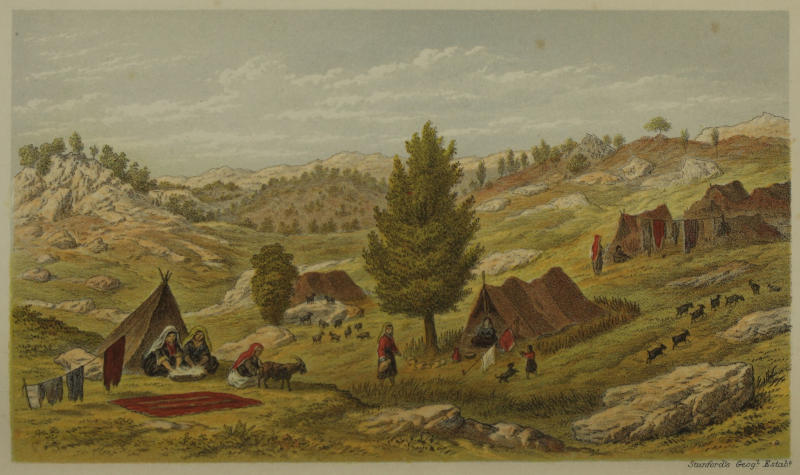

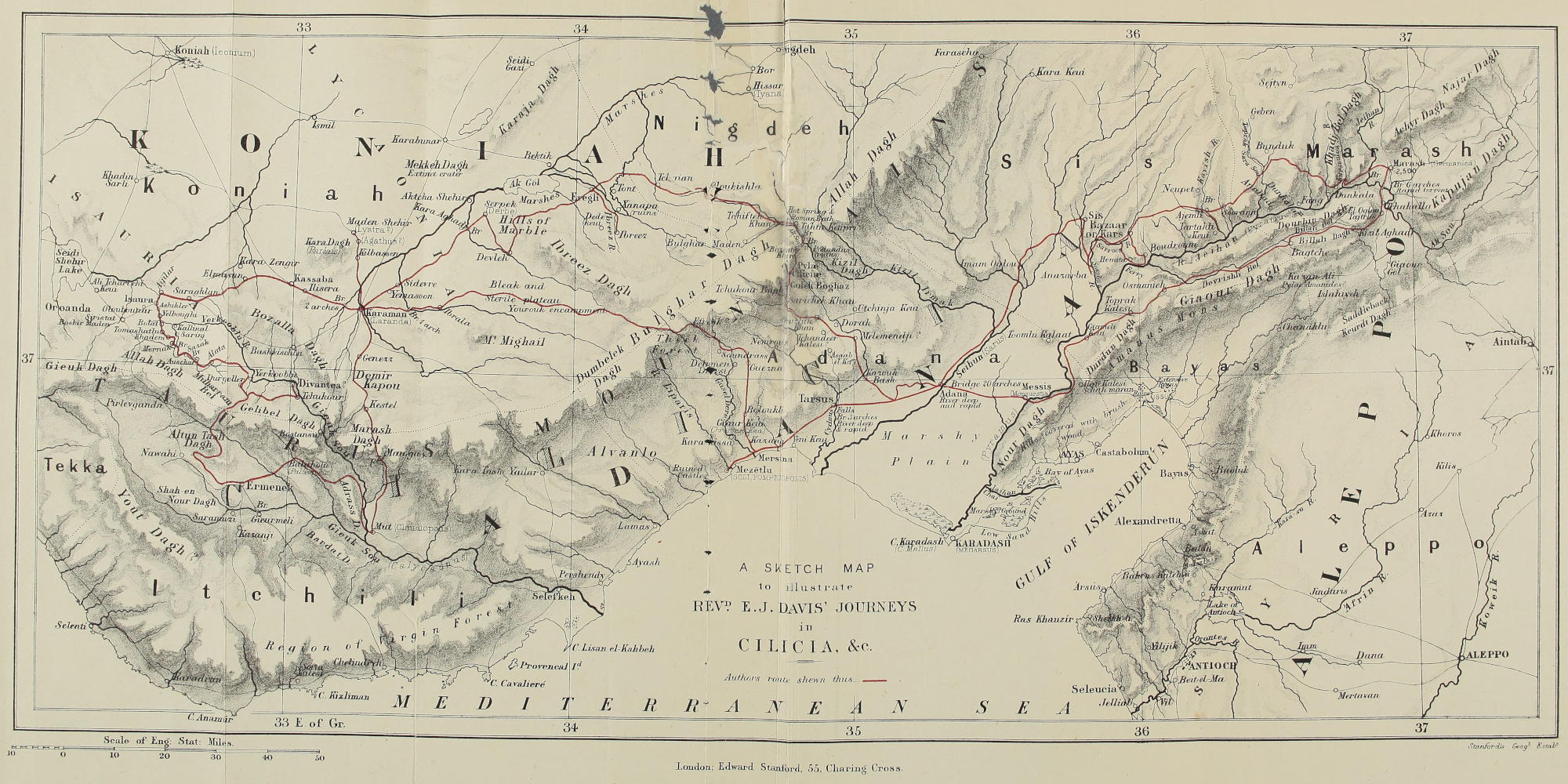
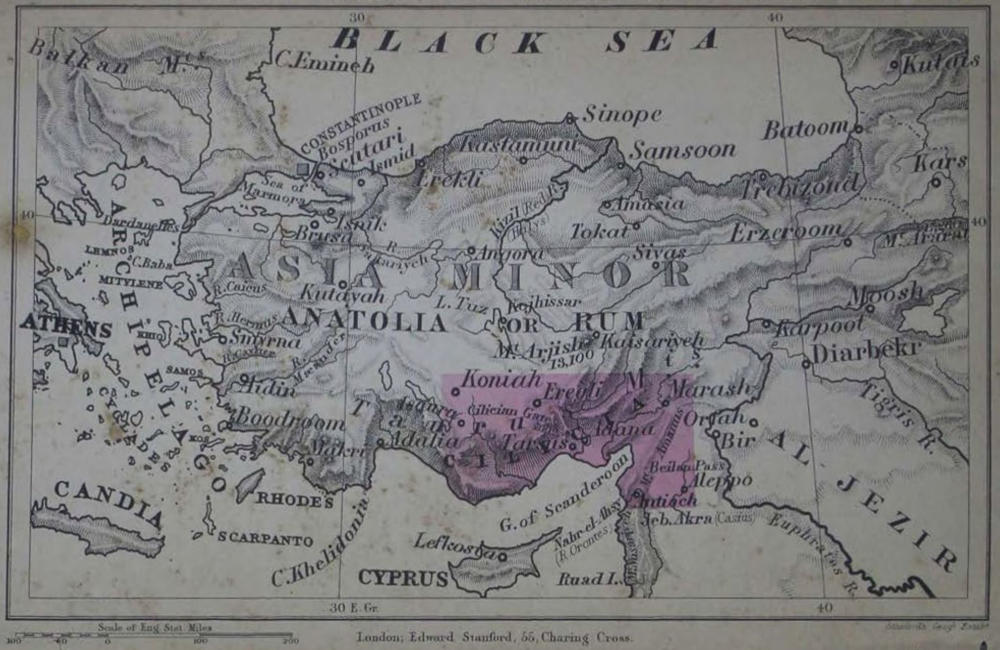
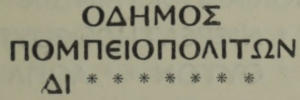
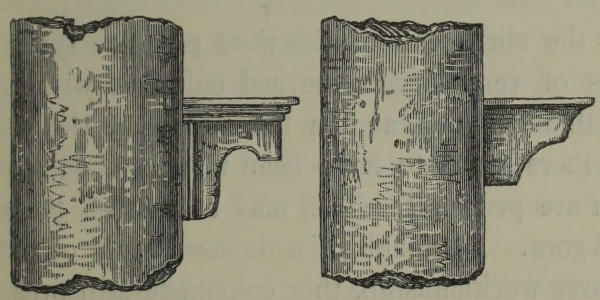
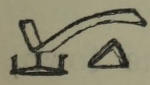
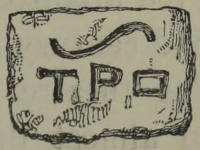

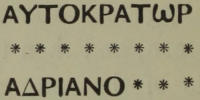
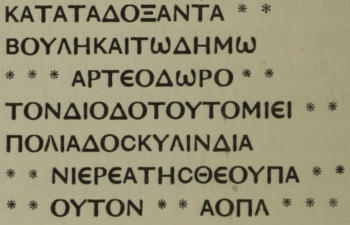
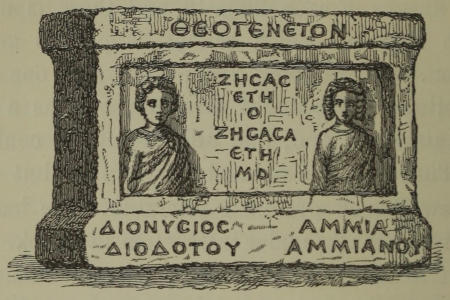
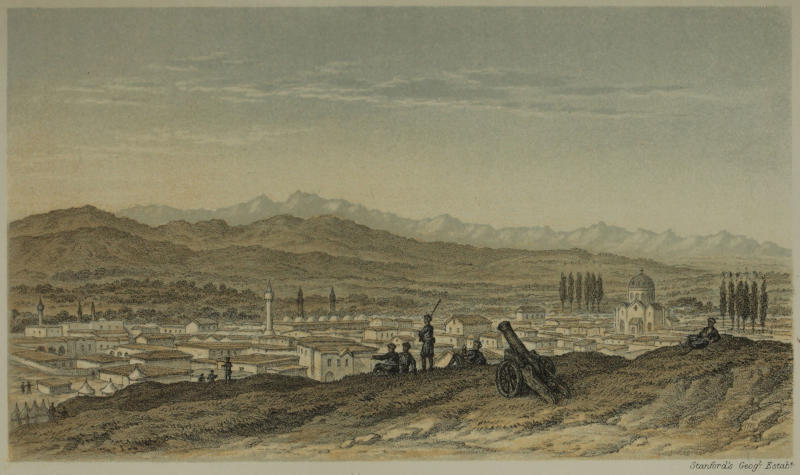
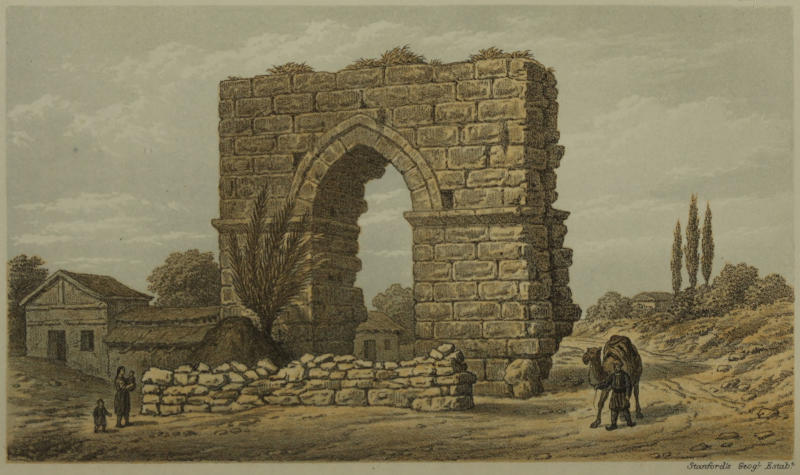
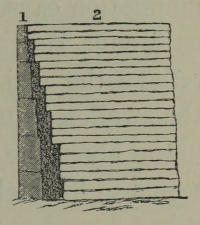
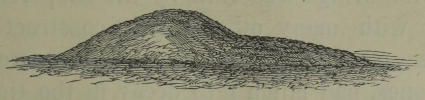
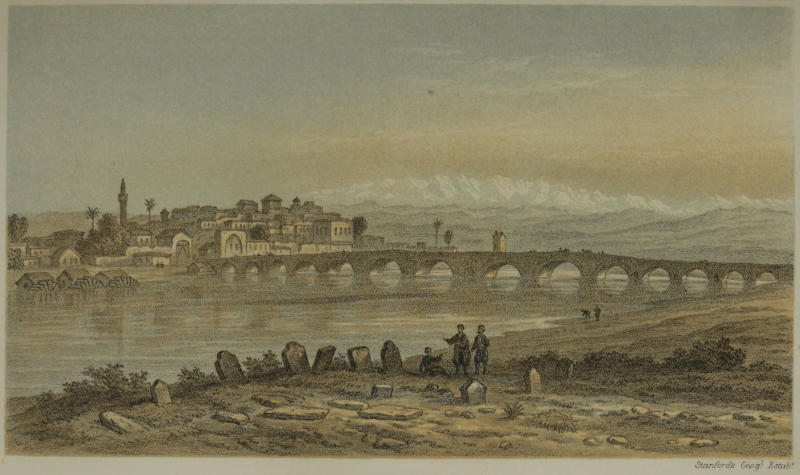
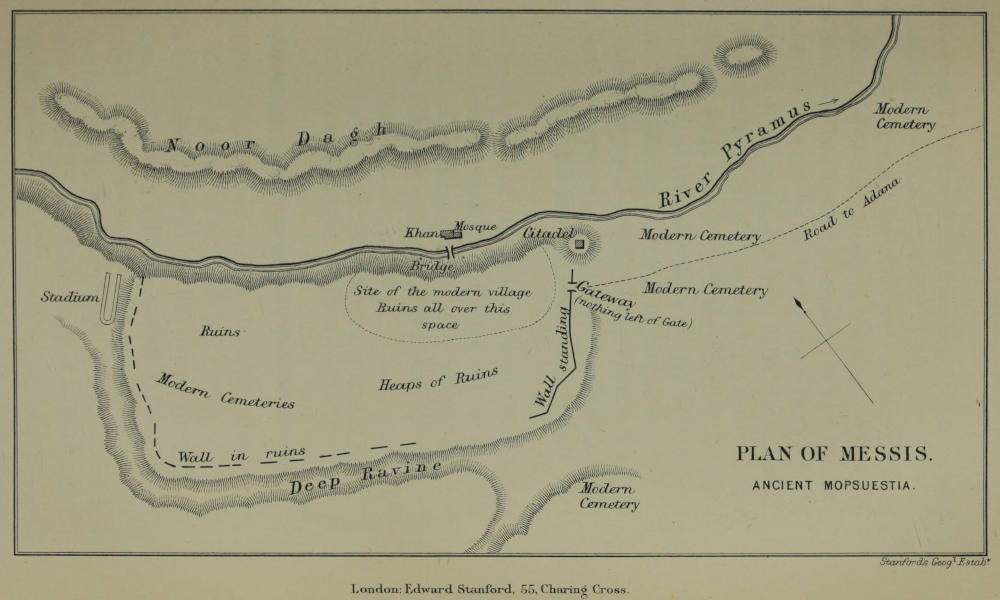
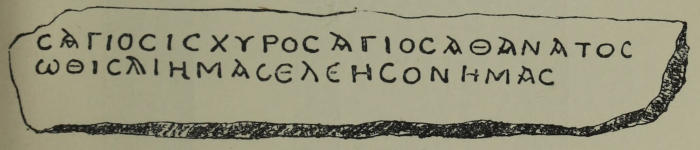
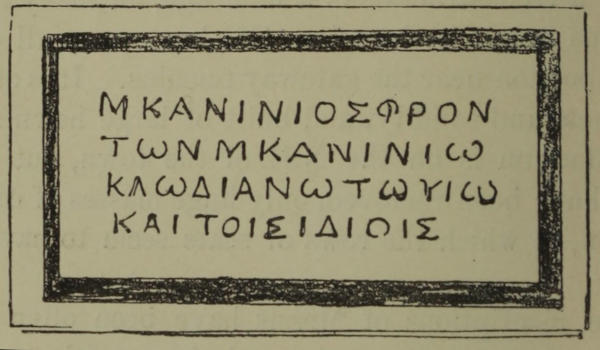

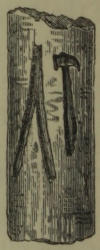
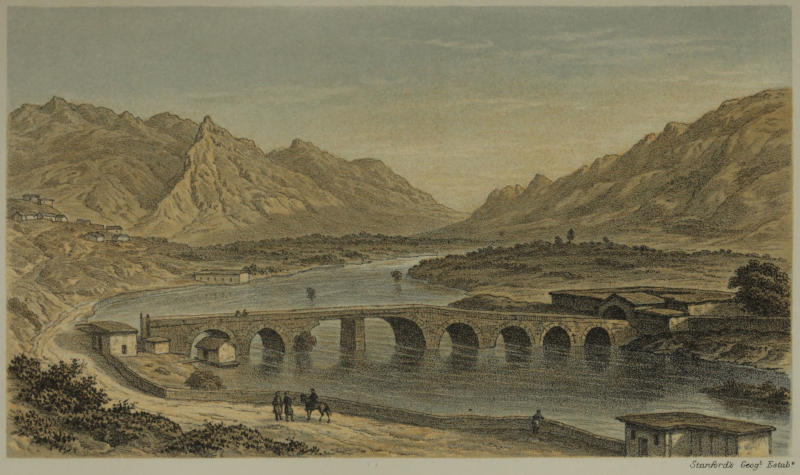
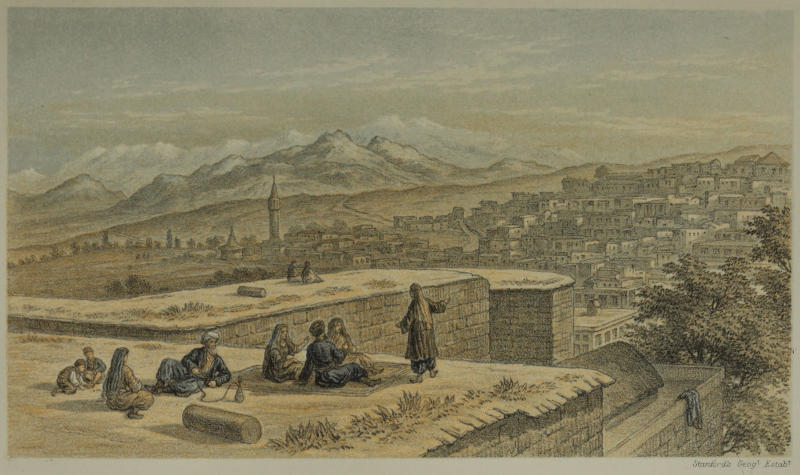
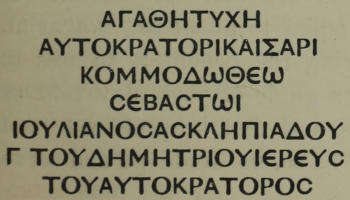
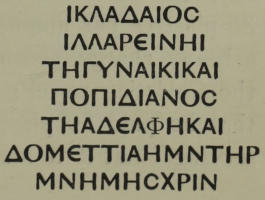
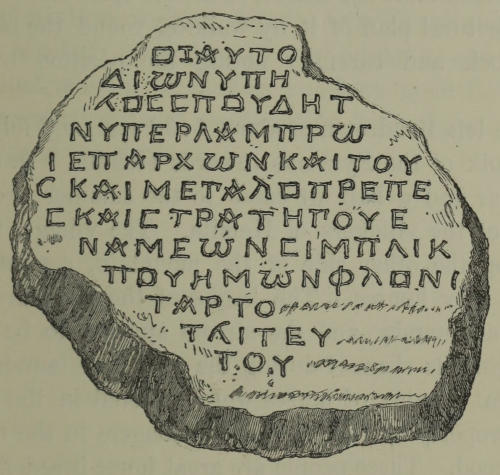
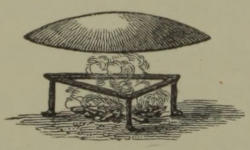
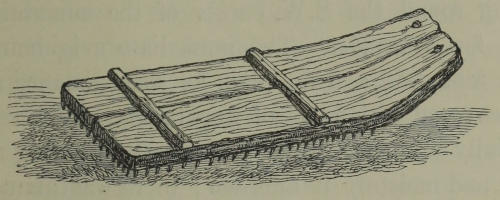
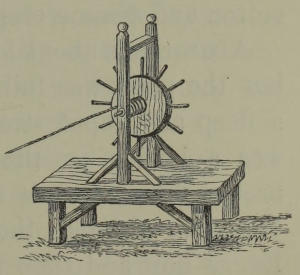
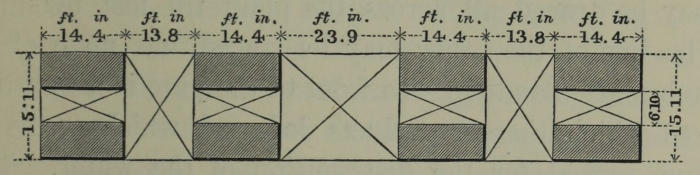
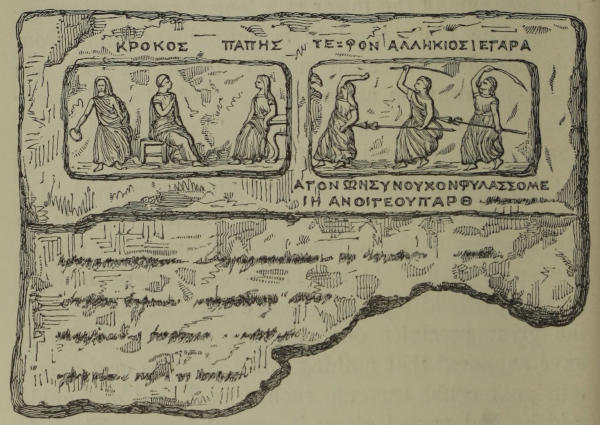
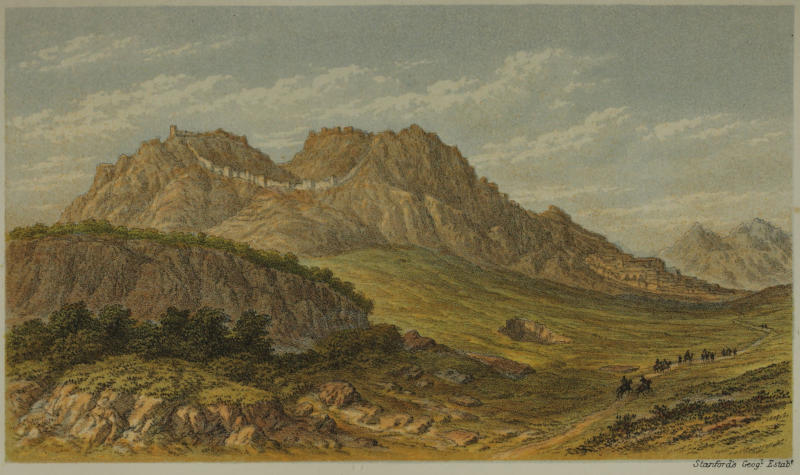
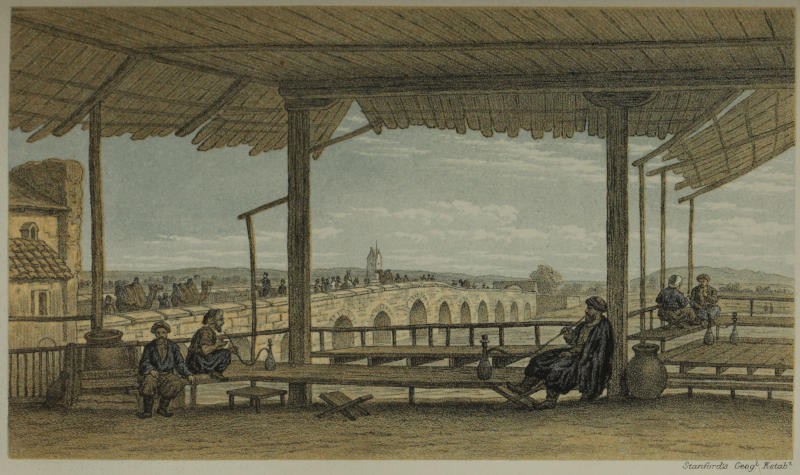
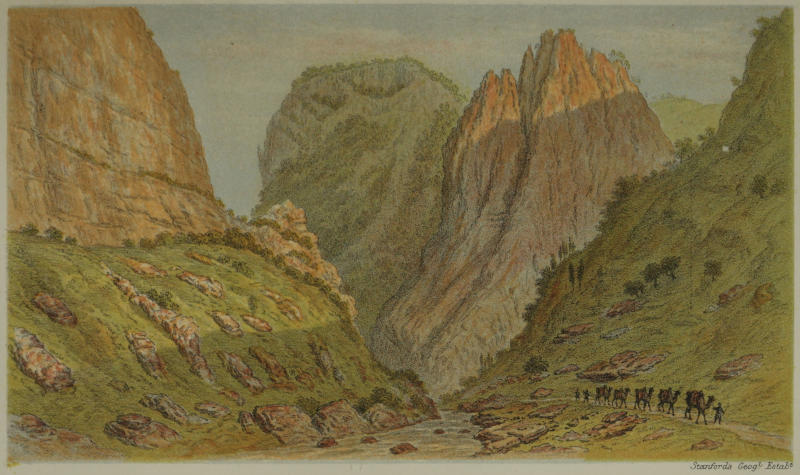
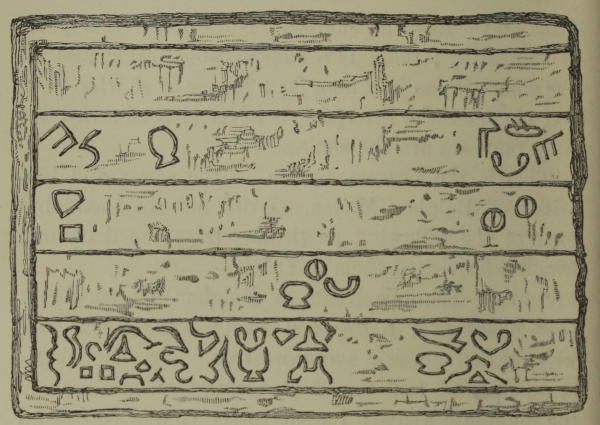
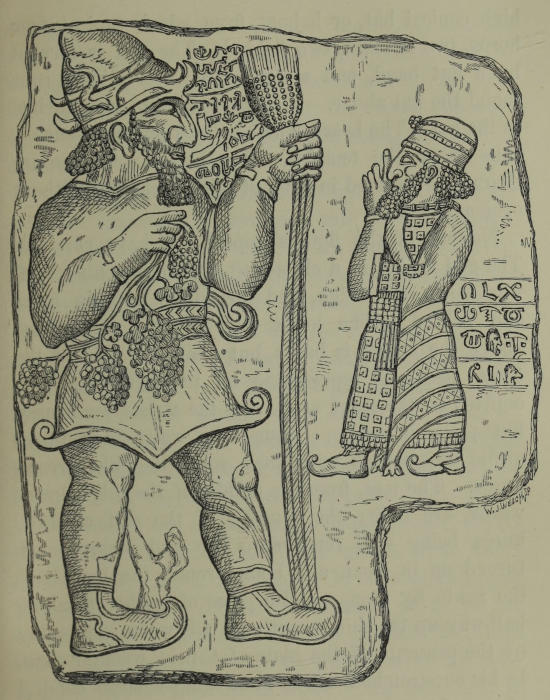

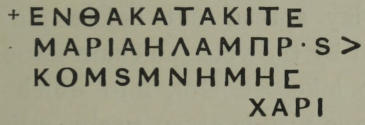
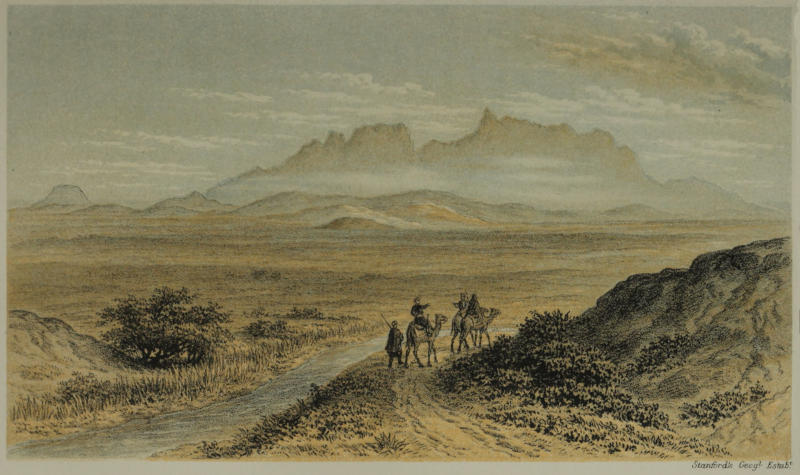
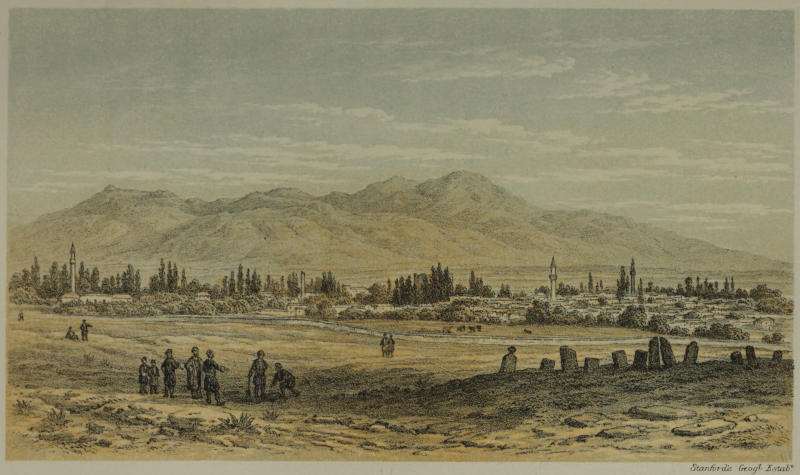
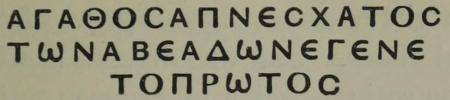

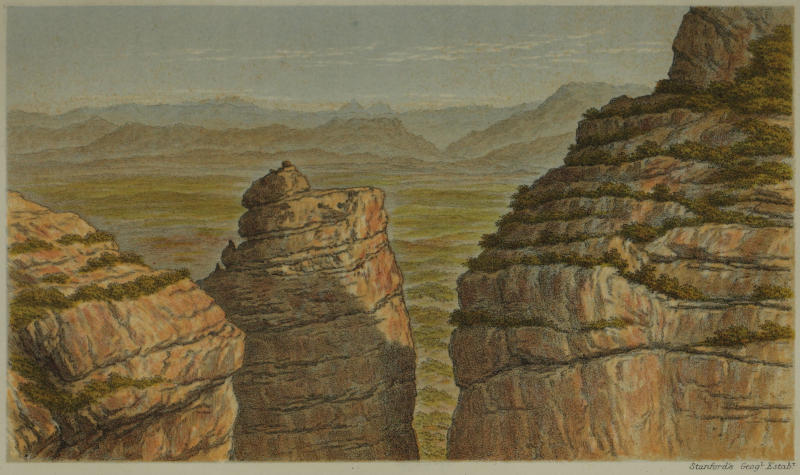
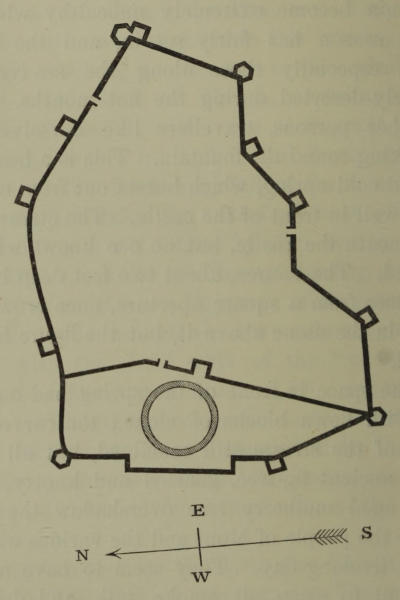
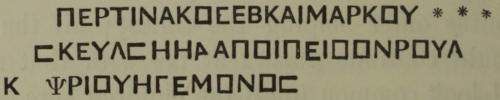
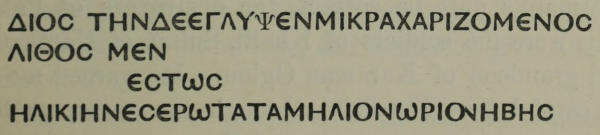
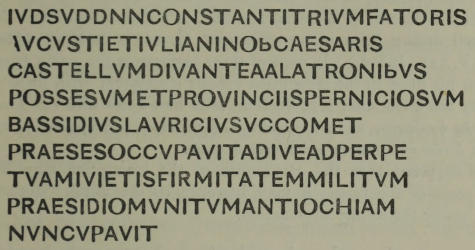
![[musical notation]](images/music.jpg)