The Project Gutenberg eBook of Puck in pasture

This ebook is for the use of anyone anywhere in the United States and most other parts of the world at no cost and with almost no restrictions whatsoever. You may copy it, give it away or re-use it under the terms of the Project Gutenberg License included with this ebook or online at www.gutenberg.org. If you are not located in the United States, you will have to check the laws of the country where you are located before using this eBook.

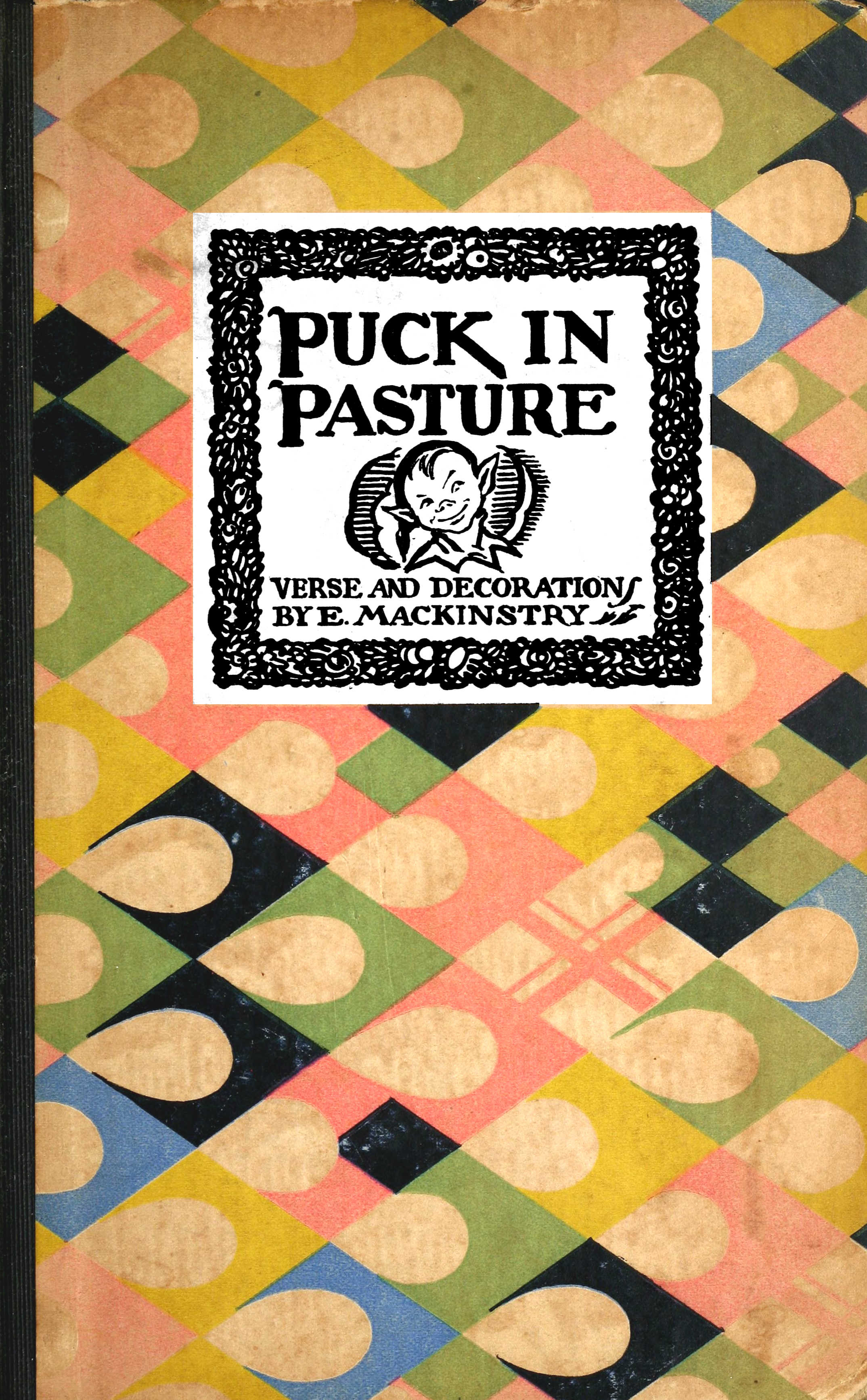
Title: Puck in pasture

Author: E. MacKinstry

Release date: February 9, 2026 [eBook #77901]

Language: English

Original publication: Garden City: Doubleday, Page & Company, 1925

Credits: Terry Jeffress and the Online Distributed Proofreading Team at https://www.pgdp.net (This file was produced from images generously made available by The Internet Archive)

*** START OF THE PROJECT GUTENBERG EBOOK PUCK IN PASTURE ***
Book Cover

[i]

This eBook was created in honour of
Distributed Proofreaders’ 25th Anniversary.
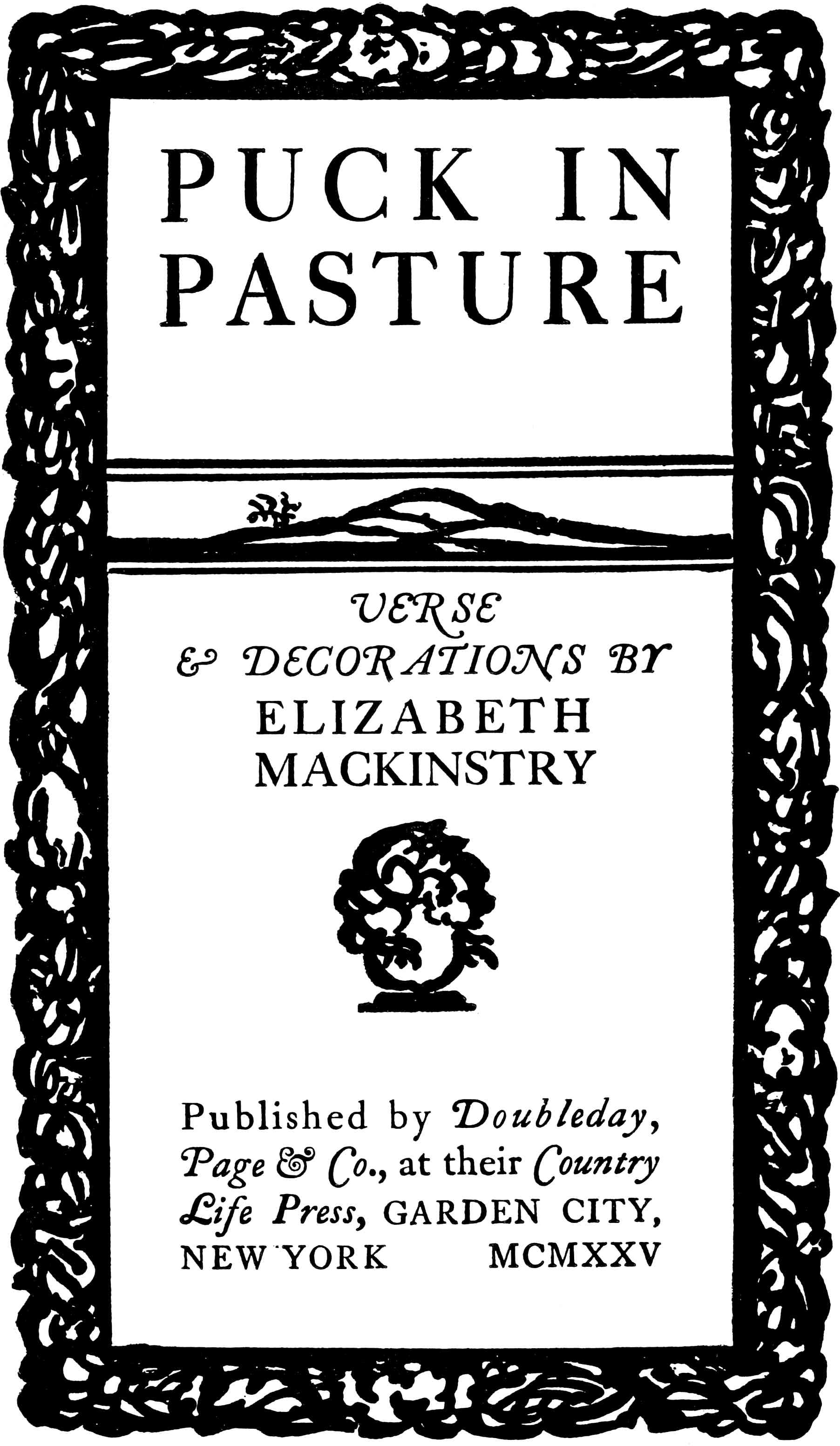
PUCK IN PASTURE


[ii]


Title page

[iii]

PUCK IN
PASTURE

VERSE
& DECORATIONS BY

ELIZABETH

MACKINSTRY
Colophon

Published by Doubleday, Page & Co.,

at their Country Life Press,

GARDEN CITY, NEW YORK

MCMXXV

[iv]


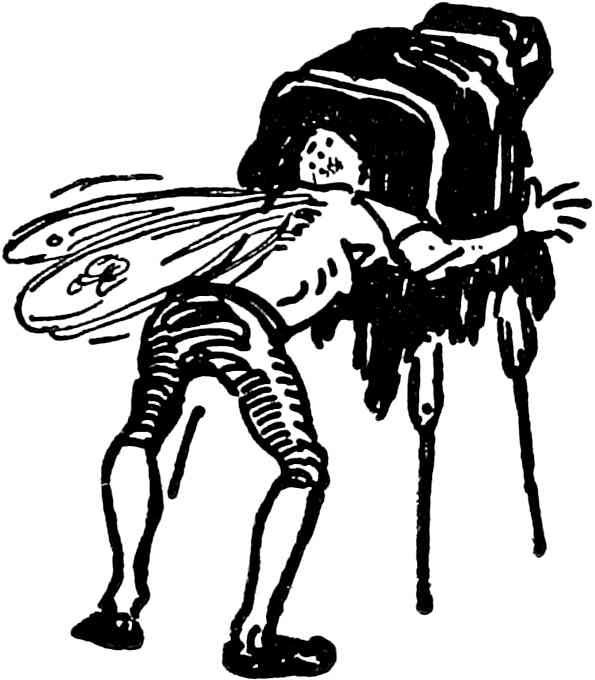
[v]

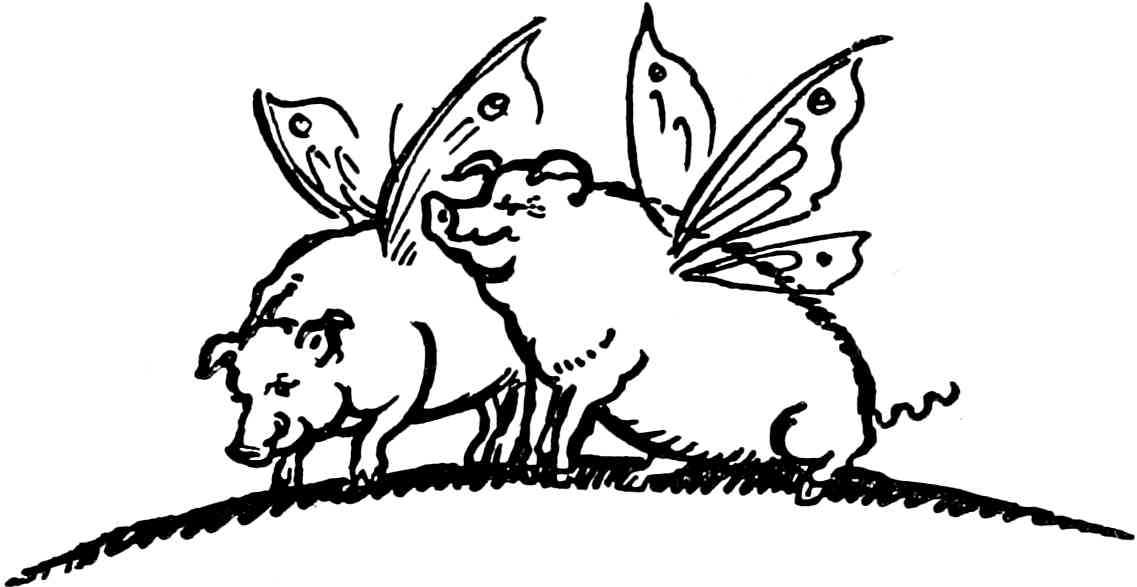
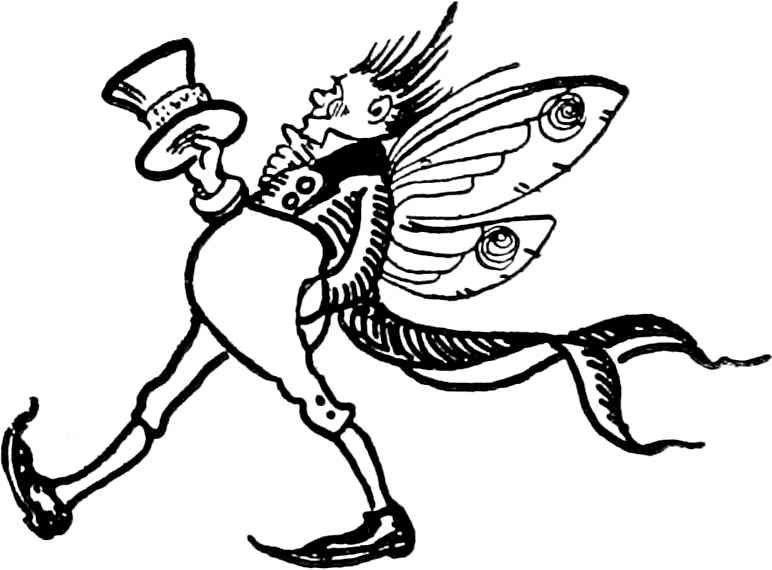
To Emily Howland Lyman


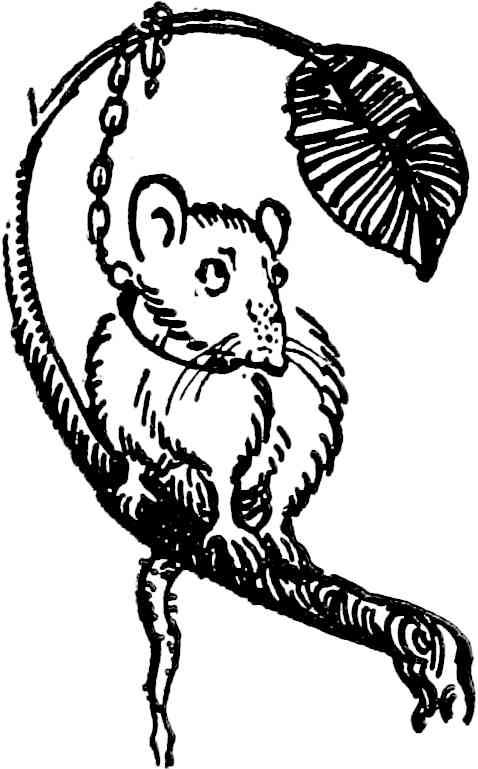
[vii]

CONTENTS

PAGE
Puck in Pasture 1
The Fairy Raiders 8
The Leprecaun 10
Tir-n’an-og 12
The Elfin Angelus 13
Girl’s Song 19
Fawn O’Mera 20
The Elfin Hills 24
The Elfin Fair 28
The Plaint of the Captive Field Mouse 31
The Man That Got the Call 32
The Old Ship 35
To the Wind 39
Midsummer’s Night 40
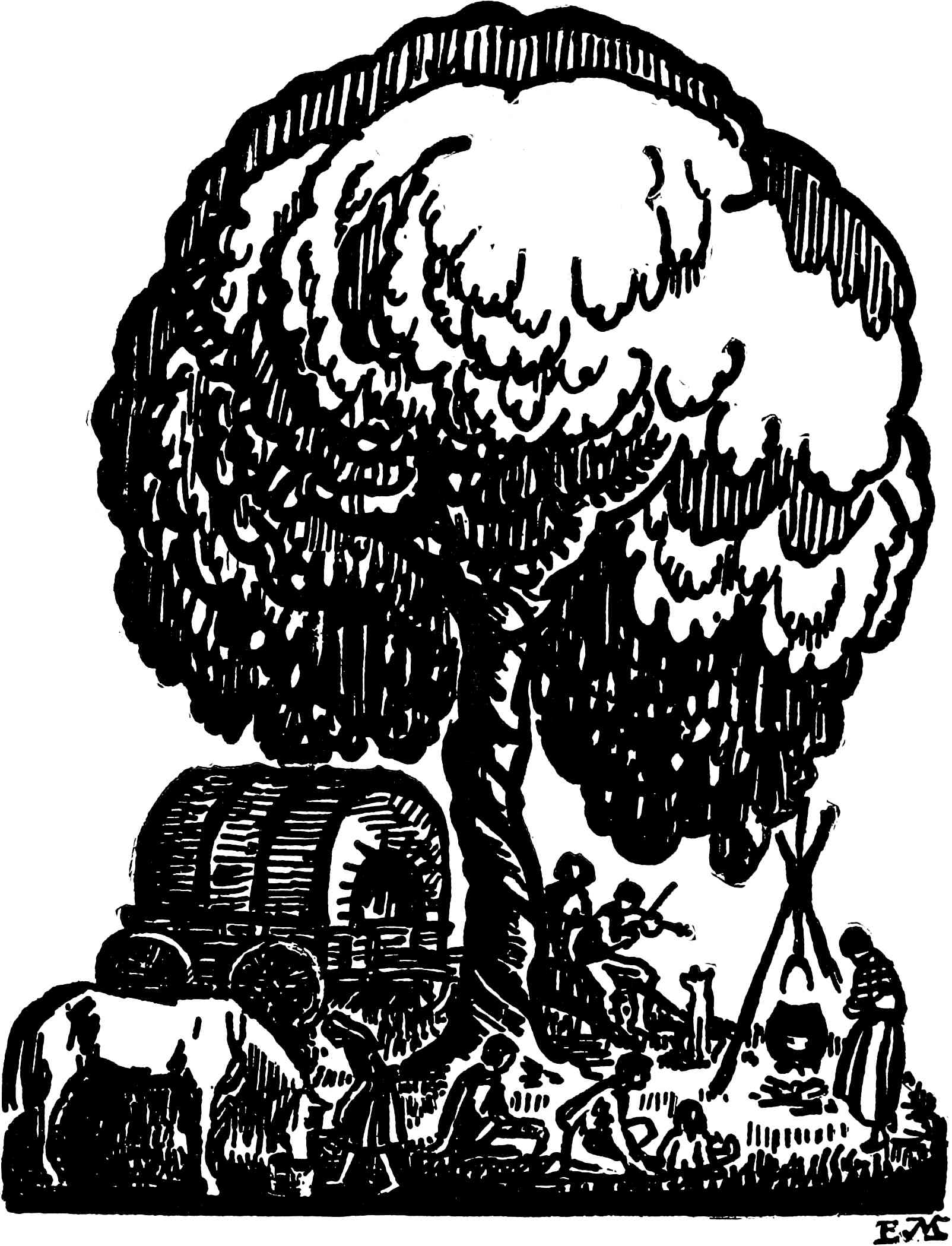
The Caravan 42
The Gypsy Baby 45
The Wild Geese 46
A Fairy Song 48
[viii] The Nixie’s Pool 50
The Beckoning Out 52
Song 56
The Osprey Folk 57
Merlin 61
The Princess of Yan 69
The Spell of Cold 74
The Old Poet Foretells the Manner of His Death 77

[ix]


[x]


[1]

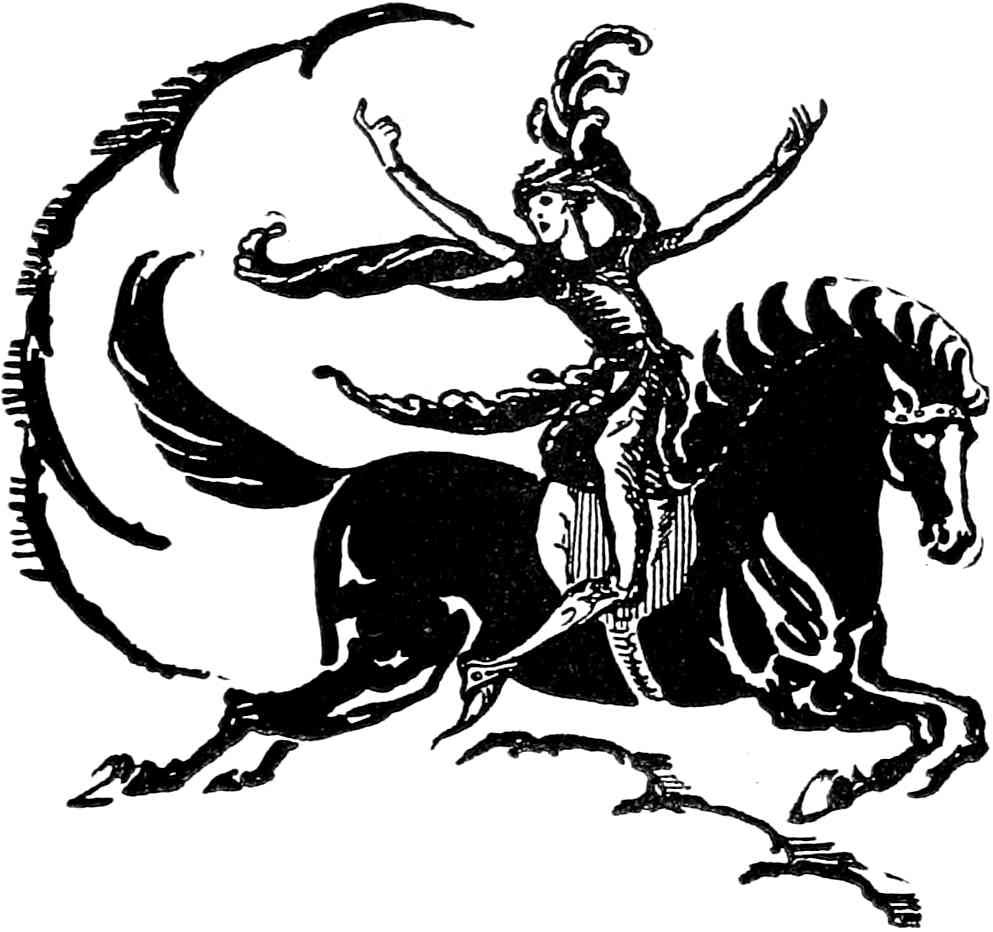
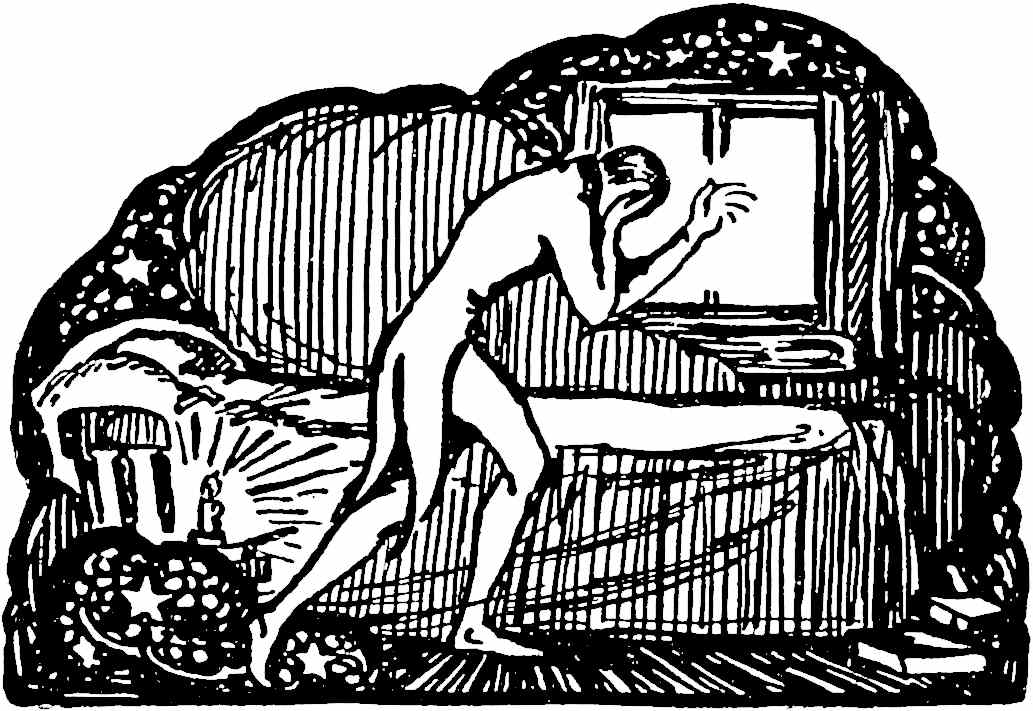
PUCK IN PASTURE

’Twas after a wild and a hedgerow night
I woke from my sleep the morn,
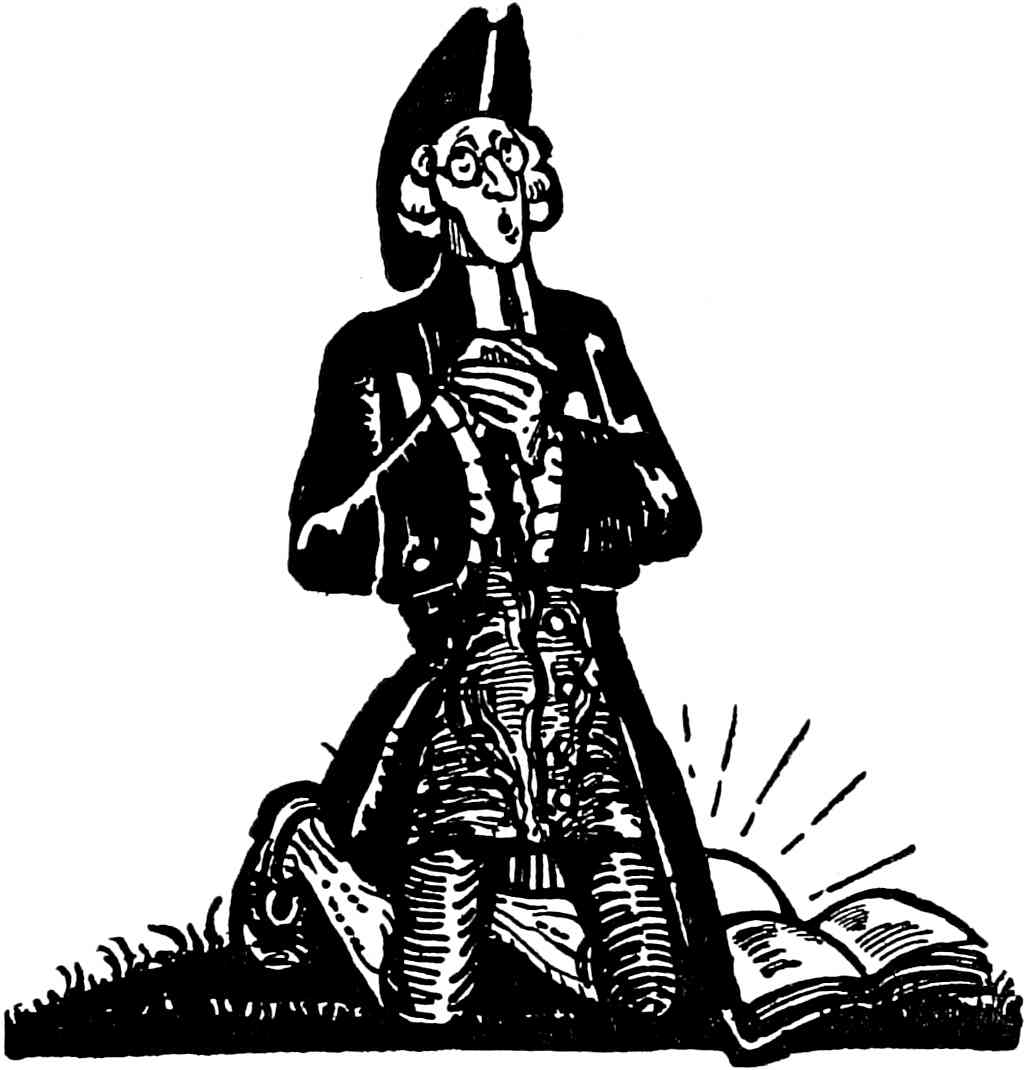
And I heard a Parson saying his prayers
All under a sweet white thorn.
O solemn and lovely the words he said,
Each word like a homing dove,
Till I grew ashamed of my ill-spent life
And the fern-seed manner thereof.

[2]

“O I will go down to Farmer Brown
His cot in the rushy glen,
And ask for work, and I’ll bear my part,
A man in the world of men.”
So I routed me up to a mortal size
With a voice that I thickened rough,
“And could I have bed for milking the cows,
And the milk would be board enough?”
“I’m thinking you’ve milked more purses than cows,”
Says the Farmer astraddle the lea
With his two big boots in a cowslip bed,
“So it’s see and believe, for me!”

[3]

Well, the first that I tackled was old Brown Bess,
And she was a shirker sure,
But I shot her stiff with a few cold words
On her ways wi’ the Bull o’ the Moor.
And I milked her hard, and I milked her fast,
And she dared not flicker one red
Square half inch of her old cow hide,
And the eyes popped out of his head.
“Well, I milked her boy, and I milked her man,
But never in all my days
Has the old cow frothered up such a pail!”
And the milk sang a roundelays,

[4]

Hollow and sweet in the empty pail,
Tinkling round the brim,
Hushy and soft when the pail was full,
And O that was the beat of him.

II

Once out in the pasture I shunted size
And I mounted a mullein stalk,
And I gave the cattle (the ill-geered folk!)
The a-hem of a Fairy talk.
Then I drove them here, and I drove them there,
Wherever the grass was sweet,
Till their bellies bulged like a turnip top
Set over their rootlet feet.

[5]

O I hunted them here, and I hunted them there,
With whoop and halloo between,
Till little they grew, and nimble and sweet
Like the droves of the Fairy Queen.
O the milk came out of those wee brown cows
Creamy and rich and great,
And white as a wreath of the Fairy foam
With the floods of the Hills in spate.
And the milkmaids milked, and the Goodwife milked,
And the farmlads milked like mad,
And the Goodman buttoned his breeches tight
For the wad of a purse he had.

[6]

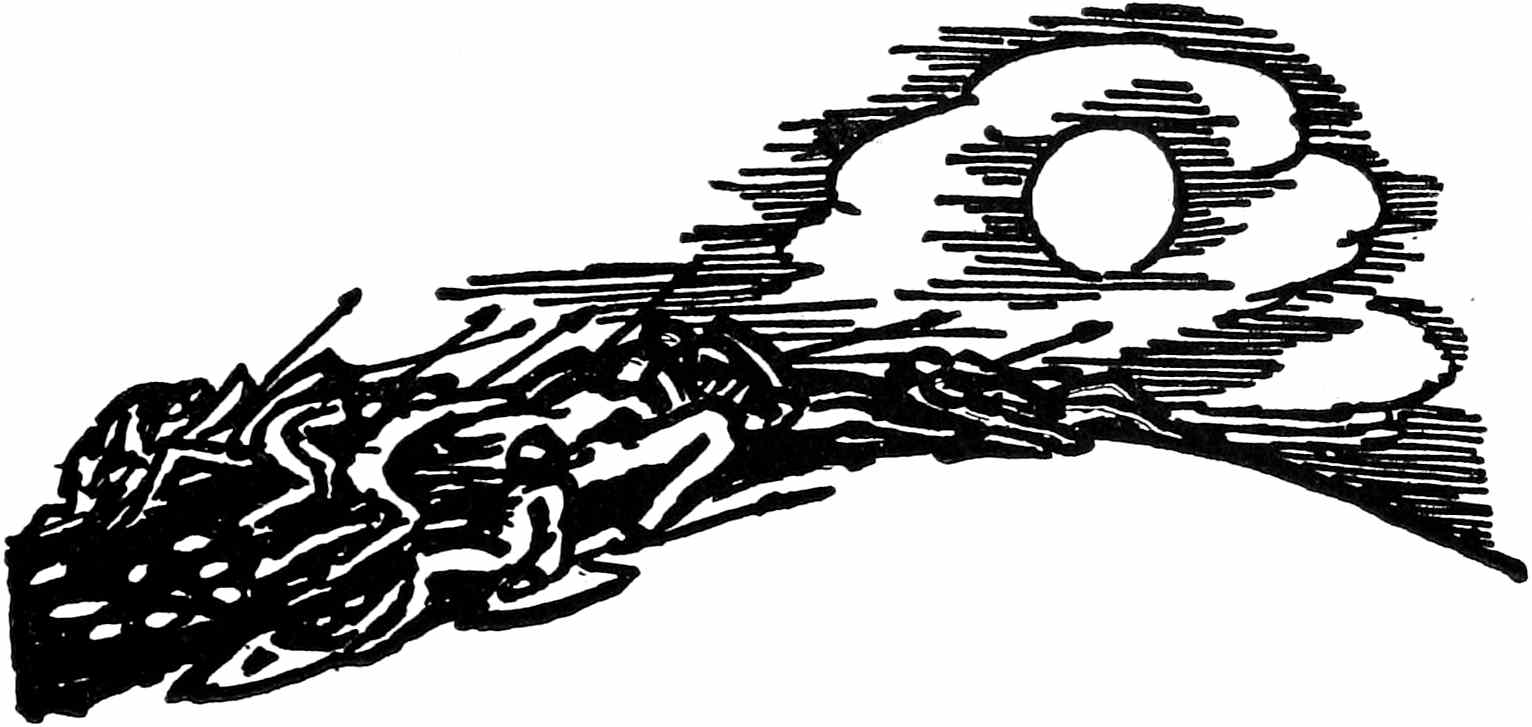
But wow! One night when the moon was full,
At the minchiken Hour o’ Mouse,
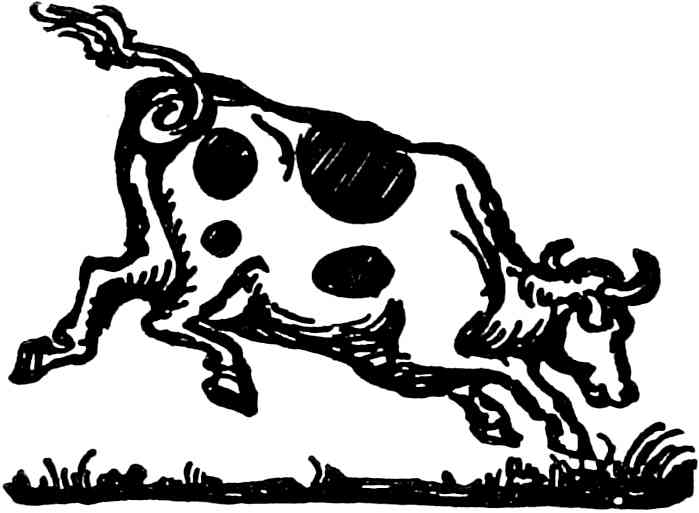
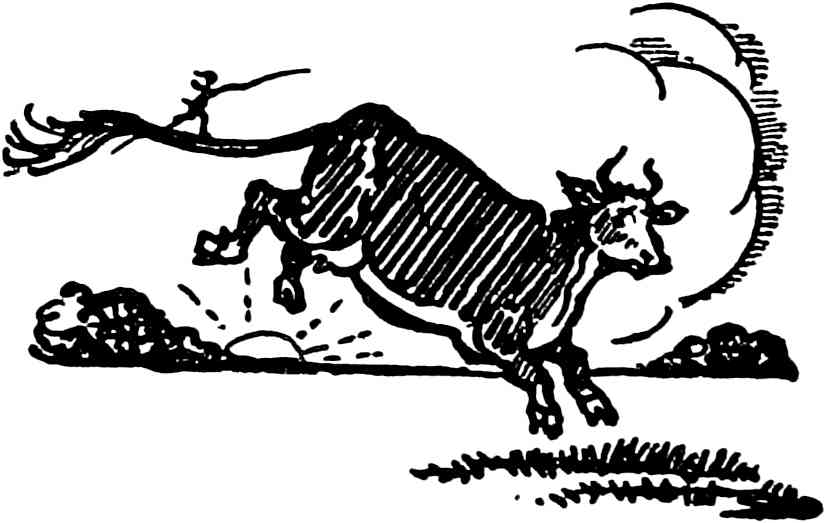
The de’il got into the cattle AND
They danced it about the house.
O! the Goodman swore, and the Goodwife swooned
And the children were frantic things,
But the de’il got into the cattle AND
They danced it about in rings.
Wi’ crumplety horns, and twinklety hoofs,
They danced to a jigglety tune,
While old Brown Bess in the van gave tongue
To “The Cow Jumped over the Moon.”

[7]

O they sent for the Parson who brought the Book,
And he hammered it out wi’ blows,
And that was a wonderful, woeful night,
And I went under the rose.
O I dared not go, and I dared not stay,
And my belly was cold the dawn,
But break o’ the day, I was up and away,
And over the fern seed gone!
O I’ll not go back, and I daren’t go back,
And the mortals may mind their cows,
But the Goodman knows that the purse was full
With Puck of the Hills to house.

[8]

THE FAIRY RAIDERS

With hazel wands and singing.”—Old Song.
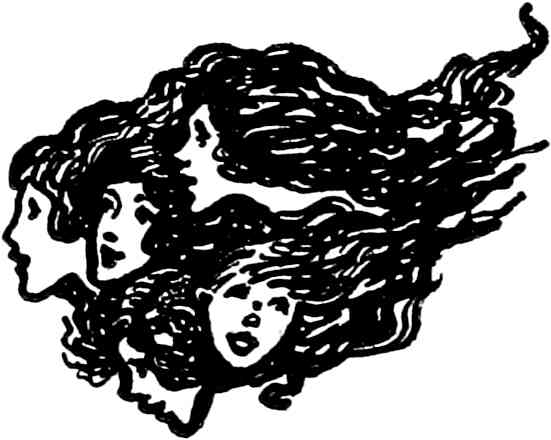
As old as little birds the Fairy babies
As old, and wise, and quaint, with tearless eyes
Grave with the solemn lore of Fairy splendour,
But O, the little human child is tender,
And silly soft, and weak, and oft it cries.
The Spinning Spiders tend the Fairy babies,
Content to weave them silken cradles hung
In lonely moor, or fen, or shadowy heather,
But O, the human child is housed from weather
In inglenooks, and warm, where songs are sung.
Through dreams of strange dominion, known to Merlin,
Or craving for small fingering hands it seems,
The Fairy Raiders haunt our cradles, bringing
Exquisite pointed faces and soft singing
To lure away the child that hears in dreams.

[9]

The Fairy Raiders bear away the children,
Unseen, to Elfin pasture lands they pass,
And deep in nodding daisy nests they place them
Where by the low, red, rosy glow you trace them,
And rings of singing larks down in the grass.
There they are one with long heart-breaking sunsets
In gay, unearthly lands, and radiant dawns,
Till good they grow, and great, and have no sorrow—
But O, the mothers’ mortal woe the morrow
To find the changeling left, the true child gone!

[10]

THE LEPRECAUN

If you can catch a Leprecaun you are a made man!
Oho! The Elves of Ireland
They dance so hard at night
They dance their very shoes away
In splendour and delight.
God bless their Elemental souls,
You cannot see them for the holes!
The only Elf in Ireland
That has a trade at all
It is the cobbler Leprecaun
Who makes and mends them all
The shoes they dance away by night
In green and moony demi-light.

[11]

He is the first of cobblers
And best of craftsmen too.
For why?—He works at happy things
By gaiety worn through.
God send us each a Leprecaun
To mend the heart of us at dawn!
He’s caught the secret of the Earth,
Sun, wind, and Summer rain
To better happy things that pass
Or build them up again.
They’re few of mortal men that look
So far into the Great Green Book.
If you can catch a Leprecaun
And steal away his cap
You’ll maybe get a Pot o’ Gold
In an exchange, but hap
The Leprecaun has never told
His secret—what’s a Pot o’ Gold?

[12]

TIR-N’AN-OG⁠[1]

O it may be the path that the sea gull takes
Will bring us to Tir-n’an-Og to-night,
The sorrowful spell of the sea foam makes
Their wings so white.
Or it may be the gold and the crimson proud
Of to-morrow’s sunset will see us come
Where far from the trouble of wind and cloud
The soul finds home.
I’ll be holding you close in a quiet place
And may be the trouble will cease
That came from wanting your beautiful face,
Or turn to peace.

FOOTNOTE

[1] Tir-n’an-Og, Land of the Fay, Land of the Young.

[13]
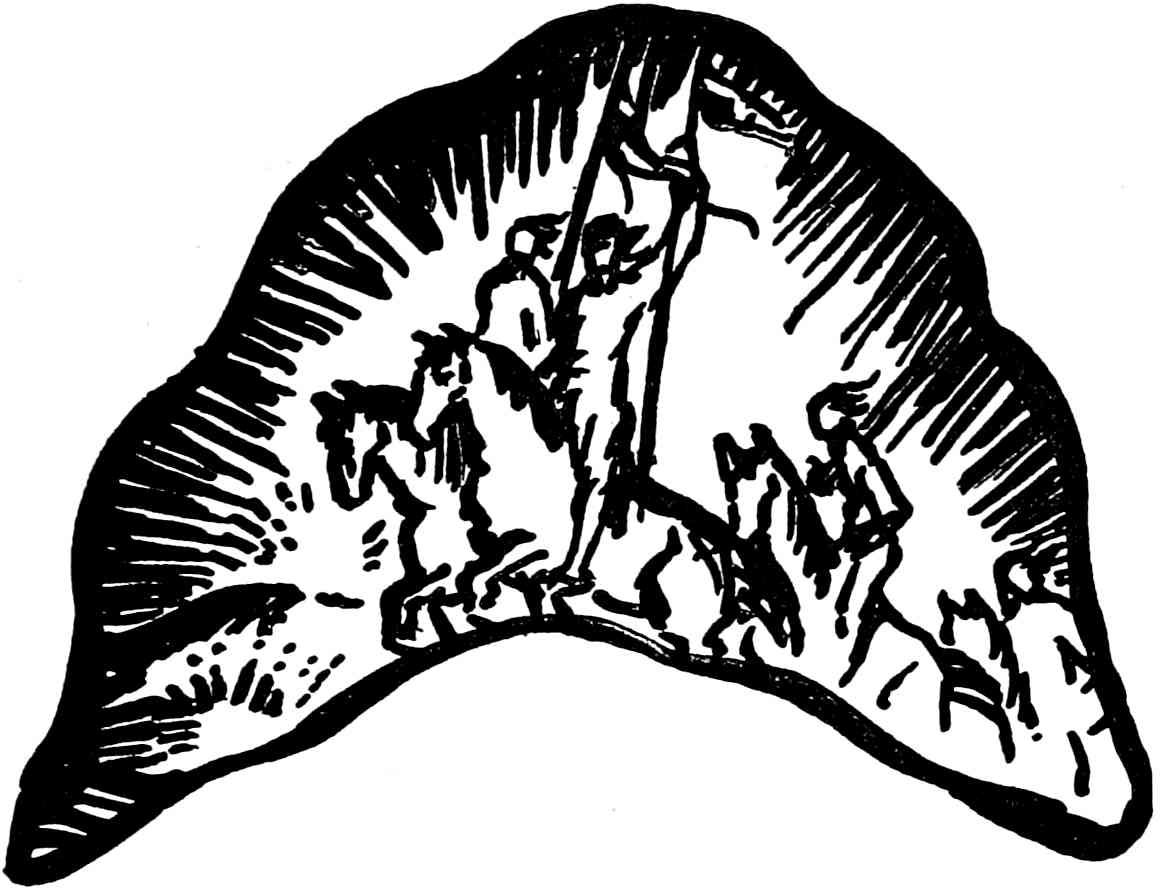
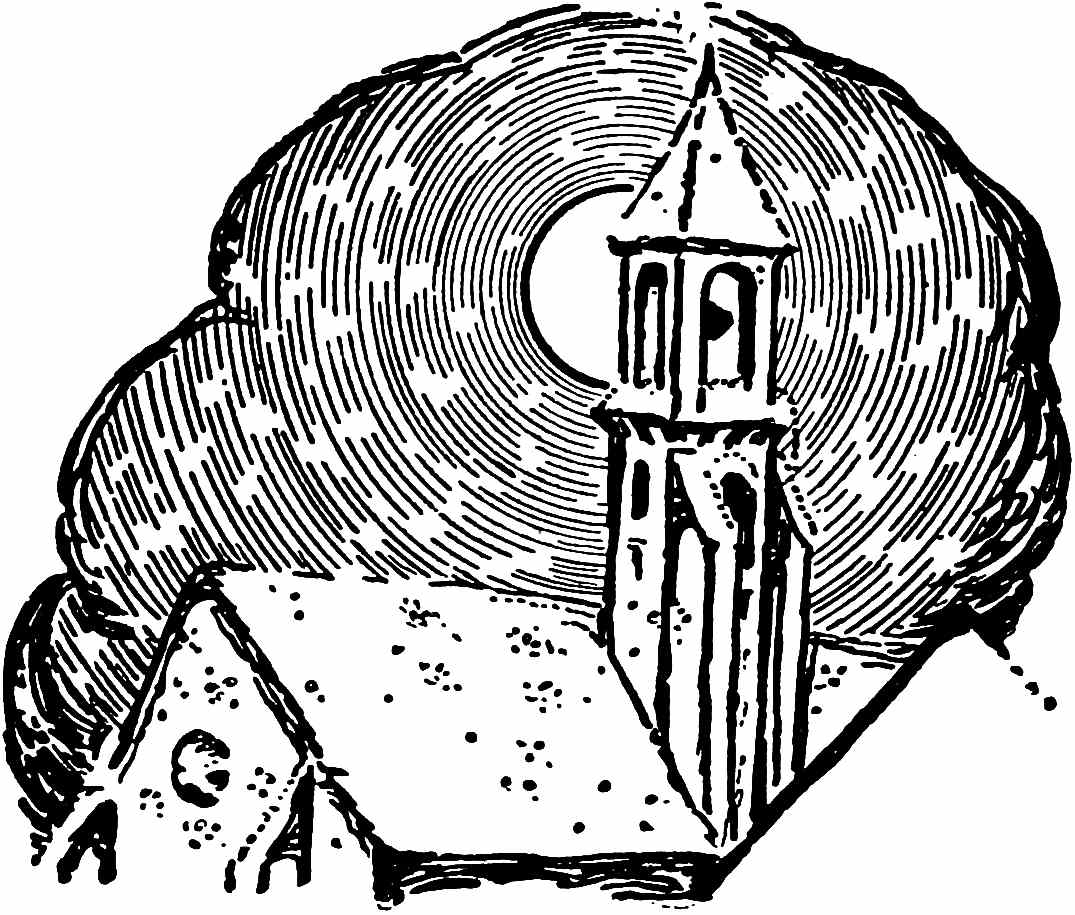
THE ELFIN ANGELUS

Are all the roads to Elfland closed,
Are all the gates locked fast?
And is there not some Fairy spot,
Or deep, remote, and sylvan grot
Left open where they passed?
Ah! hark to what the twilight tells
On silver bells, on silver bells!
Say all the lovely, lonely spells,
Swing free the doors again!
Lo! from the open Hills we ride
Through moss and moonlight, far and wide
No rider rides in vain!
We fight the old, victorious wars
’Neath silver stars, ’neath silver stars.

[14]

Though earth is weary with its scars,
King Arthur, as it seems,
Lies done to death in Avalon,
Yet living eyes shall look upon
The mercy of their dreams.
Sure is each hope on vision stayed,
Though long delayed, though long delayed.
Those airy shapes toward which man prayed
In Nature’s holy name,
In shapes as light, as cool, as green
As dancing leaves high boughs between,
They put him not to shame.
Sure help in all high wars men win
From Fairy kin, from Fairy kin.

[15]

For, lo! the veil between is thin
And easy cast aside,
And when the call of man is heard
The heart of all the Hills is stirred
And all the doors swing wide.
And man is succoured and reprieved,
Though sorely grieved, though sorely grieved.
For no man is by hope deceived
Though spells may cast their lure,
And though the aspect suffer change
To things unearthly sweet, or strange,
Or dreadful to endure.
Each man shall win, unless he tire,
His Heart’s Desire, his Heart’s Desire!

[16]

Those things toward which good men aspire
Although the world condemn,
And though they seem to die, apart,
Safe hid in Nature’s holy heart,
Grow great to comfort them.
So peace from earth be with you still,
Men of good will, men of good will.

[17]


[18]


[19]

GIRL’S SONG

O Angus Og has four love birds
That follow him where-so-ever;
And two cry out, “I go, I go,”
And two cry out, “Come hither.”
They are plumed like the blue-green water,
And the four birds call to me,
“I go, I go,” and “Come hither.”
I’m thinking they call from the sea.
O maybe I’ll go one sunrise
Where the breakers curl and comb,
And bare my breast to the four love birds
And cry, “Come home, Come home.”

[20]

FAWN O’MERA

Had you never, Fawn O’Mera,
Never heard the magic bell
Tolling from the belfries airy
Of the towered land of Fairy
Where the Elfin people dwell?
Had you never, Fawn O’Mera,
Seen the Laughing People ride,
Gold, and green, and rowan, trooping
Like a flock of sea gulls swooping
Out to sea, by some roadside?

[21]

Little bits of sticks, and snatches
Tattered too, of roadside straw;
Here and there the dead leaves whirling
In the wind; the gray dust pearling
Over them was all they saw!
They, the New Born souls, that newly
Grow to threescore year and ten,
Ancient only in the cradle,
Crafty with the porridge ladle,
Children still as greedy men.

[22]

But the lovely, loving, lilting,
Laughing Wise Ones who are Old,
Whom a thousand years make tender,
And whose kind eyes know the splendour
Of the Dawn, saw fairy gold!
Hear them singing, Fawn O’Mera!
Girlhood guessed the song before.
Now, the candles flare and dwindle,
And a burden grows the spindle,
And the flax falls to the floor.

[23]

Leave the young, whose love is asking,
Leave the old whose love’s a chain,
Ere they strew your head with ashes,
Dim the eyes and dew the lashes,
Come into your own again.
I will take you, Fawn O’Mera,
To the Fairy Glades apart,
And where green leaves know no falling,
Hush the old unhappy calling,
Wake your soul, and still your heart.

[24]

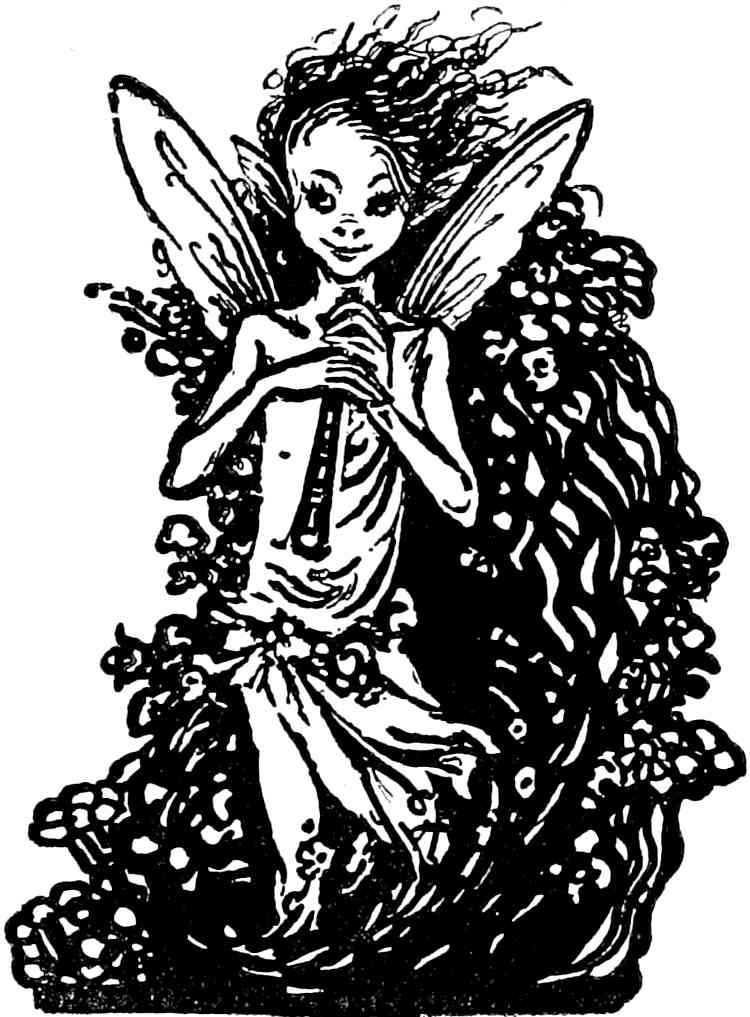
THE ELFIN HILLS

O I shall go up to the Elfin Hills,
Heather, and heath, and stone,
’Neath the cold red drift of the sunset cloud,
For Folk in Housen are hard and proud,
And ever I’ll pipe alone.
For O, I went down to the Folk in House,
Bold in the russet dawn,
Drawn to the bone by the mortal call,
The pink, and the white, and the rose, and all
Of the sweet flesh they have on.

[25]

I met three children wi’ berry pails,
Bound for the tangled briars
Over the moors, and I piped a tune,
Gathered their laughter an afternoon;
They fled with the first lit fires:
The wonderful fires the Folk in House
Scatter like daffodils,
Streaming in light from the ragged thatch,
Rosy and warm by the lifted latch,
And gay in the long gray hills.

[26]

’Twas over the fires I met my love,
Piped to her soft and low,
Sweet was the glint o’ her milk-white feet,
Threading the fields, and the meadow-sweet,
Like pearl in the afterglow.
Ever I piped, and ever she came,
But when my piping ceased,
She fled from me with a startled cry,
The little old moon toiled up the sky
From out of an empty East.

[27]

Empty of heart, and empty of hand,
’Twas only the pipe they heard!
Maybe my eyes they are too cold,
The Fairy blood may be too old
To mix with the blood it stirred.
I will go back to the Elfin Hills,
Wander and pipe alone,
Answer the call of the peewit’s note
Where sunshine wavers, and gray clouds float
Past heather and heath and stone.

[28]

THE ELFIN FAIR

A gay and a good old woman
Once went to an Elfin Fair
And all that most fit is for Fairs in the cities
And is told of in ditties
And sung of in songs, was there
Grown teeny tiny O.
’Twas down by the red rose bushes
(She picking her way between)
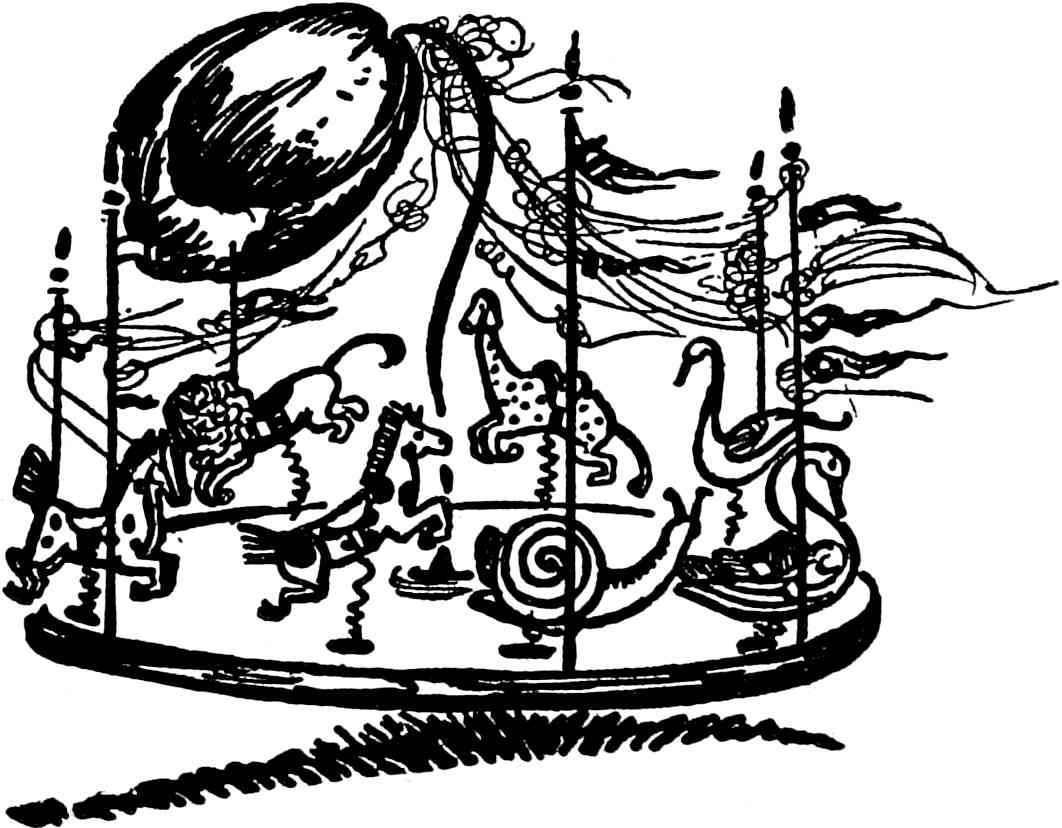
And the first thing she found was a Merry-go-round
To the scarlet top of a tulip bound,
In the midst of a Village Green
Grown teeny tiny O!

[29]

There was a Strong Man lifting
An acorn up, cup and all;
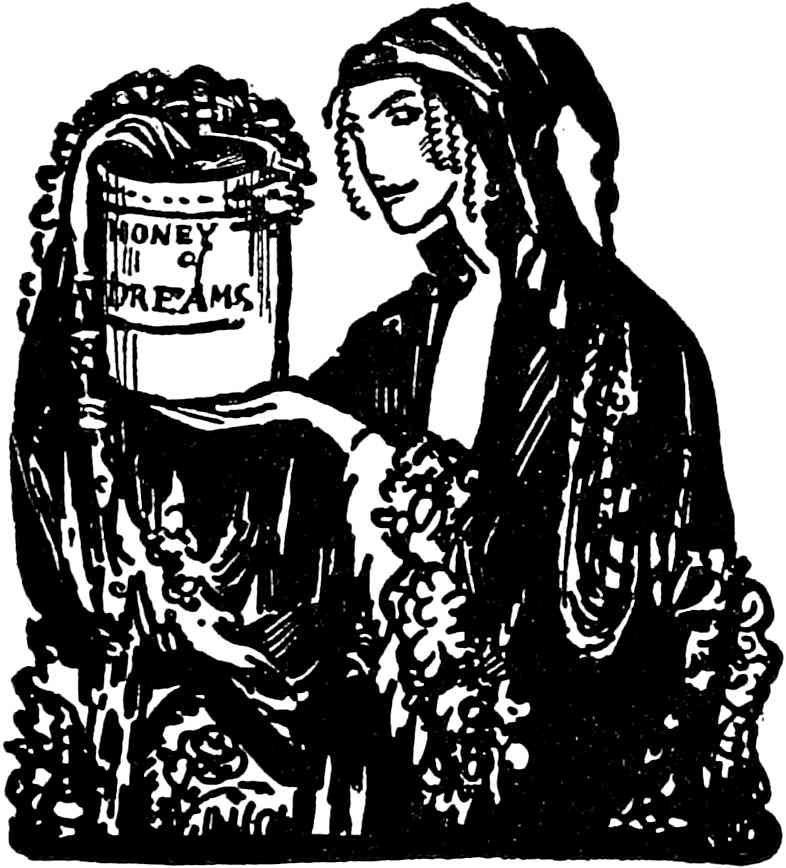
And a peddler, it seems, crying, “Honey of Dreams!
Threepence a cup, O brightly it gleams!”
And the Gentry were giving a Ball,
Grown teeny tiny O.
The Photygraph Man was snapping them all
(And the Villagers) one by one,
Or else in a group; with his waddle and stoop,
And his head in a cloth, and his legs like a hoop,
By the aid of the laughing Sun
Grown teeny tiny O.

[30]

But the Farmers were down by a Paddock
Where of all unusual things,
A real Carrot stood, as big as a wood,
And rooting around it all pleasant and good,
Were wee little Pigs with Wings,
Grown teeny tiny O!
Right there was her own good Landlord,
Though she doubted the thing herself
Till to him she ran, and cried, “Mr. McCann!
Whatever on earth are you doing, my man,
With Wings and a Coat like an Elf—
Grown teeny tiny O!”

[31]

THE PLAINT OF THE CAPTIVE FIELD MOUSE

(This Field Mouse, by the way, was in the Elfin Fair)
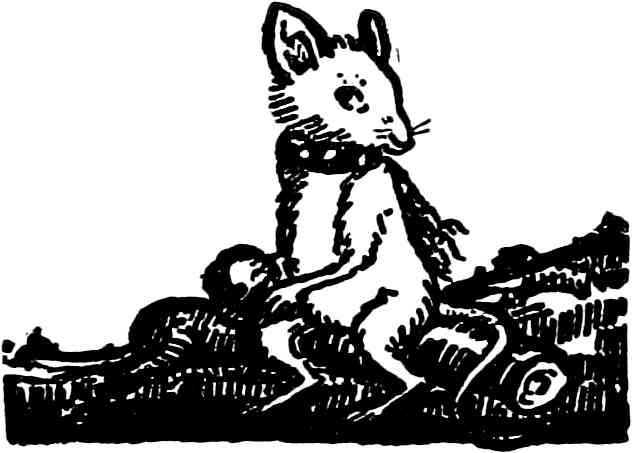
I am the one living Field Mousie
In captivity
(O pity me!)
Ah! why did I leave my warm soft housie
Sae easily!
A silver collar, all bent about too,
Round my neck is curled.
(O pity me!)
I am a captive, who went out to
See the world!

[32]

THE MAN THAT GOT THE CALL

O it’s not for fame and glory
And the guns of Trafalgar,
Nor to walk with foreign lady
In a cypress garden shady,
Nor to court to get a star,
That he’s going, Captain Spanish;
Captain Spanish leaves you all!
O he’s careless, careless, careless,
He’s the man that got the call!
O it wasn’t in the morning,
And it wasn’t by the stream
Where the birches’ lovely daughters
Dip their tresses in the waters,
For they summoned in a dream.
Weep your gallant, Dublin ladies,
Captain Spanish leaves you all!
O he’s careless, careless, careless,
He’s the man that got the call!

[33]

Pretty Lady Kitty Cooley,
Nor your taffeta, nor lace,
Nor your gold can bring him nearer;
You can look into your mirror,
He has seen another face,
A White Woman with the Green Blood!
Captain Spanish leaves you all,
O he’s careless, careless, careless,
He’s the man that got the call!
Father Hogan of the hunters
Better stay the county sport!
Go and tell his mother weeping,
That she set his hounds to leaping
Round the ancient Fairy fort.
Where the sunset turned it emerald
Near a bit of rosy wall,
Captain Spanish left the ladies ...
He’s the man that got the call.

[34]


[35]

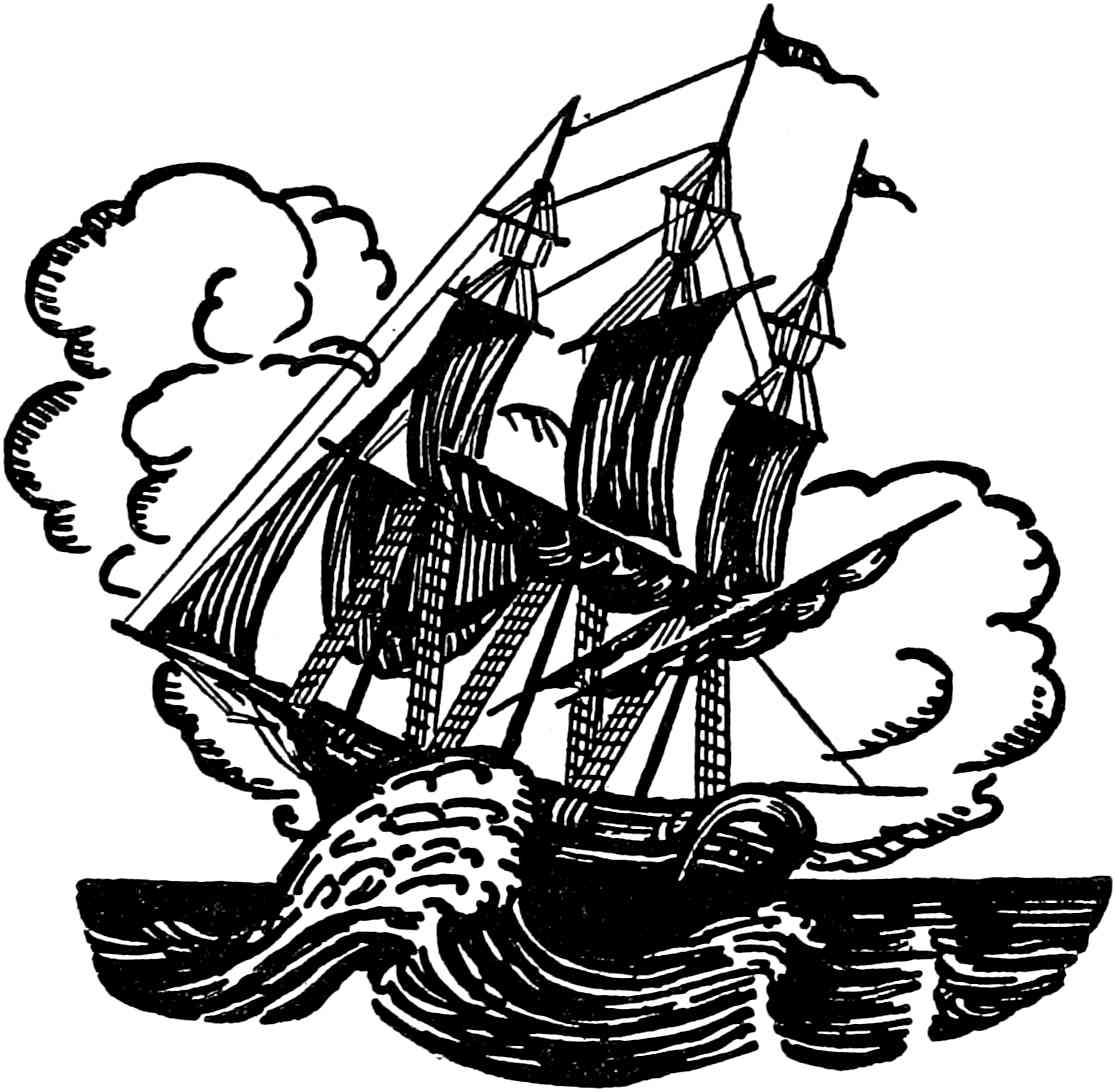
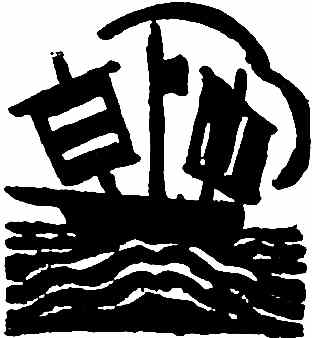
THE OLD SHIP

When the long, low clouds about the West
Are rose, ash-gray, and amethyst,
And the sky between pours saffron-gold,
And the wind along the dykes runs cold,
A huge old bark with an orange sail,
Mellowed and tattered by many a gale,
Will slowly come through the estuary,
Old, sea-haggard, and strange, and merry.

[36]

Where the red, warm moon rounds slowly over
The low, flat fields that breathe sweet clover,
Through banks of poppies on either hand
The dykes run liquidly into the land.
The old, old ship will come up from the sea
Farther afield than a ship should be,
And sail on softly, softly and still,
And dock inland by a wooded hill.
Then will come silently, flocks of sheep
Silver as clouds remembered in sleep,
Cross to the moonlight and leap the stile;
And he who shepherds them all will smile,

[37]

Play on his pipes and smile to see
The gay old sails lift over a tree.
His feet will dance on the grass like foam
And he will play “When the ship comes home.”

[38]


[39]

TO THE WIND

The lights hung out in the milky way
The star belt glittered and wheeled,
The heights and the depths of the night were full
Of the scent of the new-ploughed field.
Wonderful Elder Brother, the Wind,
Why do you rattle the window sill,
And drum on the pane with your finger tips,
And pipe in the chimney shrill?
And why do you harass the poplar tops,
And the pollard willow, his leaves,
And why do you winnow with ceaseless wings
The crest of the gabled eaves?
From the chin of the moon to the turnpike road
(A ribbon and girdle of white)
Is room and enough for the wind to blow,
With never a cloud in sight!

[40]

MIDSUMMER’S NIGHT

“Wally, what’s at the keyhole?”
“Whist, Jane, whist! Speak low.”
“If someone were outside peering in
Would we know?”
What’s that at the keyhole?
Granny said, “’Tis the wind you hear
Wandering to and fro.”
“Whist, Jane! What’s at the window?”
“Wally, whistle a tune!”
“There’s a gay light goes from the old blue plate
To the pewter spoon.”
What’s that at the window?
Granny said, “’Tis the tree-low light
Of an old, old moon.”

[41]

“Whist, Jane! What’s by the rose bush?”
“Wally, it is fourscore
Wee green Riders on snow-white steeds,
With the Queen before!”
What’s that by the rose bush?
Granny said, “There were Good Folk once
But they come no more.”

[42]

THE CARAVAN

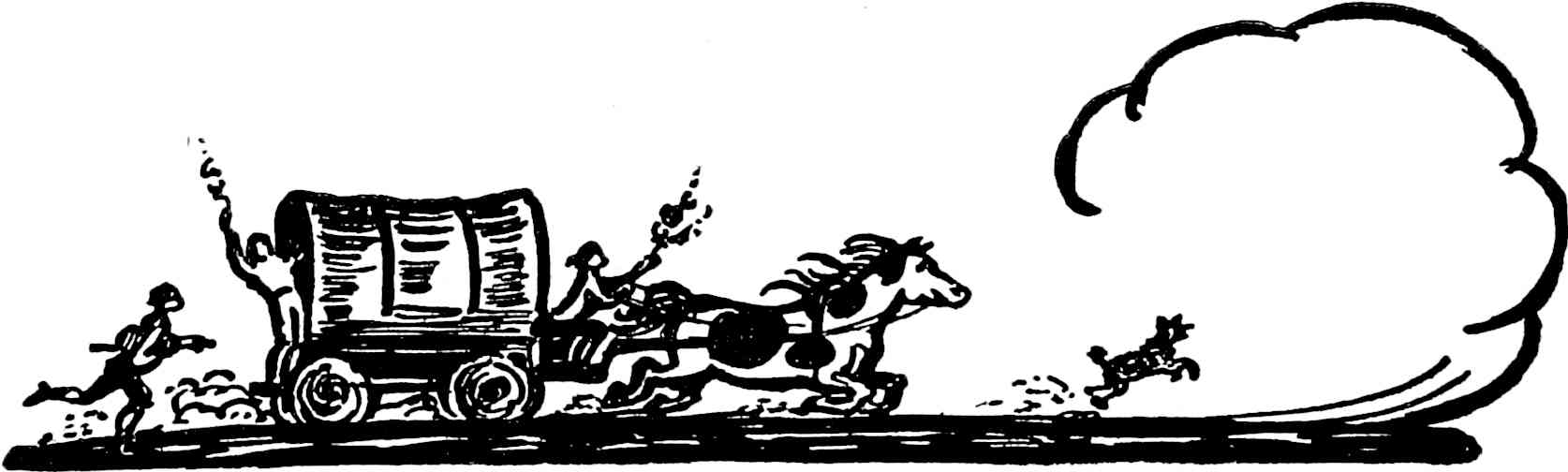
Far off the Fairy Horns are blowing
Through the morning, through the dew,
The trees of emerald green, the blue,
The windy clouds all white and new,
O, come-all-ye—Gypsies!
There is a rustle in the leaves, a ripple in the grass,
A singing in the heart my love,
The brook’s as clear as glass,
And there the far horizon lies,
An invitation to new skies,
O, come-all-ye—Gypsies!

[43]

We’ll pack the green striped caravan,
Put yellow shirts on every man,
And red cloaks on the lasses,
And when the old have wreathed their locks,
And packed their fiddles in a box
We’ll trundle through the grasses.
We’ll carry through this windy morn
Hearts fit to meet the Fairy Horn,
O, come-all-ye—Gypsies!

[44]


[45]

THE GYPSY BABY

A ring of great red poppies
Swayed in the golden corn,
And there I lay beside the van
And heard the larks at morn.
And like a small, far picture
The distant town rose pink,
And little streams flowed round it
With daisies at their brink.
And little trees grew in it
All soft, and round, and bright;
A wandering sun sailed in the sky
Too brilliant for the sight.
Years and years it sailed the sky
And like a ball it set,
Near, and big, and sad, and red,
And all the grass was wet.

[46]

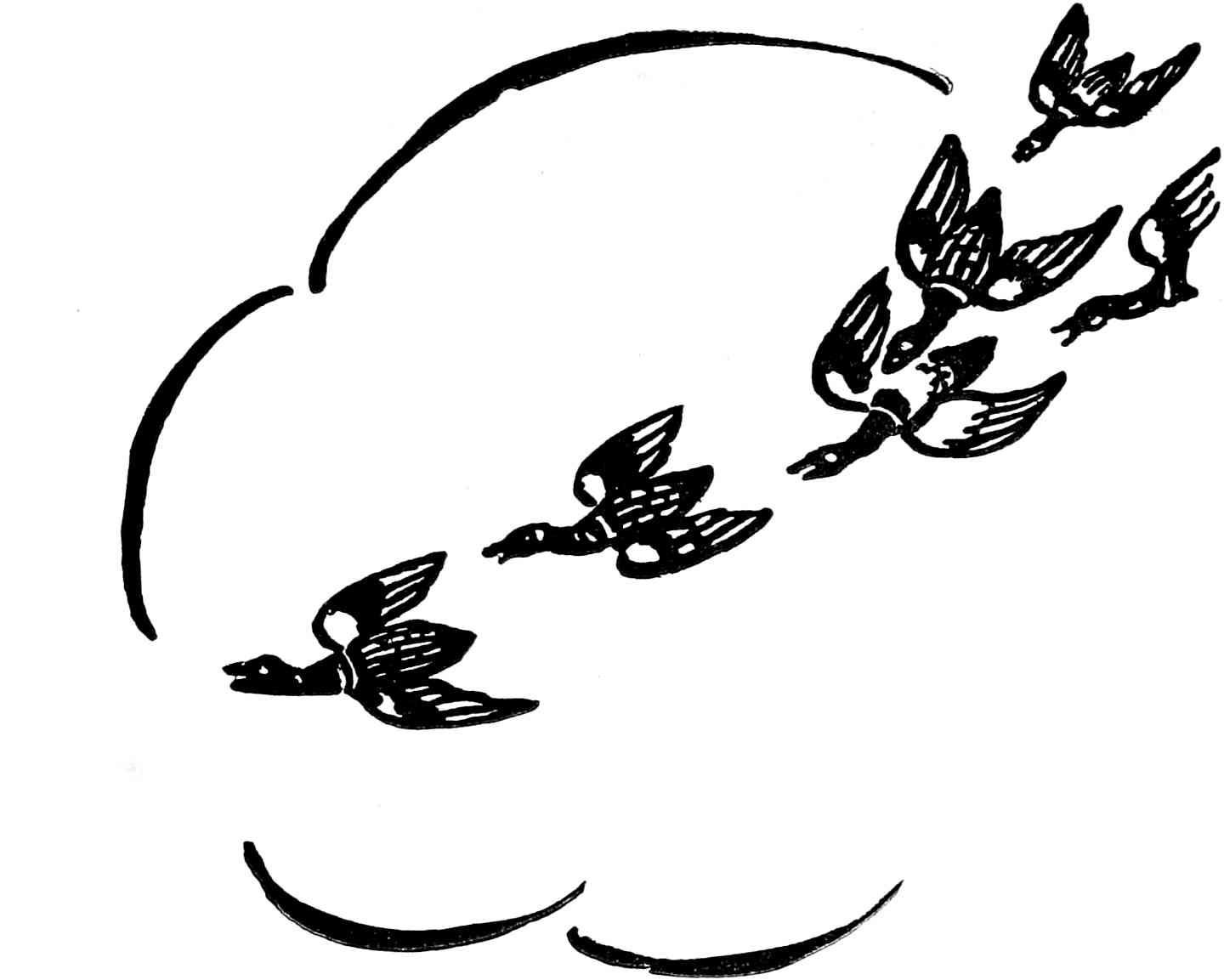
THE WILD GEESE

Low across a crimson sun
Setting in a crimson sky,
And across a crimson lake
The Wild Geese fly.
Hark! the poet on the bank
Pipes a reedy tune,
Piping to the rising wind
And the silver moon.

[47]

“I have neither house nor barn,
Kith nor kin have I,
But I know the Elfin Folk
When the Wild Geese fly.
“’Neath another crimson sun
On a ruddy strand,
I have piped a wilder tune
In an eerie land.
“Here, and there, and back again
Bid the music ply,
When across the crimson lake
The Wild Geese fly!”

[48]

A FAIRY SONG

We never weep because we see
Pale moon flowers on the barren tree;
A lovely light that takes the shape
Of bud and bloom that is to be.
It glows, a soft and emerald light,
Along the branching trees by night;
We know it weaves the coming leaves
And never grieve when snows are white.
We dance with winds that chill the rose
As to her frosty death she goes,
Because we see the changeless bloom
Towards which she lifts again and grows.

[49]

So when the weeping tempest saith
“Hush!” to the woodlands with his breath
We ride the skeletons of leaves
And dare an airy jest with death.
Ah, no! we do not weep because
We live in light that without pause
Runs sparkling down the sky, the life
Of all the world, and all its cause.
Oft when celestial things are near
We see new rainbows shining clear,
And follow them from glade to glade,
And voices in the winds we hear.

[50]

THE NIXIE’S POOL

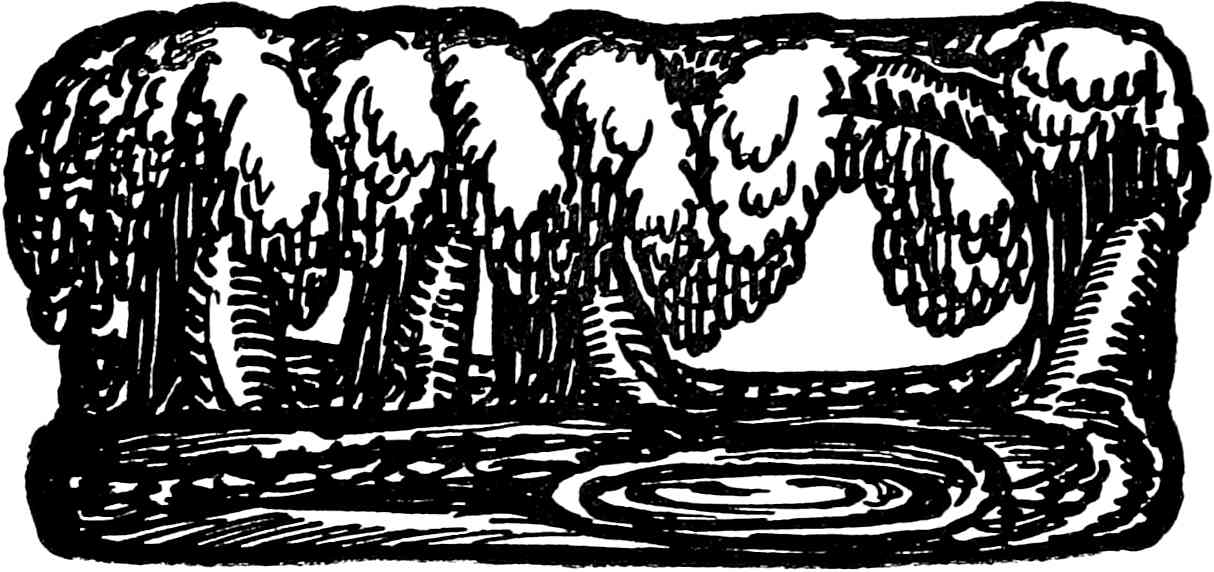
Coming through the green-gold beech woods
Where the great, gray tree boles are,
Where the fallen leaves are bronze,
He found, like a star
The little pool,
Leaf patterned, dark and cool.
Not by his hound,
Nor by his unhappy lady
Will he be found.
The horn has not yet wound
Reveille through the shady
Or barren mountain pass
Which can recall him from that pool of glass.

[51]

Ice to the barren twigs will come
And winter. It will not befall
Him in that green-gold gloom.
He will not change at all
Though armour melt like ice, and castles be
Eaten by mothy Time like tapestry.
And Time grow so staggering, gay, and old
That all of his pulses manifold
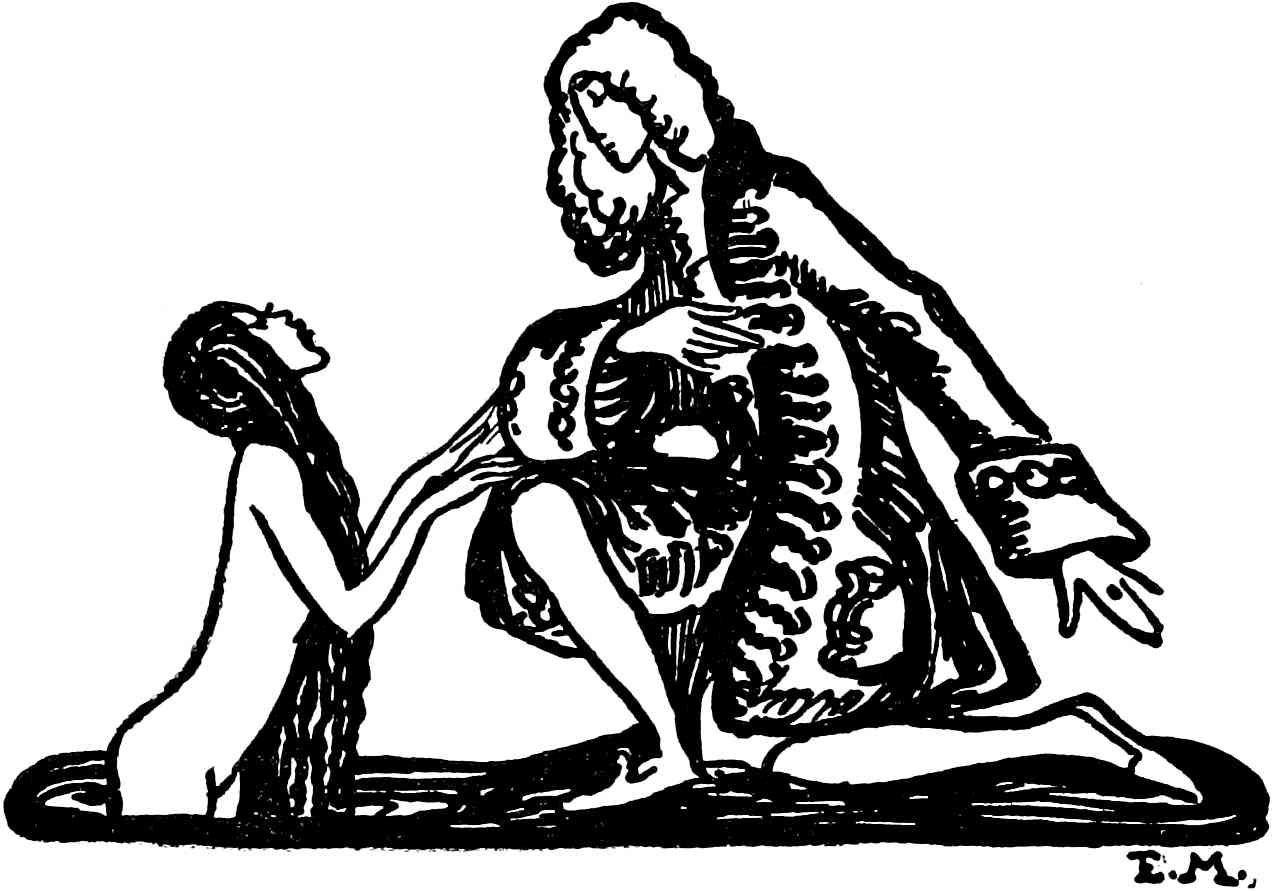
Run together and stop. Still will he
Kneel, stern, and young, and cool,
Wooing that Nixie in that pool.

[52]

THE BECKONING OUT

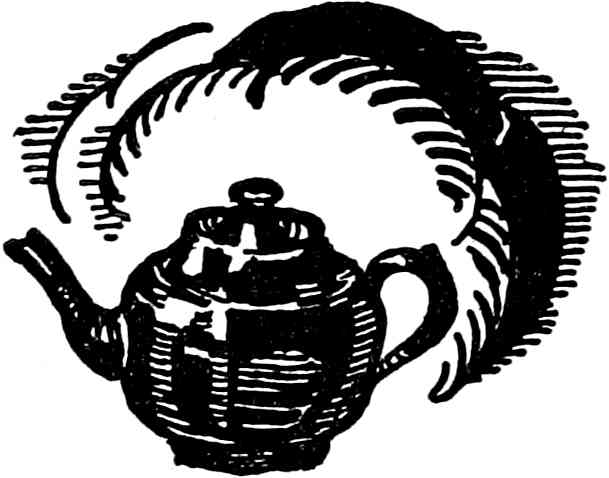
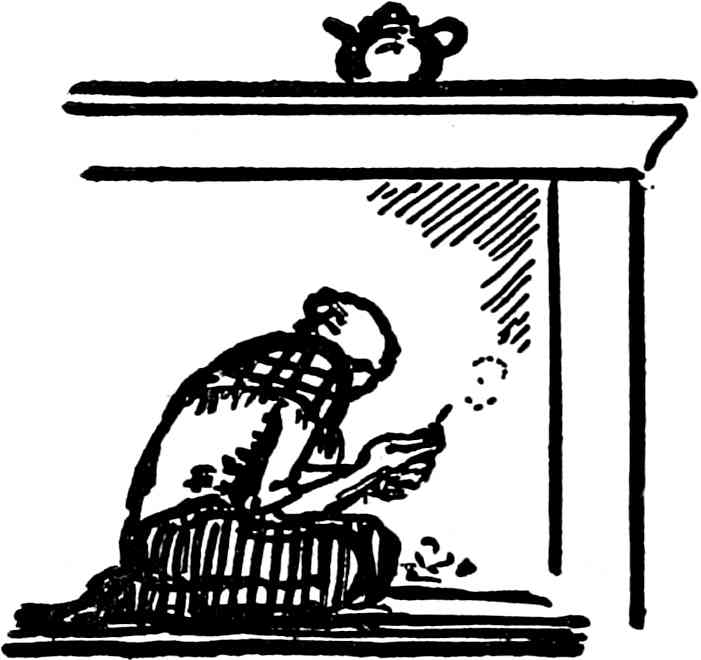
The coppers were gone from the old brown teapot,
Gaunt sorrow and care were crowned kings of the spot,
And the little old woman who knelt on the floor
To blow up the ashes, was hoping no more.
O the door was blown open and into the place
A Winged Stranger came with a gay, handsome face
And with two laughing eyes that looked out of his head
Like some fair woman’s son, and, “Give over,” he said.

[53]

“Whist, Mother! give over. Come out in the light
While the throstle’s astir, and the dawn is as bright
As when, come forty years, you were up and away,
With the dew to your feet, on the first morn o’ May.
“Is it children you grieve for? I’ll be as your son
For I’m old as the hills, yet a mother I’ve none.
Is it shelter you wish for? I’ll find you a home
like a cot in green valleys where no winters come.

[54]

“Do you grieve for the good things went out by the door?
Now cross but the threshold, you’ll miss them no more,
Or it may be the winds that run laughing with God
Have but kept them awhile, or the sweet smelling sod.
“Is it lonely you were? There’s a bird in your breast
Was but spreading his wings; lone delight is his nest.
There is never a tie could have kept him for long,
I could lure him aloft with the lilt of a song!

[55]

“You have dreamed overmuch, as the old do alone
When the fire is low, and the children have gone.
But have done with the dreams, for to youth is the day;
You are young again, Colleen! Come out in the May!”

[56]

SONG

Ding-a-ding! The sun is high.
Ding-a-ding! The dragon-fly
Wakes to dart about the stream.
Now is mortal morning come;
Let us find a bluebell dome
And sleep and dream.
Belfries bluer than the sky
Shall intone a lullaby.
Ring, ah! ring a drowsy song!
From this azure hollowed gloam,
Fays, why should we farther roam?
Ding-a-ding, ding-dong.
Ding-dong!

[57]

THE OSPREY FOLK

Alas! for the child that the Osprey Folk
Circle around at birth;
Never for him are the good green fields
And the lap of the old brown earth
And the whet of the scythe in the afternoon
And the joy of the homespun mirth.
But all day long at the turn of the tide
At morn, at noon, or even,
He hears in his ears that whistle of winds
(And the winds of the seas are seven).
And each one brings him the smack of the fogs
And the salt in the sea winds driven.

[58]

He has never a mate like the common folk
But out of the whir and wheel
Of the Osprey wings is a voice that calls
With the strength of a mate’s appeal.
And the darkness putteth its lips to his lips
When the rims of the sky line reel.
O, I was born where the Osprey Folk
Cross to the Finnish rocks,
And the caw and the call of their throats are more
Than the power of ban or locks;
So never for me will the uplands be
Gray with the feeding flocks.

[59]

Shrilling of wind in the cordage taut
And churn of the flying spume,
The pound of the waves like a cannon shot
And the air like a drumming loom,
And I shall go back to the Osprey Folk
For this is the Osprey Doom.

[60]


[61]

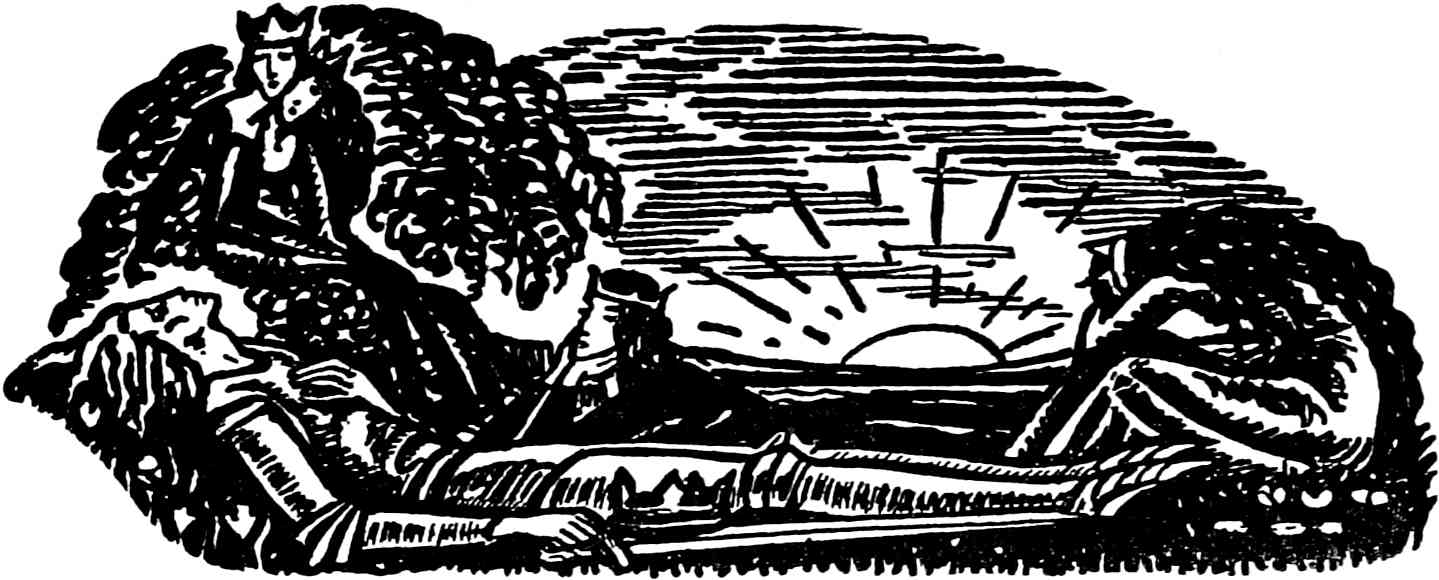
MERLIN

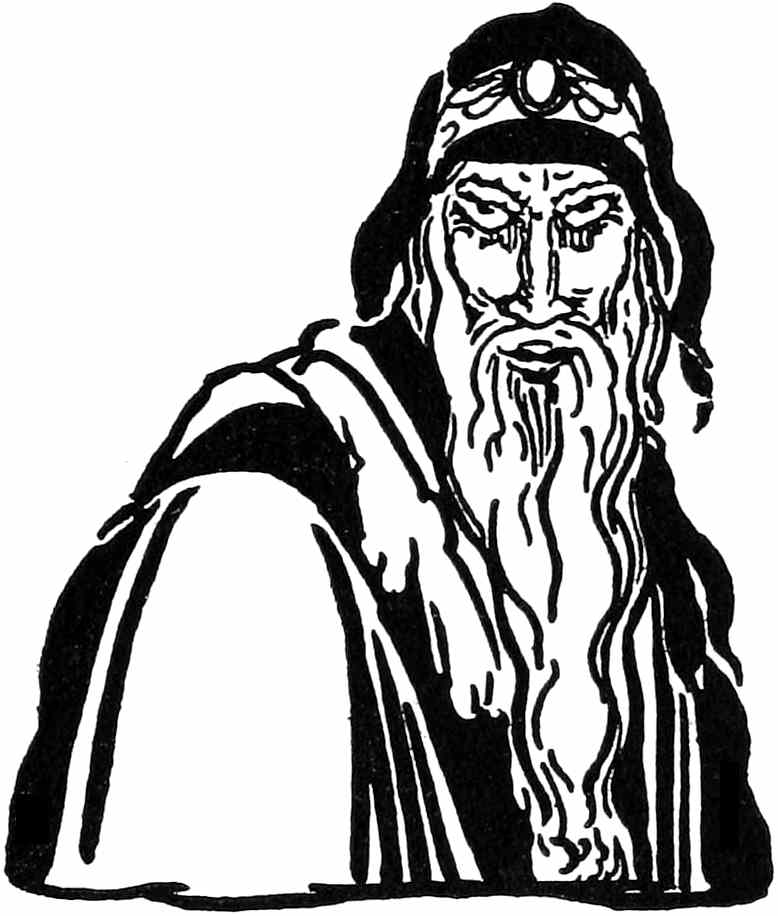
But Nemuë imprisoned him in a tower built of air, and like to glass.

Merlin.

When Nemuë built for Merlin
A tower of the air,
She wove the blue of Heaven
In azure fabrics fair,
Aërial, ethereal,
Clear, crystalline, and rare.
She lapped him in it deeper,
With rod, and bell, and book,
Than ever fly in spider’s web
Beside the inglenook,
Or cocoon in his cradle hung
Above a running brook.

[62]

Aërial, ethereal
And crystal clear as glass,
Or mirrored surface of the pool
Before the storm clouds pass,
The elfin charm drave up the air
And scarcely stirred the grass.
The elfin charm drave up, and up,
As swallows wheel and poise,
And ever as the charm went up
It made a small sweet noise,
As if the winds were whispering
Like children to their toys.

[63]

When, looking in the wizard globe
You see the magic scene
So small, so bright, thus Merlin lay
The elfin walls between,
His hair and beard o’erflowed his book,
His mantle was bright green.

II

Sir Cawdore came at sunset,
Belated, belted knight,
The last rays took his hauberk and
Danced back in points of light
From off his blue-tipped, white ash spear
His eyes were wild and bright.

[64]

He saw the rolling, wooded hills,
The pine tree’s ruddy stem,
The fallen needles burned to brown
About the far pool’s hem,
The pointed glossy osier twigs;
A faint wind harried them.
The silver-tinted clouds uprose
About the pallid moon,
The rosy west lay to his back
Before him lay the gloom,
His mortal eyes saw not the wall
Which stopped him, of that room.

[65]

But like the voice of Dryads all
Complaining round a pool,
Or Pan pipes scarce articulate
Where forest ways are cool,
He heard a voice without a form
Said, “Stand awhile, thou fool!
“What news of royal Arthur? Speak!”
“He sleeps in Avalon.”
“How went the battle in the west?”
“The steel clad hosts are gone,
Are scattered as the dry red leaves
The first blast blows upon.

[66]

“The Holy Grail has left the land,
By minster, weir, and lock
No book, no bell, no angels’ wing;
The coming shadows flock;
All, all are broken in their pride,
A wave upon a rock.”
“And Guinevere?”—“At Almsbury
Her glory and her gold
Are shaken as a cup upheld
In palsied hands, and old,
Before the altar of God’s wrath
In some dark chancel cold.

[67]

“But who art thou that speakest thus?
Between the setting sun
And yonder pallid, rising moon
The wold lies cold and dun;
I hear a voice speaks in mine ear,
But presence there is none.”
Aërial, ethereal,
Athwart the gleam and glow,
The airy charm wheeled slowly up,
And slowly, and more slow,
“Lo, I am Merlin,” spake the voice,
“And thus our glories go!”

[68]


[69]

THE PRINCESS OF YAN

Nu-Nu-Nu![2] (And the daisies are piled like a flood!)
We never shall see the Chalcydian Sea
Nor the place where the Yakadil stood,
Nor suspended by silk, and far whiter than milk
Aladdin’s famed egg of the Roc,
But I know, where the breeze sighs beneath the pine trees,
Where the Maids of the Yan Princess walk,
With their wide, floating hair, and mysterious air,
And finger on lips as they talk,
With their azure, pale, trailing silk robes, and their veiling
As they wonder, and whisper, and talk.

[70]

Zo-Zo-Zo! (And the glow of the sun on the gorse!)
They stole her away at the close of the day
With gongs and enchantments, of course,
While a dragon of old rolled his amber and gold,
Burnt orange, and umbers that gleam
In the marvellous scrolls that the Chinese unrolls
On lacquer and teak—in the gleam
Twixt the dusk and the dark all the people cried, “Hark!
They have shut her away in a dream.
Where waters are falling, and white storks are calling,
In a brittle, blue, beautiful dream!”
Na-Na-Na! (And the poppies are bright in the corn)
When the desert is red, and the sun goes to bed
In the piles of the purple clouds torn
By the wings of the Djin, ’tis a crime and a sin
To loiter, in camel or man,
Lest the soul’s vital spark be extinguished ere dark—
By Allah! you ride as you can.
But the end of your toil through the gray, slipping soil
Is more near than the Princess of Yan.
The mirages glimmer no dearer, no dimmer
Than the faraway beauties of Yan!

[71]

Tsi-Tsi-Tsi! (And the elm trees are drowsy with shade!)
Neither peacock-eye whorls, nor platters of pearls
Nor a palace of treasures in jade,
Nor a jewelled palanquin borne by Negroes in green,
Nor olives of far Samarcand
Can buy you a ship that will dock in the slip
Where the green running seas meet the land,
And the red granite frowns, that her tall tower crowns
Nor the glimpse of one nail of her hand,
Through the silver-soft curtain, the rosy, uncertain
O, the flitting half moon of her hand!
Bang-Bang-Bang! (And the heroes are coming to war!)
In terrible throngs, with cymbals and gongs
The heroes and conquerors are
All arming their hordes with lances and swords
With scimitar, yataghan, drum.
In the dust and the heat, see the elephants’ feet,
And the camels, bedizened and dumb!
Even Sindbad himself, with a beard like a shelf,
Even Kameralzamen has come,
His horse’s hoofs tingle, his silver bells jingle,
Even Kameralzamen has come!

[72]

Crash-Bang-Crash! (And the Princess aloof like the moon!)
They have fought the good fight in abysmal night
With comet, cyclone, and simoon.
The eclipse was unchained, and the shooting stars rained
In tempest and vapour and wrack,
But they warred for their prize with implacable skies
And the heroes were all beaten back.
Like the nebulæ thin, by the wings of a Djin
Were blown out, and extinguished in black,
Like the last thunder moaning, with wailing and groaning
In a deep and imponderable black.
Tso-Tso-Tso! (And it’s time we were home for our tea!)
And why should we weep for a Princess they keep
In a pearl on a rock in the sea?
Lo! the butterflies’ wings with unutterable things
Are dusted: with portents they run,
Golden, freckled with zones, and the red, tawny ones
And the blue, and the black, and the dun
Say, “With barter and pain, you shall never attain,
Turn away and the Princess is won,
Where you loiter and play, where you half turn away
At a touch the Yan Princess is won.”

FOOTNOTE

[2] Chinese music sounds, to be said through the nose.

[73]

[74]
THE SPELL OF COLD

Ah! What unearthly music plays so still
So hushed, about the window sill,
Aërial more than an æolian harp,
Or with chromatic risings sharp
Whistles the heart away into the ice-cold moon?
It fluted through the dawn wind; soon
The snow’s white, woven dance will come
And close the little room
In soft-fluffed, crystal silence, with the trees.
Still, still in silvery cadencèd degrees
The heavenly gradual
Will rise and fall.
Ah! what god in the forest plays
One instant that makes all our days,
And sends great music so about a little room?
We would have quiet now in all our ways,
And with the winter night, quiet and candlelight ...
Ah! what unearthly music plays!

[75]

Haunted! Not here nor there,
Nor from the forest hollows bare,
Nor shining-particled, chill air,
Nor star hung, and swan-breasted hill,
But closer, closer still,
Weaving between the nerve and bone
The melody flows on.
We would have quiet in the winter grays,
And for the winter gloom, embers and a quiet room ...
Ah! what unearthly music plays?
Spell-bound!
Not coolly rippling ivory.
Nor cithers slowly sighing a nocturne,
Nor mournful clarion of silver horn,
Nor bells at midnight, hollowly forlorn,
Could swell this tide of sound, nor turn
This tide away from one who hears
This music in between the ears
And brain, from one who sees

[76]

Too long, the snow’s slow woven dance of imageries.
No, nor the thousand forest Seraphs of the violin
Shiver and clamour up, and cry, “Give over and give in!”
So wildly! Hush! This is the spell the winter weaves;
The song for which the tree sheds all its leaves,
The high, chaste comfort for which worlds grow old.
This is the glamour of the frost and cold
Heard by the stars. It is the breath
And premonition of the requiem of death
Higher and colder than all. The frost crystal rays,
And ice in the moon sing, when this unearthly music plays.

[77]

THE OLD POET FORETELLS THE MANNER OF HIS DEATH

I shall not hear men’s voices soon
For the silvery music of the Shee;
Between me and the world a veil
Will fall of woven imagerie,
With cooling green of boyhood’s leaves,
With whorls of water light that weaves.
I shall not bring to mind the tasks
I laboured at so long ago,
But I shall marvel much that man
On dewy earth should travail so
To bring small matters to an end
Where all things weave, and change, and blend.

[78]

I’ll mind me how like morning light
Love was before it turned unkind,
But when the change, or what the harm,
I shall not search the past to find
While burning questions, cried to God,
Flow off, like wind waves over sod.
The evils that I wrought myself
Like hoarse war bugles, sea-ward driven
Will pass; the evils men did me
Be half forgotten, all forgiven.
I’ll think the worst to God must seem
Like small, sick movements in a dream.
This body that like marble was
For heaviness and weight of care
Will burn with a celestial fire,
And fade, and free me to the air
Where I shall never know again
Old troubles born of nerve and vein.

[79]

Meanwhile a spacious loveliness,
A quiet, brooding sense of light,
Majestic freedom, and fine strength
Will near me. Led by visions bright
Of natural beauty I’ll be drawn
Toward greater loves than I have known.
I’ll seem to sleep. Disturb me not,
For while Incarnate Light draws near,
A last gift of the race to clay,
Sweet music of the Shee I’ll hear,
Lulled and withdrawn by soft preludes
Through deep, expectant solitudes.

[80]


[81]


[82]

Transcriber’s Notes