The Project Gutenberg eBook of A bold bad butterfly

This ebook is for the use of anyone anywhere in the United States and most other parts of the world at no cost and with almost no restrictions whatsoever. You may copy it, give it away or re-use it under the terms of the Project Gutenberg License included with this ebook or online at www.gutenberg.org. If you are not located in the United States, you will have to check the laws of the country where you are located before using this eBook.

Title: A bold bad butterfly

& Other fables and verses

Author: Oliver Herford

Release date: January 13, 2026 [eBook #77690]

Language: English

Original publication: London: Gay and Bird, 1906

Credits: David Edwards, Tom Trussel, and the Online Distributed Proofreading Team at https://www.pgdp.net (This book was produced from images made available by the HathiTrust Digital Library.)

*** START OF THE PROJECT GUTENBERG EBOOK A BOLD BAD BUTTERFLY ***

[Pg i]

A Bold Bad Butterfly and Other Fables and Verses

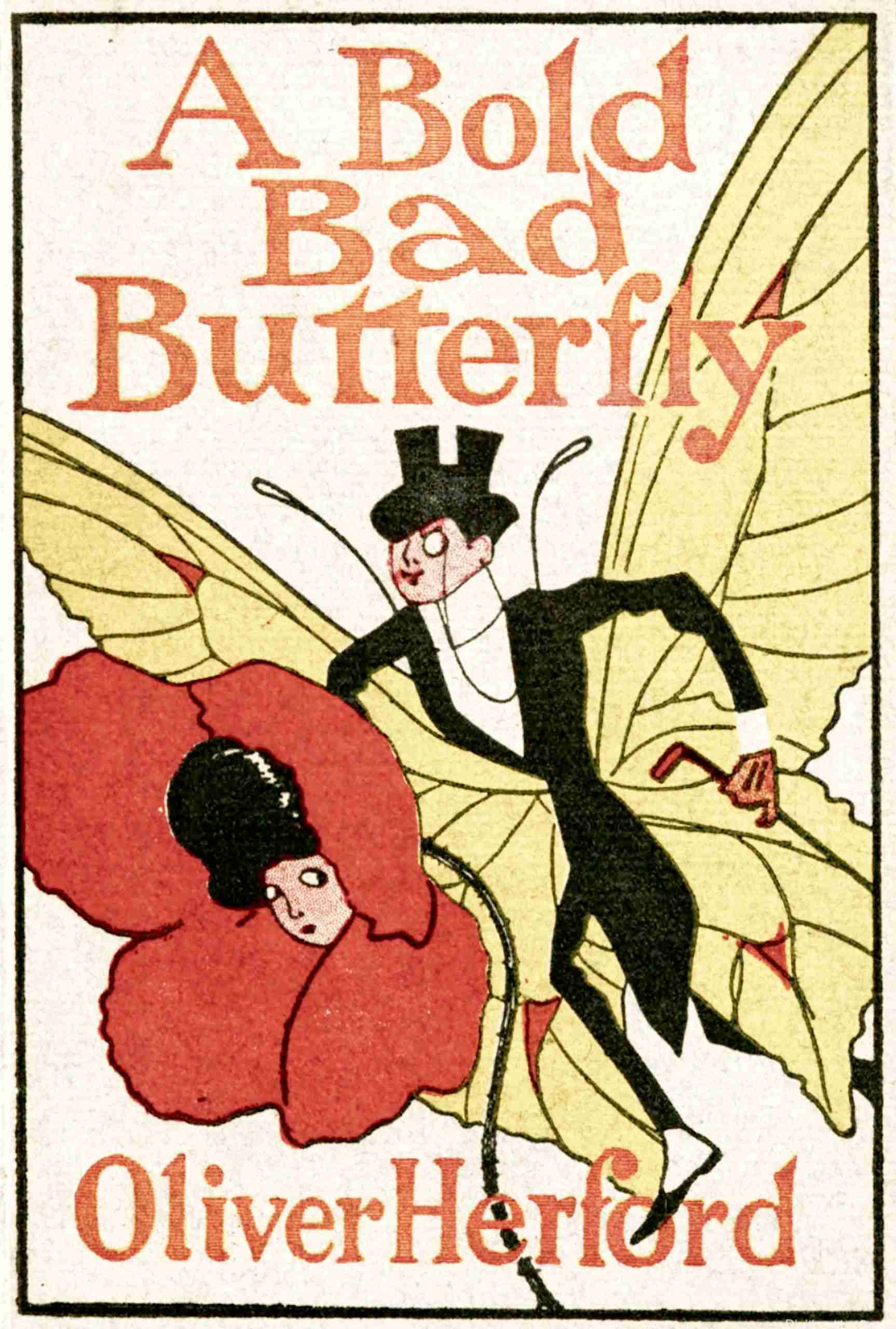
A BOLD BAD BUTTERFLY

[Pg iv]

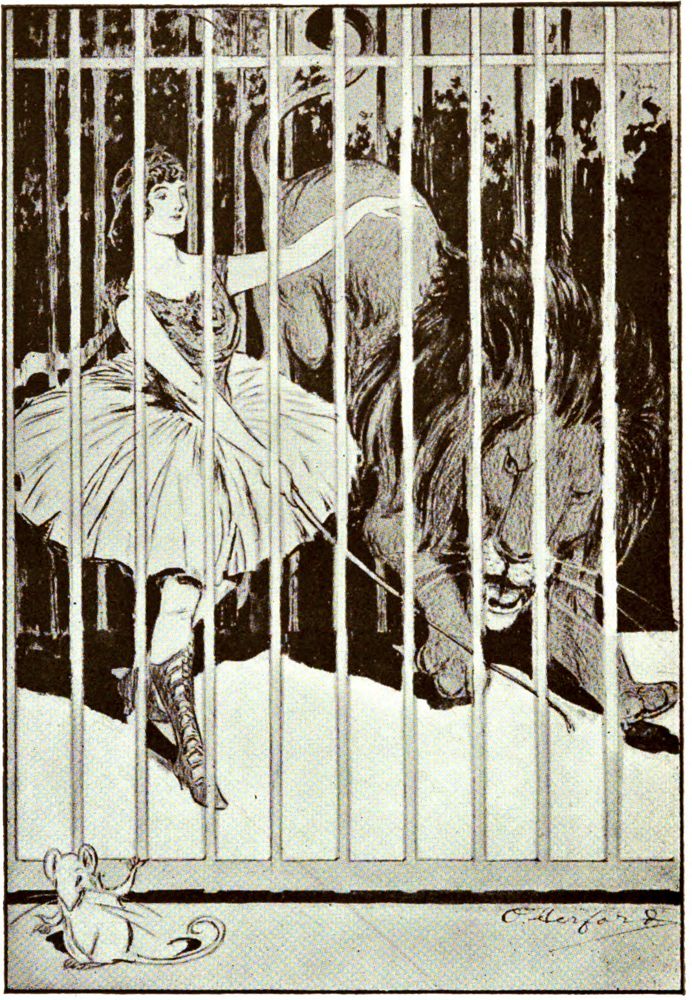
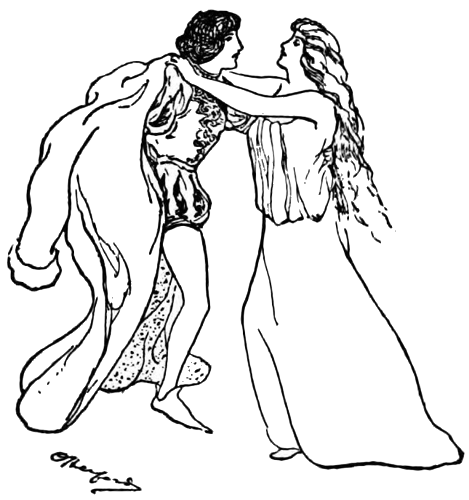
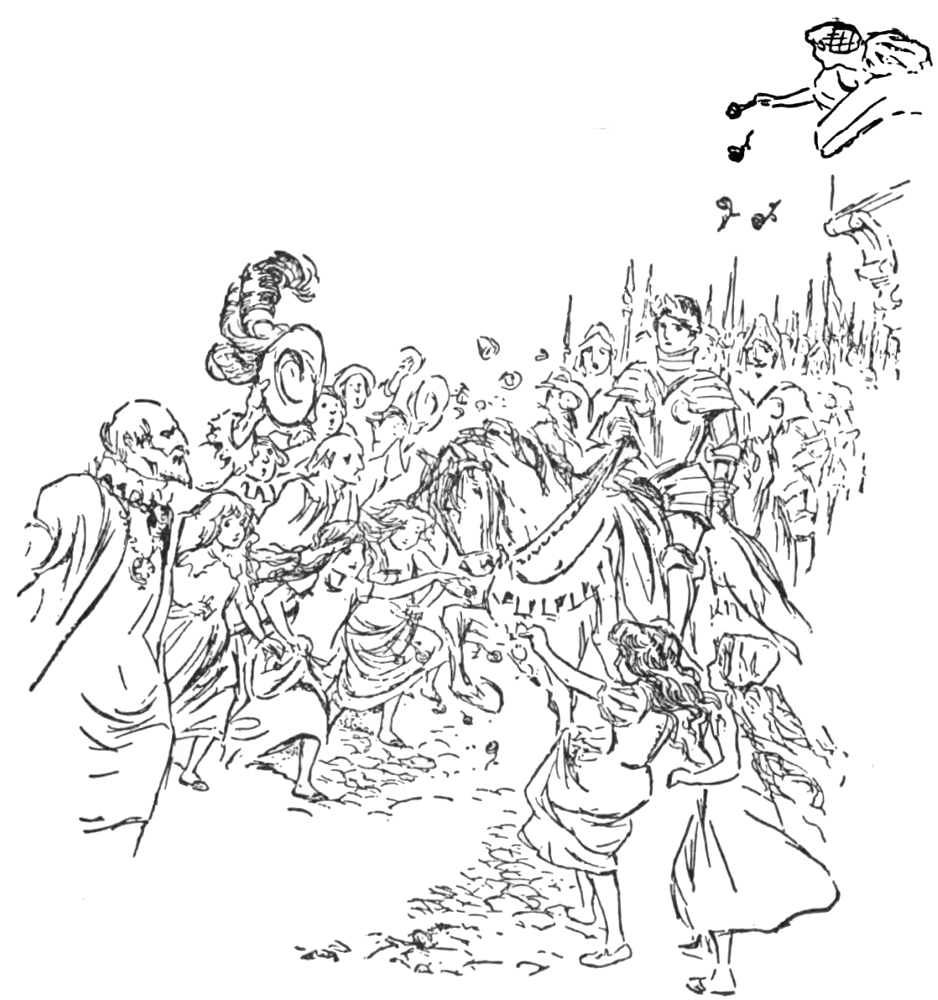
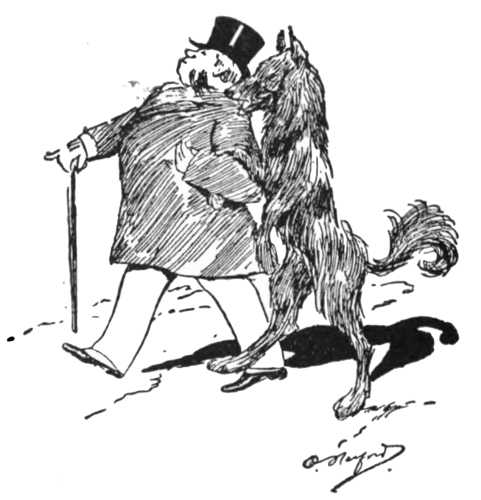
Lèse Majesté
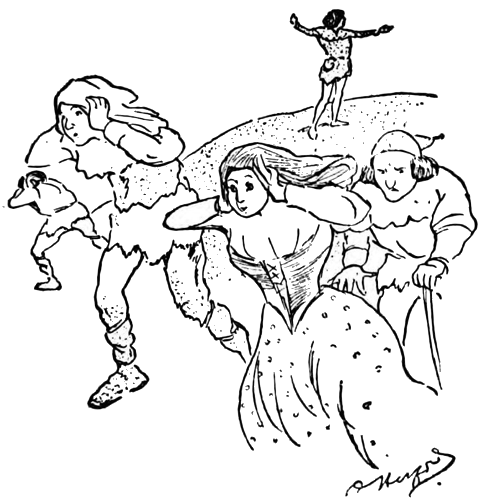
Frontispiece     See p. 57.

[Pg v]

A Bold Bad
Butterfly

& Other FABLES
and VERSES by

OLIVER HERFORD

with many pictures
by the Author
London: Published by
Gay and Bird

MCMVI

[Pg vi]

PRINTED BY
HAZELL, WATSON AND VINEY, LD.,
LONDON AND AYLESBURY.


[Pg vii]

CONTENTS

PAGE
THE BOLD BAD BUTTERFLY 1
CRUMBS 6
THE SILVER QUESTION 7
HOW THE LION BECAME KING 13
THE WAKEFUL PRINCESS 19
A CORNER IN CURLS 27
TELL-TALE 35
GOSSIP 38
A HOPELESS CASE 39
THE FALL OF THE ROSE 43
SCANDAL 44
THE QUARREL 46
A BUTTERFLY OF FASHION 49
THE MISSING LINK 53
THE SNAIL’S DREAM 56
LÈSE MAJESTÉ 57
THE LOVESICK SCARECROW 59
THE MUSIC OF THE FUTURE 61
THE DOORLESS WOLF 64
THE CHARM THAT FAILED 67
JAPANESQUE 73
THE FIRST 1ST OF APRIL 74
THE BOASTFUL BUTTERFLY 76
THE TRAGIC MICE 80
A THREE SIDED QUESTION 82
THE LEGEND OF THE LILY 88
THE UNTUTORED GIRAFFE 90
THE ENCHANTED WOOD 94
A BUNNY ROMANCE 98
THE FLOWER CIRCUS 103
THE FATUOUS FLOWER 109
THE INVENTIVE DRAGON 112
THE LION’S TOUR 115
THE MERMAID CLUB 119
TRANSCRIBER’S NOTE

[Pg 1]

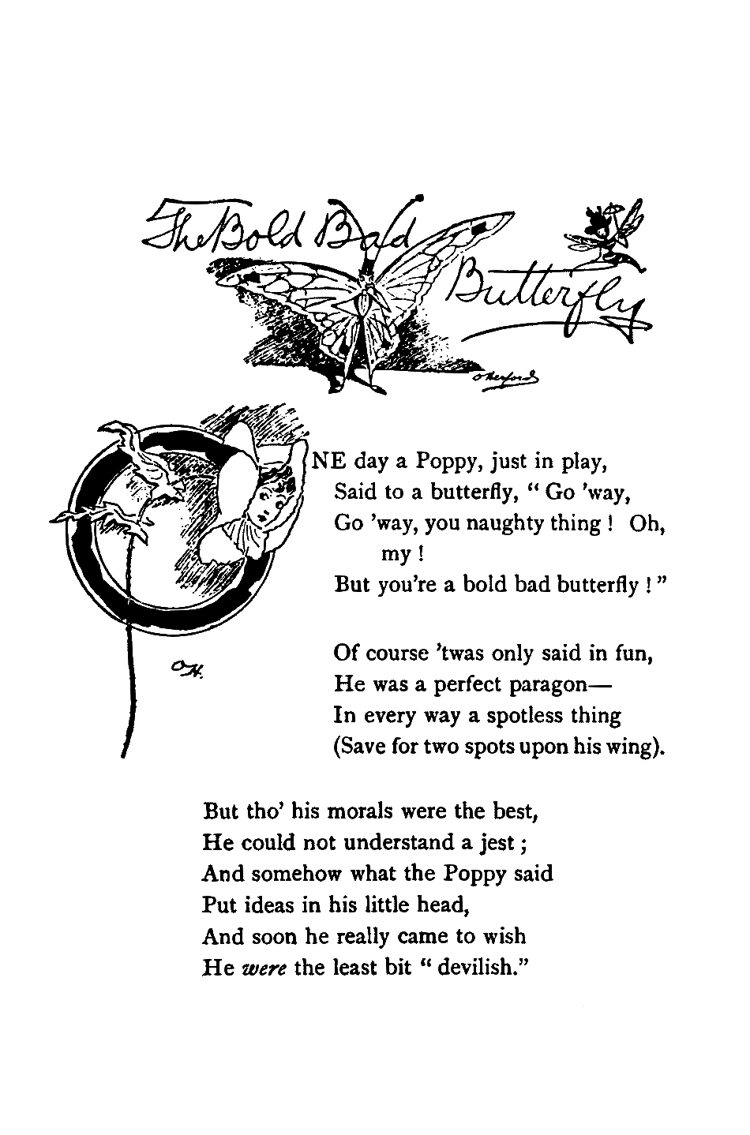
THE BOLD BAD BUTTERFLY

One day a Poppy, just in play,
Said to a butterfly, “Go ’way,
Go ’way, you naughty thing! Oh, my!
But you’re a bold bad butterfly!”
Of course ’twas only said in fun,
He was a perfect paragon—
In every way a spotless thing
(Save for two spots upon his wing).
But tho’ his morals were the best,
He could not understand a jest;
And somehow what the Poppy said
Put ideas in his little head,
And soon he really came to wish
He were the least bit “devilish.”
[Pg 2]
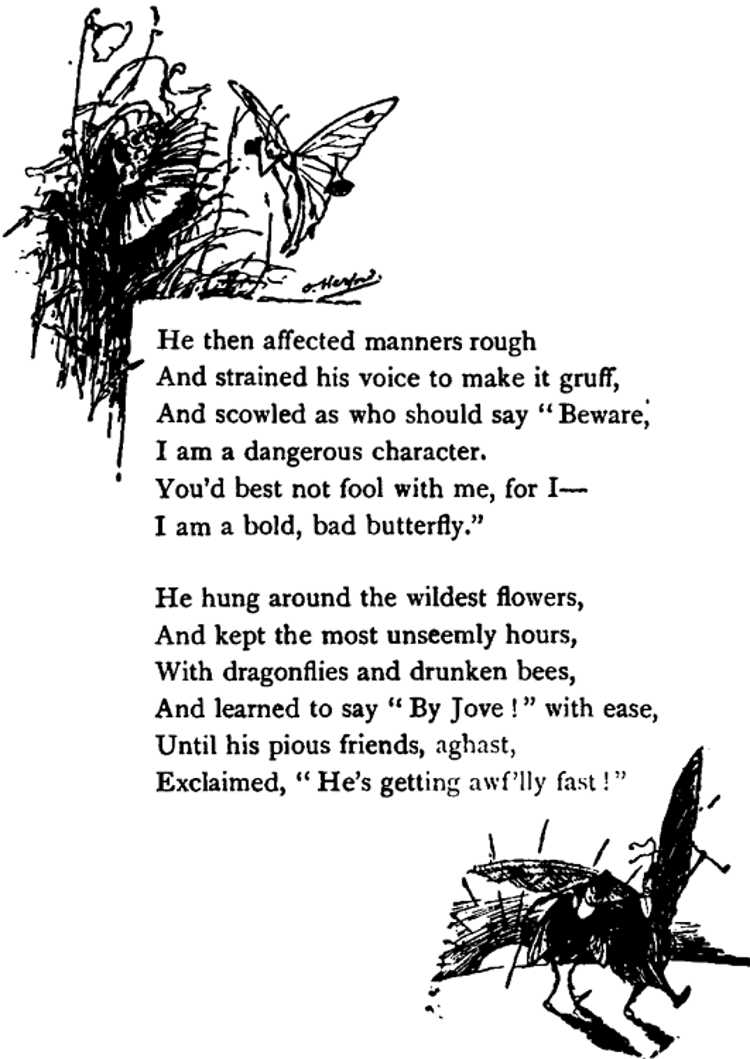
He then affected manners rough
And strained his voice to make it gruff,
And scowled as who should say “Beware,
I am a dangerous character.
You’d best not fool with me, for I—
I am a bold, bad butterfly.”
He hung around the wildest flowers,
And kept the most unseemly hours,
With dragonflies and drunken bees,
And learned to say “By Jove!” with ease,
Until his pious friends, aghast,
Exclaimed, “He’s getting awf’lly fast!”

[Pg 3]

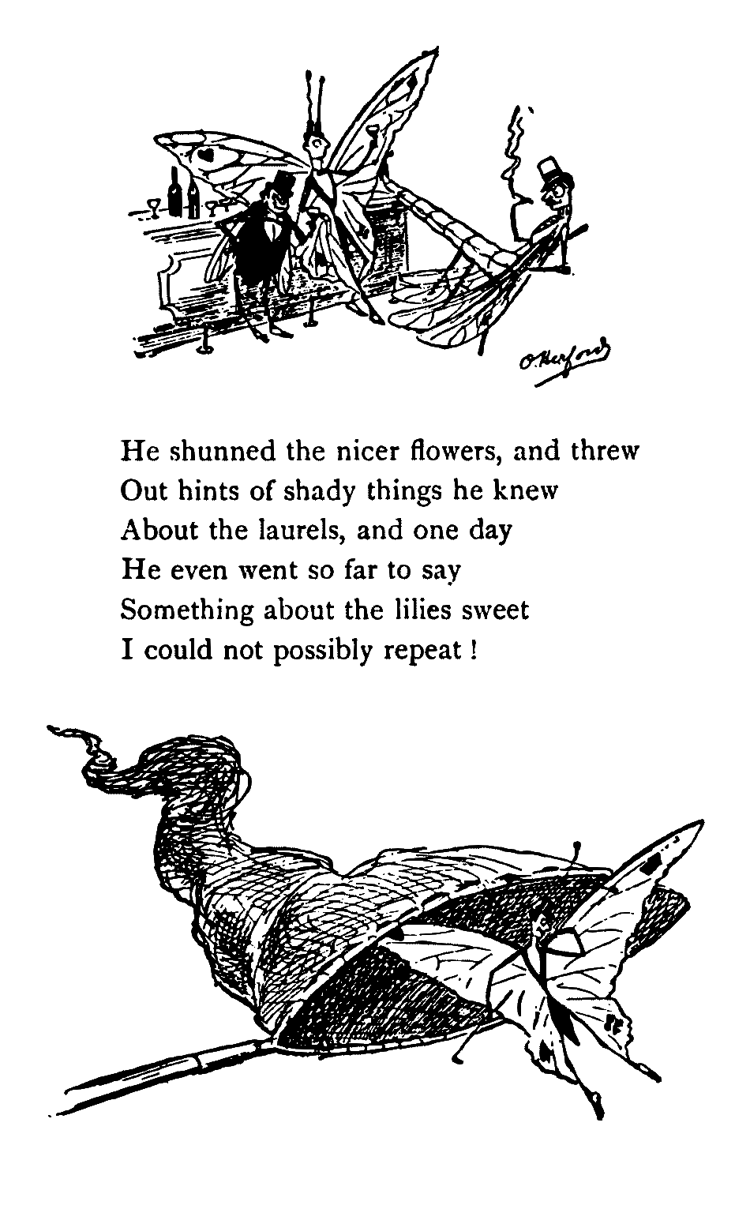
He shunned the nicer flowers, and threw
Out hints of shady things he knew
About the laurels, and one day
He even went so far to say
Something about the lilies sweet
I could not possibly repeat!

[Pg 4]

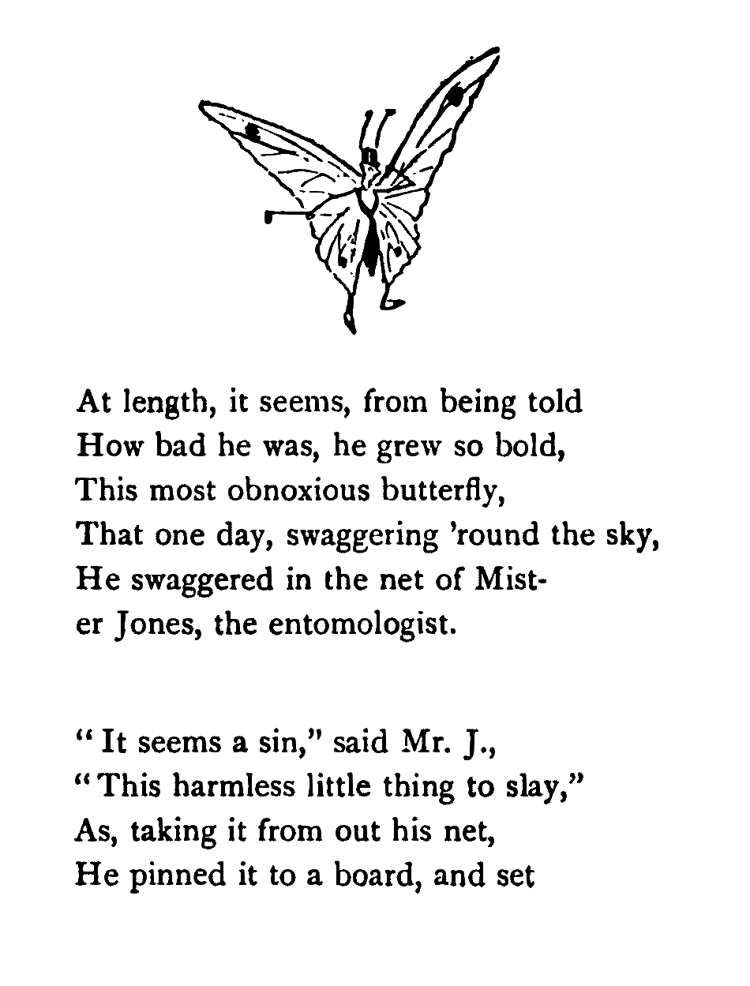
At length, it seems, from being told
How bad he was, he grew so bold,
This most obnoxious butterfly,
That one day, swaggering ’round the sky,
He swaggered in the net of Mist-
er Jones, the entomologist.
“It seems a sin,” said Mr. J.,
“This harmless little thing to slay,”
As, taking it from out his net,
He pinned it to a board, and set
[Pg 5]
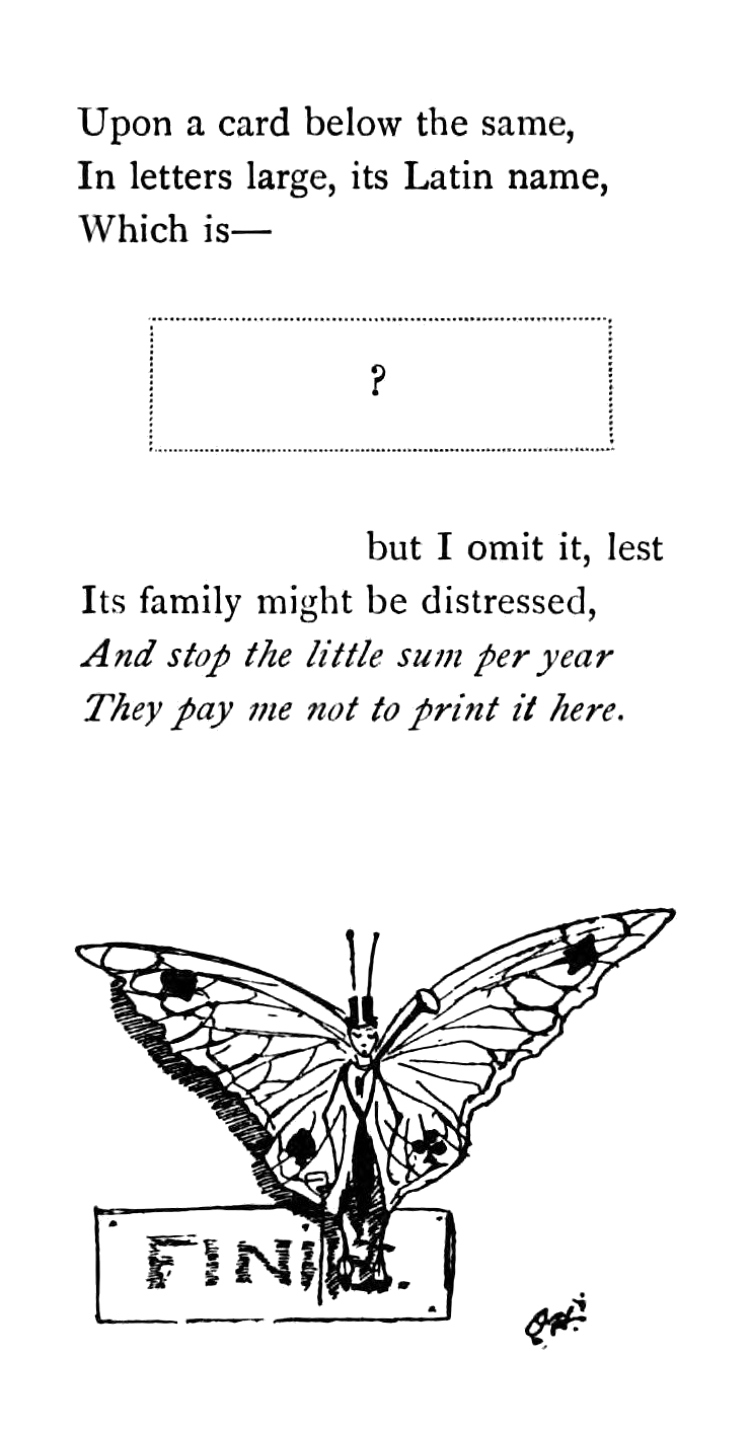
Upon a card below the same,
In letters large, its Latin name,
Which is—

?

but I omit it, lest
Its family might be distressed,
And stop the little sum per year
They pay me not to print it here.

[Pg 6]

CRUMBS

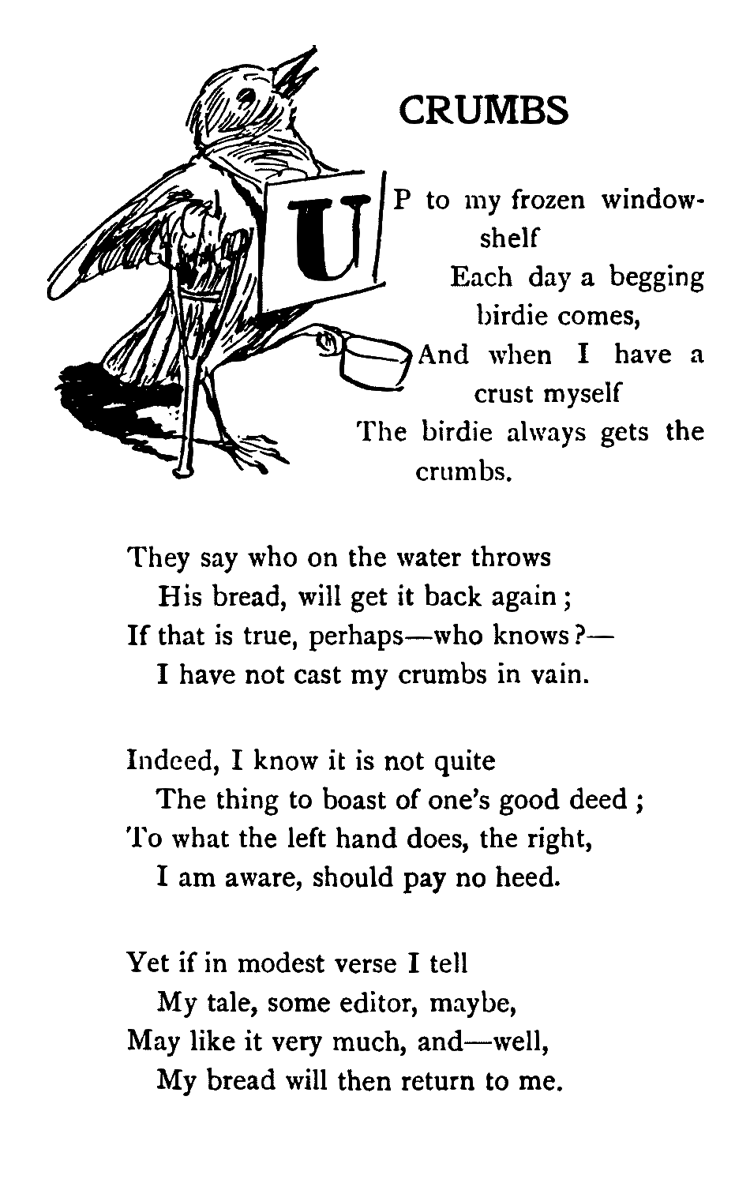
Up to my frozen window-shelf
Each day a begging birdie comes,
And when I have a crust myself
The birdie always gets the crumbs.
They say who on the water throws
His bread, will get it back again;
If that is true, perhaps—who knows?—
I have not cast my crumbs in vain.
Indeed, I know it is not quite
The thing to boast of one’s good deed;
To what the left hand does, the right,
I am aware, should pay no heed.
Yet if in modest verse I tell
My tale, some editor, maybe,
May like it very much, and—well,
My bread will then return to me.

[Pg 7]

THE SILVER QUESTION

The Sun appeared so smug and bright,
One day, that I made bold
To ask him what he did each night
With all his surplus gold.
He flushed uncomfortably red,
And would not meet my eye.
“I travel round the world,” he said,
“And travelling rates are high.”
With frigid glance I pierced him through.
He squirmed and changed his tune.
Said he: “I will be frank with you:
I lend it to the Moon.
“Poor thing! You know she’s growing old
And hasn’t any folk.
She suffers terribly from cold,
And half the time she’s broke.”
[Pg 8]
[Pg 9]
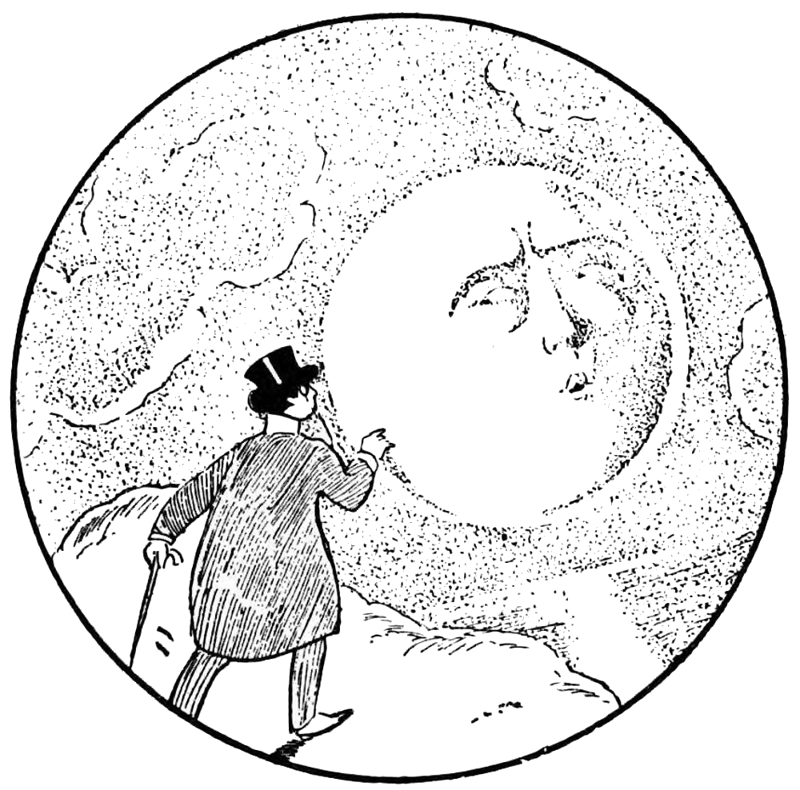
That evening on the beach I lay
Behind a lonely dune,
And as she rose above the bay
I buttonholed the Moon.
“Tell me about that gold,” said I.
I saw her features fall.
“You see, it’s useless to deny;
The Sun has told me all.”
[Pg 10]

[Pg 11]

“Sir!” she exclaimed, “how can you try
An honest Moon this way?
As for the gold, I put it by
Against a rainy day.”
I smiled and shook my head. “All right,
If you must know,” said she,
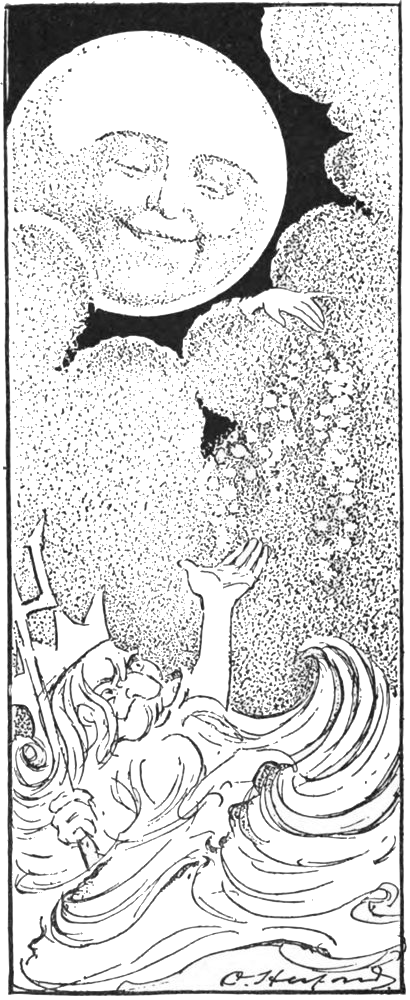
“I change it into silver bright
Wherewith to tip the Sea.
“He is so faithful and so good,
A most deserving case;
If he should leave, I fear it would
Be hard to fill his place.”
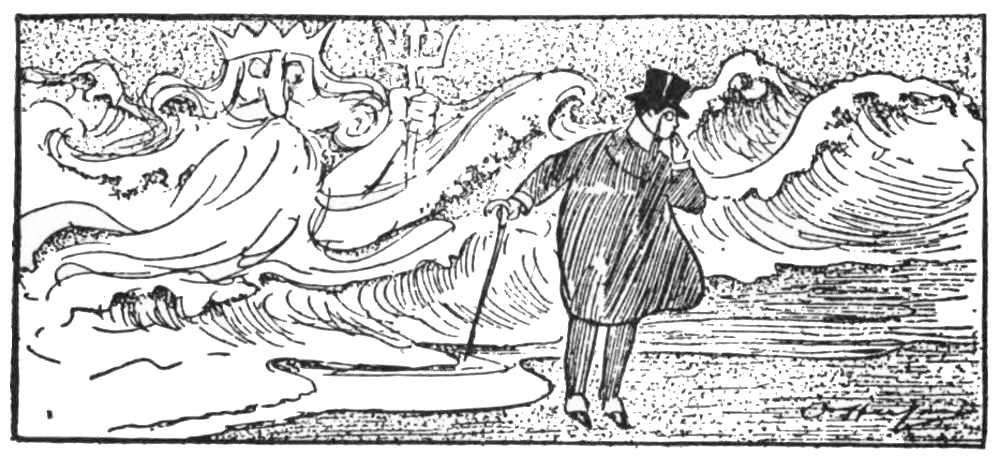
When asked if they accepted tips,
The waves became so rough;
I thought of those at sea in ships,
And felt I’d said enough.
For if one virtue I have learned,
’Tis tact; so I forbore
To press the matter, though I burned
To ask one question more.
[Pg 12]
I hate a scene, and do not wish
To be mixed up in gales,
But, oh, I longed to ask the Fish
Whence came their silver scales!

[Pg 13]

HOW THE LION BECAME KING

Once in the hazy days of Yore
(I cannot very well be more
Explicit, since it was before
Dates were invented).
Once on a time, as I began
To say, the Lion formed a plan
To undermine the rule of Man,
Which he resented.
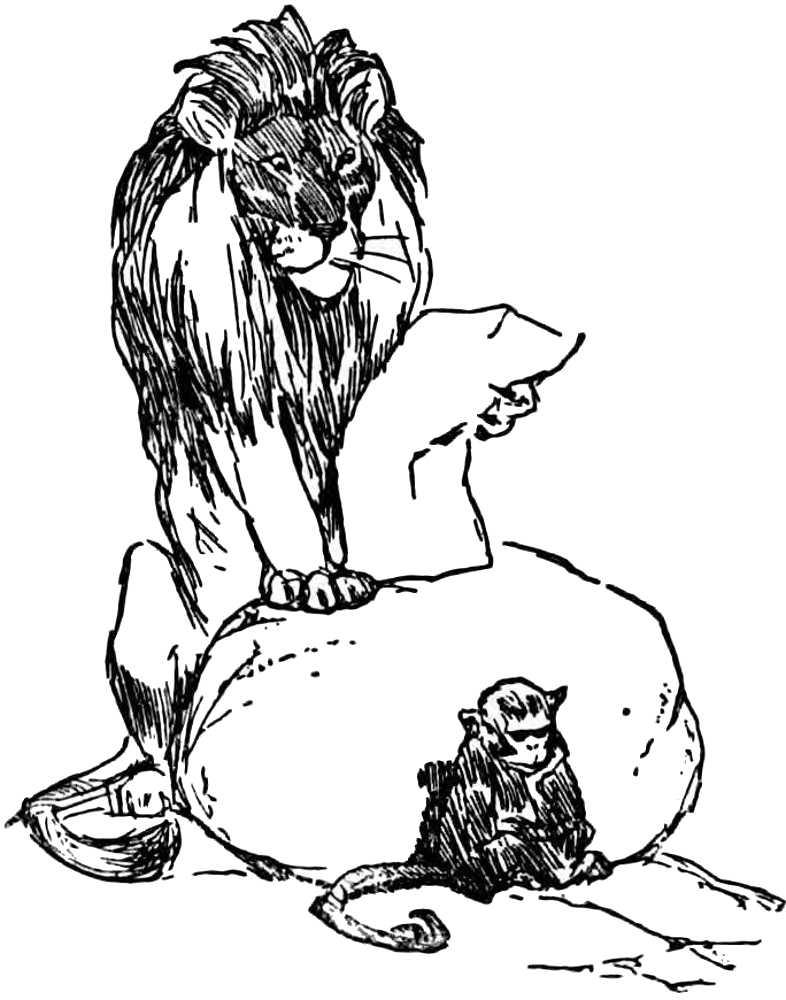
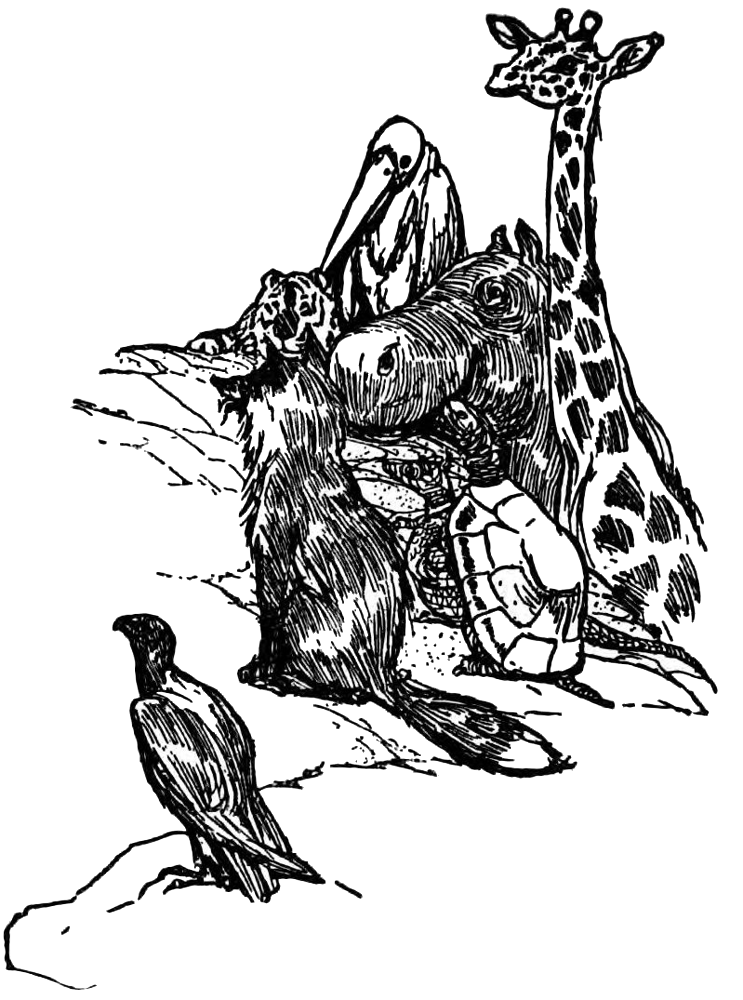
In answer to the Lion’s call,
His fellow-creatures, great and small,
From earth and air came one and all
In Trepidation.
He then delivered a discourse,
And proved with eloquence and force
Man was their one and only source
Of Tribulation.
[Pg 14]
“What is he—taken at his best?
A mere pretence! Not even dressed,
If we his puny form divest
Of spoil he’s looted.
The fact that we can far excel
His boasted Strength and Speed, as well
As Hearing, Sight, and Taste, and Smell,
Is undisputed.
“I am not boasting when I own
For Strength I’d back my claws alone
Against his battle-axe of stone;
While, as to Vision,
’Tis nothing more than idle talk
To mention Man beside the Hawk—
The swift Horse, too, his clumsy walk
Views with derision.
“Only Man’s Ignorance, I’m bound
To say, could possibly confound
The Scent and Hearing of the Hound
With his dull powers;
As well his Taste, that gluts on fare
Like half-burnt Antelope and Bear,
With the fastidious Bee compare,
That sips the flowers.
[Pg 15]
“And yet,” the Lion said, “though we
Outshine Man to the last degree
Collectively, none holds as he
The Combination.”
In short, the moral of his theme
Was this: If Beasts would reign supreme
Their only practicable scheme
Was Federation.
[Pg 16]
And so, in view of Public Need,
The Hawk, Hound, Bee, and Horse agreed
To pool their Sight, Scent, Taste, and Speed;
And in due season
[Pg 17]
They made, pro tem., the Lion King,
Intrusting him with everything
Upon condition he would bring
Proud Man to reason.
The crafty Lion then proposed
To send an Embassy composed
Of those same four. As none opposed,
They started straightway,
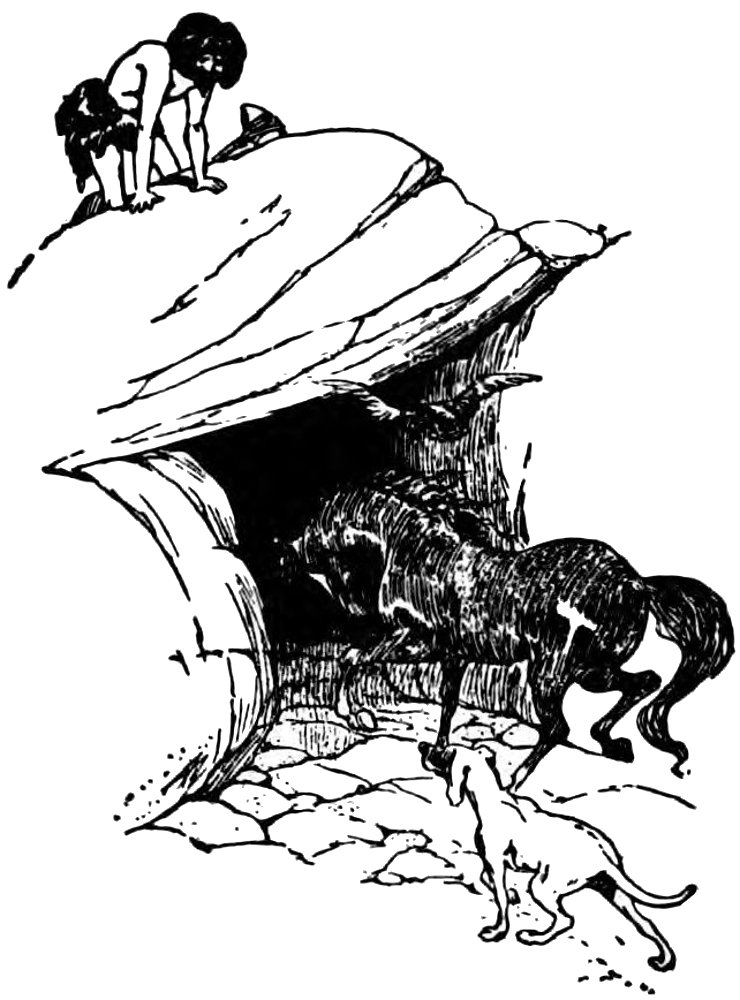
And, coming to Man’s portals wide,
They entered, but no trace espied
Of Man, until (from the outside)
He closed the gateway.
And there he kept them till they swore
To be his servants evermore,
And work his will, and bow before
His rod of iron:
The Dog to watch, the Hawk to kill,
The Horse to carry and to till,
The Bee with sweets his jars to fill.
All save the Lion—
The Lion stayed at home—and purred,
And kept thenceforth the crown conferred
Pro tem., and nothing more was heard
About Conditions.
[Pg 18]
So ends my tale. Perchance it brings
Some light to bear on certain things—
Such as the Origin of Kings,
And Politicians.

[Pg 19]

THE WAKEFUL PRINCESS

One Time there lived (that is to say,
If half a crust of bread a day
And sleeping on a bed of hay
May so be rated)
A Gentle Youth who tuned his lay
To all the Metres of the day,
But was not, I regret to say,
Appreciated.

[Pg 20]

In Market-place or Public Way
He read his ode or sang his lay,
As was the custom of the day,
But none suggested
A Laurel Wreath or Crown of Bay:
Instead, one morn, to his dismay,
While spouting forth a Tragic Play,
He was arrested.
In Irons he was led away,
And, by a Justice stern and gray,
For blocking up the Public Way
He was indicted.
Then, since he had nowith to pay
The Fine (a trifle anyway),
To leave the town without delay
He was invited.
There was no choice but to obey—
He left the town at break of day,
Yet still his heart was brave and gay
Fate could not queer him.
For was it not the month of May,
Were there not flowers beside the way,
And little lambs to sport and play,
And birds to cheer him?
[Pg 21]
He journeyed on for many a day;
The Peasants gave him Curds and Whey;
For aught I know the Fairies may
Some Food have found him.
At night he slept beneath a Bay
Or Laurel Tree, and, I dare say,
Dreamed he was Laureate, and they
Were twined around him.

[Pg 22]

Indeed, his only trouble lay
In this, that though his spirits gay
And gentle Heart and winning way
Charmed and delighted
All whom he met, yet, strange to say,
To hear his verses none would stay—
Even the Peasants ran away,
When he recited.

[Pg 23]

But he was not the sort that say,
“Oh, woe is mine—alack-a-day!”
He lived for Hope, and in some way
Was bound to find it.
“What matter! Let them go,” he’d say;
“Each to his taste—henceforth I’ll play
And sing to Birds alone, for they
Don’t seem to mind it.”
And so he journeyed many a day,
Till now at last his darkening way
Lies through a forest dim and gray;
Yet, nothing daunted,
Though hoary branches bar the way,
And twisted roots his steps betray,
And ghostly voices seem to say
The place is haunted,
Singing a Carol blithe and gay,
He presses on, nor does he stay,
Until at last the light of day
His sight surprises.
And now a little winding way
Leads, through a meadow pink with May,
To where, not half a mile away,
A Palace rises.
[Pg 24]
He wandered on, his thoughts astray,
Framing a little Roundelay
And weaving garlands of the May
(For whom not guessing),
Until before him suddenly
There loomed a gateway grim and gray,
Whose dark doors yielded to the sway
Of his light pressing.
And lo! a garden gleaming, gay
With flowers in dazzling array,
And fountains flashing silver spray,
And bowers shady;
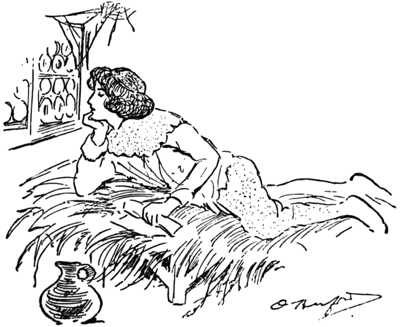
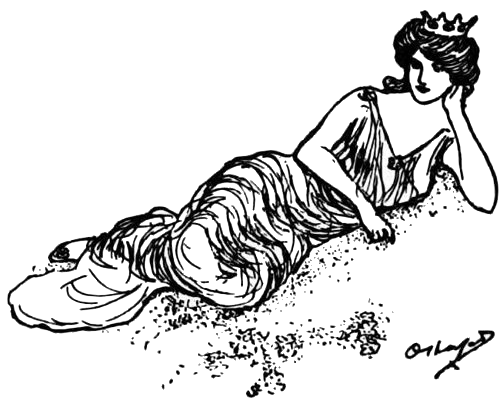
And on an emerald bank there lay
A creature fairer than the day,
Yet sadder than a moonlight ray—
A wondrous lady.
[Pg 25]
Abashed the Poet turned away,
When a low voice entreated, “Stay!
Read me that little Roundelay
I heard you singing.”
It was as though upon him lay
A spell that forced him to obey,
And he recited it straightway
In voice clear ringing.
A dreamy, languid, far-away
Expression dims her eyes as they,
Like violets at droop of day,
Are closing—closing.
[Pg 26]
The Poet ends his Roundelay,
And turns to hear what she may say,
And finds to his complete dismay
The Princess dozing.
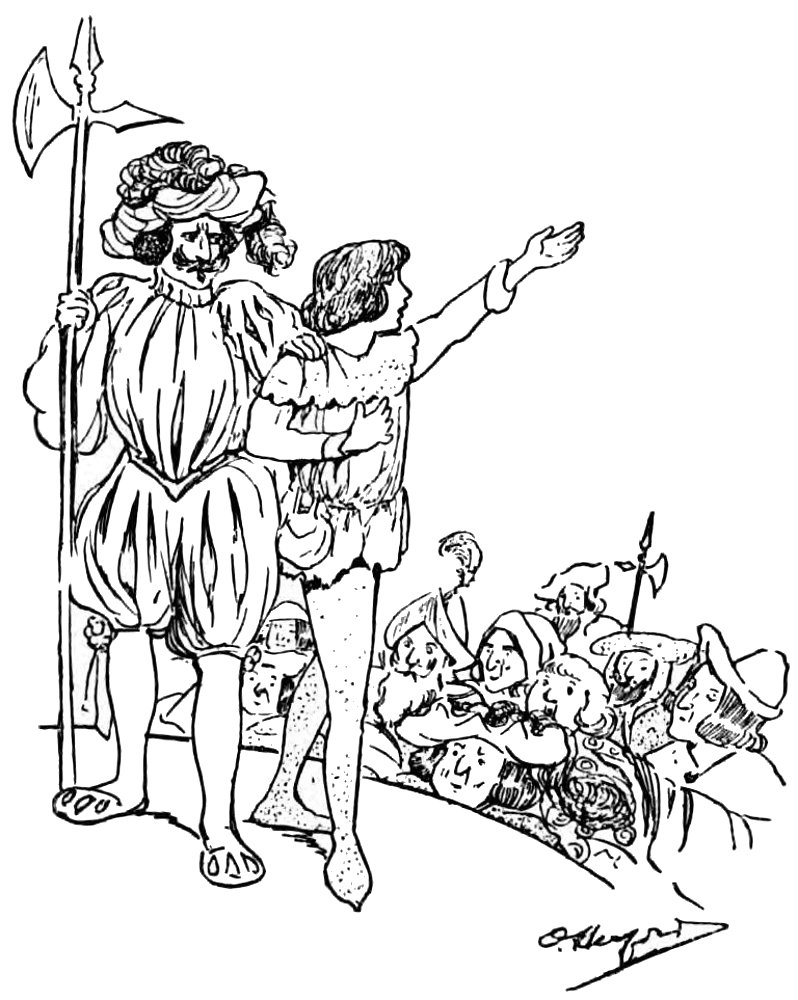
Then rose a cry: “She sleeps! Hurray!
The Princess sleeps! Oh, joyful day!
The spell is broken—Rise, I pray,
Oh, sweet song-maker.”
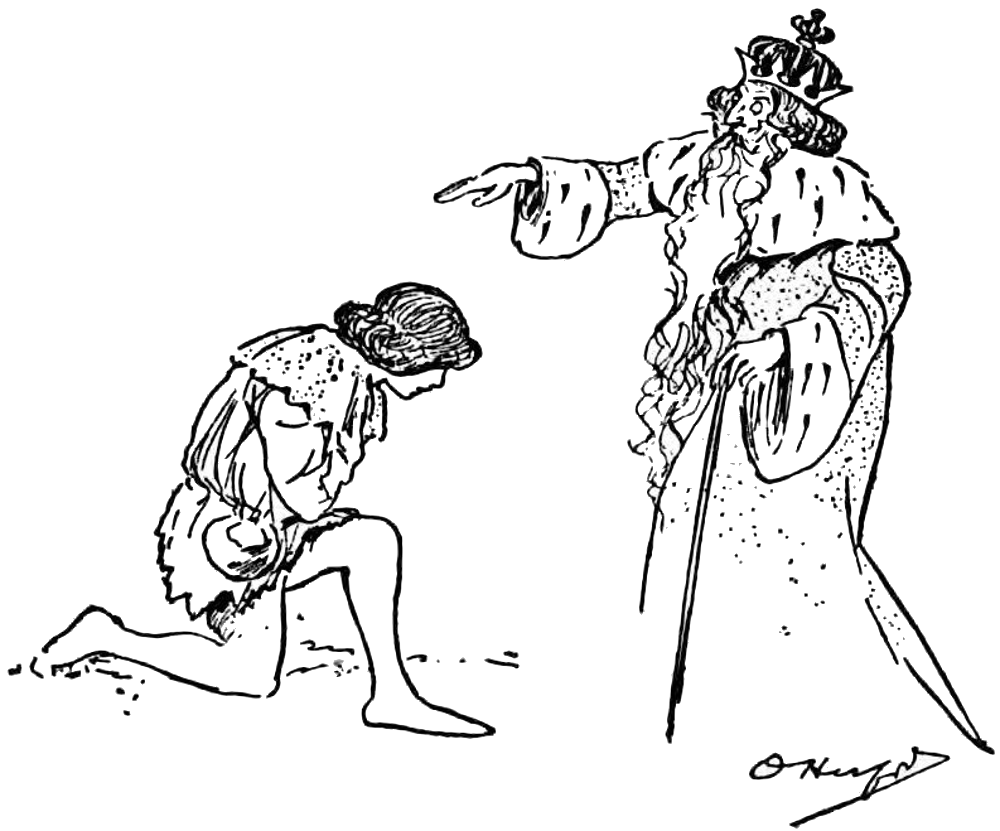
’Twas the King spoke, “Arise, I pray:
I make you Laureate this day;
My daughter’s hand, too, by the way,
Is yours—don’t wake her.”

[Pg 27]

A CORNER IN CURLS

Once on a time when Men were Bold
And Women Fair—to be precise—
A Princess lived whose Hair was Gold
Beyond the Dreams of Avarice;
Beauty she had and Wealth untold,
Besides a Fabulous Amount
Of Jewels rare and Crowns of Gold,
And Suitors more than she could count.
Such Suitors! Though her Fingers Fair
Had been as leaves upon the Trees
They still were far too few to wear
The Rings they offered, on their Knees.
[Pg 28]
In Coaches, Caravans, and Ships
The Suitors came in Flocks untold,
Happy to kiss her Finger-tips
And beg from her a Lock of Gold.
For though she seemed to Cupid’s Dart
Impervious, and would not share
The smallest atom of her Heart,
She was most lavish with her Hair.
To all who craved the Golden Boon
She gave, until one Night Her Maid
Exclaimed, “Alas! Your Highness soon
Will not have Hair enough to braid!”
Next day the Court was in a state,
The usual audience was refused,
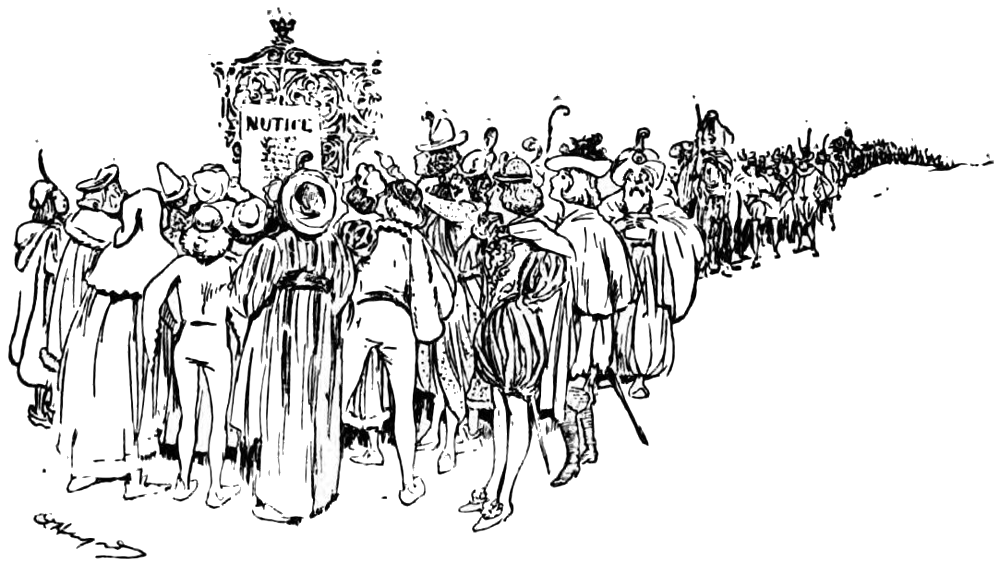
A Notice hung upon the Gate—
The Princess begs to be Excused.
Daily the Throng of Suitors grew
And clamoured madly at the door,
Until at length they formed a queue
Extending for a mile or more.
[Pg 29]
The Chancellor was in despair.
“Princess, it comes to this,” he said,
“That either you must lose your hair
Or I must surely lose my head!”
The Princess turned away her face.
“Oh, dear,” she cried, “this grieves me sore;
It will be hard to fill your place—
You were a first-rate Chancellor!
“But do not grieve—I have a plan
To keep your head and save my Pride.”
Then to the marble gate she ran,
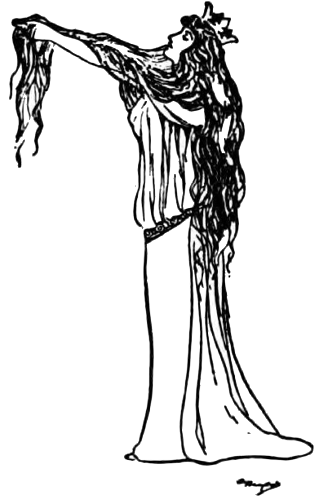
Unloosed her hair, stepped forth, and cried:
[Pg 30]
“Brave Suitors, look upon this Gold,
This mint of Curls—lo, I present
A share to each of you—behold
My Notes of Curl—at five per cent.!”
A cheer rose from a Thousand Throats;
The panic passed—and months flew by.
The Princess issued Tons of Notes,
When lo!—a Bolt from out the Sky—
A message came, brought by a Churl:
Pont Morgan, Sultan of Peru,
[Pg 31]
Has bought up all your Notes of Curl,
And all your Notes are falling Due!
The Princess grew distraught with fears
By Day. At night she tossed in Bed,
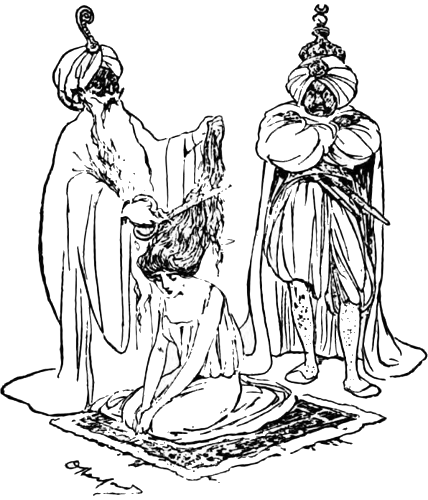
Dreaming an Awful Pair of Shears
Hung by a Hair above her Head.
At last the Fatal Morning came,
And with it came Pont Morgan, too
With Awful Shears to press his claim,
And an Enormous Retinue.
[Pg 32]
“The Law is just!” the People cried;
“And She the Penalty must pay!”
The Shears their Awful Jaws spread wide,
When suddenly a Voice cried, “Stay!”
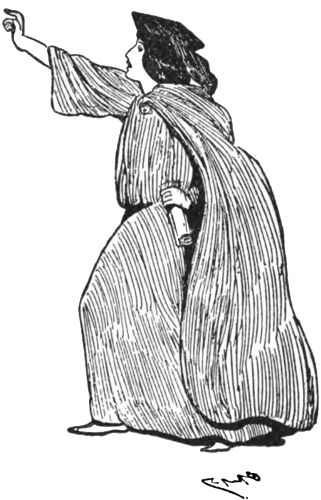
An Unknown Damsel, Pale and Proud,
And clad in Silken Cap and Gown,
Strode swiftly through the gaping crowd,
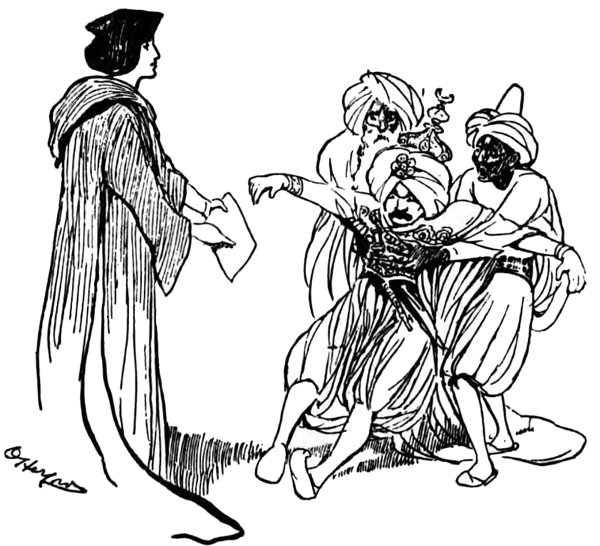
And struck the Awful Scissors down.
[Pg 33]
“Beware!” she cried, “Proud Sultan, ere
You touch a Hair of that Fair Head;
For know you not that Every Hair
Is numbered—as the Prophet said?
“Show me the Notes—see, here is writ
A number plain across each Bond,
And you may only draw for it
The numbered Hair to correspond.
“So pause, Pont Morgan, ere you draw
A Single Hair from that Gold Head;
If it be wrong—then by the Law
Your Life and Lands are forfeited!”
“Hurray! Hurray! The Maid is Right!”
The People cried with mad uproar.
The Sultan turned a deadly white,
And fell in Fits upon the Floor.
“O Lady, whosoe’er you be,
Claim what you will in all my Land!”
The Princess cried. “I am,” said he,
“Not Maid, but Man—I claim your Hand.”
[Pg 34]
“’Tis yours! Right gladly will I be
Your Bride—for in Creation’s Plan
I never dreamed to find,” said she,
“A Portia’s Logic in a Man!”

[Pg 35]

TELL-TALE

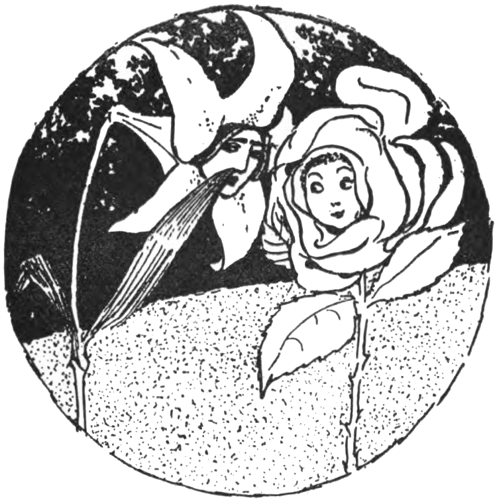
The Lily whispered to the Rose:
“The Tulip’s fearfully stuck up.
You’d think, to see the creature’s pose,
She were a golden altar-cup.
There’s method in her boldness, too;
She catches twice her share of Dew.”
[Pg 36]
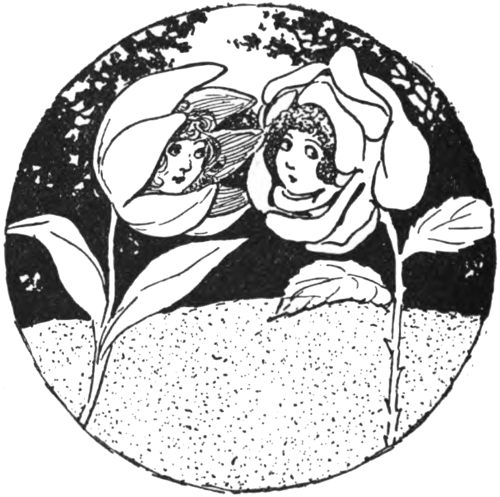
The Rose into the Tulip’s ear
Murmured: “The Lily is a sight;
Don’t you believe she powders, dear,
To make herself so saintly white?
She takes some trouble, it is plain,
Her reputation to sustain.”
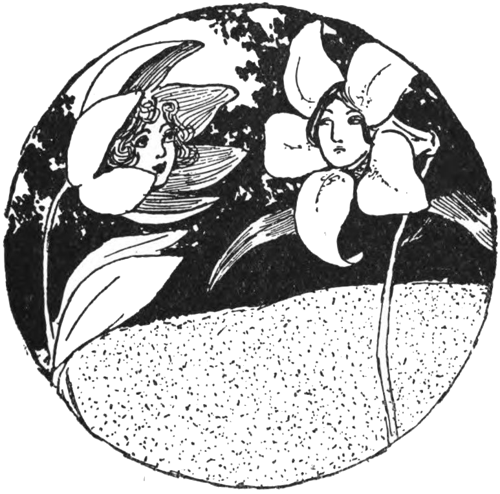
Said Tulip to the Lily white:
“About the Rose—what do you think?—
Her colour? Should you say it’s quite—
Well, quite a natural shade of pink?”
“Natural!” the Lily cried. “Good Saints!
Why, everybody knows she paints!”

[Pg 37]

GOSSIP

[Pg 38]

The news around the garden flew:
Last night the Rose was robbed—A flower
Was filched from her and flung into
The casement of my Lady’s bower.
The flowers were mystified. In vain
They asked of one another, “Pray,
What ails our Lady of Disdain
That she must wear a Rose to-day”?
The Daisy, with her latest breath,
’Reft of her petals, whispered low,
It is a secret to the Death;
I gave my petals all to know.”

[Pg 39]

A HOPELESS CASE

Her sisters shunned her, half in fear
And half in pity. “’Tis too bad
She is not made as we—poor dear!”
(Four leaves instead of Three she had.)
[Pg 40]
Said Doctor Bee: “Her case is rare
And due to Influence prenatal.
To amputate I would not dare,
The operation might be fatal.
“With Rest and Care and Simple Food
She may outlive both you and me;
A change of scene might do her good.”
(One bag of Honey was his fee.)

[Pg 41]

“Take me! take me!” the clovers cry,
To a maid bending wistful-eyed.
With gentle hand she puts them by,
Till all but one are passed aside.
Before her sisters’ wondering eyes
Her leaves with kisses are told over.
“At last! at last!” the maiden cries,
“I’ve found you, little four-leaved clover.”

[Pg 42]

[Pg 43]

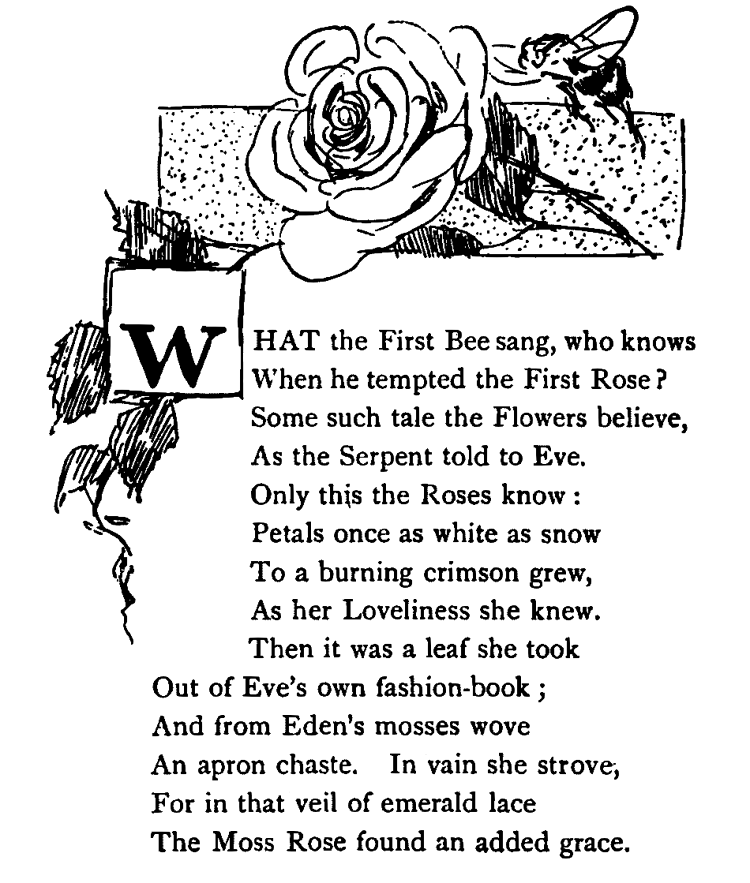
THE FALL OF THE ROSE

What the First Bee sang, who knows
When he tempted the First Rose?
Some such tale the Flowers believe,
As the Serpent told to Eve.
Only this the Roses know:
Petals once as white as snow
To a burning crimson grew,
As her Loveliness she knew.
Then it was a leaf she took
Out of Eve’s own fashion-book;
And from Eden’s mosses wove
An apron chaste. In vain she strove,
For in that veil of emerald lace
The Moss Rose found an added grace.

[Pg 44]

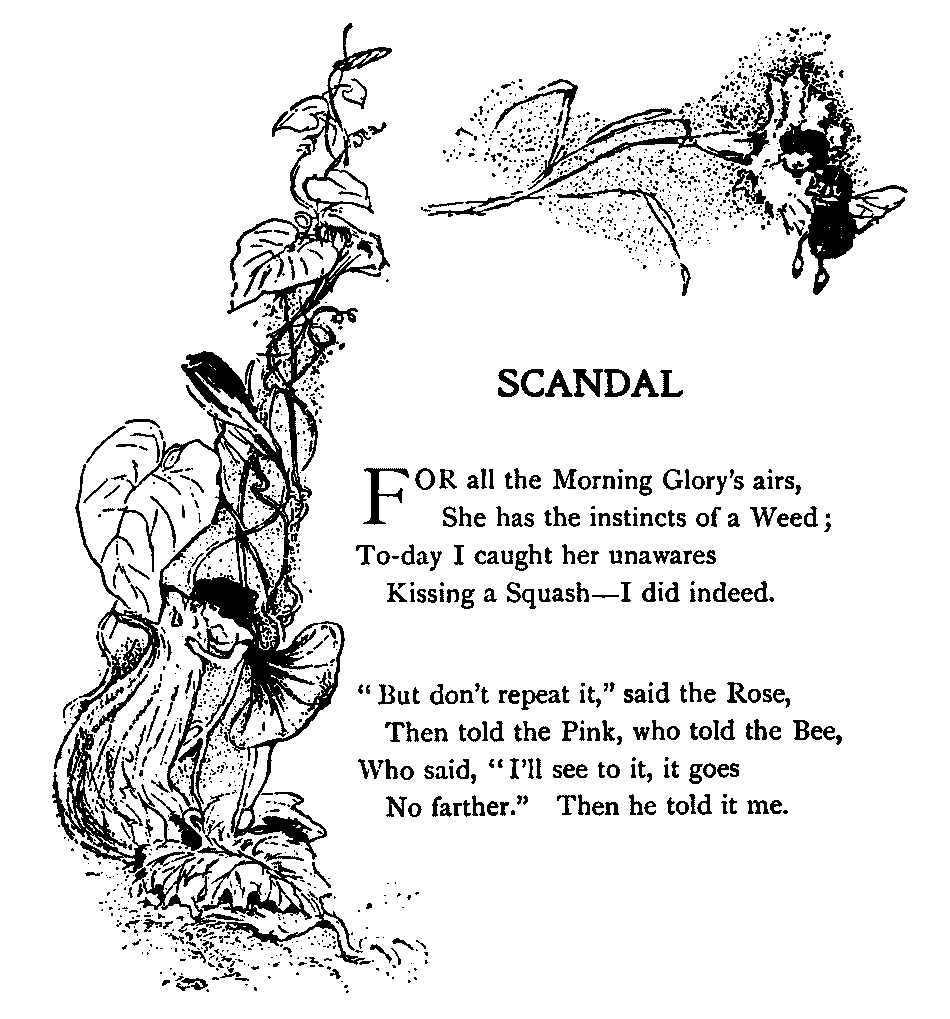
SCANDAL

For all the Morning Glory’s airs,
She has the instincts of a Weed;
To-day I caught her unawares
Kissing a Squash—I did indeed.
“But don’t repeat it,” said the Rose,
Then told the Pink, who told the Bee,
Who said, “I’ll see to it, it goes
No farther.” Then he told it me.
[Pg 45]
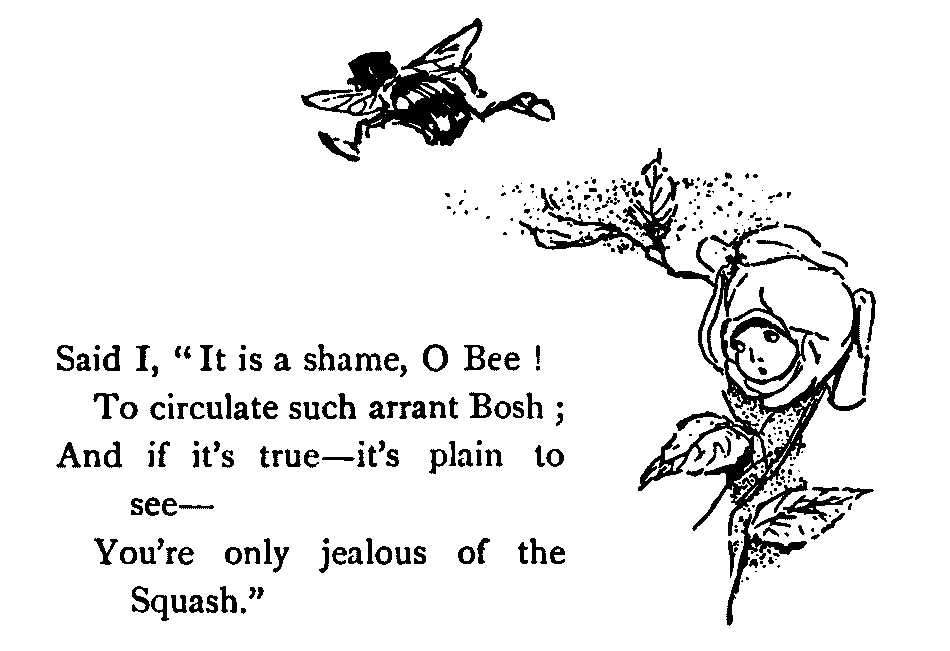
Said I, “It is a shame, O Bee!
To circulate such arrant Bosh;
And if it’s true—it’s plain to see—
You’re only jealous of the Squash.”

[Pg 46]

THE QUARREL

The Laurel started the affair,
Calling the Rose a vain coquette.
The Rose replied she did not care
What people thought, outside her set.
“Faith, you speak true!” the Laurel cried,
“Roses and Laurels only meet
When on the Hero’s head we ride,
And you are tossed beneath his feet.”
[Pg 47]
The Rose retorted, “I could name
More than one Hero who threw down
His precious Laurel wreath of fame
For just one Rose from Beauty’s crown.”
The Laurel frowned, “’Tis as you say,
And yet it cannot be gainsaid,
Their Laurels are undimmed to-day
Save by the Folly of that trade.”
[Pg 48]
“Your reasoning’s false!” exclaimed the Rose,
“Your premises are falser yet;
Your sentiment is all a pose!
Besides—you are not in my set!”

MORAL

’Twixt Duty, here below, and Love,
Alas! we see a great gulf fixed;
Perhaps they’re Introduced Above—
In Heaven, society is mixed.

[Pg 49]

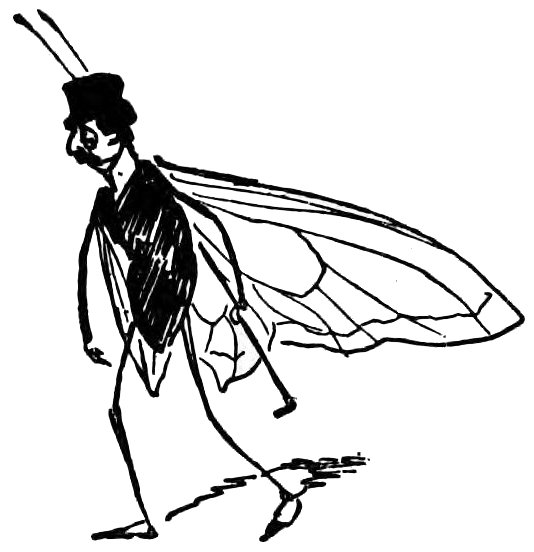
A BUTTERFLY OF FASHION

A real Butterfly, I mean,
With Orange-pointed saffron wings
And coat of inky Velveteen—
None of your Fashion-plated Things
That dangle from the Apronstrings
Of Mrs. Grundy—or you see
Loll by the Stage Door or the Wings,
Or sadly flit from Tea to Tea.
Not such a Butterfly was he;
He lived for Sunshine and the Hour;
He did not flit from Tea to Tea,
But gayly flew from Flower to Flower.
[Pg 50]
One Day there came a Thunder Shower—
An Open Window he espied.
He fluttered in; behold, a Flower!
An Azure Rose with petals wide.
He did not linger to decide
Which Flower; there was no other there.
He calmly settled down inside
That Rose, and no one said “Beware!
There was no Friend to say, “Take care!”
How ever, then, could he suppose
This Blossom, of such Colour Rare,
Was just an Artificial Rose?
All might have ended well—who knows?—
But just then some one chanced to say:
The very Latest Thing! That Rose
In Paris is the Rage To-day.
No Rose of such a Tint outré
Was ever seen in Garden Bed;
The Butterfly had such a Gay,
Chromatic Sense, it turned his head.
[Pg 51]
The Very Latest Thing?” he said;
“Long have I sighed for something New!
O Roses Yellow, White, and Red,
Let others sip; mine shall be Blue!
The Flavour was not Nice, ’tis true
(He felt a Pain inside his Waist).
“It is not well to overdo,”
Said he, “a just-acquired taste.”
The Shower passed; he joined in haste
His friends. With condescension great,
Said he, “I fear your time you waste;
Real Roses are quite out of date.”
He argued early, argued late,
Till what was erst a Harmless Pose
Grew to a Fierce, Inordinate
Craving for Artificial Rose.
He haunted Garden Parties, Shows,
Wherever Ladies Congregate,
And in their Bonnets thrust his nose
His Craving Fierce to Satiate.
[Pg 52]
At last he chanced, sad to relate,
Into a Caterer’s with his Pose,
And there Pneumonia was his Fate
From sitting on an Ice Cream Rose.
O Reader, shun the Harmless Pose.
They buried him, with scant lament,
Beneath a Common Brier-Rose,
And wrote:
Here Lies a Decadent.

[Pg 53]

There was chattering and jabbering and bellowing and growling,
And the sound of many waters and of many creatures howling
As the voices of creation all were lifted up together
In a universal chorus—“Did you ever see such weather?”
Beside the rail, despite the gale,
Old Noah took each ticket,
And registered each Beast and Bird
That passed inside the wicket.
And when at last they had made fast
As much as they could stow away,
He cried “Let go! cut loose! yo ho!
Hoist gang! avast! heave ho—away!”
With heave and yank, up came the plank,
A-straining and a-creaking,
When, rising o’er the wind and roar,
They heard two voices shrieking,—
[Pg 54]
“Take us aboard! You can’t afford
So cruelly to flout us!
We are a pair extremely rare;
No ark’s complete without us.”
Down went the gang, and up there sprang
Before them, through the curtain
Of blinding rain, the oddest twain,
Of genus most uncertain.
They’d human shape, yet like the ape
Were caudally appended;
And, strange to tell, their feet as well,
Like apes’, in fingers ended.
Quoth Noah, “Pray, who are you—say?
Human, or anthropoidal?”
“You takes your choice!” as with one voice
They cried; which so annoyed all
The apes on board with one accord
They screamed for indignation;
’Twas very clear they would not hear
Of any such relation.
[Pg 55]
Said Noah, “Though you’re rare, I know
You’re not for my collection;
And though not vain, I must refrain
From claiming the connection.”
With small regret, the pair he set
On shore mid cheers and hissing,
And that’s the way it comes to-day
The Missing Link is missing.

[Pg 56]

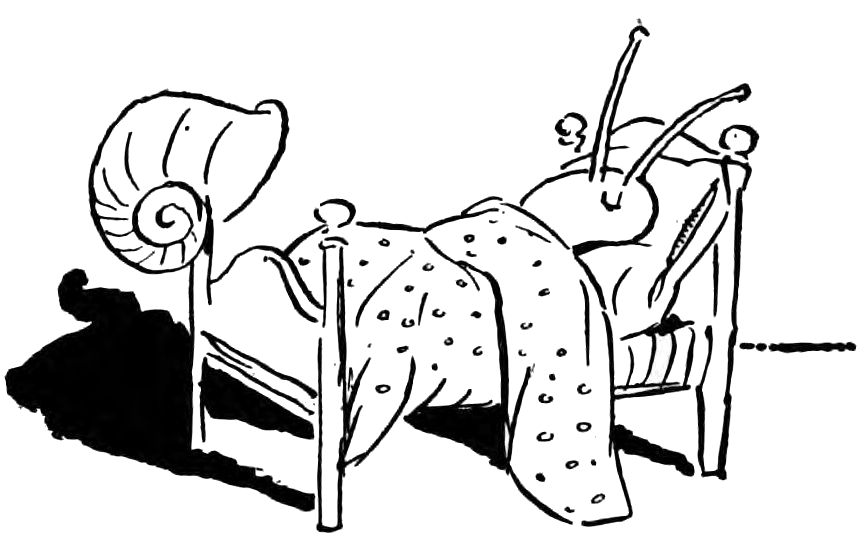
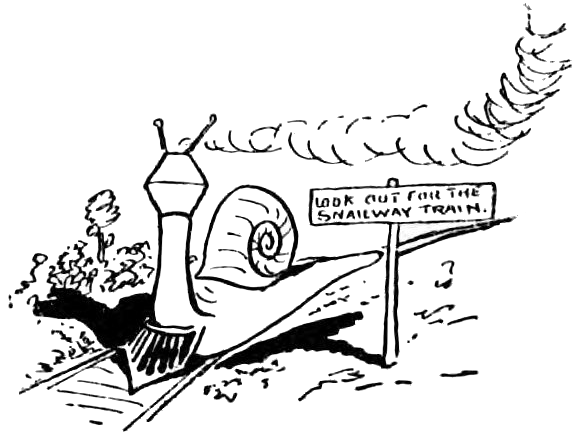
THE SNAIL’S DREAM

A snail, who had a way, it seems,
Of dreaming very curious dreams,
Once dreamed he was—you’ll never guess!—
The Lightning Limited Express!

[Pg 57]

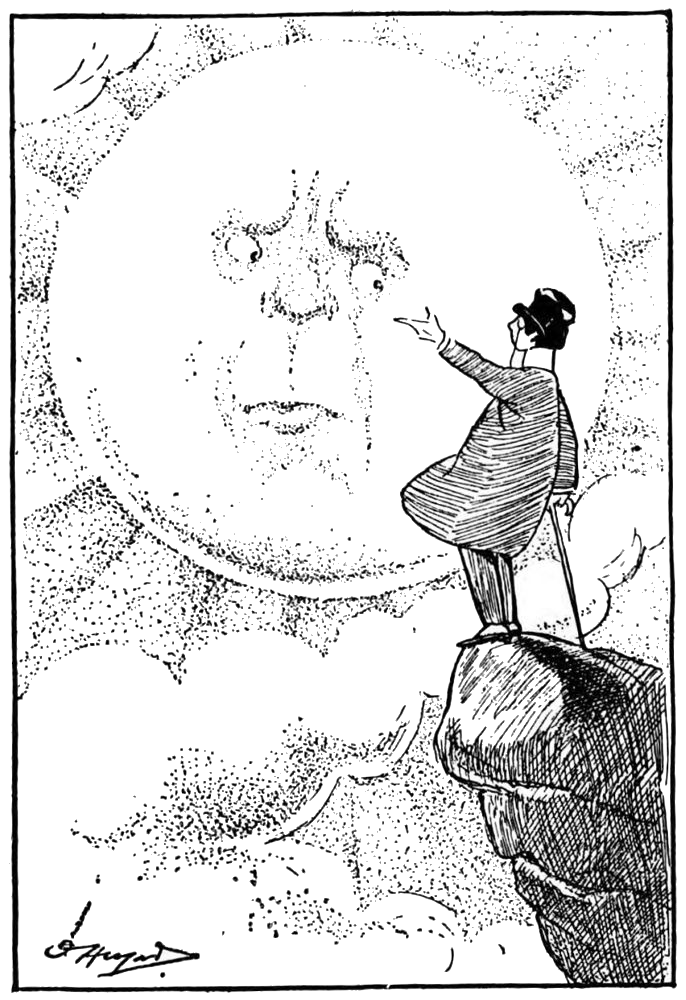
LÈSE MAJESTÉ

(See Frontispiece)

The Lion ramps around the cage,
The Lady smiles to see him rage.
The little Mouse outside the bars
Looks on and laughs. “Well, bless my stars!”
Quoth he, “to think they call that thing
The King of Beasts! If he’s a King,
Who cannot make the Lady wince,
What must I be? When, not long since,
Inside the cage I chanced to slip,
You should have seen that Lady skip
Upon the Lion’s back. ‘Help! Murder!
A Mouse!’ she screamed; you should have heard her!
And then with brooms the keepers came
And drove me out (but, all the same,
I got the crumb that I was after).
A King indeed! Excuse my laughter!”

[Pg 58]

THE LOVESICK SCARECROW

[Pg 59]

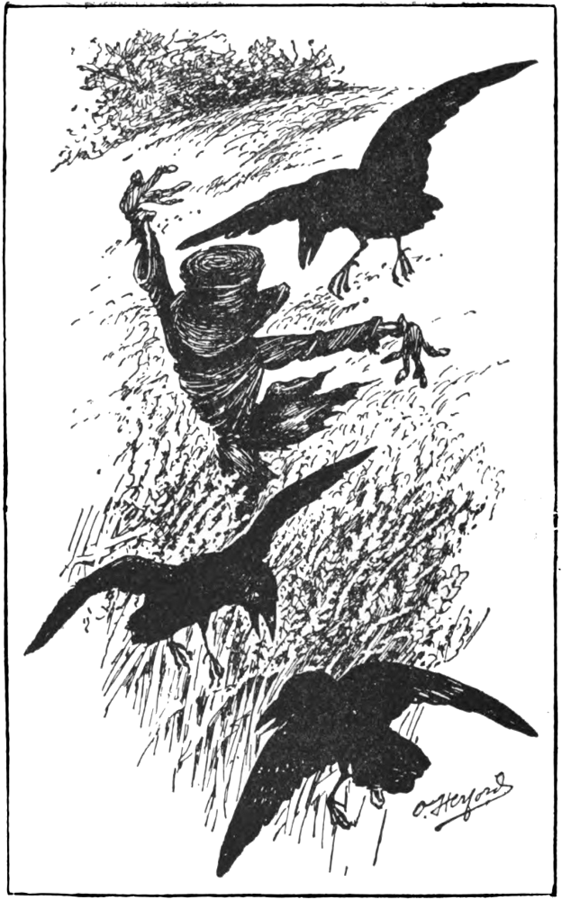
A scarecrow in a field of corn,
A thing of tatters all forlorn,
Once felt the influence of Spring
And fell in love—a foolish thing,
And most particularly so
In his case—for he loved a crow!
“Alack-a-day! it’s wrong, I know,
It’s wrong for me to love a crow;
An all-wise man created me
To scare the crows away,” cried he;
“And though the music of her ‘Caw’
Thrills through and through this heart of straw,
“My passion I must put away
And do my duty, come what may!
Yet oh, the cruelty of fate!
I fear she doth reciprocate
My love, for oft at dusk I hear
Her in my cornfield hovering near.
[Pg 60]
“And once I dreamt—oh, vision blest!
That she alighted on my breast.
’Tis very, very hard, I know,
But all-wise man decreed it so.”
He cried and flung his arm in air,
The very picture of despair.

Poor Scarecrow, if he could but know!
Even now his lady-love, the Crow,
Sits in a branch, just out of sight,
With her good husband, waiting night,
To pluck from out his sleeping breast
His heart of straw to line her nest.

[Pg 61]

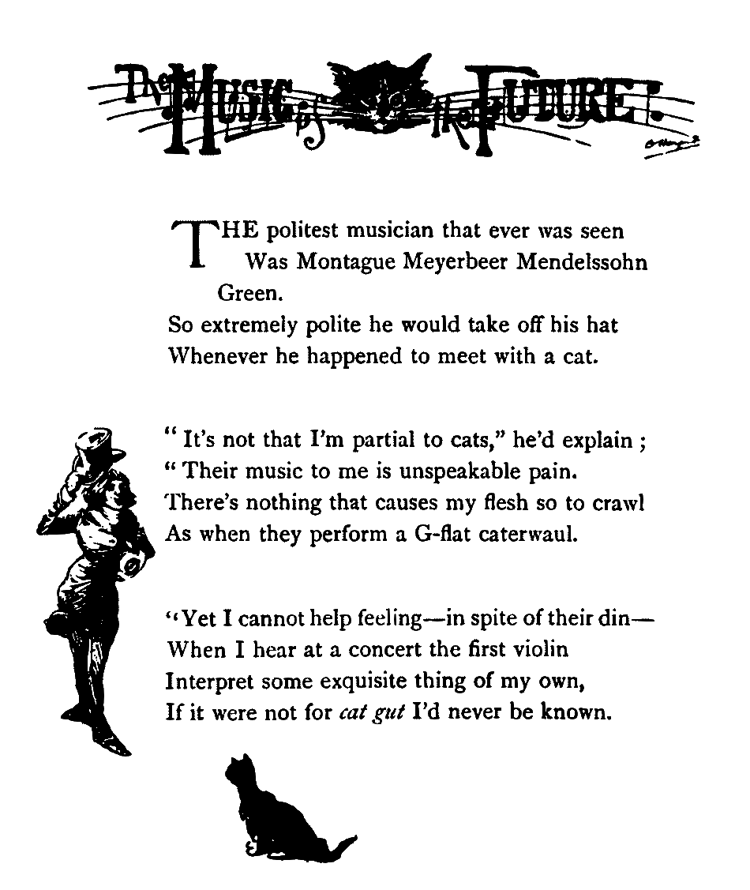
THE MUSIC OF THE FUTURE

The politest musician that ever was seen
Was Montague Meyerbeer Mendelssohn Green.
So extremely polite he would take off his hat
Whenever he happened to meet with a cat.
“It’s not that I’m partial to cats,” he’d explain;
“Their music to me is unspeakable pain.
There’s nothing that causes my flesh so to crawl
As when they perform a G-flat caterwaul.
“Yet I cannot help feeling—in spite of their din—
When I hear at a concert the first violin
Interpret some exquisite thing of my own,
If it were not for cat gut I’d never be known.

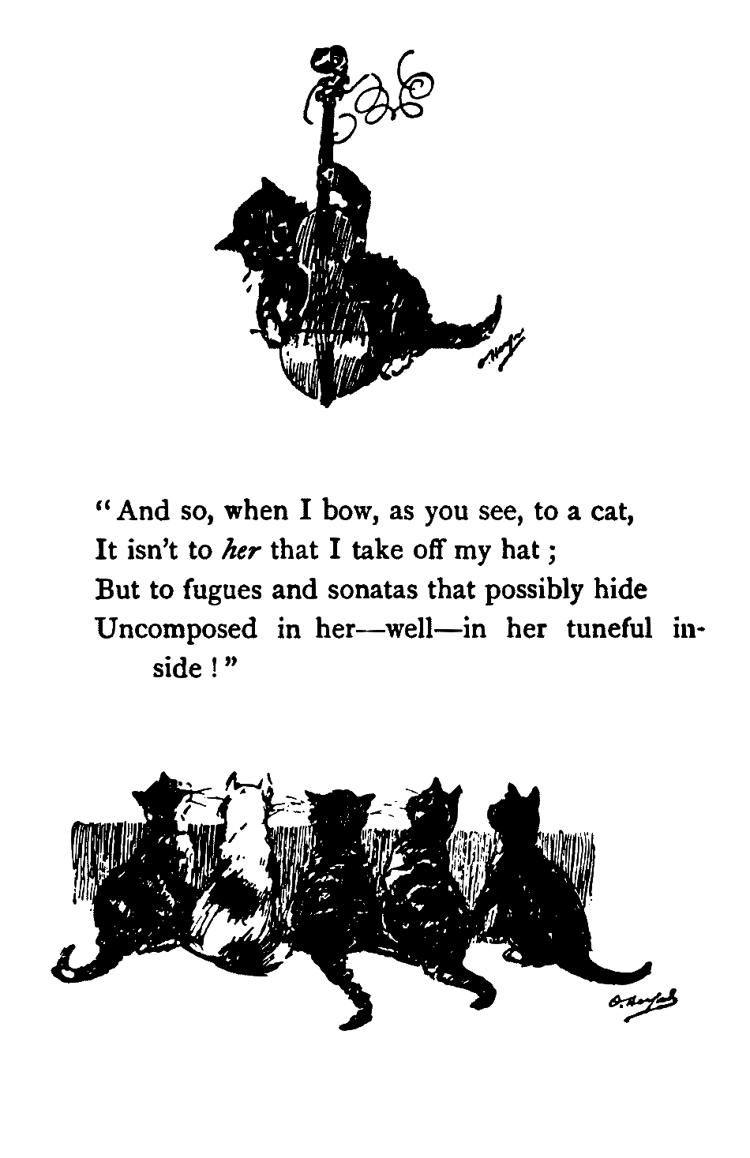
[Pg 62]

“And so, when I bow, as you see, to a cat,
It isn’t to her that I take off my hat;
But to fugues and sonatas that possibly hide
Uncomposed in her—well—in her tuneful inside!”

[Pg 63]

Song.

Gather Kittens while you may,

Time brings only Sorrow;

And the Kittens of To-day

Will be Old Cats To-morrow.

[Pg 64]

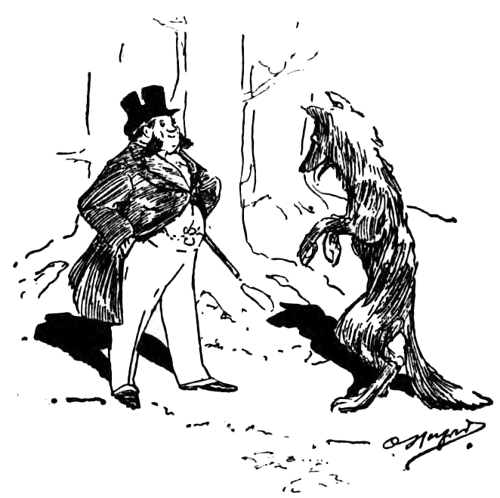
THE DOORLESS WOLF

I saw, one day, when times were very good,
A newly rich man walking in a wood,
Who chanced to meet, all hungry, lean, and sore,
The wolf that used to sit outside his door.
Forlorn he was, and piteous his plaint.
“Help me!” he howled. “With hunger I am faint.
It is so long since I have seen a door—
And you are rich, and you have many score.
When you’d but one, I sat by it all day;
Now you have many, I am turned away.
[Pg 65]
Help me, good sir, once more to find a place.
Prosperity now stares me in the face.”
The newly rich man, jingling all the while
The silver in his pocket, smiled a smile:
He saw a way the wolf could be of use.
“Good wolf,” said he, “you’re going to the deuce,—
The dogs, I mean,—and that will never do;
I think I’ve found a way to see you through.”
“I too have worries. Ever since I met
Prosperity I have been sore beset
By begging letters, charities, and cranks,
All very short in gold and long in thanks.
[Pg 66]
Now, if you’ll come and sit by my front door
From eight o’clock each morning, say, till four,
Then every one will think that I am poor,
And from their pesterings I’ll be secure.
Do you accept?” The wolf exclaimed, “I do!”
The rich man smiled; the wolf smiled; I smiled, too,
And in my little book made haste to scrawl:
“Thus affluence makes niggards of us all!”

[Pg 67]

THE CHARM THAT FAILED

The Hero of my tale
Was a serpent—don’t turn pale!
My snake was not the “serpent” of Theology,
With an apple up his sleeve
To tempt some child of Eve,
Nor was he versed in deadly Toxicology.
No, his fangs were free from guile,
And he had a roomy smile.
There was no more harmless snake in all Zoölogy.
But since no creature known
Is perfect, I will own
He had one failing—vanity, alas! innate.
He was also fond of sport,
Though not a cruel sort:
His aim was more to charm than to assassinate.
[Pg 68]
He was often heard to say,
When feeling rather gay,
“I’d like to see the Bird I cannot fascinate!”
And one day
Some laughter-loving Fay
His boasting heard,
And sent a Bird.
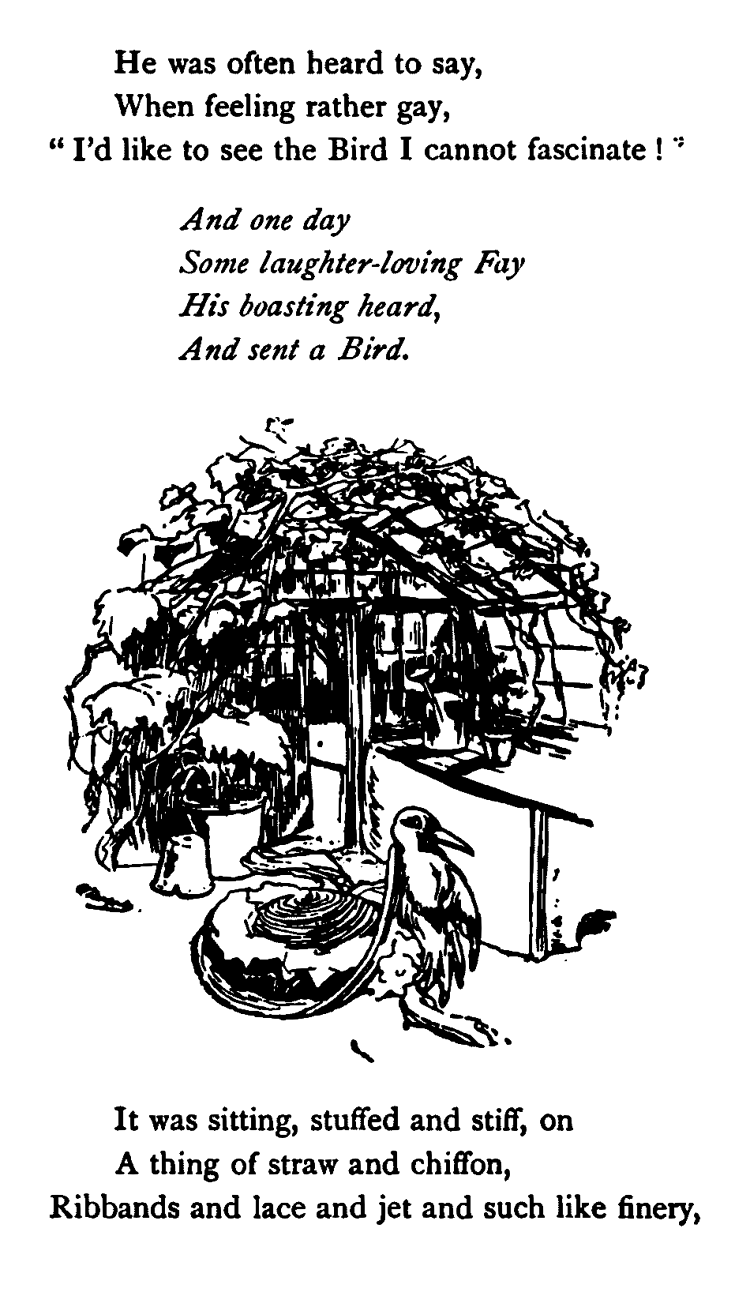
It was sitting, stuffed and stiff, on
A thing of straw and chiffon,
Ribbands and lace and jet and such like finery,
[Pg 69]
By a milliner begotten
And some careless maid forgotten,
In stuffed and lonely splendour in the Vinery,
When with expectant eye
Mr. Serpent, by-and-by,
Strolled forth in search of game from out the Pinery.
And the Bird
Never stirred
Or said a word.
“Aha!” said Mr. Snake,
“Unless I much mistake,
Here’s a charming subject for a Trance Hypnotic;
Soon I’ll have her in my toils!”
And with mysterious coils
He advanced with air complacent and despotic.
Then he rose up, and let fly
A glance from out his eye,
And watched for the effect of his narcotic.
And the Bird
Never stirred
Or said a word.
Said Mr. Snake, “My spell
Seems to work extremely well.”
And straightway with Majestic Pride he puffed.
[Pg 70]
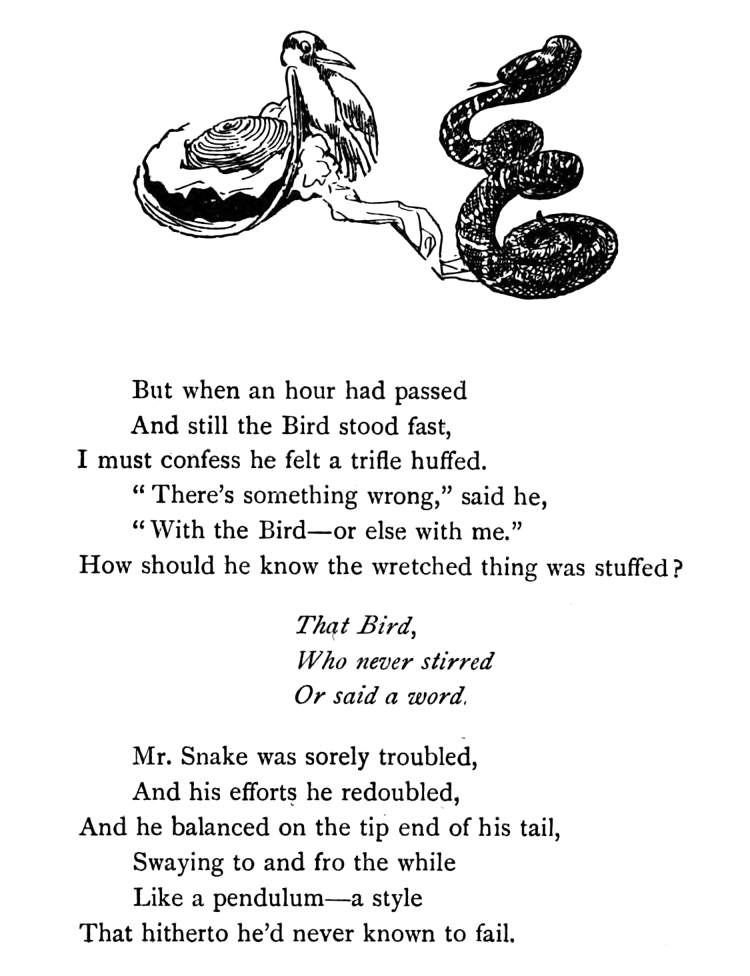
But when an hour had passed
And still the Bird stood fast,
I must confess he felt a trifle huffed.
“There’s something wrong,” said he,
“With the Bird—or else with me.”
How should he know the wretched thing was stuffed?
That Bird,
Who never stirred
Or said a word.
Mr. Snake was sorely troubled,
And his efforts he redoubled,
And he balanced on the tip end of his tail,
Swaying to and fro the while
Like a pendulum—a style
That hitherto he’d never known to fail.
[Pg 71]
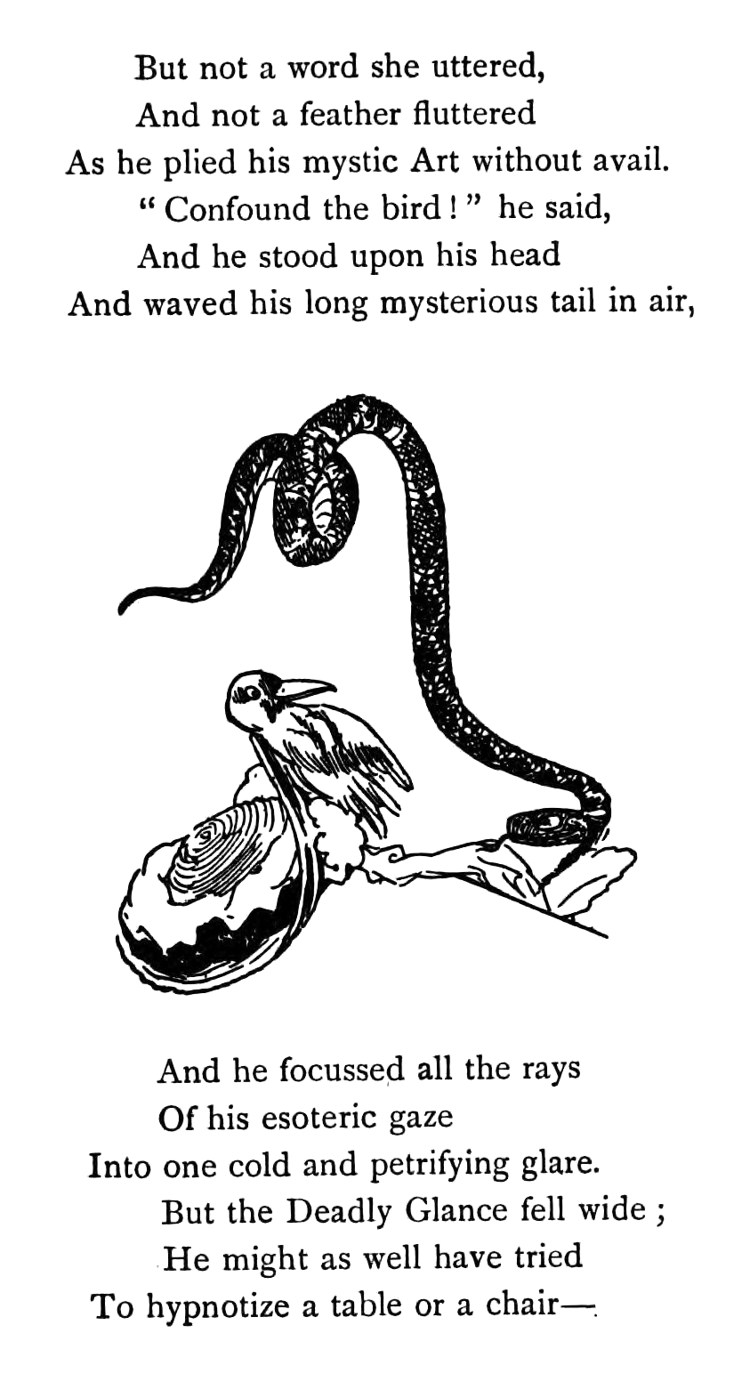
But not a word she uttered,
And not a feather fluttered
As he plied his mystic Art without avail.
“Confound the bird!” he said,
And he stood upon his head
And waved his long mysterious tail in air,
And he focussed all the rays
Of his esoteric gaze
Into one cold and petrifying glare.
But the Deadly Glance fell wide;
He might as well have tried
To hypnotize a table or a chair—
[Pg 72]
As that Bird,
Who never stirred
Or said a word.
“That settles it!” he cried.
“I will not be defied!”
And he coiled himself to spring—oh, rash proceeding!
Like an arrow from a bow
He sprang—how should he know
The Doom to which he was so swiftly speeding?
Next moment he lay dead,
With a Hat Pin through his head,
Whereat, with most commendable good-breeding—
The Bird
Never stirred
Or said a Word.

[Pg 73]

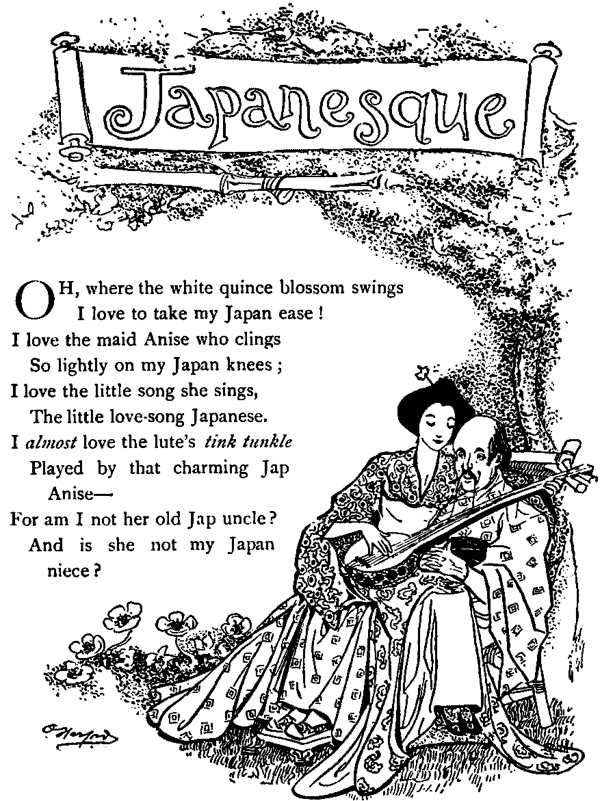
JAPANESQUE

Oh, where the white quince blossom swings
I love to take my Japan ease!
I love the maid Anise who clings
So lightly on my Japan knees;
I love the little song she sings,
The little love-song Japanese.
I almost love the lute’s tink tunkle
Played by that charming Jap Anise—
For am I not her old Jap uncle?
And is she not my Japan niece?

[Pg 74]

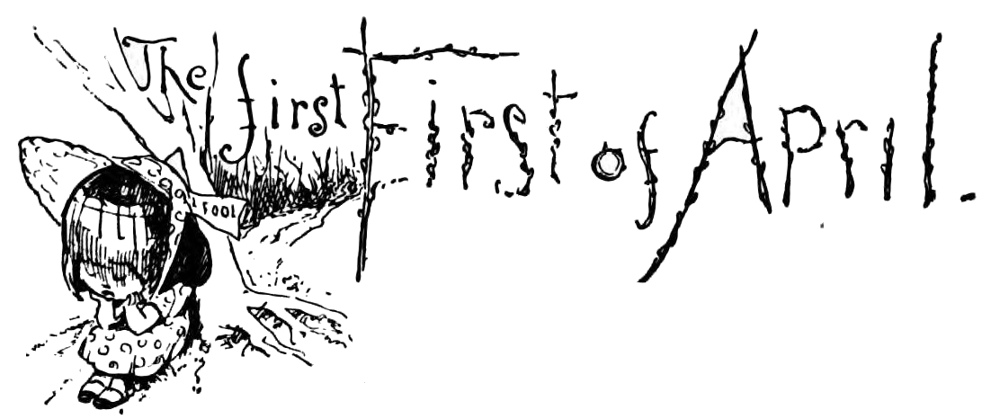
THE FIRST FIRST OF APRIL

The Infant Earth one April day
(The first of April—so they say),
When toddling on her usual round,
Spied in her path upon the ground
A dainty little garland ring
Of violets—and that was Spring.
She caught the pretty wreath of Spring
And all the birds began to sing;
But when she thought to hold it tight
’Twas rudely jerked from out her sight;
And while she looked for it in vain
The birds all flew away again.
Alas! The flowering wreath of Spring
Was fastened to a silken string,
And Time, the urchin, laughed for glee
(He held the other end, you see).
[Pg 75]
And that was long ago, they say,
When Time was young and Earth was gay.
Now Earth is old and Time is lame,
Yet still they play the same old game:
Old Earth still reaches out for Spring,
And Time—well—Time still holds the string.

[Pg 76]

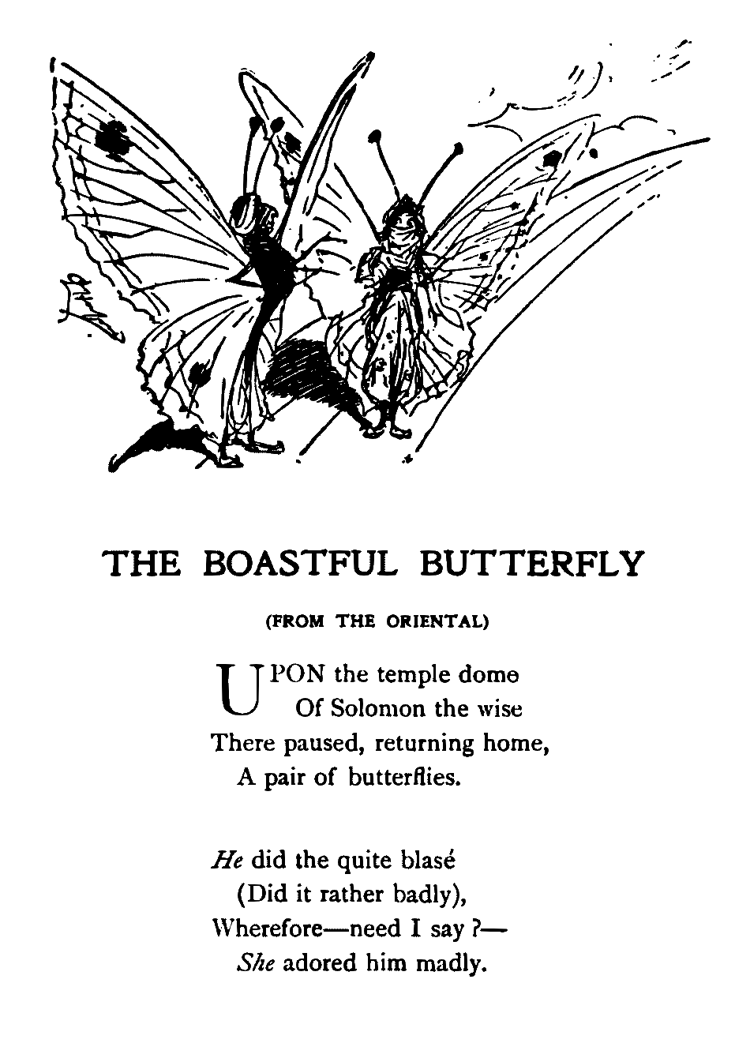
THE BOASTFUL BUTTERFLY

(FROM THE ORIENTAL)

Upon the temple dome
Of Solomon the wise
There paused, returning home,
A pair of butterflies.
He did the quite blasé
(Did it rather badly),
Wherefore—need I say?—
She adored him madly.
[Pg 77]
Enthusiasm she
Did not attempt to curb:
“Goodness gracious me!
Isn’t this superb!”
He vouchsafed a smile
To indulge her whimsy,
Surveyed the lofty pile,
And drawled, “Not bad—but flimsy.”
“Appearances, though fine,
Lead to false deduction;
This temple, I opine,
Is shaky in construction.
“Think of it, my dear.
All this glittering show
Would crumble—disappear—
Should I but stamp my toe!
“If I should stamp—like this—”
His wife cried, “Heavens! don’t!
He answered, with a kiss,
“Very well; I won’t.”

[Pg 78]

Now, every blessed word
Said by these butterflies,
It chanced, was overheard
By Solomon the wise.
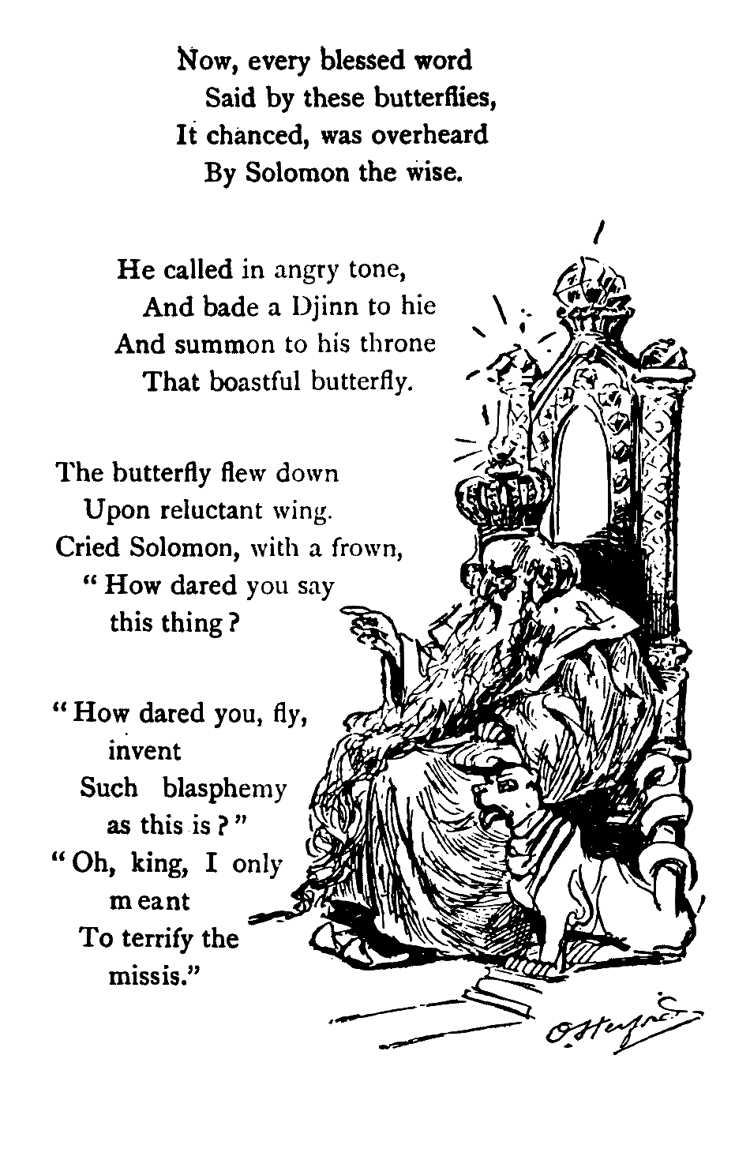
He called in angry tone,
And bade a Djinn to hie
And summon to his throne
That boastful butterfly.
The butterfly flew down
Upon reluctant wing.
Cried Solomon, with a frown,
“How dared you say this thing?
“How dared you, fly, invent
Such blasphemy as this is?”
“Oh, king, I only meant
To terrify the missis.”
[Pg 79]
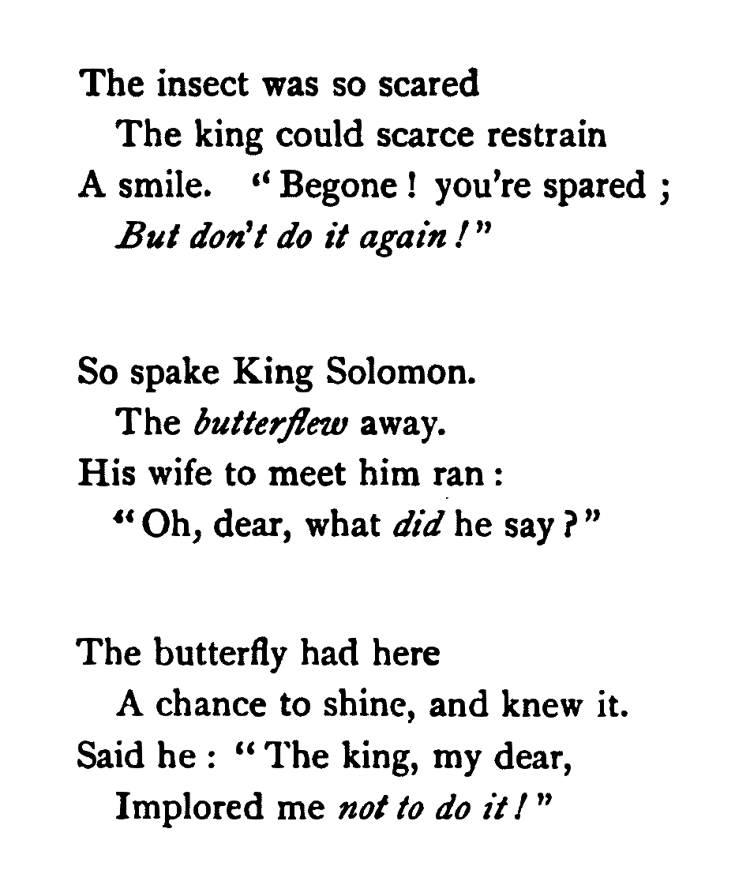
The insect was so scared
The king could scarce restrain
A smile. “Begone! you’re spared;
But don’t do it again!”
So spake King Solomon.
The butterflew away.
His wife to meet him ran:
“Oh, dear, what did he say?”
The butterfly had here
A chance to shine, and knew it.
Said he: “The king, my dear,
Implored me not to do it!”

[Pg 80]

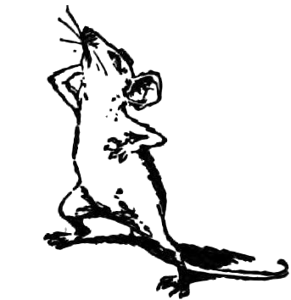
THE TRAGIC MICE

It was a tragic little mouse
All bent on suicide
Because another little mouse
Refused to be his bride.
“Alas!” he squeaked, “I shall not wed!
My heart and paw she spurns;
I’ll hie me to the cat instead,
From whence no mouse returns!”
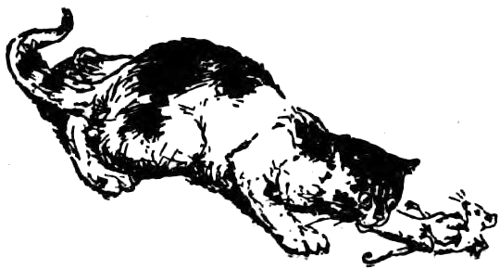
The playful cat met him half way,
Said she, “I feel for you,
You’re dying for a mouse, you say,
I’m dying for one, too!”
Now when Miss Mouse beheld his doom,
Struck with remorse, she cried,
“In death we’ll meet!—O cat! make room
For one more mouse inside.”
[Pg 81]
The playful cat was charmed; said she,
“I shall be, in a sense,
Your pussy catafalque!” Ah me!
It was her last offence!

Reader, take warning from this tale,
And shun the punster’s trick:
Those mice, for fear lest cats might fail,
Had eaten arsenic!

[Pg 82]

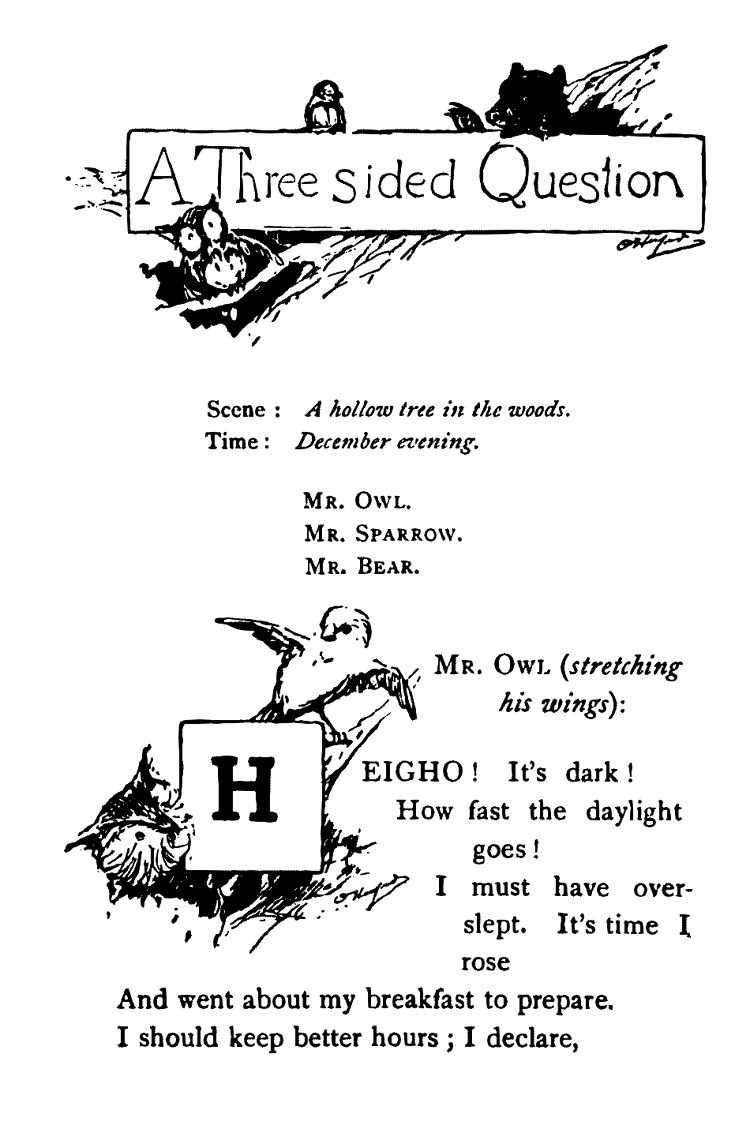
A THREE SIDED QUESTION

Scene: A hollow tree in the woods.
Time:December evening.

Mr. Owl.
Mr. Sparrow.
Mr. Bear.

Mr. Owl (stretching his wings):
Heigho! It’s dark!
How fast the daylight goes!
I must have overslept. It’s time I rose
And went about my breakfast to prepare.
I should keep better hours; I declare,
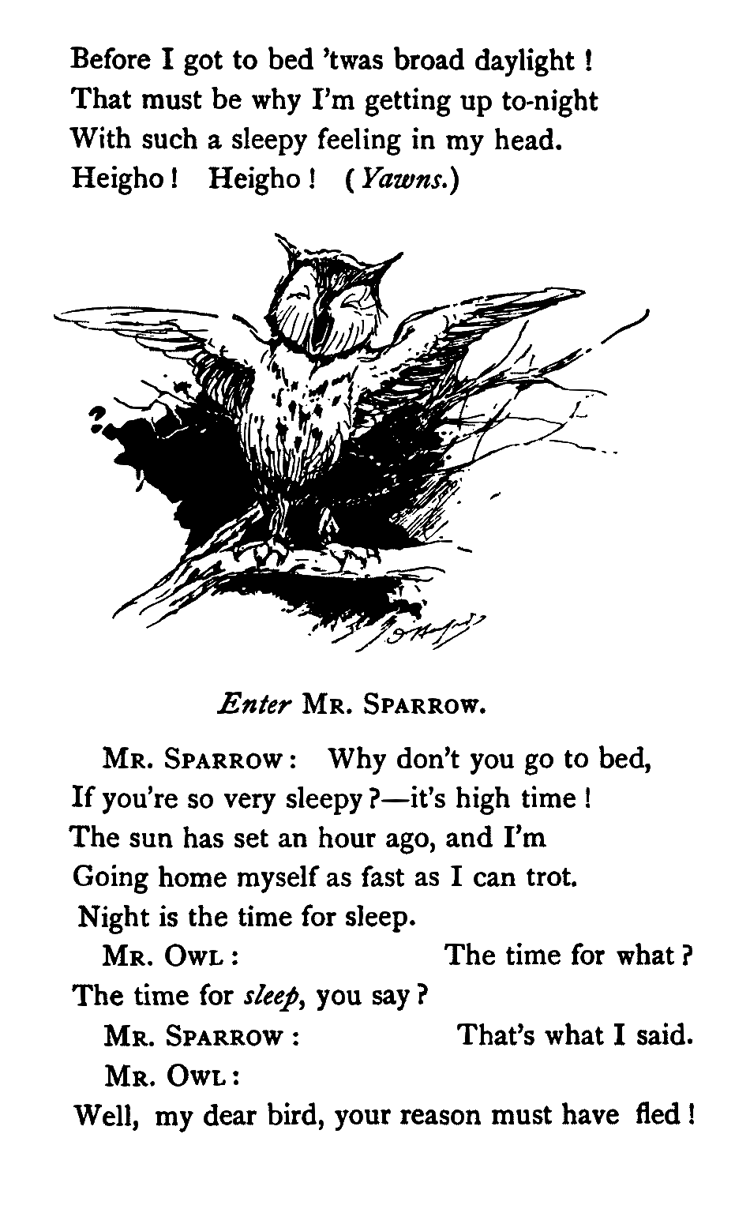
[Pg 83]Before I got to bed ’twas broad daylight!
That must be why I’m getting up to-night
With such a sleepy feeling in my head.
Heigho! Heigho! (Yawns.)

Enter Mr. Sparrow.

Mr. Sparrow:
Why don’t you go to bed,
If you’re so very sleepy?—it’s high time!
The sun has set an hour ago, and I’m
Going home myself as fast as I can trot.
Night is the time for sleep.

Mr. Owl:
The time for what?
The time for sleep, you say?

Mr. Sparrow:
That’s what I said.

Mr. Owl:
Well, my dear bird, your reason must have fled!

[Pg 84]

Mr. Sparrow (icily):
I do not catch your meaning quite, I fear.

Mr. Owl:
I mean you’re talking nonsense. Is that clear?

Mr. Sparrow (angrily):
Say that again—again, sir, if you dare!
Say it again!

Mr. Owl:
As often as you care.
You’re talking nonsense—stuff and nonsense—there!

Mr. Sparrow (hopping one twig higher up):
You are a coward, sir, and impolite!

(hopping on a still higher twig)

And if you weren’t beneath me I would fight.

Mr. Owl:
I am beneath you, true enough, my friend,
By just two branches. Will you not descend?
Or shall I—

Mr. Sparrow (hastily):
No, don’t rise. Tell me instead
What was the nonsense that you thought I said.

Mr. Owl:
It may be wrong, but if I heard aright,
You said the proper time for sleep was night.

Mr. Sparrow:
That’s what I said, and I repeat it too!

[Pg 85]

Mr. Owl:
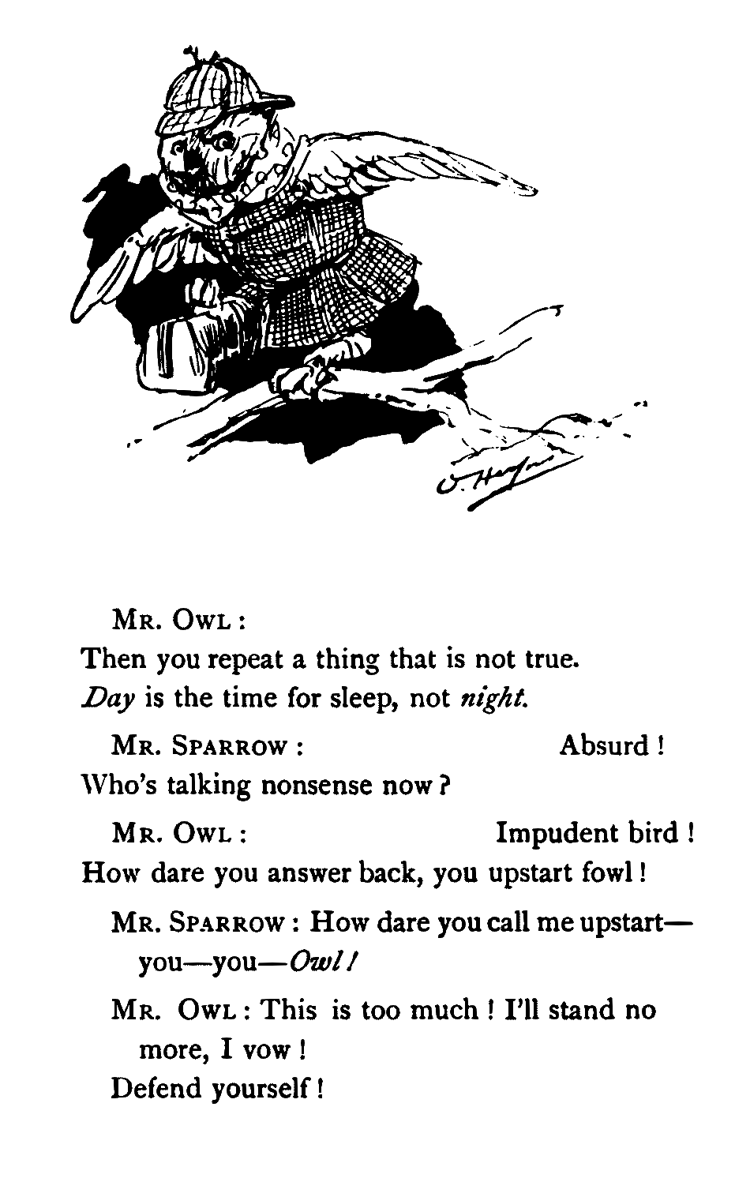
Then you repeat a thing that is not true.
Day is the time for sleep, not night.

Mr. Sparrow:
Absurd!
Who’s talking nonsense now?

Mr. Owl:
Impudent bird!
How dare you answer back, you upstart fowl!

Mr. Sparrow:
How dare you call me upstart—you—you—Owl!

Mr. Owl:
This is too much! I’ll stand no more, I vow!
Defend yourself!

[Pg 86]

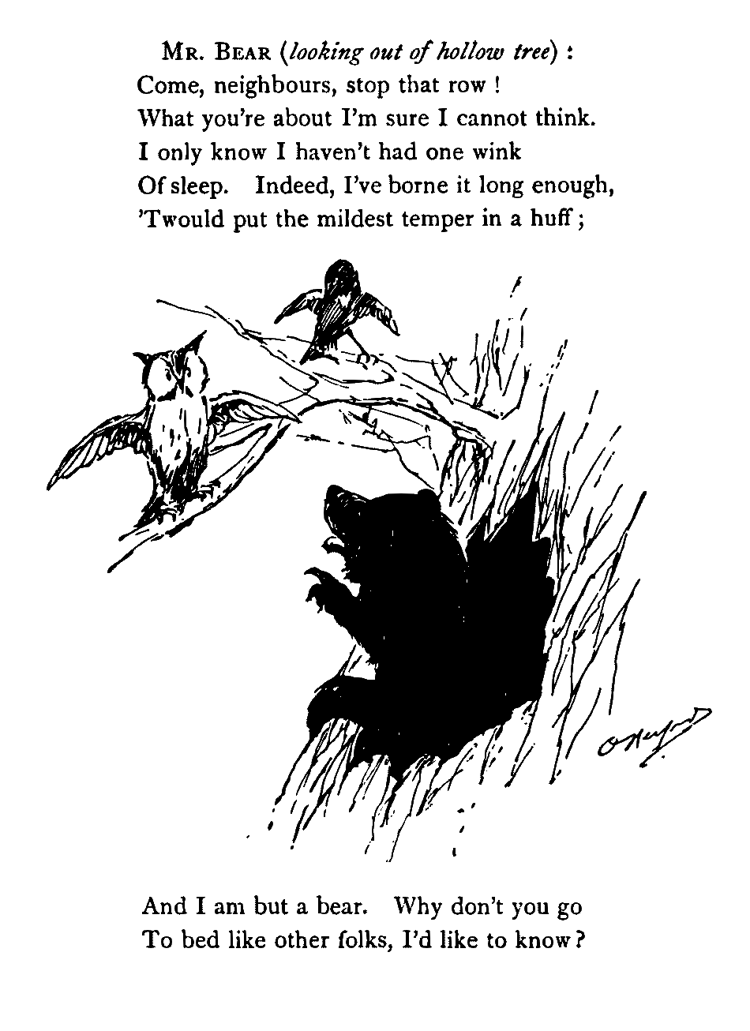
Mr. Bear (looking out of hollow tree):
Come, neighbours, stop that row!
What you’re about I’m sure I cannot think.
I only know I haven’t had one wink
Of sleep. Indeed, I’ve borne it long enough,
’Twould put the mildest temper in a huff;
And I am but a bear. Why don’t you go
To bed like other folks, I’d like to know?
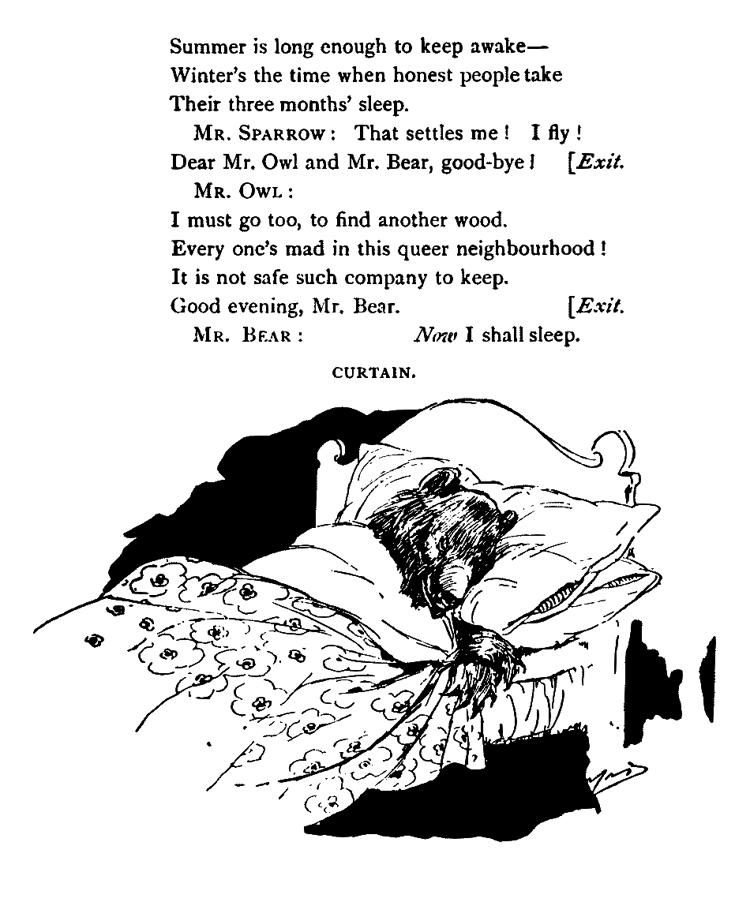
[Pg 87]Summer is long enough to keep awake—
Winter’s the time when honest people take
Their three months’ sleep.

Mr. Sparrow:
That settles me! I fly!
Dear Mr. Owl and Mr. Bear, good-bye!        [Exit.

Mr. Owl:
I must go too, to find another wood.
Every one’s mad in this queer neighbourhood!
It is not safe such company to keep.
Good evening, Mr. Bear.                               [Exit.

Mr. Bear:
Now I shall sleep.

CURTAIN.


[Pg 88]
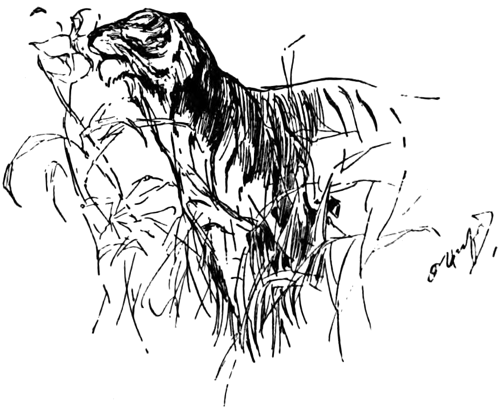
THE LEGEND OF THE LILY

Once a Tiger for a freak,
Fell in love
With a Lily, pure and meek
And as timid, white, and weak,
As a dove.
Yet withal a wee bit chilly,
Just enough the Tiger’s silly
Pride to pique.
[Pg 89]
By-and-by the Lily cold,
Felt the charm;
Learned, though dreadful to behold,
That the Tiger, fierce and bold,
Meant no harm.
And she smiled upon him shyly,
Till at length the Tiger wily,
Was consoled.
So in time the Beauty grew
To adore
The Royal Beast who came to woo,
Loved him for his golden hue—
For his roar;
All for him with blushes burning,
To a Tiger-lily turning,
Golden too.
But alas, the luckless Lily,
Loved in vain;
For a painted daffodilly
Came between them, and the Lily,
Pale with pain,
In a dark pool, drooped and pining,
Drowned herself, and rose a shining
Water-lily.

[Pg 90]

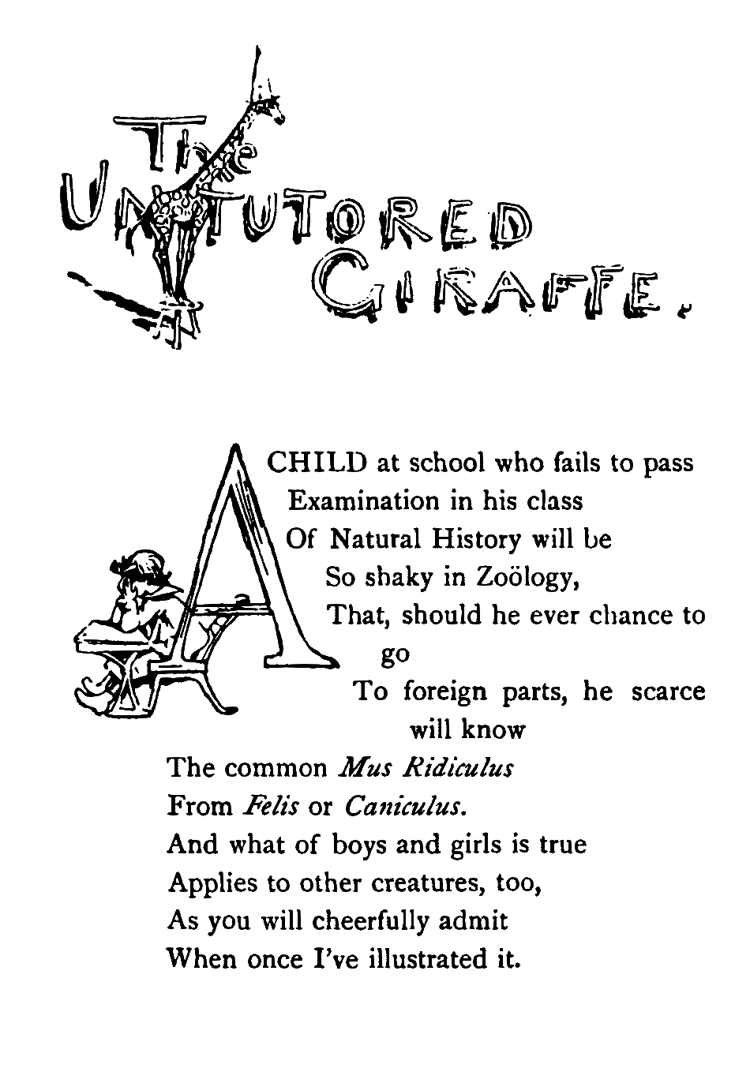
THE UNTUTORED GIRAFFE

A child at school who fails to pass
Examination in his class
Of Natural History will be
So shaky in Zoölogy,
That, should he ever chance to go
To foreign parts, he scarce will know
The common Mus Ridiculus
From Felis or Caniculus.
And what of boys and girls is true
Applies to other creatures, too,
As you will cheerfully admit
When once I’ve illustrated it.
[Pg 91]
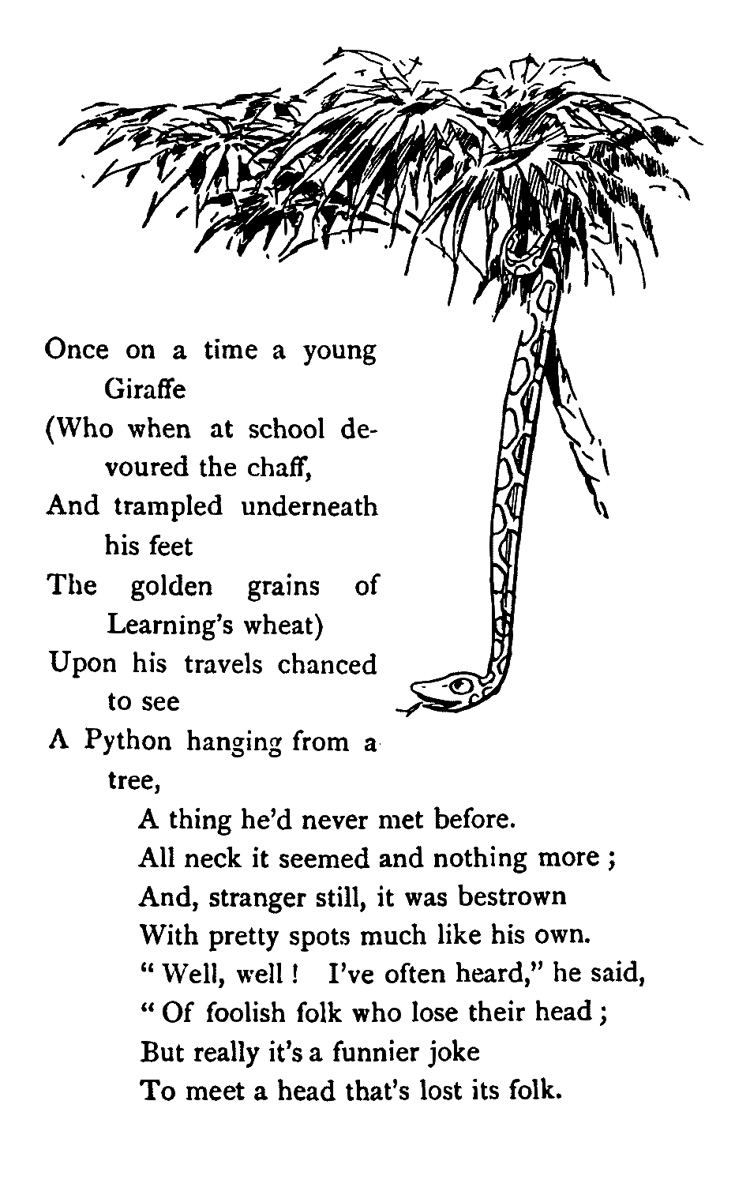
Once on a time a young Giraffe
(Who when at school at school devoured the chaff,
And trampled underneath his feet
The golden grains of Learning’s wheat)
Upon his travels chanced to see
A Python hanging from a tree,
A thing he’d never met before.
All neck it seemed and nothing more;
And, stranger still, it was bestrown
With pretty spots much like his own.
“Well, well! I’ve often heard,” he said,
“Of foolish folk who lose their head;
But really it’s a funnier joke
To meet a head that’s lost its folk.
[Pg 92]
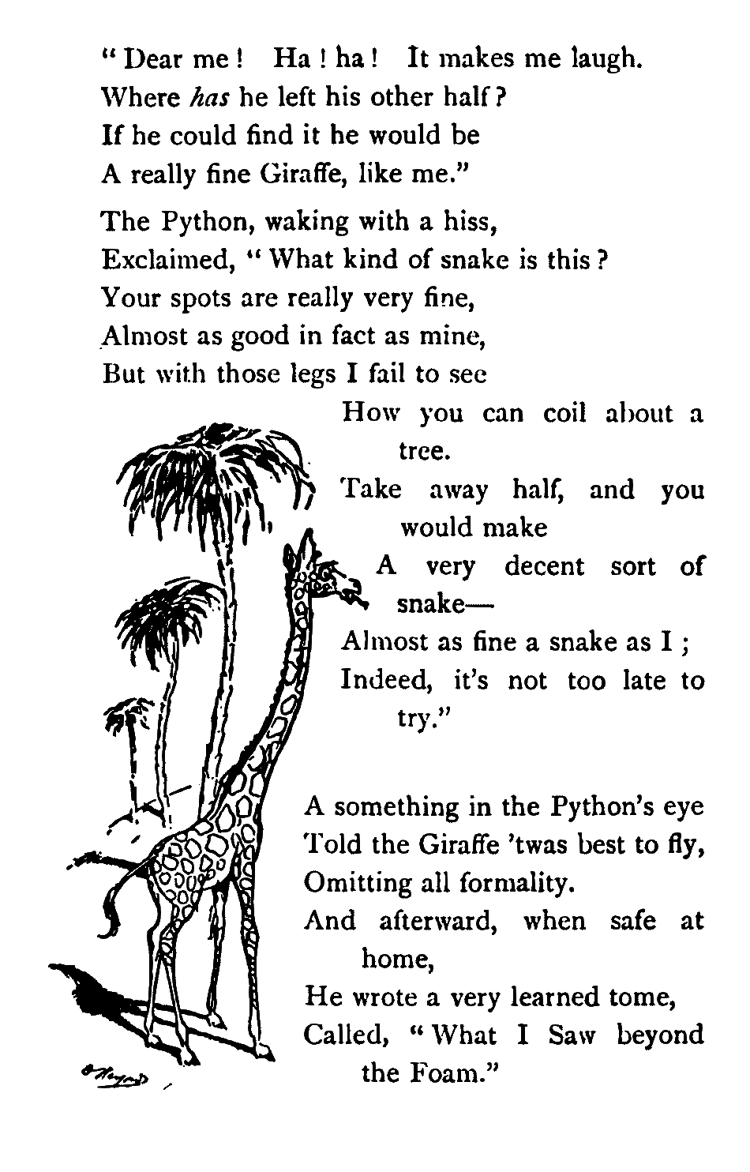
Dear me! Ha! ha! It makes me laugh.
Where has he left his other half?
If he could find it he would be
A really fine Giraffe, like me.”
The Python, waking with a hiss,
Exclaimed, “What kind of snake is this?
Your spots are really very fine,
Almost as good in fact as mine,
But with those legs I fail to see
How you can coil about a tree.
Take away half, and you would make
A very decent sort snake—
Almost as fine a snake as I;
Indeed, it’s not too late to try.”
A something in the Python’s eye
Told the Giraffe ’twas best to fly,
Omitting all formality.
And afterward, when safe at home,
He wrote a very learned tome,
Called, “What I Saw beyond the Foam.”
[Pg 93]
Said he, “The strangest thing one sees
Is a Giraffe who hangs from trees,
And has—(right here the author begs
To state a fact) and has no legs!”
The book made a tremendous hit.
The public all devoured it,
Save one, who, minding how he missed
Devouring the author—hissed.

[Pg 94]

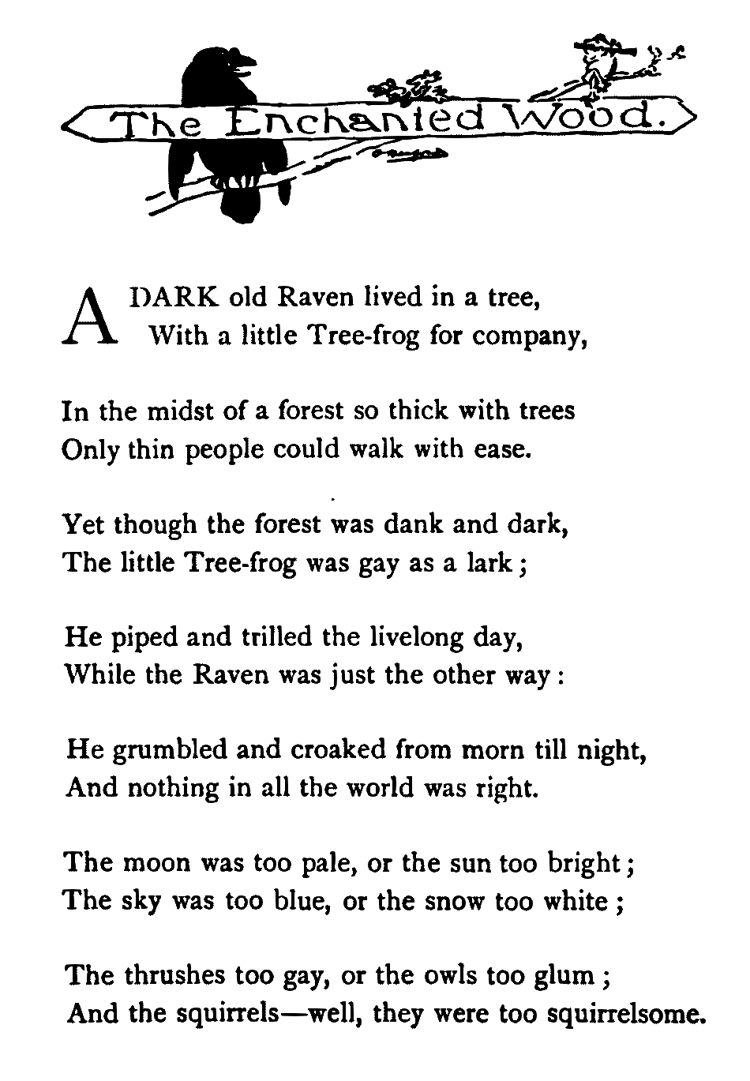
THE ENCHANTED WOOD

A dark old Raven lived in a tree,
With a little Tree-frog for company,
In the midst of a forest so thick with trees
Only thin people could walk with ease.
Yet though the forest was dank and dark,
The little Tree-frog was gay as a lark;
He piped and trilled the livelong day,
While the Raven was just the other way:
He grumbled and croaked from morn till night,
And nothing in all the world was right.
The moon was too pale, or the sun too bright;
The sky was too blue, or the snow too white;
The thrushes too gay, or the owls too glum;
And the squirrels—well, they were too squirrelsome.
[Pg 95]
And as for the trees, why did they grow
In a wood, of all places?—he’d like to know.
A wood is so dark and unhealthy, too,
For trees; and besides, they obstruct the view.
And so it went on from morn till night:
The Tree-frog piping with pure delight,
And the Raven croaking with all his might
That nothing in all the world was right.
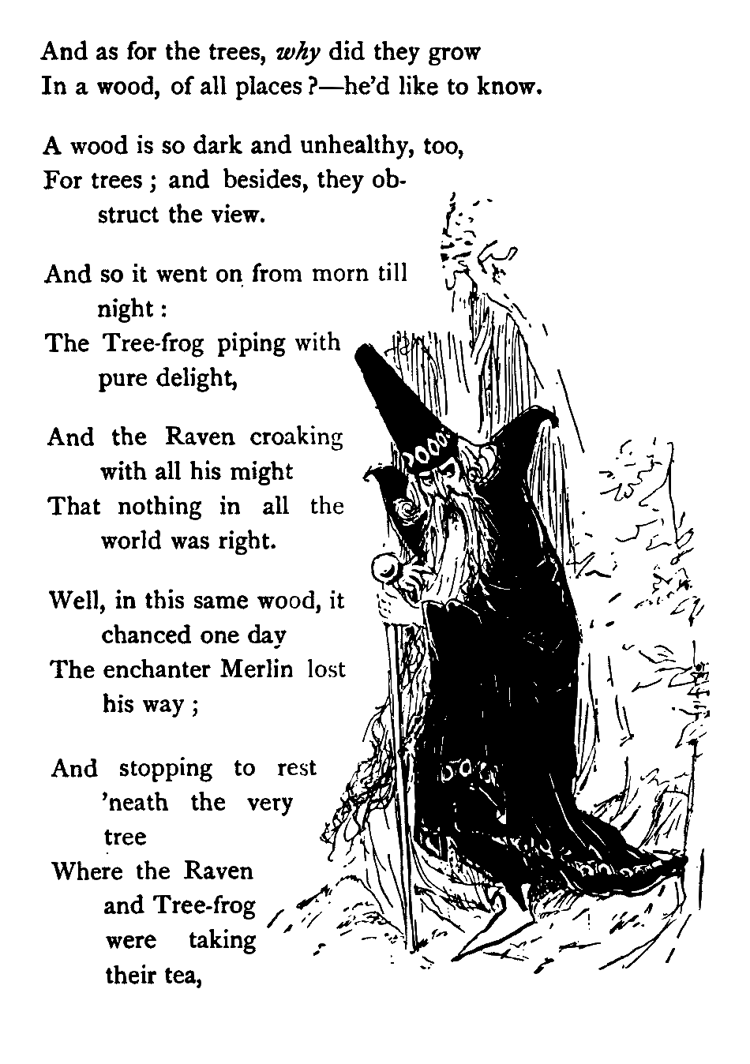
Well, in this same wood, it chanced one day
The enchanter Merlin lost his way;
And stopping to rest ’neath the very tree
Where the Raven and Tree-frog were taking their tea,
[Pg 96]
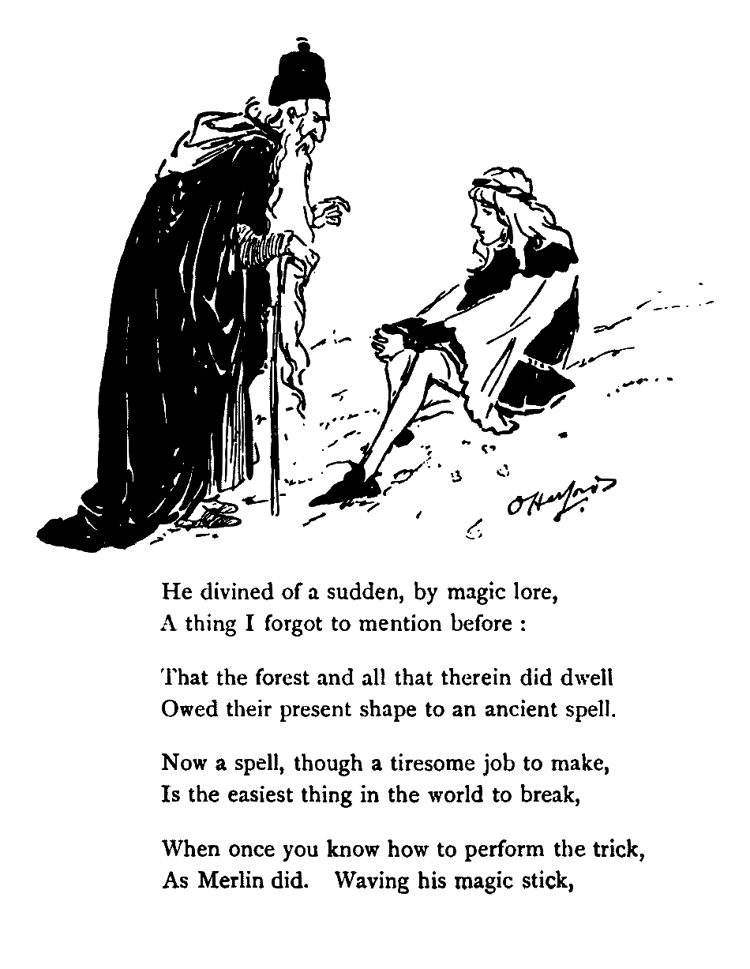
He divined of a sudden, by magic lore,
A thing I forgot to mention before:
That the forest and all that therein did dwell
Owed their present shape to an ancient spell.
Now a spell, though a tiresome job to make,
Is the easiest thing in the world to break,
When once you know how to perform the trick,
As Merlin did. Waving his magic stick,
[Pg 97]
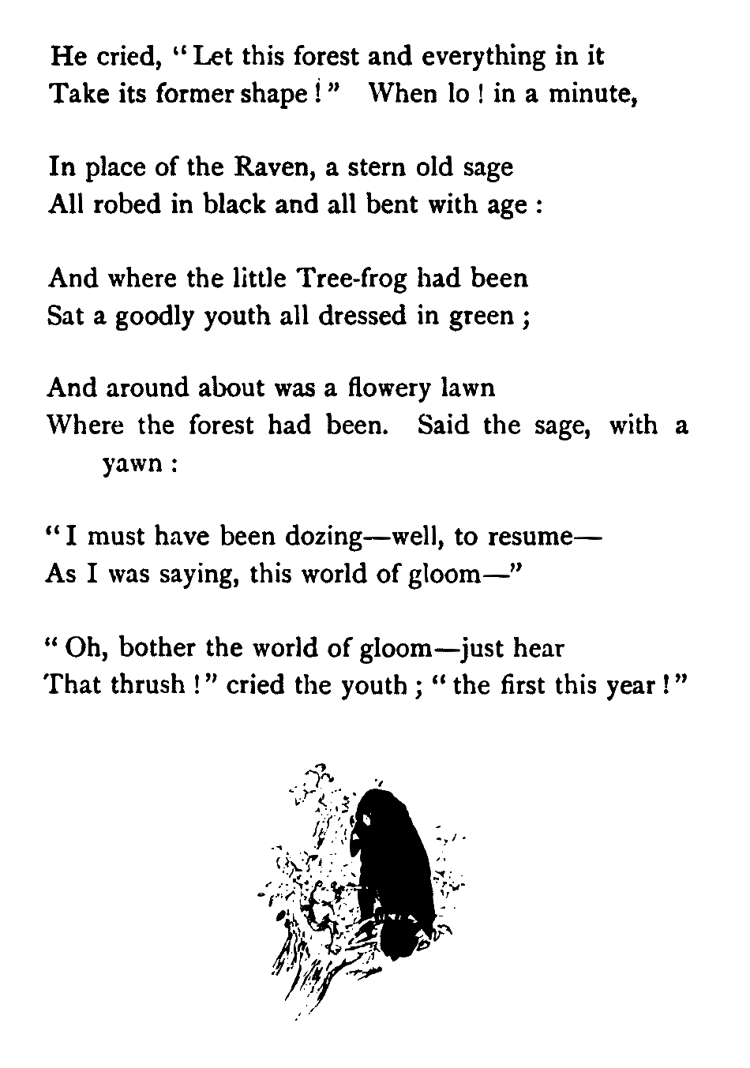
He cried, “Let this forest and everything in it
Take its former shape!” When lo! in a minute,
In place of the Raven, a stern old sage
All robed in black and all bent with age:
And where the little Tree-frog had been
Sat a goodly youth all dressed in green;
And around about was a flowery lawn
Where the forest had been. Said the sage, with a yawn:
“I must have been dozing—well, to resume—
As I was saying, this world of gloom—”
“Oh, bother the world of gloom—just hear
That thrush!” cried the youth; “the first this year!”

[Pg 98]

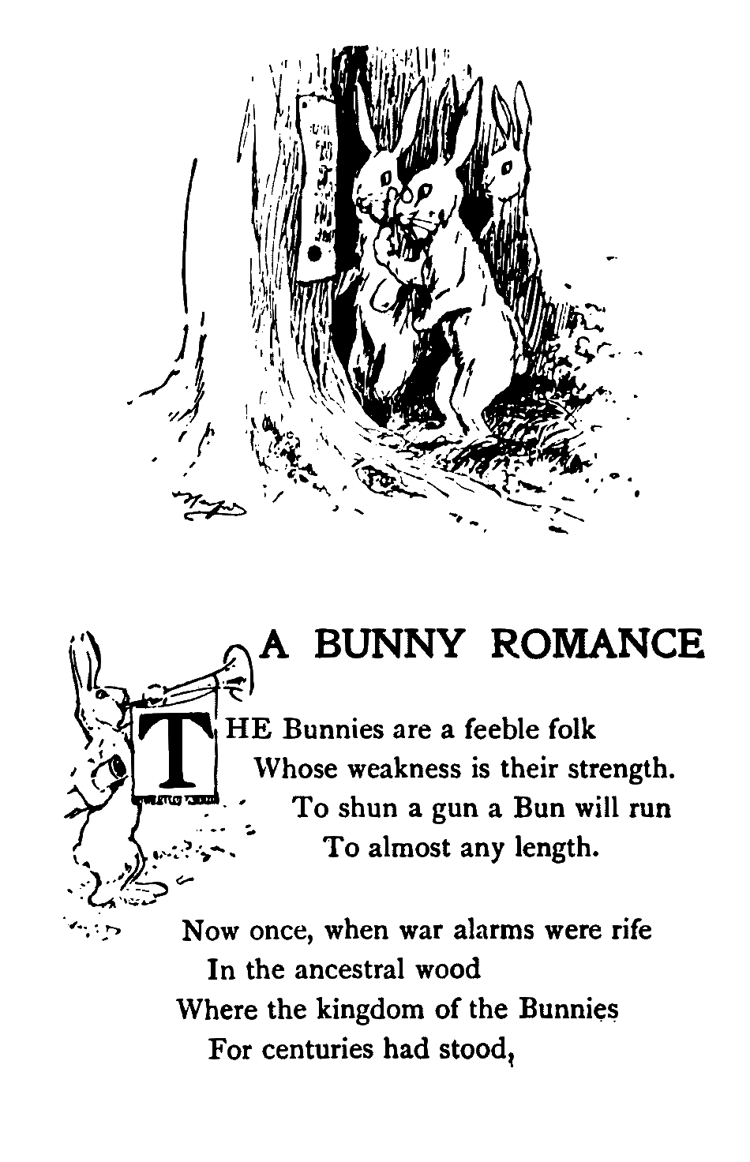
A BUNNY ROMANCE

The Bunnies are a feeble folk
Whose weakness is their strength.
To shun a gun a Bun will run
To almost any length.
Now once, when war alarms were rife
In the ancestral wood
Where the kingdom of the Bunnies
For centuries had stood,
[Pg 99]
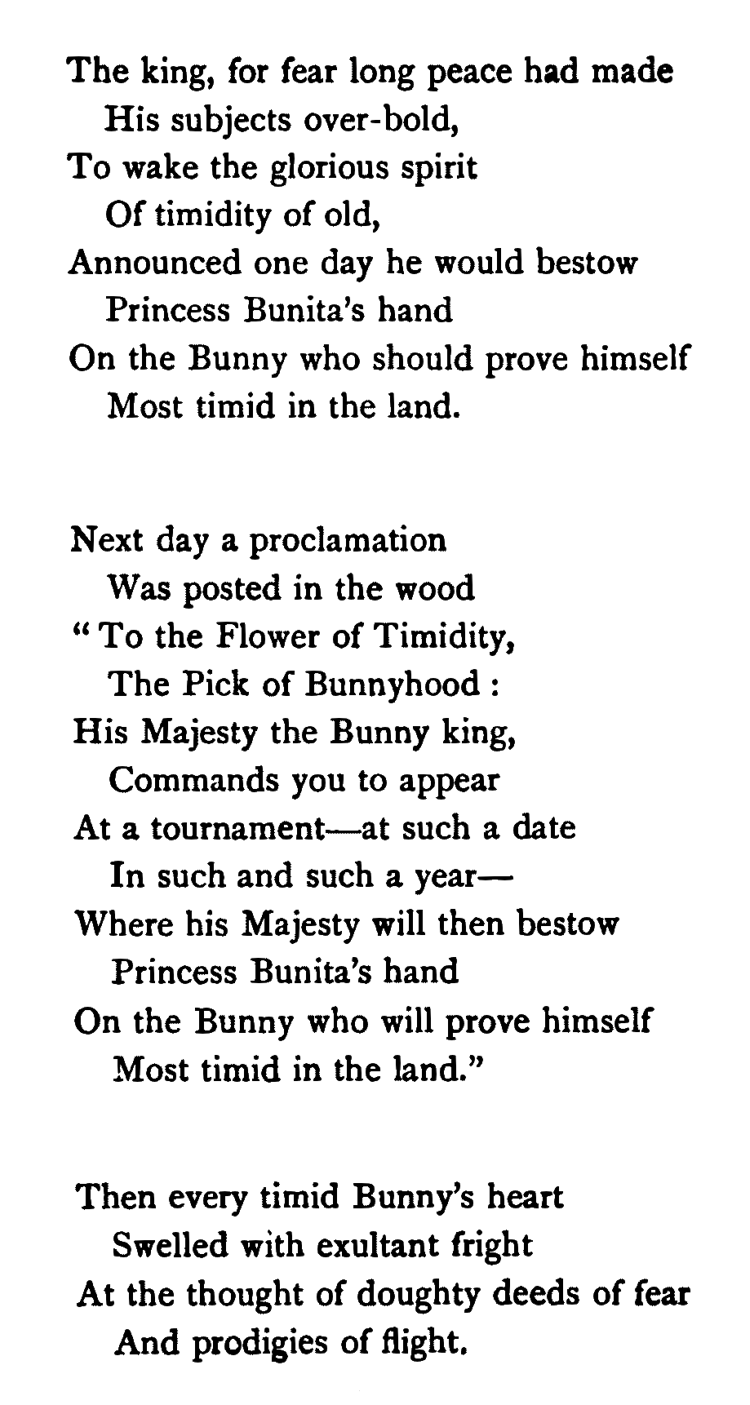
The king, for fear long peace had made
His subjects over-bold,
To wake the glorious spirit
Of timidity of old,
Announced one day he would bestow
Princess Bunita’s hand
On the Bunny who should prove himself
Most timid in the land.
Next day a proclamation
Was posted in the wood
“To the Flower of Timidity,
The Pick of Bunnyhood:
His Majesty the Bunny king,
Commands you to appear
At a tournament—at such a date
In such and such a year—
Where his Majesty will then bestow
Princess Bunita’s hand
On the Bunny who will prove himself
Most timid in the land.”
Then every timid Bunny’s heart
Swelled with exultant fright
At the thought of doughty deeds of fear
And prodigies of flight.
[Pg 100]
For the motto of the Bunnies,
As perhaps you are aware,
Is “Only the faint-hearted
Are deserving of the fair.”
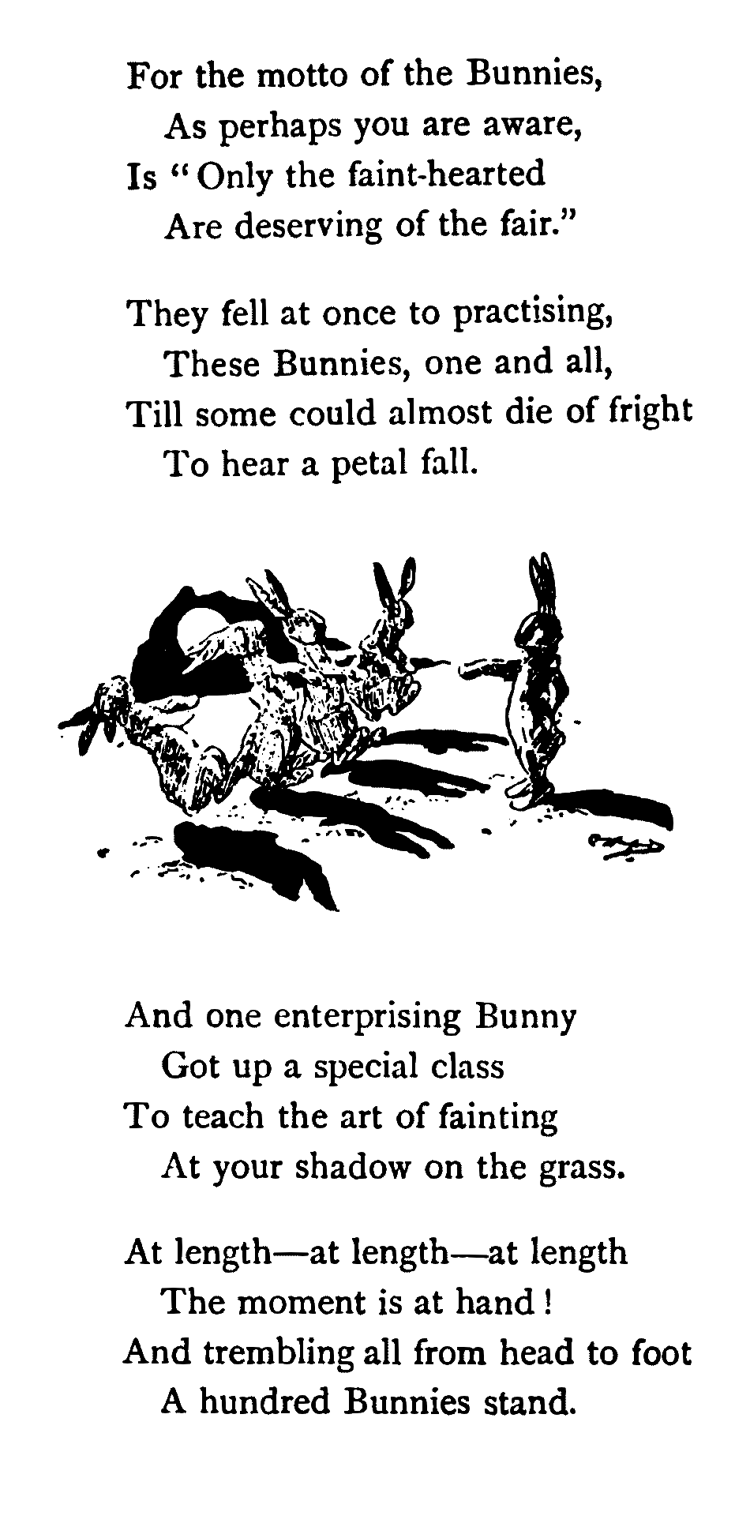
They fell at once to practising,
These Bunnies, one and all,
Till some could almost die of fright
To hear a petal fall.
And one enterprising Bunny
Got up a special class
To teach the art of fainting
At your shadow on the grass.
At length—at length—at length
The moment is at hand!
And trembling all from head to foot
A hundred Bunnies stand.
[Pg 101]
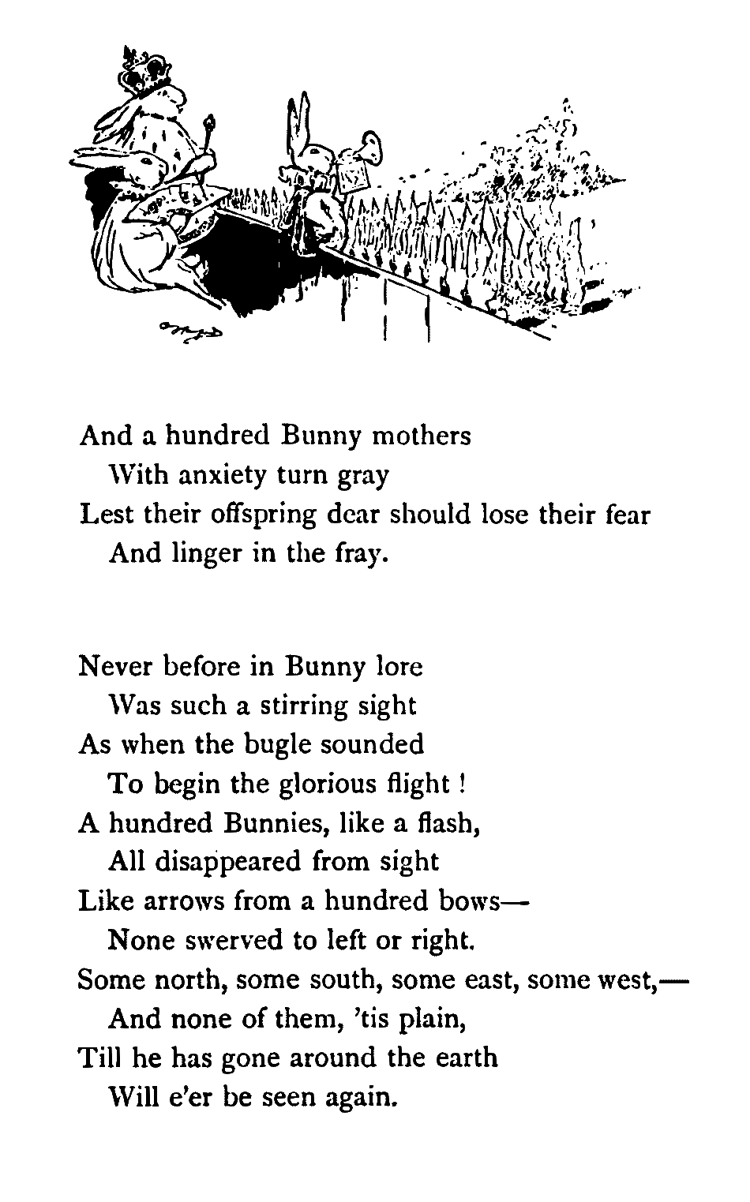
And a hundred Bunny mothers
With anxiety turn gray
Lest their offspring dear should lose their fear
And linger in the fray.
Never before in Bunny lore
Was such a stirring sight
As when the bugle sounded
To begin the glorious flight!
A hundred Bunnies, like a flash,
All disappeared from sight
Like arrows from a hundred bows—
None swerved to left or right.
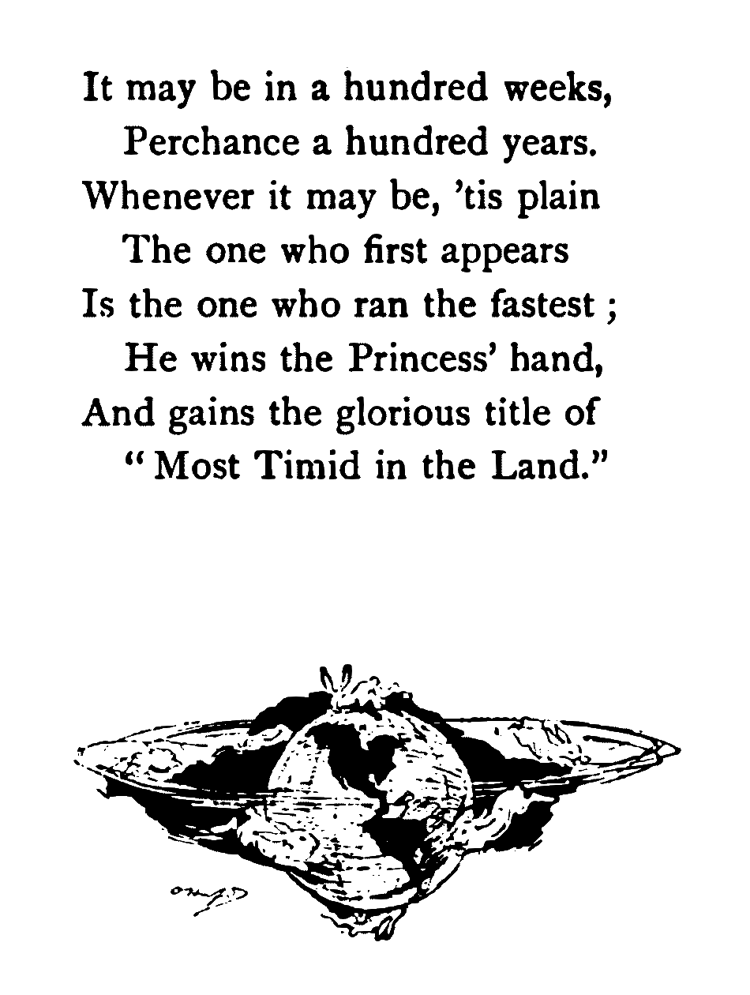
Some north, some south, some east, some west,—
And none of them, ’tis plain,
Till he has gone around the earth
Will e’er be seen again.
[Pg 102]
It may be in a hundred weeks,
Perchance a hundred years.
Whenever it may be, ’tis plain
The one who first appears
Is the one who ran the fastest;
He wins the Princess’ hand,
And gains the glorious title of
“Most Timid in the Land.”

[Pg 103]

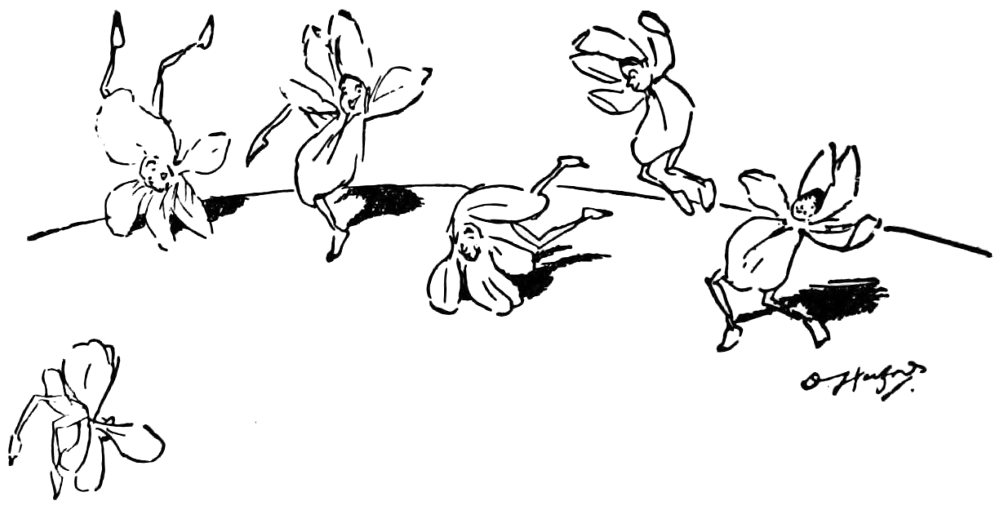
THE FLOWER CIRCUS

The flowers in the dell
Once gave a circus show;
And as I know them well,
They asked if I would go
As their especial guest.
“Quite charmed!” said I, and so
Put on my very best
Frock-coat and shiny hat,
[Pg 104]
And my embroidered vest
And wonderful cravat;
In fact, no end of style,
For it is, as you know,
But once in a great while
The flowers give a show.
They gave me a front seat,
The very nicest there—
A bank of violets sweet
And moss and maidenhair.
’Twas going to be a treat—
I felt it in the air.
As martial music crashed
From a trained trumpet-vine,
Into the ring there dashed
A beauteous columbine!
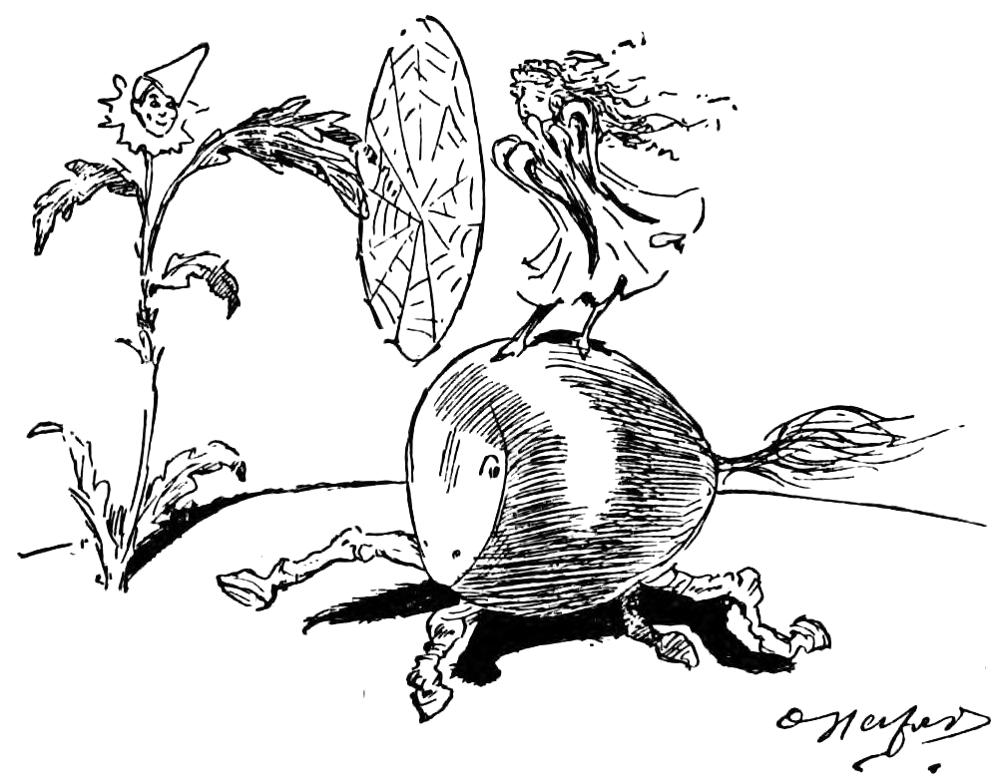
With airy grace she strode
Her wild horse-chestnut steed.
I held my breath, she rode
With such terrific speed.
They brought a cobweb ring,
And lightly she jumped through it.
(A very dangerous thing;
How did she learn to do it?)
[Pg 105]
I cried, “Brava! Encore!”
Until she’d jumped through nine,
Each higher than before.
(I tell you, it was fine!)
Then Jack-in-pulpit—who
From out his lofty place
Announced what each would do—
Cried, “Next there comes a race.”
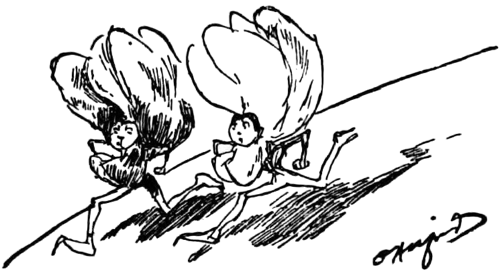
Two Scarlet Runners flew
Three times the ring around,
And with a crown of dew
The winner’s head was crowned.
A booby race, for fun,
Came next (the prize was cheaper).
Trailing Arbutus won
Over Virginia Creeper.
[Pg 106]
Then came the world-famed six,
The Johnny-jump-up Brothers,
Who did amazing tricks,
Each funnier than the others.
A Spider, in mid-air
(Engaged at great expense),
On tight-thread gossamer
Danced with a skill immense!
A dashing young Green Blade,
Who quickly followed suit,
An exhibition made
Of how young blades can shoot.
[Pg 107]
There were Harebell ringers, too,
Who played delightful tunes,
And trained Dog-violets, who
Did antics, like buffoons.
All these and more were there—
Too many for narration;
But nothing could compare
With the last “Great Sensation.”
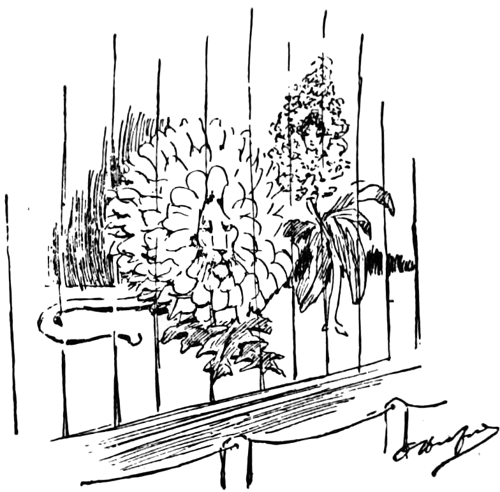
I never shall forget,
Though I should live an age,
The sight of Mignonette
Within the Lion’s cage.
[Pg 108]
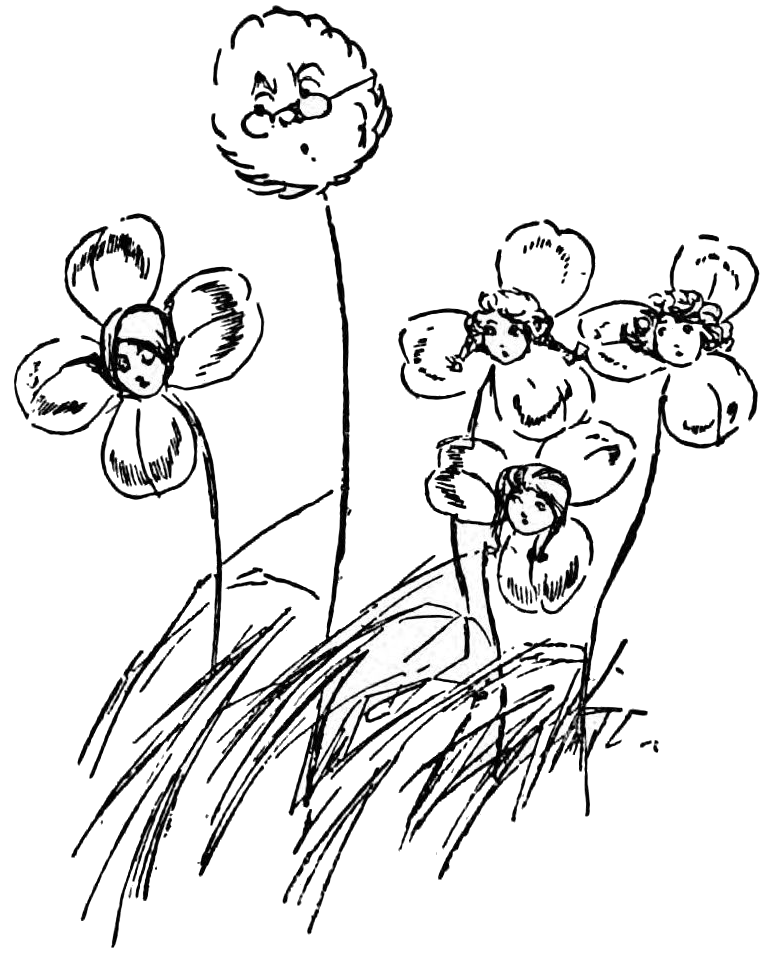
Sweet smiling Mignonette
Not one bit scared—for why on
Earth should she fear her pet,
Her dear, tame Dandelion?

[Pg 109]

THE FATUOUS FLOWER

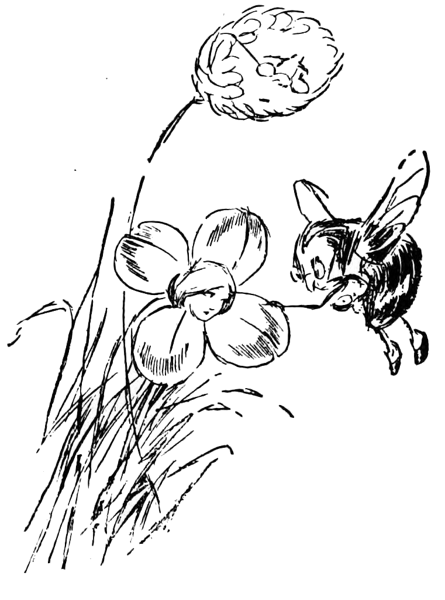
Once on a time a Bumblebee
Addressed a Sunflower. Said he:
“Dear Sunflower, tell me is it true
What everybody says of you?”
Replied the Sunflower: “Tell me pray,
How should I know what people say?
Why should I even care? No doubt
’Tis some ill-natured tale without
A word of truth; but tell me, Bee,
What is it people say of me?”
“Oh, no!” the Bee made haste to add;
“’Tis really not so very bad.
I got it from the Ant. She said
She’d heard the Sun had turned your head,
[Pg 110]
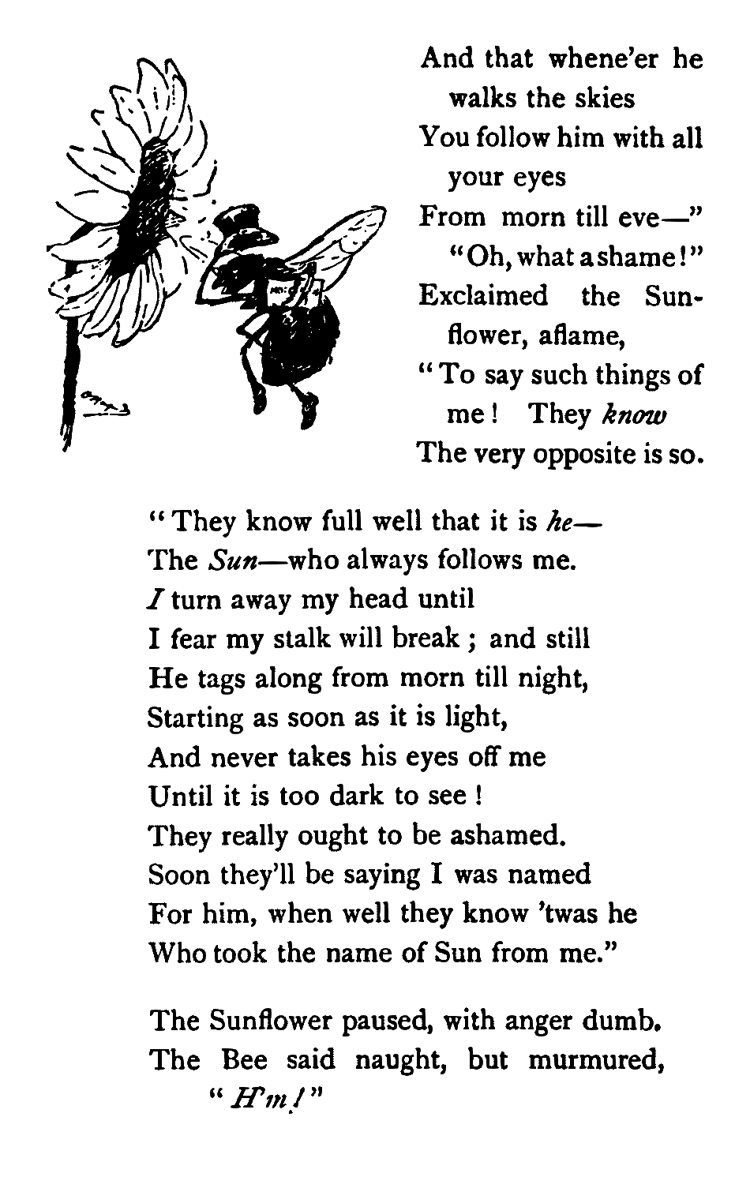
“And that whene’er he walks the skies
You follow him with all your eyes
From morn till eve—” “Oh, what a shame!”
Exclaimed the Sunflower, aflame,
“To say such things of me! They know
The very opposite is so.
“They know full well that it is he
The Sun—who always follows me.
I turn away my head until
I fear my stalk will break; and still
He tags along from morn till night,
Starting as soon as it is light,
And never takes his eyes off me
Until it is too dark to see!
They really ought to be ashamed.
Soon they’ll be saying I was named
For him, when well they know ’twas he
Who took the name of Sun from me.”
The Sunflower paused, with anger dumb.
The Bee said naught, but murmured, “H’m!
[Pg 111]
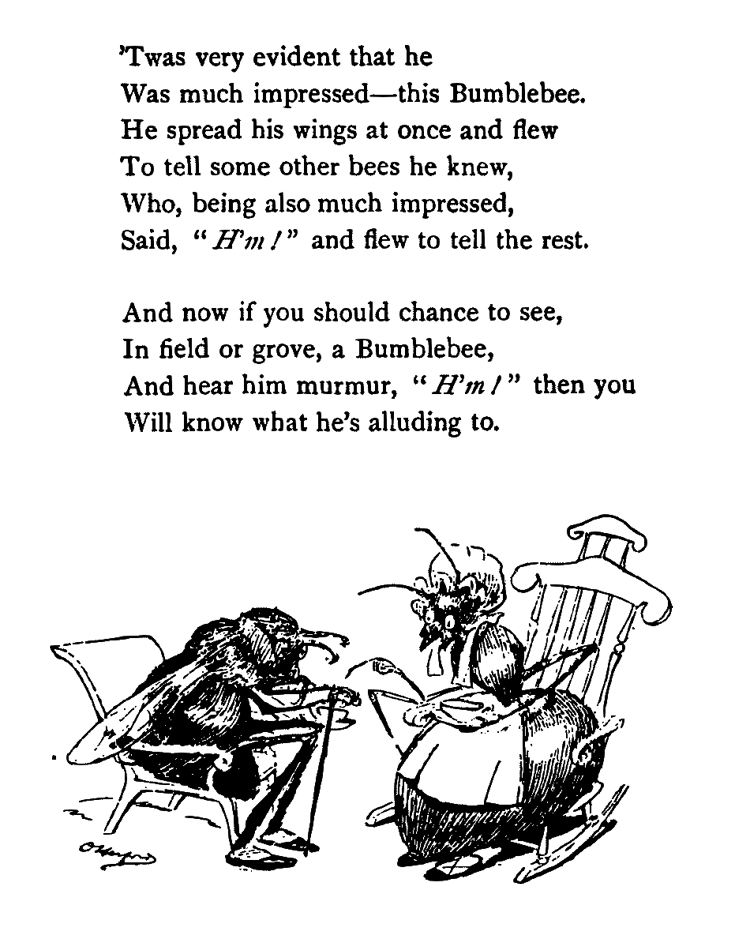
’Twas very evident that he
Was much impressed—this Bumblebee.
He spread his wings at once and flew
To tell some other bees he knew,
Who, being also much impressed,
Said, “H’m!” and flew to tell the rest.
And now if you should chance to see,
In field or grove, a Bumblebee,
And hear him murmur, “H’m!” then you
Will know what he’s alluding to.

[Pg 112]

THE INVENTIVE DRAGON

In a very lonely tower,
So the legend goes to tell,
Pines a Princess in the power
Of a dreadful Dragon’s spell.
There she sits in silent state,
Always watching—always dumb,
While the Dragon at the gate
Eats her suitors as they come—
King and Prince of every nation,
Poet, Page, and Troubadour,
Of whatever rank or station—
Eats them up and waits for more.
Every Knight that hears the legend
Thinks he’ll see what he can do,
Gives his sword a lovely edge, and—
Like the rest is eaten too!
[Pg 113]
All of which is very pretty,
And romantic, too, forsooth;
But, somehow, it seems a pity
That they shouldn’t know the truth.
If they only knew that really
There is no Princess to gain—
That she’s an invention merely
Of the crafty Dragon’s brain.
Once it chanced he’d missed his dinner
For perhaps a day or two;
Felt that he was getting thinner,
Wondered what he’d better do.
Then it was that he bethought him
How in this romantic age
(Reading fairy tales had taught him)
Rescuing ladies was the rage.
So a lonely tower he rented,
For a trifling sum per year,
And this thrilling tale invented,
Which was carried far and near;
[Pg 114]
Far and near throughout the nations,
And the Dragon ever since,
Has relied for daily rations,
On some jolly Knight or Prince.
And while his romantic fiction
To a chivalrous age appeals,
It’s a very safe prediction:
He will never want for meals.

[Pg 115]


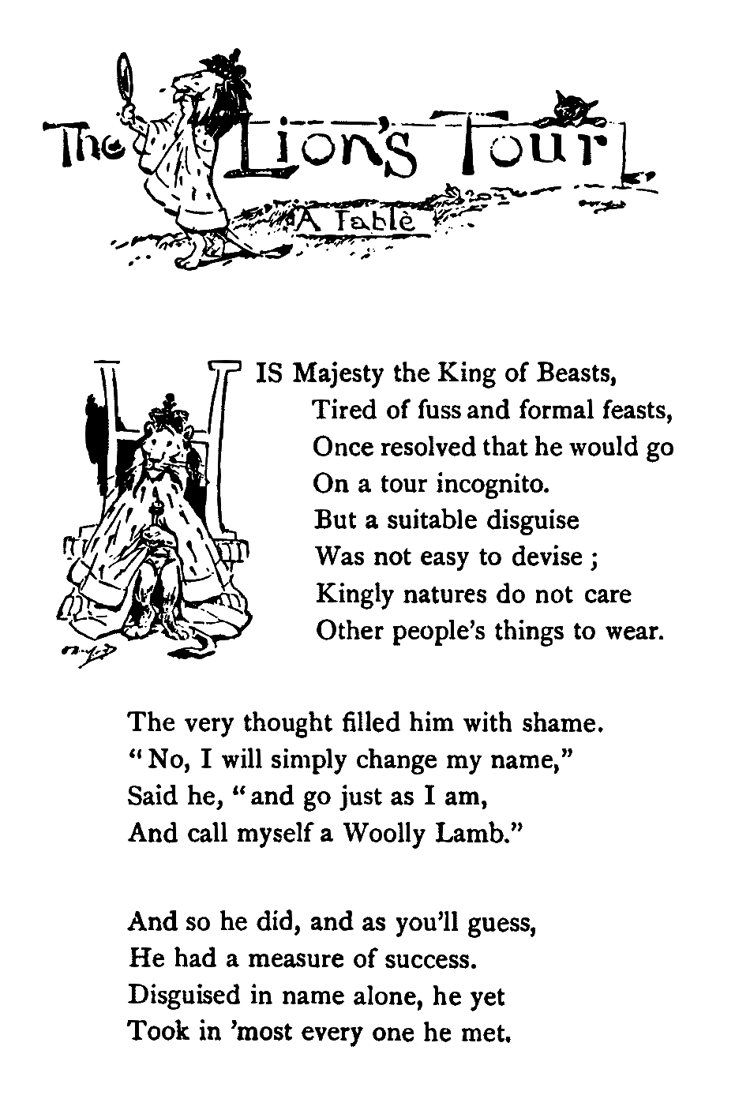
THE LION’S TOUR

A FABLE

His Majesty the King of Beasts,
Tired of fuss and formal feasts,
Once resolved that he would go
On a tour incognito.
But a suitable disguise
Was not easy to devise;
Kingly natures do not care
Other people’s things to wear.
The very thought filled him with shame.
“No, I will simply change my name,”
Said he, “and go just as I am,
And call myself a Woolly Lamb.”
And so he did, and as you’ll guess,
He had a measure of success.
Disguised in name alone, he yet
Took in ’most every one he met.
[Pg 116]
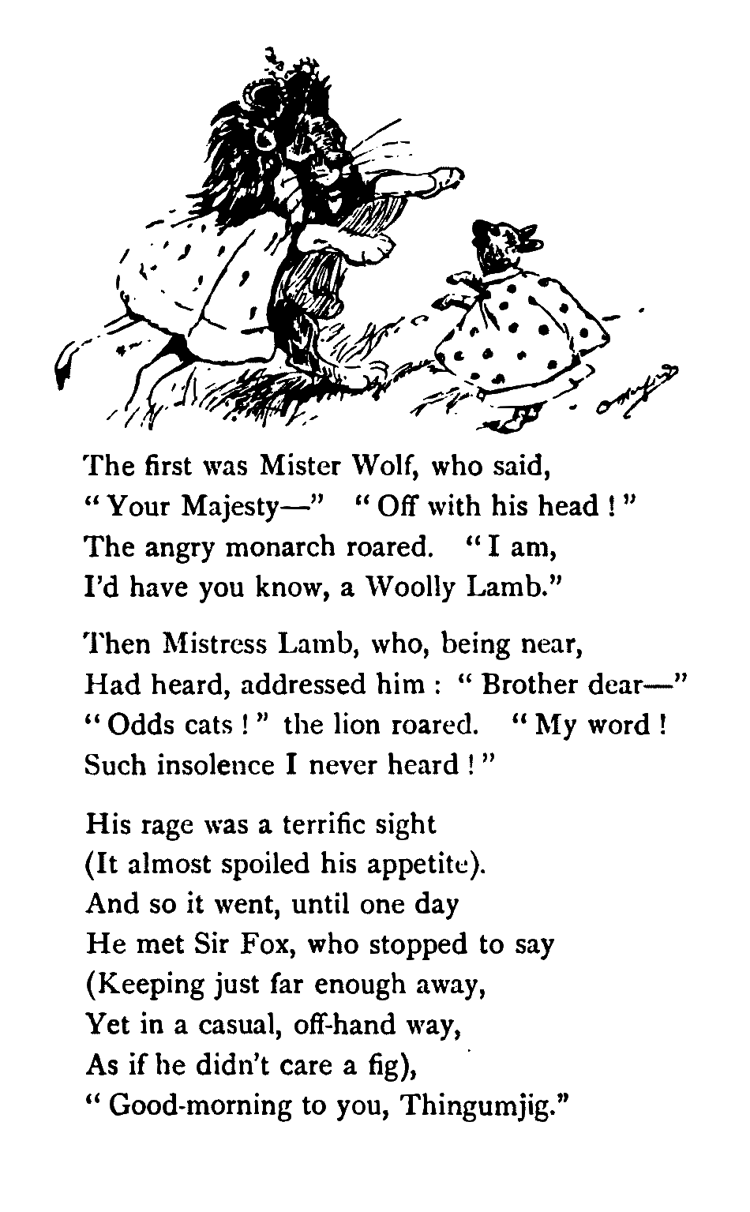
The first was Mister Wolf, who said,
“Your Majesty—” “Off with his head!”
The angry monarch roared. “I am,
I’d have you know, a Woolly Lamb.”
Then Mistress Lamb, who, being near,
Had heard, addressed him: “Brother dear—”
“Odds cats!” the lion roared. “My word!
Such insolence I never heard!”
His rage was a terrific sight
(It almost spoiled his appetite).
And so it went, until one day
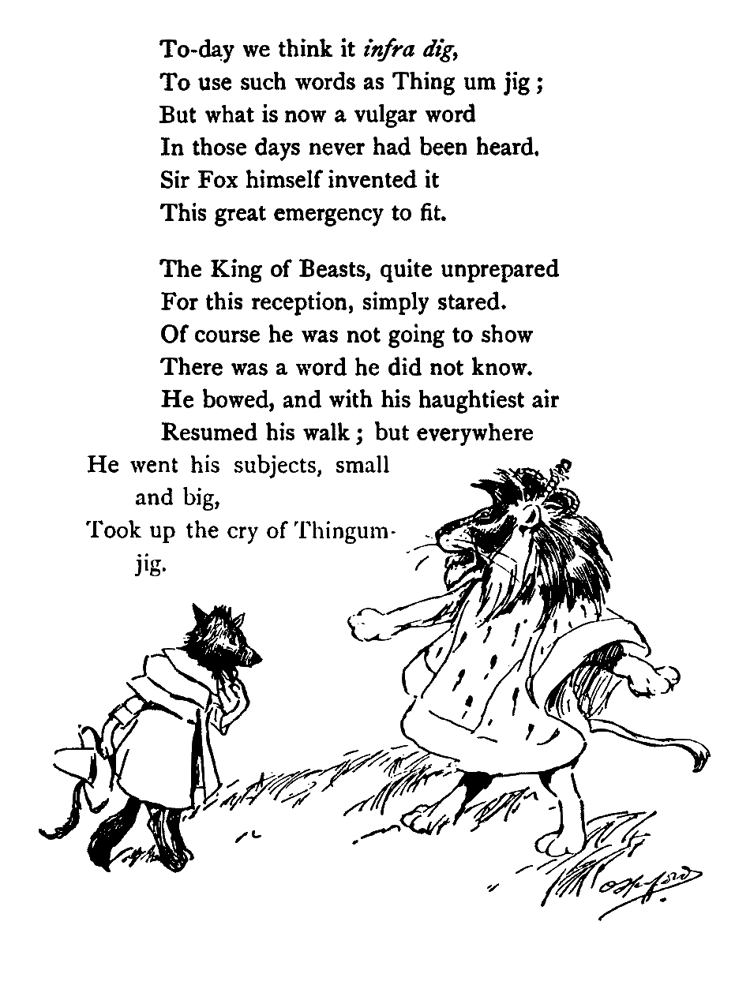
He met Sir Fox, who stopped to say
(Keeping just far enough away,
Yet in a casual, off-hand way,
As if he didn’t care a fig),
“Good-morning to you, Thingumjig.”
[Pg 117]
To-day we think it infra dig,
To use such words as Thing um jig;
But what is now a vulgar word
In those days never had been heard.
Sir Fox himself invented it
This great emergency to fit.
The King of Beasts, quite unprepared
For this reception, simply stared.
Of course he was not going to show
There was a word he did not know.
He bowed, and with his haughtiest air
Resumed his walk; but everywhere
He went his subjects, small and big,
Took up the cry of Thingumjig.
[Pg 118]
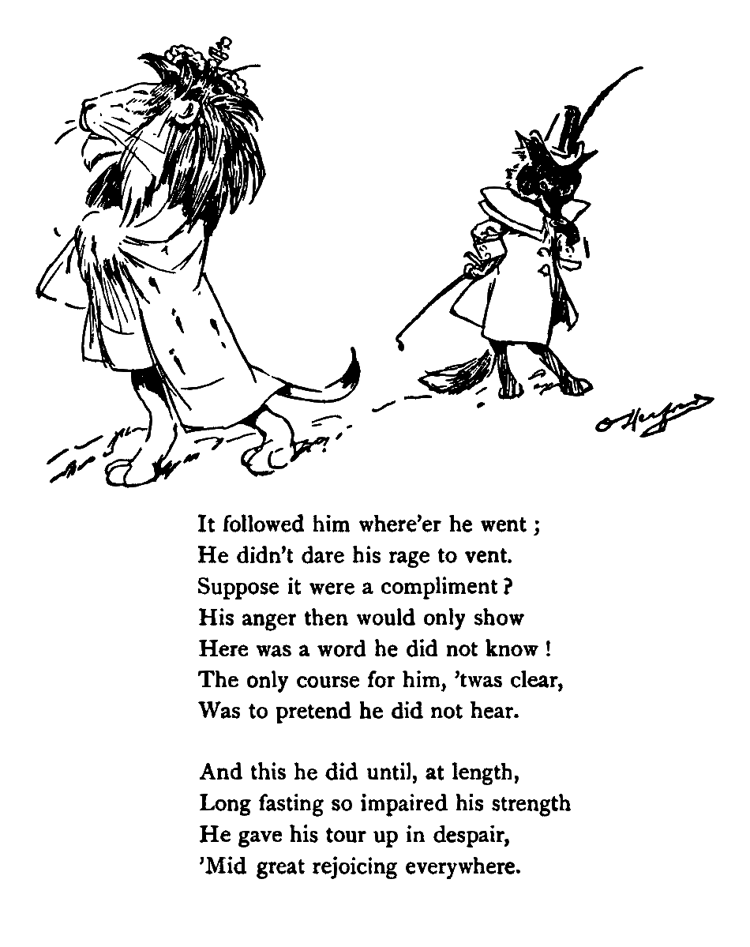
It followed him where’er he went;
He didn’t dare his rage to vent.
Suppose it were a compliment?
His anger then would only show
Here was a word he did not know!
The only course for him, ’twas clear,
Was to pretend he did not hear.
And this he did until, at length,
Long fasting so impaired his strength
He gave his tour up in despair,
’Mid great rejoicing everywhere.

[Pg 119]

THE MERMAID CLUB

The Mermaid Culture Club request
That you will kindly be
On such and such a day their guest
At something after three.
I wrote at once that “I should be
Most charmed,” and donned my best
Dress diving-suit,—a joy to see,—
And at their club-house ’neath the sea
Arrived at “something after three”
Promptly (unpunctuality
Is something I detest).
The President, a mermaid fair,
Sat by a coral table,
And read an essay with an air
Intelligent and able
Upon—but you will never guess
The subject—it was nothing less
Than sunshades and umbrellas.
I really did my very best
To keep from laughing—as their guest.
That it was hard must be confessed

[Pg 120]

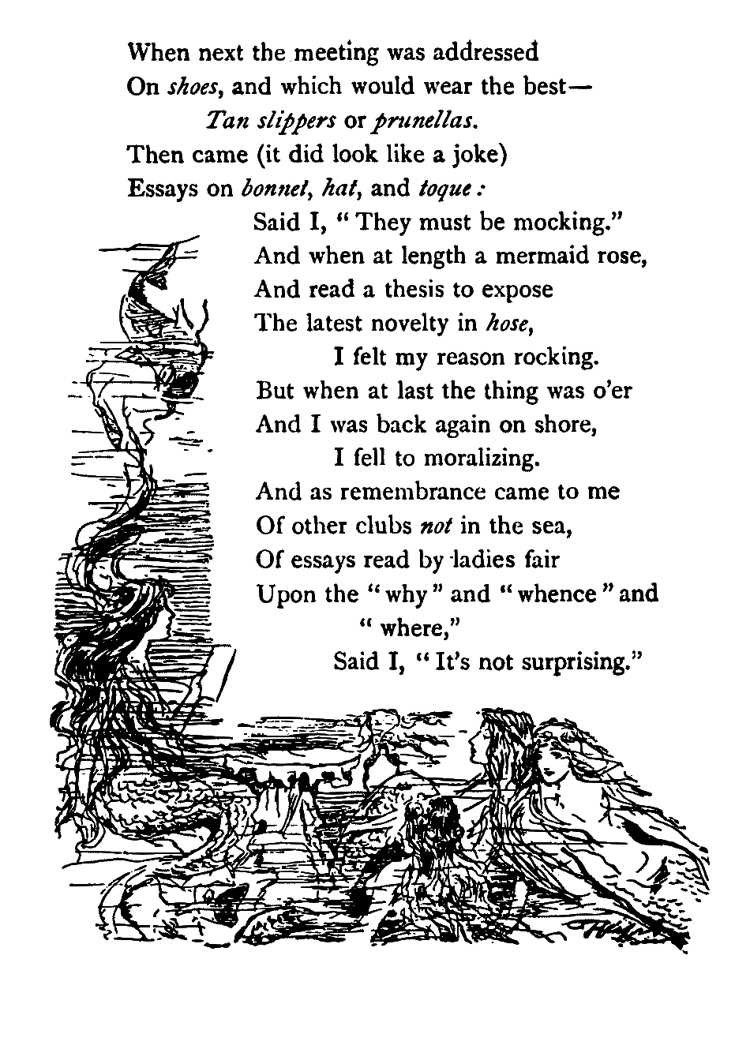
When next the meeting was addressed
On shoes, and which would wear the best—
Tan slippers or prunellas.
Then came (it did look like a joke)
Essays on bonnet, hat, and toque:
Said I, “They must be mocking.”
And when at length a mermaid rose,
And read a thesis to expose
The latest novelty in hose,
I felt my reason rocking.
But when at last the thing was o’er
And I was back again on shore,
I fell to moralizing.
And as remembrance came to me
Of other clubs not in the sea,
Of essays read by ladies fair
Upon the “why” and “whence” and “where,”
Said I, “It’s not surprising.”

TRANSCRIBER’S NOTE:

Missing punctuation and diacritic marks have been silently added.

Some images have been moved within a given poem to better fit the ebook format.

Some of the original print pages are included as images to keep the original look of the poems intact.