Title: A history of English lotteries
now for the first time written
Author: John Ashton
Release date: December 16, 2025 [eBook #77478]
Most recently updated: September 4, 2026
Language: English
Original publication: London: The Leadenhal Press Ltd., 1893
Other information and formats: www.gutenberg.org/ebooks/77478
Credits: deaurider and the Online Distributed Proofreading Team at https://www.pgdp.net (This file was produced from images generously made available by The Internet Archive)
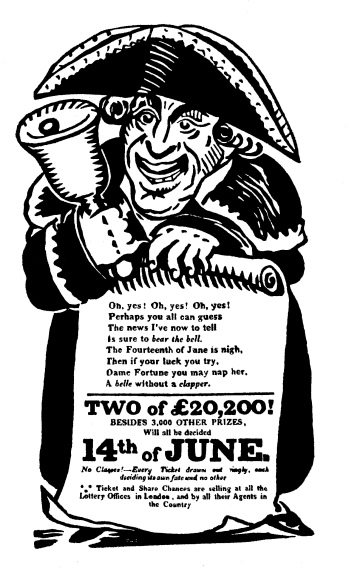
In addition to the numerous illustrations scattered throughout the text, there are twenty-eight separately inserted old Lottery Bills in facsimile on papers of various tints. It will be noted that the dirty red ink in some of them is exactly imitated.
The “skeleton” bills were issued in 1816, and those of the “14 of June” in 1821; most of the others are dated.
They are placed as follows:—
Facing title page; facing pages 1, 16,
32, 48, 70, 96, 112, 128, 138, 144 (two),
146 (two), 160, 170, 176, 192 (two),
196, 208, 220, 224 (two), 240, 280
(two), 324.
NOW FOR THE FIRST TIME WRITTEN.
BY
JOHN ASHTON.
1893.
PUBLISHED BY
The Leadenhall Prefs, Ltd:
50, Leadenhall Street, London, E.C.
Simpkin, Marshall, Hamilton, Kent & Co., Ltd:
New York: Charles Scribner’s Sons, 743 & 745, Broadway.
THE LEADENHALL PRESS, LTD: LONDON, E. C.
(T. 4630)
[Pg v]
PREFACE.
In the following pages I have endeavoured to trace the history of the lottery in England, from the year 1569 to the present time; and it is somewhat surprising that such has not been previously attempted. It is possible that a paucity of material may have had something to do with it; but, in my case, I cannot complain of insufficient matter, but almost of an embarras des richesses; for not only could I draw on the stores of information contained in the library of the British Museum, but I also had the privilege of having the very fine collection of Mr. Andrew Tuer placed unreservedly at my disposal. Thus, I have been enabled to pick and choose my examples of lottery handbills and [Pg vi]engravings, without having to utilize all the material that came to hand. I am especially indebted to the Leadenhall Press for the very great care they have taken in rendering the engravings as near facsimiles of the originals as possible.
I have tried, as far as in my power lay, to make this book one which will be, I hope, not only agreeable and interesting to the general reader, but one which, I also hope, will find its place in very many libraries, as a book of reference, and an authority on the subject on which I have written, as I have been very scrupulous as to verifying dates, giving correct Acts of Parliament, etc.
[Pg vii]
CONTENTS.
| CHAPTER I. | |
| PAGE | |
| Antiquity of the Lot—Old lotteries—Derivation of | |
| word —First lottery in England: its scheme | 1 |
| CHAPTER II. |
|
| Posies and mottoes—Forcing the subscriptions—Towns and | |
| their mottoes—Lottery for armour in 1585—A Royal lottery | |
| at Harefield in 1602 | 17 |
| CHAPTER III. |
|
| The Virginia lottery of 1612—Private lottery—Licence for | |
| lottery to supply London with water—Two other schemes | |
| —Lottery in behalf of fishing vessels—Irish Land | |
| Lottery—One for redeeming English slaves—One for poor | |
| maimed soldiers—Gambling lottery, concession for—“Royal | |
| Oak” Lottery—Evils of lotteries—“Royal Fishing Company” | |
| Lottery—Patentees | 28 |
| CHAPTER IV. |
|
| A book lottery—One for poor military officers—Lottery for | |
| Prince Rupert’s jewels—A penny lottery—First State | [Pg viii] |
| lottery—Another in 1697—Private lotteries suppressed | |
| —Statelottery in 1710—Curious history of a private | |
| lottery—State lotteries in the reigns of Anne and | |
| George I.—Private lotteries again suppressed—Raine’s | |
| Charity—Marriage by lottery | 44 |
| CHAPTER V. |
|
| Penalties on private lotteries—State lottery not subscribed | |
| for—Lapse in State lotteries—Private lotteries | |
| —Westminster Bridge lottery—State lotteries—Discredit | |
| thrown on them—British Museum lottery—Leheup’s fraud | 59 |
| CHAPTER VI. |
|
| Crowd at a lottery—Another State lottery, eighty-seven | |
| blanks to a prize—A ticket sold twice over—Extravagant | |
| prices paid for tickets—Praying for success—A lucky | |
| innkeeper—Lottery for Cox’s Museum—Adam’s Adelphi Lottery | |
| —Blue-coat boys and the lottery—Future arrangements for | |
| drawing | 71 |
| CHAPTER VII. |
|
| Counterfeiting lottery tickets—Curious lotteries—Suicide | |
| —Method of starting a State lottery—Lottery | |
| office-keepers to be licensed—Charles (or “Patch”) Price | 86 |
| CHAPTER VIII. |
|
| Lottery for the Leverian Museum—Prosecution of unlicensed | |
| lottery office-keepers—Suicide—Robbery of employers—Sharp | |
| practice over a prize—Cheating by lottery office-keepers | |
| —Complaint of a prisoner | 103 [Pg ix] |
| CHAPTER IX. |
|
| Winners of prizes—Attempt to put down the practice of | |
| insuring—Steps taken to prevent it—Specimen handbill | |
| —Bish, the lottery office-keeper—Lottery for the “Pigot” | |
| diamond—Lottery-office agencies—Shortening the time of | |
| drawing the lottery—Story of Baron d’Aguilar | 118 |
| CHAPTER X. |
|
| The Boydell Lottery—Bowyer’s “Historic” Lottery | 133 |
| CHAPTER XI. |
|
| Launching a lottery—“The City” Lottery for houses—Poetic | |
| handbills thereon—Parliamentary Committee on the lottery | |
| —Report and evidence | 147 |
| CHAPTER XII. |
|
| “The Lottery Alphabet”—“The Philosopher’s Stone”— | |
| “Fortune’s Ladder”—Enigmatical handbill—Lottery drawn | |
| on St. Valentine’s Day—“Public Prizes”—and other | |
| poetical handbills | 162 |
| CHAPTER XIII. |
|
| “Twenty Thousand; or, Tom Truelove’s Journal”—“London | |
| and the Lottery”—“The Persian Ambassador”—“An Enigma” | |
| —“Gently over the Stones” | 180 |
| CHAPTER XIV. |
|
| “Master and Man”—“Altogether”—Dr. Thornton’s “Royal | |
| Botanical Lottery”—“Two Gold Finches”—“Dennis | |
| Brulgruddery”—“Shakespeare’s Seven Ages” | 189 [Pg x] |
| CHAPTER XV. |
|
| A lucky Spaniard—Miss Mitford’s prize—The Spectator | |
| on lucky numbers—Other anecdotes on luck—“Gretna Green” | |
| —“A Prize for Poor Jack” | 204 |
| CHAPTER XVI. |
|
| Beginning of the end of lotteries—Curious handbills | 217 |
| CHAPTER XVII. |
|
| Protests against lotteries—Epitaph on Vansittart—“Three | |
| Royal Weddings”—More opposition to the lottery— | |
| “Twelfth Night Character” handbills—Ditto of tradesmen | 221 |
| CHAPTER XVIII. |
|
| “A Dialogue”—“The Race of Fortune”—“The Wish”—Enigmatical | |
| handbill | 245 |
| CHAPTER XIX. |
|
| Tomkins’s picture lottery—The lottery abolished—Handbills | 252 |
| CHAPTER XX. |
|
| The last lottery—Attempts to get up excitement—The | |
| procession—Alteration of date—Advertising car—“A | |
| Ballad, 1826”—Drawing of the last lottery | 265 |
| CHAPTER XXI. |
|
| Handbills—Metrical list of lottery-office keepers—Bish’s | |
| manifesto—“Epitaph in Memory of the State Lottery”— | |
| “Little Goes”—The Times thereon—Their effect on the | |
| public | 279 [Pg xi] |
| CHAPTER XXII. |
|
| Description of lottery office-keepers—Insuring numbers | |
| in the lottery—Servants bitten by the mania—Morocco | |
| men—Many prosecutions—Cost to the country—Several | |
| law cases—Story of Mr. Bartholomew | 293 |
| CHAPTER XXIII. |
|
| Suicides caused by the lottery—Story of a footman—Anecdote | |
| told by Theodore Hook—Description of a lottery from its | |
| commencement to its end | 310 |
| CHAPTER XXIV. |
|
| The lottery wheels—Anecdotes connected with the lottery— | |
| The Glasgow lotteries—Advertising foreign lotteries— | |
| “Art Union” Act—Dethier’s “Twelfth Cake Lottery”— | |
| Tontines—Raffling—Pious lotteries—Sweet-stuff lotteries | |
| for children—Hamburg lotteries | 325 |
| CHAPTER XXV. |
|
| “The Missing Word Competition:” its rise and fall | 339 |
| Index |
353 |
[Pg 1]
A HISTORY OF
ENGLISH LOTTERIES.
Antiquity of the Lot—Old lotteries—Derivation of word—First lottery in England: its scheme.
[Pg 2] So sang Henry Fielding in his play of “The Lottery,” which was first acted at Drury Lane Theatre, January 1, 1732; and I think those who have patience to read these pages will endorse his words.
Gambling, in some shape, is inherent in man, and dice for the casting of Lots have been found belonging to the Egyptians and Assyrians, in the tombs of prehistoric man, were used alike by the refined Greeks and Romans, and by the barbarous Northmen. The Bible teems with notices of the Lot. It was recommended by Solomon as a means of deciding disputes. “The lot causeth contentions to cease, and parteth between the mighty” (Prov. xviii. 18). It was used as a means of dividing land. “Notwithstanding the land shall be divided by lot: according to the names of the tribes of their fathers they shall inherit. According to the lot shall the possession thereof be divided between many and few” (Numb. xxvi. 55, 56). Nay, one of the Apostles, Matthias, was chosen by Lot (Acts i. 26). But if any one is curious to know how often the Lot is mentioned in Holy Scripture, let him look at Cruden’s Concordance. [Pg 3]
In this short sketch we see the antiquity of the Lot; but the Lottery, the form of gambling of which this book treats, is of comparatively modern invention. The Romans had something of the kind, but it partook more of our presents from Christmas-trees than the modern lottery. First of all were the Apophoreta, gifts which were presented to the guests at table, and which they carried home with them—a custom which obtained during the Saturnalia (something like a Silver King presenting his guests with a silver menu card, or the presents given to guests at City Companies’ dinners); and this was sometimes done in a whimsical manner, as is on record that Heliogobalus, at a banquet, presented one guest with a ticket for a gold vase, and another for six flies. Other prizes, which were drawn haphazard, were ten bears, ten pounds of gold, or ten ostriches; and, whilst one might draw a thousand pounds, another would gain a prize of a dead dog.
It is said that lotteries began in Italy in the sixteenth century, and that its name is derived from the Lotto of Florence; but I beg leave to traverse both propositions. There is no doubt but that the [Pg 4] Venetian and Genoese merchants made use of the lottery as a vehicle whereby to dispose of their stale goods, or to get rid of a valuable thing for which they could not obtain a purchaser; but the earliest I can find recorded was that of the widow of Jan van Eyck, which took place at Bruges, on February 24, 1446, where the town archives record a payment to her of two livres for her lottery.[1]
As for the name. I think that there can hardly be two opinions about it. Long before the Italian Lotto, was the Anglo-Saxon Hleot-an, sortiri, to cast lots. In the Dutch the same meaning is expressed by Lot-en, Loot-en; in Swedish, Lotta; whilst the Lot itself is in Gothic, Hlauts; Anglo-Saxon, Hlot; German, Los; Dutch, Lot; Swedish, Lott; French, Lot; and Italian, Lotto. So that there can be very little doubt of its northern derivation, the Latin synonym, Sors, being so totally different.
There is no doubt but that the lottery was imported into England from abroad; and the first of which we have any record was one in the reign [Pg 5] of Queen Elizabeth, projected in 1566, but not drawn till 1569. As far as is known, there is but one authentic record of this lottery in existence, which has been happily preserved in the muniment-room at Loseley House, in Surrey. It is in black letter, interspersed with ordinary text and italics, and the bill is five feet long by nineteen inches wide; and the text is surrounded by a border of ornamental type. At top, it has an illustration of the prizes in plate, tapestry, and money—and it is twenty inches in depth. As it is such an unique curiosity, I give the bill at length.
“A verie rich Lotterie Generall, without any blancks, contayning a number of good prices, as wel of redy money as of plate, and certaine sorts of marchaundizes, having ben valued and priced by the comaundement of the Queene’s most excellent majestie, by men expert and skilfull; and the same Lotterie is erected by her majesties order, to the intent that such commoditie as may chaunce to arise thereof, after the charges borne, may be converted towardes the reparation of the havens and strength of the Realme, and towardes such other publique good workes. The number of lots shall be foure hundreth thousand, and no more; and every lot shall be the summe of tenne shillings sterling onely, and no more. [Pg 6]
“Three Welcomes.
“The first person to whome any lot shal happen, shall have for his welcome, (bysides the advantage of his adventure,) the value of fiftie poundes sterling, in a piece of sylver plate gilte.
“The second to whome any lot shall happen, shall have in like case for his welcome, (bysydes his adventure) the summe of thirtie poundes, in a piece of plate gilte.
“The third to whome any price shall happen, shall have for his welcome, besides his adventure, the value of twentie pounds, in a piece of plate gilte.
“The Prices.
“Whoever shall winne the greatest and most excellent price, shall receive the value of five thousande poundes sterling, that is to say, three thousande pounds in ready money, seven hundred poundes in plate gilte and white, and the rest in good tapisserie meete for hangings, and other covertures, and certain sortes of good linen cloth.[2] [Pg 7]
“2nd, 'great price’ £3500, i.e. £2000 in money, £600 in plate, the rest in good tapisserie, &c., as above.
“3rd, £3000, i.e. £1500 in money, £500 in plate, the rest, &c.
“4th, £2000, i.e. £1000 in money, £400 in plate, the rest, &c.
“5th, £1500, i.e. £750 in money, £300 in plate, the rest, &c.
“6th, £1000, i.e. £500 in money, £200 in plate, the rest, &c.
“7th, £700, i.e. £400 in money, £100 in plate, the rest, &c.
“8th, £500, i.e. £250 in money, £100 in plate, the rest, &c.
“9th, £400, i.e. £250 in money, £100 in plate, the rest, &c.
“10th, £300, i.e. £200 in money, £50 in plate, the rest, &c.
“11th, £250, i.e. £150 in money, £50 in plate, the rest, &c.
“12th, £200, i.e. £150 in money, the rest in good tapisserie and linen cloth.
“13th, £140, i.e. £100 in money, £40 in plate, tapisserie, or linen cloth. [Pg 8]
“12 prices, every price of the value of £100, that is to say, 3 score and 10 pounds ready money, and £30 in plate, tapisserie, or linen cloth.
“20 and 4 prices, every price of £50, £30 in ready money, £20 in plate, tapisserie, &c.
“3 score prices of 4 and 20 pounds and ten shillings (£24 10/-), £17 in ready money, and £7 10/- in plate, &c.
“4 score and 10 prices, every price of £22 10/- i.e. £15 in money, £17 10/- in plate, &c.
“One hundreth and 14 of £18, i.e. £12 in money, £6 5/- in plate gilte and white.
“120 prices of £12 10/-, i.e. £7 10/- in money, £5 in like plate.
“150 prices of £8, i.e. £5 in money, £3 in linen cloth.
“200 prices of £6 10/-, i.e. £4 in money, 50/- in linen cloth.
“300 prices of £4 10/-, i.e. 50/- in money, 40/- in linen cloth.
“500 prices of £3 10/-, i.e. 40/- in money, 30/- in linen cloth.
“500 prices of 50/- in money.
“2000 prices of 40/- in plate.
“6000 prices of 25/- in money. [Pg 9]
“10,000 prices of 15/- in money.
“9418 prices of 14/- in money.
“And all the rest, to the accomplishing of the aforesayd number of lottes, shall be allowed for every adventure at the least 2 shillˢ and 6 pens in ready money.
“Conditions ordained for the advantage of the Adventurers in this Lotterie, bysides the Prices before mentioned in the Charte.
“The Queenes Majestie, of hir power royall, giveth libertie to all maner of persons that will adventure any money in this Lotterie, to resort to the places underwritten, and to abyde and depart from the same in manner and forme foliowing; that is to say, to the Citie of London, at any time within the space of one moneth next following the feast of S. Bartholomew this present yeare 1567, and there to remain seven days. And to these cities and towns following: York, Norwich, Exceter, Lincolne, Coventrie, Southampton, Hull, Bristol, Newcastell, Chester, Ipswich, Sarisbury, Oxforde, Cambridge, and Shrewesbury, in [Pg 10] the Realme of Englande, and Dublyn and Waterforde in the Realme of Irelande, at any time within the space of three weekes next after the publication of the Lotterie in every of the sayd severall places, and there to remaine also seven whole days, without any molestation or arrest of them for any maner of offence, saving treason, murder, pyracie, or any other felonie, or for breach of hir Majesties peace, during the time of their comming, abiding, or retourne.[3]
“And that every person adventuring their money in this Lotterie may have the like liberty in comming and departing to and from the Citie of London, during all the time of the reading of the same Lotterie, untill their last adventure be to them answered.
“Also, that whosoever under one devise, prose or poesie, shall adventure to the number of thirtie lottes and upward, within three monethes next following after the sayd feast of Saint Bartholomew, and by the hazarde of the prices contained in this Lotterie gaineth not the [Pg 11] thirde pennie, or so much as wanteth of the same, shall be allowed unto them in a yearely pencion, to begin from the day when the reading of the sayd Lotterie shall ende, and to continue yearely during their life.
“Whoever shall game the best, second, and third great prices, having not put in the posies whereunto the sayd prices shall be answerable into the Lotterie within three moneths next after the said feast of Saint Bartholomew, shall have abated and taken out of the summe of money contained in the said best price, one hundreth and fiftie pounds, and of the sayd second price, one hundreth pounds, and out of the said third price four score pounds, to be given to any towne corporate or haven, or to any other place, for any good and desirable use, as the partie shall name or appoint in writing.
“And whosoever shall gaine a hundreth poundes or upwarde in any price, saving the three severall best prices next aforementioned, having not put in his lots, whereby he shall gaine any such price, within three moneths next following the sayd feast of Saint Bartholomew, shall have abated and deducted (as above is sayd) out of every hundred pounds, five pounds, to be employed as is next before sayd. [Pg 12]
“Whosoever, having put in thirtie lottes under one devise or posie, within the sayd three moneths, shalle winne the last lot of all, if, before that lot wonne he have not gained so much as hath ben by him put in, shall for his tarying and yll fortune be comforted with the reward of two hundreth poundes, and for every lot that he shall have put in besydes the said thirty lots, he shall have twentie shillings sterlyng.
“And, whosoever having put in XXX lots under one devise or posie, within the sayd three moneths, shal win the last lot save one, and have not gayned so much as he hath put in, shal likewise be comforted for his long tarrying with the reward of C. pounds, and for every lot that he shal have put in above XXX shall receive ten shillings sterling.
“Item, whosoever shall adventure from fortie lottes upwarde, under one devise or posie, shall have libertie to lay downe the one halfe in readie money, and give in bond for the other halfe to the Commissioner that in that behalfe shal be appointed to have the charge for that citie or towne where the partie shal thinke good to pay his money, with condition to pay in the same money, for the which they shal be bound, [Pg 13] six weekes at the least before the day appointed for the reading of the lotterie, upon payn to forfaite the money payde, and the benefit of any price. Which day of reading shall begyn within the Citie of London the XXV day of June next coming.
“And in case it shall fortune the same day of the reading to be prolonged upon any urgent nedeful cause to a further day, the parties having adventured and put their money into the lotterie, shall be allowed for the same after the rate of ten in the hundred from the day of the prorogation of the sayd readyng untill the very day of the first reading of the lotterie.
“Item, every person to whome, in the time of reading, any price shall happen and be due, the same price shal be delivered unto him the next day following to dispose of the same at his pleasure, without that he shall be compelled to tary for the same until the ende of the reading. And, being a straunger borne, he shal have libertie to convert the same, being money, into wares, to be by him transported into foraine parts, paying only halfe custome for the same and other duties that otherwise he should answer therefore. [Pg 14]
“Whosoever at the time of the reading shall have three of his owne posies or devises, comming together successively and immediately one after another, the same having put in the sayd three posies within thre moneths (as before), shall have for the same posies or devises so comming together one after an other, three pounds sterling over and besides the price answerable therfore.
“And whosoever at the time of the reading shall have four posies or devises comming together successively and immediately one after another, having put in his sayde posies within three monethes (as before mentioned) shall have for the sayd foure posies and devises six poundes sterling, besides the prices.
“And whosoever at the time of the reading shall have five posies or devises comming together successively and immediately one after another, having put in his lottes within thre moneths (as before), shall have for the sayd five posies or devises ten pounds sterling, besides the prices.
“And whosoever shall have the like adventure six times together, having put in his lots, as afore, shal have for those VI posies or devises XXV pounds sterling and the prices. [Pg 15]
“And whosoever shall have the like adventure seven times together, having put in his lots as afore, shall have for those seven posies or devises a hundreth pounds sterling, and the prices.
“And whosoever shall have the like adventure eight times together, having put in his lots as afore, shall have for those eight two hundreth pounds sterling, and the prices.
“And so the posies or devises resorting together by increase of number, he to whom they shal happen in that sorte, having put in his money, as afore is said, shal have for every tyme of increase one hundreth poundes sterling, and the prices.
“The receipt and collection of this present Lotterie shall endure for the rest of the Realme besides London, until the XVᵗʰ day of April next coming, which shal be in the yere 1568.
“And the receipt and collection of the City of London shal continue unto the first day of May next following; at which dayes, or before, all the collectors shal bring in their bokes of the collection of lottes to such as shal be appointed to receive their accomptes, upon paine, if they do faile to do so, to lose the profite and wages appointed to them for their travell in that behalfe. Finally, it is to [Pg 16] be understanded that hir Majestie and the Citie of London will answere to all and singular persons havyng adventured their money in this Lotterie, to observe all articles and conditions contained in the same from point to point inviolably.
“The shewe of the prices and rewardes above mencioned shall be set up to be seene in Cheapsyde in London, at the signe of the Queene’s Majesties’ arms, in the house of M. Dericke, goldsmith, servant to the Queene’s most excellent Majestie.
“God save the Queen.
“Imprinted at London, in Paternoster Rowe, by Henrie Bynneman, anno 1567.”
[Pg 17]
Posies and mottoes—Forcing the subscriptions—Towns and their mottoes—Lottery for armour in 1585— A Royal lottery at Harefield in 1602.
We see by this bill that in order that the subscribers should be anonymous, their shares were not to be taken in their names; but, as in some competitions nowadays—notably in architecture—the competitors are only known by their mottoes, so every subscriber to this lottery was to use a devise or posie. Of the posies of this particular lottery one at least remains, and it may be found in Geffrey Whitney’s “Choice of Emblemes” (Leyden, 1586), p. 61.
“Written to the like effecte, vppon
Video, & taceo
Her Maiesties poesie, at the great Lotterie in London
begon M.D.LXVIII. and ended M.D.LXIX.
[Pg 18]
I see, and houlde my peace: a Princelie Poësie righte,
For euerie faulte, shoulde not provoke, a Prince, or man of mighte.
For if that Iove shoulde shoote, so oft as men offende,
The Poëttes saie, his thunderboltes shoulde soon bee at an ende.
Then happie wee that haue, a Princesse so inclin’de,
That when as iustice drawes hir sworde, hath mercie in her minde,
And to declare the same, how prone shee is to save:
Her Maiestie did make her choice, this Poësie for to have.
Sed piger ad pænas princeps, ad præmia velox:
Cuique doles, quoties cogitur esse ferox.”
In a little black-letter book in the Loxley collection, intituled “Prises drawn in the Lottery, from the XVI to the XXVI day of February,” which is considered to relate to this lottery, are very many of these posies, with the names of the persons, etc., whose ventures they represented, the number of the lots, and the prizes they gained, which were, naturally, in most cases under the ten shillings subscribed.
The highest prize drawn during these ten days seems to have been £16 13s. 3d., and the “devise” or motto was, “Not covetous.”
The public generally evidently did not take kindly to this venture, for [Pg 20] on September 13, 1567, the Lord Mayor found it necessary to supplement the foregoing Proclamation of the Queen, of August 23, by one of his own, guaranteeing the honesty of the scheme. “Nowe to avoyde certaine doubtes since the publication of the sayde Lotterie, secretely moved concernyng the answering thereof, wherein though the wiser sort may finde cause to satisfie themselves therin, yet to the satisfaction of the simpler sorte, the Lorde Maior of the sayd Citie, and his brethren the Aldermen of the sayd Citie, by assent of the Common Councell of the same, doe signifie and declare to all people by this proclamation that, according to the articles of hir Majesties order conteined in the sayd charte so published, every person shal be duly answered accordyng to the tenour of hir highnesse sayd proclamation.”
Still the public looked askance at it, and the subscriptions came in but slowly; so the Queen issued another proclamation on January 3, 1568, postponing the drawing, or “reading,” as it was called, giving her reasons therefor thus: “Forasmuch as in sundry parts of the realme, the principal persons that were appointed to be the treasurers for the [Pg 21] money that should be gathered in the severall shyres of the realme, had not received their instructions and charge in such due time as was requisite, by reason that upon the first nomination of them, there were, after sundry alterations of some by reason of sicknesse, of others by reason that they were dead aboute the time of their nomination; and of some others, that afterward were so otherwise occupied in publike offices, as the said service could not be by them executed, so as of the sayd space of three moneths, there passed over a good part, to the detriment of the adventurers.”
Yet it did not go off, and, to further stimulate the prosecution of the scheme, the Earl of Leicester and Sir William Cecil, as Lords of the Council, on July 12, 1568, sent a circular “To all and every the Quene’s Ma’t’s Justices of the Peace, Treasurers, and Collectors of the Lottery, and to all Mayors, Sheriffs, Bayliefes, Constables, and to all others her highnes officers, ministers and subjects, spirituall and temporale, as well as wtin corporations, lib’ties, and franchises, as wtout, in the Counties of Kent, Sussex, Surry, Southehampton and the Isle of Wight,” apprising them of the appointment of a Surveyor of the [Pg 22] Lottery, and enjoining them to do all in their power to get subscribers.
This surveyor certainly did put the screw on most unmercifully, visiting and writing to the country gentlemen, giving them “to understonde what waie is devised for a further collection, and for animating or moving the people, desiring you to put the same in practise as sone as possible you may.”
This certainly did stimulate the subscriptions, and we find by entries in their archives and by their posies that the towns all over England contributed municipally.
Winchester.—“July 30, 1568. Itm. That £3 be taken out of the Coffers of the cytie and be put into the lottrey, and so moche more money as shall make up evyn Lotts wᵗʰ those that are contrybutory of the cytie, so that it passᵈ not 10s.”
Wells.—“Oct. 15, 1568. At this Convoc’on the M’r and his brethrene w’the the condiscent of all the burgesses, hath fully agreed that ev’y occupacōn w’thin the Towne aforesayde shall make their lotts for the Lottery accordynge, as well to the Queene’s Ma’ty’s p’clamacōn as to her p’vy L’res assigned in that behalf.”
Yarmouth seems to have sent two subscriptions. [Pg 23]
All the City Companies subscribed, and, at last, the lottery was drawn, as Holinshed tells us (1569) that “A great lotterie being holden at London in Poules Church yard, at the west dore, was begun to be drawne the eleuenth of Januarie, and continued daie and night till the sixt of Maie, wherein the said drawing was fullie ended.” Let us hope that the ports and havens benefited therefrom.
The next lottery of which we have any knowledge is mentioned by Stowe in his “Annales,” under date of 1585. “A lotterie for marvellous rich and beautifull armor was begunne to be drawne at London in S. Paules Churchyard, at the great West gate (an house of timber and boord being there erected for that purpose) on S. Peters day in the morning, which lotterie continued in drawing day and night, for the space of two or three dayes.”
In 1602 Queen Elizabeth visited Sir Thomas Egerton, the Lord Keeper of the Great Seal, at his mansion at Harefield, Middlesex. She had a [Pg 25] particular liking for presents, and on the preceding New Year’s Day he had given her an amulet of gold garnished with sparks of rubies, pearls, and half-pearls, and his wife, dame Elizabeth, presented her Majesty with “a round kirtell of velvet satten, cut and embroidered all over like Esses of Venice gold, and a border embroidered like pyramids; and a doublet of silver chamlett, embroidered with pearls like leaves, flourished with silver.” He was well aware of her proclivities, for when she paid him this visit, he presented her with a divertissement called “a Lottery.” Enter—
“A Marriner with a boxe under his arme, contayning all the severall things following, supposed to come from the Carricke,[5] came into the Presence, singing this Song:—
“And the Song ended, he uttered this short speech: God save you, faire Ladies all; and for my part, if ever I be brought to answere my sinnes God forgive me my sharking, and lay usury to my charge. I am a Marriner, and am now come from the sea, where I had the Fortune to light upon these few trifles. I must confesse I came but lightly by them; but I no sooner had them, but I made a vow, that as they came to my hands by Fortune, so I would not part with them but by Fortune. To that end I ever since carried these Lots about me, that, if I met with fit company, I might devide my booty among them. And now (I thanke my good Fortunes) I am lighted into the best company of the world, a [Pg 27] company of the fairest Ladyes that ever I saw. Come, Ladyes, try your Fortunes; and if any light vpon an vnfortunate Blanke, let her thinke that Fortune doth but mock her in these trifles, and meanes to pleasure her in greater matters.”
There were thirty-three lots, of which five were blanks, and the “Marriner” had an appropriate couplet to say to all. The prizes were as follow:—1, Fortune’s Wheel (?); 2, a Purse; 3, a Maske;[7] 4, a Looking Glasse; 5, a Hand-kerchiefe; 6, a Plaine Ring; 7, a Ring with this posie: “As faithfull as I finde;” 8, a Paire of Gloves; 9, a Dozen of Points;[8] 10, a Lace; 11, a Paire of Knives; 12, a Girdle; 13, a Payre of Writing Tables; 14, a Payre of Garters; 15, a Coyfe[9] and Crosse Cloath;[10] 16, a Falling Band; 17, a Stomacher; 18, a Paire of Sizzers; 19, a Chaine; 20, a Praier Book; 21, a Snuftkin;[11] 22, a Fanne; 23, a Paire of Bracelets; 24, a Bodkin; 25, a Necklace; 26, a Cushinet;[12] 27, a Dyall; 28, a Nutmeg with a blanke parchment in it.[13]
[Pg 28]
The Virginia lottery of 1612—Private lottery—Licence for lottery to supply London with water—Two other schemes—Lottery in behalf of fishing vessels—Irish Land Lottery—One for redeeming English slaves—One for poor maimed soldiers— Gambling lottery, concession for—“Royal Oak” Lottery—Evils of lotteries—“Royal Fishing Company” Lottery—Patentees.
The next public lottery of which we hear was that of 1612, when “the King’s maiestie in speciall favor for the present plantation of English Colonies in Virginia, granted a liberall Lottery, in which was contained five thousand pound in prizes certayne, besides rewardes of casualitie, and began to be drawne, in a new built house at the West end of Paul’s the 29th of June, 1612. But of which Lottery, for want of filling uppe the number of lots, there were then taken out and throwne away threescore thousande blanckes, without abating of any one prize; and by the twentith of July all was drawne and finished. This Lottery was so plainely carryed, and honestly performed, that it gave full [Pg 29] satisfaction to all persons. Thomas Sharpliffe, a Taylor, of London, had the chiefe prize, viz. foure thousand Crownes in fayre plate, which was sent to his house in very stately manner: during the whole tyme of the drawing of this lottery there were alwaies present diuers worshipfull Knights and Esquiers, accompanied with sundry graue discreet Cittizens.”
In 1612, one Cornelius Drebbel wrote a letter in Latin to Prince Henry, complaining that the Lord Mayor had refused him permission to hold a lottery; that he had no other means of subsistence, and he begged the Prince to use his influence with the Lord Treasurer (Salisbury) for leave to have one beyond the jurisdiction of the city. He also wrote to the Lord Treasurer, enclosing a scheme of the proposed conditions of his lottery.
In 1620 the holding of lotteries was suspended by Order in Council; but on March 31, 1627, a licence was given to Michael Parker and Everard Mainwaring to raise money by means of a lottery, to be employed in carrying out the object indicated in the grant of same date to Sir Nicholas Saunder, Henry Saunder, and Michael Parker, which gave them [Pg 30] power to convey water by a covered aqueduct from certain springs near Hoddesdon, in co. Herts, and to disperse the same through the streets and houses, paying to the Crown a rent of £4000 per annum. And again, on February 11, 1831, Parker and Mainwaring obtained a licence to set forth lotteries for raising money for bringing springs of water to London. It is said, though I can find no warrant for it, that the first lottery with money prizes was drawn in 1630.
There was another scheme for bringing water to London, for in 1637 the Regent and Professors of the Musæum Minervæ petitioned the King for money, and proposed several schemes for raising the same, the third of them being, “By the Lottery granted to George Gage and others for bringing a river to London, much money was collected, but, the undertaking failing, the money remains in deposito, to be disposed to Sir Edward Peyto and Colonel Hambleton upon the like project. It is proposed that either this money be employed for the building of an academy, or that another lottery may be granted for that purpose.”
Yet another water scheme. “Jan. 14, 1689. Warrant to pass the Privy Seal appointing Sir Robert Pointz, K.B., and Edward Rudge, alderman of [Pg 31] London, for the just carriage and managing of the lottery authorized by the King for the use of the aqueduct undertaken by Sir Edward Stradling, Sir Walter Roberts and others.”
On February 9, 1640, the Earl of Pembroke sent a remonstrance to the King about the damage the “Dunkirkers and other subjects of the King of Spain” had done to the English busses, or fishing vessels, and suggesting that “towards the cost of setting out their busses the next summer, they pray a grant of a standing lottery, as the Virginia Company had in 1612, to be managed by the most discreet of their association;” and this his Majesty, Charles I., was graciously pleased to grant.
In 1653, according to the Perfect Account of the Daily Intelligence, November 23 of that year, a lottery was held, and this is the
“Advertisement
At the Committee for Claims for Lands in Ireland.
Ordered, That a Lottery be at Grocers Hall, London, on Thursday, 15 Decem. 1653, both for Provinces and Counties, to begin at 8 of the clock in the forenoon of the same day; and all persons concerned therein are to take notice thereof.” [Pg 32]
There was a lottery scheme August 7, 1660, which was granted. “The Petition of Capt. Thomas Gardiner to the King, to empower him to hold a lottery in England and Wales for three years, for ransom of English slaves in Tunis, Algiers, or the Turkish galleys, or for any other charitable use, paying in a third of the profits, and reserving the rest for his expenses, and repair of his fortunes, ruined by loyalty.”
In November, 1660, Captain William Pleydell petitioned “for leave to sell by lottery, during one year, some plate which he and others have procured, in order to gain relief for himself, and to obtain £10 each per annum for 12 poor maimed soldiers, named, of Lord Cottington’s life-guard, who live by begging in the street.”
[Pg 33] This was a comparatively worthy object, although the “relief for himself” might be capable of a very broad construction; but Charles II. was liberal in his concessions. There was one man, Francis, or Francisco, Corbett who was groom of the Privy Chambers to the Queen, who obtained a licence for a gambling lottery—possibly something like roulette at Monte Carlo, called L’Ocha di Catalonia. On November 23, 1661, an order was made forbidding a lottery carried on by Francisco Finochelli, as being the same with the L’Ocha di Catalonia, for which the sole licence was granted to Francisco Corbett, of whom we shall hear more; but it is best to proceed chronologically, if possible.
We next hear of him in connection with the famous “Royal Oak Lottery,” for on August 25, 1663, when a licence was granted to Captain James Roche, Adjutant of the Guards, and Francis Corbett to set up and exercise the lotteries of the Royal Oak and Queen’s Nosegay, in any place in England and Wales; none else to set up the same, or any lottery that approaches it, except Sir Anthony Des Marces, Bart., and Lawrence Dupuy, to whom a similar licence has already been granted. Meanwhile, Corbett and Finochelli had become partners, as we see by the docket on the memorial of August 28 of same year, of one Simon Marcelli, of money transactions between Captain Roche, Francis Corbett, and Jean Francisco Finochelli, relative to the lottery of the Royal Oak [Pg 34] set up at Smithfield Fair. Captain Roche furnished £95, on condition of not giving the company the patent till repaid; but, the sum being paid, he gave up the patent.
Corbett must have found the lotteries profitable, for on December 3 of the same year, a grant was made to Francis Corbett of licence to set up lotteries of a new invention, called the Royal Oak and Triomfo Imperiale, in any city in the kingdom, permitting no others to exercise the same except Sir Anthony Des Marces, Lawrence Dupuy, and Captain James Roche, to whom a similar privilege is given, on paying five shillings weekly to the poor where the lotteries are. But as soon as he got the concession, Corbett seems to have sold out; for there is a petition of Sir Anthony Des Marces, Bart., Lawrence Dupuy, and Richard Baddeley, for a licence to exercise the lottery of the Royal Oak and all others in England, Wales, and Ireland, as they had purchased the other partners’ interests, spent large sums of money thereon, and were checked in the exercise of them. Yet, still later on in the same month, in order to obtain this licence, they had to sign an indenture by which they agreed to pay a certain sum yearly to Sir John Crosland and [Pg 35] Captain Edward Bennett, in consideration of the services of Secretary Bennet in procuring for them the licence. On that indenture being signed came at once, the warrant for them to set up the lotteries of the Royal Oak and L’Ocha di Catalonia, applying the whole profits to support the fishing trade only, the patentees receiving fit recompense for their trouble. So that we see that there were small “Panama scandals” in those days. Indeed, this lottery seems to have been a swindle; for, in a letter, January 6, 1664, from Nathaniel Cale, who had been Mayor of Bristol, to Joseph Williamson, secretary to Sir Henry Bennet, and afterwards keeper of State Papers, he says he “will forward any lottery at the Bristol fair, except the Royal Oak, which broke half the cashiers in Bristol, when last there.” Yet, on the 11th of the same month, he writes to the same that he has prevailed with the Mayor, Sir John Knight, to allow the Royal Oak Lottery during the eight days of the fair; and, perhaps, the leave may be extended. But he has a prejudice against it; for, at its last being there, many young men ruined themselves, and his own son lost £50. [Pg 36]
The sequel to this story is told later on. On February 14, 1664, Sir John Knight wrote to Williamson that he had received his letters in behalf of the Royal Oak Lottery men, who have spent three weeks there. Last year they were there five months, and the cry of the poor sort of people was great against them, because, not being allowed by the great seal, they were clear against law. Will tolerate them some longer, but thinks they will soon be warped out. Nathaniel Cale writes that the Mayor has granted fourteen days to the Royal Oak, and then will grant more.
It would be impossible to close the notice of this lottery without quoting from a very rare little 12mo book,[14] as it gives us the inner life of the scheme; and, besides, is amusing. The indictment, as the wont of such documents, is cumbrous and heavy, and was terrible. The first witness called was Captain Pasthope, who was examined by one of the managers.
“Man. Sir, do you know Squire Lottery, the prisoner at the Bar?
[Pg 37] “Pasthope. Yes, I have known him intimately for near 40 years; ever since the Restoration of King Charles.
“Man. Pray, will you give the Bench and Jury an Account of what you know of him; how he came into England, and how he has behav’d ever since?
“Pasthope. In order to make my Evidence more plain, I hope it will not be judg’d much out of form, to premise two or three things.
“Man. Take your own method to explain yourself; we must not abridge or direct you in any respect.
“Pasthope. In the year 60 and 61, among a great many poor Cavaliers, ’twas my hard fate to be driven to Court for a Subsistence, where I continued in a neglected state, painfully waiting the moving of the waters for several months; when, at last, a Rumour was spread that a certain Stranger was landed in England; that, in all probability, if we could get him the Sanction of a Patent, would be a good Friend to us.
“Man. You seem to intimate as if he was a Stranger; pray, do you know what Countryman he was? [Pg 38]
“Pasthope. The report of his Country was very different; some would have him a Walloon, some a Dutchman, some a Venetian, and others, a Frenchman; indeed, by his Policy, cunning Design, Forethought, etc., I am very well satisfied he could be no Englishman.
“Man. What kind of Credentials did he bring with him to recommend him with so much advantage?
“Pasthope. Why, he cunningly took upon him the Character of a Royal Oak Lottery, and pretended a mighty friendship to antiquated Loyalists; but, for all that, there were those at Court that knew he had been banish’d out of several Countries for disorderly Practices, till at last he pitch’d upon poor easy credulous England for his Refuge.
“Man. You say, then, he was a Foreigner, that he came in with the Restoration, usurp’d the Title of a Royal Oak, was establish’d in Friendship to the Cavaliers, and that for disorderly Practices he had been banish’d out of several Countries; till, at last, he was forc’d to fix upon England as the fittest Asylum. But, pray, Sir, how came you so intimately acquainted with him at first?
“Pasthope. I was about to tell you. In order to manage his [Pg 39] Affairs, it was thought requisite he should be provided with several Coadjutors, which were to be dignify’d with the Character of Patentees; amongst which number, by the help of a friendly Courtier, I was admitted for one.
“Man. Oh! then I find you was a Patentee. Pray, how long did you continue in your Patentee’s Post? and what were the Reasons that urg’d you to quit it at last?
“Pasthope. I kept my Patentee’s Station nine years, in which time I had clear’d £4000, and then, upon some Uneasiness and Dislike, I sold it for £700.”
Francisco Corbett seems to have regretted the sale of his portion of this lucrative lottery, for, in 1663, he petitioned for a share, at least, in the lottery granted him by his Majesty, of which he was deprived by the interposition of others during his late absence; also for restoration to his place as groom of the Privy Chambers to the Queen, into which another had intruded, and for payment of some part of a pension promised him by his Majesty. We hear of him once more in a petition to the King written in Italian, probably in 1664, in which he said he was ill, on his journey to Paris, and too ill on his arrival to [Pg 40] see Madame. His Majesty promised him favour, if, owing to the impediments that Sir Henry Bennet makes to his game, he cannot profit by his promised letter of change. Had received no profit, and failed to obtain the money he hoped for in Paris, and begged that he might return to throw himself at his Majesty’s feet; but what became of him, I do not know.
That these lotteries were an acknowledged evil is well shown by the Domestic State Papers. Take, for instance, “July 11, 1663.—The King to the Mayor, Sheriffs, etc., of Norwich. Is informed of the ill consequences resulting from the frequency of lotteries, puppet-shows, etc., whereby the meaner sort of people are diverted from their work. Empowers him and his successors, magistrates of the city, to determine the length of stay of such shows in the city, notwithstanding any licences from his Majesty, or the Master of Revels.”
In 1664 this permission was relaxed, for Secretary Bennet wrote to the Mayor of Norwich, that, although the King had given authority to the magistrates of that town to allow or disallow the keeping of shows, games, and lotteries, in order to avoid abuses happening by their [Pg 41] licentious exercise; but now he signified his pleasure that no lotteries are to be allowed, except as appointed by Sir Anthony Des Marces, to whom the management of the same is granted for the benefit of the Royal Fishing Company.
Yet we find Court favour superseding this arrangement, for the same year a warrant was made out for a licence to Thomas Killigrew to set up a lottery for three years, after the expiration of the three years’ lottery granted to the Royal Fishing Company, called the Pricking Book Lottery, on rental of £50, to be paid to the said company. But Killigrew could not wait, and wrote offering £600 at once, or £650 in two payments, for the Pricking Book Lottery, of which Sir Anthony Des Marces had the power of disposal, and suggested that it was about the best offer he could expect.
However, there were others in the field hankering after this profitable gamble, for there is a letter from some person unknown to Killigrew, asking him to prevail with Sir Henry Bennet that some friends may have liberty from Sir Anthony Des Marces and Co. to use the Pricking Lottery, paying £200 a year as long as Sir Anthony has the management [Pg 42] of it; which, excepting £100 fine, is as much as the Fishing Commissioners ever offered. The reasons why they offered no more were—that there were never more than eight lotteries in England, and they were licensed by the Master of the Revels, and let at such rent as from £25 to £30 a year. Another person offered to give Sir Anthony £1000 for the reversion of the two unexpired terms in the lottery.
I fancy all this lusting after the profits of lotteries was noticed in high places, for there is a proclamation dated from Whitehall, July 21, 1665, forbidding any persons to use or exercise lotteries in Great Britain or Ireland, except Sir Anthony Des Marces, Louis Marquis de Duras, Joseph Williamson, Lawrence Dupuy, and Richard Baddeley, to whom the sole right of managing them is granted, in order to raise a stock for the Royal Fishing Company. But Sir Anthony was not content with this concession. He petitioned in 1666, together with his partners, for a grant for seven years of all lotteries in Scotland, and the foreign plantations. It seems possible that the interests of these patentees, or monopolists, was sold; for, on February 25, 1667, the Marquis of [Pg 43] Blanquefort and George Hamilton petitioned the King for the sole licence of holding lotteries in his Majesty’s dominions, giving as a reason that the Royal Company to whom it was granted, in 1664, for three years now expired, were indifferent to the renewal of their licence. And this must evidently have been arranged, for, on the same date, a warrant was issued giving them the sole licence of all sorts of lotteries in the kingdom of England and Ireland and the plantations for seven years.
[Pg 44]
A book lottery—One for poor military officers—Lottery for Prince Rupert’s jewels—A penny lottery—First State lottery—Another in 1697—Private lotteries suppressed—State lottery in 1710—Curious history of a private lottery—State lotteries in the reigns of Anne and George I.—Private lotteries again suppressed—Raine’s Charity—Marriage by lottery.
Very numerous were the unfortunate Cavaliers who had been ruined by supporting the Royal cause, and who could get no compensation from the Government. To help them, some asked to get rid of their plate, etc., by lottery, as we have seen in 1660, and, for their assistance, in 1668 a book lottery was established. In the Gazette of May 18 of that year is the following advertisement:—“Mr. Ogilby’s lottery of books opens on Monday, the 25th instant, at the Old Theatre between Lincoln’s Inn Fields and Vere Street, where all persons concerned may repair on Monday, May 18, and see the volumes, and put in their money.” On May 25 [Pg 45] is announced, “Mr. Ogilby’s lottery of books (adventures coming in so fast that they cannot, in so short a time, be methodically registered) opens not till Tuesday, the 2nd of June; then not failing to draw, at the Old Theatre,” etc.
Letters patent, in behalf of the Loyalists, were from time to time renewed, and from the Gazette of October 11, 1675, it appears, by those dated June 19 and December 17, 1764, there were granted, for thirteen years to come, “all lotteries whatsoever, invented, or to be invented, to several truly loyal and indigent officers, in consideration of their many faithful services and sufferings, with prohibition to all others to use or set up the said lotteries,” unless deputation were obtained from those officers.
Prince Rupert died November 29, 1682, and his jewels were to be disposed of by means of a lottery, but the public had been so cheated by previous schemes, that they would not subscribe unless the King consented to see that all was fair, and that Francis Child, the goldsmith (or banker) at Temple Bar, should be trustee on their behalf.
The London Gazette, September 27-October 1, 1683, has the following notice of this lottery: “These are to give Notice, that the Jewels of his late Highness Prince Rupert, have been particularly [Pg 46] valued and appraised by Mr. Isaac Legouch, Mr. Christopher Rosse, and Mr. Richard Beauvoir, Jewellers, the whole amounting to Twenty Thousand Pounds, and will be sold by way of Lottery, each Lot to be Five Pounds. The biggest Prize will be a great Pearl Necklace valued at £8000, and none less than £100. A printed Particular of the said Appraisement, with their Division into Lots, will be delivered gratis by Mr. Francis Child, Goldsmith, at Temple Bar, London, into whose hands, such as are willing to be Adventurers, are desired to pay their Money, on or about the first day of November next. As soon as the whole sum is paid in, a short day will be appointed (which ’tis hoped will be before Christmas) and notified in the Gazette, for the Drawing thereof, which will be done in His Majesties Presence, who is pleased to declare, that he himself will see all the Prizes put in amongst the Blanks, and that the whole shall be managed with all Equity and Fairness; nothing being intended but the Sale of the said Jewels at a moderate Value. And it is further notified for the satisfaction of all such as shall be Adventurers, that the said Mr. Child shall and will stand obliged to each of them for their several Adventures, till [Pg 47] the said Lottery be drawn. And that each Adventurer shall receive their Money back, if the said Lottery be not drawn and finished before the first day of February next.”
There are three other notices of this lottery, one of which (London Gazette, November 22-26, 1683) tells us the modus operandi of its drawing. “As soon as the Money is all come in, a day will be prefixed, and published for the drawing thereof, as has been formerly notified. In the morning of which day His Majesty will be pleased, publickly, in the Banquetting-House to see the Blanks told over, that they may not exceed their Number, and to read the Papers (which shall be exactly the same size with the Blanks) on which the Prizes are to be written; which, being rolled up in his presence, His Majesty will mix amongst the Blanks, as may also any of the Adventurers there present, that shall desire it. This being done, a Child appointed by His Majesty, or the Adventurers, shall, out of the Mass of Lots so mixed, take out the number that each Person adventures for, and put them into boxes, (which shall be provided on purpose) on the covers whereof, each Adventurer’s Name shall be written with the number of Lots He or She [Pg 48] adventures for; the Boxes to be filled in succession as the Moneys was paid in. As soon as all the Lots are thus distributed, they shall be opened as fast as may be, and the Prizes then and there delivered to those that win them; all which, ’tis hoped, will be done and finished in one day.”
I cannot find whether this lottery was ever drawn.
Perhaps the smallest sum ever adventured in a regular lottery was a penny, which was drawn at the Dorset Garden Theatre, near Salisbury Square, Fleet Street, on October 19, 1698, with a capital prize of a thousand pounds. There was a metrical pamphlet (price threepence) published thereon in the same year, entitled “The Wheel of Fortune; or, Nothing for a Penny,” etc., “written by a Person who was cursed Mad he had not the Thousand Pound Lot.” He thus describes the drawing—
[Pg 49] But not long after this, the State began to see what a profitable business lottery-keeping was, and applied it to its own purpose. In 1694, by Act of Parliament (5 Will. and Mary, c. 7), a loan of £1,000,000 was authorized to be raised by lottery in shares of £10 each, the contributors being entitled to annuities for sixteen years from September 29, 1694, charged on a yearly fund of £140,000, appropriated out of certain salt and beer duties named in the Act. Holders of the blanks received 10 per cent. on every share, and 2500 fortunate ticket-holders a larger payment; of which the principal prize was £1000 a year. The contributors were allowed 14 per cent. for prompt payment from the day of payment to September 29, 1694.
In 1697 (8 Will. III. c. 22) a loan of £1,400,000 was authorized to be raised by a lottery of 140,000 tickets of £10 each. Of these, 3500 were [Pg 50] to be prizes of from £10 to £1000; the holders of 136,500 blanks, and of 2800, £10 prizes, were to receive back £10 with interest from June 24, 1697, at the rate of ¼ d. per day (i.e. 2½ per cent. per day, or £3 16s. 0½d. per cent. per annum) until the whole was paid.
Then came a virtuous wave, and by 10 and 11 Will. III. c. 17 lotteries were suppressed after December 29, 1699, the preamble to which Act sets forth that, “Whereas several evil-disposed persons, for divers years past, have set up many mischievous and unlawful games, called lotteries, not only in the Cities of London and Westminster, and in the suburbs thereof, and places adjoining, but in most of the eminent towns and places in England, and in the Dominion of Wales, and have thereby most unjustly and fraudulently got to themselves great sums of money from the children and servants of several gentlemen, traders and merchants, and from other unwary persons, to the utter ruin and impoverishment of many families, and to the reproach of the English laws and government, by cover of several patents or grants under the great seal of England for the said lotteries, or some of them; which said grants or patents are against the common good, trade, welfare and peace [Pg 51] of His Majesty’s kingdoms: for remedy whereof be it enacted, adjudged and declared, and it is hereby enacted, adjudged and declared by the King’s most excellent Majesty, by and with the advice and consent of the lords spiritual and temporal, and commons, in this present Parliament assembled, and by the authority of the same, That all such lotteries, and all other lotteries, are common and publick nuisances, and that all grants, patents and licences for such lotteries, or any other lotteries, are void and against law.”
But this show of virtue only lasted a very short time, for in 1710 (8 Anne, c. 4) a loan of £1,500,000 was negotiated by means of a lottery—of £150,000 tickets at £10 each, every ticket-holder becoming entitled to an annuity for thirty-two years, the blanks to 14s. per annum, and the prizes to greater annuities, from £5 to £1000 per annum.
Previous to this there was a private lottery, the story of which Hutchins tells in his “History of the County of Dorset.”[15] The Sydenham here spoken of was the nephew of the celebrated Thomas Sydenham, M.D., who adopted the cool treatment in small-pox, and used [Pg 52] quinine (or bark, as it was then called) and laudanum in agues. “This manor and farm continued in the Sydenhams, till William Sydenham, the last of the family, esquire of the body to King William III., and the last that held that office, put up his estate at a private lottery. It was generally supposed that there was some trick designed; for it was contrived, or at least hoped, that the fortunate ticket would fall to the share of a confidant in the family, who they imagined would have been prevailed upon to return the estate upon a small consideration. That ticket happened to be hers; but, to their great disappointment, she immediately married Doyly Michel, Esq. But, it being necessary that Mr. Sydenham and his two daughters should make a formal surrender of the estate to the vendee, on their refusal they were committed to Dorchester prison about 1709, where they ended their days.”
In 1711 there were two State Lotteries. The first (9 Anne, c. 6) was for a loan of £1,500,000 by the sale of 150,000 lottery tickets at £10 each; the whole money to be repaid, both on blanks and prizes, in thirty-two years, with interest at 6 per cent. per annum, payable half-yearly; and the additional sum of £428,570 to be divided amongst [Pg 53] the prizes, and paid with the same interest in thirty-two years. The second (9 Anne, c. 23) was a loan of £2,000,000, by the sale of 20,000 lottery tickets at £100 each, divided into five classes with the chance of receiving from £10 to £135, according to the class drawn, with interest at 6 per cent. until paid off. This lottery consisted of all prizes, these being formed by dividing an additional sum of £602,200 among the subscribers, those in the lowest class obtaining a profit of £10.
There were also two in 1712. One (10 Anne, c. 19) was a loan of £1,800,000 by the sale of 180,000 tickets at £10 each; the whole sum advanced, with an additional capital of £541,740, to be repaid in thirty-two years, with interest at 6 per cent., payable half-yearly. The other (10 Anne, c. 26) was for the same amount, only they were to be £100 tickets divided into five classes, with an additional capital of £541,990, to be repaid with interest at 6 per cent. in thirty-two years.
Next year, 1713 (12 Anne, stat. I. c. 11), there was a comparatively small lottery of half a million, granted to discharge the debt and arrears of the civil list, raised by the sale of 50,000 lottery tickets [Pg 54] at £10 each; the whole sum, with an additional capital of £133,010, to be repaid with interest at 4 per cent. in thirty-two years. In the last year of the reign of Queen Anne, 1714 (12 Anne, stat. II. c. 9), a loan was negotiated of £1,400,000, by means of 140,000 lottery tickets at £10 each, the blanks to have their whole money repaid, with interest at 5 per cent. in thirty-two years, and the prizes to be formed by an additional capital of £476,400: the whole capital of the prizes to bear 4 per cent. interest.
Whether Jacobite trouble was the cause or not, there was no State lottery until 1719. But private lotteries seem to have been to the fore, so much so that in 1718 they were again made illegal by Act of Parliament (5 Geo. I. c. 9, s. 43), whereby a fine of £100 could be inflicted on the transgressors, but the Act was a dead letter. In 1719 two State lotteries were launched (5 Geo. I. c. 3), both for the same amount, and under similar conditions, except that the first was to bear interest at 4 per cent. until redeemed by Parliament, and the second was to be paid at the expiration of thirty-two years. They were each for half a million, to cover which, 168,665 tickets of £3 each were [Pg 55] issued, making a total of £505,995, the excess over the half-million being taken for the expenses of the lottery.
In 1719 was instituted a very curious lottery, which exists to this day, and is thoroughly legal. It is no less than a marriage portion given by lottery every year to a girl who has been brought up in Raine’s School, in the parish of St. George-in-the-East, London. I take the following newspaper cutting, which, though not dated, the occurrence it narrates must have taken place between 1842 and 1862, during the time the Rev. Bryan King was rector.
“Wednesday, being the first of May, a most interesting ceremony took place connected with the asylum and schools founded in 1719 by Mr. Henry Raine, formerly a brewer, near Parson’s Island, Wapping. This gentleman, having amassed a princely fortune, endowed, by deed of gift, the above charity. There are vested in trustees, formed into a corporation, a perpetual annuity of £240 a year, and the sum of £4000, which is laid out in a purchase. The charity combines two objects. It provides for the scriptural education of fifty boys and fifty girls; and in the asylum provision is made for forty other girls, who are [Pg 56] taught needle and house work, in order to qualify them for service, to which they are put when they have been put upon the foundation three or four years. During the whole of this time they are entirely maintained; and, after the age of twenty-two years, six of them, producing certificates of their good behaviour during their servitude, and continuing unmarried, and members of the Episcopal Church of England, draw twice a year for a marriage portion of £100, to settle them in the world, with such honest and industrious persons as the majority of the trustees shall approve of. The bridegrooms must belong to the parish of St. George-in-the-East, St. John, Wapping, or St. Paul, Shadwell, and be members of the Church of England.
“On Wednesday morning, at nine o’clock, Sarah Salmon and Mary Ann Pitman were married in consonance with the terms of the will; after which the whole of the trustees and children of both establishments attended Divine Service. The procession to and from the church was most orderly, and thousands assembled to witness the interesting scene. Immediately after the return of the governors and children to the asylum, the process of 'drawing’ took place. There were four candidates, [Pg 57] and four pieces of paper being rolled up by the governors, three of which were blanks, were dropped into a wide-necked tea-canister, and shaken well together. After a hymn had been sung, each candidate was taken by the arm by a governor, and led to the drawing. Having taken out one roll each, they were led to the opposite end of the room. The rector, the Rev. B. King, then desired each of them to open their tickets, and the prize of £100 was discovered to be in the possession of Jane McCormack. The successful candidate was then addressed in a most touching manner by the rector, and exhorted to seek a partner for life who would strive to make her happy by his affection, and keep her comfortable by his industry. Those who were unsuccessful, he also addressed with much earnestness and feeling, bidding them not despair, as they would have the opportunity of trying again. To witness this part of the ceremony, not fewer than a thousand persons were present, including the principal families in the neighbourhood, and a great number of ladies.”
Since the above was written, this charity has been revised, and, by the scheme of January 26, 1886, the governors are empowered to set apart the [Pg 58] yearly sum of £105 out of the income of the foundation, to provide marriage portions, according to the will of the founder; but they may, in any year, intermit the payment of any marriage portion, and they may, at any time, by resolution, altogether abolish the payment of marriage portions, and devote the money to educational purposes under the scheme.
[Pg 59]
Penalties on private lotteries—State lottery not subscribed for—Lapse in State lotteries—Private lotteries—Westminster Bridge lottery—State lotteries—Discredit thrown on them—British Museum lottery—Leheup’s fraud.
Once more came a wave of virtue against private lotteries, and in 1721, by the 36th sec. of 8 Geo. I. c. 2, was prescribed a penalty of £500 for carrying on such lotteries, in addition to any penalties inflicted by any former Acts; the offender being committed to prison for one year, and thenceforward until such times as the £500 should be fully paid and satisfied. Yet the Government themselves, the very same year, brought out a lottery to raise £700,000 by 70,000 tickets at £10 each; 6998 prizes from £10,000 to £20; 63,002 blanks at £8 each, about nine blanks to a prize, paid soon after being drawn. And there were lotteries for the same amount and on the same terms in 1722, 1723, and 1724. [Pg 60]
After that a curious thing in the history of lotteries happened, the reason whereof may be that the offer was not sufficiently tempting. In 1726 a lottery was launched for raising a million, by 100,000 tickets at £10 each, the prizes to be made stock at 3 per cent. But 11,093 of these tickets were returned into the Exchequer unsold, and drawn in prizes and blanks only £103,272 10s., whereby £7657 10s. was lost to the Exchequer.
This may probably account for there being no other State lottery till 1731 (4 Geo. II. c. 9), when £800,000 was raised by 80,000 tickets of £10 each, the blanks being entitled to £7 10s. each, and the whole bearing interest at 3 per cent. This capital was merged (25 Geo. II. c. 27) into the Consolidated Three per Cents., and this course of converting into stock, instead of paying the money, was adopted in many subsequent lotteries.
Once more they were prohibited by legislation, for “An Act for the more effectual preventing of excessive and deceitful gaming” was passed in 1739 (12 Geo. II. c. 28), the first section of which dealt with private lotteries. Yet the Government acted on Shakespeare’s dictum—
[Pg 61] and, as we shall see, kept lotteries to themselves, whilst condemning them as sinful in the hands of private speculators—which was perhaps necessary, as in the Gentleman’s Magazine, 1739, p. 329, I find a private lottery for £325,000, in which there were two prizes of £10,000 each (and in number 16,310), down to £10, whilst there were 48,690 blanks.
This was a lottery drawn between December 10, 1739, and January 25, 1740, for building the first bridge over the Thames, in lieu of the old Horse-*ferry—12,500 tickets at £5 each, not more than three blanks to a prize. It really was drawn at Stationers’ Hall, but there is no doubt but that the illustration is meant for the Guildhall. Below the design are the following verses, which show the valuation put upon the lottery even then:—
This has connection with the same lottery, but a description would be too long for these pages, so I only quote the three concluding lines of the verses under the engraving, to show how, in the height of its folly, they could moralize on the lottery—
“The Lottery; or, The Characters of several in genious, designing Gentlewomen, that have put into it. A Noted lottery Pachter.”[17]
[Pg 63] This was probably intended as a satire upon Cox, who kept a lottery office near the Royal Exchange, and was a bookseller, which is shown in his portrait (a very fat man, with his coat buttoned all down, and a sash round his body), where in his sash is stuck a book, marked “Book Sold.”
Up to the early eighteenth century, the only communication between Westminster and the Surrey side of the river was by a ferry (still commemorated in Horse-ferry Road), which was the property of the Archbishop of Canterbury, and for the privilege of which he paid an annual rent of twenty pence. The landing-place on the Surrey side was close to the Episcopal palace. This ferry, however, was inconvenient, and, in 1736, an Act of Parliament was procured (9 Geo. II. c. 29), after much opposition on the part of the city of London, “For building a bridge cross the river Thames, from the New Palace Yard, in the city of Westminster, to the opposite shore in the County of Surrey.” Commissioners for building the bridge were to be chosen, to meet in the Jerusalem Chamber, June 22, 1736, and adjourn to appoint in what manner and with what materials the bridge shall be built. No houses to be erected thereon.
[Pg 64]
The result of their deliberations was another Act (10 Geo. II. c. 16) for explaining and amending the above. By this £700,000 was to be raised by way of lottery, the residue of the money after payment of the prizes to be applied towards the building of the bridge, and tolls might be levied at the following rates:—“Every coach, etc., drawn by six horses, 2s.; by four horses, 1s. 6d.; by less than four horses, 1s. For every waggon, etc., drawn by four horses, 1s. 6d., and by less than four horses, 1s. For every horse, etc., not drawing, 2d. For every foot passenger on Sundays, 1d., and on every other day, ½d. For every drove of oxen, 1s. per score. For every drove of calves, hogs, sheep, or lambs, 6d. per score.”
I have before me the originals of two schemes for the erection of this bridge. One is “For raising £60,000 without any Tax upon the Inhabitants of the City of Westminster, for the building a Bridge cross the River of Thames, the Legs of Stone, and the Arches turn’d with Bricks (made on purpose, like those us’d in the Dome of St. Paul’s which is 110 Foot wide) after the manner of the Brick-Bridge of Thoulouse, the greatest Arch of which is 100 [Pg 65] Foot span; and to become a free Bridge, in twenty-one years, except a small Duty to keep it in repair.” It was proposed to raise a loan of £60,000 at 5 per cent. interest on the security of the tolls to be levied, which, it was calculated, would be repaid within the period specified, the tolls being estimated to produce £6000 per annum. The other is “A Plan of a Lottery to raise upwards of £100,000, free of all Expences and Deductions, for Building a Bridge at Westminster,” and it was proposed to have a lottery of £625,000, in 125,000 tickets at £5 each, only three blanks to a prize, and to deduct 16 per cent. from all prizes, which would amount to £100,000.
There was another Act passed in 1738 (11 Geo. II. c. 25) respecting this bridge, which provided that the bridge should be built from the wool staple at Westminster, of what materials the Commissioners should think fit, and they were to account yearly. On January 29, 1739, the first stone was laid by Henry, Earl of Pembroke, and the same year another Act was passed (12 Geo. II. c. 33), which not only empowered the Commissioners to make compulsory purchases of houses and land, but allowed them to issue a lottery of £325,000, and to take 15 per cent. of [Pg 66] that sum, amounting to £48,750, for the purpose of building the bridge. An Act confirming this was passed (13 Geo. II. c. 16), and on December 8, 1740, the drawing of the Bridge Lottery began at Stationers’ Hall. The total cost of the bridge, which took eleven years and nine months to build, was £389,500, and it was opened on November 17, 1750.
There were State lotteries in 1743-4-5-6-7-8, for sums varying from £1,000,000 to £6,300,000, all of which were converted into stock by Acts of Parliament in the reign of George III. In 1751 the next State lottery was authorized by Parliament (24 Geo. II. c. 2), £700,000 in tickets of £10 each; but, somehow, this did not go down with the public. The Gentleman’s Magazine for July, 1751 (p. 328), says, “Those inclined to become adventurers in the present lottery were cautioned in the papers to wait some time before they purchased tickets, whereby the jobbers would be disappointed of their market and obliged to sell at a lower price. At the present rate of tickets the adventurer plays at 35 per cent. loss.”
This was further illustrated by some figures which appeared in the [Pg 67] London Magazine for August, same year, giving the following odds against winning, the chances being—
| 34,999 | to 1 | against | a £10,000 | prize. | |
| 11,665 | ” | ” | 5,000 | ” | or upwards. |
| 6,363 | ” | ” | 3,000 | ” | |
| 3,683 | ” | ” | 2,000 | ” | |
| 1,794 | ” | ” | 1,000 | ” | |
| 874 | ” | ” | 500 | ” | |
| 249 | ” | ” | 100 | ” | |
| 99 | ” | ” | 50 | ” | |
| 6 | ” | ” | 20 | ” | or any prize. |
In fact, such discredit was thrown upon this lottery, that a Mr. Holland publicly offered to lay four hundred guineas, that four hundred tickets, when drawn, would not, on an average, amount to more than £9 15s. each, prizes and blanks; and his offer was never accepted. As Adam Smith observed, it was an incontrovertible fact that the world never had seen, and never would see, a fair lottery.
Hone, in his “Every-Day Book,” gives the two following illustrations of the drawing of this lottery. Unfortunately, I have been unable to verify them, but it strikes me that the first one is of earlier date, judging by the costumes, and that the halls in which the lottery is drawn are totally different. [Pg 68]
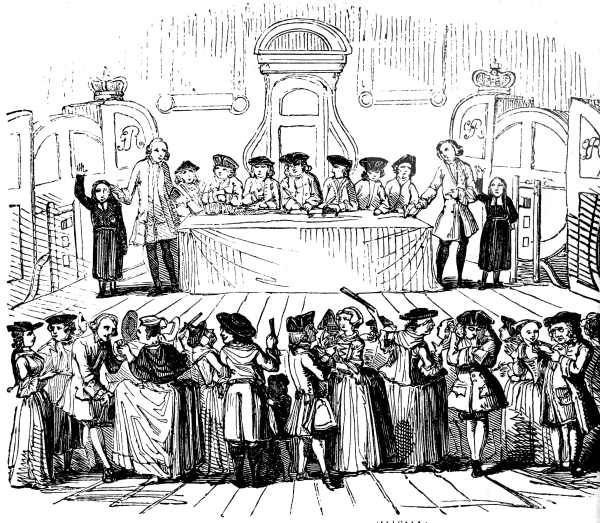

Drawing of the Lottery in Guildhall, 1751.
[Pg 69] By an Act of Parliament (26 Geo. II. c. 22), passed in 1753, the nation purchased for £20,000 the library and collection of Sir Hans Sloane, and incorporated with it the library of Sir Robert Cotton, and that known as the Harleian library, thus forming the nucleus of the British Museum. The next thing was to find a house wherein to keep this collection, and to raise money for the same, at the least cost. This was done, in the same Act, by means of a lottery, the managers and trustees of which were, singularly enough, the Archbishop of Canterbury, the Lord Chancellor, and the Speaker, each of whom was to have £100 for his trouble. The subscription to the lottery was £300,000, in tickets of £3 each. £200,000 was to be distributed in prizes varying from £10,000 to £10, and the remainder was to go towards the purchasing of the Sloane collection and library, and the Harleian library, finding suitable cases for the property acquired, house-room and attendants. The lottery was to be drawn on November 26, 1753, and all prizes were to be paid by December 31, 1754, when those not presented would be forfeited.
And this Act is the only trace I can find of this lottery, although I [Pg 70] have had the willing and zealous aid of the officials of the British Museum in searching after it.
In connection with this lottery was a gross fraud, into which the House of Commons caused an inquiry to be made, and the committee eventually reported that Peter Leheup, Esq., had privately disposed of a great number of tickets before the office was opened, to which the public were directed, by an advertisement, to apply; that he, also, delivered great numbers to particular persons, upon lists of names which he knew to be fictitious; and that, in particular, Sampson Gideon became proprietor of more than six thousand, which he sold at a premium. The House resolved that Leheup had been guilty of a violation of the Act and a breach of trust, and the Attorney-General was instructed to prosecute him. On June 9, 1855, he was found guilty, and sentenced to pay a fine of £1000, which he could well afford, as it is said he had made £40,000 by his rascality.
[Pg 71]
Crowd at a lottery—Another State lottery, eighty-seven blanks to a prize—A ticket sold twice over—Extravagant prices paid for tickets—Praying for success—A lucky innkeeper—Lottery for Cox’s Museum—Adam’s Adelphi Lottery—Blue-coat boys and the lottery—Future arrangements for drawing.
In 1755 there was a State lottery (28 Geo. II. c. 15) for £1,000,000, tickets £10 each, the drawing of which commenced on October 6. At this lottery the crowd at the Bank, willing and eager to subscribe, was so great that the counters were broken by their eagerness to get at the books. In the next year, 1756, one was started for £500,000 (29 Geo. II. c. 7).
Then comes a lottery in 1757 (30 Geo. II. c. 5), called “The Guinea Lottery,” by which it was sought to raise £1,050,000 by the sale of tickets at one guinea each; half the amount to be applied to the service of the year, and the other half to be returned in prizes. But [Pg 72] it was only partially successful, less than half the full number of tickets being sold. The prizes ranged from £10,000 to £10. Blanks received nothing; eighty-seven blanks to a prize. The prizes were paid in ready money; but, as one half of the subscription only was divided into prizes, these tickets were worth only half a guinea each, notwithstanding the avidity with which they were bought up. The drawing at the Guildhall commenced on September 5 and ended on October 15. Connected with this is a sad story, which I find in the Gentleman’s Magazine for the year, p. 528. “November 5.—Mr. Keys, late clerk to Cotton & Co., who had absented himself since the 7th of October, the day the £10,000 was drawn in the lottery (supposed to be his property), was found in the streets raving mad, having been robbed of his pocket-book and ticket.”
There were State lotteries in 1758 (31 Geo. II. c. 22) for £500,000; in 1759 (32 Geo. II. c. 10) for £660,000; in 1760 (33 Geo. II. c. 7) for £240,000, in £3 tickets; in 1761 (1 Geo. III. c. 7) for £600,000, in £10 tickets, prizes from £10,000 to £20, blanks £6, about four blanks [Pg 73] to a prize; in 1763 (3 Geo. III. c. 12) for £350,000 in £10 tickets, prizes from £10,000 to £20, blanks £5, about five blanks to a prize; in 1765 for £600,000, in £10 tickets, prizes as usual, £6 blanks, which were as four to one to the prizes; and another in 1766 (3 Geo. III. c. 39), precisely similar in amount, etc. There was an incident connected with this lottery, which was that a ticket was sold twice over. No. 2099 was purchased in Change Alley for Pagen Hale, Esq., of Hertfordshire, and the same number was divided into shares at a lottery office near Charing Cross, and some of the shares actually sold. The number purchased in the Alley was the real number, but that divided by the office-keeper was done in mistake, for which he had to pay a considerable sum.
In 1767 (7 Geo. III. c. 24) was another £600,000 lottery, with rather more stringent terms. In the interval between the purchase of a ticket and the drawing of the lottery, the speculators were in a state of intense excitement. On one occasion a fraudulent dealer managed to sell the same ticket to two persons, and it came up a five hundred pounds prize. One of the two went raving mad when he found that the real ticket was, after all, not held by him. Circumstances excited the public [Pg 74] to such a degree that extravagant biddings were made for the few remaining shares in the lottery, until one hundred and twenty guineas were given for a ticket on the day before the drawing. Nay, a lady residing in Holborn had a lottery ticket presented to her by her husband, and, on the Sunday preceding the drawing, her success was prayed for in the parish church in this form: “The prayers of this congregation are desired for the success of a person engaged in a new undertaking.”
The great prize of £20,000 fell to the lot of a tavern-keeper at Abingdon. We are told that he gave the broker who went from town to carry him the news, £100. All the bells in the town were set a-ringing. He behaved very generously with his new-found fortune. He called in his neighbours, and promised to assist this one with a capital sum, that with another; gave away plenty of liquor, and vowed to lend a poor cobbler money enough to buy leather to stock his stall so full that he should not be able to get into it to work; and, lastly, he promised to buy a new coach for the coachman who brought him down the ticket, and [Pg 75] to give a set of as good horses as could be bought for money. Yet another anecdote of this lottery. During its progress Mr. Hughes, a stockbroker, had his pocket picked in Jonathan’s Coffee-house of fifty lottery tickets, the value of which—at the then current price—was £800. On the same evening three other stockbrokers had their pockets picked. A man was afterwards apprehended, on whose person was found thirty-five of the stolen tickets. The others were never recovered, and it was supposed they had been sent to Holland.
There was a State lottery in 1768 (8 Geo. III. c. 31) for £600,000, another in 1769 (9 Geo. III. c. 33) for £780,000, and one in 1771 (11 Geo. III. c. 47) for £650,000.
In 1773 were two private lotteries, Cox’s Museum and the Adelphi, the first being legalized by Act of Parliament (13 Geo. III. c. 41). James Cox was a jeweller in Shoe Lane, who delighted in making automata, which he hoped to dispose of in the East Indies; but he found that “on account of the great value and price thereof, and also on account of the present distress and scarcity of money in the East Indies, as well as in Europe, it cannot easily be disposed of in the [Pg 76] common way of sale.” He therefore, as he had contracted large debts in completing the said Museum, petitioned Parliament to grant him facilities for a lottery by which he might dispose of his White Elephant; and his prayer was granted. This was the scheme of the lottery.
| 2 | prizes of | the value | of £5000 | = | £10,000 |
| 2 | ” | ” | 3000 | = | 6,000 |
| 12 | ” | ” | 1500 | = | 18,000 |
| 18 | ” | ” | 750 | = | 13,500 |
| 52 | ” | ” | 450 | = | 23,400 |
| 100 | ” | ” | 300 | = | 30,000 |
| 212 | ” | ” | 150 | = | 31,800 |
| 2 | ” | ” | 50 | = | 100 |
| 2 | ” | first drawn | 100 | = | 200 |
| 2 | ” | last drawn | 750 | = | 1,500 |
| 120,000 | tickets of admission to | ||||
| the Museum at 10s. 6d. | = | 63,000 | |||
| ” | ” | = | |||
| £197,500 | |||||
| 60,000 tickets marked A | 120,000 at £1 11s. | £126,000 | |||
| 60,000” ” B | |||||
| Balance in favour of the public | 71,500 | ||||
| £197,500 | |||||
There were two automata of “a pair of bulls, with clocks, chimes, mechanism and pedestal eight feet high,” which have been immortalized by Sheridan in The Rivals—“And her one eye shall roll like the [Pg 77] bull’s in Cox’s Museum.” He even included in his collection the larger forms of animal life, for he had “a Rhinoceros, with timepiece, musick and mechanism,” and “an Elephant and silver temple, with musick, mechanism, clock and pedestal;” in fact, there were two of both these. It is impossible to give the whole of the prizes in this curious Museum: two must serve as illustrations. “An automaton figure of a Chinese, that plays on the flute with musical chimes and mechanism, upon a commode of lapis and gold stone, which contains an Organ, and in front, artificial water works, with a water mill and bridge; and terminates with a spiral star; nine feet high.” “A swan, large as life, formed of silver, filled with mechanism, beating time with its beak to musical chimes, seated on artificial water, within reflecting mirrors; under the swan are water works, terminating at the top with a rising sun, upwards of three feet in diameter; the whole eighteen feet high.”
A Song, to the Tune of
“The Roast Beef of Old England.”
A fraud was attempted with regard to the drawing of this lottery. On June 1, 1775, a man was brought before the Lord Mayor, charged with attempting to bribe the two Blue-coat boys who drew the lottery tickets, to conceal one, bring it to him, and he would return it to them next day. His intention was to insure it in all the offices, with a view to defraud the office-keepers. The boys were honest, gave notice of the intended fraud, and pointed out the delinquent; who, however, was discharged, there being no law to punish the offence. [Pg 80]
The preamble to the other Lottery Act of this year (13 Geo. III. c. 75) sets forth that “Whereas John, Robert, James, and William Adam ... have erected many great and expensive buildings, with commodious wharfs and warehouses, upon a piece of ground formerly called Durham Yard, now called the Adelphi, situate in the parish of St. Martin in the Fields, and adjoining to the river Thames; and have, by means of subterraneous streets, pointed out a new and effectual method to keep the access to the houses distinct from the traffick of the wharfs and warehouses, thereby connecting grandeur and magnificence with utility and commerce; and have also erected some great and expensive buildings in Queen Anne Street and Mansfield Street in the Parish of St. Mary le bon, and are possessed of several shares of Stock in the Carron[18] Company, and of many valuable statues, pictures and antiquities,” etc. They found themselves in debt, and in want of money to complete their works; so they petitioned that they might sell [Pg 81] such of their property as they wanted to, and that they might have a lottery, not to exceed £224,000, in tickets of £50 each. Their prayer was granted, and it was duly drawn: there were 110 prizes—the first drawn ticket receiving £5000, and the last drawn £25,000.
It is singular that two similar cases of swindling should have been perpetrated in the same year; but, on December 5, 1775, a man appeared before the magistrates at Guildhall, charged, with another man not in custody, with defrauding a lottery office keeper of a large sum of money. “The latter said that, about a fortnight previously, the prisoner insured No. 21,481 six times over, for the following day of drawing; that the conversation he had with the prisoner at that time, and the seeming positiveness there appeared in the latter that the ticket would come up, caused him to inquire at other lottery offices, when he found the same number insured in the prisoner’s name at all the principal offices about the 'Change; that the ticket was drawn the first hour of drawing the subsequent day; that this, with his former suspicions, alarmed him, and he immediately went to Christ’s Hospital [Pg 82] and saw the boy who drew the ticket; that he interrogated him whether he had clandestinely taken that number out of the wheel, or whether he had been solicited to do so; which the boy positively denied; and that, observing that he answered rather faintly, he importuned him to tell the truth, which, after some hesitation, produced an acknowledgment of the fact. The next witness was the Blue-coat boy. He said that, about three weeks ago, the person who is not in custody, and whom he had known before he went into the hospital, took him to a coffee-house, where they breakfasted together; that he wanted to know of the witness whether it was possible to get a ticket out of the wheel, to which the latter answered, No; that, being afterwards solicited by him for the same purpose, to secrete a ticket, he, at length, promised to do it; that he took two at one time out of the wheel, gave one to the person who called it over, and put the other in his pocket; that the person who induced him to do it, was then in the gallery, and nodded his head to witness to signify when was a proper time; that, after witness came out of the hall, he gave the ticket to the person who sat in the gallery, and who was then waiting for the witness in Guildhall Yard; [Pg 83] that next time the witness drew the lottery, the person returned him the ticket, which the witness put into the wheel, and drew out the same day; that he did this three several times, and received from the person for whom he did it, several half-guineas; that he had heard the prisoner’s name mentioned by him, but never heard the latter acknowledge any connection between them in insurance, and had never before seen the prisoner.” The prisoner acknowledged that he had insured the ticket seventy-nine times for one day, but—he was discharged!
To prevent, for the future, a repetition of such frauds, the Lords of the Treasury (on December 12, 1775) issued an Order, from which the following is an extract: “It is therefore ordered, for preventing the like wicked practices in future, that every boy, before he is suffered to put his hand into either wheel, be brought by the proclaimer to the managers on duty, for them to see that the bosoms and sleeves of his coat be closely buttoned, his pockets sewed up, and his hands examined; and that, during the time of his being on duty, he shall keep his left hand in his girdle behind him, and his right [Pg 84] hand open, with his fingers extended: and the proclaimer is not to suffer him, at any time, to leave the wheel, without first being examined by the Manager nearest him.”
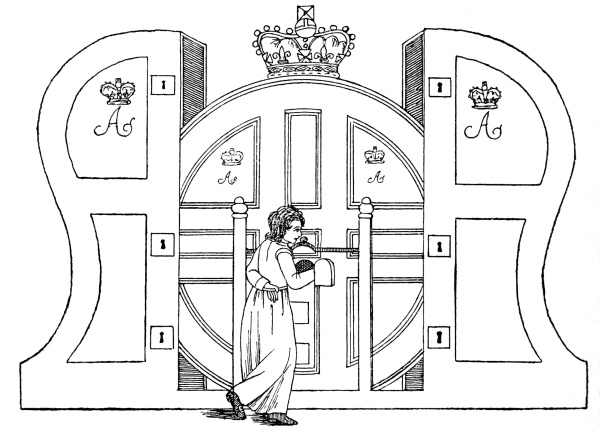
It was also “requested of the Treasurer of Christ’s Hospital, not to make known who are the twelve boys nominated for drawing the lottery till the morning the drawing begins; which said boys are all to attend every day, and the two who are to go on duty at the wheels are to be taken promiscuously from amongst the whole number, by either of the secretaries, without observing any regular course or order; so that no [Pg 85] boy shall know when it will be his turn to go to either wheel.”
Here we have a very good representation of the Blue-coat boy with his hand in his girdle behind his back, and also of the lottery wheel and boxes. They were in those days marked A and B; later on they had the King’s cypher crowned.[19]
[Pg 86]
Counterfeiting lottery tickets—Curious lotteries—Suicide—Method of starting a State lottery—Lottery office-keepers to be licensed —Charles (or “Patch”) Price.
In 1776 was a lottery for £600,000 (16 Geo. III. c. 34), and in 1777 was one (17 Geo. III. c. 46) for £500,000. On January 6, this year, two Jews, Samuel Noah and Joseph Aarones, were examined before the Lord Mayor, charged with counterfeiting the lottery ticket, No. 25,590, a prize of £2000, with intent to defraud Mr. Keyser, an office-keeper, knowing the same to be false and counterfeit. Mr. Keyser had examined the ticket carefully, and had taken it into the Stock Exchange to sell, when Mr. Shewell came into the same box, and desired to look at the ticket, having, as he recollected, purchased one of the same number a day or two before. This fortunate discovery laid open the fraud, and the two Jews were [Pg 87] committed to take their trial for their ingenuity. It was so artfully altered from 23,590 that not the least erasure could be discovered. Aarones had but just come to England, and Noah was thought to be a man of property. On February 21, Joseph Aarones and Samuel Noah were tried for forging and counterfeiting a lottery ticket; their defence was that the prisoner Aarones found it, and persons were brought to swear to the fact; on which they were acquitted. The figure altered was so totally obliterated by a certain liquid, that not the least trace of it could be perceived. The numbers being written in ordinary ink rendered this extremely easy.
On February 24, 1777, Daniel Denny was tried for forging, counterfeiting, and altering a lottery ticket, with intent to defraud; and, being found guilty, he was condemned. He, probably, was not prepared with false witnesses as were the Jews—a custom which, unfortunately, as regards the foreign importations, exists to an alarming extent in our own time.
With regard to this lottery, the Annual Register for 1777 says (p. 206), “The following is a true state of the different methods of getting money by lottery-office keepers, and other ingenious persons, [Pg 88] who have struck out different plans of getting money by the State lottery of 1777. First, His Majesty’s royal letters patent for securing the property of purchasers. Secondly, a few office-keepers who advertise 'By authority of Parliament’ to secure your property in shares and chances. Thirdly, several schemes for shares and chances, only entitling the purchasers to all prizes above twenty pounds. Fourthly, a bait for those who can only afford to venture one shilling.
“Then come the ingenious sett of lottery merchants, viz. Lottery magazine proprietors, Lottery taylors, Lottery stay-makers, Lottery glovers, Lottery hat-makers, Lottery tea-merchants, Lottery snuff and tobacco merchants, Lottery handkerchiefs, Lottery bakers, Lottery barbers (where a man, being shaved, and paying threepence, may stand a chance of getting ten pounds), Lottery shoe-blacks, Lottery eating-houses (one in Wych Street, Temple Bar, where, if you call for sixpenny-worth of roast, or boiled beef, you receive a note of hand, with a number, which, should it turn out fortunate, may entitle the eater of the beef to sixty guineas), Lottery oyster stalls, by which [Pg 89] the fortunate may get five guineas for threepenny-worth of oysters. And, to complete this curious catalogue, an old woman, who keeps a sausage-stall in one of the little alleys leading to Smithfield, wrote up in chalk, 'Lottery sausages, or five shillings to be gained for a farthing relish.’”
Sad to say, this year’s lottery led to at least one suicide, for, on January 10, the body of a young man, clerk to a merchant in the city, was found in the river, below bridge; he had been dabbling in the lottery with his master’s money, and chose this method of settling his accounts.
In 1778 there was a lottery for £480,000 (18 Geo. III. c. 22), another in 1779 (19 Geo. III. c. 18) for £490,000, one in 1780 (20 Geo. III. c. 16) for £480,000. At this time, and afterwards, the State lotteries became a regular institution. At first they were spasmodic, and were of help to the Government at a time when rates were hardly known; they now developed into a voluntary taxation, appealing to the national taste for gambling, and fostered by the Government, in order to help out the annual supplies. The modus operandi was that the Chancellor of the Exchequer would invite a few of the leading stockbrokers to a [Pg 90] conference, in which he would state his views. That he intended to issue a lottery for, say, £500,000 in £10 tickets—all to be distributed in prizes; and then he asked them at what price they would tender for them. In the competition that ensued, a final offer would be accepted, and the whole lot disposed of at, say, five pounds premium per share, which would give the Government a clear profit, without risk, of £250,000. Of course, those who got the concession put up the price of the tickets at once, but, as single shares were seldom bought—most people taking a fourth, an eighth, or a sixteenth of a ticket—the rise was not much felt by the public, and at this time they seem to have been thoroughly subscribed for.
In 1780 and 1781 were drawn lotteries (20 Geo. III. c. 16, and 21 Geo. III. c. 14) for £480,000 each, and in 1782 another for £405,000 (22 Geo. III. c. 8).
Private lotteries, although illegal, still flourished, and the Government, in order to keep up its own monopoly in this lucrative gambling, got an Act passed in 1782 (22 Geo. III. c. 47) whereby [Pg 91] lottery-office keepers were to pay £50 licence, under a penalty for not doing so of £100. In 1783 there was a lottery (23 Geo. III. c. 35) for £480,000, and one in 1784 (24 Geo. III. c. 10) for £360,000; but this seems to have been rather unfortunate, as not more than a third of the tickets were sold before drawing. From this time lotteries, as aids to State revenue, were disconnected from loans, with which they had hitherto been associated, and in 1785 (25 Geo. III. c. 59) was one for £650,000, of which £500,000 was given in prizes, and it yielded a net profit to the Government of £137,250. Next year, 1786 (26 Geo. III. c. 65), one for £688,750, prizes £500,000, net profit £176,000.
An episode of crime in the annals of the lottery may well be introduced here, for on January 25, 1786, Charles, alias “Patch,” Price hanged himself, and so terminated his worthless life. The following particulars respecting him are condensed from the very lengthy biography in Hone’s “Every-Day Book.” [Pg 92]
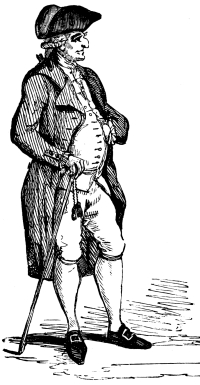
Ordinary Dress.
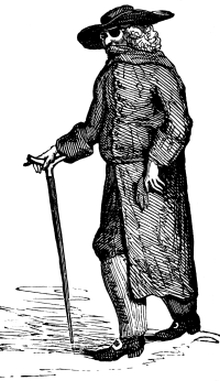
Disguise.
Charles Price.
He was the son of a tailor, who came, about 1702, from South Wales to London, where, in 1710, he settled in Monmouth Street (a famous place for cheap tailors and second-hand clothes) as journeyman to a salesman there. He afterwards set up for himself in the Seven Dials. Charles was sent to school when six years old, and when twelve years of age had to help his father; but he developed such cunning and roguery that he had to be apprenticed to a hatter and hosier, whom he tricked, and, being discovered, he ran away. His father died, disinheriting him; but before his death Charles went as servant to two gentlemen, with one of whom he [Pg 93] went the tour of Europe. He became a brewer, then set up a distillery, defrauded the revenue, was sent to the King’s Bench, released by an Insolvent Act, again turned brewer, and defrauded a gentleman out of £6000. He then became a lottery office-keeper, courted a Mrs. Pounteney, and ran away with her niece. He practised innumerable frauds, became an adept at swindling, and had the effrontery to avow his depredations and laugh at those he injured.
Price was intimate with a Mr. R____, a grocer retired from business, with whom he had, for a long time, passed as a stockbroker. Price, who then lived at Knightsbridge, frequently used to request the favour of Mr. R____ to take a bank-note or two into the city, and get them changed into small ones. In this he had a twofold plot. He informed his friend that he was intimately acquainted with a very old gentleman, exceedingly rich, who had been an eminent broker in the Alley, but had long retired; that his monies in the funds were immense; that the only relation he had in the world was one sister, to whom he intended to bequeathe the best part of his property; and that his sister was near fifty years of age, had never been married, and was determined never to [Pg 94] marry; and that it was impossible that the old gentleman could live long, as he was very old, very infirm, and almost incapable of going out of doors. This old gentleman, Price said, had often asked him to become his executor; and besought him to recommend another person, in whose fidelity, character, and integrity he could repose an entire confidence, and that he would make it well worth their while if they would undertake so friendly and solemn an office. “Now,” said Price to Mr. R____, “here is an opportunity for us to make a considerable sum in a short time, and, in all probability, a very capital fortune in a few years; for, the sister being determined not to marry, and having no relations in the world, there is no doubt but she will leave us the whole of the estate; and, after his decease, she will become totally dependent upon us. I shall see the old gentleman, Mr. Bond, to-day, and, if you will join in the trust, the will shall be immediately made.”
To this proposal Mr. R____ consented. In the evening Price returned to Knightsbridge. He told Mr. R____ that he had visited Mr. Bond, who [Pg 95] expressed great happiness and easiness of mind on such a recommendation, and desired to see Mr. R____ the next day. Price appointed to meet him at twelve o’clock at Mr. Bond’s. At the appointed hour Mr. R____ knocked at the door. He was shown upstairs by the aforementioned sister, and introduced to Mr. Bond, seated in a great chair, his legs in another, and his head covered with a night-cap. The poor, infirm, weak, debilitated old gentleman regretted the absence of his ever dear friend, Mr. Price, the most worthy man in the world, and rang a peal on his friendship, honour, honesty, integrity, etc., accompanied with emaciated coughs—was obliged to go to a City coffee-house—a punctual man—never failed an appointment—it was the soul of business; and he then told Mr. R____ that his dear friend desired to meet Mr. R____ there, exactly at one o’clock. He approved highly of Mr. Price’s recommendation, and was now quite happy in his mind; it wanted but a quarter to one, he believed, and he hoped Mr. R____ would not fail, as his dear friend was very exact indeed. The usual compliments passed; the sister conducted Mr. R____ to the door, who posted away to the City coffee-house, and left old Mr. Bond, who was in reality no other than Price, and his maiden sister, who was Mrs. [Pg 96] Pounteney, to laugh at Mr. R____’s credulity. Mr. R____ had not been five minutes in the coffee-house before he was joined by his friend Price, to whom Mr. R____ recapitulated what had passed; and, as soon as Price had despatched some pretended business, he proposed calling on Mr. Bond. This was readily acquiesced in by Mr. R____, and away they drove to Leather Lane. When they got there, they were informed by the lady that her brother had just gone out in a coach, on an airing, to Highgate. In short, Price carried on the scheme completely for several days, during which time Mr. R____ had twice or thrice seen the old gentleman. The will was made, and, on the strength of the joint executorship and expectancy, Mr. R____ was swindled out of very nearly a thousand pounds in cash, and bonds to the amount of two hundred pounds. This seems to have been his first attempt at disguise.
As a lottery office-keeper he continually cheated his clients, and, to avoid their clamour and importunity, he had to shift his offices frequently, the last he had being at the corner of King Street, Covent Garden, from which he privately decamped.
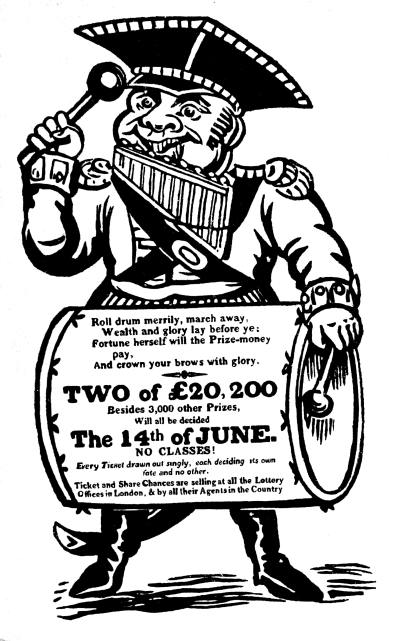
[Pg 97] Having a wife and eight children to support, and being incapable of earning an honest living, he commenced forging the notes of the Bank of England. His first attack on the Bank was about the year 1780, when one of his notes had been taken there, so complete in the engraving, the signature, the water-marks, and all its parts, that it passed through various hands unsuspected, and was not discovered till it came to a certain department, through which no forgery whatever can pass unnoticed. The appearance of this note occasioned considerable alarm among the directors; and forgery upon forgery flowed in, about the lottery and Christmas times, without the least probability of discovering the first negotiators. Various consultations were held, innumerable plans were laid for detection, and they were traced, in every quarter, to having proceeded from one man, always disguised, and always inaccessible.
Had Price permitted a partner in his proceedings, had he employed an engraver, had he procured paper to be made for him, with water-marks upon it, he must soon have been discovered; but he “was himself alone.” He engraved his own plates, made his own paper with the water-mark, and, as much as possible, was his own negotiator. He, [Pg 98] thereby, confined a secret to himself, which he deemed not safe in the breast of another; even Mrs. Price had not the least knowledge or suspicion of his proceedings. Having practised engraving till he had made himself a sufficient master of the art, he then made his own ink to prove his work. He next purchased implements and manufactured the water-mark, and began to counterfeit hand-writings.
All attempts to discover him proving fruitless, the Bank issued a minute description of his disguise, and of Mrs. Pounteney’s appearance, which forced him to refrain from the circulation of his forgeries, and for some months to put a total stop to them. But his wits did not fail him, and he obtained a negotiator for his notes, in answer to an advertisement for a man-servant who had been used to live with a single gentleman. A very honest fellow, whose Christian name was Samuel, called upon him, and was engaged, at a salary of eighteen shillings per week, to attend on a young nobleman who was then in Bedfordshire; and, pending his arrival, he was to wait on an old invalid gentleman named Brank (Price), at 39, Tichfield Street, Oxford Street. [Pg 99]
A few days afterwards Samuel was told that the young nobleman wished to buy some lottery tickets, and was given some seeming banknotes, one for £20, and another for £40. With the first he was to purchase an eight-guinea chance at a lottery office in the Haymarket, and then was to go to another, and purchase a similar chance out of the second note. He executed his commission, and was entrusted with more notes, which he duly changed. This time Mr. Brank called to him out of a coach, saying how fortunate it was he had met him; made him get in, and, driving to the City, gave him false notes of presumably £400 value, and told him to purchase chances at the different offices round the Exchange, after which he was to call on Mr. Brank at a coffee-house. The lad did as ordered, waited a little for the invalid, who came hobbling up, and the two drove in a coach to Long Acre. For his attention and fidelity, Samuel received a guinea.
Samuel was made the innocent means of passing numerous forged notes, until he was arrested and committed to Tothill Fields Bridewell; but the authorities believed his artless tale, and a watch was set. After a [Pg 100] few days a message came for Samuel to meet Mr. Brank next day at Mill’s Coffee-house, exactly at eleven o’clock. The police told him to keep the appointment, but to be five minutes late. Brank was punctual, and waiting close by in a coach, when he observed Samuel talking to a Bow Street runner in disguise, whereupon he took to immediate flight. The police made a raid at once upon the house in Tichfield Street; but Mr. Brank had only occupied the apartments for a week, and had long since left. The advertisements were again issued, and handbills showered around to no purpose. Poor Samuel, however, having tolerably established his innocence, was, after suffering eleven months’ imprisonment, discharged with a present of £20.
In the ensuing lottery, Price played the same artful game with notes of higher value; those of £20 and £40 were grown too suspicious. Another lad was taken, another rush made, and Price was missed again by a moment.
These are only a few of his rogueries. He was caught at last, and taken to Bow Street, where he was extremely insolent, until he was confronted with Samuel, who, never having seen him except in a disguise, could [Pg 101] only swear to his voice. He was committed to Tothill Fields Bridewell, where he sent for his wife and eldest son. To his wife’s utter astonishment he confessed everything to her, and having written a letter, which he concealed in the sole of his son’s boot, told him to go with it to Mrs. Pounteney, who, upon receipt thereof, burnt all his disguise, had his press and apparatus taken down and duly burnt, tried to melt the engraved plates, and gave them to Price’s son to take to the adjacent fields and distribute them beneath the dust-heaps; and the pieces lay there till, by a stratagem, they were discovered and taken to Bow Street.
As there was no shadow of doubt as to his guilt and ultimate punishment, and wishing to avoid a public execution, he informed his son that the people of the prison came into his room sooner than he wished, and that he had something secret to write, which they might get at by coming suddenly upon him, which he wished to prevent. On this pretence, he gave his son money to purchase two gimlets and a sixpenny cord, pointing out to him how he would fasten the gimlets in the post, and tie the cord across the door, which opened inwards. The poor youth [Pg 102] obtained the implements, and Price, having fastened the gimlets under two hat screws, hanged himself effectually. He, having committed suicide, was buried at a cross-road; but, in about a week, his body was privately removed by night.
Mrs. Pounteney, although both cajoled and severely interrogated, would not say a single word which could possibly incriminate her former lover, and was never punished for her share in the frauds.
[Pg 103]
Lottery for the Leverian Museum—Prosecution of unlicensed lottery office-keepers—Suicide—Robbery of employers —Sharp practice over a prize—Cheating by lottery office-keepers—Complaint of a prisoner.
Sir Ashton Lever, who was born in 1729, and who died in 1788, was the eldest son of Sir James Darcy Lever, whose seat was at Alkrington, near Manchester. He was an ardent collector of specimens of natural history, minerals, fossils, and shells, and his museum was famous. In the May number of the Gentleman’s Magazine for 1773, is a letter from a gentleman who had visited it late in the previous year, and, from his account, we find that, not only did he collect every legitimate specimen of natural history he could lay hold of, but also any lusus Naturæ that came across his path; as, for instance, “A double-headed Calf: A Pig [Pg 104] with eight legs, two tails, one backbone, and one head: a Leveret with seven legs, eight feet, and one head: A Kitten, a perfect Polypheme, having one eye only, and that in the middle of the head: a Pupp with two mouths and one head.” Stuffed birds, fish preserved in spirits, reptiles, crustaceæ, fossils, marbles, medals, and casts, all were in profusion, nor did he disdain comparatively trifling curiosities, such as “A few pictures of birds in straw, very natural, by Miss Gregg; a basket of flowers cut in paper,—a most masterly performance; the flowers are justly represented, not the least dot of the apices of the stamina wanting, or the least fault in the proportion; every part is so truly observed, that it was new to me every time I went to see it, and gave me great delight. This curious basket of flowers was executed by Mrs. Groves. There are a number of antique dresses of our own and other nations.... Here is a head of his present Majesty, cut in Cannil Coal, said to be a striking likeness; indeed, the workmanship is inimitable. Here, also, is a drawing in Indian Ink of a head of a late Duke of Bridgewater, valued at 100 Guineas,” etc., etc.
This collection was costly, and Sir Ashton’s income could not stand it. In 1774 he brought it to London, and christened it the [Pg 105] Holophusikon, and, having taken Leicester House, in Leicester Square, formerly the residence of Frederick, Prince of Wales, and in modern times, Miss Linwood’s Gallery of Needlework, Madame Wharton’s Posés Plastiques—on its site now stands the “Empire Palace of Varieties”—it filled sixteen rooms, and various passages and staircases, and he advertised that they were on view, from ten to four, “admittance 5s. 3d. each person.”
But, as his purse could not stand the drain upon it, he made up his mind to part with his collection, applying to Parliament for power to dispose of it by lottery. The committee valued it at £50,000, and he offered it to the nation at a considerable reduction on this valuation, but the trustees of the British Museum declined to purchase it. So he got an Act of Parliament in 1784 (24 Geo. III. c. 22), by which he was empowered to dispose of his museum by lottery, without being liable to any penalty. Sum to be raised not to exceed £37,800, and number of tickets 36,000. To advertise such sale by December 25, 1784, and before he sell, etc., any tickets, with an account of the pieces composing the museum, in the London Gazette. To consist of one prize, to be [Pg 106] determined by the lottery of 1785, if it consists of 36,000 tickets, or upwards. If no lottery in 1785 that shall consist of 36,000 tickets, then by a private lottery, after February 2, and before March 25, 1786, under the inspection of ____, or any three of them, and the first number to be the prize.
Here is an advertisement of his show, taken from a newspaper advertisement, January 28, 1785:—
“Sir Ashton Lever’s Lottery Tickets are now on sale at Leicester House, every day (Sunday excepted) from nine in the morning till six in the evening, at one guinea each; and, as each ticket will admit four persons, either together or separately, to view the Museum, no one will hereafter be admitted but by the Lottery Tickets, excepting those who have already annual tickets.
“This collection is allowed to be infinitely superior to any of the kind in Europe. The very large sum expended in making it, is the cause of its being thus to be disposed of, and not from the deficiency of the daily receipts (as is generally imagined), which have annually increased, the average amount for the last three years being £1833 per annum.
“The hours of admission are from Eleven till Four. [Pg 107]
“Good fires in the Galleries.”
The lottery was drawn, but poor Lever only sold 8000 tickets out of his 36,000, and the lucky winner was a Mr. James Parkinson, who erected, for its reception, a curious building, called the “Rotunda,” on the Surrey side of Blackfriars Bridge. Here the collection was exhibited, until it was sold on July 18, 1806, the sale lasting sixty-five days, and the lots numbering 7879. The “Rotunda” fell from its high estate, and became a low music-hall, or “penny gaff.”
In 1787 (27 Geo. III. c. 41) was a State lottery which produced £756,875. £500,000 was distributed in prizes, and it resulted in a net profit to the Government of £243,925. As we have seen, an Act was passed in 1782 compelling lottery-office house keepers to pay a £50 licence, but this did not prevent illegal practices. Sales of chances still continued to be made by unlicensed persons, and other schemes were prepared with so much ingenuity as to evade the Act. Accordingly, in 1787, an Act was passed (27 Geo. III. c. 1) to render more effectual the laws then in being for suppressing unlawful lotteries. The licensed lottery office-keepers complained, and made a representation to the [Pg 108] Lords of the Treasury as to the nature and extent of the mischief of these fraudulent proceedings. They stated that the sale of these chances was equal to the whole of the State lottery, and that it was impossible for them to find a market for the sale of the duly authorized lottery tickets. In consequence of these representations, proceedings were taken, under the Act of 1787, to have persons who sold the illegal tickets apprehended and committed, under the third section, as rogues and vagabonds. The convictions obtained effectually put an end to the system, and it was never afterwards renewed.
Here is a specimen of one of these unauthorized lotteries, from a handbill (1787) of Mr. John Clarke, who had just received from the Grand Lottery Committee, held at the Royal Exchange, London, the “Annual Gold Lottery Medal, given to the Author of the best Plan, or Plans, for the Public to purchase in.” He “submits, with the utmost deference and respect, his New Plans, for the present Lottery, to the general perusal. First Plan at Sixpence—Second at Half a Crown—Third at Five and Sixpence—Fourth at half a [Pg 109] guinea—Fifth at One Guinea.” And his scheme was, at 6d. If you were participant in a prize of £20,000, you might receive an annuity of £20, or a capital sum of £40. If £10,000 prize, annuity of £10, or £30 money; if £5000, annuity of £5, or £25; £2000 prize, annuity of £2, or £20; £1000, annuity of £1, or £15; £500, annuity of 10s., or £15. If, however, you paid half a crown, on winning £20,000 you would get an annuity of £100, or a capital sum of £200; and for a prize of £100, an annuity of 10s., or £50. The other shares of five and sixpence, half a guinea and one guinea, were based on the same scale, only each doubled the other.
We read in the Gentleman’s Magazine of this year of a suicide clearly traceable to lottery speculation, and it gives what purports to be “a copy of a paper left by the unhappy young gentleman who lately shot himself with two pistols in Queen Street, Westminster,” wherein he curses “the head that planned, and the heart that executed, the baneful, destructive plan of a lottery.”
In this same year, during the debate on cap. 1 before quoted, a member of Parliament, named Francis, said his own family furnished a striking instance of the dreadful effects of a passion for gambling in the [Pg 110] lottery. He had given at different times, to a female servant, sums of money, to the amount of two hundred pounds, to pay his tradesmen’s bills; but, to his great surprise, he afterwards found that, regardless of his character, or her own, she had risked the entire sum in insuring in the lottery, and had lost it. He would have been glad had the loss of money been the only one, for he would have taken it upon himself; but the poor woman lost her life within a week after this discovery had been made, dying broken-hearted and distracted.
In 1788 (28 Geo. III. c. 21) a State lottery, nominally for £480,000, realized by tender the sum of £750,600, of which the net profit to the Government was £256,958 9s. 8d.
In this lottery, a guinea share of a ticket drawn, a prize of £20,000, had been duly registered by Shergold and Co., who sold it, and acquainted the holder, by letter, that it entitled him to £1500. This lucky man, who lived in the country, attended his club the same evening, and imparted the good news he had received. His joy, however, was considerably damped by a person present, who assured him that he [Pg 111] would never be paid, that his prize was not worth a groat, and that he himself knew one, at the beginning of the lottery, who had half-a-guinea share in a prize of £20,000, and was entitled to £700, but was glad to compromise it for £50. After reciting a variety of circumstances to the same effect, and cunningly working up alarm to the highest pitch, he at length told the owner of the prize that he knew some of the proprietors in Shergold’s house, and he believed he might be able to get some money where another could get none; he would, therefore, venture to give £100 for the prize. This proposal being rejected, he advanced to £200, thence to £300, and at last to £600, which was accepted. He accordingly paid the money to the fortunate adventurer, got possession of the prize, immediately set off for London, and received the £1500 without difficulty. Several eminent lawyers, on considering the misrepresentations used in this transaction, were of opinion that it was what is termed a catching bargain, and advised the owner, who was cozened out of £900, to apply to Equity for relief. He seems to have been afraid of the remedy, for, though he took Counsel’s opinion, it does not appear that he followed it into Chancery. [Pg 112]
1789 had its lottery (29 Geo. III. c. 33), bringing in the Government £771,562 10s., of which £500,000 was distributed in prizes, leaving a net gain of £258,175 13s. About this time there were one or two somewhat shady lottery office-keepers, notably Mr. Margray and Shergold—of whom we shall hear more in 1791. In this lottery, Margray, in his prospectus, says, “So that it may be said, without any Exaggeration, that by an adventure of a guinea and a half, in this Plan, a person may become possessed of Prizes of £18, up to £30,000, considering at the same time, that the Subscription Money is returned if drawn a Blank, or a Prize of Eighteen pounds, during half the drawing of the Lottery: Adding to this the Security of the Office, in which, on the same Spot, Business has been transacted for upwards of Twenty Years with the strictest Honour and Integrity,” etc. Shergold and Co. say in their prospectus, “The integrity and solidity of Shergold’s House have been fully tried and proved. They give clear, plain reference to eminent Bankers where any one can satisfy themselves. They possess and have merited the public confidence in a most eminent degree.”
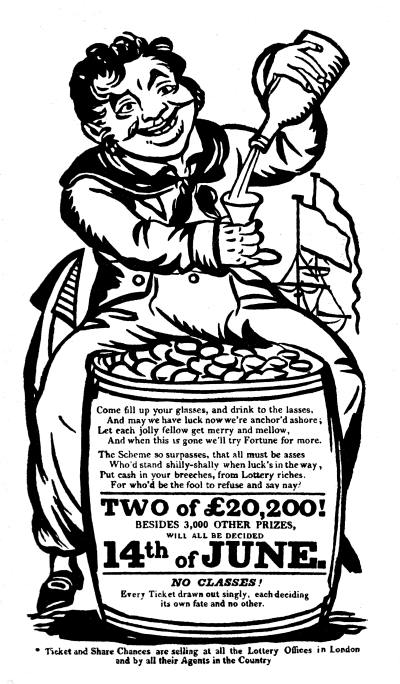
[Pg 113] In 1790 was the usual lottery (30 Geo. III. c. 30), when £500,000 was distributed in prizes, and the Government netted £277,606 3s. 1d.; and in 1791 another (31 Geo. III. c. 53), same amount given in prizes, net Government profit £291,108 10s. 7d.
In 1791, at Covent Garden Theatre, was produced a comedy called The School for Arrogance, and the prologue was spoken by a news-hawker, who, “after sounding, and calling 'Great News!’ without, enters with a postman’s horn, newspapers, cap, and livery.”
[Pg 114] That portion relating to the lottery office-keepers is, evidently, “rit sarcastical,” for both Shergold and Margray, who had brought their honour and integrity before the public, were convicted of evading the law, by a peculiar mode of dividing and insuring tickets; and in Michaelmas Term, 1791, the question was argued, in the King’s Bench, whether the sellers of their receipts were liable to be apprehended and committed as vagrants under the Lottery Act of 1787, and the Court decided that they were vagrants within the true intent of the Act.
One at least was committed to the Fleet, for here is his moan and plaint from that place of confinement:—
“Reader,
“Look to the following Caution, which has been published by Order of the Stamp Commissions.
Shergold & Co., Margray & Co., &c., &c., &c.
Caution to the Public.
“It is hoped that the following Affidavit of Nicholas Williams, late of Exeter, Coal-dealer, will serve as a Caution to all Vendors of illegal Lottery Shares, not to offend against the Statute in future.
[Pg 115] “In the Exchequer, between Richard King and Nicholas Williams. Nicholas Williams, late of the City of Exeter, in the County of Devon, Coal-dealer, but now a Prisoner in His Majesty’s Prison of the Fleet, and the Defendant in the above Cause, maketh Oath, and saith, that about the 9th Day of October last, he, this Deponent, received a Letter, dated the 7th Day of the said Month of October, signed W. Sherman, which is now in the Defendant’s custody, including several Pieces of Paper, with the Name Shergold and Co. written thereon; which Pieces of Paper were therein described as Share Receipts, by which this Deponent understood was meant legal Shares in the Irish Lottery; and this Deponent was desired to sell the same, and for which he was to be allowed £10 per cent. for his Trouble.
“And this Deponent further saith, that being ignorant that the said Pieces of Paper were illegal Shares of Lottery Tickets, and liable to a Penalty of £50, for the Sale of each, he, this Deponent, did sell several such Pieces of Paper, signed Shergold and Co., and [Pg 116] for which Offence, the Commissioners of the Stamp Office, as this Deponent had been informed and believes, ordered this Prosecution to be commenced against him for £500 Penalties, incurred by such Sale, as aforesaid. And this Deponent further saith, that on applying to the House of the said Shergold and Co. No. 50 Lombard St. for Assistance in bailing him from Prison, it was refused, and, therefore, he was carried to Jail; and this Deponent now remains there, in Consequence thereof, at the Mercy of the said Commissioners of the Stamp Office. And this Deponent further saith, that he never knew the person of the said Shergold whose name is signed to the before mentioned Pieces of Paper, nor does he believe that there is, in being, any such Person.”
His brother brokers sat heavily on this “Mrs. Harris,” and said and published hard things concerning the peccant firms. In one handbill, premising that the printer of a morning paper had been fined £100 for inserting in his paper the advertisements of Shergold and Margray, and noting that every printer throughout the realm was liable to a penalty of £50 for inserting one of their advertisements, inter alia, it [Pg 117] says, “After the solemn Declaration of Lord Kenyon, upon the Bench, that Shergold and Co. and Margray and Co., and all of their Description were the most Profligate, the most Infamous and the most Abandoned of Mankind”—“Shergold and Co. (and, when I mention one Impostor, I mean all) sell a Thing—a Slip of Paper—a printed Scrap—for Six Guineas, which, according to fair and honest Calculation, is not worth Six Pence: Here in the First Instance is a most Infamous Fraud. Shergold and Co. pretend to have a real and responsible Existence:—Now it is well known, that there are no such Persons living—no Person of the name of Shergold, that dares to answer for the iniquitous Transactions of that scandalous House. Consequently, assuming a false Name, for illegal Purpose, is an Infamous Fraud.” And very much more to the same purpose.
[Pg 118]
Winners of prizes—Attempt to put down the practice of insuring—Steps taken to prevent it—Specimen handbill—Bish, the lottery office-keeper—Lottery for the “Pigot” diamond—Lottery-office agencies—Shortening the time of drawing the lottery—Story of Baron d’Aguilar.
As usual, the annual lottery for 1792 was passed in Parliament (32 Geo. III. c. 28), which, giving £500,000 in prizes, brought in a net profit of £300,136 6s. 10d. This lottery began drawing February 18, 1793, and in a handbill of Messrs. Richardson, Goodluck, and Co., a very respectable firm of office-keepers, whose offices were by the Bank of England, we learn to what varied grades in life the lottery prizes fell. It was No. 12,087 ticket, a £30,000 prize in the last lottery, sold by this firm in sixteenths. [Pg 119]
| 1 | sixteenth | to a | Clergyman near Brigg, Lincolnshire. |
| ” | ” | Tradesman at Dartford, Kent. | |
| ” | ” | Gentleman in Scotland Yard, Westminster. | |
| ” | ” | Housekeeper in a Gentleman’s family, King Street, | |
| Grosvenor Square. | |||
| ” | ” | Tradesman in Long Acre. | |
| ” | ” | Servant at Newbury, Berks. | |
| ” | ” | Gentleman and Lady in St. Martin’s Lane. | |
| ” | ” | Innkeeper at Gillingham, Kent. | |
| ” | ” | Gentleman at Malverton, Somersetshire. | |
| ” | ” | Gentleman at Hazlemere, Surrey. | |
| ” | ” | Two Gentlemen’s Servants, in Hamilton Street, | |
| Hyde Park Road. | |||
| ” | ” | Two Gentlemen at Newmarket. | |
| ” | ” | Two young ladies (sisters), Bloomsbury. | |
| ” | ” | Two Servants to a Widow Lady at Epsom. | |
| ” | ” | Six Servants at a Merchant’s, St. Mary-at-Hill. | |
| ” | ” | Twelve Tradesmen in King’s Gate Street, Holborn. |
Hornsby and Co., another respectable firm, advertise the capital prizes sold by them in the last two lotteries.
| No. 33,979 | a Prize of | £30,000 |
| 42,569 | ” | 30,000 |
| 41,346 | ” | 10,000 |
| 36,986 | ” | 2,000 |
| 41,574 | ” | 2,000 |
| 9,192 | ” | 1,000 |
| 35,254 | ” | 1,000 |
| 44,057 | ” | 1,000 |
| 43,875 | ” | 1,000 |
| 43,549 | ” | 500 |
| 33,225 | ” | 500 |
| 1,144 | ” | 500 |
| 41,081 | ” | 500 |
| 9,950 | ” | 500 |
[Pg 120] In 1793 was a lottery drawn February 17, 1794 (33 Geo. III. c. 62), which was not so successful as its predecessors, for though the same amount, £500,000, was distributed in prizes, the Government reaped but a poor net profit of £160,218 10s. 10d. In connection with this lottery a determined stand was made against the custom of insuring lottery tickets, of which I shall have more to say by-and-by. These insurances consisted in the payment of a small premium to insure the payment of a larger sum, if any given number in the lottery, on a given day, were drawn blank or a prize. The premiums were adapted to all descriptions of people; any sum might be insured from one to twenty guineas, so that persons of the poorest class might be accommodated. The price of an insurance for a guinea, at the commencement of the drawing of a lottery, was eight-pence and gradually increased as the drawing of the lottery proceeded, and the numbers to be drawn diminished from day to day. [Pg 121]
Every exertion was made, by prosecutions for penalties, as well as by proceeding against the offenders, as rogues and vagabonds, under the third section of the Act of 1787, to put an end to this growing evil; but these exertions were ineffectual, owing to the apparently inexhaustible fund of ingenuity practised in evading the laws. In connection with these prosecutions, a most serious nuisance sprang up from the power given to magistrates, by the Act, 27 Geo. III. c. 1, to commit the persons prosecuted to the House of Correction, there to remain till the next General Quarter Sessions. It was open to any common informer, aided by professional attorneys, to issue process at his own discretion against any persons he might think proper, specifying the amount of penalties sued for, and to arrest them for the same. Hundreds of persons were sent to prison upon the oaths or pretended oaths of people who could not afterwards be found, and solely for the purpose of extorting money. The arrests were, usually, on a Saturday evening, in order to keep the party in custody on a Sunday, as being the most favourable day for the prosecutor to make his terms of [Pg 122] compromise; and there was too much reason to believe that some of the sheriff’s officers were in collusion with the common informer or his attorney. The writs of Capias were said to have become so numerous, that the sheriff represented that his officers could do no other business, so that it became necessary in this year’s Lottery Act (33 Geo. III. c. 62) to insert a clause, that no prosecution for penalties should be instituted, except in the name of His Majesty’s Attorney-General.
The evil, however, of illegal insurance appears to have continued unabated, by the distribution of the knowledge of the numbers of the tickets drawn, the easy access to the Guildhall, where the lotteries were drawn, and the facility with which numerical books were obtained. Any person might take down the numbers of the tickets as they came out of the wheel; and so prevalent was the mischief, that the insurance was carried on, even from hour to hour, during the drawing. The evidence given before the Commission of 1808 states that the seats provided for persons who attended to take down the numbers, were not confined to the clerks of licensed lottery office-keepers, but any person who could [Pg 123] raise enough money to pay for a seat was admitted, and many of the persons who attended to take down the numbers, were employed solely to enable themselves and others to carry on the system of insurance. Immediately after each day’s drawing, they assembled at different places appointed for the purpose, where a great number of others also met to post their books. The result of each day’s drawing becoming known by this means, the persons interested were enabled to ascertain the event of their insurance, and to renew the same, if so minded, from day to day, during the continuance of the drawing.
The profits derived from letting these seats in the Guildhall made part of the revenue of the Corporation of the City of London, and amounted to between four and five hundred pounds per annum.
To remedy this evil, the Commissioners of Stamp Duties directed that an agreement should be made with the Corporation to rent that part of the hall during the drawing of the lottery, in order that the seats might be under their authority, and be confined to the clerks appointed by the managers and directors, and also the clerks of the office-keepers licensed by the Commissioners of Stamps. [Pg 124]
In order that the agreement might have full effect, regulations were introduced, in 1793, in the annual Lottery Act of 33 Geo. III. c. 62—
(1) That no person should attend to take down the numbers of the tickets, as the same should be drawn, unless employed as clerk to the managers and directors, or be licensed to do so by the Commissioners of Stamp Duties.
(2) That every person so licensed should provide proper numerical books, of large dimensions, to be stamped by the Commissioners on every leaf thereof, and that they should grant such licences to such persons who should be duly licensed to keep lottery offices, and to no others, and that one person only should be licensed for each office; and that all persons present at the drawing, not being duly authorized, who should take down the number of the tickets, should be liable to penalties, and that magistrates should have power to issue their warrants to apprehend offenders, and to commit them for non-payment.
(3) That persons summoned as witnesses, and not appearing, should be subject to a penalty of £50. [Pg 125]
In this way the event of each day’s drawing became known only to the licensed lottery office-keepers, and the effect was to check the illegal insurances very considerably, and to lead to the shutting up of a great number of offices, hitherto kept open solely for transacting the business of insurance.
In a handbill anent this lottery, it says, “Somebody must have a Prize. Any body may have a Prize. Nobody can tell who will have a Prize. And, therefore, Every body is justified in trying for a Prize. Thus, Hope animates their waking thoughts—Hope inspires their dreams—Passions are corrected by the Hope of a Prize—Tempers are sweetened by it. The fireside brightens when the prudent parent communicates to his wife and children that they have a chance for the Thirty Thousand Pounds.... In England and Ireland there are Ten Millions of people. There are but 50,000 tickets for the whole. To rate persons of property in both Kingdoms at Five Hundred Thousand, (and the Fund holders, alone, nearly amount to that,) there is but the tenth part of a Ticket for each of them—but, when we consider the Middle Classes, who, if not Rich, are, generally, highly comfortable in their [Pg 126] circumstances, and who buy, at least, 30,000 tickets in Shares, can we possibly doubt, for a single Moment, but that tickets this year will at least be
But we can now buy for less than Sixteen Guineas, we can now save Two Guineas a ticket; and, by saving we gain two Guineas. We will therefore buy now....
In 1794 there was the usual Lottery Act passed (34 Geo. III. c. 40), £500,000 given in prizes, and this year an improvement in the price paid to the Government, the net gain being £229,893 0s. 7d. In 1795 (35 Geo. III. c. 36), the prizes being £500,000, the net gain was £245,208 18s. 11d. This lottery was drawn on February 22, 1796, and it is in connection with it that we are first [Pg 127] introduced to the name of T. Bish, who afterwards was the best-known lottery office-keeper, especially noted for his varied powers of advertising, before whom our most celebrated advertising firms must “hide their diminished heads,” and from whom they might take many useful lessons. Of his origin, or previous career, we know nothing, but in this year he was a partner with a very respectable stockbroker and lottery office-keeper, James (afterwards Sir James) Branscomb, who had been established in business for thirty years. They dissolved partnership at the end of 1798, and Bish took over Branscomb’s offices at 4, Cornhill, and started a branch at Manchester. He afterwards had branch establishments or agents in all the principal towns in England, Scotland, and Ireland. We know that he contemplated obtaining a seat in Parliament, for a highly ornamental card is extant. “Mr. Bish, Candidate to represent in Parliament the Ancient and Independent Borough of Leominster, solicits the Honour of your Vote and Interest.” We also know that he was the prominent broker in every lottery from 1799 to the last one in 1826, and that is all we know of him. [Pg 128]
| Prizes. | Net Profit. | ||||
|---|---|---|---|---|---|
| £ | £ | s. | d. | ||
| 1796 | (36 Geo. III. c. 104) | 500,000 | 267,831 | 13 | 10 |
| 1797 | (37 Geo. III. c. 113) | 500,000 | 130,919 | 11 | 8 |
| 1798 | (38 Geo. III. c. 75) | 500,000 | 154,824 | 6 | 8 |
| 1799 | (39 Geo. III. c. 91) | 500,000 | 191,385 | 8 | 8 |
| 1800[20] | (39 & 40 Geo. III. c. 52) | 500,000 | 311,191 | 19 | 11 |
| 1801 | (41 Geo. III. c. 27) | 500,000 | 185,589 | 6 | 11 |
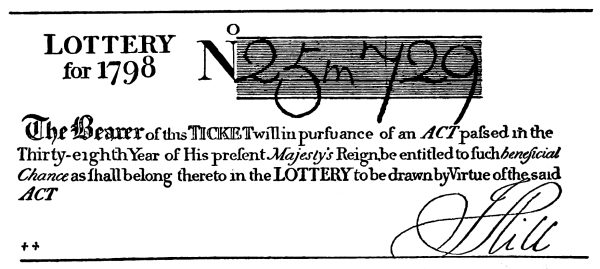

[Pg 129] The Right Hon. George, Lord Pigot, died, and, among his other property, was a large diamond of the estimated value of £30,000. As his property had to be divided amongst his heirs, and no purchasers could be found for a diamond of this size, an Act was passed (39 and 40 Geo. III. c. 102) to enable his heirs to dispose of it by lottery—11,428 tickets at two guineas each, or £23,998 16s. This lottery was drawn on January 2, 1801, and the diamond was won by a young man. It was afterwards sold at Christie’s on May 10, 1802, to Messrs. Parker and Birketts, of Princes Street, pawnbrokers, for 9500 guineas, Mr. Christie remarking at the sale “that its owners were unfortunate in its being brought to a market where its worth might not be sufficiently valued, where the charms of the fair needed not such ornaments, and whose sparkling eyes outshone all the diamonds of Golconda. In any other country the Pigot diamond would be sought as a distinction where superior beauty was rarely to be found.”
It was again sold, and is said to have passed into the possession of Messrs. Rundell and Bridge, Court jewellers, Bond Street, who are reported to have sold it to an Egyptian Pasha for £30,000. It is not known in whose possession it is now. There is some discrepancy among authorities as to its weight, Mawe giving it as forty-nine carats, Emanuel as eighty-two and a half.
To show how widely spread was the lottery fever at this time, and how deep were its ramifications all over the country, we need only look at Branscomb and Co.’s list of agencies—Aberdeen, Bath, Beverley, [Pg 130] Bristol, Blandford, Boston, Bridgewater, Birmingham, Bury, Coventry, Canterbury, Chatham, Chester, Chichester, Dorchester, Dundee, Exeter, Gloucester, Glasgow, Gosport, Hull, Liverpool, Marlborough, Newark, Norwich, Northampton, Plymouth, Portsea, Reading, Salisbury, Stamford, Shrewsbury, Sherborne, Tiverton, Weymouth, Wolverhampton, Worcester, Yarmouth, and York.
In 1802 was the largest lottery (42 Geo. III. c. 54) since 1755, the amount given in prizes being £900,000, and the net profit accruing thereon being £340,458 5s. 1d.
In this Act alterations were introduced as to the preparing and method of drawing tickets, and fixing the days of drawing, etc., and, as the method now introduced, for the first time, of drawing the lottery in eight days instead of forty-two days was designed to considerably reduce the illegal insurance, if not put an end to it, several new regulations were introduced into this and subsequent Lottery Acts, with a view to extend the sale of lottery tickets and the legal shares of tickets as much as possible. By the same statute the Irish lotteries were abolished, and the tickets of the lottery in Great Britain were divided into three separate drawings. After the conclusion of the third [Pg 131] drawing, directions were given by Mr. Vansittart, then one of the secretaries of the Treasury, that inquiry should be made as to the effect of these regulations. It was elicited, that by drawing the lottery in eight instead of forty-two days, the business of illegal insurance had undergone a complete change, by being rendered dangerous and unprofitable to both parties. It had driven all the men of large capital out of the business, and the agents usually employed by them, who had before gained a livelihood by collecting the insurances in coffee-houses and private families, and others who kept unlicensed offices for that purpose, were reduced to the greatest distress, and rendered incapable of obtaining a living.
There is a story told in connection with the lottery drawn this year, that old Baron d’Aguilar, the Islington miser, was requested by a relation to purchase a particular ticket, No. 14,068, in this lottery, but it had been sold some few days previously. The baron died on the 16th of March following, and the number was the first drawn ticket on the 24th, and, as such, entitled to £20,000. The baron’s representatives, under these circumstances, published an advertisement, [Pg 132] offering a reward of £1000 to any person who might have found the said ticket, and would deliver it up. Payment was stopped. A wholesale linen-draper in Cornhill (who had ordered his broker to buy him ten tickets, which he deposited in a chest), on copying the numbers for the purpose of examining them, made a mistake in one figure, and called it 14,168 instead of 14,068, which was the £20,000 prize. The lottery being finished, he sent his tickets to be examined and marked. To his utter astonishment, he then found the error in the number copied on his paper. On his demanding payment at the lottery office, a caveat was entered by old d’Aguilar’s executors; but, an explanation taking place, the £20,000 was paid to the lucky linen-draper.
The lottery office-keepers plumed themselves on their sale of tickets which became prizes, and certainly did not hide their lights under bushels. The following is a list of “Capital Prizes sold by Richardson, Goodluck, and Co. in the State Lotteries drawn in and for the year 1802”:—
| Three | prizes | of £20,000 |
| Three | ” | 5,000 |
| One | ” | 2,000 |
| Three | ” | 1,000 |
| Four | ” | 500 |
[Pg 133]
The Boydell Lottery—Bowyer’s “Historic” Lottery.
1803 had its usual annual lottery (43 Geo. III. c. 91), in which £710,000 was given in prizes, and the Government netted £204,354 4s. 9d. Another in 1804 (44 Geo. III. c. 93) has £800,000 in prizes, and the net profit was £266,924 5s. 11d.
This year is famous for the Shakespeare, or Boydell, Lottery. John Boydell was an engraver in the city of London, of which he was elected Alderman in 1782, Sheriff in 1785, and Lord Mayor in 1790. He died, on December 12, 1804, aged 86. He was very ambitious, and brought himself to financial grief over a magnificently illustrated edition of Shakespeare, on which he employed all the best artists of the day. Let him tell his own story, as contained in a letter from him to Sir John William Anderson, and read by the latter in the House of Commons, when [Pg 134] applying for leave to dispose of the Shakespeare paintings, etc., by lottery.
“You will excuse, my dear sir, some warmth in an old man on this subject, when I inform you that this unhappy Revolution has cut up, by the roots, that revenue from the Continent, which enabled me to undertake such considerable works in this country.... Had I but laid up ten pounds out of every hundred my plates produced, I should not now have had occasion to trouble my friends, or appeal to the Public; but, on the contrary, I flew with impatience to employ some new artist, with the whole gains of my former undertakings. I now see my error, for I have thereby decreased my ready money, and increased my stock of Copper plates to such a size, that all the printsellers in Europe could not purchase it, especially at these times, which are so unfavourable.” The letter concludes with the suggestion that Parliamentary sanction should be given to a lottery. “The objects of it are my pictures, galleries, drawings, etc., etc., which, unconnected with my copper plates and trade, are much more than sufficient to pay, if properly disposed of, all I owe in the world.” [Pg 135]
The following is the scheme of the
To be drawn pursuant to an Act of Parliament passed in the 44th year of His Majesty’s reign, entitled 'An Act to enable John Boydell, Esq., one of the Aldermen of the City of London, and Josiah Boydell, his Nephew and Partner, to dispose of their Collection of Paintings, Drawings, and Engravings, together with the Leasehold Premises in Pall Mall, called the Shakespeare Gallery, by way of Chance.’
“The number of Tickets to be 22,000, at the price of Three Guineas a Ticket.
“The Capital Prizes are 62, which are to be decided by the sixty-two Tickets first drawn. The holders of each and every of the 21,938 undrawn Tickets, are to receive a Print or Prints aggregately of the estimated value of One Guinea, from the Collection of the said John and Josiah Boydell, consisting of 4432 Copper-plates, according to their Alphabetical Catalogue, lodged at the Shakespeare Gallery, in Pall Mall, pursuant to the said Act. [Pg 136]
“The Capital Prizes and Prints to be obtained by the holders of the 22,000 Tickets, amount to upwards of £69,800, according to the prime cost proved before both Houses of Parliament; where evidence was also given that the Copper-plates engraved from the pictures and drawings that constitute the following prizes, had cost Messrs. Boydell upwards of £300,000.
“The whole may be viewed at the Shakespeare Gallery—Admittance One Shilling each person—such exhibition being reserved to Messrs. Boydell by the Act.
“The Catalogue of the Shakespeare Pictures to be had as above, at one shilling and sixpence each; and the Alphabetical Catalogue at the same price. Both Catalogues may be seen and inspected at the Gallery, and at No. 90, Cheapside.”
The first twenty-six prizes were framed paintings, by Poussin, Titian, Teniers, Rubens, Caracci, Vernet, Hogarth, Copley, Northcote, Rigaud, Peters, Stodhart, Angelica Kauffman, and other artists.
The next eighteen prizes were framed drawings, by Guido, Rubens, Rembrandt, Vanderwerff, Both, Smirke, Westall, West, Angelica Kauffman, Wright of Derby, Gainsborough, etc. [Pg 137]
Prize No. 45 was thirty-seven drawings (unframed) by Linck.
The fourteen succeeding prizes were prints, and books with prints.
The sixty-first prize was twenty-eight large framed drawings by Richard Westall, R.A., in colours, for the poetical works of Milton.
But the plum was the sixty-second and last prize, which consisted of “the whole of the large pictures, from Shakespeare, now exhibiting, and from which the large plates have been taken. Also the whole of the small pictures, from which the plates have been engraved, for the Embellishment of the Great National Edition of Shakespeare in Nine Volumes, Folio. Also Seven Pictures of the Ages, by Smirke, R.A. Together with all the Estate, Right and Interest of Messrs. John and Josiah Boydell, in these Premises, which were erected by them, and in which they hold an unexpired Term of sixty-four years, at a Ground Rent of £125 per Annum.
“The Pictures are all framed, and are fully described in the Shakespeare Gallery Catalogue, and amount, in the Whole, to 167; [Pg 138] besides which there are Three Supernumerary Pictures, not in the Catalogue, and which have not been engraved.
“This Prize will also include the Alto Relievo in Front of the Gallery, by T. Banks, R.A., and two Basso Relievos by the Hon. Anne Damer.
“What is given in this last Prize, for the Sixty Second Drawn Ticket, has cost the Proprietors upwards of £30,000.”
This prize was won on June 28, 1805, by Mr. Tassie, a sculptor, who lived in Leicester Square, and he, not wanting such a white elephant, sent the pictures to Christie’s, where they were sold on May 17, 18, and 20, 1805, realizing 10,237½ guineas.
On June 27, 1805, was passed another State lottery (45 Geo. III. c. 74), which gave £750,000 in prizes, and yielded a net profit of £363,070 9s. 11d. £250,000 of this lottery was drawn on September 30, 1805. On May 31 was drawn the last portion of the 1804 lottery.
Probably encouraged by the success of Boydell’s lottery, another engraver followed his example, and had a lottery to get rid of his unsaleable stock. It was drawn before September 30, 1805.
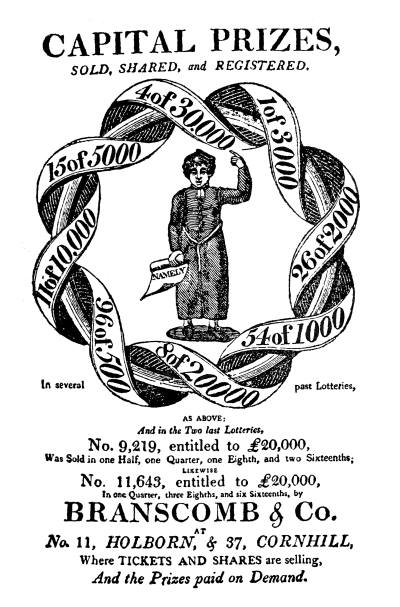
[Pg 139] “Mr. Bowyer presumes he need not inform the Friends of Literature and the Arts, that the Works which he has received the Sanction of Parliament to dispose of by way of Lottery, are deemed the most splendid Publications in Europe; he can, however, at all events, assure them that these Works have cost him above a Hundred Thousand Pounds; and that, after the Lottery is over, a single Copy of either cannot be had on any terms whatever.
Without a Possibility of the least Loss.
Tickets, Three Guineas each.
Contains One Thousand Four Hundred and
Fifty-One Capital Prizes.
“Every Ticket not drawn one of the Capital Prizes will, never the less, be entitled to and the Holder will fairly and Honourably receive the Full Amount of the Original Cost of the Ticket in Beautiful Engravings, most of them new Subjects never yet published; and that Purchasers may be SATISFIED of receiving no other Engravings for the Blanks but those of the Very First Class; Specimens of the Whole [Pg 140]are now exhibiting at the Historic Gallery, Pall Mall, and No. 73, Cornhill.
And of these they are warranted to receive fine
Impressions.
“List of the Prizes.
For the First drawn Ticket, Value Ten Thousand
Pounds.
| £ | s. | d. | ||
|---|---|---|---|---|
| No. of | All the Pictures composing the | |||
| prizes. | Historic Gallery in Pall Mall, | |||
| 1 | painted by Members of the | |||
| Royal Academy, and have cost | ||||
| the Proprietor, as proved before | ||||
| the Committees in both | ||||
| Houses of Parliament | 8,433 | 4 | 0 | |
| Four sets of the History of | ||||
| England, at £73 10/- each | 294 | 0 | 0 | |
| Four sets of do., the Plates on | ||||
| India Paper, at £147 | 588 | 0 | 0 | |
| Four sets of the Engravings, at | ||||
| £50 each Copy | 200 | 0 | 0 | |
| Four sets of the Historical | ||||
| Engravings, £24 10/- each Set | 98 | 0 | 0 | |
| Four sets of the Etchings of the | ||||
| above Work, at 30 Guis. each | 126 | 0 | 0 | |
| Four complete Sets of Views in | ||||
| Egypt, etc., etc., at £55 4/- | 100 | 16 | 0 | |
| One large Picture of the Battle | ||||
| of the Nile, by R. Smirke, jun., | ||||
| from a design by Anderson | 160 | 0 | 0 | |
| £10,000 | 0 | 0 |
[Pg 141]
For the Second to the Three Hundred and First drawn
Tickets, both inclusive.
| £ | s. | d. | ||
|---|---|---|---|---|
| 300 | Three Hundred Prizes. Each | |||
| Prize to consist of a complete | ||||
| Set of the History of England, | ||||
| in Seventy Numbers, at one | ||||
| Guinea each Number. This | ||||
| work contains nearly 200 Engra- | ||||
| vings, has cost upwards of | ||||
| £68,000, and is deemed the | ||||
| most magnificent Work in | ||||
| Europe. Three Hundred | ||||
| Prizes, therefore, at £73 10/- | ||||
| each, the price to Subscribers, | ||||
| is | 22,050 | 0 | 0 |
For the three Hundred and Second to the Eight Hundred
and First drawn Tickets, both inclusive.
| 500 | Five Hundred Prizes. Each | |||
| Prize to consist of a Complete | ||||
| Set of Engravings, being near | ||||
| Two Hundred in Number, | ||||
| and which form the entire | ||||
| Embellishments to the Splendid | ||||
| Work of the History of | ||||
| England, at the price to | ||||
| Subscribers, being £50 per set | 25,000 | 0 | 0 |
For the Eight Hundred and Second to the Nine Hundred
and Fifty First drawn Tickets, both inclusive.
| 150 | One Hundred and Fifty Prizes. | |||
| Each of these Prizes to | ||||
| consist of a Complete Set of | ||||
| the Historical Engravings to | ||||
| the above Work, at £24 10/- | ||||
| each Set | 3,675 | 0 | 0 |
[Pg 142]
For the Nine Hundred and Fifty Second to the Twelve
Hundred and Fifty First drawn Tickets, both inclusive.
| 300 | Three Hundred Prizes. Each | |||
| of these Prizes to consist of a | ||||
| Series of Four Engravings, 29 | ||||
| Inches high by 17 Inches wide, | ||||
| to commemorate the four great | ||||
| Naval Victories of the late | ||||
| War, and containing near One | ||||
| Hundred Portraits of the | ||||
| Admirals and Captains who | ||||
| were engaged in those National | ||||
| Achievements. The Work is | ||||
| done up in Boards, with a | ||||
| History of each Action, printed | ||||
| by Bensley, at the Subscription | ||||
| price of Nine Guineas, is | 2,835 | 0 | 0 |
For the Twelve Hundred and Fifty Second to the
Fourteen Hundred and Fifty First drawn Tickets,
both inclusive.
| 200 | Two Hundred Prizes. Each of | |||
| these Prizes to consist of a | ||||
| Complete Copy of a magnificent | ||||
| and interesting Work, just | ||||
| finished, of Views in Egypt, | ||||
| Palestine, and other parts of | ||||
| the Ottoman Empire, from the | ||||
| celebrated Collection of Drawings | ||||
| in the possession of Sir | ||||
| Robert Ainslie, Bart., in 2 Vols. | ||||
| Folio, containing Ninety-six | ||||
| Views, beautifully coloured to | ||||
| imitate the original Drawings; [Pg 143] | ||||
| with a History of those Countries, | ||||
| at the Subscription Price, | ||||
| per Copy, of Twenty-four | ||||
| Guineas, is | 5,040 | 0 | 0 | |
| 1,451 | Capital Prizes. | £68,600 | 0 | 0 |
| 20,549 | Tickets, which, if not drawn either of the | |||
| 22,000 | Tickets. Capital Prizes above mentioned, | |||
| will, nevertheless, be entitled to new | ||||
| and beautiful Engravings, of the | ||||
| Estimated Value of 3 Guineas, being | ||||
| the Price of each Ticket. | ||||
| The whole of the Collection is, by the Act, vested in Trustees for the Holders of the Tickets.” |
||||
The scheme then goes on to say that, if any one, taking more than one share, should have duplicate engravings allotted to them, they will be exchanged for others. The following were some of the subjects, and had never before been published:—
| “Matrimony; | These four Engravings are executed |
| Confirmation; | by Meadow, from four of the |
| Christening; | most beautiful Drawings ever |
| and the Lord’s | made by Mr. Westall. Size of |
| Supper. | Plates, 24 in. by 18. |
| From the two celebrated Pictures | |
| The Tired | by Opie, which were exhibited |
| Soldier, and its | two years ago at the Royal |
| Companion. | Academy. Size of Plates, 24 in. by 19. [Pg 144] |
| The Young | From two exquisite Pictures by |
| Cottager, and | Gainsborough. Size of Plates, |
| Companion. | 28 in. by 20. |
| Rural Innocence; | From two very fine Pictures by |
| Cottage Cares. | Sir Francis Bourgeois. Size, |
| 28 in. by 20. | |
| The Blind | From an interesting Picture by |
| Hermit. | Stothard. Size, 28 in. by 20. |
| Winter and | |
| Cottagers; | From beautiful Pictures by Morland. |
| Summer and | Size, 24 in. by 19. |
| Fishing. | |
| Wood Cutter, | All from Drawings by Morland. |
| and Six other | Size, 22 in. by 18. |
| Engravings. | |
| Fishermen | From two Pictures by Bigg. Size, |
| going out; | 24 in. by 19.” |
| Ditto returning. |
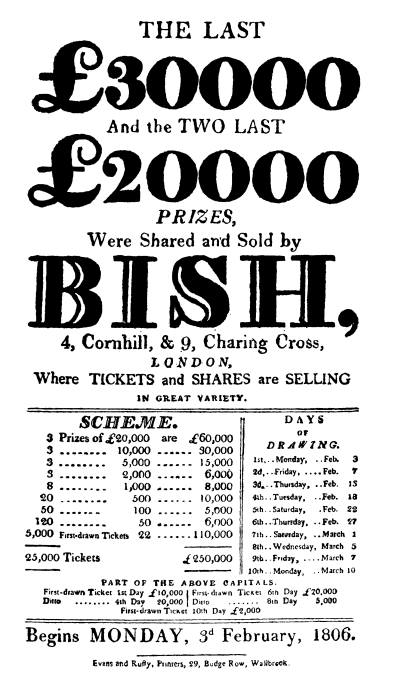
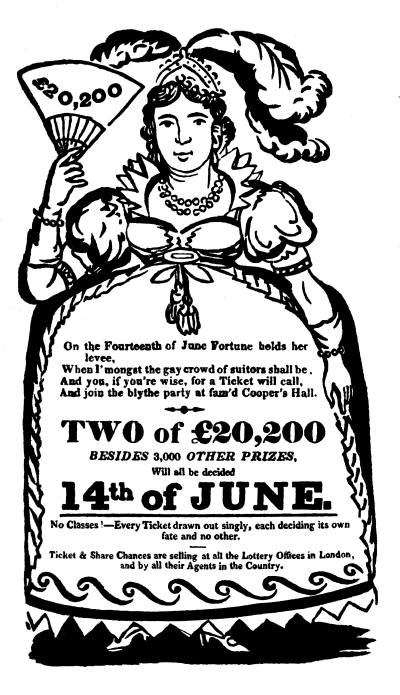
[Pg 145] This lottery rather hung fire, and, before its drawing, an additional stimulus was given by the promise that every purchaser, at the time of buying a ticket, should be presented with an engraved portrait of Nelson or Collingwood, at their option.
In 1806 a State lottery was granted (46 Geo. III. c. 148), July 22, in which £900,000 was the amount of prizes, and net profit £378,039 16s. 2d.
Bish issued a handbill relative to the lottery began to be drawn on February 3 this year.
“FIRST 5000 TICKETS.
T. Bish, Contractor for the approaching grand Lottery, solicits the Public to notice that the first 5000 Tickets drawn are sure to be
ALL PRIZES,
From £22 to £20,000, and the First drawn Ticket,
Monday, February 3rd, cannot be less than
£10,022,
And may be more: The advantage in buying before the Drawing begins, is, therefore, obvious, as those whose Tickets are drawn early will be
SURE TO GAIN,
And, if their tickets are not drawn Capital Prizes in the first instance, they will have the advantage of Changing them (without any additional expence) for
Undrawn Tickets
[Pg 146] Or Shares, by which means they have a DOUBLE CHANCE for the numerous Prizes with which the Scheme abounds, from
£50 to £20,000;
Or, if they should wish to part with them, there is not a doubt but they may easily find Purchasers (at a profit), as Tickets at that time[21] will be scarce, especially as the first drawn Ticket on the fourth Day is entitled to
£20,000.
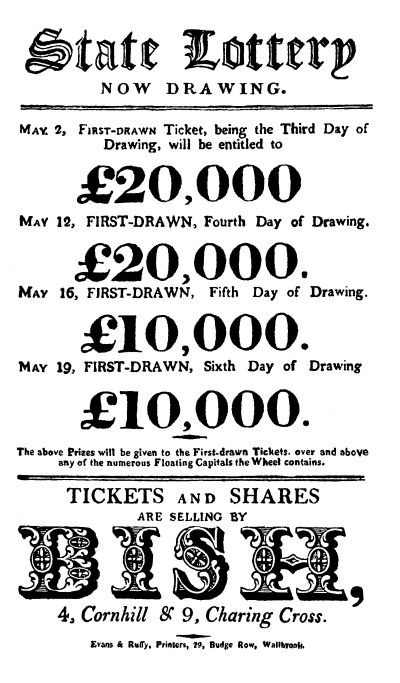
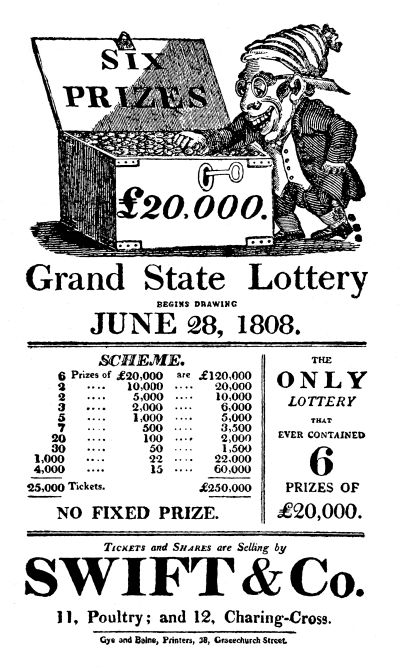
[Pg 147]
Launching a lottery—“The City” Lottery for houses—Poetic handbills thereon—Parliamentary Committee on the lottery—Report and evidence.
By the 47 Geo. III. sess. 2, c. 9, July 25, 1807, another lottery was legalized. £700,000 was given in prizes, and a profit resulted of £308,888 18s. 5d. And here we may note the method of starting a lottery, which is taken from a newspaper cutting of February 15, 1807.
“On Thursday morning, the gentlemen who had given in their proposals for the ensuing lottery, waited upon the Minister to receive his answer. To the former lists were added those of Messrs. Walsh and Nesbit, and they then stood as follows:—
“Messrs. Bish and Co.; Messrs. Cope and Co.; Messrs. Richardson, Swift, [Pg 148] and Co.; Messrs. Hensley, Pulley, and Co.; Messrs. Towgood and Co.; Messrs. Walsh, Nesbit, and Co.
“Lord Grenville opened a sealed paper, which mentioned the lowest price at which Government would dispose of the lottery, namely, at the rate of £16 10s. per ticket. Upon examination of the several biddings, it was found that the five former lists had offered each the sum of £16 2s. 6d. per ticket, and Walsh and Nesbit £16 1s. 1d. per ticket; consequently, the proposals falling short of the lowest sum which Government had determined to take, the gentlemen were informed that none of these would be accepted. It was suggested, on the part of the Minister, that the contractor for the late lottery took it at several shillings above the prices now proposed; and, from the present appearance of things, it was likely to turn to a beneficial account. This was answered by saying that the City Lottery (as it was called), being about to be drawn, would materially affect the next regular lottery by diminishing the sale of tickets.
“The conversation terminated without any future day being proposed for a fresh bidding.
[Pg 149] “If no proposition should be made equal to the sum expected by Government, it is, we understand, intended that the tickets should be sold to the public at the bank.”
That they did come to terms is evident, for I find in another newspaper cutting of March 22, 1807, that the present price of—
| Whole | tickets | £19 | 17s. | 0d. | ||||
| Half | ” | £10 | 3s. | 0d. | = | 20 | 6 | 0 |
| Quarter | ” | 5 | 3 | 0 | = | 20 | 12 | 0 |
| Eighth | ” | 2 | 12 | 0 | = | 20 | 16 | 0 |
| Sixteenth | ” | 1 | 6 | 6 | = | 21 | 4 | 0 |
“The City Lottery,” alluded to above, was a large affair, which took three drawings, the first of which, consisting of house property valued at over £100,000, at Temple Bar and Snow Hill, the approaches to both places having been improved. The scheme of the first drawing is as follows:—
Scheme.
First drawn ticket a capital, substantial Freehold Dwelling House, with extensive warehouses and manufactory, valued at—
£10,000.
| Being | No. | 44 | in Skinner Street. | |||
| 2nd | draw, | a ditto. | No. | 13, | Skinner St., | on lease at £250 per annum. |
| 3rd | ” | ” | ” | 46 | ” | not occupied. |
| 4th | ” | ” | ” | 10 | ” | on lease £225 per annum. [Pg 150] |
| 5th | ” | ” | ” | 5 | ” | on lease £185 per annum. |
| 6th | ” | ” | ” | 16 | ” | not occupied. |
| 7th | ” | ” | ” | 47 | ” | ”” |
| 8th | ” | ” | ” | 2 | ” | on lease £200 per annum. |
| 9th | ” | ” | ” | 27 | ” | ” £180” |
| 10th | ” | ” | ” | 3 | ” | not occupied. |
| 11th | ” | ” | ” | 12 | ” | ”” |
| 12th | ” | ” | ” | 1, | Pickett Street, | Temple Bar, |
| not occupied. | ||||||
| 13th | ” | ” | ” | 8 | ” | ”” |
| 14th | ” | ” | ” | 9 | ” | ”” |
| 15th | ” | ” | ” | 3 | ” | ”” |
| 16th | ” | ” | ” | 2 | ” | ”” |
| 17th | ” | ” | ” | 6, | Skinner Street, | on lease £150 per annum. |
| 18th | ” | ” | ” | 7 | ” | not occupied. |
| 19th | ” | ” | ” | 1 | ” | on lease £155 per annum. |
| 20th | ” | ” | ” | 11 | ” | ” £120 1s. ” |
| 21st | ” | ” | ” | 28 | ” | at the corner of Green |
| Arbour Court in the Old | ||||||
| Bailey, on lease £105 | ||||||
| per annum. | ||||||
| 22nd | ” | ” | ” | 14 | ” | on lease £89 3s. 4d. per annum. |
The next drawing took place on April 26, 1808, of which twenty lots, amounting in value to £104,000, were prizes ranging from the Grand Hotel, No. 9, Skinner Street, appraised at £25,000, to property worth £2500. The third and last portion, valued at £101,500, was disposed of on December 4, 1808, the chief prize being premises said to be worth £15,700, and the lowest a house put down at £500. [Pg 151]
ONE OF THE CAPITAL PRIZES.
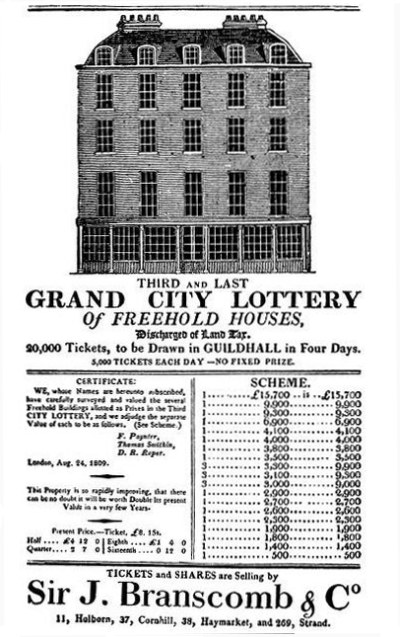
[Pg 152] Bish naturally burst into verse on this occasion—his earliest effort in this direction, as far as I am aware, but the pioneer of countless rhymes.
Pickett Street owed its name to Alderman Pickett, who, in 1789, propounded a plan for making it; and between the years 1795 and 1811, Acts of Parliament were obtained, and, at an expense of over £250,000, the houses were pulled down, the street widened, and the site let for long terms to contractors for the new buildings. But, unfortunately, as Leigh Hunt observed, “They turned out to be on too large a scale,” the lease-holders being fast ruined, for they had soon expended £850,000 on the buildings, which, since 1802, had remained unlet. At last they hit upon a plan to release themselves, which was to obtain an Act of Parliament to enable them to dispose of their interest in their property, and also other property in Skinner Street and Fleet Market, by means of a lottery.
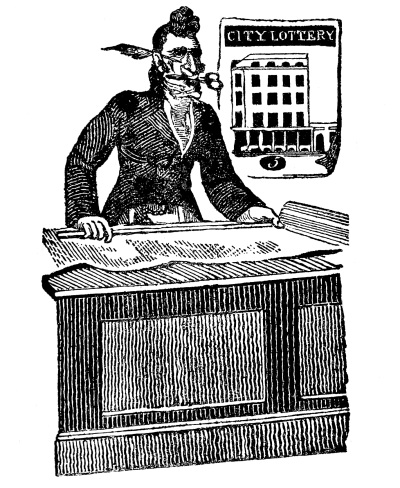
[Pg 156] The usual Lottery Act was passed on June 30, 1808 (48 Geo. III. c. 139), but it was only for £600,000—for a reason given below—and the net profit thereon was £146,527.
This year a Committee of the House of Commons was appointed, to inquire how far the evils attending lotteries had been remedied by the laws passed respecting the same, and to report their observations thereon, as well as upon such further measures as might be necessary by way of remedy. Pending the completion of the evidence, the committee reported resolutions to the House, of which the following is the first—the others being more or less stringent.
“That (if it was thought expedient to continue State Lotteries) the number in each year should be limited to two lotteries of not more than 30,000 tickets each; that the number of days allowed for drawing should be reduced from ten to eight; that the number of tickets to be drawn each day should be uncertain, and left to the discretion of the Commissioners of Stamp Duties, and kept secret till the close of the drawing each day, care being taken, as the lottery proceeded, not to [Pg 157] leave too great a number undrawn on the latter days of drawing, but that one moiety or upwards, be drawn on the four first days thereof.”
In the report of this Committee, various instances were adduced of the most serious evils arising from lotteries, by most respectable witnesses, some of which are so striking, that mention must be made of them. One case, which was attested by the Rev. W. Gurney, is particularly interesting, as it shows to what an amazing extent this kind of gambling will carry persons, who, had it not been for the temptations held out by lotteries, might have lived with comfort and respectability, but who, from these kinds of speculations, have been reduced to the most abject state of poverty and distress.
“I knew,” said Mr. Gurney, “a widow in a good line of business as a silk dyer, which, I suppose, brought her in about £400 a year, clear. She kept a very good house, and I was in habits of intimacy with the family. The foreman she had was in the habit of insuring in the lottery; he was led astray by an acquaintance, and he and his mistress insured to the amount of £300 to £400 in a night, although the foreman [Pg 158] had only £30 a year wages. It appeared, on his decease, he had insured immense sums of money within the last year of his life. I found that he had expended upwards of 100 guineas in the lottery, purchasing one ticket at £16, and insuring away the rest. It came up a blank at last, and I verily believe the disappointment was the cause of his death. He died insolvent, and I acted as his executor, and paid three or four shillings in the pound to his creditors. He had received a great many bills for his mistress which he had never accounted for, and was the ruin of her also. She was not able to pay three shillings in the pound, was obliged to go into an almshouse, and died there in four or five months. They would send all the plate she possessed to raise money to carry on an insurance, which had, perhaps, begun at a low rate. The gentleman who drew the foreman into this practice was also ruined by it. His wife had an annuity of £400 per annum settled upon her; he sold her life-interest, and she was obliged to live afterwards upon charity, while her husband, who had formerly kept his carriage and lived in a good house in Queen Square, spent the last hours of his miserable existence within the rules of the Fleet Prison.” [Pg 159]
Various other instances of a similar kind were mentioned in the Appendix to the Report of the Committee, where the parties, formerly in respectable circumstances, were reduced to misery and distress. What, however, served to mark the evil of lotteries the stronger is—that it was not only the unsuccessful adventurer that was ruined by the failure of his speculation, but there were many cases where a successful speculator had reason to deplore his first connection with this species of gambling.
Robert Baker, Esq., deposed that “he remembered one very strong instance of distress arising out of the transactions in the lottery four or five years ago. It was the case of a journeyman who belonged to a Club, which Club purchased a ticket which came up the great prize. The share of this man was £100, or thereabouts; he had been an industrious working man previously, and he was persuaded by his friends to invest the money in the Stocks, in the joint names of himself and wife, in order to prevent his making away with it. He did so, but soon fell into habits of idleness after he became possessed of the money; [Pg 160] and he wanted his wife to join in the transfer of it. This occasioned quarrels, which proceeded to assaults; he changed his habits of industry to those of drunkenness and idleness, he destroyed all his domestic comfort, and was the ruin of the peace of his family.”
Many other cases of a similar description are given in this Appendix. In some of them, mothers had neglected their children, and left them destitute of the common necessaries of life, while the money by which those necessaries could have been purchased, had been gambled away in the insurance of certain numbers in the Lottery. In other cases, the wife had robbed an industrious and careful father of the small and hard-earned savings of many months, and even of many years; and he, instead of finding his little treasure in the drawer in which it was deposited, and which he was about to increase by another small addition, found that the whole had been gambled away in lottery speculations, and every article of his clothes, which were not likely to be immediately wanted, had been pawned, in order to recover the former loss. In other cases, children had robbed their parents, servants their masters; suicides had been committed, and almost every crime that can be imagined had been occasioned, either directly or indirectly, through the baneful influence of lotteries.
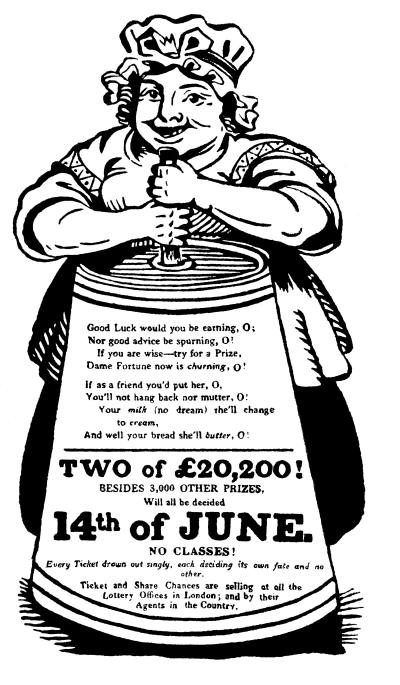
[Pg 161] The Committee, in the course of their Report, declared that, “the foundation of the lottery system is so radically vicious, that your Committee feel convinced that under no system of regulations which can be devised will it be possible for Parliament to adopt it as an efficacious source of revenue, and, at the same time, divest it of all the evils of which it has, hitherto, proved so baneful a source.”
[Pg 162]
“The Lottery Alphabet”—“The Philosopher’s Stone”—“Fortune’s Ladder”—Enigmatical handbill—Lottery drawn on St. Valentine’s Day— “Public Prizes”—and other poetical handbills.
Three of Bish’s handbills belong to this lottery.
By an Alchymist.
Tune—'Golden Days of good Queen Bess.’
[Pg 165]
(TO BE READ FROM THE BOTTOM.)
[Pg 166]
[Pg 167]
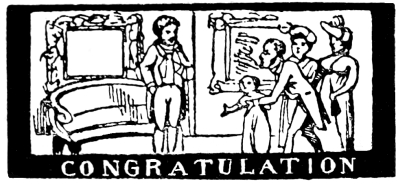
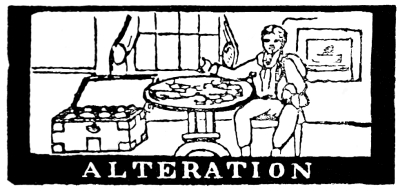
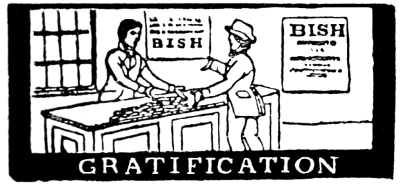
[Pg 168]
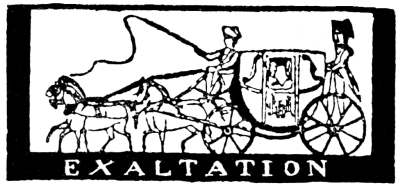
On June 10, 1809, sanction was given by Parliament to a lottery (49 Geo. III. c. 94), for the £600,000 recommended by the Committee, and the net profit derived therefrom was £327,006 0s. 10d.
In this year Bish produced an enigmatical handbill, such as were very popular about that time, and for ten years later.
The solution to the handbill on p. 169 is, “If you are a man struggling to get through the world, or surrounded by crosses; or if you wish to lay by a fortune for your children, go to Bish or his agents, who may make you independent, and above the frowns of the world.” [Pg 169]
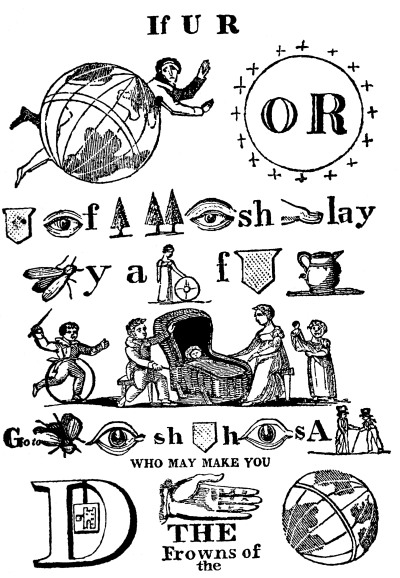
This other one (p. 170) is notable principally for the costumes. [Pg 170]
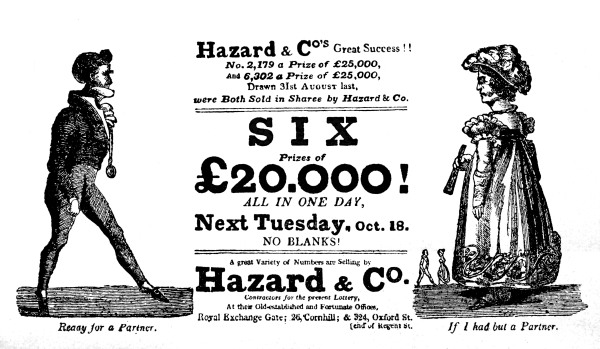
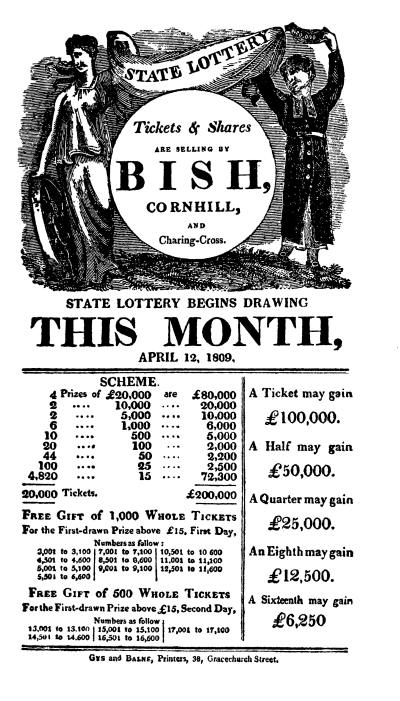
[Pg 171] The 15th June, 1810, brought its lottery (50 Geo. III. c. 94). Prizes £600,000, profit £186,886 8s. Judging by this small amount of profit, the public interest in the lottery was waning, and it would seem to be so, by the extra stimulus given to the handbills issued this year, which were more numerous than heretofore, especially for that drawn on 14th February.
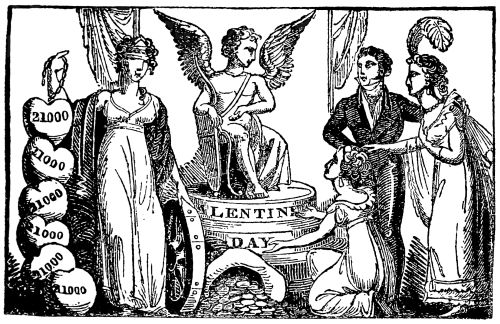
An Engraver’s design for heading to a Lottery Handbill.
Engraver’s design for a Lottery Handbill.
[Pg 173]


[Pg 174]
The inevitable Bish comes to the fore with
Hazard and Co. give us the three following:—
[Pg 176]
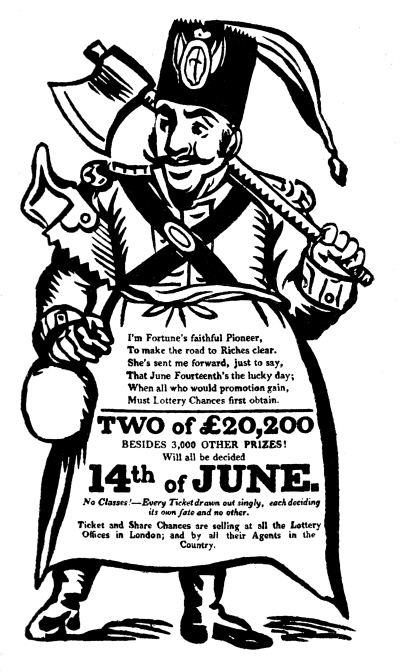
[Pg 177]
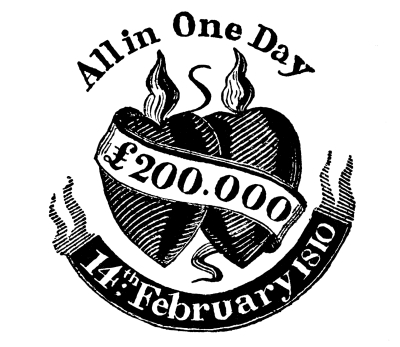
[Pg 179]
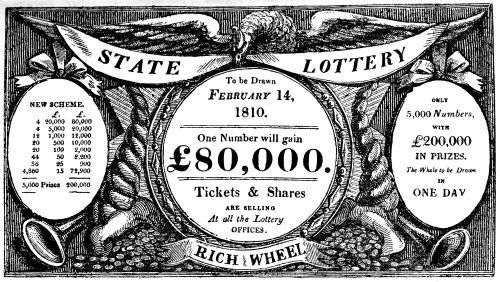
Gye and Balne, Printers, 38, Gracechurch-street.
[Pg 180]
“Twenty Thousand; or, Tom Truelove’s Journal”—“London and the Lottery”—“The Persian Ambassador”—“An Enigma”—“Gently over the Stones.”
[Pg 182] Here is another of Bish’s Handbills for 1810:—
To show how keenly Bish looked after anything on which he could hang an advertisement, read the following, which must have been written before [Pg 184] June 8, 1810, as that date is given on the back of the handbill, as the drawing of the lottery. No doubt the coming of an ambassador from Persia created almost as great a sensation as that of the Shah in June, 1873, and his Excellency Mirza Abdul Hassan, envoy extraordinary from the Shah of Persia to the Court of Great Britain, reached these shores on November 30, 1809, had an audience of George III., and presented his credentials on December 20. Sir Gore Ouseley, the celebrated Persian scholar, attended on him during his stay in this country.
[Pg 187]
[Pg 188]
“Gently over the Stones.”
The Ancients used to mark all lucky Days with a White Stone; now Blackstone was a Judge, and could tell you that Blue Stone is not half so corrosive as poverty, which brings a man’s nose to the Grindstone, while Riches make his Happiness durable as Free Stone. Now, under this heap of Stones a Truth is hidden, which will be powerfully elucidated on the 8th of June, the near approach of which should be a Whetstone to all who intend purchasing a lucky Number, which, as the Scheme proves, may produce Mill-Stones in Gold, Precious Stones in Jewels; and, in short, holds out so many astonishing advantages, that no Stone should be left unturned to procure a Share of them.
[Pg 189]
“Master and Man”—“Altogether”—Dr. Thornton’s “Royal Botanical Lottery”—“Two Gold Finches”—“Dennis Brulguddery”— “Shakespeare’s Seven Ages
The State lottery for 1811 was passed June 26 (51 Geo. III. c. 113), £600,000 in prizes—net profit, £208,007 17s. 8d., about five blanks to a prize. Of this year there are one or two good handbills.
A Dialogue.
Q. Well, Richard, and what brings you to town?
A. Why, I’d a wee bit business to do for mysen, and the like for your honour’s lady, so I’ve kill’d two birds with one stone, you see.
Q. Well, well, sit down and rest yourself a bit; you seem tired? [Pg 190]
A. A small matter, your honour, 'case, d’ye see, I walked all the way up.
Q. The Devil you did! Why didn’t you ride old Dobbin?
A. I couldn’t, your honour, 'case he’s dead.
Q. Dead! and how came that about?
A. ’Twere my own fault, poor beast!—I rode so hard from Doncaster, to tell Dame Bridget, our Housekeeper, the good News.
Q. What News?
A. Why, that she had got a share in a Capital in the Lottery.
Q. And how came she to buy Lottery Tickets?
A. Oh! bless you, mun! she didn’t buy it at all.
Q. Didn’t buy it? Why, how then?
A. Why, Mistress guv’d it to her, like.
Q. She’d better have say’d the money to pay off the Mortgage.
A. Oh, that’s all settled.
Q. Settled?
A. Yes; she paid it all off on the same day.
Q. What day?
A. Why, the day they paid her the money.
Q. What money? [Pg 191]
A. Why, the Lottery money, from t’ Office.
Q. I thought you said, just now, that Bridget had got the Prize? Your head’s wool-gathering.
A. So she did, but Mistress got one too.
Q. And it was drawn a....
A. A Prize of Twenty Thousand!—and now your Honour knows all about it.”
For a wonder, the above has no lottery office-keeper’s name attached to it—unlike the following.
On May 21, 1811, was passed an Act (51 Geo. III. and the first year of the Regency, c. 113) to enable Dr. Thornton to get rid by lottery of his very expensive works on botany, which were warranted “entirely of British Manufacture.” The scheme was 20,000 tickets at two guineas each, and there were to be 10,000 prizes.
“Britons! join Hand and Heart in promoting the Arts and Sciences of your Country, by the Immediate Purchase of a Ticket.”
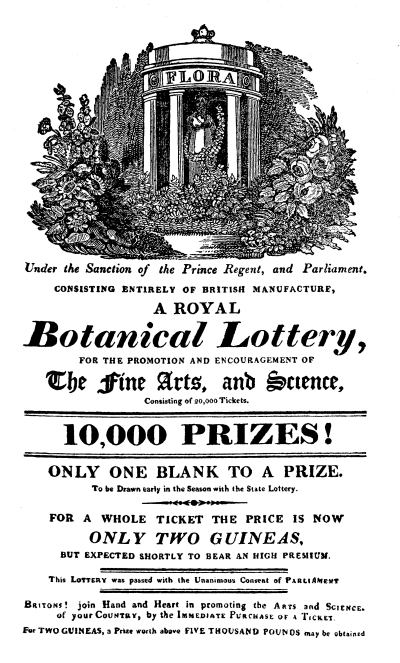
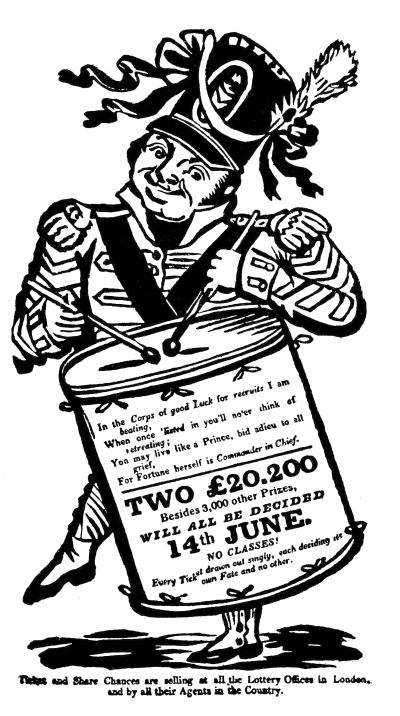
[Pg 193]
First, The Grand Prize.
| (Intitled the Linnæan Gallery), Being all the | |
| Original Paintings of the choicest Flowers, Allegorical | |
| Subjects, and Heads of Botanists, executed by the most | |
| eminent Painters, Opie, R.A. dec., Russell, R.A. dec., | |
| Howard, R.A., Reinagle, R.A., Henderson, &c., &c., | |
| accompanied with a superb Copy of each of the other | |
| prizes, most elegantly bound, valued together at upwards | |
| of | £5,080 0 0 |
| Also 199 Capital Prizes. |
|
| Each containing The Temple of Flora, | 15,920 0 0 |
| being representations of the choicest | |
| Flowers of Europe, Asia, Africa, and | |
| America, New Illustrations of the | |
| Linnæan System and Philosophy of | |
| Botany, making together Five Grand | |
| Volumes, including several Hundred | |
| Plates, by those most eminent Artists | |
| Bartolozzi, Earlom, Landseer, Milton, | |
| Lowry, Tomkins, Dunkarton, | |
| Ward, &c., &c. (the Plates afterwards | |
| to be destroyed, according to Act of | |
| Parliament); each set of these Grand | |
| National Works is valued at £80 | |
| Also 200 Capital Prizes. |
|
| Each being a Copy of the Botanical | 6,000 0 0 |
| Coloured Plates in the Temple of | |
| Flora, forming a most elegant Portfolio | |
| of Botanical Flower Plates, with a | |
| Descriptive Catalogue in 8vo, value | |
| £30 each Copy [Pg 194] | |
| Also 609 Capital Prizes. |
|
| Each being the Temple of Flora 4to | 9,000 0 0 |
| Size, richly coloured, and Letter Press, | |
| valued at £15 each | |
| Also 2000 Capital Prizes. |
|
| Viz. Flora of the United Kingdom, | 20,000 0 0 |
| being a Description of every British | |
| Plant, and their Virtues, 400 Plates, | |
| Five Volumes 8vo, valued at £10 each | |
| Also 7000 Capital Prizes. |
|
| Viz. Elements of Botany, Two | 21,000 0 0 |
| Volumes 8vo, with 200 Plates, valued | |
| at £3 each | |
| Total Value of all the Prizes in the | |
| Royal Botanical Lottery | £77,000 0 0 |
“Address to the Public.
DR. THORNTON
Respectfully informs the Nobility and Gentry, that, after a labour of upwards of Twenty Years, he has accomplished a series of Botanical Works, which he hopes are honourable to the Nation. The House of Commons, and the Lords, were so well satisfied with them, from examination, that a Lottery for the sale of the same was [Pg 195] unanimously granted; for it was seen, that FEW could afford to give Eighty Pounds for a book, who would cheerfully venture Two Guineas for the same. To convince a generous Public of the Value of the Prizes in the Royal Botanical Lottery, he begs leave to present Extracts from the Reports laid before the Honourable House of Commons, being Letters from Persons of Eminence.
Certificates.
“Sir,—I very readily comply with your request to certify, that His Majesty’s Library, and also that of Her Majesty the Queen, have been enriched with your elegant Works; and I heartily wish you may succeed in your endeavours to recover some of the expense you have so liberally incurred, in bringing them to their present degree of perfection.
“I am, Sir, your most obedient, humble servant,
“Queen’s Palace, Feb. 20, 1811.
“Sir,—His Imperial Majesty, the Emperor of Russia, having, with much satisfaction, received your splendid and elaborate [Pg 196] Botanical Works, has directed me to transmit to you the Ring sent herewith, as a mark of his benevolence, and a proof of his regard for everything which is of public utility.
“I have the honour to be your most obedient, humble Servant,
“Dec. 30, 1807.”
Here follow other letters, etc., not worth quoting, and the prospectus winds up thus: “Dr. Thornton concludes this Address with confidence, that every Englishman who has a love for the honour, glory and prosperity of the British Name, will encourage the Fine Arts and Science of the Country, by entering into this Botanical Lottery, which is intended to be drawn before the 4th of June, 1812, provided the encouragement from the Public has been such, that One Third of the Tickets are disposed of by that time; which, from the present generous patronage the Public has already exhibited, Dr. Thornton cannot entertain one moment’s hesitation about. As the Tickets in all the other Private Lotteries have risen, at the conclusion, from three to six, or eight guineas, each, the present is the most favourable moment for the purchase of a Ticket in the Royal Botanical Lottery.”
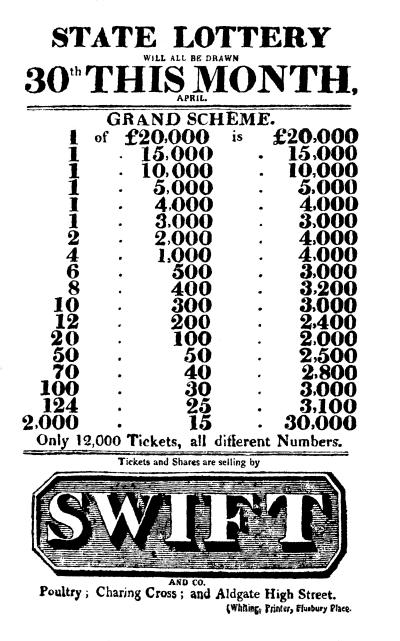
[Pg 197] The State lottery of 1812 was passed on July 13 (52 Geo. III. c. 125). Prizes, £600,000, net profit, £221,260 3s. 1d. I know not by whom the following handbill was drawn:—
“Two Gold Finches, vis-a-vis,
Are now perching on a Tree.
“I explain the above Motto thus—the two Gold Finches are the two Twenty Thousand Pound Prizes, one of which is the First-drawn Prize above £25, entitled to £20,000, Next Friday, the 27th, the Second Day of Drawing; and the other Gold Finch is the other £20,000 the lucky Sportsman thinks his Ticket will be drawn; so that with getting one, and being entitled to the other, he means of his £20,000, to make a Forty Thousand Pound Prize. This would indeed be killing two Birds with ONE STONE.”
53 Geo. III. c. 93, passed July 2, was the Lottery Act for 1813. Prizes, the usual £600,000; net profit, £212,285 12s. 6d. [Pg 198] For a few years the stimulating handbills are scarce; still, one or two more can generally be found.
The Lottery for June 17, 1814 (54 Geo. III. c. 74), was for £600,000; but the net profit was small, only £174,533 1s. 3d.
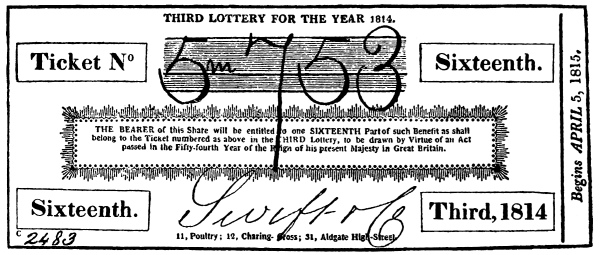
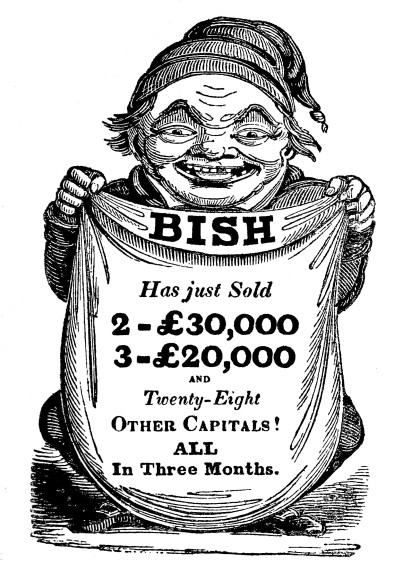
[Pg 204]
A lucky Spaniard—Miss Mitford’s prize—The Spectator on lucky numbers—Other anecdotes on luck—“Gretna Green”—“A Prize for Poor Jack.”
1815, of course, had its State lottery, June 7 (55 Geo. III. c. 73), in which £624,400 was given in prizes, and it resulted in a net profit of £224,311 18s. 1d.; but this may be partly owing to the fact that there was one prize offered of £40,000, the only other instance of such an enormous prize being in the lottery of 1807.
There is a curious story about this prize (1815). During the drawing of the lottery, a Spaniard, Don Tomas Isturity, was walking near the Royal Exchange, when the inclination to spend some twenty pounds in dabbling in the lottery came strongly upon him. He entered the office of Martin and Co., Cornhill, but was unable to make up his mind what numbered ticket to choose. At last he settled on the number of days he had been [Pg 205] absent from Madrid, which, on reference to his pocket-book, he found to be 261. He therefore asked for the ticket bearing that number, but it was nearly half an hour before it could be obtained, and only after a strict search among the lottery offices in the City. At length a half-ticket of No. 261 was procured at two o’clock, and at five it was drawn the £40,000 prize, so that the lucky don lay down that night a richer man by £20,000 than he had risen in the morning.
This is not a solitary instance of luck attending the choosing a lottery ticket. Miss Mitford, in her “Literary Recollections,” tells a good story of the old lottery days. Speaking of her father, she says, “In the intervals of his professional pursuits, he walked about London with his little girl [herself] in hand; and one day—it was my birthday, and I was ten years old—he took me into a not very tempting-looking place, which was, as I speedily found, a lottery office. An Irish lottery was upon the point of being drawn, and he desired me to choose one out of several bits of printed paper (I did not then know their significance) that lay upon the counter. [Pg 206]
“'Choose which number you like best,’ said my dear papa; 'and that shall be your birthday present.’
“I immediately selected one, and put it in his hand—No. 2224.
“'Ah!’ said my father, examining it, 'you must choose again. I want to buy a whole ticket, and this is only a quarter. Choose again, my pet.’
“'No, dear papa; I like this one best.’
“'Here is the next number,’ interposed the lottery-office keeper—'No. 2223.’
“'Ay,’ said my father, 'that will do just as well. Will it not, Mary? We’ll take that.’
“'No,’ returned I, obstinately, 'that won’t do. This is my birthday, and you know, papa, I am ten years old. Cast up my number, and you’ll find that makes ten. The other is only nine.’
“My father, superstitious, like all speculators, struck with my pertinacity, and with the reason I gave, which he liked none the less because the ground of preference was tolerably unreasonable, resisted the attempt of the office-keeper to tempt me by different tickets, and we had nearly left the shop without a purchase, when the clerk, who had been examining different desks and drawers, said to his principal— [Pg 207]
“'I think, sir, the matter may be managed if the gentleman does not mind paying a few shillings more. That ticket, 2224, only came yesterday, and we have still all the shares—one-half, one-quarter, one-eighth, and two-sixteenths. It will be just the same, if the young lady is set upon it.’
“The young lady was set upon it, and the shares were purchased. The whole affair was a secret between us, and my father, whenever he got me to himself, talked over our future twenty thousand pounds—just like Alnaschar over his basket of eggs. Meanwhile time passed on, and one Sunday morning we were all preparing to go to church, when a face I had forgotten, but my father had not, made his appearance. It was the clerk of the lottery office. An express had just arrived from Dublin, announcing that 2224 had been drawn a prize of twenty thousand pounds, and he had hastened to communicate the good news.
“Ah, me! In less than twenty years, what was left of the produce of the ticket so strangely chosen? What, except a Wedgwood dinner-service, that my father had made to commemorate the event, with the Irish harp [Pg 208] within the border on one side, and his family crest on the other? That fragile and perishable ware long outlasted the more perishable money.”
This belief in lucky numbers in the lottery was of old standing; for in No. 191 of the Spectator, October 9, 1711, is the following:—
“... When a man has a mind to venture his money in a lottery, every figure of it appears equally alluring, and as likely to succeed as any of its fellows. They all of them have the same pretensions to good luck, stand upon the same foot of competition, and no manner of reason can be given why a man should prefer one to the other before the lottery is drawn. In this case, therefore, Caprice very often acts in the place of Reason, and forms to itself some groundless, imaginary motive where real and substantial ones are wanting. I know a well-meaning man that is very pleased to risk his good fortune upon the number 1711, because it is the year of our Lord. I am acquainted with a tacker that would give a good deal for the number 134.[26]
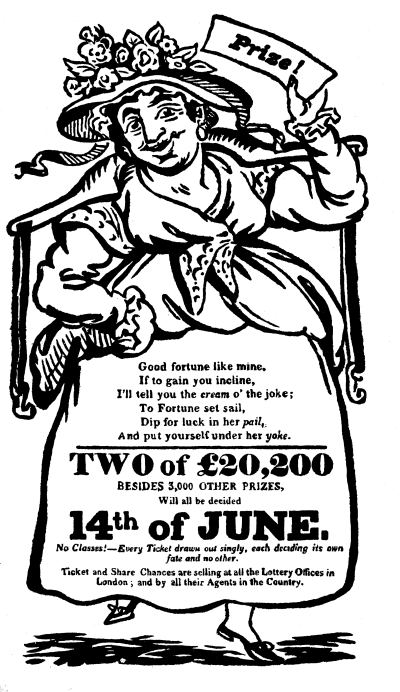
[Pg 209] “On the contrary, I have been told of a certain zealous Dissenter, who, being a great enemy to popery, and believing that bad men are the most fortunate in this world, will lay two to one on the number 666 against any other number, because, says he, it is the number of the Beast.[27] Several would prefer the number 12,000 before any others, as it is the number of the pounds in the great prize. In short, some are pleased to find their own age in their number; some, that have got a number which makes a pretty appearance in the cyphers; and others, because it is the same number that succeeded in the last lottery. Each of these, upon no other grounds, thinks he stands fairest for the great lot, and that he is possessed of what may not be improperly called 'the golden number.’
“These principles of election are the pastimes and extravagances of human reason, which is of so busy a nature, that it will be exerting itself in the meanest trifles, and working even when it wants [Pg 210] materials. The wisest of men are sometimes acted[28] by such unaccountable motives, as the life of the fool and the superstitious is guided by nothing else.
“I am surprised that none of the fortune-tellers, or, as the French call them, the Diseurs de bonne Aventure, who publish their bills in every quarter of the town, have turned our Lotteries to their advantage. Did any of them set up for a caster of fortunate figures, what might he not get by his pretended discoveries and predictions?
“I remember, among the advertisements of the Post-Boy of September the 27th, I was surprised to see the following one:—
“'This is to give notice, that ten shillings over and above the market price will be given for the ticket in the £1,500,000 lottery, No. 132, by Nath. Cliff, at the Bible and Three Crowns, in Cheapside.’
“This advertisement has given great matter of speculation to coffee-house theorists. Mr. Cliff’s principles and conversation have been canvassed upon this occasion, and various conjectures made why he should thus set his heart upon No. 132. I have examined all the powers in those numbers, broken them into fractions, extracted the square and [Pg 211] cube roots, divided and multiplied them all ways, but could not arrive at the secret, until about three days ago, when I received the following letter, from an unknown hand, by which I find that Mr. Nath. Cliff is only the agent, and not the principal, in this advertisement:—
“'Mr. Spectator,
“'I am the person that lately advertised I would give ten shillings more than the current price for the ticket No. 132 in the lottery now drawing; which is a secret I have communicated to some friends, who rally me incessantly upon that account. You must know that I have but one ticket, for which reason, and for a certain dream I have lately had more than once, I resolved it should be the number I most approved. I am so positive that I have pitched upon the great lots, that I could almost lay all I am worth upon it. My visions are so frequent and so strong upon this occasion, that I have not only possessed the lot, but disposed of the money which in all probability it will sell for. This morning, in particular, I set up an equipage which I look upon to be the gayest in the town; the liveries are very [Pg 212] rich, but not gaudy. I should be very glad to see a speculation or two upon lottery subjects, in which you would oblige all people concerned, and in particular,
“'P.S.—Dear Spec., If I get the £12,000, I’ll make thee a handsome present.’
“After having wished my correspondent good luck, and thanked him for his intended kindness, I shall for this time dismiss the subject of the lottery, and only observe that the greatest part of mankind are in some degree guilty of my friend Gosling’s extravagance.”
The “Percy Anecdotes” are responsible for the following story:—“A merchant, somewhat remarkable for absence of mind, had left his counting-house for the Bank, with a large sum of money which he intended to deposit there. On reaching Lombard Street, he found his pocket cut, and his pocket-book missing. He immediately suspected that his pocket had been picked of all his money, and, returning home, mentioned the circumstance to his clerk. What, however, was his [Pg 213] astonishment in finding that he had left the money behind, and that, though his pocket-book had been taken from him, yet it contained nothing but a few papers of little consequence.
“Pleased with the integrity of his clerk, who gave him the money he thought he had lost, he promised him a handsome present; but, neglecting to fulfil his promise, was reminded of it. Unwilling to part with money, he gave the clerk one of two lottery tickets he had purchased. The young man would have preferred money, as he had parents far advanced in years, who depended upon him for support. He, however, was contented; and, as it afterwards proved, had cause to be so, for his ticket was drawn a prize for £20,000, which, enabling him to begin business for himself, he soon rose to great eminence and wealth as a merchant.”
Before closing this subject, I cannot help quoting from a newspaper cutting (Daily News, date unknown), which, although not belonging to English lotteries, shows how, even in modern times, superstition plays its part in the lottery. From a letter by a correspondent to this paper, it appears that, in Venice, it is believed that, in the event of a stranger dying in one of the hotels, the numbers [Pg 214] of his rooms will be the lucky cyphers at the next drawing of the lottery. An illustration of this recently occurred on the death of the late Sir W. Stirling Maxwell at one of the best-known hotels, when, immediately on his decease, the employés subscribed to take shares in the numbers of the two rooms occupied by the late Member for Perthshire, both of which numbers, strangely enough, were afterwards drawn prizes. In talking over the matter with the writer, a person connected with the hotel bitterly lamented that he had been prevented, by sudden illness, from taking the whole of the lucky numbers, and thus realizing a handsome fortune at one stroke.
On the opposite page we give a lottery handbill, but with no name of an office-keeper attached to it. It is called, “Gretna Green; or, The Elopement.”
[Pg 215]
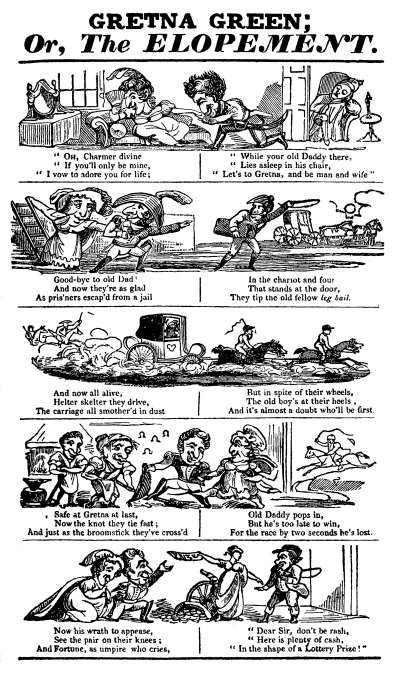
[Pg 216]
[Pg 217]
Beginning of the end of lotteries—Curious handbills.
56 Geo. III. c. 61, passed June 20, was the Act for the lottery of 1816, in which the prizes were £609,730, and the profit £164,686 15s. 8d. Year after year the introduction of the annual Lottery Act was the occasion of an endeavour to induce the Chancellor of the Exchequer to discontinue the practice of raising revenue by this means; but, for a long time, all such pleadings were ineffectual. The reply vouchsafed was invariably to the same effect, that it was impossible for the Chancellor of the Exchequer to consent to renounce a sum which must be supplied by some other tax, which would in all probability operate even more oppressively on the people.
And now we come to a very singular series of handbills, which are so curious that I am loth to leave out one. Some are undoubtedly issued by [Pg 218] Bish, and I should feel inclined to ascribe the others to him, only they are too modest in not making full use of his name.
FORTUNE’S TRAIN, OR
THE ROAD TO RICHES!

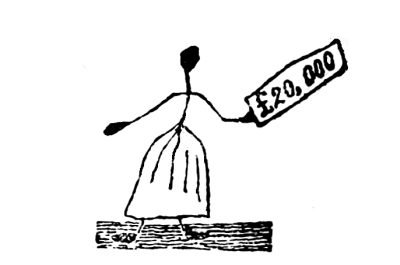
[Pg 219]

The Lottery Act for 1817 was passed on May 23 (57 Geo. III. c. 31), when £599,643 1s. 5d. was distributed in prizes, at a profit to Government of £217,966 5s.
Here is a rather clever skit on the newspapers of the day.
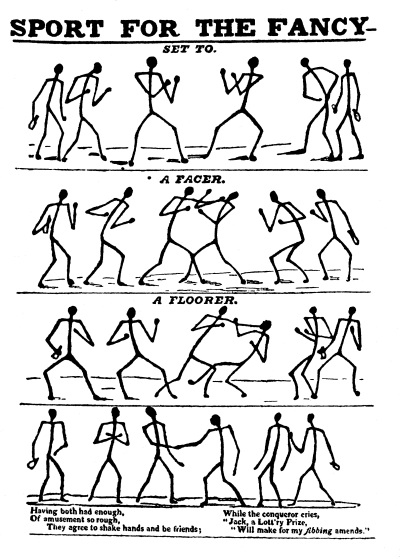
[Pg 221]
Protests against lotteries—Epitaph on Vansittart—“Three Royal Weddings”—More opposition to the lottery—“Twelfth Night Character” handbills—Ditto of tradesmen.
On June 3, 1818, was passed the Lottery Act (58 Geo. III. c. 71) when £606,200 were given as prizes; net profit thereon, £212,551 16s. 8d. But legislators were getting disgusted at the immorality of the lottery, and during the passage of this Bill, Mr. Parnell protested against great questions of justice and morality being sacrificed to expediency, and, in the course of his speech, made the suggestion that the following humorous epitaph should be inscribed on the tomb of the Chancellor of the Exchequer:—
“Here lies the Right Hon. Nicholas Vansittart, once Chancellor of the Exchequer; the patron of Bible Societies, the builder of Churches, a friend to the education of the poor, an encourager of Savings Banks, and—a supporter of Lotteries!” [Pg 222]
Bish took advantage of every public event to force himself into notoriety, but why he should only record three Royal marriages in 1811, when there were four, I cannot tell, April 7, Princess Elizabeth to Prince of Hesse Homburg; June 1, Duke and Duchess of Cambridge were re-married according to the rites of the Church of England; and on July 13, the Duke of Kent married Princess Victoria of Saxe-Coburg, mother of our Queen; and the Duke of Clarence, afterwards William IV., married Princess Adelaide of Saxe-Meiningen.
There are very few more lotteries left to chronicle; that of 1819 (59 Geo. III. c. 65) was passed on July 2. £681,758 11s. 6d. in prizes, £213,324 15s. 2d. net profit; and the following resolutions were moved in the House of Commons by Mr. Lyttleton:—
“1. That by the establishment of State lotteries, a spirit of gambling, injurious, in the highest degree, to the morals of the people, is encouraged and provoked.
“2. That such a habit, manifestly weakening the habits of industry, must diminish the permanent sources of the public revenue.
“3. That the said lotteries have given rise to other systems of gambling, which have been but partially repressed by laws, whose provisions are extremely arbitrary, and their enforcement liable to the greatest abuse.
“4. That this House, therefore, will no longer authorize the establishment of State lotteries under any system of regulations whatever.”

A MILITARY ANECDOTE.
It was customary with Marshal Basompiere, when any of his soldiers were brought before him for heinous offences, to say to them—“Brother, you or I will certainly be hanged”—which was a sufficient denunciation of their fate. A spy, who was discovered in his camp was addressed in this language; and next day, as the wretch was about to be led to the gallows, he pressed earnestly to speak with the marshal, alleging that he had somewhat of importance to communicate. The marshal being made acquainted with his request, said, in his rough manner—“It is always the way of these rascals; they pretend some frivolous story, merely to reprieve themselves for a few moments; however, bring the dog hither.” Being introduced, the marshal asked him what he had to say—“Why, my lord,” said the culprit, “when first I had the honour of your conversation, you were pleased to say that either you or I should be hanged; now I am come to know whether it is your pleasure to be so, because, if you won’t, I must; that’s all.” The marshal was so pleased with the fellow’s humour, that he ordered him to be released.
I have told you this for your amusement; now let me impart something which may prove to your advantage. The new State Lottery, which will soon be drawn in One Day, contains Forty Capital Prizes, amounting with smaller ones, to the immense sum of £200,000, besides Four Extra Prizes of Tickets, with all the Prizes they may contain, by which plan One Ticket may produce the good round sum of £100,000!!! The great advantages of the Scheme are unparalleled—Tickets will (from the very great demand at all the offices) most likely be raised in price—therefore you should not be tardy in availing yourself of an opportunity of realising a princely fortune, by purchasing either a Ticket or Share; and should it prove fortunate, you will, I hope, remember the story of Marshal Basompiere. [Pg 225]
The Chancellor of the Exchequer saw no reason for abandoning so lucrative a branch of the revenue without having some equivalent held out, by which the public would derive an equal benefit. He thought it unfair to attribute the principle of gambling to the lottery, and stated that arguments might be readily adduced to prove that the spirit of gambling existed independently of the State lottery. It must be confessed, however, that, in the course of the debate, very forcible arguments were adduced in favour of the discontinuance of State lotteries; and, although the resolutions of Mr. Lyttleton were negatived by a considerable majority, it was clear that the death-knell of the lottery had sounded, and that its hours were numbered.
Some of the lottery handbills are very difficult to place, owing to their giving no date of the year; and this is the case with the following, which were a set of “Twelfth Night Characters” taken from popular plays. [Pg 226]
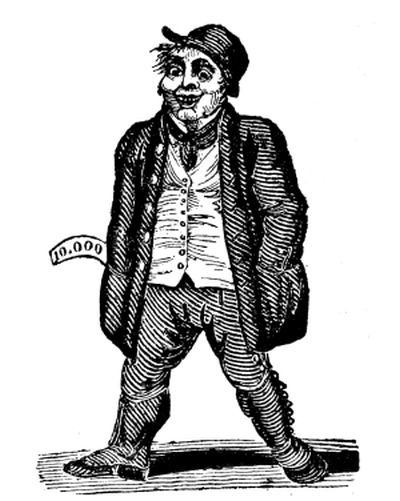
[Pg 227]
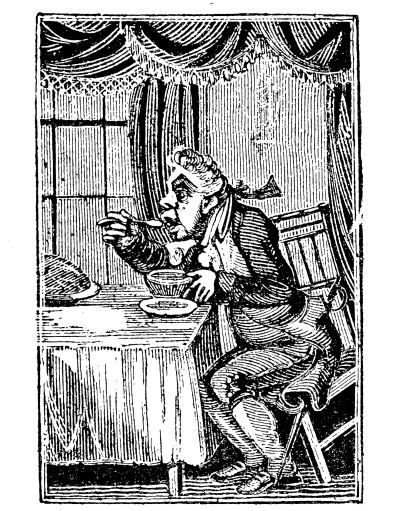
[Pg 228]
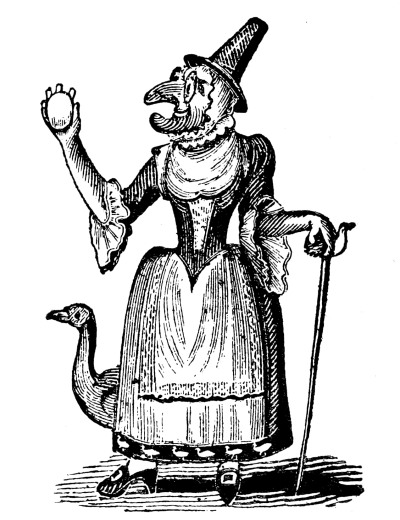
[Pg 229]
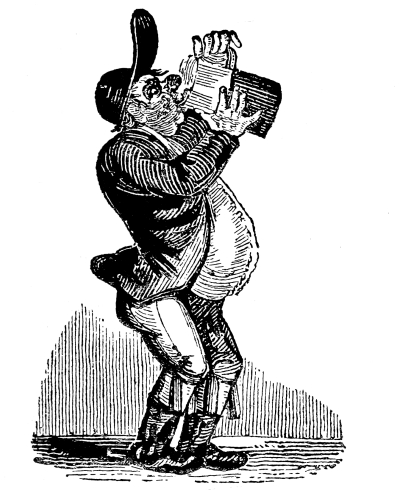
[Pg 230]
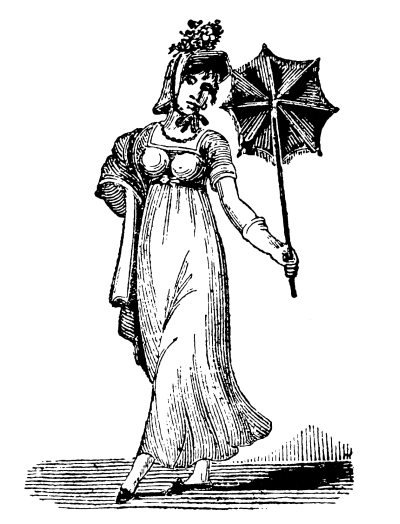
[Pg 231]
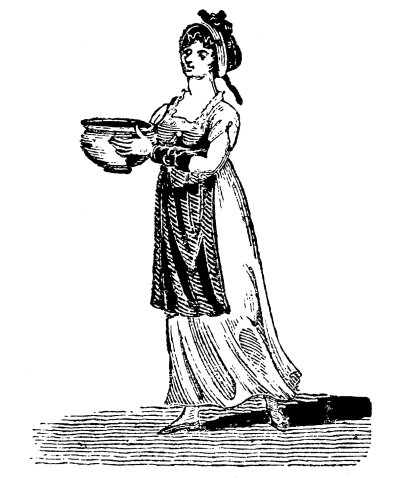
[Pg 232]
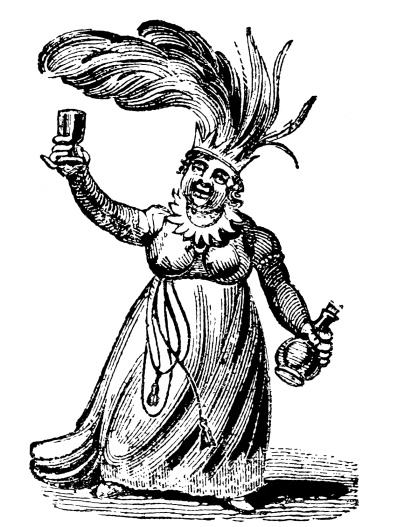
[Pg 233]
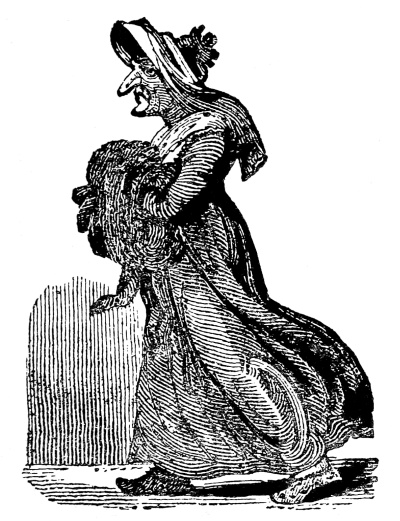
[Pg 234]
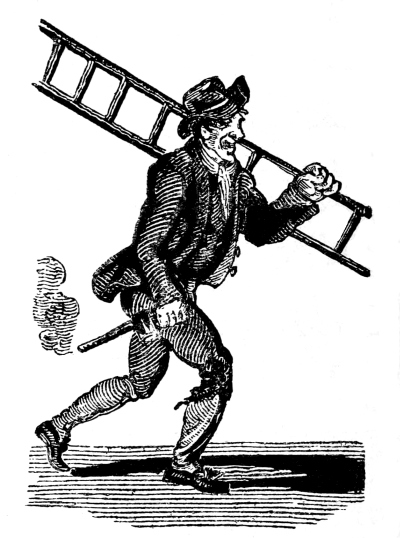
[Pg 235]
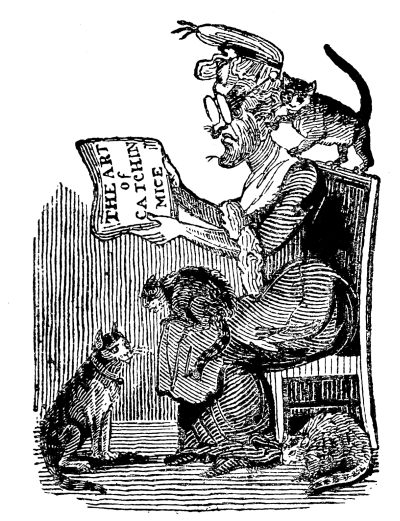
[Pg 236]
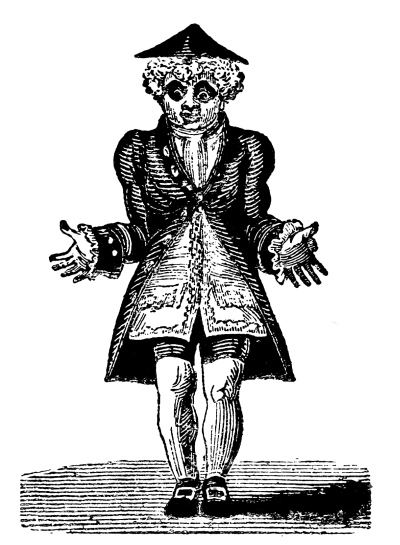
[Pg 237]
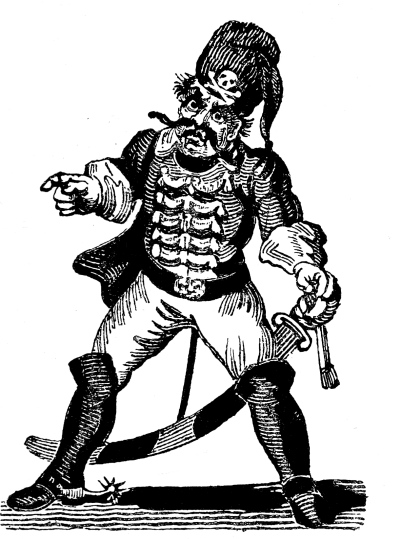
[Pg 238] 1820 brings us to 1 Geo. IV., and on July 15 an Act (c. 72) was passed, authorizing another State lottery, of £718,606 4s. in prizes, which gave a net profit of £199,643 16s. Here are two shares in the lottery tickets.

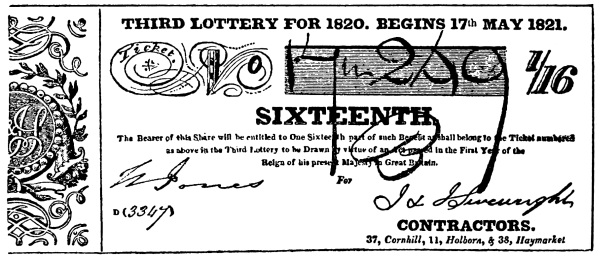
The Lottery Act of 1821 (1 and 2 Geo. IV. c. 120) was passed on July 11. £600,000 in prizes; profit £184,409 3s.; and in this year there is almost an embarras de richesses in the illustrated [Pg 239] lottery handbills, all of them relating to the drawing which took place on June 14. The following fourteen cuts are very quaint:—
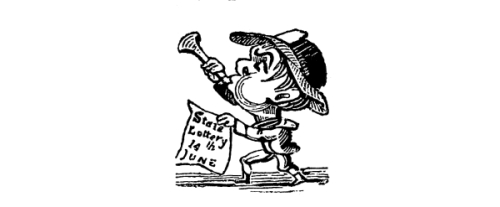

[Pg 240]
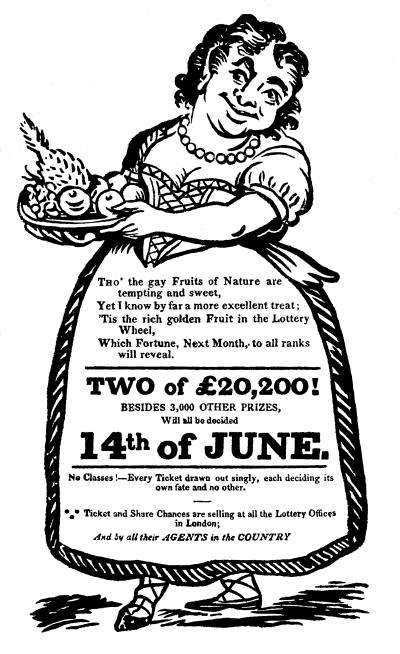
[Pg 241]
[Pg 242]

[Pg 244]
[Pg 245]
“A Dialogue”—“The Race of Fortune”—“The Wish”—Enigmatical handbill.
Pat. The top of the morning to you, Judy. Where are you trotting to, my darlin’? Faith! you skip over the bogs as nately as a butterfly on a frosty morning.
Judy. Och! none of your blarney, Mister Pat! Don’t I know you for a deceiver? and would you be coming over me when I’m going to be made a lady of?
Pat. A lady, sure! And the raison, Judy?
Judy. Because another lady, though she’s blind, poor soul! has looked kindly on me.
Pat. Good luck to her bright eyes! And what’s that scrap o’ paper you’re scrumpling about so in your hand?
Judy. It’s a charm, Pat, that the lady gave me, after I paid for it.
Pat. A charm, sure! and what’s that?
Judy. A small matter of a Lottery Ticket. [Pg 246]
Pat. And who gave you the money, Judy!
Judy. A rake, Pat.
Pat. A rake, Judy! Oh! fie upon you!
Judy. A hay-making rake. Didn’t I save the money in the hay saison? And, och! wont I look down now upon Mrs. Maloney, the cratur, who turns her nose up at me, because she’s got a silk petticoat that I belave is nothing but worsted? And won’t this bit o’ paper bring me a good Thousand Pounds to make these bog-trotters trimble?
Pat. Don’t be plucking your parataes before they are sown! May be you’ll gain a loss, Judy.
Judy. And how can that be, Paddy, seeing it’s drawn a Capital?
Pat. You’ll be forgetting your poor Paddy, now you’re a lady.
Judy. Mayhap I shall, and mayhap I shan’t; but I must be trotting off for the money; and, d’ye hear, Pat? if you’d marry the lady, you must be after making yourself a jintleman;—and here’s a bit o’ paper will shew you the way.
Pat. A Lottery Scheme! and all on the 14th of June! I’ll be off for a Chance: for if Judy should get a husband, we’d be an awkward pair, the three of us; and I’d be after making it a couple, by telling him a piece of my mind with a shellalagh.” [Pg 247]

[Pg 248]
A Dialogue
between
Peter Penury and Paul Positive.
[Pg 250]
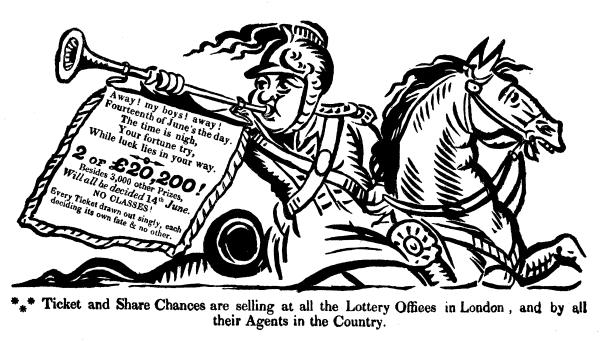
[Pg 251]
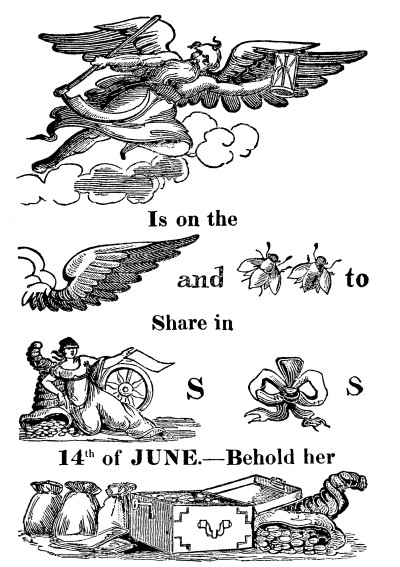
EXPLANATION.—Time is on the Wing,
and Flies to share in Fortune’s Favours,
14th of
June.—Behold her Treasures unlocked.
[Pg 252]
Tomkins’s picture lottery—The lottery abolished—Handbills.
There was a private lottery drawn July 24, 1821.
of the
British Gallery of Pictures,
comprising
16,550 Prizes,
Valued at £152,225!
This Lottery consists of highly finished Paintings from the most valuable pictures of the old Masters, in the Collections of Noblemen and Gentlemen; a Set of Paintings faithfully representing the Marquis of Stafford’s Splendid Gallery; Fifteen exquisite Oil Paintings by Hamilton, illustrative of Thomson’s Seasons; Beautiful Water Colour [Pg 253] Paintings from the old Masters; several thousand Impressions of the Selections from the old Masters, exquisitely coloured; the same in black, Prints and Proofs; the Lease of the Premises, 54, New Bond Street, where the above Pictures are now exhibiting Gratis, &c., &c. The whole forming a complete Chef d’Œuvre of the Arts.
Tickets, Price £3 3s. Each,
are now on Sale at
No. 54, NEW BOND STREET,
Where the Prizes are exhibiting gratis.—And also
at all
Lottery Offices, Printsellers’, and Booksellers’.
A Perfectly Novel Scheme.
“One half of the Tickets are printed in Black, and the other half in Red Ink; and the drawing is so arranged, that if the last drawn Ticket in the State Lottery, (which is to decide this) be an even number, then the Red Tickets will be all Prizes; but if an odd number, then the Black Tickets will be all Prizes; so that one Colour must be all Prizes, and the other Colour all Blanks, by which arrangement [Pg 254]
The Purchaser of a Red Ticket and a Black
Ticket is SURE to gain a Prize.
Among many other
POINTS OF ATTRACTION
Which this Lottery presents to the Public, are the
following:—
“1. The Price of Tickets is considerably below their Estimated Value.
“2. The certainty (as above stated) of gaining a Prize, by purchasing two Tickets of different Colours.
“3. The great beauty and interest of all the Prizes, even the smallest, to every individual possessing a taste for the fine Arts.
“4. The original Pictures from which the above are taken, are acknowledged to be the finest in the world, and are executed by the following admired Masters:—Raphael, Claude, Rubens, Correggio, Titian, Poussin, Gerard Douw, Paul Potter, Cuyp, Rembrandt, &c., each picture valued at from £1000 to £10,000.
“5. The exquisitely finished Copies of these masterly productions are unique, and permission to copy them could only be obtained for the above Grand National Work. [Pg 255]
“6. The Copper-Plates will be destroyed, by Act of Parliament, which will, of course, add to the value and scarcity of the Pictures.
“7. The encouragement afforded to the fine Arts.
“8. Trustees are appointed by Act of Parliament, for the faithful performance of the Conditions of the Act.
“9. Testimonials in approbation of these beautiful imitations of original Paintings have been received from the first and most distinguished Artists in the world.
| 1 | First Grand Prize, consisting of 291 Pictures, | ||||||
| in elegant Frames, representing the Marquis of | |||||||
| Stafford’s magnificent Gallery of Pictures; also | |||||||
| the Lease of the Premises, where the same are | |||||||
| exhibited; also a set of coloured Impressions of | |||||||
| the Marquis of Stafford’s Gallery, making Four | |||||||
| Grand Folio Volumes, superbly bound in Russia; | |||||||
| likewise Proofs and Etchings of the above | |||||||
| Works in Black; also a large Painting in Oil | |||||||
| Colours by Hamilton, R.A., value | £7,500 | 0 | 0 | ||||
| 1 |
Second Grand Prize, consisting |
||||||
| of Fifty Two highly finished Paintings, | |||||||
| in elegant Frames, of a Selection from | |||||||
| the most valuable Paintings of the Old | |||||||
| Masters, in the Collections of Noblemen, [Pg 256] | |||||||
| Gentlemen, and eminent Collectors in the | |||||||
| United Kingdoms; together with a set of | |||||||
| highly finished Coloured Impressions, | |||||||
| bound in Russia: likewise a set of the | |||||||
| Marquis of Stafford’s Gallery, finely | |||||||
| coloured; likewise Proof Impressions | |||||||
| and Etchings of both Works in Black, | £ | s. | d. | ||||
| value | 3,750 | 0 | 0 | ||||
| 1 |
Third Grand Prize, comprising |
||||||
| Ten Pictures, in elegant Frames, | |||||||
| exquisitely painted in Water Colours, | |||||||
| from the Old Masters; together with | |||||||
| a set of the Marquis of Stafford’s | |||||||
| Gallery, finely coloured; with Proofs | |||||||
| of both Works in Black, value | 939 | 10 | 0 | ||||
| ☛ |
The other Prizes consist of sets of the Work, in Colours, |
||||||
| Proofs, or Prints, value as under: | |||||||
| 40 |
Capital Prizes, each comprising a |
||||||
| set of Prints of the Marquis of | |||||||
| Stafford’s Gallery, finely coloured; | |||||||
| value of each Prize | £171 | 14 | 0 | 6,868 | 0 | 0 | |
| 150 |
Ditto, Proof Impressions of |
||||||
| ditto, each | £71 | 8 | 0 | 10,710 | 10 | 0 | |
| 1000 |
Ditto, Print Impressions of |
||||||
| ditto, each | £35 | 14 | 0 | 35,700 | 0 | 0 | |
| 40 |
Ditto, each comprising |
||||||
| a Set of the Selections | |||||||
| from the Old Masters, | |||||||
| exquisitely coloured, | |||||||
| each value | 151 | 4 | 0 | 6,048 | 0 | 0 [Pg 257] | |
| 100 |
Ditto, Proof Impression |
||||||
| of ditto, each value | 25 | 4 | 0 | 2,520 | 0 | 0 | |
| 399 |
Ditto, Print Impressions |
||||||
| of ditto, each value | 12 | 12 | 0 | 5,027 | 8 | 0 | |
| 350 |
Ditto, each being a set |
||||||
| of 21 Engravings, | |||||||
| illustrative of Thomson’s | |||||||
| Seasons. Print | |||||||
| Impressions, value | 8 | 8 | 0 | 2,940 | 0 | 0 | |
| 1000 |
Prizes, being miscellaneous |
||||||
| subjects from the above | |||||||
| Works, exquisitely | |||||||
| coloured value | 6 | 6 | 0 | 6,300 | 0 | 0 | |
| 4000 |
Ditto, finely coloured, |
||||||
| each value | 5 | 5 | 0 | 21,000 | 0 | 0 | |
| 9466 |
Ditto, Proof and Print |
||||||
| Impressions, each | |||||||
| value | 4 | 4 | 0 | 39,757 | 4 | 0 | |
| 1 |
Grand Capital Prize, being Four |
||||||
| highly finished Paintings in | |||||||
| elegant Frames, with sets of both | |||||||
| Works in Black, value | 165 | 0 | 0 | ||||
| 1 |
Last Grand Capital Prize, being |
||||||
| 15 Pictures handsomely framed, | |||||||
| finely painted in Oil, by the late | |||||||
| W. Hamilton, R.A., purposely to | |||||||
| embellish Thomson’s Seasons; together | |||||||
| with a copy of Thomson’s [Pg 258] | |||||||
| Seasons, Imperial Folio, elegantly | |||||||
| bound in Russia, embellished with | |||||||
| 21 Engravings by F. Bartolozzi, | |||||||
| R.A., and P. W. Tomkins, value | 3,000 | 0 | 0 | ||||
| 16,550 | Prizes | Grand Total | £152,225 | 12 | 0 | ||
Letters commendatory of the Pictures and Scheme were received from Benjamin West, P.R.A., Sir Thos. Lawrence, R.A., Sir Wm. Beechy, R.A., J. Ward, R.A., M. A. Shee, R.A., R. Smirke, R.A., T. Stothard, R.A., J. Flaxman, R.A., J. Nollekens, R.A., and others.
The Lottery Act for 1822 (3 Geo. IV. c. 101) was passed on July 21. It distributed £593,411 17s. 6d. in prizes, and made a profit to the Government of £183,056 9s. 3d.
The end of the Lottery had now virtually come, for, in the Lottery Act of 1823 (4 Geo. IV. c. 60), passed July 9, provision was made for its discontinuance after the drawing of the lottery sanctioned by that Act, the Treasury being empowered to retain the services of the Lottery Commissioners and their officers for three years longer, to enable them to wind up all outstanding business. This lottery was for a much larger sum than heretofore, prizes being given to the amount of £1,453,875; [Pg 259] but the net profit thereon was less than that of the previous year, which was for a far smaller amount—in fact, less than half.
[Pg 260]
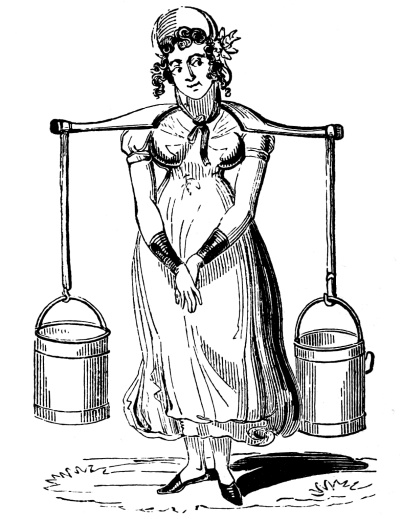
Here are four of Bish’s handbills, the woodcuts of which are better executed than usual.
[Pg 261]
A Member rehearsing his Speech]
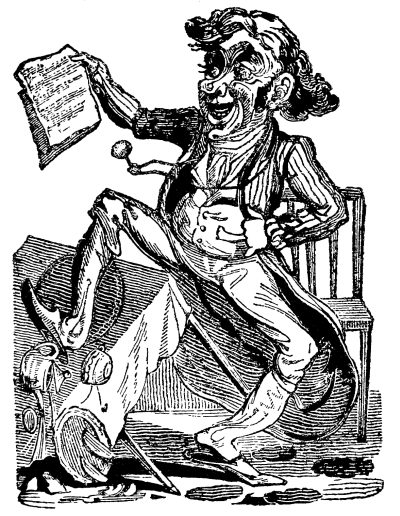
Lottery begins 21ₛₜ This Month (Jan.)—2 of 20,000 Guineas, and 40 other Capitals—all Sterling Money (no Stock Prizes.)]
[Pg 262]
Jerry Sneak peeping at his Wife and the Major in the Summer House.
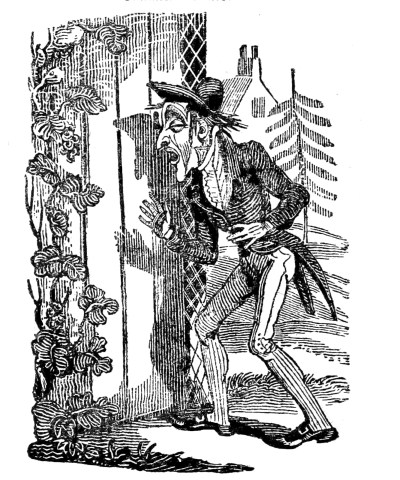
Lottery begins 21ₛₜ This Month (Jan.)—2 of 20,000 Guineas & 40 other Capitals—all Sterling Money (no Stock Prizes)
[Pg 263]
Endeavouring to read the Contents of a Letter
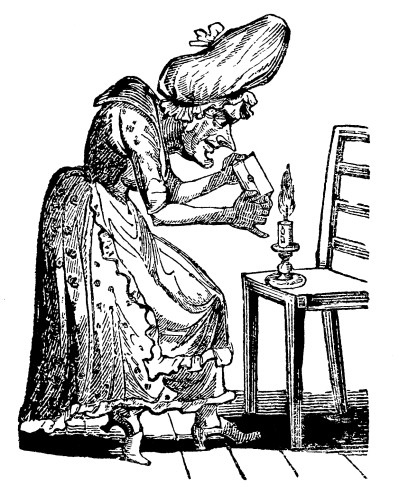
Lottery begins 21ₛₜ This Month (Jan.)—2 of 20,000 Guineas, & 40 other Capitals—all Sterling Money (no Stock Prizes.) [Pg 264]
A Husband indifferent to his Wife’s Importunities.
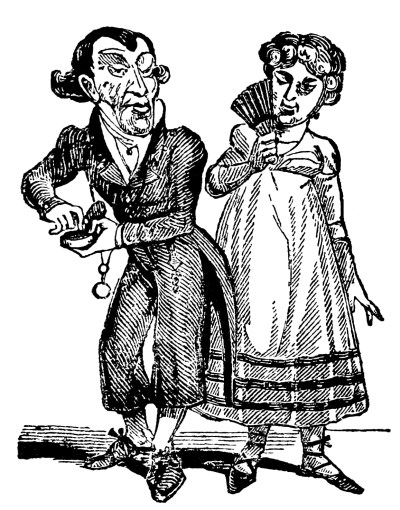
Lottery begins 21ₛₜ This Month (Jan)—2 of 20,000 Guineas & 40 other Capitals—all Sterling Money (no Stock Prizes)]
[Pg 265]
The last lottery—Attempts to get up excitement—The procession—Alteration of date—Advertising car— “A Ballad, 1826”—Drawing of the last lottery.
But the lamp was to flicker once more before it finally died out, and a “last lottery” was decreed to be drawn in 1826. In the spring, and for three weeks after midsummer of that year, the lottery-office keepers incessantly plied every man, woman, and child, in the United Kingdom and its dependencies, with petitions to make a fortune in “the last lottery that can be drawn.” Men paraded the streets with large printed placards on poles, or pasted on their backs, announcing “All Lotteries End for Ever! 18th of July.” The walls were plastered all over with posters, and handbills thrust into the hands of street-passengers, besides being left at every house, containing the same heart-rending [Pg 266] announcement, and with the solemn assurance that the demand for tickets and shares was immense! The prices had so risen, were so rising, and would be so far beyond all calculation, that, to get shares, or tickets at all, they must be instantly purchased! As the time approached, a show was got up to proclaim that the deplorable “Death of the Lottery” would certainly take place on the appointed day; but, on some account or other, the pathetic appeal of the benevolent contractors was disregarded. At length, finding that it could not be floated by the 18th of July, the stony-hearted public were “respectfully” informed that “the Lords of the Treasury had issued a reprieve,” and that the “drawing” and “quartering,” etc., was postponed till some day in October, “when lotteries will finish for ever.” Here is a handbill relating to the 18th of July:— [Pg 267]
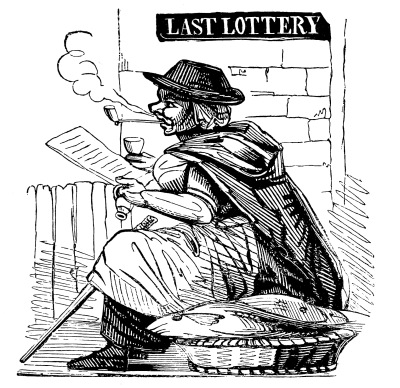
“What’s the odds?—while I am floundering here the gold fish will be gone; and as I always was a dab at hooking the right Numbers, I must cast for a Share of the Six £30,000 on the 18th July, for it is but 'giving a Sprat to catch a Herring,’ as a body may say, and it is the last chance we shall have in England.”
We can scarcely do better than follow Hone’s contemporary account of this “last lottery;” it is so fresh, being written at the time.
“Incredible efforts were made in the summer of 1826 to keep the 'last lottery’ on its legs. The price of tickets was arbitrarily raised, to [Pg 268] induce a belief that they were in great demand, at the very moment when their sale was notoriously at a stand; and the lagging attention of the public of the Metropolis was endeavoured to be quickened by all sorts of stratagems, to the 18th of July, as the very last chance that would occur in England of gaining 'Six £30,000 besides other Capitals,’ which it was positively affirmed were 'all to be drawn’ on that fatal day. Besides the dispersal of innumerable bills, and the aspersions on Government relative to the approaching extinction of the Lottery, the parties interested in its preservation caused London and its environs to be paraded by the following
Procession.
“1. Three men in liveries, scarlet and gold.
“2. Six men bearing boards at their backs and on their breasts, with inscriptions in blue and gold, 'All Lotteries end on Tuesday next,’ six £30,000.
“3. Band of trumpets, clarionets, horns, etc.
“4. A large purple silk banner carried by six men, inscribed in large gold letters, 'All Lotteries end for ever on Tuesday next,’ six £30,000. [Pg 269]
“5. A painted carriage, representing the Lottery Wheel, drawn by two dappled grey horses, tandem fashion; the fore horse rode by a postillion in scarlet and gold, with a black velvet cap, and a boy seated in a dickey behind the machine, turning the handle, and setting the wheel in motion.
“6. Six men with other Lottery Labels.
“7. A square Lottery Carriage, surmounted by a gilt Imperial Crown; the carriage covered by labels, with 'All Lotteries end on Tuesday next;’ drawn by two horses, tandem, and a postillion.
“8. Six men with labels.
“9. Twelve men in blue and gold, with boards on poles, with 'Lotteries end for ever on Tuesday next.’
“10. A large purple silk flag, with 'All Lotteries end on Tuesday next.’
“This procession, with its music, drew the heads of the servant-maids to the windows in every suburb of the metropolis, and was followed by troops of boys, till they tired of its frequency. It sometimes stopped, and a man with a bell cried 'O yes!’ and 'God save the King!’ and, between the two, proclaimed, in set words, the 'Death of the Lottery on Tuesday next!’ The event was likewise announced as certain in all the [Pg 270] Newspapers, and by cart-loads of bills showered down areas, and thrust under knockers; when, behold, 'the Lords of the Treasury were pleased to order’ the final drawing to be postponed to Thursday, the 18th of October; but all the good people so informed, were wisely uninformed that this 'order’ was obtained by the lottery folks, to give them a long day to get rid of their unsold tickets.
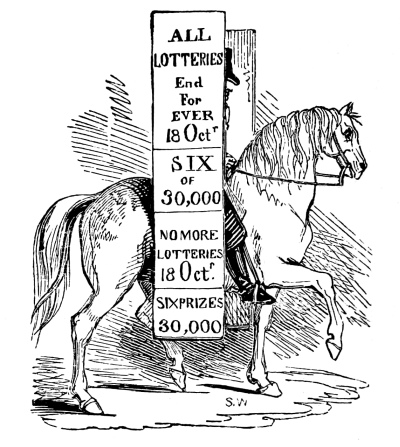
“After this, the streets were cavalcaded by men, whose bodies were concealed between long boards on each side of their horses to announce the next 'last of the Lottery on the 18th of October’ aforesaid; and men on foot walked with labels on their breasts and backs, with the [Pg 271] same never-dying intelligence, according to the further figure in the engraving of the lottery wheel, which represents one of the Government Wheels, and the sledge it was drawn upon from Somerset House to Cooper’s Hall, at the commencement of the drawing of every lottery; on which occasion there were four horses to each wheel, and about a dozen Horseguards to protect the instruments of Miss Fortune.
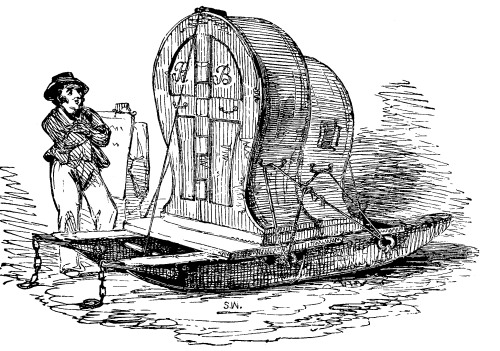
[Pg 272]
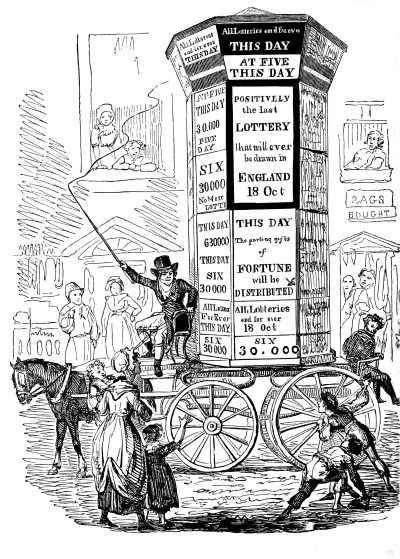
“But the most pageant-like machine was an octagon framework, covered by printed lottery placards, with a single horse, and a driver, and a guard-like seat at the back. When drawn along the streets, which was at a most funereal pace, it overtopped the sills of the first-floor windows. Its slow motion, and the route it chiefly took, evidenced the [Pg 273] low hopes of the proprietors. St. Giles’s and the purlieus of that neighbourhood seem to have been selected as the favoured spots, whence favours were mostly to be expected. An opportunity offered to sketch it, while it was pelted with mud and stones, and torn and disfigured by the unappreciating offspring of the sons of fortune whose regards it courted.
“The Artist’s letter describes the scene: 'As I was walking up Holborn, on Monday, the 9th instant, I saw a strange vehicle moving slowly on; and, when I came up to it, found a machine, perhaps from twenty to thirty feet high, of an octagon shape, covered all over with lottery papers of various colours. It had a broad brass band round the bottom, and moved on a pivot; it had a very imposing effect. The driver and the horse seemed as dull as though they were attending a solemn funeral, whilst the different shopkeepers came to the doors and laughed; some of the people passing and repassing, read the bills that were pasted on it, as if they had never read one before; others stationed themselves to look at it as long as it was in sight. It entered Monmouth Street, that den of filth and rags, where so great a [Pg 274] number of young urchins gathered together in a few minutes as to be astonishing. There being an empty chair behind, one of them seated himself in it, and rode backwards; another said 'Let’s have a stone through it,’ and a third cried, 'Let’s sludge it.’ This was no sooner proposed than they threw stones, oyster shells and dirt, and burst several of the sheets; this attack brought the driver from his seat, and he was obliged to walk by the side of his machine up this foul street, which his show canvassed, halting now and then to threaten the boys, who still followed and threw. I made a sketch, and left the scene. It was not an every-day occurrence, and I accompany it with these remarks.’
“This was the fag-end of the last struggle of the speculators on public credulity for popularity to their last dying lottery.”
“At last, on Wednesday, the 18th of October, 1826, the State Lottery expired, and its decease was announced in the newspapers of the next day, by the following article:—
“Yesterday afternoon, at about half-past six o’clock, that old servant of the State, the Lottery, breathed its last, having for a long period of years, ever since the days of Queen Anne, contributed largely towards the public revenue of the country. This event took place at Cooper’s Hall, Basinghall Street; and, such was the anxiety on the part of the public to witness the last drawing of the lottery, that great numbers of persons were attracted to the spot, independently of those who had an interest in the proceedings. The gallery of Cooper’s Hall was crowded to excess long before the period fixed for the drawing (five o’clock), and the utmost anxiety was felt by those who had shares [Pg 277] in the Lottery, for the arrival of the appointed hour. The annihilation of Lotteries, it will be recollected, was determined upon in the Session of Parliament before last; and thus, a source of revenue, bringing into the treasury the sums of £250,000 and £300,000 per annum, will be dried up.
“This determination on the part of the legislature is hailed, by far the greatest portion of the public, with joy, as it will put an end to a system which many believe to have fostered and encouraged the late speculations, the effects of which have been and are still severely felt. A deficiency in the public revenue, to the extent of £250,000 annually, will, however, be the consequence of the annihilation of Lotteries, and it must remain for those who have strenuously supported the putting a stop to Lotteries, to provide for the deficiency.
“Although that which ended yesterday was the last, if we are informed correctly, the lottery-office keepers have been left with a great number of tickets remaining on their hands—a pretty strong proof that the public, in general, have now no relish for these schemes.
“The concourse of persons in Basinghall Street was very great; indeed, [Pg 278] the street was almost impassable, and everybody seemed desirous of ascertaining the fortunate numbers. In the gallery the greatest interest was excited, as the various prizes were drawn from the wheel; and, as soon as a number ticket was drawn from the number wheel, every one looked with anxiety to his share, in order to ascertain if Fortune smiled on him. Only one instance occurred where a prize was drawn, and a number held by any individual present. The fortunate person was a little man, who, no sooner had he learned that his number was a grand prize, than he buttoned up his coat, and coolly walked off, without uttering a word. As the drawing proceeded, disappointment began to succeed the hopes indulged by those who were present. On their entrance to the hall, every face wore a cheerful appearance; but, on the termination of the drawing, a strong contrast was exhibited, and the features of each were strongly marked with dissatisfaction.
“The drawing commenced shortly after five o’clock, and ended at twenty minutes past six.
“The doors of the various Lottery Offices were surrounded by persons awaiting the issue of the drawing.”
[Pg 279]
Handbills—Metrical list of lottery-office keepers—Bish’s manifesto—“Epitaph in Memory of the State Lottery”—“Little Goes”—The Times thereon—Their effect on the public.
Here are some of the handbills of 1826:—

[Pg 280]
The following gives us a list of the principal lottery-office keepers:—
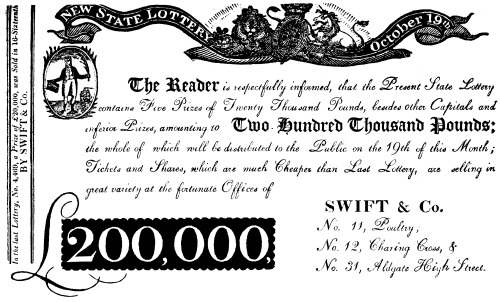
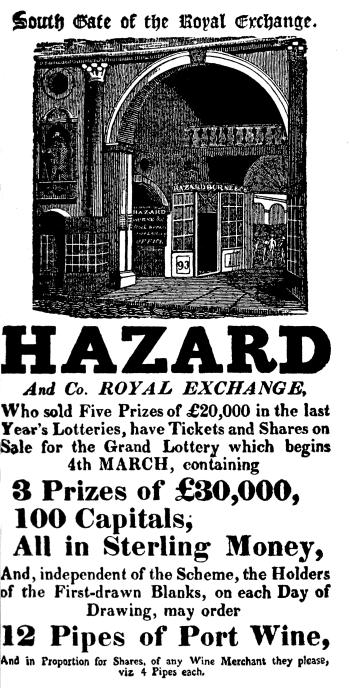
[Pg 281]
Bish, anent the “Last Lottery of all,” wrote the following manifesto:— [Pg 283]
“At the present moment, when so many articles, necessary to the comforts of the poorer classes, are more or less liable to taxation, it may, surely, be a question whether the abolition of Lotteries, by which the State was a gainer of nearly half a million per annum, be, or be not, a wise measure!
“’Tis true that, as they were formerly conducted, the system was fraught with some evil. Insurances were allowed upon the fate of numbers through protracted drawings; and, as the insurances could be effected for very small sums, those who could ill afford loss, imbibed a spirit of gambling, which the legislature, very wisely, most effectually prevented, by adopting, in the year 1809, the present improved mode of deciding the whole Lottery in one day.
“As it is at present conducted, the Lottery is voluntary Tax, contributed to only by those who can afford it, and collected without trouble or expense; one by which many branches of the revenue are considerably aided, and by means of which hundreds of persons find employment. The wisdom of those who, at this time, resign the income [Pg 284] produced by it, and add to the number of the unemployed, may, as I have observed in a former address, surely be questioned.
“Mr. Pitt, whose ability in matters of financial arrangements few will question, and whose morality was proverbial, would not, I am bold to say, have yielded to an outcry against a tax, the continuing of which would have enabled him to let the labourer drink his humble beverage at a reduced price, or the industrious artisan to pursue his occupation by a cheaper light. But we live in other times—in the age of improvement! To stake patrimonial estates at hazard or écarté, in the purlieus of St. James’s, is merely amusement, but to purchase a ticket in the Lottery, by which a man may gain an estate at a trifling risk, is—immoral! Nay, within a few hours of the time I write, were not many of our nobility and senators, some of whom, I dare say, voted against Lotteries, assembled betting thousands upon a horse race?
“In saying so much, it may be thought that I am somewhat presumptuous, or, that I take a partial view of the case. It is, however, my honest opinion, abstracted from personal considerations, that the measure of abolishing Lotteries is an unwise one, and, as such, I give it to that [Pg 285] public, of whom I have been, for many years, the highly favoured servant, and for whose patronage, though Lotteries cease, my gratitude will ever continue.
“As one of the last contractors, I have assisted in arranging a Scheme, &c.! &c.!! &c.!!!”
It was no good moaning over the dead lottery; it was dead—there was an end of it; and there was nothing more but to bury it decently, and write its epitaph—which was duly done.
[Pg 287] We have thus traced the State lotteries to their end. But there are many things connected with the lottery outside of them which have yet to be mentioned—for instance, the illegitimate lotteries called “Little Goes,” which for a time flourished in the last and the commencement of this present century. Here is one of them. On October 14, 1770, a case was determined at the general quarter session of the peace for the county of Wilts, held at Marlborough. A quack doctor had been convicted before Thomas Johnson, Esq., of Bradford, in the penalty of £200 for disposing of plate, etc., by means of a device or lottery; and, by a second information, convicted of the same offence before Joseph Mortimer, Esq., of Trowbridge. To both these convictions he appealed to the justices at the general quarter session of the peace, when, after a trial of near ten hours, the bench unanimously confirmed the conviction on both informations, by which the appellant was subjected to the penalties of £200 on each, and costs.
The Times newspaper was especially indignant at these “Little Goes,” and I make two or three excerpts therefrom on this subject.
Times, July 22, 1795.—“Private Lotteries. Amongst [Pg 288] the various species of gaming that have ever been practised, we think none exceeds the mischiefs and calamities that arise from the practice of private lotteries, which at present are carrying on, in various parts of the town, to very alarming extents, much to the discredit of those whose province it is to suppress such nefarious practices, as they cannot be ignorant of such transactions. 'The little go,’ which is the technical term for a private lottery, is calculated only for the meridian of those understandings who are unused to calculate and discriminate between right and wrong, and roguery and fair dealing; and, in this particular case, it is those who compose the lower order of society whom it so seriously affects, and on whom it is chiefly designed to operate. No man of common sense can suppose that the lottery wheels are fair and honest, or that the proprietors act upon principles anything like honour or honesty; for, by the art and contrivance of the wheels, they are so constructed with secret springs, and the application of gum, glue, etc., in the internal part of them, that they can draw the numbers out or keep them in at pleasure, just as it suits their purposes; so that the insurer, robbed and cajoled by such [Pg 289] unfair means, has not the most distant chance of ever winning; the whole being a gross fraud, and imposition, in the extreme. We understand that the most notorious of these standards of imposition are situated in Carnaby Market, Oxford Road, in the Borough, Islington, Clerkenwell, and various other places, most of which are under the very nose of magistracy, in seeming security, bidding defiance to law, and preying upon the vitals of the poor and ignorant.
“We hope the magistrates of each jurisdiction, and those who possess the same power, will perform their duty on behalf of the poor, over whom they preside, and put a stop to such a growing and alarming evil, of such pernicious and dangerous tendency: particularly, as the proprietors are well-known bad characters, consisting of needy beggars, desperate swindlers, gamblers, sharpers, notorious thieves, and common convicted felons, most of whose names stand recorded in the Newgate Calendar for various offences of different descriptions.”
Times, August 11, 1795.—“On Friday night last, in consequence of searching warrants from the parochial magistrates of St. James’s, [Pg 290] Westminster, upwards of thirty persons were apprehended at the house of one M’Call, No. 2, Francis Street, near Golden Square, and in the house of J. Knight, King Street, where the most destructive practices to the poor were carrying on, that of Private Lotteries (called Little Goes). Two wheels, with the tickets, were seized on the premises. Upon examination of those persons, who proved to be the poor deluded objects that had been there plundered, they were reprimanded and discharged.
“The wives of many industrious mechanics, by attending these nefarious houses, have not only been duped out of their earnings (which ought to have been applied to the providing bread for their families), but have even pawned their beds, wedding-rings, and almost every article they were possessed of for that purpose.”
Times, August 13, 1795.—“The term of little goes for the private lotteries is apt enough, for the poor devils who risk their property there have but little, and that little goes to nought.
“If the wheels of fortune, and the cash, seized at the private lotteries, became the property of the police runners, the old adage [Pg 291] will be strongly verified, 'What is got over the devil’s back, will be spent under his belly.’”
Gambling was then a national madness. Not content with the State lotteries, which then took forty-two days to draw, with its concomitant excitement of insurance, these Little Goes were introduced between the drawings of the State lottery. They were known to be illegal, and we have seen in what terms a leading newspaper speaks of them, but still they existed. True, an attempt was made to put them down in 1802, by the Act 42 Geo. III. c. 119, by which they were declared public nuisances, and any person keeping an office or place for carrying on the business of such lotteries was liable to forfeit £500, and be deemed a rogue and a vagabond, within the meaning of the Vagrant Act (17 Geo. II. c. 5).
But to show how futile was this Act, the Report of the Committee of the House of Commons on Lotteries, 1808, says there were little lotteries on the same plan as the great State lotteries, and drawn in the same manner. There were, generally, five or six “little goes” in the year, and they were actually set up and conducted by two or three [Pg 292] of the licensed lottery-office keepers. The State lottery was the parent of these little ones, and they were never heard of during the drawing of the former, but the gambling fever had such a hold on the people that they could not wait for the next State lottery.
[Pg 293]
Description of lottery-office keepers—Insuring numbers in the lottery—Servants bitten by the mania—Morocco men—Many prosecutions—Cost to the country—Several law cases—Story of Mr. Bartholomew.
What class of men these lottery-office keepers were, we learn in a little book[29] believed to have been published about 1770.
“For several years past these lottery-office keepers have had an ample share in imposing on the town, and cheating the country; by vending of books, handkerchiefs, and other things of little value, with shares of tickets, said to be impending, or then drawing, in the State lottery, with a note of hand, importing that if No. 45 should come a prize of £20,000, the bearer of that ticket would be entitled to £50, and so for other prizes in proportion; by this means thousands were taken in with [Pg 294] their eyes open (such an itch has the world for gambling), and paid thrice the value for the commodity they purchased (allured by the hopes of a prize in the lottery) than its real worth.
“On the drawing of the lottery, the lower part of the creation, who were concerned in the above schemes for enriching themselves, would quit their labour and industry, and repair to the Guildhall, to be present at the drawing, in expectation of every next number called being theirs, when twenty thousand to one of their getting a prize of £10. Some few have been so lucky as to get the £20,000 and £10,000, but I never knew that they received the sum stipulated, in the promissory note given for that purpose. On the contrary, I have seen the office-keeper’s windows and shops demolished by a deluded and justly enraged mob, who have been ruined by the purchase of tickets, shares, chances, and insurances thereon.
“The keepers had a custom, a day or two before the finishing the drawing, to shut up their shops and decamp, for fear of their being brought to account for their cheats and roguery, practised on the ignorant and unthinking. The countryman, hearing that he had a prize in [Pg 295] the lottery, hastened up to town, at no small expense, to receive the money due thereon; when, to his great sorrow, there was no keeper to be found; but, as an alleviation of his grief, he saw hundreds deceived as well as himself.
“To such an height were these lottery offices carried (as they called themselves) that you might purchase shares and chances at sixpence apiece, one of which is worth observing. An advertisement in the Morning Chronicle, intimating that shares and chances were to be disposed of at Fuller’s Eating House, in Wych Street, and tickets insured; that whoever bought six pennyworth of beef, would be presented with a ticket, and a note of hand to receive the sums inserted therein, if the number of the ticket was drawn a prize of £20,000, etc.; and told you that this was the most rational of all schemes hitherto projected, as the purchaser, at least, would have, for his sixpence, three pennyworth of meat, besides a chance in the lottery.
“Notwithstanding the law has taken every precaution to guard against the itinerant cheat, who practises as lottery-office keeper, yet ways are, and always will be, found to evade it. Therefore let me dissuade [Pg 296] the countryman, and others, from adventuring at this losing game, as it is at best, there being better than two to one against you in the State lottery, and more than fifty to one of your getting anything from such as I have already described.”
The custom of insuring numbers in the lottery has already been noticed, but only en passant. It was, in reality, pure betting. In return for, say, a shilling, a pound would be promised if a certain specified number turned up. Of course, these insurances were illegal, but they were so profitable to the office-keepers, that no penalties could keep them down. Many attempts had been made by magistrates and police officers to enter houses and places kept for the purpose of carrying on illegal insurances, and apprehending the offenders; but the parties concerned opposed their attempts in every possible way, and employed a desperate set of ruffians to defend them, who, with every kind of offensive weapon, bade defiance to the execution of the warrants issued for their apprehension. They also secured the rooms within the house where this illicit business was transacted, with strong oak doors and iron bars and bolts, so that the police officers could only obtain admission by using force. [Pg 297]
Such a state of things, of course, could not be tolerated in any civilized community, and an Act was passed (33 Geo. III. c. 62), in 1793, empowering magistrates to allow any person authorized by the Commissioners of Stamps, by day or night (but, if by night, then in the presence of a constable), to break open the doors and apprehend the offenders; and all persons who should obstruct the officers in the execution of their duty, were liable to be seized and prosecuted, and subject, on conviction, to be fined, imprisoned, and publicly whipped. By a subsequent Act, this power was extended to any person or persons authorized by a magistrate without restriction; and these provisions were also introduced into the Act of 1802 (42 Geo. III. c. 119).
We have seen how, by the Act of 1793, no person, except the clerks of licensed lottery-office keepers, were allowed to be in the Guildhall during the drawing of the lottery; but, though this undoubtedly checked this gambling, it was far from putting a stop to it. Mr. Colquhoun, a well-known magistrate, declared that the keepers of these unlicensed insurance offices were “as a class, in general, of very depraved or [Pg 298] distressed characters,” and the class they preyed upon were principally male and female domestic servants; indeed, it was computed, in 1800, that, on an average, each servant in the metropolis spent, annually, as much as twenty-five shillings in this vile practice of lottery insurance; the sum total so expended in a year, by the wage earning-classes, being estimated at half a million sterling. They were, especially the footmen, undoubtedly led away by the example of their superiors in rank, and, from their idle and dissipated habits, they entered keenly into the lottery. So long as they won, all went well; but the chances were so great against them that this never happened for long, and then, impelled by that fearful gambling fever, which we now see in those who bet on horse-racing, money must be got, by any means, fair or foul, and pilfering and peculation were the necessary results.
The insurance offices in the metropolis are said to have exceeded four hundred in number. These had jackals, touts who provided prey for them, in the shape of Morocco men, so called from the red Morocco pocket-books they used to carry with them, and in which their notes were made. These men haunted the public-houses and coffee-shops; nay, [Pg 299] they pushed themselves into every village, and into every house in the village, to collect premiums from all sorts and conditions of men. These people would take their books to their employers by night, and receive the money from them to pay those who were fortunate enough to obtain prizes.
Mr. Francis,[30] writing of these Morocco men, says, “They began life as pigeons; they closed it as rooks. They had lost their own fortunes in their youth; they ruined those of others in their age. Generally educated, and of bland manners, a mixture of the gentleman and the debauchee, they easily penetrated into the society they sought to destroy. They were seen in the deepest alleys of St. Giles’s, and were met in the fairest scenes of England. In the old hall of the country gentleman, in the mansion of the city merchant, in the butlery of the rural squire, in the homestead of the farmer, among the reapers as they worked on the hillside, with the peasant as he rested from his daily toil, addressing all with specious promises, and telling lies like [Pg 300] truth, was the Morocco man found, treading alike the finest and the foulest scenes of society. They whispered temptation to the innocent; they hinted at fraud to the novice. They lured the youthful; they excited the aged; and no place was so pure and no spot so degraded, but, for love of 7½ per cent., did the Morocco man mark it with his pestilential presence. No valley was so lonely but what it found some victim, no hill so remote but what it offered some chance; and so enticing were their manners, that their presence was sought, and their appearance welcomed, with all the eagerness of avarice.
“And little were they who dealt with these persons aware of the characters with whom they trafficked. Of bland behaviour, but gross habits, the nature of their influence on the unpolluted minds with which they had to deal, may be judged from the fact that some of the Morocco men ended their days at Tyburn; that transportation was the doom of others, and the pillory the frequent punishment of many. To such men as these were the morals of the people exposed through the lottery.”
The Act was occasionally put in force, and once, in particular, a Mr. [Pg 301] Wood (according to the Report of the Commissioners in 1808) “was seized with a sudden fit of severity, and, in the course of one term, he caused to be arrested (for the crime of insuring lottery tickets), by writs of capias, perhaps from 300 to 400 persons; who, with the exception of a very few, perhaps about twelve, were persons of the very lowest class of life, many of them married women, washerwomen, charwomen, and persons of that description; so that Government necessarily had to pay to the Solicitor of Stamps heavy costs for having instituted so great a number of unproductive suits, and the Treasury was greatly displeased. The poor were put into prison, and, after remaining there, some a month, some two months, and some three months, and so on.... When the Commissioners (of Stamps) came to know what sort of wretched beings they had in prison, their humanity urged them to set them at liberty by degrees.”
Mr. Baker, a magistrate, gave evidence before the Commission, and stated that the annual loss to the public, by the lottery, was £1,275,000, which loss was made up by the cost of tickets, the cost of illegal insurances, and the profits of the agents, contractors, [Pg 302] office-keepers, etc. He also said that “no revenue has been obtained to the State at half the expense, in point of pecuniary sacrifice to the public, independent of the excessive injury to the morals of the people, as lotteries, in the manner they are now constituted. They have been a productive harvest to the most idle, the most profligate, and the most abandoned and depraved members of the community, many of whom have through this medium acquired princely fortunes within the last thirty years. These successes have stimulated others to follow the evil example; great capitals have been employed in the trade of illegal insurances, and long practice has enabled these mischievous agents to systematize their designs in so perfect a manner as to elude detection. Their profits on the money received during each lottery are estimated at 33⅓ per cent., clear of all expenses. From 7½ to 10 per cent. is generally allowed to Morocco men, who go about soliciting persons to insure. A very considerable portion of women who could write, and who know a little of figures, are employed in this nefarious trade; and, whenever any of them are convicted and imprisoned, there is generally a [Pg 303] stipulation with their principal that they shall be allowed two guineas per week during the term of their imprisonment.”
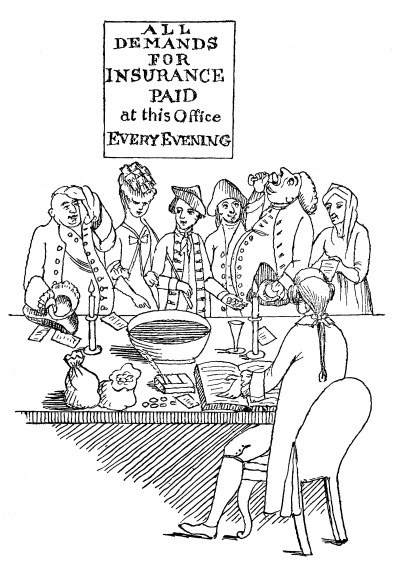
At all events, if their profits were great, they seem, according to [Pg 304] this illustration (date, October 5, 1780), to behave somewhat generously to their clients, by paying quickly, and giving free refreshment.
They were occasionally caught, but not always punished, as shown by the following case. On March 1, 1773, a case came on to be tried before Lord Mansfield, at the Guildhall, wherein the Lord Mayor was plaintiff, and Messrs. Barnes and Golightly were defendants, in order to determine the legality of insuring lottery tickets; but, on account of an error in the declaration, the plaintiff was nonsuited.
On June 26, 1775, a case was tried in the Court of Common Pleas, Guildhall, between a gentleman, plaintiff, and a lottery-office keeper, who was the defendant. The cause of the action was as follows: The gentleman, passing by the lottery office, observed a woman and boy crying, on which he asked the reason of their tears; they informed him that they had insured a number in the lottery on the over-night, and, upon inquiry at another office, found it to have been drawn five days before, and, therefore, wanted their money returned. The gentleman, taking their part, was assaulted and beaten by the office-keeper, for [Pg 305] which the jury gave a verdict for the gentleman, with five pounds damages.
In July, 1778, Lord Mansfield, at the Guildhall, tried a case in which a merchant was plaintiff, and a lottery-office keeper defendant. The action was brought for suffering a young man, the plaintiff’s apprentice, to insure with the defendant during the drawing of the last lottery, contrary to the statute, whereby the youth lost a considerable sum, the property of the merchant. The jury, without going out of court, gave a verdict for the plaintiff, thereby subjecting the defendant to pay £500 penalty, and to three months’ imprisonment.
About the beginning of January, 1785, several lottery-office keepers were convicted, before the Lord Mayor and Aldermen, in penalties of £50 each, for insuring numbers, contrary to law; and, in Trinity Term, the following cause was tried at Westminster, before Lord Loughborough.
A lottery-office keeper near Charing Cross was plaintiff, and the Sheriff of Middlesex defendant. The action was to recover one thousand five hundred and sixty-six pounds, levied by the Sheriff, about a year past, on the plaintiff’s goods, by virtue of three writs of fieri [Pg 306] facias, issued from the Court of King’s Bench. It seems that the above plaintiff was convicted in three penalties of five hundred pounds each, for insuring lottery tickets; but, previous to the trials coming on, for some indulgence, he had, by himself or agents, consented not to bring any writ of error, and an order of nisi prius was drawn up, and served upon his attorney; notwithstanding which, three writs of error were sued out. The Court of Queen’s Bench being then moved, made an order that the executions should be levied according to the original rule of Court; the Sheriff made the levy, and, the money being paid and impounded in his hands, the above action was brought to get the same returned. The novelty of the action caused much laughter among the counsel; and, after a few minutes’ hearing, his lordship ordered the plaintiff to be nonsuited.
I cannot leave the subject of insurance without mentioning an instance of infatuation, recorded by Nelson in his “History of Islington.”
“Some years ago, this house and premises (White Conduit House) were kept by Mr. Christopher Bartholomew, a person who inherited a good fortune from his parents, and who brought much trade to the place, by [Pg 307] the taste he displayed in laying out the gardens and walks, and the excellent manner in which he conducted the business of the house.
“This person, with every prospect of success and eminence in life, fell a victim to an unconquerable itch for gambling in the lottery. At one time the tea-gardens and premises, as also the Angel Inn at Islington, were his freeholds; he rented land to the amount of £2000 a year in the neighbourhood of Islington and Holloway; and was remarkable for having the greatest quantity of haystacks of any grower in the neighbourhood of London. At that time he is believed to have been worth £50,000, kept his carriage and servants in livery; and, upon one occasion, having been unusually successful at insuring in the lottery, gave a public breakfast at his tea-gardens, 'to commemorate the Smiles of Fortune,’ as it was expressed upon the tickets of admission to this fête champêtre.
“He, at times, had some very fortunate hits in the lottery, and which, perhaps, tended to increase the mania which hurried him to his ruin. He has been known to spend upwards of 2000 guineas in a day for insurance, to raise which, stack after stack of his immense crops of hay have been [Pg 308] cut down and hurried to market, as the readiest way to obtain the supplies necessary for these extraordinary outgoings. Having at last been obliged to part with his house from accumulated difficulties and embarrassments, he passed the last thirteen years of his life in great poverty, subsisting by the charity of those who knew his better days, and the emolument he received as a juryman of the Sheriff’s Court for the County.
“Still, his propensity to be engaged in this ruinous pursuit never forsook him, and meeting, one day in the year 1807, with an old acquaintance, he related to him a strong presentiment he entertained, that, if he could purchase a particular number in the ensuing lottery (which he was not then in a position to accomplish), it would prove successful. His friend, after remonstrating with him on the impropriety of persevering in a practice that had already been attended with such evil consequences, was at last persuaded to go halves with him in a sixteenth part of the favourite number, which, being procured, was most fortunately drawn a prize of £20,000. With the money arising from this extraordinary turn of fortune, he was prevailed upon by his friends to [Pg 309] purchase an annuity of £60 per annum; yet, fatally addicted to the pernicious habit of insurance, he disposed of it, and lost it all. He has been known frequently to apply to those persons who had been served by him in his prosperity, for an old coat, or some other article of cast-off apparel; and, not many days before he died, he solicited a few shillings to buy him necessaries.
“A gentleman in his manners, with a mind rather superior to the generality of men, he, at one time, possessed the esteem of all who knew him; but was reduced from a state of affluence and respectability to wretchedness and want, by following that baneful practice, which, in spite of all laws made to the contrary, will ever exist whilst the Government continues to resort to the unwise expedient of inducing the individual to pay £20 for the liberty of gambling for £10. Let his fate be a warning to all ranks, particularly to those engaged in trade, not to engage in a pursuit which will, ultimately, be their ruin; and, when tempted to insure, let them remember the fate of Bartholomew. He died in a two-pair-of-stairs room, in Angel Court, Windmill Street, Haymarket, in March, 1809, aged 68.”
[Pg 310]
Suicides caused by the lottery—Story of a footman—Anecdote told by Theodore Hook—Description of a lottery from its commencement to its end.
Another sad phase connected with the lottery was the number of suicides which were the outcome of it. We need scarcely contemplate the serious side of this melancholy question, if we can find the slightest amusement therein; and to my mind there is some in the following anecdote.
Early in the reign of George II. the footman of a lady of quality, under the absurd infatuation of a dream, disposed of the savings of the last twenty years of his life in purchasing two lottery tickets, which, proving blanks, so preyed upon his mind that, after a few days, he put an end to his existence. In his box was found the following plan of the manner in which he would spend the £5000 prize he surely expected to win. [Pg 311]
“As soon as I have received the money, I will marry Grace Towers; but, as she has been cross and coy, I will use her as a servant. Every morning she shall get me a mug of strong beer, with a toast, nutmeg, and sugar in it; then I will sleep till ten, after which I will have a large sack posset. My dinner shall be on table by one, and never without a good pudding. I will have a stock of wine and brandy laid in. About five in the afternoon I will have tarts and jellies, and a gallon bowl of punch; at ten, a hot supper of two dishes. If I am in a good humour, and Grace behaves herself, she shall sit down with me. To bed about twelve.”
Julian Young, in his journal, narrates the following, which was told, in his presence, by Theodore Hook, at a dinner-party in 1831: “Not long since, he went by stage-coach to Sudbourne, to stay with Lord Hertford. Inside the coach he had but one companion, a brown-faced, melancholy-looking man, with an expression of great querulousness, quite in character with the tone of his conversation, which was one of ceaseless complaining. 'Sir,’ said he, 'you may have known unfortunate [Pg 312] men, possibly, in your day; you may, for aught I know, be an unfortunate man yourself; but I do not believe there is such another unfortunate man as I am in the whole world. No man ever had more brilliant prospects than I have had in my time, and every one of them, on the very eve of fulfilment, has been blighted. ’Twas but the other day that I thought I would buy a ticket in the lottery. I did so, stupid ass that I was, and took a sixteenth. Sir, I had no sooner bought it, than I repented of my folly; and, feeling convinced that it would be a blank, I got rid of it to a friend, who, I knew, would thank me for the favour, and, at the same time, save me from another disappointment. By Jove! sir, would you believe it? I know you won’t; but it is true,—it turned up £30,000.’ 'Heaven and earth!’ said Hook, 'it is incredible. If it had happened to me, I should certainly have cut my throat.’ 'Well,’ said he, 'of course you would, and so did I;’ and, baring his neck, he exposed to Hook’s horror-stricken gaze, a freshly-healed cicatrix from ear to ear.”
A description of the lottery wheels, and the drawing of the lottery as practised in 1770, may be acceptable to the reader, especially as it is [Pg 313]very full in detail,[31] which ever after varied very slightly, if at all.
“The first Step towards preparing the Tickets and Drawing is the Appointment of Managers. These are appointed by the Commissioners of the Treasury, and, after being sworn to execute faithfully their Trust, meet occasionally at some public Office or Place, and cause Books to be prepared, containing a sufficient Number of Leaves (in the present Lottery 10,000), in which every Leaf is divided into three Columns, which are all numbered 1, 2, 3, &c., to the last, or highest Ticket. The Third Column, which is wider than the other two, has also the Form of the Ticket of its respective Lottery printed on it, and, indeed, is the real Ticket given out to the Subscribers, and negotiated among the Public, which, for the present Lottery, is as follows—
| No. 39m894. | LOTTERY |
| for the year | |
| M.DCC.LXXI. | |
| The Bearer of this Ticket will, in Pursuance | |
| of an Act made in the Eleventh Year of | |
| His present Majesty’s Reign, be intitled to [Pg 314] | |
| such beneficial Chance as shall belong | |
| thereto, in the Lottery to be drawn by | |
| Virtue and under the Directions of the | |
| said Act. | |
“This Form being signed by one of the Cashiers of the Bank, and cut out of the Book, is what is properly called a Lottery Ticket. After these Books are made, and properly number’d, the Managers carefully examine them, and send them to the Cashiers of the Bank, taking Receipts for the same, and these, as before observed, sign and cut out the Tickets, and deliver them to the Subscribers, or Purchasers of the Receipts, on their paying the remaining Payments due on them, and giving them up.
“The said Cashiers are likewise to permit any Subscriber or Purchaser, who chuses it, to sign his Name on the Ticket of the middle Column, these being the Tickets which go into the Wheel, which, in the Words of the Act, I shall, for the future, call Box.
“About the Middle of October, the Cashiers return the Books to the Managers, with what Tickets remain in them, which are sold, or disposed of, by the Treasury. [Pg 315]
“The Managers, on receiving the Books, cause the Tickets or Numbers of the middle Column to be cut out, and fastened with Thread or Silk, and put into a Box prepared for the Purpose, and which they are to cause to be mark’d with the Letter A, (having first given public Notice in the News-Papers, of the Time and Place of putting them in, that any of the Purchasers may, if they chuse it, be there, to see that the Counter-Part of their Tickets is certainly put into the said Box,) which Box is immediately to be put into another strong Box, and to be locked up with seven different Locks and Keys, sealed with seven of the Managers’ seals, and by them taken care of during the Time of putting in the Tickets, and till the Drawing; the Tickets of the innermost Column remaining in the Books for discovering any Mistake or Fraud in the Drawing or afterwards.
“The Numbers of the Lottery being thus made out and secured, the Managers proceed to prepare other Books to contain also the whole Number of the Tickets of the Lottery for the Prizes and Blanks.
“These Books are divided into two Columns, only one to be put into the [Pg 316] Wheel or Box, the other to remain in the Books for detecting mistakes, &c.
“On as many of these Tickets as there are Prizes in the Lottery, both on the inner and the outer Columns, are written the said Prizes respectively according to the Scheme of the Lottery, which, for the present Year, is as follows:—
| No. of | Prizes. | Value of each. | Total Value. | ||
|---|---|---|---|---|---|
| 2 | of | £20,000 | is | £40,000 | |
| 3 | ” | 10,000 | ” | 30,000 | |
| 5 | ” | 5,000 | ” | 25,000 | |
| 10 | ” | 2,000 | ” | 20,000 | |
| 15 | ” | 1,000 | ” | 15,000 | |
| 30 | ” | 500 | ” | 15,000 | |
| 100 | ” | 100 | ” | 10,000 | |
| 250 | ” | 50 | ” | 12,500 | |
| 16,275 | ” | 20 | ” | 325,500 | |
| 16,690 | Prizes | 493,000 | |||
| First drawn for first | 6,000 | ||||
| Six Days £1000 | |||||
| each | |||||
| Last drawn | 1,000 | ||||
| For use of Government | 150,000 | ||||
| and Expense of | |||||
| Drawing | |||||
| 33,310 | Blanks | ||||
| 50,000 | Tickets at £13 | £650,000 | |||
[Pg 317] “To this Scheme may be added, that 10 per cent. will be deducted from the Prizes, so that for—
| a £20,000 | Government | will pay only | £18,000 |
| 10,000 | ” | ” | 9,000 |
| 5,000 | ” | ” | 4,500 |
| 2,000 | ” | ” | 1,800 |
| 1,000 | ” | ” | 900 |
| 500 | ” | ” | 450 |
| 100 | ” | ” | 90 |
| 50 | ” | ” | 45 |
| 20 | ” | ” | 18 |
“I have thus reduced the Prizes to their proper Value, as some Adventurers may expect to receive them as they were paid in the last Lottery, and cavil with the Officers about it.
“But to return to the Books which contain the Prizes and Blanks of the Lottery, on which we are to observe that the Tickets of the outside Column of these Books are cut out, and put into a Box marked B, and that inclosed in another strong Box, in the same manner as the Box A before mentioned, which contained the Numbers. This Part of the Business is generally done at Whitehall, in Westminster, but a Day or two before the Drawing. These Boxes, as they are called, [Pg 318] are carried from thence to Guildhall in the City, where, on the Day appointed in the Act, the Drawing begins, which is performed nearly in the following Manner.
“But, in order to convey to the distant Reader, a clear Idea of the Performance, it will be necessary to give a Description of the Lottery Wheels, which, in Conformity to the Words of the Act, I have, hitherto, been obliged to call Boxes. These are two Wheels, about Six Feet in Diameter, and twelve or eighteen Inches thick, so that the Sides, being thin, reserve a sufficient Cavity for containing the Tickets; they have also convenient Openings in the Sides for putting in the Hand to draw them, and are suspended on their Centers in a Manner very Convenient for shaking, or mixing them. These, at the end of every Day’s Drawing, are inclosed by two large Cases, which open in the Middle, each Part sliding back towards the Circumference of the Wheel: These are what are called in the Act, strong Boxes, though no more like a Box than a Ship. But it is probable that, in the first Lotteries, Boxes were used, that these Wheels and Cases are an Improvement on them, and that the present Dissimilarity between the Theory and Practice of Lottery Drawing arises [Pg 319] from copying antiquated Acts of Parliament, as the old Schemes have been lately transcribed in the Offices.
“Having given a Description of the Wheels, in which the Tickets are deposited, we now proceed to the Manner of the Drawing.
“The Wheels, being placed at a convenient distance from one another, on the Hustings, and seats prepared between them, previous to the Drawing, for the Managers and Clerks, they are seated in their respective Places. A Boy (generally taken from Christ Church Hospital in London) is stationed at each Wheel to draw the Tickets, and a Clerk stands between each of them and the Managers, to receive and proclaim the Numbers drawn; one Boy drawing a Ticket from the Wheel containing the Numbers, and the other, the same Instant, one from that of the Prizes and Blanks, and whatever Ticket of the latter, whether a Prize or a Blank, comes up against the Ticket which contains the Number, is filed with it, (but on two separate Files, the Blanks on one, and the Prizes on another,) and recorded by the other Clerks, as the Fate of that Number, in Books prepared for that Purpose, the Managers, in the mean Time, receiving the Tickets from the Proclaimers, [Pg 320] to see if they had been rightly proclaimed, and to file them. Thus the Drawing is continued, from Nine in the Morning till Two in the Afternoon, (Sunday, Christmas, Fast and Thanksgiving Days excepted,) till all the Prizes are drawn, and one of the Blanks, which Blank is to be considered as last drawn Ticket, and entitled as such to the Prize in the Scheme.
“As soon as the Drawing is finished, the Managers are, according to the Act, to Cause all the fortunate Numbers, with their Prizes, to be locked up in a Strong Box, and kept in their Custody till they shall take them out, and settle and adjust the Property of them. The Managers are also enjoin’d by the Act to print, as soon as possible, after the Drawing is over, a List of all the Numbers of the fortunate Tickets, with the Prizes drawn against them; and, if any Dispute arises about the Property of a Prize, to determine to whom it is to belong: This List is contained in a Book which is published a few weeks after the Drawing is ended, by Mr. Lee, under the Royal Exchange, and is sold for 5s. But, besides this, there is a half Sheet published every Evening, during the Drawing, under the Authority of the Managers, though not required by the Act, containing a List of the [Pg 321] Prizes, which is of great Service to the Brokers and Lottery Offices, and the Public in general, and would be more so, did not an Error sometimes, though but seldom, creep into it.
“Having related the Manner of the Drawing, we are next to take a View of the Business of the Offices in consequence thereof, to see with what Degree of Precision that Business is conducted, and in what Manner its mis-management may affect the Adventurer.
“And first, whilst the Managers and their Assistants are performing the Drawing, as before described, the Offices have Clerks to attend it, who, having Seats prepared for them, as near as possible to the Hustings, or Place of Drawing, sit and write down the Numbers as they are proclaimed on the Hustings, with the Prizes of those that are fortunate, on Sheets of Paper adapted to that Purpose by Columns or Squares; these Sheets, called at the Offices 'Slips,’ are sent from the Drawing to the Office, every Hour, by some Officer, (by others, who are nearer, every half Hour,) in Order that the Clerks at these Offices, who receive the Sheets, and post them into a Book ruled and numbered on [Pg 322] Purpose, may keep pace as near as possible, with the Drawing, and that the Book may be ready to examine the Adventurer’s Numbers, as soon after the Drawing, as possible, which is done gratis if bought at that Office, and for 1d. each if bought at any other.
“In this Book, which is called the Numerical Book, are also noted all the Numbers which have been registered at that Office. Registering, as it is generally performed, being nothing more than entering the Numbers and Address of an Adventurer, in order to send him Intelligence as soon as his Number is drawn, whether Prize or Blank. Now, as the Clerk at the Office is posting the Slips, or Numbers received from the Drawing, into the Numerical Book, when he comes to post a Number thus noted, he makes, or ought to make, a Memorandum of it on a Paper, or Book, which he must have by him while posting; the latter is best, as it will be found exceedingly useful to keep these Memorandums during the whole Drawing, thereby to correct Mistakes, and from these Memorandums he fills up his Letters of Intelligence, and sends them to the Adventurers.
“His next Business with the Numerical Book, is to compare and check the [Pg 323] Prizes drawn that Day on his Book, with the printed half Sheet before mentioned, commonly called the Commissioners’, or Prize List; whilst this Business is in Hand, the Clerks are frequently interrupted by Adventurers in Examining their Numbers.
“It may not, however, be improper to observe, that whatever Information the Adventurer may have had of his Numbers before, it will be necessary for him to make his final Enquiry at one of the Offices, about a Month after the Drawing is ended, about which Time the Commissioners’ Numerical List of Prizes is published, and to see that his Number be examined by that, as well as the Office Book; for, by using both Books, if the eye of the Examiner should fall on the wrong number in one Book, which is sometimes the Case, the Error may be corrected by the other. If the Adventurer resides in London, he will probably see in the Papers an Advertisement from Whitehall, where Numbers are examined at 6d. each; but, by the above Method he may have equal Certainty at an Office for 1d., the above mention’d Numerical List being an exact Copy of the Whitehall Manuscript, and the [Pg 324] Office, where the Number was not bought, can have no Interest in deceiving, but he may also examine at two Offices for 2d., and then the certainty will be greater, as Whitehall is not possessed of Infallibility.
“For Shares, the Offices have hitherto paid the full Money, since it has been so paid by the Government, to those who would wait till March, or April, the Time of Payment at the Bank; but from those Shares they paid before that Time, they deducted 5 per Cent. In this Lottery, 10 per Cent. will be deducted by Government, consequently the same Sum must be deducted by the Offices, and, if paid as soon as Drawn, 5 per Cent. more; whence a £20 Prize in the present Lottery, will be paid in the following Manner:—
| To those who receive their Money | To those who wait till | ||||||
| before paid by the Government. | Government pays. | ||||||
| £ | s. | d. | £ | s. | d. | ||
| A Half | 8 | 11 | 0 | 9 | 0 | 0 | |
| A Quarter | 4 | 5 | 6 | 4 | 10 | 0 | |
| An Eighth | 2 | 2 | 9 | 2 | 5 | 0 | |
| A Sixteenth | 1 | 1 | 4½ | 1 | 2 | 6 | |
| A Thirty Second | 0 | 10 | 8¼ | 0 | 11 | 3 | |
| A Sixty Fourth | 0 | 5 | 4 | 0 | 5 | 7½ | |
“At least, this is what they come to.”
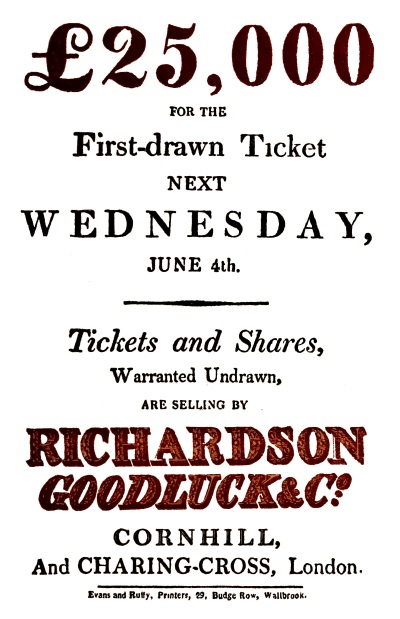
[Pg 325]
The lottery wheels—Anecdotes connected with the lottery—The Glasgow lotteries—Advertising foreign lotteries—“Art Union” Act—Dethier’s “Twelfth Cake Lottery”—Tontines—Raffling—Pious lotteries—Sweet-stuff lotteries for children— Hamburg lotteries
The place where the tickets were manipulated by the managers was afterwards changed from Whitehall to Somerset House, and the accompanying illustration shows the manner of conveying the lottery wheels from Somerset House (or Place, as it was then called) to Cooper’s Hall, in 1808. There were four sledges employed, two carrying the wheels containing the tickets, and the other two the cases for the wheels. They were escorted by a detachment of Life Guards, dismounted, who had to do police duty, there being no police, as we know them, in those days.
Here, too, may be found room for two or three anecdotes re the lottery, which have no appointed place. [Pg 326]
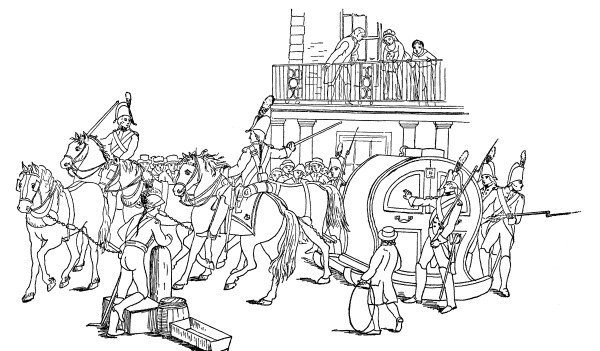
[Pg 327] “Dr. B____, a physician at Lime (Dorset), a few days since, being under pecuniary embarrassment, and his house surrounded by bailiffs, made his escape by a window into a neighbour’s house, from whence he fled to London. The furniture was seized, and the sale actually commenced, when it was stopped by a letter, stating that the doctor, on his arrival in London, found himself the proprietor of the £20,000 prize. We guarantee the truth of this fact” (Times, December 27, 1797).
“The £20,000 prize, drawn on Friday, is divided amongst a number of poor persons: a female servant in Brook Street, Holborn, had a sixteenth; a woman who keeps a fruit-stall in Gray’s Inn Lane, another; a third is possessed by a servant of the Duke of Roxburghe’s; a fourth by a Chelsea carrier of vegetables to Covent Garden; one-eighth belongs to a poor family in Rutlandshire; and the remainder is similarly divided” (Times, March 19, 1798).
“Mansion House. A lady named Free, who had come up from the country to try her fortune in the lottery, came to complain to the Lord Mayor that she had been deprived of her property, the sixteenth [Pg 328] share of a £30,000 prize, by the misconduct of those engaged in conducting the drawing. She stated that she chose the ticket No. 17,092.
“The Lord Mayor.—You had some particular reason, then, for selecting that number?
“The complainant replied it was true, she had: she wished to have a ticket with the number of the year in which she was born; and, finding she could not get that precise number, she took one of 17,000, instead of 1700, as the most fortunate approach. So, indeed, it turned out to be, for she was sitting in the hall when the lottery was drawn, and heard her number distinctly cried out as one of the £30,000 prizes; and, with her own eyes, she distinctly saw the officer stamp it. Nevertheless, another ticket had been returned as the prize.
“The Lord Mayor doubted, from the manner in which the tickets were well known to be drawn, whether the complainant’s anxiety had not made her mistake a similar number for her own.
“The complainant.—Oh no! my lord, it is impossible I can be mistaken, though other people say that I am. I shall not give up my claim on the [Pg 329] word of lottery-office clerks. If there’s any mistake, it is on their part; I trust to my own senses.
“The Lord Mayor observed that there was scarcely any trusting even to the senses on such occasions, and asked her whether she did not almost feel the money in her pockets at the same time she fancied she heard her number announced.
“The complainant assured his lordship that she heard the announcement as calmly as could be expected, and that she by no means fainted away. She certainly made sure of having the property; she sat in the hall, and went out when the other expectants came away.
“Mr. Cope, the marshal, who stated that he was in attendance officially at the drawing, to keep the peace, declared that he heard all the fortunate numbers announced, and he was sorry to be compelled to state his conviction that this, belonging to the lady, was not one of them.
“The Lord Mayor said he was afraid the complainant had deceived herself. He dismissed the application, recommending her to go to the Stamp Office, and apply to the Commissioners, who would do anything, except pay the money, to satisfy her” (Times, November 3, 1826). [Pg 330]
Although lotteries were declared illegal after that of 1826, the good people of Glasgow did not think that it applied to them when municipal improvements were in question, and went into them gaily, until stopped by an Act in 1834 (4 and 5 Geo. IV. c. 37), passed July 25, 1834, the preamble of which states the case thus: “Whereas an Act passed in the First and Second Years of the Reign of His Present Majesty, intituled An Act to amend certain Acts passed in the Reign of his late Majesty, King George the Fourth, for opening a Street from the Cross of Glasgow to Monteith Row: And, whereas Lotteries have been drawn, and advertised to be drawn, under colour of the said Act, called Glasgow Lotteries; And, whereas it is expedient to prohibit the drawing of any further, or other Lottery, after the Lottery announced and advertised to be drawn as a Third and final Glasgow Lottery in July in this year,” etc.—it was enacted that any further addition to the lottery advertised to be drawn in July in that year, or any further continuance of such lotteries, was illegal.
On August 13, 1836, was passed an Act (6 and 7 Geo. IV. c. 67) which [Pg 331] had been found necessary, “to prevent the advertising of Foreign and other illegal lotteries,” and the penalty for advertising them was full costs of suit and a fine of £50, one-half of which was to go to the informer.
The laws respecting lotteries then slumbered until September 5, 1844, when was passed an Act (7 and 8 Vict. c. 109) “to indemnify Persons connected with Art Unions, and others, against certain Penalties.” Certainly, the Art Union of London and similar institutions were clearly lotteries, but as they were for a good purpose, and not for money-making, this short Act was passed whereby art unions and the members thereof, and other persons, were discharged from all suits, etc., to which they might be liable, touching the purchase or distribution of works of art by chance, previous to the periods mentioned in the Act.
The guardians of the law did not go to sleep, as we see by the following lottery for Twelfth Cakes, when, on December 26, 1860, Louis Dethier, a Frenchman, appeared before Mr. Henry, at Bow Street, to answer a summons under the Act (42 Geo. III. c. 119) for keeping an [Pg 332] office at the Hanover Square Rooms for the purpose of carrying on a lottery, “under the name, device, and pretence of a distribution of Twelfth Cakes.”
A police inspector deposed that he went to the Hanover Square Rooms on November 6, and saw the defendant there, with another person and four clerks, who were engaged in selling tickets for the proposed distribution of Twelfth Cakes. On the walls were bills and placards similar to one produced, which was as follows:—
“Dethier’s Second Extraordinary Distribution of Twelfth Cakes.—£10,000 worth of Twelfth Cakes will be drawn for on 10 successive days, £1000 each day, commencing Wednesday, December 26, 1860 (Sunday excepted). 20,000 tickets now on sale for each day’s draw, at 1s. each, can be obtained at the chief office, Hanover Square Rooms, open from 9 a.m. to 7 p.m. The following is a list of prizes for each day’s draw:—1 at £25; 50 at £5; 100 at £2; 250 at £l; 300 at 10s.; 500 at 5s.; total, 1201 prizes, amounting to £1000 for each day. All prizes to be delivered on the following morning after each day’s draw, from 9 to 12 a.m. The successful numbers will be advertised each day in [Pg 333] the morning papers. L. Dethier, son of the late proprietor of the Great Northern Hotel, King’s Cross, and late Cook to the Emperor of Russia, begs to return thanks for the kind patronage he received at the last distribution, during the Exhibition of 1851, which gave such general satisfaction (see the public press of that period), and trusts the nobility and gentry will render him the same patronage as upon that occasion. L. D. having just arrived from the Continent, where he has purchased a large quantity of goods, of the best quality, and the most recherché description, for beautifying this splendid and most magnificent display of Twelfth Cakes, feels assured that this will meet with general approbation. The Hanover Square Rooms will be open (free) for inspection from Wednesday, December 19, 1860, to January 6, 1861. Tickets sent to any part of the United Kingdom on receipt of 13 postage stamps. Post Office Orders made payable to L. Dethier, Old Cavendish Street, W.”
The case against Dethier was clearly proved; but it was ultimately agreed that the lottery should be stopped at once, and that, in the event of this condition being fulfilled, the prosecution should be allowed to drop. [Pg 334]
But the lottery, as already described, was not its only form—take the “Tontine,” for instance. This was a scheme by which an annuity, after a certain rate of interest, is granted to a number of people, divided into classes, according to their respective ages; so that the whole annual fund of each class is regularly divided among the survivors of that class, until at last it falls to one, and, upon the extinction of that life, reverts to the power by which the Tontine was erected. It has a singular name, which is derived from its projector, Lorenzo Tonti, a Neapolitan, who first proposed his scheme in 1653, but did not then succeed in launching it.
This form of lottery is now, I believe, illegal in England, as is also “raffling,” which is dependent on the casting of three dice. It is very old, as Chaucer uses the word “rafles,” and as a gambling transaction. Dryden thus speaks of it (The Mock Astrologer, act iii.)—
“Wild. What is the ladies’ game, Sir?
“Lop. Most commonly they use rafle. That is, to throw in with three dice, till duplets and a chance be thrown; and the highest duplet wins, except you throw in and in, which is called raffle; and that wins all.” [Pg 335]
There is no manner of doubt as to the illegality of raffling, yet it is most prevalent; and at the seaside the evening used not to be complete without a raffle at the Assembly Rooms, or Library, where also you could, for a consideration, have a dip in the “Wheel of Fortune,” which was a lottery pure and simple, as is also every sweepstake, a form of gambling which is most unblushingly and openly indulged in, and which sometimes, as in the case of the Bycullah Sweep, assumes enormous proportions. Nay, piety itself does not disdain the lottery when funds are needed for any purpose. No one sees any harm in a sawdust tub at a bazaar, who would shudder at taking a lottery ticket; and I have heard of such a thing as a pious raffle, on the strict quiet, of the unsold things from a bazaar, or fancy fair, got up for the benefit of some religious purpose.
In Ireland they go still further, and I suppose there are few of us who have not been pestered to take tickets in the religious lotteries which are freely drawn in the “distressful counthry.” There is a great sameness in all the Irish schemes, and it is useful to note the lowness [Pg 336] of the price of the ticket, which brings it within the reach of all, and the bait held out to persons to tout for and sell them. “A complimentary Ticket is presented with each book of Twenty Tickets; and, in Addition, each person purchasing, or selling Two Books (Forty Tickets), will be presented with a Free Ticket for the Special 'All Prize’ Drawing.”—“Every Holder of an 'All Prize’ Ticket is certain to win a Prize.”
In my estimation, these pious lotteries are on a par with, even if they are not worse than, the prize-packets of sweets, a lottery which deludes the very babes; and, though always unfair, gives them a zest for gambling which they might not otherwise obtain. Of these swindles, perhaps the following is the last “up to date”:—
“North London Police Court.—Egidio Fabrizi, an Italian confectioner of Balls Pond-road, Islington, was summoned for keeping premises for the purposes of a lottery not authorized by Act of Parliament. The evidence of the police was that the Defendant sold certain sweet-stuff 'turnovers,’ some of which contained money; and, at the time of the visit of Police-sergeant 35 J, there were fourteen or fifteen lads in the shops, buying the sweets, in the hope—as [Pg 337] admitted—that they might get a prize. The 'turnovers’ were a halfpenny each, and one lad, who purchased two, got a penny in one, and nothing in the other. A boy named James Dewis, who made the purchase, said he and others frequently bought the sweets, in the hope of getting prizes.—By Mr. Lushington (Magistrate): There was not a halfpenny-worth of sweet-stuff in the turnovers—the real value was about four for a halfpenny; but the value was made up when they got pence.—The Defendant (to whom the evidence was interpreted) said he was not aware he was acting illegally. He bought the turnovers from Barrett’s, and they told him how to sell them. Other shopkeepers in the same neighbourhood sold the same sort of sweets.—Mr. Lushington convicted the Defendant as a rogue and a vagabond, and ordered him to pay a fine of twenty shillings, or fourteen days in default” (Standard, April 24, 1893).
But, as if we had not enough of our own sins to answer for, the foreigner must needs try to dip his hand in the rich “Englander’s” pocket, and see if some of John Bull’s fabled wealth cannot be made [Pg 338] subservient to him. All sorts of baits have been tried to allure him; sometimes it would be an ancient castle, or schloss, that was dangled before his eyes; sometimes it would be like a swindle I have before me, referring to German Municipal loans.
First of all comes, by post, the scheme of the lottery.
Some silly mortal swallows the bait, send 18s., and receives in return a letter of regret, and a ticket for a lottery in which the man was never asked to join—leaving a balance in hand of 10s., which, one might safely swear, would never be forthcoming if applied for.
To such proportions did this swindle grow, that the Post Office authorities had to step in and protect those silly sheep, who were offering their fleeces to the shearer, by refusing to cash the money orders; and it must have been effective, as I have not heard of any foreign lotteries lately.
[Pg 339]
The “Missing Word Competition”: its rise and fall.
Lotteries being universally known to be illegal in England and Scotland, no attempt has been made to revive them in their old form, since their illegality has been definitely pronounced; but very many ways of evasion of the law have been practised, sometimes with much temporary success. Sometimes they developed into downright swindles, and then they cured themselves; and this has been the fate of most of the so-called “competitions.” But the greatest of these modern-times lotteries, and one which permeated the land throughout its length and breadth, was the “Missing Word Competition” which was so rife in 1892.
It was eagerly taken up by several weekly periodicals, but, undoubtedly, the favourite competition was in Pearson’s Weekly. For some time the public did not “catch on” to the scheme, and for the [Pg 340] first nine months their interest in it was comparatively languid, the sum subscribed by the one shilling entrance fees only averaging about £500 weekly; but, during the next three months (fifty-three competitions being issued in all), the competition waxed fierce, and when it was stopped, the proprietor of the magazine was in receipt, for the competition in the number for December 10, 1892, of nearly £24,000, which represented nearly half a million entries. No one doubts but that these amounts were fairly divided amongst the winners, the proprietor of the paper recouping himself by the enormously increased circulation of his periodical. In the case of Pearson’s Weekly, its normal circulation was about 350,000 a week; at the end of 1892 it stood at 1,050,000 copies. Nor was this all. The correct solution of the puzzle was not at once inserted in Pearson’s Weekly. Oh dear, no! if you were impatient to know your fate, you had to buy next Thursday’s Society News, which thus got a fictitious circulation, to the great benefit of the conjoint proprietor’s pocket. And it became of such importance, that as much as £350 a week was paid in salaries to persons employed in dealing in various ways with the selections sent in. [Pg 341]
It was, for a time, a veritable furore, which seized in its grip all sorts and conditions of folk, the old as well as the young, and formed such a topic of conversation as to be absolutely sickening. The modus operandi is best described by the paper itself. Let us take an extract from Pearson’s Weekly of December 10, 1892, the competition therein contained being the one over which there was much litigation.
“The correct word in this competition will be found in the number of Society News, which is on sale at all newsagents first thing on the morning of Thursday, December 15. Full particulars will appear, as usual, in Pearson’s Weekly of the following Saturday.
“Missing Word Competition. No. 53.
“On the third column of page 331 is a paragraph about an experiment with camphor. The last word is omitted. Readers who wish to enter this competition must cut out the coupon below, fill in this word, together with their names and addresses, and send it with a postal order for one shilling, to reach us, at latest, by first post on Monday, December 12, the envelope marked 'Word.’ [Pg 342]
“The correct word is in the hands of Mr. H. S. Linley, chartered accountant, 124, Chancery Lane, London, W.C., enclosed in an envelope, sealed with our seal. His statement with regard to it will appear with the result of the competition in the issue for the week after next. The whole of the money received in entrance fees will be divided amongst those competitors who fill in the word correctly. It is hoped that competitions will be posted to Temple Chambers, London, E.C., as early in the week as possible. Members of the same family may compete, if they like, and any one may send as many attempts as he or she chooses, provided that each is accompanied by a separate coupon and a sufficient remittance. All postal orders must be made payable to Pearson’s Weekly. Coupons also appear in Society News and the Companion, which entitle purchasers to enter for Pearson’s Weekly Missing Word Competition, on payment of the usual shilling.”
In the place indicated (third column of p. 301) we find the following paragraph, at the end of which the “missing word” has to be interpolated: “Here is a little experiment which is well worth showing [Pg 343] to your friends. Procure a bit of ordinary camphor, and from it break off tiny pieces. Drop these upon the surface of some pure water, contained in any kind of vessel, and they will immediately begin to rotate and move about, sometimes continuing to do this for several hours. The water must be quite clean; for if a drop of oil, or any grease, is in it, the experiment will not work. But, provided that nothing of this sort gets in, the little pieces of camphor will twirl about in a manner that is extremely ——.” No fewer than 472,574 coupons were sent in for this competition, accompanied by remittances to the value of £23,628 14s.
No very large sums were made at these competitions (except on one occasion). Sometimes the successful competitor did not realize much more than a sovereign; at other times, judging from the experience of one gentleman, they might get £8 9s. 3d., as in the “awkward” competition, or £13 4s. 6d., as in the following, when the missing word was “evolved”:—
“Most of our readers will have noticed the fortune-telling automatic machine in the railway stations and at street corners, and will remember that the face of it is covered with various coloured [Pg 344] triangles. It is, in short, a handy roulette table, and certain people have taken to dropping a penny in the slot, and betting upon what coloured triangle the finger of the gipsy girl will rest. It would seem as though a new form of gambling had been ——.”
Although the sums won were not large, in comparison with the lotteries of old, yet the price of the ticket—one shilling only—was not ruinous, and, as there were no limits to the number of coupons, any one might send as many as he or she pleased, and if you plunged a bit, and were lucky, the prize represented a sum well worth having. This was the plan adopted by one person (Mr. Andrew Tuer), who won the largest sum on record; but it must be confessed that, previous to this stroke of luck, he was from £150 to £200 “to the bad.”
The competition was in Pearson’s Weekly for December 3, 1892, and finished up with a paragraph which dealt with the capacity of a brick for absorbing water, and engendering consequences which, if undetected, might be ——. The correct missing word was “awkward,” on which the record-breaker had plunged seventy-five times, and as each correct answer was entitled to a prize of £8 9s. 3d., he [Pg 345] netted a total of £634 13s. 9d.—not altogether an unmixed blessing, as he states in a letter to the Star of December 21, 1892. “As soon as my success became known, letters poured in from everywhere—letters of abuse, letters from persons wanting to beg and borrow, and foolish letters—all from women these—asking me for the 'tip’ for next week.”
While these competitions were in their infancy, no one heeded them much; but when they spread as a great social cancer—when every one was getting tainted with the fever of speculation, and the principal streets of London were literally strewn with Pearson’s Weekly, not bought to read, but to tear out the coupon page and then throw the rest away—it was felt necessary that something should be done in the matter. At first there was a little difficulty, arising not only in the glorious uncertainty of the law on the matter, but from the fact that most of the periodicals publishing these competitions were printed and published within the precincts of the city of London, and the patres conscripti hesitated to commence litigation of which no man could foresee the issue. [Pg 346]
At last one was found outside the sacred pale, and its prosecution was understood to be a test case; and on December 13, 1892, at Bow Street Police Court, before Sir John Bridge, the chief magistrate, Mr. Henry Reichardt, the proprietor, publisher, and editor of Pick-Me-Up, and Messrs. Wertheimer and Lea, the printers, appeared to answer six summonses for alleged infringements of the Lottery Acts. The summonses were: (a) for publishing in a certain paper called Pick-Me-Up a scheme for the sale of chances and shares in a lottery known as “The Missing Word Competition,” contrary to the statute 4 Geo. IV. c. 60, sec. 41; (b) for selling certain chances in a lottery known as the “Pick-Me-Up Missing Word Competition,” contrary to the same Act; (c) for publishing in the said paper a scheme for certain chances in a lottery known as “The Weekly Art Competition,” contrary to the same Act; (d) for the sale of certain chances in such lottery; (e) for keeping open at No. 11, Southampton Buildings, a lottery, namely, drawing by certain lots and coupons in a lottery known as “The Missing Word Competition” of the same paper, contrary to 42 Geo. III. c. 119, sec. 2; and [Pg 347] (f) for suffering to be played and drawn, by means of coupons, a lottery called “The Weekly Art Competition,” contrary to the same statute. In this latter competition it was requisite to send in lists of what the competitors thought were the best pictures in a particular issue of the paper in question, with, of course, the inevitable shilling.
The proceedings were taken at the instance of the public prosecutor. The offence was proved, and the defence was that these competitions were no lotteries. The magistrate, however, thought differently, and, in giving his decision, said that if the scheme was one of risking money, or gaining it by chance, then, undoubtedly, it was a lottery. On the other hand, if it was carried out by skill and judgment, it would not be one. The question whether it was chance or judgment must depend upon a proper construction of the facts of the case. With reference to the missing word competition, a good deal was to be said for the contention as to the question of chance or judgment depending on the selection of a particular word, or only of a proper word, which latter would require skill. The defendants did not pretend to say that they [Pg 348] called for the selection of the proper word, or the word which would be suitable to complete the sentence. Therefore, on that ground, he thought that this case, as regarded the missing word competition, came within the scope of the Act. With regard to the “Art Competition” the case appeared to be slightly different, as it might be said that the competitors might have to exercise judgment in deciding whether they were artistic or not; but, looking at the whole case, it seemed to him that persons were induced to stake their money upon chance, and he must therefore convict, but should only impose the nominal penalty of a shilling fine upon each summons. An appeal against this decision was talked of, but never acted on.
Now, then, dismay fell upon the other culprits. Mr. Pearson discontinued his competitions, and the money he had in hand was impounded, and paid into the Bank of England for safe custody. Then arose a curious state of things. Of course Mr. Pearson could not claim the money—he had no right to it—nor could it be paid to the winners, because it had been decided to be illegal. No one could keep it, because it was not theirs, nor could it be confiscated, or given, as some suggested, to hospitals and charities. The only remedy seemed to be [Pg 349] for some of the prize-winners to enter suits in Chancery against Mr. Pearson for the payment of what they considered their due; and this was done in two instances, which were tried on February 8, 1893, in the High Court of Justice, Chancery Division, before Mr. Justice Stirling, who, at the end of a long and elaborate summing up, thus delivered himself:—
“As regards the defendant Pearson, no imputation is, or can be, made on his good faith and honesty. He appears to have carried through a large number of competitions without any interference, and the abrupt termination of the competition in question was brought about by the criminal proceedings against another person, to which I have already referred. He is in some difficulty, through having destroyed the coupons of the unsuccessful competitors, but no claim is now made to the fund by any person except those represented by the plaintiff, and the defendant Hearn. Under these circumstances, it would seem the best and simpler course that the fund should be returned to the defendant Pearson, who will then be able to defend himself, by means of it, [Pg 350] against any legal claims, and to dispose of the surplus in such way as he may deem himself, in honour, bound to apply it. If, however, this course should not commend itself to him, I am willing, in this particular case, and without establishing a precedent, that the fund should remain in Court, whereby there will accrue a benefit, in the first place, to the legal profession, and, ultimately, I hope, to the public, in whose favour it may be fairly expected that there will result, at some date more or less remote, an extinguishment of some portion of the National Debt.”
The finale to this lottery took place on March 27, 1893, when the case of “Matthews v. Pearson” came before Mr. Justice Stirling in Chambers. It was ordered, by consent, that the sum of £3566 4s., paid into Court in this action, being the amount contributed to the missing word competition, No. 7, in Pearson’s Society News, should be paid out to the defendant Pearson, on his undertaking to pay the costs of all parties to the action, as between solicitor and client. It is understood that Mr. Pearson will pursue the same course with reference to this fund as in the previous cases, viz. will pay the prize-winners the amount due to them, less a deduction for costs. [Pg 351]
It is said that Mr. Pearson has honourably fulfilled his pledge to the public.
And now to wind up with an anecdote.
It was where two roads bisected, and a matter-of-fact policeman was on the kerb, keeping watch on the four ways.
Then there appeared upon the scene a “Salvation Army Man,” who, after a little time, gathered an audience of two or three girls and boys. To them he addressed the message of salvation, inviting the juveniles to “come and be washed,” etc.; and, at the end of this exordium, he blossomed forth emphatically, emphasizing each paragraph with one fist in the other palm. “He spake the Word, and Peter spoke it” (pause). “And Paul spoke it” (pause), “Have you read the Word?” (pause). “Do you know the Word?” (long pause).
And then came the inevitable policeman who, ungently pushing the preacher on the shoulder, said gruffly, “You get away, young man; you know it ain’t right. We can’t have no 'Missin’ Word Competitions’ 'ere. You know they’re illegal, so just stow it.” [Pg 353]
No Luck!
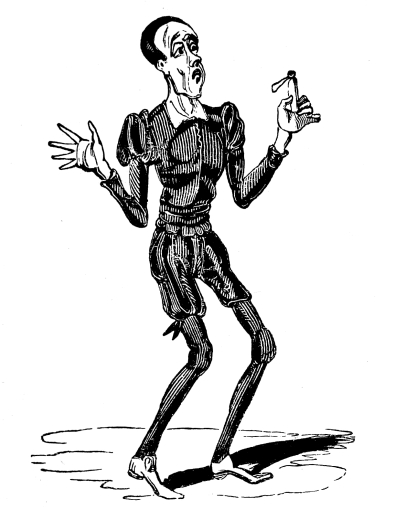
£10,000 Prize
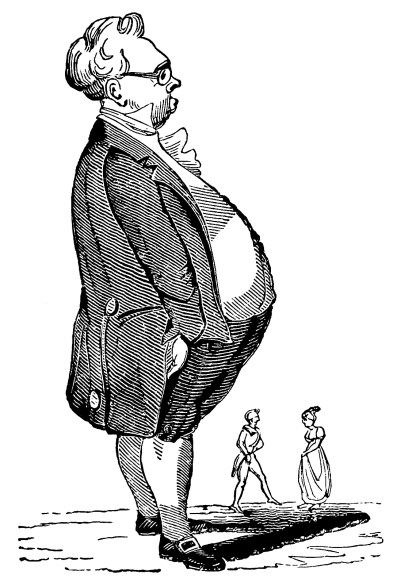
“My dancing days are over”
Footnotes:
[1] Crowe and Cavalcaselle, Early Flemish Painters (London, 1857), p. 68; Messager des Sciences et des Arts (London, 1884), p. 51; and M. Gilliodt’s dissertation in La Flandre (Bruges, 1867).
[2] All the following lots are abbreviated.
[3] This, however, was not acted on, for in the Domestic State Papers in the Rolls Office is one dated April 30, 1569, endorsed, “I. Aldaye to Cecill. Is a prisoner in the Counter for debt. Thought he should have been protected under the Proclamation for the Lottery, but it was made a jest of.”
[4] The gold coin so called.
[5] A small merchant vessel.
[6] When Queen Elizabeth visited Cowdray, in August, 1591, whilst walking in the garden, a pseudo-angler met her, and made a long speech, in the course of which he said, “Madame, it is an olde saying, 'There is no fishing to the sea, nor service to the King;’ but it holdes when the sea is calme, and the King vertuous.”
[7] Used instead of a veil when in the open air.
[8] Staylaces.
[9] A lady’s head-dress.
[10] To wrap round the head or bosom.
[11] A small muff.
[12] A pin-cushion.
[13] Davison’s “Poems.” London, 1621.
[14] “The Arraignment, Trial, and Condemnation of Squire Lottery, alias Royal Oak Lottery.” London, 1699.
[15] Ed. 1864, vol. ii. p. 706.
[16] Shooting the arches of London Bridge at high tide was always a dangerous experiment.
[17] Pactor—a dealer, maker of bargains.
[18] A large iron foundry and engineering works at Larbert, co. Stirling, principally employed in founding ordnance. Carronades were first made here.
[19] The earliest lottery ticket I have seen, is in the collection of Miss Sophia Banks, sister of the famous Sir Joseph (Brit. Mus. 1890, e). It represents an eighth share in the lottery of 1775.
[20] Bish’s price in December, 1800, for a ticket in this lottery was £16 18s., and he says, “Tickets and Shares will rise gradually, as the Drawing approaches.”
[21] “In the Lottery which drew this time last year, every Ticket was sold before the third day of Drawing, notwithstanding they were as high as £22 before the Drawing began.”
[22] A slang term for money.
[23] A slang term for money.
[24] The present Lottery contains only half the usual proportion, viz. Not two Blanks to a Prize.
[25] Secretary or head-cashier to the Bank of England.
[26] “In the year 1704 a bill was brought into the House of Commons against occasional conformity; and, in order to make it pass through the House of Lords, it was proposed to tack it to a money bill. This occasioned warm debates, and at length it was put to the vote, when 134 were for tacking; but a large majority being against it, the motion was overruled, and the bill miscarried.
[27] Rev. xii. 18.
[28] Actuated.
[29] “The Frauds of London,” by Richard King. London, 1770? 12mo.
[30] “Chronicles and Characters of the Stock Exchange,” by John Francis. London, 1855.
[31] “The Lottery Display’d, &c.,” Lond., 1771.
Transcriber’s Notes:
The cover image was created by the transcriber, and is in the public domain.
Deprecated spellings or ancient words were not corrected.
The illustrations have been moved so that they do not break up paragraphs and so that they are next to the text they illustrate.
Typographical and punctuation errors have been silently corrected.