The Project Gutenberg eBook of Condensation of Determinants

This eBook is for the use of anyone anywhere in the United States and most other parts of the world at no cost and with almost no restrictions whatsoever. You may copy it, give it away or re-use it under the terms of the Project Gutenberg License included with this eBook or online at www.gutenberg.org. If you are not located in the United States, you will have to check the laws of the country where you are located before using this eBook.

Title: Condensation of Determinants

Author: Lewis Carroll


Release date: September 8, 2011 [eBook #37354]
Most recently updated: September 4, 2026

Language: English

Other information and formats: www.gutenberg.org/ebooks/37354

*** START OF THE PROJECT GUTENBERG EBOOK CONDENSATION OF DETERMINANTS ***
If it be proposed to solve a set of n simultaneous linear equations, by the method of determinants, it is necessary to compute the arithmetical values of one or more determinants.

PROCEEDINGS OF THE ROYAL SOCIETY OF LONDON.


From January 11, 1866, to May 23, 1867, inclusive.


VOL. XV.


LONDON:
PRINTED BY TAYLOR AND FRANCIS,
RED LION COURT, FLEET STREET.
MDCCCLXVII.

[Pg 1]

IV. “Condensation of Determinants, Being a New and Brief Method for Computing their Arithmetical Values.”


By the
Rev. C. L. Dodgson, M.A.,
Student of Christ Church, Oxford.


Communicated by the Rev. Bartholomew Price, M.A., F.R.S. Received May 15, 1866.

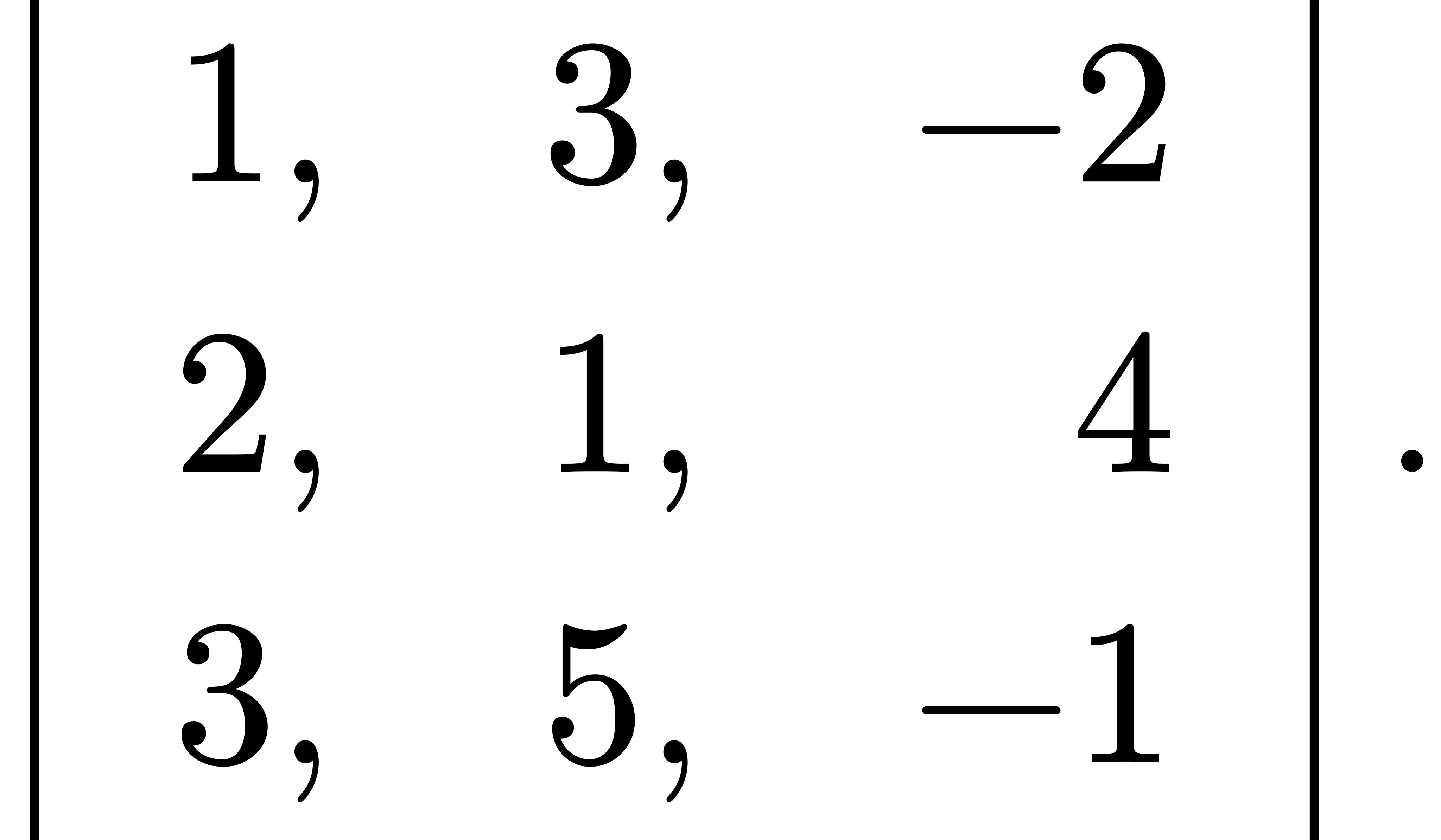
If it be proposed to solve a set of n simultaneous linear equations, not being all homogeneous, involving n unknowns, or to test their compatibility when all are homogeneous, by the method of determinants, in these, as well as in other cases of common occurrence, it is necessary to compute the arithmetical values of one or more determinants—such, for example, as Start 3 By 3 Determinant 1st Row 1st Column 1 comma 2nd Column 3 comma 3rd Column negative 2 2nd Row 1st Column 2 comma 2nd Column 1 comma 3rd Column 4 3rd Row 1st Column 3 comma 2nd Column 5 comma 3rd Column negative 1 EndDeterminant period

Now the only method, so far as I am aware, that has been hitherto employed for such a purpose, is that of multiplying each term of the first row or column by the determinant of its complemental minor, and affecting the products with the signs plus and minus alternately, the determinants required in the process being, in their turn, broken up in the same manner until determinants are finally arrived at sufficiently small for mental computation.
This process, in the above instance, would run thus:— StartLayout 1st Row  Start 3 By 3 Determinant 1st Row 1st Column 1 comma 2nd Column 3 comma 3rd Column negative 2 2nd Row 1st Column 2 comma 2nd Column 1 comma 3rd Column 4 3rd Row 1st Column 3 comma 2nd Column 5 comma 3rd Column negative 1 EndDeterminant equals 1 times Start 2 By 2 Determinant 1st Row 1st Column 1 comma 2nd Column 4 2nd Row 1st Column 5 comma 2nd Column negative 1 EndDeterminant minus 2 times Start 2 By 2 Determinant 1st Row 1st Column 3 comma 2nd Column negative 2 2nd Row 1st Column 5 comma 2nd Column negative 1 EndDeterminant plus 3 times Start 2 By 2 Determinant 1st Row 1st Column 3 comma 2nd Column negative 2 2nd Row 1st Column 1 comma 2nd Column 4 EndDeterminant 2nd Row  equals negative 21 minus 14 plus 42 equals 7 period EndLayout

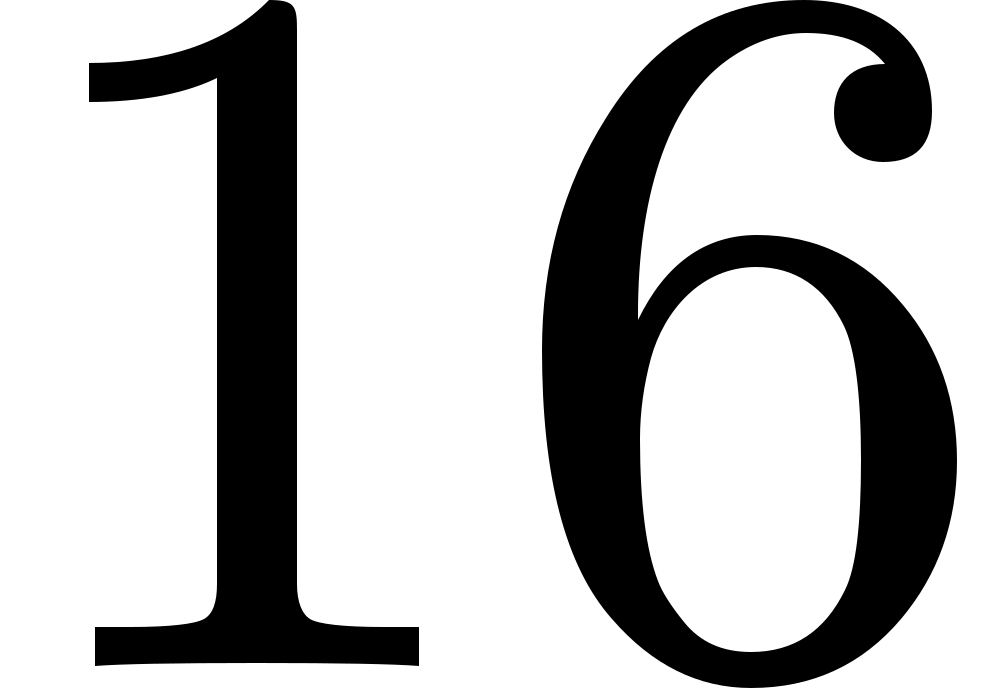
But such a process, when the block consists of 16, 25, or more terms, is so tedious that the old method of elimination is much to be preferred for solving simultaneous equations; so that the new method, excepting for equations containing 2 or 3 unknowns, is practically useless.

The new method of computation, which I now proceed to explain, and for which “Condensation” appears to be an appropriate name, will be found, I believe, to be far shorter and simpler than any hitherto employed.

In the following remarks I shall use the word “Block” to denote any number of terms arranged in rows and columns, and “interior of a block” to denote the block which remains when the first and last rows and columns are erased.

The process of “Condensation” is exhibited in the following rules, in which the given block is supposed to consist of n rows and n columns:—

(1) Arrange the given block, if necessary, so that no ciphers occur in its interior. This may be done either by transposing rows or columns, or by adding to certain rows the several terms of other rows multiplied by certain multipliers.

[Pg 2]

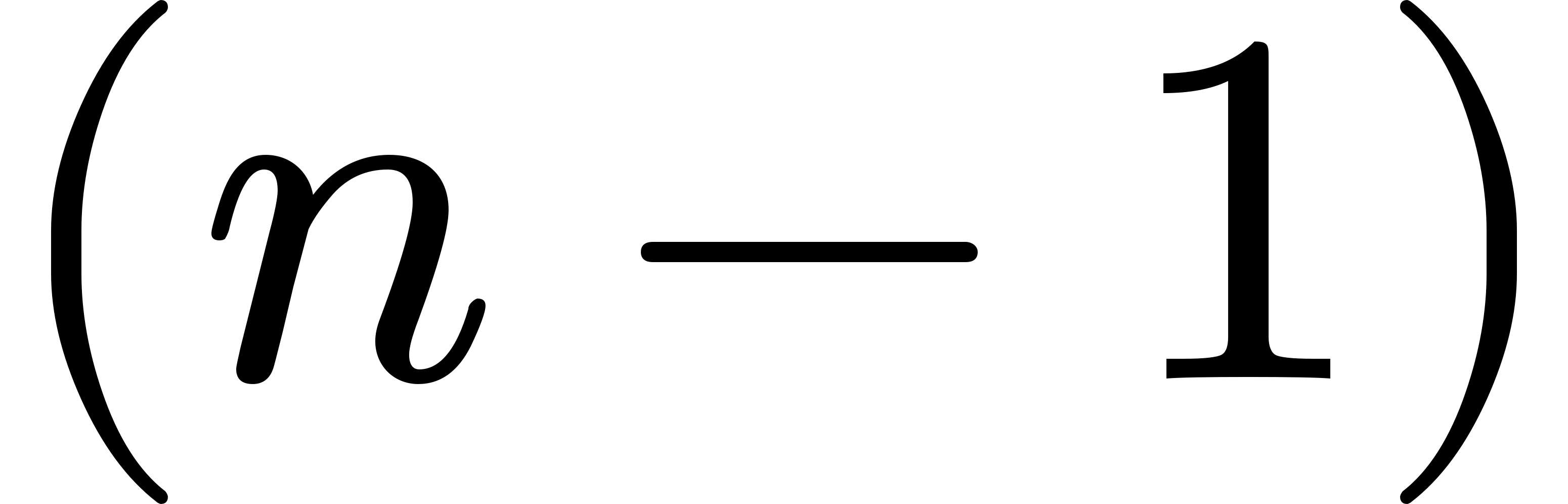
(2) Compute the determinant of every minor consisting of four adjacent terms. These values will constitute a second block, consisting of left parenthesis n minus 1 right parenthesis rows and left parenthesis n minus 1 right parenthesis columns.
(3) Condense this second block in the same manner, dividing each term, when found, by the corresponding term in the interior of the first block.

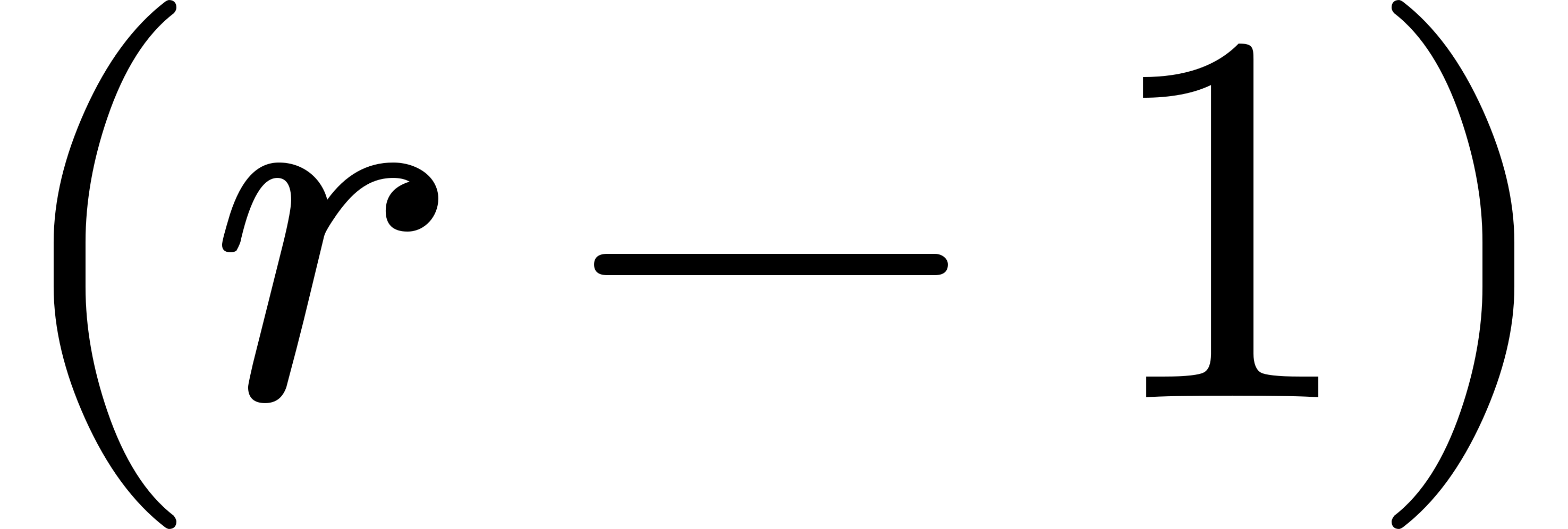
(4) Repeat this process as often as may be necessary (observing that in condensing any block of the series, the rth for example, the terms so found must be divided by the corresponding terms in the interior of the left parenthesis r minus 1 right parenthesisth block), until the block is condensed to a single term, which will be the required value.

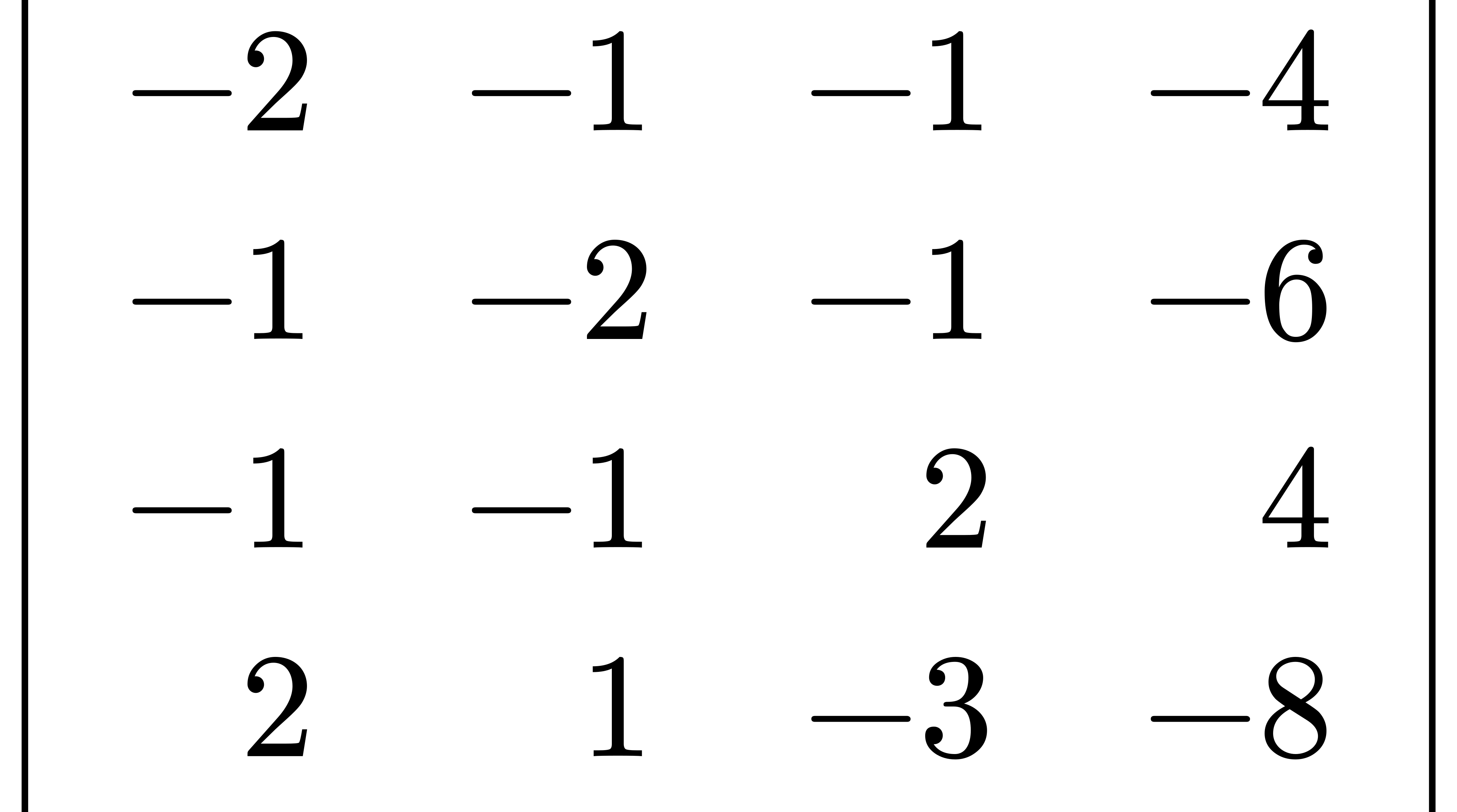
As an instance of the foregoing rules, let us take the block Start 4 By 4 Determinant 1st Row 1st Column negative 2 2nd Column negative 1 3rd Column negative 1 4th Column negative 4 2nd Row 1st Column negative 1 2nd Column negative 2 3rd Column negative 1 4th Column negative 6 3rd Row 1st Column negative 1 2nd Column negative 1 3rd Column 2 4th Column 4 4th Row 1st Column 2 2nd Column 1 3rd Column negative 3 4th Column negative 8 EndDeterminant period
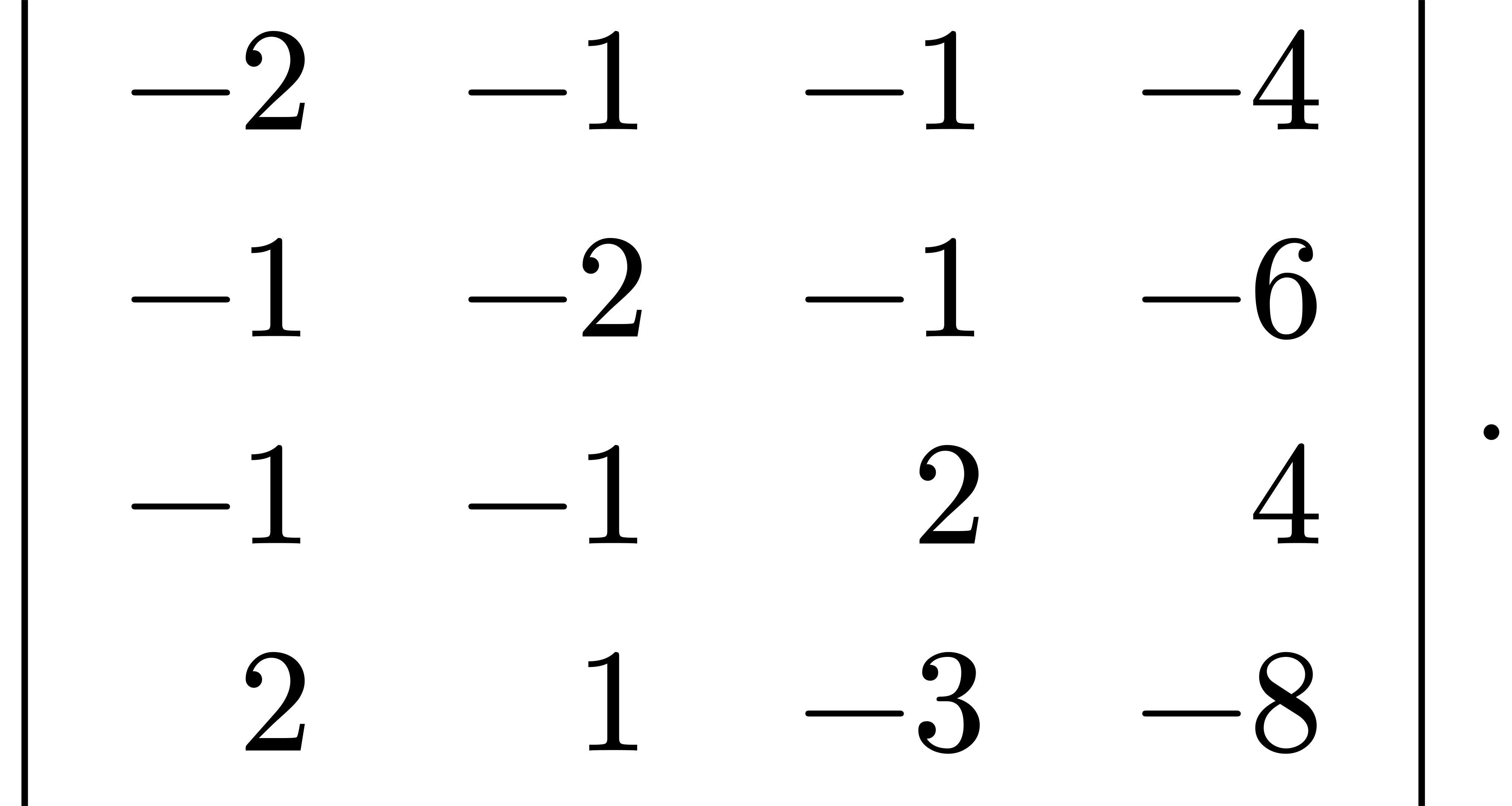
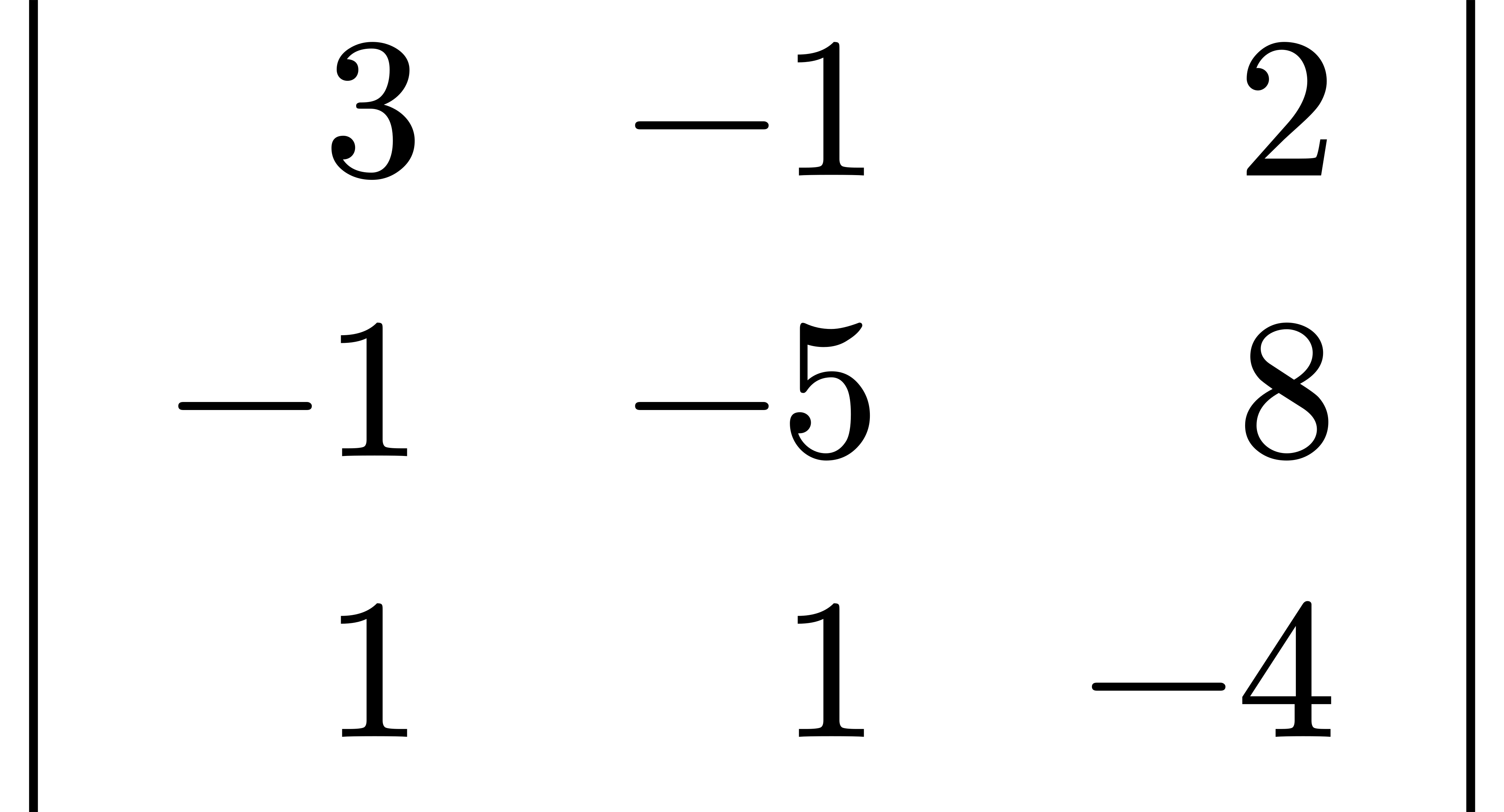
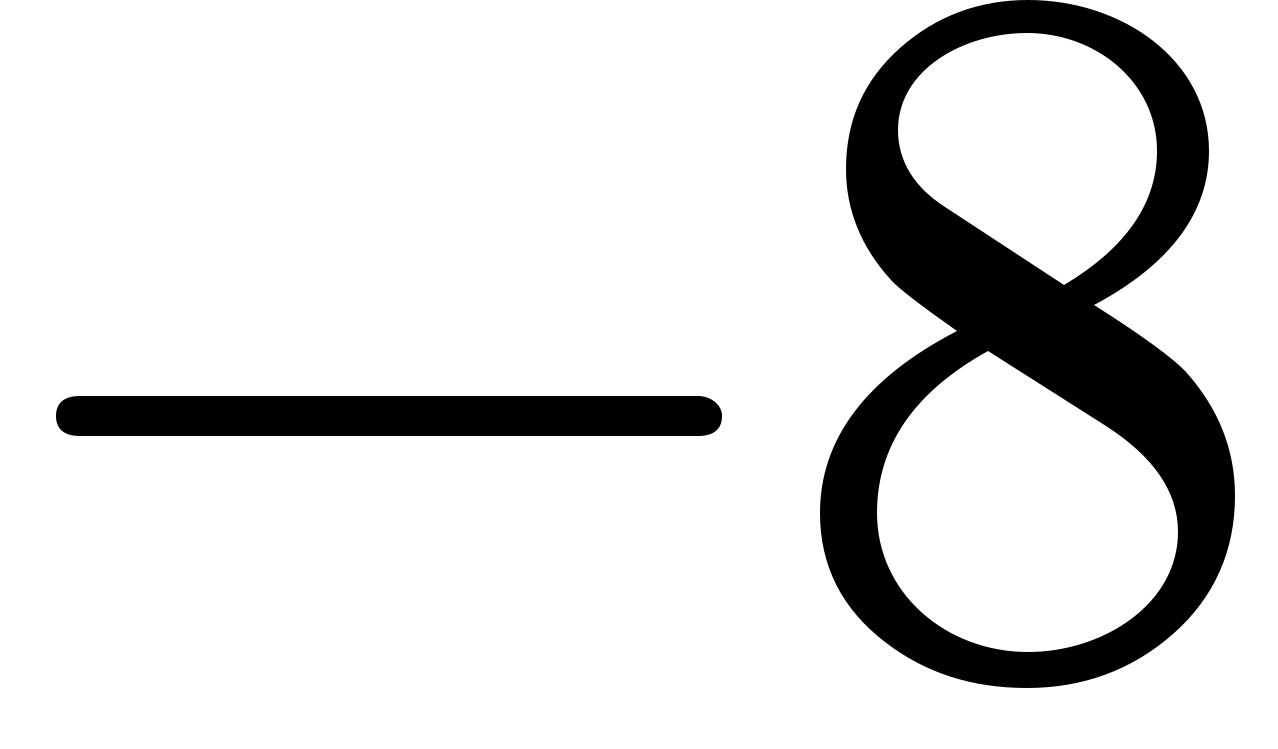
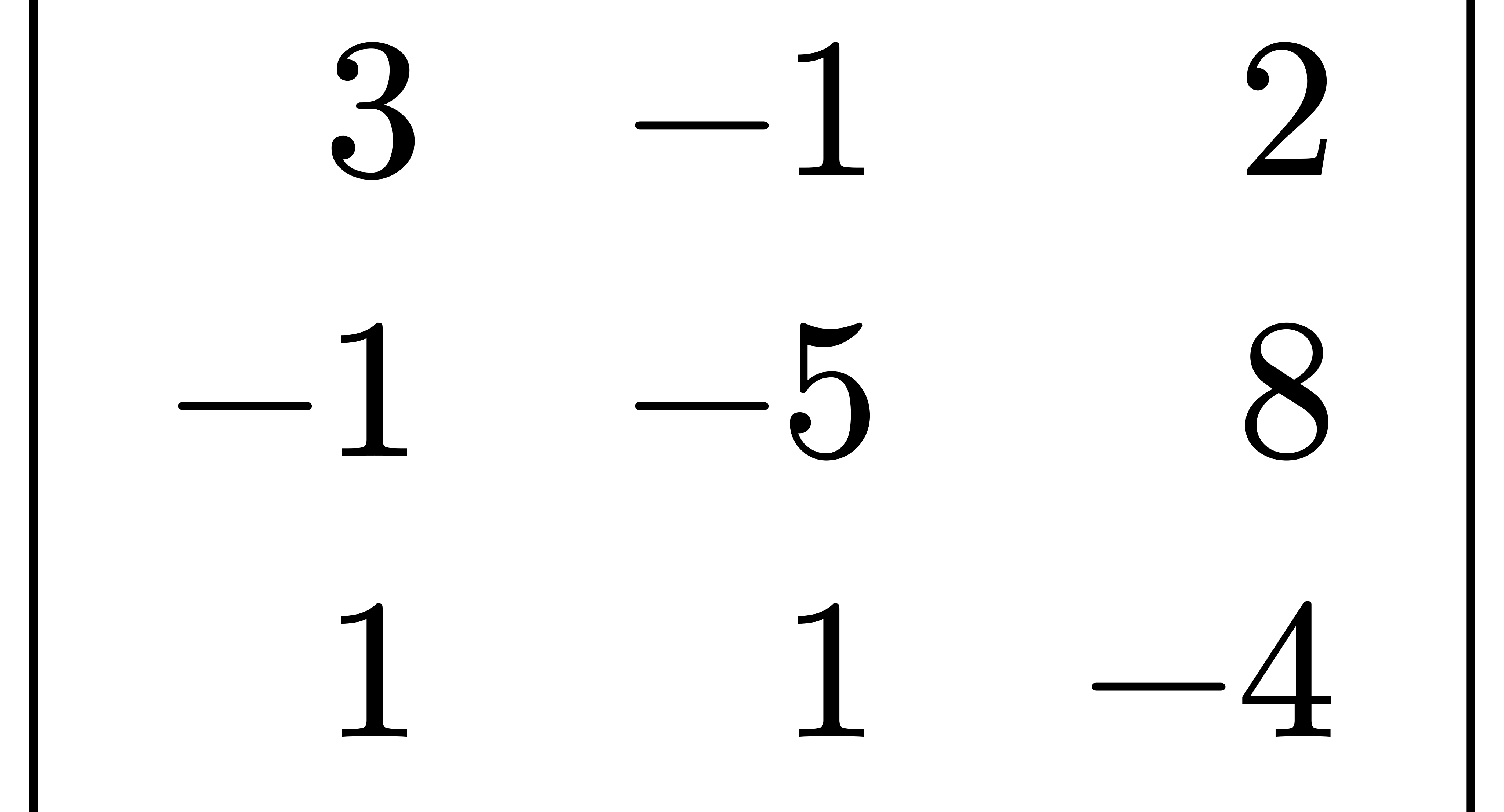
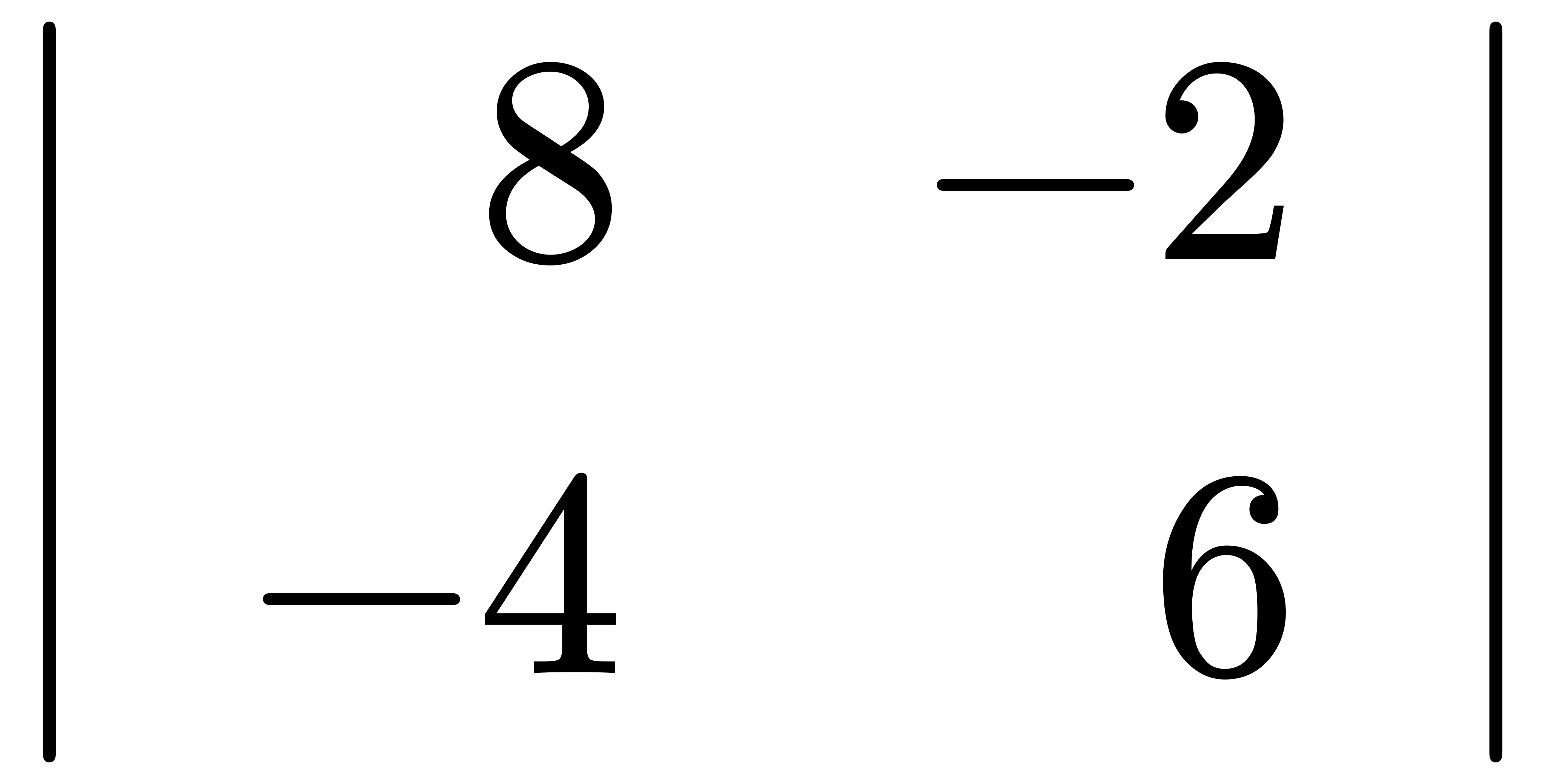
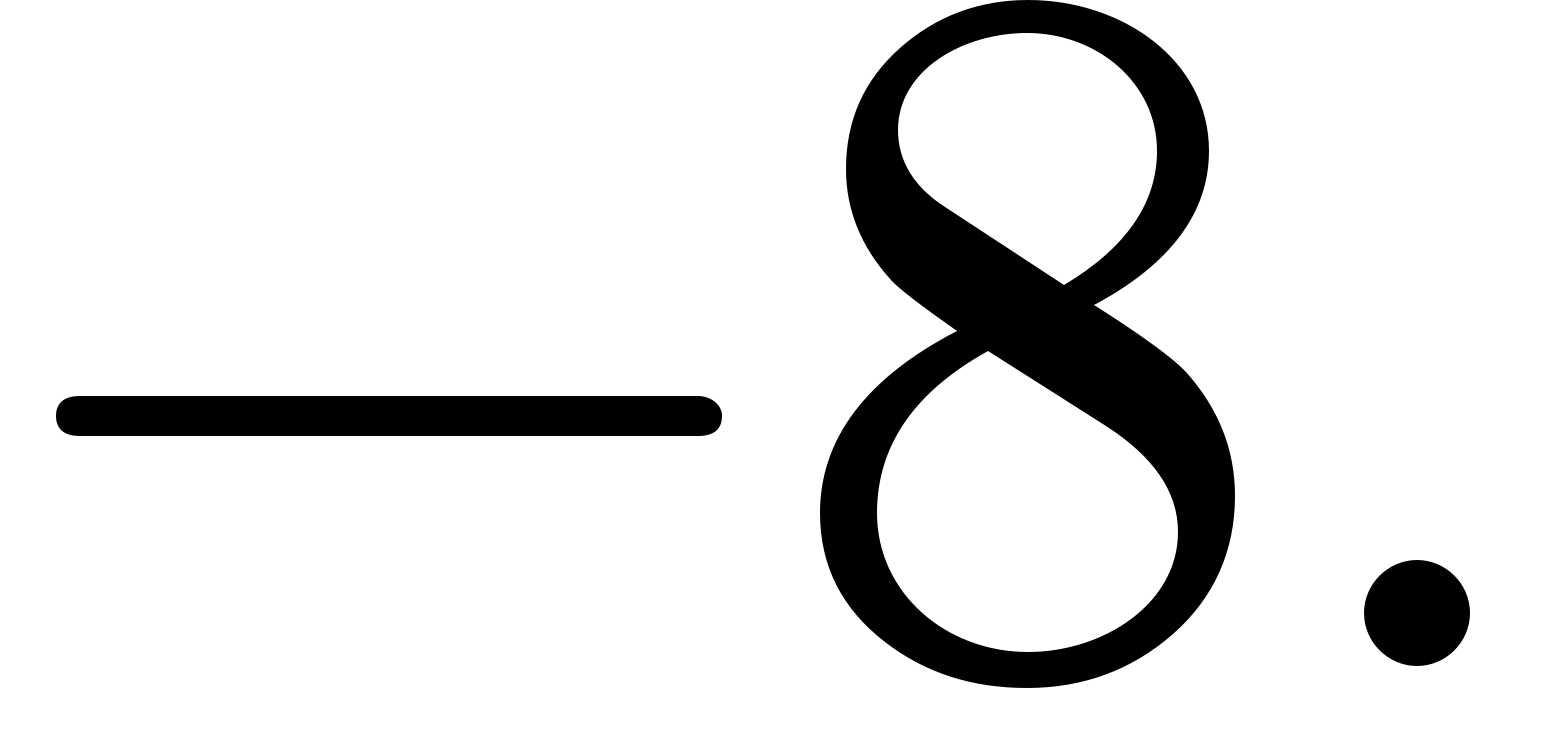
By rule (2) this is condensed into Start 3 By 3 Determinant 1st Row 1st Column 3 2nd Column negative 1 3rd Column 2 2nd Row 1st Column negative 1 2nd Column negative 5 3rd Column 8 3rd Row 1st Column 1 2nd Column 1 3rd Column negative 4 EndDeterminant; this, again, by rule (3), is condensed into Start 2 By 2 Determinant 1st Row 1st Column 8 2nd Column negative 2 2nd Row 1st Column negative 4 2nd Column 6 EndDeterminant; and this, by rule (4), into negative 8, which is the required value.
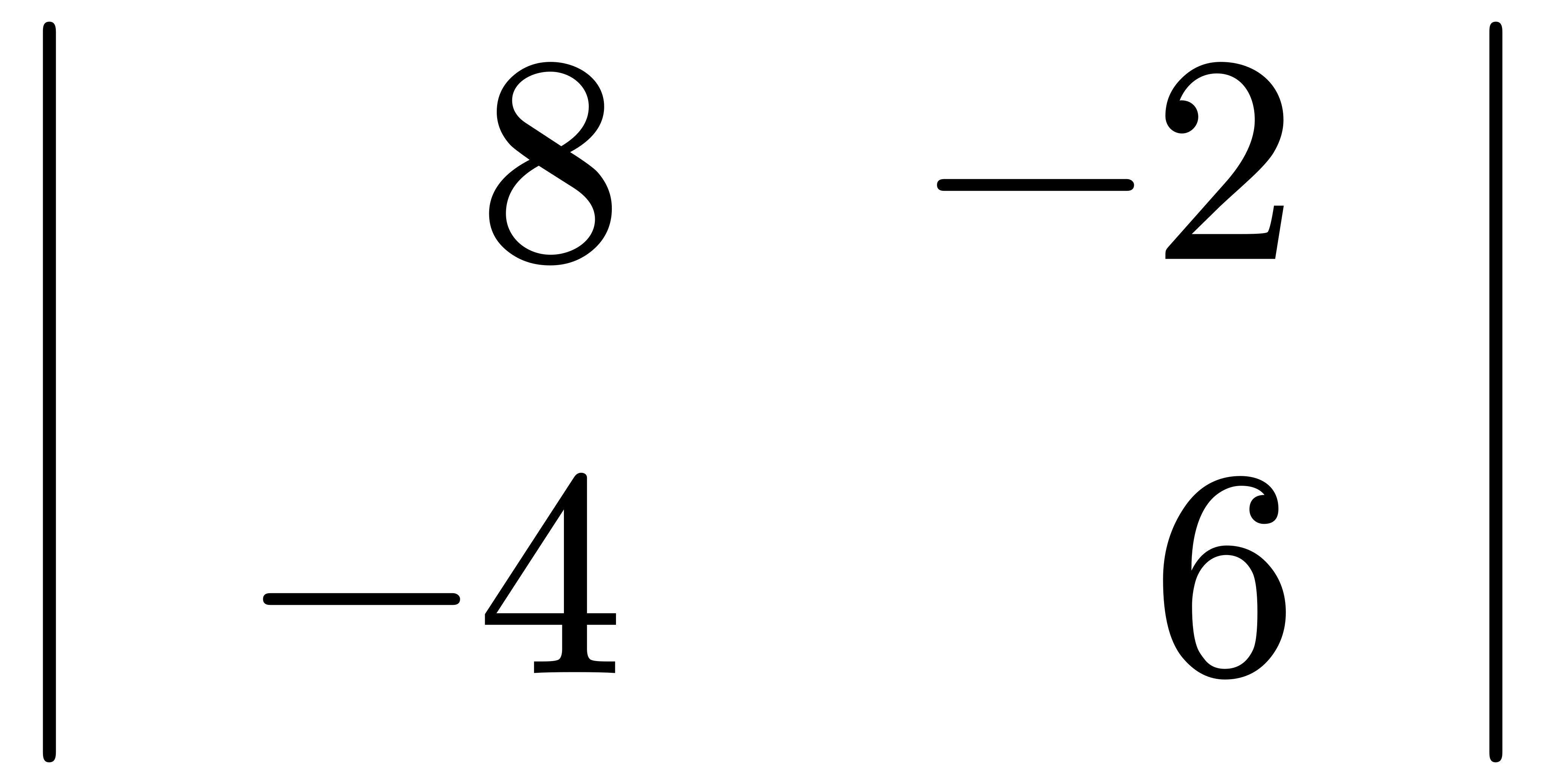
The simplest method of working this rule appears to be to arrange the series of blocks one under another, as here exhibited; it will then be found very easy to pick out the divisors required in rules (3) and (4). Start 4 By 4 Determinant 1st Row 1st Column negative 2 2nd Column negative 1 3rd Column negative 1 4th Column negative 4 2nd Row 1st Column negative 1 2nd Column negative 2 3rd Column negative 1 4th Column negative 6 3rd Row 1st Column negative 1 2nd Column negative 1 3rd Column 2 4th Column 4 4th Row 1st Column 2 2nd Column 1 3rd Column negative 3 4th Column negative 8 EndDeterminant Start 3 By 3 Determinant 1st Row 1st Column 3 2nd Column negative 1 3rd Column 2 2nd Row 1st Column negative 1 2nd Column negative 5 3rd Column 8 3rd Row 1st Column 1 2nd Column 1 3rd Column negative 4 EndDeterminant Start 2 By 2 Determinant 1st Row 1st Column 8 2nd Column negative 2 2nd Row 1st Column negative 4 2nd Column 6 EndDeterminant negative 8 period
This process cannot be continued when ciphers occur in the interior of any one of the blocks, since infinite values would be introduced by employing them as divisors. When they occur in the given block itself, it may be rearranged as has been already mentioned; but this cannot be done when they occur in any one of the derived blocks; in such a case the given block must be rearranged as circumstances require, and the operation commenced anew.

The best way of doing this is as follows:—

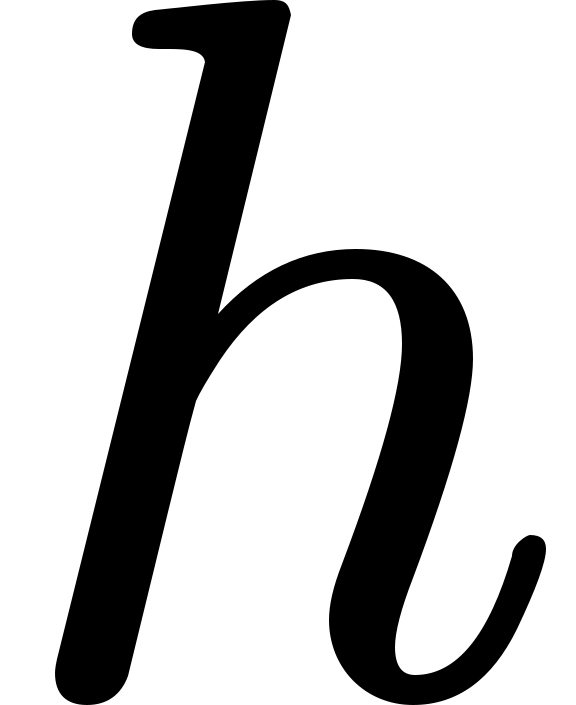
Suppose a cipher to occur in the hth row and kth column of one of the derived blocks (reckoning[Pg 3] both row and column from the nearest corner of the block); find the term in the hth row and kth column of the given block (reckoning from the corresponding corner), and transpose rows or columns cyclically until it is left in an outside row or column. When the necessary alterations have been made in the derived blocks, it will be found that the cipher now occurs in an outside row or column, and therefore need no longer be used as a divisor.
The advantage of cyclical transposition is, that most of the terms in the new blocks will have been computed already, and need only be copied; in no case will it be necessary to compute more than one new row or column for each block of the series.

In the following instance it will be seen that in the first series of blocks a cipher occurs in the interior of the third. We therefore abandon the process at that point and begin again, rearranging the given block by transferring the top row to the bottom; and the cipher, when it occurs, is now found in an exterior row. It will be observed that in each block of the new series, there is only one new row to be computed; the other rows are simply copied from the work already done. StartLayout 1st Row 1st Column Start 5 By 5 Determinant 1st Row 1st Column 2 2nd Column negative 1 3rd Column 2 4th Column 1 5th Column negative 3 2nd Row 1st Column 1 2nd Column 2 3rd Column 1 4th Column negative 1 5th Column 2 3rd Row 1st Column 1 2nd Column negative 1 3rd Column negative 2 4th Column negative 1 5th Column negative 1 4th Row 1st Column 2 2nd Column 1 3rd Column negative 1 4th Column negative 2 5th Column negative 1 5th Row 1st Column 1 2nd Column negative 2 3rd Column negative 1 4th Column negative 1 5th Column 2 EndDeterminant 2nd Column Start 5 By 5 Determinant 1st Row 1st Column 1 2nd Column 2 3rd Column 1 4th Column negative 1 5th Column 2 2nd Row 1st Column 1 2nd Column negative 1 3rd Column negative 2 4th Column negative 1 5th Column negative 1 3rd Row 1st Column 2 2nd Column 1 3rd Column negative 1 4th Column negative 2 5th Column negative 1 4th Row 1st Column 1 2nd Column negative 2 3rd Column negative 1 4th Column negative 1 5th Column 2 5th Row 1st Column 2 2nd Column negative 1 3rd Column 2 4th Column 1 5th Column negative 3 EndDeterminant 3rd Column Start 4 By 4 Determinant 1st Row 1st Column negative 3 2nd Column negative 3 3rd Column negative 3 4th Column 3 2nd Row 1st Column 3 2nd Column 3 3rd Column 3 4th Column negative 1 3rd Row 1st Column negative 5 2nd Column negative 3 3rd Column negative 1 4th Column negative 5 4th Row 1st Column 3 2nd Column negative 5 3rd Column 1 4th Column 1 EndDeterminant 2nd Row 1st Column Start 4 By 4 Determinant 1st Row 1st Column 5 2nd Column negative 5 3rd Column negative 3 4th Column negative 1 2nd Row 1st Column negative 3 2nd Column negative 3 3rd Column negative 3 4th Column 3 3rd Row 1st Column 3 2nd Column 3 3rd Column 3 4th Column negative 1 4th Row 1st Column negative 5 2nd Column negative 3 3rd Column negative 1 4th Column negative 5 EndDeterminant 2nd Column Start 3 By 3 Determinant 1st Row 1st Column 0 2nd Column 0 3rd Column 6 2nd Row 1st Column 6 2nd Column negative 6 3rd Column 8 3rd Row 1st Column negative 17 2nd Column 8 3rd Column negative 4 EndDeterminant 3rd Row 1st Column Start 3 By 3 Determinant 1st Row 1st Column negative 15 2nd Column 6 3rd Column 12 2nd Row 1st Column 0 2nd Column 0 3rd Column 6 3rd Row 1st Column 6 2nd Column negative 6 3rd Column 8 EndDeterminant 2nd Column Start 2 By 2 Determinant 1st Row 0 12 2nd Row 18 40 EndDeterminant 4th Row 1st Column Blank 2nd Column 36 period EndLayout
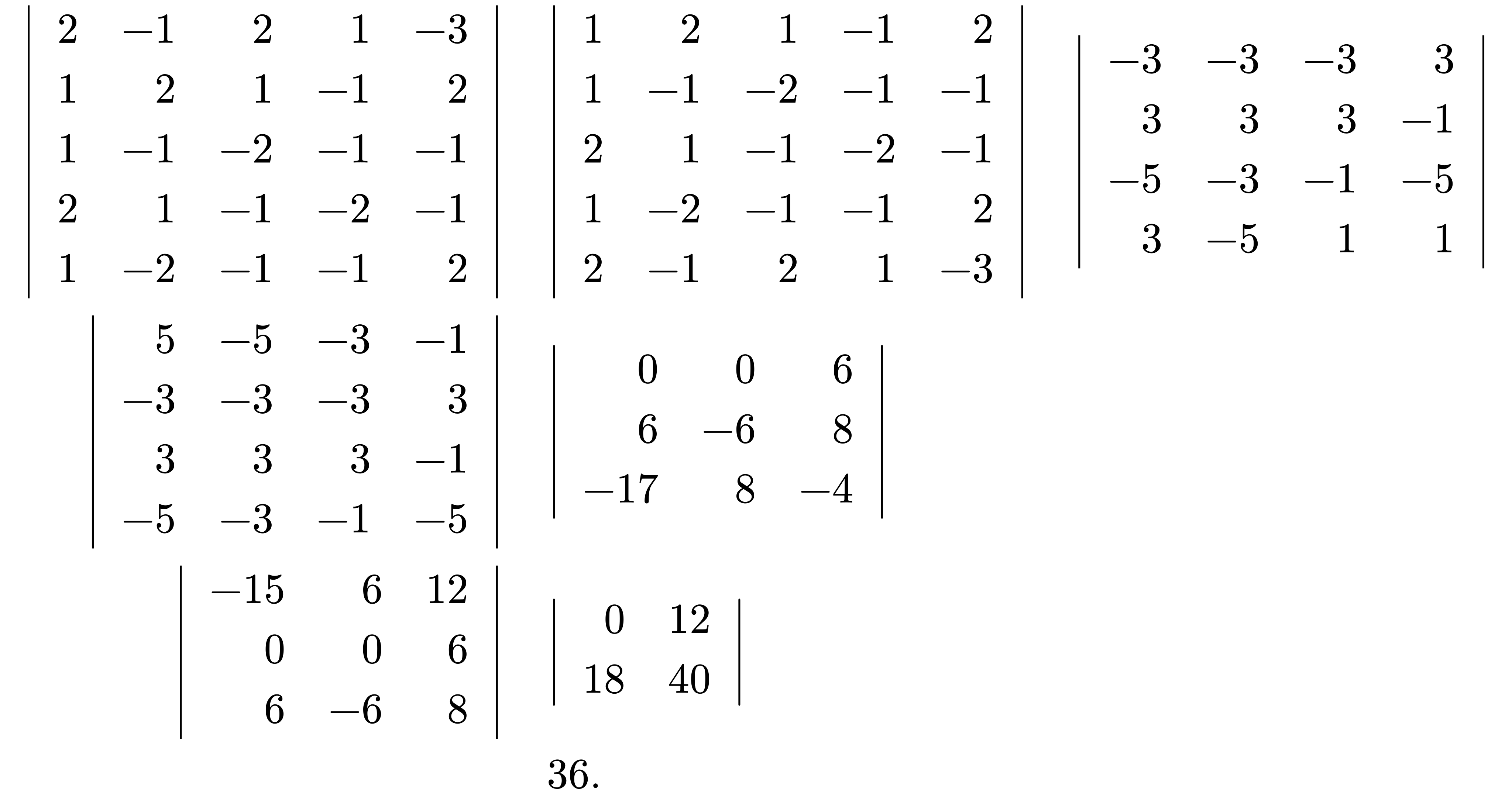
The fact that, whenever ciphers occur in the interior of a derived block, it is necessary to recommence the operation, may be thought a great obstacle to the use of this method; but I believe it will be found in practice that, even though this should occur several times in the course of one operation, the whole amount of labour will still be much less than that involved in the old process of computation.


I now proceed to give a proof of the validity of this process, deduced from a well-known theorem in determinants; and in doing so, I shall use the word “adjugate” in the following sense:—if there be a square block, and if a new block be formed, such that each of its terms is the determinant of the complemental minor of the corresponding term of the first block, the second block is said to be adjugate to the first.

[Pg 4]

The theorem referred to is the following:—

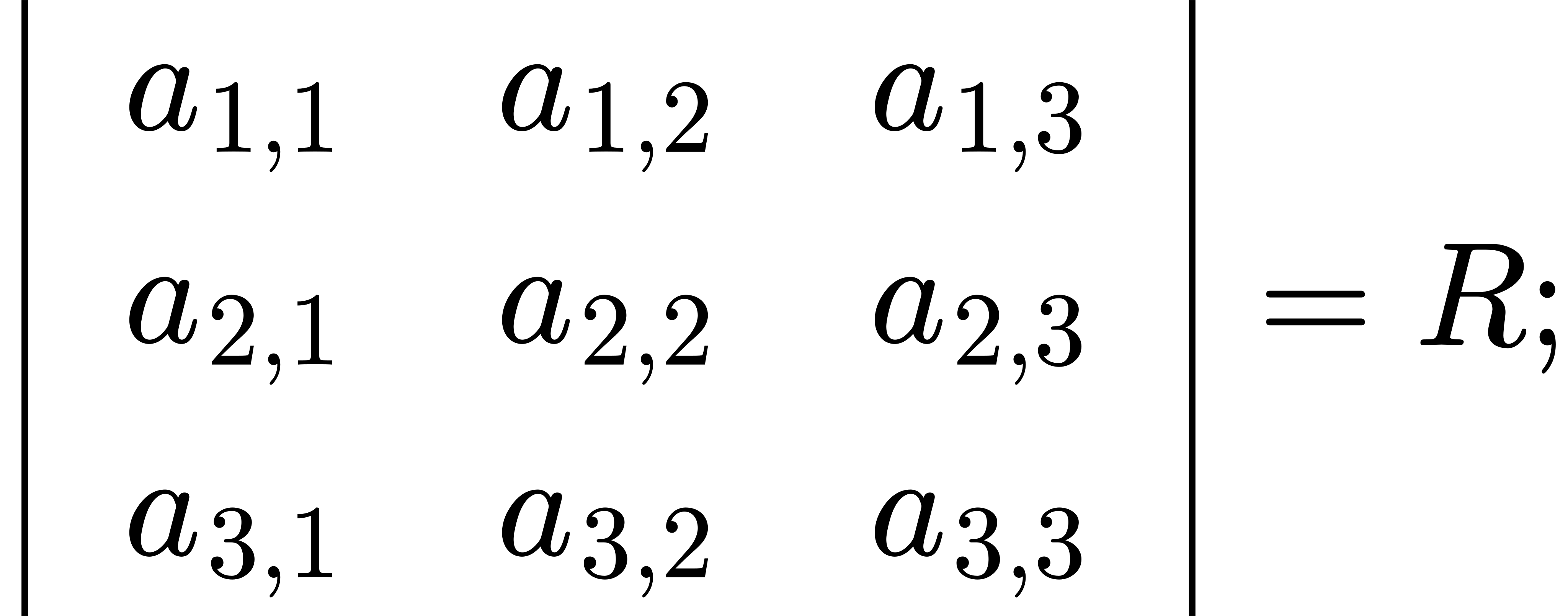
“If the determinant of a block equals upper R, the determinant of any minor of the mth degree of the adjugate block is the product of upper R Superscript m minus 1 and the coefficient which, in upper R, multiplies the determinant of the corresponding minor.”

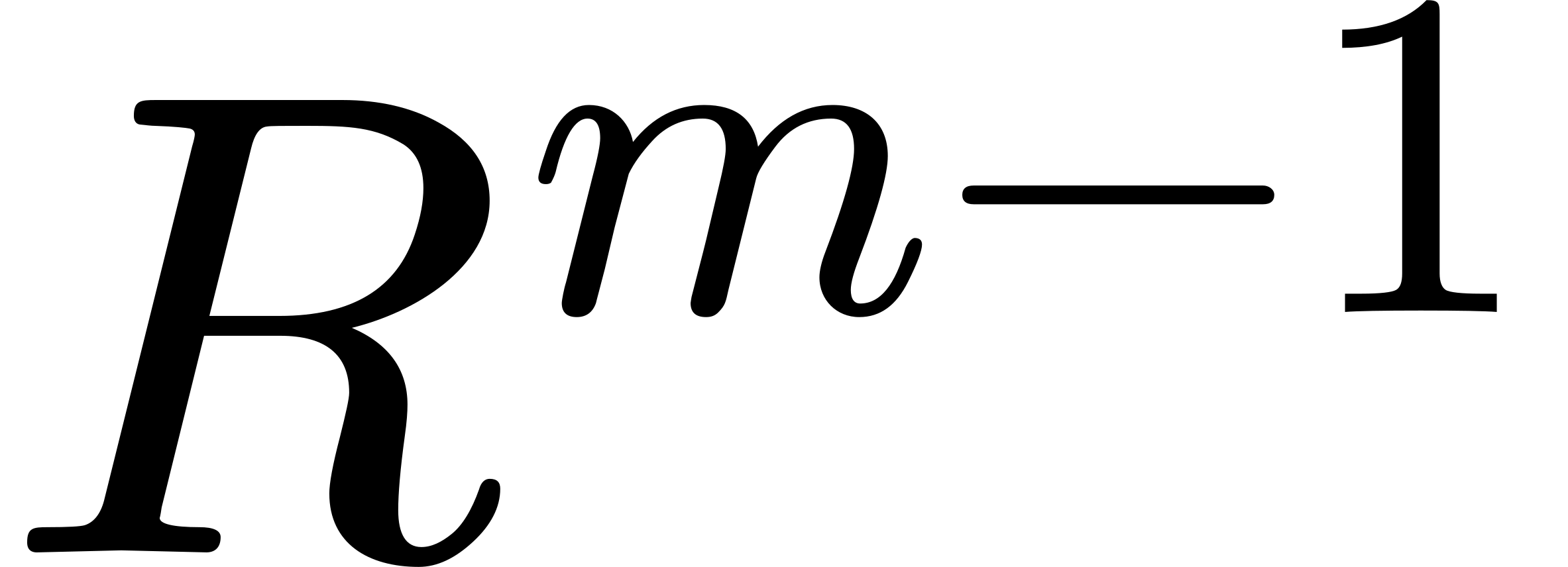
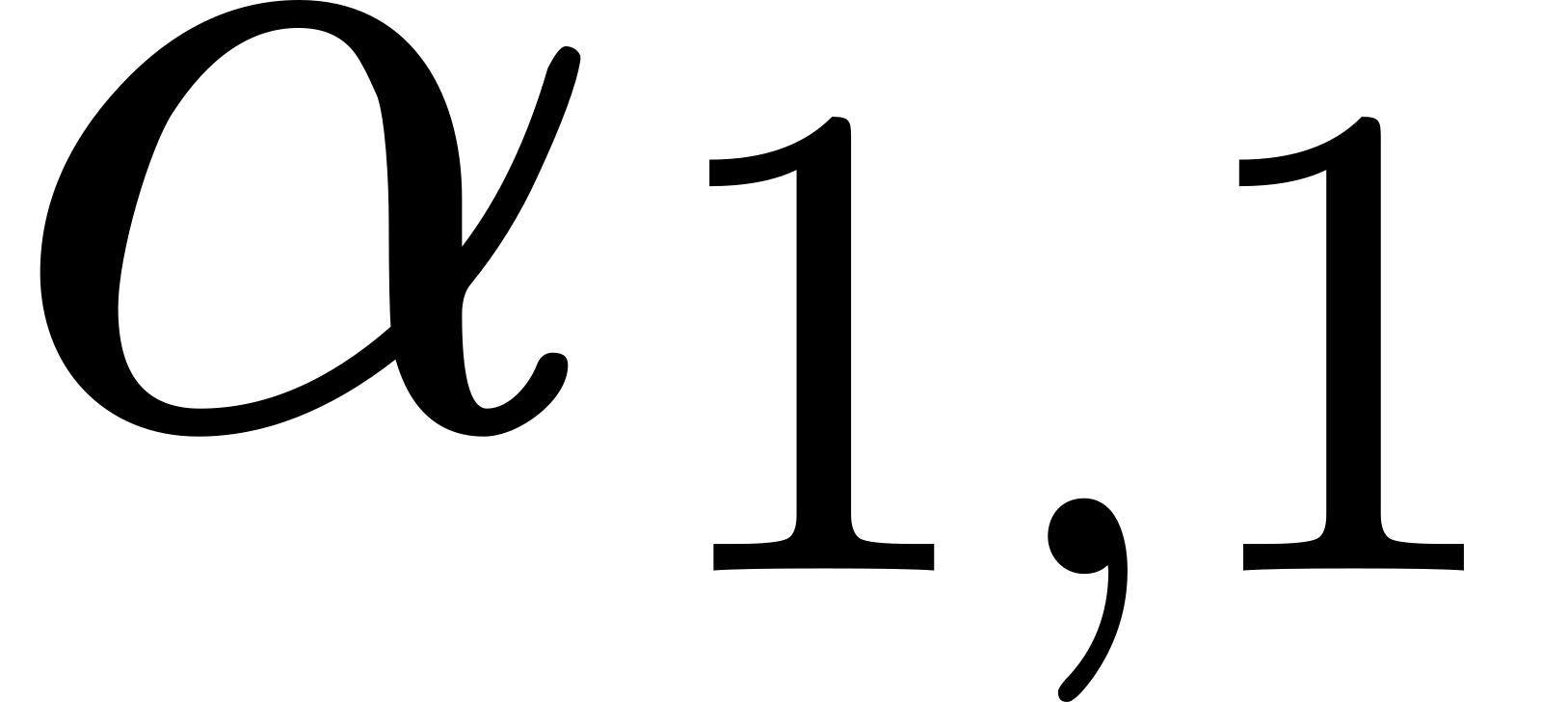
Let us first take a block of 9 terms, Start 3 By 3 Determinant 1st Row 1st Column a Subscript 1 comma 1 Baseline 2nd Column a Subscript 1 comma 2 Baseline 3rd Column a Subscript 1 comma 3 Baseline 2nd Row 1st Column a Subscript 2 comma 1 Baseline 2nd Column a Subscript 2 comma 2 Baseline 3rd Column a Subscript 2 comma 3 Baseline 3rd Row 1st Column a Subscript 3 comma 1 Baseline 2nd Column a Subscript 3 comma 2 Baseline 3rd Column a Subscript 3 comma 3 Baseline EndDeterminant equals upper R semicolon and let alpha Subscript 1 comma 1 represent the determinant of the complemental minor of a Subscript 1 comma 1, and so on.

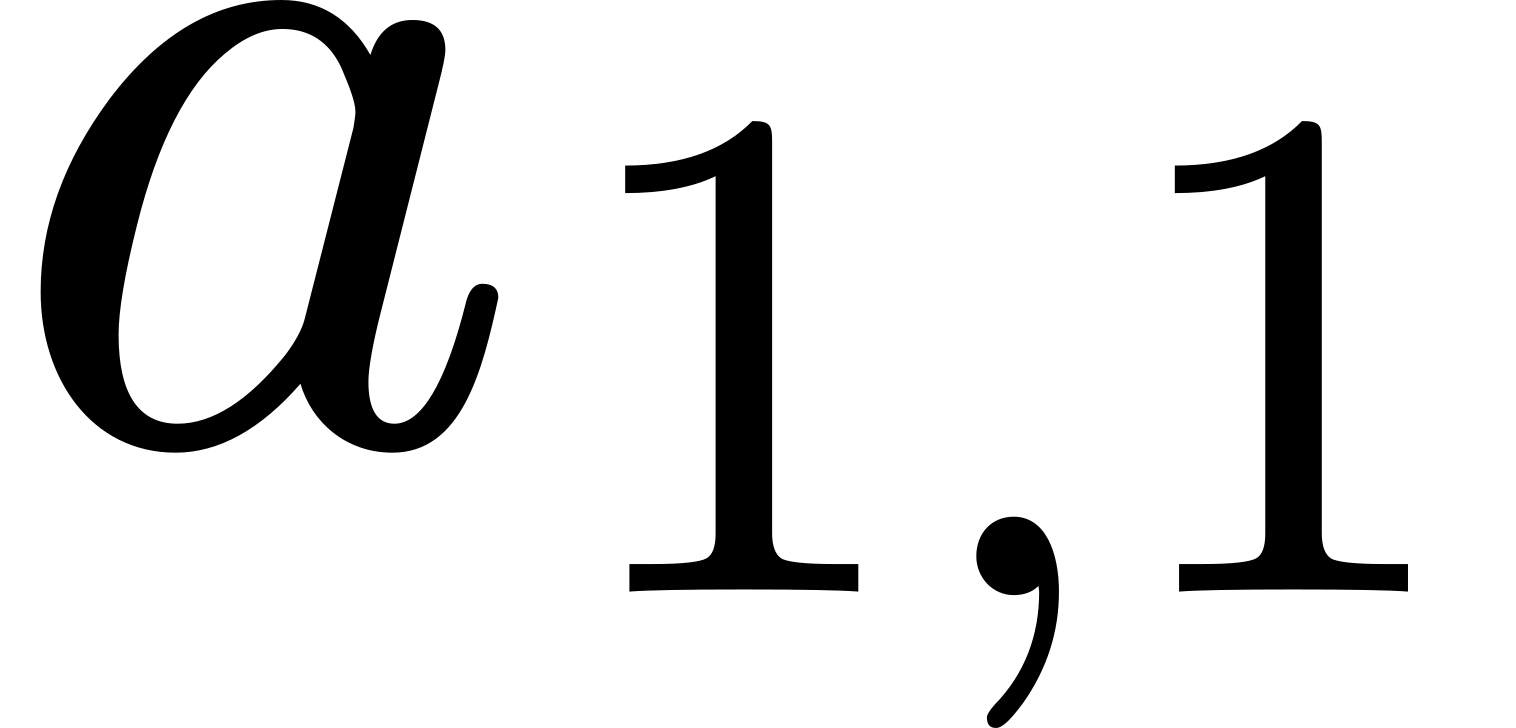
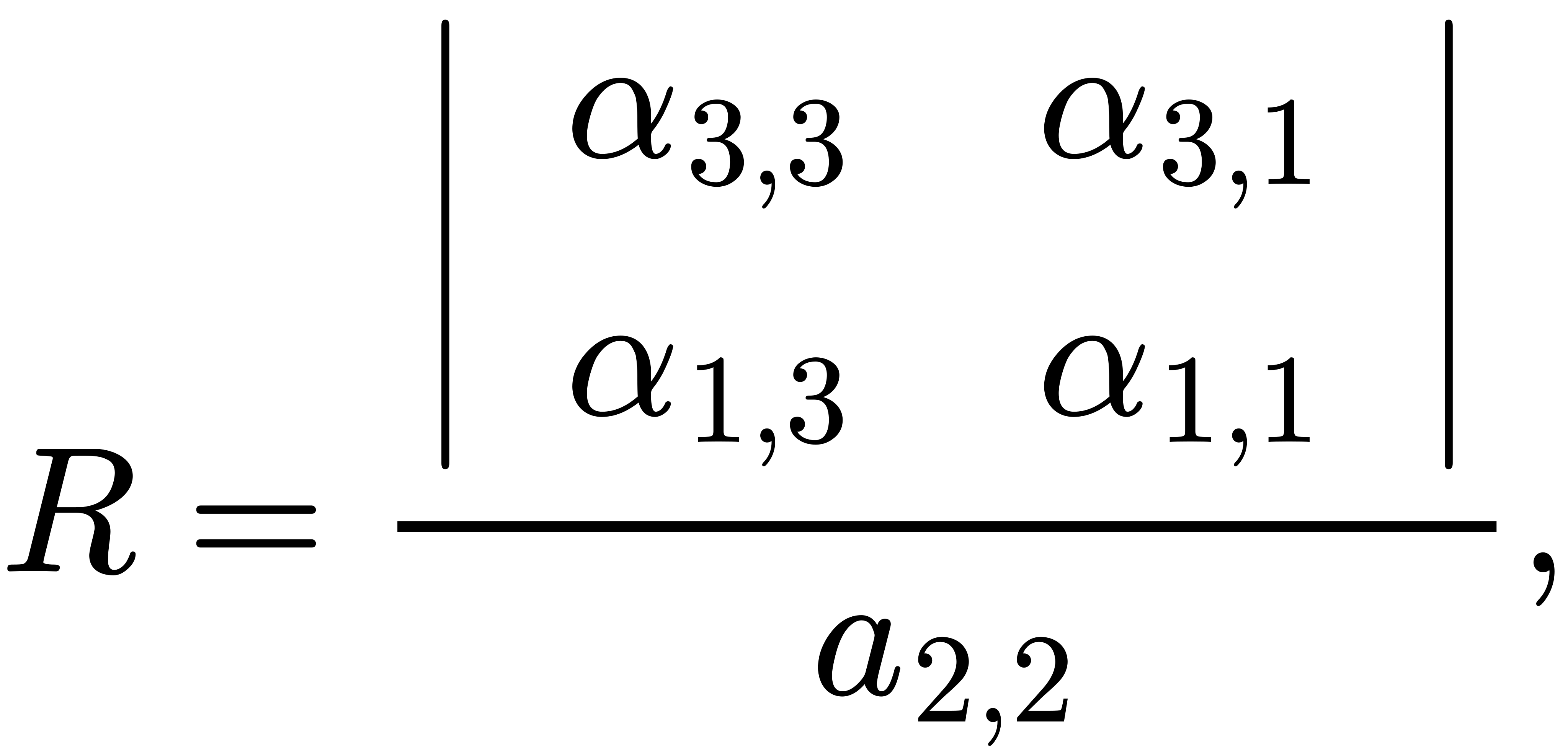
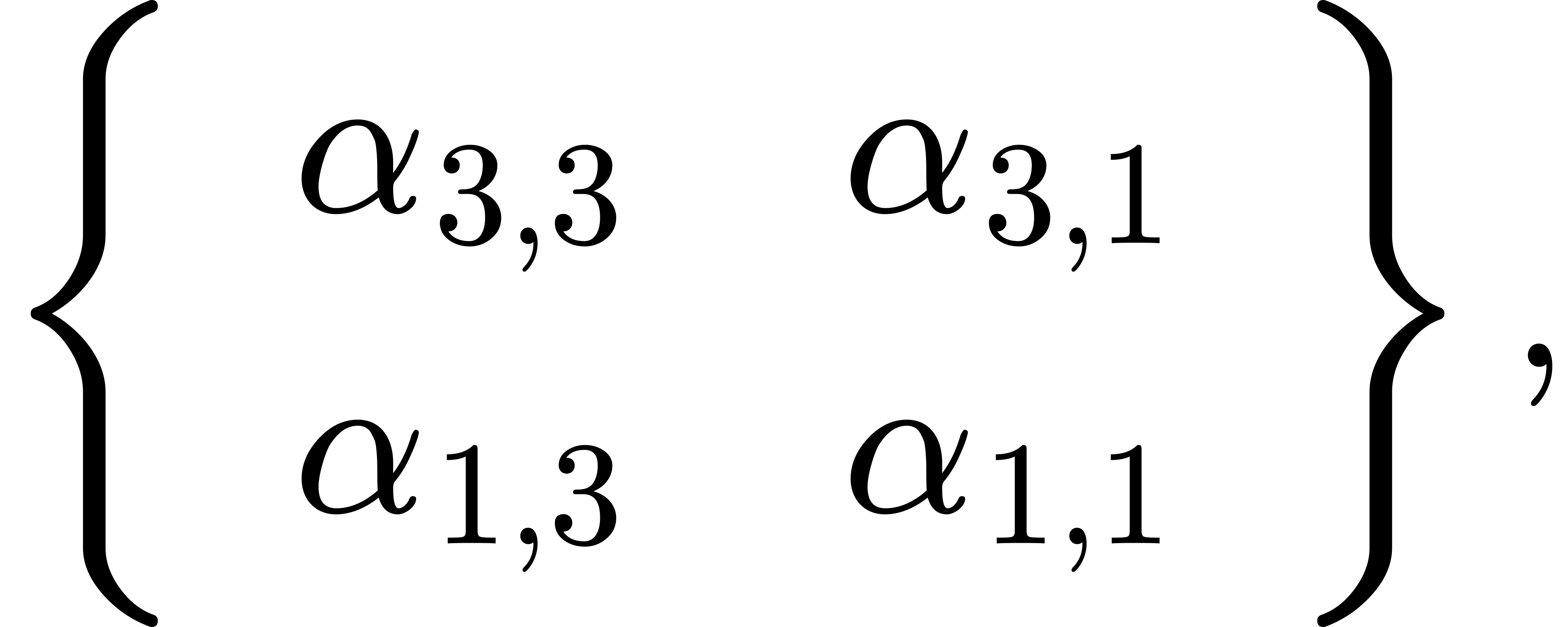
If we “condense” this, by the method already given, we get the block Start 2 By 2 Matrix 1st Row 1st Column alpha Subscript 3 comma 3 Baseline 2nd Column alpha Subscript 3 comma 1 Baseline 2nd Row 1st Column alpha Subscript 1 comma 3 Baseline 2nd Column alpha Subscript 1 comma 1 Baseline EndMatrix comma and, by the theorem above cited, the determinant of this, viz. Start 2 By 2 Determinant 1st Row 1st Column alpha Subscript 3 comma 3 Baseline 2nd Column alpha Subscript 3 comma 1 Baseline 2nd Row 1st Column alpha Subscript 1 comma 3 Baseline 2nd Column alpha Subscript 1 comma 1 Baseline EndDeterminant equals upper R times a Subscript 2 comma 2 Baseline period
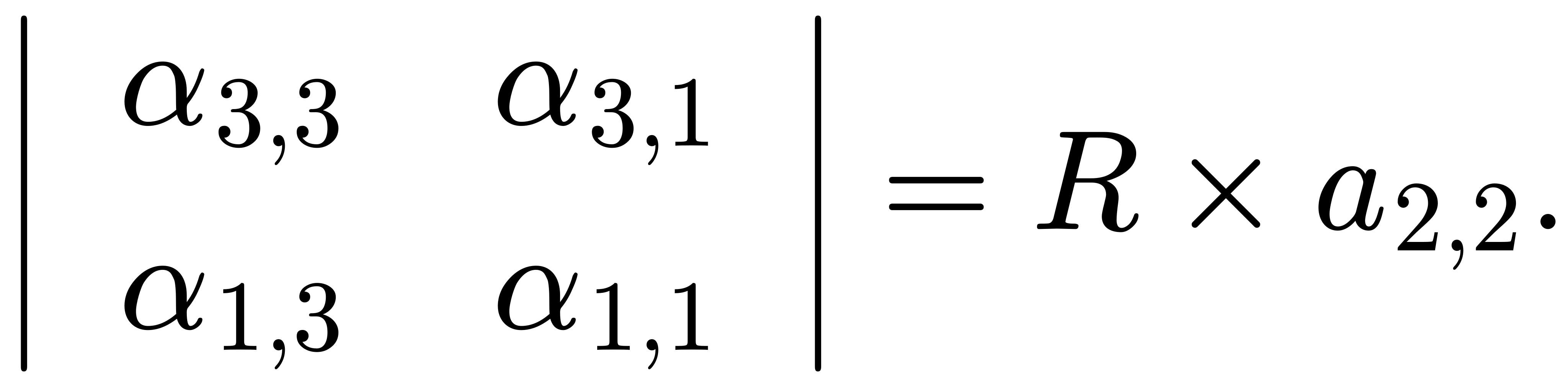
Hence upper R equals StartFraction Start 2 By 2 Determinant 1st Row 1st Column alpha Subscript 3 comma 3 Baseline 2nd Column alpha Subscript 3 comma 1 Baseline 2nd Row 1st Column alpha Subscript 1 comma 3 Baseline 2nd Column alpha Subscript 1 comma 1 Baseline EndDeterminant Over a Subscript 2 comma 2 Baseline EndFraction comma which proves the rule.

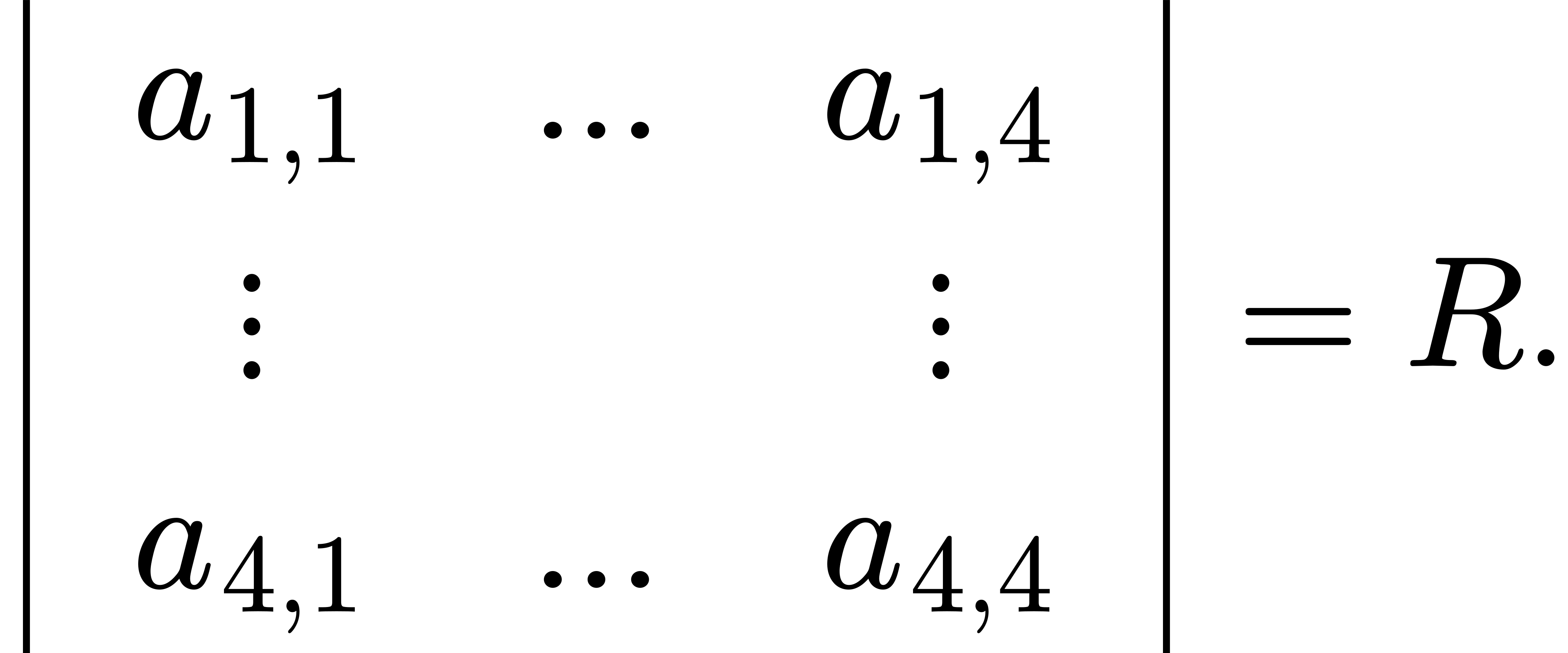
Secondly, let us take a block of 16 terms: Start 3 By 3 Determinant 1st Row 1st Column a Subscript 1 comma 1 Baseline 2nd Column ellipsis 3rd Column a Subscript 1 comma 4 Baseline 2nd Row 1st Column vertical ellipsis 2nd Column Blank 3rd Column vertical ellipsis 3rd Row 1st Column a Subscript 4 comma 1 Baseline 2nd Column ellipsis 3rd Column a Subscript 4 comma 4 Baseline EndDeterminant equals upper R period If we “condense” this, we get a block of 9 terms; let us denote it by Start 3 By 3 Matrix 1st Row 1st Column b Subscript 1 comma 1 Baseline 2nd Column ellipsis 3rd Column b Subscript 1 comma 3 Baseline 2nd Row 1st Column vertical ellipsis 2nd Column Blank 3rd Column vertical ellipsis 3rd Row 1st Column b Subscript 3 comma 1 Baseline 2nd Column ellipsis 3rd Column b Subscript 3 comma 3 Baseline EndMatrix comma in which b Subscript 1 comma 1 Baseline equals Start 2 By 2 Determinant 1st Row 1st Column a Subscript 1 comma 1 Baseline 2nd Column a Subscript 1 comma 2 Baseline 2nd Row 1st Column a Subscript 2 comma 1 Baseline 2nd Column a Subscript 2 comma 2 Baseline EndDeterminant comma ampersand c period

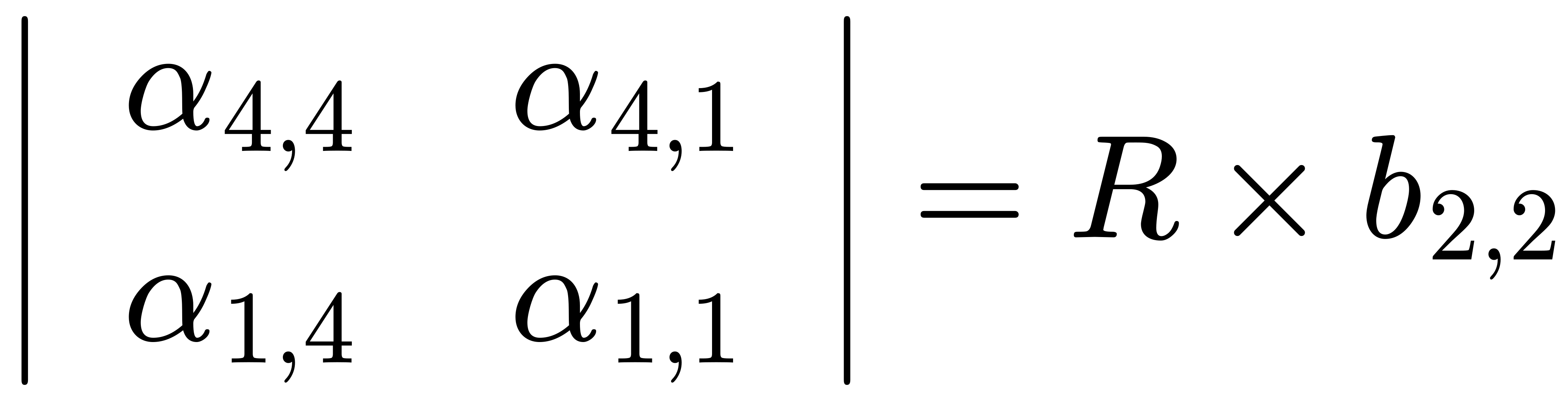
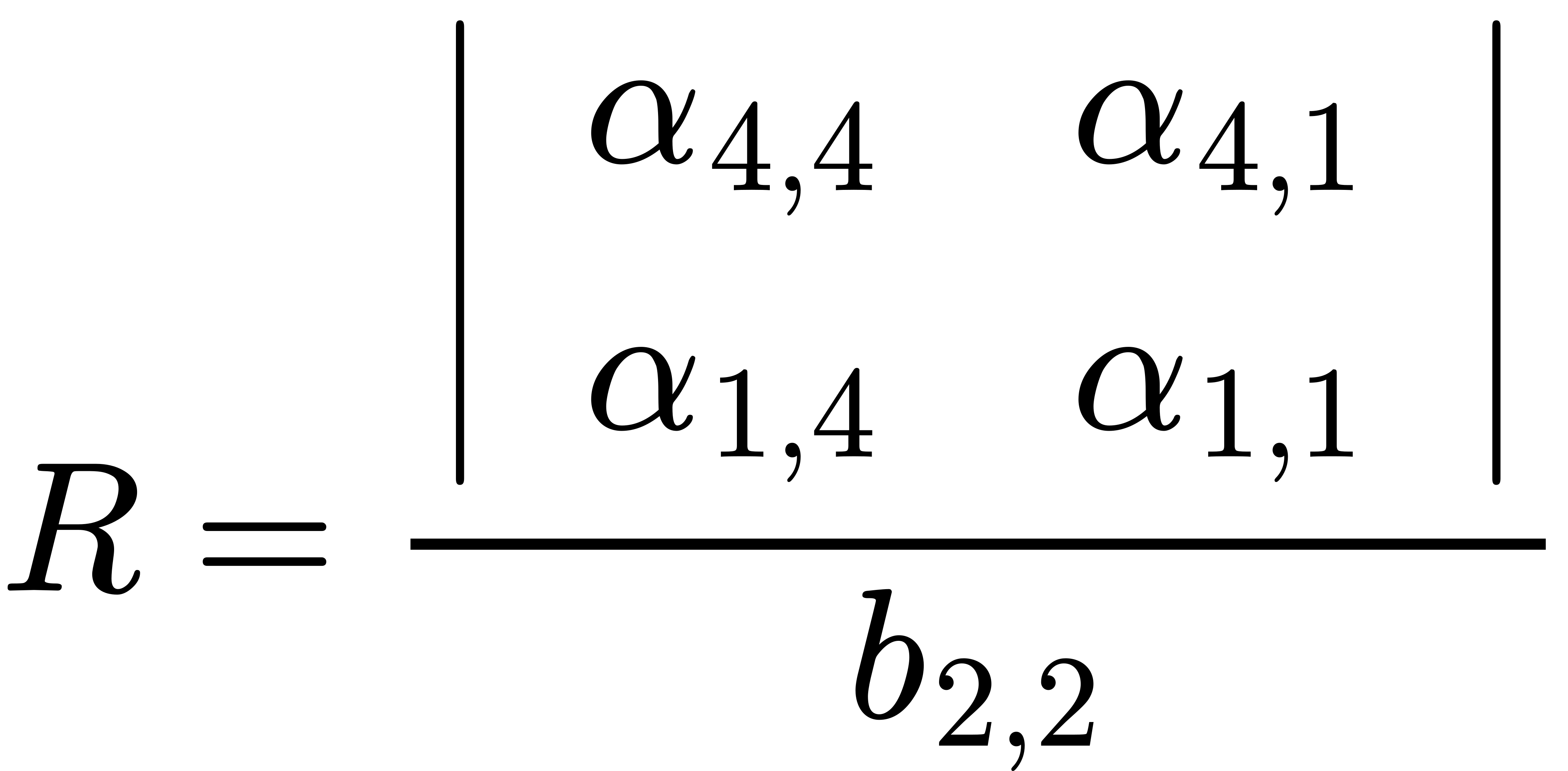
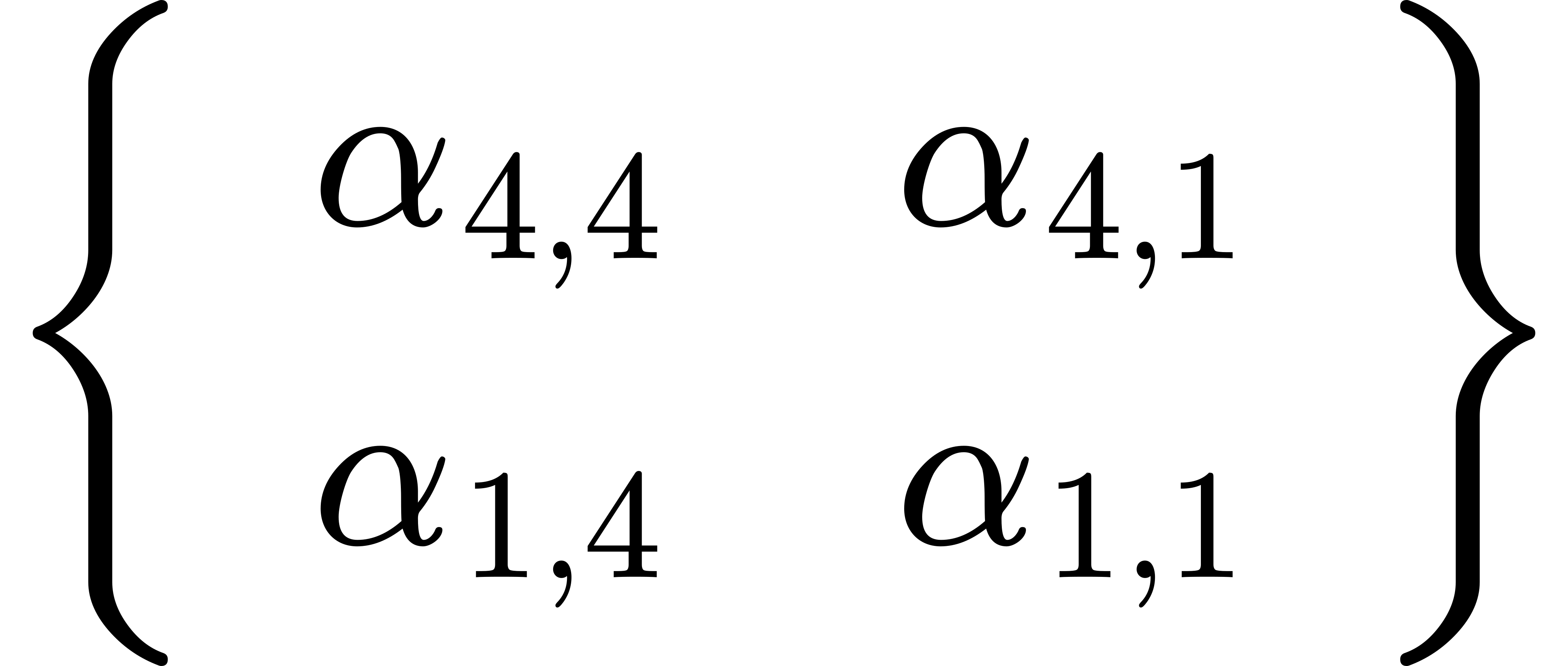
If we “condense” this block again, we get a block of 4 terms, each of which, by the preceding paragraph, is the determinant of 9 terms of the original block; that is to say, we get the block Start 2 By 2 Matrix 1st Row 1st Column alpha Subscript 4 comma 4 2nd Column alpha Subscript 4 comma 1 2nd Row 1st Column alpha Subscript 1 comma 4 2nd Column alpha Subscript 1 comma 1 EndMatrix; but, by the theorem already quoted, Start 2 By 2 Determinant 1st Row 1st Column alpha Subscript 4 comma 4 Baseline 2nd Column alpha Subscript 4 comma 1 Baseline 2nd Row 1st Column alpha Subscript 1 comma 4 Baseline 2nd Column alpha Subscript 1 comma 1 Baseline EndDeterminant equals upper R times b Subscript 2 comma 2; therefore upper R equals StartFraction Start 2 By 2 Determinant 1st Row 1st Column alpha Subscript 4 comma 4 Baseline 2nd Column alpha Subscript 4 comma 1 Baseline 2nd Row 1st Column alpha Subscript 1 comma 4 Baseline 2nd Column alpha Subscript 1 comma 1 Baseline EndDeterminant Over b Subscript 2 comma 2 Baseline EndFraction; that is, upper R may be obtained by “condensing” the block Start 2 By 2 Matrix 1st Row 1st Column alpha Subscript 4 comma 4 2nd Column alpha Subscript 4 comma 1 2nd Row 1st Column alpha Subscript 1 comma 4 2nd Column alpha Subscript 1 comma 1 EndMatrix.

This proves the rule for a block of 16 terms; and similar proofs might be given for larger blocks.

[Pg 5]


I shall conclude by showing how this process may be applied to the solution of simultaneous linear equations.

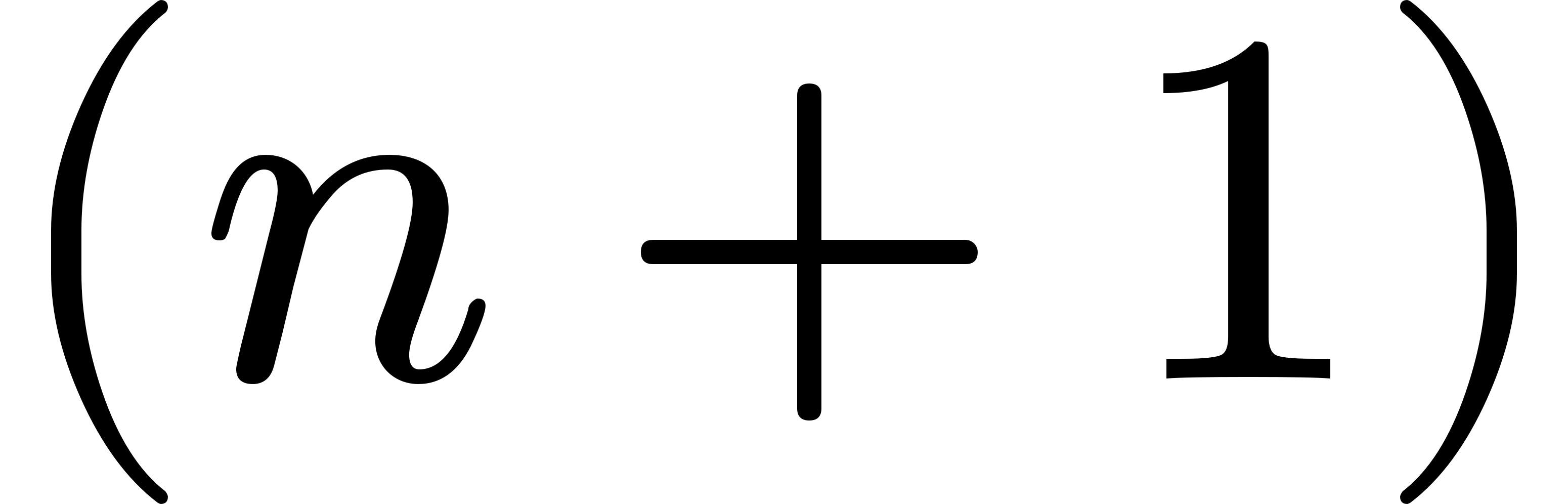
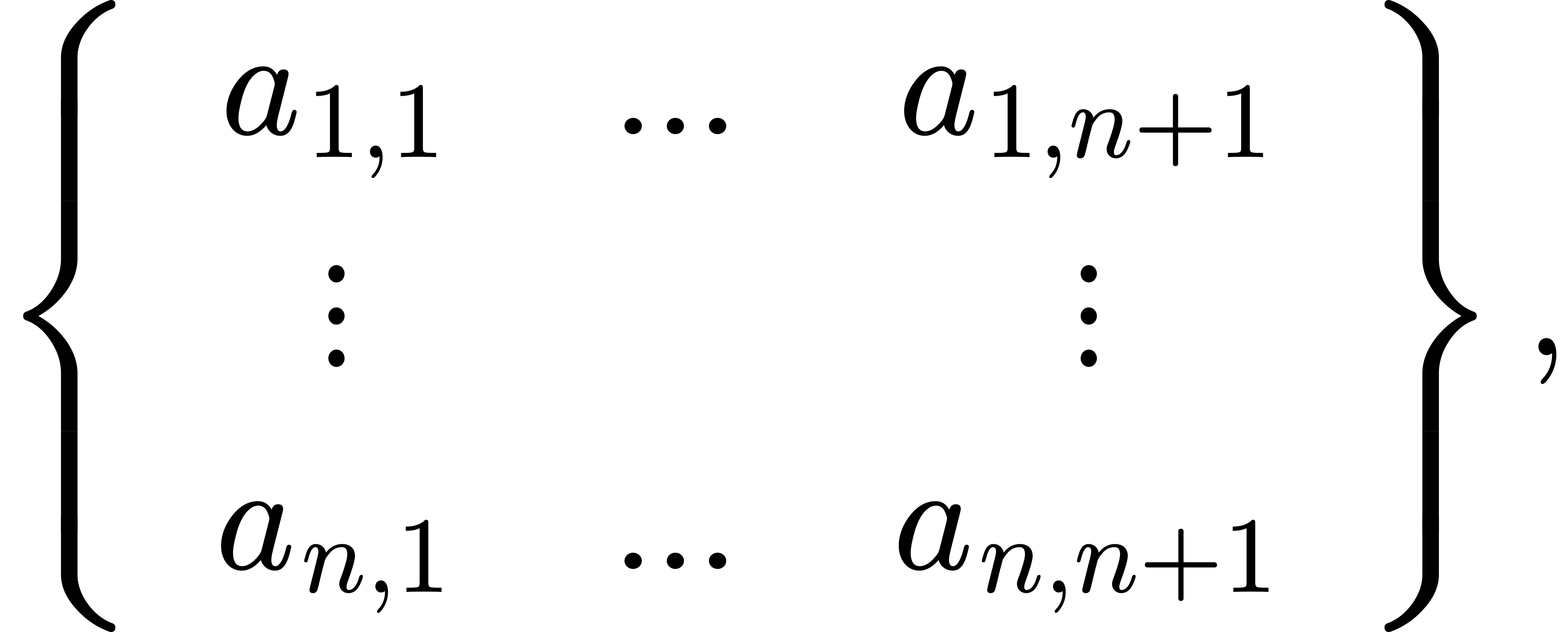
If we take a block consisting of n rows and left parenthesis n plus 1 right parenthesis columns, and “condense” it, we reduce it at last to 2 terms, the first of which is the determinant of the first n columns, the other of the last n columns.

Hence, if we take the n simultaneous equations, StartLayout 1st Row 1st Column Blank 2nd Column a Subscript 1 comma 1 Baseline x 1 plus a Subscript 1 comma 2 Baseline x 2 plus midline horizontal ellipsis midline horizontal ellipsis plus a Subscript 1 comma n Baseline x Subscript n plus a Subscript 1 comma n plus 1 3rd Column equals 0 comma 2nd Row 1st Column Blank 2nd Column midline horizontal ellipsis midline horizontal ellipsis midline horizontal ellipsis midline horizontal ellipsis midline horizontal ellipsis midline horizontal ellipsis midline horizontal ellipsis midline horizontal ellipsis midline horizontal ellipsis midline horizontal ellipsis midline horizontal ellipsis midline horizontal ellipsis midline horizontal ellipsis midline horizontal ellipsis midline horizontal ellipsis dot 3rd Row 1st Column Blank 2nd Column a Subscript n comma 1 Baseline x 1 plus midline horizontal ellipsis midline horizontal ellipsis midline horizontal ellipsis midline horizontal ellipsis midline horizontal ellipsis midline horizontal ellipsis midline horizontal ellipsis midline horizontal ellipsis plus a Subscript n comma n plus 1 3rd Column equals 0 semicolon EndLayout and if we condense the whole block of coefficients and constants, viz. Start 3 By 3 Matrix 1st Row 1st Column a Subscript 1 comma 1 Baseline 2nd Column ellipsis 3rd Column a Subscript 1 comma n plus 1 Baseline 2nd Row 1st Column vertical ellipsis 2nd Column Blank 3rd Column vertical ellipsis 3rd Row 1st Column a Subscript n comma 1 Baseline 2nd Column ellipsis 3rd Column a Subscript n comma n plus 1 Baseline EndMatrix comma we reduce it at last to 2 terms: let us denote them by upper S, upper T, so that upper S equals Start 3 By 3 Determinant 1st Row 1st Column a Subscript 1 comma 1 Baseline 2nd Column ellipsis 3rd Column a Subscript 1 comma n Baseline 2nd Row 1st Column vertical ellipsis 2nd Column Blank 3rd Column vertical ellipsis 3rd Row 1st Column a Subscript n comma 1 Baseline 2nd Column ellipsis 3rd Column a Subscript n comma n Baseline EndDeterminant comma and upper T equals Start 3 By 3 Determinant 1st Row 1st Column a Subscript 1 comma 2 Baseline 2nd Column ellipsis 3rd Column a Subscript 1 comma n plus 1 Baseline 2nd Row 1st Column vertical ellipsis 2nd Column Blank 3rd Column vertical ellipsis 3rd Row 1st Column a Subscript n comma 2 Baseline 2nd Column ellipsis 3rd Column a Subscript n comma n plus 1 Baseline EndDeterminant period
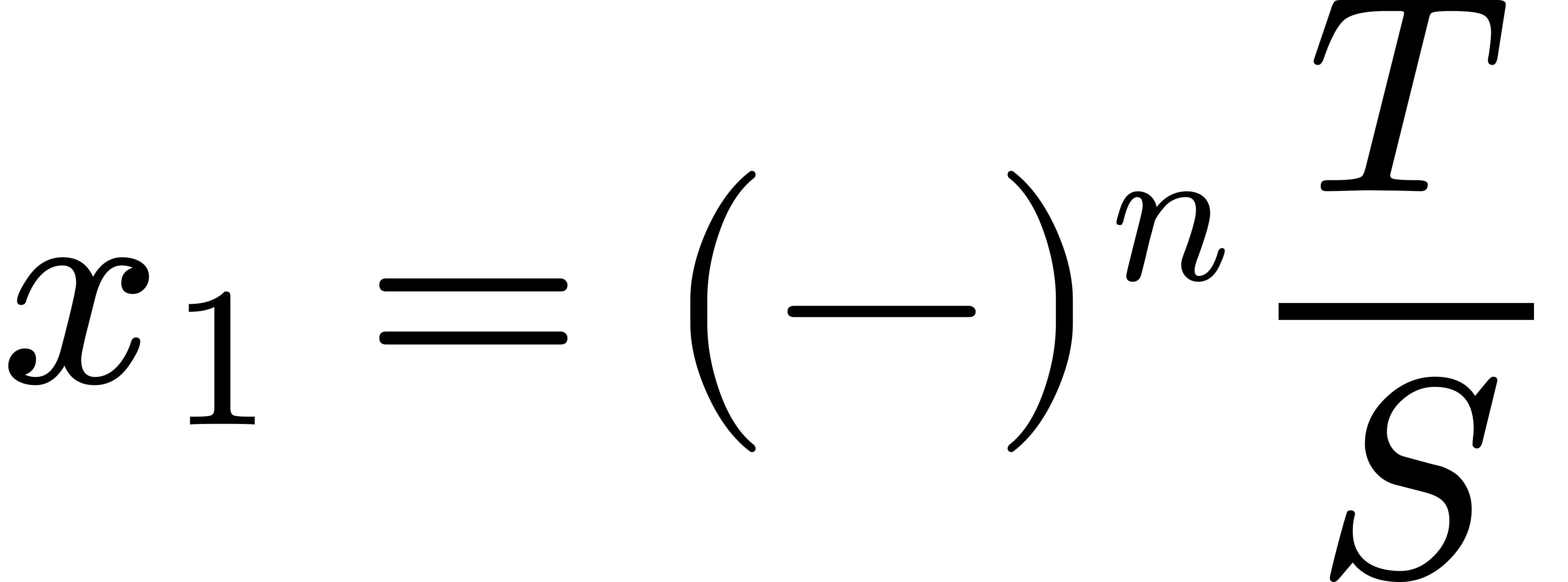
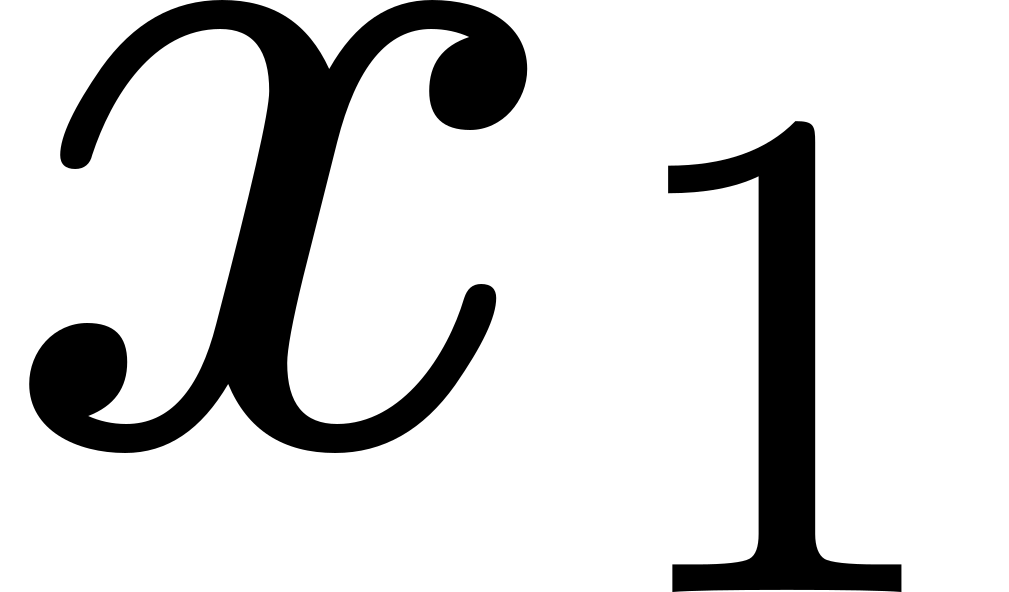
Now we know that x 1 equals left parenthesis minus right parenthesis Superscript n Baseline StartFraction upper T Over upper S EndFraction, which may be written in the form left parenthesis minus right parenthesis Superscript n Baseline upper S dot x 1 equals upper T.

Hence the 2 terms obtained by the process of condensation may be converted into an equation for x 1, by multiplying the first of them by x 1, affected with plus or minus, according as n is even or odd. The latter part of the rule may be simply expressed thus:—“place the signs plus and minus alternately over the several columns, beginning with the last, and the sign which occurs over the column containing x 1 is the sign with which x 1 is to be affected.”
When the value of x 1 has been thus found, it may be substituted in the first left parenthesis n minus 1 right parenthesis equations, and the same operation repeated on the new block, which will now consist of left parenthesis n minus 1 right parenthesis rows and n columns. But in calculating the second series of blocks, it will be found that most of the work has been already done; in fact, of the 2 determinants required in the new block, one has been already computed correctly, and the other so nearly so that it only requires the last column in each of the derived blocks to be corrected.

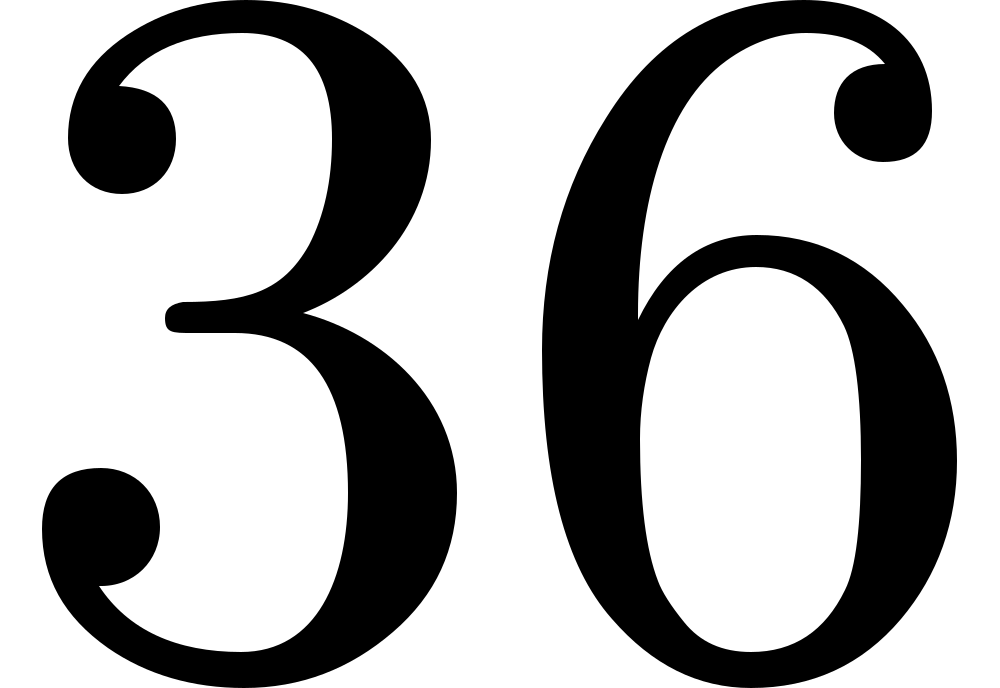
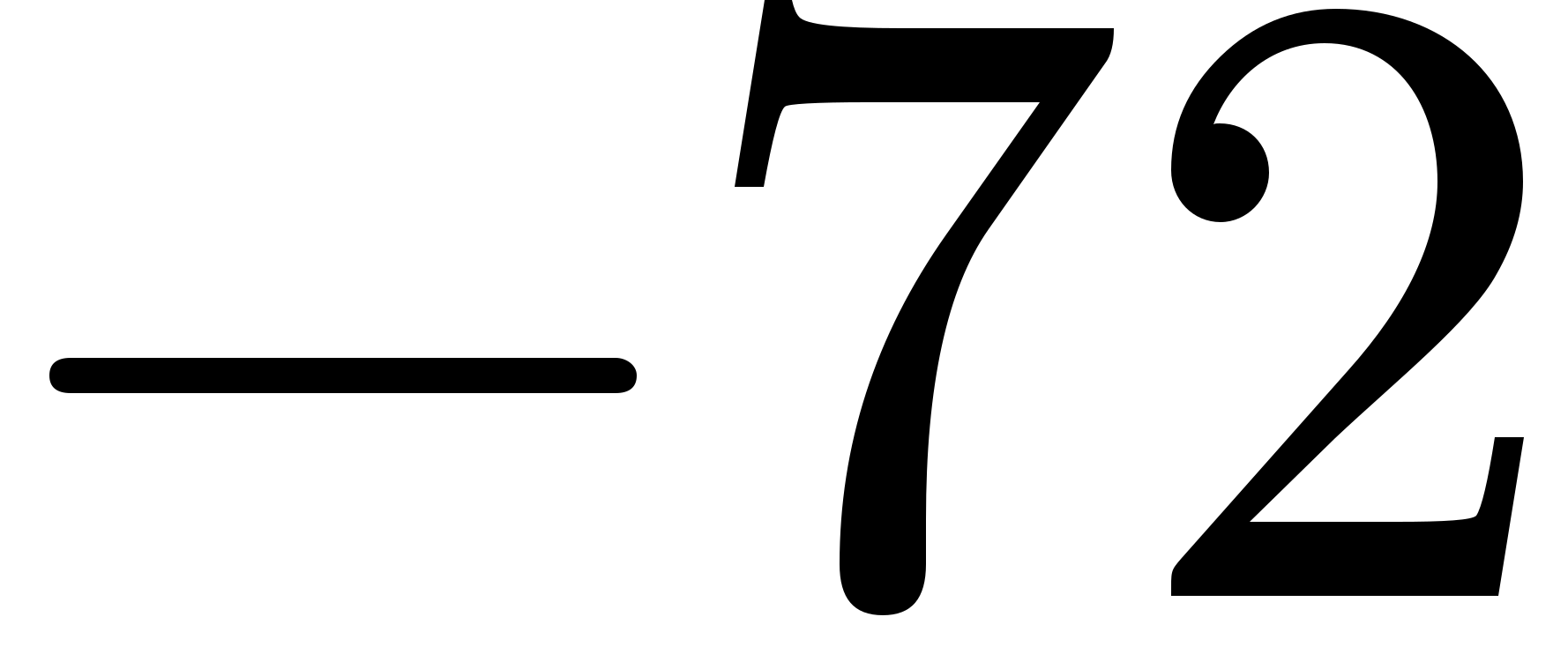
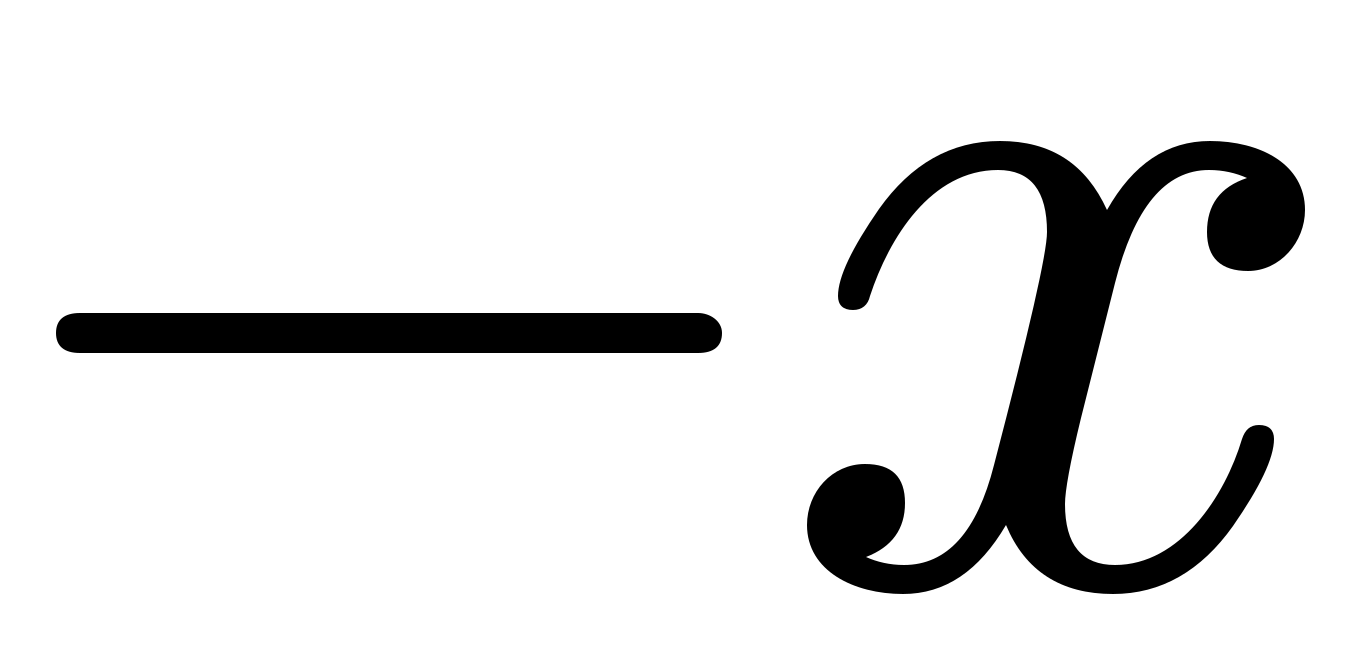
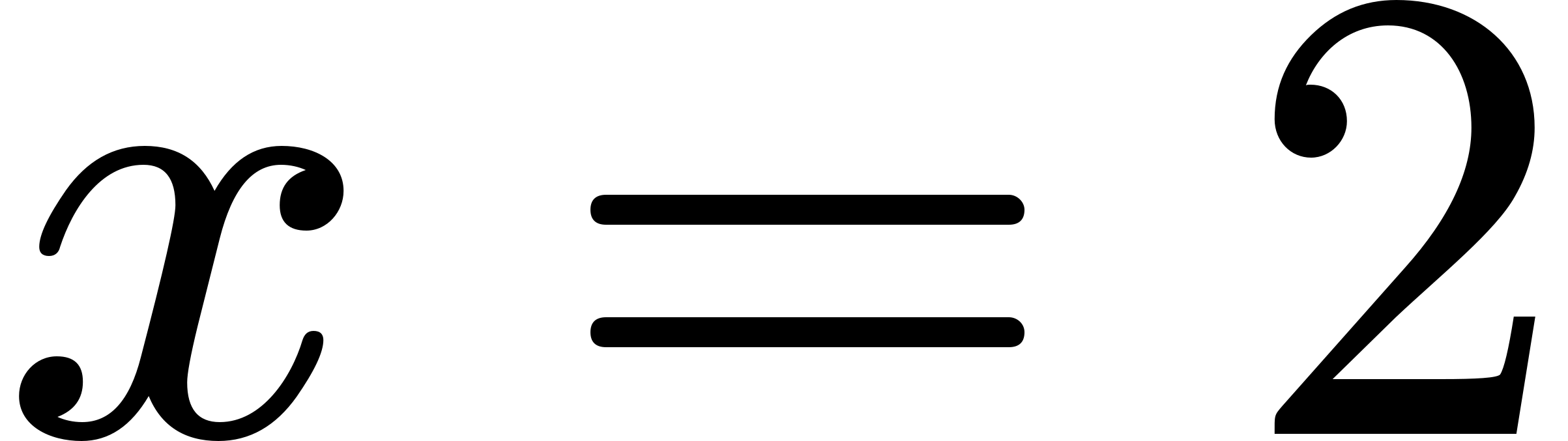
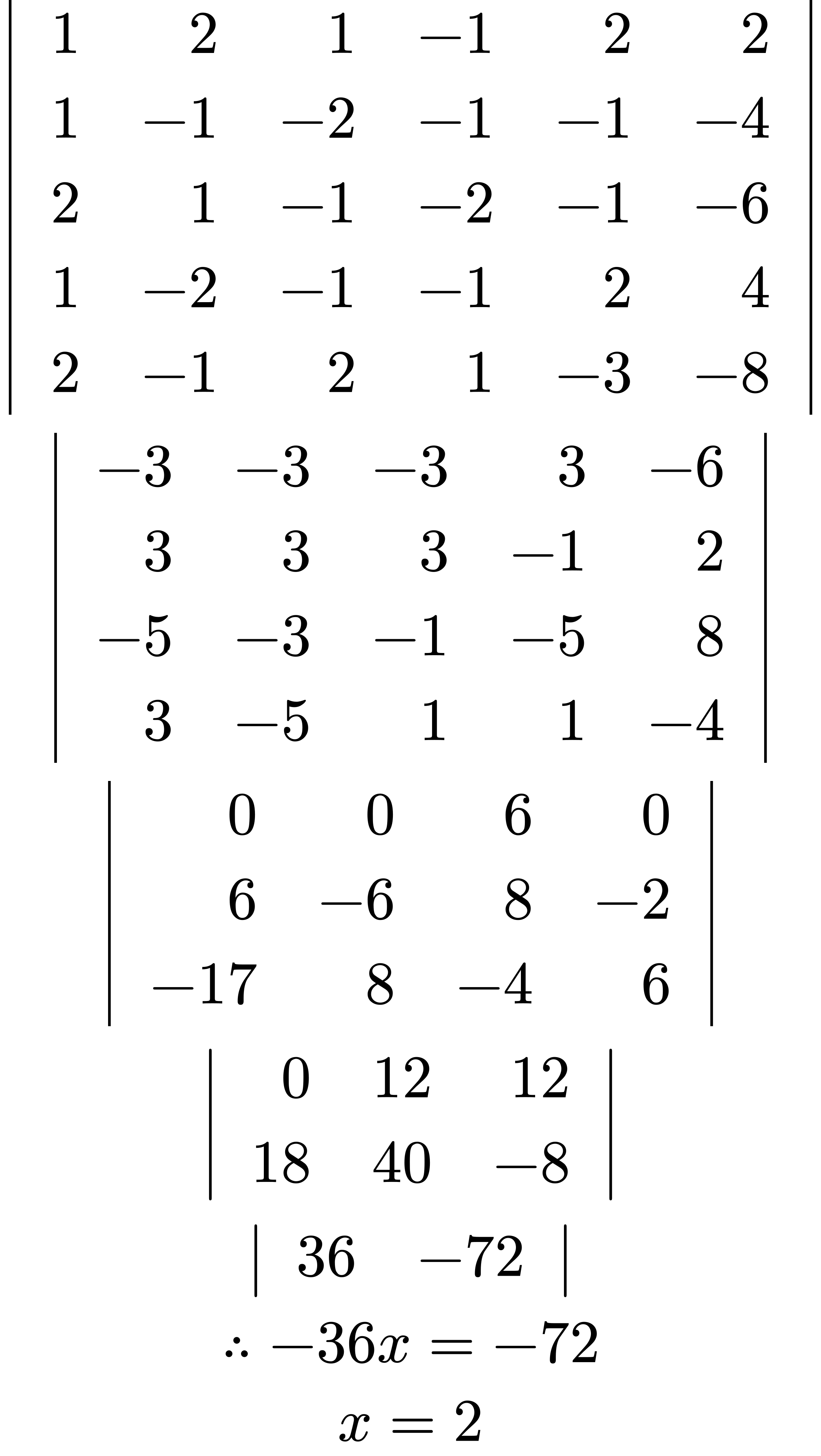
In the example given opposite, after writing plus and minus alternately over the columns, beginning with the last, we first condense the whole block, and thus obtain the 2 terms 36 and negative 72. Observing that the x-column has the sign minus placed over it, we multiply the 36 by negative x, and so form the equation minus 36 x equals negative 72, which gives x equals 2.

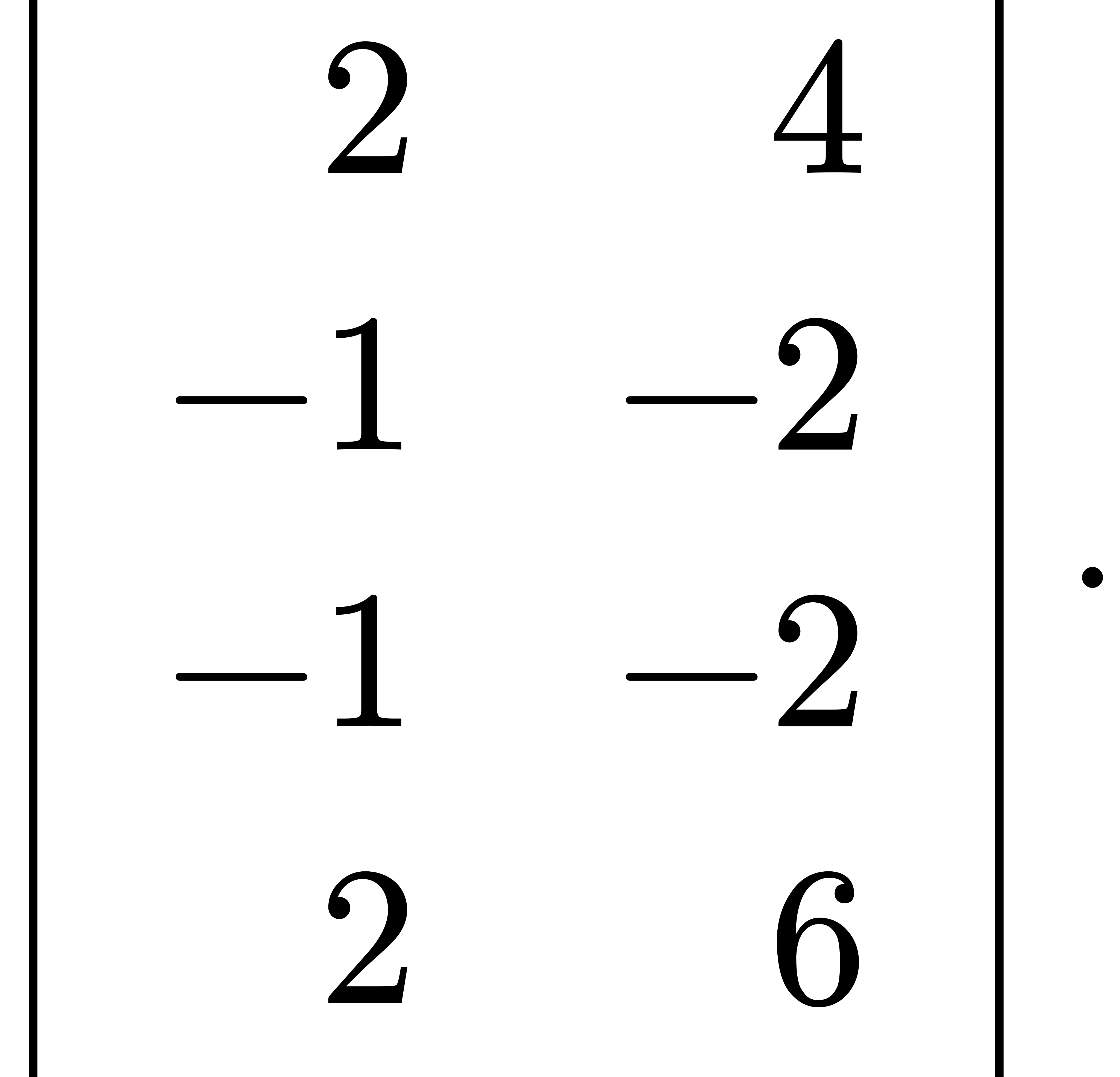
Hence the x-terms in the first four equations become respectively 2, 2, 4, and 2; adding these values to the constant terms in the same equations, we obtain a block of which we need only write down the last two columns, viz. Start 4 By 2 Matrix 1st Row 1st Column 2 2nd Column 4 2nd Row 1st Column negative 1 2nd Column negative 2 3rd Row 1st Column negative 1 2nd Column negative 2 4th Row 1st Column 2 2nd Column 6 EndMatrix period
[Pg 6]

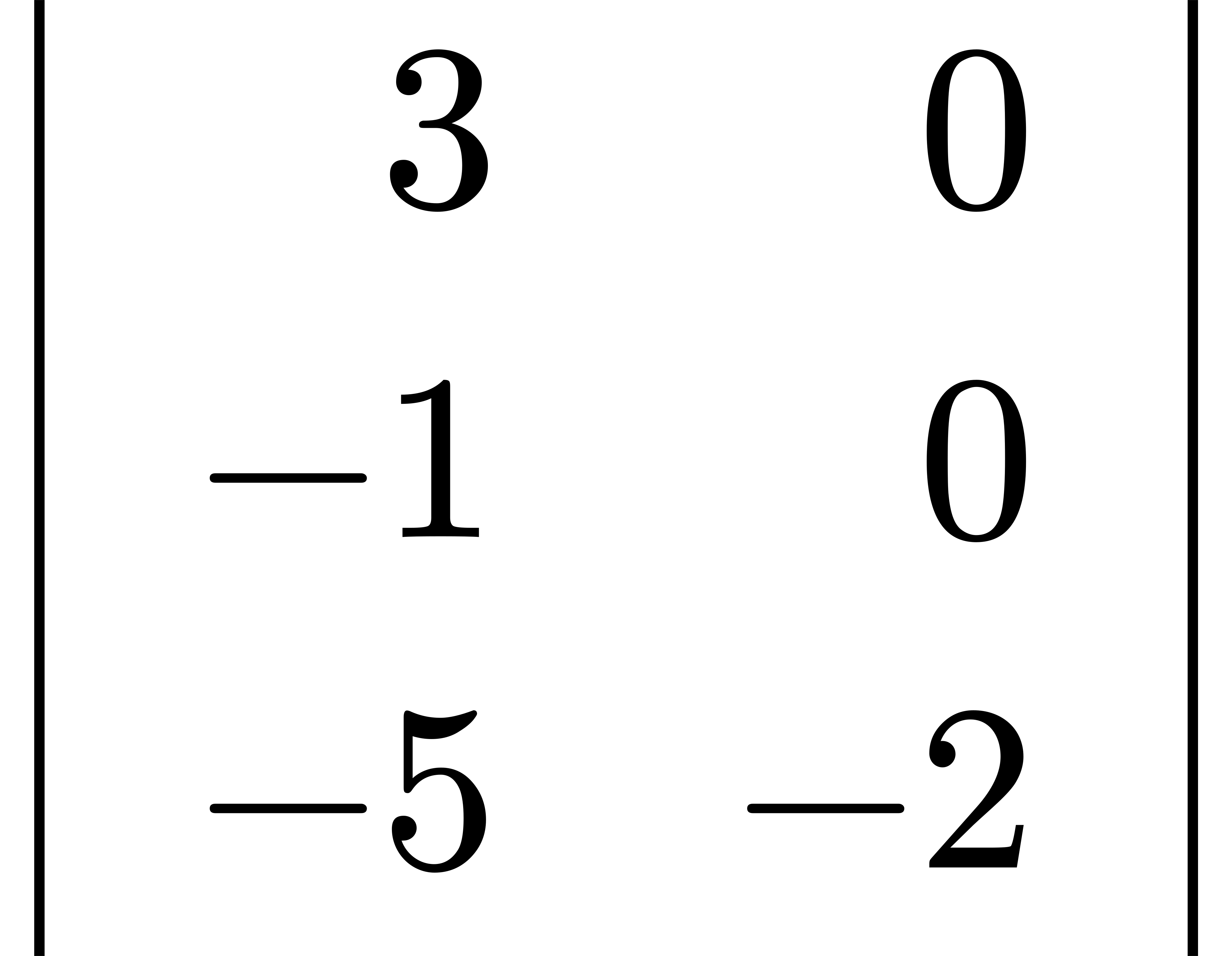
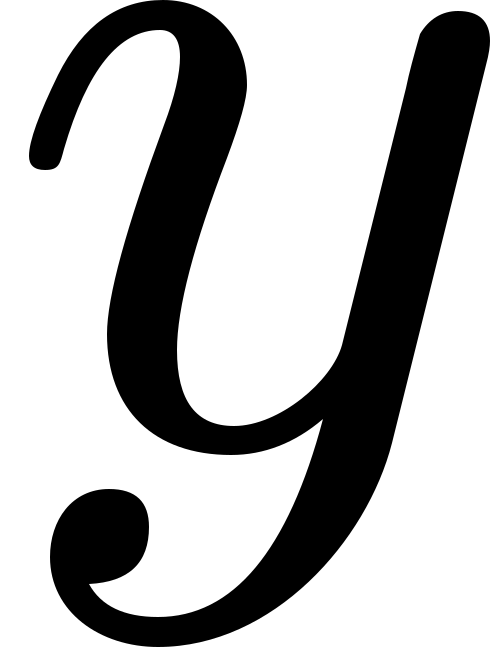
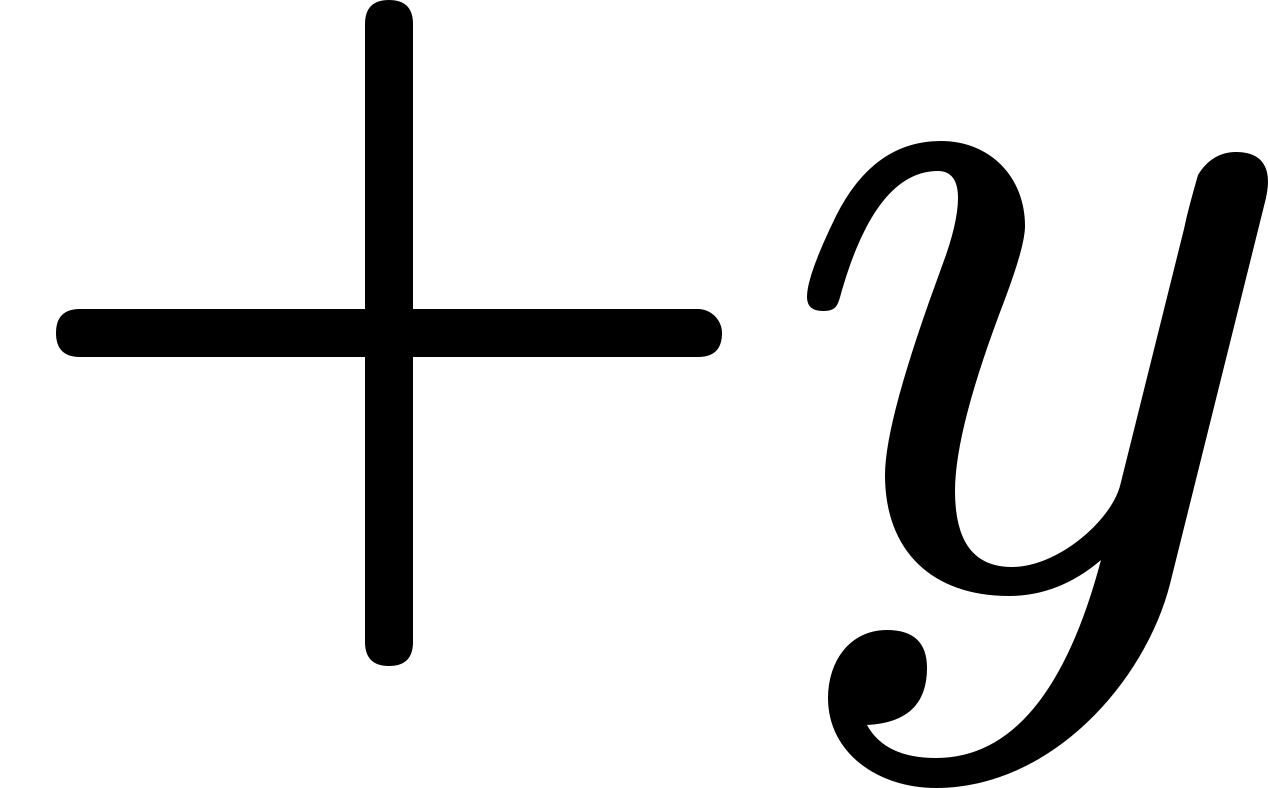
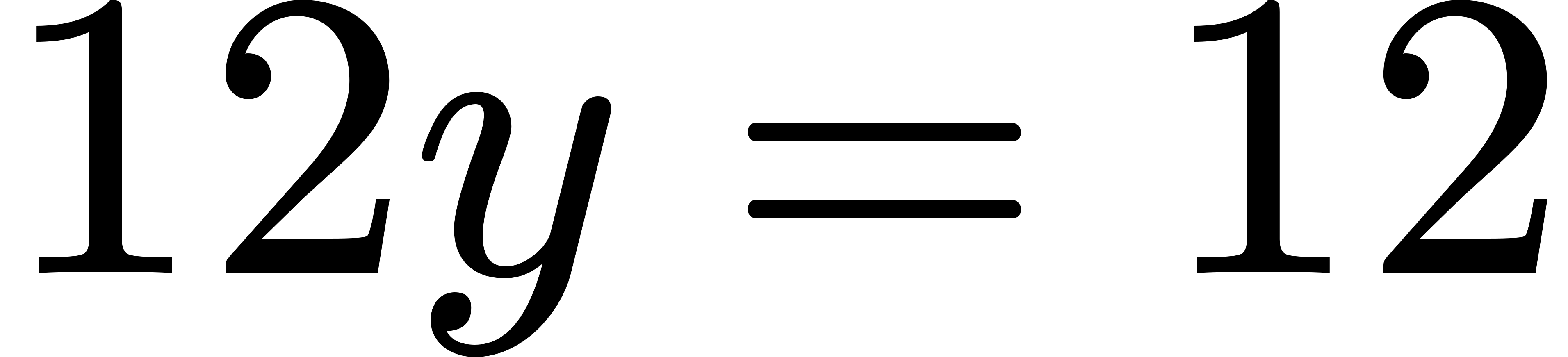
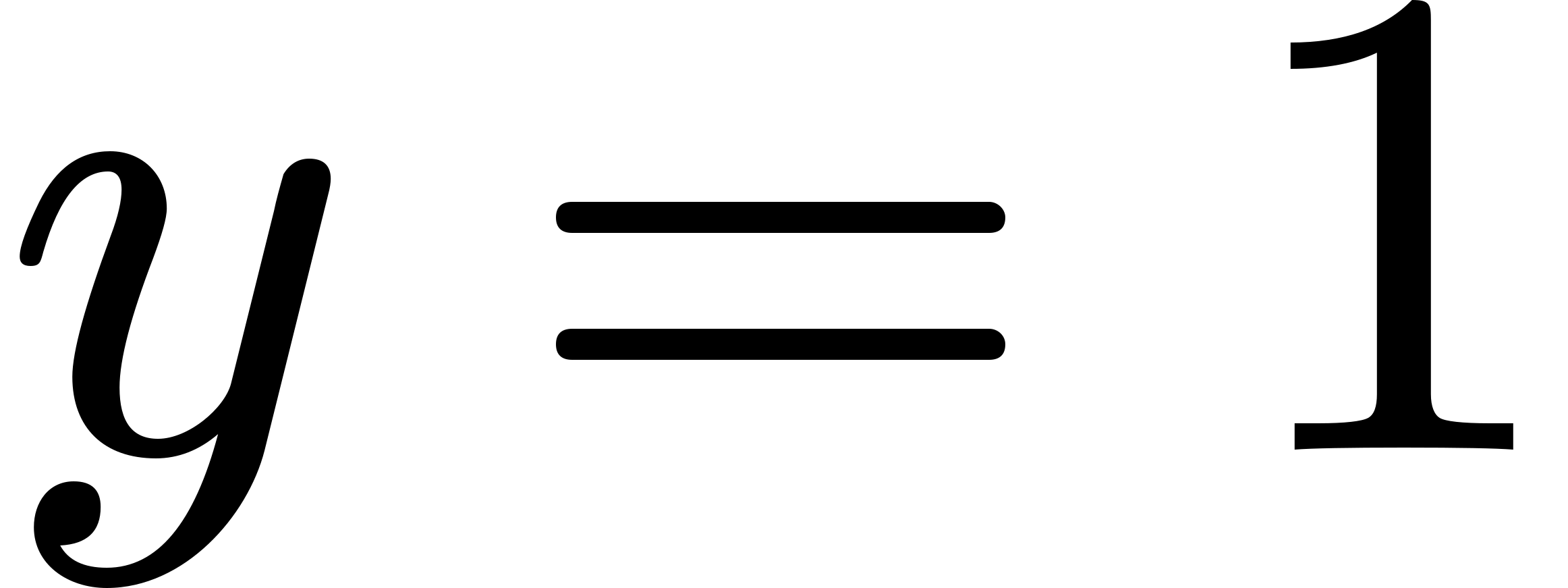
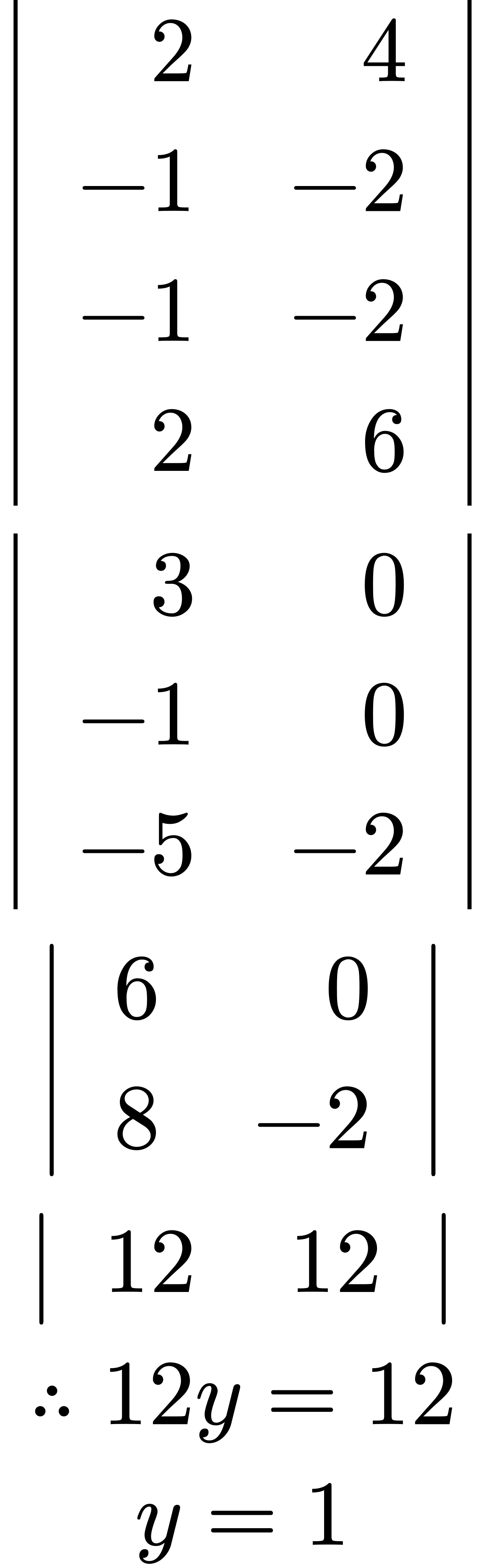
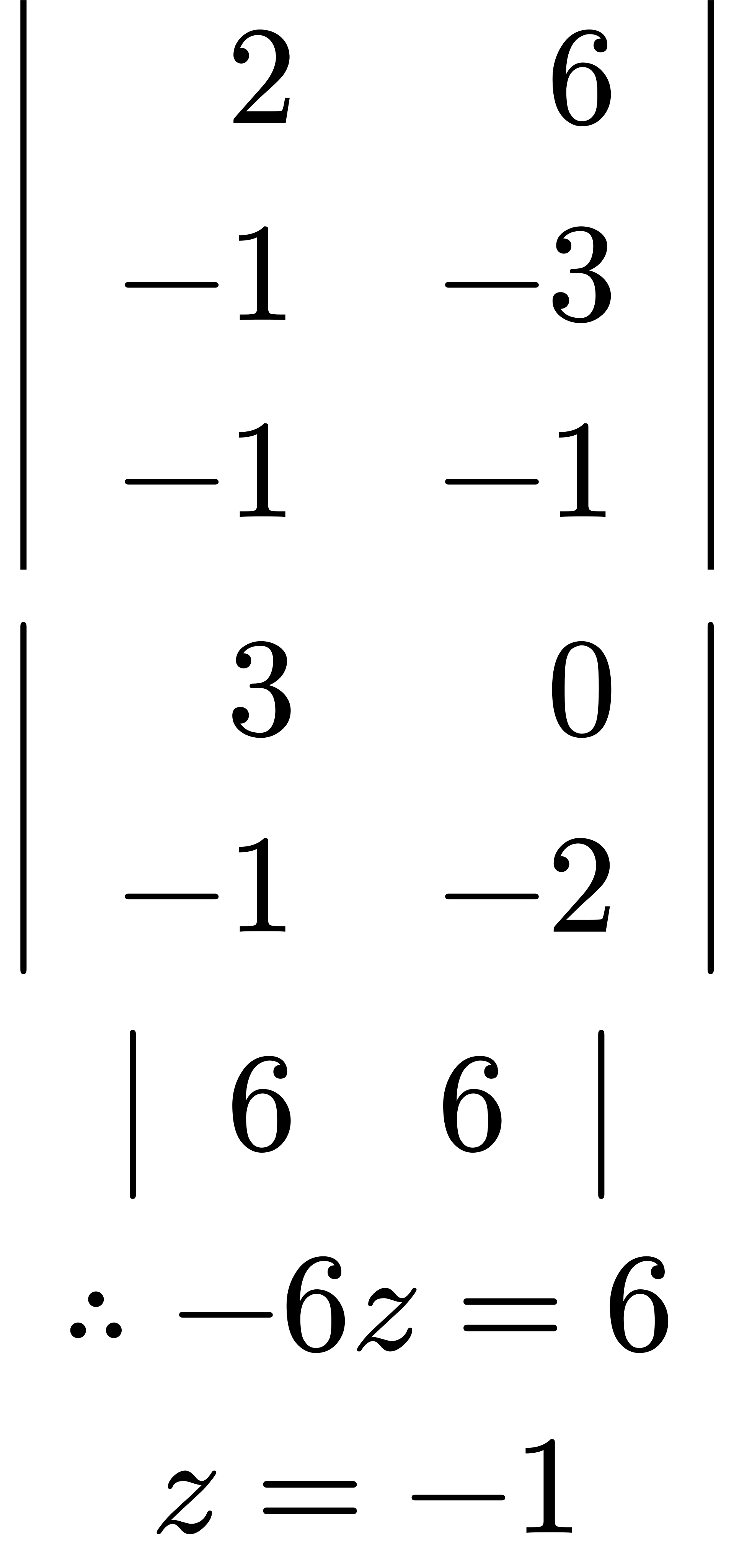
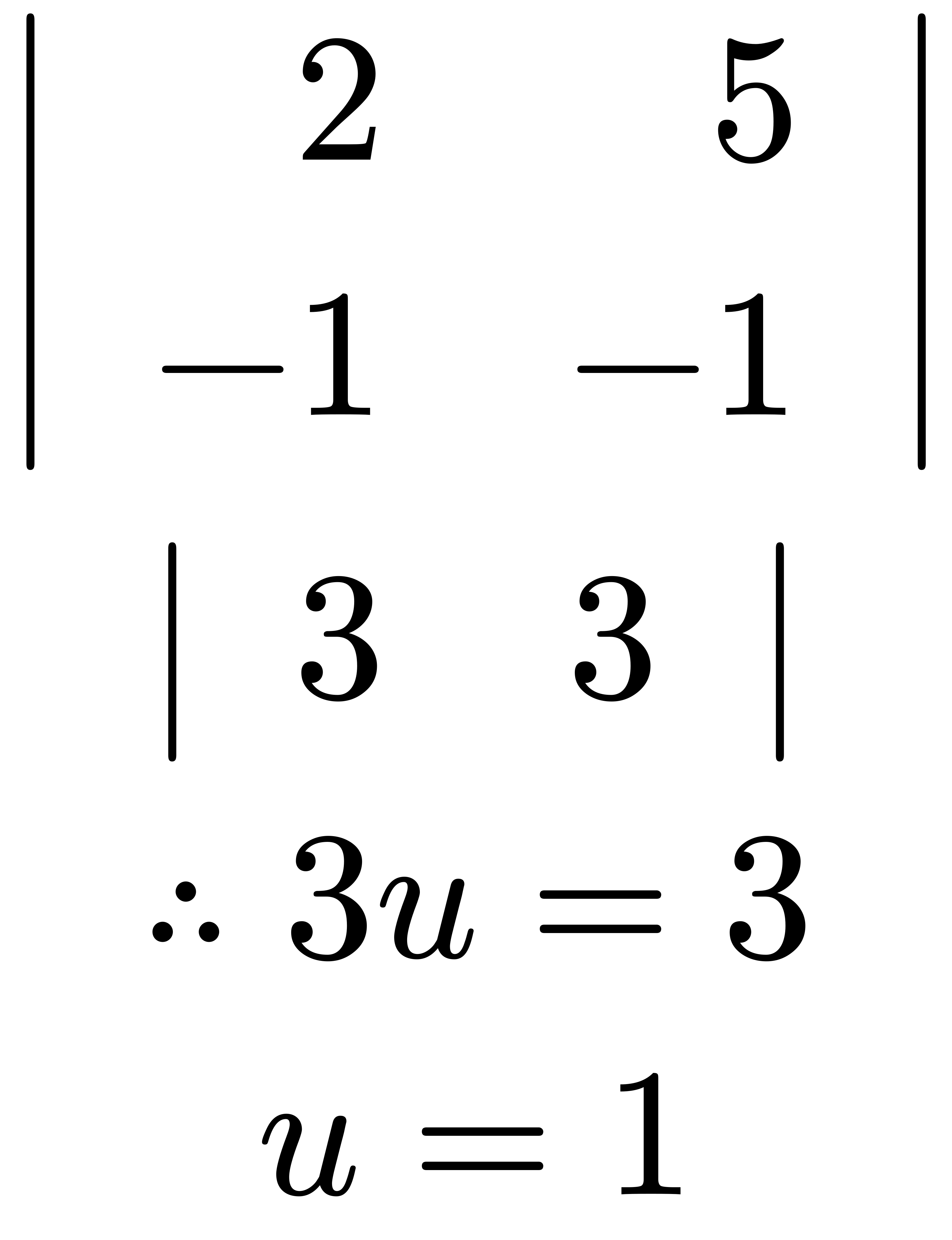
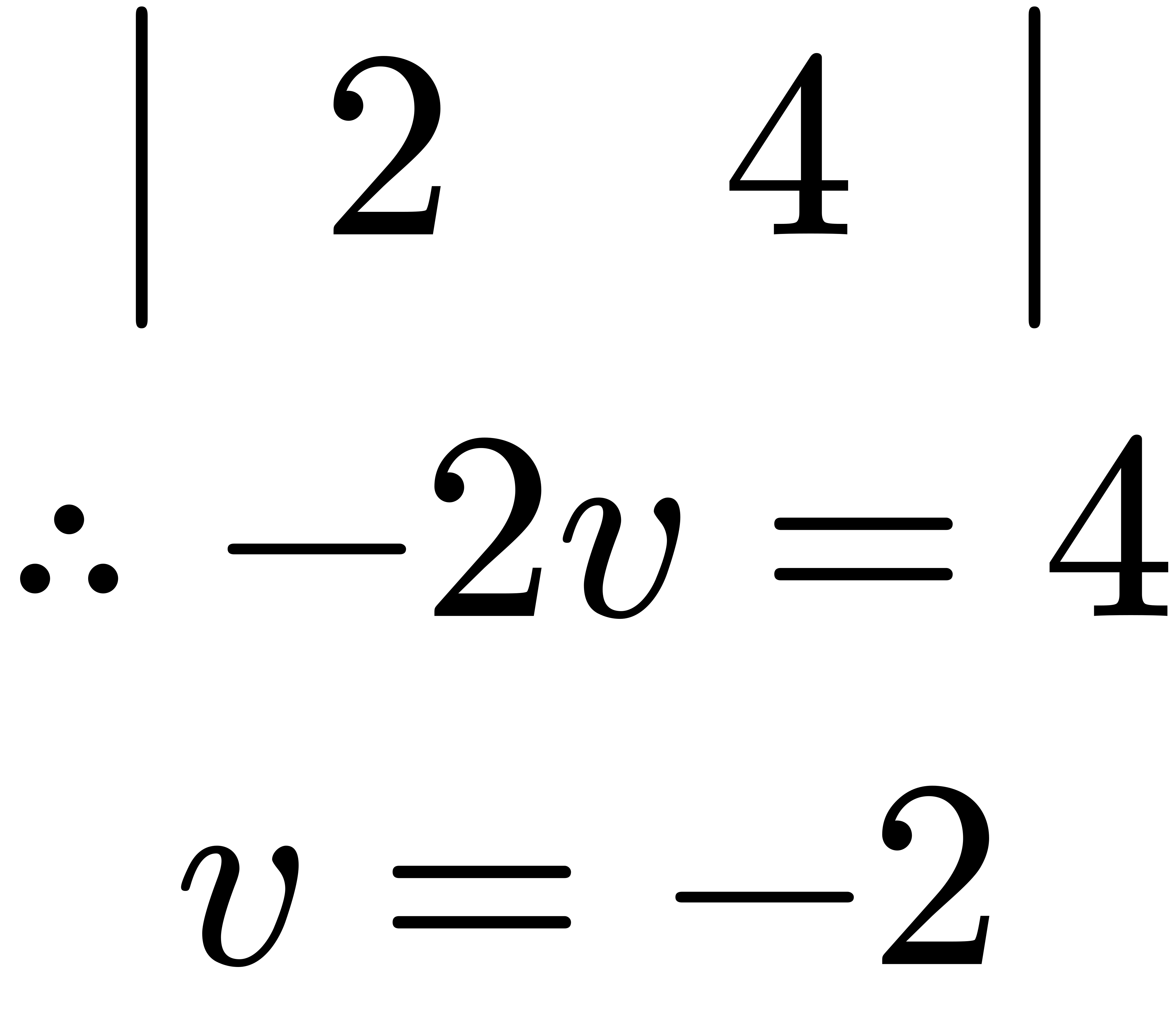
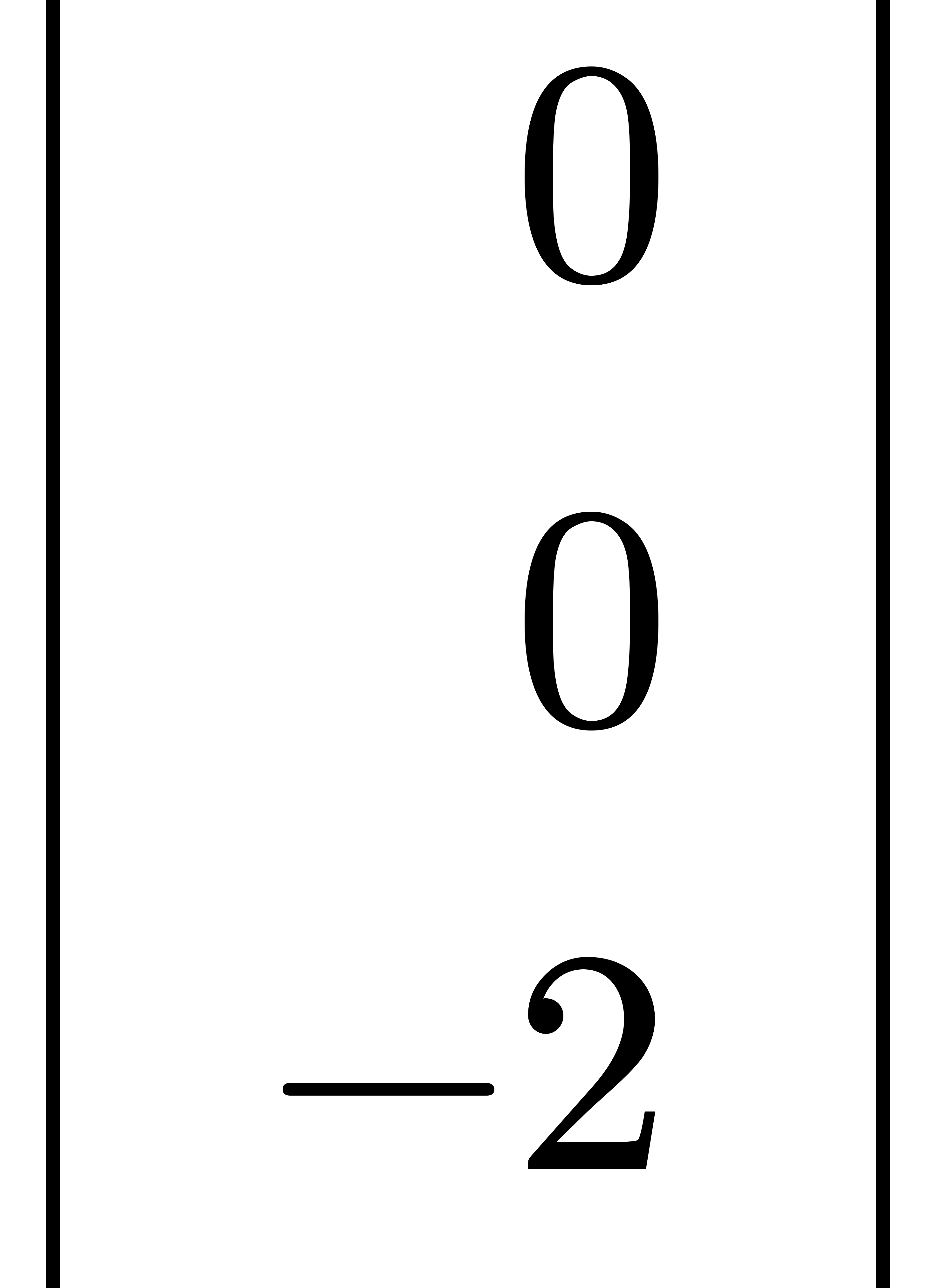
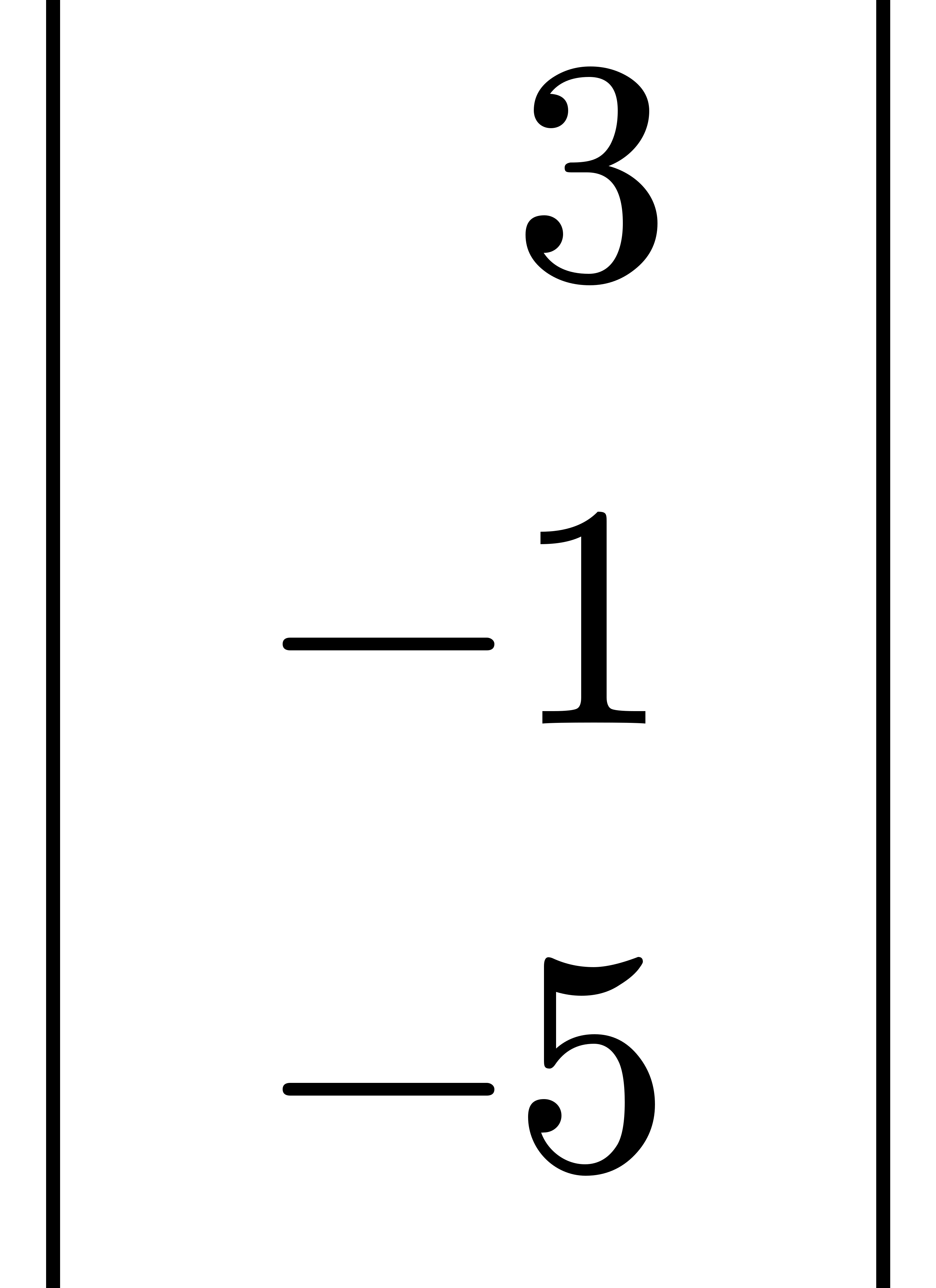
We then condense these into the columnStart 3 By 1 Matrix 1st Row  0 2nd Row  0 3rd Row  negative 2 EndMatrix, and, supplying from the second block of the first series the column Start 3 By 1 Matrix 1st Row  3 2nd Row  negative 1 3rd Row  negative 5 EndMatrix, we obtain Start 3 By 2 Matrix 1st Row 1st Column 3 2nd Column 0 2nd Row 1st Column negative 1 2nd Column 0 3rd Row 1st Column negative 5 2nd Column negative 2 EndMatrix as the last two columns of the second block of the new series; and proceeding thus we ultimately obtain the two terms 12, 12. Observing that the y-column has the sign plus placed over it, we multiply the first 12 by plus y, and so form the equation 12 y equals 12, which gives y equals 1. The values of z, u, and v are similarly found.

It will be seen that when once the given block has been successfully condensed, and the value of the first unknown obtained, there is no further danger of the operation being interrupted by the occurrence of ciphers.
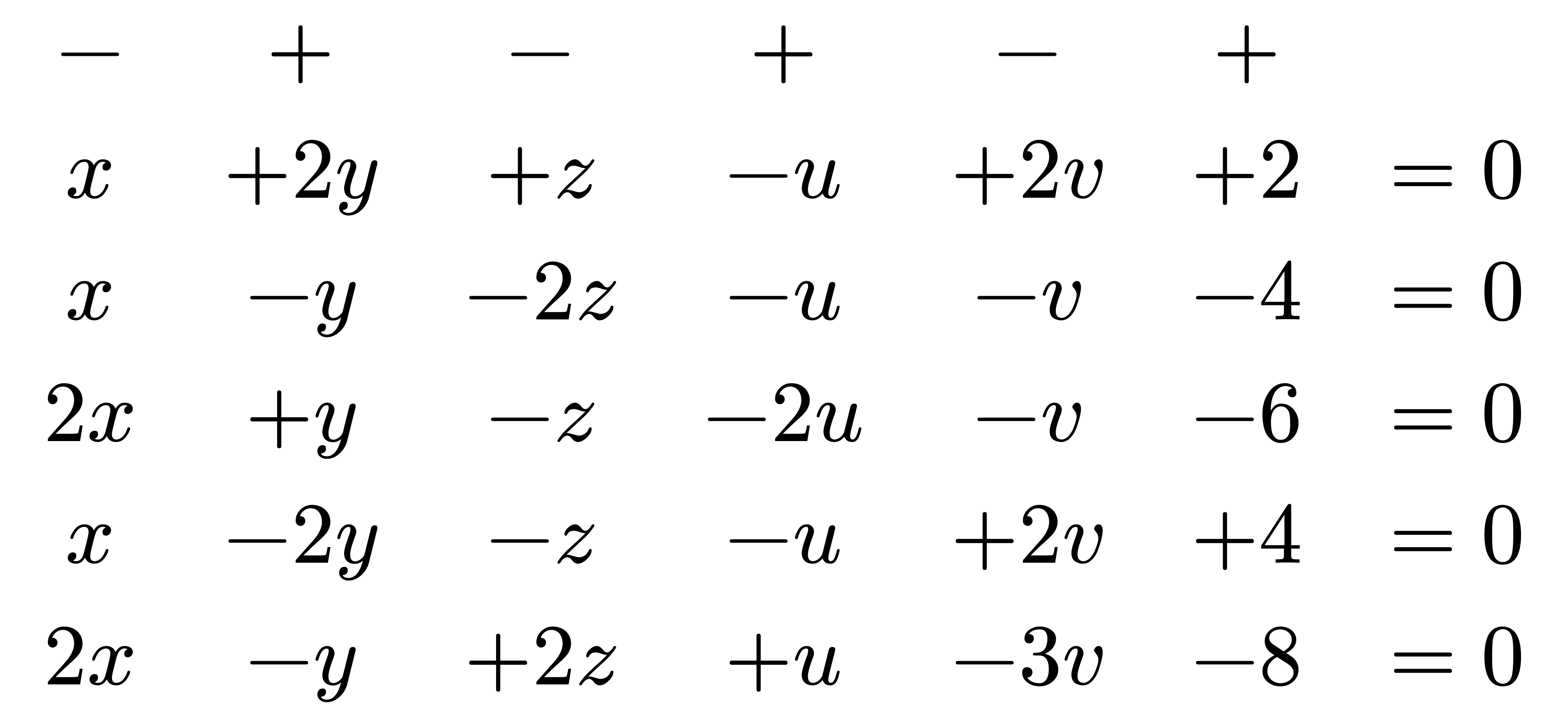
StartLayout 1st Row 1st Column minus 2nd Column plus 3rd Column minus 4th Column plus 5th Column minus 6th Column plus 7th Column Blank 2nd Row 1st Column x 2nd Column plus 2 y 3rd Column plus z 4th Column negative u 5th Column plus 2 v 6th Column plus 2 7th Column equals 0 3rd Row 1st Column x 2nd Column negative y 3rd Column minus 2 z 4th Column negative u 5th Column negative v 6th Column negative 4 7th Column equals 0 4th Row 1st Column 2 x 2nd Column plus y 3rd Column negative z 4th Column minus 2 u 5th Column negative v 6th Column negative 6 7th Column equals 0 5th Row 1st Column x 2nd Column minus 2 y 3rd Column negative z 4th Column negative u 5th Column plus 2 v 6th Column plus 4 7th Column equals 0 6th Row 1st Column 2 x 2nd Column negative y 3rd Column plus 2 z 4th Column plus u 5th Column minus 3 v 6th Column negative 8 7th Column equals 0 EndLayout
StartLayout 1st Row  Start 5 By 6 Matrix 1st Row 1st Column 1 2nd Column 2 3rd Column 1 4th Column negative 1 5th Column 2 6th Column 2 2nd Row 1st Column 1 2nd Column negative 1 3rd Column negative 2 4th Column negative 1 5th Column negative 1 6th Column negative 4 3rd Row 1st Column 2 2nd Column 1 3rd Column negative 1 4th Column negative 2 5th Column negative 1 6th Column negative 6 4th Row 1st Column 1 2nd Column negative 2 3rd Column negative 1 4th Column negative 1 5th Column 2 6th Column 4 5th Row 1st Column 2 2nd Column negative 1 3rd Column 2 4th Column 1 5th Column negative 3 6th Column negative 8 EndMatrix 2nd Row  Start 4 By 5 Matrix 1st Row 1st Column negative 3 2nd Column negative 3 3rd Column negative 3 4th Column 3 5th Column negative 6 2nd Row 1st Column 3 2nd Column 3 3rd Column 3 4th Column negative 1 5th Column 2 3rd Row 1st Column negative 5 2nd Column negative 3 3rd Column negative 1 4th Column negative 5 5th Column 8 4th Row 1st Column 3 2nd Column negative 5 3rd Column 1 4th Column 1 5th Column negative 4 EndMatrix 3rd Row  Start 3 By 4 Matrix 1st Row 1st Column 0 2nd Column 0 3rd Column 6 4th Column 0 2nd Row 1st Column 6 2nd Column negative 6 3rd Column 8 4th Column negative 2 3rd Row 1st Column negative 17 2nd Column 8 3rd Column negative 4 4th Column 6 EndMatrix 4th Row  Start 2 By 3 Matrix 1st Row 1st Column 0 2nd Column 12 3rd Column 12 2nd Row 1st Column 18 2nd Column 40 3rd Column negative 8 EndMatrix 5th Row  Start 1 By 2 Matrix 1st Row 1st Column 36 2nd Column negative 72 EndMatrix 6th Row  therefore minus 36 x equals negative 72 7th Row  x equals 2 EndLayout StartLayout 1st Row  Start 4 By 2 Matrix 1st Row 1st Column 2 2nd Column 4 2nd Row 1st Column negative 1 2nd Column negative 2 3rd Row 1st Column negative 1 2nd Column negative 2 4th Row 1st Column 2 2nd Column 6 EndMatrix 2nd Row  Start 3 By 2 Matrix 1st Row 1st Column 3 2nd Column 0 2nd Row 1st Column negative 1 2nd Column 0 3rd Row 1st Column negative 5 2nd Column negative 2 EndMatrix 3rd Row  Start 2 By 2 Determinant 1st Row 1st Column 6 2nd Column 0 2nd Row 1st Column 8 2nd Column negative 2 EndDeterminant 4th Row  Start 1 By 2 Matrix 1st Row 1st Column 12 2nd Column 12 EndMatrix 5th Row  therefore 12 y equals 12 6th Row  y equals 1 EndLayout StartLayout 1st Row  Start 3 By 2 Matrix 1st Row 1st Column 2 2nd Column 6 2nd Row 1st Column negative 1 2nd Column negative 3 3rd Row 1st Column negative 1 2nd Column negative 1 EndMatrix 2nd Row  Start 2 By 2 Determinant 1st Row 1st Column 3 2nd Column 0 2nd Row 1st Column negative 1 2nd Column negative 2 EndDeterminant 3rd Row  Start 1 By 2 Matrix 1st Row 1st Column 6 2nd Column 6 EndMatrix 4th Row  therefore minus 6 z equals 6 5th Row  z equals negative 1 EndLayout StartLayout 1st Row  Start 2 By 2 Determinant 1st Row 1st Column 2 2nd Column 5 2nd Row 1st Column negative 1 2nd Column negative 1 EndDeterminant 2nd Row  Start 1 By 2 Matrix 1st Row 1st Column 3 2nd Column 3 EndMatrix 3rd Row  therefore 3 u equals 3 4th Row  u equals 1 EndLayout StartLayout 1st Row  Start 1 By 2 Matrix 1st Row 1st Column 2 2nd Column 4 EndMatrix 2nd Row  therefore minus 2 v equals 4 3rd Row  v equals negative 2 EndLayout

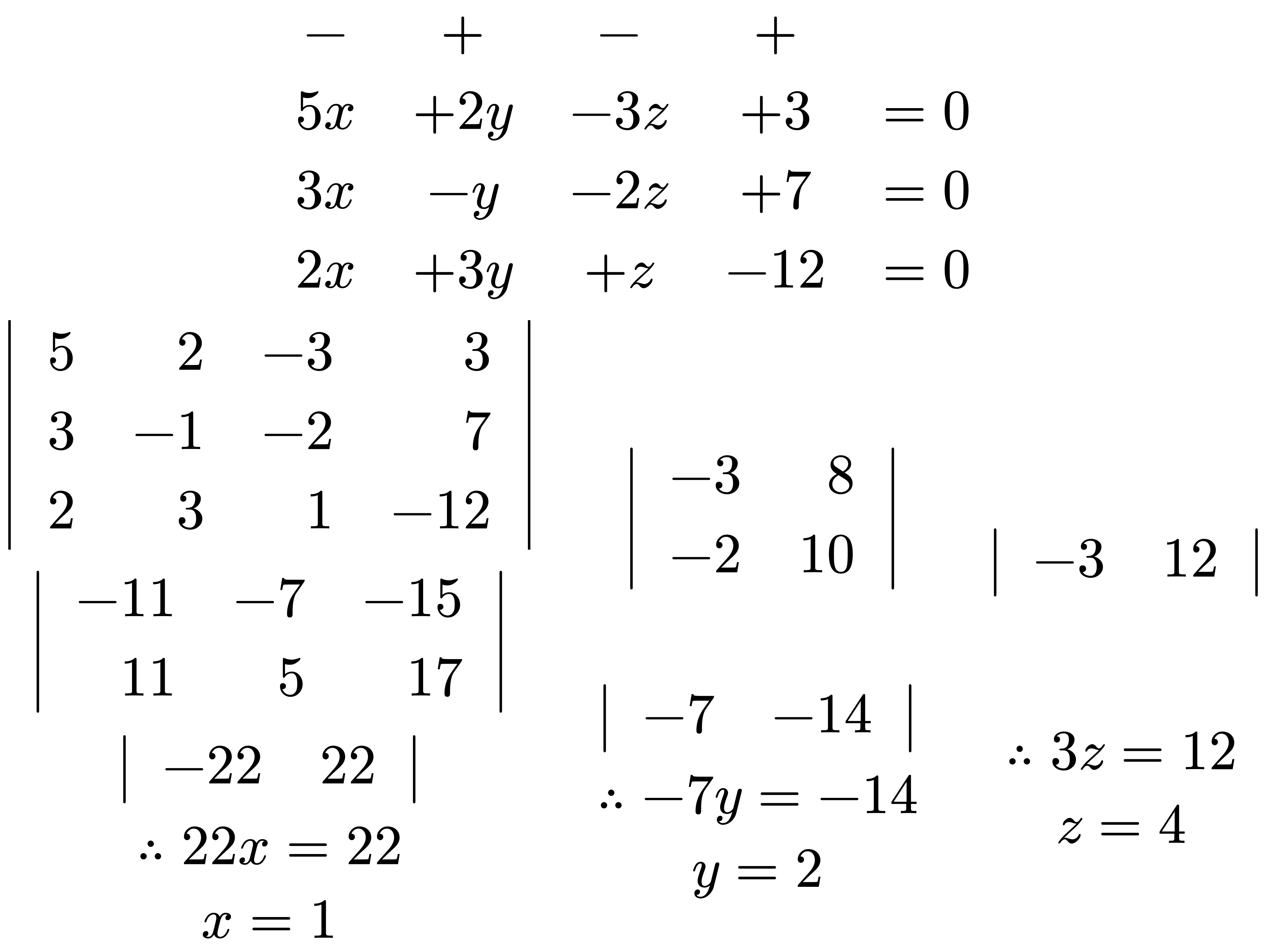
StartLayout 1st Row 1st Column minus 2nd Column plus 3rd Column minus 4th Column plus 5th Column Blank 2nd Row 1st Column 5 x 2nd Column plus 2 y 3rd Column minus 3 z 4th Column plus 3 5th Column equals 0 3rd Row 1st Column 3 x 2nd Column negative y 3rd Column minus 2 z 4th Column plus 7 5th Column equals 0 4th Row 1st Column 2 x 2nd Column plus 3 y 3rd Column plus z 4th Column negative 12 5th Column equals 0 EndLayout StartLayout 1st Row  Start 3 By 4 Matrix 1st Row 1st Column 5 2nd Column 2 3rd Column negative 3 4th Column 3 2nd Row 1st Column 3 2nd Column negative 1 3rd Column negative 2 4th Column 7 3rd Row 1st Column 2 2nd Column 3 3rd Column 1 4th Column negative 12 EndMatrix 2nd Row  Start 2 By 3 Matrix 1st Row 1st Column negative 11 2nd Column negative 7 3rd Column negative 15 2nd Row 1st Column 11 2nd Column 5 3rd Column 17 EndMatrix 3rd Row  Start 1 By 2 Matrix 1st Row 1st Column negative 22 2nd Column 22 EndMatrix 4th Row  therefore 22 x equals 22 5th Row  x equals 1 EndLayout StartLayout 1st Row  Start 2 By 2 Determinant 1st Row 1st Column negative 3 2nd Column 8 2nd Row 1st Column negative 2 2nd Column 10 EndDeterminant 2nd Row  Start 1 By 2 Matrix 1st Row 1st Column negative 7 2nd Column negative 14 EndMatrix 3rd Row  therefore minus 7 y equals negative 14 4th Row  y equals 2 EndLayout StartLayout 1st Row  Start 1 By 2 Matrix 1st Row 1st Column negative 3 2nd Column 12 EndMatrix 2nd Row  therefore 3 z equals 12 3rd Row  z equals 4 EndLayout

The Society then adjourned over the Whitsuntide Recess to Thursday, May 31.

TRANSCRIBER’S NOTE

Minor typographical corrections and presentational changes have been made without comment.

New original cover art included with this eBook is granted to the public domain.