
The Project Gutenberg EBook of The Private Life of Napoleon Bonaparte,
Complete, by Constant

This eBook is for the use of anyone anywhere at no cost and with
almost no restrictions whatsoever.  You may copy it, give it away or
re-use it under the terms of the Project Gutenberg License included
with this eBook or online at www.gutenberg.org


Title: The Private Life of Napoleon Bonaparte, Complete

Author: Constant

Release Date: September 11, 2006 [EBook #3580]
Last Updated: July 19, 2014

Language: English

Character set encoding: ISO-8859-1

*** START OF THIS PROJECT GUTENBERG EBOOK THE PRIVATE LIFE OF NAPOLEON ***


Produced by David Widger

CONTENTS
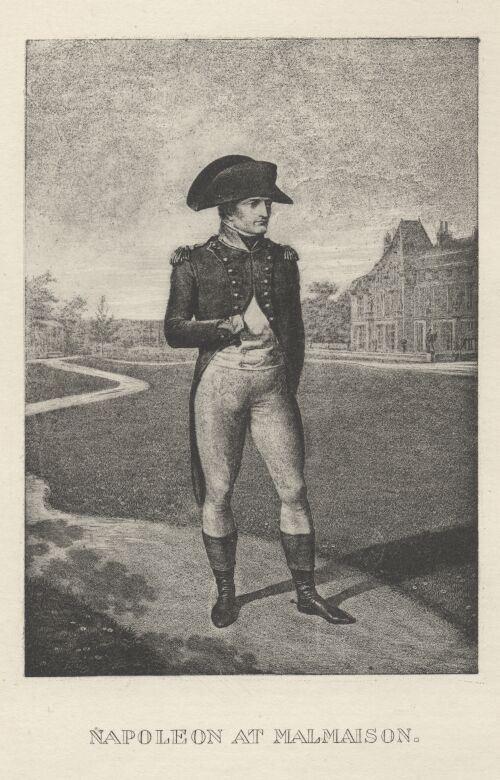
NAPOLEON AT MALMAISON 	Frontispiece Vol. 1
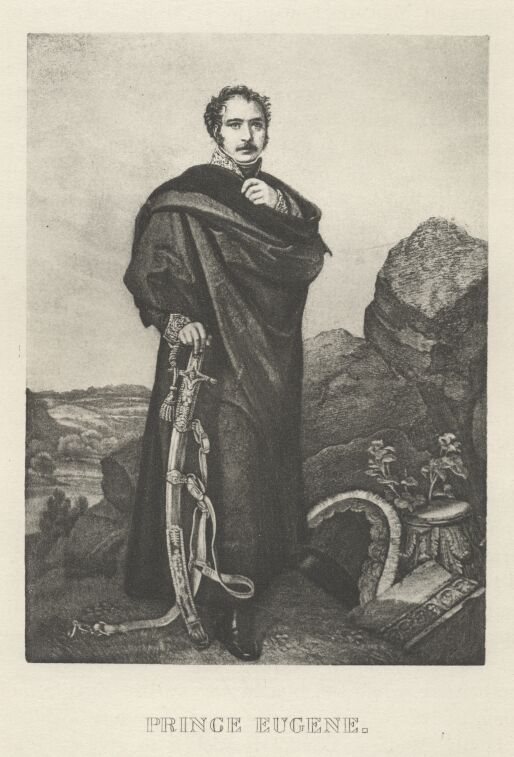
PRINCE EUGENE
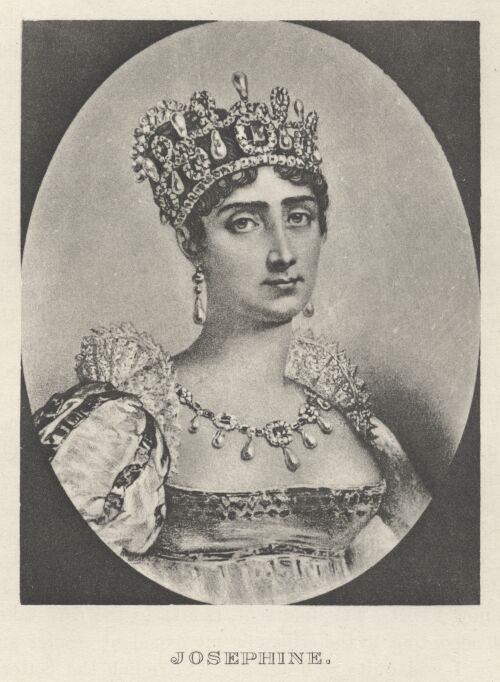
JOSEPHINE
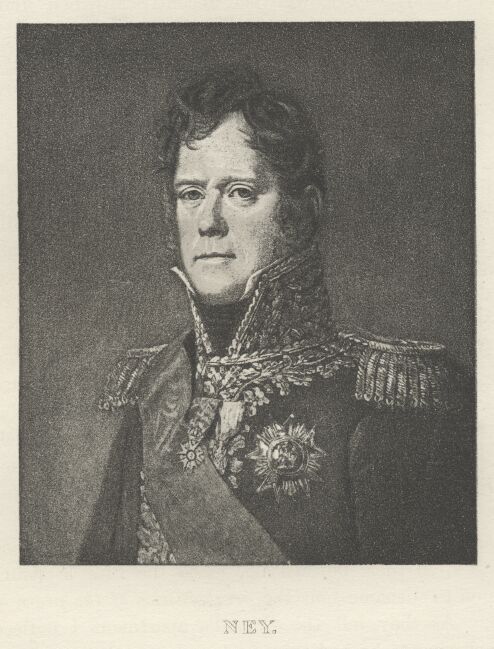
NEY
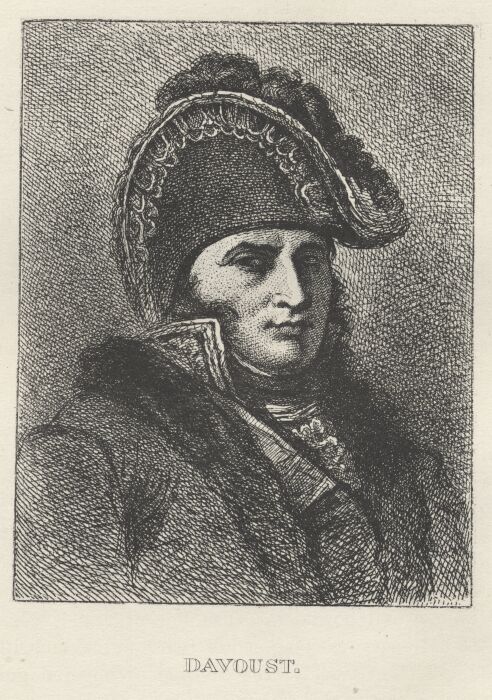
DAVOUST
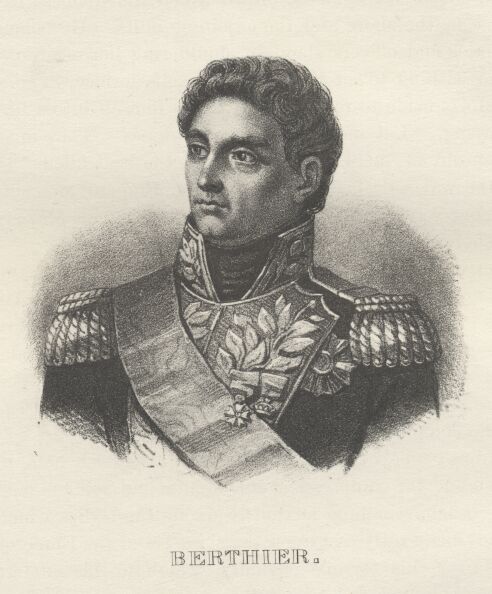
BERTHIER
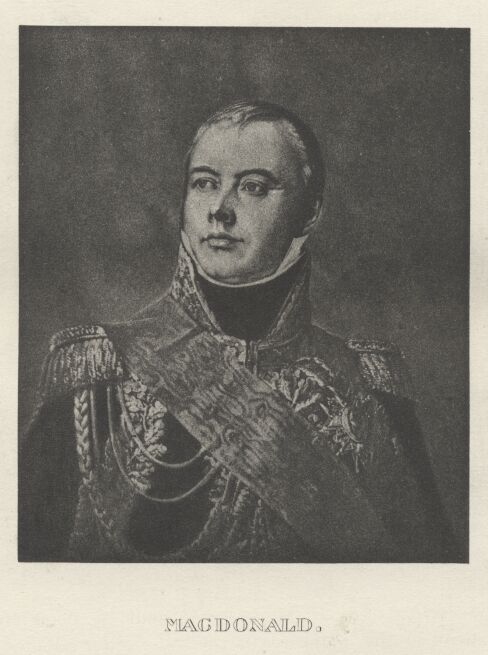
MACDONALD
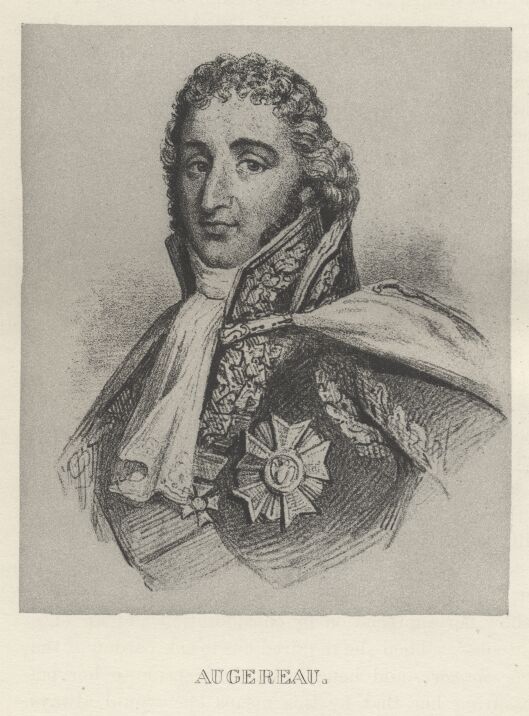
AUGEREAU

NAPOLEON, 1814 	Frontispiece Vol 2.
RAPP
MURAT
LUCIEN BONAPARTE
SOULT
BERNADOTTE
MARIE LOUISA
DUROC

NAPOLEON AND HIS SON 	Frontispiece Vol 3.
LANNES
JOSEPH NAPOLEON
MASSENA
THE KING OF ROME
JEROME BONAPARTE
LE MARECHAL NEY
OUDINOT
Though this work was first published in 1830, it has never before been translated into English. Indeed, the volumes are almost out of print. When in Paris a few years ago the writer secured, with much difficulty, a copy, from which this translation has been made. Notes have been added by the translator, and illustrations by the publishers, which, it is believed, will enhance the interest of the original work by Constant.
"To paint Caesar in undress is not to paint Caesar," some one has said. Yet men will always like to see the great 'en deshabille'. In these volumes the hero is painted in undress. His foibles, his peculiarities, his vices, are here depicted without reserve. But so also are his kindness of heart, his vast intellect, his knowledge of men, his extraordinary energy, his public spirit. The shutters are taken down, and the workings of the mighty machinery are laid bare.
The late Prince Napoleon (who was more truly "the nephew of his uncle" than was Napoleon III.), in his Napoleon and His Detractors, bitterly assails this work of Constants attacking both its authenticity and the correctness of its statements. But there appears no good reason to doubt its genuineness, and the truthfulness of many of its details is amply supported by other authorities. Notwithstanding its excesses and follies, the great French Revolution will ever have an absorbing interest for mankind, because it began as a struggle for the advancement of the cause of manhood, liberty, and equal rights. It was a terribly earnest movement; and, after the lapse of a century, interest continues unabated in the great soldier who restored order, and organized and preserved the new ideas by means of his Civil Code and a firm government.
Countless memoirs have been published by those who lived in those heroic times. Yet everything which will cast new light upon the chief actors in that great drama of humanity is still seized upon with avidity, especially whatever concerns the Emperor.
This is not merely because he was a great conqueror; for such were, after their fashion, Genghis Khan and Timour, and hundreds of others. But it is because of the human interest which attaches to the wonderful career of Napoleon and the events of which he was the central figure.
Never did poet or novelist imagine scenes so improbable. The son of an obscure lawyer in an unimportant island becomes Emperor of the French and King of Italy. His brothers and sisters become kings and queens. The sons of innkeepers, notaries; lawyers, and peasants become marshals of the empire. The Emperor, first making a West India Creole his wife and Empress, puts her away, and marries a daughter of the haughtiest and oldest royal house in Europe, the niece of a queen whom the people of France had beheaded a few years before. Their son is born a king—King of Rome. Then suddenly the pageantry dissolves, and Emperor, kings, and queens become subjects again. Has imagination ever dreamed anything wilder than this? The dramatic interest of this story will always attract, but there is a deeper one. The secret spring of all those rapid changes, and the real cause of the great interest humanity will always feel in the story of those eventful times, is to be found in Napoleon's own explanation—"A career open to talents, without distinction of birth." Till that day the accident of birth was the key to every honor and every position. No man could hold even a lieutenancy in the army who could not show four quarterings on his coat of arms.
It was as the "armed apostle of democracy" that Napoleon went forth conquering and to conquer. He declared at St. Helena that he "had always marched supported by the opinions of six millions of men."
The old woman who met him incognito climbing the hill of Tarare, and replying to his assertion that "Napoleon was only a tyrant like the rest," exclaimed, "It may be so, but the others are the kings of the nobility, while he is one of us, and we have chosen him ourselves," expressed a great truth. As long as Napoleon represented popular sovereignty he was invincible; but when, deeming himself strong enough to stand alone, he endeavored to conciliate the old order of things, and, divorcing the daughter of the people, took for a bride the daughter of kings and allied himself with them—at that moment, like another Samson, "his strength departed from him." Disasters came as they had come to him before, but this time the heart of the people was no longer with him. He fell.
This man has been studied as a soldier, a statesman, an organizer, a politician. In all he was undeniably great. But men will always like to know something about him as a man. Can he stand that ordeal? These volumes will answer that question. They are written by one who joined the First Consul at the Hospice on Mt. St. Bernard, on his way to Marengo, in June, 1800, and who was with him as his chief personal attendant, day and night, never leaving him "any more than his shadow" (eight days only) excepted until that eventful day, fourteen years later, when, laying aside the sceptre of the greatest empire the world had known for seventeen centuries, he walked down the horseshoe steps at Fontainebleau in the presence of the soldiers whom he had led to victory from Madrid to Moscow, once more a private citizen.
That men of Anglo-Saxon speech may have an opportunity to see and judge the Emperor from "close at hand," and view him as he appeared in the eyes of his personal attendants, these volumes have been translated, and are now submitted to the public. Though the remark of Frederick the Great that "No man is a hero to his valet" is not altogether borne out in this instance, still it will be seen that there is here nothing of that "divinity which doth hedge a king." In these volumes Napoleon appears as a man, a very great man, still a mere man, not, a demigod. Their perusal will doubtless lead to a truer conception of his character, as manifested both in his good and in his evil traits. The former were natural to him; the latter were often produced by the exceptional circumstances which surrounded him, and the extraordinary temptations to which he was subjected.
Certainly a truer and fuller light is cast by these volumes, upon the colossal figure which will always remain one of the most interesting studies in all human history.
The career of a man compelled to make his own way, who is not an artisan or in some trade, does not usually begin till he is about twenty years of age. Till then he vegetates, uncertain of his future, neither having, nor being able to have, any well-defined purpose. It is only when he has arrived at the full development of his powers, and his character and bent of mind are shown, that he can determine his profession or calling. Not till then does he know himself, and see his way open before him. In fact, it is only then that he begins to live.
Reasoning in this manner, my life from my twentieth year has been thirty years, which can be divided into equal parts, so far as days and months are counted, but very unequal parts, considering the events which transpired in each of those two periods of my life.
Attached to the person of the Emperor Napoleon for fifteen years, I have seen all the men, and witnessed all the important events, which centered around him. I have seen far more than that; for I have had under my eyes all the circumstances of his life, the least as well as the greatest, the most secret as well as those which are known to history,—I have had, I repeat, incessantly under my eyes the man whose name, solitary and alone, fills the most glorious pages of our history. Fifteen years I followed him in his travels and his campaigns, was at his court, and saw him in the privacy of his family. Whatever step he wished to take, whatever order he gave, it was necessarily very difficult for the Emperor not to admit me, even though involuntarily, into his confidence; so that without desiring it, I have more than once found myself in the possession of secrets I should have preferred not to know. What wonderful things happened during those fifteen years! Those near the Emperor lived as if in the center of a whirlwind; and so quick was the succession of overwhelming events, that one felt dazed, as it were, and if he wished to pause and fix his attention for a moment, there instantly came, like another flood, a succession of events which carried him along with them without giving him time to fix his thoughts.
Succeeding these times of activity which made one's brain whirl, there came to me the most absolute repose in an isolated retreat where I passed another interval of fifteen years after leaving the Emperor. But what a contrast! To those who have lived, like myself, amid the conquests and wonders of the Empire, what is left to-day? If the strength of our manhood was passed amid the bustle of years so short, yet so fully occupied, our careers were sufficiently long and fruitful, and it is time to give ourselves up to repose. We can withdraw from the world, and close our eyes. Can it be possible to see anything equal to what we have seen? Such scenes do not come twice in the lifetime of any man; and having seen them, they suffice to occupy his memory through all his remaining years, and in retirement he can find nothing better to occupy his leisure moments than the recollections of what he has witnessed.
Thus it has been with me. The reader will readily believe that I have had no greater pleasure than that of recalling the memories of the years passed in the service of the Emperor. As far as possible, I have kept myself informed as to everything that has been written of my former master, his family, and his court; and while listening to these narrations read by my wife and sister at our fireside, the long evenings have passed like an instant! When I found in these books, some of which are truly only miserable rhapsodies, statements which were incorrect, false, or slanderous, I, took pleasure in correcting such statements, or in showing their absurdity. My wife, who lived, as I did, in the midst of these events, also made her corrections, and, without other object than our own satisfaction, made notes of our joint observations.
All who came to see us in our retreat, and took pleasure in having me narrate what I had seen, were astonished and often indignant at the falsehoods with which ignorance or malevolence had calumniated the Emperor and the Empire, and expressing their gratitude for the correct information I was able to give them, advised me also to furnish it to the public. But I attached no importance to the suggestion, and was far from dreaming that some day I should be the author of a book, until M. Ladvocat came to our hermitage, and urged me earnestly to publish my memoirs, offering himself to become the publisher.
At the very time my wife and I received this unexpected visit, we were reading together the Memoirs of Bourrienne, which the Ladvocat publishing-house had just issued; and we had remarked more than once how exempt these Memoirs were from both that spirit of disparagement and of adulation which we had noticed with disgust in other books on the same subject. M. Ladvocat advised me to complete the sketch of the Emperor, which, owing to his elevated position and habitual occupations, Bourrienne had been able to make only from a political point of view; and in accordance with his advice, I shall relate in simple words, and in a manner suited to my relations with the Emperor, those things which Bourrienne has necessarily omitted, and which no one could know so well as I.
I candidly admit that my objections to M. Ladvocat's advice were entirely overcome when he called my attention to this passage in the introduction to Bourrienne's memoirs: "If every one who had any relations with Napoleon, whatever the time and place, will accurately and without prejudice record what he saw and heard, the future historian of his life will be rich in materials. I hope that whoever undertakes that difficult task will find in my notes some information which may be useful in perfecting his work."
Having re-read these lines attentively, I said to myself that I could furnish memoranda and information which would refute errors, brand falsehoods, and bring to light what I knew to be the truth. In a word, I felt that I could give in my testimony, and that it was my duty to do so, in the long trial which has been held ever since the overthrow of the Emperor; for I had been an eye-witness, had seen everything, and could say, "I was there." Others also have been close to the Emperor and his court, and I may often repeat what they have said, for the feats which they describe I had the same opportunity of witnessing; but, on the other hand, whatever I know of private matters, and whatever I may reveal which was secret and unknown, no one till this time could possibly have known, or consequently have related.
From the departure of the First Consul for the campaign of Marengo, whither I went with him, until the departure from Fontainebleau, when I was compelled to leave him, I was absent only twice, once for three days and once for seven or eight days. Excepting these short leaves of absence, the latter of which was on account of my health, I quitted the Emperor no more than his shadow.
It has been said that no one is a hero to his valet de chambre. I beg leave to dissent from this. The Emperor, as near as I was to him, was always a hero; and it was a great advantage also to see the man as he was. At a distance you were sensible only of the prestige of his glory and his power; but on getting closer to him you enjoyed, besides, the surprising charm of his conversation, the entire simplicity of his family life, and I do not hesitate to say, the habitual kindliness of his character.
The reader, if curious to learn beforehand in what spirit these Memoirs are written, will perhaps read with interest this passage of a letter that I wrote to my publisher:
"Bourrienne had, perhaps, reason for treating Napoleon, as a public man, with severity. But we view him from different standpoints, and I speak only of the hero in undress. He was then almost always kind, patient, and rarely unjust. He was much attached to those about him, and received with kindness and good nature the services of those whom he liked. He was a man of habit. It is as a devoted servant that I wish to speak of the Emperor, and in no wise as a critic. It is not, however, an apotheosis in several volumes that I wish to write: for I am on this point somewhat like fathers who recognize the faults of their children, and reprove them earnestly, while at the same time they are ready to make excuses for their errors."
I trust that I shall be pardoned the familiarity, or, if you will, the inappropriateness of this comparison, for the sake of the feeling which dictates it. Besides, I do not propose either to praise or blame, but simply to relate that which fell within my knowledge, without trying to prejudice the opinion of any one.
I cannot close this introduction without a few words as to myself, in reply to the calumnies which have not spared, even in his retirement, a man who should have no enemies, if, to be protected from malice, it were sufficient to have done a little good, and no harm to any one. I am reproached with having abandoned my master after his fall, and not having shared his exile. I will show that, if I did not follow the Emperor, it was because I lacked not the will but the power to do so. God knows that I do not wish to undervalue the devotion of the faithful servants who followed the fortunes of the Emperor to the end. However, it is not improper to say that, however terrible the fall of the Emperor was for him, the situation (I speak here only of the personal advantages), in the island of Elba, of those who remained in his service, and who were not detained in France by an inexorable necessity, was still not without its advantages; and it was not, therefore, my personal interests which caused me to leave him. I shall explain hereafter my reasons for quitting his service.
I shall also give the truth as to the alleged abuse of confidence, of which, according to others, I was guilty in respect to the Emperor. A simple statement of the mistake which gave rise to this falsehood, I trust, will clear me of every suspicion of indelicacy; but if it is necessary to add other proofs, I could obtain them from those who lived nearest to the Emperor, and who were in a condition to both know and understand what passed between us; and lastly, I invoke fifty years of a blameless life, and I can say: "When I was in a situation to render great services, I did so; but I never sold them. I could have derived advantages from the petitions that I made for people, who, in consequence of my solicitations, have acquired immense fortunes; but I refused even the proper acknowledgment which in, their gratitude (very deep at that time) they felt compelled to offer me, by proposing an interest in their enterprises. I did not seek to take advantage, for my own benefit, of the generosity with which the Emperor so long deigned to honor me, in order to enrich or secure places for my relatives; and I retired poor after fifteen years passed in the personal service of the richest and most powerful monarch of Europe."
Having made these statements, I shall await with confidence the judgment of my readers.
I shall refer to myself very little in these memoirs, for I am aware the public will examine them only for details concerning the great man to whom fortune attached me for sixteen years, and whom I scarcely quitted during the whole of that time. Notwithstanding, I ask permission to say a few words as to my childhood, and the circumstances which made me valet de chambre of the Emperor.
I was born Dec. 2, 1778, at Peruelz, a town which became French on the annexation of Belgium to the Republic, and which then belonged to the Department of Jemmapes. Soon after my birth at the baths of Saint Amand, my father took charge of a small establishment called the Little Chateau, at which visitors to the waters were boarding, being aided in this enterprise by the Prince de Croi, in whose house he had been steward. Business prospered beyond my father's hopes, for a great number of invalids of rank came to his house. When I attained my eleventh year, the Count de Lure, head of one of the chief families of Valenciennes, happened to be one of the boarders at the Little Chateau; and as that excellent man had taken a great fancy to me, he asked my parents permission that I should become a companion to his son, who was about. the same age. My family had intended me for the church, to gratify one of my uncles, who was Dean of Lessine, a man of great wisdom and rigid virtue; and thinking that the offer of the Count de Lure would not affect my intended destination, my father accepted it, judging that some years passed in a family so distinguished would give me a taste for the more serious studies necessary to fit me for the priesthood. I set out, therefore, with the Count de Lure, much grieved at leaving my parents, but pleased also at the same time, as is usual with one at my age, with new scenes. The count took me to one of his estates near Tours, where I was received with the greatest kindness by the countess and her children, with whom I was placed on a footing of perfect equality.
Unfortunately I did not profit very long by the kindness of the count and the lessons. I was taught at his house, for hardly a year had passed at the chateau when we learned of the arrest of the king at Varennes. The count and his family were in despair; and child as I was, I remember that I was deeply pained at the news, without knowing why, but doubtless because it is natural to share the sentiments of those with whom you live, when they treat you with as much kindness as the count and countess had treated me. However, I continued to enjoy the happy freedom from care natural to youth, till one morning I was awakened by a loud noise, and was immediately surrounded by a great number of people, none of whom I knew, and who asked me countless questions which I could not answer. I then learned that the count and his family had emigrated. I was carried to the town hall, where the same questions were renewed, with the same fruitless result; for I knew nothing of the intentions of my late protectors, and could only reply by a flood of tears when I saw myself abandoned and left to my own resources, at a great distance from my family.
I was too young then to reflect on the conduct of the count; but I have since thought that his abandonment of me was an act of delicacy on his part, as he did not wish to make me an emigre without the consent of my parents. I have always believed that, before his departure, the count had committed me to the care of some one, who subsequently did not dare to claim me, lest he should compromise himself, which was then, as is well known, exceedingly dangerous. Behold me, then, at twelve years of age, left without a guide, without means of support, without any one to advise me, and without money, more than a hundred leagues from my home, and already accustomed to the comforts of a luxurious life. It is hardly credible that in this state of affairs I was regarded almost as a suspect, and was required each day to present myself before the city authorities for the greater safety of the Republic. I remember well that whenever the Emperor was pleased to make me relate these tribulations of my childhood, he never failed to repeat several times, "the fools," referring to these same city authorities. However that may be, the authorities of Tours, coming to the conclusion, at last, that a child of twelve was incapable of overthrowing the Republic, gave me a passport, with the injunction to leave the city within twenty-four hours, which I proceeded to do with a hearty good-will, but not without deep grief also at seeing myself alone, and on foot, with a long journey before me. After much privation and many hardships I arrived at last in the neighborhood of Saint-Amand, which I found in the possession of the Austrians, and that it was impossible for me to reach the town, as the French surrounded it. In my despair I seated myself on the side of a ditch and was weeping bitterly, when I was noticed by the chief of squadron, Michau,
[I afterwards had the happiness of obtaining for him, from the Emperor, a position he wished, as a place of retirement, having lost the use of his right arm.—CONSTANT.]
who afterwards became colonel and aide-de-camp to General Loison. Michau approached me, questioned me with great interest, and made me relate my sad adventures, which touched him deeply, while he did not conceal his inability to send me back to my family. He had just obtained leave of absence, which he was going to spend with his family at Chinon, and proposed to me to accompany him, which invitation I accepted with gratitude. I cannot say too much of the kindness and consideration shown me by his household during the three or four months I spent with them. At the end of that time he took me to Paris, where I was soon after placed in the house of M. Gobert, a rich merchant, who treated me with the greatest, kindness.
I lately visited M. Gobert; and he recalled to me that, when we traveled together, he gave up to me one of the seats of his carriage, upon which I was permitted to stretch myself out and sleep. I mention this circumstance, otherwise unimportant, to show the kindness he always showed me.
Some years later I made the acquaintance of Carrat, who was in the service of Madame Bonaparte while the general was absent on the Egyptian expedition. Before relating how I came to enter her household, it is proper to mention how Carrat himself came into her service, and at the same time narrate some anecdotes in regard to him, which will show what were the pastimes of the inhabitants of Malmaison at that date.
Carrat happened to be at Plombieres when Madame Bonaparte
[Madame Bonaparte, nee Marie Joseph Rose Tascher de la Pagerie, was born in Martinique, 1763; became the widow of Viscount Alexander de Beauharnais, 1794; married Napoleon Bonaparte March, 1796; became Empress May 18, 1804; was divorced Dec. 16, 1809; died at Malmaison, May 20, 1814.—TRANS.]
went there to take the waters. Every day he brought her bouquets, and addressed to her little complimentary speeches, so singular and so droll, that Josephine was much diverted, as were also the ladies who accompanied her, among whom were Mesdames de Cambis and de Criguy, and especially her own daughter Hortense, who was convulsed at his oddities. The truth is, he was exceedingly amusing, by reason of a certain simplicity and originality of character, which, however, did not prevent him from being a person of intelligence; and his eccentricities did not displease Madame Bonaparte. A sentimental scene took place when this excellent lady left the springs. Carrat wept, bemoaned himself, and expressed his lasting grief at not being able to see Madame Bonaparte daily, as he had been accustomed; and Madame Bonaparte was so kind-hearted that she at once decided to carry him to Paris with her. She taught him to dress hair, and finally appointed him her hair-dresser and valet, at least such were the duties he had to perform when I made his acquaintance. He was permitted a most astonishing freedom of speech, sometimes even scolding her; and when Madame Bonaparte, who was extremely generous and always gracious towards every one, made presents to her women, or chatted familiarly with them, Carrat would reproach her. "Why give that?" he would say, adding, "See how you do, Madame; you allow yourself to jest with your domestics. Some day they will show you a want of respect." But if he thus endeavored to restrain the generosity of his mistress towards those around her, he did not hesitate to stimulate her generosity towards himself; and whenever he took a fancy to anything, would simply say, "You ought to give me that."
Bravery is not always the inseparable companion of wit, and Carrat gave more than once proof of this. Being endowed with a kind of simple and uncontrollable poltroonery, which never fails in comedies to excite the laughter of the spectators, it was a great pleasure to Madame Bonaparte to play on him such pranks as would bring out his singular want of courage.
It should be stated, first of all, that one of the greatest pleasures of Madame Bonaparte, at Malmaison, was to take walks on the road just outside the walls of the park; and she always preferred this outside road, in spite of the clouds of dust which were constantly rising there, to the delightful walks inside the park. One day, accompanied by her daughter Hortense, she told Carrat to follow her in her walk; and he was delighted to be thus honored until he saw rise suddenly out of a ditch; a great figure covered with a white sheet, in fact, a genuine ghost, such as I have seen described in the translations of some old English romances.
It is unnecessary to say, that the ghost was some one placed there by order of these ladies, in order to frighten Carrat; and certainly the comedy succeeded marvelously well, for as soon as Carrat perceived the ghost, he was very much frightened, and clutching Madame Bonaparte, said to her in a tremor, "Madame, Madame, do you see that ghost? It is the spirit of the lady who died lately at Plombieres."—"Be quiet, Carrat, you are a coward."—"Ah, but indeed it is her spirit which has come back." As Carrat thus spoke, the man in the white sheet advanced toward him, shaking it; and poor Carrat, overcome with terror, fell backwards in a faint, and it required all the attentions which were bestowed upon him to restore him to consciousness.
Another day, while the general was still in Egypt, and consequently before I was in the service of any member of his family, Madame Bonaparte wished to give some of her ladies an exhibition of Carrat's cowardice; and for this purpose there was concerted among the ladies of Malmaison a plot, in which Mademoiselle Hortense
[Hortense Beauharnais, born at Paris, 1783, was then just sixteen years of age. Married Louis Bonaparte and became Queen of Holland, 1806. Died 1837. She was the mother of Napoleon III. —TRANS.]
was chief conspirator. This incident has been so often narrated in my presence by Madame Bonaparte, that I am familiar with the ludicrous details. Carrat slept in a room adjoining which there was a closet. A hole was made in the wall between these rooms, and a string passed through, at the end of which was tied a can filled with water, this cooling element being suspended exactly over the head of the patient's bed. This was not all, for they had also taken the precaution to remove the slats which supported the mattress; and as Carrat was in the habit of going to sleep without a light, he saw neither the preparations for his downfall, nor the can of water provided for his new baptism. All the members of the plot had been waiting for some moments in the adjoining closet; when he threw himself heavily upon his bed, it crashed in, and at the same instant the play of the string made the can of water do its effective work. The victim at the same time of a fall, and of a nocturnal shower-bath, Carrat cried out against his double misfortune. "This is horrible," he yelled at the top of his voice; while Hortense maliciously said aloud to her mother, Madame de Crigny (afterwards Madame Denon), Madame Charvet, and to several others in the room, "Oh, Mamma, those toads and frogs in the water will get on him." These words, joined to the utter darkness, served only to increase the terror of Carrat, who, becoming seriously frightened, cried out, "It is horrible, Madame, it is horrible, to amuse yourself thus at the expense of your servants."
I do not say that the complaints of Carrat were entirely wrong, but they. served only to increase the gayety of the ladies who had taken him for the object of their pleasantries.
However that may be, such was the character and position of Carrat, whom I had known for some time, when General Bonaparte returned from his expedition into Egypt, and Carrat said to me that Eugene de Beauharnais had applied to him for a confidential valet, his own having been detained in Cairo by severe illness at the time of his departure. He was named Lefebvre, and was an old servant entirely devoted to his master, as was every one who knew Prince Eugene; for I do not believe that there has ever lived a better man, or one more polite, more considerate, or indeed more attentive, to those who served him.
Carrat having told me that Eugene de Beauharnais
[Born 1781, viceroy of Italy 1805. In 1806 married the daughter of the King of Bavaria. Died 1824. Among his descendants are the present King of Sweden and the late Emperor of Brazil.—TRANS.]
desired a young man to replace Lefebvre, and having recommended me for the place, I had the good fortune to be presented to Eugene, and to give satisfaction; indeed, he was so kind as to say to me that my appearance pleased him, and he wished me to enter upon my duties immediately. I was delighted with this situation, which, I know not why, painted itself to my imagination in the brightest colors, and without loss of time, went to find my modest baggage, and behold me valet de chambre, ad interim, of M. de Beauharnais, not dreaming that I should one day be admitted to the personal service of General Bonaparte, and still less that I should become the chief valet of an Emperor.
It was on Oct. 16, 1799, that Eugene de Beauharnais arrived in Paris on his return from Egypt; and almost immediately thereafter I had the good fortune to be taken into his service, M. Eugene being then twenty-one years of age. I soon after learned a few particulars, which I think are little known, relative to his former life, and the marriage of his mother with General Bonaparte.
His father, as is well known, was one of the victims of the Revolution; and when the Marquis de Beauharnais had perished on the scaffold, his widow, whose property had been confiscated, fearing that her son, although still very young, might also be in danger on account of his belonging to the nobility, placed him in the home of a carpenter on the rue de l'Echelle where, a lady of my acquaintance, who lived on that street, has often seen him passing, carrying a plank on his shoulder. It seems a long distance from this position to the colonelcy of a regiment of the Consular guards, and the vice-royalty of Italy.
I learned, from hearing Eugene himself relate it, by what a singular circumstance he had been the cause of the first meeting between his mother and his step-father. Eugene, being then not more than fourteen or fifteen years of age, having been informed that General Bonaparte had become possessor of the sword of the Marquis de Beauharnais, took a step which seemed hazardous, but was crowned with success. The general having received him graciously, Eugene explained that he came to beg of him the restoration of his father's sword. His face, his bearing, his frank request, all made such a pleasant impression on Bonaparte, that he immediately presented him with the sword which he requested. As soon as this sword was in his hands he covered it with kisses and tears; and the whole was done in so artless a manner, that Bonaparte was delighted with him.
Madame de Beauharnais, being informed of the welcome the general had given her son, thought it her duty to make him a visit of gratitude. Bonaparte, being much pleased with Josephine in this first interview, returned her visit. They met again frequently; and as is well known, one event led to another, until she became the first Empress of the French; and I can assert from the numerous proofs that I have had of this fact, that Bonaparte never ceased to love Eugene as well as if he, had been his own son.
The qualities of Eugene were both attractive and solid. His features were not regular, and yet his countenance prepossessed every one in his favor. He had a well-proportioned figure, but did not make a distinguished appearance, on account of the habit he had of swinging himself as he walked. He was about five feet three or four inches [About five feet six or seven inches in English measurement.—TRANS.] in height. He was kind, gay, amiable, full of wit, intelligent, generous; and it might well be said that his frank and open countenance was the mirror of his soul. How many services he has rendered others during the course of his life, and at the very period when in order to do so he had often to impose privations on himself.
It will soon be seen how it happened that I passed only a month with Eugene; but during this short space of time, I recall that, while fulfilling scrupulously his duties to his mother and his step-father, he was much addicted to the pleasures so natural to his age and position. One of his greatest pleasures was entertaining his friends at breakfast; which he did very often. This amused me much on account of the comical scenes of which I was often a witness. Besides the young officers of Bonaparte's staff, his most frequent guests, he had also frequently at his table the ventriloquist Thiemet, Dugazon, Dazincourt, and Michau of the Theatre Francais, and a few other persons, whose names escape me at this moment. As may be imagined, these reunions were extremely gay; these young officers especially, who had returned like Eugene from the expedition to Egypt, seemed trying to indemnify themselves for the recent privations they had had to suffer. At this time ventriloquists, among whom Thiemet held a very distinguished position, were the fashion in Paris, and were invited to private gatherings. I remember on one occasion, at one of these breakfasts of Eugene's, Thiemet called by their names several persons present, imitating the voices of their servants, as if they were just outside the door, while he remained quietly in his seat, appearing to be using his lips only to eat and drink, two duties' which he performed admirably. Each of the officers called in this manner went out, and found no one; and then Thiemet went out with them, under the pretext of assisting them in the search, and increased their perplexity by continuing to make them hear some well-known voice. Most of them laughed heartily at the joke of which they had just been the victims; but there was one who, having himself less under control than his comrades, took the thing seriously, and became very angry, whereupon Eugene had to avow that he was the author of the conspiracy.
I recall still another amusing scene, the two heroes of which were this same Thiemet, of whom I have just spoken, and Dugazon. Several foreigners were present at a breakfast given by Eugene, the parts having been assigned, and learned in advance, and the two victims selected. When each had taken his place at table, Dugazon, pretending to stammer, addressed a remark to Thiemet, who, playing the same role, replied to him, stammering likewise; then each of them pretended to believe that the other was making fun of him, and there followed a stuttering quarrel between the two parties, each one finding it more and more difficult to express himself as his anger rose. Thiemet, who besides his role of stammering was also playing that of deafness, addressed his neighbor, his trumpet in his ear:
"Wha-wha-what-do-does he say?"—"Nothing," replied the officious neighbor, wishing to prevent a quarrel, and to supply facts while defending the other stammerer.—"So-so-he-he-he-he's mamaking fun of me!" Then the quarrel became more violent still; they were about to come to blows, when each of the two stammerers seizing a carafe of water, hurled it at the head of his antagonist, and a copious deluge of water from the bottles taught the officious neighbors the great danger of acting as peacemakers. The two stammerers continued to scream as is the custom of deaf persons, until the last drop of water was spilt; and I remember that Eugene, the originator of this practical joke, laughed immoderately the whole time this scene lasted. The water was wiped off; and all were soon reconciled, glass in hand. Eugene, when he had perpetrated a joke of this sort, never failed to relate it to his mother, and sometimes to his stepfather, who were much amused thereby, Josephine especially.
I had led for one month a very pleasant life with Eugene, when Lefebvre, the valet de chambre whom he had left sick at Cairo, returned in restored health, and asked to resume his place. Eugene, whom I suited better on account of my age and activity, proposed to him to enter his mother's service, suggesting to him that he would there have an easier time than with himself; but Lefebvre, who was extremely attached to his master, sought Madame Bonaparte, and confided to her his chagrin at this decision.
Josephine promised to assist him; and consoled him by assurances that she would suggest to her son that Lefebvre should reassume his former position, and that she would take me into her own service. This was done according to promise; and one morning Eugene announced to me, in the most gratifying manner, my change of abode. "Constant," he said to me, "I regret very much that circumstances require us to part; but you know Lefebvre followed me to Egypt, he is an old servant, and I feel compelled to give him his former position. Besides, you will not be far removed, as you will enter my mother's service, where you will be well treated, and we will see each other often. Go to her this morning; I have spoken to her of you. The matter is already arranged, and she expects you."
As may be believed, I lost no time in presenting myself to Madame Bonaparte. Knowing that she was at Malmaison, I went there immediately, and was received by her with a kindness which overwhelmed me with gratitude, as I was not then aware that she manifested this same graciousness to every one, and that it was as inseparable from her character as was grace from her person. The duties required of me, in her service, were altogether nominal; and nearly all my time was at my own disposal, of which I took advantage to visit Paris frequently. The life that I led at this time was very pleasant to a young man like myself, who could not foresee that in a short while he would be as much under subjection as he was then at liberty.
Before bidding adieu to a service in which I had found so much that was agreeable, I will relate some incidents which belong to that period, and which my situation with the stepson of General Bonaparte gave me the opportunity of learning.
M. de Bourrienne has related circumstantially in his memoirs the events of the 18th Brumaire; [The 18th Brumaire, Nov. 9, 1799, was the day Napoleon overthrew the Directory and made himself First Consul.—TRANS.] and the account which he has given of that famous day is as correct as it is interesting, so that any one curious to know the secret causes which led to these political changes will find them faithfully pointed out in the narration of that minister of state. I am very far from intending to excite an interest of this, kind, but reading the work of M. Bourrienne put me again on the track of my own recollections. These memoirs relate to circumstances of which he was ignorant, or possibly may have omitted purposely as being of little importance; and whatever he has let fall on his road I think myself fortunate in being permitted to glean.
I was still with Eugene de Beauharnais when General Bonaparte overthrew the Directory; but I found myself in as favorable a situation to know all that was passing as if I had been in the service of Madame Bonaparte, or of the general himself, for my master, although he was very young, had the entire confidence of his stepfather, and, to an even greater degree, that of his mother, who consulted him on every occasion.
A few days before the 18th Brumaire, Eugene ordered me to make preparations for a breakfast he wished to give on that day to his friends, the number of the guests, all military men, being much larger than usual. This bachelor repast was made very gay by an officer, who amused the company by imitating in turn the manners and appearance of the directors and a few of their friends. To represent the Director Barras, he draped himself 'a la grecque' with the tablecloth, took off his black cravat, turned down his shirt-collar, and advanced in an affected manner, resting his left arm on the shoulder of the youngest of his comrades, while with his right he pretended to caress his chin. Each person of the company understood the meaning of that kind of charade; and there were uncontrollable bursts of laughter.
He undertook then to represent the Abbe Sieyes, by placing an enormous band of paper inside of his neckcloth, and lengthening thus indefinitely a long, pale face. He made a few turns around the room, astraddle of his chair, and ended by a grand somersault, as if his steed had dismounted him. It is necessary to know, in order to understand the significance of this pantomime, that the Abbe Sieges had been recently taking lessons in horseback, riding in the garden of the Luxembourg, to the great amusement of the pedestrians, who gathered in crowds to enjoy the awkward and ungraceful exhibition made by this new master of horse.
The breakfast ended, Eugene reported for duty to General Bonaparte, whose aide-de-camp he was, and his friends rejoined the various commands to which they belonged.
I went out immediately behind them; for from a few words that had just been dropped at my young master's, I suspected that something grave and interesting was about to take place. M. Eugene had appointed a rendezvous with his comrades at Pont-Tournant; so I repaired to that spot, and found a considerable gathering of officers in uniform and on horseback, assembled in readiness to escort General Bonaparte to Saint-Cloud.
The commandant of each part of the army had been requested by General Bonaparte to give a breakfast to their corps of officers; and they had done so like my young master. Nevertheless, the officers, even the generals, were not all in the secret; and General Murat himself, who rushed into the Hall of the Five Hundred at the head of the grenadiers, believed that it was only a question of exemption, on account of age, that General Bonaparte intended to propose, in order that he might obtain the place of director.
I have learned from an authoritative source, that when General Jube, who was devoted to General Bonaparte, assembled in the court of the Luxembourg, the guard of the directors of which he was commander, the honest M. Gohier, president of the Directory, put his head out of the window, and cried to Jube: "Citizen General, what are you doing down there?"—"Citizen President, you can see for yourself I am mustering the guard."—"Certainly, I see that very plainly, Citizen General; but why are you mustering them?"—"Citizen President, I am going to make an inspection of them, and order a grand maneuver. Forward—march!" And the citizen general filed out at the head of his troop to rejoin General Bonaparte at Saint-Cloud; while the latter was awaited at the house of the citizen president, and the breakfast delayed to which General Bonaparte had been invited for that very morning.
General Marmont had also entertained at breakfast the officers of the division of the army which he commanded (it was, I think, the artillery). At the end of the repast he addressed a few words to them, urging them not to alienate their cause from that of the conqueror of Italy, and to accompany him to Saint-Cloud. "But how can we follow him?" cried one of his guests. "We have no horses."—"If that alone deters you, you will find horses in the court of this hotel. I have seized all those of the national riding-school. Let us go below and mount." All the officers present responded to the invitation except General Allix, who declared he would take no part in all this disturbance.
I was at Saint-Cloud on the two days, 18th and 19th Brumaire. I saw General Bonaparte harangue the soldiers, and read to them the decree by which he had been made commander-in-chief of all the troops at Paris, and of the whole of the Seventeenth Military Division. I saw him come out much agitated first from the Council of the Ancients, and afterwards from the Assembly of the Five Hundred. I saw Lucien Bonaparte brought out of the hall, where the latter assembly was sitting, by some grenadiers, sent in to protect him from the violence of his colleagues. Pale and furious, he threw himself on his horse and galloped straight to the troops to address them; and when he pointed his sword at his brother's breast, saying he would be the first to slay him if he dared to strike at liberty, cries of "Vive Bonaparte! down with the lawyers!" burst forth on all sides; and the soldiers, led by General Murat, rushed into the Hall of the Five Hundred. Everybody knows what then occurred, and I will not enter into details which have been so often related.
The general, now made First Consul, installed himself at the Luxembourg, though at this time he resided also at Malmaison. But he was often on the road, as was also Josephine; for their trips to Paris when they occupied this residence were very frequent, not only on Government business, which often required the presence of the First Consul, but also for the purpose of attending the theater, of whose performances General Bonaparte, was very fond, giving the preference always to the Theatre Francais and the Italian Opera. This observation I make in passing, preferring to give hereafter the information I have obtained as to the tastes and habits of the emperor.
Malmaison, at the period of which I speak, was a place of unalloyed happiness, where all who came expressed their satisfaction with the state of affairs; everywhere also I heard blessings invoked upon the First Consul and Madame Bonaparte. There was not yet the shadow of that strict etiquette which it was necessary afterwards to observe at Saint-Cloud, at the Tuileries, and in all the palaces in which the Emperor held his court. The consular court was as yet distinguished by a simple elegance, equally removed from republican rudeness and the luxuriousness of the Empire. Talleyrand was, at this period, one of those who came most frequently to Malmaison. He sometimes dined there, but arrived generally in the evening between eight and nine o'clock, and returned at one, two, and sometimes three in the morning.
All were admitted at Madame Bonaparte's on a footing of equality, which was most gratifying. There came familiarly Murat, Duroc, Berthier, and all those who have since figured as great dignitaries, and some even as sovereigns, in the annals of the empire.
The family of General Bonaparte were assiduous in their attentions; but it was known among us that they had no love for Madame Bonaparte, of which fact I had many proofs. Mademoiselle Hortense never left her mother, and they were devotedly attached to each other.
Besides men distinguished by their posts under the government or in the army, there gathered others also who were not less distinguished by personal merit, or the position which their birth had given them before the Revolution. It was a veritable panorama, in which we saw the persons themselves pass before our eyes. The scene itself, even exclusive of the gayety which always attended the dinings of Eugene, had its attractions. Among those whom we saw most frequently were Volney, Denon, Lemercier, the Prince of Poix, de Laigle, Charles Baudin, General Beurnonville, Isabey, and a number of others, celebrated in science, literature, and art; in short, the greater part of those who composed the society of Madame de Montesson.
Madame Bonaparte and Mademoiselle Hortense often took excursions on horseback into the country. On these occasions her most constant escorts were the Prince de Poix and M. de Laigle. One day, as this party was reentering the court-yard at Malmaison, the horse which Hortense rode became frightened, and dashed off. She was an accomplished rider, and very active, so she attempted to spring off on the grass by the roadside; but the band which fastened the end of her riding-skirt under her foot prevented her freeing herself quickly, and she was thrown, and dragged by her horse for several yards. Fortunately the gentlemen of the party, seeing her fall, sprang from their horses in time to rescue her; and, by extraordinary good fortune, she was not even bruised, and was the first to laugh at her misadventure.
During the first part of my stay at Malmaison, the First Consul always slept with his wife, like an ordinary citizen of the middle classes in Paris; and I heard no rumor of any intrigue in the chateau. The persons of this society, most of whom were young, and who were often very numerous, frequently took part in sports which recalled college days. In fact, one of the greatest diversions of the inhabitants of Malmaison was to play "prisoners' base." It was usually after dinner; and Bonaparte, Lauriston, Didelot, de Lucay, de Bourrienne, Eugene, Rapp, Isabey, Madame Bonaparte, and Mademoiselle Hortense would divide themselves into two camps, in which the prisoners taken, or exchanged, would recall to the First Consul the greater game, which he so much preferred. In these games the most active runners were Eugene, Isabey, and Hortense. As to General Bonaparte, he often fell, but rose laughing boisterously.
General Bonaparte and his family seemed to enjoy almost unexampled happiness, especially when at Malmaison, which residence, though agreeable at that time, was far from being what it has since become. This estate consisted of the chateau, which Bonaparte found in bad condition on his return from Egypt, a park already somewhat improved, and a farm, the income of which did not with any certainty exceed twelve thousand francs a year. Josephine directed in person all the improvements made there, and no woman ever possessed better taste.
From the first, they played amateur comedy at Malmaison, which was a relaxation the First Consul enjoyed greatly, but in which he took no part himself except that of looker-on. Every one in the house attended these representations; and I must confess we felt perhaps even more pleasure than others in seeing thus travestied on the stage those in whose service we were.
The Malmaison Troupe, if I may thus style actors of such exalted social rank, consisted principally of Eugene, Jerome, Lauriston, de Bourrienne, Isabey, de Leroy, Didelot, Mademoiselle Hortense, Madame Caroline Murat, and the two Mademoiselles Auguie, one of whom afterwards married Marshal Ney,
[Michel Ney, Styled by Napoleon the "bravest of the brave," was born 1769, at Sarre-Louis (now in Prussia), son of a cooper. Entered the army as a private 1787, adjutant-general 1794, general of brigade 1796, general of division 1799, marshal 1804, Duke of Elchingen 1805, Prince of Moskwa 1812, and commanded the rear-guard in the famous retreat from Russia. On the return from Elba he went over to Napoleon; was at Waterloo. Was afterwards taken, and in spite of the terms of the surrender of Paris was tried for treason, and shot in the gardens of the Luxembourg, Dec. 8, 1815.—TRANS.]
and the other M. de Broc. All four were very young and charming, and few theaters in Paris could show four actresses as pretty. In addition to which, they showed much grace in their acting, and played their parts with real talent; and were as natural on the stage as in the saloon, where they bore themselves with exquisite grace and refinement. At first the repertoire contained little variety, though the pieces were generally well selected. The first representation which I attended was the "Barber of Seville" in which Isabey played the role of Figaro, and Mademoiselle Hortense that of Rosine—and the "Spiteful Lover." Another time I saw played the "Unexpected Wager," and "False Consultations." Hortense and Eugene played this last piece perfectly; and I still recall that, in the role of Madame le Blanc, Hortense appeared prettier than ever in the character of an old woman, Eugene representing Le Noir, and Lauriston the charlatan. The First Consul, as I have said, confined himself to the role of spectator; but he seemed to take in these fireside plays, so to speak, the greatest pleasure, laughed and applauded heartily, though sometimes he also criticised.
Madame Bonaparte was also highly entertained; and even if she could not always boast of the successful acting of her children, "the chiefs of the troupe," it sufficed her that it was an agreeable relaxation to her husband, and seemed to give him pleasure; for her constant study was to contribute to the happiness of the great man who had united her destiny with his own.
When the day for the presentation of a play had been appointed, there was never any postponement, but often a change of the play; not because of the indisposition, or fit of the blues, of an actress (as often happens in the theaters of Paris), but for more serious reasons. It sometimes happened that M. d'Etieulette received orders to rejoin his regiment, or an important mission was confided to Count Almaviva, though Figaro and Rosine always remained at their posts; and the desire of pleasing the First Consul was, besides, so general among all those who surrounded him, that the substitutes did their best in the absence of the principals, and the play never failed for want of an actor.
[Michau, of the Comedie Francaise, was the instructor of the troupe. Wherever it happened that an actor was wanting in animation, Michau would exclaim. "Warmth! Warmth! Warmth!" —Note by CONSTANT.]
I had been only a very short time in the service of Madame Bonaparte when I made the acquaintance of Charvet, the concierge of Malmaison, and in connection with this estimable man became each day more and more intimate, till at last he gave me one of his daughters in marriage. I was eager to learn from him all that he could tell me concerning Madame Bonaparte and the First Consul prior to my entrance into the house; and in our frequent conversations he took the greatest pleasure in satisfying my curiosity. It is to him I owe the following details as to the mother and daughter.
When General Bonaparte set out for Egypt, Madame Bonaparte accompanied him as far as Toulon, and was extremely anxious to go with him to Egypt. When the general made objections, she observed that having been born a Creole, the heat of the climate would be more favorable than dangerous to her. By a singular coincidence it was on 'La Pomone' that she wished to make the journey; that is to say, on the very same vessel which in her early youth had brought her from Martinique to France. General Bonaparte, finally yielding to the wishes of his wife, promised to send 'La Pomone' for her, and bade her go in the meantime to take the waters at Plombieres. The matter being arranged between husband and wife, Madame Bonaparte was delighted to go to the springs of Plombieres which she had desired to visit for a long time, knowing, like every one else, the reputation these waters enjoyed for curing barrenness in women.
Madame Bonaparte had been only a short time at Plombieres, when one morning, while occupied in hemming a turban and chatting with the ladies present, Madame de Cambis, who was on the balcony, called to her to come and see a pretty little dog passing along the street. All the company hastened with Madame Bonaparte to the balcony, which caused it to fall with a frightful crash. By a most fortunate chance, no one was killed; though Madame de Cambis had her leg broken, and Madame Bonaparte was most painfully bruised, without, however, receiving any fracture. Charvet, who was in a room behind the saloon, heard the noise, and at once had a sheep killed and skinned, and Madame Bonaparte wrapped in the skin. It was a long while before she regained her health, her arms and her hands especially being so bruised that she was for a long time unable to use them; and it was necessary to cut up her food, feed her, and, in fact, perform the same offices for her as for an infant.
I related above that Josephine thought she was to rejoin her husband in Egypt, and consequently that her stay at the springs of Plombieres would be of short duration but her accident led her to think that it would be prolonged indefinitely; she therefore desired, while waiting for her complete recovery, to have with her her daughter Hortense, then about fifteen years of age, who was being educated in the boarding-school of Madame Campan. She sent for her a mulatto woman to whom she was much attached, named Euphemie, who was the foster-sister of Madame Bonaparte, and passed (I do not know if the supposition was correct) as her natural sister. Euphemie, accompanied by Charvet, made the journey in one of Madame Bonaparte's carriages. Mademoiselle Hortense, on their arrival, was delighted with the journey she was about to make, and above all with the idea of being near her mother, for whom she felt the tenderest affection. Mademoiselle Hortense was, I would not say, greedy, but she was exceedingly fond of sweets; and Charvet, in relating these details, said to me, that at each town of any size through which they passed the carriage was filled with bonbons and dainties, of which mademoiselle consumed a great quantity. One day, while Euphemie and Charvet were sound asleep, they were suddenly awakened by a report, which sounded frightful to them, and caused them intense anxiety, as they found when they awoke that they were passing through a thick forest. This ludicrous incident threw Hortense into fits of laughter; for hardly had they expressed their alarm when they found themselves deluged with an odoriferous froth, which explained the cause of the explosion. A bottle of champagne, placed in one of the pockets of the carriage, had been uncorked; and the heat, added to the motion of the carriage, or rather the malice of the young traveler, had made it explode with a loud report.
When mademoiselle arrived at Plombieres, her mother's health was almost restored; so that the pupil of Madame Campan found there all the distractions which please and delight at the age which the daughter of Madame Bonaparte had then attained.
There is truth in the saying that in all evil there is good, for had this accident not happened to Madame Bonaparte, it is very probable she would have become a prisoner of the English; in fact, she learned that 'La Pomone', the vessel on which she wished to make the voyage, had fallen into the power of the enemies of France. General Bonaparte, in all his letters, still dissuaded his wife from the plan she had of rejoining him; and, consequently, she returned to Paris.
On her arrival Josephine devoted her attention to executing a wish General Bonaparte had expressed to her before leaving. He had remarked to her that he should like, on his return, to have a country seat; and he charged his brother to attend to this, which Joseph, however, failed to do. Madame Bonaparte, who, on the contrary, was always in search of what might please her husband, charged several persons to make excursions in the environs of Paris, in order to ascertain whether a suitable dwelling could be found. After having vacillated long between Ris and Malmaison, she decided on the latter, which she bought from M. Lecoulteux-Dumoley, for, I think, four hundred thousand francs. Such were the particulars which Charvet was kind enough to give me when I first entered the service of Madame Bonaparte. Every one in the house loved to speak of her; and it was certainly not to speak evil, for never was woman more beloved by all who surrounded her, and never has one deserved it more. General Bonaparte was also an excellent man in the retirement of private life.
After the return of the First Consul from his campaign in Egypt, several attempts against his life had been made; and the police had warned him many times to be on his guard, and not to risk himself alone in the environs of Malmaison. The First Consul had been very careless up to this period; but the discovery of the snares which were laid for him, even in the privacy of his family circle, forced him to use precautions and prudence. It has been stated since, that these pretended plots were only fabrications of the police to render themselves necessary to the First Consul, or, perhaps, of the First Consul himself, to redouble the interest which attached to his person, through fear of the perils which menaced his life; and the absurdity of these attempts is alleged as proof of this. I could not pretend to elucidate such mysteries; but it seems to me that in such matters absurdity proves nothing, or, at least, it does not prove that such plots did not exist. The conspirators of that period set no bounds to their extravagance; for what could be more absurd, and at the same time more real, than the atrocious folly of the infernal machine?
Be that as it may, I shall relate what passed under my own eyes during the first month of my stay at Malmaison. No one there, or, at least, no one in my presence, showed the least doubt of the reality of these attempts.
In order to get rid of the First Consul, all means appeared good to his enemies: they noted everything in their calculations, even his absence of mind. The following occurrence is proof of this:
There were repairs and ornamentations to be made to the mantel in the rooms of the First Consul at Malmaison. The contractor in charge of this work had sent marblecutters, amongst whom had slipped in, it seems, a few miserable wretches employed by the conspirators. The persons attached to the First Consul were incessantly on the alert, and exercised the greatest watchfulness; and it was observed that among these workmen there were men who pretended to work, but whose air and manner contrasted strongly with their occupation. These suspicions were unfortunately only too well founded; for when the apartments had been made ready to receive the First Consul, and just as he was on the eve of occupying them, some one making a final inspection found on the desk at which he would first seat himself, a snuff-box, in every respect like one of those which he constantly used. It was thought at first that this box really belonged to him, and that it had been forgotten and left there by his valet; but doubts inspired by the suspicious manner of a few of the marble-cutters, leading to further investigation, the tobacco was examined and analyzed. It was found to be poisoned.
The authors of this perfidy had, it is said, at this time, communication with other conspirators, who engaged to attempt another means of ridding themselves of the First Consul. They promised to attack the guard of the chateau (Malmaison), and to carry off by force the chief of the government. With this intention, they had uniforms made like those of the consular guards, who then stood sentinel, day and night, over the First Consul, and followed him on horseback in his excursions. In this costume, and by the aid of signals, with their accomplices (the pretended marble-cutters) on the inside, they could easily have approached and mingled with the guard, who were fed and quartered at the chateau. They could even have reached the First Consul, and carried him off. However, this first project was abandoned as too uncertain; and the conspirators flattered themselves that they would succeed in their undertaking more surely, and with less danger, by taking advantage of the frequent journeys of the First Consul to Paris. By means of their disguise they planned to distribute themselves on the road, among the guides of the escort, and massacre them, their rallying-point being the quarries of Nanterre; but their plots were for the second time foiled. There was in the park at Malmaison a deep quarry; and fears being entertained that they would profit by it to conceal themselves therein, and exercise some violence against the First Consul on one of his solitary walks, it was decided to secure it with an iron door.
On the 19th of February, at one in the afternoon, the First Consul went in state to the Tuileries, which was then called the Government palace, to install himself there with all his household. With him were his two colleagues; one of whom, the third consul, was to occupy the same residence, and be located in the Pavilion de Flore. The carriage of the consuls was drawn by six white horses, which the Emperor of Germany had presented to the conqueror of Italy after the signature of the treaty of peace of Campo-Formio. The saber that the First Consul wore at this ceremony was magnificent, and had also been presented to him by this monarch on the same occasion.
A remarkable thing in this formal change of residence was that the acclamations and enthusiasm of the crowd, and even of the most distinguished spectators, who filled the windows of rue Thionville and of the quai Voltaire, were addressed only to the First Consul, and to the young warriors of his brilliant staff, who were yet bronzed by the sun of the Pyramids or of Italy. At their head rode General Lannes and Murat; the first easy to recognize by his bold bearing and soldierly manners; the second by the same qualities, and further by a striking elegance, both of costume and equipments. His new title of brother-in-law of the First Consul contributed, also, greatly to fix upon him the attention of all. As for myself, all my attention was absorbed by the principal personage of the cortege, whom, like every one around me, I regarded with something like a religious reverence; and by his stepson, the son of my excellent mistress, himself once my master,—the brave, modest, good Prince Eugene, who at that time, however, was not yet a prince. On his arrival at the Tuileries, the First Consul took possession at once of the apartments which he afterwards occupied, and which were formerly part of the royal apartments. These apartments consisted of a bed-chamber, a bathroom, a cabinet, and a saloon, in which he gave audience in the forenoon; of a second saloon, in which were stationed his aides-de-camp on duty, and which he used as a dining-room; and also a very large antechamber. Madame Bonaparte had her separate apartments on the ground floor, the same which she afterwards occupied as Empress. Beneath the suite of rooms occupied by the First Consul was the room of Bourrienne, his private secretary, which communicated with the apartments of the First Consul by means of a private staircase.
Although at this period there were already courtiers, there was not, however, yet a court, and the etiquette was exceedingly simple. The First Consul, as I believe I have already said, slept in the same bed with his wife; and they lived together, sometimes at the Tuileries, sometimes at Malmaison. As yet there were neither grand marshal, nor chamberlains, nor prefects of the palace, nor ladies of honor, nor lady ushers, nor ladies of the wardrobe, nor pages. The household of the First Consul was composed only of M. Pfister, steward; Venard, chief cook; Galliot, and Dauger, head servants; Colin, butler. Ripeau was librarian; Vigogne, senior, in charge of the stables. Those attached to his personal service were Hambard, head valet; Herbert, ordinary valet; and Roustan, mameluke of the First Consul. There were, beside these, fifteen persons to discharge the ordinary duties of the household. De Bourrienne superintended everything, and regulated expenses, and, although very strict, won the esteem and affection of every one.
He was kind, obliging, and above all very just; and consequently at the time of his disgrace the whole household was much distressed. As for myself, I retain a sincerely respectful recollection of him; and I believe that, though he has had the misfortune to find enemies among the great, he found among his inferiors only grateful hearts and sincere regrets.
Some days after this installation, there was at the chateau a reception of the diplomatic corps. It will be seen from the details, which I shall give, how very simple at that time was the etiquette of what they already called the Court.
At eight o'clock in the evening, the apartments of Madame Bonaparte, situated, as I have just said, on the ground floor adjoining the garden, were crowded with people. There was an incredible wealth of plumes, diamonds, and dazzling toilets. The crowd was so great that it was found necessary to throw open the bedroom of Madame Bonaparte, as the two saloons were so full there was not room to move.
When, after much embarrassment and difficulty, every one had found a place as they could, Madame Bonaparte was announced, and entered, leaning on the arm of Talleyrand. She wore a dress of white muslin with short sleeves, and a necklace of pearls. Her head was uncovered; and the beautiful braids of her hair, arranged with charming negligence, were held in place by a tortoise-shell comb. The flattering murmur which greeted her appearance was most grateful to her; and never, I believe, did she display more grace and majesty.
Talleyrand,
[Charles Maurice de Talleyrand-Perigord, born at Paris, 1754, was descended from the counts of Perigord. Rendered lame by an accident, he entered the clergy, and in 1788 became Bishop of Autun. In the States-General he sided with the Revolution. During the Reign of Terror he visited England and the United States. Recalled in 1796, he became minister of foreign affairs under the Directory, which post he retained under the Consulate. In 1806 he was made Prince of Benevento. He soon fell into disgrace. Sided with the Bourbons in 1814, and was minister at the congress of Vienna, president of the council, and minister under the king. Died 1838. —TRANS.]
giving his hand to Madame Bonaparte, had the honor of presenting to her, one after another, the members of the Diplomatic Corps, not according to their names, but that of the courts they represented. He then made with her the tour of the two saloons, and the circuit of the second was only half finished when the First Consul entered without being announced. He was dressed in a very plain uniform, with a tricolored silk scarf, with fringes of the same around his waist. He wore close-fitting pantaloons of white cassimere, and top-boots, and held his hat in his hand. This plain dress, in the midst of the embroidered coats loaded with cordons and orders worn by the ambassadors and foreign dignitaries, presented a contrast as striking as the toilette of Madame Bonaparte compared with that of the other ladies present.
Before relating how I exchanged the service of Madame Bonaparte for that of the chief of state, and a sojourn at Malmaison for the second campaign of Italy, I think I should pause to recall one or two incidents which belong to the time spent in the service of Madame Bonaparte. She loved to sit up late, and, when almost everybody else had retired, to play a game of billiards, or more often of backgammon. It happened on one occasion that, having dismissed every one else, and not yet being sleepy, she asked if I knew how to play billiards, and upon my replying in the affirmative, requested me with charming grace to play with her; and I had often afterwards the honor of doing so. Although I had some skill, I always managed to let her beat me, which pleased her exceedingly. If this was flattery, I must admit it; but I would have done the same towards any other woman, whatever her rank and her relation to me, had she been even half as lovely as was Madame Bonaparte.
The concierge of Malmaison, who possessed the entire confidence of his employers, among other means of precaution and watchfulness conceived by him in order to protect the residence and person of the First Consul from any sudden attack, had trained for the chateau several large dogs, among which were two very handsome Newfoundlands. Work on the improvements of Malmaison went on incessantly, and a large number of workmen lodged there at night, who were carefully warned not to venture out alone; but one night as some of the watchdogs were with the workmen in their lodgings, and allowed themselves to be caressed, their apparent docility encouraged one of these men to attempt the imprudence of venturing out. Believing that the surest way to avoid danger was to put himself under the protection of one of those powerful animals, he took one of them with him, and in a very friendly manner they passed out of the door together; but no sooner had they reached the outside, than the dog sprang upon his unfortunate companion and threw him down. The cries of the poor workman brought some of the guard, who ran to his aid. Just in time; for the dog was holding him fast to the ground, and had seized him by the throat. He was rescued, badly wounded. Madame Bonaparte, when she was informed of this accident, had him nursed till perfectly cured, and gave him a handsome gratuity, but recommended him to be more prudent in the future.
Every moment that the First Consul could snatch from affairs of state he passed at Malmaison. The evening of each decadii
[Under the Republic, Sunday was abolished. A decade of ten days was substituted for the week; and the decadi, or tenth day, took the place of the Sabbath.—TRANS.]
was a time of expectation and joy at the chateau. Madame Bonaparte sent domestics on horseback and on foot to meet her husband, and often went herself, accompanied by her daughter and her Malmaison friends. When not on duty, I went myself and alone: for everybody felt for the First Consul the same affection, and experienced in regard to him the same anxiety; and such was the bitterness and boldness of his enemies that the road, though short, between Paris and Malmaison was full of dangers and snares. We knew that many plans had been laid to kidnap him on this road, and that these attempts might be renewed. The most dangerous spot was the quarries of Nanterre, of which I have already spoken; so they were carefully examined, and guarded by his followers each day on which the First Consul was to pass, and finally the depressions nearest the road were filled up. The First Consul was gratified by our devotion to him, and gave us proofs of his satisfaction, though he himself seemed always free from fear or uneasiness. Very often, indeed, he mildly ridiculed our anxiety, and would relate very seriously to the good Josephine what a narrow escape he had on the road; how men of a sinister appearance had shown themselves many times on his way; how one of them had had the boldness to aim at him, etc. And when he saw her well frightened, he would burst out laughing, give her some taps or kisses on her cheek and neck, saying to her, "Have no fear, little goose; they would not dare." On these "days of furlough," as he called them, he was occupied more with his private affairs than with those of state; but never could he remain idle. He would make them pull down, put up again, build, enlarge, set out, prune, incessantly, both in the chateau and in the park, while he examined the bills of expenses, estimated receipts, and ordered economies. Time passed quickly in all these occupations; and the moment soon came when it was necessary to return, and, as he expressed it, put on again the yoke of misery.
Towards the end of March, 1800, five or six months after my entrance into the service of Madame. Bonaparte, the First Consul while at dinner one day regarded me intently; and having carefully scrutinized and measured me from head to foot, "Young man," said he, "would you like to go with me on the campaign?" I replied, with much emotion, that I would ask nothing better. "Very well, then, you shall go with me!" and on rising from the table, he ordered Pfister, the steward, to place my name on the list of the persons of his household who would accompany him. My preparations did not require much time; for I was delighted with the idea of being attached to the personal service of so great a man, and in imagination saw myself already beyond the Alps. But the First Consul set out without me. Pfister, by a defect of memory, perhaps intentional, had forgotten to place my name on the list. I was in despair, and went to relate, with tears, my misfortune to my excellent mistress, who was good enough to endeavor to console me, saying, "Well, Constant, everything is not lost; you will stay with me. You can hunt in the park to pass the time; and perhaps the First Consul may yet send for you." However, Madame Bonaparte did not really believe this; for she thought, as I did, although out of kindness she did not wish to say this to me, that the First Consul having changed his mind, and no longer wishing my services on the campaign, had himself given the counter orders. However, I soon had proof to the contrary. In passing through Dijon, on his way to Mt. St. Bernard, the First Consul asked for me, and learning that they had forgotten me, expressed his dissatisfaction, and directed Bourrienne to write immediately to Madame Bonaparte, requesting her to send me on without delay.
One morning, when my chagrin was more acute than ever, Madame Bonaparte sent for me, and said, holding Bourrienne's letter in her hand, "Constant, since you have determined to quit us to make the campaign, you may rejoice, for you are now about to leave. The First Consul has sent for you. Go to the office of Maret, and ascertain if he will not soon send a courier. You will accompany him." I was inexpressibly delighted at this good news, and did not try to conceal my pleasure. "You are very well satisfied to leave us," said Madame Bonaparte with a kind smile. "It is not leaving Madame, but joining the First Consul, which delights me."—"I hope so," replied she. "Go, Constant; and take good care of him." If any incentive had been needed, this injunction of my noble mistress would have added to the zeal and fidelity with which I had determined to discharge my new duties. I hurried without delay to the office of Maret, secretary of state, who already knew me, and had shown his good-will for me. "Get ready at once," said he; "a courier will set out this evening or to-morrow morning." I returned in all haste to Malmaison, and announced to Madame Bonaparte my immediate departure. She immediately had a good post-chaise made ready for me, and Thibaut (for that was the name of the courier I was to accompany) was directed to obtain horses for me along the route. Maret gave me eight hundred francs for the expenses of my trip, which sum, entirely unexpected by me, filled me with wonder, for I had never been so rich. At four o'clock in the morning, having heard from Thibaut that everything was ready, I went to his house, where the post-chaise awaited me, and we set out.
I traveled very comfortably, sometimes in the postchaise, sometimes on horseback; I taking Thibaut's place, and he mine. I expected to overtake the First Consul at Martigny; but his traveling had been so rapid, that I caught up with him only at the convent of Mt. St. Bernard. Upon our route we constantly passed regiments on the march, composed of officers and soldiers who were hastening to rejoin their different corps. Their enthusiasm was irrepressible,—those who had made the campaign of Italy rejoiced at returning to so fine a country; those who had not yet done so were burning with impatience to see the battlefields immortalized by French valor, and by the genius of the hero who still marched at their head. All went as if to a festival, and singing songs they climbed the mountains of Valais. It was eight o'clock in the morning when I arrived at headquarters. Pfister announced me; and I found the general-in-chief in the great hall, in the basement of the Hospice. He was taking breakfast, standing, with his staff. As soon as he saw me, he said, "Here you are, you queer fellow! why didn't you come with me?" I excused myself by saying that to my great regret I had received a counter order, or, at least, they had left me behind at the moment of departure. "Lose no time, my friend; eat quickly; we are about to start." From this moment I was attached to the personal service of the First Consul, in the quality of ordinary valet; that is to say, in my turn. This duty gave me little to do; Hambard, the head valet of the First Consul, being in the habit of dressing him from head to foot.
Immediately after breakfast we began to descend the mountain, many sliding down on the snow, very much as they coast at the garden Beaujon, from top to bottom of the Montagnes Russes, and I followed their example. This they called "sledding." The general-in-chief also descended in this manner an almost perpendicular glacier. His guide was a young countryman, active and courageous, to whom the First Consul promised a sufficiency for the rest of his days. Some young soldiers who had wandered off into the snow were found, almost dead with cold, by the dogs sent out by the monks, and carried to the Hospice, where they received every possible attention, and their lives were saved. The First Consul gave substantial proof of his gratitude to the good fathers for a charity so useful and generous. Before leaving the Hospice, where he had found tables loaded with food already prepared awaiting the soldiers as soon as they reached the summit of the mountain, he gave to the good monks a considerable sum of money, in reward for the hospitality he and his companions in arms had received, and an order on the treasury for an annuity in support of the convent.
The same day we climbed Mount Albaredo; but as this passage was impracticable for cavalry and artillery, he ordered them to pass outside the town of Bard, under the batteries of the fort. The First Consul had ordered that they should pass it at night, and on a gallop; and he had straw tied around the wheels of the caissons and on the feet of the horses, but even these precautions were not altogether sufficient to prevent the Austrians hearing our troops. The cannon of the fort rained grape-shot incessantly; but fortunately the houses of the town sheltered our soldiers from the enemy's guns, and more than half the army passed without much loss. I was with the household of the First Consul, which under the care of General Gardanne flanked the fort.
The 23d of May we forded a torrent which flowed between the town and the fort, with the First Consul at our head, and then, followed by General Berthier and some other officers, took the path over the Albaredo, which overlooked the fort and the town of Bard. Directing his field-glass towards the hostile batteries, from the fire of which he was protected only by a few bushes, he criticised the dispositions which had been made by the officer in charge of the siege of the fort, and ordered changes, which he said would cause the place to fall into our hands in a short time. Freed now from the anxiety which this fort had caused him, and which he said had prevented his sleeping the two days he had passed in the convent of Maurice, he stretched himself at the foot of a fir-tree and took a refreshing nap, while the army was making good its passage. Rising from this brief interval of repose, he descended the mountain and continued his march to Ivree, where we passed the night.
The brave General Lannes, who commanded the advance guard, acted somewhat in the capacity of quartermaster, taking possession of all the places which barred the road. Only a few hours before we entered he had forced the passage of Ivree.
Such was this miraculous passage of St. Bernard. Horses, cannon, caissons, and an immense quantity of army stores of all kinds, everything, in fact, was drawn or carried over glaciers which appeared inaccessible, and by paths which seemed impracticable even for a single man. The Austrian cannon were not more successful than the snow in stopping the French army. So true is it that the genius and perseverance of the First Consul were communicated, so to speak, to the humblest of his soldiers, and inspired them with a courage and a strength, the results of which will appear fabulous to posterity.
On the 2d of June, which was the day after the passage of the Ticino, and the day of our entrance into Milan, the First Consul learned that the fort of Bard had been taken the evening before, showing that his dispositions had led to a quick result, and the road of communication by the St. Bernard was now free from all obstructions. The First Consul entered Milan without having met much resistance, the whole population turned out on his entrance, and he was received with a thousand acclamations. The confidence of the Milanese redoubled when they learned that he had promised the members of the assembled clergy to maintain the catholic worship and clergy as already established, and had compelled them to take the oath of fidelity to the cisalpine republic.
The First Consul remained several days in this capital; and I had time to form a more intimate acquaintance with my colleagues, who were, as I have said, Hambard, Roustan, and Hebert. We relieved each other every twenty-four hours, at noon precisely. As has always been my rule when thrown into association with strangers, I observed, as closely as circumstances permitted, the character and temper of my comrades, so that I could regulate my conduct in regard to them, and know in advance what I might have to fear or hope from association with them.
Hambard had an unbounded devotion for the First Consul, whom he had followed to Egypt, but unfortunately his temper was gloomy and misanthropic, which made him extremely sullen and disagreeable; and the favor which Roustan enjoyed perhaps contributed to increase this gloomy disposition. In a kind of mania he imagined himself to be the object of a special espionage; and when his hours of service were over, he would shut himself up in his room, and pass in mournful solitude the whole time he was not on duty. The First Consul, when in good humor, would joke with him upon this savage disposition, calling him Mademoiselle Hambard. "Ah, well, what were you doing there in your room all by yourself? Doubtless you were reading some poor romances, or some old books about princesses carried off and kept under guard by a barbarous giant." To which Hambard would sullenly reply, "General, you no doubt know better than I what I was doing," referring in this way to the spies by which he believed himself to be always surrounded. Notwithstanding this unfortunate disposition, the First Consul felt very kindly to him. When the Emperor went to camp at Boulogne, Hambard refused to accompany him; and the Emperor gave him, as a place of retreat, the charge of the palace of Meudon. There he showed unmistakable symptoms of insanity, and his end was lamentable. During the Hundred Days, after a conversation with the Emperor, he threw himself against a carving-knife with such violence that the blade came out two inches behind his back. As it was believed at this time that I had incurred the anger of the Emperor, the rumor went abroad that it was I who had committed suicide, and this tragic death was announced in several papers as mine.
Hebert, ordinary valet, was a very agreeable young fellow, but very timid, and was, like all the rest of the household, devotedly attached to the First Consul. It happened one day in Egypt that the latter, who had never been able to shave himself (it was I who taught him how to shave himself, as I shall relate elsewhere at length), called Hebert to shave him, in the absence of Hambard, who ordinarily discharged that duty. As it had sometimes happened that Hebert, on account of his great timidity, had cut his master's chin, on that day the latter, who held a pair of scissors in his hand, when Hebert approached him, holding his razor, said, "Take care, you scamp; if you cut me, I will stick my scissors into your stomach." This threat, made with an air of pretended seriousness, but which was in fact only a jest, such as I have seen the Emperor indulge in a hundred times, produced such an impression on Hebert, that it was impossible for him to finish his work. He was seized with a convulsive trembling, the razor fell from his hand, and the general-in-chief in vain bent his neck, and said to him many times, laughing "Come, finish, you scamp." Not only was Hebert unable to complete his task that day, but from that time he had to renounce the duty of barber. The Emperor did not like this excessive timidity in the servants of his household; but this did not prevent him, when he restored the castle of Rambouillet, from giving to Hebert the place of concierge which he requested.
Roustan, so well known under the name of Mameluke, belonged to a good family of Georgia; carried off at the age of six or seven, and taken to Cairo, he was there brought up among the young slaves who attended upon the mamelukes, until he should be of sufficient age to enter this warlike militia. The Sheik of Cairo, in making a present to General Bonaparte of a magnificent Arab horse, had given him at the same time Roustan and Ibrahim, another mameluke, who was afterwards attached to the service of Madame Bonaparte, under the name of Ali. It is well known that Roustan became an indispensable accompaniment on all occasions when the Emperor appeared in public. He was with him in all his expeditions, in all processions, and, which was especially to his honor, in all his battles. In the brilliant staff which followed the Emperor he shone more than all others by the richness of his Oriental costume; and his appearance made a decided impression, especially upon the common people and in the provinces. He was believed to have great influence with the Emperor; because, as credulous people said, Roustan had saved his master's life by throwing himself between him and the saber of an enemy who was about to strike him. I think that this belief was unfounded, and that the especial favor he enjoyed was due to the habitual kindness of his Majesty towards every one in his service. Besides, this favor affected in no wise his domestic relations; for when Roustan, who had married a young and pretty French girl, a certain Mademoiselle Douville, whose father was valet to the Empress Josephine, was reproached by certain journals in 1814 and 1815 with not having followed to the end of his fortunes the man for whom he had always expressed such intense devotion, Roustan replied that the family ties which he had formed prevented his leaving France, and that he could not destroy the happiness of his own household.
Ibrahim took the name of Ali when he passed into the service of Madame Bonaparte. He was of more than Arabic ugliness, and had a wicked look. I recall in this connection a little incident which took place at Malmaison, which will give an idea of his character. One day, while playing on the lawn of the chateau, I unintentionally threw him down while running; and furious at his fall, he rose up, drew his poniard, which he always wore, and dashed after me to strike me. I laughed at first, like every one else, at the accident, and amused myself by making him run; but warned by the cries of my comrades, and looking back to see how close he was, I perceived at the same time his dagger and his rage. I stopped at once, and planted my foot, with my eye fixed upon his poniard, and was fortunate enough to avoid his blow, which, however, grazed my breast. Furious in my turn, as may be imagined, I seized him by his flowing pantaloons, and pitched him ten feet into the stream of Malmaison, which was barely two feet deep. The plunge brought him at once to his senses; and besides, his poniard had gone to the bottom, which made him much less dangerous. But in his disappointment he yelled so loudly that Madame Bonaparte heard him; and as she had quite a fancy for her mameluke, I was sharply scolded. However, this poor Ali was of such an unsocial temperament that he got into difficulties with almost every one in the household, and at last was sent away to Fontainebleau, to take the place of manservant there.
I now return to our campaign. On the 13th of June the First Consul spent the night at Torre-di-Galifolo, where he established his headquarters. From the day of our entry into Milan the advance of the army had not slackened; General Murat had passed the Po, and taken possession of Piacenza; and General Lannes, still pushing forward with his brave advance guard, had fought a bloody battle at Montebello, a name which he afterwards rendered illustrious by bearing it. The recent arrival of General Desaix, who had just returned from Egypt, completed the joy of the general-in-chief, and also added much to the confidence of the soldiers, by whom the good and modest Desaix was adored. The First Consul received him with the frankest and most cordial friendship, and they remained together three consecutive hours in private conversation. At the end of this conference, an order of the day announced to the army that General Desaix would take command of the division Boudet. I heard some persons in the suite of General Desaix say that his patience and evenness of temper were rudely tried during his voyage, by contrary winds, forced delays, the ennui of quarantine, and above all by the bad conduct of the English, who had kept him for some time a prisoner in their fleet, in sight of the shores of France, although he bore a passport, signed by the English authorities in Egypt, in consequence of the capitulation which had been mutually agreed upon. Consequently his resentment against them was very ardent; and he regretted much, he said, that the enemy he was about to fight was not the English.
In spite of the simplicity of his tastes and habits, no one was more ambitious of glory than this brave general. All his rage against the English was caused by the fear that he might not arrive in time to gather new laurels. He did indeed arrive in time, but only to find a glorious death, alas, so premature!
It was on the fourteenth that the celebrated battle of Marengo took place, which began early in the morning, and lasted throughout the day. I remained at headquarters with all the household of the First Consul, where we were almost within range of the cannon on the battlefield. Contradictory news constantly came, one report declaring the battle completely lost, the next giving us the victory. At one time the increase in the number of our wounded, and the redoubled firing of the Austrian cannon, made us believe that all was lost; and then suddenly came the news that this apparent falling back was only a bold maneuver of the First Consul, and that a charge of General Desaix had gained the battle. But the victory was bought at a price dear to France and to the heart of the First Consul. Desaix, struck by a bullet, fell dead on the field; and the grief of his soldiers serving only to exasperate their courage, they routed, by a bayonet charge, the enemy, who were already shaken by the brilliant cavalry charge of General Kellermann. The First Consul slept upon the field of battle, and notwithstanding the decisive victory that he had gained, was very sad, and said that evening, in the presence of Hambard and myself, many things which showed the profound grief he experienced in the death of General Desaix. He said, "France has lost one of her bravest defenders, and I one of my best friends; no one knew how much courage there was in the heart of Desaix, nor how much genius in his head." He thus solaced his grief by making to each and all a eulogy on the hero who had died on the field of honor.
"My brave Desaix," he further said, "always wished to die thus;" and then added, almost with tears in his eyes, "but ought death to have been so prompt to grant his wish?"
There was not a soldier in our victorious army who did not share so just a sorrow. Rapp and Savary, the aides-de-camp of Desaix, remained plunged in the most despairing grief beside the body of their chief, whom they called their father, rather to express his unfailing kindness to them than the dignity of his character. Out of respect to the memory of his friend, the general-in-chief, although his staff was full, added these two young officers in the quality of aides-de-camp.
Commandant Rapp (for such only was his rank at that time) was then, as he has ever been, good, full of courage, and universally beloved. His frankness, which sometimes bordered on brusqueness, pleased the Emperor; and I have many times heard him speak in praise of his aide-de-camp, whom he always styled, "My brave Rapp." Rapp was not lucky in battle, for he rarely escaped without a wound. While thus anticipating events, I will mention that in Russia, on the eve of the battle of La Moskwa, the Emperor said, in my presence, to General Rapp, who had just arrived from Dantzic, "See here, my brave fellow, we will beat them to-morrow, but take great care of yourself. You are not a favorite of fortune."—"That is," said the general, "the premium to be paid on the business, but I shall none the less on that account do my best."
Savary manifested for the First Consul the same fervid zeal and unbounded devotion which had attached him to General Desaix; and if he lacked any of the qualities of General Rapp, it was certainly not bravery. Of all the men who surrounded the Emperor, no one was more absolutely devoted to his slightest wishes. In the course of these memoirs, I shall doubtless have occasion to recall instances of this unparalleled enthusiasm, for which the Duke de Rovigo I was magnificently rewarded; but it is just to say that he did not bite the hand which rewarded him, and that he gave to the end, and even after the end, of his old master (for thus he loved to style the Emperor) an example of gratitude which has been imitated by few.
A government decree, in the month of June following, determined that the body of Desaix should be carried to the Hospice of St. Bernard, and that a tomb should be erected on that spot, in the country where he had covered himself with immortal glory, as a testimonial to the grief of France, and especially that of the First Consul.
The victory of Marengo had rendered the conquest of Italy certain. Therefore the First Consul, thinking his presence more necessary at Paris than at the head of his army, gave the command in chief to General Massena, and made preparations to repass the mountains. On our return to Milan, the First Consul was received with even more enthusiasm than on his first visit.
The establishment of a republic was in accordance with the wishes of a large number of the Milanese; and they called the First Consul their Savior, since he had delivered them from the yoke of the Austrians. There was, however, a party who detested equally these changes, the French army which was the instrument of them, and the young chief who was the author. In this party figured a celebrated artist, the singer Marchesi.
During our former visit, the First Consul had sent for him; and the musician had waited to be entreated, acting as if he were much inconvenienced, and at last presented himself with all the importance of a man whose dignity had been offended. The very simple costume of the First Consul, his short stature, thin visage, and poor figure were not calculated to make much of an impression on the hero of the theater; and after the general-in-chief had welcomed him cordially, and very politely asked him to sing an air, he replied by this poor pun, uttered in a tone the impertinence of which was aggravated by his Italian accent: "Signor General, if it is a good air which you desire, you will find an excellent one in making a little tour of the garden." The Signor Marchesi was for this fine speech immediately put out of the door, and the same evening an order was sent committing the singer to prison. On our return the First Consul, whose resentment against Marchesi the cannon of Marengo had doubtless assuaged, and who thought besides that the penance of the musician for a poor joke had been sufficiently long, sent for him again, and asked him once more to sing; Marchesi this time was modest and polite, and sang in a charming manner. After the concert the First Consul approached him, pressed his hand warmly, and complimented him in the most affectionate manner; and from that moment peace was concluded between the two powers, and Marchesi sang only praises of the First Consul.
At this same concert the First Consul was struck with the beauty of a famous singer, Madame Grassini. He found her by no means cruel, and at the end of a few hours the conqueror of Italy counted one conquest more.
The following day she breakfasted with the First Consul and General Berthier in the chamber of the First Consul. General Berthier was ordered to provide for the journey of Madame Grassini, who was carried to Paris, and attached to the concert-room of the court.
The First Consul left Milan on the 24th; and we returned to France by the route of Mont Cenis, traveling as rapidly as possible. Everywhere the Consul was received with an enthusiasm difficult to describe. Arches of triumph had been erected at the entrance of each town, and in each canton a deputation of leading citizens came to make addresses to and compliment him. Long ranks of young girls, dressed in white, crowned with flowers, bearing flowers in their hands, and throwing flowers into the carriage of the First Consul, made themselves his only escort, surrounded him, followed him, and preceded him, until he had passed, or as soon as he set foot on the ground wherever he stopped.
The journey was thus, throughout the whole route, a perpetual fete; and at Lyons it amounted to an ovation, in which the whole town turned out to meet him. He entered, surrounded by an immense crowd, amid the most noisy demonstrations, and alighted at the hotel of the Celestins. In the Reign of Terror the Jacobins had spent their fury on the town of Lyons, the destruction of which they had sworn; and the handsome buildings which ornamented the Place Belcour had been leveled to the ground, the hideous cripple Couthon, at the head of the vilest mob of the clubs, striking the first blow with the hammer. The First Consul detested the Jacobins, who, on their side, hated and feared him; and his constant care was to destroy their work, or, in other words, to restore the ruins with which they had covered France. He thought then, and justly too, that he could not better respond to the affection of the people of Lyons, than by promoting with all his power the rebuilding of the houses of the Place Belcour; and before his departure he himself laid the first stone. The town of Dijon gave the First Consul a reception equally as brilliant.
Between Villeneuve-le-Roi and Sens, at the descent to the bridge of Montereau, while the eight horses, lashed to a gallop, were bearing the carriage rapidly along (the First Consul already traveled like a king), the tap of one of the front wheels came off. The inhabitants who lined the route, witnessing this accident, and foreseeing what would be the result, used every effort to stop the postilions, but did not succeed, and the carriage was violently upset. The First Consul received no injury; General Berthier had his face slightly scratched by the windows, which were broken; and the two footmen, who were on the steps, were thrown, violently to a distance, and badly wounded. The First Consul got out, or rather was pulled out, through one of the doors. This occurrence made no delay in his journey; he took his seat in another carriage immediately, and reached Paris with no other accident. The night of the 2d of July, he alighted at the Tuileries; and the next day, as soon as the news of his return had been circulated in Paris, the entire population filled the courts and the garden. They pressed around the windows of the pavilion of Flora, in the hope of catching a glimpse of the savior of France, the liberator of Italy.
That evening there was no one, either rich or poor, who did not take delight in illuminating his house or his garret. It was only a short time after his arrival at Paris that the First Consul learned of the death of General Kleber. The poniard of Suleyman had slain this great captain the same day that the cannon of Marengo laid low another hero of the army of Egypt. This assassination caused the First Consul the most poignant grief, of which I was an eyewitness, and to which I can testify; and, nevertheless, his calumniators have dared to say that he rejoiced at an event, which, even considered apart from its political relations, caused him to lose a conquest which had cost him so much, and France so much blood and expense. Other miserable wretches, still more stupid and more infamous, have even gone so far as to fabricate and spread abroad the report that the First Consul had himself ordered the assassination of his companion in arms, whom he had placed in his own position at the head of the army in Egypt. To these I have only one answer to make, if it is necessary to answer them at all; it is this, they never knew the Emperor.
After his return, the First Consul went often with his wife to Malmaison, where he remained sometimes for several days. At this time it was the duty of the valet de chambre to follow the carriage on horseback. One day the First Consul, while returning to Paris, ascertained a short distance from the chateau that he had forgotten his snuff-box, and sent me for it. I turned my bridle, set off at a gallop, and, having found the snuff-box on his desk, retraced my steps to overtake him, but did not succeed in doing so till he had reached Ruelle. Just as I drew near the carriage my horse slipped on a stone, fell, and threw me some distance into a ditch. The fall was very severe; and I remained stretched on the ground, with one shoulder dislocated, and an arm badly bruised. The First Consul ordered the horses stopped, himself gave orders to have me taken up, and cautioned them to be very careful in moving me; and I was borne, attended by-him, to the barracks of Ruelle, where he took pains before continuing his journey to satisfy himself that I was in no danger. The physician of his household was sent to Ruelle, my shoulder set, and my arm dressed; and from there I was carried as gently as possible to Malmaison, where, good Madame, Bonaparte had the kindness to come to see me, and lavished on me every attention.
The day I returned to service, after my recovery, I was in the antechamber of the First Consul as he came out of his cabinet. He drew near me, and inquired with great interest how I was. I replied that, thanks to the care taken of me, according to the orders of my excellent master and mistress, I was quite well again. "So much the better," said the First Consul. "Constant, make haste, and get your strength back. Continue to serve me well, and I will take care of you. Here," added he, placing in my hand three little crumpled papers, "these are to replenish your wardrobe;" and he passed on, without listening to the profuse thanks which, with great emotion, I was attempting to express, much more for the consideration and interest in me shown by him than for his present, for I did not then know of what it consisted. After he passed on I unrolled my papers: they were three bank-bills, each for a thousand francs! I was moved to tears by so great a kindness. We must remember that at this period the First Consul was not rich, although he was the first magistrate of the republic. How deeply the remembrance of this generous deed touches me, even to-day. I do not know if details so personal to me will be found interesting; but they seem to me proper as evidence of the true character of the Emperor, which has been so outrageously misrepresented, and also as an instance of his ordinary conduct towards the servants of his house; it shows too, at the same time, whether the severe economy that he required in his domestic management, and of which I will speak elsewhere, was the result, as has been stated, of sordid avarice, or whether it was not rather a rule of prudence, from which he departed willingly whenever his kindness of heart or his humanity urged him thereto.
I am not certain that my memory does not deceive me in leading me to put in this place a circumstance which shows the esteem in which the First Consul held the brave soldiers of his army, and how he loved to manifest it on all occasions. I was one day in his sleeping-room, at the usual hour for his toilet, and was performing that day the duties of chief valet, Hambard being temporarily absent or indisposed, there being in the room, besides the body servants, only the brave and modest Colonel Gerard Lacuee, one of the aides-de-camp of the First Consul. Jerome Bonaparte, then hardly seventeen years of age, was introduced. This young man gave his family frequent cause of complaint, and feared no one except his brother Napoleon, who reprimanded, lectured, and scolded him as if he had been his own son. There was a question at the time of making him a sailor, less with the object of giving him a career, than of removing him from the seductive temptations which the high position of his brother caused to spring up incessantly around his path, and which he had little strength to resist. It may be imagined what it cost him to renounce pleasures so accessible and so delightful to a young man. He did not fail to protest, on all occasions, his unfitness for sea-service, going so far, it is said, that he even caused himself to be rejected by the examining board of the navy as incompetent, though he could easily have prepared himself to answer the few questions asked. However, the will of the First Consul must be obeyed, and Jerome was compelled to embark. On the day of which I have spoken, after some moments of conversation and scolding, still on the subject of the navy, Jerome said to his brother, "Instead of sending me to perish of ennui at sea, you ought to take me for an aide-de-camp."—"What, take you, greenhorn," warmly replied the First Consul; "wait till a ball has furrowed your face and then I will see about it," at the same time calling his attention to Colonel Lacuee, who blushed, and dropped his eyes to the floor like a young girl, for, as is well known, he bore on his face the scar made by a bullet. This gallant colonel was killed in 1805 before Guntzbourg; and the Emperor deeply regretted his loss, for he ways one of the bravest and most skillful officers of the army.
It was, I believe, about this time that the First Consul conceived a strong passion for a very intelligent and handsome young woman, Madame D. Madame Bonaparte, suspecting this intrigue, showed jealousy; and her husband did all he could to allay her wifely suspicions. Before going to the chamber of his mistress he would wait until every one was asleep in the chateau; and he even carried his precautions so far as to go from his room to hers in his night-dress, without shoes or slippers. Once I found that day was about to break before his return; and fearing scandal, I went, as the First Consul had ordered me to do in such a case, to notify the chambermaid of Madame D. to go to her mistress and tell her the hour. It was hardly five minutes after this timely notice had been given, when I saw the First Consul returning, in great excitement, of which I soon learned the cause. He had discovered, on his return, one of Madame Bonaparte's women, lying in wait, and who had seen him through the window of a closet opening upon the corridor. The First Consul, after a vigorous outburst against the curiosity of the fair sex, sent me to the young scout from the enemy's camp to intimate to her his orders to hold her tongue, unless she wished to be discharged without hope of return. I do not know whether I added a milder argument to these threats to buy her silence; but, whether from fear or for compensation, she had the good sense not to talk. Nevertheless, the successful lover, fearing another surprise, directed me to rent in the Allee des Ireuves a little house where he and Madame D. met from time to time. Such were, and continued to be, the precautions of the First Consul towards his wife. He had the highest regard for her, and took all imaginable care to prevent his infidelities coming to her knowledge. Besides, these passing fancies did not lessen the tenderness he felt for her; and although other women inspired him with love, no other woman had his confidence and friendship to the same extent as Madame Bonaparte. There have been a thousand and one calumnies repeated of the harshness and brutality of the First Consul towards women. He was not always gallant, but I have never seen him rude; and, however singular it may seem after what I have just related, he professed the greatest veneration for a wife of exemplary conduct, speaking in admiring terms of happy households; and he did not admire cynicism, either in morals or in language. When he had any liaisons he kept them secret, and concealed them with great care.
[Under the Republican regime the years were counted from the proclamation of the Republic, Sept. 22, 1792. The year was divided into twelve months of thirty days each, re-named from some peculiarity, as Brumaire (foggy); Nivose (snowy); Thermidor (hot); Fructidor (fruit), etc.; besides five supplementary days of festivals, called 'sans-culottides'. The months were divided into three decades of ten days instead of weeks, the tenth day (decadi) being in lieu of Sunday. The Republican calendar lasted till Jan 1, 1806, as to the years and months at least, though the Concordat had restored the weeks and Sabbaths.—TRANS.]
the Opera presented, by order, The Creation of Haydn; and the First Consul had announced that he would be present, with all his household, at this magnificent oratorio. He dined on that day with Madame Bonaparte, her daughter, and Generals Rapp, Lauriston, Lannes, and Berthier. I was on duty; but as the First Consul was going to the Opera, I knew that I should not be needed at the chateau, and resolved, for my part, to go to the Feydeau, occupying the box which Madame Bonaparte allowed us, and which was situated under hers. After dinner, which the First Consul bolted with his usual rapidity, he rose from the table, followed by his officers, with the exception of General Rapp, who remained with Madame Josephine and Hortense. About seven o'clock the First Consul entered his carriage with Lannes, Berthier, and Lauriston, to go to the Opera. When they arrived in the middle of Rue Sainte-Nicaise, the escort who preceded the carriage found the road obstructed by a cart, which seemed to be abandoned, and on which a cask was found fastened strongly with ropes. The chief of the escort had this cart removed to the side of the street; and the First Consul's coachman, whom this delay had made impatient, urged on his horses vigorously, and they shot off like lightning. Scarcely two seconds had passed when the barrel which was on the cart burst with a frightful explosion. No one of the escort or of the companions of the First Consul was slain, but several were wounded; and the loss among the residents in the street and the passers-by near the horrible machine was much greater. More than twenty of these were killed, and more than sixty seriously wounded. Trepsat, the architect, had his thigh broken. The First Consul afterwards decorated him, and made him the architect of the Invalides, saying that he had long enough been the most invalid of architects. All the panes of glass at the Tuileries were broken, and many houses thrown down. All those of the Rue Sainte-Nicaise, and even some in the adjacent streets, were badly damaged, some fragments being blown into the house of the Consul Cambaceres. The glass of the First Consul's carriage was shivered to fragments. By a fortunate chance, the carriages of the suite, which should have been immediately behind that of the First Consul, were some distance in the rear, which happened in this way: Madame Bonaparte, after dinner, had a shawl brought to wear to the opera; and when it came, General Rapp jestingly criticised the color, and begged her to choose another. Madame Bonaparte defended her shawl, and said to the general that he knew as much about criticising a toilet as she did about attacking a fort. This friendly banter continued for some moments; and in the interval, the First Consul, who never waited, set out in advance, and the miserable assassins and authors of the conspiracy set fire to the infernal machine. Had the coachman of the First Consul driven less rapidly, and thereby been two seconds later, it would have been all over with his master; while, on the other hand, if Madame Bonaparte had followed her husband promptly, it would have been certain death to her and all her suite.
It was, in fact, the delay of an instant which saved her life, as well as that of her daughter, her sister-in-law, Madame Murat, and all who were to accompany them, since the carriage of these ladies, instead of being immediately behind that of the First Consul, was just leaving the Place Carrousel, when the machine exploded. The glass was shivered; and though Madame Bonaparte received no injury except the terrible fright, Hortense was slightly wounded in the face by a piece of glass, and Madame Caroline Murat, who was then far advanced in pregnancy, was so frightened that it was necessary to carry her back to the Tuileries. This catastrophe had its influence, even on the health of her child; for I have been told that Prince Achille Muratz is subject, to this day, to frequent attacks of epilepsy. As is well known, the First Consul went on to the opera, where he was received with tumultuous acclamations, the immobility of his countenance contrasting strongly with the pallor and agitation of Madame Bonaparte's, who had feared not so much for herself as for him. The coachman who had driven the First Consul with such good fortune was named Germain. He had followed him in Egypt, and in a skirmish had killed an Arab, with his own hand, under the eyes of the general-in-chief, who, struck with his courage, had cried out, "Diable! that's a brave man, he is a Caesar." The name had clung to him. It has been said that this brave man was drunk at the time of this explosion; but this is a mistake, which his conduct under the circumstances contradicts in the most positive manner. When the First Consul, after he became Emperor, went out, incognito, in Paris, it was Caesar who was his escort, without livery. It is said in the Memorial de Sainte Helene that the Emperor, in speaking of Caesar, stated that he was in a complete state of intoxication, and took the noise of the explosion for an artillery salute, nor did he know until the next day what had taken place. This is entirely untrue, and the Emperor was incorrectly informed in regard to his coachman. Caesar drove the First Consul very rapidly because he had been ordered to do so, and because he considered his honor interested in not allowing the obstacle which the infernal machine placed in his way before the explosion to delay him. The evening of the event I saw Caesar, who was perfectly sober, and he himself related to me part of the details that I have just given. A few days after, four or five hundred hackney-coachmen clubbed together to honor him, and gave him a magnificent dinner at twenty-four francs per head.
While the infernal plot was being executed, and costing the lies of many innocent citizens, without attaining the object the assassins proposed, I was, as I have said, at the Theatre Feydeau, where I had prepared myself to enjoy at my leisure an entire evening of freedom, amid the pleasures of the stage, for which I had all my life a great liking. Scarcely had I seated myself comfortably, however, when the box-keeper entered in the greatest excitement, crying out, "Monsieur Constant, it is said that they have just blown up the First Consul; there has been a terrible explosion, and it is asserted that he is dead." These terrible words were like a thunderbolt-to me. Not knowing what I did, I plunged down-stairs, and, forgetting my hat, ran like mad to the chateau. While crossing Rue Vivienne and the Palais Royal, I saw no extraordinary disturbance; but in Rue Sainte Honore there was a very great tumult, and I saw, borne away on litters, many dead and wounded, who had been at first carried into the neighboring houses of Rue Sainte Nicaise. Many groups had formed, and with one voice all were cursing the still unknown authors of this dastardly attempt. Some accused the Jacobins of this, because three months before they had placed the poniard in the hands of Cerrachi, of Arena, and of Topino Lebrun; whilst others, less numerous perhaps, thought the aristocrats, the Royalists, could alone be guilty of this atrocity. I could give no time to these various accusations, except as I was detained in forcing my way through an immense and closely packed crowd, and as rapidly as possible went on, and in two seconds was at the Carrousel. I threw myself against the wicket, but the two sentinels instantly crossed bayonets before my breast. It was useless to cry out that I was valet de chambre of the First Consul; for my bare head, my wild manner, the disorder, both of my dress and ideas, appeared to them suspicious, and they refused energetically and very obstinately to allow me to enter. I then begged them to send for the gatekeeper of the chateau; and as soon as he came, I was admitted, or rather rushed into the chateau, where I learned what had just happened. A short time after the First Consul arrived, and was immediately surrounded by his officers, and by all his household, every one present being in the greatest state of anxiety. When the First Consul alighted from his carriage he appeared calm and smiling; he even wore an air of gayety. On entering the vestibule he said to his officers, rubbing his hands, "Well, sirs, we made a fine escape!" They shuddered with indignation and anger. He then entered the grand saloon on the ground floor, where a large number of counselors of state and-dignitaries had already assembled; but hardly had they begun to express their congratulations, when he interrupted them, and in so vehement a manner that he was heard outside the saloon. We were told that after this council he had a lively altercation with Fouche, Minister of Police, whom he reproached with his ignorance of this plot, openly accusing the Jacobins of being the authors.
That evening, on retiring, the First Consul asked me laughingly if I was afraid. "More than you were, my general," I replied; and I related to him how I had heard the fatal news at the Feydeau, and had run without my hat to the very wicket of the Carrousel, where the sentinels tried to prevent my entering. He was amused at the oaths and abusive epithets with which they had accompanied their defense of the gate, and at last said to me, "After all, my dear Constant, you should not be angry with them; they were only obeying orders. They are brave men, on whom I can rely." The truth is, the Consular Guard was at this period no less devoted than it has been since as the Imperial Guard. At the first rumor of the great risk which the First Consul had run, all the soldiers of that faithful band had gathered spontaneously in the court of the Tuileries.
After this melancholy catastrophe, which carried distress into all France, and mourning into so many families, the entire police were actively engaged in searching for the authors of the plot. The dwelling of the First Consul was first put under surveillance, and we were incessantly watched by spies, without suspecting it. All our walks, all our visits, all our goings and comings, were known; and attention was especially directed to our friends, and even our liaisons. But such was the devotion of each and all to the person of the First Consul, such was the affection that he so well knew how to inspire in those around him, that not one of the persons attached to his service was for an instant suspected of having a hand in this infamous attempt. Neither at this time, nor in any other affair of this kind, were the members of his household ever compromised; and never was the name of the lowest of his servants ever found mixed up in criminal plots against a life so valued and so glorious.
The minister of police suspected the Royalists of this attempt; but the First Consul attributed it to the Jacobins, because they were already guilty, he said, of crimes as odious. One hundred and thirty of the most noted men of this party were transported on pure suspicion, and without any form of trial. It is now known that the discovery, trial, and execution of Saint Regent and Carbon, the true criminals, proved that the conjectures of the minister were more correct than those of the chief of state.
The 4th Nivose, at noon, the First Consul held a grand review in the Place Carrousel, where an innumerable crowd of citizens were collected to behold, and also to testify their affection for his person, and their indignation against the enemies who dared attack him only by assassination. Hardly had he turned his horse towards the first line of grenadiers of the Consular Guard, when their innumerable acclamations rose on all sides. He rode along the ranks, at a walk, very slowly, showing his appreciation, and replying by a few simple and affectionate words to this effusion of popular joy; and cries of "Vive Bonaparte! Vive the First Consul!" did not cease till after he had re-entered his apartments.
The conspirators who obstinately persisted, with so much animosity, in attacking the life of the First Consul, could not have chosen a period in which circumstances would have been more adverse to their plans than in 1800 and 1801, for then the Consul was beloved not only for his military deeds, but still more for the hope of peace that he gave to France, which hope was soon realized. As soon as the first rumor spread abroad that peace had been concluded with Austria, the greater part of the inhabitants of Paris gathered under the windows of the Pavilion of Flora. Blessings and cries of gratitude and joy were heard on all sides; then musicians assembled to give a serenade to the chief of state, and proceeded to form themselves into orchestras; and there was dancing the whole night through. I have never seen a sight more striking or more joyous than the bird's-eye view of this improvised jubilee.
When in the month of October, the, peace of Amiens having been concluded with England, France found herself delivered from all the wars that she had maintained through so many years, and at the cost of so many sacrifices, it would be impossible to form an idea of the joy which burst forth on all sides. The decrees which ordered either the disarmament of vessels of war, or the placing of the forts on a peace footing, were welcomed as pledges of happiness and security. The day of the reception of Lord Cornwallis, Ambassador of England, the First Consul ordered that the greatest magnificence should be displayed. "It is necessary," he had said the evening before, "to show these proud Britons that we are not reduced to beggary." The fact is, the English, before setting foot on the French continent, had expected to find only ruins, penury, and misery. The whole of France had been described to them as being in the most distressing condition, and they thought themselves on the point of landing in a barbarous country. Their surprise was great when they saw how many evils the First Consul had already repaired in so short a time, and all the improvements that he still intended to carry out; and they spread through their own country the report of what they themselves called the prodigies of the First Consul, by which thousands of their compatriots were influenced to come and judge with their own eyes. At the moment that Lord Cornwallis entered the great hall of the Ambassadors with his suite, the eyes of all the English must have been dazzled by the sight of the First Consul, surrounded by his two colleagues, with all the diplomatic corps, and with an already brilliant military court.
In the midst of all these rich uniforms, his was remarkable for its simplicity; but the diamond called the Regent, which had been put in pawn under the Directory, and redeemed a few days since by the First Consul, sparkled on the hilt of his sword.
In the month of May, 1801, there came to Paris, on his way to take possession of his new kingdom, the Prince of Tuscany, Don Louis the First, whom the First Consul had just made King of Etruria. He traveled under the name of the Count of Leghorn, with his wife, who was the infanta of Spain, Maria Louisa, third daughter of Charles the Fourth; but in spite of the incognito, which, from the modest title he had assumed, he seemed really anxious to preserve, especially, perhaps, on account of the poor appearance of his small court, he was, notwithstanding, received and treated at the Tuileries as a king. This prince was in feeble health, and it was said had epilepsy. They were lodged at the residence of the Spanish Embassy, formerly the Hotel Montessori; and he requested Madame de Montessori, who lived in the next house, to reopen a private communication between the houses which had long been closed. He, as well as the Queen of Etruria, greatly enjoyed the society of this lady, who was the widow of the Duke of Orleans, and spent many hours every day in her house. A Bourbon himself, he doubtless loved to hear every particular relating to the Bourbons of France, which could so well be given by one who had lived at their court, and on intimate terms with the royal family, with which she was connected by ties which, though not official, were none the less well known and recognized.
Madame de Montesson received at her house all who were most distinguished in Parisian society. She had reunited the remnants of the most select society of former times, which the Revolution had dispersed. A friend of Madame Bonaparte, she was also loved and respected by the First Consul, who was desirous that they should speak and think well of him in the most noble and elegant saloon of the capital. Besides, he relied upon the experience and exquisite refinement of this lady, to establish in the palace and its society, out of which he already dreamed of making a court, the usages and etiquette customary with sovereigns.
The King of Etruria was not fond of work, and in this respect did not please the First Consul, who could not endure idleness. I heard him one day, in conversation with his colleague, Cambaceres, score severely his royal protege (in his absence, of course). "Here is a prince," said he, "who does not concern himself much with his very dear and well-beloved subjects, but passes his time cackling with old women, to whom he dilates in a loud tone on my good qualities, while he complains in a whisper of owing his elevation to the chief of this cursed French Republic. His only business is walking, hunting, balls, and theaters."—"It is asserted," remarked Cambaceres, "that you wished to disgust the French people with kings, by showing them such a specimen, as the Spartans disgusted their children with drunkenness by exhibiting to them a drunken slave."
"Not so, not so, my dear sir," replied the First Consul. "I have no desire to disgust them with royalty; but the sojourn of the King of Etruria will annoy a number of good people who are working incessantly to create a feeling favorable to the Bourbons." Don Louis, perhaps, did not merit such severity, although he was, it must be admitted, endowed with little mind, and few agreeable traits of character. When he dined at the Tuileries, he was much embarrassed in replying to the simplest questions the First Consul addressed him. Beyond the rain and the weather, horses, dogs, and other like subjects of conversation, he could not give an intelligent reply on any subject. The Queen, his wife, often made signs to put him on right road, and even whispered to him, what he should say or do; but this rendered only the more conspicuous his absolute want of presence of mind. People made themselves merry at his expense; but they took good care, however, not to do this in the presence of the First Consul, who would not have suffered any want of respect to a guest to whom he had shown so much. What gave rise to the greatest number of pleasantries, in regard to the prince, was his excessive economy, which reached a point truly incredible. Innumerable instances were quoted, which this is perhaps the most striking. The First Consul sent him frequently during his stay, magnificent presents, such as Savonnerie carpets, Lyons cloths, and Sevres porcelain; and on such occasions his Majesty would give some small gratuity to the bearers of these precious articles. One day a vase of very great value (it cost, I believe, a hundred thousand crowns) was brought him which it required a dozen workmen to place in the apartments of the king. Their work being finished, the workmen waited until his Majesty should give them some token of his satisfaction, and flattered themselves he would display a truly royal liberality. As, notwithstanding, time passed, and the expected gratuity did not arrive, they finally applied to one of his chamberlains, and asked him to lay their petition at the feet of the King of Etruria. His Majesty, who was still in ecstasy over the beauty of the present, and the munificence of the First Consul, was astounded at such a request. "It was a present," said he; "and hence it was for him to receive, not to give;" and it was only after much persistence that the chamberlain obtained six francs for each of these workmen, which were refused by these good people. The persons of the prince's suite asserted that to this extreme aversion to expense he added an excessive severity towards themselves; however, the first of these traits probably disposed the servants of the King of Etruria to exaggerate the second.
Masters who are too economical never fail to be deemed severe themselves, and at the same time are severely criticised by their servants. For this reason, perhaps (I would say in passing), there is current among some people a calumny which represents the Emperor as often taking a fancy to beat his servants. The economy of the Emperor Napoleon was only a desire for the most perfect order in the expenses of his household. One thing I can positively assert in regard to his Majesty, the King of Etruria, is that he did not sincerely feel either all the enthusiasm or all the gratitude which he expressed towards the First Consul, and the latter had more than one proof of this insincerity. As to the king's talent for governing and reigning, the First Consul said to Cambaceres at his levee, in the same conversation from which I have already quoted, that the Spanish Ambassador had complained of the haughtiness of this prince towards him, of his extreme ignorance, and of the disgust with which all kind of business inspired him. Such was the king who went to govern part of Italy, and was installed in his kingdom by General Murat, who apparently had little idea that a throne was in store for himself a few leagues distant from that on which he seated Don Luis.
The Queen of Etruria was, in the opinion of the First Consul, more sagacious and prudent than her august husband. This princess was remarkable neither for grace nor elegance; she dressed herself in the morning for the whole day, and walked in the garden, her head adorned with flowers or a diadem, and wearing a dress, the train of which swept up the sand of the walks; often, also, carrying in her arms one of her children, still in long dresses, from which it can be readily understood that by night the toilet of her Majesty was somewhat disarranged. She was far from pretty, and her manners were not suited to her rank. But, which fully atoned for all this, she was good-tempered, much beloved by those in her service, and fulfilled scrupulously all the duties of wife and mother; and in consequence the First Consul, who made a great point of domestic virtues, professed for her the highest and most sincere esteem.
During the entire month which their Majesties spent in Paris, there was a succession of fetes, one of which Talleyrand gave in their honor at Neuilly, of great magnificence and splendor, and to which I, being on duty, accompanied the First Consul. The chateau and park were illuminated with a brilliant profusion of colored lights. First there was a concert, at the close of which the end of the hall was moved aside, like the curtain of a theater, and we beheld the principal square in Florence, the ducal palace, a fountain playing, and the Tuscans giving themselves up to the games and dances of their country, and singing couplets in honor of their sovereigns. Talleyrand came forward, and requested their Majesties to mingle with their subjects; and hardly had they set foot in the garden than they found themselves in fairyland, where fireworks, rockets, and Bengal fires burst out in every direction and in every form, colonnades, arches of triumph, and palaces of fire arose, disappeared, and succeeded each other incessantly. Numerous tables were arranged in the apartments and in the garden, at which all the spectators were in turn seated, and last of all a magnificent ball closed this evening of enchantments. It was opened by the King of Etruria and Madame Le Clerc (Pauline Borghese).
Madame de Montesson also gave to their Majesties a ball, at which the whole family of the First Consul was present. But of all these entertainments, I retain the most vivid recollection of that given by Chaptal, Minister of the Interior, the day which he chose being the fourteenth of June, the anniversary of the battle of Marengo. After the concert, the theater, the ball, and another representation of the city and inhabitants of Florence, a splendid supper was served in the garden, under military tents, draped with flags, and ornamented with groupings of arms and trophies, each lady being accompanied and served at table by an officer in uniform. When the King and Queen of Etruria came out of their tent, a balloon was released which carried into the heavens the name of Marengo in letters of fire.
Their Majesties wished to visit, before their departure, the chief public institutions, so they were taken to the Conservatory of Music, to a sitting of the Institute, of which they did not appear to comprehend much, and to the Mint, where a medal was struck in their honor. Chaptall received the thanks of the queen for the manner in which he had entertained and treated his royal guests, both as a member of the Institute, as minister at his hotel, and in the visits which they had made to the different institutions of the capital. On the eve of his departure the king had a long private interview with the First Consul; and though I do not know what passed, I observed that on coming out neither appeared to be satisfied with the other. However, their Majesties, on the whole, should have carried away a most favorable impression of the manner in which they had been received.
In all the fetes given by the First Consul in honor of their Majesties, the King and Queen of Etruria, Mademoiselle Hortense shone with that brilliancy and grace which made her the pride of her mother, and the most beautiful ornament of the growing court of the First Consul.
About this time she inspired a most violent passion in a gentleman of a very good family, who was, I think, a little deranged before this mad love affected his brain. This poor unfortunate roamed incessantly around Malmaison; and as soon as Mademoiselle Hortense left the house, ran by the side of her carriage with the liveliest demonstrations of tenderness, and threw through the window flowers, locks of his hair, and verses of his own composition. When he met Mademoiselle Hortense on foot, he threw himself on his knees before her with a thousand passionate gestures, addressing her in most endearing terms, and followed her, in spite of all opposition, even into the courtyard of the chateau, and abandoned himself to all kinds of folly. At first Mademoiselle Hortense, who was young and gay, was amused by the antics of her admirer, read the verses which he addressed to her, and showed them to the ladies who accompanied her. One such poetical effusion was enough to provoke laughter (and can you blame her?); but after the first burst of laughter, Mademoiselle Hortense, good and charming as her mother, never failed to say, with a sympathetic expression and tone, "The poor man, he is much to be pitied!" At last, however, the importunities of the poor madman increased to such an extent that they became insupportable. He placed himself at the door of the theaters in Paris at which Mademoiselle Hortense was expected, and threw himself at her feet, supplicating, weeping, laughing, and gesticulating all at once. This spectacle amused the crowd too much to long amuse Mademoiselle de Beauharnais; and Carrat was ordered to remove the poor fellow, who was placed, I think, in a private asylum for the insane.
Mademoiselle Hortense would have been too happy if she could have known love only from the absurd effects which it produced on this diseased brain, as she thus saw it only in its pleasant and comic aspect. But the time came when she was forced to feel all that is painful and bitter in the experience of that passion. In January, 1802, she was married to Louis Bonaparte, brother of the First Consul, which was a most suitable alliance as regards age, Louis being twenty-four years old, and Mademoiselle de Beauharnais not more than eighteen; and nevertheless it was to both parties the beginning of long and interminable sorrows.
Louis, however, was kind and sensible, full of good feeling and intelligence, studious and fond of letters, like all his brothers (except one alone); but he was in feeble health, suffered almost incessantly, and was of a melancholy disposition. All the brothers of the First Consul resembled him more or less in their personal appearance, and Louis still more than the others, especially at the time of the Consulate, and before the Emperor Napoleon had become so stout. But none of the brothers of the Emperor possessed that imposing and majestic air and that rapid and imperious manner which came to him at first by instinct, and afterwards from the habit of command. Louis had peaceful and modest tastes. It has been asserted that at the time of his marriage he was deeply attached to a person whose name could not be ascertained, and who, I think, is still a mystery.
Mademoiselle Hortense was extremely pretty, with an expressive and mobile countenance, and in addition to this was graceful, talented, and affable. Kindhearted and amiable like her mother, she had not that excessive desire to oblige which sometimes detracted from Madame Bonaparte's character. This is, nevertheless, the woman whom evil reports, disseminated by miserable scandal-mongers, have so outrageously slandered! My heart is stirred with disgust and indignation when I hear such revolting absurdities repeated and scattered broadcast. According to these honest fabricators, the First Consul must have seduced his wife's daughter, before giving her in marriage to his own brother. Simply to announce such a charge is to comprehend all the falsity of it. I knew better than any one the amours of the Emperor. In these clandestine liaisons he feared scandal, hated the ostentations of vice, and I can affirm on honor that the infamous desires attributed to him never entered his mind. Like every one else, who was near Mademoiselle de Beauharnais, and because he knew his step-daughter even more intimately, he felt for her the tenderest affection; but this sentiment was entirely paternal, and Mademoiselle Hortense reciprocated it by that reverence which a wellborn young girl feels towards her father. She could have obtained from her step-father anything that she wished, if her extreme timidity had not prevented her asking; but, instead of addressing herself directly to him, she first had recourse to the intercession of the secretary, and of those around the Emperor. Is it thus she would have acted if the evil reports spread by her enemies, and those of the Emperor, had had the least foundation?
Before her marriage Hortense had an attachment for General Duroc, who was hardly thirty years of age, had a fine figure, and was a favorite with the chief of state, who, knowing him to be prudent and discreet, confided to him important diplomatic missions. As aide-de-camp of the First Consul, general of division, and governor of the Tuileries, he lived long in familiar intimacy at Malmaison, and in the home life of the Emperor, and during necessary absences on duty, corresponded with Mademoiselle Hortense; and yet the indifference with which he allowed the marriage of the latter with Louis to proceed, proves that he reciprocated but feebly the affection which he had inspired. It is certain that he could have had. Mademoiselle de Beauharnais for his wife, if he had been willing to accept the conditions on which the First Consul offered the hand of his step-daughter; but he was expecting something better, and his ordinary prudence failed him at the time when it should have shown him a future which was easy to foresee, and calculated to satisfy the promptings of an ambition even more exalted than his. He therefore refused positively; and the entreaties of Madame Bonaparte, which had already influenced her husband, succeeded.
Madame Bonaparte, who saw herself treated with so little friendship by the brothers of the First Consul, tried to make his family a defense for herself against the plots which were gathering incessantly around her to drive her away from the heart of her husband. It was with this design she worked with all her might to bring about the marriage of her daughter with one of her brothers-in-law.
General Duroc doubtless repented immediately of his precipitate refusal when crowns began to rain in the august family to which he had had it in his power to ally himself; when he saw Naples, Spain, Westphalia, Upper Italy, the duchies of Parma, Lucca, etc., become the appendages of the new imperial dynasty; when the beautiful and graceful Hortense herself, who had loved him so devotedly, mounted in her turn a throne that she would have been only too happy to have shared with the object of her young affections. As for him, he married Mademoiselle Hervas d'Almenara, daughter of the banker of the court of Spain. She was a little woman with a very dark complexion, very thin, and without grace; but, on the other hand, of a most peevish, haughty, exacting, and capricious temper. As she was to have on her marriage an enormous dowry, the First Consul had demanded her hand in marriage for his senior aide-de-camp. Madame Duroc forgot herself, I have heard, so far as to beat her servants, and to bear herself in a most singular manner toward people who were in no wise her dependants. When M. Dubois came to tune her piano, unfortunately she was at home, and finding the noise required by this operation unendurable, drove the tuner off with the greatest violence. In one of these singular attacks she one day broke all the keys of his instrument. Another time Mugnier, clockmaker of the Emperor, and the head of his profession in Paris, with Breguet, having brought her a watch of very great value that madame, the Duchess of Friuli had herself ordered, but which did not please her, she became so enraged, that, in the presence of Mugnier, she dashed the watch on the floor, danced on it, and reduced it to atoms. She utterly refused to pay for it, and the marshal was compelled to do this himself. Thus Duroc's want of foresight in refusing the hand of Hortense, together with the interested calculations of Madame Bonaparte, caused the misery of two households.
The portrait I have sketched, and I believe faithfully, although not a flattering picture, is merely that of a young woman with all the impulsiveness of the Spanish character, spoiled as an only daughter, who had been reared in indulgence, and with the entire neglect which hinders the education of all the young ladies of her country. Time has calmed the vivacity of her youth; and madame, the Duchess of Friuli, has since given an example of most faithful devotion to duty, and great strength of mind in the severe trials that she has endured. In the loss of her husband, however grievous it might be, glory had at least some consolation to offer to the widow of the grand marshal. But when her young daughter, sole heiress of a great name and an illustrious title, was suddenly taken away by death from all the expectations and the devotion of her mother, who could dare to offer her consolation? If there could be any (which I do not believe), it would be found in the remembrance of the cares and tenderness lavished on her to the last by maternal love. Such recollections, in which bitterness is mingled with sweetness, were not wanting to the duchess.
The religious ceremony of marriage between Louis and Hortense took place Jan. 7, in a house in the Rue de la Victoire; and the marriage of General Murat with Caroline Bonaparte, which had been acknowledged only before the civil authorities, was consecrated on the same day. Both Louis and his bride were very sad. She wept bitterly during the whole ceremony, and her tears were not soon dried. She made no attempt to win the affection of her husband; while he, on his side, was too proud and too deeply wounded to pursue her with his wooing. The good Josephine did all she could to reconcile them; for she must have felt that this union, which had begun so badly, was her work, in which she had tried to combine her own interest, or at least that which she considered such, and the happiness of her daughter. But her efforts, as well as her advice and her prayers, availed nothing; and I have many a time seen Hortense seek the solitude of her own room, and the heart of a friend, there to pour out her tears. Tears fell from her eyes sometimes even in the midst of one of the First Consul's receptions, where we saw with sorrow this young woman, brilliant and gay, who had so often gracefully done the honors on such occasions and attended to all the details of its etiquette, retire into a corner, or into the embrasure of a window, with one of her most intimate friends, there to sadly make her the a confidante of her trials. During this conversation, from which she rose with red and swollen eyes, her husband remained thoughtful and taciturn at the opposite end of the room. Her Majesty, the Queen of Holland, has been accused of many sins; but everything said or written against this princess is marked by shameful exaggeration. So high a fortune drew all eyes to her, and excited bitter jealousy; and yet those who envied her would not have failed to bemoan themselves, if they had been put in tier place, on condition that they were to bear her griefs. The misfortunes of Queen Hortense began with life itself. Her father having been executed on a revolutionary scaffold, and her mother thrown into prison, she found herself, while still a child, alone, and with no other reliance than the faithfulness of the old servants of the family. Her brother, the noble and worthy Prince Eugene, had been compelled, it is said, to serve as an apprentice. She had a few years of happiness, or at least of repose, during the time she was under the care of Madame Campan, and just after she left boarding-school. But her evil destiny was far from quitting her; and her wishes being thwarted, an unhappy marriage opened for her a new succession of troubles. The death of her first son, whom the Emperor wished to adopt, and whom he had intended to be his successor in the Empire, the divorce of her mother, the tragic death of her best-loved friend, Madame de Brocq, who, before her eyes, slipped over a precipice; the overturning of the imperial throne, which caused her the loss of her title and rank as queen, a loss which she, however, felt less than the misfortunes of him whom she regarded as her father; and finally, the continual annoyance of domestic dissensions, of vexatious lawsuits, and the agony she suffered in beholding her oldest surviving son removed from her by order of her husband,—such were the principal catastrophes in a life which might have been thought destined for so much happiness.
The day after the marriage of Mademoiselle Hortense, the First Consul set out for Lyons, where there awaited him the deputies of the Cisalpine Republic, assembled for the election of a president. Everywhere on his route he was welcomed with fetes and congratulations, with which all were eager to overwhelm him on account of the miraculous manner in which he had escaped the plots of his enemies. This journey differed in no wise from the tours which he afterwards made as Emperor. On his arrival at Lyons, he received the visit of all the authorities, the constituent bodies, the deputations from the neighboring departments, and the members of the Italian councils. Madame Bonaparte, who accompanied him on this journey, attended with him these public displays, and shared with him the magnificent fete given to him by the city of Lyons. The day on which the council elected and proclaimed the First Consul president of the Italian Republic he reviewed, on the Place des Brotteaux, the troops of the garrison, and recognized in the ranks many soldiers of the army of Egypt, with whom he conversed for some time. On all these occasions the First Consul wore the same costume that he had worn at Malmaison, and which I have described elsewhere. He rose early, mounted his horse, and visited the public works, among others those of the Place Belcour, of which he had laid the corner-stone on his return from Italy, passed through the Place des Brotteaux, inspected, examined everything, and, always indefatigable, worked on his return as if he had been at the Tuileries. He rarely changed his dress, except when he received at his table the authorities or the principal inhabitants of the city. He received all petitions most graciously, and before leaving presented to the mayor of the city a scarf of honor, and to the legate of the Pope a handsome snuff-box ornamented with his likeness.
The deputies of the council received presents, and were most generous in making them, presenting Madame Bonaparte with magnificent ornaments of diamonds and precious stones, and other most valuable jewelry.
The First Consul, on arriving at Lyons, had been deeply grieved at the sudden death of a worthy prelate whom he had known in his first campaign in Italy.
The Archbishop of Milan had come to Lyons, notwithstanding his great age, in order to see the First Consul, whom he loved with such tenderness that in conversation the venerable old man continually addressed the young general as "my son." The peasants of Pavia, having revolted because their fanaticism had been excited by false assertions that the French wished to destroy their religion, the Archbishop of Milan, in order to prove that their fears were groundless, often showed himself in a carriage with General Bonaparte.
This prelate had stood the journey well, and appeared in good health and fine spirits. Talleyrand, who had arrived at Lyons a few days before the First Consul, gave a dinner to the Cisalpine deputies and the principal notables of the city, at which the Archbishop of Milan sat on his right. He had scarcely taken his seat, and was in the act of leaning forward to speak to M. de Talleyrand, when he fell dead in his armchair.
On the 12th of January the town of Lyons gave, in honor of the First Consul and Madame Bonaparte, a magnificent fete, consisting of a concert, followed by a ball. At eight o'clock in the evening, the three mayors, accompanied by the superintendents of the fete, called upon their illustrious guests in the government palace. I can imagine that I see again spread out before me that immense amphitheater, handsomely decorated, and illuminated by innumerable lusters and candles, the seats draped with the richest cloths manufactured in the city, and filled with thousands of women, some brilliant in youth and beauty, and all magnificently attired. The theater had been chosen as the place of the fete; and on the entrance of the First Consul and Madame Bonaparte, who advanced leaning on the arm of one of the mayors, there arose a thunder of applause and acclamations. Suddenly the decorations of the theater faded from sight, and the Place Bonaparte (the former Place Belcour) appeared, as it had been restored by order of the First Consul. In the midst rose a pyramid, surmounted by the statue of the First Consul, who was represented as resting upon a lion. Trophies of arms and bas-reliefs represented on one side, the other that of Marengo.
When the first, transports excited by this spectacle, which recalled at once the benefits and the victories of the hero of the fete, had subsided, there succeeded a deep silence, and delightful music was heard, mingled with songs, dedicated to the glory of the First Consul, to his wife, the warriors who surrounded him, and the representatives of the Italian republics. The singers and the musicians were amateurs of Lyons. Mademoiselle Longue, Gerbet, the postmaster, and Theodore, the merchant, who had each performed their parts in a charming manner, received the congratulations of the First Consul, and the most gracious thanks of Madame Bonaparte.
What struck me most forcibly in the couplets which were sung on that occasion, and which much resembled all verses written for such occasions, was that incense was offered to the First Consul in the very terms which all the poets of the Empire have since used in their turn. All the exaggerations of flattery were exhausted during the consulate; and in the years which followed, it was necessary for poets often to repeat themselves. Thus, in the couplets of Lyons, the First Consul was the God of victory, the conqueror of the Nile and of Neptune, the savior of his country, the peacemaker of the world, the arbiter of Europe. The French soldiers were transformed into friends and companions of Alcides, etc., all of which was cutting the ground from under the feet of the singers of the future.
The fete of Lyons ended in a ball which lasted until daylight, at which the First Consul remained two hours, which he spent in conversation with the magistrates of the city. While the better class of the inhabitants gave these grand entertainments to their guests, the people, notwithstanding the cold, abandoned themselves on the public squares to pleasure and dancing, and towards midnight there was a fine display of fireworks on the Place Bonaparte.
After fifteen or eighteen days passed at Lyons, we returned to Paris, the First Consul and his wife continuing to reside by preference at Malmaison. It was, I think, a short time after the return of the First Consul that a poorly dressed man begged an audience; an order was given to admit him to the cabinet, and the First Consul inquired his name. "General," replied the petitioner, frightened by his presence, "it is I who had the honor of giving you writing lessons in the school of Brienne."—"Fine scholar you have made!" interrupted vehemently the First Consul; "I compliment you on it!" Then he began to laugh at his own vehemence, and addressed a few kind words to this good man, whose timidity such a compliment had not reassured. A few days after the master received, from the least promising, doubtless, of all his pupils at Brienne (you know how the Emperor wrote), a pension amply sufficient for his needs.
Another of the old teachers of the First Consul, the Abbe Dupuis, was appointed by him to the post of private librarian at Malmaison, and lived and died there. He was a modest man, and had the reputation of being well-educated. The First Consul visited him often in his room, and paid him every imaginable attention and respect.
The day on which the First Consul promulgated the law of public worship, he rose early, and entered the dressing-room to make his toilet. While he was dressing I saw Joseph Bonaparte enter his room with Cambaceres.
"Well," said the First Consul to the latter, "we are going to mass. What do they think of that in Paris?"—"Many persons," replied M. Cambaceres, "will go to the representation with the intention of hissing the piece, if they do not find it amusing."
"If any one thinks of hissing, I will have him put out-of-doors by the grenadiers of the Consular Guard."
"But if the grenadiers begin to hiss like the others?"
"I have no fear of that. My old soldiers will go to Notre Dame exactly as they went to the mosque at Cairo. They will watch me; and seeing their general remain quiet and reverent, they will do as he does, saying to themselves, 'That is the countersign!'"
"I am afraid," said Joseph Bonaparte, "that the general officers will not be so accommodating. I have just left Augereau, who was vomiting fire and fury against what he calls your capricious proclamations. He, and. a few others, will not be easy to bring back into the pale of our holy mother, the church."
"Bah! that is like Augereau. He is a bawler, who makes a great noise; and yet if he has a little imbecile cousin, he puts him in the priests college for me to make a chaplain of him.
"That reminds me," continued the First Consul, addressing his colleague, "when is your brother going to take possession of his see of Rouen? Do you know it has the finest archiepiscopal palace in France? He will be cardinal before a year has passed; that matter is already arranged."
The second consul bowed. From that moment his manner towards the First Consul was rather that of a courtier than an equal.
The plenipotentiaries who had been appointed to examine and sign the Concordat were Joseph Bonaparte, Cruet, and the Abbe Bernier. This latter, whom I saw sometimes at the Tuileries, had been a chief of the Chouans, [The Chouans were Royalists in insurrection in Brittany.] and took a prominent part in all that occurred. The First Consul, in this same conversation, the opening of which I have just related, discussed with his two companions the subject of the conferences on the Concordat. "The Abby Bernier," said the First Consul, "inspired fear in the Italian prelates by the vehemence of his logic. It might have been said that he imagined himself living over again the days in which he led the Vendeens to the charge against the blues. Nothing could be more striking than the contrast of his rude and quarrelsome manner with the polished bearing and honeyed tones of the prelates. Cardinal Caprara came to me two days ago, with a shocked air, to ask if it is true that, during the war of the Vendee, the Abbe Bernier made an altar on which to celebrate mass out of the corpses of the Republicans. I replied that I knew nothing of it, but that it was possible. 'General, First Consul,' cried the frightened cardinal, 'it is not a red hat, but a red cap, which that man should have?'
"I am much afraid," continued the First Consul, "that that kind of cap would prevent the Abbe Bernier from getting the red hat."
These gentlemen left the First Consul when his toilet was finished, and went to make their own. The First Consul wore on that day the costume of the consuls, which consisted of a scarlet coat without facings, and with a broad embroidery of palms, in gold, on all the seams. His sword, which he had worn in Egypt, hung at his side from a belt, which, though not very wide, was of beautiful workmanship, and richly embroidered. He wore his black stock, in preference to a lace cravat, and like his colleagues, wore knee-breeches and shoes; a French hat, with floating plumes of the three colors, completed this rich costume.
The celebration of this sacrament at Notre Dame was a novel sight to the Parisians, and many attended as if it were a theatrical representation. Many, also, especially amongst the military, found it rather a matter of raillery than of edification; and those who, during the Revolution, had contributed all their strength to the overthrow of the worship which the First Consul had just re-established, could with difficulty conceal their indignation and their chagrin.
The common people saw in the Te Deum which was sung that day for peace and the Concordat, only an additional gratification of their curiosity; but among the middle classes there was a large number of pious persons, who had deeply regretted the suppression of the forms of devotion in which they had been reared, and who were very happy in returning to the old worship. And, indeed, there was then no manifestation of superstition or of bigotry sufficient to alarm the enemies of intolerance.
The clergy were exceedingly careful not to appear too exacting; they demanded little, condemned no one; and the representative of the Holy Father, the cardinal legate, pleased all, except perhaps a few dissatisfied old priests, by his indulgence, the worldly grace of his manners, and the freedom of his conduct. This prelate was entirely in accord with the First Consul, and he took great pleasure in conversing with him.
It is also certain, that apart from all religious sentiment, the fidelity of the people to their ancient customs made them return with pleasure to the repose and celebration of Sunday. The Republican calendar was doubtless wisely computed; but every one is at first sight struck with the ridiculousness of replacing the legend of the saints of the old calendar with the days of the ass, the hog, the turnip, the onion, etc. Besides, if it was skillfully computed, it was by no means conveniently divided. I recall on this subject the remark of a man of much wit, and who, notwithstanding the disapprobation which his remark implied, nevertheless desired the establishment of the Republican system, everywhere except in the almanac. When the decree of the Convention which ordered the adoption of the Republican calendar was published, he remarked: "They have done finely; but they have to fight two enemies who never yield, the beard, and the white shirt."
[That is to say, the barber and the washerwoman, for whom ten days was too long an interval.—TRANS.]
The truth is, the interval from one decadi to another was too long for the working-classes, and for all those who were constantly occupied. I do not know whether it was the effect of a deep-rooted habit, but people accustomed to working six days in succession, and resting on the seventh, found nine days of consecutive labor too long, and consequently the suppression of the decadi was universally approved. The decree which ordered the publication of marriage bans on Sunday was not so popular, for some persons were afraid of finding in this the revival of the former dominance of the clergy over the civil authorities.
A few days after the solemn re-establishment of the catholic worship, there arrived at the Tuileries a general officer, who would perhaps have preferred the establishment of Mahomet, and the change of Notre Dame into a mosque. He was the last general-in-chief of the army of Egypt, and was said to have turned Mussulman at Cairo, ex-Baron de Menou. In spite of the defeat by the English which he had recently undergone in Egypt, General Abdallah-Menou was well received by the First Consul, who appointed him soon after governor-general of Piedmont. General Menou was of tried courage, and had given proof of it elsewhere, as well as on the field of battle, and amid the most trying circumstances.
After the 10th of August, although belonging to the Republican party, he had accompanied Louis Sixteenth to the Assembly, and had been denounced as a Royalist by the Jacobins. In 1795 the Faubourg Saint Antoine having risen en masse, and advanced against the Convention, General Menou had surrounded and disarmed the seditious citizens; but he had refused to obey the atrocious orders of the commissioners of the Convention, who decreed that the entire faubourg should be burned, in order to punish the inhabitants for their continued insurrections. Some time afterwards, having again refused to obey the order these commissioners of the Convention gave, to mow down with grapeshot the insurrectionists of Paris, he had been summoned before a commission, which would not have failed to send him to the guillotine, if General Bonaparte, who had succeeded him in the command of the army of the interior, had not used all his influence to save his life. Such repeated acts of courage and generosity are enough, and more than enough, to cause us to pardon in this brave officer, the very natural pride with which he boasted of having armed the National Guards, and having caused the tricolor to be substituted for the white flag. The tricolor he called my flag. From the government of Piedmont he passed to that of Venice; and died in 1810 for love of an actress, whom he had followed from Venice to Reggio, in spite of his sixty years.
The institution of the order of the Legion of Honor preceded by a few days the proclamation of the Consulate for life, which proclamation was the occasion of a fete, celebrated on the 15th of August. This was the anniversary of the birth of the First Consul, and the opportunity was used in order to make for the first time this anniversary a festival. On that day the First Consul was thirty-three years old.
In the month of October following I went with the First Consul on his journey into Normandy, where we stopped at Ivry, and the First Consul visited the battlefield. He said, on arriving there, "Honor to the memory of the best Frenchman who ever sat upon the throne of France," and ordered the restoration of the column, which had been formerly erected, in memory of the victory achieved by Henry the Fourth. The reader will perhaps desire to read here the inscriptions, which were engraved by his order, on the four faces of the pyramid.
First Inscription. NAPOLEON BONAPARTE, FIRST CONSUL, TO THE MEMORY OF HENRY THE FOURTH, VICTORIOUS OVER THE ENEMIES OF THE STATE, ON THE FIELD OF IVRY, 14TH MARCH, 1590.
Second Inscription. GREAT MEN LOVE THE GLORY OF THOSE WHO RESEMBLE THEM.
Third Inscription. THE 7TH BRUMAIRE, YEAR XI, OF THE FRENCH REPUBLIC NAPOLEON BONAPARTE, FIRST CONSUL, HAVING VISITED THIS FIELD, ORDERED THE REBUILDING OF THE MONUMENT DESTINED TO PERPETUATE THE MEMORY OF HENRY IV., AND THE VICTORY OF IVRY. Fourth Inscription. THE WOES EXPERIENCED BY FRANCE, AT THE EPOCH OF THE BATTLE OF IVRY, WERE THE RESULT OF THE APPEAL MADE BY THE OPPOSING PARTIES IN FRANCE TO SPAIN AND ENGLAND. EVERY FAMILY, EVERY PARTY WHICH CALLS IN FOREIGN POWERS TO ITS AID, HAS MERITED AND WILL MERIT, TO THE MOST DISTANT POSTERITY THE MALEDICTION OF THE FRENCH PEOPLE.
All these inscriptions have since been effaced, and replaced by this, "On this spot Henry the Fourth stood the day of the battle of Ivry, 14th March, 1590."
Monsieur Ledier, Mayor of Ivry, accompanied the First Consul on this excursion; and the First Consul held a long conversation with him, in which he appeared to be agreeably impressed. He did not form so good an opinion of the Mayor of Evreux, and interrupted him abruptly, in the midst of a complimentary address which this worthy magistrate was trying to make him, by asking if he knew his colleague, the Mayor of Ivry. "No, general," replied the mayor. "Well, so much the worse for you; I trust you will make his acquaintance."
It was also at Evreux that an official of high rank amused Madame Bonaparte and her suite, by a naivete which the First Consul alone did not find diverting, because he did not like such simplicity displayed by an official. Monsieur de Ch—— did the honors of the country town to the wife of the First Consul, and this, in spite of his age, with much zeal and activity; and Madame Bonaparte, among other questions which. her usual kindness and grace dictated to her, asked him if he was married, and if he had a family. "Indeed, Madame, I should think so," replied Monsieur de Ch—— with a smile and a bow, "j'ai cinq-z-enfants." —"Oh, mon Dieu," cried Madame Bonaparte, "what a regiment! That is extraordinary; what, sir, seize enfants?"—"Yes, Madame, cinq-z-enfants, cinq-z-enfants," repeated the official, who did not see anything very marvelous in it, and who wondered at the astonishment shown by Madame Bonaparte. At last some one explained to her the mistake which la liaison dangereuse of M. de Ch had caused her to make, and added with comic seriousness, "Deign, Madame, to excuse M. de Ch——. The Revolution has interrupted the prosecution of his studies." He was more than sixty years of age.
From Evreux we set out for Rouen, where we arrived at three o'clock in the afternoon. Chaptal, Minister of the Interior, Beugnot, Prefect of the Department, and Cambaceres, Archbishop of Rouen, came to meet the First Consul at some distance from the city. The Mayor Fontenay waited at the gates, and presented the keys. The First Consul held them some time in his hands, and then returned them to the mayor, saying to him loud enough to be heard by the crowd which surrounded the carriage,
"Citizens, I cannot trust the keys of the city to any one better than the worthy magistrate who so worthily enjoys my confidence and your own;" and made Fontenay enter his carriage, saying he wished to honor Rouen in the person of its mayor.
Madame Bonaparte rode in the carriage with her husband; General Moncey, Inspector-general of the Constabulary, on horseback on the right; in the second carriage was General Soult and his aides-de-camp; in the third carriage, General Bessieres and M. de Lugay; in the fourth, General Lauriston; then came the carriages of the personal attendants, Hambard, Hebert, and I being in the first.
It is impossible to give an idea of the enthusiasm of the inhabitants of Rouen on the arrival of the First Consul. The market-porters and the boatmen in grand costume awaited us outside the city; and when the carriage which held the two august personages was in sight, these brave men placed themselves in line, two and two, and preceded thus the carriage to the hotel of the prefecture, where the First Consul alighted. The prefect and the mayor of Rouen, the archbishop, and the general commanding the division dined with the First Consul, who showed a most agreeable animation during the repast, and with much solicitude asked information as to the condition of manufactures, new discoveries in the art of manufacturing, in fact, as to everything relating to the prosperity of this city, which was essentially industrial.
In the evening, and almost the whole night, an immense crowd surrounded the hotel, and filled the gardens of the prefecture, which were illuminated and ornamented with allegorical transparencies in praise of the First Consul; and each time he showed himself on the terrace of the garden the air resounded with applause and acclamations which seemed most gratifying to him.
The next morning, after having made on horseback the tour of the city, and visited the grand sites by which it is surrounded, the First Consul heard mass, which was celebrated at eleven o'clock by the archbishop in, the chapel of the prefecture. An hour after he had to receive the general council of the department, the council of the prefecture, the municipal council, the clergy of Rouen, and the courts of justice, and was obliged to listen to a half-dozen discourses, all expressed in nearly the same terms, and to which he replied in such a manner as to give the orators the highest opinion of their own merit. All these bodies, on leaving the First Consul, were presented to Madame Bonaparte, who received them with her accustomed grace, in, the evening Madame Bonaparte held a reception for the wives of the officials, at which the First Consul was present, of which fact some availed themselves to present to him several emigres, who had recently returned under the act of amnesty, and whom he received graciously.
After which followed crowds, illuminations, acclamations, all similar to those of the evening before. Every one wore an air of rejoicing which delighted me, and contrasted strangely, I thought, with the dreadful wooden houses, narrow, filthy streets, and Gothic buildings which then distinguished the town of Rouen.
Monday, Nov. 1, at seven o'clock in the morning, the First Consul mounted his horse, and, escorted by a detachment of the young men of the city, forming a volunteer guard, passed the bridge of boats, and reached the Faubourg Saint-Sever. On his return from this excursion, we found the populace awaiting him at the head of the bridge, whence they escorted him to the hotel of the prefecture, manifesting the liveliest joy.
After breakfast, there was a high mass by the archbishop, the occasion being the fete of All Saints; then came the learned societies, the chiefs of administration, and justices of the peace, with their speeches, one of which contained a remarkable sentence, in which these good magistrates, in their enthusiasm, asked the First Consul's permission to surname him the great justice of the peace of Europe. As they left the Consul's apartment I noticed their spokesman; he had tears in his eyes, and was repeating with pride the reply he had just received.
I regret that I do not remember his name, but I was told that he was one of the most highly esteemed men in Rouen. His countenance inspired confidence, and bore an expression of frankness, which prepossessed me in his favor.
In the evening the First Consul went to the theater, which was packed to the ceiling, and offered a charming sight. The municipal authorities had a delightful fete prepared, which the First Consul found much to his taste, and upon which he complimented the prefect and the mayor on several different occasions. After witnessing the opening of the ball, he made two or three turns in the hall, and retired, escorted by the staff of the National Guard.
On Tuesday much of the day was spent by the First Consul in visiting the workshops of the numerous factories of the city, accompanied by the minister of the interior, the prefect, the mayor, the general commanding the division, the inspector-general of police, and the staff of the Consular Guard. In a factory of the Faubourg Saint-Sever, the minister of the interior presented to him the dean of the workmen, noted as having woven the first piece of velvet in France; and the First Consul, after complimenting this honorable old man, granted him a pension. Other rewards and encouragements were likewise distributed to several parties whose useful inventions commended them to public gratitude.
Wednesday morning early we left for Elbeuf, where we arrived at ten o'clock, preceded by threescore young men of the most distinguished families of the city, who, following the example of those of Rouen, aspired to the honor of forming the guard of the First Consul.
The country around us was covered with an innumerable multitude, gathered from all the surrounding communes. The First Consul alighted at Elbeuf, at the house of the mayor, where he took breakfast, and then visited the town in detail, obtaining information everywhere; and knowing that one of the first wishes of the citizens was the construction of a road from Elbeuf to a small neighboring town called Romilly, he gave orders to the minister of the interior to begin work upon it immediately.
At Elbeuf, as at Rouen, the First Consul was overwhelmed with homage and benedictions; and we returned from this last town at four o'clock in the afternoon.
The merchants of Rouen had prepared a fete in the hall of the Stock Exchange, which the First Consul and his family attended after dinner. He remained a long time on the ground floor of this building, where there were displayed magnificent specimens from the industries of this Department. He examined everything, and made Madame Bonaparte do the same; and she also purchased several pieces of cloth.
The First Consul then ascended to the first floor, where, in the grand saloon, were gathered about a hundred ladies, married and single, and almost all pretty, the wives and daughters of the principal merchants of Rouen, who were waiting to compliment him. He seated himself in this charming circle, and remained there perhaps a quarter of an hour; then passed into another room, where awaited him the representation of a little proverb, containing couplets expressing, as may be imagined, the attachment and gratitude of the inhabitants of Rouen. This play was followed by a ball.
Thursday evening the First Consul announced that he would leave for Havre the next morning at daybreak; and exactly at five o'clock I was awakened by Hebert, who said that at six o'clock we would set out. I awoke feeling badly, was sick the whole day, and would have given much to have slept a few hours longer; but we were compelled to begin our journey. Before entering his carriage, the First Consul made a present to Monseigneur, the archbishop, of a snuff-box with his portrait, and also gave one to the mayor, on which was the inscription, 'Peuple Francais'.
We stopped at Caudebec for breakfast. The mayor of this town presented to the First Consul a corporal who had made the campaign of Italy (his name was, I think, Roussel), and who had received a sword of honor as a reward for his brave conduct at Marengo. He was at Caudebec on a half-year's furlough, and asked the First Consul's permission to be a sentinel at the door of the apartment of the august travelers, which was granted; and after the First Consul and Madame Bonaparte were seated at the table, Roussel was sent for, and invited to breakfast with his former general. At Havre and at Dieppe the First Consul invited thus to his table all the soldiers or sailors who had received guns, sabers, or boarding-axes of honor. The First Consul stopped an hour at Bolbec, showing much attention and interest in examining the products of the industries of the district, complimenting the guards of honor who passed before him on their fine appearance, thanking the clergy for the prayers in his behalf which they addressed to Heaven, and leaving for the poor, either in their own hands, or in the hands of the mayor, souvenirs of his stay. On the arrival of the First Consul at Havre, the city was illuminated; and the First Consul and his numerous cortege passed between two rows of illuminations and columns of fire of all kinds. The vessels in the port appeared like a forest on fire; being covered with colored lamps to the very top of their masts. The First Consul received, the day of his arrival at Havre, only a part of the authorities of the city, and soon after retired, saying that he was fatigued; but at six o'clock in the morning of the next day he was on horseback, and until two o'clock he rode along the seacoast and low hills of Ingouville for more than a league, and the banks of the Seine as far as the cliffs of Hoc. He also made a tour outside of the citadel. About three o'clock the First Consul began to receive the authorities. He conversed with them in great detail upon the work that had, been done at this place in order that their port, which he always called the port of Paris, might reach the highest degree of prosperity, and did the sub-prefect, the mayor, the two presidents of the tribunals, the commandant of the place, and the chief of the tenth demi-brigade of light infantry the honor of inviting them to his table.
In the evening the First Consul went to the theater, where they played a piece composed for the occasion, about as admirable as such pieces usually are, but on which the First Consul and Madame Bonaparte especially complimented the authors. The illuminations were more brilliant even than on the evening before; and I remember especially that the largest number of transparencies bore the inscription, 18th Brumaire, year VIII.
Sunday, at seven o'clock in the morning, after having visited the Marine Arsenal and all the docks, the weather being very fine, the First Consul embarked in a little barge, and remained in the roadstead for several hours, escorted by a large number of barges filled with men and elegantly dressed women, and musicians playing the favorite airs of the First Consul. Then a few hours were again passed in the reception of merchants, the First Consul assuring them that he had taken the greatest pleasure in conferring with them in regard to the commerce of Havre with the colonies. In the evening, there was a fete prepared by the merchants, at which the First Consul remained for half an hour; and on Monday, at five o'clock in the morning, he embarked on a lugger for Honfleur. At the time of his departure the weather was a little threatening, and the First Consul was advised not to embark. Madame Bonaparte, whose ears this rumor reached, ran after her husband, begging him not to set out; but he embraced her, laughing, calling her a coward, and entered the vessel which was awaiting him. He had hardly embarked when the wind suddenly lulled, and the weather became very fine. On his return to Havre, the First Consul held a review on the Place de la Citadelle, and visited the artillery barracks, after which he received, until the evening, a large number of public dignitaries and merchants; and the next day, at six o'clock in the morning, we set out for Dieppe.
When we arrived at Fecamp, the town presented an extremely singular spectacle. All the inhabitants of the town, and of the adjoining towns and villages, followed the clergy, chanting a Te Deum for the anniversary of the 18th Brumaire; and these countless voices rising to heaven for him affected the First Consul profoundly. He repeated several times during breakfast that he had felt more emotion on hearing these chants under the dome of heaven than he had ever felt while listening to the most brilliant music.
We arrived at Dieppe at six o'clock in the evening. The First Consul retired, only after having received all their felicitations, which were certainly very sincere there, as throughout all France at that time. The next day, at eight o'clock, the First Consul repaired to the harbor, where he remained a long while watching the return of the fishermen, and afterwards visited the faubourg of Pollet, and the work on the docks, which was then just beginning. He admitted to his table the sub-prefect, the mayor, and three sailors of Dieppe who had been given boarding-axes of honor for distinguishing themselves in the combat off Boulogne. He ordered the construction of a breakwater in the inner port, and the continuation of a canal for navigation, which was to be extended as far as Paris, and of which, until this present time, only a few fathoms have been made. From Dieppe we went to Gisors and to Beauvais; and finally the First Consul and his wife returned to Saint-Cloud, after an absence of two weeks, during which workmen had been busily employed in restoring the ancient royal residence, which the First Consul had decided to accept, as I have before stated.
The tour of the First Consul through the wealthiest and most enlightened departments of France had removed from his mind the apprehension of many difficulties which he had feared at first in the execution of his plans. Everywhere he had been treated as a monarch, and not only he personally, but Madame Bonaparte also, had been received with all the honors usually reserved for crowned heads. There was no difference between the homage offered them at this time, and that which they received later, even during the Empire, when their Majesties made tours of their states at different times. For this reason I shall give some details; and if they should seem too long, or not very novel, the reader will remember that I am not writing only for those who lived during the Empire. The generation which witnessed such great deeds, and which, under their very eyes, and from the beginning of his career, saw the greatest man of this century, has already given place to another generation, which can judge him only by what others may narrate of him. What may be familiar to those who saw with their own eyes is not so to others, who can only take at second-hand those things which they had no opportunity of seeing for themselves. Besides, details omitted as frivolous or commonplace by history, which makes a profession of more gravity, are perfectly appropriate in simple memoirs, and often enable one to understand and judge the epoch more correctly. For instance, it seems to me that the enthusiasm displayed by the entire population and all the local authorities for the First Consul and his wife during their tour in Normandy showed clearly that the chief of the state would have no great opposition to fear, certainly none on the part of the nation, whenever it should please him to change his title, and proclaim himself Emperor.
Soon after our return, by a decree of the consuls four ladies were assigned to Madame Bonaparte to assist her in doing the honors of the palace. They were Mesdames de Remusat, de Tallouet, de Lucay, and de Lauriston. Under the Empire they became ladies-in-waiting. Madame de Lauriston often raised a smile by little exhibitions of parsimony, but she was good and obliging. Madame de Remusat possessed great merit, and had sound judgment, though she appeared somewhat haughty, which was the more remarkable as M. de Remusat was exactly the reverse. Subsequently there was another lady of honor, Madame de La Rochefoucault, of whom I shall have occasion to speak later.
The lady of the robes, Madame de Lucay, was succeeded by Madame La Vallette, so gloriously known afterwards by her devotion to her husband. There were twenty-four French ladies-in-waiting, among whom were Mesdames de Remusat, de Tallouet, de Lauriston, Ney, d'Arberg, Louise d'Arberg (afterwards the Countess of Lobau), de Walsh-Serent, de Colbert, Lannes, Savary, de Turenne, Octave de Segur, de Montalivet, de Marescot, de Bouille Solar, Lascaris, de Brignole, de Canisy, de Chevreuse, Victor de Mortemart, de Montmorency, Matignon, and Maret. There were also twelve Italian ladies-in-waiting.
These ladies served in turn one month each, there being thus two French and one Italian lady on duty together. The Emperor at first did not admit unmarried ladies among the ladies-in-waiting; but he relaxed this rule first in favor of Mademoiselle Louise d'Arberg (afterwards Countess of Lobau), and then in favor of Mademoiselle de Lucay, who has since married Count Philip de Segur, author of the excellent history of the campaign in Russia; and these two young ladies by their prudence and circumspect conduct proved themselves above criticism even at court.
There were four lady ushers, Mesdames Soustras, Ducrest-Villeneuve, Felicite Longroy, and Egle Marchery.
Two first ladies' maids, Mesdames Roy and Marco de St. Hilaire, who had under their charge the grand wardrobe and the jewel-box.
There were four ladies' maids in ordinary.
A lady reader.
The men on the staff of the Empress's household were the following: A grand equerry, Senator Harville, who discharged the duties of a chevalier of honor.
A head chamberlain, the general of division, Nansouty.
A vice-chamberlain, introducer of the ambassadors, de Beaumont.
Four chamberlains in ordinary, de Courtomer, Degrave, Galard de Bearn, Hector d'Aubusson de la Feuillade.
Four equerries, Corbineau, Berckheim, d'Audenarde, and Fouler.
A superintendent-general of her Majesty's household, Hinguerlot.
A secretary of commands, Deschamps.
Two head valets, Frere and Douville.
Four valets in ordinary.
Four men servants.
Two head footmen, L'Esperance and d'Argens. Six ordinary footmen. The staff of the kitchen and sanitation were the same as in the household of the Emperor; and besides these, six pages of the Emperor were always in attendance upon the Empress.
The chief almoner was Ferdinand de Rohan, former archbishop of Cambray.
Another decree of the same date fixed the duties of the prefects of the palace. The four head prefects of the consular palace were de Remusat, de Crayamel (afterwards appointed introduces of ambassadors, and master of ceremonies), de Lugay, and Didelot. The latter subsequently became prefect of the Department of the Cher.
Malmaison was no longer sufficient for the First Consul, whose household, like that of Madame Bonaparte, became daily more numerous. A much larger building had become necessary, and the First Consul fixed his choice upon Saint-Cloud.
The inhabitants of Saint-Cloud addressed a petition to the Corps Legislatif, praying that the First Consul would make their chateau his summer residence; and this body hastened to transmit it to him, adding their prayers to the same effect, and making comparisons which they believed would be agreeable to him. The general refused formally, saying that when he should have finished and laid down the duties with which the people had charged him, he would feel honored by any recompense which the popular will might award him; but that so long as he was the chief of the Government he would accept nothing.
Notwithstanding the determined tone of this reply, the inhabitants of the village of Saint-Cloud, who had the greatest interest in the petition being granted, renewed it when the First Consul was chosen consul for life; and he then consented to accept. The expenses of the repairs and furnishing were immense, and greatly exceeded the calculations that had been made for him; nevertheless, he was not satisfied either with the furniture or ornaments, and complained to Charvet, the concierge at Malmaison, whom he appointed to the same post in the new palace, and whom he had charged with the general supervision of the furnishing and the placing of the furniture, that he had fitted up apartments suitable only for a mistress, and that they contained only gewgaws and spangles, and nothing substantial. On this occasion, also, he gave another proof of his habitual desire to do good, in spite of prejudices which had not yet spent their force. Knowing that there were at Saint-Cloud a large number of the former servants of Queen Marie Antoinette, he charged Charvet to offer them either their old places or pensions, and most of them resumed their former posts. In 1814 the Bourbons were far from acting so generously, for they discharged all employees, even those who had served Marie Antoinette.
The First Consul had been installed at Saint-Cloud only a short while, when the chateau, which had thus again become the residence of the sovereign at enormous expense, came near falling a prey to the flames. The guard room was under the vestibule, in the center of the palace; and one night, the soldiers having made an unusually large fire, the stove became so hot that a sofa, whose back touched one of the flues which warmed the saloon, took fire, and the games were quickly communicated to the other furniture. The officer on duty perceiving this, immediately notified the concierge, and together they ran to General Duroc's room and awoke him. The general rose in haste, and, commanding perfect silence, made a chain of men. He took his position at the pool, in company with the concierge, and thence passed buckets of water to the soldiers for two or three hours, at the end of which time the fire was extinguished, but only after devouring all the furniture; and it was not until the next morning that the First Consul, Josephine, Hortense, in short, all the other occupants of the chateau, learned of the accident, all of whom, the First Consul especially, expressed their appreciation of the consideration shown in not alarming them.
To prevent, or at least to render such accidents less likely in future, the First Consul organized a night-guard at Saint-Cloud, and subsequently did the same at all his residences; which guard-was called "the watch."
During his early occupation of Saint-Cloud the First Consul slept in the same bed with his wife; afterwards etiquette forbade this; and as a result, conjugal affection was somewhat chilled, and finally the First Consul occupied an apartment at some distance from that of Madame Bonaparte. To reach her room it was necessary to cross a long corridor, on the right and left of which were the rooms of the ladies-in-waiting, the women of the service, etc. When he wished to pass the night with his wife, he undressed in his own room, and went thence in his wrapper and night-cap, I going before him with a candle. At the end of this corridor a staircase of fifteen or sixteen steps led to the apartment of Madame Bonaparte. It was a great joy to her to receive a visit from her husband, and every one was informed of it next morning. I can see her now rubbing her little hands, saying, "I rose late to-day; but, you see, it is because Bonaparte spent the night with me." On such days she was more amiable than ever, refused no one, and all got whatever they requested. I experienced proofs of this myself many times.
One evening as I was conducting the First Consul on one of these visits to his wife, we perceived in the corridor a handsome young fellow coming out of the apartment of one of Madame Bonaparte's women servants. He tried to steal away; but the First Consul cried in a loud voice, "Who goes there? Where are you going? What do you want? What is your name?" He was merely a valet of Madame Bonaparte, and, stupefied by these startling inquiries, replied in a frightened voice that he had just executed an errand for Madame Bonaparte. "Very well," replied the First Consul, "but do not let me catch you again." Satisfied that the gallant would profit by the lesson, the general did not seek to learn his name, nor that of his inamorata. This reminds me of an occasion on which he was much more severe in regard to another chambermaid of Madame Bonaparte. She was young, and very pretty, and inspired very tender sentiments in Rapp and E——, two aides-de-camp, who besieged her with their sighs, and sent her flowers and billets-doux. The young girl, at least such was the opinion of every one, gave them no encouragement, and Josephine was much attached to her; nevertheless, when the First Consul observed the gallantries of the young men, he became angry, and had the poor girl discharged, in spite of her tears and the prayers of Madame Bonaparte and of the brave and honest Colonel Rapp, who swore naively that the fault was entirely on his side, that the poor child had not listened to him, and that her conduct was worthy of all praise. Nothing availed against the resolution of the First Consul, whose only reply was, "I will have nothing improper in my household, and no scandal."
Whenever the First Consul made a distribution of arms of honor, there was always a banquet at the Tuileries, to which were admitted, without distinction, and whatever their grade, all who had a share in these rewards. At these banquets, which took place in the grand gallery of the chateau, there were sometimes two hundred guests; and General Duroc being master of ceremonies on these occasions, the First Consul took care to recommend him to intermingle the private soldiers, the colonels, the generals, etc. He ordered the domestics to show especial attention to the private soldiers, and to see that they had plenty of the best to eat and to drink. These are the longest repasts I have seen the emperor make; and on these occasions he was amiable and entirely unconstrained, making every effort to put his guests entirely at their ease, though with many of them this was a difficult task. Nothing was more amusing than to see these brave soldiers sitting two feet from-the table, not daring to approach their plates or the food, red to the ears, and with their necks stretched out towards the general, as if to receive the word of command. The First Consul made them relate the notable deeds which had brought each his national recognition, and often laughed boisterously at their singular narrations. He encouraged them to eat, and frequently drank to their health; but in spite of all this, his encouragement failed to overcome the timidity of some, and the servants removed the plates of each course without their having touched them, though this constraint did not prevent their being full of joy and enthusiasm as they left the table. "Au revoir, my brave men," the First Consul would say to them; "baptize for me quickly these new-born," touching with his fingers their sabers of honor. God knows whether they spared themselves!
This preference of the First Consul for the private soldier recalls an instance which took-place at Malmaison, and which furnishes, besides, a complete refutal of the charges of severity and harshness which have been brought against him.
The First Consul set out on foot one morning, dressed in his gray riding-coat, and accompanied by General Duroc, on the road to Marly. Chatting as they walked, they saw a plowman, who turned a furrow as he came towards them.
"See here, my good man," said the First Consul, stopping him, "your furrow is not straight. You do not know your business."—"It is not you, my fine gentleman, who can teach me. You cannot do as well. No, indeed -you think so; very well, just try it," replied the good man, yielding his place to the First Consul, who took the plow-handle, and making the team start, commenced to give his lesson. But he did not plow a single yard of a straight line. The whole furrow was crooked. "Come, come," said the countryman, putting his hand on that of the general to resume his plow, "your work is no good. Each one to his trade. Saunter along, that is your business." But the First Consul did not proceed without paying for the lesson he had received. General Duroc handed the laborer two or three louis to compensate him for the loss of time they had caused him; and the countryman, astonished by this generosity, quitted his plow to relate his adventure, and met on the way a woman whom he told that he had met two big men, judging by what he had in his hand.
The woman, better informed, asked him to describe the dress of the men, and from his description ascertained that it was the First Consul and one of his staff; the good man was overcome with astonishment. The next day he made a brave resolution, and donning his best clothes, presented himself at Malmaison, requesting to speak to the First Consul, to thank him, he said, for the fine present he had given him the day before.
I notified the First Consul of this visit, and he ordered me to bring the laborer in. While I was gone to announce him, he had, according to his own expression, taken his courage in both hands to prepare himself for this grand interview; and I found him on my return, standing in the center of the antechamber (for he did not dare to sit upon the sofas, which though very simple seemed to him magnificent), and pondering what he should say to the First Consul in token of his gratitude. I preceded him, and he followed me, placing each foot cautiously on the carpet; and when I opened the door of the cabinet, he insisted with much civility on my going first. When the First Consul had nothing private to say or dictate, he permitted the door to stand open; and he now made me a sign not to close it, so that I was able to see and hear all that passed.
The honest laborer commenced, on entering the cabinet, by saluting the back of de Bourrienne, who could not see him, occupied as he was in writing upon a small table placed in the recess of a window. The First Consul saw him make his bows, himself reclining in his armchair, one of the arms of which, according to habit, he was pricking with the point of his knife. Finally he spoke. "Well, my brave fellow." The peasant turned, recognized him, and saluted anew. "Well," continued the First Consul, "has the harvest been fine this year?"—"No, with all respect, Citizen General, but not so very bad."
"In order that the earth should produce, it is necessary that it should be turned up, is it not so? Fine gentlemen are no good for such work."
"Meaning no offense, General, the bourgeois have hands too soft to handle a plow. There is need of a hard fist to handle these tools."
"That is so," replied the First Consul, smiling. "But big and strong as you are, you should handle something else than a plow. A good musket, for instance, or the handle of a good saber."
The laborer drew himself up with an air of pride. "General, in my time I have done as others. I had been married six or seven years when these d—-d Prussians (pardon me, General) entered Landrecies. The requisition came. They gave me a gun and a cartridge-box at the Commune headquarters, and march! My soul, we were not equipped like those big gallants that I saw just now on entering the courtyard." He referred to the grenadiers of the Consular Guard.
"Why did you quit the service?" resumed the First Consul, who appeared to take great interest in the conversation.
"My faith, General, each one in his turn, and there are saber strokes enough for every one. One fell on me there" (the worthy laborer bent his head and divided the locks of his hair); "and after some weeks in the field hospital, they gave me a discharge to return to my wife and my plow."
"Have you any children?"
"I have three, General, two boys and a girl."
"You must make a soldier of the oldest. If he will conduct himself well, I will take care of him. Adieu, my brave man. Whenever I can help you, come to see me again." The First Consul rose, made de Bourrienne give him some louis, which he added to those the laborer had already received from him, and directed me to show him out, and we had already reached the antechamber, when the First Consul called the peasant back to say to him, "You were at Fleurus?"—"Yes, General."—"Can you tell me the name of your general-in-chief?"—"Indeed, I should think so. It was General Jourdan."—"That is correct. Au revoir;" and I carried off the old soldier of the Republic, enchanted with his reception.
At the beginning of this year (1803), there arrived at Paris an envoy from Tunis, who presented the First Consul, on the part of the Bey, with ten Arab horses. The Bey at that time feared the anger of England, and hoped to find in France a powerful ally, capable of protecting him; and he could not have found a better time to make the application, for everything announced the rupture of the peace of Amiens, over which all Europe had so greatly rejoiced, for England had kept none of her promises, and had executed no article of the treaty. On his side, the First Consul, shocked by such bad faith, and not wishing to be a dupe, openly prepared for war, and ordered the filling up of the ranks, and a new levy of one hundred and twenty thousand conscripts. War was officially declared in June, but hostilities had already begun before this time.
At the end of this month the First Consul made a journey to Boulogne, and visited Picardy, Flanders, and Belgium, in order to organize an expedition which he was meditating against the English, and to place the northern seacoast in a state of defense. He returned to Paris in August, but set out in November for a second visit to Boulogne.
This constant traveling was too much for Hambard, who for a long time had been in feeble health; and when the First Consul was on the point of setting out for his first tour in the North, Hambard had asked to be excused, alleging, which was only too true, the bad state of his health. "See how you are," said the First Consul, "always sick and complaining; and if you stay here, who then will shave me?"—"General," replied Hambard, "Constant knows how to shave as well as I." I was present, and occupied at that very moment in dressing the First Consul. He looked at me and said, "Well, you queer fellow, since you are so skilled, you shall make proof of it at once. We must see how you will do." I knew the misadventure of poor Hebert, which I have already related; and not wishing a like experience, I had been for some time practicing the art of shaving. I had paid a hairdresser to teach me his trade; and I had even, in my moments of leisure, served an apprenticeship in his shop, where I had shaved, without distinction, all his customers. The chins of these good people had suffered somewhat before I had acquired sufficient dexterity to lay a razor on the consular chin; but by dint of repeated experiments on the beards of the commonalty I had achieved a degree of skill which inspired me with the greatest confidence; so, in obedience to the order of the First Consul, I brought the warm water, opened the razor boldly, and began operations. Just as I was going to place the razor upon the face of the First Consul, he raised himself abruptly, turned, and fastened both eyes upon me, with an expression of severity and interrogation which I am unable to describe. Seeing that I was not at all embarrassed, he seated himself again, saying to me in a mild tone, "Proceed." This I did with sufficient skill to satisfy him; and when I had finished, he said to me, "Hereafter you are to shave me;" and, in fact, after that he was unwilling to be shaved by any one else. From that time also my duties became much more exacting, for every day I had to shave the First Consul; and I admit that it was not an easy thing to do, for while he was being shaved, he often spoke, read the papers, moved about in his chair, turned himself abruptly, and I was obliged to use the greatest precautions in order not to cut him. Happily this never occurred. When by chance he did not speak, he remained immobile and stiff as a statue, and could not be made to lower, nor raise, nor bend his head to one side, as was necessary to accomplish the task easily. He also had a singular fancy of having one half of his face lathered and shaved before beginning the other, and would not allow me to pass to the other side of his face until the first half was completely finished, as the First Consul found that plan suited him best.
Later, when I had become his chief valet, and he deigned to give me proofs of his kindness and esteem, and I could talk with him as freely as his rank permitted, I took the liberty of persuading him to shave himself; for, as I have just said, not wishing to be shaved by any one except me, he was obliged to wait till I could be notified, especially in the army, when his hour of rising was not regular. He refused for a long time to take my advice, though I often repeated it. "Ah, ha, Mr. Idler!" he would say to me, laughing, "you are very anxious for me to do half your work;" but at last I succeeded in satisfying him of my disinterestedness and the wisdom of my advice. The fact is, I was most anxious to persuade him to this; for, considering what would necessarily happen if an unavoidable absence, an illness, or some other reason, had separated me from the First Consul, I could not reflect, without a shudder, of his life being at the mercy of the first comer. As for him, I am sure he never gave the matter a thought; for whatever tales have been related of his suspicious nature, he never took any precaution against the snares which treason might set for him. His sense of security, in this regard, amounted even to imprudence; and consequently all who loved him, especially those who surrounded him, endeavored to make up for this want of precaution by all the vigilance of which they were capable; and it is unnecessary to assert that it was this solicitude for the precious life of my master which had caused me to insist upon the advice I had given him to shave himself.
On the first occasions on which he attempted to put my lessons into practice, it was even more alarming than laughable to watch the Emperor (for such he was then); as in spite of the lessons that I had given him with repeated illustrations, he did not yet know how to hold his razor. He would seize it by the handle, and apply it perpendicularly to his cheek, instead of laying it flat; he would make a sudden dash with the razor, never failing to give himself a cut, and then draw back his hand quickly, crying out, "See there, you scamp; you have made me cut myself." I would then take the razor and finish the operation The next day the same scene would be repeated, but with less bloodshed; and each day the skill of the Emperor improved, until at last, by dint of numberless lessons, he became sufficiently an adept to dispense with me, though he still cut himself now and then, for which he would always mildly reproach me, though jestingly and in kindness. Besides, from the manner in which he began, and which he would never change, it was impossible for him not to cut his face sometimes, for he shaved himself downward, and not upward, like every one else; and this bad method, which all my efforts could not change, added to the habitual abruptness of his movements, made me shudder every time I saw him take his razor in hand.
Madame Bonaparte accompanied the First Consul on the first of these journeys; and there was, as on that to Lyons, a continued succession of fetes and rejoicing.
The inhabitants of Boulogne had, in anticipation of the arrival of the First Consul, raised several triumphal arches, extending from the Montreuil gate as far as the great road which led to his barrack, which was situated in the camp on the right. Each arch of triumph was decorated with evergreens, and thereon could be read the names of the skirmishes and battles in which he had been victorious. These domes and arches of verdure and flowers presented an admirable coup-d'-oeil. One arch of triumph, higher than the others, was placed in the midst of the Rue de l'Ecu (the main street), and the elite of the citizens had assembled around it; while more than a hundred young people with garlands of flowers, children, old men, and a great number of brave men whom military duty had not detained in the camp, awaited with impatience the arrival of the First Consul. At his approach the joyful booming of cannon announced to the English, whose fleet was near by in the sea off Boulogne, the appearance of Napoleon upon the shore on which he had assembled the formidable army he had determined to hurl against England.
The First Consul was mounted upon a small gray horse, which was active as a squirrel. He dismounted, and followed by his brilliant staff, addressed these paternal words to the citizens of the town: "I come to assure the happiness of France. The sentiments which you express, and all your evidences of gratitude, touch me; I shall never forget my entrance into Boulogne, which I have chosen as the center of the reunion of my armies. Citizens, do not be alarmed by this multitude. It is that of the defenders of your country, soon to be the conquerors of haughty England."
The First Consul proceeded on his route, surrounded by the whole populace, who accompanied him to the door of his headquarters, where more than thirty generals received him, though the firing of cannon, the ringing of bells, the cries of joy, ceased only when this great day ended.
The day after our arrival, the First Consul visited the Pont de Brique, a little village situated about half a league from Boulogne. A farmer read to him the following complimentary address:—
"General, in the name of twenty fathers we offer you a score of fine fellows who are, and always will be, at your command. Lead them, General. They can strike a good blow for you when you march into England. As to us, we will discharge another duty. We will till the earth in order that bread may not be wanting to the brave men who will crush the English."
Napoleon, smiling, thanked the patriotic countrymen, and glancing towards the little country house, built on the edge of the highway, spoke to General Berthier, saying, "This is where I wish my headquarters established." Then he spurred his horse and rode off, while a general and some officers remained to execute the order of the First Consul, who, on the very night of his arrival at Boulogne, returned to sleep at Pont de Brique.
They related to me at Boulogne the details of a naval combat which had taken place a short time before our arrival between the French fleet, commanded by Admiral Bruix, and the English squadron with which Nelson blockaded the port of Boulogne. I will relate this as told to me, deeming very unusual the comfortable mode in which the French admiral directed the operations of the sailors.
About two hundred boats, counting gunboats and mortars, barges and sloops, formed the line of defense, the shore and the forts bristling with batteries. Some frigates advanced from the hostile line, and, preceded by two or three brigs, ranged themselves in line of battle before us and in reach of the cannon of our flotilla; and the combat began. Balls flew in every direction. Nelson, who had promised the destruction of the flotilla, re-enforced his line of battle with two other lines of vessels and frigates; and thus placed en echelon, they fought with a vastly superior force. For more than seven hours the sea, covered with fire and smoke, offered to the entire population of Boulogne the superb and frightful spectacle of a naval combat in which more than eighteen hundred cannon were fired at the same time; but the genius of Nelson could not avail against our sailors or soldiers. Admiral Bruix was at his headquarters near the signal station, and from this position directed the fight against Nelson, while drinking with his staff and some ladies of Boulogne whom he had invited to dinner. The guests sang the early victories of the First Consul, while the admiral, without leaving the table, maneuvered the flotilla by means of the signals he ordered. Nelson, eager to conquer, ordered all his naval forces to advance; but the wind being in favor of the French, he was not able to keep the promise he had made in London to burn our fleet, while on the contrary many of his own boats were so greatly damaged, that Admiral Bruix, seeing the English begin to retire, cried "Victory!" pouring out champagne for his guests. The French flotilla suffered very little, while the enemy's squadron was ruined by the steady fire, of our stationary batteries. On that day the English learned that they could not possibly approach the shore at Boulogne, which after this they named the Iron Coast (Cote de Fer).
When the First Consul left Boulogne, he made his arrangements to pass through Abbeville, and to stop twenty four hours there. The mayor of the town left nothing undone towards a suitable reception, and Abbeville was magnificent on that day. The finest trees from the neighboring woods were taken up bodily with their roots to form avenues in all the streets through which the First Consul was to pass; and some of the citizens, who owned magnificent gardens, sent their rarest shrubs to be displayed along his route; and carpets from the factory of Hecquet-Dorval were spread on the ground, to be trodden by his horses. But unforeseen circumstances suddenly cut short the fete.
A courier, sent by the minister of police, arrived as we were approaching the town, who notified the First Consul of a plot to assassinate him two leagues farther on; the very day and hour were named. To baffle the attempt that they intended against his person, the First Consul traversed the city in a gallop, and, followed by some lancers, went to the spot where he was to be attacked, halted about half an hour, ate some Abbeville cakes, and set out. The assassins were deceived. They had not expected his arrival until the next day.
The First Consul and Madame Bonaparte continued their journey through Picardy, Flanders, and the Low Countries. Each day the First Consul received offers of vessels of war from the different council-generals, the citizens continued to offer him addresses, and the mayors to present him with the keys of the cities, as if he exercised royal power. Amiens, Dunkirk, Lille, Bruges, Ghent, Brussels, Liege, and Namur distinguished themselves by the brilliant receptions they gave to the illustrious travelers. The inhabitants of Antwerp presented the First Consul with six magnificent bay horses. Everywhere also, the First Consul left valuable souvenirs of his journey; and by his orders, works were immediately commenced to deepen and improve the port of Amiens. He visited in that city, and in all the others where he stopped, the exposition of the products of industry, encouraging manufacturers by his advice, and favoring them in his decrees. At Liege, he put at the disposal of the prefect of the Our the the sum of three hundred thousand francs to repair the houses burned by the Austrians, in that department, during the early years of the Revolution. Antwerp owes to him the inner port, a basin, and the building of carpenter-shops. At Brussels, he ordered that the Rhine, the Meuse, and the Scheldt should be connected by a canal. He gave to Givet a stone bridge over the Meuse, and at Sedan the widow Madame Rousseau received from him the sum of sixty thousand francs for the re-establishment of the factory destroyed by fire. Indeed, I cannot begin to enumerate all the benefits, both public and private, which the First Consul and Madame Bonaparte scattered along their route.
A little while after our return to Saint-Cloud, the First Consul, while riding in the park with his wife and Cambaceres, took a fancy to drive the four horses attached to the carriage which had been given him by the inhabitants of Antwerp. He took his place on the driver's seat, and took the reins from the hands of Caesar, his coachman, who got up behind the carriage. At that instant they were in the horse-shoe alley, which leads to the road of the Pavilion Breteuil, and of Ville d'Avray. It is stated in the Memorial of St. Helena, that the aide-de-camp, having awkwardly frightened the horses, made them run away; but Caesar, who related to me in detail this sad disaster a few moments after the accident had taken place, said not a word to me about the aide-de-camp; and, in truth, there was needed, to upset the coach, nothing more than the awkwardness of a coachman with so little experience as the First Consul. Besides, the horses were young and spirited, and Caesar himself needed all his skill to guide them. Not feeling his hand on the reins, they set out at a gallop, while Caesar, seeing the new direction they were taking to the right, cried out, "To the left," in a stentorian voice. Consul Cambaceres, even paler than usual, gave himself little concern as to reassuring Madame Bonaparte, who was much alarmed, but screamed with all his might, "Stop, stop! you will break all our necks!" That might well happen, for the First Consul heard nothing, and, besides, could not control the horses; and when he reached, or rather was carried with the speed of lightning to, the very gate, he was not able to keep in the road, but ran against a post, where the carriage fell over heavily, and fortunately the horses stopped. The First Consul was thrown about ten steps, fell on his stomach, and fainted away, and did not revive until some one attempted to lift him up. Madame Bonaparte and the second consul had only slight contusions; but good Josephine had suffered horrible anxiety about her husband. However, although he was badly bruised, he would not be bled, and satisfied himself with a few rubbings with eau de Cologne, his favorite remedy. That evening, on retiring, he spoke gayly of his misadventure, and of the great fright that his colleague had shown, and ended by saying, "We must render unto Caesar that which is Caesar's; let him keep his whip, and let us each mind his own business."
He admitted, however, notwithstanding all his jokes, that he had never thought himself so near death, and that he felt as if he had been dead for a few seconds. I do not remember whether it was on this or another occasion that I heard the Emperor say, that "death was only asleep without dreams."
In the month of October of this year, the First Consul received in public audience Haled-Effendi, the ambassador of the Ottoman Porte.
The arrival of the Turkish ambassador created a sensation at the Tuileries, because he brought a large number of cashmere shawls to the First Consul, which every one was sure would be distributed, and each woman flattered herself that she would be favorably noticed. I think that, without his foreign costume, and without his cashmere shawls, he would have produced little effect on persons accustomed to seeing sovereign princes pay court to the chief of the government at his residence and at their own. His costume even was not more remarkable than that of Roustan, to which we were accustomed; and as to his bows, they were hardly lower than those of the ordinary courtiers of the First Consul. At Paris, it is said, the enthusiasm lasted longer—"It is so odd to be a Turk!" A few ladies had the honor of seeing the bearded ambassador eat. He was polite and even gallant with them, and made them a few presents, which were highly prized; his manners were not too Mohammedan, and he was not much shocked at seeing our pretty Parisians without veils over their faces. One day, which he had spent almost entirely at Saint-Cloud, I saw him go through his prayers. It was in the court of honor, on a broad parapet bordered with a stone balustrade. The ambassador had carpets spread on the side of the apartments, which were afterwards those of the King of Rome; and there he made his genuflexions, under the eyes of many people of the house, who, out of consideration, kept themselves behind their casements. In the evening he was present at the theater, and Zaire or Mahomet, I think, was played; but of course he understood none of it.
In the month of November of this year, the First Consul returned to Boulogne to visit the fleet, and to review the troops who were already assembled in the camps provided for the army with which he proposed to descend on England. I have preserved a few notes and many recollections of my different sojourns at Boulogne. Never did the Emperor make a grander display of military power; nor has there ever been collected at one point troops better disciplined or more ready to march at the least signal of their chief; and it is not surprising that I should have retained in my recollections of this period details which no one has yet, I think, thought of publishing. Neither, if I am not mistaken, could any one be in a better position than I to know them. However, the reader will now judge for himself.
In the different reviews which the First Consul held, he seemed striving to excite the enthusiasm of the soldiers, and to increase their attachment for his person, by assiduously taking advantage of every opportunity to excite their vanity.
One day, having especially noticed the excellent bearing of the Thirty-sixth and Fifty-seventh regiments of the line, and Tenth of light infantry, he made all the officers, from corporal to colonel, come forward; and, placing himself in their midst, evinced his satisfaction by recalling to them occasions when, in the past under the fire of cannon, he had remarked the bearing of these three brave, regiments. He complimented the sub-officers on the good drilling of the soldiers, and the captains and chiefs of battalion on the harmony and precision of their evolutions. In fine, each had his share of praise.
This flattering distinction did not excite the jealousy of the other corps of the army, for each regiment had on that day its own share of compliments, whether small or great; and when the review was over, they went quietly back to their quarters. But the soldiers of the Thirty-sixth, Fifty-seventh, and Tenth, much elated by having been so specially favored, went in the afternoon to drink to their triumph in a public house frequented by the grenadiers of the cavalry of the Guard. They began to drink quietly, speaking of campaigns, of cities taken, of the First Consul, and finally of that morning's review. It then occurred to the young men of Boulogne, who were among the drinkers, to sing couplets of very recent composition, in which were extolled to the clouds the bravery and the exploits of the three regiments, without one word of praise for the rest of the army, not even for the Guard; and it was in the favorite resort of the grenadiers of the Guard that these couplets were sung! These latter maintained at first a gloomy silence; but soon finding it unendurable, they protested loudly against these couplets, which they said were detestable. The quarrel became very bitter; they shouted, heaped insults on each other, taking care not to make too much noise; however, and appointed a meeting for the next day, at four o'clock in the morning, in the suburbs of Marquise, a little village about two leagues from Boulogne. It was very late in the evening when these soldiers left the public house.
More than two hundred grenadiers of the Guard went separately to the place of meeting, and found the ground occupied by an almost equal number of their adversaries of the Thirty-sixth, Fifty-seventh, and Tenth. Wasting no time in explanations, hardly a sound being heard, each soldier drew his sword, and for more than an hour they fought in a cool, deliberate manner which was frightful to behold. A man named Martin, grenadier of the Guard, and of gigantic stature, killed with his own hand seven or eight soldiers of the Tenth. They would probably have continued till all were massacred if General Saint-Hilaire, informed too late of this bloody quarrel, had not sent out in all haste a regiment of cavalry, who put an end to the combat. The grenadiers had lost two men, and the soldiers of the line thirteen, with a large number of wounded on both sides.
The First Consul visited the camp next day, and had brought before him those who had caused this terrible scene, and said to them in a severe tone: "I know why you fought each other; many brave men have fallen in a struggle unworthy of them and of you. You shall be punished. I have given orders that the verses which have been the cause of so much trouble shall be printed. I hope that, in learning your punishment, the ladies of Boulogne will know that you have deserved the blame of your comrades in arms."
However, the troops, and above all the officers, began to grow weary of their sojourn at Boulogne, a town less likely, perhaps, than any other to render such an inactive existence endurable. They did not murmur, however, because never where the First Consul was did murmuring find a place; but they fumed nevertheless under their breath at seeing themselves held in camp or in fort, with England just in sight, only nine or ten leagues distant. Pleasures were rare at Boulogne; the women, generally pretty, but extremely timid, did not dare to hold receptions at their own houses, for fear of displeasing their husbands, very jealous men, as are all those of Picardy. There was, however, a handsome hall in which balls and soirees could easily have been given; but, although very anxious to do this, these ladies dared not make use of it. At last a considerable number of Parisian beauties, touched by the sad fate of so many brave and handsome officers, came to Boulogne to charm away the ennui of so long a peace. The example of the Parisian women piqued those of Abbeville, Dunkirk, Amiens; and soon Boulogne was filled with strangers, male and female, who came to do the honors of the city. Among all these ladies the one most conspicuous for style, intellect, and beauty was a Dunkirk lady, named Madame F——, an excellent musician, full of gayety, grace, and youth; it was impossible for Madame F——not to turn many heads. Colonel Joseph, brother of the First Consul, General Soult, who was afterwards Marshal, Generals Saint-Hilaire and Andre Ossy, and a few other great personages, were at her feet; though two alone, it is said, succeeded in gaining her affections, and of those two, one was Colonel Joseph, who soon had the reputation of being the preferred lover of Madame F——. The beautiful lady from Dunkirk often gave soirees, at which Colonel Joseph never failed to be present. Among all his rivals, and certainly they were very numerous, one alone bore him ill-will; this was the general-in-chief, Soult. This rivalry did no injury to the interests of Madame F——; but like a skillful tactician, she adroitly provoked the jealousy of her two suitors, while accepting from each of them compliments, bouquets, and more than that sometimes.
The First Consul, informed of the amours of his brother, concluded one evening to go and make himself merry in the little salon of Madame F——, who was very plainly domesticated in a room on the first floor in the house of a joiner, in the Rue des Minimes. In order not to be recognized, he was dressed as a citizen, and wore a wig and spectacles. He took into his confidence General Bertrand, who was already in great favor with him, and who did all in his power to render his disguise complete.
Thus disguised, the First Consul and his companion presented themselves at Madame F——'s, and asked for Monsieur the Superintendent Arcambal. The most perfect incognito was impressed on Arcambal by the First Consul, who would not for all the world have been recognized; and M. Arcambal promising to keep the secret, the two visitors were announced under the title of commissaries of war.
They were playing bouillotte; gold covered the tables, and the game and punch absorbed the attention of the happy inmates to such a degree, that none of them took note of the persons who had just entered. As for the mistress of the lodging, she had never seen the First Consul except at a distance, nor General Bertrand; consequently, there was nothing to be feared from her. I myself think that Colonel Joseph recognized his brother, but he gave no evidence of this.
The First Consul, avoiding as best he could all glances, spied those of his brother and of Madame F——. Thinking signals were passing between them, he was preparing to quit the salon of the pretty Dunkirkess, when she, very anxious that the number of her guests should not yet be diminished, ran to the two false commissaries of war, and detained them gracefully, saying that all were going to play forfeits, and they must not go away without having given pledges. The First Consul having first consulted General Bertrand by a glance, found it agreeable to remain and play those innocent games.
Indeed, at the end of a few moments, at the request of Madame F——, the players deserted the bouillotte, and placed themselves in a circle around her. They began by dancing the Boulangere; then the young innocents kept the ball in motion. The turn of the First Consul came to give a forfeit. He was at first very much embarrassed, having with him only a piece of paper, on which he had written the names of a few colonels; he gave, however, this paper to Madame F——, begging her not to open it.
The wish of the First Consul was respected, and the paper remained folded on the lap of the beautiful woman until the time came to redeem the forfeits. Then the queer penalty was imposed on the great captain of making him doorkeeper, while Madame F——, with Colonel Joseph, made the 'voyage a Cythere' in a neighboring room. The First Consul acquitted himself with a good grace of the role given him; and after the forfeits had been redeemed, made a sign to General Bertrand to follow him, and they went out. The joiner who lived on the ground floor soon came up to bring a little note to Madame F——.
This was the note:
I thank you, Madame, for the kind welcome you have given me. If you will come some day to my barracks, I will act as doorkeeper, if it seems good to you; but on that occasion I will resign to no, other the pleasure of accompanying you in the 'voyage a Cythre'. (Signed) BONAPARTE
The pretty woman did not read the note aloud; neither did she allow the givers of forfeits to remain in ignorance that she had received a visit from the First Consul. At the end of an hour the company dispersed, and Madame F—— remained alone, reflecting on the visit and the note of the great man.
It was during this same visit that there occurred a terrible combat in the roadstead of Boulogne to secure the entrance into the port of a flotilla composed of twenty or thirty vessels, which came from Ostend, from Dunkirk, and from Nieuport, loaded with arms for the national fleet.
A magnificent frigate, carrying thirty-six pounders, a cutter, and a brig, detached themselves from the English fleet, in order to intercept the route of the Dutch flotilla; but they were received in a manner which took away all desire to return.
The port of Boulogne was defended by five forts; the Fort de la Creche, the Fort en Bois, Fort Musoir, Castle Croi, and the Castle d'Ordre, all fortified with large numbers of cannon and howitzers. The line of vessels which barred the entrance was composed of two hundred and fifty gunboats and other vessels; the division of imperial gunboats formed a part of this.
Each sloop bore three pieces of cannon, twenty-four pounders,—two pieces for pursuit, and one for retreat; and five hundred mouths of fire were thus opened on the enemy, independently of all the batteries of the forts, every cannon being fired more than three times a minute.
The combat began at one o'clock in the afternoon. The weather was beautiful. At the first report of the cannon the First Consul left the headquarters at the Pont de Brique, and came at a gallop, followed by his staff, to give orders to Admiral Bruix; but soon wishing to examine for himself the operations of the defense, and to share in directing them, he threw himself, followed by the admiral and a few officers, into a launch which was rowed by sailors of the Guard. Thus the First Consul was borne into the midst of the vessels which formed the line of defense, through a thousand dangers, amid a tempest of shells, bombs, and cannon-balls. With the intention of landing at Wimereux, after having passed along the line, he ordered them to steer for the castle of Croi, saying that he must double it. Admiral Bruix, alarmed at the danger he was about to incur, in vain represented to the First Consul the imprudence of doing this. "What shall we gain," said he, "by doubling this fort? Nothing, except to expose ourselves to the cannon-balls. General, by flanking it we will arrive as soon." The First Consul was not of the admiral's opinion, and insisted on doubling the fort. The admiral, at the risk of being reprimanded, gave contrary orders to the sailors; and the First Consul saw himself obliged to pass behind the fort, though much irritated and reproaching the admiral.
This soon ceased, however; for, hardly had the launch passed, when a transport, which had doubled the castle of Croi, was crashed into and sunk by three or four shells.
The First Consul became silent, on seeing how correct the admiral's judgment had been; and the rest of the journey, as far as the little port of Wimereux, was made without hindrance from him. Arriving there, he climbed upon the cliff to encourage the cannoneers, spoke to all of them, patted them on the shoulder, and urged them to aim well. "Courage, my friends," said he, "remember you are not fighting fellows who will hold out a long time. Drive them back with the honors of war." And noticing the fine resistance and majestic maneuvers of a frigate, he asked, "Can you believe, my children, that captain is English? I do not think so."
The artillerymen, animated by the words of the First Consul, redoubled their zeal and the rapidity of their fire. One of them said, "Look at the frigate, General; her bowsprit is going to fall." He spoke truly, the bowsprit was cut in two by his ball. "Give twenty francs to that brave man," said the First Consul to the officers who were with him. Near the batteries of Wimereux there was a furnace to heat the cannon-balls; and the First Consul noticed them operating the furnaces, and gave instructions. "That is not red enough, boys; they must be sent redder than that, come, come." One of them had known him, when a lieutenant of artillery, and said to his comrades, "He understands these little matters perfectly, as well as greater ones, you see."
That day two soldiers without arms were on the cliff noticing the maneuvers. They began a quarrel in this singular manner. "Look," said one, "do you see the Little Corporal down there?" (they were both Picards). "No; I don't see him."—"Do you not see him in his launch?"—"Oh, yes, now I do; but surely he does not remember, that if anything should strike him, it would make the whole army weep—why does he expose himself like that?"
"Indeed, it is his place!"—"No, it's not "—"It is"—"It isn't. Look here, what would you do to-morrow if the Little Corporal was killed?"—"But I tell you it is his place!" And having no other argument on either side, they commenced to fight with their fists. They were separated with much difficulty.
The battle had commenced at one o'clock in the afternoon, and about ten o'clock in the evening the Dutch flotilla entered the port under the most terrible fire that I have ever witnessed. In the darkness the bombs, which crossed each other in every direction, formed above the port and the town a vault of fire, while the constant discharge of all this artillery was repeated by echoes from the cliffs, making a frightful din; and, a most singular fact, no one in the city was alarmed. The people of Boulogne had become accustomed to danger, and expected something terrible each day. They had constantly going on, under their eyes, preparations for attack or defense, and had become soldiers by dint of seeing this so constantly. On that day the noise of cannon was heard at dinner-time; and still every one dined, the hour for the repast being neither advanced nor delayed. Men went about their business, women occupied themselves with household affairs, young girls played the piano, all saw with indifference the cannonballs pass over their heads; and the curious, whom a desire to witness the combat had attracted to the cliffs, showed hardly any more emotion than is ordinarily the case on seeing a military piece played at Franconi's.
I still ask myself how three vessels could have endured for nine hours so violent a shock; for when at length the flotilla entered the fort, the English cutter had foundered, the brig had been burnt by the red-hot cannon-balls, and there was left only the frigate, with her masts shivered and her sails torn, but she still remained there immovable as a rock, and so near to our line of defense that the sailors on either side could be seen and counted. Behind her, at a modest distance, were more than a hundred English ships.
At length, after ten o'clock, a signal from the English admiral caused the frigate to withdraw, and the firing ceased. Our line of ships was not greatly damaged in this long and terrible combat, because the broadsides from the frigate simply cut into our rigging, and did not enter the body of our vessels. The brig and the cutter, however, did more harm.
The First Consul left Boulogne to return to Paris, in order to be present at the marriage of one of his sisters. Prince Camille Borghese, descendant of the noblest family of Rome, had already arrived at Paris to—marry Madame Pauline Bonaparte, widow of General Leclerc, who had died of yellow fever in San Domingo. I recollect having seen this unfortunate general at the residence of the First Consul some time before his departure on the ill-starred expedition which cost him his life, and France the loss of many brave soldiers and much treasure. General Leclerc, whose name is now almost forgotten, or held in light esteem, was a kind and good man. He was passionately in love with his wife, whose giddiness, to put it mildly, afflicted him sorely, and threw him into a deep and habitual melancholy painful to witness. Princess Pauline (who was then far from being a princess) had married him willingly, and of her own choice; but this did not prevent her tormenting her husband by her innumerable caprices, and repeating to him a hundred times a day that he was indeed a fortunate man to marry the sister of the First Consul. I am sure that with his simple tastes and quiet disposition General Leclerc would have preferred less distinction and more peace. The First Consul required his sister to accompany her husband to San Domingo. She was forced to obey, and to leave Paris, where she swayed the scepter of fashion, and eclipsed all other women by her elegance and coquetry, as well as by her incomparable beauty, to brave a dangerous climate, and the ferocious companions of Christophe and Dessalines. At the end of the year 1801 the admiral's ship, The Ocean, sailed from Brest, carrying to the Cape (San Domingo) General Leclerc, his wife, and their son. After her arrival at the Cape, the conduct of Madame Leclerc was beyond praise. On more than one occasion, but especially that which I shall now attempt to describe, she displayed a courage worthy of her name and the position of her husband. I obtained these details from an eye-witness whom I had known at Paris in the service of Princess Pauline.
The day of the great insurrection of the blacks in September, 1802, the bands of Christophe and Dessalines, composed of more than twelve thousand negroes, exasperated by their hatred against the whites, and the certainty that if they yielded no quarter would be given, made an assault on the town of the Cape, which was defended by only one thousand soldiers; for only this small number remained of the large army which had sailed from Brest a year before, in brilliant spirits and full of hope. This handful of brave men, the most of them weakened by fever, led by the general-in-chief of the expedition, who was even then suffering from the malady which caused his death, repulsed by unheard of efforts and heroic valor the repeated attacks of the blacks.
During this combat, in which the determination, if not the number and strength, was equal on both sides, Madame Leclerc, with her son, was under the guard of a devoted friend who had subject to his orders only a weak company of artillery, which still occupied the house where her husband had fixed his residence, at the foot of the low hills which bordered the coast. The general-in-chief, fearing lest this residence might be surprised by a party of the enemy, and being unable to foresee the issue of the struggle which he was maintaining on the heights of the Cape, and against which the blacks made their most furious assaults, sent an order to convey his wife and son on board the fleet. Pauline would not consent to this. Always faithful to the pride with which her name inspired her (but this time there was in her pride as much greatness as nobility), she spoke to the ladies of the city who had taken refuge with her, and begged them to go away, giving them a frightful picture of the horrible treatment to which they would be exposed should the negroes defeat the troops. "You can leave. You are not the sisters of Bonaparte."
However, as the danger became more pressing every moment, General Leclerc sent an aide-de-camp to his residence, and enjoined on him, in case Pauline still persisted in her refusal, to use force, and convey her on board against her will. The officer was obliged to execute this order to the letter. Consequently Madame Leclerc was forcibly placed in an arm-chair which was borne by four soldiers, while a grenadier marched by her side, carrying in his arms the general's son. During this scene of flight and terror the child, already worthy of its mother, played with the plume of the soldier who was carrying him. Followed by her cortege of trembling, tearful women, whose only source of strength during this perilous passage was in her courage, she was thus conveyed to the seashore. Just as they were going to place her in the sloop, however, another aide-de-camp of her husband brought news of the defeat of the blacks. "You see now," said she, returning to her residence, "I was right in not wishing to embark." She was not yet out of danger, however; for a troop of negroes, forming part of the army which had just been so miraculously repulsed, in trying to make good their retreat to the dikes, met the small escort of Madame Leclerc. As they appeared disposed to attack, it was necessary to scatter them by shots at short range. Throughout this skirmish Pauline preserved a perfect equanimity. All these circumstances, which reflected so much honor on Madame Leclerc, were reported to the First Consul.
His self-love was flattered by it; and I believe that it was to Prince Borghese that he said one day at his levee, "Pauline is predestined to marry a Roman, for from head to foot she is every inch a Roman."
Unfortunately this courage, which a man might have envied, was not united in the Princess Pauline with those virtues which are less brilliant and more modest, and also more suitable for a woman, and which we naturally expect to find in her, rather than boldness and contempt of danger.
I do not know if it is true, as has been written somewhere, that Madame Leclerc, when she was obliged to set out for San Domingo, had a fancy for an actor of the Theatre Francais. Nor am I able to say whether it is true that Mademoiselle Duchesnois had the naivete to exclaim before a hundred people in reference to this departure, "Lafon will never be consoled; it will kill him!" but what I myself know of the frailty of this princess leads me to believe that the anecdote is true.
All Paris knew the special favor with which she honored M. Jules de Canouville, a young and brilliant colonel who was handsome and brave, with a perfect figure, and an assurance which was the cause of his innumerable successes with certain women, although he used little discretion in respect to them. The liaison of Princess Pauline with this amiable officer was the most lasting that she ever formed; and as, unfortunately, neither of them was discreet, their mutual tenderness acquired in a short while a scandalous publicity. I shall take occasion later to relate in its proper place the incident which caused the disgrace, banishment, and perhaps even the death, of Colonel de Canouville. A death so premature, and above all so cruel, since it was not an enemy's bullet which struck him, was deplored by the whole army.
[Monsieur Bousquet was called to Neuilly (residence of the Princess Pauline) in order to examine the beautiful teeth of her Imperial Highness. Presented to her, he prepared to begin work. "Monsieur," said a charming young man in a wrapper, negligently lying on a sofa, "take care, I pray, what you do. I feel a great interest in the teeth of my Paulette, and I hold you responsible for any accident."—"Be tranquil, my Prince; I can assure your Imperial Highness that there is no danger." During all the time that Bousquet was engaged in working on the pretty mouth, these recommendations continued. At length, having finished what he had to do, he passed into the waiting-room, where he found assembled the ladies of the palace, the chamberlains, etc., who were awaiting to enter the apartments of the Princess. They hastened to ask Bousquet news of the princess, "Her Imperial Highness is very well, and must be happy in the tender attachment her august husband feels for her, which he has shown in my presence in so touching a manner. His anxiety was extreme. It was only with difficulty I could reassure him as to the result of the simplest thing in the world; I shall tell everywhere what I have just witnessed. It is pleasant to be able to cite such an example of conjugal tenderness in so high a rank. I am deeply impressed with it." They did not try to stop good M. Bousquet in these expressions of his enthusiasm. The desire to laugh prevented a single word; and he left convinced that nowhere existed a better household than that of the Prince and Princess Borghese. The latter was in Italy, and the handsome young man was M. de Canouville. I borrow this curious anecdote from the "Memoirs of Josephine," the author of which, who saw and described the Court of Navarre and Malmaison with so much truth and good judgment, is said to be a woman, and must be in truth a most intellectual one, and in a better position than any other person to know the private affairs of her Majesty, the Empress.—CONSTANT. He was slain by a ball from a French cannon, which was discharged after the close of an action in which he had shown the most brilliant courage.—CONSTANT.]
Moreover, however great may have been the frailty of Princess Pauline in regard to her lovers, and although most incredible instances of this can be related without infringing on the truth, her admirable devotion to the person of the Emperor in 1814 should cause her faults to be treated with indulgence.
On innumerable occasions the effrontery of her conduct, and especially her want of regard and respect for the Empress Marie Louise, irritated the Emperor against the Princess Borghese, though he always ended by pardoning her; notwithstanding which, at the time of the fall of her august brother she was again in disgrace, and being informed that the island of Elba had been selected as a prison for the Emperor, she hastened to shut herself up there with him, abandoning Rome and Italy, whose finest palaces were hers. Before the battle of Waterloo, his Majesty at the critical moment found the heart of his sister Pauline still faithful. Fearing lest he might be in need of money, she sent him her handsomest diamonds, the value of which was enormous; and they were found in the carriage of the Emperor when it was captured at Waterloo, and exhibited to the curiosity of the inhabitants of London. But the diamonds have been lost; at least, to their lawful owner.
On the day of General Moreau's arrest the First Consul was in a state of great excitement.
[Jean Victor Moreau, born at Morlaix in Brittany, 1763, son of a prominent lawyer. At one time he rivaled Bonaparte in reputation. He was general-in-chief of the army of the Rhine, 1796, and again in 1800, in which latter year he gained the battle of Hohenlinden. Implicated in the conspiracy of Pichegru, he was exiled, and went to the United States. He returned to Europe in 1813, and, joining the allied armies against France, was killed by a cannon-shot in the attack on Dresden in August of that year.]
The morning was passed in interviews with his emissaries, the agents of police; and measures had been taken that the arrest should be made at the specified hour, either at Gros-Bois, or at the general's house in the street of the Faubourg Saint-Honore. The First Consul was anxiously walking up and down his chamber, when he sent for me, and ordered me to take position opposite General Moreau's house (the one in Paris), to see whether the arrest had taken place, and if there was any tumult, and to return promptly and make my report. I obeyed; but nothing extraordinary took place, and I saw only some police spies walking along the street, and watching the door of the house of the man whom they had marked for their prey. Thinking that my presence would probably be noticed, I retired; and, as I learned while returning to the chateau that General Moreau had been arrested on the road from his estate of Gros-Bois, which he sold a few months later to Marshal Berthier, before leaving for the United States, I quickened my pace, and hastened to announce to the First Consul the news of the arrest. He knew this already, made no response, and still continued thoughtful, and in deep reflection, as in the morning.
Since I have been led to speak of General Moreau, I will recall by what fatal circumstances he was led to tarnish his glory. Madame Bonaparte had given to him in marriage Mademoiselle Hulot, her friend, and, like herself, a native of the Isle of France. This young lady, gentle, amiable, and possessing those qualities which make a good wife and mother, loved her husband passionately, and was proud of that glorious name which surrounded her with respect and honor; but, unfortunately, she had the greatest deference for her mother, whose ambition was great, and who desired nothing short of seeing her daughter seated upon a throne. The influence which she exercised over Madame Moreau soon extended to the general himself, who, ruled by her counsels, became gloomy, thoughtful, melancholy, and forever lost that tranquillity of mind which had distinguished him. From that time the general's house was open to intrigues and conspiracies; and it was the rendezvous of all the discontented, of which there were many. The general assumed the task of disapproving all the acts of the First Consul; he opposed the reestablishment of public worship, and criticised as childish and ridiculous mummery the institution of the Legion of Honor. These grave imprudences, and indeed many others, came to the ears of the First Consul, who refused at first to believe them; but how could he remain deaf to reports which were repeated each day with more foundation, though doubtless exaggerated by malice?
In proportion as the imprudent speeches of the general were depriving him of the esteem of the First Consul, his mother-in-law, by a dangerous obstinacy, was encouraging him in his opposition, persuaded, she said, that the future would do justice to the present. She did not realize that she spoke so truly; and the general rushed headlong into the abyss which opened before him. How greatly his conduct was in opposition to his character! He had a pronounced aversion to the English, and he detested the Chouans, and everything pertaining to the old nobility; and besides, a man like General Moreau, who had served his country so gloriously, was not the one to bear arms against her. But he was deceived, and he deceived himself, in thinking that he was fitted to play a great political part; and he was destroyed by the flatteries of a party which excited all possible hostility against the First Consul by taking advantage of the jealousy of his former comrades in arms. I witnessed more than one proof of affection shown by the First Consul to General Moreau. In the course of a visit of the latter to the Tuileries, and during an interview with the First Consul, General Carnot arrived from Versailles with a pair of pistols of costly workmanship, which the manufactory of Versailles had sent as a gift to the First Consul. He took these handsome weapons from the hands of General Carnot, admired them a moment, and immediately offered them to General Moreau, saying to him, "Take them, truly they could not have come at a better time." All this was done quicker than I can write it; the general was highly flattered by this proof of friendship, and thanked the First Consul warmly.
The name and trial of General Moreau recall to me the story of a brave officer who was compromised in this unfortunate affair, and who after many years of disgrace was pardoned only on account of the courage with which he dared expose himself to the anger of the Emperor. The authenticity of the details which I shall relate can be attested, if necessary, by living persons, whom I shall have occasion to name in my narrative, and whose testimony no reader would dream of impeaching.
The disgrace of General Moreau extended at first to all those who surrounded him; and as the affection and devotion felt for him by all the officers and soldiers who had served under him was well known, his aides-de-camp were arrested, even those who were not then in Paris. One of them, Colonel Delelee, had been many months on furlough at Besancon, resting after his campaigns in the bosom of his family, and with a young wife whom he had recently married. Besides, he was at that time concerning himself very little with political matters, very much with his pleasures, and not at all with conspiracies. Comrade and brother in arms of Colonels Guilleminot, Hugo, Foy,—all three of whom became generals afterwards,—he was spending his evenings gayly with them at the garrison, or in the quiet pleasures of his family circle. Suddenly Colonel Delelee was arrested, placed in a postchaise, and it was not until he was rolling along in a gallop on the road to Paris, that he learned from the officer of the gendarmes who accompanied him, that General Moreau had conspired, and that in his quality as aide-de-camp he was counted among the conspirators.
Arrived at Paris, the colonel was put in close confinement, in La Force I believe. His wife, much alarmed, followed his footsteps; but it was several days before she obtained permission to communicate with the prisoner, and then could do so only by signs from the courtyard of the prison while he showed himself, for a few moments, and put his hands through the bars of the window. However, the rigor of these orders was relaxed for the colonel's young child three or four years of age, and his father obtained the favor of embracing him. He came each morning in his mother's arms, and a turnkey carried him in to the prisoner, before which inconvenient witness the poor little thing played his role with all the skill of a consummate actor. He would pretend to be lame, and complain of having sand in his shoes which hurt him and the colonel, turning his back on the jailer, and taking the child in his lap to remove the cause of the trouble, would find in his son's shoe a note from his wife, informing him in a few words of the state of the trial, and what he had to hope or fear for himself. At length, after many months of captivity, sentence having been pronounced against the conspirators, Colonel Delelee, against whom no charge had been made, was not absolved as he had a right to expect, but was struck off the army list, arbitrarily put under surveillance, and prohibited from coming within forty leagues of Paris. He was also forbidden to return to Besancon, and it was more than a year after leaving prison before he was permitted to do so.
Young and full of courage, the Colonel saw, from the depths of his retirement, his friends and comrades make their way, and gain upon the battlefield fame, rank, and glory, while he himself was condemned to inaction and obscurity, and to pass his days in following on the map the triumphant march of those armies in which he felt himself worthy to resume his rank. Innumerable applications were addressed by him and his friends to the head of the Empire, that he might be allowed to go even as a common volunteer, and rejoin his former comrades with his knapsack on his shoulder; but these petitions were refused, the will of the Emperor was inflexible, and to each new application he only replied, "Let him wait." The inhabitants of Besancon, who considered Colonel Delelee as their fellow-citizen, interested themselves warmly in the unmerited misfortunes of this brave officer; and when an occasion presented itself of recommending him anew to the clemency, or rather to the justice, of the Emperor, they availed themselves of it.
It was, I believe, on the return from Prussia and Poland that from all parts of France there came deputations charged with congratulating the Emperor upon his several victories. Colonel Delelee was unanimously elected member of the deputation of Doubs, of which the mayor and prefect of Besancon were also members, and of which the respectable Marshal Moncey was president, and an opportunity was thus at last offered Colonel Delelee of procuring the removal of the long sentence which had weighed him down and kept his sword idle. He could speak to the Emperor, and complain respectfully, but with dignity, of the disgrace in which he had been so long kept without reason. He could render thanks, from the bottom of his heart, for the generous affection of his fellow-citizens, whose wishes, he hoped would plead for him with his Majesty.
The deputies of Besancon, upon their arrival at Paris, presented themselves to the different ministers. The minister of police took the president of the deputation aside, and asked him the meaning of the presence among the deputies of a man publicly known to be in disgrace, and the sight of whom could not fail to be disagreeable to the chief of the Empire.
Marshal Moncey, on coming out from this private interview, pale and frightened, entered the room of Colonel Delelee:
"My friend," said he, "all is lost, for I have ascertained at the bureau that they are still hostile to you. If the Emperor sees you among us, he will take it as an open avowal of disregard for his orders, and will be furious."
"Ah, well, what have I to do with that?"
"But in order to avoid compromising the department, the deputation, and, indeed, in order to avoid compromising yourself, you would perhaps do well "—the Marshal hesitated. "I will do well?" demanded the Colonel.
"Perhaps to withdraw without making any display"—
Here the colonel interrupted the president of the deputation: "Marshal, permit me to decline this advice; I have not come so far to be discouraged, like a child, before the first obstacle. I am weary of a disgrace which I have not deserved, and still more weary of enforced idleness. Let the Emperor be irritated or pleased, he shall see me; let him order me to be shot, if he wishes. I do not count worth having such a life as I have led for the last four years. Nevertheless, I will be satisfied with whatever my colleagues, the deputies of Besancon, shall decide."
These latter did not disapprove of the colonel's resolution, and he accompanied them to the Tuileries on the day of the solemn reception of all the deputations of the Empire. All the halls of the Tuileries were packed with a crowd in richly embroidered coats and brilliant uniforms. The military household of the Emperor, his civil household, the generals present at Paris, the diplomatic corps, ministers and chiefs of the different administrations, the deputies of the departments with their prefects, and mayors decorated with tricolored scarfs, were all assembled in numerous groups, and conversed in a low tone while awaiting the arrival of his Majesty.
In one of these groups was seen a tall officer dressed in a very simple uniform, cut in the fashion of several years past. He wore neither on his collar, nor even on his breast the decoration which no officer of his grade then lacked. This was Colonel Delelee. The president of the deputation of which he was a member appeared embarrassed and almost distressed. Of the former comrades of the colonel, very few dared to recognize him, and the boldest gave him a distant nod which expressed at the same time anxiety and pity, while the more prudent did not even glance at him.
As for him, he remained unconcerned and resolute.
At last the folding doors were opened, and an usher cried "The Emperor, gentlemen."
The groups separated, and a line was formed, the colonel placing himself in the first rank.
His Majesty commenced his tour of the room, welcoming the president of each delegation with a few flattering words. Arrived before the delegation from Doubs, the Emperor, having addressed a few words to the brave marshal who was president, was about to pass on to the next, when his eyes fell upon an officer he had not yet seen. He stopped in surprise, and addressed to the deputy his familiar inquiry, "Who are you?"
"Sire, I am Colonel Delelee, former aide-de-camp of General Moreau."
These words were pronounced in a firm voice, which resounded in the midst of the profound silence which the presence of the sovereign imposed.
The Emperor stepped back, and fastened both eyes on the colonel. The latter showed no emotion, but bowed slightly.
Marshal Moncey was pale as death.
The Emperor spoke. "What do you come to ask here?"
"That which I have asked for many years, Sire: that your Majesty will deign to tell me wherein I have been in fault, or restore to me my rank."
Among those near enough to hear these questions and replies, few could breathe freely. At last a smile half opened the firmly closed lips of the Emperor; he placed his finger on his mouth, and, approaching the colonel, said to him in a softened and almost friendly tone, "You have reason to complain a little of that, but let us say no more about it," and continued his round. He had gone ten steps from the group formed by the deputies of Bescancon, when he came back, and, stopping before the colonel, said, "Monsieur Minister of War, take the name of this officer, and be sure to remind me of him. He is tired of doing nothing, and we will give him occupation."
As soon as the audience was over, the struggle was, who should be most attentive to the colonel. He was surrounded, congratulated, embraced, and pulled about. Each of his old comrades wished to carry him off, and his hands were not enough to grasp all those extended to him. General Savary, who that very evening had added to the fright of Marshal Moncey, by being astonished that any one could have the audacity to brave the Emperor, extended his arm over the shoulders of those who pressed around the colonel, and shaking his hand in the most cordial manner possible, "Delelee," cried he, "do not forget that I expect you to-morrow to breakfast."
Two days after this scene at court, Colonel Delelee received his appointment as chief of staff of the army of Portugal, commanded by the Duke d'Abrantes. His preparations were soon made; and just before setting out he had a last interview with the Emperor, who said to him, "Colonel, I know that it is useless to urge you to make up for lost time. In a little while I hope we shall both be satisfied with each other."
On coming out from this last audience, the brave Delelee said there was nothing wanting to make him happy except a good opportunity to have himself cut to pieces for a man who knew so well how to close the wounds of a long disgrace. Such was the sway that his Majesty exercised over the minds of men.
The colonel had soon crossed the Pyrenees, passed through Spain, and been received by Junot with open arms. The army of Portugal had suffered much in the two years during which it had struggled against both the population and the English with unequal forces. Food was secured with difficulty, and the soldiers were badly clothed, and half-shod. The new chief of staff did all that was possible to remedy this disorder; and the soldiers had just begun to feel the good effects of his presence, when he fell sick from overwork and fatigue, and died before being able, according to the Emperor's expression, to "make up for lost time."
I have said elsewhere that upon each conspiracy against the life of the First Consul all the members of his household were at once subjected to a strict surveillance; their smallest actions were watched; they were followed outside the chateau; their conduct was reported even to the smallest details. At the time the conspiracy of Pichegru was discovered, there was only a single guardian of the portfolio, by the name of Landoire; and his position was very trying, for he must always be present in a little dark corridor upon which the door of the cabinet opened, and he took his meals on the run, and half-dressed. Happily for Landoire, they gave him an assistant; and this was the occasion of it.
Angel, one of the doorkeepers of the palace, was ordered by the First Consul to place himself at the barrier of Bonshommes during the trial of Pichegru, to recognize and watch the people of the household who came and went in the transaction of their business, no one being allowed to leave Paris without permission. Augel's reports having pleased the First Consul, he sent for him, was satisfied with his replies and intelligence, and appointed him assistant to Landoire in the custody of the portfolio. Thus the task of the latter became lighter by half. In 1812 Angel was in the campaign of Russia, and died on the return, when within a few leagues of Paris, in consequence of the fatigue and privations which we shared with the army.
However, it was not only those attached to the service of the First Consul, or the chateau, who were subject to this surveillance.
When Napoleon became Emperor, the custodians of all the imperial palaces were furnished with a register upon which all persons from outside, and all strangers who came to visit any one in the palace were obliged to inscribe their names, with that of the persons whom they came to see. Every evening this register was carried to the grand marshal of the palace, and in his absence to the governor, and the Emperor often consulted it. He once found there a certain name which, as a husband, he had his reasons, and perhaps good ones, to suspect. His Majesty had previously ordered the exclusion of this person; and finding this unlucky name again upon the custodian's register, he was angry beyond measure, believing that they had dared on both sides to disobey his orders. Investigation was immediately made; and it was fortunately ascertained that the visitor was a most insignificant person, whose only fault was that of bearing a name which was justly compromised.
The year 1804, which was so full of glory for the Emperor, was also the year which brought him more care and anxiety than all others, except those of 1814 and 1815. It is not my province to pass judgment on such grave events, nor to determine what part was taken in them by the Emperor, or by those who surrounded and counseled him, for it is my object to relate only what I saw and heard. On the 21st of March of that year I entered the Emperor's room at an early hour, and found him awake, leaning on his elbow. He seemed gloomy and tired; but when I entered he sat up, passed his hand many times over his forehead, and said to me, "Constant, I have a headache." Then, throwing off the covering, he added, "I have slept very badly." He seemed extremely preoccupied and absorbed, and his appearance evinced melancholy and suffering to such a degree that I was surprised and somewhat anxious. While I was dressing him he did not utter a word, which never occurred except when something agitated or worried him. During this time only Roustan and I were present. His toilet being completed, just as I was handing him his snuff-box, handkerchief, and little bonbon box, the door opened suddenly, and the First Consul's wife entered, in her morning negligee, much agitated, with traces of tears on her cheeks. Her sudden appearance astonished, and even alarmed, Roustan and myself; for it was only an extraordinary circumstance which could have induced Madame Bonaparte to leave her room in this costume, before taking all necessary precautions to conceal the damage which the want of the accessories of the toilet did her. She entered, or rather rushed, into the room, crying, "The Duke d'Enghien is dead! Ah, my friend! what have you done?" Then she fell sobbing into the arms of the First Consul, who became pale as death, and said with extraordinary emotion, "The miserable wretches have been too quick!" He then left the room, supporting Madame Bonaparte, who could hardly walk, and was still weeping. The news of the prince's death spread consternation in the chateau; and the First Consul remarked this universal grief, but reprimanded no one for it. The fact is, the greatest chagrin which this mournful catastrophe caused his servants, most of whom were attached to him by affection even more than by duty, came from the belief that it would inevitably tarnish the glory and destroy the peace of mind of their master.
The First Consul probably understood our feelings perfectly; but however that may be, I have here related all that I myself saw and know of this deplorable event. I do not pretend to know what passed in the cabinet meeting, but the emotion of the First Consul appeared to me sincere and unaffected; and he remained sad and silent for many days, speaking very little at his toilet, and saying only what was necessary.
During this month and the following I noticed constantly passing, repassing, and holding frequent interviews with the First Consul, many persons whom I was told were members of the council of state, tribunes, or senators. For a long time the army and a great number of citizens, who idolized the hero of Italy and Egypt, had manifested openly their desire to see him wear a title worthy of his renown and the greatness of France. It was well known, also, that he alone performed all the duties of government, and that his nominal colleagues were really his subordinates. It was thought proper, therefore, that he should become supreme head of the state in name, as he already was in fact. I have often since his fall heard his Majesty called an usurper: but the only effect of this on me is to provoke a smile of pity; for if the Emperor usurped the throne, he had more accomplices than all the tyrants of tragedy and melodrama combined, for three-fourths of the French people were in the conspiracy. As is well known, it was on May 18 that the Empire was proclaimed, and the First Consul (whom I shall henceforward call the Emperor) received at Saint-Cloud the Senate, led by Consul Cambaceres, who became, a few hours later, arch-chancellor of the Empire; and it was by him that the Emperor heard himself for the first time saluted with the title of Sire. After this audience the Senate went to present its homage to the Empress Josephine. The rest of the day was passed in receptions, presentations, interviews, and congratulations; everybody in the chateau was drunk with joy; each one felt that he had been suddenly promoted in rank, so they embraced each other, exchanged compliments, and confided to each other hopes and plans for the future. There was no subaltern too humble to be inspired with ambition; in a word, the antechamber, saving the difference of persons, furnished an exact repetition of what passed in the saloon. Nothing could be more amusing than the embarrassment of the whole service when it was necessary to reply to his Majesty's questions. They would begin with a mistake, then would try again, and do worse, saying ten times in the same minute, "Sire, general, your Majesty, citizen, First Consul." The next morning on entering as usual the First Consul's room, to his customary questions, "What o'clock is it? What is the weather?" I replied, "Sire, seven o'clock; fine weather." As I approached his bed, he seized me by the ear, and slapped me on the cheek, calling me "Monsieur le drole," which was his favorite expression when especially pleased with me. His Majesty had kept awake, and worked late into the night, and I found him serious and preoccupied, but well satisfied. How different this awakening to that of the 21st of March preceding! On this day his Majesty went to hold his first grand levee at the Tuileries, where all the civil and military authorities were presented to him. The brothers and sisters of the Emperor were made princes and princesses, with the exception of Lucien, who had quarreled with his Majesty on the occasion of his marriage with Madame Jouberton. Eighteen generals were raised to the dignity of marshals of the empire. Dating from this day, everything around their Majesties took on the appearance of a court and royal power. Much has been said of the awkwardness of the first courtiers, not yet accustomed to the new duties imposed upon them, and to the ceremonials of etiquette; and there was, indeed, in the beginning some embarrassment experienced by those in the immediate service of the Emperor, as I have said above; but this lasted only a short while, and the chamberlains and high officials adapted themselves to the new regime almost as quickly as the valets de chambre. They had also as instructors many personages of the old court, who had been struck out of the list of emigres by the kindness of the Emperor, and now solicited earnestly for themselves and their wives employment in the new imperial court.
His majesty had no liking for the anniversaries of the Republic; some of which had always seemed to him odious and cruel, others ridiculous; and I have heard him express his indignation that they should have dared to make an annual festival of the anniversary of the 21st of January, and smile with pity at the recollection of what he called the masquerades of the theo-philanthropists, who, he said, "would have no Jesus Christ, and yet made saints of Fenelon and Las Casas—Catholic prelates."
Bourrienne, in his Memoirs, says that it was not one of the least singular things in the policy of Napoleon, that during the first years of his reign he retained the festival of 14th July. I will observe, as to this, that if his Majesty used this annual solemnity to appear in pomp in public, on the other hand, he so changed the object of the festival that it would have been difficult to recognize in it the anniversary of the taking of the Bastile and of the First Federation. I do not think that there was one word in allusion to these two events in the whole ceremony; and to confuse still further the recollections of the Republicans, the Emperor ordered that the festival should be celebrated on the 15th, because that was Sunday, and thus there would result no loss of time to the inhabitants of the capital. Besides, there was no allusion made to honoring the, captors of the Bastile, this being made simply the occasion of a grand distribution of the cross of the Legion of Honor.
It was the first occasion on which their Majesties showed themselves to the people in all the paraphernalia of power.
The cortege crossed the grand alley of the Tuileries on their way to the Hotel des Invalides, the church of which (changed during the Revolution into a Temple of Mars) had been restored by the Emperor to the Catholic worship, and was used for the magnificent ceremonies of the day. This was also the first time that the Emperor had made use of the privilege of passing in a carriage through the garden of the Tuileries. His cortege was superb, that of the Empress Josephine not less brilliant; and the intoxication of the people reached such a height, that it was beyond expression. By order of the Emperor I mingled in the crowd, to learn in what spirit the populace would take part in the festival; and I heard not a murmur, so great was the enthusiasm of all classes for his Majesty at that time, whatever may have been said since. The Emperor and Empress were received at the door of the Hotel des Invalides by the governor and by Count de Segur, grand-master of ceremonies, and at the entrance of the church by Cardinal du Belloy at the head of a numerous clergy. After the mass, de Lacepede, grand chancellor of the Legion of Honor, delivered a speech, followed by the roll-call of the grand officers of the Legion, after which the Emperor took his seat, and putting on his hat, repeated in a firm voice the formula of the oath, at the end of which all the members of the Legion cried, "Je le jure!" (I swear it); and immediately shouts of "Vive l'Empereur," repeated a thousand times, were heard in the church and outside.
A singular circumstance added still more to the interest which the ceremony excited. While the chevaliers of the new order were passing one by one before the Emperor, who welcomed them, a man of the people, wearing a roundabout, placed himself on the steps of the throne. His Majesty showed some astonishment, and paused an instant, whereupon the man, being interrogated, showed his warrant. The Emperor at once and with great cordiality bade him advance, and gave him the decoration, accompanied by a sharp accolade. The cortege, on its return, followed the same route, passing again through the garden of the Tuileries.
On the 18th of July, three days after this ceremony, the Emperor set out from Saint-Cloud for the camp of Boulogne. Believing that his Majesty would be willing to dispense with my presence for a few days, and as it was a number of years since I had seen my family, I felt a natural desire to meet them again, and to review with my parents the singular circumstances through which I had passed since I had left them.
I should have experienced, I confess, great joy in talking with them of my present situation and my hopes; and I felt the need of freely expressing myself, and enjoying the confidences of domestic privacy, in compensation for the repression and constraint which my position imposed on me. Therefore I requested permission to pass eight days at Perueltz. It was readily granted, and I lost no time in setting out; but my astonishment may be imagined when, the very day after my arrival, a courier brought me a letter from the Count de Remusat, ordering me to rejoin the Emperor immediately, adding that his Majesty needed me, and I should have no other thought than that of returning without delay. In spite of the disappointment induced by such orders, I felt flattered nevertheless at having become so necessary to the great man who had deigned to admit me into his service, and at once bade adieu to my family. His Majesty had hardly reached Boulogne, when he set out again immediately on a tour of several days in the departments of the north. I was at Boulogne before his return, and had organized his Majesty's service so that he found everything ready on his arrival; but this did not prevent his saying to me that I had been absent a long time.
While I am on this subject, I will narrate here, although some years in advance, one or two circumstances which will give the reader a better idea of the rigorous confinement to which I was subjected. I had contracted, in consequence of the fatigues of my continual journeyings in the suite of the Emperor, a disease of the bladder, from which I suffered horribly. For a long time I combated the disease with patience and dieting; but at last, the pain having become entirely unbearable, in 1808 I requested of his Majesty a month's leave of absence in order to be cured, Dr. Boyer having told me that a month was the shortest time absolutely necessary for my restoration, and that without it my disease would become incurable. I went to Saint-Cloud to visit my wife's family, where Yvan, surgeon of the Emperor, came to see me every day. Hardly a week had passed, when he told me that his Majesty thought I ought to be entirely well, and wished me to resume my duties. This wish was equivalent to an order; it was thus I understood it, and returned to the Emperor, who seeing me pale, and suffering excruciatingly, deigned to say to me many kind things, without, however, mentioning a new leave of absence. These two were my only absences for sixteen years; therefore, on my return from Moscow, and during the campaign of France, my disease having reached its height, I quitted the Emperor at Fontainebleau, because it was impossible for me, in spite of all my attachment to so kind a master, and all the gratitude which I felt towards him, to perform my duties longer. Even after this separation, which was exceedingly painful to me, a year hardly sufficed to cure me, and then not entirely. But I shall take occasion farther on to speak of this melancholy event. I now return to the recital of facts, which prove that I could, with more reason than many others, believe myself a person of great importance, since my humble services seemed to be indispensable to the master of Europe, and many frequenters of the Tuileries would have had more difficulty than I in proving their usefulness. Is there too much vanity in what I have just said? and would not the chamberlains have a right to be vexed by it? I am not concerned with that, so I continue my narrative. The Emperor was tenacious of old habits; he preferred, as we have already seen, being served by me in preference to all others; nevertheless, it is my duty to state that his servants were all full of zeal and devotion, though I had been with him longest, and had never left him. One day the Emperor asked for tea in the middle of the day. M. Seneschal was on duty, consequently made the tea, and presented it to his Majesty, who declared it to be detestable, and had me summoned. The Emperor complained to me that they were trying to poison him (this was his expression when he found a bad taste in anything); so going into the kitchen, I poured out of the same teapot, a cup, which I prepared and carried to his Majesty, with two silver-gilt spoons as usual, one to taste the tea in the presence of the Emperor, and the other for him. This time he said the tea was excellent, and complimented me on it with a kind familiarity which he deigned at times to use towards his servants. On returning the cup to me, he pulled my ears, and said, "You must teach them how to make tea; they know nothing about it." De Bourrienne, whose excellent Memoirs I have read with the greatest pleasure, says somewhere, that the Emperor in his moments of good humor pinched the tip of the ears of his familiars. I myself think that he pinched the whole ear, often, indeed, both ears at once, and with the hand of a master. He also says in these same Memoirs, that the Emperor gave little friendly slaps with two fingers, in which De Bourrienne is very moderate, for I can bear witness in regard to this matter, that his Majesty, although his hand was not large, bestowed his favors much more broadly; but this kind of caress, as well as the former, was given and received as a mark of particular favor, and the recipients were far from complaining then. I have heard more than one dignitary say with pride, like the sergeant in the comedy,—
"Sir, feel there, the blow upon my cheek is still warm."
In his private apartments the Emperor was almost always cheerful and approachable, conversing freely with the persons in his service, questioning them about their families, their affairs, and even as to their pleasures. His toilet finished, his appearance suddenly changed; he became grave and thoughtful, and assumed again the bearing of an emperor. It has been said, that he often beat the people of his household, which statement is untrue. I saw him once only give himself up to a transport of this kind; and certainly the circumstances which caused it, and the reparation which followed, ought to render it, if not excusable, at least easily understood: This is the incident, of which I was a witness, and which took place in the suburbs of Vienna, the day after the death of Marshal Lannes. The Emperor was profoundly affected, and had not spoken a word during his toilet. As soon as he was dressed he asked for his horse; and as an unlucky chance would have it, Jardin, superintendent of the stables, could not be found when the horse was saddled, and the groom did not put on him his regular bridle, in consequence of which his Majesty had no sooner mounted, than the animal plunged, reared, and the rider fell heavily to the ground. Jardin arrived just as the Emperor was rising from the ground, beside himself with anger; and in his first transport of rage, he gave Jardin a blow with his riding-whip directly across his face. Jardin withdrew, overwhelmed by such cruel treatment, so unusual in his Majesty; and: few hours after, Caulaincourt, grand equerry, finding himself alone with his Majesty, described to him Jardin's grief and mortification. The Emperor expressed deep regret for his anger, sent for Jardin, and spoke to him with a kindness which effaced the remembrance of his ill treatment, and sent him a few days afterward three thousand francs. I have been told that a similar incident happened to Vigogne, senior, in Egypt. But although this may be true, two such instances alone in the entire life of the Emperor, which was passed amid surroundings so well calculated to make a man, even though naturally most amiable, depart from his usual character, should not be sufficient to draw down upon Napoleon the odious reproach of beating cruelly those in his service.
In his headquarters at the Pont des Briques the Emperor worked as regularly as in his cabinet at the Tuileries. After his rides on horseback, his inspections, his visits, his reviews, he took his meals in haste, and retired into his cabinet, where he often worked most of the night, thus leading the same life as at Paris. In his horseback rides Roustan followed him everywhere, always taking with him a little silver flask of brandy for the use of his Majesty, who rarely asked for it.
The army of Boulogne was composed of about one hundred and fifty thousand infantry and ninety thousand cavalry, divided into four principal camps, the camp of the right wing, the camp of the left wing, the camp of Wimereux, and the camp of Ambleteuse.
His Majesty the Emperor had his headquarters at Pont de Briques; thus named, I was told, because the brick foundations of an old camp of Caesar's had been discovered there. The Pont de Briques, as I have said above, is about half a league from Boulogne; and the headquarters of his Majesty were established in the only house of the place which was then habitable, and guarded by a detachment of the cavalry of the Imperial Guard.
The four camps were on a very high cliff overlooking the sea, so situated that in fine weather the coast of England could be seen.
In the camp on the right they had established barracks for the Emperor, Admiral Bruix, Marshal Soult, and Decres, who was then minister of the navy.
The Emperor's barrack was constructed under the direction of Sordi, engineer, performing the functions of engineer-in-chief of military roads; and his nephew, Lecat de Rue, attached at that time to the staff of Marshal Soult as aide-de-camp, has been kind enough to furnish me with information which did not come within my province.
The Emperor's barrack was built of plank, like the booths of a country fair; with this difference, that the planks were neatly planed, and painted a grayish white. In form it was a long square, having at each end two pavilions of semicircular shape. A fence formed of wooden lattice inclosed this barrack, which was lighted on the outside by lamps placed four feet apart, and the windows were placed laterally. The pavilion next to the sea consisted of three rooms and a hall, the principal room, used as a council-chamber, being decorated with silver-gray paper. On the ceiling were painted golden clouds, in the midst of which appeared, upon the blue vault of the sky, an eagle holding the lightning, and guided towards England by a star, the guardian star of the Emperor. In the middle of this chamber was a large oval table with a plain cover of green cloth; and before this table was placed only his Majesty's armchair, which could be taken to pieces, and was made of natural wood, unpainted, and covered with green morocco stuffed with hair, while upon the table was a boxwood writing-desk. This was the entire furniture of the council-chamber, in which his Majesty alone could be seated. The generals stood before him, and had during these councils, which sometimes lasted three or four hours, no other support than the handles of their sabers.
The council-chamber was entered from a hall. On the right of this hall was his Majesty's bedroom, which had a glass door, and was lighted by a window which looked out upon the camp of the right wing, while the sea could be seen on the left. In this room was the Emperor's iron bed, with a large curtain of plain green sarsenet fastened to the ceiling by a gilded copper ring; and upon this bed were two mattresses, one made of hair, two bolsters, one at the head, the other at the foot, no pillow, and two coverlets, one of white cotton, the other of green sarsenet, wadded and quilted; by the side of the bed two very simple folding-seats, and at the window short curtains of green sarsenet.
This room was papered with rose-colored paper, stamped with a pattern in lace-work, with an Etruscan border.
Opposite the-bedroom was a similar chamber, in which was a peculiar kind of telescope which had cost twelve thousand francs. This instrument was about four feet long, and about a foot in diameter, and was mounted on a mahogany support, with three feet, the box in which it was kept being almost in the shape of a piano. In the same room, upon two stools, was a little square chest, which contained three complete suits and the linen which formed the campaign wardrobe of his Majesty. Above this was a single extra hat, lined with white satin, and much the worse for wear; for the Emperor, as I shall say later in speaking of his personal peculiarities, having a very tender scalp, did not like new hats, and wore the same a long time.
The main body of the imperial barrack was divided into three rooms, a saloon, a vestibule, and a grand dining-room, which communicated with the kitchens by a passage parallel to that I have just mentioned. Outside the barrack, and connected with the kitchen, was a little shed, covered with thatch, which served as a washroom, and which was also used as a butler's pantry.
The barrack of Admiral Bruix was arranged like that of the Emperor, but on a smaller scale.
Near this barrack was the semaphore of the signals, a sort of marine telegraph by which the fleet was maneuvered. A little farther on was the Tour d'Ordre, with a powerful battery composed of six mortars, six howitzers, and twelve twenty-four pounders.
These six mortars, the largest that had ever been made, were six inches thick, used forty-five pounds of powder at a charge, and threw bombs fifteen hundred toises [A toise is six feet, and a league is three miles] in the air, and a league and a half out to sea, each bomb thrown costing the state three hundred francs. To fire one of these fearful machines they used port-fires twelve feet long; and the cannoneer protected himself as best he could by bowing his head between his legs, and, not rising until after the shot was fired. The Emperor decided to fire the first bomb himself.
To the right of the headquarters battery was the barrack of Marshal Soult, which was constructed in imitation of the but of a savage, and covered with thatch down to the ground, with glass in the top, and a door through which you descended into the rooms, which were dug out like cellars. The principal chamber was round; and in it was a large work-table covered with green cloth, and surrounded with small leather folding-chairs.
The last barrack was that of Decres, minister of the navy, which was furnished like that of Marshal Soult. From his barrack the Emperor could observe all the maneuvers at sea; and the telescope, of which I have spoken, was so good that Dover Castle, with its garrison, was, so to speak, under the very eyes of his Majesty. The camp of the right wing, situated upon the cliff, was divided into streets, each of which bore the name of some distinguished general; and this cliff bristled with batteries from Cologne to Ambleteuse, a distance of more than two leagues.
In order to go from Boulogne to the camp of the right wing, there was only one road, which began in the Rue des Vieillards, and passed over the cliff, between the barrack of his Majesty and those of Bruix, Soult, and Decres, so that if at low tide the Emperor wished to go down upon the beach, a long detour was necessary. One day when he was complaining greatly of this, it occurred to Bonnefoux, maritime prefect of Boulogne, to apply to Sordi, engineer of military roads, and ascertain if it was not possible to remedy this great inconvenience.
The engineer replied that it was feasible to provide a road for his Majesty directly from his barrack to the beach; but that in view of the great height of the cliff it would be necessary to moderate the rapidity of the descent by making the road zigzag. "Make it as you wish," said the Emperor, "only let it be ready for use in three days." The skillful engineer went to work, and in three days and three nights the road was constructed of stone, bound together with iron clamps; and the Emperor, charmed with so much diligence and ingenuity, had the name of Sordi placed on the list for the next distribution of the cross of the Legion of Honor, but, owing to the shameful negligence of some one, the name of this man of talent was overlooked. The port of Boulogne contained about seventeen hundred vessels, such as flatboats, sloops, turkish boats, gunboats, prairies, mortar-boats, etc.; and the entrance to the port was defended by an enormous chain, and by four forts, two on the right, and two on the left.
Fort Husoir, placed on the left, was armed with three formidable batteries ranged one above the other, the lower row bearing twenty-four pounders, the second and third, thirty-six pounders. On the right of this fort was the revolving bridge, and behind this bridge an old tower called Castle Croi, ornamented with batteries which were both handsome and effective. To the left, about a quarter of a league from Fort Musoir, was Fort La Creche, projecting boldly into the sea, constructed of cut stone, and crowned by a terrible battery; and finally, on the right of Fort La Creche, was the Fort en Bois, perfectly manned, and pierced by a large opening which was uncovered at low tide.
Upon the cliff to the left of the town, at nearly the same elevation as the other, was the camp of the left wing. Here was situated the barrack of Prince Joseph, at that time colonel of the Fourth Regiment of the line; this barrack was covered with thatch. Below the camp, at the foot of the cliff, the Emperor had a basin hollowed out, in which work a part of the troops were employed.
It was in this basin that one day a young soldier of the Guard, who had stuck in the mud up to his knees, tried with all his strength to pull out his wheelbarrow, which was even worse mired than himself; but he could not succeed, and covered with sweat, swore and stormed like an angry grenadier. By chance lifting his eyes, he suddenly perceived the Emperor, who was passing by the works on his way to visit his brother Joseph in the camp on the left. The soldier looked at him with a beseeching air and gesture, singing in a most sentimental tone, "Come, oh, come, to my aid." His Majesty could not help smiling, and made signs to the soldier to approach, which the poor fellow did, after extricating himself with great difficulty. "What is your regiment"—"Sire, the First of the Guard."—"How long have you been a soldier?"—"Since you have been Emperor, Sire."—"Indeed, that is not a long time! It is not long enough for me to make you an officer, is it? But conduct yourself well, and I will have you made sergeant-major. After that, the cross and epaulets on the first battlefield. Are you content?"—"Yes, Sire."—"Chief of Staff," continued the Emperor, addressing General Berthier, "take the name of this young man. You will give him three hundred francs to clean his pantaloons and repair his wheelbarrow." And his Majesty rode on in the midst of the acclamations of the soldiers.
At the inside extremity of the port, there was a wooden bridge which they called the Service bridge. The powder magazines were behind it, containing an immense amount of ammunition; and after nightfall no one was allowed to go upon this bridge without giving the countersign to the second sentinel, for the first always allowed him to pass. He was not allowed to pass back again, however; for if any person entering the bridge was ignorant of the countersign, or had happened to forget it, he was stopped by the second sentinel, and the first sentinel at the head of the bridge had express orders to pass his bayonet through the body of the rash man if he was unable to answer the questions of this last sentinel. These rigorous precautions were rendered necessary by the vicinity of these terrible powder magazines, which a single spark might blow up, and with it the town, the fleet, and the two camps.
At night the port was closed with the big chain I have mentioned, and the wharves were picketed by sentinels placed fifteen paces from each other. Each quarter of an hour they called, "Sentinels, look out!" And the soldiers of the marine, placed in the topsails, replied to this by, "All's well," pronounced in a drawling, mournful tone. Nothing could be more monotonous or depressing than this continual murmur, this lugubrious mingling of voices all in the same tone, especially as those making these cries endeavored to make them as inspiring as possible.
Women not residing in Boulogne were prohibited from remaining there without a special permit from the minister of police. This measure had been judged necessary on account of the army; for otherwise each soldier perhaps would have brought a woman to Boulogne, and the disorder would have been indescribable. Strangers were admitted into the town with great difficulty.
In spite of all these precautions, spies from the English fleet each day penetrated into Boulogne. When they were discovered no quarter was given; and notwithstanding this, emissaries who had landed, no one knew where, came each evening to the theater, and carried their imprudence so far as to write their opinion of the actors and actresses, whom they designated by name, and to post these writings on the walls of the theater, thus defying the police. One day there were found on the shore two little boats covered with tarpaulin, which these gentry probably used in their clandestine excursions.
In June, 1804, eight Englishmen, perfectly well dressed, in white silk stockings, etc., were arrested, and on them was found sulphurated apparatus with which they had intended to burn the fleet. They were shot within an hour, without any form of trial.
There were also traitors in Boulogne. A schoolmaster, the secret agent of Lords Keith and Melville, was surprised one morning on the cliff above the camp of the right wing, making telegraphic signals with his arms; and being arrested almost in the act by the sentinels, he protested his innocence, and tried to turn the incident into a jest, but his papers were searched, and correspondence with the English found, which clearly proved his guilt. He was delivered to the council of war, and shot the next day.
One evening between eleven o'clock and midnight, a fire-ship, rigged like a French ship, flying French colors, and in every respect resembling a gunboat, advanced towards the line of battle and passed through. By unpardonable negligence the chain had not been stretched that evening. This fire-ship was followed by a second, which exploded, striking a sloop, which went down with it. This explosion gave the alarm to the whole fleet; and lights instantly shone in every direction, revealing the first fire-ship advancing between the jetties, a sight which was witnessed with inexpressible anxiety. Three or four pieces of wood connected by cables fortunately stopped her progress; but she blew up with such a shock that the glasses of all the windows in town were shattered, and a great number of the inhabitants, who for want of beds were sleeping upon tables, were thrown to the floor, and awakened by the fall without comprehending what had happened. In ten minutes everybody was stirring, as it was thought that the English were in the port; and there ensued such confusion, such a mingled tumult of noises and screams, that no one could make himself understood, until criers preceded by drums were sent through the town to reassure the inhabitants, and inform them that all danger was past.
The next day songs were composed on this nocturnal alarm, and were soon in every mouth.
Another alarm, but of an entirely different kind, upset all Boulogne in the autumn of 1804. About eight o'clock in the evening a chimney caught fire on the right of the port; and the light of this fire, shining through the masts of the flotilla, alarmed the commandant of a post on the opposite shore. At this time all the vessels had powder and ammunition on board; and the poor commandant, beside himself with terror, cried, "Boys, the fleet is on fire;" and immediately had the alarm beaten. The frightful news spread like lightning; and in less than half an hour more than sixty thousand men appeared upon the wharves, the tocsin was sounded in all the churches, the forts fired alarm guns, while drums and trumpets sounded along the streets, the whole making an infernal tumult.
The Emperor was at headquarters when this terrible cry, "The fleet is on fire," came to his ears. "It is impossible!" he immediately exclaimed, but, nevertheless, rushed out instantly.
On entering the town, what a frightful spectacle we beheld. Women in tears, holding their children in their arms, ran like lunatics, uttering cries of despair, while men abandoned their houses, carrying off whatever was most valuable, running against and knocking each other over in the darkness. On all sides was heard, "Mauve qui peat; we are going to be blown up, we are all lost;" and the maledictions, lamentations, blasphemies, were sufficient to make your hair stand on end.
The aides-de-camp of his Majesty and those of Marshal Soult galloped in every direction, forcing their way through the crowds, stopping the drummers, and asking them, "Why do you beat the alarm? Who has ordered you to beat the alarm?"—"We don't know," they replied; and the drums continued to beat, while the tumult kept on increasing, and the crowd rushed to the gates, struck by a terror which a moment's reflection would have dissipated. But, unfortunately, fear gives no time for reflection.
It is true, however, that a considerable number of inhabitants, less excitable than these I have described, remained quietly at home, well knowing that if the fleet had really been on fire, there would have been no time to give an alarm. These persons made every effort to quiet the excited crowd. Madame F——, the very pretty and very amiable wife of a clockmaker, was in her kitchen making preparations for supper, when a neighbor, thoroughly frightened, entered, and said to her, "Save yourself Madame; you have not a moment to lose!"—"What is the matter?"—"The fleet is on fire!"—"Ah-pshaw!"—"Fly then, Madame, fly! I tell you the fleet is on fire." And the neighbor took Madame F—— by the arm, and endeavored to pull her along. Madame F—— held at the moment a frying-pan in which she was cooking some fritters. "Take care; you will make me burn my fritters," said she, laughing. And with a few half serious, half jesting words she reassured the poor fellow, who ended by laughing at himself.
At last the tumult was appeased, and to this great fright a profound calm succeeded. No explosion had been heard; and they saw that it must have been a false alarm, so each returned home, thinking no longer of the fire, but agitated by another fear. The robbers may have profited by the absence of the inhabitants to pillage the houses, but as luck would have it no mischance of this kind had taken place.
The next day the poor commandant who had so inopportunely taken and given the alarm was brought before the council of war. He was guilty of no intentional wrong; but the law was explicit, and he was condemned to death. His judges, however, recommended him to the mercy of the Emperor, who pardoned him.
Many of the brave soldiers who composed the army of Boulogne had earned the cross (of the Legion of Honor) in these last campaigns, and his Majesty desired that this distribution should be made an impressive occasion, which should long be remembered. He chose the day after his fete, Aug. 16, 1804. Never has there been in the past, nor can there be in the future, a more imposing spectacle.
At six o'clock in the morning, more than eighty thousand men left the four camps,—at their head drums beating and bands playing,—and advanced by divisions towards the "Hubertmill" field, which was on the cliff beyond the camp of the right wing. On this plain an immense platform had been erected, about fifteen feet above the ground, and with its back toward the sea. It was reached by three flights of richly carpeted steps, situated in the middle and on each side. From the stage thus formed, about forty feet square, rose three other platforms, the central one bearing the imperial armchair, decorated with trophies and banners, while that on the left held seats for the brothers of the Emperor, and for the grand dignitaries, and that on the right bore a tripod of antique form, surmounted by a helmet (the helmet of Duguesclin, I think), covered with crosses and ribbons. By the side of the tripod had been placed a seat for the arch-chancellor.
About three hundred steps from the throne, the land rose in a slight and almost circular ascent; and on this ascent the troops were arranged as in an amphitheater. To the right of the throne, on an eminence, were placed sixty or eighty tents made of naval flags; these tents were intended for the ladies of the city, and made a charming picture, but they were so far from the throne that the spectators who filled them were obliged to use glasses. Between these tents and the throne a part of the Imperial Guard was ranged in line of battle.
The weather was perfect; there was not a cloud in the sky; the English cruisers had disappeared; and on the sea could be seen only our line of vessels handsomely decorated with flags.
At ten o'clock in the morning, a discharge of artillery announced the departure of the Emperor; and his Majesty left his barrack, surrounded by more than eighty generals and two hundred aides-decamp, all his household following him. The Emperor was dressed in the uniform of the colonel-general of the infantry of the guard. He rode at a gallop to the foot of the throne, in the midst of universal acclamations and the most deafening uproar made by drums, trumpets, and cannon, beating, blowing, and roaring all together.
His Majesty mounted the throne, followed by his brothers and the grand dignitaries; and when he was seated each one took his designated place, and the distribution of the crosses began in the following manner: An aide-de-camp of the Emperor called by name the soldiers to be honored, who one by one stopped at the foot of the throne, bowed, and mounted the steps on the right. There they were received by the arch-chancellor, who delivered to them their commissions; and two pages, placed between the Emperor and the tripod, took the decoration from the helmet of Duguesclin, and handed it to his Majesty, who fastened it himself on the breast of the brave fellow. Instantly more than eight hundred drums beat a tattoo; and when the soldier thus decorated descended from the throne by the steps on the left, as he passed before the brilliant staff of the Emperor a burst of music from more than twelve hundred musicians signaled the return to his company of the Knight of the Legion of Honor. It is needless to say that the cry of 'Vive l'Empereur' was repeated twice at each decoration.
The distribution began at ten o'clock, and ended about three. Then, according to orders borne by the aides-decamp to the divisions, a volley of artillery was heard, and eighty thousand men advanced in close columns to within twenty or thirty steps of the throne. The most profound silence succeeded the noise of drums; and, the Emperor having given his orders, the troops executed maneuvers for about an hour, at the end of which each division defiled before the throne as they returned to the camp. Each chief, on passing, saluted by lowering the point of his sword. Specially noticeable among them was Prince Joseph, newly appointed colonel of the Fourth Regiment of the line, who made his brother a salute more graceful than military. The Emperor frowned slightly at the somewhat critical remarks which his old companions in arms seemed inclined to make on this subject; but except for this slight cloud, the countenance of his Majesty was never more radiant.
Just as the troops were filing off, the wind, which for two or three hours had been blowing violently, became a perfect gale, and an orderly officer came in haste to inform his Majesty that four or five gunboats had just been driven ashore. The Emperor at once left the plain at a gallop, followed by some of the marshals, and took his position on the shore until the crews of the gunboats were saved, and the Emperor then returned to the Pont des Briques.
This immense army could not regain its quarters before eight o'clock in the evening. The next day the camp of the left wing gave a military fete, at which the Emperor was present.
From early in the morning, launches mounted on wheels ran at full speed through the streets of the camp, driven by a favorable wind. Officers amused themselves riding after them at a gallop, and rarely overtaking them. This exercise lasted an hour or two; but, the wind having changed, the launches upset, amid shouts of laughter.
This was followed by a horseback race, the prize being twelve hundred francs. A lieutenant of dragoons, very popular in his company, asked as a favor to be allowed to compete; but the haughty council of superior officers refused to admit him, under the pretext that his rank was not sufficiently high, but, in reality, because he had the reputation of being a splendid horseman. Stung to the quick by this unjust refusal, the lieutenant of dragoons applied to the Emperor, who gave him permission to race with the others, after having learned that this brave officer supported by his own exertions a numerous family, and that his conduct was irreproachable.
At a given signal the races began. The lieutenant of dragoons soon passed his antagonists, and had almost reached the goal, when, by an unfortunate mischance, a little poodle ran between the legs of his horse, and threw him down. An aide-de-camp who came immediately after was proclaimed victor. The lieutenant picked himself up as well as he could, and was preparing, very sadly, to retire, somewhat consoled by the signs of interest which the spectators manifested, when the Emperor summoned him, and said, "You deserve the prize, and you shall have it; I make you captain." And addressing himself to the grand marshal of the palace, "You will pay twelve hundred francs to the Captain" (the name does not occur to me), while all cried, "Vive l'Empereur," and congratulated the new captain on his lucky fall.
In the evening there were fireworks, which could be seen from the coast of England. Thirty thousand soldiers executed all sorts of maneuvers, firing sky-rockets from their guns. The crowning piece, which represented the arms of the Empire, was so fine that for five minutes Boulogne, the country, and all the coast, were lighted up as if it were broad daylight.
A few days after these fetes, as the Emperor was passing from one camp to the other, a sailor who was watching for him in order to hand him a petition was obliged, as the rain was falling in torrents, and he was afraid of spoiling the sheet of paper, to place himself under shelter in an isolated barrack on the shore, used to store rigging. He had been waiting a long time, and was wet to the skin, when he saw the Emperor coming from the camp of the left wing at a gallop. Just as his Majesty, still galloping, was about to pass before the barrack, the brave sailor, who was on the lookout, sprang suddenly from his hiding place, and threw himself before the Emperor, holding out his petition in the attitude of a fencing-master defending himself. The Emperor's horse, startled by this sudden apparition, stopped short; and his Majesty, taken by surprise, gave the sailor a disapproving glance, and passed on without taking the petition which was offered him in so unusual a manner.
It was on this day, I think, that Monsieur Decres, minister of the navy, had the misfortune to fall into the water, to the very great amusement of his Majesty. To enable the Emperor to pass from the quay to a gunboat, there had been a single plank thrown from the boat to the quay. Napoleon passed, or rather leaped, over this light bridge, and was received on board in 'the arms of a soldier of the guard; but M. Decres, more stout, and less active than the Emperor, advanced carefully over the plank that he found to his horror was bending under his feet, until just as he arrived in the middle, the weight of his body broke the plank, and the minister of the navy was precipitated into the water, midway between the quay and the boat. His Majesty turned at the noise that M. Decres made in falling, and leaning over the side of the boat, exclaimed, "What! Is that our minister of the navy who has allowed himself to fall in the water? Is it possible it can be he?" The Emperor during this speech laughed most uproariously. Meanwhile, two or three sailors were engaged in getting M. Decres out of his embarrassing position. He was with much difficulty hoisted on the sloop, in a sad state, as may be believed, vomiting water through his nose, mouth, and ears, and thoroughly ashamed of his accident, which the Emperor's jokes contributed to render still more exasperating.
Towards the end of our stay the generals gave a magnificent ball to the ladies of the city, at which the Emperor was present.
For this purpose a temporary hall had been erected, which was tastefully decorated with garlands, flags, and trophies.
General Bertrand was appointed master of ceremonies by his colleagues; and General Bisson. I was put in charge of the buffet, which employment suited General Bisson perfectly, for he was the greatest glutton in camp, and his enormous stomach interfered greatly with his walking. He drank not less than six or seven bottles of wine at dinner, and never alone; for it was a punishment to him not to talk while eating, consequently he usually invited his aides-de-camp, whom, through malice no doubt, he chose always from among the most delicate and abstemious in the army. The buffet was worthy of the one who had it in charge.
The orchestra was composed of musicians from twenty regiments, who played in turn. But on the opening of the ball the entire orchestra executed a triumphal march, during which the aides-de-Camp, most elegantly attired, received the ladies invited, and presented them with bouquets.
In order to be admitted to this ball, it was necessary to have at least the rank of commandant. It is, impossible to give an idea of the scene presented by this multitude of uniforms, each vying in brilliancy with the other. The fifty or sixty generals who gave the ball had ordered from Paris magnificently embroidered uniforms, and the group they formed around his Majesty as he entered glittered with gold and diamonds. The Emperor remained an hour at this fete, and danced the Boulanyere with Madame Bertrand. He wore the uniform of colonel-general of the cavalry of the guard.
The wife of Marshal Soult was queen of the ball. She wore a black velvet dress besprinkled with the kind of diamonds called rhinestones.
At midnight a splendid supper was served, the preparation of which General Bisson had superintended, which is equivalent to saying that nothing was wanting thereto.
The ladies of Boulogne, who had never attended such a fete, were filled with amazement, and when supper was served advised each other to fill up their reticules with dainties and sweets. They would have carried away, I think, the hall, with the musicians and dancers; and for more than a month this ball was the only subject of their conversation.
About this time his Majesty was riding on horseback near his barracks, when a pretty young girl of fifteen or sixteen, dressed in white, her face bathed in tears, threw herself on her knees in his path. The Emperor immediately alighted from his horse, and assisted her to rise, asking most compassionately what he could do for her. The poor girl had come to entreat the pardon of her father, a storekeeper in the commissary department, who had been condemned to the galleys for grave crimes. His Majesty could not resist the many charms of the youthful suppliant, and the pardon was granted.
At Boulogne, as everywhere else, the Emperor well knew how to win all hearts by his moderation, his justice, and the generous grace with which he acknowledged the least service. All the inhabitants of Boulogne, even all the peasants of the suburbs, would have died for him, and the smallest particulars relating to him were constantly repeated. One day, however, his conduct gave rise to serious complaints, and he was unanimously blamed; for his injustice was the cause of a terrible tragedy. I will now relate this sad event, an authentic account of which I have never seen in print.
One morning, as he mounted his horse, the Emperor announced that he would that day review the naval forces, and gave orders that the boats which occupied the line of defense should leave their position, as he intended to hold the review in the open sea. He set out with Roustan for his morning ride, and expressed a wish that all should be ready on his return, the hour of which he designated. Every one knew that the slightest wish of the Emperor was law; and the order was transmitted, during his absence, to Admiral Bruix, who replied with imperturbable 'sang froid', that he much regretted it, but the review would not take place that day, and in consequence no boat stirred.
On his return from his ride, the Emperor asked if everything was ready, and the admiral's answer was reported to him. Astonished by its tone, so different from what he was accustomed to, he had it repeated to him twice, and then, with a violent stamp of his foot, ordered the admiral to be summoned. He obeyed instantly; but the Emperor, thinking he did not come quickly enough, met him half-way from his barracks. The staff followed his Majesty, and placed themselves silently around him, while his eyes shot lightning.
"Admiral Bruix," said the Emperor in a tone showing great excitement, "why have you not obeyed my orders?"
"Sire," responded Bruix with respectful firmness, "a terrible storm is gathering. Your Majesty can see this as well as I; are you willing to uselessly risk the lives of so many brave men?" In truth, the heaviness of the atmosphere, and the low rumbling which could be heard in the distance, justified only too well the admiral's fears. "Monsieur," replied the Emperor, more and more irritated, "I gave the orders; once again, why have you not executed them? The consequences concern me alone. Obey!"—"Sire, I will not obey!"—"Monsieur, you are insolent!" And the Emperor, who still held his riding-whip in his hand, advanced on the admiral, making a threatening gesture. Admiral Bruix retreated a step, and placed his hand on the hilt of his sword: "Sire," said he, growing pale, "take care!" All those present were paralyzed with terror. The Emperor remained for some time immovable, with his hand raised, and his eyes fixed on the admiral, who still maintained his defiant attitude. At last the Emperor threw his whip on the ground. Admiral Bruix relaxed his hold on his sword, and, with uncovered head, awaited in silence the result of this terrible scene.
"Rear-admiral Magon!" said the Emperor, "you will see that the orders which I have given are executed instantly. As for you, sir," continued he, turning to Admiral Bruix, "you will leave Boulogne within twenty-four hours, and retire to Holland. Go!" His Majesty returned at once to headquarters; some of the officers, only a small number, however, pressed in parting the hand that the admiral held out to them.
Rear-admiral Magon immediately ordered the fatal movement commanded by the Emperor; but hardly had the first dispositions been made when the sea became frightful to behold, the sky, covered with black clouds, was furrowed with lightning, the thunder roared incessantly, and the wind increased to a gale. In fact, what Admiral Bruix had foreseen occurred; a frightful tempest scattered the boats in every direction, and rendered their condition desperate. The Emperor, anxious and uneasy, with lowered head and crossed arms, was striding up and down the shore, when suddenly terrible cries were heard. More than twenty gunboats, filled with soldiers and sailors, had just been driven on the shore; and the poor unfortunates who manned them, struggling against furious waves, were imploring help which none could venture to render. The Emperor was deeply touched by this sight, while his heart was torn by the lamentations of an immense crowd which the tempest had collected on the shore and the adjoining cliffs. He beheld his generals and officers stand in shuddering horror around him, and wishing to set an example of self-sacrifice, in spite of all efforts made to restrain him, threw himself into a lifeboat, saying, "Let me alone; let me alone! They must be gotten out of there." In an instant the boat filled with water, the waves dashed over it, and the Emperor was submerged, one wave stronger than the others threw his Majesty on the shore, and his hat was swept off.
Electrified by such courage, officers, soldiers, sailors, and citizens now began to lend their aid, some swimming, others in boats; but, alas! they succeeded in saving—only a very small number of the unfortunate men who composed the crews of the gunboats, and the next day the sea cast upon the shore more than two hundred men, and with them the hat of the conqueror of Marengo.
The next was a day of mourning and of grief, both in Boulogne and the camp. The inhabitants and soldiers covered the beach, searching anxiously among the bodies which the waves incessantly cast upon the shore; and the Emperor groaned over this terrible calamity, which in his inmost heart he could not fail to attribute to his own obstinacy. By his orders agents entrusted with gold went through the city and camp, stopping the murmurs which were ready to break forth.
That day I saw a drummer, who had been among the crew of the shipwrecked vessels, washed upon the shore upon his drum, which lie had used as a raft. The poor fellow had his thigh broken, and had remained more than twenty hours in that horrible condition.
In order to complete in this place my recollections of the camp of Boulogne, I will relate the following, which did not take place, however, until the month of August, 1805, after the return of the Emperor from his journey to Italy, where he had been crowned.
Soldiers and sailors were burning with impatience to embark for England, but the moment so ardently desired was still delayed. Every evening they said to themselves, "Tomorrow there will be a good wind, there will also be a fog, and we shall start," and lay down with that hope, but arose each day to find either an unclouded sky or rain.
One evening, however, when a favorable wind was blowing, I heard two sailors conversing together on the wharf, and making conjectures as to the future. "The Emperor would do well to start tomorrow morning," said one; "he will never have better weather, and there will surely be a fog." —"Bah!" said the other, "only he does not think so. We have now waited more than fifteen days, and the fleet has not budged; however, all the ammunition is on board, and with one blast of the whistle we can put to sea."
The night sentinels came on, and the conversation of the old sea-wolves stopped there; but I soon had to acknowledge that their nautical experience had not deceived them. In fact, by three o'clock in the morning, a light fog was spread over the sea, which was somewhat stormy, the wind of the evening before began to, blow again, and at daylight the fog was so thick as to conceal the fleet from the English, while the most profound silence reigned everywhere. No hostile sails had been signaled through the night, and, as the sailors had predicted, everything favored the descent.
At five o'clock in the morning, signals were made from the semaphore; and in the twinkling of an eye all the sailors were in motion, and the port resounded with cries of joy, for the order to depart had just been received. While the sails were being hoisted, the long roll was beaten in the four camps, and the order was given for the entire army to take arms; and they marched rapidly into the town, hardly believing what they had just heard. "We are really going to start," said all the soldiers; "we are actually going to say a few words to those Englishmen," and the joy which animated them burst forth in acclamations, which were silenced by a roll of the drums. The embarkation then took place amid profound silence, and in such perfect order that I can hardly give an idea of it. At seven o'clock two hundred thousand soldiers were on board the fleet; and when a little after midday this fine army was on the point of starting amidst the adieus and good wishes of the whole city, assembled upon the walls and upon the surrounding cliffs, and at the very moment when all the soldiers standing with uncovered heads were about to bid farewell to the soil of France, crying, "Vive l'Empereur!" a message arrived from the imperial barrack, ordering the troops to disembark, and return to camp. A telegraphic dispatch just then received by his Majesty had made it necessary that he should move his troops in another direction; and the soldiers returned sadly to their quarters, some expressing in a loud tone, and in a very energetic manner, the disappointment which this species of mystification caused them.
They had always regarded the success of the enterprise against England as assured, and to find themselves stopped on the eve of departure was, in their eyes, the greatest misfortune which could happen to them.
When order had again been restored, the Emperor repaired to the camp of the right wing, and made a proclamation to the troops, which was sent into the other camps, and posted everywhere. This was very nearly the tenor of it: "Brave soldiers of the camp of Boulogne! you will not go to England. English gold has seduced the Emperor of Austria, who has just declared war against France. His army has passed the line which he should have respected, and Bavaria is invaded. Soldiers! new laurels await you beyond the Rhine. Let us hasten to defeat once more enemies whom you have already conquered." This proclamation called forth unanimous acclamations of joy, and every face brightened, for it mattered little to these intrepid men whether they were to be led against Austria or England; they simply thirsted for the fray, and now that war had been declared, every desire was gratified.
Thus vanished all those grand projects of descent upon England, which had been so long matured, so wisely planned. There is no doubt now that with favorable weather and perseverance the enterprise would have been crowned with the greatest success; but this was not to be.
A few regiments remained at Boulogne; and while their brethren crushed the Austrians, they erected upon the seashore a column destined to recall for all time the memory of Napoleon and his immortal army.
Immediately after the proclamation of which I have just spoken, his Majesty gave orders that all should prepare for immediate departure; and the grand marshal of the palace was charged to audit and pay all the expenses which the Emperor had made, or which he had ordered to be made, during his several visits, not without cautioning him, according to custom, to be careful not to pay for too much of anything, nor too high a price. I believe that I have already stated that the Emperor was extremely economical in everything which concerned him personally, and that he was afraid of spending twenty francs unless for some directly useful purpose. Among many other accounts to be audited, the grand marshal of the palace received that of Sordi, engineer of military roads, whom he had ordered to decorate his Majesty's barrack, both inside and out. The account amounted to fifty thousand francs. The grand marshal exclaimed aloud at this frightful sum. He was not willing to approve the account of Sordi, and sent it back to him, saying that he could not authorize the payment without first receiving the orders of the Emperor. The engineer assured the grand marshal that he had overcharged nothing, and that he had closely followed his instructions, and added, that being the case, it was impossible for him to make the slightest reduction. The next day Sordi received instructions to attend his Majesty. The Emperor was in his barrack, which was the subject under discussion, and spread out before him was, not the account of the engineer, but a map, upon which he was tracing the intended march of his army. Sordi came, and was admitted by General Caffarelli. The half-open door permitted the general, as well as myself, to hear the conversation which followed. "Monsieur," said his Majesty, "you have spent far too much money in decorating this miserable barrack. Yes; certainly far too much. Fifty thousand francs! Just think of it, monsieur! That is frightful; I will not pay you!" The engineer, silenced by this abrupt entrance upon business, did not at first know how to reply. Happily the Emperor, again casting his eyes on the map which lay unrolled before him, gave him time to recover himself; and he replied, "Sire, the golden clouds which ornament this ceiling" (for all this took place in the council-chamber), "and which surround the guardian star of your Majesty, cost twenty thousand francs in truth; but if I had consulted the hearts of your subjects, the imperial eagle which is again about to strike with a thunderbolt the enemies of France and of your throne, would have spread its wings amid the rarest diamonds."—"That is very good," replied the Emperor, laughing, "very good; but I will not have you paid at present, and since you tell me that this eagle which costs so dear will strike the Austrians with a thunderbolt, wait until he has done so, and I will then pay your account in rix dollars of the Emperor of Germany, and the gold frederics of the King of Prussia." His Majesty, resuming his compass, began to move his armies upon the map; and truth to tell, the account of the engineer was not paid until after the battle of Austerlitz, and then, as the Emperor had said, in rix dollars and frederics.
About the end of July (1804), the Emperor left Boulogne in order to make a tour through Belgium before rejoining the Empress, who had gone direct to Aix-la-Chapelle. Everywhere on this tour he was welcomed, not only with the honors reserved for crowned heads, but with hearty acclamations, addressed to him personally rather than to his official position. I will say nothing of the fetes which were given in his honor during this journey, nor of the remarkable things which occurred. Descriptions of these can easily be found elsewhere; and it is my purpose to relate only what came peculiarly under my own observation, or at least details not known to the general public. Let it suffice, then, to say that our journey through Arras, Valenciennes, Mons, Brussels, etc., resembled a triumphal progress. At the gate of each town the municipal council presented to his Majesty the wine of honor and the keys of the place. We stopped a few days at Lacken; and being only five leagues from Alost, a little town where my relatives lived, I requested the Emperor's permission to leave him for twenty-four hours, and it was granted, though reluctantly. Alost, like the remainder of Belgium at this time, professed the greatest attachment for the Emperor, and consequently I had hardly a moment to myself. I visited at the house of Monsieur D——, one of my friends, whose family had long held positions of honor in the government of Belgium. There I think all the town must have come to meet me; but I was not vain enough to appropriate to myself all the honor of this attention, for each one who came was anxious to learn even the most insignificant details concerning the great man near whom I was placed. On this account I was extraordinarily feted, and my twenty-four hours passed only too quickly. On my return, his Majesty deigned to ask innumerable questions regarding the town of Alost and its inhabitants, and as to what was thought there of his government and of himself. I was glad to be able to answer without flattery, that he was adored. He appeared gratified, and spoke to me most kindly of my family and of my own small interests.
We left the next day for Lacken, and passed through Alost; and had I known this the evening before, I might perhaps have rested a few hours longer. However, the Emperor found so much difficulty in granting me even one day, that I would not probably have dared to lose more, even had I known that the household was to pass by this town.
The Emperor was much pleased with Lacken; he ordered considerable repairs and improvements to be made there, and the palace, owing to this preference, became a charming place of sojourn.
This journey of their Majesties lasted nearly three months; and we did not return to Paris, or rather to Saint-Cloud, until November. The Emperor received at Cologne and at Coblentz the visits of several German princes and princesses; but as I know only from hearsay what passed in these interviews, I shall not undertake to describe them.
Nothing is too trivial to narrate concerning great men; for posterity shows itself eager to learn even the most insignificant details concerning their manner of life, their tastes, their slightest peculiarities. When I attended the theater, whether in my short intervals of leisure or in the suite of his Majesty, I remarked how keenly the spectators enjoyed the presentation on the stage, of some grand historic personage; whose costume, gestures, bearing, even his infirmities and faults, were delineated exactly as they have been transmitted to us by contemporaries. I myself always took the greatest pleasure in seeing these living portraits of celebrated men, and well remember that on no occasion did I ever so thoroughly enjoy the stage as when I saw for the first time the charming piece of The Two Pages. Fleury in the role of Frederick the Great reproduced so perfectly the slow walk, the dry tones, the sudden movements, and even the short-sightedness of this monarch, that as soon as he appeared on the stage the whole house burst into applause. It was, in the opinion of persons sufficiently well informed to judge, a most perfect and faithful presentation; and though for my own part, I was not able to say whether the resemblance was perfect or not, I felt that it must be. Michelot, whom I have since seen in the same role, gave me no less pleasure than his predecessor; and it is evident that both these talented actors must have studied the subject deeply, to have learned so thoroughly and depicted so faithfully the characteristics of their model.
I must confess a feeling of pride in the thought that these memoirs may perhaps excite in my readers some of the same pleasurable emotions which I have here attempted to describe; and that perhaps in a future, which will inevitably come, though far distant now perhaps, the artist who will attempt to restore to life, and hold up to the view of the world, the greatest man of this age, will be compelled, in order to give a faithful delineation, to take for his model the portrait which I, better than any one else, have been able to draw from fife. I think that no one has done this as yet; certainly not so much in detail.
On his return from Egypt the Emperor was very thin and sallow, his skin was copper-colored, his eyes sunken, and his figure, though perfect, also very thin. The likeness is excellent in the portrait which Horace Vernet drew in his picture called "A Review of the First Consul on the Place du Carrousel." His forehead was very high, and bare; his hair thin, especially on the temples, but very fine and soft, and a rich brown color; his eyes deep blue, expressing in an almost incredible manner the various emotions by which he was affected, sometimes extremely gentle and caressing, sometimes severe, and even inflexible. His mouth was very fine, his lips straight and rather firmly closed, particularly when irritated. His teeth, without being very regular, were very white and sound, and he never suffered from them. His nose of Grecian shape, was well formed, and his sense of smell perfect. His whole frame was handsomely proportioned, though at this time his extreme leanness prevented the beauty of his features being especially noticed, and had an injurious effect on his whole physiognomy.
It would be necessary to describe his features separately, one by one, in order to form a correct idea of the whole, and comprehend the perfect regularity and beauty of each. His head was very large, being twenty-two inches in circumference; it way a little longer than broad, consequently a little flattened on the temples; it was so extremely sensitive, that I had his hats padded, and took the trouble to wear them several days in my room to break them. His ears were small, perfectly formed, and well set. The Emperor's feet were also very tender; and I had his shoes broken by a boy of the wardrobe, called Joseph, who wore exactly the same size as the Emperor.
His height was five feet, two inches, three lines. He had a rather short neck, sloping shoulders, broad chest, almost free from hairs, well shaped leg and thigh, a small foot, and well formed fingers, entirely free from enlargements or abrasions; his arms were finely molded, and well hung to his body; his hands were beautiful, and the nails did not detract from their beauty. He took the greatest care of them, as in fact of his whole person, without foppishness, however. He often bit his nails slightly, which was a sign of impatience or preoccupation.
Later on he grew much stouter, but without losing any of the beauty of his figure; on the contrary, he was handsomer under the Empire than under the Consulate; his skin had become very white, and his expression animated.
The Emperor, during his moments, or rather his long hours, of labor and of meditation, was subject to a peculiar spasmodic movement, which seemed to be a nervous affection, and which clung to him all his life. It consisted in raising his right shoulder frequently and rapidly; and persons who were not acquainted with this habit sometimes interpreted this as a gesture of disapprobation and dissatisfaction, and inquired with anxiety in what way they could have offended him. He, however, was not at all affected by it, and repeated the same movement again and again without being conscious of it.
One most remarkable peculiarity was that the Emperor never felt his heart beat. He mentioned this often to M. Corvisart, as well as to me; and more than once he made us pass our hands over his breast, in order to prove this singular exception. Never did we feel the slightest pulsation. [Another peculiarity was that his pulse was only forty to the minute.]
The Emperor ate very fast, and hardly spent a dozen minutes at the table. When he had finished he arose, and passed into the family saloon; but the Empress Josephine remained, and made a sign to the guests to do the same. Sometimes, however, she followed his Majesty; and then, no doubt, the ladies of the palace indemnified themselves in their apartments, where whatever they wished was served them.
One day when Prince Eugene rose from the table immediately after the Emperor, the latter, turning to him, said, "But you have not had time to dine, Eugene."—"Pardon me," replied the Prince, "I dined in advance!" The other guests doubtless found that this was not a useless precaution. It was before the Consulate that things happened thus; for afterwards the Emperor, even when he was as yet only First Consul, dined tete-a-tete with the Empress, except when he invited some of the ladies of the household, sometimes one, sometimes another, all of whom appreciated highly this mark of favor. At this time there was already a court.
Most frequently the Emperor breakfasted alone, on a little mahogany candle-stand with no cover, which meal, even shorter than the other, lasted only eight or ten minutes.
I will mention, later on, the bad effects which the habit of eating too quickly often produced on the Emperor's health. Besides this, and due in a great measure to his haste, the Emperor lacked much of eating decently; and always preferred his fingers to a fork or spoon. Much care was taken to place within his reach the dish he preferred, which he drew toward him in the manner I have just described, and dipped his bread in the sauce or gravy it contained, which did not, however, prevent the dish being handed round, and those eating from it who could; and there were few guests who could not.
I have seen some who even appeared to consider this singular act of courage a means of making their court. I can easily understand also that with many their admiration for his Majesty silenced all repugnance, for the same reason that we do not scruple to eat from the plate, or drink from the glass, of a person whom we love, even though it might be considered doubtful on the score of refinement; this is never noticed because love is blind. The dish which the Emperor preferred was the kind of fried chicken to which this preference of the conqueror of Italy has given the name of poulet a la Marengo. He also ate with relish beans, lentils, cutlets, roast mutton, and roast chicken. The simplest dishes were those he liked best, but he was fastidious in the article of bread. It is not true, as reported, that he made an immoderate use of coffee, for he only took half a cup after breakfast, and another after dinner; though it sometimes happened when he was much preoccupied that he would take, without noticing it, two cups in succession, though coffee taken in this quantity always excited him and kept him from sleeping.
It also happened frequently that he took it cold, or without sugar, or with too much sugar. To avoid all which mischances, the Empress Josephine made it her duty to pour out the Emperor's coffee herself; and the Empress Marie Louise also adopted the same custom. When the Emperor had risen from the table and entered the little saloon, a page followed him, carrying on a silvergilt waiter a coffee-pot, sugar-dish and cup. Her Majesty the Empress poured out the coffee, put sugar in it, tried a few drops of it, and offered it to the Emperor.
The Emperor drank only Chambertin wine, and rarely without water; for he had no fondness for wine, and was a poor judge of it. This recalls that one day at the camp of Boulogne, having invited several officers to his table, his Majesty had wine poured for Marshal Augereau, and asked him with an air of satisfaction how he liked it. The Marshal tasted it, sipped it critically, and finally replied, "There is better," in a tone which was unmistakable. The Emperor, who had expected a different reply, smiled, as did all the guests, at the Marshal's candor.
Every one has heard it said that his Majesty used great precautions against being poisoned, which statement must be placed beside that concerning the cuirass proof against bullet and dagger. On the contrary, the Emperor carried his want of precaution only too far. His breakfast was brought every day into an antechamber open to all to whom had been granted a private audience, and who sometimes waited there for several hours, and his Majesty's breakfast also waited a long time. The dishes were kept as warm as possible until he came out of his cabinet, and took his seat at the table. Their Majesties' dinner was carried from the kitchen to the upper rooms in covered, hampers, and there was every opportunity of introducing poison; but in spite of all this, never did such an idea enter the minds of the people in his service, whose devotion and fidelity to the Emperor, even including the very humblest, surpassed any idea I could convey.
The habit of eating rapidly sometimes caused his Majesty violent pains in his stomach, which ended almost always in a fit of vomiting.
One day the valet on duty came in great haste to tell me that the Emperor desired my presence immediately. His dinner had caused indigestion, and he was suffering greatly. I hurried to his Majesty's room, and found him stretched at full length on the rug, which was a habit of the Emperor when he felt unwell. The Empress Josephine was seated by his side, with the sick man's head on her lap, while he groaned or stormed alternately, or did both at once: for the Emperor bore this kind of misfortune with less composure than a thousand graver mischances which the life of a soldier carries with it; and the hero of Arcola, whose life had been endangered in a hundred battles, and elsewhere also, without lessening his fortitude, showed himself unequal to the endurance of the slightest pain. Her Majesty the Empress consoled and encouraged him as best she could; and she, who was so courageous herself in enduring those headaches which, on account of their excessive violence, were a genuine disease, would, had it been possible, have taken on herself most willingly the ailment of her husband, from which she suffered almost as much as he did, in witnessing his sufferings. "Constant," said she, as I entered, "come quick; the Emperor needs you; make him some tea, and do not go out till he is better." His Majesty had scarcely taken three cups before the pain decreased, while she continued to hold his head on her knees, pressing his brow with her white, plump hands, and also rubbing his breast. "You feel better, do you not? Would you like to lie down a little while? I will stay by your bed with Constant." This tenderness was indeed touching, especially in one occupying so elevated a rank.
My intimate service often gave me the opportunity of enjoying this picture of domestic felicity. While I am on the subject of the Emperor's ailments, I will say a few words concerning the most serious which he endured, with the exception of that which caused his death.
At the siege of Toulon, in 1793, the Emperor being then only colonel of artillery, a cannoneer was killed at his gun; and Colonel Bonaparte picked up the rammer and rammed home the charge several times. The unfortunate artilleryman had an itch of the most malignant kind, which the Emperor caught, and of which he was cured only after many years; and the doctors thought that his sallow complexion and extreme leanness, which lasted so long a time, resulted from this disease being improperly treated. At the Tuileries he took sulphur baths, and wore for some time a blister plaster, having suffered thus long because, as he said, he had not time to take care of himself. Corvisart warmly insisted on a cautery; but the Emperor, who wished to preserve unimpaired the shapeliness of his arm, would not agree to this remedy.
It was at this same siege that he was promoted from the rank of chief of battalion to that of colonel in consequence of a brilliant affair with the English, in which he received a bayonet wound in the left thigh, the scar of which he often showed me. The wound in the foot which he received at the battle of Ratisbonne left no trace; and yet, when the Emperor received it, the whole army became alarmed.
We were about twelve hundred yards from Ratisbonne, when the Emperor, seeing the Austrians fleeing on all sides, thought the combat was over. His dinner had been brought in a hamper to a place which the Emperor had designated; and as he was walking towards it, he turned to Marshal Berthier, and exclaimed, "I am wounded!" The shock was so great that the Emperor fell in a sitting posture, a bullet having, in fact, struck his heel. From the size of this ball it was apparent that it had been fired by a Tyrolean rifleman, whose weapon easily carried the distance we were from the town. It can well be understood that such an event troubled and frightened the whole staff.
An aide-de-camp summoned me; and when I arrived I found Dr. Yvan cutting his Majesty's boot, and assisted him in dressing the wound. Although the pain was still quite severe, the Emperor was not willing to take time to put on his boot again; and in order to turn the enemy, and reassure the army as to his condition, he mounted his horse, and galloped along the line accompanied by his whole staff. That day, as may be believed, no one delayed to take breakfast, but all dined at Ratisbonne.
His Majesty showed an invincible repugnance to all medicine; and when he used any, which was very rarely, it was chicken broth, chicory, or cream of tartar.
Corvisart recommended him to refuse every drink which had a bitter or disagreeable taste, which he did, I believe, in the fear that an attempt might be made to poison him.
At whatever hour the Emperor had retired, I entered his room at seven or eight o'clock in the morning; and I have already said that his first questions invariably were as to the hour and the kind of weather. Sometimes he complained to me of looking badly; and if this was true, I agreed with him, and if it were not, I told him the truth. In this case he pulled my ears, and called me, laughing, "grosse bete," and asked for a mirror, sometimes saying he was trying to fool me and that he was very well. He read the daily papers, asked the names of the people in the waiting-room, named those he wished to see, and conversed with each one. When Corvisart came, he entered without waiting for orders; and the Emperor took pleasure in teasing him by speaking of medicine, which he said was only a conjectural art, that the doctors were charlatans, and cited instances in proof of it, especially in his own experience, the doctor never yielding a point when he thought he was right. During these conversations, the Emperor shaved himself; for I had prevailed on him to take this duty on himself, often forgetting that he had shaved only one side of his face, and when I called his attention to this, he laughed, and finished his work. Yvan, doctor-in-ordinary, as well as Corvisart, came in for his share in the criticisms and attacks on his profession; and these discussions were extremely amusing. The Emperor was very gay and talkative at such times, and I believe, when he had at hand no examples to cite in support of his theories, did not scruple to invent them; consequently these gentlemen did not always rely upon his statements. One day his Majesty pulled the ears of one of his physicians (Halle, I believe). The doctor abruptly drew himself away, crying, "Sire, you hurt me." Perhaps this speech was tinged with some irritation, and perhaps, also, the doctor was right. However that may be, his ears were never in danger again.
Sometimes before beginning my labors, his Majesty questioned me as to what I had done the evening before, asked me if I had dined in the city, and with whom, if I had enjoyed myself, and what we had for dinner. He often inquired also what such or such a part of my clothing cost me; and when I told him he would exclaim at the price, and tell me that when he was a sub-lieutenant everything was much cheaper, and that he had often during that time taken his meals at Roze's restaurant, and dined very well for forty cents. Several times he spoke to me of my family, and of my sister, who was a nun before the Revolution, and who had been compelled to leave her convent; and one day asked me if she had a pension, and how much it was. I told him, and added, that this not being sufficient for her wants, I myself gave an allowance to her, and also to my mother. His Majesty told me to apply to the Duke of Bassano, and report the matter to him, as he wished to treat my family handsomely. I did not avail myself of this kind intention of his Majesty; for at that time I had sufficient means to be able to assist my relatives, and did not foresee the future, which I thought would not change my condition, and felt a delicacy in putting my people, so to speak, on the charge of the state. I confess that I have been more than once tempted to repent this excessive delicacy, which I have seen few persons above or below my condition imitate. On rising, the Emperor habitually took a cup of tea or orange water; and if he desired a bath, had it immediately on getting out of bed, and while in it had his dispatches and newspapers read to him by his secretary (Bourrienne till 1804). If he did not take a bath, he seated himself by the fire, and had them read to him there, often reading them himself. He dictated to the secretary his replies, and the observations which the reading of these suggested to him; as he went through each, throwing it on the floor without any order. The secretary afterwards gathered them all up, and arranged them to be carried into the Emperor's private room. His Majesty, before making his toilet, in summer, put on pantaloons of white pique and a dressing-gown of the same, and in winter, pantaloons and dressing-gown of swanskin, while on his head was a turban tied in front, the two ends hanging down on his neck behind. When the Emperor donned this headdress, his appearance was far from elegant. When he came out of the bath, we gave him another turban; for the one he wore was always wet in the bath, where he turned and splashed himself incessantly. Having taken his bath and read his dispatches, he began his toilet, and I shaved him before he learned to shave himself. When the Emperor began this habit, he used at first, like every one, a mirror attached to the window; but he came up so close to it, and lathered himself so vigorously with soap, that the mirror, window-panes, curtains, his dressing-gown, and the Emperor himself, were all covered with it. To remedy this inconvenience, the servants assembled in council, and it was decided that Roustan should hold the looking-glass for his Majesty. When the Emperor had shaved one side, he turned the other side to view, and made Roustan pass from left to right, or from right to left, according to the side on which he commenced. After shaving, the Emperor washed his face and hands, and had his nails carefully cleaned; then I took off his flannel vest and shirt, and rubbed his whole bust with an extremely soft silk brush, afterwards rubbing him with eau-de-cologne, of which he used a great quantity, for every day he was rubbed and dressed thus. It was in the East he had acquired this hygienic custom, which he enjoyed greatly, and which is really excellent. All these preparations ended, I put on him light flannel or cashmere slippers, white silk stockings, the only kind he ever wore, and very fine linen or fustian drawers, sometimes knee-breeches of white cassimere, with soft riding-boots, sometimes pantaloons of the same stuff and color, with little English half-boots which came to the middle of the leg, and were finished with small silver spurs which were never more than six lines in length. All his, boots were finished with these spurs. I then put on him his flannel vest and shirt, a neck-cloth of very fine muslin, and over all a black silk stock; finally a round vest of white pique, and either a chasseur's or grenadier's coat, usually the former. His toilet ended, he was presented with his handkerchief, his tobacco-box, and a little shell bog filled with aniseed and licorice, ground very fine. It will be seen by the above that the Emperor had himself dressed by his attendants from head to foot. He put his hand to nothing, but let himself be dressed like an infant, his mind filled with business during the entire performance.
I had forgotten to say that he used boxwood toothpicks, and a brush dipped in some opiate. The Emperor was born, so to speak, to be waited on (homme d valets de chambre). When only a general, he had as many as three valets, and had himself served with as much luxury as at the height of his fortunes, and from that time received all the attentions I have just described, and which it was almost impossible for him to do without; and in this particular the etiquette was never changed. He increased the number of his servants, and decorated them with new titles, but he could not have more services rendered him personally. He subjected himself very rarely to the grand etiquette of royalty, and never, for example, did the grand chamberlain hand him his shirt; and on one occasion only, when the city of Paris gave him a dinner at the time of his coronation, did the grand marshal hand him water to wash his hands. I shall give a description of his toilet on the day of his coronation; and it will be seen that even on that day his Majesty, the Emperor of the French, did not require any other ceremonial than that to which he had been accustomed as general and First Consul of the Republic.
The Emperor had no fixed hour for retiring: sometimes he retired at ten or eleven o'clock in the evening; oftener he stayed awake till two, three, or four o'clock in the morning. He was soon undressed; for it was his habit, on entering the room, to throw each garment right and left,—his coat on the floor, his grand cordon on the rug, his watch haphazard at the bed, his hat far off on a piece of furniture; thus with all his clothing, one piece after another. When he was in a good humor, he called me in a loud voice, with this kind of a cry: "Ohe, oh! oh!" at other times, when he was not in good humor, "Monsieur, Monsieur Constant!"
At all seasons his bed had to be warmed with a warming-pan, and it was only during the very hottest weather that he would dispense with this. His habit of undressing himself in haste rarely left me anything to do, except to hand him his night-cap. I then lighted his night-lamp, which was of gilded silver, and shaded it so that it would give less light. When he did not go to sleep at once, he had one of his secretaries called, or perhaps the Empress Josephine, to read to him; which duty no one could discharge better than her Majesty, for which reason the Emperor preferred her to all his readers, for she read with that especial charm which was natural to her in all she did. By order of the Emperor, there was burnt in his bedroom, in little silver perfume-boxes, sometimes aloes wood, and sometimes sugar or vinegar; and almost the year round it was necessary to have a fire in all his apartments, as he was habitually very sensitive to cold. When he wished to sleep, I returned to take out his lamp, and went up to my own room, my bedroom being just above that of his Majesty. Roustan and a valet on service slept in a little apartment adjoining the Emperor's bedroom; and if he needed me during the night, the boy of the wardrobe, who slept in an antechamber, came for me. Water was always kept hot for his bath, for often at any hour of the night as well as the day he might suddenly be seized with a fancy to take one.
Doctor Yvan appeared every morning and evening, at the rising and retiring of his Majesty.
It is well known that the Emperor often had his secretaries, and even his ministers, called during the night. During his stay at Warsaw, the Prince de Talleyrand once received a message after midnight; he came at once, and had a long interview with the Emperor, and work was prolonged late into the night, when his Majesty, fatigued, at last fell into a deep slumber. The Prince of Benevento, who was afraid to go out, fearing lest he might awaken the Emperor or be recalled to continue the conversation, casting his eyes around, perceived a comfortable sofa, so he stretched himself out on it, and went to sleep. Meneval, secretary to his Majesty, not wishing to retire till after the minister had left, knowing that the Emperor would probably call for him as soon as Talleyrand had retired, became impatient at such a long interview; and as for me, I was not in the best humor, since it was impossible for me to retire without taking away his Majesty's lamp. Meneval came a dozen times to ask me if Prince Talleyrand had left. "He is there yet," said I. "I am sure of it, and yet I hear nothing." At last I begged him to place himself in the room where I then was, and on which the street-door opened, whilst I went to act as sentinel in a vestibule on which the Emperor's room had another opening; and it was arranged that the one of us who saw the prince go out would inform the other. Two o'clock sounded, then three, then four; no one appeared, and there was not the least movement in his Majesty's room. Losing patience at last, I half opened the door as gently as possible; but the Emperor, whose sleep was very light, woke with a start, and asked in a loud tone: "Who is that? Who comes there?" "What is that?" I replied, that, thinking the Prince of Benevento had gone out, I had come for his Majesty's lamp. "Talleyrand! Talleyrand!" cried out his Majesty vehemently. "Where is he, then?" and seeing him waking up, "well, I declare he is asleep! Come, you wretch; how dare you sleep in my room! ah! ah!" I left without taking out the lamp; they began talking again, and Meneval and I awaited the end of the tete-a-tete, until five o'clock in the morning.
The Emperor had a habit of taking, when he thus worked at night, coffee with cream, or chocolate; but he gave that up, and under the Empire no longer took anything, except from time to time, but very rarely, either punch mild and light as lemonade, or when he first awoke, an infusion of orange-leaves or tea.
The Emperor, who so magnificently endowed the most of his generals, who showed himself so liberal to his armies, and to whom, on the other hand, France owes so many and such handsome monuments, was not generous, and it must even be admitted was a little niggardly, in his domestic affairs. Perhaps he resembled those foolishly vain rich persons, who economize very closely at home, and in their own households, in order to shine more outside. He made very few, not to say no, presents to members of his household; and the first day of the year even passed without loosening his purse-strings. While I was undressing him the evening before, he said, pinching my ear, "Well, Monsieur Constant, what will you give me for my present?" The first time he asked this question I replied I would give him whatever he wished; but I must confess that I very much hoped it would not be I who would give presents next day. It seemed that the idea never occurred to him; for no one had to thank him for his gifts, and he never departed afterwards from this rule of domestic economy. Apropos of this pinching of ears, to which I have recurred so often, because his Majesty repeated it so often, it is necessary that I should say, while I think of it, and in closing this subject, that any one would be much mistaken in supposing that he touched lightly the party exposed to his marks of favor; he pinched, on the contrary, very hard, and pinched as much stronger in proportion as he happened to be in a better humor.
Sometimes, when I entered his room to dress him, he would run at me like a mad man, and saluting me with his favorite greeting, "Well, Monsieur le drole," would pinch my ears in such a manner as to make me cry out; he often added to these gentle caresses one or two taps, also well applied. I was then sure of finding him all the rest of the day in a charming humor, and full of good-will, as I have seen him, so often. Roustan, and even Marshal Berthier, received their due proportion of these imperial tendernesses.
The allowance made by his Majesty for the yearly expenses of his dress was twenty thousand francs; and the year of, the coronation he became very angry because that sum had been exceeded. It was never without trepidation that the various accounts of household expenses were presented to him; and he invariably retrenched and cut down, and recommended all sort of reforms. I remember after asking for some one a place of three thousand francs, which he granted me, I heard him exclaim, "Three thousand francs! but do you understand that this is the revenue of one of my communes? When I was sub-lieutenant I did not spend as much as that." This expression recurred incessantly in his conversations with those with whom he was familiar; and "when I had the honor of being sub-lieutenant" was often on his lips, and always in illustration of comparisons or exhortations to economy.
While on the subject of accounts, I recall a circumstance which should have a place in my memoirs, since it concerns me personally, and moreover gives an idea of the manner in which his Majesty understood economy. He set out with the idea, which was, I think, often very correct, that in private expenses as in public ones, even granting the honesty of agents (which the Emperor was always, I admit, very slow to do), the same things could have been done with much less money. Thus, when he required retrenchment, it was not in the number of objects of expense, but only in the prices charged for these articles by the furnishers; and I will elsewhere cite some examples of the effect which this idea produced on the conduct of his Majesty towards the accounting agents of his government. Now I am relating only private matters. One day when investigating various accounts, the Emperor complained much of the expenses of the stables, and cut off a considerable sum; and the grand equerry, in order to put into effect the required economy, found it necessary to deprive several persons in the household of their carriages, mine being included in this number. Some days after the execution of this measure, his Majesty charged me with a commission, which necessitated a carriage; and I was obliged to inform him that, no longer having mine, I should not be able to execute his orders. The Emperor then exclaimed that he had not intended this, and M. Caulaincourt must have a poor idea of economy. When he again saw the Duke of Vicenza, he said to him that he did not wish anything of mine to be touched.
The Emperor occasionally read in the morning the new works and romances of the day; and when a work displeased him, he threw it into the fire. This does not mean that only improper books were thus destroyed; for if the author was not among his favorites, or if he spoke too well of a foreign country, that was sufficient to condemn the volume to the flames. On this account I saw his Majesty throw into the fire a volume of the works of Madame de Stael, on Germany. If he found us in the evening enjoying a book in the little saloon, where we awaited the hour for retiring, he examined what we were reading; and if he found they were romances, they were burned without pity, his Majesty rarely failing to add a little lecture to this confiscation, and to ask the delinquent "if a man could not find better reading than that." One morning he had glanced over and thrown in the fire a book (by what author I do not know); and when Roustan stooped down to take it out the Emperor stopped him, saying, "Let that filthy thing burn; it is all that it deserves."
The Emperor mounted his horse most ungracefully, and I think would not have always been very safe when there, if so much care had not been taken to give him only those which were perfectly trained; but every precaution was taken, and horses destined for the special service of the Emperor passed through a rude novitiate before arriving at the honor of carrying him. They were habituated to endure, without making the least movement, torments of all kinds; blows with a whip over the head and ears; the drum was beaten; pistols were fired; fireworks exploded in their ears; flags were shaken before their eyes; heavy weights were thrown against their legs, sometimes even sheep and hogs. It was required that in the midst of the most rapid gallop (the Emperor liked no other pace), he should be able to stop his horse suddenly; and in short, it was absolutely necessary to have only the most perfectly trained animals.
M. Jardin, senior, equerry of his Majesty, acquitted himself of this laborious duty with much skill and ability, as the Emperor attached such importance to it; he also insisted strongly that his horses should be very handsome, and in the last years of his reign would ride only Arab horses.
There were a few of those noble animals for which the Emperor had a great affection; among others, Styria, which he rode over the St. Bernard and at Marengo. After this last campaign, he wished his favorite to end his days in the luxury of repose, for Marengo and the great St. Bernard were in themselves a well-filled career. The Emperor rode also for many years an Arab horse of rare intelligence, in which he took much pleasure. During the time he was awaiting his rider, it would have been hard to discover in him the least grace; but as soon as he heard the drums beat the tattoo which announced the presence of his Majesty, he reared his head most proudly, tossed his mane, and pawed the ground, and until the very moment the Emperor alighted, was the most magnificent animal imaginable.
His Majesty made a great point of good equerries, and nothing was neglected in order that the pages should receive in this particular the most careful education. To accustom them to mount firmly and with grace, they practiced exercises in vaulting, for which it seemed to me they would have no use except at the Olympic circus. And, in fact, one of the horsemen of Messieurs Franconi had charge of this part of the pages' education.
The Emperor, as has been said elsewhere, took no pleasure in hunting, except just so far as was necessary to conform to the usage which makes this exercise a necessary accompaniment to the throne and the crown; and yet I have seen him sometimes continue it sufficiently long to justify the belief that he did not find it altogether distasteful. He hunted one day in the forest of Rambouillet from six in the morning to eight in the evening, a stag being the object of this prolonged excursion; and I remember they returned without having taken him. In one of the imperial hunts at Rambouillet, at which the Empress Josephine was present, a stag, pursued by the hunters, threw himself under the Empress's carriage; which refuge did not fail him, for her Majesty, touched by the misery of the poor animal, begged his life of the Emperor. The stag was spared; and Josephine placed round its neck a silver collar to attest its deliverance, and protect it against the attacks of all hunters.
One of the ladies of the Empress one day showed less humanity than she, however; and the reply which she made to the Emperor displeased him exceedingly, for he loved gentleness and pity in women. When they had hunted for several hours in the Bois de Boulogne, the Emperor drew near the carriage of the Empress Josephine, and began talking with a lady who bore one of the most noble and most ancient names in all France, and who, it is said, had been placed near the Empress against her wishes. The Prince of Neuchatel (Berthier) announced that the stag was at bay. "Madame," said the Emperor gallantly to Madame de C—— , "I place his fate in your hands."—"Do with him, Sire," replied she, "as you please. It is no difference to me." The Emperor gave her a glance of disapproval, and said to the master of the hounds, "Since the stag in his misery does not interest Madame C——, he does not deserve to live; have him put to death;" whereupon his Majesty turned his horse's bridle, and rode off. The Emperor was shocked by such an answer, and repeated it that evening, on his return from the hunt, in terms by no means flattering to Madame de C——.
It is stated in the Memorial of Saint-Helena that the Emperor, while hunting, was thrown and wounded by a wild boar, from which one of his fingers bore a bad scar. I never saw this, and never knew of such an accident having happened to the Emperor. The Emperor did not place his gun firmly to his shoulder, and as he always had it heavily loaded and rammed, never fired without making his arm black with bruises; but I rubbed the injured place with eau de Cologne, and he gave it no further thought.
The ladies followed the hunt in their coaches; a table being usually arranged in the forest for breakfast, to which all persons in the hunt were invited.
The Emperor on one occasion hunted with falcons on the plain of Rambouillet, in order to make a trial of the falconry that the King of Holland (Louis) had sent as a present to his Majesty. The household made a fete of seeing this hunt, of which we had been hearing so much; but the Emperor appeared to take less pleasure in this than in the chase or shooting, and hawking was never tried again.
His Majesty was exceedingly fond of the play, preferring greatly French tragedy and the Italian opera. Corneille was his favorite author; and he had always on his table some volume of the works of this great poet. I have often heard the Emperor declaim, while walking up and down in his room, verses of Cinna, or this speech on the death of Caesar:
"Caesar, you will reign; see the august day In which the Roman people, always unjust to thee," etc.
At the theater of Saint-Cloud, the piece for the evening was often made up of fragments and selections from different authors, one act being chosen from one opera, one from another, which was very vexatious to the spectators whom the first piece had begun to interest. Often, also, comedies were played; on which occasions there was great rejoicing in the household, and the Emperor himself took much pleasure in them. How many times have I seen him perfectly overcome with laughter, when seeing Baptiste junior in 'les Heritiers', and Michaut also amused him in 'la Partie de Chasse de Henry IV'.
I cannot remember in what year, but it was during one of the sojourns of the court at Fontainebleau, that the tragedy of the Venetians was presented before the Emperor by Arnault, senior. That evening, as he was retiring, his Majesty discussed the piece with Marshal Duroc, and gave his opinion, adducing many reasons, in support of it. These praises, like the criticisms, were all explained and discussed; the grand marshal talking little, and the Emperor incessantly. Although a poor judge myself of such matters, it was very entertaining, and also very instructive, to hear the Emperor's opinion of pieces, ancient and modern, which had been played before him; and his observations and remarks could not have failed, I am sure, to be of great profit to the authors, had they been able like myself to hear them. As for me, if I gained anything from it, it is being enabled to speak of it here a little (although a very little), more appropriately than a blind man would of colors; nevertheless, for fear of saying the wrong thing, I return to matters which are in my department.
It has been said that his Majesty used a great quantity of tobacco, and that in order to take it still more frequently and quickly, he put it in a pocket of his vest, lined with skin for that purpose. This is an error. The Emperor never took tobacco except in his snuff-boxes; and although he wasted a great quantity of it, he really used very little, as he took a pinch, held it to his nose simply to smell it, and let it fall immediately. It is true that the place where he had been was covered with it; but his handkerchiefs, irreproachable witnesses in such matters, were scarcely stained, and although they were white and of very fine linen, certainly bore no marks of a snuff-taker. Sometimes he simply passed his open snuff-box under his nose in order to breathe the odor of the tobacco it contained. These boxes were of black shell, with hinges, and of a narrow, oval shape; they were lined with gold, and ornamented with antique cameos, or medallions, in gold or silver. At one time he used round tobacco-boxes; but as it took two hands to open them, and in this operation he sometimes dropped either the box or the top, he became disgusted with them. His tobacco was grated very coarse, and was usually composed of several kinds of tobacco mixed together. Frequently he amused himself by making the gazelles that he had at Saint-Cloud eat it. They were very fond of it, and although exceedingly afraid of every one else, came close to his Majesty without the slightest fear.
The Emperor took a fancy on one occasion, but only one, to try a pipe, as I shall now relate. The Persian ambassador (or perhaps it was the Turkish ambassador who came to Paris under the Consulate) had made his Majesty a present of a very handsome pipe such as is used by the Orientals. One day he was seized with a desire to try it, and had everything necessary for this purpose prepared. The fire having been applied to the bowl, the only question now was to light the tobacco; but from the manner in which his Majesty attempted this it was impossible for him to succeed, as he alternately opened and closed his lips repeatedly without drawing in his breath at all. "Why, what is the matter?" cried he; "it does not work at all." I called his attention to the fact that he was not inhaling properly, and showed him how it ought to be done; but the Emperor still continued his performances, which were like some peculiar kind of yawning. Tired out by his fruitless efforts at last, he told me to light it for him, which I did, and instantly handed it back to him. But he had hardly taken a whiff when the smoke, which he did not know how to breathe out again, filled his throat, got into his windpipe, and came out through his nose and eyes in great puffs. As soon as he could get his breath, he panted forth, "Take it away! what a pest! Oh, the wretches! it has made me sick." In fact, he felt ill for at least an hour after, and renounced forever the "pleasure of a habit, which," said he, "is only good to enable do-nothings to kill time."
The only requirements the Emperor made as to his clothing was that it should be of fine quality and perfectly comfortable; and his coats for ordinary use, dress-coats, and even the famous gray overcoat, were made of the finest cloth from Louviers. Under the Consulate he wore, as was then the fashion, the skirts of his coat extremely long; afterwards fashion changed, and they were worn shorter; but the Emperor held with singular tenacity to the length of his, and I had much trouble in inducing him to abandon this fashion, and it was only by a subterfuge that I at last succeeded. Each time I ordered a new coat for his Majesty, I directed the tailor to shorten the skirts by an inch at least, until at last, without his being aware of it, they were no longer ridiculous. He did not abandon his old habits any more readily on this point than on all others; and his greatest desire was that his clothes should not be too tight, in consequence of which there were times when he did not make a very elegant appearance. The King of Naples, the man in all France who dressed with the most care, and nearly always in good taste, sometimes took the liberty of bantering the Emperor slightly about his dress. "Sire," said he to the Emperor, "your Majesty dresses too much like a good family man. Pray, Sire, be an example to your faithful subjects of good taste in dress."—"Would you like me, in order to please you," replied the Emperor, "to dress like a scented fop, like a dandy, in fine, like the King of Naples and the Two Sicilies. As for me, I must hold on to my old habitudes."—"Yes, Sire, and to your 'habits tues'," added the king on one occasion. "Detestable!" cried the Emperor; "that is worthy of Brunet;" and they laughed heartily over this play on words, while declaring it what the Emperor called it.
However, these discussions as to his dress being renewed at the time of his Majesty's marriage to the Empress Marie Louise, the King of Naples begged the Emperor to allow him to send him his tailor. His Majesty, who sought at that time every means of pleasing his young wife, accepted the offer of his brother-in-law; and that very day I went for Leger, King Joachim's tailor, and brought him with me to the chateau, recommending him to make the suits which would be ordered as loose as possible, certain as I was in advance, that, Monsieur Jourdain [a character in a Moliere comedy] to the contrary, if the Emperor could not get into them easily, he would not wear them. Leger paid no attention to my advice, but took his measure very closely. The two coats were beautifully made; but the Emperor pronounced them uncomfortable, and wore them only once, and Leger did no more work for his Majesty. At one time, long before this, he had ordered a very handsome coat of chestnut brown velvet, with diamond buttons, which he wore to a reception of her Majesty the Empress, with a black cravat, though the Empress Josephine had prepared for him an elegant lace stock, which all my entreaties could not induce him to put on.
The Emperor's vest and breeches were always of white cassimere; he changed them every morning, and they were washed only three or four times. Two hours after he had left his room, it often happened that his breeches were all stained with ink, owing to his habit of wiping his pen on them, and scattering ink all around him by knocking his pen against the table. Nevertheless, as he dressed in the morning for the whole day, he did not change his clothes on that account, and remained in that condition the remainder of the day. I have already said that he wore none but white silk stockings, his shoes, which were very light and thin, being lined with silk, and his boots lined throughout inside with white fustian; and when he felt an itching on one of his legs, he rubbed it with the heel of his shoe or the boot on the other leg, which added still more to the effect of the ink blotches. His shoe-buckles were oval, either plain gold or with medallions, and he also wore gold buckles on his garters. I never saw him wear pantaloons under the Empire.
Owing to the Emperor's tenacity to old customs, his shoemaker in the first days of the Empire was still the same he employed at the military school; and as his shoes had been made by the same measure, from that time, and no new one ever taken, his shoes, as well as his boots, were always badly made and ungraceful. For a long time he wore them pointed; but I persuaded him to have them 'en bec de canne', as that was the fashion. At last his old measure was found too small, and I got his Majesty's consent to have a new one-taken; so I summoned the shoemaker, who had succeeded his father, and was exceedingly stupid. He had never seen the Emperor, although he worked for him; and when he learned that he was expected to appear before his Majesty, his head was completely turned. How could he dare to present himself before the Emperor? What costume must he wear? I encouraged him, and told him he would need a black French coat, with breeches, and hat, etc.; and he presented himself thus adorned at the Tuileries. On entering his Majesty's chamber he made a deep bow, and stood much embarrassed. "It surely cannot be you who made shoes for me at the l'ecole militaire?"—"No, your Majesty, Emperor and King, it was my father."—"And why don't he do so now?"—"Sire, the Emperor and King, because he is dead."—"How much do you make me pay for my shoes?"—"Your Majesty, Emperor and King, pays eighteen francs for them."—"That is very dear."—"Your Majesty, Emperor and King, could pay much more for them if he would." The Emperor laughed heartily at this simplicity, and let him take his measure; but the Emperor's laughter had so completely disconcerted the poor man that, when he approached him, his hat under his arm, making a thousand bows, his sword caught between his legs, was broken in two, and made him fall on his hands and knees, not to remain there long, however, for his Majesty's roars of laughter increasing, and being at last freed from his sword, the poor shoemaker took the Emperor's measure with more ease, and withdrew amidst profuse apologies.
All his Majesty's linen was of extremely fine quality, marked with an "N" in a coronet; at first he wore no suspenders, but at last began using them, and found them very comfortable. He wore next his body vests made of English flannel, and the Empress Josephine had a dozen cashmere vests made for his use in summer.
Many persons have believed that the Emperor wore a cuirass under his clothes when walking and while in the army. This is entirely false: the Emperor never put on a cuirass, nor anything resembling one, under his coat any more than over it.
The Emperor wore no jewelry; he never had in his pockets either purse or silver, but only his handkerchief, his snuff-box, and his bonbon-box.
He wore on his coat only a star and two crosses, that of the Legion of Honor, and that of the Iron Crown. Under his uniform and on his vest he wore a red ribbon, the ends of which could just be seen.
When there was a reception at the chateau, or he held a review, he put this grand cordon outside his coat.
His hat, the shape of which it will be useless to describe while portraits of his Majesty exist, was-extremely fine and very light, lined with silk and wadded; and on it he wore neither tassels nor plumes, but simply a narrow, flat band of silk and a little tricolored cockade.
The Emperor purchased several watches from Breguet and Meunier,—very plain repeaters, without ornamentation or figures, the face covered with glass, the back gold. M. Las Casas speaks of a watch with a double gold case, marked with the cipher "B," and which never left the Emperor. I never saw anything of the sort, though I was keeper of all the jewels, and even had in my care for several days the crown diamonds. The Emperor often broke his watch by throwing it at random, as I have said before, on any piece of furniture in his bedroom. He had two alarm-clocks made by Meunier, one in his carriage, the other at the head of his bed, which he set with a little green silk cord, and also a third, but it was old and wornout so that it would not work; it is this last which had belonged to Frederick the Great, and was brought from Berlin.
The swords of his Majesty were very plain, with gold mountings, and an owl on the hilt.
The Emperor had two swords similar to the one he wore the day of the battle of Austerlitz. One of these swords was given to the Emperor Alexander, as the reader will learn later, and the other to Prince Eugene in 1814. That which the Emperor wore at Austerlitz, and on which he afterwards had engraved the name and date of that memorable battle, was to have been inclosed in the column of the Place Vendome; but his Majesty still had it, I think, while he was at St. Helena.
He had also several sabers that he had worn in his first campaigns, and on which were engraved the names of the battles in which he had used them. They were distributed among the various general officers of his Majesty the Emperor, of which distribution I will speak later.
When the Emperor was about to quit his capital to rejoin his army, or for a simple journey through the departments, we never knew the exact moment of his departure. It was necessary to send in advance on various roads a complete service for the bedroom, kitchen, and stables; this sometimes waited three weeks, or even a month, and when his Majesty at length set out, that which was waiting on the road he did not take was ordered to return. I have often thought that the Emperor acted thus in order to disconcert those who spied on his proceedings, and to baffle their schemes.
The day he was to set out no one could discover that fact from him, and everything went on as usual. After a concert, a play, or any other amusement which had collected a large number of people, his Majesty would simply remark on retiring, "I shall leave at two o'clock!" Sometimes the time was earlier, sometimes later; but he always began his journey at the designated hour. The order was instantly announced by each of the head servants; and all were ready at the appointed time, though the chateau was left topsy-turvy, as may be seen from the picture I have given elsewhere of the confusion at the chateau which preceded and followed the Emperor's departure. Wherever his Majesty lodged on the journey, before leaving he had all the expenses of himself and of his household paid, made presents to his hosts, and gave gratuities to the servants of the house. On Sunday the Emperor had mass celebrated by the curate of the place, giving always as much as twenty napoleons, sometimes more, and regulating the gift according to the needs of the poor of the parish. He asked many questions of the cures concerning their resources, that of their parishioners, the intelligence and morality of the population, etc. He rarely failed to ask the number of births, deaths, marriages, and if there were many young men and girls of a marriageable age. If the cure replied to these questions in a satisfactory manner, and if he had not been too-long in saying mass, he could count on the favor of his Majesty; his church and his poor would find themselves well provided for; and as for himself, the Emperor left on his departure, or had sent to him, a commission as chevalier of the Legion of Honor. His Majesty preferred to be answered with confidence and without timidity; he even endured contradiction; and one could without any risk reply inaccurately; this was almost always overlooked, for he paid little attention to the reply, but he never failed to turn away from those who spoke to him in a hesitating or embarrassed manner. Whenever the Emperor took up his residence at any place, there were on duty, night and day, a page and an aide-decamp, who slept on sacking beds. There was also constantly in attendance, in an antechamber, a quartermaster and sergeant of the stables prepared to order, when necessary, the equipages, which they took care to keep always in readiness to move; horses fully saddled and bridled, and carriages harnessed with two horses, left the stables on the first signal of his Majesty. These attendants were relieved every two hours, like sentinels.
I said above that his Majesty liked prompt replies, and those which showed vivacity and sprightliness. I will give two anecdotes in support of this assertion. Once, while the Emperor was holding a review on the Place du Carrousel, his horse reared, and in the efforts his Majesty made to control him, his hat fell to the ground; a lieutenant (his name, I think, was Rabusson), at whose feet the hat fell, picked it up, and came out from the front ranks to offer it to his Majesty. "Thanks, Captain," said the Emperor, still engaged in quieting his horse. "In what regiment?"—"Sire?" asked the officer. The Emperor, then regarding him more attentively, and perceiving his mistake, said to him, smiling, "Ah, that is so, monsieur; in the Guard."
The new captain received the commission which he owed to his presence of mind, but which he had in fact well earned by his bravery and devotion to duty.
At another review, his Majesty perceived in the ranks of a regiment of the line an old soldier, whose arms were decorated with three chevrons. He recognized him instantly as having seen him in the army of Italy, and approaching him, said, "Well, my brave fellow, why have you not the cross? You do not look like a bad fellow."—"Sire," replied the old soldier, with sorrowful gravity, "I have three times been put on the list for the cross."—"You shall not be disappointed a fourth time," replied the Emperor; and he ordered Marshal Berthier to place on the list, for the next promotion, the brave soldier, who was soon made a chevalier of the Legion of Honor.
Pope Pius VII. had left Rome early in November, 1804; and his Holiness, accompanied by General Menou, administrator of Piedmont, arrived at Mont Cenis, on the morning of Nov. 15. The road of Mont Cenis had been surveyed and smoothed, and all dangerous points made secure by barriers. The Holy Father was received by M. Poitevin-Maissemy, prefect of Mont Blanc, and after a short visit to the hospice, crossed the mountain in a sedan chair, escorted by an immense crowd, who knelt to receive his blessing as he passed.
Nov. 17 his Holiness resumed his carriage, in which he made the remainder of the journey, accompanied in the same manner. The Emperor went to meet the Holy Father, and met him on the road to Nemours in the forest of Fontainebleau. The Emperor dismounted from his horse, and the two sovereigns returned to Fontainebleau in the same carriage. It is said that neither took precedence over the other, and that, in order to avoid this, they both entered the carriage at the same instant, his Majesty by the door on the right, and his Holiness by that on the left.
I do not know whether it is true that the Emperor used devices and stratagems in order to avoid compromising his dignity, but I do know that it would have been impossible to show more regard and attention to the venerable old man. The day after his arrival at Fontainebleau, the Pope made his entrance into Paris with all the honors usually rendered to the head of the Empire. Apartments had been prepared for him at the Tuileries in the Pavilion of Flora; and as a continuation of the delicate and affectionate consideration which his Majesty had shown from the beginning in welcoming the Holy Father, he found his apartments, in arrangement and furniture, an exact duplicate of those he occupied at Rome. He evinced much surprise and gratitude at this attention, which he himself, it is said, with his usual delicacy, called entirely filial; desiring thus to acknowledge the respect which the Emperor had shown him on every occasion, and the new title of eldest son of the Church, which his Majesty was about to assume with the imperial crown.
Every morning I went, by order of his Majesty, to inquire after the health of the Holy Father. Pius VII. had a noble and handsome countenance, an air of angelic sweetness, and a gentle, well modulated voice; he spoke little, and always slowly, but with grace; his tastes were extremely simple, and his abstemiousness incredible; he was indulgent to others and most lenient in his judgments. I must admit that on the score of good cheer the persons of his suite made no pretense of imitating the Holy Father, but, on the contrary, took most unbecoming advantage of the Emperor's orders, that everything requested should be furnished. The tables set for them were abundantly and even magnificently served; which, however; did not prevent a whole basket of Chambertin being requested each day for the Pope's private table, though he dined alone and drank only water.
The sojourn of nearly five months which the Holy Father made at Paris was a time of edification for the faithful; and his Holiness must have carried away a most flattering opinion of the populace, who, having ceased to practice, and not having witnessed for more than ten years, the ceremonies of the Catholic religion, had returned to them with irrepressible zeal. When the Pope was not detained in his apartments by his delicate health in regard to which the difference in the climate, compared with that of Italy, and the severity of the winter, required him to take great precautions, he visited the churches, the museum, and the establishments of public utility; and if the severe weather prevented his going out, the persons who requested this favor were presented to Pius VII. in the grand gallery of the Museum Napoleon. I was one day asked by some ladies of my acquaintance to accompany them to this audience of the Holy Father, and took much pleasure in doing so.
The long gallery of the museum was filled with ladies and gentlemen, arranged in double lines, the greater part of whom were mothers of families, with their children at their knees or in their arms, ready to be presented for the Holy Father's blessing; and Pius VII. gazed on these children with a sweetness and mildness truly angelic. Preceded by the governor of the museum, and followed by the cardinals and lords of his household, he advanced slowly between these two ranks of the faithful, who fell on their knees as he passed, often stopping to place his hand on the head of a child, to address a few words to the mother, or to give his ring to be kissed. His dress was a plain white cassock without ornament. Just as the Pope reached us, the director of the museum presented a lady who, like the others, was awaiting the blessing of his Holiness on her knees. I heard the director call this lady Madame, the Countess de Genlis, upon which the Holy Father held out to her his ring, raised her in the most affable manner, and said a few flattering words complimenting her on her works, and the happy influence which they had exercised in re-establishing the Catholic religion in France.
Sellers of chaplets and rosaries must have made their fortunes during this winter, for in some shops more than one hundred dozen were sold per day. During the month of January, by this branch of industry alone, one merchant of the Rue Saint-Denis made forty thousand francs. All those who presented themselves at the audience of the Holy Father, or who pressed around him as he went out, made him bless chaplets for themselves, for all their relations, and for their friends in Paris or in the provinces. The cardinals also distributed an incredible quantity in their visits to the various hospitals, to the Hotel des Invalides, etc., and even at private houses.
It was arranged that the coronation of their Majesties should take place on Dec. 2. On the morning of this great day all at the chateau were astir very early, especially the persons attached to the service of the wardrobe. The Emperor himself arose at eight o'clock. It was no small affair to array his Majesty in the rich costume which had been prepared for the occasion; and the whole time I was dressing him he uttered unlimited maledictions and apostrophes against embroiderers, tailors, and furnishers generally. As I passed him each article of his dress, "Now, that is something handsome, Monsieur le drole," said he (and my ears had their part in the play), "but we shall see the bills for it." This was the costume: silk stockings embroidered in gold, with the imperial coronet on the clocks; white velvet boots laced and embroidered with gold; white velvet breeches embroidered in gold on the seams; diamond buckles and buttons on his garters; his vest, also of white velvet, embroidered in gold with diamond buttons; a crimson velvet coat, with facings of white velvet, and embroidered on all the seams, the whole sparkling with gold and gems. A short cloak, also of crimson, and lined with white satin, hung from his left shoulder, and was caught on the right over his breast with a double clasp of diamonds. On such occasions it was customary for the grand chamberlain to pass the shirt; but it seems that his Majesty did not remember this law of etiquette, and it was I alone who performed that office, as I was accustomed. The shirt was one of those ordinarily worn by his Majesty, but of very beautiful cambric, for the Emperor would wear only very fine linen; but ruffles of very handsome lace had been added, and his cravat was of the most exquisite muslin, and his collar of superb lace. The black velvet cap was surmounted by two white aigrettes, and surrounded with a band of diamonds, caught together by the Regent. The Emperor set out, thus dressed, from the Tuileries; and it was not till he had reached Notre-Dame, that he placed over his shoulders the grand coronation mantle. This was of crimson velvet, studded with golden bees, lined with white satin, and fastened with a gold cord and tassel. The weight of it was at least eighty pounds, and, although it was held up by four grand dignitaries, bore him down by its weight. Therefore, on returning to the chateau, he freed himself as soon as possible from all this rich and uncomfortable apparel; and while resuming his grenadier uniform, he repeated over and over, "At last I can get my breath." He was certainly much more at his ease on the day of battle.
The jewels which were used at the coronation of her Majesty the Empress, and which consisted of a crown, a diadem, and a girdle, came from the establishment of M. Margueritte. The crown had eight branches, which supported a golden globe surmounted by a cross, each branch set with diamonds, four being in the shape of palm and four of myrtle leaves. Around the crown ran a band set with eight enormous emeralds, while the bandeau which rested on the brow shone with amethysts.
The diadem was composed of four rows of magnificent pearls entwined with leaves made of diamonds, each of which matched perfectly, and was mounted with a skill as admirable as the beauty of the material. On her brow were several large brilliants, each one alone weighing one hundred and forty-nine grains. The girdle, finally, was a golden ribbon ornamented With thirty-nine rose-colored stones. The scepter of his Majesty the Emperor had been made by M. Odiot; it was of silver, entwined with a golden serpent, and surmounted by a globe on which Charlemagne was seated. The hand of Justice and the crown, as well as the sword, were of most exquisite workmanship, but it would take too long to describe them; they were from the establishment of M. Biennais.
At nine o'clock in the morning the Pope left the Tuileries for Notre Dame, in a carriage drawn by eight handsome gray horses. From the imperial of the coach rose a tiara surrounded by the insignia of the papacy in gilt bronze, while the first chamberlain of his Holiness, mounted on a mule, preceded the carriage, bearing a silver gilt cross.
There was an interval of about one hour between the arrival of the Pope at Notre Dame and that of their Majesties, who left the Tuileries precisely at eleven o'clock, which fact was announced by numerous salutes of artillery. Their Majesties' carriage, glittering with gold and adorned with magnificent paintings, was drawn by eight bay horses superbly caparisoned.
Above the imperial of this coach was a crown supported by four eagles with extended wings. The panels of this carriage, which was the object of universal admiration, were of glass instead of wood; and it was so built that the back was exactly like the front, which similarity caused their Majesties, on entering it, to make the absurd mistake of placing themselves on the front seat. The Empress was first to perceive this, and both she and her husband were much amused.
I could not attempt to describe the cortege, although I still retain most vivid recollections of the scene, because 1 should have too much to say. Picture to yourself, then, ten thousand cavalry superbly mounted, defiling between two rows of infantry equally imposing, each body covering a distance of nearly half a league. Then think of the number of the equipages, of their magnificence, the splendor of the trappings of the horses, and of the uniforms of the soldiers; of the crowds of musicians playing coronation marches, added to the ringing of bells and booming of cannon; then to all this add the effect produced by this immense multitude of from four to five hundred thousand spectators; and still one would be very far from obtaining a correct idea of this astonishing magnificence.
In the month of December it is very rare that the weather is fine, but on that day the heavens seemed auspicious to the Emperor and just as he entered the archiepiscopal church, quite a heavy fog, which had lasted all the morning, was suddenly dissipated, and a brilliant flood of sunlight added its splendor to that of the cortege. This singular circumstance was remarked by the spectators, and increased the enthusiasm.
All the streets through which the cortege passed were carefully cleared and sanded; and the inhabitants decorated the fronts of their houses according to their varied taste and means, with drapery, tapestry, colored paper, and some even with garlands of yew-leaves, almost all the shops on the Quai des Orfevres being ornamented with festoons of artificial flowers.
The religious ceremony lasted nearly four hours, and must have been extremely fatiguing to the principal actors. The personal attendants were necessarily on duty continually in the apartment prepared for the Emperor at the archiepiscopal palace; but the curious (and all were so) relieved each other from time to time, and each thus had an opportunity of witnessing the ceremony at leisure.
I have never heard before or since such imposing music: it was the composition of Messieurs Paesiello, Rose, and Lesueur, precentors of their Majesties; and the orchestra and choruses comprised the finest musicians of Paris. Two orchestras with four choruses, including more than three hundred musicians, were led, the one by M. Persuis, the other by M. Rey, both leaders of the Emperor's bands. M. Lais, first singer to his Majesty, M. Kreutzer, and M. Baillot, first violinists of the same rank, had gathered the finest talent which the imperial chapel, the opera, and the grand lyric theaters possessed, either as instrumental players or male and female singers. Innumerable military bands, under the direction of M. Lesuem, executed heroic marches, one of which, ordered by the Emperor from M. Lesueur for the army of Boulogne, is still to-day, according to the judgment of connoisseurs, worthy to stand in the first rank of the most beautiful and most imposing musical compositions. As for me, this music affected me to such an extent that I became pale and trembling, and convulsive tremors ran through all my body while listening to it.
His Majesty would not allow the Pope to touch the crown, but placed it on his head himself. It was a golden diadem, formed of oak and laurel leaves. His Majesty then took the crown intended for the Empress, and, having donned it himself for a few moments, placed it on the brow of his august wife, who knelt before him. Her agitation was so great that she shed tears, and, rising, fixed on the Emperor a look of tenderness and gratitude; and the Emperor returned her glance without abating in the least degree the dignity required by such an imposing ceremony before so many witnesses.
In spite of this constraint their hearts understood each other in the midst of the brilliancy and applause of the assembly, and assuredly no idea of divorce entered the Emperor's mind at that moment; and, for my part, I am very sure that this cruel separation would never have taken place if her Majesty the Empress could have borne children, or even if the young Napoleon, son of the King of Holland and Queen Hortense, had not died just at the time the Emperor had decided to adopt him. Yet I must admit that the fear, or rather the certainty, of Josephine not bearing him an heir to the throne, drove the Emperor to despair; and I have many times heard him pause suddenly in the midst of his work, and exclaim with chagrin, "To whom shall I leave all this?"
After the mass, his Excellency, Cardinal Fesch, grand almoner of France, bore the Book of the Gospels to the Emperor, who thereupon, from his throne, pronounced the imperial oath in a voice so firm and distinct that it was heard by all present. Then, for the twentieth time perhaps, the cry of 'Vive l'Empereur' sprang to the lips of all, the 'Te Deum' was chanted, and' their Majesties left the church in the same manner as they had entered. The Pope remained in the church about a quarter of an hour after the sovereigns; and, when he rose to withdraw, universal acclamations accompanied him from the choir to the portal.
Their Majesties did not return to the chateau until half-past six, and the Pope not till nearly seven. On their entrance to the church, their Majesties passed through the archbishop's palace, the buildings of which, as I have said, communicated with Notre Dame by means of a wooden gallery. This gallery, covered with slate, and hung with magnificent tapestry, ended in a platform, also of wood, erected before the principal entrance, and made to harmonize perfectly with the gothic architecture of this handsome metropolitan church. This platform rested upon four columns, decorated with inscriptions in letters of gold, enumerating the names of the principal towns of France, whose mayors had been deputized to attend the coronation. Above these columns was a painting in relief, representing Clovis and Charlemagne seated on their thrones, scepter in hand; and in the center of this frontispiece were presented the arms of the Empire, draped with the banners of the sixteen cohorts of the Legion of Honor, while on each side were towers, surmounted by golden eagles. The inside of this portico, as well as the gallery, was shaped like a roof, painted sky-blue, and sown with stars.
The throne of their Majesties was erected on a stage in the shape of a semicircle, and covered with a bluff carpet studded with bees, and was reached by twenty-two steps. The throne, draped in red velvet, was also covered by a pavilion of the same color, the left wing of which extended over the Empress, the princesses, and their maids of honor, and the right over the two brothers of the Emperor, with the arch-chancellor and the arch-treasurer.
Nothing could be grander than the bird's-eye view of the garden of the Tuileries on the evening of this auspicious day, the grand parterre, encircled by illuminated colonnades from arch to arch of which were festooned garlands of rose-colored lights; the grand promenade outlined by columns, above which stars glittered; the terraces on each side filled with orange-trees, the branches of which were covered with innumerable lights; while every tree on the adjoining walks presented as brilliant a spectacle; and finally, to crown all this magnificent blaze of light, an immense star was suspended above the Place de la Concorde, and outshone all else. This might in truth be called a palace of fire.
On the occasion of the coronation his Majesty made magnificent presents to the metropolitan church. I remarked, among other things, a chalice ornamented with bas-reliefs, designed by the celebrated Germain, a pyx, two flagons with the waiter, a holy-water vessel, and a plate for offerings, the whole in silver gilt, and beautifully engraved. By the orders of his Majesty, transmitted through the minister of the interior, there was also presented to M. d'Astros, canon of Notre Dame, a box containing the crown of thorns, a nail, and a piece of the wood of the true cross, and a small vial, containing, it was said, some of the blood of our Lord, with an iron scourge which Saint Louis had used, and a tunic which had also belonged to that king.
In the morning Marshal Murat, Governor of Paris, had given a magnificent breakfast to the princes of Germany who had come to Paris in order to be present at the coronation; and after breakfast the marshal-governor conveyed them to Notre Dame in four carriages, each drawn by six horses, accompanied by an escort of a hundred men on horseback, and commanded by one of his aides-de-camp. This escort was especially noticeable for the elegance and richness of its uniforms.
The day after this grand and memorable solemnity was one of public rejoicing. From the early morning an immense crowd of the populace, enjoying the magnificent weather, spread itself over the boulevards, the quays, and the public squares, on which were prepared an infinite variety of amusements.
The heralds-at-arms went at an early hour through all the public places, throwing to the crowd, which pressed around them, medals struck in memory of the coronation. These medals represented on one side the likeness of the Emperor, his brow encircled with the crown of the Caesars, with this motto: Napoleon, Empereur. On the reverse side was the figure of a magistrate, with the attributes of his office around him, and that of an ancient warrior, bearing on a shield a hero crowned, and covered with the imperial mantle. Above was written: The Senate and the People. Soon after the passage of the heralds-at-arms the rejoicings commenced, and were prolonged far into the evening.
There had been erected on the Place Louis XV., which was called then the Place de la Concorde, four large square rooms of temporary woodwork, for dancing and waltzing. Stages for the presentation of pantomimes and farces were placed on the boulevards here and there; groups of singers and musicians executed national airs and warlike marches; greased poles, rope-dancers, sports of all kinds, attracted the attention of promenaders at every step, and enabled them to await without impatience the illuminations and the fireworks.
The display of fireworks was most admirable. From the Place Louis XV. to the extreme end of the Boulevard Saint-Antoine, ran a double line of colored lights in festoons. The palace of the Corps-Legislatif, formerly the Garde-Meuble, was resplendent with lights, and the gates of Saint-Denis and Saint-Martin were covered with lamps from top to bottom.
In the evening all those interested betook themselves to the quays and bridges, in order to witness the fireworks which were set off from the Bridge de la Concorde (now called Bridge Louis XVI.), and which far surpassed in magnificence all that had ever been seen.
Wednesday, Dec. 5, three days after the coronation, the Emperor made a distribution of the colors on the Champ-de-Mars.
In front of Ecole-Militaire a balcony was erected, covered with awnings, and placed on a level with the apartments on the first floor. The middle awning, supported by four columns, each one of which was a gilded figure representing Victory, covered the throne on which their Majesties were seated. A most fortunate precaution, for on that day the weather was dreadful; the thaw had come suddenly, and every one knows what a Paris thaw is.
Around the throne were ranged princes and princesses, grand dignitaries, ministers, marshals of the Empire, grand officers of the crown, the ladies of the court, and the council of state.
This balcony was divided on the right and left into sixteen compartments, decorated with banners, and crowned with eagles, these divisions representing the sixteen cohorts of the Legion of Honor. Those on the right were occupied by the Senate, the officers of the Legion of Honor, the court of appeals, and the chiefs of the national treasury, and those on the left by the Tribunate and the Corps-Legislatif.
At each end of the balcony was a pavilion. That on the side next the city was styled the imperial tribune, and intended for foreign princes, while the diplomatic corps and foreign personages of distinction filled the other pavilion.
From this gallery an immense staircase descended into the Champ-de-Mars, the first step of which formed a bench below the tribunes, and was occupied by the presidents of the cantons, the prefects, the sub-prefects, and the members of the municipal council. On each side of this staircase were placed the colossal figures of France making peace and France making war. Upon the steps were seated the colonels of regiments, and the presidents of the electoral colleges of the department, holding aloft the imperial eagles.
The cortege of their Majesties set out at noon from the chateau of the Tuileries, in the same order adopted at the coronation: the chasseurs of the guard and the squadrons of mamelukes marching in front, the Legion d' Elite and the mounted grenadiers following the municipal guard; while the grenadiers of the guard closed up the line. Their Majesties having entered l'Ecole-Militaire, received the homage of the diplomatic corps, who were stationed for this purpose in the reception-rooms. Then the Emperor and Empress, having donned their insignia of royalty, took their seats upon the throne, while the air was rent with reiterated discharges of artillery and universal acclamations. At a given signal the deputations of the army, scattered over the Champ-de-Mars, placed themselves in solid column, and approached the throne amid a flourish of trumpets. The Emperor then rose, and immediately a deep silence ensued, while in a loud, clear tone he pronounced these words, "Soldiers, behold your standards! These eagles will serve you always as a rallying point. They will go wherever your Emperor may judge their presence necessary for the defense of his throne and of his people. Will you swear to sacrifice even your lives in their defense, and to keep them always by your valor in the path to victory? Do you swear it?"—"We swear it," repeated all the colonels in chorus, while the presidents of the colleges waved the flags they bore. "We swear it," said in its turn the whole army, while the bands played the celebrated march known as "The March of the Standards."
This intense enthusiasm was communicated to the spectators, who, in spite of the rain, pressed in crowds upon the terraces which surrounded the enclosure of the Champ-de-Mars. Soon the eagles took their designated places, and the army defiled in divisions before the throne of their Majesties.
Although nothing had been spared to give this ceremony every possible magnificence, it was by no means brilliant. It is true, the object of the occasion was imposing; but how could an impressive ceremony be held in a deluge of melted snow, and amid a sea of mud, which was the appearance the Champ-de-Mars presented that day? The troops were under arms from six in the morning, exposed to rain, and forced to endure it with no apparent necessity so at least they regarded it. The distribution of standards was to these men nothing more than a review; and surely it must strike a soldier as a very different matter to brave the weather on the field of battle, from what it is to stand idle, exposed to it for hours, with shining gun and empty cartridge-box, on a parade-day.
The cortege returned to the Tuileries at five o'clock, after which there was a grand banquet in the gallery of Diana, at which the Pope, the sovereign elector of Ratisbonne, the princes and princesses, the grand dignitaries, the diplomatic corps, and many other persons were guests. Their Majesties' table was placed in the midst of the gallery, upon a platform, and covered with a magnificent canopy, under which the Emperor seated himself on the right of the Empress, and the Pope on her left. The serving was done by the pages. The grand chamberlain, the grand equerry, and the colonel-general of the guard stood before his Majesty; the grand marshal of the palace on his right, and in front of the table, and lower down, the prefect of the palace; on the left, and opposite the grand marshal, was the grand master of ceremonies; all these also standing. On either side of their Majesties' table were those of their imperial highnesses, of the diplomatic corps, of the ministers and grand officers, and lastly that of the ladies of honor. At night there was given a reception, concert, and ball. The day after the distribution of the eagles, his imperial highness Prince Joseph presented to his Majesty the presidents of the electoral colleges of the departments; and the presidents of the colleges of the arrondissements and their prefects were next introduced, and received by his Majesty.
The Emperor conversed with the greater part of these officials on the needs of each department, and thanked them for their zeal in assisting him. Then he recommended to them especially the execution of the conscript law. "Without conscription," said his Majesty, "we should have neither power nor national independence. All Europe is subject to conscription. Our success and the strength of our position depend on our having a national army, and it is necessary to maintain this advantage with the greatest care."
These presentations occupied several days, during which his Majesty received in turn, and always with the same ceremonial, the presidents of the high courts of justice, the presidents of the councils-general of departments, the subprefects, the deputies of the colonies, the mayors of the thirty-six principal cities, the presidents of the cantons, the vice-presidents of the chambers of commerce, and the presidents of the consistories.
Some days later the city of Paris gave, in honor of their Majesties, a fete whose brilliance and magnificence surpassed any description that could possibly be given. On this occasion the Emperor, the Empress, and the princes Joseph and Louis, rode together in the coronation carriage; and batteries placed upon the Pont-Neuf announced the moment at which their Majesties began to ascend the steps of the Hotel de Ville. At the same time, buffets with pieces of fowl and fountains of wine attracted an immense crowd to the chief squares of each of the twelve municipalities of Paris, almost every individual of which had his share in the distribution of eatables, thanks to the precaution which the authorities took of distributing to none except those who presented tickets. The front of the Hotel de Ville was brilliant with colored lamps; but what seemed to me the finest part of the whole display was a vessel pierced for eighty cannon, whose decks, masts, sails, and cordage were distinctly outlined in colored lights. The crowning piece of all, which the Emperor himself set off, represented the Saint-Bernard as a volcano in eruption, in the midst of glaciers covered with snow. In it appeared the Emperor, glorious in the light, seated on his horse at the head of his army, climbing the steep summit of the mountain. More than seven hundred persons attended the ball, and yet there was no confusion. Their Majesties withdrew early. The Empress, on entering the apartment prepared for her at the Hotel de Ville, had found there a most magnificent toilets-service, all in gold. After it was brought to the Tuileries it was for many days her Majesty's chief source of entertainment and subject of conversation. She wished every one to see and admire it; and, in truth, no one who saw it could fail to do so. Their Majesties gave permission that this, with a service which the city had presented to the Emperor, should be placed on exhibition for several days, for the gratification of the public.
After the fireworks a superb balloon was sent up, the whole circumference of which, with the basket, and the ropes which attached it to the balloon, were decorated with countless festoons of colored lights. This enormous body of colored fire rising slowly and majestically into the air was a magnificent spectacle. It remained suspended for a while exactly over the city of Paris, as if to wait till public curiosity was fully satisfied, then, having reached a height at which it encountered a more rapid current of air, it suddenly disappeared, driven by the wind towards the south. After its disappearance it was thought of no more, but fifteen days later a very singular incident recalled it to public attention.
While I was dressing the Emperor the first day of the year, or the day before, one of his ministers was introduced; and the Emperor having inquired the news in Paris, as he always did of those whom he saw early in the morning, the minister replied, "I saw Cardinal Caprara late yesterday evening, and I learned from him a very singular circumstance." —"What was it? about what?" and his Majesty, imagining doubtless that it was some political incident, was preparing to carry off his minister into his cabinet, before having completed his toilet, when his Excellency hastened to add, "Oh, it is nothing very serious, Sire! Your Majesty doubtless remembers that they have been discussing lately in the circle of her Majesty the Empress the chagrin of poor Garnerin, who has not succeeded up to this time in finding the balloon which he sent up on the day of the fete given to your Majesty by the city of Paris. He has at last received news of his balloon."—"Where did it fall?" asked the Emperor. "At Rome, Sire!"—"Ah, that is really very singular."—"Yes, Sire; Garnerin's balloon has thus, in twenty-four hours, shown your imperial crown in the two capitals of the world." Then the minister related to his Majesty the following details, which were published at the time, but which I think sufficiently interesting to be repeated here.
Garnerin had attached to his balloon the following notice: "The balloon carrying this letter was sent up at Paris on the evening of the 25th Frimaire (Dec. 16) by Monsieur Garnerin, special aeronaut of his Majesty the Emperor of Russia, and ordinary aeronaut of the French government, on the occasion of a fete given by the city of Paris to the Emperor Napoleon, celebrating his coronation. Whoever finds this balloon will please inform M. Garnerin, who will go to the spot."
The aeronaut expected, doubtless, to receive notice next day that his balloon had fallen in the plain of Saint-Denis, or in that of Grenelle; for it is to be presumed that he hardly dreamed of going to Rome when he engaged to go to the spot. More than fifteen days passed before he received the expected notice; and he had probably given up his balloon as lost, when there came the following letter from the nuncio of his Holiness:
"Cardinal Caprara is charged by his Excellency Cardinal Gonsalvi, Secretary of State of His Holiness, to remit to M. Garnerin a copy of a letter dated Dec. 18. He hastens to send it, and also to add a copy of the note which accompanied it. The cardinal also takes this occasion to assure Monsieur Garnerin of his highest esteem."
To this letter was added a translation of the report made to the cardinal, secretary of state at Rome, by the Duke of Mondragone, and dated from Anguillora, near Rome, Dec. 18:
"Yesterday evening about twenty-four o'clock there passed through the air a globe of astonishing size, which fell upon Lake Bracciano, and had the appearance of a house. Boatmen were sent to bring it to land; but they were not able to do so, as a high wind prevailed, accompanied by snow. This morning early they succeeded in bringing it ashore. This globe is of oiled silk, covered with netting, and the wire gallery is a little broken. It seems to have been lighted by lamps and colored lanterns, of which much debris remains. Attached to the globe was found the following notice." (Which is given above).
Thus we see that this balloon, which left Paris at seven o'clock on the evening of Dec. 16, had fallen next day, the 17th, near Rome, at twenty-four o'clock, that is to say, at sunset. It had crossed France, the Alps, etc., and passed over a space of more than three hundred leagues in twenty-two hours, its rate of speed being then fifteen leagues (45 miles) per hour; and, what renders this still more remarkable, is the fact that its weight was increased by decorations weighing five hundred pounds.
An account of the former trips of this balloon will not be without interest. Its first ascension was made in the presence of their Prussian Majesties and the whole court, upon which occasion it carried M. Garnerin, his wife, and M. Gaertner, and descended upon the frontiers of Saxony.
The second ascension was at St. Petersburg, in the presence of the Emperor, the two Empresses, and the court, carrying Monsieur and Madame Garnerin; and it fell a short distance off in a marsh. This was the first balloon ascension ever seen in Russia.
The third trial was also at St. Petersburg, in the presence of the imperial family. M. Garnerin ascended, accompanied by General Suolf; and the two travelers were transported across the Gulf of Friedland in three-quarters of an hour, and descended at Krasnoe-selo, twenty-five versts from St. Petersburg. The fourth trial took place at Moscow, and Garnerin ascended more than four thousand toises [24,000 ft.] He had many harrowing experiences, and at the end of seven hours descended three hundred and thirty versts [200 miles] from Moscow, in the neighborhood of the old frontiers of Russia. This same balloon was again used at the ascension which Madame Garnerin made at Moscow with Madame Toucheninolf, in the midst of a frightful storm, and amid flashes of lightning which killed three men within three hundred paces of the balloon, at the very instant of the ascension. These ladies descended without accident twenty-one versts from Moscow.
The city of Paris gave a gratuity of six hundred francs to the boatmen who had drawn out of Lake Bracciano the balloon, which was brought back to Paris, and placed in the museum of the Hotel de Ville.
I was a witness that same day of the kindness with which the Emperor received the petition of a poor woman, a notary's wife, I believe, whose husband had been condemned on account of some crime, I know not what, to a long imprisonment. As the carriage of their Imperial Majesties passed before the Palais-Royal, two women, one already old, the other sixteen or seventeen years of age, sprang to the door, crying, "Pardon for my husband, pardon for my father."
The Emperor immediately, in a loud tone, gave the order to stop his carriage, and held out his hand for the petition which the older of the two women would give to no one but him, at the same time consoling her with kind words, and showing a most touching interest lest she might be hurt by the horses of the marshals of the empire, who were on each side of the carriage. While this kindness of his august brother was exciting to the highest pitch the enthusiasm and sensibilities of the witnesses of this scene, Prince Louis, seated on the front seat of the carriage, also leaned out, trying to reassure the trembling young girl, and urging her to comfort her mother, and count with certainty on the Emperor's favorable consideration. The mother and daughter, overcome by their emotion, could make no reply; and as the cortege passed on, I saw the former on the point of falling in a swoon. She was carried into a neighboring house, where she revived, and with her daughter shed tears of gratitude and joy.
The Corps Legislatif had decreed that a statue, in white marble, should be erected to the Emperor in their assembly hall, to commemorate the completion of the Civil Code. On the day of the unveiling of this monument, her Majesty the Empress, the princes Joseph, Louis, Borghese, Bacciochi, and their wives, with other members of the imperial family, deputations of the principal orders of the state, the diplomatic corps, and many foreigners of distinction, the marshals of the empire, and a considerable number of general officers, assembled at seven o'clock in the evening at the palace of the Legislative Corps.
As the Empress appeared in the hall, the entire assembly rose, and a band of music, stationed in the neighboring stand, rendered the well-known chorus from Gluck, "How many charms! What majesty!" Scarcely had the first strains of this chorus been heard than each one was struck with the happy coincidence, and applause burst forth from all sides.
By invitation of the president, Marshals Murat and Massena unveiled the statue; and all eyes were fixed on this image of the Emperor, his brows encircled with a crown of laurel, and entwined with oak and olive leaves. When silence had succeeded to the acclamations excited by this sight, M. de Vaublanc mounted the tribune, and pronounced a discourse, which was loudly applauded in the assembly, whose sentiments it faithfully expressed.
"Gentlemen," said the orator, "you have celebrated the completion of the Civil Code of France by an act of admiration and of gratitude; you have awarded a statue to the illustrious prince whose firmness and perseverance have led to the completion of that grand work, while at the same time his vast intelligence has shed a most glorious light over this noble department of human institutions. First Consul then, Emperor of the French to-day, he appears in the temple of the laws, his head adorned with a triumphal crown as victory has so often adorned it, while foretelling that this should change to the diadem of kings, and covered with the imperial mantle, noble attribute of the highest of dignities.
"Doubtless, on this solemn day, in presence of the princes and the great of the state, before the august person whom the Empire honors for her beautiful character even more than for the high rank of which her virtues render her so worthy, in this glorious fete in which we would reunite all France, you will permit my feeble voice to be raised a moment, and to recall to you by what immortal actions Napoleon entered upon this wonderful career of power and honor.
"If praise corrupts weak minds, it is the nourishment of great souls; and the grand deeds of heroes are ties which bind them to their country. To recapitulate them is to say that we expect from them a combination of those grand thoughts, those generous sentiments, those glorious deeds, so nobly rewarded by the admiration and gratitude of the public.
"Victorious in the three quarters of the world, peacemaker of Europe, legislator of France, having bestowed and added provinces to the Empire, does not this glorious record suffice to render him worthy at one and the same time both of this august title of Emperor of the French, and this monument erected in the temple of the laws? And yet I would wish to make you forget these brilliant recollections which I have just recalled. With a stronger voice than that which sounded his praises, I would say to you: erase from your minds this glory of the legislator, this glory of the warrior, and say to yourselves, before the 18th Brumaire, when fatal laws were promulgated, and when the destructive principles proclaimed anew were already dragging along men and things with a rapidity which it would soon have been impossible to arrest—who appeared suddenly like a beneficent star, who came to abrogate these laws, who filled up the half-open abyss? You have survived, each one of you, through those threatening scenes; you live, and you owe it to him whose image you now behold. You, who were miserable outlaws, have returned, you breathe again the gentle air of your native land, you embrace your children, your wives, your friends; and you owe it to this great man. I speak no longer of his glory, I no longer bear witness to that; but I invoke humanity on the one side, gratitude on the other; and I demand of you, to whom do you owe a happiness so great so extraordinary, so unexpected? . . . And you, each and all, reply with me—to the great man whose image we behold."
The president repeated in his turn a similar eulogium, in very similar terms; and few persons then dreamed of thinking these praises exaggerated, though their opinions have perhaps changed since.
After the ceremony the Empress, on the arm of the president, passed into the hall of conference, where her Majesty's table had been prepared under a magnificent dais of crimson silk, and covers for nearly three hundred guests had been laid by the caterer Robert, in the different halls of the palace. To the dinner succeeded a brilliant ball. The most remarkable thing in this fete was the indescribable luxury of flowers and shrubs, which must doubtless have been collected at great expense, owing to the severity of the winter. The halls of Lucrece and of La Reunion, in which the dancing quadrilles were formed, resembled an immense parterre of roses, laurel, lilac, jonquils, lilies, and jessamine.
It was the 2d of January, 1805, exactly a month after the coronation, that I formed with the eldest daughter of M. Charvet a union which has been, and will I trust ever be, the greatest happiness of my life. I promised the reader to say very little of myself; and, in fact, how could he be interested in any details of my own private life which did not throw additional light upon the character of the great man about whom I have undertaken to write? Nevertheless, I will ask permission to return for a little while to this, the most interesting of all periods to me, and which exerted such an influence upon my whole life. Surely he who recalls and relates his souvenirs is not forbidden to attach some importance to those which most nearly concern himself. Moreover, even in the most personal events of my life, there were instances in which their Majesties took a part, and which, from that fact, are of importance in enabling the reader to form a correct estimate of the characters of both the Emperor and the Empress.
My wife's mother had been presented to Madame Bonaparte during the first campaign in Italy, and she had been pleased with her; for Madame Bonaparte, who was so perfectly good, had, in her own experience, also endured trials, and knew how to sympathize with the sorrows of others.
She promised to interest the General in the fate of my father-in-law, who had just lost his place in the treasury. During this time Madame Charvet was in correspondence with a friend of her husband, who was, I think, the courier of General Bonaparte; and the latter having opened and read these letters addressed to his courier, inquired who was this young woman that wrote such interesting and intelligent letters, and Madame Charvet well deserved this double praise. My father-in-law's friend, while replying to the question of the General-in-chief, took occasion to relate the misfortunes of the family, and the General remarked that, on his return to Paris, he wished to meet M. and Madame Charvet; in consequence of which they were presented to him, and Madame Bonaparte rejoiced to learn that her protegees had also become those of her husband. It had been decided that M. Charvet should follow the General to Egypt; but when my father-in-law arrived at Toulon, Madame Bonaparte requested that he should accompany her to the waters of Plombieres. I have previously related the accident which occurred at Plombieres, and that M. Charvet was sent to Saint-Germain to bring Mademoiselle Hortense from the boarding-school to her mother. On his return to Paris, M. Charvet searched through all the suburbs to find a country-seat, as the General had charged his wife to purchase one during his absence.
When Madame Bonaparte decided on Malmaison, M. Charvet, his wife, and their three children were installed in this charming residence.
My father-in-law was very faithful to the interests of these benefactors of his family, and Madame Charvet often acted as private secretary to Madame Bonaparte.
Mademoiselle Louise, who became my wife, and Mademoiselle Zoe, her younger sister, were favorites of Madame Bonaparte, especially the latter, who passed more time than Louise at Malmaison. The condescension of their noble protectress had rendered this child so familiar, that she said thou habitually to Madame Bonaparte. One day she said to her, "Thou art happy. Thou hast no mamma to scold thee when thou tearest thy dresses."
During one of the campaigns that I made while in the service of the Emperor, I wrote to my wife, inquiring about the life that her sister led at Malmaison. In her answer, among other things, she said (I copy a passage from one of her letters): "Sometimes we take part in performances such as I had never dreamed of. For instance, one evening the saloon was divided in half by a gauze curtain, behind which was a bed arranged in Greek style, on which a man lay asleep, clothed in long white drapery. Near the sleeper Madame Bonaparte and the other ladies beat in unison (not in perfect accord, however) on bronze vases, making, as you may imagine, a terrible kind of music. During this charivari, one of the gentlemen held me around the waist, and raised me from the ground, while I shook my arms and legs in time to the music. The concert of these ladies awoke the sleeper, who stared wildly at me, frightened at my gestures, then sprang up and ran with all his might, followed by my brother, who crept on all fours, representing a dog, I think, which belonged to this strange person. As I was then a mere child, I have only a confused idea of all this; but the society of Madame Bonaparte seemed to be much occupied with similar amusements."
When the First Consul went to live at Saint-Cloud, he expressed his high opinion of my father-in-law in the most flattering manner, and made him concierge of the chateau, which was a confidential position, the duties and responsibilities of which were considerable.
M. Charvet was charged with organizing the household; and, by orders of the First Consul, he selected from among the old servants of the queen those to whom he gave places as porters, scrubbers, and grooms of the chateau, and he gave pensions to those unable to work.
When the chateau took fire in 1802, as I have related previously, Madame Charvet, being several months pregnant, was terribly frightened; and as it was not thought best to bleed her, she became very ill, and died at the age of thirty years. Louise had been at a boarding-school for several years; but her father now brought her home to keep house for him, though she was then only twelve years old. One of her friends has kindly allowed me to see a letter which Louise addressed to her a short time after our marriage, and from which I have made the following extracts:
"On my return from boarding-school I went to see her Majesty the Empress (then Madame Bonaparte) at the Tuileries. I was in deep mourning. She took me on her knee, and tried to console me, saying that she would be a mother to me, and would find me a husband. I wept, and said that I did not wish to marry. Not at present,' replied her Majesty, I but that will come; be sure of it. I was, however, by no means persuaded that this would be the case. She caressed me a while longer, and I withdrew. When the First Consul was at Saint-Cloud, all the chiefs of the different departments of the household service assembled in the apartments of my father, who was the most popular, as well as the eldest, member of the household. M. Constant, who had seen me as a child at Malmaison, found me sufficiently attractive at Saint-Cloud to ask me of my father, subject to the approval of their Majesties; and it was decided that we should be married after the coronation. I was fourteen years old fifteen days after our marriage. "Both my sister and I are always received with extreme kindness by her Majesty the Empress; and whenever, for fear of annoying her, we let some time pass without going to see her, she complains of it to my father. She sometimes admits us to her morning toilet, which is conducted in our presence, and to which are admitted in her apartments only her women; and a few persons of her household, who, like us, count among their happiest moments those in which they can thus behold this adored princess. The conversations are almost always delightful, and her Majesty frequently relates anecdotes which a word from one or another of us recalls to her."
Her Majesty the Empress had promised Louise a dowry; but the money which she intended for that she spent otherwise, and consequently my wife had only a few jewels of little value and two or three pieces of stuff.
M. Charvet was too refined to recall this promise to her Majesty's recollection. However, that was the only way to get anything from her; for she knew no better how to economize than how to refuse. The Emperor asked me a short time after my marriage what the Empress had given my wife, and on my reply showed the greatest possible vexation; no doubt because the sum that had been demanded of him for Louise's dowry had been spent otherwise. His Majesty the Emperor had the goodness, while on this subject, to assure me that he himself would hereafter look after my interests, and that he was well satisfied with my services, and would prove it to me.
I have said above that my wife's younger sister was the favorite of her Majesty the Empress; and yet she received on her marriage no richer dowry than Louise, nevertheless, the Empress asked to have my sister-in-law's husband presented to her, and said to him in the most maternal tone, "Monsieur, I recommend my daughter to you, and I entreat you to make her happy. She deserves it, and I earnestly hope that you know how to appreciate her!" When my sister-in-law, fleeing from Compiegne, in 1814, went with her husband's mother to Evreux for her confinement, the Empress sent by her first valet de chambre every thing necessary for a young woman in that condition, and, even reproached her with not having come to Navarre.
My sister-in-law had been reared in the same boarding-school as Mademoiselle Josephine Tallien, god-daughter of the Empress, who has since married M. Pelet de la Lozere, and another daughter of Madame Tallien, Mademoiselle Clemence Cabarus. The school was conducted by Madame Vigogne, widow of the colonel of that name, and an old friend of the Empress, who had advised her to take a boarding-school, and promised to procure for her as many pupils as she could. This institution prospered under the direction of this lady, who was distinguished for her intelligence and culture; and she frequently brought to the Empress these protegees, with other young persons who by good conduct had earned this reward; and this was made a powerful means of exciting the emulation of these children, whom her Majesty overwhelmed with caresses, and presented with little gifts.
One morning just as Madame Vigogne was about to visit the Empress, and was descending the staircase to enter her carriage, she heard piercing cries in one of the schoolrooms, and, hastening to the spot, saw a young girl with her clothing on fire. With a presence of mind worthy of a mother, Madame Vigogne wrapped her pupil in the long train of her dress, and thus extinguished the flames, not, however, until the hands of the courageous instructress had been most painfully burned. She made the visit to her Majesty in this condition, and related to her the sad accident which had occurred; while her Majesty, who was easily moved by everything noble and generous, overwhelmed her with praises for her courage, and was so deeply touched that she wept with admiration, and ordered, her private physician to give his best services to Madame Vigogne and her young pupil.
The Empress Josephine was of medium height, with an exquisite figure; and in all her movements there was an airiness and grace which gave to her walk something ethereal, without detracting from the majesty of the sovereign. Her expressive countenance portrayed all the emotions of her soul, while retaining the charming sweetness which was its ruling expression. In pleasure, as in grief, she was beautiful, and even against your will you would smile when she smiled; if she was sad, you would be also. Never did a woman justify better than she the expression that the eyes are the mirror of the soul. Hers were of a deep blue, and nearly always half closed by her long lids, which were slightly arched, and fringed with the most beautiful lashes in the world; in regarding her you felt yourself drawn to her by an irresistible power. It must have been difficult for the Empress to give severity to that seductive look; but she could do this, and well knew how to render it imposing when necessary. Her hair was very beautiful, long and silken, its nut-brown tint contrasting exquisitely with the dazzling whiteness of her fine fresh complexion. At the commencement of her supreme power, the Empress still liked to adorn her head in the morning with a red madras handkerchief, which gave her a most piquant Creole air, and rendered her still more charming.
But what more than all else constituted the inexpressible charm of the Empress's presence were the ravishing tones of her voice. How many times have I, like many others, stopped suddenly on hearing that voice; simply to enjoy the pleasure of listening to it. It cannot perhaps be said that the Empress was a strictly beautiful woman; but her lovely countenance, expressing sweetness and good nature, and the angelic grace diffused around her person, made her the most attractive of women.
During her stay at Saint-Cloud, the Empress rose habitually at nine o'clock, and made her first toilet, which lasted till ten; then she passed into a saloon, where she found assembled those persons who had solicited and obtained the favor of an audience; and sometimes also at this hour, and in the same saloon, her Majesty received her tradespeople; and at eleven o'clock, when the Emperor was absent, she breakfasted with her first lady of honor and a few others. Madame de la Rochefoucauld, first lady of honor to the Empress, was a hunchback, and so small that it was necessary, when she was to have a place at the table, to heighten the seat of her chair by another very thick cushion made of violet satin. Madame de la Rochefoucauld knew well how to efface, by means of her bright and sparkling, though somewhat caustic wit, her striking elegance, and her exquisite court manners, any unpleasant impression which might be made by her physical deformity.
Before breakfast the Empress had a game of billiards; or, when the weather was good, she walked in the gardens or in the inclosed park, which recreation lasted only a short while, and her Majesty soon returned to her apartments, and occupied herself with embroidery, while talking with her ladies, like herself, occupied with some kind of needlework. When it happened that they were not interrupted by visits, between two and three o'clock in the afternoon the Empress took a drive in an open barouche; and on her return from this the grand toilet took place, at which the Emperor was sometimes present.
Now and then, also, his Majesty surprised the Empress in her saloon; and we were sure to find him, on those occasions, amusing, amiable, and in fine spirits.
At six o'clock dinner was served; this the Emperor frequently forgot, and delayed it indefinitely, in consequence of which dinner was more than once eaten at nine or ten o'clock in the evening. Their Majesties dined together alone, or in the company of a few invited guests, princes of the imperial family, or ministers, after which there was a concert, reception, or the theater; and at midnight every one retired except the Empress, who greatly enjoyed sitting up late, and then played backgammon with one of the chamberlains. The Count de Beaumont was thus honored most frequently.
On the days of the chase the Empress and her ladies followed in the coach. They had a special costume for this occasion, consisting of a kind of green riding-habit, and a hat ornamented with white plumes. All the ladies who followed the chase dined with their Majesties.
When the Empress spent the night in the Emperor's apartment, I entered in the morning, as usual, between seven and eight o'clock, and nearly always found the august spouses awake. The Emperor usually ordered tea, or an infusion of orange flowers, and rose immediately, the Empress saying to him, with a laugh, "What, rising already? Rest a little longer."—"Well, you are not asleep, then?" replied his Majesty, rolling her over in the covering, giving her little slaps on her cheeks and shoulders, laughing, and kissing her.
At the end of a few moments the Empress rose also, put on a wrapper, and read the journals, or descended by the little communicating stairway to her own apartment, never leaving the Emperor without a few words expressing the most touching affection and good-will.
Elegant and simple in her dress, the Empress submitted with regret to the necessity of toilets of state. Jewels, however, were much to her taste; and, as she had always been fond of them; the Emperor presented her with them often and in great quantities; and she greatly enjoyed adorning herself with them, and still more exhibiting them to the admiration of others.
One morning, when my wife was present at her toilet, her Majesty related that, being newly married to M. de Beauharnais, and much delighted with the ornaments he had given her, she was in the habit of carrying them around in her reticule (reticules were then an essential part of a woman's dress), and showing them to her young friends.
As the Empress spoke of her reticule, she ordered one of her ladies to hunt for one to show my wife. The lady whom the Empress addressed could scarcely repress a laugh at this singular request, and assured her Majesty that there was nothing similar to that now in her wardrobe; to which the Empress replied, with an air of regret, that she would have really liked to see again one of her old reticules, and that the years hall brought great changes. The jewels of the Empress Josephine could hardly have been contained in the reticule of Madame de Beauharnais, however long or deep it might have been; for the jewel case which had belonged to Queen Marie Antoinette, and which had never been quite full, was too small for the Empress. One day, when she wished to exhibit all her ornaments to several ladies who expressed a desire to see them, it was necessary to prepare a large table on which to place the caskets; and, as this table was not sufficient, several other pieces of furniture were also covered with them.
Good to excess, as everyone knows, sympathetic beyond all expression, generous even to prodigality, the Empress made the happiness of all who surrounded her; loving her husband with a devotion which nothing ever changed, and which was as deep in her last moments as at the period when Madame Beauharnais and General Bonaparte made to each other a mutual avowal of their love. Josephine was long the only woman loved by the Emperor, as she well deserved to have ever been; and for several years the harmony of this imperial household was most touching. Attentive, loving, and entirely devoted to Josephine, the Emperor took pleasure in embracing her neck, her figure, giving her taps, and calling her 'ma grosse bete'; all of which did not prevent, it is true, his being guilty of some infidelities, but without failing otherwise in his conjugal duties. On her side the Empress adored him, sought by every means to please him, to divine his wishes, and to forestall his least desires.
At first she gave her husband cause for jealousy. Having been strongly prejudiced against her by indiscreet reports, during the campaign of Egypt, the Emperor on his return had explanations with her, which did not always end without lamentations and violent scenes; but peace was soon restored, and was thereafter very rarely broken, for the Emperor could not fail to feel the influence of so many attractions and such loveliness.
The Empress had a remarkable memory, of which the Emperor often availed himself; she was also an excellent musician, played well on the harp, and sang with taste. She had perfect tact, an exquisite perception of what was suitable, the soundest, most infallible judgment imaginable, and, with a disposition always lovely, always the same, indulgent to her enemies as to her friends, she restored peace wherever there was quarrel or discord. When the Emperor was vexed with his brothers or other persons, which often happened, the Empress spoke a few words, and everything was settled. If she demanded a pardon, it was very rare that the Emperor did not grant it, however grave the crime committed; and I could cite a thousand examples of pardons thus solicited and obtained. One occurrence which is almost personal to me will sufficiently prove how all-powerful was the intercession of this good Empress.
Her Majesty's head valet being one day a little affected by the wine he had taken at a breakfast with some friends, was obliged, from the nature of his duties, to be present at the time of their Majesties' dinner, and to stand behind the Empress in order to take and hand her the plates. Excited by the fumes of the champagne, he had the misfortune to utter some improper words, which, though pronounced in a low tone, the Emperor unfortunately overheard. His Majesty cast lightning glances at M. Frere, who thus perceived the gravity of his fault; and, when dinner was over, gave orders to discharge the impudent valet, in a tone which left no hope and permitted no reply.
Monsieur Frere was an excellent servant, a gentle, good, and honest man; it was the first fault of this kind of which he could be accused, and consequently he deserved indulgence. Application was made to the grand marshal, who refused to intercede, well knowing the inflexibility of the Emperor; and many other persons whom the poor man begged to intercede for him having replied as the grand marshal had done, M. Frere came in despair to bid us adieu. I dared to take his cause in hand, with the hope that by seizing a favorable moment I might succeed in appeasing his Majesty. The order of discharge required M. Frere to leave the palace in twenty-four hours; but I advised him not to obey it, but to keep himself, however, constantly concealed in his room, which he did. That evening on retiring, his Majesty spoke to me of what had passed, showing much anger, so I judged that silence was the best course to take; and therefore waited; but the next day the Empress had the kindness to tell me that she would be present at her husband's toilet, and that, if I thought proper to open the matter, she would sustain me with all her influence. Consequently, finding the Emperor in a good humor, I spoke of M. Frere; and depicting to his Majesty the despair of this poor man, I pointed out to him the reasons which might excuse the impropriety of his conduct. "Sire," said I, "he is a good man, who has no fortune, and supports a numerous family; and if he has to quit the service of her Majesty the Empress, it will not be believed that it was on account of a fault for which the wine was more to be blamed than he, and he will be utterly ruined." To these words, as well as to many other suggestions, the Emperor only replied by interruptions, made with every appearance of a decided opposition to the pardon which I had requested. Fortunately the Empress was good enough to come to my assistance, and said to her husband in her own gentle tones, always so touching and full of expression, "Mon ami, if you are willing to pardon him, you will be doing me a favor." Emboldened by this powerful patronage, I renewed my solicitations; to which the Emperor at last replied abruptly, addressing himself to both the Empress and myself, "In short, you wish it; well, let him stay then."
Monsieur Frere thanked me with his whole heart, and could hardly believe the good news which I brought him; and as for the Empress, she was made happy by the joy of this faithful servant, who gave her during the remainder of his life every proof of his entire devotion. I have been assured that, in 1814, on the departure of the Emperor for the Island of Elba, Monsieur Frere was by no means the last to blame my conduct, the motive of which he could not possibly know; but I am not willing to believe this, for it seems to me that in his place, if I thought I could not defend an absent friend, I should at least have kept silence.
As I have said, the Empress was extremely generous, and bestowed much in alms, and was most ingenious in finding occasions for their bestowal. Many emigres lived solely on her benefactions; she also kept up a very active correspondence with the Sisters of Charity who nursed the sick, and sent them a multitude of things. Her valets were ordered to go in every direction, carrying to the needy the assistance of her inexhaustible benevolence, while numerous other persons also received each day similar commissions; and all these alms, all these multiplied gifts which were so widely diffused, received an inestimable value from the grace with which they were offered, and the good judgment with which they were distributed. I could cite a thousand instances of this delicate generosity.
Monsieur de Beauharnais had at the time of his marriage to Josephine a natural daughter named Adele. The Empress reared her as if she had been her own daughter, had her carefully educated, gave her a generous dowry, and married her to a prefect of the Empire.
If the Empress showed so much tenderness for a daughter who was not her own, it is impossible to give an idea of her love and devotion to Queen Hortense and Prince Eugene, which devotion her children fully returned; and there was never a better or happier mother. She was very proud of her children, and spoke of them always with an enthusiasm which seemed very natural to all who knew the Queen of Holland and the Vice-King of Italy. I have related how, having been left an orphan at a very early age by the Revolutionary scaffold, young Beauharnais had gained the heart of General Bonaparte by an interview in which he requested of him his father's sword, and that this action inspired in the General a wish to become acquainted with Josephine, and the result of that interview, all of which events are matters of history. When Madame de Beauharnais had become the wife of General Bonaparte, Eugene entered on a military career, and attached himself immediately to the fortunes of his step-father, whom he accompanied to Italy in the capacity of aide-de-camp. He was chief of squadron in the chasseurs of the Consular Guard, and at the immortal battle of Marengo shared all the dangers of the one who took so much pleasure in calling him his son. A few years later the chief of squadron had become Vice-King of Italy, the presumptive heir of the imperial crown (a title which, in truth, he did not long preserve), and husband of the daughter of a king.
The vice-queen (Augusta Amelia of Bavaria) was handsome and good as an angel. I happened to be at Malmaison on the day the Empress received the portrait of her daughter-in-law, surrounded by three or four children, one upon her shoulder, another at her feet, and a third in her arms, all of whom had most lovely faces. The Empress, seeing me, deigned to call me to admire with her this collection of charming heads; and I perceived that, while speaking, her eyes were full of tears. The portraits were well painted, and I had occasion later to find that they were perfect likenesses. From this time the only question was playthings and rare articles of all sorts to be bought for these dear children, the Empress going in person to select the presents she desired for them, and having them packed under her own eyes.
The prince's valet has assured me that, at the time of the divorce, Prince Eugene wrote his wife a very desponding letter, and perhaps expressed in it some regret at not being an adopted son of the Emperor, to which the Princess replied most tenderly, saying, among other things, "It is not the heir of the Emperor whom I married and whom I love, but it is Eugene de Beauharnais." The Prince read this sentence and some others in the presence of the person from whom I have these facts, and who was touched even to tears. Such a woman deserved more than a throne.
After that event, so grievous to the heart of the Empress, and for which she never found consolation, she left Malmaison no more, except to make a few visits to Navarre.
Each time that I returned to Paris with the Emperor, I had no sooner arrived than my first duty was to go to Malmaison, though I was rarely the bearer of a letter from the Emperor, as he wrote to Josephine only on extraordinary occasions. "Tell the Empress I am well, and that I wish her to be happy," were almost invariably the parting words of the Emperor as I set out. The moment I arrived the Empress quitted everything to speak to me; and I frequently remained an hour and often two hours with her; during which time there was no question of anything save the Emperor. I must tell her all that he had suffered on the journey, if he had been sad or gay, sick or well; while she wept over the details as I repeated them, and gave me a thousand directions regarding his health, and the cares with which she desired I should surround him. After this she deigned to question me about myself, my prospects, the health of my wife, her former protegee; and at last dismissed me, with a letter for his Majesty, begging me to say to the Emperor how happy she would be if he would come to see her.
Before his departure for Russia, the Empress, distressed at this war, of which she entirely disapproved, again redoubled her recommendations concerning the Emperor, and made me a present of her portrait, saying to me, "My good Constant, I rely on you; if the Emperor were sick, you would inform me of it, would you not? Conceal nothing from me, I love him so much."
Certainly the Empress had innumerable means of hearing news of his Majesty; but I am persuaded that, had she received each day one hundred letters from those near the Emperor, she would have read and reread them with the same avidity.
When I had returned from Saint-Cloud to the Tuileries, the Emperor asked me how Josephine was, and if I found her in good spirits; he received with pleasure the letters I brought, and hastened to open them. All the time I was traveling, or on the campaign in the suite of his Majesty, in writing to my wife, I spoke of the Emperor, and the good princess was delighted that she showed my letters to her. In fact, everything having the least connection with her husband interested the Empress to a degree which proved well the singular devotion that she still felt for him after, as before, their separation. Too generous, and unable to keep her expenses within her income, it often happened that the Empress was obliged to send away her furnishers unpaid the very day she had herself fixed for the settlement of their bills; and as this reached the ears of the Emperor on one occasion, there ensued a very unpleasant scene between the Empress and himself, ending in a decision, that in future no merchant or furnisher should come to the chateau without a letter from the lady of attire or secretary of orders; and this plan, once decided upon, was followed very closely until the divorce. During this explanation the Empress wept freely, and promised to be more economical, upon which the Emperor pardoned and embraced her, and peace was made, this being, I think, the last quarrel of this nature which disturbed the imperial household.
I have heard that after the divorce, the allowance of the Empress having been exceeded, the Emperor reproached the superintendent of Malmaison with this fact, who in turn informed Josephine. His kind-hearted mistress, much distressed at the annoyance which her steward had experienced, and not knowing how to establish a better order of things, assembled a council of her household, over which she presided in a linen dress without ornament; this dress had been made in great haste, and was used only this once. The Empress, whom the necessity for a refusal always reduced to despair, was continually besieged by merchants, who assured her that they had made such or such a thing expressly for her own use, begging her not to return it because they would not be able to dispose of it; in consequence of which the Empress kept everything they brought, though they afterwards had to be paid for.
The Empress was always extremely polite in her intercourse with the ladies of her household; and a reproach never came from those lips which seemed formed to say only pleasant things; and if any of her ladies gave her cause of dissatisfaction, the only punishment she inflicted was an absolute silence on her part, which lasted one, two, three, or even eight days, the time being longer or shorter according to the gravity of the fault. And indeed this penalty, apparently so mild, was really very cruel to many, so well did the Empress know how to make herself adored by those around her.
In the time of the Consulate, Madame Bonaparte often received from cities which had been conquered by her husband, or from those persons who desired to obtain her intercession with the First Consul, quantities of valuable furniture, curiosities of all kinds, pictures, stuffs, etc. At first these presents delighted Madame Bonaparte greatly; and she took a childish pleasure in having the cases opened to find what was inside, personally assisting in unpacking them, and rummaging through all these pretty things. But soon these consignments became so considerable, and were so often repeated, that it was found necessary to place them in an apartment, of which my father-in-law kept the key, and where the boxes remained untouched until it pleased Madame Bonaparte to have them opened.
When the First. Consul decided that he would take up his residence at Saint-Cloud, my father-in-law was obliged to leave Malmaison, and install himself in the new palace, as the master wished him to take charge there.
Before leaving Malmaison, my father-in-law rendered an account to Madame Bonaparte of everything committed to his care, and all the cases which were piled up from floor to ceiling in two rooms were opened in her presence. Madame Bonaparte was astonished at such marvelous riches, comprising marbles, bronzes, and magnificent pictures, of which Eugene, Hortense, and the sisters of the First Consul received a large part, and the remainder was used in decorating the apartments of Malmaison.
The Empress's love of ornaments included for a while antique curiosities, cut stones, and medals. M. Denon flattered this whim, and ended by persuading the good Josephine that she was a perfect connoisseur in antiques, and that she should have at Malmaison a cabinet, a keeper for it, etc. This proposition, which flattered the self-love of the Empress, was favorably received; the room was selected, M. de M—— made keeper, and the new cabinet enriched by diminishing in the same proportion the rich furniture of the apartments of the chateau. M. Denon, who had originated this idea, took upon himself to make a collection of medals; but this idea, which came so suddenly, vanished as suddenly; the cabinet was changed into a saloon for guests, and the antiques relegated to the antechamber of the bathing hall, while M. de M——, having no longer anything to keep, remained constantly in Paris.
A short time after this, two ladies of the palace took a fancy to persuade the Empress that nothing could be handsomer or more worthy of her than a necklace of Greek and Roman antique stones perfectly matched. Several chamberlains approved the idea, which, of course, pleased the Empress, for she was very fond of anything unique; and consequently one morning, as I was dressing the Emperor, the Empress entered, and, after a little conversation, said, "Bonaparte, some ladies have advised me to have a necklace made of antique stones, and I came to ask you to urge M. Denon to select only very handsome ones." The Emperor burst out laughing, and refused flatly at first; but just then the grand marshal of the palace arrived, and the Emperor informed him of this request of the Empress, asking his opinion. M. le due de Frioul thought it very reasonable, and joined his entreaties to those of the Empress. "It is an egregious folly," said the Emperor; "but we are obliged to grant it, because the women wish it, so, Duroc, go to the cabinet of antiques, and choose whatever is necessary."
M. le due de Frioul soon returned with the finest stones in the collection, which the crown jeweler mounted magnificently; but this ornament was of such enormous weight that the Empress never wore it.
Though I may be accused of making tiresome repetitions, I must say that the Empress seized, with an eagerness which cannot be described, on all occasions of making benefactions. For instance, one morning when she was breakfasting alone with his Majesty, the cries of an infant were suddenly heard proceeding from a private staircase. The Emperor was annoyed at this, and with a frown, asked sharply what that meant. I went to investigate, and found a new-born child, carefully and neatly dressed, asleep in a kind of cradle, with a ribbon around its body from which hung a folded paper. I returned to tell what I had seen; and the Empress at once exclaimed, "O Constant! bring me the cradle." The Emperor would not permit this at first, and expressed his surprise and disapprobation that it should have been thus introduced into the interior of his apartments, whereupon her Majesty, having pointed out to him that it must have been done by some one of the household, he turned towards me, and gave me a searching look, as if to ask if it was I who had originated this idea. I shook my head in denial. At that moment the baby began to cry, and the Emperor could not keep from smiling, still growling, and saying, "Josephine, send away that monkey!"
The Empress, wishing to profit by this return of good humor, sent me for the cradle, which I brought to her. She caressed the little new-born babe, quieted it, and read the paper attached to which was a petition from its parents. Then she approached the Emperor, insisting on his caressing the infant himself, and pinching its fat little cheeks; which he did without much urging, for the Emperor himself loved to play with children. At last her Majesty the Empress, having placed a roll of napoleons in the cradle, had the little bundle in swaddling clothes carried to the concierge of the palace, in order that he might restore it to its parents.
I will now give another instance of the kindness of heart of her Majesty the Empress, of which I had the honor to be a witness, as well as of the preceding.
A few days before the coronation, a little girl four and a half years old had been rescued from the Seine; and a charitable lady, Madame Fabien Pillet, was much interested in providing a home for the poor orphan. At the time of the coronation, the Empress, who had been informed of this occurrence, asked to see this child, and having regarded it a few moments with much emotion, offered her protection most gracefully and sincerely to Madame Pillet and her husband, and announced to them that she would take upon herself the care of the little girl's future; then, with her usual delicacy and in the affectionate tone which was so natural to her, the Empress added, "Your good action has given you too many claims over the poor little girl for me to deprive you of the pleasure of completing your work, I therefore beg your permission to furnish the expenses of her education. You have the privilege of putting her in boarding-school, and watching over her; and I wish to take only a secondary position, as her benefactress." It was the most touching sight imaginable to see her Majesty, while uttering these delicate and generous words, pass her hands through the hair of the poor little girl, as she had just called her, and kiss her brow with the tenderness of a mother. M. and Madame Pillet withdrew, for they could no longer bear this touching scene.
The appointment of General Junot as ambassador to Portugal recalled to my recollection a laughable anecdote concerning him, which greatly amused the Emperor. While in camp at Boulogne, the Emperor had published in the order of the day that every soldier should discard powder, and arrange his hair 'a la Titus', on which there was much murmuring; but at last all submitted to the order of the chief, except one old grenadier belonging to the corps commanded by General Junot. Not being able to decide on the sacrifice of his oily tresses or his queue, the old soldier swore he would submit to it only in case his general would himself cut off the first lock; and all the officers interested in this affair having succeeded in getting no other reply, at last reported him to the general. "That can be managed; bring the idiot to me!" replied he. The grenadier was called, and General Junot himself applied the scissors to an oiled and powdered lock; after which he gave twenty francs to the grumbler, who went away satisfied to let the barber of the regiment finish the operation.
The Emperor having been informed of this adventure, laughed most heartily, and praised Junot, complimenting him on his condescension.
I could cite a thousand similar instances of the kindness of heart joined to military brusqueness which characterized General Junot, and could also cite those of another kind, which would do less honor to his name. The slight control he had over himself often threw him into transports of rage, the most ordinary effect of which was forgetfulness of his rank and the dignity of demeanor which it demanded of him. Every one has heard the adventure of the gambling-house, when he tore up the cards, upset the furniture, and beat both bankers and croupiers, to indemnify himself for the loss of his money; and the worst of it was, he was at that very time Governor of Paris. The Emperor, informed of this scandal, sent for him, and demanded of him (he was still very angry), if he had sworn to live and die mad. This might have been, from the sequel, taken as a prediction; for the unfortunate general died at last in a fit of mental aberration. He replied in such improper terms to the reprimands of the Emperor that he was sent, perhaps in order that he might have time to calm himself, to the army of England. It was not only in gaming-houses, however, that the governor thus compromised his dignity; for I have heard other stories about him of a still more shocking character, which I will not allow myself to repeat. The truth is, General Junot prided himself much less on respecting the proprieties than on being one of the best pistol-shots in the army. While riding in the country, he would often put his horse into a gallop, and with a pistol in each hand, never fail to cut off, in passing, the heads of the ducks or chickens which he took as his target. He could cut off a small twig from a tree at twenty-five paces; and I have even heard it said (I am far from guaranteeing the truth of this) that on one occasion, with the consent of the party whose imprudence thus put his life in peril, he cut half in two the stem of a clay pipe, hardly three inches long, which a soldier held between his teeth.
In the first journey which Madame Bonaparte made into Italy to rejoin her husband, she remained some time at Milan. She had at that time in her service a 'femme de chambre' named Louise, a large and very beautiful woman, and who showed favors, well remunerated however, to the brave Junot. As soon as her duties were ended, Louise, far more gorgeously attired than Madame Bonaparte, entered an elegant carriage, and rode through the city and the principal promenades, often eclipsing the wife of the General-in-chief. On his return to Paris, the latter obliged his wife to dismiss the beautiful Louise, who, abandoned by her inconstant lover, fell into great destitution; and I often saw her afterwards at the residence of Josephine begging aid, which was always most kindly granted. This young woman, who had dared to rival Madame Bonaparte in elegance, ended by marrying, I think, an English jockey, led a most unhappy life, and died in a miserable condition.
The First Consul of the French Republic, now become Emperor of the French, could no longer be satisfied with the title of President of Italy. Therefore, when new deputies of the Cisalpine Republic passed over the mountains, and gathered at Paris for consultation, they conferred on his Majesty the title of King of Italy, which he accepted, and a few days after his acceptance he set out for Milan, where he was to be crowned.
I returned with the greatest pleasure to that beautiful country, of which, notwithstanding the fatigues and dangers of war, I retained the most delightful recollections. How different the circumstances now! As a sovereign the Emperor was now about to cross the Alps, Piedmont, and Lombardy, each gorge, each stream, each defile of which we had been obliged in a former visit to carry by force of arms. In 1800 the escort of the First Consul was a warlike army; in 1805 it was a peaceful procession of chamberlains, pages, maids of honor, and officers of the palace.
Before his departure the Emperor held in his arms at the baptismal font, in company with Madame his mother, Prince Napoleon Louis, second son of his brother Prince Louis. [The third son lived to become Napoleon III.] The three sons of Queen Hortense had, if I am not much mistaken, the Emperor as godfather; but he loved most tenderly the eldest of the three, Prince Napoleon Charles, who died at the age of five years, Prince Royal of Holland. I shall speak afterwards of this lovely child, whose death threw his father and mother into the most overwhelming grief, was the cause of great sorrow to the Emperor, and may be considered as the source of the gravest events.
After the baptismal fetes we set out for Italy, accompanied by the Empress Josephine. Whenever it was convenient the Emperor liked to take her with him; but she always desired to accompany her husband, whether or not this was the case.
The Emperor usually kept his journey a profound secret up to the moment of his departure, and ordered at midnight horses for his departure to Mayence or Milan, exactly as if a hunt at Saint-Cloud or Rambouillet was in question.
On one of his journeys (I do not remember which), his Majesty had decided not to take the Empress Josephine. The Emperor was less disturbed by this company of ladies and women who formed her Majesty's suite, than he was by the annoyance of the bandboxes and bundles with which they were usually encumbered, and wished on this occasion to travel rapidly, and without ostentation, and spare the towns on his route an enormous increase of expense.
He therefore ordered everything to be in readiness for his departure, at one o'clock in the morning, at which hour the Empress was generally asleep; but, in spite of all precautions, some slight noise warned the Empress of what was taking place. The Emperor had promised her that she should accompany him on his first journey; but he had deceived her, nevertheless, and was about to set out without her! She instantly called her women; but vexed at their slowness, her Majesty sprang out of bed, threw on the first clothing she found at hand, and ran out of her room in slippers and without stockings. Weeping like a little child that is being taken back to boarding-school, she crossed the apartments, flew down the staircase, and threw herself into the arms of the Emperor, as he was entering his carriage, barely in time, however, for a moment later he set out. As almost always happened at the sight of his wife's tears, the Emperor's heart was softened; and she, seeing this, had already entered the carriage, and was cowering down in the foot, for the Empress was scantily clad. The Emperor covered her with his cloak, and before starting gave the order in person that, with the first relay, his wife should receive all she needed.
The Emperor, leaving his wife at Fontainebleau, repaired to Brienne, where he arrived at six o'clock in the evening, and found Mesdames de Brienne and Lomenie, with several ladies of the city, awaiting him at the foot of the staircase to the chateau. He entered the saloon, and received most graciously all persons who were presented to him, and then passed into the garden, conversing familiarly with Mesdames Brienne and Lomenie, and recalling with surprising accuracy the smallest particulars of the stay which he made during his childhood at the military school of Brienne.
His Majesty invited to his table at dinner his hostesses and a few of their friends, and afterwards made a party at a game of whist with Mesdames de Brienne, de Vandeuvre, and de Nolivres. During this game, as also at the table, his conversation was animated and most interesting, and he displayed such liveliness and affability that every one was delighted.
His Majesty passed the night at the chateau of Brienne, and rose early to visit the field of la Rothiere, one of his favorite walks in former days. He revisited with the greatest pleasure those spots where his early youth had been passed, and pointed them out with a kind of pride, all his movements, all his reflections, seeming to say, "See whence I set out, and where I have arrived."
His Majesty walked in advance of the persons who accompanied him, and took much pleasure in being first to call by their names the various localities he passed. A peasant, seeing him thus some distance from his suite, cried out to him familiarly, "Oh, citizen, is the Emperor going to pass soon?"—"Yes," replied the Emperor, "have patience."
The Emperor had inquired the evening before, of Madame Brienne, news of Mother Marguerite. Thus was styled a good woman who dwelt in a cottage, in the midst of the forest, and on whom the, pupils of the military academy were accustomed to make frequent visits. He had not forgotten her name, and learning, with as much joy as surprise, that she still lived, the Emperor, extended his morning ride, and galloping up to the door of the cottage, alighted from his horse, and entered the home of the good old peasant. Her sight was impaired by age; and besides, the Emperor had changed so much since she had seen him that it would have been difficult even for the best eyes to recognize him. "Good-day, Mother Marguerite," said his Majesty, saluting the old woman; "so you are not curious to see the Emperor?"—"Yes, indeed, my good sir; I am very curious to see him; so much so, that here is a little basket of fresh eggs that I am going to carry to Madame; and I shall then remain at the chateau, and endeavor to see the Emperor. But the trouble is, I shall not be able to see him so well to-day as formerly, when he came with his comrades to drink milk at Mother Marguerite's. He was not Emperor then; but that was nothing, he made the others step around! Indeed, you should have seen him! The milk, the eggs, the brown bread, the broken dishes though he took care to have me paid for everything, and began by paying his own bill."—"What! Mother Marguerite," replied his Majesty, smiling, "you have not forgotten Bonaparte!"—"Forgotten! my good sir; you think that any one would forget such a young man as he, who was wise, serious, and sometimes even sad, but always good to poor people? I am only a poor peasant woman, but I could have predicted that this young man would make his way. He has not done it very badly, has he? Ah, no, indeed!"
During this short dialogue, the Emperor had at first turned his back to the door, and consequently to the light, which entered the cottage only by that means. But, by degrees; the Emperor approached the good woman; and when he was quite near her, with the light shining full on his face from the door, he began to rub his hands and say, trying to recall the tone and manner of the days of his early youth, when he came to the peasant's house, "Come, Mother Marguerite, some milk and fresh eggs; we are famishing." The good old woman seemed trying to revive her memories, and began to observe the Emperor with the closest attention. "Oh, yes, Mother, you were so sure a while ago of knowing Bonaparte again. Are we not old acquaintances, we two?" The peasant, while the Emperor was addressing these last words to her, had fallen at his feet; but he raised her with the most touching kindness, and said to her, "The truth is, Mother Marguerite, I have still a schoolboy's appetite. Have you nothing to give me?" The good woman, almost beside herself with happiness, served his Majesty with eggs and milk; and when this simple repast was ended, his Majesty gave his aged hostess a purse full of gold, saying to her, "You know, Mother Marguerite, that I believe in paying my bills. Adieu, I shall not forget you." And while the Emperor remounted his horse, the good old woman, standing on the threshold of her door, promised him, with tears of joy, to pray to the good God for him.
One morning, when he awoke, his Majesty was speaking of the possibility of finding some of his old acquaintances; and an anecdote concerning General Junot was related to him, which amused him greatly. The General finding himself, on his return from Egypt, at Montbard, where he had passed several years of his childhood, had sought with the greatest care for his companions in school and mischief, and had found several, with whom he had talked gayly and freely of his early frolics and his schoolboy excursions. As they went together to revisit the different localities, each of which awakened in them some memory of their youth, the general saw an old man majestically promenading on the public square with a large cane in his hand. He immediately ran up to him, threw his arms around him, and embraced him many times, almost suffocating him. The promenader disengaged himself with great difficulty from his warm embraces, regarded General Junot with an amazed air, and remarked that he was ignorant to what he could attribute such excessive tenderness from a soldier wearing the uniform of a superior officer, and all the indications of high rank. "What," cried he, "do you not recognize me?"—"Citizen General, I pray you to excuse me, but I have no idea"—"Ah, morbleu, my dear master, have you forgotten the most idle, the most lawless, the most incorrigible of your scholars?"—"A thousand pardons, you are Monsieur Junot."—"Himself!" replied Junot, renewing his embraes, and laughing with his friends at the singular characteristics by which he had caused himself to be recognized. As for his Majesty the Emperor, if any of his old masters had failed to recognize him, it could not be by reminiscences of this kind that he could have recalled himself to them; for every one knows that he was distinguished at the military school for his application to work, and the regularity and sobriety of his life.
A meeting of the same nature, saving the difference in recollections, awaited the Emperor at Brienne. While he was visiting the old military school, now falling to ruin, and pointing out to the persons who surrounded him the situation of the study halls, dormitories, refectories, etc., an ecclesiastic who had been tutor of one of the classes in the school was presented to him. The Emperor recognized him immediately; and, uttering an exclamation of surprise, his Majesty conversed more than twenty minutes with this gentleman, leaving him full of gratitude.
The Emperor, before leaving Brienne to return to Fontainebleau, required the mayor to give him a written account of the most pressing needs of the commune, and left on his departure a considerable sum for the poor and the hospitals.
Passing through Troyes, the Emperor left there, as everywhere else, souvenirs of his generosity. The widow of a general officer, living in retirement at Joinville (I regret that I have forgotten the name of this venerable lady, who was more than an octogenarian), came to Troyes, notwithstanding her great age, to ask aid from his Majesty. Her husband having served only before the Revolution, the pension which she had enjoyed had been taken from her under the Republic, and she was in the greatest destitution. The brother of General Vouittemont, mayor of a commune in the suburbs of Troyes, was kind enough to consult me as to what should be done in order to present this lady to the Emperor; and I advised him to have her name placed on the list of his Majesty's private audiences. I myself took the liberty of speaking of Madame de to the Emperor; and the audience was granted, though I do not pretend to attribute the merit of it to myself, for in traveling the Emperor was always very accessible.
When the good lady came to attend the audience with M. de Vouittemont, to whom his municipal scarf gave the right of entrance, I happened to meet them, and she stopped to thank me for the little service which she insisted I had rendered her, and mentioned that she had been obliged to pawn the six silver plates which alone remained to her, in order to pay the expenses of her journey; that, having arrived at Troyes in a poor farm wagon, covered with a cloth thrown over a hoop, and which had shaken her terribly, she could find no place in the inns, all of which were filled on account of the arrival of their Majesties; and she would have been obliged to sleep in her wagon had it not been for the kind consideration of M. de Vouittemont, who had given up his room to her, and offered his services. In spite of her more than eighty years, and her distress, this respectable lady related her story with an air of gentle gayety, and at the close threw a grateful glance at her guide, on whose arm she was leaning.
At that moment the usher came to announce that her turn had come, and she entered the saloon of audience. M. de Vouittemont awaited her return while conversing with me; and on her return she related to us, scarcely able to control her emotion, that the Emperor had in the kindest manner received the memorial she presented to him, had read it attentively, and passed it to a minister who was near him, with the order to do her justice this very day.
The next day she received the warrant for a pension of three thousand francs, the first year's pay being handed her at once.
At Lyons, of which Cardinal Fesch was archbishop, the Emperor lodged in the archiepiscopal palace. [Joseph Fesch, born in Corsica, 1763, was half-brother to Napoleon's mother. Archbishop of Lyons 1801, cardinal 1803, died 1839]
During the stay of their Majesties the cardinal exerted himself to the utmost to gratify every wish of his nephew; and in his eagerness to please, monseigneur applied to me many times each day to be assured that nothing was lacking; so everything passed off admirably. The zeal of the cardinal was remarked by all the household; but for my part I thought I perceived that the zeal displayed by monseigneur in the reception of their Majesties took on an added strength whenever there was a question of all the expenses incurred by this visit, which were considerable, being paid by them. His eminence, I thought, drew very fine interest on his investment, and his generous hospitality was handsomely compensated by the liberality of his guests.
The passage of Mont Cenis was by no means so difficult as had been that of Mont St. Bernard; although the road, which has since been made by the Emperor's orders, was not then commenced. At the foot of the mountain they were obliged to take the carriage to pieces, and transport it on the backs of mules; and their Majesties crossed the mountain partly on foot, partly in very handsome sedan chairs which had been made at Turin, that of the Emperor lined with crimson satin, and ornamented with gold lace and fringes, and that of the Empress in blue satin, with silver lace and fringes. The snow had been carefully swept off and removed. On their arrival at the convent they were most warmly received by the good monks; and the Emperor, who had a singular affection for them, held a long conversation with them, and did not depart without leaving rich and numerous tokens of his liberality. As soon as he arrived at Turin he gave orders for the improvement of their hospice, which he continued to support till his fall.
Their Majesties remained several days at Turin, where they occupied the former palace of the kings of Sardinia, constituted the imperial residence by a decree of the Emperor during our stay, as was also the castle of Stupinigi, situated a short distance from the town.
The Pope rejoined their Majesties at Stupinigi; the Holy Father had left Paris almost at the same time as ourselves, and before his departure had received from the Emperor magnificent presents. Among these was a golden altar with chandeliers, and holy vessels of the richest workmanship, a superb tiara, Gobelin tapestries, and carpets from the Savonnerie, with a statue of the Emperor in Sevres porcelain. The Empress also made to his Holiness a present of a vase of the same manufacture, adorned with paintings by the best artists. This masterpiece was at least four feet in height, and two feet and a half in diameter at the mouth, and was made expressly to be offered to the Holy Father, the painting representing, if my memory is correct, the ceremony of the coronation.
Each of the cardinals in the suite of the Pope had received a box of beautiful workmanship, with the portrait of the Emperor set in diamonds; and all the persons attached to the service of Pius VII. had presents more or less considerable, all these various articles being brought by the furnishers to the apartments of his Majesty, where I took a list of them, by order of his Majesty, as they arrived.
The Holy Father also made in return very handsome presents to the officers of the Emperor's household whose duties had brought them near his person during his stay at Paris.
From Stupinigi we went to Alexandria. The Emperor, the next day after his arrival, rose early, visited the fortifications of the town, reviewed all the positions of the battlefield of Marengo, and returned only at seven o'clock, and after having broken down five horses. A few days after he wished the Empress to see this famous plain, and by his orders an army of twenty-five or thirty thousand men was assembled. The morning of the day fixed for the review of these troops, the Emperor left his apartment dressed in a blue coat with long skirts, much worn, and even with holes in some places. These holes were the work of moths and not of balls, as has been said in certain memoirs. On his head his Majesty wore an old hat edged with gold lace, tarnished and frayed, and at his side a cavalry saber, such as the generals of the Republic wore; this was the coat, hat, and sword that he had worn on the day of the battle of Marengo. I afterwards lent these articles to Monsieur David, first painter to his Majesty, for his picture of the passage of Mont St. Bernard. A vast amphitheater had been raised on this plain for the Empress and the suite of their Majesties; the day was perfect, as is each day of the month of May in Italy. After riding along the ranks, the Emperor took his seat by the side of the Empress, and made to the troops a distribution of the cross of the Legion of Honor, after which he laid the corner stone of a monument, which he had directed to be raised on the plain to the memory of the soldiers who had fallen on the battlefield. When his Majesty, in the short address which he made to the army on this occasion, pronounced in a strong voice, vibrating with emotion, the name of Desaix, who here died gloriously for his country, a murmur of grief ran through the ranks of the soldiers. As for me, I was moved to tears; and as my eyes fell on this army, on its banners, on the costume of the Emperor, I was obliged to turn from time to time towards the throne of her Majesty the Empress, to realize that this was not the 14th of June in the year 1800.
I think it was during this stay at Alexandria, that Prince Jerome Bonaparte had an interview with the Emperor, in which the latter seriously and earnestly remonstrated with his brother, and Prince Jerome left the cabinet visibly agitated. This displeasure of the Emperor arose from the marriage contracted by his brother, at the age of nineteen, with the daughter of an American merchant.
His Majesty had this union annulled on the plea of minority, and made a decree forbidding the officers of the civil state to receive, on their registers, the record of the certificate of the celebration of the marriage of Monsieur Jerome with Mademoiselle Patterson. For some time the Emperor treated him with great coolness, and kept him at a distance; but a few days after the interview at Alexandria, he sent him to Algiers to claim as subjects of the Empire two hundred Genoese held as slaves. The young prince acquitted himself handsomely of this mission of humanity, and returned in the month of August to the port of Genoa, with the captives whom he had just released. The Emperor was well satisfied with the manner in which his brother had carried out his instructions, and said on this occasion, that "Prince Jerome was very young and very thoughtless, that he needed more weight in his head, but that, nevertheless, he hoped to make something of him."
This brother of his Majesty was one among the few persons whom he really loved, although he had often given him just cause for anger.
Their Majesties remained more than a month at Milan, and I had ample leisure to acquaint myself with this beautiful capital of Lombardy. This visit was a continual succession of fetes and gayeties; and it seemed that the Emperor alone had time to give to work, for he shut himself up, as was his custom, with his ministers, while all the persons of his suite and of his household, whose duties did not detain them near his Majesty, were eagerly taking part in the sports and diversions of the Milanese. I will enter into no details of the coronation, as it was almost a repetition of what had taken place at Paris a few months before; and as all solemnities of this sort are alike, every one is familiar with the least details. Amid all these fete days there was one day of real happiness to me: it was that on which Prince Eugene, whose kindness to me I have never forgotten, was proclaimed viceroy of Italy. Truly, no one could be more worthy than he of a rank so elevated, if to attain it only nobility, generosity, courage, and skill in the art of governing, were needed; for never did prince more sincerely desire the prosperity of the people confided to his care. I have often observed how truly happy he was, and what genuine delight beamed from his countenance when he had shed happiness around him.
The Emperor and Empress went one day to breakfast in the environs of Milan, on a little island called Olona. While walking over it, the Emperor met a poor woman, whose cottage was near the place where their Majesties' table had been set, and he addressed to her a number of questions. "Monsieur," replied she (not knowing the Emperor), "I am very poor, and the mother of three children, whom I have great difficulty in supporting, because my husband, who is a day laborer, has not always work."—"How much would it take," replied his Majesty, "to make you perfectly happy?"—"O Sire, it would take a great deal of money."—"But how much, my good woman, how much would be necessary?"—"Ah, Monsieur, unless we had twenty louis, we would not be above want; but what chance is there of our ever having twenty louis?"
The Emperor gave her, on the spot, the sum of three thousand francs in gold, and ordered me to untie the rolls and pour them all into the good woman's lap.
At the sight of so much gold the latter grew pale, reeled, and I saw she was fainting. "All, that is too much, Monsieur, that is indeed too much. Surely you could not be making sport of a poor woman!"
The Emperor assured her that it was indeed all hers, and that with this money she could buy a little field, a flock of goats, and raise her children well.
His Majesty did not make himself known; for he liked, in dispensing his benefits, to preserve his incognito, and I knew, during his life, a large number of instances similar to the foregoing. It seems that historians have made it a point to pass them over in silence; and yet it is, I think, by the rehearsal of just such deeds that a correct idea of the Emperor's character can and should be formed.
Deputations from the Ligurian Republic, with the Doge at their head, had come to Milan to entreat the Emperor to annex Genoa and its territory to the Empire, which demand his Majesty took care not to refuse, and by a decree formed of the Genoese states three departments of his Italian kingdom. The Emperor and Empress set out from Milan to visit these departments and some others.
We had been at Mantua a short time, when one evening, about six o'clock, Grand Marshal Duroc gave me an order to remain alone in a little room adjoining that of the Emperor, and informed me that Count Lucien Bonaparte would arrive soon. He came in a few moments; and as soon as he announced himself, I introduced him into, the Emperor's bedroom, and then knocked at the door of the Emperor's cabinet, to inform him of his arrival. After saluting each other, the two brothers shut themselves up in the room, and there soon arose between them a very animated discussion; and being compelled to remain in the little saloon, much against my will, I overheard a great part of the conversation. The Emperor was urging his brother to get a divorce, and promised him a crown if he would do this; but Lucien replied that he would never abandon the mother of his children, which refusal irritated the Emperor so greatly, that his expressions became harsh and even insulting. When this altercation had lasted more than an hour, M. Lucien came out from it in a deplorable condition, pale and disheveled, his eyes red and filled with tears; and we did not see him again, for, on quitting his brother, he returned to Rome.
The Emperor was greatly troubled by this refusal of his brother, and did not open his mouth on retiring. It has been maintained that the disagreement between the brothers was caused by the elevation of the First Consul to the Empire, and Lucien's disapproval of this step; but that is a mistake. It is indeed true that the latter had proposed to continue the Republic under the government of two consuls, who were to be Napoleon and Lucien, one to be at the head of the department of war and foreign relations, the other of everything connected with the affairs of the interior; but although the failure of this plan must have disappointed Lucien, the avidity with which he accepted the titles of senator and count of the Empire proved that he cared very little for a republic of which he was not to be one of the heads. I am sure that the marriage of Monsieur Lucien to Madame Jouberthon was the only cause of this disagreement. The Emperor disapproved of this union because the lady's reputation was somewhat doubtful, and she was also divorced from her husband, who had become insolvent, and had fled to America. This insolvency, and the divorce especially, offended Napoleon deeply, who always felt a great repugnance for divorced people.
Before this, the Emperor had wished to raise his brother to the rank of sovereign, by making him marry the Queen of Etruria, who had lost her husband. Lucien had refused this alliance on several different occasions; and at last the Emperor became angry, and said to him, "You see how far you are carrying your infatuation and your foolish love for a femme galante."—"At least," replied Lucien, "mine is young and pretty," alluding to the Empress Josephine, who had been both the one and the other.
The boldness of this reply excited the Emperor's anger beyond all bounds. At that moment he held in his hands his watch, which he dashed with all his might on the floor, crying out, "Since you will listen to nothing, see, I will break you like this watch."
Differences had arisen between the brothers before the establishment of the Empire; and among the acts which caused the disgrace of Lucien, I have often heard the following cited.
Lucien, being minister of the interior, received the order of the First Consul to let no wheat go out of the territory of the Republic. Our warehouses were filled, and France abundantly supplied; but this was not the case in England, and the scarcity of it was beginning to be felt there. It was never known how it happened; but the larger part of this grain passed the Strait of Calais, and it was stated positively that the sum of twenty millions was received for it. On learning this, the First Consul took away the portfolio of the interior from his brother, and appointed him ambassador to Spain.
At Madrid, Monsieur Lucien was well received by the king and the royal family, and became the intimate friend of Don Manuel Godoy, Prince de la Paix. It was during this mission, and by agreement with the Prince de la Paix, that the treaty of Badajos was concluded, in order to procure which it is said that Portugal gave thirty millions. It has been also declared that more than this sum, paid in gold and diamonds, was divided between the two plenipotentiaries, who did not think it necessary to render an account of this transaction to their respective courts.
Charles IV. loved Lucien tenderly, and felt for the First Consul the greatest veneration. After examining carefully several Spanish horses which he intended for the First Consul, he said to his head groom: "How fortunate you are, and how I envy your happiness! you are going to see the great man, and you will speak to him; how I should like to take your place!"
During his embassage Lucien had paid his court to a person of most elevated rank, and had received her portrait in a medallion surrounded with very fine brilliants. I have seen a hundred times this portrait which he wore suspended from his neck by a chain of most beautiful black hair; and far from making a mystery of it, he endeavored, on the contrary, to show it, and bent over so that the rich medallion could be seen hanging on his breast.
Before his departure from Madrid, the king likewise made him a present of his own portrait in miniature, also set in diamonds.
These stones, remounted and set in the form of a hat buckle, passed to the second wife of Lucien. I will now give an account of his marriage with Madame Jouberthon, as related to me by a person who resided in the same house.
The First Consul was informed each day, and very promptly, of all that took place in the interior of the homes of his brothers, a circumstantial account being rendered, even as to the smallest particulars and the slightest details. Lucien, wishing to marry Madame Jouberthon, whom he had met at the house of the Count de L——, an intimate friend of his, wrote between two and three o'clock in the afternoon to Duquesnoy, mayor of the tenth arrondissement, requesting him to come to his residence, Rue Saint Dominique, about eight o'clock in the evening, and bring the marriage register.
Between five and six o'clock Monsieur Duquesnoy, mayor of the tenth arrondissement, received from the chateau of the Tuileries an order not to take the register out of the municipality, and above all not to celebrate any marriage whatever, unless, in accordance with the law, the names of the parties thereto had been published for eight days.
At the hour indicated Duquesnoy arrived at the residence, and asked to speak in private to the count, to whom he communicated the order emanating from the chateau.
Beside himself with anger, Lucien immediately hired a hundred post-horses for himself and friends; and without delay he and Madame Jouberthon, with these friends and the people of his household, took carriages for the chateau of Plessis-Chamant, a pleasure-house half a league beyond Senlis. The cure of the place, who was also associate mayor, was summoned, and at midnight pronounced the civil marriage; then, putting on his sacerdotal robes over the scarf he wore as an officer of the civil state, he bestowed on the fugitives the nuptial benediction. A good supper was then served, at which the assistant and cure were present; but, as he returned to his vicarage about six o'clock in the morning, he saw at his gate a post-chaise, guarded by two soldiers, and on entering his house, found there an officer of the armed police, who invited him politely to be kind enough to accompany him to Paris. The poor curate thought himself lost; but he was compelled to obey, under penalty of being carried to Paris from one guard-house to another by the police.
Nothing was left for him but to enter the fatal chaise, which was drawn at a gallop by two good horses, and soon arrived at the Tuileries, where he was brought into the cabinet of the First Consul, who said to him in a voice of thunder, "It is you, then, Monsieur, who marry members of my family without my consent, and without having published the bans, as is your duty in your double character of cure and assistant mayor. You well know that you deserve to be deprived of your office, excommunicated, and tried before the courts." The unfortunate priest believed himself already in prison; but after a severe lecture he was sent back to his curacy, and the two brothers were never reconciled.
In spite of all these differences, Lucien always counted on the affection of his brother to obtain him a kingdom. I guarantee the authenticity of the following incident, which was related to me by a reliable person: Lucien had in charge of his establishment a friend of his early youth, the same age as himself, and like him born in Corsica, who was named Campi, and enjoyed the most confidential relations in the count's household. On the day that the 'Moniteur' gave a list of the new French princes, Campi was promenading in the handsome gallery of pictures collected by Lucien, with the latter's young secretary, when the following conversation occurred between them. "You have no doubt read the 'Moniteur' of to-day?"—"Yes."—"You have seen that all the members of the family have had the title of French princes bestowed on them, and the name of monsieur le count alone is wanting to the list."—"What matters that? There are kingdoms."—"Considering the care that sovereigns take to keep them, there will hardly be any vacancy."—"Ah, well, they will be made. All the royal families of Europe are worn out, and we must have new ones." Thereupon Campi was silent, and advised the young man to hold his tongue, if he wished to preserve the favor of the count. However, it was not long after this before the young secretary repeated this confidential conversation, which, without being singularly striking, gives, however, an idea of the amount of confidence which should be placed in the pretended moderation of Count Lucien, and in the epigrams against his brother and his family which have been attributed to him.
No one in the chateau was ignorant of the hostility which existed between Lucien Bonaparte and the Empress Josephine; and to make their court to the latter the former habitues of Malmaison, now become the courtiers of the Tuileries; were in the habit of relating to her the most piquant anecdotes they could collect relative to the younger brother of the Emperor. Thus it happened that by chance one day I heard a dignified person and a senator of the Empire give the Empress, in the gayest manner imaginable, very minute details as to one of the temporary liaisons of Count Lucien. I do not guarantee the authenticity of the anecdote, and I experience in writing it more embarrassment than the senator displayed in relating it, and omit, indeed, a mass of details which the narrator gave without blushing, and without driving off his audience; for my object is to throw light upon the family secrets of the imperial household, and on the habits of the persons who were nearest the Emperor, and not to publish scandal, though I could justify myself by the example of a dignitary of the Empire.
Count Lucien (I do not know in what year) established himself in the good graces of Mademoiselle Meserai, an actress of the Theatre Francais, who was both pretty and sprightly. The conquest was not difficult, in the first place, because this had never been her character towards any one, and, secondly, because the artiste knew the great wealth of the count, and believed him to be prodigal. The first attentions of her lover confirmed her in this opinion, and she demanded a house. He at once presented her with one richly and elegantly furnished, the deed being put in her hands on the day she took possession; and each visit of the count added to the actress's wardrobe or jewel-case some new gifts. This lasted some months, at the end of which Lucien became disgusted with his bargain, and began to consider by what means to break it without losing too much. Among other things, he had made mademoiselle a present of a pair of girandoles, containing diamonds of great value. In one of the last interviews, before the count had allowed any signs of coldness to be seen, he perceived the girandoles on the toilet-table of his mistress, and, taking them in his hands, said, "Really, my dear, you do me injustice; why do you not show more confidence in me? I do not wish you to wear jewelry so much out of date as these."—"Why, it has been only six months since you gave them to me."—"I know it; but a woman of good taste, a woman who respects herself, should never wear anything six months old. I will take the ear-rings and send them to de Villiers [he was the count's jeweler] with orders to mount them as I wish." The count was tenderly thanked for so delicate an attention, and put the girandoles in his pocket, with one or two necklaces which had also been his gift, and which did not appear to him sufficiently new in style, and the breach took place before any of these had been returned.
Notwithstanding this, Mademoiselle believed herself well provided for with her furniture and her house, until one morning the true proprietor came to ask her wishes as to making a new lease. She ran to examine her deed, which she had not yet thought to do, and found that it was simply a description of the property, at the end of which was a receipt for two years' rent.
During our stay at Genoa the heat was insupportable; from this the Emperor suffered greatly, saying he had never experienced the like in Egypt, and undressed many times a day. His bed was covered with a mosquito netting, for the insects were numerous and worrying. The windows of the bedroom looked out upon a grand terrace on the margin of the sea, and from them could be seen the gulf and all the surrounding country. The fetes given by the city were superb. An immense number of vessels were fastened together, and filled with orange and citrontrees and shrubs, some covered with flowers, some with fruits, and all combined formed a most exquisite floating garden which their Majesties visited on a magnificent yacht.
On his return to France, the Emperor made no halt between Turin and Fontainebleau. He traveled incognito, in the name of the minister of the interior, and went at such speed that at each relay they were obliged to throw water on the wheels; but in spite of this his Majesty complained of the slowness of the postilions, and cried continually, "Hurry up! hurry up! we are hardly moving." Many of the servants' carriages were, left in the rear; though mine experienced no delay, and I arrived at each relay at the same time as the Emperor.
In ascending the steep hill of Tarare, the Emperor alighted from the carriage, as did also Berthier, who accompanied him; the carriages of the suite being some distance behind, as the drivers had stopped to breathe their horses.
His Majesty saw, climbing the hill a few steps before him, an old, decrepit woman, who hobbled along with great difficulty. As the Emperor approached her he inquired why, infirm as she was, and apparently so fatigued, she should attempt to travel so difficult a road.
"Sir," replied she, "they tell me the Emperor is to pass along here, and I wish to see him before I die." His Majesty, who liked to be amused, said to her, "Ah, but why trouble yourself about him? He is a tyrant, like all the rest." The good woman, indignant at this remark, angrily replied, "At least, Sir, he is our choice; and since we must have a master, it is at least right that we should choose him." I was not an eye-witness of this incident; but I heard the Emperor himself relate it to Dr. Corvisart, with some remarks upon the good sense of the masses, who, according to the opinion of his Majesty and his chief doctor, had generally formed very correct opinions.
His Majesty the Emperor passed the month of January, 1806, at Munich and Stuttgard, during which, in the first of these two capitals, the marriage of the vice-king and the Princess of Bavaria was celebrated. On this occasion there was a succession of magnificent fetes, of which the Emperor was always the hero, and at which his hosts tried, by every variety of homage, to express to this great man the admiration with which his military genius inspired them.
The vice-king and vice-queen had never met before their marriage, but were soon as much attached to each other as if they had been acquainted for years, for never were two persons more perfectly congenial. No princess, and indeed no mother, could have manifested more affection and care for her children than the vice-queen; and she might well serve as a model for all women. I have been told an incident concerning this admirable princess which I take pleasure in relating here. One of her daughters, who was quite young, having spoken in a very harsh tone to her maid, her most serene highness the vice-queen was informed of it, and in order to give her daughter a lesson, forbade the servants to render the young princess any service, or to reply to any of her demands, from that time. The child at once complained to her mother, who told her gravely that when any one received, like her, the care and attention of all around them, it was necessary to merit this, and to show her appreciation by consideration and an obliging politeness. Then she required her to ask pardon of the 'femme de chambre', and henceforward to speak to her politely, assuring her that by this means she would always obtain compliance with all reasonable and just requests she might make.
The child obeyed; and the lesson was of such benefit to her that she became, if general report is to be believed, one of the most accomplished princesses of Europe. The report of her perfections spread abroad even to the New World, which contended for her with the Old, and has been fortunate enough to obtain her. She is at this time, I think, Empress of Brazil.
His Majesty the King of Bavaria, Maximilian Joseph, then about fifty years of age, was very tall, with a noble and attractive physiognomy and fascinating manners. Before the Revolution he had been colonel of an Alsatian regiment in the service of France, under the name of Prince Maximilian, or Prince Max as the soldiers called him, and stationed at Strasburg, where he left a reputation for elegance and chivalrous gallantry. His subjects, his family, his servants, everybody, adored him. He often took long walks through the city of Munich in the morning, went to the market, inquired the price of grain, entered the shops, spoke to every one, especially the children, whom he persuaded to go to school. This excellent prince did not fear to compromise his dignity by the simplicity of his manners; and he was right, for I do not think any one ever failed to show him respect, and the love which he inspired lessened in no wise the veneration which was felt for him. Such was his devotion to the Emperor, that his kindly feelings extended even to the persons who by their functions approached nearest to his Majesty, and were in the best position to know his needs and wishes. Thus (I do not relate it out of vanity, but in proof of what I have just said) his Majesty the King of Bavaria never came to see the Emperor, that he did not take my hand and inquire first after the health of his Imperial Majesty, then after my own, adding many things which plainly showed his attachment for the Emperor and his natural goodness.
His Majesty the King of Bavaria is now in the tomb, like him who gave him a throne; but this tomb is still a royal tomb, and the loyal Bavarians can come to kneel and weep over it. The Emperor, on the contrary—
[Constant wrote this before the return, in 1840, of the ashes of Napoleon to rest on "the banks of the Seine, amid the French people whom he loved so well," where in a massive urn of porphyry, and beneath the gilded dome of the Invalides, in the most splendid tomb of the centuries, sleeps now the soldier of Lodi, Marengo, Austerlitz, Wagram, and Waterloo.—TRANS.]
The virtuous Maximilian was able to leave to a worthy son the scepter which he had received from him who perished an exile at St. Helena. Prince Louis, the present King of Bavaria, and to-day perhaps the best king in Europe, was not so tall as his august father, neither was his face so handsome; and, unfortunately, he was afflicted with an extreme deafness, which made him raise his voice without knowing it, and in addition to this his utterance was impeded by a slight stammering. This prince was grave and studious; and the Emperor recognized his merit, but did not rely upon his friendship. This was not because he thought him wanting in loyalty, for the prince royal was above such suspicion; but the Emperor was aware that he belonged to a party which feared the subjection of Germany, and who suspected that the French, although they had so far attacked only Austria, had ideas of conquest over all the German powers.
However, what I have just stated in regard to the prince royal relates only to the years subsequent to 1806; for I am certain that at that epoch his sentiments did not differ from those of the good Maximilian, who was, as I have said, full of gratitude to the Emperor. Prince Louis came to Paris at the beginning of this year; and I saw him many times at the court theater in the box of the prince arch-chancellor, where they both slept in company and very profoundly. This was also such a habit with Cambaceres, that when the Emperor asked for him, and was told that monseigneur was at the theater, he replied, "Very well, very well; he is taking his siesta; let us not disturb him!"
The King of Wurtemburg was large, and so fat that it was said of him God had put him in the world to prove how far the skin of a man could be stretched. His stomach was of such dimensions that it was found necessary to make a broad, round incision in front of his seat at the table; and yet, notwithstanding this precaution, he was obliged to hold his plate on a level with his chin to drink his soup. He was very fond of hunting, either on horseback, or in a little Russian carriage drawn by four horses, which he often drove himself. He was fond of horseback riding, but it was no easy task to find a mount of size and strength sufficient to carry so heavy a burden. It was necessary that the poor animal should be progressively trained; and in order to accomplish this the king's equerry fastened round the horse a girth loaded with pieces of lead, increasing the weight daily till it equalled that of his Majesty. The king was despotic, hard, and even cruel, ever ready to sign the sentence of the condemned, and in almost all cases, if what is said at Stuttgart be true, increased the penalty inflicted by the judges. Hard to please, and brutal, he often struck the people of his household; and it is even said that he did not spare her Majesty the queen, his wife, who was a sister of the present King of England. Notwithstanding all this, he was a prince whose knowledge and brilliant mind the Emperor esteemed; for they had a mutual affection for each other, and he found him faithful to his alliance to the very end. King Frederic of Wurtemburg had a brilliant and numerous court, at which he displayed great magnificence.
The hereditary prince was much beloved; he was less haughty and more humane than his father, and was said to be just and liberal.
Besides those crowned by his hand, the Emperor, while in Bavaria, received a great number of the princes of the Confederation; and they usually dined with his Majesty. In this crowd of royal courtiers the prince primate was noticeable, who differed in nothing as to manners, bearing, and dress from the most fashionable gentlemen of Paris. The Emperor paid him special attention. I cannot pay the same eulogy to the toilet of the princesses, duchesses, and other noble ladies; for most of them dressed in exceedingly bad taste, and, displaying neither art nor grace, covered their heads with plumes, bits of gold, and silver gauze, fastened with a great quantity of diamond-headed pins.
The equipages the German nobility used were all very large coaches, which were a necessity from the enormous hoops still worn by those ladies; and this adherence to antiquated fashions was all the more surprising, because at that time Germany enjoyed the great advantage of possessing two fashion journals. One was the translation of the magazine published by Mesangere; and the other, also edited at Paris, was translated and printed at Mannheim. These ridiculous carriages, which much resembled our ancient diligences, were drawn by very inferior horses, harnessed with ropes, and placed so far apart that an immense space was needed to turn the carriage.
The Prince of Saxe-Gotha was long and thin. In spite of his great age, he was enough of a dandy to order at Paris, from our hairdresser Michalon, some pretty little wigs of youthful blonde, curled like the hair of Cupid; but, apart from this, he was an excellent man. I recollect, a propos of the noble German ladies, to have seen at the court theater at Fontainebleau a princess of the Confederation who was being presented to their Majesties. The toilet of her Highness announced an immense progress in the elegance of civilization beyond the Rhine; for, renouncing the Gothic hoops, the princess had adopted the very latest fashions, and, though nearly seventy years of age, wore a dress of black lace over red satin, and her coiffure consisted of a white muslin veil, fastened by a wreath of roses, in the style of the vestals of the opera. She had with her a granddaughter, brilliant with the charm of youth, and admired by the whole court, although her costume was less stylish than that of her grandmother.
I heard her Majesty, the Empress Josephine, relate one day that she had much difficulty in repressing a smile when, among a number of German princesses presented to her, one was announced under the name of Cunegonde [Cunegonde was the mistress of Candide in Voltaire's novel of Candide.] Her Majesty added that, when she saw the princess take her seat, she imagined she saw her lean to one side. Assuredly the Empress had read the adventures of Candide and the daughter of the very noble baron of Thunder-Ten-Trunck.
At Paris, in the spring of 1806, I saw almost as many members of the Confederation as I had seen in the capitals of Bavaria and Wurtemburg. A French name had the precedence among these names of foreign princes. It was that of Prince Murat, who in the month of March was made Grand-duke of Berg and Cleves. After Prince Louis of Bavaria, arrived the hereditary prince of Baden, who came to Paris to marry a niece of the Empress.
At the beginning this union was not happy. The Princess Stephanie (de Beauharnais) was a very pretty woman, graceful and witty; and the Emperor had wished to make a great lady of her, and had married her without consulting her wishes. Prince Charles-Louis-Frederic was then twenty years of age, and though exceedingly good, brave, and generous, and possessing many admirable traits, was heavy and phlegmatic, ever maintaining an icy gravity, and entirely destitute of the qualities which would attract a young princess accustomed to the brilliant elegance of the imperial court.
The marriage took place in April, to the great satisfaction of the prince, who that day appeared to do violence to his usual gravity, and even allowed a smile to approach his lips. The day passed off very well; but, when the time came for retiring, the princess refused to let him share her room, and for eight days was inexorable.
He was told that the princess did not like the arrangement of his hair, and that nothing inspired her with more aversion than a queue; upon which the good prince hastened to have his hair cut close, but when she saw him thus shorn, she laughed immoderately, and exclaimed that he was more ugly a la Titus than he was before. It was impossible that the intelligence and the kind heart of the princess could fail to appreciate the good and solid qualities of her husband; she learned to love him as tenderly as she was loved, and I am assured that the august couple lived on excellent terms.
Three months after this marriage, the prince left his wife to follow the Emperor, first on the campaign in Prussia, and afterwards in Poland. The death of his grandfather, which happened some time after the Austrian campaign of 1809, put him in possession of the grand duchy, whereupon he resigned the command of his troops to his uncle the Count of Hochberg, and returned to his government, never more to leave it.
I saw him again with the princess at Erfurt, where they told me he had become jealous of the Emperor Alexander, who paid assiduous court to his wife; at which the prince took alarm and abruptly left Erfurt, carrying with him the princess, of whom it must in justice be said that there had been on her part not the slightest imprudence to arouse this jealousy, which seems very pardonable, however, in the husband of so charming a woman.
The prince's health was always delicate, and from his earliest youth alarming symptoms had been noticed in him; and this physical condition was no doubt, in a great measure, the main source of the melancholy which marked his character. He died in 1818, after a very long and painful illness, during which his wife nursed him with the most affectionate care, leaving four children, two sons and two daughters. The two sons died young, and would have left the grand duchy of Baden without heirs, if the Counts Hochberg had not been recognized as members of the ducal family. The grand-duchess is to-day devoting her life to the education of her daughters, who promise to equal her in graces and virtues. The nuptials of the Prince and Princess of Baden were celebrated by brilliant fetes; at Rambouillet took place a great hunting-party, in which their Majesties, with many members of their family, and all the princes of Baden, Cleves, etc., traversed on foot the forests of Rambouillet.
I recollect another hunting-party, which took place about the same time in the forest of Saint-Germain, to which the Emperor invited the ambassador of the Sublime Porte, then just arrived at Paris. His Turkish Excellency followed the chase with ardor, but without moving a muscle of his austere countenance. The animal having been brought to bay, his Majesty had a gun handed to the Turkish ambassador, that he might have, the honor of firing the first shot; but he refused, not conceiving, doubtless, that any pleasure could be found in slaying at short range a poor, exhausted animal, who no longer had the power to protect itself, even by flight.
The Emperor remained only a few days at Paris, after our return from Italy, before setting out again for the camp of Boulogne. The fetes of Milan had not prevented him from maturing his political plans, and it was suspected that not without good reason had he broken down his horses between Turin and Paris. These reasons were plainly evident, when it was learned that Austria had entered secretly into the coalition of Russia and England against the Emperor. The army collected in the camp of Boulogne received orders to march on the Rhine, and his Majesty departed to rejoin his troops about the end of September. As was his custom, he informed us only an hour in advance of his departure; and it was curious to observe the contrast of the confusion which preceded this moment with the silence that followed it. Hardly was the order given, than each one busied himself hastily with his own wants and those of his Majesty; and nothing could be heard in the corridors but the sound of domestics coming and going, the noise of cases being nailed down, and boxes being carried out. In the courts appeared a great number of carriages and wagons, with men harnessing them, the scene lighted by torches, and everywhere oaths and cries of impatience; while the women, each in her own room, were sadly occupied with the departure of husband, son, or brother. During all these preparations the Emperor was making his adieux to her Majesty the Empress, or taking a few moments of repose; but at the appointed hour he rose, was dressed, and entered his carriage. Soon after everything was silent in the chateau, and only a few isolated persons could be seen flitting about like shadows; silence had succeeded to noise, solitude to the bustle of a brilliant and numerous court. Next morning this deep silence was broken only by a few scattered women who sought each other with pale faces and eyes full of tears, to communicate their grief and share their apprehensions. Many courtiers, who were not of the party, arrived to make their court, and were stupefied on learning of his Majesty's absence, feeling as if the sun could not have risen that day.
The Emperor went without halting as far as Strasburg; and the day after his arrival in this town, the army began to file out over the bridge of Kehl.
On the evening before this march, the Emperor had ordered the general officers to be on the banks of the Rhine on the following day, at exactly six in the morning. An hour before that set for the rendezvous, his Majesty, notwithstanding the rain which fell in torrents, went alone to the head of the bridge, to assure himself of the execution of the orders he had given, and stood exposed to this rain without moving, till the first divisions commenced to file out over the bridge. He was so drenched that the drops which fell from his clothing ran down under his horse, and there formed a little waterfall; and his cocked hat was so wet that the back of it drooped over his shoulders, like the large felt hats of the coal-burners of Paris. The generals whom he was awaiting gathered around him; and when he saw them assembled, he said, "All goes well, messieurs; this is a new step taken in the direction of our enemies; but where is Vandamme? Why is he not here? Can he be dead?" No one said a word. "Answer me, what has become of Vandamme?" General Chardon, general of the vanguard, much loved by the Emperor, replied, "I think, Sire, that General Vandamme is still asleep; we drank together last evening a dozen bottles of Rhine wine, and doubtless"—"He does very well to drink, sir; but he is wrong to sleep when I am waiting for him." General Chardon prepared to send an aide-de-camp to his companion in arms; but the Emperor prevented him, saying, "Let Vandamme sleep; I will speak to him later." At this moment General Vandamme appeared. "Well, here you are, sir; you seem to have forgotten the order that I gave yesterday."—"Sire, this is the first time this has happened, and"—"And to avoid a repetition of it, you will go and fight under the banner of the King of Wurtemburg; I hope you will give them lessons in sobriety."
General Vandamme withdrew, not without great chagrin, and repaired to the army of Wurtemburg, where he performed prodigies of valor. After the campaign he returned to the Emperor, his breast covered with decorations, bearing a letter from the King of Wurtemburg to his Majesty, who, after reading it, said to Vandamme: "General, never forget that, if I admire the brave, I do not admire those who sleep while I await them." He pressed the general's hand, and invited him to breakfast, in company with General Chardon, who was as much gratified by this return to favor as was his friend.
On the journey to Augsburg, the Emperor, who had set out in advance, made such speed that his household could not keep up with him; and consequently he passed the night, without attendants or baggage, in the best house of a very poor village. When we reached his Majesty next day, he received us laughing, and threatened to have us taken up as stragglers by the provost guard.
From Augsburg the Emperor went to the camp before Ulm, and made preparations to besiege that place.
A short distance from the town a fierce and obstinate engagement took place between the French and Austrians, and had lasted two hours, when cries of 'Vive l'Empereur!' were suddenly heard. This name, which invariably carried terror into the enemy's ranks, and always imparted fresh courage to our soldiers, now electrified them to such an extent that they put the Austrians to flight, while the Emperor showed himself in the front ranks, crying "Forward," and making signs to the soldiers to advance, his Majesty's horse disappearing from time to time in the smoke of the cannon. During this furious charge, the Emperor found himself near a grenadier who was terribly wounded; and yet this brave fellow still shouted with the others, "Forward! forward!"
The Emperor drew near him, and threw his military cloak over him, saying, "Try to bring it back to me, and I will give you in exchange the cross that you have just won." The grenadier, who knew that he was mortally wounded, replied that the shroud he had just received was worth as much as the decoration, and expired, wrapped in the imperial mantle.
At the close of the battle, the Emperor had this grenadier, who was also a veteran of the army of Egypt, borne from the field, and ordered that he should be interred in the cloak.
Another soldier, not less courageous than the one of whom I have just spoken, also received from his Majesty marks of distinction. The day after the combat before Ulm, the Emperor, in visiting the ambulances, had his attention attracted by a, cannoneer of light artillery, who had lost one leg, but in spite of this was still shouting with all his might, 'Vive l'Empereur!' He approached the soldier and said to him, "Is this, then, all that you have to say to me?"—"No, Sire, I can also tell you that I, I alone, have dismounted four pieces of the Austrian cannon; and it is the pleasure of seeing them silenced which makes me forget that I must soon close my eyes forever." The Emperor, moved by such fortitude, gave his cross to the cannoneer, noted the names of his parents, and said to him, "If you recover, the Hotel des Invalides is at your service." "Thanks, Sire, but the loss of blood has been too great; my pension will not cost you very dear; I know well that I must soon be off duty, but long live the Emperor all the same!" Unfortunately this brave man realized his real condition only too well, for he did not survive the amputation of his leg.
We followed the Emperor into Ulm after the occupation of that place, and saw a hostile army of more than thirty thousand men lay down their arms at the feet of his Majesty, as they defiled before him; and I have never beheld a more imposing sight. The Emperor was seated on his horse, a few steps in front of his staff, his countenance wearing a calm and grave expression, in spite of which the joy which filled his heart was apparent in his glance.
He raised his hat every moment to return the salutes of the superior officers of the Austrian troops. When the Imperial Guard entered Augsburg, eighty grenadiers marched at the head of the columns, each bearing a banner of the enemy.
The Emperor, on his arrival at Munich, was welcomed with the greatest respect by his ally, the Elector of Bavaria. His Majesty went several times to the theater and the hunt, and gave a concert to the ladies of the court. It was, as has been since ascertained, during this stay of the Emperor at Munich that the Emperor Alexander and the King of Prussia pledged themselves at Potsdam, on the tomb of Frederick the Great, to unite their efforts against his Majesty.
A year later Napoleon also made a visit to the tomb of the great Frederick.
The taking of Ulm had finished the conquest of the Austrians, and opened to the Emperor the gates of Vienna: but meanwhile the Russians were advancing by forced marches to the help of their allies; his Majesty hastened to meet them, and the 1st of December the two hostile armies found themselves face to face. By one of those happy coincidences made only for the Emperor, the day of the battle of Austerlitz was also the anniversary of the coronation.
I do not remember why there was no tent for the Emperor at Austerlitz; but the soldiers made a kind of barrack of limbs of trees, with an opening in the top for the passage of the smoke. His Majesty, though he had only straw for his bed, was so exhausted after having passed the day on horseback on the heights of Santon, that on the eve of the battle he was sleeping soundly, when General Savary, one of his aides-de-camp, entered, to give an account of the mission with which he had been charged; and the general was obliged to touch his shoulder, and shake him, in order to rouse him. He then rose, and mounted his horse to visit his advance posts. The night was dark; but the whole camp was lighted up as if by enchantment, for each soldier put a bundle of straw on the end of his bayonet, and all these firebrands were kindled in less time than it takes to describe it. The Emperor rode along the whole line, speaking to those soldiers whom he recognized. "Be to-morrow what you have always been, my brave fellows," said he, "and the Russians are ours; we have them!" The air resounded with cries of 'Vive l'Empereur', and there was neither officer nor soldier who did not count on a victory next day.
His Majesty, on visiting the line of battle, where there had been no provisions for forty-eight hours (for that day there had been distributed only one loaf of ammunition bread for every eight men), saw, while passing from bivouac to bivouac, soldiers roasting potatoes in the ashes. Finding himself before the Fourth Regiment of the line, of which his brother was colonel, the Emperor said to a grenadier of the second battalion, as he took from the fire and ate one of the potatoes of the squad, "Are you satisfied with these pigeons?"—"Humph! They are at least better than nothing; though they are very much like Lenten food."—"Well, old fellow," replied his Majesty to the soldier, pointing to the fires of the enemy, "help me to dislodge those rascals over there, and we will have a Mardi Gras at Vienna."
The Emperor returned to his quarters, went to bed again, and slept until three o'clock in the morning, while his suite collected around a bivouac fire near his Majesty's barracks, and slept on the ground, wrapped in their cloaks, for the night was extremely cold. For four days I had not closed my eyes, and I was just falling asleep, when about three o'clock the Emperor asked me for punch. I would have given the whole empire of Austria to have rested another hour; but notwithstanding this, I carried his Majesty the punch, which I made by the bivouac fire, and the Emperor insisted that Marshal Berthier should also partake of it; the remainder I divided with the attendants. Between four and five o'clock the Emperor ordered the first movements of his army, and all were on foot in a few moments, and each at his post; aides-de-camp and orderly officers were seen galloping in all directions, and the battle was begun.
I will not enter into the details of this glorious day, which, according to the expression of the Emperor himself, terminated the campaign by a thunderbolt. Not one of the plans of the Emperor failed in execution, and in a few hours the French were masters of the field of battle and of the whole of Germany.
The brave General Rapp was wounded at Austerlitz, as he was in every battle in which he took part, and was carried to the chateau of Austerlitz, where the Emperor visited him in the evening, and returned to pass the night in the chateau.
Two days after, the Emperor Francis sought an audience of his Majesty, to demand peace; and before the end of December a treaty was concluded, by which, the Elector of Bavaria and the Duke of Wurtemburg, faithful allies of the Emperor Napoleon, were made kings. In return for this elevation, of which he alone was the author, his Majesty demanded and obtained for Prince Eugene, viceroy of Italy, the hand of the Princess Augusta Amelia of Bavaria.
During his sojourn at Vienna, the Emperor had established his headquarters at Schoenbrunn, the name of which has become celebrated by the numerous sojourns of his Majesty there, and is to-day, by a singular coincidence, the residence of his son. [The Duke de Reichstadt, born King of Rome, died July, 1832, soon after Constant wrote.]
I am not certain whether it was during this first sojourn at Schoenbrunn that his Majesty had the extraordinary encounter that I shall now relate. His Majesty, in the uniform of colonel of the chasseurs of the guard, rode every day on horseback, and one morning, while on the road to Vienna, saw approaching a clergyman, accompanied by a woman weeping bitterly, who did not recognize him. Napoleon approached the carriage, and inquired the cause of her grief, and the object and end of her journey. "Monsieur," replied she, "I live at a village two leagues from here, in a house which has been pillaged by soldiers, and my gardener has been killed. I am now on my way to demand a safeguard from your Emperor, who knew my family well, and is under great obligations to them."—"What is your name, Madame?"—"De Bunny. I am the daughter of Monsieur de Marbeuf, former governor of Corsica."—"I am charmed, Madame," replied Napoleon, "to find an opportunity of serving you. I am the Emperor." Madame de Bunny remained speechless with astonishment; but Napoleon reassured her, and continuing his route, requested her to go on and await him at his headquarters. On his return he received her, and treated her with remarkable kindness, gave her an escort of the chasseurs of the guard, and dismissed her happy and satisfied.
As soon as the day of Austerlitz was gained, the Emperor hastened to send the courier Moustache to France to announce the news to the Empress, who was then at the chateau of Saint-Cloud. It was nine o'clock in the evening when loud cries of joy were suddenly heard, and the galloping of a horse at full speed, accompanied by the sound of bells, and repeated blows of the whip which announced a courier. The Empress, who was awaiting with the greatest impatience news from the army, rushed to the window, opened it hurriedly, and the words victory and Austerlitz fell on her ears. Eager to know the details, she ran down the steps, followed by her ladies; and Moustache in the most excited manner related the marvelous news, and handed her Majesty the Emperor's letter, which Josephine read, and then drawing a handsome diamond ring from her finger, gave it to the courier. Poor Moustache had galloped more than fifty leagues that day, and was so exhausted that he had to be lifted from his horse and placed in bed, which it required four persons to accomplish. His last horse, which he had doubtless spared less than the others, fell dead in the court of the chateau.
The Emperor having left Stuttgard, stopped only twenty-four hours at Carlsruhe, and forty-eight hours at Strasburg, and between that place and Paris made only short halts, without manifesting his customary haste, however, or requiring of the postilions the break-neck speed he usually demanded.
As we were ascending the hill of Meaux, and while the Emperor was so engrossed in reading a book that he paid no attention to what was passing on the road, a young girl threw herself against the door of his Majesty's carriage, and clung there in spite of the efforts to remove her, not very vigorous in truth, made by the cavaliers of the escort. At last she succeeded in opening the door, and threw herself at the Emperor's feet. The Emperor, much surprised, exclaimed, "What the devil does this foolish creature want with me?" Then recognizing the young lady, after having scrutinized her features more closely, he added in very evident anger, "Ah, is it you again? will you never let me alone?" The young girl, without being intimidated by this rude welcome, said through her sobs that the only favor she now came to ask for her father was that his prison might be changed, and that he might be removed from the Chateau d'If, the dampness of which was ruining his health, to the citadel of Strasburg. "No, no," cried the Emperor, "don't count on that. I have many other things to do beside receiving visits from you. If I granted you this demand, in eight days you would think of something else you wished." The poor girl insisted, with a firmness worthy of better success; but the Emperor was inflexible, and on arriving at the top of the hill he said to her, "I hope you will now alight and let me proceed on my journey. I regret it exceedingly, but what you demand of me is impossible." And he thus dismissed her, refusing to listen longer.
While this was occurring I was ascending the hill on foot, a few paces from his Majesty's carriage; and when this disagreeable scene was over, the young lady, being forced to leave without having obtained what she desired, passed on before me sobbing, and I recognized Mademoiselle Lajolais, whom I had already seen in similar circumstances, but where her courageous devotion to her parents had met with better success.
General Lajolais had been arrested, as well as all his family, on the 18th Fructidor. After being confined for twenty-eight months, he had been tried at Strasburg by a council of war, held by order of the First Consul, and acquitted unanimously.
Later, when the conspiracy of Generals Pichegru, Moreau, George Cadoudal, and of Messieurs de Polignac, de Riviere, etc., were discovered, General Lajolais, who was also concerned therein, was condemned to death. His daughter and his wife were transferred from Strasburg to Paris by the police, and Madame Lajolais was placed in the most rigorous close confinement, while her daughter, now separated from her, took refuge with friends of her family. It was then that this young person, barely fourteen years old, displayed a courage and strength of character unusual at her age; and on learning that her father was condemned to death, she set out at four o'clock in the morning, without confiding her resolution to any one, alone, on foot, and without a guide, with no one to introduce her, and presented herself weeping at the chateau of Saint-Cloud, where the Emperor then was.
She succeeded in gaining an entrance into the chateau only after much opposition; but not allowing herself to be rebuffed by any obstacle, she finally presented herself before me, saying, "Monsieur, I have been promised that you would conduct me instantly to the Emperor" (I do not know who had told her this). "I ask of you only this favor; do not refuse it, I beg!" and moved by her confidence and her despair, I went to inform her Majesty the Empress.
She was deeply touched by the resolution and the tears of one so young, but did not dare, nevertheless, to promise her support at once, for fear of awakening the anger of the Emperor, who was very much incensed against those who were concerned in this conspiracy, and ordered me to say to the young daughter of Lajolais that she was grieved to be able to do nothing for her just then; but that she might return to Saint-Cloud the next day at five o'clock in the morning, and meanwhile she and Queen Hortense would consult together as to the best means of placing her in the Emperor's way. The young girl returned next day at the appointed hour; and her Majesty the Empress had her stationed in the green saloon, and there she awaited ten hours, the moment when the Emperor, coming out from the council-chamber, would cross this room to enter his cabinet.
The Empress and her august daughter gave orders that breakfast, and then dinner, should be served to her, and came in person to beg her to take some nourishment; but their entreaties were all in vain, for the poor girl had no other thought, no other desire, than that of obtaining her father's life. At last, at five o'clock in the afternoon, the Emperor appeared; and a sign being made to Mademoiselle Lajolais by which she could designate the Emperor, who was surrounded by several councilors of state and officers of his household, she sprang towards him; and there followed a touching scene, which lasted a long while. The young girl, prostrating herself at the feet of the Emperor, supplicated him with clasped hands, and in the most touching terms, to grant her father's pardon. The Emperor at first repulsed her, and said in a tone of great severity, "Your father is a traitor; this is the second time he has committed a crime against the state; I can grant you nothing." Mademoiselle Lajolais replied to this outburst of the Emperor, "The first time my father was tried and found innocent; this time it is his pardon I implore!" Finally the Emperor, conquered by so much courage and devotion, and a little fatigued besides by an interview which the perseverance of the young girl would doubtless have prolonged indefinitely, yielded to her prayers, and the life of General Lajolais was spared.
[It is well known that the sentence of General Lajolais was commuted to four years detention in a prison of state, that his property was confiscated and sold, and that he died in the Chateau d'If much beyond the time set for the expiration of his captivity.— Note by CONSTANT.]
Exhausted by fatigue and hunger, the daughter fell unconscious at the Emperor's feet; he himself raised her, gave her every attention, and presenting her to the persons who witnessed this scene, praised her filial piety in unmeasured terms.
His Majesty at once gave orders that she should be reconducted to Paris, and several superior officers disputed with each other the pleasure of accompanying her. Generals Wolff, aide-de-camp of Prince Louis, and Lavalette were charged with this duty, and conducted her to the conciergerie where her father was confined. On entering his cell, she threw herself on his neck and tried to tell him of the pardon she had just obtained; but overcome by so many emotions, she was unable to utter a word, and it was General Lavalette
[Marie Chamans, Count de Lavalette, was born in Paris, 1769. Entered the army 1792, made Captain at Arcola 1796, and served in Egyptian campaign. Married Emilie de Beauharnais, a niece of Josephine. Postmaster-general, 1800-1814. Condemned to death during the Hundred Days, he escaped from prison in his wife's dress. His wife was tried, but became insane from excitement. He was pardoned 1822, and died 1830, leaving two volumes of Memoirs.]
who announced to the prisoner what he owed to the brave persistence of his daughter. The next day she obtained, through the favor of the Empress Josephine, the liberty of her mother, who was to have been transported.
Having obtained the life of her father and the liberty of her mother, as I have just related, she still further exerted herself to save their companions in misfortune, who had been condemned to death, and for this purpose joined the ladies of Brittany, who had been led to seek her cooperation by the success of her former petitions, and went with them to Malmaison to beg these additional pardons.
These ladies had succeeded in getting the execution of the condemned delayed for two hours, with the hope that the Empress Josephine would be able to influence the Emperor; but he remained inflexible, and their generous attempt met with no success, whereupon Mademoiselle Lajolais returned to Paris, much grieved that she had not been able to snatch a few more unfortunates from the rigor of the law.
I have already said two things which I am compelled to repeat here: the first is, that, not feeling obliged to relate events in their chronological order, I shall narrate them as they present themselves to my memory; the second is, that I deem it both an obligation and a duty which I owe to the Emperor to relate every event which may serve to make his true character better known, and which has been omitted, whether involuntarily or by design, by those who have written his life. I care little if I am accused of monotony on this subject, or of writing only a panegyric; but, if this should be done, I would reply: So much the worse for him who grows weary of the recital of good deeds! I have undertaken to tell the truth concerning the Emperor, be it good or bad; and every reader who expects to find in my memoirs of the Emperor only evil, as well as he who expects to find only good, will be wise to go no farther, for I have firmly resolved to relate all that I know; and it is not my fault if the kind acts performed by the Emperor are so numerous that my recitals should often turn to praises.
I thought it best to make these short observations before giving an account of another pardon granted by his Majesty at the time of the coronation, and which the story of Mademoiselle Lajolais has recalled to my recollection.
On the day of the last distribution of the decoration of the Legion of Honor in the Church of the Invalides, as the Emperor was about to retire at the conclusion of this imposing ceremony, a very young man threw himself on his knees on the steps of the throne, crying out, "Pardon, pardon for my father." His Majesty, touched by his interesting countenance and deep emotion, approached him and attempted to raise him; but the young man still retained his beseeching posture, repeating his demand in moving tones. "What is your father's name?" demanded the Emperor. "Sire," replied the young man, hardly able to make himself heard, "it is well known, and has been only too often calumniated by the enemies of my father before your Majesty; but I swear that he is innocent. I am the son of Hugues Destrem."—"Your father, sir, is gravely compromised by his connection with incorrigible revolutionists; but I will consider your application. Monsieur Destrem is happy in having so devoted a son." The Emperor added a few consoling words, and the young man retired with the certainty that his father would be pardoned; but unfortunately this pardon which was granted by the Emperor came too late, and Hugues Destrem, who had been transported to the Island of Oleron after the attempt of the 3d Nivose, [The affair of the infernal machine in the Rue Sainte Nicaise] in which he had taken no part, died in his exile before he had even learned that the solicitations of his son had met with such complete success.
On our return from the glorious campaign of Austerlitz, the commune of Saint-Cloud, so favored by the sojourn of the court, had decided that it would distinguish itself on this occasion, and take the opportunity of manifesting its great affection for the Emperor.
The mayor of Saint-Cloud was Monsieur Barre, a well informed man, with a very kind heart. Napoleon esteemed him highly, and took much pleasure in his conversation, and he was sincerely regretted by his subordinates when death removed him.
M. Barre had erected an arch of triumph, of simple but noble design, in excellent taste, at the foot of the avenue leading to the palace, which was adorned with the following inscription:
"TO HER BELOVED SOVEREIGN; THE MOST FORTUNATE OF THE COMMUNES."
The evening on which the Emperor was expected, the mayor and his associates, armed with the necessary harangue, passed a part of the night at the foot of the monument. M. Barre, who was old and feeble, then retired, after having placed as sentinel one of his associates, whose duty it was to inform him of the arrival of the first courier; and a ladder was placed across the entrance of the arch of triumph, so that no one might pass under it before his Majesty. Unfortunately, the municipal argus went to sleep; and the Emperor arrived in the early morning, and passed by the side of the arch of triumph, much amused at the obstacle which prevented his enjoying the distinguished honor which the good inhabitants of Saint-Cloud had prepared for him.
On the day succeeding this event, a little drawing was circulated in the palace representing the authorities asleep near the monument, a prominent place being accorded the ladder, which barred the passage, and underneath was written the arch barre, alluding to the name of the mayor. As for the inscription, they had travestied it in this manner:
"TO HER BELOVED SOVEREIGN; THE SLEEPIEST OF THE COMMUNES."
Their Majesties were much amused by this episode.
While the court was at Saint-Cloud, the Emperor, who had worked very late one evening with Monsieur de Talleyrand, invited the latter to sleep at the chateau; but the prince, who preferred returning to Paris, refused, giving as an excuse that the beds had a very disagreeable odor. There was no truth whatever in this statement, for there was, as may be believed, the greatest care taken of the furniture, even in the store-rooms of the different imperial palaces; and the reason assigned by M. de Talleyrand being given at random, he could just as well have given any other; but, nevertheless, the remark struck the Emperor's attention, and that evening on entering his bedroom he complained that his bed had an unpleasant odor. I assured him to the contrary, and told his Majesty that he would next day be convinced of his error; but, far from being persuaded, the Emperor, when he rose next morning, repeated the assertion that his bed had a very disagreeable odor, and that it was absolutely necessary to change it. M. Charvet, concierge of the palace, was at once summoned; his Majesty complained of his bed, and ordered another to be brought.
M. Desmasis, keeper of the furniture-room, was also called, who examined mattress, feather-beds, and covering, turned and returned them in every direction; other persons did the same, and each was convinced that there was no odor about his Majesty's bed. In spite of so many witnesses to the contrary, the Emperor, not because he made it a point of honor not to have what he had asserted proved false, but merely from a caprice to which he was very subject, persisted in his first idea, and required his bed to be changed. Seeing that it was necessary to obey, I sent this bed to the Tuileries, and had the one which was there brought to the chateau of Saint-Cloud. The Emperor was now satisfied, and, on his return to the Tuileries, did not notice the exchange, and thought his bed in that chateau very good; and the most amusing part of all was that the ladies of the palace, having learned that the Emperor had complained of his bed, all found an unbearable odor in theirs, and insisted that everything must be overhauled, which created a small revolution. The caprices of sovereigns are sometimes epidemic.
His Majesty was accustomed to say that one could always tell an honorable man by his conduct to his wife, his children, and his servants; and I hope it will appear from these memoirs that the Emperor conducted himself as an honorable man, according to his own definition. He said, moreover, that immorality was the most dangerous vice of a sovereign, because of the evil example it set to his subjects. What he meant by immorality was doubtless a scandalous publicity given to liaisons which might otherwise have remained secret; for, as regards these liaisons themselves, he withstood women no more than any other man when they threw themselves at his head. Perhaps another man, surrounded by seductions, attacks, and advances of all kinds, would have resisted these temptations still less. Nevertheless, please God, I do not propose to defend his Majesty in this respect. I will even admit, if you wish, that his conduct did not offer an example in the most perfect accord with the morality of his discourses; but it must be admitted also that it was somewhat to the credit of a sovereign that he concealed, with the most scrupulous care, his frailties from the public, lest they should be a subject of scandal, or, what is worse, of imitation; and from his wife, to whom it would have been a source of the deepest grief.
On this delicate subject I recall two or three occurrences which took place, I think, about the period which my narrative has now reached.
The Empress Josephine was jealous, and, notwithstanding the prudence which the Emperor exercised in his secret liaisons, could not remain in entire ignorance of what was passing.
The Emperor had known at Genoa Madame Gazani, the daughter of an Italian dancer, whom he continued to receive at Paris; and one day, having an appointment with her in his private apartments, ordered me to remain in his room, and to reply to whoever asked for him, even if it was her Majesty the Empress herself, that he was engaged in his cabinet with a minister.
The place of the interview was the apartment formerly occupied by Bourrienne, communicating by a staircase which opened on his Majesty's bedroom. This room had been arranged and decorated very plainly, and had a second exit on the staircase called the black staircase, because it was dark and badly lighted, and it was through this that Madame Gazani entered, while the Emperor came in by the other door. They had been together only a few moments when the Empress entered the Emperor's room, and asked me what her husband was doing. "Madame, the Emperor is very busy just now; he is working in his cabinet with a minister."—"Constant, I wish to enter."—"That is impossible, Madame. I have received a formal order not to disturb his Majesty, not even for her Majesty the Empress;" whereupon she went away dissatisfied and somewhat irritated, and at the end of half an hour returned; and, renewing her demand, I was obliged to repeat my reply, and, though much distressed in witnessing the chagrin of her Majesty the Empress, I could not disobey my orders. That evening on retiring the Emperor said to me, in a very severe tone, that the Empress had informed him she had learned from me, that, at the time she came to question me in regard to him, he was closeted with a lady. Not at all disturbed, I replied to the Emperor, that of course he could not believe that. "No," replied the Emperor, returning to the friendly tone with which he habitually honored me, "I know you well enough to be assured of your discretion; but woe to the idiots who are gossiping, if I can get hold of them." The next night the Empress entered, as the Emperor was retiring, and his Majesty said to her in my presence, "It is very bad to impute falsehood to poor Monsieur Constant; he is not the man to make up such a tale as that you told me." The Empress, seated on the edge of the bed, began to laugh, and put her pretty little hand over her husband's mouth; and, as it was a matter concerning myself, I withdrew. For a few days the Empress was cool and distant to me; but, as this was foreign to her nature, she soon resumed the gracious manner which attached all hearts to her.
The Emperor's liaison with Madame Gazani lasted nearly a year, but they met only at long intervals.
The following instance of jealousy is not as personal to me as that which I have just related.
Madame de Remusat, [Authoress of the well-known Memoirs. Born in Paris, 1780, died 1821. Her husband was first chamberlain to the Emperor.] wife of one of the prefects of the palace, and one of the ladies of honor to whom the Empress was most attached, found her one evening in tears and despair, and waited in silence till her Majesty should condescend to tell her the cause of this deep trouble. She had not long to wait, however; for hardly had she entered the apartment than her Majesty exclaimed, "I am sure that he is now with some woman. My dear friend," added she, continuing to weep, "take this candle and let us go and listen at his door. We will hear much." Madame de Remusat did all in her power to dissuade her from this project, representing to her the lateness of the hour, the darkness of the passage, and the danger they would run of being surprised; but all in vain, her Majesty put the candle in her hand, saying, "It is absolutely necessary that you should go with me, but, if you are afraid, I will go in front." Madame de Remusat obeyed; and behold the two ladies advancing on their tiptoes along the corridor, by the light of a single candle flickering in the air. Having reached the door of the Emperor's antechamber, they stopped, hardly daring to breathe, and the Empress softly turned the knob; but, just as she put her foot into the apartment, Roustan, who slept there and was then sleeping soundly, gave a formidable and prolonged snore. These ladies had not apparently remembered that they would find him there; and Madame de Remusat, imagining that she already saw him leaping out of bed saber and pistol in hand, turned and ran as fast as she could, still holding the candle in her hand, and leaving the Empress in complete darkness, and did not stop to take breath until she reached the Empress's bedroom, when she remembered that the latter had been left in the corridor with no light. Madame de Remusat went back to meet her, and saw her returning, holding her sides with laughter, and forgetting her chagrin in the amusement caused by this adventure. Madame de Remusat attempted to excuse herself. "My dear friend," said her Majesty, "you only anticipated me, for that pigheaded Roustan frightened me so that I should have run first, if you had not been a greater coward than I."
I do not know what these ladies would have discovered if their courage had not failed them before reaching the end of their expedition, but probably nothing at all, for the Emperor rarely received at the Tuileries any one for whom he had a temporary fancy. I have already stated that, under the consulate, he had his meetings in a small house in the allee des Veuves; and after he became Emperor, such meetings still took place outside the chateau; and to these rendezvous he went incognito at night, exposing himself to all the chances that a man runs in such adventures.
One evening, between eleven o'clock and midnight, the Emperor called me, asked for a black frock coat and round hat, and ordered me to follow him; and with Prince Murat as the third party, we entered a close carriage with Caesar as driver, and only a single footman, both without livery. After a short ride, the Emperor stopped in the rue de —-, alighted, went a few steps farther, and entered a house alone, while the prince and I remained in the carriage. Some hours passed, and we began to be uneasy; for the life of the Emperor had been so often menaced, that it was very natural to fear some snare or surprise, and imagination takes the reins when beset by such fears. Prince Murat swore and cursed with all his might, sometimes the imprudence of his Majesty, then his gallantry, then the lady and her complaisance. I was not any better satisfied than he, but being calmer I tried to quiet him; and at last, unable longer to restrain his impatience, the prince sprang out of the carriage, and I followed; but, just as his hand was on the knocker of the door, the Emperor came out. It was then already broad daylight, and the Prince informed him of our anxiety, and the reflections we had made upon his rashness. "What childishness!" said his Majesty; "what is there to fear? Wherever I am, am I not in my own house?"
It was as volunteers that any courtiers mentioned to the Emperor any young and pretty persons who wished to make his acquaintance, for it was in no wise in keeping with his character to give such commissions. I was not enough of a courtier to think such an employment honorable, and never voluntarily took part in any business of the kind.
It was not, however, for want of having been indirectly sounded, or even openly solicited, by certain ladies who were ambitious of the title of favorites, although this title would have given very few rights and privileges with the Emperor; but I would never enter into such bargains, restricting myself to the duties which my position imposed on me, and not going beyond them; and, although his Majesty took pleasure in reviving the usages of the old monarchy, the secret duties of the first valet de chambre were not re-established, and I took care not to claim them.
Many others (not valets de chambre) were less scrupulous than I. General L—— spoke to the Emperor one day of a very pretty girl whose mother kept a gambling-house, and who desired to be presented to him; but the Emperor received her once only, and a few days afterwards she was married. Some time later his Majesty wished to see her again, and asked for her; but the young woman replied that she did not belong to herself any longer, and refused all the invitations and offers made to her. The Emperor seemed in no wise dissatisfied, but on the contrary praised Madame D—— for her fidelity to duty, and approved her conduct highly.
In 1804 her imperial highness Princess Murat had in her household a young reader named Mademoiselle E——, seventeen or eighteen years of age, tall, slender, well made, a brunette, with beautiful black eyes, sprightly, and very coquettish. Some persons who thought it to their interest to create differences between his Majesty and the Empress, his wife, noticed with pleasure the inclination of this young reader to try the power of her glances upon the Emperor, and his disposition to encourage her; so they stirred up the fire adroitly, and one of them took upon himself all the diplomacy of this affair. Propositions made through a third party were at once accepted; and the beautiful E—— came to the chateau secretly, but rarely, and remained there only two or three, hours. When she became enceinte, the Emperor had a house rented for her in the Rue Chantereine, where she bore a fine boy, upon whom was settled at his birth an income of thirty thousand francs. He was confided at first to the care of Madame I——, nurse of Prince Achille Murat, who kept him three or four years, and then Monsieur de Meneval, his Majesty's secretary, was ordered to provide for the education of this child; and when the Emperor returned from the Island of Elba; the son of Mademoiselle E—— was placed in the care of her Majesty, the Empress-mother. The liaison of the Emperor with Mademoiselle E—— did not last long. She came one day with her mother to Fontainebleau, where the court then happened to be, went up to his Majesty's apartment, and asked me to announce her; and the Emperor, being exceedingly displeased by this step, directed me to say to Mademoiselle E—— that he forbade her to present herself before him again without his permission, and not to remain a moment longer at Fontainebleau. In spite of this harshness to the mother, the Emperor loved the son tenderly; and I brought him to him often, on which occasions he caressed the child, gave him a great many dainties, and was much amused by his vivacity and repartees, which showed remarkable intelligence for his age.
This child and that of the Polish beauty, of whom I will speak later,
[This son of Countess Walewska became Count Walewski, a leading statesman of the Second Empire, ambassador to London, 1852, minister of foreign affairs, 1855, minister of state, 1860, president of Corps Legislatif, 1865. Born 1810, died 1868.—TRANS.]
and the King of Rome, were the only children of the Emperor. He never had a daughter, and I believe he desired none.
I have seen it stated, I know not where, that the Emperor, during the long stay we made at Boulogne, indemnified himself at night for the labors of the day with a beautiful Italian, and I will now relate what I know of this adventure. His Majesty complained one morning, while I was dressing him, in the presence of Prince Murat, that he saw none but moustached faces, which he said was very tiresome; and the prince, ever ready on occasions of this kind to offer his services to his brother-in-law, spoke to him of a handsome and attractive Genoese lady, who had the greatest desire to see his Majesty. The Emperor laughingly granted a tete-a-tete, the prince himself offering to send the message; and two days later, by his kind assistance, the lady arrived, and was installed in the upper town. The Emperor, who lodged at Pont des Briques, ordered me one evening to take a carriage, and find this protegee of Prince Murat. I obeyed, and brought the beautiful Genoese, who, to avoid scandal, although it was a dark night, was introduced through a little garden behind his Majesty's apartments. The poor woman was much excited, and shed tears, but controlled herself quickly on finding that she was kindly received, and the interview was prolonged until three o'clock in the morning, when I was called to carry her back. She returned afterwards four or five times, and was with the Emperor afterwards at Rambouillet. She was gentle, simple, credulous, and not at all intriguing, and did not try to draw any benefit from a liaison which at best was only temporary.
Another of these favorites of the moment, who threw themselves so to speak into the arms of the Emperor without giving him time to make his court to them, was Mademoiselle L. B——, a very pretty girl. She was intelligent, and possessed a kind heart, and, had she received a less frivolous education, would doubtless have been an estimable woman; but I have reason to believe that her mother had from the first the design of acquiring a protector for her second husband, by utilizing the youth and attractions of the daughter of her first. I do not now recall her name, but she was of a noble family, of which fact the mother and daughter were very proud, and the young girl was a good musician, and sang agreeably; but, which appeared to me as ridiculous as indecent, she danced the ballet before a large company in her mother's house, in a costume almost as light as those of the opera, with castanets or tambourines, and ended her dance with a multiplicity of attitudes and graces. With such an education she naturally thought her position not at all unusual, and was very much chagrined at the short duration of her liaison with the Emperor; while the mother was in despair, and said to me with disgusting simplicity, "See my poor Lise, how she has ruined her complexion in her vexation at seeing herself neglected, poor child. How good you will be, if you can manage to have her sent for." To secure an interview for which the mother and daughter were both so desirous, they came together to the chapel at Saint-Cloud, and during mass the poor Lise threw glances at the Emperor which made the young ladies blush who witnessed them, and were, nevertheless, all in vain, for the Emperor remained unmoved.
Colonel L. B—— was aide-de-camp to General L——, the governor of Saint-Cloud; and the general was a widower, which facts alone furnish an excuse for the intimacy of his only daughter with the family of L. B——, which astonished me greatly. One day, when I was dining at the house of the colonel, with his wife, his step-daughter, and Mademoiselle L——, the general sent for his aides-de-camp, and I was left alone, with the ladies; who so earnestly begged me to accompany them on a visit to Mademoiselle le Normand, that it would have been impolite to refuse, consequently we ordered a carriage and went to the Rue de Tournon. Mademoiselle L. B—— was first to enter the Sybil's cave, where she remained a long while, but on her return was very reserved as to any communications made to her, though Mademoiselle L—— told us very frankly that she had good news, and would soon marry the man she loved, which event soon occurred. These ladies having urged me to consult the prophetess in my turn, I perceived plainly that I was recognized; for Mademoiselle le Normand at once discovered in my hand that I had the happiness of being near a great man and being highly esteemed by him, adding much other nonsense of the same kind, which was so tiresome that I thanked her, and made my adieux as quickly as possible.
While the Emperor was giving crowns to his brothers and sisters,—to Prince Louis, the throne of Holland; Naples to Prince Joseph; the Duchy of Berg to Prince Murat; to the Princess Eliza, Lucca and Massa-Carrara; and Guastalla to the Princess Pauline Borghese; and while, by means of treaties and family alliances, he was assuring still more the co-operation of the different states which had entered into the Confederation of the Rhine,—war was renewed between France and Prussia. It is not my province to investigate the causes of this war, nor to decide which first gave cause of offense.
All I can certify is this, frequently at the Tuileries, and on the campaign, I heard the Emperor, in conversation with his intimate friends, accuse the old Duke of Brunswick, whose name had been so odious in France since 1792, and also the young and beautiful Queen of Prussia, of having influenced King Frederic William to break the treaty of peace. The Queen was, according to the Emperor, more disposed to war than General Blucher himself. She wore the uniform of the regiment to which she had given her name, appeared at all reviews, and commanded the maneuvers.
We left Paris at the end of September. I will not enter into the details of this wonderful campaign, in which the Emperor in an incredibly short time crushed to pieces an army of one hundred and fifty thousand men, perfectly disciplined, full of enthusiasm and courage, and fighting in defense of their country. In one of the first battles, the young Prince Louis of Prussia, brother of the king, was killed at the head of his troops by Guinde, quartermaster of the Tenth Hussars. The prince fought hand to hand with this brave sub-officer, who said to him, "Surrender, Colonel, or you are a dead man," to which Prince Louis replied only by a saber stroke, whereupon Guinde plunged his own into the body of his opponent, and he fell dead on the spot.
On this campaign, as the roads had become very rough from the continual passage of artillery, my carriage was one day upset, and one of the Emperor's hats fell out of the door; but a regiment which happened to pass along the same road having recognized the hat from its peculiar shape, my carriage was immediately set up again, "For," said these brave soldiers, "we cannot leave the first valet of the little corporal in trouble;" and the hat, after passing through many hands, was at last restored to me before my departure.
On the Emperor's arrival at the plateau of Weimar, he arranged his army in line of battle, and bivouacked in the midst of his guard. About two o'clock in the morning he arose and went on foot to examine the work on a road that was being cut in the rock for the transportation of artillery, and after remaining nearly an hour with the workmen, decided to take a look at the nearest advance posts before returning to his bivouac.
This round, which the Emperor insisted on making alone and with no escort, came near costing him his life. The night was so dark that the sentinels of the camp could not see ten steps in front of them; and the first, hearing some one in the darkness approaching our line, called out "Qui vive?" and prepared to fire. The Emperor being lost in thought, as he himself told me afterwards, did not notice the sentinel's challenge, and made no reply until a ball, whistling by his ears, woke him from his reverie, when immediately perceiving his danger, he threw himself face downwards on the ground, which was a very wise precaution; for hardly had his Majesty placed himself in this position, than other balls passed over his head, the discharge of the first sentinel having been repeated by the whole line. This first fire over, the Emperor rose, walked towards the nearest post, and made himself known.
His Majesty was still there when the soldier who had fired on him joined them, being just relieved at his post; he was a young grenadier of the line. The Emperor ordered him to approach, and, pinching his cheeks hard, exclaimed, "What, you scamp, you took me for a Prussian! This rascal does not throw away his powder on sparrows; he shoots only at emperors." The poor soldier was completely overcome with the idea that he might have killed the little corporal, whom he adored as much as did the rest of the army; and it was with great difficulty he could say, "Pardon, Sire, but I was obeying orders; and if you did not answer, it was not my fault. I was compelled to have the countersign, and you would not give it." The Emperor reassured him with a smile, and said, as he left the post, "My brave boy, I do not reproach you. That was pretty well aimed for a shot fired in the dark; but after awhile it will be daylight; take better aim, and I will remember you."
The results of the Battle of Jena, fought on the 14th of October (1806), are well known. Almost all the Prussian generals, at least the bravest among them, were there taken prisoners, or rendered unable to continue the campaign.
The king and queen took flight, and did not halt till they had reached Koenigsberg.
A few moments before the attack, the Queen of Prussia, mounted on a noble, graceful steed, had appeared in the midst of the soldiers; and, followed by the elite of the youth of Berlin, this royal Amazon had galloped down the front rank of the line of battle. The numerous banners which her own hands had embroidered to encourage her troops, with those of the great Frederick, blackened by the smoke of many battles, were lowered at her approach, amid shouts of enthusiasm which rang through the entire ranks of the Prussian army. The atmosphere was so clear, and the two armies so near each other, that the French could easily distinguish the costume of the queen.
This striking costume was, in fact, one great cause of the danger she encountered in her flight. Her head was covered with a helmet of polished steel, above which waved a magnificent plume, her cuirass glittered with gold and silver, while a tunic of silver cloth completed her costume and fell to her feet, which were shod in red boots with gold spurs. This dress heightened the charms of the beautiful queen.
When the Prussian army was put to flight, the queen was left alone with three or four young men of Berlin, who defended her until two hussars, who had covered themselves with glory during the battle, rushed at a gallop with drawn sabers on this little group, and they were instantly dispersed. Frightened by this sudden onset, the horse which her Majesty rode fled with all the strength of his limbs; and well was it for the fugitive queen that he was swift as a stag, else the two hussars would infallibly have made her a prisoner, for more than once they pressed so close that she heard their rude speeches and coarse jests, which were of such a nature as to shock her ears.
The queen, thus pursued, had arrived in sight of the gate of Weimar, when a strong detachment of Klein's dragoons were perceived coming at full speed, the chief having orders to capture the queen at any cost; but, the instant she entered the city, the gates swung to behind her, and the hussars and the detachment of dragoons returned disappointed to the battle-field.
The particulars of this singular pursuit soon reached the Emperor's ears, and he summoned the hussars to his presence, and having in strong terms testified his disapproval of the improper jests that they had dared to make regarding the queen; at a time when her misfortunes should have increased the respect due both to her rank and her sex, the Emperor then performed the duty of rewarding these two brave fellows for the manner in which they had borne themselves on the field of battle. Knowing that they had dons prodigies of valor, his Majesty gave them the cross, and ordered three hundred francs to be given each one as gratuity.
The Emperor exercised his clemency toward the Duke of Weimar, who had commanded a Prussian division. The day after the battle of Jena, his Majesty, having reached Weimar, lodged at the ducal palace, where he was received by the duchess regent, to whom he said, "Madame, I owe you something for having awaited me; and in appreciation of the confidence you have manifested in me, I pardon your husband."
While we were in the army I slept in the Emperor's tent, either on a little rug, or on the bearskin which he used in his carriage; or when it happened that I could not make use of these articles, I tried to procure a bed-of straw, and remember one evening having rendered a great service to the King of Naples, by sharing with him the bundle of straw which was to have served as my bed.
I here give a few details from which the reader can form an idea of the manner in which I passed the nights on the campaign.
The Emperor slept on his little iron bedstead, and I slept where I could. Hardly did I fall asleep before the Emperor called me, "Constant."—"Sire."—"See who is on duty" (it was the aides-de-camp to whom he referred).—"Sire, it is M.——"—"Tell him to come to me." I then went out of the tent to summon the officer, and brought him back with me. On his entrance the Emperor said to him, "Report to such a corps, commanded by such a marshal; you will request him to send such a regiment to such a position; you will ascertain the position of the enemy, then you will return to report." The aide-de-camp, having left on horseback to execute these orders, I lay down again, and the Emperor now seemed to be going to sleep; but, at the end of a few moments, I heard him call again, "Constant."—"Sire."—"Have the Prince de Neuchatel summoned." I sent for the prince, who came at once; and during the conversation I must remain at the door of the tent, until the prince wrote several orders and withdrew. These interruptions took place many times during the night, and at last towards morning his Majesty slept, when I also had a few moments of repose.
When aides-de-camp arrived, bringing any news to the Emperor, I awoke him, by shaking him gently.
"What is it?" said his Majesty, waking with a start; "what o'clock is it? Let him enter." The aide-de-camp made his report; and if it was necessary, his Majesty rose immediately, and left the tent, his toilet never occupying much time. If a battle was in contemplation the Emperor scanned the sky and the horizon carefully, and often remarked, "We are going to have a beautiful day."
Breakfast was prepared and served in five minutes, and at the end of a quarter of an hour the cloth was removed. The Prince de Neuchatel breakfasted and dined every day with his Majesty; and, in eight or ten minutes, the longest meal was over. "To horse," then exclaimed the Emperor, and set out, accompanied by the Prince de Neuchatel, and an aide-de-camp or two, with Roustan, who always carried a silver flask of brandy, which, however, the Emperor rarely ever used. His Majesty passed from one corps to the other, spoke to the officers and soldiers, questioned them, and saw with his own eyes all that it was possible to see.
If a battle was on hand, dinner was forgotten, and the Emperor ate only after his return; but, if the engagement lasted too long, there was carried to him, without his ordering it, a crust of bread and a little wine.
M. Colin, chief of the culinary department, many times braved the cannon to carry a light repast to the Emperor.
At the close of the combat, his Majesty never failed to visit the battle-field, where he had aid given the wounded, and encouraged them with cheering words.
The Emperor sometimes returned overcome by fatigue; he then took a light repast, and lay down again to begin his interrupted sleep.
It was remarkable, that, each time that unexpected circumstances forced the aides-de-camp to have the Emperor waked, he was as ready for work as he would have been at the beginning or in the middle of the day, and his awaking was as amiable as his manner was pleasant. The report of an aide-de-camp being finished, Napoleon went to sleep again as easily as if his sleep had not been interrupted.
During the three or four hours preceding an engagement, the Emperor spent most of the time with large maps spread out before him, the places on which he marked with pins with heads of different colored wax.
I have already said that all the persons of the Emperor's household emulated each other in seeking the surest and promptest means of carrying out his wishes; and everywhere, whether in traveling or on the campaign, his table, his coffee, his bed, or even his bath could be prepared in five minutes. How many times were we obliged to remove, in still less time, corpses of men and horses, to set up his Majesty's tent.
In one of the campaigns beyond the Rhine we were delayed in a poor village, and, in order to prepare the Emperor's lodging, were obliged to use a peasant's hut, which had served as a field hospital; and we began preparations by carrying away the dismembered limbs, and washing up the stains of blood, this labor being finished, and everything almost in order, in less than-half an hour.
The Emperor, sometimes slept a quarter or half an hour on the field of battle when he was fatigued, or wished to await more patiently the result of the orders he had given.
While on the road to Potsdam, we were overtaken by a violent storm, which became so severe, and the rain so heavy, that we were obliged to stop and take refuge in a neighboring house on the road. Well wrapped in his gray overcoat, and not thinking that he could be recognized, the Emperor was much surprised to see, as he entered the house, a young woman who seemed to tremble at his presence. He ascertained that she was an Egyptian, who had retained for my master the religious veneration which all the Arabs bore him, and was the widow of an officer of the army of Egypt, whom chance had led to the same house in Saxony where he had been welcomed. The Emperor granted her a pension of twelve hundred francs, and took upon himself the education of her son, the only legacy left her by her husband. "This is the first time," said Napoleon, "that I have alighted to avoid a storm; I had a presentiment that an opportunity of doing good awaited me here."
The loss of the battle of Jena had struck the Prussians with such terror, and the court had fled with such precipitation, that everything had been left in the royal residences; and, consequently, on his arrival at Potsdam, the Emperor found there the sword of the great Frederick, his gorget, the grand cordon of his order, and his alarm-clock, and had them carried to Paris, to be preserved at the Hotel des Invalides. "I prefer these trophies," said his Majesty, "to all the treasures of the King of Prussia; I will send them to my old soldiers of the campaign of Hanover, who will guard them as a trophy of the victories of the grand army, and of the revenge that it has taken for the disaster of Rosbach." The Emperor the same day ordered the removal to his capital of the column raised by the great Frederick to perpetuate the remembrance of the defeat of the French at Rosbach. [At Rosbach, November, 1757, the French, under Prince de Soubise, had been shamefully defeated by Frederick the Great] He might have contented himself with changing the inscription.
Napoleon remained at the chateau of Charlottenburg, where he had established his headquarters, until the regiments of the guard had arrived from all points; and as soon as they were assembled, orders were given to put themselves in full uniform, which was done in the little wood before the town. The Emperor made his entry into the capital of Prussia between ten and eleven o'clock in the morning, surrounded by his aides-de-camp, and the officers of his staff, all the regiments filing before him in the most perfect order, drums and music at their head; and the fine appearance of the troops excited the admiration of the Prussians.
Having entered Berlin in the suite of the Emperor, we arrived at the town square, in the midst of which a bust of the great Frederick had been placed. The name of this monarch is so popular at Berlin, and, in fact, throughout all Prussia, that on many occasions, when any one by chance pronounced it, either in a cafe or in any other public place, or even in private assemblies, I have seen every one present rise, and lift his hat with an air of the most profound respect and genuine adoration.
When the Emperor arrived in front of the bust, he described a semicircle at a gallop, followed by his staff, and lowering the point of his sword, while uncovering his head, was the first to salute the image of Frederick II. His staff followed his example; and all the general and other officers who composed it ranged themselves in a semicircle around the bust, with the Emperor in the center. His Majesty gave orders that each regiment should present arms in defiling before the bust, which maneuver was not to the taste of some grumblers of the first regiment of the Guard, who, with moustaches scorched, and faces still blackened with the powder of Jena, would have better liked an order for lodgings with the bourgeois than all this parade, and took no pains to conceal their ill-humor. There was one, among others, who, as he passed in front of the bust and before the Emperor, exclaimed between his teeth, without moving a muscle of his face, but still loud enough to be heard by his Majesty, "Damn the bust." His Majesty pretended not to hear, but that evening he repeated with a laugh the words of the old soldier.
His Majesty alighted at the chateau, where his lodging was prepared, and the officers of his household had preceded him. Having learned that the electoral princess of Hesse-Cassel, sister of the king, was still ill at the end of her confinement, the Emperor ascended to the apartment of this princess, and, after quite a long visit, gave orders that she should be treated with all the deference due to her rank and unfortunate situation.
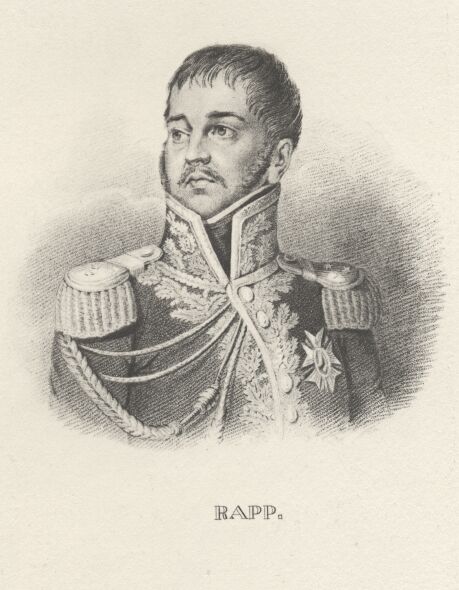
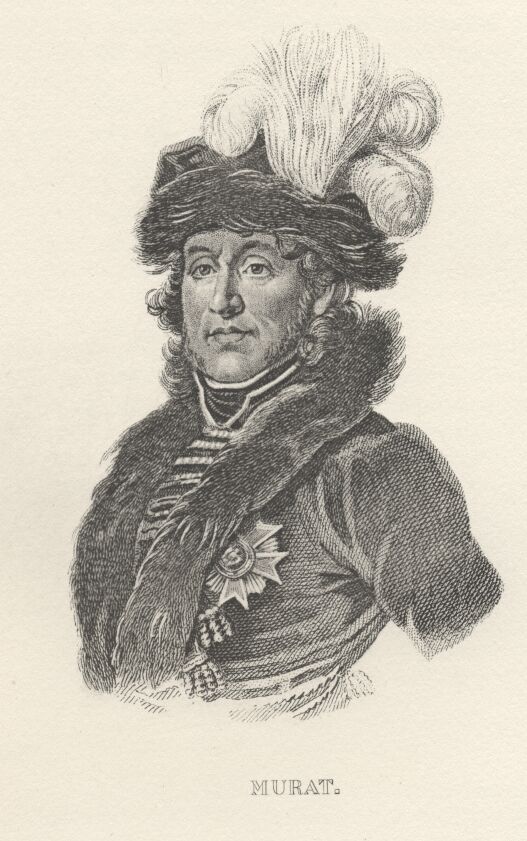
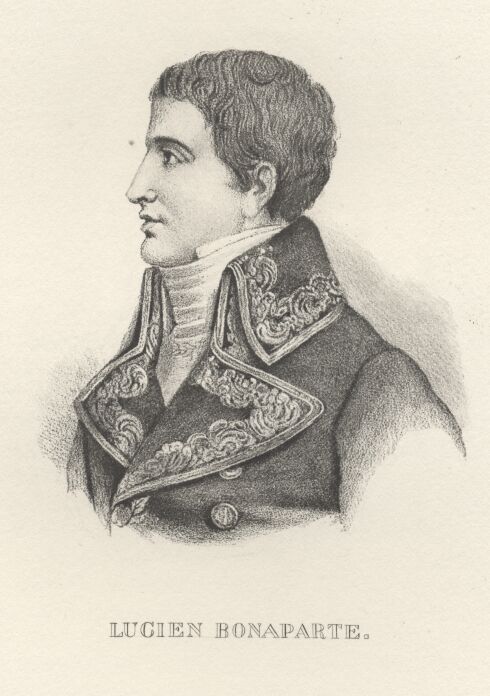
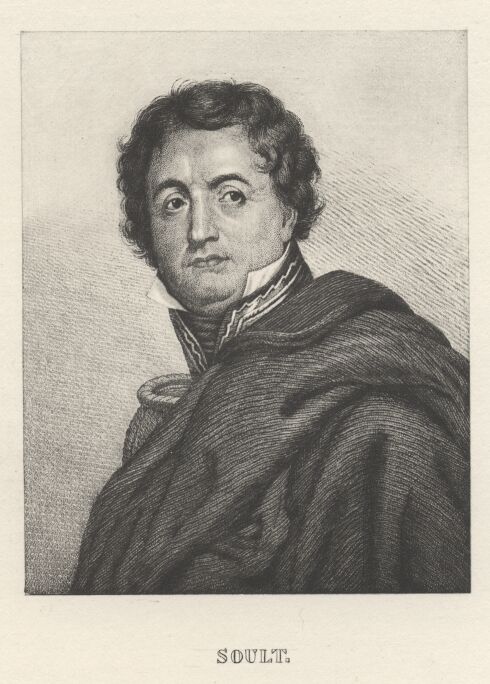
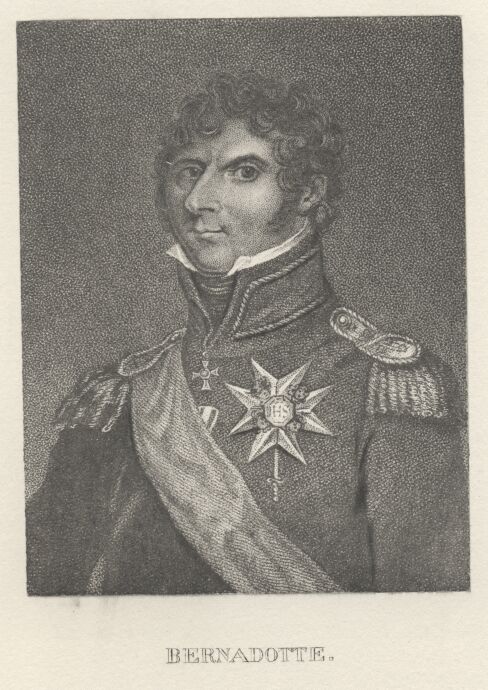
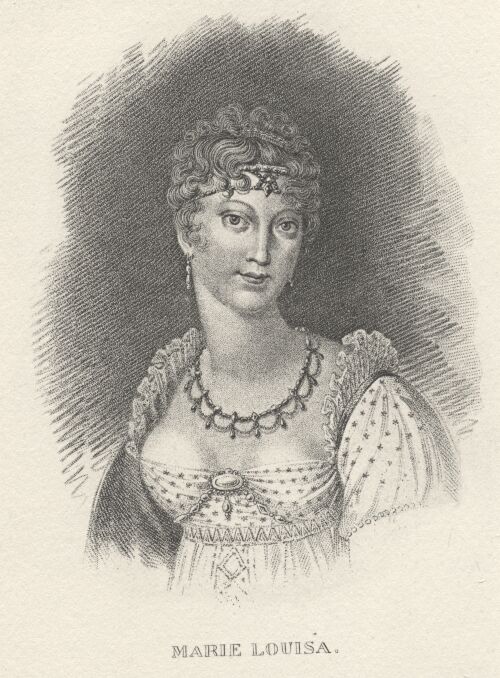
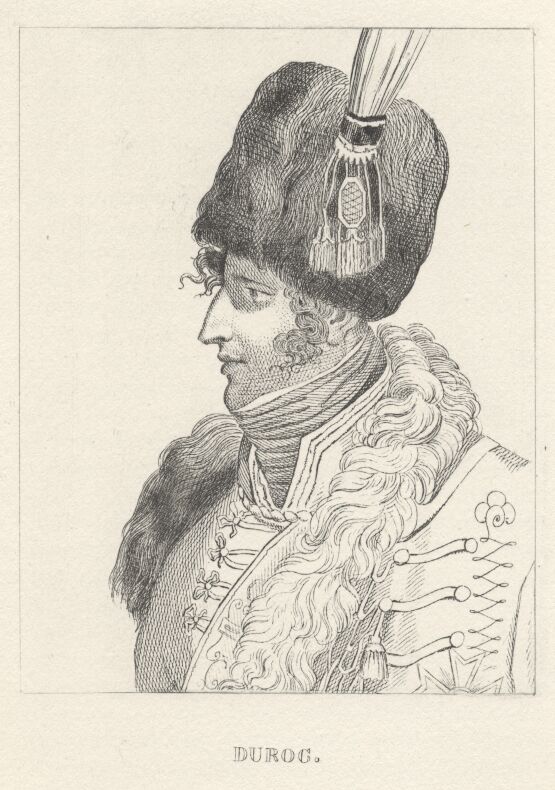
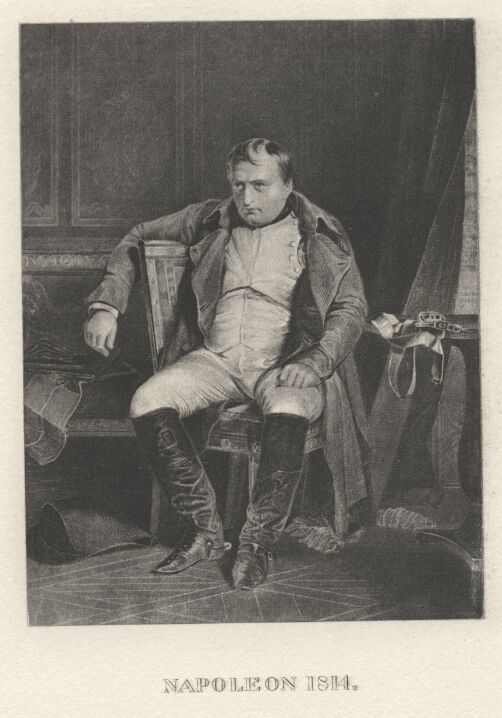
I left the Emperor at Berlin, where each day, and each hour of the day, he received news of some victory gained, or some success obtained by his generals. General Beaumont presented to him eighty flags captured from the enemy by his division, and Colonel Gerard also presented sixty taken from Blucher at the battle of Wismar. Madgeburg had capitulated, and a garrison of sixty thousand men had marched out under the eyes of General Savary. Marshal Mortier occupied Hanover in the name of France, and Prince Murat was on the point of entering Warsaw after driving out the Russians.
War was about to recommence, or rather to be continued, against the latter; and since the Prussian army could now be regarded as entirely vanquished, the Emperor left Berlin in order to personally conduct operations against the Russians.
We traveled in the little coaches of the country; and as was the rule always on our journeys, the carriage of the grand marshal preceded that of the Emperor. The season, and the passage of such large numbers of artillery, had rendered the roads frightful; but notwithstanding this we traveled very rapidly, until at last between Kutow and Warsaw, the grand marshal's carriage was upset, and his collarbone broken. The Emperor arrived a short time after this unfortunate accident, and had him borne under his own eyes into the nearest post-house. We always carried with us a portable medicine-chest in order that needed help might be promptly given to the wounded. His Majesty placed him in the hands of the surgeon, and did not leave him till he had seen the first bandage applied.
At Warsaw, where his Majesty passed the entire month of January, 1807, he occupied the grand palace. The Polish nobility, eager to pay their court to him, gave in his honor magnificent fetes and brilliant balls, at which were present all the wealthiest and most distinguished inhabitants of Warsaw.
At one of these reunions the Emperor's attention was drawn to a young Polish lady named Madame Valevska, twenty-two years of age, who had just married an old noble of exacting temper and extremely harsh manners, more in love with his titles than with his wife, whom, however, he loved devotedly, and by whom he was more respected than loved. The Emperor experienced much pleasure at the sight of this lady, who attracted his attention at the first glance. She was a blonde, with blue eyes, and skin of dazzling whiteness; of medium height, with a charming and beautifully proportioned figure. The Emperor having approached her, immediately began a conversation, which she sustained with much grace and intelligence, showing that she had received a fine education, and the slight shade of melancholy diffused over her whole person rendered her still more seductive.
His Majesty thought he beheld in her a woman who had been sacrificed, and was unhappy in her domestic relations; and the interest with which this idea inspired him caused him to be more interested in her than he had ever been in any woman, a fact of which she could not fail to be conscious. The day after the ball, the Emperor seemed to me unusually agitated; he rose from his chair, paced to and fro, took his seat and rose again, until I thought I should never finish dressing him. Immediately after breakfast he ordered a person, whose name I shall not give, to pay a visit to Madame Valevska, and inform her of his subjugation and his wishes. She proudly refused propositions which were perhaps too brusque, or which perhaps the coquetry natural to all women led her to repulse; and though the hero pleased her, and the idea of a lover resplendent with power and glory revolved doubtless over and over in her brain, she had no idea of surrendering thus without a struggle. The great personage returned in confusion, much astonished that he had not succeeded in his mission; and the next day when the Emperor rose I found him still preoccupied, and he did not utter a word, although he was in the habit of talking to me at this time. He had written to Madame Valevska several times, but she had not replied; and his vanity was much piqued by such unaccustomed indifference. At last his affecting appeals having touched Madame Valevska's heart, she consented to an interview between ten and eleven o'clock that evening, which took place at the appointed time. She returned a few days after at the same hour, and her visits continued until the Emperor's departure.
Two months after the Emperor sent for her; and she joined him at his headquarters in Finkenstein, where she remained from this time, leaving at Warsaw her old husband, who, deeply wounded both in his honor and his affections, wished never to see again the wife who had abandoned him. Madame Valevska remained with the Emperor until his departure, and then returned to her family, constantly evincing the most devoted and, at the same time, disinterested affection. The Emperor seemed to appreciate perfectly the charms of this angelic woman, whose gentle and self-abnegating character made a profound impression on me. As they took their meals together, and I served them alone, I was thus in a position to enjoy their conversation, which was always amiable, gay, and animated on the Emperor's part; tender, impassioned, and melancholy on that of Madame Valevska. When his Majesty was absent, Madame Valevska passed all her time, either in reading, or viewing through the lattice blinds of the Emperor's rooms the parades and evolutions which took place in the court of honor of the chateau, and which he often commanded in person. Such was her life, like her disposition, ever calm and equable; and this loveliness of character charmed the Emperor, and made him each day more and more her slave.
After the battle of Wagram, in 1809, the Emperor took up his residence at the palace of Schoenbrunn, and sent immediately for Madame Valevska, for whom a charming house had been rented and furnished in one of the faubourgs of Vienna, a short distance from Schoenbrunn. I went mysteriously to bring her every evening in a close carriage, with a single servant, without livery; she entered by a secret door, and was introduced into the Emperor's apartments. The road, although very short, was not without danger, especially in rainy weather, on account of ruts and holes which were encountered at every step; and the Emperor said to me almost every day, "Be very careful, Constant, it has rained to-day; the road will be bad. Are you sure you have a good driver? Is the carriage in good condition?" and other questions of the same kind, which evidenced the deep and sincere affection he felt for Madame Valevska. The Emperor was not wrong, besides, in urging me to be careful; for one evening, when we had left Madame Valevska's residence a little later than usual, the coachman upset us, and in trying to avoid a rut, drove the carriage over the edge of the road. I was on the right of Madame Valevska and the carriage fell on that side, in such a position that I alone felt the shock of the fall, since Madame Valevska falling on me, received no injury. I was glad to be the means of saving her, and when I said this she expressed her gratitude with a grace peculiarly her own. My injuries were slight; and I began to laugh the first, in which Madame Valevska soon joined, and she related our accident to his Majesty immediately on our arrival.
I could not undertake to describe all the care and attentions which the Emperor lavished upon her. He had her brought to Paris, accompanied by her brother, a very distinguished officer, and her maid, and gave the grand marshal orders to purchase for her a pretty residence in the Chaussee-d'Antin. Madame Valevska was very happy, and often said to me, "All my thoughts, all my inspirations, come from him, and return to him; he is all my happiness, my future, my life!" She never left her house except to come to the private apartments at the Tuileries, and when this happiness could not be granted, went neither to the theater, the promenade, nor in society, but remained at home, seeing only very few persons, and writing to the Emperor every day. At length she gave birth to a son, [Count Walewski, born 1810; minister to England, 1852; minister of foreign affairs, 1855-1860; died 1868.] who bore a striking resemblance to the Emperor, to whom this event was a source of great joy; and he hastened to her as soon as it was possible to escape from the chateau, and taking the child in his arms, and caressing him, as he had just caressed the mother, said to him, "I make you a count." Later we shall see this son receiving at Fontainebleau a final proof of affection.
Madame Valevska reared her son at her residence, never leaving him, and carried him often to the chateau, where I admitted them by the dark staircase, and when either was sick the Emperor sent to them Monsieur Corvisart. This skillful physician had on one occasion the happiness of saving the life of the young count in a dangerous illness.
Madame Valevska had a gold ring made for the Emperor, around which she twined her beautiful blonde hair, and on the inside of the ring were engraved these words:
"When you cease to love me, do not forget that I love you."
The Emperor gave her no other name but Marie.
I have perhaps devoted too much space to this liaison of the Emperor: but Madame Valevska was entirely different from the other women whose favor his Majesty obtained; and she was worthy to be named the La Valliere of the Emperor, who, however, did not show himself ungrateful towards her, as did Louis XIV. towards the only woman by whom he was beloved. Those who had, like myself, the happiness of knowing and seeing her intimately must have preserved memories of her which will enable them to comprehend why in my opinion there exists so great a distance between Madame Valevska, the tender and modest woman, rearing in retirement the son she bore to the Emperor, and the favorites of the conqueror of Austerlitz.
The Russians, being incited to this campaign by the remembrance of the defeat of Austerlitz, and by the fear of seeing Poland snatched from their grasp, were not deterred by the winter season, and resolved to open the attack on the Emperor at once; and as the latter was not the man to allow himself to be forestalled, he consequently abandoned his winter quarters, and quitted Warsaw at the end of January. On the 8th of February the two armies met at Eylau; and there took place, as is well known, a bloody battle, in which both sides showed equal courage, and nearly fifteen thousand were left dead on the field of battle, equally divided in number between the French and Russians. The gain, or rather the loss, was the same to both armies; and a 'Te Deum' was chanted at St. Petersburg as well as at Paris, instead of the 'De Profundis', which would have been much more appropriate. His Majesty complained bitterly on returning to his headquarters that the order he had sent to General Bernadotte had not been executed, and in consequence of this his corps had taken no part in the battle, and expressed his firm conviction that the victory, which remained in doubt between the Emperor and General Benningsen, would have been decided in favor of the former had a fresh army-corps arrived during the battle, according to the Emperor's calculations. Most unfortunately the aide-de-camp bearing the Emperor's orders to the Prince of Ponte-Corvo had fallen into the hands of a party of Cossacks; and when the Emperor was informed of this circumstance the day after the battle, his resentment was appeased, though not his disappointment. Our troops bivouacked on the field of battle, which his Majesty visited three times, for the purpose of directing the assistance of the wounded, and removal of the dead.
Generals d'Hautpoult, Corbineau, and Boursier were mortally wounded at Eylau; and it seems to me I can still hear the brave d'Hautpoult saying to his Majesty, just as he dashed off at a gallop to charge the enemy: "Sire, you will now see my great claws; they will pierce through the enemy's squares as if they were butter" An hour after he was no more. One of his regiments, being engaged in the interval with the Russian army, was mowed down with grape-shot, and hacked to pieces by the Cossacks, only eighteen men being left. General d'Hautpoult, forced to fall back three times with his division, led it back twice to the charge; and as he threw himself against the enemy the third time shouted loudly, "Forward, cuirassiers, in God's name! forward, my brave cuirassiers?" But the grapeshot had mowed down too many of these brave fellows; very few were left to follow their chief, and he soon fell pierced with wounds in the midst of a square of Russians into which he had rushed almost alone.
I think it was in this battle also that General Ordenerl killed with his own hands a general officer of the enemy. The Emperor asked if he could not have taken him alive. "Sire," replied the general with his strong German accent, "I gave him only one blow, but I tried to make it a good one." On the very morning of the battle, General Corbineau, the Emperor's aide-de-camp, while at breakfast with the officers on duty, declared to them that he was oppressed by the saddest presentiments; but these gentlemen, attempting to divert his mind, turned the affair into a joke. General Corbineau a few moments after received an order from his Majesty, and not finding some money he wished at Monsieur de Meneval's quarters, came to me, and I gave it to him from the Emperor's private purse; at the end of a few hours I met Monsieur de Meneval, to whom I rendered an account of General Corbineau's request, and the sum I had lent him. I was still speaking to Monsieur de Meneval, when an officer passing at a gallop gave us the sad news of the general's death. I have never forgotten the impression made on me by this sad news, and I still find no explanation of the strange mental distress which gave warning to this brave soldier of his approaching end.
Poland was relying upon the Emperor to re-establish her independence, and consequently the Poles were filled with hope and enthusiasm on witnessing the arrival of the French army. As for our soldiers, this winter campaign was most distasteful to them; for cold and wretchedness, bad weather and bad roads, had inspired them with an extreme aversion to this country.
In a review at Warsaw, at which the inhabitants crowded around our troops, a soldier began to swear roundly against the snow and mud, and, as a consequence, against Poland and the Poles. "You are wrong, Monsieur soldier," replied a young lady of a good bourgeois family of the town, "not to love our country, for we love the French very much."—"You are doubtless very lovable, mademoiselle," replied the soldier; "but if you wish to persuade me of the truth of what you say, you will prepare us a good dinner, my comrade and I."—"Come, then, messieurs," said the parents of the young Pole now advancing, "and we will drink together to the health of your Emperor." And they really carried off with them the two soldiers, who partook of the best dinner the country afforded.
The soldiers were accustomed to say that four words formed the basis of the Polish language,—kleba? niema; "bread? there is none;" voia? sara; "water? they have gone to draw it."
As the Emperor was one day passing through a column of infantry in the suburbs of Mysigniez, where the troops endured great privations since the bad roads prevented the arrival of supplies, "Papa, kleba," cried a soldier. "Niema," immediately replied the Emperor. The whole column burst into shouts of laughter, and no further request was made.
During the Emperor's somewhat extended stay at Finkenstein, he received a visit from the Persian ambassador, and a few grand reviews were held in his honor. His Majesty sent in return an embassy to the Shah, at the head of which he placed General Gardanne, who it was then said had an especial reason for wishing to visit Persia. It was rumored that one of his relations, after a long residence at Teheran, had been compelled, having taken part in an insurrection against the Franks, to quit this capital, and before his flight had buried a considerable treasure in a certain spot, the description of which he had carried to France. I will add, as a finale to this story, some facts which I have since learned. General Gardanne found the capital in a state of confusion; and being able neither to locate the spot nor discover the treasure, returned from his embassy with empty hands.
Our stay at Finkenstein became very tiresome; and in order to while away the time, his Majesty sometimes played with his generals and aides-de-camp. The game was usually vingt-et-un; and the Great Captain took much pleasure in cheating, holding through several deals the cards necessary to complete the required number, and was much amused when he won the game by this finesse. I furnished the sum necessary for his game, and as soon as he returned to his quarters received orders to make out his account. He always gave me half of his gains, and I divided the remainder between the ordinary valets de chambre.
I have no intention, in this journal, of conforming to a very exact order of dates; and whenever there recurs to my memory a fact or an anecdote which seems to me deserving of mention, I shall jot it down, at whatever point of my narrative I may have then reached, fearing lest, should I defer it to its proper epoch, it might be forgotten. In pursuance of this plan I shall here relate, in passing, some souvenirs of Saint-Cloud or the Tuileries, although we are now in camp at Finkenstein. The pastimes in which his Majesty and his general officers indulged recalled these anecdotes to my recollection. These gentlemen often made wagers or bets among themselves; and I heard the Duke of Vicenza one day bet that Monsieur Jardin, junior, equerry of his Majesty, mounted backwards on his horse, could reach the end of the avenue in front of the chateau in the space of a few moments; which bet the equerry won.
Messieurs Fain, Meneval, and Ivan once played a singular joke on Monsieur B. d'A——, who, they knew, was subject to frequent attacks of gallantry. They dressed a young man in woman's clothes, and sent him to promenade, thus disguised, in an avenue near the chateau. Monsieur B. d'A—— was very near-sighted, and generally used an eyeglass. These gentlemen invited him to take a walk; and as soon as he was outside the door, he perceived the beautiful promenader, and could not restrain an exclamation of surprise and joy at the sight.
His friends feigned to share his delight, and urged him, as the most enterprising, to make the first advances, whereupon, in great excitement, he hastened after the pretended young lady, whom they had taught his role perfectly. Monsieur d'A—— outdid himself in politeness, in attentions, in offers of service, insisting eagerly on doing the honors of the chateau to his new conquest. The other acted his part perfectly; and after many coquettish airs on his side, and many protestations on the part of Monsieur d'A, a rendezvous was made for that very evening; and the lover, radiant with hope, returned to his friends, maintaining much discretion and reserve as to his good fortune, while he really would have liked to devour the time which must pass before the day was over. At last the evening arrived which was to put an end to his impatience, and bring the time of his interview; and his disappointment and rage may be imagined when he discovered the deception which had been practiced on him. Monsieur d'A—— wished at first to challenge the authors and actors in this hoax, and could with great difficulty be appeased.
It was, I think, on the return from this campaign, that Prince Jerome saw at Breslau, at the theater of that town, a young and very pretty actress, who played her part badly, but sang very well. He made advances, which she received coolly: but kings do not sigh long in vain; they place too heavy a weight in the balance against discretion. His Majesty, the King of Westphalia, carried off his conquest to Cassel, and at the end of a short time she was married to his first valet de chambre, Albertoni, whose Italian morals were not shocked by this marriage. Some disagreement, the cause, of which I do not know, having caused Albertoni to quit the king, he returned to Paris with his wife, and engaged in speculations, in which he lost all that he had gained, and I have been told that he returned to Italy. One thing that always appeared to me extraordinary was the jealousy of Albertoni towards his wife—an exacting jealousy which kept his eyes open towards all men except the king; for I am well convinced that the liaison continued after their marriage.
The brothers of the Emperor, although kings, were sometimes kept waiting in the Emperor's antechamber. King Jerome came one morning by order of the Emperor, who, having not yet risen, told me to beg the King of Westphalia to wait. As the Emperor wished to sleep a little longer, I remained with the other servants in the saloon which was used as an antechamber, and the king waited with us; I do not say in patience, for he constantly moved from chair to chair, promenaded back and forth between the window and the fireplace, manifesting much annoyance, and speaking now and then to me, whom he always treated with great kindness. Thus more than half an hour passed; and at last I entered the Emperor's room, and when he had put on his dressing-gown, informed him that his Majesty was waiting, and after introducing him, I withdrew. The Emperor gave him a cool reception, and lectured him severely, and as he spoke very loud, I heard him against my will; but the king made his excuses in so low a tone that I could not hear a word of his justification. Such scenes were often repeated, for the prince was dissipated and prodigal, which displeased the Emperor above all things else, and for which he reproved him severely, although he loved him, or rather because he loved him so much; for it is remarkable, that notwithstanding the frequent causes of displeasure which his family gave him, the Emperor still felt for all his relations the warmest affection.
A short time after the taking of Dantzig (May 24, 1807), the Emperor, wishing to reward Marshal Lefebvre for the recent services which he had rendered, had him summoned at six o'clock in the morning. His Majesty was in consultation with the chief-of-staff of the army when the arrival of the marshal was announced. "Ah!" said he to Berthier, "the duke does not delay." Then, turning to the officer on duty, "Say to the Duke of Dantzig that I have summoned him so early in order that he may breakfast with me." The officer, thinking that the Emperor had misunderstood the name, remarked to him, that the person who awaited his orders was not the Duke of Dantzig, but Marshal Lefebvre. "It seems, monsieur, that you think me more capable of making a count [faire un conte] than a duke."
The officer was somewhat disconcerted by this reply; but the Emperor reassured him with a smile, and said, "Go, give the duke my invitation, and say to him that in a quarter of an hour breakfast will be served." The officer returned to the marshal, who was, of course, very anxious to know why the Emperor had summoned him. "Monsieur le Due, the Emperor invites you to breakfast with him, and begs you to wait a quarter of an hour." The marshal, not having noticed the new title which the officer gave him, replied by a nod, and seated himself on a folding chair on the back of which hung the Emperor's sword, which the marshal inspected and touched with admiration and respect. The quarter of an hour passed, when another ordnance officer came to summon the marshal to the Emperor, who was already at table with the chief-of-staff; and as he entered, the Emperor saluted him with, "Good-day, Monsieur le Due; be seated next to me."
The marshal, astonished at being addressed by this title, thought at first that his Majesty was jesting; but seeing that he made a point of calling him Monsieur le, Due he was overcome with astonishment. The Emperor, to increase his embarrassment, said to him, "Do you like chocolate, Monsieur le Duc?"—"But—yes, Sire."—"Well, we have none for breakfast, but I will give you a pound from the very town of Dantzig; for since you have conquered it, it is but just that it should make you some return." Thereupon the Emperor left the table, opened a little casket, took therefrom a package in the shape of a long square, and handed it to Marshal Lefebvre, saying to him, "Duke of Dantzig, accept this chocolate; little gifts preserve friendship." The marshal thanked his Majesty, put the chocolate in his pocket, and took his seat again at table with the Emperor and Marshal Berthier. A 'pate' in the shape of the town of Dantzig was in the midst of the table; and when this was to be served the Emperor said to the new duke, "They could not have given this dish a form which would have pleased me more. Make the attack, Monsieur le Duc; behold your conquest; it is yours to do the honors." The duke obeyed; and the three guests ate of the pie, which they found much to their taste. On his return, the marshal, Duke of Dantzig, suspecting a surprise in the little package which the Emperor had given him, hastened to open it, and found a hundred thousand crowns in bank-notes. In imitation of this magnificent present, the custom was established in the army of calling money, whether in pieces or in bank-notes, Dantzig chocolate; and when the soldiers wished to be treated by any comrade who happened to have a little money in his pocket, would say to him, "Come, now, have you no Dantzig chocolate in your pocket?"
The almost superstitious fancy of his Majesty the Emperor in regard to coincidences in dates and anniversaries was strengthened still more by the victory of Friedland, which was gained on June 14, 1807, seven years to the very day after the battle of Marengo. The severity of the winter, the difficulty in furnishing supplies (for which the Emperor had however made every possible provision and arrangement), added to the obstinate courage of the Russians, had made this a severe campaign, especially to conquerors whom the incredible rapidity of their successes in Prussia had accustomed to sudden conquests. The division of glory which he had been compelled to make with the Russians was a new experience in the Emperor's military career, but at Friedland he regained his advantage and his former superiority. His Majesty, by a feigned retreat, in which he let the enemy see only a part of his forces, drew the Russians into a decoy on the Elbe, so complete that they found themselves shut in between that river and our army. This victory was gained by troops of the line and cavalry; and the Emperor did not even find it necessary to use his Guards, while those of the Emperor Alexander was almost entirely destroyed in protecting the retreat, or rather the flight, of the Russians, who could escape from the pursuit of our soldiers only by the bridge of Friedland, a few narrow pontoons, and an almost impassable ford.
The regiments of the line in the French army covered the plain; and the Emperor, occupying a post of observation on a height whence he could overlook the whole field of battle, was seated in an armchair near a mill, surrounded by his staff. I never saw him in a gayer mood, as he conversed with the generals who awaited his orders, and seemed to enjoy eating the black Russian bread which was baked in the shape of bricks. This bread, made from inferior rye flour and full of long straws, was the food of all the soldiers; and they knew that his Majesty ate it as well as themselves. The beautiful weather favored the skillful maneuvers of the army, and they performed prodigies of valor. The cavalry charges especially were executed with so much precision that the Emperor sent his congratulations to the regiments.
About four o'clock in the afternoon, when the two armies were pressing each other on every side, and thousands of cannon caused the earth to tremble, the Emperor exclaimed, "If this continues two hours longer, the French army will be left standing on the plain alone." A few moments after he gave orders to the Count Dorsenne, general of the foot grenadiers of the Old Guard, to fire on a brick-yard, behind which masses of Russians and Prussians were intrenched; and in the twinkling of an eye they were compelled to abandon this position, and a horde of sharpshooters set out in pursuit of the fugitives.
The Guard made this movement at five o'clock, and at six the battle was entirely won. The Emperor said to those who were near him, while admiring the splendid behavior of the Guard, "Look at those brave fellows, with a good-will they would run over the stone-slingers and pop-guns of the line, in order to teach them to charge without waiting for them; but it would have been useless, as the work has been well done without them."
His Majesty went in person to compliment several regiments which had fought the whole day. A few words, a smile, a salute of the hand, even a nod, was sufficient recompense to these brave fellows who had just been crowned with victory.
The number of the dead and prisoners was enormous; and seventy banners, with all the equipments of the Russian army, were left in the hands of the French.
After this decisive day, the Emperor of Russia, who had rejected the proposals made by his Majesty after the battle of Eylau, found himself much disposed to make the game on his own account; and General Bennigsen consequently demanded an armistice in the name of his Emperor, which his Majesty granted; and a short time after a treaty of peace was signed, and the famous interview between the two sovereigns held on the banks of the Niemen. I shall pass over rapidly the details of this meeting, which have been published and repeated innumerable times. His Majesty and the young Czar conceived a mutual affection from the first moment of their meeting, and each gave fetes and amusements in honor of the other. They were in inseparable in public and private, and passed hours together in meetings for pleasure only, from which all intruders were carefully excluded. The town of Tilsit was declared neutral; and French, Russians, and Prussians followed the example set them by their sovereigns, and lived together in the most intimate brotherhood.
The King and Queen of Prussia soon after joined their Imperial Majesties at Tilsit; though this unfortunate monarch, to whom there remained hardly one town of the whole kingdom he had possessed, was naturally little disposed to take part in so much festivity. The queen was beautiful and graceful, though perhaps somewhat haughty and severe, which did not prevent her being adored by all who surrounded her. The Emperor sought to please her, and she neglected none of the innocent coquetries of her sex in order to soften the heart of the conqueror of her husband. The queen several times dined with the sovereigns, seated between the two Emperors, who vied with each other in overwhelming her with attentions and gallantries. It is well known that the Emperor Napoleon offered her one day a splendid rose, which after some hesitation she accepted, saying to his Majesty with a most charming smile, "With Magdeburg, at least." And it is well known also that the Emperor did not accept the condition.
The princess had among her ladies of honor a very old woman, who was most highly esteemed. One evening as the queen was being escorted into the dining-hall by the two Emperors, followed by the King of Prussia, Prince Murat, and the Grand Duke Constantine, this old lady of honor gave way to the two latter princes. Grand Duke Constantine would not take precedence of her, but entirely spoiled this act of politeness by exclaiming in a rude tone, "Pass, madame, pass on!" And turning towards the King of Naples, added, loud enough to be heard, this disgraceful exclamation, "The old woodcock!"
One may judge from this that Prince Constantine was far from exhibiting towards ladies that exquisite politeness and refined gallantry which distinguished his august brother.
The French Imperial Guard on one occasion gave a dinner to the guard of the Emperor Alexander. At the end of this exceedingly gay and fraternal banquet, each French soldier exchanged uniforms with a Russian, and promenaded thus before the eyes of the Emperors, who were much amused by this impromptu disguise.
Among the numerous attentions paid by the Russian Emperor to our own, I would mention a concert by a troop of Baskir musicians, whom their sovereign brought over the Niemen for this purpose, and never certainly did more barbarous music resound in the ears of his Majesty; and this strange harmony, accompanied by gestures equally as savage, furnished one of the most amusing spectacles that can be imagined. A few days after this concert, I obtained permission to make the musicians a visit, and went to their camp, accompanied by Roustan, who was to serve as interpreter. We enjoyed the pleasure of being present at a repast of the Baskirs, where around immense wooden tubs were seated groups consisting of ten men, each holding in his hand a piece of black bread which he moistened with a ladleful of water, in which had been diluted something resembling red clay. After the repast, they gave us an exhibition of shooting with the bow; and Roustan, to whom this exercise recalled the scenes of his youth, attempted to shoot an arrow, but it fell at a few paces, and I saw a smile of scorn curl the thick lips of our Baskirs. I then tried the bow in my turn, and acquitted myself in such a manner as to do me honor in the eyes of our hosts, who instantly surrounded me, congratulating me by their gestures on my strength and skill; and one of them, even more enthusiastic and more amicable than the others, gave me a pat on the shoulder which I long remembered.
The day succeeding this famous concert, the treaty of peace between the three sovereigns was signed, and his Majesty made a visit to the Emperor Alexander, who received him at the head of his guard. The Emperor Napoleon asked his illustrious ally to show him the bravest grenadier of this handsome and valiant troop; and when he was presented to his Majesty, he took from his breast his own cross of the Legion of Honor, and fastened it on the breast of the Muscovite soldier, amid the acclamations and hurrahs of all his comrades. The two Emperors embraced each other a last time on the banks of the Niemen, and his Majesty set out on the road to Koenigsberg.
At Bautzen the King of Saxony came out to meet him, and their Majesties entered Dresden together. King Frederick Augustus gave a most magnificent reception to the sovereign who, not content with giving him a scepter, had also considerably increased the hereditary estates of the elector of Saxony. The good people of Dresden, during the week we passed there, treated the French more as brothers and compatriots than as allies.
But it was nearly ten months since we had left Paris; and in spite of all the charms of the simple and cordial hospitality of the Germans, I was very eager to see again France and my own family.
It was during the glorious campaign of Prussia and Poland that the imperial family was plunged in the deepest sorrow by the death of the young Napoleon, eldest son of King Louis of Holland. This child bore a striking resemblance to his father, and consequently to his uncle. His hair was blond, but would probably have darkened as he grew older. His eyes, which were large and blue, shone with extraordinary brilliancy when a deep impression was made on his young mind. Gentle, lovable, and full of candor and gayety, he was the delight of the Emperor, especially on account of the firmness of his character, which was so remarkable that, notwithstanding his extreme youth, nothing could make him break his word. The following anecdote which I recall furnishes an instance of this.
He was very fond of strawberries; but they caused him such long and frequent attacks of vomiting that his mother became alarmed, and positively forbade his eating them, expressing a wish that every precaution should be taken to keep out of the young prince's sight a fruit which was so injurious to him. The little Napoleon, whom the injurious effects of the strawberries had not disgusted with them, was surprised to no more see his favorite dish; but bore the deprivation patiently, until one day he questioned his nurse, and very seriously demanded an explanation on this subject, which the good woman was unable to give, for she indulged him even to the point of spoiling him. He knew her weakness, and often took advantage of it, as in this instance for example. He became angry, and said to his nurse in a tone which had as much and even more effect on her than the Emperor or the King of Holland could have had, "I will have the strawberries. Give them to me at once." The poor nurse begged him to be quiet, and said that she would give them to him, but she was afraid that if anything happened he would tell the queen who had done this. "Is that all?" replied Napoleon eagerly. "Have no fear; I promise not to tell."
The nurse yielded, and the strawberries had their usual effect. The queen entered while he was undergoing the punishment for his self-indulgence; and he could not deny that he had eaten the forbidden fruit, as the proofs were too evident. The queen was much incensed, and wished to know who had disobeyed her; she alternately entreated and threatened the child, who still continued to reply with the greatest composure, "I promised not to tell." And in spite of the great influence she had over him, she could not force him to tell her the name of the guilty person.
Young Napoleon was devoted to his uncle, and manifested in his presence a patience and self-control very foreign to his usual character. The Emperor often took him on his knee during breakfast, and amused himself making him eat lentils one by one. The pretty face of the child became crimson, his whole countenance manifested disgust and impatience; but his Majesty could prolong this sport without fearing that his nephew would become angry, which he would have infallibly done with any one else.
At such a tender age could he have been conscious of his uncle's superiority to all those who surrounded him? King Louis, his father, gave him each day a new plaything, chosen exactly to suit his fancy: but the child preferred those he received from his uncle; and when his father said to him, "But, see here, Napoleon, those are ugly things; mine are prettier."—"No," said the young prince, "they are very nice; my uncle gave them to me."
One morning when he visited his Majesty, he crossed a saloon where amid many great personages was Prince Murat, at that time, I think, Grand Duke of Berg. The child passed through without saluting any one, when the prince stopped him and said, "Will you not tell me goodmorning?"—"No," replied Napoleon, disengaging himself from the arms of the Grand Duke; "not before my uncle the Emperor."
At the end of a review which had taken place in the court of the Tuileries, and on the Place du Carrousel, the Emperor went up to his apartments, and threw his hat on one sofa, his sword on another. Little Napoleon entered, took his uncle's sword, passed the belt round his neck, put the hat on his head, and then kept step gravely, humming a march behind the Emperor and Empress. Her Majesty, turning round, saw him, and caught him in her arms, exclaiming, "What a pretty picture!" Ingenious in seizing every occasion to please her husband, the Empress summoned M. Gerard, and ordered a portrait of the young prince in this costume; and the picture was brought to the palace of Saint-Cloud the very day on which the Empress heard of the death of this beloved child.
He was hardly three years old when, seeing his shoemaker's bill paid with five-franc pieces, he screamed loudly, not wishing that they should give away the picture of his Uncle Bibiche. The name of Bibiche thus given by the young prince to his Majesty originated in this manner. The Empress had several gazelles placed in the park of Saint-Cloud, which were very much afraid of all the inhabitants of the palace except the Emperor, who allowed them to eat tobacco out of his snuff-box, and thus induced them to follow him, and took much pleasure in giving them the tobacco by the hands of the little Napoleon, whom he also put on the back of one of them. The latter designated these pretty animals by no other name than that of Bibiche, and amused himself by giving the same name to his uncle.
This charming child, who was adored by both father and mother, used his almost magical influence over each in order to reconcile them to each other. He took his father by the hand, who allowed himself to be thus conducted by this angel of peace to Queen Hortense, and then said to him, "Kiss her, papa, I beg you;" and was perfectly overjoyed when he had thus succeeded in reconciling these two beings whom he loved with an equal affection.
How could such a beautiful character fail to make this angel beloved by all who knew him? How could the Emperor, who loved all children, fail to be devoted to him, even had he not been his nephew, and the godson of that good Josephine whom he never ceased to love for a single instant? At the age of seven years, when that malady, the croup, so dangerous to children, snatched him from his heart-broken family, he already gave evidence of remarkable traits of character, which were the foundation of most brilliant hopes. His proud and haughty character, while rendering him susceptible of the noblest impressions, was not incompatible with obedience and docility. The idea of injustice was revolting to him; but he readily submitted to reasonable advice and rightful authority.
First-born of the new dynasty, it was fitting he should attract as he did the deepest tenderness and solicitude of the chief. Malignity and envy, which ever seek to defame and villify the great, gave slanderous explanations of this almost paternal attachment; but wise and thoughtful men saw in this adoptive tenderness only what it plainly evinced,—the desire and hope of transmitting his immense power, and the grandest name in the universe, to an heir, indirect it is true, but of imperial blood, and who, reared under the eyes, and by the direction of the Emperor, would have been to him all that a son could be. The death of the young Napoleon appeared as a forerunner of misfortunes in the midst of his glorious career, disarranging all the plans which the monarch had conceived, and decided him to concentrate all his hopes on an heir in a direct line.
It was then that the first thoughts of divorce arose in his mind, though it did not take place until two years later, and only began to be the subject of private conversation during the stay at Fontainebleau. The Empress readily saw the fatal results to her of the death of this godson, and from that time she dwelt upon the idea of this terrible event which ruined her life. This premature death was to her an inconsolable grief; and she shut herself up for three days, weeping bitterly, seeing no one except her women, and taking almost no nourishment. It even seemed that she feared to be distracted from her grief, as she surrounded herself with a sort of avidity with all that could recall her irreparable loss. She obtained with some difficulty from Queen Hortense some of the young prince's hair, which his heart-broken mother religiously preserved; and the Empress had this hair framed on a cushion of black velvet, and kept it always near her. I often saw it at Malmaison, and never without deep emotion.
But how can I attempt to describe the despair of Queen Hortense, of that woman who became as perfect a mother as she had been a daughter. She never left her son a moment during his illness; and when he expired in her arms, still wishing to remain near his lifeless body, she fastened her arms through those of her chair, in order that she might not be torn from this heartrending scene. At last nature succumbed to such poignant grief: the unhappy mother fainted; and the opportunity was taken to remove her to her own apartment, still in the chair which she had not left, and which her arms clasped convulsively. On awaking, the queen uttered piercing screams, and her dry and staring eyes and white lips gave reason to fear that she was near her end. Nothing could bring tears to her eyes, until at last a chamberlain conceived the idea of bringing the young prince's body, and placing it on his mother's knees; and this had such an effect on her that her tears burst forth and saved her life, while she covered with kisses the cold and adored remains. All France shared the grief of the Queen of Holland.
We arrived at Saint-Cloud on the 27th of July; and the Emperor passed the summer partly in this residence, and partly at Fontainebleau, returning to Paris only on special occasions, and never remaining longer than twenty-four hours. During his Majesty's absence, the chateau of Rambouillet was restored and furnished anew, and the Emperor spent a few days there. The first time he entered the bathroom, he stopped short at the door and glanced around with every appearance of surprise and dissatisfaction; and when I sought the cause of this, following the direction of his Majesty's eyes, I saw that they rested on various family portraits which the architect had painted on the walls of the room. They were those of madame his mother, his sisters, Queen Hortense, etc.; and the sight of such a gallery, in such a place, excited the extreme displeasure of the Emperor. "What nonsense!" he cried. "Constant, summon Marshal Duroc!" And when the grand marshal appeared, his Majesty inquired, "Who is the idiot that could have conceived such an idea? Order the painter to come and efface all that. He must have little respect for women to be guilty of such an indecency."
When the court sojourned at Fontainebleau, the inhabitants indemnified themselves amply for his Majesty's long absences by the high price at which they sold all articles of food. Their extortions became scandalous impositions, and more than one foreigner making an excursion to Fontainebleau thought himself held for ransom by a troop of Bedouins. During the stay of the court; a wretched sacking-bed in a miserable inn cost twelve francs for a single night; the smallest meal cost an incredible price, and was, notwithstanding, detestable; in fact, it amounted to a genuine pillage of travelers. Cardinal Caprara,
[Giovanni Battista Caprara, born of a noble family at Bologna, 1733; count and archbishop of Milan; cardinal, 1792; Negotiated the Concordat, 1801; died 1810]
whose rigid economy was known to all Paris, went one day to Fontainebleau to pay his court to the Emperor, and at the hotel where he alighted took only a single cup of bouillon, and the six persons of his suite partook only of a very light repast, as the cardinal had arranged to return in three hours; but notwithstanding this, as he was entering his carriage, the landlord had the audacity to present him with a bill for six hundred francs! The prince of the church indignantly protested, flew into a rage, threatened, etc., but all in vain; and the bill was paid.
Such an outrageous imposition could not fail to reach the Emperor's ears, and excited his anger to such a degree that he at once ordered a fixed schedule of prices, which it was forbidden the innkeepers to exceed. This put an end to the exactions of the bloodsuckers of Fontainebleau.
On the 21st of August, there arrived at Paris the Princess Catharine of Wurtemberg, future wife of Prince Jerome Napoleon, King of Westphalia. This princess was about twenty-four years of age, and very beautiful, with a most noble and gracious bearing; and though policy alone had made this marriage, never could love or voluntary choice have made one that was happier.
The courageous conduct of her Majesty the Queen of Westphalia in 1814, her devotion to her dethroned husband, and her admirable letters to her father, who wished to tear her from the arms of King Jerome, are matters of history. I have seen it stated that this prince never ceased, even after this marriage, which was so flattering to his ambition, to correspond with his first wife, Mademoiselle Patterson, and that he often sent to America his valet de chambre, Rico, to inquire after this lady and their child. If this is true, it is no less so that these attentions to his first wife, which were not only very excusable, but even, according to my opinion, praiseworthy in Prince Jerome, and of which her Majesty the Queen of Westphalia was probably well aware, did not necessarily prevent her being happy with her husband.
No testimony more reliable than that of the queen her self can be given; and she expresses herself as follows in her second letter to his Majesty, the King of Wurtemburg:—
"Forced by policy to marry the king, my husband, fate has willed that I should find myself the happiest woman in the universe. I feel towards my husband the united sentiments of love, tenderness, and esteem. In this painful moment can the best of fathers wish to destroy my domestic happiness, the only kind which now remains to me? I dare to say that you, my dear father, you and all my family, do great injustice to the king, my husband; and I trust the time will come when you will be convinced that you have done him injustice, and then you will ever find in him, as well as in myself, the most respectful and affectionate of children."
Her Majesty then spoke of a terrible misfortune to which she had been exposed. This event, which was indeed terrible, was nothing less than violence and robbery committed on a fugitive woman defenseless and alone, by a band at the head of which was the famous Marquis de Maubreuil, [A French political adventurer, born in Brittany, 1782; died 1855.] who had been equerry of the King of Westphalia. I will recur in treating of the events of 1814 to this disgraceful affair, and will give some particulars, which I think are not generally known, in regard to the principal authors and participants in this daring act of brigandage.
In the following month of September, a courier from the Russian cabinet arrived from St. Petersburg, bearing a letter to his Majesty from the Emperor Alexander; and among other magnificent gifts were two very handsome fur pelisses of black fox and sable martin.
During their Majesties residence at Fontainebleau, the Emperor often went out in his carriage with the Empress in the streets of the city with neither escort nor guards. One day, while passing before the hospital of Mont Pierreux, her Majesty the Empress saw at a window a very aged clergyman, who saluted their Majesties. The Empress, having returned the old man's salutation with her habitual grace, pointed him out to the Emperor, who himself saluted him, and ordering his coachman to stop, sent one of the footmen with a request to the old priest to come and speak to them a moment, if it were not too great an exertion. The old man, who still walked with ease, hastened to descend; and in order to save him a few steps the Emperor had his carriage driven very close to the door of the hospital.
His Majesty conversed for some time with the good ecclesiastic, manifesting the greatest kindness and respect. He informed their Majesties that he had been, previous to the Revolution, the regular priest of one of the parishes of Fontainebleau, and had done everything possible to avoid emigrating; but that terror had at length forced him to leave his native land, although he was then more than seventy-five years old; that he had returned to France at the time of the proclamation of the Concordat, and now lived on a modest pension hardly sufficient to pay his board in the hospital. "Monsieur l'Abbe," said his Majesty after listening to the old priest attentively, "I will order your pension to be doubled; and if that is not sufficient I hope you will apply to the Empress or to me." The good ecclesiastic thanked the Emperor with tears in his eyes. "Unfortunately, Sire," said he among other things, "I am too old to long enjoy your Majesty's reign or profit by your kindness."—"YOU?" replied the Emperor, smiling, "why, you are a young man. Look at M. de Belloy; he is much your senior, and we hope to keep him with us for a long time yet." Their Majesties then took leave of the old man, who was much affected, leaving him in the midst of a crowd of the inhabitants who had collected before the hospital during this conversation, and who were much impressed by this interesting scene and the generous kindness of the Emperor.
M. de Belloy, cardinal and archbishop of Paris, whose name the Emperor mentioned in the conversation I have just related, was then ninety-eight years of age, though his health was excellent; and I have never seen an old man who had as venerable an air as this worthy prelate. The Emperor had the profoundest respect for him, and never failed to give evidence of it on every occasion. During this same month of September, a large number of the faithful having assembled according to custom on Mount Valerien, the archbishop likewise repaired to the spot to hear mass. As he was about to withdraw, seeing that many pious persons were awaiting his benediction, he addressed them before bestowing it in a few words which showed his kindness of heart and his evangelical simplicity: "My children, I know that I must be very old from the loss of my strength, but not of my zeal and my tenderness for you. Pray God, my children, for your old archbishop, who never fails to intercede on your behalf each day."
During his stay at Fontainebleau, the Emperor enjoyed more frequently than ever before the pleasures of the chase. The costume necessary was a French coat of green dragon color, decorated with buttons and gold lace, white cashmere breeches, and Hessian boots without facings; this was the costume for the grand hunt which was always a stag hunt; that for a hunt with guns being a plain, green French coat with no other ornament than white buttons, on which were cut suitable inscriptions. This costume was the same for all persons taking part in this hunt, with no distinguishing marks, even for his Majesty himself.
The princesses set out for the rendezvous in a Spanish carriage with either or four six horses, and thus followed the chase, their costume being an elegant riding-habit, and a hat with white or black plumes.
One of the Emperor's sisters (I do not now recall which) never failed to follow the hunt, accompanied by many charming ladies who were always invited to breakfast at the rendezvous, as was always the custom on similar occasions with the persons of the court. One of these ladies, who was both beautiful and intelligent, attracted the attention of the Emperor, a short correspondence ensued, and at last the Emperor again ordered me to carry a letter.
In the palace of Fontainebleau is a private garden called the garden of Diana, to which their Majesties alone had access. This garden is surrounded on four sides by buildings; on the left was the chapel with its gloomy gallery and Gothic architecture; on the right the grand gallery (as well as I can remember); in the middle the building which contained their Majesties' apartments; finally, in front of and facing the square were broad arcades, and behind them the buildings intended for the various persons attached to household of the princes or the Emperor. Madame de B——, the lady whom the Emperor had remarked, lodged in an apartment situated behind these arcades on the ground floor; and his Majesty informed me that I would find a window open, through which I must enter cautiously, in the darkness, and give his note to a person who would ask for it. This darkness was necessary, because this window opened on the garden, and though behind the arcades, would have been noticed had there been a light. Not knowing the interior of these apartments, I entered through the window, thinking I could then walk on a level, but had a terrible fall over a high step which was in the embrasure of the window. I heard some one scream as I fell, and a door was suddenly closed. I had received severe bruises on my knee, elbow, and head, and rising with difficulty, at once began a search around the apartment, groping in the dark; but hearing nothing more, and fearing to make some fresh noise which might be heard by persons who should not know of my presence there, I decided to return to the Emperor, and report to him my adventures.
Finding that none of my injuries were serious, the Emperor laughed most heartily, and then added, "Oh, oh, so there is a step; it is well to know that. Wait till Madame B—— is over her fright; I will go to her, and you will accompany me." At the end of an hour, the Emperor emerged with me from the door of his cabinet which opened on the garden. I conducted him in silence towards the window which was still open and assisted him to enter, and having obtained to my cost a correct idea of the spot, directed him how to avoid a fall.
His Majesty, having entered the chamber without accident, told me to retire. I was not without some anxiety as I informed the Emperor; but he replied that I was a child, and there could be no danger. It appeared that his Majesty succeeded better than I had done,—as he did not return until daybreak, and then jested about my awkwardness, admitting, however, that if he had not been warned, a similar accident would have befallen him.
Although Madame de B—— was worthy of a genuine attachment, her liaison with the Emperor lasted only a short while, and was only a passing fancy. I think that the difficulties surrounding his nocturnal visits cooled his Majesty's ardor greatly; for the Emperor was not enough in love to be willing to brave everything in order to see his beautiful mistress. His Majesty informed me of the fright which my fall had caused her, and how anxious this amiable lady had been on my account, and how he had reassured her; this did not, however, prevent her sending next day to know how I was, by a confidential person, who told me again how interested Madame de B—— had been in my accident.
Often at Fontainebleau there was a court representation, in which the actors of the first theaters received orders to play before their Majesties scenes selected from their various repertoires. Mademoiselle Mars was to play the evening of her arrival; but at Essonne, where she was obliged to stop a moment on account of the road being filled with cattle going or returning from Fontainebleau, her trunk had been stolen, a fact of which she was not aware until she had gone some distance from the spot. Not only were her costumes missing, but she had no other clothing except what she wore; and it would be at least twelve hours before she could get from Paris what she needed. It was then two o'clock in the afternoon, and that very evening she must appear in the brilliant role of Celimene. Although much disturbed by this accident, Mademoiselle Mars did not lose her presence of mind, but visited all the shops of the town, and in a few hours had cut and made a complete costume in most excellent taste, and her loss was entirely repaired.
In the month of November of this year I followed their Majesties to Italy. We knew a few days in advance that the Emperor would make this journey; but as happened on all other occasions, neither the day nor the hour was fixed, until we were told on the evening of the 15th that we would set out early on the morning of the 16th. I passed the night like all the household of his Majesty; for in order to carry out the incredible perfection of comfort with which the Emperor surrounded himself on his journeys, it was necessary that everybody should be on foot as soon as the hour of departure was known; consequently I passed the night arranging the service of his Majesty, while my wife packed my own baggage, and had but just finished when the Emperor asked for me, which meant that ten minutes after we would be on the road. At four o'clock in the morning his Majesty entered his carriage.
As we never knew at what hour or in what direction the Emperor would begin his journey, the grand marshal, the grand equerry, and the grand chamberlain sent forward a complete service on all the different roads which they thought his Majesty might take. The bedroom service comprised a valet de chambre and a wardrobe boy. As for me, I never left his Majesty's person, and my carriage always followed immediately behind his. The conveyance belonging to this service contained an iron bed with its accessories, a dressing-case with linen, coats, etc. I know little of the service of the stables, but that of the kitchen was organized as follows: There was a conveyance almost in the shape of the coucous on the Place Louis XV. at Paris, with a deep bottom and an enormous body. The bottom contained wines for the Emperor's table and that of the high officers, the ordinary wine being bought at the places where we stopped. In the body of the wagon were the kitchen utensils and a portable furnace, followed by a carriage containing a steward, two cooks, and a furnace-boy. There was besides this, a baggage-wagon full of provisions and wine to fill up the other as it was emptied; and all these conveyances set out a few hours in advance of the Emperor. It was the duty of the grand marshal to designate the place at which breakfast should be taken. We alighted sometimes at the archbishop's, sometimes at the hotel de ville, sometimes at the residence of the sub-prefect, or even at that of the mayor, in the absence of any other dignitaries. Having arrived at the designated house, the steward gave orders for the provisions, the furnaces were lighted, and spits turned; and if the Emperor alighted and partook of the repast prepared, the provisions which had been consumed were immediately replaced as far as possible, and the carriages filled again with poultry, pastry, etc.; before leaving all expenses were paid by the controller, presents were made to the master of the house, and everything which was not necessary for the service left for the use of their servants. It sometimes happened that the Emperor, finding that it was too soon for breakfast, or wishing to make a longer journey, gave orders to pass on, and everything was packed up again and the service continued its route. Sometimes also the Emperor, halting in the open field, alighted, took his seat under a tree, and ordered his breakfast, upon which Roustan and the footmen obtained provisions from his Majesty's carriage, which was furnished with small cooking utensils with silver covers, holding chickens, partridges, etc., while the other carriages furnished their proportion. M. Pfister served the Emperor, and every one ate a hasty morsel. Fires were lighted to heat the coffee; and in less than half an hour everything had disappeared, and the carriages rolled on in the same order as before.
The Emperor's steward and cooks had nearly all been trained in the household of the king and the princes. These were Messieurs Dunau, Leonard, Rouff, and Gerard. M. Colin was chief in command, and became steward-controller after the sad affliction of M. Pfister, who became insane during the campaign of 1809. All were capable and zealous servants; and, as is the case in the household of all sovereigns, each department of the domestic affairs had its chief. Messieurs Soupe and Pierrugues were in charge of the wines, and the sons of these gentleman continued to hold the same office with the Emperor.
We traveled with great speed as far as Mont-Cenis, but were compelled to go more slowly after reaching this pass, as the weather had been very bad for several days, and the road was washed out by the rain, which still fell in torrents. The Emperor arrived at Milan at noon on the 22d; and, notwithstanding our delay at Mont-Cenis, the rest of the journey had been so rapid that no one was expecting the Emperor. The vice-king only learned of the arrival of his step-father when he was half a league from the town, but came in haste to meet us escorted only by a few persons. The Emperor gave orders to halt, and, as soon as the door was opened, held out his hand to Prince Eugene, saying in the most affectionate manner: "Come, get up with us, my fine prince; we will enter together."
Notwithstanding the surprise which this unexpected arrival caused, we had hardly entered the town before all the houses were illuminated, and the beautiful palaces, Litta, Casani, Melzi, and many others, shone with a thousand lights. The magnificent cupola of the cathedral dome was covered with garlands of colored lights; and in the center of the Forum-Bonaparte, the walks of which were also illuminated, could be seen the colossal equestrian statue of the Emperor, on both sides of which transparencies had been arranged, in the shape of stars, bearing the initials S M I and R. By eight o'clock all the populace had collected around the chateau, where superb fireworks were discharged, while spirited and warlike music was performed. All the town authorities were admitted to the Emperor's presence.
On the morning of the next day there was held at the chateau a council of ministers, over which the Emperor presided; and at noon he mounted his horse to take part in the mass celebrated by the grand chaplain of the kingdom. The square of the cathedral was covered by an immense crowd, through which the Emperor advanced on horseback, accompanied by his imperial Highness, the vice-king, and his staff. The noble countenance of Prince Eugene expressed the great joy he felt in the presence of his step-father, for whom he had always so much respect and filial affection, and in hearing the incessant acclamations of the people, which grew more vociferous every moment.
After the 'Te Deum', the Emperor held a review of the troops on the square, and immediately after set out with the viceroy for Monza, the palace at which the queen resided. For no woman did the Emperor manifest more sincere regard and respect than for Princess Amelia; but, indeed there has never been a more beautiful or purer woman. It was impossible to speak of beauty or virtue in the Emperor's presence without his giving the vice-queen as an example. Prince Eugene was very worthy of so accomplished a wife, and justly appreciated her exalted character; and I was glad to see in the countenance of the excellent prince the reflection of the happiness he enjoyed. Amidst all the care he took to anticipate every wish of his step-father, I was much gratified that he found time to address a few words to me, expressing the great pleasure he felt at my promotion in the service and esteem of the Emperor. Nothing could have been more grateful to me than these marks of remembrance from a prince for whom I had always retained a most sincere, and, I made bold to say, most tender, attachment.
The Emperor remained a long while with the vicequeen, whose intelligence equaled her amiability and her beauty, but returned to Milan to dine; and immediately afterwards the ladies who were received at court were presented to him. In the evening, I followed his Majesty to the theater of la Scala. The Emperor did not remain throughout the play, but retired early to his apartment, and worked the greater part of the night; which did not, however, prevent our being on the road to Verona before eight o'clock in the morning.
His Majesty made no stop at Brescia and Verona. I would have been very glad to have had time on the route to examine the curiosities of Italy; but that was not an easy thing to do in the Emperor's suite, as he halted only for the purpose of reviewing troops, and preferred visiting fortifications to ruins.
At Verona his Majesty dined, or rather supped (for it was very late), with their Majesties, the King and Queen of Bavaria, who arrived at almost exactly the same time as ourselves; and very early the next day we set out for Vicenza.
Although the season was already advanced, I found great pleasure in the scene which awaits the traveler on' the road from Verona to Vicenza. Imagine to yourself an immense plain, divided into innumerable fields, each bordered with different kinds of trees with slender trunks,—mostly elms and poplars,—which form avenues as far as the eye can reach. Vines twine around their trunks, climb each tree, and droop from each limb; while other branches of these vines, loosening their hold on the tree which serves as their support, droop clear to the ground, and hang in graceful festoons from tree to tree. Beyond these, lovely natural bowers could be seen far and wide, splendid fields of wheat; or, at least, this had been the case on my former journey, but at this time the harvest had been gathered for several months.
At the end of a day which I passed most delightfully amid these fertile plains, I entered Vicenza, where the authorities of the town, together with almost the entire population, awaited the Emperor under a superb arch of triumph at the entrance of the town. We were exceedingly hungry; and his Majesty himself said, that evening as he retired, that he felt very much like sitting down to the table when he entered Vicenza. I trembled, then, at the idea of those long Italian addresses, which I had found even longer than those of France, doubtless because I did not understand a single word; but, fortunately, the magistrates of Vicenza were sufficiently well-informed not to take advantage of our position, and their speeches occupied only a few moments.
That evening his Majesty went to the theater; and I was so much fatigued that I would have gladly profited by the Emperor's absence to take some repose, had not an acquaintance invited me to accompany him to the convent of the Servites, in order to witness the effect of the illumination of the town, which I did, and was repaid by the magnificent spectacle which met my eyes. The whole town seemed one blaze of light. On returning to the palace occupied by his Majesty, I learned that he had given orders that everything should be in readiness for departure two hours after midnight; consequently I had one hour to sleep, and I enjoyed it to the utmost.
At the appointed moment, the Emperor entered his carriage; and we were soon rolling along with the rapidity of lightning over the road to Stra, where we passed the night. Very early next morning we set out, following a long causeway raised through marshes. The landscape is almost the same, and yet not so beautiful, as that we passed before reaching Vicenza. We still saw groves of mulberry and olive trees, from which the finest oil is obtained, and fields of maize and hemp, interspersed with meadows. Beyond Stra the cultivation of rice commences; and, although the rice-fields must render the country unhealthy, still it has not the reputation of being more so than any other. On the right and left of the road are seen elegant houses, and cabins which, though covered with thatch, are very comfortable, and present a charming appearance. The vine is little cultivated in this part of the country, where it would hardly succeed, as the land is too low and damp; but there are, nevertheless, a few small vineyards on the slopes, and the vegetation in the whole country is incredibly rich and luxuriant. The late wars have left traces which only a long peace can efface.
On his arrival at Fusina the Emperor found the Venetian authorities awaiting him, embarked on the 'peote' or gondola of the village, and advanced towards Venice, accompanied by a numerous floating cortege. We followed, the Emperor in little black gondolas, which looked like floating coffins, with which the Brenta was covered; and nothing could be stranger than to hear, proceeding from these coffins of such gloomy aspect, delicious vocal concerts. The boat which carried his Majesty, and the gondolas of the principal persons of his suite, were handsomely ornamented.
When we arrived at the mouth of the river we were obliged to wait nearly half an hour until the locks were opened, which was done by degrees, and with every precaution; without which the waters of the Brenta, held in their canal and raised considerably above the level of the sea, would have rushed out suddenly, and in their violent descent have driven our gondolas along before them, or sunk them. Released at last from the Brenta, we found ourselves in the gulf, and saw at a distance, rising from the midst of the sea, the wonderful city of Venice. Barks, gondolas, and vessels of considerable size, filled with all the wealthy population, and all the boatmen of Venice in gala dress, appeared on every side, passing, repassing, and crossing each other, in every direction, with the most remarkable skill and speed.
The Emperor was standing at the back of the peote, and, as each gondola passed near his own, replied to the acclamations and cries of "Viva Napoleone imperatore e re!" by one of those profound bows which he made with so much grace and dignity, taking off his hat without bending his head, and carrying it along his body almost to his knees.
Escorted by this innumerable flotilla, of which the peote of the city seemed to be the admirals vessel, his Majesty entered at last the Grand Canal, which flowed between magnificent palaces, hung with banners and filled with spectators. The Emperor alighted before the palace of the procurators, where he was received by a deputation of members of the Senate and the Venetian nobility. He stopped a moment in the square of St. Mark, passed through some interior streets, chose the site for a garden, the plans for which the architect of the city then presented to him, and which were carried out as if it had been in the midst of the country. It was a novel sight to the Venetians to see trees planted in the open air, while hedges and lawns appeared as if by magic. The entire absence of verdure and vegetation, and the silence which reigns in the streets of Venice, where is never heard the hoof of a horse nor the wheels of a carriage, horses and carriages being things entirely unknown in this truly marine city, must give it usually a sad and abandoned air; but this gloom entirely disappeared during his Majesty's visit.
The prince viceroy and the grand marshal were present in the evening when the Emperor retired; and, while undressing him, I heard a part of their conversation, which turned on the government of Venice before the union of this republic with the French Empire. His Majesty was almost the only spokesman, Prince Eugene and Marshal Duroc contenting themselves with throwing a few words into the conversation, as if to furnish a new text for the Emperor, and prevent his pausing, and thus ending too soon his discourse; a genuine discourse, in fact, since his Majesty took the lead, and left the others but little to say. Such was often his habit; but no one thought of complaining of this, so interesting were nearly always the Emperor's ideas, and so original and brilliantly expressed. His Majesty did not converse, as had been truthfully said in the journal which I have added to my memoirs, but he spoke with an inexpressible charm; and on this point it seems to me that the author of the "Journal of Aix-la-Chapelle" has done the Emperor injustice.
As I said just now, his Majesty spoke of the ancient State of Venice, and from what he said on this occasion I learned more than I could have done from the most interesting book. The viceroy having remarked that a few patricians regretted their former liberty, the Emperor exclaimed, "Liberty, what nonsense! liberty no longer existed in Venice, and had, indeed, never existed except for a few families of the nobility, who oppressed the rest of the population. Liberty, with a Council of Ten! Liberty, with the inquisitors of state! Liberty, with the very lions as informers, and Venetian dungeons and bullets!" Marshal Duroc remarked that towards the end these severe regulations were much modified. "Yes, no doubt,"—replied the Emperor. "The lion of St. Mark had gotten old; he had no longer either teeth or nails! Venice was only the shadow of her former self, and her last doge found that he rose to a higher rank in becoming a senator of the French Empire." His Majesty, seeing that this idea made the vice-king smile, added very gravely, "I am not jesting, gentlemen. A Roman senator prided himself on being more than a king; a French senator is at least the equal of a doge. I desire that foreigners shall accustom themselves to show the greatest respect towards the constituted authorities of the Empire, and to treat with great consideration even the simple title of French citizen. I will take care to insure this. Good-night, Eugene. Duroc, take care to have the reception to-morrow all that it should be. After the ceremony we will visit the arsenal. Adieu, Messieurs. Constant, come back in ten minutes to put out my light; I feel sleepy. One is cradled like an infant on these gondolas."
The next day his Majesty, after receiving the homage of the Venetian authorities, repaired to the arsenal. This is an immense building, fortified so carefully that it was practically impregnable. The appearance of the interior is singular on account of several small islands which it incloses, joined together by bridges. The magazines and numerous buildings of the fortress thus appear to be floating on the surface of the water. The entrance on the land side, by which we were introduced, is over a very handsome bridge of marble, ornamented with columns and statues. On the side next the sea, there are numerous rocks and sandbanks, the presence of which is indicated by long piles. It is said that in time of war these piles were taken up, which exposed the foreign vessels, imprudent enough to entangle themselves among these shoals, to certain destruction. The arsenal could formerly equip eighty thousand men, both infantry and cavalry, independent of complete armaments for war vessels.
The arsenal is bordered with raised towers, from which the view extends in all directions. On the tallest of these towers, which is placed in the center of the building, as well as all the others, sentinels were stationed, both day and night, to signal the arrival of vessels, which they could see at a very great distance. Nothing can be finer than the dockyards for building vessels, in which ten thousand men can work with ease. The sails are made by women, over whom other elderly women exercise an active surveillance.
The Emperor delayed only a short time to look at the 'Bucentaure'; which is the title of the magnificent vessel in which the Doge of Venice was accustomed to celebrate his marriage with the sea; and a Venetian never sees without deep chagrin this old monument of the former glory of his country. I, in company with some persons of the Emperor's suite, had as our guide an old mariner, whose eyes filled with tears as he related to us in bad French that the last time he witnessed the marriage of the Doge with the Adriatic Sea was in 1796, a year before the capture of Venice. He also told us that he was at that time in the service of the last Doge of the republic, Lord Louis Manini, and that the following year (1797), the French entered Venice at the exact time when the marriage of the Doge to the sea, which took place on Ascension Day, was usually celebrated, and ever since the sea had remained a widow. Our good sailor paid a most touching tribute of praise to his old master, who he said had never succeeded in forcing himself, to take the oath of allegiance to the Austrians, and had swooned away while resigning to them the keys of the city.
The gondoliers are at the same time servants, errand boys, confidants, and companions in adventures to the person who takes them into his service; and nothing can equal the courage, fidelity, and gayety of these brave seamen. They expose themselves fearlessly in their slender gondolas to tempests; and their skill is so great that they turn with incredible rapidity in the narrowest canals, cross each other, follow, and pass each other incessantly, without ever having an accident.
I found myself in a position to judge of the skill of these hardy mariners the day after our visit to the arsenal. His Majesty was conducted through the lagoons as far as the fortified gate of Mala-Mocca, and the gondoliers gave as he returned a boat-race and tournament on the water. On that day there was also a special representation at the grand theater, and the whole city was illuminated. In fact, one might think that there is a continual fete and general illumination in Venice; the custom being to spend the greater part of the night in business or pleasure, and the streets are as brilliant and as full of people as in Paris at four o'clock in the afternoon. The shops, especially those of the square of Saint Mark, are brilliantly lighted, and crowds fill the small decorated pavilions where coffee, ices, and refreshments of all kinds are sold.
The Emperor did not adopt the Venetian mode of life, however, and retired at the same hour as in Paris; and when he did not pass the day working with his ministers, rode in a gondola through the lagoons, or visited the principal establishments and public buildings of Venice; and I thus saw, in company with his Majesty, the church of Saint Mark, and the ancient palace of the Doge.
The church of Saint Mark has five entrances, superbly decorated with marble columns; the gates are of bronze and beautifully carved. Above the middle door were formerly the four famous bronze horses, which the Emperor carried to Paris to ornament the Arch of Triumph on the Place du Carrousel. The tower is separated from the church by a small square, from the midst of which it rises to a height of more than three hundred feet. It is ascended by an inclined platform without steps, which is very convenient; and on arriving at the summit the most magnificent panorama is spread out before you, Venice with its innumerable islands covered with palaces, churches, and buildings, and extending at a distance into the sea; also the immense dike, sixty feet broad, several fathoms deep, and built of great blocks of stone, which enormous work surrounds Venice and all its islands, and defends it against the rising of the sea.
The Venetians have the greatest admiration for the clock placed in the tower bearing its name, and the mechanism of which shows the progress of the sun and moon through the twelve signs of the zodiac. In a niche above the dialplate is an image of the Virgin, which is gilded and lifesize; and it is said that on certain fete days, each blow of the pendulum makes two angels appear, trumpet in hand, followed by the Three Wise Men, who prostrate themselves at the feet of the Virgin Mary. I saw nothing of all that, but only two large black figures striking the hour on the clock with iron clubs.
The Doge's palace is a gloomy building; and the prisons, which are separated from it only by a narrow canal, render the aspect still more depressing.
At Venice one finds merchants from every nation, Jews and Greeks being very numerous. Roustan, who understood the language of the latter, was sought after by the most distinguished among them; and the heads of a Greek family came one day to invite him to visit them at their residence on one of the islands which lie around Venice. Roustan confided to me his desire to accept this invitation, and I was delighted with his proposition that I should accompany him. On our arrival at their island, we were received by our hosts, who were very wealthy merchants, as if we had been old friends. The apartment, a kind of parlor into which we were ushered, not only evinced cultivation and refinement, but great elegance; a large divan extended around the hall, the inlaid floor of which was covered with artistically woven mats. Our hosts were six men who were associated in the same trade. I would have been somewhat embarrassed had not one of them who spoke French conversed with me, while the others talked to Roustan in their native tongue. We were offered coffee, fruits, ices, and pipes; and as I was never fond of smoking, and knew besides the disgust inspired in the Emperor by odors in general, and especially that of tobacco, I refused the pipe, and expressed a fear that my clothes might be scented by being so near the smokers. I thought I perceived that this delicacy lowered me considerably in the esteem of my hosts, notwithstanding which, as we left, they gave us most urgent invitations to repeat our visit, which it was impossible to do, as the Emperor soon after left Venice.
On my return, the Emperor asked me if I had been through the city, what I thought of it, and if I had entered any residences; in fact, what seemed to me worthy of notice. I replied as well as I could; and as his Majesty was just then in a mood for light conversation, spoke to him of our excursion, and visit to the Greek family. The Emperor asked me what these Greeks thought of him. "Sire," replied I, "the one who spoke French seemed entirely devoted to your Majesty, and expressed to me the hope which he and also his brothers entertained, that the Emperor of the French, who had successfully combated the mamelukes in Egypt, might also some day make himself the liberator of Greece."
"Ah, Monsieur Constant," said the Emperor to me, pinching me sharply, "you are meddling with politics."—"Pardon me, Sire, I only repeated what I heard, and it is not astonishing that all the oppressed count on your Majesty's aid. These poor Greeks seem to love their country passionately, and, above all, detest the Turks most cordially."—"That is good," said his Majesty; "but I must first of all attend to my own business. Constant!" continued his Majesty suddenly changing the subject of this conversation with which he had deigned to honor me, and smiling with an ironical air, "what do you think of the appearance of the beautiful Greek women? How many models have you seen worthy of Canova or of David?" I was obliged to admit to his Majesty that what had influenced me most in accepting Roustan's proposition was the hope of seeing a few of these much vaunted beauties, and that I had been cruelly disappointed in not having seen the shadow of a woman. At this frank avowal the Emperor, who had expected it in advance, laughed heartily, and took his revenge on my ears, calling me a libertine: "You do not know then, Monsieur le Drole, that your good friends the Greeks have adopted the customs of those Turks whom they detest so cordially, and like them seclude their wives and daughters in order that they may never appear before bad men like yourself."
Although the Greek ladies of Venice may be carefully watched by their husbands, they are neither secluded nor guarded in a seraglio like the Turkish women; for during our stay at Venice, a great person spoke to his Majesty of a young and beautiful Greek, who was an enthusiastic admirer of the Emperor of the French. This lady was very ambitious of being received by his Majesty in his private rooms, and although carefully watched by a jealous husband, had found means to send to the Emperor a letter in which she depicted the intensity of her love and admiration. This letter, written with real passion and in an exalted strain, inspired in his Majesty a desire to see and know the author, but it was necessary he should use precautions, for the Emperor was not the man to abuse his power to snatch a woman from her husband; and yet all the care that he took in keeping the affair secret did not prevent her husband from suspecting the plans of his wife, and before it was possible for her to see the Emperor, she was carried away far from Venice, and her prudent husband carefully covered her steps and concealed her flight. When her disappearance was announced to the Emperor: "He is an old fool," said his Majesty, laughing, "who thinks he is strong enough to struggle against his destiny." His Majesty formed no other liaison during our stay at Venice.
Before leaving this city, the Emperor rendered a decree which was received with inexpressible enthusiasm, and added much to the regret which his Majesty's departure caused the inhabitants of Venice. The department of the Adriatic, of which Venice was the chief city, was enlarged in all its maritime coasts, from the town of Aquila as far as Adria. The decree ordered, moreover, that the port should be repaired, the canals deepened and cleaned, the great wall of Palestrina of which I have spoken above, and the jetties in front of it, extended and maintained; that a canal of communication between the arsenal of Venice and the Pass of Mala-Mocco should be dug; and finally that this passage itself should be cleared and deepened sufficiently for vessels of the line of seventy-four tons burthen to pass in and out.
Other articles related to benevolent establishments, the administration of which was given to a kind of council called the Congregation of Charities, and the cession to the city from the royal domain of the island of Saint Christopher, to be used as a general cemetery; for until then here, as in the rest of Italy, they had the pernicious custom of interring the dead in churches. Finally the decree ordered the adoption of a new mode of lighting the beautiful square of Saint Mark, the construction of new quays, gateways, etc.
When we left Venice the Emperor was conducted to the shore by a crowd of the population fully as numerous as that which welcomed his arrival. Trevise, Undine, and Mantua rivaled each other in their eagerness to receive his Majesty in a becoming manner. King Joseph had left the Emperor to return to Naples; but Prince Murat and the vice-king accompanied his Majesty.
The Emperor stopped only two or three days at Milan, and continued his journey. On reaching the plains of Marengo, he found there the entire population of Alexandria awaiting him, and was received by the light of thousands of torches. We passed through Turin without stopping, and on the 30th of December again descended Mont Cenis, and on the evening of the 1st of January arrived at the Tuileries.
We arrived in Paris on the 1st of January at nine o'clock in the evening; and as the theater of the palace of the Tuileries was now completed, on the Sunday following his Majesty's return the Griselda of M. Paer was presented in this magnificent hall. Their Majesties' boxes were situated in front of the curtain, opposite each other, and presented a charming picture, with their hangings of crimson silk draped above, and forming a background to broad, movable mirrors, which reflected at will the audience or the play. The Emperor, still impressed with the recollections of the theaters of Italy, criticised unsparingly that of the Tuileries, saying that it was inconvenient, badly planned, and much too large for a palace theater; but notwithstanding all these criticisms, when the day of inauguration came, and the Emperor was convinced of the very great ingenuity M. Fontaine had shown in distributing the boxes so as to make the splendid toilets appear to the utmost advantage, he appeared well satisfied, and charged the Duke of Frioul to present to M. Fontaine the congratulations he so well deserved.
A week after we saw the reverse of the medal. On that day Cinna was presented, and a comedy, the name of which I have forgotten. It was such extremely cold weather that we were obliged to leave the theater immediately after the tragedy, in consequence of which the Emperor exhausted himself in invectives against the hall, which according to him was good for nothing but to be burnt. M. Fontaine [Born at Pontoise, 1762; erected the arch of the Carrousel; died 1853] was summoned, and promised to do everything in his power to remedy the inconveniences pointed out to him; and in fact, by means of new furnaces placed under the theater, with pipes through the ceiling, and steps placed under the benches of the second tier of boxes, in a week the hall was made warm and comfortable.
For several weeks the Emperor occupied himself almost exclusively with buildings and improvements. The arch of triumph of the Place du Carrousel, from which the scaffolding had been removed in order to allow the Imperial Guard to pass beneath it on their return from Prussia, first attracted his Majesty's attention. This monument was then almost completed, with the exception of a few bas-reliefs which were still to be put in position. The Emperor took a critical view of it from one of the palace windows, and said, after knitting his brows two or three times, that this mass resembled much more a pavilion than a gate, and that he would have much preferred one constructed in the style of the porte Saint-Denis.
After visiting in detail the various works begun or carried on since his departure, his Majesty one morning sent for M. Fontaine, and having discoursed at length on what he thought worthy of praise or blame in all that he had seen, informed him of his intentions with regard to the plans which the architect had furnished for joining the Tuileries to the Louvre. It was agreed by the Emperor and M. Fontaine that these buildings should be united by two wings, the first of which should be finished in five years, a million to be granted each year for this purpose; and that a second wing should also be constructed on the opposite side, extending from the Louvre to the Tuileries, forming thus a perfect square, in the midst of which would be erected an opera house, isolated on all sides, and communicating with the palace by a subterranean gallery.
The gallery forming the court in front of the Louvre was to be opened to the public in winter, and decorated with statues, and also with all the shrubbery now in boxes in the garden of the Tuileries; and in this court he intended to erect an arch of triumph very similar to that of the Carrousel. Finally, all these beautiful buildings were to be used as lodgings for the grand officers of the crown, as stables, etc. The necessary expense was estimated as approximating forty-two millions.
The Emperor was occupied in succession with a palace of arts; with a new building for the Imperial library, to be placed on the spot now occupied by the Bourse; with a palace for the stock-exchange on the quay Desaix; with the restoration of the Sorbonne and the hotel Soubise; with a triumphal column at Neuilly; with a fountain on the Place Louis XV.; with tearing down the Hotel-Dieu to enlarge and beautify the Cathedral quarter; and with the construction of four hospitals at Mont-Parnasse, at Chaillot, at Montmartre, and in the Faubourg Saint-Antoine, etc. All these plans were very grand; and there is no doubt that he who had conceived them would have executed them; and it has often been said that had he lived, Paris would have had no rival in any department in the world.
At the same time his Majesty decided definitely on the form of the arch of triumph de l'Etoile, which had been long debated, and for which all the architects of the crown had submitted plans. It was M. Fontaine whose opinion prevailed; since among all the plans presented his was the simplest, and at the same time the most imposing.
The Emperor was also much interested in the restoration of the palace of Versailles. M. Fontaine had submitted to his Majesty a plan for the first repairs, by the terms of which, for the sum of six millions, the Emperor and Empress would have had a comfortable dwelling. His Majesty, who liked everything grand, handsome, superb, but at the same time economical, wrote at the bottom of this estimate the following note, which M. de Bausset reports thus in his Memoirs:—
"The plans in regard to Versailles must be carefully considered. Those which M. Fontaine submits are very reasonable, the estimate being six millions; but this includes dwellings, with the restoration of the chapel and that of the theater, only sufficiently comfortable for present use, not such as they should be one day. "By this plan, the Emperor and Empress would have their apartments; but we must remember that this sum should also furnish lodgings for princes, grand and inferior officers. "It is also necessary to know where will be placed the factory of arms, which will be needed at Versailles, since it puts silver in circulation. "It will be necessary out of these six millions to find six lodgings for princes, twelve for grand officers, and fifty for inferior officers. "Then only can we decide to make Versailles our residence, and pass the summers there. Before adopting these plans, it will be necessary that the architect who engages to execute them should certify that they can be executed for the proposed sum."
A few days after their arrival their Majesties, the Emperor and Empress, went to visit the celebrated David
[Jacques Louis David, born in Paris, 1748, celebrated historical painter, member of convention, 1792, and voted for the death of the king. Died in Brussels, 1825.]
at his studio in the Sorbonne, in order to see the magnificent picture of the coronation, which had just been finished. Their Majesties' suite was composed of Marshal Bessieres, an aide-de-camp of the Emperor, M. Lebrun, several ladies of the palace, and chamberlains. The Emperor and Empress contemplated with admiration for a long while this beautiful painting, which comprised every species of merit; and the painter was in his glory while hearing his Majesty name, one by one, all the different personages of the picture, for the resemblance was really miraculous. "How grand that is!" said the Emperor; "how fine! how the figures are brought out in relief! how truthful! This is not a painting; the figures live in this picture!" First directing his attention to the grand tribune in the midst, the Emperor, recognized Madame his mother, General Beaumont, M. de Cosse, M. de La Ville, Madame de Fontanges, and Madame Soult. "I see in the distance," said he, "good M. Vien." M. David replied, "Yes, Sire; I wished to show my admiration for my illustrious master by placing him in this picture, which, on account of its subject, will be the most famous of my works." The Empress then took part in the conversation, and pointed out to the Emperor how happily M. David had seized upon and represented the interesting moment when the Emperor is on the point of being crowned. "Yes," said his Majesty, regarding it with a pleasure that he did not seek to disguise, "the moment is well chosen, and the scene perfectly represented; the two figures are very fine," and speaking thus, the Emperor looked at the Empress.
His Majesty continued the examination of the picture in all its details, and praised especially the group of the Italian clergy near the altar, which episode was invented by the painter. He seemed to wish only that the Pope had been represented in more direct action, appearing to give his blessing, and that the crown of the Empress had been borne by the cardinal legate. In regard to this group, Marshal Bessieres made the Emperor laugh heartily, by relating to him the very amusing discussion which had taken place between David and Cardinal Caprara.
It is well known that the artist had a great aversion to dressed figures, especially to those clothed in the modern style. In all his paintings, there may be remarked such a pronounced love for the antique that it even shows itself in his manner of draping living persons. Now, Cardinal Caprara, one of the assistants of the Pope at the ceremony of the coronation, wore a wig; and David, in giving him a place in his picture, thought it more suitable to take off his wig, and represent him with a bald head, the likeness being otherwise perfect. The Cardinal was much grieved, and begged the artist to restore his wig, but received from David a formal refusal. "Never," said he, "will I degrade my pencil so far as to paint a wig." His Eminence went away very angry, and complained to M. de Talleyrand, who was at this time Minister of Foreign Affairs, giving, among other reasons, this, which seemed to him unanswerable, that, as no Pope had ever worn a wig, they would not fail to attribute to him, Cardinal Caprara, an intention of aspiring to the pontifical chair in case of a vacancy, which intention would be clearly shown by the suppression of his wig in the picture of the coronation. The entreaties of his Eminence were all in vain; for David would not consent to restore his precious wig, saying, that "he ought to be very glad he had taken off no more than that."
After hearing this story, the particulars of which were confirmed by the principal actor in the scene, his Majesty made some observations to M. David, with all possible delicacy. They were attentively noted by this admirable artist, who, with a bow, promised the Emperor to profit by his advice. Their Majesties' visit was long, and lasted until the fading light warned the Emperor that it was time to return. M. David escorted him to the door of his studio; and there, stopping short, the Emperor took off his hat, and, by a most graceful bow, testified to the honor he felt for such distinguished talent. The Empress added to the agitation by which M. David seemed almost overcome by a few of the charming words of appreciation she so well knew how to say, and said so opportunely.
Opposite the picture of the coronation was placed that of the Sabines. The Emperor, who perceived how anxious M. David was to dispose of this, gave orders to M. Lebrun, as he left, to see if this picture could not be placed to advantage in the grand gallery at the Tuileries. But he soon changed his mind when he reflected that most of the figures were represented in naturalibus, which would appear incongruous in an apartment used for grand diplomatic receptions, and in which the Council of Ministers usually sat.
The last of January, Mademoiselle de Tascher, niece of her Majesty the Empress, was married to the Duke of Aremberg. The Emperor on this occasion raised Mademoiselle de Tascher to the dignity of a princess, and deigned, in company with the Empress, to honor with his presence the marriage, which took place at the residence of her Majesty the Queen of Holland, in the Rue de Ceriltti, and was celebrated with a splendor worthy of the august guests. The Empress remained some time after dinner, and opened the ball with the Duke of Aremberg. A few days after this the Prince of Hohenzollern married the niece of the Grand Duke of Berg and Cleves, Mademoiselle Antoinette Murat.
His Majesty honored her as he had done Mademoiselle Tascher, and, in company with the Empress, also attended the ball which the Grand Duke of Berg gave on the occasion of this marriage, and at which Princess Caroline presided.
This was a brilliant winter at Paris, owing to the great number of fetes and balls which were given. The Emperor, as I have already said, had an aversion to balls, and especially masked balls, which he considered the most senseless things in the world, and this was a subject on which he was often at war with the Empress; but, notwithstanding this, on one occasion he yielded to the entreaties of M. de Marescalchi, the Italian ambassador, noted for his magnificent balls, which the most distinguished personages of the kingdom attended. These brilliant reunions took place in a hall which the ambassador had built for the purpose, and decorated with extraordinary luxury and splendor; and his Majesty, as I have said, consented to honor with his presence a masked ball given by this ambassador, which was to eclipse all others.
In the morning the Emperor called me, and said, "I have decided to dance this evening at the house of the ambassador of Italy; you will carry, during the day, ten complete costumes to the apartments he has prepared for me." I obeyed, and in the evening accompanied his Majesty to the residence of M. Marescalchi, and dressed him as best I could in a black domino, taking great pains to render him unrecognizable; and everything went well, in spite of numerous observations on the Emperor's part as to the absurdity of a disguise, the bad appearance a domino makes, etc. But, when it was proposed to change his shoes, he rebelled absolutely, in spite of all I could say on this point; and consequently he was recognized the moment he entered the ballroom. He went straight to a masker, his hands behind his back, as usual, and attempted to enter into an intrigue, and at the first question he asked was called Sire, in reply. Whereupon, much disappointed, he turned on his heel, and came back to me. "You are right, Constant; I am recognized. Bring me lace-boots and another costume." I put the boots on his feet, and disguised him anew, advising him to let his arms hang, if he did not wish to be recognized at once; and his Majesty promised to obey in every particular what he called my instructions. He had hardly entered the room in his new costume, however, before he was accosted by a lady, who, seeing him with his hands again crossed behind his back, said, "Sire, you are recognized!" The Emperor immediately let his arms fall; but it was too late, for already every one moved aside respectfully to make room for him. He then returned to his room, and took a third costume, promising me implicitly to pay attention to his gestures and his walk, and offering to bet that he would not be recognized. This time, in fact, he entered the hall as if it were a barrack, pushing and elbowing all around him; but, in spite of this, some one whispered in his ear, "Your Majesty is recognized." A new disappointment, new change of costume, and new advice on my part, with the same result; until at last his Majesty left the ambassador's ball, persuaded that he could not be disguised, and that the Emperor would be recognized whatever mask he might assume.
That evening at supper, the Prince de Neuchatel, the Duke de Trevise, the Duke de Frioul, and some other officers being present, the Emperor related the history of his disguises, and made many jests on his awkwardness. In speaking of the young lady who had recognized him the evening before, and who had, it appeared, puzzled him greatly, "Can you believe it, Messieurs," said he, "I never succeeded in recognizing the little wretch at all?" During the carnival the Empress expressed a wish to go once to the masked ball at the opera; and when she begged the Emperor to accompany her he refused, in spite of all the tender and enticing things the Empress could say, and all the grace with which, as is well known, she could surround a petition. She found that all was useless, as the Emperor said plainly that he would not go. "Well, I will go without you."—"As you please," and the Emperor went out.
That evening at the appointed hour the Empress went to the ball; and the Emperor, who wished to surprise her, had one of her femmes de chambre summoned, and obtained from her an exact description of the Empress's costume. He then told me to dress him in a domino, entered a carriage without decorations, and accompanied by the grand marshal of the palace, a superior officer, and myself, took the road to the opera. On reaching the private entrance of the Emperor's household, we encountered some difficulty, as the doorkeeper would not let us pass till I had told my name and rank. "These gentlemen are with you?"—"As you see."—"I beg your pardon, Monsieur Constant; but it is because in such times as these there are always persons who try to enter without paying."—"That is good! That is good!" and the Emperor laughed heartily at the doorkeeper's observations. At last we entered, and having got as far as the hall, promenaded in couples, I giving my arm to the Emperor, who said thou to me, and bade me reply in the same way. We gave each other fictitious names, the Emperor calling himself Auguste; the Duke de Frioul, Francois; the superior officer, whose name escapes me, Charles; while I was Joseph. As soon as his Majesty saw a domino similar to the one the femme de chambre had described, he pressed my arm and said, "Is that she?"—"No, Si—- no, Auguste," replied I, constantly correcting myself; for it was impossible to accustom myself to calling the Emperor otherwise than Sire or your Majesty. He had, as I have said, expressly ordered me to tutoy him; but he was every moment compelled to repeat this order to me, for respect tied my tongue every time I tried to say tu. At last, after having gone in every direction, explored every corner and nook of the saloon, the green-room, the boxes, etc., in fact, examined everything, and looked each costume over in detail, his Majesty, who was no more successful in recognizing her Majesty than were we, began to feel great anxiety, which I, however, succeeded in allaying by telling him that doubtless the Empress had gone to change her costume. As I was speaking, a domino arrived who seemed enamoured of the Emperor, accosted him, mystified him, tormented him in every way, and with so much vivacity that Auguste was beside himself; and it is impossible to give even a faint idea of the comical sight the Emperor presented in his embarrassment. The domino, delighted at this, redoubled her wit and raillery until, thinking it time to cease, she disappeared in the crowd.
The Emperor was completely exasperated; he had seen enough, and we left the ball.
The next morning when he saw the Empress, he remarked, "Well, you did not go to the opera ball, after all!"—"Oh, yes, indeed I did."—"Nonsense!" —"I assure you that I went. And you, my dear, what did you do all the evening?"—"I worked."—"Why, that is very singular; for I saw at the ball last night a domino who had exactly your foot and boots. I took him for you, and consequently addressed him." The Emperor laughed heartily on learning that he had been thus duped; the Empress, just as she left for the ball, had changed her costume, not thinking the first sufficiently elegant.
The carnival was extremely brilliant this year, and there were in Paris all kinds of masquerades. The most amusing were those in which the theory advocated by the famous Doctor Gall [Franz Joseph Gall, founder of the system of phrenology. Born in Baden, 1758; died in Paris, 1825] was illustrated. I saw a troop passing the Place du Carrousel, composed of clowns, harlequins, fishwives, etc., all rubbing their skulls, and making expressive grimaces; while a clown bore several skulls of different sizes, painted red, blue, or green, with these inscriptions: Skull of a robber, skull of an assassin, skull of a bankrupt, etc.; and a masked figure, representing Doctor Gall, was seated on an ass, his head turned to the animal's tail, and receiving from the hands of a woman who followed him, and was also seated on an ass, heads covered with wigs made of long grass.
Her Majesty Queen Caroline gave a masked ball, at which the Emperor and Empress were present, which was one of the most brilliant I have ever attended.
The opera of la Vestale was then new, and very much the fashion; it represented a quadrille of priests and vestals who entered to the sound of delicious music on the flute and harp, and in addition to this there were magicians, a Swiss marriage, Tyrolian betrothals, etc. All the costumes were wonderfully handsome and true to nature; and there had been arranged in the apartments at the palace a supply of costumes which enabled the dancers to change four or five times during the night, and which had the effect of renewing the ball as many times.
As I was dressing the Emperor for this ball, he said to me, "Constant, you must go with me in disguise. Take whatever costume you like, disguise yourself so that you cannot possibly be recognized, and I will give you instructions." I hastened to do as his Majesty ordered, donned a Swiss costume which suited me very well, and thus equipped awaited his Majesty's orders.
He had a plan for mystifying several great personages, and two or three ladies whom the Emperor designated to me with such minute details that it was impossible to mistake them, and told me some singular things in regard to them, which were not generally known, and were well calculated to embarrass them terribly. As I was starting, the Emperor called me back, saying, "Above all, Constant, take care to make no mistake, and do not confound Madame de M—— with her sister; they have almost exactly the same costume, but Madame de M—- is larger than she, so take care." On my arrival at the ball, I sought and easily found the persons whom his Majesty had designated, and the replies which they made afforded him much amusement when I narrated them as he was retiring.
There was at this time a third marriage at the court, that of the Prince de Neuchatel and the Princess of Bavaria, which was celebrated in the chapel of the Tuileries by Cardinal Fesch.
A traveler just returned from the Isle of France presented to the Empress a female monkey of the orang-outang species; and her Majesty gave orders that the animal should be placed in the menagerie at Malmaison. This baboon was extremely gentle and docile, and its master had given it an excellent education. It was wonderful to see her, when any one approached the chair on which she was seated, take a decent position, draw over her legs and thighs the fronts of a long redingote, and, when she rose to make a bow, hold the redingote carefully in front of her, acting, in fact, exactly as would a young girl who had been well reared. She ate at the table with a knife and fork more properly than many children who are thought to be carefully trained, and liked, while eating, to cover her face with her napkin, and then uncover it with a cry of joy. Turnips were her favorite food; and, when a lady of the palace showed her one, she began to run, caper, and cut somersaults, forgetting entirely the lessons of modesty and decency her professor had taught her. The Empress was much amused at seeing the baboon lose her dignity so completely under the influence of this lady.
This poor beast had inflammation of the stomach, and, according to the directions of the traveler who brought her, was placed in bed and a night-dress put on her. She took great care to keep the covering up to her chin, though unwilling to have anything on her head; and held her arms out of the bed, her hands hidden in the sleeves of the night-dress. When any one whom she knew entered the room, she nodded to them and took their hand, pressing it affectionately. She eagerly swallowed the medicines prescribed, as they were sweet; and one day, while a draught of manna was being prepared, which she thought too long delayed, she showed every sign of impatience, and threw herself from side to side like a fretful child; at last, throwing off the covering, she seized her physician by the coat with so much obstinacy that he was compelled to yield. The instant she obtained possession of the eagerly coveted cup she manifested the greatest delight, and began to drink, taking little sips, and smacking her lips with all the gratification of an epicure who tastes a glass of wine which he thinks very old and very delicious. At last the cup was emptied, she returned it, and lay down again. It is impossible to give an idea of the gratitude this poor animal showed whenever anything was done for her. The Empress was deeply attached to her.
After remaining about a week at the chateau of Saint-Cloud, his Majesty set out, on the 2d of April, at 11 o'clock in the morning, to visit the departments of the South; and as this journey was to begin at Bordeaux, the Emperor requested the Empress to meet him there. This publicly announced intention was simply a pretext, in order, to mislead the curious, for we knew that we were going to the frontier of Spain.
The Emperor remained barely ten days there, and then left for Bayonne alone, leaving the Empress at Bordeaux, and reaching Bayonne on the night of the 14-15th of April, where her Majesty the Empress rejoined him two or three days afterwards.
The Prince of Neuchatel and the grand marshal lodged at the chateau of Marrac, the rest of their Majesties' suite lodged at Bayonne and its suburbs, the guard camped in front of the chateau on a place called the Parterre, and in three days all were comfortably located.
On the morning of the 15th of April, the Emperor had hardly recovered from the fatigue of his journey, when he received the authorities of Bayonne, who came to congratulate him, and questioned them, as was his custom, most pointedly. His Majesty then set out to visit the fort and fortifications, which occupied him till the evening, when he returned to the Government palace, which he occupied temporarily while waiting till the chateau of Marrac should be ready to receive him.
On his return to the palace the Emperor expected to find the Infant Don Carlos, whom his brother Ferdinand, the Prince of the Asturias, had sent to Bayonne to present his compliments to the Emperor; but he was informed that the Infant was ill, and would not be able to come. The Emperor immediately gave orders to send one of his physicians to attend upon him, with a valet de chambre and several other persons; for the prince had come to Bayonne without attendants, and incognito, attended only by a military service composed of a few soldiers of the garrison. The Emperor also ordered that this service should be replaced by one more suitable, consisting of the Guard of Honor of Bayonne, and sent two or three times each day to inquire the condition of the Infant, who it was freely admitted in the palace was very ill.
On leaving the Government palace to take up his abode at Marrac, the Emperor gave all necessary orders that it should be in readiness to receive the King and Queen of Spain, who were expected at Bayonne the last of the month; and expressly recommended that everything should be done to render to the sovereigns of Spain all the honors due their position. Just as the Emperor entered the chateau the sound of music was heard, and the grand marshal entered to inform his Majesty that a large company of the inhabitants in the costume of the country were assembled before the gate of the chateau. The Emperor immediately went to the window; and, at sight of him, seventeen persons (seven men and ten women) began with inimitable grace a dance called 'la pamperruque', in which the women kept time on tambourines, and the men with castanets, to an orchestra composed of flutes and guitars. I went out of the castle to view this scene more closely. The women wore short skirts of blue silk, and pink stockings likewise embroidered in silver; their hair was tied with ribbons, and they wore very broad black bracelets, that set off to advantage the dazzling whiteness of their bare arms. The men wore tight-fitting white breeches, with silk stockings and large epaulettes, a loose vest of very fine woolen cloth ornamented with gold, and their hair caught up in a net like the Spaniards.
His Majesty took great pleasure in witnessing this dance, which is peculiar to the country and very ancient, which the custom of the country has consecrated as a means of rendering homage to great personages. The Emperor remained at the window until the 'pamperruque' was finished, and then sent to compliment the dancers on their skill, and to express his thanks to the inhabitants assembled in crowds at the gate.
His Majesty a few days afterward received from his Royal Highness, the Prince of the Asturias, a letter, in which he announced that he intended setting out from Irun, where he then was, at an early day, in order to have the pleasure of making the acquaintance of his brother (it was thus Prince Ferdinand called the Emperor); a pleasure which he had long desired, and which he would at last enjoy if his good brother would allow him. This letter was brought to the Emperor by one of the aides-de-camp of the prince, who had accompanied him from Madrid, and preceded him to Bayonne by only ten days. His Majesty could hardly believe what he read and heard; and I, with several other persons, heard him exclaim, "What, he is coming here? but you must be mistaken; he must be deceiving us; that cannot be possible!" And I can certify that, in these words, the Emperor manifested no pleasure at the announcement.
It was necessary, however, to make preparations to receive the prince, since he was certainly coming; consequently the Prince of Neuchatel, the Duke of Frioul, and a chamberlain of honor, were selected by his Majesty. And the guard of honor received orders to accompany these gentlemen, and meet the Prince of Spain just outside the town of Bayonne; the rank which the Emperor recognized in Ferdinand not rendering it proper that the escort should go as far as the frontier of the two empires. The Prince made his entrance into Bayonne at noon, on the 20th of April. Lodgings which would have been considered very inferior in Paris, but which were elegant in Bayonne, had been prepared for him and his brother, the Infant Don Carlos, who was already installed there. Prince Ferdinand made a grimace on entering, but did not dare to complain aloud; and certainly it would have been most improper for him to have done so, since it was not the Emperor's fault that Bayonne possessed only one palace, which was at this time reserved for the king, and, besides, this house, the handsomest in the town, was large and perfectly new. Don Pedro de Cevallos, who accompanied the prince, thought it horrible, and unfit for a royal personage. It was the residence of the commissariat. An hour after Ferdinand's arrival, the Emperor visited him. He was awaiting the Emperor at the door, and held out his arms on his approach; they embraced, and ascended to his apartments, where they remained about half an hour, and when they separated the prince wore a somewhat anxious air. His Majesty on his return charged the grand marshal to convey to the prince and his brother, Don Carlos, the Duke of San-Carlos, the Duke of Infantado, Don Pedro de Cevallos, and two or three other persons of the suite, an invitation to dine with him; and the Emperor's carriages were sent for these illustrious guests at the appointed hour, and they were conveyed to the chateau. His Majesty descended to the foot of the staircase to receive the prince; but this was the limit of his deference, for not once during dinner did he give Prince Ferdinand, who was a king at Madrid, the title of your majesty, nor even that of highness; nor did he accompany him on his departure any farther than the first door of the saloon; and he afterwards informed him, by a message, that he would have no other rank than that of Prince of the Asturias until the arrival of his father, King Charles. Orders were given at the same time to place on duty at the house of the princes, the Bayonnaise guard of honor, with the Imperial Guard in addition to a detachment of picked police.
On the 27th of April the Empress arrived from Bordeaux at seven o'clock in the evening, having made no stay at Bayonne, where her arrival excited little enthusiasm, as they were perhaps displeased that she did not stop there. His Majesty received her with much tenderness, and showed much solicitude as to the fatigue she must have experienced, since the roads were so rough, and badly washed by the rains. In the evening the town and chateau were illuminated.
Three days after, on the 30th, the King and Queen of Spain arrived at Bayonne; and it is impossible to describe the homage which the Emperor paid them. The Duke Charles de Plaisance went as far as Irun, and the Prince de Neuchatel even to the banks of the Bidassoa, in order to pay marked respect to their Catholic Majesties on the part of their powerful friend; and the king and queen appeared to appreciate highly these marks of consideration. A detachment of picked troops, superbly uniformed, awaited them on the frontier, and served as their escort; the garrison of Bayonne was put under arms, all the buildings of the port were decorated, all the bells rang, and the batteries of both the citadel and the port saluted with great salvos. The Prince of the Asturias and his brother, hearing of the arrival of the king and queen, had left Bayonne in order to meet their parents, when they encountered, a short distance from the town, two or three grenadiers who had just left Vittoria, and related to them the following occurrence:
When their Spanish Majesties entered Vittoria, they found that a detachment of the Spanish body guards, who had accompanied the Prince of the Asturias and were stationed in this town, had taken possession of the palace which the king and queen were to occupy as they passed through, and on the arrival of their Majesties had put themselves under arms. As soon as the king perceived this, he said to them in a severe tone, "You will understand why I ask you to quit my palace. You have failed in your duty at Aranjuez. I have no need of your services, and I do not wish them. Go!" These words, pronounced with an energy far from habitual to Charles IV., met with no reply. The detachment of the guards retired; and the king begged General Verdier to give him a French guard, much grieved, he said, that he had not retained his brave riflemen, whose colonel he still kept near him as captain of the guards.
This news could not give the Prince of the Asturias a high opinion of the welcome his father had in store for him; and indeed he was very coolly received, as I shall now relate.
The King and Queen of Spain, on alighting at the governmental palace, found awaiting them the grand marshal, the Duke de Frioul, who escorted them to their apartments, and presented to them General Count Reille, the Emperor's aide-de-camp, performing the duties of governor of the palace; M. d'Audenarde, equerry, with M. Dumanoir and M. de Baral, chamberlains charged with the service of honor near their Majesties.
The grandees of Spain whom their Majesties found at Bayonne were the same who had followed the Prince of the Asturias, and the sight of them, as may well be imagined, was not pleasant to the king; and when the ceremony of the kissing of the hand took place, every one perceived the painful agitation of the unfortunate sovereigns. This ceremony, which consists of falling on your knees and kissing the hand of the king and queen, was performed in the deepest silence, as their Majesties spoke to no one but the Count of Fuentes, who by chance was at Bayonne.
The king hurried over this ceremony, which fatigued him greatly, and retired with the queen into his apartments, where the Prince of the Asturias wished to follow them; but his father stopped him at the door, and raising his arm as if to repulse him, said in a trembling tone, "Prince, do you wish still to insult my gray hairs?" These words had, it is said, the effect of a thunderbolt on the prince. He was overcome by his feelings for a moment, and withdrew without uttering a word.
Very different was the reception their Majesties gave to the Prince de la Paix
[Manuel Godoi, born at Badajos, 1767. A common soldier, he became the queen's lover, and the virtual ruler of Spain; died in Paris, 1851.]
when he joined them at Bayonne, and he might have been taken for the nearest and dearest relative of their Majesties. All three wept freely on meeting again; at least, this is what I was told by a person in the service—the same, in fact, who gave me all the preceding details.
At five o'clock his Majesty the Emperor came to visit the King and Queen of Spain; and during this interview, which was very long, the two sovereigns informed his Majesty of the insults they had received, and the dangers they had encountered during the past month. They complained greatly of the ingratitude of so many men whom they had overwhelmed with kindness, and above all of the guard which had so basely betrayed them. "Your Majesty," said the king, "does not know what it is to be forced to commiserate yourself on account of your son. May Heaven forbid that such a misfortune should ever come to you! Mine is the cause of all that we have suffered."
The Prince de la Paix had come to Bayonne accompanied by Colonel Martes, aide-de-camp of Prince Murat, and a valet de chambre, the only servant who had remained faithful to him. I had occasion to talk with this devoted servant, who spoke very good French, having been reared near Toulouse; and he told me that he had not succeeded in obtaining permission to remain with his master during his captivity, and that this unfortunate prince had suffered indescribable torments; that not a day passed without some one entering his dungeon to tell him to prepare for death, as he was to be executed that very evening or the next morning. He also told me that the prisoners were left sometimes for thirty hours without food; that he had only a bed of straw, no linen, no books, and no communication with the outside world; and that when he came out of his dungeon to be sent to Colonel Marts, he presented a horrible appearance, with his long beard, and emaciated frame, the result of mental distress and insufficient food. He had worn the same shirt for a month, as he had never been able to prevail on his captors to give him others; and his eyes had been so long unaccustomed to the light that he was obliged to close them, and felt oppressed in the open air.
On the road from Bayonne, there was handed to the prince a letter from the king and queen which was stained with tears. The prince said to his valet de chambre after reading it, "These are the first consoling words I have received in a month, for every one has abandoned me except my excellent masters. The body guards, who have betrayed and sold their king, will also betray and sell his son; and as for myself, I hope for nothing, except to be permitted to find an asylum in France for my children and myself." M. Marts having shown him newspapers in which it was stated that the prince possessed a fortune of five hundred million, he exclaimed vehemently that it was an atrocious calumny, and he defied his most cruel enemies to prove that.
As we have seen, their Majesties had not a numerous suite; but they were, notwithstanding, followed by baggage-wagons filled with furniture, goods, and valuable articles, and though their carriages were old-fashioned, they found them very comfortable—especially the king, who was much embarrassed the day after his arrival at Bayonne, when, having been invited to dine with the Emperor, it was necessary to enter a modern carriage with two steps. He did not dare to put his foot on the frail things, which he feared would break under his weight; and the oscillating movement of the body of the carriage made him terribly afraid that it would upset.
At the table I had an opportunity of observing at my leisure the king and queen. The king was of medium height, and though not strictly handsome had a pleasant face. His nose was very long, his voice high-pitched and disagreeable; and he walked with a mincing air in which there was no majesty, but this, however, I attributed to the gout. He ate heartily of everything offered him, except vegetables, which he never ate, saying that grass was good only for cattle; and drank only water, having it served in two carafes, one containing ice, and poured from both at the same time. The Emperor gave orders that special attention should be paid to the dinner, knowing that the king was somewhat of an epicure. He praised in high terms the French cooking, which he seemed to find much to his taste; for as each dish was served him, he would say, "Louise, take some of that, it is good;" which greatly amused the Emperor, whose abstemiousness is well known.
The queen was fat and short, dressed very badly, and had no style or grace; her complexion was very florid, and her expression harsh and severe. She held her head high, spoke very loud, in tones still more brusque and piercing than those of her husband; but it is generally conceded that she had more character and better manners than he.
Before dinner that day there was some conversation on the subject of dress; and the Empress offered the services of M. Duplan, her hairdresser, in order to give her ladies some lessons in the French toilet. Her proposition was accepted; and the queen came out soon after from the hands of M. Duplan, better dressed, no doubt, and her hair better arranged, but not beautified, however, for the talent of the hairdresser could not go as far as that.
The Prince of the Asturias, now King Ferdinand VII., made an unpleasant impression on all, with his heavy step and careworn air, and rarely ever speaking.
Their Spanish Majesties as before brought with them the Prince de la Paix, who had not been invited by the Emperor, and whom for this reason the usher on duty detained outside of the dining-hall. But as they were about to be seated, the king perceived that the prince was absent. "And Manuel," said he quickly to the Emperor, "and Manuel, Sire!" Whereupon the Emperor, smiling, gave the signal, and Don Manuel Godoi was introduced. I was told that he had been a very handsome man; but he showed no signs of this, which was perhaps owing to the bad treatment he had undergone.
After the abdication of the princes, the king and queen, the Queen of Etruria, and the Infant Don Franciso, left Bayonne for Fontainebleau, which place the Emperor had selected as their residence while waiting until the chateau of Compiegne should be put in a condition to make them comfortable. The Prince of the Asturias left the same day, with his brother Don Carlos and his uncle Don Antonio, for the estates of Valencay belonging to the Prince of Benevento. They published, while passing through Bordeaux, a proclamation to the Spanish people, in which they confirmed the transmission of all their rights to the Emperor Napoleon.
Thus King Charles, freed from a throne which he had always regarded as a heavy burden, could hereafter give himself up unreservedly in retirement to his favorite pursuits. In all the world he cared only for the Prince de la Paix, confessors, watches, and music; and the throne was nothing to him. After what had passed, the Prince de la Paix could not return to Spain; and the king would never have consented to be separated from him, even if the remembrance of the insults which he had personally received had not been powerful enough to disgust him with his kingdom. He much preferred the life of a private individual, and could not be happier than when allowed without interruption to indulge his simple and tranquil tastes. On his arrival at the chateau of Fontainebleau, he found there M. Remusat, the first chamberlain; M. de Caqueray, officer of the hunt; M. de Lugay, prefect of the palace; and a household already installed. Mesdames de la Rochefoucault, Duchatel, and de Lugay had been selected by the Emperor for the service of honor near the queen.
The King of Spain remained at Fontainebleau only until the chateau of Compiegne could be repaired, and as he soon found the climate of this part of France too cold for his health, went, at the end of a few months, to Marseilles with the Queen of Etruria, the Infant Don Francisco, and the Prince de la Paix. In 1811 he left France for Italy, finding his health still bad at Marseilles, and chose Rome as his residence.
I spoke above of the fondness of the King of Spain for watches. I have been told that while at Fontainebleau, he had half a dozen of his watches worn by his valet de chambre, and wore as many himself, giving as a reason that pocket watches lose time by not being carried. I have also heard that he kept his confessor always near him, in the antechamber, or in the room in front of that in which he worked, and that when he wished to speak to him he whistled, exactly as one would whistle for a dog. The confessor never failed to respond promptly to this royal call, and followed his penitent into the embrasure of a window, in which improvised confessional the king divulged what he had on his conscience, received absolution, and sent back the priest until he felt himself obliged to whistle for him again.
When the health of the king, enfeebled by age and gout, no longer allowed him to devote himself to the pleasures of the chase, he began playing on the violin more than ever before, in order, he said, to perfect himself in it. This was beginning rather late. As is well known, he had for his first violin teacher the celebrated Alexander Boucher, with whom he greatly enjoyed playing; but he had a mania for beginning first without paying any attention to the measure; and if M. Boucher made any observation in regard to this, his Majesty would reply with the greatest coolness, "Monsieur, it seems to me that it is not my place to wait for you."
Between the departure of the royal family and the arrival of Joseph, King of Naples, the time was passed in reviews and military fetes, which the Emperor frequently honored with his presence. The 7th of June, King Joseph arrived at Bayonne, where it had been known long in advance that his brother had summoned him to exchange his crown of Naples for that of Spain.
The evening of Joseph's arrival, the Emperor invited the members of the Spanish Junta, who for fifteen days had been arriving at Bayonne from all corners of the kingdom, to assemble at the chateau of Marrac, and congratulate the new king. The deputies accepted this somewhat sudden invitation without having time to concert together previously any course of action; and on their arrival at Marrac, the Emperor presented to them their sovereign, whom they acknowledged, with the exception of some opposition on the part of the Duke of Infantado, in the name of the grandees of Spain. The deputations from the Council of Castile, from the Inquisition, and from the army, etc., submitted most readily. A few days after, the king formed his ministry, in which all were astonished to find M. de Cevallos, who had accompanied the Prince of the Asturias to Bayonne, and had made such a parade of undying attachment to the person of the one whom he called his unfortunate master; while the Duke of Infantado, who had opposed to the utmost any recognition of the foreign monarch, was appointed Captain of the Guard. The king then left for Madrid, after appointing the Grand Duke of Berg lieutenant-general of the kingdom.
At this time it was learned at Bayonne that M. de Belloy, Archbishop of Paris, had just died of a cold, contracted at the age of more than ninety-eight years. The day after this sad news arrived, the Emperor, who was sincerely grieved, was dilating upon the great and good qualities of this venerable prelate, and said that having one day thoughtlessly remarked to M. de Belloy, then already more than ninety-six years old, that he would live a century, the good old archbishop had exclaimed, smiling, "Why, does your Majesty think that I have no more than four years to live?"
I remember that one of the persons who was present at the Emperor's levee related the following anecdote concerning M. de Belloy, which seemed to excite the Emperor's respect and admiration.
The wife of the hangman of Genoa gave birth to a daughter, who could not be baptized because no one would act as godfather. In vain the father begged and entreated the few persons whom he knew, in vain he even offered money; that was an impossibility. The poor child had consequently remained unbaptized four or five months, though fortunately her health gave no cause for uneasiness. At last some one mentioned this singular condition of affairs to the archbishop, who listened to the story with much interest, inquired why he had not been informed earlier, and having given orders that the child should be instantly brought to him, baptized her in his palace, and was himself her godfather.
At the beginning of July the Grand Duke of Berg returned from Spain, fatigued, ill, and out of humor. He remained there only two or three days, and held each day an interview with his Majesty, who seemed little better satisfied with the grand duke than the grand duke was with him, and left afterwards for the springs of Bareges.
Their Majesties, the Emperor and Empress, left the chateau of Marrac the 20th of July, at six o'clock in the evening. This journey of the Emperor was one of those which cost the largest number of snuff-boxes set in diamonds, for his Majesty was not economical with them.
Their Majesties arrived at Pau on the 22d, at ten o'clock in the morning, and alighted at the chateau of Gelos, situated about a quarter of a league from the birthplace of the good Henry IV., on the bank of the river. The day was spent in receptions and horseback excursions, on one of which the Emperor visited the chateau in which the first king of the house of Bourbon was reared, and showed how much this visit interested him, by prolonging it until the dinner-hour.
On the border of the department of the Hautes-Pyrenees, and exactly in the most desolate and miserable part, was erected an arch of triumph, which seemed a miracle fallen from heaven in the midst of those plains uncultivated and burned up by the sun. A guard of honor awaited their Majesties, ranged around this rural monument, at their head an old marshal of the camp, M. de Noe, more than eighty years of age. This worthy old soldier immediately took his place by the side of the carriage, and as cavalry escort remained on horseback for a day and two nights without showing the least fatigue.
As we continued our journey, we saw, on the plateau of a small mountain, a stone pyramid forty or fifty feet high, its four sides covered with inscriptions to the praise of their Majesties. About thirty children dressed as mamelukes seemed to guard this monument, which recalled to the Emperor glorious memories. The moment their Majesties appeared, balladeers, or dancers, of the country emerged from a neighboring wood, dressed in the most picturesque costumes, bearing banners of different colors, and reproducing with remarkable agility and vigor the traditional dance of the mountaineers of the south.
Near the town of Tarbes was a sham mountain planted with firs, which opened to let the cortege pass through, surmounted by an imperial eagle suspended in the air, and holding a banner on which was inscribed— "He will open our Pyrenees."
On his arrival at Tarbes, the Emperor immediately mounted his horse to pay a visit to the Grand Duke of Berg, who was ill in one of the suburbs. We left next day without visiting Bareges and Bagneres, where the most brilliant preparations had been made to receive their Majesties.
As the Emperor passed through Agen, there was presented to him a brave fellow named Printemps, over a hundred years old, who had served under Louis XIV., XV., and XVI., and who, although bending beneath the weight of many years and burdens, finding himself in the presence of the Emperor, gently pushed aside two of his grandsons by whom he had been supported, and exclaimed almost angrily that he could go very well alone. His Majesty, who was much touched, met him half-way, and most kindly bent over the old centenarian, who on his knees, his white head uncovered, and his eyes full of tears, said in trembling tones, "Ah, Sire, I was afraid I should die without seeing you." The Emperor assisted him to rise, and conducted him to a chair, in which he placed him with his own hands, and seated himself beside him on another, which he made signs to hand him. "I am glad to see you, my dear Printemps, very glad. You have heard from me lately?" (His Majesty had given this brave man a pension, which his wife was to inherit after his death.) Printemps put his hand on his heart, "Yes, I have heard from you." The Emperor took pleasure in making him speak of his campaigns, and bade him farewell after a long conversation, handing him at the same time a gift of fifty napoleons.
There was also presented to his Majesty a soldier born at Agen, who had lost his sight in consequence of the campaign in Egypt. The Emperor gave him three hundred francs, and promised him a pension, which was afterwards sent him.
The day after their arrival at Saint-Cloud, the Emperor and Empress went to Paris in order to be present at the fetes of the 15th of August, which it is useless to say were magnificent. As soon as he entered the Tuileries, the Emperor hastened through the chateau to examine the repairs and improvements which had been made during his absence, and, as was his habit, criticised more than he praised all that he saw. Looking out of the hall of the marshals, he demanded of M. de Fleurieu, governor of the palace, why the top of the arch of triumph on the Carrousel was covered with a cloth; and his Majesty was told that it was because all the arrangements had not yet been made for placing his statue in the chariot to which were attached the Corinthian horses, and also because the two Victories who were to guide the four horses were not yet completed. "What!" vehemently exclaimed the Emperor; "but I will not allow that! I said nothing about it! I did not order it!" Then turning to M. Fontaine, he continued, "Monsieur Fontaine, was my statue in the design which was presented to you?"—"No, Sire, it was that of the god Mars."—"Well, why have you put me in the place of the god of war?"—"Sire, it was not I, but M. the director-general of the museum."
"The director-general was wrong," interrupted the Emperor impatiently. "I wish this statue removed; do you hear, Monsieur Fontaine? I wish it taken away; it is most unsuitable. What! shall I erect statues to myself! Let the chariot and the Victories be finished; but let the chariot let the chariot remain empty." The order was executed; and the statue of the Emperor was taken down and placed in the orangery, and is perhaps still there. It was made of gilded lead, was a fine piece of work, and a most excellent likeness.
The Sunday following the Emperor's arrival, his Majesty received at the Tuileries the Persian ambassador, Asker-Khan; M. Jaubert accompanied him, and acted as interpreter. This savant, learned in Oriental matters, had by the Emperor's orders received his excellency on the frontiers of France, in company with M. Outrey, vice-consul of France at Bagdad. Later his excellency had a second audience, which took place in state at the palace of Saint-Cloud.
The ambassador was a very handsome man, tall, with regular features, and a noble and attractive countenance; his manners were polished and elegant, especially towards ladies, with even something of French gallantry. His suite, composed of select personages all magnificently dressed, comprised, on his departure from Erzeroum, more than three hundred persons; but the innumerable difficulties encountered on the journey compelled his excellency to dismiss a large part of his retinue, and, though thus reduced, this suite was notwithstanding one of the most numerous ever brought by an ambassador into France. The ambassador and suite were lodged in the rue de Frejus, in the residence formerly occupied by Mademoiselle de Conti.
The presents which he brought to the Emperor in the name of his sovereign were of great value, comprising more than eighty cashmere shawls of all kinds; a great quantity of fine pearls of various sizes, a few of them very large; an Eastern bridle, the curb adorned with pearls, turquoise, emeralds, etc.; and finally the sword of Tamerlane, and that of Thamas-Kouli-Khan, the former covered with pearls and precious stones, the second very simply mounted, both having Indian blades of fabulous value with arabesques of embossed gold.
I took pleasure at the time in inquiring some particulars about this ambassador. His character was very attractive; and he showed much consideration and regard for every one who visited him, giving the ladies attar of roses, the men tobacco, perfumes, and pipes. He took much pleasure in comparing French jewels with those he had brought from his own country, and even carried his gallantry so far as to propose to the ladies certain exchanges, always greatly to their advantage; and a refusal of these proposals wounded him deeply. When a pretty woman entered his residence he smiled at first, and heard her speak in a kind of silent ecstasy; he then devoted his attention to seating her, placed under her feet cushions and carpets of cashmere (for he had only this material about him). Even his clothing and bed-coverings were of an exceedingly fine quality of cashmere. Asker-Khan did not scruple to wash his face, his beard, and hands in the presence of everybody, seating himself for this operation in front of a slave, who presented to him on his knees a porcelain ewer.
The ambassador had a decided taste for the sciences and arts, and was himself a very learned man. Messieurs Dubois and Loyseau conducted near his residence an institution which he often visited, especially preferring to be present at the classes in experimental physics; and the questions which he propounded by means of his interpreter evinced on his part a very extensive knowledge of the phenomena of electricity. Those who traded in curiosities and objects of art liked him exceedingly, since he bought their wares without much bargaining. However, on one occasion he wished to purchase a telescope, and sent for a famous optician, who seized the opportunity to charge him an enormous price. But Asker-Khan having examined the instrument, with which he was much pleased, said to the optician, "You have given me your long price, now give me your short one."
He admired above all the printed calicoes of the manufactures of Jouy, the texture, designs, and colors of which he thought even superior to cashmere; and bought several robes to send to Persia as models.
On the day of the Emperor's fete, his Excellency gave in the garden of his residence an entertainment in the Eastern style, at which the Persian musicians attached to the embassy executed warlike pieces, astonishing both for vigor and originality. There were also artificial fireworks, conspicuous among which were the arms of the Sufi, on which were represented most ingeniously the cipher of Napoleon.
His Excellency visited the Imperial library, M. Jaubert serving as interpreter; and the ambassador was overcome with admiration on seeing the order in which this immense collection of books was kept. He remained half an hour in the hall of the manuscripts, which he thought very handsome, and recognized several as being copied by writers of much renown in Persia. A copy of the Koran struck him most of all; and he said, while admiring it, that there was not a man in Persia who would not sell his children to acquire such a treasure.
On leaving, the library, Asker-Khan presented his compliments to the librarians, and promised to enrich the collection by several precious manuscripts which he had brought from his own country.
A few days after his presentation, the ambassador went to visit the Museum, and was much impressed by a portrait of his master, the King of Persia; and could not sufficiently express his joy and gratitude when several copies of this picture were presented to him. The historical pictures, especially the battle-scenes, then engrossed his attention completely; and he remained at least a quarter of an hour in front of the one representing the surrender of the city of Vienna.
Having arrived at the end of the gallery of Apollo, Asker-Khan seated himself to rest, asked for a pipe, and indulged in a smoke; and when he had finished, rose, and seeing around him many ladies whom curiosity had attracted, paid them, through M. Jaubert, exceedingly flattering compliments. Then leaving the Museum, his Excellency went to promenade in the garden of the Tuileries, where he was soon followed by an immense crowd. On that day his Excellency bestowed on Prince de Benevento, in the name of his sovereign, the Grand Order of the Sun, a magnificent decoration consisting of a diamond sun attached to a cordon of red cloth covered with pearls.
Asker-Khan made a greater impression at Paris than the Turkish ambassador. He was generous and more gallant, paid his court with more address, and conformed more readily to French customs and manners. The Turk was irascible, austere, and irritable, while the Persian was fond of and well understood a joke. One day, however, he became red with anger, and it must be admitted not without good reason.
At a concert given in the apartments of the Empress Josephine, Asker-Khan, whom the music evidently did not entertain very highly, at first applauded by ecstatic gestures and rolling his eyes in admiration, until at last nature overcame politeness, and the ambassador fell sound asleep. His Excellency's position was not the best for sleeping, however, as he was standing with his back against the wall, with his feet braced against a sofa on which a lady was seated. It occurred to some of the officers of the palace that it would be a good joke to take away suddenly this point of support, which they accomplished with all ease by simply beginning a conversation with the lady on the sofa, who rising suddenly, the seat slipped over the floor; his Excellency's feet followed this movement, and the ambassador, suddenly deprived of the weight which had balanced him, extended his length on the floor. On this rude awakening, he tried to stop himself in his fall by clutching at his neighbors, the furniture, and the curtains, uttering at the same time frightful screams. The officers who had played this cruel joke upon him begged him, with the most ridiculously serious air, to place himself on a stationary chair in order to avoid the recurrence of such an accident; while the lady who had been made the accomplice in this practical joke, with much difficulty stifled her laughter, and his Excellency was consumed with an anger which he could express only in looks and gestures.
Another adventure of Asker-Khan's was long a subject of conversation, and furnished much amusement. Having felt unwell for several days, he thought that French medicine might cure him more quickly than Persian; so he sent for M. Bourdois, a most skillful physician whose name he well knew, having taken care to acquaint himself with all our celebrities of every kind. The ambassador's orders were promptly executed; but by a singular mistake it was not Dr. Bourdois who was requested to visit Asker-Khan, but the president of the Court of Accounts, M. Marbois, who was much astonished at the honor the Persian ambassador did him, not being able to comprehend what connection there could be between them. Nevertheless, he repaired promptly to Asker-Khan, who could scarcely believe that the severe costume of the president of the Court of Accounts was that of a physician. No sooner had M. Marbois entered than the ambassador held out his hand and stuck out his tongue, regarding him very attentively. M. Marbois was a little surprised at this welcome; but thinking it was doubtless the Oriental manner of saluting magistrates, he bowed profoundly, and timidly pressed the hand presented to him, and he was in this respectful position when four of the servants of the ambassador brought a vessel with unequivocal signs. M. Marbois recognized the use of it with a surprise and indignation that could not be expressed, and drew back angrily, inquiring what all this meant. Hearing himself called doctor, "What!" cried he, "M. le Docteur!"— "Why; yes; le Docteur Bourdois!" M. Marbois was enlightened. The similarity between the sound of his name and that of the doctor had exposed him to this disagreeable visit.
The day preceding the Emperor's fete, or the day following, the colossal bronze statue which was to be placed on the monument in the Place Vendome was removed from the studio of M. Launay. The brewers of the Faubourg Saint-Antoine offered their handsomest horses to draw the chariot on which the statue was carried, and twelve were selected, one from each brewer; and as their masters requested the privilege of riding them, nothing could be more singular than this cortege, which arrived on the Place Vendome at five o'clock in the evening, followed by an immense crowd, amid cries of "Vive l'Empereur." A few days before his Majesty's departure for Erfurt, the Emperor with the Empress and their households played prisoner's base for the last time. It was in the evening; and footmen bore lighted torches, and followed the players when they went beyond the reach of the light. The Emperor fell once while trying to catch the Empress, and was taken prisoner; but he soon broke bounds and began to run again, and when he was free, carried off Josephine in spite of the protests of the players; and thus ended the last game of prisoner's base that I ever saw the Emperor play.
It had been decided that the Emperor Alexander and the Emperor Napoleon should meet at Erfurt on the 27th of September; and most of the sovereigns forming the Confederation of the Rhine had been invited to be present at this interview, which it was intended should be both magnificent and imposing. Consequently the Duke of Frioul, grand marshal of the palace, sent M. de Canouville, marshal of lodgings of the palace, M. de Beausset, prefect of the palace, and two quartermasters to prepare at Erfurt lodgings for all these illustrious visitors, and to organize the grand marshal's service.
The government palace was chosen for the Emperor Napoleon's lodgings, as on account of its size it perfectly suited the Emperor's intention of holding his court there; for the Emperor Alexander, the residence of M. Triebel was prepared, the handsomest in the town; and for S. A. L, the Grand Duke Constantine, that of Senator Remann. Other residences were reserved for the Princes of the Confederation and the persons of their suite; and a detachment of all branches of the service of the Imperial household was established in each of these different lodgings.
There had been sent from the storehouse of the crown a large quantity of magnificent furniture, carpets and tapestry, both Gobelin and la Savonnerie; bronzes, lusters, candelabras, girondoles, Sevres china; in fine, everything which could contribute to the luxurious furnishing of the two Imperial palaces, and those which were to be occupied by the other sovereigns; and a crowd of workmen came from Paris. General Oudinot was appointed Governor of Erfurt, and had under his orders the First regiment of hussars, the Sixth of cuirassiers, and the Seventeenth of light infantry, which the major-general had appointed to compose the garrison. Twenty select police, with a battalion chosen from the finest grenadiers of the guard, were put on duty at the Imperial palaces.
The Emperor, who sought by every means to render this interview at Erfurt as agreeable as possible to the sovereigns for whom he had conceived an affection at Tilsit, wished to have the masterpieces of the French stage played in their honor. This was the amusement most worthy of them that he could procure, so he gave orders that the theater should be embellished and repaired. M. Dazincourt was appointed director of the theater, and set out from Paris with Messieurs Talma, Lafon, Saint-Prix, Damas, Despres, Varennes, Lacave; Mesdames Duchesnoir, Raucourt, Talma, Bourgoin, Rose Dupuis, Grosand, and Patrat; and everything was in order before the arrival of the sovereigns.
Napoleon disliked Madame Talma exceedingly, although she displayed most remarkable talent, and this aversion was well known, although I could never discover the cause; and no one was willing to be first to place her name on the list of those selected to go to Erfurt, but M. Talma made so many entreaties that at last consent was given. And then occurred what everybody except M. Talma and his wife had foreseen, that the Emperor, having seen her play once, was much provoked that she had been allowed to come, and had her name struck from the list.
Mademoiselle Bourgoin, who was at that time young and extremely pretty, had at first more success; but it was necessary, in order to accomplish this, that she should conduct herself differently from Madame Talma. As soon as she appeared at the theater of Erfurt she excited the admiration, and became the object of the attentions, of all the illustrious spectators; and this marked preference gave rise to jealousies, which delighted her greatly, and which she increased to the utmost of her ability by every means in her power. When she was not playing, she took her seat in the theater magnificently dressed, whereupon all looks were bent on her, and distracted from the stage, to the very great displeasure of the actors, until the Emperor at last perceived these frequent distractions, and put an end to them by forbidding Mademoiselle Bourgoin to appear in the theater except on the stage.
This measure, which was very wisely taken by his Majesty, put him in the bad graces of Mademoiselle Bourgoin; and another incident added still more to the displeasure of the actress. The two sovereigns attended the theater together almost every evening, and the Emperor Alexander thought Mademoiselle Bourgoin charming. She was aware of this, and tried by every means to increase the monarch's devotion. One day at last the amorous Czar confided to the Emperor his feelings for Mademoiselle Bourgoin. "I do not advise you to make any advances," said the Emperor Napoleon. "You think that she would refuse me?"—"Oh, no; but to-morrow is the day for the post, and in five days all Paris would know all about your Majesty from head to foot." These words singularly cooled the ardor of the autocrat, who thanked the Emperor for his advice, and said to him, "But from the manner in which your Majesty speaks, I should be tempted to believe that you bear this charming actress some ill-will."—"No, in truth," replied the Emperor, "I do not know anything about her." This conversation took place in his bedroom during the toilet. Alexander left his Majesty perfectly convinced, and Mademoiselle Bourgoin ceased her ogling and her assurance.
His Majesty made his entrance into Erfurt on the morning of the 27th of September, 1808. The King of Saxony, who had arrived first, followed by the Count de Marcolini, the Count de Haag, and the Count de Boze, awaited the Emperor at the foot of the stairs in the governor's palace; after them came the members of the Regency and the municipality of Erfurt, who congratulated him in the usual form. After a short rest, the Emperor mounted his horse, and left Erfurt by the gate of Weimar, making, in passing, a visit to the King of Saxony, and found outside the city the whole garrison arranged in line of battle,—the grenadiers of the guard commanded by M. d'Arquies; the First regiment of hussars by M. de Juniac; the Seventeenth infantry by M. de Cabannes-Puymisson; and the Sixth cuirassiers, the finest body of men imaginable, by Colonel d'Haugeranville. The Emperor reviewed these troops, ordered a change in some dispositions, and then continued on his way to meet the Emperor Alexander.
The latter had set out from Saint Petersburg on the 17th of September; and the King and Queen of Prussia awaited him at Koenigsberg, where he arrived on the 18th. The Duke of Montebello had the honor of receiving him at Bromberg amid a salute of twenty-one cannon. Alighting from his carriage, the Emperor Alexander mounted his horse, accompanied by the Marshals of the Empire, Soult, Duke of Dalmatia, and Lannes, Duke of Montebello, and set off at a gallop to meet the Nansouty division, which awaited him arranged in line of battle. He was welcomed by a new salute, and by oft repeated cries of "Long live the Emperor Alexander." The monarch, while reviewing the different corps which formed this fine division, said to the officers, "I think it a great honor, messieurs, to be amongst such brave men and splendid soldiers."
By orders of Marshal Soult, who simply executed those given by Napoleon, relays of the post had been arranged on all the roads which the Monarch of the North would pass over, and they were forbidden to receive any compensation. At each relay were escorts of dragoons or light cavalry, who rendered military honors to the Czar as he passed.
After having dined with the generals of the Nansouty division, the Emperor of Russia re-entered his carriage, a barouche with two seats, and seated the Duke of Montebello beside him, who afterwards told me with how many marks of esteem and kind feeling the Emperor overwhelmed him during the journey, even arranging the marshal's cloak around his shoulders while he was asleep.
His Imperial Russian Majesty arrived at Weimar the evening of the 26th, and next day continued his journey to Erfurt, escorted by Marshal Soult, his staff, and the superior officers of the Nansouty division, who had not left him since he had started from Bromberg, and met Napoleon a league and a half from Erfurt, to which place the latter had come on horseback for this purpose.
The moment the Czar perceived the Emperor, he left his carriage, and advanced towards his Majesty, who had also alighted from his horse. They embraced each other with the affection of two college friends who meet again after a long absence; then both mounted their horses, as did also the Grand Duke Constantine, and passing at a gallop in front of the regiments, all of which presented arms at their approach, entered the town, while the troops, with an immense crowd collected from twenty leagues around, made the air resound with their acclamations. The Emperor of Russia wore on entering Erfurt the grand decoration of the Legion of Honor, and the Emperor of the French that of Saint Andrew of Russia; and the two sovereigns during their stay continued to show each other these marks of mutual deference, and it was also remarked that in his palace the Emperor always gave the right to Alexander. On the evening of his arrival, by his Majesty's invitation, Alexander gave the countersign to the grand marshal, and it was afterwards given alternately by the two sovereigns.
They went first to the palace of Russia, where they remained an hour; and later, when Alexander came to return the visit of the Emperor, he received him at the foot of the staircase, and accompanied him when he left as far as the entrance of the grand hall. At six o'clock the two sovereigns dined at his Majesty's residence, and it was the same each day. At nine o'clock the Emperor escorted the Emperor of Russia to his palace; and they then held a private conversation, which continued more than an hour, and in the evening the whole city was illuminated. The day after his arrival the Emperor received at his levee the officers of the Czar's household, and granted them the grand entry during the rest of their Stay.
The two sovereigns gave to each other proofs of the most sincere friendship and most confidential intimacy. The Emperor Alexander almost every morning entered his Majesty's bedroom, and conversed freely with him. One day he was examining the Emperor's dressing-case in silver gilt, which cost six thousand francs, and was most conveniently arranged and beautifully carved by the goldsmith Biennais, and admired it exceedingly. As soon as he had gone, the Emperor ordered me to have a dressing-case sent to the Czar's palace exactly similar to that which had just been received from Paris.
Another time the Emperor Alexander remarked on the elegance and durability of his Majesty's iron bedstead; and the very next day by his Majesty's orders, conveyed by me, an exactly similar bed was set up in the room of the Emperor of Russia, who was delighted with these polite attentions, and two days after, as an evidence of his satisfaction, ordered M. de Remusat to hand me two handsome diamond rings.
The Czar one day made his toilet in the Emperor's room, and I assisted. I took from the Emperor's linen a white cravat and cambric handkerchief, which I handed him, and for which he thanked me most graciously; he was an exceedingly gentle, good, amiable prince, and extremely polite.
There was an exchange of presents between these illustrious sovereigns. Alexander made the Emperor a present of three superb pelisses of martin-sable, one of which the Emperor gave to his sister Pauline, another to the Princess de Ponte-Corvo; and the third he had lined with green velvet and ornamented with gold lace, and it was this cloak which he constantly wore in Russia. The history of the one which I carried from him to the Princess Pauline is singular enough to be related here, although it may have been already told.
The Princess Pauline showed much pleasure in receiving the Emperor's present, and enjoyed displaying her cloak for the admiration of the household. One day, when she was in the midst of a circle of ladies, to whom she was dilating on the quality and excellence of this fur, M. de Canouville arrived, and the princess asked his opinion of the present she had received from the Emperor. The handsome colonel not appearing as much struck with admiration as she expected, she was somewhat piqued, and exclaimed, "What, monsieur, you do not think it exquisite?"— "No, madame."—"In order to punish you I wish you to keep this cloak; I give it to you, and require you to wear it; I wish it, you understand." It is probable that there had been some disagreement between her Imperial highness and her protege, and the princess had seized the first means of establishing peace; but however that may be, M. de Canouville needed little entreaty, and the rich fur was carried to his house. A few days after, while the Emperor was holding a review on the Place du Carrousel, M, de Canouville appeared on an unruly horse, which he had great difficulty in controlling. This caused some confusion, and attracted his Majesty's attention, who, glancing at M. de Canouville, saw the cloak which he had given his sister metamorphosed into a hussar's cape. The Emperor had great difficulty in controlling his anger. "M. de Canouville," he cried, in a voice of thunder, "your horse is young, and his blood is too warm; you will go and cool it in Russia." Three days after M. de Canouville had left Paris.
The Emperor Alexander never tired of showing his regard for actors by presents and compliments; and as for actresses, I have told before how far he would have gone with one of them if Napoleon had not deterred. him. Each day the Grand Duke Constantine got up parties of pleasure with Murat and other distinguished persons, at which no expense was spared, and some of these ladies did the honors. And what furs and diamonds they carried away from Erfurt! The two Emperors were not ignorant of all this, and were much amused thereby; and it was the favorite subject of conversation in the morning. Constantine had conceived an especial affection for King Jerome; the king even carried his affection so far as to 'tutoy' him, and wished him to do the same. "Is it because I am a king," he said one day, "that you are afraid to say thou to me? Come, now, is there any need of formality between friends?" They performed all sorts of college pranks together, even running through the streets at night, knocking and ringing at every door, much delighted when they had waked up some honest bourgeois. As the Emperor was leaving, King Jerome said to the grand duke: "Come, tell me what you wish me to send you from Paris."—"Nothing whatever," replied the grand duke; "your brother has presented me with a magnificent sword; I am satisfied, and desire nothing more."—"But I wish to send you something, so tell me what would give you pleasure."—"Well, send me six demoiselles from the Palais Royal."
The play at Erfurt usually began at seven o'clock; but the two Emperors, who always came together, never arrived till half-past seven. At their entrance, all the pit of kings rose to do them honor, and the first piece immediately commenced.
At the representation of Cinna, the Emperor feared that the Czar, who was placed by his side in a box facing the stage, and on the first tier, might not hear very well, as he was somewhat deaf; and consequently gave orders to M. de Remusat, first chamberlain, that a platform should be raised on the floor of the orchestra, and armchairs placed there for Alexander and himself; and on the right and left four handsomely decorated chairs for the King of Saxony and the other sovereigns of the Confederation, while the princes took possession of the box abandoned by their Majesties. By this arrangement the two Emperors found themselves in such a conspicuous position that it was impossible for them to make a movement without being seen by every one. On the 3d of October AEdipus was presented. "All the sovereigns," as the Emperor called them, were present at this representation; and just as the actor pronounced these words in the first scene:
"The friendship of a great man is a gift from the gods:"
the Czar arose, and held out his hand with much grace to the Emperor; and immediately acclamations, which the presence of the sovereigns could not restrain, burst forth from every part of the hall.
On the evening of this same day I prepared the Emperor for bed as usual. All the doors which opened into his sleeping-room were carefully closed, as well as the shutters and windows; and there was consequently no means of entering his Majesty's room except through the chamber in which I slept with Roustan, and a sentinel was also stationed at the foot of the staircase. Every night I slept very calmly, knowing that it was impossible any one could reach Napoleon without waking me; but that night, about two o'clock, while I was sleeping soundly, a strange noise woke me with a start. I rubbed my eyes, and listened with the greatest attention, and, hearing nothing whatever, thought this noise the illusion of a dream, and was just dropping to sleep again, when my ear was struck by low, smothered screams, such as a man might utter who was being strangled. I heard them repeated twice, and in an instant was sitting up straight in bed, my hair on end, and my limbs covered with a cold sweat. Suddenly it occurred to me that the Emperor was being assassinated, and I sprang out of bed and woke Roustan; and as the cries now recommenced with added intensity, I opened the door as cautiously as my agitation allowed, and entered the sleeping-room, and with a hasty glance assured myself that no one could have entered. On advancing towards the bed, I perceived his Majesty extended across it, in a position denoting great agony, the drapery and bed-covering thrown off, and his whole body in a frightful condition of nervous contraction. From his open mouth escaped inarticulate sounds, his breathing appeared greatly oppressed, and one of his hands, tightly clinched, lay on the pit of his stomach. I was terrified at the sight, and called him. He did not reply; again, once, twice even, still no reply. At last I concluded to shake him gently; and at this the Emperor awoke with a loud cry, saying, "What is it? What is it?" then sat up and opened his eyes wide; upon which I told him that, seeing him tormented with a horrible nightmare, I had taken the liberty of waking him. "And you did well, my dear Constant," interrupted his Majesty. "Ah, my friend, I have had a frightful dream; a bear was tearing open my breast, and devouring my heart!" Thereupon the Emperor rose, and, while I put his bed in order, walked about the room. He was obliged to change his shirt, which was wet with perspiration, and at length again retired.
The next day, when he woke, he told me that it was long before he could fall to sleep again, so vivid and terrible was the impression made on him. He long retained the memory of this dream, and often spoke of it, each time trying to draw from it different conclusions, according to circumstances.
As to myself, I avow I was struck with the coincidence of the compliment of Alexander at the theater and this frightful nightmare, especially as the Emperor was not subject to disturbances of this kind. I do not know whether his Majesty related his dream to the Emperor of Russia.
On the 6th of October their Majesties attended a hunting-party which the Grand Duke of Weimar prepared for them in the forest of Ettersbourg. The Emperor set out from Erfurt at noon, with the Emperor of Russia in the same coach. They arrived in the forest at one o'clock, and found prepared for them a hunting-pavilion, which had been erected expressly for this occasion, and was very handsomely decorated. This pavilion was divided into three parts, separated by open columns; that in the middle, raised higher than the others, formed a pretty room, arranged and furnished for the two Emperors. Around the pavilion were placed numerous orchestras, which played inspiriting airs, with which were mingled the acclamations of an immense crowd, who had been attracted by a desire to see the Emperor.
The two sovereigns were received on their descent from their carriage by the Grand Duke of Weimar and his son, the hereditary prince, Charles Frederic; while the King of Bavaria, King of Saxony, King of Wurtemberg, Prince William of Prussia, the Princes of Mecklenburg, the Prince Primate, and the Duke of Oldenburg awaited them at the entrance to the saloon.
The Emperor had in his suite the Prince of Neuchatel; the Prince of Benevento; the grand marshal of the palace, Duke de Frioul; General Caulaincourt, Duke of Vicenza; the Duke of Rovigo; General Lauriston, his Majesty's aide-de-camp; General Nansouty, first equerry; the chamberlain, Eugene de Montesquiou; the Count de Beausset, prefect of the palace; and M. Cavaletti.
The Emperor of Russia was accompanied by the Grand Duke Constantine; the Count Tolstoi, grand marshal; and Count Oggeroski, aide-de-camp to his Majesty.
The hunt lasted nearly two hours, during which time about sixty stags and roebucks were killed. The space in which these poor animals had to run was inclosed by netting, in order that the monarchs might shoot them at pleasure, without disturbing themselves while seated in the windows of the pavilion. I have never seen anything more absurd than hunts of this sort, which, nevertheless, give those who engage in them a reputation as fine shots. What skill is there in killing an animal which the gamekeepers, so to speak, take by the ears and place in front of your gun.
The Emperor of Russia was near-sighted, and this infirmity had deterred him from an amusement which he would have enjoyed very much; but that day, however, he wished to make the attempt, and, having expressed this. wish, the Duke of Montebello handed him a gun, and M. de Beauterne had the honor of giving the Emperor his first lesson. A stag was driven so as to pass within about eight steps of Alexander, who brought him down at the first shot.
After the hunt their Majesties repaired to the palace of Weimar; and the reigning duchess received them, as they alighted from their carriages, accompanied by her whole court. The Emperor saluted the duchess affectionately, remembering that he had seen her two years before under very different circumstances, which I mentioned in its place.
The Duke of Weimar had requested from the grand marshal French cooks to prepare the Emperor's dinner, but the Emperor preferred being served in the German style.
Their Majesties invited to dine with them the Duke and Duchess of Weimar, the Queen of Westphalia, the King of Wurtemberg, the King of Saxony, the Grand Duke Constantine, Prince William of Prussia, the Prince Primate, the Prince of Neuchatel, Prince Talleyrand, the Duke of Oldenburg, the hereditary Prince of Weimar, and the Prince of Mecklenburg-Schwerin.
After this dinner there was a play, followed by a ball, the play being at the town theater, where the ordinary comedians of his Majesty presented the death of Caesar; and the ball, at the ducal palace. The Emperor Alexander opened the ball with the Queen of Westphalia, to the great astonishment of every one; for it was well known that this monarch had never danced since his accession to the throne, conduct which the older men of the court thought very praiseworthy, holding the opinion that a sovereign occupies too high a place to share in the tastes and take pleasure in amusements common to the rest of mankind. Except this, however, there was nothing in the ball of Weimar to scandalize them, as they did not dance, but promenaded in couples, whilst the orchestra played marches.
The morning of the next day their Majesties entered carriages to visit Mount Napoleon, near Jena, where a splendid breakfast was prepared for them under a tent which the Duke of Weimar had erected on the identical spot where the Emperor's bivouac stood on the day of the battle of Jena. After breakfast the two Emperors ascended a temporary pavilion which had been erected on Mount Napoleon; this pavilion, which was very large, had been decorated with plans of the battle. A deputation from the town and university of Jena arrived, and were received by their Majesties; and the Emperor inquired of the deputies the most minute particulars relating to their town, its resources, and the manners and character of its inhabitants; questioned them on the approximate damages which the military hospital, which had been so long left with them, had caused the inhabitants of Jena; inquired the names of those who had suffered most from fire and war, and gave orders that a gratuity should be distributed among them, and the small proprietors entirely indemnified. His Majesty informed himself with much interest of the condition of the Catholic worship, and promised to endow the vicarage in perpetuity, granting three hundred thousand francs for immediate necessities, and promising to give still more.
After having visited, on horseback, the positions which the two armies had held the evening before, and on the day of, the battle of Jena, as well as the plain of Aspolda, on which the duke had prepared a hunt with guns, the two Emperors returned to Erfurt, which they reached at five o'clock in the evening, almost at the very moment the grand hereditary duke of Baden and the Princess Stephanie arrived.
During the entire visit of the sovereigns to the battlefield, the Emperor most graciously made explanations to the young Czar, to which he listened with the greatest interest. His Majesty seemed to take pleasure in explaining at length, first, the plan which he had formed and carried out at Jena, and afterwards the various plans of his other campaigns, the maneuvers which he had executed, his usual tactics, and, in fine, his whole ideas on the art of war. The Emperor thus, for several hours, carried on the whole conversation alone; and his royal audience paid him as much attention as scholars, eager to learn, pay to the instructions of their teacher.
When his Majesty returned to his apartment, I heard Marshal Berthier say to him, "Sire, are you not afraid that the sovereigns may some day use to advantage against you all that you have just taught them? Your Majesty just now seemed to forget what you formerly told us, that it is necessary to act with our allies as if they were afterwards to be our enemies."— "Berthier," replied the Emperor, smiling, "that is a good observation on your part, and I thank you for it; I really believe I have made you think I was an idiot. You think, then," continued his Majesty, pinching sharply one of the Prince de Neuchatel's ears, "that I committed the indiscretion of giving them whips with which to return and flog us? Calm yourself, I did not tell them all."
The Emperor's table at Erfurt was in the form of a half-moon; and at the upper end, and consequently at the rounded part, of this table their Majesties were seated, and on the right and left the sovereigns of the Confederation according to their rank. The side facing their Majesties was always empty; and there stood M. de Beausset, the prefect of the palace, who relates in his Memoirs that one day he overheard the following conversation:
"On that day the subject of conversation was the Golden Bull, which, until the establishment of the Confederation of the Rhine, had served as a constitution, and had regulated the law for the election of emperors, the number and rank of the electors, etc. The Prince Primate entered into some details regarding this Golden Bull, which he said was made in 1409; whereupon the Emperor Napoleon pointed out to him that the date which was assigned to the Golden Bull was not correct, and that it was proclaimed in 1336, during the reign of the Emperor Charles IV. 'That is true, Sire,' replied the Prince Primate I was mistaken; but how does it happen that your Majesty is so well acquainted with these matters?'—'When I was a mere sub-lieutenant in the artillery, said Napoleon,—at this beginning, there was on the part of the guests a marked movement of interest, and he continued, smiling,—when I had the honor to be simply sub-lieutenant in the artillery I remained three years in the garrison at Valence, and, as I cared little for society, led a very retired life. By fortunate chance I had lodgings with a kind and intelligent bookseller. I read and re-read his library during the three years I remained in the garrison and have forgotten nothing, even matters which have had no connection with my position. Nature, besides, has given me a good memory for figures, and it often happens with my ministers that I can give them details and the sum total of accounts they presented long since.'"
A few days before his departure from Erfurt, the Emperor bestowed the cross of the Legion of Honor on M. de Bigi, commandant of arms at this place; M. Vegel, burgomaster of Jena; Messrs. Weiland and Goethe; M. Starlk, senior physician at Jena. He gave to General Count Tolstoi, ambassador from Russia, who had been recalled from this post by his sovereign to take a command in the army, the grand decoration of the Legion of Honor; to M. the dean Meimung, who had said mass twice at the palace, a ring of brilliants, with the cipher N surmounted by a crown; and a hundred napoleons to the two priests who had assisted him; finally, to the grand marshal of the palace, Count Tolstoi, the beautiful Gobelin tapestry, Savonnerie carpets, and Sevres porcelain, which had been brought from Paris to furnish the palace of Erfurt. The minister's grand officers, and officers of Alexander's suite, received from his Majesty magnificent presents; and the Emperor Alexander did likewise in regard to the persons attached to his Majesty. He gave the Duke of Vicenza the grand cordon of Saint Andrew, and a badge of the same order set in diamonds to the Princes of Benevento and Neuchatel.
Charmed by the talent of the French comedians, especially that of Talma, the Emperor Alexander sent very handsome presents to her as well as all her companions; he sent compliments to the actresses, and to the director, M. Dazincourt, whom he did not forget in his distribution of gifts.
This interview at Erfurt, which was so brilliant with illuminations, splendor, and luxury, ended on the 14th of October; and all the great personages whom it had attracted left between the 8th and the 14th of October.
The day of his departure the Emperor gave an audience, after his toilet, to Baron Vincent, envoy extraordinary of Austria, and sent by him a letter to his sovereign. At eleven o'clock the Emperor of Russia came to his Majesty, who received him, and reconducted him to his residence with great ceremony; and soon after his Majesty repaired to the Russian palace, followed by his whole suite. After mutual compliments they entered the carriage together, and did not part till they reached the spot on the road from Weimar where they had met on their arrival. There they embraced each other affectionately and separated; and the 18th of October, at half-past nine in the evening, the Emperor was at Saint-Cloud, having made the whole trip incognito.
His Majesty remained only ten days at Saint-Cloud, passed two or three of these in Paris at the opening of the session of the Corps Legislatif, and at noon on the 29th set out a second time for Bayonne.
The Empress, who to her great chagrin could not accompany the Emperor, sent for me on the morning of his departure, and renewed in most touching accents the same recommendations which she made on all his journeys, for the character of the Spaniards made her timid and fearful as to his safety.
Their parting was sad and painful; for the Empress was exceedingly anxious to accompany him, and the Emperor had the greatest difficulty in satisfying her, and making her understand that this was impossible. Just as he was setting out he returned to his dressing-room a moment, and told me to unbutton his coat and vest; and I saw the Emperor pass around his neck between his vest and shirt a black silk ribbon on which was hung a kind of little bag about the size of a large hazel-nut, covered with black silk. Though I did not then know what this bag contained, when he returned to Paris he gave it to me to keep; and I found that this bag had a pleasant feeling, as under the silk covering was another of skin. I shall hereafter tell for what purpose the Emperor wore this bag.
I set out with a sad heart. The recommendations of her Majesty the Empress, and fears which I could not throw off, added to the fatigue of these repeated journeys, all conspired to produce feelings of intense sadness, which was reflected on almost all the countenances of the Imperial household; while the officers said among themselves that the combats in the North were trifling compared with those which awaited us in Spain.
We arrived on the 3d of November at the chateau of Marrac, and four days after were at Vittoria in the midst of the French army, where the Emperor found his brother and a few grandees of Spain who had not yet deserted his cause.
The arrival of his Majesty electrified the troops; and a part of the enthusiasm manifested, a very small part it is true, penetrated into the heart of the king, and somewhat renewed his courage. They set out almost immediately, in order to at once establish themselves temporarily at Burgos, which had been seized by main force and pillaged in a few hours, since the inhabitants had abandoned it, and left to the garrison the task of stopping the French as long as possible.
The Emperor occupied the archiepiscopal palace, a magnificent building situated in a large square on which the grenadiers of the Imperial Guard bivouacked. This bivouac presented a singular scene. Immense kettles, which had been found in the convents, hung, full of mutton, poultry, rabbits, etc., above a fire which was replenished from time to time with furniture, guitars, or mandolins, and around which grenadiers, with pipes in their mouths, were gravely seated in gilded chairs covered with crimson damask, while they intently watched the kettles as they simmered, and communicated to each other their conjectures on the campaign which had just opened.
The Emperor remained ten or twelve days at Burgos, and then gave orders to march on Madrid, which place could have been reached by way of Valladolid, and the road was indeed safer and better; but the Emperor wished to seize the Pass of Somo-Sierra, an imposing position with natural fortifications which had always been regarded as impregnable. This pass, between two mountain peaks, defended the capital, and was guarded by twelve thousand insurgents, and twelve pieces of cannon placed so advantageously that they could do as much injury as thirty or forty elsewhere, and were, in fact, a sufficient obstacle to delay even the most formidable army; but who could then oppose any hindrance to the march of the Emperor?
On the evening of the 29th of November we arrived within three leagues of this formidable defile, at a village called Basaguillas; and though the weather was very cold, the Emperor did not lie down, but passed the night in his tent, writing, wrapped in the pelisse which the Emperor Alexander had given him. About three o'clock in the morning he came to warm himself by the bivouac fire where I had seated myself, as I could no longer endure the cold and dampness of a cellar which had been assigned as my lodging, and where my bed was only a few handfuls of straw, filled with manure.
At eight o'clock in the morning the position was attacked and carried, and the next day we arrived before Madrid.
The Emperor established his headquarters at the chateau of Champ-Martin, a pleasure house situated a quarter of a league from the town, and belonging to the mother of the Duke of Infantado; and the army camped around this house. The day after our arrival, the owner came in tears to entreat of his Majesty a revocation of the fatal decree which put her son outside the protection of the law; the Emperor did all he could to reassure her, but he could promise her nothing, as the order was general.
We had some trouble in capturing this town; in the first place, because his Majesty recommended the greatest moderation in making the attack, not wishing, as he said, to present to his brother a burned-up city; in the second place, because the Grand Duke of Berg during his stay at Madrid had fortified the palace of Retiro, and the Spanish insurgents had intrenched themselves there, and defended it most courageously. The town had no other defense, and was surrounded only by an old wall, almost exactly similar to that of Paris, consequently at the end of three days it was taken; but the Emperor preferred not to enter, and still resided at Champ-Martin, with the exception of one day when he came incognito and in disguise, to visit the queen's palace and the principal districts.
One striking peculiarity of the Spaniards is the respect they have always shown for everything relating to royalty, whether they regard it as legitimate or not. When King Joseph left Madrid the palace was closed, and the government established itself in a passably good building which had been used as the post-office. From this time no one entered the palace except the servants, who had orders to clean it from time to time; not a piece of furniture even, not a book, was moved. The portrait of Napoleon on Mont St. Bernard, David's masterpiece, remained hanging in the grand reception hall, and the queen's portrait opposite, exactly as the king had placed them; and even the cellars were religiously respected. The apartments of King Charles had also remained untouched, and not one of the watches in his immense collection had been removed.
The act of clemency which his Majesty showed toward the Marquis of Saint-Simon, a grandee of Spain, marked in an especial manner the entrance of the French troops into Madrid. The Marquis of Saint-Simon, a French emigrant, had been in the service of Spain since the emigration, and had the command of a part of the capital. The post which he defended was exactly in front of that which the Emperor commanded at the gates of Madrid, and he had held out long after all the other leaders had surrendered.
The Emperor, impatient at being so long withstood at this point, gave orders to make a still more vigorous charge; and in this the marquis was taken prisoner. In his extreme anger the Emperor sent him to be tried before a military commission, who ordered him to be shot; and this order was on the point of being executed, when Mademoiselle de Saint-Simon, a charming young person, threw herself at his Majesty's feet, and her father's pardon was quickly granted.
The king immediately re-entered his capital; and with him returned the noble families of Madrid, who had withdrawn from the stirring scenes enacted at the center of the insurrection; and soon balls, fetes, festivities, and plays were resumed as of yore.
The Emperor left Champ-Martin on the 22d of December, and directed his march towards Astorga, with the intention of meeting the English, who had just landed at Corunna; but dispatches sent to Astorga by a courier from Paris decided him to return to France, and he consequently gave orders to set out for Valladolid.
We found the road from Benavente to Astorga covered with corpses, slain horses, artillery carriages, and broken wagons, and at every step met detachments of soldiers with torn clothing, without shoes, and, indeed, in a most deplorable condition. These unfortunates were all fleeing towards Astorga, which they regarded as a port of safety, but which soon could not contain them all. It was terrible weather, the snow falling so fast that it was almost blinding; and, added to this, I was ill, and suffered greatly during this painful journey.
The Emperor while at Tordesillas had established his headquarters in the buildings outside the convent of Saint-Claire, and the abbess of this convent was presented to his Majesty. She was then more than sixty-five years old, and from the age of ten years back never left this place. Her intelligent and refined conversation made a most agreeable impression on the Emperor, who inquired what were her wishes, and granted each one.
We arrived at Valladolid the 6th of January, 1809, and found it in a state of great disorder. Two or three days after our arrival, a cavalry officer was assassinated by Dominican monks; and as Hubert, one of our comrades, was passing in the evening through a secluded street, three men threw themselves on him and wounded him severely; and he would doubtless have been killed if the grenadiers of the guard had not hastened to his assistance, and delivered him from their hands. It was the monks again. At length the Emperor, much incensed, gave orders that the convent of the Dominicans should be searched; and in a well was found the corpse of the aforesaid officer, in the midst of a considerable mass of bones, and the convent was immediately suppressed by his Majesty's orders; he even thought at one time of issuing the same rigorous orders against all the convents of the city. He took time for reflection, however, and contented himself by appointing an audience, at which all the monks of Valladolid were to appear before him. On the appointed day they came; not all, however, but deputations from each convent, who prostrated themselves at the Emperor's feet, while he showered reproaches upon them, called them assassins and brigands, and said they all deserved to be hung. These poor men listened in silence and humility to the terrible language of the irritated conqueror whom their patience alone could appease; and finally, the Emperor's anger having exhausted itself, he grew calmer, and at last, struck by the reflection that it was hardly just to heap abuse on men thus prostrate on their knees and uttering not a word in their own defense, he left the group of officers who surrounded him, and advanced into the midst of the monks, making them a sign to rise from their supplicating posture; and as these good men obeyed him, they kissed the skirts of his coat, and pressed around him with an eagerness most alarming to the persons of his Majesty's suite; for had there been among these devotees any Dominican, nothing surely could have been easier than an assassination.
During the Emperor's stay at Valladolid, I had with the grand marshal a disagreement of which I retain most vivid recollections, as also of the Emperor's intervention wherein he displayed both justice and good-will towards me. These are the facts of the case: one morning the Duke de Frioul, encountering me in his Majesty's apartments, inquired in a very brusque tone (he was very much excited) if I had ordered the carriage to be ready, to which I replied in a most respectful manner that they were always ready. Three times the duke repeated the same question, raising his voice still more each time; and three times I made him the same reply, always in the same respectful manner. "Oh, you fool!" said he at last, "you do not understand, then."—"That arises evidently, Monseigneur, from your Excellency's imperfect explanations!" Upon which he explained that he was speaking of a new carriage which had come from Paris that very day, a fact of which I was entirely ignorant. I was on the point of explaining this to his Excellency; but without deigning to listen, the grand marshal rushed out of the room exclaiming, swearing, and addressing me in terms to which I was totally unaccustomed. I followed him as far as his own room in order to make an explanation; but when he reached his door he entered, and slammed it in my face.
In spite of all this I entered a few moments later; but his Excellency had forbidden his valet de chambre to introduce me, saying that he had nothing to say to me, nor to hear from me, all of which was repeated to me in a very harsh and contemptuous manner.
Little accustomed to such experiences, and entirely unnerved, I went to the Emperor's room; and when his Majesty entered I was still so agitated that my face was wet with tears. His Majesty wished to know what had happened, and I related to him the attack which had just been made upon me by the grand marshal. "You are very foolish to cry," said the Emperor; "calm yourself, and say to the grand marshal that I wish to speak to him."
His Excellency came at once in response to the Emperor's invitation, and I announced him. "See," said he, pointing to me, "see into what a state you have thrown this fellow! What has he done to be thus treated?" The grand marshal bowed without replying, but with a very dissatisfied air; and the Emperor went on to say that he should have given me his orders more clearly, and that any one was excusable for not executing an order not plainly given. Then turning toward me, his Majesty said, "Monsieur Constant, you may be certain this will not occur again."
This simple affair furnishes a reply to many false accusations against the Emperor. There was an immense distance between the grand marshal of the palace and the simple valet de chambre of his Majesty, and yet the marshal was reprimanded for a wrong done to the valet de chambre.
The Emperor showed the utmost impartiality in meting out justice in his domestic affairs; and never was the interior of a palace better governed than his, owing to the fact that in his household he alone was master.
The grand marshal felt unkindly toward me for sometime after; but, as I have already said, he was an excellent man, his bad humor soon passed away, and so completely, that on my return to Paris he requested me to stand for him at the baptism of the child of my father-in-law, who had begged him to be its godfather; the godmother was Josephine, who was kind enough to choose my wife to represent her. M. le Duke de Frioul did things with as much nobility and magnanimity as grace; and afterwards I am glad to be able to state in justice to his memory, he eagerly seized every occasion to be useful to me, and to make me forget the discomfort his temporary excitement had caused me.
I fell ill at Valladolid with a violent fever a few days before his Majesty's departure. On the day appointed for leaving, my illness was at its height; aid as the Emperor feared that the journey might increase, or at any rate prolong, my illness, he forbade my going, and set out without me, recommending to the persons whom he left at Valladolid to take care of my health. When I had gotten somewhat better I was told that his Majesty had left, whereupon I could no longer be controlled, and against my physician's orders, and in spite of my feebleness, in spite of everything, in fact, had myself placed in a carriage and set out. This was wise; for hardly had I put Valladolid two leagues behind me, than I felt better, and the fever left me. I arrived at Paris five or six days after the Emperor, just after his Majesty had appointed the Count Montesquiou grand chamberlain in place of Prince Talleyrand, whom I met that very day, and who seemed in no wise affected by this disgrace, perhaps he was consoled by the dignity of vice-grand elector which was bestowed on him in exchange.
The Emperor arrived at Paris on the 23d of January, and passed the remainder of the winter there, with the exception of a few days spent at Rambouillet and Saint-Cloud.
On the very day of his arrival in Paris, although he must have been much fatigued by an almost uninterrupted ride from Valladolid, the Emperor visited the buildings of the Louvre and the rue de Rivoli.
His mind was full of what he had seen at Madrid, and repeated suggestions to M. Fontaine and the other architects showed plainly his desire to make the Louvre the finest palace in the world. His Majesty then had a report made him as to the chateau of Chambord, which he wished to present to the Prince of Neuchatel. M. Fontaine found that repairs sufficient to make this place a comfortable residence would amount to 1,700,000 francs, as the buildings were in a state of decay, and it had hardly been touched since the death of Marshal Sage.
His Majesty passed the two months and a half of his stay working in his cabinet, which he rarely left, and always unwillingly; his amusements being, as always, the theater and concerts. He loved music passionately, especially Italian music, and like all great amateurs was hard to please. He would have much liked to sing had he been able, but he had no voice, though this did not prevent his humming now and then pieces which struck his fancy; and as these little reminiscences usually recurred to him in the mornings, he regaled me with them while he was being dressed. The air that I have heard him thus mutilate most frequently was that of The Marseillaise. The Emperor also whistled sometimes, but very rarely; and the air, 'Malbrook s'en va-t-en guerre', whistled by his Majesty was an unerring announcement to me of his approaching departure for the army. I remember that he never whistled so much, and was never so gay, as just before he set out for the Russian campaign.
His Majesty's, favorite singer were Crescentini and Madame Grassini. I saw Crescentini's debut at Paris in the role of Romeo, in Romeo and Juliet. He came preceded by a reputation as the first singer of Italy; and this reputation was found to be well deserved, notwithstanding all the prejudices he had to overcome, for I remember well the disparaging statements made concerning him before his debut at the court theater. According to these self-appointed connoisseurs, he was a bawler without taste, without method, a maker of absurd trills, an unimpassioned actor of little intelligence, and many other things besides. He knew, when he appeared on the stage, how little disposed in his favor his audience were, yet he showed not the slightest embarrassment; this, and his noble, dignified mien, agreeably surprised those who expected from what they had been told to behold an awkward man with an ungainly figure. A murmur of approbation ran through the hall on his appearance; and electrified by this welcome, he gained all hearts from the first act. His movements were full of grace and dignity; he had a perfect knowledge of the scene, modest gestures perfectly in harmony with the dialogue, and a countenance on which all shades of passion were depicted with the most astonishing accuracy; and all these rare and precious qualities combined to give to the enchanting accents of this artist a charm of which it is impossible to give an idea.
At each scene the interest he inspired became more marked, until in the third act the emotion and delight of the spectator were carried almost to frenzy. In this act, played almost solely by Crescentini, this admirable singer communicated to the hearts of his audience all that is touching and, pathetic in a love expressed by means of delicious melody, and by all that grief and despair can find sublime in song.
The Emperor was enraptured, and sent Crescentini a considerable compensation, accompanied by most flattering testimonials of the pleasure he had felt in hearing him.
On this day, as always when they played together afterwards, Crescentini was admirably supported by Madame Grassini, a woman of superior talent, and who possessed the most astonishing voice ever heard in the theater. She and Madame Barilli then divided the admiration of the public.
The very evening or the day after the debut of Crescentini, the French stage suffered an irreparable loss in the death of Dazincourt, only sixty years of age. The illness of which he died had begun on his return from Erfurt, and was long and painful; and yet the public, to whom this great comedian had so long given such pleasure, took no notice of him after it was found his sickness was incurable and his death certain. Formerly when a highly esteemed actor was kept from his place for some time by illness (and who deserved more esteem than Dazincourt?), the pit was accustomed to testify its regret by inquiring every day as to the condition of the afflicted one, and at the end of each representation the actor whose duty it was to announce the play for the next day gave the audience news of his comrade. This was not done for Dazincourt, and the pit thus showed ingratitude to him.
I liked and esteemed sincerely Dazincourt, whose acquaintance I had made several years before his death; and few men better deserved or so well knew how to gain esteem and affection. I will not speak of his genius, which rendered him a worthy successor of Preville, whose pupil and friend he was, for all his contemporaries remember Figaro as played by Dazincourt; but I will speak of the nobility of his character, of his generosity, and his well-tested honor. It would seem that his birth and education should have kept him from the theater, where circumstances alone placed him; but he was able to protect himself against the seductions of his situation, and in the greenroom, and in the midst of domestic intrigues, remained a man of good character and pure manners. He was welcomed in the best society, where he soon became a favorite by his piquant sallies, as much as by his good manners and urbanity, for he amused without reminding that he was a comedian.
At the end of February his Majesty went to stay for some time at the palace of the Elysee; and there I think was signed the marriage contract of one of his best lieutenants, Marshal Augereau, recently made Duke of Castiglione, with Mademoiselle Bourlon de Chavanges, the daughter of an old superior officer; and there also was rendered the imperial decree which gave to the Princess Eliza the grand duchy of Tuscany, with the title of grand duchess.
About the middle of March, the Emperor passed several days at Rambouillet; there were held some exciting hunts, in one of which his Majesty himself brought to bay and killed a stag near the pool of Saint-Hubert. There was also a ball and concert, in which appeared Crescentini, Mesdames Grassini, Barelli, and several celebrated virtuosos, and lastly Talma recited.
On the 13th of April, at four o'clock in the morning, the Emperor having received news of another invasion of Bavaria by the Austrians, set out for Strasburg with the Empress, whom he left in that city; and on the 15th, at eleven o'clock in the morning, he passed the Rhine at the head of his army. The Empress did not long remain alone, as the Queen of Holland and her sons, the Grand Duchess of Baden and her husband, soon joined her.
The splendid campaign of 1809 at once began. It is known how glorious it was, and that one of its least glorious victories was the capture of Vienna.
At Ratisbon, on the 23d of April, the Emperor received in his right foot a spent ball, which gave him quite a severe bruise. I was with the service when several grenadiers hastened to tell me that his Majesty was wounded, upon which I hastened to him, and arrived while M. Yvan was dressing the contusion. The Emperor's boot was cut open, and laced up, and he remounted his horse immediately; and, though several of the generals insisted on his resting, he only replied: "My friends, do you not know that it is necessary for me to see everything?" The enthusiasm of the soldiers cannot be expressed when they learned that their chief had been wounded, though his wound was not dangerous. "The Emperor is exposed like us," they said; "he is not a coward, not he." The papers did not mention this occurrence.
Before entering a battle, the Emperor always ordered that, in case he was wounded, every possible measure should be taken to conceal it from his troops. "Who knows," said he, "what terrible confusion might be produced by such news? To my life is attached the destiny of a great Empire. Remember this, gentlemen; and if I am wounded, let no one know it, if possible. If I am slain, try to win the battle without me; there will be time enough to tell it afterwards."
Two weeks after the capture of Ratisbon, I was in advance of his Majesty on the road to Vienna, alone in a carriage with an officer of the household, when we suddenly heard frightful screams in a house on the edge of the road. I gave orders to stop at once, and we alighted; and, on entering the house, found several soldiers, or rather stragglers, as there are in all armies, who, paying no attention to the alliance between France and Bavaria, were treating most cruelly a family which lived in this house, and consisted of an old grandmother, a young man, three children, and a young girl.
Our embroidered coats had a happy effect on these madmen, whom we threatened with the Emperor's anger; and we succeeded in driving them out of the house, and soon after took our departure, overwhelmed with thanks. In the evening I spoke to the Emperor of what I had done; and he approved highly, saying, "It cannot be helped. There are always some cowardly fellows in the army; and they are the ones who do the mischief. A brave and good soldier would blush to do such things!"
I had occasion, in the beginning of these Memoirs, to speak of the steward, M. Pfister, one of his Majesty's most faithful servants, and also one of those to whom his Majesty was most attached. M. Pfister had followed him to Egypt, and had faced countless dangers in his service. The day of the battle of Landshut, which either preceded or followed very closely the taking of Ratisbon this poor man became insane, rushed out of his tent, and concealed himself in a wood near the field of battle, after taking off all his clothing. At the end of a few hours his Majesty asked for M. Pfister. He was sought for, and every one was questioned; but no one could tell what had become of him. The Emperor, fearing that he might have been taken prisoner, sent an orderly officer to the Austrians to recover his steward, and propose an exchange; but the officer returned, saying that the Austrians had not seen M. Pfister. The Emperor, much disquieted, ordered a search to be made in the neighborhood; and by this means the poor fellow was discovered entirely naked, as I have said, cowering behind a tree, in a frightful condition, his body torn by thorns. He was brought back, and having become perfectly quiet, was thought to be well, and resumed his duties; but a short time after our return to Paris he had a new attack. The character of his malady was exceedingly obscene; and he presented himself before the Empress Josephine in such a state of disorder, and with such indecent gestures, that it was necessary to take precautions in regard to him. He was confided to the care of the wise Doctor Esquirol, who, in spite of his great skill, could not effect a cure. I went to see him often. He had no more violent attacks; but his brain was diseased, and though he heard and understood perfectly, his replies were those of a real madman. He never lost his devotion to the Emperor, spoke of him incessantly, and imagined himself on duty near him. One day he told me with a most mysterious air that he wished to confide to me a terrible secret, the plot of a conspiracy against his Majesty's life, handing me at the same time a note for his Majesty, with a package of about twenty scraps of paper, which he had scribbled off himself, and thought were the details of the plot. Another time he handed me, for the Emperor, a handful of little stones, which he called diamonds of great value. "There is more than a million in what I hand you," said he. The Emperor, whom I told of my visits, was exceedingly touched by the continued monomania of this poor unfortunate, whose every thought, every act, related to his old master, and who died without regaining his reason.
On the 10th of May, at nine o'clock in the morning, the first line of defense of the Austrian capital was attacked and taken by Marshal Oudinot the faubourgs surrendering at discretion. The Duke of Montebello then advanced on the esplanade at the head of his division; but the gates having been closed, the garrison poured a frightful discharge from the top of the ramparts, which fortunately however killed only a very small number. The Duke of Montebello summoned the garrison to surrender the town, but the response of the Archduke Maximilian was that he would defend Vienna with his last breath; which reply was conveyed to the Emperor.
After taking counsel with his generals, his Majesty charged Colonel Lagrange to bear a new demand to the archduke; but the poor colonel had hardly entered the town than he was attacked by the infuriated populace. General O'Reilly saved his life by having him carried away by his soldiers; but the Archduke Maximilian, in order to defy the Emperor still further, paraded in triumph in the midst of the national guard the individual who has struck the first blow at the bearer of the French summons. This attempt, which had excited the indignation of many of the Viennese themselves, did not change his Majesty's intentions, as he wished to carry his moderation and kindness as far as possible; and he wrote to the archduke by the Prince of Neuchatel the following letter, a copy of which accidentally fell into my hands:
"The Prince de Neuchatel to his Highness the Archduke Maximilian, commanding the town of Vienna, "His Majesty the Emperor and King desires to spare this large and worthy population the calamities with which it is threatened, and charges me to represent to your Highness, that if he continues the attempt to defend this place, it will cause the destruction of one of the finest cities of Europe. In every country where he has waged war, my sovereign has manifested his anxiety to avoid the disasters which armies bring on the population. Your Highness must be persuaded that his Majesty is much grieved to see this town, which he has the glory of having already saved, on the point of being destroyed. Nevertheless, contrary to the established usage of fortresses, your Highness has fired your cannon from the city walls, and these cannon may kill, not an enemy of your sovereign, but the wives or children of his most devoted servants. If your Highness prolongs the attempt to defend the place, his Majesty will be compelled to begin his preparations for attack; and the ruin of this immense capital will be consummated in thirty-six hours, by the shells and bombs from our batteries, as the outskirts of the town will be destroyed by the effect of yours. His Majesty does not doubt that these considerations will influence your Highness to renounce a determination which will only delay for a short while the capture of the place. If, however, your Highness has decided not to pursue a course which will save the town from destruction, its population plunged by your fault into such terrible misfortunes will become, instead of faithful subjects, the enemies of your house."
This letter did not deter the grand duke from persisting in his defense; and this obstinacy exasperated the Emperor to such a degree that he at last gave orders to place two batteries in position, and within an hour cannonballs and shells rained upon the town. The inhabitants, with true German indifference, assembled on the hillsides to watch the effect of the fires of attack and defense, and appeared much interested in the sight. A few cannonballs had already fallen in the court of the Imperial palace when a flag of truce came out of the town to announce that the Archduchess Marie Louise had been unable to accompany her father, and was ill in the palace, and consequently exposed to danger from the artillery; and the Emperor immediately gave orders to change the direction of the firing so that the bombs and balls would pass over the palace. The archduke did not long hold out against such a sharp and energetic attack, but fled, abandoning Vienna to the conquerors.
On the 12th of May the Emperor made his entrance into Vienna, one month after the occupation of Munich by the Austrians. This circumstance made a deep impression, and did much to foster the superstitious ideas which many of the troops held in regard to the person of their chief. "See," said one, "he needed only the time necessary for the journey. That man must be a god."—"He is a devil rather," said the Austrians, whose stupefaction was indescribable. They had reached a point when many allowed the arms to be taken out of their hands without making the least resistance, or without even attempting to fly, so deep was their conviction that the Emperor and his guard were not men, and that sooner or later they must fall into the power of these supernatural enemies.
The Emperor did not remain in Vienna, but established his headquarters at the chateau of Schoenbrunn, an imperial residence situated about half a league from the town; and the ground in front of the chateau was arranged for the encampment of the guard. The chateau of Schoenbrunn, erected by the Empress Maria Theresa in 1754, and situated in a commanding position, is built in a very irregular, and defective, but at the same time majestic, style of architecture. In order to reach it, there has been thrown over the little river, la Vienne, a broad and well-constructed bridge, ornamented with four stone sphinxes; and in front of the bridge is a large iron gate, opening on an immense court, in which seven or eight thousand men could be drilled. This court is square, surrounded by covered galleries, and ornamented with two large basins with marble statues; and on each side of the gateway are two large obelisks in rose-colored stone, surmounted by eagles of gilded lead.
'Schoenbrunn', in German, signifies beautiful fountain; and this name comes from a clear and limpid spring, which rises in a grove in the park, on a slight elevation, around which has been built a little pavilion, carved on the inside to imitate stalactites. In this pavilion lies a sleeping Naiad, holding in her hand a shell, from which the water gushes and falls into a marble basin. This is a delicious retreat in summer.
We can speak only in terms of admiration regarding the interior of the palace, the furniture of which was handsome and of an original and elegant style. The Emperor's sleeping-room, the only part of the building in which there was a fireplace, was ornamented with wainscoting in Chinese lacquer work, then very old, though the painting and gilding were still fresh, and the cabinet was decorated like the bedroom; and all the apartments, except this, were warmed in winter by immense stoves, which greatly injured the effect of the interior architecture. Between the study and the Emperor's room was a very curious machine, called the flying chariot, a kind of mechanical contrivance, which had been made for the Empress Maria Theresa, and was used in conveying her from one story to the other, so that she might not be obliged to ascend and descend staircases like the rest of the world. This machine was operated by means of cords, pulleys, and weights, like those at the theater.
The beautiful grove which serves as park and garden to the palace of Schoenbrunn is much too small to belong to an imperial residence; but, on the other hand, it would be hard to find one more beautiful or better arranged. The park of Versailles is grander and more imposing; but it has not the picturesque irregularity, the fantastic and unexpected beauties, of the park of Schoenbrunn, and more closely resembles the park at Malmaison. In front of the interior facade of the palace was a magnificent lawn, sloping down to a broad lake, decorated with a group of statuary representing the triumph of Neptune. This group is very fine; but French amateurs (every Frenchman, as you are aware, desires to be considered a connoisseur) insisted that the women were more Austrian than Grecian, and that they did not possess the slender grace belonging to antique forms; and, for my part, I must confess that these statues did not appear to me very remarkable.
At the end of the grand avenue, and bounding the horizon, rose a hill, which overlooked the park, and was crowned by a handsome building, which bore the name of la Gloriette. This building was a circular gallery, inclosed with glass, supported by a charming colonnade, between the arches of which hung various trophies. On entering the avenue from the direction of Vienna, la Gloriette rose at the farther end, seeming almost to form a part of the palace; and the effect was very fine.
What the Austrians especially admired in the palace of Schoenbrunn was a grove, containing what they called the Ruins, and a lake with a fountain springing from the midst, and several small cascades flowing from it; by this lake were the ruins of an aqueduct and a temple, fallen vases, tombs, broken bas-reliefs, statues without heads, arms, or limbs, while limbs, arms, and heads lay thickly scattered around; columns mutilated and half-buried, others standing and supporting the remains of pediments and entablatures; all combining to form a scene of beautiful disorder, and representing a genuine ancient ruin when viewed from a short distance. Viewed more closely, it is quite another thing: the hand of the modern sculptor is seen; it is evident that all these fragments are made from the same kind of stone; and the weeds which grow in the hollows of these columns appear what they really are, that is to say, made of stone, and painted to imitate verdure.
But if the productions of art scattered through the park of Schoenbrunn were not all irreproachable, those of nature fully made up the deficiency. What magnificent trees! What thick hedges! What dense and refreshing shade! The avenues were remarkably high and broad, and bordered with trees, which formed a vault impenetrable to the sun, while the eye lost itself in their many windings; from these other smaller walks diverged, where fresh surprises were in store at every step. At the end of the broadest of these was placed the menagerie, which was one of the most extensive and varied in Europe, and its construction, which was very ingenious, might well serve as a model; it was shaped like a star, and in the round center of this star had been erected a small but very elegant kiosk, placed there by the Empress Maria Theresa as a resting-place for herself, and from which the whole menagerie could be viewed at leisure.
Each point of this star formed a separate garden, where there could be seen elephants, buffaloes, camels, dromedaries, stags, and kangaroos grazing; handsome and substantial cages held tigers, bears, leopards, lions, hyenas, etc; and swans and rare aquatic birds and amphibious animals sported in basins surrounded by iron gratings. In this menagerie I specially remarked a very extraordinary animal, which his Majesty had ordered brought to France, but which had died the day before it was to have started. This animal was from Poland, and was called a 'curus'; it was a kind of ox, though much larger than an ordinary ox, with a mane like a lion, horns rather short and somewhat curved, and enormously large at the base.
Every morning, at six o'clock, the drums beat, and two or three hours after the troops were ordered to parade in the court of honor; and at precisely ten o'clock his Majesty descended, and put himself at the head of his generals.
It is impossible to give an idea of these parades, which in no particular resembled reviews in Paris. The Emperor, during these reviews, investigated the smallest details, and examined the soldiers one by one, so to speak, looked into the eyes of each to see whether there was pleasure or work in his head, questioned the officers, sometimes also the soldiers themselves; and it was usually on these occasions that the Emperor made his promotions. During one of these reviews, if he asked a colonel who was the bravest officer in his regiment, there was no hesitation in his answer; and it was always prompt, for he knew that the Emperor was already well informed on this point. After the colonel had replied, he addressed himself to all the other officers, saying, "Who is the bravest among you?"—"Sire, it is such an one;" and the two answers were almost always the same. "Then," said the Emperor, "I make him a baron; and I reward in him, not only his own personal bravery, but that of the corps of which he forms a part. He does not owe this favor to me alone, but also to the esteem of his comrades." It was the same case with the soldiers; and those most distinguished for courage or good conduct were promoted or received rewards, and sometimes pensions, the Emperor giving one of twelve hundred francs to a soldier, who, on his first campaign, had passed through the enemy's squadron, bearing on his shoulders his wounded general, protecting him as he would his own father.
On these reviews the Emperor could be seen personally inspecting the haversacks of the soldiers, examining their certificates, or taking a gun from the shoulders of a young man who was weak, pale; and suffering, and saying to him, in a sympathetic tone, "That is too heavy for you." He often drilled them himself; and when he did not, the drilling was directed by Generals Dorsenne, Curial, or Mouton. Sometimes he was seized with a sudden whim; for example, one morning, after reviewing a regiment of the Confederation, he turned to the ordnance officers, and addressing Prince Salm, who was among them, remarked "M. de Salm, the soldiers ought to get acquainted with you; approach, and order them to make a charge in twelve movements." The young prince turned crimson, without being disconcerted, however, bowed, and drawing his sword most gracefully, executed the orders of the Emperor with an ease and precision which charmed him.
Another day, as the engineer corps passed with about forty wagons, the Emperor cried, "Halt!" and pointing out a wagon to General Bertrand, ordered him to summon one of the officers. "What does that wagon contain?"—"Sire, bolts, bags of nails, ropes, hatchets, and saws."— "How much of each?" The officer gave the exact account. His Majesty, to verify this report, had the wagon emptied, counted the pieces, and found the number correct; and in order to assure himself that nothing was left in the wagon, climbed up into it by means of the wheel, holding on to the spokes. There was a murmur of approbation and cries of joy all along the line. "Bravo!" they said; "well and good! that is the way to make sure of not being deceived." All these things conspired to make the soldiers adore the Emperor.
At one of the reviews which I have just described, and which usually attracted a crowd of curious people from Vienna and its suburbs, the Emperor came near being assassinated. It was on the 13th of October, his Majesty had just alighted from his horse, and was crossing the court on foot with the Prince de Neuchatel and General Rapp beside him, when a young man with a passably good countenance pushed his way rudely through the crowd, and asked in bad French if he could speak to the Emperor. His Majesty received him kindly, but not understanding his language, asked General Rapp to see what the young man wanted, and the general asked him a few questions; and not satisfied apparently with his answers, ordered the police-officer on duty to remove him. A sub-officer conducted the young man out of the circle formed by the staff, and drove him back into the crowd. This circumstance had been forgotten, when suddenly the Emperor, on turning, found again near him the pretended suppliant, who had returned holding his right hand in his breast, as if to draw a petition from the pocket of his coat. General Rapp seized the man by the arm, and said to him, "Monsieur, you have already been ordered away; what do you want?" As he was about to retire a second time the general, thinking his appearance suspicious, gave orders to the police-officer to arrest him, and he accordingly made a sign to his subalterns. One of them seizing him by the collar shook him slightly, when his coat became partly unbuttoned, and something fell out resembling a package of papers; on examination it was found to be a large carving knife, with several folds of gray paper wrapped around it as a sheath; thereupon he was conducted to General Savary.
This young man was a student, and the son of a Protestant minister of Naumbourg; he was called Frederic Stabs, and was about eighteen or nineteen years old, with a pallid face and effeminate features. He did not deny for an instant that it was his intention to kill the Emperor; but on the contrary boasted of it, and expressed his intense regret that circumstances had prevented the accomplishment of his design.
He had left his father's house on a horse which the want of money had compelled him to sell on the way, and none of his relatives or friends had any knowledge of his plan. The day after his departure he had written to his father that he need not be anxious about him nor the horse; that he had long since promised some one to visit Vienna, and his family would soon hear of him with pride. He had arrived at Vienna only two days before, and had occupied himself first in obtaining information as to the Emperor's habits, and finding that he held a review every morning in the court of the chateau, had been there once in order to acquaint himself with the locality. The next day he had undertaken to make the attack, and had been arrested.
The Duke of Rovigo, after questioning Stabs, sought the Emperor, who had returned to his apartments, and acquainted him with the danger he had just escaped. The Emperor at first shrugged his shoulders, but having been shown the knife which had been taken from Stabs, said, "Ah, ha! send for the young man; I should like very much to talk with him." The duke went out, and returned in a few moments with Stabs. When the latter entered, the Emperor made a gesture of pity, and said to the Prince de Neuchatel, "Why, really, he is nothing more than a child!" An interpreter was summoned and the interrogation begun.
His Majesty first asked the assassin if he had seen him, anywhere before this. "Yes; I saw you," replied Stabbs, "at Erfurt last year."—"It seems that a crime is nothing in your eyes. Why did you wish to kill me?"—"To kill you is not a crime; on the contrary, it is the duty of every good German. I wished to kill you because you are the oppressor of Germany."—"It is not I who commenced the war; it is your nation. Whose picture is this?" (the Emperor held in his hands the picture of a woman that had been found on Stabs). "It is that of my best friend, my father's adopted daughter."—"What! and you are an assassin! and have no fear of afflicting and destroying beings who are so dear to you?"—"I wished to do my duty, and nothing could have deterred me from it."—"But how would you have succeeded in, striking me?"—"I would first have asked you if we were soon to have peace; and if you had answered no, I should have stabbed you."—"He is mad!" said the Emperor; "he is evidently mad! And how could you have hoped to escape, after you had struck me thus in the midst of my soldiers?"—"I knew well to what I was exposing myself, and am astonished to be still alive." This boldness made such a deep impression on the Emperor that he remained silent for several moments, intently regarding Stabs, who remained entirely unmoved under this scrutiny. Then the Emperor continued, "The one you love will be much distressed."—"Oh, she will no doubt be distressed because I did not succeed, for she hates you at least as much as I hate you myself."— "Suppose I pardoned you?"—"You would be wrong, for I would again try to kill you." The Emperor summoned M. Corvisart and said to him, "This young man is either sick or insane, it cannot be otherwise."—"I am neither the one nor the other," replied the assassin quickly. M. Corvisart felt Stabs's pulse. "This gentleman is well," he said. "I have already told you so," replied Stabs with a triumphant air.— "Well, doctor," said his Majesty, "this young man who is in such good health has traveled a hundred miles to assassinate me."
Notwithstanding this declaration of the physician and the avowal of Stabs, the Emperor, touched by the coolness and assurance of the unfortunate fellow, again offered him his pardon, upon the sole condition of expressing some repentance for his crime; but as Stabs again asserted that his only regret was that he had not succeeded in his undertaking, the Emperor reluctantly gave him up to punishment.
After he was conducted to prison, as he still persisted in his assertions, he was immediately brought before a military commission, which condemned him to death. He did not undergo his punishment till the 17th; and after the 13th, the day on which he was arrested, took no food, saying that he would have strength enough to go to his death. The Emperor had ordered that the execution should be delayed as long as possible, in the hope that sooner or later Stabs would repent; but he remained unshaken. As he was being conducted to the place where he was to be shot, some one having told him that peace had just been concluded, he cried in a loud voice, "Long live liberty! Long live Germany!" These were his last words.
During his stay at Schoenbrunn the Emperor was constantly engaged in gallant adventures. He was one day promenading on the Prater in Vienna, with a very numerous suite (the Prater is a handsome promenade situated in the Faubourg Leopold), when a young German, widow of a rich merchant, saw him, and exclaimed involuntarily to the ladies promenading with her, "It is he!" This exclamation was overheard by his Majesty, who stopped short, and bowed to the ladies with a smile, while the one who had spoken blushed crimson; the Emperor comprehended this unequivocal sign, looked at her steadfastly, and then continued his walk.
For sovereigns there are neither long attacks nor great difficulties, and this new conquest of his Majesty was not less rapid than the others. In order not to be separated from her illustrious lover, Madame B—— followed the army to Bavaria, and afterwards came to him at Paris, where she died in 1812.
His Majesty's attention was attracted by a charming young person one morning in the suburbs of Schoenbrunn; and some one was ordered to see this young lady, and arrange for a rendezvous at the chateau the following evening. Fortune favored his Majesty on this occasion. The eclat of so illustrious a name, and the renown of his victories, had produced a deep impression on the mind of the young girl, and had disposed her to listen favorably to the propositions made to her. She therefore eagerly consented to meet him at the chateau; and at the appointed hour the person of whom I have spoken came for her, and I received her on her arrival, and introduced her to his Majesty. She did not speak French, but she knew Italian well, and it was consequently easy for the Emperor to converse with her; and he soon learned with astonishment that this charming young lady belonged to a very honorable family of Vienna, and that in coming to him that evening she was inspired alone by a desire to express to him her sincere admiration. The Emperor respected the innocence of the young girl, had her reconducted to her parents' residence, and gave orders that a marriage should be arranged for her, and that it should be rendered more advantageous by means of a considerable dowry.
At Schoenbrunn, as at Paris, his Majesty dined habitually at six o'clock; but since he worked sometimes very far into the night, care was taken to prepare every evening a light supper, which was placed in a little locked basket covered with oil-cloth. There were two keys to this basket; one of which the steward kept, and I the other. The care of this basket belonged to me alone; and as his Majesty was extremely busy, he hardly ever asked for supper. One evening Roustan, who had been busily occupied all day in his master's service, was in a little room next to the Emperor's, and meeting me just after I had assisted in putting his Majesty to bed, said to me in his bad French, looking at the basket with an envious eye, "I could eat a chicken wing myself; I am very hungry." I refused at first; but finally, as I knew that the Emperor had gone to bed, and had no idea he would take a fancy to ask me for supper that evening, I let Roustan have it. He, much delighted, began with a leg, and next took a wing; and I do not know if any of the chicken would have been left had I not suddenly heard the bell ring sharply. I entered the room, and was shocked to hear the Emperor say to me, "Constant, my chicken." My embarrassment may be imagined. I had no other chicken; and by what means, at such an hour, could I procure one! At last I decided what to do. It was best to cut up the fowl, as thus I would be able to conceal the absence of the two limbs Roustan had eaten; so I entered proudly with the chicken replaced on the dish Roustan following me, for I was very willing, if there were any reproaches, to share them with him. I picked up the remaining wing, and presented it to the Emperor; but he refused it, saying to me, "Give me the chicken; I will choose for myself." This time there was no means of saving ourselves, for the dismembered chicken must pass under his Majesty's eyes. "See here," said he, "since when did chickens begin to have only one wing and one leg? That is fine; it seems that I must eat what others leave. Who, then, eats half of my supper?" I looked at Roustan, who in confusion replied, "I was very hungry, Sire, and I ate a wing and leg."—"What, you idiot! so it was you, was it?"
"Ah, I will punish you for it." And without another word the Emperor ate the remaining leg and wing.
The next day at his toilet he summoned the grand marshal for some purpose, and during the conversation said, "I leave you to guess what I ate last night for my supper. The scraps which M. Roustan left. Yes, the wretch took a notion to eat half of my chicken." Roustan entered at that moment. "Come here, you idiot," continued the Emperor; "and the next time this happens, be sure you will pay for it." Saying this, he seized him by the ears and laughed heartily.
On the 22d of May, ten days after the triumphant entry of the Emperor into the Austrian capital, the battle of Essling took place, a bloody combat lasting from four in the morning till six in the evening. This battle was sadly memorable to all the old soldiers of the Empire, since it cost the life of perhaps the bravest of them all,—the Duke of Montebello, the devoted friend of the Emperor, the only one who shared with Marshal Augereau the right to speak to him frankly face to face.
The evening before the battle the marshal entered his Majesty's residence, and found him surrounded by several persons. The Duke of—— always undertook to place himself between the Emperor and persons who wished to speak with him. The Duke of Montebello, seeing him play his usual game, took him by the lappet of his coat, and, wheeling him around, said to him: "Take yourself away from here! The Emperor does not need you to stand guard. It is singular that on the field of battle you are always so far from us that we cannot see you, while here we can say nothing to the Emperor without your being in the way." The duke was furious. He looked first at the marshal, then at the Emperor, who simply said, "Gently Lannes."
That evening in the domestic apartments they were discussing this apostrophe of the marshal's. An officer of the army of Egypt said that he was not surprised, since the Duke of Montebello had never forgiven the Duke of —— for the three hundred sick persons poisoned at Jaffa.
Dr. Lannefranque, one of those who attended the unfortunate Duke of Montebello, said that as he was mounting his horse on starting to the island of Lobau, the duke was possessed by gloomy presentiments. He paused a moment, took M. Lannefranque's hand, and pressed it, saying to him with a sad smile, "Au revoir; you will soon see us again, perhaps. There will be work for you and for those gentlemen to-day," pointing to several surgeons and doctors standing near. "M. le Duc," replied Lannefranque, "this day will add yet more to your glory."—"My glory," interrupted the marshal eagerly; "do you wish me to speak frankly? I do not approve very highly of this affair; and, moreover, whatever may be the issue, this will be my last battle." The doctor wished to ask the marshal his reasons for this conviction; but he set off at a gallop, and was soon out of sight.
On the morning of the battle, about six or seven o'clock, the Austrians had already advanced, when an aide-de-camp came to announce to his Majesty that a sudden rise in the Danube had washed down a great number of large trees which had been cut down when Vienna was taken, and that these trees had driven against and broken the bridges which served as communication between Essling and the island of Lobau; and in consequence of this the reserve corps, part of the heavy cavalry, and Marshal Davoust's entire corps, found themselves forced to remain inactive on the other side. This misfortune arrested the movement which the Emperor was preparing to make, and the enemy took courage.
The Duke of Montebello received orders to hold the field of battle, and took his position, resting on the village of Essling, instead of continuing the pursuit of the Austrians which he had already begun, and held this position from nine o'clock in the morning till the evening; and at seven o'clock in the evening the battle was gained. At six o'clock the unfortunate marshal, while standing on an elevation to obtain a better view of the movements, was struck by a cannon-ball, which broke his right thigh and his left knee.
He thought at first that he had only a few moments to live, and had himself carried on a litter to the Emperor, saying that he wished to embrace him before he died. The Emperor, seeing him thus weltering in his blood, had the litter placed on the ground, and, throwing himself on his knees, took the marshal in his arms, and said to him, weeping, "Lannes, do you know me?"—"Yes, Sire; you are losing your best friend." —"No! no! you will live. Can you not answer for his life, M. Larrey?" The wounded soldiers hearing his Majesty speak thus, tried to rise on their elbows, and cried, "Vive l'Empereur!"
The surgeons carried the marshal to a little village called Ebersdorf, on the bank of the river, and near the field of battle. At the house of a brewer they found a room over a stable where the heat was stifling, and was rendered still more unendurable from the odor of the corpses by which the house was surrounded.
But as no other place could be found, it was necessary to make the best of it. The marshal bore the amputation of his limb with heroic courage; but the fever which came on immediately was so violent that, fearing he would die under the operation, the surgeons postponed cutting off his other leg. This fever was caused partly by exhaustion, for at the time he was wounded the marshal had eaten nothing for twenty-four hours. Finally Messieurs Larrey,
[Baron Dominique Jean Larrey, eminent surgeon, born at Bagneres-de -Bigorre, 1766. Accompanied Napoleon to Egypt. Surgeon-in-chief of the grand army, 1812. Wounded and taken prisoner at Waterloo. In his will the Emperor styles him the best man he had ever known. Died 1842.]
Yvan, Paulet, and Lannefranque decided on the second amputation; and after this had been performed the quiet condition of the wounded man made them hopeful of saving his life. But it was not to be. The fever increased, and became of a most alarming character; and in spite of the attentions of these skillful surgeons, and of Doctor Frank, then the most celebrated physician in Europe, the marshal breathed his last on the 31st of May, at five o'clock in the morning, barely forty years of age.
During his week of agony (for his sufferings may be called by that name) the Emperor came often to see him, and always left in deep distress. I also went to see the marshal each day for the Emperor, and admired the patience with which he endured these sufferings, although he had no hope; for he knew well that he was dying, and saw these sad tidings reflected in every face. It was touching and terrible to see around his house, his door, in his chamber even, these old grenadiers of the guard, always stolid and unmoved till now, weeping and sobbing like children. What an atrocious thing war seems at such moments.
The evening before his death the marshal said to me, "I see well, my dear Constant, that I must die. I wish that your master could have ever near him men as devoted as I. Tell the Emperor I would like to see him." As I was going out the Emperor entered, a deep silence ensued, and every one retired; but the door of the room being half open we could hear a part of the conversation, which was long and painful. The marshal recalled his services to the Emperor, and ended with these words, pronounced in tones still strong and firm: "I do not say this to interest you in my family; I do not need to recommend to you my wife and children. Since I die for you, your glory will bid you protect them; and I do not fear in addressing you these last words, dictated by sincere affection, to change your plans towards them. You have just made a great mistake, and although it deprives you of your best friend you will not correct it. Your ambition is insatiable, and will destroy you. You sacrifice unsparingly and unnecessarily those men who serve you best; and when they fall you do not regret them. You have around you only flatterers; I see no friend who dares to tell you the truth. You will be betrayed and abandoned. Hasten to end this war; it is the general wish. You will never be more powerful, but you may be more beloved. Pardon these truths in a dying man—who, dying, loves you."
The marshal, as he finished, held out his hand to the Emperor, who embraced him, weeping, and in silence.
The day of the marshal's death his body was given to M. Larrey and M. Cadet de Gassicourt, ordinary chemist to the Emperor, with orders to preserve it, as that of Colonel Morland had been, who was killed at the battle of Austerlitz. For this purpose the corpse was carried to Schoenbrunn, and placed in the left wing of the chateau, far from the inhabited rooms. In a few hours putrefaction became complete, and they were obliged to plunge the mutilated body into a bath filled with corrosive sublimate. This extremely dangerous operation was long and painful; and M. Cadet de Gassicourt deserves much commendation for the courage he displayed under these circumstances; for notwithstanding every precaution, and in spite of the strong disinfectants burned in the room, the odor of this corpse was so fetid, and the vapor from the sublimate so strong, that the distinguished chemist was seriously indisposed.
Like several other persons, I had a sad curiosity to see the marshal's body in this condition. It was frightful. The trunk, which had been covered by the solution, was greatly swollen; while on the contrary, the head, which had been left outside the bath, had shrunk remarkably, and the muscles of the face had contracted in the most hideous manner, the wide-open eyes starting out of their sockets. After the body had remained eight days in the corrosive sublimate, which it was necessary to renew, since the emanations from the interior of the corpse had decomposed the solution, it was put into a cask made for the purpose, and filled with the same liquid; and it was in this cask that it was carried from Schoenbrunn to Strasburg. In this last place it was taken out of the strange coffin, dried in a net, and wrapped in the Egyptian style; that is, surrounded with bandages, with the face uncovered. M. Larrey and M. de Gassicourt confided this honorable task to M. Fortin, a young chemist major, who in 1807 had by his indefatigable courage and perseverance saved from certain death nine hundred sick, abandoned, without physicians or surgeons, in a hospital near Dantzic, and nearly all suffering from an infectious malady. In the month of March, 1810 (what follows is an extract from the letter of M. Fortin to his master and friend M. Cadet de Gassicourt), the Duchess of Montebello, in passing through Strasburg, wished to see again the husband she loved so tenderly.
"Thanks to you and M. Larrey (it is M. Fortin who speaks), the embalming of the marshal has succeeded perfectly. When I drew the body from the cask I found it in a state of perfect preservation. I arranged a net in a lower hall of the mayor's residence, in which I dried it by means of a stove, the heat being carefully regulated. I then had a very handsome coffin made of hard wood well oiled; and the marshal wrapped in bandages, his face uncovered, was placed in an open coffin near that of General Saint-Hilaire in a subterranean vault, of which I have the key. A sentinel watches there day and night. M. Wangen de Gueroldseck, mayor of Strasburg, has given me every assistance in my work.
"This was the state of affairs when, an hour after her Majesty the Empress's arrival, Madame, the Duchess of Montebello, who accompanied her as lady of honor, sent M. Cretu, her cousin at whose house she was to visit, to seek me. I came in answer to her orders; and the duchess questioned and complimented me on the honorable mission with which I was charged, and then expressed to me, with much agitation, her desire to see for the last time the body of her husband. I hesitated a few moments before answering her, and foreseeing the effect which would be produced on her by the sad spectacle, told her that the orders which I had received would prevent my doing what she wished; but she insisted in such a pressing manner that I yielded. We agreed (in order not to compromise me, and that she might not be recognized) that I would-go for her at midnight, and that she would be accompanied by one of her relatives.
"I went to the duchess at the appointed hour; and as soon as I arrived, she rose and said that she was ready to accompany me. I waited a few moments, begging her to consider the matter well. I warned her of the condition in which she would find the marshal, and begged her to reflect on the impression she would receive in the sad place she was about to visit. She replied that she was well, prepared for this, and felt that she had the necessary, courage, and she hoped to find in this last visit some amelioration of the bitter sorrow she endured. While speaking thus, her sad and beautiful countenance was calm and pensive. We then started, M. Cretu giving his arm to his cousin. The duchess's carriage followed at a distance, empty; and two servants followed us.
"The city was illuminated; and the good inhabitants were all taking holiday, and in many houses gay music was inspiriting them to the celebration of this memorable day. What a contrast between this gayety and the quest in which we were engaged! I saw that the steps of the duchess dragged now and then, while she sighed and shuddered; and my own heart seemed oppressed, my ideas confused.
"At last we arrived at the mayor's residence, where Madame de Montebello gave her servants orders to await her, and descended slowly, accompanied by her cousin and myself, to the door of the lower hall. A lantern lighted our way, and the duchess trembled while she affected a sort of bravery; but when she entered a sort of cavern, the silence of the dead which reigned in this subterranean vault, the mournful light which filled it, the sight of the corpse extended in its coffin, produced a terrible effect on her; she gave a piercing scream, and fainted. I had foreseen this, and had watched her attentively; and as soon as I saw her strength failing, supported her in my arms and seated her, having in readiness everything necessary to restore her. I used these remedies, and she revived at the end of a few moments; and we then begged her to withdraw, but she refused; then rose, approached the coffin, and walked around it slowly in silence; then stopping and letting her folded hands fall by her side, she remained for some time immovable, regarding the inanimate figure of her husband, and watering it with her tears. At last she in a measure regained her self-control and exclaimed in stifled tones through her sobs, Mon Dieu, mon Dieu! how he is changed!' I made a sign to M. Cretu that it was time to retire; but we could drag the duchess away only by promising her to bring her back next day,—a promise which could not be kept. I closed the door quickly, and gave my arm to the duchess, which she gratefully accepted. When we left the mayoralty I took leave of her; but she insisted on my entering her carriage, and gave orders to carry me to my residence. In this short ride she shed a torrent of tears; and when the carriage stopped, said to me with inexpressible kindness, 'I shall never forget, Monsieur, the important service you have just rendered me.'"
Long after this the Emperor and Empress Marie Louise visited together the manufacture of Sevres porcelain, and the Duchess of Montebello accompanied the Empress as lady of honor. The Emperor, seeing a fine bust of the marshal, in bisque, exquisitely made, paused, and, not noticing the pallor which overspread the countenance of the duchess, asked her what she thought of this bust, and if it was a good likeness. The widow felt as if her old wound was reopened; she could not reply, and retired, bathed in tears, and it was several days before she reappeared at court. Apart from the fact that this unexpected question renewed her grief, the inconceivable thoughtlessness the Emperor had shown wounded her so deeply that, her friends had much difficulty in persuading her to resume her duties near the Empress.
The battle of Essling was disastrous in every respect. Twelve thousand Frenchmen were slain; and the source of all this trouble was the destruction of the bridges, which could have been prevented, it seems to me, for the same accident had occurred two or three days before the battle. The soldiers complained loudly, and several corps of the infantry cried out to the generals to dismount and fight in their midst; but this ill humor in no wise affected their courage or patience, for regiments remained five hours under arms, exposed to the most terrible fire. Three times during the evening the Emperor sent to inquire of General Massena if he could hold his position; and the brave captain, who that day saw his son on the field of battle for the first time, and his friends and his bravest officers falling by dozens around him, held it till night closed in. "I will not fall back," said he, "while there is light. Those rascally Austrians would be too glad." The constancy of the marshal saved the day; but, as he himself said, he was always blessed with good luck. In the beginning of the battle, seeing that one of his stirrups was too long, he called a soldier to shorten it, and during this operation placed his leg on his horse's neck; a cannon-ball whizzed by, killed the soldier, and cut off the stirrup, without touching the marshal or his horse. "There," said he, "now I shall have to get down and change my saddle;" which observation the marshal made in a jesting tone.
The surgeon and his assistants conducted themselves admirably on this terrible day, and displayed a zeal equal to every emergency, combined with an activity which delighted the Emperor so much, that several times, in passing near them, he called them "my brave surgeons." M. Larrey above all was sublime. After having attended to all the wounded of the guard, who were crowded together on the Island of Lobau, he asked if there was any broth to give them. "No," replied the assistants. "Have some made," said he, "have some made of that group," pointing to several horses near him; but these horses belonged to a general, and when it was attempted to carry out M. Larrey's orders, the owner indignantly refused to allow them to be taken. "Well, take mine then," said the brave soldier, "and have them killed, in order that my comrades may have broth." This was done; and as no pots could be found on the island it was boiled in helmets, and salted with cannon powder in place of salt. Marshal Massena tasted this soup, and thought it very good. One hardly knows which to admire most,—the zeal of the surgeons, the courage with which they confronted danger in caring for the wounded on the field of battle, and even in the midst of the conflict; or the stoical constancy of the soldiers, who, lying on the ground, some without an arm, some without a leg, talked over their campaigns with each other while waiting to be operated on, some even going so far as to show excessive politeness. "M. Docteur, begin with my neighbor; he is suffering more than I. I can wait."
A cannoneer had both legs carried away by a ball; two of his comrades picked him up and made a litter with branches of trees, on which they placed him in order to convey him to the island. The poor mutilated fellow did not utter a single groan, but murmured, "I am very thirsty," from time to time, to those who bore him. As they passed one of the bridges, he begged them to stop and seek a little wine or brandy to restore his strength. They believed him, and did as he requested, but had not gone twenty steps when the cannoneer called to them, "Don't go so fast, my comrades; I have no legs, and I will reach the end of my journey sooner than you. 'Vive la France;'" and, with a supreme effort, he rolled off into the Danube.
The conduct of a surgeon-major of the guard, some time after, came near compromising the entire corps in his Majesty's opinion. This surgeon, M. M——, lodged with General Dorsenne and some superior officers in a pretty country seat, belonging to the Princess of Lichtenstein, the concierge of the house being an old German who was blunt and peculiar, and served them with the greatest repugnance, making them as uncomfortable as possible. In vain, for instance, they requested of him linen for the beds and table; he always pretended not to hear.
General Dorsenne wrote to the princess, complaining of this condition of affairs; and in consequence she no doubt gave orders, but the general's letter remained unanswered, and several days passed with no change of affairs. They had had no change of napkins for a month, when the general took a fancy to give a grand supper, at which Rhenish and Hungarian wine were freely indulged in, followed by punch. The host was highly complimented; but with these praises were mingled energetic reproaches on the doubtful whiteness of the napery, General Dorsenne excusing himself on the score of the ill-humor and sordid economy of the concierge, who was a fit exponent of the scant courtesy shown by the princess. "That is unendurable!" cried the joyous guests in chorus. "This hostess who so completely ignores us must be called to order. Come, M——, take pen and paper and write her some strong epigrams; we must teach this princess of Germany how to live. French officers and conquerors sleeping in rumpled sheets, and using soiled napkins! What an outrage!" M. M was only too faithful an interpreter of the unanimous sentiments of these gentlemen; and under the excitement of the fumes of these Hungarian wines wrote the Princess of Lichtenstein a letter such as during the Carnival itself one would not dare to write even to public women. How can I express what must have been Madame Lichtenstein's horror on reading this production,—an incomprehensible collection of all the low expressions that army slang could furnish! The evidence of a third person was necessary to convince her that the signature, M——, Surgeon-major of the Imperial French Guard, was not the forgery of some miserable drunkard. In her profound indignation the princess hastened to General Andreossy, his Majesty's Governor of Vienna, showed him this letter, and demanded vengeance. Whereupon the general, even more incensed than she, entered his carriage, and, proceeding to Schoenbrunn, laid the wonderful production before the Emperor. The Emperor read it, recoiled three paces, his cheeks reddened with anger, his whole countenance was disturbed, and in a terrible tone ordered the grand marshal to summon M. M——, while every one waited in trembling suspense.
"Did you write this disgusting letter?"—"Sire."—"Reply, I order you; was it you?"—"Yes, Sire, in a moment of forgetfulness, after a supper." —"Wretch!" cried his Majesty, in such a manner as to terrify all who heard him. "You deserve to be instantly shot! Insult a woman so basely! And an old woman too. Have you no mother? I respect and honor every old woman because she reminds me of my mother!"—"Sire, I am guilty, I admit, but my repentance is great. Deign to remember my services. I have followed you through eighteen campaigns; I am the father of a family." These last words only increased the anger of his Majesty. "Let him be arrested! Tear off his decorations; he is unworthy to wear them. Let him be tried in twenty-four hours." Then turning to the generals, who stood stupefied and immovable around him, he exclaimed, "Look, gentlemen! read this! See how this blackguard addresses a princess, and at the very moment when her husband is negotiating a peace with me."
The parade was very short that day; and as soon as it was ended, Generals Dorsenne and Larrey hastened to Madame Lichtenstein, and, describing to her the scene which had just taken place, made her most humble apologies, in the name of the Imperial Guard, and at the same time entreated her to intercede for the unfortunate fellow, who deserved blame, no doubt, but who was not himself when he wrote the offensive epistle. "He repents bitterly, Madame," said good M. Larrey; "he weeps over his fault, and bravely awaits his punishment, esteeming it a just reparation of the insult to you. But he is one of the best officers of the army; he is beloved and esteemed; he has saved the life of thousands, and his distinguished talents are the only fortune his family possesses. What will become of them if he is shot?"—"Shot!" exclaimed the princess; "shot! Bon-Dieu! would the matter be carried as far as that?" Then General Dorsenne described to her the Emperor's resentment as incomparably deeper than her own; and the princess, much moved, immediately wrote the Emperor a letter, in which she expressed herself as grateful, and fully satisfied with the reparation which had already been made, and entreated him to pardon M. M——
His Majesty read the letter, but made no reply. The princess was again visited; and she had by this time become so much alarmed that she regretted exceedingly having shown the letter of M. M—— to the general; and, having decided at any cost to obtain the surgeon's pardon, she addressed a petition to the Emperor, which closed with this sentence, expressing angelic forgiveness: "Sire, I am going to fall on my knees in my oratory, and will not rise until I have obtained from Heaven your Majesty's pardon." The Emperor could no longer hold out; he granted the pardon, and M. M—— was released after a month of close confinement. M. Larrey was charged by his Majesty to reprove him most severely, with a caution to guard more carefully the honor of the corps to which he belonged; and the remonstrances of this excellent man were made in so paternal a manner that they doubled in M. M——'s eyes the value of the inestimable service M. Larrey had rendered him.
M. le Baron Larrey was always most disinterested in his kind services, a fact which was well known and often abused. General d'A——, the son of a rich senator, had his shoulder broken by a shell at Wagram; and an exceedingly delicate operation was found necessary, requiring a skilled hand, and which M. Larrey alone could perform. This operation was a complete success; but the wounded man had a delicate constitution, which had been much impaired, and consequently required the most incessant care and attention. M. Larrey hardly ever left his bedside, and was assisted by two medical students, who watched by turns, and assisted him in dressing the wound. The treatment was long and painful, but a complete cure was the result; and when almost entirely recovered, the general took leave of the Emperor to return to France. A pension and decorations canceled the debt of the head of the state to him, but the manner in which he acquitted his own towards the man who had saved his life is worthy of consideration.
As he entered his carriage he handed to one of his friends a letter and a little box, saying to this general, "I cannot leave Vienna without thanking M. Larrey; do me the favor of handing to him for me this mark of my gratitude. Good Larrey, I will never forget the services he has rendered me." Next day the friend performed his commission; and a soldier was sent with the letter and the present, and, as he reached Schoenbrunn during the parade, sought M. Larrey in the line. "Here is a letter and a box which I bring from General A——." M. Larrey put both in his pocket, but after the parade examined them, and showed the package to Cadet de Gassicourt, saying, "Look at it, and tell me what you think of it." The letter was very prettily written; as for the box, it contained a diamond worth about sixty francs.
This pitiful recompense recalls one both glorious and well-earned which M. Larrey received from the Emperor during the campaign in Egypt. At the battle of Aboukir, General Fugieres was operated on by M. Larrey under the enemies' fire for a dangerous wound on the shoulder; and thinking himself about to die, offered his sword to General Bonaparte, saying to him, "General, perhaps one day you may envy my fate." The general-in-chief presented this sword to M. Larrey, after having engraved on it the name of M. Larrey and that of the battle. However, General Fugieres did not die; his life was saved by the skillful operation he had undergone, and for seventeen years he commanded the Invalids at Avignon.
It is not in the presence of the enemy that differences in the manner and bearing of soldiers can be remarked, for the requirements of the service completely engross both the ideas and time of officers, whatever their grade, and uniformity of occupation produces also a kind of uniformity of habit and character; but, in the monotonous life of the camp, differences due to nature and education reassert themselves. I noted this many times after the truces and treaties of peace which crowned the most glorious campaigns of the Emperor, and had occasion to renew my observations on this point during the long sojourn which we made at Schoenbrunn with the army. Military tone in the army is a most difficult thing to define, and differs according to rank, time of service, and kind of service; and there are no genuine soldiers except those who form part of the line, or who command it. In the soldiers' opinion, the Prince de Neuchatel and his brilliant staff, the grand marshal, Generals Bertrand, Bacler d'Albe, etc., were only men of the cabinet council, whose experience might be of some use in such deliberations, but to whom bravery was not indispensable.
The chief generals, such as Prince Eugene, Marshals Oudinot, Davoust, Bessieres, and his Majesty's aides-decamp, Rapp, Lebrun, Lauriston, Mouton, etc., were exceedingly affable, and every one was most politely received by them; their dignity never became haughtiness, nor their ease an excessive familiarity, though their manners were at all times slightly tinged by the austerity inseparable from the character of a warrior. This was not the idea held in the army in regard to a few of the ordnance and staff officers (aides-de-camp); for, while according them all the consideration due both to their education and their courage, they called them the jay-birds of the army; receiving favors which others deserved; obtaining cordons and promotions for carrying a few letters into camp, often without having even seen the enemy; insulting by their luxury the modest temperance of the braver officers; and more foppish in the midst of their battalions than in the boudoirs of their mistresses. The silver-gilt box of one of these gentlemen was a complete portable dressing-case, and contained, instead of cartridges, essence bottles, brushes, a mirror, a tongue-scraper, a shell-comb, and—I do not know that it lacked even a pot of rouge. It could not be said that they were not brave, for they would allow themselves to be killed for a glance; but they were very, rarely exposed to danger. Foreigners would be right in maintaining the assertion that the French soldier is frivolous, presumptuous, impertinent, and immoral, if they formed their judgment alone from these officers by courtesy, who, in place of study and faithful service, had often no other title to their rank than the merit of having emigrated.
The officers of the line, who had served in several campaigns and had gained their epaulettes on the field of battle, held a very different position in the army. Always grave, polite, and considerate, there was a kind of fraternity among them; and having known suffering and misery themselves, they were always ready to help others; and their conversation, though not distinguished by brilliant information, was often full of interest. In nearly every case boasting quitted them with their youth, and the bravest were always the most modest. Influenced by no imaginary points of honor, they estimated themselves at their real worth; and all fear of being suspected of cowardice was beneath them. With these brave soldiers, who often united to the greatest kindness of heart a mettle no less great, a flat contradiction or even a little hasty abuse from one of their brothers in arms was not obliged to be washed out in blood; and examples of the moderation which true courage alone has a right to show were not rare in the army. Those who cared least for money, and were most generous, were most exposed, the artillerymen and the hussars, for instance. At Wagram I saw a lieutenant pay a louis for a bottle of brandy, and immediately divide it among the soldiers of his company; and brave officers often formed such an attachment to their regiment, especially if it had distinguished itself, that they sometimes refused promotion rather than be separated from their children, as they called them. In them we behold the true model of the French soldier; and it is this kindness, mingled with the austerity of a warrior, this attachment of the chief to the soldier, which the latter is so capable of appreciating, and an impregnable honor, which serve to distinguish our soldiers from all others, and not, as foreigners think, presumption, braggadocio, and libertinage, which latter are ever the characteristics of the parasites of glory alone.
In the camp of Lobau on the evening before the battle of Wagram, the Emperor, as he was walking outside his tent, stopped a moment watching the grenadiers of his guard who were breakfasting. "Well, my children, what do you think of the wine?"—"It will not make us tipsy, Sire; there is our cellar," said a soldier pointing to the Danube. The Emperor, who had ordered a bottle of good wine to be distributed to each soldier, was surprised to see that they were so abstemious the evening before a battle. He inquired of the Prince de Neuchatel the cause of this; and upon investigation, it was learned that two storekeepers and an employee in the commissary department had sold forty thousand bottles of the wine which the Emperor had ordered to be distributed, and had replaced it with some of inferior quality. This wine had been seized by the Imperial Guard in a rich abbey, and was valued at thirty thousand florins. The culprits were arrested, tried, and condemned to death.
There was in the camp at Lobau a dog which I think all the army knew by the name of corps-de-garde. He was old, emaciated, and ugly; but his moral qualities caused his exterior defects to be quickly lost sight of. He was sometimes called the brave dog of the Empire; since he had received a bayonet stroke at Marengo, and had a paw broken by a gun at Austerlitz, being at that time attached to a regiment of dragoons. He had no master. He was in the habit of attaching himself to a corps, and continuing faithful so long as they fed him well and did not beat him. A kick or a blow with the flat of a sword would cause him to desert this regiment, and pass on to another. He was unusually intelligent; and whatever position of the corps in which he might be the was serving, he did not abandon it, or confound it with any other, and in the thickest of the fight was always near the banner he had chosen; and if in the camp he met a soldier from the regiment he had deserted, he would droop his ears, drop his tail between his legs, and scamper off quickly to rejoin his new brothers in arms. When his regiment was on the march he circled as a scout all around it, and gave warning by a bark if he found anything unusual, thus on more than one occasion saving his comrades from ambush.
Among the officers who perished at the battle of Wagram, or rather in a small engagement which took place after the battle had ended, one of those most regretted by the soldiers was General Oudet. He was one of the bravest generals of the army; but what brings his name especially to mind, among all those whom the army lost on that memorable day, is a note which I have preserved of a conversation I held several years after this battle with an excellent officer who was one of my sincerest friends.
In a conversation with Lieutenant-colonel B—— in 1812, he remarked, "I must tell you, my dear Constant, of a strange adventure which happened to me at Wagram. I did not tell you at the time, because I had promised to be silent; but since at the present time no one can be compromised by my indiscretion, and since those who then had most to fear if their singular ideas (for I can call them by no other name) had been revealed, would now be first to laugh at them, I can well inform you of the mysterious discovery I made at that period.
"You well know that I was much attached to poor F—— whom we so much regretted; and he was one of our most popular and attractive officers, his good qualities winning the hearts of all, especially of those who like himself had an unfailing fund of frankness and good humor. All at once I noticed a great change in his manner, as well as in that of his habitual companions; they appeared gloomy, and met together no more for gay conversation, but on the contrary spoke in low tones and with an air of mystery. More than once this sudden change had struck me; and if by chance I met them in retired places, instead of receiving me cordially as had always been their custom, they seemed as if trying to avoid me. At last, weary of this inexplicable mystery, I took F—— aside, and asked him what this strange conduct meant. 'You have forestalled me, my dear friend,' said he. 'I was on the point of making an important disclosure; I trust you will not accuse me of want of confidence, but swear to me before I confide in you that you will tell no living soul what I am now going to reveal.' When I had taken this oath, which he demanded of me in a tone of gravity which surprised me inexpressibly, he continued, 'If I have not already told you of the 'Philadelphi', it is only because I knew that reasons which I respect would prevent your ever joining them; but since you have asked this secret, it would be a want of confidence in you, and at the same time perhaps an imprudence, not to reveal it. Some patriots have united themselves under the title of 'Philadelphi', in order to save our country from the dangers to which it is exposed. The Emperor Napoleon has tarnished the glory of the First Consul Bonaparte; he had saved our liberty, but he has since destroyed it by the reestablishment of the nobility and by the Concordat. The society of the 'Philadelphi' has as yet no well-defined plans for preventing the evils with which ambition will continue to overwhelm France; but when peace is restored we shall see if it is impossible to force Bonaparte to restore republican institutions, and meanwhile we are overcome by grief and despair. The brave chief of the 'Philadelphi', the pure Oudet, has been assassinated, and who is worthy to take his place? Poor Oudet! never was one braver or more eloquent than he! With a noble haughtiness and an immovable firmness of character, he possessed an excellent heart. His first battle showed his intrepid spirit. When cut down at Saint Bartholomew by a ball, his comrades wished to bear him away, "No, no," cried he; "don't waste time over me. The Spaniards! the Spaniards!"— "Shall we leave you to the enemy?" said one of those who had advanced towards him. "Well, drive them back if you do not wish me to be left with them." At the beginning of the campaign of Wagram, he was colonel of the Ninth regiment of the line, and was made general of brigade on the evening before the battle, his corps forming part of the left wing commanded by Massena. Our line was broken on this side for a moment, and Oudet made heroic efforts to reform it; and after he had been wounded by three bayonet strokes, with the loss of much blood, and dragged away by those of us who were forced to fall back, still had himself fastened on his horse in order that he might not be forced to leave the battlefield.
"After the battle, he received orders to advance to the front, and to place himself with his regiment in an advantageous position for observation, and then return immediately to headquarters, with a certain number of his officers, to receive new orders. He executed these orders, and was returning in the night, when a discharge of musketry was suddenly heard, and he fell into an ambush; he fought furiously in the darkness, knowing neither the number nor character of his adversaries, and at break of day was found, covered with wounds, in the midst of twenty officers who had been slain around him. He was still breathing, and lived three days; but the only words he pronounced were those of commiseration for the fate of his country. When his body was taken from the hospital to prepare it for burial, several of the wounded in their despair tore the bandages from their wounds, a sergeant-major threw himself on his sword near the grave, and a lieutenant there blew out his brains. Behold,' said F——, 'a death that plunges us into the deepest despair!' I tried to prove to him that he was mistaken, and that the plans of the 'Philadelphi' were mad, but succeeded very imperfectly; and though he listened to my advice, he again earnestly recommended secrecy."
The day after the battle of Wagram, I think, a large number of officers were breakfasting near the Emperor's tent, the generals seated on the grass, and the officers standing around them. They discussed the battle at length, and related numerous remarkable anecdotes, some of which remain engraven on my memory. A staff-officer of his Majesty said, "I thought I had lost my finest horse. As I had ridden him on the 5th and wished him to rest, I gave him to my servant to hold by the bridle; and when he left him one moment to attend to his own, the horse was stolen in a flash by a dragoon, who instantly sold him to a dismounted captain, telling him he was a captured horse. I recognized him in the ranks, and claimed him, proving by my saddle-bags and their contents that he was not a horse taken from the Austrians, and had to repay the captain the five louis which he had paid to the dragoon for this horse which had cost me sixty."
The best anecdote, perhaps, of the day was this: M. Salsdorf, a Saxon, and surgeon in Prince Christian's regiment, in the beginning of the battle had his leg fractured by a shell. Lying on the ground, he saw, fifteen paces from him, M. Amedee de Kerbourg, who was wounded by a bullet, and vomiting blood. He saw that this officer would die of apoplexy if something was not done for him, and collecting all his strength, dragged himself along in the dust, bled him, and saved his life.
M. de Kerbourg had no opportunity to embrace the one who had saved his life; for M. de Salsdorf was carried to Vienna, and only survived the amputation four days.
At Schoenbrunn, as elsewhere, his Majesty marked his presence by his benefactions. I still retain vivid recollections of an occurrence which long continued to be the subject of conversation at this period, and the singular details of which render it worthy of narration.
A little girl nine years old, belonging to a very wealthy and highly esteemed family of Constantinople, was carried away by bandits as she was promenading one day with her attendant outside the city. The bandits carried their two captives to Anatolia, and there sold them. The little girl, who gave promise of great beauty, fell to the lot of a rich merchant of Broussa, the harshest, most severe, and intractable man of the town; but the artless grace of this child touched even his ferocious heart. He conceived a great affection for her, and distinguished her from his other slaves by giving her only light employment, such as the care of flowers, etc. A European gentleman who lived with this merchant offered to take charge of her education; to which the man consented, all the more willingly since she had gained his heart, and he wished to make her his wife as soon as she reached a marriageable age. But the European had the same idea; and as he was young, with an agreeable and intelligent countenance, and very rich, he succeeded in winning the young slave's affection; and she escaped one day from her master, and, like another Heloise, followed her Abelard to Kutahie, where they remained concealed for six months.
She was then ten years old. Her preceptor, who became more devoted to her each day, carried her to Constantinople, and confided her to the care of a Greek bishop, charging him to make her a good Christian, and then returned to Vienna, with the intention of obtaining the consent of his family and the permission of his government to marry a slave.
Two years then passed, and the poor girl heard nothing from her future husband. Meanwhile the bishop had died, and his heirs had abandoned Marie (this was the baptismal name of the convert); and she, with no means and no protector, ran the risk of being at any moment discovered by some relation or friend of her family—and it is well known that the Turks never forgive a change of religion.
Tormented by a thousand fears, weary of her retreat and the deep obscurity in which she was buried, she took the bold resolution of rejoining her benefactor, and not deterred by dangers of the road set out from Constantinople alone on foot. On her arrival in the capital of Austria, she learned that her intended husband had been dead for more than a year.
The despair into which the poor girl was plunged by this sad news can be better imagined than described. What was to be done? What would become of her? She decided to return to her family, and for this purpose repaired to Trieste, which town she found in a state of great commotion. It had just received a French garrison; but the disturbances inseparable from war were not yet ended, and young Marie consequently entered a Greek convent to await a suitable opportunity of returning to Constantinople. There a sub-lieutenant of infantry, named Dartois, saw her, became madly in love, won her heart, and married her at the end of a year.
The happiness which Madame Dartois now enjoyed did not cause her to renounce her plan of visiting her own family; and, as she now had become a Frenchwoman, she thought this title would accelerate her return to her parents' favor. Her husband's regiment received orders to leave Trieste; and this gave Madame Dartois the opportunity to renew her entreaties to be allowed to visit Constantinople, to which her husband gave his consent, not without explaining to her, however, all she had to fear, and all the dangers to which this journey would again expose her. At last she started, and a few days after her arrival was on the point of making herself known to her family, when she recognized on the street through her veil, the Broussan merchant, her former master, who was seeking her throughout Constantinople, and had sworn to kill her on sight.
This terrible 'rencontre' threw her into such a fright, that for three days she lived in constant terror, scarcely daring to venture out, even on the most urgent business, and always fearing lest she should see again the ferocious Anatolian. From time to time she received letters from her husband, who still marched with the French army; and, as it was now advancing, he conjured her in his last letters to return to France, hoping to be able soon to rejoin her there.
Deprived of all hope of a reconciliation with her family, Madame Dartois determined to comply with her husband's request; and, although the war between Russia and Turkey rendered the roads very unsafe, she left Constantinople in the month of July, 1809.
After passing through Hungary and the midst of the Austrian camp, Madame Dartois bent her steps towards Vienna, where she had the sorrow to learn that her husband had been mortally wounded at the battle of Wagram, and was now in that town; she hastened to him, and he expired in her arms.
She mourned her husband deeply, but was soon compelled to think of the future, as the small amount of money remaining to her when she left Constantinople had been barely sufficient for the expenses of her journey, and M. Dartois had left no property. Some one having advised the poor woman to go to Schoenbrunn and ask his Majesty's assistance, a superior officer gave her a letter of recommendation to M. Jaubert, interpreting secretary of the Emperor.
Madame Dartois arrived as his Majesty was preparing to leave Schoenbrunn, and made application to M. Jaubert, the Duke of Bassano, General Lebrun, and many other persons who became deeply interested in her misfortunes.
The Emperor, when informed by the Duke of Bassano of the deplorable condition of this woman, at once made a special order granting Madame Dartois an annual pension of sixteen hundred francs, the first year of which was paid in advance. When the Duke of Bassano announced to the widow his Majesty's decision, and handed her the first year's pension, she fell at his feet, and bathed them with her tears.
The Emperor's fete was celebrated at Vienna with much brilliancy; and as all the inhabitants felt themselves obliged to illumine their windows, the effect was extraordinarily brilliant. They had no set illuminations; but almost all the windows had double sashes, and between these sashes were placed lamps, candles, etc., ingeniously arranged, the effect of which was charming. The Austrians appeared as gay as our soldiers; they had not feted their own Emperor with so much ardor, and, though deep down in their hearts they must have experienced a feeling of constraint at such unaccustomed joy, appearances gave no sign of this.
On the evening of the fete, during the parade, a terrible explosion was heard at Schoenbrunn, the noise of which seemed to come from the town; and a few moments afterwards a gendarme appeared, his horse in a gallop. "Oh, oh!" said Colonel Mechnem, "there must be a fire at Vienna, if a gendarme is galloping." In fact, he brought tidings of a very deplorable event. While an artillery company had been preparing, in the arsenal of the town, numerous fireworks to celebrate his Majesty's fete, one of them, in preparing a rocket, accidentally set the fuse on fire, and becoming frightened threw it away from him. It fell on the powder which the shop contained, and eighteen cannoneers were killed by the explosion, and seven wounded.
During his Majesty's fete, as I entered his cabinet one morning, I found with him M. Charles Sulmetter, commissary general of the police of Vienna, whom I had seen often before. He had begun as head spy for the Emperor; and this had proved such a profitable business that he had amassed an income of forty thousand pounds. He had been born at Strasburg; and in his early life had been chief of a band of smugglers, to which vocation he was as wonderfully adapted by nature as to that which he afterwards pursued. He admitted this in relating his adventures, and maintained that smuggling and police service had many points of similarity, since the great art of smuggling was to know how to evade, while that of a spy was to know how to seek. He inspired such terror in the Viennese that he was equal to a whole army-corps in keeping them in subjection. His quick and penetrating glance, his air of resolution and severity, the abruptness of his step and gestures, his terrible voice, and his appearance of great strength, fully justified his reputation; and his adventures furnish ample materials for a romance. During the first campaigns of Germany, being charged with a message from the French government to one of the most prominent persons in the Austrian army, he passed among the enemy disguised as a German peddler, furnished with regular passports, and provided with a complete stock of diamonds and jewelry. He was betrayed, arrested, and searched; and the letter concealed in the double bottom of a gold box was found, and very foolishly read before him. He was tried and condemned to death, and delivered to the soldiers by whom he was to be executed; but as night had arrived by this time, they postponed his execution till morning. He recognized among his guards a French deserter, talked with him, and promised him a large sum of money: he had wine brought, drank with the soldiers, intoxicated them, and disguised in one of their coats, escaped with the Frenchman. Before re-entering the camp, however, he found means to inform the person for whom the letter was intended, of its contents, and of what had happened.
Countersigns difficult to remember were often given in the army in order to attract the soldiers' attention more closely. One day the word was Pericles, Persepolis; and a captain of the guard who had a better knowledge of how to command a charge than of Greek history and geography, not hearing it distinctly, gave as the countersign, 'perce l'eglise', which mistake furnished much amusement. The old captain was not at all angry, and said that after all he was not very far wrong.
The secretary of General Andreossy, Governor of Vienna, had an unfortunate passion for gambling; and finding that he did not gain enough to pay his debts, sold himself to the enemy. His correspondence was seized; he admitted his treachery, and was condemned to death, and in confronting death evinced astonishing self-possession. "Come nearer," said he to the soldiers who were to shoot, "so that you may see me better, and I will have less to suffer."
In one of his excursions in the environs of Vienna, the Emperor met a very young conscript who was rejoining his corps. He stopped him, asked his name, his age, regiment, and country. "Monsieur," said the soldier, who did not know him, "my name is Martin; I am seventeen years old, and from the Upper Pyrenees."—"you are a Frenchman, then?"—"yes, Monsieur." —"Ah, you are a miserable' Frenchman. Disarm this man, and hang him!"— "Yes, you fool, I am French," repeated the conscript; "and Vive l'Empereur!" His Majesty was much amused; the conscript was undeceived, congratulated, and hastened to rejoin his comrades, with the promise of a reward,—a promise which the Emperor was not slow to perform.
Two or three days before his departure from Schoenbrunn, the Emperor again came near being assassinated. This time the attack was to have been made by a woman.
The Countess at this time was well known, both on account of her astonishing beauty and the scandal of her liaisons with Lord Paget, the English ambassador.
It would be hard to find words which would truthfully describe the grace and charms of this lady, whom the best society of Vienna admitted only with the greatest repugnance, but who consoled herself for their scorn by receiving at her own house the most brilliant part of the French army.
An army contractor conceived the idea of procuring this lady for the Emperor, and, without informing his Majesty, made propositions to the countess through one of his friends, a cavalry officer attached to the military police of the town of Vienna.
The cavalry officer thought he was representing his Majesty, and in good faith said to the countess that his Majesty was exceedingly anxious to see her at Schoenbrunn. One morning, accordingly, he made propositions for that evening, which, appearing somewhat abrupt to the countess, she did not decide at once, but demanded a day for reflection, adding that she must have good proof that the Emperor was really sincere in this matter. The officer protested his sincerity, promised, moreover, to give every proof she required, and made an appointment for that evening. Having given the contractor an account of his negotiation, the latter gave orders that a carriage, escorted by the cavalry officer, should be ready for the countess on the evening indicated. At the appointed hour the officer returned to the countess, expecting her to accompany him, but she begged him to return next day, saying that she had not yet decided, and needed the night for longer reflection. At the officer's solicitations she decided, however, and appointed the next day, giving her word of honor to be ready at the appointed hour.
The carriage was then sent away, and ordered for the next evening at the same hour. This time the contractor's envoy found the countess well disposed; she received him gayly, eagerly even, and told him that she had given orders in regard to her affairs as if she were going on a journey; then, regarding him fixedly, said, tutoying him, "You may return in an hour and I will be ready; I will go to him, you may rely upon it. Yesterday I had business to finish, but to-day I am free. If you are a good Austrian, you will prove it to me; you know how much harm he has done our country! This evening our country will be avenged! Come for me; do not fail!"
The cavalry officer, frightened at such a confidence as this, was unwilling to accept the responsibility, and repeated everything at the chateau; in return for which the Emperor rewarded him generously, urged him for his own sake not to see the countess again, and expressly forbade his having anything more to do with the matter. All these dangers in no wise-depressed the Emperor; and he had a habit of saying, "What have I to fear? I cannot be assassinated; I can die only on the field of battle." But even on the field of battle he took no care of himself, and at Essling, for example, exposed himself like a chief of battalion who wants to be a colonel; bullets slew those in front, behind, beside him, but he did not budge. It was then that a terrified general cried, "Sire, if your Majesty does not retire, it will be necessary for me to have you carried off by my grenadiers." This anecdote proves took any precautions in regard to himself. The signs of exasperation manifested by the inhabitants of Vienna made him very watchful, however, for the safety of his troops, and he expressly forbade their leaving their cantonments in the evening. His Majesty was afraid for them.
The chateau of Schoenbrunn was the rendezvous of all the illustrious savants of Germany; and no new work, no curious invention, appeared, but the Emperor immediately gave orders to have the author presented to him. It was thus that M. Maelzel, the famous inventor of metronomy, was allowed the honor of exhibiting before his Majesty several of his own inventions. The Emperor admired the artificial limbs intended to replace more comfortably and satisfactorily than wooden ones those carried off by balls, and gave him orders to have a wagon constructed to convey the wounded from the field of battle. This wagon was to be of such a kind that it could be folded up and easily carried behind men on horseback, who accompanied the army, such as surgeons, aides, servants, etc. M. Maelzel had also built an automaton known throughout Europe under the name of the chess player, which he brought to Schoenbrunn to show to his Majesty, and set it up in the apartments of the Prince de Neuchatel. The Emperor visited the Prince; and I, in company with several other persons, accompanied him, and found this automaton seated before a table on which the chessmen were arranged. His Majesty took a chair, and seating himself in front of the automaton, said, with a laugh, "Come, my comrade, we are ready." The automaton bowed and made a sign with his hand to the Emperor, as if to tell him to begin, upon which the game commenced. The Emperor made two or three moves, and intentionally made a wrong one. The automaton bowed, took the piece, and put it in its proper place. His Majesty cheated a second time; the automaton bowed again, and took the piece. "That is right," said the Emperor; and when he cheated a third time, the automaton, passing his hand over the chess-board, spoiled the game.
The Emperor complimented the inventor highly. As we left the room, accompanied by the Prince de Neuchatel we found in the antechamber two young girls, who presented to the prince, in the name of their mother, a basket of beautiful fruit. As the prince welcomed them with an air of familiarity, the Emperor, curious to find out who they were, drew near and questioned them; but they did not understand French: Some one then told his Majesty that these two pretty girls were daughters of a good woman, whose life Marshal Berthier had saved in 1805. On this occasion he was alone on horseback, the cold was terrible, and the ground covered with snow, when he perceived, lying at the foot of a tree, a woman who appeared to be dying, and had been seized with a stupor. The marshal took her in his arms, and placed her on his horse with his cloak wrapped around her, and thus conveyed her to her home, where her daughters were mourning her absence. He left without making himself known; but they recognized him at the capture of Vienna, and every week the two sisters came to see their benefactor, bringing him flowers or fruit as a token of their gratitude.
Towards the end of September the Emperor made a journey to Raab; and, as he was mounting his horse to return to his residence at Schoenbrunn, he saw the bishop a few steps from him. "Is not that the bishop?" said he to M. Jardin, who was holding his horse's head. "No, Sire, it is Soliman."—"I asked you if that was not the bishop," repeated his Majesty, pointing to the prelate. M. Jardin, intent on business, and thinking only of the Emperor's horse which bore the name of Bishop, again replied, "Sire, you forget that you rode him on the last relay." The Emperor now perceived the mistake, and broke into a laugh. I was witness at Wagram of an act which furnished a fine illustration of the Emperor's kindness of heart and consideration for others, of which I have already given several instances; for, although in the one I shall now relate, he was forced to refuse an act of clemency, his very refusal challenges admiration as an exhibition of the generosity and greatness of his soul.
A very rich woman, named Madame de Combray, who lived near Caen, allowed her chateau to be occupied by a band of royalists, who seemed to think they upheld their cause worthily by robbing diligences on the highway. She constituted herself treasurer of this band of partisans, and consigned the funds thus obtained to a pretended treasurer of Louis XVIII. Her daughter, Madame Aquet, joined this troop, and, dressed in men's clothing, showed most conspicuous bravery. Their exploits, however, were not of long duration; and pursued and overcome by superior forces, they were brought to trial, and Madame Aquet was condemned to death with her accomplices. By means of a pretended illness she obtained a reprieve, of which she availed herself to employ every means in her power to obtain a pardon, and finally, after eight months of useless supplications, decided to send her children to Germany to intercede with the Emperor. Her physician, accompanied by her sister and two daughters, reached Schoenbrunn just as the Emperor had gone to visit the field of Wagram, and for an entire day awaited the Emperor's return on the steps of the palace; and these children, one ten, the other twelve, years old, excited much interest. Notwithstanding this, their mother's crime was a terrible one; for although in political matters opinions may not be criminal, yet under every form of government opinions are punished, if thereby one becomes a robber and an assassin. The children, clothed in black, threw themselves at the Emperor's feet, crying, "Pardon, pardon, restore to us our mother." The Emperor raised them tenderly, took the petition from the hands of the aunt, read every word attentively, then questioned the physician with much interest, looked at the children, hesitated—but just as I, with all who witnessed this touching scene, thought he was going to pronounce her pardon, he recoiled several steps, exclaiming, "I cannot do it!" His changing color, eyes suffused with tears, and choking voice, gave evidence of the struggle through which he was passing; and witnessing this, his refusal appeared to me an act of sublime courage.
Following upon the remembrance of these violent crimes, so much the more worthy of condemnation since they were the work of a woman, who, in order to abandon herself to them, was forced to begin by trampling under foot all the gentle and modest virtues of her sex, I find recorded in my notes an act of fidelity and conjugal tenderness which well deserved a better result. The wife of an infantry colonel, unwilling to be parted from her husband, followed the march of his regiment in a coach, and on the days of battle mounted a horse and kept herself as near as possible to the line. At Friedland she saw the colonel fall, pierced by a ball, hastened to him with her servant, carried him from the ranks, and bore him away in an ambulance, though too late, for he was already dead. Her grief was silent, and no one saw her shed a tear. She offered her purse to a surgeon, and begged him to embalm her husband's corpse, which was done as well as possible under the circumstances; and she then had the corpse wrapped in bandages, placed in a box with a lid, and put in a carriage, and seating herself beside it, the heart-broken widow set out on her return to France. A grief thus repressed soon affected her mind; and at each halt she made on the journey, she shut herself up with her precious burden, drew the corpse from its bog, placed it on a bed, uncovered its face, and lavished on it the most tender caresses, talking to it as if it was living, and slept beside it. In the morning she replaced her husband in the box, and, resuming her gloomy silence, continued her route. For several days her secret remained unknown, and was discovered only a few days before she reached Paris.
The body had not been embalmed in such a manner as to preserve it long from decay; and this soon reached such a point, that, when she arrived at an inn, the horrible odor from the box aroused suspicion, and the unhappy wife's room was entered that evening, and she was found clasping in her arms the already sadly disfigured corpse of her husband. "Silence," she cried to the frightened innkeeper. "My husband is asleep, why do you come to disturb his glorious rest?" With much difficulty the corpse was removed from the arms of the insane woman who had guarded it with such jealous care, and she was conveyed to Paris, where she afterward died, without recovering her reason for an instant.
There was much astonishment at the chateau of Schoenbrunn because the Archduke Charles never appeared there; for he was known to be much esteemed by the Emperor, who never spoke of him except with the highest consideration. I am entirely ignorant what motives prevented the prince from coming to Schoenbrunn, or the Emperor from visiting him; but, nevertheless, it is a fact, that, two or three days before his departure from Munich, his Majesty one morning attended a hunting-party, composed of several officers and myself; and that we stopped at a hunting-box called la Venerie on the road between Vienna and Bukusdorf, and on our arrival we found the Archduke Charles awaiting his Majesty, attended by a suite of only two persons. The Emperor and the archduke remained for a long while alone in the pavilion; and we did not return to Schoenbrunn until late in the evening.
On the 16th of October at noon the Emperor left this residence with his suite, composed of the grand marshal, the Duke of Frioul; Generals Rapp, Mouton, Savary, Nansouty, Durosnell and Lebrun; of three chamberlains; of M. Labbe, chief of the topographical bureau; of M. de Meneval, his Majesty's secretary, and M. Yvan; and accompanied by the Duke of Bassano, and the Duke of Cadore, then minister of foreign relations.
We arrived at Passau on the morning of the 18th; and the Emperor passed the entire day in visiting Forts Maximilian and Napoleon, and also seven or eight redoubts whose names recalled the principal battles of the campaign. More than twelve thousand men were working on these important fortifications, to whom his Majesty's visit was a fete. That evening we resumed our journey, and two days after we were at Munich.
At Augsburg, on leaving the palace of the Elector of Treves, the Emperor found in his path a woman kneeling in the dust, surrounded by four children; he raised her up and inquired kindly what she desired. The poor woman, without replying, handed his Majesty a petition written in German, which General Rapp translated. She was the widow of a German physician named Buiting, who had died a short time since, and was well known in the army from his faithfulness in ministering to the wounded French soldiers when by chance any fell into his hands. The Elector of Treves, and many persons of the Emperor's suite, supported earnestly this petition of Madame Buiting, whom her husband's death had reduced almost to poverty, and in which she besought the Emperor's aid for the children of this German physician, whose attentions had saved the lives of so many of his brave soldiers. His Majesty gave orders to pay the petitioner the first year's salary of a pension which he at once allowed her; and when General Rapp had informed the widow of the Emperor's action, the poor woman fainted with a cry of joy.
I witnessed another scene which was equally as touching. When the Emperor was on the march to Vienna, the inhabitants of Augsburg, who had been guilty of some acts of cruelty towards the Bavarians, trembled lest his Majesty should take a terrible revenge on them; and this terror was at its height when it was learned that a part of the French army was to pass through the town.
A young woman of remarkable beauty, only a few months a widow, had retired to this place with her child in the hope of being more quiet than anywhere else, but, frightened by the approach of the troops, fled with her child in her arms. But, instead of avoiding our soldiers as she intended, she left Augsburg by the wrong gate, and fell into the midst of the advance posts of the French army. Fortunately, she encountered General Decourbe, and trembling, and almost beside herself with terror, conjured him on her knees to save her honor, even at the expense of her life, and immediately swooned away. Moved even to tears, the general showed her every attention, ordered a safe-conduct given her, and an escort to accompany her to a neighboring town, where she had stated that several of her relatives lived. The order to march was given at the same instant; and, in the midst of the general commotion which ensued, the child was forgotten by those who escorted the mother, and left in the outposts. A brave grenadier took charge of it, and, ascertaining where the poor mother had been taken, pledged himself to restore it to her at the earliest possible moment, unless a ball should carry him off before the return of the army. He made a leather pocket, in which he carried his young protege, arranged so that it was sheltered from the weather. Each time he went into battle the good grenadier dug a hole in the ground, in which he placed the little one, and returned for it when the battle was over; and though his comrades ridiculed him the first day, they could not but fail to admire the nobility of his conduct. The child escaped all danger, thanks to the incessant care of its adopted father; and, when the march to Munich was again begun, the grenadier, who was singularly attached to the little waif, almost regretted to see the moment draw near when he must restore it to its mother.
It may easily be understood what this poor woman suffered after losing her child. She besought and entreated the soldiers who escorted her to return; but they had their orders, which nothing could cause them to infringe. Immediately on her arrival she set out again on her return to Augsburg, making inquiries in all directions, but could obtain no information of her son, and at last being convinced that he was dead, wept bitterly for him. She had mourned thus for nearly six months, when the army re-passed Augsburg; and, while at work alone in her room one day, she was told that a soldier wished to see her, and had something precious to commit to her care; but he was unable to leave his corps, and must beg her to meet him on the public square. Little suspecting the happiness in store for her, she sought the grenadier, and the latter leaving the ranks, pulled the "little good man" out of his pocket, and placed him in the arms of the poor mother, who could not believe the evidence of her own eyes. Thinking that this lady was probably not rich, this excellent man had collected a sum of money, which he had placed in one of the pockets of the little one's coat.
The Emperor remained only a short time at Munich; and the day of his arrival a courier was sent in haste by the grand marshal to M. de Lucay to inform him that his Majesty would be at Fontainebleau on the 27th of October, in the evening probably, and that the household of the Emperor, as well as that of the Empress, should be at this residence to receive his Majesty. But, instead of arriving on the evening of the 27th, the Emperor had traveled with such speed, that, on the 26th at ten o'clock in the morning, he was at the gates of the palace of Fontainebleau; and consequently, with the exception of the grand marshal, a courier, and the gate-keeper of Fontainebleau, he found no one to receive him on his descent from the carriage. This mischance, which was very natural, since it had been impossible to foresee an advance of more than a day in the time appointed, nevertheless incensed the Emperor greatly. He was regarding every one around him as if searching for some one to scold, when, finding that the courier was preparing to alight from his horse, on which he was more stuck than seated, he said to him: "You can rest to-morrow; hasten to Saint-Cloud and announce my arrival," and the poor courier recommenced his furious gallop.
This accident, which vexed his Majesty so greatly, could not be considered the fault of any one; for by the orders of the grand marshal, received from the Emperor, M. de Lucay had commanded their Majesties' service to be ready on the morning of the next day. Consequently, that evening was the earliest hour at which the service could possibly be expected to arrive; and he was compelled to wait until then.
During this time of waiting, the Emperor employed himself in visiting the new apartments that had been added to the chateau. The building in the court of the Cheval-Blanc, which had been formerly used as a military school, had been restored, enlarged, and decorated with extraordinary magnificence, and had been turned entirely into apartments of honor, in order, as his Majesty said, to give employment to the manufacturers of Lyons, whom the war deprived of any, outside market. After repeated promenades in all directions, the Emperor seated himself with every mark of extreme impatience, asking every moment what time it was, or looking at his watch; and at last ordered me to prepare writing materials, and took his seat all alone at a little table, doubtless swearing internally at his secretaries, who had not arrived.
At five o'clock a carriage came from Saint-Cloud; and as the Emperor heard it roll into the court he descended the stairs rapidly, and while a footman was opening the door and lowering the steps, he said to the persons inside: "Where is the Empress?" The answer was given that her Majesty the Empress would arrive in a quarter of an hour at most. "That is well," said the Emperor; and turning his back, quickly remounted the stairs and entered a little study, where he prepared himself for work.
At last the Empress arrived, exactly at six o'clock. It was now dark. The Emperor this time did not go down; but listening until he learned that it was her Majesty, continued to write, without interrupting himself to go and meet her. It was the first time he had acted in this manner. The Empress found him seated in the cabinet. "Ah!" said his Majesty, "have you arrived, Madame? It is well, for I was about to set out for Saint-Cloud." And the Emperor, who had simply lifted his eyes from his work to glance at her Majesty, lowered them again, and resumed his writing. This harsh greeting, distressed Josephine exceedingly, and she attempted to excuse herself; but his Majesty replied in such a manner as to bring tears to her eyes, though he afterwards repented of this, and begged pardon of the Empress, acknowledging that he had been wrong.
It is not, as has been stated in some Memoirs, because and as a result of the slight disagreement which I have related above, that the first idea of a divorce came to his Majesty. The Emperor thought it necessary for the welfare of France that he should have an heir of his own line; and as it was now certain that the Empress would never bear him one, he was compelled to think of a divorce. But it was by most gentle means, and with every mark of tender consideration, that he strove to bring the Empress to this painful sacrifice. He had no recourse, as has been said, to either threats or menaces, for it was to his wife's reason that he appealed; and her consent was entirely voluntary. I repeat that there was no violence on the part of the Emperor; but there was courage, resignation, and submission on that of the Empress. Her devotion to the Emperor would have made her submit to any sacrifice, she would have given her life for him; and although this separation might break her own heart, she still found consolation in the thought that by this means she would save the one she loved more than all beside from even one cause of distress or anxiety. And when she learned that the King of Rome was born, she lost sight of her own disappointment in sympathizing with the happiness of her friend; for they had always treated each other with all the attention and respect of the most perfect friendship.
The Emperor had taken, during the whole day of the 26th, only a cup of chocolate and a little soup; and I had heard him complain of hunger several times before the Empress arrived. Peace being restored, the husband and wife embraced each other tenderly, and the Empress passed on into her apartments in order to make her toilet. During this time the Emperor received Messieurs Decres and De Montalivet, whom he had summoned in the morning by a mounted messenger; and about half-past seven the Empress reappeared, dressed in perfect taste. In spite of the cold, she had had her hair dressed with silver wheat and blue flowers, and wore a white satin polonaise, edged with swan's down, which costume was exceedingly becoming. The Emperor interrupted his work to regard her: "I did not take long at my toilet, did I?" said she, smiling; whereupon his Majesty, without replying, showed her the clock, then rose, gave her his hand, and was about to enter the dining-room, saying to Messieurs De Montalivet and Decres, "I will be with you in five minutes."—"But," said the Empress, "these gentlemen have perhaps not yet dined, as they have come from Paris."—"Ah, that is so!..." and the ministers entered the dining-room with their Majesties. But hardly had the Emperor taken his seat, than he rose, threw aside his napkin, and re-entered his cabinet, where these gentlemen were compelled to follow him, though much against their inclinations.
The day ended better than it had begun. In the evening there was a reception, not large, but most agreeable, at which the Emperor was very gay, and in excellent humor, and acted as if anxious to efface the memory of the little scene with the Empress. Their Majesties remained at Fontainebleau till the 14th of November. The King of Saxony had arrived the evening before at Paris; and the Emperor, who rode on horseback nearly all the way from Fontainebleau to Paris, repaired on his arrival to the Palace de l'Elysee. The two monarchs appeared very agreeably impressed with each other, and went in public together almost every day, and one morning early left the Tuileries on foot, each accompanied by a single escort. I was with the Emperor. They directed their steps, following the course of the stream, towards the bridge of Jena, the work on which was being rapidly carried to completion, and reached the Place de la Revolution, where fifty or sixty persons collected with the intention of accompanying the two sovereigns; but as this seemed to annoy the Emperor, agents of the police caused them to disperse. When he had reached the bridge, his Majesty examined the work attentively; and finding some defects in the construction, had the architect called, who admitted the correctness of his observations, although, in order to convince him, the Emperor had to talk for some time, and often repeated the same explanations. His Majesty, turning then towards the King of Saxony, said to him, "You see, my cousin, that the master's eye is necessary everywhere."—"Yes," replied the King of Saxony; "especially an eye so well trained as your Majesty's."
We had not been long at Fontainebleau, when I noticed that the Emperor in the presence of his august spouse was preoccupied and ill at ease. The same uneasiness was visible on the countenance of the Empress; and this state of constraint and mutual embarrassment soon became sufficiently evident to be remarked by all, and rendered the stay at Fontainebleau extremely sad and depressing. At Paris the presence of the King of Saxony made some diversion; but the Empress appeared more unhappy than ever, which gave rise to numerous conjectures, but as for me, I knew only too well the cause of it all. The Emperor's brow became more furrowed with care each day, until the 30th of November arrived.
On that day the dinner was more silent than ever. The Empress had wept the whole day; and in order to conceal as far as possible her pallor, and the redness of her eyes, wore a large white hat tied under her chin, the brim of which concealed her face entirely. The Emperor sat in silence, his eyes fastened on his plate, while from time to time convulsive movements agitated his countenance; and if he happened to raise his eyes, glanced stealthily at the Empress with unmistakable signs of distress. The officers of the household, immovable as statues, regarded this painful and gloomy scene with sad anxiety; while the whole repast was simply a form, as their Majesties touched nothing, and no sound was heard but the regular movement of plates placed and carried away, varied sadly by the monotonous tones of the household officers, and the tinkling sound made by the Emperor's striking his knife mechanically on the edge of his glass. Once only his Majesty broke the silence by a deep sigh, followed by these words addressed to one of the officers: "What time is it?" An aimless question of the Emperor's, it seemed, for he did not hear, or at any rate did not seem to hear, the answer; but almost immediately he rose from the table, and the Empress followed him with slow steps, and her handkerchief pressed against her lips as if to suppress her sobs. Coffee was brought, and, according to custom, a page presented the waiter to the Empress that she might herself pour it out; but the Emperor took it himself, poured the coffee in the cup, and dissolved the sugar, still regarding the Empress, who remained standing as if struck with a stupor. He drank, and returned the cup to the page; then gave a signal that he wished to be alone, and closed the door of the saloon. I remained outside seated by the door; and soon no one remained in the dining-room except one of the prefects of the palace, who walked up and down with folded arms, foreseeing, as well as I, terrible events. At the end of a few moments I heard cries, and sprang up; just then the Emperor opened the door quickly, looked out, and saw there no one but us two. The Empress lay on the floor, screaming as if her heart were breaking: "No; you will not do it! You would not kill me!" The usher of the room had his back turned. I advanced towards him; he understood, and went out. His Majesty ordered the person who was with me to enter, and the door was again closed. I have since learned that the Emperor requested him to assist him in carrying the Empress to her apartment. "She has," he said, "a violent nervous attack, and her condition requires most prompt attention." M. de B——- with the Emperor's assistance raised the Empress in his arms; and the Emperor, taking a lamp from the mantel, lighted M. de B——- along the passage from which ascended the little staircase leading to the apartments of the Empress. This staircase was so narrow, that a man with such a burden could not go down without great risk of falling; and M. de B——-, having called his Majesty's attention to this, he summoned the keeper of the portfolio, whose duty it was to be always at the door of the Emperor's cabinet which opened on this staircase, and gave him the light, which was no longer needed, as the lamps had just been lighted. His Majesty passed in front of the keeper, who still held the light, and carrying the feet of the Empress himself, descended the staircase safely with M. de B——-; and they thus reached the bedroom. The Emperor rang for her women, and when they entered, retired with tears in his eyes and every sign of the deepest emotion. This scene affected him so deeply that he said to M. de B——- in a trembling, broken tone, some words which he must never reveal under any circumstances. The Emperor's agitation must have been very great for him to have informed M. de B——- of the cause of her Majesty's despair, and to have told him that the interests of France and of the Imperial Dynasty had done violence to his heart, and the divorce had become a duty, deplorable and painful, but none the less a duty.
Queen Hortense and M. Corvisart soon reached the Empress, who passed a miserable night. The Emperor also did not sleep, and rose many times to ascertain Josephine's condition. During the whole night her Majesty did not utter a word. I have never witnessed such grief.
Immediately after this, the King of Naples, the King of Westphalia, the King of Wurtemberg, and the king and princesses of the Imperial family, arrived at Paris to be present at the fetes given by the city of Paris to his Majesty in commemoration of the victories and the pacification of Germany, and at the same time to celebrate the anniversary of the coronation. The session of the legislative corps was also about to open. It was necessary, in the interval between the scene which I have just described and the day on which the decree of divorce was signed, that the Empress should be present on all these occasions, and attend all these fetes, under the eyes of an immense crowd of people, at a time when solitude alone could have in any degree alleviated her sorrow; it was also necessary that she should cover up her face with rouge in order to conceal her pallor and the signs of a month passed in tears. What tortures she endured, and how much she must have bewailed this elevation, of which nothing remained to her but the necessity of concealing her feelings!
On the 3d of December their Majesties repaired to Notre Dame, where a 'Te Deum' was sung; after which the Imperial cortege marched to the palace of the Corps Legislatif, and the opening of the session was held with unusual magnificence. The Emperor took his place amidst inexpressible enthusiasm, and never had his appearance excited such bursts of applause: even the Empress was more cheerful for an instant, and seemed to enjoy these proofs of affection for one who was soon to be no longer her husband; but when he began to speak she relapsed into her gloomy reflections.
It was almost five o'clock when the cortege returned to the Tuileries, and the Imperial banquet was to take place at half-past seven. During this interval, a reception of the ambassadors was held, after which the guests passed on to the gallery of Diana.
The Emperor held a grand dining in his coronation robes, and wearing his plumed hat, which he did not remove for an instant. He ate more than was his custom, notwithstanding the distress under which he seemed to be laboring, glanced around and behind him every moment, causing the grand chamberlain continually to bend forward to receive orders which he did not give. The Empress was seated in front of him, most magnificently dressed in an embroidered robe blazing with diamonds; but her face expressed even more suffering than in the morning.
On the right of the Emperor was seated the King of Saxony, in a white uniform with red facings, and collar richly embroidered in silver, wearing a false cue of prodigious length.
By the side of the King of Saxony was the King of Westphalia, Jerome Bonaparte, in a white satin tunic, and girdle ornamented with pearls and diamonds, which reached almost up to his arms. His neck was bare and white, and he wore no whiskers and very little beard; a collar of magnificent lace fell over his shoulders; and a black velvet cap ornamented with white plumes, which was the most elegant in the assembly, completed this costume. Next him was the King of Wurtemberg with his enormous stomach, which forced him to sit some distance from the table; and the King of Naples, in so magnificent a costume that it might almost be considered extravagant, covered with crosses and stars, who played with his fork, without eating or drinking.
On the right of the Empress was Madame Mere, the Queen of Westphalia, the Princess Borghese, and Queen Hortense, pale as the Empress, but rendered only more beautiful by her sadness, her face presenting a striking contrast on this occasion to that of the Princess Pauline, who never appeared in better spirits. Princess Pauline wore an exceedingly handsome toilet; but this did not increase the charms of her person nearly so much as that worn by the Queen of Holland, which, though simple, was elegant and full of taste.
Next day a magnificent fete was held at the Hotel de Ville, where the Empress displayed her accustomed grace and kind consideration. This was the last time she appeared on occasions of ceremony.
A few days after all these rejoicings, the Vice-king of Italy, Eugene de Beauharnais, arrived, and learned from the lips of the Empress herself the terrible measure which circumstances were about to render necessary. This news overcame him: agitated and despairing, he sought his Majesty; and, as if he could not believe what he had just heard asked the Emperor if it was true that a divorce was about to take place. The Emperor made a sign in the affirmative, and, with deep grief depicted on his countenance, held out his hand to his adopted son. "Sire, allow me to quit your service."—"What!"—"Yes, Sire; the son of one who is no longer Empress cannot remain vice-king. I wish to accompany my mother to her retreat, and console her."—"Do you wish to leave me, Eugene? You? Ah, you do not know how imperious are the reasons which force me to pursue such a course. And if I obtain this son, the object of my most cherished wishes, this son who is so necessary to me, who will take my place with him when I shall be absent? Who will be a father to him when I die? Who will rear him, and who will make a man of him?" Tears filled the Emperor's eyes as he pronounced these words; he again took Eugene's hand, and drawing him to his arms, embraced him tenderly. I did not hear the remainder of this interesting conversation.
At last the fatal day arrived; it was the 16th of December. The Imperial family were assembled in ceremonial costume, when the Empress entered in a simple white dress, entirely devoid of ornament; she was pale, but calm, and leaned on the arm of Queen Hortense, who was equally as pale, and much more agitated than her august mother. The Prince de Beauharnais stood beside the Emperor, and trembled so violently that it was thought he would fall every moment. When the Empress entered, Count Regnaud de Saint-Jean d'Angely read the act of separation.
This was heard in the midst of profound silence, and the deepest concern was depicted on every face. The Empress appeared calmer than any one else in the assemblage, although tears incessantly flowed from her eyes. She was seated in an armchair in the midst of the saloon, resting her elbow on a table, while Queen Hortense stood sobbing behind her. The reading of the act ended, the Empress rose, dried her eyes, and in a voice which was almost firm, pronounced the words of assent, then seated herself in a chair, took a pen from the hand of M. Regnaud de Saint-Jean d'Angely, and signed the act. She then withdrew, leaning on the arm of Queen Hortense; and Prince Eugene endeavored to retire at the same moment through the cabinet, but his strength failed, and he fell insensible between the two doors. The cabinet usher immediately raised him up, and committed him to the care of his aide-de-camp, who lavished on him every attention which his sad condition demanded.
During this terrible ceremony the Emperor uttered not a word, made not a gesture, but stood immovable as a statue, his gaze fixed and almost wild, and remained silent and gloomy all day. In the evening, when he had just retired, as I was awaiting his last orders, the door opened, and the Empress entered, her hair in disorder, and her countenance showing great agitation. This sight terrified me. Josephine (for she was now no more than Josephine) advanced towards the Emperor with a trembling step, and when she reached him, paused, and weeping in the most heartrending manner, threw herself on the bed, placed her arms around the Emperor's neck, and lavished on him most endearing caresses. I cannot describe my emotions. The Emperor wept also, sat up and pressed Josephine to his heart, saying to her, "Come, my good Josephine, be more reasonable! Come, courage, courage; I will always be your friend." Stifled by her sobs, the Empress could not reply; and there followed a silent scene, in which their tears and sobs flowed together, and said more than the tenderest expressions could have done. At last his Majesty, recovering from this momentary forgetfulness as from a dream, perceived that I was there, and said to me in a voice choked with tears, "Withdraw, Constant." I obeyed, and went into the adjoining saloon; and an hour after Josephine passed me, still sad and in tears, giving me a kind nod as she passed. I then returned to the sleeping-room to remove the light as usual; the Emperor was silent as death, and so covered with the bedclothes that his face could not be seen.
The next morning when I entered the Emperor's room he did not mention this visit of the Empress; but I found him suffering and dejected, and sighs which he could not repress issued from his breast. He did not speak during the whole time his toilet lasted, and as soon as it was completed entered his cabinet. This was the day on which Josephine was to leave the Tuileries for Malmaison, and all persons not engaged in their duties assembled in the vestibule to see once more this dethroned empress whom all hearts followed in her exile. They looked at her without daring to speak, as Josephine appeared, completely veiled, one hand resting on the shoulder of one of her ladies, and the other holding a handkerchief to her eyes. A concert of inexpressible lamentations arose as this adored woman crossed the short space which separated her from her carriage, and entered it without even a glance at the palace she was—quitting—quitting forever;—the blinds were immediately lowered, and the horses set off at full speed.
The marriage of the Emperor to Marie Louise was the first step in a new career. He flattered himself that it would be as glorious as that he had just brought to a close, but it was to be far otherwise. Before entering on a recital of the events of the year 1810, I shall narrate some recollections, jotted down at random, which, although I can assign them no precise date, were, nevertheless, anterior to the period we have now reached.
The Empress Josephine had long been jealous of the beautiful Madame Gazani, one of her readers, and treated her coldly; and when she complained to the Emperor, he spoke to Josephine on the subject, and requested her to show more consideration for her reader, who deserved it on account of her attachment to the person of the Empress, and added that she was wrong in supposing that there was between Madame Gazani and himself the least liaison. The Empress, without being convinced by this last declaration of the Emperor, had nevertheless become much more cordial to Madame Gazani, when one morning the Emperor, who apparently was afraid the beautiful Genoese might obtain some ascendency over her, suddenly entered the Empress's apartment, and said to her, "I do not wish to see Madame Gazani here longer; she must return to Italy." This time it was the good Josephine who defended her reader. There were already rumors of a divorce; and the Empress remarked to his Majesty, "You know well, my friend, that the best means of being rid of Madame Gazani's presence is to allow her to remain with me. Let me keep her, then. We can weep together; she and I understand each other well."
From this time the Empress was a firm friend of Madame Gazani, who accompanied her to Malmaison and Navarre. What increased the kind feelings of the Empress for this lady was that she thought her distressed by the Emperor's inconstancy. For my part, I have always believed that Madame Gazani's attachment to the Emperor was sincere, and her pride must have suffered when she was dismissed; but she had no difficulty in consoling herself in the midst of the homage and adoration which naturally surrounded such a pretty woman.
The name of the Empress Josephine recalls two anecdotes which the Emperor himself related to me. The outrageous extravagance in the Empress's household was a continual vexation to him, and he had dismissed several furnishers of whose disposition to abuse Josephine's ready credulity he had ample proof.
One morning he entered the Empress's apartments unannounced, and found there assembled several ladies holding a secret toilet council, and a celebrated milliner making an official report as to all the handsomest and most elegant novelties. She was one of the very persons whom the Emperor had expressly forbidden to enter the palace; and he did not anticipate finding her there. Yet he made no outburst; and Josephine, who knew him better than any one else, was the only one who understood the irony of his look as he retired, saying, "Continue ladies; I am sorry to have disturbed you." The milliner, much astonished that she was not put rudely out of the door, hastened to retire; but when she reached the last step of the stairs leading to the apartments of her Majesty the Empress, she encountered an agent of the police, who requested her as politely as possible to enter a cab which awaited her in the Court of the Carrousel. In vain she protested that she much preferred walking; the agent, who had received precise instructions, seized her arm in such a manner as to prevent all reply, and she was obliged to obey, and to take in this unpleasant company the road to Bicetre.
Some one related to the Emperor that this arrest had caused much talk in Paris, and that he was loudly accused of wishing to restore the Bastile; that many persons had visited the prisoner, and expressed their sympathy, and there was a procession of carriages constantly before the prison.
His Majesty took no notice of this, and was much amused by the interest excited in this seller of topknots, as he called her. "I will," said his Majesty on this subject, "let the gossips talk, who think it a point of honor to ruin themselves for gewgaws; but I want this old Jewess to learn that I put her inside because she had forgotten that I told her to stay outside."
Another celebrated milliner also excited the surprise and anger of his Majesty one day by observations which no one in France except this man would have had the audacity to make. The Emperor, who was accustomed, as I have said, to examine at the end of every month the accounts of his household, thought the bill of the milliner in question exorbitant, and ordered me to summon him. I sent for him; and he came in less than ten minutes, and was introduced into his Majesty's apartment while he was at his toilet. "Monsieur," said the Emperor, his eyes fixed on the account, "your prices are ridiculous, more ridiculous, if possible, than the silly, foolish people who think they need your goods. Reduce this to a reasonable amount or I will do it myself." The merchant, who held in his hand the duplicate of his bill, began to explain article by article the price of his goods, and concluded the somewhat long narration with a mild surprise that the sum total was no more. The Emperor, whom I was dressing during all this harangue, could hardly restrain his impatience; and I had already foreseen that this singular scene would end unpleasantly, when the milliner filled up the measure of his assurance by taking the unparalleled liberty of remarking to his Majesty that the sum allowed for her Majesty's toilet was insufficient, and that there were simple citizens' wives who spent more than that. I must confess that at this last impertinence I trembled for the shoulders of this imprudent person, and watched the Emperor's movements anxiously. Nevertheless, to my great astonishment, he contented himself with crumpling in his hand the bill of the audacious milliner, and, his arms folded on his breast, made two steps towards him, pronouncing this word only, "Really!" with such an accent and such a look that the merchant rushed to the door, and took to his heels without waiting for a settlement.
The Emperor did not like me to leave the chateau, as he wished always to have me within call, even when my duties were over and he did not need me; and I think it was with this idea of detaining me that his Majesty several times gave me copying to do. Sometimes, also, the Emperor wished notes to be taken while he was in bed or in his bath, and said to me, "Constant, take a pen and write;" but I always refused, and went to summon M. de Meneval. I have already stated that the misfortunes of the Revolution had caused my education to be more imperfect than it should have been; but even had it been as good as it is defective, I much doubt whether I would ever have been able to write from the Emperor's dictation. It was no easy thing to fill this office, and required that one should be well accustomed to it; for he spoke quickly, all in one breath, made no pause, and was impatient when obliged to repeat.
In order to have me always at hand, the Emperor gave me permission to hunt in the Park of Saint-Cloud, and was kind enough to remark that since I was very fond of hunting, in granting me this privilege he was very glad to have combined my pleasure with his need of me. I was the only person to whom permission was given to hunt in the park. At the same time the Emperor made me a present of a handsome double-barreled gun which had been presented to him at Liege, and which I have still in my possession. His Majesty himself did not like double-barreled guns, and used in preference the simple, small guns which had belonged to Louis XVI., and on which this monarch, who was an excellent gunsmith, had worked, it is said, with his own hands.
The sight of these guns often led the Emperor to speak of Louis XVI., which he never did except in terms of respect and pity. "That unfortunate prince," said the Emperor, "was good, wise, and learned. At another period he would have been an excellent king, but he was worth nothing in a time of revolution. He was lacking in resolution and firmness, and could resist neither the foolishness nor the insolence of the Jacobins. The courtiers delivered him up to the Jacobins, and they led him to the scaffold. In his place I would have mounted my horse, and, with a few concessions on one side, and a few cracks of my whip on the other, I would have reduced things to order."
When the diplomatic corps came to pay their respects to the Emperor at Saint-Cloud (the same custom was in use at the Tuileries), tea, coffee, chocolate, or whatever these gentlemen requested, was served in the saloon of the ambassadors. M. Colin, steward controller, was present at this collation, which was served by the domestics of the service.
There was at Saint-Cloud an apartment which the Emperor fancied very much; it opened on a beautiful avenue of chestnut-trees in the private park, where he could walk at any hour without being seen. This apartment was surrounded with full-length portraits of all the princesses of the Imperial family, and was called the family salon. Their Highnesses were represented standing, surrounded by their children; the Queen of Westphalia only was seated. She had, as I have said, a very fine bust, but the rest of her figure was ungraceful. Her Majesty the Queen of Naples was represented with her four children; Queen Hortense with only one, the oldest of her living sons; the Queen of Spain with her two daughters; Princess Eliza with hers, dressed like a boy; the Vice-Queen alone, having no child at the time this portrait was made; Princess Pauline was also alone.
The theater and hunting were my chief amusements at Saint-Cloud. During my stay at this chateau I received a visit from a distant cousin whom I had not seen for many years. All that he had heard of the luxury which surrounded the Emperor, and the magnificence of the court, had vividly excited his curiosity, which I took pleasure in gratifying; and he was struck with wonder, at every step. One evening when there was a play at the chateau, I took him into my box, which was near the pit; and the view which the hall offered when filled so delighted my cousin, that I was obliged to name each personage in order to satisfy his insatiable curiosity, which took them all in succession, one by one. It was a short time before the marriage of the Emperor to the Archduchess of Austria, and the court was more brilliant than ever. I showed my cousin in succession their Majesties, the King and Queen of Westphalia, the King and Queen of Naples, the Queen of Holland, King of Bavaria, their Highnesses the Grand Duchess of Tuscany, Prince and Princess Borghese, the Princess of Baden, the Grand Duke of Wurzburg, etc., besides the numerous dignitaries, princes, marshals, ambassadors, etc., by whom the hall was filled. My cousin was in ecstasy, and thought himself at least a foot taller from being in the midst of this gilded multitude, and consequently paid no attention to the play, being much more interested in the interior of the hall; and when we left the theater could not tell me what piece had been played. His enthusiasm, however, did not carry him so far as to make him forget the incredible tales that had been related to him about the pickpockets of the capital, and the recommendations which had been made to him on this subject. In the promenades at the theater, in every assemblage whatever, my cousin watched with anxious solicitude over his purse, watch, and handkerchief; and this habitual prudence did not abandon him even at the court theater, for just as we were leaving our box, to mingle with the brilliant crowd which came out of the pit and descended from the boxes, he said to me with the utmost coolness, covering with his hand his chain and the seals of his watch, "After all, it is well to take precautions; one does not know every one here."
At the time of his marriage the Emperor was more than ever overwhelmed with petitions, and granted, as I shall relate farther on, a large number of pardons and petitions.
All petitions sent to the Emperor were handed by him to the aide-de-camp on duty, who carried them to his Majesty's cabinet, and received orders to make a report on them the next day; and not even as many as ten times did I find any petitions in his Majesty's pockets, though I always examined them carefully, and even these rare instances were owing to the fact that the Emperor had no aide-de-camp near him when they were presented. It is then untrue, as has been so often said and written, that the Emperor placed in a private pocket, which was called the good pocket, the petitions he wished to grant, without even examining them. All petitions which deserved it received an answer, and I remember that I personally presented a large number to his Majesty; he did not put these in his pocket, and in almost every instance I had the happiness of seeing them granted. I must, however, make an exception of some which I presented for the Cerf-Berr brothers, who claimed payment for supplies furnished the armies of the republic; for to them the Emperor was always inexorable. I was told that this was because Messieurs Cerf-Berr had refused General Bonaparte a certain sum which he needed during the campaign of Italy.
These gentlemen interested me deeply in their cause; and I several times presented their petition to his Majesty, and in spite of the care I took to place it in his Majesty's hands only when he was in good humor, I received no reply. I nevertheless continued to present the petition, though I perceived that when the Emperor caught a glimpse of it he always became angry; and at length one morning, just as his toilet was completed, I handed him as usual his gloves, handkerchief, and snuff-box, and attached to it again this unfortunate paper. His Majesty passed on into his cabinet, and I remained in the room attending to my duties, and while busied with these saw the Emperor re-enter, a paper in his hand. He said to me, "Come, Constant, read this; you will see that you are mistaken, and the government owes nothing to the Cerf-Berr brothers; so say nothing more to me about it; they are regular Arabs." I threw my eyes on the paper, and read a few words obediently; and though I understood almost nothing of it, from that moment I was certain that the claim of these gentlemen would never be paid. I was grieved at this, and knowing their disappointment, made them an offer of services which they refused. The Cerf-Berr brothers, notwithstanding my want of success, were convinced of the zeal I had manifested in their service, and thanked me warmly. Each time I addressed a petition to the Emperor, I saw M. de Meneval, whom I begged to take charge of it. He was very obliging, and had the kindness to inform me whether my demands could hope for success; and he told me that as for the Cerf-Berr brothers, he did not think the Emperor would ever compensate them.
In fact, this family, at one time wealthy, but who had lost an immense patrimony in advances made to the Directory, never received any liquidation of these claims, which were confided to a man of great honesty, but too much disposed to justify the name given him.
Madame Theodore Cerf-Berr on my invitation had presented herself several times with her children at Rambouillet and Saint-Cloud, to beseech the Emperor to do her justice. This respectable mother of a family whom nothing could dismay, again presented herself with the eldest of her daughters at Compiegne. She awaited the Emperor in the forest, and throwing herself in the midst of the horses, succeeded in handing him her petition; but this time what was the result? Madame and Mademoiselle Cerf-Berr had hardly re-entered the hotel where they were staying, when an officer of the secret police came and requested them to accompany him. He made them enter a mean cart filled with straw, and conducted them under the escort of two gens d'armes to the prefecture of police at Paris, where they were forced to sign a contract never to present themselves again before the Emperor, and on this condition were restored to liberty.
About this time an occasion arose in which I was more successful. General Lemarrois, one of the oldest of his Majesty's aides-de-camp, a soldier of well-known courage, who won all hearts by his excellent qualities, was for some time out of favor with the Emperor, and several times endeavored to obtain an audience with him; but whether it was that the request was not made known to his Majesty, or he did not wish to reply, M. Lemarrois received no answer. In order to settle the matter he conceived the idea of addressing himself to me, entreating me to present his petition at an opportune moment. I did this, and had the happiness to succeed; and in consequence M. Lemarrois obtained an audience with such gratifying results that a short time after he obtained the governorship of Magdeburg.
The Emperor was absent-minded, and often forgot where he had put the petitions which were handed to him, and thus they were sometimes left in his coats, and when I found them there I carried them to his Majesty's cabinet and handed them to M. de Meneval or M. Fain; and often, too, the, papers for which he was hunting were found in the apartments of the Empress. Sometimes the Emperor gave me papers to put away, and those I placed in a box of which I alone had the key. One day there was a great commotion in the private apartments over a paper which could not be found. These were the circumstances:
Near the Emperor's cabinet was a small room in which the secretaries stayed, furnished with a desk, on which notes or petitions were—often placed. This room was usually occupied by the cabinet usher, and the Emperor was accustomed to enter it if he wished to hold a private conversation without being overheard by the secretaries. When the Emperor entered this room the usher withdrew and remained outside the door; he was responsible for everything in this room, which was never opened except by express orders from his Majesty.
Marshal Bessieres had several days before presented to the Emperor a request for promotion from a colonel of the army which he had warmly supported. One morning the marshal entered the little room of which I have just spoken, and finding his petition already signed lying on the desk, he carried it off, without being noticed by my wife's uncle who was on duty. A few hours after, the Emperor wished to examine this petition again, and was very sure he had left it in this small room; but it was not there, and it was thought that the usher must have allowed some one to enter without his Majesty's orders. Search was made everywhere in this room and in the Emperor's cabinet, and even in the apartments of the Empress, and at last it was necessary to announce to his Majesty that the search had been in vain; whereupon the Emperor gave way to one of those bursts of anger which were so terrible though fortunately so rare, which terrified the whole chateau, and the poor usher received orders never to appear in his sight again. At last Marshal Bessieres, having been told of this terrible commotion, came to accuse himself. The Emperor was appeased, the usher restored to favor, and everything forgotten; though each one was more careful than ever that nothing should be disturbed, and that the Emperor should find at his finger's end whatever papers he needed.
The Emperor would not allow any one to be introduced without his permission, either into the Empress's apartments or his own; and this was the one fault for which the people of the household could not expect pardon. Once, I do not exactly remember when, the wife of one of the Swiss Guard allowed one of her lovers to enter the apartments of the Empress; and this unfortunate woman, without the knowledge of her imprudent mistress, took in soft wax an impression of the key of the jewel-box which I have already mentioned as having belonged to Queen Marie Antoinette, and, by means of a false key made from this impression, succeeded in stealing several articles of jewelry. The police soon discovered the author of the robbery who was punished as he deserved, though another person was also punished who did not deserve it, for the poor husband lost his place.
After his divorce from the Empress Josephine, the Emperor appeared much preoccupied; and as it was known that he thought of marrying again, all persons at the chateau and in his Majesty's service were greatly concerned about this marriage, though all our conjectures concerning the princess destined to share the Imperial crown proved to be wrong. Some spoke of a Russian princess, while others said the Emperor would marry none but a French woman; but no one thought of an Austrian archduchess. When the marriage had been decided, nothing was spoken of at the court but the youth, grace, and native goodness of the new Empress. The Emperor was very gay, and paid more attention to his toilet, giving me orders to renew his wardrobe, and to order better fitting coats, made in a more modern style. The Emperor also sat for his portrait, which the Prince de Neuchatel carried to Marie Louise; and the Emperor received at the same time that of his young wife, with which he appeared delighted.
The Emperor, in order to win Marie Louise's affection, did more undignified things than he had ever done for any woman. For instance, one day when he was alone with Queen Hortense and the Princess Stephanie, the latter mischievously asked him if he knew how to waltz; and his Majesty replied that he had never been able to go beyond the first lesson, because after two or three turns he became so dizzy that he was compelled to stop. "When I was at l'ecole militaire," added the Emperor, "I tried again and again to overcome dizziness which waltzing produced, but I could not succeed. Our dancing-master having advised us, in learning to waltz, to take a chair in our arms instead of a lady, I never failed to fall with the chair, which I pressed so lovingly that it broke; and thus the chairs in my room, and that of two or three of my companions, were destroyed, one after the other." This tale told in the most animated and amusing manner by his Majesty excited bursts of laughter from the two princesses.
When this hilarity had somewhat subsided, Princess Stephanie returned to the charge, saying, "It really is a pity that your Majesty does not know how to waltz, for the Germans are wild over waltzing, and the Empress will naturally share the taste of her compatriots; she can have no partner but the Emperor, and thus she will be deprived of a great pleasure through your Majesty's fault."—"You are right!" replied the Emperor; "well, give me a lesson, and you will have a specimen of my skill." Whereupon he rose, took a few turns with Princess Stephanie, humming the air of the Queen of Prussia; but he could not take more than two or three turns, and even this he did so awkwardly that it increased the amusement of these ladies. Then the Princess of Baden stopped, saying, "Sire, that is quite enough to convince me that you will never be anything but a poor pupil. You were made to give lessons, not to take them."
Early in March the Prince de Neuchatel set out for Vienna commissioned to officially request the hand of the Empress in marriage. The Archduke Charles, as proxy of the Emperor, married the Archduchess Marie Louise, and she set out at once for France, the little town of Brannan, on the frontier between Austria and Bavaria, having been designated as the place at which her Majesty was to pass into the care of a French suite. The road from Strasburg was soon filled with carriages conveying to Brannan. the household of the new Empress. Most of these ladies had passed from the household of the Empress Josephine into that of Marie Louise.
The Emperor wished to see for himself if the trousseau and wedding presents intended for his new wife were worthy of him and of her, consequently all the clothing and linen were brought to the Tuileries, spread out before him, and packed under his own eyes. The good taste and elegance of each article were equaled only by the richness of the materials. The furnishers and modistes of Paris had worked according to models sent from Vienna; and when these models were presented to the Emperor he took one of the shoes, which were remarkably small, and with it gave me a blow on the cheek in the form of a caress. "See, Constant," said his Majesty, "that is a shoe of good augury. Have you ever seen a foot like that? This is made to be held in the hand."
Her Majesty the Queen of Naples had been sent to Brannan, by the Emperor to receive the Empress. Queen Caroline, of whom the Emperor once said that she was a man among her sisters, as Prince Joseph was a woman among his brothers, mistook, it is said, the timidity of Marie Louise for weakness, and thought that she would only have to speak and her young sister-in-law would hasten to obey. On her arrival at Brannan the formal transfer was solemnly made; and the Empress bade farewell to all her Austrian household, retaining in her service only her first lady of honor, Madame de Lajanski, who had reared her and never been absent from her. Etiquette required that the household of the Empress should be entirely French, and the orders of the Emperor were very precise in this regard; but I do not know whether it is true, as has been stated, that the Empress had demanded and obtained from the Emperor permission to retain for a year this lady of honor. However that may be, the Queen of Naples thought it to her interest to remove a person whose influence over the mind of the Empress she so much feared; and as the ladies of the household of her Imperial Majesty were themselves eager to be rid of the rivalry of Madame de Lajanski, and endeavored to excite still more the jealousy of her Imperial highness, a positive order was demanded from the Emperor, and Madame de Lajanski was sent back from Munich to Vienna. The Empress obeyed without complaint, but knowing who had instigated the blow, cherished a profound resentment against her Majesty the Queen of Naples. The Empress traveled only by short stages, and was welcomed by fetes in each town through which she passed. Each day the Emperor sent her a letter from his own hand, and she replied regularly. The first letters of the Empress were very short, and probably cold, for the Emperor said nothing about them; but afterwards they grew longer and gradually more affectionate, and the Emperor read them in transports of delight, awaiting the arrival of these letters with the impatience of a lover twenty years of age, and always saying the couriers traveled slowly, although they broke down their horses.
The Emperor returned from the chase one day holding in his hands two pheasants which he had himself killed, and followed by footmen bearing in their hands the rarest flowers from the conservatory of Saint-Cloud. He wrote a note, and immediately said to his first page, "In ten minutes be ready to enter your carriage. You will find there this package which you will give with your own hand to her Majesty the Empress, with the accompanying letter. Above all do not spare the horses; go as fast as possible, and fear nothing. The Duke of Vicenza shall say nothing to you." The young man asked nothing better than to obey his Majesty; and strong in this authority, which gave him perfect liberty, he did not grudge drink money to the postilions, and in twenty-four hours had reached Strasburg and delivered his message.
I do not know whether he received a reprimand from the grand equerry on his return; but if there was any cause for this, the latter would not have failed to bestow it, in spite of the Emperor's assurance to the first page. The Duke of Vicenza had organized and kept in admirable order the service of the stables, where nothing was done except by his will, which was most absolute; and it was only with the greatest difficulty that the Emperor himself could change an order which the grand equerry had given. For instance, his Majesty was one day en route to Fontainebleau, and being very anxious to arrive quickly, gave orders to the outrider who regulated the gait of the horses, to go faster. This order he transmitted to the Duke of Vicenza whose carriage preceded that of the Emperor; and finding that the grand equerry paid no attention to this order, the Emperor began to swear, and cried to the outrider through the door, "Let my carriage pass in front, since those in front will not go on." The outriders and postilions were about to execute this maneuver when the grand equerry also put his head out of the door and exclaimed, "Keep to a trot, the first man who gallops I will dismiss on arriving." It was well known that he would keep his word, so no one dared to pass, and his carriage continued to regulate the pace of the others. On reaching Fontainebleau the Emperor demanded of the Duke of Vicenza an explanation of his conduct. "Sire," replied the duke to his Majesty, "when you allow me a larger sum for the expenses of the stables, you can kill your horses at your pleasure."
The Emperor cursed every moment the ceremonials and fetes which delayed the arrival of his young wife. A camp had been formed near Soissons for the reception of the Empress. The Emperor was now at Compiegne, where he made a decree containing several clauses of benefits and indulgences on the occasion of his marriage, setting at liberty many condemned, giving Imperial marriage dowries to six thousand soldiers, amnesties, promotions, etc. At length his Majesty learned that the Empress was not more than ten leagues from Soissons, and no longer able to restrain his impatience, called me with all his might, "Ohe ho, Constant! order a carriage without livery, and come and dress me." The Emperor wished to surprise the Empress, and present himself to her without being announced; and laughed immoderately at the effect this would produce. He attended to his toilet with even more exquisite care than usual, if that were possible, and with the coquetry of glory dressed himself in the gray redingote he had worn at Wagram; and thus arrayed, the Emperor entered a carriage with the King of Naples. The circumstances of this first meeting of their Imperial Majesties are well known.
In the little village of Courcelles, the Emperor met the last courier, who preceded by only a few moments the carriages of the Empress; and as it was raining in torrents, his Majesty took shelter on the porch of the village church. As the carriage of the Empress was passing, the Emperor made signs to the postilions to stop; and the equerry, who was at the Empress's door, perceiving the Emperor, hastily lowered the step, and announced his Majesty, who, somewhat vexed by this, exclaimed, "Could you not see that I made signs to you to be silent?" This slight ill-humor, however, passed away in an instant; and the Emperor threw himself on the neck of Marie Louise, who, holding in her hand the picture of her husband, and looking attentively first at it, then at him, remarked with a charming smile, "It is not flattered." A magnificent supper had been prepared at Soissons for the Empress and her cortege; but the Emperor gave orders to pass on, and drove as far as Compiegne, without regard to the appetites of the officers and ladies in the suite of the Empress.
On their Majesties' arrival at Compiegne, the Emperor presented his hand to the Empress, and conducted her to her apartment. He wished that no one should approach or touch his young wife before himself; and his jealousy was so extreme on this point that he himself forbade the senator de Beauharnais, the Empress's chevalier of honor, to present his hand to her Imperial Majesty, although this was one of the requirements of his position. According to the programme, the Emperor should have occupied a different residence from the Empress, and have slept at the hotel of the Chancellerie; but he did nothing of the sort, since after a long conversation with the Empress, he returned to his room, undressed, perfumed himself with cologne, and wearing only a nightdress returned secretly to the Empress.
The next morning the Emperor asked me at his toilet if any one noticed the change he had made in the programme; and I replied that I thought not, though at the risk of falsehood. Just then one of his Majesty's intimate friends entered who was unmarried, to whom his Majesty, pulling his ears, said, "My dear fellow, marry a German. They are the best wives in the world; gentle, good, artless, and fresh as roses." From the air of satisfaction with which the Emperor said this, it was easy to see that he was painting a portrait, and it was only a short while since the painter had left the model. After making his toilet, the Emperor returned to the Empress, and towards noon had breakfast sent up for her and him, and served near the bed by her Majesty's women. Throughout the day he was in a state of charming gayety, and contrary to his usual custom, having made a second toilet for dinner, wore the coat made by the tailor of the King of Naples; but next day he would not allow it to be put on again, saying it was much too uncomfortable.
The Emperor, as may be seen from the preceding details, loved his new wife most tenderly. He paid her constant attentions, and his whole conduct was that of a lover deeply enamoured. Nevertheless, it is not true, as some one has said, that he remained three months almost without working, to the great astonishment of his ministers; for work was not only a duty with the Emperor, it was both a necessity and an enjoyment, from which no other pleasure, however great, could distract him; and on this occasion, as on every other, he knew perfectly well how to combine the duties he owed to his empire and his army with those due to his charming wife.
The Empress Marie Louise was only nineteen years old at the period of her marriage. Her hair was blond, her eyes blue and expressive, her carriage noble, and her figure striking, while her hand and foot might have served as models; in fact, her whole person breathed youth, health, and freshness. She was diffident, and maintained a haughty reserve towards the court; but she was said to be affectionate and friendly in private life, and one fact I can assert positively is that she was very affectionate toward the Emperor, and submissive to his will. In their first interview the Emperor asked her what recommendations were made to her on her departure from Vienna. "To be entirely devoted to you, and to obey you in all things," which instructions she seemed to find no difficulty in obeying.
No one could resemble the first Empress less than the second, and except in the two points of similarity of temperament, and an extreme regard for the Emperor, the one was exactly the opposite of the other; and it must be confessed the Emperor congratulated himself on this difference, in which he found both novelty and charm. He himself drew a parallel between his two wives in these terms: "The one [Josephine] was all art and grace; the other [Marie Louise] innocence and natural simplicity. At no moment of her life were the manners or habits of the former other than agreeable and attractive, and it would have been impossible to take her at a disadvantage on these points; for it was her special object in life to produce only advantageous impressions, and she gained her end without allowing this effort to be seen. All that art can furnish to supplement attractions was practiced by her, but so skillfully that the existence of this deception could only be suspected at most. On the contrary, it never occurred to the mind of the second that she could gain anything by innocent artifices. The one was always tempted to infringe upon the truth, and her first emotion was a negative one. The other was ignorant of dissimulation, and every deception was foreign to her. The first never asked for anything, but she owed everywhere. The second did not hesitate to ask if she needed anything, which was very rarely, and never purchased anything without feeling herself obliged to pay for it immediately. To sum it all up, both were good, gentle wives, and much attached to their husband." Such, or very nearly these, were the terms in which the Emperor spoke of his Empresses. It can be seen that he drew the comparison in favor of the second; and with this idea he gave her credit for qualities which she did not possess, or at least exaggerated greatly those really belonging to her.
The Emperor granted Marie Louise 500,000 francs for her toilet, but she never spent the entire amount. She had little taste in dress, and would have made a very inelegant appearance had she not been well advised. The Emperor was present at her toilet those days on which he wished her to appear especially well, and himself tried the effect of different ornaments on the head, neck, and arms of the Empress, always selecting something very handsome. The Emperor was an excellent husband, of which he gave proof in the case of both his wives. He adored his son, and both as father and husband might have served as a model for all his subjects; yet in spite of whatever he may have said on the subject himself, I do not think he loved Marie Louise with the same devoted affection as Josephine. The latter had a charming grace, a kindness, an intelligence, and a devotion to her husband which the Emperor knew and appreciated at its full value; and though Marie Louise was younger, she was colder, and had far less grace of manner. I think she was much attached to her husband; but she was reserved and reticent, and by no means took the place of Josephine with those who had enjoyed the happiness of being near the latter.
Notwithstanding the apparent submission with which she had bidden farewell to her Austrian household, it is certain that she had strong prejudices, not only against her own household, but also against that of the Emperor, and never addressed a gracious word to the persons in the Emperor's personal service. I saw her frequently, but not a smile, a look, a sign, on the part of the Empress showed me that I was in her eyes anything more than a stranger. On my return from Russia, whence I did not arrive until after the Emperor, I lost no time in entering his room, knowing that he had already asked for me, and found there his Majesty with the Empress and Queen Hortense. The Emperor condoled with me on the sufferings I had recently undergone, and said many flattering things which proved his high opinion of me; and the queen, with that charming grace of which she is the only model since the death of her august mother, conversed with me for some time in the kindest manner. The Empress alone kept silence; and noticing this the Emperor said to her, "Louise, have you nothing to say to poor Constant?"—"I had not perceived him," said the Empress. This reply was most unkind, as it was impossible for her Majesty not to have "perceived" me, there being at that moment present in the room only the Emperor, Queen Hortense, and I.
The Emperor from the first took the severest precautions that no one, and especially no man, should approach the Empress, except in the presence of witnesses.
During the time of the Empress Josephine, there were four ladies whose only duty was to announce the persons received by her Majesty. The excessive indulgence of Josephine prevented her repressing the jealous pretensions of some persons of her household, which gave rise to endless debates and rivalries between the ladies of the palace and those of announcement. The Emperor had been much annoyed by all these bickerings, and, in order to avoid them in future, chose, from the ladies charged with the education of the daughters of the Legion of Honor in the school at Rouen, four new ladies of announcement for the Empress Marie Louise. Preference was at first given to the daughters or widows of generals; and the Emperor decided that the places becoming vacant belonged by right to the best pupils of the Imperial school of Rouen, and should be given as a reward for good conduct. A short time after, the number of these ladies now being as many as six, two pupils of Madame de Campan were named, and these ladies changed their titles to that of first ladies of the Empress.
This change, however, excited the displeasure of the ladies of the palace, and again aroused their clamors around the Emperor; and he consequently decided that the ladies of announcement should take the title of first ladies of the chamber. Great clamor among the ladies of announcement in their turn, who came in person to plead their cause before the Emperor; and he at last ended the matter by giving them the title of readers to the Empress, in order to reconcile the requirements of the two belligerent parties.
These ladies of announcement, or first ladies of the chamber, or readers, as the reader may please to call them, had under their orders six femmes de chambre, who entered the Empress's rooms only when summoned there by a bell. These latter arranged her Majesty's toilet and hair in the morning; and the six first ladies took no part in her toilet except the care of the diamonds, of which they had special charge. Their chief and almost only employment was to follow the steps of the Empress, whom they left no more than her shadow, entering her room before she arose, and leaving her no more till she was in bed. Then all the doors opening into her room were closed, except that leading into an adjoining room, in which was the bed of the lady on duty, and through which, in order to enter his wife's room, the Emperor himself must pass.
With the exception of M. de Meneval, secretary of orders of the Empress, and M. Ballouhai, superintendent of expenses, no man was admitted into the private apartments of the Empress without an order from the Emperor; and the ladies even, except the lady of honor and the lady of attire, were received only after making an appointment with the Empress. The ladies of the private apartments were required to observe these rules, and were responsible for their execution; and one of them was required to be present at the music, painting, and embroidery lessons of the Empress, and wrote letters by her dictation or under her orders.
The Emperor did not wish that any man in the world should boast of having been alone with the Empress for two minutes; and he reprimanded very severely the lady on duty because she one day remained at the end of the saloon while M. Biennais, court watchmaker, showed her Majesty a secret drawer in a portfolio he had made for her. Another time the Emperor was much displeased because the lady on duty was not seated by the side of the Empress while she took her music-lesson with M. Pier.
These facts prove conclusively the falsity of the statement that the milliner Leroy was excluded from the palace for taking the liberty of saying to her Majesty that she had beautiful shoulders. M. Leroy had the dresses of the Empress made at his shop by a model which was sent him; and they were never tried on her Majesty, either by him, or any person of her Majesty's household, and necessary alterations were indicated by her femmes de chambre. It was the same with the other merchants and furnishers, makers of corsets, the shoemaker, glovemaker, etc.; not one of whom ever saw the Empress or spoke to her in her private apartments.
Their Majesties' civil marriage was celebrated at Saint-Cloud on Sunday, the 1st of April, at two o'clock in the afternoon. The religious ceremony was solemnized the next day in the grand gallery of the Louvre. A very singular circumstance in this connection was the fact that Sunday afternoon at Saint-Cloud the weather was beautiful, while the streets of Paris were flooded with a heavy shower lasting some time, and on Monday there was rain at Saint-Cloud, while the weather was magnificent in Paris, as if the fates had decreed that nothing should lessen the splendor of the cortege, or the brilliancy of the wonderful illuminations of that evening. "The star of the Emperor," said some one in the language of that period, "has borne him twice over equinoctial winds."
On Monday evening the city of Paris presented a scene that might have been taken from the realms of enchantment: the illuminations were the most brilliant I have ever witnessed, forming a succession of magic panorama in which houses, hotels, palaces, and churches, shone with dazzling splendor, the glittering towers of the churches appeared like stars and comets suspended in the air. The hotels of the grand dignitaries of the empire, the ministers, the ambassadors of Austria and Russia, and the Duke d'Abrantes, rivaled each other in taste and beauty. The Place Louis XV. was like a scene from fairyland; from the midst of this Place, surrounded with orange-trees on fire, the eye was attracted in succession by the magnificent decorations of the Champs-Elysees, the Garde Meuble, the Temple of Glory, the Tuileries, and the Corps Legislatif. The palace of the latter represented the Temple of Hymen, the transparencies on the front representing Peace uniting the august spouses. Beside them stood two figures bearing shields, on which were represented the arms of the two empires; and behind this group came magistrates, warriors, and the people presenting crowns. At the two extremities of the transparencies were represented the Seine and the Danube, surrounded by children-image of fecundity. The twelve columns of the peristyle and the staircase were illuminated; and the columns were united by garlands of colored lights, the statues on the peristyle and the steps also bearing lights. The bridge Louis XV., by which this Temple of Hymen was reached, formed in itself an avenue, whose double rows of lamps, and obelisks and more than a hundred columns, each surmounted by a star and connected by spiral festoons of colored lights, produced an effect so brilliant that it was almost unendurable to the naked eye. The cupola of the dome of Saint Genevieve was also magnificently lighted, and each side outlined by a double row of lamps. At each corner were eagles, ciphers in colored glass, and garlands of fire suspended between torches of Hymen. The peristyle of the dome was lighted by lamps placed between each column, and as the columns were not lighted they seemed as if suspended in the air. The lantern tower was a blaze of light; and all this mass of brilliancy was surmounted by a tripod representing the altar of Hymen, from which shot tongues of flame, produced by bituminous materials. At a great elevation above the platform of the observatory, an immense star, isolated from the platform, and which from the variety of many-colored glasses composing it sparkled like a vast diamond, under the dome of night. The palace of the senate also attracted a large number of the curious; but I have already extended too far the description of this wonderful scene which unfolded itself at every step before us.
The city of Paris did homage to her Majesty the Empress by presenting her with a toilet set even more magnificent than that formerly presented to the Empress Josephine. Everything was in silver gilt, even the arm chair and the cheval glass. The paintings on the exquisite furniture had been made by the first artists, and the elegance and finish of the ornaments surpassed even the rich ness of the materials.
About the end of April their Majesties set out together to visit the departments of the North; and the journey was an almost exact repetition of the one I made in 1804 with the Emperor, only the Empress was no longer the good, kind Josephine. While passing again through all these towns, where I had seen her welcomed with so much enthusiasm, and who now addressed the same adoration and homage to a new sovereign, and while seeing again the chateaux of Lacken, Brussels, Antwerp, Boulogne, and many other places where I had seen Josephine pass in triumph, as at present Marie Louise passed, I thought with chagrin of the isolation of the first wife from her husband, and the suffering which must penetrate even into her retreat, as she was told of the honors rendered to the one who had succeeded her in the Emperor's heart and on the Imperial throne.
The King and Queen of Westphalia and Prince Eugene accompanied their Majesties. We saw a vessel with eighty cannon launched at Antwerp, which received, before leaving the docks, the benediction of M. de Pradt, Archbishop of Malines. The King of Holland, who joined the Emperor at Antwerp, felt most unkindly towards his Majesty, who had recently required of him the cession of a part of his states, and soon after seized the remainder. He was, however, present in Paris at the marriage fetes of the Emperor, who had even sent him to meet Marie Louise; but the two brothers had not ceased their mutual distrust of each other, and it must be admitted that that of King Louis had only too good foundation. What struck me as very singular in their altercations was that the Emperor, in the absence of his brother, gave vent to the most terrible bursts of rage, and to violent threats against him, while if they had an interview they treated each other in the most amicable and familiar and brotherly manner. Apart they were, the one, Emperor of the French, the other, King of Holland, with opposite interests and views; together they were no more than, if I may be permitted to so express myself, Napoleon and Louis, companions and friends from childhood.
Prince Louis was habitually sad and melancholy. The annoyances he experienced on the throne, where he had been placed against his will, added to his domestic troubles, made him evidently very unhappy, and all who knew him pitied him sincerely; for King Louis was an excellent master, and an honest man of much merit. It has been said that when the Emperor had decided on the union of Holland and France, King Louis resolved to defend himself in the town of Amsterdam to the last extremity, and to break the dikes and inundate the whole country if necessary, in order to arrest the invasion of the French troops. I do not know whether this is true; but from what I have seen of this prince's character, I am very sure that, while having enough personal courage to expose his own person to all the chances of this desperate alternative, his naturally kind heart and his humanity would have prevented the execution of this project.
At Middleburg the Emperor embarked on board the Charlemagne to visit the mouth of the Scheldt and the port and island of Flushing. During this excursion we were assailed by a terrible tempest, three anchors were broken in succession; we met with other accidents, and encountered great dangers.
The Emperor was made very sick, and every few moments threw himself on his bed, making violent but unsuccessful efforts to vomit, which rendered his sickness more distressing. I was fortunate enough not to be at all inconvenienced, and was thus in a position to give him all the attention he required; though all the persons of his suite were sick, and my uncle, who was usher on duty, and obliged to remain standing at the door of his Majesty's cabin, fell over continually, and suffered agony. During this time of torment, which lasted for three days, the Emperor was bursting with impatience. "I think," said he, "that I would have made a pretty admiral."
A short time after our return from this voyage, the Emperor wished her Majesty the Empress to learn to ride on horseback; and for this purpose she went to the riding-hall of Saint-Cloud. Several persons of the household were in the gallery to see her take her first lesson, I among the number; and I noticed the tender solicitude of the Emperor for his young wife, who was mounted on a gentle, well-broken horse, while the Emperor held her hand and walked by her side, M. Jardin, Sr., holding the horse's bridle. At the first step the horse made, the Empress screamed with fright, whereupon the Emperor said to her, "Come, Louise, be brave. What have you to fear? Am I not here?" And thus the lesson passed, in encouragement on one side and fright on the other. The next day the Emperor ordered the persons in the gallery to leave, as they embarrassed the Empress; but she soon overcame her timidity, and ended by becoming a very good horsewoman, often racing in the park with her ladies of honor and Madame the Duchess of Montebello, who also rode with much grace. A coach with some ladies followed the Empress, and Prince Aldobrandini, her equerry, never left her in her rides.
The Empress was at an age in which one enjoys balls and fetes; but the Emperor feared above all things her becoming tired, and consequently rejoicings and amusements were given up at the court and in the city. A fete given in honor of their Majesties by the Prince of Schwartzenberg, ambassador from Austria, ended in a frightful accident.
The prince occupied the former Hotel de la Montesson in the rue de la Chaussee d'Antin; and in order to give this ball had added to this residence a broad hall and wooden gallery, decorated with quantities of flowers, banners, candelabra, etc. Just as the Emperor, who had been present at the fete for two or three hours, was about to retire, one of the curtains, blown by the breeze, took fire from the lights, which had been placed too near the windows, and was instantly in flames. Some persons made ineffectual efforts to extinguish the fire by tearing down the drapery and smothering the flames with their hands; but in the twinkling of an eye the curtains, papers, and garlands caught, and the wood-work began to burn.
The Emperor was one of the first to perceive the rapid progress of the fire, and foresee the results. He approached the Empress, who had already risen to join him, and got out with her, not without some difficulty, on account of the crowd which rushed towards the doors; the Queens of Holland, Naples, Westphalia, the Princess Borghese, etc., following their Majesties, while the Vice-queen of Italy, who was pregnant, remained in the hall, on the platform containing the Imperial boxes. The vice-king, fearing the crowd as much as the fire for his wife, took her out through a little door that had been cut in the platform in order to serve refreshments to their Majesties. No one had thought of this opening before Prince Eugene, and only a few persons went out with him. Her Majesty the Queen of Westphalia did not think herself safe, even when she had reached the terrace, and in her fright rushed into the rue Taitbout, where she was found by a passer-by.
The Emperor accompanied the Empress as far as the entrance of the Champs-Elysees, where he left her to return to the fire, and did not re-enter Saint-Cloud until four o'clock in the morning. From the time of the arrival of the Empress we were in a state of terrible apprehension, and every one in the chateau was a prey to the greatest anxiety in regard to the Emperor. At last he arrived unharmed, but very tired, his clothing all in disorder, and his face blackened with smoke, his shoes and stockings scorched and burned by the fire. He went directly to the chamber of the Empress to assure himself if she had recovered from the fright she had experienced; and then returned to his room, and throwing his hat on the bed, dropped on a sofa, exclaiming, "Mon Dieu! What a fete!" I remarked that the Emperor's hands were all blackened, and he had lost his gloves at the fire. He was much dejected, and while I was undressing him, asked if I had attended the prince's fete, and when I replied in the negative, deigned to give me some details of this deplorable event. The Emperor spoke with an emotion which I saw him manifest only two or three times in his life, and which he never showed in regard to his own misfortunes. "The fire," said his Majesty, "has to-night devoured a heroic woman. The sister-in-law of the Prince of Schwartzenberg, hearing from the burning hall cries which she thought were uttered by her eldest daughter, threw herself into the midst of the flames, and the floor, already nearly burned through, broke under her feet, and she disappeared. After all the poor mother was mistaken, and all her children were out of danger. Incredible efforts were made, and at last she was recovered from the flames; but she was entirely dead, and all the attentions of the physicians have been unsuccessful in restoring her to life." The emotion of the Emperor increased at the end of this recital. I had taken care to have his bath in readiness, foreseeing he would need it on his return; and his Majesty now took it, and after his customary rubbing, found himself in much better condition. Nevertheless, I remember his expressing fear that the terrible accident of this night was the precursor of some fatal event, and he long retained these apprehensions. Three years after, during the deplorable campaign of Russia, it was announced to the Emperor one day, that the army-corps commanded by the Prince of Schwartzenberg had been destroyed, and that the prince himself had perished; afterwards he found fortunately that these tidings were false, but when they were brought to his Majesty, he exclaimed as if replying to an idea that had long preoccupied him, "Then it was he whom the bad omen threatened."
Towards morning the Emperor sent pages to the houses of all those who had suffered from the catastrophe with his compliments, and inquiries as to their condition. Sad answers were brought to his Majesty. Madame the Princess de la Layen, niece of the Prince Primate, had died from her wounds; and the lives of General Touzart, his wife, and daughter were despaired of,—in fact, they died that same day. There were other victims of this disaster; and among a number of persons who recovered after long-continued sufferings were Prince Kourakin and Madame Durosnel, wife of the general of that name.
Prince Kourakin, always remarkable for the magnificence as well as the singular taste of his toilet, wore at the ball a coat of gold cloth, and it was this which saved his life, as sparks and cinders slipped off his coat and the decorations with which he was covered like a helmet; yet, notwithstanding this, the prince was confined to his bed for several months. In the confusion he fell on his back, was for some time, trampled under foot and much injured, and owed his life only to the presence of mind and strength of a musician, who raised him in his arms and carried him out of the crowd.
General Durosnel, whose wife fainted in the ball-room, threw himself in the midst of the flames, and reappeared immediately, bearing in his arms his precious burden. He bore Madame Durosnel into a house on the boulevard, where he placed her until he could find a carriage in which to convey her to his hotel. The Countess Durosnel was painfully burned, and was ill more than two years. In going from the ambassador's hotel to the boulevard he saw by the light of the fire a robber steal the comb from the head of his wife who had fainted in his arms. This comb was set with diamonds, and very valuable.
Madame Durosnel's affection for her husband was equal to that he felt for her; and when at the end of a bloody combat, in the second campaign of Poland, General Durosnel was lost for several days, and news was sent to France that he was thought to be dead, the countess in despair fell ill of grief, and was at the point of death. A short time after it was learned that the general was badly but not mortally wounded, and that he had been found, and his wounds would quickly heal. When Madame Durosnel received this happy news her joy amounted almost to delirium; and in the court of her hotel she made a pile of her mourning clothes and those of her people, set fire to them, and saw this gloomy pile turn to ashes amid wild transports of joy and delight.
Two days after the burning of the hotel of the Prince of Schwartzenberg, the Emperor received the news of the abdication of his brother Louis, by which event his Majesty seemed at first much chagrined, and said to some one who entered his room just as he had been informed of it, "I foresaw this madness of Louis, but I did not think he would be in such haste." Nevertheless, the Emperor soon decided what course to take; and a few days afterwards his Majesty, who during the toilet had not opened his mouth, came suddenly out of his preoccupation just as I handed him his coat, and gave me two or three of his familiar taps. "Monsieur Constant," said he, "do you know what are the three capitals of the French Empire?" and without giving me time to answer, the Emperor continued, "Paris, Rome, and Amsterdam. That sounds well, does it not?"
In the latter part of July large crowds visited the Church of the Hotel des Invalides, in which were placed the remains of General Saint-Hilaire and the Duke de Montebello, the remains of the marshal being placed near the tomb of Turenne. The mornings were spent in the celebration of several masses, at a double altar which was raised between the nave and the dome; and for four days there floated from the spire of the dome a long black banner or flag edged with white.
The day the remains of the marshal were removed from the Invalides to the Pantheon, I was sent from Saint-Cloud to Paris with a special message for the Emperor. After this duty was attended to, I still had a short time of leisure, of which I availed myself to witness the sad ceremony and bid a last adieu to the brave warrior whose death I had witnessed. At noon all the civil and military authorities assembled at the Invalides; and the body was transferred from the dome into the church, and placed on a catafalque in the shape of a great Egyptian pyramid, raised on an elevated platform, and approached through four large arches, the posts of which were entwined with garlands of laurels interlaced with cypress. At the corners were statues in the attitude of grief, representing Force, Justice, Prudence, and Temperance, virtues characteristic of the hero. This pyramid ended in a funeral urn surmounted by a crown of fire. On the front of the pyramid were placed the arms of the duke, and medallions commemorating the most remarkable events of his life borne by genii. Under the obelisk was placed the sarcophagus containing the remains of the marshal, at the corners of which were trophies composed of banners taken from his enemies, and innumerable silver candelabra were placed on the steps by which the platform was reached. The oaken altar, in the position it occupied before the Revolution, was double, and had a double tabernacle, on the doors of which were the commandments, the whole surmounted by a large cross, from the intersection of which was suspended a shroud. At the corners of the altar were the statues of St. Louis and St. Napoleon. Four large candelabra were placed on pedestals at the corners of the steps, and the pavement of the choir and that of the nave were covered with a black carpet. The pulpit, also draped in black and decorated with the Imperial eagle, and from which was pronounced the funeral oration over the marshal, was situated on the left in front of the bier; on the right was a seat of ebony decorated with Imperial arms, bees, stars, lace, fringes, and other ornaments in silver, which was intended for the prince arch-chancellor of the Empire, who presided at the ceremony. Steps were erected in the arches of the aisles, and corresponded to the tribunes which were above; and in front of these steps were seats and benches for the civil and military authorities, the cardinals, archbishops, bishops, etc. The arms, decorations, baton, and laurel crown of the marshal were placed on the bier.
All the nave and the bottom of the aisles were covered with black with a white bordering, as were the windows also, and the draperies displayed the marshal's arms, baton, and cipher.
The organ was entirely concealed by voluminous hangings which in no wise lessened the effect of its mournful tones. Eighteen sepulchral silver lamps were suspended by chains from lances, bearing on their points flags taken from the enemy. On the pilasters of the nave were fastened trophies of arms, composed of banners captured in the numerous engagements which had made the marshal's life illustrious. The railing of the altar on the side of the esplanade was draped in black, and above this were the arms of the duke borne by two figures of Fame holding palms of victory; above was written: "Napoleon to the Memory of the Duke of Montebello, who died gloriously on the field of Essling, 22d. May, 1809."
The conservatory of music executed a mass composed of selections from the best of Mozart's sacred pieces. After the ceremony the body was carried as far as the door of the church and placed on the funeral car, which was ornamented with laurel and four groups of the banners captured from the enemy by his army-corps in the numerous battles in which the marshal had taken part, and was preceded by a military and religious procession, followed by one of mourning and honor. The military cortege was composed of detachments from all branches of the army, cavalry, and light infantry, and the line, and artillery both horse and foot; followed by cannon, caissons, sappers, and miners, all preceded by drums, trumpets, bands, etc.; and the general staff, with the marshal, Prince of Wagram, at its head, formed of all the general officers, with the staff of the division and of the place.
The religious procession was composed of children and old men from the hospitals, clergy from all the parishes and from the metropolitan church of Paris, bearing crosses and banners, with singers and sacred music, and his Majesty's chaplain with his assistants. The car on which was placed the marshal's body followed immediately after. The marshals, Duke of Conegliano, Count Serrurier, Duke of Istria, and Prince of Eckmuhl, bore the corners of the pall. On each side of the car two of the marshal's aides-de-camp bore a standard, and on the bier were fastened the baton of the marshal and the decorations of the Duke of Montebello.
After the car came the cortege of mourning and of honor; the marshal's empty carriage, with two of his aides-de-camp on horseback at the door, four mourning carriages for the marshal's family, the carriages of the princes, grand dignitaries, marshals, ministers, colonel-generals, and chief inspectors. Then came a detachment of cavalry preceded by trumpets, and bands on horseback followed the carriages and ended the procession. Music accompanied the chants, all the bells of the churches tolled, and thirteen cannon thundered at intervals.
On arriving at the subterranean entrance of the church of Saint-Genevieve, the body was removed from the car by grenadiers who had been decorated and wounded in the same battles as the marshal. His Majesty's chaplain delivered the body to the arch-priest. The Prince of Eckmuhl addressed to the new Duke of Montebello the condolences of the army, and the prince arch-chancellor deposited on the bier the medal destined to perpetuate the memory of these funeral honors of the warrior to whom they were paid, and of the services which so well merited them. Then all the crowd passed away, and there remained in the church only a few old servants of the marshal, who honored his memory as much and even more by the tears which they shed in silence than did all this public mourning and imposing ceremony. They recognized me, for we had been together on the campaign. I remained some time with them, and we left the Pantheon together.
During my short excursion to Paris, their Majesties had left Saint-Cloud for Rambouillet, so I set out to rejoin them with the equipages of the marshal, Prince de Neuchatel, who had left court temporarily to be present at the obsequies of the brave Duke of Montebello.
It was, if I am not mistaken, on arriving at Rambouillet that I learned the particulars of a duel which had taken place that day between two gentlemen, pages of his Majesty. I do not recall the subject of the quarrel; but, though very trivial in its origin, it became very serious from the course of conduct to which it led. It was a dispute between schoolboys; but these school-boys wore swords, and regarded each other, not without reason, as more than three-fourths soldiers, so they had decided to fight. But for this fight, two things were necessary,—time and secrecy; as to their time, it was employed from four or five in the morning till nine in the evening, almost constantly, and secrecy was not maintained.
M. d'Assigny, a man of rare merit and fine character, was then sub-governor of the pages, by whom his faithfulness, kindness, and justice had caused him to be much beloved. Wishing to prevent a calamity, he called before him the two adversaries; but these young men, destined for army service, would hear of no other reparation than the duel. M. d'Assigny had too much tact to attempt to argue with them, knowing that he would not have been obeyed; but he offered himself as second, was accepted by the young men, and being given the selection of arms, chose the pistol, and appointed as the time of meeting an early hour next morning, and everything was conducted in the order usual to such affairs. One of the pages shot first, and missed his adversary; the other discharged his weapon in the air, upon which they immediately rushed into each other's arms, and M. d'Assigny took this opportunity of giving them a truly paternal lecture. Moreover, the worthy sub-governor not only kept their secret, but he kept his own also; for the pistols loaded by M. d'Assigny contained only cork balls; a fact of which the young men are still ignorant.
Some persons saw the 25th of August, which was the fete day of the Empress, arrive with feelings of curiosity. They thought that from a fear of exciting the memories of the royalists, the Emperor would postpone this solemnity to another period of the year, which he could easily have done by feting his august spouse under the name of Marie. But the Emperor was not deterred by such fears, and it is also very probable that he was the only one in the chateau to whom no such idea occurred. Secure in his power, and the hopes that the French nation then built upon him, he knew well that he had nothing to dread from exiled princes, or from a party which appeared dead without the least chance of resurrection. I have heard it asserted since, and very seriously too, that his Majesty was wrong to fete Saint Louis, which had brought him misfortune, etc.; but these prognostications, made afterwards, did not then occupy the thoughts of any one, and Saint Louis was celebrated in honor of the Empress Marie Louise with almost unparalleled pomp and brilliancy.
A few days after these rejoicings, their Majesties held in the Bois de Boulogne a review of the regiments of the Imperial Guard of Holland, which the Emperor had recently ordered to Paris. In honor of their arrival his Majesty had placed here and there in the walks of the Bois casks of wine with the heads knocked in, so that each soldier could drink at will; but this imperial munificence had serious results which might have become fatal. The Holland soldiery more accustomed to strong beer than to wine, nevertheless found the latter much to their taste, and imbibed it in such great quantities, that in consequence their heads were turned to an alarming extent. They began at first with some encounters, either among themselves or with the curious crowd who observed them too closely. Just then a storm arose suddenly, and the promenaders of Saint-Cloud and its environs hastened to return to Paris, passing hurriedly through the Bois de Boulogne; and these Hollanders, now in an almost complete state of intoxication, began fighting with each other in the woods, stopping all the women who passed, and threatening very, rudely the men by whom, most of them were accompanied. In a flash the Bois resounded with cries of terror, shouts, oaths, and innumerable combats. Some frightened persons ran as far as Saint-Cloud, where the Emperor then was; and he was no sooner informed of this commotion, than he ordered squad after squad of police to march on the Hollanders and bring them to reason. His Majesty was very angry, and said, "Has any one ever seen anything equal to these big heads? See them turned topsy-turvy by two glasses of wine!" but in spite of this jesting, the Emperor was not without some anxiety and placed himself at the grating of the park, opposite the bridge, and in person gave directions to the officers and soldiers sent to restore order. Unfortunately the darkness was too far advanced for the soldiers to see in what direction to march; and there is no knowing how it would have ended if an officer of one of the patrol guards had not conceived the happy idea of calling out, "The Emperor! there is the Emperor!" And the sentinels repeated after him, "There is the Emperor," while charging the most mutinous Hollanders. And such was the terror inspired in these soldiers by the simple name of his Majesty, that thousands of armed men, drunken and furious, dispersed before this name alone, and regained their quarters as quickly and secretly as they could. A few were arrested and severely punished.
I have already said that the Emperor often superintended the toilet of the Empress, and even that of her ladies. In fact, he liked all the persons surrounding him to be well and even richly dressed.
But about this time he gave an order the wisdom of which I much admired. Having often to hold at the baptismal font the children of his grand officers, and foreseeing that the parents would not fail to dress their new-born babes in magnificent toilets, the Emperor ordered that children presented for baptism should wear only a simple long linen robe. This prudent measure spared at the same time the purse and the vanity of the parents. I remarked during this ceremony that the Emperor had some trouble in paying the necessary attention to the questions of the officiating priest. The Emperor was usually very absentminded during the services at church, which were not long, as they never lasted more than ten or fifteen minutes; and yet I have been told that his Majesty asked if it were not possible to perform them in less time.—He bit his nails, took snuff oftener than usual, and looked about him constantly, while a prince of the church uselessly took the trouble to turn the leaves of his Majesty's book, in order to follow the service.
The pregnancy of Marie Louise had been free from accident, and promised a happy deliverance, which was awaited by the Emperor with an impatience in which France had joined for a long while. It was a curious thing to observe the state of the public mind, while the people formed all sorts of conjectures, and made unanimous and ardent prayers that the child should be a son, who might receive the vast inheritance of Imperial glory. The 19th of March, at seven o'clock in the evening, the Empress was taken ill; and from that moment the whole palace was in commotion. The Emperor was informed, and sent immediately for M. Dubois, who had been staying constantly at the chateau for some time past, and whose attentions were so valued at such a time.
All the private household of the Empress, as well as Madame de Montesquieu, were gathered in the apartment, the Emperor, his mother, sisters, Messieurs Corvisart, Bourdier, and Yvan in an adjoining room.
The Emperor came in frequently, and encouraged his young wife. In the interior of the palace, the attention was eager, impassioned, clamorous; and each vied with the other as to who should first have the news of the birth of the child. At five o'clock in the morning, as the situation of the Empress continued the same, the Emperor ordered every one to retire, and himself withdrew in order to take his bath; for the anxiety he had undergone made a moment of repose very necessary to him in his great agitation. After fifteen minutes spent in the bath he was hastily summoned, as the condition of the Empress had become both critical and dangerous. Hastily throwing on his dressing-gown, he returned to the apartment of the Empress, and tenderly encouraged her, holding her hand. The physician, M. Dubois, informed him that it was improbable both mother and child could be saved; whereupon he cried, "Come, M. Dubois, keep your wits about you! Save the mother, think only of the mother, I order you."
As the intense suffering continued, it became necessary to use instruments; and Marie Louise, perceiving this, exclaimed with bitterness, "Is it necessary to sacrifice me because I am an Empress?" The Emperor overcome by his emotions had retired to the dressing-room, pale as death, and almost beside himself. At last the child came into the world; and the Emperor immediately rushed into the apartment, embracing the Empress with extreme tenderness, without glancing at the child, which was thought to be dead; and in fact, it was seven minutes before he gave any signs of life, though a few drops of brandy were blown into his mouth and many efforts made to revive him. At last he uttered a cry.
The Emperor rushed from the Empress's arms to embrace this child, whose birth was for him the last and highest favor of fortune, and seemed almost beside himself with joy, rushing from the son to the mother, from the mother to the son, as if he could not sufficiently feast his eyes on either. When he entered his room to make his toilet, his face beamed with joy; and, seeing me, he exclaimed, "Well, Constant, we have a big boy! He is well made to pinch ears for example;" announcing it thus to every one he met. It was in these effusions of domestic bliss that I could appreciate how deeply this great soul, which was thought impressible only to glory, felt the joys of family life.
From the moment the great bell of Notre Dame and the bells of the different churches of Paris sounded in the middle of the night, until the hour when the cannon announced the happy delivery of the Empress, an extreme agitation was felt throughout Paris. At break of day the crowd rushed towards the Tuileries, and filled the streets and quays, all awaiting in anxious suspense the first discharge of the cannon. But this curious sight was not only seen in the Tuileries and neighboring districts, but at half-past nine in streets far removed from the chateau, and in all parts of Paris, people could be seen stopping to count with emotion the discharges of the cannon.
The twenty-second discharge which announced the birth of a boy was hailed with general acclamations. To the silence of expectation, which had arrested as if by enchantment the steps of all persons scattered over all parts of the city, succeeded a burst of enthusiasm almost indescribable. In this twenty-second [It had been announced in the papers that if it, was a girl a salute of twenty-one guns would be fired; if a boy, one hundred guns.] boom of the cannon was a whole dynasty, a whole future, and simultaneously hats went up in the air; people ran over each other, and embraced those to whom they were strangers amid shouts of "Vive l'Empereur!" Old soldiers shed tears of joy, thinking that they had contributed by their labors and their fatigues to prepare the heritage of the King of Rome, and that their laurels would wave over the cradle of a dynasty.
Napoleon, concealed behind a curtain at one of the windows of the Empress's room, enjoyed the sight of the popular joy, and seemed deeply touched. Great tears rolled from his eyes, and overcome by emotion he came again to embrace his son. Never had glory made him shed a tear; but the happiness of being a father had softened this heart on which the most brilliant victories and the most sincere testimonials of public admiration seemed hardly to make an impression. And in truth Napoleon had a right to believe in his good fortune, which had reached its height on the day when an archduchess of Austria made him the father of a king, who had begun as a cadet in a Corsican family. At the end of a few hours the event which was awaited with equal impatience by France and Europe had become the personal joy of every household.
At half-past ten Madame Blanchard set out from L'Ecole Militaire in a balloon for the purpose of carrying into all the towns and villages through which she passed, the news of the birth of the King of Rome.
The telegraph carried the happy news in every direction; and at two o'clock in the afternoon replies had already been received from Lyons, Lille, Brussels, Antwerp, Brest, and many other large towns of the Empire, which replies, as may well be imagined were in perfect accord with the sentiments entertained at the capital.
In order to respond to the eagerness of the crowd which pressed continually around the doors of the palace to learn of the welfare of the Empress and her august child, it was decided that one of the chamberlains should stand from morning till evening in the first saloon of the state apartments, to receive those who came, and inform them of the bulletins which her Majesty's physicians issued twice a day. At the end of a few hours, special couriers were sent on all roads leading to foreign courts, bearing the news of the delivery of the Empress; the Emperor's pages being charged with this mission to the Senate of Italy, and the municipal bodies of Milan and Rome. Orders were given in the fortified towns and ports that the same salutes should be fired as at Paris, and that the fleets should be decorated. A beautiful evening favored the special rejoicings at the capital where the houses were voluntarily illuminated. Those who seek to ascertain by external appearances the real feelings of a people amid events of this kind, remarked that the topmost stories of houses in the faubourgs were as well lighted as the most magnificent hotels and finest houses of the capital. Public buildings, which under other circumstances are remarkable from the darkness of the surrounding houses, were scarcely seen amid this profusion of lights with which public gratitude had lighted every window. The boatmen gave an impromptu fete which lasted part of the night, and to witness which an immense crowd covered the shore, testifying the most ardent joy. This people, who for thirty years had passed through so many different emotions, and who had celebrated so many victories, showed as much enthusiasm as if it had been their first fete, or a happy change in their destiny. Verses were sung or recited at all the theaters; and there was no poetic formula, from the ode to the fable, which was not made use of to celebrate the event of the 20th of March, 1811. I learned from a well-informed person that the sum of one hundred thousand francs from the private funds of the Emperor was distributed by M. Dequevauvilliers, secretary of the treasury of the chamber, among the authors of the poetry sent to the Tuileries; and finally, fashion, which makes use of the least events, invented stuffs called roi-de-Rome, as in the old regime they had been called dauphin. On the evening of the 20th of March at nine o'clock the King of Rome was anointed in the chapel of the Tuileries. This was a most magnificent ceremony. The Emperor Napoleon, surrounded by the princes and princesses of his whole court, placed him in the center of the chapel on a sofa surmounted by a canopy with a Prie-Dieu. Between the altar and the balustrade had been placed on a carpet of white velvet a pedestal of granite surmounted by a hand some silver gilt vase to be used as a baptismal font. The Emperor was grave; but paternal tenderness diffused over his face an expression of happiness, and it might have been said that he felt himself half relieved of the burdens of the Empire on seeing the august child who seemed destined to receive it one day from the hands of his father. When he approached the baptismal font to present the child to be anointed there was a moment of silence and religious contemplation, which formed a touching contrast to the vociferous gayety which at the same moment animated the crowd outside, whom the spectacle of the brilliant fireworks had drawn from all parts of Paris to the Tuileries.
Madame Blanchard, who as I have said had set out in her balloon an hour after the birth of the King of Rome, to carry the news into all places she passed, first descended at Saint-Tiebault near Lagny, and from there, as the wind had subsided, returned to Paris. Her balloon rose after her departure, and fell at a place six leagues farther on, and the inhabitants, finding in this balloon only clothing and provisions, did not doubt that the intrepid aeronaut had been killed; but fortunately just as her death was announced at Paris, Madame Blanchard herself arrived and dispelled all anxiety.
Many persons had doubted Marie Louise's pregnancy. Some believed it assumed, and I never could comprehend the foolish reasons given by these persons on this subject which malevolence tried to 'gular' fact which carries its great number of these evil-thinking, suspicious persons, one part accused the Emperor of being a libertine, supposing him the father of many natural children, and the other thought him incapable of obtaining children even by a young princess only nineteen years of age, their hatred thus blinding their judgment. If Napoleon had natural children, why could he not have legitimate ones, especially with a young wife who was known to be in most flourishing health. Besides, it was not the first, as it was not the last, shaft of malice aimed at Napoleon; for his position was too high, his glory too brilliant, not to inspire exaggerated sentiments whether of joy or hatred.
There were also some ill-wishers who took pleasure in saying that Napoleon was incapable of tender sentiments, and that the happiness of being a father could not penetrate this heart so filled with ambition as to exclude all else. I can cite, among many others in my knowledge, a little anecdote which touched me exceedingly, and which I take much pleasure in relating, since, while it triumphantly answers the calumnies of which I have spoken, it also proves the special consideration with which his Majesty honored me, and consequently, both as a father and a faithful servant, I experience a mild satisfaction in placing it in these Memoirs. Napoleon was very fond of children; and having one day asked me to bring mine to him, I went to seek him. Meanwhile Talleyrand was announced to the Emperor; and as the interview lasted a long time, my child grew weary of waiting, and I carried him back to his mother. A short time after he was taken with croup, which cruel disease, concerning which his Majesty had made a special appeal to the faculty of Paris, [on the occasion of the death from croup in 1807 of his heir presumptive, the young son of the King of Holland]. It snatched many children from their families. Mine died at Paris. We were then at the chateau of Compiegne, and I received the sad news just as I was preparing to go to the toilet. I was too much overcome by my loss to perform my duties; and when the Emperor asked what prevented my coming, and was told that I had just heard of the death of my son, said kindly, "Poor Constant! what a terrible sorrow! We fathers alone can know what it is!"
A short time after, my wife went to see the Empress Josephine at Malmaison; and this lovely princess deigned to receive her alone in the little room in front of her bedroom. There she seated herself beside her, and tried in touching words of sympathy to console her, saying that this stroke did not reach us alone, and that her grandson, too, had died of the same disease. As she said this she began to weep; for this remembrance reopened in her soul recent griefs, and my wife bathed with tears the hands of this excellent princess. Josephine added many touching remarks, trying to alleviate her sorrow by sharing it, and thus restore resignation to the heart of the poor mother. The remembrance of this kindness helped to calm our grief, and I confess that it is at once both an honor and a consolation to recall the august sympathy which the loss of this dear child excited in the hearts of Napoleon and Josephine. The world will never know how much sensibility and compassion Josephine felt for the sorrows of others, and all the treasures of goodness contained in her beautiful soul.
Napoleon was accustomed to compare Marie Louise with Josephine, attributing to the latter all the advantages of art and grace, and to the former all the charms of simplicity, modesty, and innocence. Sometimes, however, this simplicity had in it something childish, an instance of which I received from good authority. The young Empress, thinking herself sick, consulted M. Corvisart, who, finding that her imagination alone was at fault, and that she was suffering simply from the nervousness natural to a young woman, ordered, as his only prescription, a box of pills composed of bread and sugar, which the Empress was to take regularly; after doing which Marie Louise found herself better, and thanked M. Corvisart, who did not think proper, as may well be believed, to enlighten her as to his little deception. Having been educated in a German court, and having learned French only from masters, Marie Louise spoke the language with the difficulty usually found in expressing one's self in a foreign tongue. Among the awkward expressions she often used, but which in her graceful mouth were not without a certain charm, the one which struck me especially, because it often recurred, was this: "Napoleon qu'est ce que veux-to?" The Emperor showed the deepest affection for his young wife, and at the same time made her conform to all the rules of etiquette, to which the Empress submitted with the utmost grace. In the month of May, 1811, their Majesties made a journey into the departments of Calvados and La Manche, where they were received with enthusiasm by all the towns; and the Emperor made his stay at Caen memorable by his gifts, favors, and acts of benevolence. Many young men belonging to good families received sub-lieutenancies, and one hundred and thirty thousand francs were devoted to various charities. From Caen their Majesties went to Cherbourg. The day after their arrival the Emperor set out on horseback early in the morning, visited the heights of the town, and embarked on several vessels, while the populace pressed around him crying "Vive l'Empereur!" The following day his Majesty held several Councils, and in the evening visited all the marine buildings, and descended to the bottom of the basin which is cut out of the solid rock in order to allow the passage of vessels of the line, and which was to be covered with fifty-five feet of water. On this brilliant journey the Empress received her share of the enthusiasm of the inhabitants, and in return, at the different receptions which took place, gave a graceful welcome to the authorities of the country. I dwell purposely on these details, as they prove that joy over the birth of the King of Rome was not confined to Paris alone, but, on the contrary, the provinces were in perfect sympathy with the capital.
The return of their Majesties to Paris brought with them a return of rejoicings and fetes on the occasion of the baptismal ceremony of the King of Rome, and the fetes by which it was accompanied were celebrated at Paris with a pomp worthy of their object. They had as spectators the entire population of Paris, increased by a prodigious crowd of strangers of every class.
At four o'clock the Senate left its palace; the Council of State, the Tuileries; the Corps Legislatif, its palace; the Court of Cassation, the Court of Accounts, the Council of the University, and the Imperial Court, the ordinary places of their sittings; the municipal corps of Paris and the deputations from the forty-nine good towns, the Hotel de Ville. On their arrival at the Metropolitan Church these bodies were placed by the master of ceremonies with his aides, according to their rank, on the right and left of the throne, reaching from the choir to the middle of the nave. The diplomatic corps at five o'clock took their place on the platform erected for this purpose.
At half-past five cannon announced the departure of their Majesties from the Tuileries. The Imperial procession was dazzlingly magnificent; the fine bearing of the troops, the richness and elegance of the carriages, the brilliant costumes, made up a ravishing spectacle. The acclamations of the people which resounded on their Majesties' route, the houses hung with garlands and drapery, the banners streaming from the windows, the long line of carriages, the trappings and accouterments of which progressively increased in magnificence, following each other as in the order of a hierarchy, this immense paraphernalia of a fete which inspired true feeling and hopes for the future-all this is profoundly engraved on my memory, and often occupies the long leisure hours of the old servitor of a family which has disappeared. The baptismal ceremony took place with unusual pomp and solemnity. After the baptism the Emperor took his august son in his arms, and presented him to the clergy present. Immediately the acclamations, which had been repressed till then from respect to the ceremony and the sanctity of the place, burst forth on all sides. The prayers being ended, their Majesties, at eight o'clock in the evening, went to the Hotel de Ville, and were there received by the municipal corps. A brilliant concert and a sumptuous banquet had been tendered them by the city of Paris. The decorations of the banquet hall showed the, arms of the forty-nine good cities, Paris, Rome, Amsterdam, being placed first, and the forty-six others in alphabetical order. After the banquet their Majesties took their places in the concert hall; and at the conclusion of the concert they repaired to the throne room, where all invited persons formed a circle. The Emperor passed round this circle, speaking affably, sometimes even familiarly, to most of the persons who composed it, each of whom responded in the most cordial manner.
At last, before retiring, their Majesties were invited to pass into the artificial garden which had been made in the court of the Hotel de Ville, the decorations of which were very elegant. At the bottom of the garden, the Tiber was represented by flowing water, the course of which was directed most artistically, and diffused a refreshing coolness. Their Majesties left the Hotel de Ville about half-past eleven, and returned to the Tuileries by the light of most beautiful illuminations and luminous emblems, designed in most exquisite taste. Perfect weather and a delightful temperature favored this memorable day.
The aeronaut Garnerin left Paris at half-past six in the evening, and descended the morning of the next day at Maule, in the department of Seine-et-Oise. After resting there a short while, he re-entered his balloon and continued his journey.
The provinces vied in magnificence with the capital in celebrating the fetes of the birth and baptism of the King of Rome. Every imaginable device, both in emblems and illuminations, had been made use of in order to add still more pomp to these fetes; and each town had been governed in the form of homage it rendered to the new king, either by its geographical position or by its especial industry. For instance, at Clermont-Ferrand an immense fire had been lighted at ten o'clock in the evening on the summit of the Puy-de-Dome, at a height of more than five thousand feet; and several departments could enjoy during the whole night this grand and singular sight. In the port of Flushing the vessels were covered with flags and banners of all colors. In the evening the whole squadron was illuminated; thousands of lanterns hung from the masts, yards, and rigging, forming a beautiful scene. Suddenly, at the signal of a gun fired from the admiral's vessel, all the vessels sent forth at once tongues of flame, and it seemed as if the most brilliant day succeeded to the darkest night, outlining magnificently those imposing masses reflected in the water of the sea as in a glass.
We passed so continually from one fete to another it was almost confusing. The rejoicings over the baptism were followed by a fete given by the Emperor in the private park of Saint-Cloud, and from early in the morning the road from Paris to Saint-Cloud was covered with carriages and men on foot. The fete took place in the inclosed park and the orangery, all the boxes of which and the front of the chateau were decorated with rich hangings, while temples and kiosks rose in the groves, and the whole avenue of chestnut-trees was hung with garlands of colored glass. Fountains of barley water and currant wine had been distributed so that all persons attending the fete might refresh themselves, and tables, elegantly arranged, had been placed in the walks. The whole park was illuminated by pots-a-feu concealed among the shrubbery and groups of trees.
Madame Blanchard had received orders to hold herself in readiness to set out at half-past nine at a given signal.
At nine o'clock, the balloon being filled, she entered the basket, and was carried to the end of the basin of the swans, in front of the chateau; and until the moment of departure she remained in this position, above the height of the tallest trees, and thus for more than half an hour could be seen by all the spectators present at the fete. At half-past nine, a gun fired from the chateau having given the expected signal, the cords which held the balloon were cut; and immediately the intrepid aeronaut could be seen rising majestically into the air before the eyes of the crowd assembled in the throne room. Having arrived at a certain height, she set off an immense star constructed around the basket, the center of which she thus occupied; and this star for seven or eight moments threw from its points and angles numerous other small stars, producing a most extraordinary effect. It was the first time a woman had been seen to rise boldly into the air surrounded by fireworks, and she appeared as if sailing in a chariot of fire at an immense height. I imagined myself in fairyland.
The whole of the garden which their Majesties traversed presented a view of which it is impossible to give an idea. The illuminations were designed in perfect taste; there were a variety of amusements, and numerous orchestras concealed amid the trees added yet more to the enchantment. At a given signal three doves flew from the top of a column surmounted with a vase of flowers, and offered to their Majesties numerous and most ingenious devices. Farther on German peasants danced waltzes on a charming lawn, and crowned with flowers the bust of her Majesty the Empress, and shepherds and nymphs from the opera executed dances, Finally, a theater had been erected in the midst of the trees, on which was represented a village fete, a comedy composed by M. Ittienne, and set to music by Nicolo. The Emperor and Empress were seated under a dais during this play, when suddenly a heavy shower fell, throwing all the spectators into commotion. Their Majesties did not notice the rain at first, protected as they were by the dais, and the Emperor being engaged in conversation with the mayor of the town of Lyons. The latter was complaining of the sales of the cloths of that town, when Napoleon, noticing the frightful rain which was falling, said to this functionary, "I answer for it that to-morrow you will have large orders."
The Emperor kept his position during most of the storm, while the courtiers, dressed in silk and velvet, with uncovered heads, received the rain with a smiling face. The poor musicians, wet to the skin, at last could no longer draw any sound from their instruments, of which the rain had snapped or stretched the cords, and it was time to put an end to this state of affairs. The Emperor gave the signal for departure, and they retired.
On that day Prince Aldobrandini, who in his quality of first equerry of Marie Louise accompanied the Empress, was very happy to find and borrow an umbrella in order to shelter Marie Louise; but there was much dissatisfaction in the group where this borrowing was done because the umbrella was not returned. That evening the Prince Borghese and Princess Pauline nearly fell into the Seine in their carriage while returning to their country house at Neuilly. Those persons who took pleasure in finding omens, and those especially (a very small number) who saw with chagrin the rejoicings of the Empire, did not fail to remark that every fete given to Marie Louise had been attended by some accident. They spoke affectedly of the ball given by the Prince of Schwartzenberg on the occasion of the espousals, and of the fire which consumed the dancing-hall, and the tragic death of several persons, notably of the sister of the prince. They drew from this coincidence bad auguries; some from ill-will, and in order to undermine the enthusiasm inspired by the high fortunes of Napoleon; others from a superstitious credulity, as if there could have been any serious connection between a fire which cost the lives of several persons, and the very usual accident of a storm in June, which ruined the toilets, and wet to the skin thousands of spectators.
It was a very amusing scene for those who had no finery to spoil, and who ran only the risk of taking cold, to see these poor women drenched with the rain, running in every direction, with or without a cavalier, and hunting for shelter which could not be found.
A few were fortunate enough to find modest umbrellas; but most of them saw the flowers fall from their heads, beaten down by the rain, or their finery dripping with water, dragging on the ground, in a pitiable state. When it was time to return to Paris the carriages were missing, as the coachmen, thinking that the fete would last till daylight, had prudently thought that they would not take the trouble to wait all night. Those persons with carriages could not use them, as the press was so great that it was almost impossible to move. Several ladies got lost, and returned to Paris on foot; others lost their shoes, and it was a pitiable sight to see the pretty feet in the mud. Happily there were few or no accidents, and the physician and the bed repaired everything. But the Emperor laughed heartily at this adventure, and said that the merchants would gain by it.
M. de Remusat, so good and ready to render a service, always forgetting himself for others, had succeeded in procuring an umbrella, when he met my wife and mother-in-law, who were escaping like the others, took them on his arm, and conducted them to the palace without their having received the least injury. For an hour he traveled back and forth from the palace to the park, and from the park to the garden, and had the happiness to be useful to a great number of ladies whose toilets he saved from entire ruin. It was an act of gallantry which inspired infinite gratitude, because it was performed in a manner evincing such kindness of heart.
This seemed to be a year of fetes, and I dwell upon it with pleasure because it preceded one filled with misfortunes. The years 1811 and 1812 offered a striking contrast to each other. All those flowers lavished on the fetes of the King of Rome and his august mother covered an abyss, and all this enthusiasm was changed to mourning a few months later. Never were more brilliant fetes followed by more overwhelming misfortunes. Let us, then, dwell a little longer upon the rejoicings which preceded 1812. I feel that I need to be fortified before entering upon reminiscences of that time of unprofitable sacrifices, of bloodshed without preserving or conquering, and of glory without result. On the 25th of August, the Empress's fete was celebrated at Trianon; and from early in the morning the road from Paris to Trianon was covered with an immense number of carriages and people on foot, the same sentiment attracting the court, the citizens, the people, to the delightful place at which the fete was held. All ranks were mingled, all went pell-mell; and I have never seen a crowd more singularly variegated, or which presented a more striking picture of all conditions of society. Ordinarily the multitude at fetes of this kind is composed of little more than one class of people and a few modest bourgeois that is all; very rarely of people with equipages, more rarely still people of the court; but here there were all, and there was no one so low that he could not have the satisfaction of elbowing a countess or some other noble inhabitant of the Faubourg St. Germain, for all Paris seemed to be at Versailles. That town so beautiful, but yet so sadly beautiful, which seemed since the last king to be bereft of its inhabitants, those broad streets in which no one was to be seen, those squares, the least of which could hold all the inhabitants of Versailles, and which could hardly contain the courtiers of the Great King, this magnificent solitude which we call Versailles, had been populated suddenly by the capital. The private houses could not contain the crowd which arrived from every direction. The park was inundated with a multitude of promenaders of every sex and all ages; in these immense avenues one walked on foot, one needed air on this vast plateau which was so airy, one felt cramped on this theater of a great public fete, as at balls given in those little saloons of Paris built for about a dozen persons, and where fashion crams together a hundred and fifty.
Great preparations had been made for four or five days in the delightful gardens of Trianon; but the evening before, the sky became cloudy, and many toilets which had been eagerly prepared were prudently laid aside; but the next day a beautiful blue sky reassured every one, and they set out for Trianon in spite of the recollections of the storm which had dispersed the spectators at the fete of Saint Cloud. Nevertheless, at three o'clock a heavy shower made every one fear for a short while that the evening might end badly. "Afternoon shower making its obeisance," as the proverb says; but, on the contrary, this only made the fete pleasanter, by refreshing the scorching air of August, and laying the dust which was most disagreeable. At six o'clock the sun had reappeared, and the summer of 1811 had no softer or more agreeable evening.
All the outlines of the architecture of the Grand Trianon were ornamented with lamps of different colors. In the gallery could be seen six hundred women, brilliant with youth and adornments; and the Empress addressed gracious words to several among them, and all were charmed by the cordial and affable manners of a young princess who had lived in France only fifteen months.
At this fete, as at all the fetes of the Empire, there were not wanting poets to sing praises of those in whose honor they were given. There was a play which had been composed for the occasion, the author of which I remember perfectly was M. Alissan de Chazet; but I have forgotten the title. At the end of the piece, the principal artists of the opera executed a ballet which was considered very fine. When the play was over, their Majesties commenced a promenade in the park of the Petit-Trianon, the Emperor, hat in hand, giving his arm to the Empress, and being followed by all his court. They first visited the Isle of Love, and found all the enchantments of fairyland and its illusions there united. The temple, situated in the midst of the lake, was splendidly illuminated, and the water reflected its columns of fire. A multitude of beautiful boats furrowed this lake, which seemed on fire, manned by a swarm of Cupids, who appeared to sport with each other in the rigging. Musicians concealed on board played melodious airs; and this harmony, at once gentle and mysterious, which seemed to spring from the bosom of the waves, added still more to the magic of the picture and the charms of the illusion. To this spectacle succeeded scenes of another kind, taken from rural life,—a Flemish living picture, with its pleasant-faced, jolly people, and its rustic ease; and groups of inhabitants from every province of France, giving an impression that all parts of the Empire were convened at this fete. In fine, a wonderful variety of attractions in turn arrested the attention of their Majesties. Arrived at the saloon of Polhymnie, they were welcomed by a charming choir, the music composed, I think, by Paer, and the words by the same M. Alissan de Chazet. At last, after a magnificent supper, which was served in the grand gallery, their Majesties retired at one o'clock in the morning.
There was only one opinion in this immense assembly as to the grace and perfect dignity of Marie Louise. This young princess was really charming, but with peculiarities rather than traits of character. I recall some occurrences in her domestic life which will not be without interest to the reader.
Marie Louise talked but little with the people of her household; but whether this arose from a habit brought with her from the Austrian court, whether she feared to compromise her dignity by her foreign accent before persons of inferior condition, or whether it arose from timidity or indifference, few of these persons could remember a word she had uttered. I have heard her steward say that in three years she spoke to him only once.
The ladies of the household agreed in saying that in private she was kind and agreeable. She did not like Madame de Montesquieu. This was wrong; since there were no cares, endearments, attentions of all sorts, which Madame de Montesquieu did not lavish on the King of Rome.
The Emperor, however, appreciated highly this excellent lady who was so perfect in every respect. As a man he admired the dignity, perfect propriety, and extreme discretion of Madame de Montesquieu; and as a father he felt an infinite gratitude for the cares she lavished on his son. Each one explained in his own way the coolness which the young Empress showed to this lady; and there were several reasons assigned for this, all more or less untrue, though the leisure moments of the ladies of the palace were much occupied with it. What appeared to me the most likely solution, and most in accordance with the artless simplicity of Marie Louise, was this: The Empress had as lady of honor Madame de Montebello, a charming woman of perfect manners. Now, there was little friendship between Madame de Montesquieu and Madame de Montebello, as the latter feared it is said to have a rival in the heart of her august friend; and, in fact, Madame de Montesquieu would have proved a most dangerous rival for this lady, as she combined all those qualities which please and make one beloved. Born of an illustrious family, she had received a distinguished education, and united the tone and manners of the best society with a solid and enlightened piety. Never had calumny dared to attack her conduct, which was as noble as discreet. I must admit that she was somewhat haughty; but this haughtiness was tempered by such elegant politeness, and such gracious consideration, that it might be considered simple dignity. She was attentive and assiduous in her devotion to the King of Rome, and was entitled to the deep gratitude of the Empress; for she afterwards, actuated by the most generous devotion, tore herself from her country, her friends, her family, to follow the fate of a child whose every hope was blasted.
Madame de Montebello was accustomed to rise late. In the morning when the Emperor was absent, Marie Louise went to converse with her in her room; and in order not to go through the saloon where the ladies of the palace were assembled, she entered the apartment of her lady of honor through a very dark closet, and this conduct deeply wounded the feelings of the other ladies. I have heard Josephine say that Madame de Montebello was wrong to initiate the young Empress into the scandalous adventures, whether true or false, attributed to some of these ladies, and which a young, pure, simple woman like Marie Louise should not have known; and that this was one cause of her coldness towards the ladies of her court, who on their side did not like her, and confided their feelings to their neighbors and friends.
Josephine tenderly loved Madame de Montesquieu, and when they were parted wrote to her often; this correspondence lasted till Josephine's death. One day Madame de Montesquieu received orders from the Emperor to take the little king to Bagatelle, where Josephine then was. She had obtained permission to see this child, whose birth had covered Europe with fetes. It is well known how disinterested Josephine's love for Napoleon was, and how she viewed everything that could increase his glory and render it more durable; and there entered into the prayers she made for him since the burning disgrace of the divorce, even the hope that he might be happy in his private life, and that his new wife might bear this child, this firstborn of his dynasty, to him whom she herself could not make a father.
This woman of angelic goodness, who had fallen into a long swoon on learning her sentence of repudiation, and who since that fatal day had dragged out a sad life in the brilliant solitude of Malmaison; this devoted wife who had shared for fifteen years the fortunes of her husband, and who had assisted so powerfully in his elevation, was not the last to rejoice at the birth of the King of Rome. She was accustomed to say that the desire to leave a posterity, and to be represented after our death by beings who owe their life and position to us, was a sentiment deeply engraved in the heart of man; that this desire, which was so natural, and which she had felt so deeply as wife and mother, this desire to have children to survive and continue us on earth, was still more augmented when we had a high destiny to transmit to them; that in Napoleon's peculiar position, as founder of a vast empire, it was impossible he should long resist a sentiment which is at the bottom of every heart, and which, if it is true that this sentiment increases in proportion to the inheritance we leave our children, no one could experience more fully than Napoleon, for no one had yet possessed so formidable a power on the earth; that the course of nature having made her sterility a hopeless evil, it was her duty to be the first to sacrifice the sentiments of her heart to the good of the state, and the personal happiness of Napoleon sad but powerful reasoning, which policy invoked in aid of the divorce, and of which this excellent princess in the illusion of her devotion thought herself convinced in the depths of her heart.
The royal child was presented to her. I know nothing in the world which could be more touching than the joy of this excellent woman at the sight of Napoleon's son. She at first regarded him with eyes swimming in tears; then she took him in her arms, and pressed him to her heart with a tenderness too deep for words. There were present no indiscreet witnesses to take pleasure in indulging irreverent curiosity, or observe with critical irony the feelings of Josephine, nor was there ridiculous etiquette to freeze the expression of this tender soul; it was a scene from private life, and Josephine entered into it with all her heart. From the manner in which she caressed this child, it might have been said that it was some ordinary, child, and not a son of the Caesars, as flatterers said, not the son of a great man, whose cradle was surrounded with so many honors, and who had been born a king. Josephine bathed him with her tears, and said to him some of those baby words with which a mother makes herself understood and loved by her new born. It was necessary at last to separate them. The interview had been short, but it had been well employed by the loving soul of Josephine. In this scene one could judge from her joy of the sincerity of her sacrifice, while at the same time her stifled sighs testified to its extent. Madame de Montesquieu's visits were made only at long intervals, which distressed Josephine greatly; but the child was growing larger, an indiscreet word lisped by him, a childish remembrance, the least thing, might offend Marie Louise, who feared Josephine. The Emperor wished to avoid this annoyance, which would have affected his domestic happiness; so he ordered that the visits should be made more rarely, and at last they were stopped. I have heard Josephine say that the birth of the King of Rome repaid her for all sacrifices, and surely never was the devotion of a woman more disinterested or more complete.
Immediately after his birth the King of Rome was confided to the care of a nurse of a healthy, robust constitution, taken from among the people. This woman could neither leave the palace nor receive a visit from any man; the strictest precautions were observed in this respect. She was taken out to ride for her health in a carriage, and even then she was accompanied by several women.
These were the habits of Marie Louise with her son. In the morning about nine o'clock the king was brought to his mother; she took him in her arms and caressed him a few moments, then returned him to his nurse, and began to read the papers. The child grew tired, and the lady in charge took him away. At four o'clock the mother went to visit her son; that is to say, Marie Louise went down into the king's apartments, carrying with her some embroidery, on which she worked at intervals. Twenty minutes after she was informed that M. Isabey or M. Prudhon had arrived for the lesson in painting or drawing, whereupon the Empress returned to her apartments.
Thus passed the first months which followed the birth of the King of Rome. In the intervals between fetes, the Emperor was occupied with decrees, reviews, monuments, and plans, constantly employed, with few distractions, indefatigable in every work, and still not seeming to have anything to occupy his powerful mind, and happy in his private life with his young wife, by whom he was tenderly beloved. The Empress led a very simple life, which suited her disposition well. Josephine needed more excitement; her life had been also more in the outside world, more animated, more expansive; though this did not prevent her being very faithful to the duties of her domestic life, and very tender and loving towards her husband, whom she knew how to render happy in her own way.
One day Bonaparte returned from a hunt worn out with fatigue, and begged Marie Louise to come to him. She came, and the Emperor took her in his arms and gave her a sounding kiss on the cheek. Marie Louise took her handkerchief and wiped her cheek. "Well, Louise, you are disgusted with me?"—"No," replied the Empress, "I did it from habit; I do the same with the King of Rome." The Emperor seemed vexed. Josephine was very different; she received her husband's caresses affectionately, and even met him half way. The Emperor sometimes said to her, "Louise, sleep in my room."—"It is too warm there," replied the Empress. In fact, she could not endure the heat, and Napoleon's apartments were constantly warmed. She had also an extreme repugnance to odors, and in her own rooms allowed only vinegar or sugar to be burnt.
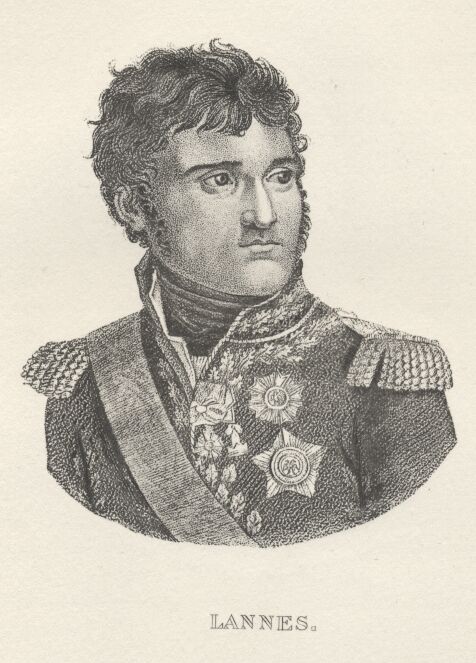
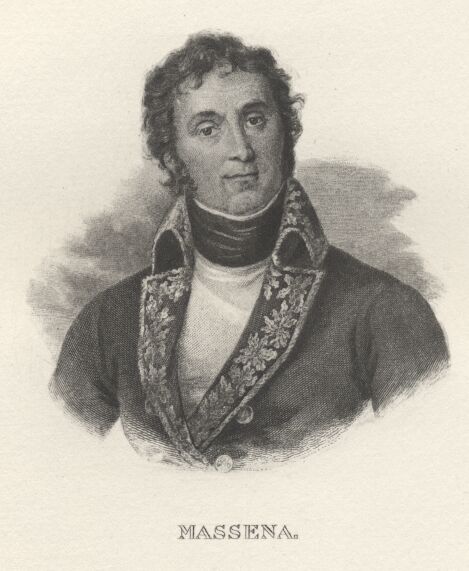
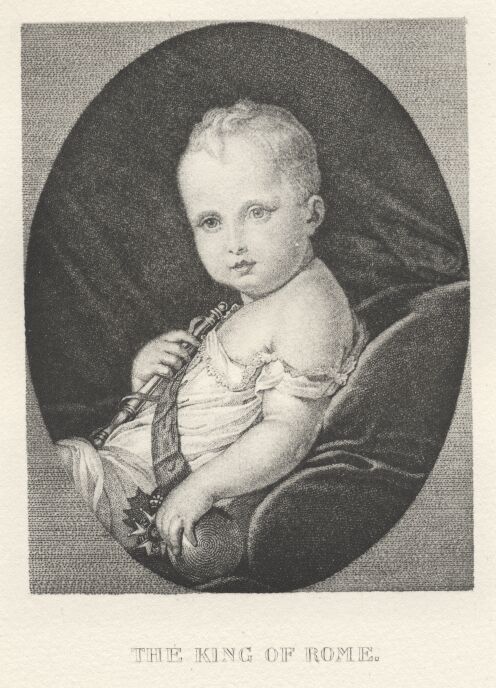
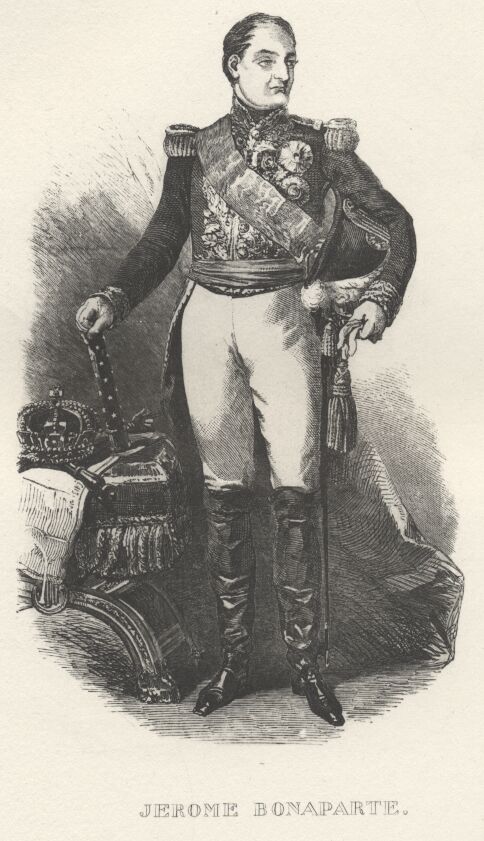
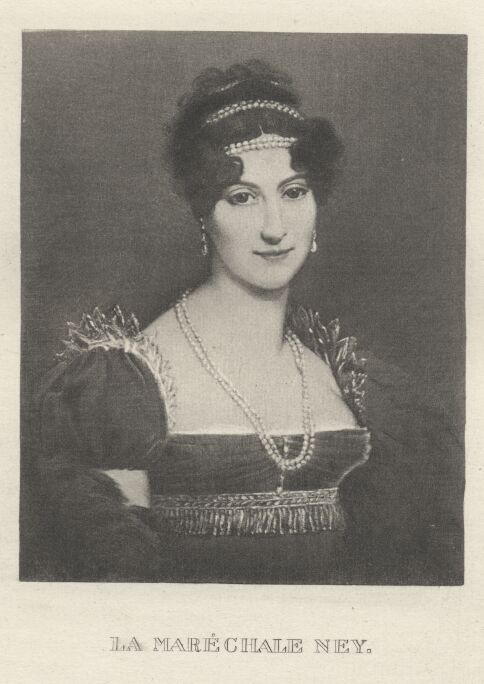
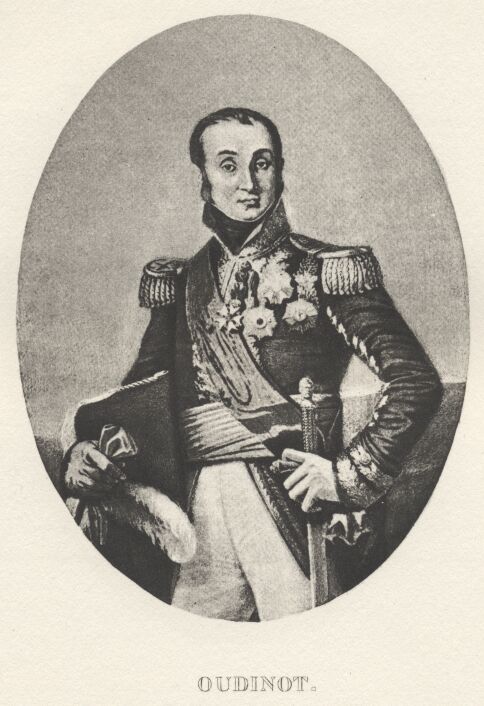
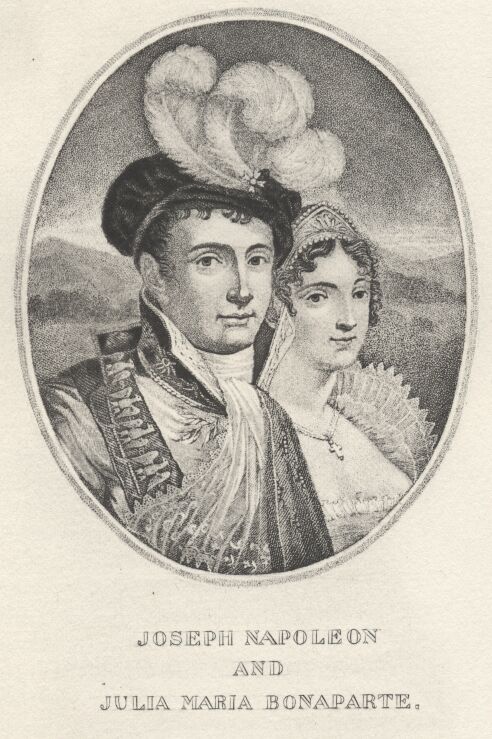
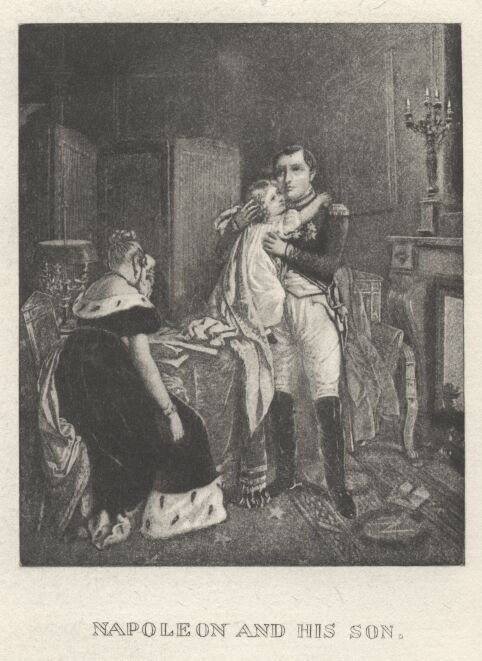
In September, 1811, the Emperor decided to make a journey into Flanders in company with the Empress, that he might personally ascertain if his orders had been carried out in all matters concerning both the civil and religious administration. Their Majesties left Compiegne on the 19th, and arrived at Montreuil-sur-Mer at nine o'clock in the evening. I accompanied the Emperor on this journey. I have read in O'Meara's Memorial that M. Marchand was at that time in the service of Napoleon. This is incorrect; for M. Marchand did not enter the Emperor's private service until 1814, at Fontainebleau. His Majesty at that time ordered me to select from the domestics of the service an intelligent young man to assist me in my duties near his person, since none of the ordinary 'valets de chambre' were to remain on the island of Elba. I mentioned the name of M. Marchand, son of a nurse of the King of Rome, as a suitable person for the place. He was accepted by his Majesty, and from that time M. Marchand formed a part of the private service of the Emperor. He may have been on this journey to Holland; but Napoleon was not aware of it, as his duties did not bring him near his Majesty's person.
I will now relate some of the circumstances which occurred on this journey, and are not generally known to the public, and at the same time take advantage of the opportunity to refute other assertions similar to those I have just mentioned, and which I have read with surprise, sometimes mixed with indignation, in the Contemporary Memoirs. I deem it important that the public should have correct information as to everything pertaining to this journey, in order that light may thus be thrown on certain incidents, by means of which calumny has attacked the honor of Napoleon, and even my own. A devoted though humble servant of the Emperor, it is natural that I should be deeply interested in explaining all that seems doubtful, in refuting all falsehoods, and in giving minute corrections of many incorrect statements which might influence the judgment of the public concerning my master and myself. I shall fulfil this duty with perfect frankness, as I have sufficiently proved in the foregoing volumes of these Memoirs.
A little incident occurred at Montreuil, which I take pleasure in narrating, since it proves how carefully Napoleon examined both the fortifications and improvements being made in the towns, either by his personal orders, or from the impulse given by him to these important departments of public service. After investigating the work done in the past year on the fortifications of Montreuil, and having made a tour of all the ramparts, the Emperor returned to the citadel, whence he again emerged to visit the exterior works. An arm of the river Canche, which lies at the foot of the wall on one side of the city, intercepted his route. The whole suite set to work to construct a temporary bridge of planks and logs; but the Emperor, impatient at the delay, walked through the stream in water up to his knees. The owner of a mill on the opposite shore took his Majesty by the arm to assist him in mounting the bank, and profited by this opportunity to explain to the Emperor that his mill, being in the line of the projected fortifications, would necessarily be torn down; whereupon the Emperor turned to the engineers and said, "This brave man must be indemnified for any loss he may sustain." He then continued his rounds, and did not re-enter his carriage until he had examined everything at leisure, and held a long interview with the civil and military authorities of Montreuil. On the route a soldier who had been wounded at Ratisbon was presented to him; and his Majesty ordered that a present should be made him on the spot, and that his petition should be presented to him on his arrival at Boulogne on the 20th.
This was the second time Boulogne had received the Emperor within its walls. Immediately on his arrival he went on board the flotilla and held a review. As an English frigate was evidently preparing to approach in order to observe more closely what was taking place in the roadstead, his Majesty immediately sent out a French frigate under full sail against the hostile ship, whereupon the latter, taking the alarm, at once disappeared. On the 29th of September his Majesty reached Flushing, and from Flushing went to visit the fortifications at Tervueren. As he was overlooking the various works at that place, a young woman threw herself at his feet, her cheeks wet with tears, .and extended a petition to the Emperor with a trembling hand. Napoleon most graciously assisted her to rise, and inquired the object of her petition. "Sire," said the poor woman between her sobs, "I am the mother of three children, whose father is conscripted by your Majesty; the children and the mother are in the deepest distress."—"Monsieur," said his Majesty to some one of his suite, "make a note of this man's name; I will make him an officer." The young woman tried to express her gratitude, but her emotion and tears prevented the utterance of a word, and the Emperor went on his way.
Another kind act marked his departure from Ostend. On leaving that town he followed the course of the Estrau, and as he did not care to pass through the locks, in order to cross the Swine, entered a fishing-boat in company with the Duke of Vicenza, his grand equerry, Count Lobau, one of his aides-de-camp, and two chasseurs of the guard. This boat, which was owned by two poor fishermen, was worth only about one hundred and fifty florins, including its equipment, and was their only source of wealth. The crossing required about half an hour, and his Majesty alighted at Fort Orange, on the island of Cadsand, where the prefect with his suite awaited him; and as he was wet and suffering with the cold, a large fire was kindled, by which he warmed himself with evident enjoyment. The fishermen were then asked how much they charged for the passage, and upon their replying a florin for each passenger, Napoleon ordered that a hundred napoleons should be counted out to them, and they should be granted a pension of three hundred francs for life. It is impossible to give an idea of the joyful surprise of these poor men, who had not in the least suspected the exalted rank of their passenger; but no sooner were they informed than the whole country was told, and thus many hearts were won for Napoleon; while at the same time the Empress Marie Louise was being welcomed on his account at the theater, and whenever she appeared on the streets, with sincere and vociferous applause.
Preparations had been made everywhere in Holland two months before the arrival of their Majesties, in order that they might be suitably received; and there was no village on the Emperor's route so small that it was not eager to earn his approbation by the proportional magnificence of the welcome accorded his Majesty. Almost the whole court of France accompanied him on this journey, and grand dignitaries, ladies of honor, superior officers, aides-de-camp, chamberlains, equerries, ladies of attire, quartermasters, valets de chambre, regulators of soldiers' quarters, the kitchen service—nothing was wanting. Napoleon intended to dazzle the eyes of the good Dutchmen by the magnificence of his court; and, in truth, his gracious manner, his affability, and the recital of the numerous benefits he scattered around his path, had already had their effect in conquering this population, in spite of the frowning brows of a few, who, as they smoked their pipes, murmured against the impediments to commerce caused by the Continental system.
The city of Amsterdam, where the Emperor had decided to remain some time, found itself suddenly in a condition of peculiar embarrassment, owing to the following circumstance: This town had a very extensive palace, but no coaches nor stables attached to them, which for the suite of Napoleon was a prime necessity; and the stables of King Louis, besides their insufficiency, were placed too far from the palace to be occupied by even a portion of the Emperor's service. Consequently there was great embarrassment in the city, and much difficulty was experienced in quartering the Emperor's horses; since to improvise stables in a few days, almost in a moment, was impossible, and to build carriage-houses in the midst of courts would have had a ludicrous effect. But fortunately this difficult situation was ended by one of the quartermasters of the palace named M. Emery, a man of great intelligence, and an old soldier, who, having learned from Napoleon and the force of circumstances never to be overcome by difficulties, conceived the happy thought of converting the flower-market into stables and coach-houses, and placing the equipages of the Emperor there under immense tents.
The Emperor at last rejoined his august spouse at Brussels, where the enthusiasm excited by his presence was unanimous. On a suggestion from him, which was as delicate as politic, Marie Louise during her stay bought laces to the value of one hundred and fifty thousand francs, in order to encourage the manufacturers. The introduction into France of English merchandise was at that time severely prohibited, and all that was found was indiscriminately burned.
Of the whole system of offensive policy maintained by Napoleon against the maritime tyranny of England, nothing more nearly aroused open opposition than the vigorous observance of prohibitory decrees. Belgium then contained a quantity of English merchandise, which was most carefully concealed, and which every one was anxious to obtain, as is ever the case with forbidden fruit. All the ladies in the suite of the Empress made large purchases of these articles; and one even filled several carriages with them, not without fear, however, that Napoleon might be informed of this, and might seize everything on its arrival in France. These carriages, bearing the arms of the Emperor, passed the Rhine filled with this precious luggage, and arrived at the gates of Coblentz, which furnished an occasion of painful uncertainty to the officers of the custom-house, while they deliberated whether they should arrest and examine the carriages, or should permit a convoy to pass unmolested because it professed to belong to the Emperor. After mature deliberation, the majority adopted this alternative; and the carriages successfully passed the first line of French custom-houses, and reached port in safety,—that is to say, Paris,—with its cargo of prohibited merchandise. If the carriages had been stopped, it is probable that Napoleon would have highly applauded the courage of the inspectors of customs, and would have pitilessly burned the confiscated articles.
Their Majesties arrived at Utrecht the 6th of October, and found every house on the quays as well as the streets decorated with ribbons and garlands. The rain was falling in torrents; but this did not prevent the authorities being on foot from early in the morning, and the population filling the streets. As soon as he alighted from his carriage, Napoleon, in spite of the weather, mounted his horse, and went to hold a review of several regiments stationed at the gates of Utrecht, accompanied by a numerous staff, and a large number of curious persons, most of them wet to the skin. After the review Napoleon entered the palace, where the entire deputation awaited him in an immense hall, still unfurnished, though it had been built by King Louis, and without changing his clothing gave audience to all who were eager to congratulate him, and listened with most exemplary patience to the harangues addressed to him.
The entrance of their Majesties into Amsterdam was most brilliant. The Empress, in a chariot drawn by splendid horses, was a few hours in advance of the Emperor, who made his entry on horseback, surrounded by a brilliant staff, glittering with gold and embroideries, who advanced at a slow pace amid shouts of admiration and astonishment from the good Hollanders. Through his simple and unaffected bearing there shone a profound satisfaction, and perhaps even a natural sentiment of pride, in seeing the welcome accorded to his glory here as elsewhere, and the universal sympathy aroused in the masses by his presence alone. Drapery in three colors, which produced a very fine effect, hung from posts erected at regular intervals and formed the decoration of the streets through which his Majesty was to pass; and he who three years later was to enter the palace of the Tuileries by night, and as a fugitive, after having with much difficulty gained admission through the gates of the chateau, passed then under arches of triumph, with a glory yet unsullied by defeat, and a fortune still faithful. These reminiscences are painful to me, but they recur to my mind even against my will; for no year of the Empire was marked by more fetes, more triumphant entries, or more popular rejoicings, than that which preceded the disastrous year of 1812.
Some of the actors of the French Theater at Paris had accompanied the court to Holland, and Talma there played the roles of Bayard and d'Orosmane; and M. Alissan de Chazet directed at Amsterdam the performance by French comedians of a vaudeville in honor of their Majesties, the title of which I have forgotten. Here, again, I wish to refute another assertion no less false made by the author of these 'Contemporary Memoirs', concerning a fictitious liaison between the Emperor and Mademoiselle Bourgoin. I cite the passage in question: "Mademoiselle Bourgoin, one of the delegates from the court of Thalia, in order to be permitted to accompany the party on this journey, had thoughtlessly succumbed to the temptation of making indiscreet revelations; even boasting aloud that she attracted the Emperor to the theater in which she played; and these boasts, which were by no means virtuous, having reached the Emperor's ears, he would no longer attend the theater. He charged Talma, for whom he had much consideration, to urge the pretty actress to be silent; and to inform her that on the slightest indiscretion she would be reconducted to France under good escort."
This by no means agrees with what his Majesty said one day in regard to this actress while at Erfurt. These words, which the author of the Memoirs would do well to recall, prove that the Emperor had no views in regard to her; and the most important proof of all, is the great discretion which the Emperor always exercised in regard to his amours.
During the entire passage through Holland, the Emperor showed himself cordial and affable, welcoming every one most kindly, and accosting each in a suitable manner, and at no time was he ever more amiable or anxious to please. He visited the manufactures, inspected dock-yards, reviewed troops, addressed the sailors, and attended the ball's given in his honor in all the towns through which he passed; and amid this life of seeming pleasure and distraction, he exerted himself almost more than in the quiet, monotonous life of the camp, and was affable, gracious, and accessible to all his subjects. But in these processions, in the very midst of these fetes, amid all this acclamation of whole cities rushing out to meet him, eager to serve as his escort, under these arches of triumph which were erected to him sometimes even at the entrance of an obscure village, his abstraction was deeper than ever, and his heart more oppressed with care; for his thoughts were from this time filled with the expedition to Russia. And perhaps into this amenity of manner, this friendliness, and these acts of benevolence, most of which were foreign to his character, there entered the design of lessening in advance the discontent which this expedition would produce; and perhaps in attaching all hearts to himself, in exhausting every means of pleasing, he imagined he was obtaining pardon in advance, by means of the enthusiasm of his subjects, for a war which, whatever might be the result, was to cost the Empire so much blood and so many tears.
During their Majesties' stay at Amsterdam, there was placed in the apartments of the Empress a piano so constructed as to appear like a desk with a division in the middle, and in this space was placed a small bust of the Emperor of Russia. Soon after, the Emperor wished to see if the apartments of the Empress were suitable, and while visiting them perceived this bust, which he placed under his arm without a word. He afterwards said to one of the ladies of the Empress, that he wished this bust removed; and he was obeyed, though this caused considerable astonishment, as it was not then known that any coolness had arisen between the two Emperors.
A few days after his arrival at Amsterdam, the Emperor made several excursions into the country, accompanied by a somewhat numerous suite. He visited at Saardam the thatched cottage which sheltered Peter the Great when he came to Holland under the name of Pierre Michaeloff to study ship-building; and after remaining there half an hour, the Emperor, as he left, remarked to the grand marshal of the palace. "That is the finest monument in Holland." The evening before, her Majesty the Empress had visited the village of Broek, which is the pride of the whole north of Holland. Almost all the houses of the village are built of wood, and are of one story, the fronts ornamented with numerous paintings in accordance with the caprice of the owners. These paintings are cared for most zealously, and preserved in a state of perfect freshness. Through the windows of clearest glass are seen curtains of embroidered China silk, and of painted muslin and beautiful India stuffs. The streets are paved with brick and very clean, and are washed and rubbed daily, and covered with fine white sand, in which various figures are imitated, especially flowers. Placards at the end of each street forbid the entrance of carriages into the village, the houses of which resemble children's toys. The cattle are cared for by hirelings at some distance from the town; and there is, outside the village, an inn for strangers, for they are not permitted to lodge inside. In front of some houses I remarked either a grass plot or an arrangement of colored sand and shells, sometimes little painted wooden statues, sometimes hedges oddly cut. Even the vessels and broom-handles were painted various colors, and cared for like the remainder of the establishment; the inhabitants carrying their love of cleanliness so far as to compel those who entered to take off their shoes, and replace them with slippers, which stood at the door for this singular purpose. I am reminded on this subject of an anecdote relating to the Emperor Joseph the Second. That prince, having presented himself in boots at the door of a house in Broek, and being requested to remove them before entering, exclaimed, "I am the Emperor!" —"Even if you were the burgomaster of Amsterdam, you should not enter in boots," replied the master of the dwelling. The good Emperor thereupon put on the slippers.
During the journey to Holland their Majesties were informed that the first tooth of the King of Rome had just made its appearance, and that the health of this august child was not impaired thereby.
In one of the little towns in the north of Holland, the authorities requested the Emperor's permission to present to him an old man aged one hundred and one years, and he ordered him brought before him. This more than centenarian was still vigorous, and had served formerly in the guards of the Stadtholder; he presented a petition entreating the Emperor to exempt from conscription one of his grandsons, the support of his old age. His Majesty assured him, through an interpreter, that he would not deprive him of his grandson, and Marshal Duroc was ordered to leave with the old man a testimonial of Imperial liberality. In another little town in Friesland, the authorities made the Emperor this singular address: "Sire, we were afraid you would come with the whole court; you are almost alone, and thereby we see you the better, and the more at our ease." The Emperor applauded this loyal compliment, and honored the orator by most touching thanks. After this long journey, passed in fetes, reviews, and displays of all kinds, where the Emperor, under the guise of being entertained, had made profound observations on the moral, commercial, and military situation of Holland, observations which bore fruit after his return to Paris, and even while in the country, in wise and useful decrees, their Majesties left Holland, passing through Haarlem, The Hague, and Rotterdam, where they were welcomed, as they had been in the whole of Holland, by fetes. They crossed the Rhine, visited Cologne and Aix-la-Chapelle, and arrived at Saint-Cloud early in November, 1811.
Marie Louis was a very handsome woman. She had a majestic figure and noble bearing, fresh complexion, blond hair, and blue eyes full of expression; her hands and feet were the admiration of the court. Her figure was, perhaps, a trifle too stout; but she lost some of this superfluous flesh during her stay in France, though thereby she gained as much in grace and beauty. Such was her appearance. In her intercourse with those immediately around her she was affable and cordial; and the enjoyment she felt in the freedom of these conversations was depicted on her countenance, which grew animated, and took on an infinite grace. But when she was obliged to appear in public she became extremely timid; formal society served of itself to isolate her; and as persons who are not naturally haughty always appear so with a poor grace, Marie Louise, being always much embarrassed on reception days, was often the subject of unjust criticism; for, as I have said, her coldness in reality arose from an excessive timidity.
Immediately after her arrival in France, Marie Louise suffered from this embarrassment to a very great degree, which can be easily understood in a young princess who found herself so suddenly transported into an entirely new society, to whose habits and tastes she felt obliged to conform, and in which, although her high position must naturally attract the world to her, the circumstances of this position rendered it necessary that she should take the initiative in any advances made, a fact which explains the awkwardness of her early relations with the ladies of her court. After intimacies had been formed, and the young Empress had chosen her friends with all the abandon of her young heart, then haughtiness and constraint vanished, or reappeared only on occasions of ceremony. Marie Louise was of a calm, thoughtful character; it took little to arouse her sensitive spirit; and yet, although easily moved, she was by no means demonstrative. The Empress had received a very careful education, her mind was cultivated and her tastes very simple, and she possessed every accomplishment.
She detested the insipid hours passed in idleness, and liked occupation because it suited her tastes, and also because in a proper employment of her time she found the only means of driving away ennui. I think she was, in fact, a most congenial wife for the Emperor. She was too much interested in the concerns of her own private life to ever mingle in political intrigues, and, although she was both Empress and Queen, very often was in entire ignorance of public affairs, except what knowledge she obtained from the journals. The Emperor at the end of days filled with agitation could find a little relaxation only in a quiet domestic hearth, which restored to him the happiness of family life; and, consequently, an intriguing woman or a talkative politician would have annoyed him exceedingly.
Nevertheless, the Emperor sometimes complained of the want of affability the Empress showed to the ladies of her court, and said that this excessive reserve was injurious to him in a country where the opposite extreme is most common.
This was because he was recalling the past somewhat, and thinking of the Empress Josephine, whose constant gayety was the chief charm of the court. He was necessarily struck by the contrast; but was there not some injustice at the foundation of this? The Empress Marie Louise was the daughter of an Emperor, and had seen and known only courtiers, and, having no acquaintance with any other class, knew nothing of any world outside the walls of the palace of Vienna. She arrived one fine day at the Tuileries, in the midst of a people whom she had never seen except as soldiers; and on this account the constraint of her manner towards the persons composing the brilliant society of Paris seems to me to a certain point excusable. It seems to me, besides, that the Empress was expected to show a frankness and simplicity which were entirely misplaced; and, by being cautioned over and over again to be natural, she was prevented from the observance of that formality also suitable on the part of the great, who should be approached only when they themselves give the signal. The Empress Josephine loved the people because she had been one of them; and in mounting a throne her expansive nature had everything to gain, for she found it was only extending her friendship among a larger circle. Inspired by her own kind heart, the Empress Marie Louise sought to make those around her happy; and her benevolent deeds were long the subject of conversation, and, above all, the delicate manner in which they were performed. Each month she took from the sum allotted for her toilet ten thousand francs for the poor, which was not the limit of her charities; for she always welcomed with the greatest interest those who came to tell her of distresses to be alleviated. From the eagerness with which she listened to those soliciting aid, it would seem that she had been recalled suddenly to a duty; and yet it was simply an evidence that the chords of her sensitive heart had been touched. I do not know if any one ever received from her a refusal of a demand of this sort. The Emperor was deeply touched each time that he was informed of a benevolent act of the Empress. At eight o'clock in the morning the curtains and blinds were half opened in the apartments of the Empress Marie Louise, and the papers were handed her; after reading which, chocolate or coffee was served, with a kind of pastry called tongue. This first breakfast she took in bed. At nine o'clock Marie Louise arose, made her morning toilet, and received those persons privileged to attend at this hour. Every day in the Emperor's absence, the Empress ascended to the apartment of Madame de Montebello, her lady of honor, followed by her service, composed of the chevalier of honor, and some of the ladies of the palace; and on her return to her apartments, a light breakfast was served, consisting of pastry and fruits. After her lessons in drawing, painting, and music, she commenced her grand toilet. Between six and seven o'clock she dined with the Emperor, or in his absence with Madame de Montebello, the dinner comprising only one course. The evening was spent in receptions, or at concerts, plays, etc.; and the Empress retired at eleven o'clock. One of her women always slept in the room in front of her bedroom, and it was through this the Emperor was obliged to pass when he spent the night in his wife's room.
This customary routine of the Empress was changed, however, when the Emperor was at the chateau; but when alone she was punctual in all her employments, and did exactly the same things at the same hours. Her personal domestics seemed much attached to her; for though cool and distant in her manner, they always found her good and just.
In the Emperor's absence the portrait of the Duchess of Montebello ornamented the Empress's room with those of the entire Imperial family of Austria; but when the Emperor returned, the portrait of the duchess was removed; and during the war between Napoleon and the Emperors of Austria and Russia, the portrait of Francis II. was removed from his daughter's room, by order of his Majesty, and was, I think, consigned to some secret spot.
The King of Rome was a very fine child; and though he resembled the Emperor less than the son of Hortense had done, his features were an agreeable union of those of his father and mother. I never knew him except in his infancy, and what was most remarkable in him at that age was the great kindness and affection he showed to those around him. He was much devoted to a young and pretty person named Fanny Soufflot, daughter of the first lady of the bedchamber, who was his constant companion; and, as he liked to see her always well dressed, he begged of Marie Louise, or his governess, Madame the Countess of Montesquiou, any finery that struck his fancy, which he wished to give to his young friend. He made her promise to follow him to the war when he was grown, and said many charming things which showed his affectionate disposition.
There was chosen as companion for the little king (as he styled himself) a young child named Albert Froment, I think, the son of one of the ladies of honor. One morning as they were playing together in the garden on which the apartments of the king opened at Saint-Cloud, Mademoiselle Fanny was watching them without interfering with their games, Albert tried to take the king's wheelbarrow; and, when the latter resisted, Albert struck him, whereupon the king exclaimed, "Oh, suppose some one had seen you! But I will not tell!" I consider this a fine evidence of character.
One day he was at the windows of the chateau with his governess, amusing himself by looking at the passers-by, and pointing out with his finger those who attracted his attention. While standing there he saw below a woman in deep mourning, holding by the hand a little boy also dressed in mourning. The little child carried a petition, which he waved from a distance to the prince, and seemed to be entreating him to receive. Their black clothing made a deep impression on the prince, and he asked why the poor child was dressed all in black. "Doubtless because his papa is dead," replied the governess, whereupon the child expressed an earnest desire to speak to the little petitioner. Madame de Montesquiou, who especially desired to cultivate in her young pupil this disposition to mercy, gave orders that the mother and child should be brought up. She proved to be the widow of a brave man who had lost his life in the last campaign; and by his death she had been reduced to poverty, and compelled to solicit a pension from the Emperor. The young prince took the petition, and promised to present it to his papa. And next day when he went as usual to pay his respects to his father, and handed him all the petitions presented to him the evening before, one alone was kept apart; it was that of his little protege. "Papa," said he, "here is a petition from a little boy whose father was killed on your account; give him a pension." Napoleon was deeply moved, and embraced his son, and orders for the pension were given that day. This conduct in so young a child gives undeniable evidence of an excellent heart.
His early training was excellent; as Madame de Montesquiou had an unbounded influence over him, owing to the manner at once gentle and grave in which she corrected his faults. The child was generally docile, but, nevertheless, sometimes had violent fits of anger, which his governess had adopted an excellent means of correcting, which was to remain perfectly unmoved until he himself controlled his fury. When the child returned to himself, a few severe and pertinent remarks transformed him into a little Cato for the remainder of the day. One day as he was rolling on the floor refusing to listen to the remonstrances of his governess, she closed tie windows and shutters; and the child, astonished by this performance, forgot what had enraged him, and asked her why she did this. "I did it because I was afraid you would be heard; do you suppose the French people would want you as their prince, if they knew that you gave way to such fits of anger?"—"Do you think they heard me?" he inquired; "I would be very sorry if they had. Pardon, Mamma Quiou [this was his name for her], I will not do it again."
The Emperor was passionately devoted to his son; took him in his arms every time he saw him, and jumped him up and down most merrily, and was delighted with the joy he manifested. He teased him by carrying him in front of the glass and making grimaces, at which the child laughed till he cried. While at breakfast he took him on his knee, dipped his finger in the sauce and made him suck it, and smeared his face with it; and when the governess scolded, the Emperor laughed still more heartily, and the child, who enjoyed the sport, begged his father to repeat it. This was an opportune moment for the arrival of petitions at the chateau; for they were always well received at such times, thanks to the all-powerful credit of the little mediator.
The Emperor in his tender moods was sometimes even more childish than his son. The young prince was only four months old when his father put his three-cornered hat on the pretty infant.
The child usually cried a good deal, and at these times the Emperor embraced him with an ardor and delight which none but a tender father could feel, saying to him,
"What, Sire, you crying! A king weeping; fie, then, how ugly that is!" He was just a year old when I saw the Emperor, on the lawn in front of the chateau, place his sword-belt over the shoulders of the king, and his hat on his head, and holding out his arms to the child, who tottered to him, his little feet now and then entangled in his father's sword; and it was beautiful to see the eagerness with which the Emperor extended his arms to keep him from falling.
One day in his cabinet the Emperor was lying on the floor, the king riding horseback on his knee, mounting by jumps up to his father's face, and kissing him. On another occasion the child entered the council chamber after the meeting had ended, and ran into his father's arms without paying attention to any one else, upon which the Emperor said to him, "Sire, you have not saluted these gentlemen." The child turned, bowed most gracefully, and his father then took him in his arms. Sometimes when going to visit the Emperor, he ran so fast that he left Madame de Montesquiou far behind, and said to the usher, "Open the door for me, I want to see papa." The usher replied, "Sire, I cannot do it." —"But I am the little king."—"No, Sire, I cannot open it." At this moment his governess appeared; and strong in her protection he proudly repeated, "Open the door, the king desires it."
Madame de Montesquiou had added to the prayers which the child repeated morning and evening, these words: "My God, inspire papa to make peace for the happiness of France." One evening the Emperor was present when his son was retiring, and he made the same prayer, whereupon the Emperor embraced him in silence, smiling most kindly on Madame de Montesquiou.
The Emperor was accustomed to say to the King of Rome when he was frightened at any noise or at his grimaces, "Come, come! a king should have no fear."
I recall another anecdote concerning the young son of the Emperor, which was related to me by his Majesty himself one evening when I was undressing him as usual, and at which the Emperor laughed most heartily. "You would not believe," said he, "the singular reward my son desired of his governess for being good. Would she not allow him to go and wade in the mud?" This was, true, and proves, it seems to me, that the greatness which surrounds the cradle of princes cannot eradicate from their minds the singular caprices of childhood.
All the world is familiar with the name of the Abbe Geoffroy of satirical memory, who drove the most popular actors and authors of the time to desperation. This pitiless Aristarchus must have been most ardently enamored of this disagreeable profession; for he sometimes endangered thereby, not his life, which many persons would have desired earnestly perhaps, but at any rate his health and his repose. It is well, doubtless, to attack those who can reply with the pen, as then the consequences of the encounter do not reach beyond the ridicule which is often the portion of both adversaries. But Abbe Geoffroy fulfilled only one of the two conditions by virtue of which one can criticise,—he had much bitterness in his pen, but he was not a man of the sword; and every one knows that there are persons whom it is necessary to attack with both these weapons.
An actor whom Geoffroy had not exactly flattered in his criticisms decided to avenge himself in a piquant style, and one at which he could laugh long and loud. One evening, foreseeing what would appear in the journal of the next day, he could think of nothing better than to carry off Geoffroy as he was returning from the theater, and conduct him with bandaged eyes to a house where a schoolboy's punishment would be inflicted on this man who considered himself a master in the art of writing.
This plan was carried out. Just as the abbe regained his lodging, rubbing his hands perhaps as he thought of some fine point for tomorrow's paper, three or four vigorous fellows seized him, and conveyed him without a word to the place of punishment; and some time later that evening, the abbe, well flogged, opened his eyes in the middle of the street, to find himself alone far from his dwelling. The Emperor, when told of this ludicrous affair, was not at all amused, but, on the contrary, became very angry, and said that if he knew the authors of this outrage, he would have them punished. "When a man attacks with the pen," he added, "he should be answered with the same weapon." The truth is also that the Emperor was much attached to M. Geoffroy, whose writings he did not wish submitted to censure like those of other journalist. It was said in Paris that this predilection of a great man for a caustic critic came from the fact that these contributions to the Journal of the Empire, which attracted much attention at this period, were a useful diversion to the minds of the capital. I know nothing positively in regard to this; but when I reflect on the character of the Emperor, who wished no one to occupy themselves with his political affairs, these opinions seem to me not devoid of foundation.
Doctor Corvisart was not a courtier, and came rarely to the Emperor, except on his regular visit each Wednesday and Saturday. He was very candid with the Emperor, insisted positively that his directions should be obeyed to the letter, and made full use of the right accorded to physicians to scold their negligent patient. The Emperor was especially fond of him, and always detained him, seeming to find much pleasure in his conversation.
After the journey to Holland in 1811, M. Corvisart came to see the Emperor one Saturday, and found him in good health. He left him after the toilet, and immediately went to enjoy the pleasures of the chase, of which he was exceedingly fond. He was in the habit of not announcing where he was going, solely in order that he might not be interrupted for some slight cause, as had happened to him sometimes, for the doctor was most obliging and considerate. That day after his breakfast, which, according to custom, he had devoured rapidly, the Emperor was taken suddenly with a violent colic, and was quite ill. He asked for M. Corvisart, and a courier was dispatched for him, who, not finding him in Paris, hastened to his country house; but the doctor was at the chase, no one knew where, so the courier was obliged to return without him. The Emperor was deeply vexed, and as he continued to suffer extremely, at last went to bed, and Marie Louise came and spent a few moments with him; at last M. Yvan was summoned, and administered remedies which soon relieved the Emperor.
M. Corvisart, somewhat anxious perhaps, came on Monday instead of Wednesday; and when he entered Napoleon's room, the latter, who was in his dressing-gown, ran to him, and taking him by both ears, said, "Well, Monsieur, it seems that if I were seriously ill, I should have to dispense with your services." M. Corvisart excused himself, asked the Emperor how he had been affected, what remedies he had used, and promised always to leave word where he could be found, in order that he might be summoned immediately on his Majesty's orders, and the Emperor was soon appeased. This event was really of advantage to the doctor; for he thus abandoned a bad habit, at which it is probable his patients rejoiced.
M. Corvisart had a very great influence with the Emperor, so much so that many persons who knew him gave him the soubriquet of doctor of petitions; and it was very rarely he failed to obtain a favorable answer to his requests. Nevertheless, I often heard him speak warmly in favor of M. de Bourrienne, in order to impress upon the Emperor's mind that he was much attached to his Majesty; but the latter always replied, "No, Bourrienne is too much of an Englishman; and besides, he is doing very well; I have located him at Hamburg. He loves money, and he can make it there."
It was during the year 1811 that Cardinal Fesch came most frequently to the Emperor's apartments, and their discussions seemed to me very animated. The cardinal maintained his opinions most vehemently, speaking in a very loud tone and with great volubility. These conversations did not last more than five moments before they became very bitter, and I heard the Emperor raise his voice to the same pitch; then followed an exchange of harsh terms, and each time the cardinal arrived I felt distressed for the Emperor, who was always much agitated at the close of these interviews. One day as the cardinal was taking leave of the Emperor, I heard the latter say to him sharply, "Cardinal, you take advantage of your position."
A few days before our departure for Russia the Emperor had me summoned during the day, and ordered me to bring from the treasury the box of diamonds, and place it in his room, and not to go far away, as he had some important business for me. About nine o'clock in the evening I was again summoned, and found M. de Lavalette, director-general of the post, in the Emperor's room. His Majesty opened the box in my presence, and examined the contents, saying to me, "Constant, carry this box yourself to the count's carriage, and remain there till he arrives." The carriage was standing at the foot of the grand staircase in the court of the Tuileries; and I opened it, took my seat, and waited until half-past eleven, when M. de Lavalette arrived, having spent all this time in conversation with the Emperor. I could not understand these precautions in delivering the diamonds to M. de Lavalette, but they were certainly not without a motive.
The box contained the sword, on the pommel of which was mounted the regent diamond, the handle also set with diamonds of great value; the grand collar of the Legion of Honor; the ornaments, hatcord, shoulder-piece, and buttons of the coronation robes, with the shoe-buckles and garters, all of which were of immense value.
A short time before we set out for the Russian campaign, Josephine sent for me, and I went at once to Malmaison, where this excellent woman renewed her earnest recommendations to watch most carefully over the Emperor's health and safety; and made me promise that if any accident, however slight, happened to him, I would write to her, as she was exceedingly anxious to know the real truth concerning him. She wept much; talked to me constantly about the Emperor, and after a conversation of more than an hour, in which she gave full vent to her emotions, presented me with her portrait painted by Saint on a gold snuff-box. I felt much depressed by this interview; for nothing could be more touching than to see this woman disgraced, but still loving, entreating my care over the man who had abandoned her, and manifesting the same affectionate interest in him which the most beloved wife would have done.
On entering Russia, a thing of which I speak here more according to the order of my reminiscences than in the order of time, the Emperor sent out, on three different roads, details of select police to prepare in advance lodgings, beds, supplies, etc. These officers were Messieurs Sarrazin, adjutant-lieutenant, Verges, Molene, and Lieutenant Pachot. I will devote farther on an entire chapter to our itinerary from Paris to Moscow.
A short time before the battle of La Moskwa, a man was brought to the camp dressed in the Russian uniform, but speaking French; at least his language was a singular mixture of French and Russian. This man had escaped secretly from the enemy's lines; and when he perceived that our soldiers were only a short distance from him, had thrown his gun on the ground, crying in a very strong Russian accent, "I am French," and our soldiers had at once taken him prisoner.
Never was prisoner more charmed with his change of abode. This poor fellow, who seemed to have been forced to take arms against his will in the service of the enemies of his country, arrived at the French camp, called himself the happiest of men in finding again his fellow-countrymen, and pressed the hand of all the soldiers with an ardor which delighted them. He was brought to the Emperor, and appeared much over-awed at finding himself in the presence of the King of the French, as he called his Majesty. The Emperor questioned him closely, and in his reply he declared that the noise of the French cannon had always made his heart beat; and that he had feared only one thing, which was that he might be killed by his compatriots. From what he told the Emperor it appeared that he belonged to that numerous class of men who find themselves transplanted by their family to a foreign land, without really knowing the cause of their emigration. His father had pursued at Moscow an unremunerative industrial profession, and had died leaving him without resources for the future, and, in order to earn his bread, he had become a soldier. He said that the Russian military discipline was one of his strongest incentives to desert, adding that he had strong arms and a brave heart, and would serve in the French army if the general permitted. His frankness pleased the Emperor, and he endeavored to obtain from him some positive information on the state of the public mind at Moscow; and ascertained from his revelations, more or less intelligent, that there was much disturbance in that ancient capital.
He said that in the street could be heard cries of, "No more of Barclay!
[Prince Michael Barclay de Tolly, born in Livonia, 1755, of Scottish extraction; distinguished himself in wars against Sweden, Turkey, and Poland, 1788 and 1794, and against the French, 1806; commanded Russian army against Napoleon in 1812, until superseded, after battle of Smolensk, by Kutusoff, and commanded the right wing at Borodino; afterwards commanded at Bautzen and Leipsic; died 1818]
Down with the traitor! dismiss him! Long live Kutusoff!" The merchant class, which possessed great influence on account of its wealth, complained of a system of temporizing which left men in uncertainty, and compromised the honor of the Russian arms; and it was thought unpardonable in the Emperor that he had bestowed his confidence on a foreigner when old Kutusoff, with the blood and the heart of a Russian, was given a secondary position. The Emperor Alexander had paid little attention to these energetic complaints, until at last, frightened by the symptoms of insurrection which began to be manifest in the army, he had yielded, and Kutusoff had been named generalissimo, over which important event there had been rejoicings and illuminations at Moscow. A great battle with the French was talked of; enthusiasm was at its height in the Russian army, and every soldier had fastened to his cap a green branch. The prisoner spoke with awe of Kutusoff, and said that he was an old man, with white hair and great mustaches, and eyes that struck him with terror; that he lacked much of dressing like the French generals; that he wore very ordinary clothes—he who could have such fine ones; that he roared like a lion when he was angry; that he never started on a march without saying his prayers; and that he crossed himself frequently at different hours of the day. "The soldiers love him because they say he so much resembles Suwarrow. I am afraid he will do the French much harm," said he. The Emperor, satisfied with this information, dismissed the prisoner, and gave orders that he should be allowed the freedom of the camp; and afterwards he fought bravely beside our soldiers. The Emperor made his entrance into Gjatsk with a most singular escort.
Some Cossacks had been taken in a skirmish; and his Majesty, who was at this time very eager for information from every quarter, desired to question these savages, and for this purpose had two or three brought to his headquarters. These men seemed formed to be always on horseback, and their appearance when they alighted on the ground was most amusing. Their legs, which the habit of pressing their horses' sides had driven far apart, resembled a pair of pincers, and they had a general air of being out of their element. The Emperor entered Gjatsk, escorted by two of these barbarians on horseback, who appeared much flattered by this honor. I remarked that sometimes the Emperor could with difficulty repress a smile as he witnessed the awkward appearance made by these cavaliers from the Ukraine, above all when they attempted to put on airs. Their reports, which the interpreter of the Emperor had some difficulty in comprehending, seemed a confirmation of all his Majesty had heard concerning Moscow. These barbarians made the Emperor understand by their animated gestures, convulsive movements, and warlike postures, that there would soon be a great battle between the French and the Russians. The Emperor had brandy given them, which they drank like water, and presented their glasses anew with a coolness which was very amusing. Their horses were small, with cropped manes and long tails, such as unfortunately can be seen without leaving Paris.
It is a matter of history that the King of Naples made a most favorable impression on these barbarians. When it was announced to the Emperor one day that they desired to appoint him their hetman, the Emperor was much amused by this offer, and said jestingly that he was ready to indorse this choice of a free people. The King of Naples had something theatrical in his appearance which fascinated these barbarians, for he always dressed magnificently. When his steed bore him in front of his column, his beautiful hair disordered by the wind, as he gave those grand saber strokes which mowed down men like stubble, I can well comprehend the deep impression he made on the fancy of these warlike people, among whom exterior qualities alone can be appreciated. It is said that the King of Naples by simply raising this powerful sword had put to flight a horde of these barbarians. I do not know how much truth there is in this statement, but it is at least possible.
The Cossacks, in common with all races still in their infancy, believe in magicians. A very amusing anecdote was told of the great chief of the Cossacks, the celebrated Platoff. Pursued by the King of Naples, he was beating a retreat, when a ball reached one of the officers beside him, on which event the hetman was so much irritated against his magician that he had him flogged in presence of all his hordes, reproaching him most bitterly because he had not turned away the balls by his witchcraft. This was plain evidence of the fact that he had more faith in his art than the sorcerer himself possessed.
On the 3d of September, from his headquarters at Gjatsk, the Emperor ordered his army to prepare for a general engagement. There had been for some days much laxity in the police of the bivouacs, and he now redoubled the severity of the regulations in regard to the countersigns. Some detachments which had been sent for provisions having too greatly prolonged their expedition, the Emperor charged the colonels to express to them his dissatisfaction, adding that those who had not returned by the next day could not take part in the battle. These words needed no commentary.
The country surrounding Gjatsk was very fertile, and the fields were now covered with rye ready for the sickle, through which we saw here and there broad gaps made by the Cossacks in their, flight. I have often since compared the aspect of these fields in November and September. What a horrible thing is war! A few days before the battle, Napoleon, accompanied by two of his marshals, made a visit of inspection on foot in the outskirts of the city.
On the eve of this great event he discussed everything in the calmest manner, speaking of this country as he would have done of a beautiful, fertile province of France. In hearing him one might think that the granary of the army had here been found, that it would consequently furnish excellent winter quarters, and the first care of the government he was about to establish at Gjatsk would be the encouragement of agriculture. He then pointed out to his marshals the beautiful windings of the river which gives its name to the village, and appeared delighted with the landscape spread before his eyes. I have never seen the Emperor abandon himself to such gentle emotions, nor seen such serenity manifested both in his countenance and conversation; and at the same time I was never more deeply impressed with the greatness of his soul.
On the 5th of September the Emperor mounted the heights of Borodino, hoping to take in at a glance the respective positions of the two armies; but the sky was overcast. One of those fine, cold rains soon began to fall, which so often come in the early autumn, and resemble from a distance a tolerably thick fog. The Emperor tried to use his glasses; but the kind of veil which covered the whole country prevented his seeing any distance, by which he was much vexed. The rain, driven by the wind, fell slanting against his field-glasses, and he had to dry them over and over again, to his very great annoyance. The atmosphere was so cold and damp that he ordered his cloak, and wrapped himself in it, saying that as it was impossible to remain there, he must return to headquarters, which he did, and throwing himself on the bed slept a short while. On awaking he said, "Constant, I hear a noise outside; go see what it is." I went out, and returned to inform him that General Caulaincourt had arrived; at which news the Emperor rose hastily, and ran to meet the general, asking him anxiously, "Do you bring any prisoners?" The general replied that he had not been able to take prisoners, since the Russian soldiers preferred death to surrender. The Emperor immediately cried, "Let all the artillery be brought forward." He had decided that in his preparations to make this war one of extermination, the cannon would spare his troops the fatigue of discharging their muskets.
On the 6th, at midnight, it was announced to the Emperor that the fires of the Russians seemed less numerous, and the flames were extinguished at several points; and some few said they had heard the muffled sound of drums. The army was in a state of great anxiety. The Emperor sprang wildly from his bed, repeatedly exclaiming, "It is impossible!"
I tried to hand him his garments, that he might clothe himself warmly, as the night was so cold; but he was so eager to assure himself personally of the truth of these statements, that he rushed out of the tent with only his cloak wrapped around him. It was a fact that the fires of the bivouac had grown paler, and the Emperor had reason for the gravest suspicions. Where would the war end if the Russians fell back now? He re-entered his tent much agitated, and retired to bed again, repeating many times, "We will know the truth to-morrow morning."
On the 7th of September, the sun rose in a cloudless sky, and the Emperor exclaimed, "It is the sun of Austerlitz!" These words of the Emperor were reported to the army, and repeated by them amid great enthusiasm. The drums were beaten, and the order of the day was read as follows:
SOLDIERS,—Behold the battle you have so long desired! Henceforth that victory depends on you which is so necessary to us, since it will furnish us abundant provisions, good winter quarters, and a prompt return to our native land. Conduct yourselves as at Austerlitz, at Friedland, at Witepsk, at Smolensk, and let the most remote posterity refer with pride to your conduct on this day; let it be said of you, "He took part in the great battle under the walls of Moscow."
The army replied by reiterated acclamations. The Emperor, a few hours before the battle, had dictated this proclamation, and it was read in the morning to the soldiers. Napoleon was then on the heights of Borodino; and when the enthusiastic cries of the army struck his ear, he was standing with folded arms, the sun shining full in his eyes, reflected from the French and Russian bayonets. He smiled, then became more serious until the affair was terminated.
On that day the portrait of the King of Rome was brought to Napoleon. He needed some gentle emotion to divert his mind from this state of anxious suspense. He held this portrait long on his knees, contemplating it with delight, and said that it was the most agreeable surprise he had ever received, and repeated several times in a low tone, "My good Louise! This is a charming attention!" On the Emperor's countenance there rested an expression of happiness difficult to describe, though the first emotions excited were calm and even melancholy. "The dear child," was all that he said. But he experienced all the pride of a father and an Emperor when by his orders officers, and even soldiers, of the old guard came to see the King of Rome. The portrait was placed on exhibition in front of the tent; and it was inexpressibly touching to see these old soldiers uncover themselves with respect before this image, in which they sought to find some of the features of Napoleon. The Emperor had at this moment the expansive joy of a father who knows well that next to him his son has no better friends than his old companions in endurance and glory.
At four o'clock in the morning, that is to say one hour before the battle opened, Napoleon felt a great exhaustion in his whole person, and had a slight chill, without fever, however, and threw himself on his bed. Nevertheless, he was not as ill as M. de Segur states. He had had for some time a severe cold that he had somewhat neglected, and which was so much increased by the fatigue of this memorable day that he lost his voice almost entirely. He treated this with the soldier's prescription, and drank light punch during the whole night, which he spent working in his cabinet without being able to speak. This inconvenience lasted two days; but on the 9th he was well, and his hoarseness almost gone.
After the battle, of every six corpses found, one would be French and five Russian. At noon an aide-de-camp came to inform the Emperor that Count Auguste de Caulaincourt, brother of the Duke of Vicenza, had been struck by a ball. The Emperor drew a deep sigh, but said not a word; for he well knew that his heart would most likely be saddened more, than once that day. After the battle, he expressed his condolences to the Duke of Vicenza in the most touching manner.
Count Auguste de Caulaincourt was a young man full of courage, who had left his young wife a few hours after his marriage to follow the French army, and to find a glorious death at the battle of La Moskwa. He was governor of the pages of the Emperor, and had married the sister of one of his charges. This charming person was so young that her parents preferred that the marriage should not take place until he returned from the campaign, being influenced in this decision by the fate of Prince Aldobrandini after his marriage with Mademoiselle de la Rochefoucault before the campaign of Wagram. General Auguste de Caulaincourt was killed in a redoubt to which he had led the cuirassiers of General Montbrun, who had just been fatally wounded by a cannon-ball in the attack on this same redoubt.
The Emperor often said, in speaking of generals killed in the army, "Such an one is happy in having died on the field of honor, while I shall perhaps be so unfortunate as to die in my bed." He was less philosophical on the occasion of Marshal Lannes's death, when I saw him, while at breakfast, weeping such large tears that they rolled over his cheeks, and fell into his plate. He mourned deeply for Desaix, Poniatowski, and Bessieres, but most of all for Lannes, and next to him Duroc.
During the whole of the battle of the Moskwa the Emperor had attacks resembling stone in the bladder. He had been often threatened with this disease unless he was more prudent in his diet, and suffered much, although he complained little, and only when attacked by violent pain uttered stifled groans. Now, nothing causes more anxiety than to hear those complain who are unaccustomed to do so; for then one imagines the suffering most intense, since it is stronger than a strong man. At Austerlitz the Emperor said, "Ordener is worn out. There is only one time for military achievement in a man's life. I shall be good for six years longer, and after that I shall retire."
The Emperor rode over the field of battle, which presented a horrible spectacle, nearly all the dead being covered with wounds; which proved with what bitterness the battle had been waged. The weather was very inclement, and rain was falling, accompanied by a very high wind. Poor wounded creatures, who had not yet been removed to the ambulances, half rose from the ground in their desire not to be overlooked and to receive aid; while some among them still cried, "Vive l'Empereur!" in spite of their suffering and exhaustion. Those of our soldiers who had been killed by Russian balls showed on their corpses deep and broad wounds, for the Russian balls were much larger than ours. We saw a color-bearer, wrapped in his banner as a winding-sheet, who seemed to give signs of life, but he expired in the shock of being raised. The Emperor walked on and said nothing, though many times when he passed by the most mutilated, he put his hand over his eyes to avoid the sight. This calm lasted only a short while; for there was a place on the battlefield where French and Russians had fallen pell-mell, almost all of whom were wounded more or less grievously. And when the Emperor heard their cries, he became enraged, and shouted at those who had charge of removing the wounded, much irritated by the slowness with which this was done. It was difficult to prevent the horses from trampling on the corpses, so thickly did they lie. A wounded soldier was struck by the shoe of a horse in the Emperor's suite, and uttered a heartrending cry, upon which the Emperor quickly turned, and inquired in a most vehement manner who was the awkward person by whom the man was hurt. He was told, thinking that it would calm his anger, that the man was nothing but a Russian. "Russian or French," he exclaimed, "I wish every one removed!"
Poor young fellows who were making their first campaign, being wounded to the death, lost courage, and wept like children crying for their mothers. The terrible picture will be forever engraven on my memory.
The Emperor urgently repeated his orders for removing the wounded quickly, then turned his horse in silence, and returned to his headquarters, the evening being now far advanced. I passed the night near him, and his sleep was much disturbed; or, rather, he did not sleep at all, and repeated over and over, restlessly turning on his pillow, "Poor Caulaincourt! What a day! What a day!"
As I have announced previously, I shall endeavor to record in this chapter some recollections of events personal to the Emperor which occurred during the journey between the frontiers of France and Prussia. How sad a contrast results, alas! as we attempt to compare our journey to Moscow with that of our return. One must have seen Napoleon at Dresden, surrounded by a court of princes and of kings, to form an idea of the highest point which human greatness can reach. There more than ever elsewhere the Emperor was affable to all; fortune smiled upon him, and none of those who enjoyed with us the spectacle of his glory could even conceive the thought that fortune could soon prove unfaithful to him and in so striking a manner. I remember, among other particulars of our stay at Dresden, a speech I heard the Emperor make to Marshal Berthier, whom he had summoned at a very early hour. When the marshal arrived, Napoleon had not yet risen, but I received orders to bring him in at once; so that while dressing the Emperor, I heard between him and his major-general a conversation of which I wish I could remember the whole, but at least I am sure of repeating correctly one thought which struck me. The Emperor said in nearly these words:—
"I wish no harm to Alexander; it is not on Russia that I am making war, no more than on Spain; I have only one enemy,—England, and it is her I am striving to reach in Russia; I will pursue her everywhere." During this speech the marshal bit his nails, as was his constant habit. On that day a magnificent review was held, at which all the princes of the Confederation were present, surrounding their chief as great vassals of his crown.
When the various army-corps marshaled from the other side of the Elbe had advanced to the confines of Poland, we left Dresden, meeting everywhere the same enthusiasm on the advent of the Emperor. We were as a result sumptuously entertained in every place at which we halted, so anxious were the inhabitants to testify their regard for his Majesty, even in the person of those who had the honor of serving him.
At this time there was a general rumor in the army, and among the persons of the Emperor's household, that his intention was to re-establish the kingdom of Poland. Ignorant as I was, and from my position should naturally be, of all political matters, I heard no less than others the expression of an opinion which was universal, and which was discussed openly by all. Sometimes the Emperor condescended to ask me what I heard, and always smiled at my report, since I could not tell the truth and say anything that would have been disagreeable to him; for he was then, and I do not speak too strongly, universally adored by the Polish population.
On the 23d of June we were on the banks of the Niemen, that river already become so famous by the interview between the two Emperors, under circumstances very different from those in which they now found themselves.
The passage of the army began in the evening, and lasted for forty-eight hours, during which time the Emperor was almost constantly on horseback, so well he knew that his presence expedited matters. Then we continued our journey to Wilna, the capital of the Grand Duchy of Lithuania, and on the 27th arrived in front of this town, occupied by the Russians; and it may truly be said that there, and there alone, military operations began, for up to this time the Emperor had traveled as he would have done in the departments of the interior of France. The Russians, being attacked, were beaten and fell back, so that two days after we entered Wilna, a town of considerable size, which seemed to me to contain about thirty thousand inhabitants. I was struck with the incredible number of convents and churches which are there. At Wilna the Emperor was much gratified by the demand of five or six hundred students that they should be formed into a regiment. It is needless to say that such solicitations were always eagerly granted by his Majesty.
We rested for some time at Wilna; the Emperor thence followed the movement of his armies, and occupied himself also with organizing the Grand Duchy of Lithuania, of which this town, as is well known, is the capital. As the Emperor was often on horseback, I had sufficient leisure to acquaint myself thoroughly with the town and its environs. The Lithuanians were in a state of enthusiasm impossible to describe; and although I have seen during my life many fetes, I shall never forget the joyous excitement of the whole population when the grand national fete of the regeneration of Poland was celebrated, which owing either to a singular coincidence, or the calculation of the Emperor, was appointed for the 14th of July. The Poles were still uncertain as to the ultimate fate which the Emperor reserved for their country; but a future bright with hope shone before their eyes, until these visions were rudely dispelled by the Emperor's reply to the deputation from the Polish confederation established at Warsaw. This numerous deputation, with a count palatine at its head, demanded the integral re-establishment of the ancient kingdom of Poland. This was the Emperor's reply:—
"Messieurs, deputies of the Confederation of Poland, I have heard with interest what you have just said. Were I a Pole, I should think and act as you have done, and I should have voted like you in the assembly at Warsaw; for love of country is the first virtue of civilized man.
"In my position I have many opposing interests to reconcile, and many duties to fulfill. If I had reigned at the time of the first, second, or third division of Poland, I would have armed all my people to sustain you. As soon as victory permitted me to restore your ancient laws to your capital and to a part of your provinces, I have done so readily, without, however, prolonging a war which would have shed the blood of my subjects.
"I love your nation. For sixteen years I have seen your soldiers by my side on the fields of Italy as on those of Spain.
"I applaud all that you have done; I authorize the efforts you wish to make; and all that depends on me to carry out your resolutions shall be done.
"If your efforts are unanimous, you may indulge the hope of forcing your enemies to recognize your rights. But in these countries, so distant and so extensive, any hope of success can be founded only on the unanimous efforts of the population which occupies them.
"I have maintained the same position since my first appearance in Poland. I should add here that I have guaranteed to the Emperor of Austria the integrity of his States, and I could authorize no movement tending to disturb him in the peaceful possession of what remains to him of the Polish provinces. Let Lithuania, Samogitia, Witepsk, Polotsk, Mohilow, Wolhynia, Ukraine, and Podolia be animated by the same spirit I have seen in great Poland, and Providence will crown with success the holiness of your cause; it will recompense this devotion to your native country which has made you such an object of interest, and has obtained for you the right to my esteem and protection, on which you may rely under all circumstances."
I have thought it best to give here the entire reply of the Emperor to the deputies of the Polish confederation, as I was a witness of the effect it produced at Wilna. A few Poles with whom I was associated spoke to me of it with sorrow; but their consternation was not loudly expressed, and the air did not the less resound with cries of "Vive l'Empereur!" each time the Emperor showed himself in public, which is to say almost every day.
During our stay at Wilna some hopes were entertained that a new peace was about to be concluded, as an envoy had arrived from the Emperor Alexander. But these hopes were of short duration; and I have since ascertained that the Russian officer, M. Balochoff, fearing, like almost all of his nation, a reconciliation between the two emperors, delivered his message in such a manner as to rouse the pride of his Majesty, who sent him back after a cool reception. Everything smiled on the Emperor. He was then at the head of the most numerous as well as most formidable army he had ever commanded. On M. Balachoff's departure everything was set in order for the execution of his Majesty's plans.
When on the point of penetrating into the Russian territory, his Majesty no longer maintained his customary serenity; at least, I had occasion to remark that he was unusually silent at the hours I had the honor to approach him; and, nevertheless, as soon as his plans were made, and he had brought his troops from the other side of the Vilia, the river on which Wilna is situated, the Emperor took possession of the Russian territory with the enthusiastic ardor one would expect in a young man. One of the escort which accompanied him related to me that the Emperor spurred his horse to the front, and made him run at his utmost speed nearly a league through the woods alone, and notwithstanding the numerous Cossacks scattered through these woods which lie along the right bank of the Vilia.
I have more than once seen the Emperor much annoyed because there was no enemy to fight. For instance, the Russians had abandoned Wilna, which we had entered without resistance; and again, on leaving this town scouts announced the absence of hostile troops, with the exception of those Cossacks of whom I have spoken. I remember one day we thought we heard the distant noise of cannon, and the Emperor almost shuddered with joy; but we were soon undeceived, the noise was the sound of thunder, and suddenly the most frightful storm I have ever seen burst over the army. The land for a space of more than four leagues was so covered with water that the road could not be seen; and this storm, as fatal as a battle could have been, cost us a large number of men, several thousand horses, and a part of the immense equipments of the expedition.
It was known in the army that the Russians had done an immense amount of work at Drissa, where they had constructed an enormous intrenched camp; and the number of troops collected there, the considerable sums expended in the works, all gave reason to believe that the Russian army would await the French at this point; and this belief was all the more reasonable since the Emperor Alexander, in his numerous proclamations disseminated through the army, and several of which fell into our hands, boasted of conquering the French at Drissa, where (said these proclamations) we should find our grave. It was otherwise ordained by destiny; for the Russians, constantly falling back towards the heart of Russia, abandoned this famous camp of Drissa on the approach of the Emperor: I heard it said by many general officers that a great battle would have been at that time a salutary event for the French army, in which discontent was beginning to increase, first, for want of enemies to fight, and second; because privations of every kind became each day more unendurable. Whole divisions lived, so to speak, by pillage. The soldiers devastated the dwellings and cottages found at rare intervals in the country; and, in spite of the severe orders of the Emperor against marauding and pillaging, these orders could not be executed, for the officers themselves lived for the most part on the booty which the soldiers obtained and shared with them.
The Emperor affected before his soldiers a serenity which he was far from feeling; and from a few detached words which I heard him pronounce in this grave situation, I am authorized to believe that the Emperor desired a battle so ardently, only in the hope that the Emperor Alexander would make him new overtures leading to peace. I think that he would then have accepted it after the first victory; but he would never have consented to retrace his steps after such immense preparations without having waged one of those great battles which furnish sufficient glory for a campaign; at least, that is what I heard him say repeatedly. The Emperor also often spoke of the enemies he had to combat with an affected disdain which he did not really feel; his object being to cheer the officers and soldiers, many of whom made no concealment of their discouragement.
Before leaving Wilna, the Emperor established there a kind of central government, at the head of which he had placed the Duke of Bassano, with the object of having an intermediate point between France and the line of operations he intended to carry on in the interior of Russia. Disappointed, as I have said, by the abandonment of the camp of Drissa by the Russian army, he marched rapidly towards Witepsk, where the greater part of the French forces were then collected: but here the ire of the Emperor was again aroused by a new retreat of the Russians; for the encounters of Ostrovno and Mohilev, although important, could not be considered as the kind of battle the Emperor so ardently desired. On entering Witepsk, the Emperor learned that the Emperor Alexander, who a few days before had his headquarters there, and also the Grand Duke Constantine, had quitted the army, and returned to St. Petersburg.
At this period, that is to say, on our arrival at Witepsk, the report was spread abroad that the Emperor would content himself with taking position there, and organizing means of subsistence for his army, and that he would postpone till the next year the execution of his vast designs on Russia. I could not undertake to say what his inmost thoughts were on this subject; but what I can certify is that, being in a room adjoining his, I one day heard him say to the King of Naples, that the first campaign of Russia was ended, and that he would be the following year at Moscow, the next at St. Petersburg, and that the Russian war was a three years' campaign. Had it pleased Providence that his Majesty had executed this plan, which he outlined to the King of Naples so earnestly, so many of the brave would not have laid down their lives a few months after in the frightful retreat, the horrors of which I shall hereafter describe.
During our stay at Witepsk, the heat was so excessive that the Emperor was much exhausted, and complained of it incessantly; and I have never seen him under any circumstances so oppressed by the weight of his clothing. In his room he rarely wore his coat, and frequently threw himself on his bed to rest. This is a fact which many persons can attest as well as I; for he often received his general officers thus, though it had been his custom never to appear before them without the uniform which he habitually wore. Nevertheless, the influence which the heat had on his physical condition had not affected his great soul; and his genius ever on the alert embraced every branch of the administration. But it was easily seen by those whose positions enabled them best to know his character that the source of his greatest suffering at Witepsk was the uncertainty whether he should remain in Poland, or should advance without delay into the heart of Russia. While he was hesitating between these two decisions he was nearly always sad and taciturn.
In this state of vacillation between repose and motion, the Emperor's preference was not doubtful; and at the end of a council where I heard it said that his Majesty met with much opposition, I learned that we were to move forward and advance on Moscow, from which it was said that we were only twenty days' march distant. Among those who opposed most vehemently this immediate march on Moscow, I heard the names cited of the Duke of Vicenza and the Count of Lobau; but what I can assert of my own knowledge, and which I learned in a manner to leave no room for doubt, is that the grand marshal of the palace tried on numerous occasions to dissuade the Emperor from this project. But all these endeavors were of no avail against his will.
We then directed our course towards the second capital of Russia, and arrived after a few days march at Smolensk, a large and beautiful city. The Russians, whom he thought he had caught at last, had just evacuated it, after destroying much booty, and burning the greater part of the stores.
We entered by the light of the flames, but it was nothing in comparison to what awaited us at Moscow. I remarked at Smolensk two buildings which seemed to me of the greatest beauty,—the cathedral and the episcopal palace, which last seemed to form a village in itself, so extensive are the buildings, and being also separated from the city.
I will not make a list of the places with barbarous names through which we passed after leaving Smolensk. All that I shall add as to our itinerary during the first half of this gigantic campaign is that on the 5th of September we arrived on the banks of the Moskwa, where the Emperor saw with intense satisfaction that at last the Russians were determined to grant him the great battle which he so ardently desired, and which he had pursued for more than two hundred leagues as prey that he would not allow to escape him.
THE day after the battle of the Moskwa, I was with the Emperor in his tent which was on the field of battle, and the most perfect calm reigned around us. It was a fine spectacle which this army presented, calmly re-forming its columns in which the Russian cannon had made such wide gaps, and proceeding to the repose of the bivouac with the security which conquerors ever feel. The Emperor seemed overcome with fatigue. From time to time he clasped his hands over his crossed knees, and I heard him each time repeat, with a kind of convulsive movement, "Moscow! Moscow!" He sent me several times to see what was going on outside, then rose himself, and coming up behind me looked out over my shoulder. The noise made by the sentinel in presenting arms each time warned me of his approach. After about a quarter of an hour of these silent marches to and fro, the sentinel advanced and cried, "To arms!" and like a lightning flash the battalion square was formed around the Emperor's tent. He rushed out, and then re-entered to take his hat and sword. It proved to be a false alarm, as a regiment of Saxons returning from a raid had been mistaken for the enemy.
There was much laughter over this mistake, especially when the raiders came in sight, some bearing quarters of meat spitted on the ends of their bayonets, others with half-picked fowls or hams which made the mouth water. I was standing outside the tent, and shall never forget the first movement of the sentinel as he gave the cry of alarm. He lowered the stock of his gun to see if the priming was in place, shook the barrel by striking it with his fist, then replaced the gun on his arm, saying, "Well, let them come; we are ready for them." I told the occurrence to the Emperor, who in his turn related it to Prince Berthier; and in consequence the Emperor made this brave soldier drink a glass of his best Chambertin wine.
It was the Duke of Dantzic who first entered Moscow, and the Emperor came only after him. This entry was made in the night, and never was there a more depressing scene. There was something truly frightful in this silent march of an army halted at intervals by messages from inside the city, which seemed to be of a most ominous character. No Muscovite figures could be distinguished except those of a few beggars covered with rags, who watched with stupid astonishment the army file past; and as some few of these appeared to be begging alms, our soldiers threw them bread and a few pieces of money. I cannot prevent a sad reflection on these unfortunate creatures, whose condition alone remains unchanged through great political upheavals, and who are totally without affection and without national sympathies.
As we advanced on the streets of the faubourgs, we looked through the windows on each side, and were astonished to perceive no human being; and if a solitary light appeared in the windows of a few houses, it was soon extinguished, and these signs of life so suddenly effaced made a terrible impression. The Emperor halted at the faubourg of Dorogomilow, and spent the night there, not in an inn, as has been stated, but in a house so filthy and wretched that next morning we found in the Emperor's bed, and on his clothes, vermin which are by no means uncommon in Russia. We were tormented by them also to our great disgust, and the Emperor did not sleep during the whole night he passed there. According to custom, I slept in his chamber; and notwithstanding the precaution I had taken to burn vinegar and aloes wood, the odor was so disagreeable that every moment the Emperor called me.
"Are you asleep, Constant?"—"No, Sire."—"My son, burn more vinegar, I cannot endure this frightful odor; it is a torment; I cannot sleep." I did my best; but a moment after, when the fumes of the vinegar were evaporated, he again recommended me to burn sugar or aloes wood.
It was two o'clock in the morning when he was informed that a fire had broken out in the city. The news was received through Frenchmen residing in this country, and an officer of the Russian police confirmed the report, and entered into details too precise for the Emperor to doubt the fact. Nevertheless, he still persisted in not believing it. "That is not possible. Do you believe that, Constant? Go, and find out if it is true." And thereupon he threw himself again on his bed, trying to rest a little; then he recalled me to make the same inquiries.
The Emperor passed the night in extreme agitation, and when daylight came he knew all. He had Marshal Mortier called, and reprimanded both him and the young guard. Mortier in reply showed him, houses covered with iron the roofs of which were uninjured, but the Emperor pointed out to him the black smoke which was issuing from them, pressed his hands together, and stamped his heels on the rough planks of his sleeping-room.
At six o'clock in the morning we were at the palace of the Kremlin, where Napoleon occupied the apartment of the Czars, which opened on a vast esplanade reached by a broad stone staircase. On this same esplanade could be seen the church in which were the tombs of the ancient sovereigns, also the senatorial palace, the barracks, the arsenal, and a splendid clock tower, the cross on which towers above the whole city. This is the gilded cross of Ivan. The Emperor threw a satisfied glance over the beautiful scene spread out before him; for no sign of fire was yet seen in all the buildings which surrounded the Kremlin. This palace is a mixture of Gothic and modern architecture, and this mingling of the two styles gives it a most singular appearance.
Within these walls lived and died the old dynasties of the Romanoff and Ruric; and this is the same palace which has been so often stained with blood by the intrigues of a ferocious court, at a period when all quarrels were settled with the poniard. His Majesty could not obtain there even a few hours of quiet sleep.
In fact, the Emperor, somewhat reassured by the reports of Marshal Mortier, was dictating to the Emperor Alexander words of peace, and a Russian flag of truce was about to bear this letter, when the Emperor, who was promenading the length and breadth of his apartment, perceived from his windows a brilliant light some distance from the palace. It was the fire, which had burst out again fiercer than ever; and as the wind from the north was now driving the flames in the direction of the Kremlin, the alarm was given by two officers who occupied the wing of the building nearest the fire. Wooden houses of many various colors were devoured in a few moments, and had already fallen in; magazines of oil, brandy, and other combustible materials, threw out flames of a lurid hue, which were communicated with the rapidity of lightning to other adjoining buildings. A shower of sparks and coals fell on the roofs of the Kremlin; and one shudders to think that one of these sparks alone falling on a caisson might have produced a general explosion, and blown up the Kremlin; for by an inconceivable negligence a whole park of artillery had been placed under the Emperor's windows.
Soon most incredible reports reached the Emperor; some said that Russians had been seen stirring the fire themselves, and throwing inflammable material into the parts of houses still unburned, while those of the Russians who did not mingle with the incendiaries, stood with folded arms, contemplating the disaster with an imperturbability which cannot be described. Except for the absence of cries of joy and clapping of hands they might have been taken for men who witness a brilliant display of fireworks. It was soon very evident to the Emperor that it was a concerted plot laid by the enemy.
He descended from his apartment by the great northern staircase made famous by the massacre of the Strelitz. The fire had already made such enormous progress that on this side the outside doors were half burned through, and the horses refused to pass, reared, and it was with much difficulty they could be made to clear the gates. The Emperor had his gray overcoat burned in several places, and even his hair; and a moment later we were walking over burning firebrands.
We were not yet out of danger, and were obliged to steer clear of the burning rubbish which encumbered our path. Several outlets were tried, but unsuccessfully, as the hot breezes from the fire struck against our faces, and drove us back in terrible confusion. At last a postern opening on the Moskwa was discovered, and it was through this the Emperor with his officers and guard succeeded in escaping from the Kremlin, but only to re-enter narrow streets, where the fire, inclosed as in a furnace, was increased in intensity, and uniting above our heads the flames thus formed a burning dome, which overshadowed us, and hid from us the heavens. It was time to leave this dangerous place from which one means of egress alone was open to us,—a narrow, winding street encumbered with debris of every kind, composed of flaming beams fallen from the roofs, and burning posts. There was a moment of hesitation among us, in which some proposed to the Emperor to cover him from head to foot with their cloaks, and transport him thus in their arms through this dangerous passage. This proposition the Emperor rejected, and settled the question by throwing himself on foot into the midst of the blazing debris, where two or three vigorous jumps put him in a place of safety.
Then ensued a touching scene between the Emperor and the Prince of Eckmuhl, who, wounded at the Moskwa, had himself borne back in order to attempt to save the Emperor, or to die with him. From a distance the marshal perceived him calmly emerging from so great a peril; and this good and tender friend by an immense effort hastened to throw himself into the Emperor's arms, and his Majesty pressed him to his heart as if to thank him for rousing such gentle emotions at a moment when danger usually renders men selfish and egotistical.
At length the air itself, filled with all these flaming masses, became so heated that it could no longer be breathed. The atmosphere itself was burning, the glass of the windows cracked,' and apartments became untenable. The Emperor stood for a moment immovable, his face crimson, and great drops of perspiration rolling from his brow, while the King of Naples, Prince Eugene, and the Prince de Neuchatel begged him to quit the palace, whose entreaties he answered only by impatient gestures. At this instant cries came from the wing of the palace situated farthest to the north, announcing that the walls had fallen, and that the fire was spreading with frightful rapidity; and seeing at last that his position was no longer tenable, the Emperor admitted that it was time to leave, and repaired to the imperial chateau of Petrovskoi.
On his arrival at Petrovskoi the Emperor ordered M. de Narbonne to inspect a palace which I think had belonged to Catherine. This was a beautiful building, and the apartments handsomely furnished. M. de Narbonne returned with this information; but almost immediately flames burst from every side, and it was soon consumed.
Such was the fury of these wretches who were hired to burn everything, that the boats which covered the Moskwa laden with grain; oats, and other provisions, were burned, and sunk beneath the waves with a horrible crackling sound. Soldiers of the Russian police had been seen stirring up the fire with tarred lances, and in the ovens of some houses shells had been placed which wounded many of our soldiers in exploding.
In the streets filthy women and hideous, drunken men ran to the burning houses and seized flaming brands, which they carried in every direction, and which our soldiers were obliged repeatedly to knock out of their hands with the hilts of their swords before they would relinquish them. The Emperor ordered that these incendiaries when taken in the act should be hung to posts in the public squares; and the populace prostrated themselves around these gallows, kissing the feet of those executed, praying, and signing themselves with the sign of the cross. Such fanaticism is almost unparalleled.
One incident of which I was a witness proves that those hired to carry out this vast plot acted, evidently, according to instructions given by higher authorities. A man covered with a sheepskin, old and tattered, with a miserable capon his head, boldly mounted the steps of the Kremlin. Under this filthy disguise an elegant costume was concealed; and when a stricter surveillance was instituted, this bold beggar himself was suspected, arrested, and carried before the police, where he was questioned by the officer of the post. As he made some resistance, thinking this proceeding somewhat arbitrary, the sentinel put his hand on his breast to force him to enter; and this somewhat abrupt movement pushing aside the sheepskin which covered him, decorations were seen, and when his disguise was removed he was recognized as a Russian officer. He had on his person matches which he had been distributing to the men of the people, and when questioned admitted that he was specially charged to keep alive the fire of the Kremlin. Many questions were asked, each eliciting new confessions, all of which were made in the most indifferent manner, and he was put in prison, and was, I think, punished as an incendiary; but of this I am not certain. When any of these wretches were brought before the Emperor, he shrugged his shoulders, and with gestures of scorn and anger ordered that they should be removed from his sight, and the grenadiers sometimes executed justice on them with their bayonets; but such exasperation can be well understood in soldiers thus driven by these base and odious measures from a resting-place earned by the sword.
In Petrovskoi, a pretty residence belonging to one of Alexander's chamberlains, a man was found concealed in one of the apartments his Majesty was to occupy; but not being armed he was released, as it was concluded that fright alone had driven him into this dwelling. The Emperor arrived during the night at his new residence, and waited there in intense anxiety till the fire should be extinguished at the Kremlin, intending to return thither, for the pleasure house of a chamberlain was no suitable place for his Majesty. Thanks to the active and courageous actions of a battalion of the guard, the Kremlin was preserved from the flames, and the Emperor thereupon gave the signal for departure.
In order to re-enter Moscow it was necessary to cross the camp, or rather the several camps, of the army; and we wended our way over cold and miry ground, through fields where all was devastation and ruin. This camp presented a most singular aspect; and I experienced feelings of bitter melancholy as I saw our soldiers compelled to bivouac at the gates of a large and beautiful city of which they were the conquerors, but the fire still more than they. The Emperor, on appointing Marshal Mortier governor of Moscow, had said to him, "Above all, no pillage; you will answer for it with your head." The order was strictly enforced up to the moment the fire began; but when it was evident that the fire would devour everything, and that it was useless to abandon to the flames what would be of much value to the soldiers, liberty was given them to draw largely from this great storehouse of the north.
It was at once sad and amusing to see around poor plank sheds, the only tents our soldiers had, the most magnificent furniture, silk canopies, priceless Siberian furs, and cashmere shawls thrown pell-mell with silver dishes; and then to see the food served on these princely dishes,—miserable black gruel, and pieces of horseflesh still bleeding. Good ammunition-bread was worth at this time treble all these riches, and there came a time when they had not even horseflesh.
On re-entering Moscow the wind bore to us the insufferable odor of burning houses, warm ashes filled our mouths and eyes, and frequently we drew back just in time before great pillars which had been burned in two by the fire, and fell noiselessly on this calcined soil. Moscow was not so deserted as we had thought. As the first impression conquest produces is one of fright, all the inhabitants who remained had concealed themselves in cellars, or in the immense vaults which extend under the Kremlin; and driven out by the fire like wolves from their lairs, when we re-entered the city nearly twenty thousand inhabitants were wandering through the midst of the debris, a dull stupor depicted on faces blackened with smoke, and pale with hunger; for they could not comprehend how having gone to sleep under human roofs, they had risen next morning on a plain. They were in the last extremity of want; a few vegetables only remained in the gardens, and these were devoured raw, while many of these unfortunate creatures threw themselves at different times into the Moskwa, endeavoring to recover some of the grain cast therein by Rostopchin's orders;
[Count Feodor Rostopchin, born 1765; died 1826. He denied that Moscow was burnt by his authority. He claimed that it was burnt partly by the French, and partly by Russians without orders.]
and a large number perished in the water in these fruitless efforts. Such was the scene of distress through which the Emperor was obliged to pass in order to reach the Kremlin.
The apartments which he occupied were spacious and well lighted, but almost devoid of furniture; but his iron bedstead was set up there, as in all the chateaux he occupied in his campaigns. His windows opened on the Moskwa, and from there the fire could still be plainly seen in various quarters of the city, reappearing on one side as soon as extinguished on the other. His Majesty said to me one evening with deep feeling, "These wretches will not leave one stone upon another." I do not believe there was ever in any country as many buzzards as at Moscow. The Emperor was annoyed by their presence, and exclaimed, "Mon Dieu! will they follow us everywhere?"
There were a few concerts during our stay at the Emperor's residence in Moscow; but Napoleon seemed much dejected when he appeared at them, for the music of the saloons made no impression on his harassed mind, and the only kind that ever seemed to stir his soul was that of the camp before and after a battle.
The day after the Emperor's arrival, Messieurs Ed—— and V—— repaired to the Kremlin in order to interview his Majesty, and after waiting some time without seeing him, were expressing their mutual regret at having failed in this expectation, when they suddenly heard a shutter open above their heads, and, raising their eyes, recognized the Emperor, who said, "Messieurs, who are you?"—"Sire, we are Frenchmen!" He requested them to mount the stairs to the room he occupied, and there continued his questions. "What is the nature of the occupation which has detained you in Moscow?"—"We are tutors in the families of two Russian noblemen, whom the arrival of the French troops have driven from their homes. We have submitted to the entreaties made by them not to abandon their property, and we are at present alone in their palaces." The Emperor inquired of them if there were still other Frenchmen at Moscow, and asked that they should be brought to him; and then proposed that they should charge themselves with maintaining order, appointing as chief, M. M——, whom he decorated with a tri-colored scarf. He recommended them to prevent the pillage of the French soldiers in the churches, and to have the malefactors shot, and enjoined them to use great rigor towards the galley-slaves, whom Rostopchin had pardoned on condition that they would set fire to the city.
A part of these Frenchmen followed our army in its retreat, seeing that a longer stay at Moscow would be most disagreeable to them; and those who did not follow their example were condemned to work on the streets.
The Emperor Alexander, when informed of the measures of Rostopchin, harshly rebuked the governor, and ordered him at once to restore to liberty these unfortunate Frenchmen.
We re-entered the Kremlin the morning of the 18th of September. The palace and the hospital for foundlings were almost the only buildings remaining uninjured. On the route our carriages were surrounded by a crowd of miserable Muscovites begging alms. They followed us as far as the palace, walking through hot ashes, or over the heated stones, which crumbled beneath their feet. The poorest were barefoot; and it was a heart-rending sight to see these creatures, as their feet touched the burning debris, give vent to their sufferings by screams and gestures of despair. As the only unencumbered part of the street was occupied by our carriages, this swarm threw themselves pell-mell against the wheels or under the feet of our horses. Our progress was consequently very slow, and we had so much the longer under our eyes this picture of the greatest of all miseries, that of a people burned out of their homes, and without food or the means to procure it. The Emperor had food and money given them.
When we were again established at the Kremlin, and had resumed our regular routine of living, a few days passed in perfect tranquillity. The Emperor appeared less sad, and in consequence those surrounding him became somewhat more cheerful. It seemed as if we had returned from the campaign, and taken up again the customary occupations of city life; but if the Emperor sometimes indulged in this illusion, it was soon dispelled by the sight Moscow presented as seen from the windows of his apartments, and each time Napoleon's eyes turned in that direction it was evident that he was oppressed by the saddest presentiments, although he no longer manifested the same vehement impatience as on his first stay at the palace, when he saw the flames surrounding him and driving him from his apartments. But he exhibited the depressing calm of a careworn man who cannot foresee how things will result. The days were long at the Kremlin while the Emperor awaited Alexander's reply, which never came. At this time I noticed that the Emperor kept constantly on his table Voltaire's history of Charles XII.
The Emperor was a prey to his genius for administration, even in the midst of the ruins of this great city; and in order to divert his mind from the anxiety caused by outside affairs, occupied himself with municipal organization, and had already arranged that Moscow should be stocked with provisions for the winter.
A theater was erected near the Kremlin, but the Emperor never attended. The troupe was composed of a few unfortunate French actors, who had remained in Moscow in a state of utter destitution; but his Majesty encouraged this enterprise in the hope that theatrical representations would offer some diversion to both officers and soldiers. It was said that the first actors of Paris had been ordered to Moscow, but of that I know nothing positively. There was at Moscow a celebrated Italian singer whom the Emperor heard several times, but only in his apartments, and he did not form part of the regular troupe.
Until the 18th of October the time was spent in discussions, more or less heated, between the Emperor and his generals, as to the best course to be pursued. Every one well knew that retreat had now become inevitable, and the Emperor was well aware of this fact himself; but it was plainly evident that it cost his pride a terrible struggle to speak the decisive word. The last days preceding the 18th were the saddest I have ever known. In his ordinary intercourse with his friends and counselors his Majesty manifested much coldness of manner; he became taciturn, and entire hours passed without any one present having the courage to begin a conversation. The Emperor, who was generally so hurried at his meals, prolonged them most surprisingly. Sometimes during the day he threw himself on a sofa, a romance in his hand which he simply pretended to read, and seemed absorbed in deep reverie. Verses were sent to him from Paris which he read aloud, expressing his opinion in a brief and trenchant style; he spent three days writing regulations for the French comedy at Paris. It is difficult to understand this attention to such frivolous details when the future was so ominous. It was generally believed, and probably not without reason, that the Emperor acted thus from motives of deep policy, and that these regulations for the French comedy at this time, when no bulletin had yet arrived to give information of the disastrous position of the French army, were written with the object of making an impression on the inhabitants of Paris, who would not fail to say, "All cannot be going so badly, since the Emperor has time to occupy himself with the theater."
The news received on the 18th put an end to all uncertainty. The Emperor was reviewing, in the first court of the Kremlin palace, the divisions of Ney, distributing the cross to the bravest among them, and addressing encouraging words to all, when an aide-de-camp, young Beranger, brought the news that a sharp engagement had taken place at Winkowo between Murat and Kutusoff, and that the vanguard of Murat had been overwhelmed and our position taken. Russia's intention to resume hostilities was now plainly evident, and in the first excitement of the news the Emperor's astonishment was at its height. There was, on the contrary, among the soldiers of Marshal Ney an electric movement of enthusiasm and anger which was very gratifying to his Majesty. Charmed to see how the shame of a defeat, even when sustained without dishonor, excited the pride and aroused a desire to retrieve it in these impassioned souls, the Emperor pressed the hand of the colonel nearest to him, continued the review, and ordered that evening a concentration of all the corps; and before night the whole army was in motion towards Woronowo.
A few days before quitting Moscow, the Emperor had the churches of the Kremlin stripped of their finest ornaments. The ravages of the fire had relaxed the protection that the Emperor had extended to the property of the Russians.
The most magnificent trophy in this collection was the immense cross of the great Ivan. It was necessary to demolish a part of the tower on which it stood in order to take it down, and it required stupendous efforts to break this vast mass of iron. It was the Emperor's intention to place it upon the dome of the Invalides, but it was sunk in the waters of Lake Semlewo.
The evening before the Emperor was to hold a review, the soldiers were busily employed polishing their arms and putting everything in order, to conceal as far as possible the destitute condition to which they were reduced. The most imprudent had exchanged their winter clothing for provisions, many had worn out their shoes on the march, and yet each one made it a point of honor to make a good appearance on review; and when the glancing rays of the sun shone on the barrels of the well-polished guns, the Emperor felt again in witnessing this scene some slight return of the emotions with which his soul was filled on the glorious day of his departure for the campaign.
The Emperor left twelve hundred wounded at Moscow, four hundred of whom were removed by the last corps which quitted the city. Marshal Mortier was the last to go. At Feminskoe, ten leagues from Moscow, we heard the noise of a frightful explosion; it was the Kremlin which had been blown up by the Emperor's orders. A fuse was placed in the vaults of the palace, and everything arranged so that the explosion should not take place within a certain time. Some Cossacks came to pillage the abandoned apartments, in ignorance that a fire was smoldering under their feet, and were thrown to a prodigious height in the air. Thirty thousand guns were abandoned in the fortress. In an instant part of the Kremlin was a mass of ruins. A part was preserved, and a circumstance which contributed no little to enhance the credit of their great St. Nicholas with the Russians was that an image in stone of this saint remained uninjured by the explosion, in a spot where almost everything else was destroyed. This fact was stated to me by a reliable person, who heard Count Rostopchin himself relate it during his stay in Paris.
On the 28th of October the Emperor retraced his way to Smolensk, and passed near the battle-field of Borodino. About thirty thousand corpses had been left on this vast plain; and on our approach flocks of buzzards, whom an abundant harvest had attracted, flew away with horrible croakings. These corpses of so many brave men presented a sickening spectacle, half consumed, and exhaling an odor which even the excessive cold could not neutralize. The Emperor hastened past, and slept in the chateau of Oupinskoe which was almost in ruins; and the next day he visited a few wounded who had been left in an abbey. These poor fellows seemed to recover their strength at the sight of the Emperor, and forgot their sufferings, which must have been very severe, as wounds are always much more painful when cold weather first begins. All these pale countenances drawn with suffering became more serene. These poor soldiers also rejoiced to see their comrades, and questioned them with anxious curiosity concerning the events which had followed the battle of Borodino. When they learned that we had bivouacked at Moscow, they were filled with joy; and it was very evident that their greatest regret was that they could not have been with the others to see the fine furniture of the rich Muscovites used as fuel at the bivouac fires. Napoleon directed that each carriage of the suite should convey one of these unfortunates; and this was done, everybody complying with the order with a readiness which gratified the Emperor exceedingly; and the poor wounded fellows said in accents of most ardent gratitude, that they were much more comfortable on these soft cushions than in the ambulances, which we could well believe. A lieutenant of the cuirassiers who had just undergone an amputation was placed in the landau of the Emperor, while he traveled on horseback.
This answers every accusation of cruelty so gratuitously made against the memory of a great man who has passed away. I have read somewhere with intense disgust that the Emperor sometimes ordered his carriage to pass over the wounded, whose cries of agony made not the slightest impression on him; all of which is false and very revolting. None of those who served the Emperor could have been ignorant of his solicitude for the unfortunate victims of war, and the care he had taken of them. Foreigners, enemies, or Frenchmen,—all were recommended to the surgeon's care with equal strictness.
From time to time frightful explosions made us turn our heads, and glance behind us. They were caissons which were being exploded that we might no longer be encumbered with them, as the march became each day more painful. It produced a sad impression to see that we were reduced to such a point of distress as to be compelled to throw our powder to the winds to keep from leaving it to the enemy. But a still sadder reflection came into our minds at each detonation,—the grand army must be rapidly hastening to dissolution when the material remaining exceeded our needs, and the number of men still left was so much short of that required to use it. On the 30th, the Emperor's headquarters were in a poor hovel which had neither doors nor windows. We had much difficulty in enclosing even a corner sufficient for him to sleep. The cold was increasing, and the nights were icy; the small fortified palisades of which a species of post relays had been made, placed from point to point, marked the divisions of the route, and served also each evening as Imperial headquarters. The Emperor's bed was hastily set up there, and a cabinet arranged as well as possible where he could work with his secretaries, or write his orders to the different chiefs whom he had left on the road and in the towns.
Our retreat was often annoyed by parties of Cossacks. These barbarians rushed upon us, lance in hand, and uttering rather howls of ferocious beasts than human cries, their little, long-tailed horses dashing against the flanks of the different divisions. But these attacks, though often repeated, had not, at least at the beginning of the retreat, serious consequences for the army. When they heard this horrible cry the infantry was not intimidated, but closed ranks and presented bayonets, and the cavalry made it their duty to pursue these barbarians, who fled more quickly than they came.
On the 6th of November, before leaving the army, the Emperor received news of the conspiracy of Malet and everything connected with it. He was at first astonished, then much dissatisfied, and ended by making himself very merry over the discomfiture of the chief of police, General Savary; and said many times that had he been at Paris no one would have budged, and that he could never leave at all without every one losing their heads at the least disturbance; and from this time he often spoke of how much he was needed in Paris.
Speaking of General Savary recalls to my memory an affair in which he was somewhat nonplussed. After quitting the command of the gendarmerie, to succeed Fouche in the office of minister of police, he had a little discussion with one of the Emperor's aides-de-camp. As he went so far as to threaten, the latter replied, "You seem to think you have handcuffs always in your pockets."
On the 8th of November the snow was falling, the sky covered with clouds, the cold intense, while a violent wind prevailed, and the roads were covered with sleet. The horses could make no progress, for their shoes were so badly worn that they could not prevent slipping on the frozen ground.
The poor animals were emaciated, and it was necessary that the soldiers should put their shoulders to the wheels in order to lighten their burdens.
There is something in the panting breath which issues from the nostrils of a tired horse, in the tension of their muscles, and the prodigious efforts of their loins, which gives us, in a high degree, the idea of strength; but the mute resignation of these animals, when we know them to be overladen, inspires us with pity, and makes us regret the abuse of so much endurance.
The Emperor on foot in the midst of his household, and staff in hand, walked with difficulty over these slippery roads, meanwhile encouraging the others with kind words, each of whom felt himself full of good-will; and had any one then uttered a complaint he would have been badly esteemed by his comrades. We arrived in sight of Smolensk. The Emperor was the least fatigued of all; and though he was pale, his countenance was calm, and nothing in his appearance indicated his mental sufferings; and indeed they must needs have been intense to be evident to the public. The roads were strewn with men and horses slain by fatigue or famine; and men as they passed turned their eyes aside. As for the horses they were a prize for our famished soldiers.
We at last reached Smolensk on the 9th, and the Emperor lodged in a beautiful house on the Place Neuve. Although this important city had suffered since we had passed through before, it still had some resources, and we found there provisions of all kinds for the Emperor's household and the officers; but the Emperor valued but little this privileged abundance, so to speak, when he learned that the army needed food for man and beast. When he learned of this his rage amounted to frenzy, and I have never seen him so completely beside himself. He had the commissary in charge of the provisions summoned, and reproached him in such unmeasured terms that the latter turned pale, and could find no words to justify himself, whereupon the Emperor became still more violent, and uttered terrible threats. I heard cries from the next room; and I have been told since that the quartermaster threw himself at the feet of his Majesty, beseeching pardon, and the Emperor, when his rage had spent itself, pardoned him. Never did he sympathize more truly with the sufferings of his army; never did he suffer more bitterly from his powerlessness to struggle against such overwhelming misfortunes.
On the 14th we resumed the route which we had traversed a few months before under far different auspices. The thermometer registered twenty degrees, and we were still very far from France. After a slow and painful march we arrived at Krasnoi. The Emperor was obliged to go in person, with his guard, to meet the enemy, and release the Prince of Eckmuhl. He passed through the fire of the enemy, surrounded by his old guard, who pressed around their chief in platoons in which the shell made large gaps, furnishing one of the grandest examples in all history of the devotion and love of thousands of men to one. When the fire was hottest, the band played the air, 'Where can one be better than in the bosom of his family?' Napoleon interrupted them, exclaiming, "Play rather, 'Let us watch over the safety of the Empire.'" It is difficult to imagine anything grander.
The Emperor returned from this combat much fatigued. He had passed several nights without sleeping, listening to the reports made to him on the condition of the army, expediting orders necessary to procure food for the soldiers, and putting in motion the different corps which were to sustain the retreat. Never did his stupendous activity find more constant employment; never did he show a higher courage than in the midst of all these calamities of which he seemed to feel the weighty responsibility.
Between Orcha and the Borysthenes those conveyances for which there were no longer horses were burned, and the confusion and discouragement became so great that in the rear of the army most of the stragglers threw down their arms as a heavy and useless burden. The officers of the armed police had orders to return by force those who abandoned their corps, and often they were obliged to prick them with their swords to make them advance. The intensity of their sufferings had hardened the heart of the soldier, which is naturally kind and sympathizing, to such an extent that the most unfortunate intentionally caused commotions in order that they might seize from some better equipped companion sometimes a cloak, sometimes food. "There are the Cossacks!" was their usual cry of alarm; and when these guilty tricks became known, and our soldiers recovered from their surprise, there were reprisals, and the confusion reached its height.
The corps of Marshal Davoust was one of those which suffered most in the whole army. Of the seventy thousand men with which it left France, there only remained four or five thousand, and they were dying of famine. The marshal himself was terribly emaciated. He had neither clothing nor food. Hunger and fatigue had hollowed his cheeks, and his whole appearance inspired pity. This brave marshal, who had twenty times escaped Russian bullets, now saw himself dying of hunger; and when one of his soldiers gave him a loaf, he seized it and devoured it. He was also the one who was least silent; and while thawing his mustache, on which the rain had frozen, he railed indignantly against the evil destiny which had thrown them into thirty degrees of cold. Moderation in words was difficult while enduring such sufferings.
For some time the Emperor had been in a state of great anxiety as to the fate of Marshal Ney, who had been cut off, and obliged to clear for himself a passage through the midst of the Russians, who followed us on every side.
As time passed the alarm increased. The Emperor demanded incessantly if Ney had yet been seen, accusing himself of having exposed this brave general too much, asking for him as for a good friend whom one has lost. The whole army shared and manifested the same anxiety, as if this brave soldier were the only one in danger. A few regarding him as certainly lost, and seeing the enemy threaten the bridges of the Borysthenes, proposed to cut them; but the army was unanimous in their opposition to this measure.
On the 20th, the Emperor, whom this idea filled with the deepest dejection, arrived at Basanoni, and was dining in company with the Prince of Neuchatel and the Duke of Dantzic, when General Gourgaud rushed in with the announcement that Marshal Ney and his troops were only a few leagues distant. The Emperor exclaimed with inconceivable joy, "Can it be true?" M. Gourgaud gave him particulars, which were soon known throughout the camp. This news brought joy to the hearts of all, each of whom accosted the other eagerly, as if each had found a long-lost brother; they spoke of the heroic courage which had been displayed; the talent shown in saving his corps in spite of snows, floods, and the attacks of the enemy. It is due Marshal Ney, to state here, that according to the opinion I have heard expressed by our most illustrious warriors, his safe retreat is a feat of arms to which history furnishes no parallel. The heart of our soldiers palpitated with enthusiasm, and on that day they felt the emotions of the day of victory! Ney and his division gained immortality by this marvelous display of valor and energy. So much the better for the few survivors of this handful of braves, who can read of the great deeds they have done, in these annals inspired by them. His Majesty said several times, "I would give all the silver in the vaults of the Tuileries to have my brave Ney at my side."
To Prince Eugene was given the honor of going to meet Marshal Ney, with a corps of four thousand soldiers. Marshal Mortier had disputed this honor with him, but among these illustrious men there were never any but noble rivalries. The danger was immense; the cannon of Prince Eugene was used as a signal, understood by the marshal, to which he replied by platoon fires. The two corps met, and even before they were united, Marshal Ney and Prince Eugene were in each other's arms; and it is said that the latter wept for joy. Such scenes make this horrible picture seem somewhat less gloomy. As far as the Beresina, our march was only a succession of small skirmishes and terrible sufferings.
The Emperor passed one night at Caniwki, in a wooden cabin containing only two rooms. The one at the back was selected by him, and in the other the whole service slept pell-mell. I was more comfortable, as I slept in his Majesty's room; but several times during the night I was obliged to pass into this room, and was then compelled to step over the sleepers worn out by fatigue. Although I took care not to hurt them, they were so close together that it was impossible not to place my feet on their legs or arms.
In the retreat from Moscow, the Emperor walked on foot, wrapped in his pelisse, his head covered with a Russian cap tied under the chin. I marched often near the brave Marshal Lefebvre, who seemed very fond of me, and said to me in his German-French, in speaking of the Emperor, "He is surrounded by a set of who do not tell the truth; he does not distinguish sufficiently his good from his bad servants. How will he get out of this, the poor Emperor, whom I love so devotedly? I am always in fear of his life; if there were needed to save him only my blood, I would shed it drop by drop; but that would change nothing, and perhaps he may have need of me."
The day preceding the passage of the Beresina was one of terrible solemnity. The Emperor appeared to have made his decision with the cool resolution of a man who commits an act of desperation; nevertheless, councils were held, and it was resolved that the army should strip itself of all useless burdens which might harass its march. Never was there more unanimity of opinion, never were deliberations more calm or grave. It was the calm of men who decide to make one last effort, trusting in the will of God and their own courage. The Emperor had the eagles brought from each corps and burned, since he thought that fugitives had no need of them. It was a sad sight to see these men advancing from the ranks one by one, and casting in the flames what they valued more than their lives, and I have never seen dejection more profound, or shame more keenly felt; for this seemed much like a general degradation to the brave soldiers of the battle of La Moskwa. The Emperor had made these eagles talismans, and this showed only too plainly he had lost faith in them. And although the soldiers realized that the situation of affairs must be desperate to have come to this, it was at least some consolation to think that the Russians would have only the ashes. What a scene was presented by the burning of these eagles, above all to those who like myself had been present at the magnificent ceremonies attending their distribution to the army in the camp of Boulogne before the campaign of Austerlitz!
Horses were needed for the artillery, and at this critical moment the artillery was the safeguard of the army. The Emperor consequently gave orders that the horses should be impressed, for he estimated the loss of a single cannon or caisson as irreparable. The artillery was confided to the care of a corps composed entirely of officers, and numbering about five hundred men. His Majesty was so much touched at seeing these brave officers become soldiers again, put their hand to the cannon like simple cannoneers, and resume their practice of the manual of arms in their devotion to duty, that he called this corps his sacred squadron. With the same spirit which made these officers become soldiers again, the other superior officers descended to a lower rank, with no concern as to the designation of their grade. Generals of division Grouchy and Sebastiani took again the rank of simple captain.
When near Borizow we halted at the sound of loud shouts, thinking ourselves cut off by the Russian army. I saw the Emperor grow pale; it was like a thunderbolt. A few lancers were hastily dispatched, and we saw them soon returning waving their banners in the air. His Majesty understood the signal, and even before the cuirassiers had reassured us, so clearly did he keep in mind even the possible position of each corps of his army, he exclaimed, "I bet it is Victor." And in fact it was Marshal Victor, who awaited us with lively impatience. It seemed that the marshal's army had received very vague information of our disasters, and was prepared to receive the Emperor with joy and enthusiasm. His soldiers still fresh and vigorous, at least compared with the rest of the army, could hardly believe the evidence of their own eyes when they saw our wretched condition; but the cries of "Vive l'Empereur" were none the less enthusiastic.
But a different impression was made when the rear guard of the army filed before them; and great confusion ensued, as each one of the marshal's army who recognized a friend rushed out of the ranks and hastened to him, offering food and clothing, and were almost frightened by the voracity with which they ate, while many embraced each other silently in tears. One of the marshal's best and bravest officers stripped off his uniform to give it to a poor soldier whose tattered clothing exposed him almost naked to the cold, donning himself an old cloak full of holes, saying that he had more strength to resist the freezing temperature. If an excess of misery sometimes dries up the fountains of the heart, sometimes also it elevates men to a great height, as we see in this instance. Many of the most wretched blew out their brains in despair; and there was in this act, the last which nature suggests as an end to misery, a resignation and coolness which makes one shudder to contemplate. Those who thus put an end to their lives cared less for death than they did to put an end to their insupportable sufferings, and I witnessed during the whole of this disastrous campaign what vain things are physical strength and human courage when the moral strength springing from a determined will is lacking. The Emperor marched between the armies of Marshal Victor and Marshal Oudinot; and it was a depressing sight to see these movable masses halt sometimes in succession,—first those in front, then those who came next, then the last. And when Marshal Oudinot who was in the lead suspended his march from any unknown cause, there was a general movement of alarm, and ominous rumors were circulated; and since men who have seen much are disposed to believe anything, false rumors were as readily credited as true, and the alarm lasted until the front of the army again moved forward, and their confidence was somewhat restored.
On the 25th, at five o'clock in the evening, there had been thrown across the river temporary bridges made of beams taken from the cabins of the Poles. It had been reported in the army that the bridges would be finished during the night. The Emperor was much disturbed when informed that the army had been thus deceived; for he knew how much more quickly discouragement ensues when hope has been frustrated, and consequently took great pains to keep the rear of the army informed as to every incident, so that the soldiers should never be left under cruel delusions. At a little after five the beams gave way, not being sufficiently strong; and as it was necessary to wait until the next day, the army again abandoned itself to gloomy forebodings. It was evident that they must endure the fire of the enemy all the next day. But there was no longer any choice; for it was only at the end of this night of agony and suffering of every description that the first beams were secured in the river. It is hard to comprehend how men could submit to stand up to their mouths in water filled with ice, and rallying all the strength which nature had given them, with all that the energy of devotion furnished, and drive piles several feet deep into a miry bed, struggling against the most horrible fatigue, pushing back with their hands enormous blocks of ice, which would have submerged and sunk them with their weight; in a word, warring even to the death with cold, the greatest enemy of life. This marvelous feat was accomplished by our French pontoon corps. Many perished, borne away by the current or benumbed by the cold. The glory of this achievement, in my opinion, exceeds in value many others.
The Emperor awaited daylight in a poor hut, and in the morning said to Prince Berthier, "Well, Berthier, how can we get out of this?" He was seated in his room, great tears flowing down his cheeks, which were paler than usual; and the prince was seated near him.
They exchanged few words, and the Emperor appeared overcome by his grief. I leave to the imagination what was passing in his soul. At last the King of Naples opened his heart to his brother-in-law, and entreated him, in the name of the army, to think of his own safety, so imminent had the peril become. Some brave Poles had offered themselves as escort for the Emperor; he could cross the Beresina higher up, and reach Wilna in five days. The Emperor silently shook his head in token of refusal, which the king understood, and the matter was no longer considered.
Amid overwhelming disasters, the few blessings which reach us are doubly felt. I observed this many times in the case of his Majesty and his unfortunate army. On the banks of the Beresina, just as the first supports of the bridge had been thrown across, Marshal Ney and the King of Naples rushed at a gallop to the Emperor, calling to him that the enemy had abandoned his threatening position; and I saw the Emperor, beside himself with joy, not being able to believe his ears, go himself at a run to throw a searching glance in the direction they said Admiral Tschitzakoff had taken. This news was indeed true; and the Emperor, overjoyed and out of breath from his race, exclaimed, "I have deceived the admiral." This retrograde movement of the enemy was hard to understand, when the opportunity to overwhelm us was within his reach; and I doubt whether the Emperor, in spite of his apparent satisfaction, was very sure of the happy consequences which this retreat of the enemy might bring to us.
Before the bridge was finished, about four hundred men were carried part of the way across the river on two miserable rafts, which could hardly sustain themselves against the current; and we saw them from the bank rudely shaken by the great blocks of ice which encumbered the river. These blocks came to the very edge of the raft, where, finding an obstacle, they remained stationary for some time, then were suddenly ingulfed under these frail planks with a terrible shock, though the soldiers stopped the largest with their bayonets, and turned their course aside from the rafts.
The impatience of the army was at its height. The first who reached the opposite bank were the brave Jacqueminot, aide-de-camp of Marshal Oudinot, and Count Predzieczki, a brave Lithuanian, of whom the Emperor was very fond, especially since he had shared our sufferings with such fidelity and devotion. Both crossed the river on horseback, and the army uttered shouts of admiration as they saw that the chiefs were the first to set the example of intrepidity. They braved enough dangers to make the strongest brain reel. The current forced their horses to swim diagonally across, which doubled the length of the passage; and as they swam, blocks of ice struck against their flanks and sides, making terrible gashes.
At one o'clock General Legrand and his division were crossing the bridge constructed for the infantry, while the Emperor sat on the opposite bank, and some of the cannon becoming entangled had for an instant delayed the march. The Emperor rushed on the bridge, put his hand to the work, and assisted in separating the pieces. The enthusiasm of the soldiers was at its height; and it was amid cries of "Vive l'Empereur" that the infantry set foot on the opposite bank.
A short time after, the Emperor, learning that General Partonneaux had laid down his arms, was deeply affected by this news, and gave vent to reproaches which were somewhat unjust to the general. Later, when he had received more correct information, he understood perfectly the part which necessity and despair had played in this surrender.
It is a fact that the brave general did not come to this decision till he had done all that a brave man could under the circumstances; for it is permitted a man to recoil when there is nothing left but to let himself be killed to no purpose.
When the artillery and baggage-wagons passed, the bridge was so overloaded that it fell in; and instantly a retrograde movement took place, which crowded together all the multitude of stragglers who were advancing, like a flock being herded, in the rear of the artillery. Another bridge had been constructed, as if the sad thought had occurred that the first might give way. But the second was narrow and without a railing; nevertheless, it at first seemed a very valuable makeshift in such a calamity. But how disasters follow each other! The stragglers rushed there in crowds. The artillery, the baggage-wagons, in a word, all the army material, had been in the front on the first bridge when, it was broken; and when, from the sudden panic which seized on those in the rear of this multitude, the dreadful catastrophe was learned, the last there found themselves first in gaining the other bridge. It was urgent the artillery should pass first, consequently it rushed impetuously towards the only road to safety which remained. No pen can describe the scene of horror which now ensued; for it was literally over a road of trampled human bodies that conveyances of all sorts reached the bridge. On this occasion could be seen how much brutality, and even cold-blooded ferocity, can be produced in the human mind by the instinct of self-preservation. There were some stragglers most frantic of all, who wounded, and even killed, with their bayonets, the unfortunate horses which obeyed the lash of their guides; and several caissons were left on the road in consequence of this slaughter.
As I have said, the bridge had no railing; and crowds of those who forced their way across fell into the river and were ingulfed beneath the ice. Others in their fall tried to stop themselves by grasping the planks of the bridge, and remained suspended over the abyss until their hands, crushed by the wheels of the vehicles, lost their grasp, and they went to join their comrades as the' waves closed over them. Entire caissons, with drivers and horse were precipitated into the water.
Poor women were seen holding their children out of the water in the effort to delay for a few instants their death, and death in such a frightful form, a truly admirable maternal incident, which the genius of the painter has divined in painting scenes from the Deluge, and which we saw in all its heartrending and frightful reality! The Emperor wished to retrace his steps, believing that his presence might restore order; but he was dissuaded from this project so earnestly, that he withstood the promptings of his heart and remained, though certainly it was not his elevated rank which kept him on the bank. All the suffering he endured could be seen when he inquired every instant where the crossing was, if they could still hear cannon rolling over the bridge, if the cries had not ceased somewhat in that direction. "The reckless creatures! Why could they not wait a little?" said he.
There were fine examples of devotion under these distressing circumstances. A young artilleryman threw himself into the water to save a poor mother with two children, who was attempting to gain the other shore in a little canoe. The load was too heavy; an enormous block of ice floated against and sunk the little boat. The cannoneer seized one of the children, and, swimming vigorously, bore it to the bank; but the mother and the other child perished. This kind young man adopted the orphan as his son. I do not know if he had the happiness of regaining France.
Officers harnessed themselves to sleds to carry some of their companions who were rendered helpless by their wounds. They wrapped these unfortunates as warmly as possible, cheered them from time to time with a glass of brandy when they could procure it, and lavished on them most touching attentions.
There were many who behaved in this manner, many of whose names we are ignorant; and how few returned to enjoy in their own country the remembrance of the most admirable deeds of their lives.
The bridge was burned at eight o'clock in the morning.
On the 29th the. Emperor quitted the banks of the Beresina, and we slept at Kamen, where his Majesty occupied a poor wooden building which the icy air penetrated from all sides through the windows; nearly all the glass of which being broken, we closed the openings as well as we could with bundles of hay. A short distance from us, in a large lot, were penned up the wretched Russian prisoners whom the army drove before it. I had much difficulty in comprehending this delusion of victory which our poor soldiers still kept up by dragging after them this wretched luxury of prisoners, who could only be an added burden, as they required their constant surveillance.
When the conquerors are dying of famine, what becomes of the conquered? These poor Russians, exhausted by marches and famine, nearly all perished this night. In the morning they were found huddled pell-mell against each other, striving thus to obtain a little warmth. The weakest had succumbed; and their stiffened bodies were propped the whole night against the living without their even being aware of it. Some in their hunger ate their dead companions. The hardihood with which the Russians endure pain has often been remarked. I can cite one instance which surpasses belief. One of these fellows, after being separated from his corps, had been struck by a cannonball which had cut off both his legs and killed his horse. A French officer on a reconnoitering tour on the bank of the river where this Russian had fallen, perceived at some distance an object which appeared to be a dead horse, and yet he could see that it moved.
He approached, and saw the bust of a man whose extremities were concealed in the stomach of the horse.
This poor creature had been there four days, inclosing himself in his horse as a shelter against the cold, and feeding upon infected morsels torn from this horrible retreat.
On the 3d of December we arrived at Malodeczno. During the whole day the Emperor appeared thoughtful and anxious. He had frequent confidential conversations with the grand equerry, M. de Caulaincourt, and I suspected some extraordinary measure. I was not deceived in my conjectures. At two leagues from Smorghoni, the Duke of Vicenza summoned me, and told me to go on in front and give orders to have the six best horses harnessed to my carriage, which was the lightest of all, and keep them in constant readiness. I reached Smorghoni before the Emperor, who did not arrive till the following night. The cold was excessive; and the Emperor alighted in a poor house on a square, where he established his headquarters. He took a light repast, wrote with his own hand the twenty-ninth bulletin of the army, and ordered all the marshals to be summoned.
Nothing had yet transpired as to the Emperor's plans, but in great and desperate measures there is always something unusual which does not escape the most clear-sighted. The Emperor was never so amiable nor so communicative, and one felt that he was endeavoring to prepare his most devoted friends for some overwhelming news. He talked for some time on indifferent subjects, then spoke of the great deeds performed during the campaign, referring with pleasure to the retreat of General Ney whom they had at last found.
Marshal Davoust appeared abstracted; and the Emperor said to him, "At least say something, Marshal." There had been for some time a little coolness between him and the Emperor, and his Majesty reproached him with the rarity of his visits, but he could not dissipate the cloud which darkened every brow; for the Emperor's secret had not been as well kept as he had hoped. After supper the Emperor ordered Prince Eugene to read the twenty-ninth bulletin, and spoke freely of his plan, saying that his departure was essential in order to send help to the army. He gave his orders to the marshals, all of whom appeared sad and discouraged. It was ten o'clock when the Emperor, saying it was time to take some repose, embraced all the marshals and retired. He felt the need of withdrawing; for he had been oppressed by the constraint of this interview, as could easily be seen by the extreme agitation his countenance manifested at its close. About half an hour after, the Emperor called me into his room and said, "Constant, I am about to leave; I thought I should be able to take you with me, but I have taken into consideration the fact that several carriages would attract attention; it is essential that I experience no delay, and I have given orders that you are to set out immediately upon the return of my horses, and you will consequently follow me at a short distance." I was suffering greatly from my old malady; hence the Emperor would not allow me to go with him on the boot as I requested, in order that he should receive his customary attentions from me. He said, "No, Constant, you will follow me in a carriage, and I hope that you will be able to arrive not more than a day behind me." He departed with the Duke of Vicenza, and Roustan on the box; my carriage was unharnessed, and I remained to my great regret. The Emperor left in the night.
By daybreak the army had learned the news, and the impression it made cannot be depicted. Discouragement was at its height; and many soldiers cursed the Emperor, and reproached him for abandoning them. There was universal indignation. The Prince of Neuchatel was very uneasy, and asked news of every one, though he would naturally have been the first to receive any information. He feared lest Napoleon, who had a feeble escort, should be made prisoner by the Cossacks, who, if they had learned his departure, would make the greatest efforts to carry him off.
This night, the 6th, the cold increased greatly; and its severity may be imagined, as birds were found on the ground frozen stiff with the cold. Soldiers who had seated themselves with their head in their hands, and bodies bent forward in order to thus feel less the emptiness of their stomachs, were found dead in this position. As we breathed, the vapor from our lips froze on our eyebrows, little white icicles formed on the mustaches and beards of the soldiers; and in order to melt them they warmed their chins by the bivouac fire, and as may be imagined a large number did not do this with impunity. Artillerymen held their hands to the horses' nostrils to get a little warmth from the strong breathing of these animals. Their flesh was the usual food of the soldiers. Large slices of this meat were thrown on the coals; and when frozen by the cold, it was carried without spoiling, like salted bacon, the powder from the cartridge-boxes taking the place of salt.
This same night we had with us a young Parisian belonging to a very wealthy family, who had endeavored to obtain employment in the Emperor's household. He was very young, and had been received among the boys of the apartments, and the poor child was taking his first journey. He was seized with the fever as we left Moscow, and was so ill this evening that we could not remove him from the wagon belonging to the wardrobe service in which he had been made as comfortable as possible. He died there in the night, much to be regretted by all who knew him. Poor Lapouriel was a youth of charming character, fine education, the hope of his family, and an only son. The ground was so hard that we could not dig a grave, and experienced the chagrin of leaving his remains unburied.
I set out next day armed with an order from the Prince de Neuchatel that all on the road should furnish me horses in preference to all others. At the first post after leaving Smorghoni, whence the Emperor had set out with the Duke of Vicenza, this order was of invaluable aid to me, for there were horses for only one carriage. I found myself a rival to M. the Count Daru, who arrived at the same time. It is useless to say that without the Emperor's orders to rejoin him as quickly as possible I would not have exercised my right to take precedence over the intendant general of the army; but impelled by my duty I showed the order of the Prince de Neuchatel to M. the Count Daru, and the latter, after examining it, said to me, "You are right, M. Constant; take the horses, but I beg you send them back as quickly as possible." How crowded with disasters was this retreat.
After much suffering and privation we arrived at Wilna, where it was necessary to pass a long, narrow bridge before entering the town. The artillery and wagons occupied the whole bridge so entirely that no other carriage could pass; and it was useless to say "His Majesty's service," as we received only maledictions. Seeing the impossibility of advancing, I alighted from my carriage, and found there the Prince of Aremberg, ordnance officer of the Emperor, in a pitiable condition, his face, nose, ears, and feet having been frozen. He was seated behind my carriage. I was cut to the heart, and said to the prince that if he had informed me of his condition I would have given him my place. He could hardly answer me. I helped him for some time; but seeing how necessary it was that we should both advance, I undertook to carry him. He was delicate, slender, and about medium height. I took him in my arms; and with this burden, elbowing, pushing, hurting some, being hurt by others, I at last reached the headquarters of the King of Naples, and deposited the prince there, recommending that he should receive every attention which his condition required. After this I resumed my carriage.
Everything had failed us. Long before reaching Wilna, the horses being dead, we had received orders to burn our carriages with all the contents. I lost heavily in this journey, as I had purchased several valuable articles which were burned with my baggage of which I always had a large quantity on our journeys. A large part of the Emperor's baggage was lost in the same manner.
A very handsome carriage of Prince Berthier, which had just arrived and had not been used, was also burned. At these fires, four grenadiers were stationed, who with fixed bayonet prevented any one from taking from the fire what had been ordered to be sacrificed.
The next day the carriages which had been spared were visited in order to be assured that nothing had been kept back. I was allowed to keep only two shirts. We slept at Wilna; but the next day very early the alarm was given that the Russians were at the gates of the town. Men rushed in, beside themselves with terror, crying, "We are lost!" The King of Naples was quickly aroused; sprang from his bed; and the order was instantly given that the Emperor's service should leave at once. The confusion made by all this can be imagined. There was no time for any arrangements; we were obliged to start without delay. The Prince of Aremberg was put into one of the king's carriages with what could be secured for the most pressing needs; and we had hardly left the town before we heard shouts behind us, and the thunder of cannon accompanied by rapid firing. We had to climb a mountain of ice. The horses were fatigued, and we made no progress. The wagon with the treasure-chest of the army was abandoned; and a part of the money was pillaged by men who had not gone a hundred steps before they were obliged to throw it away in order to save their lives.
During the whole Russian campaign, the Emperor was nearly always badly lodged. It was necessary, however, to accommodate himself to circumstances; though this was a somewhat difficult task to those who were accustomed to lodge in palaces. The Emperor accepted the situation bravely, and all his followers consequently did the same. In consequence of the system of incendiarism adopted as the policy of Russia, the wealthy part of the population withdrew into the country, abandoning to the enemy their houses already ruined. In truth, on the whole road leading to Moscow, with the exception of a few unimportant towns, the dwellings were very wretched; and after long and fatiguing marches, we were very happy if we found even a hut at the place the Emperor indicated as headquarters. The owners of these miserable hovels on quitting them left there sometimes two or three seats and wooden beds, in which were an abundant supply of vermin that no invasion could drive out. The least filthy place was chosen, which was usually the most airy; and we knew when the cold came, icy breezes would not fail us. When the location had been chosen, and we decided to halt there, a carpet was spread on the ground, the Emperor's iron bedstead set up, and a dressing-case containing everything necessary in a bedroom placed open on a small table. This case also contained a breakfast service for several persons, which luxury was displayed when the Emperor entertained his marshals. It was necessary, at all events, to bring ourselves down to the habits of the humblest citizens of the province. If the house had two rooms, one served as sleeping and dining room, the other for his Majesty's cabinet. The box of books, geographical maps, the portfolio, and a table covered with green cloth, were the entire furniture. This was also the council chamber; and from these beggarly huts were sent forth those prompt and trenchant decisions which changed the order of battle and often the fortunes of the day, and those strong and energetic proclamations which so quickly reanimated the discouraged army. When our residence was composed of three rooms,—an extremely rare occurrence, then the third room, or closet, was occupied by the Prince de Neuchatel, who always slept as near by as possible. We often found in these wretched dwellings old decayed furniture of singular shapes, and little images in wood or plaster of male or female saints which the proprietors had left. Frequently, however, we found poor people in these dwellings, who, having nothing to save from conquest, had remained. These good people seemed much ashamed to entertain so badly the Emperor of the French, gave us what they had, and were not, on that account, less badly esteemed by us. More of the poor than rich received the Emperor into their houses; and the Kremlin was the last of the foreign palaces in which the Emperor slept during the Russian campaign.
When there were no houses to be found, we erected the Emperor's tent, and, in order to divide it into three apartments curtains were hung; in one of these apartments the Emperor slept, the next was the Emperor's cabinet, and the third was occupied by his aides-de-camp and officers of the service; this latter room being ordinarily used as the Emperor's dining-room, his meals being prepared outside. I alone slept in his room. Roustan, who accompanied his Majesty on horseback, slept in the entrance room of the tent, in order that the sleep which was so necessary to him should not be disturbed. The secretaries slept either in the cabinet or the entrance room. The higher officers and those of the service ate where and when they could, and, like the simple soldiers, made no scruple of eating without tables.
Prince Berthier's tent was near that of the Emperor, and the prince always breakfasted and dined with him. They were like two inseparable friends. This attachment was very touching, and points of difference rarely arose between them. Nevertheless, there was, I think, a little coolness between him and the Emperor at the time his Majesty left the army of Moscow. The old marshal wished to accompany him; but the Emperor refused, and thereupon ensued an animated but fruitless discussion.
The meals were served on the campaign by M. Colin, controller of the kitchen service, and Roustan, or a bedroom servant.
During this campaign more than any other the Emperor rose often in the night, put on his dressing-gown, and worked in his cabinet: frequently he had insomnia, which he could not overcome; and when the bed at last became unbearable, he sprang from it suddenly, took a book and read, walking back and forth, and when his head was somewhat relieved lay down again. It was very rarely he slept the whole of two nights in succession; but often he remained thus in the cabinet till the hour for his toilet, when he returned to his room and I dressed him. The Emperor took great care of his hands; but on this campaign he many times neglected this species of coquetry, and during the excessive heat did not wear gloves, as they inconvenienced him so greatly. He endured the cold heroically, though it was easy to see he suffered much from it physically.
At Witepsk the Emperor, finding the space in front of the house in which he had his quarters too small to hold a review of the troops, had several small buildings torn down in order to enlarge it. There was a small dilapidated chapel which it was also necessary to destroy in order to accomplish this, and it had been already partly torn down, when the inhabitants assembled in large numbers, and loudly expressed their disapprobation of this measure. But the Emperor having given his consent to their removing the sacred objects contained in the chapel, they were pacified; and, armed with this authority, several among them entered the sacred place, and emerged bearing with great solemnity wooden images of immense height, which they deposited in the other churches.
We were witnesses while in this town of a singular spectacle, and one well calculated to shock our sense of decency. For many days during the intense heat we saw the inhabitants, both men and women, rushing to the banks of the river, removing their clothing with the greatest indifference to spectators, and bathing together, most of them nearly naked. The soldiers of the guard took pleasure in mingling with these bathers of both sexes; but as the soldiers were not so decorous as the inhabitants, and as the imprudencies committed by our men soon went too far, these worthy people relinquished the pleasures of their bath, very much displeased because sport was made of an exercise they had enjoyed with so much gravity and seriousness.
One evening I was present at a grand review of the foot grenadiers of the guard, in which all the regiments seemed to take much delight, since it was in honor of the installation of General Friant
[Louis Friant, born in Picardy, 1758; brigadier-general, 1794; served on the Rhine and in Italy; accompanied Napoleon to Egypt, and became general of division; wounded at Austerlitz (1805), and was at Jena and Wagram; commanded the grenadiers of the guard in Russian campaign, and was severely wounded at Waterloo; died 1829]
as commander of the corps. The Emperor gave him the accolade, which was the only occasion on which I saw this done during the campaign; and as the general was much beloved by the army, it was amidst the acclamations of all that he received this honor from the Emperor.
Promotions were usually welcomed by the soldiers with great enthusiasm, for the Emperor required that they should take place with much pomp and ceremony.
Many persons thought that to be near the Emperor was a proof of being well provided for on the campaign. This is a great mistake, as even the kings and princes who accompanied his Majesty on his campaigns could easily prove; and if these great personages lacked absolute necessaries, it may well be believed that the persons comprising the different services fared badly. The Emperor himself often dispensed with ordinary comforts which would have been very agreeable to him after the fatigues of the day.
At the hour for the bivouac it was a general "lodge who can;" but the poorest soldier never had in his deprivation the chagrin of seeing his superiors enjoying abundance and scandalous luxury. The first generals of the army often dined on ammunition-bread with as much pleasure as the simple soldier, and on the retreat the misery could not have been more general. This idea of deprivations shared by all did much to restore hope and energy to the most discouraged; and, I may add, never has more reciprocal sympathy between chiefs and soldiers been seen, in support of which statement innumerable instances could be given.
When evening came the fires were kindled, and those foragers who had been most successful invited their companions to share their good cheer. In the worst times there was poor, yet still not the worst, fare to offer, consisting of slices of broiled horse-flesh.
Many soldiers deprived themselves of some valuable booty to offer it to their chief, and selfishness was not so general that this noble French courtesy did not reappear from time to time to recall the happy days of France. Straw was the bed of all; and those of the marshals who in Paris slept on most luxurious beds of down did not find this couch too hard in Russia.
M. de Beausset has given me a very amusing account of one night, when sleeping pell-mell on a little straw, in very narrow quarters, the aides-de-camp attending upon the Emperor stepped mercilessly on the limbs of their sleeping companions, who, fortunately, did not all suffer from gout like M. Beausset, and were not injured by such sudden and oft-repeated onslaughts. He cried, "What brutes!" and drawing his legs under him, cowered down in his corner until this passing and repassing had ceased for a while.
Picture to yourself large rooms, filthy, unfurnished, and open to the wind, which entered through every window, nearly all the glass of which was broken, with crumbling walls and fetid air, which we warmed as well as possible with our breath, a vast litter of straw prepared as if for horses, and on this litter men shivering with cold, throwing themselves about, pressing against each other, murmuring, swearing, some unable to close their eyes, others more fortunate snoring loudly, and in the midst of this mass of legs and feet, a general awakening in the night when an order from the Emperor arrived, and you may form an idea of the inn and the guests.
As for myself, during the entire campaign I did not a single time undress to retire to bed, for I never found one anywhere. It was necessary to supply this deficiency by some means; and as it is well known that necessity is ever ready with inventions, we supplied deficiency in our furnishings in the following manner: we had great bags of coarse cloth made, into which we entered, and thus protected, threw ourselves on a little straw, when we were fortunate enough to obtain it; and for several months I took my rest during the night in this manner, and even this I frequently could not enjoy for as many as five or six nights at a time, so exacting were the requirements of my position.
If it is remembered that all these sufferings continued in their petty details each day, and that when night came we had not even a bed on which to stretch our weary limbs, some idea may be formed of the privations we endured on this campaign. The Emperor never uttered a word of complaint when beset by such discomforts, and his example inspired us with courage; and at last we became so accustomed to this fatiguing and wandering existence, that, in spite of the cold and privations of every sort to which we were subjected, we often jested about the dainty arrangements of our apartments. The Emperor on the campaign was affected only by the sufferings of others, though his health was sometimes so much impaired as to cause anxiety, especially when he denied himself all rest not absolutely required; and yet I heard him constantly inquiring if there were lodgings for all, and he would not be satisfied until fully informed of every particular.
Although the Emperor nearly always had a bed, the poor quarters in which it was set up were often so filthy, that in spite of all the care taken to clean it, I more than once found on his clothing a kind of vermin very disagreeable, and very common in Russia. We suffered more than the Emperor from this inconvenience, being deprived as we were of proper linen and other changes of clothing, since the greater part of our effects had been burned with the wagons containing them. This extreme measure had been taken, as I have said, for good reasons, all the horses having died from cold or famine.
We were little better lodged in the palace of the Czars than on the bivouac. For several days we had only mattresses; but as a large number of wounded officers had none, the Emperor ordered ours to be given them. We made the sacrifice willingly, and the thought that we were assisting others more unfortunate than ourselves would have made the hardest bed endurable. Besides, in this war we had more than one opportunity to learn how to put aside all feelings of egotism and narrow personality; and had we been guilty of such forgetfulness, the Emperor was ever ready to recall us to this plain and simple duty.
The only too famous twenty-ninth bulletin of the grand army was not published in Paris, where the consternation it spread through all classes is well known, until the 16th of December; and the Emperor, following close upon the heels of this solemn manifesto of our disasters, arrived in his capital forty-eight hours after, as if endeavoring to annul by his presence the evil effects which this communication might produce. On the 28th, at half past eleven in the evening, his Majesty alighted at the palace of the Tuileries. This was the first time since his accession to the consulate that Paris had witnessed his return from a campaign without announcing a new peace conquered by the glory of our arms. Under these circumstances, the numerous persons who from attachment to the Empress Josephine had always seen or imagined they saw in her a kind of protecting talisman of the success of the Emperor, did not fail to remark that the campaign of Russia was the first which had been undertaken since the Emperor's marriage to Marie Louise. Without any superstition, it could not be denied that, although the Emperor was always great even when fortune was contrary to him, there was a very marked difference between the reign of the two Empresses. The one witnessed only victories followed by peace. And the other, only wars, not devoid of glory, but devoid of results, until the grand and fatal conclusion in the abdication at Fontainebleau.
But it is anticipating too much to describe here events which few men dared to predict directly after the disasters of Moscow. All the world knows that the cold and a freezing temperature contributed more to our reverses than the enemy, whom we had pursued even into the heart of his burning capital. France still offered immense resources; and the Emperor was now there in person to direct their employment and increase their value. Besides, no defection was as yet apparent; and, with the exception of Spain, Sweden, and Russia, the Emperor considered all the European powers as allies. It is true the moment was approaching when General Yorck would give the signal,—for as well as I can recall, the first news came to the Emperor on the 10th of the following January,—and it was easy to see that his Majesty was profoundly affected by it, as he saw that Prussia would have many imitators in the other corps of the allied armies.
At Smorghoni, where the Emperor had left me setting out, as I have before related, with the Duke of Vicenza in the coach which had been destined for me, scarcely anything was thought of but how to extricate ourselves from the frightful situation in which we found ourselves placed. I well remember that after a few regrets that the Emperor was not in the midst of his lieutenants, the idea of being assured that he had escaped from all danger became the dominant sentiment, so much confidence did all place in his genius. Moreover, in departing, he had given the command to the King of Naples, whose valor the whole army admired, although it is said that a few marshals were secretly jealous of his royal crown. I have learned since, that the Emperor reached Warsaw on the 10th, having avoided passing through Wilna by making a circuit through the suburbs; and at last, after passing through Silesia, he had arrived at Dresden, where the good and faithful King of Saxony, although very ill, had himself borne to the Emperor. From this place his Majesty had followed the road by Nassau and Mayence.
I followed also the same route, but not with the same rapidity, although I lost no time. Everywhere, and above all in Poland at the places where I stopped, I was astonished to find the feeling of security I saw manifested. From all directions I heard the report that the Emperor was to return at the head of an army of three hundred thousand men. The Emperor had been known to do such surprising things, that nothing seemed impossible; and I learned that he himself had spread these reports on his passage, in order to restore the courage of the population. In several places I could procure no horses; and consequently, in spite of all my zeal, I did not reach Paris until six or eight days after the Emperor.
I had hardly alighted from my carriage, when the Emperor, who had been informed of my arrival, had me summoned. I observed to the messenger that I was not in a condition which would allow me to present myself before his Majesty. "That makes no difference," replied he; "the Emperor wishes you to come immediately, just as you are." I obeyed instantly; and went, or rather ran, to the Emperor's cabinet, where I found him with the Empress, Queen Hortense, and another person whose name I do not perfectly recall. The Emperor deigned to give me a most cordial welcome; and as the Empress seemed to pay no attention to me, said to her in a manner whose kindness I shall never forget, "Louise, do you not recognize Constant?"
"I perceived him." [Elsewhere Constant has stated her reply was, "I had not perceived him."] This was the only reply of her Majesty the Empress; but such was not the case with Queen Hortense, who welcomed me as kindly as her adorable mother had always done.
The Emperor was very gay, and seemed to have forgotten all his fatigue. I was about to retire respectfully; but his Majesty said to me, "No, Constant, remain a minute longer, and tell me what you saw on your road." Even if I had any intention to conceal from the Emperor a part of the truth, taken thus unawares I should have lacked the time to prepare an agreeable falsehood; so I said to him that everywhere, even in Silesia, my eyes had been struck by the same frightful spectacle, for everywhere I had seen the dead and the dying, and poor unfortunates struggling hopelessly against cold and hunger. "That is true, that is true," he said; "go and rest, my poor boy, you must be in need of it. To-morrow you will resume your service."
The next day, in fact, I resumed my duties near the Emperor, and I found him exactly the same as he had been before entering on the campaign; the same placidity was evident on his countenance. It would have been said that the past was no longer anything to him; and living ever in the future, he already saw victory perched again on our banner, and his enemies humiliated and vanquished. It is true that the numerous addresses he received, and discourses which were pronounced in his presence by the presidents of the senate and the council of state, were no less flattering than formerly; but it was very evident in his replies that if he pretended to forget this disastrous experience in Russia, he was more deeply concerned about the affair of General Malet than anything else.
[In the reply of the Emperor to the council of state occurred the following remarkable passage, which it may not be amiss to repeat at this period as very singular: "It is to idealism and that gloomy species of metaphysics which, seeking subtilely for first causes, wishes to place on such foundations the legislation of a people, instead of adapting the laws to their knowledge of the human heart, and to the lessons of history, that it is necessary to attribute all the misfortunes our beautiful France has experienced. These errors have necessarily led to the rule of the men of blood. In fact, who has proclaimed the principle of insurrection as a duty? Who has paid adulation to the nation while claiming for it a sovereignty which it was incapable of exercising? Who has destroyed the sanctity and respect for the laws, in making them depend, not on the sacred principles of justice, or the nature of things and on civil justice, but simply on the will of an assembly of men strangers to the knowledge of civil, criminal, administrative, political, and military law? When one is called on to regenerate a state, there are directly opposite principles by which one must necessarily be guided."—NOTE BY THE EDITOR of FRENCH EDITION. Claude Francois de Malet, born at Dole, 1754. In 1806 was a general officer, and was dismissed the service. Plotting against the Emperor, he was imprisoned from 1808 to 1812. On October 24 he issued a proclamation that the Emperor had died in Russia, and that he (Malet) had been appointed Governor of Paris by the senate. He made Savary prisoner, and shot General Hullin. He was made prisoner in turn by General Laborde, and summarily shot.-TRANS. (See "The Memoirs" by Bourrienne for the detail of this plot. D.W.)]
As for myself I cannot deny the painful feelings I experienced the first time I went out in Paris, and passed through the public promenades during my hours of leisure; for I was struck with the large number of persons in mourning whom I met,—the wives and sisters of our brave soldiers mowed down on the fields of Russia; but I kept these disagreeable impressions to myself.
A few days after my return to Paris their Majesties were present at the opera where 'Jerusalem Delivered' was presented. I occupied a box which Count de Remusat had the kindness to lend me for that evening (he was first chamberlain of the Emperor, and superintendent of theaters), and witnessed the reception given the Emperor and Empress. Never have I seen more enthusiasm displayed, and I must avow that the transition seemed to me most sudden from the recent passage of the Beresina to those truly magical scenes. It was on Sunday, and I left the theater a little before the close in order to reach the palace before the Emperor's return. I was there in time to undress him, and I well remember that his Majesty spoke to me that evening of the quarrel between Talma and Geoffroy which had occurred a few days before his arrival. The Emperor, although he had a high opinion of Talma, thought him completely in the wrong, and repeated several times, "A man of his age! A man of his age! that is inexcusable. Zounds!" added he, smiling, "do not people speak evil of me also? Have I not also critics who do not spare me? He should not be more sensitive than I?" This affair, however, had no disagreeable result for Talma; for the Emperor was much attached to him, and overwhelmed him with pensions and presents.
Talma in this respect was among the very privileged few; for giving presents was not in his Majesty's role, especially to those in his private service. It was then near the 1st of January; but we built no air castles at this period, for the Emperor never made gifts. We knew that we could not expect any emoluments; though I, especially, could exercise no economy, for the Emperor required that my toilet should always be extremely elegant. It was something really extraordinary to see the master of half of Europe not disdaining to occupy himself with the toilet of his valet de chambre; even going so far that when he saw me in a new coat which pleased him he never failed to compliment me on it, adding, "You are very handsome, Monsieur Constant."
Even on the occasion of the marriage of the Emperor and Marie Louise, and that of the birth of the King of Rome, those composing the private service of his Majesty received no present, and the Emperor thought the expenses of these ceremonies too great. On one occasion, however, but not in consequence of any unusual circumstance, the Emperor said to me one morning as I finished dressing him, "Constant, go to M. Meneval; I have given him orders to allow you eighteen hundred livres of income." Now, it happened that the funds had gone up in the interval between the order and its execution; and instead of receiving eighteen hundred livres of rent, I received only seventeen, which I sold a short time after, and with the product of this sale bought a modest piece of property in the forest of Fontainebleau.
Sometimes the Emperor made presents to the princes and princesses of his family, of which I was nearly always the bearer; and I can assert that with two or three rare exceptions this duty was perfectly gratuitous, a circumstance which I recall here simply as a recollection. Queen Hortense and Prince Eugene were never included, according to my recollection, in the distribution of Imperial gifts, and the Princess Pauline was most often favored.
In spite of the numerous occupations of the Emperor, who after his return from the army spent much time during the day, and most of the nights, working in his cabinet, he showed himself more frequently in public than heretofore, going out almost without escort. On the 2d of January, 1813, for instance, I remember he went, accompanied only by Marshal Duroc, to visit the basilica of Notre Dame, the works of the archbishopric, those of the central depot of wines, and then, crossing the bridge of Austerlitz, the granaries, the fountain of the elephant, and finally the palace of the Bourse, which his Majesty often said was the handsomest building then existing in Europe. Next to his passion for war, that for monuments was strongest in the Emperor's heart. The cold was quite severe while his Majesty was taking these solitary excursions; but in fact the cold weather in Paris seemed a very mild temperature to all who had just returned from Russia.
I remarked at this time, that is to say at the end of 1812 and the beginning of 1813, that the Emperor had never hunted so frequently. Two or three times a week I assisted him to don his hunting-costume, which he, like all persons of his suite, wore in accordance with the recently revived usage of the ancient monarchy.
The Empress often accompanied him in a coach, although the cold was intense; but when he gave an order there was nothing to be said. Knowing how distasteful the pleasures of the chase ordinarily were to his Majesty, I was surprised at this recent fondness he manifested, but soon learned that he was acting purely from political motives. One day Marshal Duroc was in his room, while he was putting on his green coat with gold lace; and I heard the Emperor say to the marshal, "It is very necessary that I should be in motion, and have the journals speak of it; for the imbeciles who write for the English journals repeat every day that I am sick, that I cannot move, and am no longer good for anything. Have patience! I will soon show them that I have as much strength of body as of mind." Besides all this, I think that the exercise of hunting in moderation was very good for the Emperor's health; for I never saw him in better condition than during the very time the English journals took pleasure in describing him as ill, and perhaps by these false statements were contributing to still further improve his health.
On the 19th of January the Emperor sent to inform the Empress that he was to hunt in the wood of Grosbois, and would breakfast with the Princess de Neuchatel, and requested that her Majesty would accompany him. The Emperor ordered me also to be at Grosbois in order to assist him in changing his linen after the hunt. This hunting-party took place according to announcement; but to the unbounded amazement of the entire suite of the Emperor, just as we were on the point of re-entering our carriages, instead of taking the road to Paris, his Majesty gave orders to proceed to Fontainebleau. The Empress and the ladies who accompanied her had nothing except their hunting costumes, and the Emperor was much diverted by the tribulations their vanity underwent in being unexpectedly engaged in a campaign without toilet equipments. Before leaving Paris the Emperor had given orders that there should be sent in all haste to Fontainebleau all that the "Empress could need; but her ladies found themselves totally unprovided for, and it was very amusing to see them immediately on their arrival expedite express after express for objects of prime necessity which they ordered should be sent posthaste. Nevertheless, it was soon evident that the hunting-party and breakfast at Grosbois had been simply a pretext, and that the Emperor's object had been to put an end to the differences which had for some time existed between his Holiness and his Majesty. Everything having been settled and prearranged, the Emperor and the Pope signed on the 25th an agreement under the name of Concordat, of which this is the purport:
"His Majesty, the Emperor and King, and his Holiness, wishing to settle the differences which had arisen between them, and provide for difficulties which have unexpectedly arisen in regard to various affairs of the church, have agreed on the following articles as forming a basis for a definite arrangement: ART. 1. His Holiness will exercise the pontificate in France, and in the Kingdom of Italy, in the same manner and under the same regulations as his predecessors. 2. The ambassadors, ministers, and charges d'affaires to the Holy Father, and the ambassadors, ministers, and charges d'affaires from him to foreign powers, will enjoy the immunities and privileges of members of the diplomatic corps. 3. The domains possessed by the Holy Father, and which have not been alienated, shall be exempt from all kinds of impost; they shall be administered by his agents or representatives. Those which have been alienated shall be replaced to the value of two million francs of revenue. 4. During the six months which usually follow the notification of appointments made by the Emperor to the archbishoprics and bishoprics of the Empire and the Kingdom of Italy the Pope shall perform the canonical institution in conformity with the Concordat, and by virtue of the present agreement; previous information concerning which shall be given by the archbishop. If six months shall expire without the Pope having performed this institution, the archbishop, and in his absence, where his duties are concerned, the senior bishop of the province, shall proceed to the institution of the aforementioned bishop, to the end that a see shall never be vacant more than one year. 5. The Pope shall appoint in France and in the Kingdom of Italy to ten bishoprics, which shall later be designated by mutual agreement. 6. The six suburban bishoprics shall be re-established, and shall be appointed to by the Pope. The property now held shall be restored, and similar measures taken in regard to that already sold. On the death of the bishops of Anagni and Rieti, their dioceses shall be united with that of the six bishops aforesaid, in conformity with the agreement between his Majesty and the Holy Father. 7. In respect to the bishops of the Roman States, unavoidably absent from their dioceses, the Holy Father shall exercise his right of bestowing bishoprics 'in partibus'. He shall give them a pension equal to the revenue they formerly enjoyed, and their places in the sees thus vacated shall be supplied, both in the Empire and the Kingdom of Italy. 8. His Majesty and His Holiness will agree on some opportune occasion as to the reduction to be made in the bishoprics of Tuscany, and the province of Genoa, as well as those to be established in Holland, and the Hanseatic departments. 9. The propaganda, the penitential court, and the court of archives shall be established in the place of residence of the Holy Father. 10. His Majesty pardons freely the cardinals, bishops, priests, and laity who have incurred his disgrace in consequence of certain events. 11. The Holy Father agrees to the above resolutions in consideration of the existing condition of the church, and his confidence that his Majesty will grant his powerful assistance to the needs of the church, which are so numerous in the times in which we live. "NAPOLEON." "PIUS VII." "Fontainebleau, 25 January, 1813."
It has been attempted by every possible means to throw odium on the conduct of the Emperor in this affair. He has been accused of having insulted the Pope, and even of having threatened him, all of which is most signally false. Everything was arranged in the most agreeable manner. M. Devoisin, bishop of Nantes, an ecclesiastic who was highly esteemed by the Emperor, and was his favorite mediator, in the frequent points of difference which arose between the Pope and his Majesty, had come to the Tuileries on the 19th of January, and after being closeted with the Emperor for two hours, had left for Fontainebleau. And it was immediately after this interview that the Emperor entered his carriage with the Empress in hunting costume, followed by the whole suite, similarly attired.
The Pope, forewarned by the Bishop of Nantes, awaited his Majesty; and as the most important points had been discussed and arranged in advance, and only a few clauses accessory to the main body of the Concordat remained to be decided, it was impossible that the interview should have been otherwise than amicable, a truth which is still more evident when we reflect on the kind feelings of the Holy Father towards the Emperor, their friendship for each other, and the admiration inspired in the Pope by the great genius of Napoleon. I affirm then, and I think with good reason, that the affair was conducted in a most honorable manner, and that the Concordat was signed freely and without compulsion by his Holiness, in presence of the cardinals assembled at Fontainebleau. It is an atrocious calumny which some one has dared to make that, on the reiterated refusal of the Pope, the Emperor placed in his hand a pen dipped in ink, and seizing him by the arm and hair, forced him to sign, saying that he ordered it, and that his disobedience would be punished by perpetual imprisonment. The one who invented this absurd fabrication must have known little of the Emperor's character. A person who was present at this interview, the circumstances of which have been so falsified, related them to me, and is my authority on the subject. Immediately on his arrival at Fontainebleau, the Emperor paid a visit to the Holy Father, who returned it next day, remaining two hours at least; and during this time his Majesty's manner was calm and firm, it is true, but full of respect and kind feeling for the person of the venerable Pope. A few stipulations of the proposed treaty alarmed the conscience of the Holy Father, which the Emperor perceived; and without waiting for any arguments declared that he would renounce them, and every scruple remaining in the mind of the Holy Father being thus satisfied, a secretary was called, who drew up the articles, which the Pope approved one by one, with most paternal benignity.
On the 25th of January, after the Concordat was definitely settled, the Holy Father repaired to the apartments of her Majesty the Empress; and both of the contracting parties appeared equally well satisfied, which is a sufficient proof that neither treachery nor violence had been used. The Concordat was signed by the august parties in the midst of a magnificent assemblage of cardinals, bishops, soldiers, etc. Cardinal Doria performed the duties of grand master of ceremonies, and it was he who received the signatures.
A countless number of congratulations were given and received, pardons asked and obtained, and relics, decorations, chaplets, and tobacco-boxes distributed by both parties. Cardinal Doria received from his Majesty the gold eagle of the Legion of Honor. The great eagle was also given to Cardinal Fabricio Ruffo; Cardinal Maury, the Bishop of Nantes, and the Archbishop of Tours received the grand cross of the order of the Reunion; the Bishops of Evreux and Treves, the cross of officers of the Legion of Honor; and finally the Cardinal of Bayonne and the Bishop of Evreux were made senators by his Majesty. Doctor Porta, the Pope's physician, was presented with a pension of twelve thousand francs, and the ecclesiastical secretary who entered the cabinet to copy the articles of the Concordat received a present of a magnificent ring set with brilliants.
His Holiness had hardly signed the Concordat before he repented of it. The following was related to Marshal Kellerman by the Emperor at Mayence the last of April:
"The day after the signing of the famous Concordat of Fontainebleau, the Pope dined in public with me; but in the night he was ill, or pretended to be. He was a lamblike, honest, and truly good man, whom I highly esteemed and loved, and who had some regard for me I am sure. Would you believe it, he wrote me a week after signing the Concordat that he much regretted having done so, that his conscience reproached him for it, and urged me earnestly to consider it as of no effect. This was owing to the fact that immediately after leaving me he had fallen into the hands of his usual advisers, who made a scarecrow out of what had just occurred. If we had been together I could easily have reassured him. I replied that what he demanded was contrary to the interests of France; and moreover, being infallible, he could not have made a mistake, and his conscience was too quick to take the alarm for him to have done wrong.
"In fact, compare the condition of Rome formerly with what it is to-day. Paralyzed by the necessary consequences of the Revolution, could she have risen again and maintained her position? A vicious government as to political matters has taken the place of the former Roman legislation, which, without being perfect, nevertheless contributed to form great men of every kind. Modern Rome has applied to its political government principles better suited to a religious order, and has carried them out in a manner fatal to the happiness of the people.
"Thus charity is the most perfect of Christian virtues; it is necessary to give charity to all who ask it. This form of reasoning has rendered Rome the receptacle of the dregs of all nations. One sees collected there (so I am told, for I have never visited it) all the idlers of the earth, who come thither to take refuge, assured of finding an abundant support with much to spare. And thus the papal territory, which nature has destined to produce immense wealth from its situation under a favorable sky, from the multiplicity of streams with which it is watered, and above all from the fertility of the soil, languishes for want of cultivation. Berthier has often told me that large tracts of country may be traversed without perceiving the impress of the hand of man. The women even, who are regarded as the most beautiful of Italy, are indolent, and their minds evince no activity even in the ordinary duties of life. The inhabitants have all the languor of Asiatic manners.
"Modern Rome limits itself to preserving a certain pre-eminence by virtue of the marvelous works of art which it contains; but we have greatly weakened this claim. Our museum is enriched by all the masterpieces which were a source of so much pride, and soon the magnificent edifice of the Bourse which is to be erected at Paris will eclipse all those of Europe, either ancient or modern.
"France before all."
"Viewed from a political standpoint, how would the papal government in these days appear compared with the great kingdoms of Europe? Formerly mediocre men succeeded to the pontifical throne at an age in which one breathes well only after resting. At this period of life routine and habit are everything; and nothing is considered but the elevated position, and how to make it redound to the advantage of his family. A pope now arrives at sovereign power with a mind sharpened by being accustomed to intrigue, and with a fear of making powerful enemies who may hereafter revenge themselves on his family, since his successor is always unknown. In fine, he cares for nothing but to live and die in peace. In the seat of Sixtus V.
[Sixtus V., originally Felix Peretti, born at Montalto, 1525, and in 1585 succeeded Gregory XIII. as pope. He was distinguished by his energy and munificence. He constructed the Vatican Library, the great aqueduct, and other public works, and placed the obelisk before St. Peter's. Died 1589.]
how many popes have there been who have occupied themselves only with frivolous subjects, as little advantageous to the best interests of religion as fruitful in inspiring scorn for such a government! But that would lead us too far."
From the time of his return from Moscow, his Majesty occupied himself with unequaled activity in seeking means to arrest the invasion of the Russians, who, having united with the Prussians since General Yorck's defection, constituted a most formidable mass. New levies had been ordered. For two months he had received and utilized the innumerable offers of horses and cavalry made by all the towns of the Empire, by official bodies, and by rich individuals holding positions near the court, etc. The Imperial Guard was reorganized under the brave Duke de Frioul, who was alas! a few months later to be torn from his numerous friends.
In the midst of these grave occupations his Majesty did not for a moment lose sight of his cherished plan of making Paris the most beautiful city of the world; and not a week passed without interviews with architects and engineers, who presented estimates, made reports, etc.
"It is a shame," said the Emperor one day, while inspecting the barracks of the guard, a species of black and smoke-begrimed shed, "it is a shame," said he to M. Fontaine, "to make buildings as frightful as those of Moscow. I should never have allowed such a building to be erected. Are you not my chief architect?"
M. Fontaine excused himself by pointing out to his Majesty that he was not responsible for the buildings of Paris, as although he had the honor of being chief architect of the Emperor, it was for the Tuileries and the Louvre alone.
"That is true," replied his Majesty; "but could there not be built here," pointing to the quay, "in place of this wooden dockyard, which produces such a bad effect, a residence for the Italian minister?"
M. Fontaine replied that the plan was very feasible, but that it would require three or four millions.
The Emperor then seemed to abandon this idea, and turning his attention to the garden of the Tuileries, perhaps in consequence of the conspiracy of General Malet,gave orders to arrange all the entrances to the palace so that the same key might serve for all the locks; "and this key," his Majesty added, "should be put in charge of the grand marshal after the doors were closed for the night."
A few days after this conversation with M. Fontaine, the Emperor sent to him and M. Costaz the following note, a copy of which fell into my hands. His Majesty had that morning visited the buildings of Chaillot.
"There is yet ample time to discuss the construction of the palace for the King of Rome. I do not wish to be led into foolish expenditures; I should like a palace not so large as Saint-Cloud, but larger than the Luxemburg. I wish to be able to occupy it after the sixteenth million has been expended; then it will be a practicable affair. But if a more expensive building is attempted, it will result like the Louvre, which has never been finished. The parks are first to be considered, their boundaries determined and inclosed. I wish this new palace to be somewhat handsomer than the Elysee; and although that cost less than eight millions, it is one of the most beautiful palaces of Paris. That of the King of Rome will rank next to the Louvre, which is itself a magnificent palace. It will be, so to speak, only a country seat for one residing in Paris, for of course the winters would be passed at the Louvre or the Tuileries. I can with difficulty believe that Saint-Cloud cost sixteen millions. Before inspecting the plan, I wish it to be carefully examined and discussed by the committee on buildings, so that I may have the assurance that the sum of sixteen millions will not be exceeded. I do not wish an ideal residence, but one constructed for my own enjoyment, and not for the pleasure of the architect alone. Finishing the Louvre will suffice for his glory; and when the plan is once adopted, I will see that it is executed. The Elysee does not suit me, and the Tuileries is barely inhabitable. Nothing will please me unless it is perfectly simple, and constructed according to my tastes and manner of living, for then the palace will be useful to me. I wish it constructed in such a manner that it may be a complete 'Sans Souci'; [Frederick the Great's palace in the country near Berlin.] and I especially desire that it may be an agreeable palace rather than a handsome garden,—two conditions which are incompatible. Let there be something between a court and a garden, like the Tuileries, that from my apartments I may promenade in the garden and the park, as at Saint-Cloud, though Saint-Cloud has the inconvenience of having no park for the household. It is necessary also to study the location, so that my apartments may face north and south, in order that I may change my residence according to the season. I wish the apartments I occupy to be as handsomely furnished as my small apartments at Fontainebleau. I wish my apartments to be very near those of the Empress, and on the same floor. Finally, I wish a palace that would be comfortable for a convalescent, or for a man as age approaches. I wish a small theater, a small chapel, etc.; and above all great care should be taken that there be no stagnant water around the palace."
The Emperor carried his passion for building to excess, and seemed more active, more eager in the execution of his plans, and more tenacious of his ideas, than any architect I have ever known. Nevertheless, the idea of putting the palace of the King of Rome on the heights of Chaillot was not entirely his own, and M. Fontaine might well claim to have originated it.
It was mentioned the first time while discussing the palace of Lyons, which in order to present a handsome appearance M. Fontaine remarked should be situated on an elevation overlooking the city, as, for example, the heights of Chaillot overlooked Paris. The Emperor did not appear to notice M. Fontaine's remark, and had two or three days previously given orders that the chateau of Meudon should be put in a condition to receive his son, when one morning he summoned the architect, and ordered him to present a plan for embellishing the Bois de Boulogne, by adding a country house on the summit of Chaillot. "What do you think of it?" added he, smiling; "does the site appear well chosen?"
One morning in the month of March, the Emperor brought his son to a review on the Champ-de-Mars; he was received with indescribable enthusiasm, the sincerity of which was undoubted; and it could easily be seen that these acclamations came from the heart.
The Emperor was deeply moved by this reception, and returned to the Tuileries in a most charming frame of mind, caressed the King of Rome, covered him with kisses, and dilated to M. Fontaine and myself on the precocious intelligence displayed by this beloved child. "He was not at all frightened; he seemed to know that all those brave men were my friends." On that day he held a long conversation with M. Fontaine, while amusing himself with his son, whom he held in his arms; and when the conversation turned on Rome and its monuments, M. Fontaine spoke of the Pantheon with the most profound admiration. The Emperor asked if he had ever lived at Rome; and M. Fontaine having replied that he remained there three years on his first visit, his Majesty remarked, "It is a city I have not seen; I shall certainly go there some day. It is the city whose people formerly were the sovereigns of the world." And his eyes were fixed on the King of Rome with paternal pride.
When M. Fontaine had left, the Emperor made me a sign to approach, and began by pulling my ears, according to custom when in good humor. After a few personal questions, he asked me what was my salary. "Sire, six thousand francs."—"And Monsieur Colin, how much has he?"—"Twelve thousand francs."—"Twelve thousand francs! that is not right; you should not have less than M. Colin. I will attend to that." And his Majesty was kind enough to make immediate inquiries, but was told that the accounts for the year were made out; whereupon the Emperor informed me that till the end of the year, M. le Baron Fain
[Born in Paris, 1778; attended Napoleon in his campaigns as Secretary of the Records; wrote memoirs of the last three years of Napoleon's reign; died 1837.]
would give me each month out of his privy purse five hundred francs, as he wished that my salary should equal that of M. Colin.
After the Emperor left the army and committed, as we have seen, the command to the King of Naples, his Sicilian Majesty also abandoned the command intrusted to him, and set out for his states, leaving Prince Eugene at the head of the forces. The Emperor was deeply interested in the news he received from Posen, where the general headquarters were in the latter part of February and beginning of March, and where the prince vice-king had under his orders only the remains of different corps, some of which were represented by a very small number of men.
Moreover, each time that the Russians appeared in force, there was nothing to be done but to fall back; and each day during the month of March the news became more and more depressing. The Emperor consequently decided at the end of March to set out at an early day for the army.
For some time previous the Emperor, much impressed by Malet's conspiracy during his last absence, had expressed the opinion that it was dangerous to leave his government without a head; and the journals had been filled with information relative to the ceremonies required when the regency of the kingdom had been left in the hands of queens in times past. As the public well knew the means frequently adopted by his Majesty to foster in advance opinions favorable to any course of conduct he intended to pursue, no one was surprised to see him before leaving confide the regency to the Empress Marie Louise, circumstances not having yet furnished him the opportunity of having her crowned, as he had long desired. The Empress took the solemn oath at the palace of the Elysee, in presence of the princes, great dignitaries, and ministers. The Duke of Cadore was made secretary of the regency, as counselor to her Majesty the Empress, together with the arch-chancellor; and the command of the guard was confided to General Caffarelli.
The Emperor left Saint-Cloud on the 15th of April, at four o'clock in the morning, and at midnight of the 16th entered Mayence. On his arrival his Majesty learned that Erfurt and the whole of Westphalia were in a state of the deepest alarm. This news added incredible speed to his march, and in eight hours he was at Erfurt. His Majesty remained but a short while in that town, as the information that he there received set his mind at rest as to the result of the campaign. On leaving Erfurt the Emperor wished to pass through Weimar in order to salute the grand duchess, and made his visit on the same day and at the same hour that the Emperor Alexander went from Dresden to Toeplitz in order to visit another Duchess of Weimar (the hereditary princess, her sister).
The grand duchess received the Emperor with a grace which enchanted him, and their conversation lasted nearly half an hour. On leaving, his Majesty said to the Prince de Neuchatel, "That is an astonishing woman; she has the intellect of a great man." The Duke accompanied the Emperor as far as the borough of Eckhartsberg, where his Majesty detained him to dine.
NOTE BY CONSTANT.—His Majesty's household, reorganized in part for this campaign of 1813, was composed of the following persons:
Grand marshal of the palace, the Duke of Frioul.
Grand equerry, the Duke of Vicenza.
Aides-de-camp: Generals Mouton, Count de Lobau; Lebrun, Duke de Plaisance; Generals Drouot, Flahaut, Dejean, Corbineau, Bernard, Durosnel, and Aogendorp.
First ordinance officer, Colonel Gourgaud.
Ordinance officers: Baron de Mortemart, Baron Athalin, M. Beranger, M. de Lauriston; Messieurs Barons Desaix, Laplace, and de Caraman; Messieurs de Saint Marsan, de Lamezan, Pretet, and Pailhou; there was also M. d'Aremberg, but at this time he was a prisoner in the town of Dantzic.
First chamberlain and master of the wardrobe, the Count of Turenne.
Prefect of the palace, Baron de Beausset.
Quartermaster of the palace, Baron de Canouville.
Equerries, Barons Van Lenneps, Montaran, and de Mesgrigny.
Private secretaries, Baron Mounier and Baron Fain.
Clerks, Messieurs Jouanne and Provost.
Secretary interpreters, Messieurs Lelorgue, Dideville, and Vouzowitch.
Director of the topographical bureau, Baron Bacler d'Albe.
Geographical engineers, Messieurs Lameau and Duvivier.
Pages, Messieurs Montarieu, Devienne, Sainte Perne, and Ferreri.
The Emperor had his headquarters on the square of Eckhartsberg. He had only two rooms, and his suite slept on the landing and the steps of the staircase. This little town, transformed in a few hours into headquarters, presented a most extraordinary spectacle. On a square surrounded by camps, bivouacs, and military parks, in the midst of more than a thousand vehicles, which crossed each other from every direction, mingled together, became entangled in every way, could be seen slowly defiling regiments, convoys, artillery trains, baggage wagons, etc. Following them came herds of cattle, preceded or divided by the little carts of the canteen women and sutlers,—such light, frail vehicles that the least jolt endangered them; with these were marauders returning with their booty, peasants pulling vehicles by their own strength, cursing and swearing amid the laughter of our soldiers; and couriers, ordinance officers, and aides-de-camp, galloping through all this wonderfully variegated and diversified multitude of men and beasts.
And when to this is added the neighing of horses, bellowing of cattle, rumbling of wheels over the stones, cries of the soldiers, sounds from trumpets, drums, fifes, and the complaints of the inhabitants, with hundreds of persons all together asking questions at the same time, speaking German to the Italians, and French to the Germans, how could it be possible that his Majesty should be as tranquil and as much at his ease in the midst of this fearful uproar as in his cabinet at Saint-Cloud or the Tuileries? This was nevertheless the case; and the Emperor, seated before a miserable table covered with a kind of cloth, a map spread before him, compass and pen in hand, entirely given up to meditation, showed not the least impatience; and it would have been said that no exterior noise reached his ears. But let a cry of pain be heard in any direction, the Emperor instantly raised his head, and gave orders to go and ascertain what had happened.
The power of thus isolating one's self completely from all the surrounding world is very difficult to acquire, and no one possessed it to the same degree as his Majesty.
On the 1st of May the Emperor was at Lutzen, though the battle did not occur till next day. On that day, at six o'clock in the evening, the brave Marshal Bessieres, Duke of Istria, was killed by a cannon-ball, just at the moment when, mounted on a height, wrapped in a long cloak which he had put on in order not to be remarked, he had just given orders for the burial of a sergeant of his escort, whom a ball had just slain a few steps in front of him.
From the first campaigns in Italy the Duke of Istria had hardly left the Emperor at all; had followed him in all his campaigns; had taken part in all his battles, and was always distinguished for his well-proved bravery, and a frankness and candor very rare among the high personages by whom his Majesty was surrounded. He had passed through almost all grades up to the command of the Imperial Guard; and his great experience, excellent character, good heart, and unalterable attachment to the Emperor, had rendered him very dear to his Majesty.
The Emperor was much moved on learning of the death of the marshal, and remained some time silent with bent head, and eyes fastened on the ground. At last he said, "He has died like Turenne; his fate is to be envied." He then passed his hand over his eyes and withdrew.
The body of the marshal was embalmed and carried to Paris, and the Emperor wrote the following letter to the Duchess of Istria:
"MY COUSIN,— "Your husband has died on the field of honor. The loss sustained by you and your children is doubtless great, but mine is greater still. The Duke of Istria has died a most glorious death, and without suffering. He leaves a stainless reputation, the richest heritage he could have left his children. My protection is assured, and they will also inherit the affection I bore their father. Find in all these considerations some source of consolation in your distress, and never doubt my sentiments towards you. "This letter having no other object, I pray that God, my cousin, may have you in his holy keeping. "NAPOLEON."
The King of Saxony reared a monument to the Duke of Istria on the exact spot where he fell. The victory so long disputed in this battle of Lutzen was on that account only the more glorious for the Emperor, and was gained principally by the young conscripts, who fought like lions. Marshal Ney expected this of them; for before the battle he said to his Majesty, "Sire, give me a good many of those young men, I will lead them wherever I wish. The old bearded fellows know as much as we, they reflect, they are too cold blooded; but these intrepid children know no difficulties, they look straight before them, and neither to the right nor left."
In fact, in the midst of the battle, the Prussians, commanded by the king in person, attacked the corps of Marshal Ney with such fury that it fell back, but the conscripts did not take flight. They withstood the fire, rallied by platoons, and flanked the enemy, crying with all their might, "Vive l'Empereur." The Emperor appeared; and recovering from the terrible shock they had sustained, and electrified by the presence of their hero, they attacked in their turn with incredible violence. His Majesty was astonished. "In the twenty years," said he, "I have commanded French armies I have never witnessed such remarkable bravery and devotion."
It was indeed a touching sight to see those youthful soldiers, although grievously wounded, some without an arm, some without a leg, with but a few moments of life remaining, making a last effort, as the Emperor approached, to rise from the ground, and shout with their latest breath, "Vive l'Empereur." Tears fill my eyes as I think of those youths, so brilliant, so strong, and so courageous.
The enemy displayed the same bravery and enthusiasm. The light infantry of the Prussian guard were almost all young men who saw fire for the first time; they exposed themselves to every hazard, and fell by hundreds before they would recoil a step.
In no other battle, I think, was the Emperor so visibly protected by his destiny. Balls whistled around his ears, carrying away as they passed pieces of the trappings of his horse, shells and grenades rolled at his feet, but nothing touched him. The soldiers observed this, and their enthusiasm rose to the highest pitch.
At the beginning of the battle, the Emperor saw a battalion advancing whose chief had been suspended from his office two or three days before for some slight breach of discipline. The disgraced officer marched in the second rank with his soldiers, by whom he was adored. The Emperor saw him, and halting the battalion, took the officer by the hand, and placed him again at the head of his troop. The effect produced by this scene was indescribable.
On the 8th of May, at seven o'clock in the evening, the Emperor entered Dresden, and took possession of the palace, which the Emperor of Russia and King of Prussia had quitted that very evening. A short distance from the barriers the Emperor was saluted by a deputation from the municipality of that town.
"You deserve," said he to these deputies, "that I should treat you as a conquered country. I know all that you have done while the allies occupied your town; I have a statement of the number of volunteers whom you have clothed, equipped, and armed against me, with a generosity which has astonished even the enemy. I know the insults you have heaped on France, and how many shameless libels you have to suppress or to burn today. I am fully aware with what transports of joy you received the Emperor of Russia and the King of Prussia within your walls. Your houses are still decorated with the garlands, and we still see lying on the earth the flowers which the young girls scattered in their path. Nevertheless, I am willing to pardon everything. Thank your king for this; it is he who saves you, and I pardon you only from love of him. Send a deputation to entreat him to return to you. My aide-de-camp, General Durosnel, will be your governor. Your good king himself could not make a better selection."
As soon as he entered the city the Emperor was informed that a part of the Russian rear-guard sought to hold its ground in the new town, separated from the old by the river Elbe, and had fallen into the power of our army.
His Majesty immediately ordered that everything should be done in order to drive out this remnant of the enemy; and during an entire day there was a continued cannonading and shooting in the town from one bank to the other. Bullets and shell fell like hail on the spot occupied by the Emperor. A shell struck the walls of a powder-magazine not far from him, and scattered the pieces around his head, but fortunately the powder did not ignite. A few moments after another shell fell between his Majesty and several Italians; they bent to avoid the explosion. The Emperor saw this movement, and laughingly said to them, "Ah, coglioni! non fa male." ["Ah, scamps! don't behave badly."]
On the 11th of May, in the morning, the Russians were put to flight and pursued, the French army entering the city from all sides. The Emperor remained on the bridge the whole day, watching his troops as they filed in. The next day at ten o'clock the Imperial Guard under arms were placed in line of battle on the road from Pirna to Gross Garten. The Emperor reviewed it, and ordered General Flahaut to advance.
The King of Saxony arrived about noon. On meeting again, the two sovereigns alighted from their horses and embraced each other, and then entered Dresden amid general acclamations.
General Flahaut, who had gone to meet the King of Saxony with a part of the imperial Guard, received from this good king the most flattering testimonials of appreciation and gratitude. It is impossible to show more cordiality and friendliness than the King of Saxony displayed. The Emperor said of him and his family that they were a patriarchal family, and that all who comprised it joined to striking virtues an expansive kindness of manner which made them adored by their subjects. His Majesty paid this royal personage the most affectionate attentions, and as long as the war lasted sent couriers each day to keep the king informed of the least circumstance: He came himself as often as possible, and, in fact, constantly treated him with that cordiality he so well knew how to display and to render irresistible when he chose.
A few days after his arrival at Dresden his Majesty held a long conversation with the King of Saxony, in which the Emperor Alexander was the principal subject of conversation.
The characteristics and faults of this prince were fully analyzed; and the conclusion drawn from this conversation was that the Emperor Alexander had been sincere in the interview at Erfurt, and that it must have been very complicated intrigues which had thus led to the rupture of all their treaties of friendship. "Sovereigns are most unfortunate," said his Majesty; "always deceived, always surrounded by flatterers or treacherous counselors, whose greatest desire is to prevent the truth from reaching the ears of their masters, who have so much interest in knowing it."
The two sovereigns next spoke of the Emperor of Austria. His Majesty appeared profoundly grieved that his union with the Archduchess Marie Louise, whom he did all in his power to render the happiest of women, should have failed in producing the result he had anticipated, of obtaining for him the confidence and friendship of her father. "It is perhaps because I was not born a sovereign," said the Emperor; "and nevertheless, I should think that this would be an additional inducement to the friendship of my father-in-law. I shall never be convinced that such ties are not strong enough to obtain the alliance of the Emperor of Austria; for, in fact, I am his son-in-law, my son is his grandson, he loves his daughter, and she is happy; how, then, can he be my enemy?"
On learning of the victory of Lutzen, and the entrance of the Emperor into Dresden, the Emperor of Austria hastened to send M. de Bubna to his son-in-law. He arrived on the evening of the 16th; and the interview, which his Majesty immediately granted, lasted until two hours after midnight. This led us to hope that peace was about to be concluded, and we consequently formed a thousand conjectures, each more encouraging than the other; but when two or three days had passed away, and we still witnessed only preparations for war, we saw that our hopes were cruelly deceived. Then it was I heard the unfortunate Marshal Duroc exclaim, "This is lasting too long! We will none of us outlive it!" He had a presentiment of his own death.
During the whole of this campaign the Emperor had not a moment of repose. The days passed away in combats or marches, always on horseback; the nights in labors in the cabinet. I never comprehended how his body could endure such fatigue, and yet he enjoyed almost continuously the most perfect health. The evening before the battle of Bautzen he retired very late, after visiting all the military posts, and, having given all necessary orders, slept profoundly. Early next morning, the 20th of May, movements began, and we awaited at headquarters with eager impatience the results of this day. But the battle was not over even then; and after a succession of encounters, always ending in our favor, although hotly contested, the Emperor, at nine o'clock in the evening, returned to headquarters, took a light repast, and remained with Prince Berthier until midnight. The remainder of the night was passed in work, and at five o'clock in the morning he was on his feet and ready to return to the combat. Three or four hours after his arrival on the battlefield the Emperor was overcome by an irresistible desire for sleep, and, foreseeing the issue of the day, slept on the side of a ravine, in the midst of the batteries of the Duke of Ragusa, until he was awaked with the information that the battle was gained.
This fact, which was related to me in the evening, did not astonish me in the least; for I have already remarked that when he was compelled to yield to the necessity of sleep, that imperious want of nature, the Emperor took the repose which was so necessary to him when and where he could, like a true soldier.
Although the result was decided, the battle was continued until five o'clock in the evening. At six o'clock the Emperor had his tent erected near a solitary inn, which had served as headquarters for the Emperor Alexander during the two preceding days. I received orders to attend him there, and did so with all speed; but his Majesty, nevertheless, passed the whole night receiving and congratulating the chief generals, and working with his secretaries.
All the wounded who were able to march were already on the road to Dresden, where all necessary help awaited them. But on the field of battle were stretched more than ten thousand men, Frenchmen, Russians, Prussians, etc.,—hardly able to breathe, mutilated, and in a most pitiable condition. The unremitting labors of the kind and indefatigable Baron Larrey and the multitude of surgeons encouraged by his heroic example did not suffice even to dress their wounds. And what means could be found to remove the wounded in this desolate country, where all the villages had been sacked and burned, and where it was no longer possible to find either horses or conveyances? Must they then let all these men perish after most horrible sufferings, for lack of means to convey them to Dresden?
It was then that this population of Saxon villagers, who it might have been thought must be embittered by the horrors of war,—in seeing their dwellings burned, their fields ravaged,—furnished to the army an example of the sublime sentiments which pity can inspire in the heart of man. They perceived the cruel anxiety which M. Larrey and his companions suffered concerning the fate of so many unfortunate wounded, and immediately men, women, children, and even old men, hastily brought wheelbarrows. The wounded were lifted, and placed on these frail conveyances. Two or three persons accompanied each wheelbarrow all the way to Dresden, halting if by a cry or gesture even, the wounded indicated a desire to rest, stopping to replace the bandages which the motion had displaced, or near a spring to give them water to allay the fever which devoured them. I have never seen a more touching sight.
Baron Larrey had an animated discussion with the Emperor. Among the wounded, there were found a large number of young soldiers with two fingers of their right hand torn off; and his Majesty thought that these poor young fellows had done it purposely to keep from serving. Having said this to M. Larrey, the latter vehemently exclaimed that it was an impossibility, and that such baseness was not in keeping with the character of these brave young conscripts. As the Emperor still maintained his position, Larrey at length became so angry that he went so far as to tax the Emperor with injustice. Things were in this condition when it was positively proved that these uniform wounds came from the haste with which these young soldiers loaded and discharged their guns, not being accustomed to handling them. Whereupon his Majesty saw that M. de Larrey was right, and praised him for his firmness in maintaining what he, knew to be the truth. "You are a thoroughly good man, M. de Larrey," said the Emperor. "I wish I could be surrounded only with men like you; but such men are very rare."
We had now reached the eve of the day on which the Emperor, still deeply affected by the loss he had sustained in the death of the Duke of Istria, was to receive a blow which he felt perhaps most keenly of all those which struck deep into his heart as he saw his old companions in arms fall around him. The day following that on which the Emperor had, with Baron Larrey, the discussion which I related at the end of the preceding chapter was made memorable by the irreparable loss of Marshal Duroc. The Emperor's heart was crushed; and indeed not one of us failed to shed sincere tears—so just and good was he, although grave and severe in his manner towards persons whom the nature of their duties brought into contact with him. It was a loss not only to the Emperor, who possessed in him a true friend, but, I dare to assert, also to the whole of France. He loved the Emperor with a passionate devotion, and never failed to bestow on him his faithful admonitions, although they were not always heeded. The death of Marshal Duroc was an event so grievous and so totally unexpected, that we remained for some time uncertain whether to believe it, even when the only too evident reality no longer permitted us to remain under any delusion.
These are the circumstances under which this fatal event occurred which spread consternation throughout the army: The Emperor was pursuing the rear guard of the Russians, who continually eluded him, and had just escaped for the tenth time since the morning, after having killed and taken prisoners large numbers of our brave soldiers, when two or three shells dug up the ground at the Emperor's feet, and caused him to exclaim, "What! after such butchery no result! no prisoners! those men there will not leave me a nail." Hardly had he finished speaking when a shell passed, and threw a chasseur of the cavalry escort almost under the legs of his Majesty's horse. "Ah, Duroc," added he, turning towards the grand marshal, "fortune protects us to-day."—"Sire," said an aide-de-camp, rushing, up at a gallop, "General Bruyeres has just been killed." "My poor comrade of Italy! Is it possible? Ah! it is necessary to push on, nevertheless." And noticing on the left an elevation from which he could better observe what was passing, the Emperor started in that direction amidst a cloud of dust. The Duke of Vicenza, the Duke of Treviso, Marshal Duroc, and general of engineers Kirgener followed his Majesty closely; but the wind raised such a cloud of dust and smoke that they could hardly see each other. Suddenly a tree near which the Emperor passed was struck by a shell and cut in half. His Majesty, on reaching the plateau, turned to ask for his field-glass, and saw no one near him except the Duke of Vicenza. Duke Charles de Plaisance came up, his face showing a mortal pallor, leaned towards the grand equerry, and said a few words in his ear. "What is it?" vehemently inquired the Emperor; "what has happened?"—"Sire," said the Duke of Plaisance, weeping, "the grand marshal is dead!"— "Duroc? But you must be mistaken. He was here a moment ago by my side." Several aides-de-camp arrived, and a page with his Majesty's field-glass. The fatal news was confirmed, in part at least. The Grand Duke of Frioul was not yet dead; but the shell had wounded him in the stomach, and all surgical aid would be useless. The shell after breaking the tree had glanced, first striking General Kirgener, who was instantly killed, and then the Duke of Frioul. Monsieurs Yvan and Larrey were with the wounded marshal, who had been carried into a house at Markersdorf. There was no hope of saving him.
The consternation of the army and his Majesty's grief on this deplorable event were indescribable. He mechanically gave a few orders and returned to camp, and when he had reached the encampment of the guard, seated himself on a bench in front of his tent, with lowered head and clasped hands, and remained thus for nearly an hour without uttering a word. Since it was nevertheless essential that orders should be given for the next day, General Drouot approached,
[Count Antoine Drouot, chief of artillery of the guard, born at Nancy, 1774; fought as captain at Hohenlinden,1800; distinguished himself at Wagram (1809) and Borodino (1812); made general of division at Bautzen, 1813; went to Elba as commander of the guard, and was by the Emperor's side at Waterloo; died in 1847. He was a Protestant, and was often seen during heavy firing reading his Testament calmly.]
and in a voice interrupted by sobs asked what should be done. "To-morrow, everything," replied the Emperor, and said not a word more. "Poor man!" exclaimed the old watchdogs of the guard; "he has lost one of his children." Night closed in. The enemy was in full retreat; and the army having taken its position, the Emperor left the camp, and, accompanied by the Prince de Neuchatel, M. Yvan, and the Duke of Vicenza, repaired to the house where the grand marshal had been conveyed. The scene was terrible. The Emperor, distracted with grief, repeatedly embraced this faithful friend, endeavoring to cheer him; but the duke, who was perfectly conscious of his condition, replied only by entreaties to have opium given him. At these words the Emperor left the room; he could no longer control his emotions.
The Duke de Frioul died next morning; and the Emperor ordered that his body should be conveyed to Paris, and paced under the dome of the Invalides.
[On either side of the entrance to the sarcophagus of porphyry which holds the mortal remains of the great Emperor, rest Duroc and Bertrand, who in life watched over him as marshals of his Palace.— TRANS.]
He bought the house in which the grand marshal died, and charged the pastor of the village to have a stone placed in the spot where his bed had stood, and these words engraved thereon:
"HERE GENERAL DUROC, DUKE OF FRIOUL, GRAND MARSHAL OF THE PALACE OF THE EMPEROR NAPOLEON, MORTALLY WOUNDED BY A SHELL, DIED IN THE ARMS OF HIS FRIEND, THE EMPEROR."
The preservation of this monument was imposed as an obligation on the occupant of the house, who received it as a gift with this condition annexed. The pastor, the magistrate of the village, and the one who accepted this gift, were summoned to his Majesty's presence; and he made known to them his wishes, which they solemnly engaged to fulfill. His Majesty then drew from his privy purse the necessary funds, and handed them to these gentlemen.
It is well that the reader should know how this agreement so solemnly made was executed. This order of the Russian staff will inform him.
"A copy of a receipt dated the 16th (28th) of March states that the Emperor Napoleon handed to Hermann, pastor of the church at Markersdorf, the sum of two hundred gold napoleons for the purpose of erecting a monument to the memory of Marshal Duroc, who died on the field of battle. His Excellency Prince Repnin, Governor-General of Saxony, having ordered that a deputy from my office be sent to Markersdorf in order to bring the said sum and deposit it with me until it is finally disposed of, my secretary, Meyerheim, is charged with this mission, and consequently will go at once to Dlarkersdorf, and, as an evidence of his authority, will present to Minister Hermann the accompanying order, and take possession of the above mentioned sum of two hundred gold napoleons. The secretary Meyerheim will account to me alone for the execution of this order. At Dresden this 20th of March (1st of April), 1814. "(Signed) BARON DE ROSEN."
This order needs no comment. After the battles of Bautzen and Wurschen, the Emperor entered Silesia. He saw on every occasion combined armies of the allies put to flight before his own in every encounter; and this sight, while flattering his vanity exceedingly, also greatly strengthened him in the belief that he would soon find himself master of a rich and fertile country, where the abundant means of subsistence would be of much advantage in all his undertakings. Many times a day he exclaimed, "How far are we from such a town? When do we arrive at Breslau?" His impatience did not prevent him meanwhile from occupying his mind with every object which struck his attention, as if he were free from all care. He examined the houses, one by one, as he passed through each village, remarked the direction of rivers and mountain ranges, and collected the most minute information which the inhabitants could or would give him. On the 27th of May, his Majesty, when not more than three days march from Breslau, met in front of a little town called Michelsdorf several regiments of Russian cavalry who held the road. They were quite near the Emperor and his staff before his Majesty had even perceived them. The Prince de Neuchatel, seeing the enemy so near, hastened to the Emperor, and said, "Sire, they are still advancing."— "Well, we will advance also," replied his Majesty, smiling. "Look behind you—" And he showed the prince the French infantry approaching in close columns. A few discharges soon drove the Russians from this position; but half a league or a league farther we found them again, and this maneuver was again and again repeated. The Emperor, perceiving this, maneuvered accordingly, and in person directed with the greatest precision the troops as they advanced. He went from one height to another, and thoroughly inspected the towns and villages on the route in order to reconnoiter their position, and ascertain what resources he could obtain from the country; and, as a result of his attentive care and indefatigable oversight, the scene changed ten times a day. If a column emerged from a deep ravine, a wood, or a village, it could take immediate possession of a height, since a battery was found already in position to defend it. The Emperor indicated every movement with admirable tact, and in such a manner that it was impossible to be taken at a disadvantage. He commanded only the troops as a whole, transmitting either personally, or through his staff officers, his orders to the commander of the corps and divisions, who in their turn transmitted or had them transmitted to the chiefs of battalions. All orders given by his Majesty were short, precise, and so clear that it was never necessary to ask explanations.
On the 29th of May, not knowing how far on the road to Breslau it was prudent to advance, his Majesty established himself on a little farm called Rosnig, which had been pillaged, and presented a most miserable aspect. As there could be found in the house only a small apartment with a closet suitable for the Emperor's use, the Prince de Neuchatel and his suite established themselves as well as they could in the surrounding cottages, barns, and even in the gardens, since there was not sufficient shelter for all. The next day a fire broke out in a stable near the lodging of the Emperor. There were fourteen or fifteen wagons in this barn, which were all burned. One of these wagons contained the traveling treasury chest; in another were the clothes and linen belonging to the Emperor, as well as jewelry, rings, tobacco boxes, and other valuable objects. We saved very few things from this fire; and if the reserve corps had not arrived promptly, his Majesty would have been obliged to change his customary toilet rules for want of stockings and shirts. The Saxon Major d'Odeleben, who has written some interesting articles on this campaign, states that everything belonging to his Majesty was burned; and that it was necessary to have him some pantaloons made in the greatest haste at Breslau. This is a mistake. I do not think that the baggage-wagon was burned; but even if it had been, the Emperor would not on that account have needed clothing, since there were always four or five complete suits either in advance or in the rear of the headquarters. In Russia, when the order was given to burn all carriages which lacked horses, this order was rigorously executed in regard to the persons of the household, and they were consequently left with almost nothing; but everything was reserved which might be considered indispensable to his Majesty.
At length on the 1st of June, at six o'clock in the morning, the advance guard entered Breslau, having at its head General Lauriston, and General Hogendorp, whom his Majesty had invested in advance with the functions of governor of this town, which was the capital of Silesia. Thus was fulfilled in part the promise the Emperor had made in passing through Warsaw on his return from Russia: "I go to seek three hundred thousand men. Success will render the Russians bold. I will deliver two battles between the Elbe and the Oder, and in six months I will be again on the Niemen."
These two battles fought and gained by conscripts, and without cavalry, had re-established the reputation of the French army. The King of Saxony had been brought back in triumph to his capital. The headquarters of the Emperor were at Breslau; one of the corps of the grand army was at the gates of Berlin, and the enemy driven from Hamburg. Russia was about to be forced to withdraw into its own boundaries, when the Emperor of Austria, acting as mediator in the affairs of the two allied sovereigns, advised them to propose an armistice. They followed this advice; and as the Emperor had the weakness to consent to their demands, the armistice was granted and signed on the fourth of June, and his Majesty at once set out on his return to Dresden. An hour after his departure he said, "If the allies do not in good faith desire peace, this armistice may become very fatal to us."
On the evening of the 8th of June, his Majesty reached Gorlitz. On that night fire broke out in the faubourg where the guard had established its quarters; and at one o'clock one of the officials of the town came to the headquarters of the Emperor to give the alarm, saying that all was lost. The troops extinguished the fire, and an account was rendered the Emperor of what had occurred. I dressed him in all haste, as he wished to set out at break of day. "To how much does the loss amount?" demanded the Emperor. "Sire, to seven or eight thousand francs at least for the cases of greatest need."—"Let ten thousand be given, and let it be distributed immediately." The inhabitants were immediately informed of the generosity of the Emperor; and as he left the village an hour or two after, he was saluted with unanimous acclamations.
On the morning of the 10th we returned from Dresden. The Emperor's arrival put an end to most singular rumors which had been circulated there since the remains of Grand Marshal Duroc had passed through the city. It was asserted that the coffin contained the body of the Emperor; that he had been killed in the last battle, and his body mysteriously concealed in a room of the chateau, through the windows of which lights could be seen burning all night. When he arrived, some persons perfectly infatuated with this idea went so far as to repeat what had already been reported, with the added circumstance that it was not the Emperor who was seen in his carriage, but a figure made of wax. Nevertheless, when next day he appeared before the eyes of all on horseback in a meadow in front of the gates of the city, they were compelled to admit that he still lived.
The Emperor alighted at the Marcolini palace, a charming summer residence situated in the faubourg of Friedrichstadt. An immense garden, the beautiful meadows of Osterwise on the banks of the Elbe, in addition to an extremely fine landscape, rendered this sojourn much more attractive than that of the winter palace; and consequently the Emperor was most grateful to the King of Saxony for having prepared it for him. There he led the same life as at Schoenbrunn; reviews every morning, much work during the day, and few distractions in the evening; in fact, more simplicity than display. The middle of the day was spent in cabinet labors; and during that time such perfect tranquillity reigned in the palace, that except for the presence of two sentinels on horseback and videttes, which showed that it was the dwelling of a sovereign, it would have been difficult to imagine that this beautiful residence was inhabited even by the simplest private citizen.
The Emperor had chosen for his apartments the right wing of the palace; the left was occupied by the Prince de Neuchatel. In the center of the building were a large saloon and two smaller ones which served as reception rooms.
Two days after his return, his Majesty sent orders to Paris that the actors of the "Comedy" Theater from Paris should spend the time of the armistice at Dresden. The Duke of Vicenza, charged in the interim with the duties of grand marshal of the palace, was ordered to make all necessary preparations to receive them. He committed this duty to the care of Messieurs de Beausset and de Turenne, to whom the Emperor gave the superintendence of the theater; and a hall to be used for this purpose was erected in the orangery of the Marcolini palace. This hall communicated with the apartments, and could seat about two hundred persons. It was erected as if by magic, and was opened, while awaiting the arrival of the French troupe, with two or three representations given by the Italian comedians of the King of Saxony.
The actors from Paris were: For tragedy, Messieurs Saint-Prix and Talma and Mademoiselle Georges.
For comedy: Messieurs Fleury, Saint-Fal, Baptiste the younger, Armand, Thenard, Michot, Devigny, Michelot and Barbier; Mesdames Mars, Bourgoin, Thenard, Emilie Contat, and Mezeray.
The management of the theater was given to M. Despres.
All these actors arrived on the 19th of June, and found every arrangement made for their comfort,—tastefully furnished lodgings, carriages, servants, everything which could enable them to agreeably endure the ennui of a residence in a foreign land, and prove to them at the same time how highly his Majesty appreciated their talents; an appreciation which most of them richly merited, both on account of their excellent social qualities, and the nobility and refinement of their manners.
The debut of the French troupe at the theater of the Orangery took place on the 22d of June, in the 'Gageure Imprevue', and another piece, then much in vogue at Paris, and which has often since been witnessed with much pleasure, 'La Suite d'un Bal Masque'.
As the theater of the Orangery would have been too small for the representation of tragedy, that was reserved for the grand theater of the city; and persons were admitted on those occasions only by cards from the Count of Turenne, no admission fee being charged.
At the grand theater on the days of the French play, and also in the theater at the Marcolini palace, the footmen of his Majesty attended upon the boxes, and served refreshments while the piece was being played.
This is how the days were spent after the arrival of the actors of the French theater.
Everything was quiet until eight o'clock in the morning, unless a courier arrived, or some aide-de-camp was unexpectedly summoned. At eight o'clock I dressed the Emperor; at nine he held his levee, which all could attend who held as high a rank as colonel. The civil and military authorities of the country were also admitted; the Dukes of Weimar and d'Anhalt, the brothers and nephews of the King of Saxony, sometimes attended. Next came breakfast; then the parade in the meadows of Osterwise, about one hundred paces distant from the palace, to which the Emperor always went on horseback, and dismounted on arriving; the troops filed before him, and cheered him three times with their customary enthusiasm. The evolutions were commanded sometimes by the Emperor, sometimes by the Count of Lobau. As soon as the cavalry began to defile, his majesty re-entered the palace and began to work. Then began that perfect stillness of which I have spoken; and dinner was not served until late,—seven or eight o'clock. The Emperor often dined alone with the Prince de Neuchatel, unless there were guests from the royal family of Saxony. After dinner they attended the theater, when there was a play; and afterwards the Emperor returned to his cabinet to work again, either alone or with his secretaries.
Each day it was the same thing, unless, which was very rarely the case, fatigued beyond measure by the labors of the day, the Emperor took a fancy to send for Madame Georges after the tragedy. Then she passed two or three hours in his apartment, but never more.
Sometimes the Emperor invited Talma or Mademoiselle Mars to breakfast. One day, in a conversation with this admirable actress, the Emperor spoke to her concerning her debut. "Sire," said she, in that graceful manner which every one remembers, "I began very young. I slipped in without being perceived."—"Without being perceived!" replied his Majesty quickly; "you are mistaken. Be assured moreover, Mademoiselle, that I have always, in common with all France, highly appreciated your wonderful talents."
The Emperor's stay at Dresden brought wealth and abundance. More than six million francs of foreign money were spent in this city between the 8th of May and 16th of November, if one can believe the statements published on Saxon authority of the number of lodgings distributed. This sojourn was a harvest of gold, which keepers of boarding-houses, hotels, and merchants carefully reaped. Those in charge of military lodgings furnished by the inhabitants also made large profits. At Dresden could be seen Parisian tailors and bootmakers, teaching the natives to work in the French style. Even bootblacks were found on the bridges over the Elbe, crying, as they had cried on the bridges of the Seine, "Shine your boots!"
Around the city numerous camps had been established for the wounded, convalescents, etc. One of these, called the Westphalian camp, presented a most beautiful scene. It was a succession of beautiful small gardens; there a fortress made of turf, its bastions crowned with hortensias; here a plot had been converted into a terrace, its walks ornamented with flowers, like the most carefully tended parterre; on a third was seen a statue of Pallas. The whole barrack was decked with moss, and decorated with boughs and garlands which were renewed each day.
As the armistice would end on the 15th of August, the fete of his Majesty was advanced five days. The army, the town, and the court had made extensive preparations in order that the ceremony might be worthy of him in whose honor it was given. All the richest and most distinguished inhabitants of Dresden vied with each other in balls, concerts, festivities, and rejoicings of all sorts. The morning before the day of the review, the King of Saxony came to the residence of the Emperor with all his family, and the two sovereigns manifested the warmest friendship for each other. They breakfasted together, after which his Majesty, accompanied by the King of Saxony, his brothers and nephews, repaired to the meadow behind the palace, where fifteen thousand men of the guard awaited him in as fine condition as on the most brilliant parades on the Champ-de-Mars.
After the review, the French and Saxon troops dispersed through the various churches to hear the Te Deum; and at the close of the religious ceremony, all these brave soldiers seated themselves at banqueting tables already prepared, and their joyous shouts with music and dancing were prolonged far into the night.
The entire duration of the armistice was employed in negotiations tending to a treaty of peace, which the Emperor ardently desired, especially since he had seen the honor of his army restored on the fields of Lutzen and Bautzen; but unfortunately he desired it only on conditions to which the enemy would not consent, and soon the second series of our disasters recommenced, and rendered peace more and more impossible. Besides, from the beginning of negotiations relative to the armistice, whose limit we had now nearly reached, the emperor Alexander, notwithstanding the three battles won by Napoleon, would listen to no direct proposals from France, except on the sole condition that Austria should act as mediator. This distrust, as might be expected, did not tend to produce a final. reconciliation, and, being the conquering party, the Emperor was naturally irritated by it; nevertheless, under these grave circumstances he conquered the just resentment caused by the conduct of the Emperor of Russia towards himself. The result of the time lost at Dresden, like the prolongation of our sojourn at Moscow, was a great advantage to the enemy.
All hopes of a peaceful adjustment of affairs now having vanished, on the 15th of August the Emperor ordered his carriage; we left Dresden, and the war recommenced. The French army was still magnificent and imposing, with a force of two hundred thousand infantry, but only forty thousand cavalry, as it had been entirely impossible to repair completely the immense loss of horses that had been sustained. The most serious danger at that time arose from the fact that England was the soul of the coalition of Russia, Prussia, and Sweden against France. Her subsidies having obtained her the supreme control, nothing could be decided without consulting her; and I have since learned that even during the pretended negotiations the British government had declared to the Emperor of Russia that under the circumstances the conditions of the treaty of Luneville would be far too favorable to France. All these complications might be expressed in these words: "We desire war!" War was then waged, or rather the scourge continued to desolate Germany, and soon threatened and invaded France. I should, moreover, call attention to the fact that what contributed to render our position extremely critical in case of reverses was that Prussia waged on us not simply a war of regular armies, but that it had now assumed the character of a national war, by the calling out of the Zandwehr and Zandsturm which made the situation far more dangerous than against the tactics of the best disciplined army. To so many other complications was added the fear, soon only too well justified, of seeing Austria from an inoffensive and unbiased mediator become a declared enemy.
Before going farther, I deem it best to refer again to two or three occurrences I have inadvertently omitted which took place during our stay at Dresden previous to what might be called the second campaign of 1813. The first of these was the appearance at Dresden of the Duke of Otranto, whom his Majesty had summoned.
He had been very rarely seen at the Tuileries since the Duke of Rovigo had replaced him as minister of general police; and I noticed that his presence at headquarters was a great surprise to every one, as he was thought to be in complete disgrace. Those who seek to explain the causes of the smallest events think that his Majesty's idea was to oppose the subtle expedients of the police under M. Fouche to the then all-powerful police of the Baron de Stein, the armed head of all the secret parties which were forming in every direction, and which were regarded, not without reason, as the rulers of popular opinion in Prussia and Germany, and, above all, in the numerous schools, where the students were only awaiting the moment for taking up arms. These conjectures as to M. Fouche's presence at Dresden were without foundation. The Emperor in recalling him had a real motive, which he, however, disguised under a specious pretext. Having been deeply impressed by the conspiracy of Malet, his Majesty thought that it would not be prudent to leave at Paris during his absence a person so discontented and at the same time so influential as the Duke of Otranto; and I heard him many times express himself on this subject in a manner which left no room for doubt. But in order to disguise this real motive, the Emperor appointed M. Fouche governor of the Illyrian provinces in place of Count Bertrand, who was given the command of an army-corps, and was soon after appointed to succeed the adorable General Duroc in the functions of grand marshal of the palace. Whatever the justice of this distrust of Fouche, it is very certain that few persons were so well convinced of the superiority of his talents as a police officer as his Majesty himself. Several times when anything extraordinary occurred at Paris, and especially when he learned of the conspiracy of Malet, the Emperor, recalling in the evening what had impressed him most deeply during the day, ended by saying, "This would not have happened if Fouche had been minister of police!" Perhaps this was undue partiality; for the Emperor assuredly never had a more faithful and devoted servant than the Duke of Rovigo, although many jests were made in Paris over his custom of punishing by a few hours imprisonment.
Prince Eugene having returned to Italy at the beginning of the campaign in order to organize a new army in that country, we did not see him at Dresden; the King of Naples, who had arrived on the night of the 13th or 14th August presented himself there almost alone; and his contribution to the grand army consisted of only the small number of Neapolitan troops he had left there on his departure for Naples.
I was in the Emperor's apartment when the King of Naples entered, and saw him for the first time. I did not know to what cause to attribute it, but I noticed that the Emperor did not give his brother-in-law as cordial a welcome as in the past. Prince Murat said that he could no longer remain idle at Naples, knowing that the French army to which he still belonged was in the field, and he asked only to be allowed to fight in its ranks. The Emperor took him with him to the parade, and gave him the command of the Imperial Guard; and a more intrepid commander would have been difficult to find. Later he was given the general command of the cavalry.
During the whole time of the armistice, spun out rather than filled with the slow and useless conferences of the Congress of Prague, it would be impossible to describe the various labors in which the Emperor occupied himself from morning till evening, and often far into the night. He could frequently be seen bending over his maps, making, so to speak, a rehearsal of the battles he meditated. Nevertheless, greatly exasperated by the slowness of the negotiations as to the issue of which he could no longer delude himself, he ordered, shortly before the end of July, that everything should be prepared and in readiness for a journey he intended making as far as Mayence. He made an appointment to meet the Empress there; and as she was to arrive on the 25th, the Emperor consequently arranged his departure so as to arrive only a short time after. I recall this journey only as a fact, since it was signalized by nothing remarkable, except the information the Emperor received at this time of the death of the Duke of Abrantes, who had just succumbed at Dijon to a violent attack of his former malady. Although the Emperor was already aware that he was in a deplorable state of mental alienation, and must consequently have expected this loss, he felt it none the less sensibly, and sincerely mourned his former aide-decamp.
The Emperor remained only a few days with the Empress, whom he met again with extreme pleasure. But as important political considerations recalled him, he returned to Dresden, visiting several places on his route, and the 4th of August we returned to the capital of Saxony. Travelers who had seen this beautiful country only in a time of peace would have recognized it with difficulty. Immense fortifications had metamorphosed it into a warlike town; numerous batteries had been placed in the suburbs overlooking the opposite bank of the Elbe. Everything assumed a warlike attitude, and the Emperor's time became so completely and entirely absorbed that he remained nearly three days without leaving his cabinet.
Nevertheless, in the midst of the preparations for war all arrangements were made to celebrate on the 10th of August the Emperor's fete, which had been advanced five days, because, as I have previously observed, the armistice expired precisely on the anniversary of Saint-Napoleon; and, as may be readily inferred from his natural passion for war, the resumption of hostilities was not an addition to his fete which he would be likely to disdain.
There was at Dresden, as had been customary at Paris, a special representation at the theater on the evening before the Emperor's fete. The actors of the French theater played two comedies on the 9th at five o'clock in the evening; which representation was the last, as the actors of the French Comedy received orders immediately afterwards to return to Paris. The next day the King of Saxony, accompanied by all the princes of the royal family, repaired at nine o'clock in the morning to the Marcolini palace, in order to pay his respects to the Emperor; after which a grand morning reception was held as was the custom at the Tuileries, and a review, at which the Emperor inspected a part of his guard, several regiments, and the Saxon troops, who were invited to dine by the French troops. On that day the city of Dresden without much exaggeration might have been compared to a great dining-hall. In fact, while his Majesty was dining in state at the palace of the King of Saxony, where the whole family of this prince was assembled, the entire diplomatic corps was seated at the table of the Duke of Bassano; Baron Bignon, envoy from France to Warsaw, feasted all the distinguished Poles present in Dresden; Count Darn gave a grand dinner to the French authorities; General Friant to the French and Saxon generals; and Baron de Serra, minister from France to Dresden, to the chiefs of the Saxon colleges. This day of dinings was concluded by a supper for nearly two hundred guests, which General Henri Durosnel, Governor of Dresden, gave that evening at the close of a magnificent ball at the residence of M. de Serra.
On our return from Mayence to Dresden I learned that the residence of General Durosnel was the rendezvous of all the highest circles of society, both Saxon and French. During the absence of his Majesty, the general, taking advantage of this leisure, gave numerous fetes, among others one to the actors and actresses of French Comedy. I recall in this connection an amusing anecdote which was related to me at the time. Baptiste junior, with no lack either of decorum or refinement, contributed greatly to the amusement of the evening, being presented under the name of my Lord Bristol, English diplomat, en route to the Council of Prague. His disguise was so perfect, his accent so natural, and his phlegm so imperturbable, that many persons of the Saxon court were completely deceived, which did not in the least astonish me; and I thereby saw that Baptiste junior's talent for mystification had lost nothing since the time when I had been so highly diverted at the breakfasts of Colonel Beauharnais. How many events had occurred since that time.
The Emperor, seeing that nothing could longer delay the resumption of hostilities, had consequently divided the two hundred thousand men of his infantry into fourteen army corps, the command of which was given to Marshals Victor, Ney, Marmont, Augereau, Macdonald, Oudinot, Davoust, and Gouvion Saint-Cyr, Prince Poniatowski, and Generals Reynier, Rapp, Lauriston, Vandamme, and Bertrand. The forty thousand cavalry formed six grand divisions under the command of Generals Nansouty, Latour-Maubourg, Sebastiani, Arrighi, Milhaud, and Kellermann; and, as I have already said, the King of Naples had the command of the Imperial Guard. Moreover, in this campaign appeared for the first time on our fields of battle the guard of honor, a select troop recruited from the richest and most distinguished families, and which had been increased to more than ten thousand men, divided into two divisions under the simple title of regiments; one of which was commanded by General Count of Pully, and the other, if I am not mistaken, by General Segur. These youths, but lately idlers given up to repose and pleasure, became in a short time most excellent cavalry, which signalized itself on various occasions, notably at the battle of Dresden, of which I shall soon have occasion to speak.
The strength of the French army has been previously stated. The combined army of the allies amounted to four hundred and twenty thousand infantry, and its cavalry to hardly less than one hundred thousand, without counting a reserve army corps of eighty thousand Russians, in readiness to leave Poland under the command of General Beningsen. Thus the enemy's army outnumbered ours in the proportion of two to one.
At the time we entered into this campaign, Austria had just declared war openly against us. This blow, although not unexpected, struck the Emperor deeply, and he expressed himself freely in regard to it before all persons who had the honor to approach him. M. de Metternich, I have heard it stated, had almost certainly forewarned him of this in the last interviews this minister had at Dresden with his Majesty; but the Emperor had been entirely unable to bring himself to the belief that the Emperor of Austria would make common cause with the coalition of the north against his own daughter and grandson. Finally all doubts were solved by the arrival of Count Louis de Narbonne, who was returning from Prague to Dresden, as bearer of a declaration of war from Austria. Every one foresaw that France must soon count among its enemies all the countries no longer occupied by its troops, and results justified this prediction only too well. Nevertheless, everything was not lost, for we had not yet been compelled to take the defensive.
War recommenced before negotiations were finally broken, for the Duke of Vicenza was still in communication with M. de Metternich. The Emperor, as he mounted his horse, said to the numerous generals surrounding him that he now marched to conquer a peace. But what hope could remain after the declaration of war by Austria, and above all, when it was known that the allied sovereigns had incessantly increased their pretensions in proportion as the Emperor granted the concessions demanded? The Emperor left Dresden at five o'clock in the afternoon, advancing on the road to Koenigstein, and passed the next day at Bautzen, where he revisited the battlefield, the scene of his last victory. There the king of Naples, who did not wish royal honors to be rendered himself, came to rejoin the Emperor at the head of the Imperial Guard, who presented as imposing an appearance as in its pristine days.
We arrived at Gorlitz on the 18th, where the Emperor found the Duke of Vicenza, who was returning from Bohemia. He confirmed the truth of the report his Majesty had already received at Dresden, that the Emperor of Austria had already decided to make common cause with the Emperor of Russia and the Kings of Prussia and Sweden against the husband of his daughter, the princess whom he had given to the Emperor as a pledge of peace. It was also through the Duke of Vicenza that the Emperor learned that General Blucher had just entered Silesia at the head of an army of one hundred thousand men, and, in violation of most sacred promises, had seized on Breslau the evening before the day fixed for the rupture of the armistice. This same day General Jomini, Swiss by birth, but until recently in the service of France, chief of staff to Marshal Ney, and loaded with favors by the Emperor, had deserted his post, and reported at the headquarters of the Emperor Alexander, who had welcomed him with demonstrations of most intense satisfaction.
[Baron Henri Jomini, author of the celebrated treatise on the art of war, was born in the Canton de Vaud, 1779; aide-de-camp to Ney, 1804; distinguished himself in several battles, and on his desertion was made lieutenant-general and aide to Emperor Alexander; died 1869.]
The Duke of Vicenza gave the particulars of this desertion, which seemed to affect his Majesty more than all the other news. He told him, among other things, that when General Jomini had entered the presence of Alexander, he found this monarch surrounded by his chiefs, among whom Moreau was pointed out to him. This was the first information the Emperor had received of General Moreau's presence at the enemy's headquarters. The Duke of Vicenza added, that when the Emperor Alexander presented General Jomini to Moreau the latter saluted him coolly, and Jomini replied only by a slight inclination of his head, and retired without uttering a word, and the remainder of the evening remained in gloomy silence in a corner of the saloon opposite to that occupied by General Moreau. This constraint had not escaped the Emperor Alexander's observation; and the next morning, as he was making his toilet, he addressed Marshal Ney's ex-chief of staff: "General Jomini," said he, "what is the cause of your conduct yesterday? It seems to me that it would have been agreeable to you to meet General Moreau."—"Anywhere else, Sire."—"What!"—"If I had been born a Frenchman, like the general, I should not be to-day in the camp of your Majesty." When the Duke of Vicenza had finished his report to the Emperor, his Majesty remarked with a bitter smile, "I am sure that wretch Jomini thinks he has performed a fine action! Ah, Caulaincourt, these desertions will destroy me!" Perhaps Moreau, in welcoming General Jomini so coldly, was actuated by the thought that were he still serving in the French army he would not have betrayed it with arms in his hand; and after all it is not an unusual thing to see two traitors each blush for the other, deluding themselves at the same time in regard to their own treachery, not comprehending that the sentiments they feel are the same as those they inspire.
However that may be, the news which M. de Caulaincourt brought caused the Emperor to make some changes in his plans for the campaign. His Majesty entirely abandoned the idea of repairing in person to Berlin, as he had expressed his intention of doing, and, realizing the necessity of ascertaining first of all the contemplated operations of the grand army of Austria, commanded by the Prince of Schwarzenberg, penetrated into Bohemia; but learning through the couriers of the army and his spies that eighty thousand Russians still remained on the opposite side with a considerable body of the Austrian army, he retraced his steps after a few engagements in which his presence decided the victory, and on the 24th we found ourselves again at Bautzen. His Majesty from this place sent the King of Naples to Dresden, in order to restore the courage of the King of Saxony and the inhabitants when they should find the enemy at the gates of their city. The Emperor sent them the assurance that the enemy's forces would not enter, since he had returned to defend its approaches, and urged them at the same time not to allow themselves to be dismayed by any sudden or unexpected attack made by isolated detachments. Murat arrived at a most opportune moment, for we learned later that consternation had become general in the city; but such was the prestige attached to the Emperor's assurances that all took courage again on learning of his presence.
After the King of Naples had gone to fulfill this mission, Colonel Gourgaud was called during the morning into the Emperor's tent, where I then was. "I will be tomorrow on the road to Pirna," said his Majesty; "but I shall halt at Stolpen. As for you, hasten to Dresden; go with the utmost speed; reach it this night. Interview on your arrival the King of Naples, Durosnel, the Duke of Bassano, and Marshal Gouvion Saint-Cyr; reassure them all. See also the Saxon minister Gersdorf. Say to him that you could not see the king because you set out in such haste; but that I can to-morrow bring forty thousand men into Dresden, and that I am preparing to enter with all the army. Next day you will see the commandant of the engineering corps; you will visit the redoubts and the fortifications of the town; and when you have inspected everything, you will return quickly and meet me at Stolpen. Report to me exactly the real state of affairs, as well as the opinion of Marshal Saint-Cyr and the Duke of Bassano. Set out." The colonel left immediately at a gallop, though he had eaten nothing as yet that day.
The next evening at eleven o'clock, Colonel Gourgaud returned to the Emperor, after performing all the requirements of his mission. Meanwhile the allied army had descended into the plain of Dresden, and had already made some attacks upon the advance posts. It resulted from information given by the colonel that when the King of Naples arrived, the city, which had been in a state of complete demoralization, now felt that its only hope was in the Emperor's arrival.
In truth, hordes of Cossacks were already in sight of the faubourgs, which they threatened to attack; and their appearance had compelled the inhabitants of these faubourgs to take refuge in the interior of the city. "As I left," said Colonel Gourgaud, "I saw a village in flames half a league from the great gardens, and Marshal Gouvion Saint-Cyr was preparing to evacuate that position."—"But after all," said the Emperor eagerly, "what is the opinion of the Duke of Bassano?"—"Sire, the Duke of Bassano does not think that we can hold out twenty-four hours."—"And you?"—"I, Sire? I think that Dresden will be taken to-morrow if your Majesty is not there."—"I can then rely upon what you tell me?"— "Sire, I will answer for it with my head."
Then his Majesty summoned General Haxo, and said to him, his finger on the map, "Vandamme is advancing by way of Pirna beyond the Elbe. The eagerness of the enemy in penetrating as far as Dresden has been extreme. Vandamme will find himself in his rear. I intend to sustain his movement with my whole army; but I am uneasy as to the fate of Dresden, and am not willing to sacrifice that city. I can reach it in a few hours, and I shall do so, although it grieves me much to abandon a plan which if well executed might furnish the means of routing all the allies at one blow. Happily Vandamme is still in sufficient strength to supplement the general movement by attacks at special points which will annoy the enemy. Order him, then, to go from Pirna to Ghiesubel, to gain the defiles of Peterswalde, and when intrenched in this impregnable position, to await the result of operations under the walls of Dresden. I reserve for him the duty of receiving the swords of the vanquished. But in order to do this it is necessary that he should keep his wits about him, and pay no attention to the tumult made by the terrified inhabitants. Explain to General Vandamme exactly what I expect of him. Never will he have a finer opportunity to gain the marshal's baton."
General Haxo set out instantly; and the Emperor made Colonel Gourgaud reenter his apartment, and ordered him to take a fresh horse, and return to Dresden more quickly than he had come, in order to announce his arrival. "The old guard will precede me," said his Majesty. "I hope that they will have no more fear when they see that."
On the morning of the 26th the Emperor was seated on his horse on the bridge of Dresden, and began, amid cries of joy from both the young and old guard, to make dispositions for the terrible battle which lasted three days.
It was ten o'clock in the morning when the inhabitants of Dresden, now reduced to despair, and speaking freely of capitulation, witnessed his Majesty's arrival. The scene changed suddenly; and to the most complete discouragement succeeded most entire confidence, especially when the haughty cuirassiers of Latour-Maubourg defiled over the bridge, holding their heads high, and their eyes fixed on the neighboring hillsides covered by the enemy's lines. The Emperor immediately alighted at the palace of the king, who was preparing to seek an asylumn in the new town, but whose intentions were changed by the arrival of this great man. The interview was extremely touching.
I cannot undertake to describe all the occurrences of those memorable days, in which the Emperor covered himself with glory, and was more exposed to danger than he had ever been at any time. Pages, equerries, and aides-decamp fell dead around him, balls pierced the stomach of his horse, but nothing could touch him. The soldiers saw this and redoubled their ardor, and also their confidence and admiration. I shall simply state that the Emperor did not re-enter the chateau until midnight, and then spent the hours until daylight dictating orders, while promenading up and down the room with great strides, until at break of day he remounted his horse. The weather was horrible, and the rain lasted the whole day. In the evening, the enemy being completely routed, the Emperor returned to the palace in a frightful condition. From the time he mounted his horse, at six o'clock in the morning, the rain had not ceased a single instant, and he was so wet that it could be said without any figure of speech that the water ran down into his boots from the collar of his coat, for they were entirely filled with it. His hat of very fine beaver was so ruined that it fell down over his shoulders, his buff belt was perfectly soaked with water; in fact a man just drawn out of the river would not be wetter than the Emperor. The King of Saxony, who awaited him, met him in this condition, and embraced him as a cherished son who had just escaped a great danger; and this excellent prince's eyes were full of tears as he pressed the saviour of his capital to his heart. After a few reassuring and tender words from the Emperor, his Majesty entered his apartments, leaving everywhere traces of the water which dripped from every part of his clothing, and I had much difficulty in undressing him. Knowing that the Emperor greatly enjoyed a bath after a fatiguing day, I had it prepared; but as he felt unusually fatigued, and in addition to this began to shiver considerably, his Majesty preferred retiring to his bed, which I hurriedly warmed. Hardly had the Emperor retired, however, than he had Baron Fain, one of his secretaries, summoned to read his accumulated correspondence, which was very voluminous. After this he took his bath, but had remained in it only a few moments when he was seized with a sudden sickness accompanied by vomiting, which obliged him to retire to bed.
His Majesty said to me, "My dear Constant, a little rest is absolutely indispensable to me; see that I am not awaked except for matters of the gravest importance; say this to Fain." I obeyed the Emperor's orders, after which I took my position in the room in front of his Majesty's chamber, watching with the attention of a sentinel on duty lest he should be awakened, or any one should even approach his apartment.
The next morning the Emperor rang very early, and I entered his room immediately, anxious to know how he had passed the night. I found him almost entirely restored, and in fine spirits. He told me, however, that he had had a short attack of fever. I must here remark that it was the only time the Emperor had fever, and during the whole time I was with him I never saw him ill enough to keep his bed for twenty-four hours. He rose at his usual hour, and when he descended was intensely gratified by the fine appearance made by the battalion on duty. Those brave grenadiers, who the evening before had served as his escort, and reentered Dresden with him in a most pitiable condition, this morning he saw ranged in the court of the palace in splendid condition, and bearing arms as brilliant as if it were a day of parade on the Place du Carrousel. These brave fellows had spent the night polishing their arms, and drying themselves around great fires which they had kindled for the purpose, having thus preferred the satisfaction of presenting themselves in faultless condition before their Emperor's eyes to the sleep and rest which they must so greatly have needed.
One word of approbation repaid them for their fatigue, and it may be truly said never was a military chief so much beloved by his soldiers as his Majesty.
The last courier who had returned from Paris to Dresden, and whose dispatches were read, as I have said, to the Emperor, bore several letters for me written by my family and two or three of my friends; and all who have accompanied his Majesty on his campaigns, in whatever rank or employment, well know how we valued news received from home. These letters informed me, I remember, of a famous lawsuit going on in the court of assizes between the banker Michel and Reynier, which scandalous affair caused much comment in the capital, and almost divided with the news from the army the interest and attention of the public; and also of the journey the Empress was about to make to Cherbourg, to be present at the opening of the dikes, and filling the harbor with water from the ocean. This journey, as may well be imagined, had been suggested by the Emperor, who sought every opportunity of putting the Empress forward, and making her perform the duties of a sovereign, as regent of the Empire. She summoned and presided over the council of ministers, and more than once I heard the Emperor congratulate himself after the declaration of war with Austria that his Louise, as he called her, acted solely for the interests of France, and had nothing Austrian but her birth. He also allowed her the satisfaction of herself publishing and in her own name all the official news of the army. The bulletins were no longer issued; but the news was transmitted to her all ready for publication, which was doubtless an attention on the part of his Majesty in order to render the Empress Regent more popular, by making her the medium of communication between the government and the public. Moreover, it is a fact, that we who were on the spot, although we knew at once whether the battle was gained or lost, often did not know the entire operations of the different corps maneuvering on an immense line of battle, except through the journals of Paris; and our eagerness to read them may well be imagined.
During the second day of the battle of Dresden, at the end of which the Emperor had the attack of fever I mentioned in the preceding chapter, the King of Naples, or rather Marshal Murat, performed prodigies of valor. Much has been said of this truly extraordinary prince; but only those who saw him personally could form a correct idea of him, and even they never knew him perfectly until they had seen him on a field of battle. There he seemed like those great actors who produce a complete illusion amid the fascinations of the stage, but in whom we no longer find the hero when we encounter them in private life. While at Paris I attended a representation of the death of 'Hector' by Luce de Lancival, and I could never afterwards hear the verses recited in which the author describes the effect produced on the Trojan army by the appearance of Achilles without thinking of Prince Murat; and it may be said without exaggeration that his presence produced exactly this effect the moment he showed himself in front of the Austrian lines. He had an almost gigantic figure, which alone would have sufficed to make him remarkable, and in addition to this sought every possible means to draw attention to himself, as if he wished to dazzle those who, might have intended to attack him. His regular and strongly marked features, his handsome blue eyes rolling in their orbits, enormous mustaches, and black hair falling in long ringlets over the collar of a kurtka with narrow sleeves, struck the attention at first sight. Add to this the richest and most elegant costume which one would wear even at the theater,—a Polish coat richly embroidered, and encircled by a gilded belt from which hung the scabbard of a light sword, with a straight and pointed blade, without edge and without guard; large amaranth-colored pantaloons embroidered in gold on the seams, and nankeen boots; a large hat embroidered in gold with a border of white feathers, above which floated four large ostrich plumes with an exquisite heron aigrette in the midst; and finally the king's horse, always selected from the strongest and handsomest that could be found, was covered with an elegantly embroidered sky-blue cloth which extended to the ground, and was held in place by a Hungarian or Turkish saddle of the richest workmanship, together with a bridle and stirrups not less magnificent than the rest of the equipment. All these things combined made the King of Naples a being apart, an object of terror and admiration. But what, so to speak, idealized him was his truly chivalrous bravery, often carried to the point of recklessness, as if danger had no existence for him. In truth, this extreme courage was by no means displeasing to the Emperor; and though he perhaps did not always approve of the manner in which it was displayed, his Majesty rarely failed to accord it his praise, especially when he thought necessary to contrast it with the increasing prudence shown by some of his old companions in arms.
On the 28th the Emperor visited the battlefield, which presented a frightful spectacle, and gave orders that everything possible should be done to alleviate the sufferings of the wounded, and also of the inhabitants and peasants who had been ravaged and pillaged, and their fields and houses burned, and then ascended the heights from which he could follow the course of the enemy's retreat. Almost all the household followed him in this excursion. A peasant was brought to him from Nothlitz, a small village where the Emperor Alexander and the King of Prussia had their headquarters during the two preceding days. This peasant, when questioned by the Duke of Vicenza, said he had seen a great personage brought into Nothlitz, who had been wounded the evening before on the staff of the allies. He was on horseback, and beside the Emperor of Russia, at the moment he was struck. The Emperor of Russia appeared to take the deepest interest in his fate. He had been carried to the headquarters of Nothlitz on lances of the Cossacks interlaced, and to cover him they could find only a cloak wet through with the rain. On his arrival at Nothlitz the Emperor Alexander's surgeon came to perform the amputation, and had him carried on an extending chair to Dippoldiswalde, escorted by several Austrian, Prussian, and Russian detachments.
On learning these particulars the Emperor was persuaded that the Prince von Schwarzenberg was the person in question. "He was a brave man," said he; "and I regret him." Then after a silent pause, "It is then he," resumed his Majesty, "who is the victim of the fatality! I have always been oppressed by a feeling that the events of the ball were a sinister omen, but it is very evident now that it was he whom the presage indicated."
While the Emperor gave himself up to these conjectures, and recalled his former presentiments, prisoners who were brought before his Majesty had been questioned; and he learned from their reports that the Prince von Schwarenzberg had not been wounded, but was well, and was directing the retreat of the Austrian grand army. Who was, then, the important personage struck by a French cannonball? Conjectures were renewed on this point, when the Prince de Neuchatel received from the King of Saxony a collar unfastened from the neck of a wandering dog which had been found at Nothlitz. On the collar was written these words, "I belong to General Moreau." This furnished, of course, only a supposition; but soon exact information arrived, and confirmed this conjecture.
Thus Moreau met his death the first occasion on which he bore arms against his native country,—he who had so often confronted with impunity the bullets of the enemy. History has judged him severely; nevertheless, in spite of the coldness which had so long divided them, I can assert that the Emperor did not learn without emotion the death of Moreau, notwithstanding his indignation that so celebrated a French general could have taken up arms against France, and worn the Russian cockade. This unexpected death produced an evident effect in both camps, though our soldiers saw in it only a just judgment from Heaven, and an omen favorable to the Emperor. However that may be, these are the particulars, which I learned a short time after, as they were related by the valet de chambre of General Moreau.
The three sovereigns of Russia, Austria, and Prussia had been present on the 27th at the battle on the heights of Nothlitz, but had retired as soon as they saw that the battle was lost. That very day General Moreau was wounded by a cannon-ball near the intrenchments in front of Dresden, and about four o'clock in the afternoon was conveyed to Nothlitz, to the country house of a merchant named Salir, where the Emperors of Austria and Russia had established their headquarters. Both limbs of the general were amputated above the knee. After the amputation, as he requested something to eat and a cup of tea, three eggs were brought him on a plate; but he took only the tea. About seven o'clock he was placed on a litter, and carried to Passendorf by Russian soldiers, and passed the night in the country house of M. Tritschier, grand master of forests. There he took only another cup of tea, and complained greatly of the sufferings he endured. The next day, the 28th of August, at four o'clock in the morning, he was conveyed, still by Russian soldiers, from Passendorf to Dippodiswalde, where he took a little white bread and a glass of lemonade at the house of a baker named Watz. An hour after he was carried nearer to the frontiers of Bohemia, borne by Russian soldiers in the body of a coach taken off the wheels. During the entire route he incessantly uttered cries which the extremity of his sufferings drew from him.
These are the details which I learned in regard to Moreau; and, as is well known, he did not long survive his wound. The same ball which broke both his legs carried off an arm from Prince Ipsilanti, then aide-de-camp to the Emperor Alexander; so that if the evil that is done can be repaired by the evil received, it might be said that the cannon-shot which tore away from us General Kirgener and Marshal Duroc was this day sent back on the enemy. But alas! it is a sad sort of consolation that is drawn from reprisals.
It may be seen from the above, and especially from the seemingly decisive benefits arising from the battle of Dresden, that since the resumption of hostilities, in every place where our troops had been sustained by the all-powerful presence of the Emperor, they had obtained successes; but unfortunately this was not the case at points distant from the main line of operations. Nevertheless, seeing the allies routed by the army which he commanded in person, and certain, moreover, that General Vandamme had held the position which he had indicated to him through General Haxo, his Majesty returned to his first idea of marching on Berlin, and already even had disposed his troops with this intention, when the fatal news arrived that Vandamme, the victim of his own rashness, had disappeared from the field of battle, and his ten thousand men, surrounded on all sides, and overwhelmed by numbers, had been cut to pieces. It was believed that Vandamme was dead, and it was not until later we learned that he had been taken prisoner with a part of his troop. It was learned also that Vandamme, incited by his natural intrepidity, and unable to resist a desire to attack the enemy whom he saw within his grasp, had left his intrenchments to make the attack. He had conquered at first, but when after his victory he attempted to resume his former position he found it occupied, as the Prussians had seized it; and though he fought with all the abandon of despair, it was all in vain, and General Kleist, proud of this fine trophy, conducted him in triumph to Prague. It was while speaking of this audacious attack of Vandamme that the Emperor used this expression, which has been so justly admired, "For a retreating enemy it is necessary to make a bridge of gold, or oppose a wall of brass." The Emperor heard with his usual imperturbability the particulars of the loss he had just experienced, but nevertheless repeatedly expressed his astonishment at the deplorable recklessness of Vandamme, and said he could not comprehend how this experienced general could have allowed himself to be drawn away from his position. But the deed was done, and in such instances the Emperor never lost time in useless recriminations. "Come," said he, addressing the Duke of Bassano, "you have just heard—that means war from early in the morning until late in the evening."
After giving various orders to the army and his chiefs, the Emperor left Dresden on the evening of the 3d of September, with the intention of regaining what he had lost from the audacious imprudence of General Vandamme. But this defeat, the first we had sustained since the resumption of hostilities, became the forerunner of the long series of reverses which awaited us. It might have been said that victory, having made one last effort in our favor at Dresden, had finally grown weary; for the remainder of the campaign was but a succession of disasters, aggravated by treachery of every description, and ending in the horrible catastrophe at Leipzig. Before leaving Dresden we had learned of the desertion to the enemy of a Westphalian regiment, with arms and baggage.
The Emperor left Marshal Saint-Cyr in Dresden with thirty thousand men, with orders to hold it to the last extremity, since the Emperor wished to preserve this capital at any price. The month of September was spent in marches and countermarches around this city, with no events of decided importance. Alas! the Emperor was never again to see the garrison of Dresden. Circumstances becoming still more embarrassed, imperiously demanded that his Majesty should promptly oppose some obstacle to the progress of the allies. The King of Saxony, furnishing an example of fidelity rare among kings, determined to accompany the Emperor, and entered his carriage in company with the queen and the Princess Augusta, having the headquarters' staff as escort. Two days after his departure the Saxon troops joined the French army at Eilenburg, on the banks of the Mulda. The Emperor exhorted these allies, whom he believed faithful, to maintain the independence of their country, pointed out to them how Prussia was threatening Saxony, and endeavoring to acquire her most beautiful provinces, and reminded them of the proclamation of their sovereign, his worthy and faithful ally; finally he spoke to them in the name of military honor, urging them, in closing, to take it always as their guide, and to show themselves worthy rivals of the soldiers of the grand army with whom they had made common cause, and beside whom they were now about to fight. The words of the Emperor were translated and repeated to the Saxons by the Duke of Vicenza; and this language from the lips of one whom they regarded as the friend of their sovereign and the saviour of their capital seemed to produce a profound impression. The march was then begun in confidence, with no premonition of the approaching defection of these very men who had so often greeted the Emperor with their cries of enthusiasm, swearing to fight to the death rather than abandon him.
His Majesty's plan then was to fall on Blucher and the Prince Royal of Sweden, from whom the French army was separated only by a river. We therefore left Eilenburg, where the Emperor parted with the King of Saxony and his family, the Duke of Bassano, the grand park of artillery, and all the conveyances, and directed our course towards Duben. Blucher and Bernadotte had retired, leaving Berlin uncovered. Then the Emperor's plans became known; and it was seen that he was marching on Berlin, and not on Leipzig, and that Diiben was only the meeting-place for the various corps, who, when united, were to march on the capital of Prussia, which the Emperor had already seized twice.
The time was unfortunately past when a simple indication of the Emperor's plans was regarded as a signal of victory. The chiefs of the army, who had until now been perfectly submissive, began to reflect, and even took the liberty of disapproving of plans which they were afraid to execute. When the army became aware of the Emperor's intention to march on Berlin, it was the signal for almost unanimous discontent. The generals who had escaped the disasters of Moscow, and the dangers of the double campaign in Germany, were fatigued, and perhaps eager to reap the benefits of their good fortune, and at last to enjoy repose in the bosom of their families. A few went so far as to accuse the Emperor of being anxious to still extend the war. "Have there not been enough killed?" said they, "Must we all share the same fate?" And these complaints were not kept for secret confidences, but were uttered publicly, and often even loud enough to reach the ears of the Emperor; but in that case his Majesty seemed not to hear.
Amidst this disaffection of a large number of the chiefs of the army, the defection of Bavaria was learned, and gave an added strength to the anxiety and discontent inspired by the Emperor's resolution; and then occurred what had never taken place before: his staff united their entreaties that he should abandon his plans in regard to Berlin, and march on Leipzig. I saw how much the Emperor suffered from the necessity of listening to such remonstrances, notwithstanding the respectful language in which they were couched. For two entire days his Majesty remained undecided; and how long these forty-eight hours were! Never did abandoned cabin or bivouac present a more mournful sight than the sad chateau of Duben. In this doleful residence I saw the Emperor for the first time entirely unemployed; the indecision to which he was a prey absorbed him so entirely that his character seemed entirely changed. Who could believe it? To the activity which drove him on, and, so to speak, incessantly devoured him, had succeeded a seeming indifference which is perfectly indescribable. I saw him lie on the sofa nearly a whole day, the table before him covered with maps and papers at which he did not even glance, and with no other occupation for hours than slowly tracing large letters on sheets of white paper. This was while he was vacillating between his own will and the entreaties of his generals. At the end of two days of most painful suspense he yielded; and from that time all was lost. How much better it would have been had he not listened to their complaints, but had again allowed himself to be guided by the presentiments which possessed him! He repeated often, with grief, while recalling the concessions he made at that time, "I should have avoided many disasters by continuing to follow my own impulses; I failed only by yielding to those of others."
The order for departure was given; and as if the army felt as much pride in triumphing over the will of its Emperor as they would have felt in beating the enemy by obeying the dictates of his genius, they abandoned themselves to outbursts of joy which were almost beyond reason. Every countenance was radiant. "We shall now," they repeated on all sides, "we shall now see France again, embrace our children, our parents, and our friends!" The Emperor and Marshal Augereau alone did not share the general light-heartedness. The Duke of Castiglione had just arrived at headquarters, after having in some measure avenged on the army of Bohemia, Vandamme's defeat. He, like the Emperor, had dark presentiments as to the consequences of this retrograde movement, and knew that desertions on the way would add to the number of the enemy, and were so much the more dangerous since these deserters had so recently been our allies and knew our positions. His Majesty yielded with a full conviction of the evil which would result; and I heard him at the end of a conversation with the marshal which had lasted more than an hour, utter these words, "They would have it so."
The Emperor on his march to Duben was at the head of a force which might be estimated at one hundred and twenty-five thousand men. He had taken this direction with the hope of finding Blucher again on the Mulda; but the Prussian general had recrossed the river, which contributed much to give credit to a rumor which had been circulated for some time. It was said that in a council of the allied sovereigns held recently at Prague, and at which Moreau and the Prince Royal of Sweden were present, it had been agreed that as far as possible they should avoid engaging in a battle whenever the Emperor commanded his army in person, and that operations should be directed only against smaller bodies commanded by his lieutenants. It is impossible, certainly, to render more striking homage to the superiority of the Emperor's genius; but it was at the same time stopping him in his glorious career, and paralyzing his usually all-powerful action.
However that may be, the evil genius of France having obtained the ascendency over the good genius of the Emperor, we took the road to Leipzig, and reached it early on the morning of the 15th of October. At that very moment the King of Naples was in the midst of an engagement with the Prince von Schwarzenberg; and his Majesty, on hearing the sound of cannon, crossed the town, and visited the plain where the engagement was taking place. On his return he received the royal family of Saxony, who had come to join him. During his short stay at Leipzig, the Emperor performed an act of clemency which must undoubtedly be considered most meritorious if we take into consideration the gravity of the circumstances in which we were placed. A merchant of this city named Moldrecht was accused and convicted of having distributed among the inhabitants, and even in the army, several thousand copies of a proclamation in which the Prince Royal of Sweden invited the Saxons to desert the cause of the Emperor. When arraigned before a tribunal of war, M. Moldrecht could not exculpate himself; and, indeed, this was an impossibility, since several packages of the fatal proclamation had been found at his residence. He was condemned to death, and his family in deep distress threw themselves at the feet of the King of Saxony; but, the facts being so evident and of such a nature that no excuse was possible, the faithful king did not dare to grant indulgence for a crime committed even more against his ally than against himself. Only one recourse remained for this unhappy family, which was to address the Emperor; but as it was difficult to reach him, M. Leborgne D'Ideville, interpreting secretary, was kind enough to undertake to place a note on the Emperor's desk, who after reading it ordered a postponement which was equivalent to a full pardon. Events followed in their course, and the life of M. Moldrecht was saved.
Leipzig, at this period, was the center of a circle in which engagements took place at numerous points and almost incessantly. Engagements lasted during the days of the 16th, 17th, and 18th; and his Majesty, as a poor return for his clemency towards M. Moldrecht, reaped the bitter fruits of the proclamation which had been scattered in every direction through the efforts of this merchant. On that day the Saxon army deserted our cause, and reported to Bernadotte. This left the Emperor a force of only one hundred and ten thousand men, with an opposing force of three hundred and thirty thousand; so that if when hostilities were resumed we were only as one to two, we were now only one to three. The day of the 18th was, as is well known, the fatal day. In the evening the Emperor, seated on a folding stool of red morocco in the midst of the bivouac fires, was dictating to the Prince of Neuchatel his orders for the night, when two commanders of artillery were presented to his Majesty, and gave him an account of the exhausted condition of the ammunition chests. In five days we had discharged more than two hundred thousand cannon-balls, and the ammunition being consequently exhausted there was barely enough left to maintain the fire for two hours longer; and as the nearest supplies were at Madgeburg and Erfurt, whence it would be impossible to obtain help in time, retreat was rendered absolutely necessary.
Orders were therefore given for a retreat, which began next day, the 19th, at the end of a battle in which three hundred thousand men had engaged in mortal combat, in a confined space not more than seven or eight leagues in circumference. Before leaving Leipzig, the Emperor gave to. Prince Poniatowski, who had just earned the baton of a marshal of France, the defense of one of the faubourgs. "You will defend the faubourg on the south," said his Majesty to him. "Sire," replied the prince, "I have very few men."—"You will defend it with those you have." "Ah, Sire, we will remain; we are all ready to die for your Majesty." The Emperor, moved by these words, held out his arms to the prince, who threw himself into them with tears in his eyes. It was really a farewell scene, for this interview of the prince with the Emperor was their last; and soon the nephew of the last king of Poland found, as we shall soon see, a death equally as glorious as deplorable under the waves of the Elster.
[Prince Joseph Anthony Poniatowski, born at Warsaw, 1762. Nephew of Stanislas Augustus, the last king of Poland. He commanded the Polish army against Russia, 1792, and served under Kosciuszko, 1794. He led an army of Poles under Napoleon, 1807 and 1809, and commanded a corps in the Russian campaign. Had Napoleon succeeded in that campaign, Poniatowski would have been made king of Poland. Wounded, and made a marshal at Liepzig, he was drowned on the retreat.]
At nine o'clock in the morning the Emperor took leave of the royal family of Saxony. The interview was short, but distressing and most affectionate on the part of each.
The king manifested the most profound indignation at the conduct of his troops. "I could never have imagined it," said he; "I thought better of my Saxons; they are only cowards;" and his grief was so intense that the Emperor, notwithstanding the immense disadvantage which had accrued to him from the desertion of the Saxons during the battle, sought to console this excellent prince.
As his Majesty urged him to quit Leipzig in order that he might not be exposed to the dangers attending the capitulation which had now become absolutely necessary, this venerable prince replied, "No; you have already done enough, and it is carrying generosity too far to risk your person by remaining a few minutes longer in order to console us." Whilst the King of Saxony was expressing himself thus, the sound of heavy firing of musketry was heard, and the queen and Princess Augusta joined their entreaties to those of the monarch, in their excessive fright already seeing the Emperor taken and slain by the Prussians. Some officers entered, and announced that the Prince Royal of Sweden had already forced the entrance of one of the faubourgs; that General Beningsen, General Blucher, and the Prince von Swarzenberg were entering the city on every side; and that our troops were reduced to the necessity of defending themselves from house to house, and the Emperor was himself exposed to imminent peril. As there was not a moment to lose, he consented at. last to withdraw; and the King of Saxony escorted him as far as the foot of the palace staircase, where they embraced each other for the last time.
It was exceedingly difficult to find an exit from Leipzig, as this town was surrounded on every side by the enemy. It had been proposed to the Emperor to burn the faubourgs which the heads of the columns of the allied armies had reached, in order to make his retreat more sure; but he indignantly rejected this proposal, being unwilling to leave as a last adieu to the King of Saxony his cities abandoned to the flames. After releasing him from his oath of fidelity, and exhorting him to now consider only his own interests, the Emperor left him, and directed his course to the gate of Ramstadt; but he found it so encumbered that it was an impossibility to clear a passage, and he was compelled to retrace his steps, again cross the city, and leave it through the northern gate, thus regaining the only point from which he could, as he intended, march on Erfurt; that is, from the boulevards on the west. The enemy were not yet completely masters of the town, and it was the general opinion that it could have been defended much longer if the Emperor had not feared to expose it to the horrors of a siege. The Duke of Ragusa continued to offer strong resistance in the faubourg of Halle to the repeated attacks of General Blucher; while Marshal Ney calmly saw the combined forces of General Woronzow, the Prussian corps under the orders of General Billow, and the Swedish army, break themselves to pieces against his impregnable defenses.
So much valor was nevertheless at last compelled to yield to numbers, and above all to treachery; for at the height of the combat before the gates of Leipzig, a battalion from Baden, which until then had fought valiantly in the French ranks, suddenly abandoned the gate Saint-Peter, which it was commissioned to defend, and at the entrance to the city gave itself up to the enemy. Thereupon, according to what I have heard related by several officers who were in this terrible tumult, the streets of Leipzig presented a most horrible sight; and our soldiers, now compelled to retire, could do so only by disputing every step of the ground. An irreparable misfortune soon filled the Emperor's soul with despair.
I shall now relate the events which signalized this deplorable day just as my memory recalls them. I do not know to what cause to attribute it, but none of the many stirring events which I witnessed present themselves more distinctly before my mind than a scene which took place under the walls of Leipzig. Having triumphed over incredible obstacles, we at last succeeded in crossing the Elster on the bridge at the mill of Lindenau. I can still see the Emperor as he stationed officers along the road charged to indicate to stragglers where they might rejoin their respective commands. On this day, after the immense loss sustained owing to a disparity of numbers, he showed the same solicitude concerning everything as after a decisive triumph. But he was so overcome by fatigue that a few moments of sleep became absolutely necessary, and he slept profoundly under the noise of the cannon which thundered around him on all sides. Suddenly a terrible explosion occurred, and a few moments after the King of Naples entered his Majesty's barrack accompanied by Marshal Augereau. They brought sad news-the great bridge over the Elster had just been blown up. This was the last point of communication with the rear guard, which consisted of twenty thousand men now left on the other side of the river under the command of Marshal Macdonald. "This, then, is how my orders are executed!" exclaimed the Emperor, clasping his head between his hands. He remained a moment buried in thought and absorbed in his own reflections.
The fact was, his Majesty had given orders to undermine all the bridges over the Elster and have them blown up, but not until after the French army had crossed the river in safety. I have since heard this event discussed from many points of view, and have read many contradictory accounts. It is not my province to shed light on a point of history which forms such a subject of controversy, and I have consequently limited myself to relating as I have done only what came within my own knowledge. Nevertheless, I may be permitted to make to my readers one simple observation which presents itself to my mind whenever I read or hear it said that the Emperor himself had the bridge blown up in order to shelter himself from the enemy's pursuit. I ask pardon for such an expression, but this supposition appeared to me an absurdity so incredible as to surpass belief; for it is very evident that if under these disastrous circumstances he could think only of his own personal safety, he would not a short time before have voluntarily prolonged his stay in the palace of the King of Saxony, where he was exposed to much more imminent danger than he could have encountered after leaving Leipzig. Moreover, the Emperor was far from enjoying the consternation which struck him when he learned that twenty thousand of his brave soldiers were separated from him perhaps forever.
How many misfortunes were the inevitable results of the destruction of the last bridge on the road from Leipzig to Lindenau! And how many deeds of heroism, the greater part of which will remain forever unknown, mark this disaster! Marshal Macdonald, seeing himself separated from the army, plunged on horseback into the Elster, and was fortunate enough to reach the other bank; but General Dumortier, attempting to follow his intrepid chief, disappeared and perished in the waves with a great number of officers and soldiers; for all had sworn not to surrender themselves to the enemy, and it was only a small number who submitted to the cruel necessity of being made prisoners. The death of Prince Poniatowski caused intense sorrow in the heart of the Emperor; and it may be said that every one at headquarters was deeply distressed at the loss of our Polish hero, and all were eager to learn the particulars of so grievous and irreparable a misfortune. As was well known, his Majesty had given him orders to cover the retreat of the army, and all felt that the Emperor could not have bestowed this trust more worthily. It is related that seeing himself pressed by the enemy against the bank of the river, with no means of crossing, he was heard to say to those around him, "Gentlemen, here we must die with honor!" It is added that putting into practice this heroic resolution he swam across the waters of the Pleisse in spite of the wounds he had received in the stubborn combat he had sustained since morning. Then finding no longer any refuge from inevitable captivity, except in the waters of the Elster, the brave prince had thrown himself into it without considering the impassable steepness of the opposite bank, and in a few moments he with his horse was ingulfed beneath the waves. His body was not found until five days afterwards, and then drawn from the water by a fisherman. Such was the end, both deplorable and glorious, of one of the most brilliant and chivalrous of officers, who showed himself worthy to rank among the foremost French generals. Meanwhile the lack of ammunition compelled the Emperor to retire promptly, although in remarkably good order, to Erfurt, a town well furnished with both provisions and forage, as well as material for arming and equipping the army,—in fact with all the materials of war. His Majesty arrived on the 23d, having engagements each day, in order to protect his retreat against forces four or five times as numerous as those remaining at his disposal. At Erfurt the Emperor remained only two days, and left on the 25th after bidding adieu to his brother-in-law the King of Naples, whom he was never to see again. I witnessed a part of this last interview, and remarked a certain constraint in the manner of the King of Naples, which, however, his Majesty seemed not to perceive. It is true that the king did not announce his immediate departure, and his Majesty was ignorant that this prince had secretly received an Austrian general.
[This was Count Mier, charged to guarantee to Murat the possession of his kingdom if he abandoned the cause of the Emperor. He abandoned him. What did he gain?—NOTE BY THE EDITOR.]
His Majesty was not informed of this until afterwards, and manifested little surprise. Moreover (I call attention to this because I so often had occasion to remark it), so many severe blows repeated in such quick succession had struck the Emperor for some time past, that he seemed to have become almost insensible, and it might well have been said that he felt himself perfectly intrenched in his ideas of fatality. Nevertheless, his Majesty, though unmoved under his own misfortunes, gave full vent to his indignation on learning that the allied sovereigns considered the King of Saxony as their prisoner, and had declared him a traitor, simply because he was the only one who had not betrayed him. Certainly if fortune had again become favorable to him, as in the past, the King of Saxony would have found himself master of one of the most extensive kingdoms of Europe; but fortune was hereafter to be always adverse, and even our victories brought us only a barren glory.
Thus, for instance, the French army soon covered itself with glory at Hanau, through which it was necessary to pass by overwhelming the immense army of Austrians and Bavarians collected at this point under the command of General Wrede. Six thousand prisoners were the result of this triumph, which at the same time opened to us the road to Mayence, which we expected to reach without other obstacles. It was on the 2d of November, after a march of fourteen days from Leipzig, that we again beheld the banks of the Rhine, and felt that we could breathe in safety.
Having devoted five days to reorganizing the army, giving his orders, and assigning to each of the marshals and chiefs of the several corps the post he was to occupy during his absence, the Emperor left Mayence on the 7th, and on the 9th slept at Saint-Cloud, to which he returned preceded by a few trophies, as both at Erfurt and Frankfort we had taken twenty banners from the Bavarians. These banners, presented to the minister of war by M. Lecouteux aide-de-camp to the Prince de Neuchatel, had preceded his Majesty's arrival in Paris by two days, and had already been presented to the Empress, to whom the Emperor had done homage in the following terms:
"MADAME, AND MY VERY DEAR WIFE,— "I send you twenty banners taken by my army at the battles of Wachau, Leipzig, and Hanau. This is an homage it gives me pleasure to render to you. I desire that you will accept it as a mark of my entire satisfaction with the manner in which you have administered the regency which I confided to you."
Under the Consulate and during the first six years of the Empire, whenever the Emperor had returned to Paris after a campaign, it was because that campaign was finished, and the news of a peace concluded in consequence of a victory had always preceded him. For a second time he returned from Mayence under different circumstances. In this case, as on the return from Smorghoni, he left the war still in progress, and returned, not for the purpose of presenting to France the fruit of his victories, but to demand new subsidies of men and money in order to repair the defeat and losses sustained by our army. Notwithstanding this difference in the result of our wars, the welcome accorded to his Majesty by the nation was still the same, apparently at least; and the addresses by the different towns of the interior were not less numerous, nor less filled with expressions of devotion; and those especially who were the prey of fears for the future showed themselves even more devoted than all others, fearing lest their fatal premonitions should be discovered. For my own part, it had never occurred to me that the Emperor could finally succumb in the struggle he was maintaining; for my ideas had never reached this point, and it is only in reflecting upon it since that I have been able to comprehend the dangers which threatened him at the period we had now reached. He was like a man who had passed the night on the edge of a precipice, totally unaware of the danger to which he was exposed until it was revealed by the light of day. Nevertheless, I may say that every one was weary of the war, and that all those of my friends whom I saw on the return from Mayence spoke to me of the need of peace.
Within the palace itself I heard many persons attached to the Emperor say the same thing when he was not present, though they spoke very differently in the presence of his Majesty. When he deigned to interrogate me, as he frequently did, on what I had heard people say, I reported to him the exact truth; and when in these confidential toilet conversations of the Emperor I uttered the word peace, he exclaimed again and again, "Peace! Peace! Ah! who can desire it more than I? There are some, however, who do not desire it, and the more I concede the more they demand."
An extraordinary event which took place the very day of his Majesty's arrival at Saint-Cloud, when it became known, led to the belief that the allies had conceived the idea of entering upon new negotiations. In fact, it was learned that M. de Saint-Aignan, his Majesty's minister at the ducal court of Saxony, had been taken by main force and conducted to Frankfort, where were then assembled M. de Metternich, the Prince von Schwarzenberg, and the ministers of Russia and Prussia. There overtures entirely in the interests of peace were made to him on the part of the allied sovereigns, after which M. de Saint-Aignan was allowed to return immediately to the Emperor to inform him of the details of his seizure and the propositions which had been made to him. These offers made by the allies, of which I was not informed, and consequently can say nothing, seemed to strike the Emperor as worthy of consideration; and there was soon a general rumor in the palace that a new Congress was to be assembled at Manheim; that the Duke of Vicenza had been appointed by his Majesty as minister plenipotentiary; and that in order to give more dignity to his mission, the portfolio of foreign affairs had been at the same time committed to him. I remember that this news revived the hopes of all, and was most favorably received; for although it was doubtless the effect of prejudice, no one could be ignorant that the general public did not see with pleasure the Duke of Bassano in the place to which the Duke of Vicenza was called to succeed him. The Duke of Bassano was said to have acted in accordance with what he believed to be the secret wishes of the Emperor, and to be averse to peace. It will be seen later, by an answer which his Majesty made to me at Fontainebleau, how groundless and without foundation were these rumors. It seemed then exceedingly probable that the enemy really intended to treat for peace; since in procuring openly by force a French negotiator, they had forestalled any credit which might accrue to the Emperor from making overtures for peace.
What above all gave great weight to the general belief in the disposition of Europe towards peace was that not simply a Continental peace was in question as at Tilsit and Schoenbrunn, but also a general peace, in which England was to enter as a contracting party; so that in consequence it was hoped that the gain in the permanence of such peace would offset the severity of its terms. But unfortunately this hope, which was indulged with the joy of anticipation, lasted only a short time; and it was soon learned that the propositions made to M. de Saint-Aignan were only a bait, and an old diplomatic ruse which the foreigners had made use of simply in order to gain time by deluding the Emperor with vain hopes. In fact, a month had not passed away, there had not even been time to complete the preliminary correspondence usual in such cases, when the Emperor learned of the famous declaration of Frankfort, in which, far from entering into negotiations with his Majesty, it was attempted to separate his cause from that of France. What a mass of intrigues! Let one bless with a thankful heart his mediocrity when he compares himself with men condemned to live amid this labyrinth of high impostures and honorable hypocrisies! A sad certainty was obtained that the foreigners wished a war of extermination, and renewed consternation ensued where hope had begun to reign; but the genius of his Majesty had not yet deserted him, and from this time all his efforts were directed towards the necessity of once again meeting the enemy face to face, no longer in order to conquer his provinces, but to prevent an invasion of the sacred soil of his own country.
In speaking of the year 1813, an account of the incredible number of affiliations which took place at this time between secret societies recently formed in Italy and Germany should not be omitted. The Emperor from the time when he was only First Consul, not only did not oppose the opening of Masonic lodges, but we have every reason to believe secretly favored them. He was very sure that nothing originated in these meetings which could be dangerous to his person or injurious to his government; since Freemasonry counted among its votaries, and even had as chiefs, the most distinguished personages of the state. Moreover, it would have been impossible in these societies, where a few false brethren had slipped in, for a dangerous secret, had there been one, to escape the vigilance of the police. The Emperor spoke of it sometimes as pure child's play, suitable to amuse idlers; and I can affirm that he laughed heartily when told that the archchancellor, in his position as chief of the Grand Orient, had presided at a Masonic banquet with no less dignity than would have comported with the presidency of the senate or of the council of state. Nevertheless, the Emperor's indifference did not extend to societies known in Italy under the name of Carbonari, and in Germany under various titles. We must admit, in fact, that since the undertakings of two young Germans initiated in Illuminism, it was natural that his Majesty should not have seen without anxiety the propagation of those bonds of virtue in which young fanatics were transformed into assassins.
I know nothing remarkable in relation to the Carbonari, since no circumstance connected our affairs with those of Italy. In regard to the secret societies of Germany, I remember that during our stay at Dresden I heard them mentioned with much interest, and not without fears for the future, by a Saxon magistrate with whom I had the honor of associating frequently. He was a man about sixty years of age, who spoke French well, and united in the highest degree German stolidity with the gravity natural to age. In his youth he had lived in France, and part of his education had been received at the College of Soreze; and I attributed the friendship which he showed for me to the pleasure he experienced in conversing about a country the memory of which seemed very dear to him. I remember perfectly well to-day the profound veneration with which this excellent man spoke to me of one of his former professors of Soreze, whom he called Don Ferlus; and I must have had a defective memory indeed had I forgotten a name which I heard repeated so often.
My Saxon friend was named M. Gentz, but was no relation of the diplomat of the same name attached to the Austrian chancellery. He was of the Reformed religion, very faithful in the performance of his religious duties; and I can assert that I never knew a man with more simple tastes, or who was more observant of his duties as a man and a magistrate. I would not like to risk saying what were his inmost thoughts concerning the Emperor; for he rarely spoke of him, and if he had anything unpleasant to say it may be readily understood that he would not have chosen me as his confidant. One day when we were together examining the fortifications which his Majesty had erected at many points on the left bank of the Elbe, the conversation for some reason happened to fall on the secret societies of Germany, a subject with which I was perfectly unacquainted. As I was questioning him in order to obtain information, M. Gentz said to me, "It must not be believed that the secret societies which are multiplying in Germany in such an extraordinary manner have been protected by the sovereigns; for the Prussian government sees them grow with terror, although it now seeks to use them in order to give a national appearance to the war it has waged against you. Societies which are to-day tolerated have been, even in Prussia, the object of bitter persecutions. It has not been long, for instance, since the Prussian government used severe measures to suppress the society called 'Tugendverein', taking the precaution, nevertheless, to disguise it under a different title. Doctor Jahn put himself at the head of the Black Chevaliers, who were the precursors of a body of partisans known under the name of the Black Chasseurs, and commanded by Colonel Lutzow. In Prussia the still vivid memory of the late queen exercised a great influence over the new direction given to its institutions, in which she occupied the place of an occult divinity. During her lifetime she gave to Baron Nostitz a silver chain, which as her gift became the decoration, or we might rather say the rallying signal, of a new society, to which was given the name of the Conederation of Louise. And lastly, M. Lang declared himself the chief of an order of Concordists, which he instituted in imitation of the associations of that name which had for some time existed in the universities.
"My duties as magistrate," added M. Gentz, "have frequently enabled me to obtain exact information concerning these new institutions; and you may consider the information which I give you on this subject as perfectly authentic. The three chiefs whom I have just mentioned apparently direct three separate societies; but it is very certain that the three are in reality only one, since these gentlemen engage themselves to follow in every particular the vagaries of the Tugendverein, and are scattered throughout Germany in order that by their personal presence they may have a more direct influence. M. Jahn is more especially in control of Prussia; M. Lang of the north, and Baron de Nostitz of the south, of Germany. The latter, knowing perhaps the influence of a woman over young converts, associated with himself a beautiful actress named Madame Brede; and she has already been the means of making a very important acquisition to the Confederation of Louise, and one which might become still more so in the future if the French should meet with reverses. The former Elector of Hesse, admitted through the influence of Madame Brede, accepted almost immediately after his reception the grand chieftancy of the Confederation of Louise, and the very day of his installation placed in the hands of M. de Nostitz the sum necessary to create and equip a free corps of seven hundred men destined to enter the service of Prussia. It is true that having once obtained possession of this sum the baron did nothing towards the formation of the corps, which greatly incensed the ex-elector; but by dint of skill and diplomacy Madame Brede succeeded in reconciling them. It has been proved, in fact, that M, de Nostitz did not appropriate the funds deposited with him, but used them for other purposes than the arming of a free corps. M. de Nostitz is beyond doubt the most zealous, ardent, and capable of the three chiefs. I do not know him personally, but I know he is one of those men best calculated to obtain unbounded influence over all with whom he comes in contact. He succeeded in gaining such dominion over M. Stein, the Prussian minister, that the latter placed two of his secretaries at the disposal of Baron de Nostitz to prepare under his direction the pamphlets with which Germany is flooded; but I cannot too often repeat," continued M. Gentz, "that the hatred against the French avowed by these various societies is simply an accidental thing, a singular creation of circumstances; since their prime object was the overthrow of the government as it existed in Germany, and their fundamental principle the establishment of a system of absolute equality. This is so true that the question has been earnestly debated amongst the members of the Tugendverein of proclaiming the sovereignty of the people throughout Germany; and they have openly declared that the war should not be waged in the name of the governments, which according to their belief are only the instruments. I do not know what will be the final result of all these machinations; but it is very certain that by giving themselves an assumed importance these secret societies have given themselves a very real one. According to their version it is they alone who have decided the King of Prussia to openly declare himself against France, and they boast loudly that they will not stop there. After all, the result will probably be the same as in nearly all such cases,—if they are found useful they will be promised wonderful things in order to gain their allegiance, and will be abandoned when they no longer serve the intended purposes; for it is an entire impossibility that reasonable governments should lose sight of the real end for which they are instituted."
This is, I think, an exact summary, not of all M. Gentz said to me concerning the secret societies of Germany, but of what I recall; and I also remember that when I gave the Emperor an account of this conversation, his Majesty deigned to give most earnest attention, and even made me repeat certain parts, which, however, I do not now remember positively. As to the Carbonari, there is every reason to think that they belonged by secret ramifications to the German societies; but as I have already said, I have not been able to obtain exact information as to them. Nevertheless, I will endeavor to repeat here what I heard concerning the initiation of a Carbonari.
This story, which may perhaps be only imaginary, struck my attention deeply. Moreover, I give it here with much hesitation, not knowing whether some one has not already profited by it, as I was by no means the only auditor of this narration. I obtained it from a Frenchman who lived in the north of Italy at the time my conversation with M. Gentz occurred.
A French officer, formerly attached to General Moreau, a man of enthusiastic but at the same time gloomy and melancholy character, left the service after the trial instituted against his general at Paris. He took no part in the conspiracy; but unalterably attached to republican principles, this officer, whose tastes were very simple, and who possessed an ample competence, left France when the Empire was established, and took no pains to disguise his aversion to the head of an absolute government. Finally, although of most inoffensive conduct, he was one of those designated under the name of malcontents. After traveling several years in Greece, Germany, and Italy, he settled himself in a little village in the Venetian Tyrol. There he lived a very retired life, holding little communication with his neighbors, occupied in the study of natural science, given up to meditation, and no longer occupying himself, so to speak, with public affairs. This was his position, which appeared mysterious to some persons, at the time the institution of the ventes of the Carbonari were making such incredible progress in most of the Italian provinces, especially in those on the borders of the Adriatic. Several notable inhabitants of the country, who were ardent Carbonari, conceived the plan of enrolling in their society this French officer, whom they knew, and being aware of his implacable resentment against the chief of the Imperial government, whom he regarded as a great man, in fact, but at the same time as the destroyer of his beloved republic. In order not to rouse the supposed susceptibilities of this officer, they organized a hunting-party to meet in the locality where he usually took his solitary rambles. This plan was adopted, and so well carried out that the intended meeting took place apparently by chance. The officer did not hesitate to engage in conversation with the hunters, some of whom he already knew; and after some desultory remarks the conversation turned on the Carbonari, those new votaries of secret liberty. The magic word liberty had not lost its power to stir to its depths the heart of this officer, and consequently produced upon him the exact effect they desired, by awaking enthusiastic memories of his youth, and a joy to which he had long been a stranger; and consequently when they proposed to add his name to the brotherhood which was now around him, no difficulty was experienced. The officer was received, the secret signs and words of recognition were given him, and he took the oath by which he engaged to be always and at every hour at the disposal of his brethren, and to perish rather than betray their secrets; and was then initiated and continued to live as in the past, but expecting every moment a summons.
The adventurous character of the inhabitants of the Venetian Tyrol afford a striking contrast to the character of the inhabitants of Italy; but they have in common suspicious natures, and from suspicion to revenge the descent is rapid. The French officer had hardly been admitted, than there were found among them some who condemned this action, and regarded it as dangerous; and there were some who even went so far as to say that his being a Frenchman should have been a sufficient impediment, and that, besides, at a time when the police were employing their best men to uncover all disguises, it was necessary that the firmness and constancy of the newly elected should be put to some other proof than the simple formalities they had required. The sponsors of the officer, those who had, so to speak, earnestly desired him as a brother, raised no objections, being perfectly satisfied as to the correctness of their choice.
This was the state of affairs when news of the disaster of the French army at Leipzig were received in the neighboring provinces of the Adriatic, and redoubled the zeal of the Carbonari. About three months had passed since the reception of the French officer; and having received no news from his brethren, he thought that the duties of the Carbonari must be very inconsiderable, when one day he received a mysterious letter enjoining him to be the following night in a neighboring wood, at a certain spot exactly at midnight, and to wait there until some, one came to him. The officer was promptly at the rendezvous at the appointed hour, and remained until daylight, though no one appeared. He then returned to his home, thinking that this had been simply a proof of his patience. His convictions, in this respect, were somewhat changed, however, when a few days afterwards he received another letter ordering him to present himself in the same manner at the same spot; and he again passed the night there in vain expectation.
Nothing further had occurred, when a third and similar rendezvous was appointed, at which the French officer presented himself with the same punctuality and inexhaustible patience. He had waited several hours, when suddenly, instead of witnessing the arrival of his brethren, he heard the clash of swords; and moved by irresistible impulse, he rushed towards the spot from which the noise issued and seemed to recede as he advanced. He soon arrived at a spot where a frightful crime had just been committed, and saw a man weltering in his blood, attacked by two assassins. Quick as lightning he threw himself, sword in hand, on the two murderers; but, as they immediately disappeared in the thick woods, he was devoting his attention to their victim, when four gendarmes arrived on the scene; and the officer then found himself alone with unsheathed sword near the murdered man. The latter, who still breathed, made a last effort to speak, and expired while indicating his defender as his murderer, wherepon the gendarmes arrested him; and two of them took up the corpse, while the others fastened the arms of the officer with ropes, and escorted him to a neighboring village, one league distant, where they arrived at break of day. He was there conducted before a magistrate, questioned, and incarcerated in the prison of the place.
Imagine the situation of this officer, with no friends in that country, not daring to recommend himself to his own government, by whom his well-known opinions had rendered him suspected, accused of a horrible crime, well aware of all the proofs against him, and, above all, completely crushed by the last words of the dying man! Like all men of firm and resolute character, he accepted the situation without complaint, saw that it was without remedy, and resigned himself to his fate. Meanwhile, a special commission had been appointed, in order to make at least a pretense of justice; but when he was led before this commission, he could only repeat what he had already said; that is to say, give an exact account of the occurrence, protest his innocence, and admit at the same time that appearances were entirely against him. What could he reply when asked wherefore, and with what motive, he had been found alone in the night, armed with a sword, in the thickest of the wood? Here his oath as Carbonari sealed his lips, and his hesitation was taken as additional proof. What could he reply to the deposition of the gendarmes who had arrested him in the very act? He was consequently unanimously condemned to death, and reconducted to his prison until the time fixed for the execution of his sentence.
A priest was first sent to him. The officer received him with the utmost respect, but refused to make confession, and was next importuned by the visit of a brotherhood of penitents. At last the executioner came to conduct him to the place of punishment; and while he was on the way, accompanied by several gendarmes and a long line of penitents, the funeral procession was interrupted by the unexpected arrival of the colonel of the gendarmerie, whom chance brought to the scene. This officer bore the name of Colonel Boizard, a man well known in all upper Italy, and the terror of all malefactors. The colonel ordered a halt, for the purpose of himself questioning the condemned, and made him give an account of the circumstances of the crime and the sentence. When he was alone with the officer, he said, "You see that all is against you, and nothing can save you from the death which awaits you. I can, nevertheless, save you, but only on one condition. I know that you belong to the society of the Carbonari. Give me the names of your accomplices in these terrible conspiracies and your life shall be the reward."—"Never!"—"Consider, nevertheless."—"Never, I tell you; lead me to execution."
It was then necessary to set out anew for the place of execution. The executioner was at his post; and as the officer with a firm step mounted the fatal scaffold, Colonel Boizard rushed up to him and begged him still to save his life on the conditions he had offered. "No! no! never!" Instantly the scene changed; the colonel, the executioner, the gendarmes, the priest, penitents, and spectators, all gathered round the officer, each one eager to press him to their hearts, and he was conducted in triumph to his dwelling. All that had passed was simply an initiation. The assassins in the forest and their victim, as well as the judges and the pretended Colonel Boizard, had been playing a role; and the most suspicious Carbonari now knew how far their new brother would carry the constancy of his heroism and the observance of his oath.
This is almost exactly the recital which I heard, as I have said, with the deepest interest, and which I take the liberty of repeating, though I well understand how much it will lose by being written. Can it be implicitly believed? This is what I would not undertake to decide; but I can affirm that my informant gave it as the truth, and was perfectly certain that the particulars would be found in the archives of Milan, since this extraordinary initiation was at the time the subject of a circumstantial report addressed to the vice-king, whom fate had determined should nevermore see the Emperor.
I digressed considerably, in the preceding chapter, from my recollections of Paris subsequent to our return from Germany after the battle of Leipzig, and the Emperor's short sojourn at Mayence. I cannot even now write the name of the latter town without recalling the spectacle of tumult and confusion which it presented after the glorious battle of Hanau, where the Bavarians fought so bravely on this the first occasion when they presented themselves as enemies before those in whose ranks they had so recently stood. It was, if I am not mistaken, in this last engagement that the Bavarian general, Wrede, was, with his family, the immediate victims of their treachery. The general, whom the Emperor had overwhelmed with kindness, was mortally wounded, all his relatives in the Bavarian army were slain, and his son-in-law, Prince of Oettingen, met the same fate. It was one of those events which never failed to make a deep impression on the mind of his Majesty, since it strengthened his ideas of fatality. It was also at Mayence that the Emperor gave orders for the assembling of the Corps Legislatif on the 2d of December. The opening was delayed, as we shall see; and far better would it have been had it been indefinitely postponed; since in that case his Majesty would not have experienced the misfortunes he afterwards endured from their opposition, symptoms of which now manifested themselves for the first time in a manner which was, to say the least, intemperate.
One of the things which astonished me most at the time, and which still astonishes me when I recall it now, was the incredible activity of the Emperor, which, far from diminishing, seemed to increase each day, as if the very exercise of his strength redoubled it. At the period of which I now speak, it is impossible to describe how completely every moment of his Majesty's time was filled. Since he had again met the Empress and his son, the Emperor had resumed his accustomed serenity; and I rarely surprised him in that open abandonment to dejection to which he sometimes gave way, in the retirement of his chamber, immediately after our return from Moscow. He was occupied more ostensibly than usual in the numerous public works which were being prosecuted in Paris, and which formed a useful distraction to his engrossing thoughts of war and the distressing news which reached him from the army. Almost every day, troops, equipped as if by magic, were reviewed by his Majesty, and ordered immediately to the Rhine, nearly the whole course of which was threatened; and the danger, which we then scarcely thought possible, must have appeared most imminent to the inhabitants of the capital, not infatuated, like ourselves, by the kind of charm the Emperor exercised over all those who had the honor of approaching his august person. In fact, for the first time he was compelled to demand of the senate to anticipate the levy for the ensuing year, and each day also brought depressing news. The prince arch-treasurer returned the following autumn, forced to quit Holland after the evacuation of this kingdom by our troops; whilst Marshal Gouvion Saint-Cyr was compelled at Dresden to sign a capitulation for himself and the thirty thousand men whom he had held in reserve at that place.
The capitulation of Marshal Saint-Cyr will never, surely, occupy an honorable place in the history of the cabinet of Vienna. It is not my province to pass judgment on these political combinations; but I cannot forget the indignation which was generally manifested at the palace when it was learned that this capitulation had been shamelessly violated by those who had now become the stronger party. It was stated in this capitulation that the marshal should return to France with the troops under his command, carrying with him a part of his artillery, and that these troops should be exchanged for a like number of the allied troops; that the wounded French who remained at Dresden should be returned to France on their restoration to health; and that, finally, the marshal should begin these movements on the 16th of November. No part of this agreement was complied with. Imagine, then, the indignation of the Emperor, already so deeply afflicted by the capitulation of Dresden, when he learned that, contrary to every stipulation agreed upon, these troops had been made prisoners by the Prince von Swarzenberg. I remember one day the Prince de Neuchatel being in his Majesty's cabinet, which I happened to enter at the moment, the Emperor remarked to him, with considerable vehemence, "You speak to me of peace. How can I believe in the good faith of those people? You see what happened at Dresden. No, I tell you, they do not wish to treat with us; they are only endeavoring to gain time, and it is our business not to lose it." The prince did not reply; or, at least, I heard no more, as I just then left the cabinet, having executed the duty which had taken me there. Moreover, I can add, as an additional proof of the confidence with which his Majesty honored me, that when I entered he never interrupted himself in what he was saying, however important it might be; and I dare to affirm that if my memory were better, these souvenirs would contain much more valuable information.
Since I have spoken of the evil tidings which overwhelmed the Emperor in such quick succession during the last months of the year 1813, there is one I should not omit, since it affected his Majesty so painfully. I refer to the death of Count Louis de Narbonne. Of all those who had not begun their careers under the eyes of the Emperor, M. de Narbonne was the one for whom he felt the deepest affection; and it must be admitted that it was impossible to find a man in whom genuine merit was united to more attractive manners. The Emperor regarded him as a most proper person to conduct a negotiation, and said of him one day, "Narbonne is a born ambassador." It was known in the palace why the Emperor had appointed him his aide-decamp at the time he formed the household of the Empress Marie Louise. The Emperor had at first intended to appoint him chevalier of honor to the new Empress, but a skillfully concocted intrigue caused him to refuse this position; and it was in some degree to make amends for this that he received the appointment of aide-de-camp to his Majesty. There was not at that time a position more highly valued in all France; many foreign and even sovereign princes had solicited in vain this high mark of favor, and amongst these I can name Prince Leopold de Saxe-Coburg,
[Later he became King of the Belgians (in 1831), and the next year married the daughter of Louis Philippe. His first wife, Princess Charlotte of England, whom he married in 1816, died the same year. Leopold was born 1790, and died 1865.]
who married Princess Charlotte of England, and who refused to be King of Greece, after failing to obtain the position of aide-de-camp to the Emperor.
I would not dare to say, according to my recollection, that no one at the court was jealous on seeing M. de Narbonne appointed aide-de-camp to the Emperor; but if there were any I have forgotten their names. However that may have been, he soon became very popular, and each day the Emperor appreciated more highly his character and services. I remember on one occasion to have heard his Majesty say—I think it was at Dresden—that he had never thoroughly known the cabinet of Vienna until the fine nose of Narbonne—that was the Emperor's expression—had scented out those old diplomats. After the pretended negotiations, of which I have spoken above, and which occupied the entire time of the armistice at Dresden, M. de Narbonne had remained in Germany, where the Emperor had committed to him the government of Torgau; and it was there he died, on the 17th of November, in consequence of a fall from his horse, in spite of all the attentions lavished on him by Baron Desgenettes. With the exception of the death of Marshal Duroc and Prince Poniatowski, I do not remember to have ever seen the Emperor show more sincere sorrow than on this occasion. Meanwhile, almost at the very moment he lost M. de Narbonne, but before he had heard of his death, the Emperor had made arrangements to fill the place near his person of the man he had loved most, not even excepting General Desaix. He had just called General Bertrand to the high position of grand marshal of the palace; and this choice was generally approved by all who had the honor of Count Bertrand's acquaintance. But what is there for me to say here of a man whose name in history will never be separated from that of the Emperor? This same period had seen the fall of the Duke of Istria, one of the four colonel-generals of the guard, and Marshal Duroc: and this same appointment included the names of their successors; for Marshal Suchet was appointed at the same time as General Bertrand, and took the place of Marshal Bessieres as colonel-general of the guard.
[Louis Gabriel Suchet, born at Lyons, 1770. Served in the Italian campaign in 1796. Brigadier-general, 1797; general of division, 1799. Governor of Genoa, 1800, and served at Austerlitz, 1805. For his brilliant services in Spain he was created Duke of Albufera and marshal, 1811. At St. Helena, Napoleon stated he was the ablest of his generals then surviving. Suchet married the niece of the wives of Joseph Bonaparte and Bernadotte, and his widow died as recently as 1891. Suchet died 1826.]
At the same time his Majesty made several other changes in the higher offices of the Empire. A committee of the senate having conferred on the Emperor the right to appoint, of his own choice, the president of the Corps Legislatif, his Majesty bestowed this presidency on the Duke of Massa, who was replaced in his former position as grand judge by Count Mole, the youngest of the Emperor's ministers. The Duke of Bassano became the secretary of state, and the Duke of Vicenza received the portfolio of foreign relations.
As I have said, during the autumn of 1813 his Majesty frequently visited the public works. He usually went almost unattended, and on foot, to visit those of the Tuileries and the Louvre, and afterwards mounted his horse, accompanied by one or two officers at most, and M. Fontaine, and went to examine those which were more distant. One day,—it was about the end of November, having seized the opportunity of his Majesty's absence to take a walk through the Faubourg Saint Germain, I unexpectedly encountered his Majesty on his way to the Luxembourg, just as he arrived at the entrance of the Rue de Tournon; and it is impossible to describe the intense satisfaction with which I heard shouts of "Vive l'Empereur" break forth as he approached. I found myself driven by the crowd very near the Emperor's horse, and yet I did not imagine for a moment that he had recognized me. On his return, however, I had proofs to the contrary. His Majesty had seen me; and as I assisted him to change his clothing the Emperor gayly remarked to me, "Well, M. le Drole! Ah! ah! what were you doing in the Faubourg Saint Germain? I see just how it is! A fine thing really! You spy on me when I go out," and many other jests of the same kind; for on that day the Emperor was in such fine spirits that I concluded he had been much pleased with his visit.
Whenever at this time the Emperor experienced any unusual anxiety, I noticed that in order to dispel it he took pleasure in exhibiting himself in public more frequently, perhaps, than during his other sojourns in Paris, but always without any ostentation. He went frequently to the theater; and, thanks to the obliging kindness of Count de Remusat, I myself frequently attended these assemblies, which at that time always had the appearance of a fete. Assuredly, when on the occasion of the first representation of the ballet of Nina, their Majesties entered their box, it would have been difficult to imagine that the Emperor had already enemies among his subjects. It is true that the mothers and widows in mourning were not there; but I can affirm that I have never seen more perfect enthusiasm. The Emperor enjoyed this from the depths of his heart, even more, perhaps, than after his victories. The conviction that he was beloved by the French people impressed him deeply, and in the evening he condescended to speak to me of it—shall I dare to say like a child puffed up with pride at the reward he has just received? Then in the perfect freedom of privacy he said repeatedly, "My wife! my good Louise! Truly, she should be well satisfied." The truth is, that the desire to see the Emperor at the theater was so great in Paris, that as he always took his place in the box at the side, opening on the proscenium, each time that he made his appearance there the boxes situated on the opposite side of the hall were rented at incredible figures, and even the uppermost tiers were preferred to those from which they could not see him easily. No one who lived in Paris at that time can fail to recognize the correctness of this statement.
Some time after the first representation of the ballet of Nina, the Emperor again attended the theater, and I was also present. As formerly, the Emperor accompanied her Majesty; and I could not keep back the thought, as the play proceeded, that the Emperor had some memories sufficient to distract his attention from the exquisite music. It was at the Italian theater then occupying the Odeon. The Cleopatra of Nazzolini was played; and the representation was among the number of those called extraordinary, since it was on the occasion of Madame Grassini's benefit. It had been only a short while since this singer, celebrated in more ways than one, had first appeared in public on a Parisian stage, I think this was really only the third or fourth time; and I should state, in order to be exactly correct, that she did not produce on the Parisian public exactly the impression which had been expected from her immense reputation. It had been long since the Emperor had received her privately; but, nevertheless, her voice and Crescentini's had been reserved until then for the privileged ears of the spectators of Saint-Cloud and the theater of the Tuileries. On, this occasion the Emperor was very generous towards the beneficiary, but no interview resulted; for, in the language of a poet of that period, the Cleopatra of Paris did not conquer another Antony.
Thus, as we see, the Emperor on a few occasions laid aside the important affairs which occupied him, less to enjoy the theater than for the purpose of showing himself in public. All useful undertakings were the objects of his care; and he did not depend entirely even on the information of men to whom he had most worthily committed them, but saw everything for himself. Among the institutions especially protected by his Majesty, there was one in which he took an especial interest. I do not think that in any of the intervals between his wars the Emperor had come to Paris without making a visit to the institution of the Daughters of the Legion of Honor, of which Madame Campan was in charge, first at Ecouen, and afterwards at Saint-Denis. The Emperor visited it in the month of November, and I remember an anecdote which I heard related to his Majesty on this occasion which diverted him exceedingly. Nevertheless, I cannot remember positively whether this anecdote relates to the visit of 1813, or one made previously.
In the first place, it must be explained that, in accordance with the regulation of the household of the young ladies of the Legion of Honor, no man, with the exception of the Emperor, was admitted into the interior of the establishment. But as the Emperor was always attended by an escort, his suite formed in some sort a part of himself, and entered with him. Besides his officers, the pages usually accompanied him. In the evening on his return from Saint-Denis, the Emperor said to me, laughing, as he entered his room, where I was waiting to undress him, "Well, my pages wish to resemble the pages of former times! The little idiots! Do you know what they do? When I go to Saint-Denis, they have a contest among themselves as to who shall be on duty. Ha! ha!" The Emperor, while speaking, laughed and rubbed his hands together; and then, having repeated several times in the same tone; "The little idiots," he added, following out one of those singular reflections which sometimes struck him, "I, Constant, would have made a very poor page; I would never have had such an idea. Moreover, these are good young men; good officers have already come from among them. This will lead one day to some marriages." It was very rare, in fact, that a thing, though frivolous in appearance, did not lead, on the Emperor's part, to some serious conclusion. Hereafter, indeed, with the exception of a few remembrances of the past, I shall have only serious and often very sad events to relate; for we have now arrived at the point where everything has taken a serious turn, and clothed itself in most somber tints.
For the last time we celebrated in Paris the anniversary fete of his Majesty's coronation. The gifts to the Emperor on this occasion were innumerable addresses made to him by all the towns of the Empire, in which offers of sacrifices and protestations of devotion seemed to increase in intensity in proportion to the difficulty of the circumstances. Alas! in four months the full value of these protestations was proved; and, nevertheless, how was it possible to believe that this enthusiasm, which was so universal, was not entirely sincere? This would have been an impossibility with the Emperor, who, until the very end of his reign, believed himself beloved by France with the same devotion which he felt for her. A truth, which was well proved by succeeding events, is that the Emperor became more popular among that part of the inhabitants called the people when misfortunes began to overwhelm him. His Majesty had proofs of this in a visit he made to the Faubourg Saint-Antoine; and it is very certain that, if under other circumstances he had been able to bend from his dignity to propitiate the people, a means which was most repugnant to the Emperor in consequence of his remembrances of the Revolution, all the faubourgs of Paris would have armed themselves in his defense. How can this be doubted after the event which I here describe?
The Emperor, towards the end of 1813 or the beginning of 1814, on one occasion visited the Faubourg Saint-Antoine. I cannot to-day give the precise date of this unexpected visit; but at any rate he showed himself on this occasion familiar, even to the point of good fellowship, which emboldened those immediately around to address him. I now relate the conversation which occurred between his Majesty and several of the inhabitants, which has been faithfully recorded, and admitted to be true by several witnesses of this really touching scene.
An Inhabitant.—"Is it true, as I am told, that the condition of affairs is so bad?"
The Emperor.—"I cannot say that they are in a very good condition."
The Inhabitant.—"But how, then, will all this end?"
The Emperor.—"By my faith, God alone knows."
The Inhabitant.—"But what! Is it possible the enemy could really enter France?"
The Emperor.—"That might occur, and they might even penetrate as far as this place, if you do not come to my aid. I have not a million arms. I cannot do everything alone."
Numerous Voices.—"We will uphold you, we will uphold you."
Still more Voices.—"Yes, yes. Count on us."
The Emperor.—"In that case the enemy will be beaten, and we will preserve our glory untarnished."
Several Voices.—"But what, then, shall we do?"
The Emperor.—"Be enrolled and fight."
A New Voice.—"We would do this gladly, but we would like to make certain conditions."
The Emperor.—"Well, speak out frankly. Let us know; what are these conditions?"
Several Voices.—"That we are not to pass the frontiers."
The Emperor.—"You shall not pass them."
Several Voices.—"We wish to enter the guard."
The Emperor.—"Well, then, you shall enter the guard."
His Majesty had hardly pronounced these last words, when the immense crowd which surrounded him made the air resound with cries of "Vive l'Empereur!" and their number continued to increase all the way as the Emperor slowly returned to the Tuileries, until, by the time he reached the gates of the Carrousel, he was accompanied by an innumerable cortege. We heard these noisy acclamations; but they were so badly interpreted by the commandant of the post at the palace, that he thought it was an insurrection, and the iron gates of the Tuileries on that side of the court were closed.
When I saw the Emperor, a few moments after his return, he appeared more annoyed than pleased; for everything having an appearance of disorder was excessively distasteful to him, and a popular tumult, whatever its cause, had always in it something unpleasant to him.
Meanwhile this scene, which his Majesty might well have repeated, produced a deep impression on the people; and this enthusiasm had positive and immediate results, since on that day more than two thousand men were voluntarily enrolled, and formed a new regiment of the guard.
On the anniversary fete of the coronation and of the battle of Austerlitz, there were as usual free representations in all the theaters of Paris; but at these the Emperor did not appear, as he had so often done. There were also amusements, a free distribution of eatables, and also illuminations; and twelve young girls, whose marriage dowries were given by the city of Paris, were married to old soldiers. I remember that among everything which marked the ceremonials of the Empire, the custom of performing these marriages was the one most pleasing to the Emperor, and he often spoke of it in terms of approbation; for, if I may be allowed to make the observation, his Majesty had what might be called a kind of mania on the subject of marriage. We were now settled at the Tuileries, which the Emperor had not left since the 20th of November when he had returned from Saint-Cloud, and which he did not leave again until his departure for the army. His Majesty often presided over the deliberations of the council of state, which were of grave interest. I learned at that time, in relation to a certain decree, a circumstance which appeared to me very singular. The Commune of Montmorency had long since lost its ancient name; but it was not until the end of November, 1813, that the Emperor legally took away the name of Emile which it had received under the republic in honor of J. J. Rousseau. It may well be believed that it had retained it so long simply because the Emperor's attention had not been directed to it sooner.
I do not know but I should ask pardon for relating so trivial an event, when so many great measures were being adopted by his Majesty. In fact, each day necessitated new dispositions, since the enemy was making progress at every point. The Russians occupied Holland under the command of General Witzengerode, who had opposed us so bitterly during the Russian campaign; already, even, the early return to Amsterdam of the heir of the House of Orange was discussed; in Italy Prince Eugene was holding out only by dint of superior skill against the far more numerous army of Bellegarde, who had just passed the Adige; that of the Prince von Swarzenberg occupied the confines of Switzerland; the Prussians and the troops of the Confederation were passing the Rhine at several points. There remained to the Emperor not a single ally, as the King of Denmark, the only one who had until now remained faithful, had succumbed to the northern torrent, and concluded an armistice with Russia; and in the south all the strategy of Marshal Soult barely sufficed to delay the progress of the Duke of Wellington, who was advancing on our frontiers at the head of an army far more numerous than that with which we could oppose him, and which, moreover, was not suffering from the same privations as our own. I remember well to have heard several generals blame the Emperor at that time, because he had not abandoned Spain, and recalled all his troops to France. I make a note of this, but, as may well be believed, am not willing to risk my judgment on such matters. At all events, it is evident that war surrounded us on every side; and in this state of affairs, and with our ancient frontiers threatened, it would have been strange if there had not been a general cry for peace. The Emperor desired it also; and no one now holds a contrary opinion. All the works which I have read, written by those persons best situated to learn the exact truth of these events, agree on this point. It is known that his Majesty had dictated to the Duke of Bassano a letter in which he adhered to the basis of the proposal for a new congress made at Frankfort by the allies. It is also known that the city of Mannheim was designated for the session of this new congress, to which the Duke of Vicenza was to be sent. The latter, in a note of the 2d of December, made known again the adhesion of the Emperor to the original principles and summary to be submitted to the Congress of Mannheim. The Count de Metternich, on the 10th, replied to this communication that the sovereigns would inform their allies of his Majesty's adhesion. All these negotiations were prolonged only on account of the allies, who finally declared at Frankfort that they would not consent to lay down their arms. On the 20th of December they openly announced their intention to invade France by passing through Switzerland, whose neutrality had been solemnly recognized by treaty. At the period of which I speak, my position kept me, I must admit, in complete ignorance of these affairs; but, on learning them since, they have awakened in me other remembrances which have powerfully contributed to prove their truth. Every one, I hope, will admit that if the Emperor had really desired war, it is not before me he would have taken the trouble to express his desire for the conclusion of peace, as I heard him do several times; and this by no means falsifies what I have related of a reply given by his Majesty to the Prince of Neuchatel, since in this reply he attributes the necessity of war to the bad faith of his enemies. Neither the immense renown of the Emperor nor his glory needs any support from me, and I am not deluding myself on this point; but I ask to be allowed like any other man to give my mite of the truth.
I have said previously, that when passing through Mayence the Emperor had convened the Corps Legislatif for the 2d of December; but by a new decree it was postponed until the 19th of that month, and this annual solemnity was marked by the introduction of unaccustomed usages. In the first place, as I have said, to the Emperor alone was given the right of naming the president without the presentation of a triple list, as was done in former times by the senate; moreover, the senate and the council of state repaired in a body to the hall of the Corps Legislatif to be present at the opening of the session. I also remember that this ceremony was anticipated with more than usual interest; since throughout Paris all were curious and eager to hear the address of the Emperor, and what he would say on the situation of France. Alas, we were far from supposing that this annual ceremony would be the last.
The senate and the council of state, having taken the places indicated to them in the hall, the Empress, arrived, and entered the reserved gallery, surrounded by her ladies and the officers of her household. At last the Emperor appeared, a quarter of an hour after the Empress, and was introduced with the accustomed ceremonials. When the new president, the Duke of Massa, had taken the oath at the hands of the Emperor, his Majesty pronounced the following discourse:
"Senators; Councilors of State; Deputies from the Departments to the Corps Legislatif: Brilliant victories have made the French arms illustrious in this campaign, but unexampled defections have rendered these victories useless. Everything has turned against us. Even France would be in danger were it not for the energy and union of the French people. Under these momentous circumstances my first thought was to summon you. My heart felt the need of the presence and affection of my subjects. I have never been seduced by prosperity; adversity will find me above the reach of its attacks. I have many times given peace to nations, even when they had lost all. On a part of my conquests I have erected thrones for kings who have now abandoned me. I have conceived and executed great plans for the happiness of the world. Both as a monarch and a father I feel that peace adds to the security of thrones and of families. Negotiations have been entered into with the Confederated Powers. I have adhered to the fundamental principles which they have presented. I then hoped that, before the opening of this session, the Congress of Mannheim would have assembled; but renewed delays, which cannot be attributed to France, have deferred this moment, which the whole world so eagerly desires. I have ordered that all the original articles contained in the portfolio of Foreign Affairs should be submitted to you. You will be informed of them through a committee. The spokesmen of my Council will inform you of my wishes on this subject. Nothing has been interposed on my part to the re-establishment of peace; I know and share the sentiments of the French people. I repeat, of the French people, since there are none among them who desire peace at the expense of honor. It is with regret that I demand of this generous people new sacrifices, but they are necessary for their noblest and dearest interests. I have been compelled to re-enforce my armies by numerous levies, for nations treat with security only when they display all their strength. An increase of receipts has become indispensable. The propositions which my minister of finance will submit to you are in conformity with the system of finance I have established. We will meet all demands without borrowing, which uses up the resources of the future, and without paper money, which is the greatest enemy of social order. I am well satisfied with the sentiments manifested towards me under these circumstances by my people of Italy. Denmark, and Naples alone remain faithful to their alliance. The Republic of the United States of America successfully continues its war with England. I have recognized the neutrality of the nineteen Swiss cantons. Senators; Councillors of State; Deputies of the Departments in the Corps Legislatif: You are the natural organs of the throne. It is your province to display an energy which will hold our country up to the admiration of all future generations. Let it not be said of us: 'They sacrificed the first interests of their country; they submitted to the control which England has sought in vain for four centuries to impose on France.' "My people need not fear that the policy of their Emperor will ever betray the glory of the nation; and on my part I have the conviction that the French people will ever prove worthy of themselves and of me."
This address was received with unanimous shouts of "Vive l'Empereur;" and, when his Majesty returned to the. Tuileries, he had an air of intense satisfaction, although he had a slight headache, which disappeared after half an hour's repose. In the evening it was entirely gone, and the Emperor questioned me on what I had heard people say. I told, him truthfully that the persons of my acquaintance unanimously agreed that the desire for peace was universal. "Peace, peace!" said the Emperor, "who can desire it more than I? Go, my son, go." I withdrew, and his Majesty went to the Empress.
It was about this time, I do not remember the exact day, that the Emperor gave a decision on a matter in which I had interested myself with him; and I affirm that it will be seen from this decision what a profound respect his Majesty had for the rights of a legitimate marriage, and his excessive antipathy to divorced persons. But, in order to support this assertion, I will give an anecdote which recurs to my memory at this moment.
During the Russian campaign General Dupont-Derval was slain on the battlefield, fighting valiantly. His widow, after his Majesty's return to Paris, had often, but always in vain, endeavored to present a petition to his Majesty describing her unfortunate condition. At length some one advised her to secure my services; and, touched by her unhappiness, I presented her demand to the Emperor. His Majesty but rarely refused my solicitations of this kind, as I conducted them with the utmost discretion; and consequently I was fortunate enough to obtain for Madame Dupont-Derval a very considerable pension. I do not remember how the Emperor discovered that General Dupont-Derval had been divorced, and had left a daughter by a former marriage, who, as well as her mother, was still living. He learned besides that General Dupont-Derval's second wife was the widow of a general officer by whom she had two daughters. None of these circumstances, as may be imagined, had been cited in the petition; but, when they came to the Emperor's knowledge, he did not withdraw the pension, for which the order had not yet been given, but simply changed its destination, and gave it to the first wife of—General Dupont-Derval, making it revertible to her daughter, though she was sufficiently wealthy not to need it, and the other Madame Dupont-Derval was in actual need. Meanwhile, as one is always pleased to be the bearer of good tidings, I had lost no time in informing my petitioner of the Emperor's favorable decision. When she learned what had taken place, of which I was still in entire ignorance, she returned to me, and from what she said I imagined she was the victim of some mistake. In this belief I took the liberty of again speaking to his Majesty on the subject, and my astonishment may be imagined when his Majesty himself condescended to relate to me the whole affair. Then he added: "My poor child, you have allowed yourself to be taken for a simpleton. I promised a pension, and I gave it to the wife of General Derval, that is to say, to his real wife, the mother of his daughter." The Emperor was not at all angry with me. I know very well that the matter would not have been permitted to continue thus without my interesting myself further in it; but events followed each other in rapid succession until the abdication of his Majesty, and the affair finally remained as thus settled.
It was not only by force of arms that the enemies of France endeavored at the end of 1813 to overthrow the power of the Emperor. In spite of our defeats the Emperor's name still inspired a salutary terror; and it was apparent that although so numerous, the foreigners still despaired of victory as long as there existed a common accord between the Emperor and the French people. We have seen in the preceding chapter in what language he expressed himself to the great united bodies of the state, and events have proved whether his Majesty concealed the truth from the representatives of the nation as to the real condition of France. To this discourse which history has recorded, I may be allowed to oppose here another made at the same period. This is the famous declaration of Frankfort, copies of which the enemies of the Emperor caused to be circulated in Paris; and I would not dare to wager that persons of his court, while performing their duties near him, did not have a copy in their pockets. If there still remains any doubt as to which party was acting in good faith, the reading of what follows is sufficient to dispel these; for there is no question here of political considerations, but simply the comparison of solemn promises with the actions which succeeded.
"The French government has just ordered a new levy of three hundred thousand men; the proclamations of the senate contain a challenge to the allied powers. They find themselves called on again to promulgate to the world the views by which they are guided in this present war, the principles which form the basis of their conduct, their wishes, and their intentions. The allied powers are not making war on France, but on the openly admitted preponderance which, to the great misfortune of Europe and France, the Emperor Napoleon has too long maintained outside the limits of his Empire. Victory has brought the allied armies to the Rhine. The first use their imperial and royal Majesties have made of victory has been to offer peace to his Majesty the Emperor of the French. A position reenforced by the accession of all the sovereigns and princes of Germany has had no influence on the conditions of this peace, for these conditions are founded on the independence of the other states of Europe. The objects of these powers are just in their aims, generous and liberal in their application, reassuring to all, and honorable to each. The allied sovereigns desire that France should be great, strong, and happy, since its greatness and power is one of the foundations of the social edifice. They desire that France should be happy, that French commerce should revive, that the arts, those blessings of peace, should flourish, because a great people are tranquil only when satisfied. The powers confirm the French Empire in the possession of an extent of territory which France has never attained under her kings, since a generous nation should not be punished because it has experienced reverses in a bloody and well-contested struggle in which it has fought with its accustomed bravery. But the powers themselves also wish to be happy and peaceful. They desire a condition of peace which, by a wise partition of force, by a just equilibrium, may hereafter preserve their people from the innumerable calamities which have for twenty years overwhelmed Europe. "The allied powers will not lay down their arms until they have obtained this grand and beneficent result, the worthy object of all their efforts. They will not lay down their arms until the political condition of Europe is again secure; until immutable principles have regained their ascendency over new pretensions, and the sanctity of treaties has finally assured a genuine peace to Europe."
It needs only common sense to ascertain whether the allied powers were sincere in this declaration, the object of which evidently was to alienate from the Emperor the affections of his people by holding up his Majesty before them as an obstacle to peace, and separating his cause from that of France; and on this point I am glad to support my own opinion by that of M. de Bourrienne, whom surely no one will accuse of partiality for his Majesty.
Several passages of his Memoirs, above all those in which he blames the Emperor, have pained me, I must confess; but on this occasion he does not hesitate to admit the insincerity of the allies, which opinion is of much weight according to my poor judgment.
M. de Bourrienne was then at Paris under the special surveillance of the Duke of Rovigo. I frequently heard this minister mention him to the Emperor, and always favorably; but the enemies of the former secretary of the First Consul must have been very powerful, or his Majesty's prejudices very strong, for M. de Bourrienne never returned to favor. The Emperor, who, as I have said, sometimes condescended to converse familiarly with me, never spoke to me of M. de Bourrienne, whom I had not seen since the Emperor had ceased to receive him. I saw him again for the first time among the officers of the National Guard, the day these gentlemen were received at the palace, as we shall see later, and I have never seen him since; but as we were all much attached to him on account of his kind consideration for us, he was often the subject of conversation, and, I may add, of our regrets. Moreover, I was long ignorant that at the period of which I am now speaking, his Majesty had offered him the mission to Switzerland, as I learned this circumstance only from reading his Memoirs. I would not conceal, however, that I was painfully affected by reading this, so greatly would I have desired that Bourrienne should overcome his resentment against his Majesty, who in the depths of his heart really loved him.
Whatever was done, it is evident now to all that the object of the declaration of Frankfort was to cause alienation between the Emperor and the French people, and subsequent events have shown that this was fully understood by the Emperor, but unfortunately it was soon seen that the enemy had partly obtained their object. Not only in private society persons could be heard expressing themselves freely in condemnation of the Emperor, but dissensions openly arose even in the body of the Corps Legislatif.
After the opening session, the Emperor having rendered a decree that a commission should be named composed of five senators and five members of the Corps Legislatif, these two bodies consequently assembled. This commission, as has been seen from his Majesty's address, had for its object the consideration of articles submitted relative to pending negotiations between France and the allied powers. Count Regnault de Saint Jean d'Angely bore the decree to the Corps Legislatif, and supported it with his usual persuasive eloquence, recalling the victories of France and the glory of the Emperor; but the ballot elected as members of the commission five deputies who had the reputation of being more devoted to the principles of liberty than to the Emperor. These were M. Raynouard, Laine, Gallois, Flaugergues, and Maine de Biran. The Emperor from the first moment appeared much dissatisfied with this selection, not imagining, however, that this commission would soon show itself so entirely hostile. I remember well that I heard his Majesty say in my presence to the Prince of Neuchatel, with some exasperation though without anger, "They have appointed five lawyers."
Nevertheless, the Emperor did not allow the least symptoms of his dissatisfaction to be seen; and as soon as he had officially received the list of commissioners, addressed to the President of the Corps Legislatif the following letter bearing the date of the 23d of December:
"MONSIEUR, Duke of Massa, President of the Legislative Corps: We address you the inclosed letter to make known to you our intention that you report to-morrow, the 24th instant, at the residence of our cousin the prince archchancellor of the Empire, in company with the commission appointed yesterday by the Legislative Corps in compliance with our decree of the 20th instant, and which is composed of the following gentlemen: Raynouard, Lain, Galiois, Flaugergues, and Maine de Biran, for the purpose of considering the articles relative to the negotiations, and also the declaration of the confederated powers, which will be communicated by Count Regnault minister of state, and Count d'Hauterive councilor of state attached to the department of foreign relations, who will be the bearer of the aforesaid articles and declaration. "Our intention also is that our cousin aforesaid should preside over this commission. With this etc."
The members of the senate appointed on this commission were M. de Fontanel, M. the Prince of Benevent, M. de Saint Marsan, M. de Barbe-Marbois, and M. de Beurnonville.
With the exception of one of these gentlemen, whose disgrace and consequent opposition were publicly known, the others were thought to be sincerely attached to the Emperor; and whatever may have been their opinions and their subsequent conduct they had done nothing then to deserve the same distrust from the Emperor as the members of the committee from the Corps Legislatif. No active opposition, no signs of discontent, had been shown by the conservative senate.
At this time the Duke of Rovigo came frequently, or I might rather say every day, to the Emperor. His Majesty was much attached to him, and that alone suffices to prove that he was not afraid to hear the truth; for since he had been minister, the Duke of Rovigo had never concealed it; which fact I can affirm, having been frequently an eyewitness. In Paris there was nevertheless only unanimous opposition to this minister. I can, however, cite one anecdote that the Duke of Rovigo has not included in his Memoirs, and of which I guarantee the authenticity; and it will be seen from this incident whether or not the minister of police sought to increase the number of persons who compromised themselves each day by their gratings against the Emperor.
Among the employees of the treasury was a former receiver of the finances who led a retired and contented life in this modest employment. He was a very enthusiastic man of much intelligence. His devotion to the Emperor amounted to a passion, and he never mentioned him without a sort of idolatry. This employee was accustomed to pass his evenings with a circle of friends who met in the Rue de Vivienne. The regular attendants of this place, whom the police very naturally had their eyes upon, did not all hold the same opinion as the person of whom I have just spoken, and began openly to condemn the acts of government, the opposing party allowing their discontent to be plainly manifest; and the faithful adorer of his Majesty became proportionately more lavish of his expressions of admiration, as his antagonists showed themselves ready with reproaches. The Duke of Rovigo was informed of these discussions, which each day became more eager and animated; and one fine day our honest employee found on returning to his home a letter bearing the seal of the general of police. He could not believe his eyes. He, a good, simple, modest man living his retired life, what could the minister of general police desire of him? He opens the letter, and finds that the minister orders him to appear before him the next morning. He reports there as may be imagined with the utmost punctuality, and then a dialogue something like this ensued between these gentlemen. "It appears, Monsieur," said the Duke of Rovigo, "that you are very devoted to the Emperor."—"Yes, I love him; I would give him my blood, my life."—"You admire him greatly?"— "Yes, I admire him! The Emperor has never been so great, his glory has never—"—"That is all very well, Monsieur; your sentiments do you honor, and I share those sentiments with you; but I urge on you to reserve the expression of them for yourself, for, though I should regret it very much, you may drive me to the necessity of having you arrested."—"I, my Lord, have me arrested? Ah! but doubtless—why?"—"Do you not see that you cause the expression of opinions that might remain concealed were it not for your enthusiasm; and finally, you will force, many good men to compromise themselves to a certain extent, who will return to us when things are in better condition. Go, Monsieur, let us continue to love, serve, and admire the Emperor; but at such a time as this let us not proclaim our fine sentiments so loudly, for fear of rendering many guilty who are only a little misguided." The employee of the treasury then left the minister, after thanking him for his advice and promising to follow it. I would not dare to assert that he kept his word scrupulously, but I can affirm that all I have just said is the exact truth; and I am sure that if this passage in my Memoirs falls under the eyes of the Duke of Rovigo it will remind him of an occurrence which he may perhaps have forgotten, but which he will readily recall.
Meanwhile the commission, composed as I have said of five senators and five members of the Corps Legislatif, devoted itself assiduously to the duty with which it was charged. Each of these two grand bodies of the state presented to his Majesty a separate address. The senate had received the report made by M. de Fontanes; and their address contained nothing which could displease the Emperor, but was on the contrary expressed in most proper terms. In it a peace was indeed demanded, but a peace which his Majesty could obtain by an effort worthy of him and of the French people. "Let that hand so many times victorious," they said, "lay down its arms after having assured the repose of the world." The following passage was also noteworthy: "No, the enemy shall not destroy this beautiful and noble France, which for fourteen hundred years has borne itself gloriously through such diverse fortunes, and which for the interest of the neighboring nations themselves should always bear considerable weight in the balance of power in Europe. We have as pledges of this your heroic constancy and the national honor." Then again, "Fortune does not long fail nations which do not fail in their duty to themselves."
This language, worthy of true Frenchmen, and which the circumstances at least required, was well pleasing to the Emperor, as is evident from the answer he made on the 29th of December to the deputation from the senate with the prince archchancellor at its head:
"Senators," said his Majesty, "I am deeply sensible of the sentiments you express. You have seen by the articles which I have communicated to you what I am doing towards a peace. The sacrifices required by the preliminary basis which the enemy had proposed to me I have accepted; and I shall make them without regret, since my life has only one object,—the happiness of the French people.
"Meanwhile Bearn, Alsace, Franche-Comte, and Brabant have been entered, and the cries of that part of my family rend my soul. I call the French to the aid of the French! I call the Frenchmen of Paris, Brittany, Normandy, Champagne, Burgundy, and the other departments to the aid of their brothers. Will they abandon them in misfortune? Peace and the deliverance of our territory should be our rallying cry. At the sight of this whole people in arms the foreigner will flee, or will consent to peace on the terms I have proposed to him. The question is no longer the recovery of the conquests we have made."
It was necessary to be in a position to thoroughly know the character of the Emperor to understand how much it must have cost him to utter these last words; but from a knowledge of his character also resulted the certainty that it would have cost him less to do what he promised than to say them. It would seem that this was well understood in Paris; for the day on which the 'Moniteur' published the reply of his Majesty to the senate, stocks increased in value more than two francs, which the Emperor did not fail to remark with much satisfaction; for as is well known, the rise and decline of stocks was with him the real thermometer of public opinion.
In regard to the conduct of the Corps Legislatif, I heard it condemned by a man of real merit deeply imbued with republican principles. He uttered one day in my presence these words which struck me: "The Corps Legislatif did then what it should have done at all times, except under these circumstances." From the language used by the spokesman of the commission, it is only too evident that the speaker believed in the false promises of the declaration of Frankfort. According to him, or rather according to the commission of which he was after all only the organ, the intention of the foreigners was not to humiliate France; they only wished to keep us within our proper limits, and annul the effects of an ambitious activity which had been so fatal for twenty years to all the nations of Europe. "The propositions of the confederated powers," said the commission, "seem to us honorable for the nation, since they prove that foreigners both fear and respect us." Finally the speaker, continuing his reading, having reached a passage in which allusion was made to the Empire of the Lily, added in set phrase that the Rhine, the Alps, the Pyrenees, and the two seas inclosed a vast territory, several provinces of which had not belonged to ancient France, and that nevertheless the crown royal of France shone brilliantly with glory and majesty among all other diadems.
At these words the Duke of Massa interrupted the speaker, exclaiming, "What you say is unconstitutional;" to which the speaker vehemently replied, "I see nothing unconstitutional here except your presence," and continued to read his report. The Emperor was each day informed of what took place in the sitting of the Corps Legislatif; and I remember that the day on which their report was read he, appeared much disturbed, and before retiring walked up and down the room in much agitation, like one trying to make some important decision. At last he decided not to allow the publication of the address of the Corps Legislatif, which had been communicated to him according to custom. Time pressed; the next day would have been too late, as the address would be circulated in Paris, where the public mind was already much disturbed. The order was consequently given to the minister of general police to have the copy of the report and the address seized at the printing establishment, and to break the forms already set up. Besides this the order was also given to close the doors of the Corps Legislatif, which was done, and the legislature thus found itself adjourned.
I heard many persons at this time deeply regret that his Majesty had taken these measures, and, above all, that having taken them he had not stopped there. It was said that since the Corps Legislatif was now adjourned by force, it was better, whatever might be the result, to convoke another chamber, and that the Emperor should not recognize the members of the one he had dismissed. His Majesty thought otherwise, and gave the deputies a farewell audience. They came to the Tuileries; and there his only too just resentment found vent in these words:
"I have suppressed your address, as it was incendiary. Eleven-twelfths of the Corps Legislatif are composed of good citizens whom I know and for whom I have much regard; the other twelfth is composed of seditious persons who are devoted to England. Your Commission and its chairman, M. Laine, are of this number. He corresponds with the Prince Regent, through the lawyer Deseze. I know it, and have proof of it. The other four are of the same faction. If there are abuses to be remedied, is this a time for remonstrances, when two hundred thousand Cossacks are crossing our frontiers? Is this the moment to dispute as to individual liberty and safety, when the question is the preservation of political liberty and national independence? The enemy must be resisted; you must follow the example of the Alsatians, Vosges, and inhabitants of Franche-Comte, who wish to march against them, and have applied to me—for arms. You endeavor in your address to separate the sovereign from the nation. It is I who here represent the people, who have given me four million of their suffrages. If I believed you I should cede to the enemy more than he demands. You shall have peace in three months or I shall perish. Your address was an insult to me and to the Corps Legislatif."
Although the journals were forbidden to repeat the details of this scene, the rumors of it spread through Paris with the rapidity of lightning. The Emperor's words were repeated and commented on; the dismissed deputies sounded them through all the departments. I remember seeing the prime arch-chancellor next day come to the Emperor and request an audience; it was in favor of M. Deseze, whose protector he then was. In spite of the threatening words of his Majesty, he found him not disposed to take severe measures; for his anger had already exhausted itself, as was always the case with the Emperor when he had abandoned himself to his first emotions of fury. However, the fatal misunderstanding between the Corps Legislatif and the Emperor, caused by the report of the committee of that body, produced the most grievous effects; and it is easy to conceive how much the enemy must have rejoiced over this, as they never failed to be promptly informed by the numerous agents whom they employed in France. It was under these sad circumstances that the year 1813 closed. We will see in future what were the consequences of it, and in fact the history, until now unwritten, of the Emperor's inner life at Fontainebleau; that is to say, of the most painful period of my life.
In order to neutralize the effects which might be produced in the provinces by the reports of the members of the Corps Legislatif and the correspondence of the alarmists, his Majesty appointed from the members of the conservative senate a certain number of commissioners whom he charged to visit the departments and restore public confidence. This was a most salutary measure, and one which circumstances imperiously demanded; for discouragement began to be felt among the masses of the population, and as is well known in such cases the presence of superior authority restores confidence to those who are only timid. Nevertheless, the enemy were advancing at several points, and had already pressed the soil of Old France. When this news reached the Emperor, it afflicted him deeply without overcoming him. At times, however, his indignation broke forth; above all, when he learned from the reports that French emigrants had entered the enemy's ranks, whom he stigmatized by the name of traitors, infamous and wretched creatures, unworthy of pity. I remember that on the occasion of the capture of Huningen he thus characterized a certain M. de Montjoie, who was now serving in the Bavarian army after taking a German name, which I have forgotten. The Emperor added, however: "At least, he has had the modesty not to keep his French name." In general easy to conciliate on nearly all points, the Emperor was pitiless towards all those who bore arms against their country; and innumerable times I have heard him say that there was no greater crime in his eyes.
In order not to add to the complication of so many conflicting interests which encountered and ran contrary to each other still more each day, the Emperor already had the thought of sending Ferdinand VII. back into Spain. I have the certainty that his Majesty had even made some overtures to him on this subject during his last stay in Paris; but it was the Spanish prince who objected to this, not ceasing, on the contrary, to demand the Emperor's protection. He desired most of all to become the ally, of his Majesty, and it was well known that in his letters to his Majesty he urged him incessantly to give him a wife of the Emperor's selection. The Emperor had seriously thought of marrying him to the eldest daughter of King Joseph, which seemed a means of conciliating at the same time the rights of Prince Joseph and those of Ferdinand VII., and King Joseph asked nothing better than to be made a party to this arrangement; and from the manner in which he had used his royalty since the commencement of his reign, we may be permitted to think that his Majesty did not greatly object to this. Prince Ferdinand had acquiesced in this alliance, which appeared very agreeable to him, when suddenly at the end of the year 1813 he demanded time; and the course of events placed this affair among the number of those which existed only in intention. Prince Ferdinand left Valencay at last, but later than the Emperor had authorized him to do, and for some time his presence had been only an additional embarrassment. However, the Emperor had no reason to complain of his conduct towards him until after the events of Fontainebleau.
At any rate, in the serious situation of affairs, matters concerning the Prince of Spain were only an incidental matter, no more important than the stay of the Pope at Fontainebleau; the great point, the object which predominated everything, was the defense of the soil of France, which the first days of January found invaded at many points. This was the one thought of his Majesty, which did not prevent him, nevertheless, from entering according to custom into all the duties of his administration; and we will soon see the measures he took to re-establish the national guard of Paris. I have on this subject certain documents and particulars which are little known, from a person whose name I am not permitted to give, but whose position gave him the opportunity of learning all the intricacies of its formation. As all these duties still required for more than a month the presence of his Majesty at Paris, he remained there until the 25th of January.
But what fatal news he received during those twenty-five days!
First the Emperor learned that the Russians, as unscrupulous as the Austrians in observing the conditions of a capitulation which are usually considered sacred, had just trampled under their feet the stipulations made at Dantzic. In the name of the Emperor Alexander, the Prince of Wurtemberg who commanded the siege had acknowledged and guaranteed to General Rapp and the troops placed under his command the right to return to France, which agreement was no more respected than had been a few months before that made with Marshal Saint-Cyr by the Prince of Schwarzenberg; thus the garrison of Dantzic were made prisoners with the same bad faith as that of Dresden had been. This news, which reached him at almost the same time as that of the surrender of Torgau, distressed his Majesty so much the more as it contributed to prove to him that these powerful enemies wished to treat of peace only in name, with a resolution to retire always before a definite conclusion was reached.
At the same period the news from Lyons was in no wise reassuring. The command of this place had been confided to Marshal Augereau, and he was accused of having lacked the energy necessary to foresee or arrest the invasion of the south of France. Further I will not now dwell on this circumstance, proposing in the following chapter to collect my souvenirs which relate more especially to the beginning of the campaign in France, and some circumstances which preceded it. I limit myself consequently to recalling, as far as my memory serves, events which occurred during the last days the Emperor passed in Paris.
From the 4th of January his Majesty, although having lost, as I said a while since, all hope of inducing the invaders to conclude a peace, which the whole world so much needed, gave his instructions to the Duke of Vicenza, and sent him to the headquarters of the allies; but he was compelled to wait a long time for his passports. At the same time special orders were sent to the prefects of departments in the invaded territory as to the conduct they should pursue under such difficult circumstances. Thinking at the same time that it was indispensable to make an example in order to strengthen the courage of the timid, the Emperor ordered the creation of a commission of inquiry, charged to inquire into the conduct of Baron Capelle, prefect of the department of the Leman at the time of the entrance of the enemy into Geneva. Finally a decree mobilized one hundred and twenty battalions of the National Guard of the Empire, and ordered a levy en masse on all the departments of the east of all men capable of bearing arms. Excellent measures doubtless, but vain! Destiny was stronger than even the genius of a great man.
Meanwhile on the 8th of January appeared the decree which called out for active duty thirty thousand men of the National Guard of Paris on the very day when by a singular and fatal coincidence the King of Naples signed a treaty of alliance with Great Britain. The Emperor reserved for himself the chief command of the National Parisian Guard, and constituted the staff as follows: a vice-commander-in-chief, four aides who were major-generals, four adjutant commandants, and eight assistant captains. A legion was formed in each district, and each legion was divided into four battalions subdivided into five companies.—Next the Emperor appointed the following to superior grades:
General vice-commander-in-chief.—Marshal de Moncey, Duke of Conegliano.
Aides—major-generals.—General of division, Count Hullin; Count Bertrand, grand marshal of the palace; Count of Montesquieu, grand chamberlain; Count de Montmorency, chamberlain of the Emperor.
Adjutant-commandants.—Baron Laborde, adjutant-commandant of the post of Paris; Count Albert de Brancas, chamberlain of the Emperor; Count Germain, chamberlain of the Emperor; M. Tourton.
Assistant captains.—Count Lariboisiere; Chevalier Adolphe de Maussion; Messieurs Jules de Montbreton, son of the equerry of the Princess Borghese; Collin, junior, the younger; Lecordier, junior; Lemoine, junior; Cardon, junior; Malet, junior.
Chiefs of the twelve Legions.—First legion, Count de Gontaut, senior; second legion, Count Regnault de Saint Jean d'Angely; third legion, Baron Hottinguer, banker; fourth legion, Count Jaubert, governor of the bank of France; fifth legion, M. Dauberjon de Murinais; sixth legion, M. de Fraguier; seventh legion, M. Lepileur de Brevannes; eighth legion, M. Richard Lenoir; ninth legion, M. Devins de Gaville; tenth legion, the Duke of Cadore; eleventh legion, Count de Choiseul-Praslin, chamberlain of the Emperor; twelfth legion, M. Salleron.
From the names we have just read, we may judge of the incredible insight by which his Majesty was enabled to choose, among the most distinguished persons of the different classes of society, those most popular and most influential from their positions. By the side of the names which had gained glory under the eyes of the Emperor, and by seconding him in his great undertakings, could be found those whose claim to distinction was more ancient and recalled noble memories, and finally the heads of the principal industries in the capital. This species of amalgamation delighted the Emperor greatly; and he must have attached to it great political importance, for this idea occupied his attention to such an extent that I have often heard him say, "I wish to confound all classes, all periods, all glories. I desire that no title may be more glorious than the title of Frenchman." Why is it fate decreed that the Emperor should not be allowed time to carry out his extensive plans for the glory and happiness of France of which he so often spoke? The staff of the National Guard and the chiefs of the twelve legions being appointed, the Emperor left the nomination of the other officers, as well as the formation of the legions, to the selection of M. de Chabrol, prefect of the Seine. This worthy magistrate, to whom the Emperor was much attached, displayed under these circumstances the greatest zeal and activity, and in a short time the National Guard presented an imposing appearance. They were armed, equipped, and clothed in the best possible manner; and this ardor, which might be called general, was in these last days one of the consolations which most deeply touched the heart of the Emperor, since he saw in it a proof of the attachment of the Parisians to his person, and an additional motive for feeling secure as to the tranquillity of the capital during his approaching absence. Be that as it may, the bureau of the National Guard was soon formed, and established in the residence which Marshal Moncey inhabited on the Rue du Faubourg Saint-Honore, near the square Beauveau; and one master of requests and two auditors of the council of state were attached to it. The master of requests, a superior officer of engineers, the Chevalier Allent, soon became the soul of the whole administration of the National Guard, no one being more capable than he of giving a lively impulse to an organization which required great promptness. The person from whom I obtained this information, which I intermingle with my personal souvenirs, has assured me that following upon, that is to say, after our departure for Chalons-sur-Marne, M. Allent became still more influential in the National Guard, of which he was the real head. In fact, when King Joseph had received the title of lieutenant-general to the Emperor, which his Majesty conferred on him during the time of his absence, M. Allent found himself attached on one hand to the staff of King Joseph as officer of engineers, and on the other to the vice-general-in-chief in his quality of master of requests. It resulted that he was the mediator and counselor in all communications which were necessarily established between the lieutenant-general of the Emperor and Marshal Moncey, and the promptness of his decisions was a source of great benefit to that good and grave marshal. He signed all letters, "The Marshal, Duke de Conegliano;" and wrote so slowly that M. Allent had, so to speak, time to write the correspondence while the marshal was signing his name. The auditors to the council of state duties of the two were nothing, or nearly so; but these men were by no means nobodies, as has been asserted, though a few of that character of course slipped into the council, since the first condition for holding this office was simply to prove an income of at least six thousand francs. These were Messieurs Ducancel, the dean of the auditors, and M. Robert de Sainte-Croix. A shell had broken the latter's leg during the return from Moscow; and this brave young man, a captain of cavalry, had returned, seated astride a cannon, from the banks of the Beresina to Wilna. Having little physical strength, but gifted with a strong mind, M. Robert de Sainte-Croix owed it to his moral courage not to succumb; and after undergoing the amputation of his leg, left the sword for the pen, and it was thus he became auditor to the council of state.
The week after the National Guard of the city of Paris had been called into service, the chiefs of the twelve legions and the general staff were admitted to take the oath of fidelity at the Emperor's hands. The National Guard had already been organized into legions; but the want of arms was keenly felt, and many citizens could procure only lances, and those who could not obtain guns or buy them found themselves thereby chilled in their ardor to equip themselves. Nevertheless, the Citizen Guard soon enrolled the desired number of thirty thousand men, and by degrees it occupied the different posts of the capital; and whilst fathers of families and citizens employed in domestic work were enrolled without difficulty, those who had already paid their debts to their country on the battlefield also demanded to be allowed to serve her again, and to shed for her the last drop of their blood. Invalided soldiers begged to resume their service. Hundreds of these brave soldiers forgot their sufferings, and covered with honorable wounds went forth again to confront the enemy. Alas! very few of those who then left the Hotel des Invalides were fortunate enough to return.
Meanwhile the moment of the Emperor's departure approached; but before setting out he bade a touching adieu to the National Guard, as we shall see in the next chapter, and confided the regency to the Empress as he had formerly intrusted it to her during the campaign in Dresden. Alas this time it was not necessary to make a long journey before the Emperor was at the head of his army.
We are now about to begin the campaign of miracles; but before relating the events which I witnessed on this campaign, during which I, so to speak, never left the Emperor, it is necessary that I here inscribe some souvenirs which may be considered as a necessary introduction. It is well known that the Swiss cantons had solemnly declared to the Emperor that they would not allow their territory to be violated, and that they would do everything possible to oppose the passage of the allied armies who were marching on the frontiers of France by way of the Breisgau. The Emperor, in order to stop them on their march, relied upon the destruction of the bridge of Bale; but this bridge was not destroyed, and Switzerland, instead of maintaining her promised neutrality, entered into the coalition against France. The foreign armies passed the Rhine at Bale, at Schaffhausen, and at Mannheim. Capitulations made with the generals of the confederated troops in regard to the French garrisons of Dantzic, Dresden, and other strong towns had been, as we have seen, openly violated. Thus Marshal Gouvion Saint-Cyr and his army corps had been, contrary to the stipulations contained in the treaties, surrounded by superior forces, disarmed, and conducted as prisoners to Austria; and twenty thousand men, the remains of the garrison of Dantzic, were thus arrested by order of the Emperor Alexander, and conveyed to the Russian deserts. Geneva opened its gates to the enemy in the following January. Vesoul, Epinal, Nancy, Langres, Dijon, Chalons-sur-Saone, and Bar-sur-Aube were occupied by the allies.
The Emperor, in proportion as the danger became more pressing, displayed still more his energy and indefatigable activity. He urged the organization of new levies, and in order to pay the most urgent expenses drew thirty millions from his secret treasury in the vaults of the pavilion Marsan. The levies of conscripts were, however, made with difficulty; for in the course of the year 1813 alone, one million forty thousand soldiers had been summoned to the field, and France could no longer sustain such enormous drains. Meanwhile veterans came from all parts to be enrolled; and General Carnot offered his services to the Emperor, who was much touched by this proceeding, and confided to him the defense of Antwerp. The zeal and courage with which the general acquitted himself of this important mission is well known. Movable columns and corps of partisans placed themselves under arms in the departments of the east, and a few rich proprietors levied and organized companies of volunteers, while select cavalry formed themselves into corps, the cavaliers of which equipped themselves at their own expense.
In the midst of these preparations the Emperor received news which moved him deeply,—the King of Naples had just joined the enemies of the French. On a previous occasion, when his Majesty had seen the Prince Royal of Sweden, after having been marshal and prince of the Empire, enter into a coalition against his native country, I heard him break forth into reproaches and exclamations of indignation, although the King of Sweden had more than one reason to offer in his own defense, being alone in the north, and shut in by powerful enemies against whom he was entirely unable to struggle, even had the interests of his new country been inseparable from those of France. By refusing to enter into the coalition he would have drawn on Sweden the anger of her formidable neighbors, and with the throne he would have sacrificed and fruitlessly ruined the nation which had adopted him. It was not to the Emperor he owed his elevation. But King Joachim, on the contrary, owed everything to the Emperor; for it was he who had given him one of his sisters as a wife, who had given him a throne, and had treated him as well as, and even better than, if he had been a brother. It was consequently the duty of the King of Naples as well as his interest not to separate his cause from that of France; for if the Emperor fell, how could the kings of his own family, whom he had made, hope to stand? Both King Joseph and Jerome had well understood this, and also the brave and loyal Prince Eugene, who supported courageously in Italy the cause of his adopted father. If the King of Naples had united with him they could together have marched on Vienna, and this audacious but at the same time perfectly practicable movement would have infallibly saved France.
These are some of the reflections I heard the Emperor make in speaking of the treachery of the King of Naples, though in the first moments, however, he did not reason so calmly. His anger was extreme, and with it was mingled grief and emotions near akin to pity: "Murat!" cried he, "Murat betray me! Murat sell himself to the English! The poor creature! He imagines that if the allies succeed in overthrowing me they would leave him the throne on which I have seated him. Poor fool! The worst fate that can befall him is that his treachery should succeed; for he would have less pity to expect from his new allies than from me."
The evening before his departure for the army, the Emperor received the corps of officers of the National Parisian Guard, and the reception was held in the great hall of the Tuileries. This ceremony was sad and imposing. His Majesty presented himself before the assembly with her Majesty the Empress, who held by the hand the King of Rome, aged three years lacking two months. Although his speech on this occasion is doubtless already well known, I repeat it here, as I do not wish that these beautiful and solemn words of my former master should be wanting in my Memoirs:
"GENTLEMEN, Officers of the National Guard,—It is with much pleasure I see you assembled around me. I leave to-night to place myself at the head of the army. On leaving the capital I place with confidence in your care my wife and my son on whom rests so many hopes. I owe you this proof of my confidence, in return for all the innumerable proofs you have repeatedly given me in the important events of my life. I shall depart with my mind free from anxiety, since they will be under your faithful protection. I leave with you what is dearest to me in the world, next to France, and I freely commit it to your care. "It may occur that in consequence of the maneuvers I am about to make, the enemy may find the opportunity of approaching your walls. If this should take place, remember that it will be an affair of only a few days, and I will soon come to your assistance. I recommend to you to preserve unity among yourselves, and to resist all the insinuations by which efforts will be made to divide you. There will not be wanting endeavors to shake your fidelity to duty, but I rely upon you to repel these perfidious attempts."
At the end of this discourse, the Emperor bent his looks on the Empress and the King of Rome, whom his august mother held in her arms, and presenting both by his looks and gestures to the assembly this child whose expressive countenance seemed to reflect the solemnity of the occasion, he added in an agitated voice, "I confide him to you, Messieurs; I confide him to the love of my faithful city of Paris!" At these words of his Majesty innumerable shouts were heard, and innumerable arms were raised swearing to defend this priceless trust. The Empress, bathed in tears and pale with the emotion by which she was agitated, would have fallen if the Emperor had not supported her in his arms. At this sight the enthusiasm reached its height, tears flowed from all eyes, and there was not one present who did not seem willing as he retired to shed his blood for the Imperial family. On this occasion I again saw for the first time M. de Bourrienne at the palace; he wore, if I am not mistaken, the uniform of captain in the National Guard.
On the 25th of January the Emperor set out for the army, after conferring the regency on her Majesty the Empress; and that night we reached Chalons-sur-Marne. His arrival stopped the progress of the enemy's army and the retreat of our troops. Two days after he, in his turn, attacked the allies at Saint-Dizier. His Majesty's entrance into this town was marked by most touching manifestations of enthusiasm and devotion. The very moment the Emperor alighted, a former colonel, M. Bouland, an old man more than seventy years old, threw himself at his Majesty's feet, expressing to him the deep grief which the sight of foreign bayonets had caused him, and his confidence that the Emperor would drive them from the soil of France. His Majesty assisted the old veteran to rise, and said to him cheerfully that he would spare nothing to accomplish such a favorable prediction. The allies conducted themselves in the most inhuman manner at Saint-Dizier: women and old men died or were made ill under the cruel treatment which they received; and it may be imagined what a cause of rejoicing his Majesty's arrival was to the country.
The enemy having been repulsed at Saint-Dizier, the Emperor learned that the army of Silesia was being concentrated on Brienne, and immediately set out on the march through the forest of Deo, the brave soldiers who followed him appearing as indefatigable as he. He halted at the village of Eclaron, where his Majesty paid a certain sum to the inhabitants to repair their church, which the enemy had destroyed. The surgeon of this town advanced to thank the Emperor; and his Majesty examining him attentively said to him, "You have served in the army, Monsieur?"—"Yes, Sire; I was in the army of Egypt."—"Why have you no cross?"—"Sire, because I have never asked for it."—"Monsieur, you are only the more worthy of it. I hope you will wear the one I shall give you." And in a few moments his certificate was signed by the Emperor, and handed to the new chevalier, whom the Emperor recommended to give the most careful attention to the sick and wounded of our army who might be committed to his care.
[It is known that the Emperor was not lavish in the distribution of the Cross of Honor. Of this fact I here give an additional proof. He was much pleased with the services of M. Veyrat, inspector general of police, and he desired the Cross. I presented petitions to this effect to his Majesty, who said to me one day, "I am well satisfied with Veyrat. He serves me well, and I will give him as much money as he wishes; but the Cross, never!" —CONSTANT.]
On entering Mezieres his Majesty was received by the authorities of the city, the clergy, and the National Guard. "Messieurs," said the Emperor to the National Guard who pressed around him, "we fight to day for our firesides; let us defend them in such a manner that the Cossacks may not come to warm themselves beside them. They are bad guests, who will leave no place for you. Let us show them that every Frenchman is born a soldier, and a brave one!" His Majesty on receiving the homage of the curate, perceiving that this ecclesiastic regarded him with extreme interest and agitation, consequently considered the good priest more attentively, and soon recognized in him one of the former regents of the college of Brienne. "What! is it you, my dear master?" cried the Emperor. "You have, then, never left your retirement! So much the better, since for that reason you will be only the better able to serve the cause of your native land. I need not ask if you know the country around here."—"Sire," replied the curate, "I could find my way with my eyes shut."—"Come with us, then; you will be our guide, and we will converse." The worthy priest immediately saddled his well-broken horse, and placed himself in the center of the Imperial staff.
The same day we arrived before Brienne. The Emperor's march had been so secret and so rapid that the Prussians had heard nothing of it until he suddenly appeared before their eyes. A few general officers were made prisoners; and Blucher himself, who was quietly coming out of the chateau, had only time to turn and fly as quickly as he could, under a shower of balls from our advance guard. The Emperor thought for a moment that the Prussian general had been taken, and exclaimed, "We have got that old swash-buckler. Now the campaign will not be long." The Russians who were established in the village set it on fire, and an engagement took place in the midst of the flames. Night arrived, but the combat still continued; and in the space of twelve hours the village was taken and retaken many times. The Emperor was furious that Blucher should have escaped. As he returned to headquarters, which had been established at Mezieres, his Majesty narrowly escaped being pierced through with the lance of a Cossack; but before the Emperor perceived the movement of the wretch, the brave Colonel Gourgaud, who was marching behind his Majesty, shot the Cossack dead with his pistol.
The Emperor had with him only fifteen thousand men, and they had waged an equal struggle with eighty thousand foreign soldiers. At the close of the combat the Prussians retreated to Bar-sur-Aube; and his Majesty established himself in the chateau of Brienne, where he passed two nights. I recalled during this stay the one that I had made ten years before in this same chateau of Brienne, when the Emperor was on his way to Milan with the intention of adding the title of King of Italy to that of Emperor of the French. "To-day," I said to myself, "not only is Italy lost to him, but here in the center of the French Empire, and a few leagues from his capital, the Emperor is defending himself against innumerable enemies!" The first time I saw Brienne, the Emperor was received as a sovereign by a noble family who fifteen years before had welcomed him as a protege. He had there revived the happiest remembrances of his childhood and youth; and in comparing himself in 1805 with what he had been at the Ecole Militaire had spoken with pride of the path he had trod. In 1814, on the 31st of January, the end to which this path was tending began to be seen. It is not that I wish to announce myself as having foreseen the Emperor's fall, for I did not go so far as that. Accustomed to see him trust to his star, the greater part of those who surrounded him trusted it no less than he; but nevertheless we could not conceal from ourselves that great changes had taken place. To delude ourselves in this respect it would have been necessary to close our eyes that we might neither see nor hear this multitude of foreigners, whom we had until now seen only in their own country, and who, in their turn, were now in our midst.
At each step, in fact, we found terrible proofs of the enemy's presence. After taking possession of the towns and villages, they had arrested the inhabitants, maltreated them with saber-strokes and the butt ends of their guns, stripping them of their clothing, and compelling those to follow them whom they thought capable of serving as guides on their march; and if they were not guided as they expected they killed with the sword or shot their unfortunate prisoners. Everywhere the inhabitants were made to furnish provisions, drink, cattle, forage, in a word, everything that could be useful to an army making enormous requisitions; and when they had exhausted all the resources of their victims, they finished their work of destruction by pillage and burning. The Prussians, and above all the Cossacks, were remarkable for their brutal ferocity. Sometimes these hideous savages entered the houses by main force, shared among themselves everything that fell into their hands, loaded their horses with the plunder, and broke to pieces what they could not carry away. Sometimes, not finding sufficient to satisfy their greed, they broke down the doors and windows, demolished the ceiling in order to tear out the beams, and made of these pieces and the furniture, which was too heavy to be carried away, a fire, which being communicated to the roofs of neighboring houses consumed in a moment the dwellings of the unhappy inhabitants, and forced them to take refuge in the woods.
Sometimes the more wealthy inhabitants gave them what they demanded, especially brandy, of which they drank eagerly, thinking by this compliance to escape their ferocity; but these barbarians, heated by drink, then carried their excesses to the last degree. They seized girls, women, and servants, and beat them unmercifully, in order to compel them to drink brandy until they fell in a complete state of intoxication. Many women and young girls had courage and strength to defend themselves against these brigands; but they united three or four against one, and often to avenge themselves for the resistance of these poor creatures mutilated and slew them, after having first violated them, or threw them into the midst of the bivouac fires. Farms were burned up, and families recently opulent or in comfortable circumstances were reduced in an instant to despair and poverty. Husbands and old men were slain with the sword while attempting to defend the honor of their wives and daughters; and when poor mothers attempted to approach the fires to warm the children at their breasts, they were burned or killed by the explosion of packages of cartridges, which the Cossacks threw intentionally into the fire; and the cries of pain and agony were stifled by the bursts of laughter from these monsters.
I should never end if I attempted to relate all the atrocities committed by these foreign hordes. It was the custom at the time of the Restoration to say that the complaints and narrations of those who were exposed to these excesses were exaggerated by fear or hatred. I have even heard very dignified persons jest pleasantly over the pretty ways of the Cossacks. But these wits always kept themselves at a distance from the theater of war, and had the good fortune to inhabit departments which suffered neither from the first nor second invasion. I would not advise them to address their pleasantries to the unfortunate inhabitants of Champagne, or of the departments of the east in general. It has been maintained also that the allied sovereigns and the general officers of the Russian and Prussian army severely forbade all violence in their regular troops, and that the atrocities were committed by undisciplined and ungovernable bands of Cossacks. I have been in a position to learn, on many occasions, especially at Troves, proofs to the contrary. This town has not forgotten, doubtless, how the Princes of Wurtemberg and Hohenlohe and the Emperor Alexander himself justified the burnings, pillage, violations, and numerous assassinations committed under their very eyes, not only by the Cossacks, but also by regularly enlisted and disciplined soldiers. No measures were taken by the sovereigns or by their generals to put an end to such atrocities, and nevertheless when they left a town there was needed only an order from them to remove at once the hordes of Cossacks who devastated the country.
The field of the La Rothiere was, as I have said, the rendezvous of the pupils of the military school of Brienne. It was there that the Emperor, when a child, had foreshadowed in his engagement with the scholars his gigantic combats. The engagement at La Rothiere was hotly contested; and the enemy obtained, only at the price of much blood, an advantage which they owed entirely to their numerical superiority. In the night which followed this unequal struggle, the Emperor ordered the retreat from Troves. On returning to the chateau after the battle, his Majesty narrowly escaped an imminent danger. He found himself surrounded by a troop of uhlans, and drew his sword to defend himself. M. Jardin, junior, his equerry, who followed the Emperor closely, received a ball in his arm. Several chasseurs of the escort were wounded, but they at last succeeded in extricating his Majesty. I can assert that his Majesty showed the greatest self-possession in all encounters of this kind. On that day, as I unbuckled his sword-belt, he drew it half out of the scabbard, saying, "Do you know, Constant, the wretches have made me cut the wind with this? The rascals are too impudent. It is necessary to teach them a lesson, that they may learn to hold themselves at a respectful distance."
It is not my intention to write the history of this campaign in France, in which the Emperor displayed an activity and energy which excited to the highest point the admiration of those who surrounded him. Unfortunately, the advantages which he had obtained gradually exhausted his own troops, while only creating losses in the enemy's, which they easily repaired. It was, as M. Bourrienne has well said, a combat of an Alpine eagle with a flock of ravens: "The eagle may kill them by hundreds. Each blow of his beak is the death of an enemy; but the ravens return in still greater numbers, and continue their attack on the eagle until they at last overcome him." At Champ-Aubert, at Montmirail, at Nangis, at Montereau, and at Arcis, and in twenty other engagements, the Emperor obtained the advantage by his genius and by the courage of our army; but it was all in vain. Hardly had these masses of the enemy been scattered, before fresh ones were formed again in front of our soldiers, exhausted by continuous battles and forced marches. The army, especially that which Blucher commanded, seemed to revive of itself, and whenever beaten reappeared with forces equal, if not superior, to those which had been destroyed or dispersed. How can such an immense superiority of numbers be indefinitely resisted?
The Emperor had never shown himself so worthy of admiration as during this fatal campaign in France, when, struggling against misfortunes, he performed over again the prodigies of his first wars in Italy, when fortune smiled on him. His career had begun with an attack, and the end was marked by the most magnificent defense recorded in the annals of war. And it may be said with truth that at all times and everywhere his Majesty showed himself both the perfect general and the soldier, under all circumstances furnishing an example of personal courage to such an extent, indeed, that all those who surrounded him, and whose existence was dependent on his own, were seriously alarmed. For instance, as is well known, the Emperor, at the battle of Montereau, pointed the pieces of artillery himself, recklessly exposed himself to the enemy's fire, and said to his soldiers, who were much alarmed at his danger and attempted to remove him, "Let me alone, my friends; the bullet which is to kill me has not yet been molded."
At Arcis the Emperor again fought as a common soldier, and more than once drew his sword in order to cut his way through the midst of the enemy who surrounded him. A shell fell a few steps from his horse. The animal, frightened, jumped to one side, and nearly unhorsed the Emperor, who, with his field-glass in his hand, was at the moment occupied in examining the battlefield. His Majesty settled himself again firmly in his saddle, stuck his spurs in the horse's sides, forced him to approach and put his nose to it. Just then the shell burst, and, by an almost incredible chance, neither the Emperor nor his horse was even wounded.
In more than one similar circumstance the Emperor seemed, during this campaign, to put his life at a venture; and yet it was only in the last extremity that he abandoned the hope of preserving his throne. It was a painful sacrifice to him to treat with the enemy so long as they occupied French territory; for he wished to purge the soil of France of the presence of foreigners before entering into any agreement with them whatever. And this feeling was the reason of his hesitation and refusal to accept the peace which was offered him on various occasions.
On the 8th of February, the Emperor, at the end of a long discussion with two or three of his intimate advisers, retired very late, and in a state of extreme preoccupation. He woke me often during the night, complaining of being unable to sleep, and made me extinguish and relight his lamp again and again. About five o'clock in the morning I was called again. I was almost fainting with fatigue, which his Majesty noticed, and said to me kindly, "You are worn out, my poor Constant; we are making a severe campaign, are we not? But hold out only a little longer; you will soon rest."
Encouraged by the sympathizing tones of his Majesty, I took the liberty of replying that no one could think of complaining of the fatigue or privations he endured, since they were shared by his Majesty; but that, nevertheless, the desire and hope of every one were for peace. "Ah, yes," replied the Emperor, with a kind of subdued violence, "they will have peace; they will realize what a dishonorable peace is!" I kept silence; his Majesty's chagrin distressed me deeply; and I wished at this moment that his army could have been composed of men of iron like himself, then he would have made peace only on the frontiers of France.
The tone of kindness and familiarity in which the Emperor spoke to me on this occasion recalls another circumstance which I neglected to relate in its proper place, and which I must not pass over in silence, since it furnishes such a fine example of his Majesty's conduct towards the persons of his service, and especially myself. Roustan witnessed the occurrence, and it was from him I learned the opening details.
In one of his campaigns beyond the Rhine (I do not remember which), I had passed several nights in succession without sleep, and was exhausted. The Emperor went out at eleven o'clock, and remained three or four hours; and I seated myself in his armchair, near his table, to await his return, intending to rise and retire as soon as I heard him enter, but was so exhausted with fatigue that sleep suddenly overtook me, and I dropped into a deep slumber, my head resting on my arm, and my arm on his Majesty's table. The Emperor returned at last with Marshal Berthier, and followed by Roustan. I heard nothing. The Prince de Neuchatel wished to approach and shake me that I might awake and resign to his Majesty his seat and table; but the Emperor stopped him, saying, "Let the poor fellow sleep; he has passed many nights with none." Then, as there was no other chair in the apartment, the Emperor seated himself on the edge of the bed, made the marshal also seat himself there, and they held a long conversation while I continued to sleep. At length, needing one of the maps from the table on which my arm rested, his Majesty, although he drew it out most cautiously, awoke me; and I immediately sprang to my feet, overwhelmed with confusion, and excusing myself for the liberty I had so involuntarily taken. "Monsieur Constant," the Emperor then said with an exceedingly kind smile, "I am distressed to have disturbed you. Pray, excuse me." I trust that this, in addition to what I have already related of the same nature, may serve as an answer to those who have accused him of harshness to his servants. I resume my recital of the events of 1814.
On the night of the 8th the Emperor seemed to have decided on making peace; and the whole night was spent in preparing dispatches, which on the morning of the 9th at nine o'clock were brought to him to sign; but he had changed his mind. At seven o'clock he had received news from the Russian and Prussian army; and when the Duke of Bassano entered, holding in his hand the dispatches to be signed, his Majesty was asleep over the maps where he had stuck his pens. "Ah, it is you," said he to his minister; "we will no longer need those. We are now laying plans to attack Blucher; he has taken the road from Montmirail. I am about to start. To-morrow I will fight, and again the next day. The aspect of affairs is on the point of changing, as we shall see. Let us not be precipitate; there is time enough to make such a peace as they propose." An hour after we were on the road to Sezanne.
For several days in succession after this, the heroic efforts of the Emperor and his brave soldiers were crowned with brilliant success. Immediately on their arrival at Champ-Aubert, the army, finding itself in presence of the Russian army corps, against which they had already fought at Brienne, fell on it without even waiting to take repose, separated it from the Prussian army, and took the general-in-chief and several general officers prisoners. His Majesty, whose conduct towards his conquered foes was always honorable and generous, made them dine at his table, and treated them with the greatest consideration.
The enemy were again beaten at the Farm des Frenaux by Marshals Ney and Mortier, and by the Duke of Ragusa at Vaux-Champs, where Blucher again narrowly escaped being made prisoner. At Nangis the Emperor dispersed one hundred and fifty thousand men commanded by the Prince von Schwarzenberg, and ordered in pursuit of them Marshals Oudinot, Kellermann, Macdonald, and Generals Treilhard and Gerard.
The eve of the battle of Wry, the Emperor inspected all the surroundings of this little town; and his observing glasses rested on an immense extent of marshy ground in the midst of which is the village of Bagneux, and at a short distance the village of Anglure, past which the Aube flows. After rapidly passing over the unsafe ground of these dangerous marshes, he set foot on solid ground, and seated himself on a bundle of reeds, and there, leaning against the wall of a night-hunter's hut, he unrolled his map of the campaign; and, after examining it a few moments, remounted his horse and set off at a gallop.
At this moment a flock of teal and snipe flew up before his Majesty; and he exclaimed laughingly: "Go, go, my beauties; make room for other game." His Majesty said to those around him, "This time we have them!"
The Emperor was galloping towards Anglure, in order to see if the hill of Baudemont, which is near this village, was occupied by the artillery, when the noise of cannon heard in the direction of Wry compelled him to retrace his steps; and he accordingly returned to Wry, saying to the officers who accompanied him, "Let us gallop, gentlemen, our enemies are in a hurry; we should not keep them waiting." A half hour after he was on the battlefield. Enormous clouds of smoke from the burning of Wry were driven in the faces of the Russian and Prussian columns, and partly hid the maneuvers of the French army. At that moment everything indicated the success of the plans the Emperor had formed that morning in the marshes of Bagneux, for all went well. His Majesty foresaw the defeat of the allies, and France saved, while at Anglure all were given up to despair. The population of many villages shuddered at the approach of the enemy; for not a piece of cannon was there to cut off their retreat, not a soldier to prevent them from crossing the river.
The position of the allies was so exceedingly critical that the whole French army believed them destroyed, as they had plunged with all their artillery into the marshes, and would have been mowed down by the shower of balls from our cannon if they had remained there. But suddenly they were seen to make a new effort, place themselves in line of battle, and prepare to pass the Aube. The Emperor, who could pursue them no farther without exposing his army to the danger of being swallowed up in the marshes, arrested the impetuosity of his soldiers, believing that the heights of Baudemont were covered with artillery ready to overwhelm the enemy; but hearing not a single shot in this direction, he hurried to Sezanne to hasten the advance of the troops, only to learn that those he expected to find there had been sent toward Fere Champenoise.
During this interval, a man named Ansart, a land owner at Anglure, mounted his horse, and hurried at the utmost speed to Sezanne in order to inform the marshal that the enemy were pursued by the Emperor, and about to cross the Aube. Having reached the Duke, and seeing that the corps he commanded was not taking the road to Anglure, he hastened to speak. Apparently the Emperor's, orders had not been received; for the marshal would not listen to him, treated him as a spy, and it was with much difficulty this brave man escaped being shot.
While this scene was taking place, his Majesty had already reached Sezanne; and seeing many inhabitants of this village around him, he requested some one to guide him to Fere Champenoise, whereupon a bailiff presented himself. The Emperor immediately set out, escorted by the officers who had accompanied him to Sezanne, and left the town, saying to his guide, "Go in front, monsieur, and take the shortest road." Arrived at a short distance from the battlefield of Fere Champenoise, his Majesty saw that every report of the artillery made the poor bailiff start. "You are afraid," said the Emperor to him. "No, Sire."—"Then, what makes you dodge your head?"—"It is because I am not accustomed like your Majesty to hearing all this uproar."—"One should accustom himself to everything. Fear nothing; keep on." But the guide, more dead than alive, reined in his horse, and trembled in every limb. "Come, come; I see you are really afraid. Go behind me." He obeyed, turned his horse's head, and galloped as far as Sezanne without stopping, promising himself most faithfully never again to serve as guide to the Emperor on such an occasion.
At the battle of Mery, the Emperor, under the very fire of the enemy, had a little bridge thrown over the river which flows near the town. This bridge was constructed in an hour by means of ladders fastened together, and supported by wooden beams; but as this was not sufficient, it was necessary that planks should be placed on this. None could be found, however; for those who might have been able to procure them did not dare to approach the exposed spot his Majesty occupied at this moment. Impatient, and even angry, because he could not obtain the planks for this bridge, his Majesty had the shutters of several large houses a short distance from the river taken down, and had them placed and nailed down under his own eyes. During this work he was tormented by intense thirst, and was about to dip water up in his hand to slake it, when a young girl, who had braved danger in order to draw near the Emperor, ran to a neighboring house, and brought him a glass of water and some wine, which he eagerly drank.
Astonished to see this young girl in so perilous a place, the Emperor said to her, smiling, "You would make a brave soldier, Mademoiselle; and if you are willing to wear epaulets you shall be one of my aides-de-camp." The young girl blushed, and made a courtesy to the Emperor, and was going away, when he held out his hand to her, and she kissed it. "Later," he said, "come to Paris, and remind me of the service you have rendered me to-day. You will be satisfied of my gratitude." She thanked the Emperor and withdrew, very proud of his words of commendation.
The day of the battle of Nangis an Austrian officer came in the evening to headquarters, and had a long, secret conference with his Majesty. Forty-eight hours after, at the close of the engagement at Mery, appeared a new envoy from the Prince von Schwarzenberg, with a reply from the Emperor of Austria to the confidential letter which his Majesty had written two days before to his father-in-law. We had left Mery in flames; and in the little hammock of Chatres, where headquarters had been established, there could no shelter be found for his Majesty except in the shop of a wheelwright; and the Emperor passed the night there, working, or lying on the bed all dressed, without sleeping. It was there also he received the Austrian envoy, the Prince of Lichtenstein. The prince long remained in conversation with his Majesty; and though nothing was known of the subject of their conversation, no one doubted that it related to peace. After the departure of the prince, the Emperor was in extraordinarily high spirits, which affected all those around him.
Our army had taken from the enemy thousands of prisoners; Paris had just received the Russian and Prussian banners taken at Nangis and Montereau; the Emperor had put to flight the foreign sovereigns, who even feared for a time that they might not be able to regain the frontiers; and the effect of so much success had been to restore to his Majesty his former confidence in his good fortune, though this was unfortunately only a dangerous illusion.
The Prince of Lichtenstein had hardly left headquarters when M. de Saint-Aignan, the brother-in-law of the Duke of Vicenza, and equerry of the Emperor, arrived. M. de Saint-Aignan went, I think, to his brother-in-law, who was at the Congress of Chatillon, or at least had been; for the sessions of this congress had been suspended for several days. It seems that before leaving Paris M. de Saint-Aignan held an interview with the Duke of Rovigo and another, minister, and they had given him a verbal message to the Emperor. This mission was both delicate and difficult. He would have much preferred that these gentlemen should have sent in writing the communications which they insisted he should bear to his Majesty, but they refused; and as a faithful servant M. de Saint-Aignan performed his duty, and prepared to speak the whole truth, whatever danger he might incur by so doing.
When he arrived at the wheelwright's shop at Chatres, the Emperor, as we have just seen, was abandoning himself to most brilliant dreams; which circumstance was most unfortunate for M. de Saint-Aignan, since he was the bearer of disagreeable news. He came, as we have learned since, to announce to his Majesty that he should not count upon the public mind at the capital, since they were murmuring at the prolongation of the war, and desired that the Emperor should seize the occasion of making peace. It has even been stated that the word disaffection was uttered during this secret conference by the sincere and truthful lips of M. de Saint-Aignan. I cannot assert that this is true; for the door was closely shut, and M. de Saint-Aignan spoke in a low tone. It is certain, however, that his report and his candor excited his Majesty's anger to the highest degree; and in dismissing him with an abruptness he had certainly not merited, the Emperor raised his voice to such a pitch as to be heard outside. When M. de Saint-Aignan withdrew, and his Majesty summoned me to my duties near him, I found him much agitated, and pale with anger. A few hours after this scene the Emperor ordered his horse, and M. de Saint-Aignan, who had resumed his duties as equerry, approached to hold his stirrup; but as soon as the Emperor perceived him he threw on him an angry glance, made him a sign to withdraw, exclaiming loudly, "Mesgrigny!" This was Baron de Mesgrigny, another of his Majesty's squires. In compliance with his Majesty's wishes, M. de Mesgrigny performed the duties of M. de Saint-Aignan, who withdrew to the rear of the army to wait till the storm should be past. At the end of a few days his disgrace was ended, and all who knew him rejoiced; for the Baron de Saint-Aignan was beloved by all for his affability and loyalty.
From Chatres the Emperor marched on Troyes. The enemy who occupied this town seemed at first disposed to defend themselves there, but soon yielded, and evacuated it at the close of a capitulation. During the short time the, allies passed at Troyes, the Royalists had publicly announced their hatred to the Emperor, and their adherence to the allied powers, who came, they said, only to establish the Bourbons on the throne, and even had the imprudence to display the white flag and white cockade; and the foreign troops had consequently protected them, while exercising extreme harshness and severity towards those inhabitants who held contrary opinions.
Unfortunately for the Royalists they were in a very feeble minority, and the favor shown to them by the Russians and Prussians led the populace oppressed by the latter to hate the proteges as much as their protectors.
Even before the entrance of the Emperor into Troyes, Royalist proclamations addressed to the officers of his household or the army had fallen into his hands. He had showed no anger, but had urged those who had received, or who might receive, communications of this nature, to destroy them, and to inform no one of the contents. On his arrival at Troyes his Majesty rendered a decree proclaiming penalty of death against all Frenchmen in the service of the enemy, and those who wore the emblems and decorations of the ancient dynasty. An unfortunate emigre, accused before a council of war, was convicted of having worn the cross of St. Louis and the white cockade during the stay of the allies at Troyes, and of having furnished to the foreign generals all the information in his power.
The council pronounced sentence of death, for the proofs were positive, and the law not less so; and Chevalier Gonault fell a victim to his ill-judged devotion to a cause which was still far from appearing national, especially in the departments occupied by the allied armies, and was executed according to military usage.
After the brilliant successes obtained by the Emperor in such a short time, and with forces so exceedingly inferior to the great masses of the enemy, his Majesty, realizing the necessity of allowing his troops to take a rest of some days at Troyes, entered into negotiations for an armistice with the Prince von Schwarzenberg.
At this juncture it was announced to the Emperor that General Blucher, who had been wounded at Mery, was descending along both banks of the Maine, at the head of an army of fresh troops, estimated at not less than one hundred thousand men, and that he was marching on Meaux. The Prince von Schwarzenberg, having been informed of this movement of Blucher's, immediately cut short the negotiations, and assumed the offensive at Bar-sur-Seine. The Emperor, whose genius followed by a single glance all the marches and, operations of the enemy, though he could not be everywhere at once, resolved to confront Blucher in person, while by means of a stratagem he made it appear that he was present opposite Schwarzenberg; and two army corps, commanded, one by Marshal Oudinot, the other by Marshal Macdonald, were then sent to meet the Austrians. As soon as the troops approached the enemy's camp they made the air resound with the shouts of confidence and cheers with which they usually announced the presence of his Majesty, though at this very moment he was repairing in all haste to meet General Blucher.
We halted at the little village of Herbisse, where we passed the night in the manse; and the curate, seeing the Emperor arrive with his marshals, aides-de-camp, ordnance officers, service of honor, and the other services, almost lost his wits. His Majesty on alighting said to him, "Monsieur le Cure, we come to ask your hospitality for a night. Do not be frightened by this visit; we shall disturb you as little as possible." The Emperor, conducted by the good curate, beside himself with eagerness and embarrassment, established himself in the only apartment the house contained, which served at the same time as kitchen, diningroom, bedroom, cabinet, and reception-room. In an instant his Majesty had his maps and papers spread out before him, and prepared himself for work with as much ease as in his cabinet at the Tuileries. But the persons of his suite needed somewhat more time to install themselves, for it was no easy thing for so many persons to find a place in a bakehouse which, with the room occupied by his Majesty, composed the entire manse of Herbisse; but these gentlemen, although there were among them more than one dignitary and prince of the Empire, were uncomplaining, and readily disposed to accommodate themselves to circumstances. The gay good humor of these gallant soldiers, in spite of all the combats they had to sustain each day, while events every instant took a more alarming turn, was most noteworthy, and depicts well the French character.
The youngest officers formed a circle around the curate's niece, who sang to them the songs of the country. The good curate, in the midst of continual comings and goings, and the efforts he made to play worthily his role of master of the mansion, found himself attacked on his own territory, that is to say, on his breviary, by Marshal Lefebvre, who had studied in his youth to be a priest, and said that he had preserved nothing from his first vocation except the shaven head, because it was so easy to comb. The worthy marshal intermingled his Latin quotations with those military expressions he so freely used, causing those present to indulge in bursts of laughter, in which even the curate himself joined, and said, "Monseigneur, if you had continued your studies for the priesthood you would have become a cardinal at least."—"Very likely," observed one of the officers; "and if the Abbe Maury had been a sergeant-major in '89, he might to-day be marshal of France."—"Or dead," added the Duke of Dantzic, using a much more energetic expression; "and so much the better for him, since in that case he would not see the Cossacks twenty leagues from Paris."—"Oh, bah! Monseigneur, we will drive them away," said the same officer. "Yes," the marshal muttered between his clinched teeth; "we shall see what we shall see."
At this moment the mule arrived bearing the sutler's supplies, which had been long and impatiently expected. There was no table; but one was made of a door placed on casks, and seats were improvised with planks. The chief officers seated themselves, and the others ate standing. The curate took his place at this military table on which he had himself placed his best bottles of wine, and with his native bonhomie continued to entertain the guests. At length the conversation turned on Herbisse and its surroundings, and the host was overcome with astonishment on finding that his guests knew the country so thoroughly.
"Ah, I have it!" exclaimed he, considering them attentively one after the other; "you are Champenois!" And in order to complete his surprise these gentlemen drew from their pockets plans on which they made him read the names of the very smallest localities. Then his astonishment only changed its object, for he had never dreamed that military science required such exact study. "What labor!" replied the good curate, "what pains! and all this in order the better to shoot cannon-balls at each other!" The supper over, the next thought was the arrangements for sleeping; and for this purpose we found in the neighboring barns a shelter and some straw. There remained outside, and near the door of the room occupied by the Emperor, only the officers on duty, Roustan and myself, each of whom had a bundle of straw for his bed. Our worthy host, having given up his bed to his Majesty, remained with us, and rested like us from the fatigues of the day, and was still sleeping soundly when the staff left the manse; for the Emperor arose, and set off at break of day. The curate when he awoke expressed the deepest chagrin that he had not been able to make his adieux to his Majesty. A purse was handed him containing the sum the Emperor was accustomed to leave private individuals of limited means at whose residences he halted as indemnity for their expense and trouble; and we resumed our march in the steps of the Emperor, who hastened to meet the Prussians.
The Emperor wished to reach Soissons before the allies; but although they had been obliged to traverse roads which were practically impassable, they had arrived before our troops, and as he entered La Ferte his Majesty saw them retiring to Soissons. The Emperor was rejoiced at this sight. Soissons was defended by a formidable garrison, and could delay the enemy, while Marshals Marmont and Mortier and his Majesty in person attacked Blucher in the rear and on both flanks, and would have inclosed him as in a net. But this time again the enemy escaped from the snare the Emperor had laid for him at the very moment he thought he had seized him, for Blucher had hardly presented himself in front of Soissons before the gates were opened. General Moreau, commandant of the place, had already surrendered the town to Billow, and thus assured to the allies the passage of the Aisne. On receiving this depressing news the Emperor exclaimed, "The name of Moreau has always been fatal to me!"
Meanwhile his Majesty, continuing his pursuit of the Prussians, was occupied in delaying the passage of the Aisne. On the 5th of March he sent General Nansouty in advance, who with his cavalry took the bridge, drove the enemy back as far as Corbeny, and made a Russian colonel prisoner. After passing the night at Bery-au-Bac, the Emperor was marching towards Laon when it was announced to him that the enemy was coming to meet us; these were not Prussians, but an army corps of Russians commanded by Sacken. On advancing farther, we found the Russians established on the heights of Craonne, and covering the road to Laon in what appeared to be an impregnable position; but nevertheless the advance guard of our army, commanded by Marshal Ney, rushed forward and succeeded in taking Craonne. That was enough glory for this time, and both sides then passed the night preparing for the battle of next day. The Emperor spent it at the village of Corbeny, but without sleeping, as inhabitants of the neighboring villages arrived at all hours to give information as to the position of the enemy and the geography of the country. His Majesty questioned them himself, praised them or recompensed their zeal, and profited by their information and services. Thus, having recognized in the mayor of one of the communes in the suburbs of Craonne one of his former comrades in the regiment of La Fere, he placed him in the number of his aides-de-camp, and arranged that he should serve as guide through this country, which no one knew better than he. M. de Bussy (that was the officer's name) had left France during the reign of terror, and on his return had not re-entered the army, but lived in retirement on his estates.
The Emperor met again this same night one of his old companions in arms in the regiment of La Fere, an Alsatian named Wolff, who had been a sergeant of artillery in the regiment in which the Emperor and M. de Bussy had been his superior officers. He came from Strasburg, and testified to the good disposition of the inhabitants through the whole extent of the country he had traversed. The dismay caused in the allied armies by the first attacks of the Emperor made itself felt even to the frontiers; and on each road the peasants rose, armed themselves, and cut off the retreat, and killed many, of the enemy. Corps of the Emperor's adherents were formed in the Vosges, with officers of well-proved bravery at their head, who were accustomed to this species of warfare. The garrisons of the cities and fortified places of the east were full of courage and resolution; and it would have well suited the wishes of the population of this part of the Empire had France become, according to the wish expressed by the Emperor, the tomb of the foreign armies. The brave Wolff, after having given this information to the Emperor, repeated it before many other persons, myself among the number. He took only a few hours' repose, and set out again immediately; but the Emperor did not dismiss him until he had been decorated with the cross of honor, as the reward of his devotion.
The battle of Craonne commenced, or I should say recommenced, on the 7th at break of day, the infantry commanded by the Prince of Moskwa—[Marshall Ney] and the Duke of Belluno, who was wounded on this day. Generals Grouchy and Nansouty, the first commanding the cavalry of the army, the second at the head of the cavalry of the guard, also received severe wounds. The difficulty was not so much to take the heights, as to hold them when taken. Meanwhile the French artillery, directed by the modest and skillful General Drouot, forced the enemy's artillery to yield their ground foot by foot. This was a terribly bloody struggle; for the sides of the heights were too steep to allow of attacking the Russians on the flank, and the retreat was consequently slow and murderous. They fell back at length, however, and abandoned the field of battle to our troops, who pursued them as far as the inn of the Guardian Angel, situated on the highroad from Soissons to Laon, when they wheeled about, and held their position in this spot for several hours.
The Emperor, who in this battle as in every other of this campaign, had exposed his person and incurred as many dangers as the most daring soldiers, now transferred his headquarters to the village of Bray. As soon as he entered the room which served as his cabinet, he had me summoned, and I pulled off his boots, while he leaned on my shoulder without uttering a word, threw his hat and sword on the table, and threw himself on his bed, uttering a deep sigh, or rather one of those exclamations which we cannot tell whether they arise from discouragement or simply from fatigue. His Majesty's countenance was sad and careworn, nevertheless he slept from sheer weariness for many hours. I awoke him to announce the arrival of M. de Rumigny, who was the bearer of dispatches from Chatillon. In the condition of the Emperor's mind at this moment he seemed ready to accept any reasonable conditions which might be offered him; therefore I admit I hoped (in which many joined me) that we were approaching the moment when we should obtain the peace which we so ardently desired. The Emperor received M. de Rumigny without witnesses, and the interview lasted a long while. Nothing transpired of what had been said, and it occurred to me that this mystery argued nothing good. The next day early M. de Rumigny returned to Chatillon, where the Duke of Vicenza awaited him; and from the few words his Majesty uttered as he mounted his horse to return to his advance posts, it was easy to see that he had not yet resigned himself to the idea of making a peace which he regarded as dishonorable.
While the Duke of Vicenza was at Chatillon or Lusigny for the purpose of treating for a peace, the orders of the Emperor delayed or hastened the conclusion of the treaty according to his successes or repulses. On the appearance of a ray of hope he demanded more than they were willing to grant, imitating in this respect the example which the allied sovereigns had set him, whose requirements since the armistice of Dresden increased in proportion as they advanced towards France. At last everything was finally broken off, and the Duke of Vicenza rejoined his Majesty at Saint-Dizier. I was in a small room so near his sleeping-room that I could not avoid hearing their conversation. The Duke of Vicenza earnestly besought the Emperor to accede to the proposed conditions, saying that they were reasonable now, but later would no longer be so. As the Duke of Vicenza still returned to the charge, arguing against the Emperor's postponing his positive decision, his Majesty burst out vehemently, "You are a Russian, Caulaincourt!"—"No, Sire," replied the duke with spirit, "no; I am a Frenchman! I think that I have proved this by urging your Majesty to make peace."
The discussion thus continued with much warmth in terms which unfortunately I cannot recall. But I remember well that every time the Duke of Vicenza insisted and endeavored to make his Majesty appreciate the reasons on account of which peace had become indispensable, the Emperor replied, "If I gain a battle, as I am sure of doing, I will be in a situation to exact the most favorable conditions. The grave of the Russians is under the walls of Paris! My measures are all taken, and victory cannot fail."
After this conversation, which lasted more than an hour, and in which the Duke of Vicenza was entirely unsuccessful, he left his Majesty's room, and rapidly crossed the saloon where I was; and I remarked as he passed that his countenance showed marks of agitation, and that, overcome by his deep emotion, great tears rolled from his eyes. Doubtless he was deeply wounded by what the Emperor had said to him of his partiality for Russia; and whatever may have been the cause, from that day I never saw the Duke of Vicenza except at Fontainebleau.
The Emperor, meanwhile, marched with the advance guard, and wished to reach Laon on the evening of the 8th; but in order to gain this town it was necessary to pass on a narrow causeway through marshy land. The enemy was in possession of this road, and opposed our passage. After a few cannon-shots were exchanged his Majesty deferred till next day the attempt to force a passage, and returned, not to sleep (for at this critical time he rarely slept), but to pass the night in the village of Chavignon.
In the middle of this night General Flahaut
[Count Auguste Charles Joseph Flahaut de la Billarderie, born in Paris, 1785; colonel in 1809; aide-de-camp to the Emperor, 1812; and made a general of division for conduct at Leipzig; was at Waterloo. Ambassador to Vienna, 1841-1848, and senator, 1853; died 1870. He was one of the lovers of Queen Hortense, and father by her of the late Duc de Morny.—TRANS.]
came to announce to the Emperor that the commissioners of the allied powers had broken the conferences at Lusigny. The army was not informed of this, although the news would probably have surprised no one. Before daylight General Gourgaud set out at the head of a detachment selected from the bravest soldiers of the army, and following a cross road which turned to the left through the marshes, fell unexpectedly on the enemy, slew many of them in the darkness, and drew the attention and efforts of the allied generals upon himself, while Marshal Ney, still at the head of the advance guard, profited by this bold maneuver to force a passage of the causeway. The whole army hastened to follow this movement, and on the evening of the 9th was in sight of Laon, and ranged in line of battle before the enemy who occupied the town and its heights. The army corps of the Duke of Ragusa had arrived by another road, and also formed in line of battle before the Russian and Prussian armies. His Majesty passed the night expediting his orders, and preparing everything for the grand attack which was to take place next morning at daylight.
The appointed hour having arrived, I had just finished in haste the toilet of the Emperor, which was very short, and he had already put his foot in the stirrup, when we saw running towards us on foot, with the utmost speed and all out of breath, some cavalrymen belonging to the army corps of the Duke of Ragusa. His Majesty had them brought before him, and inquired angrily the meaning of this disorder. They replied that their bivouacs had been attacked unexpectedly by the enemy; that they and their comrades had resisted to the utmost these overwhelming forces, although they had barely time to seize their arms; that they had at last been compelled to yield to numbers, and it was only by a miracle they had escaped the massacre. "Yes," said the Emperor knitting his brow, "by a miracle of agility, as we have just seen. What has become of the marshal?" One of the soldiers replied that he saw the Duke of Ragusa fall dead, another that he had been taken prisoner. His Majesty sent his aide-de-camp and orderly officers to ascertain, and found that the report of the cavalrymen was only too true. The enemy had not waited to be attacked, but had fallen on the army corps of the Duke of Ragusa, surrounded it, and taken a part of his artillery. The marshal, however, had been neither wounded nor taken prisoner, but was on the road to Rheims, endeavoring to arrest and bring back the remains of his army corps.
The news of this disaster greatly increased his Majesty's chagrin; but nevertheless the enemy was driven back to the gates of Laon, though the recapture of the city was impossible. After a few fruitless attempts, or rather after some false attacks, the object of which was to conceal his retreat from the enemy, the Emperor returned to Chavignon and passed the night. The next day, the 11th, we left this village, and the army fell back to Soissons. His Majesty alighted at the bishopric, and immediately commanded Marshal Mortier, together with the principal officials of the place, to take measures to put the town in a state of defense. For two days the Emperor shut himself up at work in his cabinet, and left it only to examine the locality, visit the fortifications, and everywhere give orders and see that they were executed. In the midst of these preparations for defense, his Majesty learned that the town of Rheims had been taken by the Russian general, Saint-Priest, notwithstanding the vigorous resistance of General Corbineau, of whose fate we were ignorant, but it was believed that he was dead or had fallen into the hands of the Russians. His Majesty confided the defense of Soissons to the Marshal Duke of Treviso, and himself set out for Rheims by forced marches; and we arrived the same evening at the gates of the city, where the Russians were not expecting his Majesty. Our soldiers entered this battle without having taken any repose, but fought with the resolution which the presence and example of the Emperor never failed to inspire. The combat lasted the whole evening, and was prolonged far into the night; but after General Saint-Priest had been grievously wounded the resistance of his troops became less vigorous, and at two o'clock in the morning they abandoned the town. The Emperor and his army entered by one gate while the Russians were emerging from the other; and as the inhabitants pressed in crowds around his Majesty, he inquired before alighting from his horse what havoc the enemy was supposed to have made. It was answered that the town had suffered only the amount of injury which was the inevitable result of a bloody nocturnal struggle, and that moreover the enemy had maintained severe discipline among the troops during their stay and up to the moment of retreat. Among those who pressed around his Majesty at this moment was the brave General Corbineau. He wore a citizen's coat, and had remained disguised and concealed in a private house of the town. On the morning of the next day he again presented himself before the Emperor, who welcomed him cordially, and complimented him on the courage he had displayed under such trying circumstances. The Duke of Ragusa had rejoined his Majesty under the walls of Rheims, and had contributed with his army corps to the capture of the town. When he appeared before the Emperor, the latter burst out in harsh and severe reproaches regarding the affair at Laon; but his anger was not of long duration, and his Majesty soon resumed towards the marshal the tone of friendship with which he habitually honored him. They held a long conference, and the Duke of Ragusa remained to dine with the Emperor.
His Majesty spent three days at Rheims in order to give his troops time to rest and recuperate before continuing this arduous campaign. They were in sore need of this; for even old soldiers would have had great difficulty in enduring such continued forced marches, which often ended only in a bloody battle; nevertheless, the greater part of the brave men who obeyed with such unwearied ardor the Emperor's orders, and who never refused to endure any fatigue or any danger, were conscripts who had been levied in haste, and fought against the most warlike and best disciplined troops in Europe. The greater part had not had even sufficient time to learn the drill, and took their first lessons in the presence of the enemy, brave young fellows who sacrificed themselves without a murmur, and to whom the Emperor once only did injustice,—in the circumstance which I have formerly related, and in which M. Larrey played such a heroic part. It is a well-known fact that the wonderful campaign of 1814 was made almost entirely with conscripts newly levied.
During the halt of three days which we made at Rheims, the Emperor saw with intense joy, which he openly manifested, the arrival of an army corps of six thousand men, whom the brave Dutch General Janssens brought to his aid. This re-enforcement of experienced troops could not have come more opportunely. While our soldiers were taking breath before recommencing a desperate struggle, his Majesty was giving himself up to the most varied labors with his accustomed ardor. In the midst of the cares and dangers of war the Emperor neglected none of the affairs of the Empire, but worked for several hours each day with the Duke of Bassano, received couriers from Paris, dictated his replies, and fatigued his secretaries almost as much as his generals and soldiers. As for himself, he was indefatigable as of yore.
Affairs had reached a point where the great question of triumph or defeat could not long remain undecided. According to one of the habitual expressions of the Emperor, the pear was ripe; but who was to gather it? The Emperor while at Rheims appeared to have no doubt that the result would be in his favor. By one of those bold combinations which astonish the world, and change in a single battle the face of affairs, although the enemy had approached the capital, his Majesty being unable to prevent it, he nevertheless resolved to attack them in the rear, compel them to wheel about, and place themselves in opposition to the army which he commanded in person, and thus save Paris from their invasion. With the intention of executing this bold combination the Emperor left Rheims. Meanwhile, being anxious concerning his wife and son, the Emperor, before attempting this great enterprise, wrote in the greatest secrecy to his brother, Prince Joseph, lieutenant-general of the Empire, to have them conveyed to a place of safety in case the danger became imminent. I knew nothing of this order the day it was sent, as the Emperor kept it a secret from every one; but when I learned afterwards that it was from Rheims that this command had been addressed to Prince Joseph, I thought that I could without fear of being mistaken fix the date at March 15th. That evening, in fact, his Majesty had talked to me as he retired of the Empress and the King of Rome; and as usual, whenever he had during the day been deeply impressed with any idea, it always recurred to him in the evening; and for that reason I conclude that this was the day on which his mind had been occupied with putting in a place of shelter from the dangers of the war the two objects of his most devoted affection.
From Rheims we directed our course to Epernay, the garrison and inhabitants of which had just repulsed the enemy, who the evening before had attempted to capture it. There the Emperor learned of the arrival at Troyes of the Emperor Alexander and the King of Prussia. His Majesty, in order to testify to the inhabitants of Epernay his satisfaction with their admirable conduct, rewarded them in the person of their mayor by giving him the cross of the Legion of Honor. This was M. Moet, whose reputation has become almost as European as that of Champagne wine.
During this campaign, without being too lavish of the cross of honor, his Majesty presented it on several occasions to those of the inhabitants who were foremost in resisting the enemy. Thus, for example, I remember that before leaving Rheims he gave one to a simple farmer of the village of Selles whose name I have forgotten. This brave man, on learning that a detachment of Prussians was approaching his commune, put himself at the head of the National Guard, whom he encouraged both by word and example; and the result of his enterprise was forty-five prisoners, among them three officers, whom he brought into the town.
How many deeds similar to this occurred which it is impossible to remember! However all that may be, the Emperor on leaving Epernay marched towards Fere-Champenoise, I will not say in all haste, for that is a term which might be used concerning all his Majesty's movements, who sprang with the rapidity of an eagle on the point where his presence seemed most necessary. Nevertheless, the enemy's army, which had crossed the Seine at Pont and Nogent, having learned of the re-occupation of Rheims by the Emperor, and understanding the movement he wished to make on their rear, began their retreat on the 17th, and retook successively the bridges which he had constructed at Pont, Nogent, and Arcis-sur-Aube. On the 18th occurred the battle of Fere-Champenoise, which his Majesty fought to clear the road intervening between him and Arcis-sur-Aube, where were the Emperor Alexander and the King of Prussia, who, on learning of this new success of the Emperor, quickly fell back to Troyes. The pronounced intention of his Majesty was then to go as far as Bar-sur-Aube. We had already passed the Aube at Plancy, and the Seine at Mery, but it was necessary to return to Plancy. This was on the 19th, the same day on which the Count d'Artois arrived at Nancy, and on which the rupture of the Congress of Chatillon occurred, which I mentioned in the preceding chapter, following the order in which my souvenirs recurred to my mind.
The 20th March was, as I have said, an eventful date in the Emperor's life, and was to become still more so one year later. The 20th March, 1814, the King of Rome completed his third year, while the Emperor was exposing himself, if it were possible, even more than was his usual custom. At the battle of Arcis-sur-Aube, which took place on that day, his Majesty saw that at last he would have new enemies to encounter. The Austrians themselves entered the line of battle; and an immense army, under the command of the Prince von Schwarzenberg, spread itself out before him, when he supposed he had only an advance guard to resist. The coincidence may not perhaps appear unimportant that the Austrian army did not begin to fight seriously or attack the Emperor in person until the day after the rupture of the Congress of Chatillon. Was this the result of chance, or did the Emperor of Austria indeed prefer to remain in the second line, and spare the person of his son-in-law, so long as peace appeared possible to him? This is a question which it is not my province to answer.
The battle of Arcis-sur-Aube was terrible, and ended only with the close of day. The Emperor still occupied the city in spite of the combined efforts of an army of one hundred and thirty thousand fresh troops, who attacked thirty thousand worn out by fatigue. The battle still continued during the night, while the fire of the faubourgs lighted our defenses and the works of the besieging-party. It was at last found impossible to hold our position longer, and only one bridge remained by which the army could effect its retreat. The Emperor had another constructed; and the retreat commenced, but in good order, in spite of the numerous masses which closely threatened us. This unfortunate affair was the most disastrous his Majesty had experienced during the whole campaign, since the roads leading to the capital had been left uncovered; and the prodigies of his genius and valor were unavailing against such overwhelming numbers. An instance which furnishes an excellent proof of the presence of mind which the Emperor preserved in the most critical positions was, that before evacuating Arcis he committed to the Sisters of Charity a sum sufficient for the first needs of the wounded.
On the evening of the 21st we arrived at Sommepuis, where the Emperor passed the night. There I heard him for the first time pronounce the name of the Bourbons. His Majesty was extremely agitated, and spoke in such broken tones that I understood only these words, which he repeated many times: "Recall them myself—recall the Bourbons! What would the enemy say? No, no? it is impossible! Never!" These words which escaped the Emperor in one of those attacks of preoccupation to which he was subject whenever his soul was deeply moved astonished me inexpressibly; for the idea had never once entered my mind that there could be any other government in France than that of his Majesty. Besides, it may be easily understood that in the position I then occupied I had scarcely heard the Bourbons mentioned, except to the Empress Josephine in the early days of the Consulate, while I was still in her service.
The various divisions of the French army and the masses of the enemy were then so closely pressed against each other, that the enemy occupied each point the moment we were compelled to abandon it; thus, on the 22d the allies seized Epernay, and, in order to punish this faithful town for the heroic defense it had previously made, orders were given that it should be pillaged. Pillage? The Emperor called it the crime of war; and I heard him often express in most vehement terms the horror with which it inspired him, which was so extreme that at no time did he authorize it during his long series of triumphs. Pillage! And yet every proclamation of our devastators declared boldly that they made war only on the Emperor; they had the audacity to repeat this statement, and some were foolish enough to believe them. On this point I saw too plainly what actually occurred to have ever believed in the ideal magnanimity which has since been so much vaunted.
On the 23d we were at Saint-Dizier, where the Emperor returned to his first plan of attacking the enemy's rear. The next day, just as his Majesty mounted his horse to go to Doulevent, a general officer of the Austrians was brought to him, whose arrival caused a great sensation at headquarters, as it delayed the Emperor's departure for a few moments. I soon learned that it was Baron de Weissemberg, ambassador from Austria to London, who was returning from England. The Emperor ordered that he should follow him to Doulevent, where his Majesty gave him a verbal message to the Emperor of Austria, while Colonel Galbois was charged with a letter which the Emperor had the Duke of Vicenza write. But after a movement by the French army towards Chaumont, by the road of Langres, the Emperor of Austria, finding himself separated from the Emperor Alexander, was forced to fall back as far as Dijon. I remember that on his arrival at Doulevent his Majesty received secret information from his faithful director-general of the post, M. de Lavalette. This information, the purport of which I did not know, appeared to produce the deepest impression on the Emperor; but he soon resumed before the eyes of those around his accustomed serenity, though for some time past I had seen that this was only assumed. I have learned since that M. de Lavalette informed the Emperor that there was not a moment to lose if he would save the capital. Such an opinion from such a man could only be an expression of the real truth, and it was this conviction which contributed to increase the Emperor's anxiety. Until then the news from Paris had been favorable; and much had been said of the zeal and devotion of the National Guard, which nothing could dismay. At the various theaters patriotic pieces had been played, and notably the 'Oriflamme' at the Opera, a very trivial circumstance apparently, but which nevertheless acted very powerfully on the minds of enthusiasts, and for this reason was not to be disdained. Indeed, the small amount of news that we had received represented Paris as entirely devoted to his Majesty, and ready to defend itself against any attacks. And in fact, this news was not untrue; and the handsome conduct of the National Guard under the orders, of Marshal Moncey, the enthusiasm of the different schools, and the bravery of the pupils of the polytechnic schools, soon furnished proof of this. But events were stronger than men. Meanwhile, time passed on, and we were approaching the fatal conclusion; each day, each moment, saw those immense masses collecting from the extremities of Europe, inclosing Paris, and pressing it with a thousand arms, and during these last days it might well be said that the battle raged incessantly. On the 26th the Emperor, led by the noise of a fierce cannonade, again repaired to Saint-Dizier, where his rear-guard was attacked by very superior forces, and compelled to evacuate the town; but General Milhaud and General Sebastiani repulsed the enemy on the Marne at the ford of Valcourt; the presence of the Emperor produced its accustomed effect, and we re-entered Saint-Dizier, while the enemy fled in the greatest disorder over the road to Vitry-le-Francais and that of Bar-sur-Ornain. The Emperor moved towards the latter town, thinking that he now had the Prince of Schwarzenberg in his power; but just as he arrived there learned that it was not the Austrian general-in-chief whom he had fought, but only one of his lieutenants, Count Witzingerode. Schwarzenberg had deceived him; on the 23d he had made a junction with General Blucher, and these two generals at the head of the coalition had rushed with their masses of soldiers upon the capital.
However disastrous might be the news brought to headquarters, the Emperor wished to verify its truth in person, and on his return from Saint-Dizier made a detour to Vitry, in order to assure himself of the march of the allies on Paris; and all his doubts were dissipated by what he saw. Could Paris hold out long enough for him to crush the enemy against its walls? Thereafter this was his sole and engrossing thought. He immediately placed himself at the head of his army, and we marched on Paris by the road to Troyes. At Doulencourt he received a courier from King Joseph, who announced to him the march of the allies on Paris. That very moment he sent General Dejean in haste to his brother to inform him of his speedy arrival. If he could defend himself for two days, only two days, the allied armies would enter Paris, only to find there a tomb. In what a state of anxiety the Emperor then was! He set out with his headquarters squadrons. I accompanied him, and left him for the first time at Troyes, on the morning of the 30th, as will be seen in the following chapter.
What a time was this! How sad the period and events of which I have now to recall the sad memory! I have now arrived at the fatal day when the combined armies of Europe were to sully the soil of Paris, of that capital, free for so many years from the presence of the invader. What a blow to the Emperor! And what cruel expiation his great soul now made for his triumphant entries into Vienna and Berlin! It was, then, all in vain that he had displayed such incredible activity during the admirable campaign of France, in which his genius had displayed itself as brilliantly as during his Italian campaign. The first time I saw him on the day after a battle was at Marengo; and what a contrast his attitude of dejection presented when I saw him again on the 31st of March at Fontainebleau.
Having accompanied His Majesty everywhere, I was near him at Troyes on the morning of the 30th of March.
The Emperor set out at ten o'clock, accompanied only by the grand marshal and the Duke of Vicenza. It was then known at headquarters that the allied troops were advancing on Paris; but we were far from suspecting that at the very moment of the Emperor's hurried departure the battle before Paris was being most bitterly waged. At least I had heard nothing to lead me to believe it. I received an order to move to Essonne, and, as means of transportation had become scarce and hard to obtain, did not arrive there until the morning of the 31st, and had been there only a short time when the courier brought me an order to repair to Fontainebleau, which I immediately did. It was then I learned that the Emperor had gone from Troyes to Montereau in two hours, having made the journey of ten leagues in that short space of time. I also learned that the Emperor and his small suite had been obliged to make use of a chaise on the road to Paris, between Essonne and Villejuif. He advanced as far as the Cour de France with the intention of marching on Paris; but there, verifying the news and the cruel certainty of the surrender of Paris, had sent to me the courier whom I mentioned above.
I had been at Fontainebleau only a short while when the Emperor arrived. His countenance was pale and harassed to a greater degree than I had ever seen it; and he who knew so well how to control all the emotions of his soul did not seem to attempt to conceal the dejection which was so manifest both in his attitude and in his countenance. It was evident how greatly he was suffering from all the disastrous events which had accumulated one after the other in terrible progression. The Emperor said nothing to any one, and closeted himself immediately in his cabinet, with the Dukes of Bassano and Vicenza and the Prince of Neuchatel. These generals remained a long while with the Emperor, who afterwards received some general officers. His Majesty retired very late, and appeared to me entirely crushed. From time to time I heard stifled sighs escape from his breast, with which were mingled the name of Marmont, which I could not then understand, as I had heard nothing of the terms of the surrender, and knew that the Duke of Ragusa was a marshal to whom the Emperor seemed always deeply attached. I saw that evening, at Fontainebleau, Marshal Moncey, who the evening before had bravely commanded the national guard at the barricade of Clichy, and also the Duke of Dantzic.
A gloomy and silent sadness which is perfectly indescribable reigned at Fontainebleau during the two days which followed. Overcome by so many repeated blows, the Emperor seldom entered his cabinet, where he usually passed so many hours engaged in work. He was so absorbed in his conflicting thoughts, that often he did not notice the arrival of persons whom he had summoned, looked at them, so to speak, without seeing them, and sometimes remained nearly half an hour without addressing them; then, as if awaking from this state of stupefaction, asked them questions without seeming to hear the reply; and even the presence of the Duke of Bassano and the Duke of Vicenza, whom he summoned more frequently, did not interrupt this condition of preoccupation or lethargy, so to speak. The hours for meals were the same, and they were served as usual; but all took place amid complete silence, broken only by the necessary noise of the service. At the Emperor's toilet the same silence; not a word issued from his lips; and if in the morning I suggested to him one of the drinks that he usually took, he not only did not reply, but nothing in his countenance which I attentively observed could make me believe that he had heard me. This situation was terrible for all the persons attached to his Majesty.
Was the Emperor really so overwhelmed by his evil fortune? Was his genius as benumbed as his body? I must admit, in all candor, that seeing him so different from what he appeared after the disasters of Moscow, and even when I had left him at Troyes a few days before, I strongly believed it. But this was by no means the case; his soul was a prey to one fixed idea that of taking the offensive and marching on Paris. And though, indeed, he remained overwhelmed with consternation in his intimate intercourse with his most faithful ministers and most skillful generals, he revived at sight of his soldiers, thinking, doubtless, that the one would suggest only prudent counsels while the others would never reply aught but in shouts of "Vive l'Empereur!" to the most daring orders he might give. For instance, on the 2d of April he momentarily, so to speak, shook off his dejection, and in the court of the palace held a review of his guard, who had just rejoined him at Fontainebleau. He addressed his soldiers in a firm voice, saying:
"Soldiers! the enemy has stolen three marches on us, and has taken possession of Paris; we must drive them out. Unworthy Frenchmen, emigres to whom we have extended pardon, have donned the white cockade, and gone over to our enemies. The cowards! They will reap the reward of this new treason. Let us swear to conquer or to die, and to have respect shown to this tricolored cockade, which for twenty-five years we have borne on the road to glory and honor."
The troops were roused to enthusiasm at the sound of their chief's voice, and shouted in unison, "Paris! Paris!" But the Emperor, nevertheless, resumed his former dejection on crossing the threshold of the palace, which arose no doubt from the fear, only too well founded, of seeing his desire to march on Paris thwarted by his lieutenants. It is only since, that reflecting on the events of that time, I am enabled to conjecture as to the struggles which passed in the soul of the Emperor; for then, as during my entire period of service, I would not have dared to think of going outside the limits of my ordinary duties and functions.
Meanwhile, the situation became more and more unfavorable to the wishes and plans of the Emperor. The Duke of Vicenza had been sent to Paris, where a provisional government had been formed under the presidency of the Prince of Benevento, without having succeeded in his mission to the Emperor Alexander; and each day his Majesty with deep grief witnessed the adhesion of the marshals and a large number of generals to the new government. He felt the Prince de Neuchatel's desertion deeply; and I must say that, unaccustomed as we were to political combinations, we were overcome with astonishment.
Here I find that I am compelled to speak of myself, which I have done as little as possible in the course of these memoirs, and I think this is a justice which all my readers will do me; but what I have to say is too intimately connected with the last days I passed with the Emperor, and concerns my personal honor too nearly, for me to suppose that I can be reproached for so doing. I was, as may well be supposed, very anxious as to the fate of my family, of whom I had received no news for a long while; and, at the same time, the cruel disease from which I had long suffered had made frightful progress, owing to the fatigue of the last campaign. Nevertheless, the mental suffering to which I saw the Emperor a victim so entirely absorbed all my thoughts, that I took no precautions against the physical suffering which I endured; and I had not even thought of asking for a safeguard for the country-house I possessed in the environs of Fontainebleau. A free corps having seized it, had established themselves there, after having pillaged and destroyed everything, even the little flock of merino sheep which I owed to the kindness of the Empress Josephine. The Emperor, having been informed of it by others than myself, said to me one morning at his toilet, "Constant, I owe you indemnity."—"Sire?"—"Yes, my child, I know that your place has been pillaged, I know that you have incurred considerable losses in the Russian campaign; I have given an order that fifty thousand francs should be handed you to cover the whole." I thanked his Majesty, who more than indemnified me for my losses.
This occurred during the first days of our last stay at Fontainebleau. At the same period the Emperor's removal to the Island of Elba having been already discussed, the grand marshal of the palace asked me if I would follow his Majesty to this residence. God is my witness that I had no other wish than to consecrate all my life to the service of the Emperor; therefore I did not need a moment's reflection to reply that this could not be a matter of doubt; and I occupied myself almost immediately with preparations for the sojourn, which proved to be not a long one, but the duration of which no human intelligence could then have been able to foretell.
Meanwhile, in the retirement of his chamber, the Emperor became each day more sad and careworn; and when I saw him alone, which often occurred, for I tried to be near him as much as possible, I remarked the extreme agitation which the reading of the dispatches he received from Paris caused him; this agitation was many times so great that I noticed he had torn his leg with his nails until the blood flowed, without being aware of it. I then took the liberty of informing him of the fact as gently as possible, with the hope of putting an end to this intense preoccupation, which cut me to the heart. Several times also the Emperor asked Roustan for his pistols; fortunately I had taken the precaution, seeing his Majesty so unnerved, to recommend him not to give them to him, however much the Emperor might insist. I thought it my duty to give an account of all this to the Duke of Vicenza, who entirely approved of my conduct. One morning, I do not recall whether it was the 10th or 11th of April, but it was certainly on one of those days, the Emperor, who had said nothing to me in the morning, had me called during the day. I had hardly entered his room when he said to me, in a tone of most winning kindness, "My dear Constant, there is a hundred thousand francs waiting for you at Peyrache's; if your wife arrives before our departure, you will give them to her; if she should not, put them in the corner of your country-place, note the exact location of the spot, which you will send to her by some safe person. When one has served me well he should not be in want. Your wife will build a farm, in which she will invest this money; she will live with your mother and sister, and you will not have the fear of leaving her in need." Even more moved by the provident kindness of the Emperor, who thus deigned to consider the interests of my family affairs, than delighted with the great value of the present he had made me, I could hardly find words to express to him my gratitude; and such was, besides, my carelessness of the future, so far from me had been the thought that this great Empire could come to an end, that this was the first time I had really considered the embarrassed condition in which I would have left my family, if the Emperor had not thus generously provided for them. I had, in fact, no fortune, and possessed in all the world only my pillaged house, and the fifty thousand francs destined to repair it.
Under these circumstances, not knowing when I should see my wife again, I made arrangements to follow the advice his Majesty had been kind enough to give me; converted my hundred thousand francs into gold, which I put into five bags; and taking with me the wardrobe boy Denis, whose honesty was above suspicion, we followed the road through the forest to avoid being seen by any of the persons who occupied my house. We cautiously entered a little inclosure belonging to me, the gate of which could not be seen on account of the trees, although they were now without foliage; and with the aid of Denis I succeeded in burying my treasure, after taking an exact note of the place, and then returned to the palace, being certainly very far from foreseeing how much chagrin and tribulation those hundred thousand francs would cause me, as we shall see in the succeeding chapters.
Here more than ever I must beg the indulgence of my readers as to the order in which I relate the events I witnessed during the Emperor's stay at Fontainebleau, and those connected with them which did not come to my knowledge until later. I must also apologize for any inaccuracy in dates of which I may be guilty, though I remember collectively, so to speak, all that occurred during the unhappy twenty days which ensued between the occupation of Paris and the departure of his Majesty for the Island of Elba; for I was so completely absorbed in the unhappy condition of my good master that all my faculties hardly sufficed for the sensations I experienced every moment. We suffered in the Emperor's sufferings; it occurred to none of us to imprint on his memory the recollection of so much agony, for we lived, so to speak, only provisionally.
During the first days of our stay at Fontainebleau the idea that the Emperor would soon cease to reign over France was very far from entering the minds of any of those around him, for every one was possessed with the conviction that the Emperor of Austria would not consent that his son-in-law, daughter, and grandson should be dethroned; in this they were strangely mistaken. I remarked during these first days that even more petitions than usual were addressed to his Majesty; but I am ignorant whether he responded favorably, or even if he replied at all. The Emperor often took up the daily papers, but after casting his eyes over them threw them down angrily; and if we recall the shameless abuse in which those writers indulged who had so often lavished fulsome praises on him, it may well be understood that such a transition would naturally excite his Majesty's disgust. The Emperor usually remained alone; and the person whom he saw most frequently was the Duke of Bassano, the only one of his ministers then at Fontainebleau; for the Duke of Vicenza, being charged continually with missions, was, so to speak, constantly on the wing, especially as long as his Majesty retained the hope of seeing a regency in favor of his son succeed him in the government. In seeking to recall the varied feelings whose impress I remarked on his Majesty's countenance, I think I may affirm that he was even more deeply affected by being compelled to renounce the throne for his son than in resigning it for himself. When the marshals or the Duke of Vicenza spoke to his Majesty of arrangements relating to his person, it was easy to see that he forced himself to listen to them only with the greatest repugnance. One day when they spoke of the Island of Elba, and I do not know what sum per year, I heard his Majesty reply vehemently: "That is too much, much too much for me. If I am no longer anything more than a common soldier, I do not need more than one louis per day."
Nevertheless, the time arrived when, pressed on every side, his Majesty submitted to sign the act of abdication pure and simple, which was demanded of him. This memorable act was conceived in these terms:
"The allied powers having proclaimed that the Emperor Napoleon is the only obstacle to the re-establishment of peace in Europe, the Emperor Napoleon, faithful to his oath, declares that he renounces for himself and his heirs the thrones of France and Italy, and that there is no personal sacrifice, even his life, which he is not willing to make for the interests of France. "Done at the palace of Fontainebleau, 11th of April, 1814. "NAPOLEON."
I do not need to say that I then had no knowledge of the act of abdication above given; it was one of those state secrets which emanated from the cabinet, and hardly entered into the confidence of the bedroom. I only recall that there was some discussion of the matter, though very vague, that same day in the household; and, besides, it was evident that something extraordinary was taking place, and the whole day his Majesty seemed more depressed than at any previous time; but, nevertheless, I was far from anticipating the agony which followed this fatal day!
I beg the reader in advance to give earnest attention to the event which I shall now relate. I now become a historian, since I inscribe the painful remembrance of a striking act in the career of the Emperor; of an event which has been the subject of innumerable controversies, though it has been necessarily only a matter of surmise, since I alone knew all the painful details. I refer to the poisoning of the Emperor at Fontainebleau. I trust I do not need to protest my perfect truthfulness; I feel too keenly the great importance of such a revelation to allow myself to omit or add the least circumstance to the truth. I shall therefore relate events just as they occurred, just as I saw them, and as memory, has engraved the painful details indelibly on my mind.
On the 11th of April I undressed the Emperor as usual, I think rather earlier than usual; for, if I remember aright, it was not quite half-past ten. As he retired he appeared to me better than during the day, and in nearly the same condition he had been on previous evenings. I slept in a room on the next floor, situated behind the Emperor's room, with which it communicated by a small, dark staircase. For some time past I had slept in my clothes, in order to attend the Emperor more promptly if he should call me; and I was sleeping soundly, when at midnight I was awaked by M. Pelard, who was on duty. He told me that the Emperor had asked for me, and on opening my eyes I saw on his face an expression of alarm which astounded me. I threw myself out of the bed, and rapidly descended the staircase, as M. Pelard added, "The Emperor has poured something in a glass and drunk it." I entered his Majesty's room, a prey to indescribable anxiety. The Emperor had lain down; but in advancing towards his bed I saw on the floor between the fireplace and the bed the little bag of black silk and skin, of which I spoke some time since. It was the same he had worn on his neck since the campaign in Spain, and which I had guarded so carefully from one campaign to another. Ah! if I had suspected what it contained. In this terrible moment the truth was suddenly revealed to me!
Meanwhile, I was at the head of the Emperor's bed. "Constant," said he, in a voice painfully weak and broken, "Constant, I am dying! I cannot endure the agony I suffer, above all the humiliation of seeing myself surrounded by foreign emissaries! My eagles have been trailed in the dust! I have not been understood! My poor Constant, they will regret me when I am no more! Marmont dealt me the finishing stroke. The wretch! I loved him! Berthier's desertion has ruined me! My old friends, my old companions in arms!" The Emperor said to me many other things which I fear I might not repeat correctly; and it may well be understood that, overwhelmed as I was with despair, I did not attempt to engrave in my memory the words which at intervals escaped the Emperor's lips; for he did not speak continuously, and the complaints I have related were uttered only between intervals of repose, or rather of stupor. While my eyes were fastened on the Emperor's countenance, I noticed on it a sudden contraction, which was the premonition of a convulsion which frightened me terribly; fortunately this convulsion brought on a slight attack of vomiting, which gave me some hope. The Emperor, amidst his complicated physical and mental sufferings, maintained perfect selfpossession, and said to me, after the first vomiting spell, "Constant, call M. Yvan and Caulaincourt." I half opened the door, and gave the order to M. Pelard, without leaving the Emperor's room, and returning to his bed, besought and entreated him to take a soothing potion; but all my efforts were in vain, so strong was his determination to die, even when in the presence of death.
In spite of the obstinate refusal of the Emperor, I was still entreating him when M. de Caulaincourt and M. Yvan entered the room. His Majesty made a sign to the Duke of Vicenza to approach his bed, and said to him, "Caulaincourt, I recommend to you my wife and child; serve them as you have served me. I have not long to live!" At this moment the Emperor was interrupted by another fit of vomiting, but slighter than the first, during which I tried to tell the duke that the Emperor had taken poison; he understood rather than heard me, for sobs stifled my voice to such an extent that I could not pronounce a word distinctly. M. Yvan drew near, and the Emperor said to him, "Do you believe the dose was strong enough?" These words were really an enigma to M. Yvan; for he was not aware of the existence of this sachet, at least not to my knowledge, and therefore answered, "I do not know what your Majesty means;" to which his Majesty made no reply.
The Duke of Vicenza, M. Yvan, and I, having united our entreaties to the Emperor, were so fortunate at length as to induce him, though not without much difficulty, to drink a cup of tea, which he had refused when I had made it in much haste and presented it to him, saying, "Let me alone, Constant; let me alone." But, as a result of our redoubled efforts, he drank it at last, and the vomiting ceased. Soon after taking the tea the Emperor appeared calmer and fell asleep. These gentlemen quietly retired; and I remained alone in his room, where I awaited until he woke.
After a sleep of a few hours the Emperor awoke, seeming almost as usual, although his face still bore traces of what he had suffered, and while I assisted him in his morning toilet did not utter a word relating in the most indirect manner to the frightful night he had just passed. He breakfasted as usual, only a little later than ordinary. His appearance had resumed its usual calm, and he seemed more cheerful than for a long time past. Was it the result of his satisfaction at having escaped death, which a momentary despair had made him desire? Or did it not rather arise from the certainty of no longer fearing it in his bed more than on the battlefield? However that may be, I attribute the remarkable preservation of the Emperor's life to the fact that the poison contained in the bag had lost its efficacy.
When everything had returned to its usual order, without any one in the palace except those I have named suspecting what had occurred, I learned that M. Yvan had left Fontainebleau. Overwhelmed by the question the Emperor had addressed to him in the presence of the Duke of Vicenza, and fearing that he might suspect that he had given his Majesty the means of attempting his life, this skillful physician, so long and so faithfully attached to the Emperor's person, had, so to speak, lost his head in thinking of the responsibility resting on him. Hastily descending the stairs from the Emperor's apartments, and finding a horse ready saddled and bridled in one of the courts of the palace, he threw himself upon it, and hastily took the road to Paris. This was the morning of the same day that Roustan left Fontainebleau.
On the 12th of April, the Emperor also received the last adieux of Marshal Macdonald. When he was introduced, the Emperor was still feeling the effects of the events of the preceding night; and I am sure the Duke of Tarentum perceived, without divining the cause, that his Majesty was not in his usual condition. He was accompanied by the Duke of Vicenza; and at this moment the Emperor was still so much depressed, and seemed so entirely absorbed in thought, that he did not at first perceive these gentlemen, although he was perfectly wide awake. The Duke of Tarentum brought to the Emperor the treaty with the allies, and I left the room as he was preparing to sign it. A few moments after the Duke of Vicenza summoned me; and his Majesty said, "Constant, bring me the saber which Mourad-Bey presented to me in Egypt. You know which it is?"—"Yes, Sire." I went out, and immediately returned with this magnificent sword, which the Emperor had worn at the battle of Mount Tabor, as I have heard many times. I handed it to the Duke of Vicenza, from whose hands the Emperor took it, and presented it to Marshal Macdonald; and as I retired heard the Emperor speaking to him most affectionately, and calling him his worthy friend.
These gentlemen, according to my recollection, were present at the Emperor's breakfast, where he appeared calmer and more cheerful than for a long time past; and we were all surprised to see him converse familiarly and in the most amiable manner with persons to whom for some time past he had usually addressed very brief and distant remarks. However, this gayety was only momentary; and, indeed, the manner in which the Emperor's mood varied from one moment to another during the whole time of our stay at Fontainebleau was perfectly indescribable. I have seen him on the same day plunged for several hours into the most terrible depression; then, a moment after, walking with great strides up and down his room, whistling or humming La Monaco; after which he suddenly fell into a kind of stupor, seeing nothing around him, and forgetting even the orders he had given. A fact which impressed me forcibly was the remarkable effect produced on him by letters addressed to him from Paris. As soon as he perceived them his agitation became extreme,—I might say convulsive, without fear of being taxed with exaggeration.
In support of what I have said of the incredible preoccupation of the Emperor, I will mention an occurrence which comes to my memory. During our sojourn at Fontainebleau the Countess Walewska, of whom I have heretofore spoken, came, and having summoned me, told me how anxious she was to see the Emperor. Thinking that this would be sure to distract his Majesty, I mentioned it to him that very evening, and received orders to have her come at ten o'clock. Madame Walewska was, as may well be believed, promptly on hand at the appointed hour, and I entered the Emperor's room to announce her arrival. He was lying on his bed, and plunged so deeply in meditation that it was only on a second reminder from me he replied, "Ask her to wait." She then waited in the apartment in front of his Majesty's, and I remained to keep her company. Meanwhile the night passed on, and the hours seemed long to the beautiful visitor; and her distress that the Emperor did not summon her became so evident that I took pity on her, and reentered the Emperor's room to remind him again. He was not asleep, but was so deeply absorbed in thought that he made no reply. At last day began to break; and the countess, fearing to be seen by the people of the household, withdrew in despair at not having bidden adieu to the object of her affections; and she had been gone more than an hour when the Emperor remembered that she was waiting, and asked for her. I told his Majesty how it was, and did not conceal the state of despair in which the countess took her departure. The Emperor was much affected. "Poor woman, she thinks herself humiliated! Constant, I am really grieved. If you see her again, tell her so. But I have so many things there!" added he in a, very energetic tone, striking his brow with his hand.
The visit of this lady to Fontainebleau recalls another of almost the same kind, but to describe which it is necessary that I take up the thread of events a little further back.
[I have learned since that the Countess de Walewska went with her son to visit the Emperor on the Island of Elba. This child resembled his Majesty so greatly that the report was started that the King of Rome had visited his father. Madame de Walewska remained only a short time at the Island of Elba.—CONSTANT.]
A short time after his marriage with the Archduchess Marie Louise, although she was a young and beautiful woman, and although he really loved her devotedly, the Emperor was no more careful than in the time of the Empress Josephine to scrupulously observe conjugal fidelity. During one of our stays at Saint-Cloud he took a fancy to Madamoiselle L——, whose mother's second husband was a chief of squadron. These ladies then stayed at Bourg-la-Reine, where they were discovered by M. de ——, one of the most zealous protectors of the pretty women who were presented to his Majesty, and who spoke to him of this young person, then seventeen years old. She was a brunette of ordinary height, but with a beautiful figure, and pretty feet and hands, her whole person full of grace, and was indeed perfectly charming in all respects, and, besides, united with most enticing coquetry every accomplishment, danced with much grace, played on several instruments, and was full of intelligence; in fact, she had received that kind of showy education which forms the most charming mistresses and the worst wives. The Emperor told me one day, at eight o'clock in the evening, to seek her at her mother's, to bring her and return at eleven o'clock at latest. My visit caused no surprise; and I saw that these ladies had been forewarned, no doubt by their obliging patron, for they awaited me with an impatience they did not seek to conceal. The young person was dazzling with ornaments and beauty, and the mother radiant with joy at the idea of the honor destined for her daughter. I saw well that she imagined the Emperor could not fail to be captivated by so many charms, and that he would be seized with a great passion; but all this was only a dream, for the Emperor was amorous only when all things suited. However, we arrived at Saint-Cloud at eleven o'clock, and entered the chateau by the orangery, for fear of indiscreet eyes. As I had a pass-key to all the gates of the chateau, I conducted her into the Emperor's apartments without being seen by any one, where she remained about three hours. At the end of this time I escorted her to her home, taking the same precautions on leaving the chateau.
This young person, whom the Emperor had since seen three or four times at most, also came to Fontainebleau, accompanied by her mother; but, being unable to see his Majesty, this lady, like the Countess Walewska, determined to make the voyage to the Island of Elba, where it is said the Emperor married Mademoiselle L—— to a colonel of artillery.
What I have just written has carried me back almost unconsciously to happier times. It is necessary, however, to return to the sad stay at Fontainebleau; and, after what I have said of the dejection in which the Emperor lived, it is not surprising that, overwhelmed by such crushing blows, his mind was not disposed to gallantry. It seems to me I can still see the evidences of the gloomy melancholy which devoured him; and in the midst of so many sorrows the kindness of heart of the man seemed to increase in proportion to the sufferings of the dethroned sovereign. With what amenity he spoke to us in these last days! He then frequently deigned to question me as to what was said of recent events. With my usual artless candor I related to him exactly what I had heard; and I remember that one day, having told him I had heard many persons remark that the continuation of the last wars which had been so fatal to us was generally attributed to the Duke of Bassano, "They do poor Maret gross injustice," said he. "They accuse him wrongfully. He has never done anything but execute orders which I gave." Then, according to his usual habit, when he had spoken to me a moment of these serious affairs, he added, "What a shame! what humiliation! To think that I should have in my very palace itself a lot of foreign emissaries!"
After the 12th of April there remained with the Emperor, of all the great personages who usually surrounded him, only the grand marshal of the palace and Count Drouot. The destination reserved for the Emperor, and the fact that he had accepted it, was not long a secret in the palace. On the 16th we witnessed the arrival of the commissioners of the allies deputed to accompany his Majesty to the place of his embarkment for the Island of Elba. These were Count Schuwaloff, aide-de-camp of the Emperor Alexander from Russia; Colonel Neil Campbell from England; General Kohler from Austria; and finally Count of Waldburg-Truchsess for Prussia. Although his Majesty had himself demanded that he should be accompanied by these four commissioners, their presence at Fontainebleau seemed to make a most disagreeable impression on him. However, each of these gentlemen received from the Emperor a different welcome; and after a few words that I heard his Majesty say, I was convinced on this, as on many previous occasions, that he esteemed the English far more than all his other enemies, and Colonel Campbell was, therefore, welcomed with more distinction than the other ministers; while the ill-humor of the Emperor vented itself especially on the commissioner of the King of Prussia, who took no notice of it, and put on the best possible countenance.
With the exception of the very slight apparent change made at Fontainebleau by the presence of these gentlemen, no remarkable incident, none at least in my knowledge, came to disturb the sad and monotonous life of the Emperor in the palace. Everything remained gloomy and silent among the inhabitants of this last imperial residence; but, nevertheless, the Emperor personally seemed to me more calm since he had come to a definite conclusion than at the time he was wavering in painful indecision. He spoke sometimes in my presence of the Empress and his son, but not as often as might have been expected. But one thing which struck me deeply was, that never a single time did a a word escape his lips which could recall the act of desperation of the night of the 11th, which fortunately, as we have seen, had not the fatal results we feared. What a night! What a night! In my whole life since I have never been able to think of it without shuddering.
After the arrival of the commissioners of the allied powers, the Emperor seemed by degrees to acclimate himself, so to speak, to their presence; and the chief occupation of the whole household consisted of duties relating to our preparations for departure. One day, as I was dressing his Majesty, he said to me smiling, "Ah, well, my son, prepare your cart; we will go and plant our cabbages." Alas! I was very far from thinking, as I heard these familiar words of his Majesty, that by an inconceivable concurrence of events, I should be forced to yield to an inexplicable fatality, which did not will that in spite of my ardent desire I should accompany the Emperor to his place of exile.
The evening before the day fixed for our departure the grand marshal of the palace had me called. After giving me some orders relative to the voyage, he said to me that the Emperor wished to know what was the sum of money I had in charge for him. I immediately gave an account to the grand marshal; and he saw that the sum total was about three hundred thousand francs, including the gold in a bog which Baron Fain had sent me, since he would not be on the journey. The grand marshal said he would present the account to the Emperor. An hour after he again summoned me, and said that his Majesty thought he had one hundred thousand francs more. I replied that I had in my possession one hundred thousand francs, which the Emperor had presented to me, telling me to bury it in my garden; in fact, I related to him all the particulars I have described above, and begged him to inquire of the Emperor if it was these one hundred thousand francs to which his Majesty referred. Count Bertrand promised to do this, and I then made the great mistake of not addressing myself directly to the Emperor. Nothing would have been easier in my position; and I had often found that it was always better, when possible, to go directly to him than to have recourse to any intermediate person whatever. It would have been much better for me to act thus, since, if the Emperor had demanded the one hundred thousand francs which he had given me, which, after all, was hardly possible, I was more than disposed to restore them to him without a moment's hesitation. My astonishment may be imagined when the grand marshal reported to me that the Emperor did not remember having given me the sum in question. I instantly became crimson with anger. What! the Emperor had allowed it to be believed by Count Bertrand that I had attempted—I, his faithful servant—to appropriate a sum which he had given me under all the circumstances I have related! I was beside myself at this thought. I left in a state impossible to be described, assuring the grand marshal that in an hour at most I would restore to him the fatal present of his Majesty.
While rapidly crossing the court of the palace I met M. de Turenne, to whom I related all that had occurred. "That does not astonish me," he replied, "and we will see many other similar cases." A prey to a sort of moral fever, my head distracted, my heart oppressed, I sought Denis, the wardrobe boy, of whom I have spoken previously; I found him most fortunately, and hastened with him to my country place; and God is my witness that the loss of the hundred thousand francs was not the cause of my distress, and I hardly thought of it. As on the first occasion, we passed along the side of the woods in order not to be seen; and began to dig up the earth to find the money we had placed there; and in the eagerness with which I hunted for this miserable gold, in order to restore it to the grand marshal, I dug up more than was necessary. I cannot describe my despair when I saw that we had found nothing; I thought that some one had seen and followed us, in fact, that I had been robbed. This was a more crushing blow to me than the first, and I foresaw the consequences with horror; what would be said, what would be thought, of me? Would my word be taken? The grand marshal, already prejudiced by the inexplicable reply of the Emperor, would consider me a person totally devoid of honor. I was overwhelmed by these fatal thoughts when Denis suggested to me that we had not dug in the right spot, and had made a mistake of some feet. I eagerly embraced this ray of hope; we began again to dig up the earth with more eagerness than ever, and I can say without exaggeration that my joy bordered almost on delirium when I saw the first of the bags. We drew out in succession all the five; and with the assistance of Denis I carried them to the palace, and placed them without delay in the hands of the grand marshal, with the keys of the Emperor's trunk, and the casket which M. Fain had committed to me. I said to him as I left, "Monseigneur, be good enough to say to his Majesty that I will not accompany him."—"I will tell him."
After this cold and laconic reply I immediately left the palace, and was soon after in Rue du Coq-Gris, with M. Clement, a bailiff, who for a long time had been charged with my small affairs, and had given the necessary attention to my farm during the long absences which the journeys and campaigns of the Emperor necessitated. Then I gave full vent to my despair. I was choking with rage as I remembered that my honesty had been suspected,—I, who for fourteen years had served the Emperor with a disinterestedness which was so scrupulous, and even carried to such a point that many persons called it silliness; I, who had never demanded anything of the Emperor, either for myself or my people! My brain reeled as I tried to explain to myself how the Emperor, who knew all this so well, could have allowed me to appear to a third person as a dishonorable man; the more I thought of it the more extreme became my irritation, and yet it was not possible to find the shadow of a motive for the blow aimed at me. My despair was at its height, when M. Hubert, ordinary valet de chambre of the Emperor, came to tell me that his Majesty would give me all I wished if I would follow him, and that three hundred thousand francs would be immediately handed me. In these circumstances, I ask of all honest men, what could I do, and what would they have done in my place? I replied that when I had resolved to consecrate my whole life to the service of the unfortunate Emperor, it was not from views of vile interest; but I was in despair at the thought that he should have made me appear before Count Bertrand as an impostor and a dishonest man. Ah! how happy would it then have been for me had the Emperor never thought of giving me those accursed one hundred thousand francs! These ideas tortured me. Ah! if I could only have taken twenty-four hours for reflection, however just might have been my resentment, how gladly would I have sacrificed it! I would have thought of the Emperor alone, and would have followed him; but a sad and inexplicable fatality had not decreed this.
This took place on the 19th of April, the most miserable day of my life. What an evening, what a night I passed! What was my grief on learning the next day that the Emperor had departed at noon, after making his adieux to his guard! When I awoke that morning, all my resentment had been appeased in thinking of the Emperor. Twenty times I wished to return to the palace; twenty times after his departure I wished to take post horses and overtake him; but I was deterred by the offer he had made me through M. Hubert. "Perhaps," I thought, "he will think it is the money which influences me; this will, doubtless, be said by those around him; and what an opinion he will have of me!" In this cruel perplexity I did not dare to decide. I suffered all that it is possible for a man to suffer; and, at times, that which was only too true seemed like a dream to me, so impossible did it seem that I could be where the Emperor was not. Everything in this terrible situation contributed to aggravate my distress. I knew the Emperor well enough to be aware that even had I returned to him then, he would never have forgotten that I had wished to leave him; I felt that I had not the strength to bear this reproach from his lips. On the other side, the physical suffering caused by my disease had greatly increased, and I was compelled to remain in bed a long while. I could, indeed, have triumphed over these physical sufferings however cruel they might have been, but in the frightful complications of my position I was reduced to a condition of idiocy; I saw nothing of what was around me; I heard nothing of what was said; and after this statement the reader will surely not expect that I shall have anything to say about the farewell of the Emperor to his old and faithful guard, an account of which, moreover, has been often enough published for the facts to be well known concerning this event, which, besides, took place in public. Here my Memoirs might well close; but the reader, I well believe, cannot refuse me his attention a few moments longer, that I may recall some facts which I have a right to explain, and to relate some incidents concerning the return from the Island of Elba. I, therefore, now continue my remarks on the first of these heads, and the second will be the subject of the next chapter.
The Emperor had then already started; and as for myself, shut up alone, my country house became henceforth a sad residence to me. I held no communication with any one whatever, read no news, and sought to learn none. At the end of a short time I received a visit from one of my friends from Paris, who said to me that the journals spoke of my conduct without understanding it, and that they condemned it severely. He added that it was M. de Turenne who had sent to the editors the note in which I had been so heavily censured. I must say that I did not believe this; I knew M. de Turenne too well to think him capable of a proceeding so dishonorable, inasmuch as I had frankly explained everything to him, when he made the answer I gave above. But however the evil came, it was nevertheless done; and by the incredible complications of my position I found myself compelled to keep silence. Nothing certainly would have been easier than to repel the calumny by an exact rehearsal of the facts; but should I justify myself in this manner by, so to speak, accusing the Emperor at a moment especially when the Emperor's enemies manifested much bitterness? When I saw such a great man made a mark for the shafts of calumny, I, who was so contemptible and insignificant among the crowd, could surely allow a few of these envenomed shafts to fall on me. To-day the time has come to tell the truth, and I have done so without restriction; not to excuse myself, for on the contrary I blame myself for not having completely sacrificed myself, and for not having accompanied the Emperor to the Island of Elba regardless of what might have been said. Nevertheless, I may be allowed to say in my own defense, that in this combination of physical and mental sufferings which overwhelmed me all at once, a person must be very sure of infallibility himself to condemn completely this sensitiveness so natural in a man of honor when accused of a fraudulent transaction. This, then, I said to myself, is the recompense for all my care, for the endurance of so much suffering, for unbounded devotion, and a refinement of feeling for which the Emperor had often praised me, and for which he rendered me justice later, as will be seen when I shall have occasion to speak of certain circumstances occurring about the 20th of March of the following year.
But gratuitously, and even malevolently, interested motives have been attributed to me for the decision I made to leave the Emperor. The simplest common-sense, on the contrary, would suffice to see that, had I allowed myself to be guided by my interests, everything would have influenced me to accompany his Majesty. In fact, the chagrin which the incident I have mentioned caused me, and the manner in which I was completely overwhelmed by it, have injured my fortune more than any determination to follow the Emperor could possibly have done. What could I hope for in France, where I had no right to anything? Is it not, besides, very evident to whoever would recall my position, which was one of confidence near the Emperor, that, if I had been actuated by a love of money, this position would have given me an opportunity to reap an abundant harvest without injuring my reputation; but my disinterestedness was so well known that, whatever may be said to the contrary, I can assert that during the whole time my favor with the Emperor continued, I on no occasion used it to render any other but unselfish services, and often I refused to support a demand for the sole reason that the petition had been accompanied by offers of money, which were often of very considerable amount. Allow me to cite one example among many others of the same nature. I received one day an offer of the sum of four hundred thousand francs, which was made me by a lady of a very noble family, if I would influence the Emperor to consider favorably a petition in which she claimed indemnity for a piece of property belonging to her, on which the port of Bayonne had been constructed. I had succeeded in obtaining favorable answers to applications more difficult than this, but I refused to agree to support her petition solely on account of the offer which had been made to me; I would have been glad to oblige this lady, but only for the pleasure of being obliging, and it was for this reason alone I allowed myself to solicit of the Emperor the pardons which he nearly always granted. Neither can it be said that I ever demanded of the Emperor licenses for lottery drawings, or anything else of this kind, in which, as is well known, a scandalous commerce is often made, and which, no doubt, if I had demanded them of the Emperor he would have readily granted.
The confidence in me which the Emperor had always shown was such that even at Fontainebleau, when it had been decided that none of the ordinary valets de chambre were to accompany him to the Island of Elba, the Emperor left to my choice the selection of a young man to assist me in my duties. I selected a boy of the apartments, whose upright character was well known to me, and who was, moreover, the son of Madame Marchand, the head nurse of the King of Rome. I spoke of him to the Emperor, who accepted him; and I went immediately to inform M. Marchand, who received the position most gratefully, and proved to me, by his thanks, how delighted he would be to accompany us. I say us, for at this moment I was very far from foreseeing the succession of fatal events which I have faithfully narrated; and it may be seen afterwards, from the manner in which M. Marchand expressed himself concerning me at the Tuileries during the Hundred Days, that I had not bestowed my confidence unworthily.
I became a stranger to all the world after the departure of the Emperor for the Island of Elba, and, filled with a deep sense of gratitude for the kindness with which his Majesty had overwhelmed me during the fourteen years I had passed in his service, thought incessantly of this great man, and took pleasure in renewing in memory all the events, even the most trivial, of my life with him. I thought it best suited my former position to live in retirement, and passed my time most tranquilly in the bosom of my family in the country-house belonging to me. At the same time a fatal idea preoccupied my mind involuntarily; for I feared that persons who were jealous of my former favor might succeed in deceiving the Emperor as to my unalterable devotion to his person, and strengthen in his mind the false opinion that they had for a time succeeded in giving him of me. This opinion, although my conscience told me that it was unjust, was not the less painful to me; but, as will soon be seen, I was fortunate enough to obtain the certainty that my fears in this respect were without foundation.
Although an entire stranger to politics, I had read with deep interest the newspapers I received in my retreat, since the great political change to which the name of the Restoration was given; and it seemed to me to need only the simplest common-sense to see the marked difference which existed between the government which had been overthrown and the new. In all departments I saw a succession of titled men take the places of the long list of distinguished men who had given under the Empire so many proofs of merit and courage; but I was far from thinking, notwithstanding the large number of discontented, that the fortunes of the Emperor and the wishes of the army would ever restore him to that throne which he had voluntarily abdicated in order that he might not be the cause of a civil war in Dance. Therefore, it would be impossible to describe my astonishment, and the multiplicity of varied feelings which agitated me, when I received the first news of the landing of the Emperor on the coast of Provence. I read with enthusiasm the admirable proclamation in which he announced that his eagles would fly from steeple to steeple, and that he himself would follow so closely in his triumphal march from the Bay of Juan to Paris.
Here I must make a confession, which is, that only since I had left the Emperor, had I fully comprehended the immensity of his greatness. Attached to his service almost from the beginning of the Consulate, at a time when I was still very young, he had grown, so to speak, without my having perceived it, and I had above all seen in him, from the nature of my duties, the excellent master rather than the great man; consequently, in this instance the effects of distance were very different from what it usually produces. It was with difficulty I could realize, and I am often astonished to-day in recalling the frank candor with which I had dared to defend to the Emperor what I knew to be the truth; his kindness, however, seemed to encourage me in this, for often, instead of becoming irritated by my vehemence, he said to me gently, with a benevolent smile, "Come, come! M. Constant, don't excite yourself." Adorable kindness in a man of such elevated rank! Ah, well I this was the only impression it made on me in the privacy of his chamber, but since then I have learned to estimate it at its true value.
On learning that the Emperor was to be restored to us, my first impulse was to repair at once to the palace, that I might be there on his arrival; but more mature reflection and the advice of my family made me realize that it would be more suitable for me to await his orders, in case he wished to recall me to my former service. I congratulated myself on deciding to take the latter course, since I had the happiness to learn that his Majesty had been kind enough to express his approval of my former conduct. I learned from most reliable authority, that he had hardly arrived at the Tuileries, when he condescended to inquire of M. Eible, then concierge of the palace, "Well, what is Constant doing? How is he succeeding? Where is he?"—"Sire, he is at his country-place, which he has not left."—"Ah, very good. He is happy raising his cabbages." I learned also that, during the first days of the Emperor's return, his Majesty had been investigating the list of pensions, and had been good enough to make a note that mine should be increased. Finally, I experienced an intense satisfaction of another kind, no doubt, but none the less sincere in the certainty of not being considered an ingrate. I have stated that I had been fortunate enough to procure a position for M. Marchand with the Emperor; and this is what was related to me by an eye-witness. M. Marchand, in the beginning of the Hundred Days, happened to be in one of the saloons of the palace of the Tuileries, where several persons were assembled, and some of them were expressing themselves most unkindly in regard to me. My successor with the Emperor interrupted them brusquely, saying that there was not a word of truth in the calumnies which were asserted of me; and added that, while I held the position, I had uniformly been most obliging to all persons of the household who had addressed themselves to me, and had done no injury to any one. In this respect I can affirm that M. Marchand told only the truth; but I was none the less deeply grateful to him for so honorably defending me, especially in my absence.
Not being in Paris on the 20th of March, 1815, as we have just seen, I could have nothing to say of the circumstances of this memorable epoch, had I not collected from some of my friends particulars of what occurred on the night following the re-entrance of the Emperor into the palace, once again become Imperial; and it may be imagined how eager I was to know everything relating to the great man whom we regarded at this moment as the savior of France.
I will begin by repeating exactly the account which was given me by one of my friends, a brave and excellent man, at that time sergeant in the National Guard of Paris, who happened to be on duty at the Tuileries exactly on the 20th of March. "At noon," he said, "three companies of National Guards entered the court of the Tuileries, to occupy all the interior and exterior posts of the palace. I belonged to one of these companies, which formed a part of the fourth legion. My comrades and I were struck with the inexpressible sadness produced by the sight of an abandoned palace. Everything, in fact, was deserted. Only a few men were seen here and there in the livery of the king, occupied in taking down and removing portraits of the various members of the Bourbon family. Outside could be heard the clamorous shouts of a frantic mob, who climbed on the gates, tried to scale them, and pressed against them with such force that at last they bent in several places so far that it was feared they would be thrown down. This multitude of people presented a frightful spectacle, and seemed as if determined to pillage the palace.
"Hardly a quarter of an hour after we entered the interior court an accident occurred which, though not serious in itself, threw consternation into our ranks, as well as among those who were pressing against the grating of the Carrousel. We saw flames issuing from the chimney of the King's apartments, which had been accidentally set on fire by a quantity of papers which had just been burned therein. This accident gave rise to most sinister conjectures, and soon the rumor spread that the Tuileries had been undermined ready for an explosion before the departure of Louis XVIII. A patrol was immediately formed of fifteen men of the National Guard, commanded by a sergeant; they explored the chateau most thoroughly, visited each apartment, descended into the cellars, and assured themselves that there was nowhere the slightest indication of danger.
"Reassured on this point, we were nevertheless not without anxiety. In returning to our posts we had heard numerous groups shouting, 'Vive le Roi! Vivent les Bourbons!' and we soon had proofs of the exasperation and fury of a part of the people against Napoleon; for we witnessed the arrival in our midst, in a most pitiable condition, of a superior officer who had imprudently donned too soon the tricolored cockade, and consequently had been pursued by the mob from the Rue Saint-Denis. We took him under our protection, and made him enter the interior of the palace, as he was almost exhausted. At this moment we received orders to force the people to withdraw, as they had become still more determined to scale the gates; and in order to accomplish this we were compelled to have recourse to arms.
"We had occupied the post at the Tuileries an hour at most when General Excelmans, who had received the chief command of the guard at the chateau, gave orders to raise the tricolored banner over the middle pavilion.
"The reappearance of the national colors excited among us all emotions of the most intense satisfaction; and immediately the populace substituted the cry of 'Vive l'Empereur' for that of 'Vive le Roi,' and nothing else was heard the whole day. As for us, when we were ordered to don the tricolored cockade it was a very easy performance, as a large number of the guard had preserved their old ones, which they had simply covered with a piece of white cambric. We were ordered to stack arms in front of the arch of triumph, and nothing extraordinary occurred until six o'clock; then lights began to shine on the expected route of the Emperor, and a large number of officers on half pay collected near the pavilion of Flora; and I learned from one of them, M. Saunier, a decorated officer, that it was on that side the Emperor would re-enter the palace of the Tuileries. I repaired there in all haste; and as I was hurrying to place myself on his route, I was so fortunate as to meet a commanding officer, who assigned me to duty at the very door of Napoleon's apartment, and to this circumstance I owe the fact that I witnessed what now remains to be related.
"I had for some time remained in expectation, and in almost perfect solitude, when, at fifteen minutes before nine, an extraordinary noise that I heard outside announced to me the Emperor's arrival; and a few moments after I saw him appear, amidst cries of enthusiasm, borne on the arms of the officers who had escorted him from the island of Elba. The Emperor begged them earnestly to let him walk; but his entreaties were useless, and they bore him thus to the very door of his apartment, where they deposited him near me. I had not seen the Emperor since the day of his farewell to the National Guard in the great court of the palace; and in spite of the great agitation into which I was thrown by all this commotion, I could not help noticing how much stouter he had become.
"The Emperor had hardly entered his apartments than I was assigned to duty in the interior. Marshal Bertrand, who had just replaced General Excelmans in the command of the Tuileries, gave me an order to allow no one to enter without informing him, and to give him the names of all who requested to see the Emperor. One of the first to present himself was Cambaceres, who appeared to me even more pallid than usual. A short time after came the father of General Bertrand; and as this venerable old man attempted to pay his respects first to the Emperor, Napoleon said to him, 'No, monsieur! nature first;' and in saying this, with a movement as quick as his words, the Emperor, so to speak, threw him into the arms of his son. Next came Queen Hortense, accompanied by her two children; then, Count Regnault de Saint-Jean d'Angely, and many other persons whose names have escaped me. I did not see again those I announced to Marshal Bertrand, as they all went out by another door. I continued this duty till eleven o'clock in the evening, at which time I was relieved of my duties, and was invited to supper at an immense table of about three hundred covers. All the persons presented at the palace took their places at this table, one after the other. I there saw the Duke of Vicenza, and found myself placed opposite General Excelmans. The Emperor supped alone in his room with Marshal Bertrand, and their supper was by no means so splendid as ours, for it consisted only of a roast chicken and a dish of lentils; and yet I learned from an officer who fad attended him constantly since he left Fontainebleau, that his Majesty had eaten nothing since morning. The Emperor was exceedingly fatigued; I had opportunity to mark this each time his door was opened. He was seated on a chair in front of the fire, with his feet on the mantelpiece.
"As we all remained at the Tuileries, word was sent us about one o'clock that the Emperor had just retired, and that in case any soldiers should arrive during the night who had accompanied him, he had given orders that they should be on duty at the palace conjointly with the National Guard. The poor creatures were hardly in a condition to obey such an order. At two o'clock in the morning we saw two of them arrive in a most pitiable condition; they were perfectly emaciated, and their feet blistered. All that they could do was to throw themselves on their bags, on which they fell sound asleep; and they did not even awake while the duty of bandaging their feet was attended to in the room which they had reached with so much difficulty. All were eager to lavish every attention on them; and I admit that I have always regretted not having inquired the names of these two brave grenadiers, who inspired in all of us an interest I cannot describe.
"After retiring at one o'clock, the Emperor was on his feet at five o'clock in the morning; and the order was immediately given to the soldiers on half pay to hold themselves ready for a review, and at break of day they were ranged in three ranks. At this moment I was deputed to watch over an officer who was pointed out as suspicious, and who, it was said, had come from Saint-Denis. This was M. de Saint-Chamans. At the end of a quarter of an hour of arrest, which had nothing disagreeable in it, he was simply asked to leave. Meanwhile, the Emperor had descended from the palace, and passed through the ranks of the soldiers on half pay, speaking to each one, taking many of them by the hand, and saying to them, 'My friends, I need your services; I rely on you as you may rely on me.' Magic words on the lips of Napoleon, and which drew tears of emotion from all those brave soldiers whose services had been ignored for a year.
"From the morning the crowd increased rapidly on all the approaches to the Tuileries, and a mass of people assembled under the windows of the chateau, demanding with loud shouts to see Napoleon. Marshal Bertrand having informed him of this, the Emperor showed himself at the window, where he was saluted by the shouts which his presence had so often excited. After showing himself to the people, the Emperor himself presented to them Marshal Bertrand, his arm resting on the marshal's shoulder, whom he pressed to his heart with demonstrations of the liveliest affection. During this scene, which deeply affected all the witnesses, who cheered with all their might, officers, standing behind the Emperor and his friend, held above their heads banners surmounted by their eagles, of which they formed a kind of national canopy. At eleven o'clock the Emperor mounted his horse, and reviewed the various regiments which were arriving from every direction, and the heroes of the island of Elba who had returned to the Tuileries during the night. All seemed deeply impressed with the appearance of these brave men, whom the sun of Italy had tanned, and who had traveled nearly two hundred leagues in twenty days."
These are the curious details which were given to me by a friend; and I can guarantee the truth of his recital the same as if I myself had been an eye-witness of all that occurred during the memorable night of the 20th and 21st March, 1815. Continuing in my retreat during the hundred days, and long after, I have nothing to say which all the world would not know as well as I concerning this important epoch in the life of the Emperor. I have shed many tears over his sufferings at the time of his second abdication, and the tortures inflicted on him at St. Helena by the miserable Hudson Lowe, whose infamy will go down through the ages side by side with the glory of the Emperor. I will simply content myself by adding to the preceding a certain document which was confided to me by the former Queen of Westphalia, and saying a word in conclusion as to the destination I thought best to give to the first cross of the Legion of Honor which the First Consul had worn.
Princess Catharine of Wurtemberg, the wife of Prince Jerome, is, as is well known, a woman of great beauty, gifted at the same time with more solid qualities, which time increases instead of diminishing. She joins, to much natural intelligence, a highly cultivated mind, a character truly worthy of a sister-in-law of the Emperor, and carries even to enthusiasm her love of duty. Events did not allow her to become a great queen, but they have not prevented her remaining an accomplished wife. Her sentiments are noble and elevated; but she shows haughtiness to none, and all who surround her take pleasure in boasting of the charms of her kindness towards her household, and she possesses the happiest gift of nature, which consists in making herself beloved by every one. Prince Jerome is not without a certain grandeur of manner and formal generosity, which he learned while on the throne of Cassel, but he is generally very haughty. Although in consequence of the great changes which have taken place in Europe since the fall of the Emperor, Prince Jerome owes the comfortable maintenance which he still enjoys to the love of the princess, she does not any the less show a truly exemplary submission to his will. Princess Catharine occupies herself almost exclusively with her three children, two boys and one girl, all of whom are very beautiful. The eldest was born in the month of August, 1814. Her daughter, the Princess Mathilde, owes her superior education to the care her mother exercised over it; she is pretty, but less so than her brothers, who all have their mother's features.
After the description, which is not at all flattered, which I have just given of Princess Catharine, it may seem surprising that, provided as she is with so many solid qualities, she has never been able to conquer an inexplicable weakness regarding petty superstitions. Thus, for instance, she is extremely afraid to seat herself at a table where there are thirteen guests. I will relate an anecdote of which I can guarantee the authenticity, and which, perhaps, may foster the weakness of persons subject to the same superstitions as the Princess of Wurtemberg. One day at Florence, being present at a family dinner, she perceived that there were exactly thirteen plates, suddenly grew pale, and obstinately refused to take her seat. Princess Eliza Bacciochi ridiculed her sister-in-law, shrugged her shoulders, and said to her, smiling, "There is no danger, there are in truth fourteen, since I am enceinte." Princess Catharine yielded, but with extreme repugnance. A short time after she had to put on mourning for her sister-in-law; and the death of the Princess Eliza, as may well be believed, contributed no little to render her more superstitious than ever as to the number thirteen. Well! let strong minds boast themselves as they may; but I can console the weak, as I dare to affirm that, if the Emperor had witnessed such an occurrence in his own family, an instinct stronger than any other consideration, stronger even than his all-powerful reason, would have caused him some moments of vague anxiety.
Now, it only remains for me to render an account of the bestowal I made of the first cross of honor the First Consul wore. The reader need not be alarmed; I did not make a bad use of it; it is on the breast of a brave soldier of our old army. In 1817 I made the acquaintance of M. Godeau, a former captain in the Imperial Guard. He had been severely wounded at Leipzig by a cannon-ball, which broke his knee. I found in him an admiration for the Emperor so intense and so sincere, he urged me so earnestly to give him something, whatever it might be, which had belonged to his Majesty, that I made him a present of the cross of honor of which I have spoken, as he had long ago been decorated with that order. This cross is, I might say, a historical memento, being the first, as I have stated, which his Majesty wore. It is of silver, medium size, and is not surmounted with the imperial crown. The Emperor wore it a year; it decorated his breast for the last time the day of the battle of Austerlitz. From that day, in fact, his Majesty wore an officer's cross of gold with the crown, and no longer wore the cross of a simple member of the legion.
Here my souvenirs would end if, in re-reading the first volumes of my memoirs, the facts I have there related had not recalled to me some others which may be of interest. With the impossibility of presenting them in the proper order and connection, I have decided, in order that the reader may not be deprived of them, to offer them as detached anecdotes, which I have endeavored to class as far as possible, according to the order of time.
As I have often-had occasion to remark, the Emperor's tastes were extremely simple in everything relating to his person; moreover, he manifested a decided aversion to the usages of fashion; he did not like, so to speak, to turn night into day, as was done in the most of the brilliant circles of society in Paris under the Consulate, and at the commencement of the Empire. Unfortunately, the Empress Josephine did not hold the same views, and being a submissive slave of fashion, liked to prolong her evenings after the Emperor had retired.
She had the habit of then collecting around her her most intimate ladies and a few friends, and giving them tea. Gaming was entirely precluded from these nocturnal reunions, of which conversation was the only charm. This conversation of the highest circles of society was a most agreeable relaxation to the Empress; and this select circle assembled frequently without the Emperor being aware of it, and was, in fact, a very innocent entertainment. Nevertheless, some obliging person was so indiscreet as to make the Emperor a report concerning these assemblies, containing matters which roused his displeasure. He expressed his dissatisfaction to the Empress Josephine, and from that time she retired at the same time as the Emperor.
These teas were then abandoned, and all persons attached to the service of the Emperor received orders not to sit up after the Emperor retired.
As well as I remember, this is how I heard his Majesty express himself on the occasion. "When the masters are asleep, the valets should retire to bed; and when the masters are awake, the valets should be on their feet." These words produced the intended effect; and that very evening, as soon as the Emperor was in bed, all at the palace retired, and at half-past eleven no one was awake but the sentinels.
By degrees, as always occurs, the strict observance of the Emperor's orders was gradually relaxed, still without the Empress daring to resume her nocturnal gatherings. The words of his Majesty were not forgotten, however, and were well remembered by M. Colas, concierge of the pavilion of Flora.
One morning about four o'clock, M. Colas heard an unaccustomed noise, and a continued movement in the interior of the palace, and supposed from this that the Emperor was awake, in which he was not mistaken. He dressed in all haste, and had been ten minutes at his post when the Emperor, descending the staircase with Marshal Duroc, perceived him. His Majesty usually took pleasure in showing that he remarked exactness in fulfilling his orders; therefore he stopped a moment, and said to M. Colas, "Ah! already awake, Colas?"—"Yes, Sire; I have not forgotten that valets should be on foot when the masters are awake."—"You have a good memory, Colas; an excellent thing."
All this was very well, and the day began for M. Colas under most favorable auspices; but in the evening the medal of the morning was obliged to show the opposite side. The Emperor went that morning to visit the works on the canal of the Ourcq. He was apparently much dissatisfied; for he returned to the palace in such evident illhumor, that M. Colas, perceiving it, let these words escape his lips, "Il y a de l'oignon." Although he spoke in a low tone, the Emperor heard him, and turning abruptly to him, repeated angrily, "Yes, Monsieur, you are not mistaken; il y a de l'oignon." He then rapidly remounted the staircase, while the concierge, fearing he had said too much, approached the grand marshal, begging him to excuse him to his Majesty; but he never had an idea of punishing him for the liberty he had taken, and the expression which had escaped his lips one would hardly expect to find in the imperial vocabulary.
The coming of the Pope to Paris for the purpose of crowning the Emperor is one of those events which suffice to mark the grandeur of a period. The Emperor never spoke of it except with extreme satisfaction, and he wished his Holiness to be received with all the magnificence which should attend the founder of a great empire. With this intention his Majesty gave orders that, without any comment, everything should be furnished not only that the Pope, but also all that the persons of his suite, might demand. Alas! it was not by his own personal expenses that the Holy Father assisted to deplete the imperial treasury.
Pius VII. drank only water, and his sobriety was truly apostolic; but this was not the case with the abbes attached to his service, for these gentlemen each day required five bottles of Chambertin wine, without counting those of other kinds and most expensive liquors.
This recalls another occurrence, which, however, relates only indirectly to the Pope's stay in Paris. It is known that David was ordered by the Emperor to execute the picture of the coronation, a work which offered an incredible number of almost insurmountable difficulties, and which was, in fact, one of the masterpieces of the great painter.
At all events, the preparation of this picture gave rise to controversies in which the Emperor was compelled to interfere; and the case was serious, as we shall see, since a Cardinal's wig was in question. David persisted in not painting the head of Cardinal Caprara with a wig; and on his part the Cardinal was not willing to allow him to paint his head without the wig. Some took sides with the painter, some with the model; and though the affair was treated with much diplomacy, no concession could be obtained from either of the contracting parties, until at last the Emperor took the part of his first painter against the Cardinal's wig. This recalls the story of the artless man who would not allow his head to be painted bare because he took cold so easily, and his picture would be hung in a room without a fire.
When M. de Bourrienne left the Emperor, as is well known, he was replaced by M. de Meneval, who had been formerly in the service of Prince Joseph. The Emperor became more and more attached to his new private secretary in proportion as he came to know him better. By degrees the work of the cabinet, in which was transacted the greater part of the most important business, became so considerable that it was impossible for one man alone to perform it; and from the year 1805 two young men, proteges of M. Maret, secretary of state, were admitted to the honor of working in the Emperor's cabinet; and though initiated by the nature of their duties into the most important state secrets, there was never the slightest reason to suspect their perfect discretion. They were, besides, very diligent, and endowed with much talent, so that his Majesty formed an excellent opinion of them. Their position was most enviable. Lodged in the palace, and consequently supplied with fuel and lights, they were also fed, and received each a salary of eight thousand francs. It might well have been thought that this sum would be sufficient for these gentlemen to live most comfortably; but this was not the case. For if they were assiduous during the hours of labor, they were not less so during those devoted to pleasure; whence it arose that the second quarter had hardly passed before the whole year's salary was spent, part of it in gambling, and the rest among low companions.
Among the two secretaries added to the Emperor's service, there was one especially who had contracted so many debts, and whose creditors were so pitiless, that, had there been no other reason, he would infallibly have been dismissed from the private cabinet if the report of this had reached his Majesty's ears.
After passing an entire night reflecting on his embarrassing position, searching his imagination to secure some means of obtaining the sum necessary to satisfy those creditors who were most importunate, the new spendthrift sought distraction in work, and went to his desk at five o'clock in the morning in order to drive away his painful thoughts; not thinking that at this hour any one would hear him, and while working began to whistle La Linotte with all his might. Now, this morning, as often before, the Emperor had already been working a whole hour in his cabinet, and had just gone out as the young man entered, and, hearing this whistling, immediately returned.
"Already here, Monsieur," said his Majesty. "Zounds! Why, that is remarkable! Maret should be well satisfied with you. What is your salary?"—"Sire, I have eight thousand francs a year, and besides am boarded and lodged in the palace."—"That is well, Monsieur, and you ought to be very happy."
The young man, seeing that his Majesty was in a very good humor, thought that fortune had sent him a favorable opportunity of being relieved of his embarrassment, and resolved to inform the Emperor of his trying situation. "Alas, Sire!" said he, "no doubt I ought to be happy, but I am not."—"Why is that?"—"Sire, I must confess to your Majesty that I have so many English to carry, and besides I have to support an old father, two sisters, and a brother."—"You are only doing your duty. But what do you mean by your English? Are you supporting them also?"— "No, Sire; but it is they who have fed my pleasures, with the money they have lent me, and all who have creditors now call them the English."— "Stop! stop, Monsieur! What! you have creditors, and in spite of your large salary you have made debts! That is enough, Monsieur. I do not wish to have any longer near me a man who has recourse to the gold of the English, when on what I give him he can live honorably. In an hour you will receive your discharge."
The Emperor, having expressed himself as we have just heard, picked up some papers from the desk, threw a severe glance at the young secretary, and left him in such a state of despair that, when some one else fortunately entered the cabinet, he was on the point of committing suicide with a long paper-cutter he held in his hand. This person was the aide-de-camp on duty, who brought him a letter from the Emperor, couched in the following terms:
"Monsieur, you deserve to be dismissed from my service, but I have thought of your family, and I pardon you on their account; and since it is they who would suffer from your misconduct, I consequently send you with my pardon ten thousand francs in bank-notes. Pay with this sum all the English who torment you, and, above all, do not again fall into their clutches; for in that case I shall abandon you. NAPOLEON."
An enormous "Vive l'Empereur!" sprang spontaneously to the lips of the young man, who darted out like lightning to announce to his family this new proof of imperial tyranny.
This was not the end, however; for his companion, having been informed of what had taken place, and also desiring some bank-notes to pacify his English, redoubled his zeal and activity in work, and for several days in succession repaired to the cabinet at four in the morning, and also whistled La Linotte; but it was all in vain, the Emperor did not seem to hear him.
Much was said at Paris and in the Court in ridicule of the ludicrous sayings of the wife of Marshal Lefebvre, and a collection could be made of her queer speeches, many of which are pure fabrications; but a volume would also be necessary to record all the acts by which she manifested her kindness of heart.
One day, at Malmaison (I think a short time after the Empire was founded), the Empress Josephine had given explicit orders that no one should be admitted. The Marechale Lefebvre presented herself; but the usher, compelled by his orders, refused to allow her to enter. She insisted, and he still refused. During this discussion, the Empress, passing from one apartment to the other, was seen through a glass door which separated this apartment from that in which the duchess then was. The Empress, having also seen her, hastily advanced to meet her, and insisted on her entering. Before passing in, Madame Lefebvre turned to the usher, and said to him in a mocking tone, "Well, my good fellow, you see I got in!" The poor usher blushed up to his ears, and withdrew in confusion.
Marshal Lefebvre was not less good, less excellent, than his wife; and it might well be said of them that high honors had made no change in their manners. The good they both did could not be told. It might have been said that this was their only pleasure, the only compensation for a great domestic misfortune. They had only one son, who was one of the worst men in the whole Empire. Each day there were complaints against him; the Emperor himself frequently admonished him on account of the high esteem he had for his brave father. But there resulted no improvement, and his natural viciousness only manifested itself the more. He was killed in some battle, I forget which; and as little worthy of regret as he was, his death was a deep affliction to his excellent mother, although he even forgot himself so far as to speak disrespectfully of her in his coarse speeches. She usually made M. de Fontanes the confidant of her sorrows; for the grand master of the university, notwithstanding his exquisite politeness and his admirable literary style, was very intimately associated with the household of Marshal Lefebvre.
In this connection I recall an anecdote which proves better than anything that could be said the kindness and perfect simplicity of the marshal. One day it was announced to him that some one whose name was not given wished to speak to him. The marshal left his cabinet, and recognized his old captain in the French Guards, in which, as we have said, the marshal had been a sergeant. The marshal begged permission to embrace him, offered his services, his purse, his house; treated him almost exactly as if he had been under his orders. The old captain was an emigre, and had returned undecided what he would do. Through the efforts of the marshal his name was promptly struck out of the list of emigres; but he did not wish to re-enter the army, and yet was in much need of a position. Having supported himself during his emigration by giving lessons in French and Latin, he expressed a desire to obtain a position in the university. "Well, my colonel," said the marshal with his German accent, "I will take you at once to my friend M. de Fontanes." The marshal's carriage is soon at the door, and the respectful protector and his protege enter the apartments of the grand master of the university. M. de Fontanes hastens to meet the marshal, who, I have been informed, made his presentation speech in this style:
"My dear friend, I present to you the Marquis of ——.
"He was my former captain, my good captain. He would like to obtain a place in the university. Ah! he is not a man of nothing, a man of the Revolution like you and me. He is my old captain, the Marquis of —— ." Finally the marshal closed by saying, "Ah, the good, excellent man! I shall never forget that when I went for orders to my good captain, he never failed to say: 'Lefebvre, my child, pass on to the kitchen; go and get something to eat.' Ah, my good, my excellent captain!"
All the members of the imperial family had a great fondness for music, and especially the Italian; but they were not musicians, and most of them sang as badly as his Majesty himself, with the exception of the Princess Pauline, who had profited by the lessons of Blangini, and sang tolerably well. In respect of his voice, Prince Eugene showed himself worthy to be the adopted son of the Emperor; for, though he was a musician and sang with fervor, it was not in such a manner as to satisfy his auditors. In compensation, however, Prince Eugene's voice was magnificent for commanding military evolutions, an advantage which Count Lobau and General Dorsenne also possessed; and it was consequently always one of these whom his Majesty appointed to command under his orders on great reviews.
Notwithstanding the severe etiquette of the Emperor's court, there were always a few privileged persons who had the right to enter his apartment, even when he was in bed, though the number was small. They consisted of the following persons:—
M. de Talleyrand, vice grand elector; de Montesquiou, grand chamberlain; de Remusat, first chamberlain; Maret, Corvisart, Denon, Murat, Yvan; Duroc, grand marshal; and de Caulaincourt, grand equerry.
For a long time all these personages came to the Emperor's apartment almost every morning, and their visits were the origin of what was afterwards called 'le petit lever'. M. de Lavalette also came frequently, and also M. Real and Messieurs Fouche and Savary while each of them was minister of police.
The princes of the imperial family also enjoyed the right to enter the Emperor's apartment in the morning. I often saw the Emperor's mother. The Emperor kissed her hand with much respect and tenderness, but I have many times heard him reproach her for her excessive economy. Madame Mere listened, and then gave as excuse for not changing her style of living reasons which often vexed his Majesty, but which events have unfortunately justified.
Madame Mere had been a great beauty, and was still very pretty, especially when I saw her for the first time. It was impossible to find a better mother; devoted to her children; she lavished on them the sagest counsels, and always intervened in family quarrels to sustain those whom she thought in the right; for a long time she took Lucien's part, and I have often heard her warmly defend Jerome when the First Consul was most severe towards his young brother. The only fault in Madame Mere's character was her excessive economy, and on this point astonishing things could be said without fear of exaggeration, but she was beloved by every one in the palace for her kindness and affability.
I recall in reference to Madame Mere an incident which greatly amused the Empress Josephine. Madame was spending several days at Malmaison, when one day one of her ladies, whom she had caused to be sent for, found, on entering the room, to her great astonishment, Cardinal Fesch discharging the duty of a lady's maid by lacing up his sister, who had on only her underclothing and her corset.
One of the subjects on which the Emperor would listen to no raillery was that of custom-house duties, and towards all contraband proceeding he showed inflexible severity; and this reached such a point, that one day M. Soiris, director of the custom-house at Verceil, having seized a package of sixty cashmere shawls, sent from Constantinople to the Empress, the Emperor approved his action, and the cashmeres were sold for the benefit of the state. In such cases the Emperor always said, "How can a sovereign have the laws respected if he does not respect them himself?" I recall another occasion, and I think the only instance in which he permitted an infraction of the custom-house regulations; but we shall see the question was not that of ordinary smuggling.
The grenadiers of the Old Guard, under the orders of General Soules, returned to France after the peace of Tilsit. On their arrival at Mayence, the custom-house officers endeavored to perform their duty, and consequently inspected the chests of the Guard and those of the general. Meanwhile, the director of the custom-house, in doubt what proceedings to take, sought the general to inform him of the necessity he was under of executing the laws, and of carrying out the direct orders of the Emperor. The general's reply to this courteous overture was plain and energetic: "If a single officer dares to place his hand on the boxes of my old mustaches, I'll throw him into the Rhine!" The officer insisted. The custom-house employees were quite numerous, and were preparing to proceed with the inspection, when General Soules had the boxes put in the middle of the square, and a regiment detailed to guard them. The director of the custom-house, not daring to proceed further, sent to the director-general a report to be submitted to the Emperor. Under any other circumstances the case would have been serious; but the Emperor had just returned to Paris, where he had been welcomed more heartily than ever before by the acclamations of the people on the occasion of the fetes celebrated in honor of peace, and this old Guard was returning home resplendent with glory, and after most admirable behavior at Eylau. All these things combined to quell the Emperor's anger; and having decided not to punish, he wished to reward them, and not to take seriously their infraction of his custom-house regulations. General Soules, on reaching Paris, presented himself before the Emperor, who received him cordially, and, after some remarks relative to the Guard, added: "By the by, what is this you have been doing? I heard of you. What! you really threatened to throw my custom-house officers into the Rhine! Would you have done it?"—"Yes, Sire," replied the general, with his German accent, "yes; I would have done it. It was an insult to my old grenadiers to attempt to inspect their boxes."—"Come, now," said the Emperor very affably, "I see just how it is. You have been smuggling."—"I, Sire?"—"Yes, I say. You have been smuggling. You bought linen in Hanover. You wanted to furnish your house handsomely, as you imagined I would appoint you senator. You were not mistaken. Go and have your senator's coat made, but do not repeat this performance, for next time I will have you shot."
During our stay at Bayonne, in 1808, every one was struck with the awkward manners of the King and Queen of Spain, and the poor taste displayed in their toilets, the disgraceful appearance of their equipages, and a certain air of constraint and embarrassment which was general among all the persons of their suite. The elegant manners of the French and the magnificence of the imperial equipages furnished such a contrast to all this that it rendered them indescribably ridiculous. The Emperor, who had such exquisite tact in all matters, was not one of the last to perceive this, but, nevertheless, was not pleased that an opportunity should be found to ridicule crowned heads. One morning at his toilet he said to me, "I say, then, Monsieur le drole, you, who are so well versed in these matters, give a few hints to the valet de chambre of the King and Queen of Spain. They appear so awkward they really excite my pity." I eagerly did what his Majesty suggested; but he did not content himself with this, but also communicated to the Empress Josephine his observations on the queen and her ladies. The Empress Josephine, who was the embodiment of taste, gave orders accordingly; and for two days her hairdressers and women were occupied exclusively in giving lessons in taste and elegance to their Spanish brethren. This is a striking evidence of how the Emperor found time for everything, and could descend from his elevated duties to the most insignificant affairs.
The grand marshal of the palace (Duroc) was almost the same height as the Emperor. He walked badly and ungracefully, but had a tolerably good head and features. He was quick tempered, impulsive, and swore like a soldier; but he had much administrative ability, of which he gave more than one proof in the organization of the imperial household, which was ably and wisely regulated. When the enemy's cannon deprived his Majesty of this devoted servitor and sincere friend, the Empress Josephine said that she knew only two men capable of filling his place; these were General Drouot and M. de Flahaut, and the whole household hoped that one of these two gentlemen would be nominated; this, however, was not the case.
M. de Caulaincourt, Duke of Vicenza, was extremely severe towards the household; but he was just and of a chivalrous loyalty, and his word was as good as a contract: He was feared and yet beloved. He had a piercing eye, spoke quickly and with great ease. The Emperor's regard for him was well known, and certainly no one was more worthy of it than he.
The Count de Remusat was of medium height, with a smooth, white face, obliging, amiable, and with natural politeness and good taste; but he was extravagant, lacked order in managing his own affairs and consequently those of the Emperor. This lavish expenditure, which is admirable from one point of view, might have suited any other sovereign; but the Emperor was economical, and though, much attached to M. de Remusat, dismissed him from the head of the wardrobe bureau, and put in his place Monsieur de Turenne, who exercised the strictest economy. M. de Turenne possessed perhaps a little too much of what his predecessor lacked, but it was exactly this that pleased the Emperor. M. de Turenne was quite a pretty man, thinking perhaps a little too much of himself, a great talker and Anglo-maniac, which led the Emperor to give him the name of my lord Kinsester (who cannot be silent); but he told a story well, and sometimes his Majesty took pleasure in making him relate the chronicles of Paris.
When the Count of Turenne replaced the Count of Remusat in the office of grand master of the wardrobe, in order not to exceed the sum of twenty thousand francs which his Majesty allowed for his toilet, he exercised the greatest possible economy in the quantity, price, and quality of things indispensable to the household. I have been told, but I do not know whether it is true, that, in order to ascertain exactly what were the profits of the Emperor's furnishers, he went to the various factories of Paris with samples of gloves, silk stockings, aloes wood, etc.; but, even if this is true, it only does honor to the zeal and probity of M. de Turenne.
I knew very little of Count Segur, grand master of ceremonies. It was said in the household that he was haughty and somewhat abrupt, but perfectly polite and intelligent, with a delicate and refined face.
It would be necessary to have witnessed the perfect order which reigned in the Emperor's household to comprehend it fully. From the time of the Consulate, General Duroc had brought into the administration of the interior affairs of the palace that spirit of order and economy which especially characterized him. But, great as was the Emperor's confidence in General Duroc, he did not disdain to throw the glance of a master over things which seemed insignificant, and with which, in general, sovereigns rarely occupy themselves. Thus, for example, in the beginning of the Empire there was some little extravagance in certain parts of the palace, notably at Saint-Cloud, where the aides-de-camp kept open table; but this was, nevertheless, far from equaling the excessive prodigality of the ancient regime. Champagne and other wines especially were used in great quantities, and it was very necessary that the Emperor should establish regulations as to his cellar. He summoned the chief of the household service, Soupe Pierrugues, and said to him, "Monsieur, I commit to you the keys of my imperial cellars; you will there have charge of the wines of all kinds; some are needed in my palaces of the Tuileries, Saint-Cloud, Compiegne, Fontainebleau, Marrac, Lacken, and Turin. Establish a moderate price at all these residences, and you alone will furnish wines to my household." This arrangement was made, and all kinds of fraud were impossible, as the deputy of M. Soupe Pierrugues delivered wines only on a note signed by the controller of the kitchen; all the bottles not opened were returned, and each evening an account was given of what had been used for that day.
The service had the same regulations while we were on campaigns. During the second campaign of Vienna, I recollect that the house deputy of Soupe Pierrugues was M. Eugene Pierrugues, frank, gay, witty, and much beloved by us all. An imprudence cost him dear, for in consequence of a heedlessness natural at his age he had his arm broken. We were then at Schoenbrunn. Those who have seen this imperial residence know that splendid avenues extend in front of the palace, leading to the road to Vienna. As I often took horseback rides through the town, M. Eugene Pierrugues wished to accompany me one day, and borrowed a horse from one of the quartermasters of the palace. He was forewarned that the horse was very fiery; but he paid no attention to that, and immediately put him into a gallop. I reined mine in, in order not to excite my companion's; but in spite of this precaution the horse ran away, dashed into the woods, and broke the arm of his unfortunate and imprudent rider. M. Eugene Pierrugues was, however, not unhorsed by the blow, and kept his seat a short while after the injury; but it was very serious, and it was necessary to carry him back to the palace. I, more than any one else, was distressed by this frightful accident; and we established a regular attendance on him, so that one at least could always be with him when our duties allowed. I have never seen suffering borne with more fortitude; and it was carried to such a remarkable degree, that, finding his arm badly set, at the end of a few days he had it again fractured, an operation which caused him horrible suffering.
My uncle, who was usher of the Emperor's cabinet, related to me an anecdote which is probably entirely unknown; since everything, as we shall see, occurred under cover of the most profound mystery. "One evening," he said to me, "Marshal Duroc gave me in person orders to extinguish the lights in the saloon in front of his Majesty's cabinet, and to leave only a few candles lighted. I was surprised at such a novel order, especially as the grand marshal was not accustomed to give them thus directly, but, nevertheless, executed it precisely, and waited at my post. At ten o'clock Marshal Duroc returned, accompanied by a personage whose features it was impossible to distinguish, as he was entirely wrapped in a large cloak, his head covered, and his hat pulled down over his eyes. I withdrew, leaving the two alone, but had hardly left the saloon when the Emperor entered, and Marshal Duroc also retired, leaving the stranger alone with his Majesty. From the tone in which the Emperor spoke it was easy to see that he was greatly irritated. He spoke very loud; and I heard him say, 'Well, Monsieur, you will never change then. It is gold you want, always gold. You draw on all foreign banks, and have no confidence in that of Paris. You have ruined the bank of Hamburg; you have caused M. Drouet (or Drouaut, for the name was pronounced very quickly) to lose two millions:
"The Emperor," my uncle continued, "conversed in this strain for a long while, though the stranger did not reply, or replied in so low a tone that it was impossible to hear a word; and the scene, which must have been most trying to the mysterious personage, lasted about twenty minutes. At last he was permitted to leave, which he did with the same precautions as on his arrival, and retired from the palace as secretly as he had come."
Nothing of this scene was known in Paris; and, moreover, neither my uncle nor I have ever sought to ascertain the name of the person whom the Emperor overwhelmed with such numerous and severe reproaches.
Whenever circumstances allowed, the Emperor's habits of life were very regular, his time being almost uniformly divided as follows. Every morning, at nine o'clock precisely, the Emperor left the imperial apartments; his exactness in observing hours was carried to an extreme, and I have sometimes seen him wait two or three moments in order that no one might be taken by surprise. At nine o'clock his toilet was made for the whole day. When he had reached the reception-room, the officers on duty were first admitted, and received his Majesty's orders for their time of service.
Immediately after this, what was called the grandes entrees took place. That is to say, personages of high rank were admitted, who had this right on account of their duties, or by the special favor of the Emperor; and I can assert that this favor was much envied. It was granted generally to all the officers of the imperial household, even if they were not on duty; and every one remained standing, as did the Emperor also. He made the tour of all the persons present, nearly always addressed a remark or a question to each one; and it was amusing to see afterwards, during the whole day, the proud and haughty bearing of those to whom the Emperor had spoken a little longer than to others. This ceremony usually lasted a half-hour, and as soon as it was finished the Emperor bowed and each retired.
At half-past nine the Emperor's breakfast was served, usually on a small mahogany stand; and this first repast commonly lasted only seven or eight minutes, though sometimes it was prolonged, and even lasted quite a long while. This, however, was only on rare occasions, when the Emperor was in unusually good-humor, and wished to indulge in the pleasure of a conversation with men of great merit, whom he had known a long while, and who happened to be present at his breakfast. There he was no longer the formal Emperor of the levee; he was in a manner the hero of Italy, the conqueror of Egypt, and above all the member of the Institute. Those who came most habitually were Messieurs Monge, Berthollet, Costaz (superintendent of crown buildings), Denon, Corvisart, David, Gerard, Isabey, Talma, and Fontaine (his first architect). How many noble thoughts, how many elevated sentiments, found vent in these conversations which the Emperor was accustomed to open by saying, "Come, Messieurs, I close the door of my cabinet." This was the signal, and it was truly miraculous to see his Majesty's aptitude in putting his genius in communication with these great intellects with such diversities of talent.
I recall that, during the days preceding the Emperor's coronation, M. Isabey attended regularly at the Emperor's breakfast, and was present almost every morning; and strange, too, it did not seem an absurd thing to see children's toys used to represent the imposing ceremony which was to exert such a great influence over the destinies of the world. The intelligent painter of his Majesty's cabinet portraits caused to be placed on a large table a number of small figures representing all the personages who were to take part in the ceremony of the coronation; each had his designated place; and no one was omitted, from the Emperor to the Pope, and even to the choristers, each being dressed in the costume he was expected to wear.
These rehearsals took place frequently, and all were eager to consult the model in order to make no mistake as to the place each was to occupy. On those days, as may be imagined, the door of the cabinet was closed, and in consequence the ministers sometimes, waited awhile. Immediately after the breakfast the Emperor admitted his ministers and director generals; and these audiences, devoted to the special work of each minister and of each director, lasted until six o'clock in the evening, with the exception of those days on which his Majesty occupied himself exclusively with governmental affairs, and presided over the council of state, or the ministerial councils.
At the Tuileries and at Saint-Cloud dinner was served at six o'clock; and the Emperor dined each day alone with the Empress, except on Sunday, when all the family were admitted to dinner. The Emperor, Empress, and Madame Mere only were seated in armchairs; all others, whether kings or queens, having only ordinary chairs. There was only one course before the dessert. His Majesty usually drank Chambertin wine, but rarely without water, and hardly more than one bottle. To dine with the Emperor was rather an honor than a pleasure to those who were admitted; for it was necessary, to use the common expression, to swallow in post haste, as his Majesty never remained at table more than fifteen or eighteen minutes. After his dinner, as after breakfast, the Emperor habitually took a cup of coffee, which the Empress poured out. Under the Consulate Madame Bonaparte began this custom, because the General often forgot to take his coffee; she continued it after she became Empress, and the Empress Marie Louise retained the same custom.
After dinner the Empress descended to her apartments, where she found assembled her ladies and the officers on duty; and the Emperor sometimes accompanied her, but remained only a short while. Such was the customary routine of life in the palace at the Tuileries on those days when there was neither the chase in the morning, nor concert nor theater in the evening; and the life at Saint-Cloud differed little from that at the Tuileries. Sometimes rides were taken in coaches when the weather permitted; and on Wednesday, the day set for the council of ministers, these officials were invariably honored by an invitation to dine with their Majesties. When there was a hunt at Fontainebleau, Rambouillet, or Compiegne, the usual routine was omitted; the ladies followed in coaches, and the whole household dined with the Emperor and Empress under a tent erected in the forest. It sometimes happened, though rarely, that the Emperor invited unexpectedly some members of his family to remain to dine with him; and this recalls an anecdote which should have a place in this connection. The King of Naples came one day to visit the Emperor, and being invited to dine, accepted, forgetting that he was in morning dress, and there was barely time for him to change his costume, and consequently none to return to the Elysee, which he then inhabited. The king ran quickly up to my room, and informed me of his embarrassment, which I instantly relieved, to his great delight. I had at that time a very handsome wardrobe, almost all the articles of which were then entirely new; so I gave him a shirt, vest, breeches, stockings, and shoes, and assisted him to dress, and fortunately everything fitted as if it had been made especially for him. He showed towards me the same kindness and affability he always manifested, and thanked me in the most charming manner. In the evening the King of Naples, after taking leave of the Emperor, returned to my room to resume his morning dress, and begged me to come to him next day at the laysee, which I did punctually after relating to the Emperor all that had occurred, much to his amusement. On my arrival at the Elysee I was immediately introduced into the king's apartments, who repeated his thanks in the most gracious manner, and gave me a pretty Breguet watch.
[Abraham Louis Breguet, the celebrated watchmaker, was born at Neuchatel, 1747; died 1823. He made numerous improvements in watches and in nautical and astronomical instruments.]
During our campaigns I sometimes had occasion to render little services of the same nature to the King of Naples; but the question was not then, as at Saint-Cloud, one of silk stockings, for more than once on the bivouac I shared with him a bundle of straw, which I had been fortunate enough to procure. In such cases I must avow the sacrifice was much greater on my part than when I had shared my wardrobe with him. The king was not backward in expressing his gratitude; and I thought it a most remarkable thing to see a sovereign, whose palace was filled with all that luxury can invent to add to comfort, and all that art can create which is splendid and magnificent, only too happy in procuring half of a bundle of straw on which to rest his head.
I will now give some fresh souvenirs which have just recurred to my mind concerning the Court theater. At Saint-Cloud, in order to reach the theater hall, it was necessary to cross the whole length of the Orangery; and nothing could be more elegant than the manner in which it was decorated on these occasions. Rows of rare plants were arranged in tiers, and the whole lighted by lamps; and during the winter the boxes were hidden by covering them with moss and flowers, which produced a charming effect under the lights.
The parterre of the theater was usually filled with generals, senators, and councilors of state; the first boxes were reserved for the princes and princesses of the imperial family, for foreign princes, marshals, their wives, and ladies of honor. In the second tier were placed all persons attached to the Court. Between the acts, ices and refreshments were served; but the ancient etiquette had been re-established in one particular, which greatly displeased the actors,—no applause was allowed; and Talma often told me that the kind of coldness produced by this silence was very detrimental at certain parts where the actor felt the need of being enthused. Nevertheless, it sometimes happened that the Emperor, in testimony of his satisfaction, made a slight signal with his hand; and then and also at the grandest periods we heard, if not applause, at least a flattering murmur which the spectators were not always able to repress.
The chief charm of these brilliant assemblies was the presence of the Emperor; and consequently an invitation to the theater of Saint-Cloud was an honor much desired. In the time of the Empress Josephine there were no representations at the palace in the absence of the Emperor; but when Marie Louise was alone at Saint-Cloud during the campaign of Dresden, two representations a week were given, and the whole repertoire of Gretry was played in succession before her Majesty. At the end of each piece there was always a little ballet.
The theater of Saint-Cloud was, so to speak, on more than one occasion the theater of first attempts. For instance, M. Raynouard played there for the first time the 'Etats de Blois', a work which the Emperor would not allow to be played in public, and which was not done, in fact, until after the return of Louis XVIII.
'The Venetians' by M. Amand also made its first appearance on the theater of Saint-Cloud, or rather of Malmaison. This was not highly considered at the time; but the infallible judgment the Emperor displayed in his choice of plays and actors was most remarkable. He generally gave M. Corvisart the preference in deciding these matters, on which he descanted with much complacence when his more weighty occupations allowed. He was usually less severe and more just than Geoffroy; and it is much to be desired that the criticisms and opinions of the Emperor concerning authors and actors could have been preserved. They would have been of much benefit to the progress of art.
In speaking of the retreat from Moscow, I related previously in my memoirs that I had the good fortune to offer a place in my carriage to the young Prince of Aremborg, and assisted him in continuing his journey. I recall another occasion in the life of this prince, when one of my friends was very useful to him, some particulars of which may not be without interest.
The Prince of Aremberg, an ordnance officer of the Emperor, had, as we know, married Mademoiselle Tascher, niece of the Empress Josephine. Having been sent into Spain, he was there taken by the English, and afterwards carried a prisoner to England. His captivity was at first very disagreeable; and he told me himself that he was very unhappy, until he made the acquaintance of one of my friends, M. Herz, commissary of war, who possessed a fine mind, was very intelligent, spoke several languages, and was, like the prince, a prisoner in England. The acquaintance formed at once between the prince and M. Herz soon became so intimate that they were constantly together; and thus passed the time as happily as it can with one far from his native land and deprived of his liberty.
They were living thus, ameliorating for each other the ennui of captivity, when M. Herz was exchanged, which was, perhaps, a great misfortune for him, as we shall afterwards see. At all events, the prince was deeply distressed at being left alone; but, nevertheless, gave M. Herz several letters to his family, and at the same time sent his mother his mustache, which he had mounted in a medallion with a chain. One day the Princess of Aremberg arrived at Saint-Cloud and demanded a private audience of the Emperor.
"My son," said she, "demands your Majesty's permission to attempt his escape from England."—"Madame," said the Emperor, "your request is most embarrassing! I do not forbid your son, but I can by no means authorize him."
It was at the time I had the honor of saving the Prince of Aremberg's life that I learned from him these particulars. As for my poor friend Herz, his liberty became fatal to him, owing to an inexplicable succession of events. Having been sent by Marshal Augereau to Stralsund to perform a secret mission, he died there, suffocated by the fire of a brass stove in the room in which he slept. His secretary and his servant nearly fell victims to the same accident; but, more fortunate than he, their lives were saved. The Prince of Aremberg spoke to me of the death of M. Herz with real feeling; and it was easy to see that, prince as he was and allied to the Emperor, he entertained a most sincere friendship for his companion in captivity.
I have collected under the title of Military Anecdotes some facts which came to my knowledge while I accompanied the Emperor on his campaigns, and the authenticity of which I guarantee. I might have scattered them through my memoirs, and placed them in their proper periods; my not having done so is not owing to forgetfulness on my part, but because I thought that these incidents would have an added interest by being collected together, since in them we see the direct influence of the Emperor upon his soldiers, and thus can more easily form an exact idea of the manner in which his Majesty treated them, his consideration for them, and their attachment to his person.
During the autumn of 1804, between the time of the creation of the empire and the coronation of the Emperor, his Majesty made several journeys to the camp of Boulogne; and from this fact rumors arose that the expedition against England would soon set sail. In one of his frequent tours of inspection, the Emperor, stopping one day near the end of the camp on the left, spoke to a cannoneer from a guard ship, and while conversing with him, asked him several questions, among others, the following, "What is thought here of the Emperor?"—"That 'sacre tondu' puts us out of breath as soon as he arrives. Each time he comes we have not a moment's repose while he is here. It might be thought he was enraged against those dogs of English who are always beating us, not much to our own credit."
"You believe in glory, then?" said the Emperor. The cannoneer then looked at him fixedly: "Somewhat, I think. Do you doubt it?"—"No, I do not doubt it, but money, do you believe in that also?"—"Ah! what—I see —do you mean to insult me, you questioner? I know no other interest than that of the state."—"No, no, my brave soldier; I do not intend to insult you, but I bet that a twenty-franc piece would not be disagreeable to you in drinking a cup to my health." While speaking thus the Emperor had drawn a Napoleon from his pocket, which he presented to the cannoneer, whereupon the latter uttered a shout loud enough to be heard by the sentinel at the west post some distance off; and even threw himself on the Emperor, whom he took for a spy, and was about to seize him by the throat when the Emperor suddenly opened his gray overcoat and revealed his identity. The soldier's astonishment may be imagined! He prostrated himself at the feet of the Emperor, overcome with confusion at his mistake; but the latter, extending his hand, said, "Rise, my brave fellow, you have done your duty; but you will not keep your word, I am very sure; you will accept this piece, and drink to the health of the 'sacre tondo', will you not?" The Emperor then continued his rounds as if nothing had occurred.
Every one admits to-day that never, perhaps, has any man been gifted to the same degree as the Emperor with the art of addressing soldiers. He appreciated this talent highly in others; but it was not fine phrases which pleased him, and accordingly he held that a master-piece of this kind was the very short harangue of General Vandamme to the soldiers he commanded the day of the battle of Austerlitz. When day began to break General Vandamme said to the troops, "My brave fellows! There are the Russians! Load your pieces, pick your flints, put powder in the pan, fix bayonets, ready and—forward!" I remember one day the Emperor spoke of this oration before Marshal Berthier, who laughed at it. "That is like you," he said. "Well, all the advocates of Paris would not have said it so well; the soldier understands this, and that is the way battles are won."
When after the first campaign of Vienna, so happily terminated by the peace of Presburg, the Emperor was returning to Paris, many complaints reached him against the exactions of certain generals, notably General Vandamme. Complaint was made, amongst other grievances, that in the little village of Lantza this general had allowed himself five hundred florins per day, that is to say, eleven hundred and twenty-five francs, simply for the daily expenses of his table. It was on this occasion the Emperor said of him: "Pillages like a madman, but brave as Caesar." Nevertheless, the Emperor, indignant at such exactions, and determined to put an end to them, summoned the general to Paris to reprimand him; but the latter, as soon as he entered the Emperor's presence, began to speak before his Majesty had time to address him, saying, "Sire, I know why you have summoned me; but as you know my devotion and my bravery I trust you will excuse some slight altercations as to the furnishing of my table, matters too petty, at any rate, to occupy your Majesty." The Emperor smiled at the oratorical skillfulness of General Vandamme, and contented himself with saying, "Well, well! say no more, but be more circumspect in future."
General Vandamme, happy to have escaped with so gentle an admonition, returned to Lantza to resume his command. He was indeed more circumspect than in the past; but he found and seized the occasion to revenge himself on the town for the compulsory self-denial the Emperor had imposed on him. On his arrival he found in the suburbs a large number of recruits who had come from Paris in his absence; and it occurred to him to make them all enter the town, alleging that it was indispensable they should be drilled under his own eyes. This was an enormous expense to the town, which would have been very willing to recall its complaints, and continue his expenses at the rate of five hundred florins per day.
The Emperor does not figure in the following anecdote. I will relate it, however, as a good instance of the manners and the astuteness of our soldiers on the campaign.
During the year 1806, a part of our troops having their quarters in Bavaria, a soldier of the fourth regiment of the line, named Varengo, was lodged at Indersdorff with a joiner. Varengo wished to compel his host to pay him two florins, or four livres ten sous, per day for his pleasures. He had no right to exact this. To succeed in making it to his interest to comply he set himself to make a continual racket in the house. The poor carpenter, not being able to endure it longer, resolved to complain, but thought it prudent not to carry his complaints to the officers of the company in which Varengo served. He knew by his own experience, at least by that of his neighbors, that these gentlemen were by no means accessible to complaints of this kind. He decided to address himself to the general commanding, and set out on the road to Augsburg, the chief place of the arrondissement.
On his arrival at the bureau of the town, he was met by the general, and began to submit to him an account of his misfortunes; but unfortunately the general did not know the German language, so he sent for his interpreter, told the carpenter to explain himself, and inquired of what he complained. Now, the general's interpreting secretary was a quartermaster who had been attached to the general's staff since the Peace of Presburg, and happened to be, as luck would have it, the first cousin of this Varengo against whom the complaint was made. Without hesitation the quartermaster, as soon as he heard his cousin's name, gave an entirely incorrect translation of the report, assuring the general that this peasant, although in very comfortable circumstances, disobeyed the order of the day, in refusing to furnish fresh meat for the brave soldier who lodged with him; and this was the origin of the disagreement on which the complaint was based, no other motive being alleged for demanding a change. The general was much irritated, and gave orders to his secretary to require the peasant, under severe penalties, to furnish fresh meat for his guest. The order was written; but instead of submitting it to the supervision of the general, the interpreting secretary wrote out at length that the carpenter should pay two florins per day to Varengo. The poor fellow, having read this in German, could not restrain a movement of anger, seeing which, the general, thinking he had resisted the order, ordered him out, threatening him with his riding-whip. Thus, thanks to his cousin, the interpreter, Varengo regularly received two florins per day, which enabled him to be one of the jolliest soldiers in his company.
The Emperor did not like duelling. He often pretended to be ignorant of duels; but when he had to admit his knowledge of one, loudly expressed his dissatisfaction. I recall in this connection two or three circumstances which I shall attempt to relate.
A short time after the foundation of the Empire, a duel occurred, which created much stir in Paris, on account of the rank of the two adversaries. The Emperor had just authorized the formation of the first foreign regiment which he wished to admit into the service of France,—the regiment of Aremberg. Notwithstanding the title of this corps, most of the officers who were admitted were French; and this was a good opening, discreetly made, for rich and titled young men, who, in purchasing companies by the authority of the minister of war, could thus pass more rapidly through the first grades. Among the officers of the Aremberg regiment, were M. Charles de Sainte-Croix, who had recently served in the ministry of foreign affairs, and a charming young man whom I saw often at Malmaison, M. de Mariolles, who was nearly related to the Empress Josephine. It seems that the same position had been promised both, and they resolved to settle the dispute by private combat. M. de Mariolles fell, and died on the spot, and his death created consternation among the ladies of the salon at Malmaison.
His family and relations united in making complaint to the Emperor, who was very indignant, and spoke of sending M. de Sainte-Croix to the Temple prison and having him tried for murder. He prudently concealed himself during the first outburst over this affair; and the police, who were put on his track, would have had much difficulty in finding him, as he was especially protected by M. Fouche, who had recently re-entered the ministry, and was intimately connected with his mother, Madame de Sainte-Croix. Everything ended with the threats of his Majesty; since M. Fouche had remarked to him that by such unaccustomed severity the malevolent would not fail to say that he was performing less an act of sovereignty than one of personal vengeance, as the victim had the honor of being connected with himself.
The affair was thus suffered to drop; and I am here struck with the manner in which one recollection leads on to another, for I remember that in process of time the Emperor became much attached to M. de Sainte-Croix, whose advancement in the army was both brilliant and rapid; since, although he entered the service when twenty-two years of age, he was only twenty-eight when he was killed in Spain, being already then general of division. I often saw M. de Sainte-Croix at the Emperor's headquarters. I think I see him still, small, delicate, with an attractive countenance, and very little beard. He might have been taken for a young woman, rather than the brave young soldier he was; and, in fact, his features were so delicate, his cheeks so rosy, his blond hair curled in such natural ringlets, that when the Emperor was in a good humor he called him nothing but Mademoiselle de Sainte-Croix!
Another circumstance which I should not omit is a duel which took place at Burgos, in 1808, between General Franceschi, aide-de-camp to King Joseph, and Colonel Filangieri, colonel of his guard, both of whom were equerries of his Majesty. The subject of the quarrel was almost the same as that between M. de Mariolles and de Sainte-Croix; since both disputed for the position of first equerry to King Joseph, both maintaining that it had been promised them.
We had hardly been in the palace of Burgos five minutes when the Emperor was informed of this duel, which had taken place almost under the walls of the palace itself, and only a few hours before. The Emperor learned at the same time that General Franceschi had been killed, and on account of the difference in their rank, in order not to compromise military etiquette, they had fought in their uniforms of equerry. The Emperor was struck with the fact that the first news he received was bad news; and with his ideas of fatality, this really excited a great influence over him. He gave orders to have Colonel Filangieri found and brought to him, and he came in a few moments. I did not see him, as I was in another apartment; but the Emperor spoke to him in so loud and sharp a tone that I heard distinctly all he said. "Duels! duels! always duels!" cried the Emperor. "I will not allow it. I will punish it! You know how I abhor them!"—"Sire, have me tried if you will, but hear me."—"What can you have to say to me, you crater of Vesuvius? I have already pardoned your affair with Saint Simon; I will not do the like again. Moreover, I cannot, at the very beginning of the campaign, when all should be thoroughly united! It produces a most unfortunate effect!" Here the Emperor kept silence a moment; then he resumed, although in a somewhat sharper tone: "Yes! you have a head of Vesuvius. See what a fine condition of affairs I arrive and find blood in my palace!" After another pause, and in a somewhat calmer tone: "See what you have done! Joseph needs good officers; and here you have deprived him of two by a single blow,—Franceschi, whom you have killed, and yourself, who can no longer remain in his service." Here the Emperor was silent for some moments, and then added: "Now retire, leave! Give yourself up as a prisoner at the citadel of Turin. There await my orders, or rather place yourself in Murat's hands; he will know what to do with you; he also has Vesuvius in his head, and he will give you a warm welcome. Now take yourself off at once."
Colonel Filangieri needed no urging, I think, to hasten the execution of the Emperor's orders. I do not know the conclusion of thus adventure; but I do know that the affair affected his Majesty deeply, for that evening when I was undressing him he repeated several times, "Duels! What a disgraceful thing! It is the kind of courage cannibals have!" If, moreover; the Emperor's anger was softened on this occasion, it was on account of his affection for young Filangieri; at first on account of his father, whom the Emperor highly esteemed, and also, because the young man having been educated at his expense, at the French Prytanee, he regarded him as one of his children by adoption, especially since he knew that M. Filangieri, godson of the queen of Naples, had refused a regiment, which the latter had offered him while he was still only a simple lieutenant in the Consular Guard, and further, because he had not consented to become a Neapolitan again until a French prince had been called to the throne of Naples.
What remains to be said on the subject of duels under the Empire, and the Emperor's conduct regarding them which came to my knowledge, somewhat resembles the little piece which is played on the theater after a tragedy. I will now relate how it happened that the Emperor himself played the role of peacemaker between two sub-officers who were enamored of the same beauty.
When the French army occupied Vienna, some time after the battle of Austerlitz, two sub-officers belonging to the forty-sixth and fiftieth regiments of the line, having had a dispute, determined to fight a duel, and chose for the place of combat a spot situated at the extremity of a plain which adjoined the palace of Schoenbrunn, the Emperor's place of residence. Our two champions had already unsheathed and exchanged blows with their short swords, which happily each had warded off, when the Emperor happened to pass near them, accompanied by several generals. Their stupefaction at the sight of the Emperor may be imagined. Their arms fell, so to speak; from their hands.
The Emperor inquired the cause of their quarrel, and learned that a woman who granted her favors to both was the real motive, each of them desiring to have no rival.
These two champions found by chance that they were known to one of the generals who accompanied his Majesty, and informed him that they were two brave soldiers of Marengo and Austerlitz, belonging to such and such regiments, whose names had already been put on the list for the Cross of Honor; whereupon the Emperor addressed them after this style: "My children, woman is capricious, as fortune is also; and since you are soldiers of Marengo and Austerlitz, you need to give no new proofs of your courage. Return to your corps, and be friends henceforth, like good knights." These two soldiers lost all desire to fight, and soon perceived that their august peacemaker had not forgotten them, as they promptly received the Cross of the Legion of Honor.
In the beginning of the campaign of Tilsit, the Emperor, being at Berlin, one day took a fancy to make an excursion on foot to the quarter where our soldiers in the public houses indulged in the pleasures of the dance. He saw a quartermaster of the cavalry of his guard walking with a coarse, rotund German woman, and amused himself listening to the gallant remarks made by this quartermaster to his beautiful companion. "Let us enjoy ourselves, my dear," said he; "it is the 'tondu' who pays the musicians with the 'kriches' of your sovereign. Let us take our own gait; long live joy! and forward"—"Not so fast," said the Emperor, approaching him. "Certainly it must always be forward, but wait till I sound the charge." The quartermaster turned and recognized the Emperor, and, without being at all disconcerted, put his hand to his shako, and said, "That is useless trouble. Your Majesty does not need to beat a drum to make us move." This repartee made the Emperor smile, and soon after gained epaulets for the sub-officer, who perhaps might have waited a long while except for this fancy of his Majesty. But, at all events, if chance sometimes contributed thus to the giving of rewards, they were never given until after he had ascertained that those on whom he bestowed them were worthy.
At Eylau provisions failed; for a week, the bread supply being exhausted, the soldiers fed themselves as they could. The evening before the first attack, the Emperor, who wished to examine everything himself, made a tour of the bivouacs, and reaching one where all the men were asleep, saw some potatoes cooking, took a fancy to eat them, and undertook to draw them out of the fire with the point of his sword. Instantly a soldier awoke, and seeing some one usurping part of his supper, "I say, you are not very ceremonious, eating our potatoes!"—"My comrade, I am so hungry that you must excuse me."—"Well, take one or two then, if that is the case; but get off." But as the Emperor made no haste in getting off, the soldier insisted more strongly, and soon a heated discussion arose between him and the Emperor. From words they were about to come to blows, when the Emperor thought it was time to make himself known. The soldier's confusion was indescribable. He had almost struck the Emperor. He threw himself at his Majesty's feet, begging his pardon, which was most readily granted. "It was I who was in the wrong," said the Emperor; "I was obstinate. I bear you no illwill; rise and let your mind be at rest, both now and in the future."
The Emperor, having made inquiries concerning this soldier, learned that he was a good fellow, and not unintelligent. On the next promotion he was made sub-lieutenant. It is impossible to give an idea of the effect of such occurrences on the army. They were a constant subject of conversation with the soldiers, and stimulated them inexpressibly. The one who enjoyed the greatest distinction in his company was he of whom it could be said: "The Emperor has spoken to him."
At the battle of Essling the brave General Daleim, commanding a division of the fourth corps, found himself during the hottest part of the action at a spot swept by the enemy's artillery. The Emperor, passing near him, said: "It is warm in your locality!"—"Yes, Sire; permit me to extinguish the fire."—"Go." This one word sufficed; in the twinkling of an eye the terrible battery was taken. In the evening the Emperor, seeing General Daleim, approached him, and said, "It seems you only had to blow on it." His Majesty alluded General Daleim's habit of incessant whistling.
Among the brave general officers around the Emperor, a few were not highly educated, though their other fine qualities recommended them; some were celebrated for other reasons than their military merit. Thus General Junot and General Fournier were known as the best pistol shots; General Lasellette was famous for his love of music, which he indulged to such an extent as to have a piano always in one of his baggage wagons. This general drank only water; but, on the contrary, it was very different with General Bisson. Who has not heard of the hardest drinker in all the army? One day the Emperor, meeting him at Berlin, said to him, "Well, Bisson, do you still drink much?"—"Moderately, Sire; not more than twenty-five bottles." This was, in fact, a great improvement, for he had more than once reached the number of forty without being made tipsy. Moreover, with General Bisson it was not a vice, but an imperious need. The Emperor knowing this, and being much attached to him, allowed him a pension of twelve thousand francs out of his privy purse, and gave him besides frequent presents.
Among the officers who were not very well educated, we may be permitted to mention General Gros; and the manner in which he was promoted to the grade of general proves this fact. But his bravery was equal to every proof, and he was a superb specimen of masculine beauty. The pen alone was an unaccustomed weapon to him, and he could hardly use it to sign his name; and it was said that he was not much more proficient in reading. Being colonel of the guard, he found himself one day alone at the Tuileries in an apartment where he waited until the Emperor could be seen. There he delighted himself with observing his image reflected in the glass, and readjusting his cravat; and the admiration he felt at his own image led him to converse aloud with himself or rather with his reflection. "Ah!" said he, "if you only knew 'bachebachiques' (mathematics), such a man as you, with a soldier's heart like yours, ah! the Emperor would make you a general!"—"You are one," said the Emperor, striking him on the shoulder. His Majesty had entered the saloon without being heard, and had amused himself with listening to the conversation Colonel Gros had carried on with himself. Such were the circumstances of his promotion to the rank of general, and what is more to be a general in the guard.
I have now arrived at the end of my list of military anecdotes. I have just spoken of a general's promotion, and will close with the story of a simple drummer, but a drummer renowned throughout the army as a perfect buffoon, in fact, the famous Rata, to whom General Gros, as we shall see; was deeply attached.
The army marched on Lintz during the campaign of 1809. Rata, drummer of the grenadiers of the fourth regiment of the line, and famous as a buffoon, having learned that the guard was to pass, and that it was commanded by General Gros; desired to see this officer who had been his chief of battalion, and with whom he had formerly taken all sorts of liberties. Rata thereupon waged his mustache, and went to salute the general, addressing him thus: "Ah, here you are, General. How are you?" —"Very well, indeed, Rata; and you?"—"Always well, but not so well as you, it seems to me. Since you are doing so very well, you no longer think of poor Rata; for if he did not come to see you, you would not even think of sending him a few sous to buy tobacco." While saying, "You do so well," Rata had quickly seized General Gross hat, and put it on his head in place of his own. At this moment the Emperor passed, and seeing a drummer wearing the hat of a general of his guard, he could hardly believe his eyes. He spurred up his horse, and inquired the cause. General Gros then said, laughing, and in the frank speech he so often used even to the Emperor, "It is a brave soldier from my old battalion, accustomed to play pranks to amuse his comrades. He is a brave fellow, Sire, and every inch a man, and I recommend him to your Majesty. Moreover, Sire, he can himself do more than a whole park of artillery. Come, Rata, give us a broad side, and no quarter." The Emperor listened, and observed almost stupefied what was passing under his very eyes, when Rata, in no wise intimidated by the presence of the Emperor, prepared to execute the general's order; then, sticking his finger in his mouth, he made a noise like first the whistling and then the bursting of a shell. The imitation was so perfect that the Emperor was compelled to laugh, and turning to General Gros, said, "Come, take this man this very evening into the guard, and remind me of him on the next occasion." In a short while Rata had the cross, which those who threw real shells at the enemy often had not; so largely does caprice enter into the destiny of men!
The life of any one who has played a distinguished part offers many points of view, the number of which increases in proportion to the influence he has wielded upon the movement of events. This has been greater in the case of Napoleon than of any other personage in history. The product of an era of convulsions, in all of whose changes he took part, and which he at last closed by subjecting all ideas under a rule, which at one time promised to be lasting, he, like Catiline, requires a Sallust; like Charlemagne, an Eginhard; and like Alexander, a Quintus Curtius. M. de Bourrienne has, indeed, after the manner of Commines, shown him to us undisguised in his political manipulations and in the private life of his Court. This is a great step towards a knowledge of his individuality, but it is not enough. It is in a thorough acquaintance with his private life that this disillusioned age will find the secret springs of the drama of his marvelous career. The great men of former ages were veiled from us by a cloud of prejudice which even the good sense of Plutarch scarcely penetrated. Our age, more analytical and freer from illusions, in the great man seeks to find the individual. It is by this searching test that the present puts aside all illusions, and that the future will seek to justify its judgments. In the council of state, the statesman is in his robe, on the battlefield the warrior is beneath his armor, but in his bedchamber, in his undress, we find the man.
It has been said that no man is, a hero to his valet. It would give wide latitude to a witty remark, which has become proverbial, to make it the epigraph of these memoirs. The valet of a hero by that very fact is something more than a valet. Amber is only earth, and Bologna stone only a piece of rock; but the first gives out the perfume of the rose, and the other flashes the rays of the sun. The character of a witness is dignified by the solemnity of the scene and the greatness of the actor. Even before reading the manuscript of M. Constant, we were strongly persuaded that impressions so unusual and so striking would raise him to the level of the occasion.
The reader can now judge of this for himself. These are the memoirs of M. Constant,—autographic memoirs of one still living, who has written them to preserve his recollections. It is the private history, the familiar life, the leisure moments, passed in undress, of Napoleon, which we now present to the public. It is Napoleon taken without a mask, deprived of his general's sword, the consular purple, the imperial crown,—Napoleon resting from council and from battle, forgetful of power and of conquest, Napoleon unbending himself, going to bed, sleeping the slumber of a common man, as if the world did not hang upon his dreams.
These are striking facts, so natural and of such simplicity, that though a biased judgment may, perhaps, exaggerate their character, and amplify their importance, they will furnish to an impartial and reflective mind a wealth of evidence far superior to the vain speculations of the imagination or the prejudiced judgments of political parties.
In this light the author of these memoirs is not an author, but simply a narrator, who has seen more closely and intimately than any one else the Master of the West, who was for fifteen years his master also; and what he has written he has seen with his own eyes.
Death is only asleep without dreams
Excessive desire to oblige
Rubbings with eau de Cologne, his favorite remedy
There are saber strokes enough for every one
His Majesty did not converse: he spoke
Little gifts preserve friendship
She feared to be distracted from her grief
Act with our allies as if they were afterwards to be our enemies
As was his habit, criticised more than he praised
The friendship of a great man is a gift from the gods
You have given me your long price, now give me your short one
Fear of being suspected of cowardice was beneath them
Like all great amateurs was hard to please
Self-appointed connoisseurs
Trying to alleviate her sorrow by sharing it
You were made to give lessons, not to take them
Age in which one breathes well only after resting
All orders given by his Majesty were short, precise
Living ever in the future
Necessity is ever ready with inventions
Power of thus isolating one's self completely from all the world
A sad sort of consolation that is drawn from reprisals
Borrowing, which uses up the resources of the future
For a retreating enemy it is necessary to make a bridge of gold
Make a bridge of gold, or oppose a wall of brass
Paper money, which is the greatest enemy of social order
Rise and decline of stocks was with him the real thermometer
The more I concede the more they demand
Most charming mistresses and the worst wives
No man is, a hero to his valet
The pear was ripe; but who was to gather it?
End of the Project Gutenberg EBook of The Private Life of Napoleon
Bonaparte, Complete, by Constant

*** END OF THIS PROJECT GUTENBERG EBOOK THE PRIVATE LIFE OF NAPOLEON ***

***** This file should be named 3580-h.htm or 3580-h.zip *****
This and all associated files of various formats will be found in:
        https://www.gutenberg.org/3/5/8/3580/

Produced by David Widger

Updated editions will replace the previous one--the old editions
will be renamed.

Creating the works from public domain print editions means that no
one owns a United States copyright in these works, so the Foundation
(and you!) can copy and distribute it in the United States without
permission and without paying copyright royalties.  Special rules,
set forth in the General Terms of Use part of this license, apply to
copying and distributing Project Gutenberg-tm electronic works to
protect the PROJECT GUTENBERG-tm concept and trademark.  Project
Gutenberg is a registered trademark, and may not be used if you
charge for the eBooks, unless you receive specific permission.  If you
do not charge anything for copies of this eBook, complying with the
rules is very easy.  You may use this eBook for nearly any purpose
such as creation of derivative works, reports, performances and
research.  They may be modified and printed and given away--you may do
practically ANYTHING with public domain eBooks.  Redistribution is
subject to the trademark license, especially commercial
redistribution.


*** START: FULL LICENSE ***

THE FULL PROJECT GUTENBERG LICENSE
PLEASE READ THIS BEFORE YOU DISTRIBUTE OR USE THIS WORK

To protect the Project Gutenberg-tm mission of promoting the free
distribution of electronic works, by using or distributing this work
(or any other work associated in any way with the phrase "Project
Gutenberg"), you agree to comply with all the terms of the Full Project
Gutenberg-tm License (available with this file or online at
https://gutenberg.org/license).


Section 1.  General Terms of Use and Redistributing Project Gutenberg-tm
electronic works

1.A.  By reading or using any part of this Project Gutenberg-tm
electronic work, you indicate that you have read, understand, agree to
and accept all the terms of this license and intellectual property
(trademark/copyright) agreement.  If you do not agree to abide by all
the terms of this agreement, you must cease using and return or destroy
all copies of Project Gutenberg-tm electronic works in your possession.
If you paid a fee for obtaining a copy of or access to a Project
Gutenberg-tm electronic work and you do not agree to be bound by the
terms of this agreement, you may obtain a refund from the person or
entity to whom you paid the fee as set forth in paragraph 1.E.8.

1.B.  "Project Gutenberg" is a registered trademark.  It may only be
used on or associated in any way with an electronic work by people who
agree to be bound by the terms of this agreement.  There are a few
things that you can do with most Project Gutenberg-tm electronic works
even without complying with the full terms of this agreement.  See
paragraph 1.C below.  There are a lot of things you can do with Project
Gutenberg-tm electronic works if you follow the terms of this agreement
and help preserve free future access to Project Gutenberg-tm electronic
works.  See paragraph 1.E below.

1.C.  The Project Gutenberg Literary Archive Foundation ("the Foundation"
or PGLAF), owns a compilation copyright in the collection of Project
Gutenberg-tm electronic works.  Nearly all the individual works in the
collection are in the public domain in the United States.  If an
individual work is in the public domain in the United States and you are
located in the United States, we do not claim a right to prevent you from
copying, distributing, performing, displaying or creating derivative
works based on the work as long as all references to Project Gutenberg
are removed.  Of course, we hope that you will support the Project
Gutenberg-tm mission of promoting free access to electronic works by
freely sharing Project Gutenberg-tm works in compliance with the terms of
this agreement for keeping the Project Gutenberg-tm name associated with
the work.  You can easily comply with the terms of this agreement by
keeping this work in the same format with its attached full Project
Gutenberg-tm License when you share it without charge with others.

1.D.  The copyright laws of the place where you are located also govern
what you can do with this work.  Copyright laws in most countries are in
a constant state of change.  If you are outside the United States, check
the laws of your country in addition to the terms of this agreement
before downloading, copying, displaying, performing, distributing or
creating derivative works based on this work or any other Project
Gutenberg-tm work.  The Foundation makes no representations concerning
the copyright status of any work in any country outside the United
States.

1.E.  Unless you have removed all references to Project Gutenberg:

1.E.1.  The following sentence, with active links to, or other immediate
access to, the full Project Gutenberg-tm License must appear prominently
whenever any copy of a Project Gutenberg-tm work (any work on which the
phrase "Project Gutenberg" appears, or with which the phrase "Project
Gutenberg" is associated) is accessed, displayed, performed, viewed,
copied or distributed:

This eBook is for the use of anyone anywhere at no cost and with
almost no restrictions whatsoever.  You may copy it, give it away or
re-use it under the terms of the Project Gutenberg License included
with this eBook or online at www.gutenberg.org

1.E.2.  If an individual Project Gutenberg-tm electronic work is derived
from the public domain (does not contain a notice indicating that it is
posted with permission of the copyright holder), the work can be copied
and distributed to anyone in the United States without paying any fees
or charges.  If you are redistributing or providing access to a work
with the phrase "Project Gutenberg" associated with or appearing on the
work, you must comply either with the requirements of paragraphs 1.E.1
through 1.E.7 or obtain permission for the use of the work and the
Project Gutenberg-tm trademark as set forth in paragraphs 1.E.8 or
1.E.9.

1.E.3.  If an individual Project Gutenberg-tm electronic work is posted
with the permission of the copyright holder, your use and distribution
must comply with both paragraphs 1.E.1 through 1.E.7 and any additional
terms imposed by the copyright holder.  Additional terms will be linked
to the Project Gutenberg-tm License for all works posted with the
permission of the copyright holder found at the beginning of this work.

1.E.4.  Do not unlink or detach or remove the full Project Gutenberg-tm
License terms from this work, or any files containing a part of this
work or any other work associated with Project Gutenberg-tm.

1.E.5.  Do not copy, display, perform, distribute or redistribute this
electronic work, or any part of this electronic work, without
prominently displaying the sentence set forth in paragraph 1.E.1 with
active links or immediate access to the full terms of the Project
Gutenberg-tm License.

1.E.6.  You may convert to and distribute this work in any binary,
compressed, marked up, nonproprietary or proprietary form, including any
word processing or hypertext form.  However, if you provide access to or
distribute copies of a Project Gutenberg-tm work in a format other than
"Plain Vanilla ASCII" or other format used in the official version
posted on the official Project Gutenberg-tm web site (www.gutenberg.org),
you must, at no additional cost, fee or expense to the user, provide a
copy, a means of exporting a copy, or a means of obtaining a copy upon
request, of the work in its original "Plain Vanilla ASCII" or other
form.  Any alternate format must include the full Project Gutenberg-tm
License as specified in paragraph 1.E.1.

1.E.7.  Do not charge a fee for access to, viewing, displaying,
performing, copying or distributing any Project Gutenberg-tm works
unless you comply with paragraph 1.E.8 or 1.E.9.

1.E.8.  You may charge a reasonable fee for copies of or providing
access to or distributing Project Gutenberg-tm electronic works provided
that

- You pay a royalty fee of 20% of the gross profits you derive from
     the use of Project Gutenberg-tm works calculated using the method
     you already use to calculate your applicable taxes.  The fee is
     owed to the owner of the Project Gutenberg-tm trademark, but he
     has agreed to donate royalties under this paragraph to the
     Project Gutenberg Literary Archive Foundation.  Royalty payments
     must be paid within 60 days following each date on which you
     prepare (or are legally required to prepare) your periodic tax
     returns.  Royalty payments should be clearly marked as such and
     sent to the Project Gutenberg Literary Archive Foundation at the
     address specified in Section 4, "Information about donations to
     the Project Gutenberg Literary Archive Foundation."

- You provide a full refund of any money paid by a user who notifies
     you in writing (or by e-mail) within 30 days of receipt that s/he
     does not agree to the terms of the full Project Gutenberg-tm
     License.  You must require such a user to return or
     destroy all copies of the works possessed in a physical medium
     and discontinue all use of and all access to other copies of
     Project Gutenberg-tm works.

- You provide, in accordance with paragraph 1.F.3, a full refund of any
     money paid for a work or a replacement copy, if a defect in the
     electronic work is discovered and reported to you within 90 days
     of receipt of the work.

- You comply with all other terms of this agreement for free
     distribution of Project Gutenberg-tm works.

1.E.9.  If you wish to charge a fee or distribute a Project Gutenberg-tm
electronic work or group of works on different terms than are set
forth in this agreement, you must obtain permission in writing from
both the Project Gutenberg Literary Archive Foundation and Michael
Hart, the owner of the Project Gutenberg-tm trademark.  Contact the
Foundation as set forth in Section 3 below.

1.F.

1.F.1.  Project Gutenberg volunteers and employees expend considerable
effort to identify, do copyright research on, transcribe and proofread
public domain works in creating the Project Gutenberg-tm
collection.  Despite these efforts, Project Gutenberg-tm electronic
works, and the medium on which they may be stored, may contain
"Defects," such as, but not limited to, incomplete, inaccurate or
corrupt data, transcription errors, a copyright or other intellectual
property infringement, a defective or damaged disk or other medium, a
computer virus, or computer codes that damage or cannot be read by
your equipment.

1.F.2.  LIMITED WARRANTY, DISCLAIMER OF DAMAGES - Except for the "Right
of Replacement or Refund" described in paragraph 1.F.3, the Project
Gutenberg Literary Archive Foundation, the owner of the Project
Gutenberg-tm trademark, and any other party distributing a Project
Gutenberg-tm electronic work under this agreement, disclaim all
liability to you for damages, costs and expenses, including legal
fees.  YOU AGREE THAT YOU HAVE NO REMEDIES FOR NEGLIGENCE, STRICT
LIABILITY, BREACH OF WARRANTY OR BREACH OF CONTRACT EXCEPT THOSE
PROVIDED IN PARAGRAPH F3.  YOU AGREE THAT THE FOUNDATION, THE
TRADEMARK OWNER, AND ANY DISTRIBUTOR UNDER THIS AGREEMENT WILL NOT BE
LIABLE TO YOU FOR ACTUAL, DIRECT, INDIRECT, CONSEQUENTIAL, PUNITIVE OR
INCIDENTAL DAMAGES EVEN IF YOU GIVE NOTICE OF THE POSSIBILITY OF SUCH
DAMAGE.

1.F.3.  LIMITED RIGHT OF REPLACEMENT OR REFUND - If you discover a
defect in this electronic work within 90 days of receiving it, you can
receive a refund of the money (if any) you paid for it by sending a
written explanation to the person you received the work from.  If you
received the work on a physical medium, you must return the medium with
your written explanation.  The person or entity that provided you with
the defective work may elect to provide a replacement copy in lieu of a
refund.  If you received the work electronically, the person or entity
providing it to you may choose to give you a second opportunity to
receive the work electronically in lieu of a refund.  If the second copy
is also defective, you may demand a refund in writing without further
opportunities to fix the problem.

1.F.4.  Except for the limited right of replacement or refund set forth
in paragraph 1.F.3, this work is provided to you 'AS-IS' WITH NO OTHER
WARRANTIES OF ANY KIND, EXPRESS OR IMPLIED, INCLUDING BUT NOT LIMITED TO
WARRANTIES OF MERCHANTIBILITY OR FITNESS FOR ANY PURPOSE.

1.F.5.  Some states do not allow disclaimers of certain implied
warranties or the exclusion or limitation of certain types of damages.
If any disclaimer or limitation set forth in this agreement violates the
law of the state applicable to this agreement, the agreement shall be
interpreted to make the maximum disclaimer or limitation permitted by
the applicable state law.  The invalidity or unenforceability of any
provision of this agreement shall not void the remaining provisions.

1.F.6.  INDEMNITY - You agree to indemnify and hold the Foundation, the
trademark owner, any agent or employee of the Foundation, anyone
providing copies of Project Gutenberg-tm electronic works in accordance
with this agreement, and any volunteers associated with the production,
promotion and distribution of Project Gutenberg-tm electronic works,
harmless from all liability, costs and expenses, including legal fees,
that arise directly or indirectly from any of the following which you do
or cause to occur: (a) distribution of this or any Project Gutenberg-tm
work, (b) alteration, modification, or additions or deletions to any
Project Gutenberg-tm work, and (c) any Defect you cause.


Section  2.  Information about the Mission of Project Gutenberg-tm

Project Gutenberg-tm is synonymous with the free distribution of
electronic works in formats readable by the widest variety of computers
including obsolete, old, middle-aged and new computers.  It exists
because of the efforts of hundreds of volunteers and donations from
people in all walks of life.

Volunteers and financial support to provide volunteers with the
assistance they need, is critical to reaching Project Gutenberg-tm's
goals and ensuring that the Project Gutenberg-tm collection will
remain freely available for generations to come.  In 2001, the Project
Gutenberg Literary Archive Foundation was created to provide a secure
and permanent future for Project Gutenberg-tm and future generations.
To learn more about the Project Gutenberg Literary Archive Foundation
and how your efforts and donations can help, see Sections 3 and 4
and the Foundation web page at https://www.pglaf.org.


Section 3.  Information about the Project Gutenberg Literary Archive
Foundation

The Project Gutenberg Literary Archive Foundation is a non profit
501(c)(3) educational corporation organized under the laws of the
state of Mississippi and granted tax exempt status by the Internal
Revenue Service.  The Foundation's EIN or federal tax identification
number is 64-6221541.  Its 501(c)(3) letter is posted at
https://pglaf.org/fundraising.  Contributions to the Project Gutenberg
Literary Archive Foundation are tax deductible to the full extent
permitted by U.S. federal laws and your state's laws.

The Foundation's principal office is located at 4557 Melan Dr. S.
Fairbanks, AK, 99712., but its volunteers and employees are scattered
throughout numerous locations.  Its business office is located at
809 North 1500 West, Salt Lake City, UT 84116, (801) 596-1887, email
business@pglaf.org.  Email contact links and up to date contact
information can be found at the Foundation's web site and official
page at https://pglaf.org

For additional contact information:
     Dr. Gregory B. Newby
     Chief Executive and Director
     gbnewby@pglaf.org


Section 4.  Information about Donations to the Project Gutenberg
Literary Archive Foundation

Project Gutenberg-tm depends upon and cannot survive without wide
spread public support and donations to carry out its mission of
increasing the number of public domain and licensed works that can be
freely distributed in machine readable form accessible by the widest
array of equipment including outdated equipment.  Many small donations
($1 to $5,000) are particularly important to maintaining tax exempt
status with the IRS.

The Foundation is committed to complying with the laws regulating
charities and charitable donations in all 50 states of the United
States.  Compliance requirements are not uniform and it takes a
considerable effort, much paperwork and many fees to meet and keep up
with these requirements.  We do not solicit donations in locations
where we have not received written confirmation of compliance.  To
SEND DONATIONS or determine the status of compliance for any
particular state visit https://pglaf.org

While we cannot and do not solicit contributions from states where we
have not met the solicitation requirements, we know of no prohibition
against accepting unsolicited donations from donors in such states who
approach us with offers to donate.

International donations are gratefully accepted, but we cannot make
any statements concerning tax treatment of donations received from
outside the United States.  U.S. laws alone swamp our small staff.

Please check the Project Gutenberg Web pages for current donation
methods and addresses.  Donations are accepted in a number of other
ways including including checks, online payments and credit card
donations.  To donate, please visit: https://pglaf.org/donate


Section 5.  General Information About Project Gutenberg-tm electronic
works.

Professor Michael S. Hart was the originator of the Project Gutenberg-tm
concept of a library of electronic works that could be freely shared
with anyone.  For thirty years, he produced and distributed Project
Gutenberg-tm eBooks with only a loose network of volunteer support.


Project Gutenberg-tm eBooks are often created from several printed
editions, all of which are confirmed as Public Domain in the U.S.
unless a copyright notice is included.  Thus, we do not necessarily
keep eBooks in compliance with any particular paper edition.


Most people start at our Web site which has the main PG search facility:

     https://www.gutenberg.org

This Web site includes information about Project Gutenberg-tm,
including how to make donations to the Project Gutenberg Literary
Archive Foundation, how to help produce our new eBooks, and how to
subscribe to our email newsletter to hear about new eBooks.
