Each of the following well-known Scholars reviewed one or more Chapters, and made valuable suggestions:
|
C. C. ABBOTT, M.D.,
Prof. F. W. PUTNAM,
A. F. BANDELIER, |
Prof. CHARLES RAU,
ALEXANDER WINCHELL, LL.D.,
CYRUS THOMAS, PH.D., |
G. F. WRIGHT,
Of the United States Geological Survey, Professor in
Theological Seminary, Oberlin, Ohio.
NASHVILLE:
CENTRAL PUBLISHING HOUSE,
1885.
Copyright by
FERGUSON, ALLEN, AND RADER, 1885.
| Chapter I: | INTRODUCTION. |
| Chapter II: | EARLY GEOLOGICAL PERIODS. |
| Chapter III: | MEN OF THE RIVER DRIFT. |
| Chapter IV: | CAVE-MEN. |
| Chapter V: | ANTIQUITY OF THE PALEOLITHIC AGE. |
| Chapter VI: | THE NEOLITHIC AGE IN EUROPE. |
| Chapter VII: | THE BRONZE AGE IN EUROPE. |
| Chapter VIII: | THE IRON AGE IN EUROPE. |
| Chapter IX: | EARLY MAN IN AMERICA. |
| Chapter X: | THE MOUND BUILDERS. |
| Chapter XI: | THE PUEBLO COUNTRY. |
| Chapter XII: | THE PREHISTORIC AMERICANS. |
| Chapter XIII: | THE NAHUA TRIBES. |
| Chapter XIV: | THE MAYA TRIBES. |
| Chapter XV: | THE CULTURE OF THE CIVILIZED TRIBES. |
| Chapter XVI: | ANCIENT PERU. |
Chapter I: INTRODUCTION.
Difficulties of the subject—Lesson to be learned—The pursuit of knowledge—Recent advances—Prehistoric past of the Old World—Of the New—Of Mexico and the South—The Isles of the Pacific—Similar nature of the relics—The wonders of the present age—History of popular opinion on this subject—The teachings of the Bible—Nature of the evidence of man’s antiquity—The steps leading up to this belief—Geology—Astronomy—Unfolding of life—Nature of our inquiry.
Chapter II: EARLY GEOLOGICAL PERIODS.
Necessity of a general acquaintance with the outlines of Geology—A time in which no life was possible on the globe—Length of this period—History of life commences at the close of this period—On the formation of rocks—The record imperfect—The three great periods in animal life on the globe—Paleozoic Age—Animal and vegetable life of this period—Ideal scenes in this period—The Mesozoic Age—Animal and vegetable life of this period—Advance noted—Abundance of reptilian life—First appearance of birds—Nature’s methods of work—the Cenozoic Age Geological outline—Sketch of the Eocene Age—Of the Miocene Age—What is sufficient proof of the presence of man—Discussion on the Thenay flints—The Pliocene Age—Animal and vegetable life of this age—Was man present during this age?—Discussion of this subject—Summing up of the evidence—Conclusion.
Chapter III: MEN OF THE RIVER DRIFT.
Beginning of the Glacial Age—Interglacial Age—Man living in Europe during this age—Map of Europe—Proof of former elevation of land—The animals living in Europe during this age—Conclusions drawn from these different animals—The vegetation of this period—Different climatic conditions of Europe during the Glacial Age—Proofs of the Glacial Age—Extent of Glacial Ice—Evidence of warm Interglacial Age—The primitive state of man—Early English civilization—Views of Horace—Primitive man destitute of metals—Order in which different materials were used by man for weapons—Evidence from the River Somme—History of Boucher De Perthes’s investigations. Discussion of the subject—Antiquity of these remains—Improvement during the Paleolithic Age—Description of the flint implements—Other countries where these implements are found—What race of men were these tribes—The Canstadt race—Mr. Dawkins’s views—When did they first appear in Europe? The authorities on this question—Conclusion.
Chapter IV: CAVE-MEN.
Other sources of information—History of cave explorations—The formation of caves—Exploration in Kent’s Cavern—Evidence of two different races—The higher culture of the later race—Evidence of prolonged time—Exploration of Robin Hood Cave—Explorations in Valley of the River Meuse—M. Dupont’s conclusions—Explorations in the Valley of the Dordogne—The station at Schussenreid—Cave-men not found south of the Alps—Habitations of the Cave-men—Cave-men were hunters—Methods of cooking—Destitute of the potter’s art—Their weapons—Clothing—Their skill in drawing—Evidence of a government—Of a religious belief—Race of the Cave-men—Distinct from the Men of the Drift—Probable connection with the Eskimos.
Chapter V: ANTIQUITY OF THE PALEOLITHIC AGE.
Interest in the Antiquity of man—Connected with the Glacial Age—The subject difficult—Proofs of a Glacial Age—State of Greenland to-day—The Terminal Moraine—Appearance of the North Atlantic—Interglacial Age—Causes of the Glacial Age—Croll’s Theory—Geographical causes—The two theories not antagonistic—The date of the Glacial Age—Probable length of the Paleolithic Age—Time Since the close of the Glacial Age—Summary of results.
Chapter VI: THE NEOLITHIC AGE IN EUROPE.
Close of the first cycle—Neolithic culture connected with the present—No links between the two ages—Long lapse of time between the two ages—Swiss lake villages—This form of villages widely scattered—Irish cranogs—Fortified villages—Implements and weapons of Neolithic times—Possessed of pottery—Neolithic agriculture—Possessed of domestic animals—Danish shell-heaps—Importance of flint—The art of navigation—Neolithic clothing—Their mode of burial—The question of race—Possible remnants— Connection with the Turanian race—Arrival of the Celts.
Chapter VII: THE BRONZE AGE IN EUROPE.
Races of Men, like Individuals—Gradual change of Neolithic Age to that of Bronze—The Aryan family—First Aryans Neolithic—Origin of Bronze—How Great discoveries are made—Gold the first metal—Copper abundant—No Copper Age—The discovery of Tin—Explanation of an Alloy—Bronze, wherever found, the same composition—What is meant by the Bronze Age—Knowledge in other directions—Gradual Growth of Culture—Three Centers of Bronze production—Habitations during the Bronze Age—The Bronze Ax—Implements of Bronze—Personal ornaments—Ornaments not always made of Bronze—Advance in Arts of living—Advance in Agriculture—Warlike Weapons—How they worked Bronze—Advance in Government—Trade in the Bronze Age—Religion of the Bronze Age—Symbolical figures—Temples of the Bronze Age—Stonehenge.
Chapter VIII: THE IRON AGE IN EUROPE.
Bronze not the best metal—Difficulties attending the discovery of Iron—Probable steps in this discovery—Where this discovery was first made—Known in Ancient Egypt—How this knowledge would spread—Iron would not drive out Bronze—The primitive Iron-worker—The advance in government—Pottery and ornaments of the Iron Age—Weapons of early Iron Age—The battle-field of Tilfenau—Trade of early Iron Age—Invention of Money—Invention of Alphabetic Writing—Invasion of the Germanic Tribes—The cause of the Dark Ages—Connection of these three ages—Necessity of believing in an Extended Past—Attempts to determine the same—Tiniere Delta—Lake Bienne—British Fen-lands—Maximum and Minimum Data—Mr. Geikie’s conclusions—The Isolation of the paleolithic Age.
Chapter IX: EARLY MAN IN AMERICA.
Conflicting accounts of the American Aborigines—Recent discoveries—Climate of California in Tertiary Times—Geological changes near its close—Description of Table Mountain—Results of the discoveries there—The Calaveras skull—Other relics—Discussion of the question—Early Californians Neolithic—Explanation of this—Date of the Pliocene Age—Other discoveries bearing on the Antiquity of man—Dr. Koch’s discovery—Discoveries in the Loess of Nebraska—In Greene County, Ill.—In Georgia—Difficulties in detecting a Paleolithic Age in this country—Dr. Abbott’s discoveries—Paleolithic Implements of the Delaware—Age of the deposits—The race of Paleolithic man—Ancestors of the Eskimos—Comparison of Paleolithic Age in this country with that in Europe—Eskimos one of the oldest races in the World.
Chapter X: THE MOUND BUILDERS.
Meaning of “MOUND BUILDERS”—Location of Mound Building tribes—All Mounds not the work of men—Altar Mounds—Objects found on the Altars—Altar Mounds possibly burial Mounds—Burial Mounds—Mounds not the only Cemeteries of these tribes—Terraced Mounds—Cahokia Mound—Historical notice of a group of Mounds—The Etowal group—Signal Mounds—Effigy Mounds—How they represented different animals—Explanation of the Effigy Mounds—Effigy Mounds in other localities—Inclosures of the Scioto Valley—At Newark, Ohio—At Marietta, Ohio—Graded Ways—Fortified Inclosures—Ft. Ancient, Ohio—Inclosures of Northern Ohio—Works of unknown import—Ancient Canals in Missouri—Implements and Weapons of Stone—Their knowledge of Copper—Ancient mining—Ornamental pipes—Their knowledge of pottery—Of Agriculture—Government and Religion—Hard to distinguish them from the Indians.
Chapter XI: THE PUEBLO COUNTRY.
Description of the Pueblo Country—Historical outline—Description of Zuñi—Definition of a Pueblo—Old Zuñi—Inscription Rock—Pueblo of Jemez—Historical notice of Pecos—Description of the Moqui tribes—The Estufa—Description of the San Juan country—Aztec Springs—In the Canyon of the McElmo—The Ruins on the Rio Mancos—On Hovenweep Creek—Description of a Cliff-house—Cliff Town—Cave Houses—Ruins on the San Juan—Cave Town—The Significance of Cliff-houses—Moqui traditions—Ruins in Northern New Mexico—Ruins in the Chaco Cañon—Pueblo Bonito—Ruins in South-western Arizona—The Rio Verde Valley—Casa Grande—Ruins on the Gila—Culture of the Pueblo Tribes—Their Pottery—Superiority of the Ancient pottery—Conclusion.
Chapter XII: THE PREHISTORIC AMERICANS.
Different views on this Subject—Modern System of Government—Ancient System of Government—Tribal Government universal in North America—The Indians not Wandering Nomads—Indian houses Communal in character—Indian Methods of Defense—Mandan Villages—Indians sometimes erected Mounds—Probable Government of the Mound Builders—Traditions of the Mound Builders among the Iroquois—Among the Delawares—Probable fate of the Mound Builders—The Natchez Indians possibly a remnant of the Mound Builders—Their early Traditions—Lines of resemblance between the Pueblo Tribes and the Mound Builders—The origin of the Indians—America Inhabited by the Indians from a very early time—Classification of the Indian Tribes—Antiquity of the Indian Tribes.
Chapter XIII: THE NAHUA TRIBES.
Early Spanish discoveries in Mexico—The Nahua tribes defined—Climate of Mexico—The Valley of Anahuac—Ruins at Tezcuco—The Hill of Tezcocingo—Ruins at Teotihuacan—Ancient Tulla—Ruins in the Province of Querataro—Casa Grandes in Chihuahua—Ancient remains in Sinaloa—Fortified Hill of Quemada—The Pyramid of Cholula—Fortified Hill at Xochicalco—Its probable use—Ruins at Monte Alban—Ancient remains at Mitla—Mr. Bandelier’s investigations—Traditions in regard to Mitla—Ruins along the Panuco River—Ruins in Vera Cruz—Pyramid of Papantla—Tusapan—Character of Nahua Ruins.
Chapter XIV: THE MAYA TRIBES.
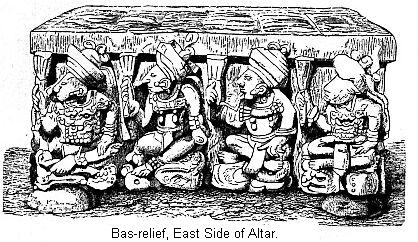
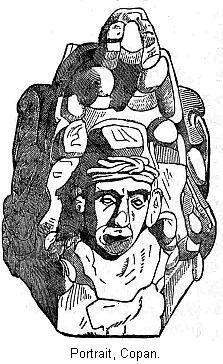
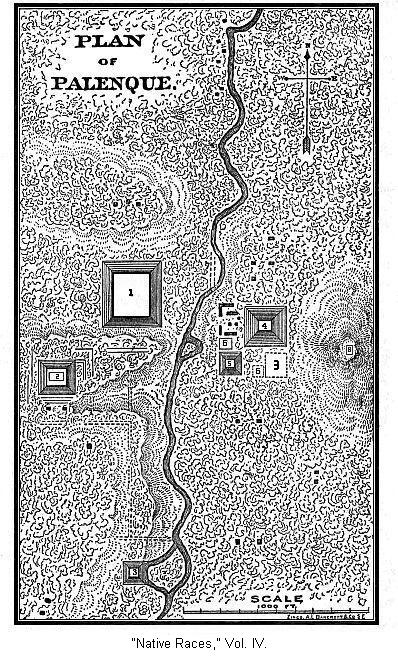
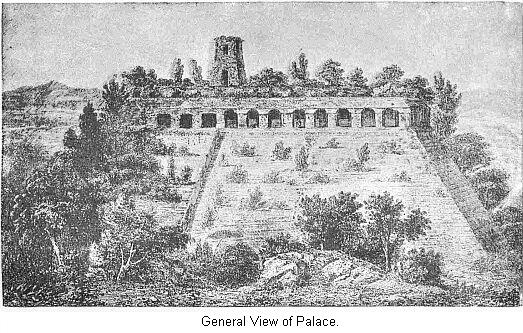
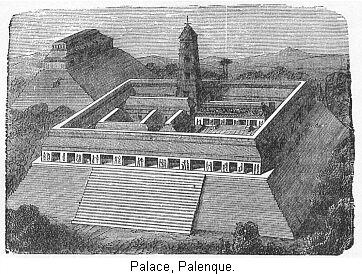
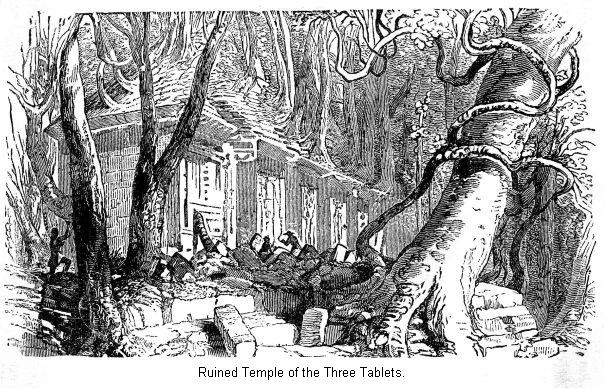
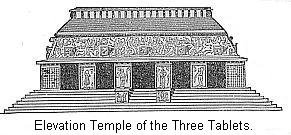
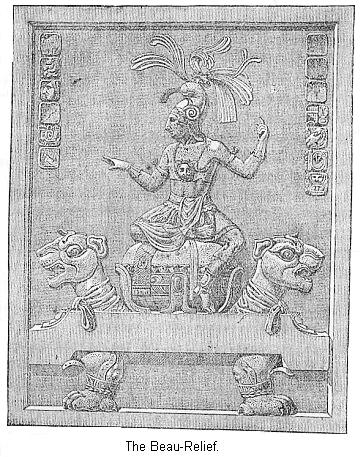
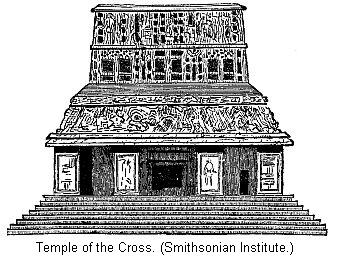
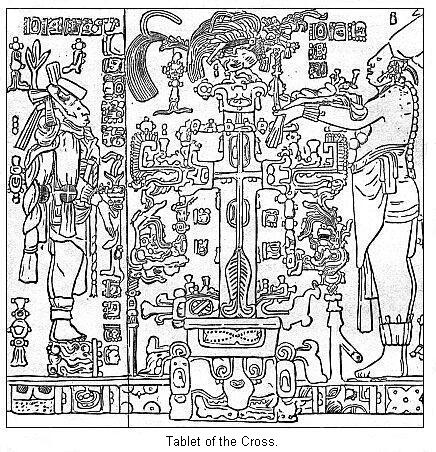
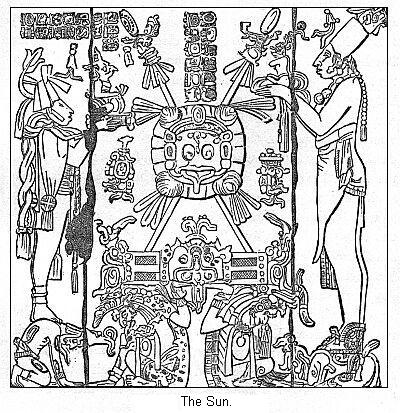
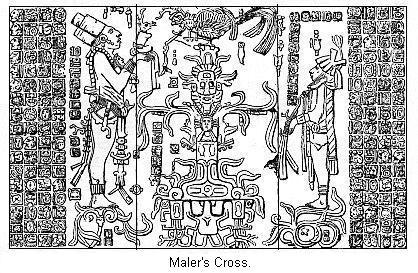
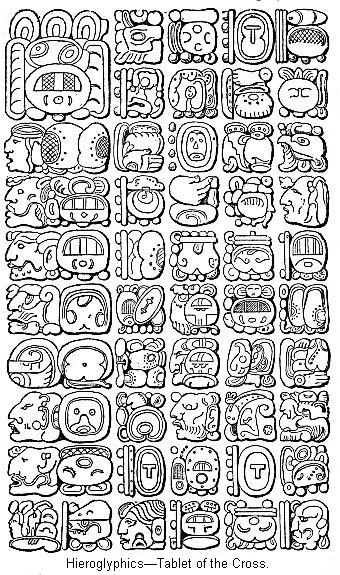
The geographical location of the Maya tribes—Description of Copan—Statue at Copan—Altar at Copan—Ruins at Quiriga—Patinamit—Utatlan—Description of Palenque—The Palace at Palenque—The Temple of the Three Inscriptions—Temple of the Beau-relief—Temple of the Cross—Temple of the Sun—Maler’s Temple of the Cross—Significance of the Palenque crosses—Statue at Palenque—Other ruins in Tobasco and Chiapas—Ruins in Yucatan—Uxmal—The Governor’s House—The Nunnery—Room in Nunnery—The Sculptured Façades—Temple at Uxmal—Kabah—Zayi—Labna—Labphak—Chichen-Itza—The Nunnery—The Castillo—The Gymnasium—M. Le Plongon’s researches—The tradition of the Three Brothers—Chaac-Mal—Antiquity of Chichen-Itza.
Chapter XV: THE CULTURE OF THE CIVILIZED TRIBES.
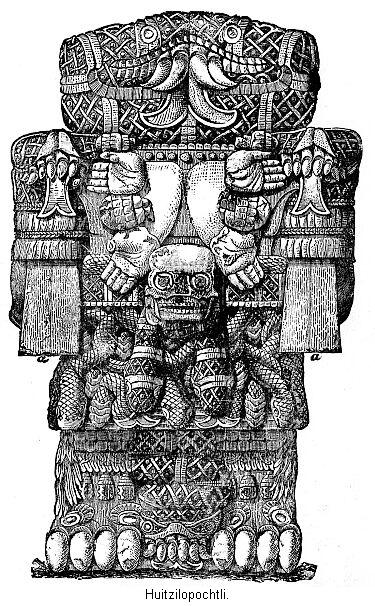
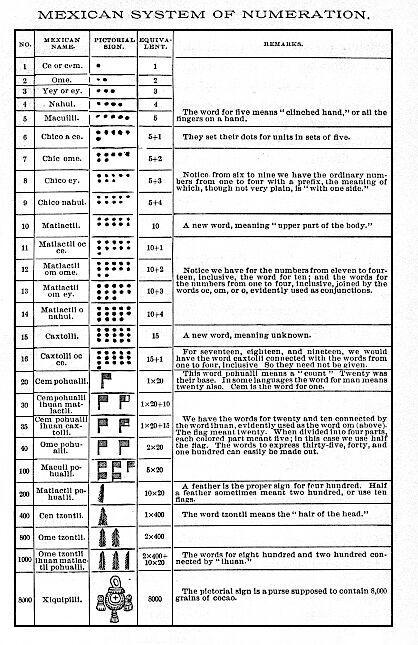
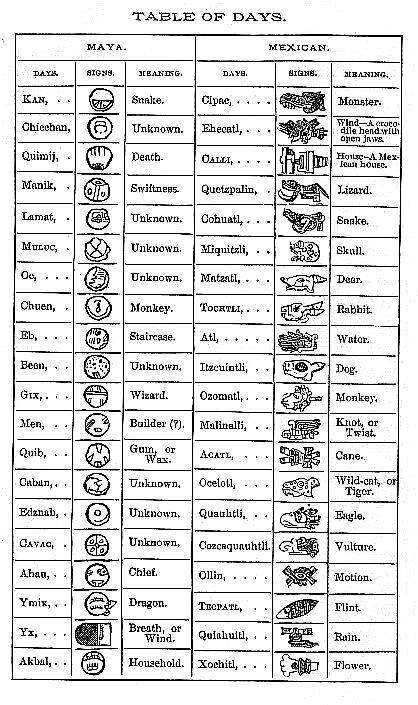
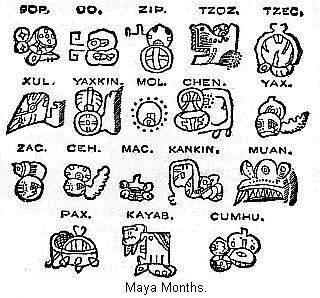
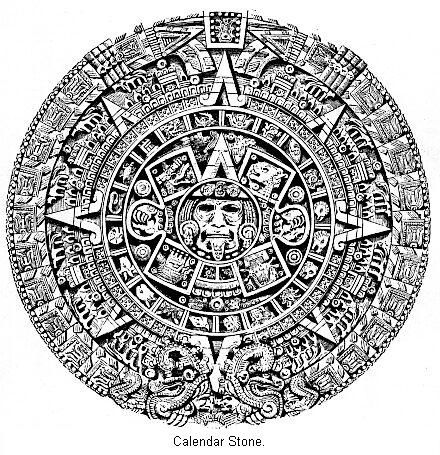
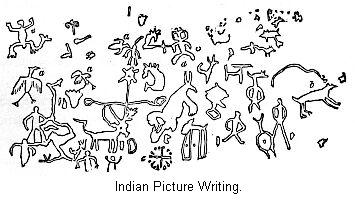
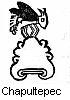
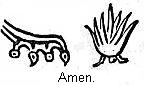
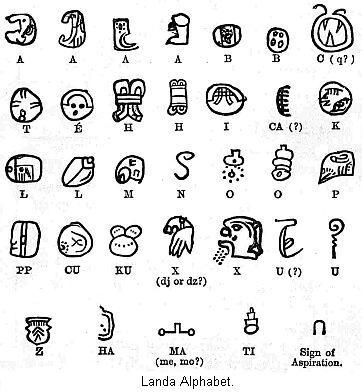
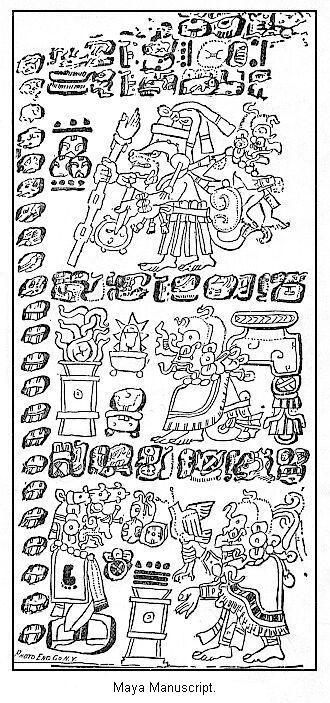
Different views on this question—Reasons for the same—Their architecture—Different styles of houses—The communal house—The teepan—The teocalli—State of society indicated by this architecture—The gens among the Mexicans—The phratry among the Mexicans—The tribe—The powers and duties of the council—The head chiefs of the tribe—The duties of the “Chief-of-Men”—The mistake of the Spaniards—The Confederacy—The idea of property among the Mexicans—The ownership of land—Their laws—Enforcement of the laws—Outline of the growth of the Mexicans in power—Their tribute system—How collected—Their system of trade—Slight knowledge of metallurgy—Religion—Quetzalcohuatl—Huitzilopochtli—Mexican priesthood—Human sacrifice—The system of Numeration—The calendar system—The Calendar Stone—Picture-writing—Landa Alphabet—Historical outline.
Chapter XVI: ANCIENT PERU.
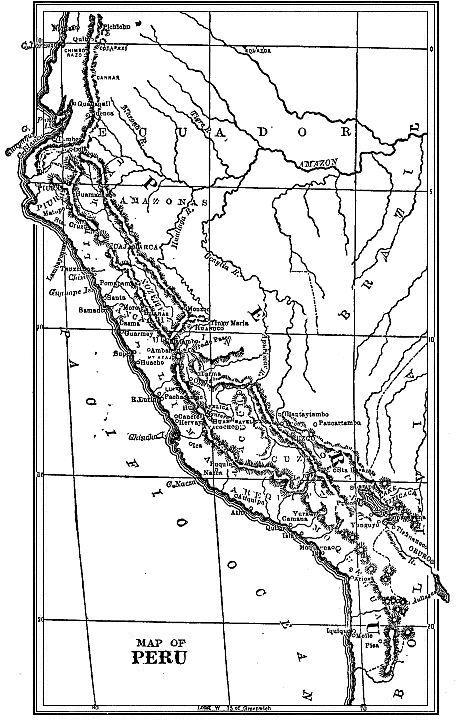
First knowledge of Peru—Expeditions of Pizarro—Geography of Peru—But a small part of it inhabitable—The tribes of ancient Peru—How classified—Sources of our knowledge of Peru—Garcillaso De La Vega—Origin of Peruvian civilization—The Bolson of Cuzco—Historical outline—Their culture—Divided into phratries and gentes—Government—Efforts to unite the various tribes—Their system of colonies—The roads of the Incas—The ruins of Chimu—The arts of the Chimu people—The manufacture of Pottery—Excavation at Ancon—Ruins in the Huatica Valley—The construction of a Huaca—The ruins at Pachacamac—The Valley of the Canete—The Chincha Islands—Tiahuanuco—Carved gateway—The Island of Titicaca—Chulpas—Aboriginal Cuzco—Temple of the Sun—The Fortress—General remarks.

|
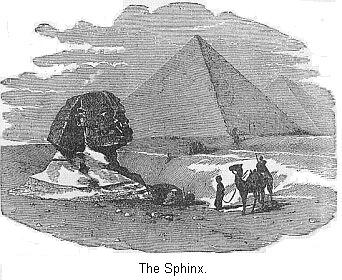
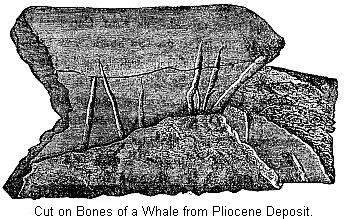
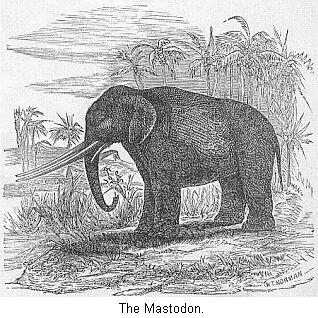
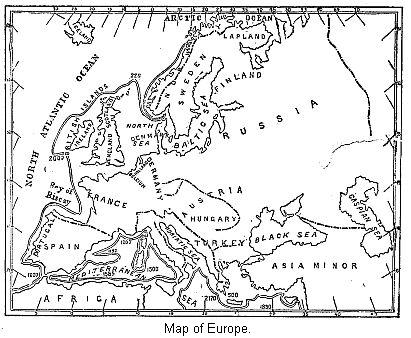
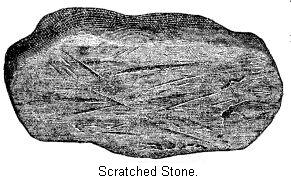
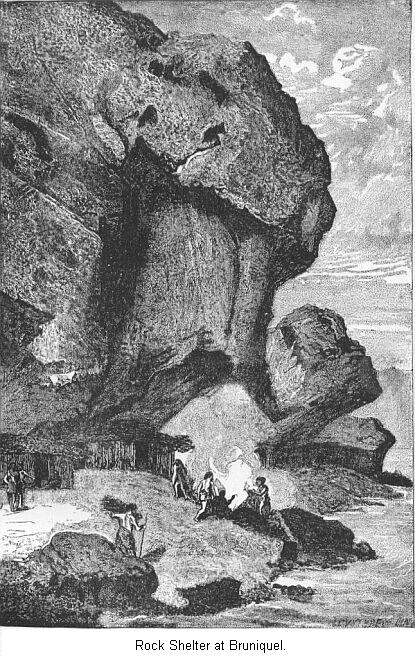
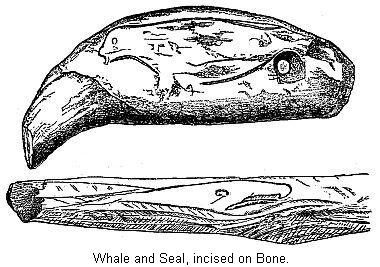
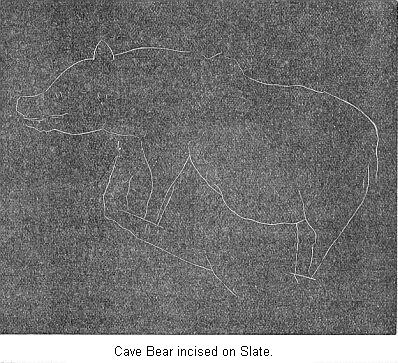
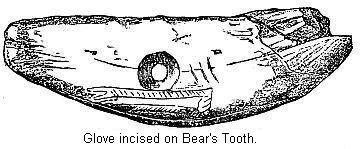
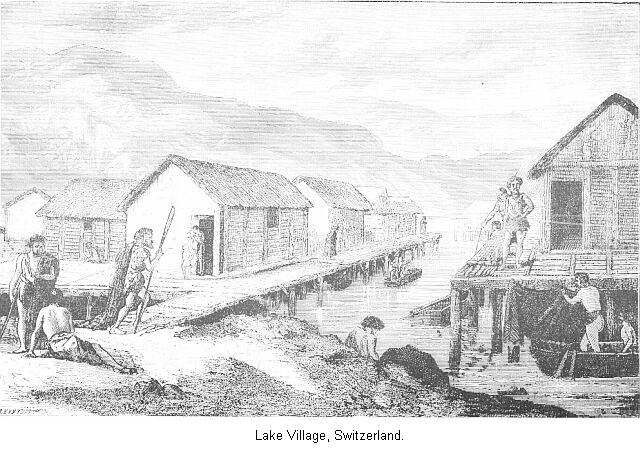
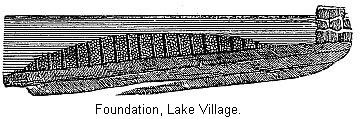
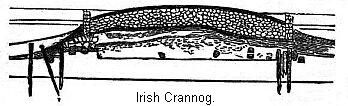
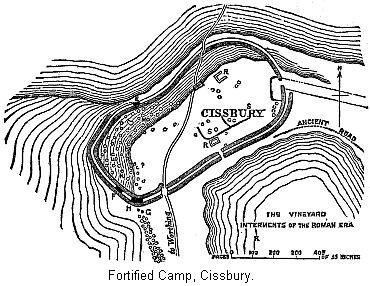
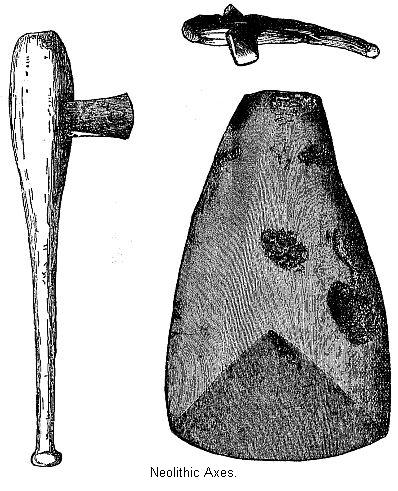
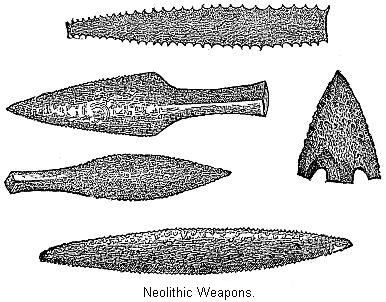
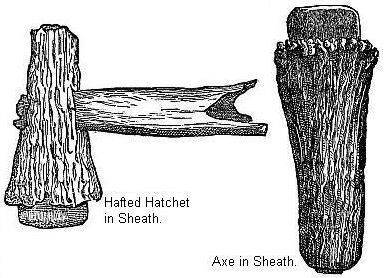
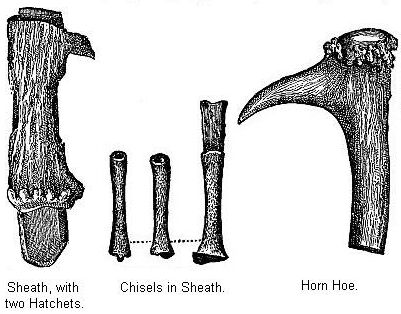
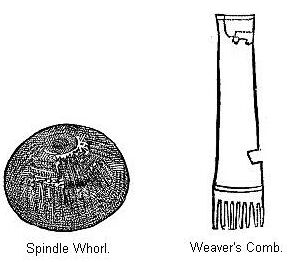
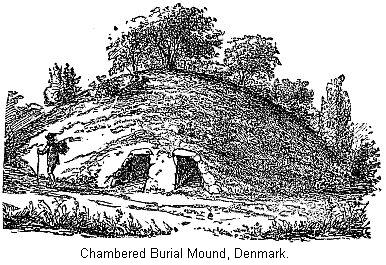
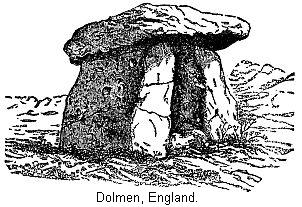
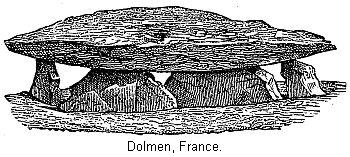
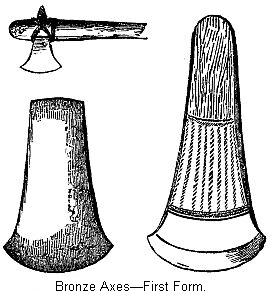
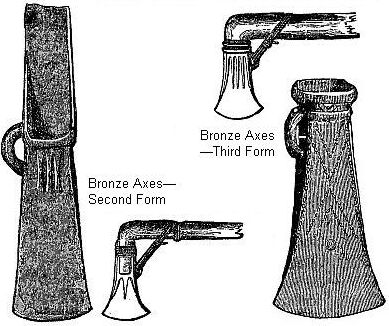
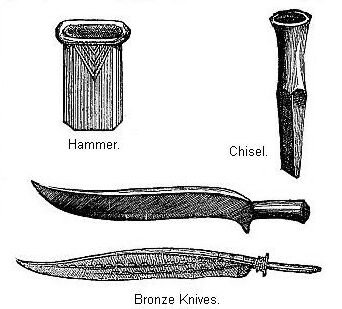
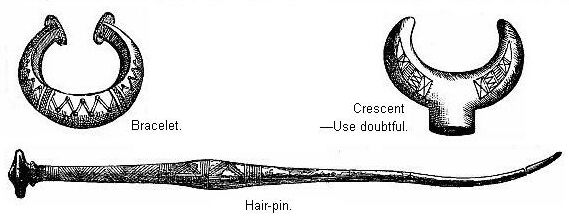
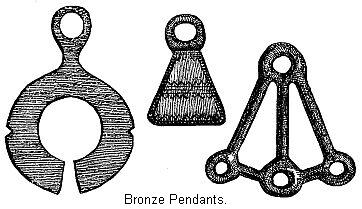
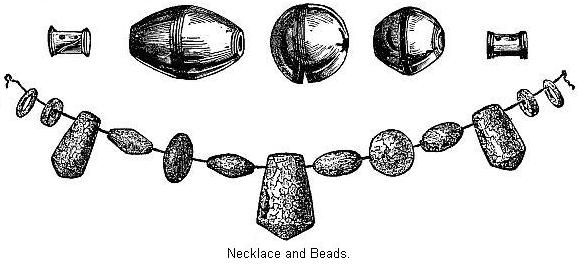
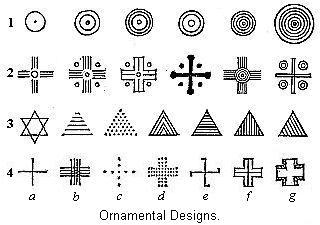
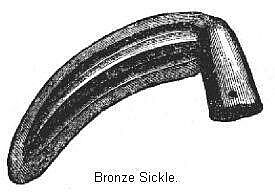
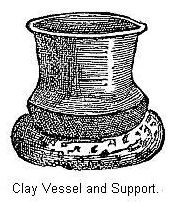
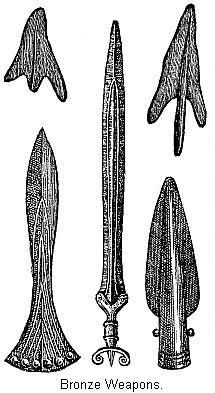
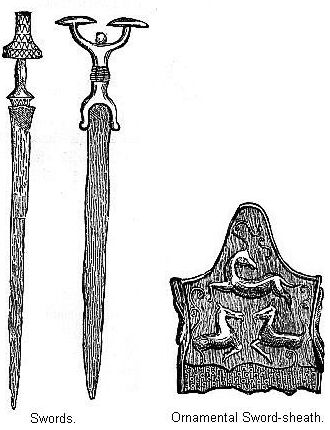
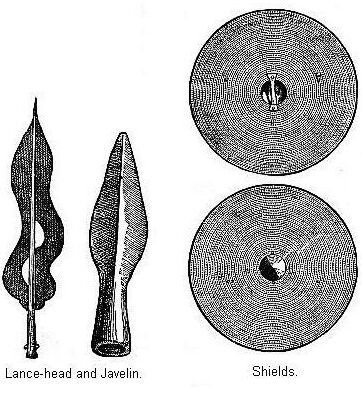
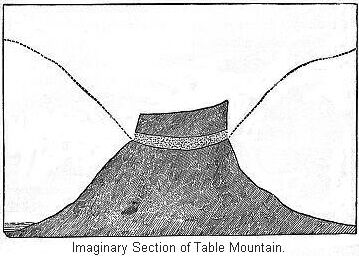
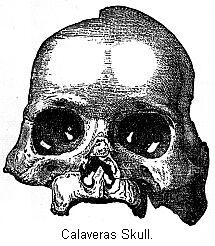
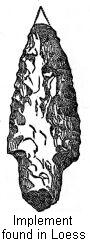
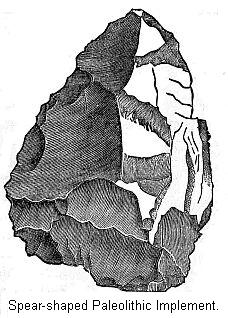
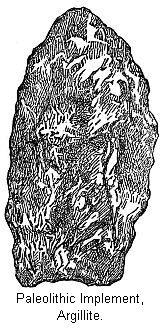
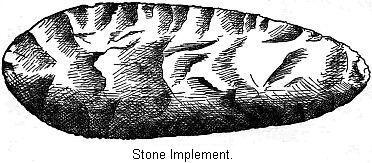
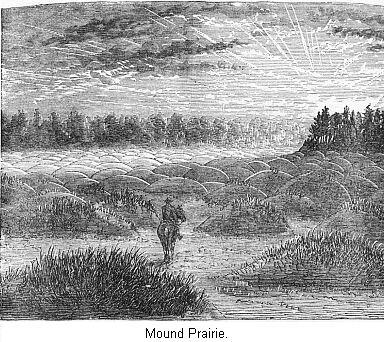
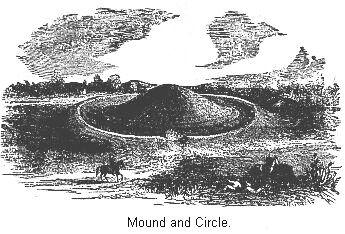
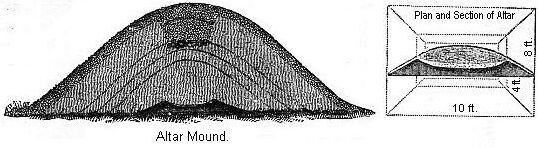
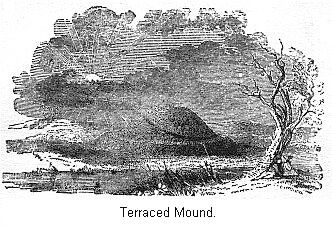
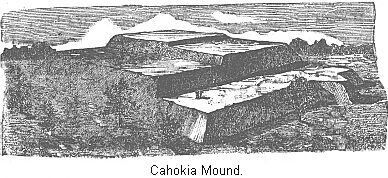
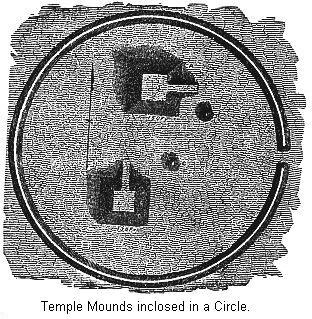
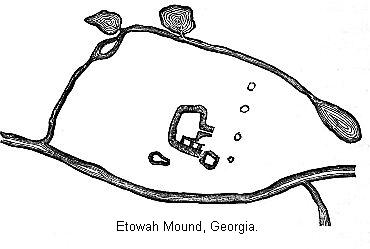
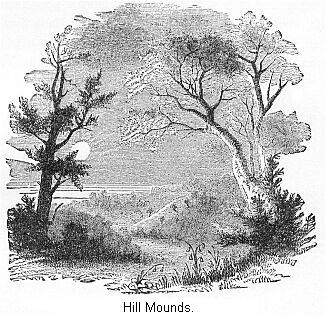
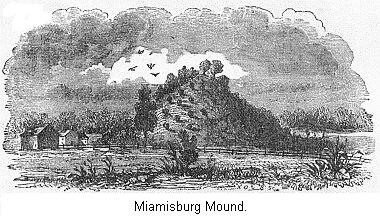
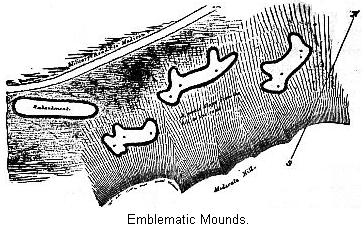
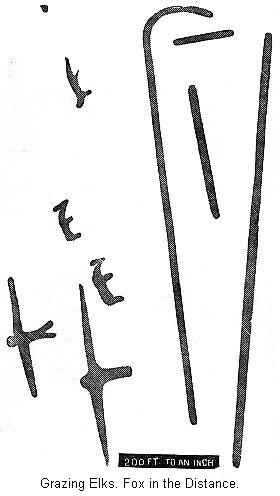
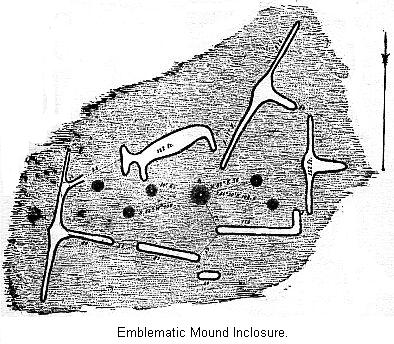
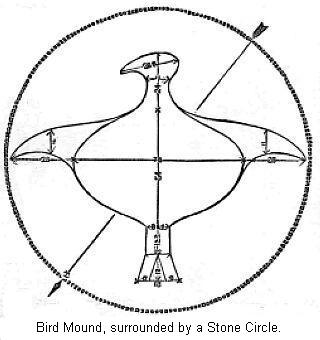
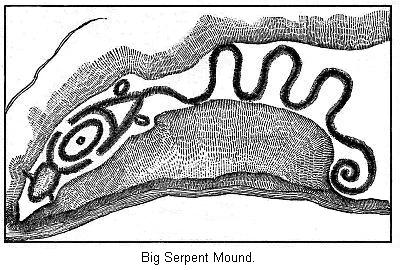
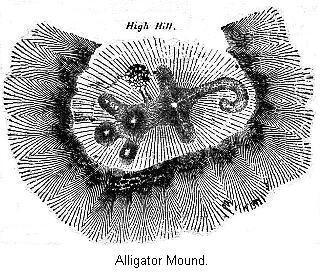
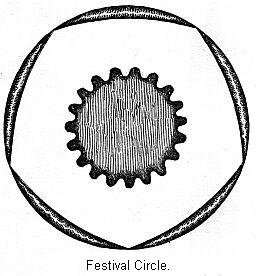
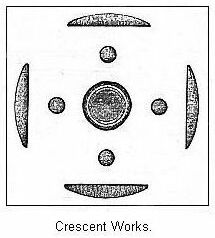
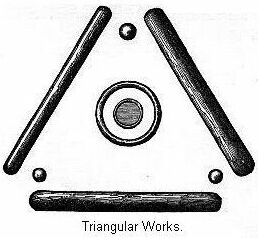
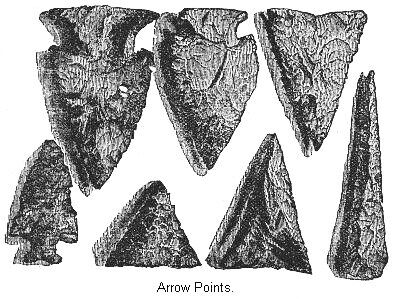
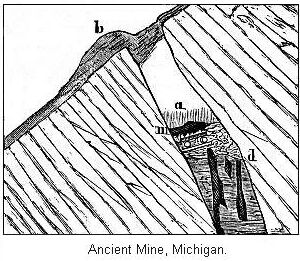
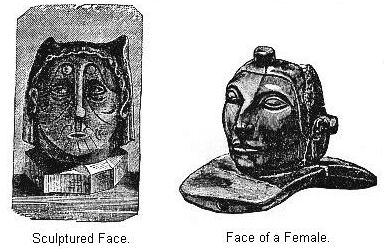
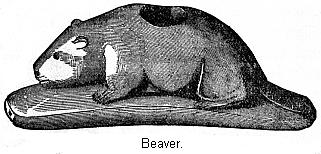
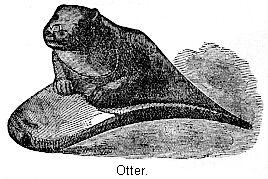
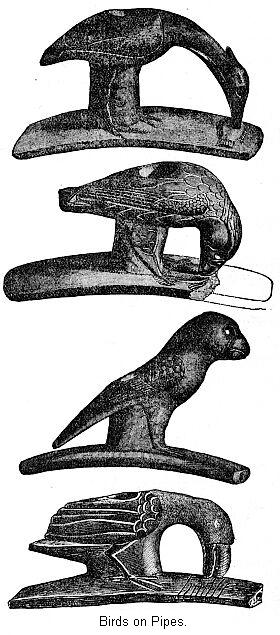
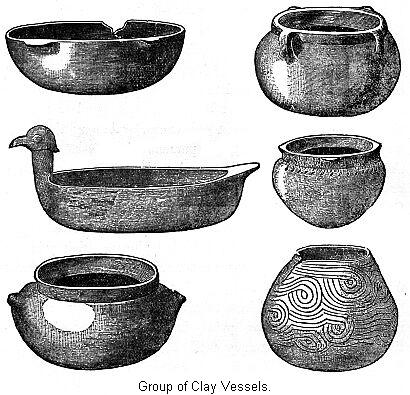
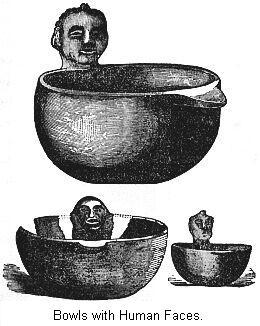
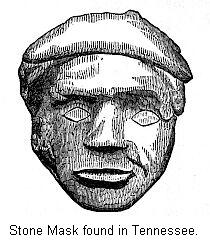
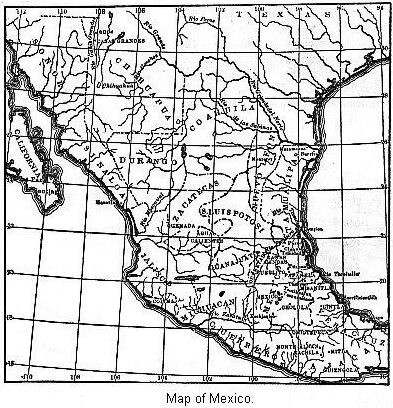
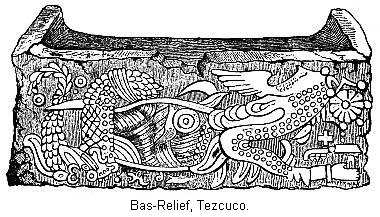
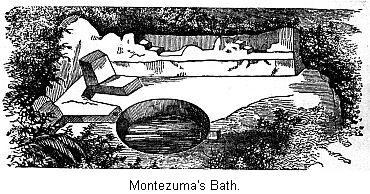
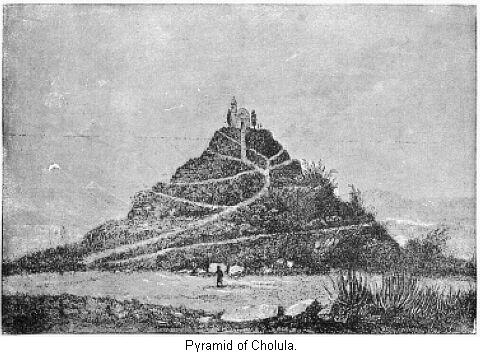
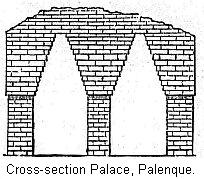
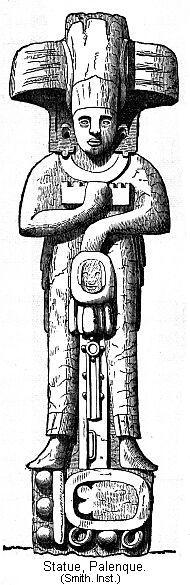
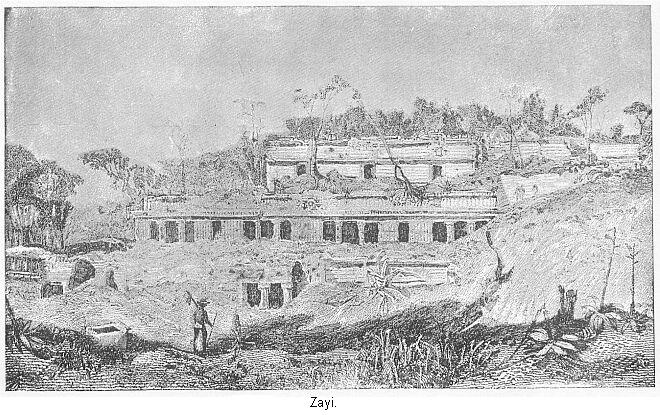
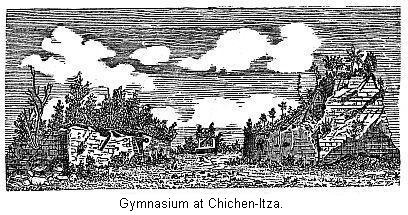
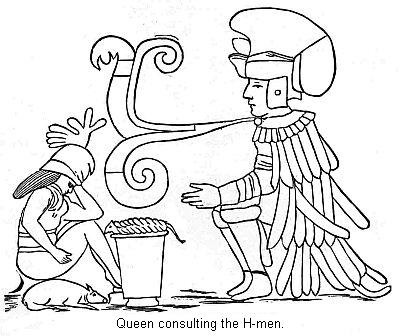
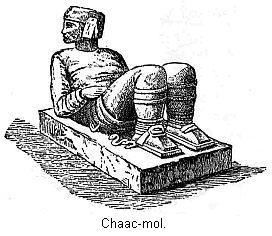
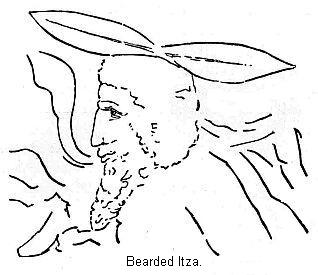
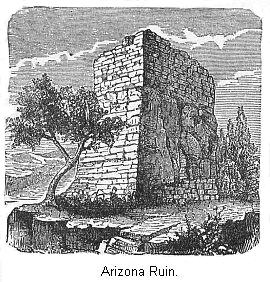
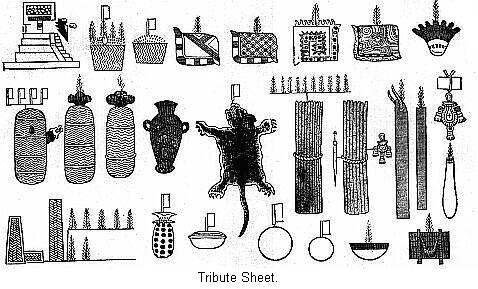
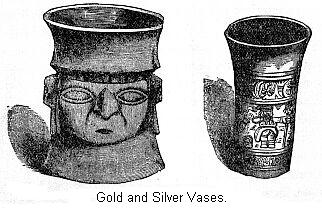
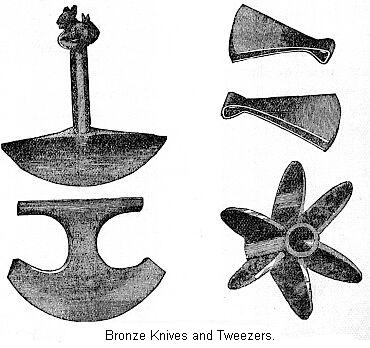
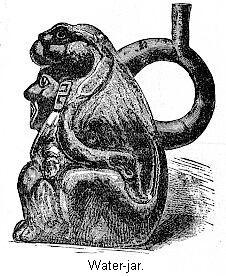
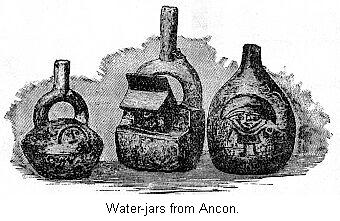
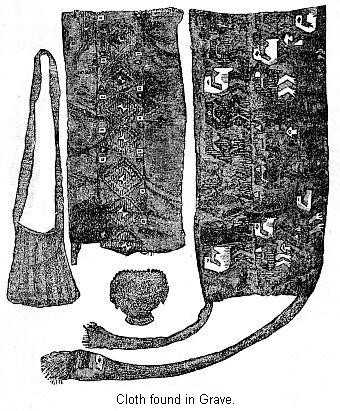
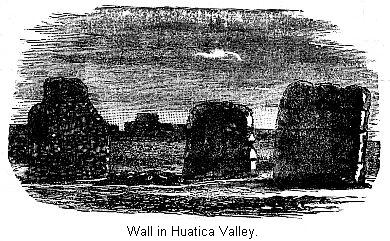
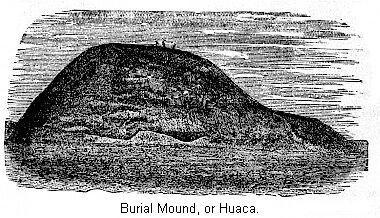
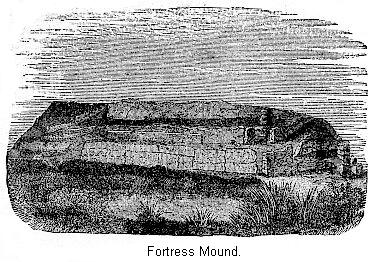
1. Pyramids and Sphinx. 2. Paleozoic Forest. 3. The Pterodactyl. 4. Ichthyosauri. 5. The Labyrinthodon. 6. The Paleotherium. 7. Miocene Mammals. 8. Cut Bones of a Whale. 9. Mastodon. 10. Map of Europe. 11. Scratched Stone. 12. Interglacial Bed. 13. Paleolithic Flints. 14. Flint Implements. 15. Section of Gravel-pit. 16. Paleolithic Flint, England. 17. Flint Flakes. 18. Spear-head Type. 19. Hatchet Type. 20. Neanderthal Man. 21. Gailenreuth. 22. Spear-head, Lower Breccia, Kent’s Cavern. 23. Flake, Cave-earth, Kent’s Cavern. 24. Spear-head, Cave-earth, Kent’s Cavern. 25. Harpoon, Pin, Awl, and Needle, Kent’s Cavern. 26. Robin Hood Cave. 27. Horse incised on Piece of Rib. 28. Bone Implements, Cresswell Crags. 29. Bone Implements, Dordogne Caves. 30. Rock Shelter, Bruniquel. 31. Whale and Seal incised on Bone. 32. Cave-bear incised on Slate. 33. Glove incised on Bear’s Tooth. 34. Reindeer grazing. 35. Group of Reindeers. 36. Man, and other Animals. 37. Fish incised on Bear’s Tooth. 38. Ibex. 39. Mammoth, La Madeline Cave, France. 40. Reindeer carved on Dagger Handle. 41. Flower on Reindeer’s Horn. 42. Ornamented Reindeer Horn, use unknown. 43. Eskimo Art. 44. The Mammoth. 45. Antarctic Ice-sheet. 46. Earth’s Orbit. 47. Lake Village. 48. Foundation Lake Village. 49. Irish Crannog. 50. Fortified Camp, Cissbury. 51. Neolithic Axes. 52. Neolithic Weapons. 53. Hafted Hatchet in Sheath. 54. Ax in Sheath. 55. Sheath with two Hatchets. 56. Chisels in Sheath. 57. Horn Hoe. 58. Miner’s Pick. 59. Polishing Stone. 60. Neolithic Boat-making. 61. Neolithic Cloth. 62. Spindle Whorl. 63. Weaver’s Comb. 64. Chambered Burial Mound. 65. Dolmen, England. 66. Dolmen, France. 67. Dolmen, once covered with Earth. 68. Menhir. 69. Stone Circle, England. 70. Chambered Tomb, France. 71. Bronze Axes, First Form. 72. Bronze Axes, Second Form. 73. Bronze Axes, Third Form. 74. Hammer. 75. Chisel. 76. Bronze Knives. 77. Crescent, use unknown. 78. Bracelet. 79. Hair-pin. 80. Bronze Pendants. 81. Necklace and Beads. 82. Ornamental Designs. 83. Bronze Sickle. 84. Clay Vessel and Support. 85. Bronze Weapons. 86. Mold. 87. Burial Mound. 88. Avebury Restored. 89. Stonehenge Restored. 90. Ancient Tower, Scotland. 91. Ornaments. 92. Gold Ornament. 93. Swords. 94. Ornamental Sword-sheath. 95. Lance-head and Javelin. 96. Shields. 97. Gallic Coin. 98. Imaginary Section of Table Mountain. 99. Calaveras Skull. 100. Implement found in Loess. 101. Spear-shaped Paleolithic Implement. 102. Paleolithic Implement, Argillite. 103. Stone Implement. 104. Mound Prairie. 105. Mound and Circle. 106. Altar Mound. 107. Plan and Section of Altar. 108. Burial Mounds. 109. Burial Mounds. 110. Grave Creek Mound. 111. Cross-section St. Louis Mound. 112. Terraced Mound. 113. Elevated Square, Marietta. 114. Cahokia Mound. 115. Temple Mound inclosed in a Circle. 116. Etowah Mound, Georgia. 117. Hill Mounds. 118. Miamisburg Mound. 119. Effigy Mounds. 120. Elephant Mound. 121. Emblematic Mounds. 122. Grazing Elks—Fox in the distance. 123. Eagle Mound. 124. Hawks and Buffaloes. 125. Goose and Duck. 126. Turtle. 127. Salamander and Muskrat. 128. Man-shaped Mound. 129. Emblematic Mound Inclosure. 130. Bird Mound surrounded by a Stone Circle. 131. The Big Serpent Mound. 132. The Alligator Mound. 133. High Bank Works. 134. Square and Circle Embankment. 135. Square inscribed in a Circle. 136. Circle and Ditch. 137. Mound Builders’ Works, Newark, Ohio. 138. Eagle Mound. 139. Gateway of Octagon. 140. Observatory Mound. 141. Works at Marietta, Ohio. 142. Graded Way, Piketon, Ohio. 143. Fortified Hill, Hamilton, Ohio. 144. Fort Ancient, Ohio. 145. Fortified Headland. 146. Inclosure, Northern Ohio. 147. Square Inclosure, Northern Ohio. 148. Sacrificial Pentagon. 149. Festival Circle. 150. Crescent Works. 151. Triangular Works. 152. Arrow Points. 153. Ax found in a Mound. 154. Weapons of Stone from Tennessee. 155. Copper Ax. 156. Copper Bracelets. 157. Ancient Mine, Michigan. 158. Sculptured Face. 159. Face of a Female. 160. Beaver. 161. Otter. 162. Birds on Pipes. 163. Group of Clay Vessels. 164. Bowls with Human Faces. |
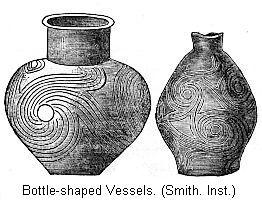
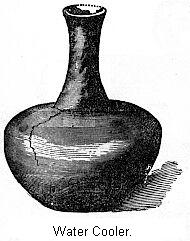
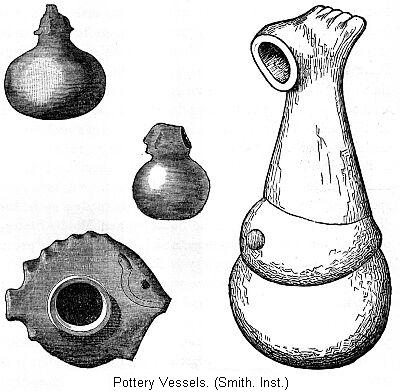
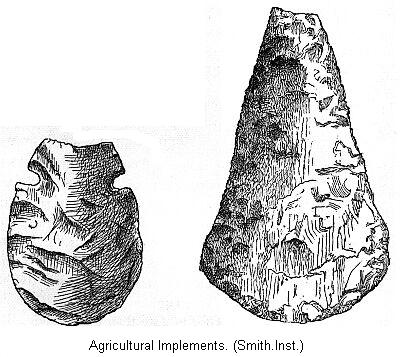
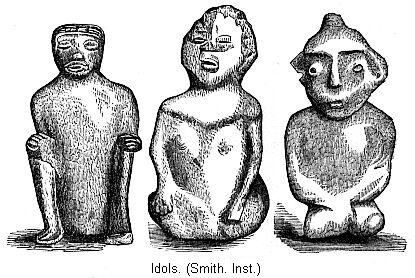
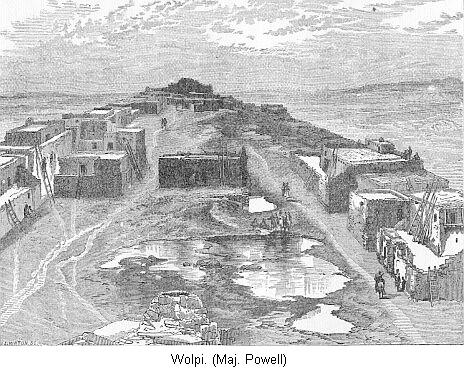
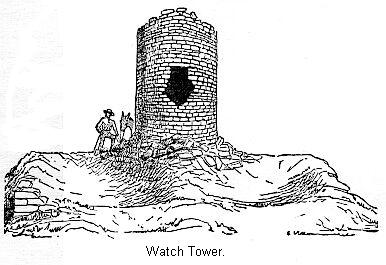
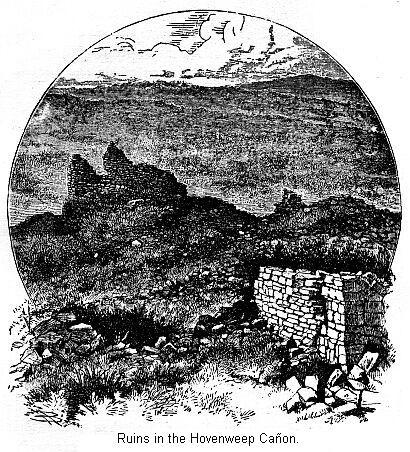
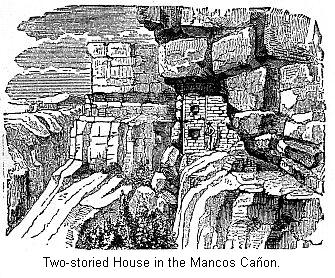
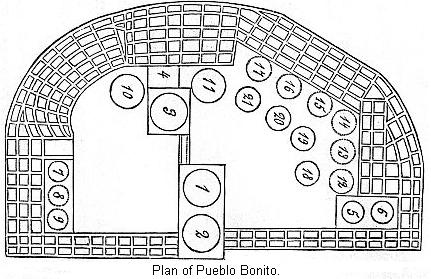
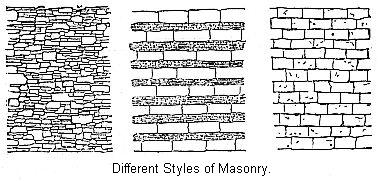
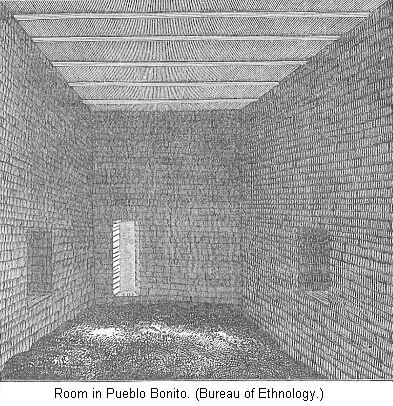
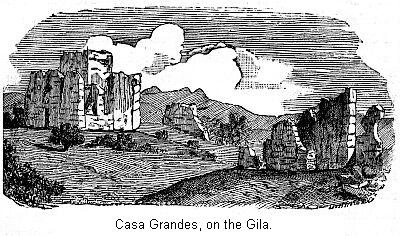
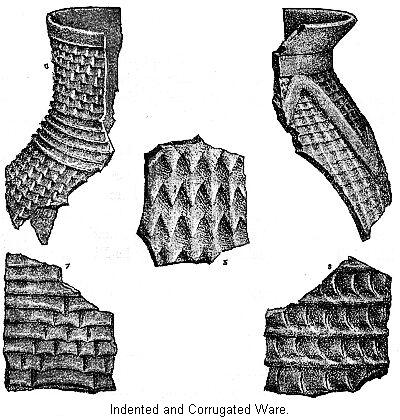
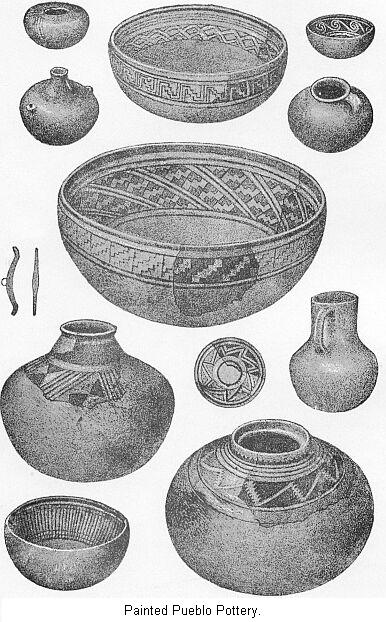
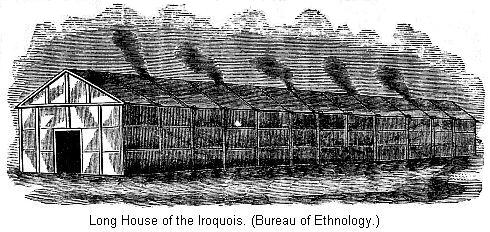
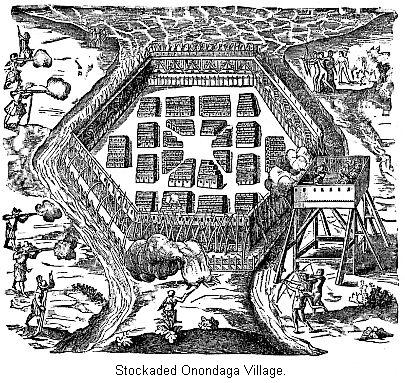
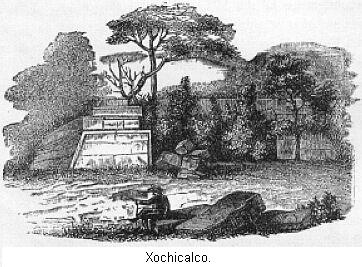
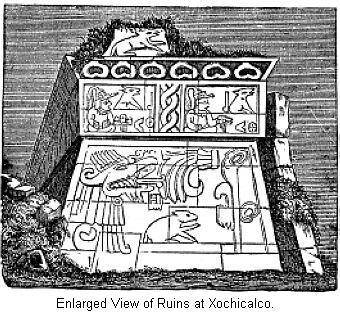
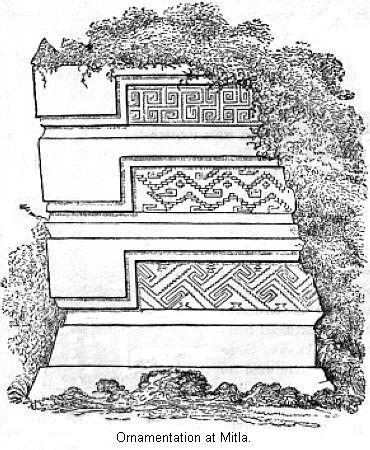
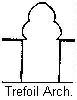
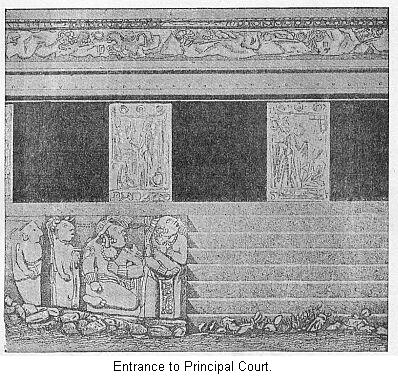
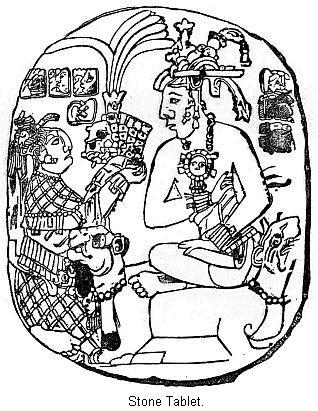
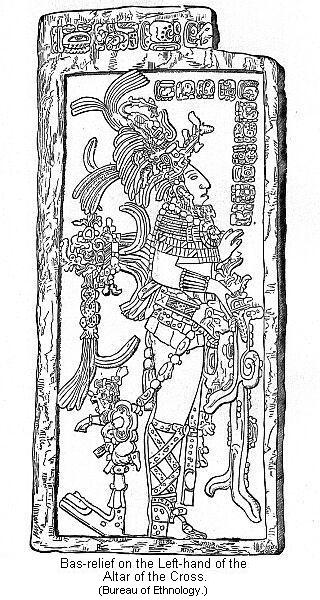
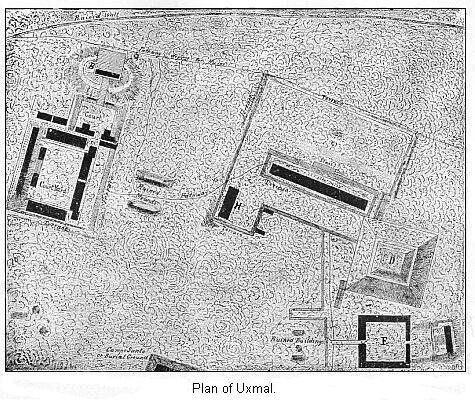
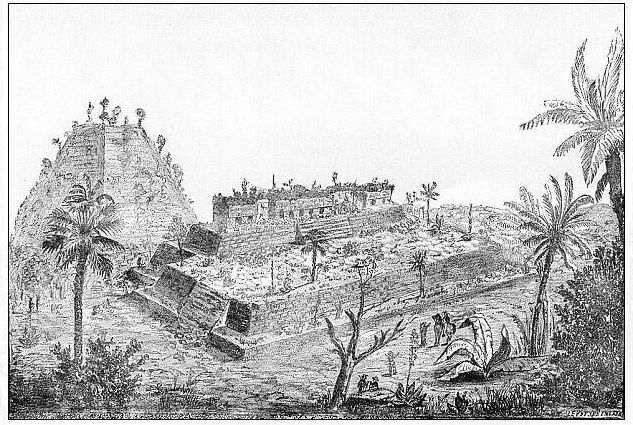
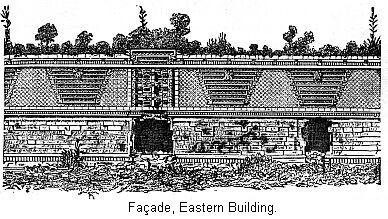
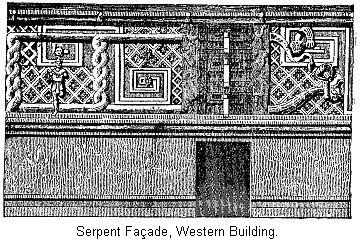
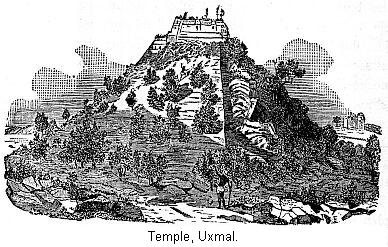
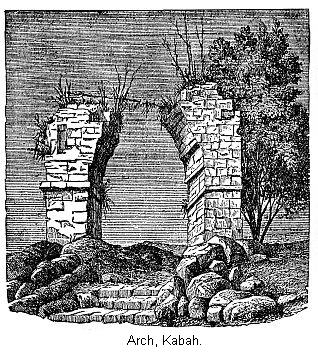
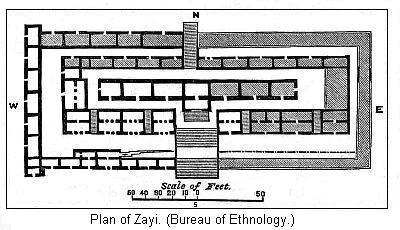
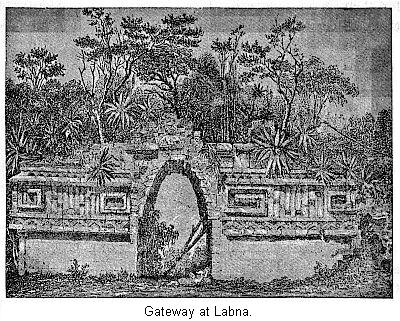
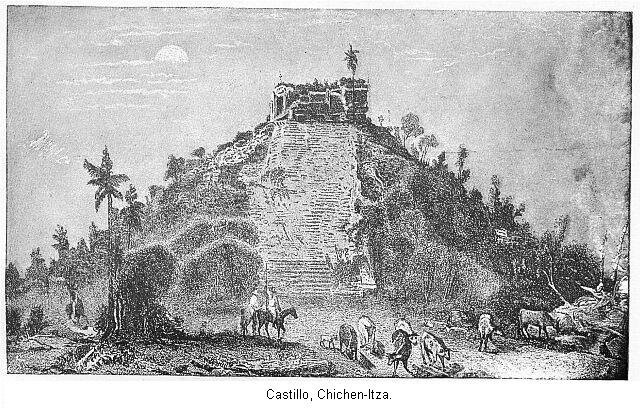
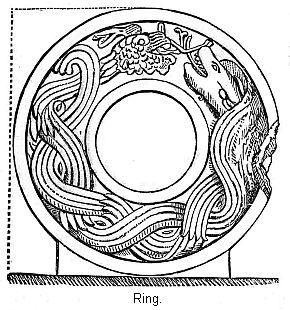
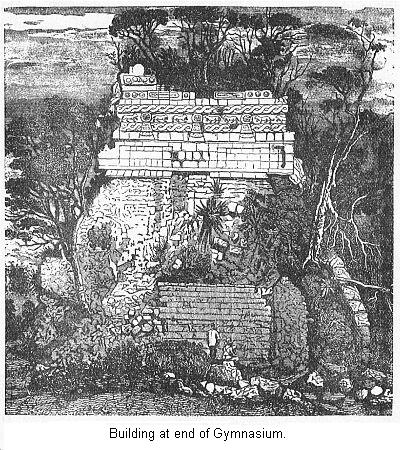
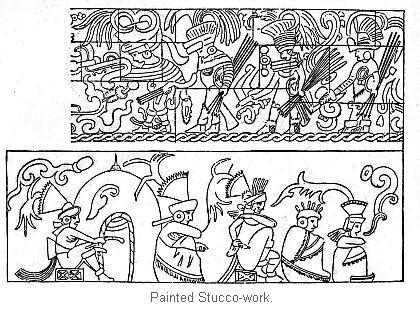
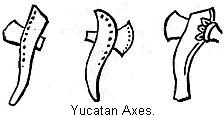
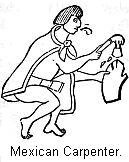
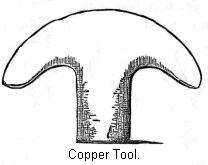
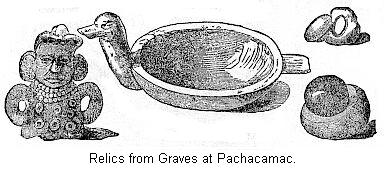
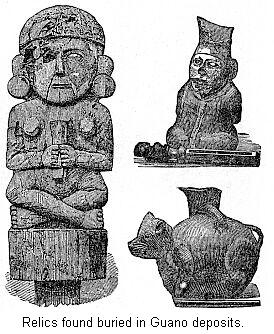
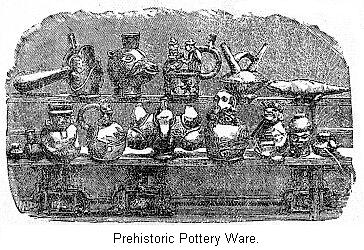
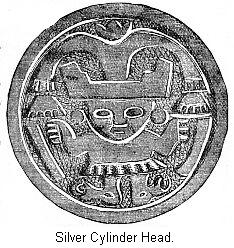
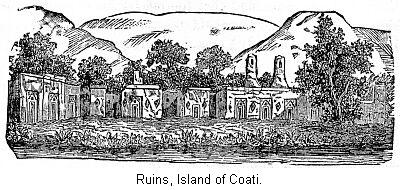
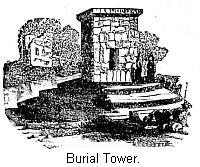
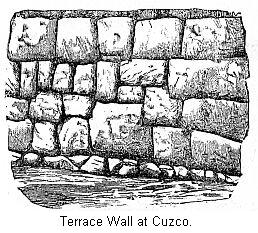
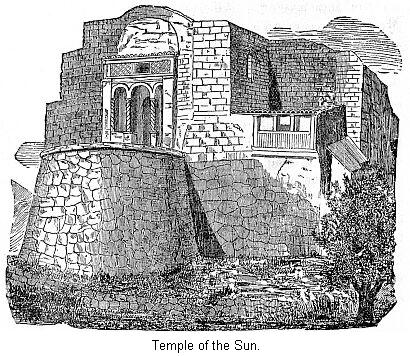
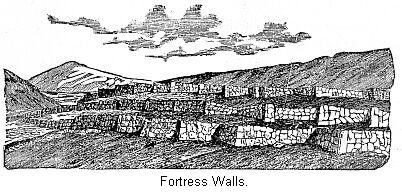
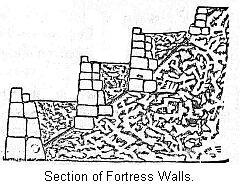
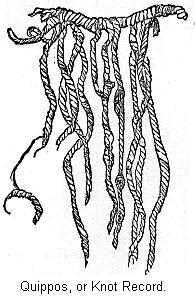
165. Bottle-shaped Vessels (Smith. Inst.) 166. Water Cooler. 167. Pottery Vessels. 168. Agricultural Implements. 169. Idols. 170. Map of the Pueblo Country. 171. Zuñi. 172. Ground Plan. 173. End View. 174. Old Zuñi. 175. Inscription Rock. 176. Wolpi. 177. Watch Tower. 178. Ruins at Aztec Springs. 179. Ruins in the McElmo Cañon. 180. Tower on the Rio Mancos. 181. Ruins in the Hovenweep Canyon. 182. Two-storied House in the Mancos Cañon. 183. View of the Cliff in which the House is Situated. 184. Plan of the House. 185. Doorway of the House. 186. Room of the House. 187. Cliff Town, Rio Mancos. 188. Caves used as Houses, Rio Mancos. 189. Ruins in the San Juan Cañon. 190. Cave Town. 191. Battle Rock, McElmo Cañon. 192. Restoration of Pueblo Bonito. 193. Plan of Pueblo Bonito. 194. Different Styles of Masonry. 195. Room in Pueblo Bonito. 196. Casa Grandes, on the Gila. 197. Indented and Corrugated Ware. 198. Painted Pueblo Pottery. 199. Long House of the Iroquois. 200. Stockaded Onondaga Village. 201. Pomeiock. 202. Mandan Village. 203. Ruins near the La Platte, Valley of the San Juan. 204. Stone Mask, found in Tennessee. 205. Map of Mexico. 206. Bas-relief Tezcuco. 207. Montezuma’s Bath. 208. Aqueduct, Tezcocingo. 209. Teotihuacan. 210. Casas Grandes. 211. Quemada. 212. Pyramid of Cholula. 213. Xochicalco. 214. Enlarged View of the Ruins. 215. Wall at Mitla. 216. Ornamentation at Mitla. 217. Hall at Mitla. 218. Papantla. 219. Tusapan. 220. Map of Central America. 221. Ruins of Copan. 222. Statue, Copan. 223. Statue, Copan. 224. Hieroglyphics, Top of Altar. 225. Bas-relief, East Side of Altar. 226. Portrait, Copan. 227. Plan of Palenque. 228. General View of Palace, Palenque. 229. Cross-section of Palace, Palenque. 230. Trefoil Arch. 231. Entrance to Principal Court. 232. Stone Tablet. 233. Palace, Palenque. 234. Ruined Temple of the Three Tablets. 235. Elevation Temple of the Three Tablets. 236. The Beau-relief. 237. Temple of the Cross. 238. Tablet of the Cross. 239. The Sun. 240. Maler’s Cross. 241. Statue, Palenque. 242. Bas-relief, on the left hand of the Altar of the Cross. 243. Plan of Uxmal. 244. The Governor’s House, Uxmal. 245. Two-headed Monument, Uxmal. 246. End View. 247. Ground Plan. 248. Figure over the Doorway. 249. Ornament over the Doorway. 250. Elephant’s Trunk. 251. Plan of Nunnery. 252. Room in Nunnery. 253. Façade, Southern Building. 254. Façade, Eastern Building. 255. Serpent Façade, Western Building. 256. Temple, Uxmal. 257. Arch, Kabah. 258. Zayi. 259. Plan of Zayi. 260. Gateway at Labna. 261. Castillo, Chichen-Itza. 262. Gymnasium at Chichen-Itza. 263. Ring. 264. Building at end of Gymnasium. 265. Painted Stucco Work. 266. Queen Consulting the H-men. 267. Chaac-mol. 268. Bearded Itza. 269. Arizona Ruin. 270. Tribute Sheet. 271. Yucatan Axes. 272. Carpenter’s Ax. 273. Mexican Carpenter. 274. Copper Tool. 275. Huitzilopochtli. 276. Mexican Numeration Signs. 277. Maya and Mexican Day Signs. 278. Maya Months. 279. Calendar Stone. 280. Sign of Rain. 281. Sign of a Cycle. 282. Indian Picture-writing. 283. Chapultepec. 284. Amen. 285. Historical Sheet. 286. Chilapi Tribute. 287. Child-training. 288. Migration Chart. 289. Landa Alphabet. 290. Maya T. 291. Maya Picture-writing. 292. Hieroglyphics, Tablet of the Cross. 293. Map of Peru. 294. Fortress, Huatica Valley. 295. Ruins at Pachacamac. 296. Relics from Guano Deposits. 297. Burial Towers. 298. Palace. 299. Section of Palace Walls. 300. Ornamentation on Walls. 301. Adobe Ornament. 302. Gold and Silver Vases. 303. Bronze Knives and Tweezers. 304. Water-jar. 305. Water-jars from Ancon. 306. Cloth Found in Grave. 307. Wall in Huatica Valley. 308. Burial Mound, or Huaca. 309. Fortress Mound. 310. Temple Wall. 311. Fortress, Huatica Valley. 312. General View of Pachacamac. 313. View of the Temple. 314. Relics from Graves at Pachacamac. 315. Relics found buried in Guano Deposits. 316. Prehistoric Pottery-ware. 317. Silver Cylinder Head. 318. Terrace Wall, Tiahuanuco. 319. Method of joining Stones, Tiahuanuco. 320. Gateway, Tiahuacuno. 321. Ruins on the Island of Titicaca. 322. Ruins, Island of Coati. 323. Burial Tower. 324. Terrace Wall at Cuzco. 325. Temple of the Sun. 326. Fortress Wall. 327. Section of Fortress Wall. 328. Quippos. |

|
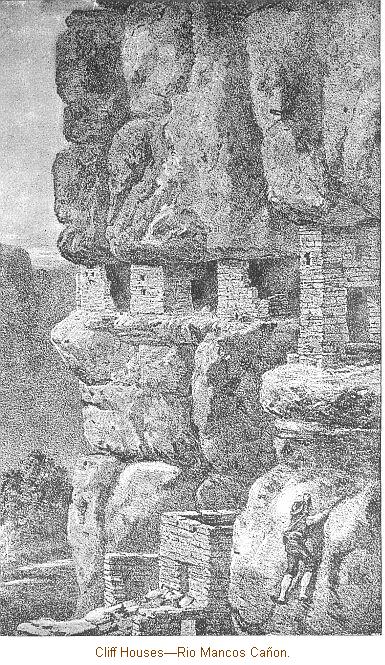
1. Cliff Houses, Rio Mancos Cañon. 2. Engraved Title Page. 3. Paleozoic Forest. 4. Rock Shelter at Bruniquel. 5. Antarctic Ice Sheet. 6. Lake Village, Switzerland. 7. Pueblo of Zuñi. 8. Cliff-town, Rio Mancos. 9. Restoration of Pueblo Bonito. 10. Painted Pueblo Pottery. 11. Pyramid of Cholula. 12. Copan Statue. 13. General View of Palace. 14. Bas-relief on the left-hand of the Altar of the Cross. 15. Plan of Uxmal. 16. The Governor’s House, Uxmal. 17. Room in Nunnery. 18. Zayi. 19. Castillo, Chichen-Itza. 20. Tribute Sheet. 21. Huitzilopochtli. 22. Calendar Stone. 23. Historical Sheet. 24. Pachacamac. |
this volume the author has sought to lay before the reader a description of life and times lying beyond the light of history. This is indeed an extensive subject, and calls for some explanation, both as to the general design of the work and what steps have been taken to secure correct information.
History is a word of varied import. In general, when we talk about history, we mean those accounts of past events, times, and circumstances of which we have written records. Not necessarily meaning alphabetical writing, because hieroglyphic records have furnished much true history. Hieroglyphic writing, which long preceded alphabetical writing, is itself a comparatively recent art. In no country do we find any records carrying us further back than a few thousand years before the Christian era. We have every reason to believe that the historical part of man’s life on the globe is but an insignificant part of the whole. This historic period is not the same in all countries. It varies from a few centuries in our own country to a few thousands of years in Oriental lands. In no country is there a hard and fast line separating the historic period from the prehistoric. In the dim perspective of years the light gradually fades away, the mist grows thicker and thicker before us, and we at last find ourselves face to face with the unknown past.
This extensive period of time is not, however, utterly lost to us. We have simply to gather our information in some other way. Enthusiastic explorers, digging beneath the ashes of Vesuvius, have brought to light the remains of an entombed city. Of this city we indeed have historic records, but even if all such records had long since disappeared, we would gather much information as to the nationality of the inhabitants, their customs, and manners, by a simple inspection of the relics themselves. Everywhere over the earth, entombed beneath the feet of the living, or crumbling on the surface, are the few relics of a past far antedating the relics of Pompeii. They are the proofs positive that some people inhabited the land in far away times.
Our object is to gather together the conclusions of the scientific world as to primitive man. We wish to see how far back in the geological history of the globe we can find evidence of man’s existence, and we desire to learn his surroundings and the manner of his life. There can be no more important field than for us to thus learn of the past. To read the story of primitive man, to walk with him the earth in ages long ago, with him to wage war on the huge animals of a previous epoch, to recede with him before the relentless march of the ice of the Glacial Age, to watch his advance in culture, to investigate whether there are any races of men now living which are the direct descendants of this primeval man.
The author makes no claims to original investigations. He trusts, however, it will not be considered impertinent for a mere loiterer in the vestibule of the temple of science to attempt to lay before others the results of the investigations of our eminent scholars. He has endeavored faithfully to perform this task. As far as possible technical language has been avoided. This is because he has written not for the distinctively scientific men, but rather for the farmer, the mechanic, and the man of business. Constant references are made to the authorities consulted. The reader his a right to know who vouches for the statements made in the text.
The pleasantest part of an author’s duty is to return thanks for assistance. After the manuscript was prepared with what care could be bestowed on it, it was determined to submit it to some of our best American scholars for criticism. Accordingly, each of the gentlemen named on the title page were requested to review one or more chapters. As far as possible, each one was asked to review that chapter or chapters for which, either by reason of the position they held, or the interest they were known to take in such subjects, they would by common assent be acknowledged as eminently fitted to sit in judgment. In justice to them, it should be stated that they were not expected to concern themselves with the literary merits or demerits of the manuscript, but to criticise the scientific statements made therein. To each and all of these gentlemen the author would acknowledge his deep obligations.
We are indebted to Rev. J. P. MacLean, the well-known archaeologist, both for many valuable suggestions, and for the use of wood-cuts on pages 60, 138 and 396. We are also under obligation to Rev. S. D. Peet, editor of the American Antiquarian, for cuts illustrative of the effigy mounds of Wisconsin. The officials of the Smithsonian Institution, and the Bureau of Ethnology have our thanks for many cuts, for which credit is given them throughout the work.
Finally, the author wishes to say that it was the intention to make this work the joint production of the author and his partner, Mr. S. C. Ferguson, but before any progress was made it was deemed advisable to change the programme. While the literary work has all been performed by the author, the many details necessarily connected with the publication of a book were attended to by Mr. Ferguson.
E. A. ALLEN.
Cincinnati, January 1, 1885.
 HOU unrelenting Past!
Strong are the barriers round thy dark domain—
And fetters, sure and fast,
Hold all that enter thy unbreathing
reign.
Far in thy realm, withdrawn,
Old empires sit in sullenness and gloom;
And glorious ages, gone,
Lie deep within the shadow of thy
womb.
Full many a mighty name
Lurks in thy depths, unuttered,
unrevered:
With thee are silent fame,
Forgotten arts, and
wisdom disappeared.
W. C. BRYANT.
Difficulties of the subject—Lesson to be learned—The pursuit of knowledge—Recent Advances—Prehistoric past of the Old World—Of the New—Of Mexico and the South—The Isles of the Pacific—Similar nature of the relics—The wonders of the present age—History of popular Opinion on this subject—The teachings of the Bible—Nature of the evidence of man’s antiquity—Geology—Astronomy—Unfolding of life—Nature of our inquiry.

can read the book of the past? Who can tell us the story of Creation’s morn? It is, not written in history, neither does it live in tradition. There is mystery here; but it is hid by the darkness of bygone ages. There is a true history here, but we have not learned well the alphabet used. Here are doubtless wondrous scenes; but our stand-point is removed by time so vast, the mist of years is so thick before us, that only the ruder outlines can be determined. The delicate tracery, the body of the picture, are hidden from our eye. The question as to the antiquity and primitive history of man, is full of interest in proportion as the solution is beset with difficulties. We question the past; but only here and there a response is heard. Surely bold is he who would attempt, from the few data at hand, to reconstruct the history of times and people so far removed. We quickly become convinced that many centuries, and tens of centuries, have rolled away since man’s first appearance on the earth. We become impressed with the fact, “that multitudes of people have moved over the surface of the Earth, and sunk into the night of oblivion, without leaving a trace of their existence: without a memorial through which we might have at least learned their names.”[1]
To think of ourselves, is to imagine for our own nation an immortality. We are so great, so strong, surely nothing can move us. Let us learn humility from the past: and when, here and there, we come upon some reminder of a vanished people, trace the proofs of a teeming population in ancient times, and recover somewhat of a history, as true and touching as any that poets sing, let us recognize the fact, that nations as well as individuals pass away and are forgotten.
The past guards its secret well. To learn of it we must seek new methods of inquiry. Discouraged by the difficulties in the way, many have supposed it hidden from the present by a veil which only thickens as time passes. In the remains of prehistoric times they have failed to recognize the pages of history. They saw only monuments of ancient skill and perseverance: interesting sketches, not historical portraits. Some writers have held that we must give up the story of the past, “whether fact or chronology, doctrine or mythology—whether in Europe, Asia, Africa, or America—at Thebes, or Palenque—on Lycian shore, or Salisbury plain—lost is lost and gone is gone for evermore.” Such is the lament of a gifted writer,[2] amongst the first to ponder over the mysteries of the past. At the present day, with better means at hand, a more hopeful view is taken. But here a caution is necessary; for, in attempting to reconstruct the history of primitive times, such is the interest which it inspires, that many allow imagination to usurp the place of research, and write in terms too glowing for history.[3]
The human mind is sleepless in the pursuit of knowledge. It is ever seeking new fields of conquest. It must advance: with it, standing still is the precursor of defeat. If necessary it invents new methods of attack, and rests not until it gains its objective point, or demonstrates the hopelessness of its quest. The world needs but be informed that on a given point knowledge is dim and uncertain, when there are found earnest minds applying to the solution of the mystery all the energies of their natures. All the resources of science are brought to bear; every department of knowledge is made to contribute of its store: and soon a mass of facts is established and a new science is added to the department of human knowledge.
Thus, with our knowledge of prehistoric times, what so seemingly vain as to attempt to roll back the flight of time, and learn the condition of primeval man? All the light of ancient history makes but little impression on the night of time. By its aid we can but dimly see the outlines of the fortieth century back; beyond is gloom soon lost in night. But a few short years ago, men did not think it possible to gain further information. With the materials at hand this could not be done. The triumph of the intellect was simply delayed, not hopelessly repulsed. Geology was but just beginning to make good its claim to a place among the sciences. This unfolded to man the physical history of the world as read from the rocks, and deals with times so vast and profound that we speak no longer of years, but of ages. And with the aid of Geology grand secrets were wrung from the past, and new light was thrown on the manners and customs of primitive man. Thus the foundation for still another science was laid, called Archæology, or the science of Human Antiquities. These two sister sciences are the keys by whose aid we have not only acquired much information of a past that seemed a hopeless enigma—but, as Columbus on the waste of waters could perceive traces of land as yet invisible, so can the present seekers after knowledge trace the signs of a satisfactory solution of many of the great questions relating to the origin and history of the vanished races of mankind.
In whatever land we commence our investigations, we quickly come upon the evidences of an ancient life long antedating all historical information. Ancient Egypt has been a fruitful theme for the antiquarians pen. The traveler has moralized over the ruins of her past greatness, and many pointed illustrations of national growth and decay have been drawn from her history.
Here was the seat of an ancient civilization, which was in the zenith of its power many centuries before Christ. The changes that have passed over the earth since that time are far more wonderful than any ascribed to the wand of the magician. Nations have come and gone, and the land of the Pharaohs has become an inheritance for strangers; new sciences have enriched human life, and the fair structure of modern civilization has arisen on the ruins of the past. Many centuries, with their burden of human hopes and fears, have sped away into the past, since “Hundred-gated Thebes” sheltered her teeming population, where now are but a mournful group of ruins. Yet to-day, far below the remorseless sands of her desert, we find the rude flint-flakes that require us to carry back the time of man’s first appearance in Egypt to a past so remote that her stately ruins become a thing of yesterday in comparison to them.
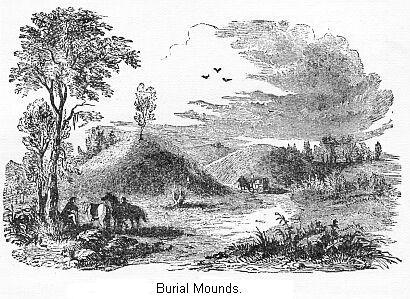
In the New World, mysterious mounds and gigantic earth-works arrest our attention. Here we find deserted mines, and there we can trace the sites of ancient camps and fortifications. The Indians of the prairies seem to be intruders on a fairer civilization. We find here evidences of a teeming population. In the presence of their imposing ruins, we can not think that nomadic savages built them. They give evidences rather of a people having fixed habitations and seem to imply the possession of a higher civilization than that of the Indians. These questions demand solution; but how shall we solve the problem? Save here and there a deserted camp, or a burial mound, containing perhaps articles of use or adornment, all traces have vanished. Their earth-works and mounds are being rapidly leveled by the plow of modern times, and the scholar of the future can only learn from books of their mysterious builders.
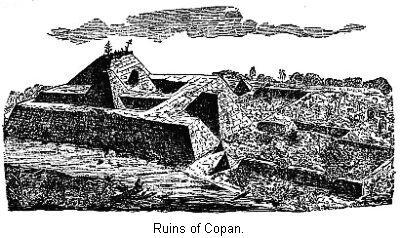
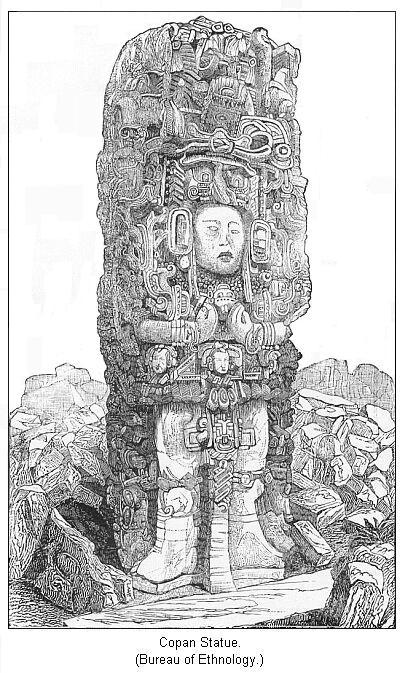
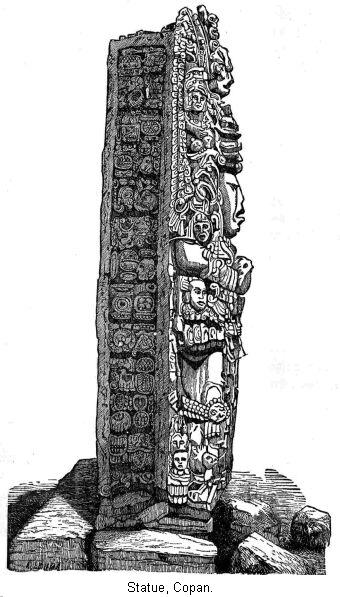
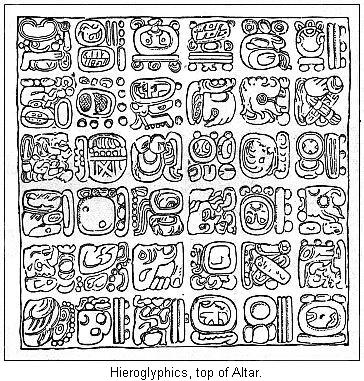
In Mexico, and farther south, we find the ruins of great cities. To the student of antiquity, these far surpass in interest the ruined cities of the Nile or Euphrates valley. Babylon of old, with its walls, towers, and pleasure resorts, was indeed wonderful. In our own land cities, if not as ancient, yet fallen in more picturesque ruin, reward the labors of the explorer. Uxmal, Copan, and Palenque, invite our attention. Here are hieroglyphics in abundance, but no Rosetta Stone supplies the key by whose aid a Champollion can unravel the mystery.
The luxuriant vegetative growth of the tropics, with its fierce storms, is every year hastening the obliteration of these ruins, and we must improve the time well, if we would learn from them what they have to say of the past.
The isles of the Pacific give evidence that, long before the dawn of authentic history, man lived there. Indeed, as the islands which gem that ocean, from their configuration and position, seem to be but the elevated plateaus and mountain peaks of a continent that has gone down beneath the blue wave of the Pacific, so, throughout Polynesia can be traced the fragmentary remains of a civilization, the greater portion of which has been completely buried by the waters of oblivion, leaving only here and there a trace to reconstruct, if we can, the entire structure.
The earliest remains of man are very similar in all lands. They consist of weapons of war and of the chase, implements of domestic use, and articles of personal adornment. Few and simple as they are, they are capable of imparting useful information as to early times. By their aid we become eye-witnesses of the daily life of primitive man. We learn that though lacking in almost every thing we consider essential for comfort and happiness, yet they were actuated by much the same hopes and fears as the men of the present age. The great burden of life was the same then as now. There was the same round of daily labor made necessary by the same ceaseless struggle for existence. Rude forts and warlike implements show there was the same encroachment of the strong on the weak as now.
This is a wonderful age in many respects. In none, however, more wonderful than in the wide-spread diffusion of knowledge. The ordinary people now understand more of nature’s secrets than the wise men of old. They are to-day interested in researches that a former generation would have relegated to the scholar and the man of leisure. No department of knowledge is retained for the researches of a favored few. The farmer, the mechanic, and the man of business are alike interested in a knowledge of prehistoric times. The rude implements of the past appeal to the curiosity of all. We arise from a study of the past with clearer ideas of man’s destiny. Impressed with the great advancement in man’s condition from the rude savagery of the drift, to the enlightened civilization of to-day, what may we not hope the advancement will be during the countless ages we believe a beneficent Providence has in store for his creature, man?
A history of the popular opinion of the antiquity of man is not only of interest, but should teach a lesson to all who think others are wrong because not holding the same views as they do. Hardly fifty years have passed since scientific men began to attribute to the human race an antiquity more remote than that assigned them by history and tradition. At first these views met with general opposition, much as did the theory of the present system of astronomy when it was first proclaimed. We laugh now at the ignorant fear’s and prejudices used to combat both.
It was claimed that the Bible taught that man had lived on the globe scarcely six thousand years. The Bible is the book to which the Anglo-Saxon mind clings with the greatest reverence. The memories of childhood are associated with its pages, and its very appearance recalls the prayers of long ago. It is not strange then that the Christian world guards with jealous care against any thing which may be thought to weaken the force of its statements.
But it is human nature to go to extremes: and, when we give our support to one way of thinking, we find it difficult to be patient with those of the contrary opinion.
Now, the researches of some of the most eminent men and learned divines have amply shown, that there are no data given in the Scriptures on which to base an estimate as to the antiquity of man. Happily the Christian mind no longer shrinks from the conclusions reached by the scientist: and, indeed, it is the contemplation of the stupendous periods of Geological times, and the infinite greatness of the works of Creation as disclosed by Astronomy, with the extreme lowness of man’s first condition as made evident by Archæology, that lend new force to the words, “What is man, that thou art mindful of him!”
The evidences on which we predicate an extreme antiquity for man are necessarily cumulative. It is not from one source alone that we obtain information, but from many. Eminent men in nearly every department of knowledge have lent their aid to the elucidation of this subject. It can only be understood by those who will fairly weigh the facts that modern discoveries have unrolled before their eyes. There are many who have not done this, and are consequently unable to project their mental vision so far back into the very night of time, as is now demanded for the beginning of man’s first appearance on the earth. And, indeed, so enormously has this period been extended—so far back does it require us to go—that even the most enlightened investigator may well recoil in dismay when he first perceives the almost infinite lapse of years that are required by his calculation since the creation of man.
At this day the scholar must be ready to explain the steps by which he reaches his conclusions. Not necessarily explaining the minutiæ of his journey hither, but the main outlines of his course. This seems to call for a slight outline of Geology. The animal and vegetable tribes which have come and gone upon the earth, following each other like the shadows of passing clouds on a Summer’s day, have left their remains in the rocks which at that time were forming. A close investigation of these remains shows that they form the record book of nature, wherein we are permitted to read somewhat of her secrets. This had long been a sealed book to man; but science, as we have seen, constantly extending her domain, at length taught him the alphabet.
And the Geologist now unfolds the past age of our world with a variety of detail, and a certainty of conclusion well calculated to inspire us with grateful admiration.
It is no longer a question that many ages must have rolled away, during which our world was totally unfit for life of any kind, either animal or vegetable.
The nebular theory of Laplace, as modified by the modern astronomers, so satisfactorily explains many of the phenomena of the solar system, that it takes rank almost as a demonstrated fact. According to the terms of this theory, our Earth, now so dependent on the sun for light and warmth, was itself a glowing orb, and as a bright star radiated its light and heat into space. Grand conception, and probably true. It is now useless to speculate as to how many cycles of almost infinite years had begun and ended, before Earth’s fading fires gave notice that they must soon expire in night.
The stages through which the Earth passed in turn await the sun, save that there is no further beneficent luminary to give him light and heat: when time shall have quenched his fiery glow, death and night shall reign supreme, where now is life and light.
Time is long, and nature never hurries. She builds for infinite years, and recks not the time of building. The human mind is far too feeble to comprehend the duration of time that sped away and was gone ere the slowly falling temperature of the Earth admitted the formation of a crust over her surface. When that came, the first great scene was closed. The star had expired, the planet rolled in her annual course around the still glowing central sun. Now came the formative age of the world, when the great continents were outlined.
The atmosphere gradually freed itself from its weight of water-vapor, the rains descended, and the ocean took form and contour. We are concerned only with the outlines of Geology, not with its details. It is full of the most interesting facts, but is foreign to our present purpose. We will only say, there is a marked progression in the scale and importance of life forms.
The lower forms of animals appear first to be followed in time by the higher. It is true that some forms have survived through all the changes of Geological time to the present: yet, speaking generally, some forms of life are peculiar to each age, and the general phase of animal life is different with each period. They thus form epochs in the history of the world as read from the rocks, and though the beginning and ending of each age may blend by insensible gradations with that of the preceding and following, yet, taken as a whole, we observe in each such singularities of form and structure as to give name to each particular age.
In the fullness of time man appears; and it is our pleasant task to trace the evidence of his primitive state, his growth in culture, and his advancement made before the dawn of history. Our inquiry, then, is as to his prehistoric state. We use this term in the same sense as Dr. Wilson uses it: that is, to express the whole period disclosed to us by means of archæological evidence, as distinguished from what is known through historical records. We can not doubt but that this includes by far the largest portion of man’s existence. The time embraced within historical records, though different in different portions of the world, is but a brief period in comparison to the duration of time since he first went forth to possess the Earth. If we can make plain to our readers that man has lived in the world an extremely long time, going back indeed to a former Geological age—that his first state was very low and rude—that he has risen to his present high estate by means of his own exertions continued through long ages—and from this form a prophecy of a golden age to come in the yet distant future, we shall feel that we have not written in vain.
[1]
Von Hellwald: “Smithsonian Report,” 1866.
[2] Palgrave,
[3] Lubbock: “Prehistoric Times,” p. 2.
Necessity of a general acquaintance with the outlines of Geology—A time in which there was no life possible on the globe—Length of this period—On the formation of rocks—The record imperfect—The three great periods in animal life on the globe—Paleozoic age—Animal and vegetable life of this period—The Mesozoic age—Animal and vegetable life of this period—Advance noted—Abundance of reptilian life—First appearance of birds—Nature’s methods of work—The Cenozoic age—Geological outline—Sketch of the Eocene age—Of the Miocene age—What is sufficient proof of the presence of man—Discussion of the Thenay flints—The Pliocene age—Animal and vegetable life of this age—Was man living during this age?—Discussion of this subject—Summing up the evidence—Conclusion.
 a
clear understanding of questions relating to early man, a more or less
extensive acquaintance with Geology is required. This is by no means a
difficult task to accomplish. What so interesting as to understand at
least the outlines of the history of life on the globe? To see how,
following a definite plan, the vast continents have grown to their present
size and form; to see how animal and vegetable life have evolved
successively higher and higher forms; to see where in this wondrous drama
of creation, this strange unfolding of life, the first faint, indecisive
traces of man’s presence are to be found; to learn what great changes in
climate, in Geogony, and in life, had occurred before man’s appearance,
let us pass in brief review the history of early geological periods.
a
clear understanding of questions relating to early man, a more or less
extensive acquaintance with Geology is required. This is by no means a
difficult task to accomplish. What so interesting as to understand at
least the outlines of the history of life on the globe? To see how,
following a definite plan, the vast continents have grown to their present
size and form; to see how animal and vegetable life have evolved
successively higher and higher forms; to see where in this wondrous drama
of creation, this strange unfolding of life, the first faint, indecisive
traces of man’s presence are to be found; to learn what great changes in
climate, in Geogony, and in life, had occurred before man’s appearance,
let us pass in brief review the history of early geological periods.
As we have already stated, there must have been a very long period of time during which no life was possible on the globe. Of this era we know but little; for we find no strata of rocks of an earlier date than we know life, in its simplest forms, to have existed.2 Still we are not less confident of the existence of this era, and the mind can dimly comprehend the scene, when a nearly shoreless ocean surged around the globe.3
As to the extent of time during which there was no life, we have no means of determining. That it was almost infinitely long is made apparent by the researches of eminent scholars on the cooling of lava. Toward the close of this extended period of time faint traces of life appear. Not life as we are apt to think of it. No nodding flowers were kissed by the sunshine of this early time. The earliest forms of flowerless plants, such as sea-weeds, and in dry places possibly lichens covering the rocks, were the highest forms of vegetable life. Animal life, if present, for the fact is denied by some, occurs in the very lowest form, merely structureless bodies, with no especial organs of sense, or nutrition: and their motion consisting simply in protruding and withdrawing hair-like processes.4 Such was the beginning of life. This vast period of time, which includes the beginning, is known among geologists as Archean time.
From the close of this age, the history of life properly commences. It might be well to explain the means which the geologist uses to interpret the history of the globe. It is now understood that the forces of nature have always produced the same results as they do now. From the very earliest time to the present, rocks have been forming. There, where conditions were favorable, great beds of limestone, formed from shells and corals, ground up by the action of the sea5—in other places, massive beds of sandstone or of sand, afterward consolidated into sandstone—were depositing. On the land surface, in places, great beds of vegetable débris were being converted into coal. Now we can easily see how the remains of organic bodies, growing at the time of the formation of these beds, should be preserved in a fossil form. Limestone rocks are thickly studded in places with all sorts of marine formations. Coal fields reveal wonders of early vegetative growth. From sandstone rocks, and shaly beds, we learn strange stories of animal life at the time they were forming. From a careful study of these remains together with the formation in which they occur, not only in one locality but all over the earth, geologists have gradually unfolded the history of life on the globe. It is admitted that, at best, our knowledge in that direction is fragmentary. This arises from errors in observation as well as that fossil formations are rare, or at least localities where they are known to exist are but few. So our knowledge of the past is as if we were examining some record from which pages, chapters, and even volumes, have been extracted.
In consequence of this imperfect record we can not, as yet, trace a gradual successive growth from the low forms of animal and plant life, that characterized the closing period of Archean time, to the highly organized types of the present. The record suddenly ceases and when we again pick up the thread we are surrounded by more advanced types, higher forms of life. Though we may hope that future discoveries will do much toward completing the records, we can not hope that they will ever really be perfected. So, from our present stand-point, the history of life on the globe falls naturally into three great divisions.6 This is no more than we might expect, when we reflect that nature’s laws are universal in their action, and that the world, as a whole, has been subjected to the same set of changes.
The period following on after Archean time is called, by geologists, Paleozoic time.
During the long course of time embraced in this age, the forms of life present wide differences from those of existing time.
This period produced the great beds of coal we use to-day. But the vegetation of the coal period would present strange features to our eyes. The vegetation commenced with the lowest orders of flowerless plants, such as sea-weeds; but, before it was brought to a close, there was a wonderful variety and richness of plants of the flowerless or Cryptogamic division. In some of the warmest portions of the globe, we have to-day tree-ferns growing four or five feet high. During the closing part of the Paleozoic time, there were growing all over the temperate zone great tree-ferns thirty feet or so in height. Some varieties of rushes in our marshes, a foot or two in height, had representatives in the marshes of the coal period standing thirty feet high, and having woody trunks.7 Near the close of the Paleozoic time, vegetation assumed a higher form of life. Flowering plants are represented. Pines were growing in the coal measures.
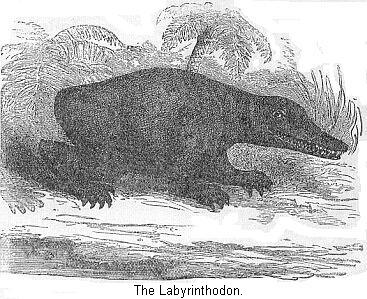
In animal life a similar advance is noted. The class of animals having no backbone, or invertebrate animals, were largely represented. But, toward the close of the Paleozoic time, we meet with representatives of the backbone family. The waters swarmed with fishes.8 Besides these, there were amphibians; 9 and reptiles in the closing portions.10
Thus we see what a great advance was made in life during this period. The forms of life during the early stages of this age were inferior in this, also, that they were all water species.11 But, before it closes, we have a rich and varied terrestrial vegetation, and also air-breathing animals. The class Mammalia, to which man belongs, had no representative on the earth during the extended Paleozoic time.
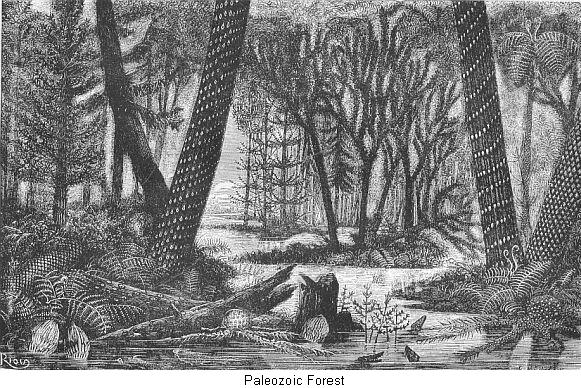
We can easily see, from the foregoing, how appropriately this period has been named that of old life forms. In imagination we can recall a scene of this old age. The air is sultry and full of vapors. The soil seems hot and steaming. This is a veritable forest, but we see none of the beautiful flowers which we associate with tropical vegetation to-day. In the branches of the graceful tree-ferns, we will look in vain for birds. They were yet far in the future. Neither were there any of the higher orders of animals present. Not a single representative of the great class of mammals enlivened the depths of the forest. There were fishes in the waters, but not the fishes of to-day. Some true reptiles and amphibians disported themselves in swampy jungles, but they were unimportant. Almost the only sound to break the stillness, was the hum of marsh-loving insects, the whistling of the wind, and the roar of the tempests, which we may well believe raged with the more than tropic severity of the present.12
The time at last came for the dawning of a new era. Vast changes had been taking place in the geography of both continents. The region to the south-west of the Green Mountains was upturned. The Alleghany Mountains were formed, and the region east of the Mississippi River became part of the stable land of the continent.13 In Europe, nearly as great changes occurred. The conditions of life must have been greatly modified by these geographical changes. The life-forms bear testimony to this changed condition. Old forms die away, and are succeeded by those approaching more nearly our own times. The name of this period is the Mesozoic time, or the period of middle life forms.14 It is instructive to notice the steady advance in the type of life, both animal and vegetable. The abundant flowerless vegetation of the coal formation of the preceding epoch dwindles away. But the flowering trees increase in number and importance until, in the closing period of Mesozoic time, we have trees with deciduous leaves. A great many of our forest trees had representatives in the forests of that epoch.
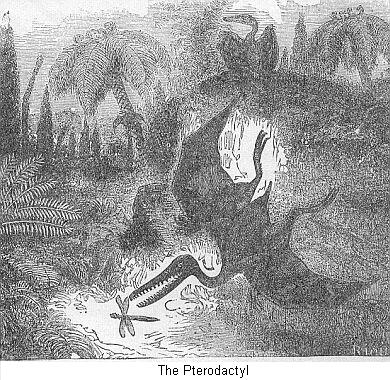
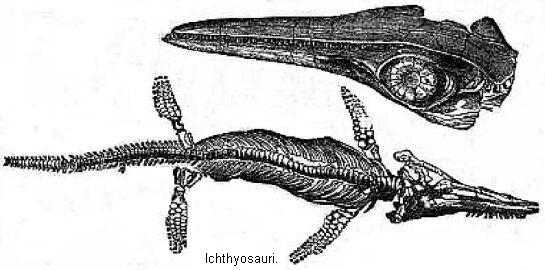
Palms and species like the big tree of California were growing side by side with species akin to our own common trees. But in the animal world there were many strange forms. This was the age of reptiles. They domineered on the land, in the air, and in the sea. On the land there stalked huge reptiles fifty and sixty feet long, and, when standing erect, at least thirty feet high.15 Some of these huge creatures were carnivorous, living on other animals. Others fed on the foliage of trees. In the air, huge reptilian bats, veritable flying dragons with a spread of wings from ten to twenty feet, disported themselves.16 In the sea there swam great reptilian whales, seals, and walruses.17 There was a marvelous abundance of reptilian life. At the present day, there are not more than six species of reptiles in the whole world having a length of over fifteen feet, and not more than eighteen species exceeding ten feet in length. But from one limited locality, representing but one era of this age in England, there have been discovered four or five species of carnivorous reptiles twenty to fifty feet long, ten or twelve species of crocodiles, lizards, and swimming reptiles from ten to sixty feet long—besides multitudes of great flying reptiles and turtles. Doubtless similar scenes of animal life were everywhere represented.
Birds made their first appearance during the Mesozoic time, and here we obtain a clear view of nature’s methods of work. There is no longer a doubt but that the first birds were simply modified reptiles. The first bird had a long jointed tail, and a bill well supplied with formidable teeth.18 It was during this period that the first representative of the class Mammalia, to which man belongs, appears.19 It is in the rocks of this era that we meet with remains of marsupials, the order to which opossums belong. This is the lowest of the Mammalian class. To the class Mammalia belong the most highly organized animals. They have been the ruling animals since the close of Mesozoic time. We must now watch their development with especial care. For this brief review, as far as it has gone, has shown a steady and gradual progress in life forms, the lower invariably preceding the higher. We therefore feel that it will be vain to seek for any trace of man until we find undoubted proofs of the existence of all the forms of animals below him. The last great division of time is called Cenozoic.20 This means new life forms. In this age, the forms of life are much nearer our own. As it was some time during this epoch when man makes his appearance, we deem it best to go into more detail, and give the subdivisions of this period. It has been amply sufficient to give simply the outlines of the other periods. In order to fix more clearly the sequence of life, we will give an outline showing the periods we have reviewed, and also the subdivisions of the Cenozoic time, which we are now to examine with more care.
| LIFE. | Archæan Time. | The Beginning. Includes the long lapse of time when the globe could not support life, but towards its close faint traces of life, both animal and vegetable appeared. | |
| Paleozoic Time. | The Period of Old Life Forms. Forests of flowerless trees; but pines grew in the coal measures. Animal life largely invertebrate; but amphibians and reptiles among the vertebrate appear at the close. | ||
| Mesozoic Time. | The Period of Middle Life Forms. Flowering trees increasing in number and importance. Deciduous trees make their appearance. Animal life largely reptilian. The class Mammalia represented by marsupials. | ||
| Cenozoic Time. |
Tertiary, or Age of Mammals. |
Eocene. Miocene. Pliocene. |
|
|
Quaternary, or Age of Man. |
Glacial or Pleistocene. Recent. |
||
At the close of the Mesozoic time, great elevations of land took place in both America and Europe, especially in the northern portions.21 This could not fail to have a great effect on life, both animal and vegetable.
During the Eocene, or first division of the Tertiary Age, we have simply to note the steady progress of life. There were forests of species of oaks, poplars, maples, hickories, and other common trees, and others now found only in tropical regions. Palm trees were growing in the upper Missouri region of the United States. And England was decidedly a land of Palms, as no less than thirteen species are known to have been growing there. Cypresses, yews, and pines graced the scene.22 Our special interest centers, however, in the mammals of this epoch.
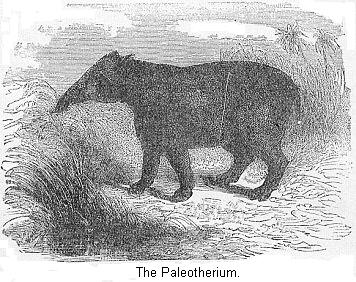
In the preceding epoch marsupials only were represented. But in beds of the middle and closing portions of the Eocene period we meet with a sudden increase of Mammalian life. Whale-like animals were especially abundant in the seas; and on our Western plains were animals like the tapirs of India, and rhinoceros-like animals as large as elephants23 but having no trunks, and diminutive little animals not larger than foxes, from which have come our horses. Europe also had a varied Mammalian fauna. There were numerous hog-like animals. Animals, like the tapirs of tropical Asia and America, wandered in the forests and on the banks of the rivers. Herds of horse-like animals, about the size of Shetland ponies, fed on the meadows.24 Animals that chew the cud were present, or at least had near representatives.25
Among the flesh-eating animals were creatures resembling foxes, wolverines, and hyenas.26 This shows what a great advance had been made. But, besides all these, we are here presented with representatives of the order of Quadrumana, or four-handed animals. Several genera of lemurs are found in both America and Europe.
Now the Quadrumana are the order below man. Therefore it seems that in the Eocene period, all the forms of life below man are represented. The time seems to be at hand when we can look, with some confidence, for traces of the presence of man himself. We must therefore be more cautious in our investigations.
The epoch following on after the Eocene is designated as the Miocene. We must remember that, though recent in a geological sense, yet it is immensely remote when measured by the standard of years. We must inquire into all the surroundings of this far away time. The geographical features must have been widely different from the present.
In the first place, the elevation of land to the north must have been sufficient to have connected the land areas of the Northern Hemisphere—North America, with Asia27 and Greenland; and this latter country must have been united with Iceland, and, through the British Islands, with Europe. But, to compensate for this land mass to the north, large portions of Central and Southern Europe were beneath the waves.28 The proof of this extended mass of land is to be found in the wide distribution of similar animals and plants in the Miocene time. All the chief botanists are agreed that the north Polar region was the center from which plants peculiar to the Eocene and Miocene epochs spread into both Europe and America.29 We may mention that the famous big trees of California are simply remnants of a wide-spread growth of these trees in Miocene times. They can be found in a fossil state at various places in British America, in Greenland, and in Europe. They are supposed to have originated somewhere in the north, and spread by these land connections we have mentioned into both Europe and America. But this is not the only tree that grew in the Miocene forests of both continents. The magnolia, tulip-tree, and swamp cypress are other instances.30 Eleven species, growing in the Rocky Mountain regions in Rocene times, found their way to Europe in the Miocene times,31 driving before them the plants of a tropical growth that had hitherto flourished in England. Now this implies land connection between the two continents. Furthermore, animals both large and small are found common to the two countries.32 The climate over what is now the North Temperate Zone, and even further. north, must have been delightful. There is ample testimony to this effect in the rich vegetative remains over wide areas.
In Spitzbergen, within twelve degrees of the pole, where now a dwarf willow and a few herbaceous plants form the only vegetation, and the ground is most of the time covered with snow and ice, there were growing, in Miocene times, no less than ninety-five species of trees, including yews, hazels, elders, beech, elms, and others.33 But it is in the Miocene forests of the continent of Europe where we meet with evidence of a singularly mild climate.
There were at least eleven species of palms growing in Switzerland; and one variety of them grew as far north as Northern Germany.34
We can not give a list of all the species. On the one hand, there were elms, willows, poplars, oaks, and beeches, thus far similar to the forest growth of temperate regions. Mingled with these were forests of trees like the tulip-tree, swamp cypress, and liquid amber or sweet gum of the southern part of the United States—plants whose home is in the warm and moist regions of the earth. But there were also representatives of the tropical regions—such as fig-trees, cinnamon-trees, and camphor-trees: these are found growing now in tropical countries. Fruit-trees of the cherry, plum, and almond species were also to be seen. Prof. Heer points out how all this should convince us that a large part of Europe, in the Miocene Age, possessed a climate not unlike that of the Madeira or Canary Islands to-day. He calls especial attention to the fact that these trees were nearly all of evergreen species, and that a severe winter would destroy them. He finds one hundred and thirty-one species of the Temperate Zone—species that can stand a moderate amount of cold, but not very hot and dry climates. He finds eighty-five species of tropical plants that could not possibly live where the Winters are severe. Mingled with these were nearly three hundred species whose natural home is in the warm, temperate portions of the earth. The only way you can explain this motley assemblage of trees is, to suppose that in what is now Europe was a climate free from extremes, allowing the trees to put forth flowers and fruits all the year round. “Reminding us,” says Prof. Heer, “of those fortunate zones where Nature never goes to rest.”35
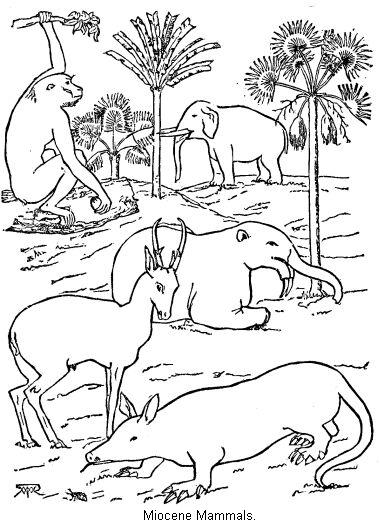
Let us now inquire as to the animals that roamed through these great forests we have been describing. The Miocene period extended over a long lapse of time, and considerable change took place among the animals belonging to the different parts of this age. We will only give a general outline for the whole period. The marsupials lingered along into the early stages of this period, and then disappeared from Europe. The rhinoceros were present in the early stages, and continued through the entire age. We meet in this period animals of the elephant kind, two species, the mastodon and deinotherium. Antelopes and gazelles wandered in vast troops over the plains of Hungary, Spain, and Southern France. Carnivorous animals resembling tigers and hyenas found abundance of animal food. Herds of horse-like animals fed on the rich herbage of the meadows. The birds were largely represented. In the woods were to be seen flocks of gayly feathered paroquets and trogons. On the plains secretary-birds hunted the serpents and reptiles, which furnished them food—and eagles were on the watch for their prey. Cranes waded in the rivers for fish. Geese, herons, and pheasants must have been abundant.
Our main interest centers in the order Quadrumana. We must remember that this order appeared in the Eocene. Several species were present in the Miocene. They wandered in the forests of France, Switzerland, Germany, and Italy, and doubtless found abundant food in the figs and bread-fruit, walnuts, almonds, dates, and other nuts growing there.36 One of the most important is regarded as belonging to the same genus as the Gibbons.37 This is the genus which has been sometimes regarded as making a nearer approach to man than any other monkey.38 Others, however, consider it as belonging to an extinct family.39 In addition to this species there were at least three other species: thus there was no absence of simian life in the Miocene.40
From the sketch we have thus far drawn of the Miocene Age, it seems to have been a very favorable one in every respect. One writer41 affirms, that “the world never experienced a more beautiful period.” And indeed it seems as if the facts bear out this statement. A genial, temperate climate was the rule, even to high northern latitudes. We need not doubt but that there were grassy plains, wooded slopes, and rolling rivers. Was man present to take advantage of all these favorable surroundings? Did he wander through the evergreen forests, and hunt the deer, antelope, and hogs—the hipparions, and mastodons, and deinotheres—then so numerous?42 We know of no inherent improbability of his existence at that time. An ape belonging to a highly organized genus was then living in Europe. Every condition considered necessary for the primeval Garden of Eden was then satisfied. Let us stop for a minute and examine the nature of the evidence considered sufficient to prove the presence of man during any of the past geological ages.
Should we be so fortunate as to find portions of the bones of the human skeleton in a geological formation in such positions that they could not possibly have been introduced there since the deposition of the containing bed, it would of course prove that man was at least as old as the formation itself. But it happens that human remains in beds of a previous geological age are very rare. Indeed, human remains in formations of the Pleistocene Age,43 during which we have ample testimony, as we shall see, of the presence of man, are very rare. The cases in which there can be no doubt can be reckoned on the fingers. The explanation of this state of things is not at all difficult, for it is only under very rare circumstances that portions of the bones of animals even larger than man are preserved to us in geological strata. Vast numbers die and vanish away without leaving a trace behind them for every fragmentary bone we recover. In the case of man we must remember that, in previous eras, he was present in very small numbers; that, owing to his intelligence, he would not be as liable to be drowned and swept away, and so mingle his remains with beds of river detritus then forming, as were animals. Mr. Lyell has made some remarks on the draining of the Haarlem Lake by the government of Holland in 1853, which shows that even favorable circumstances do not always preserve remains for future inspection. Though called a lake, this body of water was an arm of the sea, covering about forty-five thousand acres. The population which had lived on the shores of the lake was between thirty and forty thousand souls. “There had been many a shipwreck, and many a naval fight on those waters, and hundreds of Dutch and Spanish soldiers and sailors had met there with a watery grave,” yet not a solitary portion of the human skeleton was to be found in its bed.44 Thus we see that, in the majority of cases, we must rely on other evidence than the presence of human bones to prove the existence of man in the geological periods of the past. In the case of the Haarlem Lake again, there was found the wreck of one or two vessels, and some ancient armor. So, had it been a disputed point whether man was a denizen of this planet at the time when the area in question was covered by water, it would have been settled beyond a doubt by these relics of his industry, even though portions of the human frame itself were entirely wanting. And, in reality, proofs of this nature are just as satisfactory as it would be to discover human bones. If, on a desert island, we find arrow-heads, javelins, a place where there had been a fire, split bones, and other débris of a feast, we are as much justified in asserting that man had been there, as we would be had we seen him with our own eyes. In the same manner, if we detect in any strata of the past any undoubted products of human industry—such as weapons, or implements and ornaments—in such position that we know they could not have been deposited there since the formation of the bed itself, we have no hesitancy in asserting that man himself is of the same antiquity as the strata containing the implements. In the great majority of cases, this is the only kind of evidence possible to advance.
It is now well known that the first stage in the culture of any people, is what is called the Stone Age. That is to say, their weapons and implements were made from stone, or at least the majority of them were. We will discuss on another page this point, and also the grounds leading us to infer that many of the extremely rude forms are really the work of man.
Let us now return to the Miocene Age, in which we are to seek for the presence of man. In 1867 a French geologist, by the name of Bourgeois, who had been searching some beds of the Miocene Age, near Thenay, France, found a number of flints of such a peculiar shape, that he concluded they could only be explained by supposing that man formed them. In this case there is to question as to the age of the stratum containing the flints. All geologists are agreed that it is of the Miocene Age. The question then is, whether the flints were artificially cut or not. On this question there has been a great division of opinion, and we can not do better than to examine and see where the Principal scientific men stand on this point.
In 1872, at the scientific congress in Brussels, this question was referred to a committee composed of the most competent men from the different countries of Europe. We are sorry to say that, after a thorough consideration of them, the judges were unable to agree. Some accepted them, others rejected them, and still others were undecided. Some of the latter have since become convinced by recent discoveries.45
Since this discovery, similar specimens have been described as having been found in Portugal, and from another locality in France. Some men of the highest authority accept these flints as proving the presence of man in Miocene times. This is supported by such men as Quatrefages, Hamy, Mortillet, and Capellini.46 These are all known to be competent and careful geologists. Another class does not think the evidence strong enough to declare these flints of human origin, and so do not think it proved that man lived in Europe in Miocene times; but do believe that we will eventually find proofs of his existence during that era in the warm and tropical regions of the globe. This is the view of such men as Lubbock, Evans, Huxley, and Winchell. Still others say that, during the vast lapse of years since Miocene times, all the species of land mammals then alive have perished47—their place being taken by other species—and therefore it is incredible that man, the most highly specialized of all animals, should have survived. And hence, if these Thenay flints are really artificial in their origin, it is more reasonable to suppose they were cut by one of the higher apes, then living in France, than by man. This is the view of Prof. Dawkins and Prof. Gaudry.48 As to the last view, it is surely but reasonable to suppose, with Quatrefages,49 that the superior intelligence of man would serve to protect him from the operation of causes that would effect the extinction of lower animals. Hence, unless some evidence be produced to show that species of apes are known to make rude stone implements, or some evidence that they did this in past ages, we must believe, with Geikie and others, that these flints prove that Miocene man lived in France, unless indeed we refuse to believe that they are artificial.
It also seems to us that those who hold to the view that man was living in other parts of the world, as Asia, during the Miocene Age, ought readily to admit that a few wandering bands might penetrate into Europe.50 The climate was tropical, there was an abundance of animal life, and, if man was living anywhere, it is very reasonable to suppose that, at some epoch during the course of the Miocene Age, he would have found his way to Europe, unless shut off by the sea. It therefore seems to us that the presence of those cut flints is conclusive of the presence of man in Europe during the Miocene Age. At the same time we can not affirm that this is the conclusion of the scientific world. They seem to have heeded the remark of Quatrefages, that “in such a matter there is no great urgency,” and are waiting for further discoveries.
Thus far in our review we have noticed the steady progress in the forms of life. In the Miocene Age we have seen all the types of life below man present, and some indications of the presence of man himself. We must now learn what we can of the Pliocene Age, the last division of the Tertiary Age.
The Pliocene Age need not detain us long. Considerable changes in the geography of both Europe and America were going forward during the Miocene Age, and the result was quite a change in climate. There was a steady elevation of the Pacific coast region of America, and, as a consequences a period of great volcanic outbursts in California and Oregon.51 At the same time the bridge connecting Asia and America was severed.52 In Europe the Mediterranean area was elevated; but the land connecting Greenland with Europe sank, allowing the cold waters of the Arctic to communicate with both the North Sea and the Atlantic—England at that time forming part of the great peninsula extending north and west from Europe.53 The climate during the Pliocene Age was cooler than that of the Miocene. This is marked in the vegetation of that period. The palms and the cinnamon trees, which in Miocene times grew in Germany, flourished no farther north than Italy during the Pliocene.54
Count DeSaporta, who made special researches in the flora of this period, found the remains of a forest growth buried under lava on the side of a mountain in Cantal France, at an elevation of about four thousand feet above the level of the sea. This consisted principally of pines. This shows that probably all Northern Europe was covered with somber forests of pine. In the same section he found, buried under volcanic ash, a vegetation consisting mostly of deciduous trees—maples, alders, poplars, willows, elms, and ashes. As this was growing at the height Of about twenty-three hundred feet in Cantal France, it probably represents the vegetation of Britain and Northern Germany. Finally, the vegetation of Central and Southern France, as well as Northern Italy, was intermediate in character between the luxuriant evergreen forests of the Miocene Age and that now growing there. The tropical character of the vegetation was evidently passing away. The climate over a large part of Europe was now temperate, though probably warmer than at present.55
In the Mammalia we have to notice the disappearance of some species, and the arrival and spread of some others. The apes living as far north as Germany in the Miocene Age were restricted to Southern France and Italy in the Pliocene, and, at its close, vanished altogether from Europe. The first living species of mammals is found in the remains of the hippopotamus that frequented the rivers of Pliocene times. The mastodon of Miocene times was still to be seen, but along with it was a species of true elephants. The hipparion survived into this epoch, but the horse also makes its appearance. Great quantities of deer roamed over the land; and, as might be expected where they were so abundant, the carnivorous animals allied to the bears and wolves, panthers, linxes, and tigers, were also to be found. “At night,” says Mr. Dawkins, “the Pliocene forests of Central France echoed with the weird laughter of the hyena.”
The gradual lowering of the climate is also shown by the remains of the mollusks deposited in beds of marine or sea formation during different eras of this age. It is found that the earlier the bed, the more southern mollusks are found in it. This shows us that, all through the Pliocene Age, the waters of the seas surrounding England were gradually growing cooler, thus compelling the retreat of those mollusks fitted only for a warm climate, and allowing a gradual increase in those species fitted for cold or northern latitudes. We also find, in deposits made near the close of Pliocene times, numbers of stone which show all evidence of having been borne thither by means of ice. So we may conclude that rafts of ice came floating down the North Sea during the closing period of the Pliocene Age.56 Still, during the entire length of the Pliocene Age, Europe certainly offered an inviting home for man. Not only were the higher orders of animals present, but at least one living species was known. We find more proofs of his presence, but whether they are sufficient to convince us that man really lived during that epoch is to be seen.
Prof. Whitney has brought to the attention of the scientific world what he considers ample evidence of the presence of Pliocene man in California. We reserve this for discussion in another place. We will only remark, at present, that the evidence in this case is regarded as sufficient by some of the best of American Scholars.57 We simply mention them here, so that they may be borne in mind when we see what evidence Europe has to offer on this point. In 1863, M. Desnoyers, of France, discovered, in a stratum which he considered Pliocene, some bones of elephants and other animals cut and scratched in such a manner that he considered the cuts to be the work of man. As showing how cautious geologists are of accepting such conclusions, we mention this case. There was found in the same bed the remains of an extinct beaver. The question was at once raised, whether rodents by gnawing these bones could not have produced the cuts in question. Sir Charles Lyell, by actual experiments in the Zoological Gardens in London, soon showed that this was probably the fact.58 Yet Sir John Lubbock thinks it quite likely some of them were of human origin.59 Subsequently, however, M. Bourgeois discovered in the same bed worked flints, about the human origin of which there seems to be no doubt;60 but a more careful study of the formation in which they occur has raised questions as to its age. Though usually held to be Pliocene, some careful observers consider it to be of a later age. Geologists can not be accused of rashly accepting statements as to the antiquity of man.
In 1867 there was discovered, in Northern Italy, a human skull in a railway cutting at a depth of nearly fifty feet. This stratum contains remains of several Pliocene animals. This is held to prove the existence of Pliocene man by several eminent observers, amongst others Prof. Cocchi, of Italy, and Forsyth Major.61 But in this case Mr. Dawkins contends that it was not found under such conditions as render it certain that the stratum had been undisturbed, and so does not prove to a certainty that it was of the same age as the stratum.62 And Mr. Geikie thinks that the stratum itself is of a later age than the Pliocene.63 It is but right that geologists should thus carefully scan all the evidence produced.
In 1876 Prof. Capellini discovered, in a Pliocene deposit in Italy, the bones of a whale, which were so marked with cuts and incisions that he thought the only explanation was to say they had been cut by men. In this case64 there is no dispute as to the age of the stratum. Neither is there much doubt but that the cuts are the work of man. It is quite true that Mr. Evans has suggested that they may be the work of fishes. In this he is followed by Prof. Winchell.65 But there appears to be little ground for such belief, because the cuts are all on the outside faces of rib-bones, and the outer faces of the backbones. From the position occupied by the remaining portions of the skeleton, Prof. Capellini is sure that the animal had run aground, and, in that condition, was discovered and killed by men, who then, by means of flint knives, cut away such portions of food as they wished. It must have been lying on its left side, since the cuts were all made on bones of the right.66 It is not probable that fishes would have been apt to choose the outside faces of the ribs on the right side for their meals. These cut bones have been carefully examined by many competent men, who have agreed with Capellini that they are the work of men.67 Mr. Dawkins thinks the cuts were artificial, but he says, “It is not, however, to my mind satisfactorily shown that these were obtained from undisturbed strata.”68 Now these bones have been found in several localities, always in Pliocene deposits, which formed the shores of the Pliocene sea.69 Knowing how carefully geologists inquire into all the surroundings of a find, surely, if Capellini and others are the competent men they are admitted to be, they would have informed us long ago if they were not found in undisturbed strata.
Mr. Dawkins also objects because fragments of pottery were found in the strata. “Pottery,” says he, “was unknown in the Pleistocene Age,70 and therefore is unlikely to have been found in the Pliocene.”71 Mr. Geikie says this objection is founded on a mistake, as Prof. Capellini told him the pottery was found lying on the surface, and was never for a moment imagined by him as belonging to the same age as the cut bones.72 There is also the objection, that, inasmuch as all the mammals then alive except one have perished, it is more than likely that, had man been in existence then, he too would have disappeared.
We considered this point fully when speculating as to the presence of man in the Miocene: so we have nothing further to offer. We might, however, suggest that, if the hippopotamus amongst mammals could survive all the changing time since the Pliocene, as it has done, it seems no more than fair to admit equal power of endurance to the human species. The position then of the scientific world as to the Pliocene Age of man is, on the whole, more decided in its favor than for the Miocene Age. Quite a number of eminent scholars, whose conclusions are worthy of all respect, unhesitatingly affirm the existence of Pliocene man in Europe. Others are not quite ready to admit his existence in Europe, but do think he was in existence elsewhere. Still others, with all due respect for the discoveries of Capellini, think it more prudent to await further discoveries. The reader, who has followed us through this brief outline of the past, can join which of the classes he will, and be sure of finding himself in good company.
This completes our review of past geological ages. With the termination of the Pliocene Age we find ourselves on firmer ground. We only wish to call attention once more to the gradual unfolding of life. We see that the rule has been that everywhere the lower forms of life precede the higher. In the plant world flowerless plants precede the flowering ones. The coal we burn to-day is mainly the remains of the wonderful growth of the flowerless vegetation of the Paleozoic Ace. When flowering plants appear, it is the lower forms of them at first.
It was long ages before trees with deciduous leaves appeared. The growth of animal life is equally instructive. First invertebrate life, then the lowest forms of vertebrate life. The fishes are followed by amphibians—then reptiles, then birds. The first mammal to appear was the lowest organized of all—the marsupials. And we have seen the sudden increase of mammalian life in Tertiary times. We notice, in all the divisions of life, a beginning, a culmination, and a decline. There has never been such a growth of flowerless plants as in the Paleozoic, and flowering plants probably culminated in the Miocene. The same rule holds good for the animal world also. As man is the most highly organized of all the animals, we can not hope to find any evidence of his presence until we find proofs of the presence of all the lower types of life. Of course future discoveries may change our knowledge when the series is complete; but, from our present stand-point, he could not have lived before the Miocene Age, and we have seen how faint and indecisive are the proofs of his presence even then. But should it finally be proved, beyond all dispute, that man did live in the Miocene Age, we must observe that this is but a small portion, but a minute fraction, of the great lapse of time since life appeared on the globe. We are a creation of but yesterday, even granting all that the most enthusiastic believer in the antiquity of man can claim.
REFERENCES
Beginning of the Glacial Age—Inter-glacial Age—Man living in Europe during this age—Map of Europe—Proof of former elevation of land—The animals living in Europe during this age—Conclusions drawn from these different animals—The vegetation of this period—Different climatic conditions of Europe during the Glacial Age—Proofs of a Glacial Age—Extent of the Glacial Ice—Evidence of warm Inter-glacial Age—The primitive state of man—Early English civilization—Views of Horace—Primitive man destitute of metals—Order in which different materials were used by man for weapons—Evidence, from the River Somme—History of Boucher de Perthes’s investigations—Discussion of the subject—Antiquity of these remains—Improvement during Paleolithic Age—Description of the flint implements—Other countries where these implements are found—What race of men were these tribes—The Canstadt race—Mr. Dawkins’s views—When did they first appear in Europe—The authorities on this question—Conclusion.
 tertiary age, with its wonderful wealth of animal and plant life,
gradually drew to its close. In our “Outline” we have named the period
that next ensued the Glacial Age.2 This was sufficiently exact
for our purpose then, but we must remember this is the name3
for a long series of years. During this period great changes in climate
occurred. At its commencement, a genial temperate climate prevailed
throughout Europe; and this, as we know, was preceded, during the Miocene
Age, by a warm tropical one.4 This succession, then, shows us
that, for some reason or other, the climate had been gradually growing
colder. This change went forward uninterruptedly. Doubtless very
gradually, from century to century, the seasons grew more and more severe,
until, finally, the Summer’s sun no longer cleared the mountains of the
Winter’s snow. This was the beginning of the Glacial Age proper.
tertiary age, with its wonderful wealth of animal and plant life,
gradually drew to its close. In our “Outline” we have named the period
that next ensued the Glacial Age.2 This was sufficiently exact
for our purpose then, but we must remember this is the name3
for a long series of years. During this period great changes in climate
occurred. At its commencement, a genial temperate climate prevailed
throughout Europe; and this, as we know, was preceded, during the Miocene
Age, by a warm tropical one.4 This succession, then, shows us
that, for some reason or other, the climate had been gradually growing
colder. This change went forward uninterruptedly. Doubtless very
gradually, from century to century, the seasons grew more and more severe,
until, finally, the Summer’s sun no longer cleared the mountains of the
Winter’s snow. This was the beginning of the Glacial Age proper.
The best authorities also suppose that the reign of snow and ice was broken by at least one return (possibly more) of genial climate, when animals and plants from the south again visited the countries of Northern Europe—only, however, to be once more driven forth by a return of arctic cold. But finally, before the increasing warmth of a genial Climate, the glaciers vanished, not to return again, and the Glacial Age became merged in that of the present.
It is no longer a question that man lived in Europe during the largest portion of this age, if not from the beginning. It is necessary, then, to come to a clear understanding of the successive stages of this entire age, and to trace the wonderful cycles of climate—the strange mutation of heat and cold, which must have exerted a powerful influence on the life, both animal and vegetable, of the period—and see when we first find decisive proofs of man’s presence, and learn what we can of his condition.
The map of Europe, at the close of Pliocene times and the commencement of the Glacial Age, is of interest to us in several ways. From this it will be seen that it was considerably more elevated than at the present. As this is no fancy sketch, but is based on facts, it is well to outline them. Without the aid of man, land animals can not possibly pass from the mainland of a continent to an island lying some distance off the shore. But it is well known that animals like the rhinoceros, and several others, wandered as well over the surface of the British Islands as on the adjacent coast of Europe. We are therefore compelled to assume, that at that time the English Channel and the Irish Sea were not in existence. This necessitates an elevation of at least four hundred feet, which would also lay bare a large portion of the North Sea.5 In proof of this latter statement is the fact, that, at a distance from land in the North Sea, fishermen at the present day frequently dredge up bones and teeth of animals that then roamed in Europe.6
While there is no necessity for supposing an elevation greater than that required to lay bare a passage for animals back and forth, yet soundings undertaken by the British government have established the fact, that the ocean deepens very gradually away from the shores of the main-land until a depth of six hundred feet is reached, when the shore falls away very suddenly. This is supposed to be the sea-coast of that time. The English Channel would then have existed as the valley of the Seine, and the Rhine have prolonged its flow over the present bed of the North Sea. As the land stood at this height through a large portion of the Glacial Age, it is not at all unreasonable to suppose that primitive tribes hunted back and forth along these valleys, and so doubtless many convincing proofs of their presence at that early day lie buried underneath the waves of the sea. In like manner, at the south, we know that elephants, lions, and hyenas passed freely from Africa to Spain, Italy, and the Island of Crete,7 and, consequently, the Mediterranean Sea must have been bridged in one or two places at least.8
The change from Pliocene times to early Glacial was so gradual that quite a number of animals lived on from one to the other, and, as we have already stated, one of these species has even survived to our own times.9
But we note the arrival in Europe of a great number of new animals, and the diversity of species seems at first an inexplicable riddle. The key, however, is to be found in the great climatic changes, which we have already mentioned as occurring during this age. On the one hand, we find such animals as the musk-sheep, reindeer, and arctic fox, animals whose natural home is in high northern latitudes, where snow and ice prevail most of the year.10 Yet during this age they lived in Southern France and Italy, which must then have had a far different climate than that at present.
Were we to confine our attention to these alone we would be convinced that the climate of Europe at that time was arctic in its severity. But side by side with the remains of these animals are found others which imply an altogether different climate. The hippopotamus, now frequenting the rivers of Africa, during that period roamed as far north as Yorkshire, England.11 This animal could not live in a country where the cold was severe enough to form ice on the rivers. The remains of a number of other animals are found whose natural home is in the warm regions of the earth.12 These two groups of animals, one from the north and one from the south, show how varied was the climate of Europe during the Glacial Age.
In addition to these, there was also a large number of animals whose home is in the temperate regions of the earth—animals that thrive in neither extremes of heat and cold. This includes a great many animals of the deer kind, several varieties of bears and horses; in fact, the majority of those with which we are acquainted.13
Now, what conclusion follows from this assemblage of animals? Many theories have been put forward in explanation. It has been suggested that Europe at that time had a climate not unlike that of some portions of the earth at present; that is, a long and severe Winter was followed by a short but warm Summer. During the Winter reindeer and other northern animals would press from the north in search of food, but would retire on the approach of Spring, when their feeding grounds would in turn be occupied by bisons and animals of a southern habitat. In confirmation of this view it is pointed out that a vast collection of bones, from the bottom of a sink-hole or pond in Derbyshire, England, conclusively show that in the summer-time it was visited by bisons with their calves, and in Winter by reindeer.14 This theory is open to a great many objections. As is well known, some animals make quite extensive migrations annually, but we can scarcely believe that heavy, unwieldy animals like the hippopotamus, were then such industrious travelers as to wander every year from Italy to Northern England and return.15 But the very ground on which this theory rests, that of strongly contrasted summers and winters, could not be true of Europe or the western portions of it, owing to the presence of the Atlantic Ocean, and the influence which it inevitably exerts on the climate.16 We see, then, that the presence of these different animals can be explained only by supposing great secular changes in climate. Let us see if we can strengthen this view by an appeal to the vegetation of this period.
We have seen how important a guide as to climate were the remains of the vegetation of the early times. We therefore turn with more confidence to such discoveries as will tell us of the flora of this age. But there are many reasons why remains of plant growth should be few. As we shall soon learn, this was a period of flooded rivers; and in the gravels and loams thus formed is found our principal source of information as to the life of the age. But such a rush of waters would form gravelly banks or great beds of loam, and would sweep any plants which might be washed into its floods far out to sea; or if by chance they should become buried in such gravel beds, the action of water would speedily cause the decay of the tender portions, such as leaves, bark, and soft wood, in which case no profitable investigation could be made. Occasionally, however, around the shores of old lakes, vegetable beds have been buried, and we know that some mineral springs deposit a sort of protecting sediment on every thing with which they come in contact. By such means, at rare intervals, leaves, seeds, and fruits have been sealed up for future inspection, and from a careful study of all such instances much valuable information has been obtained. At one place in the valley of the Seine was discovered, under a bed of tufa, the remains of a forest growth. It is not doubted that the deposit belongs to the Glacial Age.17
Yet the forest growth reminds us of that prevalent during the Miocene Age. The fig-tree, canary, laurel, and box-tree grew in profusion. These are all southern forms. One severe winter would kill them all, and even hard frosts would prevent the ripening of their fruits.
Neither were the Summers hot and dry. This is shown by the presence of numerous plants which can not thrive in hot and dry localities, but live in the shady woods of Northern France and Germany. The evidence of this forest growth surely presents us an inviting picture of Europe during a portion of the Glacial Age.
We are not without evidence, also, of a much more severe climate. In a lignite bed (a species of coal) found in nearly the same latitude as the forest growth just mentioned, we detect the presence of trees that grow only in cold northern climates, such as birch, mountain pine, larch, and spruce.18 And in some peat-bogs of Southern Europe belonging to this age19 are found willows now growing only in Spitzbergen, and some species of mosses that only thrive far to the north. It is quite evident that this deposit testifies to an altogether different climate from that indicated by the deposit before mentioned. No theory of migration can explain this assemblage of plants, unless it be migration taking place very slowly, in consequence of an equally slow change of climate.
From what we have just learned of the animals and plants living in Europe during this age, we can frame some conception of the different climatic conditions of Europe. On the one hand, we have a country with a mild and genial climate. Trees of a warm latitude were then growing as far north as Paris, and we may well suppose Europe to have abounded in shady forests and grassy plains, through which flowed large rivers. It was just such a country as that in which elephants and southern animals would flourish, while vast herds of deer and bovine animals wandered over the entire length and breadth of the land. Where animal life was so abundant there were sure to be carnivorous animals also, and lions, hyenas, tigers, and other animals added to the variety of animal life.
This, however, is but one side of the picture. The other presents us with a very different scene; instead of an abundant forest growth, the land supported only dwarf birch, arctic willows, and stunted mosses. Arctic animals, such as musk-sheep and reindeer, lived all the year around in Southern France. The woolly mammoth lived in Spain and Italy. In short, the climate and conditions of life were vastly different in the two stages.
We must now turn our attention to the proofs of glaciers in Europe, the phenomena from which this age derives its name. Descriptions of Alpine glaciers are common enough, but as glaciers and the Glacial Age have a great deal to do with the antiquity of man, we can not do better than to learn what we can of their formation, and their wonderful extension during this period. The school-boy knows that by pressure he gives his snowball nearly the hardness of ice. He could make it really ice if he possessed sufficient strength. The fact is, then, that snow under the influence of pressure passes into the form of ice. In some cases nature does this on a large scale. Where mountains are sufficiently elevated to raise their heads above the snow line we know they are white all the year around with snow. What is not blown away, evaporated, or, as an avalanche, precipitated to lower heights, must accumulate from year to year. But the weight pressing on the lower portions of this snow-field must soon be considerable, and at length become so great, that the snow changes to the form of ice. But as ice it is no longer fixed and immovable. We need not stop to explain just how this ice-field moves, but the fact is that, though moving very slowly, it acts like a liquid body. It will steal away over any incline however small, down which water would flow. Like a river it fills the valleys leading down from the mountains. But, of course, the lower down it flows the higher the temperature it meets, and it will sooner or later reach a point where it will melt as fast as it advances. This stream of ice flowing down from snow-clad mountains is called a glacier. Those we are best acquainted with are but puny things compared with those of the polar regions, where in one case a great river of ice sixty miles wide, flowing from an unknown distance, some thousands of feet in depth (or height), pours out into the sea.20
We at once perceive that such a mass of ice could not pour down a valley without leaving unmistakable signs of its passage. The sides of the mountains would be deeply scarred and smoothed. Projecting knobs would be worn away. The surface of the valley, exposed to the enormous grinding power of the moving ice, would be crushed, pulverized, and dragged along with it. Pieces of stone, like that here represented, would form part of this moving débris, and as they were crowded along they would now and then grate over another piece of stone more firmly seated, and so their surface would be deeply scratched in the direction of their greatest length. There is always more or less water circulating under the Alpine glaciers, and the streams that flow from them are always very muddy, containing, as they do, quantities of crushed rock, sand, and clay.
If, for any reason, this earthy matter was not washed out it would form a bed of hard clay, in places packed with these striated stones. Such beds of clay are known as “till” or bowlder clay.21
This is descriptive, though in a very general way, of the glaciers as they exist to-day. Geologists have long been aware of the fact that they have convincing proofs of the former presence of glaciers in Northern Europe, where now the climate is mild. The mountains of Scotland and Wales show as distinct traces of glaciers as do those of the Alps. It is not necessary, in this hasty sketch, to enumerate the many grounds on which this conclusion rests. It is sufficient to state that by the united labors of many investigators in that field we are in possession of many conclusions relating to the great glaciers of this age which almost surpass belief; and yet they are the results of careful deductions. The former presence of this ice sheet itself is shown in a most conclusive manner by the bowlder clay formed underneath the great glacier, containing abundant examples of stone showing by their scratched surface that they have been ground along underneath the glacier. The rocks on the sides of the mountains are scratched exactly as are those in the Alps. By observing how high up on the mountains the striæ are, we know the thickness of the ice-sheet; and the direction in which it moved is shown in several ways.22
Briefly, then, the geologist assures us that when the cold of the Glacial Age was at its maximum glaciers streamed down from all the mountains of Scotland, Wales, and Northern England; that the ice was thick enough to overtop all the smaller hills, and on the plains it united in one great sea of ice some thousands of feet in thickness, that it stretched as far south as the latitude of London, England. But that to the west the ice streamed out across, the Irish Sea, the islands to the west of Scotland, and ended far out into what is now the Atlantic.23 But these glaciers, vast as they were, were very small compared with the glaciers that streamed out from the mountains of Norway and Sweden. These great glaciers invaded England to the south-west, beat back the glacier ice of Scotland from the floor of the North Sea, overran Denmark, and spread their mantle of bowlder clay far south into Germany.24
While such was the condition of things to the north, the glaciers of the Alps were many times greater than at present. All the valleys were filled with glacier ice, and they spread far out on the plains of Southern Germany and westward into France. The mountains of Southern France and the Pyrenees also supported their separate system of glaciers. Ice also descended from the mountains of Asia Minor and North Africa.25 In America we meet with traces of glaciers on a vast scale; but we can not pause to describe them here.26
It need not surprise us, therefore, to learn of reindeer and musk-sheep feeding on stunted herbage in what now constitutes Southern France. When a continuous mantle of snow and ice cloaked all Northern Europe, it is not at all surprising to find evidence of an extremely cold climate prevailing throughout its southern borders. We thus see how one piece of evidence fits into another, and therefore we may, with some confidence, endeavor to find proofs of more genial conditions when the snow and ice disappeared, and a more luxuriant vegetation possessed the land, and animals accustomed to warm and even tropical countries roamed over a large extent of European territory. In Switzerland it was long ago pointed out that after the ancient glaciers had for a long time occupied the low grounds of that country they, for some cause, retreated to the mountain valleys, and allowed streams and rivers to work over the débris left behind them. At Wetzikon most interesting conclusions have been drawn. We there learn that, after the retreat of the glaciers, a lake occupied the place, which in course of time became filled with peat, and that subsequently the peat was transformed into lignite. To judge from the remains of animals and plants, the climate must have been at least as warm as that at present; and this condition of things must have prevailed over a period of some thousands of years to explain the thick deposits of peat, from which originated the lignites.27
But we also know that this period came to an end, and that once more the ice descended. This is shown by the fact that directly overlying the lignite beds are alternating layers of sand and gravel, and, resting on these, glacier-born bowlders. The same conclusion follows from the discoveries made at many other places.
In Scotland it is well known that the bowlder clay contains every now and then scattered patches of peat and beds of soil either deposited in lakes or rivers. The only explanation that can be given for their presence is that they represent old land surfaces; that is, when the land was freed from ice, and vegetation had again clothed it in a mantle of green. In this cut is shown one of these beds. Both above and below are the beds of bowlder clay. The peat in the centre varies from an inch to a foot and a half in thickness, and contains many fragments of wood, sticks, roots, etc.; and of animals, numerous beetles were found, one kind of which frequents only places where deer and ruminant animals abound.
From a large number of such discoveries it is conclusively shown that, after all, Scotland was smothered under one enormous glacier, a change of climate occurred, and the ice melted away. Then Scotland enjoyed a climate capable of nourishing sufficient vegetation to induce mammoths, Irish deer, horses, and great oxen to occupy the land. But the upper bowlder clay no less conclusively shows that once more the climate became cold, and ice overflowed all the lowlands and buried under a new accumulation of bowlder clay such parts of the old land surface as it did not erode. Substantially the same set of changes are observed in English and German geology.28
Having thus given an outline of the climatic changes which took place in Europe during the Glacial Age, and the grounds on which these strange conclusions rest, we must now turn our attention to the appearance of man.
The uncertainties which hung over his presence in the earlier periods, spoken of in the former chapter, do not apply to the proofs of his presence during this age, though it is far from settled at what particular portion of the Glacial Age he came into Europe. We must remember we are to investigate the past, and to awaken an interest in the history of a people who trod this earth in ages long ago. The evidence on which we establish a history of the early tribes of Europe is necessarily fragmentary, but still a portion here and a piece there are found to form one whole, and enable us to form quite a vivid conception of manners and times now very far remote.
It is not claimed that we have surmounted every difficulty—on the contrary, there is yet much to be deciphered; but, in some respects, we are now better acquainted with these shadowy tribes of early times than with those whose history has been recorded by the historian’s facile pen. He has given us a record of blood. He acquaints us with the march of vast armies, tells us of pillaged cities, and gives us the names of a long roll of titled kings; but, unfortunately, we know little of the home life, the occupation, or of those little things which make up the culture of a people. But the knowledge of primitive tribes, gathered from the scanty remains of their implements, from a thorough exploration of their cavern homes, has made us acquainted with much of their home life and surroundings: and we are not entirely ignorant as to such topics as their trade, government, and religion. We must not forget that this is a knowledge of tribes and peoples who lived here in times immeasurably ancient as compared with those in existence at the very dawn of history.
We must try and form a mental picture of what was probably the primitive state of man; and a little judicious reasoning from known facts will do much for us in this direction. Some writers have contended that the first condition of man was that of pleasing innocence, combined with a high degree of enlightenment, which, owing to the wickedness of mankind, he gradually lost. This ideal picture, however consonant with our wishes, must not only give way before the mass of information now at our command, but has really no foundation in reason; “or, at any rate, if this primitive condition of innocence and enlightenment ever existed, it must have disappeared at a period preceding the present archæological investigations.”29 Nothing is plainer than that our present civilization has been developed from barbarism, as that was from savagism.30 We need go back but a few centuries in the history of any nation, before we find them emerging from a state of barbarism. The energy and intelligence of the Anglo-Saxon has spread his language to the four corners of the globe; he has converted the wilderness into fruitful fields, and reared cities in desert lands: yet his history strikingly illustrates our point. A century back, and we are already in a strange land. The prominent points of present civilization were yet unthought of. No bands of iron united distant cities; no nerves of wire flashed electric speech. The wealth of that day could not buy many articles conducive of comfort, such as now grace the homes of the poor. The contrast is still more apparent when we recall another of the countless centuries of the past. England, with Europe, was but just awakening to modern life. Printing had but just been invented. Great discoveries had been made, and mankind was but just beginning those first feeble efforts which were to bring to us our modern comforts. But a millennium of years ago, and the foundation of English civilization had but just been laid by the union of the rude Germanic tribes of the Saxons and the Angles. Similar results attend the ultimate analysis of any civilization. It was but yesterday that wandering hordes, bound together by the loose cohesion of tribal organization, and possessing but the germ of modern enlightenment, held sway in what is now the fairest portion of the world: and we, the descendants of these rude people, must reflect that the end is not yet—that the onward march of progress is one of ever hastening steps—and that, in all human probability, the sun of a thousand years hence will shine on a people whose civilization will be as superior to ours as the light of day exceeds the mellow glow of a moon-lit night.
If such are the changes of but a few centuries, what must we not consider the changes to have been during the countless ages that have sped away since man first appeared on the scene! The early Greek and Roman writers were much nearer right when they considered primitive man to have been but a slight degree removed from the brute world. Horace thus expresses himself: “When animals first crept forth from the newly formed earth, a dumb and filthy herd, they fought for acorns and lurking places —with their nails, and with fists—then with clubs—and at last with arms, which, taught by experience, they had forged. They then invented names for things, and words to express their thoughts; after which they began to desist from war, to fortify cities, and enact laws.” The learning of modern times leads to much the same conclusion.
It is evident that primitive man must have been destitute of metals; for it requires a great deal of knowledge and experience to extract metals from their ores. In the eyes of savages, the various metallic ores are simply so many varieties of stone— much less valuable for his purposes than flint, or some other varieties. We know it to be historically true, that a great many nations have been discovered utterly destitute of any knowledge of metals.
When we reflect how much of our present enlightenment is due to the use of metals, we can readily see that their discovery marks a most important epoch in the history of man. There is, then, every reason to suppose that stone was a most important article for primitive man. It was the material with which he fought his battle for existence, and we need not be surprised that its use extended through an enormously long period of time. Not only was primitive man thus low down in the scale, but of necessity his progress must have been very slow.
The time during which men were utterly destitute of a knowledge of metals, far exceeds the interval that has elapsed since that important discovery.31 Scholars divide the stone age into two parts. In the first, the stone implements, are very few, of simple shapes, and in the main formed of but one variety of stone—generally flint~-and they were never polished. In the second division, we meet with a great many different implements, each adapted to a different purpose. Different varieties of stone were employed, and they also made use of bone, shell, and wood, which were often beautifully polished.
From what we have learned of the development of primitive society, it will not surprise us to learn that the first division of the age of stone comprises a vastly greater portion of time, and is far more ancient, than the second. We will give an outline showing the order of use of different materials; but it is here necessary to remark that Bronze was the first metal that man learned to use, and Iron the second.
| Age of Stone. | Rough, or Old Stone Age | Paleolithic |
| Polished, or New Stone Age | Neolithic | |
| Age of Metals. |
Bronze Age. Iron Age. |
|
In this outline the words Paleolithic and Neolithic are the scientific terms for the two divisions of the Stone Age, and will be so used in these pages.
The only races of men that we could expect to find in Europe during the Glacial Age would be Paleolithic tribes, and it is equally manifest that we must find traces of them in beds of this age, or in association with animals that are characteristic of this age, or else we can not assert the existence of man at this time. The valley of the river Somme, in Northern France, has become classical ground to the student of Archæology, since it was there that such investigations as we have just mentioned were first and most abundantly made. It is now well known that the surface features of a country—that is, its hills and dales, its uplands and lowlands—are mainly due to the erosive power of running water. Our rivers have dug for themselves broad valleys, undermined and carried away hills, and in general carved the surface of a country, until the present appearance is the result. It must be confessed that when we perceive the slow apparent change from year to year, and from that attempt to estimate the time required to produce the effects we see before us, we are apt to shrink from the lapse of time demanded for its accomplishment. Let us not forget that “Time is long,” and that causes, however trifling, work stupendous results in the course of ages.
But a river which is thus digging down its channel in one place, deposits the materials so dug away at other and lower levels, as beds of sand and gravel. In the course of time, as the river gradually lowers its channel, it will leave behind, at varying heights along its banks, scattered patches of such beds. Wherever we find them, no matter how far removed, or how high above the present river, we are sure that at some time the river flowed at that height; and standing there, we may try and imagine how different the country must have looked before the present deep valley was eroded.
In the case of the river Somme, we have a wide and deep valley, a large part of which has been excavated in chalk rock, through which the river now winds its way in a sinuous course to the English Channel. Yet we feel sure that at some time in the past it was a mighty stream, and that its waters surged along over a bed at least two hundred feet higher than now. In proof of this fact we still find, at different places along the chalky bluff, stretches of old gravel banks, laid down there by the river, “reaching sometimes as high as two hundred feet above the present water level, although their usual elevation does not exceed forty feet.”32
The history of the investigation of the ancient gravel beds of the Somme is briefly this: More than one instance had been noted of the finding of flint implements, apparently the work of men, in association with bones of various animals, such as hyenas, mammoths, musk-sheep, and others, which, as we have just seen, lived in Europe during the Glacial Age. In a number of cases such finds had been made in caves. But for a long time no one attributed any especial value to these discoveries, and various were the explanations given to account for such commingling. A French geologist, by the name of Boucher DePerthes, had noted the occurrence of similar flint implements, and bones of these extinct animals, in a gravel pit on the banks of the Somme, near Abbeville, France. He was convinced that they proved the existence of man at the time these ancient animals lived in Europe. But no one paid any attention to his opinions on this subject, and a collection of these implements, which he took to Paris in 1839, was scarcely noticed by the scientific world. They were certainly very rude, and presented but indistinct traces of chipping, and perhaps it is not strange that he failed to convince any one of their importance. He therefore determined to make a thorough and systematic exploration of these beds at Abbeville. In 1847 he published his great work on this subject, giving over sixteen hundred cuts of the various articles he had found, claiming that they were proof positive of the presence of man when the gravels were depositing.
Now there are several questions to be answered before the conclusions of the French geologist can be accepted. In the first place, are these so-called flint implements of human workmanship? From our illustrations, we see that they are of an oval shape, tending to a cutting edge all around, and generally more or less pointed at one end. The testimony of all competent persons who have examined them is, that however rude they may be, they were undoubtedly fashioned by man. Dr. C. C. Abbott has made some remarks on implements found in another locality, equally applicable to the ones in question. He says: “We find, on comparing a specimen of these chipped stones with an accidentally fractured pebble, that the chipped surfaces of the former all tend toward the production of a cutting edge, and there is no portion of the stone detached which does not add to the availability of the supposed implement as such; while in the case of a pebble that has been accidentally broken, there is necessarily all absence of design in the fracturing.”33
Like the watch found on the moor, they show such manifest evidence of design, that we can not doubt that they were produced by the hand of man. But it is not enough to know that they are artificial, we must also know that they are of the same age as the beds in which they are found.
This cut represents a section of a gravel pit at St. Acheul, on the Somme. The implements are nearly always found in the lowest strata, which is a bed of gravel from ten to fourteen feet thick. Overlying this are beds of marl, loam, and surface soil, comprising in all a depth of fourteen feet. It has been suggested that the implements are comparatively recent, and have sunk down from above by their own weight, or perhaps have been buried in artificial excavations. The beds are however too compact to admit of any supposition that they may have been sunk there; and if buried in any excavation, evident traces of such excavation would have remained. We can account for their presence there in no other way than, that when the river rolled along at that high elevation, and deposited great beds of sand, these implements were someway lost in its waters, and became buried in the gravel deposits.
Finally, we have to consider the age of the deposits. This is a question that can be answered only by geologists, and we may be sure that more than ordinary attention has been bestowed upon them. The remains of many animals characteristic of the Glacial Age were found in the beds at Abbeville. These include those of the elephants, rhinoceros, hyenas, cave-bear, and cave-lion.34
In the formation of these gravel beds, ice has undoubtedly played quite an important part. Bowlders that could have got there only by the aid of ice, are found in several localities. Evidence gathered from a great many different sources all establish the fact that these gravels date as far back as the close of the Glacial Age at least, and there are some reasons for supposing them to be interglacial.
We can easily see that the melting away of the immense glaciers that we have been describing would produce vast floods in the rivers, and it is perhaps owing to the presence of such swollen rivers that are due the great beds of surface soil, called loam or loess, found in all the river valleys of France and Germany.35 These deposits frequently overlie the gravel beds. They are then of a later date than the beds in which are found such convincing proofs of the presence of man, and if they themselves date from the close of the Glacial Age, it is no longer a question whether the gravel beds themselves belong to that age. Thus we see that we can no longer escape the conclusions of Boucher DePerthes. The discovery of rudely worked flints in the drift of the Somme River thus establishes the fact that some time during the Glacial Age, man in a Paleolithic state lived in France.
Geological terms convey to us no definite ideas as to the lapse of time, and we have an instinctive desire to substitute for them some term of years. In most cases this is impossible, as we have no means to measure the flight of past time, nor are we yet prepared to discuss the question of time, since to do so we must learn a great deal more about the cause of the Glacial Age. We might, however, cite statements which can not fail to impress us with the fact that a great extent of time has passed.
In the case of the river Somme we have a valley in some places a mile or more in width, and about two hundred feet in depth. This has mostly been excavated in chalk rock. Taking our present large rivers as a basis, it would require from one to two hundred thousand years for the Somme to perform this work.36 It will not do, however, to take the present action of our rivers as a guide, since we have every reason to suppose this work went forward much more rapidly in past times. But we can not escape the conclusion that it demands a very long time indeed to explain it. The valley has remained in its present shape long enough to admit the formation of great beds of peat in some portions. Peat is formed by the decomposition of vegetable growth. Its growth is in all cases slow, depending entirely upon local circumstances. European scholars who have made peat formation a special study assure us that to form such immense beds as occur near Abbeville, several thousand years are required, even under the most favorable conditions.
Yet we would be scarcely willing to rest such important conclusions as the foregoing on the researches of one individual, or in one locality. As already stated, DePerthes made his discoveries public in 1847. Yet they were so opposed to all that had been believed previously, that but few took the pains to investigate for themselves. In 1853, Dr. Rigollot, of Amiens, who had been skeptical as to DePerthes, commenced to look for himself in the gravel beds at St. Acheul, about nine miles below Abbeville. As might be expected, he was soon convinced.
It may be said that the scientific world formally accepted the new theory when such English scientists as Evans, Falconer, Lyell, and Prestwich reported in its favor. Since that time, many discoveries of ancient implements have been made at various places in France and England under circumstances similar to those in the valley of the Somme. In England they have been found along almost all the rivers in the southern and south-eastern part. One class of discoveries there gives us new ideas as to the extent of time that has passed since they were deposited. That is where they occur in gravel beds having no connection with the present system of rivers. In one case the gravel forms a hill fifteen feet high, situated in the midst of a swampy district, surrounded on all sides by low, flat surfaces. Several such instances could be given; but, in all such cases, we can not doubt that, somewhere near, there once rolled the waters of an ancient river, that man once hunted along its banks, and that, owing to some natural cause, the waters forsook their ancient bed—and that since then, in the slow course of ages, the action of running water has removed so much of the surface of the land near there, that we can not guess at its ancient configuration: we only know, from scattered patches of gravel, that we are standing on the banks of an ancient water-course.
One instance, illustrative of the great change that has come over the surface features of the country, demanding for their accomplishment a great lapse of time, is furnished by the Isle of Wight. That island is now separated from the mainland by a narrow channel, called the South Hampton Water, or the Solent Sea.
It is now known that this is nothing but an old river channel, in which the sea has usurped the place of the river. The coast is a river embankment, with the usual accompaniments of gravel beds, flint implements, and fresh water shells. On the shores of the island we find the opposite bank of the old river. A very great change must have taken place in the surface features before the sea could have rolled in and cut off the Isle of Wight from the mainland.
In speaking of the length of time demanded for this change, Dr. Evans says: “Who can fully understand how immeasurably remote was the epoch when what is now that vast bay was high and dry land, and a long range of chalk downs, six hundred feet above the sea, bounded the horizon on the South? And yet that must have been the sight that met the eye of primitive man who frequented the banks of that ancient river, which buried their handiwork in gravels that now cap the cliffs—and of the course of which so strange and indubitable a memorial subsists in what has now become the Solent Sea?”37
The illustrations scattered through this essay are representations of the stone implements found in the drift of European rivers. During all the long course of time supposed to be covered by the Paleolithic Age, there are but very few evidences of any improvement, as far as we can judge from the implements themselves. This is in itself a melancholy proof of the low condition of man. He had made so little advance in the scale of wisdom, he possessed so little knowledge, he was so much a creature of instinct, that, during the thousands of years demanded for this age, he made no appreciable progress. The advance of the last century was many times greater than that of the entire Paleolithic Age. A blow struck on one end of a piece of flint will, owing to the peculiar cleavage of flint, split off pieces called flakes. This is the simplest form of implement used by man. It is impossible to say with certainty how they were used; but, from the evidence observed on them, they were probably used as scrapers. The men of that day doubtless knew some simple method of preparing clothing from the skins of the animals they had killed, and probably many of these sharp-rimmed flakes were used to assist in this primitive process of tanning.
When the piece of flint itself was chipped into form, it was one whose shape would indicate a spear-head or hatchet. We present illustrations of each. Forms intermediate between these two are found. Some have such a thick heavy base that it is believed they were used in the hand, and had no handle or haft.
Others, with a cutting edge all round, may have been provided with a handle. M. Mortillet, of France, who has had excellent opportunities of studying this question very thoroughly, thinks that the hatchet was the only type of implement they possessed, and that it was used for every conceivable purpose—but that their weapon was a club, all traces of which have, of course, long since vanished away.38
These few implements imply that their possessors were savages like the native Australians. In this stage of culture, man lived by hunting, and had not yet learned to till the ground, or to seek the materials out of which his implements were made by mining. Re merely fashioned the stones which happened to be within reach in the shallows of rivers as they were wanted, throwing them away after they had been used. In this manner the large numbers which have been met with in certain spots may be accounted for. Man at this time appears before us as a nomad hunter, poorly equipped for the struggle of life, without knowledge of metals, and ignorant of the art of grinding his stone tools to a sharp edge.39 Of course we can not hope to learn much of their social condition other than that just set forth.
DePerthes found some flints which show evidence of their human origin, and yet it would be very difficult to say what was their use. He thinks they may have a religious significance, and has set forth a great variety of eloquent surmises respecting them. It only need be said that such theorizing is worse than useless. That while it is very probable these tribes had some system of belief, yet there is no good reason for supposing these flints had any connection with it. It has been supposed, from another series of wrought flints, that the men of this epoch were possessed of some sentiments of art, as pieces have been found thought to represent the forms of animals, men’s faces, birds, and fishes; but as very few have been able to detect such resemblances, it is safe to say they do not exist.
As the love of adornment is almost as old as human nature itself, we may not be surprised to find traces of its sway then. Dr. Rigollot found little bunches of shells with holes through either end. The supposition is that these were used as beads; which is not at all strange, considering how instinctively savage men delight in such ornaments. These ancient hunters made use of beads partially prepared by nature.
Europe is not the only country where the remains of this savage race are found. They are found in the countries bordering the Mediterranean in Northern Africa, and in Egypt. In this latter country they are doubtless largely buried under the immense deposits of Nile mud; yet in 1878 Professor Haynes discovered in Upper Egypt scrapers and hatchets, pronounced by archæologists to be exactly similar to those of the river Somme. We are not informed as to their geological age, but there can be no question that they are much older than any monument of Egyptian civilization hitherto known.40
Paleolithic implements have also been found in Palestine and in India. In the latter country the beds are so situated that they present the same indicia, of age as do those of the Somme Valley. A great portion of the formation has been removed, and deep valleys cut in them by running water.41 They have also been found in at least one locality in the United States; that is in the glacial gravel of the valley of the Delaware at Trenton, New Jersey. We must not confound these remains with those of the Indian tribes found scattered over a large extent of surface. Those at Trenton also are not only in all respects, except materials, similar to those of the Somme, but are found imbedded in a formation of gravel that was deposited at least as far back as the close of the Glacial Age, thus requiring the passage of the same long series of years since they were used, as do the implements of European rivers.42 We must also bear in mind that no country has been so carefully explored for these implements as has Europe, and that the very country, Asia, where, for many reasons, we might hope to find not only unequivocal proofs of man’s presence but from our discoveries be able to clear up many dark points, as to the race, origin, and fate of these primitive tribes, is yet almost a sealed book.
But the scattered discoveries we have instanced show us that the people whose implements have been described in this chapter were very widely dispersed over the earth, and everything indicates that they were far removed from us in time. The similarity in type of implements shows that, wherever found, they were the same people, in the same low savage state of culture—“Alike in the somber forests of oak and pine in Great Britain, and when surrounded by the luxuriant vegetation of the Indian jungle.”43
We have yet two important points to consider. The first is, what race of men were these river tribes? and second, when did they arrive in Europe? Did they precede the glacial cold? did they make their appearance during a warm interglacial period? or was it not until the final retreat of the glaciers that they first wandered into Europe? These questions are far from settled; yet they have been the object of a great amount of painstaking research.
To determine the first point, it is necessary that anatomists have skeletons of the men of this age, to make a careful study of them. But for a great many reasons, portions of the human skeleton are very rarely found in such circumstances that we are sure they date back to the Paleolithic Age, and especially is this true of the men of the River Drift. In a few instances fragmentary portions have been found.
M. Quatrefages, of France, who is certainly a very high authority on these points, thinks that the hunter tribes of the River Drift belonged to the Canstadt race—“so named from the village of Canstadt, in Germany, near which a fossil skull was discovered in 1700, and which appears to be closely allied to the Neanderthal skull, discovered near Dusseldorf in 1857, and about which so much has been written.”44 Quatrefages supposes that this type of man is still to be found in certain Australian tribes. These are not mere guesses, but are conclusions drawn from careful study by eminent European scholars.45
It is well known that a competent naturalist needs but a single fossil bone to describe the animal itself, and tell us its habits. So also anthropologists need but fragments of the human skeleton, especially of the skull, to describe characteristics of the race to which the individual belonged.
This cut, though an ideal restoration, is a restoration made in accordance with the results of careful study of fragmentary skulls found in various localities in Europe. The head and the face present a savage aspect; the body harmonized with the head; the height was not more than five feet and a half; yet the bones are very thick in proportion to their length, and were evidently supplied with a powerful set of muscles, since the little protuberances and depressions where the muscles are attached are remarkably well developed.46 Huxley and Quatrefages have both pointed out that representatives of this race are to be found among some Australian tribes. Among the races of this great island there is one, distributed particularly in the province of Victoria, in the neighborhood of Port Western, which reproduces in a remarkable manner, the characters of the Canstadt race.”47 Not the least interesting result of this discovery is the similarity of weapons and implements. “With Mr. Lartet, we see in the obsidian lances of New Caledonia the flint heads of the lower alluvium of the Somme. The hatchet of certain Australians reminds us, as it did Sir Charles Lyell, of the Abbeville hatchet.48
Yet some hesitate about accepting these interesting inferences, thinking that the portions of the human skeleton thus far recovered, which are beyond a doubt referable to this period, are too fragmentary to base such important conclusions upon. This is the view of Boyd Dawkins, who thinks “we can not refer them to any branch of the human race now alive.”49 “We are without a clew,” continues he, “to the ethnology of the River Drift man, who most probably is as completely extinct as the woolly rhinoceros or the cave bear.”50 Future discoveries will probably settle this point.
It is yet a much disputed point to what particular portion of the Glacial Age we can trace the appearance of man. We can profitably note the tendency of scientific thought in this direction. But a short time has elapsed since a few scholars here and there began to urge an antiquity for man extending back beyond the commonly accepted period of six thousand years. Though it is now well known and admitted that there are no good grounds for this estimate, yet such was its hold, such its sway over scientific as well as popular thought, that an appeal to this chronology was deemed sufficient answer to the discoveries of DePerthes, Schmerling, and others. It was but yesterday that this popular belief was overthrown and due weight given the discoveries of careful explorers in many branches, and the antiquity of man referred, on indisputable grounds, to a point of time at least as far back as the close of the preceding geological age.51
It seems as if here a halt had been called, and all possible objections are urged against a further extension of time. It is, of course, well to be careful in this matter, and to accept only such results as inevitably follow from well authenticated discoveries. But it also seems to us there is no longer any doubt that man dates back to the beginning of that long extended time we have named the Glacial Age.52
In the first place, we must recall the animals that suddenly made their appearance in Europe at the beginning of this age. Though there were a number of species, since become extinct, the majority of animal forms were those still living.53
These are the animals with which man has always been associated. There is therefore no longer any reason to suppose the evolution of animal life had not reached that stage where man was to appear. We need only recall how strongly this point was urged in reference to the preceding geological epoch, to see its important bearings here. Mr. Boyd Dawkins has shown that the great majority of animals which invaded Europe at the commencement of this age, can be traced to Northern and Central Asia, whence, owing to climatic changes, they migrated into Europe.54
Inasmuch as man seems to have been intimately associated with these animals, it seems to us very likely that he came with them from their home in Asia. We think the tendency of modern discoveries is to establish the fact that man arrived in Europe along with the great invasion of species now living.55
Turning now to the authorities, we find this to be the accepted theory of many of those competent to form an opinion.
In England Mr. Geikie has strongly urged the theory that the Glacial Age includes not only periods of great cold, but also epochs of exceptional mildness; and he strongly argues that all the evidence of the River Drift tribes can be referred to these warm interglacial epochs; in other words, that they were living in Europe during the Glacial Age.56
In answer to this it has been stated that the relics of River Drift tribes in Southern England overlie bowlder clay, and must therefore be later in origin than the Glacial Age.57
But, Mr. Geikie and others have shown that the ice of the last great cold did not overflow Southern England,58 so that this evidence, rightly read, was really an argument in favor of their interglacial age.59 The committee appointed by the British Association to explore the Victoria Cave, near Settle, urge this point very strongly in their final report of 1878.60 To this report Mr. Dawkins, a member of the committee, records his dissent, but in his last great work he freely admits that man was living in England during the Glacial Age, if he did not, in fact, precede it.61
Mr. Skertchley, of the British coast survey, in 1879,62 announced the discovery in East Anglia of Paleolithic, implements underlying the bowlder clay of that section. Mr. Geikie justly regards this as a most important discovery.63
Finally Mr. Dawkins, in his address as President of the Anthropological section of the British Association, in 1882, goes over the entire ground. After alluding to the discovery of paleolithic implements in Egypt, India, and America, he continues: “The identity of implements of the River Drift hunter proves that he was in the same rude state of civilization, if it can be called civilization, in the Old and the New World, when the hand of the geological clock struck the same hour. It is not a little strange that this mode of life should have been the same in the forests of the North, and south of the Mediterranean, in Palestine, in the tropical forests of India, and on the western shores of the Atlantic.” This, however, is not taken as proving the identity of race, but as proving that in this morning-time of man’s existence he had nowhere advanced beyond a low state of savagism. Mr. Dawkins then continues: “It must be inferred from his wide-spread range that he must have inhabited the earth for a long time, and that his dispersal took place before the Glacial epoch in Europe and America. I therefore feel inclined to view the River Drift hunter as having invaded Europe in preglacial times, along with other living species which then appeared.” He also points out that the evidence is that he lived in Europe during all the changes of that prolonged period known as the Glacial Age.64
Sir John Lubbock also records his assent to these views. He says on this point: “It is, I think, more than probable that the advent of the Glacial Period found man already in possession of Europe.”65
In our own country Prof. Powell says: “It is now an established fact that man was widely scattered over the earth at least as early as the beginning of the Quaternary period, and perhaps in Pliocene times.”66
This completes our investigation of the men of the River Drift. We see how, by researches of careful scholars, our knowledge of the past has been enlarged. Though there are many points which are as yet hidden in darkness, we are enabled to form quite a clear mental picture of this early race. Out of the darkness which still enshrouds the continent of Asia we see these bands of savages wandering forth; some to Europe, Africa, and the west; others to America and the east.
This was at a time when slowly falling temperature but dimly prophesied a reign of arctic cold, still far in the future. This race does not seem to have had much capacity for advancement, since ages came and went leaving him in the same low state. During the climax of glacial cold he doubtless sought the southern coasts of Europe along with the temperate species of animals. But whenever the climatic conditions were such that these animals could find subsistence as far north as England he accompanied them there, and so his remains are found constantly associated with theirs throughout Europe. Though doubtless very low in the scale, and at the very foot of the ladder of human progress, we are acquainted with no facts connecting them with the higher orders of animals. If such exists, we must search for them further back in geological time. The men of the River Drift were distinctively human beings, and as such possessed those qualities which, developing throughout the countless ages that have elapsed, have advanced man to his present high position.
REFERENCES
Other sources of Information—History of Cave Exploration—The formation of Caves—Exploration in Kent’s Cavern—Evidence of two different races—The higher culture of the later race—Evidence of prolonged time—Exploration of Robin Hood Cave—Explorations in Valley of the River Meuse—M. Dupont’s conclusions—Explorations in the Valley of the Dordogne—The Station at Schussenreid—Cavemen not found south of the Alps— Habitations of the Cave-men—Cave-men were Hunters—Methods of Cooking—Destitute of the Potter’s art—Their Weapons—Clothing—Their skill in Drawing—Evidence of a Government—Of Religious belief—Race of the Cave-men—Distinct from the men of the Drift—Probable Connection with the Eskimos.
 have been delving, among the sands of ancient river bottoms for a proof of
man’s existence in far remote times. Slight and unsatisfactory as they may
be to some, they are the materials with which we reconstruct a wondrous
story of life and times removed from us by many a cycle of years.
have been delving, among the sands of ancient river bottoms for a proof of
man’s existence in far remote times. Slight and unsatisfactory as they may
be to some, they are the materials with which we reconstruct a wondrous
story of life and times removed from us by many a cycle of years.
Men have frequently resorted to the caverns of the earth for protection. In places we find caves that served this purpose during the Paleolithic Age. The men of the Drift, however, do not appear to have used them, save as temporary places of refuge, perhaps as a protection from bands of savage enemies, or from unusually inclement weather. But yet most surprising results have attended the exploration of caves in England, France, and Belgium. We find in those gloomy places that the men of the Drift were not the only tribes of men inhabiting Europe during the Glacial Age. In fact, living at later date than the Drift tribes, but still belonging to the Paleolithic Age, were tribes of people who appear to have utilized caverns and grottoes as places of permanent resort, and, judging from their remains, they had made considerable advance in the arts of living as compared with the tribes of the Drift.
But before pointing out the grounds upon which these conclusions rest, it may be well to give a slight review of the history of cave research. The dread and awe which kept people away from caves during the Middle Ages preserved their contents for later discoverers. In the seventeenth century, some adventurous spirits began to search in them for what they called Unicorn horns, which were deemed a most efficacious remedy for various diseases. This search served the good purpose of bringing to light various fossil bones of animals, and calling the attention of scientific men to the same.
The cave of Gailenreuth, in Bavaria, was explored by Dr. Goldfuss in 1810. He came to the conclusion that the bones of bears and other extinct animals were proofs of the former presence of the animals themselves. Dr. Buckland, a celebrated English writer, visited the cave in 1816, and became much interested in the work; so much so that when Kirkdale Cavern, in England, was discovered in 1821, he at once repaired to the spot and made a careful exploration. The results satisfied him that hyenas and other extinct animals had once lived in England. He followed up his explorations in a number of cases, and published a work on this subject in 1822, which marks the commencement of a new era in cave research.
In 1825 Kent’s Cavern, near Torquay, was discovered, and Rev. J. McEnry made partial explorations in it. He discovered flint implements and perceived they might be a proof of the presence of man with these extinct animals. Dr. Buckland had not found these relics, or else had passed them by as of no importance, for he refused to entertain the theory that man and the extinct animals had been contemporaneous. Explorations made in France in 1827-8 had furnished such strong evidence on this point that it was deemed established by some scholars, but being opposed to the prevailing belief, nothing came of it.
In 1829 Schmerling commenced his investigations in the caves of the valley of the Meuse. For years he continued his work under many difficulties. Sir Charles Lyell tells us he was let down day after day to the opening of the Engis Cave by a rope tied to a tree. Arriving there he crawled on all fours through a narrow passage way to the enlarged chamber, where, standing in mud and water, he superintended the investigations. He examined over forty of those caves, and published his results in 1833. He clearly showed that man must have been living along with various animals now extinct in Belgium. But, as before remarked, it was deemed sufficient answer to this careful explorer to point out that his results were opposed to the accepted chronology, and so they were passed by. When the time at last came, and their true worth was recognized, Schmerling himself had passed away.
We have already seen what great results followed the exploration of DePerthes in the river gravels. When it had been clearly established that man and extinct animals hid coexisted in Europe, the results of cave explorations were eagerly recalled, and governments vied with royal societies and private individuals in continuing the researches. The results are that a rich store of facts has been gathered from those gloomy resorts, illustrative of the later stages of Paleolithic art.
A word as to the formation of caves, grottoes, caverns, and rock shelters. These vary greatly in size, some being so small as to furnish protection to but few individuals; others, especially caves, so large that whole tribes might have found a place of resort within their chambers. They are found in all limestone countries. The formation of caves is now recognized as due to natural causes acting slowly through many years. Limestone rock is very hard and durable, but chemistry teaches us that water charged with carbonic acid gas will readily dissolve it. Rain-water falling from the clouds is sure to come in contact with masses of decaying vegetable matter, which we know is constantly giving off quantities of this gas. Laden with this the water sinks into the ground, and, if it comes in contact with limestone, readily washes some of it away in solution. But beds of limestone rock are noted for containing great fissures through which subterranean waters penetrate far into the ground. We can readily see how this percolating water would dissolve and wear away the surface of the rocks along such a fissure, and in process of time we would have the phenomenon of a stream of water flowing under ground.
Owing to a great many causes—such, for instance, as the meeting of another fissure—we would expect that portions of this underground way would become enlarged to spacious halls. In some such a way as this it is now understood that all caves have originated.
Owing to many natural causes the river may, after a while, cease to flow, leaving enlarged portions of its channel behind as a succession of chambers in a cave. But water would still come trickling in from the tops and sides, and be continuously dripping to the floor, where it speedily evaporates. When such is the case it leaves behind it the limestone it held in solution. So, in process of time, if the deposition is undisturbed, there will be formed over the floor of the cave a more or less continuous layer of limestone matter known as stalagmite. The same formations on the top and sides of the cave are called stalactites. In places where the drip is continuous the stalactite gradually assumes the shape of an immense icicle; while the stalagmite on the floor of the cave, underneath the drip, rises in a columnar mass to meet the descending stalactite. A union of these is not uncommon, and, we have pillars and columns presenting the strange, fantastic appearance on which tourists delight to dwell in their notes of travel.
While these accumulations are in all cases very slow, still we can not measure the time since it commenced by the rate of present growth, because this rate varies greatly at different times and places even in the same cave. And we must also remark that this complete series of changes only occur in a few localities, the majority of caves being insignificant in size.2
From what has been said as to the formation of caves, we would expect them to occur in river valleys, and this is the case, though in some instances there have been such immense changes in the surface level of the country that we can now find no trace of rivers near them. This is exactly similar to some gravel deposits, which, as we have seen, are occasionally found where is now no running water. The most noted caverns, however, are found high up on the banks of existing rivers. We can not doubt that the rivers were the cause of the caves. But having excavated their beds below the level of the then existing caves, they ceased to flow in them, and left them to be occupied by savage animals and the scarcely less savage men. But at times, swollen by floods, the river would again assert its supremacy and roll its waters through its old channels.
These floods would not only tear up and rearrange whatever débris had already accumulated, but would introduce quantities of sediment and animal remains. In some such a manner as is here pointed out (though exactly how geologists are not agreed) caves were invaded, after being long occupied by men or animals, by floods of water. In many cases the evidence would seem to indicate that after such a visitation by water the cave and its water-rolled and water-arranged contents were left to silence, visited by neither man nor beast. In such instances stalagmitic coverings would gradually form over the confused débris, and in some places acquire a thickness of several feet. In some instances several such floors are found one above the other, pointing to a prolonged period of usage, and then a quiet stage, in which the drip of falling water alone broke the silence, and nature sealed up another chapter of cave biography beneath the layer of stalagmite.
One of the most important caves of England is Kent’s Cavern, before mentioned. This cave was carefully explored under the direction of a committee appointed by the British Association, and to show the care and thoroughness of the work we need only state that this work occupied the greater portion of sixteen years, and hence the results obtained may be regarded as, in a general way, illustrative of the life of the cave dwellers. “This cave is about a mile east of Torquay harbor, and is of a sinuous character, running deeply into a hill of Devonian limestone, about half a mile distant from the sea. In places it expands into large chambers, to which various distinctive names have been given.”3
Let us see what general results have been reached by this committee. The investigation disclosed several different beds of stalagmite, cave earth, and breccia. The lowest layer is a breccia.4 The matrix is sand of a reddish color, containing many pieces of rock known as red-grit and some pieces of quartz. This implies the presence of running water, which at times washed in pieces of red-grit. The surface features must have been quite different from the present, since now this rock does not form any part of the hill into which this cave opens.5And this change in drainage took place before this lowest layer was completed, since not only bears, but men, commenced to visit the cave. The presence of bears is shown by numerous bones, and that of man by his implements.
We must notice that all the implements found in the breccia are similar to those of the Drift, being rudely formed and massive. No doubt these are the remains of Drift men, who, for some cause or other, temporarily visited the cave, perhaps contending with the cave bear for its possession. But a time at length arrived when for some reason neither animals nor man visited the cave. The slow accumulation of stalagmite went forward until in some places it had obtained a thickness of twelve feet. Freely admitting that we can not determine the length of time demanded for this deposition, yet none can doubt that it requires a very long time indeed. Says Mr. Geikie: “How many centuries rolled past while that old pavement was slowly accreting, no one can say; but that it represents a lapse of ages compared to which the time embraced by all tradition and written history is but as a few months, who that is competent to form an opinion can doubt?” But after this long period of quiet, from some source great torrents of water came rolling through the cave. We know this to be so, because in places it broke up this layer of stalagmite and washed it away, as well as large portions of the breccia below, and after the floods had ceased, occasionally inundations still threw down layers of mud and silt. This accumulation is known as cave earth, and is the layer containing the numerous remains of the Cave-men. Here the explorers were not only struck with the large number of implements, but at once noticed that they were of a higher form and better made. Instead of the rude and massive implements of the Drift tribes, we have more delicate forms chipped all around. And we also meet with those that from their form may have been used as the heads of spears or arrows. Flakes were also utilized for various purposes. We also find implements, weapons, and ornaments of bone—a step in advance of Drift culture. They had “harpoons for spearing fish, eyed needles or bodkins for stitching skins together, awls perhaps to facilitate the passage of the slender needle through the tough, thick hides; pins for fastening the skins they wore, and perforated badgers’ teeth for necklaces or bracelets.”6 Nothing of this kind has yet been shown as belonging to the men of the Drift.
The bones of a large number of animals are also found in the cave earth. The most abundant is the hyena, and no doubt they dragged in a great many others; but the agency of man is equally apparent, as the bones have often been split for the extraction of marrow. Besides bones of the hyena, we have also those of the lion, tiger, bear, and reindeer.7
With these animals man, from time to time, disputed possession of the cave. At one place on the surface of the cave earth is found what is known as the “black band.” This is nothing more or less than the fire-place of these old tribes. Here we find fragments of partially consumed wood, bones showing the action of fire—in short, every thing indicating a prolonged occupancy by man.
No one can doubt but that this deposit of cave earth itself requires a prolonged time for its accumulation.8 But this period, however prolonged, at length comes to an end. From some cause, both animals and man again abandoned the cave. Another vast cycle of years rolls away—a time expressed in thousands of years—during which nature again spread over the entombed remains a layer of stalagmite, in some places equal in thickness to the first formation. Above this layer we come to a bed of mold containing remains of the later Stone Age, of the Bronze, and even of the Iron Age. Below the first layer of stalagmite—the completed biography of Paleolithic times; above, the unfinished book of the present. Such are the eloquent results obtained by the thorough exploration of one cave. The results of all the other explorations, in a general way, confirm these. Mr. Dawkins explored a group of caverns in Derbyshire, England. These caverns and fissures are situated in what is known as Cresswell Crags, the precipitous sides of a ravine through which flows a stream of water dividing the counties of Derby and Nottingham.
This cut represents the different strata in Robin Hood cave. It will be seen that, at one place, the stalactite has united with the stalagmite below. It is not necessary to go into the details of this exploration. All the relics of man found in d, c, and the lower portions of b, are the rude and massive forms peculiar to the River Drift tribes. But the relics found in the breccia a, and the upper portion of the cave earth b, denote a sudden advance in culture. The rude tools of the lower strata are replaced by more highly finished ones of flint.
The most important discovery was that of a small fragment of rib, with its polished surface ornamented with the incised figure of a horse. The peculiar value of this discovery is, that it serves to connect the Cave-men of England with those of the continent who, as we shall afterward see, excelled in artistic work of this kind.
In another cave of this series, in association with similar flints, were found the following bone implements. We can only conjecture the use of the notched bone. The pieces of reindeer horn, terminating in a scoop, may have served as a spoon to extract marrow.
We must not fail to notice that the more highly finished relics of the Cave-men are found in strata overlying those of the River Drift; and, in the case of Kent’s Cavern, these two sets of implements are separated by a layer of stalagmite requiring a very prolonged time for its formation. This would imply that the Cave-men came into England long after the tribes of the River Drift; and, judging from the relics themselves, they must have been a distinct people. We must recall how completely the climate and animals in England varied during the Glacial Age. We have also seen how closely connected the River Drift tribes were with the animals of the warm temperate regions. Coming at a later date, totally distinct from them in culture are those Cave-men—perhaps they may prove to be associated with the Arctic animals. But, before speculating on this point, we must learn the results attending the exploration of the caves of Belgium, France, and other countries on the continent of Europe.
In the valley of the river Meuse (Belgium), and its tributaries, have been found a number of caves and rock-shelters. It was in the caves of the Meuse that Schmerling made his explorations. When the real value of his work was recognized, the Belgian government had a thorough exploration made by M. Dupont, director of the Royal Museum in Brussels. This gentleman scientifically examined forty-three of these resorts. His opinions, therefore, are deserving of great weight; but, unfortunately, they are not accepted by all. These caves vary greatly in size—many being mere rock-shelters. From their position, we are at once struck with the prolonged period of time necessary to explain their formation. They are found at very different heights along the river’s bank. In one case two caves are so situated that the river must have sunk its bed nearly two hundred feet between the time of their formation.9
M. Dupont thinks the evidence very clearly points to the presence of two distinct stages in cave life—one of which he calls the Mammoth period, and the other, which is more recent, the Reindeer. It is, however, known that the mammoth lived all through the Reindeer epoch, if not to later times; so the names bestowed on these periods do not seem very appropriate. We can readily see, however, that, while the names might be wrong, the two periods might be reality. In many cases, the same cave contained remains of both stages, separated by layers of cave earth, and it is noticed that, in such cases, those of the Reindeer stage are invariably of a later date. In general terms, M. Dupont finds that the implements of the Mammoth period are of a rude make, consisting of a poor kind of flint, and poorly finished. But, in beds of the Reindeer epoch, the flint implements consist, principally, of well-shaped blades and flakes—with numerous bodkins, or awls—javelins, or arrow-heads —besides articles of bone and horn such as harpoons, and teeth of various animals drilled as if suspended for ornaments. Their workmanship indicates decidedly more skill than that of the implements obtained from the lower levels. But the most remarkable finds of the Reindeer epoch consist of portions of reindeer horn, showing etchings or engravings which have been traced by some sharp point, no doubt by a flint implement. One small bit of horn has been cut or scraped so as to present the rude outline of a human figure.
So far the evidence seems to bear out the same conclusions as do those of the British caves, though it also shows that the men of the Drift inhabited caves quite extensively. We must remember, however, that the greatest wealth of cave relics belongs to the so-called Cave-men, but that savage tribes have always resorted to caves as a place for occasional habitation.10
It is in France that we find the greatest wealth of relics of Cave-men. Sir John Lubbock has left us a description of the valley of the Vezère, where these caverns occur. The Vezère is a small tributary of the Dordogne. “The rivers of the Dordogne run in deep valleys cut through calcareous strata: and while the sides of the valley in chalk districts are generally sloping, in this case, owing probably to the hardness of the rock, they are frequently vertical. Small caves and grottoes frequently occur: besides which, as the different strata possess unequal power of resistance against atmospheric influence, the face of the rock is, as it were, scooped out in many places, and thus ‘rock-shelters’ are produced. In very ancient times these caves and rock-shelters were inhabited by men, who have left behind them abundant evidence of their presence.
“But as civilization advanced, man, no longer content with the natural but inconvenient abode thus offered to him, excavated chambers for himself, and in places the whole face of the rock is honey-combed with doors and windows, leading into suits of rooms, often in tiers one over the other, so as to suggest the idea of a French Petra. Down to a comparatively recent period, as, for instance, in the troublous times of the Middle Ages, many of these, no doubt, served as very efficient fortifications, and even now some of them are in use as store-houses, and for other purposes, as, for instance, at Brantome, where there is an old chapel cut in solid rock.
“Apart from the scientific interest, it was impossible not to enjoy the beauty of the scene which passed before our eyes, as we dropped down the Vezère. As the river visited sometimes one side of the valley, sometimes the other, so we had at one moment rich meadow lands on each side, or found ourselves close to the perpendicular and almost overhanging cliff. Here and there we came upon some picturesque old castle, and though the trees were not in full leaf, the rocks were, in many places, green with box and ivy and evergreen oak, which harmonized well with the rich yellow brown of the stone itself.”11
Thus it will be seen this valley has been a favorite resort for people at widely different times, and amongst others, the cave dwellers of the Paleolithic Age. As in the caves of Belgium, some of them are at a considerable height above the stream, while others are but little above the present flood line. Mr. Dawkins refers us to the results of the exploration of a French scientist in one of the grottoes of this section, which seem to be exactly similar to the results obtained from the caves of Cresswell Crags and Kent’s Cavern. The implements obtained from the two lower strata are rough choppers and rude flakes of jasper and other simple forms. Above these beds was a stratum of black earth, underneath a sheet of stalagmite. Here were found implements of a far higher type: those of flints, consisting of flakes, saws, and scrapers, with finely chipped heads and arrow-heads, and awls and arrow-heads of bone and antler.12 Now these results can only be interpreted as were those in the English caverns. The lower and ruder implements belong to the men of the Drift; the later and more polished ones to the Cave-men.
Most of the relics obtained from these caverns belong to the Cave-men proper. However, the implements from one of them, known as Le Moustier, are of a rude type, and may belong to those of the Drift. But most of them are of superior make and finish. These specimens are all from caves in this vicinity.13
We have seen that the men of the Drift were very widely scattered over the earth. We find, however, that the Cave-men had a much more limited range. Dr. Fraas has shown their presence in Germany. At Schussenreid, in Bavaria, was found an open air station of these people. It was evidently a camping-ground, one of the few places where proofs of their presence have been discovered outside of caves. Here we found the usual débris, consisting of broken bones, charcoal, blackened hearth-stone, and implements of flint and horn. We must stop a minute to notice a bit of unexpected proof as to the severity of climate then prevailing in Europe. This deposit was covered up with sand, and on this sand were the remains of moss, sufficiently perfect to determine the kind. We are assured that it is composed of species now found only in Alpine regions, near or above the snow-line, and in such northern countries as Greenland and Spitzbergen.14 Dr. Fraas also proved their presence in several caves in Suabia. One known as the Hohlefels Cave was very rich in these relics. They have been found in Switzerland, as at Thayengen; but are not found south of the Alps or the Pyrenees. Men, indeed, inhabited caves in Italy, but they did not use the implements characteristic of the Cave-men.15 Mr. Dawkins points out that this range corresponds very nearly to that of the northern group of animals, thus differing widely from the men of the River Drift. In this connection we must notice that the reindeer is the animal whose remains are most commonly met with in the débris they have left in the caves. This animal surely testifies to a cold climate. We are thus justified in concluding that the Cave-men are associated with the Arctic group of animals.16
We must now turn our attention to the culture of the Cave-men. We must reflect that long ages, with great changes of climate and life, both animal and vegetable, have rolled away since the remains of these early races were sealed by the stalagmite formation in caves. The relics at their best are but scanty memorials of a people long since passed, and we can not expect, can not hope, to recover more than a general outline. But this will be found full of interest, for it is a picture of Paleolithic life and times existing in Europe long ages before the pyramids of Egypt were uplifted.
With respect to habitations, we have already seen that he took up his abode in caves, at least where they were suitable. According to their depth and the light penetrating them, he either occupied the whole extent of them, or established himself in the outlet only. About the center of the cave some slabs of stone, selected from the hardest rock such as sandstone or slate, were bedded down in the ground, and formed the hearth for cooking his food. But in no country are such resorts sufficiently numerous to shelter a large population; besides, they, are generally at some distance from the fertile plains, where game would be most abundant. In such cases they doubtless constructed rude huts of boughs, skins, or other materials. Such an out-door settlement was the station at Solutré, France, where has been found an immense number of bones of horses, reindeers, also, though in less abundance, those of elephants, aurochs, and great lions.17
Where no cave presented itself, these people made for themselves convenient sheltering places under the cover of some great overhanging rock. In various places in France such resorts have been discovered. The name of “rock shelters” has been given to such resorts. In such places, where we may suppose they built rude huts, are found rich deposits of the bones of mammals, birds, and fishes, as well implements of bone and horn.
We have frequently referred to the presence of hearths, showing that they used fire. Like other rude races, it is probable that they obtained fire by the friction of one piece of wood upon another. M. Dupont found in one of the Belgium caves a piece of iron pyrites, from which, with a flint, sparks could be struck.
Speculations have been indulged as to the probable condition of man before he obtained a knowledge of fire. If the acquisition of fire be regarded as one of the results of human endeavor, it must surely be classed as one of the most valuable discoveries which mankind has made. We do not believe, however, that we shall ever discover relics of races or tribes of men so low in the scale as to be ignorant of the use of fire. Even some of the flints which M. Bourgeois would refer to the Miocene Age show evidence of its action.18
The men of the Caves supported life by hunting. But a very small part of their food supplies could have been drawn from the vegetable kingdom. When the climate was so severe that Alpine mosses grew at Schussenreid, acorns and like nuts would be about all they could procure from that source. The animals hunted by the Cave-men were principally reindeer, horses, bisons, and, occasionally mammoths and woolly rhinoceros. But they were not very choice in this matter, as they readily accepted as food any animal they could obtain by force or cunning. Wolves and foxes were not rejected, and in one cave large numbers of the bones of the common water rat were obtained. We know what animals were used as food, because we find their bones split for the purpose of procuring the marrow they contained. This was evidently to them a nutritious article of diet, since they were careful to open all the bones containing it, and bones so split are frequently the only means of detecting the former presence of man in some bone caves.
We must not forget that at that time the shore of the Atlantic Ocean, during a large part of the Paleolithic Age, was situated much farther west than it is now, and so in all probability many refuse heaps are now underneath the waves. From certain drawings that are found in some French caves, we know they were used for hunting both seals and whales.
We can not doubt that the capture of a whale afforded as much enjoyment to them as it does to a tribe of Eskimos now. Bones of birds and fishes are found in many instances. The salmon appears to have been a favorite among fishes. Among the birds are found some species now only living in cold countries, such as the snowy owl, willow grouse, and flamingo. This is but another proof that the climate of Europe was then very cold.
The Cave-men were not afraid to attack animals greatly superior to them in strength. In the Hohlefels Cave in Germany were found great quantities of the broken and split bones of cave bears, an animal very similar to the grizzly, and probably its equal in strength. The reindeer was the main reliance of these tribes. Its bones are found in great abundance, and it doubtless was to them all it is to the Lapps of Europe to-day, except, of course, that it was not domesticated.
Though fire would naturally suggest some rude method of cooking, we can scarcely find a trace of such operations, and it has been a matter of conjecture how they proceeded. Sir John Lubbock thinks they boiled their food, and in the absence of pottery used wooden or skin vessels, bringing the water to a boiling point by means of stones heated red hot and thrown into the water. He points out the presence of peculiarly shaped stones found in some caves, which he thinks were used for this purpose.19 It is not supposed they had any articles of pottery during this epoch. This is quite an important point, because a knowledge of pottery marks an important epoch in the culture of a people.
A people possessed of this knowledge have passed from Savagism into the lower status of Barbarism.20 A piece of pottery is as little liable to destruction as a piece of bone, and so, had those people possessed pottery, there is no reason why pieces of it should not be found in every refuse heap, and amongst the débris of all caves. But such is not the case; no fragments of pottery have yet been found which can be referred with confidence to the epoch of the Cave-men.21
Some speculations have been indulged in as to whether the men of this age were cannibals or not. It need occasion no surprise if they were, since ancient writers assert that even during historical times this practice prevailed in Europe.22 Though not definitely proven there are many facts difficult of explanation, except on this supposition. However, it may well be that this, after all, only amounted to the custom of eating parts of an enemy killed in battle, as certain modern savages do that we would not call cannibals.23
It is not necessary to speak at much length of the methods of hunting. They had bows and arrows, daggers of reindeer horn, spears tipped with flint or bone, and harpoons. Besides, they made a formidable club of the lower jaw-bone of the cave-bear with its canine tooth still left in its place. Fishing with nets is not supposed to have been known, Harpooning was probably their favorite way. M. G. DeMortillet thinks they fished as follows: They fastened a cord to the middle of a small splinter of bone. This was then baited, and when swallowed by the fish, was very certain to get caught in the body.24
We know that rude tribes of to-day have many means of snaring animals. Doubtless similar scenes were enacted on their primeval hunting-grounds. French books contain illustrations of the men of this period driving game over precipitous sides. They had no dogs to assist them in the hunt, and though reindeer were around them in great abundance, it is not supposed that they thought of domesticating them.
Man is the only animal which seeks to protect his body from the Summer’s heat or the cold of Winter by the use of clothing. We are, unfortunately, not able to present many details of the dress of man during the early Stone Age. We are, however, quite certain that when the climate was severe enough to permit such animals as the musk-sheep and the reindeer to inhabit South-western Europe, man must have been provided with an abundance of warm clothing, though doubtless rudely made and fashioned. Many reindeer horns found in France are cut and hacked at the base in such a way as to indicate that it was done when removing the skins. We also know that the rudest of savage tribes are never at a loss for some process of tanning hides and rendering them fit for use. From the immense number and variety of scrapers found among the cave débris. we are sure the preparation of clothing occupied no inconsiderable portion of their time. We also find numerous awls and splinters of flint and bone, which they doubtless used in exactly the same manner as similar tools are used by the Lapps to-day in Europe, that is, to pierce holes in the hides, through which to pass their rude needle and thread. The needles are made of reindeer horn, and they were not only smoothly polished, but the eyes are of such a minute size, and withal so regularly made, that many at first could not believe they were drilled by the use of flint alone. This, however, has been shown to be the case by actual experiments. The thread employed was reindeer tendons, for bones of these animals are found cut just where they would he cut in removing these tendons. This cut shows that they protected their hands by means of long gloves of three or four fingers.25
We have thus far been considering those arts which pertain more directly to living. We have presented some sketches found engraved on pieces of bone. We first noticed this among the relics found in one of the Creswell caves in England. It was also noticed in Belgium. It was among the Cave-men of Southern France that this artistic trait became highly developed. Among the reindeer hunters of the Dordogne were artists of no mean ability. We must pause a minute and mark the bearing of this taste for art. We have seen many reasons for supposing the men of the caves much farther advanced in the scale of culture than those of the Drift, but we have also seen that we can not rank them higher than the highest grade of savages.
Sir John Lubbock thus speaks of them: “In considering the probable condition of these ancient Cave-men, we must give them full credit for their love of art, such as it was; while, on the other hand, the want of metal, of polished flint implements, and even of pottery, the ignorance of agriculture, and the apparent absence of all domestic animals, including even the dog, certainly imply a very low state of civilization.”26
They were certainly not as far advanced in civilization as the next race we will describe, yet the Neolithic people had no such skill as was possessed by the cave-men. This need not surprise us, because “an artistic feeling is not always the offspring of civilization, it is rather a gift of nature. It may manifest its existence in the most barbarous ages, and may make its influence more deeply felt in nations which are behind in respect to general progress than in others which are more deeply advanced in civilization.”27
In regard to the objects themselves, a glance at the illustrations show us that they are quite faithful sketches of the animals at that time common. As might be expected, sketches of the reindeer are numerous. This cut is regarded as the highest example of Paleolithic art, sketched on a piece of horn and found in Switzerland. The animal is grazing, and the grass on which it feeds is seen below. We have on a piece of slate the outlines of a group of reindeer, generally considered as representing a fight, though it may mean a hunt, and that the hunter has succeeded in killing a portion of the herd. Some, as we see, are on the ground.
It would be exceedingly interesting could we but find well executed sketches of the men of this period, but, unfortunately, with one or two exceptions, no representations, however rude, have yet been discovered of the human form. Perhaps an explanation of this fact may be found in the well-known reluctance of savage tribes to have any engravings taken of themselves, and we can well imagine that if any one was known to make drawings of human beings he would be regarded with suspicious distrust, and it would hardly be a safe accomplishment to possess. One very curious group represents a man, long and lean, standing between two horses’ heads, and by the side of a long serpent or fish, having the appearance of an eel. On the reverse side of this piece of horn were represented the heads of two aurochs or bisons. Mr. Dawkins thinks this also represents a hunting sketch, and that the man is in the act of striking one of the horses with a spear.
On, a fragment of spear-head found in France several human hands were engraved, but having only four fingers each. On this point Mr. Lartet assures us that some savage tribes still depict the hand without the thumb.28 Representations of birds and reptiles are very rare; fishes are more common. On a piece of reindeer’s horn was found this representation of the head and chest of an ibex. Of special interest to us is a representation of a mammoth found engraved on a piece of mammoth tusk in one of the Dordogne caves. We have no doubt that the artist who engraved it was perfectly familiar with the animal itself.
Their artistic skill was not confined to the execution of drawings. They frequently carved pieces of reindeer horn into various animal forms. Our next cut shows us a dagger, the handle of which is carved to imitate a reindeer. It will be seen how the artist has adapted the position of the animal to the necessities of the case. Flowers are very seldom represented; but one implement from France has a very nice representation of some flowering plant engraved on it.
Take it all in all, the possession of this artistic instinct is certainly remarkable—the more so when we remember the rudeness of his surroundings, and the few and simple means at his command for work. “A splinter of flint was his sole graving tool; a piece of reindeer horn, or a flake of slate or ivory, was the only plate on which primitive man could stamp his reproduction of animated nature.”29
Some speculations have been indulged in as to whether we have any traces of a government amongst the Paleolithic people. That they had some chief or leader is more than probable. In the caves of France we find a number of fragments of reindeer horn. Generally speaking, they show evidence of a good deal of care in making them. They are carved and ornamented with sketches of various animals, and invariably have one or more holes bored in the base. The idea has been quite freely advanced, that these are emblems of authority.30 And some have pointed out, that, though they are too light for use as weapons, yet, their “frequent occurrence, and uniformity of type, show that they possess a conventional significance.”31 Mr. Geikie says that these conjectures “are mere guess-work.”32 And Mr. Dawkins points out that they are very similar in design and ornament with an implement of the Eskimos known as an “arrow-straightener.”33
Whatever may be our conclusions in regard to these ornamented pieces of reindeer horn, we can not doubt but that their social instincts found expression in some sort of alliance for the common good. This is shown by several facts: such, for instance, as the evidence of trade or barter between localities considerable distances apart. The inhabitants of Belgium must have gone to what is now Southern France to procure the flint they used. They also procured, from the same source, fossil sea-shells, which they valued highly.34 We also notice the fact, that certain localities appear to have been used as the place of manufacture for certain articles, to the exclusion of others. In other words, the primitive people appear to have learned the great utility of a division of labor. One of the caves in Belgium appears to have been used as a place to make flint implements. Over twenty thousand articles of flint were found in this cave.35 In France, while in one cave the implements were all of the spear-head type, in a neighboring cave horn was almost the only article used in the manufacture of implements. We must not, however, form an exalted idea of their trade—it was simply barter in a rude state of society.36
Various opinions have been held as to whether we have any trace of a religious belief. Theoretically speaking, they had some sort of a religion, though doubtless very vague and indistinct; for we know of no nation as far advanced as they were destitute of it.37 It has been pointed out, that the bones of some animals, as the horse, were very rare, and their absence explained as the result of superstitious reasons. It has also been conjectured that some of the perforated bones and teeth of animals found in various deposits were amulets worn for religious purposes; and some have gone so far as to infer, that the ornamentations on some of these so-called amulets represent the sun, and that, consequently, sun-worship prevailed among the Cave-men. While these various conjectures are, of course, possible, it is equally certain they are all “mere guess-work.”
Early explorers describe with considerable degree of confidence the manner of burial among the Cave-men, and inferred from the remains found buried with the bodies that they had some notion of a life beyond the grave—and, accordingly, placed near the body food and drink to support him on his journey, weapons wherewith to defend himself, and his favorite implements, so that, arrived at the land of spirits, he would be well provided for. These result are not borne out by later investigations. The instance mentioned most prominently, that of the burial cave at Aurignac, France, has been shown to have no bearing on the question, as every thing indicates that the burials were of a much later date.
We have yet a most important question before us—one that is still engaging the attention of scientific men in Europe. That is the question of race. Who were these early tribes? Are they in any way connected with the men of the Drift? Have we any representations of them now living upon the earth? On these questions there is quite a diversity of opinion. In various caves in France and Belgium, skulls and other bones of the human skeleton have been found. These have been studied with care by the best scholars in Europe; and B. Carfares has set forth the results in his various works, in which he connects them, not only with the men of the River Drift, but with the race of men that inhabited Europe during the succeeding Neolithic Age, and, indeed, with men now living in France and Belgium.
There is no question as to the correctness of these inferences —the only one is, whether the skulls and fragmentary skeletons are really remains of the Cave-men. This must be made perfectly clear and unquestioned before we are to accept them. Mr. Darkens reviews the various cases where skeletons have been found in caves.38 He points out that, in every instance, very serious doubts can be raised as to whether they are really remains of the Cave-men or not.
Until these objections are met, we do not see how the opinion of B. Carfares (above) can be accepted. But if these instances are not accepted, then, in all other instances where there is no doubt, the remains are in such a fragmentary condition that no conclusion can be made from them. So as far as remains of the human skeleton are concerned, we can form no conclusions as to the race to which the Cave-men belonged.
We have already noted, that the Cave-men came into Europe much later than the men of the Drift, and that their range was very limited, corresponding, in fact, with that of the northern group of animals. When the cold of the Glacial Age passed away, the musk-sheep, reindeer, and other animals, were driven out of Europe. They are found now only in high northern latitudes, such as Greenland. Mr. Darkens thinks that there, also, are to be found the Cave-men of the Paleolithic Age, now known as the Eskimos. Though not accepted by all authorities, yet some of our best scholars find much to commend in this theory.
We have undoubted proofs that, in America, the Eskimos formerly lived much farther south.39 And Dr. Abbot thinks the Paleolithic implements discovered in New Jersey, bearing such striking resemblance to those of Europe, are undoubtedly their work.40 Therefore, there is no absurdity in asserting that they once lived in Western Europe; the more so, when we reflect that the climate, the animals—in fact, all their surroundings— must have been similar to those of their present habitats.
When we come to examine the customs and habits of these Eskimos, we are at once struck with their resemblance to what we have seen was the probable state of life among the Cave-men. At Solute, for instance, we have vast refuse heaps of bones of animals. We find similar heaps around the rude huts of the Eskimos to-day. Captain Parry describes one as follows: “In every direction round the huts were lying innumerable bones of walruses and seals, together with skulls of dogs, bears, and foxes.”41
Other points of comparison strike us when reading Sir John Lubbock’s account of their habits and customs. For instance: “Their food, if cooked at all, is broiled or boiled; their vessels, being of stone or wood, can not, indeed, be put on the fires, but heated stones are thrown in until the water becomes hot enough and the food is cooked.” “Their food consists principally of reindeer, musk-ox, walrus, seals, birds, and salmon. They will, however, eat any kind of animal food. They are very fond of fat and marrow, to get at which they pound the bones with a stone.” “The clothes of the Eskimos are made from the skins of the reindeer, seals, and birds, sewn together with sinews. For needles they use the bones of either birds or fishes.” “The Eskimos have also a great natural ability for drawing. In many cases they have made rude maps for our officers, which have turned out to be substantially correct. Many of their bone implements are covered with sketches.”
In this cut we have a bone drill on which are sketched reindeer, geese, a braider or flat-bottomed boat, a tent around which various articles of clothing are hung up to dry, a woman apparently engaged in the preparation of food, and a hunting scene.
Now, we know that savage tribes, widely separated by time and space, will, after all, under the pressure of common necessities, invent much the same implements and live much the same life. But still, where every thing seems to coincide, the climate, the animals, the mode of life proved the same, and especially when both are seen possessed of a common artistic skill, together with the known fact that in the Western Continent the Eskimos did formerly live much farther south; there is surely a strong case made out, and therefore the probabilities are that the Eskimos are the representatives of the Cave-men of Europe.42 And yet we must be cautious on this point; or rather we remember that the phrase, “predecessors of the Eskimos,” does not imply that they were in all respects like them. An examination of the rude sketches of the Cave-men left by themselves seems to indicate that the whole body was covered with hair. “The hunter in the Antler from Duluth Cave has a long, pointed beard, and a high crest of hair on the poll utterly unlike the Eskimo type. The figures are also those of a slim and long-jointed man.”43
This completes our review of the Paleolithic people, and it only remains to present some general conclusions. The Glacial or Pleistocene Age is seen to have been of immense duration, and characterized by great changes in climate. We have found that two races of men occupied Europe during this time. The men of the River Drift are the most ancient.
We have seen that they can be traced over wide-extended areas. They seem to have invaded Europe, along with the great invasion of animals from Asia, constituting the temperate group of animals; and with those animals they probably shifted back and forth, as the cold of the Glacial Age increased or waned. These people seem to have completely vanished. At a later date, when the cold of the Glacial Age was once more severe, associated with animals now living only in high northern latitudes, came the Cave-men, whose discussion has formed the subject of this chapter.
It will be seen how much we owe to patient investigators. The results are, indeed, bewildering. They make us acquainted with a people the very existence of whom was not known a few years back. Though the whole life of those ancient races seemed hopelessly lost in the night of time, the gloom is irradiated by the light of modern science, which lays before our astonished vision the remains of arts and industries of the primitive tribes that occupied Europe during the morning-time of human life.
REFERENCES
Interest in the Antiquity of man—Connected with the Glacial Age—The Subject Difficult—Proofs of a Glacial Age—State of Greenland to-day—The Terminal Moraine—Appearance of the North Atlantic—Interglacial Age—Causes of the Glacial Age—Croll’s Theory—Geographical causes—The two theories not Antagonistic—The date of the Glacial Age—Probable length of the Paleolithic Age—Time since the close of the Glacial Age—Summary of results.
 we
have already remarked, geological periods give us no insight as to the
actual passage of years. To say that man lived in the Glacial Age, and
that we have some faint traces of his presence in still earlier periods,
after all conveys to our minds only vague ideas of a far-away time. The
more a geologist studies the structure of the earth, the more impressed is
he with the magnitude of the time that must have passed since “The
Beginning.” At present, however, there are no means known of accurately
measuring the time that has passed. It is just as well that it is so,
since, were it known, the human mind would be utterly incapable of
comprehending it. But as to the antiquity of man, it is but natural that
we should seek more particularly to solve the problem and express our
answer in some term of years.
we
have already remarked, geological periods give us no insight as to the
actual passage of years. To say that man lived in the Glacial Age, and
that we have some faint traces of his presence in still earlier periods,
after all conveys to our minds only vague ideas of a far-away time. The
more a geologist studies the structure of the earth, the more impressed is
he with the magnitude of the time that must have passed since “The
Beginning.” At present, however, there are no means known of accurately
measuring the time that has passed. It is just as well that it is so,
since, were it known, the human mind would be utterly incapable of
comprehending it. But as to the antiquity of man, it is but natural that
we should seek more particularly to solve the problem and express our
answer in some term of years.
Now, we have seen that the question of the antiquity of man is intimately connected with that of the Glacial Age. That is to say, the relics of man as far as we know them in Europe, are found under such circumstances that we feel confident they are not far removed from the period of cold. For it will be found that those conservative scholars who do not think that man preceded the Glacial Age, or inhabited Europe during the long course of years included in that period, do think he came into Europe as soon as it passed away. So, in any case, if we can determine the date of the Glacial Age, we shall have made a most important step in advance in solving the problem of the antiquity of man himself. So it seems to us best to go over the subject of the Glacial Age again, and see what conclusions some of our best thinkers have come to as to its cause, when it occurred, and other matters in relation to it.
It is best to state frankly at the outset that this topic is one of the great battle-grounds of science to-day, and that there are as yet but few points well settled in regard to it. One needs but attempt to read the literature on this subject to become quickly impressed with the necessity of making haste slowly in forming any conclusions. He must invoke the aid of the astronomer, geologist, physical-geographer, and physicist. Yet we must not suppose that questions relating to the Glacial Age are so abstruse that they are of interest only to the scholar. On the contrary, all ought to be interested in them. They open up one of the most wonderful chapters in the history of the world. They recall from the past a picture of ice-bound coasts and countries groaning under icy loads, where now are harbors enlivened by the commerce of the world, or ripening fields attesting the vivifying influence of a genial sun. Let us, therefore, follow after the leaders in thought. When we come to where they can not agree we can at least see what both sides have to say.
Somewhat at the risk of repetition, we will try and impress on our readers a sense of the reality and severity of the Glacial Age. There is danger in regarding this as simply a convenient theory that geologists have originated to explain some puzzling facts, that it is not very well founded, and is liable to give way any day to some more ingenious explanation. On the contrary, this whole matter has been worked out by very careful scholars. “There is, perhaps, no great conclusion in any science which rests upon a surer foundation than this, and if we are to be guided by our reason at all in deducting the unknown from the known, the past from the present, we can not refuse our assent to the reality of the Glacial Age of the Northern Hemisphere in all its more important features.2 At the present day glaciers do exist in several places on the earth. They are found in the Alps and the mountains of Norway, and the Caucasus, in Europe. The Himalaya mountains support immense glaciers in Asia; and in America a few still linger in the more inaccessible heights of the Sierra Nevada. It is from a study of these glaciers, mainly however, those of the Alps, that geologists have been enabled to explain the true meaning of certain formations they find in both Europe and America, that go by the name of drift.
When in an Alpine valley we come upon a glacier, filling it from side to side, there will be noticed upon both sides a long train of rock, drift, and other débris that have fallen down upon its surface from the mountain sides. If two of these ice-rivers unite to form one glacier, two of these trains will then be borne along in the middle of the resulting glacier. As this glacier continues down the valley, it at length reaches a point where a further advance is rendered impossible by the increased temperature melting the ice as fast as it advances. At this point the train of rocks and dirt are dumped, and of course form great mounds, called moraines. The glacier at times shrinks back on its rocky bed and allows explorers to examine it.
In such cases they find the rocks smoothed and polished, but here and there marked with long grooves and striæ. These points are learned from an examination of existing glaciers. Further down the valley, where now the glaciers never extend, are seen very distinctly the same signs. There are the same moraines, striated rocks, and bowlders that have evidently traveled from their home up the valley. The only explanation possible in this case is that once the glaciers extended to that point in the valley.
It required a person who was perfectly familiar with the behavior of Alpine glaciers, and knew exactly what marks they left behind in their passage, to point out the proofs of their former presence in Northern Europe and America, where it seems almost impossible to believe they existed. Such a man was Louis Agassiz, the eminent naturalist. Born and educated in Switzerland, he spent nine years in researches among the glaciers of the mountains of his native country. He proved the former wide extension of the glaciers of Switzerland. With these results before them, geologists were not long in showing that there had once been glacial ice over a large part of Europe and North America.
The proofs in this case are almost exactly the same as those used to show that the ancient glaciers of Switzerland were once larger than now. But as the great glaciers of the glacial age were many times larger than any thing we know of at the present day, there were of course different results produced.
For instance, the water circulating under Alpine glaciers is enabled to wash out and carry away the mass of pulverized rock and dirt ground along underneath the ice. But when the glaciers covered such an enormous extent of country as they did in the Glacial Age, the water could not sweep away this detritus, and so great beds of gravel, sand, and clay would be formed over a large extent of country. But to go over the entire ground would require volumes; it is sufficient to give the results.
The interior of Greenland to-day is covered by one vast sea of ice. Explorers have traversed its surface for many miles; not a plant, or stone, or patch of earth is to be seen. In the Winter it is a snow-swept waste. In the Summer streams of ice-cold water flow over its surface, penetrating here and there by crevasses to unknown depths. This great glacier is some twelve hundred miles long, by four hundred in width.3 Vast as it is, it is utterly insignificant as compared with the great continental glacier that geologists assure us once held in its grasp the larger portion of North America.
The conclusions of some of our best scholars on this subject are so opposed to all that we would think possible, according to the present climate and surroundings, that they seem at first incredible, and yet they have been worked out with such care that there is no doubt of the substantial truth of the results.
The terminal moraine of the great glacier has been carefully traced through several States. We now know that one vast sea of ice covered the eastern part of North America, down to about the thirty-ninth parallel of latitude. We have every reason to think that the great glacier, extending many miles out in the Atlantic, terminated in a great sea of ice, rising several hundred feet perpendicularly above the surface of the water. Long Island marks the southern extension of this glacier. From there its temporal moraine has been traced west, across New Jersey and Pennsylvania, diagonally across Ohio, crossing the river near Cincinnati, and thence west across Indiana and Illinois. West of the Mississippi it bears off to the north-west, and finally passes into British America.4
All of North America, to the north and northeast of this line, must have been covered by one vast sea of ice.5 Doubtless, as in Greenland to-day, there was no hill or patch of earth to be seen, simply one great field of ice. The ice was thick enough to cover from sight Mt. Washington, in New Hampshire, and must have been at least a mile thick over a large portion of this area,6 and even at its southern border it must in places have been from two hundred to two thousand feet thick.7 This, as we have seen, is a picture very similar to what must have been presented by Europe at this time.8
The Northern Atlantic Ocean must have presented a dreary aspect. Its shores were walls of ice, from which ever and anon great masses sailed away as icebergs. These are startling conclusions. Yet, in the Southern Hemisphere to-day is to be seen nearly the same state of things. It is well-known that all the lands around the South Pole are covered by a layer of ice of enormous thickness. Sir J. A. Ross, in attempting to reach high southern latitudes, while yet one thousand four hundred miles from the pole, found his further progress impeded by a perpendicular wall of ice one hundred and eighty feet thick. He sailed along that barrier four hundred and fifty miles, and then gave up the attempt. Only at one point in all that distance did the ice wall sink low enough to allow of its upper surface being seen from the mast-head. He describes the upper surface as an immense plain shining like frosted silver, and stretching away as far as eye could reach into the illimitable distance.9
The foregoing makes plain to us one phase of the Glacial Age. Though it may not be quite clear what this has to do with the antiquity of man, yet we will see, in the sequel, that it has considerable. As to the periods of mild climate that are thought by some to have broken up the reign of cold, we do not feel that we can say any thing in addition to what has been said in a former chapter.10
We might, however, say, that the sequences of mild and cold climate are not as well made out in America as they seem to be in Europe; or at least our geologists are more cautious as to accepting the evidence as sufficient. And yet such evidences are not wanting: as in Europe, at various places, are found layers of land surfaces with remains of animals and plants, but both above and below such surface soil are found beds of bowlder clay. These offer undeniable evidence that animals and plants occupied the land during temperate inter-glacial epochs, preceded and followed by an Arctic climate, and ice-sheets like those now covering the interior of Greenland, and the Antarctic Continent.11
We have thus, though somewhat at length, gone over the evidence as to the reality and severity of the Glacial Age. It was during the continuance of such climate that Paleolithic man arrived in Europe, though it was not perhaps until its close. We must not lose sight of the fact that our principal object at present is to determine, if we can, a date for either the beginning or ending of this extraordinary season of cold, and thereby achieve an important step in determining the antiquity of man.
A moment’s consideration will show us that a period of cold sufficient to produce over a large portion of the Northern Hemisphere the results we have just set forth must have a cause that is strange and far-reaching. It can not be some local cause, affecting but one continent, since the effect produced is observed as well in Europe as in America.
Every year we pass through considerable changes in climate. The four seasons of the year seem to be but an annual repetition, on a very small scale of course, of the great changes in the climate of the earth that culminated in the Glacial Age; though we do not mean to say, that periods of glacial cold come and go with the regularity of our Winter. The changes in the seasons of the year are caused by the earth’s position in its orbit, and its annual revolution around the sun. It may be that the cause of the Glacial Age itself is of a similar nature; in which case it is an astronomical problem, and we ought, by calculation, to determine, with considerable accuracy, dates for the beginning and ending of this epoch.
Nothing is clearer than that great fluctuations of climate have occurred in the past. Many theories have been put forth in explanation. It has been suggested that it was caused by loss of heat from the earth itself. That the earth was once a ball of incandescent matter, like the sun, and has since cooled down, is of course admitted. More than that, this process still continues; and the time must come when the earth, having yielded up its internal heat, will cease to be an inhabitable globe. But the climate of the surface of the earth is not dependent upon the heat of the interior. This now depends “according to the proportion of heat received either directly or indirectly from the sun; and so it must have been during all the ages of which any records have come down to us.”12 Some have supposed that the sun, traveling as it does through space, carrying the earth and the other planets with him, might, in the course of ages, pass through portions of space either warmer or colder than that in which it now moves. When we come to a warm region of space, a genial climate would prevail over the earth; but, when we struck a cold belt, eternal Winter would mantle a large part of the globe with snow and ice. This, of course, is simply guess-work. No less than seven distinct causes have been urged; most of them either purely conjectural, like the last, or manifestly incompetent to produce the great results which we have seen must be accounted for. But, amongst these, two causes have been advanced—the one astronomical, the other geographical; and, to the one or the other, the majority of scholars have given their consent.
It will be no harm to see what can be said in favor of both theories. So, we will ask the reader’s attention, as it is our earnest desire to make as plain as possible a question that has so much to do with our present inquiry. In the course of our investigations, we can not fail to catch glimpses of wonderful changes in far away times; and can not help seeing what labor is involved in the solution of all questions relating to the same.13
The earth revolves around the sun in an orbit called an ellipse. This is not a fixed form, but slowly varies from year to year. It is now gradually becoming circular. It will, however, not become an exact circle. Astronomers assure us that, after a long lapse of time, it will commence to elongate as an ellipse again. Thus, it will continually change from an ellipse to an approximate circle, and back again. In scientific language, the eccentricity of, the earth’s orbit is said to increase and decrease.
In common language we would state that the shape of the path of the earth around the sun was sometimes much more elongated and elliptical than at others. The line drawn through the longest part of an ellipse is called the major axis. Now the sun does not occupy the center of this line, but is placed to one side of it; or, in other words, occupies one focus of the ellipse. It will thus be seen that the earth, at one time during its yearly journey, is considerably nearer to the sun than at others. The point where it approaches nearest the sun is called Perihelion, and the point where it reaches the greatest distance from the sun is called its Aphelion. It will be readily seen that the more elliptical its orbit becomes the greater will be the difference between the perihelion and aphelion distance of the sun. At present the earth is about three millions of miles nearer the sun in perihelion than in aphelion. But we must remember the orbit of the earth is now nearly circular. There have been times in the past when the difference was about thirteen millions of miles. We must not forget to add, that the change in the shape of the earth’s orbit is not a regular increase and decrease between well-known extremes. It is caused by the attraction of the other planets. It has been calculated at intervals of ten thousand years for the last million years. In this way it has been found that “the intervals between connective turning points are very unequal in length, and the actual maximum and minimum values of the eccentricity are themselves variable. In this way it comes about that some periods of high eccentricity have lasted much longer than others, and that the orbit has been more elliptical at some epochs of high eccentricity than at others.”14 We have just seen that the earth is nearer the sun at one time of the year than at another. At present the earth passes its perihelion point in the Winter of the Northern Hemisphere, and its aphelion point in the Summer. We will for the present suppose that it always reaches the points at the same season of the year. Let us see if the diminished distance from the sun in Winter has any thing to do with the climate.
If so, this effect will be greatly magnified during a period of high eccentricity, such as the earth has certainly passed through in the past. We will state first, that the more elliptical the orbit becomes, the longer Summer we have, and the shorter Winter. Astronomically, Spring begins the 20th of March, and Fall the 22d of September. By counting the days between the epochs it will be found that the Spring and Summer part of the year is seven days longer than the Fall and Winter part. But if the earth’s orbit becomes as highly eccentrical as in the past, this difference would be thirty-six days.15
This would give us a long Spring and Summer, but a short Fall and Winter. This in itself would make a great difference. We must beer in mind, however, that at such a time as we are here considering, the earth would be ten millions of miles nearer the sun in Winter than at present. It would certainly then receive more heat in a given time during Winter than at present.16 Mr. Croll estimates that whereas the difference in heat received during a given time is now one-fifteenth,17 at the time we are considering it would be one-fifth. Hence we see that at such a time the Winter would not only be much shorter than now, but at the same time would be much milder.
These are not all the results that would follow an increase of eccentricity. The climate of Europe and North America is largely modified by those great ocean currents—the Gulf Stream and the Japan current. Owing to causes we will not here consider, these currents would be greatly increased at such a time. As a result of these combined causes, Mr. Croll estimates that during a period of high eccentricity the difference between Winter and Summer in the Northern Hemisphere would be practically obliterate. The Winter would not only be short, but very mild, and but little snow would form, while the sun of the long Summers, though not shining as intense as at present, would not have to melt off a great layer of snow and ice, but the ground became quickly heated, and so warmed the air. Hence, if Mr. Croll be correct, a period of high eccentricity would certainly produce a climate in the Northern Hemisphere such as characterized many of the mild interglacial epochs as long as the earth passed its perihelion point in Winter.
We have so far only considered the Northern Hemisphere. As every one knows, while we have Winter, the Southern Hemisphere has Summer. So at the very time we would enjoy the mild short Winters, the Southern Hemisphere would be doomed to experience Winters of greatly increased length and severity. As a consequence, immense fields of snow would be formed, which, by pressure, would be changed to ice, and creep away as a desolating glacier. It is quite true that the short Summer sun would shine with increased warmth, but owing to many causes it would not avail to free the land from snow and ice.
As Mr. Geikie points out, “An increased amount of evaporation would certainly take place, but the moisture-laden air would be chilled by coming into contact with the vast sheets of snow, and hence the vapor would condense into thick fogs and cloud the sky. In this way the sun’s rays would be, to a large extent, cut off, and unable to reach the earth, and consequently the Winter’s snow would not be all melted away.” Hence it follows that at the very time the Northern Hemisphere would enjoy a mild interglacial climate, universal Spring, so to speak, the Southern Hemisphere would be encased in the ice and snow of an eternal Winter.
But the earth has not always reached its perihelion point during the Winter season of the Northern Hemisphere. Owing to causes that we need not here consider, the earth reaches its perihelion point about twenty minutes earlier each year, so if it now passes its perihelion in Winter of the Northern Hemisphere, in about ten thousand years from now it will reach it in Summer, and in twenty-one thousand, years it will again be at perihelion in Winter. But see what important consequences follow from this. If during a period of high eccentricity we are in the enjoyment of short mild Winters and long pleasant Summers, in ten thousand years this would certainly be changed. Our Summer season would become short and heated; our Winters long and intensely cold. Year by year it would be later in the season before the sun could free the land from snow, and at length in deep ravines and on hill-tops the snow would linger through the brief Summer, and the mild interglacial age will have passed away, and again the Northern Hemisphere will be visited by snow and ice of a truly. Glacial Age. If, therefore, a period of high eccentricity lasts through the many thousand years, we must expect more than one return of glacial cold interspersed by mild interglacial climates.
We have tried in these last few pages to give a clear statement of what is known as Croll’s theory of the Glacial Age. There is no question but what the earth does thus vary in its position with regard to the sun, and beyond a doubt this must produce some effect on the climate, and we can truthfully state that the more the complicated question of the climate of the earth is studied, the more grounds do scholars find for affirming that indirectly this effect must have been very great. And yet we can not say that this theory is accepted as a satisfactory one even by the majority of scholars. Many of those who do not reject it think it not proven. Therefore, before interrogating the astronomer as to the data of the Glacial Age, according to the terms of this theory, let us see what other causes are, adduced; then we can more readily accept or reject the conclusions as to the antiquity of man which this theory would necessitate us to adopt.
The only other cause to which we can assign the glacial cold, that is considered with any favor by geologists, is geographical; that is to say, depending on the distribution of land and water. Glaciers depend on the amount of snow-fall. In any country where the amount of snow-fall is so great that it is not all evaporated or melted by the Summer’s sun, and consequently increases from year to year, glaciers must soon appear, and these icy rivers would ere-long, flow away to lower levels. If we suppose, with Sir Charles Lyell, that the lands of the globe were all to be gathered around the equator, and the waters were gathered around the poles, it is manifest that there would be no such a thing as extremes of temperature, and it is, perhaps, doubtful whether ice would form, even in polar areas.18 At any rate, no glaciers could be formed, as there would be no land on which snow could gather in great quantities.
If, however, we reverse this picture, and conceive of the land gathered in a compact mass around the poles, shutting out the water, but consider the equatorial region of the earth to be occupied by the waters of the ocean, we would manifestly have a very different scene. From the ocean moisture-laden winds would flow over the polar lands. The snowfall would necessarily be great. In short, we can not doubt but what all the land of the earth would be covered with glaciers.19
Although these last conceptions are purely hypothetical, they will serve the good purpose of showing the great influence that the geographical distribution of land and water have on the climate of a country. Of one thing, however, geologists have become more and more impressed of late years. That is, that continents and oceans have always had the same relative position as now; that is to say, the continents have followed a definite plan in their development. The very first part of North America to appear above the waters of the primal sea clearly outlined the shape of the future continent. Mr. Dana assures us that our continent developed with almost the regularity of a flower. Prof. Hitchcock also points out that the surface area of the very first period outlined the shape of the continent. “The work of later geological periods seems to have been the filling up of the bays and sounds between the great islands, elevating the consolidated mass into a continental area.”20 So it is not at all probable that the lands of the globe were ever grouped, as we have here supposed them.
This last statement is liable, however, to leave us under a wrong impression; for although, as a whole, continental areas have been permanent, yet in detail they have been subject to wonderful and repeated changes. “Every square mile of their surface has been again and again under water, sometimes a few hundred feet deep—sometimes, perhaps, several thousand. Lakes and inland seas have been formed and been filled up with sediment, and been subsequently raised into hills, or even mountains. Arms of the sea have existed, crossing the continent in various directions, and thus completely isolating the divided portions for varying intervals. Seas have become changed into deserts and deserts into seas.”21
It has been shown beyond all question that North-western Europe owes its present mild climate to the influence of the Gulf Stream.22 Ocean currents, then, are a most important element in determining the climate of a country. If we would take the case of our hypothetical polar continent again, and, instead of presenting a continuous coast line, imagine it penetrated by long straits and fiords, possessing numerous bays, large inland seas, and in general allowing a free communication with the ocean, we are very sure the effect would be widely different.
Under these circumstances, says Mr. Geikie, the “much wider extent of sea being exposed to the blaze of the tropical sun, the temperature of the ocean in equatorial regions would rise above what it is at present. This warm water, sweeping in broad currents, would enter the polar fiords and seas, and everywhere, beating the air, would cause warm, moist winds to blow athwart the land to a much greater extent than they do at present; and these winds thus distributing warmth and moisture, might render even the high latitude of North Greenland habitable by civilized man.” So we see that it is necessary to look for such geographical changes as will interfere with the movements of marine currents.
Now, it is easy to see that comparatively small geographical changes would not only greatly interfere with these currents, but might even cause them to entirely change their course. An elevation of the northern part of North America, no greater in amount than is supposed to have taken place at the commencement of the Glacial Age, would bring the wide area of the banks of Newfoundland far above the water, causing the American coast to stretch out in an immense curve to a point more than six hundred miles east of Halifax, and this would divert much of the Gulf Stream straight across to the coast of Spain.23
Such an elevation certainly took place, and if continued westward, Behring’s Strait would also have been closed. It is to such northern elevations, shutting out the warm ocean currents, that a great many geologists look for a sufficient explanation of the glacial cold.
Prof. Dana says: “Increase in the extent and height of high latitude lands may well stand as one cause of the Glacial Age.” Then he points out how the rising of the land of Northern Canada and adjacent territory, which almost certainly took place, “all a sequel to the majestic uplift of the Tertiary, would have made a glacial period for North America, whatever the position of the ecliptic, or whatever the eccentricity of the earth’s orbit, though more readily, of course, if other circumstances favored it.”24
It may occur to some that if high northern lands be all that is necessary for a period of cold, we ought to have had it in the Miocene Age, when there was a continuous land connection between the lands of high polar areas and both Europe and America, since we know that an abundant vegetation spread from there, as a center, to both these countries. But at that epoch circumstances were different. The great North Temperate lands were in a “comparatively fragmentary and insular condition.”25 There were great inland seas in both Europe and Asia, through which powerful currents would have flowed from the Indian Ocean to Arctic regions.
Somewhat similar conditions prevailed in North America. The western part was in an insular condition. A great sea extended over this part of the country, joining the Arctic probably on the north, through which heated water would pour into the polar sea. And so, instead of a Glacial Age, we find evidence of a mild and genial climate, with an abundant vegetation.
We thus see that there are two theories as to the cause of the Glacial Age presented for our consideration. Both of them have received the sanction of scholars eminent for their scientific attainments. On inspection we see they are not antagonistic theories. They may both be true for that matter, and all would admit that whatever effect they would produce singly would be greatly enhanced if acting together. Indeed, there are very good reasons for supposing both must have acted in unison.
There seem to be very good reasons for not believing that the eccentricity of the earth’s orbit, acting alone, produced the glacial cold. If that were the case, then whenever the eccentricity was great we should have a Glacial Age. Now, at some period of time during the long-extended Tertiary Age we are certain the eccentricity of the earth’s orbit became very great, much more so, in fact, than that which is supposed to have produced the cold of the Quaternary Age. But we are equally certain there was no glacial epoch during this age.26 What other explanation can we give for its non-appearance except that geographical conditions were not favorable?
But, on the other hand, there are certain features connected with the phenomena of the Glacial Age that seem very difficult of explanation, if we suppose that geographical changes alone produced them. We must remember that evidences of the former presence of glaciers are found widely scattered over the earth. We shall, therefore, have to assume an elevation not only for America and Europe, but extend it over into Asia, and take in the Lebanon Mountains, for they also show distinct traces of glaciers. And this movement of elevation must also have affected the Southern Hemisphere, the evidence being equally plain that at the same comparatively late date glaciers crushed over Southern Africa and South America.27 This is seen to prove too much. Again, how can we explain the fact that some time during the Glacial Age we had a submergence, the land standing several hundred feet lower than now, but still remained covered with ice, and over the submerged part there sailed icebergs and ice-rafts, freighted with their usual débris? That such was the state of things in Europe we are assured by some very good authorities.28
Neither do geographical causes afford an adequate explanation of those changes of temperature that surely took place during the Glacial Age. These last considerations show us how difficult it is to believe that geographical causes could have produced the Glacial Age.
We are assured that all through the geological ages the continents had been increasing in size and compactness, and that just at the close of the Tertiary Age they received a considerable addition of land to the north. The astronomer also informs us that at a comparatively recent epoch the eccentricity of the earth’s orbit became very great. The conditions being favorable, it is not strange that a Glacial Age supervened.
We have been to considerable length in thus explaining the position of the scientific world in regard to the cause of the Glacial Age. Our reason for so doing is that this age is, we think, so connected with the Paleolithic Age of man, that it seems advisable to have a clear understanding in regard to it. What we have to say is neither new nor original. It is simply an earnest endeavor to represent clearly the conclusions of some of our best scholars on this subject, and we have tried to give to each theory its due weight. Our conclusions may be wrong, but, if so, we have the consolation of erring in very good company.
We have now gone over the ground and are ready to see what dates can be given. Though the numbers we use seem to be very large indeed, they are so only in comparison with our brief span of life. They are insignificant as compared with the extent of time that has surely rolled by since life appeared on the globe. Let us, therefore, not be dismayed at the figures the astronomer sets before us.29
About two hundred and fifty thousand years ago the earth’s path around the sun was much the same as that of the present. No great changes in climate were liable to take place at that time. During the next fifty thousand years the eccentricity steadily increased. Towards the end of that time all that was necessary to produce a glacial epoch in the Northern Hemisphere was favorable geographical causes, and that our earth should reach its point nearest the sun in Summer. This it must have done when about half that time had elapsed.
We can in imagination see what a slow deterioration of climate took place. Thousands of years would come and go before the change would be decisive. But a time must have at length arrived when the vegetation covering the ground was such as was suited only for high northern latitudes. The animals suited for warm and temperate regions must have wandered farther south; others from the north had arrived to take their place. We can see how well this agrees with the changes of climate at the close of the Pliocene Age. The snows of the commencing Glacial Age would soon begin to fall, finally the sun would not melt them off of the high lands, and mountain peaks, and so a Glacial Age would be ushered in.
We have referred to the fact that the earth reaches its perihelion point a little earlier each year, and, as a consequence, we would have periods of mild climate alternating the cold. This extended period of time, equal to twenty-one thousand of our ordinary years, has been named the Great Year of our globe. Mr. Wallace has pointed out some very good reasons for thinking Mr. Croll’s theory must be modified on this point. He thinks that when once a Glacial Age was fairly fastened on a hemisphere, it would retain its grasp as long as the eccentricity remained high, but whenever the Summer of the Great Year came to that hemisphere, it would melt back the glacial ice for some distance, but this area would be recovered by the ice when the Winter of the Great Year supervened. These effects would be different when the eccentricity itself became low. Then we would expect the glacial conditions to vanish entirely when the Summer of a Great Year comes on.30
As we have made the theoretical part of this chapter already too long, we must hurry on. We can only say that this view is founded on the fact that when a country was covered with snow and ice, it had so to speak, a great amount of cold stored up in it, so much, in fact, that it would not be removed by the sun of a new geological Summer. This ought to be acceptable to such geologists as are willing to admit the advance and retreat of the great glacier, but yet doubt the fact of the interglacial mild climate.
But now to return to the question of time about two hundred and twenty thousand years ago. Then the Northern Hemisphere, according to this theory, was in the grasp of a Glacial Age. According to Mr. Wallace, as long as the eccentricity remained high, there could be no great amelioration of climate, except along the southern border of the ice sheet, which might, for causes named, vary some distance during the Great Year. Two hundred thousand years ago the eccentricity, then very high, reached a turning point. It then steadily, though gradually, diminished for fifty thousand years; at that time the eccentricity was so small, though considerably larger than at present, that it is doubtful if it was of any service in producing a change of climate.31 At that time, also, the Northern Hemisphere was passing through the Summer season of the Great Year. We ought, therefore, to have had a mild interglacial season. Except in high northern latitudes the ice should have disappeared. This change we would expect to find more marked in Europe than in America.
We need only recall how strong are the evidences on this point. Nearly all European writers admit at least one such mild interval, and though not wanting evidence of such a period in America, our geologists are much less confident of its occurrence.
But from that point the eccentricity again increased. So when the long flight of years again brought secular Winter to the Northern Hemisphere, the glaciers would speedily appear, and as eccentricity was again high, they would again hold the country in their grasp. Fifty thousand years later, or one hundred thousand years ago, it passed its turning point again; eighty thousand years ago, it became so small that it probably ceased to effect the climate. Since then it has not been very large. Twenty-five thousand years ago it was less than it is now, but it is again growing smaller. According to this theory, then, the Glacial Age commenced about two hundred and twenty thousand years ago. It continued, with one interruption of mild climate, for one hundred and forty thousand years, and finally passed away eighty thousand years ago.
What shall we say to these results? If true, what a wonderful antiquity is here unfolded for the human race, and what a wonderful lapse of time is included in what is known as the Paleolithic Age! How strikingly does it impress upon our minds the slow development of man! Is such an antiquity for man in itself absurd? We know no reason for such a conclusion. Our most eminent scholars nowhere set a limit to the time of man’s first appearance. It is true, many of them do not think the evidence strong enough to affirm such an antiquity, but there are no bounds given beyond which we may not pass.
Without investigation some might reject the idea that man could have lived on the earth one hundred thousand years in a state of Savagism. If endowed with the attributes of humanity, it may seem to them that he would long before that time have achieved civilization. Such persons do not consider the lowliness of his first condition and the extreme slowness with which progress must have gone forward. On this point the geologists and the sociologists agree. Says Mr. Geikie: “The time which has elapsed from the close of the Paleolithic Age, even up to the present day, can not for a moment compare with the aeons during which the men of the old stone period occupied Europe.” And on this subject Mr. Morgan says: “It is a conclusion of deep importance in ethnology that the experience of mankind in Savagery was longer in duration than all their subsequent experience, and that the period of Civilization covers but a fragment of the life of the race.”32 The time itself, which seems to us so long, is but a brief space as compared with the ages nature has manifestly required to work out some of the results we see before us every day. We are sure, but few of our scholars think this too liberal an estimate. All endeavor to impress on our minds that the Glacial Age is an expression covering a very long period of time.
As to the time that has elapsed since the close of the Glacial Age there is some dispute, and it may be that we will be forced to the conclusion that the close of the Glacial Age was but a few thousand years ago. Mr. Wallace assures us, however, that the time mentioned agrees well “with physical evidence of the time that has elapsed since the cold has passed away.”33
Difficulties are, however, urged by other writers. We can see at once that as quick as the glaciers are removed the denuding forces of nature, which are constantly at work, would begin to rearrange the débris left behind on the surface, and in the course of a few thousand years must effect great changes. Now, in some cases the amount of such change is so small that geologists are reluctant to believe a vast lapse of time has occurred since the glaciers withdrew. Mr. Geikie tells us of some moraines in Scotland that they are so fresh and beautiful “that it is difficult to believe they can date back to a period so vastly removed as the Ice Age is believed to be.”34 In our own country this same sort of evidence is brought forward, and we are given some special calculations going to show that the disappearance of the glaciers was a comparatively recent thing.35
It will be seen that these conclusions are somewhat opposed to the results previously arrived at. In explanation Mr. Geikie thinks the cases spoken of in Scotland were not the moraines of the great glaciers, but of a local glacier of a far later date. He thinks that the climate, while not severe enough to produce the enormous glaciers of early times, was severe enough to produce local glaciers still in Scotland.36 It is possible that a similar explanation may be given for the evidence adduced in the United States. We can only state that, according to the difference in climate between the eastern and western sides of the Atlantic Ocean, when the climate was severe enough to produce local glaciers in Scotland, it would produce the same effect over a large part of eastern United States down to the latitude of New York City.37 And while it is true there would not be as much difference in climate on the two sides of the Atlantic in Glacial times as at present, since the Gulf Stream, on which such difference depends would then have less force, still it was not entirely lacking, and the difference must have been considerable.38
Prof. Hitchcock has made a suggestion that whereas we know a period of several months elapses after the sun crosses the equator before Summer fairly comes on, so it is but reasonable to suppose that a proportionate length of time would go by after the eccentricity of the earth’s orbit became small, before the Glacial Age would really pass away. He accordingly suggests it may have been only about forty thousand years since the glaciers disappeared.39
At the close of the Glacial Age Paleolithic man vanished from Europe. This, therefore, brings us to the conclusion of our researches into what is probably the most mysterious chapter of man’s existence on the earth.
It may not come amiss to briefly notice the main points thus far made in our investigation of the past. As to the epoch of man’s first appearance, we found he could not be expected to appear until all the animals lower than he had made their appearance. This is so because the Creator of all has apparently chosen that method of procedure in the development of life on the globe. According to our present knowledge, man might have been living in the Miocene Age, and with a higher degree of probability in the Pliocene. But we can not say that the evidence adduced in favor of his existence at these early times is satisfactory to the majority of our best thinkers. All agree that he was living in Europe at the close of the Glacial Age, and we think the evidence sufficient to show that he preceded the glaciers, and that as a rude savage he lived in Europe throughout the long extended portion of time known as the Glacial Age.
We also found evidence of either two distinct races of men inhabiting Europe in the Paleolithic Age, or else tribes of the same race, widely different in time and in culture. The one people known as the men of the River Drift apparently invaded Europe from Asia, along with the species of temperate animals now living there. This people seem to have been widely scattered over the earth. The race has probably vanished away, though certain Australian tribes may be descendants of them. They were doubtless very low in the scale of humanity, having apparently never reached a higher state than that of Lower Savagism. The second race of men inhabiting Europe during the Paleolithic Age were the Cave-dwellers. They seem to have been allied to the Eskimos of the North. They were evidently further advanced than the Drift men, but were still savages.
The Paleolithic Age in Europe seems to have terminated with the Glacial Age. But we are not to suppose it came to an end all over the earth at that time. On the contrary, some tribes of men never passed beyond that stage. When the light of civilization fell upon them they were still in the culture of the old Stone Age. We are to notice that in such cases the tribes thus discovered were very low in the scale. The probable data for the Paleolithic Age have formed the subject of this chapter. While claiming in support of them the opinions of some eminent scholars, we freely admit that it is not a settled question, but open to very grave objections, especially the date of the close of the Glacial Age, which seems to have been comparatively recent, at least in America. We think, however, that these objections will yet be harmonized with the general results. Neither is this claimed to be an exhaustive presentation of the matter. It is an outline only—the better to enable us to understand the mystery connected with the data of Paleolithic man.
In these few chapters we have been dealing with people, manners, arid times, of which the world fifty years ago was ignorant. Many little discoveries, at first apparently disconnected, are suddenly brought into new relation, and behold, ages ago, when the great continents were but just completed, races of men, with the stamp of humanity upon them, are seen filling the earth. With them were many great animals long since passed away. The age of animals was at an end. That of man had just begun.
The child requires the schooling of adversity and trial to make a complete man of himself, and it is even so with races of men. Who can doubt that struggling up from dense ignorance, contending against adverse circumstances, compelled to wage war against fierce animals, sustaining life in the midst of the low temperature which had loaded the Northern Hemisphere with snow and ice, had much to do in developing those qualities which rendered civilization possible.
As to the antiquity of man disclosed in these chapters, the only question that need concern us is whether it is true or not. Evidence tending to prove its substantial accuracy should be as acceptable as that disproving it. No great principle is here at stake. The truth of Divine Revelation is in no wise concerned. There is nothing in its truth or falsity which should in any way affect man’s belief in an overruling Providence, or in an immortality beyond the grave, or which should render any less desirable a life of purity and honor. On the contrary, we think one of the greatest causes of thanksgiving mortals have is the possession of intellectual powers, which enable us to here and there catch a glimpse of the greatness of God’s universe, which the astronomer at times unfolds to us; or, to dimly comprehend the flight of time since “The Beginning,” which the geologist finds necessary to account for the stupendous results wrought by slow-acting causes.
It seems to us eminently fitting that God should place man here, granting to him a capacity for improvement, but bestowing on him no gift or accomplishment, which by exertion and experience he could acquire; for labor is, and ever has been, the price of material good. So we see how necessary it is that a very extended time be given us to account for man’s present advancement. Supposing an angel of light was to come to the aid of our feeble understanding, and unroll before us the pages of the past, a past of which, with all our endeavors, we as yet know but little. Can we doubt that, from such a review, we would arise with higher ideas of man’s worth? Our sense of the depths from which he has ascended is equated only by our appreciation of the future opening before him. Individually we shall soon have passed away. Our nation may disappear. But we believe our race has yet but fairly started in its line of progress; time only is wanted. We can but think that that view which limits man to an existence extending over but a few thousand years of the past, is a belittling one. Rather let us think of him as existing from a past separated from us by these many thousand years; winning his present position by the exercise of God-given powers.
REFERENCES
Close of the first cycle—Neolithic culture connected with the present—No links between the two ages—Long lapse of time between the two ages—Swiss lake villages—This form of villages widely scattered—Irish cranogs—Fortified villages—Implements and weapons of Neolithic times—Possessed of pottery—Neolithic agriculture—Possessed of domestic animals—Danish shell-heaps— Importance of flint—The art of navigation—Neolithic clothing— Their modes of burial—The question of race—Possible remnants— Connection with the Turanian race—Arrival of the Celts.
 the
preceding chapters we have sought to learn what we could of the
Paleolithic Age. We have seen what strange people and animals occupied the
land, and have caught some glimpses of a past that has been recovered to
us out of the very night of time. From under the ashes of Vesuvius archæologists
have brought to light an ancient city. We gaze on it with great interest,
for we there see illustrated the state of society two thousand years ago.
But other cities of that time are still in existence, and not only by the
aid of tradition and song, but from the pages of history, we can learn of
the civilization of the Roman people at the time of the destruction of
Pompei; so that, in this case, our knowledge of the past is not confined
to one source of information. But no voice of history or tradition, or of
existing institutions, speaks to us of the Paleolithic Age. Of that remote
time, the morning time of human life, we learn only from the labors of
geologists and archæologists. We are virtually dealing with a past
geological age. The long term of years thus defined drew to its close
amidst scenes of almost Arctic sterility. In all probability, glaciers
reflected the sun’s rays from all the considerable hills and mountains of
Central and Northern Europe, though forming, perhaps, but a remnant of the
great glaciers of the Ice Age. The neighboring seas must have been
whitened by the glistening sails of numerous icebergs. Such was the
closing scene of Paleolithic life.
the
preceding chapters we have sought to learn what we could of the
Paleolithic Age. We have seen what strange people and animals occupied the
land, and have caught some glimpses of a past that has been recovered to
us out of the very night of time. From under the ashes of Vesuvius archæologists
have brought to light an ancient city. We gaze on it with great interest,
for we there see illustrated the state of society two thousand years ago.
But other cities of that time are still in existence, and not only by the
aid of tradition and song, but from the pages of history, we can learn of
the civilization of the Roman people at the time of the destruction of
Pompei; so that, in this case, our knowledge of the past is not confined
to one source of information. But no voice of history or tradition, or of
existing institutions, speaks to us of the Paleolithic Age. Of that remote
time, the morning time of human life, we learn only from the labors of
geologists and archæologists. We are virtually dealing with a past
geological age. The long term of years thus defined drew to its close
amidst scenes of almost Arctic sterility. In all probability, glaciers
reflected the sun’s rays from all the considerable hills and mountains of
Central and Northern Europe, though forming, perhaps, but a remnant of the
great glaciers of the Ice Age. The neighboring seas must have been
whitened by the glistening sails of numerous icebergs. Such was the
closing scene of Paleolithic life.
The first great cycle of human life, as far as we know it now, was concluded in Europe. We do not mean to say that it terminated all over the world. In other regions it survived to far later times. But, in Europe, Paleolithic animals and men had worked out their mission, and we have now to record the arrival and spread of a new race, bringing with them domestic animals, a knowledge of rude husbandry, and many simple arts and industries of which their Paleolithic predecessors were ignorant.
We recall, that the men of the Paleolithic Age seemed incapable of advancement;2 or their progress was so slow that we scarcely notice it. But we can trace the lines of advancement from the Neolithic culture to that of the present. We have, however, to deal with people and times far removed from the light of history.
We have before us, then, a new culture and a new people. On the one hand is Paleolithic man, with his rude stone implements, merely chipped into shape—surrounded by many animals which have since vanished from the theater of life—inhabiting a country which, at its close at least, was more like Greenland of to-day than England or France. The scene completely changes, when the misty curtain of the past again rises and allows us to continue our investigations into primitive times.
We would naturally expect to find everywhere, connecting links between these two ages—the culture of the one gradually changing into the culture of the other. This, however, is not the case. The line of demarkation between the ages is everywhere plainly drawn; and, furthermore, we are learning that a very long time elapsed between the departure, or disappearance, of the Paleolithic tribes, and the arrival of their Neolithic successors. This is shown in a great many ways, and we will notice some of them. We learn that Neolithic man occasionally used caves as a place of habitation. In such cases there is nearly always a thick layer of stalagmite between the strata containing the Paleolithic implements and the Neolithic strata —though this stalagmite is unmistakable evidence of the lapse of many years, we can not determine how many, as we do not know the rate of formation.
This lapse of time is shown very plainly when we come to consider the changes wrought in the surface features of the country by the action of running water. We know that rain, running water, and frost, constituting what we call denuding forces, are constantly at work changing the surface of a country. We know that, in general, this change is slow. But great changes have been wrought between these two ages.
In the British Islands, we know that the rivers had time to very materially change the surface features of the land. The important rivers of Scotland had carved out channels one hundred feet deep in places; and along their courses, especially near their mouths, had plowed out and removed great quantities of glacial material—forming broad flats which became densely wooded before Neolithic man made his appearance on the scene. In some cases the entire surface of the land had been removed, leaving only knolls and hills of the old land surface. Examples of this occur on the east coast of England, and in what is known as the Fen-lands. The final retreat of the glaciers must have left the country covered with débris. After this had been largely denuded, the country became densely wooded. It was not until these changes had taken place, that Neolithic man wandered into Europe.3
But still another ground exists for claiming a long interval between these two ages, namely, the great changes that took place in the animal world of Europe during these two epochs. Many different species of animals characteristic of the Paleolithic Age vanished as completely from Europe as the rude tribes that hunted them, before the appearance of Neolithic tribes. But little change in the fauna of England has taken place in the last two thousand years. So it is obvious that the great change above-mentioned demands many centuries for its accomplishment. Huge animals of the elephant kind, such as the mammoth, no longer crashed through the underbrush, or wallowed in the lakes. The roars of lions and tigers, that haunted the caves of early Europe, were no longer heard.4 In short, there had disappeared forever from Europe the distinctly southern animals that diversified the fauna of Paleolithic times. Even the Arctic animals were banished to northern latitudes, or mountain heights.
We have dwelt to some length on the proofs of a long-extended time between these two ages. The more we reflect on these instances the more impressed are we with a sense of duration vast and profound, in which the great forests and grassy plains of Europe supported herds of wild animals all unvexed by the presence of man. We will only mention one more point and then pass on.
We have seen that the highest rank we can assign to Paleolithic man in the scale of civilization is Upper Savagism. But when Neolithic man appeared, he was in the middle status of Barbarism. The time, therefore, between the disappearance of Paleolithic man and the arrival of Neolithic man was long enough to enable primitive man to pass one entire ethnical period, that of Lower Barbarism. But this requires a very long period of time, probably several times as long as the entire series of years since Civilization first appeared, which is supposed to be in the neighborhood of five thousand years ago.5
We must now turn our attention to Neolithic man himself and learn what we can of his culture, and discover, if possible, what race it was that spread over Europe after it had been for so long a time an uninhabitable country. A few remarks by way of introduction will not be considered amiss.
We are learning that tribal organization, implying communism in living, is characteristic of prehistoric people.6 Tribal organization sufficed to advance man to the very confines of civilization. We have no doubt but that this was the state of society amongst the Neolithic people. But this implies living in communities or villages. We need not picture to ourselves a country dotted with houses, the abodes of single families; such did not exist, but here and there were fortified villages.
Still another consequence follows from this tribal state of society. There was no such thing as a strong central government. Each tribe obeyed its own chief, and a state of war nearly always existed between different tribes. Such we know was the state of things among the Indian tribes of America. Travelers tell us that it is so to-day in Africa. Each tribe stood ready to defend itself or to make war on its neighbors. One great point, therefore, in constructing a village, was to secure a place that could be easily defended.
Bearing these principles in mind, let us see what we can learn of their habitations. Owing to a protracted drouth, the water in the Swiss lakes was unusually low in the Winter of 1854, and the inhabitants of Meilen, on the Lake Zürich, took advantage of this state of affairs to throw up embankments some distance out from the old shore, and thus gain a strip of land along the coast. In carrying out this design, they found in the mud at the bottom of the lake a number of piles, some thrown down and others upright, fragments of rough pottery, bone and stone instruments, and various other relics.
Dr. Keller, president of the Zürich Antiquarian Society, was apprised of this discovery, and proceeded at once to examine the collection made and the place of discovery. He was not long in determining the prehistoric nature of the relics, and the true intent of the pile remains. He proved them to be supports for platforms, on which were erected rude dwellings, the platforms being above the surface of the water, and at some distance from the shore, with which they were connected by a narrow bridge.
This was the first of a series of many interesting discoveries from which we have learned many facts as to Neolithic, times. The out we have introduced is an ideal restoration of one of these Swiss lake villages. It needs but a glance to show how admirably placed it was for purposes of defense. Unless an enemy was provided with boats, the only way of approach was over the bridge. But the very fact that they resorted to lakes, where at the expense of great labor they erected their villages, is a striking illustration of the insecurity of the times.
This discovery once made, it is surprising what numbers of these ancient lake villages have been discovered. Switzerland abounds in large and small lakes, and in former times they must have been still more numerous, but in the course of years they have become filled up, and now exist only as peat bogs. But we now know that during the Neolithic Age the country was quite thickly inhabited, and these lakes were the sites of villages. Over two hundred have been found in Switzerland alone. Fishermen had known of the existence of these piles long before their meaning was understood. Lake Geneva is one of the most famous of the Swiss lakes. Though in the main it is deep, yet around the shore there is a fringe of shallow water.
It was in this shallow belt that the villages were built. The sites of twenty-four settlements are known. We are told that on “calm days, when the surface of the water is unruffled, the piles are plainly visible. Few of them now project more than two feet from the bottom, eaten away by the incessant action of the water. Lying among them are objects of bone, horn, pottery, and frequently even of bronze. So fresh are they, and so unaltered, they look as if they were only things of yesterday, and it seems hard to believe that they can have remained there for centuries.”7
A lake settlement represents an immense amount of work for a people destitute of metallic tools. After settling on the locality, the first step would be to obtain the timbers. The piles were generally composed of the trunks of small-sized trees at that time flourishing in Switzerland. But to cut down a tree with a stone hatchet is no slight undertaking. They probably used fire to help them. After the tree was felled it had to be cut off again at the right length, the branches lopped off, and one end rudely sharpened. It was then taken to the place and driven into the mud of the lake bottom. For this purpose they used heavy wooden mallets. It has been estimated that one of the settlements on Lake Constance required forty thousand piles in its construction.8
The platform which rested on these piles was elevated several feet above the surface of the water, so as to allow for the swash of the waves. It was composed of branches and trunks of trees banded together, the whole covered with clay. Sometimes they split the trees with wedges so as to make thick slabs. In some instances wooden pegs were used to fasten portions of the platform to the pilework.
As to the houses which were erected on these platforms, though they have utterly vanished, yet from a few remains we can judge something as to the mode of construction. They seem to have been formed of trunks of trees placed upright, one by the side of the other, and bound together by interwoven branches. This was then covered on both sides with two or three inches of clay. A plaster of clay and gravel formed the floor, and a few slabs of sandstone did duty for a fire-place. The roof was of bark, straw, or rushes. There does not seem to have been much of a plan used in laying out a settlement. As population increased other piles were added, and thus the village gradually extended. No one village would be likely to contain a great number of inhabitants. Calculations based on the area of one of the largest settlements in Lake Geneva, gives as a result a population of thirteen hundred, but manifestly nothing definite is known.
This brief description gives us an idea of a method of constructing villages which, as we shall soon see, extended all over Europe, though varied somewhat in detail. The condition of the remains indicate that these settlements were often destroyed by fire. At such times quantities of arms, implements, and household industries would have been lost in the water, and so preserved for our inspection.
This mode of building found such favor among the early inhabitants of Europe that it continued in use through the Neolithic Age, that of Bronze, and even into the age of Iron. Passages here and there in ancient histories evidently refer to them. Though they have long since passed away in Switzerland, the Spaniards found them in Mexico, and they are still to be seen in some of the isles of the Pacific. Remembering this, we need not be surprised if we find in one small lake settlements belonging to widely different ages. Here one of the Stone Age, there one of the Bronze, or even a confused mingling of what seems to be several ages in one settlement.9
There is scarcely a country in Europe that does not contain examples of lake villages. From their wide distribution we infer that a common race spread over the land. We will now mention some differences in construction discovered at some places, where, from the rocky nature of the bed of the lake, it was impossible to drive piles so as to form a firm foundation. They sometimes packed quantities of stone around the piles to serve as supports in a manner as here indicated. “In all probability the stones used were conveyed to the required spot by means of canoes, made of hollowed out trunks of trees. Several of these canoes may still be seen at the bottom of Lake Bienne, and one, indeed, laden with pebbles, which leads us to think it must have foundered with its cargo.”10
In some cases these heaps of stone and sticks rise to the surface of the water or even above it, the piles in such cases serving more to hold the mass together than as a support to the platform on which the huts were erected. This mode of construction could only be employed in small lakes. This makes in reality an artificial island, and seems to have been the favorite method of procedure in the British Islands. In Ireland and Scotland immense numbers of these structures are known. They are called crannogs. This cut represents a section of one in Ireland. Though they date back to the Neolithic Age, yet they so exactly meet the wants of a rude people that they were occupied down to historic times.
The advantage of forming settlements where they could only be approached on one side were so great that other places than lakes were resorted to. Peat-bogs furnished nearly as secure a place of retreat as do lakes. These have been well studied in Northern Italy. They do not present many new features. They were constructed like the lake villages, only they were surrounded by a marsh, and not by a lake. In some of the Irish bogs they first covered the surface of the bog with a layer of hazel bushes, and that by a layer of sand, and thus secured a firm surface.11 In this case the villages were still further defended by a breastwork of rough spars, about five feet high. One of the houses of this group was found still in position, though it had been completely buried in peat. No metal had been used in its construction. The timbers had been cut with a stone ax, and the explorer was even so fortunate as to find an ax, which exactly fitted many of the cuts observed on the timbers.
But we are not to suppose that lakes and bogs afforded the only sites of villages. They are found scattered all over the surface of the country, and, as we shall soon see, they show the same painstaking care to secure strong, easily defended positions. They have been generally spoken of as forts, to which the inhabitants resorted only in times of danger. We think, however, they were locations of villages, the customary places of abode. For this is in strict accordance with what we find to be the early condition of savage life in every part of the world.
Traces of these settlements on the main-land have been mostly obliterated by the cultivation of the soil during the many years that have elapsed since their Neolithic founders occupied them. In Switzerland the location of five of these villages are known. In all instances they occupied places very difficult of approach—generally precipitous sides on all but one or two. On the accessible sides ramparts defended them. The relics obtained are in all respects similar to those from the lake villages.12
Fortified inclosures have been described in Belgium. We are told, “They are generally established on points overhanging valleys, on a mass of rocks forming a kind of headland, which is united to the rest of the country by a narrow neck of land. A wide ditch was dug across this narrow tongue of land, and the whole camp was surrounded by a thick wall of stone, simply piled one upon another, without either mortar or cement.” “One of these walls, when described, was ten feet thick, and the same in height.” These intrenched positions were so well chosen that most of them continued to be occupied during the ages which followed. The Romans occasionally utilized them for their camps. Over the whole inclosure of these ancient camps worked flints and remains of pottery have been found.13 These fortified places have been well studied in the south of England.
What is known as the South-Downs in Sussex is a range of hills of a general height of seven hundred feet. This section is about five miles wide and fifty miles long. Four rivers flow through these downs to the sea. In olden times their lower courses must have been deep inlets of the sea, thus dividing those hills into five groups, each separated from the other by a wide extent of water and marsh land. To the north of these hills was a vast expanse of densely wooded country. It is not strange, then, to find traces of numerous settlements among these hills. As the surface soil is very thin, old embankments can still be traced. The cut given is a representation of Cissbury, one of the largest of these camps. It incloses nearly sixty acres. The rampart varies according to the slope of the hill. Where the ascent was at all easy it was made double. Fortified camps are very numerous throughout the hill country. They vary, of course, in size, but the situation was always well chosen.14
As for the buildings themselves, or huts of the Neolithic people, we know but little. They were probably built much the same as the houses in the lake settlements. We meet with some strange modifications in England. Frequently within these ramparts we find circular pits or depressions in the ground. They are regarded as vestiges of habitations, and they must have been mainly under ground. “They occur singly and in groups, and are carried down to a depth of from seven to ten feet through the superficial gravel into the chalk, each pit, or cluster of pits, having a circular shaft for an entrance. At the bottom they vary from five to seven feet in diameter, and gradually narrow to two and a half or three feet in diameter in the upper part. The floors were of chalk, sometimes raised in the center, and the roof had been formed of interlaced sticks, coated with clay imperfectly burned.”15
In the north of Scotland, instead of putting them under ground, they built them on the natural surface, and then built a mound over them all. In appearance this was scarcely distinguishable from a mound, but on digging in we discover a series of large chambers, built generally with stones of considerable size, and converging toward the center, where an opening appears to have been left for light and ventilation. In some instances the mound was omitted, and we have simply a cluster of joining huts, with dry, thick walls. These have been appropriately named “Bee-hive Houses.”16
We can form a very good idea of Neolithic Europe from what we have learned as to their habitations. A well-wooded country, abounding in lakes and marshes, quite thickly settled, but by a savage people, divided into many tribes, independent of and hostile to each other. The lakes were fringed with their peculiar settlements; they are to be noticed in the marshes, and on commanding heights are still others. The people were largely hunters and fishers, but, as we shall soon see, they practised a rude husbandry and had a few domestic animals. Such was the condition of Europe long before the Greek and Latin tribes lit the beacon fires of civilization in the south.
It is evident that the builders of the lake settlements and the fortified villages were an intelligent and industrious people, though their scale in civilization was yet low. Their various implements of bone, horn, and stone display considerable advance over the rude articles of the Drift.
One of the most important implements was the ax. The Paleolithic hatchet, we remember, was rude, massive, and only roughly chipped into shape, and was intended to be held in the hand. The Neolithic ax was a much better made one, and was furnished with a handle. They were enabled to accomplish a great deal with such axes. “Before it, aided by fire, the trees of the forest fell to make room for the tiller of the ground, and by its sharp edge wood became useful for the manufacture of various articles and implements indispensable for the advancement of mankind in culture.”17 These axes vary in size and finish. As a general thing they are ground to a sharp, smooth edge, but not always, nor were they always furnished with a handle.
Some axes are found with a hole bored in them, through which to pass a handle. These perforated axes are found in considerable numbers, and some have denied that they could be produced without the aid of metal. It is almost self-evident that the perforated axes are later in date than the solid ones, and probably many of them are no earlier in time than the Age of Metals. There is, however, nothing to show that all belong to so late a time. Besides, experiments have amply shown that even the hardest kind of flint can be drilled without the aid of metals.18
Warlike implements are, of course, quite common. Many of the axes found are probably war axes. Then besides we have arrowheads, spears, and daggers. These are considered to be “marvels of skill in flint chipping.”19 Stone was used for a great many other purposes, such as scrapers, sling-stones, hammers, saws, and so on. Flint was generally the kind of stone used. Our civilization owes a great deal to this variety of stone. It is not only hard, but its cleavage is such that it was of the greatest use to primitive man. In a general way the Neolithic stone implements are seen to be better adapted to the object in view than the Paleolithic specimens. They are also generally polished.
Wood was largely used in their common household implements. But it is only in exceptional cases that it has been preserved to us. They have been recovered, however, in peat-bogs and in the remains of lake settlements. These wooden utensils consist of bowls, ladles, knives, tubs, etc. They used fire to hollow them out, and the blows of the flint hatchet used to remove the charred portions, are still to be observed in some specimens.
The Neolithic people had learned how to manufacture pottery, though not of a very superior quality. It is all hand-made: so the potter’s wheel had not yet been introduced. The material is clay mixed with gravel or pounded shells. Very often they ornamented their clay vessels with lines and dots. The bowls or jars were evidently suspended by cords, for the bottom was made too rounding for them to stand erect. Besides, we find the holes for the cords, and in some places handles.
No notice of Neolithic tools would be complete without mentioning the use made of horn and bone. One peculiar use for which they employed horn was as a socket for holding other implements. Thus this figure shows us an ax in a socket of horn. The middle of the socket is generally perforated with a round or oval hole, intended to receive a handle of oak, birch, or some other kind of wood adapted for such a use. The cut below represents a hatchet of this kind. A number of these sockets have been found, which were provided at the end opposite to the stone hatchet with a strong and pointed tooth. These are boars’ tusks, firmly buried in the stag’s horn. These instruments, therefore, fulfilled double purposes: they cut or crushed with one end and pierced with the other. Sockets are also found which are not only provided with the boars’ tusks, but are hollowed out at each end, so as to hold two flint hatchets at once, as is seen in our next figure. Chisels and gouges were also sometimes placed in bone handles. Portions of horn probably at times did duty as hoes. We give a representation of such an implement.20 We must now seek some information as to how the men of the Neolithic Age supported life.
From the remains of fish at all the lake settlements it is evident they formed no inconsiderable portion of their food. Fishing nets and hooks have been discovered. They were successful hunters as well. But the men of this age were no longer dependent on the chase for a livelihood. We have mentioned several times that they were acquainted with agriculture. This implies a great advance over the primitive hunters of the early Stone Age.
On the shores of the lakes which furnished them with a place of habitation they raised many of our present species of grain. Owing to a cause of which we have already spoken—that is, destruction of the lake settlements by fire—the carbonized remains of these cereals have been preserved to us. There were four varieties of wheat raised, none exactly like our common wheat. In addition to this they raised barley and millet, several varieties of each. Nor were the fruits neglected. Apples and pears were dried and laid away for use in the Winter. Seeds of the common berries were found in abundance, showing that these primitive people were fully alive to their value.
From this it follows that the Neolithic people were not only tillers of the soil, but horticulturists as well. According to Dr. Keller, the vegetable kingdom furnished their principal supply of food. Hazelnuts, beechnuts, and chestnuts were found in such quantities as to show they had been gathered for use. Neither hemp, oats, nor rye were known. Not only do we find the remains of the grains, fruits, seeds, etc., from which the above conclusions are drawn, but, farther than this, pieces of bread have been found in a carbonized state, and thus as effectually preserved as the bread of a far later date found in the ovens of Pompeii. According to Figuier, the peasant classes of Tuscany now bake bread, after merely bruising the grain, by pouring the batter on glowing stones and then covering it with ashes. As this ancient prehistoric bread is of similar shape, it was probably baked in an equally primitive fashion.21
Aside from the natural interest we feel in these evidences as to ancient industry, a study of the remains of plants cultivated by the Neolithic people reveals to us two curious and suggestive facts. It has been found that the wild plants then growing in Switzerland are in all respects like the wild plants now growing there. But the cultivated plants—wheat, millet, etc.—differ from all existing varieties, and invariably have smaller seeds or fruits.22 This shows us that man has evidently been able to effect considerable change by cultivation, in the common grains, during the course of the many centuries which separate the Neolithic times from our own age. But if this rate of change be adopted as a measure of time, what shall we say is to the antiquity demanded to explain the origin of cultivated grain from the wild grasses of their first form?
We learn, in the second place, that the cultivated plants are all immigrants from the south-east—their native home being in South-eastern Europe and Asia Minor. We shall afterward see that this is true of the domestic animals also. There can be but one explanation for this. The ancient inhabitants of Europe must have come from that direction, and brought with them the plants they had cultivated in their eastern homes, and the animals they had reduced to their service. The traces of agriculture thus found in Switzerland are by no means confined to that country. In other countries of Europe, such as England and France, we also find proofs that men cultivated the earth. In localities where we do not find the grain itself, we find their rude mills, or mealing stones, which as plainly indicate a knowledge of the agricultural art as the presence of the cereals themselves.23
As we have stated, Neolithic man in Europe possessed domestic animals. He was not only a cultivator of the soil, but he was a herdsman as well; and he kept herds of oxen, sheep, and goats. Droves of hogs fattened on the nuts of the forest, and the dog associated with man in keeping and protecting these domestic animals. We know that the Swiss Lake inhabitants built little stalls by the sides of their houses, in which they kept their cattle at night. But these domestic animals were not descendants of the wild animals that roamed the forests of Europe. Like the plants, they are immigrants from the south-east. Our best authorities consider they were brought into Europe by the invading Neolithic tribes.
The knowledge of husbandry, though rude, and the possession of domestic animals, though of a few species only, strikingly indicate the advance over the Paleolithic tribes. They also had fixed places of living. This culture spread all over Europe. That it was substantially the same everywhere there is no doubt. Certain refuse heaps in Denmark, Scotland, and indeed in all the sea-coast countries, have been thought to support a different conclusion. Those of Denmark have been very carefully studied, and so we will refer to them. All along the Baltic coast, but especially in Denmark, have been discovered great numbers of mounds, which were found to consist “almost entirely of shells, especially of the oyster, broken bones of animals, remains of birds and fishes, and, lastly, some wrought flints.” The first supposition in regard to those shell-heaps was that they were of marine formation, accumulated beneath the sea, and elevated to the surface along with the gradual rise of the land. But they are now known to be nothing more or less than the sites of ancient settlements. The location of the rude cabins can still be traced. The ancient hearths are still in place. “Tribes once existed here who subsisted on the products of hunting and fishing, and threw out around their cabins the remains of their meals, consisting especially of the débris of shell-fish.” These heaps gradually accumulated around their rude dwellings, and now constitute the refuse heaps in question.24
The careful investigation of their contents has failed to disclose any evidence of a knowledge of agriculture, and the only domestic animal found is the dog. The implements are altogether of stone and horn. No trace of metal has yet been obtained. As a rule, they are rudely made and finished. Though of the Neolithic type, they are not polished except in a few instances. The principal interest turns on the question of age of these refuse heaps. Some think they were accumulated at the very beginning of the Neolithic Age—that these tribes preceded by many years the men of the Swiss Lakes. Others think they were tribes of the same great people, living at the same time. On such a point as this, only those who have carefully studied the deposits are entitled to speak.
Some few facts stand out quite prominently. The size of the mounds25 indicate long-continued residence—showing that these people had permanent places of abode. As they are not confined to Denmark, but are found generally throughout Europe, it would seem to imply that the Neolithic people preferred to live as fishers and hunters wherever the surroundings were such that they could by these means obtain an abundant supply of food. Some shell-heaps in Scotland were still forming at the commencement of the Bronze Age; and Mr. Geikie, on geological grounds, assigns the shell-heaps of Denmark to a late epoch of the Stone Age.
It seems to us quite natural that isolated tribes, living where game was abundant, and where fishing met with a rich reward, should turn in disgust from the agricultural life of their brother tribes, and, resuming the life of mere hunters and fishers, speedily lose somewhat of their hardly won culture—for civilization is the product of labor. Whenever a people from necessity or choice abandon one form of labor for another demanding less skill to triumph over nature, a retrogression in culture is inevitable.26
From what we have stated as to the use of flint we can readily see that it was a valuable material. Sections where it was found in abundance would as certainly become thickly populated as the iron and gold regions of our own day. In Paleolithic times the supply of flint was mostly obtained from the surface and in the gravel of rivers. In Neolithic times men had learned to mine for flint. Flint occurs in nodules in the chalk. Near Brandon, England, was discovered a series of these workings. They consist of shafts connected together by galleries. These pits vary in size from twenty to sixty feet in diameter, and in some cases were as much as thirty feet deep. From the bottom of these shafts they would excavate as far as they dared to the sides. They made no use of timbers to support the roof, and so these side excavations were not of great extent. In these old workings the miners sometimes left behind them their tools. The principal one was a pick made of deer’s horn, as is here represented. Besides these, they had chisels of bone and antler. The marks of stone hatchets on the sides of the gallery are visible.
In one instance the roof had caved in, evidently during the night, and on clearing out the gallery near the end where the roof stood firm, there were found the implements of the workmen, just as they were left at the close of the day’s work; and in one place on the pick, covered with chalk dust, was still to be seen the marks of the workman’s hand. How many years, crowded with strange scenes, have swept over England since that chalky impression was made! The surface of the earth is a palimpsest, on which each stage of culture has been written over the faint, almost obliterated, records of the past. Not only the living man, who has left there the impression of his hand has passed away, but also his people and his culture. And now it is only here and there that we catch a faint tracing underlying our later civilization, by which we reconstruct the history of these far-away times.
Nothing would be more natural than that where flint was found in abundance a regular manufactory of implements would be established. Such was the case at Cissbury, which we have already mentioned as one of the early British towns. Mines had been dug within the walls inclosing the town. The surface of the ground near the old mines at this place is literally covered by splinters of flint in every stage of manufacture, “from the nodule of flint fresh out of the chalk, spoilt by an unlucky blow, to the article nearly finished and accidentally broken.”27 Here the flint was mined and chipped into rudimentary shape, but carried away to be perfected and polished.
A very important place in Neolithic manufactures was noticed near Tours, France. Here was an abundant supply of flint, and very easily obtained, and the evidence is conclusive that here existed real manufactories. Of one stretch of ground, having an area of twelve or fourteen acres, we are told: “It is impossible to walk a single step without treading on some of these objects.” Here we find “hatchets in all stages of manufacture, from the roughest attempt up to a perfectly polished weapon. We find, also, long flakes or flint-knives cleft off with a single blow with astonishing skill.”
But in all these objects there is a defect; so it is concluded that these specimens were refuse thrown aside in the process of manufacture. As at Cissbury, very few polished flints are found, so we may conclude the majority of weapons were carried elsewhere for completion. But some weapons were completed here. In the neighborhood have been found the stones used as polishers. This cut shows us one used in polishing the axes. The workmen would take one of the rough-hewn instruments, and, rubbing it back and forth on such a stone as this, gradually produced a smooth surface and a sharpened edge.28
We have suggested that our civilization owes a great deal to flint. If we will consider the surroundings of their manufacturing sites, we will see the force of this remark. It must have taxed to the utmost the powers of these primitive men to sink the shafts and run the galleries to secure a supply of this valuable stone. In short, they had to invent the art of quarrying and working mines. This would lead to the division of labor, for while one body of men would become experts as miners, others would become skillful in chipping out the implements, and still others would do the finishing and polishing. A system of barter or trade would also arise, for the workmen at the mines and factories would have to depend on others for food and clothing, and in payment for the same would furnish them implements. As localities where flint could be obtained in suitable quantities are but few, we can see how trade between widely scattered tribes would arise. This kind of traffic is shown to have extended over wide distances in Neolithic times. For instance, there was been found scattered over Europe axes made of varieties of stone known as nephrite and jade. They were highly valued by primitive tribes, being very hard and of a beautiful green color. They are thought to have been employed in the observance of superstitious rites. But quarries of these varieties of stone do not occur in Europe. An immense amount of labor has been expended in finding their native home. This is now known to be in Asia.29 Manufactured in Asia, axes of these materials may have drifted into Europe and finally arrived in England.
Trade between different tribes must have been greatly facilitated by means of canoes, which Neolithic man knew well how to make. The art of navigation was probably well advanced. The canoes were formed of the trunks of large trees. In most cases they were hollowed out by means of the ax and fire combined. Sometimes the ends were partially rounded or pointed, but often cut nearly square across—rather a difficult shape to propel fast or to guide properly. These ancient boats have been found in nearly all the principal rivers of Europe, and in many cases, no doubt, come down to much later date than the Neolithic Age. From the remains of fish found in their refuse heaps we are confident that in some such a shaped boat as this they trusted themselves far out at sea. They served to transport them from the shores of Europe to England, and at a later date to Ireland.
The clothing of the men of the Neolithic Age doubtless consisted largely of the prepared skins of the animals, and some fragments of leather have been found in the lake settlements. But a very important step in advance was the invention of spinning and weaving, both of which processes were known at this time. The cloth which is here represented is formed of twists of interwoven flax, of rough workmanship, it is true, but none the less remarkable, considering the epoch in which it was manufactured. Balls of thread and twine have also been found.30 This cut is a spindle-whorl. These have been discovered very often. They were made sometimes of stone and at other times of pottery and bone. The threads were made of flax, and the combs which were used for pushing the threads of the warp into the weft show that it was woven into linen on some kind of a loom. Several figures of the loom have been given, but we have no certainty of their correctness.31
Let us now see if we can gather anything as to the religious belief of Neolithic man. On this point we can at best only indulge in vague conjectures. Yet some light seems thrown on this difficult subject by examination of the burial mounds. This introduces us to a subject of much interest which, in our hurried review, we can but glance at.
Scattered over Europe are found numbers of mysterious monuments of the past. Some of them we have mentioned already as the embankments surrounding ancient villages. But aside from these are other monuments, such as burial mounds, rude dolmens, and great standing stones, sometimes arranged in circles, sometimes in rows, and sometimes standing singly. Many of these remains may be of a far later date than the Neolithic Age, still it is extremely difficult to draw a dividing line between the monuments of different ages.
Burial mounds are found everywhere, many in Europe going back to the Neolithic Age, though some are of a very recent construction. The Egyptian Pyramids are burial mounds on the grandest scale. The first cut represents a Danish Tumulus, or burial mound, of this Age. The openings lead to the center of the mound, where they connect with chambers in which the bodies were formerly placed. There are, of course, various modifications of this tumulus. Often the gallery was omitted, a rude chamber was erected, and a mound reared over it. Sometimes, indeed, no chamber was made, but simply a mound placed over the body.
There have been found in England a great many stones arranged as in the preceding cut, though generally not built with such regularity as is there represented. They are named Dolmens, a word meaning stone tables. They were more generally made of rough stones, rudely arranged. This cut represents one found in France. In early times these were supposed to have been rude altars used by the mysterious Druids in celebrating their rites. They are now known to be the tombs of the Neolithic Age. They are, in fact, the chambers above mentioned. The mound of earth has since disappeared and left its chamber standing exposed to the air. Traces of the old passage way are still met. Whether all Dolmens were once covered with earth or not, is not yet known. In the majority of cases they probably were. In the last cut portions of stone are still buried in the earth. We are told that in India the people in some places still erect Dolmens similar to those of Neolithic times.32
Aside from the tombs themselves, there are other arrangements of great stones which must have once possessed great significance to their builders, but their meaning is now lost. Of this nature are the blocks of rough stone set up in the ground generally in the vicinity of tombs. These are the standing stones, or menhirs, which, as we have stated, are arranged in various forms. When arranged in circles, they are generally regarded as tombs. When placed in long parallel rows, as at Carnac, in France, we are not sure of their meaning. We are told that the Hill tribes of India to this day erect combinations of gigantic stones into all the shapes we have here described.33
The peculiar shape of the burial mounds, with a passage way conducting us to an interior chamber, or series of chambers, probably arose from the belief entertained by many savage people, that the dead continue to live an existence much like that when alive, and consequently the same surroundings were deemed necessary for their comfort. So the tomb was made similar to the house of the living. The ordinary Winter huts of the Laplander are very similar in shape and size to the burial tumuli, and amongst some people, as the inhabitants of New Zealand, the house itself is made the grave. It was closed up and painted red, and afterward considered sacred.
So it may quite well be that the Neolithic inhabitants of Denmark, “unable to imagine a future altogether different from the present, or a world quite unlike our own, showed their respect and affection for the dead by burying with them those things which in life they had valued most; with women, their ornaments, with warriors, their weapons. They buried the house with its owner, and the grave was literally the dwelling of the dead. When a great man died he was placed on his favorite seat, food and drink was arranged before him, his weapons were placed by his side, his house was closed, and the door covered up, sometimes, however, to be opened again when his wife or children joined him in the land of spirits.”
That they believed in a life beyond the grave is shown by the objects they buried with the individuals. These are implements of various kinds, flakes, arrow-heads, scrapers, celts, and pottery, doubtless intended to be of service to the deceased. We know this to be a very common proceeding amongst all barbarous people. In some cases it would appear as if they realized that the material things themselves could be of no service to the departed, but imagined that in some vague way the spirits of things might be of service to the spirits of men, and so they would purposely break the flints and throw the fragments into the grave. Sometimes they may have buried only models of the objects they wished to give to the dead, imagining that in this way the spirits of the objects represented would accompany and be of service to the spirits of the departed. To this day the Eskimos bury small models of boats, spears, etc., rather than the objects themselves. The ancient Etruscans buried jewelry, but made it so thin and fragile that it could not have been of service to the living. In China this is carried still further, and paper cuttings or drawings of horses, money, etc., are burned at the grave.
These remarks may explain the absence of remains so often noticed in Neolithic burials in England. But other evidence can be given to show this belief in future life. The mounds were of course often erected over noted chiefs, and we are not without evidence that he was not allowed to go unattended into the other world. It has been noted that often skeletons have been met with having the skull, cleft, and in one case, at least, all but one presented that appearance. It is but reasonable to suppose that these skeletons were those of captives or slaves sacrificed to be the attendants of the chief in the spirit world. Funeral feasts were also held in honor of the dead. Thus we may gather from burial mounds something of the religious belief of their occupants.
It is not improbable that ancestor worship, or the worship of the dead, was part of their faith, so that the mounds became temples. On this point we are told “it is impossible not to believe then that the people who made these great, and in some cases elaborately constructed, tombs would continue ever after to regard them as in some sort consecrated to the great chiefs who were buried under them. Each tribe would have its own specially sacred tombs, and perhaps we may here see a germ of that ancestor-worship which may be traced in every variety of religions belief.”34
We now approach a difficult part of our inquiry, but, at the same time, one that possesses for us a great interest. Who were these people into whose culture we have been inquiring? While laying the foundation of our present civilization, though being the fountain head from whence many of the arts and industries, which now make our existence comfortable and happy, take their feeble origin, gradually developing and expanding as the time rolls on, have they themselves, as a race, vanished in the mighty past, or are their descendants still to be found in Europe? Who were they? Whence and when? Difficult problems, but we have read to but little purpose if we have not already learned that earnest observers need but the slightest clue to enable them to trace out brilliant results.
In the first place, are there any grounds for supposing the Neolithic people to be the descendants of those who hunted the reindeer along the Vézère? This view has its supporters. M. Quatrefages, a very able scholar indeed, maintains that the Neolithic people were the same race as those who inhabited the caves and found shelter in the rock grottoes of France.35 This, to others, does not seem credible. We must recall the long lapse of time that it is apparent has elapsed between the two ages. We have seen how different were the two cultures; as Mr. Geikie remarks, “So great, indeed, is the difference between the conditions of life that obtained in the two ages of Stone, that we can hardly doubt that the two people came of different stocks.”36 The Neolithic people brought with them domestic animals and plants whose native home is in Western Asia. We can hardly account for this fact, if we suppose them to be the descendants of Paleolithic tribes in France.
Abandoning, therefore, any attempt to trace lines of connection between the people of the two ages, let us carefully study all the facts connected with the Neolithic people and their culture, to see if we can solve the problem by so doing. We have noticed that substantially the same stage of culture existed throughout Europe from Switzerland to the British Islands. This points to the presence of a common race during at least a portion of the time. But if there was a common race living in Europe they would certainly possess common physical features. As a race they may have been tall in stature, or medium, or short, and portions of the human skeleton would show a uniformity in this regard.
Now one of the means that scientists use to determine the races of men is a comparison of skulls, measured in a systematic manner. The objection has been made that no reliance can be placed on these results, because at the present day skulls of all sorts of shapes and sizes can be obtained among people of the same nationality. But these objections would not apply to people of prehistoric times. Their surroundings would be simple and natural—not artificial and complex, as in modern times. In our times people of different nationality are constantly coming in contact, and intermarriage results; but in prehistoric times this was not liable to occur, and so the comparative purity of blood would certainly produce a much greater uniformity of physical features.37
From a very careful examination of a great number of burial mounds in Great Britain, it has been ascertained that in all of those that date back to Neolithic times, and contain portions of human skeletons, the bones are always those of individuals small in stature, the average height being about five and a half feet. The skulls are of that variety known as long skulls. From this we can at once form a mental picture of the Neolithic inhabitants of Britain. No less important conclusions have been deduced from the study of burial mounds on the continent. We meet with remains of these same small-sized people. “They have left traces of their presence in numerous interments in chambered tombs and caves in Belgium and France, as well as in Spain and Gibraltar. We may therefore conclude that at one period in the Neolithic Age the population of Europe, west of the Rhine and north of the Alps, was uniform in physique and consisted of the same small people as the Neolithic inhabitants of Britain and Ireland.”38
We must now inquire whether there are any people living in Europe which might have descended from the original stock. We are in the position of those who, from a few broken down arches, a ruined tower and dismantled wall, would seek to form a mental picture of the stately building that once stood there. If we can here and there discover, by the light of history or exploration, some races or tribes that, owing to their geographical position, have escaped the fate that befell the great body of their countrymen, we may perhaps replace our mental picture by one founded on reality. Nor need we be in doubt where to seek for such scattered remnants of people. Successful invaders always appropriate to their own use the fertile lowlands and the fruitful portions of the country of their helpless foes. But a weak people have often, in the rocky fastnesses of their land, made a successful stand. So, to determine the race, we will examine the people living in such regions, and see if there are any that physically conform to what is already known of the Neolithic people, and so entitled to claim a relationship by descent.
Both slopes of Pyrenees Mountains, between France and Spain, have been occupied from time immemorial by a peculiar race of people known as the Basque. Secure in their mountain homes, they have resisted foreign civilization, and retained their national characteristics as well as their liberties, though they have been nominally vassals to many powers, from the early Carthaginians to the later French and Spanish. From the many invasions they have undergone the Basque language and people are by no meals uniform. But Dr. Broca, one of the most learned anthropologists in Europe, has shown that the original Basques were dark in complexion, with black hair and eyes. In addition to this, the efforts of some of the most eminent scholars in Europe,39 who have made numerous examinations of skulls and skeletons obtained from ancient Basque cemeteries, have conclusively shown that in all physical features the Basques agree with men of Neolithic times.40
The Basques do not belong to the great division of the human family known as Aryans, to which the English-speaking races, as well as the nations of Europe generally, belong. They belong to a far older division of the human family—the Turanian41—and were doubtless in possession of Europe long before the Indo-European nations commenced their westward migrations from Central Asia. They are described as being brave, industrious, and frugal, with patriarchal manners and habits. They scorn authority, except what emanates from themselves, and have but few nobility. They are impetuous, merry, and hospitable, fond of music and dancing.42 Of their warfare we are told they are “not distinguished in open warfare, but unconquerable in guerrilla warfare, and famed for defense of walled cities.”43 Such are the Basques of to-day, and many of these traits of character, we doubt not, were the same amongst the Neolithic people.
Mr. Dawkins also thinks that two tribes, living in Northern Italy, in the very earliest historical times, are other remnants of the same people. One of these were the Ligurians. Investigations and traditions show that some time before the dawn of history they had been driven out of the pleasant parts of Southern France, but had made a successful stand in the mountain regions of Northern Italy. They, like the Basques, were strong, active, and warlike. They were small in stature, swarthy in features, and long-headed. To the south of these were the Etruscans. But little is known of them, though the evidence is that long before the Christian Era they were a powerful people. In physical features they resembled those already described. Their sculpture exhibits only short, sturdy figures, with large heads and thick arms. Another possible remnant of these people existed at the very dawn of history in the mountainous regions of Wales. They were known as Silures. but have since become absorbed in the surrounding population. In civilization and physical features they agree with the remnants already described.
In the north of Russia are found the Finns. Their origin and migrations are alike unknown. One thing is certain, they belong to the Turanian family, and so are probably allied to the Basques and Etruscans. It is possible that they also are but a sorry remnant of the once wide-spread Neolithic people. Driven out of the fairer portions of Europe, they hive found an asylum in their present bleak surroundings. Like the people already described, they are short in stature, and dark visaged.44
The tribes we have thus briefly mentioned are regarded by some as representatives of the Neolithic people. Prof. Winchell, speaking of the wide-spread extension of the Turanian race, assures us, that “history, tradition, linguistics, and ethnology conspire to fortify the conclusions that, in prehistoric times, all Europe was overspread by the Mongoloid (Turanian) race, of which remnants have survived to our own times in the persons of the Basques, Finns, Esths, Lapps, and some smaller tribes.”45 Researches into the surroundings of these people, combined with what we have already learned as to the culture, customs, and manners of the Neolithic people in the preceding pages, throw no little light on this age. The darkness of oblivion seems dispelled by the light of science, and we behold before us the Europe of Neolithic times, thickly inhabited by a race of people, small in stature, dark visaged, and oval-faced—fond of war and the chase, yet having a rude system of agriculture. The picture seems complete; and we have now only to raise some inquiries as to the great stock of people to which they belonged, and conjecture as to the date of their arrival in Europe.46
We are now learning that far back in the past, when mankind was yet young in the world, the great Turanian family held a commanding position. They seem to have dispersed widely over the earth. Their migrations began long before that of the Aryan and Semitic people. When tribes of these later people began their wanderings, they found a Turanian people inhabiting the country wherever they went. Long before the times of Abraham, the fertile plains of Chaldea were the home of powerful tribes of this family. Egypt, and the fertile Nile Valley, the home of ancient civilization, was their possession at a time long preceding the rise of the Pharaohs. Their Asiatic origin is corroborated by what we have learned of their domestic animals and cereals, which we know to be also from Asia, or the south-east. These Turanian tribes, at some far remote time, must have appeared in Asia Minor. Urged onward by the pressure of increasing population, they passed into Europe and Northern Africa. Their progress was, doubtless, slow; but they gradually filled Europe. The English Channel must have presented no inconsiderable barrier, and it was after Europe had been populated for a long time that they ventured to brave its passage in their rude canoes.
The Neolithic culture, which we have treated of in reference to Europe only, is seen to have been of Turanian origin. From its Asiatic home it spread over the entire world—to the islands of the Pacific, and even America. The road that leads from barbarism to civilization is long and difficult, and it is not strange that but one or two families of men were able to attain that end by their own unaided effort.47 The Turanian Family, which probably advanced man from savagism into barbarism, seems to have at that stage exhausted its energies. This is but an illustration of the fact that a race, like an individual, has a period of growth, a maturity of healthful powers, and an old age of slow decadence. After thus dispersing over the world, carrying with them the culture of the Neolithic Age, they seem to have halted in their progress. It remained for a new people, starting, perhaps, from the same state of culture, but with new energies, to discover and employ metals in the construction of tools and implements. This gave them so great a command over nature that civilization became possible. But whatever considerable advance the Turanian races were able to make beyond the Neolithic culture was by reason of intercourse with these later people. Where completely isolated from them, as in the New World, they remained, for the most part, in the Neolithic culture.48
We have hitherto spoken as if there was but one race in Europe during Neolithic times. In the main this is true; yet, near the close of this time, a different race arrived in Europe. That this is so, is proved by the same line of evidence used to determine the Neolithic people. We shall have much to say of them hereafter. They were the vanguard of the great Aryan race. This calls for some explanation. It has been found that the principal languages of Europe and South-western Asia have certain common characteristics; so much so that we are justified, even compelled, to assume that the nations speaking these languages, such for instance as the Teutonic, Sclavic, Italic, Greek, Persian, Hindoostanee, and others, are descendants from a common ancestor. These people are called, collectively, Aryans. They were the ones who drove the Turanians out of the fairest portions of Europe. Though they appeared at a late date, they have filled the most important places in history, and the civilization of the world to-day is Aryan.
Now we must again form a mental picture of Neolithic Europe— after it had been for a long time in the possession of the Turanian tribes, the first band of Aryan invaders make their appearance. They must have appeared somewhere near the south-eastern confines of Europe, but they pressed forward to the western portion. They firmly seated themselves in the western and central parts of Europe, driving out the Turanian tribes who had so long possessed the land. They were themselves still in the Neolithic stage of culture. But they probably did not long antedate the knowledge of metals. Mr. Dawkins thinks that it caught up with them before they arrived in Britain, and that they are the ones who introduced bronze into that island. The Aryan tribe, who thus made their appearance in Europe, are identified as the Celts of history.
The Neolithic Age thus drew to its close, but not all at once. It disappeared first in the southern portion of Europe—from Greece and Italy; but it lingered to a far later date in the north: among the scattered tribes of Turanian people it would still assert its sway. Even after metals were introduced, the cheapness and abundance of stone would cause it to be used, among the poorer people at least. But finally this culture gives way to a higher one in Europe—though it still survived in portions of Asia, the Isles of the Pacific, and in America. We can but reflect on the difference between the two ages of stone. The former ends amidst Arctic scenes—and, in the darkness that ensues, ages pass before we again detect the presence of man. The Neolithic closes gradually, everywhere giving way to a higher culture. We must not forget that our present civilization owes much to our far away Neolithic ancestors. When we reflect on the difficulties that had to be overcome before animals could be profitably held in a domestic state, or cultivation of the earth made profitable, we almost wonder that they succeeded in either direction. Aside from these, we turn to them for the origin of trade, navigation, and mining. No inconsiderable part of the battle of civilization had thus been won.
REFERENCES
Races of Men, like Individuals—Gradual change of Neolithic Age to that of Bronze—The Aryan family—First Aryans Neolithic—Origin of Bronze—How Great discoveries are made—Gold the first metal—Copper Abundant—No Copper Age—The discovery of Tin—Explanation of an Alloy—Bronze, wherever found, the same Composition—What is meant by the Bronze Age—Knowledge in other Directions—Gradual Growth of Culture—Three Centers of Bronze Production—Habitations during the Bronze Age—The Bronze Ax—Implements of Bronze—Personal ornaments—Ornaments not always made of Bronze—Advance in Arts of living—Advance in Agriculture—Warlike Weapons—How they worked Bronze—Advance in Government—Trade in the Bronze Age—Religion of the Bronze Age—Symbolical figures—Temples of the Bronze Age—Stonehenge.
 is
with races of men as with individuals, the progressive growth of youth
soon reaches its limit and maturity of power. While it brings greater
strength, it has not the buoyancy of early years, so the manner of life
becomes fixed, and onward progress stops. They can then only hope to hold
on the even tenor of their way, happy if increasing years do not bring
again their childhood state. The Neolithic people entered Europe early in
the youth of the race which spread their civilization over the globe, but
the race to which they belonged appear to have reached their zenith of
development long ages ago, since which time, whatever higher culture they
have reached has been a gift to them by other people. Their energies
became exhausted, and for a long series of years Europe was filled by the
camps, lake villages and fortified places of Neolithic times.
is
with races of men as with individuals, the progressive growth of youth
soon reaches its limit and maturity of power. While it brings greater
strength, it has not the buoyancy of early years, so the manner of life
becomes fixed, and onward progress stops. They can then only hope to hold
on the even tenor of their way, happy if increasing years do not bring
again their childhood state. The Neolithic people entered Europe early in
the youth of the race which spread their civilization over the globe, but
the race to which they belonged appear to have reached their zenith of
development long ages ago, since which time, whatever higher culture they
have reached has been a gift to them by other people. Their energies
became exhausted, and for a long series of years Europe was filled by the
camps, lake villages and fortified places of Neolithic times.
As to the absolute length of time during which they inhabited Europe, we have no data to determine. Relatively, their sojourn, however long, was but a short time compared to the duration of the old Stone Age. It presents no such evidence of lapse of ages as can be observed in the older deposits, yet we may be sure that it was for no inconsiderable period.
The Paleolithic Age was apparently terminated in Europe by the cold of the last glacial epoch. No such natural course put an end to the Neolithic Age, but as the strong have an advantage over the weak, the young over the old, so does a race young, undeveloped, or in the early maturity of its powers, have an advantage over the older and more fixed civilization with which it comes in contact. To understand the causes which introduced into Europe the Bronze Age, we must refer to the Aryan race and to Asia.
We have in the preceding chapter briefly mentioned the Aryan race. They have so much to do with the higher culture of the Metallic Ages, that it seems not out of place to refer once more to their origin. The evidence goes to show that the ancient Aryans inhabited some portion of South-western Asia. As a race or family, they appear to have been one of the latest developed. Yet a record of their progress is a record of civilization.
Unless we reflect, we are liable to be misled by the expression, recent development. The Hindoos, one of the latest members of this family, were in India several thousand years before Christ.2 But however far back we trace them, we find them in possession of metals. Aside from this, we know that before the different Aryan tribes had commenced their migration (with the exception, however, of the Celts), while they formed but one mass of people, they worked some of the metals.3 They could have acquired this knowledge only after the passage of many years, when they were ignorant of it. This bespeaks a profound antiquity for the Aryan family.
As we have seen, Europe, while yet inhabited by Neolithic people, was invaded by a branch of the Aryans. We do not know the date of this invasion, yet it must have been an early date, since the Celts separated from the Aryans before the use of metals. The Aryans have ever been noted as an aggressive people, and under different names have, in modern times, carried victorious arms in all quarters of the globe. This is equally characteristic of the primitive Aryans. Though it is not apparent that they possessed any higher culture than the people who already inhabited Europe, yet they everywhere triumphed over them and possessed themselves of the fairest portion of the Neolithic domain, driving the primitive inhabitants to those mountainous regions where their descendants are found to-day.
It is not probable that the Aryan invaders waged exterminating war against the Neolithic tribes. The evidence shows that there was considerable mingling of the two races. It has been suggested, however, that the Neolithic people who were not driven away were reduced to slavery.4 However that may be, the remains of the two people are found side by side in chambered tombs and sepulchral caverns, showing that they dwelt together in the same area. As before remarked, the Aryan invaders are identified as the Celts. That it was relatively late in the Neolithic Age when they made their appearance, is shown by the fact that they had only reached the English Channel when a knowledge of bronze caught up with them.
We must now endeavor to learn the origin of bronze. The impulsive energies of this newer race found vent not only in conquest over the neighboring tribes, but it is extremely probable that they are the ones who first compelled nature to yield up her metallic stores to be of service to man. If the knowledge of fire was the starting point of human advancement, surely the knowledge of metals, their useful properties, and how to extract them from their ores, may lay claim to being the starting point of our present enlightenment. We have but to glance around us to see how many of our daily comforts are dependent on the use of metals. Should we, by any mischance, become deprived of the use of iron, or of the useful alloys, bronze and brass, our civilization would be in great danger of reverting to Savagism. Man, destitute of metals, can do but little to improve his surroundings; but grant him these, and victory over his environment is secured.
We can not retrace the exact steps of this beautiful discovery; we are not sure to what family it is to be ascribed. Perhaps not to any one alone. Nature may have taken her children by the hand, and kindly guided their feeble steps in the line of experiments leading up to this knowledge, and, finally, one family, more fortunate than the others, succeeded in the attempt. All great discoveries have been approached in different directions, by different people. No sooner is it made than this fact appears, and people widely separated by time and place are found to be on the verge of the same great truth. It was probably so at the discovery of metallurgy.
The Turanian tribes, who had so long inhabited Europe, were suddenly confronted by the victorious hosts of the Celts, the vanguard of the Aryans, the precursors of a higher culture. The movements of these primitive people could not fail to have a great effect on the human mind. It would become alert, keen, and active. Such was the state of ancient society when a knowledge of bronze was introduced—a discovery which consigned stone, hitherto the substance most commonly made use of to advance human interests, to a subordinate position, and opened up for man the exhaustless mineral stores of nature.
It is suggested by some that gold was the first metallic substance employed. Its glittering particles would attract the attention of primitive man, and little articles of ornament were early manufactured from it. To be sure, the supply was very limited; but what there was would serve the useful purpose of imparting to men some idea of metallic substances. Portions of it falling in the fire might have suggested the idea of smelting and of molding—might, at least, have lead to experiments in that line. The supply of gold existing in a native state is so small, that no use could have been made of it except for ornaments.
Iron, we know, is the most abundant mineral. But it is very rare in a native state, and its ores have nothing distinguishing about them, and so it is not strange that another metal received the attention of primitive man. That metal was probably copper. It is often found in a pure state in nature. In the Michigan mines of our own country, masses of pure copper many tons in weight have been discovered.5 No such rich deposits are found in the Old World; but considerable quantities of native copper were obtained, and it was by no means a rare metal. Copper possesses several qualities that would attract attention. It is quite malleable; that is, it can be easily hammered into shape. We can imagine the surprise of the old stone-workers at finding a stone that, instead of breaking or splitting, could be hammered into shape. By accident, or otherwise it would be learned, in time, that it could be melted. This would lead to the idea of molding.
If the above process were followed out, there would be a real Copper Age preceding that of Bronze: no trace of such an age has yet been detected in Europe. “But there is, however, every reason for believing, that, in some parts of the world, the use of native copper must have continued for a lengthened period before it was discovered that the addition of a small portion of tin not only rendered it more fusible, but added to its elasticity and hardness.”6 The absence of a Copper Age in Europe would imply that the art of manufacturing bronze was discovered in some other locality.
Copper by itself is so soft that it would not be of much use to man, except the experience they would gain of melting and molding. In our own country the aboriginal inhabitants were well acquainted with copper, and even knew how to mold it. Yet, except as just pointed out, it is not probable that it exerted any marked influence on their development.7 In the old world supplies of native copper are limited, and recourse must be had to the ores of copper. Now these ores, such as copper-pyrites, are nearly always of a bright color, and as such would attract the attention of primitive man. They might suspect that these bright colored ores contained copper from finding similarly colored ores in connection with native copper, in fact passing from one form to the other. But it requires no little skill to reduce the ores of copper; and, when obtained, for reasons just pointed out, it would not be of great utility. But primitive man was thus cautiously and experimentally feeling his way to a knowledge of metallurgy.
All the evidence obtainable goes to show that tin was known as early as copper, or at least soon after. Its ores though not striking on account of their color, are on account of their great weight. It is comparatively easy to reduce it from its ores. It is quite widely distributed over the earth. It often occurs in the gravels of rivers, where, as we have already mentioned, primitive men must have, at a very early date, sought for gold. Owing to their weight, the gravel of tin-stone would remain behind with the gold when it was washed. “In process of time its real nature might have been revealed by accident; and, before the eye of the astonished beholder, the dull stone, flung into the fire, became transfigured into the glittering metal.”8
When two metals come together in a molten state, they often form, not a mixture of the two, part copper and part tin, for example, but a new compound, different from either, called an alloy. Copper is, so to speak, a sociable metal, and readily unites with many different metals—amongst others with tin, when it forms bronze, the article that marks a new state in the history of primitive culture. It seems to us strange that an alloy, a combination of two different metals, should have been the first used by man, and not a simple metal like iron. Such, however, is the fact of the case; and we have tried to point out the probable steps which led up to the invention of bronze. We can scarcely comprehend the difficulties which attended the labors of the primitive metal-workers. There were no books containing the wisdom of many, from which the investigator could draw his stores of knowledge. and the only way that knowledge could be disseminated was by word of mouth.
Now, when one man makes an important step in a discovery, hundreds of earnest workers, some, perhaps, in distant places, are quickly made aware of the fact, and extend its scope, or point out its imperfections, and thus hasten on the desired end. Then, each individual, or community, must, of necessity, have commenced at the beginning, and the discoveries made would hardly be perpetuated in the memory of others. There were so many obstacles to be overcome before a knowledge of bronze could be acquired, in the then existing state of human knowledge, that it must ever remain a source of wonder to us, at the present day, that it was invented at all.
We may picture to ourselves the ancient copper-worker, after numerous experiments, guided by some good genius, finally hitting on some process by which, from his mass of ore, he extracted a nearly pure piece of copper. Having learned how to reduce these ores, there are many ways in which it might have been found that a mixture of the two metals would form a new compound of greatly increased value.
It must have taken a long course of experiments to determine what proportions of each metal to use to make the best bronze. It is interesting to know that these early workers had learned the proportions of each to use, not varying a great deal from the results of modern research—that is, from ten to twelve per cent of tin. Bronze relics, no matter where obtained, whether in the Old or the New World, do not widely depart from this standard, and such instances as do would probably denote that the supply of tin became short. This uniformity of composition would imply that the art of making bronze was discovered in one place, from which it gradually spread over the globe.
This fact is a key to the culture of the Bronze Age. Widely separated communities, destitute of a knowledge of metals, would instinctively make use of stone. In this case uniformity of type would not imply community of knowledge. But a knowledge of metals is altogether different. It is wonder enough that one community should have hit on the invention of bronze. The chance would be against its independent discovery in widely separated areas. They would be more apt to chance on the production of some other metal. Thus; tribes in the interior of Africa are said to have passed direct from the Stone to the Iron Age, a knowledge of bronze not having been carried to them.
We are thus able to form a true conception of the Bronze Age. It did not prevail over the world at the same time. Indeed, as we shall subsequently see, there is every reason to suppose it spread very slowly, and that it still lingered in Central and Northern Europe long after its use had been abandoned for that of iron in the South. Neither, when it was first introduced, did it put a stop to the use of stone. It was necessarily costly, and on its first appearance in a country, brought hither by trade, could only be afforded by rich and powerful chiefs and warriors. As time advanced, and they learned to make it cheaper, and each country took up its separate manufacture, it would gradually supersede stone. But bronze was never cheap enough to drive out the use of stone altogether. This only occurred when the art of working iron was discovered.
We shall learn that the knowledge of bronze, while a very important and distinguishing phase of culture of the Bronze Age, was not its only characteristic. It was distinguished by the arrival and spread of the Aryan races, by a great extension of commerce, by more refinements in the comforts of life, by the increasing strength of government, which in after ages flowered out in the mighty nations of antiquity, and rendered historic, civilization possible.
Some facts stand out with great prominence. The origin of this culture is lost in the very night of time. We may be sure that it goes back to a profound antiquity, and that it extended over a long series of years.
It is evident there was no great and sudden change from the culture of the Stone Age to that of Bronze. It was as if the darkness of night had given place to the roseate light of dawn, to be shortly followed by the full day of historic times. It was probably introduced by trade. The articles introduced in this way would consist of simple implements, weapons, and ornaments. Following after the trade would be found the smelter with his tools, and, where the conditions were favorable, local manufactories would be set up. But this home industry would not prevent importation of more pretentious articles from abroad. This would account for the rich collections of shields, swords, and golden cups found in Denmark that betray an Etruscan origin.
Investigations of recent scholars show that the bronze of the early Bronze Age came from Asia Minor. Subsequently there were three great centers of bronze production, each having certain styles. These were the Russian on the east, the Scandinavian on the north, and the Mediterranean on the south. If this view be correct, bronze must have been in use in the South of Europe long before it was in the North. This view of the introduction of bronze is, we think, that of the best scholars in Europe. Others, however, think bronze was brought in by the invasion of the Aryan tribes. Mr. Keary says: “The men of the Bronze Age were a new race, sallying out of the east to dispossess the older inhabitants, and if, in some places, the Bronze men and the Stone men seem to have gone on for a time side by side, the general characteristic of the change is that of a sudden break.”9 We have shown that it was carried to England by an invasion, and it was, perhaps, so introduced into Denmark, but in other countries of Europe by trade.10
Let us now see what change in the home life, in the culture of the people, would be brought about by the use of bronze. We must reflect that we are not to deal with some new race, but with the same race that inhabited Europe at the close of Neolithic times. The people who had triumphed over nature with their implements of stone were now put in possession of weapons and implements of greatly increased efficiency. The results could not fail to advance their culture. We would not expect any great change in the houses. They would, however, be much better built. The metallic tools were certainly a long ways ahead of the best stone implements. With the aid of metallic axes, knives, saws, gouges, and chisels, their cabins could be increased in size and appearance. They still built settlements over the lakes, but the Bronze Age settlements were more substantially built, and placed farther out from shore. Fortified places were still numerous; the remains of thousands of them of this age have been found in Ireland. But the forests were cleared, wild animals disappeared, society became more settled, and we may be sure that an increasing number of little hamlets were scattered over the country.
Caves were resorted to during this epoch only in times of danger. One at Heathbury Burn, in England, contained portions of the skeletons of two individuals, surrounded by many articles of bronze and a mould for casting bronze axes. It is not difficult to read the story. In some time of sudden danger workers in bronze fled hither with their stores, but owing to some cause were unable to escape the death from which they were fleeing, and their bodies, with their mineral stores, were lost to sight until the modern explorer made them a subject of scientific speculations.11
The most important implement was the ax. Our civilization has originated from many small things. It is difficult to overestimate the importance of the ax in advancing civilization. The stone axes, easily blunted and broken, could have made but little impression on the vast forests of pine, oak, and beech, covering the greater part of Britain and the continent in the Neolithic Age. Clearings necessary for pasture and agriculture must unquestionably, then, have been produced principally by the aid of fire. Under the edge of the bronze ax clearings would be rapidly produced, pasture and arable land would begin to spread over the surface of the country; with the disappearance of the forests the wild animals would become scarce, hunting would cease to be so important, agriculture would improve, and a higher culture inevitably follow. “When first the sound of the woodman’s ax was heard in the forests of the north, the victory of man over his natural environments was secured, and the forest and morass became his forever.”12
The bronze ax was used for a great variety of purposes, not only as an ax, but as chisel, hoe, etc. As might be expected, the oldest axes were simply modeled after the stone ones. The preceding cut represents these simple forms.
They were inserted into the handle much the same as they did the stone axes. It never occurred to these ancient workers to cast the axes with a hole in them for the handle.
The above cut represents the second form of the ax. The trouble with the first was that much usage would inevitably split the handle. To remedy this, a stop or ridge was raised across the celt, and the metal and the wood were made to fit into one another. The small figure illustrates this method of hafting. It would be quite natural to bend the sides of this second form around, and thus would arise a third form in which the handle was let into a socket, of which we also give a cut. As a general thing, bronze axes were plain, but they were sometimes ornamented with ridges, dots, and lines.
In addition to axes, they of course had many other implements of bronze. Chisels were made much the same as at present, except that the handle fitted into a socket. A few hammers have been discovered in the Swiss lake villages. Bronze knives of different styles and sizes were quite numerous. The workmanship on them is generally skillful. They were, as a rule, fitted into a handle of bone, horn, or wood, and the blade was nearly always carved. In some cases the knives also ended in a socket into which the handle fitted.13
In matters of personal ornament, the men and women of the Bronze Age were as willing to make use of artificial helps as their descendants to-day, and no doubt fashion was quite as arbitrary in her rule then as now. Among some savage nations the dressing of the hair—especially of the men—is carried to a very elaborate pitch.14 In this respect, some of the dandies of the Bronze Age certainly excelled. They evidently built up on their heads a great pyramid of hair; in some cases large enough to allow of the use of hair-pins two feet long. Of course such a structure as this was intended to last a life-time. So careful were they of this head-dress that they used a crescent-shaped pillow of earthenware, so that it might not be disturbed when they slept. Dr. Keller, who first described these crescent-shaped articles, thought they were religious emblems of the moon. He may be right, as the matter is not yet decided, but some think they were the pillows in question. At first thought this would seem absurd, but when we learn of the habits of the natives of Abyssinia and other savage races, we cease to wonder.
In speaking of the ornaments of the Bronze Age, a caution is necessary, because ornaments of bronze may belong to any age. Bracelets and rings have been quite numerous. The bracelets vary much in shape, are decidedly artistic in workmanship, and often set off with carved designs. Some of this shape are composed of a single ring of varying width, the ends of which almost meet and terminate by a semicircular clasp; others are a combination of straight or twisted wires ingeniously joined to one another. “Some of these ornaments remain even up to the present day in a perfect state of preservation. In an urn from one of the lake settlements six specimens were discovered, the designs of which appeared quite as clearly as if they had only just been engraved.”15
We are called on to notice one important point in reference to these bracelets and rings. That is, they are so small they could scarcely be worn nowadays; a fact leading us to infer that the people must have been of small size. It has also been noticed that the handles of the swords are smaller than would be convenient for soldiers now. Some ornaments of bronze were worn as pendants. For this purpose they were provided with a circular hole, and were probably worn suspended around the neck.
Ornaments were not always of bronze. Necklaces were sometimes made of amber, and gold beads were quite common. We give a cut of both. They are from burial mounds of this age in England. We remember the ornamentations on implements in the Paleolithic Age was by engraving animal forms. In the Neolithic Age they seem to have cared very little for ornamenting. During the Bronze Age the ornamentation was of a simple but pleasing and uniform style. It consisted of simple geometrical patterns, combination of circles, dots, and straight lines. In this next figure we have given the principal designs found in France.
In the arts of living an increase in culture is noticeable. We have seen that in Neolithic times they were acquainted with the use of the distaff. In the Bronze Age they manufactured woolen cloth. We have but few specimens of this cloth, because it is under only very exceptional circumstances that woolen fabrics can be preserved for any great length of time. From examinations of burial mounds of this period, it would appear that the better class of people were clad in linen and woolen. Probably the use of the skins of animals for dress purposes was mostly discontinued during this age. Woolen cloaks of this period have been found in Denmark, though probably dating from near the close.
In agriculture we detect only such advances as improved implements would suggest. They used the sickle in gathering in the harvest. We find no implements which we are sure were used for agricultural purposes. Yet they must have had some means of preparing the ground for the cereals. The day of wild animals was gone. In the lake settlements of this age the domestic animals outnumbered the wild species.16
During this age the horse was used for riding and driving, and oxen were used for plowing.
The proof of this fact is certain sketches found in Denmark. But the use of bronze in that country continued after iron had been introduced in the south of Europe. Pottery was more carefully made—though the wheel for turning it was not yet introduced. The shapes were varied and elegant; sometimes, instead of having a flat base, they came to a point below—in which case they had to be placed in a support before they could stand upright. Nearly all the pottery bears the ornamentation peculiar to the Bronze Age—that is, straight lines, dots, etc.
During this age, the inhabitants were as much given to war and conquest as any rudely civilized people: we, therefore, meet with remains of their weapons. The principal ones were swords, daggers, spear-heads, and arrows. The swords are always more or less leaf-like in shape, double-edged, sharp-pointed, and intended more for stabbing and thrusting, rather than cutting. No hand guards were used.
Sometimes the handles were fastened to the swords by means of rivets; and, at other times, the handle was plaited with wood or bone. They are of different lengths, intermediate between the sword and the dagger. It is doubtful whether they made use of shields.
Bronze shields are, indeed, found; but, from the ornaments and other circumstances they are generally considered to belong to the Iron Age: for we shall subsequently learn that the introduction of iron did not prevent the continued use of bronze. The bow was well known; and this must have necessitated the use of arrows. Some bronze arrows have been found; but a flint arrow is nearly as serviceable as bronze, and much cheaper, so we may be sure they were more common. They also employed spears and javelins, and the bronze heads of these weapons are found in various places. The invading Celt found many camps and fortified places already in existence, and continued them in use after the original occupant had been driven away.
As we have spent some time in learning the different objects manufactured out of bronze, it may be of interest to learn somewhat of their methods of working bronze. We have already stated how the amateur worker in bronze would follow on after the trader—and so the objects of bronze would be made in all the countries of Europe. Molds have been found in various places. This is a mold for casting the axes having a socket in which to put the handle. It was found in the cave at Heathbury Burn, already mentioned. None of the bronze objects were forged out, as a smith forges out objects of iron—they were cast. In the absence of steel, it would be almost impossible to cut bronze; hence it was necessary to make the casting as nearly perfect as possible. Sometimes the molds were cut out of stone, as in the figure just given. The molds themselves were, in this case, difficult to make; besides, they could scarcely be made so perfect as not to leave a little ridge, where the two halves of the mold came together, which, as just explained, owing to the absence of steel, it would be very difficult to remove. In process of time they discovered an easier way of making the molds, that employed at the present day—that is, by the use of sand. The ridge would still remain, and is to be plainly seen on specimens of ancient bronze.
To overcome the difficulty just mentioned, they invented a third method of casting, which displays great ingenuity. A model of the object desired was made of wood or wax, and inclosed in prepared earth mixed with some inflammable material, in order that, when subjected to heat, it might become porous. The whole was then heated until the wax or wood disappeared. The mold was then ready for use. The great advantage of this method was that there were no projecting lines of junction to disfigure the complete implement. This seems to have been the most common method employed. This explains the fact, that we seldom find any two bronze objects exactly similar to one another. Any impression left on the wax model would be faithfully reproduced. Marks of the spatula, with which the wax was worked, are frequently found; and, in one case, the impression of the human finger was observed.17
A people as highly cultured as those of the Bronze Age must have had some system of government, and one that was a sensible advance over the government of the Neolithic people. In the Neolithic Age it was, doubtless, tribe against tribe. Confederacies, the union of several tribes for common purpose of defense, must have been more common at this age.18 The first Aryan tribes to arrive in Europe, as we have seen, were the Celts. In time, they had to withstand the pressure of invasion themselves. The Belgae, and other Germanic tribes, were also on the move. But war at this period would partake more of the nature of people against people, than of tribe against tribe. The civil and the military departments of government must have taken more definite shape, and we are not without evidence of fairly organized and disciplined forces. As early as two thousand eight hundred years before Christ, the sea-coast people of Europe, while yet in the Bronze Age, allied their forces for the conquest of Egypt.19
We have referred to the influence of trade in shaping civilization. It is commerce that to-day is carrying civilization to remote corners of the globe. Long before the dawn of history, it was an active agent in advancing culture. It is important to note the great expanse of commerce, both inland and marine, which prevailed during the Bronze Age. An important article of trade was, of course, bronze. The people who first learned the secret of its manufacture would speedily find a demand for their wares from surrounding tribes, and we have already pointed out how this trade would quickly give rise to local manufactures. But, to produce bronze, we know tin is just as necessary as copper—and all the countries of Europe are not provided with these metals; so more or less trade would inevitably take place. In various ways the stores of the bronze merchant might be lost, and only revealed in after years by accident. One of these deposits, found in France, is evidently the store of a merchant or trader from Etruria to the tribes of the north and west, and so gives us a quite vivid idea of the trade of that early time. It consisted of over four hundred articles of bronze, “comprising knives, sickles, lance-heads, horse-bits, rings, buttons, pendants, and bracelets.”20
As an article of adornment, amber was highly prized, not only by the people of Europe during the Bronze Age, but also by the people of the preceding Neolithic Age. This caused a trade to spring up which certainly did its share in enlightening the people. The main supply must have been obtained from the shores of the Baltic. That the trade was of importance is evidenced by the fact that amber has been found scattered over Europe in the tombs of the Neolithic and Bronze Ages.
We have given a passing glance at the religion of each age we have examined. It must be confessed that great uncertainty hangs over the results. From a close examination of their industries, we can gather considerable as to the home life and general enlightenment of prehistoric times. A knowledge of religious belief is gathered mainly from a study of their burial customs. This is a very important part of our investigation, because a religious belief is one of the exponents of the culture of a people.
We have seen that in the Neolithic Age the dead were buried surrounded by implements, weapons, and ornaments for use in the future life. The descendants of these people throughout Europe, even in the Bronze Age, would still continue this custom. The implements buried with the body were more often of stone than bronze. We must constantly bear in mind that bronze was costly. This will explain its absence in many cases. It is interesting to note in this connection that these are “cases in which it is evident that flint implements were deposited in graves rather in deference to ancient customs than because they were still in every-day use.”21 We also notice that during this age, often the objects placed in the graves were, from their shape, obviously not intended for daily use. This would clearly indicate that the popular mind became impressed with the fact that these votive offerings, however freely given, could be of no assistance to the departed, but they still continued the custom because it was sanctioned by usage of past years.
But the dead were not always buried during the Bronze Age, nor, indeed, as a general rule. The invading race doubtless brought with them a new religion. Many of the ornamentations on their swords, vases, and other articles, are supposed by some writers to be religious symbols. From the frequent occurrence of the circle, and combinations of circles, it has been suggested that they worshiped the sun. And the occurrence of customs observable even at a late day, in various portions of Europe, as pointed out by Prof. Nelson, show that the worship of the fire-god, or the sun, was once widely extended in Europe.22 On this point we are further told: “That even as late as the time of Canute the Great,23 there is a statute forbidding the adorement of the sun and the moon.”24 So it is not strange that in the new faith a different method of burial would be followed. That was by cremation. “The dead were burned, were purified by being passed through the fire along with their possessions.”25 The ashes was then gathered together and placed in urns and burial mounds and barrows. The votive offerings of flint and bronze articles in daily use were also thrown in the fire, and their burnt remains placed with the other ashes in the burial urn. The cut is that of a bell-shaped barrow of the Bronze Age.
We have just seen what inferences have been drawn from the use of the circle as an ornament. This is not the only sign that has been thought to have some symbolical meaning. The cross was also used as an ornament, and possessed probably some religious significance. A third figure which has caused some discussion was the triangle. “It is, on the whole, very probable that all these signs, which are not connected with any known object, bear some relation to certain religious or superstitious ideas entertained by the men of the Bronze epoch, and, as a consequence of this, that their hearts must have been inspired with some degree of religious feeling.”26
We have mentioned the use of stone circles in Neolithic times. During the Bronze Age they built the circle very large, sometimes twelve hundred feet in diameter, and they were sometimes made of earth. These circles are regarded by some27 as being simply burial places, and many of them have been proved to be such. But others regard them as temples, meaning thereby not a building, in our sense of the word, but a place of sanctity, and probably where some form of worship was held. Even if we allow that they were originally tombs in every case, it does not follow that they have not also been temples, for the religious sentiment has, in all ages, and in all places, tended to center in tombs, which ultimately have become places of worship. Many of our Christian Churches have originated in this manner, and it is a most obvious transition from the tomb to the temple. The worship of the spirits of the dead at the one would naturally grow into the worship of the Great Unknown in the other.28
The preceding cut is a restoration of one of the largest of these temples. Here we see a circle twelve hundred feet in diameter, of upright stones, guarded by both a ditch and embankment. From the two openings in the embankment formerly extended two long winding avenues of stone. Between them rises Silbury Hill, the largest artificial mound in Great Britain, being one hundred and thirty feet high. The area of the large inclosure was about twenty-eight and a half acres. This was a temple of no inconsiderable size. It was, of course in ruins when the earliest account of it was written, and we can only speculate as to the lapse of time since it was venerated as a place of worship.
Stonehenge, on Salisbury Plain, is a better known ruin, though not on as large a scale as at Avebury. The cut gives us a restoration of it. The outer circle of standing stones is one hundred feet in diameter, and when entire consisted of one hundred stones. These are of sandstone, and were obtained in the vicinity. A course of stone was laid along the top. We notice within a smaller circle of stone. The material of these stones is such that we know they must have come from a distance. Mr. James tells us that they are erratic—that is, bowlders brought from the North of Scotland by the glaciers—and that others of the same kind are still to be seen lying around the country.29 But the more common opinion is that they were brought there by the people from a distance, perhaps Cornwall or the Channel Islands. If this be true, it is evidence of a strong religious feeling, and a peculiar value must have been attached to the material, since for any ordinary monument the stones in the neighborhood would have sufficed. Still nearer the center were five groups of three great stones each, and immediately within these a horseshoe of smaller stones. Finally, near the head of the horseshoe, a great slab of sandstone is supposed to have served for an altar. The date of the two structures just described has been a matter of some dispute.
It is worthy of notice that in the immediate neighborhood of both of them are found a great number of barrows of the Bronze Age. Over three hundred were erected in the neighborhood of the latter. In the opinion of many this fixes their date in the Bronze Age. Stonehenge, in its ruined state, has formed the subject of no little speculation. Modern explorers, in connecting it with the Bronze Age, have not dispelled from it the enchantment of mystery. We must ever wonder as to the nature of the rites there observed. Our questionings meet with but feeble response; for though we have learned somewhat of past times, it is comparatively but little. Ruined columns, crumbling burial mounds, and remains of stone and bronze will always be surrounded with more or less mystery—a striking illustration that science is able to dispel but little of the darkness which unnumbered years have thrown around the culture of the past.
REFERENCES
Bronze not the best metal—Difficulties attending the discovery of Iron—Probable steps in this discovery—Where this discovery was first made—Known in ancient Egypt—How this knowledge would spread—Iron would not drive out Bronze—The primitive Iron-worker—The advance in government—Pottery and ornaments of the Iron Age,—Weapons of early Iron Age—The battle-field at Tilfenan—Trade of early Iron Age—Invention of Money—Invention of Alphabetic Writing—Invasion of the Germanic Tribes—The cause of the Dark Ages—Connection of these three Ages—Necessity of believing in an extended past—Attempts to determine the same—Tinière Delta—Lake Bienne, British Fen-beds—Maximum and Minimum data—Argument from the widespread dispersion of the Turanian Race—Mr. Geikie’s conclusions—The isolation of the Paleolithic Age.
 introduction
of bronze was the harbinger of better days to the various tribes of
Europe. Without metals it is doubtful if man would ever have been able to
raise himself from barbarism. His advance in civilization has been in
direct proportion to his ability to work metals. As long as he knew how to
work bronze only he could not hope for the best results. The trouble was
not in the metal itself, but in the supply; for copper and tin, the
constituents of bronze, are found only in limited amounts. When we reflect
on the multiplicity of purposes for which some metallic substance is
needed, we at once perceive that men require a metal which can not only be
worked cheaply, but must exist in great abundance, so that the needs of a
rich and varied culture may be met.
introduction
of bronze was the harbinger of better days to the various tribes of
Europe. Without metals it is doubtful if man would ever have been able to
raise himself from barbarism. His advance in civilization has been in
direct proportion to his ability to work metals. As long as he knew how to
work bronze only he could not hope for the best results. The trouble was
not in the metal itself, but in the supply; for copper and tin, the
constituents of bronze, are found only in limited amounts. When we reflect
on the multiplicity of purposes for which some metallic substance is
needed, we at once perceive that men require a metal which can not only be
worked cheaply, but must exist in great abundance, so that the needs of a
rich and varied culture may be met.
The Divine Author of nature has stored away just such a metal, and in such exhaustless quantities that it forms an ingredient in nearly all soils, and flows away in the waters of many springs and rivers. It exists in abundance in nearly every country of the globe, in some forming veritable mountain masses. We refer to iron, the king of metals; and when man had learned to reduce it from its ores he had taken the first step in a new direction, the end whereof is yet far distant.
We have in the preceding chapter presented some reasons why copper would be known before iron. In the first place, how were men to learn there was such a thing as iron? Supposing its ores did occur in abundance, there was nothing to attract attention to them. They were not of great heft, like tin ore or of striking color, like the ores of copper. In the hills, and under the foot of man, nature indeed had imprisoned a genius; but there was no outward sign by which man was to divine his presence. Copper, as we have seen, occurs frequently in a native form that is ready for use, without reducing from its ores. Native iron, on the contrary, is almost the rarest of substances, though it is reported as occurring in one or two localities on the earth.1 Almost the only examples of native iron has been obtained from meteorites. Strange as it may seem, these wanderers in space, which occasionally flame athwart the sky, consist largely of pure iron; at least this is true of such specimens as have from time to time been found on the earth’s surface. This supply is of course extremely limited, yet some Siberian tribes are said to make knives from iron obtained in this manner.2 Moreover the evidence of language, as used by the ancient Greeks and Egyptians, would imply the meteoric origin of the first known form of the metal.3 But though such accidental finds might prove the existence of another metal, they would furnish no hint how to extract it from its ores, or indeed, that it existed in the form of ores.
The prolonged schooling in metallurgy, which men received during the Bronze Age, could not fail to give them many hints, and doubtless accidental discoveries of metallic substances were made. We can conceive how, by accident or design, iron ore, treated in a similar manner to copper and tin ore, would leave behind a mass of spongy iron. The difficulty would be in working it; for, as we have seen, they were in the habit of casting their articles of bronze. But iron is very difficult of fusion. It was a long while before they learned how to do that. They had therefore to learn an entirely new art—that is, to fashion their implements of iron by hammering the heated mass.
There is no reason to suppose that iron was first discovered in Europe. Its spread has been from the east and south to the north and west. It, in all probability, was discovered, like bronze, in Asia. Although evidence, both archæological and traditional, goes to show that bronze was in use long before iron, yet iron has been known from time immemorial. Explain it how we will, civilization and history follow close after the knowledge of iron. Wherever the light of history first falls on the nations of the Old World, we find them acquainted with iron, but such knowledge, at least on the part of the Mediterranean nations, does not long precede history, for at that early time, iron was still a most precious metal. It was not yet produced in sufficient quantities to take the place of bronze; hence the prehistoric Iron Age was there but of short duration.
Among the early Egyptians iron was known, but was probably not very common. There is on this subject some diversity of opinion; some believing that at the very earliest historical period they were skilled in working it, and employed it in all the affairs of life, but others assure us that at the most ancient period they did not really use iron, and that bronze was the metal employed for all ordinary purposes.4
A wedge of iron is said to have been found in a joint between the stones of the great pyramid. Here, then, at the dawn of historic times iron seems to be making its way among a bronze-using people. The ancient Chaldeans employed iron as an ornament, but not for implements. With them it was therefore a precious metal. Among the Assyrians, iron was largely used, and at a comparatively early date. A careful study of the poems of Homer shows that the Greeks of nearly three thousand years ago had a knowledge of iron, though it was a highly prized metal. But to the north of the Mediterranean the prehistoric Iron Age was of longer duration.
We can readily see that a knowledge of iron would spread in much the same way as did bronze. When first introduced, it would be rare and costly, and so would be used sparingly. Bronze axes have been found with the edge of iron. Afterwards, as it became more abundant, it would be used altogether for cutting instruments and weapons, while bronze, being more easily worked, would still be used for ornaments, brooches, etc. At Hallstadt, in Austria, was discovered a cemetery which evidently belongs to a time when iron was taking the place of bronze. In this case, the implements of bronze are those forms which we have learned were produced near the close of the Bronze Age. The iron implements are not those forms best suited for that metal, but imitations of those of bronze.5 We remember when bronze was first introduced, the weapons were simply copies of those forms already made in stone.6
We may suppose that a knowledge of iron would spread rapidly. The knowledge of metallurgy necessary for the production of bronze was at this time widely disseminated. It would require, therefore, but a hint to start them in experiments. In the dissemination of this knowledge, commerce, of course, played a most important part. Whenever the early Greek and Roman writers have occasion to mention the arms of the less civilized tribes of Europe, we learn they were of iron. This shows that at a very early time this knowledge had spread all over Europe.7
It is scarcely necessary to remark that the use of iron would not drive out the use of bronze. That would still be used for many purposes; and even stone would continue in use, at least for some purposes. At the battle of Marathon, arrow-heads and lances of stone were largely used. We can easily understand how, by one of a number of causes, some rude tribes, yet unacquainted with the use of metal, would come to occupy the site of some settlement, the inhabitants of which had been in the Bronze or Iron Age. This actually happened at ancient Troy, where the remains of a stone-using folk have been found above those of a people using metal. This, though an exception to the general rule, need give us no surprise.
Iron manufacture at the present day, is one of our great industries. In its present form it is the final development of an industry whose first unfoldings we have now to glance at. That the first process man employed to procure iron should have been very rude, is what we would expect. Some of the partially civilized tribes of to-day may give us an insight into the process employed. We are told that in Tartary each native makes the iron he needs, just as every household would make its own bread. The furnace is a very small affair, not holding more than three pounds of ore. This is filled with ore and charcoal. The bellows are used, and after the charcoal is all burned out, the result is a small piece of spongy iron, which needs only repeated heating and hammering to be made serviceable.8 Primitive furnaces, on a somewhat larger scale, have been discovered in Switzerland. Here the excavation was made in the side of a hill, and a rude, dome-shaped chimney built over it.
We must not forget that our task ends where the historian’s begins. The use of iron did not long precede history, so we have but little to describe as to the customs and manners of life during the prehistoric Iron Age. A general advance in all the social arts must surely have taken place. Improved tools, and more cheaply produced, could not fail to advance man very materially in culture. Some lake settlements were still in use as places of residence, but better means of protection than water was now known—walled cities were in use, especially around the Mediterranean sea.
Mr. Morgan has traced for us the evolution of government. At this early date the Greek and Roman people were engaged in substituting for ancient society the modern idea of government founded on territory.9 The great body of European tribes were now in the final stage of barbaric life. Their system of government was doubtless the highest known to ancient society— that of confederacies; the union of tribes speaking dialects of the same language, for offensive and defensive purposes.
As characteristic of the advance of this epoch, we may mention the appearance of pottery made on the potter’s wheel, and baked in an improved kind of furnace. Previous to this epoch all the pottery had been moulded by hand and baked in an imperfect manner in the open air. This may be thought to be but a small improvement. Our civilization, however, depends upon small improvements. Only during the early part of this age, while iron was scarce, and therefore valuable, would it be used for the purpose of ornaments. Iron brooches have been found in considerable quantities in the lake settlements. Bronze would still be the principal article used for ornaments. The articles of bronze manufactured play a great deal of skill. Nor was gold entirely forgotten. The cap-shaped ornament of gold was found in Ireland. During the Bronze age, as we have seen, there was no attempt made to represent animal forms by way of ornaments; but we meet with such representations during the early part of the Iron Age. This shows how they ornamented the sheath of a sword found in one of the Swiss lakes.
The warriors of the early Iron Age possessed leaf-shaped swords for stabbing. The hilts were of bronze. This period was a struggle for existence, on the part of the various tribes of Europe. War must have been very common, so it is not strange that a large number of relics of this age are of warlike implements. Lance-heads, javelins, and arrow-heads have been found in abundance. It appears, from experiments ordered by the Emperor Napoleon III, that the javelins could only have been used as missile weapons, and that they were thrown, not by the hand merely grasping the shaft, but by means of a cord or thong, something after the principle of a sling.10
Some years ago an old battle-field was discovered at Tiefenau, in Switzerland. On it were found a great number of objects made of iron, such as fragments of chariots, bits for horses, wheels, pieces of coats of mail, and arms of various sorts, including no less than a hundred two-handed swords. All of these were made of iron.11 The soldiers also carried with them shields, made sometimes of bronze, as in the cut below, or of wood, studded with iron.
There is evidence of considerable volume of trade at this time. The Mediterranean was the theater of an extended commerce. Phœnician sailors not only ventured to brave the Mediterranean sea, but carried their vessels out on the Atlantic at as early a date as 500 B.C. The Greek traders were also active. Massilia, or as it is known in modern times, Marseilles, was the seat of a thriving trade. African ivory has been found in the tombs of Hallstadt, in Austria, in connection with ornaments of amber from the Baltic, and gold from Transylvania. The inhabitants of this town possessed in their salt mines the source of a lucrative trade. The trader of the Iron Age was able to take an immense stride by reason of the invention of money. Heretofore, in Europe, we have not met with coins, and trade must have been carried on by means of barter.
Acquainted as we are at the present day with money and the mechanism of exchange, it is difficult to see how any extended trade could be carried on without some unit of value, yet no coins are known earlier than the Iron Age.12 The most ancient coins known are Greek, and date back to the eighth century before Christ. This coin is one found in one of the lake settlements. It is made of bronze, and the figures are not stamped, but obtained by melting and casting.13 This, however, is not a Greek coin, but a Gallic one. On the battlefield of Tiefenau, mentioned above, several Greek coins, struck at Massilia, were found.14
It is scarcely necessary to point out, that though iron gives its name to this age, it by no means follows that the only difference between this and the Bronze Age is the use of iron. “The pottery is different, the forms of the implements and weapons are different, the ornamentation is different, the knowledge of metallurgy was more advanced, silver and lead were in use, letters had been invented, coins had been struck.”15 That wonderful invention, the phonetic alphabet, was made during the early part of this age. The past was no longer simply kept alive in the memory of the living, handed down by tradition and song. Inscriptions, and monuments, and books abounded, and we are no longer confined to an inspection of their handiwork, or examination of their habitations, and explanation of ancient burial mounds for our knowledge of their life and surroundings. It is no longer the archæologists’ collections, but the writings of the historian that unfolds past times and customs.
Let us cast a glance at the condition of Europe at the dawn of history. We have seen that in general terms the Bronze Age coincided with the arrival and spread of the Celts, though the earlier Celts were still Neolithic. The use of iron could scarcely have been inaugurated before the innumerable hordes of the Germanic tribes, probably driven from their Asiatic homes by the presence of invading people, were on the march. The world has, perhaps, never witnessed such a movement of people as convulsed Europe for several hundred years, beginning the second century before Christ and continuing until the fall of the Western Empire of Rome. The light of history dawns on a stormy scene in Europe. The Celts confined to the Western portion had been largely subjected by the Roman armies, but the largest portion of Europe held by the Germanic tribes was the seat from whence assault after assault was made on the Roman Empire, which at length, weakened by internal dissensions and enervated by luxury, split in twain, and the western, and most important part, fell before its barbarian foes.
The various tribes could not keep alive the civilization they had overthrown. The wandering hordes of Germanic people could not easily forget their former barbaric life, their marches of conquest, and careers of pillage. But the claims of civilization, though light and pleasant, are none the less imperative, and a people who seek her rewards must form settled communities, develop public spirit, organize government, and sink the individual in the public good. Not appreciating these claims, it is not strange that the incipient civilization nearly expired, and that the night of the Dark Ages enwrapt Europe. From out that darkness, composed of the descendants of the people whose culture we have been investigating, finally emerged the mediæval nations of Europe.
The review has been a pleasant one, for it is a record of progress. The difference between the culture of the Neolithic and the Iron Age is great, but it is simply a development, the result of a gradual growth. Civilization and history have only hastened this growth. If we look around us to-day we can trace the elements of our civilization back through the eras of history, and though the faint beginning of some can be noticed, yet many of them come down to us from prehistoric times. We have treated of these early people in the three stages of culture known as the Neolithic, Bronze, and Iron Ages. We have seen there is no hard and fast line dividing the different stages of culture. To borrow the words of another, these stages of progress, like the three principal colors of the rainbow, overlap, intermingle, and shade off the one into the other, and yet in the main they are well defined.16
We instinctively long to set bounds to the past, to measure it by the unit of years. It affords us satisfaction to give dates for events long since gone by. For any event in the domain of history, it is natural and appropriate to gratify this desire. It gives precision to our thoughts, and more firmly fixes the march of events. But the historical portion of human life on the globe is but a small part of the grand whole. When we pass beyond history, or into prehistoric times, we find ourselves utterly at a loss as to dates.
We have referred in the preceding pages to the commonly accepted belief of a few years ago, that, at most, a few thousand years express the whole period of human life on the globe. This was supposed to be the teaching of the Scriptures, but Infinite Wisdom left not only his word, but he left an imperishable record of the past in rocky strata and excavated valley, in dripping caves and mountain masses. When it was seen that the claims of geology for a greatly extended past, one transcending the powers of the human mind to conceive its length, could no longer be successfully denied, then it was that earnest investigators in the field of human antiquity could no longer shut their eyes to the fact that if geological evidence were worth any thing, man must have existed in the world for a far longer time than one covered by the brief period hitherto relied on.
This truth is so patent and plain that it has received the unqualified indorsement of the most learned scholars. Distinguished divines have been amongst its able expounders, and instead of being in opposition to the Bible, as already stated, the earnest reader finds in the periods of the geologists unexpected confirmation of its truths. The evidence of an extended past for man is not, however, wholly of a geological nature, though these have been the ones principally relied on. The archæologist to-day summons to his aid the science of language, studies into the origin of civilization and the comparison of the different races of men, and derives from each and all of these concurrent testimony as to a vast, shadowy, and profound antiquity for man, one stretching way beyond the dawn of history, far into the very night of time.
As we have now spent some time in tracing out the culture of these early ages, it may be well to see if there are any means at our command to determine the absolute chronology of the various ages. At the very outset of our inquiry, we shall perceive that we have no such class of facts as guided our investigations into the age of the Paleolithic remains. We have but to recall the situation in which the implements of that age were found, always under such circumstances, that we see at once that a great lapse of time has passed since they became imbedded where found, and then the bones of the various extinct animals, found so associated with the implements, that we are justified, even compelled, to admit they occupied the same section of country, and then, from a variety of causes, we are satisfied that they occupied Europe at the close of the Glacial Age, if not for long ages before. All this gave us a point of departure, and we have showed with what care scholars have studied all questions relating to the date of the Glacial Age.
But aside from the fact that geology points out that a long time went by after the close of the Glacial Age before Neolithic man arrived on the scene, we are largely deprived of its aid in our investigations; for all the various implements and specimens of the household industries, from which we derive our knowledge of these latter ages, are found only in surface deposits; that is, in the modern alluvia and silt of river bottoms, in superficial deposits, in caves, and in peat-bogs; and even in other instances where apparently deeply buried, as in the submerged forest deposits of the British coasts, we know that, geologically speaking, their age is recent.
But in spite of these difficulties, attempts have been made from time to time to determine the absolute chronology of these ages. The results, however, can only be considered as approximations of the truth. We will call attention to some of these calculations. Their value to us consists in showing us the methods by which this problem has been attacked, and not in the results obtained. M. Morlot, of Switzerland, has sought to determine this question by a study of the delta of the Tinière, which is a small river flowing into the lake of Geneva. Like all mountain streams, it brings down considerable quantities of sediment, with which it has formed a conical shaped delta. Cuttings for a railroad exposed a fine section of this cone, and showed that at three different times layers of vegetable soil, which must once have been its old surface were found.
The lowest surface was some twenty feet beneath the present surface, and here were found relics of the Stone Age. The second layer was at the depth of ten feet, and contained relics of the Bronze Age. Finally the first buried layer, three feet beneath the present surface, was found to contain relics of the Roman Age. Obtaining from other data the time that has elapsed since the deposits of the Roman layer, he readily calculates the age of the Stone and Bronze layers. By this means he obtains for the Bronze Age an antiquity of between three and four thousand years, and for the Neolithic Age from five to seven thousand years.17 M. Morlot does not claim for his calculation more than approximate accuracy.18 But if we were to allow it a greater accuracy than its author claims, it would still only show us that from a period of from five to seven thousand years ago, tribes of stone using folks lived in Switzerland. It tells us nothing as to their first appearance, or the total length of this age.19
Other calculations of a similar nature have been made. The Lake of Bienne, in Switzerland, has been gradually silting up along its margins from time immemorial. About seven hundred and fifty years ago there was an abbey built at one place on the then existing shore of the lake. Since that time the gain of land has been about twelve hundred feet. A considerable distance further up the valley are found the remains of a lake settlement of the Stone Age. If the gain of land has been uniform, it has not been far from seven thousand years since the lake washed round the ancient settlement. Of course the land may have gained faster at one time than at another, but from the general configuration of the valley it is considered that its gain was regular.20
Mr. Skertchly, of the Geological Survey of England, has furnished still another estimate, based on the growth of the Fen-beds on the east coast of England. It is sufficient to state that he also arrives at an estimate of about seven thousand years for the Neolithic period.21 Now these results are interesting, and their substantial agreement is, to say the least, striking. We must remember, however, that none of them are free from error. They may serve to clear up our thoughts on this subject, but we notice they tell us nothing as to the beginning of the Neolithic Age.
Abandoning the effort to obtain dates for the various ages, attempts have been made to calculate the entire interval that has elapsed since the close of the Glacial times, and thus set bounds to the first appearance of Neolithic man. We briefly touched on this question in determining the antiquity of the Paleolithic Age, and we say, as far as this country was concerned, it was comparatively a recent thing, but as for Europe, it must be at a very remote time. M. Quatrefages has called our attention to two investigations in Europe, which, in order to understand this question, we will now glance at. The waters of the Rhone carry into Lake Geneva every year quantities of sediment. In other words, from this and other sources, the lake is gradually being filled up. Carefully calculating the amount carried into the lake in a year, estimates have been made of the length of time it has taken the river to fill up the lake as much as it has.
But in making this calculation the date arrived at was a maximum one—that is, a point beyond which it is not reasonable to suppose the time extended. These calculations gave as a result one hundred thousand years. The meaning of this is that the time elapsed since the close of the Glacial Age was something less than the number just stated. On the other hand, a minimum date for this time has been obtained by estimating the amount of erosion in the valley of the River Saone, in France. From this we know that the time can not be less than seven thousand years.22
It is, perhaps, doubtful whether we shall ever be able to obtain satisfactory answers to these questions. From what we have repeatedly seen of the slowness of development of primitive man, we do not doubt but what the antiquity of Neolithic Man goes much farther back than seven thousand years. When a naturalist finds in widely separated parts of the world animals belonging to a common order, he is justified in concluding that the order is a very ancient one. To illustrate, the opossum belongs to an order of animals of which the only other representatives are found in Australia and the neighboring islands.23 We are not surprised, therefore, to learn that this order was the first to appear in geological time.24 We think the rule is equally applicable to races of men. We are told that the Turanian race, or, as it is often named, the Mongoloid race, is a very widely scattered one. Its representatives are found over the larger portion of Asia, in Northern Europe, the islands of the Pacific; and they were the only inhabitants of the New World at the time of the conquest.25 This wide dispersion would imply that they were one of the ancient races of the world, and as such their antiquity must be far greater than the above named number of years.
This point grows clearer when we see what light is afforded on this subject by historical research. The Turanian people were in full possession of Europe while yet the ancestors of the Hindoos and the various European nations dwelt together as one people in Asia. As a race they had grown old when the Celts commenced their wanderings. Egypt comes before us as a powerful people, at a time at least as early as six thousand years ago. Even at that time they had attained civilization. But we need not doubt that there is a long series of years lying back of that, during which this people were slowly advancing from a previous condition of barbarism. The Egyptian people themselves are, in part at least, descendants of a Turanian people that probably in former times occupied the valley of the Nile and North Africa.26
Mr. Geikie has lately gone over the entire ground from the point of view of a geologist. He ranges over a wide field, and appeals in support to writers of acknowledged ability in all branches of learning.27 Yet the impression we gather from his writings is that of ill-defined, but far-reaching antiquity, one necessary to account for the great climatic and geographical changes which he shows us have taken place since the Glacial Age. But he tells us that any term of years he could suggest would be a mere guess. We can not do better than leave the matter here. Perhaps as a result of the research of our present scholars, we may soon have more precise results.
These closing essays have impressed on us clearly and distinctly the isolation of the Paleolithic Age. When we reflect on its prolonged duration, its remoteness in time, and its complete severance from the Neolithic and succeeding ages, we are almost ready to wonder whether they were indeed human beings. But beginning with the Neolithic Age, we come to our own era. This primitive culture seems to have been the commencement of our own culture, and so the industries, household implements, and weapons of these ages possess a greater interest to us. We have now completed our inquiry into prehistoric life in Europe, and are ready to turn our attention to other parts of the field. What we have thus far learned shows us how true it is that the past of human life on the globe is full of mystery. We trust that what has been written will enable our readers to form clearer conceptions of life in Europe during these far away times.
REFERENCES
Conflicting accounts of the American Aborigines—Recent discoveries—Climate of California in Tertiary Times—Geological changes near its close—Description of Table Mountain—Results of the discoveries there—The Calaveras skull—Other relics—Discussion of the question—Early Californians Neolithic—Explanation of this—Date of the Pliocene Age—Other discoveries bearing on the Antiquity of man—Dr. Koch’s discovery—Discoveries in the Loess of Nebraska—In Greene County, Ill.— In Georgia—Difficulties in detecting a Paleolithic Age in this country—Dr. Abbott’s discoveries—Paleolithic Implements of the Delaware—Age of the deposits—The race of Paleolithic man—Ancestors of the Eskimos—Comparison of Paleolithic Age in this country with that in Europe—Eskimos one of the oldest races in the World.
 the energy and skill of Columbus were crowned with success, and the
storm-tossed Atlantic was found to lave the shores of a western continent,
reflecting minds in Europe were much interested in the strange stories
they heard of the inhabitants of the New World. On the one hand Spanish
adventurers told scarcely credited stories of populous cities, temples
glittering with gold and silver ornaments, and nations possessed of a
barbaric civilization scarcely inferior to their own. On the other hand
were accounts of morose savages, cruel and vindictive in nature, depending
on fishing and the chase for a livelihood. Nearly four centuries have
elapsed since that time. The aboriginal inhabitants have nearly
disappeared, leaving their origin and prehistoric life almost as great a
riddle to us as it was to the early colonists.
the energy and skill of Columbus were crowned with success, and the
storm-tossed Atlantic was found to lave the shores of a western continent,
reflecting minds in Europe were much interested in the strange stories
they heard of the inhabitants of the New World. On the one hand Spanish
adventurers told scarcely credited stories of populous cities, temples
glittering with gold and silver ornaments, and nations possessed of a
barbaric civilization scarcely inferior to their own. On the other hand
were accounts of morose savages, cruel and vindictive in nature, depending
on fishing and the chase for a livelihood. Nearly four centuries have
elapsed since that time. The aboriginal inhabitants have nearly
disappeared, leaving their origin and prehistoric life almost as great a
riddle to us as it was to the early colonists.
But in endeavoring to unroll the pages of their history, we have chanced upon some strange discoveries. The Aztecs, that people whose culture is to-day such an enigma to our scholars, are known to be a late arrival in the valley of Anahuac. They were preceded in that section by a mysterious people, the Toltecs, whose remains excite our liveliest curiosity, but of which we have yet learned but little. Yucatan is shown to have been for many centuries the home of a people whose advancement equated that of the Aztecs at their palmiest day. Like important discoveries attended the labors of explorers in the North. The entire valley of its great river is known to have been the home of a numerous population, that, from the nature of their remains, we call the Mound-builders. Who these people were, when and whence they came, and whither they went, are questions whose solution is by no means accomplished. Nor are such discoveries the only results. A study of their institutions has done much in revealing the constructions of ancient society, and thereby throwing light on some mysterious chapters of man’s existence.
Of late years interest in the antiquity of man in America has been reawaked by the discoveries of human remains in Pliocene deposits in California, and the Glacial gravel of the Delaware at Trenton, New Jersey. Before this it was supposed that we had no authentic instance of human remains in America found under such circumstances that it was necessary to assign to them a profound antiquity. If these latter day discoveries be true, we can not escape the conclusion that man lived in America at as early a date as that indicated by any of the European explorations. Some hold that the proof of his existence here in Pliocene times is far more satisfactory than any evidence of his presence in Europe during this time. There is something fascinating in this belief. If some of the most eminent scientists of America are not mistaken, man lived on our Pacific coast before the great ice-sheets that pulverized the surface of the earth and dispersed life before them came down from the north. He ranged along the western rivers before the volcanic peaks of the Sierras were uplifted, and his old hunting-grounds are to-day buried underneath the greet lava flow which desolated ancient California and Oregon. But this assertion has not been allowed to pass undisputed, nor has it received the assent of all scientists.
We can easily understand why scholars subject all questions relating to the first appearance of man to very careful scrutiny. If a competent geologist should assert that he had found, in undoubted Pliocene formations, bones of some species of animals not hitherto suspected of living at that date, his statement would be accepted as proof of the same. But in the case of man, every circumstance is inquired into. It is but right that the utmost care should be exercised in this direction. But, on the other hand, we are not justified in demanding mathematical demonstration in every case of the accuracy of a reported discovery. Yet such seems to be the position of a portion of the scientific world. For, although they willingly admit that man has lived on the earth for a very long time indeed, they urge all sorts of objections to extending that time into a past geological age.
Accordingly, when Professor Whitney states as the result of many years spent in the investigation of the Tertiary formation of California, that he finds evidence of the existence of man in the Pliocene Age, it is not strange that one part of the scientific world listens incredulously to his statements, and are at once ready to explain away the facts on which he relies. He may, of course, be mistaken, for it is human to err, but his proofs are sufficiently strong to convince some of the best scholars in America. We can do no more than to lay the facts before the reader and let him judge for himself.
We have seen what a genial climate prevailed in Europe during the Tertiary Age. This must also have been true of California. A rich and varied vegetation decked the land. The great trees of California of our day then flourished in Greenland, Iceland, and Western Europe. The cypress of the Southern States was then growing in Alaska and other high northern latitudes. The climate probably passed from a tropical one, in early Tertiary times, to a milder or temperate one in Pliocene times. Amongst the animals inhabiting America were three species of camels. Rhinoceroses, mastodons, and elephants trooped over the land. Tigers and other carnivore prowled in the forests. Herds of horse-like animals, one scarcely distinguishable from our common horse, grazed in the valleys, along with several species of deer. From the presence of the old drainage beds, we know that majestic rivers rolled their watery burden through the land. Such a country might well afford a home for man if he were present.
To understand fully the course of events which now took place we must venture on geological ground. The great Pacific Ocean, lying to the west of America, is constantly exerting a lateral pressure, which during Tertiary times showed its effect in the uplifting of the great mountain ranges of the western coast.2 During late Tertiary times, as a counterpart to the upward movement, a great subsidence commenced in the Pacific region.3 Doubtless many islands, some think an entire continent even, disappeared beneath the waves. The completion of the various mountain ranges left the coast firm and unyielding; hence, as it could not bend before the fiery flood forced upward from below by the downward motion just mentioned, it broke, and the torrent of molten rock leaped out as a lava flow. In consequence of this, near the close of Pliocene times, the surface of California and Oregon, especially the north of California, became buried under the lava and ashes of the most desolating volcanic outbreak that the earth has ever known.
Let us now see what bearing this has on the question of the antiquity of man. Scattered here and there throughout California are numerous masses of basaltic lava, which appear as elevated ridges, the softer strata around having been denuded away. They have received the general name of Table Mountains. They have not only been noted for their picturesque beauty, but miners long since found that the gravels underneath the lava covering were rich in gold. In Tuolumne County the Table Mountain is a flow of lava which originated in lofty volcanoes several miles away.
It extends along the north side of the Stanilaus, which is a small river flowing in a south-westerly course through the county. The mountain is in the form of a ridge about two thousand feet above the present level of the river. At one point the river breaks through this ridge, which has been worn away for a considerable distance. From this point the ridge appears as a continuous mountain, stretching away to the south for a distance of twenty miles, from where it crosses the river. “As seen from a distance the Table Mountain reveals its origin at once, in the contrast between the long, straight line of its upper edge and the broken and curving ones which the eroded hills of the auriferous strata everywhere exhibit. Its dark color and comparative absence of trees and shrubs on its top and sides also indicate very clearly that the materials of which it is composed are very different from that of the surrounding hills.”4
This is the celebrated Table Mountain of Tuolumne County. It is simply a vast flow of lava. It must have been a grand sight when this river of fire came rolling down from its volcanic fount. Its present position on top of an elevated ridge is a very singular one. In explanation of that we arrive at some very important conclusions, and we can not fail to be impressed with the fact that countless ages have rolled away since that lava flood poured down the mountain side. “No one can deny that a stream of melted lava, running for forty miles down the slope of the Sierra, must have sought and found a depression or valley in which to flow; for it is impossible that it should have maintained for any distance its position on the crest of a ridge.” Lava is about as thick as molten iron, and would as surely seek some valley in which to flow as would so much water. “The valley of the Stanilaus, now two thousand feet deep, could not then have existed; for this flow of lava is clearly seen to have crossed it at one point.”
“The whole face of the country must, therefore, have undergone an entire change since the eruption took place, during which this mass of lava was poured out. The valley of the Stanilaus must have then been occupied by a range of mountains. The same is true of the other side, where now is the valley of Wood’s Creek; for such ranges must have existed in order to form and wall in the valley in which the current of lava flowed. There has been, therefore, an amount of denudation during the period since this volcanic mass took its position of not less than three or four thousand feet of perpendicular depth, and this surprising series of changes is not peculiar to one locality, but the whole slope of the Sierras, through the gold region, is the scene of similar volcanic outflows and subsequent remodeling of the surface into a new series of reliefs and depressions.”5
In order to fully realize the change here spoken of, an imaginary section of Table Mountains is here presented. Here we see the two valleys on the sides, and the mass of lava covering the top of the mountain. The dotted lines represent the position of the old line of hills, which must once have inclosed the valley down which coursed the fiery torrent.
We require to dwell on this, fact before we can fully understand its meaning. The “eternal hills,” two and three thousand feet in height, have been completely washed away, and where they stood is now a deep valley. But the old valley, protected by its stony covering, is now a mountain ridge; and this, we are told, is not a solitary instance, but the entire surface of the country has been thus denuded. We stand in awe before the stupendous results, which nature, working through vast cycles of time, has accomplished.
But if this lava flow took place in a pre-existing valley, we ought to find under the rocky covering beds of gravel, rolled stones, and other débris peculiar to a river bed. Such, in fact, we do find extended along directly underneath the lava, about fifteen hundred feet above the general level of the country. These old river gravels are found to be very rich in gold, and miners have tunneled into them in numerous places in search of the valuable metal. In order to determine the geological age of these gravels, and subsequent lava flow, a careful examination of portions of plants and bones of animals found therein has been made. The plants are pronounced by competent authority6 to be Pliocene, totally distinct from any specimens now growing in California. The animal remains are rhinoceroses, camels, and an extinct species of horse. The age of these gravels is, therefore, pronounced to be Pliocene. We would say in this connection that the auriferous gravels of California have been the object of a very careful research by Prof. Whitney. He adds to his conclusions that of another of the State geologists. We need not give in detail his arguments, but he reaches the conclusion that the auriferous gravels of the Pacific slope represent the whole of the Tertiary Age.7
We have seen that in the ancient gravels of European rivers archæologists have found the materials wherewith to build a fascinating story of man’s appearance in Quaternary times. We have underneath the lava flow of California the gravel beds of rivers far antedating the gravels of the Somme. It is therefore not a little interesting to learn from Prof. Whitney that he finds many proofs of the existence of man in the gravels of the Pliocene Age in California. Under the solid basalt of Table Mountain have been found many works of men’s hands, as well as the celebrated “Calaveras Skull.”
This skull was taken from a mining shaft at Altaville, at a depth of one hundred and thirty feet from the surface, beneath seven different strata of lava and gravel. Prof. Whitney was not present when it was found. He, however, made it his business to examine into the facts of the case, and he thus speaks of it: “That the skull was found in these old, intact, cemented gravels has been abundantly proved by evidence that can not be gainsaid.” And again: “So far as human and geological testimony can at present be relied on, there is no question but that the skull was found under Table Mountain, and is of the Pliocene Age.”8
This would seem to be pretty explicit, but, as we have said before, Prof. Whitney, in his formal report as the State geologist of California, reaches the conclusion that the auriferous gravels of the Pacific are all of the Tertiary Age. It is therefore not a little interesting to learn that numerous instances are recorded of the finding of human remains or the works of man in these gravels. Prof. Whitney mentions twenty such instances.9 Mr. Bancroft furnishes us a list of such discoveries, giving as his authority Mr. C. D. Voy, of the California Geological Survey, of Oakland, California. He states that Mr. Voy personally visited most of the localities where the discoveries were made, and took all possible pains to verify their authenticity, and in many cases obtaining sworn statements from the parties who made them.10
Two stone mortars and spear-heads, six and eight inches long, were found in the gravel under Table Mountain, just mentioned. These relics were found about three hundred feet from the surface. A hundred feet and more of this depth was of solid lava. At another place a stone bead was found three hundred feet from the mouth of the tunnel, under a thick layer of lava. Many other instances might be given of such discoveries, not always under lava coverings, but always in such instances that we are compelled to assign to them an immense antiquity. As, for instance, at San Andreas, according to a sworn statement in Mr. Voy’s possession, large stone mortars were taken from a layer of cemented gravel, overlain by one hundred and twenty-five feet of volcanic and gravel materials. Many similar instances are on record, but enough have been mentioned to serve the purpose of the chapter.11
As we have briefly gone over the ground on which the antiquity of man in America is, by some, referred to the Pliocene Age, it is but fair to notice some of the objections that have been raised. It is not necessary to point out that the only questions worthy to be considered are of a scientific nature.
We must deny either the age of the gravels themselves or that the objects of human handiwork were found as claimed, or else that they are of the same age as the gravels. Prof. LeConte thinks, from the nature of the gravels and the peculiar circumstances which surround them, that they are not older than the close of the Pliocene Age. He thinks they, in fact, belong to the transitory period between that age and the Quaternary.12 But as we are considering the question of Pliocene man, it makes but little difference if the gravels do belong to the very close of that period. They may still be called Pliocene.
One great trouble with those remains is that they were not discovered by professed geologists. We have to depend upon the statements of miners. But if their statements can be believed (and why should they not?), there is no doubt about their genuineness. The testimony, as Mr. Whitney says, “all points in one direction, and there has never been any attempt made to pass off on any member of the survey any thing out of keeping, or—so to speak—out of harmony with what has been already found, or might be expected to be found. It has always been the same kind of implements which have been exhibited to us, namely, the coarsest and the least finished, which one would suppose could be made, and still be implements at all.”13 This result would hardly be possible, where so many parties are concerned in furnishing the evidence, if the objects were not genuine.14
In opposition to this conclusion it has been urged that the stone mortars, pestles, etc., have become imbedded in the gravel by the action of streams, or slips from the mountain side in modern times, or are the results of interments or mining operations.15 As an illustration of how they might become buried by the action of streams, reference is made to somewhat similar discoveries in the tin-bearing streams of Cornwall (Wales). We know with considerable certainty that at a very early date the Phœnicians worked in the gravels of these streams for tin ores. Implements made use of by them and others—such, for instance, as shovels, mortars, pick-axes, stone bowls, and various dishes—have been found at all depths in this gravel, by more modern miners.16
This may explain the presence, in some instances, of similar remains in California, but it utterly fails to do so, where the remains have been buried underneath a lava flow or a bed of volcanic materials, as is the case in many of the instances we have cited. Manifestly no water has disturbed their strata since the volcanic materials were laid down. Neither can we think of a land-slide carrying these remains into the heart of a mountain, or burying them underneath a hundred feet of lava. The peculiar position in which they were often found is surely lost sight of by those who think they might have been placed there by interment. We can not think of a savage people digging a grave in such a position.
It has been urged with considerable force that these relics have been left behind by ancient miners when they mined for gold. Dr. Wilson is cited as authority for the statement that the Mexicans obtained “silver, lead, and tin from the mines of Tasco and copper was wrought in the mountains of Zacotollan by means of galleries and shafts, opened with persevering toil where the metallic veins were imbedded in the solid rock.” Prescott, the historian, also testifies to the same fact.
We need only add to this, that wherever these ancient galleries were opened in the solid rock, they still exist. Schoolcraft mentions finding one two hundred and ten feet deep.17 The chances are not worth considering, that these old mines would be overlooked. If, for instance, the Calaveras skull is that of a prehistoric miner, killed in an old mining gallery only a thousand years or so ago, it is inconceivable that all evidence of this mine should have disappeared. Or, if in one case it should have done so, it would surely have been detected in other instances. The variety and explicitness of the testimony brought forward makes all such supposition improbable.18
It is best, in this matter, to hold the judgment in suspense. We have stated Mr. Whitney’s position, and the objections that have been raised to it. The amount of thought bestowed on the antiquity of man will doubtless soon clear up the whole matter. We can not do better than to consider his surroundings, supposing that he was really present. The country must have been very different from the California of to-day. Dr. Cooper says, “The country consisted of peninsulas and islands, like those of the present East Indies; resembling them also in climate and productions.”19 The probabilities are that to the west and southwest of California, instead of watery expanse of the Pacific, only broken here and there by an ever-verdant islet, there was either a continental expanse of land or, at any rate, a vast archipelago. We know that over a large part of the Northern Pacific area the land has sunk not less than six thousand feet since late Tertiary times.20
We are certain the ocean area must have presented a vastly different aspect before that depression commenced. It is not unreasonable to suppose that communication between North America and Asia was much easier than in subsequent epochs. It might have been an easy matter for man to pass back and forth without losing sight of land. It is therefore reasonable to suppose that if Pliocene man was in existence, he would have occupied both sides of the Pacific at this early time.21 These last conclusions are very important ones to reach, and as there is reasonable foundation for them, we must bear them in mind in the subsequent pages.
It will be remembered that the races of men who inhabited Europe in the Paleolithic Age had only very rudely formed, unpolished implements. It is not until we arrive at the Neolithic stage of culture that we meet with specimens of polished stone implements. To judge from the specimens of early Californian art, the beautifully polished pestles, beads, plummets or sinkers, spear-heads, etc., Pliocene man in California must have been in the Neolithic stage of culture. Though they were not acquainted with the potter’s art, yet from their skill in working vessels of stone, they had undoubtedly passed entirely through Savagism, and had entered the confines of Barbarism,22 as far advanced, in fact, as many of the Indian tribes the Spaniards found in possession of the country.
It must be confessed this seems very singular. It is this statement that causes many to shut their eyes to what would be otherwise at once admitted and refuse to believe the genuineness of the discovery. If the implements brought to light had been of the rude River Drift type—celts but little removed from nodules of flint—scholars would not be so cautious about accepting them. But when we learn they are Neolithic, we at once see why they hesitate, and ask for more conclusive proofs; yet this is no reason to disregard the discoveries. They may be a great surprise, they may be an unwelcome discovery to the holder of some theories, yet the only question is, whether they are true or not, and if true, theories must be modified to fit the facts. Prof. Putnam thus speaks, in reference to them: “As the archæologist has no right to be governed by any pre-conceived theories, but must take the facts as he finds them, it is impossible for him to do otherwise than accept the deductions of so careful and eminent a geologist as Prof. Whitney, and draw his conclusions accordingly, notwithstanding the fact that this Pliocene man was, to judge by his works in stone and shell, as far advanced as his descendants were at the time of the discovery of California by the Spaniards.”23
Perhaps a partial explanation of this matter may be found when we consider all the circumstances of the case. The origin of man is generally assigned to some tropical country. Sir John Lubbock thus speaks of it: “Our nearest relatives in the animal kingdom are confined to hot, almost tropical climates; and it is in such countries that we are, perhaps, most likely to find the earliest traces of the human race.”24 This is also the opinion of other eminent scholars. M. Quatrefages thinks that man probably originated in Asia. He points out, however, that, during Tertiary times, the climate was much milder, and man might have originated in Northern Asia.25 Now, if it be true that a great mass of land has disappeared beneath the waves of the Pacific, why may we not suppose that, if this sunken land was not the original home of man, it was at a very early time inhabited by him; that here he passed through his experience in savagism?26 We know how suited the islands of the Pacific are to the needs of a savage people; and we must not lose sight of the probable ease with which they could reach the coast of California—and also of what Dr. Cooper has told us of the climate and geographical surroundings of California at that early time. So it may not be unreasonable to suppose that man reached California long ages before he wandered into Europe, and so reached the Neolithic stage of culture much earlier than he did in other parts of the world.27
It might be objected, that if a people in the Neolithic stage of culture lived in California in the Pliocene Age, they ought to have reached a very high stage of culture indeed when the Spaniards invaded the country. This is what we would expect had they been left to develop themselves. The great geographical changes that took place near the close of the Pliocene would cut off the primitive Californians from the Asiatics. Not only was the land connection—if it indeed existed—now destroyed, but causes were changing the climate. Ice and snow drove from the north life of both animals and plants, and for an entire geological period communications with Asia by way of the north must have been very difficult, if not cut off altogether. Who can tell what changes now came to the Asiatic branch of these people? We are but too familiar with the fact that nations and races sicken and die: many examples could be given. The natives of the Sandwich Islands seem doomed to extinction. In a few centuries, the Indians of America will live only in tradition and song.
Such may have been the fate of the early inhabitants of the Pacific continent: certainly it would not be surprising, if the immense climatic and geographical changes which then took place would produce that result. Or it may be that but a scanty remnant lived on, absorbed by more vigorous, though less highly cultivated stocks of the same people, whose homes had been on the main-land of Asia—and the remnant left along the Pacific coast must have lived on under vastly different circumstance. The interior of North America was largely a dreary expanse of ice and snow down to the 39th parallel of latitude. It is quite true, this great glacier did not reach the Pacific Slope; but it must have exerted a powerful influence on the climate: and the evidence points, that the Sierra Nevada were occupied by local glaciers which reached down into the fertile expanse of the plains.
This was certainly a far different climate, and a far different country, than that which sustained a vegetation of a tropical growth. It may well be that the people should, as a result of their changed conditions, have deteriorated in culture; or, at any rate, their progress toward civilization may have been stopped, and many thousands of years may have passed with no perceptible improvement. It may be objected, that man will improve under any state of existence, give him time enough. This is, doubtless, in the main true. But a race may early reach its limit of culture; in which case, as a race, it will not improve: we may do much with the individual, but nothing, or but very little, for the race.
In these considerations which have been advanced we may find some reason for the early appearance of Neolithic man, as well as the fact that he advanced no farther in culture. But whether man first arrived in California in Pliocene times or not, he continued to inhabit the land to the present day. He would, however, be exposed to assault after assault from invading tribes. We do not wish to examine the question of the origin of the native Americans. It is held, by the best authorities, that at least a portion of them came from Asia, using the Kurile Islands as a stepping stone. Reaching the main-land of America, and passing down the coast, they would, sooner or later, reach the Valley of the Columbia—which has been characterized as the most extraordinary region on the face of the earth in the variety and amount of subsistence it afforded to tribes destitute of a knowledge of agriculture. At certain seasons of the year the rivers are crowded with fish, and they are then caught with the greatest ease. As a mixture of forest and prairie, the country is an excellent one for game. A species of bread-root grew on the prairies; and, in the Summer, there was a profusion of berries. To these advantages must be added that of a mild and equable climate.28
These combined advantages would make this valley one of the centers of population, from whence would issue successive bands of invading people. A portion of these, passing over into California, would come in contact with the descendants of Pliocene man. The result would be, that the primitive inhabitants, unable to escape to the west, would come in contact with wave after wave of invading tribes. This is not altogether theory. All inquirers into the customs, arts, and languages of the primitive Californians have been struck with the remarkable commingling of the same. We are driven to the conclusion that here has been the meeting ground of many distinct tribes and nations. “From such a mixture, and over-population of the most desirable portions of the country, would naturally result the formation of the hundreds of petty tribes that existed in both Upper and Lower California when first known to the Spaniards.”29
In view of these facts, it is not strange that no advance in culture is noticeable; and the grounds just mentioned may go far to explain why we catch sight, here and there, of bits of customs, habits, and manners of life which strangely remind us of widely distant people—though it will not explain the presence of words of Malay or Chinese origin which are claimed to exist.30 What is known as the Eskimo trace is quite marked in the physical characters and in the arts of the Californians.31 It is, probably, the continuance of the type of the primitive American race.
It would naturally be interesting to know whether any date can be given for the Pliocene Age, and so give us some ideas as to the antiquity of man, if he were really here during that epoch. This, however, is one of the most difficult questions to answer, and in the present state of our knowledge incapable of solution. Approximations have, of course, been made, and, as might be expected, vary greatly in results. When it was acknowledged on all hands that on geological grounds the age of the earth was certainly very great, many times the few thousand years hitherto relied on, it is not strange that popular thought swung to the other extreme, and hundreds of millions of years were thought necessary to explain the series of changes which the geologists unfolded. This demand for a greatly extended time was strengthened when the law of the gradual evolution of life was expounded by the modern school of naturalists, and as great a lapse of time as five hundred millions of years was not deemed an extravagant estimate. Sir William Thompson has, however, demonstrated that the time that has elapsed since the crust of the earth became solidified can not be far from one hundred millions of years, and consequently we know the time since the appearance of life must be greatly less than that number of years.
Attempts have been made to estimate the length of time required to form the sedimentary crust of the earth. The results are so divergent on this point that it is best not to adopt any standard at present. Our views on this matter are also dependent on the time that has elapsed since the close of the Glacial Age, which, as we have seen, is not yet a settled point. If it be true that the islands of the Pacific commenced to sink during late Tertiary times, then we have a measure of that time in the growth of coral, which has required at least four hundred thousand years to form reefs the thickness of some that are known to exist.32
But here, again, it seems we are not certain when this depression commenced.33 In a previous chapter we have gone over the Glacial Age, and have seen when, according to Mr. Croll’s theory, it commenced. This was probably not far from the close of the Pliocene Age. We might as well leave the matter here. There are so many elements of uncertainty that it is doubtful if we will ever be able to assign satisfactory dates to the epoch.34
In bringing to a conclusion this somewhat extended notice of early man in California we have to admit that much of it is speculative; still it is an endeavor to explain known facts. The main statement is that man lived in California in the Pliocene Age, in the Neolithic stage of culture. Whether the arguments adduced in support of this statement are sufficient to prove its accuracy must be left to the mature judgment of the scientific world. There is no question but that the climate and geography, the fauna and the flora, were then greatly different from those of the present. Starting with these known facts, so strange and fascinating, it need occasion no surprise, if the pen of the enthusiastic explorer depict a scene wherein facts and fancy are united.
In this case truth is certainly stranger than fiction, and when, in imagination, we see the great Pacific archipelago emerge from the waves, and, in place of the long swell of the ocean, we picture the pleasing scenes of tropic lands, the strange floral growth of a past geological age, the animal forms which have since disappeared, with man already well advanced in culture: when we recall all this, and picture forth the surprising changes which then took place, the slowly subsiding land, the encroaching waters, and the resultant watery waste, with here and there a coral-girt island, the great volcanic uplift on the main-land, the flaming rivers of molten lava, which come pouring forth, followed by the night of cold, ice, and snow: when we consider these, and the great lapse of time necessary for their accomplishment, how powerless are mere words to set forth the grandeur and the resistless sweep of nature’s laws, and to paint the insignificance and trifling nature of man and his works!
The discoveries in California are not the only instances of the relics of man and his works found under such circumstances that they are relied on by some to prove the great age of man in America. But on account of the rarity of these finds, and the contradictory statements and opinions respecting them, the scientific world has until lately regarded with some distrust the assertion of a great antiquity for man on this continent; but a review of the evidence on this point, and especially of Dr. Abbott’s discoveries in New Jersey, must impress on all the conclusion that tribes of men were living here at the close of the Glacial Age, and probably long before that time.
It need occasion no surprise to learn that several of the discoveries of former years, relied on in this connection, have since been shown to be unreliable. They have not been able to stand a careful examination at the hands of later scholars. They were made when European savants were first communicating to the world the results of the explorations of the river gravels and caves of that country. The antiquity of man being amply proven there, may afford some explanation why more discriminating care was not employed. Of this nature were some of the discoveries in the valley of the Mississippi; such, for instance, as the portion of the human skeleton found mingled with the bones of extinct animals a few miles below Natchez, and the deeply buried skeleton at New Orleans, in both of which cases a simple explanation is at hand without the necessity of supposing a great flight of years.
Some of these discoveries yet remain an unsettled point. Such is the discovery of flint arrow-heads in connection with the bones of a mastodon found in Missouri. Dr. Koch, who made the discovery, draws from the facts of the case such a suggestive picture that we will give his own words. After describing where found, he says: “The greater portion of these bones had been more or less burned by fire. The fire had extended but a few feet beyond the space occupied by the animal before its destruction, and there was more than sufficient evidence that the fire had not been an accidental one, but, on the contrary, that it had been kindled by human agency, and, according to all appearance, with the design of killing the huge creature which had been found mired in the mud, and in an entirely helpless condition. All the bones which had not been burned by the fire had kept their original position, standing upright and apparently quite undisturbed in the clay, whereas those portions which had been extended above the surface had been partially consumed by the fire, and the surface of the clay was covered, as far as fire had extended, by a layer of wood ashes, mingled with larger or smaller pieces of charred wood and burnt bones, together with bones belonging to the spine, ribs, and other parts of the body, which had been more or less injured by the fire. It seemed that the burning of the victim and the hurling of rocks at it had not satisfied the destroyers, for I found also, among the ashes, bones, and rocks, several arrow-heads, a stone spear-head, and some stone axes.”
Such is Dr. Koch’s very interesting statement of this find. “It was received by the scientific world,” says Foster, “with a sneer of contempt,” and, it seems to us, for very insufficient reasons. It is admitted that his knowledge of geology was not as accurate as it should have been. He made some mistakes of this nature, which have been clearly shown.35 Still, he is known to have been a diligent collector, and we are told “no one who knew him will question but that he was a competent observer.”36 It seems to us useless to deny the truth of his statements. There is, however, nothing to necessitate us believing in an immense age for these remains. This is not to be considered a point against them, for there is no reason for supposing that the mastodon may not have lingered on to comparatively recent times, and that comparatively recent men may not have intercepted and destroyed helpless individuals. Indeed, we are told there are traditions still extant among the Indians of these monsters.37
We have other facts showing that, in this country as in Europe, man was certainly living not far from the time when the land was covered with the ice of the Glacial Age, whatever may be true of still earlier periods. We are told that, when the time came for the final breaking up of the great glaciers, and while they still lingered at the head waters of the Platte, the Missouri, and the Yellowstone rivers, a mighty lake—or, rather, a succession of lakes—occupied the greater portion of the Missouri Valley. The rivers flowing into them were of great size,38 and heavily freighted with sediment, which was deposited in the still waters of the lakes, and thus was formed the rich loess deposits of Nebraska.
From several places in this loess have been taken rude stone arrows, buried at such depths and under such circumstances, that we must conclude they were deposited there when the loess was forming. But this requires us to carry them back to a time when elephants and mastodons roamed over the land, for bones of these huge creatures39 are quite frequently found. This arrow-point —or, it may be, spear-head—was found twenty feet from the surface; and almost directly above it, and distant only thirteen inches, was a vertebra of an elephant. “It appears, then, that some old races lived around the shores of this lake, and, paddling over it, accidentally dropped their arrows, or let them fly at a passing water-fowl;” and, from the near presence of the elephant’s bone, it is shown that man here, as well as in Europe, was the contemporary of the elephant, in at least a portion of the Missouri Valley.40
Other examples are on record. In Greene County, Illinois, parties digging a well found, at the depth of seventy-two feet, a stone hatchet. Mr. McAdams carefully examined the well, to see if it could have dropped from near the surface. He tells us the well was dug through loess deposits; and from the top down was as smooth, and almost as hard, as a cemented cistern.41 The loess was, as in Nebraska, deposited in the still waters of the lake which once occupied the Valley of the Illinois.42 And we need not doubt but that it dates from the breaking up of the glacial ice. The position of this hatchet, then, found at the very bottom of the loess deposits, shows that, while yet the glaciers lingered in the north, and the flooded rivers spread out in great lakes, some tribes of stone-using folks hunted along the banks of the lakes, whose bottoms were to form the rich prairies of the West.
Previous to this discovery, Mr. Foster had recorded the finding in this same formation, distant but a few miles, a rude hatchet. There was in this case a possibility that the stone could have been shaped by natural means, and so he did not affirm this to be a work of man; but he says, “had it been recovered from a plowed field, I should have unhesitatingly said it was an Indian’s hatchet.”43 We think it but another instance of relics found under such circumstances, that it points to the presence of man at the close of the Glacial Age.
No doubt many similar discoveries have been made, but the specimens were regarded as the work of Indians; and though the position in which they wore found may have excited some surprise, they were not brought to the attention of the scholars. Nor is it only in the prairie regions of the West where such discoveries have been made. Col. C. C. Jones has recorded the finding of some flint implements in the drift of the Chattahooche River, which we think as conclusively proves the presence of man in a far away time as do any of the discoveries in the river gravels of Europe. It seems that gold exists in the sands of this river, and the early settlers were quick to take advantage of it. They dug canals in places to turn the river from its present channel—and others, to reach some buried channel of former times. These sections passed down to the hard slate rock, passing through the surface, and the underlying drift, composed of sand, gravel, and bowlders. “During one of these excavations, at a depth of nine feet below the surface, commingled with the gravels and bowlders of the drift, and just above the rocky substratum upon which the deposit rested, were found three [Paleolithic] flint implements.”44
He adds that, “in materials, manners of construction, and in general appearance, so nearly do they resemble some of the rough, so-called flint hatchets, belonging to the drift type, as described by M. Boucher De Perthes, that they might very readily be mistaken, the one for the other.” “They are as emphatically drift implements, as any that have appeared in the diluvial matrix of France.” On the surface soil, above the flints, are found the ordinary relics of the Indians. The works of the Mound Builders are also to be seen. Judging from their position, the Paleolithics must be greatly older than any of the surface remains. Many centuries must go by to account for the formation of the vegetable soil above them.
Speculating on their age, Mr. Jones eloquently says, “If we are ignorant of the time when the Chattahooche first sought a highway to the Gulf; if we know not the age of the artificial tumuli which still grace its banks; if we are uncertain when the red Nomads who, in fear and wonder, carried the burdens of the adventurous DeSoto, as he conducted his followers through primeval forests, and, by the sides of their softly mingling streams, first became dwellers here, how shall we answer the question as to the age in which these rude drift implements were fashioned and used by these primitive people?”45
The examples we have quoted, even though the case of California be not considered, are all suggestive of a great antiquity for man, taking us back in time to when the glaciers still “shone in frigid splendor” over the northern part of the United States. When European savants had established the science of Archæology, and shown the existence of separate stages of culture, it was but natural that those interested in the matter on this side of the Atlantic should turn with renewed energy to investigate the archæology of this country, to see if here, too, they could find evidence of a Paleolithic Age. But the scholar in this country is confronted with a peculiar difficulty. Owing to the very multiplicity and variety of relics of prehistoric times, it is difficult to properly classify and understand them. The field is of great extent, the time of study has been short, and the explorers few; so it is not strange that but few localities have been thoroughly searched. But, until this is done, we can not hope to reach definite conclusions.
The peculiar culture of the Indians, prevailing among them at the time of the discovery, proved a hindrance, rather than a help, in this matter. The Indians are certainly not Paleolithic, many of their implements being finely wrought and polished; but their arrow-heads, hatchets, and celts were sufficiently rude to spread the conviction that all weapons and implements of stone should be referred to them. This belief has done much to hinder real progress. It is not to be wondered at that some difference of opinion has prevailed, among our scholars, whether the different stages of culture, discovered in Europe, have any existence here.
On one hand, it is denied that different stages can be detected. Says Prof. Whitney: “It is evident that there has been no unfolding of the intellectual faculties of the human race on this continent similar to that which has taken place in Central Europe. We can recognize no Paleolithic, Neolithic, Bronze, or Iron Ages.”46 Others assure us, that if present, the ages stand in reverse order. “The relics last used were by far the rudest, and the historic races, which are the survivors of the prehistoric, are the wildest of the two; the lower status remaining, while the higher has passed away.”47 In still another place we read: “The Neolithic and Bronze Ages preceded the Paleolithic, at least in the Mississippi basin.”48
Notwithstanding these quotations, we think it will yet be shown that in this country, as in Europe, there was a true Paleolithic Age, and that there was no such inversion as is here spoken of. In some places sedentary tribes may have been driven away and their territory occupied by more war-like, but less highly cultivated tribes. But take the whole Indian race, and they were steadily advancing through the Neolithic stage of culture. They were acquainted with copper, and were drawing near to the discovery of bronze and metals, and, indeed, the discovery had been made of bronze in the far south. But lying back of the true Indian Age, long preceding it in time, to which probably belong the relics mentioned in the preceding discoveries, is a true Paleolithic Age.
We are indebted for the facts on which the above conclusion rests more to the writings of Dr. C. C. Abbott, of Trenton, New Jersey, than any other individual, and his results are based on an extensive study of the relics themselves and the position in which found. In a collection of stone implements of this country arranged in a cabinet, we find rude and unpolished specimens, as well as those of a finely wrought Neolithic type. Now the Indians, when first discovered, frequently made use of very rudely formed implements, and from a knowledge of this fact, it came about that but little attention was paid to the position in which the relics were discovered. They were all classified as Indian relics. But the greatest and most valuable discoveries in science have occurred as a result of the attention paid to little things; in this case by carefully scrutinizing the position in which they occurred.
Dr. Abbott commenced by gathering a very extensive collection, carefully searching his section of country and gathering all specimens of artificially shaped stones. These must have existed there in considerable quantities, as, in three years’ time, he collected over nine thousand specimens,49 carefully examining them as they came from the soil.50 As a result of this extensive and careful research he is able to present us some general conclusions. The surface specimens, including in this classification also those specimens turned up by the plow,51 are characteristically Indian. The material is jasper and quartz, and they are generally carefully made. They used other varieties of stone as well. Like the Neolithic people of Europe, they sought the best varieties of stone for their purpose. But his collection also included rude Paleolithic forms, and he found by taking the history of each specimen separately, that just in proportion as the relics were rude in manufacture and primitive in type the deeper were they buried in the soil.52 Writing in 1875, he says: “We have never met a jasper (flint) arrow-head in or below an undisturbed stratum of sand or gravel, and we have seldom met with a rude implement of the general character of European drift implements on the surface of the ground.”53
These are not theoretical opinions, but are deductions drawn from a very extensive experience. From figured specimens of these rudest formed implements, we see they are veritable Paleolithic forms, resembling in a remarkable manner the rude implements of the old world, whether collected in France or in India. We learned that the Paleolithic people of Europe utilized the easiest attainable stone for their implements. They contented themselves with such pieces of flint as they could gather in their immediate vicinity. The easiest attainable rock in the valley of the Delaware is not flint, but argillite, and such is the material of which the Paleolithic implements are formed. Thus it is shown that the first appearance of a stone-using folk in the valley of the Delaware was in the Paleolithic stage of their culture. Judging from the depths of their buried implements, this long preceded the Neolithic stage.
These conclusions have been sustained in a very marked manner by late discoveries in the valley of the Delaware, to which we will now refer. After reaching the conclusion that the relics of the Stone Age in New Jersey clearly pointed to a Paleolithic beginning, when argillite, the most easily attainable stone, was utilized in the manufacture of weapons and implements, Dr. Abbott made the further discovery that in the ancient gravels of the Delaware River Paleolithic implements only were to be found. We must remember that it was in the gravels of European rivers that the first discoveries were made which have since resulted in so wonderfully extending our knowledge of the past of man.
The city of Trenton, New Jersey, is built on a gravel terrace whose surface is between forty and fifty feet above the flood plain of the Delaware. We are told that this gravel is clearly a river deposit, and must have been laid down by the Delaware at some former time in its history. It is in this gravel deposit that quite a large number of Paleolithic implements have been found.
This cut is a representation of one of them, found under such circumstances that there can be no question about its antiquity. We are told it was taken from the face of the bluff fronting the river. Owing to heavy rains, a large section off of the front of the bluff became detached just the day before this specimen was discovered. It was found in the fresh surface thus exposed, twenty-one feet from the surface, almost at the bottom of the gravel. Immediately above it, and in contact with it, was a bowlder estimated to weigh over one hundred pounds. Immediately above this last was a second and much larger bowlder. It is manifest the implements could never have gotten in the place found after the gravel had been deposited.54
This is only one of the many examples that could be given. But it is to be noticed that implements of the Neolithic type do not occur in the gravel, except on the surface. Dr. Abbott is not the only one who has found those implements. Many of our best American scholars have visited the locality and secured specimens, amongst others, Prof. Boyd Dawkins, of England, who is so familiar with this class of relics in Europe. We may consider it proven, then, that in this country there was also a Paleolithic Age. Our present information in regard to it is only a beginning.
Since this interesting discovery was made in New Jersey we have received news of similar discoveries in Minnesota. A lady, Miss Frank Babbitt, has found in the modified drift of the Mississippi River, at Little Falls, Minnesota, evidence of the existence of Paleolithic man. The implements are made of quartz, and not argillite, but closely resemble implements made of this later material as described by Dr. Abbott. It is, to say the least, an interesting coincidence that one of a very few flint implements found in the Trenton gravel by Dr. Abbott should be identical in shape with some of the flint implements in Minnesota.55
This point being determined, others at once spring up asking solution. Among the very first is the question of age. The river terrace on which Trenton is built is a geological formation, and if we can determine its age we shall also determine at least one point in the antiquity of man, for we know the implements are as old as the gravels. It is not necessary for our purpose to give more than the results of the careful labors of others in this direction. We may be sure that this question has been carefully studied. When the implements were first discovered, the gravels were considered of glacial origin, and to that period they were assigned by Dr. Abbott. Subsequently Prof. Lewis, a member of the Pennsylvania State survey, decided that they were essentially post-glacial—that is, more recent in time than the Glacial Age.56 Still more recently Prof. Wright, of Oberlin, but also of the State survey of Pennsylvania, concludes that they are, after all, a deposit made at the very close of the Glacial Age.57
He thinks the sequence of events were about as follows: When the ice of the Glacial Age reached its greatest development, and came to a pause in its southward march, it extended in an unbroken wall across the northern part of New Jersey, crossing the Delaware about sixty-five miles above Trenton. In front of it was accumulated the great terminal morain—a long range of gravelly hills still marking its former presence.
It is certain that the close of the Glacial Age was comparatively sudden, and marked by floods far exceeding any thing we are acquainted with at the present day. For, when the formation of the ice ceased, we must bear in mind that the country to the north of the terminal morain was covered with a great glacier, in some places exceeding a mile in thickness. When glacial conditions were passing away, and the ice commenced to melt faster than it was produced, the thaw would naturally go on over the entire field at an increasing rate, and hence would result floods in all the rivers.
He considers the gravels in question to have been deposited near the close of this flooded period, when the land stood at about its present level and the glaciers had retreated perhaps to the Catskill Mountains. The rivers were still swollen and would be heavily charged with coarse gravel brought from the morains and lying exposed on the surface of the ground vacated by the glaciers.58
Probably but few geologists will take exceptions to these views. Thus we have very satisfactory reasons for connecting these Paleolithic people with the close of the Glacial Age—a conclusion to which the scattering discoveries mentioned in the preceding pages also points. But as regards Dr. Abbott’s discoveries, they are on such a scale, and vouched for by so many eminent observers, that we need no longer hesitate to accept them, or complain of the scattering nature of the finds.
But we might inquire whether this is the earliest period to which the presence of man can be ascribed in this country? Excepting, of course, California, we do not know of any well established fact on which to base a greater antiquity for man. However, this subject is very far from being as closely studied as in Europe. Believing that in Europe man was living before the Glacial Age, and that in all probability he was living in California at the same early time, we would naturally expect to find some evidence of his presence in the Mississippi Basin and along the Atlantic seaboard. But no explorer has yet been fortunate enough to make such discoveries.59
It is scarcely necessary to point out that we have only the relative age of these gravel deposits. We have not yet arrived at an answer in years. This we are not able to do. As we have several times remarked, our American scholars, as a rule, do not think many thousands of years have elapsed since the Glacial Age, and yet they are not all agreed on that point. From the depths in the gravel and loess deposits that the stone relics are found, we may suppose that man was present during the entire series of years their formation represents. Prof. Aughey, to whose discoveries in loess deposits in Nebraska we have referred, estimates the length of time necessary to produce those deposits as between nineteen and twenty thousand years, and this he considers a low estimate. So we see that, at any rate, the date of man’s first appearance in America was certainly very far in the past.
In forming a mental picture of the conditions of life at that early time, it is not necessary to imagine a dreary scene of Arctic sterility. This is not true of the time when the Glacial Age was at its greatest severity. But at the time we are now considering, the glaciers had retreated over a large part of the country, though they still lingered in northern and mountainous regions. Great lakes and majestic rivers were the features of the country. The St. Lawrence was still choked with ice, and the great lakes must have discharged their waters southward.60 The Mississippi, gathering in one mighty stream the drainage of the Central Basin, sped onward to the Gulf, doubtless many times larger than its present representative. The animals then living included several species that have since become extinct. Mastodons and elephants must have been numerous, as their remains are frequently found in loess deposits.61 They have also been found in the gravels of New Jersey, in connection with the rude implements already mentioned. Probably keeping close to the retreating glaciers were such animals as the moose, reindeer, and musk-ox, while the walrus disported itself in the waters off the coast. At any rate those animals now only found in high northern latitudes were living during Glacial times as far south as Kentucky and New Jersey.62
A good deal of interest is connected with the finding of one mastodon’s tooth. It was found in the gravel deposit, about fourteen feet beneath the surface. It must have been washed to the position where found when the great floods from the melting glacier, with their burden of sand and gravel, were rolling down the valley. We can either conclude that the climate was such as to permit the existence of such animals, or that the animal to which it belonged lived in some far away pre-glacial time. But our interest suddenly increases when we learn that, but a few feet away, under exactly similar circumstances, was found the wisdom tooth of a human being. It, too, was rolled, scratched, and polished, and had evidently been swept along by the tumultuous flood. “The same agency that brought the one from the Upper Valley of the Delaware brought the other, and, after long years, they come again to light, and jointly testify that, in that undetermined long ago, the creatures to which they respectively belonged were living together in the valley of the river.”63
We must now consider the question of race. Who were the men that fashioned the implements? Were they Indians? or were they a different people? As far as we know the Indians, they were Neolithic. Their implements and weapons are often polished, pecked, and finely wrought; and, as before remarked, they employed the best kind of stone for their purpose. Dr. Abbott, who speaks from a very extensive personal experience, tells us, that it is not practical to trace any connection between the well-known Indian forms and the Paleolithic implements of the river gravels: “The wide gap that exists between a full series of each of the two forms is readily recognized when the two are brought together.”64 Besides this difference in form, there is also a difference in material. The ruder forms not being of jasper and allied minerals, but are almost exclusively of argillite.65 In addition to the foregoing, we must consider the different positions they occupy—the former being found only on or near the surface, the latter deeply buried within. These different reasons all point to the same conclusion: that is, that the Indians were preceded in this country by some other people, who manufactured the Paleolithic specimens recently discovered.
In Europe, Prof. Dawkins, as we have seen, maintains that the Cave-men were the predecessors of the Eskimos. This may serve us as a point of departure in the inquiry as to who the pre-Indian people were? It is manifest, however, that we must have some ground on which to base this theory. The Eskimo seem to belong to the Arctic region, as naturally as the white bear and the walrus. At the early time we are considering in America, glaciers had not retreated very far. So his climatic surroundings must have been much the same as at present. But the Eskimo may not live where he does now by choice: we may behold in him a people driven from a fairer heritage, who found the ice-fields of the North more endurable than the savage enemy who envied him his possession. It seems very reasonable to suppose that the Eskimos long inhabited this country before the arrival of the Indians, if it was not, in fact, their original home.
Mention has been made of the Eskimo traits still to be observed among the tribes of California. Prof. Putnam thinks that this fact can best be explained on the supposition that these tribes came in contact with primitive Eskimo people.66 Dr. Rink, from investigation of the language and traditions of the different Eskimo tribes, thinks they are of American origin, and must once have lived much farther south.67 He says, “The Eskimos appear to have been the last wave of an aboriginal American race, which has spread over the continent from more genial regions— following principally the rivers and water-courses, and continually yielding to the pressure of the tribes behind them until they have at last peopled the sea-coasts.”68 Mr. Dall, in his explorations of the Aleutian Islands, comes to the same conclusion as Dr. Rink. He says his own conclusions are, “that the Eskimos were once inhabitants of the interior of North America—have much the same distribution as the walrus, namely, as far south as New Jersey.”69
All this tends to prove that the Paleolithic people of New Jersey were ancestors of the Eskimos. This becomes highly probable when we pursue the subject a little farther. Dr. Abbott has shown, from the similarity of implements, position in which found, and so forth, that the Paleolithic people continued to occupy the country down to comparatively recent times, when Indian relics took their place.70 This is such an important point that we must give his reasons more in detail. Remember that Dr. Abbott speaks from the experience gained by gathering over twenty thousand specimens of stone implements, and paying especial attention to the position in which they were found. The surface soil of that section of New Jersey, where he made his explorations, was formed by the slow decomposition of vegetable and forest growth. In this layer he found great numbers of undoubted Indian implements. The number, however, rapidly decreases the deeper we go in this stratum. This would show that the Indians were late arrivals. Below this surface soil is a stratum of sand, overlying the gravelly beds below and passing into the surface soil just mentioned. In this layer were found great numbers of implements inferior to the Indian types found on the surface, but superior to the Paleolithic specimens described. They are not only inferior in finish to the Indian specimens, but are of different material. They are always formed of argillite. It was further noticed that the number of these rapidly decreased in the layer of surface soil, and are but rarely found on the surface.
Now it might be said that these rude forms were fashioned by Indians when in a rude state of culture, and, as they became more advanced, they learned the superior qualities of flint, and so dropped the use of argillite. But it so happens that we have found several places where were veritable manufactories of Indian implements. It is very significant that we never find one where the workman used both flint and argillite. He always used flint alone. Every thing seems to point to the fact, that the tribes who fashioned the argillite implements were different from the Indian tribes who made the flint implements. It is Dr. Abbott’s conclusions that the former, the descendants of the Paleolithic tribes, were the Eskimos, who, according to these views, must have inhabited the eastern portion of the United States to comparatively recent times.
In further support of these views, we think we have grounds for asserting that we have veritable historical accounts of the Eskimo people slowly retiring before the aggressions of their Indian foes. It is no longer doubted but that Norsemen, as early as the year 1000, made voyages of discovery along the coast of North America, as far south as Rhode Island: they called the country Vineland. It is true that the Icelandic accounts of these expeditions contain some foolish and improbable statements; but so do the writings of Cotton Mather, made many years later.
These accounts refer but very briefly to the inhabitants they saw, but enough is given to show that the people were not Indians, but Eskimos. The language used is: “The men were small of stature and fierce, having a bushy head of hair, and very great eyes, and wide cheeks.”71 Their small size is frequently referred to, which would surely not be the case if they were describing the Algonkins that the English colonists found in the same section of country many years later. To the same effect is the assertion that the Eskimos did not reach Greenland until the middle of the fourteenth century.72 The traditions of the Tuscarawas Indians that place their arrival on the Atlantic coast in the year 1300, also refer to a tribe of people that were at least much like the Eskimos.73
Thus we are led, step by step, to the recognition of a Paleolithic Age in America, and finally to the belief that the descendants of these people were Eskimos. We at once notice the coincidence of these results with some of the conclusions of Prof. Dawkins, of England, and it is desirable to trace a little farther the points of resemblance and difference between this age in America and in Europe. In this latter country we have seen the Paleolithic Age can be divided into two stages, or epochs, during which different races inhabited the country. The first, or the epoch of the men of the River Drift, long preceded the epoch of the Cave-men. It was those latter tribes only that Mr. Dawkins connects with the Eskimos.
We have not yet found evidence in this country that points to such a division of the Paleolithic Age. We have no relics of Cave-men as distinguished from the men of the River Drift. It is true, we are not lacking evidence of the use of caves by various tribes,74 but there is nothing to show that such use was very ancient, or that the people were properly Paleolithic. We can not say what future discoveries will unfold, but as yet we have only implements of the River Drift type, and these are the men Dr. Abbott considers to be the ancestors of the Eskimos. In this country, then, we have shown the existence of but one race of men in the same stage of culture as the men of the River Drift, but of the same race as the men of the Cave. These results may be cited as an argument in favor of those scholars who think that the men of the River Drift and the men of the Cave were in reality the same people.75
In Europe there was apparently a long lapse of time between the disappearance of the Paleolithic tribes and the arrival of the Neolithic people, but we have no evidence of such a period in America. The Paleolithic people remained in possession until driven away by the Neolithic ones. All evidence of Paleolithic man in Europe terminated with the Glacial Age, and there is little doubt but what they date from preglacial times. Our present knowledge does not carry us any farther back in this country than the close of Glacial times. If we consider that the Glacial Age in America coincides in time with the same age in Europe, then the last statements would imply that the Paleolithic Age here was later than in Europe; in fact, that Paleolithic man had run his course in Europe before he appeared in America, and some might even go further, and say that he migrated from Europe to America. There are, however, no good grounds for such conclusions. We believe that future discoveries will show that in America also Paleolithic man was living in Glacial and preglacial times.76
We feel that we have done but scant justice to this subject, but we assure our readers that this question has been but little studied in this country. Referring all relics of stone to the Indians, our scholars have been slow to recognize traces of an earlier race in America. Our sources of information are as yet but few, and much remains to be done in this field. In Europe as in America, scholars are still hard at work on the Paleolithic Age, and we are to hold ourselves in readiness to modify our opinions, or to reject them entirely and adopt new ones as our knowledge increases.
There is one thought that occurs to us. From the combined investigations of both European and American scholars, the Eskimo is seen to be one of the oldest (if not the oldest) races of men now living. They afford a striking illustration of the fact that a race may early reach a limit of culture beyond which, as a race, they can not pass. Should the American discoveries establish the fact that the River Drift tribes are also Eskimos, then we are fairly entitled to consider them the remnant of a people who once held possession of all the globe, but who have been driven to the inhospitable regions of the North by the pressure of later people. What changes have come over the earth since that early time? In the long lapse of years that have gone by newer races, advancing by slow degrees, have at last achieved civilization. The fiat of Omnipotent power could have created the world in a perfected form for the use of man, but instead of so doing, Infinite Wisdom allowed slow-acting causes, working through infinite years, to develop the globe from a nebulous mass. Man could, indeed, have been created a civilized being, but instead of this, his starting-point was certainly very low. He was granted capacities in virtue of which he has risen. We are not to say what the end shall be, but we think it yet far off.
REFERENCES
Meaning of “Mound Builders”—Location of Mound Building tribes—All Mounds not the work of men—Altar Mounds—Objects found on the Altars—Altar Mounds possibly burial Mounds—Burial Mounds—Mounds not the only Cemeteries of these tribes—Terraced Mounds —Cahokia Mound—Historical notice of a group of Mounds—The Etowah group—Signal Mounds—Effigy Mounds—How they represented different animals—Explanation of the Effigy Mounds—Effigy Mounds in other localities—Inclosures of the Scioto Valley—At Newark, Ohio—At Marietta, Ohio—Graded Ways—Fortified Inclosures—Ft. Ancient, Ohio—Inclosures of Northern Ohio—Works of unknown import—Ancient Canals in Missouri—Implements and Weapons of Stone—Their knowledge of Copper—Ancient mining —Ornamental pipes—Their knowledge of pottery—Of Agriculture—Government and Religion—Hard to distinguish them from the Indians.
 past of our race is irradiated here and there by the light of science
sufficiently to enable us to form quite vivid conceptions of vanished
peoples. As the naturalist, from the inspection of a single bone, is
enabled to determine the animal from which it was derived, though there be
no longer a living representative, so the archæologist, by the aid
of fragmentary remains, is able to tell us of manners and times now long
since removed. In the words of another: “The scientist to-day passes up
and down the valleys, and among the relics and bones of vanished people,
and as he touches them with the magic wand of scientific induction, these
ancient men stand upon their feet, revivified, rehabilitated, and proclaim
with solemn voice the story of their nameless tribe or race, the
contemporaneous animals, and physical appearance of the earth during those
prehistoric ages.”2
past of our race is irradiated here and there by the light of science
sufficiently to enable us to form quite vivid conceptions of vanished
peoples. As the naturalist, from the inspection of a single bone, is
enabled to determine the animal from which it was derived, though there be
no longer a living representative, so the archæologist, by the aid
of fragmentary remains, is able to tell us of manners and times now long
since removed. In the words of another: “The scientist to-day passes up
and down the valleys, and among the relics and bones of vanished people,
and as he touches them with the magic wand of scientific induction, these
ancient men stand upon their feet, revivified, rehabilitated, and proclaim
with solemn voice the story of their nameless tribe or race, the
contemporaneous animals, and physical appearance of the earth during those
prehistoric ages.”2
We have already learned that the world is full of mysteries, and though, by the exertion of scholars, we begin to have a clearer idea of some topics, yet our information is after all but vague and shadowy. The amount of positive knowledge in regard to the mysterious tribes of the older Stone Age, or the barbarians of the Neolithic period, or the struggling civilization of the early Metallic Ages, is lamentably deficient. On our Western Continent we have the mysterious remains in the gold-bearing gravels of the Pacific coast, the significance of which is yet in dispute. We have the Paleolithic Age of Europe, represented by the remains found in the gravels of the Delaware at Trenton, New Jersey. When deposited there, and by what people used, is, perhaps, still enshrouded in doubt.
Leaving now the past, expressed by geological terms, or by periods of thousands of years, we draw near to our own tribes, near, at least, comparatively speaking, and behold, here, also, we discern evidence that an ancient culture, as marked as that which built its cities along the fertile water-courses of the Old World, had its seat on the banks of our great rivers; that here flourished in full vigor for an unknown length of time a people whose origin and fate are yet in doubt, though, thanks to the combined efforts of many able men, we begin to have clearer ideas of their social organization. We know them only by reason of their remains, and as these principally are mounds, we call them the “Mound Builders.”
The name is not a distinguishing one in every sense, since mankind, the world over, have been mound and pyramid builders. The pyramids of Egypt and the mound-dotted surface of Europe and Asia bear testimony to this saying, yet nowhere else in the world are they more plainly divided into classes, or marked with design than here. In some places fortified hills and eminences suggest the citadel of a tribe or people. Again, embankments of earth, mostly circular or square, separate and in combination, generally inclosing one or more mounds, excite our curiosity, but fail to satisfy it. Are these fading embankments the boundaries of sacred inclosures, or the fortification of a camp, or the foundations on which to build communal houses? Here graded ways, there parallel embankments raise questions, but suggest no positive answer. We are equally in doubt as to the purposes for which many of the mounds were built. Some seem to have been used as places of sepulcher, some for religious rites, and others as foundation site of buildings. Some may have been used as signal mounds, from which warning columns of smoke, or flaming fires, gave notice of an enemy’s approach.
Before coming to details let us, at a glance, examine the picture as a whole. This country of ours, with its wide plains, its flowing rivers and great lakes, is said by scholars to have been the home of a people well advanced in the arts of barbarian life. What connection, if any, existed between them and the Indians, is yet unsettled. We are certain that many years before the Spanish discovery of America they made their settlements here, developed their religious ideas, and erected their singular monuments. That they were not unacquainted with war, is shown by their numerous fortified inclosures. They possessed the elements of agriculture, and we doubt not were happy and contented in their homes. We are certain they held possession of the fairer portions of this country for many years.
We must now seek to gather more particular knowledge of them, and of the remains of their industry. We must not forget that these are the antiquities of our own country; that the broken archæological fragments we pick up will, when put together, give us a knowledge of tribes that lived here when civilization was struggling into being in the East. It should be to us far more interesting than the history of the land of the Pharaohs, or of storied Greece. Yet, strange to say, the facts we have just mentioned are unknown to the mass of our people. Accustomed to regard this as the New World, they have turned their attention to Europe and the East when they would learn of prehistoric times. In a general way, we have regarded the Indians as a late arrival from Asia, and cared but little for their early history. It is only recently that we have become convinced of an extended, past in the history of this country, and it is only of late that able writers have brought to our attention the wonders of an ancient culture, and shown us the footprints of a vanished people.
We must first try and locate the territory occupied by the remains of the mound builders. They are not to be found broadcast over the whole country. We recall, in this connection, that the early civilization of the East arose in fertile river valleys. This is found to be everywhere the case, so we are not surprised to learn that the broad and fertile valley of the Mississippi, with its numerous tributaries, was the territory where these mysterious people reared their monuments and developed their barbarian culture. Throughout the greater portion of this area we find numerous evidences of a prolonged occupation of the country. We are amazed at the number and magnitude of the remains. Though this section has been under cultivation for many years, and the plow has been remorselessly driven over the ancient embankments, yet enough remain to excite our curiosity and to amply repay investigation.
This portion of the United States seems to have been the home, the seat of the mound building tribes. We can not expect to find one type of remains scattered over this entire section of country. Indeed, to judge from the difference of the remains, they must have been the work of different people or tribes, who were doubtless possessed of different degrees of culture.3 We will notice in our examination how these remains vary in different sections of the country. But it is noticeable that these remains become scarce and finally disappear as we go north, east, and west from the great valley. Although they are numerous in the Gulf States, yet they are not to be found, except in a few cases, in States bordering on the Atlantic.4 Some wandering bands, perhaps colonies from the main body of the people, established works on the Wateree River, in South Carolina,5 In the mountainous regions of North Carolina occur mines of mica, which article was much prized by the mound builders; and here also are to be found traces of their early presence.6 We do not know of any authentic remains in New England States. In Western New York there exists a class of remains which, though once supposed to be the work of these people, are now generally considered as the remains of works erected by the Indians,7 and of a similar origin appears to have been the singular fortification near Lake Winnipiseogee, in New Hampshire.8
We have no record of their presence north of the great lakes. Passing now to the western part of the valley, we do not find definite traces of their presence in Texas. On this point, however, some authors state the contrary, apparently basing their views on a class of mounds mentioned by Prof. Forshey.9 But the very description given of these mounds, and the statements as to the immense number of them,10 seem to show they are not the work of men.11 We do not think the West, and especially the North-west, has been carefully enough explored to state where they begin. It is certain that the head waters of the Mississippi and the Missouri were thickly settled with tribes of this people, and some writers think that they spread over the country by way of the Missouri Valley from the North-west. Mr. Bancroft quotes from the writings of Mr. Dean, to show the existence of mounds and inclosures on Vancouver Island, and in British Columbia. And the statement is made that a hundred miles north of Victoria there is a group of mounds ranging from five to fifty yards in circumference, and from a few feet to fifty feet in height.12
The inclosures, however, are described as being very similar to those in Western New York, and are probably simply fortified sites, common among rude people the world over, and such as were often erected by Indians. The remains on the upper Missouri and its tributaries are very numerous, and to judge from the brief description given us of them, they must be very interesting.13 This section has, however, been too little explored to speak with confidence of these works.
As showing how much care should be exercised in this matter, we refer to
the account given by Capt. Wilkes in his journal of the United States
exploring expedition. Speaking of the mounds on the gravelly plains
between the Columbia River and Puget Sound, he tells us that the Butte
Prairies are covered with small mounds at regular distances asunder. Some
of them are thirty feet in diameter, six or seven feet above the level of
the ground, and many thousands in number. He opened some of them, and
found a pavement of round stones, and he thought he could detect an
arrangement of the mounds in groups of five, thus. 
It was his impression that they were the works of men, and had been constructed successively and at intervals of several years.14 This observation of Capt. Wilkes is referred to by many as evidence of the former existence of Mound Builders in this section.
More careful research in recent times has established the fact that these mounds were certainly not erected by human hands, and no one else has been able to discover the supposed arrangement in groups of five. The pavement of round stones is common to the whole prairie.
But the greatest objection is the number of the mounds. A population larger than could have found a living in the country must have been required to erect them, unless we assume that a great length of time was consumed in this work. Some other explanation must be given for these mounds, as well as for those mysterious ones mentioned by Prof. Forshey. This cut gives us a fair idea of the scenery of this section and the mounds.15
Within the area we have thus defined are located the works of the people we call the Mound Builders. What we wish to do is to learn all about these vanished people. A great many scholars have written about them, and large collections of the remains of their handiwork have been made. There is, however, a great diversity of opinion respecting the Mound Builders and their culture. So we see we have a difficult subject to treat of. In order to gain a clear understanding of it, we must describe the remains more closely. About all we can learn of these people is from a study of their monuments. We can not call to our aid history or tradition, or rock-carved inscription, but must resort to crumbling mounds, broken down embankments; study their location, and observe their forms. To the studies in the field we must add those in the cabinet, and examine the many objects found in and above the mounds and earth-works, as well as the skeletons of the builders of the works. Rightly used, we can draw from these sources much valuable information of the people whose council-fires blazed all along the beautiful valleys of the Ohio and Mississippi rivers in times far removed from us.
We will first speak of the simplest form of these works, the ordinary conical mound. This is the one form found all over the extensive area designated. They exist in great numbers on the banks of the upper Missouri, as well as the river bottoms of the South. This cut represents a very fine specimen of a mound, in this instance surrounded by a circular embankment. We must not forget that mounds are found all over the world. “They are scattered over India, they dot the steppes of Siberia and the vast region north of the Black Sea; they line the shores of the Bosphorus and the Mediterranean; they are found in old Scandinavia, and are singularly numerous in the British Islands.”16
The principle in human nature which leads to the erection of mounds is living and active to-day. The shaft which surmounts Bunker Hill is but a modern way of memorizing an event which in earlier ages would have led to the erection of a mound, and the polished monument which marks the resting place of some distinguished man was raised for the same purpose as the mounds heaped over the chiefs and warriors of another age. The feeling which moves us to crown with steeples or spires our houses of worship is evidently akin to that which induced older races to erect a mound on which to place their temples, their idols, and altars of sacrifice.
If mounds were the only works remaining of these ancient people, we would not take so great an interest in them, and, as it is, we are not to suppose that all the mounds are the works of those people we call the Mound Builders. Recent investigation and historical evidence unite in showing that some comparatively recent Indian tribes formed and used mound structures. Early explorers have left abundant testimony to show that in many cases the Indians resorted to mound-burial. Thus, it seems that it was the custom of the Iroquois every eighth or tenth year, or whenever about to abandon a locality, to gather together the bones of their dead and rear over them a mound. To this custom, which was not confined to the Iroquois, are doubtless to be ascribed the barrows and bone mounds which have been found in such numbers in various parts of the country.17 Although it is well to bear these facts in mind, yet it is not doubted that the larger number, and especially the more massive ones, were erected by the same people who built the other mysterious works, and so it is necessary that they be carefully studied.
In the valley of the Ohio there have been found a class of mounds known as Altar Mounds. These, it should be stated, nearly always occur in or near inclosures. This cut gives us a good idea of mounds of this kind. Near the top is seen an instance of what is called “intrusive” burial. After the mound was completed it had been dug into and a body buried near the surface. This burial was evidently later in time, and had no connection with the purpose for which the mound was originally built. We also notice in this mound the different layers of which it was composed. These layers are of gravel, earth, and sand, the latter being only a few inches thick. Mounds made in this manner are called stratified mounds, and all altar mounds are probably of this kind. The lines of stratification have been described as curving so as to correspond with the shape of the mound, and such we are told is the general rule.18
The peculiar feature, however, is the altar at the bottom of the mound, directly above the natural surface of the ground. The small cut gives us a clear idea of the altar, the light lines running around it showing the plan. These altars are almost always composed of clay, though some of stone have been discovered. They are of various shapes and sizes. We notice the dish-shaped depression on the top of the altar. The clay of which they are composed seems to have been moulded into shape directly over the surface of the ground. Sometimes a layer of sand was put down as a foundation. They are nearly always thoroughly burned, the clay being baked hard, sometimes to the depth of fifteen or twenty inches. This must have required intense and long continued heat.
We are at once curious to know the object of this altar. Within the basin-shaped depression are generally found all manner of remains. Sometimes portions of bones, or fragments of wood, arranged in regular order; pieces of pottery vessels, and implements of copper and stone; spear-heads, arrow-heads, and fragments of quartz and crystals of garnet. Pipes are a common find, carved in miniature figures of animals, birds, and reptiles. Two altar-mounds but recently examined near Cincinnati had altars about four feet square that were loaded down with ornaments.
One especially contained quantities of ornaments of stone, copper, mica, shells, the canine-teeth of bears and other animals, and thousands of pearls. They were nearly all perforated, as if for suspension. Several of the copper ornaments were covered with native silver which had been hammered out into thin sheets and folded over the copper. One small copper pendant seems to have been covered with a thin sheet of hammered gold, as a small piece was still clinging to it. This is the first example of finding native gold in the mounds.19 On this altar were also found masses of meteoric iron, and ornaments of the same material. One piece of mica showed the profile of a face.20
In all cases the articles found on the altars show the action of fire. We seem justified, then, in supposing that after the altar was formed, fires were lit on them, and into this fire were thrown the various articles just enumerated. But what was all this for? This will probably never be very clear to us, beyond the fact that it was a religious rite. Portions of the human skeleton have been found on these altars, and it has been suggested that human victims were at times part of the sacrifice; but as it is known that this people practised cremation, it may be that the altars were sometimes used for that purpose, the remains being afterwards gathered and buried elsewhere.
After the offerings had been flung into the fire, while it was yet glowing on the altar, earth or sand was heaped over them for a few inches, then successive layers of earth and sand, or ashes, clay, or gravel. Sometimes the altars were used several different times, in which case a layer of clay several inches thick was laid over the old altar. In one case three layers had been burned in before the final addition of earth and sand were heaped over it. These strange monuments of a by-gone people hint to us of mysterious rites. We wish we had more positive knowledge of the ceremonies they commemorated; but at present we must rest satisfied with conjecture.
The next class of mounds are known as burial mounds, some of which are stratified, and resemble the so-called altar mounds. A mound explored in Butler County, Ohio, had in the center a layer of clay an inch thick, which had been burned until it was red. Underneath this was another layer of clay, beneath which was found charcoal, burnt cloth, and charred bones. Mr. Foster thinks that in this mound the body was placed on a rude altar, fires were lit, and that while yet burning, clay was thrown over it all, and that then fires were built all over the mound, sufficient to burn the clay for an inch in thickness.21 We have also a description of a group of mounds explored near the Mississippi River, in which there were evident signs of cremation. At least in several mounds fires had been built close above the bodies. But in cremation other victims may have been burned to accompany the departed chiefs or warriors. In one mound evidence of such a custom was observed.
In another mound the center was found to be a mass of burned clay interspersed with calcined human bones. No less than ten or fifteen bodies had been burned here. “They must have worshiped some fierce ideal deity, and the ceremony must have been considered of great importance to have required so many victims.” This may have been, however, nothing more than simple cremation.22
Pidgeon has described mounds in Minnesota, in many respects like the altar mounds. In one case he mentions there was an altar or pavement of stone on the original surface of the ground, a few feet above which was a layer of clay, showing the action of fierce and long-continued fires. We furthermore are told that cremation, especially of chiefs, was more or less common among the Village Indians of North America, that similar usage was observed among many of the tribes of Mexico, and that the Mayas, of Yucatan, burnt the bodies of their lords, and built temples over their remains. So it may be that the altar mounds are but varieties of funeral mounds, the remains of the bodies burned here being buried elsewhere.23
The nations that celebrated their mysteries around these mounds have long since departed; the altar fires long since burned low. We are not sure that we understand their purport, but we are certain they were regarded as of great importance, and we can readily imagine that when the fires were lit on the altars, gathering crowds stood round, and participated in the religious observance, throwing into the fire their most valued ornaments, in this manner paying their last respects to the departed chiefs and great men of their tribe.
The true burial mounds are very numerous, an comprise by far the larger number of mounds. They are to be found all over the Mound Builders’ territory, and are about the only class of remains found in the prairie regions of the West. From the upper waters of the Missouri and the great lakes on the north to the Gulf States on the south, and from west of the Mississippi to the Alleghenies of the East, in all this vast region they are the prevailing class of remains, and occur by hundreds, and even thousands, along the valleys. The mounds themselves are often not very conspicuous; as a rule they are simply heaps of dirt raised above the surface and rounded over, and from two or three to fifteen or twenty feet high, although many are of much larger size. They are seldom found on the lower, or recent river terrace, but are common on the upper terrace, and are often built upon the high bluffs bordering the streams, where a wide stretch of country is exposed to view. Black-bird, an Omaha chief, who died about the year 1800, desired to be buried on a high bluff overlooking the Missouri, so that he might see the boats passing up and down the river. Perhaps from a similar superstitious wish the Mound Builders sometimes chose the sites of their burial mounds where they could watch over their country; or it may be that the monuments over the dead were placed in such conspicuous positions that they might be readily seen by the people.
The next cut represents an ordinary burial mound, which was explored by tunneling in from one side. We notice there are no different layers or stratifications in this case. In some cases, at least, the building of such a mound occupied several years. We can see where the dirt was thrown down in small quantities, averaging about a peck, as if from a basket. In one case grass had started to grow on the unfinished surface of the mound, to be covered up by fresh dirt.24
In the majority of cases the mounds contain the remains of but one individual, with various relics of a rude and barbarous people. Where but one body was buried, the usual mode of procedure seems to have been to first clear a space on the surface of the ground; the body was then placed in the center of this prepared place, and often a rude framework of timber was placed around it, sometimes a stone chamber was built up. Over this the mound was erected to the desired height. This description would apply to nearly all of the many thousands of burial mounds in the country.
In the cut a layer of charcoal is noticed near the top. Nearly all mounds show evidence of the existence of fire during some period of their construction. In some cases these fires were fierce and long continued, as if the object had been to cremate the body. It may have been a part of their religious belief that it was necessary to keep fires blazing on the mound for a short length of time to keep off evil spirits, or to comfort the soul of the departed. Such at any rate was the custom among some Indian tribes. We are told that among the Iroquois, a “fire was built upon the grave at night to enable the spirit to prepare its food.”25
In some cases, many individuals were buried in the same mound. These may be communal burials, such as we have already referred to. Mounds of this kind have been examined near Nashville, Tennessee. One mound alone was the burial place of over two hundred persons. Pidgeon describes some triangular burial mounds in Minnesota, differing in shape only from the ordinary circular mounds that belong to this division. In general, burial mounds are not very high, yet there are exceptions to this rule.
This cut represents one of the largest of these mounds. It is situated at the junction of Grave Creek and the Ohio River, twelve miles below Wheeling, in West Virginia. It measures seventy feet in height, and its base is nearly one thousand feet in circumference. An excavation made from the top downward, and from one side of the base to the center, disclosed the fact that the mound contained two sepulchral chambers, one at the base and one near the center of the mound. These chambers had been constructed of logs, and covered with stone. The lower chamber contained two skeletons, one of which is supposed to have been a female. The upper chamber contained but one skeleton. In addition to these, there were found a great number of shell beads, ornaments of mica, and bracelets of copper.26
A moment’s thought will show us what a great work such a mound must have been for a people destitute of metallic tools and domestic animals. The earth for its construction was probably scraped up from the surface and brought thither in baskets. A people capable of erecting such a monument as this, with only such scanty means at their command, must have possessed those qualities which would sooner or later have brought them civilization.
Another very interesting mound of this class once stood in the city of St. Louis. The rapidly growing city demanded its removal in 1869. It was an oblong mound, one hundred and fifty feet long by thirty in height. In its removal it was shown that it contained a burial chamber seventy-five feet long, from eight to twelve feet wide, and from eight to ten feet high, in which about thirty burials had taken place. The surface of the ground had first been leveled, then the walls raised to the desired height, made firm and solid, and plastered with clay. Timbers formed the roof, over which the mound had been raised to the desired height.
In process of time the roof decayed and fell in, thus giving a sunken appearance to the top of the mound. This view is a cross section of the mound as it was revealed by the workmen. We notice where the roof has fallen in, and the outline of the interior chamber. This burial chamber was perhaps an exact model of the cabins in which the people lived. Can it be that this mound was the final resting place of some renowned chief, and that the other bodies were those of his attendants sent to accompany him to the other world? This is perhaps as reasonable a conjecture as any. Certain it is that this tumulus and that at Grave Creek were fit pyramids for the Pharaohs of the New World.
It is not to be supposed that the mounds were the sole cemeteries of the people who built them. Like the barrows of Europe, they were probably erected only over the bodies of the chiefs and priests, the wise men, and warriors of the tribe. The amount of work required for the erection of a mound was too great to provide one for every person. The greater number of the dead were deposited elsewhere than in mounds, but it is doubtful whether we can always distinguish the prehistoric burial places from those of the later Indians. An ancient cemetery, discovered near Madisonville, Ohio, proved to be a most interesting find, as it was thought to be a burial place of the Mound Builders,27 but it seems there is strong doubt on this point. One writer thinks this was a cemetery of the Erie tribe of Indians, and not very ancient in date.28
In Tennessee are to be found numerous burial places known as the stone-grave cemeteries. Stone graves of a similar character are found in Kentucky, Ohio, and Missouri. These are as yet but few facts which can be used as indicating that all the stone graves are of one people. Many of these cemeteries are of great antiquity, while similar stone graves are of quite recent date. In some places the cemeteries cover very large areas.
We have now to describe a class of mounds that are always regarded with great interest, as a number of our scholars think they see in them the connecting link between the remains in this country and those of Mexico and the South. These are generally known as “temple mounds,” from the common impression that they were sites of temples or public buildings. In general terms, mounds of this class are distinguished by their large size and regularity of form, and they always have a flat or level top. On one side there is generally a graded way leading up to the summit, in some instances several such methods of approach. Sometimes the sides of the mound are terraced off into separate stages.29
We have already noticed that different sections of country are distinguished by different classes of mound remains. In the present State of Ohio are found many altar mounds and inclosures. In the West are large numbers of burial mounds, but the so-called temple mounds are most numerous in the South. At one place in Wisconsin is found a low embankment inclosing four low mounds with leveled tops. But the resemblance between these and the regular temple mounds is certainly slight. Only a few instances of these flat-topped mounds are found in Ohio. Of these the still existing “elevated squares” at Marietta are good examples.
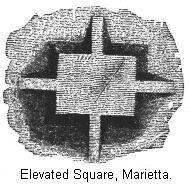 This cut represents the mound preserved in the
park at Marietta. It is ten feet high, one hundred and eighty-eight feet
long, by one hundred and thirty-two feet wide. The platform on the top has
an area of about half an acre. Graded ways lead up on each of the four
sides. These grades are twenty-five feet wide, and sixty feet long.30
This cut represents the mound preserved in the
park at Marietta. It is ten feet high, one hundred and eighty-eight feet
long, by one hundred and thirty-two feet wide. The platform on the top has
an area of about half an acre. Graded ways lead up on each of the four
sides. These grades are twenty-five feet wide, and sixty feet long.30
As we approach the Gulf States, these platform mounds increase in number. The best representative of this class, the most stupendous example of mound builders’ work in this country, is situated in Illinois, not far from St. Louis. The mound and its surroundings are so interesting that they deserve special mention. One of the most fertile sections of Illinois is that extending along the Mississippi from the Kaskaskia to the Cahokia river, about eighty miles in length, and five in breadth. Well watered, and not often overflowed by the Mississippi, it is such a fertile and valuable tract that it has received the name of the “Great American Bottom.” It is well known that the Mound Builders chose the most fertile spots for their settlements, and it is therefore not surprising to find the evidence that this was a thickly settled portion of their territory. Mr. Breckenridge, writing in 1811, says: “The great number of mounds, and the astonishing quantity of human bones, everywhere dug up or found on the surface of the ground, with a thousand other appearances, announces that this valley was at one time filled with habitations and villages. The whole face of the bluff, or hill, which bounds it on the east, appears to have been a continuous burying ground.”31
Mounds are numerous in this section. We learn that there are two groups of mounds or pyramids, one about ten miles above the Cahokia, and the other about the same distance below it, more than one hundred and fifty in all. Speaking of the group above the Cahokia, Mr. Breckenridge says: “I found myself in the midst of a group of mounds mostly of a circular shape, and, at a distance, resembling enormous hay-stacks scattered through a meadow. One of the largest which I ascended was about two hundred paces in circumference at the bottom, the form nearly square, though it had evidently undergone considerable alteration from the washing of rains. The top was level, with an area sufficient to contain several hundred men.” He represents the view from the top of the mound to be a very extensive and beautiful one. From this elevation he counted forty-five mounds or pyramids, besides a great number of small artificial elevations. This group was arranged in the form of a semicircle, about a mile in extent, the open space being on the river.
Three miles above occurs the group in which is found the famous big mound.32 This cut gives us a good idea of the mound as it was in its perfect state. All accounts given of this mound vary. From a cut of the model, as prepared by Dr. Patrick, the area of the base is a trifle over fifteen acres.33 The ascent was probably on the south side of the mound, where the little projection is seen. The first platform is reached at the height of about fifty feet. This platform has an area of not far from two and four-fifth acres. Large enough for quite a number of houses, if such was the purpose for which this mound was erected. The second platform is reached at about the height of seventy-five feet, and contains about one and three-fourth acres. The third platform is elevated ninety-six or ninety-seven feet, while the last one is not far from one hundred feet above the plain. The area of the last two is about three-fourths of an acre each. The areas of all the platforms are not far from six acres. We require to dwell on these facts a moment before we realize what a stupendous piece of work this is. The base is larger than that of the Great Pyramid,34 and we must not lose sight of the fact that the earth for its construction was scraped up and brought thither without the aid of metallic tools or beasts of burden, and yet the earth was obtained somewhere and piled up over an area of fifteen acres in one place to a height of one hundred feet, and even the lowest platform is fifty feet above the plain. Some have suggested that it might be partly a natural elevation. There seems to be, however, no good reason for such suggestions.
What motive induced the people to expend so much labor on this mound? It is not probable that this was a burial mound, though it may ultimately prove to be so. The most probable supposition is that the mound was erected so as to secure an elevated site, perhaps for purpose of defense, as on these platforms there was abundant room for a large village, and an elevation or height has always been an important factor in defenses. In this connection, Prof. Putnam has called our attention to a fact which indicates that a very long time was occupied in the construction of the mound, and further, that a numerous population had utilized its platforms as house sites—that is, that “everywhere in the gullies, and over the broken surface of the mounds, mixed with the earth of which it is composed, are quantities of broken vessels of clay, flint chips, arrow-heads, charcoal, bones of animals, etc., apparently the refuse of a numerous people.” The majority of writers, however, think that this elevated site, obtained as the result of so much labor, was utilized for important public buildings, presumedly the temple of their gods, and no one can help noticing the similarity between this structure and those raised by the ancient Mexicans for both religious purposes and town sites.
Mr. Foster thinks that “upon this platform was reared a capacious temple, within whose walls the high-priests gathered from different quarters at stated seasons, celebrated their mystic rites, while the swarming multitudes below looked up with mute adoration.”35 Mr. Breckenridge, whose writings we have already referred to, at the time of his first visit, “everywhere observed a great number of small elevations of earth, to the height of a few feet, at regular distances apart, which appeared to observe some order: near them pieces of flint and fragments of earthen vessels.” From this he concludes that here was a populous town, and that this mound was a temple site. It is doubtful whether we shall ever pierce the veil that lies between us and this aboriginal structure. The pyramids of the Old World have yielded up their secret, and we behold in them the tombs of Egypt’s kings. But this earthen pyramid on the western prairie is more involved in mystery, and we do not know even its builders. If the result of religious zeal, we may be sure that a religion which exacted from its votaries the erection of such a stupendous piece of work was one of great power.
As before remarked, “temple mounds” increase in numbers and importance as we go south. In Kentucky they are more frequent than in the States north of the Ohio River, and in Tennessee and Mississippi they are still more abundant.36 We also learn that they are often surrounded, or nearly so, with moats or ditches, as if to fortify their location. Our next cut illustrates such an arrangement—a circular wall of earth four feet high and two thousand three hundred feet in circumference, incloses four mounds, two of which are temple mounds. According to the late Prof. Forshey, temple mounds abound in Louisiana. He described a group situated in Catahoola County, in which the principal mound has a base of more than an acre, a height of forty-two feet, and the upper platform an area of nearly one-third of an acre. The smaller mounds are arranged around this larger one. This group is defended by an embankment. From this point for a distance of twenty miles along the river, are scattered similar groups of mounds; in all cases the smaller ones arranged around the larger one, which is presumably the site of a temple.
A digression right here may not be devoid of interest. We are not sure but that the dim, uncertain light of history falls on the origin of this group of mounds. When the French first commenced their settlement in the lower Mississippi Valley, the Natchez Indians was the most powerful tribe in all that section. In the course of time, wars ensued between them and the French, and in the year 1730 they fled into Upper Louisiana, and settled at the place where these mounds are now found. But the French followed them a year or so afterwards, and nearly exterminated. them. Some of our scholars think that they erected these mounds.37 The historian of that epoch simply says they had “built a fort there.” It is however questioned whether they had time to build works of such magnitude. But they were both a mound-building and a mound-using people, and we are not prepared to say how long it would take them to do the work, until we know the number engaged, methods employed, and other considerations.38 If they did not build these works, they doubtless cleared them of trees and utilized them; and this place was therefore the scene of the final downfall of the Natchez—a people we have every reason to regard as intimately connected with the prehistoric mound-building tribes.
The largest temple mound in the South is near Seltzertown, Mississippi. Its base covers about six acres, and it rises forty feet. This slope was ascended by means of a graded way. The summit platform has an extent of nearly four acres. On this platform three other mounds had been reared—one at each end, and a third in the center. Recent investigation by the Bureau of Ethnology have shown that the base of this mound is a natural formation. Lumps of sun-dried, or partially burnt clay, used as plastering on the houses of the Mound Builders, gave rise to a sensational account of a wall of sun-dried bricks two feet thick, supporting the mound on the northern side.39 The famous Messier Mound, in Georgia, is said to reach a height of ninety-five feet. But a large part of this elevation is a natural eminence; the artificial part is only a little over fifty feet.
A work of unusual interest occurs on the Etowah River, Georgia. This cut gives us a plan of the work. We notice, first of all, the moat or ditch by which they fortified their position. The ditch is still from five to twenty-five feet deep, and from twenty to seventy-five feet wide. It connects directly with the river at one end, but stops short at the other. It surrounds nearly fifty acres of land. At two points we notice reservoirs, each about an acre in size, and an average depth of not less than twenty feet. At its upper end is an artificial pond. This ditch, with its reservoirs and pond, is no slight work. The large mound seen in the center of the space is one of the largest of the temple mounds. Its shape is sufficiently shown in the cut. The height of the mound is sixty-five feet. We call especial attention to the series of terraces leading up the south side of the mound. Graded ways afford means of access from one terrace to the other. A pathway is also seen on the eastern side.
To this group of works an interest attaches similar to that of the group of works mentioned in Louisiana. We are not certain but that we catch a glimpse of it while it was yet an inhabited Indian town. This is contained in the brief accounts we have of the wanderings of the unfortunate De Soto and his command. One of the chroniclers of this expedition La Vega, describes one of the towns where the weary Spaniards rested, and which we are sure was somewhere in Northern Georgia, in such terms, mentioning the graded way leading to the top, that Prof. Thomas, who has spent some time in this investigation, thinks his description can apply only to the mound under consideration.40 Whether this conclusion will be allowed to stand, remains to be seen. But, if true, then the darkness which rests upon this aboriginal structure lifts for a moment and we see around it a populous Indian town, able to send five hundred warriors to battle. The Spaniards marched on to sufferings and death, and darkness again closed around the Etowah Mound. When the Europeans next beheld it around it was the silent wilderness; the warriors had departed; the trees of the forest overspread it.
We have now described the principal mound structures, and shown the different classes into which they are divided. But a large class of mounds are found scattered all through the Mound Builders’ territory that were probably used as signal mounds. Burial mounds were also often used for this purpose.41 This was because their location was always very favorable for signal purposes. Signaling by fire is a very ancient custom. The Indians on our western plains convey intelligence by this means at the present day. Some tribes use such materials as will cause different shades of smoke, using dried grass for the lightest, pine leaves for the darkest, and a mixture for intermediate purposes. They also vary the signal by letting the smoke rise in an unbroken column, or cover the fire with a blanket, so as to cause puffs of smoke. The evidence gathered from the position of the mounds, and traces of fire on their summit, is that the Mound Builders had a very extensive system of signal mounds.
To illustrate this system, we would state that the city of Newark, Ohio, was the site of a very extensive settlement of the Mound Builders. This settlement was in a valley, but on all the surrounding hills were located signal mounds. And it is further stated that lines of signal mounds can be traced from here as a center to other and more distant points. The large mound at Mt. Vernon, twenty miles to the north, was part of this system. As the settlements of the Mound Builders were mostly in river valleys, we would expect to find all along on the bluffs fronting these valleys traces of signal mounds. In the Scioto Valley, from Columbus to Chillicothe, a distance of about forty miles, twenty mounds “may be selected, so placed in respect to each other that it is believed, if the country was cleared of forests, signals of fire might be transmitted in a few minutes along the whole line.” Some think the chain is much more extensive than this, and that the whole Scioto Valley, from Delaware County to Portsmouth, was so provided with mounds that signals could be sent in a very few minutes the whole distance.42
The valley of the Miami River was equally well provided with signal mounds. This great mound, at Miamisburg, Ohio, rising to the height of sixty-eight feet, was one of the chain by which signals were transmitted along the valley. Not only was each river valley thus provided, but there is evidence that communication was established between different river systems, so we can easily see how quickly the invasion of their country by an enemy from any quarter would become known in widely scattered sections. Immediately across the river from Chillicothe, Ohio, on a hill nearly six hundred feet high, was located a signal mound. A fire built upon it would be visible twenty miles up the valley, and an equal distance down. It would be also visible far down the valley of Paint Creek. Some think that such a system of lofty observatories extended across the whole State of Ohio, of Indiana, and Illinois, the Grave Creek mound, on the east, the great mound at Cahokia, on the west, and the works in Ohio filling up the line. We do not believe, however, it is safe to draw such conclusions. It is doubtful whether there was any very close connection between the tribes in these several sections.
In the State of Wisconsin are found some of the most interesting remains of the Mound Builders. They are so different from the ordinary remains found elsewhere that we must admit that the people who built them differed greatly from the tribes who built the great temple mounds of the South, or the earthworks of Ohio. The remains in Wisconsin are distinguished not by their great size or height, but by their singular forms. Here the mound building instincts of the people were expressed by heaping up the earth in the shape of animals. What strange fancy it was that led them to mould the figures on the bluffy banks of the rivers and the high lands about the lakes of their country, we shall perhaps never know. That they had some design in this matter is, of course, evident, and if we would try and learn their secret, we must address ourselves to a study of the remains.
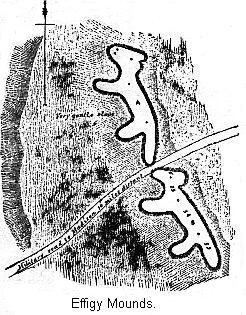 Effigy mounds are almost exclusively confined to the State
of Wisconsin. We, indeed, find effigy mounds in other sections, but they
are of rare occurrence.43 They, however, show that the same
reasons, religious, or otherwise, exists in other localities, while in the
area covered by the southern portion of the State of Wisconsin it found
its greatest expression. This cut affords us a fair idea of effigy mounds.
Here are seen two animals, one behind the other. On paper we can readily
see the resemblance. Stretched out on the ground, and of gigantic
proportions, the resemblance is not so marked, and some might fail to
notice it at first sight. Either of those figures is over one hundred feet
long, and about fifteen feet wide. With few exceptions, effigy mounds are
inconsiderable in height, varying from one to four feet. These mounds have
been carefully studied of late years, and there is no doubt that in many
instances we can distinguish the animals represented.
Effigy mounds are almost exclusively confined to the State
of Wisconsin. We, indeed, find effigy mounds in other sections, but they
are of rare occurrence.43 They, however, show that the same
reasons, religious, or otherwise, exists in other localities, while in the
area covered by the southern portion of the State of Wisconsin it found
its greatest expression. This cut affords us a fair idea of effigy mounds.
Here are seen two animals, one behind the other. On paper we can readily
see the resemblance. Stretched out on the ground, and of gigantic
proportions, the resemblance is not so marked, and some might fail to
notice it at first sight. Either of those figures is over one hundred feet
long, and about fifteen feet wide. With few exceptions, effigy mounds are
inconsiderable in height, varying from one to four feet. These mounds have
been carefully studied of late years, and there is no doubt that in many
instances we can distinguish the animals represented.
We learn, then, that tribes formerly living in Wisconsin had the custom of heaping up the earth in the shape of the various animals peculiar to that section. But no effigies are found of animals that have since become extinct, or of animals that are to be found only in other lands.
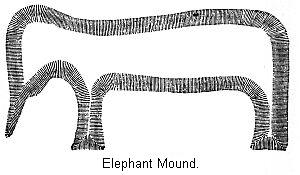 Our next cut represents the famous elephant mound of
Wisconsin, on the strength of which a number of fair theories have been
given relating to the knowledge of the mastodon by the builders of the
mound, and its consequent antiquity. It now bears some resemblance to an
elephant, but we learn that the trunk was probably produced by the washing
of the banks and, from the same cause, a projection above the head,
supposed to represent horns, has disappeared. Taking these facts into
consideration, it is quite as likely that it represented a buffalo.44
One writer even thinks he found a representation of a camel, but the fact
is, the more these effigy mounds are studied, the more certain are we that
they are representations of animals formerly common in that region.
Our next cut represents the famous elephant mound of
Wisconsin, on the strength of which a number of fair theories have been
given relating to the knowledge of the mastodon by the builders of the
mound, and its consequent antiquity. It now bears some resemblance to an
elephant, but we learn that the trunk was probably produced by the washing
of the banks and, from the same cause, a projection above the head,
supposed to represent horns, has disappeared. Taking these facts into
consideration, it is quite as likely that it represented a buffalo.44
One writer even thinks he found a representation of a camel, but the fact
is, the more these effigy mounds are studied, the more certain are we that
they are representations of animals formerly common in that region.
The manner in which they represented the various animals is full of interest to us. It has been discovered that they worked on a system. The last cut represents a group of three animals discovered a few miles from the Blue Mounds in Dane County. We notice at once a difference between the central animal, with a tail, and the other two. It will also be observed that the animals are represented in profile, with only two projections for legs. They are never separated so that we can distinguish the two front and the two hind feet. Animals so figured are the bear, fox, wolf, panther, and others. Grazing animals, such as the buffalo, elk, and deer, are represented with a projection for horns. In the last cut the other two animals are buffaloes. In various ways the particular kind of animal can nearly always be distinguished.45
The preceding cut represents two elks grazing, and a fox in the distance. The long embankments of earth at one side are considered by Mr. Peet as in the nature of game drives. But we call attention to the expressiveness with which these figures are delineated. What could be more natural than the quietly grazing elks, with the suspicious prowling fox in the distance. In the cut we also see two cross-shaped figures. This was their method of representing birds, a projection on each side of a central body denoting wings. These figures are often very expressive.
In this cut we have no difficulty in recognizing an eagle. It is represented as soaring high in the air. On the bluffs above it is a wolf effigy, and several conical and long mounds. In the cut preceding this the eagle and the hawk are hovering over the feeding elks, while in this cut a flock of hawks are watching some buffaloes feeding in the distance. This group of effigies was found on the banks of the Kickapoo River.
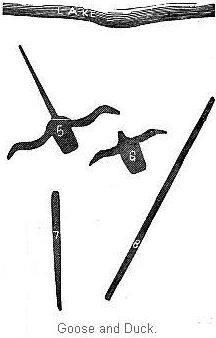 Our next cut represents a wild goose with a long neck and
beak followed by a duck with a short neck, flying towards the lake.
Our next cut represents a wild goose with a long neck and
beak followed by a duck with a short neck, flying towards the lake.
Water-loving animals, such as salamanders and turtles, are represented in still another way, two projections on each side of a central figure. The next following cut represents a turtle. The tail was not always added. The salamander closely resembles the turtle, but notice the difference in the body, and still different is the cut of the musk-rat (see later). Fishes are figured as a straight embankment of earth tapering to a point.
The same system that was observed in the location of signal mounds is to be noticed in the arrangements of these groups of effigy mounds. They are not alone. One group answers to another on a distant hill, or is in plain view of another group in the valley below. Distant groups were so related, each commanding a wide extent of country, and thus group answers to group, and mound to mound, for miles away, making a complete system throughout the region.
We notice this as to the location of the mounds. When we examine the mounds themselves we observe no little skill in the way they represent the animals. They often impressed on them something more than mere animal resemblances. “There are groups where the attitudes are expressive of a varied action. Certain animals, like the weasel or mink, being seen with a bird so near that, apparently, it might be caught by a single spring; and still others, like the wolf or wild-cat, are arranged head to head, as if prepared for combat; and still others, like the squirrel or coon, are in the more playful attitudes, sometimes apparently chasing one another over hill or valley; and again situated alone, as if they had just leaped from some tree, or drawn themselves out of some den or hole.”46
Nor is the effigy of the human form wanting. It is found in several localities throughout the State. This cut shows us one such effigy. This was the beginning of a long train of animal mounds, presumably representing bears, found near the Blue Mounds, Wisconsin.47 We can not observe that any more importance was ascribed to the effigy of a human being than to that of an animal.
In casting about for suitable explanation for the erection of these animal mounds, we find ourselves lost in conjecture as to the motive which induced these people to prepare these earthen effigies. We may be sure that it was for some other reason than for amusement, or to give exercise to an artistic feeling. Only in very few instances do we detect any arrangements which would imply that they were in the nature of defenses. In some cases the effigies are so arranged as to form a sort of inclosure, some portion of the figure being prolonged to an unusual extent and thus inclosing a space that may have been utilized for a village site. This group on the Wisconsin River illustrates this point. Here the area thus partially inclosed, is about an acre. It is a singular fact that these inclosures are almost always triangular in shape.48 But it is manifest that a simple earth wall would serve for defense much better than these forms. They probably were not burial mounds, as few contain human remains, and it is not yet certain that these remains were not intrusive burials.49 It seems, therefore that they must have been in some manner connected with the religious life of the people.
If we examine the various groups scattered throughout the State, this belief is strengthened. It is found, for instance, in nearly every group, that some one effigy is the principal one, and is placed in a commanding position, about which the other forms are arranged. It is also thought that the same effigy is the principal or ruling effigy over a wide district. In illustration of this, it can be stated that in the south-eastern part of the State the turtle is always the ruling effigy. In any group of effigies it is the principal one. It seems to watch over and protect the others. In subordination to it are such forms as the lizard, hawk, and pigeon. Passing to the North, the turtle is no longer the important figure. It is replaced by the wolf, or wild-cat. This is now the principal form, and if the turtle is sometimes present, it is of less importance.
So marked is the fact we have just stated that Mr. Peet says, “that sometimes this division assumes almost the character of a river system, and thus we might trace what seems to be the beginning in this country of that which prevailed on classic soil and in Oriental regions—namely, river gods and tutelar divinities of certain regions, each tribal divinity having its own province, over which it ruled and on which it left its own form or figure as the seal of its power and the emblem of its worship.”50
Looking for some explanation of this, we may find a key in the known customs of various Indian tribes, and the lower races of men. It is known that a tribe of Indians is divided into smaller bands, which are called gens or clans. A gens may consist of several hundred persons, but it is the unit of organization. It takes the place of a family among civilized people. These various bands are generally named after some animal. In the beginning these names may have been of no special significance, but in course of time each band would come to regard themselves as descendants of the animal whose name they bore. Hence the animal itself would be considered sacred in their eyes, and its life would seldom be taken by members of that gens.
The animal thus honored by the gens was, in the Indian dialect, the totem of the clan. This organization and custom we find running all through the Indian tribes. In many tribes the Indians were wont to carve a figure of their totem on a piece of slate, or even to carve a stone in the shape of the totem, which carved or sculptured stone they wore as an ornament, or carried as a charm to ward off evil and bring them good luck.51 We need only suppose that this system was very fully developed among the Mound Builders of Wisconsin, to see what important bearing it has on these effigy mounds.
A tribe located on one of the fertile river valleys of Wisconsin was composed of various gens or clans. On some common point in proximity to their villages, or some spot which commanded a wide view of the surrounding country, each gens would rear an effigy of its totem, the animal sacred to them. In every tribe some gens would be the most powerful, or for some cause the most respected, and its totem would be given in the largest effigy, and would be placed in the most commanding position. In a different locality some other tribe would be located, and some other totem would be regarded as of the most importance.
In this light effigy-mounds are not mere representatives of animal forms. They are picture-writings on a gigantic scale, and are the source of much true history. They tell us of different tribes, the clans which composed them, the religious beliefs, and the ruling gens of the tribe. Contemplating them, we seem to live again in the far-off past. The white man disappears; waving forests claim their ancient domain, and the rivers, with a more powerful current, roll in their olden channels. The animals whose forms are imaged here, go trooping through the forest or over the fertile bottom lands. The busy scenes of civilization give place to the placid quiet of primeval times, and we seem to see peaceful tribes of Mound Builders paying a rude veneration to their effigy-gods, where now are churches of a more soul-satisfying religion.
But there is still another point to be learned from an examination of these ancient mounds. Not only are they totems of the tribes, but they were looked on in some sense as being guardian divinities, with power to protect the homes of the tribe. This is learned by studying the location in which they are placed. They occupy all points of observation. In other parts of the Mound Builders’ country, wherever we find signal-mounds we find corresponding positions in Wisconsin occupied by groups of effigy-mounds, or if one only is present, it is always the one which, from the considerations we have stated, was regarded as the ruling effigy of that section. It is as if their builders placed them as sentinels to guard the approaches to their homes, to give warning of the arrival of hostile bands. This is further borne out by finding that mounds placed in such positions frequently show evidence of the action of intense fire, and so we conclude they were used as signal stations also. So we need not doubt but that the region thus watched over by these effigy-mounds, group answering to group along the river banks, or in the valleys below, was at times lit up by the signal fires at night; or the warning column of smoke by day betokening the presence of dancer.52
Before leaving the subject of effigy-mounds, we must refer to some instances of their presence in other localities. This cut is an eagle effigy discovered in Georgia. Only one other instance, also occurring in Georgia, is known of effigy-mounds in the South. Measured from tip to tip of the wings, the bird, in this case, is one hundred and thirty-two feet. This structure is composed of stones, and a singular feature is the surrounding circle of stone.53
Several examples of effigy-mounds are found in Ohio. The most notable one is that known as the Great Serpent Mound, in Adanis County. We give an illustration of it. The entire surrounding country is hilly. The effigy itself is situated on a tongue of land formed by the junction of a ravine with the main branch of Brush Creek, and rising to a height of about one hundred feet above the creek. Its form is irregular on its surface, being crescent-shaped, with the point resting to the north-west. We give in a note some of the dimensions. The figure we give of this important effigy is different from any heretofore presented. We are indebted for the plan from which the drawing was made to Rev. J. P. MacLean, of Hamilton, Ohio. Mr. MacLean is a well-known writer on these topics. During the Summer of 1884, while in the employ of the Bureau of Ethnology, he visited the place, taking with him a thoroughly competent surveyor, and made a very careful plan of the work for the Bureau. All the other figures published represent the oval as the end of the works. Prof. Putnam, who visited the locality in 1883, noticed, between the oval figure and the edge of the ledge, a slightly raised, circular ridge of earth, from either side of which a curved ridge extended towards the sides of the oval figure. Mr. MacLean’s researches and measurements have shown that the ridges last spoken of are but part of what is either a distinct figure or a very important portion of the original figure. As figured, it certainly bears a very close resemblance to a frog, and such Mr. MacLean concludes it to be.
There is both a similarity and a difference between this work and those of Wisconsin. The fact that it occurs isolated, the other effigies in Ohio being many miles away, shows that some special purpose must have been subserved by it. There the great numbers gave us a hint as to their purpose. In this case, however, nearly all observers conclude that it was a religious work. Mr. MacLean, after describing these three figures, propounds this query: “Does the frog represent the creative, the egg the passive, and the serpent the destructive power of nature?” Not a few writers, though not acquainted with the presence of the frog-shaped figure, have been struck with the combination of the egg and the serpent, that plays such an important part in the mythology of the Old World. We are told that the serpent, separate or in combination with the circle, egg, or globe, has been a predominant symbol among many primitive nations. “It prevailed in Egypt, Greece, and Assyria, and entered widely into the superstitions of the Celts, the Hindoos, and the Chinese.” “Wherever native religions have had their scope, this symbol is sure to appear.”54
Even the Indians have made use of this symbol. On Big Medicine Butte, in Dakota Territory, near Pierre, is a train of stones arranged in the form of a serpent, which is probably the work of the Sioux Indians. Around about on the hill is the burying-ground of their chiefs. This was to them sacred ground, and no whites were allowed near. The stones are about the size of a man’s head, and are laid in two rows, from one to six feet apart. The length in all is three hundred and fifty feet, and at the tail, stones, to represent rattles, are rudely carved. The eyes are formed by two big red bowlders. No grass was allowed to grow between the two rows of stone.55
It seems reasonable to suppose that the few isolated effigy mounds we have outside of Wisconsin were built to subserve a different purpose than those in that State. Mr. Peet has made some remarks on their probable use that seem to us to cover the ground, and to do away with any necessity of supposing on the part of its builders an acquaintance with Old World mythologies. Nature worship is one of the earliest forms of worship. The prominent features of a landscape would be regarded as objects of worship. Thus, for example, the island of Mackinac resembles in its outline the shape of a turtle; so the island was regarded as sacred to the turtle, and offerings were made to it. A bluff on the same island at a distance resembles a rabbit; accordingly, it was called by that name, and offerings were made to it. It is quite natural that the effigy-mound builders should seek to perpetuate by effigy some of these early traditions.
In the case of the Big Serpent mound this point is worth considering. The ridge on which it stands is not only in the midst of a wild, rough region, but is so situated that it commands a wide extent of country. In shape this tongue of land is also peculiar. It is a narrow, projecting headland, and would easily suggest the idea of a serpent or a lizard. “This, with the inaccessibility of the spot, would produce a peculiar feeling of awe, as if it were a great Manitou which resided there; and so a sentiment of wonder and worship would gather around the locality. This would naturally give rise to a tradition, or would lead the people to revive some familiar tradition and localize it.”56 The final step would be to make an effigy.
It seems to us very hazardous to draw any conclusions as to the religious beliefs of the Mound Builders from this effigy, or combinations of effigies. It also seems to us reasonable to suppose that but one figure was intended to be represented. A very slight prolongation of the serpent’s jaws and the limbs of the frog would connect them, in which case we would have some amphibious creature with an unduly extended tail, or perhaps a lizard. We must remember that the whole figure has been plowed over once or twice, so that we are not sure of the original outlines. We can not tell why they should represent a portion of the body as hollow, but neither can we tell why the head of the supposed serpent should be represented as hollow. We do not find any important earth-works near here. The hill on which it is placed commands a very extensive view of the surrounding country. Within the oval a pile of stones showed evidence of a long-continued fire, which would indicate that this was also a signal-mound. Prof. Putnam thinks it probable that there was a burial place between it and the large conical mound not far away.57
In the vicinity of Newark, Ohio, are two examples of effigy mounds. This cut represents what is called the alligator mound, but it is probably the effigy of a lizard. The position which this mound occupies is significant. It is on the very brow of a hill about two hundred feet high, which projects out into a beautiful valley. The valley is not very wide. Directly across was a fortified camp, in the valley below it was a circular work, and a short distance below on another projecting headland was a strongly fortified hill. The great works at Newark were six miles down the valley, but were probably in plain view. That it was perhaps a signal station, is shown by the presence of traces of fire.
The length of this effigy is two hundred and five feet, the breadth of the body at its widest part, twenty feet, average height about four feet.58 The effigy mounds of Wisconsin, and the other few examples mentioned, are among the most interesting objects of aboriginal work. Except in a few favored instances, they are rapidly disappearing. To the leveling influence of time is added the assistance of man, and our knowledge of them will soon be confined to existing descriptions, unless something is at once done to preserve them from destruction. Interesting mementos of a vanished race, we turn from their contemplation with a sigh of regret that, in spite of our efforts, they are still so enwrapped in doubt.
Mounds and effigies by no means complete the description of Mound Builders’ remains. One of the most interesting and mysterious class of works is now to be described. Early travelers in Ohio came here and there upon embankments, which were found to inclose tracts of land of various sizes. It was noticed that the embankments were often of the form of perfect circles, or squares, or sometimes octagons, and very often combinations of these figures. It was further evident that the builders sought level, fertile lands, along the various river courses. They very seldom built them on undulating or broken ground. Often have the very places where civilized man has laid the foundation of his towns proved to be the sites of these ancient works of the Mound Builders, and thus it has happened that many of the most interesting works of antiquity have been ruthlessly removed to make way for the crowded streets and busy marts of our own times.
The larger number of inclosures are circular, often of a small size. Where they occur separately they either have no gateway, or but one. Sometimes the circles are of very large size, surrounding many acres. Sometimes, though not very often, a ditch was also dug inside the embankment. This last circumstance is by many regarded as a strong proof that the primary object of these circles was not for defense.59 But an inclosure of this kind, even with the ditch on the inside, if surmounted by a row of pickets or palisades, would prove a strong position against Indian foes armed with bow and arrow. The Mandans constructed defenses of this kind around their villages.60 As to the original height of the walls, in the majority of cases it was not very great, generally from three to seven feet.
It is estimated that in Ohio alone there are fifteen hundred inclosures, but a large number of them have nothing especially worthy of mention. Some, however, are on such a large scale that they call from all more than a passing glance. In contemplating them, we feel ourselves confronted by a mystery that we can not explain. The ruins of the old world excite in us the liveliest feeling of interest, but we know their object, their builders, and their probable antiquity. The mazy ruins at Newark, and other places in Ohio, also fill the mind with astonishment, but in this case we are not certain of their antiquity, their builders are unknown, and we can not conjecture with any degree of certainty as to their use. Before so many uncertainties imagination runs riot, and we are inclined to picture to ourselves a scene of barbaric power and magnificence.
One beautiful specimen of this work is found in this cut. It occurs on the right bank of the Scioto river, five miles below Chillicothe. Here we notice a combination of the octagon and the circle. The areas of each are marked. The octagon is nine hundred and fifty feet in diameter, and nearly regular in shape. In 1846 its walls were eleven or twelve feet high, by about fifty feet base. It will be noticed that there is a gate at or near each angle of the octagon except one, and in front of that angle was a pit, from which some of the earth to form the walls was taken. Facing each gateway a mound was placed, as if to guard the entrance.
The circle connected with the octagon is perfect in shape, and is ten hundred and fifty feet in diameter. Its walls were only about half the height of the octagon. We notice some other small circular works in connection with the main work. In this case the parallels are not very regular, and seem to be connected with one or more circular works. In a work situated but a few miles from the one here portrayed, the parallels extend in one direction nearly half a mile, only one hundred and fifty feet apart. They terminate on the edge of a terrace. The object of such parallels is as yet unknown. In some cases, after extending some distance, they simply inclosed a mound.
It is easy enough to describe this work and give its dimensions, but who will tell us the object its builders had in mind? The walls themselves would afford but slight protection and if they were for defense, must have been surmounted with palisades. Works that were undoubtedly in the nature of fortified camps, are found in this same section, and one of the strongest was located not more than twelve miles away; but such defensive works differ very greatly in design from regular structures such as we are now describing. A very eminent scholar, Mr. Morgan, has advanced the theory that the walls were the foundations on which communal houses, like the Pueblos of the West, were erected.61 But this is mere theory. All traces of such habitations (if they ever existed) are gone, the usual debris which would be sure to accumulate around house-sites, is wanting, and the walls themselves seem unfit for such purpose.62
They may have been embankments surrounding towns and cultivated fields, but little has yet been found which can be cited as proofs of residence within the area so inclosed. We should not be surprised, however, if such would ultimately prove to be the case, since we now know that the Mound Builders of Tennessee did fortify their villages by means of embankments and ditches.63 A number of writers think that these regular inclosures were in some way connected with the superstitions of the people. In other words, that they were religious in character. Mr. Squier remarks, “We have reason to believe that the religious system of the Mound Builders, like that of the Aztecs, exercised among them a great, if not a controlling, influence. Their government may have been, for aught we know, a government of the priesthood—one in which the priestly and civil functions were jointly exercised, and one sufficiently powerful to have secured in the Mississippi Valley, as it did in Mexico, the erection of many of those vast monuments, which for ages will continue to challenge the wonder of men. There may have been certain superstitious ceremonies, having no connection with the purpose of the mound, carried on in inclosures especially dedicated to them.”64 Another late writer to whom we have several times referred, tells us there is no doubt but what a “religious view” was the controlling influence in the erection of these works, and that they express a “complicated system of symbolism,” that we see in them evidence, of a most powerful and wonderful religious system.65 Still such assertions are easier made than proven, and until we know somewhat the purpose for which they were used, how are we to know whether they were sacred or not?
Casting conjectures, for the moment, aside, let us learn what we can from the works themselves. From their large extent they could only be reared by the expenditure of great labor. This implies some form of government sufficiently centralized and powerful to control the labors of large bodies of men. Moreover, they were sufficiently advanced to have some standard of measurement and some way of measuring angles. The circle, it will be remembered, is a true circle, and of a dimension requiring considerable skill to lay out. The sides of the octagon are equal, and the alternate angles coincident.
Every year the plow sinks deeper into these crumbling embankments, and the leveling forces of cultivation are continually at work, and the time is not far distant when the curious traveler will with difficulty trace the ruins of what was once, to the Mound Builders, a place of great importance.
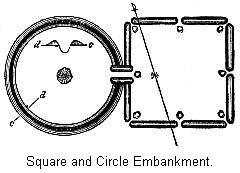 The
more usual combination was that of a square and a circle. An example is
given in this cut, which is a plan on a very small scale, of works which
formerly existed in Circleville. One peculiar feature about this work was
that a double wall formed the circle, with a ditch between the two walls.
In the next cut we notice a peculiar combination of these two figures. The
square is inclosed within the circle. Whatever we may ultimately decide as
to the larger works, it would seem as if this could only be explained as
in the nature of a religious work. We can see no reason for constructing a
defensive work, or inclosing a village, or erecting foundations for houses
of such a shape as this. They must have been in some way connected with
the superstitions of the people.
The
more usual combination was that of a square and a circle. An example is
given in this cut, which is a plan on a very small scale, of works which
formerly existed in Circleville. One peculiar feature about this work was
that a double wall formed the circle, with a ditch between the two walls.
In the next cut we notice a peculiar combination of these two figures. The
square is inclosed within the circle. Whatever we may ultimately decide as
to the larger works, it would seem as if this could only be explained as
in the nature of a religious work. We can see no reason for constructing a
defensive work, or inclosing a village, or erecting foundations for houses
of such a shape as this. They must have been in some way connected with
the superstitions of the people.
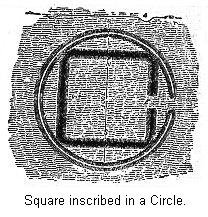
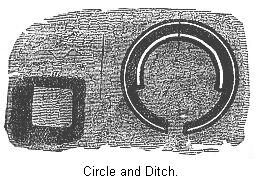 A peculiar feature is also noticed in reference
to some of the smaller circles in this section. The cut at left
illustrates it. The circle has a ditch interior to the embankment, and
also a broad embankment of about the same height with the outer wall,
interior to the ditch, running about half-way around the circle. A short
distance from the circle was one of those elevated squares, one hundred
and twenty feet square at the base, and nine feet high.66 It
may be that this square was the foundation on which stood a temple, in
which case the circle might have been dedicated to religious purposes
also.
A peculiar feature is also noticed in reference
to some of the smaller circles in this section. The cut at left
illustrates it. The circle has a ditch interior to the embankment, and
also a broad embankment of about the same height with the outer wall,
interior to the ditch, running about half-way around the circle. A short
distance from the circle was one of those elevated squares, one hundred
and twenty feet square at the base, and nine feet high.66 It
may be that this square was the foundation on which stood a temple, in
which case the circle might have been dedicated to religious purposes
also.
The great geometrical inclosures are especially numerous in the Scioto Valley. All the works we have described were in the near neighborhood of Chillicothe, and works as important as these are scattered all up and down the valley. We must also recall how well provided this valley was with signal mounds. All indications point to the fact that here was the location of a numerous people, ready to defend their homes whenever the warning fires were lit. Although Mound Builders’ works are numerous in the valley of the two Miami Rivers, Cincinnati being the site of an extensive settlement, yet they were not such massive structures as those in the Scioto. This would seem to indicate that these valleys were the seats of separate tribes.67 But this Eastern tribe must have occupied an extensive territory, since works of the most complicated kind are found at Newark.
All indications point to the fact that near this latter place was a very important settlement of the Mound Builders. Several fortified works exist a few miles up the valley; signal-mounds are to be seen on all heights, commanding a wide view, and the famous alligator mound is placed, as if with the design of guarding the entrance to the valley. No verbal description will give an idea of the works, so we refer at once to the plan. This will give us a good idea of the works as they were when the first white settlers gazed upon them. They have nearly all been swept away by modern improvements, excepting the two circular works and the octagon. Here and there fragments of the other works can still be traced.
Two forks of the Licking River unite near Newark; the bottom between these rivers comprising several square miles, was occupied by these ancient earth-works. By reference to the plan, we see the works consisted of mounds of various sizes, parallel walls, generally of a low elevation, small and low embankments, in the form of small circles and half-circles. There are also several large works consisting of a circle and octagon combined, one large circle, and a parallelogram. The circular structure at ‘E,’ is undoubtedly one of the best preserved and most imposing in the State. There are many inclosing larger areas, but none more clearly defined. As this is now included in the fair-grounds of Licking County, it is preserved from destruction, and will remain a monument of aboriginal work long after all traces of the others have disappeared. “At the entrance, which is towards the east, the ends of the walls curve outwards for a distance of a hundred feet, leaving a passage way eighty feet wide between the deep ditches on either hand.” From this point the work, even now presents an impressive appearance. The walls are twelve feet in perpendicular height, and about fifty feet base. There is a ditch close around it on the inside, seven feet deep by thirty-five feet wide. The area inclosed is about thirty acres.
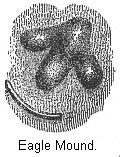 In the center is an effigy-mound, represented by this cut.
It represents a bird on the wing, and is called the Eagle Mound. The long
mound in the body of the bird has been opened, and it was found to contain
an altar, such as has been already described. Was this a place of
sacrifice, and did this wall inclose a sacred area? Our question remains
unanswered. We can dig in the mounds, and wander over the embankments, but
the secret of the builders eludes us.
In the center is an effigy-mound, represented by this cut.
It represents a bird on the wing, and is called the Eagle Mound. The long
mound in the body of the bird has been opened, and it was found to contain
an altar, such as has been already described. Was this a place of
sacrifice, and did this wall inclose a sacred area? Our question remains
unanswered. We can dig in the mounds, and wander over the embankments, but
the secret of the builders eludes us.
A mile to the north-west of the part of the work just described are the Octagon and works in connection with it. The Octagon is not quite regular, but the sides are very nearly equal. At each angle is a gateway, interior and opposite to which is a mound, as if to guard the opening. The cut gives a view of the Octagon, looking in through one of these gateways. At present, however, but a small portion is in the forest. Most of it is under cultivation, but the work can still be easily traced, and is one of the best preserved in the State. A portion of it, still in the forest, presents the same appearance to-day as it did to the first explorer. When a stranger for the first time wanders along the embankment and ascends the mounds, he can not fail to experience sensations akin to those of the traveler when he comes upon the ruins of some Old World city. We wish that for a brief space of time the curtain of the past would up-roll, and let us view these works while yet their builders flourished here.
Connected with the Octagon by parallel walls three hundred feet long and placed sixty feet apart, is the smaller circle, “F.” This is a true circle, and is upwards of half a mile in circumference. A portion of it lying in the woods, still retains its primitive form, but the larger part is now under cultivation. There is no difficulty, however, in tracing its entire length. The most interesting feature in connection with this part of the work is immediately opposite the point of entrance from the octagon, and is represented in our next cut. At this point it seems as if the builders had started to make parallel walls, but afterwards changed their design and threw across the opening a large mound. From this mound a view of the entire embankment could be obtained. It is called the Observatory Mound. It has been so often dug into that it is now really in ruins, but is still too steep to be plowed over.
It is scarcely necessary to describe the works further, except to state that three lines of parallel embankments lead away from the octagon. Those extending south have been traced for upwards of two miles, and are gradually lost in the plain. It was the opinion of Mr. Atwater, one of the earliest investigators, that these lines connected with other works thirty miles away, in the vicinity of Lancaster.68 Small circles are numerous in connection with these works. It has been suggested by several that they mark the sites of circular dwellings. The larger ones, indicated by the letter “G,” are more pretentious. They have the ditch and embankment, which we have already described. Many interesting coincidents in dimensions will be perceived between portions of this work and those described in the Scioto valley.69
Although we have devoted considerable space to this branch of the Mound Builders’ work, we must still find space to describe the works at Marietta, which possessed some singular features. This cut gives us a correct plan of the works as they were when in 1788 the first settlers arrived at the mouth of the Muskingum to lay out their town. The growth of the beautiful town of Marietta has completely destroyed these works, except the elevated squares, A and B, the large mound and inclosing circle at X, with a portion of the adjoining embankments, and a small fragment of the parallel walls forming what has been called the “Graded Way.” The elevated squares are the finest examples of “temple” mounds remaining in the Ohio Valley. The circle and ditch with the conical mound inclosed is also a fine example of that class of works. From the summit of the mound an extensive view is to be had both up and down the Ohio.
The gateways of the smaller square were guarded by mounds, which were wanting in the larger one. We would call especial attention to the two embankments which led from the larger square towards the river. They were six hundred and eighty feet long, and one hundred and fifty feet apart.70 Some have supposed these walls were designed to furnish a covered way to the river. But as Mr. Squier remarks, we would hardly expect the people to go to the trouble of making such a wide avenue for this purpose, nor one with such a regular grade. Besides, the walls did not reach the river. The work seems to be simply a passage way, leading from one terrace to the other, but why the builders should have made such a massive work, we can not explain. It has been called the “Sacred Way,” and this name may possibly be applicable, but it is only conjectural. Some twenty years ago these two massive and beautiful embankments were still preserved, thanks to the care of the early settlers, who planned a street to pass between them, which was named the Via Sacra. These words still remain on a corner signboard; but alas for sentiment! the banks, so long revered, have been utilized for brick-working.
Several instances of these graded streets or ways have been found in connection with the Mound Builders’ works. Sometimes they lead from one terrace to another, sometimes directly to the water. One of the latter kind formerly existed near Piqua, Ohio.71 This cut is a view of a graded way near Piketon, Ohio. In this case, though the difference in level between the second and third terrace is but seventeen feet, these ancient people laid out a graded ascent some ten hundred and eighty feet long, by two hundred and ten feet average width. The earth was thrown out on either side, forming embankments. From the left hand embankments, passing up to the third terrace, there could formerly be traced a low embankment running for fifteen hundred feet, and connected with mounds and other walls at its extremity.
Some have supposed that formerly the river flowed at the extremity of this graded way, and a passage way to the water was thus furnished. Squier says, in this connection: “It is sufficient to observe that the river now flows half a mile to the left, and that two terraces, each twenty feet in height, intervene between the present and the supposed ancient level of the stream. To assent to this suggestion, would be to admit an almost immeasurable antiquity to the structure under consideration.” The casual observer would say that it was intended to afford an ascent from one terrace to the other. But as the height was only seventeen feet, we can not see why it was so necessary to have a long passage way of easy grade from one terrace to the other. It was evidently built in connection with the obliterated works on the third terrace. This interesting remain is now utilized as a turnpike, and the passing traveler but little recks he is going over one of the most ancient causeways in the land. It may be that ceremonious processions, with stately tread, utilized this causeway in years long since elapsed. Speculation, always an unsafe guide to follow, is especially so in this case, and so we leave this memento of a vanished people as much an enigma to us as to its first explorers.
We have described but a few of the sacred inclosures of Ohio, but enough have been given to give us a fair idea of all. We wish now to call attention to another class of remains. We have seen how the works we have been describing are lacking in defensive qualities. This becomes more marked, when we learn there are works, beyond a doubt, defensive in character, in which advantage is taken of all circumstances which would render the chosen retreat more secure. In the first place, strong natural positions were selected. They chose for their purpose bluffy headlands leading out into the river plain. A people surrounded by enemies, or pressed by invaders, would naturally turn their attention to such heights as places susceptible of defense. Accordingly, it does not surprise us to find many heights occupied by strong and complicated works. Generally the approaches to them were rugged and steep on all but one or two sides, and there they are guarded by walls of earth or stone.
A fine example of a fortified hill was discovered in Butler County, Ohio, a few miles below the town of Hamilton. This hill is the highest one in the immediate vicinity. By reference to the figure, we see that on all sides, except towards the north, the approach was steep and precipitous, almost inaccessible.
The wall is not of regular shape. It runs around on the very brow of the hill, except in one or two places, where it cuts across a ridge. In 1843 this wall was still about five feet high and thirty-five feet base. The earth and stone of which the wall is made were evidently gathered up from the surface of the hill. In some places holes had been excavated, probably for the double purpose of securing materials for the wall, and providing reservoirs for water against a time of need. There are but four openings in the wall, and each is very carefully guarded. The complicated walls guarding the main entrance to the north are especially noticeable. There are no less than four inner walls besides the crescent shaped embankment on the outside. The signal mound was about five hundred feet to the north of the main opening. The stones on the surface of the mound all show the action of fire.
If we were uncertain of the uses of the other class of inclosures, which have been named Sacred Inclosures, we have no need to hesitate as to the character of this work. Every thing in reference to it betokens that it was a defensive work. The valley of the Big Miami, in which it occurs, was a favorite resort of the Mound Builders. On the opposite side of the river, to the south, was a square and an ellipse combined, and several other large works were ranged along the river in the course of a few miles. We need scarcely doubt that this was a citadel in times of need, and that when warning columns of smoke or flaming fires showed the approach of an enemy, the old and the sick, the women and the children, fled hither for protection, while the warriors went forth to battle for their homes.
We will call attention to but one more of these fortified hills, but this is on a magnificent scale. It is known as Fort Ancient, and is situated on the Little Miami River, about forty miles east of Cincinnati. It was not only a fort, but was also a fortified village site, and has some features about it which are regarded as of a religious nature. The hill on which it stands is in most places very steep towards the river. A ravine starts from near the upper end on the eastern side, gradually deepening towards the south, and finally turns abruptly towards the west to the river. By this means nearly the whole work occupies the summit of a detached hill, having in most places very steep sides. To this naturally strong position fortifications were added, consisting of an embankment of earth of unusual height, which follows close around the very brow of the hill. This embankment is still in a fine state of preservation, but is now annually exposed to cultivation and the inroads of cattle, so that it will not be long before it will be greatly changed if no effort be made to preserve it.
This wall is, of course, the highest in just those places where the sides of the hill are less steep than usual. In some places it still has a height of twenty feet. We notice the wall has numerous breaks in it. Some of these are where it crosses the ravines, leading down the sides of the hill. In a few cases the embankment may still be traced to within a few feet of a rivulet. Considerable discussion has ensued as to the origin and use of these numerous gateways. Mr. Squier thinks that these openings were occupied by timber work in the nature of blockhouses which have long since decayed. Others, however, think that the wall was originally entire except in a few instances, and that the breaks now apparent were formed by natural causes, such as water gathering in pools, and musk-rats burrowing through the walls, and we are told that such an opening was seen forming in the year 1847.72 No regular ditch exists inside the wall, the material apparently being obtained from numerous dug holes.
It will be seen that the works could be naturally divided into two parts, connected by the isthmus. More than one observer has pointed out the resemblance in general outline of this work to a map of North and South America, but of course the resemblance, if any, is entirely accidental. Mr. Peet has called attention to the resemblance which the walls of the lower inclosure bear to two serpents, their heads being the mounds, which are separated from the body by the opening which resembles a ring around the neck. Their bodies are the walls, which, as they bend in and out, and rise and fall, much resembles, he thinks, two massive green serpents rolling along the summit of this high hill. If any such resemblance occurs, we think it purely accidental. In relation to the wall across the isthmus, it has been thought to have been the means of defending one part of the work should an enemy gain entrance to the other. It has also been supposed that at first the fort was only built to the cross wall on the isthmus, and afterwards the rest of the inclosure was added to the work.
The total length of the embankment is about five miles, the area enclosed about one hundred acres. For most of this distance the grading of the walls resembles the heavy grading of a railroad track. Only one who has personally examined the walls can realize the amount of labor they represent for a people destitute of metallic tools, beasts of burden, and other facilities to construct it.
Now, what was the object of this work? We think it was not simply a fort, but rather a fortified village. That it must have required the work of a numerous body of people, is undoubted, and if they lived elsewhere, where are the works denoting such a fact? We would further suggest that, if this was the seat of a tribe, each of the two divisions might have been the location of a phratry of the tribe, by a phratry, meaning the subdivision of a tribe. We would call especial attention to the two mounds seen just outside of the walls at the upper end. From these mounds two low parallel walls extended in a north-easterly direction some thirteen hundred and fifty feet, their distant ends joining around a small mound. As this mound was not well situated for signal purposes, inasmuch as it did not command a very extensive view, and as the embankments would afford very little protection, unless provided with palisades, it seems as if the most satisfactory explanation we have is that it was in the nature of a religious work.
Mr. Hosea thinks he has found satisfactory evidence that between these walls there was a paved street, as he discovered in one place, about two feet below the present surface, a pavement of flat stones.73 From this, as a hint, he eloquently says: “Imagination was not slow to conjure up the scene which was once doubtless familiar to the dwellers at Fort Ancient. A train of worshipers, led by priests clad in their sacred robes, and bearing aloft the holy utensils, pass in the early morning, ere yet the mists have risen in the valley below, along the gently swelling ridge on which the ancient roadway lies. They near the mound, and a solemn stillness succeeds their chanting songs; the priests ascend the hill of sacrifice and prepare the sacred fire. Now the first beams of the rising sun shoot up athwart the ruddy sky, gilding the topmost boughs of the trees. The holy flame is kindled, a curling wreath of smoke arises to greet the coming god; the tremulous bush which was upon all nature breaks into vocal joy, and songs of gladness bursts from the throats of the waiting multitude as the glorious luminary arises in majesty and beams upon his adoring people. A promise of renewed life and happiness. Vain promise, since even his rays can not penetrate the utter darkness which for ages has settled over this people.” Thus imagination suggests, and enthusiasm paints a scene, but, from positive knowledge, we can neither affirm nor deny its truth.
Most of the works of the Mound Builders are noticeable for their solidity and massiveness. We see this illustrated in the great walls of Fort Ancient. Some of our scholars think this is a distinguishing feature of the Mound Builders’ work.74 It seems to us that it is difficult to make this a distinguishing feature, as we have no means of knowing how much “massiveness” is required in a work to entitle it to be considered a work of the Mound Builders. Should this distinction be established, however, we have to notice that while in the western part of the State of Ohio the Mound Builders’ inclosures are more often of the defensive sort, the type changes to the eastward, where, as in the Scioto Valley, we find the so-called sacred inclosures in larger numbers. In the State of Ohio, then, there were at least two well defined types of works by the Mound Builders. But if we split the Mound Builders up into tribes, where shall we draw the line between them and our later Indians?
Scattered through Ohio, but especially abundant in the northern part of the State, is a class of works which has excited considerable comment. This cut illustrates a work of this kind. It was located near where Cleveland now stands. The defense consists mainly in the location. The wall seems to have been rather of a secondary affair. The hill was too steep to admit approach to it except from the rear, where the double wall was placed. With both of these works a ditch was dug outside the wall. These works did not always consist simply of fortified headlands. This cut is of a portion of the works formerly existing near Norwalk, Ohio. The circular work, D, is shaped much like the sacred inclosures, though not on so large a scale. In the larger work, at B, we notice a truncated mound. The ditch is on the outside of the circles. This cut is of a work formerly on the banks of the Black River. Here we have a square inclosure, defended by two embankments and a ditch.
This class of works was formerly common not only in Ohio and Western New York, but they were also to be observed in other sections of the country. They existed alike in the valley of the two Miami Rivers, and in that of the Scioto. They were also found throughout the South. Even Wisconsin, the home of the effigy Mound Builders, is not destitute of this class of remains. The peculiar interest attaching to them arises from the fact that in some places, at least, we have good reason to assign their construction to Indian tribes. Those of Western New York were very thoroughly studied by Mr. Squier. When he commenced his investigations, he was under the impression that he was dealing with the remains of a people very similar, at least, to those who built the massive works in the Ohio Valley and elsewhere, but he was led to the conviction that they were the works of the Iroquois Indians, and as further proof that such was the case, we are told that since the palisades that once inclosed places known to be villages of the Iroquois have disappeared, there is no difference to be observed between the appearance of the ruins of such a village site and any of the earthworks in Western New York. But we have just stated that the remains last mentioned are identical with those found in Northern Ohio, and indeed over a wide extent of country. The conclusion seems to be, then, that one large class of works in many points resembling Mound Builders’ works, found widely distributed throughout the Mississippi Valley, were really the works of Indians.75 But we are approaching a subject we do not wish to discuss just yet. We simply point out that not all the remains of prehistoric people in the Mississippi Valley are referable to the Mound Builders.
We have tried to point out the more important works that are ascribed to them. It must of necessity occur in a work of this nature that the review should be very brief, yet we have touched on the different classes of their works. But before leaving this part of our field we must mention some anomalous works, and refer to others which, if they can be relied on as works of the same people, certainly imply a great advance on their part.
Our next cut is named by Mr. Pidgeon the “Sacrificial Pentagon.” Writing in 1850, he states, “This remarkable group . . . has probably elicited more numerous conjectures as to its original use than any other earth-work yet discovered in the valley of the Mississippi. . . . It is situated on the west highlands of the Kickapoo River, in Wisconsin.”76 Mr. Pidgeon claims to have discovered two of these pentagons. We are not aware that any one else has verified these discoveries, and it is difficult to decide what value to give to his writings. He claims to have made extensive researches around the head-waters of the Mississippi as early as 1840, and there to have met an aged Indian—the last of his tribe—who gave him many traditions as to the mounds in that locality. Most of our scholars think his writings of no account, whatever, and yet Mr. Conant says, “He seems to have been a thoroughly conscientious and careful observer, faithfully noting what he saw and beard.”77
We will briefly describe a few of the earth-works he mentions, notice their singular form, and give an outline of the traditions in regard to them, leaving the reader to draw his own conclusions. Of this work the outer circle is said to have been twelve hundred feet in circumference, the walls being from three to five feet in height; width on the ground from twelve to sixteen feet. The walls of the pentagon were from four to six feet high. The inner circle was of very slight elevation. The central mound was thirty-six feet in diameter. This singular arrangement of circle, pentagon, and mounds, is traditionally represented to have been a sacred national altar—the most holy one known to tradition—and no foot, save that of a priest, might pass within the sacred walls of the pentagon after its completion. The sacrifice offered on this altar was that of human life. Twice each year the offering was made.78
The work represented in the figure at left is stated to have been in the near neighborhood of the former, and to have been intimately connected with it. Mr. Pidgeon claims to have found five of these circles and two pentagons. So far as we know, he is the only authority for their occurrence, no one else having been so fortunate as to have found them. This is surely a singular work, and we can not fail to recognize in it a representation of the sun and the moon. In excavating in the central mound, we are assured that small pieces Of mica were found abundantly mixed with the soil. “Had the surface-soil been removed with care, and the stratum beneath been washed by a few heavy showers of rain, so thoroughly studded was it with small particles of mica, that under the sun’s rays it certainly would have presented no unapt symbolic representation of that luminary.”79
Our next figure is another singular arrangement of crescent-shaped works and mounds. Lapham says that crescent-shaped works are found in Wisconsin. Pidgeon says that crescent works are found in Illinois, but works arranged as shown in this wood-cut he found in but four places in Wisconsin. Could we verify this author’s statements, this illustration and the preceding one would be very good evidence of the prevalence of sun-worship among the effigy Mound Builders of Wisconsin. This would be nothing singular, since the Indian race almost universally reverenced the sun.80
The figure below represents a group of works which, we are told, were of a class formerly abundant in Missouri and Iowa. The embankments are stated to be of varying heights, but all of the same length. They do not quite meet, but a mound defends the opening. Sometimes a square is so represented, and sometimes but two walls.
A singular statement is made in reference to a nice proportion said to be observed between the heights of the embankments and walls. In this case, for instance, the heights of the embankments are, three, four, and five feet; the sum of these, twelve feet, was the exact height of the central mound. Furthermore, the square of the sum of the heights of three embankments gives us one hundred and forty-four feet, which is the length of the embankments. We are gravely assured that this same nice proportion is always observed in works of this kind. The embankments being always of equal length, but of varying heights, still the sum of these heights, whether three or four sides, being always equal to the height of the central mound.81 We do not know of any specimen of this class of works now existing. If this early explorer’s account be reliable, then we have in works of this class very good evidence that some of their inclosures were in the nature of sacred inclosures. The trouble is to verify Mr. Pidgeon’s account. There is a good deal that is strange and marvelous in reference to the Mound Builders, and we must use judgment as to what is told us, unless we are sure there is no mistake, or unless the reports are vouched for by many observers.
We wish to call attention to some singular works in Missouri, which would imply that the Mound Builders were possessed of no little engineering skill. We have every indication that near New Madrid was a very extensive settlement. The works consist of inclosures, large and small mounds in great numbers, and countless residence sites. One of fifty acres was noticed, which had evidently been inclosed by earthen walls. In some places in the forest, where this wall had been preserved, its height was found to be from three to five feet, and its base width fifteen feet.82 But the suggestive features about these works are noticed along the edge of the swamp near which they stood. This swamp in 1811 was a lake, with a clear, sandy bottom. It is not at all doubted but that it was at one time the bed of the Mississippi River, and probably this town stood on its banks. The river is now some eighteen miles away. It must suddenly have changed its course, leaving behind it a lake, which, in course of time, became a swamp.
But along the shores of this ancient lake, in front of the inclosure, small tongues of land have been carried out into the water, from fifteen to thirty feet in length, by ten, or fifteen in width, with open spaces between, which, small as they are, forcibly remind one of the wharfs of a seaport town. The cypress trees grew very thickly in all the little bays thus formed, and the irregular, yet methodical, outlines of the forest, winding in and out close to the shore of these tongues of land, is so marked as to remove all doubt as to their artificial origin.83 The suggestion is made in view of these wharfs, that the Mound Builders must have had some sort of boats to navigate the waters of the lake.
And the singular part is, that right in this neighborhood are many evidences of a system of canals. A glance at the map will show that the portion of Missouri around New Madrid, and to the south of it, is dotted with swampy lakes and sluggish bayous. The evidence is to the effect that the ancient inhabitants connected these bayous and lakes with artificial canals, so as to form quite an extended system of inland water-ways. Right east of the town of Gayoso, we are told that a canal had been dug that now connects the Mississippi with a lake called Big Lake. A bayou running into this lake was joined by a canal with Cushion Lake.
From this last lake, by means of bayous and lakes, a clear course could be pursued for some miles north, where finally another canal was cut to join with the Mississippi a few miles below New Madrid. The entire length of this water way was some seventy miles, but we are not told how much of it was artificial, neither are the dimensions given. Prof. Swallow speaks of a canal “fifty feet wide, and twelve feet, deep.” Whether this was one of this series or not, we do not know.84 This is indeed a singular piece of work. It would be more satisfactory if we had more definite information in regard to the same.
With our present knowledge of the state of society among the Mound Builders, as made evident by the remains of their implements and ornaments, we are not justified in believing this part of a system of internal navigation. We have already seen that further south they sometimes surrounded their village sites with a wide and deep moat or ditch, as was observed around the inclosure containing the great mound on the Etowah. We are inclined to believe that a more careful survey would greatly modify the accounts we have of these canals, if it did not, in fact, show that they were the works of nature. According to a writer in the American Antiquarian,85 the whole lower part of the Mississippi Valley was abundantly supplied with canals, irrigating ditches, and evidences of a high intelligence. He speaks of observing the presence of an extensive canal a little north of the section we have described. He asserts they were dug to convey the surplus waters of the Mississippi in times of flood to the White and St. Francis Rivers, thus preventing disastrous overflows. It is needless to caution the reader against such conclusions. Our information in regard to those canals is far too limited to support the views advanced.
This finishes our examination of the works of the Mound Builders. Except in the case of the more massive works, they have become obliterated, but here and there are left traces of the former presence of these now vanished people. The antiquary muses over the remains of their inclosures, their fortified places, their effigies and mounds. By the combined efforts of scholars in many departments, we may yet hope that the darkness now enshrouding this race may be dissipated, but at present our positive knowledge is very limited indeed. It is as if we were asked to reconstruct a picture which had faded in the lapse of time so that only traces here and there are visible. Here, perhaps, a hand is seen; there a piece of foliage; in one place something we think representing water, in another a patch of sky, or a mountain peak. Until a key is found which shall show us how to connect these scattered parts, our efforts are useless, since many pictures could be formed, but we have no surety we are right. So we may form mental conceptions of the Mound Builders, but they are almost as varied as the individual explorers. Science may yet discover the key which will enable us to form a clear mental conception of the race which flourished here many years ago, and left their crumbling memorials to excite the curiosity of a later people.
We must now turn our attention to another branch of inquiry and learn what we can of the culture of the Mound Builders. This is to be determined by an investigation of the remains of their implements, weapons, and ornaments. When we know the skill with which they manufactured these articles, and gain an insight into some of their probable customs, we shall know where to place them in the scale of civilization. What we have learned of their works has already convinced us that we are dealing with a people considerably above the scale of Savagery. The nice proportion between the parts, the exact circles and coincident angles show considerable advance in mechanical skill. The character of the works indicates that the people had permanent places of abode, and were not subject to the vicissitudes of a hunter’s state of life for subsistence. This implies that we are dealing with a people living in village communities, practising agriculture and many other arts, and therefore entitled to rank in the middle status of Barbarism corresponding to the Neolithic inhabitants of Europe.86 We will now see how far this conclusion is sustained by an examination of the remains of the handiwork of the people.
Implements of stone are of course abundant. But men, when in the culture of the Stone Age, having a common material to work upon, and under the pressure of common needs, have everywhere provided similar forms. For this reason it is hard to find distinctive points of difference between implements of stone of Mound Builders’ work and a series of similar implements the work of Indians. We are assured, however, that when examining a series of each, those of the Mound Builders display a superior finish.87 The preceding wood-cut represents a collection of arrow-points found in the mounds, but they are not particularly so distinguishable from specimens found on the surface. Great numbers of arrow-points are occasionally found on altars. Here we have a view of one of the stone axes fashioned by the hands that heaped the mounds. It is certainly a very fine specimen.
The Mound Builders must have had all the varieties of stone implements common to people in their stage of culture, such as axes, fleshers, and chisels. They also must have possessed mortars and pestles for grinding corn, and some implements did duty as hoes and spades. We represent in a group a collection of weapons and implements from the mounds and stone graves of Tennessee. All these articles are finely finished. One of the axes has a hole bored through it. One of them is further provided with a stone handle, and is characterized as being the “most beautiful and perfect stone implement ever exhumed from the aboriginal remains within the limits of the United States.”
People in the culture of the Stone Age make but very rare use of metal, as metals are to them simply varieties of stone, much less useful for their purpose than the different kinds of flints, except for ornaments. From the altar mounds, near Cincinnati, were taken ornaments of silver, copper, iron and traces of gold, all of which had been worked into their present shape by simply hammering. The iron, it should be remarked, was meteoric iron, which can be hammered as easily as native copper. We have already remarked that about the only native iron is obtained from such sources. Copper was utilized for a great variety of purposes.
We give a cut of a copper ax found in one of the Ohio mounds. Copper axes have lately been found quite frequently in mounds near Davenport, Iowa, and in most cases before being deposited in the mounds, they had been wrapped in cloth. Copper ornaments are a more common find. Bracelets, beads, and ear ornaments are numerous. Our next cut represents some very fine bracelets found in a mound near Chillicothe, Ohio, Copper tools and weapons have been found quite frequently on the surface, but we are not sure in this case whether they are not the work of recent Indians. The early explorers noticed the presence of copper ornaments among the Indians. “When Henry Hudson discovered, in 1609, the magnificent river that bears his name, he noticed among the Indians of that region pipes and ornaments of copper.” The account says: “They had red copper tobacco pipes, and other things of copper they did wear about their necks.”88 De Soto also noticed among the Southern Indians axes of copper. Other accounts could be quoted showing that the Indians were well acquainted with copper.89 The fact is, in this matter also, it is impossible to draw a dividing line between relics of the Mound Building tribes and the Indians. However, the Mound Builders were certainly acquainted with copper, but to their minds it was only a singular stone, one that they could hammer, into a desired shape.
Where did they obtain their copper? We are all aware that in this country great supplies of pure copper exist near the southern shore of Lake Superior, and there is a peculiarity about the copper found there, that is, the presence of small pieces of silver with the copper. This is a very singular mixture, and we are not aware of its occurrence elsewhere. It would trouble the best chemists to explain it. From this fact we are enabled to identify articles of copper derived from that source, and to that region we can trace the copper from which are formed most of the copper implements and ornaments found in this country. It is also noticeable that the nearer we get to this region the more numerous are the finds of articles of copper. More are reported from Wisconsin than the rest of the United States put together.
This leads us to a very interesting subject. In 1848 Mr. S. O. Knapp, agent of the Minnesota Mining Company on the northern peninsula of Michigan, discovered that the modern miners were but following in the footsteps of some ancient people who had mined for copper there some time now far past. The general conclusion is that these old miners were Mound Builders, but here the evidence of their presence is not found in the existence of mounds and earthworks, but of pits and excavations, which, by the slow accumulation of years, had become filled to near the surface with débris of various kinds. Many had noticed these little pits and depressions without suspecting they had aught to do with the presence of man. The hollows made by large trees, overturned by the wind, frequently left as well marked depressions as these excavations.
We have abundant proof that these old miners were practical workmen. They evidently did not neglect the most trifling indication of metals. They made thorough research and discovered the principal lodes. Our present day miners have long since learned to regard the presence of these ancient pits as excellent guides in this matter. With modern appliances they penetrate far beyond the power of the old workmen. At the Waterbury mine there is in the face of the vertical bluff an artificial opening, which is twenty-five feet wide, fifteen feet high, and twelve feet deep. The materials thrown out in digging had accumulated in front, and on this forest trees common to that region were growing of full size. Some of the blocks of stone which were removed from this recess would probably weigh two or three tons, and must have required the use of levers to move them. Beneath the surface rubbish was discovered the remains of a cedar trough, by which the water from the mines was conducted away. Wooden bowls were found, which were probably used to dip the water from the mine into this trough.
Near the bottom of the pit, shovels, made of cedar, were found, shaped much like a canoe paddle, but showing by their wear that they were used as shovels. Although they appeared solid while in water, yet, on drying, they shrunk up, and were with difficulty preserved. A birch tree, two feet in diameter, was observed growing directly over one of these shovels. No marks of metallic tools were observed anywhere about this large pit.
In this case they constructed a sort of a cave, but in many cases they mined open to the air, that is, they simply dug trenches or pits. A row of these ancient pits, now slight depressions, indicate a vein. What they seem to have especially sought after was lumps of copper that they could easily manage and fashion by hammering. They had not discovered the art of melting. When they found an unusually large piece, they broke off what they could by vigorous hammering. In one case they found a mass weighing about six tons of pure copper. They made an attempt to master this piece. By means of wedges they had got it upon a cob-work of round logs or skids, six or eight inches in diameter, but the mass was finally abandoned for some unknown reason after breaking off such pieces as they could until the upper surface was smooth. This mass rested on the framework of logs while the years came and went, until, after the lapse of unknown time, the white men once more opened the old mine.
On the rubbish in front of this mine was standing the stump of a pine tree ten feet in circumference. These ancient mines are found not only on the main-land, but on the islands off the coast as well. The only helps they seem to have employed was fire, traces of which are found everywhere, and stone mauls and axes. The mauls consist of oblong water-worn bowlders of hard tough rock, nature having done every thing in fashioning them except to form the groove, which was chiseled out around the middle. Some copper implements were also found.
Col. Whittlesey, from whose writings we have drawn the foregoing, concludes that these mines were worked by the Mound Builders. As he finds no traces of graves or houses, or other evidence of a protracted stay, he thinks they were worked only through the Summer season of the year by bands of workmen from the south.
As to what caused the abandonment of the works we do not know. It might have been an impulse of their race hurrying them on to some distant migration; or, more probably, pressed by foes from without, they were compelled to abandon their ancient homes. Whatever the cause was, nature resumed her sway. Forest trees crept up to and grew around the mouths of the deserted mines. Col. Whittlesey concludes from the group of trees growing on the top of the rubbish heap that at least five hundred years passed away before the white man came from the south to resume the work of his ancient predecessor.90
It is not, however, proven that the Mound Builders were the sole workers of these ancient mines. It is known that the Indians mined for flint. Some of the excavations for this purpose, in what is known as Flint Ridge, in Muskingum County, Ohio, are as marked as the traces of ancient mining in Michigan. Similar appearances are recorded in Missouri. As copper was in demand among the Indians, and as it is probable that they obtained much of it from the North, they may have continued to work the ancient copper mines until comparatively recent times. Mr. Lapham believes that the progenitors of the Indian tribes found dwelling in the regions near these mines, carried on mining operations there. Dr. Rau thinks it probable that small bands of various Northern tribes made periodical excursions to the locality, returning to their homes when they had supplied themselves with sufficient quantities of the much-desired metal. The fact that many of the modern Indian tribes knew nothing about these mines is not of much weight, when we reflect how easily a barbarian people forget events, even those of a striking nature.
We are apt to judge the culture of a people by the skill they display in works of arts. The article on which the Mound Builder lavished most of his skill was the pipe. This would show that with them, as with the modern Indians, the use of the pipe was largely interwoven with their civil and religious observances. In making war and in concluding peace, it probably played a very important part. “To know the whole history of tobacco, of the custom of smoking, and of the origin of the pipe, would be to solve many of the most interesting problems of American ethnology.”91
The general decoration consisted in carving the bowl of the pipe into the shape of some animal or bird. In some instances we have carved representations of the human head. Such as these are of particular interest and value, as they are probably faithful representations of the features of the Mound Builders. This is a fine specimen found in one of the altar mounds in Ohio. The method of wearing the hair is worthy of notice. The holes placed in a row encircling the forehead and coming down as low as the ears, were once filled with pearls. In some they still remained when found, though they had been burned in the fire. The lines upon the face obviously imitate the custom of tattooing the countenance.
Scholars have called attention to the fact that Humboldt discovered in Mexico a small statue which he supposed represented an Aztec priestess. This statue had sculptured upon its forehead a row of pearls, worn in the same manner as is represented in this pipe. This is another pipe of great interest, and is supposed to represent the head of a woman. The countenance is expressive, the eyes prominent, and the lips full and rounded. We must notice again the headdress. While the faces are of Indian type, the method of wearing the hair is different from that of the typical Indian of the North.
The animal forms into which the pipe-bowls are carved, are also full of interest. This is not so much on account of animal forms themselves as the insight we gain as to the artistic skill of the people who fashioned the pipes, and in various ways learn of bits of customs and manners peculiar to them. Here we have figured a pipe, the bowl of which is carved to represent a beaver. No one need hesitate as to the animal which the carver had in mind. It is represented in a characteristic attitude, and has the broad, flat tail of its species. It must have required no little skill and patient labor to work a rough stone into this finished pipe, especially when we remember that the maker had no edged tools with which to work.
We can not always determine the animal which the artist had in mind. In this illustration we have figured such a pipe. Considerable discussion has arisen as to the animal represented. Some cases of this nature have been thought to show either migration from a distant country on the part of the maker or else an extended system of trade.
Squier and Davis, who first figured it, supposed it to represent a manatee, or sea-cow. This animal is essentially a tropical species, the only known place where it was found in the United States being Florida. From the presence of this carved specimen, found a thousand miles to the north, some interesting queries, as the origin of the mound-building tribes, and the state of life among them, were raised. It is almost certain, however, that the animal intended to be represented was the otter.92
The most general form of sculpture was that of birds, and we find specimens of almost all the common varieties. In this group we recognize the tufted heron striking a fish; the eagle, or hawk, tearing a smaller bird; the swallow, apparently just ready to fly; and in the last figure, one that has given rise to a good deal of discussion. Some think from the circumstance of its having a very large bill, toes pointing behind as well as before, that it represents a toucan, which, if true, would make it a most interesting specimen. But cautious scholars conclude that the “figure is not of sufficient distinctness to identify the original that was before the artist’s mind.” And therefore it is not wise to make this specimen the subject of a far-reaching speculation.93
It may be of interest to inquire whether the Indians made pipes as tastefully ornamented as those we have described. We should notice that all the pipes here described are from one very limited locality in Ohio, and that is the valley of the Scioto, the same section of country where were found the great inclosures of a mathematical shape. We have no reason for supposing that the Mound Builders generally throughout the Mississippi Valley had this artistic skill. We have seen nowhere any thing to show a superiority for them in this respect. Whatever conclusion can be drawn from those pipes, applies only to the tribe in the Scioto Valley. It is believed they do constitute a peculiar class by themselves. As works of art, there are but few aboriginal relics of North American origin their equal.94
We would also refer to the fact that most of these specimens were obtained from one altar-mound.95 We do not know what ceremonies were performed around this altar, but if it were a place of burial or cremation, they might have been the obsequies of some distinguished maker of pipes. That such a person would be the recipient of honor, is not singular, for “the manufacture of stone pipes, necessarily a painful and tedious labor, may have formed a branch of aboriginal industry, and the skillful pipe carver probably occupied among the former Indians a rank equal to that of the experienced sculptor in our times.” Among the Ojibway Indians, we are told, are persons who possess peculiar skill in the carving of pipes, and make it their profession, or at least the means of gaining, in part, their livelihood. One “inlaid his pipes very tastefully with figures of stars, and flowers of black and white stones. But his work proceeded very slowly, and he sold his pipes at high prices.”96 So we see how cautious we must be about drawing inferences from this peculiar class of pipes found in one limited locality.
The knowledge of how to manufacture pottery is justly regarded as a turning point in the advance of primitive man along the weary road that brings him at last to civilization. At this point he ceases to be a savage, and enters the confines of Barbarism.97 The skill shown in using this knowledge is one of the many things we have to take into consideration in determining the rank of a people in the scale of enlightenment. The Mound Builders were evidently quite well along in the potter’s art; and as they have left behind them many examples of their work, we must try and acquaint ourselves with some of the more important varieties.
This illustration is of a group of clay vessels of the bowl pattern, found in mounds in different parts of the Mississippi Valley. In one of these we see a good example of the style of ornamentation by means of incised lines. In the duck-headed vessel we have a representation of a class of vessels common in Missouri and Tennessee. Not unfrequently one or both of the handles of vessels of this class is in the form of a human head instead of that of an animal. Our next illustrations represent a group of such specimens. Judging from the skill with which they imitated animals, it is not unreasonable to believe that in these faces we have rude likenesses of the people who made them.
The two bottle-shaped vessels here figured, are from mounds in Louisiana. As will be noticed, the ornamentation is quite artistic. The ware is of a good quality, and they are good examples of the Mound Builders’ art. The form with the long neck is perhaps a water-cooler. When filled with water, and allowed to stand, some of the water passes through the pores, and evaporating, keeps the surface of the vessel cool.
They also made some vessels of large size to serve for cooking purposes. On some of the larger vessels the imprint of woven weeds and willows of a basket on the outer surface leads to the belief that such vessels were formed or moulded within baskets. Many large pots and urns, however, were made without this aid. Some large urns were used for burial purposes. In a Michigan mound an urn about three feet in height had been so used. It was standing upright, and into it the whole skeleton of a man had been compressed, and a closely-fitting lid covered the top.98 Very large, shallow vessels were used to manufacture salt—that is, they were filled from some salt-spring, and then the water was evaporated, leaving the salt. In localities near salt-springs, thick fragments of rude earthenware have been found that must have come from vessels as large as barrels.
In the next group we have representations of a singular class of vessels. In some cases the mouth and neck of the vessel is shaped in imitation of animals. In the smallest one we recognize the head of a man, with an opening in the back of the head. Many vessels of this form are known, and a great many different animal heads are represented. The fish-shaped vessel is a curious one. The one figured evidently represents a sun-fish. The long vase or jug is in the shape of a child’s leg, with an opening in the heel.
Some very beautiful vessels of the character of those we have figured, have been found in Missouri. One enthusiastic explorer says, “Perhaps we have very few modern artists who could equal those ancient pottery makers in taste, skill, curious design, and wonderful imitation of nature. Birds, beasts, fishes, even the shells on the river shore, have an exact counterpart in their domestic utensils.” “While digging in one of these pottery mounds in Missouri, we unearthed a large tortoise. We thought it was alive, and seizing it, to cast it into the woods for its liberty, we were suddenly surprised to find our tortoise was an earthen vessel in that shape. In the same mound we uncovered a huge shell—the single valve of a unio. Closer inspection revealed that it was a perfect earthen vessel. Following these came a perfect fish, exhibiting, to our astonishment, the scales, fins, and peculiarities of that species of fish in detail.”99
We must leave this interesting part of our subject. An entire volume would scarcely do justice to it, but for the sake of comparison, we must inquire as to the state of this art among the Indian tribes. It seems that before the arrival of the whites, the Indian tribes throughout North America, with few exceptions, were apt potters. The whites, however, soon supplied them with superior utensils of metal, so, that the majority of the Eastern tribes soon lost the knowledge of the art. It lingered longer among the tribes of the South, and of the interior, and even to this day the Pueblo tribes of New Mexico and Arizona make an excellent article of pottery. Early travelers wrote in high terms of the skill of the Southern Indians in this matter. Du-Pratz thought so highly of the work of the Natchez Indians that he had them make him an entire dinner set.
Catlin, speaking of the Mandan Indians, says the women of that tribe made great quantities of dishes and bowls, modeled after many forms. He says they are so strong and serviceable that they cook food in them by hanging them over the fire, as we would an iron pot. “I have seen specimens,” he continues, “which have been dug up in Indian mounds and tombs in the Southern and Middle States, placed in our Eastern museums, and looked upon as a great wonder, when here this novelty is at once done away with, and the whole mystery: where women can be seen handling and using them by hundreds, and they can be seen every day in the summer, also, moulding into many fanciful forms, and passing them through the kilns, where they are hardened.”
Dr. Rau, speaking of the artistic skill of the Indian potters, as shown by numerous remains gathered in Illinois, does not hesitate to assert, after personal examination of Mound Builders’ pottery, that the Indian relics were in every respect equal to those specimens exhumed from the mounds of the Mississippi Valley.100 Lapham, speaking of fragments of Mound Builders’ pottery in Wisconsin, says, “They agree in every respect with fragments found about the old Indian villages.”
The culture of a people is also determined by their knowledge of agriculture. The savage depends entirely upon hunting and fishing for subsistence. A knowledge of horticulture, of domestic animals, and of agriculture, even though rude, are each and all potent factors in advancing man in culture. So we must inquire as to the traces of agricultural knowledge observable among the remains of the Mound Builders. Some writers speak in quite glowing terms of the enormous crops they must have raised for their populous cities. The fact is, that while it is doubtless true that they practiced agriculture, yet we have no reason to suppose it was any thing more than a rude tillage, such as was practiced among the village Indian tribes. This is evident from the tools with which they worked.
In a few cases copper tools have been recovered which may have served for digging in the ground, but in most cases their art furnished them nothing higher than spades, shovels, picks, and hoes made of stone, horn, bone, and probably wood. In this cut are specimens of such agricultural tools. These were doubtless furnished with handles of wood. The notched one was perhaps provided with a handle at right angles to it, so as to constitute a hoe. That we are right in regarding these implements as agricultural tools, is shown not only by their large size, but also by the traces of wear discovered on them. We must admit, however, that agriculture carried on with such tools as these, must have been in a comparatively rude state.
In this connection we must refer to the garden beds noticed in some places. We read that in Western Michigan the so-called garden beds are a distinguishing feature of the ancient occupation, often covering many acres in a place, in a great variety of forms, both regular and grotesque.101 These seem from the above account to be very similar to the garden beds of Wisconsin. Dr. Lapham tells us that in the latter State they consist of low, broad, parallel ridges, as if corn had been planted in drills.
The average four feet in width, and the depth of the walk between them is six inches. Traces of this kind of cultivation are found in various parts of the State. We are also referred to the presence of garden mounds in Missouri, but in this case the low mounds are of the same mysterious class that Prof. Forshey says occur by millions in the South-west, and may not be the work of man. Just what the connection is between the garden beds and the Mound Builders is hard to determine. Mr. Lapham thinks that those in Wisconsin were certainly later in date than the mounds. He observed that they were frequently constructed right across the works of the Mound Builders. This would seem to imply that the makers were not one and the same people.
As to the government and religion of the Mound Builders, all is conjecture. On both of these points a great deal has been assumed, but when we try to find out the grounds on which these theories rest we quickly see how little real foundation there is for any knowledge on this subject. If we are right in our views as to the effigy mounds of Wisconsin, then a sort of animal worship prevailed. Whether the great inclosures in the Scioto Valley were of a religious nature or not is very doubtful. The great serpent mound was probably an object of worship. The assertion is quite frequently made that the Mound Builders were sun worshipers, which may be correct, but we must observe that we have no proofs of it in the works they have left. We judge it to be true only because sun-worship was probably a part of the religion of a large proportion of the Indian race, and because we find special proofs of its existence among some of the Southern Indians who are supposed to be closely related to the Mound Builders.
As we approach the South, we meet with what are supposed to be rude and uncouth idols, but they have not been found under such circumstances as to make it positive that they belonged to the Mound Builders. In this illustration we have two idols, considered to be genuine relics of the stone-grave people of Tennessee. The first one is an Aztec idol found at Cholula, and introduced here simply for comparison. What position these idols held in connection with the religion of the race, we are not prepared to say.
Similar remarks might be made as to the system of government. A number of writers, taking into account the immense labor involved in constructing some of the works, have insisted that the people must have lived under a despotic form of government, one in which the state had unlimited power over the lives and fortunes of its subjects.102
There is no real foundation for such views, and we think they are misleading. No one doubts but that the Mound Builders were living in a tribal state of society. If so, they doubtless had the usual subdivisions of a tribe. This point we remember afforded us some insight into the meaning of the effigy mounds of Wisconsin.
This would imply the government by the council, and while the rulers may have been hereditary, the officers of the tribe were probably elective, and could be deposed for cause. We do not mean to assert that this is an exact picture of the state of government of the Mound Builders, because our knowledge on this point is not sufficient to make such a positive statement, but it is far more likely to be true than the picture of a despotic government, ruling from some capital seat a large extent of country, holding a court with barbaric pomp and circumstances such as some writers would have us believe.
We hope our readers have not been wearied by this somewhat extended investigation of the Mound Builders. Every storm that beats upon their works tends to level them. The demands of our modern life are fast obliterating the remaining monuments and, indeed, it is now only those which are situated in favorable localities, or are massive in construction, that are left for our inspection. But these nearly obliterated records of the past are of more than passing interest to us as monuments of the prehistoric times of our own country. We wander over these ruins and find much to interest us, much to excite our curiosity. The purposes of many are utterly unknown. Some, by their great proportions, awaken in us feelings of admiration for the perseverance and energy of their builders. But when we investigate the objects of stone, of clay, and of copper this people left behind them, we notice how hard it is to draw a dividing line between them and the Indians.
In fact, there is no good reason for separating them from the Indian race as a whole. We do not mean to say that they were not, in many respects, different from the tribes found in the same section of the country by the early explorers, though, we ought, perhaps, to confine this remark to the central portion of the country occupied by these ancient remains. But the American of to-day differs from the American of early Colonial times. The miserable natives of Southern California were Indians, but very different indeed from the ambitious, warlike Iroquois, who displayed so much statesmanship in the formation of their celebrated league. In another chapter we shall discuss this part of our subject, as well as the question of the antiquity of the ruins.
REFERENCES
Description of the Pueblo Country—Historical outline—Description of Zuñi—Definition of a Pueblo—Old Zuñi—Inscription Rock—Pueblo of Jemez—Historical notice of Pecos —Description of the Moqui tribes—The Estufa—Description of the San Juan country—Aztec Springs—In the cañon of the McElmo—The Ruins of the Rio Mancos—On Hovenweep Creek—Description of a Cliff-house—Cliff Town—Cave houses—Ruins on the San Juan—Cave Town—The Significance of Cliff-houses—Moqui traditions—Ruins in Northern New Mexico—Ruins in the Chaco cañon—Pueblo Bonito—Ruins in South-western Arizona—The Rio Verde Valley—Casa Grande—Ruins on the Gila—Culture of the Pueblo Tribes—Their Pottery—Superiority of the Ancient pottery—Conclusion.
 have hitherto been describing people and tribes that have completely
vanished. We have peered into the mysterious past and sought as best we
could to conjure back the scenes of many years ago. The line between the
known and the unknown, between the historic and prehistoric, is not far
removed from us in the new world. Not yet four centuries have passed since
the veil was lifted, and America, with her savage tribes of the North, and
her rude civilization of the South, was revealed to the wondering eyes of
Europe. But with a knowledge of this new land came also wondrous stories
of wealth, and in consequence an army of adventurers were soon on her
shores. Then follows a short period of war and conquest. The Indian race
could not withstand the whites. European civilization, transplanted to
America, has thriven. But whatever advance the native tribes have made
since the discovery, has been by reason of contact with the whites.
have hitherto been describing people and tribes that have completely
vanished. We have peered into the mysterious past and sought as best we
could to conjure back the scenes of many years ago. The line between the
known and the unknown, between the historic and prehistoric, is not far
removed from us in the new world. Not yet four centuries have passed since
the veil was lifted, and America, with her savage tribes of the North, and
her rude civilization of the South, was revealed to the wondering eyes of
Europe. But with a knowledge of this new land came also wondrous stories
of wealth, and in consequence an army of adventurers were soon on her
shores. Then follows a short period of war and conquest. The Indian race
could not withstand the whites. European civilization, transplanted to
America, has thriven. But whatever advance the native tribes have made
since the discovery, has been by reason of contact with the whites.
There was no single birthplace of American culture. Advance took place wherever the climate was mild and the soil fertile, and thus an abundant supply of food could be obtained. One such locality was the valley of the San Juan, in what is now the southwestern part of the United States. It is quite allowable to suppose that here the mild climate and bountiful soil suggested agriculture, and with a knowledge of this, rude though it was, a beginning was made in a culture which subsequently excited the admiration of the Spaniards. However that may be, we know this section contains abundant ruins of former inhabitants. And yet again we find in this same country the remnants of this former people, doubtless living much the same sort of life as did their forefathers. American scholars, with the best of reason, think this section affords the best vantage ground from which to study the question of native American culture. It presents us not only with ruins of past greatness, but in the inhabited pueblos, gives us a picture of primitive times, and invites us, by a careful study of their institutions, to become acquainted with primitive society.
Travelers and explorers describe the scenery of the Pueblo country as a very peculiar one. It is bleak without being absolutely barren. The great mountain chains form picturesque profiles, which in a measure compensate for the lack of vegetation. No country on the face of the globe bears such testimony to the power of running water to wear away the surface. The rivers commenced by wearing down great cañons. They occur here on a grand scale. The cañon of the Colorado River, having a length of two hundred miles, and through the whole, nearly vertical walls of rock, three to six thousand feet in height. Nearly all the tributary streams of the Colorado empty into it by means of gorges nearly as profound. What is true of the Colorado is true, though in a lesser degree of the Rio Grande and of the Pecos, as only portions of these streams are cañon-born. But, besides digging out these cañons, the entire surface of the country has in places been removed to the depth of several hundred feet, leaving large extent of table-lands, called mesas, with generally steep, or even precipitous, sides, standing isolated here and there.
Though thus bearing evidence of more extended rainfall, and of the action of water in the past, it is essentially an arid country now. Most of the minor water-courses laid down on the map are dry half of the year, or have but scattered pools of water; so a description of the surface of the country would tell us of deep river valleys, in many cases narrow and running through rocky beds, in which case we call them cañons; in other cases very wide, but having generally precipitous sides; the country often mountainous and great stretches of table-land, but generally dry and desolate, except in the immediate vicinity of rivers. The river valleys themselves are generally very fertile.
Such is the country where we are to investigate native American culture. The history of the country since its first occupation by the Spaniards is not devoid of interest. It did not take the Indians of Mexico long to learn that what the Spaniards most prized was gold, and that the surest way to curry favor with them was to relate to them exaggerated stories of wonderful wealth to be gained in distant provinces. About 1530 the viceroy of New Spain (Mexico) learned from an Indian slave of seven great cities somewhere to the north; and of their wealth it was said they had streets exclusively occupied by workers in gold and silver.
Though expeditions to the northern provinces of Mexico speedily dispelled the illusions in regard to them, the wonderful story of the Seven Cities flitted further north. Six years later these stories were invested with new life by the arrival in Mexico of Cabeza De Vaca and three companions. The story of their remarkable wanderings reads like an extract from a work of fiction. They were members of the unfortunate Spanish expeditions to the coast of Florida in 1528. After the shipwreck and final overthrow of the expedition, these four men had wandered from somewhere on the coast of the Gulf of Mexico, first north, and then west, passing through, probably, portions of Texas and New Mexico, until finally they were so fortunate as to meet with their own countrymen near Culiacan, in Mexico. The story they had to tell fell on willing ears. They stated to the viceroy that they had carefully observed the country through which they had passed, and had been told of great and powerful cities containing houses of four and five stories, with the usual accompaniments of great wealth.
The next incident was the journey of three Franciscan friars and a negro (who, by the way, had been with De Vaca in his wanderings), sent out by the Governor Coronado, with orders to return and report to him all they could learn by personal observation of the Seven Cities. This expedition did not accomplish much. Arriving near Cibola (the Spanish name for the country of the Seven Cities), they sent the negro on ahead to gain the good will of the Indians. Instead of this, he was killed by them. On hearing which, the monks contented themselves with gazing on the pueblo (which they describe as “more considerable than Mexico”) from a safe distance, and then hurriedly returned to Culiacan. They gave Coronado a most glowing account of all they had discovered.
Coronado now thought the time had come for decisive action. Accordingly, with the viceroy’s permission, he organized his forces, and in 1540 set out on his memorable march in search of the Seven Cities of Cibola. We do not propose to give in detail the series of conquests beginning with this expedition and finally ending with the subjection of New Mexico in 1598. It is needless to say that the Spanish forces found no cities teeming with wealth. What they did find was a country much the same as at present. The cities were the communal houses, or combination of houses, known as pueblos. The pueblo of Zuñi is the remaining one of the mystical seven. The ruins of at least six other pueblos are known to be in the immediate vicinity.2
This historical account, short and imperfect as it is, introduces us to a most interesting people. If we would know more of them we can not do better than to adopt the advice of Hosta, ex governor of Jemez, to Dr. Loew: “If you wish to see what a great people we once were you must go upon the mesas and into the cañons of the vicinity, where ruins of our forefathers are numerous.”
One of the most important pueblos yet remaining inhabited, and one of the first that Coronado encountered in his expedition, is Zuñi. The present pueblo is considered as the remaining one of the Seven Cities—at least, by the majority of Americanists. Whipple describes Zuñi as follows: “Treading an opening between rocky bluffs, . . . we entered the valley, several miles in width, which leads to Zuñi. The soil seemed light, but where cultivated it produced fine crops without the aid of irrigation. . . . Within the valley appeared occasional towers, where herders and, laborers watch to prevent a surprise from Apaches. Near the center of this apparent plain stood, upon an eminence, the compact city of Zuñi.3 By its side flowed the river which bears the same name. It is now but a rivulet of humble dimensions, though sometimes said to be a large stream. . . . Passing beneath an arch, we entered a court, . . . entirely surrounded by houses of several receding stories, which were attained by means of ladders loading from one to another. . . . From the top the pueblo reminds one of an immense ant-hill, from its similar form and dense population. . . . Going down from its outer side into the street, we encounter five stories of descent.”4
In order to prevent confusion, we will state that a pueblo, which is the Spanish name for these old Indian towns, may be one of several different types. A common form of village consists of but one or two, seldom three, large buildings, so arranged as to surround an interior court. Sometimes there is but one large building, which is nearly in the shape of a half circle; instead of being really circular, it has a number of different sides. In some cases a village consists of a number of these large houses irregularly arranged. But the tendency is always to inclose a square.5
In the modern villages the buildings forming the square do not meet, but in some cases are connected by bridges or covered gangways, and in some instances the houses project over the streets below, which, being narrow, are thus given an underground appearance.6
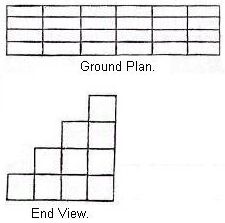 The buildings, or communal houses, for one
house contained sometimes five hundred rooms, are generally from three to
four hundred feet long and about one hundred and fifty feet in width at
the base. The lower story is divided by cross-walls into a mass of
cell-like rooms, as shown in the illustrations which represents the ground
plan of a pueblo having four ranges of rooms. Each story in height has one
less range of rooms, so that, looking directly at the end of this
building, it would present the appearance shown by this cut: The only
means of getting from one terrace to the other is by the aid of ladders.
In some cases these terraces run from both sides of the building; in
others they face the inclosed space; and in others still they face
outside. Most of the inhabited pueblos are built of adobe—that is,
sun-dried bricks. The majority of the ancient ruins were built of stone
set in adobe mortar. With this digression, we will now return to Zuñi.
The buildings, or communal houses, for one
house contained sometimes five hundred rooms, are generally from three to
four hundred feet long and about one hundred and fifty feet in width at
the base. The lower story is divided by cross-walls into a mass of
cell-like rooms, as shown in the illustrations which represents the ground
plan of a pueblo having four ranges of rooms. Each story in height has one
less range of rooms, so that, looking directly at the end of this
building, it would present the appearance shown by this cut: The only
means of getting from one terrace to the other is by the aid of ladders.
In some cases these terraces run from both sides of the building; in
others they face the inclosed space; and in others still they face
outside. Most of the inhabited pueblos are built of adobe—that is,
sun-dried bricks. The majority of the ancient ruins were built of stone
set in adobe mortar. With this digression, we will now return to Zuñi.
Ruins testifying to the former greatness of these people are scattered around them. Three miles to the east of the present pueblo of Zuñi, on the bluff seen in the cut, are the ruins of a larger pueblo, which is called Old Zuñi. Mr. Whipple, who explored this field of ruins, thus describes his visit: “The projecting summit of the cliffs seemed inaccessible. . . . We followed a trail which, with great labor, had been hammered out from seam to seam of the rocks along the side of the precipice. At various points of the ascent, where a projecting rock permitted, were barricades of stone walls, from which the old man7 told us they had hurled rocks upon the invading Spaniards. Having ascended one thousand feet, we found ourselves upon a level surface, covered with thick cedars. . . . The top of the mesa was of an irregular figure, a mile in width, bounded upon all sides by perpendicular bluffs. . . . The guide hurried us on half a mile further, where appeared the ruins of a city, indeed. Crumbling walls, from two to twelve feet in height, were crowded together in confused heaps, over several acres of ground. . . . Upon examining the pueblo, we found the standing walls rested upon ruins of greater antiquity.8 The primitive masonry, as well as we could judge, must have been about six feet thick. The more recent was not more than a foot or a foot and a half, but the small sandstone blocks had been laid in mud mortar with considerable care.”9
The descriptions of ruins have so much that is similar that repetitions become tiresome. We will not, therefore, delay much longer with Zuñi. A few miles east of Old Zuñi we come to Pescado Springs, near which are the ruins of several pueblos. “This spring bursts from a broken point of the lava bed, and at once becomes a pretty stream, glittering with great numbers of the finny tribe, which gives name to it. The circular wall which once inclosed the fountainhead is now partly broken down. Upon each side, and almost tangent, are ruins of pueblos so ancient that the traditions of present races do not reach them. They are nearly circular in form, and of equal dimension. One measured three hundred and fifteen short paces, about eight hundred feet, in circumference. They were of stone; but the walls have crumbled, leaving only a heap of rubbish.”10
Following up this stream, other ruins were found. It seems, then, that in the pueblo of Zuñi we have left a pitiful remnant of a numerous people. When the Spaniards first appeared on the scene they were apparently prosperous. The rapid decrease of the Pueblo tribes was owing to several causes. In 1680 they made an attempt to throw off the Spanish yoke. At first this was successful. But inter-tribal warfare at once set in. At this time also the inroads of the Apaches and Navajos became so troublesome that the Pueblo tribes could not successfully cultivate their land. At this time also a succession of dry years set in, and famine was the result. Their customs and manners we will describe in another place. There are many reasons for supposing that the country had been inhabited for a very long period, even before the Spaniards invaded it. Some places must have been even then in ruins, or, if inhabited, it is very strange that the Spanish records do not mention them. Such, for instance, is Inscription Rock, about fifteen miles east of Old Zuñi, which the Spaniards must have passed when on their way back and forth to Zuñi.
The small mesa here ends with a bold front of white sandstone rock, rising almost vertically two hundred and fifty feet high. This cut gives us a view on the top of the table-rock. We see here the foundations of two old buildings. A deep ravine nearly divides this little plateau into two portions. As we have said, this rises with a bold, precipitous front from the plain. At one place this front is completely covered with inscriptions. Here the Indians, unknown years ago, made their strange hieroglyphics which, presenting to our eyes only a senseless combination of forms of animals and men and meaningless figures, may have conveyed to them knowledge of important events. A great many Spanish inscriptions have also been carved on the rock. Whipple calls attention to the fact that though Spanish inscriptions placed there nearly two hundred years ago, seem but slightly affected by atmospheric action, still some of the Indian hieroglyphics are “almost wiped out by the fingers of time.” A number of centuries have probably rolled away since they were inscribed.
It may be interesting to know the reading of some of these old inscriptions. A translation of one of the earliest and longest is here given, with the exception of a few words which could not be made out: “Bartolome Narrso, Governor and Captain-general of the province of New Mexico, for our lord, the king, passed by this place on his return from the pueblo of Zuñi, on the 29th of July, of the year 1620, and put them in peace, at their petition, asking the favor to become subjects of his majesty, and anew they gave obedience; all of which they did with free consent, knowing it prudent as well as very Christian, . . . to so distinguished and gallant a soldier, indomitable and famed; we love . . .”11
It is somewhat strange to meet thus in the interior of the United States with the record of a military expedition some months before the Puritans landed at Plymouth. There seems to be nothing especial to describe about the ruins. Both Simpson and Whipple notice that the masonry seems to be unusually good. As it must have been very difficult to procure water, the location must have been chosen solely for the protection it afforded. The early Spanish accounts contain the names of one hundred and twenty-six pueblos. Some are, however, mentioned two or three times. Mr. Bandelier has succeeded in identifying every one. The Rio Puerco Valley was never a very prosperous one, and the river is scarcely a permanent one. At present a few ruins at Poblazon, for instance, are to be seen, and the valley looks poor and barren.
The valley of the Rio Grande River was occupied by a number of Pueblo tribes, and there are at present eight inhabited pueblos along this river, in New Mexico, and one in Texas. The region around Bernalillo was a prosperous section. At intervals, up and down the river, and along its tributaries, we can still trace low crumbling ruins, evidence of an old pueblo. If the statements of the Spanish writers are to be believed, the number of inhabited towns, at the time of the conquest, was at least ten times that now existing. The population could never have exceeded forty thousand. At present it contains about nine thousand. Still making all allowance for Spanish exaggeration, we are convinced that it was a thickly populated country at the time of the conquest.
One of the most interesting pueblos in New Mexico is Jemez, on a river of that name, sixty miles west of Santa Fe. We speak of it here because it is the center of a most interesting group of ruins. Like the pueblo of Zuñi, it is a remnant only of a prosperous people. The reports of Coronado’s expedition frequently mention Jemez, though it may be doubtful whether they refer to the pueblo of that name now, or to one of the numerous ruined ones in the immediate vicinity. Jemez is a prosperous pueblo, having fine fields, large irrigating ditches, and extensive flocks of sheep.
Simpson describes it in 1849 as follows: “The pueblo of Jemez is an Indian town of between four and five hundred inhabitants, . . . and is built upon two or three parallel streets, the houses being of adobe construction, and having second stories disposed retreatingly upon the first, to which access is had by means of ladders. . . . About the premises are probably a dozen acres covered with apricot and peach trees. . . . The Rio de Jemez, upon which the pave lies, is an affluent of the Rio Grande, varies from thirty to fifty feet in breadth, is of a rapid current. . . . Patches of good corn and wheat skirt it here and there along its banks, and the extent of cultivable land bordering it may be estimated at about a mile in breadth.”
We are more interested, however, in ruins testifying to past greatness. “Six miles up the river you come to the union of two cañons—the Guadalupe and San Diego. Where the mesa between these cañons narrows itself to a point, are the ruins of two pueblos, one upon the lower prominence of the mesa, the other upon the mesa proper, and only approachable by two narrow, steep trails, the mesa everywhere else being nearly perpendicular, and seven hundred and fifty feet high. The view from the mesa is picturesque and imposing in the extreme. Far beneath, to the right and left, a stream makes its way between the colossal walls of the sandstone upon the narrow width of the mesa; near frightful precipices are the ruins of a town of eighty houses, partly in parallel rows, partly in squares, and partly perched between overhanging rocks, the rim and surfaces of which formed the walls of rooms, the gaps and interstices being filled in artificially.”
“Nearly every house had one story and two rooms. The building material was trachytic rock as found upon the mesa. Broken pottery, charred corn, and millstones for grinding corn, were found in some of the rooms. The roofs had all fallen in, and so also had many of the side walls, in the construction of which wood was but little used. Piñon trees have taken root within many of the former rooms. Upon asking my Indian guide whether the former inhabitants of this town were obliged to descend the steep and dangerous pathway every day to the creek to procure water, he replied there were cisterns upon the mesa, in which rain, formerly plentiful, was caught. He then called my attention to some conical heaps of stones along the rim of the precipice which was the material for defense.”12
This description introduces us to another class of ruins—that is, detached separate houses, different from the great communal structures we have already described. What connection exists between these two forms of houses will be studied in another place. As a rule, the rooms in the detached houses are larger than in the communal houses. Exceptions occur in some of the inhabited pueblos.13 This is only one of many towns in ruins thereabouts. According to Dr. Loew there are no less than twenty-five or thirty.
It is not our purpose to describe any more of the pueblos of this section of New Mexico than is required to enable us to understand the customs, manners, and habits of the Pueblo tribes. We learn that in New Mexico we are brought face to face with feeble remnants of former tribes, and that these were probably in their most flourishing condition when the Spaniards first invaded the country, and though in a few instances the ruins imply a great antiquity, as at Inscription Rock, still we may be reasonably sure that the majority of them date but a few centuries back. The ruins of Catholic churches established by the Franciscan monks in the sixteenth century occur in several places, five being found around Jemez.
The story of the decline of the Pueblo tribes may be illustrated by the history of Pecos. This pueblo was situated on the Rio Pecos, about twenty-five miles south-east of Santa Fe. With the exception of the present inhabited town of Taos, it was the most eastern point reached by the pueblo building tribes. This, though a very large pueblo, has nothing especial to attract attention, except that the entire mesa was inclosed by a stone wall about six feet and a half high, and twenty inches thick, having a total length of three thousand, two hundred and twenty feet.14 Its history is, however, interesting and instructive. Coronado, with his army, visited Pecos before he abandoned the country in 1543. His reports mention it as a prosperous pueblo. Several raids were made into New Mexico by Spanish parties, but the conquest proper occurred in 1598, when the Pecos pledged fidelity to the crown of Spain.
The Catholic Church at once set about establishing missions at various pueblos. The Pecos Church was established in 1629, though missionary work had been done here before that time. One of the priests who accompanied Coronado remained behind at Pecos. He was never afterwards heard from. This church became one of the most renowned in New Mexico. The inhabitants became herders as well as agriculturists. It was prosperous. In 1680 the Pueblo of Pecos sheltered two thousand Indians. “But a storm was brewing from whose effects the Pueblo tribes never recovered.” In 1680 the Indians rose against the Spanish and drove them from New Mexico. The priests were murdered, the churches were sacked. From this time doubtless date the ruins of the churches seen around Jemez. At Pecos and many other places intertribal warfare set in. Bloody battles were fought.
Neither were the Spaniards idle. In 1682 one expedition was made, and at least two pueblo towns were destroyed by them. In 1689 the entire country was reconquered. Some tribes were nearly exterminated, and all more or less weakened and a great many ruins date from that time. It was the beginning of a decline for the Pueblo tribes, and this decline was hastened by intertribal warfare, by drought, and by ravages from wild Indians. As to the drought, it is sufficient to state that some ruins are now fifteen, and even twenty, miles from permanent water. The Comanches were the scourge of the Pecos. On one occasion they slaughtered all the young men but one. This was a blow from which they never recovered. Finally reduced by sickness to but five adults, the Pecos sold their lands and, at the invitation of their brethren at Jemez, went to live with them, and the pueblo of Pecos speedily became the ruins we now find it.15
No doubt a similar history could be written of many other ruins. “Our people,” said Hosta, “were a warlike race, and had many fights, not only with the Spaniards, but also with other Indian tribes the Navajos and Taos, for instance and were thus reduced to this pueblo of Jemez, which now forms the last remnant.” New Mexico is now becoming rapidly “Americanized,” and it will soon be brought to a test whether the Pueblo tribes can withstand this new influence and retain their peculiar civilization, or whether, like many other races, their life force is nearly spent, in which case they will live only in history.
We must not overlook the Moki Pueblos in Arizona. They are situated one hundred miles northwest of Zuñi. The Spaniards discovered them, and called their province Tusayan. They are much like the Pueblo tribes of New Mexico, only they have been much less disturbed by outside influence. There are a number of ruined towns in this vicinity. We wish to refer to them because of their intimate connection with the ruins to the North. Their houses are built of stone on precipitous mesas.
Lieut. Ives, who visited them in 1858, has left quite a full description of them. He states that “each pueblo is built around a rectangular court, in which, we suppose, are the springs that furnished the supply to the reservoirs. The exterior walls, which are of stone, have no openings, and would have to be scaled or battered down before access could be gained to the interior. The successive stories are set back, one behind the other. The lower rooms are reached through trap-doors from the first landing. The houses are three rooms deep, and open upon the interior court.”16 He was much pleased with the manner in which they had terraced off the bluff of the mesas into little garden patches, irrigating them from the large reservoirs from the top.
There is one feature common to all the Pueblo tribes which is necessary to refer to here, from its connection with the ruined structures further north. In all of the inhabited pueblos there is a structure known as an Estafa, some pueblos having several. They are usually circular, but occasionally (as at Jemez) rectangular. They are generally subterranean, or mostly so. They are great institutions among the Pueblos. “In these subterranean temples the old men met in secret council, or assembled in worship of their gods. Here are held dances, festivities, and social intercourse.”
Another common feature, represented in this cut, is the watch-tower. It is either round, as in this case, or rectangular. It may be interesting to recall in this connection the signal mounds of the Mound Builders. They were not always in the immediate vicinity of other ruins. Neither can we state that there was a system in their arrangement, one answering to another at a distance, and yet it was noticed where the rains were numerous that several were in view from one point.17 In dimensions these towers range from ten to fifteen feet in diameter, and from five to fifteen feet in height, while the walls are from one to two feet thick. They are in many cases connected with structures rectangular in form.
We will now leave the inhabited pueblos and the ruins in their immediate vicinity and, going to the north, explore a section of country that shows every evidence of having sustained a considerable population some time in the past. To understand this fact clearly, it will be necessary to fix the location of the places named by means of the map. From time to time confused reports of the wonders to be seen in the San Juan section of Colorado had appeared in the East, but the first clear and satisfactory account is contained in the reports of Messrs. Jackson and Holmes, members of the U.S. Geographical and Geological survey of the territories under Dr. Hayden for 1874 and 1876.
In the south-western portion of Colorado is a range of mountains known as the San Juan. Stretching from their base west to the Sierras is a great plateau region, drained by the numerous tributaries of the San Juan River. It would, perhaps, be more in keeping with the facts of the case to say “had been drained some time in the past,” for this is now such an arid, semi-desert country that the majority of the streams are dry, or have but scattered pools of water in them, during a large portion of the year; and yet, at times, great volumes of water go sweeping through them. This whole plateau is cut up with long, cañoned valleys, presenting, in effect, the same surface features that we have already described in New Mexico. Yet this precipitous, cañon-marked section of country is literally filled with the crumbling ruins of a former people. The situation in which they occur is in many cases very singular, and the whole subject is invested with great interest to us, because we see in them the remains of a people evidently the same as the Pueblo people to-day.
One of the most extensive ruins in this section is situated at Aztec Springs. This, it will be seen, is about midway between the Rio Mancos and the McElmo. Mr. Holmes found the site of the spring, but it contained no water. He was told, however, by those familiar with the locality that there had been a living spring there up to within a few years. It was evidently a place of considerable importance once. Mr. Holmes describes the ruins as forming the most imposing pile of masonry found in Colorado. They cover an area of over ten acres. This includes only the ruins around the springs. But all about this central portion are scattered and grouped the remnants of smaller structures. So that nearly a square mile is covered with the ruins of this ancient pueblo. Most of the stone used was brought from the Mesa Verde (Green Plateau), a mile away, and must have been a great work for a people so totally without facilities.
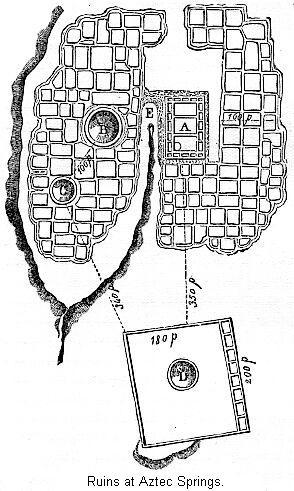 It will be seen that immediately to the right
of the Springs is a large rectangular ruin in better preservation than the
rest. This now “forms a great mound of crumbling rock from twelve to
twenty feet in height, overgrown with artemisia, but showing clearly,
however, its rectangular structure, adjusted approximately to the four
points of the compass.” This house, from its massive walls, must have had
an original height of at least forty feet. “The walls seem to have been
doubled, with a space of seven feet between; a number of cross-walls at
regular intervals indicate that this space has been divided into
apartments, as seen in the plan.” Two low lines of rubbish cross the
square, probably partition walls.
It will be seen that immediately to the right
of the Springs is a large rectangular ruin in better preservation than the
rest. This now “forms a great mound of crumbling rock from twelve to
twenty feet in height, overgrown with artemisia, but showing clearly,
however, its rectangular structure, adjusted approximately to the four
points of the compass.” This house, from its massive walls, must have had
an original height of at least forty feet. “The walls seem to have been
doubled, with a space of seven feet between; a number of cross-walls at
regular intervals indicate that this space has been divided into
apartments, as seen in the plan.” Two low lines of rubbish cross the
square, probably partition walls.
Surrounding this house is a net-work of fallen walls, so completely reduced that none of the stones seem to remain in place. Mr. Holmes was at a loss to know whether to call them a cluster of irregular apartments, having low, loosely built walls, or whether they are the remains of imposing pueblos. In the group of ruins to the left of the spring are two well-defined circular estufas. Below the main mass of ruins, connected by low walls of ruins, is another great square, nearly two hundred feet in dimensions. One wall seems to have consisted of a row of apartments; the other walls served to simply inclose the square, near the center of which was another large estufa.
Several important conclusions can be drawn from a study of this locality. The spring, now dry, was once evidently the source of a considerable stream. Whether the group of low ruins were collections of small houses, or remains of imposing pueblos, we need not doubt that the walls of the square inclosures were composed of pueblo houses. The estufas were probably in all respects similar to those of the present inhabited pueblos. The country around, now so dry and barren, must once have supported considerable population. As to the period of abandonment, we have nothing to guide us. Being an agricultural settlement, it was probably abandoned at an earlier date than the cave-dwellings and cliff-houses of the cañons of the vicinity. The reason for this will appear subsequently. The site of this ruin, as well as for a long distance around, is covered with pieces of broken pottery. We notice that the spring has only lately gone dry. This illustrates the changes now taking place all through the country. It is drying up, and this process has been in operation for a long while.
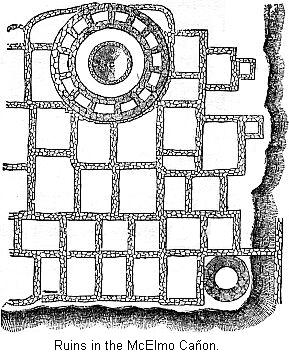 Many groups
of ruins are now in localities where the people could not hope for
subsistence. About six miles to the north of these ruins, about a mile
from the McElmo, is the group of ruins here represented, which may throw
some light on the remains at Aztec Springs. The principal feature is the
triple walled tower, of which a plan is given. The tower has a diameter of
about forty-three feet, and a circumference of about one hundred and
thirty-five feet. The walls are traceable nearly all the way around, and
the space between the two outer ones, which is about five feet, contains
fourteen apartments or cells. The walls about one of these cells were
still standing at the time of Mr. Holmes’s visit, but the cell was filled
with rubbish from the fallen walls. A door-way, opening into this
apartment, could still be seen. The inner wall was probably never very
high. It simply inclosed the estufa.
Many groups
of ruins are now in localities where the people could not hope for
subsistence. About six miles to the north of these ruins, about a mile
from the McElmo, is the group of ruins here represented, which may throw
some light on the remains at Aztec Springs. The principal feature is the
triple walled tower, of which a plan is given. The tower has a diameter of
about forty-three feet, and a circumference of about one hundred and
thirty-five feet. The walls are traceable nearly all the way around, and
the space between the two outer ones, which is about five feet, contains
fourteen apartments or cells. The walls about one of these cells were
still standing at the time of Mr. Holmes’s visit, but the cell was filled
with rubbish from the fallen walls. A door-way, opening into this
apartment, could still be seen. The inner wall was probably never very
high. It simply inclosed the estufa.
The ruins surrounding this tower consist of low, fallen walls, scarcely traceable. The apartments number nearly one hundred, and were generally rectangular. They are not of a uniform size, and were certainly not arranged in regular order. Now, as Mr. Holmes observes, it would certainly seem that, if they are the ruins of such structures as the pueblos of the south, there would be some regularity of size, and some systematic arrangement. He says that, in reality, they are more like a cluster of pens, such as are used by the Moqui tribes for keeping sheep and goats.
Since these surveys were made, Mr. Bandelier, as agent for the Archæological Institute, has made important researches. He finds that the small, detached houses, such as we described in the ruined village near Jemez, are found in Arizona, with a small court-yard or inclosure attached to them. If we understand the description of the ruins just mentioned, and those at Apache Springs, they are villages of these small houses and their inclosures. In such villages the inclosures meet each other, so as to form a checker-board of irregularly alternating houses and courts. The houses are easily discernible from the fact of little rubbish mounds having accumulated where they stood. Around these parts of the wall can still be traced. This combination makes a strong, easily defended position. Each of such villages contains one or more open spaces of large size, but they are irregularly located.
We must notice one point more: Each village of this nature, that was of any size, contained a larger ruin in the center. This was noticed in the ruins at Aztec Springs. This larger building was in the nature of a citadel, and there the inhabitants could retire when the approaches were carried by the enemy. This central building ultimately swallowed up all the others, and so developed into the pueblo structures we have noticed. The little walled inclosures surrounding the houses were largely in the nature of defenses. Tradition asserts that in many cases they were garden plats, and appearances sometimes confirm this. “They may also have been the yard proper for each family, in which the latter slept, cooked—in fact, lived—during the heat of the Summer months.”18
Referring once more to the ruins near the McElmo, we are told that every isolated rock and bit of mesa within a circle of miles of this place is strewn with remnants of ancient dwellings. We presume these were small, separate houses. They may have been outlying settlements of the tribe whose main village was at Aztec Springs. We must also notice the small tower in the corner. This was a watch tower. It was fifteen feet in diameter, walls three and a half feet thick, and in 1876 was still five feet high, It overlooked the surrounding country. The rainfall in the past must have been more abundant, to support the population we are justified in thinking once lived there. The nearest water is now a mile away, and during the dry season some fifteen miles to the north, in the Rio Dolores, and yet we have every reason to believe these old inhabitants were very saving of water. They built cisterns and reservoirs to store it up against the time of need.
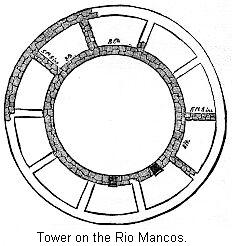 We give a cut of the tower of the ruins of a
similar village, or settlement, to the one just described, which occurs
twenty miles to the southeast in the cañon of the Rio Mancos. Being
so similar, we will mention it here. In this case the tower had only two
walls. Mr. Holmes says the diameter of the outer wall is forty-three feet,
that of the inner twenty-five feet. The space between the two circles is
divided by cross-walls into ten apartments. This tower is placed also in
the midst of a group of more dimly marked ruins or foundations, extending
some distance in each direction from it. Mr. Holmes, however, states that
there are no ruins of importance in connection with this tower, but that
there are a number of ruins in the immediate vicinity. In this case, then,
the citadel (if such it was) was not directly connected with other ruins.
We give a cut of the tower of the ruins of a
similar village, or settlement, to the one just described, which occurs
twenty miles to the southeast in the cañon of the Rio Mancos. Being
so similar, we will mention it here. In this case the tower had only two
walls. Mr. Holmes says the diameter of the outer wall is forty-three feet,
that of the inner twenty-five feet. The space between the two circles is
divided by cross-walls into ten apartments. This tower is placed also in
the midst of a group of more dimly marked ruins or foundations, extending
some distance in each direction from it. Mr. Holmes, however, states that
there are no ruins of importance in connection with this tower, but that
there are a number of ruins in the immediate vicinity. In this case, then,
the citadel (if such it was) was not directly connected with other ruins.
The Rio Mancos, that we have just mentioned, was a favorite place of resort for these old people. This stream, rising in the La Platte Mountains, flows through beautiful valleys to a great table-land known as the Mesa Verde. Mr. Jackson explored this valley in 1874, and he reports as follows: “Commencing our observation in the park-like valley of the Mancos, between the mesa and the mountains, we find that the low benches which border the stream upon either side bear faint vestiges of having at some far away time been covered with dwellings, grouped in communities apparently, but so indistinct as to present to the eye little more than unintelligible mounds. By a little careful investigation, however, the foundation of great square blocks of single buildings and of circular inclosures can be made out, the latter generally of a depressed center, showing an excavation for some purpose.”
From this description we can not quite make out whether these ruins are great communal buildings, like the modern pueblo, or clusters of separate houses. We incline to the latter opinion, however. The circular depressed area was doubtless used as an Estufa, the place of religious meetings for men alone. “The greater portion of these mounds are now overgrown with artemisia, pinion-pine, and cedar, concealing them almost entirely from casual observation.” “We found the surest indication of their proximity in the great quantity of broken pottery which covered the ground in their neighborhood. The same curiously indented, painted, and glazed ware, was found throughout New Mexico and Arizona. It was all broken into very small pieces, none that we could find being larger than a silver dollar.” Specimens of this pottery will be figured in its appropriate place.
“Nowhere among these open plane habitations could we discover any vestige of stone-work, either in building material or implements. It is very evident that the houses were all of adobe, the mound-like character of the remains justifying that belief.” In this last respect we note a difference between these remains and those already described. The mesa verde is one of those elevated plateaus we have so often described. Through this the Mancos has cut a cañon nearly thirty miles in length, and from one to two thousand feet deep. The description we have already given is of the valley of the river before coming to the cañon.
Entering the cañon, Mr. Jackson continues: “Grouped along in clusters, and singly, were indications of former habitations, very nearly obliterated, and consisting mostly, in the first four or five miles, of the same mound-like forms noticed above, and accompanied always by the scattered, broken pottery. Among them we find one building of squared and carefully laid sandstone, one face only exposed of three or four courses, above the mass of debris which covered every thing. This building lay within a few yards of the banks of the stream, was apparently about ten feet by eight, the usual size, as near as we could determine, of nearly all the separate rooms or houses in the larger blocks, none larger, and many not more than five feet square. The stones exposed are each about seven by twelve inches square, and four inches thick, those in their original position retaining correct angles, but, when thrown down, worn away by attrition to shapeless bowlders.”
“As we progressed down the cañon the same general characteristics held good. The great majority of the ruins consisting of heaps of debris a central mass considerably higher and more massive than the surrounding lines of sub-divided squares. Small buildings, not more than eight feet square, were often found standing alone apparently, no trace of any other being detected in their immediate neighborhood.” We would call especial attention in this description to the character of the ruins, the central, higher mass surrounded by other ruins; also to the houses found occasionally standing alone. We notice they are of the same general character as the ruins at Aztec Springs.
We are finding abundant evidence that this section was once thickly settled. Going back to the triple-walled tower on the McElmo, Mr. Jackson says of the immediate vicinity: “On the mesa is group after group upon the same general plan, a great central tower and smaller surrounding buildings. They cover the whole breadth and length of the land, and, turn which way we would, we stumbled over the old mound and into the cellars, as we might call them, of these truly aborigines.” We believe, however, that no excavation for cellar purposes are found in the entire region covered by these ancient ruins.
“Starting down the cañon (the McElmo), which gradually deepened as the table-land rose above us, we found upon either hand very old and faint vestiges of the homes of a forgotten people, but could give them no more attention than merely noting their existence.”
Mr. Morgan has shown the existence of regular large houses in the valley of Aminas River, east of the Mancos;19 and he also speaks of the ruins at the commencement of McElmo cañon as being large communal buildings. We should judge from Mr. Jackson’s report just given that these ruins were rather small clusters of houses of the same design as the ruins at Apache Springs.
Near the Utah boundary line we notice the Hovenweep Creek joining the McElmo from the north. The mesa, narrowing to a point where the two cañons meet, is covered with ruins much like what we have described already. The Hovenweep is appropriately named, meaning “deserted valley.”
Further west still is the Montezuma Valley. Mr. Jackson’s party found the ruins so numerous as to excite surprise at the numbers this narrow valley must have supported. He says, “We camped at the intersection of a large cañon coming in from the west. . . . At this point the bottoms widen out to from two to three hundred yards in width, and are literally covered with ruins, evidently those of an extensive settlement or community, although at the present time water was so scarce (there not being a drop within a radius of six miles) that we were compelled to make a dry camp. The ruins consist evidently of great solid mounds of rock debris, piled up in rectangular masses, covered with earth and a brush growth, bearing every indication of extreme age—just how old is about as impossible to tell as to say how old the rocks of this cañon are. This group is a mile in length, in the middle of the valley space, and upon both sides of the wash. Each separate building would cover a space, generally, of one hundred feet square; they are seldom subdivided into more than two or four apartments. Relics were abundant, broken pottery and arrow-points being especially plenty. At one place, where the wash held partially undermined the foundation of ore of the large buildings, it exposed a wall of regularly laid masonry, extending down six feet beneath the superincumbent rubbish to the old floor-level, covered with ashes and the remains of half-charred sticks of juniper.”
Lower down, the valley was noted for little projecting tongues of rock extending out into the cañon, sometimes connected with the main walls of the cañon by narrow ledges of rock, and in cases even this had disappeared, leaving detached masses of rock standing quite alone. “Within a distance of fifteen miles there are some sixteen or eighteen of these promontories and isolated mesas of different height, every one of them covered with ruins of old and massive stone-built structures.”
We have been somewhat full in our description of these ruins, yet their importance justifies this course. So far we see but very little to remind us of the pueblo towns. On the other hand, the buildings seem to be often single houses, or a few houses grouped together. In some locations they were built of stone, in others of adobe. It is to be observed, however, that the houses are very small—not larger than the rooms in the modern pueblos. We evidently have here quiet scenes of agricultural life. They of course had enemies, and guarded against their attacks by the watch-towers, of which an example is given in the McElmo ruins. The country must have been better watered than now, the soil productive the seasons kind; and who can tell how long these agricultural tribes held the land? Under these conditions, time must have been rapidly bringing them civilization. But we must now turn to a sorrowful chapter in their history, and trace the dispersion of these tribes, their unavailing attempts to hold their own against a savage foe, and the desperate chances they took before leaving the land of their fathers.
This brings us to a consideration of cliff-houses—that is, houses so placed that manifestly the only reason the people would have for putting them where found would be of a defensive nature; and, for a similar reason, we may be very sure they are of a later date than the majority of the ruins in the valley or in the cañons. People would never have settled in the valley in the first place if they had felt the necessity of seeking inaccessible places in which to build shelters as a resort in time of need. We can not do better than to refer once more to Mr. Jackson’s exploration in the valley of the Rio Mancos. We have already referred to it in reference to the larger ruins.
This cut gives us a general view of the first cliff-house discovered in this valley. This was far up on the cliff. Mr. Jackson says, “We had no field-glass with the party, and to this fact is probably due the reason we had not seen others during the day in this same line, for there is no doubt that ruins exist throughout the entire length of the cañon, far above and out of the way of ordinary observation.” Subsequently Mr. Holmes proved this supposition to be true. The sides of this cañon have nearly all their ledges occupied by these houses.
Every advantage was taken, both natural and artificial, to conceal them from view. “Cedars and pines grew thickly along the ledges upon which they are built, hiding completely any thing behind them. All that we did find were built of the same materials as the cliffs themselves with but few, and then only the smallest, appertures toward the cañon, the surface being dressed very smooth, and showing no lines of masonry. It was only on the very closest inspection that the houses could be separated from the cliff.”
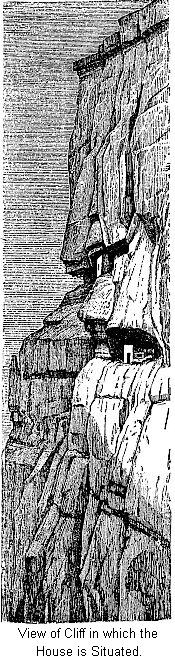 To illustrate
the singular position in which this house was located, we introduce this
cut. It is seven hundred feet above the valley. “Whether viewed from below
or from the heights above, the effect is almost startling, and one can not
but feel that no ordinary circumstances could have driven a people to such
places of resort.” As showing the difficulty an enemy would have to
approach such a house, we give Mr. Jackson’s account of his climb to it:
To illustrate
the singular position in which this house was located, we introduce this
cut. It is seven hundred feet above the valley. “Whether viewed from below
or from the heights above, the effect is almost startling, and one can not
but feel that no ordinary circumstances could have driven a people to such
places of resort.” As showing the difficulty an enemy would have to
approach such a house, we give Mr. Jackson’s account of his climb to it:
“The first five hundred feet of ascent were over a long, steep slope of debris, overgrown with cedar, then came alternately perpendiculars and slopes. Immediately below the house was a nearly perpendicular ascent of one hundred feet, that puzzled us for a while, and which we were only able to surmount by finding cracks and crevices into which fingers and toes could be inserted. From the little ledges occasionally found, and by stepping upon each other’s shoulders, and grasping tufts of yucca, one would draw himself up to another shelf, and then, by letting down a stick of cedar or a hand, would assist the others.”
“Soon we reached a slope, smooth and steep, in which there had been cut a series of steps, now weathered away into a series of undulating hummocks, by which it was easy to ascend, and without them almost an impossibility. Another short, steep slope, and we were under the ledge on which stood our house.” By referring to the first cut, we see that the house stands on a very narrow ledge, and that the rocks overhang it so as to furnish a roof. It will also be noticed that the ledge is rounding, so that the outer walls of the house rise from an incline. Piers, or abutments, had also been built along the ledge, so as to form an esplanade.
The house itself was only about twelve feet high, but this had been divided into two stories. Whether it ever had any other roof than the overhanging walls of rock is doubtful. The plan is shown in the preceding cut. The curved apartment at the right is a reservoir, capable of holding about five barrels. A series of pegs were inserted in the wall, so as to form a means of descent from a window to the bottom. A number of doorways are seen in the plan; a cut of one is presented in this figure.
We are, however, warned that the artist has represented the stonework a little too regularly. The support for the top of the doorway is not clearly shown; a number of small beams of wood were laid across, on these the stones. This cut gives us a view of the front room. Looking in from the end window, we can see where the second story commenced. The doorway we have been describing was not a very handy mode of entrance. Its builders, however, did the best they could in their limited space. The house displays perseverance, ingenuity, and taste. It was plastered, both within and without, so as to resemble the walls of the cañon, but an ornamental border was added to the plastering of the interior rooms.
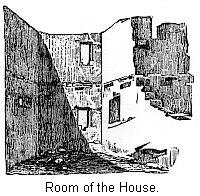 This cliff house could only have been used as a place of
refuge in a time of need. We must observe the care with which it was
hidden away. The walls were plastered on the outside, so as to resemble
the cañon-walls. Then we must notice what a secure place of retreat
it afforded the people. No invading party could hope to storm this castle
as long as there was any one to defend it. This house, with its four small
rooms, could give shelter to quite a band of Indians. Then, besides, it
was not alone. Ruins of half a dozen smaller houses were found near by.
Some had been crushed by the overhanging walls falling upon them, and
others had lost their foothold and tumbled down the precipice.
This cliff house could only have been used as a place of
refuge in a time of need. We must observe the care with which it was
hidden away. The walls were plastered on the outside, so as to resemble
the cañon-walls. Then we must notice what a secure place of retreat
it afforded the people. No invading party could hope to storm this castle
as long as there was any one to defend it. This house, with its four small
rooms, could give shelter to quite a band of Indians. Then, besides, it
was not alone. Ruins of half a dozen smaller houses were found near by.
Some had been crushed by the overhanging walls falling upon them, and
others had lost their foothold and tumbled down the precipice.
It needs but a glance to satisfy any one that only dire necessity would have driven a people to such resorts. When we consider how much labor it must have required to convey the materials to the almost inaccessible place, the many inconveniences the people must have been put to when they were occupied, we may imagine how the people clung to their old home. It is altogether likely that such resorts would be only used now and then. During seasons of war and invasion probably the women and old the men, with the little ones, went thither for protection.
Mr. Holmes calls attention to one point bearing on the antiquity of this ruin. The buttresses, which probably support a balustrade, noticed in the figure on the house, were built on the sloping surface of the rock. It would take but very little weathering of the rocks to throw them to the bottom of the cañon; and, furthermore, the rock is a rough sandstone, and hence easily crumbles; and it is not well protected by the overhanging cliff; but no perceptible change has taken place since the buttresses were first built. The thickness of a sheet of paper has hardly been washed from the surface, and the mortar, almost as hard as the rock itself, lies upon it as if placed there within a dozen years. This structure is, evidently, not as old as the low mounds of crumbling ruins we have heretofore described. It is more than probable that such retreats as this were not provided until near the close of their stay in the country.
A ruin further down the cañon, described by Mr. Holmes, is of great interest, as it shows how necessary the people considered it to be to construct an estufa. It will be observed that there are two houses. So nicely are these hidden away that Mr. Holmes had almost completed a sketch of the upper house before he noticed the lower one. They are both overhung by the rocks above so as to be protected from the weather. The upper house can only be approached by means of steps cut in the rock. It appears to be in an unfinished state, and, when we consider the great labor required for its construction, we can not wonder that they grew tired before its completion.
The lower house is some eight hundred feet above the bottom of the cañon, but is comparatively easy of approach. The interesting feature about it is the estufa. It was situated near the center of the main portion of the house. The entrance to this chamber shows the peculiar importance attached to it by the builders. Mr. Holmes says: “A walled and covered passage-way of solid masonry, ten feet of which is still intact, leads from an outer chamber through the small intervening apartments into the circular one. It is possible that this originally extended to the outer wall, and was entered from the outside. If so, the person desiring to visit the estufa would have to enter the aperture about twenty-two inches high by thirty wide, and crawl, in the the most abject manner possible, through a tube-like passage-way nearly twenty feet in length.”
“My first impression was that this peculiarly constructed way was a precaution against enemies, and that it was probably the only means of entrance to the interior of the house, but I am now inclined to think this is hardly probable, and conclude that this was rather designed to render a sacred chamber as free as possible from profane intrusion.” This illustrates the peculiar regard in which it was held. Even when sore pressed by their enemies, and obliged to flee to inaccessible heights, they still constructed their sacred place.
These cliff-houses, of which we give illustrations, are quite common in the Mancos. Our frontispiece shows an interesting group, about ten miles from the foot of the cañon. These are situated only about forty feet above the bed of the creek, but still in a secure position. Here a bed of shale had been weathered out of the sandstone, leaving a sort of horizontal groove four feet high and from four to six feet deep. In this a row of minute houses had been built. They had been made to occupy the full height and depth of the crevice, so that when one reaches it at the only accessible point he is between two houses, and must pass through these to get at the others.
Besides the cliff-houses, the explorers found that these people had made use of little cave-like openings in the cliffs, and, by walling up the openings, had converted them into houses. These were very common in the Mancos, and of all sizes. Some were evidently merely little hiding places, in which to store away provisions or other articles. In some places the cliffs were literally honey-combed with these little habitations. Sometimes the walls were quite well preserved and new-looking, while all about were others in all stages of decay.
“In one place in particular a picturesque outstanding promontory has been full of dwellings. . . . As one from below views the ragged, window-pierced crags, he is unconsciously led to wonder if they are not the ruins of some ancient castle, behind whose mouldering walls are hidden the dread secrets of a long-forgotten people; but a nearer approach quickly dispels such fancies, for the windows prove to be only the doorways to shallow and irregular apartments hardly sufficiently commodious for a race of pigmies. Neither the outer openings nor the apertures that communicate between the caves are large enough to allow a person of large stature to pass, and one is led to suspect that these nests were not the dwellings proper of these people, but occasional resorts for women and children, and that the somewhat extensive ruins of the valley below were their ordinary dwelling places.”20
On the San Juan, about ten miles above the mouth of the Mancos, is a significant combination of cave-dwellings and towers. In this case, about half-way up the cliff, which is not more than forty feet high, excavations had been made in a soft bed of shale. They are now quite shallow, but were probably once deeper and walled up in front. Directly above these cave-openings, on the very brink of the cliffs, were the remains of two circular towers, in each case double-walled, and probably divided by cross-walls into partitions. The towers were probably their council chambers and places of worship. The caves, directly below, down a steep bank, were their fortresses, whither in times of danger they could flee. The little community, by means of ladders, could freely pass from their cave resorts to the towers and back.
The San Juan River does not seem to be as rich in ruins as some of its tributaries. Yet near the mouth of the Montezuma we came upon a ruin which shows considerable analogy to the pueblos. Mr. Jackson says upon the top of the bench (fifty feet high) overlooking the river are the ruins of a quadrangular structure of a peculiar design. It is arranged very nearly at right angles to the river. We see from the plan that we have the ruins of a larger building arranged around an open court—at least, Mr. Jackson could detect no trace of a wall in front. We must notice the seven apartments, arranged in the form of a semicircle, back of the court. Extreme massiveness is indicated throughout the whole structure.
In the immediate vicinity of this ruin were found a number of little, cave-like dwellings. They were so small that doubts were raised as to whether they were suitable for human habitations, but the majority of them bore ample evidence in smoke-begrimed walls that such was their use. Twelve miles below the mouth of the Montezuma this group of ruins was discovered. These were situated in a cave that was almost exactly a hemisphere in shape. Where the curve of the roof met the curve from the bottom a little projecting bench had been utilized as a foundation for a row of houses.
The little community that built their houses here seem to have practised all the industries of a savage life. In one place there was evidence that on that spot had been carried on the manufacture of stone implements. At another place holes had been drilled, as if for a loom. In the main building there were fourteen rooms or apartments, ranging from sixteen to nine feet in width. “In the central room of the main building we found a circular, basin-like depression, that had served as a fireplace, being still filled with the ashes and cinders of aboriginal fires, the surrounding walls being blackened with smoke and soot. This room was undoubtedly the kitchen of the house. Some of the smaller rooms appear to have been used for the same purpose, the fires having been made in the corner against the back wall, the smoke escaping overhead. The masonry displayed in the construction of the walls is very creditable. A symmetrical curve is preserved throughout the whole line, and every portion perfectly plumb. The subdivisions are at right angles to the front. The whole appearance of the place and its surroundings indicate that the family or little community who inhabited it were in good circumstances, and the lords of the surrounding country. Looking out from one of their houses, with a great dome of solid rock overhead that echoed and re-echoed every word uttered with marvelous distinctness, and below them a steep descent of one hundred feet to the broad, fertile valley of the Rio San Juan, covered with waving fields of maize and scattered groves of majestic cotton-woods, these old people, whom even the imagination can hardly clothe with reality, must have felt a sense of security that even the incursions of their barbarian foes could hardly have disturbed.”21
To describe the defensive ruins on Epsom Creek, Montezuma Creek, and the McElmo is simply to repeat descriptions already given. We meet with cave-houses, cliff-houses, and sentinel-towers in abundance. The whole section appears to have been thickly settled. Further explorations will doubtless make known many more ruins, but probably nothing differing in kind from what is already known. We think the defensive ruins belong to a later period of their existence than do the old and time-worn structures we have hitherto described along the river valleys and open plains, as at Aztec Springs. These structures plainly show that at the time they were built the people were subject to an invasion from a stronger foe, one before whose approach they had to fly for protection to the almost inaccessible cliffs.
They would obviously never have settled there had they always had to contend with these savage tribes. It needs no great skill to read the story of the dispersion of these old people from the ruins we have described; the many watch-towers, which were also used as fortresses or citadels in which to find protection, testifying to the need of increased watchfulness. The cave-houses and cliff-fortresses, cunningly hidden away to escape detection, or so placed as to defy the assault of their enemies, show to what desperate straits they were driven; and imagination only can picture the despair that must have filled their hearts when the hour of final defeat came, and they must have realized that even these shifts would not allow them to stay in the lands of their fathers.
That this is the explanation of these ruins, we will cite the legendary stories given by an old man among the Moquis concerning some ruins in the cañon of the McElmo, just over the line in Utah. At this point the cañon widens out considerably, and in the center of the valley is still standing a portion of the old mesa, once filling the entire valley. It is now a mass of dark red sandstone, about one hundred feet high, and three hundred feet around, seamed and cracked, and gradually disappearing, as the rock has gone all around it. The top of this rock is covered with the ruins of some building; there are also ruins at the base and all around the immediate vicinity. There were watch towers and estufas, showing that this was a place of great interest.
The story is as follows: “Formerly the aborigines inhabited all this country as far east as the headwaters of the San Juan, as far north as the Rio Dolores, west some distance into Utah, and south and south-west throughout Arizona, and on down into Mexico. They had lived there from time immemorial, since the earth was a small island, which augmented as its inhabitants multiplied. They cultivated the valley, fashioned whatever utensils and tools they needed very neatly and handsomely out of clay, and wood, and stone, not knowing any of the useful metals; built their homes and kept their flocks and herds in the fertile river bottoms, and worshiped the sun. They were an eminently peaceful and prosperous people, living by agriculture rather than by the chase. About a thousand years ago, however, they were visited by savage strangers from the north, whom they treated hospitably. Soon these visits became more frequent and annoying. Then their troublesome neighbors, ancestors of the present Utes, began to forage upon them, and at last to massacre them and devastate their farms. So, to save their lives at least, they built houses high up on the cliffs, where they could store food and hide away until the raiders left.
“But one Summer the invaders did not go back to their mountains, as the people expected, but brought their families with them and settled down. So, driven from their homes and lands, starving in their little niches on the high cites they could only steal away during the night and wander across the cheerless uplands. To one who has traveled these steppes such a flight seems terrible, and the mind hesitates to picture the sufferings of the sad fugitives. At the ‘Creston’ (name of the ruin) they halted, and probably found friends, for the rocks and caves are full of the nests of these human wrens and swallows. Here they collected, erected stone fortifications and watch-towers, dug reservoirs in the rocks to hold a supply of water, which in all cases is precarious in this latitude, and once more stood at bay. Their foes came, and for one long month fought, and were beaten back, and returned day after day to the attack as merciless and inevitable as the tide. Meanwhile the families of the defenders were evacuating and moving south, and bravely did their defenders shield them till they were all safely a hundred miles away.
“The besiegers were beaten back and went away. But the narrative tells us that the hollows of the rocks were filled to the brim with the mingled blood of conquerors and, conquered, and red veins of it ran down the cañon. It was such a victory as they could not afford to gain again, and they were glad, when the long flight was over, to follow their wives and little ones to the south. There, in the deserts of Arizona, on well-nigh unapproachable, isolated bluffs, they built new towns, and their few descendants, the Moquis, live in them to this day, preserving more carefully and purely the history and veneration of their forefathers than their skill or wisdom.”22
Mr. Jackson thinks this legend arises from the appearance of the rocks. The bare floor of nearly white sandstone, upon which the butte stands, is stained in gory streaks and blotches by the action of an iron constituent in the rocks of another portion of the adjoining bluffs. That may well be true, but we believe that there are germs of truth in the story. Driven from their homes, where did the fugitives go? Some of them may have gone east, but probably the body of the migration was to the south. It has been the tendency of all tribes, but especially of the sedentary tribes, to pass to the south and east, and this is also the traditions among the inhabitants of still existing pueblos.23 We find that every available portion of New Mexico and Arizona bears evidence of having been once populated by tribes of Indians, who built houses in all respects like those already described. In northern New Mexico, Prof. Cope has described a whole section of country as being at one time more densely populated than the thickly inhabited portions of the Eastern States. He says: “The number of buildings in a square mile of that region is equal to, if not greater than the number now existing in the more densely populated rural districts of Pennsylvania and New Jersey.”24
In one location he found a village of thirty houses, built of stone, and all in ruins. He found, over a large extent of country, that every little conical hill and eminence was crowned with ruins of old houses. We, of course, can not say that these ruins are necessarily younger than those to the north of the San Juan, and yet we think from Prof. Cope’s description that they do not present such evidence of antiquity as do the crumbling ruins previously described. And then, besides, they were always located in easily defended positions.
The village spoken of was really a Cliff Village, being arranged along the very edge of a precipitous mesa, the only access to it being along a narrow causeway. Then again, although we have described many ruins near which no water is to be had, at least, in dry seasons, yet we have every reason to suppose water was formerly more plentiful and easily attained. But in this section it must always have been a serious question with them to obtain enough water for necessary purposes. They must have had to store away water in vessels of pottery, whose ruins are now so abundant. It is not such a country as we would suppose a people to choose for a place to settle in, only that they knew not where else to go.
It is also considered settled that all the inhabited pueblos, as well as those in ruins near the inhabited ones, were built by the descendants of these people whose houses we have described. This is proven by the similarity of pottery. Though some styles of ancient corrugated ware are found in the San Juan section not found near the inhabited pueblos, yet vast quantities of ware, similar to that now found in the inhabited pueblos, can be picked up all over the ruins to the north. Again, their religion must have been the same, as ruined estufas are common, in all respects similar to those now in use. In the modern pueblos we are struck with the small cell-like rooms, yet they are but little smaller than the ordinary single houses plentifully found over the entire field of ruins. All the Pueblo tribes are agricultural, so were these old people. In fact, all evidence confirms the conclusion that the remnants of the Pueblo people that we have already described, are also the descendants of the people driven by hostile bands from north of the San Juan.
This statement may give false impressions, however. The traditions of the Pueblo Indians, of New Mexico, are to the effect that they came from the north, and also that their ancestors formerly lived in the small houses we have described. But we do not mean to say that all the small houses and pueblos in Arizona and New Mexico are later in date than the cliff-houses. The pressure has always been from the north to the south. Neither would we be understood as saying that all the sedentary tribes, both ancient and modern, belong to the same stock of people. There are several different stocks of people even among the present Pueblos.25
In the valley of the Rio Chaco, about midway between the Rio Grande and the San Juan, we meet a group of ruined pueblos whose style of masonry is thought to indicate a greater antiquity than the inhabited pueblo towns; these probably indicate another settlement of these people. As these are really remarkable ruins, we must briefly describe them. In the Chaco cañon, as indicated on the map, within the space of ten miles are the ruins of eight larger pueblos. Another is located at the very beginning of the cañon, and two more on the edge of the mesas just outside of the cañon. These are large communal houses of regular pueblo type, and, theoretically at least, they should be later in date than the majority of ruins throughout the area represented on the map. We think the development has been from small, separate houses, to a closely connected cluster, with a central citadel, which finally drew to itself all the other buildings, and became the communal building we call a pueblo.26
We give a restoration of, one—the Pueble Bonito—one of the largest and most important of the ruins. We can not doubt but what the restoration is substantially correct. It shows the open court, the terraced structure, and the system of defense. The circle itself is not as near a half-circle as we would imagine. The ground plan shows that it was really a many-sided building. This pueblo must have presented a striking appearance when it was in a complete state.
By comparing this structure with the views of some of the present pueblo towns, we will understand the remarks made earlier, as to the different styles of pueblo structures. This building must have had not far from six hundred and fifty rooms. “No single edifice of equal accommodations has ever been found in any part of North America. It would shelter three thousand Indians.”27 This pueblo will compare favorably with some of the structures of Yucatan; though not so ornamental, yet for practical convenience it must have met the wants of the builders fully as well. This may be given as a fair example of the entire class.
The evident plan on which they started to build their structures, is shown in the following plan of the pueblo. But some of them were not fully completed. Two of them had but one wing. In the restoration the court is seen to be closed by a straight row of small buildings, but in most cases the wall inclosing the court was more or less circular. In one case the court was left open. We will only give general descriptions. It is now believed that these great structures were built only a part at a time; perhaps the main body, or a part of it, first. Afterwards, as the number of inhabitants increased, a wing would be added, and then the other; and so, many years would elapse before the pueblo would assume its completed form.
These structures ranged in extent from about four hundred to twelve hundred feet in external measurement and could furnish a home to from two hundred to eight hundred or a thousand Indians, and, in one case at least, many more.
In the next cut we have represented the different styles of masonry employed in the pueblos of this valley. It varied all the way from careful piling of big and little stones, and of alternate layers of such materials, to very good masonry indeed. Speaking of it, Mr. Jackson says, “It is the most wonderful feature in these ancient habitations, and is in striking contrast to the careless and rude methods shown in the dwellings of the present pueblos. The material, a grayish-yellow sandstone, breaking readily into thin laminae, and was quarried from the adjacent exposures of that rock. The stones employed average about the size of an ordinary brick, but as the larger pieces were irregular in size, the interstices were filled in with very thin plates of sandstone, or rather built in during its construction; for by no other means could they be placed with such regularity and compactness. So closely are the individual pieces fitted to each other that at a little distance no jointage appears, and the wall bears every indication of being a plain, solid surface.”
Besides these important ruins, there are a great many others not especially different from those previously described. We can not state positively that these ruins are of a later date than those of the North; we think they are. From the character of the structures, we are more inclined to class them with the great pueblos of the Rio Grande, Puerco, and Zuñi. By examining the map we see that the Rio Chaco would afford a convenient route for them in their migration from the San Juan Valley.
It may be of some interest to notice one of the rooms in this pueblo. Simpson says it is walled up with alternate layers of large and small stones, the regularity of the combination producing a very pleasant effect. Mr. Morgan thinks this room will compare not unfavorably with any of equal size to be found in the more imposing ruins of the South. We must notice the ceiling. The probabilities are that the Rio Chelly, further to the west, afforded another line of retreat. Some ruins are found scattered up and down the river or cañon, which we will not stop to describe. Off to the south-west are the inhabited towns or pueblos of the Moquis, who, as we have seen, have a tradition that they came from the north.
There are some ruins found in the south-western part of Arizona which must be described in a general survey of the ruins of the Pueblo country. The river Gila, with numerous tributaries, is the most important stream in that portion of the State. It is in just such a section as we would expect to find ruins, if anywhere. Coronado, as we have seen, invaded the country about three hundred and fifty years ago. At the time of his visit this was then a ruin, for his historian describes one ruin as “a single ruined and roofless house . . . the work of civilized people who had come from afar.”28 This gives us a point as to the antiquity of some of the ruins in the Gila Valley. As we shall see, there is every reason to suppose that this section was at one time a thickly inhabited one.
From the similar character of the remains, we conclude the original inhabitants to be of the same race of people as those we have already described, but what was the exact relation between them we can not tell, but we think a study of the ruins will only confirm the general truth of the traditions of the Pueblo tribes. In any one tradition there is doubtless much that is distorted. One form in which the traditions find expression is: “That they proceeded from the north-west to the upper waters of the Rio Colorado. There they divided, portions ascended by the San Juan, cañon De Chelly, or the more easterly branches of that stream towards the center of New Mexico. Others, passing over the waters of the Rio Verde (see map), descended its valley to the Rio Gila.”29
One hundred and fifty miles southwest of Zuñi we notice the Verde River flowing into the Rio Salado, and the latter into the Gila. Besides those streams, there are other smaller ones, not marked on the map.30 Mr. Bandelier found near the cañon del Tule an improvement on the irrigating ditches, that was a lining of concrete; and in this section also was noticed the ruins of both pueblos and the small houses. Near Ft. Apache he found the ruins of the largest villages discovered in Arizona, but we have no details of it. The valley of the Rio Verde and Salado seems to have been a favorite resort.
As early as 1854 attention was called to ruins in the Rio Verde. Mr. Leroux reported to Mr. Whipple that the “river banks were covered with ruins of stone houses and regular fortifications, which appeared to have been the work of civilized men, but had not been occupied for centuries. They were built upon the most fertile tracts of the valley, where were signs of acequias (irrigating ditches) and of cultivation. The walls were of solid masonry, of rectangular form, some twenty or thirty paces in length, were of solid masonry, and yet remaining ten or fifteen feet in height. The buildings were of two stories, with small apertures or loop-holes for defence, when besieged.”31
Mr. Bandelier confirms this account as to the number of ruins. The entire valley of the Verde is filled with ruins of every description. From the account of the valley itself, we can see how well suited it was to the needs of village Indians. Mr. Leroux speaks in high praise of its fertility. Wood, water, and grass were abundant. In the neighborhood of Fort Reno Mr. Bandelier discovered a new architectural feature of great interest to us. This is a raised platform, on which the buildings were supported. This raised platform is a very important feature, as we shall learn in the ruins of Mexico and Central America. We have already seen how it was employed by the Mound Builders.
In other words, the detached houses are seen to form villages, with a central stronghold, and the tendency is observed to raise an artificial foundation for this central house, which draws into itself the surrounding houses. This is but another modification of the same idea which, in other sections of this area developed into the communal pueblo. Near Tempe a still more significant arrangement was noticed. Here was a four-sided platform, three hundred and forty feet long by two hundred and eighty feet wide, and five feet high, supported a second platform measuring two hundred and forty by two hundred feet, and six feet high. Elevated platforms, as a general rule, were not very distinct. Mr. Bandelier thinks that, owing to the peculiar drainage of the country, these artificial foundations were required to preserve the buildings from being swept away by a sudden torrent. The settlement of the sedentary tribes in this region cluster on the triangle formed by the Rio Verde, Salado, and Gila Rivers. “This is a warm region, with a scanty rainfall, and but little timber, and the soil is very fertile when irrigated, and two crops a year can be readily raised. Mr. Bandelier regards it as exceedingly well adapted to the wants of a horticultural people, and even traces in it some resemblance to Lower Egypt.”
A very celebrated ruin on the Gila River gives us a fair idea of what this central stronghold of the village cluster, sometimes supported on a raised foundation, was like. This cut is a view of the principal ruin in this section, which, however, is only a portion of an extensive settlement, covering some five acres in all. The building is not very large, only fifty by forty feet, and four stories, of ten feet each, in height, with a possibility that the central portion of the building rose ten feet higher. The walls are built of adobe, five feet thick at the base, but tapering slightly at the top.
This house was surrounded by a court-yard which inclosed about two acres. Shapeless mounds, presumably the ruins of houses, are to be seen in various parts of this inclosure. “If the ground plan of this great house,” says Mr. Bandelier, “with its surroundings of minor edifices, courts and inclosures is placed by the side of the ground plan of other typical ruins, the resemblance is almost perfect except in materials used.” This settlement was separated into two divisions. In one place was noticed a large elliptical tank with heavy embankments, nearly eight feet deep.
As to other ruins on the Gila, Mr. Bartlett tells us: “One thing is evident, that at some former period the valley of the Gila was densely populated. The ruined buildings, the irrigating canals, and the vast quantities of pottery of a superior quality, show, that while they were an agricultural people, they were much in advance of the present semi-civilized tribes of the Gila.” Speaking of the ruins of the Gila east of the San Pedro River, Emory says: “Whenever the mountains did not infringe too closely on the river and shut out the valley, they were seen in great abundance, enough, I should think, to indicate a former population of at least one hundred thousand; and in one place there is a long wide valley, twenty miles in length, much of which is covered with the ruins of buildings and broken pottery. Most of these outlines are rectangular, and vary from forty to fifty feet to two hundred by four hundred feet.”32
It is, however, necessary to be very cautious in judging population by the number of ancient ruins. Prehistoric people were naturally of a roving disposition. The multitude of ruins in Western New York is not regarded as evidence of dense population, but they were occasioned by the known customs of the Indians in changing the sites of their villages “every ten, fifteen, or thirty years; or, in fact, whenever the scarcity of firewood, the exhaustion of their fields, or the prevalence of an epidemic made such a step desirable.”33 Doubtless a similar remark may explain the difference of opinion as to the numbers of the Mound Builders.34 And, finally, Mr. Bandelier concludes that the great number of ruins scattered through New Mexico and its neighboring territories is by no means evidence of a large population. The evidence of tradition is to the effect that a large number of villages were successively, and not simultaneously, occupied by the same people.35
We have about completed our survey of the Pueblo country. We might state that the large communal houses, known as pueblos, are found as far south on the Rio Grande as Valverde. Clusters of separate houses occur as far south as Dona Ana. A range of low mountains lies to the west of the Rio Grande; between it and the headwaters of the Gila evidences of ancient habitations were observed on the small streams. Though these occur sometimes in little groups, the court-yards are not connected so as to form a defensive village. Small inclosed surfaces, with no evidence that a house ever was connected with them, were also observed. Mr. Bandelier could only surmise that these were garden-plots, something like the ancient terrace garden-plots in Peru.
Take it all in all, this is, indeed, a singular region, and the Pueblo tribes were a singular people. Their architecture shows us a people in the Middle Status of Barbarism. That they practised agriculture is shown by the presence of old irrigating ditches. Corn and corn-cobs are found in the rubbish-heaps of old settlements. Mr. Morgan thinks that the valley of the San Juan and its numerous tributaries was the place where the Indian race first rose to the dignity of cultivators of the soil.36 Cotton cloth has been found in the ruins on the Salado River. “At the time of the Spanish conquests the Pueblo Indians along the Rio Grande used cotton mantles.”37
As we have devoted considerable time to the pottery of the Mound Builders, we must see how it compares with the pottery of this region. Fragments of pottery are very numerous all over the field of ruins. All explorers mention their abundance. Mr. Holmes on one occasion counted the pieces of pottery that by their shape evidently belonged to different vessels that he found in an area ten feet square. They numbered fifty-five, and we are led to believe they were not more numerous here than in other localities.
We recall that the ornamentations on the vessels of clay made by Mound Builders were either incised lines or indentations on the surface of the vessels. And, still further, the clay vessels themselves were frequently molded in the shape of animals or heads of animals. In this plate we have fragments of indented and corrugated ware, from the San Juan valley. This ware is only found under such circumstances indented and that we are justified in considering it very ancient. The ware made at the time of the conquest was always painted.
At Zuñi and some of the other pueblos, at the present day, they make vessels in the form of various animals and other natural objects. This is, however, a recent thing. Only one vessel is known that was found under such circumstances that we are justified in thinking it very old. That was molded into a shape resembling some kind of an animal. This was found on the Rio Gila, in New Mexico; and even that has some peculiarities about it that renders its age uncertain. Mr. Bandelier says: “No vessel of ancient date, of human or animal shape, has ever been found.” This is a most important point for us to consider, when we recall how numerous were animal-shaped vessels among the Mound Builders.
In this plate we have specimens of the ordinary painted ware from the ancient ruins. The most of these are restorations, but so many fragments have been obtained of each vessel that we have no doubt of the accuracy of the drawings. They decorated their pottery by painting. Even in many cases where they were further ornamented by indentations they still painted it, showing that painting was regarded as of the most importance. We notice that the ornamentation consists almost entirely of geometrical figures, parallel lines, and scrolls. Over the entire field of ruins the body of the vessels is of one of two colors; it is either white or red. The color employed to produce the ornamentation is black. There is almost no exception to this rule, though sometimes the ornamentation is of a brownish color with a metallic luster. Along the Rio Grande and the Gila some changes are noticed. The ornamentation is not strictly confined to two colors. Symbolical representations of clouds, whirlwind, and lightning are noticed. The red ware has disappeared, and a chocolate-colored ground takes its place.
All have noticed the superiority of the ancient pottery over that of the present tribes. Says Prof. Putnam. “A comparison of this ancient pottery with that made by the present inhabitants of the pueblos shows that a great deterioration has taken place in native American art, a rule which I think can be applied to all the more advanced tribes of America. The remarkable hardness of all the fragments of colored pottery which have been obtained from the vicinity of the old ruins in New Mexico, Colorado, Arizona, and Utah, and also of the pottery of the same character found in the ruins of adobe houses, and in caves in Utah, shows that the ancient people understood the art of baking earthenware far better than their probable descendants now living in the pueblos of New Mexico and Arizona.”38
We have learned that the remnant of an aboriginal people, now living in the inhabited pueblos of the West, present us, in their primitive usage, with the fading outlines of a culture once widespread in the section of country we have examined. Many of the early sedentary tribes have vanished completely. Traditions state that other tribes have moved southward into regions unknown. “The picture which can be dimly traced to-day of this past is a very modest and unpretending one. No great cataclysms of nature, no wave of destruction on a large scale, either natural or human, appear to have interrupted the slow and tedious development of the people before the Spaniards came. One portion rose while another fell, sedentary tribes disappeared or moved off, and wild tribes roamed over the ruins of their former abode.” At present but a few pueblos are left to show us what the people once were. But the fate of the Pueblo of Pecos hangs over them all. The rising tide of American civilization is rapidly surrounding them. Before many decades, possibly centuries, the present Pueblo tribes will yield to their fate. They, too, will be numbered among the vanished races of men.
REFERENCES
Different views on this subject—Modern system of government— Ancient system of government—Tribal government universal in North America—The Indians not wandering Nomads—Indian houses communal in character—Indian methods of defense—Mandan villages—Indians sometimes erected mounds—Probable government of the Mound Builders—Traditions of the Mound Builders among the Iroquois—Among the Delawares—Probable fate of the Mound Builders—The Natchez Indians possibly a remnant of the Mound Builders—Their early traditions—Lines of resemblance between the Pueblo tribe and the Mound Builders—The origin of the Indians—America inhabited by Indians from a very early time— Classification of the Indian tribes—Antiquity of the Mound Builders’ works.
 attempts to explain the origin of the numerous tribes found in possession
of America at the time of its discovery by Europeans have been many and
various. There are so many difficulties attending the solution of this
problem that even at this day no theory has received that full assent from
the scientific world deemed necessary for its establishment as an
ascertained fact. New interest has been thrown around this question by the
discoveries of late years. In our south-western territories we have
clearly established the former wide extension of the village Indians,
remnants of which are still to be found in the inhabited pueblos; and, as
we have seen, the wide expanse of fertile soil, known as the Mississippi
Valley, has undoubtedly been the home of tribes who are generally supposed
to have attained a much higher stage of culture than that of the Indians—at
least, of such culture as we are accustomed to ascribe, whether justly or
not, to Indian tribes. It becomes an interesting question, therefore, to
determine what connection, if any, existed between the Mound Builders and
the Indian tribes on the one hand, and the Pueblo tribes on the other.
attempts to explain the origin of the numerous tribes found in possession
of America at the time of its discovery by Europeans have been many and
various. There are so many difficulties attending the solution of this
problem that even at this day no theory has received that full assent from
the scientific world deemed necessary for its establishment as an
ascertained fact. New interest has been thrown around this question by the
discoveries of late years. In our south-western territories we have
clearly established the former wide extension of the village Indians,
remnants of which are still to be found in the inhabited pueblos; and, as
we have seen, the wide expanse of fertile soil, known as the Mississippi
Valley, has undoubtedly been the home of tribes who are generally supposed
to have attained a much higher stage of culture than that of the Indians—at
least, of such culture as we are accustomed to ascribe, whether justly or
not, to Indian tribes. It becomes an interesting question, therefore, to
determine what connection, if any, existed between the Mound Builders and
the Indian tribes on the one hand, and the Pueblo tribes on the other.
As to the works of the Mound Builders, one class of critical scholars think they see in them the memorials of a vanished race, and point out many details of construction, such as peculiarities in form, in size, and position, which they think conclusively prove that the works in question could only have been produced by races or tribes far more advanced in culture than any Indians. This belief finds expression by a well-known writer in the following words: “A broad chasm is to be spanned before we can link the Mound Builders to the North American Indians. They were essentially different in their form of government, their habits, and their daily pursuits.” This is substantially the opinion of a great many writers on this subject.2
But this conclusion has not been allowed to pass unchallenged. We have on record the convictions of a few careful investigators that there is no necessity for supposing that only an extinct or vanished race could have built the mounds and thrown up the embankments which we observe in the valley of the Ohio and elsewhere; that there is nothing, in fact, either in the construction of the mounds themselves or in the remains of art found in them, which we may not with safety ascribe to the ancestors of our present Indians.3 It will be seen that we may, indeed, be at a loss to know what conclusion to adopt; hence, as an aid to us in this direction, it may be well to inquire into the organization of Indian tribes and their customs and manners at the time of their discovery.
It is not necessary to sketch their history, as this has been done many times. Moreover, it is but a dreary recital of the gradual encroachment of the Whites on the lands of the Indians, the vain endeavors of the latter to repress them, and a record of many cruel acts of savage warfare, burning villages, midnight massacre, and scenes of terrible sufferings. The uniform result was that the Indian tribes were steadily driven away from their ancient homes, until we now find them but a sorry remnant on scattered reservations or grouped together in the Indian Territory. Their ancient institutions are nearly broken down, and it is with difficulty that we can gain an understanding of their early condition; and yet this seems to be necessary before we are prepared to decide on the origin of the mound-building people.
It seems necessary here to briefly describe the two great plans or systems of government, under one or the other of which mankind, as far as we know them, have always been organized, though, theoretically, there must have been a time, in the very infancy of the race, when there was either no government or something different from either of them. At the present day, in all civilized countries, government is founded upon territory and upon property. A person is described as living in such a township, county, and state.4 This seems to be a very simple and natural division, but, like every thing else, it is the result of growth—of a development. It took nearly three centuries of civilization and a succession of able men, each improving on what the other had done, to fully develop this system among the Greeks.5 This is the basis of the modern form of government. Whenever it was organized, it marked the termination of ancient government. The other plan of government is founded on personal relations.
A person would be described as of such a gens, phratry, and tribe. It is sufficient to state the words gens, and phratry simply denote subdivisions of a tribe.6 This is the ancient system of government, and goes very far back in the history of the race. It is that state of society which everywhere preceded history and civilization. When we go back to the first beginning of history in Europe, we find the Grecian, Roman, and Germanic tribes in the act of substituting the modern system of government for the tribal state, under which they had passed from savagism into and through the various stages of barbarism, and entered the confines of civilization. The Bible reveals to us the tribal state of the Hebrews and the Canaanites.
Under the light of modern research, we can not doubt but what this form of government was very ancient, and substantially universal. It originated in the morning of time, and so completely answered all the demands of primitive society that it advanced man from savagism, through barbarism, and sufficed to enable him to make a beginning in civilization. It was so firmly established as one of the primitive institutions, that when it was found insufficient to meet the demands of advancing society, it taxed to the utmost the skill of the Aryan tribes to devise a system to take its place.
This was the system of government throughout North America when the Spaniards landed on its shores. This is true, at least as far as our investigations have gone.7 In several cases tribes speaking dialects of the same stock-language had united in a confederacy; as, for instance, the celebrated league of the Iroquois, and in Mexico, the union of the three Aztec tribes. But confederacies did not change the nature of tribal government. As there was but one general form or plan of government in vogue amongst the Aborigines of North America at the time of discovery, we ought certainly to find common features in the culture of the Pueblo Indians of the South-west, the Mound Builders of the Mississippi Valley, and the various Indian tribes; and if the lines of resemblance are sufficient to show a gradual progress from the rude remains of savage tribes to the more finished works of the Pueblos, and between these and the Mound Builders, then we may consider this fact as one more reason for believing that they constitute but one people in different stages of development.
The tribal state of society is always associated with village life. It makes no difference where we commence our investigations, we will soon be convinced that village life is the form in which people organized in tribes lived. This is true of the wild tribes in Africa, and of the hill tribes of India to-day.8 The same was true of the early Greeks.9 There must be a reason for this. It is found in their peculiar system of government. People divided into groups and clusters would naturally be drawn together into villages. We would expect, then, to find that the Indian tribes lived in villages. We are accustomed to speak of them as wandering nomads. This is scarcely correct; or rather, it is certainly wrong, if applied to the tribes east of the Mississippi, when first encountered by the whites. Some of them may have been in a state of migration, in search of better homes, or homes more secure from the attacks of too powerful enemies, as was the case with the Shawnees, and wandering bands on hunting or warlike expeditions were common enough. The Germanic, tribes that overthrew the Roman Empire, for a similar reason, were in a migrating state. But it is none the less certain that they established permanent villages wherever they found suitable places.
Nearly all the tribes claimed separate districts, in which they had permanent villages, often stockaded.10 The site of Montreal was a famous Indian village,11 and other villages were found in Canada. The Iroquois tribes had permanent villages, and resided in them the greater part of the year.12 One visited in 1677 is described as having one hundred and twenty houses, the ordinary one being from fifty to sixty feet long, and furnishing shelter to about twelve families. In one case, at least, the town was surrounded by palisades.
In 1539 De Soto made his appearance on the coast of Florida. Four years later a feeble remnant of this expedition landed at Panuco, Mexico. His route has not been accurately traced, but it is certain he travelled the Gulf States and crossed the Mississippi. De Soto himself found a grave in the waters of this river, but under new leaders the expedition pushed on through Arkansas, and probably found its most western point on the prairies of the West, where, disheartened, it turned back to near where De Soto died, constructed some rude boats, and floated down the Mississippi, and so to Mexico. We have two accounts written by members of this expedition,13 and a third, written by Garcilasso de La Vega from the statements of eye-witnesses and memoranda which had fallen into his hands.
From these considerable can be learned of the Southern Indians before they had been subjected to European influences. One of the first things that arrests attention is the description of the villages. They found, to be sure, some desert tracts, but every few miles, as a rule, they found villages containing from fifty to three hundred spacious and commodious dwellings, well protected from enemies—sometimes surrounded by a wall, sometimes also by a ditch filled with water. When west of the Mississippi they found a tribe living in movable tents, they deemed that fact worthy of special mention. But in the same section they also found many villages.
One hundred and forty years afterward the French explorer, La Salle, made several voyages up and down the Mississippi. He describes much the same state of things as do the earlier writers. The tribes still dwelt in comfortable cabins, sometimes constructed of bark, sometimes of mud,14 often of large size, in one case forty feet square, and having a dome-shaped roof. Nor was this village life confined to the more advanced tribes. The Dakota tribes, which include the Sioux and others, have been forced on the plains by the advancing white population, but when first discovered they were living in villages around the headwaters of the Mississippi. Their houses were framed of poles and covered with bark.15
Lewis and Clark, in 1805, found the valley of the Columbia River inhabited by tribes destitute of pottery, and living mainly on fish, which were found in immense quantities in the river. They describe them as living in large houses, one sometimes forming a village by itself. They describe one house capable of furnishing habitations for five hundred people. Other authorities could be quoted, showing that the Algonquin Indians, living in Eastern and Atlantic States, had permanent villages.16 The idea then, that the Indians are nothing but wandering savages, is seen to be wrong. It is well to bear this in mind, because it is often asserted that the Mound Builders must have been a people possessing fixed habitations. While this is doubtless correct, we see that it is also true of the Indians.17
There is another feature of Indian life which we will mention here, because it shows us a common element in the building of houses, seen alike in the pueblo structures of the West and the long houses of the Iroquois. That is, the Indian houses were always built to be inhabited by a number of families in common. All nations in a tribal state possess property in common. It is not allowed to pass out of the gens of the person who possesses it, but at his death is supposed to be divided among the members of his gens; in most cases, however, to those nearest of kin within the gens.18 This communism showed itself in the method of erecting houses.
The long house of the Iroquois was divided into apartments so as to shelter from one hundred to two hundred Indians. A number of these houses gathered together composed a village. These were quite creditable structures of Indian art, being warm and comfortable, as well as roomy. Should we examine the whole list of writers who have mentioned Indian villages, we would find them all admitting that the houses were usually occupied by a number of families, one in the Columbia Valley, as we see, sheltering five hundred persons.
There is no question but the pueblos were built by people holding property in common. They were, of course, erected by a more advanced people, who employed better materials in construction, but it is quite plain that they were actuated by the same instincts, and built their houses with the same design in view as the less advanced Indian tribes in other sections of the country. What we have described as the small houses in Arizona in the preceding chapter, in most cases includes several rooms, and we are told that in one section they “appear to have been the abode of several families.”19
One of the main points the Indians would have to attend to in the construction of their villages was how to defend them, and we can not do better than to examine this point. A French writer represents the villages of Canada as defended by double, and frequently triple, rows of palisades, interwoven with branches of trees.20 Cartier, in 1535, found the village of Hochelaga (now Montreal) thus defended. In 1637 the Pequot Indians were the terror of the New England colonies, and Capt. Mason, who was sent to subject them, found their principal villages, covering six acres, strongly defended by palisades.
The Iroquois tribes also adopted this method of defense. In 1615 Champlain, with Indian allies, invaded the territory of the Iroquois. He left a sketch of his attack on one of their villages. This sketch we reproduce in this illustration, which is a very important one, because it shows us a regularly palisaded village among a tribe of Indians where the common impression in reference to them is that they were a wandering people with no fixed habitations. The sketch is worthy of careful study. The buildings within are the long houses which we have just described. They are located near together, three or four in a group. The arrangement of the groups is in the form of a square, inclosing a court in the center. This tendency to inclose a court is a very common feature of Indian architecture. Such, as we have seen, is the arrangement of the pueblos. Such was also the arrangement of the communal buildings in Mexico, Central America, and Peru. In this case the village covered about six acres also. The defense was by means of palisades. There seem to be two rows of them. They seem to have been well made, since Champlain was unsuccessful in his attack. In earlier times these fortified villages were numerous.
 Further south, this method of inclosing a village was also
in use. In 1585 the English sent an expedition to the coast of North
Carolina. An artist attached to this expedition left some cuts, one of
which represents a village near Roanoke. It is surrounded, as we see, by a
row of palisades, and contains seventeen joint tenement houses, besides
the council house. The historians of De Soto’s expedition make frequent
mention of walled and fortified towns. “The village of Mavilla,” from
which comes our name Mobile, says Biedman, “stood on a plain surrounded by
strong walls.” Herrera, in his General History, states that the walls were
formed by piles, interwoven with other timber, and the spaces packed with
straw and earth so that it looked like a wall smoothed with a trowel.
Further south, this method of inclosing a village was also
in use. In 1585 the English sent an expedition to the coast of North
Carolina. An artist attached to this expedition left some cuts, one of
which represents a village near Roanoke. It is surrounded, as we see, by a
row of palisades, and contains seventeen joint tenement houses, besides
the council house. The historians of De Soto’s expedition make frequent
mention of walled and fortified towns. “The village of Mavilla,” from
which comes our name Mobile, says Biedman, “stood on a plain surrounded by
strong walls.” Herrera, in his General History, states that the walls were
formed by piles, interwoven with other timber, and the spaces packed with
straw and earth so that it looked like a wall smoothed with a trowel.
Speaking of the region west of the Mississippi, Biedman says: “We journeyed two days, and reached a village in the midst of a plain, surrounded by walls and a ditch filled by water, which had been made by Indians.” This town is supposed to have been situated in the north-eastern part of Arkansas, and it is interesting to note that recent investigators find what are probably the remains of these walled towns, in the shape of inclosures with ditches and mounds, in North-eastern Arkansas and South-eastern Missouri.21 The tribes throughout the entire extent of the Mississippi Valley were accustomed to palisade their villages—at least, occasionally.22
 On the Missouri River we find some Indian tribes that have
excited a great deal of interest among archæologists. It has been
surmised that, if their history could be recovered, it would clear up a
great many difficult questions. They were accustomed to fortify their
village’s with ditches, embankments, and palisades. This gives us a cut of
one of their villages. It is to be observed that it has a great likeness
to some of the inclosures ascribed to the Mound Builders.
On the Missouri River we find some Indian tribes that have
excited a great deal of interest among archæologists. It has been
surmised that, if their history could be recovered, it would clear up a
great many difficult questions. They were accustomed to fortify their
village’s with ditches, embankments, and palisades. This gives us a cut of
one of their villages. It is to be observed that it has a great likeness
to some of the inclosures ascribed to the Mound Builders.
This has been noted by many writers. Says Brackenridge: “In my voyage up the Missouri I observed the ruins of several villages which had been abandoned twenty or thirty years, which in every respect resembled the vestiges on the Ohio and Mississippi.”23 Lewis and Clark, in their travels, describe the sites of several of these abandoned villages, the only remains of which were the walls which had formerly inclosed the villages, then three or four feet high. The opinion has been advanced that the inclosures of the Mound Builders were formerly surmounted by palisades. Mr. Atwater asserts that the round fort which was joined to a square inclosure at Circleville showed distinctly evidence of having supported a line of pickets or palisades.24
Should it be accepted that the inclosures of the Mound Builders represent village sites, and that they were probably further protected by palisades, it would seem, after what we have just observed of the customs of the Indians in fortifying their villages, to be a simple and natural explanation of these remains.
We have already referred to the fact that scholars draw a distinction between the more massive works found in the Ohio Valley and the low, crumbling ruins occupying defensive positions found in such abundance along Lake Erie and in Western New York, asserting the former to be the works of the Mound Builders proper, and the latter the remains of fortified Indian villages. This may be true, but it seems to us that there is such a common design running through all these remains that it is more reasonable to infer that the more massive works were constructed by people more advanced than those who built the less pretentious works, but not necessarily of a dilterent race. We can not do better than to quote the remarks of Mr. Brackenridge in this connection: “We are often tempted by a fondness for the marvelous to seek out remote and impossible causes for that which may be explained by the most obvious.”25
But inclosures and defensive works are only a small part of the Mound Builders’ remains. We know that large numbers of mounds are scattered over the country, and we recall in this connection what was said as to the erection of mounds by Indian tribes in a preceding essay. Somewhat at the risk of repetition we will once more examine this question. It is generally admitted that it was the custom of Indian tribes to erect piles of stones to commemorate several events, such as a treaty, or the settlement of a village, but more generally to mark the grave of a chief, or some noted person, or of a person whose death occurred under unusual circumstances.26 These cairns are not confined to any particular section of the country, being found in New England, throughout the South, and generally in the Mississippi Valley. From their wide dispersion, and from the fact that they do not differ from the structures built by Indian tribes within a few years past, it is not doubted but what they are the works of Indians.
Now, if we could draw a dividing line, and say that, while the Indians erected mounds of stone, the Mound Builders built theirs of earth, it would be a strong argument in favor of a difference of race. But this can not be done. When De Soto landed in Florida, nearly three hundred and fifty years ago, he had an opportunity of observing the customs of the Indians as they were before the introduction of fire-arms, and before contact with the Whites had wrought the great change in them it was destined to. Therefore, what few notes his historians have given us of the ways of life they observed amongst the southern tribes are of great importance in this connection. At the very spot where he landed (supposed to be Tampa Bay) they observed that the house of the chief “stood near the shore, upon a very high mound, made by hand for strength.”
Garcilasso tells us “the town and the house of the Cacique (chief) Ossachile are like those of the other caciques in Florida. . . . The Indians try to place their villages on elevated sites, but, inasmuch as in Florida there are not many sites of this kind where they can conveniently build, they erect elevations themselves, in the following manner: They select the spot, and carry there a quantity of earth, which they form into a kind of platform, two or three pikes in height, the summit of which is large enough to give room for twelve, fifteen, or twenty houses, to lodge the cacique and his attendants. At the foot of this elevation they mark out a square place, according to the size of the village, around which the leading men have their houses. To ascend the elevation they have a straight passage-way from bottom to top, fifteen or twenty feet wide. Here steps are made by massive beams, and others are planted firmly in the ground to serve as walls. On all other sides of the platform the sides are cut steep.”27
Biedman, the remaining historian, says of the country in what is now (probably) Arkansas. “The caciques of this country make a custom of raising, near their dwellings, very high hills, on which they sometimes build their huts.”28 Twenty-five years later the French sent an expedition to the east coast of Florida. The accounts of this expedition are very meager, but they confirm what the other writers have stated as to the erection of platform mounds with graded ways.29 Le Moyne, the artist of this expedition, has left us a cut of a mound erected over a deceased chief. It was, however, but a small one.30
La Harpe, writing in 1720, says of tribes on the lower Mississippi: “Their cabins . . . are dispersed over the country upon mounds of earth made with their own hands.” As to the construction of these houses, we learn that their cabins were “round and vaulted,” being lathed with cane and plastered with mud from bottom to top, within and without. In other cases they were square, with the roof dome-shaped, the walls plastered with mud to the height of twelve feet.31 It is interesting to observe how closely what little we do know about Mound Builders’ houses coincides with the above.
Recent investigations by the Bureau of Ethnology have brought to light vestiges of great numbers of their buildings. These were mostly circular, but those of a square or rectangular form were also observed. In Arkansas their location was generally on low, flat mounds, but vestiges of some were also noticed near the surface of large mounds. In Southern Illinois, South-eastern Missouri, and Middle and Western Tennessee the sites of thousands were observed, not in or on mounds, but marked by little circular, saucer-shaped depressions, from twenty to fifty feet in diameter, surrounded by a slight earthen ring. We know the framework of these houses was poles, for in several cases the charred remains of these poles were found. We know they were plastered with a thick coating of mud, for regular layers of lumps of this burnt plastering are found. These lumps have often been mistaken for bricks, as in the Selzertown mound. In several cases the plastering had been stamped with an implement, probably made of split cane of large size.32
On the lower Mississippi we meet with the Natchez, a tribe that has excited a great deal of interest; but at present we only want to note that they also constructed mounds. They were nearly exterminated by the French in 1729. But before this Du Pratz had lived among them, and left a description of their customs. Their temple was about thirty feet square, and was situated on a mound about eight feet high, which sloped insensibly from its main front on the north, but was somewhat steeper on the other sides. He also states that the cabin of the chief, or great sun, as he was called, was placed upon a mound of about the same height, though somewhat larger, being sixty feet over the surface.33 A missionary who labored among them, stated that when the chief died his mound was deserted, and a new one built for the next chief.34
Neither was this custom of erecting mounds confined to the Southern Indians. Colden states of the Iroquois: “They make a round hole in which the body is placed, then they raise the earth in a round hill over it.”35 It was the custom among a large number of tribes to gather together the remains of all who had died during several years and bury them all together, erecting a mound over them.36 Mr. Jefferson, in his notes on Virginia, describes one of these mounds, and relates this interesting fact in reference to it: “A party of Indians passing about thirty years ago through the part of the country where this barrow is, went through the woods directly to it, without any instructions or inquiry; and having staid about it some time, with expressions which were construed to be those of sorrow, they returned to the high road, which they had left about a half dozen miles to pay this visit, and pursued their journey.”37
Coming down to our own times, the Indians had lost a great many of their ancient customs, yet, at times, this old instinct of mound burial asserts itself. About the first of the century Blackbird, a celebrated chief of the Omahas, returning to his native home after a visit to Washington, died of the small-pox. It was his dying request that his body be placed on horseback, and the horse buried alive with him. Accordingly, in the presence of all his nation, his body was placed on the back of his favorite white horse, fully equipped as if for a long journey, with all that was necessary for an Indian’s happiness, including the scalps of his enemies. Turfs were brought and placed around the feet and legs, and up the sides of the unsuspecting animal, and so gradually the horse and its rider were buried from sight, thus forming a good-sized burial mound.38 Another instance came under Mr. Catlin’s observation at the pipe stone quarry in Dakota. He visited there about 1832 and saw a conical mound, ten feet high, that had been erected over the body of a young man accidentally killed there two years before.
Enough references have now been given to show that the Indian tribes certainly did erect mounds, and that there is every reason to suppose they were the authors of the temple mounds of the South, or of some of them, at any rate. We have now shown that, according to early writers, the Indians did live in permanent villages, often stockaded, and knew very well how to raise embankments and mounds. It would seem as if this removed all necessity for supposing the existence of an extinct race to explain the numerous remains, collectively known as Mound Builders’ works. Yet, as this is surely an important point, it may be well to carry the investigations a little further.
Taking in account the great amount of labor necessary to raise such structures as the mounds at Cahokia and Grave Creek, and the complicated works at Newark, some writers have asserted that the government of the Mound Builders was one in which the central authority must have had absolute power over the persons of the subjects, that they were in effect slaves;39 and as this was altogether contrary to what is known amongst Indian tribes, they must have been of a different race.
If the Indians in a tribal state are known to have erected some mounds, and to have built temple-platforms and walled towns in the south, then all they needed was sufficient motive, religious or otherwise, to have built the most stupendous works known. We think the ruined pueblos in the Chaco Cañon represent as great an amount of work as many of those of the Mound Builders. A calculation has been made, showing that over thirty million pieces of stone were required in the construction of one pueblo,40 besides an abundance of timber. Each piece of stone had to be dressed roughly to fit its place; the timbers had to be brought from a considerable distance, cut and fitted to their places in the wall, and then covered with other courses, besides other details of construction, such as roof-making, plastering, and so forth, and this is not the calculation of the largest pueblo either.41 Yet no one supposes that the Indian tribes who erected these structures were under a despotic form of government.
We think, however, that it might be freely admitted that in all probability the government of the Mound Builders was arbitrary, but so was the government of a great many Indian tribes. Amongst the Natchez the chief was considered as descended from the sun. Nor was this belief confined to the Natchez, as the tribes of the Floridian Peninsula asserted the same thing of their chiefs. Among all these latter tribes the chief held absolute and unquestioned power over the persons, property, and time of their subjects.42
Amongst the Natchez the power of the Great Sun (their title for chief) seems to have been very great. This nation had a regularly organized system of priesthood, of which the chief was also the head. On the death of the chief a number of his subjects were put to death to keep him company. But we must notice that the subjects considered it an honor to die with the chief, and made application beforehand for the privilege. Bearing these facts in mind, it does not seem improbable that in more distant days, when the Natchez or some kindred tribe were in the height of their power, the death of some great chief might well be memorialized by the erection of a mound as grand in proportion as that of Grave Creek.
In fact, the more we study the subject, the more firmly we become convinced that there is no hard and fast line separating the works of the Mound Builders from those of the later Indians. We therefore think that we may safely assert that the best authorities in the United States now consider that the mound building tribes were Indians, in much the same state of culture as the Indian tribes in the Gulf States at the time of the discovery of America, and we shall not probably be far out of the way if we assert, that when driven from the valley of the Ohio by more warlike people they became absorbed by the southern tribes, and, indeed the opinion is quite freely advanced that the Natchez themselves were a remnant of the “Mysterious Mound Builders.”
If the Mound Building tribes were here at a comparatively late date, we ought to expect to find some traditions of their former existence. The statement is quite often made that the Indians had no tradition as to the origin or purpose of the mounds, and from this it is argued that the mounds are of great antiquity. But, instead of finding no traditions, we find nearly every tribe possessed of some, and often very full and distinct.43 It makes no difference that a number of those traditions are childish, and that traditions are a very unsatisfactory sort of proof at best. Still, if we observe that the traditions, such as they are, are corroborative of other proofs, it is well to examine into them anyway.
The Iroquois tribes have a tradition, that is given in the writing of Cusick, a Tuscaroa Indian. It is generally considered as a nonsensical production, but Mr. Hale points out that, “whenever his statements can be submitted to the tests of language, they are invariably confirmed.”44 Such, for instance, are the assertions that they formerly inhabited the country around the St. Lawrence River in Canada, and further, that the Mohawk was the oldest tribe, from whence the others separated in time.
The substance of the tradition supposed to refer to the Mound Builders, is as follows: South of the great lakes was the seat of a great empire. The emperor resided in a golden city. The nations to the north of the great lakes formed a confederacy, and seated a great council fire on the river St. Lawrence. This confederacy appointed a high chief as ambassador, who immediately departed to the south to visit the emperor at the golden city. Afterwards, the emperor built many forts throughout his dominions, and almost penetrated to Lake Erie. The people to the north considered this an infringement on their territory, and it resulted in a long war.
The people of the north were too skillful in the use of bows and arrows, and could endure hardships which proved fatal to a foreign people. At last, the northern people gained the victory, and all the towns and forts were totally destroyed and left in ruins.45 If this tradition stood alone, it would not be deserving of much attention, but we know the Iroquois tribes did originally live in the valley of the St. Lawrence. We also feel sure the Mound Builders were a powerful people, and lived in the Ohio Valley. What is there unreasonable, therefore, in supposing that the Iroquois came in contact with them, and that this tradition rests on facts?
But this tradition is very similar to one among the Delawares. This tribe spoke a different stock language than the Iroquois, and belonged to the Algonquin division of the Indian tribes. There were many wars between the Delawares and the Iroquois, but finally the latter were acknowledged masters. It is well to keep this in mind, because with this feeling between the two tribes, they would not be apt to have similar traditions unless there was a basis of fact.46
Mr. Gallatin informs us that the original home of the Algonquins was to the north of Lake Superior. The tradition states that the Delawares (they called themselves the Leni-lenape) were living in a cold, fir-tree country—evidently the wooded regions north of Lake Superior. Getting tired of this country, they set out towards the East in search of a better place, and probably followed the lake shore around until they finally came to a great river—that is, the Detroit. The country beyond was inhabited by a numerous and powerful people, called the Allegewi,47 who dwelt in great fortified towns. Here they found the Huron-Iroquois tribes. This was before the Iroquois had separated from the Hurons.
Some treachery on the part of the Allegewi was made the occasion of war. The Leni-lenape and the Hurons united their forces. This is perhaps the Confederacy of Cusic. A long war resulted, but in the end the Allegewi were defeated, and, as the tradition states, “all went southward.”48 We see no reason to doubt but what we have here a traditional account of the overthrow of the Mound Builders. The remnant that fled south found the country inhabited by mound-building tribes, and doubtless became absorbed among them. In confirmation of this view it may be said that the languages of the tribes of the Gulf States, which belong to one stock language,49 have all been greatly influenced by words derived from a foreign source.50
Perhaps a large body of them may have lived on as a fully organized tribe. As we have already stated, the opinion is quite freely advanced that this is the origin of the Natchez.51 It seems advisable to inquire more particularly into the customs and traditions of this tribe. Du Pratz, who lived among them in 1718, and claims to have enjoyed the confidence of their chiefs and principal men, has left the most complete account of them; though Father Charlevoix, a Jesuit priest, in his letters, also describes them fully.
A number of interesting statements in regard to them, at once arrest attention. Most of the tribes in the southern region of the United States spoke dialects of a common stock language (Chata-muskoki), showing a derivation from a common source. The Natchez spoke a different language. Sun-worship seems to have been carried to a greater extent than among any other tribes we are acquainted with. As late as 1730 they still had their temples, where the eternal fire was kept burning, carefully watched; for they believed that should it become extinguished, it would surely bring great trouble on the tribe. Among the Natchez, if anywhere among Indian tribes, the power of the chief was absolute, and there seems to have been something like privileged classes amongst them. We have already referred to them as Mound Builders.
But most interesting is it to learn of their former wide extension and ancient power. Du Pratz says, “According to their traditions they were the most powerful nation of all North America, and were looked upon by other nations as their superiors, and on that account were respected by them. To give an idea of their power, I shall only mention that formerly they extended from the River Manchas, or Iberville, which is about fifty leagues from the sea, to the River Wabash, which is distant from the sea about four hundred and sixty leagues; and that they had about eight hundred suns, or princes.”52 It is at least a reasonable supposition that that the Natchez were a remnant of the Mound Builders.
So far we have dwelt chiefly on the relations between the Indians and the Mound Builders. Let us now see if we can not detect some connection between the Pueblo tribes of the south-west and the Mound Builders. All the tribes in the Gulf States had traditions of a western and south-western origin. In regard to the Creek Indians, this tradition is very distinct. They relate, with many details, their journey from the west, their fight with the Alabamas, etc.53 In the Natchez tradition, as given by Du Pratz, they are seen, not only to come from the same western source, but distinctly preserve recollections of pueblo houses.
The substance of their traditions is that they came from a pleasant country and mild climate, “under the sun,” and in the south-west, where the nation had lived for many ages, and had spread over an extensive country of mountains, hills, and plains, in which the houses were built of stone, and were several stories high. They further relate how, owing to increase of enemies, the great sun sent some one over to examine and report on the country to be found to the east. The country being found extremely pleasant, a large part of their nation removed thither; and, after many generations, the great sun himself came also. Speaking of the ancient inhabitants of the country they came from, the tradition states that “they had a great number of large and small villages, which were all built of stone, and in which were houses large enough to lodge a whole tribe.”54 We would offer the same suggestion on these traditions as on the others. They are of value only so far as supported by other testimony. The great objection to them is that the pueblo structures of the west are evidently of recent origin. So these traditions would prove that the Natchez Indians were quite recently connected with the Pueblo tribes, which is not at all probable. We have some slight evidence that does not rest on traditions. Mr. Holmes has given us a plan of an ancient village he discovered on the La Platte River, San Juan Valley. It will be seen by reference to the plate that the buildings were separated from each other. The forms are chiefly rectangles and circles, and one or two seem to have been elliptical. This description certainly reminds us of the circles and squares so common among the Mound Builders. But there is also a truncated mound, fifty by eighty feet, and nine feet high. “Its flat top and height give it more the appearance of one of the sacrificial mounds of the Ohio Valley than any others observed in this part of the West.” Mounds are known to exist in Utah.55
 We need not
expect to trace a continuous line of ruins from the San Juan Valley to
that of the Ohio, granting the migration to have taken place, because a
migrating race would not be apt to erect monuments until they reached the
end of their line of migration. Those who take this view of it say that it
is not at all strange that when these migrating tribes reached their new
homes in the Mississippi Valley they erected structures differing from
those they had formerly built, because all their surroundings would be
different, and in the prairie sections they would find neither stone for
building their pueblos nor clay suitable for adobe construction. So they
would do the next best thing, and build a fortified village. This is the
view of that eminent scholar, Mr. Morgan. It must be borne in mind,
however, that the fortified villages of the southern Indians, including
those of the Mississippi Valley, corresponded more nearly with those of
the Atlantic shore, and more northern tribes, than with the pueblo
structures.
We need not
expect to trace a continuous line of ruins from the San Juan Valley to
that of the Ohio, granting the migration to have taken place, because a
migrating race would not be apt to erect monuments until they reached the
end of their line of migration. Those who take this view of it say that it
is not at all strange that when these migrating tribes reached their new
homes in the Mississippi Valley they erected structures differing from
those they had formerly built, because all their surroundings would be
different, and in the prairie sections they would find neither stone for
building their pueblos nor clay suitable for adobe construction. So they
would do the next best thing, and build a fortified village. This is the
view of that eminent scholar, Mr. Morgan. It must be borne in mind,
however, that the fortified villages of the southern Indians, including
those of the Mississippi Valley, corresponded more nearly with those of
the Atlantic shore, and more northern tribes, than with the pueblo
structures.
There is another line of proof which we think has been read the wrong way, or, at least, applied too strongly, and made to do service in proving that the Mound Builders migrated from the valley of the Ohio to Mexico, and there laid the foundation of that wonderful civilization which is yet a riddle to the antiquarian.56 This is derived from a study of the skulls procured from various sections of this country, Peru, and Mexico. It is sufficient to state that anatomists have made a careful study of the skulls of individuals of various nations, and instituted certain comparisons between them, and discoveries of great importance have been made by this means. Now, some of our best American scholars have insisted that the skulls of the Mound Builders and the ancient inhabitants of Mexico and the Inca Peruvians are so similar that they must have belonged to the same race.
This type of skull, however, is characteristic, not only of the Mound Builders, the ancient Mexicans and the Peruvians, but of the Pueblos, and of such tribes as the Natchez, Creeks, and Seminoles. We think, with all due regard to the opinions of others, that in the present state of our knowledge of craniology we are not authorized in drawing very important conclusions therefrom. About all we are justified in stating is that the sedentary or village Indians, whether found in North or South America, have certain common features.
It is also hard to see any great resemblance between the works of the Mound Builders and the Pueblo tribes. The truncated mounds discovered by Mr. Holmes, we remember, were also used as foundations for house structures along the Gila. In this feature we, of course, see a resemblance to the platform mounds of the Mississippi Valley. But we must be careful in tracing connections on such a slim basis as this. We must remember also what a difference there is in the pottery of the two sections.57 If we were to give an opinion, based on the present known facts, we should say the separation between the people who afterwards developed as the pueblo builders of the west and the Mound Builders of the Mississippi Valley took place at an early date.
But let us not suppose that this conclusion clears up all mysteries. A problem which has thus far defied the efforts of some of our best thinkers is still before us, and that is: “From whence came the Indians?” As we remarked at the beginning of this chapter, no one theory has yet received universal acceptance. In view of these facts, it is not best to present any theories, but content ourselves with such statements as seem reasonably well settled. On all hands it is agreed that the Indians have been in America a long while, and whatever advance they were able to make in the scale of civilization has been achieved in this country.58
This statement implies that they were in undisturbed possession of this country long enough for some tribes of them to reach the middle status of barbarism, which means advancement sufficient to enable them to cultivate the ground by irrigation, and to acquire a knowledge of the use of stone and adobe brick in building.59 More than half the battle of civilization had then been won. Look at it as we will, this demands an immense period of time for its accomplishment. In the arts of subsistence, government, language, and development of religious ideas the advancement they had been able to make from a condition of savagism to that in which the Mound Builders evidently lived, or the Aztecs in Mexico, represents a progression far greater than from thence to civilization.
We are, therefore, sure that the Indians have inhabited this country for an extended period. We can prolong the mental vision backwards until we discover them, a savage race, gaining a precarious livelihood by fishing and the chase. In America there was but one cereal, or grain, growing wild. That was maize, or Indian corn. We can not tell in what portion of the continent it was native, but, in whatever section it was, there, probably, first commenced permanent village life.
A settled residence, and being no longer dependent on hunting for a livelihood, would advance the Indians greatly in the scale of culture. So we can understand how in one section would arise Indian tribes possessed of quite complicated systems of government and religion and a knowledge of agriculture. And from this as a center they would naturally spread out to other sections. The conclusion to which we seem driven is, that there is no necessity for supposing the Mound Builders to be any thing more than village Indians, in much the same state of development as the southern Indians at the time of the discovery. The Indian race shows us tribes in various stages of development, from the highly developed Pueblo Indians on the one hand to the miserable Aborigines of California on the other.
These various tribes may be classified as the wild hunting tribes and the sedentary, partially civilized tribes. To this last division belong the Mound Builders. We have seen how the partially civilized tribes in the valley of the San Juan were gradually driven south by the pressure of wild tribes. We need not doubt but such was the case in the Mississippi Valley. But we need not picture to ourselves any imposing movement of tribes. In one location a mound-building tribe may have been forced to abandon its territory, which would be occupied by bands of hunting tribes. In other cases they would cling more tenaciously to their territory. The bulk of them may have been forced south; some in other directions, and, like the Pimas on the River Gila, or the Junanos east of the Rio Grande, have retrograded in culture.60 Some bands may even have reached Mexico, and exerted an influence on the culture of the tribes found there.61
It is only necessary to add a brief word as to the antiquity of the Mound Builders’ works, or rather as to the time of abandonment. On this point there is a great diversity of opinion, and it seems to us almost impossible to come to any definite conclusion. The time of abandonment may vary greatly in different sections of the country, and we have seen how apt Indian tribes, even in the same section, are to abandon one village site in order to form another a few miles away.62 Fort Hill, in Ohio, that so strongly impressed its first explorers with a sense of antiquity,63 may have been abandoned long before the Circleville works, where Mr. Atwater could still distinguish vestiges of the palisades that once helped to defend it.
We have said about all that can be said in a brief review of the prehistoric life in America north of Mexico. We have seen how much there is still for our scholars to work up before we can profess to as full and complete a knowledge as we have of the prehistoric life in Europe. We are just on the threshold of discoveries in regard to the Paleolithic Age in this country. The southern boundary of the great ice sheet is now known to us. Many scholars have pointed out to us the scattering bits of evidence going to show that the ancestors of the present Eskimos once inhabited the interior of this continent. Dr. Abbott has found unmistakable evidence of the presence of such a people in New Jersey. Our Indian tribes who came next, are not properly prehistoric, though many questions relating to them belong to that field.
We have examined the works of the people known as Mound Builders. They are indeed varied and full of interest, but our conclusion leaves their origin involved in the still deeper question of the origin of the Indian race. We are satisfied that they were village Indians and not tribes of a vanished people. We have also examined that section of country wherein the greatest development of village Indian life north of Mexico took place. It would be very satisfactory could we show lines of migration from the valley of the San Juan, as a center, to the Mississippi Valley on the one hand, and to Mexico and the South on the other. We can find some lines of evidence, but not enough to positively state such an important truth.
We must now leave this field of inquiry. We trust such of our readers as have followed us in these pages will have clearer ideas of the prehistoric life in North America. They must however regard this knowledge as simply a foundation, a starting-point, or as the shallows along the shore, while the massive building, the long journey, or the great ocean, is still before them. Our scholars are giving their time and attention to these problems. They are learning what they can of the traditions and myths of the tribes still existing. They are studying their languages and plan of government. They are also making great collections of the works of their hands. We will hope some day for clear light on all these topics, which will either confirm our present conclusions or show us wherein we must change them, or, perhaps, reject them altogether.
REFERENCES
| TRIBE. |
First Phratry, or Brotherhood. |
Bear Wolf Beaver Turtle |
Gens. |
|
Second Phratry, or Brotherhood. |
Deer Snipe Heron Hawk |
Gens. |
Early Spanish discoveries in Mexico—The Nahua tribes defined—Climate of Mexico—The Valley of Anahuac—Ruins at Tezcuco—The hill of Tezcocingo—Ruins at Teotihuacan—Ancient Tulla—Ruins in the province of Querataro—Casa Grandes in Chihuahua—Ancient remains in Sinaloa—Fortified hill of Quemada—The Pyramid of Cholula—Mr. Bandelier’s investigations at Cholula—Fortified hill at Xochicalco—Its probable use—Ruins at Monte Alban—Ancient remains at Mitla—Mr. Bandelier’s investigations—Traditions in regard to Mitla—Ruins along the Panuco River—Ruins in Vera Cruz—Pyramid of Papantla—Tusapan—Character of Nahua Ruins.
 the ships of the Spanish admiral came to anchor before the Island of San
Salvador, he had indeed discovered a “New World.” It was inhabited by a
race of people living in a state of society from which the inhabitants of
Europe had emerged long before the dawn of authentic history. The animal
and plant life were also greatly different from any thing with which they
were acquainted. The Spaniards little suspected the importance of their
discovery. Columbus himself died in the belief that he had simply explored
a new route to Asia. A quarter of a century elapsed after the first voyage
of Columbus before an expedition coasted along the shores of Mexico. This
was the expedition of Juan De Grijalva, in 1518. He gave a glowing
description of the country he had seen, which “from the beauty and verdure
of its indented shores, and the lovely appearances of its villages, he
called ‘New Spain.’”1
the ships of the Spanish admiral came to anchor before the Island of San
Salvador, he had indeed discovered a “New World.” It was inhabited by a
race of people living in a state of society from which the inhabitants of
Europe had emerged long before the dawn of authentic history. The animal
and plant life were also greatly different from any thing with which they
were acquainted. The Spaniards little suspected the importance of their
discovery. Columbus himself died in the belief that he had simply explored
a new route to Asia. A quarter of a century elapsed after the first voyage
of Columbus before an expedition coasted along the shores of Mexico. This
was the expedition of Juan De Grijalva, in 1518. He gave a glowing
description of the country he had seen, which “from the beauty and verdure
of its indented shores, and the lovely appearances of its villages, he
called ‘New Spain.’”1
This was followed, in the year 1519, by the history-making expedition of Cortez. The scene of his first landing was about forty miles south of the present town of Vera Cruz, but to this place they soon removed. At his very first landing-point he learned of the existence of what he was pleased to call a powerful empire, ruled by a most valiant prince. The accounts the Indian allies gave him of the power and wealth of this empire inflamed the imagination of Cortez and his followers. This was an age, we must remember that delighted in tales of the marvelous; add to this the further fact that Cortez was not, at the beginning of his expedition, acting with the sanction of his royal master; indeed, his sailing from the island of Cuba was in direct violation of the commands of the governor. It was very necessary for him to impress upon the court of Spain a sense of the importance of his undertaking.
Certain it is that the accounts that have been handed down to us, though read with wonder and admiration, though made the basis on which many writers have constructed most glowing descriptions of the wonders of the barbaric civilization, which they would fain have us believe, rivaled that of “Ormus and of Ind,” are to-day seriously questioned by a large and influential portion of the scientific world. We have another point to be considered that is of no little weight, as all candid men must admit that it would influence the opinions the Spaniards would form of the culture of the Indians. As the man of mature years has lost the memory of his childhood, so have the civilized races of men lost, even beyond the reach of tradition, the memory of their barbaric state. The Spaniards were brought face to face with a state of society from which the Indo-European folks had emerged many centuries before. They could not be expected to understand it, and hence it is that we find so many contradictory statements in the accounts of the early explorers; so much that modern scholars have no hesitation in rejecting.
The main tribe of the empire which Cortez is said have overthrown is known to us by the name of the Aztecs; but as this name properly denotes but one of many tribes in the same state of development, it is better to use a word which includes all, or nearly all, of the tribes that in olden times had their home in the territory now known as Mexico. Careful comparisons of the various dialects of ancient Mexico have shown that, with the exceptions of some tribes in Vera Cruz, they all belonged to one stock-language; and so they are collectively known as the Nahua tribes.2
We wish now to inquire into the culture of this people, to see how much of the strange story that the Spaniards have to tell us has a reasonable foundation. We will state frankly that, though the literature on this subject is of vast proportions, yet it is very far from being a settled field. All accounts of the early explorers of the strange scenes, customs, and manners of the inhabitants, when they were first discovered, are so intermixed with self-evident fables, and statements that are undoubtedly exaggerations, that we have a most difficult task before us. We will first examine the antiquities of this section, compare them with those found in more northern regions, and then examine the statements of the early writers as to the customs of the people. We do not propose to do more than to follow after our leaders in thought, and try to make plain the conclusions to which they have arrived. We are not to deal wholly with a prehistoric people, though their origin is unknown. What we desire to do is to clear away the mists of three and a half centuries, and to catch, if possible, a glimpse of what was probably the highest development of prehistoric culture in North America just before the arrival of the Spaniards.
Mexico was surely a land well adapted to the needs of a prehistoric people. Along the coasts the ground is low. This constitutes what is known as the “Hot Country.”3 The greater part of Mexico consists of an elevated table-land, which rises in a succession of plateaus. As we leave the coast region and climb the plateau, we experience changes of climate. If it were level, it would have mainly a tropical climate, but owing to the elevation we have just mentioned, it has mainly a temperate climate. The whole plateau region is cut up with mountains. The Sierra Madre, on the west, is the main chain, but numerous cross-ranges occur. The result is, a greater part of Mexico abounds in fertile, easily defended valleys—just such localities as are much sought after by a people in barbaric culture, constantly exposed to the assaults of invading foes.4
We may as well pass at once to the valley of Anahuac, the most noted in all the region, and learn of the antiquities of this central section. It is in this valley that the capital of the Mexican Republic is situated. All travelers who have had occasion to describe its scenery have been enthusiastic in its praise. The valley is mountain-girt and lake-dotted, and in area not far different from the State of Rhode Island. On one of the principal lakes was located the Pueblo of Tenochtitlan, the head-quarters of the Aztecs, commonly known as the City of Mexico. When Cortez first stood upon the encircling mountains, and gazed down upon the valley, he saw at his feet one of the most prosperous and powerful pueblos of the New World.
This is not the place to recount the story of its fall. Our present inquiry is concerned solely with the remains of its prehistoric age. The enthusiastic Spaniards would have us believe in a city of Oriental magnificence. We have no illustrations of this pueblo. It was almost completely destroyed by Cortez before its final surrender in August, 1521. It was then rebuilt as the capital city of New Spain. Of course, all traces of its original buildings soon disappeared. What we can learn of its appearance is derived from the accounts of the early writers, which we will examine in their proper place. After having surveyed the entire field of ruins, we will be much better qualified to judge of the vague statements of its former grandeur. A few relics have, indeed, been found buried beneath the surface of the old city. They illustrate the culture of the people, as will be noticed further on.
Directly across the lake from the Pueblo of Mexico was that of Tezcuco, the head-quarters of the second powerful tribe of the Aztec Confederacy. Traces only are recoverable of its former buildings. At the southern end of the modern town were found the foundations of three great pyramids. They were arranged in a line from north to south. Mr. Mayer says of these ruins: “They are about four hundred feet in extent on each side of their base, and are built partly of adobe and partly of large, burned bricks and fragments of pottery.”5 He tells us further that the sides of the pyramids “were covered with fragments of idols, clay vessels, and obsidian knives.” From other discoveries, it would seem these pyramids were coated with cement. The suggestion is made that on one of these pyramids stood the great temple of Tezcuco, which, an early writer tells us, was ascended by one hundred and seventeen steps.
In another part of the town a sculptured block of stone was found, of which this cut is given. “It appears to be the remains of a trough or basin, and the sculpture is neatly executed in relief. I imagine that it was designed to represent a conflict between a serpent and a bird, and you can not fail to remark the cross distinctly carved near the lower right-hand corner of the vessel.” Bullock, who traveled in Mexico in 1824, has left a brief description of the ruins of what he calls a palace. “It must have been a noble building. . . . It extended for three hundred feet, forming one side of the great square, and was placed on sloping terraces raised one above the other by small steps. Some of these terraces are still entire and covered with cement. . . . From what is known of the extensive foundations of this palace, it must have covered some acres of ground.”6 This last statement is doubtless exaggerated. From what we know of Indian architecture, these ruins were doubtless long, low, and narrow, and placed on one or more sides of a square, perhaps inclosing a court.
About three miles from the town of Tezcuco is a very singular group of ruins. This is the Hill of Tezcocingo. This is very regular in outline, and rises to the height of about six hundred feet. A great amount of work has evidently been bestowed on this hill, and some very far-fetched conclusions have been drawn from it. Probably as notable a piece of work as any was the aqueduct which supplied the hill with water, and this is really one of the most wonderful pieces of aboriginal work with which we are acquainted.
The termination of the aqueduct is represented in our next cut. This is about half-way up the hill, right on the edge of a precipitous descent of some two hundred feet. “It will be observed in the drawing that the rock is smoothed to a perfect level for several yards, around which seats and grooves are carved from the adjacent masses. In the center there is a circular sink, about a yard and a half in diameter and a yard in depth, and a square pipe, with a small aperture, led the water from an aqueduct which appears to terminate in this basin. None of the stones have been joined with cement, but the whole was chiseled, from the mountain rock.”7 This has been called “Montezuma’s Bath,” simply from the custom of naming every wonderful ruin for which no other name was known after that personage; but this was not a bath, but a reservoir of water.
From this circular reservoir the side of the mountain is cut down so as to form a level grade, just as if a railroad had been made. This grade winds around the surface of the hill for about half a mile, when it stretches out across a valley three-quarters of a mile wide, an elevated embankment from sixty to two hundred feet in height. Reaching the second mountain, the graded way commences again, and is extended about half-way around the mountain, where it extends on another embankment across the plains to a range of mountains, from which the water was obtained.
This cut represents the embankment crossing the valley. Along the top of this way was laid the canals to transport the water, made of an exceedingly hard cement of mortar and fragments of pounded brick. It is estimated that nearly, if not quite, as much labor was expended on this aqueduct as on the Croton aqueduct that supplies New York City.8 This last statement is probably too strong, but, considering that this work was accomplished by a people destitute of iron tools, it is seen to be a most extraordinary work. From what we have already learned, this hill was evidently a very important place. On all sides we meet with evidences that the whole of the hill was covered with artificial works of one kind or another. On the side of the hill opposite this reservoir was another recess bordered by seats cut in living rock, and leading to a perpendicular cliff, on which a calendar is said to have been carved, but was destroyed by the natives in later days.9
Traces of a spiral road leading up the summit have been observed. In 1824 Bullock (who, however, is not regarded as a very accurate observer) “found the whole mountain had been covered with palaces, temples, baths, hanging-gardens, and so forth.” Latrobe, somewhat later, found “fragments of pottery and broken pieces of obsidian knives and arrows; pieces of stucco, shattered terraces, and old walls were thickly dispersed over its whole surface.”10 Mr. Mayer, after speaking of the abundance of broken pottery and Indian arrows, says: “The eminence seems to have been converted from its base to its summit into a pile of terraced gardens.”
By one class of writers this hill is regarded as the “suburban residence of the luxurious monarchs of Tezcuco, . . . a pleasure garden upon which were expended the revenues of the state and the ingenuity of its artists.”11 Mr. Bancroft has gathered together the details of this charming story,12 and tells us that the kings of Mexico had a similar pleasure resort on the Hill of Chapultepec, a few miles west of the city.13 It is sufficient at present to state that an explanation much simpler and more in accord with our latest scientific information can be given. It is more likely that this hill was the seat of a village Indian community. Its location was naturally strong. The water, brought with so much labor from a distance, furnished a supply for the purpose of irrigation, as well as bodily needs. The terraced sides show that every foot of ground was utilized, and the ruins of the palaces that Mr. Bullock mentions were the fast-disappearing ruins of their communal buildings. Owing to the cruel raids of the Aztec tribes, this place may have been deserted before the coming of the Spaniards, and thus no mention was made of it.
Still further to the north, about thirty miles from Mexico, is found another extensive field of ruins, which is called Teotihuacan, meaning “City of the Gods.” The principal ruins now standing are the two immense pyramids (which are represented in this cut), which the natives call the “House of the Moon” and the “House of the Sun.” We will describe the surroundings first. It is unquestioned but that here was a very extensive settlement in early times. When the Nahua tribes entered Mexico they probably found it inhabited. One very recent writer thinks that “nowhere else in America can you find a more imposing mass of ruins.”14 He estimates that it was “a city upwards of twenty miles in circumference.”
Other writers have also noticed its great extent. According to Thompson, “the ruins cover an area very nearly as large as that of the present City of Mexico, and the streets are as distinctly marked by the ruins of houses.”15 And in another place Mr. Charney tells us “the city was of vast extent; and, without indulging in any stereotyped reflections on the vanity of human greatness, I will say that a more complete effacement is nowhere else to be seen. The whole ground, over a space five or six miles in diameter, is covered with heaps of ruins, which at first view, make no impression, so complete is their dilapidation.”16
Of this mass of ruins we are told but little, beyond the general assertion that it consists of the ruins of buildings, temples, etc. But very recently M. Charney has uncovered the foundation of one of these houses. He calls it a palace. It was, in all probability, a communal building. It had two wings inclosing a court, and was located on a terraced pyramid. He found, on digging into the terrace in front of the ruins, a great number of sloping walls, covered with cement, containing small compartments, etc. M. Charney can not account for their presence.
In view of the discoveries further north, we would respectfully suggest that this was, in reality, the lower story of the building, whose flat roof formed the terrace in front of the second story, whose foundation M. Charney so happily discovered. But such suggestions as this are very unsafe to make, and must be supported by further discoveries before they are of any real value.
He found a large number of good-sized rooms, and speaks especially of one hall fifty feet square, in the center of which was six pillars, sloping from the base upwards. They, doubtless, served to support the roof. We regret that we have not been able to see M. Charney’s ground plan of this ruin. Of the pyramids themselves we have quite full information. The larger one, that of the sun, is seven hundred and sixty feet square and two hundred and sixteen feet high. It will be seen that these dimensions throw the great mound at Cahokia into the shade. Though the base may not be quite as great, the height of the pyramid is over twice that of the mound. Three terraces are plainly visible. The surface was covered with cement, large slabs of which remain in their place. The moon pyramid is further north.
It is in all respects like that of the sun, but of smaller dimensions, being one hundred and fifty feet high. In early times these pyramids are said to have supported statues, but, if so, they have long since been thrown down. Their surface and the ground around is thickly strewn with fragments of pottery, obsidian knives, and other small relics. Running south from the House of the Moon, and passing a little to one side of the House of the Sun, are the remains of a wide, paved road. Its width is stated to be one hundred and thirty feet, and its length about two hundred and fifty rods.17
This road suddenly expands in front of the Moon, so as to suggest the idea of a Greek cross. Pieces of cement (with which this road was covered) are still visible in places. It is lined with mounds on either side, and they stand so close together as to resemble continuous embankments in some places. Speculations are abundant as to the object of this graded way. Tradition calls it the “Path of the Dead.” Small mounds are very numerous over the surface. They may have been for burial purposes, but sculptured stones are found in them, and specimens of hard cement. This group of ruins is regarded as of very great antiquity.
We can easily see that the growth of the soil formed by the decay and detrition of the stone slabs of the pyramids, temples, and other buildings would be slow, especially as the rainfall is light. But in some localities it is more than three feet thick. In places three separate floors are observed, one over the other, pointing to as many successive occupations of the same sections by men.
About sixty-five miles to the north of Mexico was located Tollan, or Tulla. According to tradition, this was the capital city of the Toltecs, a mysterious people who long preceded the Aztecs. We are told that “extensive ruins remained at the time of the conquest, but very few relics have survived to the present time.”18 M. Charney, whose labors we have referred to at Teotihuacan, succeeded also in making important discoveries here. He tells us that on the site of this ancient capital there is a hill, “about one mile long by half a mile broad, covered with mounds, plateaus, and ruins of all kinds.”
He gives us the dimensions of two pyramids, as follows. The first is one hundred and ninety-six feet on each front, and forty-six feet high. The second is one hundred and thirty-one feet square, and thirty-one feet high. Both of these pyramids stood on raised foundations, which M. Charney calls esplanades. As no other pyramids are mentioned, we are to suppose these are the two principal ones. Perhaps they are also pyramids of the sun and moon. Our chief interest is concerned with the remains of the habitations he discovered here. He says: “I set the men to work at one of the many mounds upon the ridge, and soon found that I had hit upon a group of habitations.” A general idea of this group of buildings is given in this passage: “The dwellings were united together in groups, and erected on isolated mounds, one in the middle, the others around about, the whole forming a sort of honey-comb, with its cells placed at different elevations.”
We can not help being struck with the general resemblance of the descriptions here given and that of the ruins in the vicinity of the River Gila. The general tendency is seen to gather together in clusters, with, probably, the most important house in the center. As to the materials used in this building, we are told “they used clay and mud for the inside of the walls, cement to coat them, dressed stone and brick for casings, bricks and stone for stairways, bricks for pilasters, and wood for roofing the edifice. The houses bad flat roofs, consisting of timbers coated with cement. Of such timbers we find vast quantities.”19
Of the arrangements of the rooms, he tells us, “The apartments that have been brought to light comprise a number of chambers, big and little, placed at different heights. We shall have no clear idea of the relation of these different chambers to one another, or of the mode of access to them through the labyrinthine passages and the numerous stairways, until the whole edifice has been unearthed.”
This was not the only building he discovered. On digging into a mound supposed to be the support of a temple, he discovered it was the ruined foundation of a still grander house. He says, “It is much larger than the other one, stands on a pyramid, and has two wings inclosing a courtyard. The walls are thicker than those of the first habitation, and more strongly built. The apartments, too, are larger, though arranged in a similar fashion.” Elsewhere he tells us that this building contained at least forty-three apartments, large and small. We presume very few will now question but what the buildings he here describes are ruined communal buildings, much like the structures in Arizona.
But perhaps the most interesting result of his labors was the proof that these ruins were certainly inhabited after the conquest—for how long a time we can not tell. This is shown by fragments of bones and other articles found in the refuse heaps. The bones were of such animals as the horse, swine, sheep, oxen, etc.—animals introduced into this country by the Spaniards. The fragments of pottery include specimens plainly not of Indian manufacture, such as fragments of porcelain, and that variety of glazed ware known as delf, and lastly, the neck of a glass bottle. It may be said that these fragments might have been left by a band of Spaniards who occupied the ruins in the early days of the conquest, perhaps long after the Indian owners had left. This is of course possible, but it is just as reasonable to suppose the fragments were left by descendants of the original builders.
Northward from Tulla is a small province, marked on the map Querataro. From the accounts at our disposal, which are very brief, we gather that this whole section is a tableland split up by ravines of great depths and precipitous sides; consequently one abounding in easily defended positions. It was found that all the projecting points, naturally strong, were rendered still stronger by the presence of ditches, walls, and embankments. Three groups of ruins are mentioned especially, and their location is marked on the map. At Pueblito there was, at an early day, plainly to be seen, the foundation of a large, rectangular building. The walls were built of stone laid in clay.
At Canoas, in the northern part of the State, there is a steep and strongly fortified bill, but particulars in regard to it are very meager. “There are, in all, forty-five defensive works on the hill, including a wall about forty feet in height, and a rectangular platform with an area of five thousand square feet.”20 Ranas, the most northern one of the three sites mentioned, is regarded as the center of population in early times. “A small lake and a perennial spring are supposed to have been the attractions of this locality in the eyes of the people. On all the hills about are still seen vestiges of their monuments.”
If we look at the map we will notice that we have gone but a little ways north of the valley of Anahuac. Yet, with the exception of the Gulf-coast, there are but few striking aboriginal ruins in Northern Mexico. At the time of the conquest the whole northern section was the home of tribes not generally considered to be as far advanced as those who lived in the section we have already described, and in regions further south. Yet it is certainly hard to draw the line between the culture of the two people. We are told that, these Northern tribes though styled “dogs,” and “barbarians,” by the Southern tribes, were yet “tillers of the soil, and lived under systematic forms of government, although not apparently much given to the arts of agriculture and sculpture.”
This point is of considerable interest to us, theoretically; for it is a question from whence came the various Nahua tribes. We would naturally think, if they came from the North, we ought to find evidence of their former presence in the various Northern States of Mexico. We must remember, however, that a migrating people are not apt to leave monuments until they reach the end of their migration. Neither has the territory been as carefully explored as it should be. What accounts we can obtain of the remains in this section are certainly very meager. But one place in Sonora do ruins occur, and they have never been examined by competent personages.21 In Chihuahua occur ruins, evidently the works of the same people as built the separate houses to the west of the Rio Grande, in New Mexico.
These ruins have received the same name as those on the Rio Gila—that is, “Casas Grandes,” meaning “Great House.” This cut represents a view of these ruins. The river valley is here about two miles wide, and is said to be very fertile. Mr. Bartlett thinks there is no richer valley to be found from Texas to California. This valley was once the seat of a considerable population. Mounds are here found in considerable numbers. Over two thousand are estimated as occurring in a section of country sixty miles long by thirty in width.22 We wish we knew more about the mounds. They are said to contain pottery, stone axes, and other implements. It is possible, then, that these mounds are ruins of separate houses. At any rate, such are the only kind of ruins noticed in the upper part of this same valley by Mr. Bandelier.
The ruins in question are undoubtedly those of a rich and prosperous pueblo. They are so placed as to command a very extensive view. The river valley is cut through a plain, and has precipitous sides about twenty-five feet in height. The ruins in question are found partly in the bottoms and partly on the upper and more sterile plateau. The walls were made of adobe, and in consequence of their long exposure to the elements are very far gone in ruins; so much so that Mr. Bartlett was unable to make out the plan. But enough was seen to show that this was a pueblo much like the structure already described. They properly belong to the Arizona group of ruins.
We are told they face the cardinal points, and consist of fallen and erect walls. The portions still standing are from fifty to sixty feet high, or rather were that height in 1851. It is doubtful whether any thing more than a mound of adobe mud now marks the spot. The walls were highest in the center of the mass. At the distance of a few miles was a hill said to be fortified. But the descriptions of it are conflicting. Some represent it as crowned with a stone-built fortress two or three stories high. Others more reasonable, represent it as the site of a watch-tower, or sentry station, and that at regular intervals on the slope of the hill are lines of stone, with heaps of loose stones at their extremities.23 Probably the same fate overtook the tribes of this valley as did the sedentary tribes of the North. They would not willingly abandon a place so well suited to their needs. The presence of an invading foe, cruel and vindictive, alone accounts for this group of ruins.
In Sinaloa we have no very definite account of ruins. However, Mr. Bandelier says, the existence of ancient villages in that section is certain, and that from “Sinaloa there are ample evidences of a continuous flow Southward.”24 There are no ruins worth mentioning in any of the other States, excepting Zacatecas, where we find a ruin of great interest. This is at Quemada, in the southern part of the State. The name is taken from that of a farm in the near neighborhood. The ruins are situated on the top of a hill, which is not only naturally strong, but the approaches to it are fortified. The hill ascends from the plain in a gentle slope for several hundred yards, it then rises quite precipitously for about a hundred and fifty feet. The total height of the hill above the plain is probably not far from eight hundred feet.25
At all points where the approach to the top of the hill is not steep enough to form a protection of itself, the brow is guarded by walls of stone. This is especially true of the northern end of the hill. One peculiar feature of this place is the traces of ancient roads, which can still be clearly distinguished crossing each other at various angles on the slope we have mentioned. They can be followed for miles, and are described as being slightly raised and paved with rough stones. In places on the slope, their sides are protected by embankments.
Considerable speculations have been indulged in as to the purposes for which these roads were used. It has been suggested that they were the streets of an ancient city which must once have existed on the plains; and that the fortified hill, with the ruins on its summit, was the citadel, the residence of their rulers, and the location of their temples. But we think a more reasonable view is that all of the city that ever stood in that neighborhood was on the hill summit, and that these streets were for religious purposes, reminding us in this respect of the graded ways and traces of paved streets sometimes met with in the Mississippi Valley. In proof of this view, it is said that many of them, after being followed for a long distance, are found to terminate in a heap of stones, which are evidently the ruins of a regular pyramid. In opposition to both of these views, it has been suggested that the surrounding plain was low and marshy, and that the object of these causeways was to secure a dry passage, which explanation is certainly very reasonable.
Of the top of the hill, it may be sufficient to state that it is of irregular shape, half a mile in length from north to south, and of varying width, but on an average one thousand feet wide. The approach to the top of the hill was strongly guarded. Although buildings were observed covering the whole top of the hill, yet they were in two principal groups. This cut, though but one of many, will give us very good ideas of all the ruins. It is seen to be an inclosure. It is on a small scale. It was one hundred and fifty feet square. We notice terraces on three sides. These terraces are three feet high by twelve wide, and in the center of each side are steps by which to descend to the square.26 Each terrace is backed by a wall, portions of which are seen in the engraving. These walls are twenty feet high by eight or nine in thickness. The openings seen in the wall are not properly doors, as they extend to the top of the wall.
This court, encompassed by terraces, is a peculiar feature. It is different from any thing we know of, either north or south.27 Courts, surrounded by buildings located on terraces, are common enough, but all accounts of these ruins say nothing of buildings. We remember the inclosures that surrounded the houses clustered in groups on the Rio Gila. We think this comes near to being a development of the same idea. The low walls of the former inclosure are here quite pretentious pieces of masonry. In some cases two or more of these inclosed courts are joined by openings.
The opening in the wall on the right of the engraving leads into a perfect inclosed square of two hundred feet. In one case a range of pillars was noticed parallel with the walls, and distant twenty-three feet. These are supposed to have supported the roof of the portico, and houses of a rude description might have been ranged along under this roof, which has since completely vanished. Back of this square, but not very well shown on the drawing, rises a precipitous hill. A pyramid is placed in the center of the side towards the hill. It is only nineteen feet high,28 but is divided into five stages or stories.29
This pyramid will serve as an example of numerous other pyramids scattered over the summit of the hill. They are made of stone. The largest one, whose dimensions are given, is fifty feet square, and the same in height. In front of the pyramid, and in the center of the square, are the remains of an altar. In view of the altar and pyramid, within the inclosed square, we may suppose this to have been dedicated to their religion. As if to confirm this belief, is the statement that on the hill to the back of the pyramid are numerous tiers of seats, either broken in the rock or built of rough stone. The people seated on them would be conveniently located as regards both sight and hearing of what transpired there.
From an Indian’s point of view, this hill was very strongly fortified. It would be almost impossible for an enemy to capture the settlement on its summit. The surrounding country was probably fertile, and a large body of Indians could have lodged within the fortified inclosures. It has some peculiar features, which have been pointed out. There is now no water on the hill, but traces of what is supposed to be an aqueduct are observed, as well as several tanks, and at one place a well. There is not an appearance of great antiquity about these ruins, and yet native traditions are silent in regard to them, and but one of the early writers refers to them, and he had not seen them.30
West of the central basin the remains are more numerous than to the north, but they are not very striking, and it is scarcely worth our while to stop and examine them. About sixty miles in a south-easterly direction from Mexico is the modern town of Cholula. This has grown at the expense of the ancient city of Cholula, grouped around the famous pyramid of that name. This was the Mexican “Tower of Babel.” The traditions in regard to it smack so strongly of outside influence that but little reliance can be placed on them. They are evidently a mixture of native traditions and Biblical stories. Like Teotihuacan and Tulla, this is regarded as a relic of Toltec times. This is but another way of saying that it is older in time than the majority of ruins.
At the time of Cortez’s march to Mexico Cholula was a very important place. In his dispatches he says: “The great city of Cholula is situated in a plain, and his twenty thousand householders in the body of the city, besides as many more in the suburbs.” He further states that he himself counted the towers of more than four hundred “idol temples.”31
We must remember that this is a Spanish account, and therefore exaggerated. Still, after making due allowance for the same, it would remain an important aboriginal settlement. We have no reliable data of the population at the time of the conquest. From documentary evidence Mr. Bandelier has shown that while Cholula was certainly a populous Indian pueblo, it is a misnomer to call it a city. It was a group of six distinct clusters, gathered around a common market. He estimates that its population may possibly have been thirty thousand.32 All explorers have mentioned the fertility of the plain in the midst of which this monument is found.
But this plain is almost destitute of easily defended positions; which fact has an important bearing on the purpose for which the great mound was erected. At a distance it presents all the appearance of a natural hill. The casual observer would not believe it was entirely the work of men. “In close proximity,” says Mr. Bandelier, “the mound presents the appearance of an oblong conical hill, resting on projecting platforms of unequal length. Overgrown as it is with verdure and partly by trees, and with a fine paved road leading to the summit, it looks strikingly like a natural hill, along whose slopes the washing of the rains and slides have laid bare bold bluffs, and into whose bulk clefts and rents have occasionally penetrated.”
This celebrated mound or pyramid has lately been the subject of a very careful study by Mr. Bandelier. The illustration we present gives us a very good idea of the present appearance of the mound. The mass is probably solid throughout, and if there is a natural hill in its center, it must be a very small one. The height of the central higher mass is very nearly two hundred feet.33 The present appearance of the summit is entirely due to the Spaniards. At the time of the conquest the summit was convex; the friars had it leveled in order to plant a cross. The area of this upper platform is not far from two-thirds of an acre. It is now paved and surrounded by a wall.
In the illustration we detect the appearance of terraces. These are level areas, not all of the same height; neither do they extend entirely around the mound. In fact, the present appearance indicates three projections, or aprons, surrounding and supporting a conical hill, and separated from each other by wide depressions. This central mound, with its three projections, rests upon a very extensive platform, which was probably cross-shaped. This platform seems to have been about twelve feet high, and covered an area of at least sixty acres.
The object for which this great pile was erected is a topic that has exercised the thoughts of many scholars. Some have supposed it was a burial mound. Some years ago, while in constructing a road from Pueblo to Mexico, the first terrace or story was slightly dug into, and disclosed a chamber, which contained two skeletons, two idols, and a collection of pottery. Yet, before deciding it to be a burial mound, it will be necessary to show the presence of tombs near the center.
We have referred to the results of Mr. Bandelier’s explorations. He made a very thorough study of this great pyramid—more complete than any that had hitherto been made—and his results should have corresponding weight. He finds that the materials of which the adobe brick is composed are exactly the same as that of the surrounding plain. This does away with one old tradition, that the bricks were manufactured at a distance, and brought several leagues to their destination by a long line of men, who handed them along singly from one to another.
From the manner in which the bricks are laid, and from their variation in size, he concludes that the structure was not all erected at one time, but that the mound is the accumulation of successive periods of labor. From this it follows that it was built to serve some purpose of public utility, and not as a token of respect for some individual. Wherever found, these great works show the same evidence of not being all completed at once. This was true of the North; we shall also find it true of the South. Charney noticed the same thing in the house at Tulla. Nothing is more natural than that an Indian community would increase their buildings as the tribe increased.
Mr. Bandelier’s final conclusion in regard to the purpose of its erection is one of great interest, but not at all surprising. “If we imagine the plateaus and aprons around it covered with houses, possibly of large size, like those of Uxmal and Palenqué,34 or on a scale intermediate between them and the communal dwellings of Pecos and many other places in New Mexico,35 we have then, on the mound of Cholula, as it originally was, room for a large aboriginal population. The structure, accordingly, presents itself as the base of an artificially elevated, and therefore, according to Indian military art, a fortified, pueblo.”
But this does not remove from it the air of mystery. Long-fallen indeed are the communal walls. It was not simply a few years ago that these pueblo-crowned terraces were reared. The date of its erection is hid in the dim traditions of the past. The traditions of the Nahua tribes, who came at a far later date, speak of it as even then standing on the plain. Scattered over the plain are other ruins of a somewhat different nature from the general ruins in the valley. These may be the ruins of works erected by the same class of people as built the mounds. Especially is this thought to be true of ruins found on the slopes of neighboring volcanoes.
To the south-west of Cholula are the ruins of Xochicalco, which, by some, are pronounced to be the finest in Mexico. There are many points of resemblance between this ruin and Tezcocingo. The meaning of the word is “Hill of Flowers.” The hill is a very regular, conical one, with a base nearly three miles in circumference, and rises to a height above the plain of nearly four hundred feet.36 The hill is considered to be entirely a natural formation; but it probably owes some of its regular appearance to the work of man. Around the base of the hill had been dug a wide and deep ditch. When Mr. Taylor visited the place, the side of this moat had fallen in, in many places, and in some quite filled up—but it was still distinctly visible.37 The whole surface of this hill was laid off into terraces.
Five of these terraces, paved with blocks of stone laid in mortar, and supported by perpendicular walls of the same material, extend, in oval form, entirely around the whole circumference of the hill, one above the other. From the accumulation of rubbish, these terraces are not easy to detect in all places. Probably, at one time, there was some easy means of access from one terrace to the other, but they have disappeared—so that now the explorer has to scramble up intervening slopes of the terraces as best he can. It is probable that defensive works once protected these slopes.
Mr. Mayer says: “At regular intervals, as if to buttress these terraces, there are remains of bulwarks shaped like the bastions of a fortification.”38 “Defense seems to have been the one object aimed at by the builders.” The top of the hill is leveled off. Some writers represent that a wall of stone was run along the edge of the summit but others think that the whole top of the hill had been excavated, so as to form a sunken area, leaving a parapet along the edge. This summit-platform measured two hundred and eighty-five feet by three hundred and twenty-eight feet. Within this area were found several mounds and heaps of stones. The probabilities are that it was once thickly covered with ruins. In the center of this sunken area are the remains of the lower story of a pyramid, which the inhabitants in the vicinity affirm to have been once five stories high.
To judge from the ruins still standing, this must have formed one of the most magnificent works of aboriginal skill with which we are acquainted. This cut gives a general idea of the ruins from the west. We presume the broken appearance presented by this side is in consequence of the removal of stones by planters in the vicinity for their own use. It seems they have used this monument as a stone-quarry. This pyramid, or the first story of it, was nearly square—its dimensions being sixty-four feet by fifty-eight.
The next cut is an enlarged drawing of the north-west corner seen in the first drawing. Notice the grotesque ornamentations on it. The ornaments are not stucco-work, but are sculptured in bas-relief. As one figure sometimes covers parts of two stones, it is plain they must have been sculptured after being put in position. The height of this front is nearly fifteen feet. In the left-hand corner of this sculpture will be perceived the bead of a monstrous beast with open jaws and protruding tongue. This figure is constantly repeated in various parts of the façade. Some have supposed it to be a crocodile. The rabbit is another figure that constantly reappears in portions of the wall.
We can scarcely realize the labor involved in the construction of this pyramid and the terraced slope. Some idea may be formed of the immense labor with which this building was constructed from measurements made of several of the masses of porphyry that compose it. One stone was nearly eight feet long by three broad. The one with the rabbit on is five feet by two and a half. When it is recollected that these materials were not found in the neighborhood, but were brought from a great distance, and borne up a hill more than three hundred feet high, we can not fail to be struck with the industry, toil, and ingenuity of the builders, especially as the use of beasts of burden was, at the time, unknown in Mexico. Nor was this edifice, on the summit, the only portion of the architect’s labor. Huge rocks were brought to form the walls supporting the terraces that surrounded the hill, a league in circumference, and the whole of that immense mass was eased in stone. Beyond these terraces, again, there was still another immense task in the ditch, of even greater extent, which had to be dug and regularly embanked.39
Now, what was the object of all this labor? This must have been the center of a large settlement. It seems that the surrounding hills—or, at least, some of them—were also terraced. Mr. Taylor says: “On the neighboring hills we could discern traces of more terraced roads of the same kind. There must be many miles of them still remaining.” In a Mexican book we are told “adjoining this hill is another higher one, also covered with terraces of stone-work in the form of steps. A causeway of large marble flags led to the top, where there are still some excavations, and among them a mound of large size.” Mr. Latrobe, from the top of the “Hill of Flowers,” saw that it was the center towards which converged several roads, which could be traced over the plain. The road he examined was “about eight feet in breadth, composed of large stones tightly wedged together.” It is extremely probable that in Xochicalco we have another instance of a strongly fortified hill, on the top of which was their pueblo, arranged around their teocalli, or temple.40
In our description of this ruin we must not forget to mention some curious underground chambers, excavated in the hill itself. On the northern slope, near the foot, is the entrance to two galleries, one of which terminated at the distance of eighty feet. The second gallery is cut in solid limestone, about nine feet square, and has several branches. The floors are paved with brick-shaped blocks of stone. The walls are also, in many places, supported by masonry, and both pavement, walls, and ceilings are covered with lime-cement, which retains its polish, and shows traces, in some parts, of having had originally a coating of red ocher. The principal gallery, after a few turns, finally terminated, or appeared to, in a large room eighty feet long, in which two pillars were left to support the roof. In one corner of this room there was a dome-shaped excavation in the roof, from the apex of which a round hole about ten inches in diameter extended vertically upwards.
The natives say there are still other excavations. We have seen no good explanation of the uses of these excavations. The labor in constructing them must have been very great. In the province of Oaxaca we shall find several groups of ruins. In all probability those known and described are not more numerous than those unknown. The class of ruins represented by Quemada, Tezcocingo, and Xochicalco (that is, a hill strongly fortified, with traces of a settlement on the summit, mounds, foundations of communal houses, and pyramidal structures) are also to be found here. At Quiotepec we have very meager accounts of such a ruin. The hill is over two miles in circumference and a thousand feet high. A running stream has rendered one side of the hill very steep and precipitous, but the other sides are terraced.
One of the terrace-walls at the summit is about three hundred and twenty feet long, sixty feet high, and five and a half feet thick.41 On the summit of the hill are found great numbers of mounds, foundations of small buildings, as well as ruins of statelier buildings, called by some palaces, but which were probably regular communal structures; also the pyramid base of a temple. At different points near the summit of the hill are three tanks or reservoirs, one of which is sixty feet long, twenty-four feet wide, and six feet deep, with traces of steps leading down into it.
Still further south, near the center of the state at Monte Alban, is a more extensive group of ruins on the same general plan as the one just described. In this case, from the banks of a stream, there rises a range of high hills with precipitous sides. At their summit is an irregular plateau half a mile long by nearly a quarter of a mile wide. M. Charney states that a portion of this plateau is artificial. He represents the whole surface as literally covered with blocks of stone—some sculptured—the ruined foundations of buildings, terraces, and so forth. He regards it as one of the most precious remains of aboriginal work, and this is the view of Mr. Bandelier also. It is to be regretted that we have not more details of such interesting ruins. We, however, would learn but little new from them. One ruin is spoken of as an immense square court, inclosed by four long mounds, having a slight space between them at the ends. It is extremely probable that these mounds once supported buildings.
The most celebrated ruin in Oaxaca is Mitla. These are the first ruins we have met that, by their strange architecture and peculiar ornamentation, suggest some different race as their builders. The present surroundings are of the gloomiest character. The country is barren and desert. The valley in which the ruins are located is high and narrow, but surrounded by bleak hills. The soil is dry and sandy, and almost devoid of vegetation. The cold winds, blowing almost constantly, sweep before them great clouds of sand. A small stream flows through this dreary waste, which, during the rainy season, is a raging torrent. “No birds sing, or flowers bloom,” around these old ruins. Appropriately enough, tradition speaks of this as the “Place of Sadness,” or “Dwelling of the Dead.” As to the extent of territory covered by the ruins, we have not been able to learn further than the general statement that at the time of the conquest they covered an immense area.42
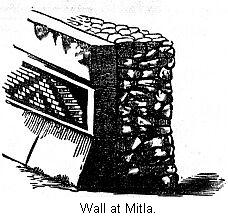 Mr. Bandelier found, besides two artificial hills, traces
of thirty-nine distinct edifices, and, as he thinks these are all the
buildings that ever stood there, it is manifest that this was not a city
in our sense of the word. Two or three of the buildings were constructed
of adobe, plastered, and painted red. The others were built of stone. Of
these latter the greater part stands upon the ground, but a few are built
upon elevated terraces, composed of stone and earth heaped together and
faced with stone. In one group of four buildings the terraced foundation
contained a basement—in one case, at least—in the form of a
cross. The purpose of this cellar or basement left in the artificial
foundation is unknown. Some think they were used for burial purposes but
it is more likely they were general store-rooms. The arrangement of these
buildings was the same as elsewhere. That is, so placed as to inclose a
court. This illustration shows us the method of constructing the walls of
the building. We notice two distinct parts. The inner part is built of
broken stones laid in tolerably regular courses in clay. There was no
mortar used. This inner core is much the same sort of work as the masonry
in the pueblos of Arizona. A facing was put on over this inner core, which
served both for ornament and for strength. This illustration is a corner
of one of these buildings, and gives us in excellent idea of the peculiar
ornamentation employed at Mitla. Mr. Bancroft gives us a clear idea of how
this facing was put on: “First, a double tier of very large blocks are
placed as a base along the surface of the supporting mound, projecting two
or three feet from the line of the wall, the stones of the upper tier
sloping inward. On this base is erected a kind of framework of large, hewn
blocks with perfectly plain, unsculptured fronts, which divide the surface
of the wall into oblong panels of different dimensions.”43
Mr. Bandelier found, besides two artificial hills, traces
of thirty-nine distinct edifices, and, as he thinks these are all the
buildings that ever stood there, it is manifest that this was not a city
in our sense of the word. Two or three of the buildings were constructed
of adobe, plastered, and painted red. The others were built of stone. Of
these latter the greater part stands upon the ground, but a few are built
upon elevated terraces, composed of stone and earth heaped together and
faced with stone. In one group of four buildings the terraced foundation
contained a basement—in one case, at least—in the form of a
cross. The purpose of this cellar or basement left in the artificial
foundation is unknown. Some think they were used for burial purposes but
it is more likely they were general store-rooms. The arrangement of these
buildings was the same as elsewhere. That is, so placed as to inclose a
court. This illustration shows us the method of constructing the walls of
the building. We notice two distinct parts. The inner part is built of
broken stones laid in tolerably regular courses in clay. There was no
mortar used. This inner core is much the same sort of work as the masonry
in the pueblos of Arizona. A facing was put on over this inner core, which
served both for ornament and for strength. This illustration is a corner
of one of these buildings, and gives us in excellent idea of the peculiar
ornamentation employed at Mitla. Mr. Bancroft gives us a clear idea of how
this facing was put on: “First, a double tier of very large blocks are
placed as a base along the surface of the supporting mound, projecting two
or three feet from the line of the wall, the stones of the upper tier
sloping inward. On this base is erected a kind of framework of large, hewn
blocks with perfectly plain, unsculptured fronts, which divide the surface
of the wall into oblong panels of different dimensions.”43
It would, then, seem as if the panels were thickly coated with clay. Into this clay was then driven small, smoothed blocks of wedge-shaped stones, in such a way as to cover them with geometrical ornamentations, which, though not absolutely symmetrical, present a striking and agreeable appearance. Each section of the wall presents a different pattern, but this difference is so slight that the general effect is harmonious.44 This mosaic ornamentation is found in some of the inner facings of the walls as well. In general, however, the walls on the inside were covered with mortar and painted.
Some of the blocks of stone forming the basement, the framework of the panels, and the lintels of the door are of great size, and the lintels were in some cases sculptured. One of the largest rooms at Mitla is represented in the preceding cut. The peculiar feature about it is the range of columns seen in the drawing. The inner plastering has fallen, exposing the rough wall. The columns are simple stone pillars, having neither chapter nor base. It is generally supposed that these pillars supported the roof. As in the pueblo buildings to the north, as well as the Toltec house at Tulla, the roof was probably formed of the trunks of small-sized trees laid close together and covered with clay and cement.
We have as yet not seen any thing in these ruins sufficiently striking to justify the somewhat extravagant assertion made about them. The ornamentation is indeed peculiar and tasteful, but aside from that, we see no reason to speak of them as magnificent structures. The buildings are low and narrow; the rooms are small, dark, and illy ventilated. “Light could only have been admitted from one side, and the apertures for this purpose were neither lofty nor broad.” Mr. Bandelier fittingly characterizes the ruins as the “barbaric effort of a barbarous people.” Those scholars who think we have in Mexico the ruins of a highly civilized, powerful empire, regard these ruins as in some way set aside for mourning purposes of the royal family. “According to tradition,” says Mayer, “They were . . . intended as the places of sepulture for their princes. At the death of members of the royal family, their bodies were entombed in the vaults beneath; and the sovereign and his relatives retired to mourn over the departed scion in the chambers above these solemn abodes, screened by dark and silent groves from the public eye.” Another tradition devotes the edifices to a sect of priests, whose duty it was to live in perfect seclusion, and offer expiatory sacrifices for the royal dead who reposed in the vaults beneath.45
With all due respect to traditions, we think a much more reasonable explanation can be given. One reason why Mitla has been regarded as such an important place, is because it has been assumed that there were no other ruins like it, especially in Mexico. This, according to Mr. Bandelier, is a mistake. He examined one or two quite similar ruins in the near vicinity, and at another place he found a group of ruins in every way worthy of being compared to Mitla, but he was not able to examine them. So we must either decide there were a number of these “Sepulchral Palaces,” or else adopt some simpler explanation. But still stronger is the fact, that at the time of the conquest, Mitla was an inhabited pueblo. We have the account of a monk who visited it in 1533. He mentions in particular the ornamentation of the walls, the huge doorways, and the hall with the pillars. It is extremely probable that if it was devoted to any such purpose, some mention would have been made of it. We think Mr. Bandelier is right when he concludes that these structures are communal buildings, but little different from others.
As for the other ruins in Oaxaca, we will not stop longer to examine them. At Guingola, in the southern part of the State, was found a ruined settlement. The principal ruins were located on the summit of a fortified hill, which, from a brief description, must have been much like those we have already described.
We will now turn our attention to the Gulf-coast. The whole coast region abounds in great numbers of ruins. It is in this section, however, that tribes of people belonging to a different family than the Nahua tribes, were living at no very distant time in the past. So it is not doubted but that many of these ruined structures, perhaps the majority of them, were the works of their hand. When Cortez landed on the coast, in the neighborhood of Vera Cruz, he was received by the Totonacas. These were a Nahua tribe, but both to the north and south of them were Maya tribes.46 We will, however, describe the ruins in the present State of Vera Cruz under one head.
We notice, on the coast, the Gulf of Tampico, into which pours the river Panuco. From an antiquarian point of view, this is a most interesting locality. It was here that a feeble remnant of De Soto’s disastrous expedition found a refuge in 1543. And it was here that, at a far earlier period, according to the dim, uncertain light of tradition, the ancestors of some of the civilized nations of Mexico made their first appearance; of this, more hereafter. Certain it is that, commencing at this river, we find ourselves in a land of ruins.
It is to be regretted, however, that our information is not definite in regard to them. We are told, in general terms, of a great field of ruins, but in the absence of cuts, can scarcely give a clear description of them. On the northern bank of the Panuco, Mr. Norman found at one place the ground “strewn with hewn blocks of stone and fragments of pottery and obsidian.”47 They were found over an area of several square miles. Many of the blocks of stone were ornamented with sculpture. They imply the presence, in former times, of some kind of buildings. We can not form an opinion as to the number, style, etc. Mr. Norman regards them as the ruins of a great city, the site of which is now covered with a heavy forest.
Amongst these ruins are about twenty mounds, both circular and square, from six to twenty-five feet in height. Some authorities think that the Mound Builders went by water from near the mouth of the Mississippi to this region. To such as place any real reliance on this theory, these mounds are full of interest. But some details of construction would seem to indicate a different people as their builders than those who reared mounds in the Gulf States of the Mississippi Valley. The main body of the mound is earth, but they are faced with hewn blocks of sandstone, eighteen inches square and six inches thick. Although one of the mounds is quite large, covering two acres, yet in but one instance was a terraced arrangement noticed. As a general thing, the facing of stone had fallen to the ground, and some of the smaller mounds had caved in; showing, perhaps, that they were used as burial mounds. In other cases the mounds had entirely disappeared, leaving the stone facing on the surface. This may account for some of the stones scattered over the surface. A few miles away there is another group of circular mounds.
Across the river in Vera Cruz, from very slight mention, we gather that, substantially, the same kind of ruins occur. At Chacuaco the ruins are said to cover three square leagues—but we have no further account of them than that. Small relics of aboriginal art are said to be common, and mention is made of mounds. The antiquities of Vera Cruz are a topic about which it is very difficult to form correct ideas. It will be noticed that it presents a long stretch of country to the Gulf. The land near the coast is low, and very unhealthy. About thirty miles from the coast we strike the slope of the mountains bounding the great interior plateau. This section is fertile and healthy, and was, evidently, thickly settled in early times. We must remember that it is always in a mountainous section of country that a people make their last stand against an invading foe. It was in these mountain chains where the Maya tribes made their last stand against the invading Nahua tribes, and even this line was pierced through by the Tonacas.
It is not strange, then, to find abundant evidence of former occupation in all this section of country. One thing in its favor was the number of easily defended positions. The country is cut up by deep ravines. The early inhabitants used all the land that was at all available for agricultural purposes. On steep slopes they ran terraces to prevent the soil from washing. In the smaller ravines they located great numbers of water-tanks, from which, in the dry season, they procured water to irrigate their land. Of this section, we are told, “there is hardly a foot of ground in the whole State of Vera Cruz in which, by excavation, either a broken obsidian knife, or a broken piece of pottery, is not found. The whole country is intersected with parallel lines of stones, which were intended, during the heavy showers of the rainy season, to keep the earth from washing away. The number of these lines of stones shows clearly that even the poorest land, which nobody in our day would cultivate, was put under requisition by them.”48
They no less conclusively show that a considerable body of people had here been pressed by foreign invasion into a small, contracted space. It is useless to attempt a more particular description of these ruins. In the absence of cuts, the description would only prove tiresome. Pyramids, both with and without buildings on their summits, are comparatively frequent. As they would be noticed where other ruins would be overlooked, we have some cuts of the more remarkable ones. The preceding cut is the pyramid at Papantla.
The base is ninety feet square, and the pyramid has seven stories, as seen in the engraving. Only the last one contains apartments; with this exception, the pyramid is solid. Stairways in front lead up to the top. Mr. Mayer says “there is no doubt, from the mass of ruins spread over the plain, that the city was more than a mile and a half in circuit.” But we have no further description of them. Other localities with pyramids and ruins are known. At Tusapan occurs this ruin, which may be taken as a type of all the pyramids in this region. This was the only building remaining standing at Tusapan; but, from the ruins lying about, this is not supposed to have been the grandest structure there.
This will complete what we have to say of the ruins in territory occupied by the Nahua tribes. Other remains of their handiwork we will examine when we treat of their customs and manners. We will now turn our attention to the ruins in the territory of the Mayas. As the culture of these two people is so similar, we will devote but one chapter to the two. Comparison is the great means we have of fixing in the mind points we wish to keep. We have to admit that the treatment of the Nahua ruins is not very satisfactory; but it is difficult to obtain accurate information in regard to them. We think what resemblance can be traced, is more in the direction of the Pueblo tribes than of the Mound Builders. The first ruin found in Mexico, Casa Grandes, in Chihuahua, is evidently but another station of Pueblo tribes.
The fortified hill at Quemada is apparently but a further development of the clustering houses with the little inclosures noticed on the Gila. Mounds are, indeed, mentioned in a number of localities, but they seem to be more nearly related to the terraced foundation of buildings observed in Arizona than to the mounds of the Mississippi Valley. Surely as striking a ruin as any is at Mitla, but Mr. Bandelier does not hesitate to compare it with some in the Pueblo country. Now, it is very unsafe and very unsatisfactory to trace resemblances of this kind, and we do not assign any especial value to them. But it only shows that, so far as this method is of use, it points to a closer connection with the Pueblo tribes than with the Mound Builders.
REFERENCES
The geographical location of the Maya tribes—Description of Copan—Statue at Copan—Altars at Copan—Ruins at Quiriga Patinamit—Utatlan—Description of Palenque—The Palace at Palenque—The Temple of the Three Inscriptions—Temple of the Beau-relief—Temple of the Cross—Temple of the Sun—Maler’s Temple of the Cross—Significance of the Palenque crosses—Statue at Palenque—Other ruins in Tobasco and Chiapas—Ruins in Yucatan—Uxmal—The Governor’s House—The Nunnery—Room in Nunnery—The sculptured façades—Temple at Uxmal—Kabah—Zayi—Labna—Labphak—Chichen-Itza—The Nunnery—The Castillo—The Gymnasium—M. Le Plongon’s researches—The tradition of the Three Brothers—Chaac-mol—Antiquity of Chichen.
 the
Central American region of the Western Continent are found the ruins of
what are pronounced by all scholars to be the highest civilization, and
the most ancient in time, of any in the New World. There it arose,
flourished, and tottered to its fall. Its glory had departed, its cities
were a desolation, before the coming of the Spaniards. The explorer who
would visit them finds himself confronted with very great difficulties.
Their location is in a section of the country away from the beaten track
of travel. Their sites are overspread with the luxuriant vegetation of
tropical lands, through which the Indian’s machete must carve a passage.
The states in which they are situated are notorious for anarchy and
misrule, and the climate is such that it is dangerous for those not
acclimated to venture thither during a large part of the year. So it is
not strange that but few have wandered among these ruins, and described
them to the world at large.
the
Central American region of the Western Continent are found the ruins of
what are pronounced by all scholars to be the highest civilization, and
the most ancient in time, of any in the New World. There it arose,
flourished, and tottered to its fall. Its glory had departed, its cities
were a desolation, before the coming of the Spaniards. The explorer who
would visit them finds himself confronted with very great difficulties.
Their location is in a section of the country away from the beaten track
of travel. Their sites are overspread with the luxuriant vegetation of
tropical lands, through which the Indian’s machete must carve a passage.
The states in which they are situated are notorious for anarchy and
misrule, and the climate is such that it is dangerous for those not
acclimated to venture thither during a large part of the year. So it is
not strange that but few have wandered among these ruins, and described
them to the world at large.
But the accounts thus presented are interesting in the extreme, though they have raised many questions that have thus far defied solution. There is no doubt but what there exist large groups of ruins not yet described, structures and monuments which might, perhaps, throw some light on a past that now seems hopelessly lost. But the ruins thus far described are so numerous, their similarity is so evident, that we feel we have but little to hope from such undiscovered ruins. There are, doubtless, richly ornamented façades, grotesquely sculptured statues, and hieroglyphic-covered altars, but they would prove as much of an enigma as those already known. Our only hope is that some fortunate scholar will yet discover a key by whose aid the hieroglyphics now known may be read. Then, but not until then, will the darkness that now enshrouds ancient Maya civilization be dissipated.
As will be seen from a glance at the map, the most important ruins are in the modern states of Honduras, Guatemala, Chiapas, and especially Yucatan, the northern portion of this peninsula being literally studded with them. The river Usumacinta and its numerous tributaries flowing in a northern direction through Chiapas is regarded as the original home of the civilization whose ruins we are now to describe. From whence the tribes came that first settled in this valley is as yet an unsettled point. We notice that we have here another instance of the influence that fertile river valleys exert upon tribes settling therein. The stories told us of the civilization that flourished in primitive times in the valleys of the Euphrates and the Nile are not more wonderful—the ruins perhaps not more impressive—than are the traditions still extant, or the material remains fallen in picturesque ruins, of the civilization that once on a time held sway in the Usumacinta Valley.
One of the most famous groups of ruins in this section of the country is that of Copan, situated in Honduras, but very near the Guatemala line. This is commonly spoken of as “the oldest city in America,”1 and has some evidence to substantiate this claim. Whatever be its relative antiquity, it is doubtless very old, as it was probably in ruins at the time of the conquest. There are several facts going to prove this assertion. When Cortez, in 1524, made his march to Honduras, he passed within a few leagues of this place. He makes no mention of it, which he would have been very apt to do had it been inhabited. Fifty years later Garcia De Palacio made a report on these ruins to the king of Spain. According to this report, it was then in much the same state as described by modern travelers, and the same mystery surrounded it, showing that it must have been in ruin much longer than the short space of time from the conquest to the date of his report. But few travelers have visited Copan, and fewer still have left a good description of it. Mr. Stephens, accompanied by Mr. Catherwood, explored it in 1839, and this constitutes our main source of information.2
We feel that here is the place to speak a word of caution. In common with other writers, we have used the word cities, in speaking of the ruins of Maya civilization. In view of the criticisms that have been freely expressed by some of the best scholars of American ethnology, as to the generally accepted view of the civilization of the Mexican and Central American races, it is necessary to be on our guard as to the language employed. In the case of Copan, for instance, all the remains known, occur in an irregularly inclosed space of about nine hundred by sixteen hundred feet, while but a portion of such inclosed space is covered by the ruins themselves. Now it can, of course, be said that this space contains simply the remains of public buildings, so to speak—such as temples, palaces, and others—while the habitations of the great body of the common people, poorly built, and located outside of this area, may have vanished away. But, on the other hand, it may also be that in this small area we have the ruins of all the buildings that ever stood at Copan. In which case the word city is a misnomer; pueblo would be more appropriate. But looking at them in the simplest light, we shall find there is still a great deal to excite astonishment. Fragments of the wall originally inclosing the area in which are located the temple pyramids and statues, are still to be found. Very few particulars have been given of this wall. It was made of blocks of stone, and seems to have been twenty-five feet thick at the base, but the height is not given. The northern half of this area is occupied by a large terrace, somewhat irregular in outline, and impressed Mr. Stephens with the idea that it had not all been erected at the same time, but additions had been made from time to time. Instead of describing the ruins in full, we will let the illustration speak for itself. The dimensions of this terrace are, six hundred and twenty-four feet by eight hundred and nine feet. The side fronting on the river was perpendicular. The other three sides consist of ranges of steps and pyramidal structures. All these steps and pyramidal sides were once painted. The general height of the terrace was about seventy feet above the surface of the ground.
Though Mr. Stephens warns us that this terrace was not as large as the base of the Pyramid of Ghizeh, still it must have required an immense amount of work, since careful computations show that over twenty-six million cubic feet of stone were used in its construction. This stone was brought from the quarries two miles away. We must not forget that this work was performed by a people destitute of metallic tools.
On the terrace were the ruins of four pyramids, one rising to the height of one hundred and twenty-two feet. The surface of the terrace was not continuous. In two places there were court-yards, or sunken areas. The larger is ninety by one hundred and forty-four feet, and has a narrow passage-way leading into it from the north. Whatever buildings that once stood on this terrace, have vanished away. At one place only, on the terrace, fronting the river, are the remains of small, circular towers, thought to have been watch towers. The whole terrace was thickly overgrown by trees of a tropical growth. Mr Stephens noticed two immense Ceiba trees growing from the very summit of one of the pyramids. This structure has been called the Temple, and a great many surmises have been made as to the scenes once enacted there. If analogous to other structures in Central America, this terrace was surmounted with buildings. They may have been temples or palaces, or they may have been communal houses, not unlike those of New Mexico, to the north.
But of more importance than the ruins of this temple, are the statues and altars peculiar to this region. Mr. Stephens found fourteen of them. It seems very singular, indeed, to come upon these statues in the depth of a Central American forest, and they give us an idea of the state of advancement of these old tribes that nothing else does. They raise many queries. Why is it that so many are found here—so few elsewhere? Are they statues of noted personages, or idols? We are powerless to answer these questions. These secrets will only be yielded up when the hieroglyphics with which they are covered shall be read.
The places where these statues are found is seen to the right of the main body of ruins. It will be seen that only one is within the terrace area of the temple. Three others are situated near it, but the majority are near the southern end of the inclosure. We are not given the dimensions of all, but the smallest one given is eleven feet, eight inches high, by three feet, four inches width and depth; the largest, thirteen feet high, four feet wide, and three feet deep. No inconsiderable part of the labor on the statues must have been that of quarrying the large blocks of stone out of which they were carved, and transporting them to the place where found. They came from the same quarry as the other stones used in building; and so were transported a distance of about two miles. Mr. Stephens found, about midway to the quarry, a gigantic block, “which was probably on its way thither, to be carved and set up as an ornament, when the labors of the workmen were arrested.”
There is such a similarity in all these statues that a representation of one will suffice. This is the representation of one of the largest statues. It is seen to be standing on a sort of pedestal. A face occupies a central position on the front. Some of the faces have what may be a representation of a beard. In all but one, the expression is calm and peaceful. They were once painted red. Traces of color were still visible at the time of Mr. Stephens’s visit. In all but one the hands are represented as placed back to back on the breast.
The complicated headdress and the ornaments on the robes utterly defy description. The sides and back of the statues are covered with hieroglyphics, though now and then a face is introduced. A side view of another statue shows this feature. All are convinced that we have in these hieroglyphics an explanation of each statue, but what it is, is yet unknown. Mr. Stephens says: “Of the moral effect of the monuments themselves, standing as they do, in the depths of a tropical forest, silent and solemn, strange in design, excellent in sculpture, rich in ornament, different from the works of any other people; their uses and purposes—their whole history—so entirely unknown, with hieroglyphics explaining all, but perfectly unintelligible, I shall not pretend to convey any idea. Often the imagination was pained in gazing at them. The tone which pervades the ruins is that of deep solemnity.”
In front of most of the statues is what is called an altar, which would seem to imply that these monuments are really idols. “The altars, like the idols, are all of a single block of stone. In general, they are not so richly ornamented, and are more faded and worn, or covered with moss. Some were completely buried, and of others it was difficult to make out more than the form. All differed in position, and doubtless had some distinct and peculiar reference to the idols before which they stood.”
These altars are strongly suggestive of sacrificial scenes. The altar before the idol found in the court-yard on the terrace of the temple, is one of the most interesting objects found at Copan. It is six feet square and four feet high. The top is divided into thirty-six tablets of hieroglyphics which we may well imagine records some events in the history of this mysterious people. Each side has carved on it four human figures. They are generally all represented as facing the same way. We give an illustration of the east side. Each individual is sitting cross-legged on a hieroglyphic, and has a ponderous head-dress.
Mr Stephens found the quadrangle at the south-east corner of the plan to be thickly strewn with fragments of fine sculpture. Amongst the rest was a “remarkable portrait.” (Shown later.) “It is probably the portrait of some king, chieftain, or sage. The mouth is injured, and part of the ornament over the wreath that crowns the head. The expression is noble and severe, and the whole character shows a close imitation of nature.” Colonel Gallindo, who visited Copan in 1835, discovered a vault very near where the circular towers are located, on the terrace fronting the river. This vault was five feet wide, ten feet long, and four feet high. It was used for burial purposes. Over fifty vessels of red pottery, containing human bones, were found in it.3
In this hasty sketch we do not feel that we have done justice to Copan. It is, however, all the space we can devote to this interesting ruin. We call special attention to the hieroglyphics on the altar and the statues. We will find other hieroglyphics at Palenque, and in Yucatan, evidently derived from these.4 They have been made the subject of very interesting study, and we will refer to them again at another page. We also notice especially the fact that we have no ruined buildings at Copan. In this respect it stands almost alone among the Central American ruins. The distinguishing features, however, are the carved obelisks. They are evidently not the work of rude, people. Mr. Stephens, who was every way qualified to judge, declares that some of them “are in every way equal to the finest Egyptian workmanship, and that with the best instruments of modern times, it would be impossible to cut stone more perfectly.”
A dark mystery hangs over these ruins. Their builders are unknown. Whether we have here some temple sacred to the gods of the Maya pantheon or some palace made resplendent for royal owners, who can tell? Whether these are the ruins of the more substantial public buildings of a great city, of which all other buildings have vanished—or whether this is the remains of a prosperous pueblo, whose communal houses crowded the terraces, with sacrificial altars on the lofty pyramids—who knows? At long intervals a passing traveler visits them, ponders over their fast disappearing ruins, and goes his way. The veil drops, the tropical forest more securely environs them—and thus the years come and go over the ruins of Copan.
Nearly north from Copan (see map), about half-way to the coast, on the bank of the river Montagua, is found a small hamlet, by the name of Quiriga. Mr. Stephens, when traveling in the country in 1840, after many careful inquiries, heard of ruins near that place. Though not able to explore them himself, his companion, Mr. Catherwood, did. The result of this gentleman’s exertion makes us acquainted with another group of ruins, in many respects similar to those of Copan, though apparently much farther gone in decay. His visit was a very hurried one; and he was not able to clear the moss away from the statues so as to draw them as it should be done.5
We must notice that, though called a city, all the monuments and fragments thus far brought to light are scattered over a space of some three thousand square feet. No plan has been given. We gather, however, from Stephens’s work, that a pyramidal wall inclosed the ruins, as at Copan.6 No dimensions of this wall are given. Within the inclosure (if such it was) was a terrace. Here, again, dimensions are not given; but we are told it was about twenty-five feet to the top, and that the steps were, in some places, still perfect. It was constructed of neatly cut sandstone blocks. No monuments or altars were observed on the terrace, but in close proximity to it were fragments of sculpture. At another place near the wall, Mr. Catherwood mentions eight standing statues, one fallen one, and saw fragments of at least thirteen others. They are represented as being very similar to those of Copan, but two or three times as high. The hieroglyphics are pronounced identical with those already described.
There are no traditions extant of these ruins. No thorough exploration has been made. A city may have stood there; but, if so, its name is lost, its history unknown. “For centuries it has lain as completely buried as if covered with the lava of Vesuvius. Every traveler from Yzabel to Guatemala has passed within three hours of it. We ourselves have done the same; and yet there it lay, like the rock-built city of Edom, unvisited, unsought, and utterly unknown.”
A large extent of territory in Guatemala and Yucatan is as yet an unknown country, or at least has never been thoroughly explored. Strange stories have flitted here and there of wonders yet to be seen. The country swarms with savages, living in much the same state as they were when the Spaniards invaded the country. They have never been conquered, and, in the rugged fastnesses of their land, bid defiance to all attempts to civilize them. From all we can learn, there are numerous groups of ruins scattered here and there—but of their nature we are, as yet, mostly in the dark.
We have, indeed, historical notices of a few places; but, as the color of an object is the same as that of the medium through which it is viewed, we can not help thinking that the glamour of romance, which the early Spanish writers threw around all their transactions in the New World, has woefully distorted these sketches. This same effect is to be noticed in all the descriptions of the ruins. Where one party sees the ruins of imperial cities, another can detect but the ruins of imposing pueblos, with their temples and pyramids. It can be truthfully stated, that this is a land of ruins. Every few leagues, as far as it has been explored, are the remains of structures that excite astonishment.
The meager reports given us raise our curiosity, but fail to satisfy it. Almost all explorers relate stories of the existence of an aboriginal city. The location of this city shifts from place to place; always, however, in a section of country where no white men are allowed to intrude. The Curé of Santa Cruz, in whom Mr. Stephens expressed confidence, declared that he had, years before, climbed to the summit of a lofty sierra, and then “he looked over an immense plain, extending to Yucatan and the Gulf of Mexico, and saw, at a great distance, a large city, spread over a great space, with turrets white and glittering in the sun.” We are afraid a search for this mythical city would be attended with much the same results as rewards the child’s pursuit of a golden treasure at the end of the rainbow.
As a sample of known ruins, we might cite two in the immediate neighborhood of Quirigua. At the distance of a few leagues, both above and below this latter place, are the remains of former settlements. The accounts are very brief. Of the ruins below, we are informed that they consist of the remains of a quadrilateral pyramid, with traced sides, up which steps lead to the summit platform, where débris of hewn stone are enveloped in dense vegetation.” Of the ruins located above Quirigua, we are simply told “of a large area covered with aboriginal relics—in the form of ruined stone structures, vases and idols of burned clay, and monoliths, buried for the most part in the earth.”
These descriptions will serve as samples of many others, and, though they are interesting in their way, we are afraid they would grow tiresome by repetition. We will, therefore, only make mention of one or two important points; premising, however, that, beyond a doubt, similar ruins are scattered up and down the river valleys of the entire country.7
Two cities of ancient Guatemala especially mentioned by Spanish writers are Utatlan and Patinamit. Here, if we may believe their recitals, were the capitals of two powerful monarchies. The pictures they draw for us are those of cities of Oriental magnificence. The system of government they describe is that of absolute monarchy, founded on feudalism. We will briefly glance at the remains of these “imperial cities.” Their location is seen on the map. The approach to Patinamit is very difficult, indeed. Situated on a high table-land, it commands an almost boundless view. On every side are immense ravines, and the only way of entering it was by a narrow passage cut in the side of the ravine, twenty or thirty feet deep, and not wide enough for two horsemen to ride abreast.
Mr. Stephens mentions coming to a wall of stone, but broken and confused. The ground beyond was covered with mounds of ruins, and in one place he saw the foundations of two buildings, one of them being one hundred and fifty by fifty feet. He does not give us the area covered by the ruins, but there is nothing in his description to make us think it very large in extent. He also quotes for us Fuentes’s description of this same place, written, however, one hundred and forty years earlier. In this he speaks of the remains of a magnificent building, perfectly square, each side measuring one hundred paces, constructed of hewn stones, extremely well put together. In front of the building is a large square, on one side of which stand the ruins of a sumptuous palace; and near to it are the foundations of several houses.8 He also asserts that traces of streets could still be seen, and that they were straight and spacious, crossing each other at right angles. Fuentes certainly had remarkable eyes. He wrote a description of Copan which not only differs from all accounts of modern travelers, but also from the still earlier description by Garcia De Palacio.9
Patinamit means “The City,” and is represented as the capital city of the Cakchiquel “monarchy.” The site of the city was certainly admirably chosen for defense, and we have no doubt but what here was the head-quarters of a powerful tribe of Indians; but, until scholars have settled some very disputed points about the civilization of the Central American nations, we must be cautious in the use of the words monarchy and palaces as applied to these old people or these ruins.
Thirty-five or forty miles north-eastward from Patinamit we come to the ruins of the most renowned city in Guatemala at the time of the conquest. This was Utatlan, the Quiche capital, a city which the Spaniards compared to Mexico in magnificence, and which, at the time of its destruction, was at its zenith of prosperity. The location was very similar to that of Patinamit. It also stood on an elevated plateau, with immense ravines on every side. It was approached only at one point, and guarding this one point of approach was a line of fortifications. They consisted of the remains of stone buildings, probably towers. The stones were well cut and laid together. These fortifications were united by a ditch.
Within this line of towers stood a structure, generally regarded as a fort, directly guarding the line of approach. Steps led up a pyramidal structure having three terraces, one over the other. The top was protected by a wall of stone, and from the center rose a tower. Beyond this fort was the ruins of the city. Mr. Stephens describes a large ruin which is called The Palace. It is said, in round numbers, to have been eleven hundred by twenty-two hundred feet. As this area is more than fifty-five acres in extent, we can see it was not a palace in our sense of the word. The stones of which it was composed have been largely removed to build the modern town of Santa Cruz. But the floor could still be traced, and some remains of partition walls. The floor was still covered with hard cement.
Adjoining the palace was a large plaza or court-yard, also cemented, in the center of which was the ruins of a fountain. Another structure still remaining was a small pyramid, at the top of which was probably a temple, or, at least, a place of sacrifice. No hieroglyphics or statues have been found here. A few terra-cotta figures have been found, and one small gold image. It would seem from this description that the ruins simply consist of a few large structures. For aught we know, they may have been communal houses.
Mr. Stephens, however, condenses Fuentes’s account, which is truly wonderful. According to him, the center of the city was occupied by the royal palaces, around which were grouped the houses of the nobles. The extremities were inhabited by the plebeians. He tells us there were many sumptuous buildings, the most superb of which was a seminary, where between five and six thousand children were educated at royal expense. The palace was formed of hewn stones of various colors. There were six principal divisions. In one was lodged the king’s body-guard, in the second the princes and the relatives of the king, and so forth.
It is not necessary to remind the reader that it is very doubtful whether such a state of things ever existed. It is related, for instance, that the king marched from Utatlan with seventy-two thousand warriors to repel the attack of Alvarade. This would indicate a total population of between two and three hundred thousand souls. It seems to us that a city of that size would not so completely disappear in a little over three centuries that a careful explorer could find only the ruins of a few large buildings.
We do not feel that we have done near justice to the ruins of Guatemala. As we have before remarked, there are, doubtless, many ruins not yet brought to light. They are rapidly disappearing, and we do not know that we will ever possess a description of them, or understand their real import. The light of history, indeed, fell on the two groups of ruins last described. But the Spanish writers were totally unacquainted with Indian society, and may, therefore, have widely erred in applying to their government terms suited only to European ideas of the sixteenth century. And it is not doubted but that their estimate of the population of the towns, and of the enemies with which they had to contend, were often greatly overdrawn. In short, the remains themselves are remarkable, but every ruined pyramid is not necessarily the remains of a great very great city, nor every large building in ruins necessarily a palace.
Going northward out of Guatemala, we pass into the modern state of Chiapas. This is described a country of great natural beauty and fertility. And here it is that we meet with a group of ruins which have been an object of great interest to the scientific world. They have been carefully studied and described, and many theories have been enunciated as to their builders, their history, and civilization. The place is supposed to have been deserted and in ruins when Cortez landed in the country. At any rate, he marched within a few leagues of it, but, as in the case of Copan, he is silent in regard to it.
They take their name from the modern town of Palenque, near which they are located. This town was founded in 1564. It was once a place of considerable importance, but its trade has died away, and now it would not be known were it not for the ruins of a former people located near it. Though distant from the village only some eight miles, nearly two centuries went by before their existence was known. Had they been visited and described at the time of the founding of the village, no doubt much that is now mysterious in regard to them would have been cleared away. But for two centuries they were allowed to sleep undisturbed in the depths of the forest, and in that time the elements played sad havoc with the buildings, inscriptions, and ornaments. What are left are not sufficient to impart full information. Imagination is too apt to supply the details, and these ruins, grand in proportion, wonderful in location, enwrapt by dense forests, visited by the storms of tropical lands, are made to do service in setting forth a picture of society and times which we are afraid has but little real foundation to rest upon.
The ruins of Palenque are the first which awakened attention to the existence of ancient ruins in America, and, therefore, it may not come amiss to state more particularly the circumstances of their first discovery. The existence of an aboriginal city in this locality was entirely unknown; there were no traditions even that it had ever existed. Of course the natives of the modern town of Palenque must have known of their existence, but no account of them was published. They are said to have been discovered in 1750 by a party of traveling Spaniards. This statement Mr. Stephens doubts. The first account was published in 1784. The Spanish authorities finally ordered an exploration. This was made under the auspices of Captain Del Rio, who arrived on the ground in 1787. His report was locked up in the government archives, and was not made public until 1822.
The reception of this report illustrates how little interest is taken in American antiquities. It was scarcely noticed by the Scientific World. As Mr. Stephens remarks, “If a like discovery had been made in Italy, Greece, Egypt, or Asia, within the reach of European travel, it would have created an interest not inferior to the discovery of Herculaneum, or Pompeii, or the ruins of Paestum.” But, from some cause, so little notice was taken of this report that in 1831 the explorations of Colonel Galindo, whose works we have referred to at Copan, was spoken of as a new discovery. In the meantime another government expedition under the direction of Captain Dupaix explored these ruins in 1807. Owing to the wars in Europe and the revolution in Mexico, his report was not published until 1835. Mr. Stephens visited the ruins in 1840. His account, profusely illustrated, was the means of making known to a large class of readers the wonderful nature of the ruins, not only at Palenque, but in Yucatan as well.
In this outline we have given an account of the early explorations at Palenque. Private individuals have visited them, and governments have organized exploring expeditions, and by both pencil and pen made us familiar with them. As to the remains actually in existence, these accounts agree fairly well, but we have some perplexing differences as to the area covered by the ruins. Where the early explorers could trace the ruins of a large city modern travelers can find but a few ruined structures, which, however, excite our liveliest interest. One of the earliest accounts speaks of the ruins of over two hundred buildings. Another speaks of them as covering an area of many square miles. Mr. Stephens thinks a few acres would suffice.
From the researches of M. Charney, it would seem that the ruins are really scattered over quite an area. His exploration made in 1881, seems to confirm the older writers. With abundant means at his command, he was enabled to explore the forest, and he found many ruins which escaped the other observers. According to him, the ruins are scattered over an area extending about one mile and a quarter from north to south, and about one and three-fourths from east to west. Throughout this space, the ruined structures were in all respects similar to those previously described, consisting altogether of what he calls palaces and temples.10
There seems to be no especial order in the arrangement of the buildings. They are separated by quite an interval, excepting to the south of the palace, where there are groups of buildings near together. The fact that such careful explorers as Stephens and Waldeck failed to notice these additional ruins, gives us a faint idea of the density of the forest.
The plan represents the distribution and relative size of the ruins of which we have definite descriptions. Those having no numbers are some of the groups that were passed by as of no account. We must understand that so dense is the forest that not one of these structures is visible from its neighbors. Where the trees are cut down, as they have been several times, only a few years are necessary for it to regain its former density, and each explorer must begin anew.
The largest structure, marked one on the plan, is known as the palace. This is only a conjectural name. We have no reason, except its size, to suppose it the residence of a royal owner. Its base is a pyramid which, Mr. Stephens tells us, is of oblong form, forty feet high, three hundred and ten feet in front and rear, and two hundred and sixty feet on each side. The pyramid was formerly faced with stone, which has been thrown down by the growth of trees, so that its form is hardly distinguishable. The sides may once have been covered with cement, and perhaps painted. Dupaix, who examined these ruins in 1808, so represents them. Mr. Stephens expressly states that the eastern front was the principal entrance. Mr. Waldeck, however, detected traces of stairways on the northern side. M. Charney has settled the point, that the principal entrance was on the northern side.
The principal bulk of this pyramid seems to have been earth; the facing only being composed of stone. Mr. Bancroft thinks he has discovered evidence that there were four or more thick foundation-walls built from the surface of the ground to support the buildings on top of the pyramid; that the space between these walls was subsequently filled with earth, and that sloping embankments, faced with stones, were built upon the outside.11 The summit platform of this pyramid supports the building, or collection of buildings, known as the palace. Though generally spoken of as one building, we think we have here the ruins of a number of buildings.
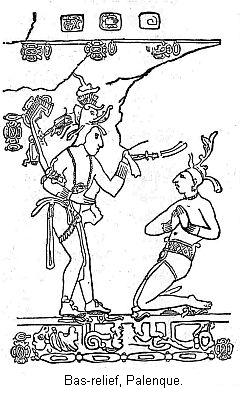
Probably the original inhabitants built a continuous structure close to the edge of the platform, leaving the interior for an open court. Subsequently, as population increased, rather than resort to the labor necessary to raise a new pyramidal structure, they erected other buildings on this court. From the plan, as given by Mr. Stephens, there seems to have been no less than five such put up, besides the tower. Thus covering the platform with a somewhat confused mass of buildings, and, instead of the large open court, there were left only three narrow courts, and one somewhat larger—seventy by eighty feet.12 The building erected near the edge of the platform, inclosing the court, was some two hundred and twenty-eight feet on its east and west sides, by one hundred and eighty feet on its north and south sides, and about thirty feet high.
Our general view, taken from Mr. Stephens’s works, represents the ruined eastern front of this building, surmounting the pyramid. Trees are seen growing all over the ruins. The outer wall is pierced by numerous doorways which, being somewhat wider than the space that separates them, gives to the whole the appearance of a portico with wide piers: no remains of the doors themselves have been discovered. Drilled holes in the projecting cornice, immediately above the doorway, gave Mr. Stephens the impression that an immense cotton curtain, perhaps painted in a style corresponding with the ornaments, had been extended the whole front, which was raised or lowered, according to the weather. The lintels of the doors were of wood. They had long since vanished, and the stones over the doorway fallen down. Of the piers separating the doorways, only fifteen were found standing, but the crumbling remains of the others were readily traced on the ruins.
Each of the standing piers, and presumably all the others, was ornamented with a bas-relief in stucco. This cut gives us a good example of this style of ornamentation. We notice portions of a richly ornamented border. This stucco work consists of human figures in various attitudes, having a variety of dress, ornaments, and insignia. The stucco is said to be nearly as hard as the stone itself. Traces of paint, with which the figures were once ornamented, were still to be seen. The conjectures in regard to these figures, have been innumerable. Vividly painted, and placed in a conspicuous place on the wall, we may be very sure they were full of significance to the builders. Three hieroglyphics are placed over the head of each group, but so far, they are as little understood as the figures themselves. We can imagine the effect, when the building was still perfect and entire, and all the piers were thus ornamented.
Passing to the top of the pyramid, we find the construction of the building whose outer wall we have been describing, to be substantially as follows: Three parallel walls, from two to three feet in thickness, composed of hewn stones, were erected about nine feet apart. At the height of ten feet, the walls commenced approaching each other; not, however, in an arch, for this was unknown, but in a triangular manner, the stones in each course projecting a little farther out. This cut represents a cross-section of the buildings, and shows also the slight cornice. All inequalities in the surface, as here represented, were then filled with cement, thus furnishing a smooth surface, which was then painted. The two outer walls were plentifully supplied with doorways; the central wall had but few. We are only given the description of one, which may not apply to all. This one, opposite the entrance on the east side, has a trefoil-shaped arch over the door, thus giving it this shape. Besides the few doorways, the central wall had numerous depressions, or niches, some of which served for ventilation, others for the support of beams, and perhaps others as receptacles for torches or idols. This principle of construction is substantially the same for all the buildings in the interior of the court, and indeed for all the buildings at Palenque.
Passing through the doorway just described, we come into the second corridor, and continuing through that, we come to what was once a large court; but, as we stated, it was subsequently built over so as to leave only a few courts. The largest one, eighty by seventy feet, is immediately before us, with a range of steps leading down into it. On each side of the stairway is sculptured, on stucco, a row of grim and gigantic figures. The engraving opposite represents the same. “They are adorned with rich headdresses and necklaces, but their attitude is that of pain and trouble. The design and anatomical proportions of the figures are faulty, but there is a force of expression about them which shows the skill and conceptive force of the artist.” From this small court stairways lead to the other buildings situated around it.
Stucco ornaments were plentiful. In one room, rather more richly ornamented than the others, was found a stone tablet, which is the only important piece of stone sculpture about the palace. We are told it is of hard stone, four feet long by three feet wide, and the sculpture is in bas-relief. It is set in the wall, and around it are the remains of a rich stucco border. Its significance is unknown. We must notice the small medallion, containing a face, suspended by a necklace of pearls from the neck of the principal figure. Mr. Stephens conjectures that it may represent the sun. Mr. Waldeck gives a drawing of this same subject; but instead of a face, he represents a cross.13
In the general view we see a tower rising up from the mass of ruins. Mr. Stephens speaks of this tower as follows. “This tower is conspicuous by its height and proportions, but an examination in detail is found unsatisfactory and uninteresting. The base is thirty feet square, and it has three stories. Entering over a heap of rubbish at the base, we found within another tower distinct from the outer one, and a stone staircase, so narrow that a large man could not ascend it. The staircase terminated against a dead stone ceiling, closing all further passages, the last step being only six or eight inches from it. For what purpose a staircase was carried up to such a bootless termination we could not conjecture. The whole tower was a substantial stone structure, and in its arrangements and purposes about as incomprehensible as the sculptured tablets.”
At the best we can do, it is hard to give such a description of this ruin that it can be readily understood, so we will present a restoration of it by a German artist,14 taken, however, from Mr. Bancroft’s work.15 This is very useful to us, since it conveys an idea of how the palace looked when it was complete. This view also includes a second structure, which we will examine soon. We notice the numerous doorways leading into the first corridor, the ornamental pier-like portions of the wall separating the doors, and the several buildings on the court; rising over all, the tower, which would have been better if the spire had been omitted.
This may have been a real palace. Its rooms may have been the habitations of royalty, and its corridors may have resounded with the tread of noble personages. M. Charney thinks the palace must have been the home of priests, and not kings—in fact, that it was a monastery, where the priests lived who ministered in the neighboring temples. He thinks Palenque was a holy place, a prehistoric Mecca. We must be cautious about accepting any theory until scholars are more agreed about the plan of government and society among the Central American tribes. But, whatever it was, many years have passed by since it was deserted. For centuries tropical storms have beat against the stuccoed figures. The court-yards and corridors are overrun with vegetation, and great trees are growing on the very top of the tower. So complete is the ruin that it is with difficulty the plan can be made out. The traveler, as he gazes upon it, can scarcely resist letting fancy restore the scene as it was before the hand of ruin had swept over it. In imagination he beholds it perfect in its amplitude and rich decoration, and occupied by the strange people whose portraits and figures may perhaps adorn its walls.
We must now describe the more important of the remaining structures of Palenque. Glancing at the plan for a moment, we see to the south-west of the palace a ruin marked 2. This is the site of a pyramidal structure known as the “Temple of the Three Tablets,” or “Temple of Inscriptions.” The pyramid is not as large in area as the palace, though of a greater height. It measures in height one hundred and ten feet on the slope, but we are not given the other dimensions. All the sides, which were very steep, seem to have had steps. Trees have grown up all over the pyramid and on the top of the building. This illustration, taken from Mr. Stephens’s work, can not fail to impress on us the luxuriant growth of tropical vegetation, and we can also see how such a growth must accelerate the ruin. The stone steps leading up the sides of the pyramid have been thrown down, and such must be in time the fate of the building itself. The building on the summit platform does not cover all the area. It is seventy-six feet front by twenty-five feet deep and about thirty-five feet high.
This small cut is a representation of the same building on a small scale, but cleared of trees and vines. The roof is seen to consist of two parts, sloping at different angles. The lower part was covered with stucco ornaments, which, though too much injured to be drawn, gave the impression that, when perfect and painted, they must have been rich and imposing. The upper slope is of solid masonry. “Along the top was a range of pillars, eighteen inches high and twelve apart, made of small pieces of stone laid in mortar and covered with stucco, having somewhat the appearance of a low, open balustrade.”
In this wood-cut the front wall, as in the palace, presents more the appearance of a row of piers than any thing else. Each of the corner piers contains on its surface hieroglyphics, each of which contains ninety-six squares. The other piers have ornaments of stucco similar to those we have already examined on the palace. In the building itself we have the usual three parallel walls. In this case, however, the second corridor is divided into three rooms, and there is no opening in the third wall, unless it be three small openings for air. The central wall is four or five feet thick.16 The interior is very plain.
The principal point of interest about the building, from whence the name is derived, is three tablets of hieroglyphics. One on either side of the principal doorway of the middle wall, and the third in the rear wall of the middle room. Being so similar to other tablets, it is not necessary to give separate cuts of them. The similarity to those of Copan is very great, the differences being in minute points, which only critical examination would detect. Mr. Stephens tells us that the Indians call this building a school. The priests who came to visit him at the ruins called it a temple of justice, and said the tablets contained the law. We do not think either are very safe guides to follow.
At number three on the plan are the ruins of an edifice which is fast disappearing. The outer wall had already fallen at the time of Mr. Stephens’s visit. It stands on the bank of the stream. The pyramid base is one hundred feet high on the slope. The building on the top is twenty-five feet front by eighteen feet deep. In the inner corridor could be dimly traced the outlines of a beautiful piece of stucco work. At the time of Waldeck’s visit it was still complete, so we are enabled to give a cut of it.
We are sure the readers will not fail to notice the many points which make this such an exceptionally fine piece of work. In the original drawing the grace of the arms and wrists is truly matchless, and the chest muscles are displayed in the most perfect manner. The embroidered girdle and folded drapery of the figure, as well as the drapery around the leopard’s neck, are arranged with taste. The head-dress is not unlike a Roman helmet in front, with the addition of numerous plumes. The sandals of the feet are secured by a cord and rosette, while the ornaments on the animal’s ankles seem secured by leather straps.17 Mr. Waldeck, however, who drew this sketch, is supposed to have drawn at times better than his model.18 This is generally called the “Temple of the Beau-relief.” Mr. Holden, in his able article already referred to, comes to the conclusion that this figure represents the god Quetzalcohuatl, the nature god of the Mayas.
Eastward from the palace, and across the creek, are seen on the plan the location of two other structures. The one marked is a somewhat famous structure, which, for reasons that will soon appear, is called the “Temple of the Cross.” The pyramid in this case is one hundred and thirty-four feet on the slope. It, however, stands on a terrace about sixty feet on the slope. The forest is so dense that, though other structures are but a short distance from it, yet they can not be seen. The last two engravings represent the building and the ground plan. This is not a fanciful sketch, but is a restoration, “from such remains and indications that it is impossible to make any thing else out of it.”
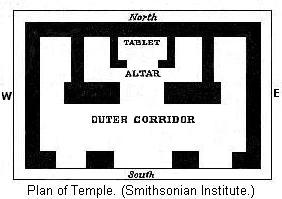
“The building is fifty feet front, thirty-one feet deep, and has three door-ways. The whole front was covered with stucco ornaments. The two outer piers contain hieroglyphics.” We notice a new feature about the roof. It is similar to the roof of the temple of the “Three Tablets,” in having two different slopes—the lower one covered with stucco ornaments, but the range of pillars along the roof is here replaced by a peculiar two-storied arrangement nearly sixteen feet high. Mr. Stephens says: “The long sides of this narrow structure are of open stucco-work, formed into curious and indescribable devices, human figures with legs and arms spreading and apertures between, and the whole was once loaded with rich and elegant ornaments in stucco relief. Its appearance at a distance must have been that of a high, fanciful lattice. It was perfectly unique—different from the works of any other people with which we are familiar, and its uses and purposes entirely incomprehensible.”
It was evidently added to the temple solely for the sake of appearance. One writer19 believes the roof structures were erected by some people that succeeded the original builders of the temple. The plan of the temple gives us a clear idea of the arrangement of the inner rooms. Our principal interest centers in the altar, which we notice placed in the center of the back room. We give an illustration of a similar altar-form in the temple, at number 5 of the plan. In form it is that of an inclosed chamber, having a roof of its own. The altar in the Temple of the Cross was very similar to this. Mr. Stephens’s description is as follows: “The top of the doorway was gorgeous with stuccoed ornaments, and on the piers at each side were stone tablets in bas-relief. Within, the chamber is thirteen feet wide and seven feet deep.”
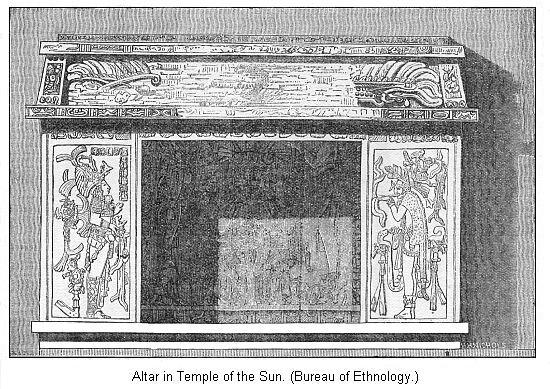
The room was plain within, and right against the back was the famous “Tablet of the Cross.” This tablet was six feet four inches high, ten feet eight inches wide, and formed of three stones. The right-hand one is now in the National Museum in Washington. The central one, though torn from its original place, is still at the ruins. The next cut gives us only the sculptured part of the tablet. On both the right and left-hand were tablets of hieroglyphics. A long chain of ornaments hung suspended from the cap of the right-hand figure. The two figures are regarded as priests. The cross is very plainly outlined, and is the regular Latin one. Considerable discussion has arisen as to what supports the cross. Dr. Brinton thinks it a serpent.20 Others think it a human skull.21 We must also notice the bird on top of the cross. It is almost impossible to make out the species. The right-hand figure is offering it something.
We must refer to some more tablets found at Palenque before proceeding further. At number five of the plan was a temple but little smaller than the one just described. There is, however, such a similarity between the buildings, that it is not necessary to give illustrations. The temple, also, had an inclosed altar; and against the back of that was placed the tablet which was very similar to the one just described. This illustration represents the sculptured portions. On each side were tablets of hieroglyphics. It needs but a glance to show that the priests are, evidently, the same personages as in the other tablet.
The one on the left is standing on the back of a human being. The one on the right is, perhaps, standing on a beast; or, if a human being, he is crushed beneath the weight of the priest. Two other human figures support a platform, from which rise two bâtons crossed like a St. Andrew’s cross. These support a mask, from the center of which a hideous human face looks out. The Aztecs sometimes represented the sun by such a mask, and hence the name “Temple of the Sun.”
In still another temple, situated but a short distance from the others, was discovered a third tablet, which is shown in the cut opposite. We give all the tablet, showing the hieroglyphics as well. We must compare this with the first tablet given. The priests are, evidently, the same—but, notice, they stand on different sides of the cross. The same priest is making the offering as in the first, and the same bird is seen on the top of the cross. The priests stand on flowered ornaments. The support of the cross resembles the same thing as in the first but whether it is a human skull, or a serpent, is hard to tell. The cross itself is not as well outlined. The two arms are floral ornaments. We must also notice the two faces seen on the upright part.22
These tablets are all of great interest. That of the cross, the first one given, has attracted more attention than almost any other in the field of American antiquities. This is largely owing to the cross. As far as the sacred emblem itself is concerned, we do not think this tablet of more significance than that of the sun. It is well known that the cross, as a sacred emblem, had peculiar significance in the ancient religions of the world. Its use as such has come down to us from time immemorial. On the first expedition of the Spaniards, in 1518, to the coast and islands of Yucatan, they discovered that the cross was of some significance to the natives. In the island of Cozumel they found a large cross, to which the natives prayed for rain.23
Mr. Brinton thinks that the source of this veneration of the cross, like the the sacredness of the number four, of which he gives numerous illustrations, is the four cardinal points.24 From these points blow the four winds which bring the fertilizing rains, and thus render the earth fruitful; and hence the cross, in so many and widely separated portions of the earth, is used as the symbol of the life-giving, creative, and fertilizing principle in nature.25 He thinks this is, perhaps, the significance of these Palenque crosses. It is true we have different forms of the cross; but in ancient sculpture they seem to have been of equal importance.26
The results of these inquiries into the hidden meaning of these tablets are not devoid of interest; but, thus far, but few conclusions of value have been obtained. They have been made to do service in support of some far-fetched theories. The early Spanish writers on these subjects concluded that the crosses found in Central America were positive proof that St. Thomas had traveled through the country preaching the doctrines of Christianity. The padres, who came to visit Mr. Stephens at the ruins, “at the sight of it, immediately decided that the old inhabitants of Palenque were Christians, and fixed the age of the buildings in the third century.”
Wilson finds in the tablets of the cross a strong argument for the existence of a great Phœnician empire in Central America. This tablet represents, he thinks, the sacrifice of a child to Astarte,27 also called Ashtoreth, the great female deity of the ancient Semitic nations on both sides of the Euphrates, but chiefly of Phœnicia. The original meaning of this word was “Queen of Heaven.” Modern scholars do not think these early speculations of the slightest worth. Dr. Charles Rau28 concludes that as reasonable a conjecture as any is the supposition that it represents a sacrifice to the god of rain, made, perhaps, at a time of drought, apparently influenced to that conclusion by the fact that the natives of Cozumel regarded a cross in such a light,29 and further that a cross represents the moisture-bearing winds.
E. S. Holden30 has made a critical study of the hieroglyphics of Copan and Palenque. Though far from complete, most interesting results have been obtained. We can not do more than set forth the results of his investigations.31 He concludes, from a careful study of the tablets of the cross and of the sun, that in both the left-hand priests are representatives of the god of war,32 the right-hand priests being in both representatives of the god of rain and water.33 In Mexico these deities frequently occupied the same temple.34 He does not state his conclusions in regard to the central figures in the tablets. Mr. Brinton thinks the central figure in the tablet of the cross is a rebus for the nature god Quetzalcohuatl. The cross was one of the symbols of Quetzalcohuatl, as such signifying the four winds of which he was lord. Another of his symbols was a bird. We notice the two symbols present in the tablet. Mr. Holden also finds that the glyph standing for this god occurs several times in the tables of hieroglyphics belonging to this figure.
According to these last views, then, the old Palenquians seem to have been a very religious people, and Quetzalcohuatl, the god of peace, seems to have been their principal deity, differing in this regard from Mexico, where all honor was paid to the god of war. We are not given any explanation of the Temple of the Three Tablets, but the other temples have to do with the worship of this benign deity. The beautiful stucco-work in the Temple of the Beau-relief, Mr. Holden thinks, also represents him. At the Temples of the Cross, if we be right as to the meaning of the central figure, the priests of the god of war and the god of rain do honor to him.35
Mr. Bandelier makes a statement in regard to the cross which, if it be accepted, clears away a number of theories. He remarks: “The cross, though frequently used previously to the conquest by the Aborigines of Mexico and Central America as an ornament, was not at all an object of worship among them. Besides, there is a vast difference between the cross and the crucifix. What has been taken for the latter on sculptures, like the ‘Palenque tablet,’ is merely the symbol of the ‘Newfire,’ or close of a period of fifty-two years. It is the fire drill more or less ornamented.” According to this view, these interesting tablets have reference to the ceremonies observed by the Mayas at the expiration of a cycle.36
It now only remains to describe some miscellaneous relics obtained from Palenque. But few specimens of pottery have been found. One of the early explorers speaks of finding an earthen vessel about a foot in diameter. Waldeck made an exploration in a portion of the palace area, and found a gallery containing hewn blocks of stone and earthen cups and vases, with many little earthen balls of different colors. He also speaks of a fine specimen of terra-cotta.37
The only statues known were found near the Temple of the Cross. There were two of them, and they supported a platform before the central doorway. One was broken to pieces; the other is here represented. Many writers point out resemblances between this figure and some Egyptian statues.
In the village of Palenque, built in the wall of a church,38 are two stone tablets which once stood on each side of the doorway of the altar containing the tablet of the cross.39 Mr. Stephens was under the impression that they were originally placed on the altar of the tablet of the sun, and they are so represented in the cut (Altar in the Temple of the Sun.) earlier. This plate represents the left-hand figure. The only explanation which we have met is contained in that oft-quoted article by Mr. Holden. He regards it as the representation of the Maya god of war. We are warned that the weak part of Mr. Holden’s method is his assumption that the mythology of the Mayas was the same as that of the Aztecs, when the evidence is not strong enough to assert such a fact.40
We feel that we have been somewhat lengthy in describing the ruins of Palenque. But it is one of the most important groups of ruins that this continent possesses. The most faithful work on the part of the scholars of all lands has not as yet succeeded in clearing up the mystery connected with it. We can tread the courts of their ancient citadel, clamber up to the ruined temples and altars, and gaze on the unread hieroglyphics, but, with all our efforts, we know but little of its history. There was a time when the forest did not entwine these ruins. Once unknown priests ministered at these altars. But cacique, or king, and priest have alike passed away. The nation, if such it was, has vanished, and their descendants are probably to be found in the savage tribes of Yucatan to-day. “In the romance of the world’s history,” says Mr. Stephens, “nothing ever impressed me more forcibly than the spectacle of this once great and lovely city, overturned, desolate, and lost, discovered by accident, overgrown with trees for miles around, without even a name to distinguish it. Apart from every thing else, it was a mournful witness to the world’s mutation.
                              “‘Nations melt
        From power’s high pinnacle, when they have felt
        The sunshine for awhile, and downward go.’”
The ruins at Palenque have been so well known, that but little attention has been given to other ruins in the States of Tobasco and Chiapas; and yet, according to M. Charney, imposing ruins of great extent exist in the western part of Tobasco. At a place about thirty-five miles from San Juan, in a north-westerly direction, he found veritable mountains of ruins “overgrown with a luxuriant vegetation.”41 In the absence of cuts, we can not do more than give a general idea of these ruins.
He asserts that the whole State of Tobasco, and part of Chiapas, is covered with ruins. One landed proprietor informed him that, on his estate, he had counted over three hundred pyramids, all of them covered with ruins. In this connection he refers to the assertions of some of the early Spanish voyagers, that, when skirting the shores of Tobasco, they “saw on the shore, and far in the interior, a multitude of structures, whose white and polished walls glittered in the sun.” On one large pyramid, one hundred and fifteen feet high, he found the remains of a building two hundred and thirty-five feet long.
This building is named the palace. In this building we met with the type that we have learned is the prevailing one further south—that is, three parallel walls, forming two rows of rooms. In general, the rooms are not well arranged for comfort, according to our opinion; but they were, doubtless, well adapted to the communal mode of life prevalent among the Indians. M. Charney seems to have been strongly impressed with the number and importance of the ruins in this State; but, strangely enough, others have not mentioned them.42 He says: “I am daily receiving information about the ruins scattered all over the State of Tobasco, hidden in the forests. . . . The imagination fails to realize the vast amount of labor it would involve to explore even a tithe of these ancient sites. These mountains of ruins extend over twelve miles. We still see the hollows in the ground whence the soil was taken for the construction of these pyramids. But they did not consist merely of clay; bricks, too, entered into their construction, and there were strengthening walls to make them firmer. These structures are more wonderful than the pyramids and the other works at Teotihuacan, and they far surpass the pyramids of Egypt.”
In the neighboring State of Chiapas, we find the location of several groups of ruins. At Ocosingo, we have the evident traces of a large settlement. Mr. Stephens mentions four or five pyramids crowned with buildings. Immediately beyond these pyramids he came upon an open plateau, which he considered to have been the site of the city proper. It was protected on all sides by the same high terraces, overlooking for a great distance the whole country around, and rendering it impossible for an enemy to approach from any quarter without being discovered. “Across this table was a high and narrow causeway, which seemed partly natural and partly artificial, and at some distance on which was a mound, with the foundation of a building that had probably been a tower. Beyond this the causeway extended till it joined a range of mountains. . . . There was no place we had seen which gave us such an idea of the vastness of the works erected by the aboriginal inhabitants.”43
The ruins at Palenque are considered by some to belong to the ancient period of Maya architecture; those we are now to examine are regarded as of more modern date. This is at least true with respect to the time of their abandonment. Though the efforts of explorers in Yucatan have been attended with rich results, still few places have been fully described. The country is fairly dotted with sites of aboriginal settlements. In all probability there are many that are yet unknown. Hidden in tropical jungles, they are fast falling into meaningless mounds of débris. The early Spanish explorers, skirting the coasts of Yucatan, gazed in astonishment at the views they occasionally obtained of pyramids crowned with temples and imposing buildings. But this gleam of historic light was but momentary in duration. It served but to throw a sunset glow over the doomed tribes and civilization of the Mayas. By the aid of that dim, uncertain light, we are asked to recognize a form of government and society which, under the clearer light of modern researches is seen to bear an equally strong resemblance to institutions more in keeping with the genius of the New World.
The few travelers who visit the country are generally content to revisit and describe places already known. This is not strange, considering the difficulties that have to be overcome. The country swarms with savage Indians, who are jealous of the intrusions of strangers. We have, however, this consolation: those ruins already brought to light show such a uniformity of detail, that it is not probable that any new developments are to be expected. The ruins that are already known are sufficient to illustrate all the points of their architecture; and we can draw from them, doubtless, all that can be drawn from ruins, throwing light on the civil organization of the Mayas of Yucatan.
We can not do better than to describe some of the more important ruins, and then notice wherein others differ. Examining the map, we see that Uxmal44 is one of the first ruins that would meet us on arriving, in the country. It is more fully described than any other, though perhaps not of greater importance than those of some other localities. As at Palenqué, while the principal ruins are said to be situated in a small area, the whole section abounds in mounds and heaps of débris, and it may well be said that buildings as imposing as those already described are concealed in the forest not far removed from the present ruins. A plat of ground seventeen hundred feet long by twelve hundred feet wide would include the principal structures now known.
The most imposing single edifice here is that called the Governor’s House. The only reason for giving it this name is its size. Being of large size, and located on a terraced pyramid, it has received a name which may be very inappropriate. We will first notice the pyramid on which the building stands. At Palenque the pyramid rises regularly from the ground. Here the pyramid is terraced. In order to understand clearly the arrangement of these various terraces, we introduce this drawing. The base is a somewhat irregular figure, though nearly a square. Another pyramid cuts into one corner of the terrace. The first terrace is about three feet high, fifteen feet broad, and five hundred and seventy-five feet long. The second terrace is twenty feet high, two hundred and fifty feet wide, and five hundred and forty-five feet in length. The third terrace, on which the building stands, is nineteen feet high, and its summit platform is one hundred by three hundred and sixty feet. The height of this platform above the general surface is a little over forty feet.45
The material of which the pyramid is composed, is rough fragments of limestone, thrown together without order; but the terraces were all faced with substantial stone work. At the time of Mr. Stephens’s visit the facing of the second terrace was still in a good state of preservation. Charney believes the platform was paved with square blocks. This pyramid was not entirely artificial—they took advantage of a natural hill, as far as it went. No stairway or other means of ascent to the first terrace is mentioned. From its low height, probably none was needed. The second terrace being twenty feet high, some means of ascent was required. This was afforded, as seen in the drawing, by an inclined plane, at the south side one hundred feet broad. From the second terrace a grand staircase, one hundred and thirty feet wide, containing thirty-five steps, led up to the summit of the third terrace.
No buildings or other ornaments are mentioned as having been found on the lower terrace. The wide promenade of the second one supported some structures of its own, but they were in too dilapidated a condition to furnish a clear idea of their original nature, except in one instance—that is of the building at A of the drawing. This building was ninety-four feet long, thirty-four feet wide, and about twenty feet high.
The roof had fallen in, so that we do not know the arrangement of the rooms in the interior. The simplicity of ornaments on the outer wall is commented on. Instead of the complicated ornaments, so apparent on the buildings of Yucatan, the only ornament in this case was a simple and elegant line of round columns, standing close together, and encircling the whole edifice. At regular intervals on the upper cornice appeared a sculptured turtle. From this circumstance, the building was named “The House of Turtles.” No steps lead to the terrace below or to the one above. “It stands isolated and alone, seeming to mourn over its own desolate and ruinous condition.”
At B, along the south end of the terrace, there was a long, low mound of ruins, and arranged along its base was a row of broken columns about five feet high and nearly five feet in circumference. Some have supposed, from this, that columns extended along the entire promenade of the second terrace. This would indeed give it a very grand appearance; but there is no foundation for such a view. East of the central stairway at C, was a low, square inclosure. This contained a standing pillar, now in a slanting position, as if an effort had been made to throw it over. It was about eight feet above the surface of the ground and five below. The Indians called it a whipping-post. Mr. Stephens thinks it was connected with the ceremonial rites of an ancient worship. He found a similarly shaped stone in connection with other buildings at Uxmal, and at other places in Yucatan.
Still further east, at D, he found a rude, circular mound of rough stones. On excavating this, he was rewarded by the discovery of a double-headed monument. It was carved out of a single block of stone. The probabilities are that it was purposely buried when the natives abandoned Uxmal, to prevent the Spaniards from destroying it. Scattered about over this platform were found excavations much like well-made cisterns in shape. As it is something of a mystery where the inhabitants obtained water, it is a reasonable supposition that these were really cisterns. Similar excavations were discovered all over the area of the ruins.
Leaving the second terrace, and passing up the ruined stairway, we find ourselves on the summit platform of the third terrace, and see before us one of the long, low, richly ornamented buildings of Yucatan. This cut presents us an end view, but gives us a good idea of the building as a whole. It does not occupy the entire summit; there is a wide promenade all around it. Its length is three hundred and twenty-two feet; its width, thirty-nine feet, and its height twenty-six feet.
In order to understand clearly the arrangement of the rooms, we will here give the ground-plan. The two end portions may have been additions to the original structure. There are, at any rate, reasons for supposing the small rooms in the two recesses of later construction. We must notice that we have here the usual three parallel walls and two rows of rooms. All the walls are massive, the rear wall especially so. It is nine feet thick throughout, and so are the transverse walls of the two recesses. Supposing the rear wall might contain rooms, Mr. Stephens made an opening through it. He found it to be solid.
The stones facing the walls and rooms are smooth and square, and the mass of the masonry consists of rough, irregular fragments of stone and mortar. This cross-section makes this meaning plain. We can but notice what an immense amount of useless labor was bestowed on the walls and ceilings of this building. We gather more the idea of galleries excavated in a rocky mass, than of rooms inclosed by walls. The rooms are very plain; no attempt at decoration was observed. In one or two instances the remains of a fine coat of plastering was noticed. “The floors were of cement, in some places hard, but by long exposure broken, and now crumbling under foot.” The arches supporting the roof are of the same style as those at Palenque—that is, triangular,—though, in this case, the ends of the projecting stones were beveled off so as to form a smooth surface. At Palenque, we remember, the inequalities were filled with cement. Across the arches were still to be observed beams of wood, the ends buried in the wall at both sides. The supposition is that they served to support the arches while building, and afterwards for the suspension of hammocks.46
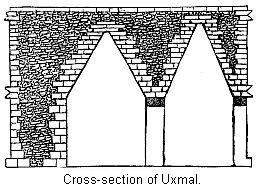
There are no openings for light and ventilation, consequently some of the rear rooms are both damp and dark. The lintels over each doorway were of wood. This was the common and ordinary material employed for lintels in Yucatan, though in one or two instances stone was used. They used for this purpose beams of zapote, a wood noted for its strength and durability. Some inner lintels still remain in place. The one over the central doorway of the outer wall was elaborately carved, the others were plain.
The outside of the building is also of interest to us. By a careful examination, we notice a cornice just above the doorway. The wall below the cornice presents a smooth surface of limestone, no traces of plaster or paint appearing; above the cornice the façade is one solid mass of rich, complicated, and elaborately sculptured ornaments. This is not stucco work, as at Palenque, but the ornaments are carved on stone. Mr Stephens tells us, “Every ornament or combination is made up of separate stones, each of which had carved on it part of the subject, and was then set in its place in the wall. Each stone, by itself, is an unmeaning fractional portion, but placed by the side of others, makes, part of a whole which, without it, would be incomplete.”
It is not possible to give a verbal description of all of the ornaments; we can notice but few. Over each doorway was represented a person apparently seated on a sort of throne, having a lofty head-dress, with enormous plumes of feathers falling symmetrically on each side. Though the figures varied in each case, in general characteristics they were the same as the one here represented, which was the figure over the central doorway of the building.
Among the most commonly reappearing ornaments at Uxmal, and at other places, is one that has received the name of the “Elephant’s Trunk,” and has given rise to no little discussion. One occurs immediately above the figure. Part of this ornament is represented in this plate. The central part of this figure, which appears as a plain band, is in reality a curved projecting stone, which, when looked at sideways, has the appearance given in this cut. Though requiring a little imagination, the majority of travelers see in this some monster’s face. The eyes and teeth are seen in the first engraving. This projecting stone is the nose.
We stand in amazement before this sculptured façade. We must reflect that its builders were not possessed of metallic tools. It extends entirely around the building, though the end and rear walls are not as elaborately decorated as the front. A little calculation shows that it contains over ten thousand square feet of carved stone. The roof of the building was flat. It had been covered with cement. But vegetation had somehow acquired a foothold, and the whole is now overgrown with grass and bushes. Such is a brief description of this “casa.” Hastening to ruins, it appeals powerfully to the imagination. It is a memorial of vanished times. We wonder what of the strange people that pressed up these stairs and entered these rooms? For many years it has been abandoned to the elements. Year by year portions of the ornamented façade fall. Though the walls are massive and the roof is strong, it is but a question of time when a low mound of ruins will alone mark its site.
Like the palace at Palenque, this structure has given rise to conflicting theories as to its use. While many of the writers on this subject claim that it was the residence of royalty, there are, on the other hand, those who think it is simply a communal house of village Indians, or the official house of the tribe. In whatever light we shall ultimately view it, it is surely an interesting monument of native American culture. The labor necessary to rear the terraced pyramid, even though advantage was taken of a natural eminence, must have been great. The building itself, though not of great dimensions, except in length, must have required the labor of a large number of Indians for a long time. For purposes of defense, the location, from an Indian point of view, was an excellent one, since with them elevation constitutes the principal means of defense. The terraces could be easily ascended from but one point, where an enemy could be easily resisted. In a general way, it may be regarded as a representative of Yucatan buildings, and so we will be able to more rapidly describe the remaining structures.
On the general plan we see, to the north of the structure we have just described, a group of ruins marked “C.” This is regarded as the most wonderful collection of edifices in Yucatan, and as exhibiting the highest state of ancient architecture and sculpture in North America. They are known as the “Nunnery,” which we think is a very absurd name. The pyramid on which they stood is also terraced, though on one side only. We give a drawing showing the position on the summit platform of the four buildings forming this group. Since we have so many ruined structures to describe, we must avoid such details as will prove tiresome. We will give in a note the dimensions of these buildings, and of the pyramid, and pass at once to some points of special interest.47
Traces of stairways are mentioned as leading up to the terrace, but none of the steps remained in place. The southern building is seen to have doors in both the court and terrace walls, but in this case the middle wall is unbroken. All the rooms of this building are single. In the plan it appears divided into two buildings; the opening is, however, but a triangular arched doorway, through which access was had to the court.
There is no one to dispute our right of way, and so, climbing up the ruined stairs, and passing through the deserted gateway, we emerge into a courtyard, now silent and deserted and overgrown with bushes and grass. It was once paved and covered with cement, and in the center are the remains of a stone pillar, similar to that in front of the governor’s house. When the houses were all occupied this court must have presented an animated scene. But, now that the buildings are tenantless and going to ruin, it must impress all beholders with a sense of the changes wrought by time.
It will be noticed that the northern building does not stand in quite the same direction as the southern one, which detracts from the symmetry of the whole. It stands on a fourth terrace, twenty feet higher than the others. A grand, but ruined, staircase leads up the center of the terrace. At each end of this staircase built against the terrace, could be distinguished the ruins of a small building. There is one unusual feature about the ruins in the eastern building. In general, only two rooms open into each other. In this building, however, six rooms form one suite, and, furthermore, all the doorways of this suite are decorated with sculpture. As this suite of rooms was evidently a place of interest, we will introduce this illustration, which gives us a good idea of the appearance of the rooms on the inside. We would do well to compare this cut with that of the room in Pueblo Bonito. The arched roof is not a true arch but simply the triangular arch we have already spoken of.
The principal attraction about these buildings is the beautiful façades which overlook the court-yard. They are pronounced by all to be the finest examples of native American art. With one exception, they are neither complicated nor grotesque, but chaste and artistic. As in the Governor’s House, the part below the cornice is plain, but the remaining part, both front and rear, is covered with sculpture. On entering the court-yard from the arched gateway of the southern building, we notice that its façade is composed of diamond lattice-work and vertical columns, while over each doorway is something that resembles a house, with a human figure seated in a doorway. This cut represents but a small portion of this façade, but it gives us an idea of the whole.
The façade of the eastern building was in the best state of preservation of any. We give a section of this also. The ornaments over the doorway, shown in the cut, consist of three of those mysterious masks, with the projecting curved stone, already described. “The ornaments over the other doorways are less striking, more simple, and more pleasing. In all of them there is, in the center, a masked face, with the tongue hanging out, surmounted by an elaborate head-dress. Between the horizontal bars is a range of diamond-shaped ornaments, in which the remains of red paint are still distinctly visible, and at each end of these bars is a serpent’s head, with the mouth wide open.” It is necessary to examine the drawing attentively, to distinguish these features. Some think the masked face represents the sun.
The western façade is known as the Serpent Façade. It was very much in ruins at the time of Mr. Stephens’s visit. When entire, it must have been of great beauty. Two serpents are trailed along the whole front, and by the interlacing of their bodies divide the surface into square panels. In the open mouth of these serpents is sculptured a human head. The panels are filled with ornaments similar in design to those of the “Governor’s House,” and among the ornaments of each panel are found one or more human faces, while full-sized figures are not entirely absent. This cut represents but a small portion of the façade. It gives us, however, an idea of the whole. We notice, over the doorway again, the elephant’s trunk ornament.
The northern building, standing high above the rest, on its own terrace, was doubtless intended to have the grandest front of all. It was, however, in such a ruined state, and the few remaining fragments so complicated, that no drawings have been given us. Human figures are represented in several places; two are apparently playing on musical instruments. We recall that at Palenque, the roof of some of the temples bears a curious two-storied work, erected apparently for ornamental purposes. The same instinct reappears in this building. At regular intervals along the front they carried the wall above the cornice, forming thirteen turret-like elevations ten feet wide, and seventeen feet high. These turrets were also loaded with ornaments. Another curious feature about this building is, that it was erected over, and completely inclosed, a smaller building of an older date. Wherever the outer walls have fallen, the ornamented cornice of the inner building is visible.
When we reflect on the patient labor that must have been expended on this pyramid and these buildings, we are filled with admiration for their perseverance and ingenuity. They had neither domestic animals or metallic tools. The buildings were massively built and richly ornamented. The sculptured portion covers over twenty-four thousand square feet.48 The terraced mound supporting the house contained over sixty thousand cubic yards of materials, though this may not be wholly artificial. To our eyes, as these rooms had neither windows nor fire-places, they are not very desirable. But we may be sure that the builders considered them as models of their kind.
Leaving this interesting ruin, we will now visit one of the temples. This is east of the Nunnery, and is marked “D” on the plan. The mound on which this building stands is high enough to overlook the entire field of ruins. This cut represents the eastern side of the mound, up which a flight of stone steps lead to the building on the summit. There are some grounds for supposing a grander staircase, supported on triangular arches, led up the western side.
The building on the top is not large—only seventy-two feet long, and twelve feet wide—and consists of but three rooms, none opening into each other. The front of the building, though much ruined, presented an elegant and tasteful appearance. There seems to be no doubt that this temple was the scene of idolatrous worship; perhaps of human sacrifices. In a legal paper which Mr. Stephens saw at Meridia, containing a grant of the lands on which these ruins stand, bearing date 1673, it is expressly stated that the Indians at that time had idols in these ancient buildings, to which, every day, openly and publicly, they burned copal. Nor is there any doubt that this was the continuation of an old custom. In the end room of this temple are engraved two circular figures which, by some, are considered as proofs of the presence of Phallic worship.49
The buildings we have described will give us a very good idea of the structures of this ancient city. We have described but a few of them, but we have now only space to make some general observations. We wish to point out some resemblances to the ruins at Palenque. In both, buildings that served as temples were not large, but of small dimensions, and contained but few rooms. They occupy the summits of high pyramids. Such was probably the building on the summit of the pyramid at “F” (see plan). The buildings on the top of this pyramid, like that just described, had but three rooms. A very large pyramid is seen at “E.” Our information in regard to it is very meager. A square platform was found on the summit. It is not unreasonable to suppose that this platform was intended to support a temple. But, before it was erected, the presence of the Spaniards put an end to all native building. There are, however, no proofs to be advanced in support of this statement; it is a mere suggestion.
We think the House of the Nuns illustrates the general plan of building employed at both places. That is as follows: They first erected a rectangular pyramid or mounds often terraced. Buildings were then put up parallel to the four sides, thus inclosing a court. At Palenque this court, as we have seen, was built over. Besides the House of Nuns, there are several other instances at Uxmal of courts with buildings on their sides. Looking at the plan, we see one at “G,” and a still more ruined one between that and “F.” Such a court, with traces of ruined buildings, also exists between the nunnery and the temple, at “D.” It is not improbable that groups of low ruins existing to the westward of the structures described would be found, on examination, to reveal the same arrangements.
As for the grand terraced pyramid supporting the Governor’s House, it may well be that other buildings would have been added in process of time, as population increased. It is not necessary to suppose they erected all the buildings around a court at once. It seems very reasonable to suppose the northern building of the House of Nuns the oldest. The direction is not quite the same as the others; it stands on a higher terrace; and, furthermore, the present exterior walls are simply built around the older building. It may be, however, that the great terraced mound of the Governor’s House was intended to support but one building. As there is the best of reason for supposing that Uxmal was inhabited at the time of the conquest, there is nothing to forbid the conclusion that the erection of pyramids, temples, and buildings was still going on.
Hieroglyphics, which formed such an interesting feature at Palenque, are here almost entirely wanting. A few rows occur around the head of the figure over the principal doorway of the Governor’s House. They are of the same general character as those already described, but are “more rich, elaborate, and complicated.” As to the probable antiquity of these ruins, we must defer consideration until we become more acquainted with the ruins of Yucatan.
The places we have now described will make us acquainted with the general character of the ruins scattered all over Yucatan. We do not feel as if we would be justified in dwelling at any great length over the remainder, though one or two important places must be mentioned. A word as to the frequency with which the ruins occur. We want to repeat that Yucatan, even to this day, is far from being thoroughly explored. Almost our only source of information is the writings of Mr. Stephens. But he only described a few places. In a trip of thirty-nine miles he took in a westerly direction from Uxmal he saw no less than seven different groups of ruins. Some of these, though in a very dilapidated state, presented points of great interest. When he started he knew of but few of those ruins. Some he heard of quite by accident while on his way, and some he first saw as he journeyed along the road. We must suppose the whole country equally well supplied.
After he had left Uxmal for good, at the village of Nochahab (see map), a little inquiry brought him information of so many ruins that he did not have time to visit them all. As to the question of use to which these buildings were applied, we must either suppose they had an immense number of temples and palaces—one or the other every few miles—or else they were the residences of the people themselves. And, though it may seem very strange that an imperfectly developed people should ornament so profusely and delicately their ordinary places of abode,50 yet it is difficult to understand why they should rear such an abundance of temples and palaces.
At Kabah (see map) Mr. Stephens found a most interesting field of ruins, rivaling Uxmal in extent, if not surpassing it. One group of buildings, arranged much like the House of Nuns, has some interesting features about it. The highest terrace in this case is nearly square, and the building on its summit is nearly the same shape. We have here two rows of double rooms, separated by a middle wall, very massive, as if two of the typical Maya buildings had been placed back to back. The front of this building was elaborately ornamented. In all the buildings at Uxmal the part above the cornice only was ornamented. Here the entire front was covered with carved stone. To make room for further ornaments the roof bore an additional appendage, like the second story of the Palenque temples. This building must have presented a wonderful appearance when entire.
Another feature at this place has reference to the pyramid. We are familiar with the idea of a terraced mound supporting buildings. In one of these Kabah structures the buildings are arranged in a different and suggestive way. That is, the pyramid was terraced off. There were three ranges of buildings, the roof of one range forming a promenade in front of the other. In another of the Kabah structures was found a wooden lintel, elegantly carved. Mr. Stephens tells us the lines were clear and distinct, and the cutting, under any test, and without any reference to the people by whom it was executed, would be considered as indicating great skill and proficiency in the art of carving on wood. At the expense of a great deal of hard work, he succeeded in getting this lintel out and removed to New York, where it was unfortunately destroyed by fire.
They worked stone to better advantage at Kabah than at Uxmal. For the first time we meet with lintels of stone and a doorway with carved jambs. The lintels were supported in the center by a pillar. The pillars were rude and unpolished, but they were not out of proportion, and, in fact, were adapted to the lowness of the building. We will only mention one more structure. This is a lonely arch, of the same form as all the rest, having a span of fourteen feet. It stands on a ruined mound, disconnected from every other structure, in solitary grandeur. “Darkness rests upon its history, but in that desolation and solitude, among the ruins around, it stood like the proud memorial of a Roman triumph.” There was the usual pyramid with a temple. In a plan given of the field of ruins seventeen groups are seen, and, without a doubt, many more exist in the immediate forest.
M. Charney has of late years made a discovery which conclusively shows that this was an inhabited place at the time of the conquest. In a room as ruined as the rest he discovered the stucco-figure of a horse and its rider. They are formed after the Indian manner by an inexperienced hand guided by an over-excited imagination. Both figures are easily recognized. The horse has on its trappings. We can see the stirrups. The man wears his cuirass. We all know what astonishment the appearance of men on horseback produced among the Indians, and so we are not at a loss to divine the cause which led to the construction of this figure. We must remember Mr. Stephens was hurried for time. Portions of this figure were mutilated, and other portions had been covered over by a layer of stucco, which Charney had to remove before the figure could be distinctly made out.51
Within a radius of ten miles from Kabah are located no less than six so-called cities. The general appearance of all is the same—low ranges of buildings on terraced mounds, and ornamented façades. One of these places, by the name of Zayi, is of interest to us, because it gives us a hint as to how these people constructed their buildings. Amongst other buildings they found one large terraced mound, with buildings arranged on it in a very significant manner. There were three ranges of buildings, one over the other—the roof of one range on a level with the foundation of the range above. A grand stair-way led up the mound. This feature is illustrated in the plate above. We can imagine what a grand appearance must have been presented by this great terraced mound, when its buildings were all perfect.
The plan of this mound and buildings is shown in the last cut. Ten rooms on the north side of the second range presented a curious feature. They were all filled up with a solid mass of stone and mortar, and this filling up must have gone on as fast as the walls rose, and the arched ceiling must have closed over a solid mass. A very reasonable explanation is given of this state of things by Mr. Morgan.52 He considers that such was the rudeness of mechanical knowledge among these people that the only way they could construct their peculiar arched roof was to build it over an internal core of masonry. Once put together over such a core, and carried up several feet, the down weight of the arch would articulate and hold the mass together. Then the core of masonry would be cleaned out, and the room was ready for use. If this be true, it follows that these rooms were the last erected. They were not yet cleared out when the operations of the Spaniards put an end to all native building. We must notice the structures at Zayi are in as ruined a condition as the others—thus strengthening the conviction that their abandonment was at about the time of the conquest of the peninsula.
We have not space to follow Mr. Stephens in all his journey. Every few miles he came across one of these peculiar structures. A common design is apparent in all; but all are alike enveloped in mystery. At Labna he found an extensive field of ruins, equal in importance to any in Yucatan. The next illustration represents an arched gateway, which reminds us of that in the “House of Nuns.” Passing through this he found himself in a ruined court-yard, fronting which were the remains of buildings; but this was only one of many groups of ruins, and Labna was but one of many places visited. At Labphak Mr. Stephens found “the tottering remains of the grandest structure that now rears its ruined head in the forests of Yucatan.” This was a terraced mound, faced by buildings on three sides, leaving an immense stair-way occupying the fourth side.
Small interior stair-ways are mentioned in this building, but no particular description is given of them. At two places sculptured tablets were found. These tablets are worthy of notice. They were the only ones Mr. Stephens found, except at Palenque. It will be seen, on the map, that this ruin is nearer Palenque than any of the places in Yucatan yet described. Stucco ornaments, so apparent at the latter place, were now becoming numerous again. At Uxmal stone for building could be had in the greatest abundance—it was not as plenty here. The builders, apparently, adapted their ornamentation to the material at hand; and, while at Palenque they employed stucco in ornament, at Uxmal they carved stone.53
We must now leave this interesting section of Yucatan, though only a few places have been mentioned. The reader is well aware of the difference of opinion with which these ruins are viewed. Some of them are unquestionably temples. If we regard the others as palaces and the public buildings of great cities, we are at once puzzled to account for their great numbers. If we look on the majority of them as communal residences of the inhabitants, we are amazed at the mass of decorations with which they are adorned. But our admiration stops there—we are accustomed to speak of them as stately edifices. This is owing to their exterior ornaments, and their position on terraced mounds. The houses are often of great length, but not striking in other regards. The rooms, in the majority of cases, are small, low, dark, and ill ventilated. A great amount of useless labor was bestowed upon the walls, which were unnecessarily massive.
Near the center of the northern part of the peninsula is seen a place marked Chichen, to which is generally added the word Itza, making the entire name of the place Chichen-Itza. In this case the ancient Maya name has come down to us with the ruins—Chichen meaning the “mouth of wells,” having reference to two springs which supplied the place with water. Itza is the name of a branch of the Maya people. This place is of interest to us in several ways. It was, unquestionably, a renowned city in aboriginal times. Here the Spaniards met with a very severe repulse. As a ruin it attracted the attention of early writers, and it has been the subject of antiquarian research in recent times. The description of the buildings will not detain us long. They are, evidently, the work of the same people as those whose structures we have already described.
One of the most important buildings is known as the Nunnery, reminding us at once of the collection of buildings of that name at Uxmal. In this case, however, the pyramid is represented by a solid mass of masonry one hundred and twelve by one hundred and sixty feet, rising with perpendicular sides to the height of thirty-two feet. This is seen to be a departure from the method of constructing pyramids hitherto described. The proprietor of the estate on whose grounds these ruins are located used this mound as a stone-quarry. An excavation of thirty feet revealed no secret chambers.
The probabilities are that it is solid throughout. A grand staircase, fifty-six feet wide, leads up to the top of this mound. Mr. Stephens tells us that three ranges of buildings occupied the summit, and his drawings represent the same. The roof of the one forms a promenade in front of the one above. So each range of buildings rests on a foundation solid from the ground. Mr. Bancroft describes this mound as having but two ranges of buildings on the summit. Of these buildings the second range was, seemingly, the most important. Several of its rooms contained niches in the back wall, extending from floor to ceiling. From traces still visible, they were once covered with painted ornaments. One of the rooms was fifty-seven feet long and nine wide.
In the rear wall of this room were nine of these niches. “All of the walls of this room, from the floor to the peak of the arch, had been covered with painted designs, now wantonly defaced, but the remains of which present colors, in some places, still bright and vivid; and among these remains detached portions of human figures continually reappear, well drawn, the heads adorned with plumes of feathers and the hands bearing shields and spears.” To this pile of masonry, at one end, a wing had been attached. This building was similar in design to other buildings in Yucatan. Theoretically we would expect this wing to be much later in time than the buildings on the mound. That it is so, is proven by the fact that in two rooms the internal core of masonry, as described at Zayi, had not been wholly removed.
We have noticed in all these structures, the builders first threw up a mound or pyramid to support the building. In one of the Chichen edifices the earth had been excavated from all around it, so as to still present the appearance of a mound. Perhaps the most prominent object at this place is a stately pyramid, with an imposing building, represented in the plate below. The mound itself is nearly two hundred feet square, and rises to the height of seventy-five feet. On the west and north sides are ruined staircases.
On the ground, at the foot of the stairway on the north side, “forming a bold, striking, and well conceive commencement to this lofty range, are two colossal serpents’ heads, ten feet in length, with mouths wide open, and tongues protruding. No doubt they were emblematic of some religious belief, and, in the mind of an imaginative people passing between them, to ascend the steps, must have excited feelings of solemn awe.” The temple on the summit of this pyramid has some peculiar features about it. It is nearly square—forty-three by forty-nine feet—only one door in each side. In the room within, instead of partition walls supporting arches, were two immense beams, resting on square pillars, and supporting two arches—the only instance in the ruins of Yucatan of such use of beams.
We now wish to speak of one class of ruins which are present at Uxmal, but which we did not describe. They are two parallel walls. On the plan of Uxmal they are noticed between the Governor’s House and the House of Nuns. This illustration represents this feature. These walls are each two hundred and seventy-four feet long, thirty feet thick, and twenty-six feet high. The distance separating them is one hundred and twenty feet. About one hundred feet from the north end, is seen a building fronting the open space between the walls. A building stood in a like position at the south end. In the cut a stone ring is seen projecting from each side. On the rim and border of these rings were sculptured two serpents, represented below. The general supposition is that this structure was used in the celebration of public games. Mr. Stephens refers us to the writings of Herrera, an early historian, for a description of a game of ball played at Mexico, where the surroundings must have been much the same as is here represented.
Most of the structures in Yucatan have been left in undisturbed quiet since the visit of Mr. Stephens. Five years after his visit, the Indians rose in revolt, and a large portion of country through which he traveled in perfect safety has, since then, been shunned by cautious travelers. As he says, “For a brief space the stillness that reigned around them was broken, and they were again left to solitude and silence.” At Uxmal, and some places near the coast, more recent travelers have investigated the ruins, wondered over them, and passed on, without materially adding to our knowledge respecting them. In 1873 a French scientists Dr. A. Le Plongon, accompanied by his wife, visited Yucatan for the purpose of exploring the ruins. They spent a year in Meridia, thoroughly studying the customs of the country, and preparing for work.
Their first field of work was this ancient city, Chichen-Itza. As a result, he lays before us a picture of life and times not only vastly remote from us, but surpassing in wonder any thing hitherto presented. In the field of American antiquities we need scarcely be surprised at whatever conclusions are presented to us. We believe, however, we are not too harsh in saying that scholars, as a rule, consider Le Plongon as too much carried away by enthusiasm to judge coolly of his discoveries.54 The most important part of his discoveries seem to have been in the buildings in connection with the Gymnasium last described.
At the time of the Spanish conquest, a very common tradition among the natives was that, in ancient times, three brothers governed the country. This legend of three rulers in olden times, was not peculiar to the Mayas, but was found among all the Indian nations of Central America.55 In our opinion this last statement at once shows we have here to deal with a question belonging to mythology and not to history. But M. Le Plongon considers the buildings at Chichen, especially those of the Gymnasium, illustrative of the lives of the three brothers, and of the queen of one of them. In brief, he tells us the names of these three brothers were, Chaac-mol, Huuncay, and Aac. The first of these, Chaac-mol, means Tiger King. It was he who raised Chichen-Itza to the height of its glory. M. Le Plongon would have us believe that the merchants of Asia and Africa traded in its marts, and that the wise men of the world came hither to consult with the H-men,56 whose convent, together with their astronomical laboratory, is still to be seen. Aac was the younger brother of the three. He conspired against the life of Chaac-mol, and finally killed him. The queen of Chaac-mol then erected the buildings around the Gymnasium as his memorial.
At the south end of the eastern wall Mr. Stephens noticed two ruined buildings, an upper and a lower one, of which our next cut is a representation. He was struck with the remains of painting, which entirely covered the walls. He tells us the walls were everywhere covered with designs in painting, representing, in bright and vivid colors, human figures, battles, houses, trees, and scenes of domestic life. We give, in a plate, detached portions of these figures. We must understand that, in the original, these were beautifully colored. The colors used were “green, yellow, red, blue, and reddish brown, the last being invariably the color given to human flesh.”
M. Le Plongon contends that these paintings represent scenes in the lives of the three brothers and the Queen of Chaac-mol, “in the funeral chamber.” Says he: “The terrible altercation between Aac and Chaac-mol, which had its termination in the murder of the latter by his brother, is represented by large figures three-fourths life size.”57 And in another place he tells us: “The scenes of his death is impressively portrayed on the walls, which the queen caused to be raised to the memory of her husband, in the two exquisite rooms, the ruins of which are yet to be seen upon the south end of the east wall of the Gymnasium. The rooms were a shrine where the conjugal love of the queen worshiped the memory of her departed lover. She adorned the outer walls with his effigies, his totem-tiger, and his shield and coat-of-arms between tiger and tiger;58 whilst on the admirably polished stucco, that covers the stones in the interior of the rooms, she had his deeds—his and her own life, in fact—painted in beautiful, life-like designs, superbly drawn, and sweetly colored.”59
He tells us further, that Aac, after the commission of his crime, fled to Uxmal for protection, where he built the edifice described as the “Governor’s House.” The seated figures over the central door-way, he says, represents Aac. In the hieroglyphics around the head he finds the name. Although neither Mr. Stephens nor the other travelers mention any thing of the kind, he says that, under the feet of this figure, “are to be seen the bodies of three figures, two men and one woman, flayed.”60 Though the figures are headless, he has no doubt but that they represent Huuncay, Chaae-Mol, and the queen, his wife. We are further told that the ruined structure on the second terrace, called the “House of Turtles,” was Aac’s private residence.
This wonderful story of the lives and adventures of the three brothers was revealed to the doctor by a careful study of the detached painting mentioned by Mr. Stephens. One of the paintings which served him so good a turn is shown in the cut above, which he considers represents the queen, when a child, consulting one of the wise men as to her future destiny.61
Perhaps as interesting a portion of his discoveries as any, is finding sculptured figures of bearded white men on the pillars of the temple, and painted on the walls of Chaac-mol’s chambers. He thinks they have Assyrian features. He also claims to have discovered figures having true Negro features.
As to the antiquity of this city he readily figures up nineteen thousand years; but this did not take him to the beginning. He arrives at this estimate in this way: To the north-east of the pyramid, we have described, are to be seen rows of small columns, which have excited the curiosity of all who have seen them. Mr. Stephens represents them in four rows, inclosing a rectangular area. M. Le Plongon says they surrounded three sides of a terraced pyramid, which once supported the main temple of the city. Mr. Stephens has no suggestions to offer as to their use.
Le Plongon claims they were used to measure time, and quotes from old authors to the effect, that each stone in them stands for twenty years; and, as there is always just eight stones in a column, each column means one hundred and sixty years. He counted one hundred and twenty of these columns—and then, as he says: “Got tired of pushing my way through the nearly impenetrable thicket, where I could see many more among the shrubs.” From this number he computes nineteen thousand two hundred years.
What shall we say to this story that M. Le Plongon brings us of ancient Maya civilization? It is unquestioned that he has expended a great amount of patient labor in his work, has braved many dangers, and is thoroughly in earnest. He has also spent years in the field, and ought to be well qualified to judge of the ruins. We believe, however, he is altogether wrong in his conclusions. The keystone of his discoveries—the one on which he relies to prove the accuracy of his methods—fails him. This was the discovery of the statue of Chaac-mol himself, which is here represented. He claims to have found it as the result of successfully rendering certain mural tablets in the funeral chamber, but a careful reading of his own account of the affair leaves us under the impression that the “instincts of the archæologist” had as much to do with it as any thing else.62
Be that as it may, he certainly did find this statue buried in the ground. He is very positive it is Chaac-mol, claiming to have read the name readily in hieroglyphics on the ear-tablets. He says: “It is not an idol, but a true portrait of a man who has lived an earthly life. I have seen him represented in battle, in council, and in court receptions. I am well acquainted with his life, and the manner of his death.” This statue was seized by the Mexican Government, and taken to Mexico. Here a curious discovery was made. Another statue similar to this was already in the museum. This latter had been found not far from Mexico. Since then, still a third, smaller than the others, but evidently representing the same personage, has been discovered. In short, it has been shown that this is an idol, worshiped as well by the Aztecs as by the Mayas, and, instead of being buried, as Le Plongon asserts, five thousand years ago, we have not much doubt it was buried to prevent its falling in to the hands of the Spaniards.63
As to the antiquity with which Le Plongon would clothe Chichen, if his method be right, he has not more than made a beginning. Mr. Stephens counted three hundred and eighty of these same columns, and tells us there were many more.64 We know no good reason for supposing Chichen was not inhabited at the time of the conquest. The wooden beams and lintels in the temples have not yet decayed, and the masonry had not been cleaned out of some of the rooms. On this point we wish to make a suggestion, a mere hint. The pillars that supported the arches in the temple mentioned some pages back were covered with sculpture. Amongst some others, but very faintly represented, was the preceding figure of a bearded man. May it not be that it represents a Spaniard? We must recall the stucco figure of the horse and its rider at Kabah. It seems to us a reasonable suggestion that they should carve on the pillars of their temples representations of the Spaniards, for the Spaniards were twenty-five years in gaining a permanent foothold in Yucatan, and during that time the Indians would continue to build and ornament as before.
REFERENCES
Different views on this question—Reason for the same—Their architecture—Different styles of houses—The communal house—The tecpan—The teocalli—State of society indicated by this architecture—The gens among the Mexicans—The phratry among the Mexicans—The tribe—The powers and duties of the council—The head chiefs of the tribe—The duties of the “Chief-of-men”—The mistake of the Spaniards—The Confederacy—The idea of property among the Mexicans—The ownership of land—Their laws—Enforcement of the laws—Outline of the growth of the Mexicans in power—Their tribute system—How collected—Their system of trade—Slight knowledge of metallurgy—Religion—Quietzalcohuatl—Huitzilopochtli—Mexican priesthood—Human sacrifices—The system of Numeration—The calendar system—The calendar stone—Picture writing—Landa alphabet—Historical outline.
 landscape
presents varied aspects according to the standpoint from which it is
viewed. Here we have a glimpse of hill and dale; there a stretch of
running water. But two persons, standing in the same position, owing to
their different mental temperaments, will view things in a different
light. Where one, an artist born, is carried away with the beautiful
scenery, another, with a more practical turn of mind, perceives only its
adaptability for investments. Education and habits of life are also very
potent factors in determining our views on various questions. Scholars of
wide and extended learning differ very greatly in their views of questions
deeply affecting human interests. We know how true that is of abstruse
topics, such as religion and questions of state polity. It is also true of
the entire field of scientific research. The unknown is a vastly greater
domain than the known, and men, after deep and patient research, adopt
widely different theories to explain the same facts.
landscape
presents varied aspects according to the standpoint from which it is
viewed. Here we have a glimpse of hill and dale; there a stretch of
running water. But two persons, standing in the same position, owing to
their different mental temperaments, will view things in a different
light. Where one, an artist born, is carried away with the beautiful
scenery, another, with a more practical turn of mind, perceives only its
adaptability for investments. Education and habits of life are also very
potent factors in determining our views on various questions. Scholars of
wide and extended learning differ very greatly in their views of questions
deeply affecting human interests. We know how true that is of abstruse
topics, such as religion and questions of state polity. It is also true of
the entire field of scientific research. The unknown is a vastly greater
domain than the known, and men, after deep and patient research, adopt
widely different theories to explain the same facts.
It need, therefore, occasion no surprise to learn that there is a great difference of opinion as to the real state of culture among the so-called civilized tribes of Mexico and Central America. We have incidentally mentioned this difference in describing the ruins and their probable purpose. As one of the objects we have in view, and perhaps the most important one, is to learn what we can of the real state of society amongst the prehistoric people we treat of, it becomes necessary to examine these different views, and, if we can not decide in our own minds what to accept as true, we will be prepared to receive additional evidence that scholars are now bringing forward, and know to how weigh them and compare them with others.
It has only been within the last few years that we have gained an insight into the peculiar organization of Indian society. After some centuries of contact between the various tribes of Indians and whites, their social organization was still unknown. But we are now beginning to understand this, and the important discovery has also been made that this same system of government was very widely spread, indeed. This subject has, however, been as extensively treated as is necessary in chapter xii, so we need not stop longer. But if, with all the light of modern learning, we have only lately gained a clear understanding of the social organization of Indian tribes, it need occasion no surprise, nor call for any indignant denial, to affirm that the Spaniards totally misunderstood the social organization of the tribes with which they came in contact in Mexico.
We must also take into consideration the political condition of Europe at this time. Feudalism still exercised an influence on men’s minds. The Spanish writers, in order to convey to Europeans a knowledge of the country and its inhabitants, applied European names and phrases to American Indian (advanced though they were) personages and institutions. But the means employed totally defeated the object sought. Instead of imparting a clear idea, a very erroneous one was conveyed.
As an illustration of this abuse of language, we might refer to the case of Montezuma, which name itself is a corruption of the Mexican word “Motecu-zoma,” meaning literally “my wrathy chief.” Mr. Bandelier2 and Mr. Morgan have quite clearly shown what his real position was. His title was “chief of men.”3 He was simply one of the two chief executive officers of the tribe and general of the forces of the confederacy. His office was strictly elective, and he could be deposed for misdemeanor. Instead of giving him his proper title, and explaining its meaning, the Spaniards bestowed on him the title of king, which was soon enlarged to that of emperor, European words, it will be observed, which convey an altogether wrong idea of Mexican society. Many such illustrations could be given.
The literature that has grown up about this subject is very voluminous, but the authors not being acquainted with the organization of Indian society, have not been able to write understandingly about them. We do not flatter ourselves that we have now solved all the difficulties of the case. But since Mr. Morgan has succeeded in throwing such a flood of light on the constitution of ancient society, and especially of Indian society, and Mr. Bandelier has given us the results of his careful investigation of the culture of the Mexicans, we feel that a foundation has been laid for a correct understanding of this vexed problem.
We will now examine their architecture, or style of building. In dealing with prehistoric people, we have several times referred to the tribal state of government, involving village life and communism in living. We have seen how this principle enabled us to understand the condition of Europe during the Neolithic Age. In still another place we have used this principle to show the connection of the Pueblo Indians and other tribes of the United States. Now we think this is the key which is to explain many of the ruins we have described in the preceding chapter. But another principle to be borne in mind, is that of defense. War, we have seen, is really the normal state of things amongst tribal communities. Therefore, either some position naturally strong must be selected as a village site, or the houses themselves must be fortified, after the fashion of Indians. This will be found to explain many peculiarities in their method of construction.
Amongst the pueblo structures of to-day, and among the ruins of the cliff-dwellers, we have seen how compact every thing was. The estufa, or place of council and worship, was built in close proximity to the other building, and sometimes it formed part of it, and we do not learn that there was any thing distinguishing about the apartments of the chief. Further South a change is noticed. A specialization of structures, if we may use such an expression, has taken place, and, among the Mexicans, three kinds of houses were distinguished. It is extremely probable the same classification could be made elsewhere. There was, first of all, the ordinary dwelling houses. Every vestige of aboriginal buildings in the pueblos of Mexico has long since disappeared, and our knowledge of these structures can only be gathered from the somewhat confused accounts of the early writers.
Many, perhaps most, of the houses had a terraced, pyramidal foundation. Some were constructed on three sides of a court, like those on the Rio Chaco, in New Mexico. Others probably surrounded an open court, or quadrangle. The houses were of one and two stories in height. When two stories, the upper one receded from the first, probably in the terraced form. As serving to connect them with the more ornamental structures in Yucatan, we are told they were sometimes “adorned with elegant cornices and stucco designs of flowers and animals, which were often painted with brilliant colors. Prominent among these figures was the coiling serpent.”4 After pointing out, by many citations, that the evidence always was that these houses were occupied by many families, Mr. Morgan concludes, “They were evidently joint tenement-houses of the aboriginal American model, each occupied by a number of families ranging from five and ten to one hundred, and perhaps, in some cases, two hundred families in a house.”5
We can discern this kind of dwelling-house in many of the descriptions we have given of the ruins in the preceding chapter. M. Charney evidently found them at Tulla and Teotihuacan. Mr. Bandelier concludes that similar ruins once crowded the terraces at Cholula, and that to this class belongs the ruins at Mitla. The Palace, at Palenque, is evidently but another instance, as well as the House of Nuns, at Uxmal. In fact, with our present knowledge of the pueblos of Arizona, and the purposes which they subserved, as well as the uses made of such houses by the Mexicans, we are no longer justified in bestowing upon the structures in Yucatan the name of palaces.
The mistake was excusable among the Spaniards. They were totally ignorant of the mode of life indicated by these joint tenement-houses. When they found one of these large structures, capable of accommodating several hundred occupants, with its inner court, terraced foundation, and ornamented by stucco work, or sculpture, it was extremely natural that they should call it a palace, and cast about for some titled owner.
A second class of houses includes public buildings. The Mexicans, when at the height of their power, required buildings for public use, and this was doubtless true of the people who inhabited Uxmal and Palenque. The most important house was the tecpan, the official house of the tribe, the council house proper. This was the official residence of the “chief of men” and his assistants, such as runners. This was the place of meeting of the council of chiefs. It was here that the hospitality of the Pueblo was exercised. Official visitors from other tribes and traders from a distance were provided with accommodations here. When Cortez and his followers entered Mexico they were provided for at the tecpan. We would not expect to find these public buildings, except in rich and prosperous pueblos. It has been suggested that the Governor’s House at Uxmal was the official house of that settlement. The large halls, suitable for council purposes, favor this idea.6
A third class of buildings was the teocalli, or “House of God”—in other words, the temple. These were quite common. Each of the gens that composed the Mexican tribe had its own particular medicine lodge or temple. This was doubtless true of each and every tribe of sedentary Indians in the territory we are describing. “The larger temples were usually built upon pyramidal parallelograms, square or oblong, and consisted of a series of superimposed terraces with perpendicular or sloping sides.”7 It is not necessary to dwell longer on this style of buildings. We have only to recall the temples of the Sun, of the Cross, and of the Beau-relief at Palenque; the House of the Dwarf at Uxmal, and the Citadel at Chichen-Itza, to gather a clear idea of their construction.
The architecture of a people is a very good exponent of their culture. Yet all have seen what different views are held as to the culture of the tribes we are considering. We have, perhaps, said all that is required on this part of the subject, yet even repetition is pardonable if it enables us to more clearly understand our subject. The ornamentation on the ruins of Yucatan is so peculiar that in our opinion it has unduly influenced the judgment of explorers in this matter. They lose sight of the fact that the apartments of the houses are small, dark, and illy ventilated.
That they should hive gone to the trouble of so profusely decorating their usual places of abode is, indeed, somewhat singular.8 But Mitla was certainly an inhabited pueblo at the time of the Spanish conquest, and there is no good reason for concluding it was ever any thing more than a group of communal buildings. Yet, from the description given of it, we can not see that the buildings are greatly inferior in decoration to the structures in Yucatan. And yet again, from the imperfect accounts we have of the aboriginal structures in the pueblo of Mexico, we infer they were constructed on the general plan of communal buildings. As for the decorations, we have seen they had sometimes elaborate cornices, and were covered with stucco designs of animals and flowers. In this case some of them were, to be sure, public buildings for tribal purposes, but the majority of them were certainly communal residences. With these facts before us, we can not do otherwise than conclude that these so-called ruins of great cities we have described are simply the ruins of pueblos, consisting of communal houses, temples, and, in the case of large and powerful tribes, official houses. To this conclusion we believe American scholars are tending more and more.
This requires us to dismiss the idea that the majority of the people lived in houses of a poorer construction, which have since disappeared, leaving the ruins of the houses of the nobles. There was no such class division of the people as this would signify. These ruins were houses occupied by the people in common. With this understanding, a questioning of the ruins can not fail to give us some useful hints. We are struck with their ingenuity as builders. They made use of the best material at hand. In Arizona the dry climate permits of the use of adobe bricks, which were employed, though stone was also used. Further south the pouring tropical rains would soon bring down in ruins adobe structures and so stone alone is used.
In the Arizona pueblo we have a great fortress-built house, three and four stories high, and no mode of access to the lower story. This is in strict accord with Indian principles of defense, which consists in elevated positions. Sometimes this elevated position was a natural hill, as at Quemada, Tezcocingo, and Xochicalco. Where no hill was at hand they formed a terraced pyramidal foundation, as at Copan, Palenque, and Uxmal. In the highest forms of this architecture this elevation is faced with stone, or even composed throughout of stone, as in the case of the House of Nuns at Chichen-Itza. In the construction of houses progress seems to have taken place in two directions. The rooms increased in size. In some of the oldest pueblo structures in Arizona the rooms were more like a cluster of cells than any thing else.9
They grow larger towards the South. In the house at Teotihuacan M. Charney found a room twenty-seven feet wide by forty-one feet long. Two of the rooms in the Governor’s House at Uxmal are sixty feet long. But the buildings themselves diminish in size. In Mexico the majority of the houses were but one story high, and but very few more than two stories. In Yucatan but few instances are recorded of houses two stories high. We must remember that throughout the entire territory we are considering the tribes had no domestic animals, their agriculture was in a rude state, and they were practically destitute of metals.10 They could have been no farther advanced on the road to civilization than were the various tribes of Europe during the Bronze Age. Remembering this, we can not fail to be impressed with the ingenuity, patient toil, and artistic taste they displayed in the construction and decoration of their edifices.
It may seem somewhat singular that we should treat of their architecture before we do of their system of government, but we were already acquainted with the ruins of the former. When we turn to the latter we find ourselves involved in very great difficulties. The description given of Mexican society by the majority of writers on these topics represent it as that of a powerful monarchy. The historian Prescott, in his charming work11 draws a picture that would not suffer by comparison with the despotic magnificence of Oriental lands. At a later date Mr. Bancroft, supporting himself by an appeal to a formidable list of authorities, regilds the scene.12 But protests against such views are not wanting. Robertson, in his history, though bowing to the weight of authority can not forbear expressing his conviction that there had been some exaggeration in the splendid description of their government and manners.13 Wilson, more skeptical, and bolder, utterly repudiates the old accounts, and refuses to believe the Aztecs were any thing more than savages.14
With such divergent and conflicting views, we at once perceive the necessity of carefully scanning all the accounts given, and make them conform, if possible, to what is known of Indian institutions and manners. The Mexicans are but one of several tribes that are the subjects of our research; but their institutions are better known than the others, and, in a general way, whatever is true of them will be true of the rest. We have seen the efforts of the Spanish explorers to explain whatever they found new or strange in America by Spanish words, and the results of such procedure. We are at full liberty to reject their conclusions and start anew.
What the Spaniards found around the lakes of Mexico was a union or confederacy of three tribes. Very late investigations by Mr. Bandelier have established the presence of the usual subdivisions of the tribes. So we have here a complete organization according to the terms of ancient society: that is, the gens, phratry, tribe, and confederacy of tribes. It is necessary that we spend some time with each of these subdivisions before we can understand the condition of society among the Mexicans, and, in all probability, the society among all of the civilized nations of Central America.
We will begin with the gens, or the lowest division of the tribe. We must understand its organization before we can understand that of a tribe, and we must master the tribal organization before attempting to learn the workings of the confederacy. To neglect this order, and commence at the top of the series, is to make the same mistake that the older writers did in their studies into this culture. A gens has certain rights, duties, and privileges which belong to the whole gens, and we will consider some of the more important in their proper place. We must understand by a gens a collection of persons who are considered to be all related to each other. An Indian could not, of his own will, transfer himself from one gens to another. He remained a member of the gens into which he was born. He might, by a formal act of adoption, become a member of another gens; or he might, in certain contingencies, lose his connection with a gens and become an outcast. There is no such thing as privileged classes in a gens. All its members stand on an equal footing. The council of the gens is the supreme ruling power in the gens. Among some of the northern tribes, all the members in the gens, both male and female, had a voice in this council. In the Mexican gens, the council itself was more restricted. The old men, medicine men, and distinguished men met in council—but even here, on important occasions, the whole gens met in council.
Each gens would, of course, elect its own officers. They could remove them from office as well, whenever occasion required. The Mexican gentes elected two officers. One of these corresponded to the sachem among northern tribes. His residence was the official house of the gens. He had in charge the stores of the gens; and, in unimportant cases, he exercised the powers of a judge. The other officer was the war-chief. In times of war he commanded the forces of the gens. In times of peace he was, so to speak, the sheriff of the gens.
The next division of the tribe was the phratry—the word properly meaning a brotherhood. Referring to the outline below, we notice that the eight gentes were reunited into two phratries. Mr. Morgan tells us that the probable origin of phratries was from the subdivision of an original gens. Thus a tradition of the Seneca Indians affirms that the Bear and the Deer gentes were the original gentes of that tribe.15 In process of time they split up into eight gentes, which would each have all the rights and duties of an original gens—but, for certain purposes, they were still organized into two divisions.
| TRIBE. |
First Phratry, or Brotherhood. |
Bear Wolf Beaver Turtle |
Gens. |
|
Second Phratry, or Brotherhood. |
Deer Snipe Heron Hawk |
Gens. |
Each of these larger groups is called a phratry. All of the Iroquois tribes were organized into phratries, and the same was, doubtless, true of the majority of the tribes of North America. The researches of Mr. Bandelier have quite conclusively established the fact, that the ancient Mexican tribe consisted of twenty gentes reunited as four phratries, which constituted the four quarters of the Pueblo of Mexico.
It is somewhat difficult to understand just what the rights and duties of a phratry were. This division does not exist in all tribes. But, as it was present among the Mexicans, we must learn what we can of its powers. Among the Iroquois the phratry was apparent chiefly in religious matters, and in social games. They did not elect any war-chief. The Mexican phratry was largely concerned with military matters. The forces of each phratry went out to war as separate divisions. They had their own costumes and banners. The four phratries chose each their war-chief, who commanded their forces in the field, and who, as commander, was the superior of the war-chiefs of the gentes.
In time of peace, they acted as the executors of tribal justice. They belonged to the highest grade of war-chiefs in Mexico—but there was nothing hereditary about their offices. They were strictly elective, and could be deposed for cause. They were in no case appointed by a higher authority. One of these chiefs was always elected to fill the office of “Chief of Men;”16 and, in cases of emergency, they could take his place—but this would be only a temporary arrangement.
Ascending the scale, the next term of the series is the tribe. The Spanish writers took notice of a tribe, but failed to notice the gens and phratry. This is not to be considered a singular thing. The Iroquois were under the observation of our own people two hundred years before the discovery was made in reference to them. “The existence among them of clans, named after animals, was pointed out at an early day, but without suspecting that it was the unit of a social system upon which both the tribe and the confederacy rested.”17 But, being ignorant of this fact, it is not singular that they made serious mistakes in their description of the government.
We now know that the Mexican tribe was composed of an association of twenty gentes, that each of these gens was an independent unit, and that all of its members stood on an equal footing. This, at the outset, does away with the idea of a monarchy. Each gens would, of course, have an equal share in the government. This was effected by means of a council composed of delegates from each gens. There is no doubt whatever of the existence of this council among the Mexicans. “Every tribe in Mexico and Central America, beyond a reasonable doubt, had its council of chiefs. It was the governing body of the tribe, and a constant phenomenon in all parts of aboriginal America.”18 The Spanish writers knew of the existence of this council, but mistook its function. They generally treat of it as an advisory board of ministers appointed by the “king.”
Each of the Mexican gens was represented in this council by a “Speaking Chief,” who, of course was elected by the gens he represented. All tribal matters were under the control of this council. Questions of peace and war, and the distribution of tribute, were decided by the council. They also had judicial duties to perform. Disputes between different gentes were adjusted by them. They also would have jurisdiction of all crimes committed by those unfortunate individuals who were not members of any gens, and of crimes committed on territory not belonging to any gens, such as the Teocalli, Market-place, and Tecpan.
The council must have regular stated times of meeting; they could be called together at any time. At the time of Cortez’s visits they met daily. This council was, of course, supreme in all questions coming before it; but every eighty days there was a council extraordinary. This included the members of the council proper, the war-chiefs of the four phratries, the war-chiefs of the gentes, and the leading medicine men. Any important cause could be reserved for this meeting, or, if agreed upon, a reconsideration of a cause could be had. We must understand that the tribal council could not interfere in any matter referring solely to a gens; that would be settled by the gens itself.
The important points to be noticed are, that it was an elective body, representing independent groups, and that it had supreme authority. But the tribes needed officers to execute the decrees of the council. Speaking of the Northern tribes, Mr. Morgan says, “In some Indian tribes, one of the sachems was recognized as its head chief; and so superior in rank to his associates. A need existed, to some extent for an official head of the tribe, to represent it when the council was not in session. But the duties and powers of the office were slight. Although the council was superior in authority, it was rarely in session, and questions might arise demanding the provisional action of some one authorized to represent the tribe, subject to the ratification of his acts by the council.”19
This need was still more urgent among the Mexicans; accordingly we find they elected two officials for this purpose. It seems this habit of electing two chief executives was quite a common one among the tribes of Mexico and Central America. We have already noticed that the Mexican gentes elected two such officers for their purpose. We are further told that the Iroquois appointed two head war-chiefs to command the forces of the confederacy.20
One of the chiefs so elected by the Mexicans bore the somewhat singular title of “Snake-woman.” He was properly the head-chief of the Mexicans. He was chairman of the council and announced its decrees. He was responsible to the council for the tribute received, as far as it was applied to tribal requirements, and for a faithful distribution of the remainder among the gentes. When the forces of the confederacy went out to war, he commanded the tribal forces of Mexico; but on other occasions this duty was fulfilled by his colleague, who was the real war-chief of the Mexicans. His title was “Chief-of-men.” This is the official who appears in history as the “King of Mexico,” sometimes, even, as “Emperor of Anahuac.” The fact is, he was one of two equal chiefs; he held an elective office, and was subordinate to the council.
When the confederacy was formed, the command of its forces was given to the war-chief of the Mexicans; thus he was something more than a tribal officer. His residence was the official house of the tribe. “He was to be present day and night at this abode, which was the center wherein converged the threads of information brought by traders, gatherers of tribute, scouts and spies, as well as all messages sent to, or received from, neighboring friendly or hostile tribes. Every such message came directly to the ‘Chief-of-men,’ whose duty it was, before acting, to present its import to the ‘Snake-woman,’ and, through him, call together the council.” He might be present at the council, but his presence was not required, nor did his vote weigh any more than any other member of the council, only, of course, from the position he occupied, his opinion would be much respected. He provided for the execution of the council’s conclusions. In case of warp he would call out the forces of the confederacy for assistance. As the procurement of substance by means of tribute was one of the great objects of the confederacy, the gathering of it was placed under the control of the war-chief, who was therefore the official head of the tribute-gatherers.
We have thus very imperfectly and hastily sketched the governmental organization of the Mexican tribe. It is something very different from an empire. It was a democratic organization. There was not an officer in it but what held his office by election. This, to some, may seem improbable, because the Spaniards have described a different state of things. We have already mentioned one reason why they should do so—that was their ignorance of Indian institutions. We must also consider the natural bias of their minds. The rule of Charles the V was any thing but liberal. It was a part of their education to believe that a monarchical form of government was just the thing; they were accordingly prepared to see monarchical institutions, whether they existed or not.
Then there was the perfectly natural disposition to exaggerate their achievements. To spread in Europe the report that they had subverted a powerfully organized monarchy, having an emperor, a full line of nobles, orders of chivalry, and a standing army, certainly sounded much better than the plain statement that they had succeeded in disjointing a loosely connected confederacy, captured and put to death the head war chief of the principal tribe, and destroyed the communal buildings of their pueblo.
We must not forget that, from an Indian point of view, the confederacy was composed of rich and powerful tribes. This is especially true of the Mexicans. The position they held, from a defensive standpoint, was one of the strongest ever held by Indians. They received a large amount of tribute from subject tribes, along with the hearty hatred of the same. From the time Cortez landed on the shore he had heard accounts of the wealth, power, and cruelty of the Mexicans. When he arrived before Mexico the “Chief-of-men,” Montezuma, as representative of tribal hospitality, went forth to meet him, extending “unusual courtesies to unusual, mysterious, and therefore dreaded, guests.” We may well imagine that he was decked out in all the finery his office could raise, and that he put on as much style and “court etiquette” as their knowledge and manner of life would stand.
The Spaniards immediately concluded that he was king, and so he was given undue prominence. They subsequently learned of the council, and recognized the fact that it was really the supreme power. They learned of the office of “Snake-woman,” and acknowledged that his power was equal to that of the “Chief-of-men.” They even had some ideas of phratries and gentes. But, having once made up their minds that this was a monarchy, and Montezuma the monarch, they were loath to change their views, or, rather, they tried to explain all on this supposition, and the result is the confused and contradictory accounts given of these officials and divisions of the people. But every thing tending to add glory to the “Empire of Montezuma” was caught up and dilated upon. And so have come down to us the commonly accepted ideas of the government of the ancient Mexicans.
That these views are altogether erroneous is no longer doubted by some of the very best American scholars. The organization set forth in this chapter is one not only in accord with the results obtained by the latest research in the field of ancient society, but a careful reading of the accounts of the Spanish writers leads to the same conclusions.21 In view of these now admitted facts, it seems to us useless to longer speak of the government of the Mexicans as that of an empire.
We have as yet said nothing of the league or confederacy of the three tribes of Mexico, Tezcuco, and Tlacopan; nor is it necessary to dwell at any great length on this confederacy now. They were perfectly independent of each other as regards tribal affairs; and for the purpose of government, were organized in exactly the same way as were the Mexicans. The stories told of the glories, the riches, and power of the kings of Tezcuco, if any thing, outrank those of Mexico. We may dismiss them as utterly unreliable. Tribal organization resting on phratries and gentes, and the consequent government by the council of the tribe was all the Spaniards found. These three tribes, speaking dialects of the same stock language, inhabiting contiguous territory, formed a league for offensive and defensive purposes. The commander-in-chief of the forces raised for this purpose was the “Chief-of-men” of the Mexicans.
We have confined our researches to the Mexicans. Mr. Bandelier, speaking of the tribes of Mexico, remarks: “There is no need of proving the fact that the several tribes of the valley had identical customs, and that their institutions had reached about the same degree of development.” Or if such proofs were needed, Mr. Bancroft has furnished them. So that this state of society being proven among the Mexicans, it may be considered as established among the Nahua tribes. Neither is there any necessity of showing that substantially the same state of government existed among the Mayas of Yucatan. This is shown by their architecture, by their early traditions, and by many statements in the writings of the early historians. These can only be understood and explained by supposing the same social organization existed among them as among the Mexicans.
But this does not relegate these civilized nations to savagism. On the other hand, it is exactly the form of government we would expect to find among them. They were not further along than the Middle Status of barbarism. They were slowly advancing on the road that leads to civilization, and their form of government was one exactly suited to their needs, and one in keeping with their state of architecture. When we gaze at the ruins of their material structures, we must consider that before us are not the only ruins wrought by the Spaniards; the native institutions were doomed as well. Traces of this early state of society are, however, still recoverable, and we must study them well to learn their secret.
We have yet before us a large field to investigate; that is, the advance made in the arts of living among these people. This is one of the principal objects of our present research. We are here slightly departing from the prehistoric field, and entering the domain of history. But the departure is justifiable, as it serves to light up an extensive field, that is, the manner of life among the civilized nations just before the coming of the Spaniards. And first we will examine their customs in regard to property. We have in a former chapter reverted to the influence of commerce and trade in advancing culture. The desire for wealth and property which is such a controlling power to-day was one of the most efficient agents in advancing man from savagism to civilization. The idea of property, which scarcely had an existence during that period of savagism, had grown stronger with every advance in culture. “Beginning in feebleness, it has ended in becoming the master passion of the human mind.”
The property of savages is limited to a few articles of personal use; consequently, their ideas as to its value, and the principles of inheritance, are feeble. They can scarcely be said to have any idea as to property in lands, though the tribe may lay claim to certain hunting-grounds as their own. As soon as the organization of gens arose, we can see that it would affect their ideas of property. The gens, we must remember, was the unit of their social organization.
They had common rights, duties, and privileges, as well as common supplies; and hence the idea arose that the property of the members of a gens belonged to the gens. At the death of an individual, his personal property would be divided among the remaining members of the gens. “Practically,” says Mr. Morgan, “they were appropriated by the nearest of kin; but the principle was general that the property should remain in the gens.”22 That this is a true statement there is not the shadow of a doubt. This was the general rule of inheritance among the Indian tribes of North America. As time passed on, and the tribes learned to cultivate the land, some idea of real property would arise—but not of personal ownership.
This is quite an important topic; because, when we read of lords with great estates, we are puzzled to know how to reconcile such statements with what we now know of the nature of Mexican tribal organization. Mr. Bandelier has lately gone over the entire subject. He finds that the territory on which the Mexicans originally settled was a marshy expanse of land which the surrounding tribes did not value enough to claim.
This territory was divided among the four gentes of the tribe. As we have already seen, each of these four gentes subsequently split up into other independent gentes until there were twenty in all. Each of these gens held and possessed a portion of the original soil. This division of the soil must have been made by tacit consent. The tribe claimed no ownership of these tracts, still less did the head-chief. Furthermore, the only right the gentes claimed in them was a possessory one. “They had no idea of sale or barter, or conveyance, or alienation.” As the members of a gens stood on equal footing, this tract would be still further divided for individual use. This division would be made by the council of the gens. But we must notice the individual acquired no other right to this tract of land than a right to cultivate it—which right, if he failed to improve, he lost. He could, however, have some one else to till it for him. The son could inherit a father’s right to a tract.
We have seen that the Mexicans had a great volume of tribal business to transact, which required the presence of an official household at the tecpan. Then the proper exercise of tribal hospitality required a large store of provisions. To meet this demand, certain tracts of the territory of each gens were set aside to be worked by communal labor. Then, besides the various officers of the gens, and the tribe, who, by reason of their public duties, had no time to till the tracts to which, as members of a gens, they would be entitled, had the same tilled for them by communal labor. This was not an act of vassalage, but a payment for public duties.
This is a very brief statement of their customs as regards holding of lands. It gives us an insight into the workings of ancient society. It shows us what a strong feature of this society was the gens, and we see how necessary it is to understand the nature of a gens before attempting to understand ancient society. We see that, among the civilized nations of Mexico and Central America, they had not yet risen to the conception of ownership in the soil. No chief, or other officer, held large estates. The possessory right in the soil was vested in the gens composing the tribe, and they in turn granted to individuals certain definite lots for the purpose of culture. A chief had no more right in this direction than a common warrior. We can easily see how the Spaniards made their mistake. They found a community of persons holding land in common, which the individuals could not alienate. They noticed one person among them whom the others acknowledged as chief. They immediately jumped to the conclusion that this chief was a great “lord,” that the land was a “feudal estate,” and that the persons who held it were “vassals” to the aforesaid “lord.”23
We must now consider the subject of laws, and the methods of enforcing justice amongst the civilized nations. The laws of the Mexicans, like those of most barbarous people, are apt to strike us as being very severe; but good reasons, according to their way of thinking, exist for such severity. The gens is the unit of social organization; which fact must be constantly borne in mind in considering their laws. In civilized society, the State assumes protection of person and property; but, in a tribal state of society, this protection is afforded by the gens. Hence, “to wrong a person was to wrong his gens; and to support a person was to stand behind him with the entire array of his gentile kindred.”
The punishment for theft varied according to the value of the article stolen. If it were small and could be returned, that settled the matter. In cases of greater value it was different. In some cases the thief became bondsman for the original owner. In still others, he suffered death. This was the case where he stole articles set aside for religion—such as gold and silver, or captives taken in war; or, if the theft were committed in the market-place. Murder and homicide were always punished with death. According to their teaching, there was a great gulf between the two sexes. Hence, for a person of one sex to assume the dress of the other sex was an insult to the whole gens—the penalty was death. Drunkenness was an offense severely punished—though aged persons could indulge their appetite, and, during times of festivities, others could. Chiefs and other officials were publicly degraded for this crime. Common warriors had their heads shaved in punishment.
These various penalties necessarily suppose judicial officers to determine the offense and decree the punishment. Having established, on a satisfactory basis, the Mexican empire, the historians did not scruple to fit it out with the necessary working machinery of such an organization. Accordingly we are presented with a judiciary as nicely proportioned as in the most favored nations of to-day. But when, under the more searching light of modern scholarship, this empire is seen to be something quite different, we find the whole judicial machinery to be a much more simple affair.
Not much need be added on this point to what we have already mentioned. Each gens, through its council, would regulate its own affairs, and would punish all offenses against the law committed by one of its members against another. Of necessity the decision of this council had to be final. There was no appeal from its decision. The council of the tribe had jurisdiction in all other cases—such as might arise between members of different gentes, or among outcasts not connected with any gens, or such as were committed on territory not belonging to any gens.
For this work, the twenty chiefs composing the council were subdivided into two bodies, sitting simultaneously in the different halls of the tecpan. This division was for the purpose of greater dispatch in business. They did not form a higher and lower court, with power of the one to review the decisions of the other. They were equal in power and the decisions of both were final. The decision of the council, when acting in a judicial capacity, would be announced by their foreman, who was, as we have seen, the head-chief of the Mexicans—the Snake-woman. It is for this act that the historian speaks of him as the supreme judge, and makes him the head of judicial authority.24 His decisions were, of course, final, not because he made them, but because they were the conclusions of the council.
The “Chief-of-men,” the so-called “king,” did not properly have any judicial authority. He was their war-chief, and not a judge; but from the very nature of his office he had some powers in this direction. As commander-in-chief, he possessed authority to summarily punish (with death, if necessary) acts of insubordination and treachery during war. It was necessary to clothe him with a certain amount of discretionary power for the public good. Thus, the first runner that arrived from the coast with news of the approach of the European ships was, by the order of Montezuma, placed in confinement. “This was done to keep the news secret until the matter could be investigated, and was therefore a preliminary measure of policy.” Placed at the tecpan as the official head of the tribe, he had power to appoint his assistants. But this power to appoint implied equal power to remove, and to punish.25
This investigation into their laws and methods of enforcing them, carries us to the conclusion already arrived at. It is in full keeping with what we would expect of a people in the Middle Status of barbarism. We also see how little real foundation there is for the view that this was a monarchy. There is no doubt but that the pueblo of Mexico was the seat of one of the largest and most powerful tribes, and the leading member of one of the most powerful confederacies that had ever existed in America.
It may be of interest for us to inquire as to what was the real extent of this power, and the means employed by the Mexicans to maintain this power; also how they had succeeded in attaining the same. They were not by nature more gifted than the surrounding tribes. The valley of Mexico is an upland basin. It is oval in form, surrounded by ranges of mountains, rising one above the other, with depressions between. The area of the valley itself is about sixteen hundred square miles. The Mexicans were the last one of the seven kindred tribes who styled themselves, collectively, the Nahuatlacs. We treat of them as the Nahuas.
The Nahuas on the north and the Mayas on the south included the civilized nations. When the Mexicans arrived in this valley, they found the best situations already occupied by other tribes of their own family. To escape persecution from these, they fled into the marsh or swamp which then covered the territory which they subsequently converted into their stronghold. Here on a scanty expanse of dry soil, surrounded by extensive marshes, they erected their pueblo. Being few in numbers they were overlooked as insignificant, and thus they had a chance to improve their surroundings. They increased the area of dry land by digging ditches, and throwing the earth from the same on the surrounding surface, and thus elevated it. In reality, in the marshes that surrounded their pueblo was their greatest source of strength. “They realized that while they might sally with impunity, having a safe retreat behind them, an attack upon their position was both difficult and dangerous for the assailant.” They were, therefore, strong enough for purposes of defense. But they wished to open up communication with the tribes living on the shore of the great marsh in the midst of which they had their settlement. For this purpose they applied to their near and powerful neighbors, the Tecpanics, for the use of one of the springs on their territory, and for the privilege of trade and barter in their market. This permission was given in consideration that the Mexicans become the weaker allies of the Tecpanics, that is, pay a moderate tribute and render military assistance when called upon.
The Pueblo of Mexico now rapidly increased in power. Communication being opened with the mainland, it was visited by delegates from other tribes, and especially by traders. They fully perceived the advantages of their location and improved the same. By the erection of causeways, they entirely surrounded their pueblo with an artificial pond of large extent. To allow for the free circulation of the water, sluices were cut, interrupting these causeways at several places. Across these openings wooden bridges were placed which could be easily removed in times of danger.
Thus it was that they secured one of the strongest defensive positions ever held by Indians. The Tecpanics had been the leading power in the valley, but the Mexicans now felt themselves strong enough to throw off the yoke of tribute to which they were subject. In the war that ensued the power of the Tecpanics was broken, and the Mexicans became at once one of the leading powers of the valley. We must notice, however, that the Mexicans did not gain any new territory, except the locality of their spring. Neither did they interfere at all in the government of the Tecpanics. They simply received tribute from them.
Once started on their career of conquest, the Mexicans, supported by allies, sought to extend their power. The result was that soon they had subdued all of the Nahua tribes of the valley except one, that was a tribe located at Tezcuco. This does not imply that they had become masters of the territory of the valley. When a modern nation or state conquers another, they often add that province to their original domain, and extend over it their code of laws. This is the nature of the conquests of ancient Rome. The territory of the conquered province became part of the Roman Empire. They became subject to the laws of Rome. Public, works were built under the direction of the conquerors, and they were governed from Rome or by governors appointed from there.
Nothing of this kind is to be understood by a conquest by the Mexicans, and it is necessary to understand this point clearly. When they conquered a tribe, they neither acquired nor claimed any right to or power over the territory of the tribe. They did not concern themselves at all with the government of the tribe. In that respect the tribe remained free and independent. No garrisons of troops were stationed in their territory to keep them in subjection; no governors were appointed to rule over them. What the Mexicans wanted was tribute, and in case of war they could call on them for troops. Secure in their pueblo surrounded by water, they could sally out on the less fortunate tribes who chose to pay tribute rather than to be subject to such forays.
Instead of entering into a conflict with the tribe at Tezcuco, the result of which might have been doubtful, a military confederacy was formed, into which was admitted the larger part of the old Tecpanic tribe that had their chief pueblo at Tlacopan. The definite plan of this confederacy is unknown. Each of the three tribes was perfectly independent in the management of its own affairs. Each tribe could make war on its own account if it wished, but in case it did not feel strong enough alone, it could call on the others for assistance. When the force of the confederacy went out to war, the command was given to the war chief of the Mexicans, the “Chief-of-men.”
If a member of the confederacy succeeded in reducing by its own efforts a tribe to tribute, it had the full benefit of such conquest. But when the entire confederacy had been engaged in such conquest, the tribute was divided into five parts, of which two went to Mexico, two to Tezcuco, and one to Tlacopan. This co-partnership for the purpose of securing tribute by the three most powerful tribes of the valley, under the leadership of Mexico, was formed about the year 1426, just about one hundred years from the date of the first appearance of the Mexicans in the valley.
From this time to the date of the Spanish conquest in 1520, the confederate tribes were almost constantly at war with the surrounding Indians, and particularly with the feeble village Indians southward from the valley of Mexico to the Pacific, and thence eastward well towards Guatemala. They began with those nearest in position, whom they overcame, through superior numbers, and concentrated action, and subjected to tribute. These forays were continued from time to time for the avowed object of gathering spoil, imposing tribute and capturing prisoners for sacrifice, until the principal tribes within the area named, with some exceptions, were subdued and made tributary.26
The territory of these tribes, thus subject to tribute, constitutes what is generally known as the Mexican Empire.27 But, manifestly, it is an abuse of language to so designate this territory. No attempt was made for the formation of a State which would include the various groups of aborigines settled in the area tributary to the confederacy. “No common or mutual tie connected these numerous and diverse tribes,” excepting hatred of the Mexican confederacy. The tribes were left independent under their own chiefs. They well knew the tribute must be forthcoming, or else they would feel the weight of their conquerors’ displeasure. But such a domination of the strong over the weak, for no other reason than to enforce an unwilling tribute, can never form a nation, or an empire.28 These subject tribes, held down by heavy burdens—inspired by enmity, ever ready to revolt—gave no new strength to the confederacy: they were rather an element of weakness. The Spaniards were not slow to take advantage of this state of affairs. The tribes of Vera Cruz, who could have imposed an almost impassable barrier to their advance through that section, were ready to welcome them as deliverers.29 The Tlascaltecans, though never made tributary to the Mexicans, had to wage almost unceasing war for fifty years preceding the coming of the Spaniards. Without their assistance, Cortez would never have passed into history as the conqueror of Mexico.
A word as to the real power of the Mexicans. Their strength lay more in their defensive position than any thing else. As we have just stated, the entire forces of the confederacy were unable to subject the Tlascaltecans, the Tarasca of Michhuacan were fully their equal in wealth and power. The most disastrous defeat that ever befell the forces of the confederacy was on the occasion of their attack upon this last-named people in 1479. They fled from the battle-field in consternation, and never cared to renew the attempt. As to the actual population of the Pueblo of Mexico, the accounts are very much at variance. Mr. Morgan, after taking account of their barbarous condition of life—without flocks and herds, and without field agriculture, but also considering the amount of tribute received from other tribes—considers that an estimate of two hundred and fifty thousand inhabitants in the entire valley would be an excessive number. Of these he would assign thirty thousand to the Pueblo of Mexico.30
This is but an estimate. In this connection we are informed, that, when the forces of the confederacy marched against Michhuacan, as just stated, they counted their forces, and found them to be twenty-four thousand men. This includes the forces of the three confederate tribes, and their allies in the valley, and would indicate a population below Mr. Morgan’s estimate. The Spanish writers have left statements as to the population of Mexico which are, evidently, gross exaggerations. The most moderate estimate is sixty thousand inhabitants; but the majority of the writers increase this number to three hundred thousand.
The main occupation of the Aztecs, then, was to enforce the payment of tribute. From the limited expanse of territory at the disposal of the Mexicans, and the unusually large number of inhabitants for an aboriginal settlement, as well as the natural inclination of the Mexicans, they were obliged to draw their main supplies from tributary tribes. It is human for the strong to compel the weak to serve them. The inhabitants of North America were not behind in this respect.31 This is especially true of the civilized tribes of Mexico and Central America. The confederacy of the three most powerful tribes of Mexico was but a copartnership for the avowed purpose of compelling tribute from the surrounding tribes, and they were cruel and merciless in exacting the same.
Our information in regard to this tribute is derived almost entirely from a collection of picture writings, known as the Mendoza collection, which will be described more particularly when we describe their picture writings. The confederacy was never at a loss for an excuse to pounce upon a tribe and reduce them to tribute. Sometimes the tribe marked out for a prey, knowing their case to be hopeless, submitted at once when the demand was made; but, whether they yielded with or without a struggle, the result was the same—that is, a certain amount of tribute was imposed on them. This tribute consisted of articles which the tribe either manufactured, or was in situation to acquire by means of trade or war; but, in addition to this, it also included the products of their limited agriculture.
The same distribution of land obtained among all the civilized tribes that we have already sketched among the Mexicans. So, a portion of the territory of each conquered tribe would be set aside to be cultivated for the use of the confederacy. But, as the tribe did not have any land of its own, except for some official purpose, this implies that each gens would have to set aside a small part of its territory for such purpose. Such lots Mr. Bandelier calls tribute lots. These were worked by the gentes for the benefit of the Mexicans. It is to be noticed right here, that the Mexicans did not claim to own or control the land; this right remained in the gentes of the conquered tribe.
The miscellaneous articles demanded were generally such that they bore some relation to the natural resources of the pueblo. For instance: pueblos along the coast, in the warm region of country, had to furnish cotton cloth, many thousand bundles of fine feathers, sacks of cocoa, tiger-skins, etc. In other, and favorable locations for such products, the pueblos had to furnish such articles as sacks of lime, reeds for building purposes, smaller reeds for the manufacture of darts.
These facts are ascertained in the Mendoza collection. We are given there the pictorial symbol, or coat-of-arms, of various pueblos; also, a pictorial representation of the tribute they wore expected to pay. The plate is a specimen of their tribute rolls. The pueblos paying it are not, however, shown. Considerable can be learned from a study of this collection —such, for instance, as that the Pueblo of Chala had to pay a tribute of forty little bells, and eighty copper ax blades.32 And, in another place, we learn that the Pueblo of Yzamatitan was tributary to eight thousand reams of paper. The articles are here pictured forth; the number is indicated by the flags, feathers, etc. The tribute of provisions consisted of such articles as corn, beans, cocoa, red-pepper, honey, and salt—amounting in all, according to this collection33 to about six hundred thousand bushels. Still it will not do to place too great a reliance on picture records. The number of tributary pueblos must have been constantly changing. The quantity of articles intended for clothing was certainly very great. A moderate quantity of gold was also collected from a few pueblos, where this was obtainable.
The collection of this tribute was one of the most important branches of government among the Mexicans. The vanquished stood in peril of their lives if they failed to keep their part of the contract. In the first place, the Mexicans took from each subject tribe hostages for the punctual payment of tribute. These hostages were taken to the Pueblo of Mexico, and held there as slaves; their lives were forfeited if the tribute was refused.34 But special officers were also assigned to the subject tribes, whose duty it was to see that the tribute was properly gathered and transmitted to Mexico. These stewards or tribute gatherers, are the officers that the early writers mistook for governors. Their sole business, however, had to do with the collection of the tribute, and they did not interfere at all in the internal affairs of the tribe.
Where the forces of the confederacy had conquered a tribe, but one steward was required to tend to the tribute, but each of the confederate tribes sent their representative to such pueblos as had become their own prey, and as sometimes occurred, one pueblo paid tribute to each of the confederate tribes, it had to submit to the presence among them of three separate stewards.
We can easily enough see that it required men of ability to fill this position. They were to hold their residence in the midst of a tribe who were conquered, but held in subjection only by fear. To these people they were the constant reminder of defeat and disgrace. They were expected to watch them closely and report to the home tribe suspicious movements or utterances that might come to their notice. We need not wonder that these stewards were the tokens of chiefs. It was a part of their duty to superintend the removal of the tribute from the place where gathered to the Pueblo of Mexico. The tribe paying tribute were expected to deliver it at Mexico, but under the supervision of the steward. Arrived at Mexico the tribute was received, not by the so-called king, the Chief-of-men, but by the Snake-woman, or an officer to whom this personage delegated his authority. This officer was the chief steward, and made the final division of the tribute. We are not informed as to details of this division. A large part of it was reserved for the use of the tribal government. It was upon this store that the Chief-of-men could draw when supplies were needed for tribal hospitality or for any special purpose. The stores required for the temple, its priests and keepers were gathered from this source. The larger division must have gone direct to the stewards of the gentes, who would set some aside for their official uses, some for religion or medicine, but the larger part would be divided among the members of the gentes.
In our review of the social system of the Mexicans we have repeatedly seen how the organization of gentes influenced and even controled all the departments of their social and political system. One of the cardinal principles, we must remember, is that all the members of a gens stand on an equal footing. In keeping with this we have seen that all were trained as warriors; yet the great principle of the division of labor was at work. Some filled in their leisure during times of peace by acting as traders; others became proficient in some branch of work, such as feather work, or making gold and silver ornaments. Yet under a gentile system of society, persons practising such callings could never become very rich or proficient, simply because, being members of different gentes, there could not be that cooperation and united efforts among workmen in these various trades and callings that is necessary to advance them to the highest proficiency. It required the breaking up of the gentes and substituting for that group a smaller one, our modern family, as the unit of social organization, before great progress could be made.
From what we have just said it follows that it is not at all likely that there was any great extremes in the condition of the people. No very wealthy or extremely poor classes. This brings us to consider the condition of trade and commerce among them. They had properly no such a thing as money, so their commerce must have consisted of barter or trade and exchange. Some authorities assert quite positively that they had money, and mention as articles used for such purposes grains of cacao, “T” shaped pieces of tin or copper, and quills of gold dust.35 But Mr. Bandelier has shown that the word barter properly designates the transactions where such articles passed. But this absence of money shows us at once that the merchants of Mexico were simply traders who made their living by gathering articles from a distance to exchange for home commodities.
We are given some very entertaining accounts of the wealth and magnificence of the “merchant princes of Mexico.”36 It needs but a moment’s consideration of the state of society to show how little foundation there is for such accounts. Mr. Bancroft also tells us that “throughout the Nahua dominions commerce was in the hands of a distinct class, educated for their calling, and everywhere honored by the people and by kings. In many regions the highest nobles thought it not disgraceful to engage in commercial pursuits.”
Though we do not believe there is any foundation for this statement, yet trading is an important proceeding among sedentary tribes. “The native is carried over vast distances, from which he returns with a store of knowledge, which is made a part of his mythology and rites, while his personal adventures become a part of the folk lore.”37 It was their principal way of learning of the outside world. It was held in equally high esteem among the Mexicans. Such an expedition was not in reality a private, but a tribal undertaking. Its members not only carried into distant countries articles of barter, but they also had to observe the customs, manners, and resources of the people whom they visited. Clothed with diplomatic attributes, they were often less traders than spies. Thus they cautiously felt their way from tribe to tribe, from Indian fair to Indian fair, exchanging their stuff for articles not produced at home, all the while carefully noting what might be important to their own tribe. It was a highly dangerous mission; frequently they never returned, being waylaid or treacherously butchered even while enjoying the hospitality of a pueblo in which they had been bartering.
We may be sure the setting out of such an expedition would be celebrated in a formal manner.38 The safe return was also an important and joyful event. The reception was almost equal to that afforded to a victorious war-party. After going to the temple to adore the idol, they were taken before the council to acquaint them with whatever they had learned of importance on their trip. In addition to this, their own gens would give them appropriate receptions. From the nature of things but little profit remained to the trader. They had no beasts of burden, and they must bring back their goods by means of carriers; and the number of such men were limited. Then their customs demanded that the most highly prized articles should be offered up for religious purposes; besides, the tribe and the gens each came in for a share. But the honors given were almost as great as those won in war.
The Mexicans had regular markets. This, as we have already stated, was on territory that belonged to the tribe; not to any one gens alone. Hence the tribal officers were the ones to maintain order. The chiefs of the four phratries were charged with this duty. The market was open every day, but every fifth was a larger market.39 They do not seem to have had weights, but counted or measured their articles. In these markets, or fairs, which would be attended by traders from other tribes, who, on such occasions, were the guests of the Mexicans, and lodged in the official house, would be found the various articles of native manufacture: cloth, ornaments, elaborate featherwork, pottery, copper implements and ornaments, and a great variety of articles not necessary to enumerate.
We must now briefly consider their arts and manufactures. Stone was the material principally used for their weapons and implements. They were essentially in their Stone Age. Their knives, razors, lancets, spear and arrowheads were simply flakes of obsidian. These implements could be produced very cheaply, but the edge was quickly spoiled. Axes of different varieties of flint were made. They also used flint to carve the sculptured stones which we have described in the preceding chapter. They also had some way of working these big blocks of stone used in building. But they were not unacquainted with metals—the ornamental working of gold and silver had been carried to quite a high pitch. Were we to believe all the accounts given us of their skill in that direction, we would have to acknowledge they were the most expert jewelers known. How they cast or moulded their gold ornaments is unknown. They were also acquainted with other metals, such as copper, tin, and lead. But we can not learn for what purpose they used lead or tin, or where they obtained it.40
Cortez, in one of his letters, speaks of the use of small pieces of tin as money. But we have already seen that the natives had not risen to the conception of money. They certainly had copper tools, and bronze ones. It seems, however, that their bronze was a natural production and not an artificial one—that is to say, the ores of copper found in Mexico contain more or less gold, silver, and tin. So, if melted, just as nature left them, the result would be the production of bronze.41 They were then ignorant of the knowledge of how to make bronze artificially. This shows us that they had not attained to a true Bronze Age; and yet the discovery could not have been long delayed. Sooner or later they would have found out that tin and copper melted together would produce the light copper that experience had taught them was the most valuable.
The most important tool they made of copper was the ax. The ax, in both Mexico and Yucatan, was made as represented in this illustration. From their shape and mode of hafting them, we see at once they are simply models of the stone ax; and this recalls what we learned of the Bronze Age in Europe. At first they contented themselves with copying the forms in stone.
Nature, everywhere, conducts her children by the same means to the same ends. This form of ax is a representation of a carpenter’s hatchet. The next cut is from the Mendoza collection, and represents a carpenter at work. He holds one of these hatchets in his hand, and is shaping a stick of timber. The other cut represents a form of copper tool found in Oaxaca, where they were once used in abundance. The supposition is that this implement was used for agricultural purposes—probably as a hoe. The pieces of T-shaped copper said to have been used as money, are diminutive forms of this same tool. The statement is sometimes made that they had a way of hardening copper. “This,” says Mr. Valentine, “is a hypothesis, often noted and spoken of, but which ranges under the efforts made for explaining what we have no positive means to verify or to ascertain.” The presence of metals necessarily implies some skill in mining; but their ability to mine was certainly very limited. Gold and silver were collected by washing the sands. We do not know how copper was mined; the probabilities are that this was done in a very superficial way. Whenever, by chance, they discovered a vein of copper, they probably worked it to an easy depth, and then abandoned it. M. Charney speaks of one such locality, discovered in 1873. In this case they had made an opening eleven feet long, five feet wide, and three feet deep. To judge from appearances, they first heated the rock, and then perhaps sprinkled it with water, and thus caused it to split up.42 This is about all we can discover of their Metallic Age. It falls very far short of the knowledge of metallurgy enjoyed by the Europeans of the Bronze Age; and, with the exception of working gold and silver, it was not greatly in advance of the powers of the North American aborigines.43 Certainly no trace of mining has been discovered at all on the scale of the ancient mines in Michigan.
A few words as to some of their other arts, and we will pass on to other topics. In manufacturing native pottery, they are spoken of as having great skill. The sedentary Indians everywhere were well up in that sort of work.44 They knew how to manufacture cotton cloth, as well as cloth from other articles. We have stated that paper furnished an important article of tribute. They made several kinds of paper. One author states that they made paper from the membrane of trees—from the substance that grows beneath the upper bark.45 But they also used for this purpose a plant, called the maguey plant. This was a very valuable plant to the aborigines, since we are told that the natives managed to extract nearly as great a variety of useful articles from it as does an inhabitant of the East Indies from his cocoa palm. Amongst other articles, they made paper. For this paper, we are told, “the leaves were soaked, putrefied, and the fibers washed, smoothed, and extended for the manufacture of thin as well as thick paper.”46
They used feathers for plumes, fans, and trimmings for clothing. The articles the Spaniards are most enthusiastic in praising is that variety of work known as feather mosaic. They took very great pains with this sort of work. The workman first took a piece of cloth, stretched it, and painted on it, in brilliant colors, the object he wished to reproduce. Then, with his bunch of feathers before him, he carefully took feather after feather, arranging them according to size, color, and other details, and glued each feather to the cloth. The Spanish writers assert that sometimes a whole day was consumed in properly choosing and adjusting one delicate feather, the artist patiently experimenting until the hue and position of the feather, viewed from different points, and under different lights, became satisfactory to his eye.47
This disregard of time is a thoroughly Indian trait of character. Years would be spent in the manufacture of a choice weapon. The impression is given that these feather-workers formed a craft, or order, and that they lived by themselves. But this would be such an innovation on the workings of the gens that there is probably no foundation for it.
We will now consider the subject of religion. We can never judge of the real state of culture of a people by their advance in the arts of government and of living alone. Constituted as men are, they can not help evolving, in the course of time, religious conceptions, and the result is that almost all the races and tribes of men have some system of belief, or, at any rate, some manner of accounting for the present condition of affairs, and some theory as to a future state. It is true that these theories and beliefs are often very foolish and childish, still they are not on that account devoid of interest. From our present standpoint, we can clearly see that the religions belief of a people is a very good index of their culture. At first such conceptions are necessarily rude, but as the people advanced in culture, they become clearer.
Fearing that we will be misunderstood in the last statement, we will state to whom it applies. The Christian world hold that God revealed himself to his chosen people, and that we draw from his Word what is permitted mortals to know of his government and the future world. We make no question but that this is true. But long before there was a Hebrew people there was a Paleolithic race, who doubtless had some vague, shadowy, ill defined idea of supernatural power, and sought, in some infantile way, to appease the same. Afterwards, but long before the glories of Solomon, a Neolithic people were living in Palestine, and the same culture was wide-spread over the world. To this day a large part of the world’s inhabitants have never so much as heard of the Christian religion. It is to such people that we especially refer.
The religious beliefs of the Indians have not been fully studied as yet; but, until that is done, it is scarcely possible to understand and fully weigh what is said as to the religious beliefs of the Mexicans. What we can discern of the religion of the Nahua and Maya tribes shows us that it is not at all probable they had reached a stage of development in which they had any idea of One Supreme, Over-ruling Power. But our scholars differ on that point, many contending that the Mexicans distinctly affirmed the existence of such a God.48 To form such conceptions implies a power of reasoning on abstract topics that is vain to expect of a people in their state of development. We think, therefore, that the idea that they had such a belief, arises from a misconception. Let us see if we can discover how that was.
Nearly all of the North American tribes had some word to express supernatural power. The Iroquois used for this purpose the words “oki” and “otkon.”49 The first meaning of these words is “above.” As used by these Indians, however, they expressed the working of any unseen, mysterious, and, therefore, to them, supernatural power. There was, however, no idea of personality or of unity about it. Other Indian tribes had words to express the same meaning. The English and French explorers translated these words into their languages in various ways. The most common is the rather absurd one of “medicine,” which has passed into common use. Thus, to mention one in very frequent use, we have the expression “Medicine-men”—meaning their priests and conjurers. The same custom prevailed among the higher class of sedentary Indians of Mexico and Central America. The Aztecs used the word “teotl” to express the name meaning; the Mayas, the word “ku;” the Peruvians, “huaca.” But the word used, in each case, meant not so much a personal supreme-being as it did an ill-defined sense of supernatural, mysterious power. This point not being clearly understood, it was quite natural that the early writers understood by these various expressions their name of the First Cause.
In the present state of our knowledge, it is certainly very hard to give an intelligent statement of the religious conceptions of the Maya and Nahua tribes. Among the Nahuas, their conception of creative power was that of a pair—a man and wife. These were not the active agents, however—they engendered four sons, who were the creators. This seems to be a widely extended form of tradition. Two authors, writing about fifty years after the conquest, speak of the four principal deities and statues. They had a great many idols besides—but four were the principal ones.
It would be very satisfactory could we frame some theory to account for this state of things. If we could only be sure that each god was symbolic of some of the elements—or, if we could only say that this was but another instance of the use of the number “four”—and thus connect them with the cardinal points, it would be very satisfactory to many. The amount of study that has been bestowed on this question is very great, and it is very far from being settled. Each of these four was the principal, or guardian, deity of a particular tribe.50 All of these appear in native traditions as historical personages, as well as deities. It is for this reason that Mr. Bandelier concludes that the “four principal gods were deified men, whose lives and actions became mixed up with the vague ideas of natural forces and phenomena.”51
As prominent a figure as any in Central American Mythology is Quetzalcohuatl; and we can form a good idea of the force of the preceding remarks by considering this case. The name is a compound of two words, “quetzal-cohuatl”—and is, says Mr. Bandelier, a fair specimen of an Indian personal name. He tells us that the meaning is “bright,” or “shining snake.” Others have translated it, “feathered serpent.” We have referred to the attempt to show that the tablet of the cross, at Palenque, had reference to him. Those who think he was the nature-god of the Nahuas find a great deal of significance in the name.52 Mr. Bandelier, after carefully considering all reference to him by the early writers, shows that it is quite as likely that Quetzalcohuatl “was a man of note, whose memory was afterward connected with dim cosmological notions.” It is plain that our idea of the culture of the Mexicans will vary according as we consider the base of this myth to be a man, or the forces in nature producing the fertilizing summer rain.53
The worship of Quetzalcohuatl was very widely extended; but it was mostly confined to the Nahua tribes. But there are somewhat similar traditions among the Maya tribes; and this is one of those few points which, like the similarity of their calendar systems, seems to point to a close connection in early times. The Quiches have a very similar myth. Briefly, it is to the effect that four principal gods created the world. One of these was named Gucumatz—meaning, also, shining, or brilliant snake. Some think that this is the same personage as Quetzalcohuatl, and from this fact show how true it is that the operations of the forces of nature everywhere affect the minds of men in a similar manner.54 Others will not, however, go as far as this, and will only say there is a similarity between the two characters. The tribes in Yucatan also have a tradition of Cuculcan, whose name means the same as the two already mentioned. The authority who refers to him speaks of him only as a man. The Quiche legend, already referred to, speaks of Gucumatz only as a god. The Nahua traditions of Quetzalcohuatl, as we have seen, are confused accounts of a man and a god.
The traditions having reference to the earthly career of Quetzalcohuatl represent him as having considerable to do with Tulla and Cholula. At Tulla he appears in the light of a great medicine-man, or priest; at Cholula, as a sachem. Still other traditions represent him as a great and successful warrior. None of these characters are incompatible with the others, from an Indian point of view. These traditions are so hopelessly confused, that it is doubtful if any thing of historical value can be gained from them. As a deity, he was worshiped as god of the air or wind. Why he should be so considered is answered in various ways. If, reasoning from his name, we choose to believe he is a nature-god—as such standing for the thunder-storm, clouds of summer—then, as the winds “sweep the path for the rain-clouds,” he would be considered their god. Also, following out this line of thought, we can see how, as the god which brings the fertilizing summer rain, he would be considered the god of wealth, and the patron deity of traders.
We must not lose sight of the fact that all these traditions are most woefully mixed; that, since the conquest, many ideas from other than native sources have been engrafted on them; and, furthermore, that other explanations that are worth considering can be presented. The horticultural tribe located at Cholula had Quetzalcohuatl for their tutelar deity. Their crops depend upon the timely descent of the rain. What more natural than that they should regard such rains as sent by him? This pueblo was also famous for its fairs. “By its geographical position, its natural products, and the industry of its people,” it became a great trading market. Near it was raised cochineal dye, in large quantities. This was eagerly sought after by traders from a distance. Cholula was also famous for its pottery. The Tlaxcaltecos told Cortez that the inhabitants of Cholula were a tribe of traders; what more natural, then, than that their tutelar deity should become, in the eyes of foreign tribes, the god of traders.55
Quetzalcohuatl was but one of the four principal gods. The tutelar deity of the Mexicans was Huitzilopochtli. His altars were almost daily wet with the blood of sacrificed victims. No important war was undertaken, except with many ceremonies he was duly honored. If time were so short that proper care could not be bestowed on the ceremonies, then there was a kind of deputy god that could be served in a hurried manner that would suffice.56 After a successful battle, the captives were conducted at once to his temple, and made to prostrate themselves before his image. In times of great public danger, the great drum in his temple was beaten. The Spaniards, by dire experience, knew well the meaning of that awful sound.
The plate represents what was probably the idol of Huitzilopochtli. “It was brought to light in grading the Plaza Mayor in the City of Mexico in August, 1790. It was near the place where the great Teocalli stood, and where the principal monuments of Mexico were. They were thrown down at the time of the conquest and buried from sight. It is an immense block of bluish-gray porphyry, about ten feet high and six feet wide and thick, sculptured on front, rear, top and bottom, into a most complicated and horrible combination of animal, human, and ideal forms.”57 This idol is generally stated to be that of the goddess of death. But Mr. Bandelier, after carefully reviewing all the authorities, concludes that it represents the well-known war-god of the Mexican tribe.58
To properly conduct the services in honor of these various gods, required established rites and a priesthood. What we call “Medicine men” wizards, and names of similar import among the northern tribes, were more correctly priests. There was no tribe of Indians so poor but what they had these priests. But we would expect this office to increase more in power and importance among the southern Indians. Among the Iroquois, we are told each gens elected certain “keepers of the faith.” These included persons both male and female. Their principal duty was to see that the feast days were properly celebrated. From what we know of the gens we feel confident that they would be perfectly, independent in religious matters as well as in other respects. Consequently it is not probable that there was even in Mexico any hereditary caste of priests.59
However set aside, or chosen, or elected, we have every reason to believe that the organization of the priesthood was systematic. The aspirant for the office had to acquaint himself with the songs and prayers used in public worship, the national traditions, their principles of astrology, so as to tell the lucky and unlucky days. When admitted to the priesthood, their rank was doubtless determined by meritorious actions. Successes in war would contribute to this result as well as sanctity, a priest who had captured several prisoners ranking higher than one who had captured but one, and this last higher than the unfortunate who had taken none.60 We must not forget that war was the duty of all among the Mexicans. The priests were not in all cases exempt; part of their duties may have been to care for the wounded. It is not likely that the priests of any one god ranked any higher than the priests of others, or had any authority over them.
This body of priests of whom we have just treated concerned themselves a great deal with the social life of the Mexicans, and their power was doubtless great. Their duties commenced with the birth of the child, and continued through life. No important event of any kind was undertaken without duly consulting the priests to see if the day selected was a lucky one. The Nahuas were, like all Indians, very superstitious, so there was plenty of work cut out for the priests. Into their hands was committed the art of explaining dreams, fortune-telling, astrology, and the explanation of omens and signs. Such as the flight and songs of birds, the sudden appearance of wild animals; in short, any unexpected or unusual event, was deemed of sufficient importance to require in its explanation priestly learning. In addition there was the regular routine of feasts.61 We have seen what a multitude of gods the Nahuas worshiped. Like all Indian people, they were very fond of feasts and gatherings of that character; therefore feast days in honor of some one of the numerous deities were almost constantly in order, and every month or two were feasts of unusual importance. The most acceptable sacrifice to these gods, and without which no feast of any importance was complete, was human life.
This introduces us to the most cruel trait of their character. It was not alone true of the Mexicans, but of all the Nahua tribes and of the Mayas, though in a less degree. On every occasion of the least importance victims were sacrificed. Any unusual event was celebrated in a similar manner. Before the departure of a warlike expedition, the favor of Huitzilopochtli was sought by the sacrifice of human life; on the return of the same, similar scenes were enacted. On all such occasions the more victims the better. These victims were mostly captives taken in war, and wars were often entered into for the express purpose of procuring such victims. They were even made a subject of tribute. Devout people sometimes offered themselves or their children for the sacrifice. The number of victims, of course, varied from year to year, but it is possible that it counted up into the thousands every year.
What we are able to gather from the religious beliefs of the civilized nations sustains the conclusions we have already arrived at in reference to their culture. We can but believe this had been greatly overrated. It is the religion of barbarians, not of a cultivated and enlightened people the historians would have us believe in. It is a religion in keeping with the character of the people who had confederated together for the purpose of compelling unwilling tribute from weaker tribes. It is in keeping with what we would expect of a people still in the Stone Age, who still practised communism in living, and whose political and social organization was founded on the gens as a unit.
It will not be out of place to devote some space to a consideration of their advance in learning; and first of all let us see about their system of counting or numeration. This knowledge, as Mr. Gallatin remarks, must necessarily have preceded any knowledge of astronomy, or any effort to compute time. They must have known how to count the days of a year before they knew how many days it contained. We all know how natural it is for a child to count by means of his fingers. This was undoubtedly the first method employed by primitive man. Proof of this is found in the wide extended use of the decimal system. Among the civilized nations, traces of this early custom are still preserved in the meaning of the words used to express the numbers.
To express the numbers up to twenty, small dots or circles were used—one for each unit. For the number twenty they painted a little flag, for the number four hundred, a feather; and for eight thousand, a purse or pouch. The following table represents the method of enumeration employed by the Mexicans. But it is necessary to remark they used different terminations for different objects.62
Substantially the same system of numeration prevailed among all the Nahua tribes and the Mayas. It will be seen from this table that the only numbers having simple names are one, two, three, four, five, ten, fifteen, twenty, four hundred, and eight thousand. The other names are compounds of these simple names. It is also easy to understand their method of pictorial representation. In reference to the flag, the feather, and the purse, we must remark that, when these were divided into four parts, only the colored parts were counted. The collective number, used among them much as we use the word dozen, was always twenty; but queerly enough their word for twenty varied according to the object to be counted. The regular word given in the table was “pohualli.” In counting thin objects that could be arranged one above the other, the word twenty was “pilli.” Objects that were round and plump and thus resembling a stone, were counted with “tetl” for twenty, and other words for different objects.63
The division of time or their calendar system, is one that was thought to show great advance in astronomical learning, but of late years it has been shown that this also was overrated. This question of how to keep a record of time was a difficult one for primitive man to solve; that is, when he began to think about it at all. A long while must have elapsed, and considerable advance in other respects been made before the necessity of such a thing occurred to them. The increase and decrease of the moon would form a natural starting point. It is well known that this is about as far as the knowledge of the Indians extended. The Maya word for month means also moon, showing this was their earliest system of reckoning time.64
The various Nahua and Maya tribes of Mexico and Central America had reached about the same stage of development. But their calendar system is so similar that it affords a strong argument of the original unity of these people.65 All of the civilized tribes had months of twenty days each, and each of these days had a separate name, which was the same for every month of the year. This period of twenty days was properly their unit of time reckoning. It is true they had smaller divisions,66 but for all practical purposes, they were ignored. As none of these tribes possessed the art of writing, they had to represent these days by means of hieroglyphics. The following table shows the Mexican and Maya days, the meaning of each, and the pictorial sign by which they were represented. We must notice that the Maya hieroglyphics look more arbitrary, more conventional than the Mexican. This is interesting, because some of our scholars now believe the Mayas were the inventors of the calendar. Their hieroglyphics, therefore, as being the older of the two, should appear more conventional. In the Mexican hieroglyphics for the days, we can still trace a resemblance to the natural objects they represent; in the Maya hieroglyphics, this resemblance has disappeared.
It is not out of place to theorize as to the facts already mentioned. The first thing that strikes us is that they should have chosen twenty days for a unit of time. There must have been some reason lying back of this selection. It would have been more natural for them to have chosen a number of days (say thirty) more nearly corresponding to the time from one new moon to another. Whether we shall ever learn the reason for choosing this number of days is doubtful; but Mr. Bandelier has given us some thoughts on this subject, which, though he is careful to state are not results, but mere suggestions, seem to us to have some germs of truth, the more so as it is fully in keeping with Indian customs.
He points out that many of the names for these days mean the same as the names of the gens in the more northern Indian tribes. Thus seven of the days have the same meaning as the names of seven of the nine gens of the Moqui tribe in Arizona. He, therefore, suggests that the names of these twenty days are the names of the twenty gens of the aboriginal people from whom have descended the various civilized tribes under consideration. Indeed, this is expressly stated to be the method of naming the days adopted by the Chiapanecs, one of the tribes in question.57
As soon as the people commenced to take any observation at all, they would perceive that it took just about eighteen of these periods of twenty days to make a year. So the next step appears to have been the division of the year into eighteen months. These months received each a name, and were of course designated by a hieroglyphic. The names of the Mexican months seem to have been determined by some of the feasts happening therein. There is great diversity among the early writers both as to the names of these months, and the order in which they occur, as well as by the hieroglyphics by which they are represented.68 It does not seem worth while to give their names and meaning. We give a plate showing the name, order in which they occur, and hieroglyphic symbol of the Maya months. In point of fact, the months were very little used, as we shall soon see it was not necessary to name the month to designate the day; but of that hereafter.
But it would not take these people very long to discover that they had not hit on the length of a year. Eighteen months, of twenty days each, make only three hundred and sixty days; so the next step would be to add on five days to their former year. As these days do not make a month, they were called the nameless days. They were considered as being unlucky—no important undertaking could be commenced on one of them. The child born therein was to be pitied. But we will see that the expression, “nameless days” was hardly the case among the Mayas, though it was among the Mexicans.
Perhaps this will be as good a place as any to inquire whether they had exact knowledge of the length of the year. As every one knows, the length of the year is three hundred and sixty-five and one quarter days, or very nearly; and for this reason we add an extra day to every fourth year. We would not expect to find this knowledge among tribes no farther advanced than we have found these to be. If, as our scholars suspect, the Maya be the one from which the others were derived, they would be apt to possess this knowledge, if known. Perez, however, could find no trace of it among them.69 Many authors have asserted that the Mexicans knew all about it. Some say they added a day every four years; others, that they waited fifty-two years, and then added thirteen days; and some, even, give them credit for still closer knowledge, and say they added twelve and one-half days every fifty-two years.70 Prof. Valentine, who has made their calendar system a special study, concludes that they knew nothing at all about the matter.71
The beginning of the year is variously stated. Among the Mexicans it seems that, while the authors differ very much, all but one places it on some day between the second day of February and the tenth of April. As their word for year means “new green,” it is probable they placed its commencement about the time new grass appeared. The Mayas are said to have placed the commencement of the year about the sixteenth of July. As this happens to be just about the time that the sun is directly overhead in Yucatan, it has been surmised that the natives took astronomical observations, and tried to have their year commence at that time. But it must be manifest that, if they did not possess a knowledge of the true length of the year, and so make allowance for the leap-year, in the course of a very few years they would have to revise this date.
Refer once more to the Maya table of days. Suppose the first day of the year to commence with the day Kan. As there are twenty days in a month, we see that the second month would also commence with Kan. In like manner, Kan would be the first day of every month of that year. When the eighteen months were past, there would still remain the five days to complete the year. Now, although they were said to be nameless days, the Mayas gave them names. The first day was Kan, the second day Chichan, the third day Quimij, the fourth day Manik, the fifth day Lamat. The regular order of days we see. They were now ready to commence a new year.
The next day in the list is Muluc. This becomes the first day of the first month of the new year. But, being the first day of the first month, it was the first day of every month of that year. At the end of the eighteen months of that year, the five days would have to be named in their order again, which would carry us down to Gix, the first day of the first month of the third year. It would also be the first day of every month of that year. Similarly we see that Cavac would be the first day of every month of the fourth year. The fifth year would commence again with Kan. So we see that four of these twenty days became of more importance than the others. The years were named after them. The year in which the month commenced with Kan was also called Kan. The same way with the other days. So the name of the year was either Kan, Muluc, Gix, or Cavac. These four days were called “carriers of the year;” because they not only gave the name to the year, but because the name of the year was also the name of the first day of every month of that year.
The foregoing will help us to understand the Mexican method. Let us refer now to the list of Mexican days. The first day of the first month was Cipac. For the same reason as above set forth, this would be the first day of every month of the year. The five extra days either were not named at all, or at any rate they were not counted off in the table of days. The consequence was that Cipac was the first day of every month; for we have just seen that it was the first day of every month of the first year. At the end of the eighteen months the five nameless days would come in; but, as they did not form part of a month, were not named. The first day of the first month of the next year would be named as if they had not occurred.72 But, when they came to name the years, we find they proceeded on exactly the same principle as the Mayas. Thus four of the twenty days, occurring just five days apart, were taken to name the years. These days were Tecpatl, Calli, Tochtli, and Acatl.73
Mr. Bandelier, who made the valuable suggestion in regard to the origin of the names of the days, has also suggested that, inasmuch as there are four of the days more prominent than the others, they may signify four original gentes, from which the others have come. It seem to us, however, when we notice they are just five days apart, that the system pursued by the Mayas in naming their years explains the whole matter.
Before we mention the longer periods of time in use among them we must refer to another mode of reckoning time, and trace the influence of this second method on the one already named. The method already explained seems to have been a perfectly natural one—the second method is founded on superstition. A large part of the duties of the priests, we remember, was to determine lucky and unlucky days, and in soothsaying. For this purpose they made a peculiar division of time, which we will now try and explain.
For some cause or other, thirteen was a number continually recurring in their calendar. We can perceive no reason why it should have been chosen. It has been suggested that it was just about the time from the appearance of a new moon to its full. Be that as it may, the number of days thirteen comes very near to what we would call a week. Among the Mexicans, and probably among the Mayas, these thirteen days were divided into lucky, unlucky, and indifferent days, and were supposed to be under the guidance of different gods. The priests had regularly painted lists of them, with the deities which governed them. These lists were used in fortune telling.
We must now inquire as to how they kept track of the years. The Mayas named their next longer period of time an ahau. There is some dispute as to what number of years it meant. Most of the early writers decide that it was twenty years;74 but Perez, whose work we have already referred to, contends that it was twenty-four years. And this conclusion seems to be confirmed by a careful study of some of their old manuscripts.75 Thirteen of these ahaus embraced their longest period of time, known as an ahau-katun. It had a length of either two hundred and sixty or three hundred and twelve years, according as we reckon either twenty or twenty-four years to an ahau. It may be that the length of an ahau varied among the different tribes of the Mayas.
The Mexicans also had this week of thirteen days. Twenty of these weeks, or two hundred and sixty days, formed that part of the year they called the moon-reckoning; the remainder of the year was the sun-reckoning. Their longer period of time was also based on this number. A period of thirteen years they called a tlapilli; four of these constituted a cycle equal to fifty-two years. The end of this cycle was anxiously awaited by the Mexicans. They supposed the world was to come to an end on one of these occasions. As the time drew near, the furniture was broken, the household gods were thrown into the water, the houses were cleaned, and finally, all the fires were extinguished. As the last day of the cycle drew to a close, the priests formed a procession, and set out for a mountain about six miles from Mexico. There an altar was built. At midnight a captive, the bravest and finest of their prisoners, was laid on it. A piece of wood was laid on his breast, and on this fire was built by twirling a stick. As soon as fire was produced, the prisoner was killed as a sacrifice. The production of new fire was proof that the gods had granted them a new period of fifty-two years.
To understand how the years in this cycle were arranged and numbered, we must refer once more to the Mayas, for though they did not use the cycle themselves, yet they give us a hint as to how it was obtained, and afford one more reason why we should think the Mayas were the originators of this calendar system. We give a table showing the arrangement of the days of the year among the Mayas. We will take the year Kan—that is, we remember, when Kan was the first day of every month. We would naturally think they would describe a day by giving the name of the day and the month—as, the day Kan, of the month Xul, or the first day of the month Xul—but instead of so doing, they made use of the period of thirteen days.
For instance, we see, by looking at the table, that the day ten Kan can not be any other day during the year than the day above mentioned; so that, for all purposes, it is sufficient to give the day and its number in the week. We notice, however, that the last five columns of figures for week days of thirteen are just the same as the first five. But this did not confuse any, for the last five columns of days belong to the “sun-reckoning,” the others to the moon-reckoning. And though the number of the day in the week was the same, yet a different deity ruled over them than in the corresponding days of the first five columns. We can not affirm that we know this to be true of the Mayas. Such, however, we know to be the case among the Mexicans.76
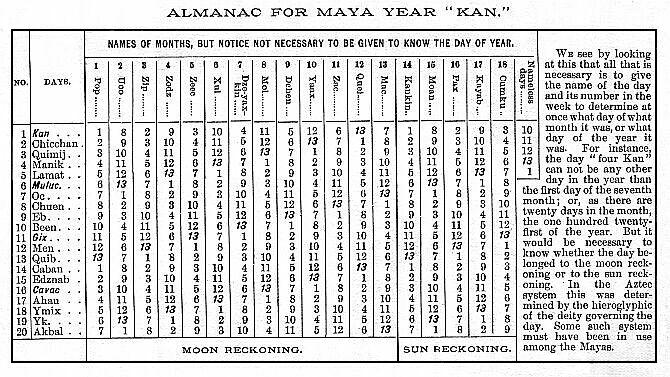
Now we notice in this almanac that the last day of the year Kan, is number one of the week. As the count goes right along, the first day of the next year, Muluc, must be number two. If we would make an almanac for that year, we would find the first day of the third year would be number three of the week. If we were to continue this, we would find that the first days of the years, would range from one to thirteen. This table shows the number in the week of the first day of the first fourteen years. The first day of the fourteenth year would be number one of the week again, but this time one Muluc, and not Kan. If we would continue our researches, we would quickly discover that fifty-two years would go by before we would have a year Kan in which the first day of the year would be number one again.
We think the above explains the origin of the Mexican cycle of fifty-two years. The Mayas either never had this cycle, or had abandoned its use.77 The Mexicans however, used this period of time, and they numbered their years in it in such a way that we can not explain it, unless we suppose they derived it in some such a way as just set forth. We give a table showing the order of the years in a cycle, and also notice that all that was needed was the number and name of the year to show at once what year of the cycle it was. The year seven Calli, for instance, could never be any other year than the twentieth of the cycle.78

To express the dates, they of course painted the hieroglyphic of the day, and dots for the number of days. This cut, for instance, expresses the day-date “seven Acatl.” They generally wrote the dots in sets of five. Seven was sometimes expressed in the above manner. When they wished to express a year-date, they made a little frame and painted in the hieroglyphics of the year, and dots for the number. This date here expressed is their thirteen Acatl, which, by the above table, is seen to be the twenty-sixth year of the cycle.
We have already dwelt too long on this part of the subject. Glancing back over the ground, we see there is nothing implying astronomical knowledge, more than we would expect to find among a rude people. We find there are several particulars of the Mexican system which we could not understand, except by reference to the Maya system. It would bother us to explain why they should choose the days Tochli, Acatl, Tecpatl, and Calli, to be the names of their years, if we did not know how the Mayas proceeded. We would be at a loss to explain why they choose the number of fifty-two years for the cycle, and arranged their years in it as they did, if we had not learned the secret from the construction of the Mayas’ almanac. From this comparison, we should say the Mexican calendar was the simpler of the two. As the Mayas had twenty days in the month, and, for priestly use, weeks of thirteen days, so they took twenty years, which, as they imagined, were supported by four other years, as a pedestal for their next longer period, the ahau; and for apparently no other reason than that they had weeks of thirteen days, they took thirteen of these ahuas for their longest period of time. They did not use the cycle of fifty-two years, but they numbered their years in such a way that, in effect, they were possessed of it. The Mexican did away with all but the cycle of fifty-two years.
No account of the calendar system of the Mexicans would be complete without reference to the so-called calendar stone. The stone, the face of which is sculptured as represented in this cut, was dug up from the square in front of the cathedral of the City of Mexico, where it had been buried in 1557. When the temple was destroyed, this stone still remained entire. Finally the authorities, fearing it attracted too much attention from the natives, ordered it buried. It was brought to light again in 1790, but its early history was completely forgotten. The astronomer Gama pronounced it a calendar stone, and his interpretation of the characters engraved on it have been the foundation for the idea that the Mexicans had considerable knowledge of astronomy.79 Prof. Valentine and others have, however, shown that it was simply a sacrificial stone, which the artist had decorated in a peculiar manner. This stone is considered by some to be so important that we will condense Prof. Valentine’s description of it as being the best at hand. Not all of out scholars accept it, however. The central figure is the face of the sun-god. It is decorated in a truly savage style. It has ear-rings, neck-chain, lip-pendant, feathers, etc. The artist’s design has been to surround this central figure with all the symbols of time. We notice on each side of the sun a small circle or oval with hieroglyphics resembling claws. In Mexican traditions these represent two ancient astrologers who were supposed to have invented the calendar. According to Nahua traditions of the world, there had been four ages of the world; at the end of each age, the world was destroyed. Right above and below the ovals with the claws, we see four squares containing hieroglyphics.
Each of these squares refers to one of the destructions of the world. The upper right hand square contains the head of a tiger. This represents the first destruction of the world, which was by tigers. The four dots seen, in this square do not refer to a date as they generally do; it is a sacred number, and constantly reappears in all hieroglyphics referring to feasts of the sun. To the left of this square, crowded between it and the pointer, can be seen the hieroglyphic of the day Tecpatl. The little dot is one, so this day one tecpatl probably refers to the day in which the feast in reference to this destruction was celebrated. The second age was terminated by a hurricane. The upper left hand square containing the hieroglyphic for wind refers to this destruction. Between this square and the pointer is crowded in the hieroglyphic of one Calli, referring to the feast in memory of this destruction. The third destruction of the world was by rain, the lower left hand square containing the hieroglyphic of rain. Below, not very distinctly, is the date of this feast, one quiahuitl. The last destruction was by water, represented by the lower right hand square. The date of this feast as represented below is seven Ozomatl.80
Passing out of this central zone we notice the hieroglyphics for the days of the month arranged in a circle. The A shaped ray from the head of the sun indicates where we are to commence to read; and we notice they must be read from right to left. Resting on this circle of day, we notice four great pointers not unlike a large capital A. They are supposed to refer to sunrise, noon, sunset, and midnight. Next in order after the days we notice a circle of little squares, each containing five dots. Making allowance for the space covered by the legs of the pointers just mentioned, there are found to be two hundred and sixty of these days; they, therefore, refer to the days of the moon reckoning. We notice four smaller pointers not quite so elaborate as those already referred to, resting in this circle. They probably refer to smaller divisions of the days. The next circle contains a row of glyphs not unlike kernels of corn. One hundred and five are represented on this circle; they refer to the days of the sun reckoning.
Resting on this circle of days are small towers; they, like the smaller pointers, refer to divisions of the day. Adjoining each of these little towers is a figure; this cut represents one of them. We notice they form a circle extending clear around the stone. The meaning of this circle is gathered from other painted records. It represents a rain storm; four drops are seen falling to the ground. The ground is cultivated, as shown by the three ridges; a grain of corn is represented lying on the ground. This band on the stone is in honor of the rain-god.
There remains only to explain the outer row or band. At the bottom is a rude representation of two heads with helmets. The meaning of these figures is unknown. From each of these figures extend in a semicircle a row of figures of this shape, ending with pointers at the top, between which is a year-date. Near the points on each side is what might be described as four bundles tied together. Each of the small figures just described is the representation of a cycle of fifty-two years.
The date on the top is the year date, Thirteen Acatl. This is an easily determinable date. From Mexican paintings, we know the conquest of Mexico occurred in the year Three Calli. From this tracing their years back by the table given earlier (Arrangement of Years in a Mexican Cycle), we would find that the first Thirteen Acatl we meet was in the year 1479. This is exactly the date when, according to tradition, the great temple was finished, and this stone dedicated by bloody sacrifices. If we count the number of signs for cycles, we find that there are just twelve on each side, twenty-four in all. As the artist could easily have made this number more or less, the probabilities are that it means something. The most plausible explanation is, that in the year 1479, they had traditions of twenty-four cycles. But this number of cycles is equivalent to twelve hundred and forty-eight years, which would carry us back to about the year 231, A.D., which date we must bear in mind; not that we think there is any scientific value to it, but for its bearing on other matter at the close of the chapter.81
We come now to consider the subject of their picture writings. The germ of writing is found in the rude attempts to assist the memory to recall past events. Some of the northern Indian tribes resorted for this purpose to belts of wampum. When a new sachem was to be invested with office among the Iroquois, the historical wampum belts were produced; an old man taking them in hand, and walking back and forth, proceeded to “read” from them the principles of the confederacy. In this case, particular events were connected with particular strings of wampum.82 Pictorial representation would be the next stage. At first the aim of the artist would be to make his drawings as perfect as possible. A desire to save labor would soon lead them to use only the lines necessary to show what was meant. This seems to be about the stage of picture writing, reached by some Indian tribes, who have left here and there specimens carved on rocks.
This cut is a specimen of such writing from the cañon of the San Juan in Arizona. Although quite impossible to read it, there is no doubt but what it expressed a meaning at the time it was engraved.
From this stage of development would naturally arise symbolical paintings. Thus “footsteps” might signify the idea of going. A comma-shaped figure, issuing from a person’s mouth, would stand for speech. The next step is what we might call rebus-writing, where not the thing itself was meant but the sound. Thus this cut represents Chapultepec—meaning grasshopper-hill, or locust mount. It is evident, here, the pictures of the objects represent the name. They, probably, did not use this principle farther than to represent the proper names of persons and things before the coming of the Spaniards.
Some think that, in addition to the above, the Mexicans used, to a very limited extent, a true phonetic writing—one in which the figures refer not to the thought, but to the sound of the thought.83 Others are not ready to concede that point. They could not have been further along than the threshold of the discovery, at all events. The Spanish missionaries were very desirous of teaching the Indians the Pater-noster, the Ave-Maria, and the Credo. Either the Indians themselves, or the priests (probably the latter), hit on the device of using painted symbols for the words and syllables of the church prayers and formulas. Thus in this manner was painted the word Amen. The first sign is the conventional figure for water, in Mexican “atl,” which stood for A. For the second syllable they put the picture of a maguey plant, in Mexican “metl.” The whole, then, was “atl-metl,” which was as near as they could express the word amen. We must observe, that this was after the conquest.84
The plate opposite is one of the paintings of the Mendoza collection. This collection, we must remember, was made after the conquest, simply to gratify the curiosity of the King of Spain. The matter treated of is the events connected with time when Motecuma the fifth “chief-of-men” held office. Around the edge we see the hieroglyphics of the years. We notice he was chief-of-men from the year one calli to two tecpatl. About the only thing recorded of him is the different pueblos he conquered. In all he subdued thirty-three; but only eleven are shown in this plate. The pueblos are indicated by a house toppling over—flames issuing from under the roof. The other little hieroglyphics are the names of the pueblos. The last one in the second transverse line from the bottom is the hieroglyphic of Chalco, which we thus learn was reduced to tribute under this chief. All the events indicated in this cut took place before the discovery of America.85
A second part of this codex has reference to the tribute received from various tribes. In this cut the left-hand figure is the hieroglyphic of the town of Chilapi, and is an excellent representation of their rebus-writing we have just referred to. It is a tub of water, on which floats a red-pepper pod. The Mexican word for this last is chilli, for water it is “atl.”. The word “pa” means above. For the full word we have “chilli-atl-pa.” Contracted, it becomes chilapi. The figure to the right is the tribute. The five flags denotes one hundred. Below is represented a copper ax-blade—from which we infer that the Pueblo of Chilapi had to furnish a tribute of one hundred copper axes.
A third part of this same collection refers to the Mexican customs. In this cut we have represented the training of a boy at the different ages of four, six, thirteen and fourteen years of age. The little round marks number the years of his age. The little elliptical-shaped figures show the number of tortullas the child is allowed at a meal. The boy is trained to carry and make various things, to row a boat, and to fish.
The most interesting of Mexican picture-writings is the record of their wanderings. This was formerly supposed to represent their migrations from Asia—but is now known to refer only to their wanderings in the Valley of Mexico. De Lafield, in his “Antiquities of America,” gives a full representation of this picture-writing. Bancroft’s “Native Races,” Vol. II, pp. 548-49, give a very good reduced copy. We will not attempt to reproduce it all. This cut represents the beginning of it. A man is seen crossing a stream in a boat. The figure behind him may mean an island, on which are represented some pueblos and human figures. On the opposite bank of the stream, to which the footsteps lead, is the hieroglyphic of Culhuacan, “the curved mountain.” The year date of this movement is “one tecpatl.” The character within that of Culhuacan is Huitzilopochtli, their national god. The flakes issuing from his mouth signify that he is guiding them. The principal figures about this map are the hieroglyphic names of various places where they stopped, and the time spent at each place.
The Mayas seem to have been further advanced in the art of writing than their Nahua neighbors. Specimens of their hieroglyphic writings have been given in the preceding chapter. The hopes of our scholars were greatly raised when, in 1863, the announcement was made that there had been discovered, in Madrid, a Maya alphabet, which, it was expected, would unlock the mysterious tablets just mentioned.
The alphabet thus discovered is represented in the next cut. It will be seen that some of the letters have a number of different forms. This discovery was hailed as of the greatest importance, and a number of scholars at once set about to decipher the tablets. They were speedily undeceived. The alphabet is, practically, of no help whatever. Prof. Valentine even goes so far as to declare that this alphabet was not of native origin.
He thinks that Bishop Landa, who is the authority for this alphabet, and who was Bishop of Yucatan from 1549 to 1579, being anxious to assist the natives in learning the new faith, set about the manufacture of an alphabet for them. This he did by having the natives paint some native object which came the nearest to the sound of our alphabet. Thus, for instance, this symbol there are excellent reasons for supposing represents the sun, or the word “day.” The Maya word for this is te. We find that this is the symbol that Landa employs for the letter T, only, in his drawing, the central dot has fallen into the lower dashes. Nearly all the other letters can be traced to a similar source.86 But the professor’s reasoning does not satisfy all. He is believed to be right in a number of his identifications; but still the characters might have been used in a phonetic way.87
There is no doubt but that the Mayas had a different system than that in use among the Nahua people. The knowledge how to use it was, probably, confined to the priests; and, furthermore, the system was, doubtless, a mixed one. A few phonetic characters might have been used; but they also used picture-writing. The plate above is a sample of the manuscripts they left behind. It is in the nature of a religious almanac, and refers to the feasts celebrated at the end of a year. The line of characters on the left hand are the days characters Eb and Been. In the lower division, a priest offers a headless fowl to the idol on the left. In the middle division, the priest is burning incense to drive away the evil-spirit. In the upper division, the assistant, with the idol on his back, is on his march through the village. As yet, we know but very little about the tables. We know the hieroglyphics of days and of months.
Examining the tablets in the Temple of the Cross, at Palenque, represented below, we notice a large glyph, at the commencement of the tablet, something like a capital letter. This, Mr. Valentine thinks, represents the censers which stood in the temples before the idols, in which fire was constantly kept.88 Running through the tablets we notice glyphs, in front of which are either little dots, or one or more bars with little dots in front of them. These are day-dates. The dots count one—the little upright bars, five. The probabilities are that this tablet is a sort of list of feast-days in honor of the gods represented by the central tablet.
As we have made a considerable effort to acquaint ourselves with the social organization and customs of the various tribes, and have spent some time in learning the details of their calendar system, and their advance in the art of writing, it will not be out of place to inquire as to their history—to determine, if possible, some of the dates to be given for the arrival of the tribes, and some of the important points of their prehistoric life. Whatever difficulties we have experienced in acquiring a knowledge of their customs will be greatly increased now. Their architecture, social organization, and general enlightenment could be perceived by the conquering Spaniards, and our information in regard to the same should have been full and complete. We have seen, however, how meager it is. The only light thrown on these disputed points is the result of the labors of modern scholars. When we were made acquainted with some of the first principles of Indian society, we could read with profit the accounts of the early writers.
But, when we come to ask for dates in their history, we are almost entirely at sea. The traditions, in this respect, are almost worthless. So, all that we shall attempt to do, is to present some of the thoughts of our scholars as to the probable connection of the civilized tribes with each other, and what value is to be given to the few dates at our command. We will begin, first, with the Maya tribes. This includes those tribes that speak the Maya language, and its dialects. It was in their territory that the most striking ruins were found. They include the tribes of Yucatan, Guatemala, Chiapas, and Tobasco. Then there comes a break; but they were also settled on both banks of the River Panuco. Many theories have been advanced as to the origin of the Mayas. As yet, the question is not solved.
Not a few have supposed them to be the same as the Mound Builders of the United States. Dr. Brinton has pointed out that the language of the Natchez Indians contains some words of the Maya.89 A Mexican scholar, Señor Orozco-y-Berra, thinks it probable that the Mayas once occupied the Atlantic sea-board of the United States; that they passed from the peninsula of Florida to Cuba, and thence to the other Caribbean Islands, and so to Yucatan. He states that the traditions of the Mayas uphold this view.90 But others are not ready to admit it. We have found a number of points of resemblance between the Mayas and the Nahuas. Differences we would, of course, expect to find; but still the points of resemblance are sufficiently strong to indicate either that the tribes were once subject to the same influence, from whence they derived their culture, or else that they are descended from the same stock. We have reverted to the worship of Quetzalcohuatl, and shown how the Quichés, under the name of Gucumatz, worshiped a similar deity. We have also referred to the great similarity of the calendar system.
From the limited space at our command, it is not possible to refer to the traditions of the Maya tribes. We will refer to but one manuscript bearing on this question; but this is, probably, the most important one. This manuscript was written by a native with the Spanish letter, but in the Maya language. It was written not far from the time of the conquest of Yucatan by the Spaniards, and the account is, doubtless, as full a one, from the native stand-point, as can be given. The period of time used by the author is Ahau, which we have seen is either twenty, or twenty-four years.
Carefully going over this manuscript, Prof. Valentine arrives at the following conclusions: About the Year 137, A.D., the Mayas started from some place they called Tulla, or Tullapan, on their migration. Where this place was we do not know. The traditions of all the civilized nations refer to this place as a starting-point. It was a “land of abundance.” It may be that this was but some fabled place, such as almost all primitive people have traditions of.91 About the year 231, A.D., they arrived on the coast of Central America, and spread themselves over a large part of it. This same manuscript speaks of the “discovery” of Chichen-Itza, 522, A.D. The date of the founding of Uxmal is given as about the year 1000, A.D. From 1000 to 1200, A.D., was the golden era of the Mayas in Yucatan.
The tribes at Uxmal, Mayapan, and Chichen-Itza formed a confederacy of which Mayapan seems to have been the head. About the year 1200, inter-tribal war broke out. It seems to have been caused by the arrival of Nahua tribes, who established themselves in Mayapan. They were finally expelled, but they left the Mayas in such a state of exhaustion that they could not present a united front against the Spaniards. Such are the conclusions of Prof. Valentine. He estimates the length of an Ahau at twenty years, and it does seem that the author of the manuscript used that number of years.92
Of the other branch of the civilized tribes we know but very little. The historical picture writings of the Mendoza collection, a collection compiled, remember, after the conquest, and, therefore, representing the traditions then current among the Mexicans, takes us back to 1325, A.D., to the first settlement in the Pueblo of Mexico. Sahagun, a Franciscan monk, who went to Mexico as early as the year 1529, and remained there until his death in 1590, wrote a very voluminous account of the Mexicans, their customs and history, and as he was in Mexico at the time when their traditions were still fresh in the minds of the natives, his account is probably as good as any. He obtained his information in a very credible manner. He gathered together some old Indians, well acquainted with the traditional history of their country. They are supposed to have “refreshed” their memory by inspecting a number of picture writings, which have since disappeared.
It is manifest that this history is valuable, just in proportion as the traditions are valuable. He makes one statement that Prof. Valentine has dwelt upon with great ability. He states that numberless years ago the first settlers came in ships and landed at a northern port, which, from that cause, was called Pauntla. This is supposed to be the Panuco River. After they had settled here, a large part of them, including their leaders and the priests, went off south; Sahagun says as far as Guatemala. The party left behind organized themselves into an independent body. They reconstructed from memory the calendar; they increased and became powerful, until pushing over the mountain, they built the pyramid of Cholula, and finally reached the city of Teotihuacan, where they built a central sanctuary. For some reason they abandoned their homes, all except the Otomies, and wandered off across the plains, and high, cold, desert places, that they might discover new lands.93
No dates are mentioned for these occurrences, and we are not aware that this tradition is mentioned by other writers. We recall that from the mouth of the Panuco River southward, we found evidence of considerable population in olden times. We also recall that in this section are the ruined pyramids of Tuzpan and Papantla. Prof. Valentine is inclined to think that this date is referred to on the calendar stone; that is, 231 A.D. Just twenty-four cycles elapsed from this time to the date of the dedication of the calendar stone in 1479.
He also thinks that the Maya traditions refer to this same occurrence. One more reference to this same mysterious date is contained in the traditions of the Tezcucan tribe. According to the traditions, the beginning of things were in the year 245 A.D. According to this view, then, the ancestors of both Nahua and Maya people appeared on the gulf coast about 231 A.D.; in the same place where a Maya-speaking tribe are found to-day. From here those who developed the Maya culture went to the south and south-west; those who developed the Nahua went to the west and north-west.
We do not profess to be a judge as to the value of this tradition. Our scholars will, probably, at no distant day, come to more definite conclusions in the matter. Prof. Short thinks the strangers who at this early time made their appearance on the gulf shore were colonies of Mound Builders from the Mississippi Valley.94 We think it best to be very cautious about coming to any such conclusions. We must not forget that back of the twelfth century is nothing but vague traditions. Mr. Bandelier tells us that “nothing positive can be gathered, except that even during the earliest times Mexico was settled or overrun by sedentary, as well as by nomadic tribes that both acknowledged a common origin.”95 The savage tribes have the general name of Chichimecas, but by right this term ought to be applied to the sedentary tribes as well; however, the word Toltec stands for these sedentary tribes. We have all read about the great Toltec Empire in Mexico. This is a ridiculous use of words. There was no tribe or nation of people of the name of Toltecs.96 All these prehistoric aborigines were probably Chichimecas; but by Toltecs we refer to the sedentary tribes, the skillful workers among them. If we are to judge any thing of traditions, the original home of these people were somewhere to the north of Mexico.
There was doubtless the usual state of inter-tribal warfare, but after a prolonged period the sedentary tribes—the Toltecs—were exterminated or expelled. Their successors were utter savages, coming from the north also. We doubt very much whether any date can be given for this event, but traditions assign it to about the year 1064. Prof. Valentine thinks he finds a reference to it in the calendar of stone. If we will notice, in the outer band near the top are four little bundles, or knots, in all, eight. We are told that each of these bundles refers to a cycle of fifty-two years, or in all four hundred and sixteen years. The date of the inauguration of the stone is 1479. If we subtract the number of years just mentioned, we have the date 1063. Whether this is simply a coincidence, or was really intended to refer to that event, we can not say.
Considerable speculations have been indulged in as to where the Toltecs went when driven out of Mexico. Some have supposed they went to Yucatan, and that to them we are to look for the builders of the ruined cities. This is the view of a very late explorer, M. Charney.97 Some have supposed we yet see certain traces of their presence in Guatemala, where they helped to build up a great Quexche “monarchy.”98 But we know very little about it. It is not probable that more than a feeble remnant of them escaped with their lives.
From the same mysterious regions from where had issued the aboriginal Chichimecas and Toltec people, there subsequently came still other bands of sedentary Indians, who finally came to settle around the lakes of Anahuac. These settlers all spoke closely related dialects of the same language as their predecessors, the Toltecs. Finally the Aztecs appeared on the scene, coming from the same mysterious land of the “Seven Caves.” According to their historical picture-writings, they founded the Pueblo of Mexico in 1325. It is somewhat singular that no record of this event appears on the calendar stone. If the artist was ingenious enough, as Prof. Valentine thinks he was, to represent the dispersion of the Toltecs in the eleventh century, he surely would have found some way to refer to such an important event as the founding of their Pueblo. From this date the Mexicans steadily rose in power, until they finally became the leading power of the valley.99
REFERENCES
First knowledge of Peru—Expeditions of Pizarro—Geography of Peru—But a small part of it inhabitable—The tribes of ancient Peru—How classified—Sources of our knowledge of Peru—Garcillasso De La Vega—Origin of Peruvian civilization—The Bolson of Cuzco—Historical outline—Their culture—Divided into phratries and gentes—Government—Efforts to unite the various tribes—Their system of colonies—The roads of the Incas—The ruins of Chimu—The arts of the Chimu people—The manufacture of pottery—Excavation at Ancon—Ruins in the Huatica Valley—The construction of a Huaca—The ruins at Pachacamac—The valley of the Canete—The Chincha Islands—Tiahuanuco—Carved gateway—The Island of Titicaca—Chulpas—Ruins at Cannar—Aboriginal Cuzco—Temple of the Sun—The Fortress—General remarks.
early part of the sixteenth century was surely a stirring time in the world’s history. The night of the Dark Ages was passing off of the Old World; the darker gloom of prehistoric times was lifting from off the New. Spanish discoveries followed each other in rapid succession in the South. As yet, they supposed these discoveries to be along the eastern shores of Asia, but, in 1513, Balboa, from a mountain peak, in Darien, saw the gleam of the great Pacific, which intervenes between America and Asia. At the same time he was informed there was a country to the southward where gold was in common use, and of as little value among the people as iron among the Spaniards. As gold was what the Spaniards most desired, we can imagine how they rejoiced over such information.
The rich country of which Balboa was thus informed was later known as Peru. Balboa himself did not attempt its discovery. There was no lack, however, of those who wished to achieve fame and fortune by so doing. Among other restless spirits who had been attracted to the New World, was Francisco Pizarro. He had been associated with Balboa in founding the settlement of Darien, and, of course, he was among the first to hear of the marvelous country farther south. In 1518, Panama, on the Pacific coast, was made the seat of government for the Spaniards in that section of the country. Pizarro was one of the first there—his services had been rewarded by the grant of an estate. The historian of his expedition speaks of him as “one of the principal men of the land, possessing his house, his farm, and his Indians.”1 We need not doubt but what he often pondered over his knowledge of the rich country south. He was well acquainted with Indian character, and knew that a small band of resolute Europeans, possessed of fire-arms, could sweep every thing before them.
He could not endure the quiet life on his estate, and so he obtained from the governor permission to explore the coast of the South Sea to the eastward. He spent a large part of his fortune on a good ship and the necessary supplies for the voyage, and finally set sail from Panama in November of 1524. It needed a man of no common spirits to withstand the disappointments of the next few years. In less than a year this ship returned to Panama for reinforcements. Pizarro himself and a few of his men remained at a place not very far from Panama. Here he was joined by reinforcements under Almagro. Undismayed by his first experience, he again sailed southward along the coast. Xeres’s brief account is as follows: “When they thought they saw signs of habitations, they went on shore in their canoes they had with them, rowed by sixty men, and so they sought for provisions. They continued to sail in this way for three years, suffering great hardships from hunger and cold. The greater part of the crew died of hunger, insomuch that there were not fifty surviving. During all these years they discovered no good land; all was swamp and inundated land without inhabitants.”
This expedition accomplished nothing further than to obtain definite information as to Peru. Pizarro’s grant from the governor having expired, and the further fact that he had spent all his fortune in these unsuccessful expeditions, made it necessary for him to go to Spain. Received by the emperor with favor, clothed with ample authority, he was able to raise men and money, and finally sailed from Panama in 1531 on his third and successful expedition for the conquest of Peru. Thus was made known to the world what is regarded as the most wonderful example of native civilization in the two Americas.
The dawn of history for Peru was the sunset of her native culture. In a few short years what has come down to us as the Empire of the Incas was completely overthrown; the enslaved Indians were groaning under the weight of Spanish oppression; the demolition of her ancient monuments had already begun, and romance, tradition, and wonder had already thrown their subtle charms around the ruins. The old customs and usages were on the sudden dropped, a new culture was forced upon the unwilling natives, and prehistoric Peru, though distant but a few years in time, was as completely separated from historic Peru as is the culture of the Neolithic Age in Europe from that of the early historic period.
The magician’s wand in the fairy stories of olden days did not present results more bewildering in their changes than did the operations of the Spaniards in Peru. All accounts unite in praising the government of ancient Peru. There is probably no question but what the government the Spaniards overthrew was one far better adapted to the wants of the native inhabitants than the one they forced them to accept. But when we read the accounts of that government as set forth by the early writers, we are at a loss to know what to believe. There is such an evident mixture of fables, traditions, and facts, that the cautious student hesitates, and asks what support the researches of later scholars give to these early writers. We doubt whether we have to this day clear ideas of the culture of ancient Peru. This is to be regretted. There is no question but that here was the highest development of the Indian race in America. If we accept the accounts given us, here rose an empire which will not suffer by comparison with the flourishing empires of early times in Oriental lands. Let us try and learn what we can of this culture, and see wherein it differed from that of the civilized tribes already discussed.
We must, first of all, acquaint ourselves with the physical features of the country. We can never fairly judge of the civilization or culture of a people until we know their surroundings. One of the discoveries of late years is, that the culture of a people is greatly influenced by their surroundings. The very appearance of a country whether it is mountainous or plain, sea-girt or inland, influences the character of a people. Civilization is found to depend upon such common factors as climate, food, and physical surroundings.2 Now if we will examine the map of South America, we will see that the entire section of country occupied by the tribes under consideration is very mountainous. What is known as the Andes is in reality the most eastern of the two ranges. The western one nearer the coast is called the Cordillera, or the Coast Range. The summit of this mountain range often spreads out into great undulating plains, the general elevation of which is from fourteen to eighteen thousand feet above the sea. This series of elevated plains forms a dreary, uninhabited stretch of country, “frigid, barren, and desolate, where life is only represented by the hardy vicuna and the condor.”3
This is the uninhabited portion of Peru. The general width of this plateau region is about one hundred and fifty miles. Passing this dreary stretch of country we come to another still elevated plateau section, which extends to the snow-clad Andes proper. The distance between these two great mountain ranges is from one to two hundred miles, but as we see on the map they come together in places. One such place, the Pass of La Raya, fifteen degrees south latitude is of importance as marking the northern extremity of the great basin of Lake Titicaca. This basin is remarkable in many respects. It is of no inconsiderable size, being six hundred miles in length by one hundred and fifty in width. It has a lake and river system of its own. At the northern extremity of the basin is the noted Lake Titicaca, which is given by some as the traditional place of origin of the Incas. This lake finds an outlet in the River Desaguadero, which flows in a broad and swift stream in a southerly direction, where it empties into Lake Aullagas.
Of this lake we know next to nothing, but it seems to be established that it has no outlet to the sea. Thus this Titicaca basin is but another example of interior basins like that of our own great Salt Lake. It is not, however, favorably situated for agricultural purposes. It is a “region where barley will not ripen except under very favorable circumstances and where maize in its most diminutive size has its most precarious development; where the potato, shrunk to its smallest proportions, is bitter; where the only grain is the quinoa, and where the only indigenous animals fit for food are the biscacha, the llama and the vicuna.”4
Thus we see that a large part of the interior of Peru was not desirable for habitations. But this great plateau region north of the basin of Lake Titicaca is here and there broken up by what we would call valleys, but which the Spaniards more appropriately named bolsons, literally meaning “pockets.” These bolsons are of various altitudes, and, therefore have different climates and productions. Some are well drained and fertile, others are marshy and contain considerable lakes. As a general thing, the bolsons are separated from each other by stretches of the dreary, desolate plateau; or by ranges of precipitous hills and mountains, or by profound gorges, along which courses some river on its way to swell the flood of the mighty Amazon.
The coast range of mountains of which we have spoken runs nearly parallel to the coast, distant from it about forty miles. This stretch of country along the entire coast of ancient Peru is mainly a desert. Owing to causes which we need not explain, rain is almost unknown; the consequence is, the coast presents a dreary, verdureless, forbidding appearance. The melting snows on the great Cordillera, however, send down, here and there, on their western flanks, feeble rivers. Some of these rivers reach the sea, others prolong their flow but a few miles from the mountains before the thirsty desert swallows them from view. As is true of all desert countries, all that is needed to render it fertile is water; so, wherever these rivers occur there are found wonderfully fertile valleys. Every one of these valleys was once thickly settled, but, like the bolsons of the interior, they were not connected with each other. Each valley is separated from its neighbor by many miles of almost trackless desert, across which the Incas are said to have indicated the road by means of stakes driven into the sand and joined by Ozier ropes. No remains of such roads have been found by modern travelers.
From this description it is “clear that but a small portion of the country was inhabitable, or capable of supporting a considerable number of people. The rich and productive valleys and bolsons are hardly move than specks on the map.”5 It is necessary that we bear this description of the country in mind. It will help us to understand as nothing else will how the tribes located in one rich and productive bolson could, by successive forays, reduce to a condition of tribute tribes living in other detached valleys and bolsons. It will also enable us to put a correct estimate on the extravagant accounts that have reached us of the population of this country under the rule of its ancient inhabitants. We can also readily see why the tribes living in the hot and fertile valleys along the coast, which were called Yuncas by the Peruvians, should differ in religion and mental and moral characteristics from the tribes living in the bolsons of the interior, where the snow-clad peaks were nearly always in sight, and where the sun, shedding his warm and vivifying beams, would appear to the shivering natives as the beneficent deity from whence comes all good.
We must now turn our attention to the tribes inhabiting the section of country just described. We have seen that the Mayas, of Central America, the Nahuas, of Mexico, and the sedentary tribes, of the United States, were considerably in advance of the great body of the Indian tribes of North America. We find the same fact true of the natives of South America. Those tribes inhabiting the territory of ancient Peru, and those of the territory now known as the United States of Columbia, were considerably further advanced than the wild tribes living in the remaining portions of South America. Quite a number of our scholars have grouped in one class these partially civilized tribes of both North and South America, and called them the Toltecan Family.6 But others do not think that there are sufficient grounds for such a class division. They can not detect any radical changes in the domestic institutions of the various tribes.7 On this point we must wait until our authorities are agreed among themselves.
Attempts have been made to classify the various partially civilized tribes of Peru. There are several difficulties in the way. It was, for instance, the custom of the Incas, whenever they had reduced a tribe to tribute, to force them to learn their language, which was the Quichua, and is what the early Spanish writers call the general language of Peru.8 How far this language was forced on the tribes, and how far it was their own idiom, we can not tell. Mr. Markham, who has made a very careful study of all the authorities bearing on Peru, divides the territory of ancient Peru into five divisions, and in each locates a number of tribes, which he thinks forms a family.
The first, and most northern one, extends north from near Tumbez, in the present State of Ecuador. The second extends from Loja, on the north, to Cerro De Pasco, in about eleven degrees south latitude. The third, and most important, extends from this last named place to the pass of La Raya, fifteen degrees south latitude. This was the home of the Incas and five other closely related tribes. To the south of La Raya is the basin of Lake Titicaca, the home of a family of Indians generally known as the Aymara Indians. This name is, however, wrong; these tribes should be called the Collao Indians. These four divisions do not include any territory west of the Cordillera range, except one part of the third division. These four families are all closely related. Mr. Markham thinks they all had a common origin. Mr. Squier thinks the Collao, or, as they are generally called, the Aymara Indians, are distinct from the others. “They differ from each other as widely as the German’s differ from the French,” is his own conclusion. The entire coast district of Peru was the home of many tribes of Indians, about which we as yet know but little. The name by which they are known is Yuncas.9
We are now ready to proceed to a consideration of the culture of ancient Peru, and a description of the monuments. But before doing so we must have a word to say as to the authorities. At the time of the Spanish conquest of Peru, the Empire of the Incas was supposed to have been in existence about four hundred years. But the Incas had no hieroglyphic or pictorial system of recording events. The most they had was a system of knot records or quippos, which will be explained in due time. These records were simply aids to the memory. Mr. Squier places them “about on a par with Robinson Crusoe’s Notched Calendar, or the chalked tally of an illiterate tapster.”10 They are manifestly of no value as historical records.
It must be evident, then, that all our knowledge of Peru, previous to the arrival of the Spaniards, rests solely upon traditions. We have no reason to suppose that these traditions are of more value in their case than in the case of other rude and illiterate people. The memory of such people is very short lived. The tribes in the southern part of the United States must have been greatly impressed with Do Soto’s expedition. They heard fire-arms for the first time, and for the first time saw horses ridden by men. Yet in the course of a few generations they had completely forgotten all this.11
One very eminent authority is Garcillasso De La Vega.12 Let us examine his writings a minute. He was born in Cuzco about 1540, but a few years after the conquest. His mother claimed descent from the royal family. He left Peru in 1560, when he was just twenty years old, and went to Spain. He first sought advancement in the army. Despairing of success in that line, he turned his attention to literature. One of his first works was an account of De Soto’s expedition to Florida. The historian Bancroft thus characterizes this work: “An extravagant romance, yet founded upon facts—a history not without its value, but which must be consulted with extreme caution.” Yet in this work there were no subtile ties of blood, no natural bias as there would be in favor of the land of his birth.
About 1600 he commenced his “Royal Commentaries of Peru.” This is the main source of information as to ancient Peru. We must reflect that he had been away from his native land forty years when he commenced the work. His sources of information were the stories told him in his boyhood days, the writings of the Spanish travelers, monks, and conquerors, and what he learned by corresponding with his old friends in Peru, which he did when he formed the design of writing his history. In other words, his history rests on the traditions extant at the time of the conquest, viewed, however, from a distance of sixty years. Who can doubt but what the old man, writing his accounts of this mother’s race, that race that had been so deeply wronged, wrote it under the influence of that potent spell, which the memory of old age throws around childhood’s days?
It is evident we have in these accounts but little deserving the name of history. When he undertakes to tell us of the doings of the Incas, who are supposed to have reigned three or four hundred years before the Spanish conquest, descending to such details as what nations they subdued, the size of their armies, their speeches to their soldiers, the words of counsel they addressed to their heirs, their wise laws and maxims—and we know that this account rests on traditions—he who believes that they are of historical value, is surely possessed of a good store of credulity. We do not mean to say that his writings are of no account. On the other hand, they are of value. The historical part we are to consider simply as traditions, and we are to weigh them just as we would any other collection of traditions and compare them with monuments still extant. He is good authority on the customs and manners of the Peruvians just previous to the arrival of the Europeans.
We have seen what strange mistakes the Spanish writers made in describing the government and customs of the Mexicans. We have no doubt but what substantially the same mistake has been made in regard to Peru. We believe that a careful, critical study of all that has been written on the subject of Peru by the early writers will establish this fact. As yet this has not been done. We must therefore be careful in our description of the state of society amongst them, as we do not wish to make statements not supported by good authority.
We must try and decide as to what is the most probable origin of the ancient Peruvian civilization. Some of the earlier writers on this subject would trace it to an influx of Toltecs, the same mythical race that is credited with being the originators of the culture found in Mexico and Central America. But our modern scholars have clearly shown that the Toltec Empire, which was supposed to have preceded the Mexican, never existed. What we are to understand by the Toltecs is the sedentary tribes of Indians, either of the Nahua or Maya stock. The only value we would assign to the story of their dispersion is that it is a traditional statement that the migration of the sedentary Indians has been in a direction from north to south.
We have no means of knowing when the first tribes arrived in the country, or of their state of culture. It was doubtless at a very early date, and the tribes were probably not far advanced. We have no reason to suppose the culture of Peru was influenced from outside sources at all. We can not detect any evidence of a succession of races in Peru. The distinguished author to whom we have already referred13 speaks of what he calls the ancient Peruvians as distinguished from the modern tribes that acknowledged the government of the Incas.14 We think that all the evidence points to a long continued residence of the same race of people.
We may suppose that in the fertile valleys of the coast, and in the bolsons of the interior, tribes of rude people were slowly moving along the line of progress that conducts at last to civilization. There is no reason to suppose that this progress was a rapid one. Under all circumstances this development is slow. We must not forget the natural features of the country. The inhabited tracts were isolated, hence would arise numerous petty tribes, having no common aims or mutual interests. Each would pursue their own way, and would keep about equal pace through the stages of Barbarism.15
In process of time geographical and climatic causes would produce those effects, from which there is no escape, and some tribes would distinguish themselves as being possessed of superior energy, and the same results would follow there as elsewhere; that is, the dominion of the strong over the weak. All other circumstances being equal, we would look for this result in a section where a mild climate and fertile soil enabled man to put forth his energies, and rewarded his labors. All accounts agree in speaking of the bolson of Cuzco as well provided by nature in this respect. One eminent traveler speaks of it as “a region blessed with almost every variety of climate. On its bracing uplands were flocks of llamas and abundance of edible roots, while its sunny valleys yielded large crops of corn, pepper, and fruits.”16 Mr. Squier thinks that, on the whole, the climate is very nearly the same as that of the south of France.17
This bolson was the home of the Incas. A number of writers speak of the Incas very much as if they were a royal family. It is not necessary to discuss this point very extensively at present. All our accounts of their early history are traditional. Mr. Markham and Mr. Squier, both competent judges, assert that the weight of traditions is to the effect that the Incas originated near Cuzco. “Universal traditions,” says Mr. Markham, “points to a place called Peccari Tampu as the cradle or point of origin of the Incas.” As near as we can make out from the description, this was where, as seen from Cuzco, the sun appeared to rise.18
We must remark that the sun was the ancestral deity of the Incas. All the Andean people worshiped some object as an ancestral deity. “An Indian,” says La Vega, “is not looked upon as honorable unless he is descended from a fountain, river, or lake, or even the sea, or from a wild animal, such as a bear, lion, tiger, eagle, or the bird they called a condor, or from a mountain, cave, or forest.” The Incas claimed descent from the sun. So we can see why their legends would center on the place where the sun appeared to rise. In after years, when they had extended their conquests to the Collao,19 and stood on the shore of Lake Titicaca, the sun appeared to them to rise out of its waves; and so this lake became to them a second point of traditional origin.
We see we can not solve the question of the origin of the Incas until we solve the deeper problems of the origin of the Andean tribes. Every thing seems to indicate a long-continued residence, perhaps for centuries, and a slow advance in culture. We are not to suppose the Incas were endowed with unusual capacity for improvement; all the tribes were probably about equal in this respect.20 But their situation was in their favor, and they did not have to contend with those obstacles that confronted other tribes. They must have increased in numbers and in culture; they would in time feel themselves strong enough for conquest. We must bear in mind the peculiar geographical features of the country. In the isolated valleys and bolsons were living other tribes, but little inferior to the Incas. There were no common interests between these tribes. One by one they fell before the assaults of the Incas, and were reduced to tribute. Rendered still more powerful by success, the Incas pushed on their conquests until finally all the tribes living in that vast stretch of country from the Andes to the Pacific, from Chili to the United States of Colombia, acknowledged themselves tributary to the Incas. This was the state of things when the Spaniards, under Pizarro, appeared on the scene.
When we undertake to learn the history or the state of culture among the Incas, we are entering on a difficult subject. Of their history, we know but very little more than is given in this outline; and owing to the complete absence of all records, we can not expect to know very much. Garcillasso draws such an inviting picture of the happy government of the Incas, that we would suppose that no rebellion or insurrection would ever occur. It seems, however, that their government was as much subject to such trials as any. Mr. Forbes tells us that “the Aymaras never submitted tamely to their Peruvian masters, but from time to time gave them much trouble by attempting to recover their independence.” And M. Reville tells us of the Incas that, “more than once they had to suppress terrible insurrections.” And we shall see, further on, that the probabilities are that the various tribes composing this so-called empire were not more compact and united than were the tribes composing the Mexican Empire.
Shortly before the conquest, the Incas had reached their zenith of power. Huayna Capac, who died about 1525, was in reality the last of the Inca chiefs. Under his management the tribes as far north as Quito were reduced to tribute. The story goes that shortly before his death he divided the empire between two of his sons. One, Huascar, the rightful heir to the throne; the other, Atahualpa, half-brother to Huascar. His mother was daughter of the last king (?) of Quito. Her father had been forced to submit to the victorious Huayna Capac. This division of the Incarial Empire, was not at all to the liking of either Huascar or Atahualpa. They both wished to be sole Inca. Civil war was the result. Atahualpa, by treachery, had taken his brother prisoner, and would doubtless have achieved his ambition, but just then Pizarro invaded the country, and the reign of the Incas was over.
Thus far, the story. We very much doubt whether this expresses the facts of the case. There is no question, of course, that civil war was in progress when the Spaniards arrived, which war, by the way, was a very fortunate thing for the Spaniards; but we do not know enough about the government of the Incas to know whether Huayna Capac could bequeath any powers to his sons. About all we are justified in saying is, that on his death, two persons (they were very likely brothers, and sons of Huayna Capac) aspired to the chieftaincy of the Incas, and, failing to agree, resorted to war to settle the matter.
The question is, how far back in the unrecorded past can we follow tradition? Huayna Capac is thought to have been chief for about fifty years. His predecessor is said to have been one Tupac Yupanqui. Velasco, an early writer on the Peruvians, thinks he was chief for about thirty-six years. As this would carry us back nearly one hundred years, it must be evident we have gone about as far as we can place any reliance on tradition. However, the third chief, going backwards, was also called Yupanqui, sometimes denominated “Yupanqui the Great,” and his reign (?) takes us back to about the year 1400. “Beyond this point,” says M. Castaing, “we fall into a mythological era.” We fully agree with him. We can not think there is any special value in accounts of events said to happen before that time—that is, for historical purposes.
That there were victorious chiefs, conducting victorious forays before that date, is, of course, admitted. That the names of many of the chiefs have come down to us, as well as some of their notable achievements is quite possible. It is also evident that some mythological personages would appear in tradition as “reigning Incas.” It is equally plain that neither Garcillasso, nor any of the Spanish writers, had any clear ideas of these ancient times or events. All traditions finally settle on Manco Capac as the first chief of the Incas. M. Castaing says he “is but an allegory of the period of formation.”21 The date of the accession of this mythological chief is given by most authorities as about the year 1000. M. Castaing thinks it was in the middle of the twelfth century. It does not make much difference which date the reader concludes to accept—one will do as well as the other.22
Let us turn our attention to the culture of the Incas, and their state of government. Here we would expect to be on firm ground. We would expect the Spanish writers to give us reliable accounts of the state of society of the people they conquered. But, as Mr. Squier remarks, the overthrow of the Peruvian government “was so sudden and complete that the chroniclers had hardly time to set down the events which took place before their own eyes, and had little leisure, or perhaps inclination, to make a careful investigation into the principles of their civil and religious polity. As a consequence, this work has devolved upon the laborious student and archæologist of a later time.” In other words, we are to compare the accounts given us by the early writers with our present knowledge of Indian society.
We have already made the statement that the Inca were a tribe of Indians. But, if they were a tribe, did they have the usual subdivisions of a tribe—which, we remember, are the phratry and gens? The Spanish writers say nothing about such divisions. This is not strange. They said nothing about the phratries and gentes of the Mexicans; and yet they were in existence. Neither did the English mention the institution of the phratries and gentes among the Iroquois; and yet they were fully developed. We answer, that the Inca tribe were divided into both phratries and gentes. It is necessary to show what grounds we have for such belief. It is well to have a little better understanding of the surroundings of this tribe.
The isolated section of country which they occupied is about seventy miles long by sixty in width. “The proper name for the aboriginal people of this tract,” says Mr. Markham, “is Incas.” This word must have been at first the title for chief—for all the chiefs in this section were called Incas; but, in process of time, the name was assumed as the special title of the tribe at Cuzco. Mr. Markham gives us further the names of seventeen lineages who occupied this valley. Whether a lineage was a tribe or not we can not decide. We will now confine our attention to the ruling tribe at Cuzco.
The Spaniards noticed that Cuzco was divided into two parts, called respectively Upper and Lower Cuzco. Garcillasso tells us that this division was made as follows. Manco-Capac with his wife and queen were children of the Sun, sent to civilize the Indians, who, before their arrival, were a very degraded sort of savages. From Cuzco this sun-descended couple went their different ways—the king to the north, the queen to the south—“speaking to all the people they met in the wilderness, and telling them how their father, the Sun, had sent them from heaven to be the rulers and benefactors of the inhabitants of all that land; . . . and, in pursuance of these commands, they had come to bring them out of the forests and deserts to live in villages.” This sounded so good to the wild tribes, that they “assembled in great numbers, both men and women,” and set out to follow their exhorters.23
The tribe that followed the king settled Upper Cuzco; while the queen’s converts settled Lower Cuzco. This division was not made so that those living in one half should have any special privileges over the other—for they were all to be equal, like brothers. The division was solely in order “that they might be a perpetual memory of the fact that the inhabitants of one were assembled by the king, and the other by the queen.” The only difference between them was, “that the people of Upper Cuzco should be looked upon and represented as elder brothers, and those of Lower Cuzco as younger brothers.”
Such is the account of the settlement of Upper and Lower Cuzco. Any one acquainted with the general principles on which the division of Indian tribes into phratries took place, can not help concluding that these divisions were simply two phratries. The inhabitants of each traced their descent back to a supernatural personage. They were equal in power to each other as elder and younger brothers. Polo Ondegardo simply remarks that “the lineage of the Incas was divided into two branches, the one called Upper Cuzco, the other Lower Cuzco.”24 There ought to be no objection to substituting for the word branches used above the scientific term our scholars now employ; that is, phratry. Each tribe of the Iroquois confederacy was divided into two phratries, and their name for this division was a word which meant brotherhood.25
Whatever doubt we may have on this point vanished when we come to examine into the customs of the Incas. We must not forget that the most prominent way a phratry shows itself is in matters of religion, and in the play of social games. “The phratry, among the Iroquois,” says Mr. Morgan, “was partly for social and partly for religious objects. . . . In the ball game, for example, they play by phratries, one against the other. Each phratry puts forward its best players, usually from six to ten on a side, and the members of each phratry assemble together, but on opposite sides of the field in which the game is played. The members of each phratry watch the game with eagerness, and cheer their respective players at every successful turn of the game.”
Let us see how it was among the Incas.26 Like all Indian tribes, the Incas were very fond of ceremonious feasts. Nearly every month they celebrated one or more. We gather from Molina that on occasions when the whole tribe participated in such religious observances, the people of Upper Cuzco sat apart front Lower Cuzco. In the month corresponding to August they had a celebrated feast, the object of which was to drive out all evil from the land. We read: “All the people of Cuzco came out, . . . richly dressed, sat down on benches, each man according to the rank he held, those of the Upper Cuzco being on one side, and those of Lower Cuzco on the other.” And of another feast we read: “They brought out the embalmed (?) bodies of the dead Incas, placing those who had belonged to Upper Cuzco on the side where that lineage was stationed, and the same with those of Lower Cuzco.” Other examples could be given, but this point is well established. In games this same division was observed, since we read that in the month of December, “on the first day of the month, those who had been armed as knights—as well those of the lineage of Upper Cuzco as those of Lower Cuzco—came out into the square with slings in their hands, . . . and the youths of Upper Cuzco hurled against those of Lower Cuzco.” We may therefore consider it well established that the Incas were a tribe of Indians having two phratries.
Let us now see how the matter stands in regard to gens. This division follows almost as a matter of course, but it is well to see what separate grounds exist for the assertion. Garcillasso, in his description of Cuzco, after a reference to the division into Upper and Lower Cuzco, tells us further that it was divided into twelve wards. Mr. Squier gives us a map of the ancient city. From this we see that the twelve wards were arranged in an irregular oval around the principal square. Seven of them belonged to the division of Upper Cuzco, the other five to Lower Cuzco.
This division is utterly unintelligible to us, unless we suppose them to be subdivisions of the phratries. It makes no difference what name we bestow upon them, in effect they can be nothing else than gentes. As to the number of them, it is well to notice a coincidence in the statement of an Indian writer, Salcamayhua.27 On a certain very important occasion there were assembled “all the councilors. The governor entered the chamber, where twelve grave councilors were assembled.”28 The most reasonable explanation that can be given for the number twelve is that each gens had one representative in the council. The Incas are thus seen to be very probably, at least, no exception to the general rule of Indian tribes.
From our present standpoint what can we learn as to their government? It is, of course, well known what the position of the early writers on this subject is. They all agree that the government of the Incas was a monarchy of the strictest type. We have seen what a wonderful empire they bestowed on the Mexicans. The Peruvian Empire is painted in still brighter colors. Modern writers have not allowed the early accounts to suffer by repetition. Rivero uses the following language: “The monarchs of Peru, . . . uniting the legislative and executive power, the supreme command in war, absolute sovereignty in peace, and a venerated high-priesthood in religious feasts, . . . exercised the highest power ever known to man.”29 Even so cautious a writer as Mr. Squier speaks of the Incas as ruling “the most thoroughly organized, most wisely administered, and most extensive empire of aboriginal America.”30
It is freely admitted that there is much that is indeed wonderful in the culture of the Incas; but it has, undoubtedly been greatly exaggerated. To deal with this question as it should be would require an entire volume of itself, and would require far more extensive research than the writer has been able to make, or is, indeed, prepared to make. It will do no harm to see what we can learn by comparing the statements of some of the early writers with what we have now learned of Indian society.
Let us first inquire as to the council. There is no question as to the existence of a council. Garcillasso and all the early writers refer to it in an accidental sort of way. To show the force of this statement, we will give a few quotations. Garcillasso, speaking of the movements of the Inca Viracocha, says: “Having passed some years in making journeys, he returned to Cuzco, where, with the advice of his councilors, he resolved on war.” And, in another place: “Having consulted with his council” he assembled his army. Talking about the son of the foregoing, he says: “In fine, this king, with the advice of his council, made many laws, rules, ordinances,” etc.31 In the foregoing we are made aware of the existence of a council, but are not told as to its size or powers. Each gens would of course be represented in the council. We have spoken in one place of the number twelve. Mr. Bandelier tells us that the council consisted of sixteen members.32 As to its power we are also left in the dark; but, judging from what we have learned of the council among the Mexicans and Indian tribes of the North, who can doubt but that it was the supreme governing body?33
The more we study this question, the more points of resemblance we would find with the social organization of the Mexicans. The tenure of land was of course the same, as we learn from the report of Ondegardo—some differences may have occurred in regard to tribute.
The Mexicans, we must remember, were at the head of a confederacy, and the tribute was brought to Mexico to be divided among the three tribes. The Incas were the only tribe, in the case of Peru, having supreme power. Having no one to suit but themselves, they introduced some new features. The tribute, instead of being all brought to Cuzco, seems to have been, at least a portion of it, stowed away in storehouses located at places most convenient for the Incas. Cieza De Leon says: “The Incas . . . formed many depots full of all things necessary for their troops. In some of these depots there were lances; in others, darts; and in others, sandals: and so, one with another, arms and articles of clothing which these people used, besides stores of food. Thus, when a chief was lodged in one of these depots with his troops, there was nothing, from the most trifling to the most important article, with which they were not supplied.”34 This tribute was gathered by regular tribute-gatherers. As in the case of Mexico, these appear in history as governors. Ondegardo says they left “Cuzco every year, and returned in February, . . . bringing with them the tribute of the whole empire.”
As a rule, the Incas did not interfere with the customs of the tribes they had conquered. Garcillasso says: “Excepting a few alterations that were necessary for the welfare of the whole empire, all the other laws and customs of the conquered province were retained without any change.” In the main, all they wished for was tribute. Yet they seem to have had some idea of a higher policy than that. They are credited with carrying out measures which would certainly tend to bring the tribes into a close union. Mr. Squier remarks: “The efforts of the Incas to assimilate the families that were brought within their empire, by force or alliance—in respect to language, religion, and modes of life—were powerful and well-directed.”35 This was a step ahead of any thing that can be said of the Mexicans.
In the matter of language, it is said they made persistent efforts to have the conquered tribes learn their own language. De Leon tells us that it was a law throughout the kingdom that this language should be used—“fathers were punished if they neglected to teach it to their children in their childhood.” How much we are to believe of this account is doubtful. Mr. Markham has shown us that the languages of all the interior tribes were related. We know how difficult it is to compel a conquered people by law to learn a foreign language. William the Conqueror made an unsuccessful attempt to compel the Anglo-saxons to learn French—it ended by his followers learning English. Are we to believe that a tribe of Peruvian Indians were successful in spreading their language over a wide extent of territory in the course of a few generations?
What is considered as the great stroke of policy on the part of the Incas, was their system of colonies. On this point De Leon tells us: “As soon as a province was conquered, ten or twelve thousand men were ordered to go there with their wives; but they were always sent to a country where the climate resembled that from whence they came. If they were natives of a cold province, they were sent to a cold one; and if they came from a warm province, they went to a warm one. These people were called mitimaes—which means Indians who have come from one country and gone to another.” On this we might remark, that the Incas did not always show such discriminating care where they sent the exiles, since Mr. Markham tells us that the “descendants of colonists on the coasts of Peru (a warm climate, notice) still retain traditions concerning the villages in the Andes (a cold province), whence their ancestors were transported.”
We will only refer to the so-called royal roads of Peru. Humboldt observed them in Northern Peru, and speaks in high praise of them. Many of the early writers mention them. De Leon gives us a really wonderful account. Modern travelers have not been so fortunate in finding their remains. Mr. Squier does not mention them. Mr. Hutchinson searched at every place along the coast, and could find no trace of such works. The northern part of Peru, where Humboldt saw them, was almost the last section to be conquered by the Incas. It is singular that they should have been in such a hurry to build roads in that section, when the other parts of their territory were destitute of them.
We are now prepared to inquire as to what remains of this ancient people have come down to us; and in studying these ruins we must keep constantly in mind the social organization of Indian tribes.36 We notice on the map, at about 8° south latitude, a place marked Truxillo. It is situated nearly two miles from the sea, in the valley of the Chimu. Its port is the town of Huanchaco, a dilapidated village of a few hundred houses, about ten miles further north. Truxillo was founded in 1535 by Francisco Pizarro, and was once a place of considerable importance, but at present it is probably most noted for the famous ruins located near it. Several of the fertile coast valleys that we have previously described, here unite; consequently this was a place of great importance to the coast tribes. The ruins here are among the most remarkable in Peru. The road from Huanchaco to Truxillo passes directly through the field of ruins.
Mr. Squier tells us that the ruins “consist of a wilderness of walls, forming great inclosures, each containing a labyrinth of ruined dwellings and other edifices.” As our space is limited, we will describe but one of these inclosed spaces. This is a view of what is usually called a palace, but this certainly is an absurd name. The inclosure contains some thirty-two acres; the walls surrounding it are double, and sufficiently heavy to resist field artillery. At the base the walls, in some cases, are fifteen feet thick, gradually diminishing toward the top, where they are not more than three feet thick. They vary in height, the highest ranging from thirty to forty feet high. In order to give a clear idea of these walls, we introduce this cut, which gives us a section of the walls. The materials of which they are built is adobe.
Within this inclosure we notice three open places, or courts, a number of smaller cross-walls dividing the remaining space into a number of small courts. Around each of these courts, generally on three sides, are the ruins of houses. All in the interior of the large inclosures is so far gone in ruins that we can with difficulty make out the plan. Inclosures, such as we have described here, are the principal features of the Chimu ruins. Mr. Squier speaks of one three or four times the size of this one. With our present knowledge we are justified in concluding that Chimu was the head-quarters of a powerful tribe. We are surely justified in assuming further that each of these great inclosed squares, containing upwards of thirty, forty, and even fifty acres, was the home of a gens—their fortified place.
Of the houses, Mr. Squier says: “Around each court the dwellings of the ancient inhabitants are grouped with the utmost regularity. . . . Some are small, as if for watchmen or people on guard; others are relatively spacious, reaching the dimensions of twenty-five by fifteen feet inside the walls. These walls are usually about three feet thick, and about twelve feet high. The roofs were not flat, but, as shown by the gables of the various buildings, sharply pitched, so that, although rain may not have been frequent, it was, nevertheless, necessary to provide for its occurrence. Each apartment was completely separated from the next by partitions reaching to the very peak of the general roof. There are no traces of windows, and light and air were admitted into the apartment only by the door.”
On one side, at least, the whole area of the city was protected by a heavy wall, several miles of which were still standing at the time of Mr. Squier’s visit. At various places along this wall, cross-walls extended inward, thus inclosing great areas which have never been built over, and which show all evidence of ancient cultivation. We notice, near the upper end of this inclosure, a court, occupied by a mound. This is known as a huaca, which calls for some explanation. It seems that the general name among all the Peruvian people, for a sacred object, is huaca. Being a very superstitious people, this name is applied to a great variety of purposes, amongst others, to these great artificial mounds, the majority of which are probably burial mounds. The construction of many of these mounds is very singular. It seems as if they were a large collection of rooms, each one of which was filled with clay or adobe. In some of these chambers, probably, treasures are concealed. One very celebrated huaca, at Chimu, was found to contain an enormous amount of gold vessels.
We must not forget to notice the arts of the Chimu people. The walls of the inner edifices were often ornamented as is seen in the following cut, of which the upper one is stucco-work and the lower one is in relief. Adobe bricks are allowed to project out, forming the ornamental design. Other ornaments of stucco-work were observed. The second figure on this page gives us an idea of this style of ornaments. As an evidence of how the climate of Peru preserves ruins, we would mention that, though this last stucco-work has been exposed to the elements for probably several centuries, yet it is still apparently perfect.
The Chimu people were certainly very expert workmen in gold and silver. De Leon asserts that, when the Incas conquered them, they took to Cuzco many of the artisans of the country, “because they were very expert in the working of metals, and the fashioning of jewels and vases in gold and silver.” In the cut following we have two vases—the smaller one of gold, the larger of silver. The material is very thin, and the ornaments are produced by hammering from the inside.
Besides such works as just described they had the art of casting representations of men, animals, and reptiles in silver—sometimes hollow, sometimes solid. They even cast more complex objects. Mr. Squier says he has one “representing three figures—one of a man, and two women, in a forest. It rises from a circular base about six inches in diameter, and weighs forty-eight and a half ounces. It is solid throughout—or, rather, is cast in a single piece, and rings, when struck, like a bell.” The trees, he says, are well represented, their branches spreading in every direction. The human figures are also well proportioned, and full of action. They also knew how to manufacture bronze. Many agricultural implements are found, not only at Chimu, but all along the coast. In the preceding cut we have bronze knives and tweezers—also, a war-club of the same material.
All the coast tribes of Peru excelled in the manufacture of pottery. Mr. Squier tells us that, in this sort of work we find “almost every combination of regular or geometrical figures”—men, birds, animals, fishes, etc., are reproduced in earthenware. In this cut we have one of the many forms. Notice the serpent emblem.
The people of Chimu, whose ruins we have been describing, belong to the coast division—differing in many respects from the Peruvian tribes in the interior. Our information in regard to the coast people is very limited. We have to judge them almost entirely from the ruins of their towns, and the remains of their handiwork. There is no reason to suppose they were the inferiors of the Peruvians in culture. It is quite the custom to speak of them as if they were low savages before the Incas conquered the country; and that they owe to the latter all their advance in culture. On the contrary, we may well doubt whether their condition was at all improved by the Inca conquest. The coast people are supposed to have been conquered about one hundred years before the Spanish conquest. It was only after a most stubborn resistance that the principal valleys were subdued.
It is not necessary, neither have we space, to give a review of all the ruins along the coast. They are very plentiful. There is not an inhabitable valley but that they abound there. The soil where not irrigated is very dry, and tends to preserve any thing buried therein. All the coast people buried their dead; hence it is that we find, in nearly all the coast valleys, such extensive cemeteries. At Ancon, for instance, twenty miles north of Lima it is simply wonderful how extensive the cemeteries are. Mr. Hutchinson says they extend for miles. Very extensive explorations have been made here for scientific purposes. We have given, earlier, some water-jars excavated at Ancon, in last illustration we have some specimens of cloth found in graves farther north; and in the same locality was found a very wonderful piece of feather-work. The small feathers were so fastened to a ground of cotton cloth that they could not be pulled off.
Another noted place, about the same distance south of Lima, is Pachacamac. Mr. Squier concludes, from the cemeteries at this place, that it was a holy place, to which pilgrims resorted from all parts of the empire so as to be laid to rest in holy ground. When we learn of so many other similar localities, we see that this conclusion does not follow. The most we can say is, that these valleys have surely been settled for a long while.
The city of Lima is situated on the south bank of the Rimac River, about six miles from the coast. Its port is the town of Callao. The valley is called the Huatica Valley. Very extensive and wonderful rains occur in this valley, between Lima and the sea. We are told these ruins are thick and close over a space of a few square miles, and are inclosed within a triple wall. The last cut is given as a representation of a portion of this wall, though only a small portion here and there is still discernible. Amongst these ruins are a large number of immense mounds.
Some are huacas, or burial mounds; and some are in the nature of fortresses. It is best to explain a little more particularly about the burial mounds of the coast region of Peru. This cut gives us an idea of their appearance. As to their construction Mr. Squier says: “Many if not most of the pyramids, or huacas, were originally solid—built up of successive vertical layers of bricks, or compacted clay, around a central mass or core.”
But this is not always the case; since in many huacas we find walls, in some rooms, and, finally, as before remarked, some apparently consist of a large, many-storied building, the rooms of which are all filled with clay. In the mound just mentioned, Mr. Hutchinson found a number of inclosures—though the work was done in a rough, shapeless manner. Mr. Squier gives us a description of a many-roomed huaca as follows: “Thanks to the energy of treasure-hunters who have penetrated its sides, we find that it had numerous large painted chambers, was built in successive diminishing stages, ascended by zigzag stair-ways, and was stuccoed over and painted in bright colors. The conquerors filled up these chambers, and recast the edifice with a thick layer of adobe.”37
This is surely a singular piece of work. The building just described by Mr. Squier must have been much like a pueblo. We wish we had fuller descriptions of it. Mr. Squier is eminent authority, and scholars delight to honor him for his researches. We take the liberty, however, to question some of his conclusions. How does he know that this structure was ever used for any other purpose than as a mound? It is indeed a singular way to construct a mound, but when we learn of the existence of mounds showing the different methods of work—some solid, some with walls, others with rude rooms, still others with rooms towards the top—why not say that this many-storied building was simply one style of mound-building? He claims that the Incas filled up these rooms, and transformed the house into a mound. Mr. Hutchinson claims there is no proof that the Incas did this sort of work.
As an example of fortress-mounds, also prevalent in the valley of the Huatica, we present the next cut. Mr. Hutchinson describes this mound as being eighty feet high, and about four hundred and fifty feet square. “Some of the adobe walls, a yard and a half in thickness, are still quite perfect. That this was not likely to have been a burial-mound may be presumed from its formation. Great large square rooms show their outlines on the top, but all filled up with earth. Who brought this earth here, and, with what object was the filling up accomplished? for the work of obliterating all space in these rooms with loose earth must have been almost as great as the construction of the building in itself.”38 So it seems that in the fortress-mounds also we meet with this same mysterious feature—rooms filled with earth.
The Huatica Valley was also the location of a famous temple—at least such are the traditions—and ruins are pointed out as being those of the temple in question. It is simply an immense, large inclosed square, of some forty-nine acres. On each side of this square there is a huge mass of ruins, and another in the center. In our next illustration we have a portion of the wall surrounding the ruins on the south side of the supposed temple. This is the largest of the group of ruins. The walls are seventy feet high; the area at the top is over five acres. Here, again, we notice the same mysterious feature already referred to, for “on the top of this were also discernible the outlines of large square rooms, filled up, as all the others, even to the topmost height of seventy feet, with earth or clay.”
This cut is given as a fort, meaning thereby a fortress-mound, such as we have already described. It is said to be situated to one side of the temple. From this we understand that the wall seen in the cut is that already mentioned as inclosing the temple. Another ruined fortress found in this valley is given earlier.
Twenty miles south of Lima, in the valley of the river Lurin, is an important field of ruins, known as Pachacamac, which is still the name of a small village in the neighborhood. We give a general view of the ruins. The principal point of interest, about it is the ruins of an old temple. Traditionally, this, is one of the most interesting points in Peru. All the coast tribes were very superstitious. We have already referred to the celebrated temple near Lima. The temple at Pachacamac was of still greater renown. Arriaga, a famous ecclesiastic, took an active part in extirpating their idolatrous belief. From his accounts, it seems they were much addicted to fortune-telling. Their gods were made to give out oracles and their temples became renowned just in proportion as their priests were shrewd in this matter.
Those at Pachacamac were especially skillful, and it is said, pilgrims resorted to it from all parts of the coast. As a consequence, it became very rich. The god that was worshiped here was a fish-god. The name of this god, and the name of this old town are alike lost to us. When the Incas conquered the coast people, they imposed the name of one of their own divinities on this temple, and by that name the place is now known to us.39
The ruins of the supposed temple are seen on the hill in the background of the picture. A number of writers speak of this hill in such terms as to imply that it was altogether artificial, like the famous pyramid at Cholula.
Mr. Squier says that it is largely artificial, but that the central core is a natural hill. He speaks of rocks cropping out on the highest part, which seem to be conclusive of the matter. They built up great terraces around this central core. These terrace walls are now in such a ruined condition that they can with difficulty be made out. We introduce this cut as a nearer view of the ruins of the temple.
Some writers assert that the Incas erected on the summit of this hill a temple of the sun. There are, however, no good proofs of this assertion. According to Mr. Squier the only ruin of the Inca type of architecture is a mile and a half distant. Mr. Hutchinson noticed, on the very top of the hill, evidence of the same mysterious proceedings to which we have already referred—that is, great rooms all filled up with clay. He propounds this query: “Whose hands carried up the enormous quantities of earth that fill every space and allow no definition of rooms, halls, or, indeed, of any thing but the clay itself, and the walls cropping up from amongst them?” We are afraid this query can never be answered. Mr. Hutchinson found graves to be very plentiful all over the field of ruins. Quite a number of curiosities have been found in these graves. We present in this cut some of the same. We call especial attention to the duck-headed bowl. Compare, this with the cut given in Chapter X, and we will be struck with the similarity. Another view of the ruins at Pachacamac is given earlier in this chapter. As in the case of the ruins of Grand Chimu, the whole field of ruins was encompassed by a wall, portions of which Mr. Hutchinson observed on the north, stretching away from the sea inland. Explorers have found here true arches. They are said to exist in Northern Peru. We are at a loss to account for their appearance, for certainly the people generally were ignorant of their use.
The valley of the Canete, the next one we meet going south, is a very large and very fertile valley. It is also full of ruins, but not differing enough from the others to justify a separate description. About one hundred miles below Lima we notice three small islands. These are the Chincha Islands, noticeable on account of the immense quantities of guano they contain. It seems that at various depths in this guano deposits are found relics of man. In our next cut we present some of these objects. The two small vessels which were probably water jars, were found buried in the guano at a depth of sixty-two feet. The other figure, a wooden idol, was found at the depth of thirty-five feet.
We have no very good data on which to rely when we attempt to estimate the number of years required to bury the water jars to the depth where found. Thousands of years must have passed.40 The water jars are not rude forms. No little skill is indicated by their formation. The wooden idol is not necessarily near as old as the jars, but no one can doubt but that it dates from long before the Inca conquest of the valley. Another collection of small idols, and supposed royal emblems, also found in guano deposits, but at an unknown depth, is shown earlier in this chapter.
We have thus far been describing the ruins that occur in the territory occupied by the coast tribes, a people in many ways different from the great body of Peruvian people in the interior. According to traditions, the conquest of the coast tribes took place about one hundred and fifty years before the Spanish conquest. The details of this conquest are given with great precision. We doubt whether any great reliance can be placed upon them. We might remark that while Garcillasso traces the progress of the conquest from the south north, Salcamayhua reverses this order, and makes the victorious Incas march from the north to the south. One or the other made a mistake in traditions.
The Inca conquest of the coast tribes was a very thorough one. The names and traditions of the tribes were blotted out. The word Yunca, by which they are known, is from the Inca language. The same is true of the names of the coast valleys, and yet, from what we have already learned of them, we feel sure that they were very far from the degraded savages Garcillasso would have us believe they were. The inhabitants of each valley formed a distinct community under its own chief. De Leon says: “The chief of each valley had a great house, with adobe pillars and door-ways, hung with matting, built on extensive terraces.” This might have been the official house of the tribe.
They were an industrious people, and the evidence is abundant that they had made considerable advance in cultivation of the ground. They “set apart every square foot of ground that could be reached by water for cultivation, and built their dwellings on the hillsides overlooking their fields and gardens. Their system of irrigation was as perfect as any that modern science has since adopted.41 It is an altogether mistaken idea to suppose the Incas were the authors.
We are not without evidence that they were possessed of considerable artistic skill. This preceding collection of pottery ware is not the work of savages. Mr. Markham further tells us that they made “silver and gold ornaments, mantles, embroidered with gold and silver bezants, robes of feathers, cotton cloth of fine texture, etc.” We have already referred to the tasteful decorations of the walls of Grand Chimu. “Figures of colored birds and animals are said to have been painted on the walls of temples and palaces.” At Pachacamac the remains of this color are still seen on a portion of the walls. This cut represents the head of a silver cylinder found in one of the coast valleys. The ornamentation is produced by hammering up from below.
We must now leave the coast regions and investigate some ruins in the interior. We have already spoken of the Lake Titicaca region. Not far from the southern border of that lake we notice a place marked Tiahuanuco. Here occur a very interesting group of ruins. They consist of “rows of erect stones, some of them rough, or but rudely shaped by art, others accurately cut and fitted in walls of admirable workmanship; long sections of foundations, with piers and portions of stairways; blocks of stone, with mouldings, cornices, and niches cut with geometrical precision, vast masses of sandstone, trachyte, and basalt, but partially hewn, and great monolithic doorways, bearing symbolical ornaments in relief, besides innumerable smaller rectangular and symmetrically shaped stones rise on every hand, or lie scattered in confusion over the plain.”42 In fact, all explorers are loud in their praise of the beautifully cut stones found in the ruins.
We have seen in our review how general has been the desire to raise foundations, sometimes of great extent, on which to place buildings. This is true of the ruins under consideration. Here the pyramid or foundation was faced with stone work. In this illustration we have a view of such a wall yet remaining in place. The labor expended on such a wall was very great. We notice in the cut three large standing stones. These are ranged along at regular intervals between. No mortar was used in the construction of the wall. If we examine the large standing stone carefully we will notice on the side a sort of projecting shoulder. The stones of the wall that come in contact with this standing stone are cut to fit this shoulder.
The remaining stones in the wall were held in place by a peculiar arrangement, illustrated in this cut. Round holes were drilled in the bottom and top of each stone. There is reason to suppose that bronze pins fitted into these holes. Furthermore, each stone was cut with alternate grooves and projections, so as to fit immovably into each other.
One case was observed where either the will has entirely disappeared, or else it was left unfinished, and so we have a row of these standing stones, as seen in this illustration. This has been called the American Stonehenge name is inappropriate, because we have no reason to suppose the plans of the builders of the two structures were at all similar.
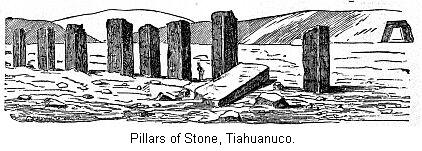
The most celebrated feature of these ruins is the presence of huge gateways, each one cut out of a solid mass of stone. We give a view of the most noteworthy of these gateways. It is now broken, tradition says, by a stroke of lightning.43 The upper portion is covered with carvings.
North of Tiahuanuco is Lake Titicaca. This was the sacred lake of the Incas. We have already referred to the probable origin of this feeling. Near the southern end of this lake, on the western side, is the peninsula of Copacabana. Separated by a narrow strait from the northern extremity of this peninsula is the sacred island, Titicaca. According to traditions, the Incas sought, in all ways, to beautify this island. They built temples, and laid out gardens. The hills were leveled as much as possible, terraced, and then covered with earth brought from afar. According to the statements of early writers, pilgrims were not permitted to land on its sacred soil until they had undergone certain preliminary fasts and purifications on the main-land. Landing on the island, they traversed a terrace, and by a narrow passage way they were conducted between two large buildings, where other ceremonies were performed.
The most sacred spot in all the island was a rock in the northern part. Only priests of especial sanctity were allowed near it. The rock to-day presents but the appearance of a weather-worn mass of red sandstone. It is traditionally represented as having been plated all over with gold and silver, and covered, except on solemn occasions with a mantle of rich color and material. Here the sun was believed to have first risen to dispel the primal darkness. To this day the Indians regard it with superstitious veneration. The traveler’s guide, when he comes in sight of it, removes his hat, and reverently bows to it, and mutters to himself a few words of mystic import.44
The whole appearance of the island shows how highly it was regarded. In one place the remains of a drinking fountain were noticed. Streams from some unknown source were still bringing to it their limpid burden. Perhaps as noticeable a ruin as any is represented in this cut. It is called the Palace. It is in a sheltered nook. The lake washes the very foot of the foundation on which it stands. It is two-storied. In the lower story were twelve rooms, so connected with each other that but four of them communicated by doors with the outside. The others were certainly dark and illy ventilated. The second story was entered by means of the terrace in the rear. The same statement may be made in regard to its rooms; they did not, however, at all correspond in arrangement with the rooms below. The Island of Coati, but a short distance to the south-east, was sacred to the moon. It has also a number of ruins. The approach to this was guarded by a number of terraces.
We will describe one more class of ruins found abundantly in the Collao region. These are burial towers, or chulpas. A view of one is here presented. The chulpas are common in the Titicaca basin, and usually occur in groups, and almost always in positions from which a large extent of country can be viewed. The great mass of a chulpa is solid, but within is a dome-shaped chamber, into which the opening seen in the cut leads. Sometimes the chulpas are round, and in some the masonry is of that variety we have already mentioned, called the Cyclopean. Another view of burial towers is given earlier in this chapter.
As a mere description of ruins becomes tiresome, we will now pass to Cuzco, and see of what we can learn of the architecture of the Incas. The Incas were, of course, a very rich and a very powerful tribe. All the tribes of ancient Peru had to pay them tribute. We way therefore suppose that the pueblo of Cuzco was well built, the houses large, and imposing, and that the official buildings for worship and tribal business would be commensurate with their importance as a tribe. Yet we have but very few accounts of these buildings. Immediately after the conquest, many of the Spanish leaders settled in Cuzco. They made many changes in the various edifices, and introduced into them many improvements. At present in the modern city we still find portions of ancient walls, and can trace the foundation of various buildings.
The site of the city of Cuzco is very uneven. It stands on the slopes of three hills, where as many rivulets come together. The ancient builders had to resort to extensive terracing in order to secure level surfaces on which to build. These terraces, built in a substantial manner, and faced with stone, are still standing in many places. In this illustration we have a view of such a wall. Observe that the stones are not laid in regular courses, nor is there any regularity as to their size. This is a good example of a Cyclopean wall. Some of the stones must weigh several tons, and they are fitted together with marvelous precision, one stone having as many as twelve angles.
All accounts agree that the temple of the sun was the grandest structure in Cuzco. We present an illustration of one end of it. This end is slightly curving. It is necessary to remark that this end now forms part of the Church of Santo Domingo. The fine-looking window and balcony are modern additions to this ancient building. According to Mr. Squier, the temple was an oblong building, nearly three hundred feet long, by about fifty in width. It formed one side of a spacious court. It did not extend east and west, but rather north-east and south-west. Early chroniclers affirm that the inner walls of this temple were covered with gold. Portions of very thin plates of gold exist in private museums in Cuzco, said to have formed part of this covering. The end of the temple shown in our illustration was covered with a great plate of gold intended to represent the sun. This plate was all in one piece, and spread from wall to wall.
Only fragments of the ancient buildings of Cuzco now exist. But enough are at hand to enable us to describe their general characteristics. As a rule, they were built around a court, the outer surface presenting the appearance of an unbroken wall. These walls are excellent specimens of Inca masonry. All travelers speak in their praise. Mr. Squier says: “The world has nothing to show in the way of stone-cutting and fitting to surpass the skill and accuracy displayed in the Inca structures at Cuzco.” There was but one gateway to the court. This entrance was broad and lofty. On the lintels, over the doorway, was frequently carved the figure of a serpent. The apartments were constructed so as to face the court, and nearly all opened upon the same. In some cases rooms wore observed, to which access could be obtained only after passing through several outer rooms. Some of the walls yet remaining at Cuzco are from thirty-five to forty feet high. This would indicate houses of two or three stories.
It is here necessary to state that the structures we have been describing are considered by most writers as palaces of the Inca chiefs. Names hive been bestowed upon them—such as the palace of Huayna Capac. It is asserted that each Inca chief built a separate palace. The credulous traveler is even pointed to a pile of ruins said to have been the palace of that mythical personage, Manco Capac. There is some conflict of authority as to the names of these palaces. Modern tradition names one of the most imposing piles as the palace of Inca Rocca, and as such it is described by Mr. Squier and others. Garcillasso De La Vega says this chief’s palace was in an altogether different part of the city.45 Those who call these buildings palaces, think the houses of the ordinary people have all disappeared. It is evident, however, that if our views of the state of society among the Incas be right, that it is a misnomer to call these structures palaces. Some of them may have been public buildings, devoted to tribal purposes. But we need not doubt but that this was the type of communal buildings erected by the natives of Cuzco.
We must describe one more piece of aboriginal work. This is the celebrated Fortress of Cuzco. As we have stated, the ancient pueblo, or city@, was built on the slopes of three hills. One of these, easily defended, was strongly fortified, and thus converted into a citadel. Though called a hill, it is in reality a projecting headland. Back of it rise still higher hills. The portion overhanging the city is very precipitous, in fact, almost incapable of ascent. There is, however, a pathway up this front, ascending in places by stone steps. On this front it did not need very strong fortifications, yet sections of stone wall, serving for this purpose, are to be seen. They have been mostly thrown down, and the stones rolled or tumbled down the hill to be utilized in building. The main defensive works are where the headland commences, from which point the city is not visible.
In this illustration we have a view of the three massive walls which defended the citadel. They are really wonderful works. In order to understand the construction, we will present an imaginary section of the walls. The walls support terraces, but they rose above the terraces so as to form a parapet. To prevent the accumulation of water behind the parapet, channels were cut through the walls at regular intervals to drain them. The height of the outer wall is at present twenty-seven feet; the width of the terrace thirty-five feet. The second wall is eighteen feet high; the width of its terrace is also eighteen feet. The height of the third wall is fourteen feet.
The Incas divided the year into twelve months, but we do not learn how they kept track of the years. In this respect they were behind the Mexicans. Neither do we know of any hieroglyphics for days, or months, or years. In the matter of keeping records, they must have been far below the Mexicans. Our next illustration is that of one of their knot records, or quippos. It is a very rude attempt to assist the memory. To the base cord are attached other threads of various colors, and tied in various ways. We, of course, know but very little about them. It is claimed, however, that a red thread signified a soldier, or war; a yellow one signified gold; a white one silver, or peace; a green one wheat, or maize. A single knot is said to have stood for ten; two knots, twenty; a knot doubly intertwined, one hundred, etc. Also the position of the knots on the threads was to be considered, their distance apart, the way the threads were twisted, and many other details.46 It is manifest, however, that this system of records is of very little value, and is way below the picture-writing of the Mexicans.
Take it all in all, the Incas are indeed an interesting people. We believe, however, their culture has been greatly overrated. Our object in this chapter has been to give an outline of the Incas and the tribes subject to them. It is impossible in these few pages to give more than an outline. Should the reader, by the perusal of these pages, acquire an interest in the culture of the Andean people just before the Spanish invasion, and be thereby induced to continue his investigations, the writer will consider such a result reward enough, even though the conclusions reached should be totally opposed to those set forth in this chapter on Ancient Peru.
REFERENCES
This eBook is for the use of anyone anywhere in the United States and most other parts of the world at no cost and with almost no restrictions whatsoever. You may copy it, give it away or re-use it under the terms of the Project Gutenberg License included with this eBook or online at www.gutenberg.org. If you are not located in the United States, you will have to check the laws of the country where you are located before using this eBook.