
Transcriber's note:
Page numbers in this book are indicated by numbers
enclosed in curly braces, e.g. {99} in the left margin.
They have been located where page
breaks occurred in the original book. For its
Index, a page number has been placed only at the start of that
section.
To re-create the shadowy figures of the heroic past, to clothe the dead once more in flesh and blood, to set the puppets of the play in life's great dramas again upon the stage of action,—frankly, this may not be formal history, but it is what makes the past most real to the present day. Pictures of men and women, of moving throngs and heroic episodes, stick faster in the mind than lists of governors and arguments on treaties. Such pictures may not be history, but they breathe life into the skeletons of the past.
Canada's past is more dramatic than any romance ever penned. The story of that past has been told many times and in many volumes, with far digressions on Louisiana and New England and the kingcraft of Europe. The trouble is, the story has not been told in one volume. Too much has been attempted. To include the story of New England wars and Louisiana's pioneer days, the story of Canada itself has been either cramped or crowded. To the eastern writer, Canada's history has been the record of French and English conflict. To him there has been practically no Canada west of the Great Lakes; and in order to tell the intrigue of European tricksters, very often the writer has been compelled to exclude the story of the Canadian people,—meaning by people the breadwinners, the toilers, rather than the governing classes. Similarly, to the western writer, Canada meant the Hudson's Bay Company. As for the Pacific coast, it has been almost ignored in any story of Canada.
Needless to say, a complete history of a country as vast as Canada, whose past in every section fairly teems with action, could not be crowded into one volume. To give even the story {iv} of Canada's most prominent episodes and actors is a matter of rigidly excluding the extraneous.
All that has been attempted here is such a story—story, not history—of the romance and adventure in Canada's nation building as will give the casual reader knowledge of the country's past, and how that past led along a trail of great heroism to the destiny of a Northern Empire. This volume is in no sense formal history. There will be found in it no such lists of governors with dates appended, of treaties with articles running to the fours and eights and tens, of battles grouped with dates, as have made Canadian history a nightmare to children.
It is only such a story as boys and girls may read, or the hurried business man on the train, who wants to know "what was doing" in the past; and it is mainly a story of men and women and things doing.
I have not given at the end of each chapter the list of authorities customary in formal history. At the same time it is hardly necessary to say I have dug most rigorously down to original sources for facts; and of secondary authorities, from Pierre Boucher, his Book, to modern reprints of Champlain and L'Escarbot, there are not any I have not consulted more or less. Especially am I indebted to the Documentary History of New York, sixteen volumes, bearing on early border wars; to Documents Relatifs à la Nouvelle France, Quebec; to the Canadian Archives since 1886; to the special historical issues of each of the eastern provinces; and to the monumental works of Dr. Kingsford. Nearly all the places described are from frequent visits or from living on the spot.
"The Twentieth century belongs to Canada."
The prediction of Sir Wilfrid Laurier, Premier of the Dominion, seems likely to have bigger fulfillment than Canadians themselves realize. What does it mean?
Canada stands at the same place in the world's history as England stood in the Golden Age of Queen Elizabeth—on the threshold of her future as a great nation. Her population is the same, about seven million. Her mental attitude is similar, that of a great awakening, a consciousness of new strength, an exuberance of energy biting on the bit to run the race; mellowed memory of hard-won battles against tremendous odds in the past; for the future, a golden vision opening on vistas too far to follow. They dreamed pretty big in the days of Queen Elizabeth, but they did n't dream big enough for what was to come; and they are dreaming pretty big up in Canada to-day, but it is hard to forecast the future when a nation the size of all Europe is setting out on the career of her world history.
To put it differently: Canada's position is very much the same to-day as the United States' a century ago. Her population is about seven million. The population of the United States was seven million in 1810. One was a strip of isolated settlements north and south along the Atlantic seaboard; the other, a string of provinces east and west along the waterways that ramify from the St. Lawrence. Both possessed and were flanked by vast unexploited territory the size of Russia; the United States by a Louisiana, Canada by the Great Northwest. What the Civil War did for the United States, Confederation did for the Canadian provinces—welded them into a nation. The parallel need not be carried farther. If the same development {vi} follows Confederation in Canada as followed the Civil War in the United States, the twentieth century will witness the birth and growth of a world power.
To no one has the future opening before Canada come as a greater surprise than to Canadians themselves. A few years ago such a claim as the Premier's would have been regarded as the effusions of the after-dinner speaker. While Canadian politicians were hoping for the honor of being accorded colonial place in the English Parliament, they suddenly awakened to find themselves a nation. They suddenly realized that history, and big history, too, was in the making. Instead of Canada being dependent on the Empire, the Empire's most far-seeing statesmen were looking to Canada for the strength of the British Empire. No longer is there a desire among Canadians for place in the Parliament at Westminster. With a new empire of their own to develop, equal in size to the whole of Europe, Canadian public men realize they have enough to do without taking a hand in European affairs.
As the different Canadian provinces came into Confederation they were like beads on a string a thousand miles apart. First were the Maritime Provinces, with western bounds touching the eastern bounds of Quebec, but in reality with the settlements of New Brunswick, and Nova Scotia, and Prince Edward Island separated from the settlements of Quebec by a thousand miles of untracked forest. Only the Ottawa River separated Quebec from Ontario, but one province was French, the other English, aliens to each other in religion, language, and customs. A thousand miles of rock-bound, winter-bound wastes lay between Ontario and the scattered settlement of Red River in Manitoba. Not an interest was in common between the little province of the middle west and her sisters to the east. Then prairie land came for a thousand miles, and mountains for six hundred miles, before reaching the Pacific province of British Columbia, more completely cut off from other parts of Canada than from Mexico or Panama. In fact, it would have been easier for British Columbia to trade with Mexico and Panama than with the rest of Canada.
{vii} To bind these far-separated patches of settlement, oases in a desert of wilds, into a nation was the object of the union known as Confederation. But a nation can live only as it trades what it draws from the soil. Naturally, the isolated provinces looked for trade to the United States, just across an invisible boundary. It seemed absurd that the Canadian provinces should try to trade with each other, a thousand miles apart, rather than with the United States, a stone's throw from the door of each province. But the United States erected a tariff wall that Canada could not climb. The struggling Dominion was thrown solely on herself, and set about the giant task of linking the provinces together, building railroads from Atlantic to Pacific, canals from tide water to the Great Lakes. In actual cash this cost Canada four hundred million dollars, not counting land grants and private subscriptions for stock, which would bring up the cost of binding the provinces together to a billion. This was a staggering burden for a country with smaller population than Greater New York—a burden as big as Japan and Russia assumed for their war; but, like war, the expenditure was a fight for national existence. Without the railroads and canals, the provinces could not have been bound together into a nation.
These were Canada's pioneer days, when she was spending more than she was earning, when she bound herself down to grinding poverty and big risks and hard tasks. It was a long pull, and a hard pull; but it was a pull altogether. That was Canada's seed time; this is her harvest. That was her night work, when she toiled, while other nations slept; now is the awakening, when the world sees what she was doing. Railroad man, farmer, miner, manufacturer, all had the same struggle, the big outlay of labor and money at first, the big risk and no profit, the long period of waiting.
Canada was laying her foundations of yesterday for the superstructure of prosperity to-day and to-morrow—the New Empire.
When one surveys the country as a whole, the facts are so big they are bewildering.
{viii} In the first place, the area of the Dominion is within a few thousand miles of as large as all Europe. To be more specific, you could spread the surface of Italy and Spain and Turkey and Greece and Austria over eastern Canada, and you would still have an area uncovered in the east alone bigger than the German Empire. England spread flat on the surface of Eastern Canada would just serve to cover the Maritime Provinces nicely, leaving uncovered Quebec, which is a third bigger than Germany; Ontario, which is bigger than France; and Labrador (Ungava), which is about the size of Austria.
In the west you could spread the British Isles out flat, and you would not cover Manitoba—with her new boundaries extending to Hudson Bay. It would take a country the size of France to cover the province of Saskatchewan, a country larger than Germany to cover Alberta, two countries the size of Germany to cover British Columbia and the Yukon, and there would still be left uncovered the northern half of the West—an area the size of European Russia.
No Old World monarch from William the Conqueror to Napoleon could boast of such a realm. People are fond of tracing ancestry back to feudal barons of the Middle Ages. What feudal baron of the Middle Ages, or Lord of the Outer Marches, was heir to such heritage as Canada may claim? Think of it! Combine all the feudatory domains of the Rhine and the Danube, you have not so vast an estate as a single western province. Or gather up all the estates of England's midland counties and eastern shires and borderlands, you have not enough land to fill one of Canada's inland seas,—Lake Superior.
If there were a population in eastern Canada equal to France,—and Quebec alone would support a population equal to France,—and in Manitoba equal to the British Isles, and in Saskatchewan equal to France, and in Alberta equal to Germany, and in British Columbia equal to Germany,—ignoring Yukon, Mackenzie River, Keewatin, and Labrador, taking only those parts of Canada where climate has been tested and lands surveyed,—Canada would support two hundred million people.
{ix} The figures are staggering, but they are not half so improbable as the actual facts of what has taken place in the United States. America's population was acquired against hard odds. There were no railroads when the movement to America began. The only ocean goers were sailboats of slow progress and great discomfort. In Europe was profound ignorance regarding America; to-day all is changed. Canada begins where the United States left off. The whole world is gridironed with railroads. Fast Atlantic liners offer greater comfort to the emigrant than he has known at home. Ignorance of America has given place to almost romantic glamour. Just when the free lands of the United States are exhausted and the government is putting up bars to keep out the immigrant, Canada is in a position to open her doors wide. Less than a fortieth of the entire West is inhabited. Of the Great Clay Belt of North Ontario only a patch on the southern edge is populated. The same may be said of the Great Forest Belt of Quebec. These facts are the magnet that will attract the immigrant to Canada. The United States wants no more immigrants.
And the movement to Canada has begun. To her shores are thronging the hosts of the Old World's dispossessed, in multitudes greater than any army that ever marched to conquest under Napoleon. When the history of America comes to be written in a hundred years, it will not be the record of a slaughter field with contending nations battling for the mastery, or generals wading to glory knee-deep in blood. It will be an account of the most wonderful race movement, the most wonderful experiment in democracy the world has known.
The people thronging to Canada for homes, who are to be her nation builders, are people crowded out of their home lands, who had n't room for the shoulder swing manhood and womanhood need to carve out honorable careers. Look at them in the streets of London, or Glasgow, or Dublin, or Berlin, these émigrés, as the French called their royalists, whom revolution drove from home, and I think the word émigré is a truer description of the newcomer to Canada than the word "emigrant." They are {x} poor, they are desperately poor, so poor that a month's illness or a shut-down of the factory may push them from poverty to the abyss. They are thrifty, but can neither earn nor save enough to feel absolutely sure that the hollow-eyed specter of Want may not seize them by the throat. They are willing to work, so eager to work that at the docks and the factory gates they trample and jostle one another for the chance to work. They are the underpinnings, the underprops of an old system, these émigrés, by which the masses were expected to toil for the benefit of the classes.
"It's all the average man or woman is good for," says the Old Order, "just a day's wage representing bodily needs."
"Wait," says the New Order. "Give him room! Give him an opportunity! Give him a full stomach to pump blood to his muscles and life to his brain! Wait and see! If he fails then, let him drop to the bottom of the social pit without stop of poorhouse or help!"
A penniless immigrant boy arrives in New York. First he peddles peanuts, then he trades in a half-huckster way whatever comes to hand and earns profits. Presently he becomes a fur trader and invests his savings in real estate. Before that man dies, he has a monthly income equal to the yearly income of European kings. That man's name was John Jacob Astor.
Or a young Scotch boy comes out on a sailing vessel to Canada. For a score of years he is an obscure clerk at a distant trading post in Labrador. He comes out of the wilds to take a higher position as land commissioner. Presently he is backing railroad ventures of tremendous cost and tremendous risk. Within thirty years from the time he came out of the wilds penniless, that man possesses a fortune equal to the national income of European kingdoms. The man's name is Lord Strathcona.
Or a hard-working coal miner emigrates to Canada. The man has brains as well as hands. Other coal miners emigrate at the same time, but this man is as keen as a razor in foresight and care. From coal miner he becomes coal manager, from manager {xi} operator, from operator owner, and dies worth a fortune that the barons of the Middle Ages would have drenched their countries in blood to win. The man's name is James Dunsmuir.
Or it is a boy clerking in a departmental store. He emigrates. When he goes back to England it is to marry a lady in waiting to the Queen. He is now known as Lord Mount-Stephen.
What was the secret of the success? Ability in the first place, but in the second, opportunity; opportunity and room for shoulder swing to show what a man can do when keen ability and tireless energy have untrammeled freedom to do their best.
Examples of the émigrés' success could be multiplied. It is more than a mere material success; it is eternal proof that, given a fair chance and a square deal and shoulder swing, the boy born penniless can run the race and outstrip the boy born to power.
"Have you, then, no menial classes in Canada?" asked a member of the Old Order.
"No, I'm thankful to say," said I.
"Then who does the work?"
"The workers."
"But what's the difference?"
"Just this: your menial of the Old Country is the child of a menial, whose father before him was a menial, whose ancestors were in servile positions to other people back as far as you like to go,—to the time when men were serfs wearing an iron collar with the brand of the lord who owned them. With us no stigma is attached to work. Your menial expects to be a menial all his life. With our worker, just as sure as the sun rises and sets, if he continues to work and is no fool, he will rise to earn a competency, to improve himself, to own his own labor, to own his own home, to hire the labor of other men who are beginners as he once was himself."
"Then you have no social classes?"
"Lots. The ups, who have succeeded; and the half-way ups, who are succeeding; and the beginners, who are going to succeed; and the downs, who never try. And as success doesn't necessarily mean money, but doing the best at whatever one tries, {xii} you can see that the ups and the halfway ups, and the beginners and the downs have each their own classes of special workers."
"That," she answered, "is not democracy; it is revolution." She was thinking of those Old World hard-and-fast divisions of society into royalty, aristocracy, commons, peasantry.
"It is not revolution," I explained. "It is rebirth! When you send your émigré out to us, he is a made-over man."
But it is not given to all émigré's to become great capitalists or great leaders. Some who have the opportunity have not the ability, and the majority would not, for all the rewards that greatness offers, choose careers that entail long years of nerve-wracking, unflagging labor. But on a minor scale the same process of making over takes place. One case will illustrate.
Some years before immigration to Canada had become general, two or three hundred Icelanders were landed in Winnipeg destitute. From some reason, which I have forgotten,—probably the quarantine of an immigrant,—the Icelanders could not be housed in the government immigration hall. They were absolutely without money, household goods, property of any sort except clothing, and that was scant, the men having but one suit of the poorest clothes, the women thin homespun dresses so worn one could see many of them had no underwear. The people represented the very dregs of poverty. Withdrawing to the vacant lots in the west end of Winnipeg,—at that time a mere town,—the newcomers slept for the first nights, herded in the rooms of an Icelander opulent enough to have rented a house. Those who could not gain admittance to this house slept under the high board sidewalks, then a feature of the new town. I remember as a child watching them sit on the high sidewalk till it was dark, then roll under. Fortunately it was summer, but it was useless for people in this condition to go bare to the prairie farm. To make land yield, you must have house and barns and stock and implements, and I doubt if these people had as much as a jackknife. I remember how two or three of the older women used to sit crying each night in despair till they disappeared in the crowded house, fourteen or {xiii} twenty of them to a room. Within a week, the men were all at work sawing wood from door to door at a dollar and a half a cord the women out by the day washing at a dollar a day. Within a month they had earned enough to buy lumber and tar paper. Tar-papered shanties went up like mushrooms on the vacant lots. Before winter each family had bought a cow and chickens. I shall not betray confidence by telling where the cow and chickens slept. Those immigrants were not desirable neighbors. Other people moved hastily away from the region. Such a condition would not be tolerated now, when there are spacious immigration halls and sanitary inspectors to see that cows and people do not house under the same roof. What with work and peddling milk, by spring the people were able to move out on the free prairie farms. To-day those Icelanders own farms clear of debt, own stock that would be considered the possession of a capitalist in Iceland, and have money in the savings banks. Their sons and daughters have had university educations and have entered every avenue of life, farming, trading, practicing medicine, actually teaching English in English schools. Some are members of Parliament. It was a hard beginning, but it was a rebirth to a new life. They are now among the nation builders of the West.
But it would be a mistake to conclude that Canada's nation builders consisted entirely of poor people. The race movement has not been a leaderless mob. Princes, nobles, adventurers, soldiers of fortune, were the pathfinders who blazed the trail to Canada. Glory, pure and simple, was the aim that lured the first comers across the trackless seas. Adventurous young aristocrats, members of the Old Order, led the first nation builders to America, and, all unconscious of destiny, laid the foundations of the New Order. The story of their adventures and work is the history of Canada.
It is a new experience in the world's history, this race movement that has built up the United States and is now building up Canada. Other great race movements have been a tearing down of high places, the upward scramble of one class on the {xiv} backs of the deposed class. Instead of leveling down, Canada's nation building is leveling up.
This, then, is the empire—the size of all the nations in Europe, bigger than Napoleon's wildest dreams of conquest—to which Canada has awakened.[1]
Canada . . 3,750,000 square miles   Europe . . 3,797,410 square miles

Maritime Provinces   Square Miles                   Square Miles
  Nova Scotia  . . . . .   20,600   England  . . . . .    50,867
  Prince Edward Island      2,000   Germany  . . . . .   208,830
  New Brunswick  . . . .   28,200   France   . . . . .   204,000
                           ------   Italy  . . . . . .   110,000
                           50,800   Spain  . . . . . .   197,000
Quebec   . . . . . . . .  347,350   Austria and Hungary  241,000
Ontario  . . . . . . . .  222,000   Russia in Europe   2,000,000
Manitoba
Saskatchewan              204,000
Alberta  . . . . . . . .  350,000
British Columbia   . . .  383,000
Unorganized Territory of
  Keewatin   . . . . . .  756,000
  Yukon  . . . . . . . .  200,000
  MacKenzie River and
    Ungava . . . . . .  1,000,000
| United States | Canada | |||
| In 1800 | 5,000,000 | In 1881 | 4,300,000 | |
| " 1810 | 7,000,000 | " 1891 | 5,000,000 | |
| " 1820 | 9,600,000 | " 1901 | 5,500,000 | |
| " 1830 | 12,800,000 | " 1906 | 6,500,000 | |
It will be noticed that for twenty years Canada's population becomes almost stagnant. The reason for this will be found as the story of Canada is related. If she keeps up the increase at the pace she has now set, or at the rate the United States' population went ahead during the same period of industrial development, the results can be forecast from the following table:
| United States in 1840 | 17,000,000 |
| " " " 1850 | 23,000,000 |
| " " " 1860 | 31,000,000 |
| " " " 1870 | 38,000,000 |
| " " " 1880 | 50,000,000 |
| " " " 1890 | 63,000,000 |
| " " " 1900 | 85,000,000 |
{xv} A few years ago, when talking to a leading editor of Canada, I chanced to say that I did not think Canadians had at that time awakened to their future. The editor answered that he was afraid I had contracted the American disease of "bounce" through living in the United States; to which I retorted that if Canadians could catch the same disease and accomplish as much by it in the twentieth century as Americans had in the nineteenth, it would be a good thing for the country. It is wonderful to have witnessed the complete face-about of Canadian public opinion in the short space of six years, this editor shouting as loud as any of his exuberant brethren. Still, as the outlook in Canadian affairs may be regarded as flamboyant, it is worth while quoting the comment of the most critical and conservative newspaper in the world,—the London Times. The Times says: "Without doubt the expansion of Canada is the greatest political event in the British Empire to-day. The empire is face to face with development which makes it impossible for indefinite maintenance of the present constitutional arrangements."
Regarding the Iceland immigrants, to whom reference is made, I recently met in London a famed traveler, who was in Iceland when the people were setting out for Canada, Mrs. Alec. Tweedie. She explains in her book how these people were absolutely poverty-stricken when they left Iceland. In fact, the sufferings endured the first year in Winnipeg were mild compared to their privations in Iceland before they sailed.
The explanations of Canada's hard times from Confederation to 1898—say from 1871, when all the provinces had really gone into Confederation, to 1897, when the Yukon boom poured gold into the country—can be figured out. Of a population of 3,000,000, four fifths need not be counted as taxpayers, as they include women, children, clerks, farmers' help, domestic help,—classes who pay no taxes but the indirect duty on clothes they wear and food they eat. This practically means that the billion-dollar burden of making the ideal of Confederation into a reality by building railroads and canals was borne by 600,000 people, which means again a large quota per man to the public treasury. People forget that you can't take more out of the public treasury than you put into it, that it is n't like an artesian well, self-supplied, and the truth is, at this period Canadians were paying more into the public treasury than they could afford,—more than the investment was bringing them in.
| CHAPTER | PAGE | |
| I. | FROM 1000 TO 1600 | 1 |
| II. | FROM 1600 TO 1607 | 23 |
| III. | FROM 1607 TO 1635 | 41 |
| IV. | FROM 1635 TO 1666 | 61 |
| V. | FROM 1635 TO 1650 | 71 |
| VI. | FROM 1650 TO 1672 | 94 |
| VII. | FROM 1672 TO 1688 | 117 |
| VIII. | FROM 1679 TO 1713 | 143 |
| IX. | FROM 1686 TO 1698 | 161 |
| X. | FROM 1698 TO 1713 | 189 |
| XI. | FROM 1713 TO 1755 | 205 |
| XII. | FROM 1756 TO 1763 | 241 |
| XIII. | FROM 1763 TO 1812 | 276 |
| XIV. | FROM 1812 TO 1820 | 318 |
| XV. | FROM 1812 TO 1846 | 380 |
| XVI. | FROM 1820 TO 1867 | 410 |
| INDEX | 439 |
| Page | |
| MAP OF WESTERN CANADA | Frontispiece |
|
VIKING SHIP RECENTLY DISCOVERED
After a photograph of the Viking Ship at Sandefjord, Norway. |
2 |
| MAP SHOWING DIVISION OF THE NEW WORLD BETWEEN SPAIN AND PORTUGAL | 3 |
|
A TYPICAL "HOLE IN THE WALL" AT "KITTY VIDDY," NEAR
ST. JOHN'S, NEWFOUNDLAND
From a photograph. |
4 |
|
SEBASTIAN CABOT
After the portrait attributed to Holbein. |
5 |
|
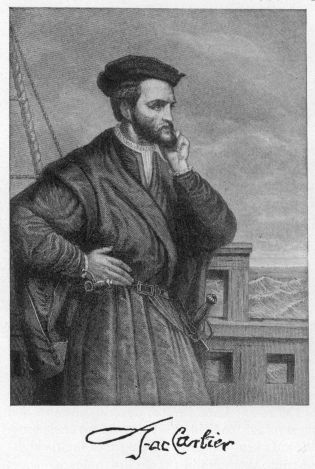
JACQUES CARTIER
After the portrait at St. Malo, France, with signature. |
8 |
|
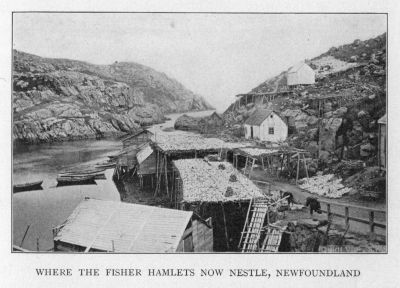
WHERE THE FISHER HAMLETS NOW NESTLE, NEWFOUNDLAND
From a photograph. |
9 |
|
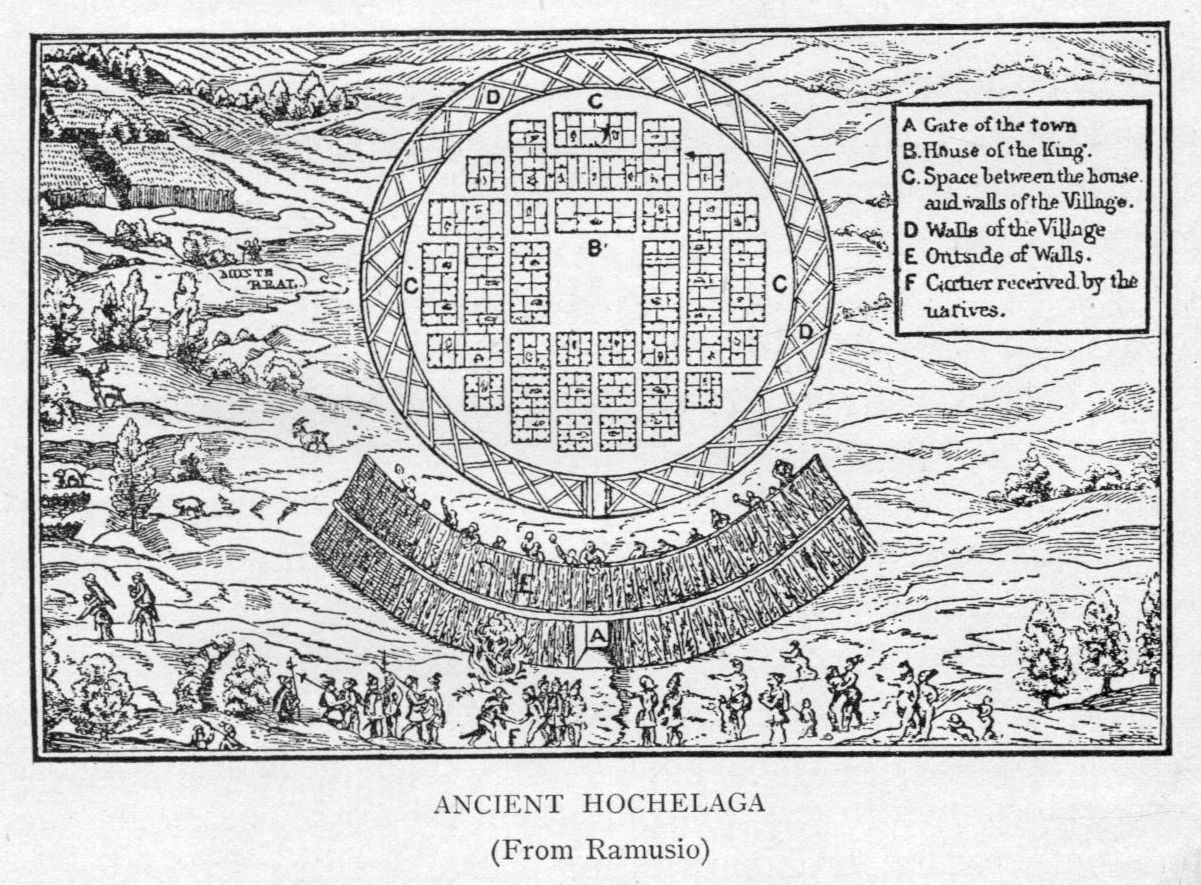
ANCIENT HOCHELAGA
After a cut in the third volume of Ramusio's Raccolta, Venice, 1565. |
15 |
| THE "DAUPHIN MAP" OF CANADA, CIRCA 1543, SHOWING CARTIER'S DISCOVERIES | 21 |
|
QUEEN ELIZABETH
After the ermine portrait in Hatfield House, with signature. |
25 |
|
THE BOYHOOD OF GILBERT AND RALEIGH
From the painting by Sir John Millais. |
26 |
|
SIR HUMPHREY GILBERT
After the print in Holland's Herwologia-Anglica, 1620. |
27 |
|
SIR WALTER RALEIGH
After the portrait in the possession of the Duchess of Dorset. |
29 |
|
AT EASTERN ENTRANCE TO HUDSON STRAITS
From a photograph by Dominion Geological Survey. |
31 |
|
HUDSON COAT OF ARMS
From Lenox Collection, New York City. |
32 |
|
THE FANTASTIC ROCKS OF GASPÉ
From a photograph. |
33 |
|
SAMUEL DE CHAMPLAIN
After the Moncornet portrait, with signature. |
34 |
|
PORT ROYAL OR ANNAPOLIS BASIN, 1609
From Lescarbot's map. |
36 |
|
BUILDINGS ON STE. CROIX ISLAND
From Les Voyages du Sieur de Champlain, Paris, 1613. |
38 |
|
PORT ROYAL
From the same. |
43 |
|
TADOUSSAC
From the same. |
45 |
|
DEFEAT OF THE IROQUOIS
From the same. |
47 |
|
THE ONONDAGA FORT
From the same. |
55 |
|
VIEW OF QUEBEC
From the same. |
56 |
|
QUEBEC
From the same. |
59 |
|
SIR WILLIAM ALEXANDER
After an engraved portrait by Marshall. |
62 |
| MAP SHOWING LA TOUR'S POSSESSIONS IN ACADIA | 64 |
|
CARDINAL RICHELIEU
After the portrait by Philippe de Champaigne |
66 |
| MAP OF ANNAPOLIS BASIN | 69 |
|
MADAME DE LA PELTRIE
After a picture in the Ursuline Convent, Quebec. |
73 |
|
PIERRE LE JEUNE
From an engraving in Winsor's America, after an old print. |
80 |
|
GEORGIAN BAY
From a photograph by A. G. Alexander. |
84 |
|
BRÉBEUF
From a bust in silver at Quebec. |
89 |
|
REMNANTS OF WALLS OF FORT ST. MARY ON CHRISTIAN ISLAND
IN 1891
After a photograph reproduced in Ontario Historical Society Papers and Records. |
91 |
|
MAP OF THE GREAT LAKES, SHOWING THE TERRITORY OF THE
JESUIT HURON MISSIONS
Bellin's map, 1744. |
92 |
|
A CANADIAN ON SNOWSHOES
From La Potherie's Histoire de l'Amerique Septentrionale, Paris, 1753. |
96 |
|
SAUSON'S MAP, 1656
|
99 |
|
TITLE-PAGE—JESUIT RELATION OF 1662-1663
|
111 |
|
THE JESUIT MAP OF LAKE SUPERIOR
From the Relation, of 1670-1671. |
112 |
|
CHARLES II
After the miniature portrait by Cooper, with signature. |
114 |
|
PLAN OF MONTREAL IN 1672
From Quebec Historical Society Papers and Records. |
119 |
|
LA SALLE'S HOUSE NEAR MONTREAL
From a photograph. |
120 |
|
KITCHEN, CHÂTEAU DE RAMEZAY, MONTREAL
From a photograph. |
120 |
|
LAVAL
After the portrait in Laval University, Quebec. |
122 |
|
A MAP IN THE RELATION OF 1662-1663
|
126 |
|
GALINÉE'S MAP OF THE GREAT LAKES, 1669
|
129 |
|
ROBERT DE LA SALLE
After an engraved portrait said to be preserved in the Bibliothèque de Rouen, with signature. |
135 |
|
OLD PLAN OF FORT FRONTENAC
From Mémoirs sur le Canada, Quebec, 1873. |
136 |
|
THE BUILDING OF THE GRIFFON
From Father Hennepin's Nouvelle Découverte, Amsterdam, 1704. |
138 |
|
PRINCE RUPERT
After the painting by Sir P. Lely. |
145 |
|
MAP OF HUDSON BAY
|
147 |
|
CONTEMPORARY FRENCH MAP OF HUDSON BAY AND VICINITY
From La Potherie's Histoire de l'Amerique Septentrionale. |
155 |
|
LE MOYNE D'IBERVILLE
After a portrait in Margry's Découvertes Établissemens. |
157 |
|
FORT FRONTENAC AND THE ADJACENT COUNTRY
From The London Magazine, 1758. |
164 |
|
WILLIAM OF ORANGE
After the portrait by Sir Godfrey Kneller, with signature. |
166 |
|
QUEBEC, 1689
From La Potherie's Histoire de l'Amérique Septentrionale. |
172 |
|
FRENCH SOLDIER OF THE PERIOD
After a cut in Massachusetts Archives, Documents collected in France, 111, 3. |
174 |
|
SIR WILLIAM PHIPS
After an accepted likeness reproduced in Winsor's America. |
176 |
|
COUNT FRONTENAC
From the statue by Hébert at Quebec. |
178 |
|
CASTLE ST. LOUIS
After a cut in Hawkins' Pictures of Quebec, Quebec, 1834. |
180 |
|
ATTACK ON QUEBEC, 1690
From La Hontan's Mémoires, 1709. |
181 |
|
CASTLE ST. LOUIS, QUEBEC
From Sulte's Canadiens Français, viii. |
183 |
|
PLAN OF QUEBEC
From Franquelin, 1683. |
184 |
|
LANDING OF IBERVILLE'S MEN AT PORT NELSON
From La Potherie's Histoire de l'Amérique Septentrionale. |
186 |
|
CAPTURE OF FORT NELSON BY THE FRENCH
From the same. |
187 |
|
CONTEMPORARY MAP, 1689
From La Hontan. |
191 |
|
HERTEL DE ROUVILLE
After a portrait in Daniel's Nos Gloires Nationales. |
193 |
|
CONTEMPORARY PLAN OF PORT ROYAL BASIN
From Bellin's map, 1744. |
199 |
|
PAUL MASCARENE
After a portrait in Savary's edition of Calnek's Annapolis. |
201 |
|
LA VÉRENDRYE'S FORTS AND THE RIVER OF THE WEST
After Jeffery's map, 1762. |
207 |
|
MAP PUBLISHED IN PARIS IN 1752 SHOWING THE SUPPOSED
SEA OF THE WEST
From the Mémoire presented to the Academy of Sciences at Paris by Buache, August, 1752. |
209 |
|
MAP SHOWING THE SUPPOSED SEA OF THE WEST, WITH APPROACHES
TO THE MISSISSIPPI AND GREAT LAKES, PARIS, 1755
From the same. |
211 |
|
WILLIAM PEPPERRELL
After the portrait by Smibert. |
217 |
|
RUINS OF THE FORTIFICATIONS AT LOUISBURG
From a recent photograph. |
219 |
|
CONTEMPORARY PLAN OF THE ATTACK ON LOUISBURG
After a plan reproduced in Winsor's America. |
221 |
| FORT HALIFAX, 1755 (Restoration) | 222 |
|
CONTEMPORARY VIEW OF OSWEGO
From Smith's History of the Province of New York. |
223 |
|
GOVERNOR DINWIDDIE OF VIRGINIA
After a portrait by Ramsay. |
225 |
| TITLE-PAGE OF WASHINGTON'S JOURNAL | 227 |
|
A SKETCH OF THE FIELD OF BATTLE AT BRADDOCK'S DEFEAT
From a contemporary manuscript in the Library of Harvard University. |
229 |
|
PLAN OF FORT BEAUSEJOUR
From Mante's History of the Late War in North America. |
230 |
|
GENERAL MONCKTON
After a mezzotint in the Library of the American Antiquarian Society. |
232 |
|
GENERAL JOHN WINSLOW
After the portrait in Pilgrim Hall, Plymouth, Massachusetts. |
234 |
| MAP OF ACADIA AND THE ADJACENT ISLANDS, 1755 | 237 |
|
SIR WILLIAM JOHNSON
After the portrait by Adams. |
238 |
|
MAP OF THE REGION OF LAKE GEORGE
From Documentary History of New York. |
239 |
|
RUINS OF CHÂTEAU BIGOT
From a photograph by Captain Wurtelle. |
245 |
|
PARLIAMENT BUILDINGS, OTTAWA
From a photograph. |
246 |
|
QUEBEC, CHÂTEAU FRONTENAC AND THE CITADEL
From a photograph. |
246 |
|
THE EARL OF LOUDON
After the portrait by Ramsay. |
249 |
|
BOSCAWEN
After the portrait by Reynolds. |
253 |
|
THE SIEGE OF LOUISBURG, 1758
From a picture in the Lenox Collection, New York Public Library. |
255 |
|
AMHERST
After the portrait by Reynolds. |
257 |
|
THE COUNTRY ROUND TICONDEROGA
From Documentary History of New York. |
259 |
|
GENERAL JAMES WOLFE
After the engraved portrait by Houstin. |
261 |
|
BOUGAINVILLE
After a cut in Bounechose's Montcalm. |
263 |
|
THE SITE OF QUEBEC AND THE GROUND OCCUPIED
DURING THE SIEGE OF 1759
After a plan in The Universal Magazine, London, December, 1859. |
265 |
|
LOUIS JOSEPH, MARQUIS DE MONTCALM
After the portrait in the possession of his descendants. |
268 |
|
DEATH OF WOLFE
From the painting by West. |
272 |
|
MAJOR ROBERT ROGERS
After a mezzotint by an unknown engraver. Published in London, October 1, 1776 |
277 |
| NORTH AMERICA AT THE CLOSE OF THE FRENCH WARS, 1763 | 278 |
|
GENERAL MURRAY, FIRST GOVERNOR OF QUEBEC
After the portrait by Ramsay. |
280 |
|
SETTLEMENTS ON THE DETROIT RIVER
From Parkman's Conspiracy of Pontiac. |
283 |
|
BOUQUET
After the portrait by West. |
289 |
|
RETURN OF THE ENGLISH CAPTIVES
After the painting by West. |
291 |
|
MONTREAL
After a print in the New York Public Library. |
293 |
|
SAMUEL HEARNE
After an engraving published in 1796. |
297 |
|
GENERAL RICHARD MONTGOMERY
After the painting by Chappel. |
301 |
| MAP OF QUEBEC DURING THE SIEGE OF CONGRESS TROOPS | 303 |
|
SIR GUY CARLETON
After an engraving in The Political Magazine, June, 1782. |
307 |
|
BENEDICT ARNOLD
After the portrait by Tate. |
309 |
|
GENERAL HALDIMAND
After the portrait by Reynolds. |
311 |
|
JOSEPH BRANT
After the portrait by Ames. |
315 |
|
LIEUTENANT GOVERNOR SIMCOE
After an engraving in Scadding's Toronto of Old. |
316 |
|
CAPTAIN COOK
After the portrait by Dauce. |
320 |
|
FORT CHURCHILL AS IT WAS IN 1777
After a print in the European Magazine, June, 1797. |
320 |
|
TOTEM POLES, BRITISH COLUMBIA
From a photograph. |
320 |
|
CAPTAIN GEORGE VANCOUVER
After the portrait by Abbott. |
322 |
|
NOOTKA SOUND
From an engraving in Vancouver's Journal. |
323 |
|
FORT CHIPPEWYAN, ATHABASCA LAKE
From a recent photograph. |
325 |
|
ALEXANDER MACKENZIE
After the portrait by Lawrence. |
327 |
|
CAUSE OF A PORTAGE
From a photograph. |
329 |
|
SIMON FRASER
From a likeness in Morice's The History of the Northern Interior of British Columbia. |
331 |
|
ASTORIA IN 1813
From a cut in Franchere's Narrative of a Voyage. |
332 |
|
MAP OF WEST COAST, SHOWING THE OGDEN AND ROSS
EXPLORATIONS
From Laut's Conquest of the Great North West. |
332 |
|
GENERAL SIR JAMES HENRY CRAIG, GOVERNOR GENERAL OF CANADA,
1807-1811
After an engraving at Queen's University, Kingston, Ontario. |
336 |
|
WILLIAM HULL
After the portrait by Stuart, with autograph. |
338 |
| MAP SHOWING THE LOCATION OF THE MILITARY OPERATIONS ON THE DETROIT RIVER | 340 |
| MAP SHOWING THE LOCATION OF THE MILITARY OPERATIONS ON THE NIAGARA FRONTIER | 342 |
|
GENERAL BROCK
After a portrait in the possession of J. A. Macdonell Esq., Alexandria, Ontario. |
345 |
|
BROCK MONUMENT, QUEENSTON HEIGHTS
From a photograph. |
347 |
|
YORK (TORONTO) HARBOR
From Bouchette's British Dominions in North America. |
351 |
|
FITZGIBBONS
After a photograph reproduced in Proceedings and Transactions of the Royal Society of Canada, 1900. |
357 |
|
LAURA SECORD
From Ontario Historical Society Papers and Records. |
361 |
|
TWO VIEWS OF THE BATTLE OF LAKE ERIE
From prints published in 1815 |
364 |
|
TECUMSEH
After the drawing by Pierre Le Drie. |
366 |
|
DE SALABERRY
After a portrait in Fannings Taylor's Portraits of British Americans. |
368 |
|
SIR GORDON DRUMMOND
After an engraving at Queen's University, Kingston, Ontario. |
371 |
|
MONUMENT AT LUNDY'S LANE
From a photograph. |
375 |
|
SELKIRK
From Ontario Archives Collection. |
381 |
|
NELSON AND HAYES RIVERS
From a map in Robson's Hudson Bay. |
384 |
|
FORT GARRY, RED RIVER SETTLEMENT
From Ross' Red River Settlement. |
387 |
|
FORT DOUGLAS
After an old engraving. |
388 |
|
SKETCH OF THE CITY OF WINNIPEG, SHOWING THE SITES
OF THE EARLY FORTS
From Manitoba Historical Society |
391 |
|
RED RIVER SETTLEMENT, 1816-1820
After a map in Amos' Report of the Trials Relative to the Destruction of the Earl of Selkirk's Settlement. |
392 |
|
MONUMENT TO COMMEMORATE THE MASSACRE OF SEVEN OAKS
After a sketch. |
397 |
|
TRACKING ON ATHABASCA RIVER
From a photograph. |
401 |
|
PLANS OF YORK AND PRINCE OF WALES FORTS
From a plate in Robson's Hudson Bay. |
405 |
| SIR GEORGE SIMPSON, GOVERNOR OF HUDSON'S BAY COMPANY, 1820 | 406 |
|
JOHN MCLOUGHLIN
After a likeness in Laut's Conquest of the Great Northwest. |
408 |
|
SIR JOHN SHERBROOKE, GOVERNOR GENERAL OF CANADA, 1816-1818
After an engraving at Queen's University, Kingston, Ontario. |
413 |
|
THE FOURTH DUKE OF RICHMOND, GOVERNOR GENERAL OF CANADA,
1818-1819
After an engraving at Queen's University, Kingston, Ontario. |
419 |
|
WILLIAM LYON MACKENZIE
After a likeness in Lindsey's Life and Times of Mackenzie. |
421 |
|
ALLAN McNAB
After the portrait in the Speaker's Chambers, Ottawa. |
423 |
|
LOUIS J. PAPINEAU
After a likeness in Fannings Taylor's British Americans. |
428 |
|
SIR JOHN COLBORNE, GOVERNOR GENERAL OF CANADA, 1838-1841
After an engraving at Queen's University, Kingston, Ontario. |
430 |
|
LORD DURHAM, SPECIAL COMMISSIONER TO CANADA, 1838
After an engraving at Queen's University, Kingston, Ontario. |
432 |
|
JOHN A. MACDONALD
From a photograph. |
435 |
|
FATHERS OF CONFEDERATION, 1867
From the painting by Hariss. |
436 |
Early voyages to America—Voyages of the Cabots—The French fisher folk—Cartier's first voyage—Cartier's second voyage—Cartier's third voyage—Marguerite Roberval
Who first found Canada? As many legends surround the beginnings of empire in the North as cling to the story of early Rome.
When Leif, son of Earl Eric, the Red, came down from Greenland with his Viking crew, which of his bearded seamen in Arctic furs leaned over the dragon prow for sight of the lone new land, fresh as if washed by the dews of earth's first morning? Was it Thorwald, Leif's brother, or the mother of Snorri, first white child born in America, who caught first glimpse through the flying spray of Labrador's domed hills,—"Helluland, place of slaty rocks"; and of Nova Scotia's wooded meadows,—"Markland"; and Rhode Island's broken vine-clad shore,—"Vinland"? The question cannot be answered. All is as misty concerning that Viking voyage as the legends of old Norse gods.
Leif, the Lucky, son of Earl Eric, the outlaw, coasts back to Greenland with his bold sea-rovers. This was in the year 1000.
For ten years they came riding southward in their rude-planked ships of the dragon prow, those Norse adventurers; and Thorwald, Leif's brother, is first of the pathfinders in America to lose his life in battle with the "Skraelings" or Indians. Thornstein, another brother, sails south in 1005 with Gudrid, his wife; but a roaring nor'easter tears the piping {2} sails to tatters, and Thornstein dies as his frail craft scuds before the blast. Back comes Gudrid the very next year, with a new husband and a new ship and two hundred colonists to found a kingdom in the "Land of the Vine." At one place they come to rocky islands, where birds flock in such myriads it is impossible to land without trampling nests. Were these the rocky islands famous for birds in the St. Lawrence? On another coast are fields of maize and forests entangled with grapevines. Was this part of modern New England? On Vinland—wherever it was—Gudrid, the Norse woman, disembarks her colonists. All goes well for three years. Fish and fowl are in plenty. Cattle roam knee-deep in pasturage. Indians trade furs for scarlet cloth and the Norsemen dole out their barter in strips narrow as a little finger; but all beasts that roam the wilds are free game to Indian hunters. The cattle begin to disappear, the Indians to lurk armed along the paths to the water springs. The woods are full of danger. Any bush may conceal painted foe. Men as well as cattle lie dead with telltale arrow sticking from a wound. The Norsemen begin to hate these shadowy, lonely, mournful forests. They long for wild winds and trackless seas and open world. Fur-clad, what do they care for the cold? Greenland with its rolling drifts is safer hunting than this forest world. What glory, doomed prisoners between the woods and the sea within the shadow of the great forests and a great fear? The smell of wildwood things, of flower banks, of fern mold, came dank and unwholesome to these men. Their {3} nostrils were for the whiff of the sea; and every sunset tipped the waves with fire where they longed to sail. And the shadow of the fear fell on Gudrid. Ordering the vessels loaded with timber good for masts and with wealth of furs, she gathered up her people and led them from the "Land of the Vine" back to Greenland.
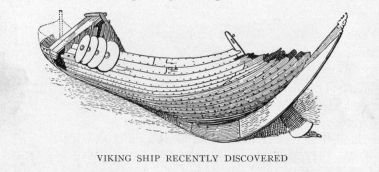
Where was Vinland? Was it Canada? The answer is unknown. It was south of Labrador. It is thought to have been Rhode Island; but certainly, passing north and south, the Norse were the first white men to see Canada.
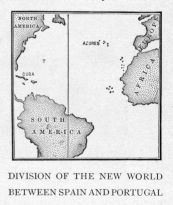
Did some legend, dim as a forgotten dream, come down to Columbus in 1492 of the Norsemen's western land? All sailors of Europe yearly fished in Iceland. Had one of Columbus's crew heard sailor yarns of the new land? If so, Columbus must have thought the new land part of Asia; for ever since Marco Polo had come from China, Europe had dreamed of a way to Asia by the sea. What with Portugal and Spain dividing the New World, all the nations of Europe suddenly awakened to a passion for discovery.
There were still lands to the north, which Portugal and Spain had not found,—lands where pearls and gold might abound. At Bristol in England dwelt with his sons John Cabot, the Genoese master mariner, well acquainted with Eastern-trade. Henry VII commissions him on a voyage of discovery—an empty honor, the King to have one fifth of all profit, Cabot to bear all expense. The Matthew ships from Bristol with a crew of eighteen in May of 1497. North and west sails the tumbling craft two thousand miles. Colder grows the air, stiffer the breeze in the bellying sails, till the Matthew's crew are shivering on decks amid fleets of icebergs that drift from Greenland in May and June. This is no realm of spices and gold. Land looms through the mist the last week in June, {4} rocky, surf-beaten, lonely as earth's ends, with never a sound but the scream of the gulls and the moan of the restless water-fret along endless white reefs. Not a living soul did the English sailors see. Weak in numbers, disappointed in the rocky land, they did not wait to hunt for natives. An English flag was hastily unfurled and possession taken of this Empire of the North for England. The woods of America for the first time rang to the chopper. Wood and water were taken on, and the Matthew had anchored in Bristol by the first week of August. Neither gold nor a way to China had Cabot found; but he had accomplished three things: he had found that the New World was not a part of Asia, as Spain thought; he had found the continent itself; and he had given England the right to claim new dominion.
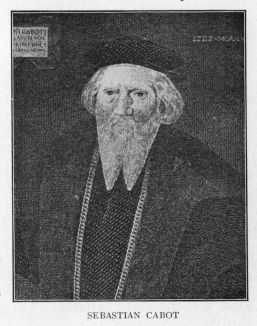
England went mad over Cabot. He was granted the title of admiral and allowed to dress in silks as a nobleman. King Henry gave him 10 pounds, equal to $500 of modern money, and a pension of 20 pounds, equal to $1000 to-day. It is sometimes said that modern writers attribute an air of romance to these old pathfinders, {5} which they would have scorned; but "Zuan Cabot," as the people called him, wore the halo of glory with glee. To his barber he presented an island kingdom; to a poor monk he gave a bishopric. His son, Sebastian, sailed out the next year with a fleet of six ships and three hundred men, coasting north as far as Greenland, south as far as Carolina, so rendering doubly secure England's title to the North, and bringing back news of the great cod banks that were to lure French and Spanish and English fishermen to Newfoundland for hundreds of years.
Where was Cabot's landfall?
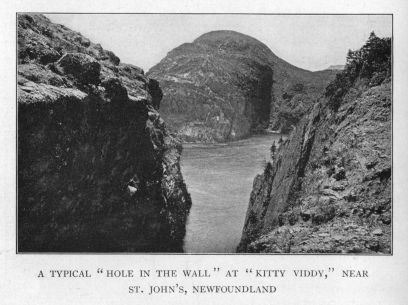
I chanced to be in Bonavista Bay, Newfoundland, shortly after the 400th anniversary of Cabot's voyage. King's Cove, landlocked as a hole in a wall, mountains meeting sky line, presented on one flat rock in letters the size of a house claim that it was here John Cabot sent his sailors ashore to plant the flag on cairn of bowlders; but when I came back from Newfoundland by way of Cape Breton, I found the same claim there. For generations the tradition has been handed down from father to son among Newfoundland fisher folk that as Cabot's vessel, pitching and rolling to the tidal bore, came scudding into King's Cove, rock girt as an inland lake, the sailors shouted "Bona Vista—Beautiful View"; but Cape Breton has her legend, too. It was Cabot's report of the cod banks that brought the Breton fishermen out, whose name Cape Breton bears.
{6} As Christopher Columbus spurred England to action, so Cabot now spurred Portugal and Spain and France.
Gaspar Cortereal comes in 1500 from Portugal on Cabot's tracks to that land of "slaty rocks" which the Norse saw long ago. The Gulf Stream beats the iron coast with a boom of thunder, and the tide swirl meets the ice drift; and it isn't a land to make a treasure hunter happy till there wander down to the shore Montaignais Indians, strapping fellows, a head taller than the tallest Portuguese. Cortereal lands, lures fifty savages on board, carries them home as slaves for Portugal's galley ships, and names the country—"land of laborers"—Labrador. He sailed again, the next year; but never returned to Portugal. The seas swallowed his vessel; or the tide beat it to pieces against Labrador's rocks; of those Indians slaked their vengeance by cutting the throats of master and crew.
And Spain was not idle. In 1513 Balboa leads his Spanish treasure seekers across the Isthmus of Panama, discovers the Pacific, and realizes what Cabot has already proved—that the New World is not a part of Asia. Thereupon, in swelling words, he takes possession of "earth, air, and water from the Pole Arctic to the Pole Antarctic" for Spain. A few years later Magellan finds his way to Asia round South America; but this path by sea is too long.
From France, Normans and Bretons are following Cabot's tracks to Newfoundland, to Labrador, to Cape Breton, "quhar men goeth a-fishing" in little cockleshell boats no bigger than three-masted schooner, with black-painted dories dragging in tow or roped on the rolling decks. Absurd it is, but with no blare of trumpets or royal commissions, with no guide but the wander spirit that lured the old Vikings over the rolling seas, these grizzled peasants flock from France, cross the Atlantic, and scatter over what were then chartless waters from the Gulf of St. Lawrence to the Grand Banks.
Just as they may be seen to-day bounding over the waves in their little black dories, hauling in… hauling in the endless line, or jigging for squid, or lying at ease at the noonday hour {7} singing some old land ballad while the kettle of cod and pork boils above a chip fire kindled on the stones used as ballast in their boats—so came the French fisher folk three years after Cabot had discovered the Grand Banks. Denys of Honfleur has led his fishing fleet all over the Gulf of St. Lawrence by 1506. So has Aubert of Dieppe. By 1517, fifty French vessels yearly fish off the coast of New-Found-Land. By 1518 one Baron de Lery has formed the project of colonizing this new domain; but the baron's ship unluckily came from the Grand Banks to port on that circular bank of sand known as Sable Island—from twenty to thirty miles as the tide shifts the sand, with grass waist high and a swampy lake in the middle. The Baron de Lery unloads his stock on Sable island and roves the sea for a better port.
The King of France, meanwhile, resents the Pope dividing the New World between Spain and Portugal. "I should like to see the clause in Father Adam's will that gives the whole earth to you," he sent word to his brother kings. Verrazano, sea rover of Florence, is commissioned to explore the New World seas; but Verrazano goes no farther north in 1524 than Newfoundland, and when he comes on a second voyage he is lost—some say hanged as a pirate by the Spaniards for intruding on their seas.
In spite of the loss of the King's sea rover, the fisher folk of France continue coming in their crazy little schooners, continue fishing in the fogs of the Grand Banks from their rocking black-planked dories, continue scudding for shelter from storm… here, there, everywhere; into the south shore of Newfoundland; into the long arms of the sea at Cape Breton, dyed at sundawn and sunset by such floods of golden light, these arms of the sea become known as Bras d'Or Lakes—Lakes of Gold; into the rock-girt lagoons of Gaspé; into the holes in the wall of Labrador…; till there presently springs up a secret trade in furs between the fishing fleet and the Indians. The King of France is not to be balked by one failure. "What," he asked, "are my royal brothers to have all America?" Among the Bank fishermen were many sailors of St. Malo. Jacques Cartier, master pilot, {8} now forty years of age, must have learned strange yarns of the New World from harbor folk. Indeed, he may have served as sailor on the Banks. Him the King chose, with one hundred and twenty men and two vessels, in 1534, to go on a voyage of discovery to the great sea where men fished. Cartier was to find if the sea led to China and to take possession of the countries for France. Captain, masters, men, march to the cathedral and swear fidelity to the King. The vessels sail on April 20, with the fishing fleet.
Piping winds carry them forward at a clipper pace. The sails scatter and disappear over the watery sky line. In twenty days Cartier is off that bold headland with the hole in the wall called Bona Vista. Ice is running as it always runs there in spring. What with wind and ice, Cartier deems it prudent to look for shelter. Sheering south among the scarps at Catalina, where the whales blow and the seals float in thousands {9} on the ice pans, Cartier anchors to take on wood and water. For ten days he watches the white whirl driving south. Then the water clears and his sails swing to the wind, and he is off to the north, along that steel-gray shore of rampart rock, between the white-slab islands and the reefy coast. Birds are in such flocks off Funk Island that the men go ashore to hunt, as the fisher folk anchor for bird shooting to-day.
Higher rises the rocky sky line; barer the shore wall, with never a break to the eye till you turn some jagged peak and come on one of those snug coves where the white fisher hamlets now nestle. Reefs white as lace fret line the coast. Lonely as death, bare as a block of marble, Gull Island is passed where another crew in later years perish as castaways. Gray finback whales flounder in schools. The lazy humpbacks lounge round and round the ships, eyeing the keels curiously. A polar bear is seen on an ice pan. Then the ships come to those lonely harbors north of Newfoundland—Griguet and Quirpon and Ha-Ha-Bay, rock girt, treeless, always windy, desolate, with an eternal moaning of the tide over the fretful reefs.
{10} To the north, off a little seaward, is Belle Isle. Here, storm or calm, the ocean tide beats with fury unceasing and weird reëchoing of baffled waters like the scream of lost souls. It was sunset when I was on a coastal ship once that anchored off Belle Isle, and I realized how natural it must have been for Cartier's superstitious sailors to mistake the moan of the sea for wild cries of distress, and the smoke of the spray for fires of the inferno. To French sailors Belle Isle became Isle of Demons. In the half light of fog or night, as the wave wash rises and falls, you can almost see white arms clutching the rock.
As usual, bad weather caught the ships in Belle Isle Straits. Till the 9th of June brown fog held Cartier. When it lifted the tide had borne his ships across the straits to Labrador at Castle Island, Château Bay. Labrador was a ruder region than Newfoundland. Far as eye could scan were only domed rocks like petrified billows, dank valleys moss-grown and scrubby, hillsides bare as slate; "This land should not be called earth," remarked Cartier. "It is flint! Faith, I think this is the region God gave Cain!" If this were Cain's realm, his descendants were "men of might"; for when the Montaignais, tall and straight as mast poles, came down to the straits, Cartier's little scrub sailors thought them giants. Promptly Cartier planted the cross and took possession of Labrador for France. As the boats coasted westward the shore rock turned to sand,—huge banks and drifts and hillocks of white sand,—so that the place where the ships struck across for the south shore became known as Blanc Sablon (White Sand). Squalls drove Cartier up the Bay of Islands on the west shore of Newfoundland, and he was amazed to find this arm of the sea cut the big island almost in two. Wooded mountains flanked each shore. A great river, amber with forest mold, came rolling down a deep gorge. But it was not Newfoundland Cartier had come to explore; it was the great inland sea to the west, and to the west he sailed.
July found him off another kind of coast—New Brunswick—forested and rolling with fertile meadows. Down a broad shallow stream—the Miramichi—paddled Indians waving furs {11} for trade; but wind threatened a stranding in the shallows. Cartier turned to follow the coast north. Denser grew the forests, broader the girths of the great oaks, heavier the vines, hotter the midsummer weather. This was no land of Cain. It was a new realm for France. While Cartier lay at anchor north of the Miramichi, Indian canoes swarmed round the boats at such close quarters the whites had to discharge a musket to keep the three hundred savages from scrambling on decks. Two seamen then landed to leave presents of knives and coats. The Indians shrieked delight, and, following back to the ships, threw fur garments to the decks till literally naked. On the 18th of July the heat was so intense that Cartier named the waters Bay of Chaleur. Here were more Indians. At first the women dashed to hiding in the woods, while the painted warriors paddled out; but when Cartier threw more presents into the canoes, women and children swarmed out singing a welcome. The Bay of Chaleur promised no passage west, so Cartier again spread his sails to the wind and coasted northward. The forests thinned. Towards Gaspé the shore became rocky and fantastic. The inland sea led westward, but the season was far advanced. It was decided to return and report to the King. Landing at Gaspé on July 24, Cartier erected a cross thirty feet high with the words emblazoned on a tablet, Vive le Roi de France. Standing about him were the painted natives of the wilderness, one old chief dressed in black bearskin gesticulating protest against the cross till Cartier explained by signs that the whites would come again. Two savages were invited on board. By accident or design, as they stepped on deck, their skiff was upset and set adrift. The astonished natives found themselves in the white men's power, but food and gay clothing allayed fear. They willingly consented to accompany Cartier to France. Somewhere north of Gaspé the smoke of the French fishing fleet was seen ascending from the sea, as the fishermen rocked in their dories cooking the midday meal.
August 9 prayers are held for safe return at Blanc Sablon,—port of the white, white sand,—and by September 5 Cartier is {12} home in St. Malo, a rabble of grizzled sailor folk chattering a welcome from the wharf front.
He had not found passage to China, but he had found a kingdom; and the two Indians told marvelous tales of the Great River to the West, where they lived, of mines, of vast unclaimed lands.
Cartier had been home only a month when the Admiral of France ordered him to prepare for another voyage. He himself was to command the Grand Hermine, Captain Jalobert the Little Hermine, and Captain Le Breton the Emerillon. Young gentlemen adventurers were to accompany the explorers. The ships were provisioned for two years; and on May 16, 1535, all hands gathered to the cathedral, where sins were confessed, the archbishop's blessing received, and Cartier given a Godspeed to the music of full choirs chanting invocation. Three days later anchors were hoisted. Cannon boomed. Sails swung out; and the vessels sheered away from the roadstead while cheers rent the air.
Head winds held the ship back. Furious tempests scattered the fleet. It was July 17 before Cartier sighted the gull islands of Newfoundland and swung up north with the tide through the brown fogs of Belle Isle Straits to the shining gravel of Blanc Sablon. Here he waited for the other vessels, which came on the 26th.
The two Indians taken from Gaspé now began to recognize the headlands of their native country, telling Cartier the first kingdom along the Great River was Saguenay, the second Canada, the third Hochelaga. Near Mingan, Cartier anchored to claim the land for France; and he named the great waters St. Lawrence because it was on that saint's day he had gone ashore. The north side of Anticosti was passed, and the first of September saw the three little ships drawn up within the shadow of that somber gorge cut through sheer rock where the Saguenay rolls sullenly out to the St. Lawrence. The mountains presented naked rock wall. Beyond, rolling back… rolling back to an impenetrable wilderness… were the primeval {13} forests. Through the canyon flowed the river, dark and ominous and hushed. The men rowed out in small boats to fish but were afraid to land.
As the ships advanced up the St. Lawrence the seamen could scarcely believe they were on a river. The current rolled seaward in a silver flood. In canoes paddling shyly out from the north shore Cartier's two Indians suddenly recognized old friends, and whoops of delight set the echoes ringing.
Keeping close to the north coast, russet in the September sun, Cartier slipped up that long reach of shallows abreast a low-shored wooded island so laden with grapevines he called it Isle Bacchus. It was the Island of Orleans.
Then the ships rounded westward, and there burst to view against the high rocks of the north shore the white-plumed shimmering cataract of Montmorency leaping from precipice to river bed with roar of thunder.
Cartier had anchored near the west end of Orleans Island when there came paddling out with twelve canoes, Donnacona, great chief of Stadacona, whose friendship was won on the instant by the tales Cartier's Indians told of France and all the marvels of the white man's world.
Cartier embarked with several young officers to go back with the chief; and the three vessels were cautiously piloted up little St. Charles River, which joins the St. Lawrence below the modern city of Quebec. Women dashed to their knees in water to welcome ashore these gayly dressed newcomers with the gold-braided coats and clanking swords. Crossing the low swamp, now Lower Town, Quebec, the adventurers followed a path through the forest up a steep declivity of sliding stones to the clear high table-land above, and on up the rolling slopes to the airy heights of Cape Diamond overlooking the St. Lawrence like the turret of some castle above the sea. Did a French soldier, removing his helmet to wipe away the sweat of his arduous climb, cry out "Que bec" (What a peak!) as he viewed the magnificent panorama of river and valley and mountain rolling from his feet; or did their Indian guide point to the water of the river narrowing like {14} a strait below the peak, and mutter in native tongue, "Quebec" (The strait)? Legend gives both explanations of the name. To the east Cartier could see far down the silver flood of the St. Lawrence halfway to Saguenay; to the south, far as the dim mountains of modern New Hampshire. What would the King of France have thought if he could have realized that his adventurers had found a province three times the size of England, one third larger than France, one third larger than Germany? And they had as yet reached only one small edge of Canada, namely Quebec.
Heat haze of Indian summer trembled over the purple hills. Below, the river quivered like quicksilver. In the air was the nutty odor of dried grasses, the clear tang of coming frosts crystal to the taste as water; and if one listened, almost listened to the silence, one could hear above the lapping of the tide the far echo of the cataract. To Cartier the scene might have been the airy fabric of some dream world; but out of dreams of earth's high heroes are empires made.
But the Indians had told of that other kingdom, Hochelaga. Hither Cartier had determined to go, when three Indians dressed as devils—faces black as coals, heads in masks, brows adorned with elk horns—came gyrating and howling out of the woods on the mountain side, making wild signals to the white men encamped on the St. Charles. Cartier's interpreters told him this was warning from the Indian god not to ascend the river. The god said Hochelaga was a realm of snow, where all white men would perish. It was a trick to keep the white men's trade for themselves.
Cartier laughed.
"Tell them their god is an old fool," he said. "Christ is to be our guide."
The Indians wanted to know if Cartier had spoken to his God about it.
"No," answered Cartier. Then, not to be floored, he added, "but my priest has."
{15} With three cheers, fifty young gentlemen sheered out on September 19 from the St. Charles on the Emerillon to accompany Cartier to Hochelaga.
Beyond Quebec the St. Lawrence widened like a lake. September frosts had painted the maples in flame. Song birds, the glory of the St. Lawrence valley, were no longer to be heard, but the waters literally swarmed with duck and the forests were alive with partridge. Where to-day nestle church spires and whitewashed hamlets were the birch wigwams and night camp fires of Indian hunters. Wherever Cartier went ashore, Indians rushed knee-deep to carry him from the river; and one old chief at Richelieu signified his pleasure by presenting the whites with two Indian children. Zigzagging leisurely, now along the north shore, now along the south, pausing to hunt, pausing to explore, pausing to powwow with the Indians, the adventurers came, on September 28, to the reedy shallows and breeding grounds of wild fowl at Lake St. Peter. Here they were so close ashore the Emerillon caught her keel in the weeds, and the explorers left her aground under guard and went forward in rowboats.
{16} "Was this the way to Hochelaga?" the rowers asked Indians paddling past.
"Yes, three more sleeps," the Indians answered by the sign of putting the face with closed eyes three times against their hand; "three more nights would bring Cartier to Hochelaga"; and on the night of the 2d of October the rowboats, stopped by the rapids, pulled ashore at Hochelaga amid a concourse of a thousand amazed savages.
It was too late to follow the trail through the darkening forest to the Indian village. Cartier placed the soldiers in their burnished armor on guard and spent the night watching the council fires gleam from the mountain. And did some soldier standing sentry, watching the dark shadow of the hill creep longer as the sun went down, cry out, "Mont Royal," so that the place came to be known as Montreal?
At peep of dawn, while the mist is still smoking up from the river, Cartier marshals twenty seamen with officers in military line, and, to the call of trumpet, marches along the forest trail behind Indian guides for the tribal fort. Following the river, knee-deep in grass, the French ascend the hill now known as Notre Dame Street, disappear in the hollow where flows a stream,—modern Craig Street,—then climb steeply through the forests to the plain now known as the great thoroughfare of Sherbrooke Street. Halfway up they come on open fields of maize or Indian corn. Here messengers welcome them forward, women singing, tom-tom beating, urchins stealing fearful glances through the woods. The trail ends at a fort with triple palisades of high trees, walls separated by ditches and roofed for defense, with one carefully guarded narrow gate. Inside are fifty large wigwams, the oblong bark houses of the Huron-Iroquois, each fifty feet long, with the public square in the center, or what we would call the courtyard.
It needs no trick of fancy to call up the scene—the winding of the trumpet through the forest silence, the amazement of the Indian drummers, the arrested frenzy of the dancers, the sunrise turning burnished armor to fire, the clanking of swords, {17} the wheeling of the soldiers as they fall in place, helmets doffed, round the council fire! Women swarm from the long houses. Children come running with mats for seats. Bedridden, blind, maimed are carried on litters, if only they may touch the garments of these wonderful beings. One old chief with skin like crinkled leather and body gnarled with woes of a hundred years throws his most precious possession, a headdress, at Cartier's feet.
Poor Cartier is perplexed. He can but read aloud from the Gospel of St. John and pray Christ heal these supplicants. Then he showers presents on the Indians, gleeful as children—knives and hatchets and beads and tin mirrors and little images and a crucifix, which he teaches them to kiss. Again the silver trumpet peals through the aisled woods. Again the swords clank, and the adventurers take their way up the mountain—a Mont Royal, says Cartier.
The mountain is higher than the one at Quebec. Vaster the view—vaster the purple mountains, the painted forests, the valleys bounded by a sky line that recedes before the explorer as the rainbow runs from the grasp of a child. This is not Cathay; it is a New France. Before going back to Quebec the adventurers follow a trail up the St. Lawrence far enough to see that Lachine Rapids bar progress by boat; far enough, too, to see that the Gaspé Indians had spoken truth when they told of another grand river—the Ottawa—coming in from the north.
By the 11th of October Cartier is at Quebec. His men have built a palisaded fort on the banks of the St. Charles. The boats are beached. Indians scatter to their far hunting grounds. Winter sets in. Canadian cold is new to these Frenchmen. They huddle indoors instead of keeping vigorous with exercise. Ice hangs from the dismantled masts. Drifts heap almost to top of palisades. Fear of the future falls on the crew. Will they ever see France again? Then scurvy breaks out. The fort is prostrate. Cartier is afraid to ask aid of the wandering Indians lest they learn his weakness. To keep up show of strength he has his men fire off muskets, batter the fort walls, march and drill and {18} tramp and stamp, though twenty-five lie dead and only four are able to keep on their feet. The corpses are hidden in snowdrifts or crammed through ice holes in the river with shot weighted to their feet.
In desperation Cartier calls on all the saints in the Christian calendar. He erects a huge crucifix and orders all, well and ill, out in procession. Weak and hopeless, they move across the snows chanting psalms. That night one of the young noblemen died. Toward spring an Indian was seen apparently recovering from the same disease. Cartier asked him what had worked the cure and learned of the simple remedy of brewed spruce juice.
By the time the Indians came from the winter hunt Cartier's men were in full health. Up at Hochelaga a chief had seized Cartier's gold-handled dagger and pointed up the Ottawa whence came ore like the gold handle. Failing to carry any minerals home, Cartier felt he must have witnesses to his report. The boats are rigged to sail, Chief Donnacona and eleven others are lured on board, surrounded, forcibly seized, and treacherously carried off to France. May 6, 1536, the boats leave Quebec, stopping only for water at St. Pierre, where the Breton fishermen have huts. July 16 they anchor at St. Malo.
Did France realize that Cartier had found a new kingdom? Not in the least; but the home land gave heed to that story of minerals, and had the kidnapped Indians baptized. Donnacona and all his fellow-captives but the little girl of Richelieu die, and Sieur de Roberval is appointed lord paramount of Canada to equip Cartier with five vessels and scour the jails of France for colonists. Though the colonists are convicts, the convicts are not criminals. Some have been convicted for their religion, some for their politics. What with politics and war, it is May, 1541, before the ships sail, and then Roberval has to wait another year for his artillery, while Cartier goes ahead to build the forts.
From the first, things go wrong. Head winds prolong the passage for three months. The stock on board is reduced to a diet of cider, and half the cattle die. Then the Indians of Quebec {19} ask awkward questions about Donnacona. Cartier flounders midway between truth and lie. Donnacona had died, he said; as for the others, they have become as white men. Agona succeeds Donnacona as chief. Agona is so pleased at the news that he gives Cartier a suit of buckskin garnished with wampum, but the rest of the Indians draw off in such resentment that Cartier deems it wise to build his fort at a distance, and sails nine miles up to Cape Rouge, where he constructs Bourg Royal. Noel, his nephew, and Jalobert, his brother-in-law, take two ships back to France. While Cartier roams exploring, Beaupré commands Bourg Royal.
In his roamings, ever with his eyes to earth for minerals, he finds stones specked with mica, and false diamonds, whence the height above Quebec is called Cape Diamond. It is enough. The crews spend the year loading the ships with cargo of worthless stones, and set sail in May, high of hope for wealth great as Spaniard carried from Peru. June 8 the ships slip in to St. John's, Newfoundland, for water. Seventeen fishing vessels rock to the tide inside the landlocked lagoon, and who comes gliding up the Narrows of the harbor neck but Viceroy Roberval, mad with envy when he hears of the diamond cargoes! He breaks the head of a Portuguese or two among the fishing fleet and forthwith orders Cartier back to Quebec.
Cartier shifts anchor from too close range of Roberval's guns and says nothing. At dead of night he slips anchor altogether and steals away on the tide, with only one little noiseless sail up on each ship through the dark Narrows. Once outside, he spreads his wings to the wind and is off for France. The diamonds prove worthless, but Cartier receives a title and retires to a seigneurial mansion at St. Malo.
The episode did not improve Roberval's temper. The new Viceroy was a soldier and a martinet, and his authority had been defied. With his two hundred colonists, taken from the prisons of France, commanded by young French officers,—a Lament and a La Salle among others,—he proceeded up the coast of Newfoundland to enter the St. Lawrence by Belle Isle. {20} Among his people were women, and Roberval himself was accompanied by a niece, Marguerite, who had the reputation of being a bold horsewoman and prime favorite with the grandees who frequented her uncle's castle. Perhaps Roberval had brought her to New France to break up her attachment for a soldier. Or the Viceroy may have been entirely ignorant of the romance, but, anchored off Belle Isle,—Isle of Demons,—the angry governor made an astounding discovery. The girl had a lover on board, a common soldier, and the two openly defied his interdict. Coming after Cartier's defection, the incident was oil to fire with Roberval. Sailors were ordered to lower the rowboat. One would fain believe that the tyrannical Viceroy offered the high-spirited girl at least the choice of giving up her lover. She was thrust into the rowboat with a faithful old Norman nurse. Four guns and a small supply of provisions were tossed to the boat. The sailors were then commanded to row ashore and abandon her on Isle of Demons. The soldier lover leaped over decks and swam through the surf to share her fate.
Isle of Demons, with its wailing tides and surf-beaten reefs, is a desolate enough spot in modern days when superstitions do not add to its terrors. The wind pipes down from The Labrador in fairest weather with weird voices as of wailing ghosts, and in winter the shores of Belle Isle never cease to echo to the hollow booming of the pounding surf.
Out of driftwood the castaways constructed a hut. Fish were in plenty, wild fowl offered easy mark, and in springtime the ice floes brought down the seal herds. There was no lack of food, but rescue seemed forever impossible; for no fishing craft would approach the demon-haunted isle. A year passed, two years,—a child was born. The soldier lover died of heartbreak and despondency. The child wasted away. The old nurse, too, was buried. Marguerite was left alone to fend for herself and hope against hope that some of the passing sails would heed her signals. No wonder at the end of the third year she began to hear shrieking laughter in the lonely cries of tide and wind, and to imagine that she saw fiendish arms snatching through the spume of storm drift.
{21} Towards the fall of 1545, one calm day when spray for the once did not hide the island, some fishermen in the straits noticed the smoke of a huge bonfire ascending from Isle Demons. Was it a trick of the fiends to lure men to wreck, or some sailors like themselves signaling distress?
The boat drew fearfully near and nearer. A creature in the strange attire of skins from wild beasts ran down the rocks, signaling frantically. It was a woman. Terrified and trembling, the sailors plucked up courage to land. Then for the first time Marguerite Roberval's spirit gave way. She could not speak; she seemed almost bereft of reason. It was only after the fishermen had nourished her back to semblance of womanhood that they drew from her the story. On returning to France, Marguerite Roberval entered a convent. It was there an old court friend of her château days sought her out and heard the tale from her own lips.
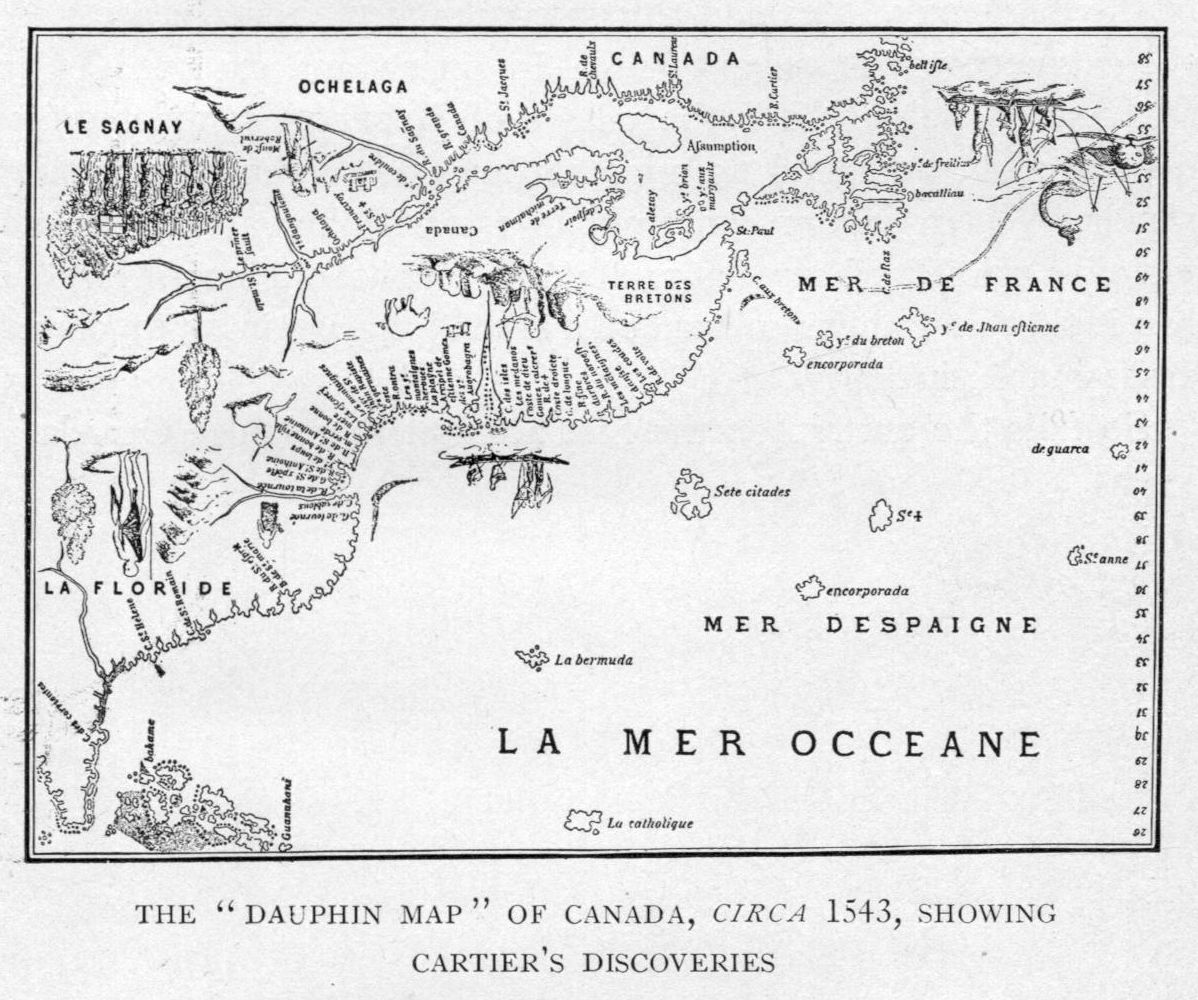
{22} A colony begun under such ill omen was not likely to prosper. Roberval had proceeded to Cape Rouge, where he landed in July, and before winter had a respectable fort constructed. Fifty of his colonists died of scurvy. As many as six were hanged in a single day for insubordination, and the whipping post became the emblem of an authority that trembled in the balance. Roberval, in troth, was not thinking of the colony. He was thinking of those minerals which the Indians said were at the head waters of the Saguenay. Leaving thirty women at the fort, he ascended the Saguenay with seventy men in spring and explored as far as Lake St. John, where the village of Roberval commemorates his feat; but he found no minerals and lost eight men running rapids. When Cartier came out in 1543, Roberval took the remaining colonists home, a profoundly embittered man. Legend has it that he either perished on a second voyage in 1549, or was assassinated in Paris.
So falls the curtain on the first attempt to colonize Canada.
English voyages to North America—Sir Humphrey Gilbert—Henry Hudson—Champlain's first voyage—Founding of Ste. Croix—The colonists in Acadia
The second attempt to plant a French colony in the New World was more disastrous than the first.
Though my Lord Roberval fails, the French fishing vessels continue to bound over the billows of the Atlantic to the New World. By 1578 there are a hundred and fifty French fishing vessels off Newfoundland alone. The fishing folk engage in barter. Cartier's heirs ask for a monopoly of the fur trade in Canada, but the grant is so furiously opposed by the merchants of the coast towns that it is revoked until the Marquis de la Roche, who had been a page at the French court, again obtains monopoly, with many high-sounding titles as Governor, and the added obligation that he must colonize the new land. What with wars and court intrigue, it is 1598 before the Governor of Canada is ready to sail. Of his two hundred people taken from jails, all but sixty have obtained their freedom by paying a ransom. With these sixty La Roche follows the fishing fleet out to the Grand Banks, then rounds southwestward for milder clime, where he may winter his people.
Straight across the ship's course lies the famous sand bank, the graveyard of the Atlantic,—what the old navigators called "the dreadful isle,"—Sable Island. The sea lies placid as glass between the crescent horns of the long, low reefs,—thirty miles from horn to horn, with never a tree to break the swale of the grass waist-high.
The marquis lands his sixty colonists to fish for supplies, while he goes on with the crew to find place for settlement.
Barely has the topsail dipped over the watery sky before breakers begin to thunder on the sand reefs. Air and earth lash to fury. Sails are torn from the ship of the marquis. His {24} masts go overboard, and the vessel is driven, helpless as a chip in a maelstrom, clear back to the ports of France. Here double misfortune awaits La Roche. His old patrons of the court are no longer powerful. He is thrown in prison by a rival baron.
In vain the colonists strain tired eyes for a sail at sea. Days become weeks, weeks months, summer autumn; and no boat came back. As winter gales assailed the sea, sending the sand drifting like spray, the convicts built themselves huts out of driftwood, and scooped beds for themselves in the earth like rabbit burrows. Of food there was plenty. The people had their fishing lines; and the stock, left by the Baron de Lery long ago, had multiplied and now overran the island. Wild fowl, too, teemed on the inland lake; and foxes, which must have drifted ashore on the ice float of spring, ran wild through the sedge.
Like Robinson Crusoe cast on a desert isle, the desperate people fought their fate. Traps were set for the foxes, snares for the birds, and scouts kept tramping from end to end of the island for sight of a sail. Racked with despair and anxiety, these outcasts of civilization soon fell to bitter quarreling. Traps were found rifled. Dead men lay beside the looted traps; and, doubtless, not a few men lost their lives in spring when the ice floes drifted down with the seal herds, and the men gave mad chase from ice pan to ice pan for seal pelts to make clothing. Spring wore to summer. The graves on the sand banks increased. For a second winter the dreary snowfall wrapped the island in a mantle white as death sheet. Then came the same weary monotony,—the frenzied seal hunt over the blood-stained floes; the long summer days with the drone of the tide on the sand banks; the men mad with hope at sight of a sail peak over the far wave tops, only to be plunged in despair as the fisher boat passed too far for signal; the fading of the grasses to russet in the sad autumn light; then snowfall again—and despair.
Five years passed before La Roche could aid his people; and the pilot who went to their rescue won himself immortal contempt by robbing the castaways of their furs. Word of the {25} rescue came to the ears of the court. Royalty commanded the refugees brought before the throne. Only twelve had survived, and these marched before the royal presence clothed in the skins of seals, hair unkempt, beards to mid-waist, "like river gods of yore," says the old record. The King was so touched that he commanded fifty crowns given to each man and the stolen furs restored. La Roche died of chagrin.
While France is trying to colonize Canada, England has not forgotten that John Cabot first coasted these northern shores and erected the English flag.
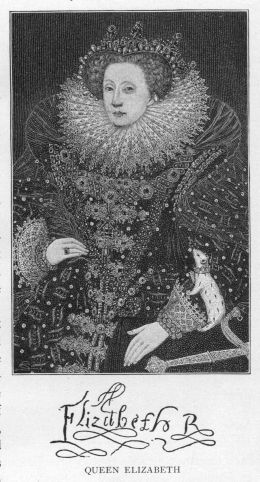
About the time that Marguerite Roberval was left alone on Isle Demons, two boys—half-brothers—were playing on the sands of the English Channel, sailing toy boats and listening to sailor yarns of loot on the Spanish Main. One was Humphrey Gilbert; the other, Walter Raleigh. These two were destined to lead England's first colonies to America.
Martin Frobisher had already poked the prows of English ships into the icy straits of Greenland waters, seeking way to {26} China. He had come out with a fleet of fifteen sails and one hundred mariners in 1578 to found colonies, but was led away by the lure of "fool's gold." Loading his vessels with worthless rocks which he believed contained gold enough "to suffice all the gold gluttons of the world," he sailed back to England without leaving the trace of a colony. Francis Drake, the very same year, had for the first time plowed an English furrow around the seas of the world, chasing Spanish treasure boats up the west coast of South America and loading his own vessel with loot to the water line. Afraid to go back the way he had come, round South America, where all the Spanish frigates lay in wait to catch him, Drake pushed on up the west coast as far as California, and landing, took possession of what he called "New Albion" for Queen Elizabeth. But still no colony had been planted for England.
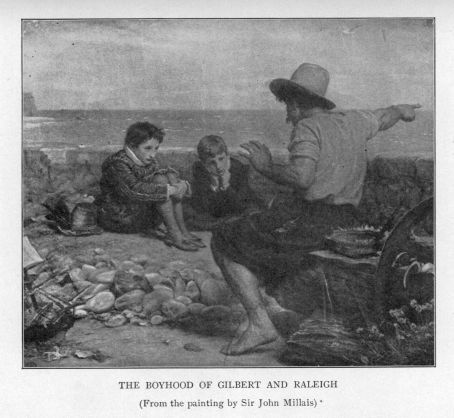
Gilbert and Raleigh, the two half-brothers, were both zealous for glory. Both stood high in court favor. Both had fought for Queen Elizabeth in the wars. Gilbert had fame as seaman and geographer. He asks for the privilege of founding England's first colony. The Queen will incur no expense. Gilbert and Raleigh and their friends will fit out the vessels. Elizabeth deeds to Gilbert all that old domain discovered by John Cabot, reserving only one fifth of the minerals he may find; and she sends him a present of a golden anchor as a Godspeed. June 11, 1583, Sir Humphrey sets sail with a fleet of three splendid merchantmen, fitted out as men-of-war, and two heavily armed little frigates. The crews number three hundred and sixty men, but they are for the most part impressed seamen and riotous. The fleet is only well away when the biggest of the merchantmen signals that plague has broken out, and flees back to England. Later, as fog hides the boats from one another, the pirate crew on board the little frigate Swallow run down an English fisherman on the Grand Banks, board her, and at bayonet point loot the schooner from stem to stern. When the ships lower sail to come in on the tide through the long Narrows, to the rock-girt harbor of St. John's, Newfoundland, {27} the hundreds of fishing vessels lying at anchor there object to the pirate Swallow; but Sir Humphrey reads his commission from the Queen, and the fishing fleet roars a welcome that sets the rocks ringing. Sunday, August 4, the next day after entering, Biscayans and French and Portuguese and English send their new Governor tribute in provisions,—fish from the English, marmalade and wines and spices from the foreigners. The admiral gives a feast to the master mariners each week he is in port, and entertains—as the old record says—"right bountifully." Wandering round the rocky harbor, up the high cliff to the left where remnants of an old fortress may be seen to-day, along the circular hills to the right where the fishing stages cover the water front, Gilbert's men find "fool's gold," rock with specks of iron and mica. Daniel, the refiner of metals, declares it is a rich specimen of silver. The find goes to Sir Humphrey's head. He sees himself a second Francis Drake, ships crammed with gold. When the captains of the other vessels in his fleet would see the treasure, he answers: "Content yourselves! It is enough! I have seen it but I would have no speech made of it in harbor; for the Portuguese and {28} Biscayans and French might learn of it. We shall soon return hither again."
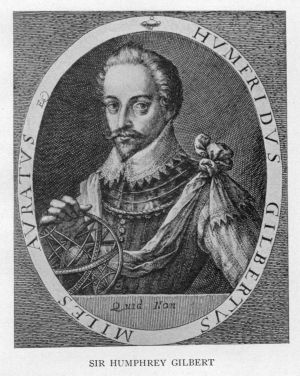
Many of the men are in ill health. Gilbert decides to send the invalids home in the Swallow; but he transfers the bold pirate crew of that frigate to the big ship Delight, which carries provisions for the colony. While planning to make St. John's the headquarters of his new kingdom, Sir Humphrey wishes to explore those regions where Cartier had gone and whence the fishing schooners bring such wealth in furs.
August 20 the remainder of his fleet rounds out of St. John's south west for the Gulf of St. Lawrence,—the Delight with the provisions, the Golden Hinde with the majority of the people, the little frigate Squirrel weighted down by artillery stores but under command of Gilbert himself, because the smaller ship can run close ashore to explore. To keep up the spirits of the men, there is much merrymaking. Becalmed off Cape Breton, Sir Humphrey visits the big ship Delight, where the trumpets and the drums and the pipes and the cornets reel off wild sailor jigs. "There was," says the old record, "little watching for danger." Wednesday, August 26, the sounding line forewarned the reefs of Sable Island. Breakers were sighted. The Delight signaled that her captain wanted to shift southwest to deeper water, but Gilbert wanted to enter the St. Lawrence and signaled back to go on northwest. That night a storm raged. The provision ship ran full tilt into the sand banks of Sable Island, and was battered into chips before the other ships could come to rescue. All supplies were lost and all the pirate crew perished but sixteen, who jumped into the pinnace dragging astern, and, with only one oar, half punted, half drifted for seven days till the wave wash carried them to the shores of Newfoundland. There they were picked up by a fishing vessel.
With provisions gone, Sir Humphrey Gilbert's colony was doomed. He must turn back. Saturday, August 31, they reversed the course. When halfway across the Atlantic the admiral rowed from the little Squirrel across to the Golden Hinde to have a lame foot treated by the surgeon. "Cheer {29} up," he urged the men. "Next year her Majesty will loan me 1000 pounds, and we shall come again."
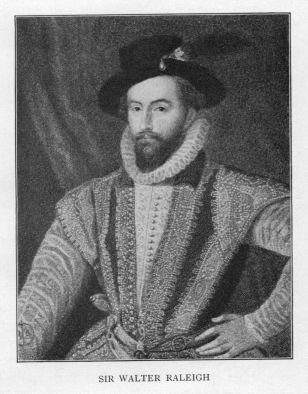
As storm was gathering, the men begged him to remain on the larger ship, but Gilbert refused to leave the sailors of the Squirrel. The frigate was as safe for him as for them, he said. Some one called his attention to the fact that the frigate was overweighted with cannon. Gilbert laughed all danger to scorn. Soon afterwards the waves began to break short and high—a dangerous sea for a small, overweighted ship. It had been arranged that both ships should swing lanterns fore and aft to keep each other in sight at night. On the night of September 9 a phosphorescent light was seen to gleam above the mainmast of the Squirrel,—certain sign to the superstitious sailors of dire disaster; but when the Hinde slackened speed, and the great waves threw the vessels almost together, there was Sir Humphrey sitting aloft, book in hand, shouting out, "We are as near Heaven by sea as by land." The Hinde fell to the rear. The Squirrel led away, her stern lanterns lighting a trail across the shiny dark of the tempestuous billows. Suddenly, at midnight, the guiding {30} light was lost. The Squirrel's stern lanterns were seen to descend the pitching trough of a mountain wave, and when the wall of water fell, no light came up. Down into the abyss the little craft had plunged, never to rise again, carrying explorer, treasure hunters, colonists, to a watery grave.
It may be added that the disaster took place halfway across the ocean, and not off Newfoundland, as the ballad relates.
But for all this misfortune, England did not desist. The very next year Raleigh, who had played on the sands with Humphrey Gilbert, sends out his colonists to the Roanoke, and lays the foundations for the beginning of empire in the Southern States. English sailors explore Cape Cod. Ten years after Frobisher had brought home his cargo of worthless stones from Labrador, Davis, the master mariner, is out exploring the waters west of Greenland; and Henry Hudson, the English pilot who had discovered Hudson River, New York, for the Dutch, is retained by the English in 1610 to explore those waters west of Greenland where both Frobisher and Davis reported open passage.
It is midsummer of 1610 when Hudson enters Hudson Straits. The ice jam of Ungava Bay, Labrador, has almost torn his ships' timbers apart and has set fear shivering like an aspen leaf among the crew. Old Juett, the mate, rages openly at Hudson for venturing such a frail ship on such a sea; but when the ship anchors at the west end of Hudson Straits, five hundred miles from the Atlantic, there opens to view another sea,—a sea large as the Mediterranean, that, like the Mediterranean, may lead to another world. It is as dangerous to go back as forward; and forward Hudson sails, southwestward for that sea Drake had cruised off California, the old mate's mutiny rumbling beneath decks like a volcano. South, southwestward, seven hundred miles sails Hudson, past the high rocks and airy cataracts of Richmond Gulf, past silence like the realms of death, on down where Hudson Bay rounds into James Bay and the shallows plainly show this is no way to a western sea, but a blind inlet, bowlder-strewn and muddy as swamps.
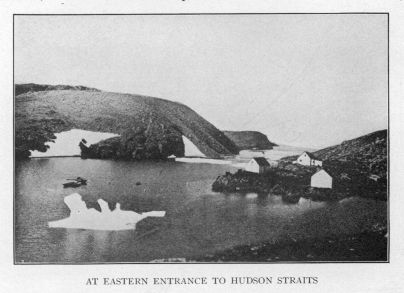
When the ship runs aground and all hands must out to waist in ice water to pull her ashore as the tide comes in, Juett's rage bursts all bounds. As they toil, snow begins to fall. They are winter bound and storm bound in an unknown land. Half the crew are in open mutiny; the other half build winter quarters and range the woods of James Bay for game. Of game there is plenty, but the rebels refuse to hunt. A worthless lad named Green, whom Hudson had picked off the streets of London, turns traitor and talebearer, fomenting open quarrels till the commander threatens he will hang to the yardarm the first man guilty of disobedience. So passes the sullen winter. Provisions are short when the ship weighs anchor for England in June of 1611. With tears in his eyes, Hudson hands out the last rations. Ice blocks the way. Delay means starvation. If the crew were only half as large, Henry Green whispers to the mutineers, there would be food enough for passage home. The ice floes clear, the sails swing rattling to the breeze, but as Hudson steps on deck, the mutineers leap upon him like wolves. He is bound and thrown into the rowboat. With him are thrust his son and {32} eight others of the crew. The rope is cut, the rowboat jerks back adrift, and Hudson's vessel, manned by mutineers, drives before the wind. A few miles out, the mutineers lower sails to rummage for food. The little boat with the castaways is seen coming in pursuit. Guilt-haunted, the crew out with all sails and flee as from avenging ghosts. So passes Henry Hudson from the ken of all men, though Indian legend on the shores of Hudson Bay to this day maintains that the castaways landed north of Rupert and lived among the savages.
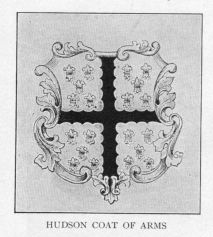
Not less disastrous were English efforts than French to colonize the New World. Up to 1610 Canada's story is, in the main, a record of blind heroism, dogged courage, death that refused to acknowledge defeat.
Four hundred French vessels now yearly come to reap the harvest of the sea; in and out among the fantastic rocks of Gaspé, pierced and pillared and scooped into caves by the wave wash, where fisher boats reap other kind of harvest, richer than the silver harvest of the sea,—harvest of beaver, and otter, and marten; up the dim amber waters of the Saguenay, within the shadow of the somber gorge, trafficking baubles of bead and red print for furs, precious furs. Pontgravé, merchant prince, comes out with fifty men in 1600, and leaves sixteen at Tadoussac, ostensibly as colonists, really as wood lopers to scatter through the forests and learn the haunts of the Indians. Pontgravé comes back for men and furs in 1601, and comes again in 1603 with two vessels, accompanied by a soldier of fortune from the French court, who acts as geographer,—Samuel Champlain, now in his thirty-sixth year, with service in war to his credit and a journey across Spanish America.
{33} The two vessels are barely as large as coastal schooners; but shallow draft enables them to essay the Upper St. Lawrence far as Mount Royal, where Cartier had voyaged. Of the palisaded Indian fort not a vestige remains. War or plague has driven the tribe westward, but it is plain to the court geographer that, in spite of former failures, this land of rivers like lakes, and valleys large as European kingdoms, is fit for French colonists.
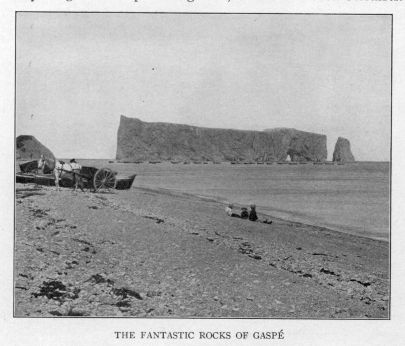
When Champlain returns to France the King readily grants to Sieur de Monts a region roughly defined as anywhere between Pennsylvania and Labrador, designated Acadia. This region Sieur de Monts is to colonize in return for a monopoly of the fur trade. When other traders complain, De Monts quiets them by letting them all buy shares in the venture. With him are associated as motley a throng of treasure seekers as ever stampeded for gold. There is Samuel Champlain, the court geographer; there is Pontgravé, the merchant prince, on a separate {34} vessel with stores for the colonists. Pontgravé is to attend especially to the fur trading. There are the Baron de Poutrincourt and his young son, Biencourt, and other noblemen looking for broader domains in the New World; and there are the usual riffraff of convicts taken from dungeons. Priests go to look after the souls of the Catholics, Huguenot ministers to care for the Protestants, and so valiantly do these dispute with tongues and fists that the sailors threaten to bury them in the same grave to see if they can lie at peace in death.
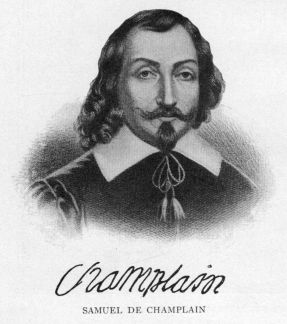
Before the boats sight Acadia, it is early summer of 1604. Pontgravé leaves stores with De Monts and sails on up to Tadoussac. De Monts enters the little bay of St. Mary's, off the northwest corner of Nova Scotia, and sends his people ashore to explore.
Signs of minerals they seek, rushing pellmell through the woods, gleeful as boys out of school. The forest is pathless and dense with June undergrowth, shutting out the sun and all sign of direction. The company scatters. Priest Aubry, more used to the cobble pavement of Paris than to the tangle of ferns, grows fatigued and drinks at a fresh-water rill. Going in the direction of his comrades' voices, he suddenly realizes that he has left his sword at the spring. The priest hurries back for the sword, loses his companions' voices, and when he would return, finds that he is hopelessly lost. The last shafts of {35} sunlight disappear. The chill of night settles on the darkening woods. The priest shouts till he is hoarse and fires off his pistol; but the woods muffle all sound but the scream of the wild cat or the uncanny hoot of the screech owl. Aubry wanders desperately on and on in the dark, his cassock torn to tatters by the brushwood, his way blocked by the undisturbed windfall of countless ages, … on and on, … till gray dawn steals through the forest and midday wears to a second night.
Back at the boat were wild alarm and wilder suspicions. Could the Huguenots, with whom Aubry had battled so violently, have murdered him? De Monts scouted the notion as unworthy, but the suspicion clung in spite of fiercest denials. All night cannon were fired from the vessel and bonfires kept blazing on shore; but two or three days passed, and the priest did not come.
De Monts then sails on up the Bay of Fundy, which he calls French Bay, and by the merest chance sheers through an opening eight hundred feet wide to the right and finds himself in the beautiful lakelike Basin of Annapolis, broad chough to harbor all the French navy, with a shore line of wooded meadows like home-land parks. Poutrincourt is so delighted, he at once asks for an estate here and names the domain Port Royal.
On up Fundy Bay sails De Monts, Samuel Champlain ever leaning over decks, making those maps and drawings which have come down from that early voyage. The tides carry to a broad river on the north side. It is St. John's Day. They call the river St. John, and wander ashore, looking vainly for more minerals. Westward is another river, known to-day as the Ste. Croix, the boundary between Maine and New Brunswick. Dochet Island at its mouth seems to offer what to a soldier is an ideal site. A fort here could command either Fundy Bay or the upland country, which Indians say leads back to the St. Lawrence. Thinking more of fort than farms, De Monts plants his colony on Ste. Croix River, on an island composed mainly of sand and rock.
While workmen labor to erect a fort on the north side, the pilot is sent back to Nova Scotia to prospect for minerals. As {36} the vessel coasts near St. Mary's Bay, a black object is seen moving weakly along the shore. Sailors and pilot gaze in amazement. A hat on the end of a pole is waved weakly from the beach. The men can scarcely believe their senses. It must be the priest, though sixteen days have passed since he disappeared. For two weeks Aubry had wandered, living on berries and roots, before he found his way back to the sea.
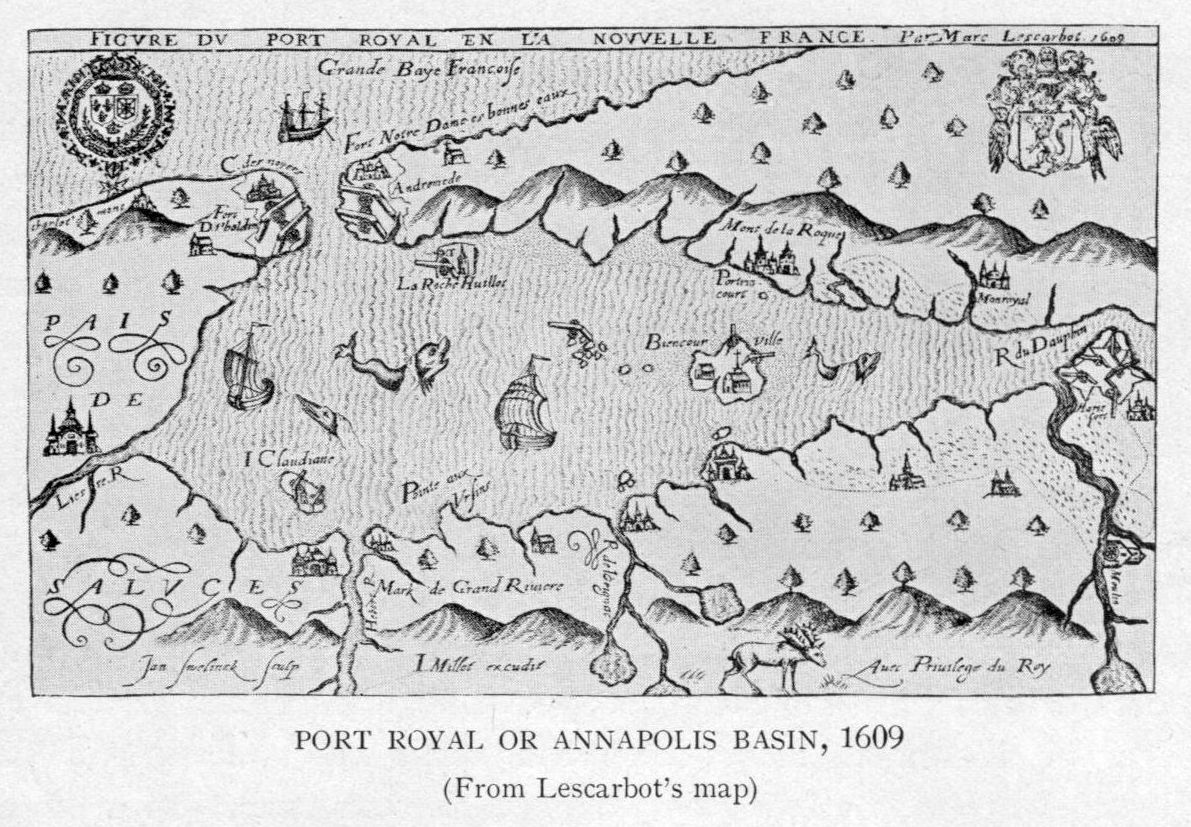
Here, then, at last, is founded the first colony in Canada, a little palisaded fort of seventy-nine men straining longing eyes at the sails of the vessel gliding out to sea; for Pontgravé has taken one vessel up the St. Lawrence to trade, and Poutrincourt has gone back to France with the other for supplies. A worse beginning could hardly have been made. The island was little better than a sand heap. No hills shut out the cold winds that swept down the river bed from the north, and the tide carried in ice jam from the south. As the snow began to fall, padding the stately forests with a silence as of death, whitening the gaunt spruce trees somber as funereal mourners, the colonists felt the icy loneliness of winter in a forest chill their hearts. {37} Cooped up on the island by the ice, they did little hunting. Idleness gives time for repinings. Scurvy came, and before spring half the colonists had peopled the little cemetery outside the palisades. De Monts has had enough of Ste. Croix. When Pontgravé comes out with forty more men in June, De Monts prepares to move. Champlain had the preceding autumn sailed south seeking a better site; and now with De Monts he sails south again far as Cape Cod, looking for a place to plant the capital of New France. It is amusing to speculate that Canada might have included as far south as Boston, if they had found a harbor to their liking; but they saw nothing to compare with Annapolis Basin, narrow of entrance, landlocked, placid as a lake, with shores wooded like a park; and back they cruised to Ste. Croix in August, to move the colony across to Nova Scotia, to Annapolis Basin of Acadia. While Champlain and Pontgravé volunteer to winter in the wilderness, De Monts goes home to look after his monopoly in France.
What had De Monts to show for his two years' labor? His company had spent what would be $20,000 in modern money, and all returns from fur trade had been swallowed up prolonging the colony. While Champlain hunted moose in the woods round Port Royal and Pontgravé bartered furs during the winter of 1605-1606, De Monts and Poutrincourt and the gay lawyer Marc Lescarbot fight for the life of the monopoly in Paris and point out to the clamorous merchants that the building of a French empire in the New World is of more importance than paltry profits. De Monts remains in France to stem the tide rising against him, while Poutrincourt and Lescarbot sail on the Jonas with more colonists and supplies for Port Royal.
Noon, July 27, 1606, the ship slips into the Basin of Annapolis. To Lescarbot, the poet lawyer, the scene is a fairyland—the silver flood of the harbor motionless as glass, the wooded meadows dank with bloom, the air odorous of woodland smells, the blue hills rimming round the sky, and against the woods of the north shore the chapel spire and thatch roofs and slab walls of the little fort, the one oasis of life in a wilderness. {38} As the sails rattled down and the anchor dropped, not a soul appeared from the fort. The gates were bolted fast. The Jonas runs up the French ensign. Then a canoe shoots out from the brushwood, paddled by the old chief Membertou. He signals back to the watchers behind the gates. Musketry shots ring out welcome. The ship's cannon answer, setting the waters churning. Trumpets blare. The gates fly wide and out marches the garrison—two lone Frenchmen. The rest, despairing of a ship that summer, have cruised along to Cape Breton to obtain supplies from French fishermen, whence, presently, come Pontgravé and Champlain, overjoyed to find the ship from France. Poutrincourt has a hogshead of wine rolled to the courtyard and all hands fitly celebrate.

When Pontgravé carries the furs to France, Marc Lescarbot, the lawyer poet, proves the life of the fort for this, the third winter of the colonists in Acadia. Poutrincourt and his son {39} attend to trade. Champlain, as usual, commands; and dull care is chased away by a thousand pranks of the Paris advocate. First, he sets the whole fort a-gardening, and Baron Poutrincourt forgets his noblesse long enough to wield the hoe. Then Champlain must dam up the brook for a trout pond. The weather is almost mild as summer until January. The woods ring to many a merry picnic, fishing excursion, or moose hunt; and when snow comes, the gay Lescarbot along with Champlain institutes a New World order of nobility—the Order of Good Times. Each day one of the number must cater to the messroom table of the fort. This means keen hunting, keen rivalry for one to outdo another in the giving of sumptuous feasts. And all is done with the pomp and ceremony of a court banquet. When the chapel bell rings out noon hour and workers file to the long table, there stands the Master of the Revels, napkin on shoulder, chain of honor round his neck, truncheon in his hand. The gavel strikes, and there enter the Brotherhood, each bearing a steaming dish in his hand,—moose hump, beaver tail, bears' paws, wild fowl smelling luscious as food smells only to out-of-doors men. Old Chief Membertou dines with the whites. Crouching round the wall behind the benches are the squaws and the children, to whom are flung many a tasty bit.
At night time, round the hearth fire, when the roaring logs set the shadows dancing on the rough-timbered floor, the truncheon and chain of command are pompously transferred to the new Grand Master. It is all child's play, but it keeps the blood of grown men coursing hopefully.
Or else Lescarbot perpetrates a newspaper,—a handwritten sheet giving the doings of the day,—perhaps in doggerel verse of his own composing. At other times trumpets and drums and pipes keep time to a dance. As all the warring clergymen, both Huguenot and Catholic, have died of scurvy, Lescarbot acts as priest on Sundays, and winds up the day with cheerful excursions up the river, or supper spread on the green. The lawyer's good spirits proved contagious. The French songs that rang through the woods of Acadia, keeping time to the chopper's {40} labors, were the best antidote to scurvy; but the wildwood happiness was too good to last. While L'Escarbot was writing his history of the new colonies a bolt fell from the blue. Instead of De Monts' vessel there came in spring a fishing smack with word that the grant of Acadia had been rescinded. No more money would be advanced. Poutrincourt and his son, Biencourt, resolved to come back without the support of a company; but for the present all took sad leave of the little settlement—Poutrincourt, Champlain, L'Escarbot—and sailed with the Cape Breton fishing fleet for France, where they landed in October, 1607.
Cartier, Roberval, La Roche, De Monts—all had failed to establish France in Canada; and as for England, Sir Humphrey's colonists lay bleaching skeletons at the bottom of the sea.
Argall of Virginia attacks the French—Champlain on the St. Lawrence—Champlain and the Iroquois—Champlain explores the Ottawa—Champlain with the Indians—Discovery of the Great Lakes—War with the Iroquois—Conflicting interests in New France—The English take Quebec
Though the monopoly had been rescinded, Poutrincourt set himself to interesting merchants in the fur trade of Acadia, and the French king confirmed to him the grant of Port Royal. Yet it was 1610 before Baron Poutrincourt had gathered supplies to reëstablish the colony, and an ominous cloud rose on the horizon, threatening his supremacy in the New World. Nearly all the merchants supporting him were either Huguenots or moderate Catholics. The Jesuits were all powerful at court, and were pressing for a part in his scheme. The Jesuit, Father Biard, was waiting at Bordeaux to join the ship. Poutrincourt evaded issues with such powerful opponents. He took on board Father La Fléché, a moderate, and gave the Jesuit the slip by sailing from Dieppe in February.
To this quarrel there are two sides, as to all quarrels. The colony must now be supported by the fur trade; and fur traders, world over, easily add to their profits by deeds which will not bear the censure of missionaries. On the other hand, to Poutrincourt, the Jesuits meant divided authority; and the most lawless scoundrel that ever perpetrated crimes in the fur trade could win over the favor of the priests by a hypocritical semblance of contrition at the confessional. Contrition never yet undid a crime; and civil courts can take no cognizance of repentance.
When the ships sailed in to Port Royal the little fort was found precisely as it had been left. Not even the furniture had been disturbed, and old Membertou, the Indian chief, welcomed the white men back with taciturn joy. Père La Fléché assembles the savages, tells them the story of the Christian faith, then to the beat of drum and chant of "Te Deum" receives, one {42} afternoon, twenty naked converts into the folds of the church. Membertou is baptized Henry, after the King, and all his frowsy squaws renamed after ladies of the most dissolute court in Christendom.
Young Biencourt is to convey the ship back to France. He finds that the Queen Dowager has taken the Jesuits under her especial protection. Money enough to buy out the interests of the Huguenot merchants for the Jesuits has been advanced. Fathers Biard and Massé embark on The Grace of God with young Biencourt in January, 1611, for Port Royal. Almost at once the divided authority results in trouble. Coasting the Bay of Fundy, Biencourt discovers that Pontgravé's son has roused the hostility of the Indians by some shameless act. Young Biencourt is for hanging the miscreant to the yardarm, but the sinner gains the ear of the saints by woeful tale of penitence, and Father Biard sides with young Pontgravé. Instead of the gayety that reigned at Port Royal in L'Escarbot's day, now is sullen mistrust.
The Jesuits threaten young Biencourt with excommunication. Biencourt retaliates by threatening them with expulsion. For three months no religious services are held. The boat of 1612 brings out another Jesuit, Gilbert du Thet; and the Jonas, which comes in 1613 with fifty more men,—La Saussaye, commander, Fleury, captain,—has been entirely outfitted by friends of the Jesuits. By this time Baron de Poutrincourt, in France, was involved in debt beyond hope; but his right to Port Royal was unshaken, and the Jesuits decided to steer south to seek a new site for their colony.
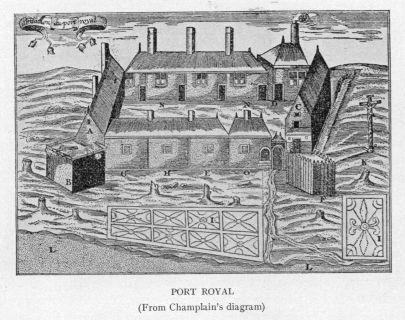
Zigzagging along the coast of Maine, Captain Fleury cast anchor off Mount Desert at Frenchman's Bay. A cross was erected, mass celebrated, and four white tents pitched to house the people; but the clash between civil and religious authority broke out again. The sailors would not obey the priests. Fleury feared mutiny. Saussaye, the commander, lost his head, and disorder was ripening to disaster when there appeared over the sea the peak of a sail,—a sail topped by a little red ensign, the {43} flag of the English, who claimed all this coast. And the sail was succeeded by decks with sixty mariners, and hulls through whose ports bristled fourteen cannon. The newcomer was Samuel Argall of Virginia, whom the Indians had told of the French, now bearing down full sail, cannon leveled, to expel these aliens from the domain of England's King. Drums were beating, trumpets blowing, fifes shrieking—there was no mistaking the purpose of the English ship. Saussaye, the French commander, dashed for hiding in the woods. Captain Fleury screamed for some one, every one, any one, "to fire—fire"; but the French sailors had imitated their commander and fled to the woods, while the poor Jesuit, Gilbert du Thet, fell weltering in blood from an English cannonade that swept the French decks bare and set all sails in flame. In the twinkling of an eye, Argall had captured men and craft. Fifteen of the French prisoners he set adrift in open boat, on the chance of their joining the French fishing fleet off Cape Breton. They were ultimately carried to St. Malo. {44} The rest of the prisoners, including Father Biard, he took back to Virginia, where the commission held from the French King assured them honorable treatment in time of peace; but Argall was promptly sent north again with his prisoners, and three frigates to lay waste every vestige of French settlement from Maine to St. John. Mount Desert, the ruins of Ste. Croix, the fortress beloved by Poutrincourt at Port Royal, the ripening wheat of Annapolis Basin—all fed the flames of Argall's zeal; and young Biencourt's wood runners, watching from the forests the destruction of all their hopes, the ruin of all their plans, ardently begged their young commander to parley with Argall that they might obtain the Jesuit Biard and hang him to the highest tree. To his coming they attributed all the woes. It was as easy for them to believe that the Jesuit had piloted the English destroyer to Port Royal, as it had been ten years before for the Catholics to accuse the Huguenots of murdering the lost priest Aubry; and there was probably as much truth in one charge as the other.
So fell Port Royal; but out round the ruins of Port Royal, where the little river runs down to the sea past Goat Island, young Biencourt and his followers took to the woods—the first of that race of bush lopers, half savages, half noblemen, to render France such glorious service in the New World.
When De Monts lost the monopoly of furs in Acadia, Champlain, the court geographer, had gone home from Port Royal to France. De Monts now succeeds in obtaining a fresh monopoly for one year on the St. Lawrence, and sends out two ships in 1608 under his old friends, Pontgravé, who is to attend to the bartering, Champlain, who is to explore. With them come some of the colonists from Port Royal, among others Louis Hebert, the chemist, first colonist to become farmer at Quebec, and Abraham Martin, whose name was given to the famous plains where Wolfe and Montcalm later fought.
Pontgravé arrived at the rendezvous of Tadoussac early in June. Here he found Basque fishermen engaged in the peltry {45} traffic with Indians from Labrador. When Pontgravé read his commission interdicting all ships but those of De Monts from trade, the Basques poured a fusillade of musketry across his decks, killed one man, wounded two, then boarded his vessel and trundled his cannon ashore. So much for royal commissions and monopoly!
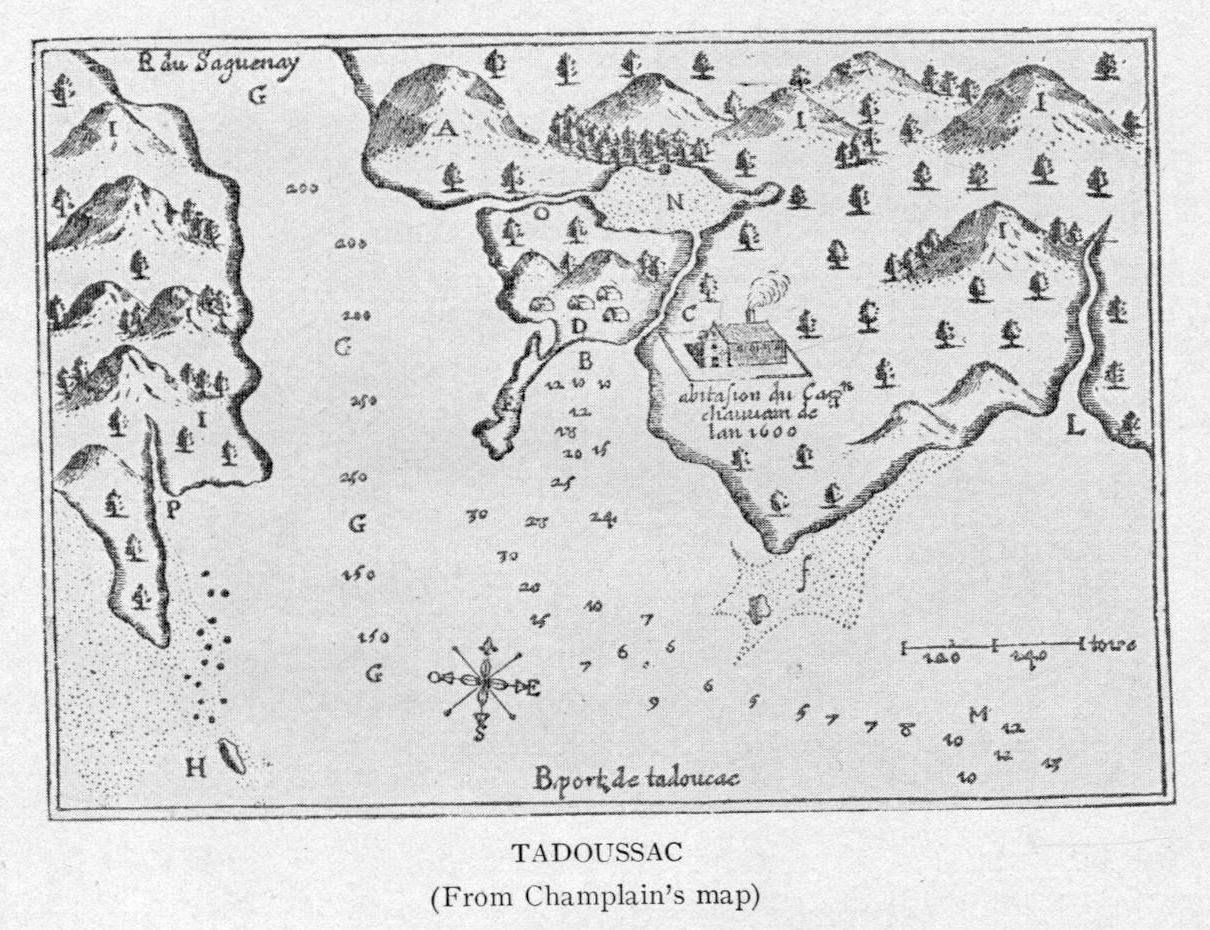
At this stage came Champlain on the second boat. Two vessels were overstrong for the Basques. They quickly came to terms and decamped. Champlain steered his tiny craft on up the silver flood of the St. Lawrence to that Cape Diamond where Cartier's men had gathered worthless stones. Between the high cliff and the river front, not far from the market place of Quebec City to-day, workmen began clearing the woods for the site of the French habitation. The little fort was palisaded, of course, with a moat outside and cannon commanding the river. The walls were loopholed for musketry; and inside ran a gallery to serve as lookout and defense. Houses, barracks, garden, and fresh-water supply completed the fort. One day, as Champlain {46} worked in his garden, a colonist begged to speak with him. Champlain stepped into the woods. The man then blurted out how a conspiracy was on foot, instigated by the Basques, to assassinate Champlain, seize the fort, and stab any man who dared to resist. One of Pontgravé's small boats lay at anchor. Champlain sent for the pilot, told him the story of the plot, gave him two bottles of wine, and bade him invite the ringleaders on board that night to drink. The ruse worked. The ringleaders were handcuffed, the other colonists awakened in the fort and told that the plot had been crushed. The body of Duval, the chief plotter, in pay of the Basques, swung as warning from a gibbet; and his head was exposed on a pike to the birds of the air. Though Pontgravé left a garrison of twenty-eight when he sailed for France, less than a dozen men had survived the plague of scurvy when the ships came back to Champlain in 1609.
Champlain's part had been to explore. Now that his fort was built, he planned to do this by allying himself with the Indians, who came down to trade at Quebec. These were the Hurons and Montaignais, the former from the Ottawa, the latter from Labrador. Both waged ceaseless war on the Iroquois south of the St. Lawrence. After bartering their furs for weapons from the traders, the allied tribes would set out on the warpath against the Iroquois. In June, Champlain and eleven white men accompanied the roving warriors.
The way led from the St. Lawrence south, up the River Richelieu. Champlain's boat was a ponderous craft; and when the shiver of the sparkling rapids came with a roar through the dank forest, the heavy boat had to be sent back to Quebec. Adopting the light birch canoe of the Indian, Champlain went on, accompanied by only two white men. Of Indians, there were twenty-four canoes with sixty warriors. For the first part of the voyage night was made hideous by the grotesque war dances of the braves lashing themselves to fury by scalp raids in pantomime, or by the medicine men holding solemn converse with the demons of earth; the tent poles of the medicine lodge rocked as if by wind, while eldritch howls predicted victory. {47} Then the long line of silent canoes had spread out on that upland lake named after Champlain, the heavily forested Adirondacks breaking the sky line on one side, the Green Mountains rolling away on the other. Caution now marked all advance. The Indians paddled only at night, withdrawing to the wooded shore through the morning mist to hide in the undergrowth for the day. This was the land of the Iroquois.
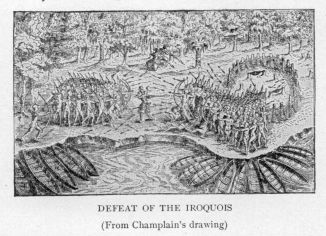
On July 29, as the invaders were stealing silently along the west shore near Crown Point at night about ten o'clock, there were seen by the starlight, coming over the water with that peculiar galloping motion of paddlers dipping together, the Iroquois war canoes. Each side recognized the other, and the woods rang with shouts; but gathering clouds and the mist rising from the river screened the foes from mutual attack, though the night echoed to shout and countershout and challenge and abuse. Through the half light Champlain could see that the Iroquois were working like beavers erecting a barricade of logs. The assailants kept to their canoes under cover of bull-hide shields till daylight, when Champlain buckled on his armor—breastplate, helmet, thigh pieces—and landing, advanced. There were not less than two hundred Iroquois. Outnumbering the Hurons three times over, they uttered a jubilant whoop and {48} came on at a rush. Champlain and his two white men took aim. The foremost chiefs dropped in their tracks. Terrified by "the sticks that thundered and spat fire," the Iroquois fell back in amaze, halted, then fled. The victory was complete; but it left as a legacy to New France the undying enmity of the Iroquois.
When Champlain came out from France in 1610, he would have repeated the raid; but a fight with invading Iroquois at the mouth of the Richelieu delayed him, and the expiration of De Monts' monopoly took him back to France.
In 1611 trade was free to all comers. Fur traders flocked to the St. Lawrence like birds of passage. The only way to secure furs for De Monts was to go higher up the river beyond Quebec; and ascending to Montreal, Champlain built a factory called Place Royale, with a wall of bricks to resist the ice jam. This was the third French fort Champlain helped to found in Canada.
Presently, on his tracks to Montreal, came a flock of free traders. When the Hurons come shooting down the foamy rapids—here, a pole-shove to avoid splitting canoes on a rock in mid-rush; there, a dexterous whirl from the trough of a back wash—the fur traders fire off their guns in welcome. The Hurons are suspicious. What means it, these white men, coming in such numbers, firing off their "sticks that thunder"? At midnight they come stealthily to Champlain's lodge to complain. Peltries and canoes, the Indians transfer themselves above the rapids, and later conduct Champlain down those same white whirlpools to the uneasy amaze of the explorer.
It is clear to Champlain he must obtain royal patronage to stem the boldness of these free traders. In France he obtains the favor of the Bourbons; and he obtains it more generously because the world of Paris has gone agog about a fabulous tale that sets the court by the ears. From the first Champlain has encouraged young Frenchmen to winter with the Indian hunters and learn the languages. Brulé is with them now. Nicholas Vignau has just come back from the Ottawa with a fairy story of a marvelous voyage he has made with the Indians through {49} the forests to the Sea of the North—the sea where Henry Hudson, the Englishman, had perished. As the romance gains the ear of the public, the young man waxes eloquent in detail, and tells of the number of Englishmen living there. Champlain is ordered to follow this exploration up.
May, 1613, he is back at Montreal, opposite that island named St. Helen, after the frail girl who became his wife, preparing to ascend the Ottawa with four white men—among them Vignau. What Vignau's sensations were, one may guess. The vain youth had not meant his love of notoriety to carry him so far; and he must have known that every foot of the way led him nearer detection; but the liar is always a gambler with chance. Mishap, bad weather, Indian war—might drive Champlain back. Vignau assumed bold face.
The path followed was that river trail up the Ottawa which was to become the highway of empire's westward march for two and a half centuries. Mount Royal is left to the rear as the voyageurs traverse the Indian trail through the forests along the rapids to that launching place named after the patron saint of French voyageur—Ste. Anne's. The river widens into the silver expanse of Two Mountains Lake, rimmed to the sky line by the vernal hills, with a silence and solitude over all, as when sunlight first fell on face of man. Here the eagle utters a lonely scream from the top of some blasted pine; there a covey of ducks, catching sight of the coming canoes, dive to bottom, only to reappear a gunshot away. Where the voyageurs land for their nooning, or camp at nightfall, or pause to gum the splits in their birch canoes, the forest in the full flush of spring verdure is a fairy woods. Against the elms and the maples leafing out in airy tracery that reveals the branches bronze among the budding green, stand the silver birches, and the somber hemlocks, and the resinous pines. Upbursting from the mold below is another miniature forest—a forest of ferns putting out the hairy fronds that in another month will be above the height of a man. Overhead, like a flame of fire, flashes the scarlet tanager with his querulous call; or the oriole flits from branch to branch, {50} fluting his springtime notes; or the yellow warbler balances on topmost spray to sing his crisp love song on the long journey north to nest on Hudson Bay. And over all and in all, intangible as light, intoxicating as wine, is the tang of the clear, unsullied, crystal air, setting the blood coursing with new life. Little wonder that Brulé, and Vignau, and other young men whom Champlain sent to the woods to learn wood lore, became so enamored of the life that they never returned to civilization.
Presently the sibilant rush of waters forewarns rapids. Indians and voyageurs debark, invert canoes on their shoulders, packs on back with straps across foreheads, and amble away over the portages at that voyageurs' dog-trot which is half walk, half run. So the rapids of Carillon and Long Sault are ascended. Night time is passed on some sandy shore on a bed under the stars, or under the canoes turned upside down. Tents are erected only for the commander, Champlain; and at day dawn, while the tips of the trees are touched with light and the morning mist is smoking up from the river shot with gold, canoes are again on the water and paddle blades tossing the waves behind.
The Laurentian Hills now roll from the river in purpling folds like fields of heather. The Gatineau is passed, winding in on the right through dense forests. On the left, flowing through the rolling sand hills, and joining the main river just where the waters fall over a precipice in a cataract of spray, is the Rideau River with its famous falls resembling the white folds of a wind-blown curtain. Then the voyageurs have swept round that wooded cliff known as Parliament Hill, jutting out in the river, and there breaks on view a wall of water hurtling down in shimmering floods at the Chaudière Falls. The high cliff to the left and countercurrent from the falls swirl the canoes over on the right side to the sandy flats where the lumber piles to-day defile the river. Here boats are once more hauled up for portage—a long portage, nine miles, all the way to the modern town of Aylmer, where the river becomes wide as a lake, Lake Du Chêne of the oak forests. Here camp for the night was made, and leaks in the canoes mended with resin, round fires gleaming red as an angry eye across the {51} darkening waters, while the prowling wild cats and lynx, which later gave such good hunting in these forests that the adjoining rapids became known as the Chats, sent their unearthly screams shivering through the darkness.
Somewhere near Allumette Isle, Champlain came to an Indian settlement of the Ottawa tribe. He camped to ask for guides to go on. Old Chief Tessouat holds solemn powwow, passing the peace pipe round from hand to hand in silence, before the warriors rise to answer Champlain. Then with the pompous gravity of Abraham dickering with the desert tribes, they warn Champlain it is unsafe to go farther. Beyond the Ottawa is the Nipissing, where dwell the Sorcerer Indians—a treacherous people. Beyond the Nipissing is the great Fresh Water Sea of the Hurons. They will grant Champlain canoes, but warn him against the trip. Later the interpreter comes with word they have changed their minds. Champlain must not go on. It is too dangerous. Attack would involve war.
"What," demanded Champlain, rushing into the midst of the council tent, "not go? Why, my young man, here"—pointing to Vignau—"has gone to that country and found no danger."
What Vignau thought at that stage is not told. The Indians turned on him in fury.
"Nicholas, did you say you had visited the Nipissings?"
Vignau hems and haws, and stammers, "Yes."
"Liar," roars the chief. "You slept here every night, and if you went to the Nipissings, you went in a dream." Then to Champlain, "Let him be tortured."
Champlain took the fellow to his own tent. Vignau reiterated his story. Champlain took him back to the council. The Indians jeered his answers and tore the story he told to tatters, showing Champlain how utterly wrong Vignau's descriptions were.
That night, on promise of forgiveness, Vignau fell on his knees and confessed the imposture to Champlain. When the fur canoes came down the Ottawa to trade at Montreal, Champlain accompanied them to the St. Lawrence, and sailed for France. His exploration had been an ignominious failure.
{52} Champlain was ever Knight of the Cross as well as explorer. He longed with the zeal of a missionary to reclaim the Indians from savagery, and at last raised funds in France to pay the expense of bringing four or five Recollets—a branch of the Franciscan Friars—to Quebec in May of 1615. With the peaked hood thrown back, the gray garb roped in at the waist, the bare feet protected only by heavy sandals, the Recollets landed at Quebec, and with cannon booming, white men all on bended knee, held service before the amazed savages.
Of the Recollets, it was agreed that Joseph le Caron should go west to the Hurons of the Sweet Water Sea. Accompanied by a dozen Frenchmen, the friar ascended the Ottawa in July, passed that Allumette Island where Vignau's lie had been confessed, and proceeded westward to the land of the Hurons. Nine days later Champlain followed with two canoes, ten Indians, and Etienne Brulé, his interpreter. In order to hold the ever-lasting loyalty of the Hurons and Algonquins in Canada, Champlain had pledged them that the French would join their twenty-five hundred warriors in a great invasion of the Iroquois to the south. It was to be a war not of aggression but of defense; for the Five Nations of the Iroquois in New York state had harried the Canadian tribes like wolves raiding a sheep pen. No Frenchman cultivating his farm patch on the St. Lawrence was safe from ambuscade; no hunter afield secure from a chance war party.
Any tourist crossing Canada to-day can trace Champlain's voyage. Where the rolling tide of the Ottawa forks at Mattawa, there comes in on the west side, through dense forests and cedar swamps, a river amber-colored with the wood-mold of centuries. This is the Mattawa. Up the Mattawa Champlain pushed his canoes westward, up the shining flood of the river yellow as gold where the waters shallow above the pebble bottom. Then the gravel grated keels. The shallows became weed-grown swamps that entangled the paddles and hid voyageur from voyageur in reeds the height of a man; and presently a portage over rocks slippery as ice leads to a stream flowing westward, opening {53} on a low-lying, clay-colored lake—the country of the Nipissings, with whom Champlain pauses to feast and hear tales of witchcraft and demon lore, that gave them the name of Sorcerers.
In a few sleeps—they tell him—he will reach the Sweet Water Sea. The news is welcome; for the voyageurs are down to short rations, and launch eagerly westward on the stream draining Nipissing Lake—French River. This is a tricky little stream in whose sands lie buried the bodies of countless French voyageurs. It is more dangerous going with rapids than against them; for the hastening current is sometimes an undertow, which sweeps the canoes into the rapids before the roar of the waterfall has given warning. And the country is barren of game.
As they cross the portages, Champlain's men are glad to snatch at the raspberry and cranberry bushes for food; and their night-time meal is dependent on chance fishing. Indian hunters are met,—three hundred of them,—the Staring Hairs, so named from the upright posture of their headdress tipped by an eagle quill; and again Champlain is told he is very near the Inland Sea.
It comes as discoveries nearly always come—his finding of the Great Lakes; for though Joseph Le Caron, the missionary, had passed this way ten days ago, the zealous priest never paused to explore and map the region. You are paddling down the brown, forest-shadowed waters—long lanes of water like canals through walls of trees silent as sentinels. Suddenly a change almost imperceptible comes. Instead of the earthy smell of the forest mold in your nostrils is the clear tang of sun-bathed, water-washed rocks; and the sky begins to swim, to lose itself at the horizon. There is no sudden bursting of a sea on your view. The river begins to coil in and out among islands. The amber waters have become sheeted silver. You wind from island to island, islands of pink granite, islands with no tree but one lone blasted pine, islands that are in themselves forests. There is no end to these islands. They are not in hundreds; they are in thousands. Then you see the spray breaking over the reefs, and there is its sky line. You are not on a river at all. You are on an inland sea. You have been on the lake for hours. One {54} can guess how Champlain's men scrambled from island to island, and fished for the rock bass above the deep pools, and ran along the water line of wave-dashed reefs, wondering vaguely if the wind wash were the ocean tide of the Western Sea.
But Champlain's Huron guides had not come to find a Western Sea. With the quick choppy stroke of the Indian paddler they were conveying him down that eastern shore of Lake Huron now known as Georgian Bay, from French River to Parry Sound and Midland and Penetang. Where these little towns to-day stand on the hillsides was a howling wilderness of forest, with never a footprint but the zigzagging trail of the Indians back from Georgian Bay to what is now Lake Simcoe.
Between these two shores lay the stamping grounds of the great Huron tribe. How numerous were they? Records differ. Certainly at no time more numerous than thirty thousand souls all told, including children. Though they yearly came to Montreal for trade and war, the Hurons were sedentary, living in the long houses of bark inclosed by triple palisades, such as Cartier had seen at Hochelaga almost a century before.
Champlain followed his supple guides along the wind-fallen forest trail to the Huron villages. Here he found the missionary. One can guess how the souls of these two heroes burned as the deep solemn chant of the Te Deum for the first time rolled through the forests of Lake Huron.
But now Champlain must to business; and his business is war. Brulé and twelve Indians are sent like the carriers of the fiery cross in the Highlands of Scotland to rally tribes of the Susquehanna to join the Hurons against the Iroquois. A wild war dance is held with mystic rites in the lodges of the Hurons; and the braves set out with Champlain from Lake Simcoe for Lake Ontario by way of Trent River. As they near what is now New York state, buckskin is flung aside, the naked bodies painted and greased, and the trail shunned for the pathless woods off the beaten track where the Indians glide like beasts of prey through the frost-tinted forest.
{55}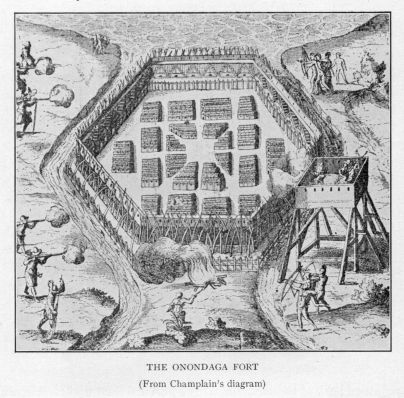
October 9 they suddenly come on some Onondagas fishing, and they begin torturing their captives by cutting off a girl's finger, when Champlain commands them to desist. Presently the forest opens to a farm clearing where the Iroquois are harvesting their corn. Spite of all Champlain could do, the wild Hurons uttered their war cry and rushed the field, but the Iroquois turned on the rabble and drove them back to the woods. Champlain was furious. They should have waited for Brulé to come with their allies; and the foolish attack had only served to forewarn the enemy. He frankly told the Hurons if they were going to fight under his command, they must fight as white men fight; and he set them to building a platform from which marksmen could shoot over the walls of the Iroquois town. But the admonitions {56} fell on frenzied ears. No sooner was the command to advance given than the Hurons broke from cover like maniacs, easy marks for the javelin throwers inside the walls, and hurled themselves against the Iroquois palisades in blind fury, making more din with yelling than woe with shots. Boiling water poured from the galleries inside drove the braves back from the walls, and the poisoned barb of the Iroquois arrows pursued their flight. A score fell wounded, among them Champlain with an arrow in his knee-cap. The flight became panic fast and furious, with the wounded carried on wicker stretchers whose every jolt added agony to pain.
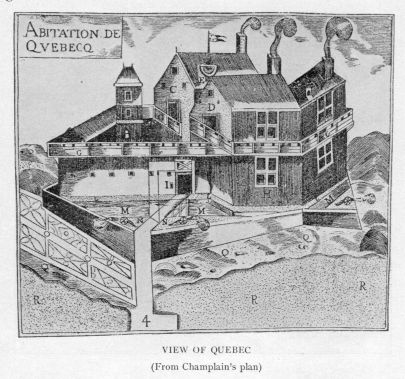
As for Brulé, he arrived with the allies only to find that the Hurons had fled, and here was he, alone in a hostile land, with Iroquois warriors rampant as molested wasps. In the swift retreat off the trail Brulé lost his way. He was without food {57} or powder, and had to choose between starvation or surrender to the Iroquois. Throwing down his weapons, he gave himself up to what he knew would be certain torture. Had he winced or whined as they tore the nails from his fingers and the hair from his head, the Iroquois would probably have brained him on the spot for a poltroon; but the young man, bound to a stake, pointed to a gathering storm as sign of Heaven's displeasure. The high spirit pleased the Iroquois. They unbound him and took him with them in their wanderings for three years.
The Hurons had promised to convey Champlain back down the St. Lawrence to Quebec, but the defeat had caused loss of prestige. The man "with the stick that thundered" was no more invulnerable to wounds than they. They forgot their promises and invented excuses for not proceeding to Quebec. Champlain wintered with the hunters somewhere north of Lake Ontario, and came down the Ottawa with the fur canoes the next summer. He was received at Quebec as one risen from the dead.
While Champlain had been exploring, New France had not prospered as a colony. Royal patron after royal patron sold the monopoly to fresh hands, and each new master appointed Champlain viceroy. The fur trade merchants could pay forty per cent dividends, but could do nothing to advance settlement. Less than one hundred people made up the population of New France; and these were torn asunder by jealousies. Huguenot and Catholic were opposed; and when three Jesuits came to Quebec, Jesuits and Recollets distrusted each other.
Madam Champlain joined her husband at Quebec, in 1620, to stay for four years, and that same year Champlain built himself a new habitation—the famous Castle of St. Louis on the cliff above the first dwelling. Louis Hebert, the apothecary of Port Royal, is now a farmer close to the Castle of Quebec; and the wife of Abraham Martin has given birth to the first white child born in New France.
Now came a revolutionary change. Cardinal Richelieu was virtual ruler of France. He quickly realized that the monopolists {58} were sucking the lifeblood of the colony in furs and were giving nothing in return to the country. In 1627, under the great cardinal's patronage, the Company of One Hundred Associates was formed. In this company any of the seaport traders could buy shares. Indeed, they were promised patent of nobility if they did buy shares. Exclusive monopoly of furs was given to the company from Florida to Labrador. In return the Associates were to send two ships yearly to Canada. Before 1643 they were to bring out four thousand colonists, support them for three years, and give them land. In each settlement were to be supported three priests; and, to prevent discord, Huguenots were to be banished from New France.
To Champlain it must have seemed as if the ambition of his life were to be realized. Just when the sky seemed clearest the bolt fell.
Early in April, 1628, the Associates had dispatched colonists and stores for Quebec; but war had broken out between France and England. Gervais Kirke, an English Huguenot of Dieppe, France, who had been put under the ban by Cardinal Richelieu, had rallied the merchants of London to fit out privateers to wage war on New France. The vessels were commanded by the three sons, Thomas, Louis, and David; and to the Kirkes rallied many Huguenots banished from France.
Quebec was hourly looking for the annual ships, when one morning in July two men rushed breathless through the woods and up the steep rock to Castle St. Louis with word that an English fleet of six frigates lay in hiding at Tadoussac, ready to pounce on the French! Later came other messengers—Indians, fishermen, traders—confirming the terrible news. Then a Basque fisherman arrives with a demand, from Kirke for the keys to the fort. Though there is no food inside the walls, less than fifty pounds of ammunition in the storehouse, and not enough men to man the guns, Champlain hopes against hope, and sends the Basque fisherman back with suave regrets that he cannot comply with Monsieur Kirke's polite request. Quebec's one chance lay in the hope that the French vessels might {59} slip past the English frigates by night. Days wore on to weeks, weeks to months, and a thousand rumors filled the air; but no ships came. The people of Quebec were now reduced to diet of nuts and corn. Then came Indian runners with word that the French ships had been waylaid, boarded, scuttled, and sunk. Loaded to the water line with booty, the English privateers had gone home.

For that winter Quebec lived on such food as the Indians brought in from the woods. By the summer of 1629 men, women, and children were grubbing for roots, fishing for food, ranging the rocks for berries. There are times when the only thing to do is—do nothing; and it is probably the hardest task a brave man ever has. When the English fleet came back in July Champlain had a ragamuffin, half-starved retinue of precisely sixteen men. Yet he haggled for such terms that the English promised to convey the prisoners to France. On July 20, for the first time in history, the red flag of England blew to the winds above the heights of Quebec.
But New France was only a pawn to the gamesters of French and English diplomacy. Peace was proclaimed; and for the {60} sake of receiving $200,000 as dowry due his French wife, Charles of England restored to France the half continent which the Kirkes had captured, David Kirke receiving the paltry honor of a title as compensation for the loss. Champlain was back in Quebec by 1633; but his course had run. Between Christmas eve and Christmas morning, in 1635, the brave Soldier of the Cross, the first knight of the Canadian wildwoods, passed from the sphere of earthly life—a life without a stain, whether among the intriguing courtiers of Paris or in the midst of naked license in the Indian camp.
Frays between La Tour and Charnisay—Madame La Tour defends the fort—Charnisay's treachery
When Port Royal fell before Argall, it will be remembered, young Biencourt took to the woods with his French bush lopers and Indian followers of Nova Scotia. The farms and fort of Annapolis Basin granted to his father by special patents lay in ruins. Familiar with the woods as the English buccaneer, who had destroyed the fort, was with his ship's cabin, Biencourt withdrew to the southwest corner of Nova Scotia, where he built a rude stronghold of logs and slabs near the modern Cape Sable. Here he could keep in touch with the French fishermen off Cape Breton, and also traffic with the Indians of the mainland.
With Biencourt was a young man of his own age, boon comrade, kindred spirit, who had come to Port Royal a boy of fourteen, in 1606, in the gay days of Marc L'Escarbot—Charles de La Tour. Sea rovers, bush lopers, these two could bid defiance to English raiders. Whether Biencourt died in 1623 or went home to France is unknown; but he deeded over to his friend, Charles de La Tour, all possessions in Acadia.
And now England again comes on the scene. By virtue of Cabot's discovery and Argall's conquest, the King of England, in 1621, grants to Sir William Alexander, the Earl of Stirling, all of Acadia, renamed Nova Scotia—New Scotland. By way of encouraging emigration, the order of Nova Scotia Baronets is created, a title being granted to those who subscribe to the colonization company.
Sir William Alexander's colonists shun the French bush lopers under Charles de La Tour down at Fort St. Louis on Cape Sable. The seventy Scotch colonists go on up the Annapolis Basin and build their fort four miles from old Port Royal. How did they pass the pioneer years—these Scotch retainers of the {62} Nova Scotia Baronets? Report among the French fishing fleet says thirty died of scurvy; but of definite information not a vestige remains. The annals of these colonists are as completely lost to history as the annals of the lost Roanoke colony in Virginia.
Under the same English patent Lord Ochiltree lands English colonists in Cape Breton, the grand summer rendezvous of the French fishermen; but two can play at Argall's game of raids. French seamen swoop down on Ochiltree's colony, capture fifty, destroy the settlement, and run up the white flag of France in place of the red standard of England.
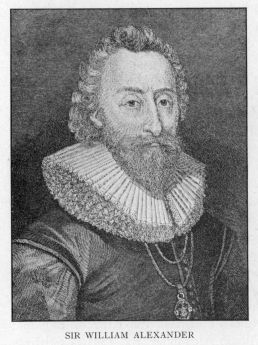
Charles de La Tour with his Huguenots hides safely ensconced behind his slab palisades with the swarthy faces of half a hundred Indian retainers lighted up by the huge logs at blaze on the hearth. Charles de La Tour takes counsel with himself. English at Port Royal, English at Cape Breton, English on the mainland at Boston, English ships passing and repassing his lone lodge in the wilderness, he will be safer, will Charles de La Tour, with wider distance between himself and the foe; and he will take more peltries where there are fewer traders. Still keeping his fort in Nova Scotia, La Tour goes across Fundy Bay and builds him a second, stronger fort on St. John River, New Brunswick, near where Carleton town stands to-day.
Then two things happened that upset all plans.
{63} The Hundred Associates are given all Canada—Quebec and Acadia. Founded by Cardinal Richelieu, the Hundred Associates are violently Catholic, violently anti-Protestant. Charles de La Tour need expect no favors, if indeed the grant that he holds from Biencourt be not assailed. Double reason for moving the most of his possessions across Fundy Bay to St. John River.
Then the Englishmen, under the Kirke brothers, capture Quebec. As luck or ill luck will have it, among the French captured from the French ships of the Hundred Associates down at Tadoussac, is Claude de La Tour, the father of Charles. Claude de La Tour was a Protestant. This and his courtly manner and his noble birth commended him to the English court. What had France done for Claude de La Tour? Placed him under the ban on account of his religion.
Claude de La Tour promptly became a British subject, received the title Baronet of Nova Scotia with enormous grants of land on St. John River, New Brunswick, married an English lady in waiting to the Queen, and sailed with three men-of-war for Nova Scotia to win over his son Charles. No writer like Marc Lescarbot was present to describe the meeting between father and son; but one can guess the stormy scene,—the war between love of country and love of father, the guns of the father's vessels pointing at the son's fort, the guns of the son's fort pointing at the father's vessels. The father's arguments were strong. What had France done for the La Tours? By siding with England they would receive safe asylum in case of persecution and enormous grants of land on St. John River. But the son's arguments were stronger. The father must know from his English bride—maid in waiting to the English Queen—that England had no intentions of keeping her newly captured possessions in Canada, but had already decided to trade them back to France for a dowry to the English Queen. If Canada were given back to France, what were English grants in New Brunswick worth? "If those who sent you think me capable of betraying my country even at the prayer of my father, they are mightily mistaken," thundered the young man, ordering his gunners to their places. {64} "I don't purchase honors by crime! I don't undervalue the offer of England's King; but the King of France is just as able to reward me! The King of France has confided the defense of Acadia to me; and I'll defend it to my last breath."
Stung by his son's rebuke, the elder La Tour retired to his ship, wrote one more unavailing appeal, then landed his mariners to rush the fort. But the rough bush lopers inside the palisades were expert marksmen. Their raking cross fire kept the English at a distance, and the father could neither drive nor coax his men to the sticking point of courage to scale palisades in such an unnatural war. Claude de La Tour was now in an unenviable plight. He dare not go back to France a traitor. He could not go back to England, having failed to win the day. The son built him a dwelling outside the fort; and there this famous courtier of two great nations, with his noble wife, retired to pass the end of his days in a wildwood wilderness far enough from the gaudy tinsel of courts. The fate of both husband and wife is unknown.

Charles de La Tour's predictions were soon verified. The Treaty of St.-Germain-en-Laye, in 1632, gave back all Canada to France; and the young man's loyalty was rewarded by the French King confirming the father's English patent to the lands of St. John River, New Brunswick. Perhaps he expected more. He certainly wanted to be governor of Acadia, and may have looked for fresh title to Port Royal, which Biencourt had deeded {65} to him. His ambition was embittered. Cardinal Richelieu of the Hundred Associates had his own favorites to look after. Acadia is divided into three provinces. Over all as governor is Isaac Razilli, chief of the Hundred Associates. La Tour holds St. John. One St. Denys is given Cape Breton; and Port Royal, the best province of all, falls to Sieur d'Aulnay de Charnisay, friend and relative of Richelieu; and when Razilli dies in 1635, Charnisay, with his strong influence at court, easily secures the dead man's patents with all land grants attached. Charnisay becomes governor of Acadia.
For a second time La Tour is thwarted. Things are turning out as his father had foretold. Who began the border warfare matters little. Whether Charnisay as lord of all Acadia first ordered La Tour to surrender St. John, or La Tour, holding his grant from Biencourt to Port Royal, ordered Charnisay to give up Annapolis Basin, war had begun,—such border warfare as has its parallel only in the raids of rival barons in the Middle Ages. Did La Tour's vessels laden with furs slip out from St. John River across Fundy Bay bound for France? There lay at Cape Sable and Sable Island Charnisay's freebooters, Charnisay's wreckers, ready to board the ship or lure her a wreck on Sable Island reefs by false lights. It is unsafe to accept as facts the charges and countercharges made by these two enemies; but from independent sources it seems fairly certain that Charnisay, unknown to Cardinal Richelieu, was a bit of a freebooter and wrecker; for his men made a regular business of waylaying English ships from Boston, Dutch ships from New York, as they passed Sable Island; and Charnisay's name became cordially hated by the Protestant colonies of New England. La Tour, being Huguenot, could count on firm friends in Boston.
Countless legends cling to Fundy Bay of the forays between these two. In 1640 La Tour and his wife, cruising past Annapolis Basin in their fur ships, rashly entered and attacked Port Royal. Their ship was run aground by Charnisay's vessels and captured; but the friars persuaded the victor to set La Tour and his wife free, pending an appeal to France. France, of {66} course, decided in favor of Charnisay, who was of royal blood, a relative of Richelieu's, in high favor with the court. La Tour's patent was revoked and he was ordered to surrender his fort on the St. John.
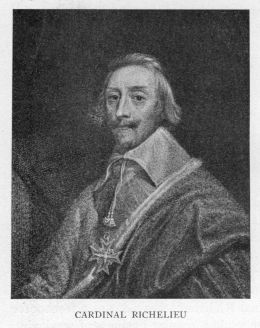
In answer, La Tour loaded his cannon, locked the fort gates, and bade defiance to Charnisay. Charnisay sails across Fundy Bay in June, 1643, with a fleet of four vessels and five hundred men to bombard the fort. La Tour was without provisions, though his store ship from France lay in hiding outside, blocked from entering by Charnisay's fleet. Days passed. Resistance was hopeless. On one side lay the impenetrable forest; on the other, Charnisay's fleet. On the night of June 12th, La Tour and his wife slipped from a little sally port in the dark, ran along the shore, and, evading spies, succeeded in rowing out to the store ship. Ebb tide carried them far from the four men-of-war anchored fast in front of the abandoned fort. Then sails out, the store ship fled for Boston, where La Tour and his wife appealed for aid.
The Puritans of Boston had qualms of conscience about interfering in this French quarrel; but they did not forget that Charnisay's wreckers had stripped their merchant ships come to grief on the reefs of Sable Island. La Tour gave the Boston merchants a mortgage on all his belongings at St. John, and in return obtained four vessels, fifty mariners, ninety-two soldiers, {67} thirty-eight cannon. With this fleet he swooped down on Fundy Bay in July. Charnisay's vessels lay before Fort St. John, where the stubborn little garrison still held out, when La Tour came down on him like an enraged eagle. Charnisay's fur ships were boarded, scuttled, and sunk, while the commander himself fled in terror for Port Royal. All sails pressed, La Tour pursued right into Annapolis Basin, wounding seven of the enemy, killing three, taking one prisoner. Charnisay's one remaining vessel grounded in the river. A fight took place near the site of the mill which Poutrincourt had built long ago, but Charnisay succeeded in gaining the shelter of Port Royal, where his cannon soon compelled La Tour to fly from Annapolis Basin. Charnisay found it safer to pass that winter in France, and La Tour gathered in all the peltry traffic of the bay.
Early in 1644 Charnisay returned and sent a friar to secure the neutrality of the New Englanders. All summer negotiations dragged on between Boston and Port Royal, La Tour meanwhile scouring land and sea unchecked, packing his fort with peltries. Finally, Charnisay promised to desist from all fur trade along the coast if the New England colonies would remain neutral; and the colonies promised not to aid La Tour. La Tour was now outlawed by the French government, and Charnisay had actually induced New England to promise not to convey either La Tour or his wife to or from Bay of Fundy in English boats.
La Tour chanced to be absent from his fort in 1645. Like a bird of prey Charnisay swooped on St. John River; but he had not reckoned on Madame La Tour—Frances Marie Jacqueline. With the courage and agility of a trained soldier, she commanded her little garrison of fifty and returned the raider's cannonade with a fury that sent Charnisay limping back to Port Royal with splintered decks, twenty mangled corpses jumbled aft, and a dozen men wounded to the death lying in the hold.
With all the power of France at his back Charnisay had been defeated by a woman,—the Huguenot wife of an outlaw! He must reduce La Tour or stand discredited before the world. {68} Furious beyond words, he hastened to France to prepare an overwhelming armament.
But Madame La Tour was not idle. She, too, hastened across the Atlantic to solicit aid in London. One can imagine how Charnisay gnashed his teeth. Here, at last, was his chance. The Boston vessels were not to convey the La Tours back to Acadia. Like a hawk Charnisay cruised the sea for the outcoming ship with its fair passenger; but Madame La Tour had made a cast-iron agreement with the master of the sailing vessel to bring her direct to Boston. Instead of this, the vessel cruised the St. Lawrence, trading with the Indians, and so delayed the aid coming to La Tour; but when Charnisay's searchers came on board off Sable Island, Madame La Tour was hidden among the freight in the hold. For the delay she sued the sailing master in Boston and obtained a judgment of 2000 pounds; and when he failed to pay, had his cargo seized and sold, and with the proceeds equipped three vessels to aid her outlawed husband. So the whole of 1646 passed, each side girding itself for the final fray.
April, 1647, spies brought word to Charnisay that La Tour was absent from his fort. Waiting not a moment, Charnisay hurried ships, soldiers, cannon across the bay. Inside La Tour's fort was no confusion. Madame La Tour had ordered every man to his place. Day and night for three days the siege lasted, Charnisay's men closing in on the palisades so near they could bandy words with the fighters on the galleries inside the walls. Among La Tour's fighters were Swiss mercenaries—men who fight for the highest pay. Did Charnisay in the language of the day "grease the fist" of the Swiss sentry, or was it a case of a boorish fellow refusing to fight under a woman's command? Legend gives both explanations; but on Easter Sunday morning Charnisay's men gained entrance by scaling the walls where the Swiss sentry stood. Madame La Tour rushed her men to an inner fort loopholed with guns. Afraid of a final defeat that would disgrace him before all the world, Charnisay called up generous terms if she would surrender. To save the {69} lives of the men Madame La Tour agreed to honorable surrender, and the doors were opened. In rushed Charnisay! To his amazement the woman had only a handful of men. Disgusted with himself and boiling over with revenge for all these years of enmity, Charnisay forgot his promise and hanged every soul of the garrison but the traitor who acted as executioner, compelling Madame La Tour to watch the execution with a halter round her neck amid the jeers of the soldiery. Legend says that the experience drove her insane and caused her death within three weeks. Charnisay was now lord of all Acadia, with 10,000 pounds worth of Madame La Tour's jewelry transferred to Port Royal and all La Tour's furs safe in the warehouses of Annapolis Basin; but he did not long enjoy his triumph. He had the reputation of treating his Indian servants with great brutality. On the 24th of May, 1650, an Indian was rowing him up the narrows near Port Royal. Charnisay could not swim. Without apparent cause the boat upset. The Indian swam ashore. The commander perished. Legend again avers that the Indian upset the boat to be revenged on Charnisay for some brutality.
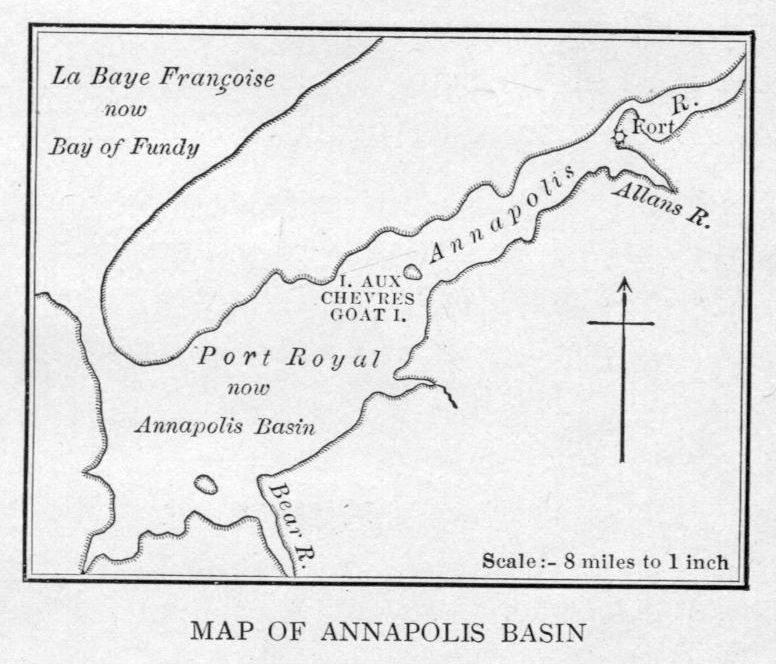
La Tour had been wandering from Newfoundland to Boston and Quebec seeking aid, but a lost cause has few friends, and if La Tour turned pirate on Boston boats, he probably thought he was justified in paying off the score of Boston's bargain with Charnisay. Later he turned trader with the Indians from Hudson Bay, and found friends in Quebec. Word of his wrongs reached the French court. When Charnisay perished, La Tour was at last appointed lieutenant governor of Acadia. Widow {70} Charnisay, left with eight children, all minors, made what reparation she could to La Tour by giving back the fort on the St. John, and La Tour, to wipe out the bitter enmity, married the widow of his enemy in February of 1653.
But this was not the seal of peace on his troubled life. Cromwell was now ascendant in England, and Major Sedgwick of Boston, in 1654, with a powerful fleet, captured Port Royal and St. John. Weary of fighting what seemed to be destiny, La Tour became a British subject, and with two other Englishmen was granted the whole of Acadia. Ten years later his English partners bought out his rights, and La Tour died in the land of his many trials about 1666. A year later the Treaty of Breda restored Acadia to France.
Mystics come to Canada—A city built of dreams—First night at Montreal—Maisonneuve fights raiders—Le Jeune joins the hunters—Brébeuf goes to Lake Huron—Life at the Huron mission—The scourge of the Iroquois—The fight at St. Louis—Rageneau's converts resist—Flight of the Hurons
While Charles de La Tour and Charnisay scoured the Bay of Fundy in border warfare like buccaneers of the Spanish Main, what was Quebec doing?
The Hundred Associates were to colonize the country; but fur trading and farming never go together. One means the end of the other; and the Hundred Associates shifted the obligation of settling the country by granting vast estates called seigniories along the St. Lawrence and leaving to these new lords of the soil the duty of bringing out habitants. Later they deeded over for an annual rental of beaver skins the entire fur monopoly to the Habitant Company, made up of the leading people of New France. So ended all the fine promises of four thousand colonists.
Years ago Pontgravé had learned that the Indians of the Up-Country did not care to come down the St. Lawrence farther than Lake St. Peter's, where Iroquois foe lay in ambush; and the year before Champlain died a double expedition had set out from Quebec in July: one to build a fort north of Lake St. Peter's at the entrance to the river with three mouths,—in other words, to found Three Rivers; the other, under Father Brébeuf, the Jesuit, and Jean Nicolet, the wood runner, to establish a mission in the country of the Hurons and to explore the Great Lakes.
In fact, it must never be forgotten that Champlain's ambitions in laying the foundations of a new nation aimed just as much to establish a kingdom of heaven on earth as to win a new kingdom for France. Always, in the minds of the fathers of New France, Church was to be first; State, second. When Charles de Montmagny, Knight of Malta, landed in Quebec one June morning in 1636, to succeed Champlain as governor of New France, he noticed a crucifix planted by the path side where {72} viceroy and officers clambered up the steep hill to Castle St. Louis. Instantly Montmagny fell to his knees before the cross in silent adoration, and his example was followed by all the gay train of beplumed officers. The Jesuits regarded the episode as a splendid omen for New France, and set their chapel organ rolling a Te Deum of praise, while Governor and retinue filed before the altars with bared heads.
It was in the same spirit that Montreal was founded.
The Jesuits' letters on the Canadian missions were now being read in France. Religious orders were on fire with missionary ardor. The Canadian missions became the fashion of the court. Ladies of noble blood asked no greater privilege than to contribute their fortunes for missions in Canada. Nuns lay prostrate before altars praying night and day for the advancement of the heavenly kingdom on the St. Lawrence. The Jesuits had begun their college in Quebec. The very year that Champlain had first come to the St. Lawrence there had been born in Normandy, of noble parentage, a little girl who became a passionate devotee of Canadian missions. To divert her mind from the calling of a nun, her father had thrown her into a whirl of gayety from which she emerged married; but her husband died in a few years, and Madame de la Peltrie, left a widow at twenty-two, turned again heart and soul to the scheme of endowing a Canadian mission. Again her father tried to divert her mind, threatening to cut off her fortune if she did not marry. An engagement to a young noble, who was as keen a devotee as herself, quieted her father and averted the loss of her fortune. On the death of her father the formal union was dissolved, and Madame de la Peltrie proceeded to the Ursuline Convent of Tours, where the Jesuits had already chosen a mother superior for the new institution to be founded at Quebec—Marie of the Incarnation, a woman of some fifty years, a widow like Madame de la Peltrie, and, like Madame de la Peltrie, a mystic dreamer of celestial visions and divine communings and heroic sacrifices. How much of truth, how much of self-delusion, {73} lay in these dreams of heavenly revelation is not for the outsider to say. It is as impossible for the practical mind to pronounce judgment on the mystic as for the mystic to pronounce sentence on the scientist. Both have their truths, both have their errors; and by their fruits are they known.
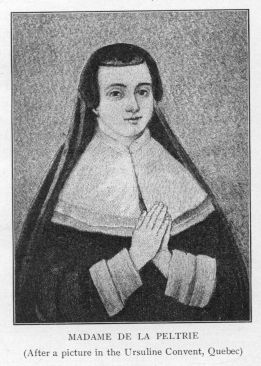
May 4th, 1639, Madame de la Peltrie and Marie of the Incarnation embarked from Dieppe for Canada. In the ship were also another Ursuline nun, three hospital sisters to found the Hôtel Dieu at Quebec, Father Vimont, superior of Quebec Jesuits, and two other priests. The boat was like a chapel. Ship's bell tolled services. Morning prayer and evensong were chanted from the decks, and the pilgrims firmly believed that their vows allayed a storm. July 1st they were among the rocking dories of the Newfoundland fishermen, and then on the 15th the little sailboat washed and rolled to anchor inshore among the fur traders under the heights of Tadoussac.
At sight of the somber Saguenay, the silver-flooded St. Lawrence, the frowning mountains, the far purple hills, the primeval forests through which the wind rushed with the sound of the sea, the fishing craft dancing on the tide like cockle boats, the grizzled fur traders bronzed as the crinkled oak forests where they passed their lives, the tawny, naked savages agape at these white-skinned women come from afar, the hearts of the {74} housed-up nuns swelled with emotions strange and sweet,—the emotions of a new life in a new world. And when they scrambled over the rope coils aboard a fishing schooner to go on up to Quebec, and heard the deep-voiced shoutings of the men, and witnessed the toilers of the deep fighting wind and wave for the harvest of the sea, did it dawn on the fair sisterhood that God must have workers out in the strife of the world, as well as workers shut up from the world inside convent walls? Who knows?… Who knows? At Tadoussac, that morning, to both Madame de la Peltrie and Marie of the Incarnation it must have seemed as if their visions had become real. And then the cannon of Quebec began to thunder till the echoes rolled from hill to hill and shook—as the mystics thought—the very strongholds of hell. Tears streamed down their cheeks at such welcome. The whole Quebec populace had rallied to the water front, and there stood Governor Montmagny in velvet cloak with sword at belt waving hat in welcome. Soldiers and priests cheered till the ramparts rang. As the nuns put foot to earth once more they fell on their knees and kissed the soil of Canada. August 1st was fête day in Quebec. The chapel chimes rang … and rang again their gladness. The organ rolled out its floods of soul-shattering music, and deep-throated chant of priests invoked God's blessing on the coming of the women to the mission. So began the Ursuline Convent of Quebec and the Hôtel Dieu of the hospital sisters; but Montreal was still a howling wilderness untenanted by man save in midsummer, when the fur traders came to Champlain's factory and the canoes of the Indians from the Up-Country danced down the swirling rapids like sea birds on waves.
The letters from the Jesuit missions touched more hearts than those of the mystic nuns.
In Anjou dwelt a receiver of taxes—Jérôme le Royer de la Dauversière, a stout, practical, God-fearing man with a family, about as far removed in temperament from the founders of the Ursulines as a character could well be. Yet he, too, had mystic {75} dreams and heard voices bidding him found a mission in the tenantless wilderness of Montreal. To the practical man the thing seems sheer moon-stark madness. If Dauversière had lived in modern days he would have been committed to an asylum. Here was a man with a family, without a fortune, commanded by what he thought was the voice of Heaven to found a hospital in a wilderness where there were no people. Also in Paris dwelt a young priest, Jean Jacques Olier, who heard the self-same voices uttering the self-same command. These two men were unknown to each other; yet when they met by chance in the picture gallery of an old castle, there fell from their eyes, as it were, scales, and they beheld as in a vision each the other's soul, and recognized in each fellow-helper and comrade of the spirit. To all this the practical man cries out "Bosh"! Yet Montreal is no bosh, but a stately city, and it sprang from the dreams—"fool dreams," enemies would call them—of these two men, the Sulpician priest and the Anjou tax collector.
Hour after hour, arm in arm, they walked and talked, the man of prayers and the man of taxes. People or no people at Montreal, money or no money, they decided that the inner voice must be obeyed. A Montreal Society was formed. Six friends joined. What would be equal to $75,000 was collected. There were to be no profits on this capital. It was all to be invested to the glory of the Kingdom of Heaven. Unselfish if you like, foolish they may have been, but not hypocrites.
First of all, they must become Seigneurs of Montreal; but the island of Montreal had already been granted by the Hundred Associates to one Lauson. To render the title doubly secure, Dauversière and Olier obtained deeds to the island from Lauson and from the Hundred Associates.
Forty-five colonists, part soldiers, part devotees, were then gained as volunteers; but a veritable soldier of Heaven was desired as commander. Paul de Chomedey, Sieur de Maisonneuve, was noted for his heroism in war and zeal in religion. When other officers returned from battle for wild revels, Maisonneuve withdrew to play the flute or pass hours in religious {76} contemplation. His name occurred to both Dauversière and Olier as fittest for command; but to make doubly sure, they took lodgings near him, studied his disposition, and then casually told him of their plans and asked his coöperation. Maisonneuve was in the prime of life, on the way to high service in the army. His zeal took fire at thought of founding a Kingdom of God at Montreal; but his father furiously opposed what must have seemed a mad scheme. Maisonneuve's answer was the famous promise of Christ: "No man hath left house or brethren or sister for my sake but he shall receive a hundredfold."
Maisonneuve was warned there would be no earthly reward—no pay—for his arduous task; but he answered, "I devote my life and future; and I expect no recompense."
Mademoiselle Jeanne Mance, thirty-four years old, who had given herself to good works from childhood, though she had not yet joined the cloister, now felt the call to labor in the wilderness. Later, in 1653, came Marguerite Bourgeoys to the little colony beneath the mountain. She too, like Jeanne Mance, distrusted dreams and visions and mystic communings, cherishing a religion of good works rather than introspection of the soul. Dauversière and Olier remained in France. Fortunately for Montreal, practical Christians, fighting soldiers of the cross, carried the heavenly standard to the wilderness.
It was too late to ascend the St. Lawrence when the ship brought the crusaders to Quebec in August, 1641; and difficulties harried them from the outset. Was Montmagny, the Governor, jealous of Maisonneuve; or did he simply realize the fearful dangers Maisonneuve's people would run going beyond the protection of Quebec? At all events, he disapproved this building of a second colony at Montreal, when the first colony at Quebec could barely gain subsistence. He offered them the Island of Orleans in exchange for the Island of Montreal, and warned them of Iroquois raid.
"I have not come to argue," answered Maisonneuve, "but to act. It is my duty to found a colony at Montreal, and thither I go though every tree be an Iroquois."
{77} Maisonneuve passed the winter building boats to ascend the St. Lawrence next spring; and Madame de la Peltrie, having established the Ursulines at Quebec, now cast in her lot with the Montrealers for two years.
May 8, 1642, the little flotilla set out from Quebec—a pinnace with the passengers, a barge with provisions, two long boats propelled by oars and a sweep. Montmagny and Father Vimont accompanied the crusaders; and as the boats came within sight of the wooded mountain on May 17, hymns of praise rose from the pilgrims that must have mingled strangely on Indian ears with the roar of the angry rapids. One can easily call up the scene—the mountain, misty with the gathering shadows of sunset, misty as a veiled bride with the color and bloom of spring; the boats, moored for the night below St. Helen's Island, where the sun, blazing behind the half-foliaged trees, paints a path of fire on the river; the white bark wigwams along shore with the red gleam of camp fire here and there through the forest; the wilderness world bathed in a peace as of heaven, as the vesper hymn floats over the evening air! It is a scene that will never again be enacted in the history of the world—dreamers dreaming greatly, building a castle of dreams, a fortress of holiness in the very center of wilderness barbarity and cruelty unspeakable. The multitudinous voices of traffic shriek where the crusaders' hymn rose that May night. A great city has risen on the foundations which these dreamers laid. Let us not scoff too loudly at their mystic visions and religious rhapsodies! Another generation may scoff at our too-much-worldliness, with our dreamless grind and visionless toil and harder creeds that reject everything which cannot be computed in the terms of traffic's dollar! Well for us if the fruit of our creeds remain to attest as much worth as the deeds of these crusaders!
Early next morning the boats pulled in ashore where Cartier had landed one hundred years before and Champlain had built his factory thirty years ago. Maisonneuve was first to spring on land. He dropped to his knees in prayer. The others as {78} they landed did likewise. Their hymns floated out on the forest. Madame de la Peltrie, Jeanne Mance, and the servant, Charlotte Barré, quickly decorated a wildwood altar with evergreens. Then, with Montmagny the Governor, and Maisonneuve the soldier, standing on either side, Madame de la Peltrie and Jeanne Mance and Charlotte Barré, bowed in reverence, with soldiers and sailors standing at rest unhooded, Father Vimont held the first religious services at Mont Royal. "You are a grain of mustard seed," he said, "and you shall grow till your branches overshadow the earth."
Maisonneuve cut the first tree for the fort; and a hundred legends might be told of the little colony's pioneer trials. Once a flood threatened the existence of the fort. A cross was erected to stay the waters and a vow made if Heaven would save the fort a cross should be carried and placed on the summit of the mountain. The river abated, and Maisonneuve climbed the steep mountain, staggering under the weight of an enormous cross, and planted it at the highest point. Here, in the presence of all, mass was held, and it became a regular pilgrimage from the fort up the mountain to the cross.
In 1743 came Louis d'Ailleboust and his wife, both zealously bound by the same vows as devotees, bringing word of more funds for Ville Marie, as Montreal was called. Montmagny's warning of Iroquois proved all too true. Within a year, in June, 1743, six workmen were beset in the fields, only one escaping. Because his mission was to convert the Indians, Maisonneuve had been ever reluctant to meet the Iroquois in open war, preferring to retreat within the fort when the dog Pilot and her litter barked loud warning that Indians were hiding in the woods. Any one who knows the Indian character will realize how clemency would be mistaken for cowardice. Even Maisonneuve's soldiers began to doubt him.
"My lord, my lord," they urged, "are the enemy never to get a sight of you? Are we never to face the foe?"
Maisonneuve's answer was in March, 1644, when ambushed hostiles were detected stealing on the fort.
{79} "Follow me," he ordered thirty men, leaving D'Ailleboust in command of the fort.
Near the place now known as Place d'Armes the little band was greeted by the eldritch scream of eighty painted Iroquois. Shots fell thick and fast. The Iroquois dashed to rescue their wounded, and a young chief, recognizing Maisonneuve as the leader of the white men, made a rush for the honor of capturing the French commander alive. Maisonneuve had put himself between his retreating men and the advancing warriors. Firing, he would retreat a pace, then fire again, keeping his face to the foe. His men succeeded in rushing up the hillock, then made for the gates in a wild stampede. Maisonneuve was backing away, a pistol in each hand. The Iroquois circled from tree to tree, near and nearer, and like a wildwood creature of prey was watching his chance to spring, when the Frenchman fired. The pistol missed. Dodging, the Indian leaped. Maisonneuve discharged the other pistol. The Iroquois fell dead, and while warriors rescued the body, Maisonneuve gained the fort gates. This was only one of countless frays when the dog Pilot with her puppies sounded the alarm of prowlers in the woods.
What were the letters, what the adventures described by the Jesuits, that aroused such zeal and inspired such heroism? It would require many volumes to record the adventures of the Jesuits in Canada, and a long list to include all their heroes martyred for the faith. Only a few of the most prominent episodes in the Jesuits' adventures can be given here.
When Pierre le Jeune reached Quebec after the victory of the Kirke brothers, he found only the charred remains of a mission on the old site of Cartier's winter quarters down on the St. Charles. Of houses, only the gray-stone cottage of Madame Hebert had been left standing. Here Le Jeune was welcomed and housed till the little mission could be rebuilt. At first it consisted of only mud-plastered log cabins, thatch-roofed, divided into four rooms, with garret and cellar. One room decorated with saints' images and pictures served as chapel; another, as {80} kitchen; a third, as lodgings; the fourth, as refectory. In this humble abode six Jesuit priests and two lay brothers passed the winter after the war. The roof leaked like a sieve. The snow piled high almost as the top of the door. Le Jeune's first care was to obtain pupils. These consisted of an Indian boy and a negro lad left by the English. Meals of porridge given free attracted more Indian pupils; but Le Jeune's greatest difficulty was to learn the Indian language. Hearing that a renegade Indian named Pierre, who had served the French as interpreter, lodged with some Algonquins camped below Cape Diamond, Le Jeune tramped up the river bank, along what is now the Lower Road, where he found the Indians wigwamming, and by the bribe of free food obtained Pierre. Pierre was at best a tricky scoundrel, who considered it a joke to give Le Jeune the wrong word for some religious precept, gorged himself on the missionaries' food, stole their communion wine, and ran off at Lent to escape fasting.
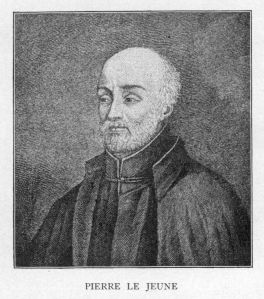
When Champlain returned to receive Quebec back from the English, more priests joined the Jesuits' mission. Among them was the lion-hearted giant, Brébeuf.
If Champlain's bush lopers could join bands of wandering Indians for the extension of French dominion, surely the Jesuits could dare as perilous a life "for the greater glory of God,"—as their vows declared.
{81} Le Jeune joined a band of wandering Montaignais, Pierre, the rascal, tapping the keg of sacramental wine the first night out, and turning the whole camp into a drunken bedlam, till his own brother sobered him with a kettle of hot water flung full in the face. That night the priest slept apart from the camp in the woods. By the time the hunters reached the forest borderland between Quebec and New Brunswick, their number had increased to forty-five. By Christmas time game is usually dormant, still living on the stores of the fall and not yet driven afield by spring hunger. In camp was no food. The hunters halted the march, and came in Christmas Eve of 1633 with not so much as a pound of flesh for nearly fifty people. From the first the Indian medicine man had heaped ridicule on the white priest, and Pierre had refused to interpret as much as a single prayer; but now the whole camp was starving. Pierre happened to tell the other Indians that Christmas was the day on which the white man's God had come to earth. In vain the medicine man had pounded his tom-tom and shouted at the Indian gods from the top of the wigwams and offered sacrifice of animals to be slain. No game had come as the result of the medicine man's invocation.
Le Jeune gathered the people about him and through Pierre, the interpreter, bade them try the white man's God. In the largest of the wigwams a little altar was fitted up. Then the Indians repeated this prayer after Le Jeune:
Jesus, Son of the Almighty … who died for us … who promised that if we ask anything in Thy name, Thou wilt do it—I pray Thee with all my heart, give food to these people … this people promises Thee faithfully they will trust Thee entirely and obey Thee with all their heart! My Lord, hear my prayer! I present Thee my life for this people, most willing to die that they may live and know Thee.
"Take that back," grunted the chief. "We love you! We don't want you to die."
"I only want to show that I am your friend," answered the priest.
Le Jeune then commanded them to go forth to the hunt, full of faith that God would give them food.
{82} But alas for the poor father's hopes and the childlike Indian vow! True, they found abundance of food,—a beaver dam full of beaver, a moose, a porcupine taken by the Indian medicine man. Father Le Jeune, with radiant face, met the hunters returning laden with game.
"We must thank your God for this," said the Indian chief, throwing down his load.
"Bah," says Pierre, "you 'd have found it anyway."
"This is not the time to talk," sneered the medicine man. "Let the hungry people eat."
And by the time the Indians had gorged themselves with ample measure for their long fast, they were torpid with sleep. The sad priest was fain to wander out under the stars. There, in the snow-padded silences of the white-limned forest, far from the joyous peal of Christmas bells, he knelt alone and worshiped God.
For five months he wandered with the Montaignais, and now in April the hunters turned toward Quebec with their furs. At three in the morning Le Jeune knocked on the door of the mission house at Quebec, and was welcomed home by the priests. The pilgrimage had taught him what the Jesuits have always held—the way to power with a people is through the education of the children. "Give me a child for the first seven years of its life," said a famous educator, "and I care not what you do with him the rest of his years." Missions and schools must be established among the tribes of Hurons and Iroquois.
Consequently, when Champlain sent his soldiers in 1634 to build a fort at Three Rivers, they were accompanied by three Jesuits, chief of whom was Jean de Brébeuf, lion-hearted, bound for the land of the Hurons. The chapel bells of Quebec rang and rang again in honor of the new Jesuit mission—morning, noon, and night they chimed in airy music, calling men's thoughts to God, just as you may hear the chimes to-day; and the ramparts below Quebec thundered and reëchoed with salvos of cannon when the missionaries set out for Three Rivers.
{83} At Three Rivers waited the Indians of the Up-Country. The Jesuits embarked with them for the land of the Hurons. The priests traveled barefoot to avoid injuring the frail bark of the canoes. Barely had farewell cheers faded on the river, when the canoes spread apart. With pieces of buckskin hoisted on fishing rods for sail, and a flipping of paddles as naked, bronzed arms set the pace, the voyage had begun. Heroism is easy with chapel bells ringing; it is another matter, barefoot and with sleeves rolled up.
It was the same trail that Champlain had followed up the Ottawa. Only Champlain was assured of good treatment, for he had promised to fight in the Indian wars; but the Jesuits were dependent on the caprice of their conductors. Any one, who, from experience in the wilds, has learned how the term "tenderfoot" came to be applied, will realize the hardships endured—and endured without self-pity—by these scholarly men of immured life. The rocks of the portage cut their naked feet. The Indians refused to carry their packs overland and flung bundles of clothing and food into the water. In fair weather the voyageurs slept on the sand under the overturned canoes; in rain a wigwam was raised, and into the close confines of this tent crowded men, women, and children, for the most part naked, and with less idea of decency than a domestic dog. Each night, as the boats were beached, the priests wandered off into the woods to hold their prayers in privacy. Soon the canoes were so far apart the different boats did not camp together, and the white men were scattered alone among the savages. Robberies increased till, when Brébeuf reached Georgian Bay, thirty days from leaving Three Rivers, he had little left but the bundles he had carried for himself.
Brébeuf had been to the Huron country before with Etienne Brulé, Champlain's pathfinder; but of the first mission no record exists. Brébeuf found that Brulé had been murdered near the modern Penetang; and the Indians had scarcely brought the priest's canoe ashore, when they bolted through the woods, leaving him to follow as best he could.
{84} Take a map of modern Ontario. Draw a circle round Georgian Bay, running from Muskoka through Lake Simcoe and up into Manitoulin Island. Here, on the very stamping ground of the summer tourist, was the scene of the Jesuits' Huron mission.
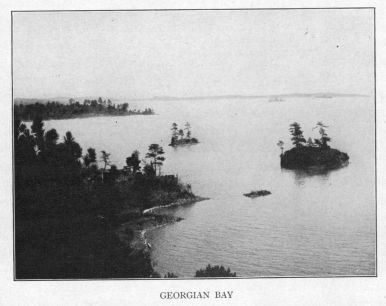
When Brébeuf's tall frame emerged from the woods, the whole village of Ihonateria dashed out to welcome him, shouting, "He has come! He has come again! Behold, the Black Robe has come again!" Young braves willingly ran back through the forest for the baggage, which the voyageurs had thrown aside; and at one o'clock in the morning, as the messengers came through the moonlit forest, Brébeuf took up his abode in the house of the leading chief. Later came Fathers Davost and Daniel. By October the Indians had built the missionaries their wigwam, a bark-covered house of logs, thirty-six feet long, divided into three rooms, reception room, living quarters, church. In the entrance hall assembled the Indians, squatting on the floor, gazing in astonishment at the religious pictures on the wall, and, above all, at the clock.
{85} "What does he say?" they would ask, listening solemnly to the ticking.
"He says 'Hang on the kettle,'" Brébeuf would answer as the clock struck twelve, and the whole conclave would be given a simple meal of corn porridge; but at four the clock sang a different song.
"It says 'Get up and go home,'" Brébeuf would explain, and the Indians would file out, knowing well that the Black Robes were to engage in prayer.
No holiday in the wildwoods was the Jesuit mission. Chapel bell called to service at four in the morning. Eight was the breakfast hour. The morning was passed teaching, preaching, visiting. At two o'clock was dinner, when a chapter of the Bible was read. After four the Indians were dismissed, and the missionaries met to compare notes and plan the next day's campaign.
By 1645, five mission houses had been established, with Ste. Marie on the Wye, east of Midland, as the central house. Near Lake Simcoe were two missions,—St. Jean Ba'tiste and St. Joseph; near Penetang, St. Louis, and St. Ignace. Westward of Ste. Marie on the Wye were half a dozen irregular missions among the Tobacco Indians. Each of the five regular missions boasted palisaded inclosures, a chapel of log slabs with bell and spire, though the latter might be only a high wooden cross. At Ste. Marie, the central station, were lodgings for sixty people, a hospital, kitchen garden, with cattle, pigs, and poultry. At various times soldiers had been sent up by the Quebec governors, till some thirty or forty were housed at Ste. Marie. In all were eighteen priests, four lay brothers, seven white servants, and twenty-three volunteers, unpaid helpers—donnés, they were called, young men ardently religious, learning woodlore and the Indian language among the Jesuits, as well as exploring whenever it was possible for them to accompany the Indians. Among the volunteers was one Chouart Groseillers, who, if he did not accompany Father Jogues on a preaching tour to the tribes of Lake Superior, had at least gone as far as the Sault and learned of the vast unexplored world beyond Lake Superior. {86} Food, as always, played a large part in winning the soul of the redskin. On church fête days as many as three thousand people were fed and lodged at Ste. Marie. That the priests suffered many trials among the unreasonable savages need not be told. When it rained too heavily they were accused of ruining the crops by praying for too much rain; when there was drouth they were blamed for not arranging this matter with their God; and when the scourge of smallpox raged through the Huron villages, devastating the wigwams so that the timber wolves wandered unmolested among the dead, it was easy for the humpback sorcerer to ascribe the pestilence also to the influence of the Black Robes. Once their houses were set on fire. Again and again their lives were threatened. Often after tramping twenty miles through the sleet-soaked, snow-drifted spring forests, arriving at an Indian village foredone and exhausted, the Jesuit was met with no better welcome than a wigwam flap closed against his entrance, or a rabble of impish children hooting and jeering him as he sought shelter from house to house.
But an influence was at work on the borders of the St. Lawrence that yearly rendered the Hurons more tractable. From raiding the settlements of the St. Lawrence, the Iroquois were sweeping in a scourge more deadly than smallpox up the Ottawa to the very forests of Georgian Bay. The Hurons no longer dared to go down to Quebec in swarming canoes. Only a few picked warriors—perhaps two hundred and fifty—would venture so near the Iroquois fighting ground.
One winter night, as the priests sat round their hearth fire watching the mournful shadows cast by the blazing logs on the rude walls, Brébeuf, the soldier, lion-hearted, the fearless, told in a low, dreamy voice of a vision that had come,—the vision of a huge fiery cross rising slowly out of the forest and moving across the face of the sky towards the Huron country. It seemed to come from the land of the Iroquois. Was the priest's vision a dream, or his own intuition deeper than reason, assuming dire form, portending a universal fear? Who can tell? I can but repeat the story as it is told in their annals.
{87} "How large was the cross?" asked the other priests. Brébeuf gazes long in the fire.
"Large enough to crucify us all," he answers.
And, as he had dreamed, fell the blow.
St. Joseph, of the Lake Simcoe region, was situated a day's travel from the main fortified mission of Ste. Marie. Round it were some two thousand Hurons to whom Father Daniel ministered. Father Daniel was just closing the morning services on July the 4th, 1648. His tawny people were on their knees repeating the responses of the service, when from the forest, humming with insect and bird life, arose a sound that was neither wind nor running water—confused, increasing, nearing! Then a shriek broke within the fort palisades,—"The enemy! the Iroquois!" and the courtyard was in an uproar indescribable. Painted redskins, naked but for the breech clout, were dashing across the cornfields to scale the palisades or force the hastily slammed gates. Father Daniel rushed from church to wigwams rallying the Huron warriors, while the women and children, the aged and the feeble, ran a terrified rabble to the shelter of the chapel. Before the Hurons could man the walls, Iroquois hatchets had hacked holes of entrance in the palisades. The fort was rushed by a bloodthirsty horde making the air hideous with fiendish screams.
"Fly! Save yourselves!" shouted the priest. "I stay here! We shall this day meet in Heaven!"
In the volley and counter volley of ball and arrow, Father Daniel reeled on his face, shot in the heart. In a trice his body was cut to pieces, and the Iroquois were bathing their hands in his warm lifeblood. A moment later the village was in roaring flames, and on the burning pile were flung the fragments of the priest's body. The victors set out on the homeward tramp with a line of more than six hundred prisoners, the majority, women and children, to be brained if their strength failed on the march, to be tortured in the Iroquois towns if they survived the abuse on the way.
{88} Next westward from the Lake Simcoe missions were St. Ignace with four hundred people and St. Louis with seven hundred, near the modern Penetang and within short distance of the Jesuits' strong headquarters on the River Wye. At these two missions labored Brébeuf, the giant, and a fragile priest named Lalemant.
Encouraged by the total destruction of St. Joseph, the Iroquois that very fall took the warpath with more than one thousand braves. Ascending the Ottawa leisurely, they had passed the winter hunting and cutting off any stray wanderers found in the forest.
The Hurons knew the doom that was slowly approaching. Yet they remained passive, stunned, terrified by the blow at St. Joseph. It was spring of 1649 before the warriors reached Georgian Bay. March winds had cleared the trail of snowdrifts, but the forests were still leafless. St. Ignace mission lay between Lake Simcoe and St. Louis. Approaching it one windy March night, the Iroquois had cut holes through the palisades before dawn and burst inside the walls with the yells and gyrations of some hideous hell dance. Here a warrior simulated the howl of the wolf. There another approached in the crouching leaps of a panther, all the while uttering the yelps and screams of a beast of prey lashed to fury. The poor Hurons were easy victims. Nearly all their braves happened to be absent hunting, and the four hundred women and children, rushing from the long houses half dazed with sleep, fell without realizing their fate, or found themselves herded in the chapel like cattle at the shambles, Iroquois guards at every window and door.
Luckily three Hurons escaped over the palisades and rushed breathless through the forest to forewarn Brébeuf and Lalemant cooped up in St. Louis. The Iroquois came on behind like a wolf pack.
"Escape! Escape! Run to the woods, Black Robes! There is yet time," the Indian converts urged Brébeuf; but the lion-hearted stood steadfast, though Lalemant, new to scenes of carnage, turned white and trembled in spite of his resolution.
{89} "Who would protect the women if the men fled like deer to the woods?" demanded Brébeuf, and the tigerish yells of the on-rushing horde answered the question.
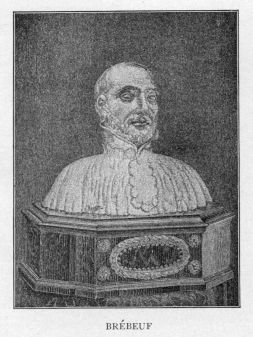
Before day dawn had tipped the branches of the leafless trees with shafted sunlight, the enemy were hacking furiously at the palisades. Trapped and cornered, the most timid of animals will fight. With such fury, reckless from desperation, cherishing no hope, the Hurons now fought, but they were handicapped by lack of guns and balls. Thirty Iroquois had been slain, a hundred wounded, and the assailants drew off for breath. It was only the lull between two thunderclaps. A moment later they were on St. Louis' walls and had hacked through a dozen places. At these spots the fiercest fighting occurred, and those Iroquois who had not already bathed their faces in the gore of victims at St. Ignace were soon enough dyed in their own blood. Here, there, everywhere, were Brébeuf and Lalemant, fighting, administering last rites, exhorting the Hurons to perish valiantly. Then the rolling clouds of flame and smoke told the Hurons that their village was on fire. Some dashed back to die inside the burning wigwams. Others fought desperately to escape through the broken walls. A few, in the confusion and smoke, succeeded in reaching the woods, whence they ran to warn Ste. Marie on the Wye. Brébeuf and Lalemant had been knocked down, stripped, bound, and were now {90} half driven, half dragged, with the other captives to be tortured at Ignace. Not a sign of fear did either priest betray.
One would fain pass over the next pages of the Jesuit records. It is inconceivable how human nature, even savage nature, so often stoops beneath the most repellent cruelties of the brute world. It is inconceivable unless one acknowledge an influence fiendish; but let us not judge the Indians too harshly. When the Iroquois warriors were torturing the Hurons and their missionaries, the populace of civilized European cities was outdoing the savages on victims whose sins were political.
While the Jesuits of Ste. Marie were praying all day and night before the lighted altar for heavenly intervention to rescue Brébeuf and Lalemant, the two captured priests stood bound to the torture stakes, the gapingstock of a thousand fiends. When the Iroquois singed Brébeuf from head to foot with burning birch bark, he threatened them in tones of thunder with everlasting damnation for persecuting the servants of God. The Iroquois shrieked with laughter. Such spirit in a man was to their liking. Then, to stop his voice, they cut away his lips and rammed a red-hot iron into his mouth. Not once did the giant priest flinch or writhe at the torture stake. Then they brought out Lalemant, that Brébeuf might suffer the agony of seeing a weaker spirit flinch. Poor Lalemant fell at his superior's feet, sobbing out a verse of Scripture. Then they wreathed Lalemant in oiled bark and set fire to it.
"We baptize you," they yelled, throwing hot water on the dying man. Then they railed out blasphemies, obscenities unspeakable, against the Jesuits' religion. Brébeuf had not winced, but his frame was relaxing. He sank to his knees, a dying man. With the yells of devils jealous of losing their prey, they ripped off his scalp while he was still alive, tore his heart from his breast, and drank the warm lifeblood of the priest. Brébeuf died at four in the afternoon. Strange to relate, Lalemant, of the weaker body, survived the tortures till daybreak, when, weary of the sport, the Indians desisted from their mad night orgies and put an end to his sufferings by braining him.
{91} Over at Ste. Marie, Ragueneau and the other priests momentarily awaited the attack; but at Ste. Marie were forty French soldiers and ample supply of muskets. The Iroquois was bravest as the wolf is bravest—when attacking a lamb. Three hundred Hurons lay in ambush along the forest trail. These ran from the Iroquois like sheep; but when three hundred more sallied from the fort, led by the French, it was the Iroquois' turn to run, and they fled back behind the palisades of St. Louis. The Hurons followed, entered by the selfsame breaches the Iroquois had made, and drove the invaders out. More Iroquois rushed from Ignace to the rescue. A hundred Iroquois fell in the day's fight, and when they finally recaptured St. Louis, only twenty Hurons remained of the three hundred. The victory had been bought at too great cost. Tying their prisoners to stakes at St. Ignace, they heaped the courtyard with inflammable wood, set fire to all, and retreated, taking only enough prisoners to carry their plunder.
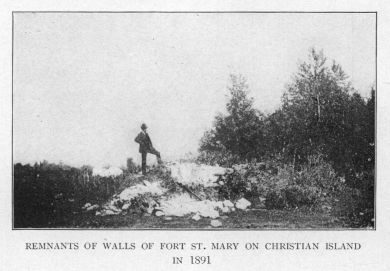
Ste. Marie for the time was safe. The invaders had gone; but the blow had crushed forever the prowess of the Huron nation. The remaining towns had thought for nothing but flight. {92} Town after town was forsaken and burned in the summer of 1649, the corn harvest left standing in the fields, while the panic-stricken people put out in their canoes to take refuge on the islands of Georgian Bay. Ste. Marie on the Wye alone remained, and the reason for its existence was vanishing like winter snow before summer sun, for its people fled … fled … fled … daily fled to the pink granite islands of the lake. The Hurons begged the Jesuits to accompany them, and there was nothing else for Ragueneau to do. Ste. Marie was stripped, the stock slain for food. Then the buildings were set on fire. June 14, just as the sunset bathed water and sky in seas of gold, the priest led his homeless people down to the lake as Moses of old led the children of Israel. Oars and sweeps, Georgian Bay calm as glass, they rafted slowly out to the Christian Islands,—Faith, Hope, and Charity,—which tourists can still see from passing steamers, a long wooded line beyond the white water-fret of the wind-swept reefs. The island known on the map as Charity, or St. Joseph, was heavily wooded. Here the refugees found their haven, and the French soldiers cleared the ground {93} for a stone fort of walled masonry,—the islands offering little else than stone and timber, though the fishing has not failed to this day.

By autumn the walled fort was complete, but some eight thousand refugees had gathered to the island. Such numbers could not subsist on Georgian Bay in summer. In winter their presence meant starvation, and before the spring of 1650 half had perished. Of the survivors, many had fed on the bodies of the dead. No help had come from Quebec for almost three years. The clothing of the priests had long since worn to shreds. Ragueneau and his helpers were now dressed in skins like the Indians, and reduced to a diet of nuts and smoked fish.
With warm weather came sickness. And also came bands of raiding Iroquois striking terror to the Tobacco Indians. Among them, too, perished Jesuit priests, martyrs to the faith. Did some of the Hurons venture from the Christian Islands across to the mainland to hunt, they were beset by scalping parties and came back to the fort with tales that crazed Ragueneau's Indians with terror. The Hurons decided to abandon Georgian Bay. Some scattered to Lake Superior, to Green Bay, to Detroit. Others found refuge on Manitoulin Island. A remnant of a few hundreds followed Ragueneau and the French down the Ottawa to take shelter at Quebec. Their descendants may be found to this day at the mission of Lorette.
To-day, as tourists drive through Quebec, marveling at the massive buildings and power and wealth of Catholic orders, do they pause to consider that the foundation stones of that power were dyed in the blood of these early martyrs? Or, as the pleasure seekers glide among the islands of Georgian Bay, do they ever ponder that this fair world of blue waters and pink granite islands once witnessed the most bloody tragedy of brute force, triumphant over the blasted hopes of religious zeal?
Radisson captured by Iroquois—Radisson escapes—At Onandaga—How the French were saved—Word of the western land—Westward bound—Dollard's Heroes—The fight at the Long Sault—To seek the north sea—Discovers Hudson Bay—Origin of the great fur company
Having destroyed the Hurons, who were under French protection, it is not surprising that the Iroquois now set themselves to destroy the French. From Montreal to Tadoussac the St. Lawrence swarmed with war canoes. No sooner had the river ice broken up and the birds begun winging north than the Iroquois flocked down the current of the Richelieu, across Lake St. Peter to Three Rivers, down the St. Lawrence to Quebec, up the St. Lawrence to Montreal. And the snows of midwinter afforded no truce to the raids, for the Iroquois cached their canoes in the forest, and roamed the woods on snowshoes. Settlers fled terrified from their farms to the towns; farmers dared not work in their fields without a sentry standing guard; Montreal became a prison; Three Rivers lay blockaded; and at Quebec the war canoes passed defiantly below the cannon of Cape Diamond, paddles beating defiance against the gun'els, or prows flaunting the scalps of victims within cannon fire of Castle St. Louis. Rich and poor, priests and parishioners, governors and habitants, all alike trembled before the lurking treachery. Father Jogues had been captured on his way from the Huron mission; Père Poncet was likewise kidnapped at Quebec and carried to the tortures of the Mohawk towns; and a nephew of the Governor of Quebec was a few years later attacked while hunting near Lake Champlain.
The outraged people of New France realized that fear was only increasing the boldness of the Iroquois. A Mohawk-chief fell into their hands. By way of warning, they bound him to a stake and burned him to death. The Indian revenge fell swift and sure. In 1653 the Governor of Three Rivers and twelve leading citizens were murdered a short distance from the fort gates. {95} One night in May of 1652 a tall, slim, swarthy lad about sixteen years of age was seen winding his way home to Three Rivers from a day's shooting in the marshes. He had set out at day dawn with some friends, but fear of the Iroquois had driven his comrades back. Now at nightfall, within sight of Three Rivers, when the sunset glittered from the chapel spire, he unslung his bag of game and sat down to reload his musket. Then he noticed that the pistols in his belt had been water-soaked from the day's wading, and he reloaded them too.
Any one who is used to life in the open knows how at sundown wild birds foregather for a last conclave. Ducks were winging in myriads and settling on the lake with noisy flacker. Unable to resist the temptation of one last shot, the boy was gliding noiselessly forward through the rushes, when suddenly he stopped as if rooted to the ground, with hands thrown up and eyes bulging from his head. At his feet lay the corpses of his morning comrades,—scalped, stripped, hacked almost piecemeal! Then the instinct of the hunted thing, of flight, of self-protection, eclipsed momentary terror, and the boy was ducking into the rushes to hide when, with a crash of musketry from the woods, the Iroquois were upon him.
When he regained consciousness, he was pegged out on the sand amid a flotilla of beached canoes, where Iroquois warriors were having an evening meal. So began the captivity, the love of the wilds, the wide wanderings of one of the most intrepid explorers in New France,—Pierre Esprit Radisson.
His youth and the fact that he would make a good warrior were in his favor. When he was carried back to the Mohawk town and with other prisoners compelled to run the gauntlet between two lines of tormentors, Radisson ran so fast and dodged so dexterously that he was not once hit. The feat was greeted with shrieks of delight by the Iroquois; and the high-spirited boy was given in adoption to a captive Huron woman.
Things would have gone well had he not bungled an attempt to escape; but one night, while in camp with three Iroquois hunters, an Algonquin captive entered. While the Iroquois {96} slept with guns stacked against the trees, the sleepless Algonquin captive rose noiselessly where he lay by the fire, seized the Mohawk warriors' guns, threw one tomahawk across to Radisson, and with the other brained two of the sleepers. The French boy aimed a blow at the third sleeper, and the two captives escaped. But they might have saved themselves the trouble. They were pursued and overtaken on Lake St. Peter, within sight of Three Rivers. This time Radisson had to endure all the diableries of Mohawk torture. For two days he was kept bound to the torture stake. The nails were torn from his fingers, the flesh burnt from the soles of his feet, a hundred other barbarous freaks of impish Indian children wreaked on the French boy. Arrows with flaming points were shot at his naked body. His mutilated finger ends were ground between stones, or thrust into the smoking bowl of a pipe full of coals, or bitten by fiendish youngsters being trained up the way a Mohawk warrior should go.
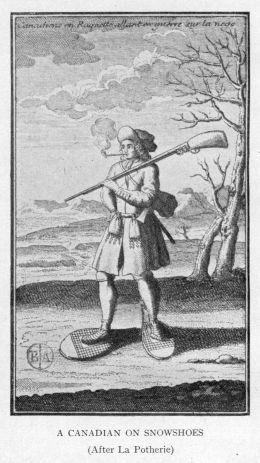
Radisson's youth, his courage, his very dare-devil rashness, together with presents of wampum belts from his Indian parents, {97} saved his life for a second time, and a year of wild wanderings with Mohawk warriors finally brought him to Albany on the Hudson, where the Dutch would have ransomed him as they had ransomed the two Jesuits, Jogues and Poncet; but the boy disliked to break faith a second time with his loyal Indian friends. Still, the glimpse of white man's life caused a terrible upheaval of revulsion from the barbarities, the filth, the vice, of the Mohawk camp. He could endure Indian life no longer. One morning, in the fall of 1653, he stole out from the Mohawk lodges, while the mist of day dawn still shadowed the forest, and broke at a run down the trail of the Mohawk valley for Albany. All day he ran, pursued by the phantom fright of his own imagination, fancying everything that crunched beneath his moccasined tread some Mohawk warrior, seeing in the branches that reeled as he passed the arms of pursuers stretched out to stop him;—on … and on … and on, he ran, pausing neither to eat nor rest; here dashing into the bed of a stream and running along the pebbled bottom to throw pursuers off the trail; there breaking through a thicket of brushwood away from the trail, only to come back to it breathless farther on, when some alarm of the wind in the trees or deer on the move had proved false. Only muscles of iron strength, lithe as elastic, could have endured the strain. Nightfall at last came, hiding him from pursuers; but still he sped on at a run, following the trail by the light of the stars and the rush of the river. By sunrise of the second day he was staggering; for the rocks were slippery with frost and his moccasins worn to tatters. It was four in the afternoon before he reached the first outlying cabin of the Dutch settlers. For three days he lay hidden in Albany behind sacks of wheat in a thin-boarded attic, through the cracks of which he could see the Mohawks searching everywhere. The Jesuit Poncet gave him passage money to take ship to Europe by way of New York. New York was then a village of a few hundred houses, thatch-roofed, with stone fort, stone church, stone barracks. Central Park was a rocky wilderness. What is now Wall Street was the stamping ground of pigs and goats. January of 1654 Radisson {98} reached Europe, no longer a boy, but a man inured to danger and hardships and daring, though not yet eighteen.
When Radisson came back to Three Rivers in May he found changes had taken place in New France. Among the men murdered with the Governor of Three Rivers by the Mohawks the preceding year had been his sister's husband, and the widow had married one Medard Chouart de Groseillers, who had served in the Huron country as a lay helper with the martyred Jesuits. Also a truce had been patched up between the Iroquois and the French. The Iroquois were warring against the Eries and wanted arms from the French. A still more treacherous motive underlay the Iroquois' peace. They wanted a French settlement in their country as a guarantee of non-intervention when they continued to raid the refugee Hurons. Such duplicity was unsuspected by New France. The Jesuits looked upon the peace as designed by Providence to enable them to establish missions among the Iroquois. Father Le Moyne went from village to village preaching the gospel and receiving belts of wampum as tokens of peace—one belt containing as many as seven thousand beads. When the Onondagas asked for a French colony, Lauzon, the French Governor, readily consented if the Jesuits would pay the cost, estimated at about $10,000; and in 1656 Major Dupuis had led fifty Frenchmen and four Jesuits up the St. Lawrence in long boats through the wilderness to a little hill on Lake Onondaga, where a palisaded fort was built, and the lilies of France, embroidered on a white silk flag by the Ursuline nuns, flung from the breeze above the Iroquois land. The colony was hardly established before three hundred Mohawks fell on the Hurons encamped under shelter of Quebec, butchered without mercy, and departed with shouts of laughter that echoed below the guns at Cape Diamond, scalps waving from the prow of each Iroquois canoe. Quebec was thunderstruck, numb with fright. The French dared not retaliate, or the Iroquois would fall on the colony at Onondaga. Perhaps people who keep their vision too constantly fixed on heaven lose {99} sight of the practical duties of earth; but when eighty Onondagas came again in 1657, inviting a hundred Hurons to join the Iroquois Confederacy, the Jesuits again suspected no treachery in the invitation, but saw only a providential opportunity to spread one hundred Huron converts among the Iroquois pagans. Father Ragueneau, who had led the poor refugees down from the Christian Islands on Georgian Bay, now with another priest offered to accompany the Hurons to the Iroquois nation. An interpreter was needed. Young Radisson, now twenty-one years of age, offered to go as a lay helper, and the party of two hundred and twenty French, eighty Iroquois, one hundred Hurons, departed from the gates of Montreal, July 26.
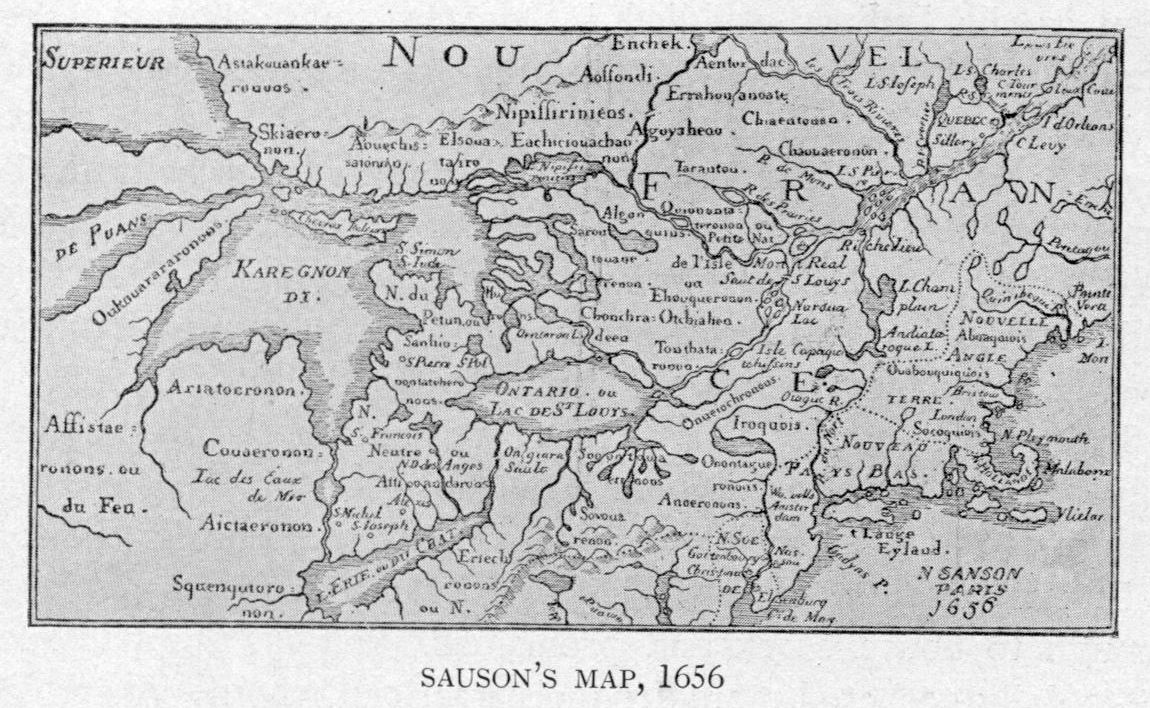
Hardly were they beyond recall, before scouts brought word that twelve hundred Iroquois had gone on the warpath against Canada, and three Frenchmen of Montreal had been scalped. At last the Governor of Quebec bestirred himself: he caused twelve Iroquois to be seized and held as hostages for the safety of the French.
The Onondagas had set out from Montreal carrying the Frenchmen's baggage. Beyond the first portage they flung the packs on the ground, hurried the Hurons into canoes so that no two Hurons were in one boat, and paddled over the {100} water with loud laughter, leaving the French in the lurch. Father Ragueneau and Radisson quickly read the ominous signs. Telling the other French to gather up the baggage, they armed themselves and paddled in swift pursuit. That night Ragueneau's party and the Onondagas camped together. Nothing was said or done to evince treachery. Friends and enemies, Onondagas and Hurons and white men, paddled and camped together for another week; but when, on August 3, four Huron warriors and two women forcibly seized a canoe and headed back for Montreal, the Onondagas would delay no longer. That afternoon as the Indians paddled inshore to camp on one of the Thousand Islands, some Onondaga braves rushed into the woods as if to hunt. As the canoes grated the pebbled shore a secret signal was given. The Huron men with their eyes bent on the beach, intent on landing, never knew that they had been struck. Onondaga hatchets, clubs, spears, were plied from the water side, and from the hunters ambushed on shore crashed musketry that mowed down those who would have fled to the woods.
By night time only a few Huron women and the French had survived the massacre. Such was the baptism of blood that inaugurated the French colony at Onondaga. Luckily the fort built on the crest of the hill above Lake Onondaga was large enough to house stock and provisions. Outside the palisades there daily gathered more Iroquois warriors, who no longer dissembled a hunger for Jesuits' preaching. Among the warriors were Radisson's old friends of the Mohawks, and his foster father confessed to him frankly that the Confederacy were only delaying the massacre of the French till they could somehow obtain the freedom of the twelve Iroquois hostages held at Quebec.
Daily more warriors gathered; nightly the war drum pounded; week after week the beleaguered and imprisoned French heard their stealthy enemy closing nearer and nearer on them, and the painted foliage of autumn frosts gave place to the leafless trees and the drifting snows of midwinter. The French were hemmed in completely as if on a desert isle, and no help could come from Quebec, where New France was literally under Iroquois siege.
{101} The question was, what to do? Messengers had been secretly sent to Quebec, but the Mohawks had caught the scouts bringing back answers, and there was no safe escape from the colony through ambushed woods in midwinter. The Iroquois could afford to bide their time for victims who could not escape. All winter the whites secretly built boats in the lofts of the fort, but when the timbers were put together the boats had to be brought downstairs, and a Huron convert spread a terrifying report of a second deluge for which the white men were preparing a second Noah's Ark. Mohawk warriors at once scented an attempt to escape when the ice broke up in spring, and placed their braves in ambush along the portages. Also they sent a deputation to see if that story of the boats were true. Forewarned by Radisson, the whites built a floor over the boats, heaped canoes above the floor, and invited the Mohawk spies in. The Mohawks smiled grimly and were reassured. Canoes would be ripped into shingles if they ran the ice jam of spring. The Iroquois felt doubly certain of their victims; but Radisson, free to go among the warriors as one of themselves, learned that they were plotting to murder half the colony and hold the other half as hostages for the safety of the twelve Indians in the dungeon at Quebec. The whites could delay no longer. Something must be done, but what? Radisson, knowing the Indian customs, proposed a way out.
No normally built savage could refuse an invitation to a sumptuous feast. According to Indian custom, no feaster dare leave uneaten food on his plate. Waste to the Indian is crime. In the words of the Scotch proverb, "Better burst than waste." And all Indians have implicit faith in dreams. Radisson dreamed—so he told the Indians—that the white men were to give them a marvelous banquet. No sooner dreamed than done! The Iroquois probably thought it a chance to obtain possession inside the fort; but the whites had taken good care to set the banquet between inner and outer walls.
Such a repast no savage had ever enjoyed in the memory of the race. All the ambushed spies flocked in from the portages. {102} The painted warriors washed off their grease, donned their best buckskin, and rallied to the banquet as to battle. All the stock but one solitary pig, a few chickens and dogs, had been slaughtered for the kettle. Such an odor of luscious meat steamed up from the fort for days as whetted the warriors' hunger to the appetite of ravenous wolves. Finally, one night, the trumpets blew a blare that almost burst eardrums. Fifes shrilled, and the rub-a-dub-dub of a dozen drums set the air in a tremor. A great fire had been kindled between the inner and outer walls that set shadows dancing in the forest. Then the gates were thrown open, and in trooped the feasters. All the French acting as waiters, the whites carried in the kettles—kettles of wild fowl, kettles of oxen, kettles of dogs, kettles of porridge and potatoes and corn and what not? That is it—what not? Were the kettles drugged? Who knows? The feasters ate till their eyes were rolling lugubriously; and still the kettles came round. The Indians ate till they were torpid as swollen corpses, and still came the white men with more kettles, while the mischievous French lad, Radisson, danced a mad jig, shouting, yelling, "Eat! eat! Beat the drum! Awake! awake! Cheer up! Eat! eat!"
By midnight every soul of the feast had tumbled over sound asleep, and at the rear gates were the French, stepping noiselessly, speaking in whispers, launching their boats loaded with provisions and ammunition. The soldiers were for going back and butchering every warrior, but the Jesuits forbade such treachery. Then Radisson, light-spirited as if the refugees had been setting out on a holiday, perpetrated yet a last trick on the warriors. To the bell rope of the main gate he fastened a pig, so when the Indians would pull the rope for admission, they would hear the tramp of a sentry inside. Then he stuffed effigies of men on guard round the windows of the fort.
It was a pitchy, sleety night, the river roaring with the loose ice of spring flood, the forests noisy with the boisterous March wind. Out on the maelstrom of ice and flood launched the fifty-three colonists, March 20, 1658. By April they were safe {103} inside the walls of Quebec, and chance hunters brought word that what with sleep, and the measured tramp, tramp of the pig, and the baying of the dogs, and the clucking of the chickens inside the fort, the escape of the whites had not been discovered for a week. The Indians thought the whites had gone into retreat for especially long prayers. Then a warrior climbed the inner palisades, and rage knew no bounds. The fort was looted and burnt to the ground.
Peltry traffic was the life of New France. Without it the colony would have perished, and now the rupture of peace with the Iroquois cut off that traffic. To the Iroquois land south of the St. Lawrence the French dared not go, and the land of the Hurons was a devastated wilderness. The boats that came out to New France were compelled to return without a single peltry, but there still remained the unknown land of the Algonquin northwest and beyond the Great Lakes. Year after year young French adventurers essayed the exploration of that land. In 1634 Jean Nicolet, one of Champlain's wood runners, had gone westward as far as Green Bay and coasted the shores of Lake Michigan. Jesuits, where they preached on Lake Superior, had been told of a vast land beyond the Sweet Water Seas,—Great Lakes,—a land where wandered tribes of warriors powerful as the Iroquois.
Yearly, when the Algonquins came down the Ottawa to trade, Jesuits and young French adventurers accompanied the canoes back up the Ottawa, hoping to reach the Unknown Land, which rumor said was bounded only by the Western Sea. However, the priests went no farther than Lake Nipissing; but two nameless French wood runners came back from Green Bay in August of 1656 with marvelous tales of wandering hunters to the north called "Christines" (Crees), who passed the winter hunting buffalo on a land bare of trees (the prairie) and the summer fishing on the shores of the North Sea (Hudson's Bay). They told also of fierce tribes south of the Christines (the Sioux), who traded with the Indians of the Spanish settlements in Mexico.
{104} All New France became fired by these reports. When Radisson returned from Onondaga in April of 1659, he found his brother-in-law, Chouart Groseillers, just back from Nipissing, where he had been serving the Jesuits, with more tales of this marvelous undiscovered land. The two kinsmen decided to go back with the Algonquins that very year; for, confessed Radisson in his journal, "I longed to see myself again in a boat."
Thirty other Frenchmen and two Jesuits had assembled in Montreal to join the Algonquins. More than sixty canoes set out from Montreal in June, the one hundred and forty Algonquins well supplied with firearms to defend themselves from marauding Iroquois. Numbers begot courage, courage carelessness; and before the fleet had reached the Chaudière Falls, at the modern city of Ottawa, the canoes had spread far apart in utter forgetfulness of danger. Not twenty were within calling distance when an Indian prophet, or wandering medicine man, ran down to the shore, throwing his blanket and hatchet aside as signal of peace, and shouting out warning of Iroquois warriors ambushed farther up the river.
Drunk with the new sense of power from the possession of French firearms, perhaps drunk too with French brandy obtained at Montreal, the Algonquins paused to take the strange captive on board, and returned thanks for the friendly warning by calling their benefactor a "coward and a dog and a hen." At the same time they took the precaution of sleeping in mid-stream with their canoes abreast tied to water-logged trees. A dull roar through the night mist foretold they were nearing the great Chaudière Falls; and at first streak of day dawn there was a rush to land and cross the long portage before the mist lifted and exposed them to the hostiles.
To any one who knows the region of Canada's capital the scene can easily be recalled: the long string of canoes gliding through the gray morning like phantoms; Rideau Falls shimmering on the left like a snowy curtain; the dense green of Gatineau Point as the birch craft swerved across the river inshore to the right; the wooded heights, now known as Parliament Hill, {105} jutting above the river mist, the new foliage of the topmost trees just tipped with the first primrose shafts of sunrise; then the vague stir and unrest in the air as the sun came up till the gray fog became rose mist shot with gold, and rose like a curtain to the upper airs, revealing the angry, tempest-tossed cataract straight ahead, hurtling over the rocks of the Chaudière in walls of living waters. Where the lumber piles of Hull on the right to-day jut out as if to span Ottawa River to Parliament Hill, the voyageurs would land to portage across to Lake Du Chêne.
Just as they sheered inshore the morning air was split by a hideous din of guns and war whoops. The Iroquois had been lying in ambush at the portage. The Algonquins' bravado now became a panic. They abandoned canoes and baggage, threw themselves behind a windfall of trees, and poured a steady rain of bullets across the portage in order to permit the other canoes to come ashore. When the fog lifted, baggage and canoes lay scattered on the shore. Behind one barricade of logs lay the French and Algonquins; behind another, the Iroquois; and woe betide the warrior who showed his head or dared to cross the open. All day the warriors kept up their cross fire. Thirteen Algonquins had perished, and the French were only waiting a chance to abandon the voyage. Luckily, that night was pitch-dark. The Algonquin leader blew a long low call through his birch trumpet. All hands rallied and rushed for the boats to cross the river. All the Frenchmen's baggage had been lost. Of the white adventurers every soul turned back but Groseillers and Radisson.
The Algonquins now made up in caution what they had at first lacked. They voyaged only by night and hid by day. No camp fires were kindled. No muskets were fired even for game; and the paddlers were presently reduced to food of tripe de roche—green moss scraped from rocks. Birch canoes could not cross Lake Huron in storm; so the Indians kept close to the south shore of Georgian Bay, winding among the pink granite islands, past the ruined Jesuit missions across to the Straits of Mackinac and on down Lake Michigan to Green Bay.
{106} "But our mind was not to stay here," relates Radisson, "but to know the remotest people." Sometime between April and July of 1659 the two white men had followed the Indian hunters across what is now the state of Wisconsin to "a mighty river like the St. Lawrence." They had found the Mississippi, first of white men to view the waters since the treasure-seeking Spaniards of the south crossed the river. They had penetrated the Unknown. They had discovered the Great Northwest—a world boundlessly vast; so vast no man forever after in the history of the human race need be dispossessed of his share of the earth. Something of the importance of the discovery seems to have impressed Radisson; for he speaks of the folly of the European nations fighting for sterile, rocky provinces when here is land enough for all—land enough to banish poverty.
The two Frenchmen's wanderings with the tribes of the prairie—whether those tribes were Omahas or Iowas or Mandanes or Mascoutins or Sioux—cannot be told here. It would fill volumes. I have told the story fully elsewhere. By spring of 1660 Radisson and Groseillers are back at Sault Ste. Marie, having gathered wealth of beaver peltries beyond the dreams of avarice; but scouts have come to the Sault with ominous news—news of one thousand Iroquois braves on the warpath to destroy every settlement in New France. Hourly, daily, weekly, have Quebec and Three Rivers and Montreal been awaiting the blow.
The Algonquins refuse to go down to Quebec with Radisson and Groseillers. "Fools," shouts Radisson in full assembly of their chiefs squatting round a council fire, "are you going to allow the Iroquois to destroy you as they destroyed the Hurons? How are you going to fight the Iroquois unless you come down to Quebec for guns? Do you want to see your wives and children slaves? For my part, I prefer to die like a man rather than live a slave."
The chiefs were shamed out of their cowardice. Five hundred young warriors undertook to conduct the two white men down to Quebec. They embarked at once, scouts to the fore reconnoitering all portages, and guards on duty wherever the {107} boats landed. A few Iroquois braves were seen near the Long Sault Rapids, but they took to their heels in such evident fright that Radisson was puzzled to know what had become of the one thousand braves on the warpath. Carrying the beaver pelts along the portage so they could be used as shields in case of attack, the Algonquins came to the foot of the Long Sault Rapids near Montreal, and saw plainly what had happened to the invading warriors. A barricade of logs the shape of a square fort stood on the shore. From the pickets hung the scalps of dead Indians and on the sands lay the charred remains of white men. Every tree for yards round was peppered with bullet holes. Here was a charred stake where some victim had been tortured; there the smashed remnants of half-burnt canoes; and at another point empty powder barrels. A terrible battle had been waged but a week before. Radisson could trace, inside the barricade of logs, holes scooped in the sand where the besieged, desperate with thirst, had drunk the muddy water. At intervals in the palisades openings had been hacked, and these were blood stained, as if the scene of the fiercest fighting. Bark had been burnt from the logs in places, where the assailants had set fire to the fort.
From Indian refugees at Montreal, Radisson learned details of the fight. It was the battle most famous in early Canadian annals—the Long Sault. All winter Quebec, Three Rivers, and Montreal had cowered in terror of the coming Iroquois. In imagination the beleaguered garrisons foresaw themselves martyrs of Mohawk ferocity. It was learned that seven hundred of the Iroquois warriors were hovering round the Richelieu opposite Three Rivers. The rest of the braves had passed the winter man-hunting in the Huron country, and were in spring descending the Ottawa to unite with the lower band.
Week after week Quebec awaited the blow; but the blow never fell, for at Montreal was a little band of seventeen heroes, led by a youth of twenty-five,—Adam Dollard,—who longed to wipe out the stain of a misspent boyhood by some glorious exploit in the service of the Holy Cross.
{108} When word came that the upper foragers were descending from the country of the Hurons to unite with the lower Iroquois against Montreal, Dollard proposed to go up the Ottawa with a picked party of chosen fighters, waylay the Iroquois at the foot of the Long Sault Rapids, and so prevent the attack on Montreal. Sixteen young men volunteered to join him. Charles Le Moyne, now acting as interpreter at Montreal, begged the young heroes to delay till reënforcements could be obtained: seventeen Frenchmen against five hundred Mohawks meant certain death; but delay meant risk, and Dollard coveted nothing more than a death of glory. At the chapel of the Hôtel Dieu the young heroes made what they knew would certainly be their last confession, bade eternal farewell to friends, and with crushed corn for provisions set out in canoes for the upper Ottawa. May 1, they came to the foot of the Long Sault. Here a barricade of logs had been erected in some skirmish the year before, and here, too, was the usual camping place of the Iroquois as their canoes came bounding down the swift waters of the Ottawa. Dollard and his brave boys landed, slung their kettles for the night meal, and sent scouts upstream to forewarn when the Iroquois came. The night was passed in prayer. Next day arrived unexpected reënforcements. Two bands of forty Hurons and four Algonquins, under a brave Huron convert of the Christian Islands, had asked Maisonneuve's permission to join Dollard and wreak their pent vengeance on the Mohawks. Early one morning the scouts reported five Iroquois canoes coming slowly downstream, and two hundred more warriors behind. There was not even care to bring a supply of water inside the barricade or remove kettles from the sticks. Posted in ambush, the young soldiers fired as soon as the first canoes came within range. This put the rest of the Iroquois on guard. The whites rushed for the shelter of their barricade. The Indians dashed to erect a fort of their own. Inside Dollard's palisades all was activity. Cracks were plastered up with mud between logs, four marksmen with double stands of arms posted at each loophole, and a big musketoon leveled straight for the {109} Iroquois redoubt. The Iroquois rushed out yelling like fiends, and jumping sideways as they advanced, to avoid becoming targets; but the scattering fire of the musketoon caught them full abreast and a Seneca chief fell dead. The Iroquois then broke up Dollard's canoes and tried to set fire to the logs; but again the musketoon's scattering bullets mowed a swath of death in the advancing ranks, and for a second time the red warriors sought shelter behind the logs. Probably to obtain truce till they could send word to the other warriors on the Richelieu, the Iroquois then hung out a flag of parley; but the Huron chief knew what peace with an Iroquois meant. He it was, on the Christian Islands, who, when the Iroquois had proposed a similar parley for the purpose of massacring the Hurons, invited their chiefs into the Huron camp and brained them for their treachery. Dollard's band made answer to the flag hoisted above the Iroquois pickets by rushing out, securing the head of the Seneca chief, and elevating it on a pike above their fort.
But as the fight went on, the whites had to have water, and a few rushed for the river to fill kettles. This rejoiced the hearts of the Iroquois. They could guess if the whites were short of water, it only required more warriors to surround the barricade completely and compel surrender. Scouts had meanwhile gone for the Iroquois at Richelieu; and on the fifth day of the siege a roar, gathering volume as it approached, told Dollard that the seven hundred warriors were coming through the forest. Among the newcomers were Huron renegades, who approached within speaking distance of the fort and called out for the Hurons to save themselves from death by surrender. Death was plainly inevitable, and all the Hurons but the chief deserted. This reduced Dollard's band, from sixty to twenty. The whites were now weak from lack of food and sleep; but for three more days and nights the marksmen and musketoon plied such deadly aim at the assailants that the Iroquois actually held a council whether they should retire. The Iroquois chiefs argued that it would disgrace the nation forever if one thousand of their warriors were to retire before a handful of beardless white boys. {110} Solemnly the bundle of war sticks was thrown on the ground. Then each warrior willing to go on with the siege picked up a stick. The chiefs chose first and the rest were shamed into doing likewise. Inside the fort, Dollard's men were at the last extremities. Blistered and blackened with powder smoke, the fevered men were half delirious from lack of sleep and water. Some fell to their knees and prayed. Others staggered with sleep where they stood. Others had not strength to stand and sank, muttering prayers, to their knees. The Iroquois were adopting new tactics. They could not reach the palisades in the face of the withering fire from the musketoon, so they constructed a movable palisade of trees, behind which marched the entire band of warriors. In vain Dollard's marksmen aimed their bullets at the front carriers. Where one fell another stepped in his place. Desperate, Dollard resolved on a last expedient. Some accounts say he took a barrel of powder; others, that he wrapped powder in a huge bole of birch bark. Putting a light to this, he threw it with all his might; but his strength had failed; the dangerous projectile fell back inside the barricade, exploding; marksmen were driven from their places. A moment later the Iroquois were inside the barricade screeching like demons. They found only three Frenchmen alive; and so great was the Mohawk rage to be foiled of victims that they fell on the Huron renegades in their own ranks and put them to death on the spot.
Such was the Battle of the Long Sault of which Radisson saw the scars on his way down the Ottawa. It saved New France. If seventeen boys could fight in this fashion, how—the Iroquois asked—would a fort full of men fight? A few days later Radisson was conducted in triumph through the streets of Quebec and personally welcomed by the new governor, d'Argenson.
It can well be imagined that Radisson's account of the vast new lands discovered by him aroused enthusiasm at Quebec. Among the Crees, Radisson and Groseillers had heard of that Sea of the North—Hudson Bay—to which Champlain had {111} tried to go by way of the Ottawa. The Indians had promised to conduct the two Frenchmen overland to the North Sea; but Radisson deemed it wise not to reveal this fact lest other voyageurs should forestall them. Somehow the secret leaked out. Either Groseillers told it or his wife dropped some hint of it to her father confessor; but the two explorers were amazed to receive official orders to conduct the Jesuits to the North Sea by way of the Saguenay. They refused point-blank to go as subordinates on any expedition. The fur trade was at this time regulated by license. Any one who proceeded to the woods without license was liable to imprisonment, the galleys for life, death if the offense were repeated. Radisson and Groseillers asked for a license to go north in 1661. D'Avaugour, a bluff soldier who had become governor, would grant it only on condition of receiving half the profits. Groseillers and Radisson set off by night without a license.
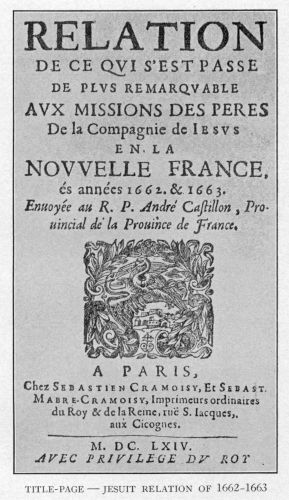
{112} This time the Indian canoes struck off into Lake Superior instead of Lake Michigan, and coasted that billowy inland sea with its iron shore and shadowy forests. On the northwest side of the lake, somewhere between Duluth and Fort William, the explorers joined the Crees, and proceeded northwestward with them, hunting along that Indian trail to become famous as the fur traders' highway—from Lake Superior to the Lake of the Woods. The first white man's fort built west of the Great Lakes, the terrible famine that winter, and the visits of the Sioux—are all a story in themselves. Spring found the explorers following the Crees over the height of land from Lake Superior to Hudson Bay. As soon as the ice loosened, dugouts were launched, and the voyageurs began that hardest of all canoe trips in America, through the forest hinterland of Ontario. Here the rivers were a stagnant marsh, with outlet hidden by dankest forest growth where the light of the sun never penetrated. There the waters swollen by spring thaw and broken by the ice jam whirled the {113} boats into rapids before the paddlers realized. There was wading to mid-waist in ice water. There were nights when camp was made on water-soaked moss. There were days when the windfall compelled the canoemen to take the canoes out of the water and carry them half the time. "At last," writes Radisson, "we came to the sea, where we found an old house all demolished and battered with bullets. The Crees told us about Europeans being here; and we went from isle to isle all that summer." At this time the canoes must have been coasting the south shore of James Bay, headed east; for Radisson presently explains that they came to a river, which rose in a lake near the source of the Saguenay—namely Rupert River. What was the old house battered with bullets? Was it Hudson's winter fort of 1610-1611? The Indians of Rupert River to this day have legends of Hudson having come back to his fort when cast away by the mutineers.
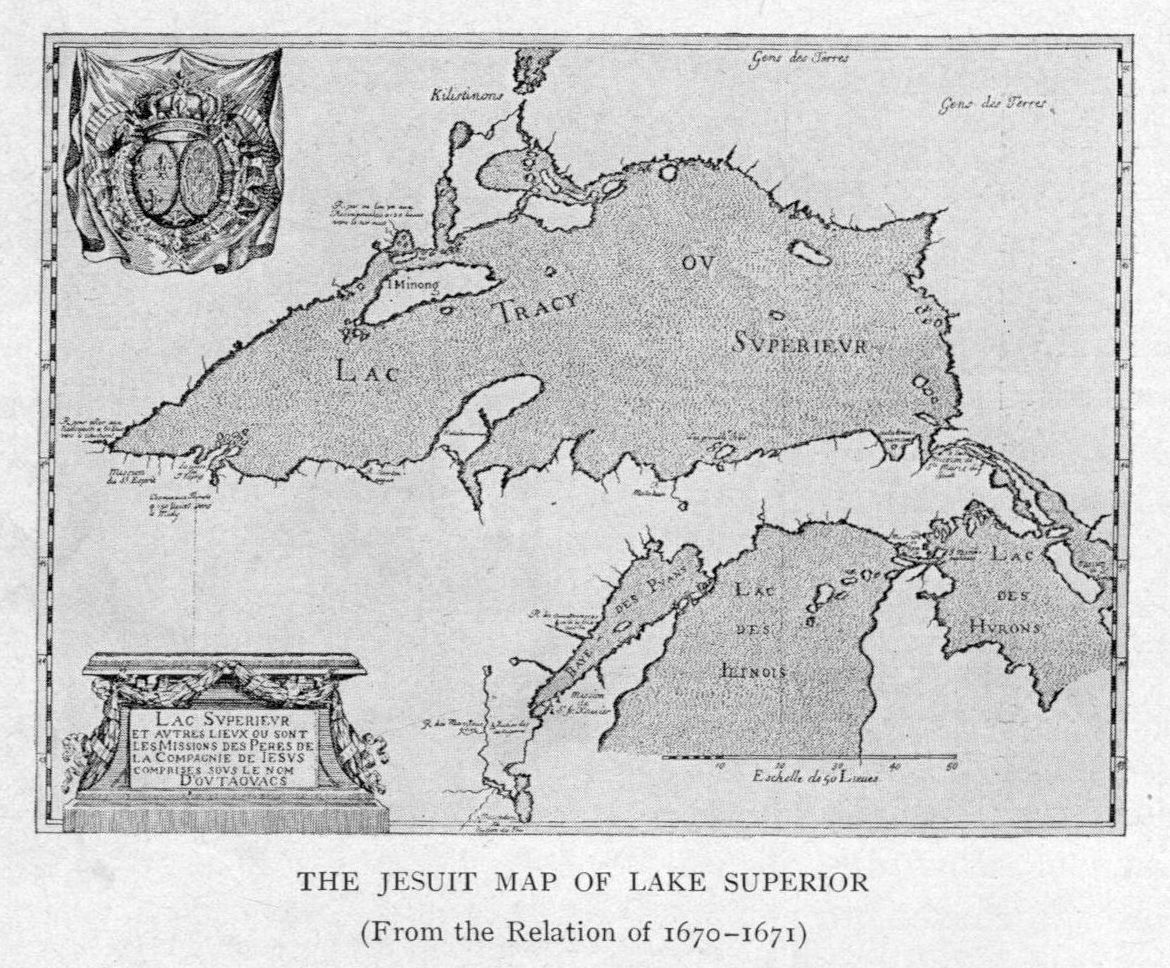
The furs that Radisson and Groseillers brought back from the north this time were worth fabulous wealth. The cargo saved New France from bankruptcy; but the explorers had defied both Church and Governor, and all the greedy monopolists of Quebec fell on Radisson and Groseillers with jealous fury. They were fined $20,000 to build a fort at Three Rivers, though given permission to inscribe their coats of arms on the gate. A $30,000 fine went to the public treasury of New France, and a tax of $70,000 was imposed by the Farmers of the Revenue. Of the total cargo there was left to Radisson and Groseillers only $20,000.
Disgusted, the two explorers personally appealed to the Court of France; but there the monopolists were all-powerful, and justice was denied. They tried to induce some of the fishing fleet off Cape Breton to venture to the North Sea; but there the monopolists' malign influence was again felt. They were accused of having broken the laws of Quebec. Zechariah Gillam, a sea captain of Boston, who chanced to be at Port Royal, offered them his vessel for a voyage to Hudson Bay; but when the {114} doughty captain came to the ice-locked straits, his courage failed and he refused to enter. Finally, at Port Royal, with the last of their meager and dwindling capital, they hired two ships for a voyage; but one was wrecked on Sable Island while fishing for supplies, and instead of sailing for Hudson Bay in 1665, Radisson and Groseillers were summoned to Boston in a lawsuit over the lost vessel.
In Boston they met commissioners of the English government and were invited to lay their plans before Charles II, King of England. At last the tide of fortune seemed to be turning. Sailing with Sir George Carterett, after pirate raid and shipwreck, they reached London to find the plague raging, and were ordered to Windsor, where Charles received them, recommended their venture to Prince Rupert, and provided 2 pounds a week each for their living expenses.
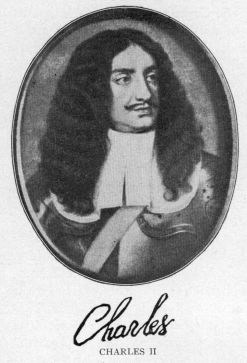
From being penniless outcasts, Radisson and Groseillers suddenly wakened to find themselves famous. Groseillers seems to have kept in the background, but Radisson, the younger man, enjoyed the full blaze of glory, was seen in the King's box at the theater, and was presently paying furious court to Mistress Mary Kirke, daughter of Sir John Kirke, whose ancestors had captured Quebec. What with war and the plague, it was 1668 before the English Admiralty could loan the two ships Eaglet and Nonsuch for a voyage to Hudson Bay. The expense was to be defrayed by a band of {115} friends known as the "Gentlemen Adventurers of England Trading to Hudson Bay," subscribing so much stock in cash, provision, and goods for trade. Radisson's ship, the Eaglet, was driven back, damaged by storm; but the other, under Groseillers, went on to Hudson Bay, where the marks set up on the overland voyage were found at Rupert River, and a small fort was built for trade. During the delay Radisson was not idle in London. He wrote the journals of his first four voyages. He married Mary Kirke—some accounts say, eloped with her. With the help of King Charles and Prince Rupert he organized what is now known as the Hudson's Bay Fur Company; for when Groseillers' ship returned in the fall of 1669, its success in trade had been so great that the Adventurers at once applied for a royal charter of exclusive monopoly in trade to all the regions, land and sea, rivers and territories, adjoining Hudson Bay. The monopoly of the Hudson's Bay Company to the Great Northwest was granted by King Charles in May, 1670.
Here, then, was the situation. England was intrenched south of the St. Lawrence. England was taking armed possession of all lands bordering on Hudson Bay and such other lands as the Adventurers might find. Wedged between was New France with a population of less than six thousand. If France could have foreseen what her injustice to two poor adventurers would cost the nation in blood and money, it would have paid her to pension Radisson like a prince of the blood royal.
NOTE TO CHAPTER VI. The viceroys of New France were shifted so frequently that little record remains of several but their names. The official list of the governors under the French régime stands as follows:
Samuel de Champlain, died at Quebec, Christmas, 1635.
Marc Antoine de Chasteaufort, pro tem.
Charles Huault de Montmagny, 1636.
Louis d'Ailleboust of the Montreal Crusaders, 1648.
Jean de Lauzon, 1651.
Charles de Lauzon-Charny (son), pro tem.
Louis d'Ailleboust, 1657.
Viscount d'Argenson, 1658, a young man who quarreled with Jesuits.
Viscount d'Avagour, 1661, a bluff soldier, who also quarreled with Jesuits.
De Mezy, 1663, appointed by Jesuits' influence, but quarreled with them.
{116} Marquis de Tracy, 1663, who was viceroy of all French possessions in America, and really sent out to act as general.
De Courcelle, 1665, who acts as governor under De Tracy and succeeds him.
Frontenac, 1672, was recalled through influence of Jesuits, whose interference he would not tolerate in civil affairs.
De La Barre, 1682, an impotent, dishonest old man, who came to mend his fortunes.
De Brisay de Denonville, 1685.
Frontenac, 1689.
De Calliere, 1699.
Marquis de Vaudreuil, 1703.
Charles le Moyne, Baron de Longeuil, 1725, son of Le Moyne, the famous fighter and interpreter of Montreal; brother of Le Moyne d'Iberville, the commander.
Marquis de Beauharnois, 1726.
Count de la Galissoniere, 1747.
Marquis de la Jonquiere, 1749.
Charles le Moyne, Baron de Longeuil, 1752, son of former Governor.
Duquesne,1752.
Marquis de Vaudreuil, 1755, descendant of first Vaudreuil.
The fur fairs of Montreal—Customs of people—Shiploads of brides—The Iroquois and De Tracy—Who first found Ontario?—Through western Ontario—Up the Great Lakes—Marquette and Jolliet—Frontenac and La Salle—La Salle rouses enemies—La Salle descends the Mississippi—Death of La Salle
While Radisson and other coureurs of the woods were ranging the wilds from the St. Lawrence to the Mississippi and from the Great Lakes to Hudson Bay, changes were almost revolutionizing the little colony of New France. No longer was everything subservient to missions. When Marguerite Bourgeoys and Jeanne Mance, of Ville-Marie Mission at Montreal, went home to France to bring out more colonists in 1659, they learned that the founder of their mission—Dauversière, the tax collector—had gone bankrupt. Montreal was penniless, though sixty more men and thirty-two girls were accompanying the nuns out this very year. The Sulpician priests had from the first been ardent friends of the Montrealers. The priests of St. Sulpice now assumed charge of Montreal. Though "God's Penny" was still collected at the fairs and market places of Old France for the conversion of Indians at Mont Royal, the fur trade was rapidly changing the character of the place.
Afraid of the Iroquois raiders, the tribes of the Up-Country now flocked to Montreal instead of Quebec, where the traders met them annually at the great Fur Fairs.
No more picturesque scene exists in Canada's past than these Fur Fairs. Down the rapids of the Ottawa and the St. Lawrence bounded the canoes of the Indian hunters, Hurons and Pottawatomies from Lake Michigan, Crees and Ojibways from Lake Superior, Iroquois and Eries and Neutrals from what is now the Province of Ontario, the northern Indians in long birch canoes light as paper, the Indians of Ontario in dugouts of oak and walnut. The Fur Fair usually took place between June and August; and the Viceroy, magnificent in red cloak faced with velvet and ornamented with gold braid, came up from Quebec {118} for the occasion and occupied a chair of state under a marquee erected near the Indian tents. Wigwams then went up like mushrooms, the Huron and Iroquois tents of sewed bark hung in the shape of a square from four poles, the tepees of the Upper Indians made of birch and buffalo hides, hung on poles crisscrossed at the top to a peak, spreading in wide circle to the ground. Usually the Fur Fair occupied a great common between St. Paul Street and the river. Furs unpacked, there stalked among the tents great sachems glorious in robes of painted buckskin garnished with wampum, Indian children stark naked, young braves flaunting and boastful, wearing headdresses with strings of eagle quills reaching to the ground, each quill signifying an enemy taken. Then came "the peddlers,"—the fur merchants,—unpacking their goods to tempt the Indians, men of the colonial noblesse famous in history, the Fôrests and Le Chesnays and Le Bers. Here, too, gorgeous in finery, bristling with firearms, were the bushrovers, the interpreters, the French voyageurs, who had to come out of the wilds once every two years to renew their licenses to trade. There was Charles Le Moyne, son of an innkeeper of Dieppe, who had come to Montreal as interpreter and won such wealth as trader that his family became members of the French aristocracy. Two of his descendants became governors of Canada; and the history of his sons is the history of Canada's most heroic age. There was Louis Jolliet, who had studied for the Jesuit priesthood but turned fur trader among the tribes of Lake Michigan. There was Daniel Greysolon Duluth, a man of good birth, ample means, and with the finest house in Montreal, who had turned bushrover, gathered round him a band of three or four hundred lawless, dare-devil French hunters, and now roamed the woods from Detroit halfway to Hudson Bay, swaying the Indians in favor of France and ruling the wilds, sole lord of the wilderness. There were Groseillers and Radisson and a shy young man of twenty-five who had obtained a seigniory from the Sulpicians at Lachine—Robert Cavelier de La Salle. Sometimes, too, Father Marquette came down with his Indians from the missions on Lake Superior. Maisonneuve, {119} too, was there, grieving, no doubt, to see this Kingdom of Heaven, which he had set up on earth, becoming more and more a kingdom of this world. Later, when the Hundred Associates lost their charter and Canada became a Royal Province governed directly by the Crown, Maisonneuve was deprived of the government of Montreal and retired to die in obscurity in Paris. Louis d'Ailleboust, Governor of Montreal when Maisonneuve is absent, Governor at Quebec when state necessities drag him from religious devotion, moves also in the gay throng of the Fur Fair. In later days is a famous character at the Fur Fairs—La Motte Cadillac of Detroit, bushrover and gentleman like Duluth, but prone to break heads when he comes to town where the wine is good.
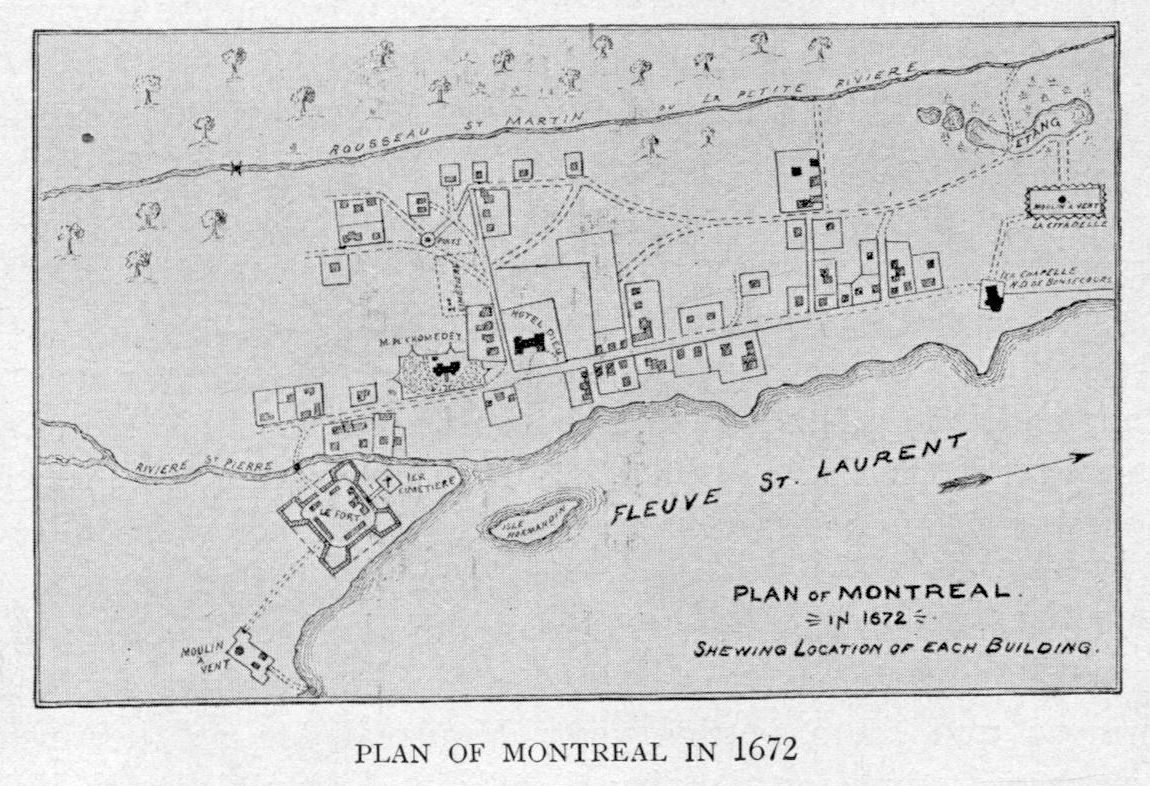
Trade was regulated by royal license. Only twenty-five canoes a year were allowed to go to the woods with three men in each, and a license was good for only two years. Fines, branding, the galleys for life, death, were the penalties for those who traded without license; but that did not prevent more than one thousand young Frenchmen running off to the woods to live like Indians. In fact, there was no other way for the youth of New {120} France to earn a living. Penniless young noblemen, criminals escaping the law, the sons of the poorest, all were on the same footing in the woods. He who could persuade a merchant to outfit him for trade disappeared in the wilds; and if he came back at all, came back with wealth of furs and bought off punishment, "wearing sword and lace and swaggering as if he were a gentleman," the annals of the day complain; and a long session in the confessional box relieved the prodigal's conscience from the sins of a life in the woods. If my young gentleman were rich enough, the past was forgotten, and he was now on the highroad to distinguished service and perhaps a title.
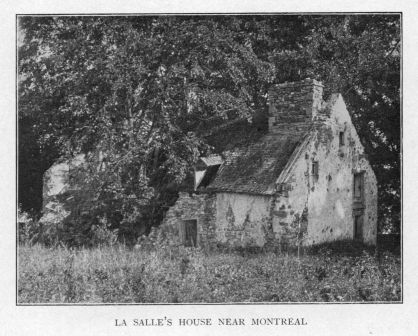
In the early days a beaver skin could be bought for a needle or a bell or a tin mirror; and in spite of all the priests could do to prevent it, brandy played a shameful part in the trade. In vain the priests preached against it, and the bishop thundered anathemas. The evils of the brandy traffic were apparent to all—the Fur Fairs became a bedlam of crime; but when the Governor called in all the traders to confer on the subject, it was plain that if the Indians did not obtain liquor from the French, they would go on down with their furs to the English of New York, and the French Governor was afraid to forbid the evil.
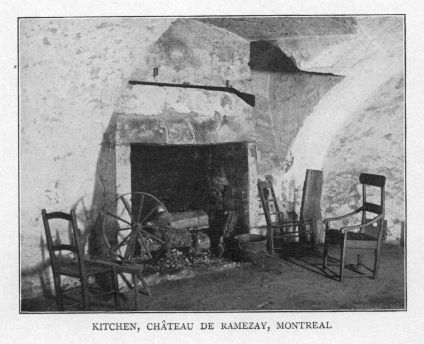
The Fur Fair over, the Governor departed for Quebec; the Indians, for their own land; the bushrovers, for their far wanderings; and there settled over Montreal for another year drowsy quiet but for the chapel bells of St. Sulpice and Ville Marie and Bon Secours—the Chapel of Ste. Anne's Good Help—built close on the verge of the river, that the voyageurs coming and going might cross themselves as they passed her spire; drowsy peace but for the chapel chimes ringing … ringing … ringing … morning … noon … and night … lilting and singing and calling all New France to prayers. As the last canoe glided up the river, and sunset silence fell on Montreal, there knelt before the dimly lighted altars of the chapels, shadow figures—Maisonneuve praying for his mission; D'Ailleboust, asking Heaven's blessing on the new shrine down at St. Anne de Beaupré near Quebec, which he had built for the miraculous {121} healing of physical ills; Dollier de Casson, priest of the wilds, manly and portly and strong, wilderness fighter for the Cross. Then the organ swells, and the chant rolls out, and till the next Fur Fair Montreal is again a mission.
When New France becomes a Crown Colony, the government consists solely and only of the Sovereign Council, to whom the King transmits his will. This council consists of the Governor, his administrative officer called the "Intendant," the bishop, and several of the inhabitants of New France nominated by the other members of the council. Of elections there are absolutely none. Popular meetings are forbidden. New France is a despotism, with the Sovereign Council representing the King. Domestic disputes, religious quarrels, civil cases, crimes,—all come before the Sovereign Council. Clients could plead their own cases without a fee, or hire a notary. Cases are tried by the Sovereign Council. Laws are passed by it. Fines are imposed and sentences pronounced; but as the Sovereign Council met only once a week, the management of affairs fell chiefly to the Intendant, whose palace became known as the Place of Justice. Of systematic taxation there was none. One fourth of all beaver went for public revenue. Part of Labrador was reserved as the King's Domain for trading, and sometimes a duty of ten per cent was charged on liquor brought into the colony. The stroke of the Sovereign Council's pen could create a law, and the stroke of the King's pen annul it. Laws are passed forbidding men, who are not nobles, assuming the title of Esquire or Sieur on penalty of what would be a $500 fine. "Wood is not to be piled on the streets." "Chimneys are to be built large enough to admit a chimney sweep." "Only shingles of oak and walnut may be used in towns where there is danger of fire." Swearing is punished by fines, by the disgrace of being led through the streets at the end of a rope and begging pardon on knees at the church steps, by branding if the offense be repeated. Murderers are punished by being shot, or exposed in an iron cage on the cliffs above the St. Lawrence till death {122} comes. No detail is too small for the Sovereign Council's notice. In fact, a case is on record where a Mademoiselle André is expelled from the colony for flirting so outrageously with young officers that she demoralizes the garrison. Mademoiselle avoids the punishment by bribing one of the officers on the ship where she is placed, and escaping to land in man's clothing.
The people of New France were regulated in every detail of their lives by the Church as well as the Sovereign Council. For trading brandy to the Indians, Bishop Laval thunders excommunication at delinquents; and Bishop St. Vallière, his successor, publicly rebukes the dames of New France for wearing low-necked dresses, and curling their hair, and donning gay ribbons in place of bonnets. "The vanity of dress among women becomes a greater scandal than before," he complains. "They affect immodest headdress, with heads uncovered or only concealed under a collection of ribbons, laces, curls, and other vanities."
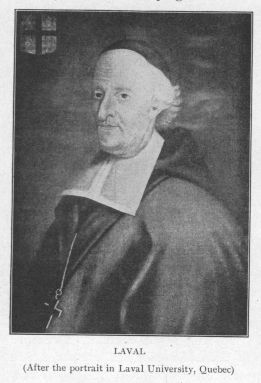
The laws came from the King and Sovereign Council. The enforcement of them depended on the Intendant. As long as he was a man of integrity, New France might live as happily as a family under a despotic but wise father. It was when the Intendant became corrupt that the system fell to pieces. {123} Of all the intendants of New France, one name stands preeminent, that of Jean Talon, who came to Canada, aged forty, in 1665, at the time the country became a Crown Province. One of eleven children of Irish origin, Talon had been educated at the Jesuit College of Paris, and had served as an intendant in France before coming to Canada. Officially he was to stand between the King and the colony, to transmit the commands of one and the wants of the other. He was to stand between the Governor and the colony, to watch that the Governor did not overstep his authority and that the colony obeyed the laws. He was to stand between the Church and the colony, to see that the Church did not usurp the prerogatives of the Governor and that the people were kept in the path of right living without having their natural liberties curtailed. He was, in a word, to accept the thankless task of taking all the cuffs from the King and the kicks from the colony, all the blame of whatever went amiss and no credit for what went well.
When Talon came to Canada there were less than two thousand people in the colony. He wrote frantically to His Royal Master for colonists. "We cannot depeople France to people Canada," wrote the King; but from his royal revenue he set aside money yearly to send men to Canada as soldiers, women as wives. In 1671 one hundred and sixty-five girls were sent out to be wedded to the French youth. A year later came one hundred and fifty more. Licenses would not be given to the wood rovers for the fur trade unless they married. Bachelors were fined unless they quickly chose a wife from among the King's girls. Promotion was withheld from the young ensigns and cadets in the army unless they found brides. Yearly the ships brought girls whom the curés of France had carefully selected in country parishes. Yearly Talon gave a bounty to the middle-aged duenna who had safely chaperoned her charges across seas to the convents of Quebec and Montreal, where the bashful suitors came to make choice. "We want country girls, who can work," wrote the Intendant; and girls who could work the King sent, instructing Talon to mate as many as he {124} could to officers of the Carignan Regiment, so that the soldiers would be likely to turn settlers. Results: by 1674 Canada had a population of six thousand seven hundred; by 1684, of nearly twelve thousand, not counting the one thousand bush lopers who roamed the woods and married squaws.
Between Acadia and Quebec lay wilderness. Jean Talon opened a road connecting the two far-separated provinces. The Sovereign Council had practically outlawed the bush lopers. Talon pronounced trade free, and formed them into companies of bush fighters—defenders of the colony. Instead of being wild-wood bandits, men like Duluth at Lake Superior and La Motte Cadillac at Detroit became commanders, holding vast tribes loyal to France. For years there had been legends of mines. Talon opened mines at Gaspé and Three Rivers and Cape Breton. All clothing had formerly been imported from France. Talon had the inhabitants taught—and they badly needed it, for many of their children ran naked as Indians—to weave their own clothes, make rugs, tan leather, grow straw for hats,—all of which they do to this day, so that you may enter a habitant house and not find a single article except saints' images, a holy book, and perhaps a fiddle, which the habitant has not himself made. "The Jesuits assume too much authority," wrote the King. Talon lessened their power by inviting the Recollets to come back to Canada and by encouraging the Sulpicians. Instead of outlawing young Frenchmen for deserting to the English, Talon asked the King to grant titles of nobility to those who were loyal, like the Godefrois and the Denis' and the Le Moynes and young Chouart Groseillers, son of Radisson's brother-in-law, so that there sprang up a Canadian noblesse which was as graceful with the frying pan of a night camp fire in the woods as with the steps of a stately dance in the governor's ballroom. Above all did Talon encourage the bush-rovers in their far wanderings to explore new lands for France.
New France had not forgotten the Iroquois treachery to the French colony at Onondaga. Iroquois raid and ambuscade kept the hostility of these sleepless foes fresh in French memory. {125} When Jean Talon came to Canada as intendant, there had come as governor Courcelle, with the Marquis de Tracy as major general of all the French forces in America,—the West Indies as well as Canada. The Carignan Regiment of soldiers seasoned in European campaigns had been sent to protect the colonists from Indian raid; and it was determined to strike the Iroquois Confederacy a blow that would forever put the fear of the French in their hearts.
Richelieu River was still the trail of the Mohawk warrior; and De Tracy sent his soldiers to build forts on this stream at Sorel and Chambly—named after officers of the regiment. January, 1666, Courcelle, the Governor, set out on snowshoes to invade the Iroquois Country with five hundred men, half Canadian bushrovers, half regular soldiers. By some mistake the snow-covered trail to the Mohawks was missed, the wrong road followed, and the French Governor found himself among the Dutch at Schenectady. March rains had set in. Through the leafless forests in driving sleet and rain retreated the French. Sixty had perished from exposure and disease before Courcelle led his men back to the Richelieu. The Mohawk warriors showed their contempt for this kind of white-man warfare by raiding some French hunters on Lake Champlain and killing a young nephew of De Tracy.
Nevertheless, on second thought, twenty-four Indian deputies proceeded to Quebec with the surviving captives to sue for peace. De Tracy was ready for them. Solemnly the peace pipe had been puffed and solemnly the peace powwow held. The Mohawk chief was received in pompous state at the Governor's table. Heated with wine and mistaking French courtesy for fear, the warrior grew boastful at the white chief's table.
"This is the hand," he exclaimed, proudly stretching out his right arm, "this is the hand that split the head of your young man, O Onontio!"
"Then by the power of Heaven," thundered the Marquis de Tracy, springing to his feet ablaze with indignation, "it is the hand that shall never split another head!"
{126} Forthwith the body of the great Mohawk chief dangled a scarecrow to the fowls of the air; and the other terrified deputies tore breathlessly back for the Iroquois land with such a story as one may guess.
With thirteen hundred men and three hundred boats the Marquis de Tracy and Courcelle set out from the St. Lawrence in October for the Iroquois cantons. Charles Le Moyne, the Montreal bushrover, led six hundred wild-wood followers in their buckskin coats and beaded moccasins, with hair flying to the wind like Indians; and one hundred Huron braves were also in line with the Canadians. The rest of the forces were of the Carignan Regiment. Dollier de Casson, the Sulpician priest, powerful of frame as De Tracy himself, marched as chaplain.
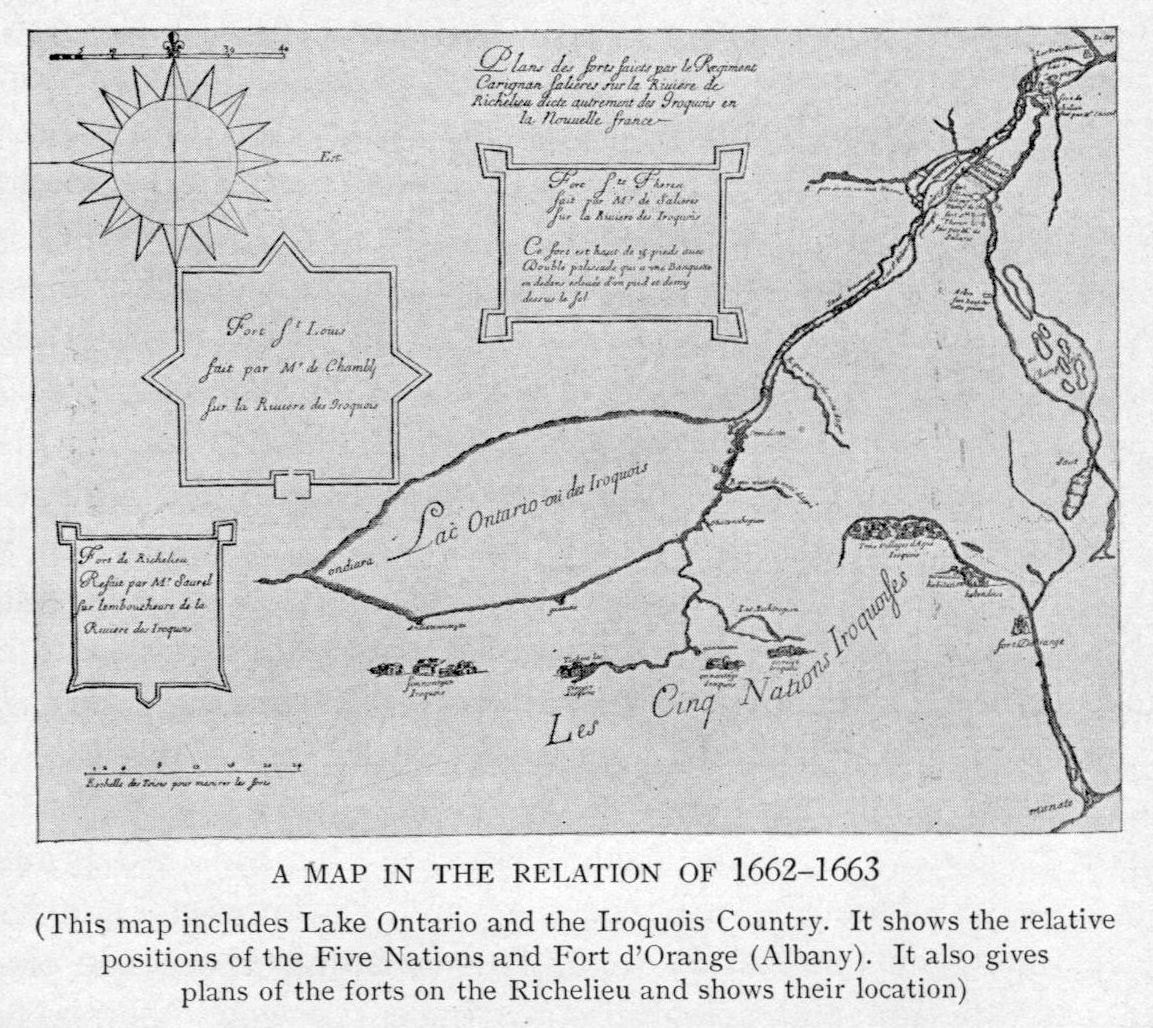
Never had such an expedition been seen before on the St. Lawrence. Drums beat reveille at peep of dawn. Fifes outshrilled the roar of rapids, and stately figures in gold braid {127} and plumed hats glided over the waters of the Richelieu among the painted forests of the frost-tinted maples. Indians have a way of conveying news that modern trappers designate as "the moccasin telegram." "Moccasin telegram" now carried news of the coming army to the Iroquois villages, and the alarm ran like wildfire from Mohawk to Onondaga and from Onondaga to Seneca. When the French army struck up the Mohawk River, and to beat of drum charged in full fury out of the rain-dripping forests across the stubble fields to attack the first palisaded village, they found it desolate, deserted, silent as the dead, though winter stores crammed the abandoned houses and wildest confusion showed that the warriors had fled in panic. So it was with the next village and the next. The Iroquois had stampeded in blind flight, and the only show of opposition was a wild whoop here and there from ambush. De Tracy took possession of the land for France, planted a cross, and ordered the villages set on fire. For a time, at least, peace was assured with the Iroquois.
Who first discovered the Province of Ontario? Before Champlain had ascended the Ottawa, or the Jesuits established their missions south of Lake Huron, young men sent out as wood rovers had canoed up the Ottawa and gone westward to the land of the Sweet Water Seas. Was it Vignau, the romancer, or Nicolet, the coureur de bois, or the boy Etienne Brulé, who first saw what has been called the Garden of Canada, the rolling meadows and wooded hills that lie wedged in between the Upper and the Lower of the Great Lakes? Tradition says it was Brulé; but however that may be, little was known of what is now Ontario except in the region of the old Jesuit missions around Georgian Bay. It was not even known that Michigan and Huron were two lakes. The Sulpicians of Montreal had a mission at the Bay of Quinte on Lake Ontario, and the south shore of the lake, where it touched on Iroquois territory, was known to the Jesuits; but from Quinte Bay to Detroit—a distance equal to that from New York to Chicago, or London to Italy—was an unknown world.
{128} But to return to the explorations which Jean Talon, the Intendant, had set in motion—
When Dollier de Casson, the soldier who had become Sulpician priest, returned from the campaign against the Iroquois, he had been sent as a missionary to the Nipissing Country. There he heard among the Indians of a shorter route to the Great River of the West—the Mississippi—than by the Ottawa and Sault Ste. Marie. The Indians told him if he would ascend the St. Lawrence to Lake Ontario and Lake Erie, he could portage overland to the Beautiful River,—Ohio,—which would carry him down to the Mississippi.
The Sulpicians had been encouraged by Talon in order to eclipse and hold in check the Jesuits. They were eager to send their missionaries to the new realm of this Great River, and hurried Dollier de Casson down to Quebec to obtain Intendant Talon's permission.
There, curiously enough, Dollier de Casson met Cavalier de La Salle, the shy young seigneur of La Chine, intent on almost the same aim,—to explore the Great River. Where the Sulpicians had granted him his seigniory above Montreal he had built a fort, which soon won the nickname of La Chine,—China,—because its young master was continually entertaining Iroquois Indians within the walls, to question them of the Great River, which might lead to China.
Governor Courcelle and Intendant Talon ordered the priest and young seigneur to set out together on their explorations. The Sulpicians were to bear all expenses, buying back La Salle's lands to enable him to outfit canoes with the money. Father Galinée, who understood map making, accompanied Dollier de Casson, and the expedition of seven birch canoes, with three white men in each, and two dugouts with Seneca Indians, who had been visiting La Salle, set out from Montreal on July 6, 1669. Not a leader in the party was over thirty-five years of age. Dollier de Casson, the big priest, was only thirty-three and La Salle barely twenty-six. Corn meal was carried as food. For the rest, they were to depend on chance shots. With {129} numerous portages, keeping to the south shore of the St. Lawrence because that was best known to the Seneca guides, the canoes passed up Lake St. Louis and Lake St. Francis and glided through the sylvan fairyland of the Thousand Islands, coming out in August on Lake Ontario, "which," says Galinée, "appeared to us like a great sea." Striking south, they appealed to the Seneca Iroquois for guides to the Ohio, but the Senecas were so intent on torturing some prisoners recently captured, that they paid no heed to the appeal. A month was wasted, and the white men proceeded with Indian slaves for guides, still along the south shore of the lake.
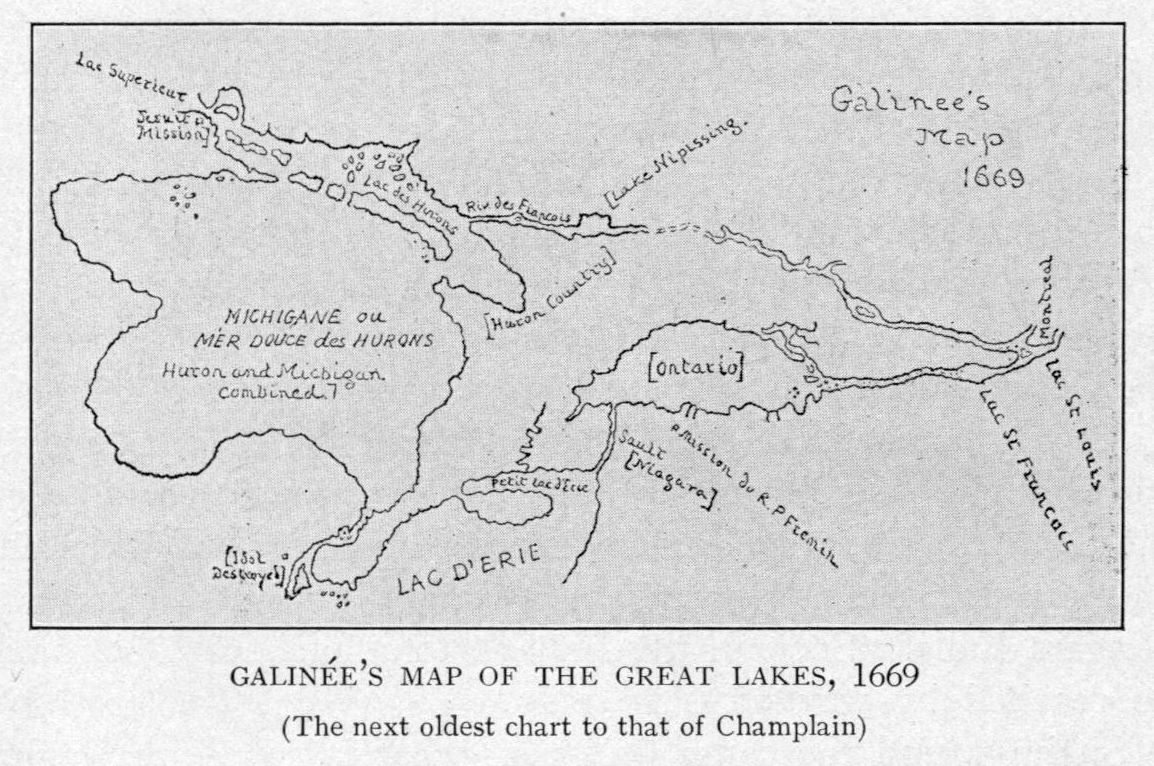
At the mouth of Niagara River they could hear the far roar of the famous falls, which Indian legend said "fell over rocks twice the height of the highest pine tree." The turbulent torrent of the river could not be breasted, so they did not see the falls, but rounded on up Lake Ontario to the region now near the city of Hamilton. Here they had prepared to portage overland to some stream that would bring them down to Lake Erie, when, to their amazement, they learned from a passing Indian camp that two Frenchmen were on their way down this very lake from searching copper mines on Lake Superior.
{130} The two Frenchmen were Louis Jolliet, yet in his early twenties, to become famous as an explorer of the Mississippi, and one Monsieur Jean Peré, soldier of fortune, who was to set France and England by the ears on Hudson Bay. September 24, as La Salle and Dollier were dragging their canoes through the autumn-colored sumacs of the swamp, there plunged from among the russet undergrowth the two wanderers from the north,—Jolliet and Peré, dumb with amazement to meet a score of men toiling through this tenantless wilderness. The two parties fell on each other's necks with delight and camped together. Jolliet told a story that set the missionaries' zeal on fire and inflamed La Salle with mad eagerness to pass on to the goal of his discoveries. Jolliet and Peré had not found the copper mine for Talon on Lake Superior, but they had learned two important secrets from the Indians. First, if Iroquois blocked the way up the Ottawa, there was clear, easy water way down to Quebec by Lake Huron and Lake Ste. Claire and Lake Erie. Jolliet's guide had brought them down this way, first of white men to traverse the Great Lakes, only leaving them as they reached Lake Erie and advising them to portage across up Grand River to avoid Niagara Falls. Second, the Indians told him the Ohio could be reached by way of Lake Erie.
Sitting round the camp fires near what is now Port Stanley, La Salle secretly resolved to go on down to Quebec with Jolliet and rearrange his plans independent of the missionaries. The portaging through swamps had affected La Salle's health, and he probably judged he could make quicker time unaccompanied by missionaries. As for Galinée and Dollier, when they knelt in prayer that night, they fervently besought Heaven to let them carry the Gospel of truth to those benighted heathen west of Lake Michigan, of whom Jolliet told. Dollier de Casson sent a letter by Jolliet to Montreal, begging the Sulpicians to establish a mission near what is now Toronto. Early next morning an altar was laid on the propped paddles of the canoes and solemn service held. La Salle and his four canoes went back to Montreal with Jolliet and Peré; Dollier and Galinée coasted along the shores of Lake Erie westward.
{131} It was October. The forests were leafless, the weather damp, the lake too stormy for the frail canoes. As game was plentiful, the priests decided to winter on a creek near Port Dover. Here log houses were knocked up, and the servants dispersed moose hunting for winter supplies. Then followed the most beautiful season of the year in the peninsula of Ontario, Indian summer, dreamy warm days after the first cold, filling the forest with a shimmer of golden light, the hills with heat haze, while the air was odorous with smells of nuts and dried leaves and grapes hanging thick from wild vines. "It was," writes Galinée, "simply an Earthly Paradise, the most beautiful region that ever I have seen in my life, with open woods and meadows and rivers and game in plenty." In this Earthly Paradise the priests passed the winter, holding services three times a week—"a winter that ought to be worth ten years of any other kind of life" Dollier calculated, counting up masses and vespers and matins. Sometimes when the snow lay deep and the weird voices of the wind hallooed with bugle sound through the lonely forest, the priests listening inside fancied that they heard "the hunting of Arthur,"—unearthly huntsmen coursing the air after unearthly game.
March 23 (Sunday), 1670, the company paraded down to Lake Erie from their sheltered quarters, and, erecting a cross, took possession of this land for France. Then they launched their boats to ascend the other Sweet Water Seas. The preceding autumn the priests had lost some of their baggage, and now, in camp near Point Pelee, a sweeping wave carried off the packs in which were all the holy vessels and equipments for the mission chapel. They decided to go back to Montreal by way of Sault Ste. Marie, and ascended to Lake Ste. Claire. Game had been scarce for some days, the weather tempestuous, and now the priests thought they had found the cause. On one of the rocks of Lake Ste. Claire was a stone, to which the Indians offered sacrifices for safe passage on the lakes. To the priests the rude drawing of a face seemed graven images of paganism,—signs of Satan, who had baffled their hunting and caused loss {132} of their packs. "I consecrated one of my axes to break this god of stone, and, having yoked our canoes abreast, we carried the largest pieces to the middle of the river and cast them in. God immediately rewarded us, for we killed a deer." Following the east shore of Lake Huron, the priests came, on May 25, to Sault Ste. Marie, where the Jesuits Dablon and Marquette had a mission. Three days late, they embarked by way of the Ottawa for Montreal, where they arrived on June 18, 1670.
Meanwhile, what had become of Jolliet and Peré and La Salle?
They have no sooner reached Quebec with their report than Talon orders St. Lusson to go north and take possession at Sault Ste. Marie of all these unknown lands for France. Jolliet accompanies St. Lusson. Nicholas Perrot, a famous bushrover, goes along to summon the Indians, and the ceremony takes place on June 14, 1671, in the presence of the Jesuits at the Sault, by which the King of France is pronounced lord paramount of all these regions.
When Jolliet comes down again to Quebec, he finds Count Frontenac has come as governor, and Jean Talon, the Intendant, is sailing for France. Before leaving, Talon has recommended Jolliet as a fit man to explore the Great River of the West. With him is commissioned Jacques Marquette, the Jesuit, who has labored among the Indians west of Lake Superior. The two men set out in birch canoes, with smoked meat for provisions, from Michilimackinac mission, May 17, 1673, for Green Bay, Lake Michigan. Ascending Fox River on June 17, they induce the Mascoutin Indians, who had years ago conducted Radisson by this same route, to pilot them across the portage to the headwaters of the Wisconsin River.
Their way lies directly across that wooded lake region, which has in our generation become the resort first of the lumberman, then of the tourist,—a rolling, wooded region of rare sylvan beauty, park-like forests interspersed with sky-colored lakes. Six weeks from the time they had left the Sault, Wisconsin River carried their canoe out on the swift eddies of a mighty river {133} flowing south,—the Mississippi. For the first time the boat of a Canadian voyageur glided down its waters.
Each night as the explorers landed to sleep under the stars, the tilted canoe inverted with end on a log as roof in case of rain, Marquette fell to knees and invoked the Virgin's aid on the expedition; and each morning as Jolliet launched the boat out on the waters through the early mist, he headed closely along shore on the watch for sign or footprint of Indian.
The river gathered volume as it rolled southward, carving the clay cliffs of its banks in a thousand fantastic forms. Where the bank was broken, the prairies were seen in heaving seas of grass billowing to the wind like water, herds of countless buffalo pasturing knee-deep. To Marquette and Jolliet, burning with enthusiasm, it seemed as if they were finding a new world for France half as large as all Europe. For two weeks not a sail, not a canoe, not a soul did they see. Then the river carried them into the country of the Illinois, past Illinois Indians who wore French clothing, and pictured rocks where the Indians had painted their sign language. There was no doubt now in the explorers' minds,—the Mississippi did not lead to China but emptied in the Gulf of Mexico. A furious torrent of boiling muddy water pouring in on the right forewarned the Missouri; and in a few more days they passed on the left the clear current of Beautiful River,—the Ohio.
It was now midsummer. The heat was heavy and humid. Marquette's health began to suffer, and the two explorers spread an awning of sailcloth above the canoe as they glided with the current. Towards the Arkansas, Indians appeared on the banks, brandishing weapons of Spanish make. Though Jolliet, with a peace pipe from the Illinois Indians, succeeded in reassuring the hostiles, it was unsafe to go farther south. They had established the fact,—the Mississippi emptied into the Gulf of Mexico,—and on July 17 turned back. It was harder going against stream, which did not mend Marquette's health; so when the Illinois Indians offered to show them a shorter way to Lake Michigan, they followed up Illinois River and crossed the Chicago portage {134} to Lake Michigan. Jolliet went on down to Quebec with his report. Marquette remained half ill to establish missions in Michigan. Here, traveling with his Indians in 1675, the priest died of the malady contracted in the Mississippi heat, and was buried in a lonely grave of the wildwood wilderness where he had wandered. Louis Jolliet married and settled down on his seigniory of Anticosti Island.
Though he had as yet little to show for the La Chine estate, which he had sacrificed, La Salle had not been idle, but was busy pushing French dominion by another route to the Mississippi.
Count Frontenac had come to New France as all the viceroys came—penniless, to mend his fortunes; and as the salary of the Governor did not exceed $3000 a year, the only way to wealth was by the fur trade; but which way to look for fur trade! Hudson Bay, thanks to Radisson, was in the hands of England. Taudoussac was farmed out to the King. The merchants of Quebec and Three Rivers and Montreal absorbed all the furs of the tribes from the Ottawa; and New England drained the Iroquois land. There remained but one avenue of new trade, and that was west of the Lakes, where Jolliet had been.
Taking only La Salle into his confidence, Frontenac issued a royal mandate commanding all the officers and people of New France to contribute a quota of men for the establishment of a fort on Lake Ontario. By June 28, 1673, the same year that Jolliet had been dispatched for the Mississippi, there had gathered at La Chine, La Salle's old seigniory near Montreal, four hundred armed men and one hundred and twenty canoes, which Frontenac ordered painted gaudily in red and blue. With these the Governor moved in stately array up the St. Lawrence, setting the leafy avenues of the Thousand Islands ringing with trumpet and bugle, and sweeping across Lake Ontario in martial lines to the measured stroke of a hundred paddles.
Long since, La Salle's scouts had scurried from canton to canton, rallying the Iroquois to the council of great "Onontio." At break of day, July 13, while the sunrise was just bursting up {135} over the lake, Frontenac, with soldiers drawn up under arms, himself in velvet cloak laced with gold braid, met the chiefs of the Iroquois Confederacy at the place to be known for years as Fort Frontenac, now known as Kingston, a quiet little city at the entrance of Lake Ontario on the north shore.
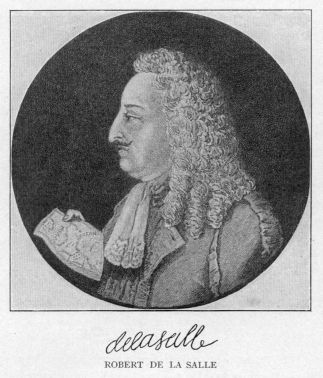
Ostensibly the powwow was to maintain peace. In reality, it was to attract the Iroquois, and all the tribes with whom they traded, away from the English, down to Frontenac's new fort with their furs. It is a question if all the military pomp deceived a living soul. Before the Governor had set his sappers to work on the foundations of a fort, the merchants of Montreal—the Le Bers and Le Moynes and Le Chesnayes and Le Fôrests—were furious with jealousy. Undoubtedly Fort Frontenac would be the most valuable fur post in America.
{136}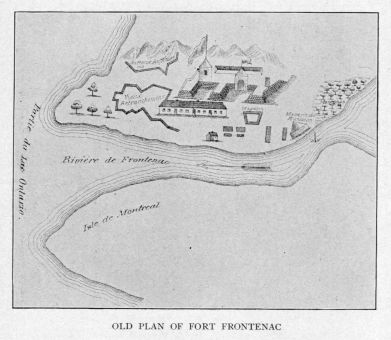
Determined to have the support of the Court, where his wife was in high favor, Count Frontenac dispatched La Salle to France in 1674 with letters of strongest recommendation, which, no doubt, Jean Talon, the former Intendant, indorsed on the spot. La Salle's case was a strong one. He was to offer to found a line of forts establishing French dominion from Lake Ontario to the valley of the Mississippi, which Jolliet had just explored. In return, he asked for patent of nobility and the grant of a seigniory at Fort Frontenac; in other words, the monopoly of the furs there, which would easily clear him $20,000 a year. It has never been proved, but one may suspect that his profits were to be divided with Count Frontenac. Both requests were at once granted; and La Salle came back to a hornet's nest of enmity in Canada. Space forbids to tell of the means taken to defeat him; for, by promising to support Recollet friars at his fort instead of Jesuits, La Salle had added {137} to the enmity of the merchants, the hatred of the Jesuits. Poison was put in his food. Iroquois were stirred up to hostility against him.
Meanwhile no enmity checks his ardor. He has replaced the wooden walls of Fort Frontenac with stone, mounted ten cannon, manned the fort with twenty soldiers, maintained more than forty workmen, cleared one hundred acres for crops, and in 1677 is off again for France to ask permission to build another fort above Niagara. This time, when La Salle comes out, he is accompanied by a man famous in American annals, a soldier of fortune from Italy, cousin of Duluth the bushrover, one Henry Tonty, a man with a copper hand, his arm having been shattered in war, who presently comes to have repute among the Indians as a great "medicine man," because blows struck by that metal hand have a way of being effective. By 1678 the fort is built above Niagara. By 1679 a vessel of forty-five tons and ten cannon is launched on Lake Erie, the Griffon, the first vessel to plow the waters of the Great Lakes. As she slides off her skids, August 17, to go up to Michilimackinac for a cargo of furs, Te Deum is chanted from the new fort, and Louis Hennepin, the Dutch friar, standing on deck in full vestments, asks Heaven's blessing on the ship's venture.
Scant is the courtesy of the Michilimackinac traders as the Griffon's guns roar salute to the fort. Cold is the welcome of the Jesuits as La Salle enters their chapel dressed in scarlet mantle trimmed with gold. And to be frank, though La Salle was backed by the King, he had no right to trade at Michilimackinac, for his monopoly explicitly states he shall not interfere with the trade of the north, but barter only with the tribes towards the Illinois. Never mind! he loads his ships to the water line with furs to pay his increasing debts, and sends the ship on down to Niagara with the cargo, while he and Tonty, with different parties, proceed to the south end of Lake Michigan to cross the Chicago portage leading to the Mississippi. Did the jealous traders bribe the pilot to sink the ship to bottom? Who knows? Certain it is when Tonty and La Salle went down the {138} Illinois early in the new year of 1680, news of disasters came thick and fast. The Griffon had sunk with all her cargo. The ship from France with the year's supplies for La Salle at Fort Frontenac had been wrecked at the mouth of the St. Lawrence; and worse than these losses, which meant financial ruin, here among the Illinois Indians were Mascoutin Indian spies bribed to stir up trouble for La Salle. Small wonder that he named the fort built here Fort Crèvecoeur,—Fort Broken Heart.
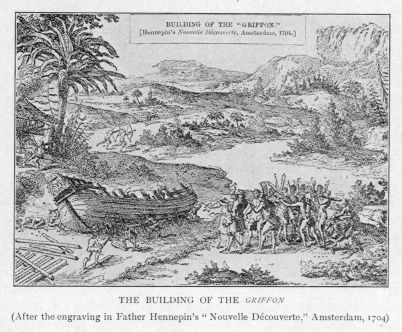
If La Salle had been fur trader only, as his enemies averred, and not patriot, one wonders why he did not sit still in his fort at Frontenac and draw his profits of $20,000 a year, instead of risking loss and poison and ruin and calumny and death by chasing the phantom of his great desire to found a New France on the Mississippi.
Never pausing to repine, he orders Hennepin, the friar, to take two voyageurs and descend Illinois River as far as the Mississippi. Tonty he leaves in charge of the Illinois fort. He {139} himself proceeds overland the width of half a continent, to Fort Frontenac and Montreal.
Friar Hennepin's adventures have been told in his own book of marvels, half truth, half lies. Jolliet, it will be remembered, had explored the Great River south of the Wisconsin. Hennepin struck up from the mouth of the Illinois, to explore north, and he found enough adventure to satisfy his marvel-loving soul. The Sioux captured him somewhere near the Wisconsin. In the wanderings of his captivity he went as far north as the Falls of St. Anthony, the site of Minnesota's Twin Cities, and he finally fell in with a band of Duluth's bushrovers from Kaministiquia (modern Fort William), Lake Superior.
The rest of the story of La Salle on the Mississippi is more the history of the United States than of Canada, and must be given in few words.
When La Salle returned from interviewing his creditors on the St. Lawrence, he found the Illinois Indians dispersed by hostile Iroquois whom his enemies had hounded on. Fort Crèvecoeur had been destroyed and plundered by mutineers among his own men. Only Tonty and two or three others had remained faithful, and they had fled for their lives to Lake Michigan. Not knowing where Tonty had taken refuge, La Salle pushed on down the Illinois River, and for the first time beheld the Mississippi, the goal of all his dreams; but anxiety for his lost men robbed the event of all jubilation. Once more united with Tonty at Michilimackinac, La Salle returned dauntlessly to the Illinois. Late in the fall of 1681 he set out with eighteen Indians and twenty Frenchmen from Lake Michigan for the Illinois. February of 1682 saw the canoes floating down the winter-swollen current of the Illinois River for the Mississippi, which was reached on the 6th. A week later the river had cleared of ice, and the voyageurs were camped amid the dense forests at the mouth of the Missouri. The weather became warmer. Trees were donning their bridal attire of spring and the air was heavy with the odor of blossoms. Instead of high cliffs, carved fantastic by {140} the waters, came low-lying swamps, full of reeds, through which the canoes glided and lost themselves. Camp after camp of strange Indian tribes they visited, till finally they came to villages where the Indians were worshipers of the sun and wore clothing of Spanish make. By these signs La Salle guessed he was nearing the Gulf of Mexico. Fog lay longer on the river of mornings now. Ground was lower. They were nearing the sea. April 6 the river seemed to split into three channels. Different canoes followed each channel. The muddy river water became salty. Then the blue sky line opened to the fore through the leafy vista of the forest-grown banks. Another paddle stroke, and the canoes shot out on the Gulf of Mexico,—La Salle erect and silent and stern as was his wont. April 9, 1682, a cross is planted with claim to this domain for France. To fire of musketry and chant of Te Deum a new empire is created for King Louis of France. Louisiana is its name.
Take a map of North America. Look at it. What had the pathfinders of New France accomplished? Draw a line from Cape Breton to James Bay, from James Bay down the Mississippi to the Gulf of Mexico, from the Gulf of Mexico across to Cape Breton. Inside the triangle lies the French empire of the New World,—in area the size of half Europe. That had the pathfinders accomplished for France.
La Salle was too ill to proceed at once from the Mississippi to Quebec. As long as Frontenac remained governor, La Salle could rely on his hungry creditors and vicious enemies—now eager as wolves, to confiscate his furs and seize his seigniory at Fort Frontenac—being restrained by the strong hand of the Viceroy; but while La Salle lay ill at the Illinois fort, Frontenac was succeeded by La Barre as viceroy; and the new Governor was a weak, avaricious old man, ready to believe any evil tale carried to his ears. He at once sided with La Salle's enemies, and wrote the French King that the explorer's "head was turned"; that La Salle "accomplished nothing, but spent his life leading bandits through the forests, pillaging Indians; {141} that all the story of discovering the Mississippi was a fabrication." When La Salle came from the wilderness he found himself a ruined man. Fort Frontenac had been seized by his enemies. Supplies for the Mississippi had been stopped, and officers were on their way to seize the forts there.
Leaving Tonty in charge of his interests, La Salle sailed for France where he had a strong friend at court in Frontenac. As it happened, Spain and France were playing at the game of checkmating each other; and it pleased the French King to restore La Salle's forts and to give the Canadian explorer four ships to colonize the Mississippi by way of the Gulf of Mexico. This was to oust Spain from her ancient claim on the gulf; but Beaujeu, the naval commander of the expedition, was not in sympathy with La Salle. Beaujeu was a noble by birth; La Salle, only a noble of the merchant classes. The two bickered and quarreled from the first. By some blunder, when the ships reached the Gulf of Mexico, laden with colonists, in December of 1684, they missed the mouth of the Mississippi and anchored off Texas. The main ship sailed back to France. Two others were wrecked, and La Salle in desperation, after several trips seeking the Mississippi, resolved to go overland by way of the Mississippi valley and the Illinois to obtain aid in Canada for his colonists. All the world knows what happened. Near Trinity River in Texas some of his men mutinied. Early in the morning of the 19th of March, 1687, La Salle left camp with a friar and Indian to ascertain what was delaying the plotters, who had not returned from the hunt. Suddenly La Salle seemed overwhelmed by a great sadness. He spoke of death. A moment later, catching sight of one of the delinquents, he had called out. A shot rang from the underbush; another shot; and La Salle reeled forward dead, with a bullet wound gaping in his forehead. The body of the man who had won a new empire for France was stripped and left naked, a prey to the foxes and carrion birds. So perished Robert Cavelier de La Salle, aged forty-four.
Nor need the fate of the mutineers be told here. The fate of mutineers is the same the world over. Having slain their {142} commander, they fell on one another and perished, either at one another's hands or among the Indians. As for the colonists of men, women, and girls left in Texas, the few who were not massacred by the Indians fell into the hands of the Spaniards. La Salle's debts at the time of his death were what would now be half a million dollars. His life had ended in what the world calls ruin, but France entered into his heritage.
With the passing of Robert de La Salle passes the heroic age of Canada,—its age of youth's dream. Now was to come its manhood,—its struggles, its wars, its nation building, working out a greater destiny than any dream of youth.
Radisson quarrels with company—Up Labrador coast—Radisson captures his rivals—Radisson ordered back to England—Death of Radisson—Jan Peré the spy—The raid on Moose Factory—Sargeant besieged
Before leaving for France, Jean Talon, the Intendant, had set another exploration in motion. English trade was now in full sway on Hudson Bay. In possession of the Mississippi, the Ohio, the Illinois, the Great Lakes, France controlled all avenues of approach to the Great Northwest except Hudson Bay. This she had lost through injustice to Radisson; and already the troublesome question had come up,—What was to be the boundary between the fur-trading domain of the French northward from the St. Lawrence and the fur-trading domain of the English southward from Hudson Bay. Fewer furs came down to Quebec from Labrador, the King's Domain, from Kaministiquia (Fort William), the stamping ground of Duluth, the forest ranger. The furs of these regions were being drained by the English of Hudson Bay.
Talon determined to put a stop to this, and had advised Frontenac accordingly. August, 1671, Governor Frontenac dispatched the English Jesuit—Father Albanel—with French guides and Indian voyageurs to set up French arms on Hudson Bay and to bear letters to Radisson and Groseillers. The journey was terrific. I have told the story elsewhere. Autumn found the voyageurs beyond the forested shores of the Saguenay and Lake St. John, ascending a current full of boiling cascades towards Lake Mistassini. Then the frost-painted woods became naked as antlers, with wintry winds setting the dead boughs crashing; and the ice, thin as mica, forming at the edges of the streams, had presently thickened too hard for the voyageurs to break with their paddles. Albanel and his comrades wintered in the Montaignais' lodges, which were banked so heavily with snow that scarcely a breath of pure air could penetrate the {144} stench. By day the priest wandered from lodge to lodge, preaching the gospel. At night he was to be found afar in the snow-padded solitudes of the forest engaged in prayer. At last, in the spring of 1672, thaw set the ice loose and the torrents rushing. Downstream on June 10 launched Albanel, running many a wild-rushing rapid, taking the leap with the torrential waters over the lesser cataracts, and avoiding the larger falls by long detours over rocks slippery as ice, through swamps to a man's armpits. The hinterland of Hudson Bay, with its swamps and rough portages and dank forests of unbroken windfall, was then and is to-day the hardest canoe trip in North America; but towards the end of June the French canoes glided out on the arm of the sea called James Bay, hoisted the French flag, and in solemn council with the Indians presented gifts to induce them to come down the Saguenay to Quebec. Fort Rupert, the Hudson's Bay Company's post, consisted of two barrack-like log structures. When Albanel came to the houses he found not a soul, only boxes of provisions and one lonely dog.
A few weeks previously the men of the English company had gone on up the west coast of Hudson Bay, prospecting for the site of a new settlement. Before Albanel had come at all, there was friction among the English. Radisson and Groseillers were Catholics and French, and they were supervisors of the entire trade. Bayly, the English governor, was subject to them. So was Captain Gillam, with whom they had quarreled long ago, when he refused to take his boat into Hudson Straits on the voyage from Port Royal. Radisson and Groseillers were for establishing more posts up the west coast of Hudson Bay, farther from the competition of Duluth's forest rovers on Lake Superior. They had examined the great River Nelson and urged Bayly, the English governor, to build a fort there. Bayly sulked and blustered by turns. In this mood they had come back to Prince Rupert to find the French flag flying above their fort and the English Jesuit, Albanel, snugly ensconced, with passports from Governor Frontenac and personal letters for Radisson and Groseillers.
{145} England and France were at peace. Bayly had to respect Albanel's passports, but he wished this English envoy of French rivals far enough; and when Captain Gillam came from England the old quarrel flamed out in open hostility. Radisson and Groseillers were accused of being in league with the French traders. A thousand rumors of what next happened have gained currency. One writer says that the English and French came to blows; another, that Radisson and Groseillers deserted, going back overland with Albanel. In the Archives of Hudson's Bay House I found a letter stating that the English captain kidnapped the Jesuit Albanel and carried him a captive to England. It may as well be frankly stated these rumors are all sheer fiction. Albanel went back overland as he came. Radisson and Groseillers did not go with him, though there may have been blows. Instead, they went to England on Gillam's ship to present their case to the company.
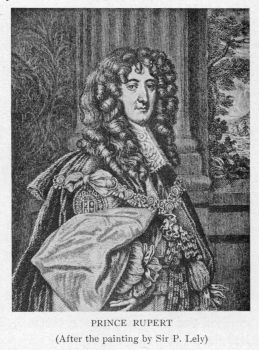
The Hudson's Bay Company was uneasy. Radisson and Groseillers were aliens. True, Radisson had married Mary Kirke, the daughter of a shareholder, and was bound to the English; but if Radisson and Groseillers had forsworn one land, might they not forswear another, and go back to the French, as Frontenac's letters no doubt urged? The company offered Radisson a salary of 100 pounds a year to stay as clerk in England. They did not want him out on the bay again; but {146} France had offered Radisson a commission in the French navy. Without more ado the two Frenchmen left London for Paris, and Paris for America.
The year 1676 finds Radisson back in Quebec engaged in the beaver trade with all those friends of his youth whose names have become famous,—La Salle of Fort Frontenac, and Charles Le Moyne the interpreter of Montreal, and Jolliet of the Mississippi, and La Fôrest who befriended La Salle, Le Chesnaye who opposed him, and Duluth whose forest rangers roved from Lake Superior to Hudson Bay. It can be guessed what these men talked about over the table of the Sovereign Council at Quebec, whither they had been called to discuss the price of beaver and the use of brandy.
The fur traders were at that time in two distinct rings,—the ring of La Salle and La Fôrest, supported by Frontenac; the Montreal ring, headed by Le Chesnaye, who fought against the opening of the west because Lake Ontario trade would divert his trade from the Ottawa. Radisson's report of that west coast of Hudson Bay, in area large as all New France, interested both factions of the fur trade intensely. He was offered two ships for Hudson Bay by the men of both rings. Because England and France were at peace, Frontenac dared not recognize the expedition officially; but he winked at it,—as he winked at many irregularities in the fur trade,—granted the Company of the North license to trade on Hudson Bay, and gave Radisson's party passports "to fish off Gaspé." In the venture Radisson, Groseillers, and the son Chouart Groseillers, invested their all, possibly amounting to $2500 each. The rest of the money for the expedition came from the Godfreys, titled seigneurs of Three Rivers; Dame Sorel, widow of an officer in the Carignan Regiment; Le Chesnaye, La Salle's lieutenant, and others.
The boats were rickety little tubs unfit for rough northern seas, and the crews sulky, underfed men, who threatened mutiny at every watering place and only refrained from cutting Radisson's {147} throat because he kept them busy. July 11, 1682, the explorers sheered away from the fishing fleet of the St. Lawrence and began coasting up the lonely iron shore of Labrador. Ice was met sweeping south in mountainous bergs. Over Isle Demons in the Straits of Belle Isle hung storm wrack and brown fog as in the days when Marguerite Roberval pined there. Then the ships were cutting the tides of Labrador; here through fog; there skimming a coast that was sheer masonry to the very sky; again, scudding from storm to refuge of some hole in the wall.
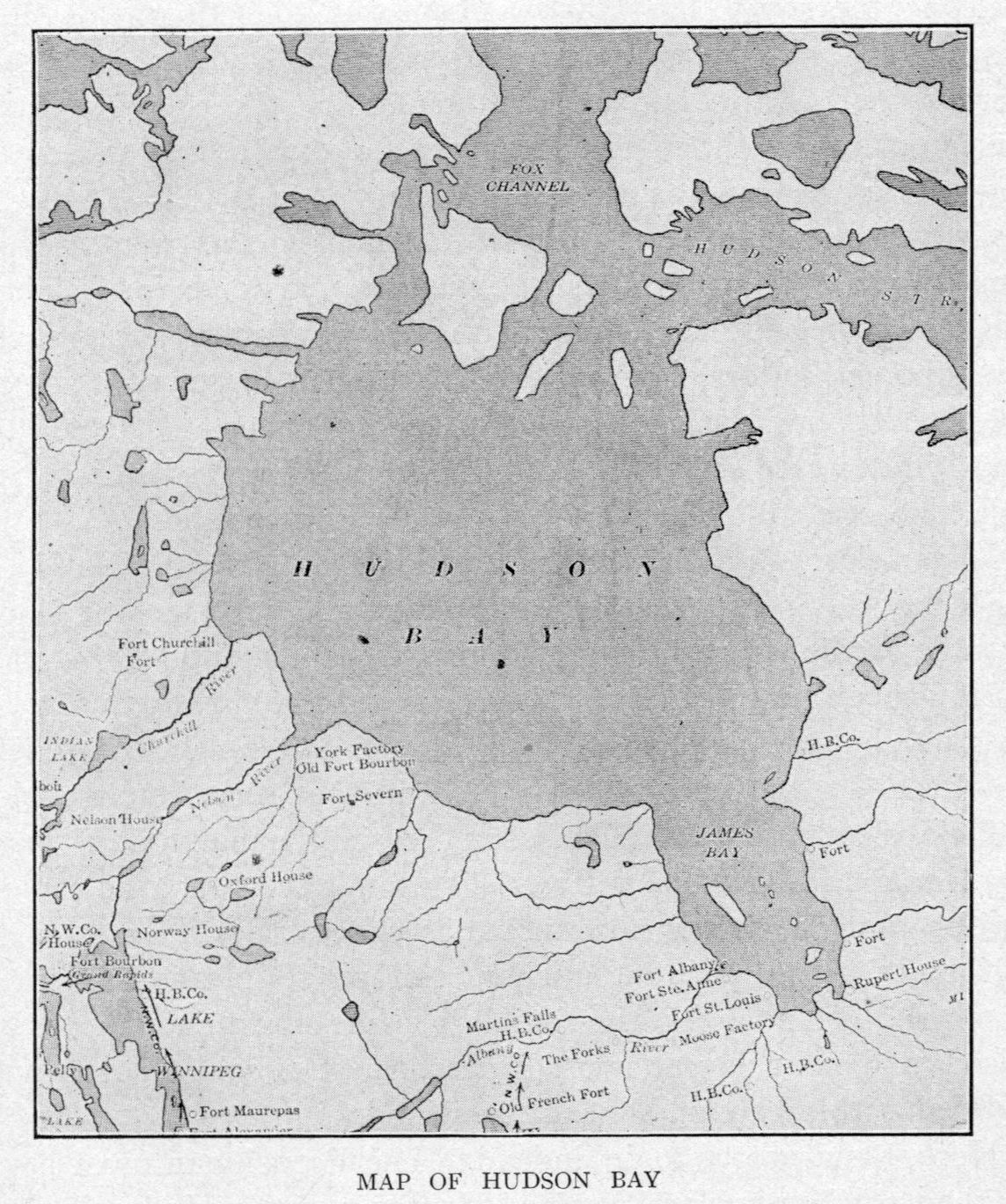
{148} Before September the ships rode triumphantly into Five-Fathom-Hole off Nelson River, Hudson Bay. Here two great rivers, wide as the St. Lawrence, rolled to the sea, separated by a long tongue of sandy dunes. The north river was the Nelson; the south, the Hayes. Approach to both was dangerous, shallow, sandy, and bowlder strewn; but Radisson's vessels were light draught, and he ran them in on the tide to Hayes River on the south, where his men took possession for France and erected log huts as a fort.
Groseillers remained at the fort to command the twenty-seven men. Young Chouart ranged the swamps and woods for Indians, and Radisson had paddled down the Hayes from meeting some Assiniboine hunters, when, to his amazement, there rolled across the wooded swamps the most astonishing report that could be heard in desolate solitudes. It was the rolling reverberation, the dull echo of a far-away cannon firing signal after signal.
Like a flash Radisson guessed the game. After all, the Hudson's Bay Company had taken his advice and were sending ships to trade on the west coast. The most of men, supported by only twenty-seven mutineers, would have scuttled ships and escaped overland, but the explorers of New France, Champlain and Jolliet and La Salle, were not made of the stuff that runs from trouble.
Picking out three men, Radisson crossed the marsh northward to reconnoiter on Nelson River. Through the brush he espied a white tent on what is now known as Gillam's Island, a fortress half built, and a ship at anchor. All night he and his spies watched, but none of the builders came near enough to be seized, and next day at noon Radisson put a bold face on and paddled within cannon shot of the island.
Here was a pretty to-do, indeed! The Frenchman must have laughed till he shook with glee! It was not the Hudson's Bay Company ship at all, but a poacher, a pirate, an interloper, forbidden by the laws of the English Company's monopoly; and who was the poacher but Ben Gillam, of Boston, son of Captain Gillam of the Hudson's Bay Company, with whom, no doubt, he was in collusion to defraud the English traders! Calling for {149} Englishmen to come down to the shore as hostages for fair treatment, Radisson went boldly aboard the young man's ship, saw everything, counted the men, noted the fact that Gillam's crew were mutinous, and half frightened the life out of the young Boston captain by telling him of the magnificent fort the French had on the south river, of the frigates and cannon and the powder magazines. As a friend he advised young Gillam not to permit his men to approach the French; otherwise they might be attacked by the Quebec soldiers. Then the crafty Radisson paddled off, smiling to himself; but not so fast, not so easy! As he drifted down Nelson River, what should he run into full tilt but the Hudson's Bay Company ship itself, bristling with cannon, manned by his old enemy, Captain Gillam!
If the two English parties came together, Radisson was lost. He must beat them singly before they met; and again putting on a bold face, he marched out, met his former associates, and as a friend advised them not to ascend the river farther. Fortunately for Radisson, both Gillam and Bridgar, the Hudson's Bay governor, were drinking heavily and glad to take his advice. The winter passed, with Radisson perpetrating such tricks on his rivals as a player might with the dummy men on a chessboard; but the chessboard, with the English rivals for pawns, was suddenly upset by the unexpected. Young Gillam discovered that Radisson had no fort at all,—only log cabins with a handful of ragamuffin bushrovers; and Captain Gillam senior got word of young Gillam's presence. Radisson had to act, act quickly, and on the nail.
Leaving half a dozen men as hostages in young Gillam's fort, Radisson invited the youth to visit the French fort for which the young Boston fellow had expressed such skeptical scorn. To make a long story short, young Gillam was no sooner out of his own fort than the French hostages took peaceable possession of it, and Gillam was no sooner in Radisson's fort than the French clapped him a prisoner in their guardroom. Ignorant that the French had captured young Gillam's fort, the Hudson's Bay Company men had marched upstream at dead of night to his {150} rescue. The English knocked for admittance. The French guards threw open the gates. In marched the English traders. The French clapped the gates to. The English were now themselves prisoners. Such a double victory would have been impossible to the French if the Hudson's Bay Company men had not fuddled themselves with drink and allowed their fine ship, the Prince Rupert, to be wrecked in the ice drive.
In spring the ice jam wrecked Radisson's vessels, too, so he was compelled to send the most of his prisoners in a sloop down Hudson Bay to Prince Rupert, while he carried the rest with him on young Gillam's ship down to Quebec with an enormous cargo of furs.
By all the laws of navigation Ben Gillam was nothing more or less than pirate. The monopoly of the Hudson's Bay Company forbade him trading on Hudson Bay. The license of the Company of the North at Quebec also excluded him. In later years, indeed, young Gillam turned pirate outright, was captured in connection with Captain Kidd at Boston, and is supposed to have been executed with the famous pirate. But when Radisson left Nelson in charge of young Chouart and came down to Quebec with young Gillam's ship as prize, a change had taken place at Quebec. Governor Frontenac had been recalled. In his place was La Barre, whose favor could be bought by any man who would pay the bribe, and who had already ruined La Salle by permitting creditors to seize Fort Frontenac. England and France were at peace. Therefore La Barre gave Gillam's vessel back to him. The revenue collectors were permitted to seize all the furs which La Chesnaye had not already shipped to France. Though La Barre was reprimanded by the King for both acts, not a sou did Radisson and Groseillers and Chouart ever receive for their investment; and Radisson was ordered to report at once to the King in France.
The next part of Radisson's career has always been the great blot upon his memory, a blot that seemed incomprehensible except on the ground that his English wife had induced him to {151} return to the Hudson's Bay Company; but in the memorials left by Radisson himself, in Hudson's Bay House, London, I found the true explanation of his conduct.
France and England were, as yet, at peace; but it was a pact of treacherous kind,—secret treaty by which the King of England drew pay from the King of France. The King of France dared not offend England by giving public approval to Radisson's capture of the Hudson's Bay Company's territory; therefore he ordered Radisson to go back to Hudson's Bay Company service and restore what he had captured. But the King of France had no notion of relinquishing claim to the vast territory of Hudson Bay; therefore he commanded Radisson to go unofficially. Groseillers, the brother, seems to have dropped from all engagements from this time, and to have returned to Three Rivers. A copy of the French minister's instructions is to be found in the Radisson records of the Hudson's Bay Company to-day. Not a sou of compensation was Radisson to receive for the money that he and his friends had invested in the venture of 1682-1683. Not a penny of reparation was he to obtain for the furs at Nelson, which he was to turn over to the Hudson's Bay Company.
In France, preparation went forward as if for a second voyage to Nelson; but Radisson secretly left Paris for London, where he was welcomed by the courtiers of England in May, 1684, and given presents by King Charles and the Duke of York, who were shareholders in the Hudson's Bay Company. May 17 he sailed with the Hudson's Bay Company vessels for Port Nelson, and there took over from young Chouart the French forts with 20,000 pounds worth of furs for the English company.
Young Chouart Groseillers and his five comrades were furious. They had borne the brunt of attack from both English and Indian enemies during Radisson's absence, and they were to receive not a penny for the furs collected. And their fury knew no bounds when they were forcibly carried back to England. The English had invited them on board one of the vessels for last instructions. Quickly the anchor was slipped, sails run {152} out, and the kidnapped Frenchmen carried from the bay. In a second, young Chouart's hand was on his sword, and he would have fought on the spot, but Radisson begged him to conceal his anger; "for," urged Radisson, "some of these English ruffians would like nothing better than to stab you in a scuffle."
In London, Radisson was lionized, publicly thanked by the company, presented to the court, and given a present of silver plate. As for the young French captives, they were treated royally, voted salaries of 100 pounds a year, and all their expenses of lodgings paid; but when they spoke of returning to France, unexpected obstructions were created. Their money was held back; they were dogged by spies. Finally they took the oath of allegiance to England, and accepted engagements to go back as servants of the Hudson's Bay Company to Nelson at salaries ranging from 100 pounds to 40 pounds, good pay as money was estimated in those days, equal to at least five times as much money of the present day. It was even urged on young Chouart that he should take an English wife, as Radisson had; but the young Frenchmen smiled quietly to themselves. Secret offers of a title had been conveyed to Chouart by the French ambassador; and to his mother in Three Rivers he wrote:
I could not go to Paris; I was not at liberty; but I shall be at the rendezvous or perish trying. I cannot say more in a letter. I would have left this kingdom, but they hold back my pay, and orders have been given to arrest me if I try to leave. Assure Mr. Duluth of my humble services. I shall see him as soon as I can. Pray tell my good friend, Jan Peré.
Peré, it will be remembered, was a bushranger of Duluth's band, who had been with Jolliet on Lake Superior.
As for Radisson, the English kept faith with him as long as the Stuarts and his personal friends ruled the English court. He spent the summers on Hudson Bay as superintendent of trade, the winters in England supervising cargoes and sales. His home was on Seething Lane near the great Tower, where one of his friends was commander. Near him dwelt the merchant princes of London like the Kirkes and the Robinsons and the Youngs. His next-door neighbor was the man of fashion, {153} Samuel Pepys, in whose hands Radisson's Journals of his voyages finally fell. His income at this time was 100 pounds in dividends, 100 pounds in salary, equal to about five times that amount in modern money.
Then came a change in Radisson's fortunes. The Stuarts were dethroned and their friends dispersed. The shareholders of the fur company bore names of men who knew naught of Radisson's services. War destroyed the fur company's dividends. Radisson's income fell off to 50 pounds a year. His family had increased; so had his debts; and he had long since been compelled to move from fashionable quarters. A petition filed in a lawsuit avers that he was in great mental anxiety lest his children should come to want; but he won his lawsuits against the company for arrears of salary. Peace brought about a resumption of dividends, and the old pathfinder seems to have passed his last years in comparative comfort. Some time between March and July, 1710, Radisson set out on the Last Long Voyage of all men, dying near London. His burial place is unknown. As far as Canada is concerned, Radisson stands foremost as pathfinder of the Great Northwest.
But to return to "good friend, Jan Peré," whom the Frenchmen, forced into English service, were to meet somewhere on Hudson Bay. It is like a story from borderland forays.
Seven large ships set sail from England for Hudson Bay in 1685, carrying Radisson and young Chouart and the five unwilling Frenchmen. The company's forts on the bay now numbered four: Nelson, highest up on the west; Albany, southward on an island at the mouth of Albany River; Moose, just where James Bay turns westward; and Rupert at the southeast corner. But French ships under La Martinière of the Sovereign Council had also set sail from Quebec in 1685, commissioned by the indignant fur traders to take Radisson dead or alive; for Quebec did not know the secret orders of the French court, which had occasioned Radisson's last defection.
July saw the seven Hudson's Bay ships worming their way laboriously through the ice floes of the straits. Small sails only {154} were used. With grappling hooks thrown out on the ice pans and crews toiling to their armpits in ice slush, the boats pulled themselves forward, resting on the lee side of some ice floe during ebb tide, all hands out to fight the roaring ice pans when the tide began to come in. At length on the night of July 27, with crews exhausted and the timbers badly rammed, the ships steered to rest in a harbor off Digge's Island, sheltered from the ice drive. The nights of that northern sea are light almost as day; but clouds had shrouded the sky and a white mist was rising from the water when there glided like ghosts from gloom two strange vessels. Before the exhausted crews of the English ships were well awake, the waters were churned to foam by a roar of cannonading. The strange ships had bumped keels with the little Merchant Perpetuana of the Hudson's Bay. Radisson, on whose head lay a price, was first to realize that they were attacked by French raiders; and his ship was out with sails and off like a bird, followed by the other English vessels, all except the little Perpetuana, now in death grapple between her foes. Captain Hume, Mates Smithsend and Grimmington fought like demons to keep the French from boarding her; but they were knocked down, fettered and clapped below hatches while the victors plundered the cargo. Fourteen men were put to the sword. August witnessed ship, cargo, and captives brought into Quebec amid noisy acclaim and roar of cannon. The French had not captured Radisson nor ransomed Chouart, but there was booty to the raiders. New France had proved her right to trade on Hudson Bay spite of peace between France and England, or secret commands to Radisson. Thrown in a dungeon below Château St. Louis, Quebec, the English captives hear wild rumors of another raid on the bay, overland in winter; and Smithsend, by secret messenger, sends warning to England, and for his pains is sold with his fellow-captives into slavery in Martinique, whence he escapes to England before the summer of 1686.
But what is Jan Peré of Duluth's bushrovers doing? All unconscious of the raid on the ships, the governors of the four {155} English forts awaited the coming of the annual supplies. At Albany was a sort of harbor beacon as well as lookout, built high on scaffolding above a hill. One morning, in August of 1685, the sentry on the lookout was amazed to see three men, white men, in a canoe, steering swiftly down the rain-swollen river from the Up-Country. Such a thing was impossible. "White men from the interior! Whence did they come?" Governor Sargeant came striding to the fort gate, ordering his cannon manned. Behold nothing more dangerous than three French forest rangers dressed in buckskins, but with manners a trifle too smooth for such rough garb, as one doffs his cap to Governor Sargeant and introduces himself as Jan Peré, a woodsman out hunting.

England and France were at peace; so Governor Sargeant invited the three mysterious gentlemen inside to a breakfast of sparkling wines and good game, hoping no doubt that the wines would unlock the gay fellows' tongues to tell what game they were playing. As the wine passed freely, there were stories of {156} the hunt and the voyage and the annual ships. When might the ships be coming? "Humph," mutters Sargeant through his beard; and he does n't urge these knights of the wild woods to tarry longer. Their canoe glides gayly down coast to the salt marshes, where the shooting is good; but by chance that night, purely by chance, the French leave their canoe so that the tide will carry it away. Then they come back crestfallen to the English fort.
Meanwhile a ship has arrived with the story of the raid on the Perpetuana. Sargeant is so enraged that he sends two of the French spies across to Charlton Island, where they can hunt or die; Monsieur Jan Peré he casts into the cellar of Albany with irons on his wrists and balls on his feet. When the ships sail for England, Peré is sent back as prisoner without having had one word with Chouart Groseillers. As for the two Frenchmen placed on Charlton Island, did Sargeant think they were bush-rovers and would stay on an island? By October they have laid up store of moose meat, built themselves a canoe, paddled across to the mainland, and are speeding like wildfire overland to Michilimackinac with word that Jan Peré is held prisoner at Albany. As Jan Peré drops out of history here, it may be said that he was kept prisoner in England as guarantee for the safety of the English crew held prisoners at Quebec. When he escaped to France he was given money and a minor title for his services.
The news that Peré lay in a dungeon on Hudson Bay supplied the very excuse that the Quebec fur traders needed for an overland raid in time of peace. These were the wild rumors of which the captive English crew sent warning to England; but the northern straits would not be open to the company ships before June of 1686, and already a hundred wild French bushrovers were rallying to ascend the Ottawa to raid the English on Hudson Bay.
And now a change comes in Canadian annals. For half a century its story is a record of lawless raids, bloody foray, dare-devil courage combined with the most fiendish cruelty and sublime heroism. Only a few of these raids can be narrated here. {157} June 18, 1686, when the long twilight of the northern night merged with dawn, there came out from the thicket of underbrush round Moose Factory, Hudson Bay, one hundred bush-rovers, led by Chevalier de Troyes of Niagara, accompanied by Le Chesnaye of the fur trade, Quebec, and the Jesuit, Sylvie. Of the raiders, sixty-six were Indians under Pierre Le Moyne d'Iberville and his brothers, Maricourt and Ste. Hélène, aged about twenty-four, sons of Charles Le Moyne, the Montreal interpreter. Moose Factory at this time boasted fourteen cannon, log-slab palisades, commodious warehouses, and four stone bastions,—one with three thousand pounds of powder, another used as barracks for twelve soldiers, another housing beaver pelts, and a fourth serving as kitchen. Iberville and his brothers, scouting round on different sides of the fort, soon learned that not a sentinel was on duty. The great gate opposite the river, studded with brass nails, was securely bolted, but not a cannon {158} had been loaded. The bushrangers then cast aside all clothing that would hamper, and, pistol in hand, advanced silent and stealthy as wild-cats. Not a twig crunched beneath the moccasin tread. The water lay like glass, and the fort slept silent as death. Hastily each raider had knelt for the blessing of the priest. Pistols had been recharged. Iberville bade his wild Indians not to forget that the Sovereign Council of Quebec offered ten crowns reward for every enemy slain, twenty for every enemy captured. In fact, there could be no turning back. Two thousand miles of juniper swamps and forests lay between the bush-rovers and home. They must conquer or perish. De Troyes led his white soldiers round to make a pretense of attack from the water front. Iberville posted his sixty-six Indians along the walls with muskets rammed through the loopholes. Then, with an unearthly yell, the Le Moyne brothers were over the tops of the pickets, swords in hand, before the English soldiers had awakened. The English gunner reeled from his cannon at the main gate with head split to the collar bone. The gates were thrown wide, trees rammed the doors open, and Iberville had dashed halfway up the stairs of the main house before the inmates, rushing out in their nightshirts, realized what had happened. Two men only were killed, one on each side. The French were masters of Moose Fort in less than five minutes, with sixteen captives and rich supply of ammunition.
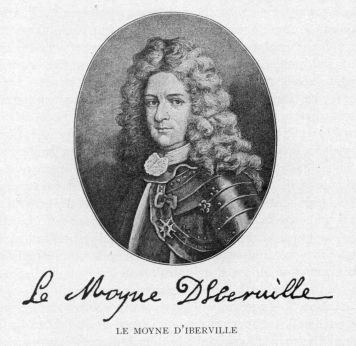
Eastward of Moose was Rupert Fort, where the company's ship anchored. Hither the raiders plied their canoes by sea. Look at the map! Across the bottom of James Bay projects a long tongue of swamp land. To save time, Iberville portaged across this, and by July 1 was opposite Prince Rupert's bastions. At the dock lay the English ship. That day Iberville's men kept in hiding, but at night he had ambushed his men along shore and paddled across to the ship. Just as Iberville stepped on the deck a man on guard sprang at his throat. One blow of Iberville's sword killed the Englishman on the spot. Stamping to call the crew aloft, Iberville sabered the men as they scrambled up the hatches, till the Governor himself threw {159} up hands in unconditional surrender. The din had alarmed the fort, and hot shot snapping fire from the loopholes kept the raiders off till the Le Moyne brothers succeeded in scrambling to the roofs of the bastions, hacking holes through the rough thatch and firing inside. This drove the English gunners from their cannon. A moment later, and the raiders were on the walls. It was a repetition of the fight at Moose Factory. The English, taken by surprise, surrendered at once; and the French now had thirty prisoners, a good ship, two forts, but no provisions.
Northwestward three hundred miles lay Albany Fort. Iberville led off in canoes with his bushrovers. De Troyes followed on the English boat with French soldiers and English prisoners. To save time, as the bay seemed shallow, Iberville struck out from the shore across seas. All at once a north wind began whipping the waters, sweeping down a maelstrom of churning ice. Worse still, fog fell thick as wool. Any one who knows canoe travel knows the danger. Iberville avoided swamping by ordering his men to camp for the night on the shifting ice pans, canoes held above heads where the ice crush was wildest, the voyageurs clinging hand to hand, making a life line if one chanced to slither through the ice slush. When daylight came with worse fog, Iberville kept his pistol firing to guide his followers, and so pushed on. Four days the dangerous traverse lasted, but August 1 the bushrovers were in camp below the cliffs of Albany.
Indians had forewarned Governor Sargeant. The loopholes of his palisades bristled with muskets and heavy guns that set the bullets flying soon as De Troyes arrived and tried to land the cannon captured from the other forts for assault on Albany. Drums beating, flags flying, soldiers in line, a French messenger goes halfway forward and demands of an English messenger come halfway out the surrender of Sieur Jan Peré, languishing in the dungeons of Albany. The English Governor sends curt word back that Peré has been sent home to France long ago, and demands what in thunder the French mean by these raids in time of peace. The French retire that night to consider. {160} Cannon they have, but they have used up nearly all their ammunition. They have thirty prisoners, but they have no provisions. The prisoners have told them there are 50,000 pounds worth of furs stored at Albany.
Inside the fort the English were in almost as bad way. The larder was lean, powder was scarce, and the men were wildly mutinous, threatening to desert en masse for the French on the excuse they had not hired to fight, and "if any of us lost a leg, the company could not make it good."
At the end of two days' desultory firing, the company Governor captured down at Rupert came to Sargeant and told him frankly that the bloodthirsty bushrovers were desperate; they had either to conquer or starve, and if they were compelled to fight, there would be no quarter. Men and women alike would be butchered in hand-to-hand fight. Still Sargeant hung on, hoping for the annual frigate of the company. Then powder failed utterly. Still Sargeant would not show the white flag; so an underfactor flourished a white sheet from an upper window. Chevalier De Troyes came forward and seated himself on one of the cannon. Governor Sargeant went out and seated himself on the same cannon with two bottles of wine. The English of Albany were allowed to withdraw to Charlton Island to await the company ship. As for the other prisoners, those who were not compelled to carry the plundered furs back to Quebec, were turned adrift in the woods to find their way overland north to Nelson. Iberville's bushrovers were back in Montreal by October.
War with the Iroquois—The year of the massacre—Frontenac returns—The heroine of Verchères—Indian raid and counter-raid—Massacre and Schenectady—The massacre at Fort Loyal—Boston roused to action—Quebec besieged—Phips and Frontenac—Retreat of the English—Iberville's gallant sea fight—Nelson surrenders
For ten years Hudson Bay becomes the theater of northern buccaneers and bushraiders. A treaty of neutrality in 1686 provides that the bay shall be held in common by the fur traders of England and France; but the adventurers of England and the bushrovers of Quebec have no notion of leaving things so uncertain. Spite of truce, both fit out raiders, and the King of France, according to the shifting diplomacy of the day, issues secret orders "to permit not a vestige of English possession on the northern bay."
Maricourt Le Moyne held the newly captured forts on the south shore of James Bay till Iberville came back overland in 1687. The fort at Rupert had been completely abandoned after the French victory of the previous summer, and the Hudson's Bay Company sloop, the Young, had just sailed into the port to reëstablish the fur post. Iberville surrounded the sloop by his bushrovers, captured it with all hands, and dispatched four spies across to Charlton Island, where another sloop, the Churchill, swung at anchor. Here Iberville's run of luck turned. Three of his four spies were captured, fettered, and thrown into the hold of the vessel for the winter. In the spring of 1688 one was brought above decks to help the English sailors. Watching his chance, the grizzled bushrover waited till six of the English crew were up the ratlines. Quick as flash the Frenchman tiptoed across decks in his noiseless moccasins, took one precautionary glance over his shoulder, brained two Englishmen with an ax, liberated his comrades, and at pistol point kept the other Englishmen up the masts till he and his fellows had righted the ship and steered the vessel across to Rupert River, where the provisions were just in time to save Iberville's party from starvation.
{162} This episode is typical of what went on at the Hudson's Bay forts for ten years. Each year, when the English ships came out to Nelson on the west coast, armed bands were sent south to wrest the forts on James Bay from the French; and each spring, when Iberville's bushrovers came gliding down the rivers in their canoes from Canada, there was a fight to drive out the English. Then the Indians would scatter to their hunting grounds. No more loot of furs for a year! The English would sail away in their ships, the French glide away in their canoes; and for a winter the uneasy quiet of calm between two thunderclaps would rest over the waters of Hudson Bay.
In the spring of 1688, about the time that the brave bush-rovers had brought the English ship from Charlton Island across to Rupert River, two English frigates under Captain Moon, with twenty-four soldiers over and above the crews, had come south from Nelson to attack the French fur traders at Albany. As ill luck would have it, the ice floes began driving inshore. The English ships found themselves locked in the ice before the besieged fort. Across the jam from Rupert River dashed Iberville with his Indian bandits, portaging where the ice floes covered the water, paddling where lanes of clear way parted the floating drift. Iberville hid his men in the tamarack swamps till eighty-two Englishmen had landed and all unsuspecting left their ships unguarded. Iberville only waited till the furs in the fort had been transferred to the holds of the vessels. The ice cleared. The Frenchman rushed his bushrovers on board, seized the vessel with the most valuable cargo, and sailed gayly out of Albany for Quebec. The astounded English set fire to the other ship and retreated overland.
But the dare-devil bushrovers were not yet clear of trouble. As the ice drive jammed and held them in Hudson Straits, they were aghast to see, sailing full tilt with the roaring tide of the straits, a fleet of English frigates, the Hudson's Bay Company's annual ships; but Iberville sniffed at danger as a war horse glories in gunpowder. He laughed his merriest, and as the ice drive locked all the ships within gunshot, ran up an {163} English flag above his French crew and had actually signaled the captains of the English frigates to come aboard and visit him, when the ice cleared. Hoisting sail, he showed swift heels to the foe. Iberville's ambition now was to sweep all the English from Hudson Bay, in other words, to capture Nelson on the west coast, whence came the finest furs; but other raids called him to Canada.
It will be recalled that La Salle's enemies had secretly encouraged the Iroquois to attack the tribes of the Illinois; and now the fur traders of New York were encouraging the Iroquois to pillage the Indians of the Mississippi valley, in order to divert peltries from the French on the St. Lawrence to the English at New York. Savages of the north, rallied by Perrot and Duluth and La Motte Cadillac, came down by the lakes to Fort Frontenac to aid the French; but they found that La Barre, the new governor, foolish old man, had been frightened into making peace with the Iroquois warriors, abandoning the Illinois to Iroquois raid and utterly forgetful that a peace which is not a victory is not worth the paper it is written on.
For the shame of this disgraceful peace La Barre was recalled to France and the Marquis de Denonville, a brave soldier, sent out as governor. Unfortunately Denonville did not understand conditions in the colony. The Jesuit missionaries were commissioned to summon the Iroquois to a conference at Fort Frontenac, but when the deputies arrived they were seized, tortured, and fifty of them shipped to France by the King's order to serve as slaves on the royal galleys. It was an act of treachery heinous beyond measure and exposed the Jesuit missionaries among the Five Nations to terrible vengeance; but the Iroquois code of honor was higher than the white man's. "Go home," they warned the Jesuit missionary. "We have now every right to treat thee as our foe; but we shall not do so! Thy heart has had no share in the wrong done to us. We shall not punish thee for the crimes of another, tho' thou didst act as the unconscious tool. But leave us! When our young {164} men chant the song of war they may take counsel only of their fury and harm thee! Go to thine own people"; and furnishing him with guides, they sent him to Quebec.
Though Denonville marched with his soldiers through the Iroquois cantons, he did little harm and less good; for the wily warriors had simply withdrawn their families into the woods, and the Iroquois were only biding their time for fearful vengeance.
This lust of vengeance was now terribly whetted. Dongan, the English governor of New York, had been ordered by King James of England to observe the treaty of neutrality between England and France; but this did not hinder him supplying the Iroquois with arms to raid the French and secretly advising them "not to bury the war hatchet,—just to hide it in the grass, and stand on their guard to begin the war anew."
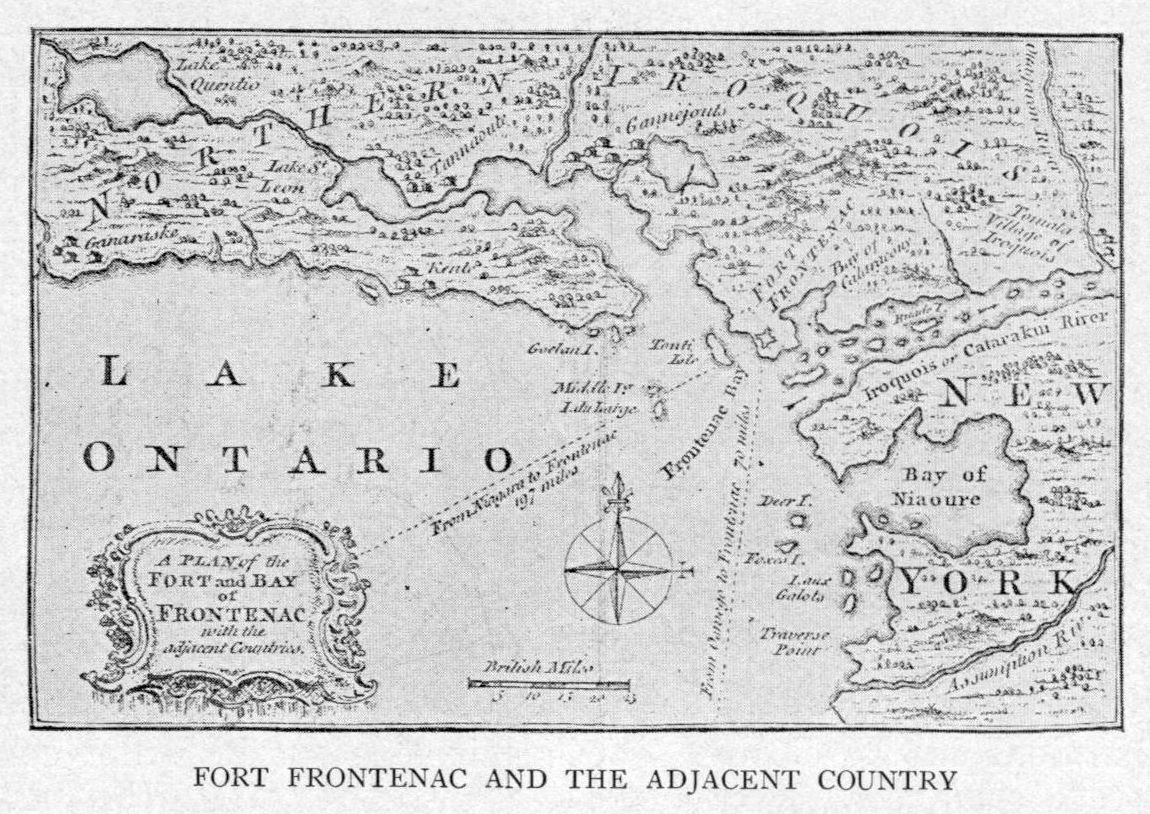
Nor did the treaty of neutrality prevent the French from raiding Hudson Bay and ordering shot in cold blood any French bushrover who dared to guide the English traders to the country of the Upper Lakes.
In addition to English influence egging on the Iroquois, the treachery of the Huron chief, The Rat, lashed the vengeance {165} of the Five Nations to a fury. He had come down to Fort Frontenac to aid the French. He was told that the French had again arranged peace with the Iroquois, and deputies were even now on their way from the Five Nations.
"Peace!" The old Huron chief was dumbfounded. What were these fool French doing, trusting to an Iroquois peace? "Ah," he grunted, "that may be well"; and he withdrew without revealing a sign of his intentions. Then he lay in ambush on the trail of the deputies, fell on the Iroquois peace messengers with fury, slaughtered half the band, then sent the others back with word that he had done this by order of Denonville, the French governor.
"There," grunted The Rat grimly, "I 've killed the peace for them! We 'll see how Onontio gets out of this mess."
Meanwhile war had been declared between England and France. The Stuarts had been dethroned. France was supporting the exiled monarch, and William of Orange had become king of England. Iberville and Duluth and La Motte Cadillac, the famous fighters of Canada's wildwood, were laying plans before the French Governor for the invasion and conquest of New York; and New York was preparing to defend itself by pouring ammunition and firearms free of cost into the hands of the Iroquois. Then the Iroquois vengeance fell.
Between the night and morning of August 4 and 5, in 1689, a terrific thunderstorm had broken over Montreal. Amidst the crack of hail and crash of falling trees, with the thunder reverberating from the mountain like cannonading, whilst the frightened people stood gazing at the play of lightning across their windows, fourteen hundred Iroquois warriors landed behind Montreal, beached their canoes, and stole upon the settlement. What next followed beggars description. Nothing else like it occurs in the history of Canada. For years this summer was to be known as "the Year of the Massacre."
Before the storm subsided, the Iroquois had stationed themselves in circles round every house outside the walls of Montreal. At the signal of a whistle, the warriors fell on the settlement {166} like beasts of prey. Neither doors nor windows were fastened in that age, and the people, deep in sleep after the vigil of the storm, were dragged from their beds before they were well awake. Men, women, and children fell victims to such ingenuity of cruelty as only savage vengeance could conceive. Children were dashed to pieces before their parents' eyes; aged parents tomahawked before struggling sons and daughters; fathers held powerless that they might witness the tortures wreaked on wives and daughters. Homes which had heard some alarm and were on guard were set on fire, and those who perished in the flames {167} died a merciful death compared to those who fell in the hands of the victors. By daybreak two hundred people had been wantonly butchered. A hundred and fifty more had been taken captives. As if their vengeance could not be glutted, the Iroquois crossed the river opposite Montreal, and, in full sight of the fort, weakly garrisoned and paralyzed with fright, spent the rest of the week, day and night, torturing the white captives. By night victims could be seen tied to the torture stake amid the wreathing flames, with the tormentors dancing round the camp fire in maniacal ferocity. Denonville was simply powerless. He lost his head, and seemed so panic-stricken that he forbade even volunteer bands from rallying to the rescue. For two months the Iroquois overran Canada unchecked. Indeed, it was years before the boldness engendered by this foray became reduced to respect for French authority. Settlement after settlement, the marauders raided. From Montreal to Three Rivers crops went up in flame, and the terrified habitants came cowering with their families to the shelter of the palisades.
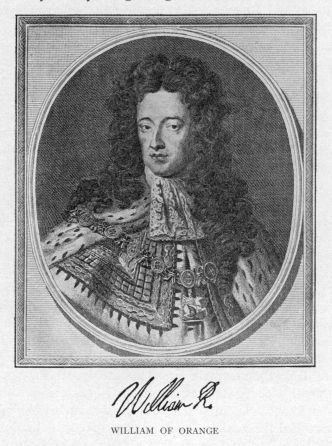
In the midst of this universal terror came the country's savior. Frontenac had been recalled because he quarreled with the intendant and he quarreled with the Jesuits and he quarreled with the fur traders; but his bitterest enemies did not deny that he could put the fear of the Lord and respect for the French into the Iroquois' heart. Arbitrary he was as a czar, but just always! To be sure he mended his fortunes by personal fur trade, but in doing so he cheated no man; and he worked no injustice, and he wrought in all things for the lasting good of the country. Homage he demanded as to a king, once going so far as to drive the Sovereign Councilors from his presence with the flat of a sword; but he firmly believed and he had publicly proved that he was worthy of homage, and that the men who are forever shouting "liberty—liberty and the people's rights," are frequently wolves in sheep's clothing, eating out the vitals of a nation's prosperity.
Here, then, was the haughty, hot-headed, aggressive Frontenac, sent back in his old age to restore the prestige of New France, {168} where both La Barre the grafter, and Denonville the courteous Christian gentleman, had failed.
To this period of Iroquois raids belongs one of the most heroic episodes in Canadian life. The only settlers who had not fled to the protection of the palisaded forts were the grand old seigniors, the new nobility of New France, whose mansions were like forts in themselves, palisaded, with stone bastions and water supply and yards for stock and mills inside the walls. Here the seigniors, wildwood knights of a wilderness age, held little courts that were imitations of the Governor's pomp at Quebec. Sometimes during war the seignior's wife and daughters were reduced to plowing in the fields and laboring with the women servants at the harvest; but ordinarily the life at the seigniory was a life of petty grandeur, with such style as the backwoods afforded. In the hall or great room of the manor house was usually an enormous table used both as court of justice by the seignior and festive board. On one side was a huge fireplace with its homemade benches, on the other a clumsily carved chiffonier loaded with solid silver. In the early days the seignior's bedstead might be in the same room,—an enormous affair with panoplies of curtains and counterpanes of fur rugs and feather mattresses, so high that it almost necessitated a ladder. But in the matter of dress the rude life made up in style what it lacked in the equipments of a grand mansion.
The bishop's description of the women's dresses I have already given, though at this period the women had added to the "sins" of bows and furbelows and frills, which the bishop deplored, the yet more heinous error of such enormous hoops that it required fine maneuvering on the part of a grand dame to negotiate the door of the family coach; and however pompous the seignior's air, it must have suffered temporary eclipse in that coach from the hoops of his spouse and his spouse's daughters. As for the seignior, when he was not dressed in buckskin, leading bushrovers on raids, he appeared magnificent in all the grandeur that a 20 pounds wig and Spanish laces and French ruffles {169} and imported satins could lend his portly person; and if the figure were not portly, one may venture to guess, from the pictures of stout gentlemen in the quilted brocades of the period, that padding made up what nature lacked.
Such a seigniory was Verchères, some twenty miles from Montreal, on the south side of the St. Lawrence. M. de Verchères was an officer in one of the regiments, and chanced to be absent from home during October of 1696, doing duty at Quebec. Madame de Verchères was visiting in Montreal. Strange as it may seem, the fort and the family had been left in charge of the daughter, Madeline, at this time only fourteen years of age. At eight o'clock on the morning of October 22 she had gone four hundred paces outside the fort gates when she heard the report of musket firing. The rest of the story may be told in her own words:
I at once saw that the Iroquois were firing at our settlers, who lived near the fort. One of our servants call out: "Fly, Mademoiselle, fly! The Iroquois are upon us!"
Instantly I saw some forty-five Iroquois running towards me, already within pistol shot. Determined to die rather than fall in their hands, I ran for the fort, praying to the Blessed Virgin, "Holy Mother, save me! Let me perish rather than fall in their hands!" Meanwhile my pursuers paused to fire their guns. Bullets whistled past my ears. Once within hearing of the fort, I shouted, "To arms! To arms!"
There were but two soldiers in the fort, and they were so overcome by fear that they ran to hide in the bastion. At the gates I found two women wailing for the loss of their husbands. Then I saw several stakes had fallen from the palisades where enemies could gain entrance; so I seized the fallen planks and urged the women to give a hand putting them back in their places. Then I ran to the bastion, where I found two of the soldiers lighting a fuse.
"What are you going to do?" I demanded.
"Blow up the fort," answered one cowardly wretch.
"Begone, you rascals," I commanded, putting on a soldier's helmet and seizing a musket. Then to my little brothers: "Let us fight to the death! Remember what father has always said,—that gentlemen are born to shed their blood in the service of God and their King."
My brothers and the two soldiers kept up a steady fire from the loopholes. I ordered the cannon fired to call in our soldiers, who were hunting; {170} but the grief-stricken women inside kept wailing so loud that I had to warn them their shrieks would betray our weakness to the enemy. While I was speaking I caught sight of a canoe on the river. It was Sieur Pierre Fontaine, with his family, coming to visit us. I asked the soldiers to go out and protect their landing, but they refused. Then ordering Laviolette, our servant, to stand sentry at the gate, I went out myself, wearing a soldier's helmet and carrying a musket. I left orders if I were killed the gates were to be kept shut and the fort defended. I hoped the Iroquois would think this a ruse on my part to draw them within gunshot of our walls. That was just what happened, and I got Pierre Fontaine and his family safely inside by putting a bold face on. Our whole garrison consisted of my two little brothers aged about twelve, one servant, two soldiers, one old habitant aged eighty, and a few women servants. Strengthened by the Fontaines, we began firing. When the sun went down the night set in with a fearful storm of northeast wind and snow. I expected the Iroquois under cover of the storm. Gathering our people together, I said: "God has saved us during the day. Now we must be careful for the night. To show you I am not afraid to take my part, I undertake to defend the fort with the old man and a soldier, who has never fired a gun. You, Pierre Fontaine and La Bonte and Galet (the two soldiers), go to the bastion with the women and children. If I am taken, never surrender though I am burnt and cut to pieces before your eyes! You have nothing to fear if you will make some show of fight!"
I posted two of my young brothers on one of the bastions, the old man of eighty on the third, and myself took the fourth. Despite the whistling of the wind we kept the cry "All's well," "All's well" echoing and reëchoing from corner to corner. One would have imagined the fort was crowded with soldiers, and the Iroquois afterwards confessed they had been completely deceived; that the vigilance of the guard kept them from attempting to scale the walls. About midnight the sentinel at the gate bastion called out, "Mademoiselle! I hear something!"
I saw it was our cattle.
"Let me open the gates," urged the sentry.
"God forbid," said I; "the savages are likely behind, driving the animals in."
Nevertheless I did open the gates and let the cattle in, my brothers standing on each side, ready to shoot if an Indian appeared.
At last came daylight; and we were hopeful for aid from Montreal; but Marguerite Fontaine, being timorous as all Parisian women are, begged her husband to try and escape. The poor husband was almost distracted as she insisted, and he told her he would set her out in the canoe with her two sons, who could paddle it, but he would not abandon Mademoiselle in Verchères. I had been twenty-four hours without rest or food, and had not {171} once gone from the bastion. On the eighth day of the siege Lieutenant de La Monnerie reached the fort during the night with forty men.
One of our sentries had called out, "Who goes?"
I was dozing with my head on a table and a musket across my arm. The sentry said there were voices on the water. I called, "Who are you?"
They answered, "French—come to your aid!"
I went down to the bank, saying: "Sir, but you are welcome! I surrender my arms to you!"
"Mademoiselle," he answered, "they are in good hands."
I forgot one incident. On the day of the attack I remembered about one in the afternoon that our linen was outside the fort, but the soldiers refused to go out for it. Armed with our guns, my brothers made two trips outside the walls for our linen. The Iroquois must have thought it a trick to lure them closer, for they did not approach.
It need scarcely be added that brave mothers make brave sons, and it is not surprising that twenty-five years later, when Madeline Verchères had become the wife of M. de La Naudière, her own life was saved from Abenaki Indians by her little son, age twelve.
But to return to Count Frontenac, marching up the steep streets of Quebec to Château St. Louis that October evening of 1689, amid the jubilant shouts of friends and enemies, Jesuit and Recollet, fur trader and councilor,—the haughty Governor set himself to the task of not only crushing the Iroquois but invading and conquering the land of the English, whom he believed had furnished arms to the Iroquois. Now that war had been openly declared between England and France, Frontenac was determined on a campaign of aggression. He would keep the English so busy defending their own borders that they would have no time to tamper with the Indian allies of the French on the Mississippi.
This is one of the darkest pages of Canada's past. War is not a pretty thing at any time, but war that lets loose the bloodhounds of Indian ferocity leaves the blackest scar of all.
There were to be three war parties: one from Quebec to attack the English settlements around what is now Portland, {172} Maine; a second from Three Rivers to lay waste the border lands of New Hampshire; a third from Montreal to assault the English and Dutch of the Upper Hudson.
The Montrealers set out in midwinter of 1690, a few months after Frontenac's arrival, led by the Le Moyne brothers, Ste. Hélène and Maricourt and Iberville, with one of the Le Bers, and D'Ailleboust, nephew of the first D'Ailleboust at Montreal. The raiders consisted of some two hundred and fifty men, one hundred Indian converts and one hundred and fifty bushrovers, hardy, supple, inured to the wilderness as to native air, whites and Indians dressed alike in blanket coat, hood hanging down the back, buckskin trousers, beaded moccasins, snowshoes of short length for forest travel, cased musket on shoulder, knife, hatchet, pistols, bullet pouch hanging from the sashed belt, and provisions in a blanket, knapsack fashion, carried on the shoulders.
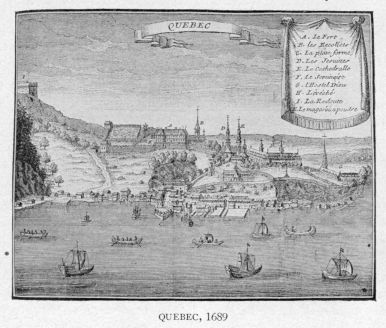
The woods lay snow padded, silent, somber. Up the river bed of the Richelieu, over the rolling drifts, glided the bushrovers. {173} Somewhere on the headwaters of the Hudson the Indians demanded what place they were to attack. Iberville answered, "Albany." "Humph," grunted the Indians with a dry smile at the camp fire, "since when have the French become so brave?" A midwinter thaw now turned the snowy levels to swimming lagoons, where snowshoes were useless, and the men had to wade knee-deep day after day through swamps of ice water. Then came one of those sudden changes,—hard frost with a blinding snowstorm. Where the trail forked for Albany and Schenectady it was decided to follow the latter, and about four o'clock in the afternoon, on the 8th of February, the bush-rovers reached a hut where there chanced to be several Mohawk squaws. Crowding round the chimney place to dry their clothes now stiff with ice, the bushrangers learned from the Indian women that Schenectady lay completely unguarded. There had been some village festival that day among the Dutch settlers. The gates at both ends of the town lay wide open, and as if in derision of danger from the far distant French, a snow man had been mockingly rolled up to the western gate as sentry, with a sham pipe stuck in his mouth. The Indian rangers harangued their braves, urging them to wash out all wrongs in the blood of the enemy, and the Le Moyne brothers moved from man to man, giving orders for utter silence. At eleven that night, shrouded by the snowfall, the bushrovers reached the palisades of Schenectady. They had intended to defer the assault till dawn, but the cold hastened action, and, uncasing their muskets, they filed silently past the snow man in the middle of the open gate and encircled the little village of fifty houses. When the lines met at the far gate, completely investing the town, a wild yell rent the air! Doors were hacked down. Indians with tomahawks stood guard outside the windows, and the dastardly work began,—as gratuitous a butchery of innocent people as ever the Iroquois perpetrated in their worst raids. Two hours the massacre lasted, and when it was over the French had, to their everlasting discredit, murdered in cold blood thirty-eight men (among them the poor inoffensive dominie), ten women, {174} twelve children; and the victors held ninety captives. To the credit of Iberville he offered life to one Glenn and his family, who had aided in ransoming many French from the Iroquois, and he permitted this man to name so many friends that the bloodthirsty Indians wanted to know if all Schenectady were related to this white man. One other house in the town was spared,—that of a widow with five children, under whose roof a wounded Frenchman lay. For the rest, Schenectady was reduced to ashes, the victors harnessing the Dutch farmers' horses to carry off the plunder. Of the captives, twenty-seven men and boys were carried back to Quebec. The other captives, mainly women and children, were given to the Indians. Forty livres for every human scalp were paid by the Sovereign Council of Quebec to the raiders.
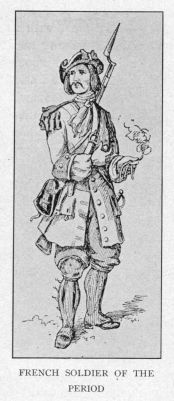
The record of the raiders led from Three Rivers by François Hertel was almost the same. Setting out in January, he was followed by twenty-five French and twenty-five Indians to the border lands between Maine and New Hampshire. The end of March saw the bushrovers outside the little village of Salmon Falls. Thirty inhabitants were tomahawked on the spot, the houses burned, and one hundred prisoners carried off; but news had gone like wildfire to neighboring settlements, and Hertel was pursued by two hundred Englishmen. He placed his bushrovers on a small bridge across Wooster River and here held the pursuers at bay till darkness enabled him to escape.
But the darkest deed of infamy was perpetrated by the third band of raiders,—a deed that reveals the glories of war as they {175} exist, stripped of pageantry. Portneuf had led the raiders from Quebec, and he was joined by that famous leader of the Abenaki Indians, Baron de Saint-Castin, from the border lands between Acadia and Maine. Later, when Hertel struck through the woods with some of his followers, Portneuf's men numbered five hundred. With these he attacked Fort Loyal, or what is now Portland, Maine, in the month of June. The fort boasted eight great guns and one hundred soldiers. Under cover of the guns Lieutenant Clark and thirty men sallied out to reconnoiter the attacking forces ambushed in woods round a pasturage. At a musket crack the English were literally cut to pieces, four men only escaping back to the fort. The French then demanded unconditional surrender. The English asked six days to consider. In six days English vessels would have come to the rescue. Secure, under a bluff of the ocean cliff, from the cannon fire of the fort, the French began to trench an approach to the palisades. Combustibles had been placed against the walls, when the English again asked a parley, offering to surrender if the French would swear by the living God to conduct them in safety to the nearest English post. To these conditions the French agreed. Whether they could not control their Indian allies or had not intended to keep the terms matters little. The English had no sooner marched from the fort than, with a wild whoop, the Indians fell on men, women, and children. Some were killed by a single blow, others reserved for the torture stake. Only four Englishmen survived the onslaught, to be carried prisoners to Quebec.
The French had been victorious on all three raids; but they were victories over which posterity will never boast, which no writer dare describe in all the detail of their horrors, and which leave a black blot on the escutcheon of Canada.
It was hardly to be expected that the New England colonies would let such raids pass unpunished. The destruction of Schenectady had been bad enough. The massacre of Salmon Falls caused the New Englanders to forget their jealousies for the once and to unite in a common cause. All the colonies agreed {176} to contribute men, ships, and money to invade New France by land and sea. The land forces were placed under Winthrop and Schuyler; but as smallpox disorganized the expedition before it reached Lake Champlain, the attack by land had little other effect than to draw Frontenac from Quebec down to Montreal, where Captain Schuyler, with Dutch bushmen, succeeded in ravaging the settlements and killing at least twenty French.
The expedition by sea was placed under Sir William Phips of Massachusetts,—a man who was the very antipodes of Frontenac. One of a poor family of twenty-six children, Phips had risen from being a shepherd boy in Maine to the position of ship's carpenter in Boston. Here, among the harbor folk, he got wind of a Spanish treasure ship containing a million and a half dollars' worth of gold, which had been sunk off the West Indies. Going to England, Phips succeeded in interesting that same clique of courtiers who helped Radisson to establish the Hudson's Bay Company,—Albemarle and Prince Rupert and the King; and when, with the funds which they advanced, Phips succeeded in raising the treasure vessel, he received, in addition to his share of the booty, a title and the appointment as governor of Massachusetts.
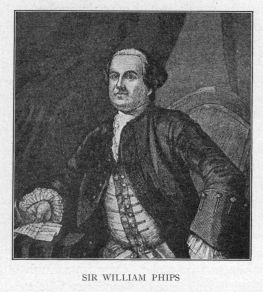
Here, then, was the daring leader chosen to invade New France. Phips sailed first for Port Royal, which had in late years become infested with French pirates, preying on Boston commerce. Word had just come of the fearful massacres of {177} colonists at Portland. Boston was inflamed with a spirit of vengeance. The people had appointed days of fasting and prayer to invoke Heaven's blessing on their war. When Phips sailed into Annapolis Basin with his vessels and seven hundred men in the month of May, he found the French commander, Meneval, ill of the gout, with a garrison of about eighty soldiers, but all the cannon chanced to be dismounted. The odds against the French did not permit resistance. Meneval stipulated for an honorable surrender,—all property to be respected and the garrison to be sent to some French port; but no sooner were the English in possession than, like the French at Portland, they broke the pledge. There was no massacre as in Maine, but plunderers ran riot, seizing everything on which hands could be laid, ransacking houses and desecrating the churches; and sixty of the leading people, including Meneval and the priests, were carried off as prisoners. Leaving one English flag flying, Phips sailed home.
Indignation at Boston had been fanned to fury, for now all the details of the butchery at Portland were known; and Phips found the colony mustering a monster expedition to attack the very stronghold of French power,—Quebec itself. England could afford no aid to her colonies, but thirty-two merchant vessels and frigates had been impressed into the service, some of them carrying as many as forty-four cannon. Artisans, sailors, soldiers, clerks, all classes had volunteered as fighters, to the number of twenty-five hundred men; but there was one thing lacking,—they had no pilot who knew the St. Lawrence. Full of confidence born of inexperience, the fleet set sail on the 9th of August, commanded again by Phips.
Time was wasted ravaging the coasts of Gaspé, holding long-winded councils of war, arguing in the commander's stateroom instead of drilling on deck. Three more weeks were wasted poking about the lower St. Lawrence, picking up chance vessels off Tadoussac and Anticosti. Among the prize vessels taken near Anticosti was one of Jolliet's, bearing his wife and mother-in-law. The ladies delighted the hearts of the Puritans by the {178} news that not more than one hundred men garrisoned Quebec; but Phips was reckoning without his host, and his host was Frontenac. Besides, it was late in the season—the middle of October—before the English fleet rounded the Island of Orleans and faced the Citadel of Quebec.
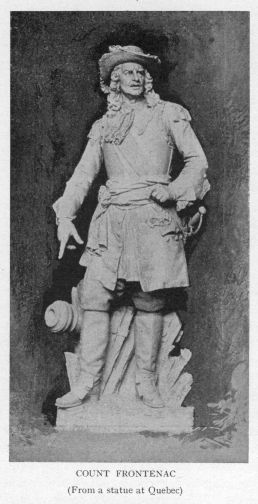
Indians had carried word to the city that an Englishwoman, taken prisoner in their raids, had told them more than thirty vessels had sailed from Boston to invade New France. Frontenac was absent in Montreal. Quickly the commander at Quebec sent coureurs with warning to Frontenac, and then set about casting up barricades in the narrow streets that led from Lower to Upper Town.
Frontenac could not credit the news. Had he not heard here in Montreal from Indian coureurs how the English overland expedition lay rotting of smallpox near Lake Champlain, such pitiable objects that the Iroquois refused to join them against the French? New France now numbered a population of twelve thousand and could muster three thousand fighting men; and though the English colonies numbered twenty {179} thousand people, how could they, divided by jealousies, send an invading army of twenty-seven hundred, as the rumor stated? Frontenac, grizzled old warrior, did not credit the news, but, all the same, he set out amid pelting rains by boat for Quebec. Half-way to Three Rivers more messengers brought him word that the English fleet were now advancing from Tadoussac. He sent back orders for the commander at Montreal to rush the bush-rovers down to Quebec, and he himself arrived at the Citadel just as the Le Moyne brothers anchored below Cape Diamond from a voyage to Hudson Bay. Maricourt Le Moyne reported how he had escaped past the English fleet by night, and it would certainly be at Quebec by daybreak.
Scouts rallied the bushrangers on both sides of the St. Lawrence to Quebec's aid. Frontenac bade them guard the outposts and not desert their hamlets, while Ste. Hélène and the other Le Moynes took command of the sharpshooters in Lower Town, scattering them in hiding along the banks of the St. Charles and among the houses facing the St. Lawrence below Castle St. Louis.
Sure enough, at daybreak on Monday, October 16, sail after sail, thirty-four in all, rounded the end of Orleans Island and took up position directly opposite Quebec City. It was a cold, wet autumn morning. Fog and rain alternately chased in gray shadows across the far hills, and above the mist of the river loomed ominous the red-gray fort which the English had come to capture. Castle St. Louis stood where Château Frontenac stands to-day; and what is now the promenade of a magnificent terrace was at that time a breastwork of cannon extending on down the sloping hill to the left as far as the ramparts. In fact, the cannon of that period were more dangerous than they are to-day, for long-range missiles have rendered old-time fortifications adapted for close-range fighting almost useless; and the cannon of Upper Town, Quebec, that October morning swept the approach to three sides of the fort, facing the St. Charles, opposite Point Lévis and the St. Lawrence, where it curves back on itself; and the fourth side was sheer wall—invulnerable.
{180} With a rattling of anchor chains and a creaking of masts the great sails of the English fleet were lowered, and a little boat put out at ten o'clock under flag of truce to meet a boat half-way from Lower Town. Phips' messenger was conducted blindfold up the barricaded streets leading to Castle St. Louis; and the gunners had been instructed to clang their muskets on the stones to give the impression of great numbers. Suddenly the bandage was taken from the man's eyes and he found himself in a great hall, standing before the august presence of Frontenac, surrounded by a circle of magnificently dressed officers. The New Englander delivered his message,—Phips' letter demanding surrender: "Your prisoners, your persons, your estates … and should you refuse, I am resolved by the help of God, in whom I trust, to revenge by force of arms all our wrongs." … As the reading of the letter was finished the man looked up to see an insolent smile pass round the faces of Frontenac's officers, one of whom superciliously advised hanging the bearer of such insolence without waste of time. The New Englander pulled out his watch and signaled that he must have Frontenac's answer within an hour. The haughty old Governor pretended not to see the motion, and then, with a smile like ice, made answer in {181} words that have become renowned: "I shall not keep you waiting so long! Tell your General I do not recognize King William! I know no king of England but King James! Does your General suppose that these brave gentlemen"—pointing to his officers—"would consent to trust a man who broke his word at Port Royal?"
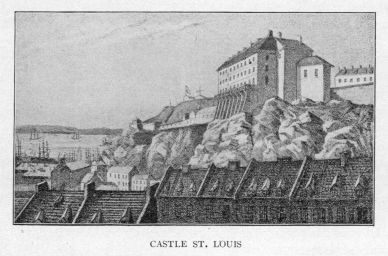
As the shout of applause died away, the trembling New Englander asked Frontenac if he would put his answer in writing.
"No," thundered the old Governor, never happier than when fighting, "I will answer your General with my cannon! I shall teach him that a man of my rank"—with covert sneer at Phips' origin, "is not to be summoned in such rude fashion! Let him do his best! I shall do mine!"
It was now the turn of the English to be amazed. This was not the answer they had expected from a fort weakly garrisoned by a hundred men. If they had struck and struck quickly, they might yet have won the day; but all Monday passed in futile arguments and councils of war, and on Tuesday, the 17th, towards night, was heard wild shouting within Quebec walls.

"My faith, Messieurs!" exclaimed one of the French prisoners aboard Phips' ship; "now you have lost your chance! Those {182} are the coureurs de bois from Montreal and the bushrovers of the Pays d'en Haut, eight hundred strong."
The news at last spurred Phips to action. All that night the people of Quebec could hear the English drilling, and shouting "God save King William!" with beat of drum and trumpet calls that set the echoes rolling from Cape Diamond; and on the 18th small boats landed fourteen hundred men to cross the St. Charles River and assault the Lower Town, while the four largest ships took up a position to cannonade the city. It was four in the afternoon before the soldiers had been landed amid peppering bullets from the Le Moyne bushrovers. Only a few cannon shots were fired, and they did no damage but to kill an urchin of the Upper Town.
Firing began in earnest on the morning of October 19. The river was churned to fury and the reverberating echoes set the rocks crashing from Cape Diamond, but it was almost impossible for the English to shoot high enough to damage the upper fort. It was easy for the French to shoot down, and great wounds gaped from the hull of Phips' ship, while his masts went over decks in flame, flag and all. The tide drifted the admiral's flag on shore. The French rowed out, secured the prize, and a jubilant shout roared from Lower Town, to be taken up and echoed and reëchoed from the Castle! For two more days bombs roared in midair, plunging through the roofs of houses in Lower Town or ricochetting back harmless from the rock wall below Castle St. Louis. At the St. Charles the land forces were fighting blindly to effect a crossing, but the Le Moyne bushrovers lying in ambush repelled every advance, though Ste. Hélène had fallen mortally wounded. On the morning of the 21st the French could hardly believe their senses. The land forces had vanished during the darkness of a rainy night, and ship after ship, sail after sail, was drifting downstream—was it possible?—in retreat. Another week's bombarding would have reduced Quebec to flame and starvation; but another week would have exposed Phips' fleet to wreckage from winter weather, and he had drifted down to Isle Orleans, where the {183} dismantled fleet paused to rig up fresh masts. It was Madame Jolliet who suggested to the Puritan commander an exchange of the prisoners captured at Port Royal with the English from Maine and New Hampshire held in Quebec. She was sent ashore by Phips and the exchange was arranged. Winter gales assailed the English fleet as it passed Anticosti, and what with the wrecked and wounded, Phips' loss totaled not less than a thousand men.
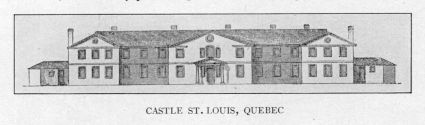
Frontenac had been back in Canada only a year, and in that time he had restored the prestige of French power in America. The Iroquois were glad to sue for peace, and his bitterest enemies, the Jesuits, joined the merrymakers round the bonfires of acclaim kindled in the old Governor's honor as the English retreated, and the joy bells pealed out, and processions surged shouting through the streets of Quebec! From Hudson Bay to the Mississippi, from the St. Lawrence to Lake Superior and the land of the Sioux, French power reigned supreme. Only Port Nelson, high up on the west coast of Hudson Bay, remained unsubdued, draining the furs of the prairie tribes to England away from Quebec. Iberville had captured it in the fall of 1694, at the cost of his brother Châteauguay's life; but when Iberville departed from Hudson Bay, English men-of-war had come out in 1696 and wrested back this most valuable of all the fur posts. It was now determined to drive the English forever from Hudson Bay. Le Moyne d'Iberville was chosen for the task.
April, 1697, Sérigny Le Moyne was dispatched from France with five men-of-war to be placed under the command of Iberville at Placentia, Newfoundland, whence he was "to proceed {184} to Hudson Bay and to leave not a vestige of the English in the North." The frigates left Newfoundland July 8. Three weeks later they were crushing through the ice jam of Hudson Straits. Iberville commanded the Pelican with two hundred and fifty men. Bienville, a brother, was on the same ship. Sérigny commanded the Palmier, and there were three other frigates, the Profound, the Violent, the Wasp. Ice locked round the fleet at the west end of Hudson Straits, and fog lay so thick there was nothing visible of any ship but the masthead. For eighteen days they lay, crunched and rammed and separated by the ice drive, till on August 25, early in the morning, the fog suddenly lifted. Iberville saw that Sérigny's ship had been carried back {185} in the straits. The Wasp and Violent were not to be seen, but straight ahead, locked in the ice, stood the Profound, and beside the French vessel three English frigates, the Hampshire, the Deering, the Hudson's Bay, on their annual voyage to Nelson! A lane of water opened before Iberville. Like a bird the Pelican spread her wings to the wind and fled.
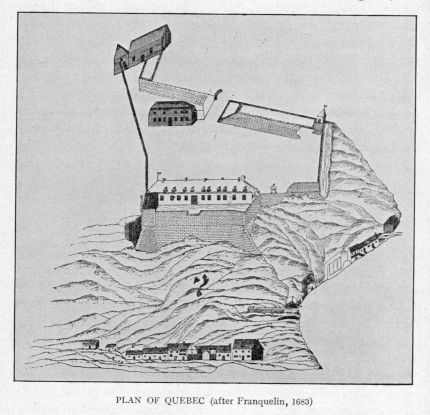
September 3 Iberville sighted Port Nelson, and for two days cruised the offing, scanning the sea for the rest of his fleet. Early on September 5 the sails of three vessels heaved and rose above the watery horizon. Never doubting these were his own ships, Iberville signaled. There was no answer. A sailor scrambled to the masthead and shouted down terrified warning. These were not the French ships! They were the English frigates bearing straight down on the single French vessel commanded by Iberville!
On one side was the enemy's fort, on the other the enemy's fleet coming over the waves before a clipping wind, all sails set. Of Iberville's crew forty men were ill of scurvy. Twenty-five had gone ashore to reconnoiter. He had left one hundred and fifty fighting men. Amid a rush of orders, ropes were stretched across decks for handhold, cannon were unplugged, and the batterymen below decks stripped themselves for the hot work ahead. The soldiers assembled on decks, sword in hand, and the Canadian bushrovers stood to the fore, ready to leap across the enemy's decks.
By nine in the morning the ships were abreast, and roaring cannonades from the English cut the decks of the Pelican to kindling wood and set the masts in flame. At the same instant one fell blast of musketry mowed down forty French; but Iberville's batterymen below decks had now ceased to pour a stream of fire into the English hulls. The odds were three to one, and for four hours the battle raged, the English shifting and sheering to lock in death grapple, Iberville's sharpshooters peppering the decks of the foe.
It had turned bitterly cold. The blood on the decks became ice, and each roll of the sea sent wounded and dead weltering {186} from rail to rail. Such holes had been torn in the hulls of both English and French ships that the gunners below decks were literally looking into each other's smoke-grimmed faces. Suddenly all hands paused. A frantic scream cleft the air. The vessels were careening in a tempestuous sea, for the great ship Hampshire had refused to answer to the wheel, had lurched, had sunk,—sunk swift as lead amid hiss of flames into the roaring sea! Not a soul of her two hundred and fifty men escaped. The frigate Hudson's Bay surrendered and the Deering fled. Iberville was victor.
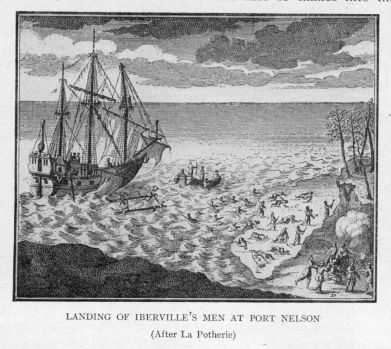
But a storm now broke in hurricane gusts over the sea. Iberville steered for land, but waves drenched the wheel at every wash, and, driving before the storm, the Pelican floundered in the sands a few miles from Nelson. All lifeboats had been shot away. In such a sea the Canadian canoes were useless. The shattered masts were tied in four-sided racks. To these {187} Iberville had the wounded bound, and the crew plunged for the shore. Eighteen men perished going ashore in the darkness. On land were two feet of snow. No sooner did the French castaways build fires to warm their benumbed limbs than bullets whistled into camp. Governor Bayly of Port Nelson had sent out his sharpshooters. Luckily Iberville's other ships now joined him, and, mustering his forces, the dauntless French leader marched against the fort. Storm had permitted the French to land their cannon undetected. Trenches were cast up, and three times Sérigny Le Moyne was sent to demand surrender.
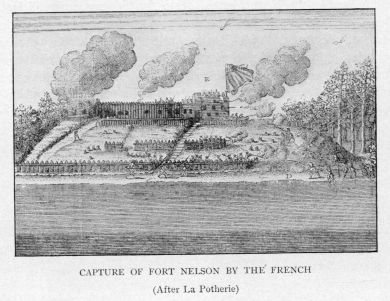
"The French are desperate," he urged. "They must take the fort or perish of want, and if you continue the fight there will be no mercy given."
The Hudson's Bay people capitulated and were permitted to march out with arms, bag and baggage. An English ship carried the refugees home to the Thames.
The rest of Iberville's career is the story of colonizing the Mississippi. He was granted a vast seigniory on the Bay of {188} Chaleur, and in 1699 given a title. On his way from the Louisiana colony to France his ship had paused at Havana. Here Iberville contracted yellow fever and died while yet in the prime of his manhood, July 9, 1706.
After the victory on Hudson Bay the French were supreme in America and Frontenac supreme in New France. The old white-haired veteran of a hundred wars became the idol of Quebec. Friends and enemies, Jesuits and Recollets, paid tribute to his worth. In November of 1698 the Governor passed from this life in Castle St. Louis at the good old age of seventy-eight. He had demonstrated—demonstrated in action so that his enemies acknowledged the fact—that the sterner virtues of the military chieftain go farther towards the making of great nationhood than soft sentiments and religious emotionalism.
Petty regulations and blue laws—Massacre of Deerfield—Madame Freneuse, the painter lady—"Old Wooden Sword"—Subercase at Port Royal—Paul Mascarene's plight—Court dandies cause naval disaster
While Frontenac was striking terror into the heart of New England with his French Canadian bushrovers, the life of the people went on in the same grooves. Spite of a dozen raids on the Iroquois cantons, there was still danger from the warriors of the Mohawk, but the Iroquois braves had found a new stamping ground. Instead of attacking Canada they now crossed westward to war on the allies of the French, the tribes of the Illinois and the Mississippi; and with them traveled their liege friends, English traders from New York and Pennsylvania and Virginia.
The government of Canada continued to be a despotism, pure and simple. The Supreme Council, consisting of the governor, the intendant, the bishop, and at different times from three to twelve councilors, stood between the people and the King of France, transmitting the King's will to the people, the people's wants to the King; and the laws enacted by the council ranged all the way from criminal decrees to such petty regulations as a modern city wardman might pass. Laws enacted to meet local needs, but subject to the veto of an absent ruler, who knew absolutely nothing of local needs, exhibited all the absurdities to be expected. The King of France desires the Sovereign Council to discourage the people from using horses, which are supposed to cause laziness, as "it is needful the inhabitants keep up their snowshoe travel so necessary in their wars." "If in two years the numbers of horses do not decrease, they are to be killed for meat." Then comes a law that reflects the presence of the bishop at the governing board. Horses have become the pride of the country beaux, and the gay be-ribboned carrioles are the distraction of the village curé. "Men are forbidden to gallop their horses within a third of a mile from the church on {190} Sundays." New laws, regulations, arrests, are promulgated by the public crier, "crying up and down the highway to sound of trumpet and drum," chest puffed out with self-importance, gold braid enough on the red-coated regalia to overawe the simple habitants. Though the companies holding monopoly over trade yearly change, monopoly is still all-powerful in New France,—so all pervasive that in 1741, in order to prevent smuggling to defraud the Company of the Indies, it is enacted that "people using chintz-covered furniture" must upholster their chairs so that the stamp "La Cie des Indes" will be visible to the inspector. The matter of money is a great trouble to New France. Beaver is coin of the realm on the St. Lawrence, and though this beaver is paid for in French gold, the precious metal almost at once finds its way back to France for goods; so that the colony is without coin. Government cards are issued as coin, but as Europe will not accept card money, the result is that gold still flows from New France, and the colony is flooded with paper money worthless away from Quebec.
As of old, the people may still plead their own cases in lawsuits before the Sovereign Council, but now the privileges of caste and class and feudalism begin to be felt, and it is enacted that gentlemen may plead their own cases before the council only "when wearing their swords." Young men are urged to qualify as notaries. In addition to the title of "Sieur," baronies are created in Canada, foremost among them that of the Le Moynes of Montreal. The feudal seignior now has his coat of arms emblazoned on the church pew where he worships, on his coach door, and on the stone entrance to his mansion. The habitants are compelled to grind their wheat at his mill, to use his great bake oven, to patronize his tannery. The seigniorial mansion itself is taking on more of pomp. Cherry and mahogany furniture have replaced homemade, and the rough-cast walls are now covered with imported tapestries.
Not gently does the Sovereign Council deal with delinquents. In 1735 it is enacted of a man who suicided, "that the corpse be tied to a cart, dragged on a hurdle, head down, face to ground, {191} through the streets of the town, to be hung up by the feet, an object of derision, then cast into the river in default of a cesspool." Criminals who evade punishment by flight are to be hanged in effigy. Montreal citizens are ordered to have their chimneys cleaned every month and their houses provided with ladders. Also "the inhabitants of Montreal must not allow their pigs to run in the street," and they "are forbidden to throw snowballs at each other," and—a regulation which people who know Montreal winters will appreciate—"they are ordered to make paths through the snow before their houses,"—to all of which petty regulations did royalty subscribe sign manual.

The Treaty of Ryswick closed the war between France and England the year before Frontenac died, but it was not known in Canada till 1698. As far as Canada was concerned it was no peace, barely a truce. Each side was to remain in possession of what it held at the time of the treaty, which meant that France retained all Hudson Bay but one small fort. Though the English of Boston had captured Port Royal, they had left {192} no sign of possession but their flag flying over the tenantless barracks. The French returned from the woods, tore the flag down, and again took possession; so that, by the Treaty of Ryswick, Acadia too went back under French rule.
Indeed, matters were worse than before the treaty, for there could be no open war; but when English settlers spreading up from Maine met French traders wandering down from Acadia, there was the inevitable collision, and it was an easy trick for the rivals to stir up the Indians to raid and massacre and indiscriminate butchery. For Indian raids neither country would be responsible to the other. The story belongs to the history of the New England frontier rather than to the record of Canada. It is a part of Canada's past which few French writers tell and all Canadians would fain blot out, but which the government records prove beyond dispute. Indian warfare is not a thing of grandeur at its best, but when it degenerates into the braining of children, the bayoneting of women, the mutilation of old men, it is a horror without parallel; and the amazing thing is that the white men, who painted themselves as Indians and helped to wage this war, were so sure they were doing God's work that they used to kneel and pray before beginning the butchery. To understand it one has to go back to the Middle Ages in imagination. New France was violently Catholic, New England violently Protestant. Bigotry ever looks out through eyes of jaundiced hatred, and in destroying what they thought was a false faith, each side thought itself instrument of God. As for the French governors behind the scenes, who pulled the strings that let loose the helldogs of Indian war, they were but obeying the kingcraft of a royal master, who would use Indian warfare to add to his domain.
"The English have sent us presents to drive the Black Gowns away," declared the Iroquois in 1702 regarding the French Jesuits. "You did well," writes the King of France to his Viceroy in Quebec, "to urge the Abenakis of Acadia to raid the English of Boston." The Treaty of Ryswick became {193} known at Quebec towards the end of 1698. The border warfare of ravage and butchery had begun by 1701, the English giving presents to the Iroquois to attack the French of the Illinois, the French giving presents to the Abenakis to raid the New England borders. Quebec offers a reward of twenty crowns for the scalp of every white man brought from the English settlements. New England retaliates by offering 20 pounds for every Indian prisoner under ten years of age, 40 pounds for every scalp of full-grown Indian. Presently the young noblesse of New France are off to the woods, painted like Indians, leading crews of wild bushrovers on ambuscade and midnight raid and border foray.
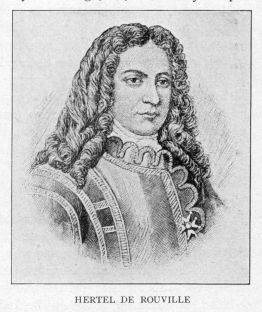
"We must keep things stirring towards Boston," declared Vaudreuil, the French governor. Midwinter of 1704 Hertel de Rouville and his four brothers set out on snowshoes with fifty-one bushrovers and two hundred Indians for Massachusetts. Dressed in buckskin, with musket over shoulder and dagger in belt, the forest rangers course up the frozen river beds southward of the St. Lawrence, and on over the height of land towards the Hudson, two hundred and fifty miles through pine woods snow padded and silent as death. Two miles from Deerfield the marchers run short of food. It is the last day of February, and the sun goes down over rolling snowdrifts high as the slab stockades of the little frontier town whose hearth-fire smoke hangs low in the frosty air, curling and clouding and lighting to rainbow colors as the ambushed {194} raiders watch from their forest lairs. Snowshoes are laid aside, packs unstrapped, muskets uncased and primed, belts reefed tighter. Twilight gives place to starlight. Candles on the supper tables of the settlement send long gleams across the snow. Then the villagers hold their family prayers, all unconscious that out there in the woods are the bushrovers on bended knees, uttering prayers of another sort. Lights are put out. The village lies wrapped in sleep. Still Rouville's raiders lie waiting, shivering in the snow, till starlight fades to the gray darkness that precedes dawn. Then the bushrovers rise, and at moccasin pace, noiseless as tigers, skim across the snow, over the drifts, over the tops of the palisades, and have dropped into the town before a soul has awakened. There is no need to tell the rest. It was not war. It was butchery. Children were torn from their mother's breast to be brained on the hearthstone. Women were hacked to pieces. Houses were set on fire, and before the sun had risen thirty-eight persons had been slaughtered, and the French rovers were back on the forest trail, homeward bound with one hundred and six prisoners. Old and young, women of frail health and children barely able to toddle, were hurried along the trail at bayonet point. Those whose strength was unequal to the pace were summarily knocked on the head as they fagged, or failed to ford the ice streams. Twenty-four perished by the way. Of the one hundred and six prisoners scattered as captives among the Indians, not half were ever heard of again. The others were either bought from the Indians by Quebec people, whose pity was touched, or placed round in the convents to be converted to the Catholic faith. These were ultimately redeemed by the government of Massachusetts.
New England's fury over such a raid in time of peace knew no bounds. Yet how were the English to retaliate? To pursue an ambushed Indian along a forest trail was to follow a vanishing phantom.
From earliest times Boston had kept up trade with Port Royal, and of late years Port Royal had been infested with French pirates, who raided Boston shipping. Colonel Ben {195} Church of Long Island, a noted bushfighter, of gunpowder temper and form so stout that his men had always to hoist him over logs in their forest marches, went storming from New York to Boston with a plan to be revenged by raiding Acadia.
Rouville's bushrovers had burned Deerfield the first of March. By May, Church had sailed from Boston with six hundred men on two frigates and half a hundred whaleboats, on vengeance bent. First he stopped at Baron St. Castin's fort in Maine. St. Castin it was who led the Indians against the English of Maine. The baron was absent, but his daughter was captured, with all the servants, and the fort was burned to the ground. Then up Fundy Bay sailed Church, pausing at Passamaquoddy to knock four Frenchmen on the head; pausing at Port Royal to take eight men prisoners, kill cattle, ravage fields; pausing at Basin of Mines to capture forty habitants, burn the church, and cut the dikes, letting the sea in on the crops; pausing at Beaubassin, the head of Fundy Bay, in August, to set the yellow wheat fields in flames! Then he sailed back to Boston with French prisoners enough to insure an exchange for the English held at Quebec.
No sooner had English sails disappeared over the sea than the French came out of the woods. St. Castin rebuilt his fort in Maine. The local Governor, who had held on with his gates shut and cannon pointed while Church ravaged Port Royal village, now strengthened his walls. Acadia took a breath and went on as before,—a little world in itself, with the pirate ships slipping in and out, loaded to the water line with Boston booty; with the buccaneer Basset throwing his gold round like dust; with the brave soldier Bonaventure losing his head and losing his heart to the painted lady, Widow Freneuse, who came from nobody knew where and lived nobody knew how, and plied her mischief of winning the hearts of other women's husbands. "She must be sent away," thundered the priest from the pulpit, straight at the garrison officer whose heart she dangled as her trophy. "She must be sent away," thundered the King's mandate; but the King was in France, and Madame Freneuse {196} wound her charms the tighter round the hearts of the garrison officers, and bided her time, to the scandal of the parish and impotent rage of the priest. Was she vixen or fool, this fair snake woman with the beautiful face, for whose smile the officers risked death and disgrace? Was she spy or adventuress? She signed herself as "Widow Freneuse," and had applied to the King for a pension as having grown sons fighting in the Indian wars. She will come into this story again, snakelike and soft-spoken, and appealing for pity, and fair to look upon, but leaving a trail of blood and treachery and disgrace where she goes.
The fur trade of Port Royal at this time was controlled by a family ring of La Tours and Charnisays, descendants of the ancient foes; and they lived a life of reckless gayety, spiced with all the excitement of war and privateering and matrimonial intrigue. Such was life inside Port Royal. Outside was the quiet peace of a home-loving, home-staying peasantry. Few of the farmers could read or write. The houses were little square Norman cottages,—"wooden boxes" the commandant called them,—with the inevitable porch shaded by the fruit trees now grown into splendid orchards. By diking out the sea the peasants farmed the marsh lands and saved themselves the trouble of clearing the forests. Trade was carried on with Boston and the West Indies. No card money here! The farmers of Acadia demanded coin in gold from the privateers who called for cargo, and it is said that in time of such raids as Colonel Church's, great quantities of this gold were carried out by night and buried in huge pots,—as much as 5000 louis d'ors (pounds) in one pot,—to be dug up after the raiders had departed. Naturally, as raids grew frequent, men sometimes made the mistake of digging up other men's pots, and one officer lost his reputation over it. All his knowledge of the outside world, of politics, of religion, the Acadian farmer obtained from his parish priest; and the word of the curé was law.
Encouraged by Church's success and stung by the raids of French corsairs from Port Royal, New England set herself seriously to the task of conquering Acadia. Colonel March sailed {197} from Boston with one thousand men and twenty-three transports, and on June 6, 1707, came into Port Royal. Misfortunes began from the first. March's men were the rawest of recruits,—fishermen, farmers, carpenters, turned into soldiers. Unused to military discipline, they resisted command. A French guardhouse stood at the entrance to Port Royal Basin, and fifteen men at once fled to the fort with warning of the English invasion. Consequently, when Colonel March and Colonel Appleton attempted to land their men, they were serenaded by the shots of an ambushed foe. Also French soldiers deserted to the English camp with fabulous stories about the strength of the French under Subercase. These yarns ought to have discredited themselves, but they struck terror to the hearts of March's green fighters. Then came St. Castin from St. John River with bushrovers to help Subercase. To the amazement of the French the English hoisted sail and returned, on June 16, without having fired more than a round of shot. The truth is, March's carpenters and fishermen refused to fight, though reënforcements joined them halfway home and they made a second attempt on Port Royal in August. March returned to Boston heartbroken, for his name had become a byword to the mob, and he was greeted in the streets with shouts of "Old Wooden Sword!"
While Boston was attempting to wreak vengeance on Acadia for the raiders of Quebec, the bushrovers from the St. Lawrence continued to scourge the outlying settlements of New England. To post soldiers on the frontier was useless. Wherever there were guards the raiders simply passed on to some unprotected village, and to have kept soldiers along the line of the whole frontier would have required a standing army. Massachusetts, Maine, New Hampshire, Vermont, northern New York,—on the frontier of each reigned perpetual terror. And the fiendish work was a paying business to the pagan Indian; for the Christian white men paid well for all scalps, and ransom money could always be extorted for captives. Barely had the Boston raid on Port Royal failed, when Governor de Vaudreuil of Quebec {198} retaliated by turning his raiders loose on Haverhill. The English fleet failed at Port Royal in June. By dawn of Sunday, August 29, Hertel de Rouville had swooped on the English village of Haverhill with one hundred Canadian bushrovers and one hundred and fifty Indians. The story of one raid is the story of all; so this one need not be told. As the raiders were discovered at daylight, the people had a chance to defend themselves, and some of the villagers escaped, the family of one being hidden by a negro nurse under tubs in the cellar. Alarm had been carried to the surrounding settlements, and men rode hot haste in pursuit of the forty prisoners. Hertel de Rouville coolly sent back word, if the pursuers did not desist, all the prisoners would be scalped and left on the roadside. Some fifty English had fallen in the fight, but the French lost fifteen, among them young Jared of Verchéres, brother of the heroine.

The only peace for Massachusetts was the peace that would be a victory, and again New England girded herself to the task of capturing Acadia. It was open war now, for the crowns of England and France were at odds. The troops were commanded by General Francis Nicholson, an English officer who brought out four war ships and four hundred trained marines. There were, besides, thirty-six transports and three thousand provincial troops, clothed and outfitted by Queen Anne of England. Sunday, September 24, 1710, the fleet glides majestically into Port Royal Basin. That night the wind blew a hurricane and the transport Caesar went aground with a crash that smashed her timbers to kindling wood and sent twenty-four men to a watery grave; but General Nicholson gave the raw provincials no time for panic fright. Day dawn, Monday, drums rolling a martial tread, trumpets blowing, bugles setting the echoes flying, flags blowing to the wind in the morning sun, he commanded Colonel Vetch to lead the men ashore. Inside Port Royal's palisades Subercase, the French commander, had less than three hundred men, half that number absolutely naked of clothing, and all short of powder. There were not provisions to last a month; but, game to his soul's marrow, as all the warriors of {199} those early days, Subercase put up a brave fight, sending his bombs singing over the heads of the English troops in a vain attempt to baffle the landing. Nicholson retaliated by moving his bomb ship, light of draught, close to the French fort and pouring a shower of bombs through the roofs of the French fort. Spite of the wreck the night before, by four o'clock Monday afternoon all the English had landed in perfect order and high spirits. Slowly the English forces swung in a circle completely round the fort. Again and again, by daylight and dark, Subercase's naked soldiers rushed, screeching the war whoop, to ambush and stampede the English line; but Nicholson's regulars stood the fire like rocks, and the desperate sortie of the French ended in fifty of Subercase's soldiers deserting en masse to the English. By Friday Nicholson's guns were all mounted in place to bombard the little wooden fort. Subercase was desperate. Women and children from the settlement had crowded into the fort for protection, and were now crazed with fear by the bursting bombs, while the naked soldiers could be kept on the walls only at the sword point of their commanding officers. {200} For two hundred French to have held out longer against three thousand five hundred English would have been madness. Subercase made the presence of the women in Port Royal an excuse to send a messenger with flag of truce across to Nicholson, asking the English to take the women under their protection. Nicholson might well have asked what protection the French raiders had accorded the women of the New England frontiers; but he sent back polite answer that "as he was not warring on women and children" he would receive them in the English camp, meanwhile holding Subercase's messenger prisoner, as he had entered the English camp without warning, eyes unbound. Sunday, October 1, the English bombs again began singing overhead. Subercase sends word he will capitulate if given honorable terms. For a month the parleying continues. Then November 13 the terms are signed on both sides, the English promising to furnish ships to carry the garrison to some French port and pledging protection to the people of the settlement. November 14 the French officers and their ladies come across to the English camp and breakfast in pomp with the English commanders. Seventeen New England captives are hailed forth from Port Royal dungeons, "all in rags, without shirts, shoes, or stockings." On the 16th Nicholson draws his men up in two lines, one on each side of Port Royal gates, and the two hundred French soldiers marched out, saluting Nicholson as they passed to the transports. On the bridge, halfway out, French officers meet the English officers, doff helmets, and present the keys to the fort. For the last time Port Royal changes hands. Henceforth it is English, and in gratitude for the Queen's help Nicholson renamed the place as it is known to-day,—Annapolis. Among the raiders capitulating is the famous bushrover Baron St. Castin of Maine.
When Nicholson returned to Boston all New England went mad with delight. Thanksgiving services were held, joy bells rang day and night for a week, and bonfires blazed on village commons to the gleeful shoutings of rustic soldiers returned to the home settlements glorified heroes.
{201}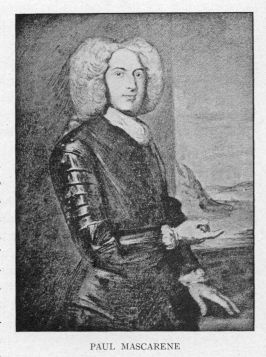
At Annapolis (Port Royal) Paul Mascarene, a French Huguenot of Boston, has mounted guard with two hundred and fifty New England volunteers. Colonel Vetch is nominally the English governor; but Vetch is in Boston the most of the time, and it is on Mascarene the burden of governing falls. His duties are not light. Palisades have been broken down and must be repaired. Bombs have torn holes in the fort roofs, and all that winter the rain leaks in as through a sieve. The soldier volunteers grumble and mope and sicken. And these are not the least of Paul Mascarene's troubles. French priests minister to the Acadian farmers outside the fort, to the sinister Indians ever lying in ambush, to the French bushrovers under young St. Castin across Fundy Bay on St. John River. Not for love or money can Mascarene buy provisions from the Acadians. Not by threats can he compel them to help mend the breaches in the palisades. The young commandant was only twenty-seven years of age, but he must have guessed whence came the unspoken hostility. The first miserable winter wears slowly past and the winter of 1711 is setting in, with the English garrison even more poverty stricken than the year before, when there drifts into Annapolis Basin, in a birch canoe paddled by a New Brunswick Indian, a white woman with her little son. She has come, she says, from the north side of Fundy Bay, because the French {202} on St. John River are starving. Whether the story be true or false matters little. It was the Widow Freneuse, the snake woman of mischief-making witchery, who had woven her spells round the officers in the days of the French at Port Royal. True or false, her story, added to her smile, excited sympathy, and she was welcomed to the shelter of the fort. It had been almost impossible for the English to obtain trees to repair the walls of the fort, and seventy English soldiers were sent out secretly by night to paddle up the river in a whaleboat for timber. Who conveyed secret warning of this expedition to the French bushraiders outside? No doubt the fair spy, Widow Freneuse, could have told if she would; but five miles from Port Royal, where the river narrowed to a place ever since known as Bloody Brook, a crash of musket shots flared from the woods on each side. Painted Indians, and Frenchmen dressed as Indians, among whom was a son of Widow Freneuse, dashed out. Sixteen English were killed, nine wounded, the rest to a man captured, to be held for ransoms ranging from 10 pounds to 50 pounds. Oddly enough, the very night after the attack, before news of it had come to Annapolis, the Widow Freneuse disappears from the fort. Henceforth Paul Mascarene's men kept guard night and day, and slept in their boots. Ever like a sinister shadow of evil moved St. Castin and his raiders through the Acadian wildwoods.
Only one thing prevented the French recapturing Port Royal at this time. All troops were required to defend Quebec itself from invasion.
Nicholson's success at Port Royal spurred England and her American colonies to a more ambitious project,—to capture Quebec and subjugate Canada. This time Nicholson was to head twenty-five hundred provincial troops by way of Lake Champlain to the St. Lawrence, while a British army of twelve thousand, half soldiers, half marines, on fifteen frigates and forty-six transports, was to sail from Boston for Quebec. The navy was under command of Sir Hovender Walker; the army, of General Jack Hill, a court favorite of Queen Anne's, more noted for {203} his graces than his prowess. The whole expedition is one of the most disgraceful in the annals of English war. The fleet left Boston on July 30, 1711, Nicholson meanwhile waiting encamped on Lake Champlain. Early in August the immense fleet had rounded Sable Island and was off the shores of Anticosti. Though there was no good pilot on board, the two commanders nightly went to bed and slept the sleep of the just. Off Egg Islands, on the night of August 22, there was fog and a strong east wind. Walker evidently thought he was near the south shore, ignorant of the strong undertow of the tide here, which had carried his ships thirty miles off the course. The water was rolling in the lumpy masses of a choppy cross sea when a young captain of the regulars dashed breathlessly into Walker's stateroom and begged him "for the Lord's sake to come on deck, for there are reefs ahead and we shall all be lost!"
With a seaman's laugh at a landsman's fears, the Admiral donned dressing gown and slippers and shuffled up to the decks. A pale moon had broken through the ragged fog wrack, and through the white light they plainly saw mountainous breakers straight ahead. Walker shouted to let the anchor go and drive to the wind. Above the roar of breakers and trample of panic-stricken seamen over decks could be heard the minute guns of the other ships firing for help. Then pitch darkness fell with slant rains in a deluge. The storm abated, but all night long, above the boom of an angry sea, could be heard shrieks and shoutings for help; and by the light of the Admiral's ship could be seen the faces of the dead cast up by the moil of the sea. Before dawn eight transports had suffered shipwreck and one thousand lives were lost.
It was a night to put fear in the hearts of all but very brave men, and neither Walker nor Hill proved man enough to stand firm to the shock. Walker ascribed the loss to the storm and the storm to Providence; and when war council was held three days later Jack Hill, the court dandy, was only too glad of excuse to turn tail and flee to England without firing a gun. Poor old Nicholson, waiting with his provincials up on Lake Champlain, {204} goes into apoplexy with tempests of rage and chagrin, when he hears the news, stamping the ground, tearing off his wig, and shouting, "Rogues! rogues!" He burns his fort and disbands his men.
The Peace of Utrecht in 1713 for the time closed the war. France had been hopelessly defeated in Europe, and the terms were favorable to England.
All of Hudson Bay was to be restored to the English; but—note well—it was not specified where the boundaries were to be between Hudson Bay and Quebec. That boundary dispute came down as a heritage to modern days—thanks to the incompetency and ignorance of the statesmen who arranged the treaty.
Acadia was given to England, but Cape Breton was retained by the French, and—note well—it was not stated whether Acadia included New Brunswick and Maine, as the French formerly contended, or included only the peninsula south of the Bay of Fundy. That boundary dispute, too, came down.
Newfoundland was acknowledged as an English possession, but the French retained the islands of St. Pierre and Miquelon, with fishing privileges on the shores of Newfoundland. That concession, too, has come down to trouble modern days,—thanks to the same defenders of colonial interests.
The Iroquois were acknowledged to be subjects of England, but it was not stated whether that concession included the lands of the Ohio raided and subjugated by the Iroquois; and that vagueness was destined to cost both New France and New England some of its best blood.
It has been stated, and stated many times without dispute, that when England sacrificed the interests of her colonies in boundary settlements, she did so because she was in honor bound to observe the terms of treaties. One is constrained to ask whose ignorance was responsible for the terms of those treaties.
Looking back on the record so far,—both of France and England,—which has spent the more both of substance and of life for defense; the mother countries or the colonies?
La Vérendrye's adventuring to the West—Adventurers reach Lake Winnipeg—From Assiniboine to Missouri—Intrigue with Indians—The building of Louisburg—The siege of the great fort—Jokes bandied by fighters—Quarrels left unsettled—Beyond the Alleghenies—Washington and Jumonville—Braddock's march—Defeat of Braddock—Abbé Le Loutre—The Acadians—Deportation of French—At Lake Champlain—Dieskau defeated
What with clandestine raids and open wars, it might be thought that the little nation of New France had vent enough for the buoyant energy of its youth. While the population of the English colonies was nearing the million mark, New France had not 60,000 inhabitants by 1759. Yet what had the little nation, whose mainspring was at Quebec, accomplished? Look at the map! Her bushrovers had gone overland to Hudson Bay far north as Nelson. Before 1700 Duluth had forts at Kaministiquia (near modern Fort Williams) on Lake Superior. Radisson, Marquette, Jolliet, and La Salle had blazed a trail to the Mississippi from what is now Minnesota to the Gulf of Mexico. By 1701 La Motte Cadillac had built what is now Detroit in order to stop the progress of the English traders up the lakes to Michilimackinac; and by 1727 the Company of the Sioux had forts far west as Lake Pepin. With Quebec as the hub of the wheel, draw spokes across the map of North America. Where do they reach? From Quebec to the Gulf of Mexico, to the Missouri, to the Upper Mississippi, to Lake Superior, to Hudson Bay. Who blazed the way through these far pathless wilds? Nameless wanderers dressed in rags and tatters,—outcasts of society, forest rovers lured by the Unknown as by a siren, soldiers of fortune, penniless, in debt, heartbroken, slandered, persecuted, driven by the demon of their own genius to earth's ends,—and to ruin!
Spite of clandestine raids and open wars, New France was now setting herself to stretch the lines of her discoveries farther westward.
It will be remembered it was at Three Rivers that the Indians of the Up Country paused on their way down the St. Lawrence. {206} From the days of Radisson in 1660 the passion for discovery had been in the very air of Three Rivers. In this little fort was born in 1686 Pierre Gaultier Varennes de La Vérendrye, son of a French officer. From childhood the boy's ear must have been accustomed to the uncouth babblings of the half-naked Indians, whose canoes came swarming down the river soon as ice broke up in spring. One can guess that in his play the boy many a time simulated Indian voyageur, bushrover, coming home clad in furs, the envy of the villagers. At fourteen young Pierre had decided that he would be a great explorer, but destiny for the time ruled otherwise. At eighteen he was among the bushraiders of New England. Nineteen found him fighting the English in Newfoundland. Then came the honor coveted by all Canadian boys,—an appointment to the King's army in Europe. Young La Vérendrye was among the French forces defeated by the great Marlborough; but the Peace of Utrecht sent him back to Canada, aged twenty-seven, to serve in the far northern fur post of Nepigon, eating his heart out with ambition.
It was here the dreams of his childhood emerged like a commanding destiny. Old Indian chief Ochagach drew maps on birch bark of a trail to the Western Sea. La Vérendrye took canoe for Quebec, and, with heart beating to the passion of a secret ambition, laid the drawings before Governor Beauharnois. He came just in the nick of time. English traders were pressing westward. New France lent ready ear for schemes of wider empire. The court could grant no money for discoveries, but it gave La Vérendrye permission for a voyage and monopoly in furs over the lands he might discover; but the lands must be found before there would be furs, and here began the mundane worries of La Vérendrye's glory.
Montreal merchants outfitted him, but that meant debt; and his little party of fifty grizzled woodrovers set out with their ninety-foot birch canoes from Montreal on June 8, 1731. Three sons were in his party and a nephew, Jemmeraie, from the Sioux country of the west. Every foot westward had been consecrated by heroism to set the pulse of red-blooded men jumping. There {207} was the seigniory of La Chine, named in derision of La Salle's project to find a path to China. There was the Long Sault, where Dollard had fought the Iroquois. There were the pink granite islands of Georgian Bay, where the Jesuits had led their harried Hurons. There was Michilimackinac, with the brawl of its vice and brandy and lawless traders from the woods, where La Motte Cadillac ruled before going to found Detroit. Seventy-eight days from Montreal, there were the pictured rocks of Lake Superior, purple and silent and deep as ocean, which Radisson had coasted on his way to the Mississippi. Then La Vérendrye came to Duluth's old stamping ground—Kaministiquia.

The home-bound boats were just leaving the fur posts for the St. Lawrence. Frosts had already stripped the trees of foliage, and winter would presently lock all avenues of retreat in six months' ice. La Vérendrye's men began to doubt the wisdom of chasing a will-o'-the-wisp to an unknown Western Sea. The explorer sent half the party forward with his nephew Jemmeraie and his son Jean, while he himself remained at Kaministiquia with the mutineers to forage for provisions. {208} Winter found Jemmeraie's men on the Minnesota side of Rainy Lake, where they built Fort Pierre and drove a rich trade in furs with the encamped Crees. In summer of 1732 came La Vérendrye, his men in gayest apparel marching before the awe-struck Crees with bugle blowing and flags flying. Then white men and Crees advanced in canoes to the Lake of the Woods, coasting from island to island through the shadowy defiles of the sylvan rocks along the Minnesota shore to the northwest angle. Here a second winter witnessed the building of a second post, Fort St. Charles, with four rows of fifteen-foot palisades and thatched-roofed log cabins. The Western Sea seemed far as ever,—like the rainbow of the child, ever fleeing as pursued,—and La Vérendrye's merchant partners were beginning to curse him for a rainbow chaser. He had been away three years, and there were no profits. Suspicious that he might be defrauding them by private trade or sacrificing their interests to his own ambitions, they failed to send forward provisions for this year. La Vérendrye was in debt to his men for three years' wages, in debt to his partners for three years' provisions. To fail now he dared not. Go forward he could not, so he hurried down to Montreal, where he prevailed on the merchants to continue supplies by the simple argument that, if they stopped now, there would be total loss.
Young Jean La Vérendrye and Jemmeraie have meanwhile descended Winnipeg River's white fret of waterfalls to Winnipeg Lake, where they build Fort Maurepas, near modern Alexander,—and wait. Fishing failed. The hunt failed. The winter of 1735-1736 proved of such terrible severity that famine stalked through the western woods. La Vérendrye's three forts were reduced to diet of skins, moccasin soup, and dog meat. In desperation Jemmeraie set out with a few voyageurs to meet the returning commander, but privation had undermined his strength. He died on the way and was buried in his hunter's blanket beside an unknown stream between Lake Winnipeg and the Lake of the Woods. Accompanied by the priest Aulneau, young Jean de La Vérendrye decided to rush canoes down from the Lake of the Woods to Michilimackinac for food and powder. A furious pace was {209} to be kept all the way to Lake Superior. The voyageurs had risen early one morning in June, and after paddling some miles through the mist had landed to breakfast when a band of marauding Sioux fell on them with a shout. The priest Aulneau fell pierced in the head by a stone-pointed arrow. Young Jean La Vérendrye was literally hacked to pieces. Not a man of the seventeen French escaped, and Massacre Island became a place of ill omen to the French from that day. At last came the belated supplies, and by February of 1737 La Vérendrye had moved his main forces west to Lake Winnipeg. This was no Western Sea, though the wind whipped the lake like a tide,—which explained the Indian legend of an inland ocean. Though it was no Western Sea, it was a new empire for France. The bourne of the Unknown still fled like the rainbow, and La Vérendrye still pursued.

Down to Quebec for more supplies with tales of a vast Beyond Land! Back to Lake Winnipeg by September of 1738 with canoes gliding up the muddy current of Red River for the Unknown Land of the Assiniboines; past Nettley Creek, then known as Massacre Creek or Murderers' River, from the Sioux having slain the encamped wives and children of the Cree who had gone to Hudson Bay with their furs; between the wooded banks of what are now East and West Selkirk, flat to left, high to right; tracking up the Rapids of St. Andrews, thick oak woods to east, {210} rippling prairie russet in the autumn rolling to the west,—La Vérendrye and his voyageurs came to the forks of Red River and the Assiniboine, or what is now known as the city of Winnipeg. Where the two rivers met on the flats to the west were the high scaffoldings of an ancient Cree graveyard, bizarre and eerie and ghostlike between the voyageurs and the setting sun. On the high river bank of what is now known as Assiniboine Avenue gleamed the white skin of ten Cree tepees, where two war chiefs waited to meet La Vérendrye. Drawing up their canoes near where the bridge now spans between St. Boniface and Winnipeg, the voyageurs came ashore.
It was a fair scene that greeted them, such a scene as any westerner may witness to-day of a warm September night when the sun hangs low like a blood-red shield, and the evening breeze touches the rustling grasses of the prairie beyond the city to the waves of an ocean. It was not the Western Sea, but it was a Sea of Prairie. It was a New World, unbounded by hill or forest, spacious as the very airs of heaven, fenced only by the blue dip of a shimmering horizon. It was a world, though La Vérendrye knew it not, five times larger than New France, half as big as all Europe. He had discovered the Canadian Northwest.
One can guess how the tired wanderers at rest beneath the uptilted canoes that night wondered whither their quest would lead them over the fire-dyed horizon where the sun was sinking as over a sea. The Cree chiefs told them of other lands and other peoples to the south, "who trade with a people who dwelt on the great waters beyond the mountains of the setting sun,"—the Spaniards.
Leaving men to knock up a trading post near the suburb now known as Fort Rouge, La Vérendrye, on September 26, steers his canoes up the shallow Assiniboine far as what is now known as Portage La Prairie, where a trail leads overland to the Saskatchewan and so down to the English traders of Hudson Bay. But this is not the trail to the Western Sea; La Vérendrye's quest is set towards those people "who live on the great waters to the south."
{211}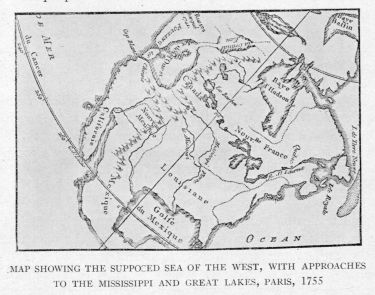
Fort de La Reine is built at the Portage of the Prairie, and October 18, to beat of drum, with flag flying, La Vérendrye marches forth with fifty-two men towards Souris River for the land of the Mandanes on the Missouri. December 3 he is welcomed to the Mandane villages; but here is no Western Sea, only the broad current of the Missouri rolling turbulent and muddy southward towards the Mississippi; but the Mandanes tell of a people to the far west, "who live on the great waters bitter for drinking, who dress in armor and dwell in stone houses." These must be the Spaniards. La Vérendrye's quest has become a receding phantom. Leaving men to learn the Missouri dialects, La Vérendrye marched in the teeth of mid-winter storms back to the Portage of the Prairie on the Assiniboine. Of that march, space forbids to tell. A blizzard raged, driving the fine snows into eyes and skin like hot salt. When the marchers camped at night they had to bury themselves in snow to keep from freezing. Drifts covered all landmarks. The men lost their bearings, doubled back on their own tracks, were frost-bitten, buffeted by the storm, and short of food. Christmas {212} was passed in the camps of wandering Assiniboines, and February 10, 1739, the fifty men staggered, weak and starving, back to the Portage of the Prairie.
The wanderings of La Vérendrye and his sons for the next few years led southwestward far as the Rockies in the region of Montana, northwestward far as the Bow River branch of the Saskatchewan. Meanwhile, all La Vérendrye's property had been seized by his creditors. Jealous rivals were clamoring for possession of his fur posts. The King had conferred on him the Order of the Cross of St. Louis, but eighteen years of exposure and worry had broken the explorer's health. On the eve of setting out again for the west he died suddenly on the 6th of December, 1749, at Montreal.
Look again at the map! The spokes of the wheel running out from Quebec extend to the Gulf of Mexico on the south, to the Rockies on the west, to Hudson Bay on the north. And the population of New France does not yet number 60,000 people. Is it any wonder French Canadians look back on these days as the Golden Age?
And while the bushrovers of Canada are pushing their way through the wilderness westward, there come slashing, tramping, swearing, stamping through the mountainous wilds of West and East Siberia the Cossack soldiers of Peter the Great, led by the Dane, Vitus Bering, bound on discovery to the west coast of America. La Vérendrye's men have crossed only half a continent. Bering's Russians cross the width of two continents, seven thousand miles, then launch their crazily planked ships over unknown northern seas for America. From 1729 to August of 1742 toil the Russian sea voyagers. Their story is not part of Canada's history. Suffice to say, December of 1741 finds the Russian crews cast away on two desert islands of Bering Sea west of Alaska, now known as the Commander Islands. Half the crew of seventy-seven perish of starvation and scurvy. Bering himself lies dying in a sandpit, with the earth spread over him for warmth. Outside the sand holes, {213} where the Russians crouch, scream hurricane gales and white billows and myriad sea birds. The ships have been wrecked. The Russians are on an unknown island. Day dawn, December 8, lying half buried in the sand, Bering breathes his last. On rafts made of wreckage the remnant of his crew find way back to Asia, but they have discovered a trail across the sea to a new land. Fur hunters are moving from the east, westward. Fur hunters are moving from the west, eastward. These two tides will meet and clash at a later era.
The Treaty of Utrecht had stopped open war, but that did not prevent the bushrovers from raiding the border lands of Maine, of Massachusetts, of New York. The story of one raid is the story of all, and several have already been related. Now comes a half century of petty war that raged on the border lands from Saratoga and Northfield to Maine and New Brunswick. The story of these "little wars," as the French called them, belongs more to the history of the United States than Canada.
Nor did the Peace of Utrecht stop the double dealing and intrigue by which European rulers sought to use bigoted missionaries and ignorant Indians as pawns in the game of statecraft.
"Sentiments of opposition to the English in Acadia must be secretly fostered," commanded the King of France in 1715, two years after Acadia had been deeded over to England. "The King is pleased with the efforts of Père Rasle to induce the Indians not to allow the English to settle on their lands," runs the royal dispatch of 1721 regarding the border massacres of Maine. "Advise the missionaries in Acadia to do nothing that may serve as a pretext for sending them out of the country, but have them induce the Indians to organize enterprises against the English," command the royal instructions of 1744. "The Indians," writes the Canadian Governor, "can be depended on to bring in the scalps of the English as long as we furnish ammunition. This is the opinion of the missionary, M. Le Loutre." Again, from the Governor of New France: "If the settlers of {214} Acadia hesitate to rise against their English masters, we can employ threats of the Indians and force. It is inconceivable that the English would try to remove these people. Letters from M. Le Loutre report that his Indians have intercepted dispatches of the English officers. M. Le Loutre will keep us informed of everything in Acadia. We have furnished him with secret signals to our ships, which will tell us of every movement on the part of the enemy."
Of all the hotbeds of intrigue, Acadia, from its position, had become the worst. Here was a population of French farmers, which in half a century had increased to 12,000, held in subjection by an English garrison at Annapolis of less than two hundred soldiers so destitute they had neither shoes nor stockings, coats nor bedding. The French were guaranteed in the Treaty of Utrecht the freedom and privileges of their religion by the English; but in matters temporal as well as spiritual they were absolutely subject to priests, acting as spies for the Quebec plotters.
France, as has been told, retained Cape Breton (Isle Royal) and Prince Edward Island (Isle St. Jean), and the Treaty of Utrecht had hardly been signed before plans were drawn on a magnificent scale for a French fort on Cape Breton to effect a threefold purpose,—to command the sea towards Boston, to regain Acadia, to protect the approach to the River St. Lawrence.
The Island of Cape Breton is like a hand with its fingers stuck out in the sea. The very tip of a long promontory commanding one of the southern arms of the sea was chosen for the fort that was to be the strongest in all America. On three sides were the sea, with outlying islands suitable for powerful batteries and a harbor entrance that was both narrow and deep. To the rear was impassable muskeg—quaking moss above water-soaked bog. Two weaknesses only had the fort. There were hills to right and left from which an enemy might pour destruction inside the walls, but the royal engineers of France depended on the outlying island batteries preventing any enemy gaining possession of these hills. By 1720 walls thirty-six feet thick had encircled {215} an area of over one hundred acres. Outside the rear wall had been excavated a ditch forty feet deep and eighty wide. Bristling from the six bastions of the walls were more than one hundred and eighty heavy cannon. Besides the two batteries commanding the entrance to the harbor was an outer Royal Battery of forty cannon directly across the water from the fort, on the next finger of the island. Twenty years was the fort in building, costing what in those days was regarded as an enormous sum of money,—equal to $10,000,000. Such was Louisburg, impregnable as far as human foresight could judge,—the refuge of corsairs that preyed on Boston commerce; the haven of the schemers who intrigued to wean away the Acadians from English rule, the guardian sentinel of all approach to the St. Lawrence.
"It would be well," wrote the King the very next year after the treaty was signed, "to attract the Acadians to Cape Breton, but act with caution." And now twenty years had passed. Some Acadians had gone to Cape Breton and others to Prince Edward Island; but statecraft judged the simple Acadian farmer would be more useful where he was,—on the spot in Acadia, ready to rebel when open war would give the French of Louisburg a chance to invade.
Late in 1744 Europe breaks into that flame of war known as the Austrian Succession. Before either Quebec or Boston knows of open war, Louisburg has word of it and sends her rangers burning fishing towns and battering at the rotten palisades of Annapolis (Port Royal). Port Royal is commanded by that same Paul Mascarene of former wars, grown old in service. The French bid him save himself by surrender before their fleet comes. Though Mascarene has less than a hundred men, the weather is in his favor. It is September. Winter will drive the invaders home, so he sends back word that he will bide his time till the hostile fleet comes. As for the Abbé Le Loutre, let the treacherous priest beware how he brings his murderous Indians within range of the fort guns! Meanwhile the Acadian habitants are threatened with death if they do not rise to aid the {216} French, but they too bide their time, for if they rebel and fail, that too means death; and "the Neutrals" refuse to stir till the invaders, from lack of provisions, are forced to decamp, and the Abbé Le Loutre, with his black hat drawn down over his eyes, vanishes into forest with his crew of painted warriors.
News of the war and of the ravaging of Acadian fishing towns set Massachusetts in flame. To Boston, above all New England towns, was Louisburg a constant danger. The thing seemed absolute stark madness,—the thoughtless daring of foolhardy enthusiasts,—but it is ever enthusiasm which accomplishes the impossible; and April 30, 1745, after only seven weeks of preparation, an English fleet of sixty-eight ships—some accounts say ninety, including the whalers and transports gathered along the coast towns—sails into Gabarus Bay, behind Louisburg, where the waters have barely cleared of ice. William Pepperrell, a merchant, commands the four thousand raw levies of provincial troops, the most of whom have never stepped to martial music before in their lives. Admiral Warren has come up from West India waters with his men-of-war to command the united fleets. Early Monday morning, against a shore wind, the boats are tacking to land, when the alarm bells begin ringing and ringing at Louisburg and a force of one hundred and fifty men dashes downshore for Flat Cove to prevent the landing. Pepperrell out-tricks the enemy by leaving only a few boats to make a feint of landing at the Cove, while he swings his main fleet inshore round a bend in the coast a mile away. Here, with a prodigious rattling of lowered sails and anchor chains, the crews plunge over the rolling waves, pontooning a bridge of small boats ashore. By nightfall the most of the English have landed, and spies report the harbor of Louisburg alive with torches where the French are sinking ships to obstruct the entrance and setting fire to fishing stages that might interfere with cannon aim. The next night, May 1, Vaughan's New Hampshire boys—raw farmers, shambling in their gait, singing as they march—swing through the woods along the marsh {217} behind the fort, and take up a position on a hill to the far side of Louisburg, creating an enormous bonfire with the French tar and ships' tackling stored here. The result of this harmless maneuver was simply astounding. It will be recalled that Louisburg had an outer battery of forty cannon on this side. The French soldiers holding this battery mistook the bonfire for the {218} English attacking forces, and under cover of darkness abandoned the position,—battery, guns, powder and all,—which the English promptly seized. This was the Royal Battery, which commanded the harbor and could shell into the very heart of the fort.
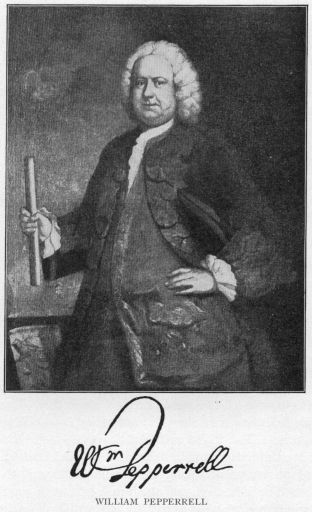
The next thing for the English was to get their heavy guns ashore through a rolling surf of ice-cold water. For two weeks the men stood by turns to their necks in the surf, steadying the pontoon gangway as the great cannon were trundled ashore; and this was the least of their difficulties. The question was how to get their cannon across the marsh behind the fort to the hill on the far side. The cannon would sink from their own weight in such a bog, and either horses or oxen would flounder to death in a few minutes. Again, the fool-hardy enthusiasm of the raw levies overcame the difficulty. They built large stone boats, raft-shaped, such as are used on farms to haul stones over ground too rough for wagons. Hitching to these, teams of two hundred men stripped to midwaist, they laboriously hauled the cannon across the quaking moss to the hills commanding the rear of the fort, bombs and balls whizzing overhead all the while, fired from the fort bastions. It was cold, damp spring weather. The men who were not soaked to their necks in surf and bog were doing picket duty alongshore, sleeping in their boots. Consequently, in three weeks, half Pepperrell's force became deadly ill. At this time, within two days, occurred both a cheering success and a disheartening rebuff. A French man-of-war with seventy cannon and six hundred men was seen entering Louisburg. As if in panic fright, one of the small English ships fled. The French ship pursued. In a trice she was surrounded by the English fleet and captured. The flight of the little vessel had been a trick. A few days later four hundred English in whaleboats attempted the mad project of attacking the Island Battery at the harbor entrance. The boats set out about midnight with muffled oars, but a wind rose, setting a tremendous surf lashing the rocks, and yet the invaders might have succeeded but for a piece of rashness. A hundred men had gained the shore when, with the thoughtlessness of schoolboys, they uttered a jubilant yell. {219} Instantly, porthole, platform, gallery, belched death through the darkness. The story is told that a raw New England lad was in the act of climbing the French flagstaff to hang out his own red coat as English flag when a Swiss guard hacked him to pieces. The boats not yet ashore were sunk by the blaze of cannon. A few escaped back in the darkness, but by daylight over one hundred English had been captured. Cannon, mortars, and musketoons were mounted to command the fort inside the walls, and a continuous rain of fire began from the hills. In vain Duchambon, the French commander, waited for reënforcements from Canada. Convent, hospital, barracks, all the houses of the town, were peppered by bombs till there was not a roof intact in the place. The soldiers, of whom there were barely two thousand, were ready to mutiny. The citizens besought Duchambon to surrender. Provisions ran out. Looking down from the tops of the walls, cracking jokes with the English across the ditch, the French soldiers counted more than a thousand scaling ladders ready for hand-to-hand assault, and a host of barrels filled with mud behind which the English sharpshooters crouched. It had just been arranged between Warren and Pepperrell that the {220} former should attack by sea while the latter assaulted by land, when on June 16 the French capitulated. How the New England enthusiasts ran rampant through the abandoned French fort need not be told. How Parson Moody, famous for his long prayers, hewed down images in the Catholic chapel till he was breathless and then came to the officers' state dinner so exhausted that when asked to pronounce blessing he could only mutter, "Good Lord, we have so much to thank Thee for, time is too short; we must leave it to eternity. Amen"; how the New Englanders, unused to French wines, drank themselves torpid on the stores of the fort cellar; how the French the next year made superhuman effort to regain Louisburg, only to have a magnificent fleet of one hundred and fifty sail wrecked on Sable Island, Duke d'Anville, the commander, dying of heartbreak on his ship anchored near Halifax, his successor killing himself with his own sword,—cannot be told here. Louisburg was the prize of the war, and England threw the prize away by giving it back to France in the Treaty of Aix-la-Chapelle in 1748. The English government paid back the colonies for their outlay, but of all the rich French pirate ships loaded with booty, captured at Louisburg by leaving the French flag flying, not a penny's worth went to the provincial troops. Warren's seamen received all the loot.
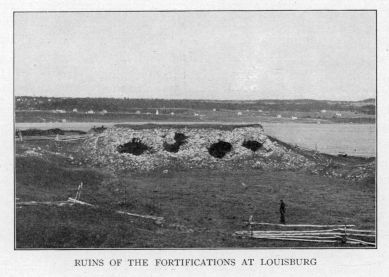
Like all preceding treaties, the Peace of Aix-la-Chapelle left unsettled the boundaries between New France and New England. In Acadia, in New York, on the Ohio, collisions were bound to come.
In Acadia the English send their officers to the Isthmus of Chignecto to establish a fort near the bounds of what are now Nova Scotia and New Brunswick. The priestly spy, Louis Joseph Le Loutre, leads his wild Micmac savages through the farm settlement round the English fort, setting fire to houses putting a torch even to the church, and so compelling the habitants of the boundary to come over to the French and take sides. The treaty has restored Louisburg to the French, but the very {221} next year England sends out Edward Cornwallis with two thousand settlers to establish the English fort now known as Halifax. By 1752 there are four thousand people at the new fort, though the Indian raiders miss no occasion to shoot down wayfarers and farmers; and the French Governor at Quebec continues his bribes—as much as eight hundred dollars a year to a man—to stir up hostility to the English and prevent the Acadian farmers taking the oath of fidelity to England. So much for the peace treaty in Acadia. It was not peace; it was farce.

In New York state matters were worse. The Iroquois had been acknowledged allies of the English, and before 1730 the English fort at Oswego had been built at the southeast corner of Lake Ontario to catch the fur trade of the northern tribes coming down the lakes to New France, and to hold the Iroquois' friendship. Also, as French traders pass up the lake to Fort Frontenac (Kingston) and Niagara with their national flag flying from the prow of canoe and flatboat, chance bullets from the {222} English fort ricochet across the advancing prows, and soldiers on the galleries inside Fort Oswego take bets on whether they can hit the French flag. Prompt as a gamester, New France checkmates this move. Peter Schuyler has been settling English farmers round Lake Champlain. At Crown Point, long known as Scalp Point, where the lake narrows and portage runs across to Lake George and the Mohawk land, the French in 1731 erect a strong fort. As for the English traders at Fort Oswego catching the tribes from the north, New France counterchecks that by sending Portneuf in April of 1749, only a year after the peace, to the Toronto portage where the Indians come from the Upper Lakes by way of Lake Simcoe. What is now known as Toronto is named Rouillé, after a French minister; and as if this were not checkmate enough to the English advancing westward, the Sulpician priest from Montreal, Abbé Picquet, zealously builds a fort straight north of Oswego, on the south side of the St. Lawrence, to keep the Iroquois loyal to France. Picquet calls his fort "Presentation." His enemies call it "Picquet's Folly." It is known to-day as Ogdensburg. Look at the map. France's frontier line is guarded by forts that stand like sentinels at the gateways of all waters leading to the interior,—Ogdensburg, Kingston, Toronto, Niagara, Detroit, Michilimackinac, and La Vérendrye's string of forts far west as the Rockies. New York's frontier line is guarded by one fort only,—Oswego. Here too, as in Acadia, the peace is a farce.

But it was in the valley of the Ohio where the greatest struggle over boundaries took place. One year after the peace, Céloron de Bienville is sent in July, 1749, to take possession of the {223} Ohio for France. France claims right to this region by virtue of La Salle's explorations sixty years previously, and of all those French bushrangers who have roved the wilds from the Great Lakes to Louisiana. Small token did France take of La Salle's exploits while he lived, but great store do her statesmen set by his voyages now that he has been sixty years dead. "But pause!" commands the English Governor of Virginia. "Since time immemorial have our traders wandered over the Great Smoky Mountains, over the Cumberlands, over the Alleghenies, down the Tennessee and the Kanawha and the Monongahela and the Ohio to the Mississippi." As a matter of fact, one Major General Wood had in 1670 and 1674 sent his men overland, if not so far as the Mississippi, then certainly as far as the Ohio and the valley of the Mississippi. But Wood was a private adventurer. For years his exploit had been forgotten. No record of it remained but an account written by his men, Batts and Hallam. The French declared the record was a myth, and it has, in fact, been so regarded by the most of historians. Yet, curiously enough, ranging through some old family papers of the Hudson's Bay Company in the Public Records, London, I found with Wood's own signature his record of the trip across the mountains to the Indians of the Ohio and the Mississippi. It is probable that the {224} English cared quite as much for claims founded on La Salle's voyage as the French cared for claims founded on the horseback trip of Major General Wood's men. The fact remained: here were the English traders from Virginia pressing northward by way of the Ohio; here were the French adventurers pressing south by way of the Ohio. As in Acadia and New York, peace or no peace, a clash was inevitable.
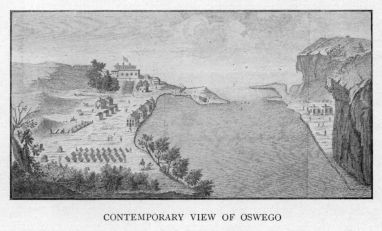
Duquesne has come out governor of Canada, and by 1753 has dispatched a thousand men into the Ohio valley, who blaze a trail through the wilderness and string a line of forts from Presqu' Isle (Erie) on Lake Erie southward to Fort Duquesne at the junction of the Allegheny and Monongahela, where Pittsburg stands to-day.
One December night at Fort Le Boeuf, on the trail to the Ohio, the French commandant was surprised to see a slim youth of twenty years ride out of the rain-drenched, leafless woods, followed by four or five whites and Indians with a string of belled pack-horses. The young gentleman introduces himself with great formality, though he must use an interpreter, for he does not speak French. He is Major George Washington, sent by Governor Dinwiddie of Virginia to know why the French have been seizing the fur posts of English traders in this region. The French commander, Saint Pierre, receives the young Virginian courteously, plies master and men with such lavish hospitality that Washington has much trouble to keep his drunk Indians from deserting, and dismisses his visitor with the smooth but bootless response that as France and England are at peace he cannot answer Governor Dinwiddie's message till he has heard from the Governor of Canada, Marquis Duquesne. Not much satisfaction for emissaries who had forded ice-rafted rivers and had tramped the drifted forests for three hundred miles.
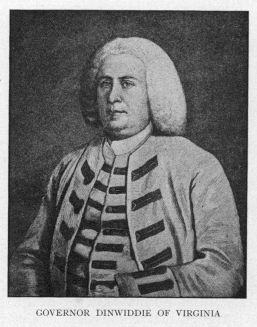
By January of 1754 Washington is back in Virginia. By May he is on the trail again, blazing a path through the wilderness down the Monongahela towards the French fort; for what purpose one may guess, though these were times of piping peace. Come {225} an old Indian chief and an English bushwhacker one morning with word that fifty French raiders are on the trail ten miles away; for what purpose one may guess, spite of peace. Instantly Washington sends half a hundred Virginia frontiersmen out scouting. They find no trace of raiders, but the old chief picks up the trail of the ambushed French. Here they had broken branches going through the woods; there a moccasin track punctures the spongy mold; here leaves have been scattered to hide camp ashes. At midnight, with the rain slashing through the forest black as pitch, Washington sets out with forty men, following his Indian guide. Through the dark they feel rather than follow the trail, and it is a slow but an easy trick to those acquainted with wildwood travel. Leave the path by as much as a foot length and the foliage lashes you back, or the windfall trips you up, or the punky path becomes punctured beneath moccasin tread. By day dawn, misty and gray in the May woods, the English are at the Indian camp and march forward escorted by the redskins, single file, silent as ghosts, alert as tigers. Raindrip swashes on the buckskin coats. Muskets are loaded and carefully cased from the wet. The old chief stops suddenly … and points! There lie the French in a rock ravine sheltered by the woods like a cave. The next instant the French had leaped up with a whoop. Washington shouted "Fire!" When the smoke of the musket crash cleared, ten French lay dead, among them their officer, Jumonville; {226} and twenty-two others surrendered. No need to dispute whether Washington was justified in firing on thirty bush rovers in time of peace! The bushrovers had already seized English forts and were even now scouring the country for English traders. For a week their scouts had followed Washington as spies.
Expecting instant retaliation from Fort Duquesne, Washington retreated swiftly to his camping place at Great Meadows and cast up a log barricade known as Fort Necessity. A few days later comes a company of regular troops. By July 1 he has some four hundred men, but at Fort Duquesne are fourteen hundred French. The French wait only for orders from Quebec, then march nine hundred bushrovers against Washington. July 3, towards midday, they burst from the woods whooping and yelling. Washington chose to meet them on the open ground, but the French were pouring a cross fire over the meadow; and to compel them to attack in the open, Washington drew his men behind the barricade. By nightfall the Virginians were out of powder. Twelve had been killed and forty-three were wounded. Before midnight the French beat a parley. All they desired was that the English evacuate the fort. To fight longer would have risked the extermination of Washington's troops. Terms of honorable surrender were granted, and the next day—the day which Washington was to make immortal, July 4—the English retreated from Fort Necessity. Such was the peace in the Ohio valley.
Though the peace is still continued, England dispatches in 1755 two regiments of the line under Major General Braddock to protect Virginia, along with a fleet of twelve men-of-war under Admiral Boscawen. France keeps up the farce by sending out Baron Dieskau with three thousand soldiers and Admiral La Motte with eighteen ships. Coasting off Newfoundland, the English encounter three of the French ships that have gone astray in the fog. "Is it peace or war?" shout the French across decks. "Peace," answers a voice from the English deck; and instantaneously a hurricane cannonade rakes the decks of the French, killing eighty. Two of the French ships surrendered. The other escaped through the fog. Such was the peace!
{227} So began the famous Seven Years' War; and Major General Braddock, in session with the colonial governors, plans the campaign that is to crush New France's pretensions south of the Great Lakes. Acadia, Lake Champlain, the Ohio,—these are to be the theaters of the contest.
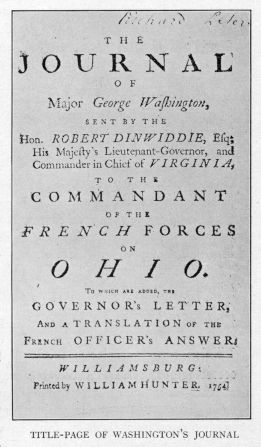
Braddock himself, accompanied by Washington, marches with twenty-two hundred men over the Alleghenies along the old trail of the Monongahela against Fort Duquesne. Of Braddock, the least said the better. A gambler, full of arrogant contempt towards all people and things that were not British, hail-fellow-well-met to his boon companions, heartless towards all outside the pale of his own pride, a blustering bully yet dogged, and withal a gentleman after the standard of the age, he was neither better nor worse than the times in which he lived. Of Braddock's men, fifteen hundred were British regulars, the rest Virginian bushfighters; and the redcoat troops held such contempt towards the buckskin frontiersmen that friction arose from the first about the relative rank of regulars and provincials. From the time they set out, the troops had been retarded by countless delays. There was trouble buying up supplies of beef cattle {228} among the frontiersmen. Scouts scoured the country for horses and wagons to haul the great guns and heavy artillery. Braddock's high mightiness would take no advice from colonials about single-file march on a bush trail and swift raids to elude ambushed foes. Everything proceeded slowly, ponderously, with the system and routine of an English guardroom. Scouts to the fore and on both flanks, three hundred bushwhackers went ahead widening the bridle path to a twelve-foot road for the wagons; and along this road moved the troops, five and six abreast, the red coats agleam through the forest foliage, drums rolling, flags flying, steps keeping time as if on parade, Braddock and his officers mounted on spirited horses, the heavy artillery and supply wagons lagging far behind in a winding line.

What happened has been told times without number in story and history. It was what the despised colonials feared and any bushranger could have predicted. July 9, in stifling heat, the marchers had come to a loop in the Monongahela River. Braddock thought to avoid the loop by fording twice. He was now within eight miles of Fort Duquesne—the modern Pittsburg. Though Indian raiders had scalped some wanderers from the trail and insolent messages had been occasionally found scrawled in French on birch trees, not a Frenchman had been seen on the march. The advance guard had crossed the second ford about midday when the road makers at a little opening beyond the river saw a white man clothed in buckskin, but wearing an officer's badge, dash out of the woods to the fore, wave his hat, … and disappear. A moment later the well-known war whoop of the French bushrovers tore the air to tatters; and bullets rained from ambushed foes in a sheet of fire. In vain the English drums rolled … and rolled … and soldiers shouted, "The King! God save the King!" One officer tried to rally his men to rush the woods, but they were shot down by a torrent of bullets from an unseen foe. The Virginian bushfighters alone knew how to meet such an emergency. Jumping from tree to tree for shelter like Indians dancing sideways to avoid the enemy's aim, they had broken from rank to fight in bushman fashion when Braddock {229} came galloping furiously from the rear and ordered them back in line. What use was military rank with an invisible foe? As well shoot air as an unseen Indian! Again the Virginians broke rank, and the regulars, huddled together like cattle in the shambles, fired blindly and succeeded only in hitting their own provincial troops. Braddock stormed and swore and rode like a fury incarnate, roaring orders which no one could hear, much less obey. Five horses were shot under him and the dauntless commander had mounted a fresh one when the big guns came plunging forward; but the artillery on which Braddock had pinned his faith only plowed pits in the forest mold. Of eighty officers, sixty had fallen and a like proportion of men. Braddock ordered a retreat. The march became a panic, the panic frenzied terror, the men who had stood so stolidly under withering fire now dashing in headlong flight from the second to the first ford and back over the trail, breathless as if pursued by demons! Artillery, cattle, supplies, dispatch boxes,—all were abandoned. Washington's clothes had been riddled by bullets, but he had escaped injury. Braddock reeled from his horse mortally wounded, to be carried {230} back on a litter to that scene of Washington's surrender the year before. Four days later the English general died there. Of the English troops, more than a thousand lay dead, blistering in the July sun, maimed and scalped by the Indians. Braddock was buried in his soldier's coat beside the trail, all signs of the grave effaced to prevent vandalism.

Of all the losses the most serious were the dispatch boxes; for they contained the English plans of campaign from Acadia to Niagara, and were carried back to Fort Duquesne, where they put the French on guard. The jubilant joy at the French fort need not be described. When he heard of the English advance, Contrecoeur, the commander, had been cooped up with less than one thousand men, half of whom were Indians. Had Braddock once reached Fort Duquesne, he could have starved it into surrender without firing a gun, or shelled it into kindling wood with his heavy artillery. Beaujeu, an officer under Contrecoeur, had volunteered to go out and meet the English. "My son, my son, will you walk into the arms of death?" demanded the Indian chiefs. "My fathers, will you allow me to go alone?" answered Beaujeu; and out he sallied with six hundred picked men. It was Beaujeu whom Braddock's men had seen dash out and wave his hat. The brave Frenchman fell, shot at the first {231} volley from the English, and his Indian friends avenged his death by roasting thirty English prisoners alive.
The Isthmus of Chignecto, or the boundary between New Brunswick and Nova Scotia, was the scene of the border-land fights in Acadia. To narrate half the forays, raids, and ambuscades would require a volume. Fights as gallant as Dollard's at the Sault waged from Beauséjour, the French fort north of the boundary, to Grand Pré and Annapolis, where the English were stationed. After the founding of Halifax the Abbé Le Loutre, whose false, foolish counsels had so often endangered the habitant farmer, moved from his mission in the center of Acadia up to Beauséjour on the New Brunswick side. Here he could be seen with his Indians toiling like a demon over the trenches, when Monckton, the English general, came on June 1, 1855, with the British fleet, to land his forces at Fort Lawrence, the English post on the south side. Colonel Lawrence was now English governor of Acadia, and he had decided with Monckton that once and for all the French of Acadia must be subjugated. The French of Beauséjour had in all less than fifteen hundred men, half of whom were simple Acadian farmers forced into unwilling service by the priest's threats of Indian raid in this world and damnation in the next. Day dawn of June 4 the bugles blew to arms and the English forces, some four thousand, had marched to the south shore of the Missaguash River, when the French on the north side uttered a whoop and emitted a clatter of shots. Black-hatted, sinister, tireless, the priest could be seen urging his Indians on. The English brought up three field cannon and under protection of their scattering fire laid a pontoon bridge. Crossing the river, they marched within a mile of the fort. That night the sky was alight with flame; for Vergor, the French commander, and Abbé Le Loutre set fire to all houses outside the fort walls. In a few days the English cannon had been placed in a circle round the fort, and set such strange music humming in the ears of the besieged that the Acadian farmers deserted and the priest nervously thought of flight. Louisburg {232} could send no aid, and still the bombs kept bursting through the roofs of the fort houses. One morning a bomb crashed through the roof of the breakfast room, killing six officers on the spot; and the French at once hung out the white flag; but when the English troops marched in on June 16, at seven in the evening, Le Loutre had fled overland through the forests of New Brunswick for Quebec.
There scant welcome awaited the renegade priest. The French governors had been willing to use him as their tool at a price ($800 a year), but when the tool failed of its purpose they cast him aside. Le Loutre sailed for France, but his ship was captured by an English cruiser and he was imprisoned for eight years on the island of Jersey.
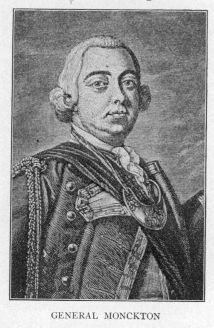
Meanwhile, how was fate dealing with the Acadian farmers? Ever since the Treaty of Utrecht they had been afraid to take the oath of unqualified loyalty to England, lest New France, or rather Abbé Le Loutre, let loose the hounds of Indian massacre on their peaceful settlements. Besides, had not the priest assured them year in and year out that France would recover Acadia and put to the sword those habitants who had forsworn France? And they had been equally afraid to side with the French, for in case of failure the burden of punishment would fall on them alone. For almost half a century they had been known as Neutrals. Of their population of 12,000, 3000 had been lured away to Prince Edward Island and Cape Breton. When Cornwallis had founded Halifax he had intended to wait only till the English were firmly established, when he would demand an oath of unqualified allegiance from {233} the Acadians. They, on their part, were willing to take the oath with one proviso,—that they should never be required to take up arms against the French; or they would have been willing to leave Acadia, as the Treaty of Utrecht had provided, in case they did not take the oath of allegiance. But in the early days of English possession the English governors were not willing they should leave. If the Acadians had migrated, it would simply have strengthened the French in Cape Breton and Prince Edward Island and New Brunswick. Obstructions had been created that prevented the supply of transports to move the Acadians. The years had drifted on, and a new generation had grown up, knowing nothing of treaty rights, but only that the French were threatening them on one side if they did not rise against England, and the English on the other side if they did not take oath of unqualified allegiance. Cornwallis had long since left Halifax, and Lawrence, the English governor, while loyal to a fault, was, like Braddock, that type of English understrapper who has wrought such irreparable injury to English prestige purely from lack of sympathetic insight with colonial conditions. For years before he had become governor, Lawrence's days had been embittered by the intrigues of the French with the Acadian farmers. He had been in Halifax when the Abbé Le Loutre's Indian brigands had raided and slain as many as thirty workmen at a time near the English fort. He had been at the Isthmus of Chignecto that fatal morning when some Indians dressed in the suits of French officers waved a white flag and lured Captain Howe of the English fort across stream, where they shot him under flag of truce in cold blood.
These are not excuses for what Lawrence did. Nothing can excuse the infamy of his policy toward the Acadians. There are few blacker crimes in the history of the world; but these facts explain how a man of Lawrence's standing could assume the responsibility he did. In addition, Lawrence was a bigoted Protestant. He not only hated the Acadians because they were French; he hated them as "a colony of rattlesnakes" because they were Catholics; and being an Englishman, he despised them {234} because they were colonials. France and England were now on the verge of the great struggle for supremacy in America. Eighteen French frigates had come to Louisburg and three thousand French regulars to Quebec. If Lawrence did not yet know that Braddock had been defeated on July 9 at Duquesne,—as his friends declare in his defense,—it is a strange thing; for by August the bloody slaughter of the Monongahela was known everywhere else in America from Quebec to New Spain. With Lawrence and Monckton and Murray and Boscawen and the other English generals sent to conduct the campaign in Acadia, the question was what to do with the French habitants. Let two facts be distinctly stated here and with great emphasis: first, the colonial officers, like Winslow from Massachusetts, knew absolutely nothing of the English officers' plans; they were not admitted to the conferences of the English officers and were simply expected to obey orders; second, the English government knew absolutely nothing of the English officers' course till it was too late for remedy. In fact, later dispatches of that year inquire sharply what Lawrence meant by an obscure threat to drive the Acadians out of the country.
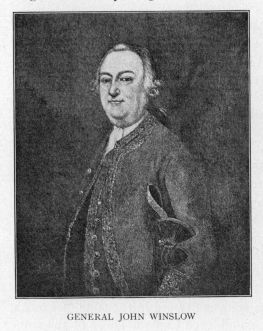
Did a darker and more sinister motive underlie the policy of Lawrence and his friends? Poems, novels, histories have waged war of words over this. Only the facts can be stated. Land to the extent of twenty thousand acres each, which had belonged to {235} the Acadians, was ultimately deeded to Lawrence and his friends. Charges of corruption against Lawrence himself were lodged with the British government both by mail and by personal delegates from Halifax. Unfortunately Lawrence died in Halifax in 1760 before the investigation could take place; and whether true or false, the odium of the charges rests upon his fame.
What he did with the Acadians is too well known to require telling. In secret conclave the infamous edict was pronounced. Quickly messengers were sent with secret dispatches to the officers of land forces and ships at Annapolis, at Mines, at Chignecto, to repair to the towns of the Acadians, where, upon opening their dispatches, they would find their orders, which were to be kept a secret among the officers. The colonial officers, on reading the orders, were simply astounded. "It is the most grievous affair that ever I was in, in my life," declared Winslow. The edict was that every man, woman, and child of the Acadians should be forcibly deported, in Lawrence's words, "in such a way as to prevent the reunion of the colonists." The men of the Acadian settlements were summoned to the churches to hear the will of the King of England. Once inside, doors were locked, English soldiers placed on guard with leveled bayonet, and the edict read by an officer standing on the pulpit stairs or on a table. The Acadians were snared like rats in a trap. Outside were their families, hostages for the peaceable conduct of the men. Inside were the brothers and husbands, hostages for the good conduct of the families outside. Only in a few places was there any rioting, and this was probably caused by the brutality of the officers. Murray and Monckton and Lawrence refer to their prisoners as "Popish recusants," "poor wretches," "rascals who have been bad subjects." While the Acadians were to be deported so they could never reunite as a colony, it was intended to keep the families together and allow them to take on board what money and household goods they possessed; but there were interminable delays for transports and supplies. From September to December the deportation dragged on, and when the Acadians, patient as sheep at the shambles, became restless, some of the ships were sent off {236} with the men, while the families were still on land. In places the men were allowed ashore to harvest their crops and care for their stock; but harvest and stock fell to the victors as burning hayricks and barns nightly lighted to flame the wooded background and placid seas of the fair Acadian land. Before winter set in, the Acadians had been scattered from New England to Louisiana. A few people in the Chignecto region had escaped to the woods of New Brunswick, and one shipload overpowered its officers and fled to St. John River; but in all, six thousand six hundred people were deported.
It is the blackest crime that ever took place under the British flag, and the expulsion was only the beginning of the sufferers' woes. Some people found their way to Quebec, but Quebec was destitute and in the throes of war. The wanderers came to actual starvation. The others wandered homeless in Boston, in New York, in Philadelphia, in Louisiana. After the peace of 1763 some eight hundred gathered together in Boston and began the long march overland through the forests of Maine and New Brunswick, to return to Acadia. Singing hymns, dragging their baggage on sleighs, pausing to hunt by the way, these sad pilgrims toiled more than one thousand miles through forest and swamp, and at the end of two years found themselves back in Acadia. But they were like ghosts of the dead revisiting scenes of childhood! Their lands were occupied by new owners. Of their herds naught remained but the bleaching bone heaps where the lowing cattle had huddled in winter storms. New faces filled their old houses. Strange children rambled beneath the little dormer windows of the Acadian cottages, and the voices of the boys at play in the apple orchards shouted in an alien tongue. The very names of the places had vanished. Beauséjour was now Cumberland. Beaubassin had become Amherst. Cobequid was now Truro. Grand Pré was now known as Horton. The heart-broken people hurried on like ghosts to the unoccupied lands of St. Mary's Bay,—St. Mary's Bay, where long ago Priest Aubry had been lost. Here they settled, to hew out for themselves a second home in the wilderness.
{237} It will be recalled that Braddock's plans had been captured by the French, and those plans told Baron Dieskau, who had come out to command the French troops, that the English under William Johnson, a great leader of the Iroquois, inured to bush life like an Indian, were to attack the French fort at Crown Point on Lake Champlain. Now observe: on the Ohio, Braddock the regular had been defeated; in Acadia, Lawrence and Monckton and Murray, the English generals, had brought infamy across England's renown by their failure to understand colonial conditions. At Lake Champlain the conditions are reversed. Johnson, the English leader, is, from long residence in America, almost a colonial. Dieskau, the commander of the French, is a veteran of Saxon wars, but knows nothing of bushfighting. What happens?

Dieskau had intended to attack the English at Oswego, but the plans for Johnson on Lake Champlain brought the commander of the French rushing up the Richelieu River with three thousand soldiers, part regulars, part Canadians. Crown Point—called Fort Frederick by the French—was reached in August. No English are here, but scouts bring word that Johnson has built a fort on the south end of Lake George, and, leaving only five hundred men to garrison it, is moving up the lake with his main troops.
{238}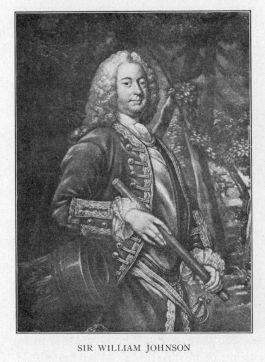
Fired by the French victories over Braddock, Dieskau planned to capture the English fort and ambush Johnson on the march. Look at the map! The south end of Lake Champlain lies parallel with the north end of Lake George. The French can advance on the English one of two ways,—portage over to Lake George and canoe up the lake to Johnson's fort, or ascend the marsh to the south of Lake Champlain, then cross through the woods to Johnson's fort. Dieskau chose the latter trail. Leaving half his men to guard the baggage, Dieskau bade fifteen hundred picked men follow him on swiftest march with provisions in haversack for only eight days. September 8, 10 A.M., the marchers advance through the woods on Johnson's fort, when suddenly they learn that their scout has lied,—Johnson himself is still at the fort. Instead of five hundred are four thousand English. Advancing along the trail V-shape, regulars in the middle, Canadians and Indians on each side, the French come on a company of five hundred English wagoners. In the wild mêlée of shouts the English retreat in a rabble. "Pursue! March! Fire! Force the place!" yells Dieskau, dashing forward sword in hand, thinking to follow so closely on the heels of the rabble that he can enter the English fort before the enemy know; but his Indians have forsaken him, and Johnson's scouts have forewarned the approach of the French. Instead of ambushing {239} the English, Dieskau finds his own army ambushed. He had sneered at the un-uniformed plowboys of the English. "The more there are, the more we shall kill," he had boasted; but now he discovers that the rude bushwhackers, "who fought like boys in the morning, at noon fought like men, and by afternoon fought like devils." Their sharpshooters kept up a crash of fire to the fore, and fifteen hundred doubled on the rear of his army, "folding us up," he reported, "like a pack of cards." Dieskau fell, shot in the leg and in the knee, and a bullet struck the cartridge box of the servant who was washing out the wounds.
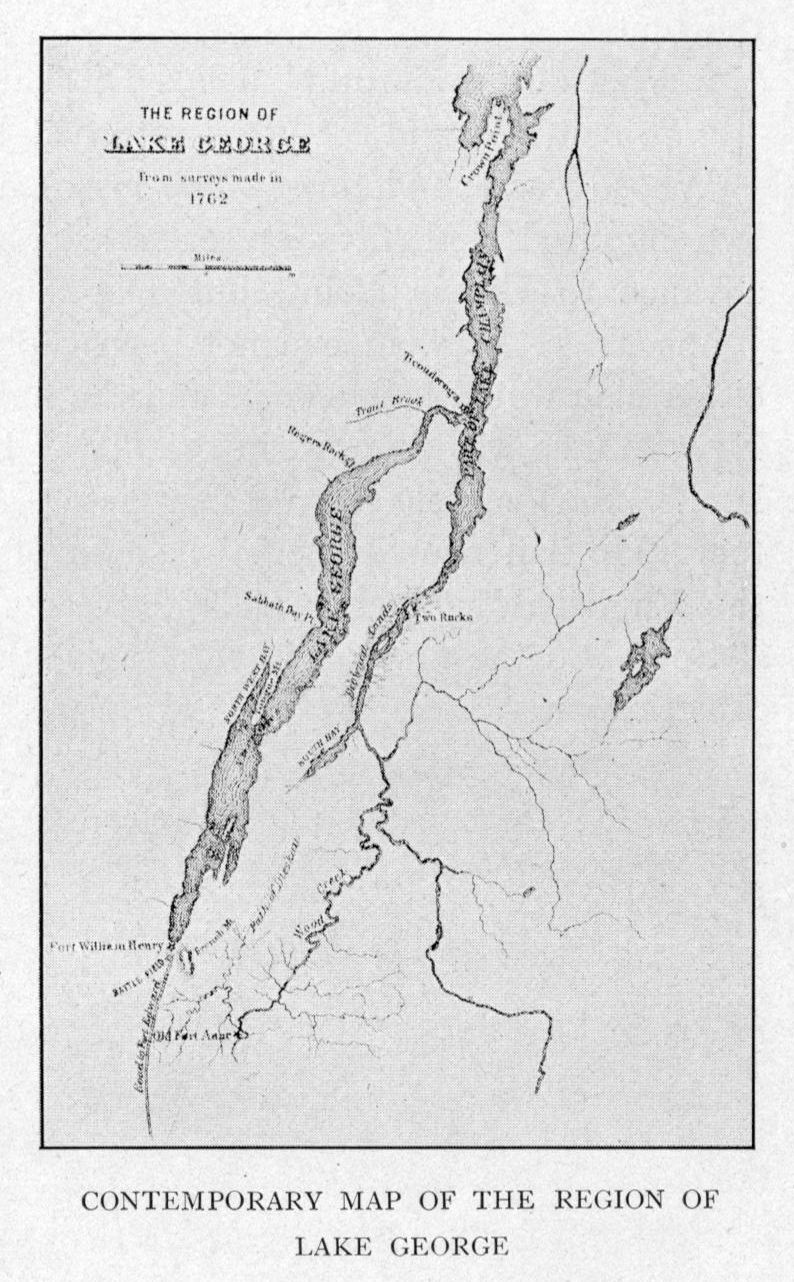
"Lay my telescope and coat by me, and go!" ordered Dieskau. "This is as good a deathbed as anyplace. Go!" he thundered, seeing his second officer hesitate. "Don't you see you are needed? Go and sound a retreat."
A third shot penetrated the wounded commander's bladder. Lying alone, propped against a tree, he heard the drums rolling a retreat, when one of the enemy jumped from the woods with pointed pistol.
"Scoundrel!" roared the dauntless Dieskau; "dare to shoot a man weltering in his blood." The fellow proved to be a Frenchman who had long ago deserted to the English, and he muttered {240} out some excuse about shooting the devil before the devil shot him; but when he found out who Dieskau was, he had him carried carefully to Johnson's tent, where every courtesy was bestowed upon the wounded commander. Johnson himself lay wounded.
All that night Iroquois kept breaking past the guard into the tent.
"What do they want?" asked Dieskau feebly.
"To skin you and eat you," returned Johnson laconically. Whose was the victory? The losses had been about even,—two hundred and fifty on each side. Johnson had failed to advance to Crown Point, but Dieskau had failed to dislodge Johnson. If Dieskau had not been captured, it is a question if either side would have considered the fight a victory. As it was, New France was plunged in grief; joy bells rang in New England. Johnson was given a baronetcy and 5000 pounds for his victory. He had named the lake south of Lake Champlain after the English King, Lake George.
So closed the first act in the tragic struggle for supremacy in America.
Bigot at Quebec—New France on verge of ruin—Bigot's vampires suck country's lifeblood—Scene on lake—Massacre at Fort William Henry—Louisburg besieged—Surrender of famous fort—The attack at Ticonderoga—Abercrombie's forces flee—Wolfe sails for Quebec—Signal fires forewarn approach of enemy—Both sides become scalp raiders—English fail at Montmorency—Slip silently down the great river—The two armies face each other—Death of Montcalm—Why New France fell
How stand both sides at the opening of the year 1756, on the verge of the Seven Years' War,—the struggle for a continent?
There has been open war for more than a year, but war is not formally declared till May 18, 1756.
Take Acadia first.
The French have been expelled. The infamous Le Loutre is still in prison in England, and when he is released, in 1763, he toils till his death, in 1773, trying to settle the Acadian refugees on some of the French islands of the English Channel. The smiling farms of Grand Pré and Port Royal lie a howling waste. Only a small English garrison holds Annapolis, where long ago Marc L'Escarbot and Champlain held happy revel; and the seat of government has been transferred to Halifax, now a settlement and fort of some five thousand people. So much for the English. Across a narrow arm of the sea is Isle Royal or Cape Breton, where the French are intrenched as at a second Gibraltar in the fortress of Louisburg. Since the Treaty of Aix-la-Chapelle restored the fort to the French, millions have been spent strengthening its walls, adding to the armaments; but Intendant Bigot has had charge of the funds, and Intendant Bigot has a sponge-like quality of absorbing all funds that flow through his hands. Cannon have been added, but there are not enough balls to go round. The walls have been repaired, but with false filling (sand in place of mortar), so that the first shatter of artillery will send them clattering down in wet plaster.
Take the Ohio next.
"Beautiful River" is the highway between New France and Louisiana. By Braddock's defeat the English have been driven out to a man. Matters are a thousandfold worse than before, for {242} the savage allies of the French now swarm down the bush road cut by Braddock's army and carry bloody havoc to all the frontier settlements of Pennsylvania and Virginia. How many pioneers perished in this border war will never be known. It is a tale by itself, and its story is not part of Canada's history. George Washington was the officer in charge of a thousand bushfighters to guard this frontier.
Take the valley of Lake Champlain.
This is the highway of approach to Montreal north, to Albany south. Johnson had defeated Dieskau here, but neither side was strong enough to advance from the scene of battle into the territory of the enemy. The English take possession of Lake George and intrench themselves at the south end in Fort William Henry. Sir William Johnson strings a line of forts up the Mohawk River towards Oswego on Lake Ontario, and he keeps his forest rangers, under the famous scout Major Robert Rogers, scouring the forest and mountain trails of Lake Champlain for French marauder and news of what the French are doing. Rogers' Rangers, too, are a story by themselves, but a story which does not concern Canada. Skating and snowshoeing by winter, canoeing by night in summer, Rogers passed and repassed the enemy's lines times without number, as if his life were charmed, though once his wrist was shot when he had nothing to stanch the blood but the ribbon tying his wig, and once he stumbled back exhausted to Fort William Henry, to lie raging with smallpox for the winter. Among the forest rangers of New Hampshire and New York, Major Robert Rogers was without a peer. No danger was too great, no feat too daring, for his band of scouts. The English have established Fort William Henry at the south end of Lake George. The French checkmate the move by strengthening Crown Point on Lake Champlain and moving a pace farther south into English territory,—to Carillon, where the waters of Lake George pour into Champlain. Here on a high angle between the river and the lake, commanding all travel north and south, the French build Carillon or Fort Ticonderoga.
{243} As for the Great Northwest, New France with her string of posts—Frontenac, Niagara, Detroit, Michilimackinac, Kaministiquia (Fort William), Fort Rogue (Winnipeg), Portage la Prairie—stretches clear across to the foothills of the Rockies. The English fur traders of Hudson Bay have, in 1754, sent Anthony Hendry up the Saskatchewan, but when Hendry comes back with word of equestrian Indians—the Blackfeet on horseback—and treeless plains, the English set him down as a lying impostor. Indians on horseback! They had never seen Indians but in canoes and on snowshoes! Hendry was dismissed as unreliable, and no Englishman went up the Saskatchewan for another ten years.
If the disasters of 1755 did nothing more, they at last stirred the home governments to action. Earl Loudon is sent out in 1756 to command the English, and to New France in May comes Louis Joseph, Marquis de Montcalm, age forty-four, soldier, scholar, country gentleman, with a staff composed of Chevalier de Lévis, Bourlamaque, and one Bougainville, to become famous as a navigator.
Though New France consists of a good three quarters of America, things are in evil plight that causes Montcalm many sleepless nights. Vaudreuil, the French governor, descendant of that Vaudreuil who long ago set the curse of Indian warfare on the borders of New England, had expected to be appointed chief commander of the troops and jealously resents Montcalm's coming. With the Governor is leagued Intendant Bigot, come up from Louisburg. Bigot is a man of sixty, of noble birth, a favorite of the butterfly woman who rules the King of France,—the Pompadour,—and he has come to New France to mend his fortunes. How he planned to do it one may guess from his career at Louisburg; but Quebec offered better field, and it was to Bigot's interest to ply Montcalm and Vaudreuil with such tittle-tattle of enmity as would foment jealousy, keep their attention on each other, and their eyes off his own doings. As he had done at Louisburg, so he now did at Quebec. The King was requisitioned for enormous sums to strengthen the fort. Bigot's {244} ring of friends acted as contractors. The outlay was enormous, the results trifling. "I think," complained the King, "that Quebec must be fortified in gold, it has cost so much." It was time of war. Enormous sums were to be expended for presents to keep the Indians loyal; and the King complains that he cannot understand how baubles of beads and powderhorns cost so much, or how the western tribes seem to become more and more numerous, or how the French officers, who distribute the presents, become millionaires in a few years. A friend of Bigot's handled these funds. There are meat contracts for the army. A worthless, lowbred scamp is named commissary general. He handles these contracts, and he, too, swiftly graduates into the millionaire class, is hail-fellow well met with Bigot, drinks deep at the Intendant's table, and gambles away as much as $40,000 in a single night. It is time of war, and it is time of famine too; for the crops have failed. Every inhabitant between the ages of fifteen and fifty has been drafted into the army. Not counting Indians, there is an army of fifteen to twenty thousand to be fed; so Bigot compels the habitants to sell him provisions at a low price. These provisions he resells to the King for the army and to the citizens at famine prices. The King's warehouse down by the Intendant's palace becomes known as La Friponne,—The Cheat.
And though the country is on verge of ruin, though poor people of the three towns are rioting in the streets for food, old women cursing the little wizened Intendant with his pimpled face as he rolls past resplendent in carriage with horses whose harness is a blaze of silver, the troops threatening to mutiny because they are compelled to use horse flesh,—though New France is hovering over a volcano of disaster, they dance to their death, thoughtless as butterflies, gay as children, these manikin imitators of the French court, who are ruining New France that they may copy the vices of an Old World playing at kingcraft. The regular troops are uniformed in white with facings of blue and red and gold and violet, three-cornered hat, and leather leggings to knee. What with chapel bells ringing and ringing, and bugle {245} call and counter call echoing back from Cape Diamond; what with Monsieur Bigot's prancing horses and Madame Péan's flashy carriage,—Madame Péan of whom Bigot is so enamored he has sent her husband to some far western post and passes each evening at her gay receptions,—what with the grounding of the sentry's arms and the parade of troops, Quebec is a gay place these years of black ruin, and the gossips have all they can do to keep track of the amours and the duels and the high personages cultivating Madame Péan; for cultivated she must be by all who covet place or power. A word from Madame Péan to Bigot is of more value than a bribe. Even Montcalm and De Lévis attend her revels.
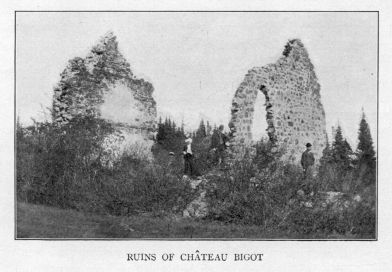
Twenty people sup with Monsieur Bigot each night, either at the Intendant's palace down by Charles River, or nine miles out towards Beauport, where he has built himself the Forest Hermitage, now known as Château Bigot,—a magnificent country manor house of red brick, hidden away among the hills with the gay shrubberies of French gardens set down in an American wilderness. Supper over by seven, the guests sit down to play, and the amount a man may gamble is his social barometer, whether {246} he lose or win, cheat or steal. If dancing follows gambling, the rout will not disperse till seven in the morning. What time is left of the twenty-four hours in a day will be devoted to public affairs.
Montcalm's salary is only 25,000 francs, or $5,000. To maintain the dignity of the King, the commander in chief must keep the pace, and he too gives weekly suppers, with places set for forty people, "whom I don't know," he writes dejectedly to his wife, "and don't want to know; and wish that I might spend the evenings quietly in my own chamber." To Montcalm, who was of noble birth with no shamming, this lowbred pretense and play at courtcraft became a bore; to his staff of officers, a source of continual amusement; but De Lévis presently falls victim to a pair of fine eyes possessed by the wife of another man.
War filled the summers, but the winters were given up to social life; and of all midwinter social gayeties the most important was the official visit of the Governor and the Intendant to Montreal. By this time a good road had been cut from Quebec to Montreal along the north shore, and the sleighs usually set out in January or February. Bigot added to the occasion all the prestige of a social rout. All the grand dames and cavaliers of Quebec were invited. Baggage was sent on ahead with servants to break the way, find quarters for the night, and prepare meals. After a dinner at the Intendant's palace the sleighs set out, two horses to each, driven tandem because the sleigh road was too narrow for a team. Each sleigh held only two occupants, and to the damage done by fair eyes was added the glow of exhilaration from driving behind spirited horses in frosty air with the bells of a hundred carryalls ringing across the snow. At seven was pause for supper. High play followed till ten. Then early to bed and early to rise and on the road again by seven in the morning! In Montreal was one continual round of dinners and dances. Between times, appointments were made to the military posts and trading stations of the Up-Country. He who wanted a good post must pay his court to Madame Péan. No wonder Montcalm breathed a sigh of relief when Lent put a stop to the gayeties and he could quietly pass his evenings with the Sulpician priests. {247} To break from Bigot's ring during the war was impossible. Creatures of his choosing filled the army, handled the supplies, controlled the Indians; and when the King's reproof became too sharp, Bigot simply threatened to resign, which wrought consternation, for no man of ability would attempt to unwind the tangle of Bigot's dishonesty during a critical war. Montcalm wrote home complaints in cipher. The French government bided its time, and Bigot tightened his vampire suckers on the lifeblood of the dying nation. The whole era is a theme for the allegory of artist or poet.
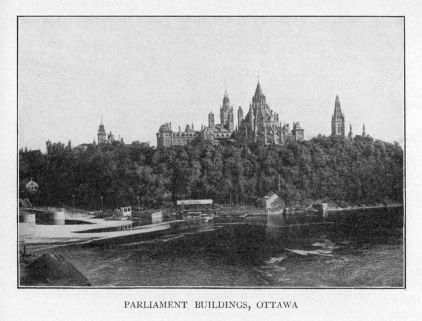
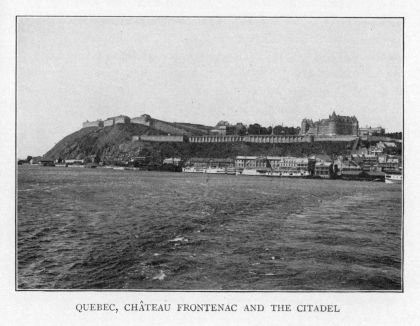
Montcalm had arrived in May of 1756. By midsummer he was leading three thousand French artillerymen across Lake Ontario from Fort Frontenac (Kingston), to attack the English post on the south side, Oswego. Inside the fort walls were seven hundred raw English provincials, ill of scurvy from lack of food. The result need scarcely be told. Seven hundred ill men behind wooden walls had no chance against three thousand soldiers in health with heavy artillery. To take the English by surprise, Montcalm had crossed the lake on August 4 by night. Two days later all the transport ships had landed the troops and the cannon had actually been mounted before the English knew of the enemy's presence. On the east side of the river was Fort Ontario, a barricade of logs built in the shape of a star, housing an outguard of three hundred and seventy men. On discovering the French, the sentry spiked their cannon, threw their powder in the river, and retired at midnight inside Oswego's walls. Working like beavers, Montcalm's men dragged twenty cannon to a hill commanding the fort, known as "Fort Rascal" because the outfort there was useless to the English. Before Montcalm's cannonade Oswego's walls, plastered with clay and rubble, fell like the staves of a dry barrel. The English sharpshooters then hid behind pork barrels placed in three tiers filled with sand; but Colonel Mercer, their officer, was literally cut in two by a cannon shot, and the women, cooped up inside the barracks, begged the officers to avoid Indian massacre by surrender. {248} A white flag was waved. Including women, something under a thousand English surrendered themselves prisoners to Montcalm. The Indians fell at once to mad plunder. Spite of the terms of honorable surrender, the English were stripped of everything, and only Montcalm's promise of $10,000 worth of presents to the savages prevented butchery. The victors decamped to Montreal, well pleased with the campaign of 1756. It need not be told that there were constant raids and counter raids along the frontier during the entire year.
Loudon, the English commander, did not arrive in New York till well on in midsummer of 1756, and he found far different material from the trained bushfighters in the hands of Montcalm. The English soldiers were raw provincial recruits, dressed, at best, in buckskin, but for the most part in the rough homespun which they had worn when they had left plow and carpenter's bench and fishing boat. While Montcalm was capturing Oswego, Loudon was licking his rough recruits into shape, "making men out of mud" for the campaign of 1757. Indeed, it was said of Loudon, and the saying stuck to him as characteristic of his campaign, that he resembled the wooden horse figure of a tavern sign,—always on horseback but never rode forward. Instead of striking at Lake Champlain or on the Ohio, where the French were aggressors, Loudon planned to repeat the brilliant capture of Louisburg. July of 1857 found him at Halifax planting vegetable gardens to prevent scurvy,—"the cabbage campaign" it was derisively called,—and waiting for Gorham's rangers to reconnoiter Louisburg. Gorham's scouts brought back word that the French admiral had come in with twenty-four men-of-war and seven thousand men. To overpower such strength meant a prolonged siege. It was already August. Loudon sailed back to New York without firing a gun, while the English fleet, trying to reconnoiter Louisburg, suffered terrible shipwreck.
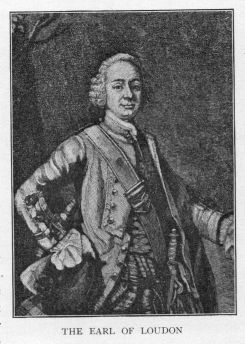
Montcalm was not the enemy to let the chance of Loudon's absence from the scene of action pass unimproved. While Loudon is pottering at Halifax, Montcalm marshals his troops to the {249} number of eight thousand, including one thousand Indians at Carillon or Ticonderoga, where Lake George empties into Lake Champlain. Portaging two hundred and fifty flatboats with as many birch canoes up the river, the French invade the mountain wilderness of Lake George. Towards the end of July, Lévis leads part of the troops by land up the west shore towards the English post of Fort William Henry. Montcalm advances on the lake with the flatboats and canoes, and the rafts with the heavy artillery. Each night Lévis' troops kindle their signal fires on the mountain slope, and each night Montcalm from the lake signals back with torches. It needs artist's brush to paint the picture: the forested mountains green and lonely and silent in the shimmering sunlight of the summer sky; the lake gold as molten metal in the fire of the setting sun; the soldiers in their gay uniforms of white and blue, hoisting tent cloths on oar sweeps for sails as a breeze dimples the waters; the French voyageurs clad in beaded buckskin chanting some ditty of Old-World fame to the rhythmic dip of the Indian paddles; the Indians naked, painted for war, with a glitter in their eyes of a sinister intent which they have no mind to tell Montcalm; and then, at the south of Lake George, nestling between the hills and the water, the little palisaded fort,—Fort William Henry,—with gates fast shut and two thousand bushfighters behind the walls, weak from an epidemic of smallpox, and, as usual, so short of provisions that siege means starvation.
{250} Twenty miles southeastward is another English fort,—Fort Edward,—where General Webb with sixteen hundred men is keeping the road barred against advance to Albany. Soon as scouts bring word to Fort William Henry of the advancing French, Lieutenant Monro sends frantic appeal to Webb for more men; but Webb has already sent all the men he can spare. If he leaves Fort Edward, the French by a flank movement through the woods can march on Albany, so Monro unplugs his seventeen cannon, locks his gates, and bides his fate.
Montcalm follows the same tactics as at Oswego,—brings heavy artillery against slab walls. For the first week of August, eight hundred of his men are digging trenches by night to avoid giving target for the fiery bombs whizzing through the dark from Monro's cannon. By day they lie hidden in the woods with a cordon of sharpshooters encircling the fort, Montcalm encamped on the west to prevent help from Sir William Johnson up the Mohawk, Lévis on the southeast to cut off aid from Webb. Monro sends yet one last appeal for help: two thousand men against eight thousand,—the odds are eloquent of his need! Montcalm's scouts let the messenger pass through the lines as if unseen, but they make a point of catching the return messenger and holding Webb's answer that he cannot come, till their cannon have torn great wounds in the fort walls. Then Bougainville blindfold carries Webb's answer to Monro and demands the surrender of the fort. Monro still has a little ammunition, still hopes against hope that Johnson or Webb or Loudon will come to the rescue, and he keeps his big guns singing over the heads of the French in their trenches till all the cannon have burst but seven, and there are not ten rounds of shells left. Then Colonel Young, with a foot shot off, rides out on horseback waving a white flag. Three hundred English have been killed, as many again are wounded or ill of smallpox, and to the remaining garrison of sixteen hundred Montcalm promises safe conduct to General Webb at Fort Edward. Then the English march out. That night—August 9—the vanquished English camp with Montcalm's forces. The Indians, meanwhile, ramping through the fort for plunder, {251} have maddened themselves with traders' rum! Before daybreak they have butchered all the wounded lying in the hospital and cut to pieces the men ill of smallpox,—a crime that brought its own punishment in contagion. Next morning, when the French guard tried to conduct the disarmed English along the trail to Fort Edward, the Indians snatched at the clothing, the haversacks, the tent kit of the marchers. With their swords the French beat back the drunken horde. In answer, the war hatchets were waved over the heads of the cowering women. The march became a panic; the panic, a massacre; and for twenty-four hours such bedlam raged as might have put fiends to shame. The frenzied Indians would listen to no argument but blows; and when the English prisoners appealed to the French for protection, the French dared not offend their savage allies by fighting to protect the English victims. "Take to the woods," they warned the men, and the women were quickly huddled back to shelter of the fort. Of the men, sixty were butchered on the spot and some seven hundred captured to be held for ransom. The remnant of the English soldiers, along with the women, were held till the Indian frenzy had spent itself, then sent to Fort Edward. August 16 a torch was put to the combustibles of the fort ruins, and as the French boats glided out on Lake George for the St. Lawrence, explosion after explosion, flame leaping above flame, proclaimed that of Fort William Henry there would remain naught but ashes and charred ruins and the skeletons of the dead. So closed the campaign of 1857 [Transcriber's note: 1757?]. For three years hand running England had suffered defeat.
The spring of 1758 witnessed a change. The change was the rise to power of a man who mastered circumstances instead of allowing them to master him. Such men are the milestones of human progress, whether heroes, or quiet toilers unknown to the world. The man was Pitt, the English statesman. Instead of a weak ministry fighting the machinations of France, it was now Pitt versus Pompadour, the English patriot against the light woman who ruled the councils of France.
{252} From fighting weakly on the defensive, England sprang into the position of aggressor all along the line. The French were to be attacked at all points simultaneously, at Louisburg on the east, at Ticonderoga or Carillon on Lake Champlain, at Duquesne on the Ohio, at Frontenac on Lake Ontario, and finally at Quebec itself. London is recalled as commander in chief. Abercrombie succeeds to the position, with the brilliant young soldier, Lord Howe, as right-hand man; but Pitt takes good care that there shall be good chiefs and good right-hand men at all points. The one mistake is Abercrombie,—"Mrs. Nabby Crombie" the soldiers called him. He was an indifferent, negative sort of man; and indifferent, negative sorts of people, by their dishwater goodness, can sometimes do more harm in critical positions than the branded criminal. Red tape had forced him on Pitt, but Pitt trusted to the excellence of the subordinate officers, especially Lord Howe.
Louisburg first!
No more dillydallying and delay "to plant cabbages!" The thing is to reach Louisburg before the French have entered the harbor. Men-of-war are stationed to intercept the French vessels coming from the Mediterranean, and before winter has passed Admiral Boscawen has sailed for America with one hundred and fifty vessels, including forty men-of-war, frigates, and transports carrying twelve thousand men. General Amherst is to command the land forces, and with Amherst is Brigadier James Wolfe, age thirty-one, a tall, slim, fragile man, whose delicate frame is tenanted by a lion spirit; or, to change the comparison, by a motive power too strong for the weak body that held it. By May the fleet is in Halifax. By June Amherst has joined Boscawen, and the ships beat out for Louisburg through heavy fog, with a sea that boils over the reefs in angry surf.
Louisburg was in worse condition than during the siege of 1745. The broken walls have been repaired, but the filling is false,—sand grit. Its population is some four thousand, of whom three thousand eight hundred are the garrison. On the ships lying in the harbor are three thousand marines, a defensive force, in all, {253} of six thousand eight hundred. On walls and in bastions are some four hundred and fifty heavy guns, cannon, and mortars. Imagine a triangle with the base to the west, the two sides running out to sea on the east. The fort is at the apex. The wall of the base line is protected by a marsh. On the northeast side is the harbor protected by reefs and three batteries. Along the south side, Drucourt, the French commander, has stationed two thousand men at three different points where landing is possible, to construct batteries behind barricades of logs.
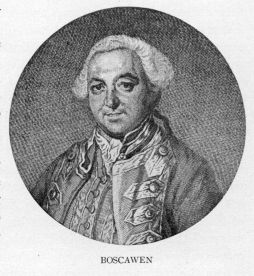
Fog had concealed the approach of the English, but such a ground swell was raging over the reefs as threatened any ship with instant destruction. For a week Amherst and Wolfe and Lawrence row up and down through the roiling mist and raging surf and singing winds to take stock of the situation. With those batteries at the landing places there is only one thing to do,—cannonade them, hold their attention in a life-and-death fight while the English soldiers scramble through the surf for the shore. From sunrise to sundown of the 8th furious cannonading set the green seas churning and tore up the French barricades as by hurricane. At sunset the firing ceased, and three detachments of troops launched out in whaleboats at three in the morning, two of the detachments to make a feint of landing, while Wolfe with the other division was to run through the surf for the shore at Freshwater Cove. The French were not deceived. They let Wolfe approach within range, when the log barricade flashed to flame with a thousand sharpshooters. Wolfe had foreseen the snare and had waved his {254} troops off when he noticed that two boat loads were rowing ashore through a tremendous surf under shelter of a rocky point. Quickly he signaled the other boats to follow. In a trice the boats had smashed to kindling on the reefs, but the men were wading ashore, muskets held high over head, powder pouches in teeth, and rushed with bayonets leveled against the French, who had dashed from cover to prevent the landing. This unexpected landing had cut the French off from Louisburg. Retreating in panic, they abandoned their batteries and fifty dead. The English had lost one hundred and nine in the surf. It is said that Wolfe scrambled from the water like a drowned rat and led the rush with no other weapon in hand but his cane.
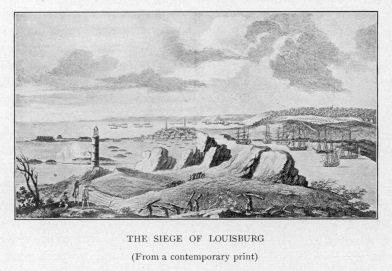
To land the guns through the jostling sea was the next task. It was done, as in 1745, by a pontoon bridge of small boats, but the work took till the 29th of June. Wolfe, meanwhile, has marched with twelve hundred men round to the rear of the marsh and comes so suddenly on the Grand and Lighthouse Batteries, which defend the harbor, that the French abandon them to retreat within the walls. This gives the English such control of the harbor entrance that Drucourt, the French commander, sinks six of his ships across the channel to bar out Boscawen's fleet, the masts of the sunken, vessels sticking above the water. Amherst's men are working like demons, building a road for the cannon across the marsh and trenching up to the back wall; but they work only at night and are undiscovered by the French till the 9th of July. Then the French rush out with a whoop to drive them off, but the English already have their guns mounted, and Drucourt's men are glad to dash for shelter behind the cracking walls. It now became a game of cannon play pure and simple. Boscawen from harbor front hurls his whistling bombs overhead, to crash through roofs inside the walls. Wolfe from the Lighthouse Battery throws shells and flaming combustibles straight into the midst of the remaining French fleet. At last, on July 21st, masts, sails, tar ropes, take fire in a terrible conflagration, and three of the fleet burn to the water line with terrific explosions of their powder magazines; then the flames hiss out above {255} the rocking hulls. Only two ships are left to the French, and the deep bomb-proof casemates inside the fort between outer and inner walls, where the families and the wounded have been sheltered, are now in flame. Amherst loads his shells with combustibles and pours one continuous rain of fiery death on the doomed fort. The houses, which are of logs, flame like kindling wood, and now the timber work of the stone bastions is burning from bombs hurtling through the roofs. The walls crash down in masses. The scared surgeons, all bloody from amputating shattered limbs, no longer stand in safety above their operating tables. It is said that Madame Drucourt, the Governor's wife, actually stayed on the walls to encourage the soldiers, with her own hands fired some of the great guns, and, when the overworked surgeons flagged from terror and lack of sleep, it was Madame Drucourt who attended to the wounded. Drucourt is for holding out to the death, until one dark night the English row into the harbor and capture his two last ships. Then Drucourt asks for terms, July 26; but the terms are stern,—utter surrender,—and Drucourt would have fought till every man fell from the walls, had not one of the civil officers rushed after the commander's messenger carrying {256} the refusal, and shouted across the ditches to the English: "We accept! We surrender! We accept your terms!"
Counting soldiers, marines, and townspeople, in all five thousand French pass over to Amherst, to be carried prisoners on Boscawen's fleet to England. Wolfe was for proceeding at once to Quebec, but Amherst considered the season too late and determined to complete the work where he was. One detachment goes to receive the surrender of Isle St. John, henceforth known as Prince Edward Island. Another division proceeds up St. John River, New Brunswick, burning all settlements that refuse unconditional surrender. Wolfe's grenadiers are sent to reduce Gaspé and Miramichi and northern New Brunswick. And now, lest blundering statecraft for a second time return the captured fort to France, Amherst and Boscawen order the complete disarmament and destruction of Louisburg. What cannon cannot be removed are tumbled into the marsh or upset into the sea. The stones from the walls are carried away to Halifax. By 1760, of Louisburg, the glory of New France, the pride of America, there remains not a vestige but grassed slopes overgrown by nettles, ditches with rank growth of weeds, stone piles where the wild vines grow, and an inner yard where the cows of the fisher folk pasture.
Not a poor beginning for the campaign of 1758, though bad enough news has come from Major General Abercrombie, which was the real explanation of Amherst's refusal to push on to Quebec.
Abercrombie, with fifteen thousand men, the pick of the regulars and provincials, had launched out on Lake George on the 5th of July with over one thousand boats, to descend the lake northward to the French fort of Carillon or Ticonderoga. Again, it would require artist's brush to paint the scene. Rogers' Rangers, dressed in buckskin, led the way in birch canoes. Lord Howe was there, dressed like a bushfighter; and with bagpipes setting the echoes ringing amid the lonely mountains, were the Highland regiments in their tartan plaids. Flags floated from the prow of every boat. Each battalion had its own regimental {257} band. Scarcely a breath dimpled the waters of the lake, and the sun shone without a cloud. Little wonder those who passed through the fiery Aceldama that was to come, afterwards looked back on this scene as the fairest in their lives.
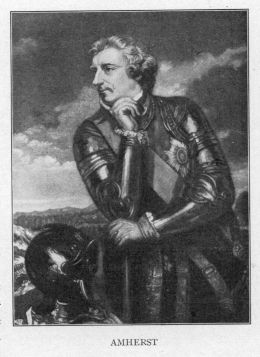
Montcalm had only arrived at Ticonderoga on June 30th. There was no doubting the news. His bushrovers brought in word that the English were advancing in such multitudes their boats literally covered the lake. It looked as if the fate of Fort William Henry were to be reversed. Montcalm never dreamed of Abercrombie attacking without artillery. To stay cooped up in the fort would invite destruction. Therefore Montcalm ordered his men out to construct a circular breastwork from the River of the Chutes on the southeast, which empties Lake George, round towards Lake Champlain on the northwest. Huge trees were felled, pile on pile, top-most branches spiked and pointed outwards. Behind these Montcalm intrenched his four thousand men, lying in lines three deep, with grenadiers in reserve behind to step up as the foremost lines fell. At a cannon signal from the fort the men were to rise to their places, but not to fire till the English were entangled in the brushwood. It was blisteringly hot weather. It is said that the troops took off their heavy three-cornered hats and lay in their shirt sleeves, hand on musket, speaking no word, but waiting.
{258} On came the English in martial array, pausing in the Narrows at five o'clock for the troops' evening meal, moving on before daylight of July 6 to the landing place. The Rangers had brought in word that Lévis was coming posthaste to Montcalm's aid. Abercrombie thought to defeat Montcalm before reënforcements could come; and now he committed his cardinal error. He advanced across the portage without his heavy artillery. Halfway over, the voice of the French scouts rang out, "Who goes there?" "French," answer the English soldiers; but the French were not tricked. The ambushed scouts fired. Lord Howe, the very spirit of the English army, dropped dead, shot through the breast, though the English avenged his loss by cutting the French scouts to pieces. On the night of the 7th the English army bivouacked in sight of the French barricade. Promptly at twelve o'clock next day a cannon shot from Ticonderoga brought every Frenchman behind the tree line to his place at a leap. Abercrombie had ordered his men to rush the barricade. There was fearful silence till the English were within twenty paces of the trees. There they broke from quick march to a run with a wild halloo! Death unerring blazed from the French barricade,—not bullets only, but broken glass and ragged metal that tore hideous wounds in the ranks of the English. Caught in the brushwood, unable even to see their foes, the maddened troops wavered and fell back. Again Abercrombie roared the order to charge. Six times they hurled themselves against the impassable wall, and six times the sharpshooters behind the lines met the advance with a rain of fire. The Highland troops to the right went almost mad. Lord John Murray, their commander, had fallen, and not a tenth of their number remained unwounded; but the broadswords wrought small havoc against the spiked branches of the log barricade. Obstinate as he was stupid, Abercrombie kept his men at the bloody but futile attempt till the sun had set behind the mountains, etching the sad scene with the long painted shadows. Already almost two thousand English had fallen,—seven hundred killed, the rest wounded. The French behind the barricade, where Montcalm marched up and down in his shirt {259} sleeves, grimed with smoke, encouraging the men, had lost less than four hundred. In a spirit of hilarious bravado a young Frenchman sprang to the top of the barricade and waved a coat on the end of his bayonet. Mistaking it for a flag of surrender, the English ceased firing and dashed up with muskets held on the horizontal above heads. They were actually scaling the wall when a French officer, realizing the blunder, roared: "Shoot! shoot! you fools! Don't you see those men will seize you?"
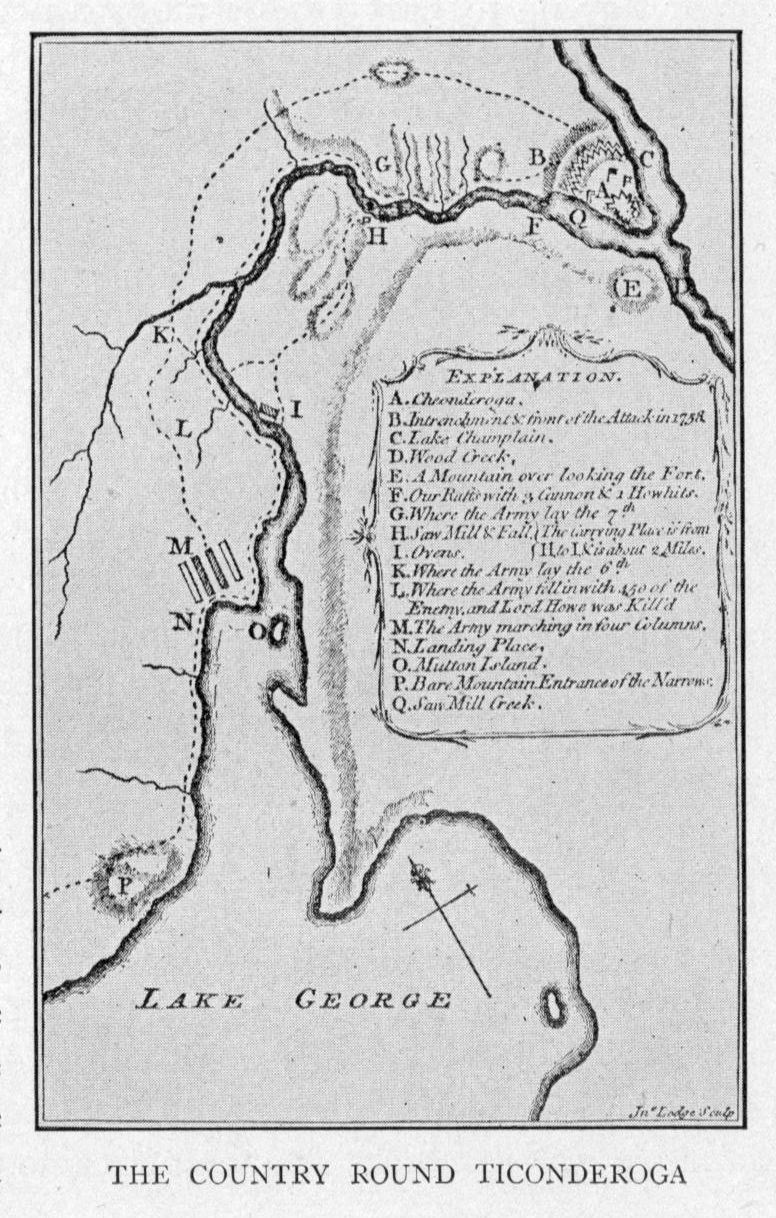
Cleaning guns and eating snatches of food, Montcalm's men slept that night in their places behind the logs. Montcalm had passed from man to man, personally thanking the troops for their valor. When daylight came over the hills with wisps of fog like cloud banners from the mountain tops, and the sunlight pouring gold mist through the valley, the French rose and rubbed their eyes. They could scarcely believe it! Surely Abercrombie would come back with his heavy guns. Like the mists of the morning the English had vanished. Far down the lake they were retreating in such panic terror they had left their baggage. Places were found on the portage by French scouts where the English had fled in such haste, marchers had lost their boots in the mud and not stopped to {260} find them. Such was the battle of Carillon, or Ticonderoga,—good reason for Amherst refusing to go on to Quebec.
The year closed with two more victories for the English. Brigadier John Forbes and Washington succeeded in cutting their way up to Fort Duquesne by a new road. They found the fort abandoned, and, taking possession in November, renamed it Pittsburg after the great English statesman. The other victory was at Frontenac, or Kingston. As the French had concentrated at Lake Champlain, leaving Frontenac unguarded, Bradstreet gained permission from Abercrombie to lead three thousand men across Lake Ontario against La Salle's old fur post. Crossing from the ruins of old Oswego, Bradstreet encamped beneath the palisades of Frontenac on the evening of August 25. By morning he had his cannon in range for the walls. Inside the fort Commandant de Noyan had less than one hundred men. At seven in the evening of August 27 he surrendered. Bradstreet permitted the prisoners to go down to Montreal on parole, to be exchanged for English prisoners held in Quebec. Furs to the value of $800,000, twenty cannon, and nine vessels were captured. Bradstreet divided the loot among his men, taking for himself not so much as a penny's worth. The fort was destroyed. So were the vessels. The guns and provisions were carried across the lake and deposited at Fort Stanwix, east of old Oswego. The loss of Duquesne on the Ohio and Fort Frontenac on Lake Ontario cut French dominion in America in two. Henceforth there was no highway from New France to Louisiana. In September, Abercrombie was recalled. Amherst became chief commander.
Wolfe had gone home to England ill. It was while sojourning at the fashion resort, Bath, that he fell desperately in love with a Miss Lowther, to whom he became engaged. Then came the summons from Pitt to meet the cabinet ministers in the war office of London. Wolfe was asked to take command of the campaign in 1759 against Quebec. It had been his ambition in Louisburg to proceed at once against Quebec. Here was his opportunity. {261} It need not be told, he took it. Amherst now, on the field south of Lake Champlain, received 10 pounds a day as commander in chief. For the greater task of reducing Quebec, Wolfe was to receive 2 pounds a day. Under him were to serve Monckton, Townshend, and Murray. Admiral Saunders was to command the fleet. Wolfe advised sending a few ships beforehand to guard the entrance to the St. Lawrence, and Durell was dispatched for this purpose long before the main armaments set out. By April 30 the combined fleet and army were at Halifax, Wolfe with a force of some 8500 men. Wolfe, now only in his thirty-third year, had been the subject of such jealousy that he was actually compelled to sail from Louisburg in June without one penny of ready money in his army chest. Underling officers, whose duty it was to advance him money on credit, had raised difficulties.
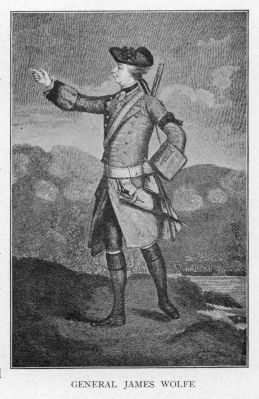
Cheers and cheers yet again rent the air as the fleet at last set out for the St. Lawrence, the soldiers on deck shouting themselves hoarse as Louisburg faded over the watery horizon, the officers at table the first night out at sea drinking toast after toast to British colors on every French fort in America.
At Quebec was fast and furious preparation for the coming siege. Bougainville had been sent to France from Lake Champlain in 1758 with report of the victory at Ticonderoga. In vain {262} he appealed for more money, more men for the coming conflict! The French government sent him back to Quebec with a bundle of advice and platitudes and titles and badges and promotions and soft words, but of the sinew which makes war, men and money, France had naught to spare. The rumor of the English invasion was confirmed by Bougainville. Every man capable of bearing arms was called to Quebec except the small forces at the outposts, and Bourlamaque at Champlain was instructed if attacked by Amherst to blow up Fort Carillon, then Crown Point, and retire. Grain was gathered into the state warehouses, and so stripped of able-bodied men were the rural districts that the crops of 1759 were planted by the women and children. Fire ships and rafts were constructed, the channel of St. Charles River closed by sinking vessels, and a bridge built higher up to lead from Quebec City across the river eastward to Beauport and Montmorency. Along the high cliffs of the St. Lawrence from Montmorency Falls to Quebec were constructed earthworks and intrenchments to command the approach up the river. What frigates had come in with Bougainville were sent higher up the St. Lawrence to be out of danger; but the crews, numbering 1400, were posted on the ramparts of Upper Town. Counting mere boys, Quebec had a defensive force variously given as from 9000 to 14,000; but deducting raw levies, who scarcely know the rules of the drill room, it is doubtful if Montcalm could boast of more than 5000 able-bodied fighters. Still he felt secure in the impregnable strength of Quebec's natural position. July 29, when the enemy lay encamped beneath his trenches, he could write, "Unless they [the English] have wings, they cannot cross a river and effect a landing and scale a precipice." One cruel feature there was of Quebec's preparations. To keep the habitants on both sides the river loyal, Vaudreuil, the governor, issued a proclamation telling the people that the English intended to massacre the inhabitants, men, women, and children. Meanwhile, morning, noon, and night, the chapel bells are ringing … ringing … lilting … and calling the faithful to prayers for the destruction of the heretic invader! Nuns lie prostrate day and night in prayer for the {263} country's deliverance from the English. Holy processions march through the streets, nuns and priests and little children in white, and rough soldiery in the uniforms with the blue facings, to pray Heaven's aid for victory. And while the poor people starve for bread, poultry is daily fattened on precious wheat that it may make tenderest meat for Intendant Bigot's table, where the painted women and drunken gamblers and gay officers nightly feast!
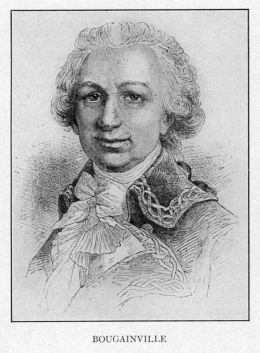
Signal fires light up the hills with ominous warning as the English fleet glides slowly abreast the current of the St. Lawrence, now pausing to sound where the yellow riffle of the current shows shallows, now following the course staked out by flags, here depending on the Frenchman, whom they have compelled to act as pilot! Nightly from hill to hill the signal fires leap to the sky, till one flames from Cape Tourmente, and Quebec learns that the English are surely very near. Among the Englishmen who are out in the advance boats sounding is a young man, James Cook, destined to become a great navigator.
June 25, sail after sail, frigate after frigate bristling with cannon, literally swarming with soldiers and marines, glide round the end of Orleans Island through driving rain and a squall, and to clatter of anchor chains and rattle of falling sails, come to rest. "Pray Heaven they be wrecked as Sir Hovenden Walker's fleet was wrecked long ago," sigh the nuns of Quebec. If they had {264} prayed half as hard that their corrupt rulers, their Bigots and their kings and their painted women whose nod could set Europe on fire with war,—if the holy sisterhood had prayed for this gang of vampires whose vices had brought doom to the land, to be swallowed in some abyss, their prayers might have been more effective with Heaven.
Next day a band of rangers lands from Wolfe's ships and finds the Island of Orleans deserted. On the church door the curé has pinned a note, asking the English not to molest his church; and expressing sardonic regret that the invaders have not come soon enough to enjoy the fresh vegetables of his garden.
Wolfe for the first time gazes on the prize of his highest ambition,—Quebec. He is at Orleans, facing the city. To his right is the cataract of Montmorency. From the falls past Beauport to St. Charles River, the St. Lawrence banks are high cliffs. Above the cliffs are Montcalm's intrenched fighters. Then the north shore of the St. Lawrence suddenly sheers up beyond St. Charles River into a lofty, steep precipice. The precipice is Quebec City: Upper Town and the convents and the ramparts and Castle St. Louis nestling on an upper ledge of the rock below Cape Diamond; Lower Town crowding between the foot of the precipice and tide water. Look again how the St. Lawrence turns in a sharp angle at the precipice. Three sides of the city are water,—St. Charles River nearest Wolfe, then the St. Lawrence across the steep face of the rock, then the St. Lawrence again along a still steeper precipice to the far side. Only the rear of the city is vulnerable; but it is walled and inaccessible.
Quebec was a prize for any commander's ambition; but how to win it?
The night of June 28 is calm, warm, pitch-dark, the kind of summer night when the velvet heat touches you as with a hand. The English soldiers of the crowded transports have gone ashore, when suddenly out of the darkness glide fire ships as from an under world, with flaming mast poles, and hulls in shadow, roaring with fire, throwing out combustibles, drifting straight down on the tide towards the English fleet. But the French have managed {265} badly. They have set the ships on fire too soon. The air is torn to tatters by terrific explosions that light up the outlines of the city spires and churn the river to billows. Then the English sailors are out in small boats, avoiding the suck of the undertow. Throwing out grappling hooks, they tow the flaming fire rafts away from their fleet. It is the first play of the game, and the French have lost.

Monckton goes ashore south on Point Lévis side next day. Townshend has landed his troops east of the Montmorency on the north shore. It is the second play of the game, and Wolfe has violated every rule of war, for he has separated his forces in three divisions close to a powerful enemy. He is counting on Montcalm's policy, however, and Montcalm's play is to lie inactive, sleeping in his boots, refusing to be lured to battle till winter drives the English off. It is usual in all accounts of the great struggle to find that certain facts have been suppressed. Let us frankly confess that when the English rangers went foraging they brought back French scalps, and when the French Indians went scouting they returned with English scalps. However, manners were improving. Strict orders are given: this is not a war on women; neither women nor children are to be touched. Wolfe posts proclamations on the parish churches, calling on the habitants to stand neutral. In answer, they tear the proclamations down. {266} By July 12 Wolfe's batteries on the south side of the river are preparing to shell the city. A band of five hundred students and habitants rows across from Quebec by night to dislodge the English gunners, but mistaking their own shots for the shots of the enemy, fall on each other in the dark and retreat in wild confusion. Then the English cannon begin to do business. In a single day half the houses of Lower Town are battered to bits, and high-tossed bombs have plunged through roofs of Upper Town, burning the cathedral and setting a multitude of lesser buildings on fire. In the confusion of cannonade and counter-cannonade and a city on fire, shrouding the ruins in a pall of smoke, some English ships slip up the river beyond Quebec, but there the precipice of the river bank is still steeper, and Bougainville is on guard with two thousand men. For thirty miles around the English rangers have laid the country waste. Still Montcalm refuses to come out and fight.
The enforced inaction exasperates Wolfe, whose health is failing him, and who sees the season passing, no nearer the object of his ambition than when he came. As he had stormed the batteries of Louisburg, so now he decides to storm the heights of Montmorency. To any one who has stood on the knob of rock above the gorge where the cataract plunges to the St. Lawrence, or has scrambled down the bank slippery with spray, and watched the black underpool whirl out to the river, Wolfe's venture must seem madness; for French troops lined the intrenchments above the cliff, and below a redoubt or battery had been built. Below the cataract, when the tide ebbed, was a place which might be forded. From sunrise to sunset all the last days of July, Wolfe's cannon boomed from Lévis across the city, from the fleet in mid channel, from the land camp on the east side of Montmorency. Montcalm rightly guessed, this presaged a night assault. To hide his design, Wolfe kept his transports shifting up and down the St. Lawrence, as if to land at Beauport halfway to the city. All the same, two armed transports, as if by chance, managed to get themselves stranded just opposite the redoubt below the cliff, where their cannon would protect a landing. Montcalm saw the move and strengthened the troops behind the earthworks on the {267} top of the cliff. Toward sunset the tide ebbed, and at that time cannon were firing from all points with such fury that the St. Lawrence lay hidden in smoke. As the air cleared, two thousand men were seen wading and fording below the falls. There was a rush of the tall grenadiers for the redoubt. The French retreated firing, and the cliff above poured down an avalanche of shots. At that moment Wolfe suffered a cruel and unforeseen check. A frightful thunderstorm burst on the river, lashing earth and air to darkness. It was impossible to see five paces ahead or to aim a shot. The cliff roared down with miniature rivulets and the slippery clay bank gave to every step of the climbers slithering down waist-deep in mud and weeds. Powder was soaked. As the rain ceased, Indians were seen sliding down the cliff to scalp the wounded. Wolfe ordered a retreat. The drums rolled the recall and the English escaped pellmell, the French hooting with derision at the top of the banks, the English yelling back strong oaths for the enemy to come out of its rat hole and fight like men. At the ford the men, soaked like water rats, and a sorry rabble, got into some sort of rank and burned the two stranded vessels as they passed back to the east side. In less than an hour four hundred and forty-three men had fallen, the most of them killed, many both dead and wounded, into the hands of the Indian scalpers.
One can guess Wolfe's fearful despair that night. A month had passed. He had accomplished worse than nothing. In another month the fleet must leave the St. Lawrence to avoid autumn storms. Fragile at all times, Wolfe fell ill, ill of fever and of chagrin, and those officers over whose head he had been promoted did not spare their criticisms, their malice. It is so easy to win battles of life and war in theory.
As for Quebec, it was felt the siege was over, the contest won. Still bad news had come from the west. Niagara had fallen before the English, and the forts on Lake Champlain were abandoned to Amherst. Nothing now barred the English advance down the Richelieu to Montreal. Montcalm dispatches Lévis to Montreal with eight hundred men.
{268} Why did Amherst not come to Wolfe's aid? His enemies say because the commanding general was so sure the siege of Quebec would fail that he did not want any share of the blame. That may be unjust. Amherst was of the slow, cautious kind, who marched doggedly to victory. He may not have wished to risk a second Ticonderoga. Wolfe's position was now desperate. His only alternatives were success or ruin. "You can't cure me," he told his surgeon, "but mend me up so I can go on for a few days." What he did in those few days left his name immortal. Robert Stobo, who had been captured from Washington's battalions on the Ohio, and who knew every foot of Quebec from five years of captivity, had escaped, joined Wolfe, and drawn plans of all surroundings. From his ship above Quebec Wolfe could see there was one path just behind the city where men might ascend to the Plains of Abraham outside the rear wall, but the path was guarded, and Bougainville's troops patrolled westward as far as Cape Rouge.
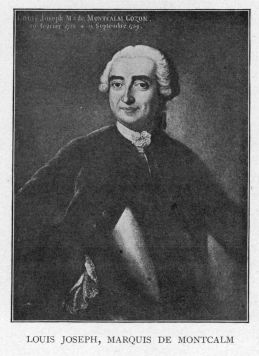
It was now September. From their trenches above the river the French could see the English evacuating camp at Montmorency. They were jubilant. Surely the English were giving up the siege. Night after night English transports loaded with soldiers ascended the St. Lawrence above Quebec. What did it mean? Was it a feint to draw Montcalm's men away from the east side? {269} The French general was sleeplessly anxious. He had not passed a night in bed since the end of June. The fall rains were beginning, and another month of work in the trenches meant half the army invalided.
The most of the English fleet was working up and down with the tide between the western limits of Quebec and Cape Rouge, nine miles away. Bougainville's force was increased to three thousand men, and he was ordered to keep especial watch westward. The steepness of the precipice was guard enough near the town. Wednesday, the 12th of September, the English troops were ordered to hold themselves in readiness. They passed the day cleaning their arms, and were ordered not to speak after nightfall or permit a sound to be heard from the ranks. Admiral Saunders with the main fleet was to feign attack on the east side of the city. Admiral Holmes with Wolfe's army, now numbering not four thousand men, was to glide down with the tide from Cape Rouge above Quebec. Because the main fleet lay on the east side Montcalm felt sure the attack would come from that quarter. Deserters had brought word to Wolfe that some flatboats with provisions were coming down the river to Quebec that night.
Here, then, the position! Saunders on the east side, opposite Beauport, feigning attack; Montcalm watching him from the Beauport cliffs; Wolfe nine miles up the river west of the city; Bougainville watching him, watching too for those provisions, for Quebec was down to empty larder.
It is said that as Wolfe rested in his ship, the Sutherland, off Cape Rouge, he felt strange premonition of approaching death, and repeated the words of Gray's "Elegy,"—"The paths of glory lead but to the grave,"—but this has been denied. Certainly he had such strange consciousness of impending death that, taking a miniature of his fiancée from his breast, he asked a fellow-officer to return it to her. About midnight the tide began to ebb, and two lanterns were hung as a sign from the masthead of the Sutherland. Instantly all the ships glided silent as the great river down with the tide. The night was moonless. Near the little bridle path now known as Wolfe's Cove the ships draw {270} ashore. Sharp as iron on stone a sentry's voice rings out, "Who goes?"
"The French," answers an officer, who speaks perfect French.
"What regiment?"
"The Queen's," replies the officer, who chances to know that Bougainville has a regiment of that name. Thinking they were the provision transports, this sentry was satisfied. Not so another. He ran down to the water's edge, and peering through the darkness called, "Why can't you speak louder?"
"Hush you! We 'll be overheard," answers the English officer in French.
Thus the English boats glided towards the little bridle path that led up to the rear of the city. Wolfe's Cove is not a path steep as a stair up the face of a rock, as the most of the schoolbooks teach; it is a little weed-grown, stony gully, easy to climb, but slant and narrow, where I have walked many a night to drink from the spring near the foot of the cliff.
Twenty-four volunteers lead the way up the stony path, silent and agile as cats. At the top are the tents of the sentries, who rush from their couches to be overpowered by the English. Before daybreak the whole army has ascended to the plateau behind the city, known as the Plains of Abraham. No use entering here into the dispute whether Wolfe took his place where the goal now stands, or farther back from the city wall. Roughly speaking, the main line of Wolfe's forces, three deep, with himself, Monckton, and Murray in command, faced the rear of Quebec about three quarters of a mile from what was then the wall. To his left was the wooded road now known as St. Louis. He posts Townshend facing this, at right angles to his front line. Another battalion lay in the woods to the rear. There were, besides, a reserve regiment, and a battalion to guard the landing.
What was Wolfe's position? Behind him lay Bougainville with three thousand French soldiers, fresh and in perfect condition. In front lay Quebec with three thousand more. To his right was the river; to his left, across the St. Charles, Montcalm's main army of five thousand men. "When your enemies blunder, {271} don't interrupt them," Napoleon is reported to have advised. If some one had not blundered badly now, it might have been a second Ticonderoga with Wolfe; but some one did blunder most tragically.
Montcalm had come from the trenches above Beauport, where he had been guarding against Saunders' landing, and he had ordered hot tea and beer served to the troops, when he happened to look across the St. Charles River towards Quebec. It had been cloudy, but the sun had just burst out; and there, standing in the morning light, were the English in battle array, red coat and tartan kilt, grenadier and Highlander, in the distance a confused mass of color, which was not the white uniform of the French.
"This is a serious business," said Montcalm hurriedly to his aide. Then, spurs to his big black horse, he was galloping furiously along the Beauport road, over the resounding bridge across the St. Charles, up the steep cobblestone streets that lead from Lower to Upper Town, and out by the St. Louis road to the Plains of Abraham. In Quebec all was confusion. Who had given the order for the troops to move out against the English without waiting for Bougainville to come from Cape Rouge? But there they were, huddling, disorderly columns that crowded on each other, filing out of the St. Louis and St. John Gates, with a long string of battalions following Montcalm up from the St. Charles. And Ramezay, who was commandant of the city, refused to send out part of his troops; and Vaudreuil, who was at Beauport, delayed to come; and though Montcalm waited till ten o'clock, Bougainville did not come up from Cape Rouge with his three thousand men. Easy to criticise and say Montcalm should have waited till Bougainville and Vaudreuil came. He could not wait, for Wolfe's position cut his forces in two, and the army was without supplies. With his four thousand five hundred men he accepted fate's challenge.
Bagpipes shrilling, English flags waving to the wind, the French soldiers shouting riotously, the two armies moved towards each other. Then the English halted, silent, motionless {272} statues. The men were refreshed, for during the four hours' wait from daylight, Wolfe had permitted them to rest on the grassed plain. The French came bounding forward, firing as they ran, and bending down to reload. The English waited till the French were but forty yards away. "They were not to throw away their fire," Wolfe had ordered. Now forty yards, if you measure it off in your mind's eye, is short space between hostile armies. It is not as wide as the average garden front in a suburban city. Then suddenly the thin red line of the English spoke in a crash of fire. The shots were so simultaneous that they sounded like one terrific crash of ear-splitting thunder. The French had no time to halt before a second volley rent the air. Then a clattering fire rocketed from the British like echoes from a precipice. With wild halloo the British were charging, … charging, … charging, the Highlanders leading with their broadswords flashing overhead and their mountain blood on fire, Wolfe to the fore of the grenadiers till a shot broke his wrist! Wrapping his handkerchief about the wound as he ran, the victorious young general was dashing forward when a second shot hit him and a third pierced his breast. He staggered a step, reeled, fell to the ground. Three soldiers and an officer ran to his aid and carried him in their arms to the rear. He would have no surgeon. It was useless, he said. "But the day is ours, and see that you keep it," he muttered, sinking back unconscious. A moment later he was roused by wild, hilarious, jubilant, heart-shattering shouts.
"Gad! they run! See how they run!" said an English voice.
"Who—run?" demanded Wolfe, roused as if from the sleep of death.
"The enemy, sir. They give way … everywhere."
"Go, one of you," commanded the dying general; "tell Colonel Burton to march Webb's regiment down Charles River to cut off retreat by the bridge. Now God be praised!" he added, sinking back; "I die in peace!" And the spirit of Wolfe had departed, leaving as a heritage a New Empire of the North, and an immortal fame.
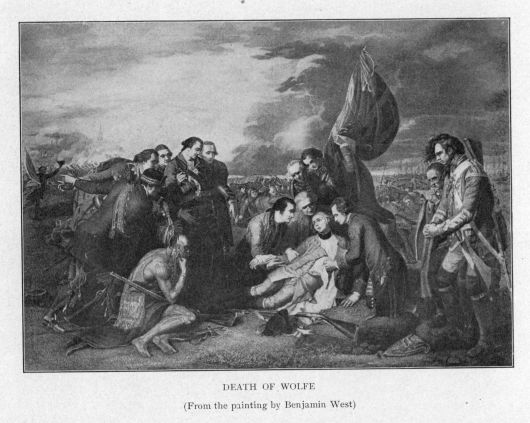
Fate had gone hard against the gallant Montcalm. The first volley from the English line had mowed his soldiers down like ripe wheat. At the second volley the ranks broke and the ground was thick strewn with the dead. When the English charged, the French fled in wildest panic downhill for the St. Charles. Wounded and faint, Montcalm on his black charger was swept swiftly along St. Louis road in the blind stampede of retreat. Near the walls a ball passed through his groins. Two soldiers caught him from falling, and steadied him on either side of his horse through St. Louis gate, where women, waiting in mad anxiety, saw the blood dripping over his horse.
"My God! My God! Our marquis is slain!" they screamed.
"It is nothing,—nothing,—good friends; don't trouble about me," answered the wounded general as he passed for the last time under the arched gateway of St. Louis road.
"How long have I to live?" he asked the surgeon into whose house he had been carried.
"Few hours, my lord."
"So much the better," answered Montcalm. "I shall not live to see Quebec surrendered."
Before daylight, he was dead. Wrapped in his soldier's cloak, laid in a rough box, the body was carried that night to the Ursuline Convent, where a bursting bomb had scooped a great hole in the floor. Sad-eyed nuns and priests crowded the chapel. By torchlight, amid tears and sobs, the body was laid to rest.
Both generals had died as they had lived,—gallantly. To-day both are regarded as heroes and commemorated by monuments; but how did their governments treat them? Of course there were wild huzzas in London and solemn memorial services over Wolfe; but when his aged mother petitioned the government that her dead son's salary might be computed at 10 pounds a day,—the salary of a commander in chief,—instead of 2 pounds a day, she was refused in as curtly uncivil a note as was ever penned. Montcalm had died in debt, and when his family petitioned the French government to pay these debts, the King thought it should be done, but he did not take the trouble to see that his {274} good intention was carried out. It was easy and cheaper for orators to talk of heroes giving their lives for their country. There are no better examples in history of the truth that glory and honor and true service must be their own reward, independent of any compensation, any suffering, any sacrifice.
Though the panic retreat continued for hours and Quebec was not surrendered for some days, the battle was practically decided in ten minutes. The campaign of the next year was gallant but fruitless. In April, before the fleet has come back to the English, De Lévis throws himself with the remnants of the French army against the rear wall of Quebec; and as Montcalm had come out to fight Wolfe, so Murray marches out to fight De Lévis. Both sides claimed the battle of Ste. Foye as victory, but another such victory would have exterminated the English. Lévis outside the walls, Murray glad to be inside the walls, each side waited for the spring fleet. If France had come to Canada's aid, even yet the country might have been won, for sickness had reduced Murray's army to less than three thousand able men; but the flag that flaunted from the ship that sailed into the harbor of Quebec on the 9th of May was British. That decided Canada's fate. De Lévis retreated swiftly for Montreal, but by September the slow-moving General Amherst has closed in on Montreal from the west, and up the St. Lawrence from the east proceeds General Murray. De Lévis and Vaudreuil had less than two thousand fighting men at Montreal. September 8th they capitulated, and three years later, by the Treaty of Paris, Canada passed under the dominion of England. Officers, many of the nobility, Bigot and his crew, sailed for France, where the Intendant's ring were put on trial and punished for their corruption and misrule. Bigot suffered banishment and the confiscation of property. The other members of his clique received like sentences.
Spite of the hopes of her devoted founders,—like Champlain and Maisonneuve,—spite of the blood of her martyrs and the prayers of her missionaries, spite of all the pathfinding of her {275} explorers, spite of the dauntless warfare of her soldier knights,—like Frontenac and Iberville and Montcalm,—New France had fallen.
Why?
For two reasons: because of England's sea power; because of the unblushing, shameless, gilded corruption of the French court, which cared less for the fate of Canada than the leer of a painted fool behind her fan. But be this remembered,—and here was the hand of overruling Destiny or Providence,—the fall of New France, like the fall of the seed to the ready soil, was the rebirth of a new nation. Henceforth it is not New France, the appendage of an Old World nation. It is Canada,—a New Dominion.
To-day wander round Quebec. Tablets and monuments consecrate many of the old hero days. Though the British government rebuilt a line of walls in the early eighteen hundreds, you will find it hard to trace even a vestige of the old French walls. Mounds tell you where there were bastions. A magnificent boulevard tops the most of the old ramparts. An imposing hotel stands where Castle St. Louis once frowned over the St. Lawrence. Of the palace where the Intendant held his revels there are not even ruins. If you drive out past Beauport, you will find at the end of a nine-mile forest path the crumbling brick walls of Château Bigot, the Hermitage, half buried, in the days when I visited it, with rose vines and orchard trees gone wild. That is all you will find of the court clique whose folly brought Canada's doom; but as you drive back from Beauport there towers the city from the rocky heights above the St. Lawrence,—chapel spire and cross and domed cathedral roofs aglint in the sunlight like a city of gold. The church, baptized by the blood of its martyrs, is there in pristine power; and the fruitful meadows bear witness to the prosperity of the habitant on whom the burden fell in the days of the ancient régime. Who shall say that habitant and church do not deserve the place of power they hold in the government of the Dominion?
English law and Quebec—French rights guarded—Pontiac's war—Siege of Detroit—Fight at Bloody Run—Michilimackinac falls—How Bouquet wins victory—Return of captives—The peddlers—Methods of Nor'westers—Traders invade the Up Country—Disaffection in Canada—Canada invaded—Quebec invested—Montgomery's fight—"Rats in a trap"—Relief at last—Tricks of ringsters—Coming of Loyalists—Life in the backwoods
Quebec has fallen. As jackals gather to feast on the carcass of the dead lion, so rallies a rabble of adventurers on the trail of the victorious army. Sutlers, traders, teamsters, riffraff,—soldiers of fortune,—stampede to Montreal and Quebec as to a new gold field. When Major Robert Rogers, the English forest ranger, proceeds up the lakes to take over the western fur posts,—Presqu' Isle, Detroit, Michilimackinac,—he is followed by hosts of adventurers looking for swift way to fortune by either the fur trade or by picking the bones of the dead lion. Major Rogers, beating up Lake Ontario and Lake Erie with two hundred bushwhackers, pausing in camp near modern Sandusky, meets the renowned Ottawa warrior, Pontiac, who had fought with the French against Braddock and now wants to know in voice of thunder what all this talk about the French being conquered means; how dare the French, because they have proved paltroons, deed away the Indian lands of Canada? How dare Rogers, the white chief of the English rangers, come here with his pale-faced warriors to Pontiac's land? How Rogers answered the veteran red-skinned warrior is not told. All that is known is—the French gave up their western furs with bad grace, and the English commandants forgot to appease the wound to the Indians' pride by the customary gifts over solemn powwow. At Detroit and Michilimackinac the French quietly withdraw from the palisades and build their white-washed cottages outside the limits of the fort—2500 French habitants there are at Detroit.
If the four or five hundred English adventurers who swarmed to Canada on the heels of the English army thought to batten on the sixty thousand defeated French inhabitants, far otherwise thought and decreed the English generals, Sir Jeffrey {277} Amherst, and Murray, who succeeded him. "You will observe that the French are British subjects as much as we are, and treat them accordingly," ruled Amherst; and General Murray, who practically became the first governor of Canada on Amherst's withdrawal, at once set himself to establish justice.
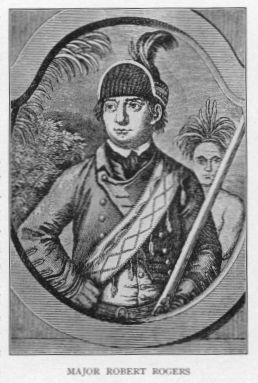
No more forced labor! No more carrion birds of the official classes, like Bigot, fattening on the poor habitants! British government in Canada for the next few years is known as the period of military rule. At Quebec, at Three Rivers, at Montreal, the commanding officers established martial law with biweekly courts; and in the parishes the local French officers, or seigneurs, are authorized to hear civil cases. By the terms of surrender the people have been guaranteed their religious liberty; and the Treaty of Paris, which cedes all Canada to England in 1763, repeats this guarantee, though it leaves a thorn of trouble in the flesh of England by reserving to France for the benefit of the Grand Banks fishermen the Islands of St. Pierre and Miquelon, as well as shore rights of fishing on the west coast of Newfoundland. Also, the proprietary rights of Jesuits, Sulpicians, Franciscans, are to remain in abeyance for the pleasure of the English crown. The rights of the sisterhoods are at once confirmed.
{278} One of General Murray's first acts as governor is to convey gentle hint to the Abbé Le Loutre, now released from prison and come back to Canada, that his absence will be appreciated by the government. Within a few years there are five hundred English residents in Montreal and Quebec; and now trouble begins for the government,—that wrangle between English and French, between Protestant and Catholic, which is to go on for a hundred years and retard Canada's progress by a century.
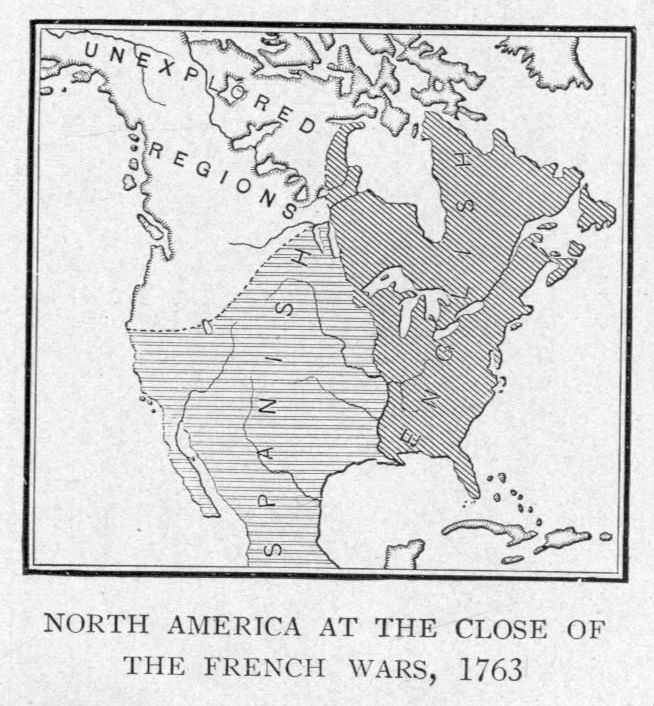
Being British-born subjects, the few hundred demand that the Governor call an assembly,—an elective assembly; but by the laws of England, Roman Catholics must abjure their religion before they can take office, and by the Treaty of Paris the Catholics of Canada have been guaranteed the freedom of their religion. To grant an elective assembly now would mean that the representatives of the five hundred English traders would rule over 70,000 French. When accusing the French Catholics of Quebec of remaining a solidarity so that they may wield the balance of power, it is well to remember how and when the quarrel began. Murray sides with the French and stands like a rock for their right. He will have no elective assembly under present conditions; and he puts summary stop to the business English magistrates and English bailiffs have hatched against the rights of the habitant,—of seizing lands for debt at a time when money is scarce, summoning the debtor simultaneously to two different courts, then charging such outrageous fees that the debtor's land is sold for the fees, to be bought in by the rascal ring who have arranged the plot. Ordinances are still proclaimed in primitive fashion by the crier going through the streets shouting the laws to beat of drum; but as the crier {279} shouts in English, the habitants know no more of the laws than if he shouted in Greek.
As Murray opposes the clamor of the English minority, the English petition the home government for Murray's recall. In the light of the fact that there were no schools at all in Canada except the Catholic seminaries, and that of the five hundred English residents only two hundred had permanent homes in Montreal and Quebec, it is rather instructive to read as one of the grievances of the English minority "that the only teachers in Canada were Catholics."
The governor-generalship is offered to Chatham, the great statesman, at 5000 pounds a year. Chatham refusing the position, there comes in 1768 as governor, at 1200 pounds a year, Sir Guy Carleton, fellow-soldier and friend of Wolfe in the great war, who follows in Murray's footsteps, stands like a rock for the rights of the French, orders debtors released from jail, fees reduced, and a stoppage of forced land sales. Bitter is the disappointment to the land jobbers, who had looked for a partisan in Carleton; doubly bitter, for Carleton goes one better than Murray. For years the French government had issued paper money in Quebec. After the conquest seventeen millions of these worthless government promissory notes were outstanding in the hands of the habitants. Knowing that the paper money is to be redeemed by the English government, English jobbers are now busy buying up the paper among the poor French at fifteen cents on the dollar. Carleton sends the town crier from parish to parish, warning the habitants to hold their money and register the amounts with the magistrates till the whole matter can be arranged between England and France.
The first newspaper is established now in Quebec, The Quebec Gazette, printed in both English and French. Also the first trouble now arises from having ceded France the two tiny islands south of Newfoundland, St. Pierre and Miquelon. By English navigation laws, all trade must be in English ships. Good! The smugglers slip into St. Pierre with a cargo. By night a ship with a white sail slips out of St. Pierre with that {280} cargo. At Gaspé the sail of that ship is red; at Saguenay it is yellow; at Quebec it is perhaps brown. Ostensibly the ship is a fishing smack, but it leaves other cargo than fish at the habitant hamlets of the St. Lawrence; and the smuggling from St. Pierre that began in Carleton's time is continued to-day in the very same way.
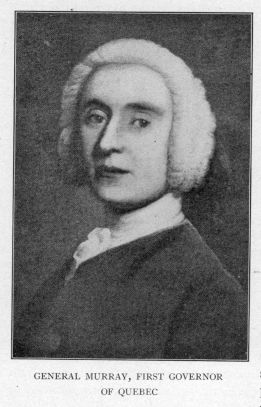
And Guy Carleton, though he is an Englishman and owes his appointment to the complaints of the English minority against Murray, remains absolutely impartial. Good reason for the wisdom of his policy. There are rumblings from the New England colonies that forewarn the coming earthquake. For years friction has been growing between the mother country and the colonies. The story of the Revolution does not belong to the story of Canada. For years far-sighted statesmen had predicted that the minute New England ceased to fear New France, ceased to need England's protection, that minute the growing friction would flame in open war. Carleton foresaw that to pander to the English minority would sacrifice the loyalty of the French. Thus he reported to the home government, and the Quebec Act of 1774 came to the relief of the French. By it Canada's boundaries were extended across the region of the Ohio to the Mississippi. French laws were restored {281} in all civil actions. English law was to rule in criminal cases, which meant trial by jury. The French are relieved from oaths of office and enabled to serve on the jury. Also, the Catholic clergy is entitled to collect its usual tithe of one twenty-sixth from the Catholics. An elective assembly is refused for reasons that are plain, but a legislative council is granted, to be appointed by the crown. For the expense of government a slight tax is levied on liquor; but as the St. Pierre smuggling is now flourishing, the tax docs not begin to meet the cost of government, and the difference is paid from the imperial treasury. However badly the imperial government blundered with the New England colonies, her treatment of Quebec was an object lesson in colonizing to the world. Had she treated her New England colonies half as justly as she treated Quebec, British America might to-day extend to Mexico. Had she treated Quebec half as unjustly as she treated her own offspring of New England, the United States might to-day extend to the Arctic Circle. The man who saved Canada to England, in the first place by wisdom, in the second place by war, was Sir Guy Carleton.
While the English and French, Protestant and Catholic, wrangle for power in Quebec there rages on the frontier one of the most devastating Indian wars known to American history. Not for nothing had Pontiac drawn himself to his full height and defied Major Rogers down on Lake Erie. From tribe to tribe the lithe coureurs ran, naked but for the breechcloth, painted as for war, carrying in one hand the tomahawk dipped in blood, in the other the wampum belt of purple, typifying war. The French had deeded away the Indian lands to the English! The news ran like wildfire, ran by moccasin telegram from Montreal up Ottawa River to Michilimackinac, from Niagara westward to Detroit, and southward to Presqu' Isle and all that chain of forts leading southwestward to the Mississippi. Was it a "Conspiracy of Pontiac," as it has been called? Hardly. It was more one of those general movements of unrest, of discontent, of misunderstanding, that but awaits the appearance of {282} a brave leader to become a torrent of destruction. Pontiac, the Ottawa chief, was such a leader, and to his standard rallied Indians from Virginia, from the Mississippi, from Lake Superior. Of the universal unrest among the Indians the English were not ignorant, but they failed to realize its significance; failed, too, to realize that the French fur traders, cast out of the western forts and now roaming the wilds, fanned the flame, gave presents of gunpowder and firearms to the savages, and egged the hostiles on against the new possessors of Canada, in order to divert the fur trade to French traders still in Louisiana. Down at Miami, southwest of Lake Erie, Ensign Holmes hears in March of 1763 that the war belt has been carried to the Illinois. Up at Detroit, in May, Pontiac is camped on the east side of the river with eight hundred hunters. Daily the French farmers, who supply the fort with provisions, carry word to Major Gladwin that the Indians are acting strangely, holding long and secret powwow, borrowing files to saw off the barrels of their muskets short. A French woman, who has visited the Indians across the river for a supply of maple sugar, comes to Gladwin on May 5 with the same story. From eight hundred, the Indians increase to two thousand. Old Catherine, a toothless squaw, comes shaking as with the palsy to the fort, and with mumbling words warns Gladwin to "Beware, beware!" So does a young girl whose fine eyes have caught the fancy of Gladwin himself. Breaking out with bitter weeping, she covers her head with her shawl and bids her white lover have a care how he meets Pontiac in council. Gladwin himself was a seasoned campaigner, who had escaped the hurricane of death with Braddock and had also served under Amherst at Montreal. In his fort are one hundred and twenty soldiers and forty traders. At the wharf lie the two armed schooners, Beaver and Gladwin. When Pontiac comes with his sixty warriors Gladwin is ready for him. In the council house the warriors seat themselves, weapons concealed under blankets; but when Pontiac raises the wampum belt that was to be the signal for the massacre to begin, Major Gladwin, never moving his light blue eyes from {283} the snaky gleam of the Indian, waves his hand, and at the motion there is a roll of drums, a grounding of the sentry's arms, a trampling of soldiers outside, a rush as of white men marching. Pontiac is dumfounded and departs without giving the signal. Back in his cabin of rushes across the river he rages like a maniac and buries a tomahawk in the skull of the old squaw Catherine. Monday, May 9, at ten o'clock he comes again, followed by a rabble of hunters. The gates are shut in his face. He shouts for admittance. The sentry opens the wicket and in traders' vernacular bids him go about his business. There is a wild war yell. The siege of Detroit begins.
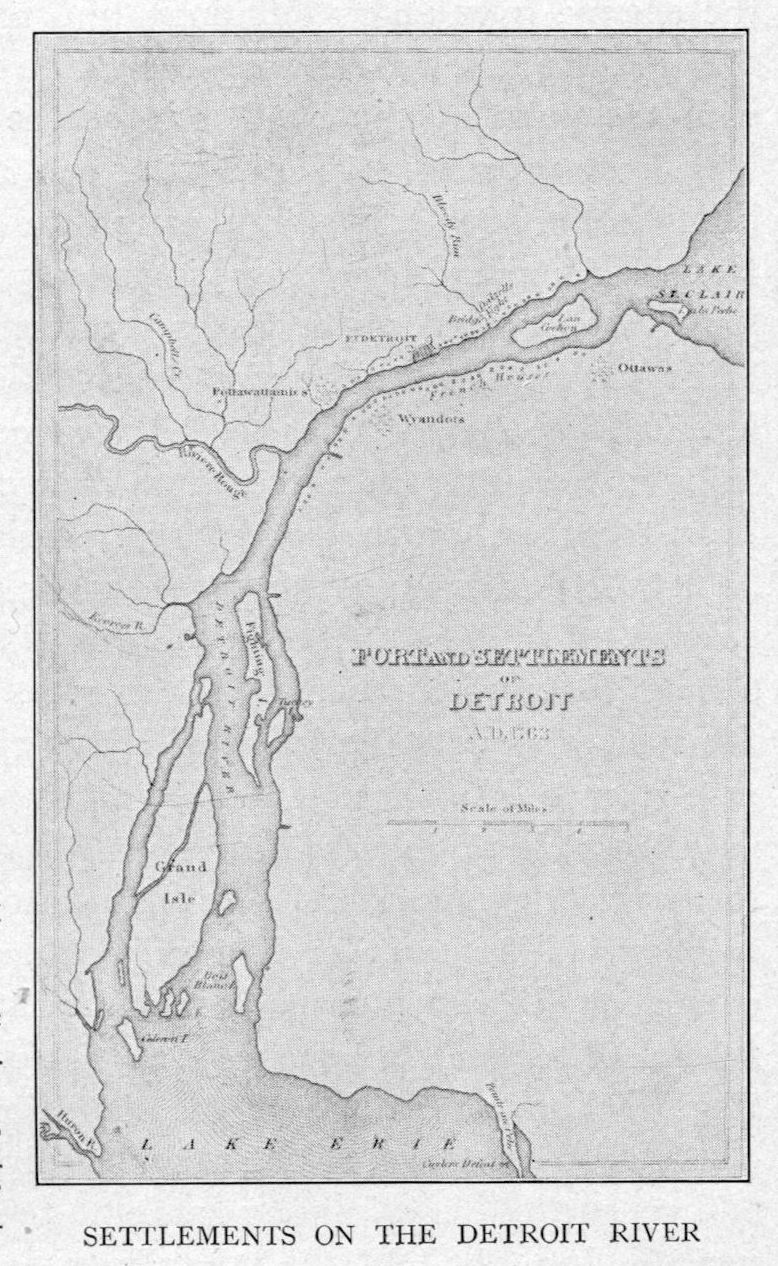
The story of that siege would fill volumes. For fifteen months it lasted, the French remaining neutral, selling provisions to both sides, Gladwin defiant inside his palisades, the Indians persistent as enraged hornets. Two English officers who have been out hunting are waylaid, murdered, skinned, the skin sewed into powder pouches, the bloody carcasses sent drifting down on the flood of waters past the fort walls. Desperately in need of provisions from the French, Gladwin consents to temporary truce while Captain Campbell and others go out to parley with the Indians. {284} Gladwin obtains cart loads of provisions during the parley, but Pontiac violates the honor of war by holding the messengers captive. Burning arrows are shot at the fort walls. Gladwin's men sally out by night, hack down the orchards that conceal the enemy, burn all outbuildings, and come back without losing a man. Nightly, too, lapping the canoe noiselessly across water with the palm of the hand, one of the French farmers comes with fresh provisions. Gladwin has sent a secret messenger, with letter in his powder pouch, through the lines of the besiegers to Niagara for aid. May 30, moving slowly, all sails out, the English flag flying from the prow, comes a convoy of sailboats up the river. Cheer on cheer rent the air. The soldiers at watch in the galleries inside the palisades tossed their caps overhead, but as the ships came nearer the whites were paralyzed with horror. Silence froze the cheer on the parted lips. Indian warriors manned the boats. The convoy of ninety-six men had been cut to pieces, only a few soldiers escaping back to Niagara, a few coming on, compelled by the Indians to act as rowers. As the boats passed the fort, whoops of derision, wild war chants, eldritch screams, rose from the Indians. One desperate white captive rose like a flash from his place at the rowlocks, caught his Indian captor by the scuff of the neck and threw him into the river; but the redskin grappled the other in a grip of death. Turning over and over, locked in each other's arms, the hate of the inferno in their faces, soldier and Indian swept down to watery death in the river tide. Taking advantage of the confusion, and under protection of the fort guns, one of the other captives sprang into the river and succeeded in swimming safely to the fort. Terrible was the news he brought. All the other forts south of Niagara, with the exception of Fort Pitt,—Miami, St. Joseph, Presqu' Isle,—lay in ashes. From some not a man had escaped to tell the story.
That night it was pitch-dark,—soft, velvet, warm summer darkness. From the fort the soldiers could see the sixty captives from the convoy burning outside at the torture stakes. Then as gray morning came mangled corpses floated past on the river tide. June 18 another vessel glides up the river with help, but {285} the garrison is afraid of a second disaster, for eight hundred warriors have lain in ambush along the river. Gladwin orders a cannon fired. The boat fires back answer, but the wind falls and she is compelled to anchor for the night below the fort. Sixty soldiers armed to the teeth are on board; but the captain is determined to out-trick the Indians, and he permits only twelve of his men at a time on deck. Darkness has barely fallen on the river before the waters are alive with canoes, and naked warriors clamber to the decks like scrambling monkeys, so sure they have outnumbered their prey that they forget all caution. At the signal of a hammer knock on deck,—rap—rap—rap,—three times short and sharp, up swarm the soldiers from the hatchway. Fourteen Indians dropped on the deck in as many seconds. Others were thrown on bayonet points into the river. It is said that after the fight of a few seconds on the ship the decks looked like a butcher's shambles. Finally the schooner anchored at Detroit, to the immense relief of the beleaguered garrison. So elated were the English, one soldier dashed from a sally port and scalped a dying Indian in full view of both sides. Swift came Indian vengeance. Captain Campbell, the truce messenger, was hacked to pieces. By July 28, Dalzell has come from Niagara with nearly two hundred men, including Rogers, the famous Indian fighter. Both Dalzell and Rogers are mad for a rush from the fort to deal one crushing blow to the Indians. Here the one mistake of the siege was made. Gladwin was against all risk, for the Indians were now dropping off to the hunting field, but Dalzell and Rogers were for punishing them before they left. In the midst of a dense night fog the English sallied from the fort at two o'clock on the 31st of July for Pontiac's main camp, about two miles up the river, boats rowing upstream abreast the marchers. It was hot and sultry. The two hundred and fifty bushrangers marched in shirt sleeves, two abreast. A narrow footbridge led across a brook, since known as Bloody Run, to cliffs behind which the Indians were intrenched. Along the trail were the whitewashed cottages of the French farmers, who stared from their windows in their nightcaps, amazed beyond speech at the rashness of the {286} English. On a smaller scale it was a repetition of Braddock's defeat on the Ohio. Indians lay in ambush behind every house, every shrub, in the long grass. They only waited till Dalzell's men had crossed the bridge and were charging the hill at a run. Then the war whoop shrilled both to fore and to rear. The Indians doubled up on their trapped foe from both sides. Rogers' Rangers dashed for hiding in a house. The drum beat retreat. Under cover of Rogers' shots from one side, shots from the boats on the other, Dalzell's men escaped at a panic run back over the trail with a loss of some sixty dead. In September came more ships with more men, again to be ambushed at the narrows, and again to reach Detroit, as the old record says, "bloody as a butcher's shop." So the siege dragged on for more than a year at Detroit. Winter witnessed a slight truce to fighting, for starvation drove the Indians to the hunting field; but May saw Pontiac again encamped under the walls of Detroit till word came from the French on the lower Mississippi in October, definitely and for all, they would not join the Indians. Then Pontiac knew his cause was lost.
Up at Michilimackinac similar scenes were enacted. Major Etherington and Captain Leslie had some thirty-five soldiers. There were also hosts of traders outside the walls, among whom was Alexander Henry of Montreal. Word had come of Pontiac at Detroit, but Etherington did not realize that the uprising was general. June 4 was the King's birthday. Shops had been closed. Flags blew above the fort. Gates were wide open. Squaws with heads under shawls sat hunched around the house steps, with that concealed beneath their shawls which the English did not guess. All the men except Henry, who was writing letters, and some Frenchmen, who understood the danger signs, had gone outside the gates to watch a fast and furious game of lacrosse. Again and again the ball came bounding towards the fort gates, only to be whisked to the other end of the field by a deft toss, followed by the swift runners. No one was louder in applause than Etherington. The officers were completely off guard. Suddenly the crowds swayed, gave way, opened; … {287} and down the field towards the fort gates surged the players. A dexterous pitch! The ball was inside the fort. After it dashed the Indians. In a flash weapons were grasped from the shawls of the squaws. Musket and knife did the rest. When Henry heard the war whoop and looked from a window he saw Indian warriors bending to drink the blood of hearts that were yet warm. For two days Henry lived in the rubbish heap of the attic in the house of Langlade, a pioneer of Wisconsin. Of the whites at Michilimackinac only twenty escaped death, and they were carried prisoners to the Lower Country for ransom.
From Virginia to Lake Superior such was the Indian war known as Pontiac's Campaign. Fort Pitt held out like Detroit. Niagara was too strong for assault, but in September twenty-four soldiers, who had been protecting portage past the falls, were waylaid and driven over the precipice at the place called Devil's Hole. More soldiers sent to the rescue met like fate, horses and wagons being stampeded over the rocks, seventy men in all being hurled to death in the wild canyon.
Amherst, who was military commander at this time, was driven nearly out of his senses. A foe like the French, who would stand and do battle, he could fight; but this phantom foe, that vanished like mist through the woods, baffled the English soldier. In less than six months two thousand whites had been slain; and Amherst could not even find his foe, let alone strike him. "Can we not inoculate them with smallpox, or set bloodhounds to track them?" he writes distractedly.
By the summer of 1764 the English had taken the war path. Bradstreet was to go up the lakes with twelve hundred men, Bouquet, with like forces, to follow the old Pennsylvania road to the Ohio, both generals to unite somewhere south of Lake Erie. Of Bradstreet the least said the better. He had done well in the great war when he captured Fort Frontenac almost without a blow; but now he strangely played the fool. He seemed to think that peace, peace at any price, was the object, whereas peace that is not a victory is worthless with the Indian. Deputies met him on the 12th of August near Presqu' Isle, Lake Erie. {288} They carried no wampum belts and were really spies. Without demanding reparation, without a word as to restoring harried captives, without hostages for good conduct, Bradstreet entered into a fool's peace with his foes, proceeded up to Detroit, and was back at Niagara by winter; though he must have realized the worthlessness of the campaign when his messengers sent to the Illinois were ambushed.
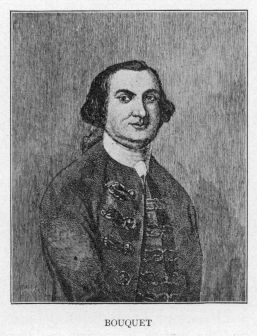
When Bouquet heard of the sham peace he was furious and repudiated Bradstreet's treaty in toto. Bouquet was a veteran of the great war, and knew bushfighting from seven years' experience on Pennsylvania frontiers. Slowly, with his fifteen hundred rangers and five hundred Highlanders, express riders keeping the trail open from fort to fort, scouts to fore, Bouquet moved along the old army trail used by Forbes to reach Fort Pitt. Friendly Indians had been warned to keep green branches as signals in the muzzles of their guns. All others were to be shot without mercy. Indians vanished before his march like mist before the sun. August 5 found Bouquet south of Fort Pitt at a place known as Bushy Run. The scouts had gone ahead to prepare nooning for the army at the Run. In seven hours the men had marched seventeen miles spite of sweltering heat; but at one, just as the thirsty columns were nearing the rest place, the crack—crack—crack of rifle shots to the fore set every man's blood jumping. From quick march they broke to a run, priming guns, ball in mouth as they ran. A moment later the old trick of Braddock's ambush was being repeated, but this time the Indians were dealing with a seasoned man. Bouquet swung his fighters in a circle round the stampeding horses and provision wagons. The heat was terrific, the men almost mad with thirst, the horses neighing and plunging and breaking away to the woods; and the army stood, a red-coated, tartan-plaid target for invisible foes! By this time the men were fighting as Indians fight—breaking ranks, jumping from tree to tree. It is n't easy to keep men standing as targets when they can't get at the foe; but Bouquet, riding from place to place, kept his men in hand till darkness screened them. Sixty had fallen. A circular barricade {289} was built of flour bags. Inside this the wounded were laid, and the army camped without water. The agonies of that night need not be told. Here the neighing of horses would bring down a clatter of bullets aimed in the dark; and the groans of the wounded, trampled by the stampeding cavalcade, would mingle with the screams of terror from the horses. The night continued hot almost as day in the sultry forest, and the thirst with both man and beast became anguish. Another such day and another such night, and Bouquet could foresee his fate would be worse than Braddock's. Passing from man to man, he gave the army their instructions for the next day. They would form in three platoons, with the center battalion advanced to the fore, as if to lead attack. Suddenly the center was to feign defeat and turn as if in panic flight. It was to be guessed that the Indians would pursue headlong. Instantly the flank battalions were to sweep through the woods in wide circle and close in on the rear of the savages. Then the fleeing center was to turn. The savages would be surrounded. Daybreak came with a cracking of shots from ambush. Officers and men carried out instructions exactly as Bouquet had planned. At ten o'clock the center column broke ranks, wavered, turned, … fled in wild panic! With the whooping of a wolf pack in full cry, the savages burst from ambush in pursuit. The sides deployed. A moment later the center had turned to fight the pursuer, {290} and the Highlanders broke from the woods, yelling their slogan, with broadswords cutting a terrible hand-to-hand swath. Sixty Indians were slashed to death in as many seconds. Though the British lost one hundred and fifteen, killed and wounded, the Indians were in full flight, blind terror at their heels. The way was now open to Port Pitt, but Bouquet did not dally inside the palisades. On down the Ohio he pursued the panic-stricken savages, pausing neither for deputies nor reënforcements. At Muskingum Creek the Indians sent back the old men to sue, sue abjectedly, for peace at any cost.
Bouquet met them with the stern front that never fails to win respect. They need not palm off their lie that the fault lay with the foolish young warriors. If the old chiefs would not control the young braves, then the whole tribe, the whole Indian race, must pay the penalty. In terror the deputies hung their heads. He would not even discuss the terms of peace, Bouquet declared, till the Indians restored every captive,—man, woman, and child, even the child of Indian parentage born in captivity. The captives must be given suitable clothing, horses, and presents. Twelve days only would he permit them to gather the captives. If man, woman, or child were lacking on the twelfth day, he would pursue them and punish them to the uttermost ends of earth.
The Indians were dumfounded. These were not soft words. Not thus had the French spoken, with the giving of manifold presents. But powder was exhausted. No more was coming from the French traders of the Mississippi. Winter was approaching, and the Indians must hunt or starve. Again the coureurs are sent spurring the woods from tribe to tribe with wampum belts, but this time the belts are the white bands of peace. While Bouquet waits he sends back over the trail for hospital nurses to receive the captives, and the army is set knocking up rude barracks of log and thatch in the wilderness. Then the captives begin to come. It is a scene for the brush of artist, for all frontiersmen who have lost friends have rallied to Bouquet's camp, hoping against hope and afraid to hope. There is the mother, whose infant child has been snatched from her arms in {291} some frontier attack, now scanning the lines as they come in, mad with hope and fear. There is the husband, whose wife has been torn away to some savage's tepee, searching, searching, searching among the sad, wild-eyed, ill-clad rabble for one with some resemblance to the wife he loved. There is the father seeking lost daughters and afraid of what he may find; and there are the captives themselves, some of the women demented from the abuse they have received. England may have spent her millions to protect her colonies, but she never spent in anguish what these rude frontiersmen suffered at Bouquet's camp.
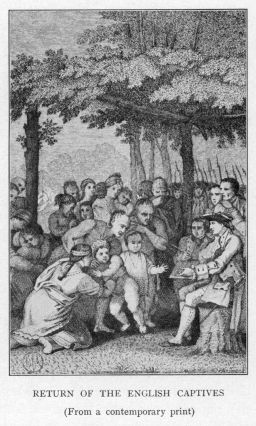
So ended what is known as the Pontiac War. Up at Detroit in 1765 Pontiac, in council with the whites, explains that he has listened to bad advice, but now his heart is right. "Father, you have stopped the rum barrel while we talked," he says grimly; "as our business is finished, we request that you open the barrel, that we may drink and be merry."
Not a very heroic curtain fall to a dramatic life. But pause a bit: the Pontiac War was the last united stand of a doomed race against the advance of the conquering alien; and the Indian is defeated, and he knows it, and he acknowledges it, and he {292} drowns his despair in a vice, and so he passes down the Long Trail of time with his face to the west, doomed, hopeless, pushed westward and ever west.
Pontiac goes down the Mississippi to his friends, the French fur traders of St. Louis. One morning in 1767, after a drinking bout, he is found across the river, lying in camp, with his skull split to the neck. By the sword he had lived, by the sword he perished. Was the murder the result of a drunken quarrel, or did some frenzied frontiersman with deathless woes bribe the hand of the assassin? The truth of the matter is unknown, and Pontiac's death remains a theme for fiction.
What with struggles for power and Indian wars, one might think that the few hundred English colonists of Quebec and Montreal had all they could do. Not so: their quarrels with the French Catholics and fights with the Indians are merely incidental to the main aim of their lives, to the one object that has brought them stampeding to Canada as to a new gold field, namely, quick way to wealth; and the only quick way to wealth was by the fur trade. In the wilderness of the Up Country wander some two or three thousand cast-off wood rovers of the old French fur trade. As the prodigals come down the Ottawa, down the Detroit, down the St. Lawrence, the English and Scotch merchants of Montreal and Quebec meet them. Mighty names those merchants have in history now,—McGillivrays and MacKenzies and McGills and Henrys and MacLeods and MacGregors and Ogilvies and MacTavishes and Camerons,—but at this period of the game the most of them were what we to-day would call petty merchants or peddlers. In their storehouses—small, one-story, frame affairs—were packed goods for trade. With these goods they quickly outfitted the French bushrover—$3000 worth to a canoe—and packed the fellow back to the wilderness to trade on shares before any rival firm could hire him. Within five years of Wolfe's victory in 1759 all the French bushrovers of the Up Country had been reëngaged by merchants of Montreal and Quebec.
{293}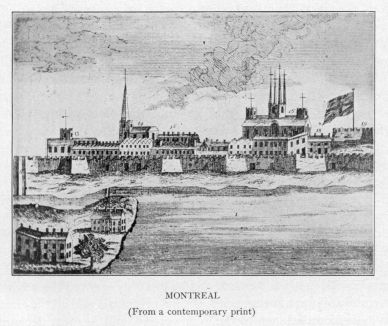
Then imperceptible changes came,—the changes that work so silently they are like destiny. Because it is unsafe to let the rascal bushrovers and voyageurs go off by themselves with $3000 worth to the canoe load, the merchants began to accompany them westward. "Bourgeois," the voyageurs call their outfitters. Then, because success in fur trade must be kept secret, the merchants cease to have their men come down to Montreal. They meet them with the goods halfway, at La Vérendrye's old stamping ground on Lake Superior, first at the place called Grand Portage, then, when the United States boundary is changed in 1783, at Kaministiquia, or modern Fort William, named after William McGillivray. Pontiac's War puts a stop to the new trade, but by 1766 the merchants are west again. Henry goes up the Saskatchewan to the Forks, and comes back with such wealth of furs he retires a rich magnate of Montreal. The Frobisher brothers strike for new hunting ground. So do Peter Pond and Bostonnais Pangman, and the MacKenzies, Alexander {294} and Roderick. Instead of following up the Saskatchewan, they strike from Lake Winnipeg northward for Churchill River and Athabasca, and they bring out furs that transform those peddlers into merchant princes. A little later the chief buyer of the Montreal furs is one John Jacob Astor of New York. Then another change. Rivalry hurts fur trade. Especially do different prices demoralize the Indians. The Montreal merchants pool their capital and become known as the Northwest Fur Company. They now hire their voyageurs outright on a salary. No man is paid less than what would be $500 in modern money, with board; and any man may rise to be clerk, trader, wintering partner, with shares worth 800 pounds ($4000), that bring dividends of two and three hundred per cent. The petty merchants whom Murray and Carleton despised became in twenty years the opulent aristocracy of Montreal, holding the most of the public offices, dominating the government, filling the judgeships, and entertaining with a lavish hospitality that put vice-regal splendor in the shade. The Beaver Club is the great rendezvous of the Montreal partners. "Fortitude in Distress" is the motto and lords of the ascendant is their practice. No man, neither governor nor judge, may ignore these Nor'westers, and it may be added they are a law unto themselves. One example will suffice. A French merchant of Montreal took it into his head to have a share of this wealth-giving trade. He was advised to pool his interests with the Nor'westers, and he foolishly ignored the advice. In camp at Grand Portage on Lake Superior he is told all the country hereabout belongs to the Nor'westers, and he must decamp.
"Show me proofs this country is yours," he answers. "Show me the title deed and I shall decamp."
Next night a band of Nor'westers, voyageurs well plied with rum, came down the strand to the intruder's tents. They cut his tents to ribbons, scatter his goods to the four winds, and beat his voyageurs into insensibility.
"Voila! there are our proofs," they say.
The French merchant hastens down to Montreal to bring lawsuit, but the judges, you must remember, are shareholders in the {295} Northwest Company, and many of the Legislative Council are Nor'westers. What with real delays and sham delays and put-offs and legal fees, justice is a bit tardy. While the case is pending the French merchant tries again. This time he is not molested at Fort William. They let him proceed on his way up the old trail to Lake of the Woods, the trail found by La Vérendrye; and halfway through the wilderness, where the cataract offers only one path for portage, the Frenchman finds Nor'-westers building a barricade; he tears it down. They build another; he tears that down. They build a third; fast as he tears down, they build up. He must either go back baffled by these suave, smiling, lawless rivals, or fight on the spot to the death; but there is neither glory nor wealth being killed in the wilderness, where not so much as the sands of the shore will tell the true story of the crime. So the French merchant compromises, sells out to the Nor'westers at cost plus carriage, and retires to the St. Lawrence cursing British justice.
It may be guessed that the sudden eruption of "the peddlers," these bush banditti, these Scotch soldiers of fortune with French bullies for fighters, roused the ancient and honorable Hudson's Bay Company from its half-century slumber of peace. Anthony Hendry, who had gone up the Saskatchewan far as the Blackfoot country of the foothills, they had dismissed as a liar in the fifties because he had reported that he had seen Indians on horseback, whereas the sleepy factors of the bay ports knew very well they never saw any kind of Indians except Indians in canoes; but now in the sixties it is noted by the company that not so many furs are coming down from the Up Country. It is voted "the French Canadian peddlers of Montreal" be notified of the company's exclusive monopoly to the trade of these regions. One Findley is sent to Quebec to look after the Hudson's Bay Company's rights; but while the English company talks about its rights, the Nor'westers go in the field and take them.
The English company rubs its eyes and sits up and scratches its heavy head, and passes an order that Mr. Moses Norton, chief {296} factor of Churchill, send Mr. Samuel Hearne to explore the Up Country. Hearne has heard of Far-Away-Metal River, far enough away in all conscience from the Canadian peddlers; and thither in December, 1770, he finds his way, after two futile attempts to set out. Matonabbee, great chief of the Chippewyans, is his guide,—Matonabbee, who brings furs from the Athabasca, and is now accompanied by a regiment of wives to act as beasts of burden in the sledge traces, camp servants, and cooks. Hearne sets out in midwinter in order to reach the Coppermine River in summer, by which he can descend to the Arctic in canoes. Storm or cold, bog or rock, Matonabbee keeps fast pace, so fast he reaches the great caribou traverse before provisions have dwindled and in time for the spring hunt. Here all the Indian hunters of the north gather twice a year to hunt the vast herds of caribou going to the seashore for summer, back to the Up Country for the winter, herds in countless thousands upon thousands, such multitudes the clicking of the horns sounds like wind in a leafless forest, the tramp of the hoofs like galloping cavalry. Store of meat is laid up for Hearne's voyage by Matonabbee's Indians; and a band of warriors joins the expedition to go down Coppermine River. If Hearne had known Indian customs as well as he knew the fur trade, he would have known that it boded no good when Matonabbee ordered the women to wait for his return in the Athabasca country of the west. Absence of women on the march meant only one of two things, a war raid or hunt, and which it was soon enough Hearne learned. They had come at last, on July 12, 1771, on Coppermine River, a mean little stream flowing over rocky bed in the Barren Lands of the Little Sticks (Trees), when Hearne noticed, just above a cataract, the domed tepee tops of an Eskimo camp. It was night, but as bright as day in the long light of the North. Instantly, before Hearne could stop them, his Indians had stripped as for war, and fell upon the sleeping Eskimo in ruthless massacre. Men were brained as they dashed from the domed tents, women speared as they slept, children dispatched with less thought than the white man would give to the killing of a fly. In vain Hearne, {297} with tears in his eyes, begged the Indians to stop. They laughed him to scorn, and doubtless wondered where he thought they yearly got the ten thousand beaver pelts brought to Churchill. A few days later, July 17, 1771, Hearne stood on the shores of the Arctic, heaving to the tide and afloat with ice; but the horrors of the massacre had robbed him of an explorer's exultation, though he was first of pathfinders to reach the Arctic overland. Matonabbee led Hearne back to Churchill in June of 1772 by a wide westward circle through the Athabasca Bear Lake Country, which the Hudson's Bay people thus discovered only a few years before the Nor'westers came.
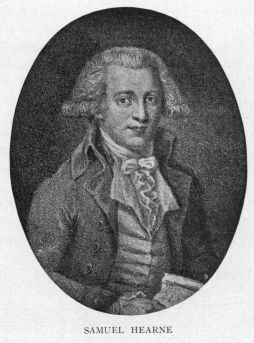
No longer dare the Hudson's Bay Company ignore the Up Country. Hearne is sent to the Saskatchewan to build Fort Cumberland, and Matthew Cocking is dispatched to the country of the Blackfeet, modern Alberta, to beat up trade, where his French voyageur, Louis Primeau, deserts him bag and baggage, to carry the Hudson's Bay furs off to the Nor'westers. No longer does the English company slumber on the shores of its frozen sea. Yearly are voyageurs sent inland,—"patroons of the woods," given bounty to stay in the wilds, luring any trade from the Nor'westers.
The Quebec Act, guaranteeing the rights of the French Canadians, had barely been put in force before the Congress of the {298} revolting English colonies sent up proclamations to be posted on the church doors of the parishes, calling on the French to throw off the British yoke, to join the American colonies, "to seize the opportunity to be free." Unfortunately for this alluring invitation, Congress had but a few weeks previously put on record its unsparing condemnation of the Quebec Act. Inspired by those New Englanders who, for a century, had suffered from French raids, Congress had expressed its verdict on the privileges granted to Quebec in these words: "Nor can we supress our astonishment that a British Parliament should establish a religion that has drenched your island [England] in blood." This declaration was the cardinal blunder of Congress as far as Canada was concerned. Of the merits of the quarrel the simple French habitant knew nothing. He did what his curé told him to do; and the Catholic Church would not risk casting in its lot with a Congress that declared its religion had drenched England in blood. English inhabitants of Montreal and Quebec, who had flocked to Canada from the New England colonies, were far readier to listen to the invitation of Congress than were the French.
Governor Carleton had fewer than 800 troops, and naturally the French did not rally as volunteers in the impending war between England and her English colonies. Should the Congress troops invade Canada? The question was hanging fire when Ethan Allen, with his two hundred Green Mountain boys of Vermont, marched across to Lake Champlain in May of 1775, hobnobbed with the guards of Ticonderoga, who drank not wisely but too well, then rowed by night across the narrows and knocked at the wicket beside the main gate. The sleepy guards, not yet sober from the night's carouse, admitted the Vermonters as friends. In rushed the whole two hundred. In a trice the Canadian garrison of forty-four were all captured and Allen was thundering on the chamber door of La Place, the commandant. It was five in the morning. La Place sprang up in his nightshirt and demanded in whose name he was ordered to surrender. Ethan Allen answered in words that have gone {299} down to history, "In the name of the Great Jehovah and the Continental Congress." Later fell Crown Point. So began the war with Canada in the great Revolution.
And now, from May to September, Arnold's Green Mountain boys sweep from Lake Champlain down the Richelieu to the St. Lawrence, as Iberville's bold bushrovers long ago swept through these woods. However, the American rovers take no permanent occupation of the different forts on the falls of the Richelieu River, preferring rather to overrun the parishes, dispatching secret spies and waiting for the habitants to rally. And they came once too often, once too far, these bold banditti of the wilderness, clad in buckskin, musket over shoulder, coonskin cap! Montreal is so full of spies, so full of friendlies, so full of Bostonnais in sympathy with the revolutionists, that Allen feels safe in paddling across the St. Lawrence one September morning to the Montreal side with only one hundred and fifty men. Montreal has grown in these ten years to a city of some twelve thousand, but the gates are fast shut against the American scouts; and while Allen waits in some barns of the suburbs, presto! out sallies Major Garden with twice as many men armed to the teeth, who assault the barns at a rush. Five Americans drop at the first crack of the rifles. The Canadians are preparing to set fire to the barns. Allen's men will be picked off as they rush from the smoke. Wisely, he saves his Green Mountain boys by surrender. Thirty-five capitulate. The rest have escaped through the woods. Carleton refuses to acknowledge the captives as prisoners of war. He claps irons on their hands and irons on their feet and places them on a vessel bound for England to be treated as rebels to the crown. It is said those of Allen's men who deserted were French Canadians in disguise—which may explain why Carleton made such severe example of his captives and at once purged Montreal of the disaffected by compelling all who would not take arms to leave.
Carleton's position was chancy enough in all conscience. The habitants were wavering. They refused point-blank to serve as volunteers. They supplied the invaders with provisions. Spies were everywhere. Practically no help could come from {300} England till spring, and scouts brought word that two American armies were now marching in force on Canada,—one by way of the Richelieu, twelve hundred strong, led by Richard Montgomery of New York, directed against Montreal; the other by way of the Kennebec, with fifteen hundred men under Benedict Arnold, to attack Quebec. Carleton is at Montreal. He rushes his troops, six hundred and ninety out of eight hundred men, up the Richelieu to hold the forts at Chambly and St. John's against Montgomery's advance.
Half September and all October Montgomery camps on the plains before Fort St. John's, his rough soldiers clad for the most part in their shirt sleeves, trousers, and coon cap, with badges of "Liberty or Death" worked in the cap bands, or sprigs of green put in their hats, in lieu of soldier's uniform. Inside the fort, Major Preston, the English commander, has almost seven hundred men, with ample powder. It is plain to Montgomery that he can win the fort in only one of two ways,—shut off provisions and starve the garrison out, or get possession of heavy artillery to batter down the walls. It is said that fortune favors the dauntless. So it was with Montgomery, for he was enabled to besiege the fort in both ways. Carleton had rushed a Colonel McLean to the relief of St. John's with a force of French volunteers, but the French deserted en masse. McLean was left without any soldiers. This cut off St. John's from supply of provisions. At Chambly Fort was a Major Stopford with eighty men and a supply of heavy artillery. Montgomery sent a detachment to capture Chambly for the sake of its artillery. Stopford surrendered to the Americans without a blow, and the heavy cannon were forthwith trundled along the river to Montgomery at St. John's. Preston sends frantic appeal to Carleton for help. He has reduced his garrison to half rations, to quarter rations, to very nearly no rations at all! Carleton sends back secret express. He can send no help. He has no more men. Montgomery tactfully lets the message pass in. After siege of forty-five days, Preston surrenders with all the honors of war, his six hundred and eighty-eight men marching {301} out, arms reversed, and going aboard Montgomery's ships to proceed as prisoners up Lake Champlain.
The way is now open to Montreal. Benedict Arnold, meanwhile, with the army directed against Quebec, has crossed from the Kennebec to the Chaudière, paddled across St. Lawrence River, and on the very day that Montgomery's troops take possession of Montreal, November 13, Arnold's army has camped on the Plains of Abraham behind Quebec walls, whence he scatters his foragers, ravaging the countryside far west as Three Rivers for provisions. The trials of his canoe voyage from Maine to the St. Lawrence at swift pace have been terrific. More than half his men have fallen away either from illness or open desertion. Arnold has fewer than seven hundred men as he waits for Montgomery at Quebec.
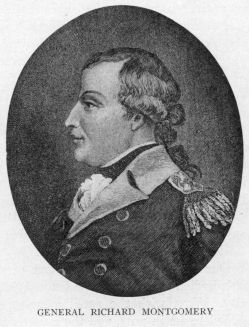
What of Guy Carleton, the English governor, now? Canada's case seemed hopeless. The flower of her army had been taken prisoners, and no help could come before May. Desperate circumstances either make or break a man, prove or undo him. As reverses closed in on Carleton, like the wrestlers of old he but took tighter grip of his resolutions.
On November 11, two days before Preston's men surrendered, Carleton, with two or three military officers disguised as peasants, boarded one of three armed vessels to go down from Montreal to Quebec. All the cannon at Montreal had been dismounted and spiked. What powder could not be carried {302} away was buried or thrown into the river. Amid funereal silence, shaking hands sadly with the Montreal friends who had gathered at the wharf to say farewell, the English Governor left Montreal. That night the wind failed, and the three vessels lay to with limp sails. At Sorel, at Three Rivers, at every hamlet on both sides of the St. Lawrence, lay American scouts to capture the English Governor. All next day the vessels lay wind-bound. Desperate for the fate of Quebec, Carleton embarked on a river barge propelled by sweeps. Passing Sorel at night Carleton and his disguised officers could see the camp fires of the American army. Here oars were laid aside and the raft steadied down the tide by the rowers paddling with the palms of their hands. Three Rivers was found in possession of the Americans, and a story is told of Carleton, foredone from lack of sleep, dozing in an eating house or tavern with his head sunk forward upon his hands, when two or three American scouts broke into the room. Not a sign did the English party in peasant disguise give of alarm or uneasiness, which might have betrayed the Governor. "Come, come," said one of the English officers in French, slapping Sir Guy Carleton carelessly on the back, "we must be going"; and the Governor escaped unsuspected. November 19, to the inexpressible relief of Quebec Carleton reached the capital city.
Quebec now had a population of some five thousand. All able-bodied men who would not fight were expelled from the city. What with the small garrison, some marines who happened to be in port, and the citizens themselves, eighteen hundred defenders were mustered. On the walls were a hundred and fifty heavy cannon, and all the streets leading from Lower to Upper Town had been barricaded with cannon mounted above. At each of the city gates were posted battalions. Sentries never left the walls, and the whole army literally slept in its boots. It will be remembered that the natural position of Quebec was worth an army in itself. On all sides there was access only by steepest climb. In front, where the modern visitor ascends from the wharf to Upper Town by Mountain Street {303} steep as a stair, barricades had been built. To the right, where flows St. Charles River past Lower Town, platforms mounted with cannon guarded approach. To the rear was the wall behind which camped Arnold; to the left sheer precipice, above which the defenders had suspended swinging lanterns that lighted up every movement on the path below along the St. Lawrence.

Early in December comes Montgomery himself to Quebec, on the very ships which Carleton had abandoned. Carleton refuses even the letter demanding surrender. Montgomery is {304} warned that forthwith any messenger sent to the walls will come at peril of being shot as rebel. Henceforth what communication Montgomery has with the inhabitants must be by throwing proclamations inside or bribing old habitant women as carriers,—for the habitants continue to pass in and out of the city with provisions; and a deserter presently brings word that Montgomery has declared he will "eat his Christmas dinner in Quebec or in Hell!" Whereupon Carleton retorts, "He may choose his own place, but he shan't eat it in Quebec."
Montgomery was now in the same position as Wolfe at the great siege. His troops daily grew more ragged; many were without shoes, and smallpox was raging in camp. He could not tempt his foe to come out and fight; therefore he must assault the foe in its own stronghold. It will be remembered, Wolfe had feigned attack to the fore, and made the real attack to the rear. Montgomery reversed the process. He feigned attack to the rear gates of St. John and St. Louis, and made the real attack to the fore from the St. Charles and the St. Lawrence. While a few soldiers were to create noisy hubbub at St. John and St. Louis gates from the back of the city, Arnold was to march through Lower Town from the Charles River side, Montgomery along the narrow cliff below the Citadel, through Lower Town, to that steep Mountain Street which tourists to-day ascend directly from the wharves of the St. Lawrence. On the squares of Upper Town the two armies were to unite and fight Carleton. The plan of attack practically encompassed the city from every side. Spies had brought rumors to Carleton that the signal for assault for the American troops was to be the first dark stormy night. Christmas passed quietly enough without Montgomery carrying out his threat, and on the night before New Year's all was quiet. Congress soldiers had dispersed among the taverns outside the walls, and Carleton felt so secure he had gone comfortably to bed. For a month, shells from the American guns had been whizzing over Upper Town, with such small damage that citizens had continued to go about as usual. On the walls was a constant popping from the sharpshooters of both sides, and occasionally {305} an English sentry, parading the walls at imminent risk of being a target, would toss down a cheery "Good morrow, gentlemen," to a Congress trooper below. Then, quick as a flash, both men would lift and fire; but the results were small credit to the aim of either shooter, for the sentry would duck off the wall untouched, just as the American dashed for hiding behind barricade or house of Lower Town. Some of the Americans wanted to know what were the lanterns and lookouts which the English had constructed above the precipice of Cape Diamond. Some wag of a habitant answered these were the sign of a wooden horse with hay in front of it, and that the English general, Carleton, had said he would not surrender the town till the horse had caught up to the hay. Skulking riflemen of the Congress troops had taken refuge in the mansion of Bigot's former magnificence, the Intendant's Palace, and Carleton had ordered the cannoneers on his walls to knock the house down. So fell the house of Bigot's infamy.
Towards 2 A.M. of December 31 the wind began to blow a hurricane. The bright moonlight became obscured by flying clouds, and earth and air were wrapped in a driving storm of sleet. Instantly the Congress troops rallied to their headquarters behind the city. Montgomery at quick march swept down the steep cliff of the river to the shore road, and in the teeth of a raging wind led his men round under the heights of Cape Diamond to the harbor front. Heads lowered against the wind, coonskin caps pulled low over eyes, ash-colored flannel shirts buttoned tight to necks, gun casings and sacks wrapped loosely round loaded muskets to keep out the damp, the marchers tramped silently through the storm. Overhead was the obscured glare where the lanterns hung out in a blare of snow above Cape Diamond. Here rockets were sent up as a signal to Arnold on St. Charles River. Then Montgomery's men were among the houses of Lower Town, noting well that every window had been barricaded and darkened from cellar to attic. Somewhere along the narrow path in front of the town Montgomery knew that barricades had been built with cannon behind, but he trusted to the storm concealing his approach till his men could capture them at a rush. At Près {306} de Ville, just where the traveler approaching harbor front may to-day see a tablet erected in memory of the invasion, was a barricade. Montgomery halted his men. Scouts returned with word that all was quiet and in darkness—the English evidently asleep; and uncovering muskets, the Congress fighters dashed forward at a run. But it was the silence that precedes the thunderclap. The English had known that the storm was to signal attack, and guessing that the rockets foretokened the assailants' approach, they had put out all lights behind the barricade. Until Montgomery's men were within a few feet of the log, there was utter quiet; then a voice shrieked out, "Fire!—fire!" Instantly a flash of flame met the runners like a wall. Groans and screams split through the muffling storm. Montgomery and a dozen others fell dead. The rest had broken away in retreat,—a rabble without a commander,—carrying the wounded. Behind the barricade was almost as great confusion among the English, for Quebec's defenders were made up of boys of fifteen and old men of seventy, and the first crash of battle had been followed by a panic, when half the guards would have thrown down their arms if one John Coffin, an expelled royalist from Boston, had not shouted out that he would throw the first man who attempted to desert into the river.
Meantime, how had it gone with Arnold?
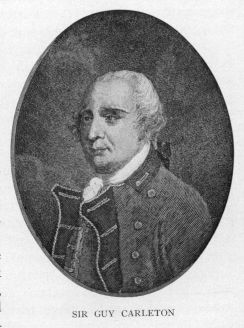
An English officer was passing near St. Louis Gate when, sometime after two o'clock, he noticed rockets go up from the river beyond Cape Diamond. He at once sounded the alarm. Bugles called to arms, drums rolled, and every bell in the city was set ringing. In less than ten minutes every man of Quebec's eighteen hundred was in place. American soldiers marching through St. Roch, Lower Town, have described how the tolling of the bells rolling through the storm smote cold on their hearts, for they knew their designs had been discovered, and they could not turn back, for a juncture must be effected with Montgomery. A moment later the sham assaults were peppering the rear gates of Quebec, but Guy Carleton was too crafty a campaigner to be tricked by any sham. He rightly guessed that the real attack {307} would be made on one of the two weaker spots leading up from Lower Town. "Now is the time to show what stuff you are made of," he called to the soldiers, as he ordered more detachments to the place whence came crash of heaviest firing. This was at Sault-au-Matelot Street, a narrow, steep thoroughfare, barely twenty feet from side to side. Up this little tunnel of a street Arnold had rushed his men, surmounting one barricade where they exchanged their own wet muskets for the dry guns of the English deserters, dashing into houses to get possession of windows as vantage points, over, some accounts say, yet another obstruction, till his whole army was cooped up in a canyon of a street directly below the hill front on which had been erected a platform with heavy guns. It was a gallant rush, but it was futile, for now Carleton outgeneraled Arnold. Guessing from the distance of the shots that the attack to the rear was sheer sham, the English general rushed his fighters downhill by another gate to catch Arnold on the rear. Quebec houses are built close and cramped. While these troops were stealing in behind Arnold to close on him like a trap, it was easy trick for another English battalion to scramble over house roofs, over back walls, and up the very stairs of houses where Arnold's troops were guarding the windows. Then Arnold was carried past his men badly wounded. "We are sold," muttered the Congress troops, "caught like rats in a trap." Still they pressed toward in hand to hand scuffle, with shots at such close range the Boston soldiers were {308} shouting, "Quebec men, do not fire on your true friends!" with absurd pitching of each other by the scruff of the neck from the windows. Daylight only served to make plainer the desperate plight of the entrapped raiders. At ten o'clock five hundred Congress soldiers surrendered. It must not for one moment be forgotten that each side was fighting gallantly for what it believed to be right, and each bore the other the respect due a good fighter and upright foe. In fact, with the exception of two or three episodes mutually regretted, it may be said there were fewer bitter thoughts that New Year's morning than have arisen since from this war. The captured Americans had barely been sent to quarters in convents and hospitals before a Quebec merchant sent them a gift of several hogsheads of porter. When the bodies of Montgomery and his fellow-comrades in death were found under the snowdrifts, they were reverently removed, and interred with the honors of war just inside St. Louis Gate.
Though the invaders were defeated, Quebec continued to be invested till spring, the thud of exploding bombs doing little harm except in the case of one family, during spring, when a shell fell through the roof to a dining-room table, killing a son where he sat at dinner. As the ice cleared from the river in spring, both sides were on the watch for first aid. Would Congress send up more soldiers on transports; or would English frigates be rushed to the aid of Quebec? The Americans were now having trouble collecting food from the habitants, for the French doubted the invaders' success, and Congress paper money would be worthless to the holders. One beautiful clear May moonlight night a vessel was espied between nine and ten at night coming up the river full sail before the wind. Was she friend or foe? Carleton and his officers gazed anxiously from the citadel. Guns were fired as signal. No answer came from the ship. Again she was hailed, and again; yet she failed to hang out English colors. Carleton then signaled he would sink her, and set the rampart cannon sweeping her bows. In a second she was ablaze, a fire ship sent by the enemy loaded with shells and grenades and bombs that shot off like a fusillade of rockets. At the same time a boat was seen rowing from the {309} far side of her with terrific speed. Carleton's precaution had prevented the destruction of the harbor fleet. Three days later, at six in the morning, the firing of great guns announced the coming of an English frigate. At once every man, woman, and child of Quebec poured down to the harbor front, half-dressed, mad with joy. By midday, Guy Carleton had led eight hundred soldiers out to the Plains of Abraham to give battle against the Americans; but General Thomas of the Congress army did not wait. Such swift flight was taken that artillery, stores, tents, uneaten dinners cooked and on the table, were abandoned to Carleton's men. General Thomas himself died of smallpox at Sorel. At Montreal all was confusion. The city had been but marking time, pending the swing of victory at Quebec. In the spring of 1776 Congress had sent three commissioners to Montreal to win Canada for the new republic. One was the famous Benjamin Franklin, another a prominent Catholic; but the French Canadian clergy refused to forget the attack of Congress on the Quebec Act, and remained loyal to England.
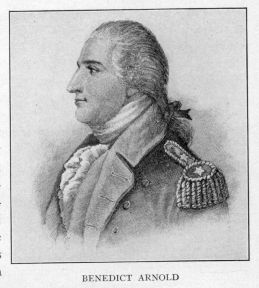
For almost a year, in desultory fashion, the campaign against Canada dragged on, Carleton reoccupying and fortifying Montreal, Three Rivers, St. John's, and Chamby, then pushing up Champlain Lake in October of 1776, with three large vessels and ninety small ones. Between Valcour Island and the mainland he caught Benedict Arnold with the Congress boats on October 11, and succeeded in battering them to pieces before {310} Arnold could extricate them. As the boats sank, the American crews escaped ashore; but the English went no farther south than Crown Point this year. If Carleton had failed at Quebec, there can be no doubt Canada would have been permanently lost to England; for the following year France openly espoused the cause of Congress, and proclamations were secretly smuggled all through Canada to be posted on church doors, calling on Canadians to remain loyal to France. Curiously enough, it was Washington, the leader of the Americans, who checkmated this move. With a wisdom almost prophetic, he foresaw that if France helped the United States, and then demanded Canada as her reward, the old border warfare would be renewed with tenfold more terror. No longer would it be bushrover pitted against frontiersmen. It would be France against Congress, and Washington refused to give the aid of Congress to the scheme of France embroiling America in European wars. The story of how Clark, the American, won the Mississippi forts for Congress is not part of Canada's history, nor are the terrible border raids of Butler and Brant, the Mohawk, who sided with the English, and left the Wyoming valley south of the Iroquois Confederacy a blackened wilderness, and the homes of a thousand settlers smoking ruins. It is this last raid which gave the poet Campbell his theme in "Gertrude of Wyoming." By the Treaty of Versailles, in 1783, England acknowledged the independence of the United States, and Canada's area was shorn of her fairest territory by one fell swath. Instead of the Ohio being the southern boundary, the middle line of the Great Lakes divided Canada from her southern neighbor. The River Ste. Croix was to separate Maine from New Brunswick. The sole explanation of this loss to Canada was that the American commissioners knew their business and the value of the ceded territory, and the English commissioners did not. It is one of the many conspicuous examples of what loyalty has cost Canada. England is to give up the western posts to the United States, from Miami to Detroit and Michilimackinac and Grand Portage. In return the United States federal government is to recommend to the States {311} Governments that all property confiscated from Royalists during the war be restored.
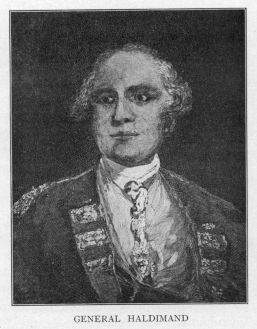
General Haldimand, a Swiss who has served in the Seven Years' War, succeeds Carleton as governor in 1778. The times are troublous. There is still a party in favor of Congress. The great unrest, which ends in the French Revolution, disturbs habitants' life. Then that provision of the Quebec Act, by which legislative councilors were to be nominated by the crown, works badly. Councilors, judges, crown attorneys, even bailiffs are appointed by the colonial office of London, and find it more to their interests to stay currying favor in London than to attend to their duties in Canada. The country is cursed by the evil of absent officeholders, who draw salaries and appoint incompetent deputies to do the work. As for the social unrest that fills the air, Haldimand claps the malcontents in jail till the storm blows over; but the tricks of speculators, who have flocked to Canada, give trouble of another sort. Naturally the ring of English speculators, rather than the impoverished French, became ascendant in foreign trade, and during the American war the ring got such complete control of the wheat supply that bread jumped to famine price. Just as he had dealt with the malcontents soldier fashion, so Haldimand now had a law passed forbidding tricks with the price of wheat. Like Carleton, {312} Haldimand too came down hard on the land-jobbers, who tried to jockey poor French peasants out of their farms for bailiff's fees. It may be guessed that Haldimand was not a popular governor with the English clique. Nevertheless, he kept sumptuous bachelor quarters at his mansion near Montmorency Falls, was a prime favorite with the poor and with the soldiers, and sometimes deigned to take lessons in pickle making and home keeping from the grand dames of Quebec. In 1786 Carleton comes back as Lord Dorchester.
Congress had promised to protect the property of those Royalists who had fought on the losing side in the American Revolution, but for reasons beyond the control of Congress, that promise could not be carried out. It was not Congress but the local governments of each individual state that controlled property rights. In vain Congress recommended the States Governments to restore the property confiscated from the Royalists. The States Governments were in a condition of chaos, packed by jobbers and land-grabbers and the riffraff that always infest the beginnings of a nation. Instead of protecting the Royalists, the States Governments passed laws confiscating more property and depriving those who had fought for England of even holding office. It was easy for the tricksters who had got possession of the loyalists' lands to create a social ostracism that endangered the very lives of the beaten Royalists, and there set towards Canada the great emigration of the United Empire Loyalists. To Nova Scotia, to New Brunswick, to Prince Edward Island, to Ontario, they came from Virginia and Pennsylvania and New York and Massachusetts and Vermont, in thousands upon thousands. The story of their sufferings and far wanderings has never been told and probably never will, for there is little official record of it; but it can be likened only to the expulsion of the Acadians multiplied a hundredfold. To the Maritime Provinces alone came more than thirty thousand people. To the eastern townships of Quebec, to the regions of Kingston and Niagara and Toronto in Ontario came some twenty thousand more. It needs no {313} trick of fancy to call up the scene, and one marvels that neither poet nor novelist has yet made use of it. Here were fine old Royalist officers of New York reduced from opulence to penury, from wealth to such absolute destitution they had neither clothing nor food, nor money to pay ship's passage away, now crowded with their families, and such wrecks of household goods as had escaped raid and fire, on some cheap government transport or fishing schooner bound from New York Harbor to Halifax or Fundy Bay. Of the thirteen thousand people bound for Halifax there can scarcely be a family that has not lost brothers or sons in the war. Family plate, old laces, heirlooms, even the father's sword in some cases, have long ago been pawned for food. If one finds, as one does find all through Nova Scotia, fine old mahogany and walnut furniture brought across by the Loyalists, it is only because walnut and mahogany were not valued at the time of the Revolution as they are to-day. And instead of welcome at Halifax, the refugees met with absolute consternation! What is a town of five thousand people to do with so many hungry visitants? They are quartered about in churches, in barracks, in halls knocked up, till they can be sent to farms. And these are not common immigrants coming fresh from toil in the fields of Europe; they are gently nurtured men and women, representing the aristocracy and wealth and conservatism of New York. This explains why one finds among the prominent families of Nova Scotia the same names as among the most prominent families of Massachusetts and New York. To the officers and heads of families the English government granted from two thousand to five thousand acres each, and to sons and daughters of Loyalists two hundred acres each, besides 3,000,000 pounds in cash, as necessity for it arose.
On the north side of Fundy Bay hardships were even greater, for the Loyalists landed from their ships on the homeless shores of the wildwood wilderness. Rude log cabins of thatch roof and plaster walls were knocked up, and there began round the log cabin that tiny clearing which was to expand into the farm. The coming of the Loyalists really peopled both New Brunswick {314} and Prince Edward Island: the former becoming a separate province in 1784, named after the ruling house of England; the latter named after the Duke of Kent, who was in command of the garrison at Charlottetown.
More strenuous still was the migration of the United Empire Loyalists from the south. Rich old planters of Virginia and Maryland, who had had their colored servants by the score, now came with their families in rude tented wagons, fine chippendales jumbled with heavy mahogany furnishings, up the old Cumberland army road to the Ohio, and across from the Ohio to the southern townships of Quebec, to the backwoods of Niagara and Kingston and Toronto and modern Hamilton, and west as far as what is now known as London. I have heard descendants of these old southern Loyalists tell how hopelessly helpless were these planters' families, used to hundreds of negro servants and now bereft of help in a backwoods wilderness. It took but a year or so to wear out the fine laces and pompous ruffles of their aristocratic clothing, and men and women alike were reduced to the backwoods costume of coon cap, homespun garments, and Indian moccasins. Often one could witness such anomalies in their log cabins as gilt mirrors and spindly glass cabinets ranged in the same apartment as stove and cooking utensils. If the health of the father failed or the war had left him crippled, there was nothing for it but for the mother to take the helm; and many a Canadian can trace lineage back to a United Empire Loyalist woman who planted the first crop by hand with a hoe and reaped the first crop by hand with a sickle. Sometimes the jovial habits of the planter life came with the Loyalists to Canada, and winter witnessed a furbishing up of old flounces and laces to celebrate all-night dance in log houses where partitions were carpets and tapestries hung up as walls. Sometimes, too,—at least I have heard descendants of the eastern township people tell the story,—the jovial habits kept the father tippling and card playing at the village inn while the lonely mother kept watch and ward in the cabin of the snow-padded forests. Of necessity the Loyalists banded together to {315} help one another. There were "sugarings off" in the maple woods every spring for the year's supply of homemade sugar,—glorious nights and days in the spring forests with the sap trickling from the trees to the scooped-out troughs; with the grown-ups working over the huge kettle where the molasses was being boiled to sugar; with the young of heart, big and little, gathering round the huge bonfires at night in the woods for the sport of a taffy pull, with molasses dripping on sticks and huge wooden spoons taken from the pot. There were threshings when the neighbors gathered together to help one another beat out their grain from the straw with a flail. There were "harvest homes" and "quilting bees" and "loggings" and "barn raisings." Clothes were homemade. Sugar was homemade. Soap was homemade. And for years and years the only tea known was made from steeping dry leaves gathered in the woods; the only coffee made from burnt peas ground up. Such were the United Empire Loyalists, whose lives some unheralded poet will yet sing,—not an unfit stock for a nation's empire builders.
At the same time that the Loyalists came to Canada, came Joseph Brant,—Thayendanegea, the Mohawk,—with the remnant of his tribe, who had fought for the English. To them the government granted some 700,000 acres in Ontario.
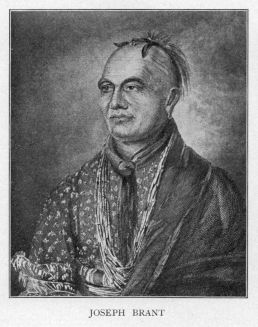
{316} It is not surprising that the United Empire Loyalists objected to living under the French laws of the Quebec Act. They had fought for England against Congress, but they wanted representative government, and the Constitutional Act was passed in 1791 dividing the country into Upper and Lower Canada, each to have its own parliament consisting of a governor, a legislative council appointed by the crown, and an assembly elected by the people. There was to be no religious test. Naturally old French laws would prevail in Quebec, English laws in Ontario or Upper Canada. By this act, too, land known as the Clergy Reserves was set apart for the Protestant Church. The first parliament in Quebec met in the bishop's palace in December of 1792; the first parliament of Ontario in Newark or Niagara in September of the same year, the most of the newly elected members coming by canoe and dugout, and, as the Indian summer of that autumn proved hot, holding many of the sessions in shirt sleeves out under the trees, Lieutenant Governor Simcoe reporting that the electors seem to have favored "men of the lower order, who kept but one table and ate with their servants." The earliest sessions of the Ontario House were marked by acts to remove the capital from the boundary across to Toronto, and to legalize marriages by Protestant clergymen other than of the English church. It is amusing to read how Governor Simcoe regarded the marriage bill as an opening of the flood gates to {317} republicanism; but for all their shirt sleeves, the legislators enjoyed themselves and danced till morning in Navy Hall, the Governor's residence, "Mad Tom Talbot," the Governor's aid-de-camp, losing his heart to the fine eyes of Brant's Indian niece, daughter of Sir William Johnson of the old Lake George battle.
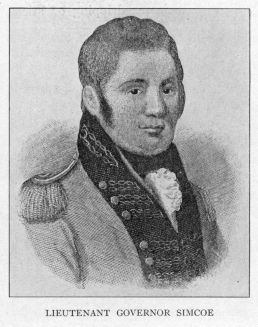
Down at Quebec things were managed with more pomp, and no social event was complete without the presence of the Duke of Kent, military commandant, now living in Haldimand's old house at Montmorency. Nova Scotia had held parliaments since 1758, when Halifax elected her first members.
Besides the United Empire Loyalists, other settlers were coming to Canada. The Earl of Selkirk, a patriotic young Scotch nobleman, had arranged for the removal of evicted Highlanders to Prince Edward Island in 1803 and to Baldoon on Lake St. Clair. Then "Mad Tom Talbot," Governor Simcoe's aid, descendant of the Talbots of Castle Malahide and boon comrade of the young soldier who became the Duke of Wellington, becomes so enamored of wilderness life that he gives up his career in Europe, gains grant of lands between London and Port Dover, and lays foundations of settlements in western Ontario, spite of the fact he remains a bachelor. The man who had danced at royalty's balls and drunk deep of pleasure at the beck of princes now lived in a log house of three rooms, laughed at difficulties, "baked his own bread, milked his own cows, made his own butter, washed his own clothes, ironed his own linen," and taught colonists who bought his lands "how to do without the rotten refuse of Manchester warehouses,"—the term he applied to the broadcloth of the newcomer.
Under the French régime, Canada had consisted of a string of fur posts isolated in a wilderness. It will be noticed that it now consisted of five distinct provinces of nation builders.
Hearne surrenders—Cook on the west coast—Vancouver on Pacific—Discovery of Mackenzie River—Across to the Pacific—A smash in bad rapids—Down Fraser River—Cause of war—The Chesapeake outrage—War declared—Hull surrenders at Detroit—The fight round Niagara—Soldiers exchange jokes across gorge—The traverse at Queenston—The surrender at Queenston—1813 A dark year—Raid on Ogdensburg—Attack on Toronto—Toronto burned—Vincent's soldiers at Burlington Bay—Ill hap of all the generals—Laura Secord's heroism—Campaign in the west—Moraviantown Disaster—Chrysler's farm—De Salaberry's buglers—The charge at Chippewa—Final action at Lundy's Lane—Great heroism on both sides—Assault at Fort Erie—End of futile war
While Canada waged war for her national existence against her border neighbors to the south, as in the days of the bushrovers' raids of old, afar in the west, in the burnt-wood, iron-rock region of Lake Superior, on the lonely wind-swept prairies, at the foothills where each night's sunset etched the long shadows of the mountain peaks in somber replica across the plains, in the forested solitude of the tumultuous Rockies was the ragged vanguard of empire blazing a path through the wilderness, voyageur and burnt-wood runner, trapper, and explorer, pushing across the hinterlands of earth's ends from prairie to mountains, and mountains to sea.
It was but as a side clap of the great American Revolution that the last French cannon were pointed against the English forts on Hudson Bay. When France sided with the American colonies a fleet of French frigates was dispatched under the great Admiral La Pérouse against the fur posts of the English Company. One sleepy August afternoon in 1782, when Samuel Hearne, governor of Fort Churchill, was sorting furs in the courtyard, gates wide open, cannon unloaded, guards dispersed, the fort was electrified by the sudden apparition of three men-of-war, sails full blown, sides bristling with cannon, plowing over the waves straight for the harbor gate. French colors fluttered from the masthead. Sails rattled down. Anchors were cast, and in a few minutes small boats were out sounding the channel for position to attack the fort. Hearne had barely forty men, and the most of them were decrepits, unfit for the hunting field. As sunset merged into the long white light of northern midnight, four hundred French mariners landed on the sands outside Churchill. {319} Hearne had no alternative. He surrendered without a blow. The fort was looted of furs, the Indians driven out, and a futile attempt made to blow up the massive walls. Hearne and the other officers were carried off captives. Matonabbee, the famous Indian guide, came back from the hunt to find the wooden structures of Churchill in flame. He had thought the English were invulnerable, and his pagan pride could not brook the shame of such ignominious defeat. Withdrawing outside the shattered walls, Matonabbee blew his brains out. A few days later Port Nelson, to the south, had suffered like fate. The English officers were released by La Pérouse on reaching Europe. As for the fur company servants, they waited only till the French sails had disappeared over the sea. Then they came from hiding and rebuilt the burnt forts. Such was the last act in the great drama of contest between France and England for supremacy in the north.
For two hundred years explorers had been trying to find a northern passage between Europe and Asia by way of America, from east to west. Now that Canada has fallen into English hands; now, too, that the Russian sea-otter hunters are coasting down the west side of America towards that region which Drake discovered long ago in California, England suddenly awakens to a passion for discovery of that mythical Northwest Passage. Instead of seeking from east to west she sought from west to east, and sent her navigator round the world to search for opening along the west coast of America. To carry out the exploration there was selected as commander that young officer, James Cook, who helped to sound the St. Lawrence for Wolfe, and had since been cruising the South Seas. On his ships, the Resolution and the Discovery, was a young man whose name was to become a household word in America, Vancouver, a midshipman.
March of 1778 the Resolution and Discovery come rolling over the long swell of the sheeny Pacific towards Drake's land of New Albion, California. Suddenly, one morning, the dim sky line resolved into the clear-cut edges of high land, but by night such a roaring hurricane had burst on the ships as drove them {320} far out from land, too far to see the opening of Juan de Fuca, leading in from Vancouver Island, though Cook called the cape there "Flattery," because he had hoped for an opening and been deluded. Clearer weather found Cook abreast a coast of sheer mountains with snowy summits jagging through the clouds in tent peaks. A narrow entrance opened into a two-horned cove. Small boats towed the ships in amid a flotilla of Indian dugouts whose occupants chanted weird welcome to the echo of the surrounding hills. Women and children were in the canoes. That signified peace. The ships were moored to trees, and the white men went ashore in that harbor to become famous as the rendezvous of Pacific fur traders, Nootka Sound, on the sea side of Vancouver Island.
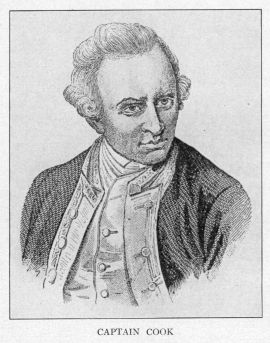
Presently the waters were literally swarming with Indian canoes, and in a few days Cook's crews had received thousands of dollars' worth of sea-otter skins for such worthless baubles as tin mirrors and brass rings and bits of red calico. This was the beginning of the fur trade in sea otter with Americans and English. Some of the naked savages were observed wearing metal ornaments of European make. Cook did not think of the Russian fur traders to the north, but easily persuaded himself these objects had come from the English fur traders of Hudson Bay, and so inferred there must be a Northeast Passage. By April, Cook's ships were once more afloat, {321} gliding among the sylvan channels of countless wooded islands up past Sitka harbor, where the Russians later built their fort, round westward beneath the towering opal dome of Mount St. Elias, which Bering had named, to the waters bordering Alaska; but, as the world knows, though the ships penetrated up the channels of many roily waters, they found no open passage. Cook comes down to the Sandwich Islands, New Year of 1779. There the vices of his white crew arouse the enmity of the pagan savages. In a riot over the theft of a rowboat, Cook and a few men are surrounded by an enraged mob. By some mistake the white sailors rowing out from shore fire on the mob surrounding Cook. Instantly a dagger rips under Cook's shoulder blade. In another second Cook and his men are literally hacked to pieces. All night the conch shells of the savages blow their war challenge through the darkness and the signal fires dance on the mountains. By dint of persuasion and threats the white men compel the natives to restore the mangled remains of the commander. Sunday, February 21, amid a silence as of death over the waters, the body of the dead explorer is committed to the deep.
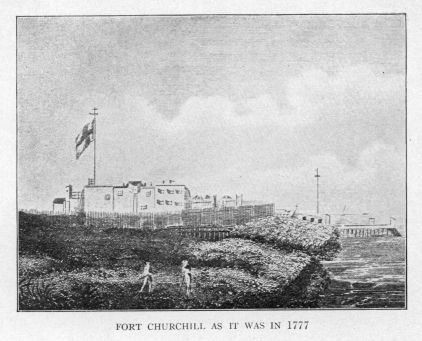
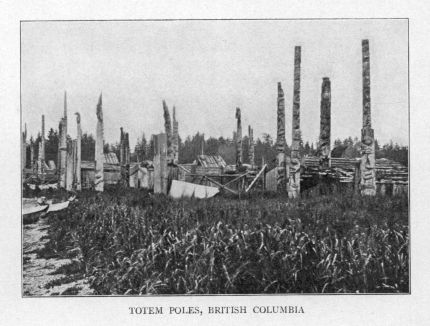
The chance discovery of the sea-otter trade by Cook's crew at Nootka brings hosts of English and American adventurers to the Pacific Coast of Canada. There is Meares, the English officer from China, who builds a rabbit hutch of a barracks at Nootka and almost involves England and Spain in war because the Spaniards, having discovered this region before Cook, knock the log barracks into kindling wood and forcibly seize an English trading ship. There is Robert Gray, the Boston trader, who pushes the prow of his little ship, Columbia, up a spacious harbor south of Juan de Fuca in May of 1792 and discovers Columbia River, so giving the United States flag prior claim here. There is George Vancouver, the English commander, sent out by his government in 1791-1793 to receive Nootka formally back from the Spaniards of California and to explore every inlet from Vancouver Island to Alaska. As luck would have it, Vancouver, the Englishman, and Gray, the American, are both hovering off {322} the mouth of the Columbia in April of 1792, but a gale drives the ships offshore, though turgid water plainly indicates the mouth of a great river somewhere near. Vancouver goes on up north. Gray, the American, comes back, and so Vancouver misses discovering the one great river that remains unmapped in America. Up Puget Sound, named after his lieutenant, up Fuca Straits, round Vancouver Island, past all those inlets like seas on the mainland of British Columbia, coasts Vancouver, rounding south again to Nootka in August. In Nootka lie the Spanish frigates from California, bristling with cannon, the red and yellow flag blowing to the wind above the palisaded fort. In solemn parade, with Maquinna, the Nootka chief, clad in a state of nature, as guest of the festive board, Don Quadra, the Spanish officer, dines and wines Vancouver; but when it comes to business, that is another matter! Vancouver understands that Spain is to surrender all sovereignty north of San Francisco. Don Quadra, with pompous bow, maintains that the international agreement was to surrender rights only north of Juan de Fuca, leaving the rest of the northwest coast free to all nations for trade. Incidentally, it may be mentioned, Don Quadra was right, but the two commanders agree to send home to their respective governments for {323} instructions. Meanwhile Robert Gray, the American, comes rolling into port with news he has discovered Columbia River. Vancouver is skeptical and chagrined. Having failed to discover the river, he goes down coast to explore it. It may be added, he sends his men higher up the river than Gray has gone, and has England's flag of possession as solemnly planted as though Robert Gray had never entered Columbia's waters. The next two years Vancouver spends exploring every nook and inlet from Columbia River to Lynn Canal. Once and for all and forever he disproves the myth of a Northeast Passage. His work was negative, but it established English rights where America's claims ceased and Russia's began, namely between Columbia River and Sitka, or in what is now known as British Columbia.
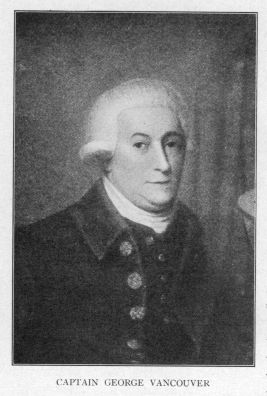
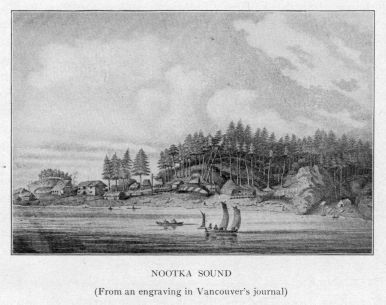
As the beaver had lured French bushrovers from the St. Lawrence to the Rockies, so the sea otter led the way to the exploration of the Pacific Coast. Artist's brush and novelist's pen have drawn all the romance and the glamour and the adventure of the beaver hunter's life, but the sea-otter hunter's life is {324} almost an untold tale. Pacific Coast Indians were employed by the white traders for this wildest of hunting. The sea otter is like neither otter nor beaver, though possessing habits akin to both. In size, when full-grown, it is about the length of a man. Its pelt has the ebony shimmer of seal tipped with silver. Cradled on the waves, sleeping on their backs in the sea, playful as kittens, the sea otters only come ashore when driven by fierce gales; but they must come above to breathe, for the wave wash of storm would smother them. Their favorite sleeping grounds used to be the kelp beds of the Alaskan Islands. Storm or calm, to the kelp beds rode the Indian hunters in their boats of oiled skin light as paper. If heavy surf ran, concealing sight and sound, the hunters stood along shore shouting through the surf and waiting for the wave wash to carry in the dead body; if the sea were calm, the hunters circled in bands of twenty or thirty, spearing the sea otter as it came up to breathe; but the best hunting was when hurricane gales churned sea and air to spray. Then the sea otter came to the kelp beds in herds, and through the storm over the wave-dashed reefs, like very spirits of the storm incarnate, rushed the hunters, spear in hand. It is not surprising that the sea-otter hunters perished by tens of thousands every year, or that the sea otter dwindled from a yield of 100,000 a year to a paltry 200 of the present day.
Meanwhile Nor'west traders from Montreal and Quebec, English traders from Hudson Bay, have gone up the Saskatchewan far as the Athabasca and the Rockies. What lies beyond? Whither runs this great river from Athabasca Lake? Whence comes the great river from the mountains? Will the river that flows north or the river that comes from the west, either of them lead to the Pacific Coast, where Cook's crews found wealth of sea otter? The lure of the Unknown is the lure of the siren. First you possess it, then it possesses you! Cooped up in his fort on Lake Athabasca, Alexander MacKenzie, the Nor'wester, begins wondering about those rivers, but you can't ask business men to bank on the Unknown, to write blank checks for profits on what {325} you may not find. And the Nor'westers were all stern business men. For every penny's outlay they exacted from their wintering partners and clerks not ten but a hundredfold. And Alexander MacKenzie received no encouragement from his company to explore these unknown rivers. The project got possession of his mind. Sometimes he would pace the little log barracks of Fort Chippewyan from sunset to day dawn, trying to work out a way to explore those rivers; or, sitting before the huge hearth place, he would dream and dream till, as he wrote his cousin Roderick, "I did not know what I was doing or where I was." Finally he induced his cousin to take charge of the fort for a summer. Then, assuming all risk and outlay, he set out on his own responsibility June 3, 1789, to follow the Great River down to the Arctic Ocean. "English Chief," who often went down to Hudson Bay for the rival company, went as MacKenzie's guide, and there were also in the canoes two or three white men, some Indians as paddlers, and squaws to cook and make moccasins.
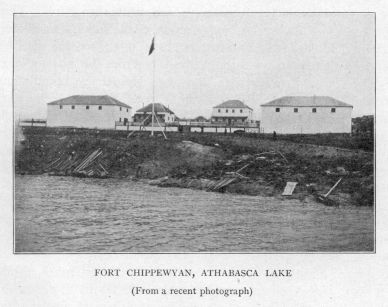
{326} The canoes passed Peace River pouring down from the mountains; then six dangerous rapids, where many a Nor'west voyageur had perished, one of MacKenzie's canoes going smash over the falls with a squaw, who swam ashore; then rampart shores came, broader and higher than the St. Lawrence or the Hudson, the boats skimming ahead with blankets hoisted for sails through foggy days and nights of driving rain. Cramped and rain-soaked, bailing water from the canoes with huge sponges, the Indians began to whine that the way was "hard, white man, hard." Then the river lost itself in a huge lagoon, Slave Lake, named after defeated Indians who had taken refuge here; and the question was, which way to go through the fog across the marshy lake! Poking through rushes high as a man, MacKenzie found a current, and, hoisting a sail on his fishing pole, raced out to the river again on a hissing tide. Here lived the Dog Rib Indians, and they frightened MacKenzie's men cold with grewsome tales of horrors ahead, of terrible waterfalls, of a land of famine and hostile tribes. The effect was instant. MacKenzie could not obtain a guide till "English Chief" hoisted a Slave Lake Indian into the canoe on a paddle handle. Though MacKenzie himself nightly slept with the vermin-infested guide to prevent desertion, the fellow escaped one night during the confusion of a thunder-storm. Again a chance hunter was forcibly put into the canoe as guide; and the explorer pushed on for another month. North of Bear Lake, Indian warriors were seen flourishing weapons along shore, and MacKenzie's men began to remark that the land was barren of game. If they became winter bound, they would perish. MacKenzie promised his men if he did not find the sea within seven days, he would turn back. Suddenly the men lost track of day, for they had come to the region of long light. The river had widened to swamp lands. Between the 13th and 14th of July the men asleep on the sand were awakened by a flood of water lapping in on their baggage. What did it mean? For a minute they did not realize. Then they knew. It was the tide. They had found the sea. Hilarious as boys, they jumped from bed to man their canoes and chase whales.
{327} September 12, all sails up before a driving wind, the canoes raced across Athabasca Lake to the fort landing, Roderick, his nephew, shouting a welcome. MacKenzie had laid one of the two ghosts that haunted his peace. Now he must lay the other. Where did Peace River come from? His achievement on MacKenzie River had been greeted by the other Nor'west partners with a snub. Nevertheless MacKenzie asked for leave of absence that he might go to London and study the taking of astronomic observations in order to explore that other river flowing from the mountains; and in London, though poor and obscure, he heard all about Cook's voyages and Meare's brush with the Spaniards at Nootka, and plans for Captain Vancouver to make a final exploration of the Pacific Coast. Hurrying back to the Nor'wester's fort on Peace River, he was beset by the blue devils of despondency. What if Peace River did not lead to the Pacific Ocean at all? What if he were behind some other discoverer? What if the venture proved a fool's trip leading to a blind nowhere? He was only a junior partner and could ill afford either money or time for failure.
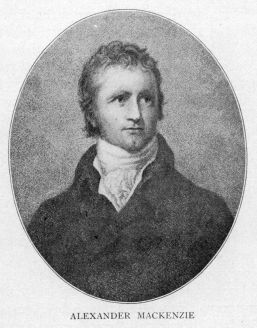
Nevertheless, when the furs have been dispatched for Montreal, MacKenzie launches out on May 9 of 1793 with a thirty-foot birch canoe, six voyageurs, and Alexander Mackay as lieutenant, for the hinterland beyond the Rockies. This time the going was against stream,—hard paddling, but safer than with a {328} swift current in a river with dangerous rapids. Ten days later the river has become a canyon of tumbling cascades, the mountains sheer wall on each side, with snowy peaks jagging up through the clouds. To portage baggage up such cliffs was impossible. Yet it was equally impossible to go on up the canyon, and MacKenzie's men became so terrified they refused to land. Jumping to foothold on the wall, a towrope in one hand, an ax in the other, MacKenzie cut steps in the cliff, then signaled above the roar of the rapids for the men to follow. They stripped themselves to swim if they missed footing, and obeyed, trembling in every limb. The towrope was warped round trees and the loaded canoe tracked up the cascade. At the end of that portage the men flatly refused to go on. MacKenzie ignored the mutiny and ordered the best of provisions spread for a feast. While the crew rested, he climbed the face of a rocky cliff to reconnoiter. As far as eye could see were cataracts walled by mighty precipices. The canoe could not be tracked up such waters. Mackay, who had gone prospecting a portage, reported that it would be nine miles over the mountain. MacKenzie did not tell his men what was ahead of them, but he led the way up the steep mountain, cutting trees to form an outer railing, and up this trail the canoe was hauled, towline round trees, the men swearing and sweating and blowing like whales. Three miles was the record that day, the voyageurs throwing themselves down to sleep at five in the afternoon, wrapped in their blanket coats lying close to the glacier edges. Three days it took to cross this mountain, and the end of the third day found them at the foot of another mountain. Here the river forked. MacKenzie followed the south branch, or what is now known as the Parsnip. Often at night the men would be startled by rocketing echoes like musketry firing, and they would spring to their feet to keep guard with backs to trees till morning; but presently they learned the cause of the pistol-shot reports. They were now on the Uplands among the eternal snows. The sharp splittings, the far boomings, the dull breaking thuds were frost cornices of overhanging snow crashing down in avalanches that swept the mountain slopes clear of forests.
{329}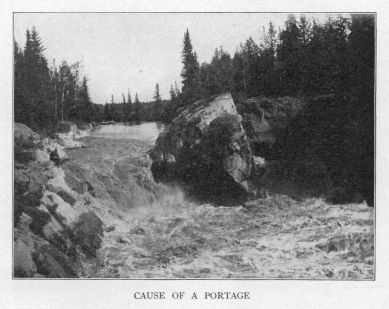
A short portage from the Parsnip over a low ridge to a lake, and the canoe is launched on a stream flowing on the far side of the Divide, Bad River, a branch of the Fraser, though MacKenzie mistakes it for an upper tributary of the great river discovered by Gray, the Columbia. Then, before they realize it, comes the danger of going with the current on a river with rapids. The stream sweeps to a torrent, mad and unbridled. The canoe is as a chip in a maelstrom, the precipices racing past in a blur, the Indians hanging frantically to the gunnels, bawling aloud in fear, the terrified voyageurs reaching, … grasping, … snatching at trees overhanging from the banks. The next instant a rock has banged through bottom, tearing away the stern. The canoe reels in a swirl. Bang goes a rock through the bow. The birch bark flattens like a shingle. Another swirl, and, to the amazement of all, instead of the death that had seemed impending, smashed canoe, baggage, and voyageurs are dumped on the shallows of a sandy reach. One can guess the gasp of relief that went up. Nobody uttered a word for some {330} time. One voyageur, who had grasped at a branch and been hoisted bodily from the canoe, now came limping to the disconsolate group, and had stumbled with lighted pipe in teeth across the powder that had been spread out to dry, when a terrific yell of warning brought him to his senses, and relieved the tension. MacKenzie spread out a treat for the men and sent them to gather bark for a fresh canoe. Other adventures on Bad River need not be given. This one was typical. The record was but two miles a day; and now there was no turning back. The difficulties behind were as great as any that could be before. June 15 Bad River led them westward into the Fraser, but somewhere in the canyon between modern Quesnel and Alexandria the way became impassable. Besides, the river was leading too far south. MacKenzie struck up Blackwater River to the west. Caching canoe and provisions on July 4, he marched overland. The Pacific was reached on July 22, 1793, near Bella Coola. By September, after perils too numerous to be told, MacKenzie was back at his fur post on Peace River. As his discoveries on this trip blazed the way to new hunting ground for his company, they brought both honor and wealth to MacKenzie. He was knighted by the English King for his explorations, and he retired to an estate in Scotland, where he died about 1820.
Meanwhile, Napoleon has sold Louisiana to the United States. The American explorers, Lewis and Clark, have crossed from the Missouri to the Columbia; and now John Jacob Astor, the great fur merchant of New York, in 1811 sends his fur traders overland to build a fort at the mouth of Columbia River. The Northwest Company in frantic haste dispatches explorers to follow up MacKenzie's work and take possession of the Pacific fur trade before Astor's men can reach the field. It becomes a race for the Pacific.
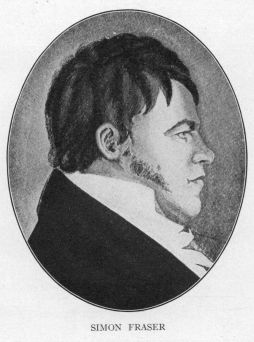
Simon Fraser is sent in 1806 to build posts west of the Rockies in New Caledonia, and to follow that unknown river which MacKenzie mistook for the Columbia, on down to the sea. Two years he passed building the posts, that exist to this {331} day as Fraser planned them: Fort MacLeod at the head of Parsnip River, on a little lake set like an emerald among the mountains; Fort St. James on Stuart Lake, a reach of sheeny green waters like the Trossachs, dotted with islands and ensconced in mountains; Fraser Fort on another lake southward; Fort St. George on the main Fraser River. Then, in May of 1808, with four canoes Fraser descends the river named after him, accompanied by Stuart and Quesnel and nineteen voyageurs. This was the river where the rapids had turned MacKenzie back, canyon after canyon tumultuous with the black whirlpools and roaring like a tempest. Before essaying the worst runs of the cascades Fraser ordered a canoe lightened at the prow and manned by the five best voyageurs. It shot down the current like a stone from a catapult. "She flew from one danger to another," relates Fraser, who was watching the canoe from the bank, "till the current drove her on a rock. The men disembarked, and we had to plunge our daggers into the bank to keep from sliding into the river as we went down to their aid, our lives hanging on a thread." Like MacKenzie, Fraser was compelled to abandon canoes. Each with a pack of eighty pounds, the voyageurs set out on foot down that steep gorge where the traveler to-day can see the trail along the side of the precipice like basket work between Lilloet and Thompson River. In Fraser's day was no {332} trail, only here and there bridges of trembling twig ladders across chasms; and over these swinging footholds the marchers had to carry their packs, the river rolling below, deep and ominous and treacherous. At Spuzzum the river turned from the south straight west. Fraser knew it was not the Columbia. His men named it after himself. Forty days was Fraser going from St. George to tide water. Early in August he was back at his fur posts of New Caledonia.
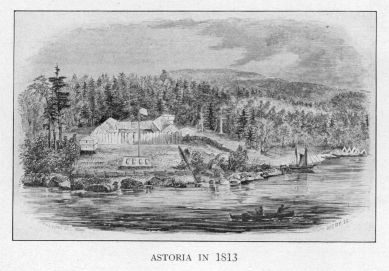
Yet another explorer did the Nor'westers send to take possession of the region beyond the mountains. David Thompson had been surveying the bounds between the United States and what is now Manitoba, when he was ordered to explore the Rockies in the region of the modern Banff. Up on Canoe River, Thompson and his men build canoes to descend the Columbia. Following the Big Bend, they go down the rolling milky tide past Upper and Lower Arrow Lakes, a region of mountains sheer on each side as walls, with wisps of mist marking the cloud line. Then a circular sweep westward through what is now Washington, pausing at Snake River to erect formal claim of possession for England, then a riffle on the current, a {333} smell of the sea, and at 1 P.M. on July 15, 1811, Thompson glides within view of a little raw new fort, Astoria. In the race to the Pacific the Americans have gained the ground at the mouth of the Columbia just two months before Thompson came. In Astor's fort Thompson finds old friends of the Northwest Company hired over by Astor.
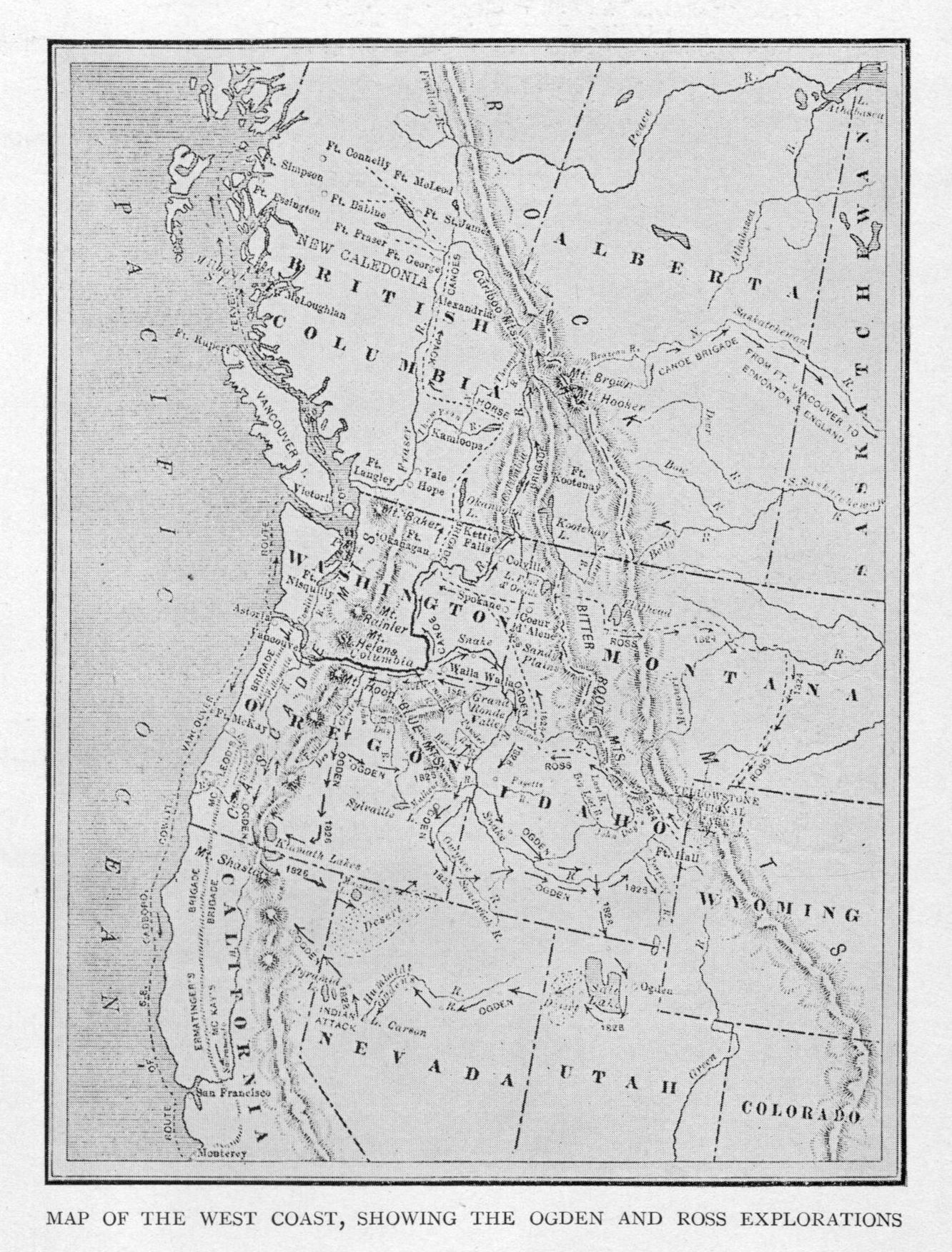
After war has broken out in open flame it is easy to ascribe the cause to this, that, or the other act, which put the match to the combustibles; but the real reason usually lies far behind the one act of explosion, in an accumulation of ill feeling that provided the combustibles.
So it was in the fratricidal war of 1812 between Canada and the United States. The war was criminal folly, as useless as it was unnecessary. What caused it? What accumulated the ill feeling lying ready like combustibles for the match? Let us see.
The United Empire Loyalists have, by 1812, increased to some 100,000 of Canada's population, cherishing bitter memories of ruin and confiscation and persecution because Congress failed to carry out the pledge guaranteeing protection to the losing side in the Revolution. Then, because Congress failed to carry out her guarantee, England delayed turning over the western fur posts to the United States for almost ten years; and whether true or false, the suspicion became an open charge that the hostility of the Indians to American frontiersmen was fomented by the British fur trader.
Here, then, was cause for rankling anger on both sides, and the bitterness was unwittingly increased by England's policy. It was hard for the mother country to realize that the raw new nation of the United States, child of her very flesh and blood, kindred in thought and speech, was a power to be reckoned with, on even ground, looking on the level, eye to eye; and not just a bumptious, underling nation, like a boy at the hobbledehoy age, to be hectored and chaffed and bullied and badgered and licked into shape, as a sort of protectorate appended to English interests.
I once asked an Englishman why the English press was so virulently hostile to one of the most brilliant of her rising men.
"Oh," he answered, "you must be English to understand that. We never think it hurts a boy to be well ragged when he 's at school."
Something of that spirit was in England's attitude to the new nation of the United States. England was hard pressed in life-and-death struggle with Napoleon. To recruit both army and navy, conscription was rigidly and ruthlessly enforced. Yet more! England claimed the right to impress British-born subjects in foreign ports, to seize deserters in either foreign ports or on foreign ships, and, most obnoxious of all, to search neutral vessels on the ocean highway for deserters from the British flag. It was an era of great brutality in military discipline. Desertions were frequent. Also thousands of immigrants were flocking to the new nation of the United States and taking out naturalization papers. England ignored these naturalization papers when taken out by deserters.
Let us see how the thing worked out. A passenger vessel is coming up New York harbor. An English frigate with cannon pointed swings across the course, signals the American vessel on American waters to slow up, sends a young lieutenant with some marines across to the American vessel, searches her from stem to stern, or compels the American captain to read the roster of the crew, forcibly seizes half a dozen of the American crew as British deserters, and departs, leaving the Americans gasping with wonder whether they are a free nation or a tail to the kite of English designs. It need not be explained that the offense was often aggravated by the swaggering insolence of the young officers. They considered the fury of the unprepared American crew a prime joke. In vain the government at Washington complained to the government at Westminster. England pigeonholed the complaint and went serenely on her way, searching American vessels from Canada to Brazil.
Or an English vessel has come to Hampton Roads to wood and water. An English officer thinks he recognizes among the {335} American crews men who have deserted from English vessels. Three men defy arrest and show their naturalization papers. High words follow, broken heads and broken canes, and the English crew are glad to escape the mob by rowing out to their own vessel.
Is it surprising that the ill feeling on both sides accumulated till there lacked only the match to cause an explosion? The explosion came in 1807. H. M. S. Leopard, cruising off Norfolk in June, encounters the United States ship Chesapeake. At 3 P.M. the English ship edges down on the American, loaded to the water line with lumber, and signals a messenger will be sent across. The young English lieutenant going aboard the Chesapeake shows written orders from Admiral Berkeley of Halifax, commanding a search of the Chesapeake for six deserters. He is very courteous and pleasant about the disagreeable business: the orders are explicit; he must obey his admiral. The American commander is equally courteous. He regrets that he must refuse to obey an English admiral's orders, but his own government has given most explicit orders that American vessels must not be searched. The young Englishman returns with serious face. The ships were within pistol shot of each other, the men on the English decks all at their guns, the Americans off guard, lounging on the lumber piles. Quick as flash a cannon shot rips across the Chesapeake's bows, followed by a broadside, and another, and yet another, that riddle the American decks to kindling wood before the astonished officers can collect their senses. Six seamen are dead and twenty-three wounded when the Chesapeake strikes her colors to surrender; but the Leopard does not want a captive. She sends her lieutenant back, who musters the four hundred American seamen, picks out four men as British deserters, learns that another deserter has been killed and a sixth has jumped overboard rather than be retaken, takes his prisoners back to the Leopard, which proceeds to Halifax, where they are tried by court-martial and shot.
It isn't exactly surprising that the episode literally set the United States on fire with rage, and that the American President {336} at once ordered all American ports closed to British war vessels. The quarrel dragged on between the two governments for five years. England saw at once that she had gone too far and violated international law. She repudiated Admiral Berkeley's order, offered to apologize and pension the heirs of the victims; but as she would not repudiate either the right of impressment or the right of search, the American government refused to receive the apology.
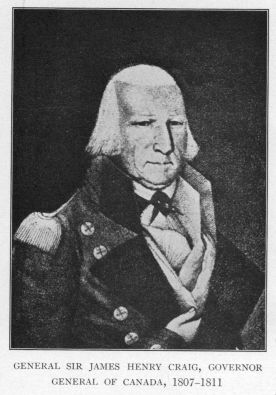
Other causes fanned the flame of war. The United States was now almost the only nation neutral in Napoleon's wars. To cripple English commerce, Napoleon forbids neutral nations trading at English ports. By way of retaliation England forbids neutral nations trading with French ports; and the United States strikes back by closing American ports to both nations. It means blue ruin to American trade, but the United States cannot permit herself to be ground between the upper and nether millstones of two hostile European powers. Then, sharp as a gamester playing his trump card, Napoleon revokes his embargo in 1810, which leaves England the offender against the United States. Then Governor Craig of Canada commits an error that must have delighted the heart of Napoleon, who always profited by his enemy's blunders. Well meaning, but {337} fatally ill and easily alarmed, Craig sends one John Henry from Montreal in 1809 as spy to the United States for the double purpose of sounding public opinion on the subject of war, and of putting any Federalists in favor of withdrawing from the Union in touch with British authorities. Craig goes home to England to die. Henry fails to collect reward for his ignoble services, turns traitor, and sells the entire correspondence to the war party in the United States for $10,000. That spy business adds fuel to fire. Then there are other quarrels. A deserter from the American army is found teaching school near Cornwall in Canada. He is driven out of the little backwoods schoolhouse, pricked across the field with bayonets, out of the children's view, and shot on Canadian soil by American soldiers, an outrage almost the same in spirit as the British crew's outrage on the Chesapeake. Also, in spite of apologies, the war ships clash again. The English sloop Little Belt is cruising off Cape Henry in May of 1811, looking for a French privateer, when a sail appears over the sea. The Little Belt pursues till she sights the commodore's blue flag of the United States frigate President, then she turns about; but by this time the President has turned the tables on the little sloop, and is pursuing to find out what the former's conduct meant. Darkness settles over the two ships beating about the wind.
"What sloop is that?" shouts an officer through a speaking trumpet from the American's decks.
"What ship is that?" bawls back a voice through the darkness from the little Englander.
Then, before any one can tell who fired first (in fact, each accuses the other of firing first), the cannon are pouring hot shot into each other's hulls till thirty men have fallen on the decks of the Little Belt. Apologies follow, of course, and explanations; but that does not remedy the ill. In fact, when nations and people want to quarrel, they can always find a cause. War is declared in June of 1812 by Congress. It is war against England; but that means war against Canada, though there are not forty-five hundred soldiers from Halifax to Lake Huron. As for {338} the American forces, they muster an army of some one hundred and fifty thousand; but their generals complain they are "an untrained mob"; and events justified the complaints.
There is nothing for Canada to do but stand up to the war of England's making and fight for hearth and home. Canada on the defensive, there is nothing for the States to do but invade; and the American generals don't relish the task with their "untrained mob."
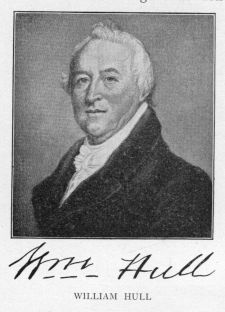
Upper Canada or Ontario has not four hundred soldiers from Kingston to Detroit River; but Major General Isaac Brock calls for volunteers. The clang of arms, of drill, of target practice, resounds in every hamlet through Canada. At Kingston, at Toronto, at Fort George (Niagara), at Erie where Niagara River comes from the lake, at Amherstburg, southeast of Detroit, are stationed garrisons to repel invasion, with hastily erected cannon and mortar commanding approach from the American side. And invasion comes soon enough. The declaration of war became known in Canada about the 20th of June. By July 3 General Hull of Michigan is at Detroit with two thousand five hundred men preparing to sweep western Ontario. July 3 an English schooner captures Hull's provision boat coming up Detroit River, but Hull crosses with his army on July 12 to Sandwich, opposite Detroit, and issues proclamation calling on the people to throw off the yoke of English rule. How such an invitation fell on United Empire Loyalist ears may be guessed. Meanwhile comes word that the Northwest {339} Company's voyageurs, with four hundred Indians, have captured Michilimackinac without a blow. The fall of Michilimackinac, the failure of the Canadians to rally to his flag, the loss of his provision boat, dampen Hull's ardor so that on August 8 he moves back with his troops to Detroit. Eight days later comes Brock from Niagara with five hundred Loyalists and one thousand Indians under the great chief Tecumseh to join Procter's garrison of six hundred at Amherstburg. The Canadians have come by open boat up Lake Erie from Niagara through furious rains; but they are fighting for their homes, and with eager enthusiasm follow Brock on up Detroit River to Sandwich, opposite the American fort. Indians come by night and lie in ambush south of Detroit to protect the Canadians while they cross the river. Then the cannon on the Canadian side begin a humming of bombs overhead. While the bombs play over the stream at Sandwich, Brock rushes thirteen hundred men across the river south of Detroit, and before midday of August 16 is marching his men through the woods to assault the fort, when he is met by an officer carrying out the white flag of surrender. While Brock was crossing the river, something had happened inside the fort at Detroit. It was one of those curious cases of blind panic when only the iron grip of a strong man can hold demoralized forces in hand. The American officers had sat down to breakfast in the mess room at day dawn, when a bomb plunged through the roof killing four on the spot and spattering the walls with the blood of the mangled bodies. Disgraceful stories are told of Hull's conduct. Ashy with fright and trembling, he dashed from the room, and, before the other officers knew what he was about, had offered to surrender his army, twenty-five hundred arms, thirty-three cannon, an armed brig, and the whole state of Michigan. The case is probably more an example of nervous hysterics than treason, though the other American officers broke their swords with rage and chagrin, declaring they had been sold for a price. It was but the first of the many times the lesson was taught in this war, that however well intentioned a volunteer's courage may be, it takes a seasoned man to make war. {340} Ten minutes later, a boy had climbed the flagstaff and hung out the English flag over Detroit. Of the captured American army Brock permitted the volunteer privates to go home on parole. The regulars, including Hull, were carried back prisoners on the boats to Niagara, to be forwarded to Montreal. At Montreal, Hull was given back to the Americans in exchange for thirty British prisoners. He was sentenced by court-martial to be shot for treason and cowardice, but the sentence was commuted.

At Niagara River, where the main troops of Ontario were centered, Brock's victory was greeted with simply a madness of joy. From the first it had been plain that the principal fighting in Ontario would take place at Niagara, and along the river Brock had concentrated some sixteen hundred volunteer troops, {341} raw farm hands most of them, with a goodly proportion of descendants from the United Empire Loyalists, who had furbished out their fathers' swords. But the army was in rags and tatters; many men had no shoes; before Brock captured the guns at Detroit there had not been muskets to go round the men, and there were not cannon enough to mount the batteries cast up along Niagara River facing the American defenses. As the boats came down Lake Erie and disembarked the American prisoners on August 24, at Fort Erie on the Canadian side, opposite Black Rock and Buffalo, wild yells of jubilation rent the air. By nightfall every camp on the Canadian side for the whole forty miles of Niagara River's course echoed to shout and counter shout, and a wild refrain which some poet of the haversack had composed on the spot:
We 'll subdue the mighty Democrats and pull their dwellings down,
And have the States inhabited with subjects of the Crown.
Take a survey of the Niagara region. South is Lake Erie, north is Lake Ontario, between them Niagara River flowing almost straight north through a steep dark gorge hewn out of the solid rock by the living waters of all the Upper Lakes, crushed and cramped, carving a turbulent way through this narrow canyon. Midway in the river's course the blue waters begin to race. The race becomes a dizzy madness of blurred, whirling, raging waters. Then there is the leap, the plunge, the shattering anger of inland seas hurling their strength over the sheer precipice in resistless force. Then the foaming whirlpool below, and the shadowy gorge, and the undercurrent eddying away in the swift-flowing waters of the river coming out on Lake Ontario. On one side are the Canadian forts, on the other the American, slab-walled all of them, with scarcely a stone foundation except in bastions used as powder magazines. Fort Erie on the Canadian side faces Buffalo and Black Rock on the American side. Where the old French voyageurs used to portage past the Falls, about halfway on the Canadian side south of the precipice, is the village of Chippewa. Here Brock has stationed {342} a garrison with cannon. Then halfway between the Falls and Lake Ontario are high cliffs known as Queenston Heights, in plain view of the American town of Lewiston on the other side. Cannon line the river cliffs on both sides here. All about Lewiston the fields are literally white with the tents of General Van Rensselaer's army, now grown from twenty-five hundred to almost eight thousand. On the Canadian side cannon had been mounted on the cliffs known as Queenston Heights. Possibly because the two hundred men would make poor showing in tents, Brock has his soldiers here take quarters in the farmhouses. For the rest it is such a rural scene as one may witness any midsummer,—rolling yellow wheat fields surrounded by the zigzag rail fences, with square farmhouses of stone and the fields invariably backed by the uncleared bush land. Six miles farther down the river, where the waters join Lake Ontario, is the English post, Fort George, near the old capital, Newark, and just opposite the American fort of Niagara. With the exception of the Grand Island region on the river, it may be said that both armies are in full view of each other. Sometimes, when to the tramp—tramp—tramp of the sentry's {343} tread a loud "All's well" echoes across the river from Lewiston to the Canadian side, some wag at Queenston will take up the cry through the dark and bawl back, "All's well here too"; and all night long the two sentries bawl back and forward to each other through the dark. Sometimes, too, though strictest orders are issued against such ruffian warfare by both Van Rensselaer and Brock, the sentries chance shots at each other through the dark. Drums beat reveillé at four in the morning, and the rub-a-dub-dub of Queenston Heights is echoed by rat-tat-too of Lewiston, though river mist hides the armies from each other in the morning. Iron baskets filled with oiled bark are used as telegraph signals, and one may guess how, when the light flared up of a night on the Canadian heights, scouts carried word to the officers on the American side. One may guess, too, the effect on Van Rensselaer's big untrained army, when, with the sun aglint on scarlet uniform, they saw their fellow-countrymen of Detroit marched prisoners between British lines along the heights of Queenston opposite Lewiston. Rage, depression, shame, knew no bounds; and the army was unable to vent anger in heroic attack, for England had repealed her embargo laws, and when Brock came back from Detroit he found that an armistice had been arranged, and both sides had been ordered to suspend hostilities till instructions came from the governments. The truce, it may be added, was only an excuse to enable both sides to complete preparations for the war. In a few weeks ball and bomb were again singing their shrill songs in mid-air.

Brock's victory demoralized the rabble under the American Van Rensselaer. Desertions increased daily, and discipline was so notoriously bad Van Rensselaer and his staff dared not punish desertion for fear of the army—as one of them put it—"falling to pieces." Van Rensselaer saw that he must strike, and strike at once, and strike successfully, or he would not have any army left at all. Two thousand Pennsylvanians had joined him; and on October 9, at one in the morning, Lieutenant Elliott led one hundred men with muffled paddles from the American side to two Canadian ships lying anchored off Fort Erie. One was the {344} brig captured from Hull at Detroit, the other a sloop belonging to the Northwest Fur Company, loaded with peltries. Before the British were well awake, Elliott had boarded decks, captured the fur ship with forty prisoners, and was turning her guns on the other ship when Port Erie suddenly awakened with a belch of cannon shot. The Americans cut the cables and drifted on the captured ship downstream. The fur ship was worked safely over to the American side, where it was welcomed with wild cheers. The brig was set on fire and abandoned.
Van Rensselaer decided to take advantage of the elated spirit among the troops and invade Canada at once.
Over on the Canadian side, Brock, at Fort George, wanted to offer an exchange of Detroit prisoners for the voyageurs on the captured fur ship, and Evans was ordered to paddle across to Lewiston with the offer, white handkerchief fluttering as a flag of truce. Evans could not mistake the signs as he landed on the American shore. Sentries dashed down to stop his advance at bayonet point. He was denied speech with Van Rensselaer and refused admittance to the American camp; and the reason was plain. A score of boats, capable of holding thirty men each, lay moored at the Lewiston shore. Along the rain-soaked road behind the shore floundered and marched troops, fresh troops joining Van Rensselaer's camp. It was dark before Evans returned to Queenston Heights and close on midnight when he reached Major General Brock at Fort George. Brock thought Evans over anxious, and both went to bed, or at least threw themselves down on a mattress to sleep. At two o'clock they were awakened by a sound which could not be mistaken,—the thunderous booming of a furious cannonade from Queenston Heights. Brock realized that the two hundred Canadians on the cliff must be repelling an invasion, but he was suspicious that the attack from Lewiston was a feint to draw off attention from Fort Niagara opposite Fort George, and he did not at once order troops to the aid of Queenston Heights.
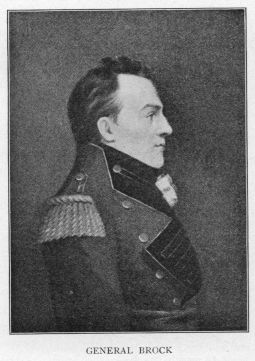
Evans' predictions of invasion were only too true. After one attempt to cross the gorge, which was balked by storm, Van {345} Rensselaer finally got his troops down to the water's edge about midnight of October 12-13. The night was dark, moonless, rainy,—a wind which mingled with the roar of the river drowning all sound of marching troops. Three hundred men embarked on the first passage of the boats across the swift river, the poor old pilot literally groaning aloud in terror. Three of the boats were carried beyond the landing on the Canadian side, and had to come back through the dark to get their bearings; but the rest, led by Van Rensselaer, had safely landed on the Canadian side, when the batteries of Queenston Heights flashed to life in sheets of fire, lighting up the dark tide of the river gorge and sinking half a dozen boat loads of men now coming on a second traverse. Instantly Lewiston's cannon pealed furious answer to the Canadian fire, and in the sheet-lightning flame of the flaring batteries thousands could be seen on the American shore watching the conflict. As the Americans landed they hugged the rock cliff for shelter, but the mortality on the crossing boats was terrible; and each passage carried back quota of wounded. Van Rensselaer was shot in the thigh almost as he landed, but still he held his men in hand. A second shot pierced the same side. A third struck his knee. Six wounds he received in as many seconds; and he was carried back in the boats to the Lewiston side. Then began a mad scramble through the darkness {346} up a fisherman's path steep as trail of mountain goat, sheer against the face of the cliff. When day dawned misty and gray over the black tide of the rolling river, the Canadian batterymen of Queenston Heights were astounded to see American sharp-shooters mustered on the cliff behind and above them. A quick rush, and the Canadian batterymen were driven from their ground, the Canadian cannon silenced, and while wild shoutings of triumph rose from the spectators at Lewiston, the American boats continued to pour soldiers across the river.
It was at this stage Brock came riding from Fort George so spattered with mud from head to heel he was not recognized by the soldiers. One glance was enough. The Canadians had lost the day. Sending messengers to bid General Sheaffe hurry the troops from Fort George, and other runners to bring up the troops from Chippewa behind the Americans on Queenston Heights, Brock charged up the hill amid shriek of bombs and clatter of sharpshooters. He had dismounted and was scrambling over a stone wall. "Follow me, boys!" he shouted to the British grenadiers; then at the foot of the hill, waving his sword: "Now take a breath; you will need it! Come on! come on!" and he led the rush of two hundred men in scarlet coats to dislodge the Americans. A shot pierced his wrist. "Push on, York volunteers," he shouted. His portly figure in scarlet uniform was easy mark for the sharpshooters hidden in the brush of Queenston Heights. One stepped deliberately out and took aim. Though a dozen Canadian muskets flashed answer, Brock fell, shot through the breast, dying with the words on his lips, "My fall must not be noticed to stop the victory." Major Macdonnell led in the charge up the hill, but the next moment his horse plunged frantically, and he reeled from the saddle fatally wounded. For a second time the British were repulsed, and the Americans had won the Heights, if not the day.
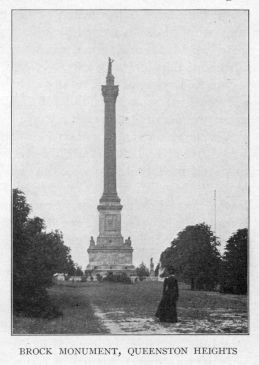
The invaders were resting on their arms, snatching a breakfast of biscuit and cheese about midday, when General Sheaffe arrived from Fort George with troops breathless from running. A heart-shattering huzza from the village warned the Americans {347} that help had come, and they were to arms in a second; but Sheaffe had swept round the Heights, Indians on one side of the hill, soldiers on the other, and came on the surprised Americans as from the rear. There was a wild whoop, a dash up the hill, a pause to fire, when the air was splinted by nine hundred instantaneous shots. Then through the smoke the British rushed the Heights at bayonet point. For three hours the contest raged in full sight of Lewiston, a hand-to-hand butchery between Sheaffe's fresh fighters and the Americans, who had been on their feet since midnight. Indian tomahawk played its part, but it is a question if the scalping knife did as deadly work as the grenadier's long bayonets. Cooped up between the enemy and the precipice, the American sharpshooters waited for the help that never came. In vain Van Rensselaer's officers prayed and swore and pleaded with the volunteer troops on the Lewiston side. The men flatly refused to cross; for boat loads of mangled bodies were brought back at each passage. Discipline fell to pieces. It was the old story of volunteers, brave enough at a spurt, going to pieces in panic under hard and continued strain. Driven from Queenston Heights, the invaders fought their way down the cliff path by inches to the water side, and there … there were no boats! Pulling off his white necktie, an officer held it up on the point of his sword as signal of surrender. It was one of the most {348} gallant fights on both sides in Canadian history, though officers over on the Lewiston shore were crying like boys at the sight of nine hundred Americans surrendering.
Truce was then arranged for the burial of the dead. The bodies of Brock and Macdonnell were laid on a gun wagon and conveyed between lines of sorrowing soldiers, with arms reversed, to the burial place outside Fort George. As the regimental music rang out the last march of the two dead officers, minute guns were fired in sympathy all along the American shore. "He would have done as much for us," said the American officers of the gallant Brock.
Van Rensselaer at once resigns. "Proclamation" Smyth, whose addresses resemble Fourth of July backwoods orations, succeeds as commander of the American army; but "Proclamation" Smyth makes such a mess of a raid on Fort Erie, retreating with a haste suggestive of Hull at Detroit, that he is mobbed when he returns to the United States shore. But what the United States lose by land, they retrieve by sea. England's best ships are engaged in the great European war. From June to December, United States vessels sweep the sea; but this is more a story of the English navy than of Canada. The year of 1812 closes with the cruisers of Lake Ontario chasing each other through many a wild snowstorm.
As the year 1812 proved one of jubilant victory for Canada, so 1813 was to be one of black despair. With the exception of four brilliant victories wrested in the very teeth of defeat, the year passes down to history as one of the darkest in the annals of the country. The population of the United States at this time was something over seven millions, and it was not to be thought for one moment that a nation of this strength would remain beaten off the field by the little province of Ontario (Upper Canada), whose population numbered barely ninety thousand. General Harrison hurries north from the Wabash with from six to eight thousand men to retrieve the defeat of Detroit. At Presqu' Isle, on Lake Erie, hammer and mallet and {349} forging iron are heard all winter preparing the fleet for Commodore Perry that is to command Lake Erie and the Upper Lakes for the Americans. At Sackett's Harbor similar preparations are under way on a fleet for Chauncey to sweep the English from Lake Ontario; and all along both sides of the St. Lawrence, as winter hedged the waters with ice, lurk scouts,—the Americans, for the most part, uniformed in blue, the Canadians in Lincoln green with gold braid,—watching chance for raid and counter raid during the winter nights. The story of these thrilling raids will probably pass into the shadowy realm of legend handed down from father to son, for few of them have been embodied in the official reports.
From being hard pressed on the defensive, Canada has suddenly sprung into the position of jubilant victor, and if Brock had lived, she would probably have followed up her victories by aggressive invasion of the enemy's territory; but all effort was literally paralyzed by the timidity and vacillation of the governor general, Sir George Prevost. Prevost's one idea seems to have been that as soon as the obnoxious embargo laws were revoked by England, the war would stop. When the embargo was revoked and the armistice of midsummer simply terminated in a resumption of war, this idea seems to have been succeeded by the single aim to hold off conclusions with the United States till England could beat Napoleon and come to the rescue. All winter long scouts and bold spirits among the volunteers craved the chance to raid the anchored fleets of Lake Ontario and Lake Erie, but Prevost not only forbade the invasion of the enemy's territory, but before the year was out actually advocated the abandonment of Ontario. If his advice had been followed, it is no idle supposition to infer that the fate of Ontario would have been the same as the destiny of the Ohio and Michigan.
One night in February the sentry at the village of Brockville, named after the dead hero, was surprised by two hundred American raiders dashing up from the frozen river bed. Before bugles could sound to arms, jails had been opened, stores looted, houses {350} plundered, and the raiders were off and well away with fifty-two prisoners and a dozen sleigh loads of provisions. Gathering some five hundred men together from the Kingston region, M'Donnell and Jenkins of the Glengarrys prepared to be revenged. Cannon were hauled out on the river from the little village of Prescott to cross the ice to Ogdensburg. The river here is almost two miles wide, and as it was the 23d of February, the ice had become rotten from the sun glare of the coming spring. As the cannon were drawn to mid-river, though it was seven in the morning, the ice began to heave and crack with dire warning. To hesitate was death; to go back as dangerous as to go forward. With a whoop the men broke from quick march to a run, unsheathing musket and fixing bayonet blades as they dashed ahead to be met with a withering cross fire as they came within range of the American batteries. In places, the suck of the water told where the ice had given behind. Then bullets were peppering the river bed in a rain of fire, Jenkins and M'Donnell to the fore, waving their swords. Then bombs began to ricochet over the ice. If the range of the Ogdensburg cannon had been longer, the whole Canadian force might have been sunk in mid-river; but the men were already dashing up the American shore whooping like fiends incarnate. First a grapeshot caught Jenkins' left arm, and it hung in bloody splinters. Then a second shot took off his right arm. Still he dashed forward, cheering his men, till he dropped in his tracks, faint from loss of blood. No answer came back to the summons to surrender, and, taking possession of an outer battery, the Canadians turned its cannon full on the village. Under cover of the battery fire, and their own cannon now in position, the whole force of Canadians immediately rushed the town at bayonet point. Now the bayonet in a solid phalanx of five hundred men is not a pleasant weapon to stand up against. As the drill sergeants order, you not only stick the bayonet into your enemy, but you turn it round "to let the air in" so he will die; and before the furious onslaught of bayonets, the defenders of Ogdensburg broke, and fled for the woods. Within an hour the {351} Canadians had burnt the barracks, set fire to two schooners iced up, and come off with loot of a dozen cannon, stores of all sorts, and with prisoners to the number of seventy-four.

The ice had left Lake Ontario early this year, and by mid-April Commander Chauncey slipped out of Sackett's Harbor with sixteen vessels, having on board seventeen hundred troops, besides the crews. It will be remembered that the capital of Ontario had been moved from Niagara (Newark) to York (Toronto) on the north side of Lake Ontario, then a thriving village of one thousand souls on the inner shore of Humber Bay. On the sand reef known as the Island, in front of the harbor, had been constructed a battery with cannon. The main village lay east of the present city hall. Westward less than a mile was Government House, on the site of the present residence. Between Government House and the village was not a house of any sort, only a wood road flanking the lake, and badly cut up by ravines. Just west of Government House, and close to the water, was a blockhouse or tower used as powder magazine, mounted with cannon to command the landing from the lake. Some accounts speak of yet another little outer battery or earthwork farther {352} westward. North of the Government House road, or what is now King Street, were dense woods. General Sheaffe, who had succeeded Brock at Queenston Heights, chanced to be in Toronto in April with some six hundred men. Just where the snug quarters of the Toronto Hunt Club now stand you may look out through the green foliage of the woods fringing the high cliffs of Lake Ontario, and there lies before your view the pure sky-blue surface of an inland sea washing in waves like a tide to the watery edge of the far sky line. Early in the morning of April 27 a forest ranger, dressed in the customary Lincoln green, was patrolling the forested edge of Scarborough Heights above the lake. The trees had not yet leafed out, but were in that vernal state when the branches between earth and sky take on the appearance of an aerial network just budding to light and color; and in the ravines still lay patches of the winter snow. The morning was hazy, warm, odoriferous of coming summer, with not a breath of wind stirring the water. As the sun came up over the lake long lines of fire shot through the water haze. Suddenly the scout paused on his parade. Something was advancing shoreward through the mist, advancing in a circling line like the ranks of wild birds flying north, with a lap—lap—lap of water drip and a rap—rap—rap of rowlocks from a multitude of sweeps. The next instant the forest rang to a musket shot, for the scout had discovered Commodore Chauncey's fleet of sixteen vessels being towed forward by rowers through a dead calm. The musket shot was heard by another scout nearer the fort. The signal was repeated by another shot, and another for the whole twelve miles, till General Sheaffe, sitting smoking a cigar in Government House, sprang to his feet and rushed out, followed by his officers, to scan the harbor of Humber Bay from the tops of the fort bastions. Sure enough! there was the fleet, led by Chauncey's frigate with twenty-four cannon poking from its sides, a string of rowboats in tow behind to land the army, coming straight across the harbor over water calm as silk. It has been told how the fleet made the mistake of passing beyond the landing, but the chances are the mistake was intentional {353} for the purpose of avoiding the cannon of the fort bastions. At all events the report may be believed that the most of Toronto people forgot to go back to breakfast that morning. A moment later officers were on top of the bastion towers, directing battery-men to take range for their cannon. A battalion variously given as from fifty to one hundred, along with some Indians, was at once dispatched westward to ambush the Americans landing. Another division was posted at the battery beyond Government House. Sheaffe saw plainly from the number of men on deck that he was outnumbered four to one, and the flag on the commodore's boat probably told him that General Dearborn, the commander in chief, was himself on board to direct the land forces. Sheaffe has been bitterly blamed for two things,—for not invading Niagara after the victory on Queenston Heights, and for his conduct at Toronto. He now withdrew the main forces to a ravine east of the fort, plainly preparatory for retreat. Not thus would Brock have acted.
Meanwhile time has worn on to nine o'clock. The American ships have anchored. The Canadian cannon are sending the bombs skipping across the water. The rowboats are transferring the army from the schooners, and the ambushed sharpshooters are picking the bluecoats off as they step from ships to boats.
"By the powers!" yells Forsyth, an American officer, "I can't stand seeing this any longer. Come on, boys! jump into our boats!" and he bids the bugles blow till the echoes are dancing over Humber waters. Dearborn and Chauncey stay on board. Pike leads the landing, and Chauncey's cannon set such grape and canister flying through the woods as clear out those ambushed shooters, the Indians flying like scared partridges, and the advance is made along Government House road at quick march. Just west of the Government House battery the marchers halt to send forward demand for surrender. Firing on both sides ceases. The smoke clears from the churned-up waters of the bay, and Commander Pike has seated himself on an old cannon, when, before answer can come back to the demand, a frightful accident occurs that upsets all plans. Waiting for the signal {354} to begin firing again, a batteryman in the near bastion was holding the lighted fuse in his right hand, ready for the cannon, when something distracted his attention, and he wheeled with the lighted match behind him. It touched a box of explosives. If any proof were needed that the tragedy was not designed, it is to be found in the fact that English officers were still on the roof of the blockhouse, and the apartment below crowded with Canadians. A roar shook the earth. A cloud of black flame shot into mid-air, and the next minute the ground for half a mile about was strewn with the remains, mangled to a pulp, of more than three hundred men, ninety of whom were Canadians, two hundred and sixty Americans, including Brigadier Pike fatally wounded by a rock striking his head. In the horror of the next few moments, defense was forgotten. Wheelbarrows, trucks, gun wagons, were hurried forward to carry wounded and dead to the hospital. Leaving his officers to arrange the terms of surrender, at 2 P.M. Sheaffe retreated at quick march for Kingston, pausing only to set fire to a half-built ship and some naval stores. Lying on a stretcher on Chauncey's ship, Pike is roused from unconsciousness by loud huzzas.
"What is it?" he asks.
"They are running up the stars and stripes, sir."
A smile passed over Pike's face. When the surgeon looked again, the commander was dead. For twenty-four hours the haggle went on as to terms of capitulation. Within that time, two or three things occurred to inflame the invading troops. They learned that Sheaffe had slipped away; as the American general's report put it, "They got the shell, but the kernel of the nut got away." They learned that stores had been destroyed after the surrender had been granted. Without more restraint, and in defiance of orders, the American troops gave themselves up to plunder all that night. In their rummaging through the Parliament buildings they found hanging above the Speaker's chair what Canadian records declare was a wig, what American reports say was a human scalp sent in by some ranger from the west. From what I have read in the private papers of fur traders {355} in that period regarding international scalping, I am inclined to think that wig may have been an American scalp. Certainly, the fur traders of Michilimackinac wrapped no excuses round their savagery when the canoes all over the coasts of Lake Superior, in lieu of flags, had American scalps flaunting from their prows. At all events, word went out that an American scalp had been found above the Speaker's chair. It was night. The troops were drunk with success and perhaps with the plunder of the wine shops. All that night and all the next day and night the skies were alight with the flames of Toronto's public buildings on fire. Also, the army chest with ten thousand dollars in gold, which Sheaffe had forgotten, was dug up on pain of the whole town being fired unless the money were delivered. Private houses were untouched. Looted provisions which the fleet cannot carry away, Chauncey orders distributed among the poor. Then, leaving some four hundred prisoners on parole not to serve again during the war, Chauncey sails away for Niagara.
It is a month later. Down at Fort George on the Canadian side General Vincent knows well what has happened at Toronto and is on the lookout for the enemy's fleet. On the American side of the Niagara River, from Lake Ontario to Lake Erie, are seven thousand troops eager to wipe out the stain of last year's defeat. On the Canadian side, from Fort George to Chippewa and Erie, are twenty-three hundred men, mostly volunteers from surrounding farms, and powder is scarce and provisions are scarce, for Chauncey's fleet has cut off help from St. Lawrence and Kingston way. All the last two weeks of May, heavy hot fog lay on the lake and on the river between the hostile lines, but there was no mistaking what Chauncey's fleet was about. Red-hot shot showers on Fort George in a perfect rain. Standing on the other side of the river are thousands of spectators, among them one grand old swashbuckler fellow in a cocked hat, whose fighting days are past, taking snuff after the fashion of a former generation and wearing an air of grand patronage to the American troops because he has seen service in Europe.
{356} "No, sir," says the grand old fighting cock pompously to his auditors, "can't be done! Have seen it tried on the Continent, and you can't do it! Lay a wager you can't do it! Can't possibly set fire to a fort by red-hot shot!"
Then at night time, when the lurid glare of flame lights up the foggy darkness, the old gentleman is put to his trumps. "See!" they say; "Fort George is on fire"; and over at Fort George the bucket brigade works hard as the cannoneers. But the fog is too good a chance to be missed by Chauncey; rowing out with muffled oars all the nights of May 24 and 25, he has his men sounding … sounding … sounding in silence the channel, right within pistol shot of Fort George. The night of the 26th troops and marines are bidden breakfast at two in the morning, and be ready for action with a single blanket and rations for one day. That is all they are told. They embark at four. The waters are dead calm, the morning of the 27th gray as wool with fog. Sweeps out Chauncey's fleet, circles up to Fort George with one hundred scows in tow, carrying fifty soldiers each. Vincent takes his courage in his teeth and gathers his one thousand men inside the walls. Then the cannon of the frigates split fog and air and earth, and, under cover of the fire, the scows gain the land by 9 A.M. First, Vincent's sharpshooters sally from the fort and fire; then they fire from the walls; then they overturn guns, retreat from the walls, throw what powder they cannot carry into the water, and retreat, fighting, behind stone walls and ditches. The contest of one thousand against six thousand is hopeless. Vincent sends coureurs riding like the wind to Chippewa and Queenston and Erie, ordering the Canadians to retire to the Back Country. By four o'clock in the afternoon Americans are in possession of the Canadian side from Fort George to Erie. Vincent retreats at quick march along the lake shore towards what is now Hamilton. June 1 General Dearborn sends his officers, Chandler and Winder, in hot pursuit with thirty-five hundred men.
Vincent's soldiers have less than ninety rounds of powder to a man. He has only one thousand men, for the garrisons of {357} Chippewa and Queenston Heights and Erie have fallen back in a circle to the region of St. David's. June 5, Vincent's Canadians are in camp at Burlington Bay. Only seven miles away, at Stony Creek, lies the American army, out sentries posted at a church, artillery on a height commanding a field, officers and men asleep in the long grass. Humanly speaking, nothing could prevent a decisive battle the next day. The two American officers, Chandler and Winder, sit late into the night, candles alight over camp stools, mapping out what they think should be the campaign. It is a hot night,—muggy, with June showers lighted up by an occasional flash of sheet lightning. Then all candles out, and pitch darkness, and silence as of a desert! The American army is asleep,—in the dead sleep of men exhausted from long, hard, swift marching. The artillerymen on the hillocks, the sentries, the outposts at the church,—they, too, are sound asleep!
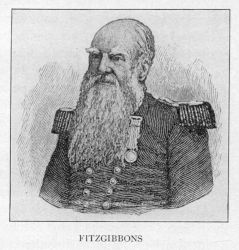
But the Canadians, too, know that, humanly speaking, nothing can prevent a decisive battle on the morrow. The stories run—I do not vouch for their truth, though facts seem to point to some such explanation—that Harvey, a Canadian officer, had come back to the American army that night disguised as a Quaker peddling potatoes, and noted the unguarded condition of the exhausted troops; also that Fitzgibbons, the famous scout, came through the American lines dressed as a rustic selling butter. Whether these stories are true or not, or whether, indeed, the Canadians knew anything about the American camp, they plucked resolution from desperation. If they waited for the morrow's battle, they would be beaten. Harvey proposed to Vincent that seven {358} hundred picked men go back through the dark and raid the American camp. Vincent left the entire matter to Harvey. Setting out at 11.30 along what is now Main Street, Hamilton, the Canadians marched in perfect silence. Harvey had given orders that not a shot should be fired, not a word spoken, the bayonet alone to be used. By two in the morning of June 6 the marchers came to the church where the sentries were posted. Two were stabbed to death before they awakened. The third was compelled to give the password, then bayoneted in turn. The Canadian raiders might have come to the very midst of the American army if it had not been for the jubilant hilarity of some young officers, who, capturing a cannon, uttered a wild huzza. On the instant, bugles sounded alarm; drums beat a crazy tattoo, and every man leaped from his place in the grass, hand on pistol. The next second the blackness of the night was ablaze with musketry; the soldiers were firing blindly; officers were shouting orders that nobody heard; troops were dashing here, there, everywhere, lost in the darkness, the heavy artillery horses breaking tether ropes and stampeding over the field. Major Plenderleath with a company of young Canadians suddenly found himself in the midst of the American camp. One of the young raiders stabbed seven Americans to death; a brother bayoneted four, and before daylight betrayed the smallness of their forces the raiders came safely off with three guns and one hundred prisoners, including the two American officers, Winder and Chandler. The loss to the British was one hundred and fifteen killed and wounded; but there would be no battle the next day. The battle of Stony Creek sent the Americans retreating back down the lake front to Fort George, harried by the English fleet under Sir James Yeo from Kingston. A hundred episodes might be related of the Stony Creek raid. For years it was to be the theme of camp-fire yarns. For instance, in the flare of musketry fire a Canadian found himself gazing straight along the blade of an American's bayonet. "Sir, the password," demanded the American sentry. Luckily the scout, instead of wearing an English red coat, had on a blue jacket resembling {359} that of the American marines, and he instantly took his cue. "Rascal," he thundered back, "what do you mean, off your line? Go back to your post!" The sentry's bayonet dropped; there was momentary darkness, and the Canadian literally bolted. Then ludicrous ill luck befell all the generals. Vincent had accompanied the raiders on horseback. When the bugles sounded "retire," he gave his horse the bit, and in the pitch darkness the brute carried him pellmell along the wrong road, over fences and hayfields, some fifteen miles into the Back Country. Next day, when Vincent was missing, under flag of truce messengers went to the retreating American army to find if he were among the dead. At four in the afternoon his horse came limping into the Canadian camp. Chandler, the American officer, on awakening had sprung on horseback and spurred over the field shouting commands. In the darkness his horse fell and threw him. When Chandler came to himself he was prisoner among the Canadians. Winder's ill luck was equally bad. By the flare of the firing he saw what he thought was a group of artillerymen deserting a gun. Dashing up, he laid about him with his pistol, shouting, "Come on! come on!" Another flare of fire, and he found himself surrounded by a circle of Canadian bayonets. "Drop your pistol, sir, or you are a dead man," ordered a young Canadian, and Winder surrendered.
It will be recalled that the garrisons of Queenston below the Falls, and Chippewa above, and Erie at the head of the river, had retreated from the invading Americans to the Back Country now traversed by Welland Canal. From different posts beyond what was known as the Black Swamp, these bands of the dispersed Canadian army swooped down on the American outposts, harrying the whole American line from Lake Ontario to Lake Erie. Of all the raiders none was more daring than Lieutenant Fitzgibbons, posted beyond the Beaver Dams, at a stone house near De Ceu's Falls. Space forbids more than one episode of his raids. Once, while riding along Lundy's Lane alone, he was recognized by the wife of a Canadian captain, who dashed from {360} the cottage, warning him to retreat, as a hundred and fifty Americans had just passed that way. Standing in front of the roadside inn was the cavalry horse of an American. Fitzgibbons could n't resist the temptation for a bout with the foe, and dismounting, was entering the door when a soldier in blue dashed at him with leveled musket. Naturally not keen to create alarm, Fitzgibbons knocked the weapon from the man's hand, and without a sound had thrown him on the ground, when another American rifleman dashed from behind. Strong as a lion, Fitzgibbons threw the first man violently against the second, and was holding both at bay beneath his leveled rifle when one of the downed men snatched the Irishman's sword from the scabbard. He was in the very act of thrusting the sword point into Fitzgibbons, when the innkeeper's wife, with a dexterous kick, sent the weapon whirling out of his hand. Fitzgibbons disarmed the men, tied them, threw them across his horse, and himself mounting, galloped to the woods with a laugh, though one hundred and fifty Americans were within a quarter of a mile.
The American commanders at Niagara determined to clean out this nest of raiders from the Back Country, and Lieutenant Boerstler was ordered to march from Fort George with some six hundred men. Leaving Fort George secretly at night, Boerstler came to Queenston at eleven on the night of June 23. Here all Canadian soldiers free on parole were seized, to prevent word of the attack reaching the Back Country. The troops were not even permitted to light camp fire or candles. The great secrecy of the American marchers at once roused suspicion among the Canadians between Queenston and the village of St. David's that the expedition was directed against Fitzgibbons' scouts. At his home, between Queenston and St. David's, dwelt a United Empire Loyalist, James Secord, recovering from dangerous wounds received in the battle of Queenston Heights. He was too weak himself to go by night and forewarn Fitzgibbons, but his wife, Laura Ingersoll, a woman of some thirty years, was also of the old United Empire Loyalist stock. She immediately set out alone for the Back Country to warn Fitzgibbons. {361} Many and contradictory stories are told of her march. Whether she tramped two nights and two days, or only one night and one day, whether her march led her twenty or only twelve miles, matters little. She succeeded in passing the first sentry on the excuse she was going out to milk a cow, and she eluded a second by telling him she wished to visit a wounded brother, which was true. Then she struck away from the beaten path through what was known as the Black Swamp. It had rained heavily. The cedar woods were soggy with moisture, the swamp swollen, and the streams running a mill race. Through the summer heat, through the windfall, over the quaking forest bog, tramped Laura Secord. It may be supposed that the most of wild animals had been frightened from the woods by the heavy cannonading for almost a year; but the hoot of screech owl, the eldritch scream of wild cat, the far howl of the wolf pack hanging on the trail of the armies for carrion, were not sounds quieting to the nerves of a frightened woman flitting through the forest by moonlight. It was clear moonlight when she came within range of Beaver Dam and De Ceu's house. She had just emerged in an open field when she was assailed with unearthly yells, and a thousand ambushed Indians rose from the grass.
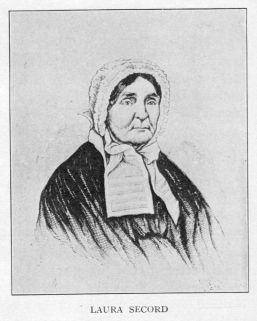
"Woman! A woman! What does a white woman here?" demanded the chief, seizing her arm. She answered that she was a friend and it was matter of life and death for her to see {362} Fitzgibbons at once. So Laura Secord delivered her warning and saved the Canadian army. The episode has gone down to history one of the national legends, like the story of Madeline Verchères on the St. Lawrence. Fitzgibbons posts his forty men in place, and Ducharme, commander of the Indians, scatters his one thousand redskins in ambush along the trail. Also, word is sent for two other detachments to come with all speed.
June 24, at seven in the morning, Boerstler is moving along a narrow forest trail through the beech woods of Beaver Dams. The men are advancing single file, mounted infantrymen first with muskets slouched across saddle pommels, then the heavy wagons, then cavalry to rear. The timber is heavy, the trail winding. Here the long line deploys out from the trail to avoid jumping windfall; there halt is made to cut a way for the wagons; then the long line moves sleepily forward, yellow sunlight shafted through the green foliage across the riders' blue uniforms. Suddenly a shot rings out, and another, and another! The forest is full of unseen foes, before, behind, on all sides, the cavalry forces breaking rank and dashing forward among the wagons. Boerstler sees it will be as unsafe to retreat as to go on. Sending messengers back to Fort George for aid, he pushes forward into an open wheat field. Fifty-six men have fallen, and the bullets are still raining from an invisible foe. Looking back he sees mounted men in green coats passing and repassing across his trail, filing and refiling. It is a trick of Fitzgibbons to give an impression he has ten times forty men, but the Americans do not know. There is no retreat, and Indians are to the fore. In the midst of confusion Fitzgibbons comes forward with a white handkerchief on his sword point and begs Boerstler to prevent bloodshed by instant surrender. Boerstler demands to see the number of his enemies. Fitzgibbons says he will repeat the request to his commanding officer. Luck is with Fitzgibbons, for just as he goes back a small party of reënforcements arrives, and one of its captains acts the part of commanding officer, telling Boerstler's messenger haughtily that the demand to see the enemy is an insult, and answer must be given in five minutes {363} or the Canadians will not be responsible for the Indians. The fight has lasted three hours. Boerstler surrenders with his entire force. Such was the battle of Beaver Dams.
Ever since Brock had captured Detroit in 1812, General Procter, with twenty-five hundred Canadians, had been holding the western part of Ontario; and the defeat of the English at Fort George had placed him in a desperate position. His men had been without pay for months; their clothes were in tatters, and now, with the Americans in possession of Niagara region, there was danger of Procter's food supply being cut off. Procter himself had not been idle these six months. In fact, he had been too active for the good of his supplies. Space forbids a detailed account of the raids directed by him and carried out with the aid of Tecumseh, the great Shawnee chief. January of 1813 saw a detachment of Procter's men up Raisin River, west of Detroit, where they defeated General Winchester and captured nearly five hundred prisoners, to be set free on parole. Harrison, the American general, is on his way to Lake Erie to rescue Detroit. Procter hastens in May to meet him with one thousand Canadians and fifteen hundred Indians. The clash takes place at a barricade known as Fort Meigs on Maumee River, south of Lake Erie, when again, by the aid of Tecumseh, Procter captures four hundred and fifty prisoners. It was on this occasion that the Indians broke from control and tomahawked forty defenseless American prisoners. August sees Procter raiding Sandusky; but the Americans refuse to come out and battle, and the axes of the Canadians are too dull to cut down the ironwood pickets, and when at night Procter's bugles sound retreat, he has lost nearly one hundred men. At last, in September, the fleets being built for the Canadians at Amherstburg and for the Americans at Presqu' Isle are completed. Whichever side commands Lake Erie will control supplies; and though Captain Barclay, the Canadian, is short of men, Procter cannot afford to delay the contest for supremacy any longer. He orders Barclay to sail out and seek Commodore Perry, the American, for decisive battle.
{364} On Barclay's boats are only such old land guns as had been captured from Detroit. His crews consist of lake sailors and a few soldiers, in all some three hundred and eighty-four men on six vessels. September 10, at midday, at Put-in-Bay, Barclay finds Perry's fleet of seven vessels with six hundred and fifty men. For two hours the furious cannonading could be heard all the way up to Amherstburg. Space forbids details of the fight so celebrated in the annals of the American navy. After broadsides that tore hulls clean of masts and decks, setting sails in flame and the waters seething in mountainous waves, the two fleets got within pistol shot of each other, and Perry's superior numbers won. One third of Barclay's officers were killed and one third of his men. The Canadian fleet on Lake Erie was literally exterminated before three in the afternoon.
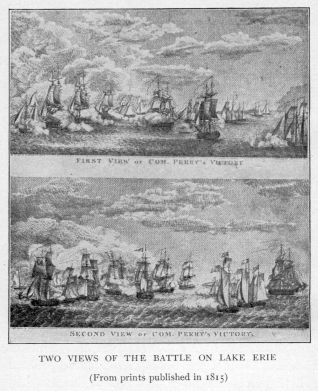
Procter's position was now doubly desperate. He was cut off from supplies. At a council with the Indians, though Tecumseh, the chief, was for fighting to the bitter death, it was decided to retreat up the Thames to Vincent's army near modern {365} Hamilton. All the world knows the bitter end of that retreat. Procter seems to have been so sure that General Harrison would not follow, that the Canadian forces did not even pause to destroy bridges behind them; and behind came Harrison, hot foot, with four thousand fighters from the Kentucky backwoods. October first the Canadians had retreated far as Chatham, provisions and baggage coming in boats or sent ahead on wagons. Procter's first intimation of the foe's nearness was a breathless messenger with word the Americans just a few miles behind had captured the provision boats. Sending on his family and the women with a convoy of two hundred and fifty soldiers, Procter faced about on the morning of October the 5th, to give battle. On the left was the river Thames, on the right a cedar swamp, to rear on the east the Indian mission of Moraviantown. The troops formed in line across a forest road. Procter seems to have lost both his heart and his head, for he permitted his fatigued troops to go into the fight without breakfast. Not a barricade, not a hurdle, not a log was placed to break the advance of Harrison's cavalry. The American riders came on like a whirlwind. Crack went the line of Procter's men in a musketry volley! The horses plunged, checked up, reared, and were spurred forward. Another volley from the Canadians! But it was too late. Harrison's fifteen hundred riders had galloped clean through the Canadian lines, slashing swords as they dashed past. Now they wheeled and came on the Canadians' rear. Indians and Canadians scattered to the woods before such fury, like harried rabbits, poor Tecumseh in the very act of tomahawking an American colonel when a pistol shot brought him down. The brave Indian chief was scalped by the white backwoodsmen and skinned and the body thrown into the woods a prey to wolves. Flushed with victory and without Harrison's permission, the Kentucky men dashed in and set fire to Moraviantown, the Indian mission. As for Procter, he had mounted the fleetest horse to be found, and was riding in mad flight for Burlington Heights. It is almost a pity he had not fallen in some of his former heroic raids, for he now became a sorry figure in history, reprimanded {366} and suspended from the ranks of the army. The only explanation of Procter's conduct at Moraviantown is that he was anxious for the safety of his wife and daughters, perhaps needlessly fearing that the rough backwoodsmen would retaliate on them for the treachery of the Indians tomahawking American prisoners of war.
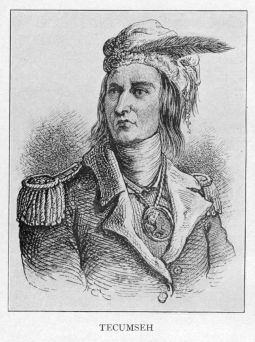
And it had fared almost as badly with the Canadian fleet on Lake Ontario. The boats under Sir James Yeo, the young English commander, were good only for close-range fighting, the boats under Commodore Chauncey best for long-range firing. All July and August the fleets maneuvered to catch each other off guard. Between times each raided the coast of the other for provisions, Chauncey paying a second visit to Toronto, Yeo swooping down on Sodus Bay. All September the game of hide and seek went on between the two Ontario squadrons. Sunday night, the 8th of September, in a gale, two of Chauncey's ships sank, with all hands but sixteen. Two nights later in a squally wind, by the light of the moon, two more of his slow sailers, unable to keep up with the rest of the fleet, were snapped up by the English off Niagara with one hundred captives. Again, on September 27, at eight in the evening, six miles off Toronto harbor, Chauncey came up with the English, and the two fleets poured broadsides into each other. Then Yeo's crippled brigs limped into Toronto harbor, while Chauncey sailed gayly off to block all connection with Montreal and help to convoy troops {367} from Niagara down the St. Lawrence for the master stroke of the year. The way was now clear for the twofold aim of the American staff,—to starve out Ontario and concentrate all strength in a signal attack on Montreal.
The autumn campaign was without doubt marked by the most comical and heroic episodes of the war. Wilkinson was to go down the St. Lawrence from Lake Ontario with eight thousand men to join General Hampton coming by the way of Lake Champlain with another five thousand men in united attack against Montreal. November 5 Wilkinson's troops descended in three hundred flat-boats through the Thousand Islands, now bleak and leafless and somber in the gray autumn light. It seemed hardly possible that the few Canadian troops cooped up in Kingston would dare to pursue such a strong American force, but history is made up of impossibles. Feeling perfectly secure, Wilkinson's troops scattered on the river. By November 10, at nine in the morning, half the Americans had run down the rapids of the Long Sault, and were in the region of Cornwall, pressing forward to unite with Hampton, where Chateauguay River came into Lake St. Louis, just above Montreal. The other half of Wilkinson's army was above the Long Sault, near Chrysler's Farm. From the outset the rear guard of the advancing invaders had been harried by Canadian sharpshooters. November 11, about midday, it was learned that a Canadian battalion of eight hundred was pressing eagerly on the rear. Chance shots became a rattling fusillade. Quick as flash the Americans land and wheel face about to fight, posted behind a stone wall and along a dried gully with sheltering cliffs at Chrysler's Farm. By 2.30 the foes are shooting at almost hand-to-hand range. Then, through the powder smoke, the Canadians break from a march to a run, and charge with all the dauntless fury of men fighting for hearth and home. Before the line of flashing bayonets the invaders break and run. Two hundred have fallen on each side in an action of less than two hours. Then the boats go on down to the other half of the army at Cornwall, and here is worse news,—news that sends {368} Wilkinson's army back to the American side of the St. Lawrence without attempting attack on Montreal. General Hampton on his way from Lake Champlain has been totally discomfited.
Finding the way to the St. Lawrence barred by the old raiders' trail of Richelieu River, Hampton had struck across westward from Lake Champlain to join Wilkinson on the St. Lawrence, west of Montreal, somewhere near the road of Chateauguay River. With five thousand infantry and one hundred and eighty cavalry he has advanced to a ford beyond the fork of Chateauguay. Uncertain where the blow would be struck, Canada's governor had necessarily scattered his meager forces.
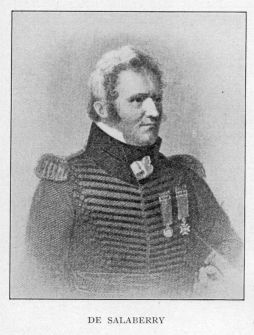
To oppose advance by the Chateauguay he has sent a young Canadian officer, De Salaberry, with one hundred and fifty French Canadian sharp-shooters and one hundred Indians. De Salaberry does not court defeat by neglecting precautions because he is weak. Windfall is hurriedly thrown up as barricade along the trail. Where the path narrows between the river and the bleak forest, De Salaberry has tree trunks laid spike end towards the foe. At the last moment comes McDonnell of Brockville with six hundred men, but De Salaberry's three hundred occupy the front line facing the ford. McDonnell is farther along the river. By the night of October 25 the American army is close on the dauntless little band hidden in the forest. On the morning of the 26th three thousand Americans {369} cross the south bank of the river, with the design of crossing north again farther down and swinging round on De Salaberry's rear. At the first shot of the bluecoats poor De Salaberry's forlorn little band broke in panic fright and fled, but De Salaberry on the river bank had grabbed his bugle boy by the scruff of the neck with a grip of iron, and in terms more forcible than polite bade him "sound—sound—sound the advance," till the forest was filled with flying echoes of bugle calls. McDonnell behind hears the challenge, and mistaking the cheering call for note of victory, bids his buglers blow, blow advance, blow and cheer like devils! The Americans pour shot into the forest. The bugle calls multiply till the woods seem filled with an advancing army and the yells split the sky. Also McDonnell has ordered his men to fire kneeling, so that few of the American shots take effect. The advancing host became demoralized. At 2.30 they sounded retreat, and it may truly be said that the battle of Chateauguay was won by De Salaberry's bugle boy, held to the sticking point, not because he was brave, but because he could not run away. It is said that Hampton simply would not believe the truth when told of the numbers by whom he had been defeated. It is also said that immediately after the victory De Salaberry fell ill from a bad attack of nerves, brought on by lack of sleep. However that may be, the Canadian governor, Prevost, did not suffer from an attack of conscience, for in his report to the English government he ascribed the victory to his own management and presence on the field.
The year of 1813 closes darkly for both sides. Before withdrawing from Niagara region the invaders ravage the country and set fire to the village of Newark, driving four hundred women and children roofless to December snows. Sir Gordon Drummond, who has just come to command in Ontario, retaliates swiftly and without mercy. He crosses the Niagara by night; the fort is carried at bayonet point, three hundred men captured and three thousand arms taken. Next, Lewiston is burned, then Black Rock, and on the last day of the year, Buffalo. Down {370} on the Atlantic Coast both fleets win victories, but the English work the greater hurt, for they blockade the entire coast south of New York. On the English squadron are European mercenaries who have been given the name of Canadian battalions, because their work is to harry the American coast in order to draw off the American army from Canada. European mercenaries have been the same the world over,—riffraff blackguards, guilty of infamous outrages the moment they are out from under the officers' eye. These were the troops misnamed "Canadians," whose infamous conduct left a heritage of hate long after the war; but this is a story of the navy rather than of Canada.
The contest has now lasted for almost two years, and both sides are as far from decisive victory as when war was declared in June of 1812. Long since the embargo laws of France and England against neutral nations have been rescinded, and the American coast has suffered more from the blockade of this war than it ever did from the wars between France and England. The year 1814 opens with Napoleon defeated and England pouring aid across the Atlantic into Canada. Wilkinson's big army hovers inactive round Lake Champlain, and Prevost is afraid to weaken Montreal by forwarding aid to Drummond at Niagara. The British fleet blockades Sackett's Harbor, and the American fleet blockades Kingston. The Canadians raid Oswego on Lake Ontario for provisions. The Americans raid Port Dover on Lake Erie, leaving the country a blackened waste and Tom Talbot's Castle Malahide of logs a smoking ruin, with the determined aim of cutting off all supplies in Ontario. Drummond sends his troops scouring the country inland from Niagara for provisions. Military law is established for the seizure of cattle and grain, but for the latter as high a price is paid as $2.50 a bushel, and many a pioneer farmer back from York (Toronto) and Burlington (Hamilton) dates the foundation of his fortune from the famine prices paid for bread during the War of 1812.
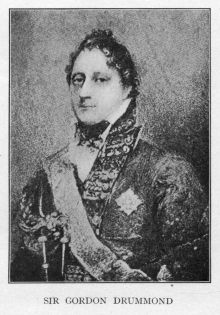
Of course the United States did not purpose leaving the frontier of Niagara because Drummond had burnt the forts. By {371} May, Major General Brown had taken command of the United States troops at Buffalo. The next two months pass, drilling and training, and bringing forward provisions. July 3, at day dawn, during fog thick as wool on the lake, five thousand American troops cross to the Canadian side. Fort Erie's English garrison capitulates on the spot, and the English retreat down Niagara River towards Chippewa by the Falls. At Chippewa, at Queenston, at Fort George, in all to guard the Canadian frontier are only some twenty-eight hundred men. Three fourths of these are kept doing garrison duty, leaving only seven hundred men free afield. Just beside Chippewa, a creek some twenty feet wide comes into Niagara River. The Canadians have destroyed the bridge as they retreat, but the Americans pursue, and at midnight of the 4th the two armies are facing each other across the brook, ominous dreadful silence through the darkness but for the sentry's arms or the lumbering advance of artillery wagons dragged cautiously near the Canadians. The bridge is repaired under peppering shot from the British. By four on the afternoon of the 5th, the Americans have crossed the stream. Their artillery is in place, and another battalion has forded higher up and swept round to take the Canadians on the flank. The Canadians must either flee in such blind panic as Procter displayed at Moraviantown, or turn and fight. Indians in ambush, reënforcements from Fort George and Queenston formed in three solid columns, the English wheel to face the foe. First there is the rattling clatter of musketry fire from shooters behind in the {372} grass. Then the solid columns break from a march to a run, and charge with their bayonets. The artillery fire of the Americans meets the runners in a terrible death blast; but as the front lines drop, the men behind step in their places till the armies are not one hundred yards apart. Then another blast from the heavy guns of the Americans literally tears the Canadian columns to tatters. As the smoke lifts there are no columns left, only scattered groups of men retreating across a field strewn thick with the mangled dead. Out of twelve hundred men, the Canadians have lost five hundred. The charge of the forlorn twelve hundred at Chippewa against the artillery of four thousand Americans has been likened to the charge of the Light Brigade in the Russian War. Though the Canadians were defeated, their heroic defense had for a few days at least checked the advance of the invaders. And now the position of the beleaguered became desperate. At Fort George, at Queenston, and at Burlington Heights, the men were put on half rations.
Why did the Americans not advance at once against Queenston and Fort George? For three weeks they awaited Chauncey's fleet to attack from the water side, so the army could rush the fort from the land side; but Chauncey was ill and could not come, and the interval gave the hard-pressed Canadians their chance. Drummond comes from Kingston with four hundred fresh men; also he calls on the people to leave their farms and rally as volunteers to the last desperate fight. This increased his troops by another thousand, though many of the volunteers were mere boys, who scarcely knew how to hold a gun. Then, from a dozen signs, Drummond's practiced eye foresaw that a forward movement was being planned by the enemy without Chauncey's coöperation. All the American baggage was being ordered to rear. False attacks to draw off observation are made on Fort George outposts. American scouts are seen reconnoitering the Back Country. Drummond rightly guessed that the attack was being planned in one of two directions,—by rounding through the Back Country, either to fall in great numbers on Fort George, or to cut between the {373} Canadian army of Hamilton region and of Niagara region, taking both battalions in the rear. From Fort George to Queenston Canadian troops are posted by Drummond, and where the road called Lundy's Lane runs from the Falls at right angles to the Back Country more battalions are ordered on guard against the advance of the invaders. Fitzgibbons, the famous scout, climbing to a tree on top of a high hill, sees the Americans, five thousand of them, gray coats, blue coats, white trousers, moving up from Chippewa towards Lundy's Lane. Quickly sixteen hundred Canadian troops under General Riall take possession of a hill fronting Lundy's Lane and the Falls. On the hill is a little brown church and an old-fashioned graveyard. In the midst of the graves the Canadian cannon are posted. Round the cemetery runs a stone wall screened by shrubbery, and on both sides of Lundy's Lane are endless orchards of cherry and peach and apples, the fruit just beginning to redden in the summer sun. Whether the enemy aim at Fort George or Hamilton, the Canadian position on Lundy's Lane must be passed and captured. As soon as Drummond had Fitzgibbons' report, he sent messengers galloping for Hercules Scott, who had been ordered to retreat to the lake, to come back to Lundy's Lane with his twelve hundred men. It may be imagined that the Americans guessed what message the horseman, in the slather of foam was bearing back to Hercules Scott; for they at once attacked the Canadians in Lundy's Lane with fury, to capture the guns on the hill before Hercules Scott's reënforcements could come.
It was now six o'clock in the evening of July 25, a sweltering hot night, and the troops on both sides were parched for water, though the roar of whole inland oceans of water could be heard pouring over the Falls of Niagara. As the Canadians had charged against the American guns at Chippewa, so now the Americans charged uphill against the guns of the Canadians, hurling their full strength against the enemy's center. Creeping under shelter of the cemetery stone walls, the bluecoats would fire a volley of musketry, jump over the fence, dash through the smoke, {374} bayonet in hand, to capture the Canadian guns. Time, time again, the rush was dauntlessly made, and time, time again met by the withering blast. Before nine o'clock the attacking lines had lost more than five hundred men, and as many Canadians had fallen on the hill. The dead and mangled lay literally in heaps. As darkness deepened, lit only by the wan light of a fitful moon and the awesome flare of volley after volley, the fearful screams of the dying could be heard above the roar of the Falls and the whistle of cannon ball. Riall, the commander of the Canadians, had been wounded and captured. Of his sixteen hundred Canadians, Drummond had now left only one thousand, and he was himself bleeding from a deep wound in the neck. Half the American officers had been carried from the field injured, and still the command was repeated to rush the hill before Scott's reënforcements came, and each time the advancing line was driven back shattered and thinned, Canadians dashing in pursuit, cheering and whooping, till both armies were so inextricably mixed it was impossible to hear or heed commands. It was in one of these mêlées that Riall, the Canadian, found himself among the American lines and was captured to the wild and jubilant shouting of the boys in blue and gray. Pause fell at nine o'clock. The Americans were mustering for the final terrible rush. The moon had gone behind a cloud, and the darkness was inky. Then a shout from the Canadian side split the very welkin. Hercules Scott had arrived with his twelve hundred men on a run, breathless and tired from a march and countermarch of twenty miles. The Americans took up the yell; for fresh reserves had joined them, too, and Lundy's Lane became a bedlam of ear-shattering sounds,—heavy artillery wagons forcing up the hill at a gallop over dead and dying, bombs from the Canadian guns exploding in the darkness, horses taking fright and bolting from their riders, carrying American guns clear across the lines among the Canadians. A wild yell of triumph told that the Americans had captured the hill. For the next two hours it was a hand-to-hand fight in pitchy darkness. Drummond, the Englishman, could be heard right in the midst of the {375} American lines, shouting, "Stick to them, men! stick to them! Don't give up! Don't turn! Stick to them! You 'll have it!" And American officers were found amidst Canadian battalions, shouting stentorian command: "Level low! Fire at their flashes! Watch the flash, and fire at their flashes!"
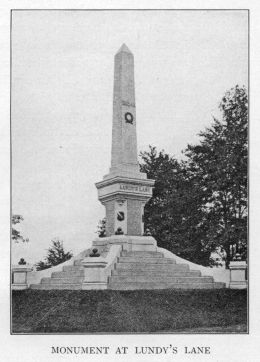
The Americans have captured the Canadian guns, but in the darkness they cannot carry them off. Each side thinks the other beaten, and neither will retreat. In the confusion it is impossible to rally the battalions, and men are attacking their own side by mistake. Both sides claim victory, and each is afraid to await what daylight may reveal; for it is no exaggeration to say that at the battle of Lundy's Lane the blood of one third of each side dyed the field. The Canadians as defenders of their own homes, fighting in the last ditch, dare not retire. The Americans, having more to risk in numbers, withdraw their troops at two in the morning. Of her twenty-eight hundred men Canada had lost nine hundred; and the American loss is as great. Too exhausted to retire, Drummond's men flung themselves on the ground and slept lying among the dead, heedless alike of the drenching rain that follows artillery fire, of the roaring cataract, of the groans from the wounded. Men awakened in the gray dawn to find themselves unrecognizable from blood and powder smoke, to find, {376} in some cases, that the comrade whose coat they had shared as pillow lay cold in death by morning. While Drummond's men bury the dead in heaps and carry the wounded to Toronto, the invaders have retreated with their wounded to Fort Erie.
It now became the dauntless Drummond's aim to expel the enemy from Fort Erie. Five days after the battle of Lundy's Lane he had moved his camp halfway between Chippewa and Fort Erie; but in addition to its garrison of two thousand, Fort Erie is guarded by three armed schooners lying at anchor on the lake front. Captain Dobbs of Drummond's forces makes the first move. At the head of seventy-five men, he deploys far to the rear of the fort through the woods, carrying five flatboats over the forest trail eight miles, and on the night of the 12th of August slips out through the water mist towards the American schooners.
"Who goes?" challenges the ships' watchman.
"Provision boats from Buffalo," calls back the Canadian oarsman; and the rowboats pass round within the shadow of the schooner. A moment later the American ships are boarded. A trampling on deck calls the sailors aloft; but Dobbs has mastered two vessels before the fort wakes to life with a rush to the rescue.
Delay means almost inevitable loss to Drummond; for Prevost will send no more reënforcements, and the Americans are daily strengthening Fort Erie. Bastions of stone have been built. Outer batteries command approach to the walls, and along the narrow margin between the fort and the lake earthworks have been thrown up, mounted with cannon elbowing to the water's edge. Taking advantage of the elation over Dobbs' raid on the schooners, Drummond plans a night assault on the 15th of August. Rain had been falling in splashes all day. The fort trenches were swimming like rivers, and it may be mentioned that Drummond's camp was swimming too, boding ill for his men's health. One of the foreign regiments was to lead {377} the assault round by the lake side, while Drummond and his nephew rushed the bastions. It will be remembered these foreign regiments of Napoleonic wars were composed of the offscourings of Europe. The fighters were to depend "on bayonet alone, giving no quarter." Splashing along the rain-soaked road in silence and darkness, scaling ladders over shoulders, bayonets in hand, the foreign troops came to the earthwork elbowing out into the lake. This was passed by the men wading out in the lake to their chins; but the noise was overheard by the fort sentry, and a perfect blaze of musketry shattered the darkness and drove the mercenaries back pellmell, bellowing with terror. A few of the English and Canadian troops pressed forward, only to find that they could not reach within ladder distance of the walls at all, for spiked trees had been placed above the trenches in a perfect crisscross hurdle of sharpened ends. In old letters of the period one reads how the trenches were literally heaped with a jumbled mass of the dead. The other attacking columns fared almost as badly. One of the bastions had been entered by the cannon embrasures, Drummond, Junior, shouting to "give no quarter—give no quarter," when, from the cross firing in the courtyards, the powder magazine below this bastion was set on fire, and exploded with a terrific crash, killing the assailants almost to a man. In all,—killed, wounded, missing,—the assault cost Drummond's army nine hundred men. September proved a rainy month. Drummond's camp became almost a marsh, and the health of the troops compelled a move to higher ground. It was then the Americans sallied out in assault. Neither side could claim victory, but the skirmish cost each army more than five hundred men. Sir James Yeo now comes sailing up Lake Ontario with some of the sixteen thousand troops sent from England. The weather became unfavorable to movement on either side,—rain and sleet continuously. Drummond foresaw that the season would compel the abandonment of Fort Erie, and on November 5, a scout came in with word that the invaders had crossed to the American side and Fort Erie had been blown up.
{378} While Drummond is fighting for the very life of Canada along the Niagara frontier, the war continues in desultory fashion elsewhere. Kentucky riflemen raid western Ontario from Detroit to Port Dover. Up on the lakes is a story of the war that reads like a page from border raiders. American fur traders destroy Sault Ste. Marie. Canadian fur traders retaliate by swooping on Mississippi fur posts. Out on the Pacific Coast an English gunboat has captured John Jacob Astor's fur post on the Columbia; and now in the fall of 1814 the Northwest Fur Company of Montreal are conveying from Astor's fort the furs, worth millions of dollars, in canoes across the Upper Lakes to Ottawa River. Two armed American schooners, hiding on the north shore of Lake Huron, lie in wait for the gay raiders of the Northwest Company; but at the Sault the Nor'west voyageurs get wind of the danger. They, in turn, hide their canoes in some of the blue coves of the north shore. Then, stealing out at night, in canoes with muffled paddles, the Nor'westers come on one schooner while the watch is asleep. They board her, bayonet the crew, "pinion some of the wounded to the decks," and with the captured vessel sidle up to the other vessel, and, before she is aware of the new masters on board, have captured her too. Then, scalps flaunting at the prows of their canoes, the Nor'west fur traders gayly go their way. Down at Lake Champlain occurs the great fiasco of the war,—the blot on Canada's escutcheon. Prevost with ten thousand reënforcements has been ordered by the English Governor to proceed from Montreal against the Americans by both water and land. While an English fleet attacks the Americans, Prevost is to lead the troops against Plattsburg. But the Canadian fleet meets terrible disaster. The commander is killed by a rebounding cannon ball just as the action begins; and twelve of the gunboats manned by the hired foreigners desert en masse. The rest of the fleet is literally destroyed. Instead of seconding attack by a battle on land, Prevost sits behind his trenches waiting for the little fleet to win the battle for him; and when the fleet is defeated, Prevost's courage sinks with the {379} sinking ships. He gathers up his troops and retreats in a scare of haste,—such a fright of unseemly, unsoldierly haste that nearly one thousand of his soldiers desert in sheer disgust. Down at Nova Scotia are raid and counter-raid too. The British and American fleets wage fierce war that is not part of Canada's story; but in the contest the public buildings of Washington are burned in retaliation for the burning of Newark; and down at New Orleans the English suffer a crushing defeat.
Meanwhile the peace commissioners have been at work; and the war that ought never to have taken place, that settled not one jot of the dispute which caused it, was closed by the Treaty of Ghent, Christmas Eve of 1814. All captured forts, all plunder, all prisoners, are to be restored. Michilimackinac and Fort Niagara and Astoria on the Columbia go back to the United States; but of "impressment" and "right of search" and "embargo of neutrals" not a word. The waste of life and happiness accomplished not a feather's weight unless it were the lesson of the criminal folly of a war between nations akin in aim and speech and blood.
Selkirk's colony—Troubles on passage—Winter on the bay—First winter on Red River—First conflict—Nor'westers rally to defense—The storm gathers—The Nor'westers victorious—Selkirk to the rescue—Banditti warfare in Athabasca—In Athabasca—Robertson escapes—Frobisher's death—The Pacific empire—Secede from Oregon
When Sir Alexander MacKenzie, the discoverer, went home to retire on an estate in Scotland, he found the young nobleman and philanthropist, Lord Selkirk, keenly interested in accounts of vast, new, unpeopled lands, which lay beyond the Great Lakes. A change in the system of farming, which dispossessed small farmers to turn the tenantries into sheep runs, had caused terrible poverty in Scotland at this period. Here in Scotland were people starving for want of land. There in America were lands idle for lack of people. Selkirk had already sent out some colonists to the Lake St. Clair region of Ontario and to Prince Edward Island, but what he heard from MacKenzie turned his attention to the new empire of the prairie. Then in Montreal, where he had been dined and wined by the Northwest Company's "Beaver Club," he had heard still more of this vast new land, of its wealth of furs, of its untimbered fields, where man had but to put in the plowshare to sow his crop. The one great obstruction to settlement there would be the claims of the Hudson's Bay Company to exclusive monopoly of the country; but as Selkirk listened to the descriptions of the Red River Valley given by Colin Robertson, who had been dismissed by the Nor'westers, he thought he saw a way of overcoming all difficulties which the fur traders could put in the way of settlement.
Owing to competition Hudson's Bay stock had fallen from two hundred and fifty to fifty pounds sterling a share. On returning to Scotland Lord Selkirk had begun buying up Hudson's Bay stock in the market, along with Sir Alexander MacKenzie; but when MacKenzie learned that Selkirk's object was colonization first, profits second, he broke in violent anger from the partnership in speculation, and besought William MacGillivray to go on {381} the open market and buy against Selkirk to defeat the plans for settlement. What with shares owned by his wife's family of Colville-Wedderburns, and those he had himself purchased, Selkirk now owned a controlling interest in the Hudson's Bay Company.
Early in 1811 the Company deeds to Lord Selkirk the country of Red River Valley, exceeding in area the British Isles and extending, through the ignorance of its donors, far south into American territory. Colin Robertson, the former Nor'wester, who first interested Selkirk in Red River, has meanwhile been gathering together a party of colonists. Miles MacDonell, retired from the Glengarry Regiment, has been appointed by Selkirk governor of the new colony.
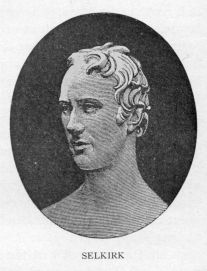
What of the Nor'westers while these projects went forward? Writes MacGillivray from London, where he has been stirring up enmity to Selkirk's project, "Selkirk must be driven to abandon his project at any cost, for his colony would prove utterly destructive of our fur trade." How he purposed doing this will be seen. Writes Selkirk to the governor of his colony, Miles MacDonell: "The Northwest Company must be compelled to quit my lands. If they refuse, they must be treated as poachers." Selkirk believed that the Hudson's Bay Company charter to the Great Northwest was legal and valid. He believed that the vast territory granted to him was legally his own as much as his parks in Scotland. He believed that he possessed the same right to expel intruders on this territory as to drive poachers from his own Scotch parks. It was the spirit of feudalism. As for the Nor'westers, let us look at their rights. They disputed that the charter of the Hudson's Bay Company applied beyond the bounds {382} of Hudson Bay. Even if it did so apply, they pointed out that by the terms of the charter it applied only to lands not possessed by any other Christian power; and who would dispute that French fur traders and Nor'westers, as their successors, had ascended the streams of the interior long before the Hudson's Bay men? It was the spirit of democracy. It needed no prophet to foresee when these two sets of claims came together there would be a violent clash.
It is evening in the little harbor of Stornoway, off the Hebrides, north of Scotland, July 25, 1811. Waning midsummer has begun to shorten the long days; and lying at anchor in the twilight a few yards offshore are the three Hudson's Bay Company boats, outward bound. For a week the quiet little fishing hamlet has been in a turmoil, for Governor Miles MacDonell and Colin Robertson have ordered the Selkirk settlers here—129 of them, 70 farmers, 59 clerks—to join the Hudson's Bay boats as they swing out westward on their far cruise to the north, and the atmosphere has literally been on fire with vexations created by spies of the Northwest Company. In the first place, as the settlers wait for the ships coming up from London, trouble makers pass from group to group scattering a miserable little sheet called "The Highlander," warning "the deluded people" against going to "a polar land of Indian hostiles." Besides, dark hints are uttered that the settlers are not wanted for colonists at all, but for armed battalions to fight the Nor'westers for the Hudson's Bay Company, in proof whereof the prophets of evil point ominously to the cannon and munitions of war on board the three old fur boats. Then there is too much whisky afloat in Stornoway that week. Settlers are taken ashore and farewelled and farewelled and farewelled till unable to find their way down to the rowboats, and then they are easily frightened into abandoning the risky venture altogether. On the settlers who have come as clerks to the Company Governor MacDonell can keep a strong hand, for they have been paid their wages in advance and are seized if they attempt to desert. Then the excise officer here is a friend of the Nor'westers, and he creates {383} endless trouble rowing round and round the boats, bawling … bawling out … to know "if all who are embarking are going of their own free will," till the ship's hands, looking over decks, become so exasperated they heave a cannon ball over rails, which goes splash through the bottom of the harbor officer's rowboat and sends him cursing ashore to dispatch a challenge for a duel to Governor MacDonell. MacDonell sees plainly that if he is to have any colonists left, he must sail at once. Anchors up and sails out at eleven that night, the ships glide from shore so unexpectedly that one faint-heart, desperately resolved on flight, has to jump overboard and swim ashore, while two other settlers, who have been lingering over farewells, must be rowed across harbor by Colin Robertson to catch the departing ships. Then Robertson is back on the wharf trumpeting a last cheer through his funneled hands. The Highlanders on decks lean over the vessel railings waving their bonnets. The Glasgow and Dublin lads indentured as clerks give a last huzza, and the Selkirk settlers are off for their Promised Land.
As long ago Cartier's first colonists to the St. Lawrence had their mettle tested by tempestuous weather and pioneer hardships, so now the first colonists to the Great Northwest must meet the challenge that fate throws down to all who leave the beaten path. Though the season was late, the weather was extraordinarily stormy. Sixty-one days the passage lasted, the tubby old fur ships lying water-logged, rolling to the angry sea. MacDonell was furious that colonists had been risked on such unseaworthy craft, but those old fur-ship captains, with fifty years ice battling to their credit, probably knew their business better than MacDonell. The fur ships had not been built for speed and comfort, but for cargoes and safety, and when storms came they simply lowered sails, turned tails to the wind, and rolled till the gale had passed, to the prolonged woe of the Highland landsmen, who for the first time suffered seasick pangs. Then, when Governor MacDonell attempted drills to pass the time, he made the discovery that seditious talk had gone the rounds of the deck. "The Hudson's Bay had no right to this {384} country." "The Nor'westers owned that country." "The Hudson's Bay could n't compel any man to drill and fight." Selkirk could not give clear deed to their "lands," and much more to the same effect, all of which proved that some Nor'wester agent in disguise had been busy on board.
September 24, amid falling snow and biting frost, the ships anchored at Five Fathom Hole off York Factory, Port Nelson.

The Selkirk settlers had been sixty-one days on board, and they were still a year away from their Promised Land. Champlain's colonists of Acadia and Quebec had come to anchorage on a land set like a jewel amid silver waters and green hills, but the Selkirk settlers have as yet seen only rocks barren of verdure as a billiard ball, vales amidst the domed hills of Hudson Straits, dank with muskeg, and silent as the very realms of death itself, but for the flacker of wild fowl, the roaring of the floundering {385} walrus herds, or the lonely tinkling of mountain streams running from the ice fields to the mossy valleys bordering the northern sea. It needed a robust hope, or the blind faith of an almost religious zeal, to penetrate the future and see beyond these sterile shores the Promised Land, where homes were to be built, and plenty to abound. If pioneer struggles leave a something in the blood of the race that makes for national strength and permanency, the difference between the home finding of the West and the home finding of the East is worth noting.
There were, of course, no preparations for the colonists at York Fort, for the factor could not know they were coming, or anything of Selkirk's plans, till the annual ships arrived. On the chance of finding better hunting farther from the fort, MacDonell withdrew his people from Hayes River, north across the marsh to a sheltered bank of the River Nelson. Winter had set in early. A whooping blizzard met the pilgrims as they marched along an Indian trail through the brushwood. There is a legend of Miles MacDonell, the governor, becoming benighted between York Fort and Nelson River, and losing his way in the storm. According to the story, he beat about the brushwood for twenty-four hours before he regained his bearings. Rude huts of rough timber and thatch roof with logs extemporized for berths and benches were knocked up for wintering quarters on Nelson River, and the next nine months were passed hunting deer for store of provisions, and building flatboats to ascend the interior. All winter a mutinous spirit was at work among the young clerks, which MacDonell, no doubt, ascribed to the machinations of Nor'westers; but the chief factor quickly quelled mutiny by cutting off supplies, and all hands were ready to proceed when the fur brigades set out for the interior on the 21st of June, 1812.
Up Hayes River, up the whole length of Winnipeg Lake, then in August the flatboats are ascending the muddy current of Red River, through what is now Manitoba, and for the first time the people see their Promised Land. High banks fringed with maple and oak line the river at what is now Selkirk. Then the cliffs lower, and through the woods are broken gleams {386} of the rolling prairie intersected by ravines, stretching far as eye can see, where sky and earth meet. From the lateness of the season one can guess that the river was low at the bowlder reach known as St. Andrew's Rapids, and that while the boats were tracked upstream the people would disembark and walk along the Indian trails of the west bank. There was no Fort Garry near the rapids, as a few years later. Buffalo-skin tepees alone broke the endless sweep of russet prairie and sky, clear swimming blue as the purest lake. Then the people are back aboard, laboring hard at the oar now, for they know they are nearing the end of their long pilgrimage. The river banks rise higher. Then they drop gradually to the flats now known as Point Douglas. Another bend in the sinuous red current, looping and curving and circling fantastically through the prairie, and the Selkirk settlers are in full view of the old Cree graveyard,—bodies swathed in skins on scaffolding,—down at the junction of the Assiniboine. Hard by they see the towered bastions of the Northwest Company's post, Fort Gibraltar. Somewhere between what are known to-day as Broadway Bridge and Point Douglas, the Selkirk settlers land on the west side. Chief Peguis and his Cree warriors ride wonderingly among the white-faced newcomers, marveling at men who have crossed the Great Waters "to dig gardens and work land." The barracks knocked up hastily is known after Selkirk's family name as Fort Douglas; but the store of deer meat has been exhausted, and the colonists are on the verge of a second winter. They at once join the Plain Rangers, or Bois Brulés (Burnt Wood Runners), half-breed descendants of French and Nor'west fur traders, who have become retainers of the Montreal Company. With them the Selkirk settlers proceed south to Pembina and the Boundary to hunt buffalo. No instructions had yet come to Red River of the Northwest Company's hostility to the colony, and the lonely Scotch clerks of Fort Gibraltar were glad to welcome men who spoke their own Highland tongue. Volumes might be written of this, the colonists' first year in their Promised Land: how the rude Plain Rangers conveyed them to the buffalo hunt in their {387} creaking Red River carts,—carts made entirely of wood, hub, tire, axle, and all, or else on loaned ponies; how when storm came the white settlers were welcomed to the huts and skin tents of the French half-breeds, given food and buffalo blankets; how many a young Highlander came to grief in the wild stampede of his first buffalo hunt; how when the hunters returned to Fort Gibraltar (Winnipeg), on Red River, with store enough of pemmican for all the fur posts of the Nor'westers, many a wild happy winter night was passed dancing mad Indian jigs to the piping of the Highland piper and the crazy scraping of some Frenchman's fiddle; how when morning came, in a gray dawn of smoking frost mist, a long line of the colonists could be seen winding along the ice of Red River home to Fort Douglas, Piper Green or Hector McLean leading the way, still prancing and blowing a proud national air; how when spring opened, ten-acre plots were assigned to each settler, close to the fort at what were known as the Colony Buildings, and one hundred-acre farms farther down the river. All this and more are part of the story of the coming of the first colonists to the Great Northwest. The very autumn that the first settlers had reached Red River in 1812 more colonists had arrived on the boats at {388} Hudson Bay. These did not reach Red River till October of 1812 and the spring of 1813. By 1813, and on till 1817, more colonists yearly came. The story of each year, with its plot and counterplot, I have told elsewhere. Spite of Nor'westers' threats, spite of the fact there would be no market for the colonists when they had succeeded in transforming wilderness prairie into farms, Selkirk's mad dream of empire seemed to be succeeding.
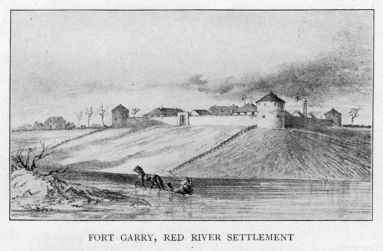
The cardinal mistake in the contest between Hudson's Bay Company and Nor'westers, between feudalism and democracy, was now committed by the governor of the colony, Miles MacDonell. The year 1813 had proved poor for the buffalo hunters. Large numbers of colonists were coming, and provisions were likely to be scarce. Also, note it well, while the War of 1812 did not cut off supplies through Hudson Bay to the English Company, it did threaten access to the West by the Great Lakes, and cut off all supplies by way of Detroit and Lake Huron for the Nor'westers. Was MacDonell scoring a point against the Nor'westers, when they were at a disadvantage? Who can answer? Selkirk had ordered him to expel the {389} Nor'westers from his lands, and if the violent contest had not begun in this way, it was bound to come in another. What MacDonell did was issue a proclamation in January of 1814, forbidding taking provisions from Selkirk's territory of Assiniboia. It practically meant that the Plain Rangers must not hunt buffalo in the limits of modern Manitoba, and must not sell supplies to the Nor'westers. It also meant that all the upper posts of the Nor'westers—the fur posts of Athabasca and British Columbia, which depended on pemmican for food—would be without adequate provisions. The Plain Rangers were enraged beyond words, and doubly outraged when some Hudson's Bay men began seizing buffalo meat at Pembina River, which was beyond the limits of Selkirk's territory. Writes Peter Fidler, one of the Hudson's Bay factors, "If MacDonell only perseveres, he will starve the Nor westers out."
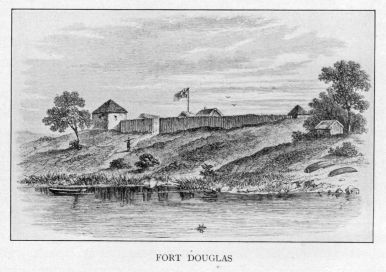
One can guess the anger in the annual meeting of the Nor'westers at Fort William in July of 1814. Like generals on field of war they laid out their campaign. Duncan Cameron, a United Empire Loyalist officer of the 1812 War, is to don his red regimentals and proceed to Red River, where his knowledge of the Gaelic tongue may be trusted to win over Selkirk settlers. "Nothing but the complete downfall of the colony will satisfy some," wrote one of the fiery Nor'westers to a brother officer. Such was the mood of the Nor'westers when they came back from their annual meeting on Lake Superior to Red River, and MacDonell fanned this mood to dangerous fury by threatening to burn the Nor'westers' forts to the ground unless they moved from Selkirk's territory. For the present Duncan Cameron contents himself with striking up a warm friendship with the Highlanders of the settlement and offering to transport two hundred of them free of cost to Eastern Canada. MacDonell seizes still more provisions from northwest forts. Cameron, the Nor'wester, comes back from the annual meeting of 1815 still more bellicose. He carries the warrant to arrest Governor Miles MacDonell for the seizure of those provisions. MacDonell, safe behind the palisades of Fort Douglas, laughs {390} the warrant to scorn; but it is another matter when the Plain Rangers ride across the prairie from Fort Gibraltar armed, and pour such hot shot into Fort Douglas that the colonists, frenzied with fear, huddle to the fort for shelter. To insure the safety of his colonists, MacDonell surrenders to the Nor'westers and is sent to Eastern Canada for a trial which never takes place. No sooner has Governor MacDonell been expelled than Cuthbert Grant, warden of the Plain Rangers, rides over to the colony and warns the colonists to flee for their lives, from Indians enraged at "these land workers spoiling the hunting fields." What the Indians thought of this defense of their rights is not stated. They were silent and unacting witnesses of the unedifying spectacle of white men ready to fly at each other's throats. It was too late for the colonists to reach Hudson Bay in time for the annual ships of 1815, so the houseless people dispersed amid the forests of Lake Winnipeg, where they could be certain of at least fish for food.
Word of the two hundred settlers having been moved from Red River by the Nor'westers, of MacDonell's forcible expulsion, and of the dispersion of the rest of the colony had, of course, been sent to Selkirk and his agents in both Montreal and London. Swift retaliation is prepared. Colin Robertson, who speaks French like a Canadian and knows all the Nor'west voyageurs of the St. Lawrence, is sent to gather up two hundred French boatmen under the very noses of the Nor'westers at Montreal. With these Robertson is to invade the far-famed Athabasca, whence come the best furs, the very heart of the Nor'westers' stamping ground. Robert Semple is appointed governor of the colony on Red River, with instructions to resist the aggressions of the Nor'westers even to the point of "a shock that may be felt from Montreal to Athabasca." Selkirk himself comes to Canada to interview the Governor General about military forces to protect his colony.
Robertson, with his two hundred voyageurs for Athabasca, follows the old Ottawa trail of the French explorers, from the St. Lawrence to the Great Lakes, and from the Great Lakes to {391} Red River by way of Winnipeg Lake. Whom does he find on the shores of the lake but Selkirk's dispersed colonists! Ordering John Clarke, an old campaigner of Astor's company on the Columbia, to lead the two hundred French voyageurs on up to Athabasca, Colin Robertson rallies the colonists together and leads them back to Red River for the winter of 1815-1816. Feeling sure that he had destroyed Selkirk's scheme root and branch, Cameron has remained at Fort Gibraltar with only a few men, when back to the field comes Robertson, stormy, capable, robust, red-blooded, fearless, breathing vengeance on Selkirk's foes.

By the spring of 1816 the tables have been turned with a vengeance. Cameron, the Nor'wester, has been seized and sent to Hudson Bay to be expelled from the country. Fort Gibraltar has been pulled down and the timbers used to strengthen Fort Douglas, whose pointed cannon command all passage up and down Red River. It was hardly to be supposed that the haughty Nor'westers would submit to expulsion without a blow. From Athabasca, from New Caledonia, from Qu'Appelle … they rally their doughtiest fighters under Cuthbert Grant, the {392} half-breed Plain Ranger. From Montreal and Fort William come spurring the leading partners, with one hundred and seventy French-Canadian bullies, and a brass cannon concealed under oilcloth in a long boat. The object of the Plain Rangers is to meet the up-coming partners with supplies for the year; but is that any reason for the riders who are striking eastward from Assiniboine to Red River, decking themselves out in war paint and stripping like savages before battle? The object of the partners is to meet the Plain Rangers on Red River; but is that any reason for bringing a cannon concealed under oilcloth all the way from Lake Superior? Or do men fighting a life-and-death struggle for the thing the world calls success ever acknowledge plain motives within themselves at all? Is it not rather the blind brute instinct of self-protection, forfend what may?
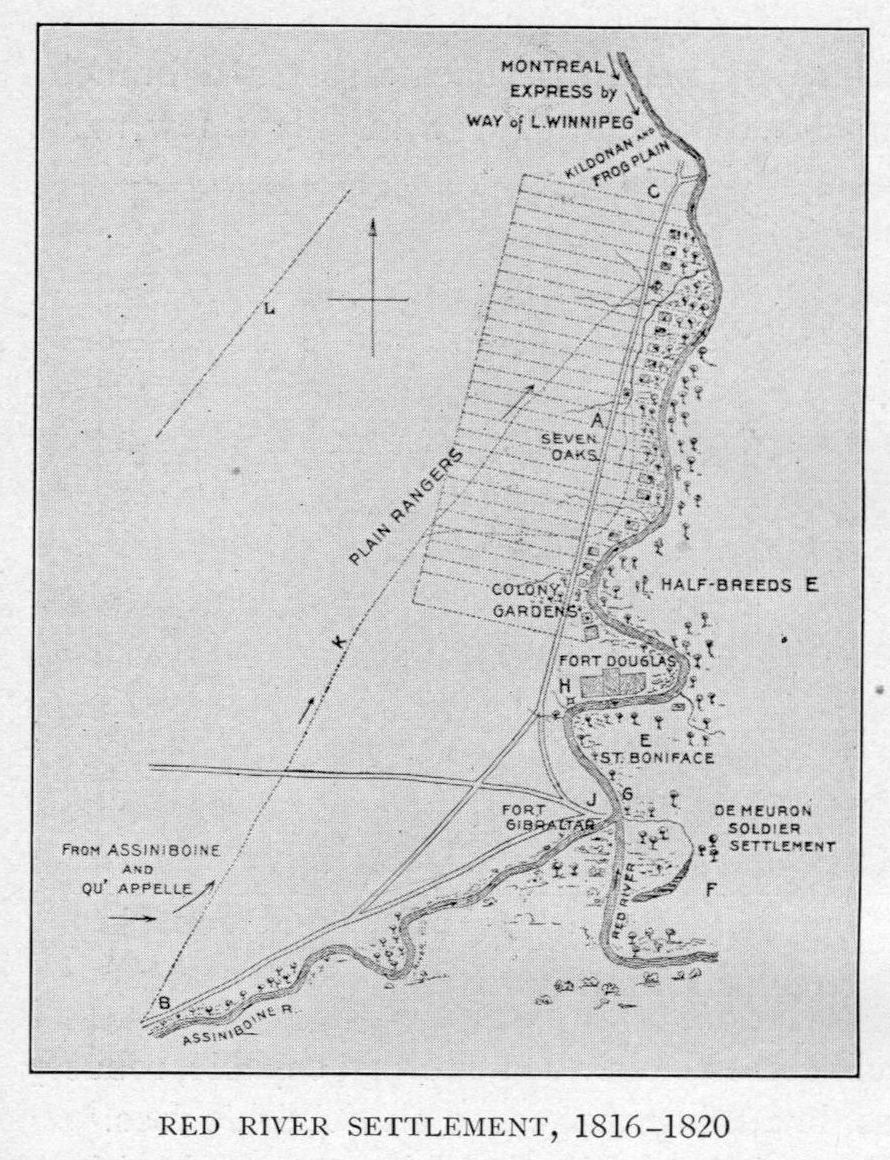
"Listen, white men! Beware! Beware!" the Cree chief Peguis warns Governor Semple. What means the spectacle of white brothers, who preach peace, preparing for war over a few beaver pelts? Chief Peguis cannot understand, except this is the way of white men.
{393} And now, unluckily for Governor Semple, he quarrels with his adviser, Colin Robertson. Robertson, from his early training in Northwest ranks, reads the signs, and is for striking a blow before the enemy can strike him. Semple is still talking peace. Robertson leaves Red River in disgust, and departs for Hudson Bay to take ship for England. The Plain Rangers, it may be explained, have uttered the wild threat that if they "can catch Robertson," they will avenge the destruction of Fort Gibraltar "by skinning him alive and feeding him to the dogs." Also it is well known, Nor'westers of Qu'Appelle have muttered angry prophecies about "the ground being drenched with the blood of the colonists."
Still Semple talks peace, which is a good thing in its place; but this is n't the place.
"My Governor! My Governor!" pleads an old hunter of the Hudson's Bay with Semple; "are you not afraid? The half-breeds are gathering to kill you!"
Semple laughs. Pshaw! He has law on his side. Law! What is law? The old hunter of the lawless wilds does n't know that word. That word does n't come as far west as the Pays d'en Haut.
It is sunset of June 18, 1816. Old chief Peguis comes again to the Hudson's Bay fort on Red River.
"Governor of the gard'ners!" he solemnly warns; "governor of the land workers and gard'ners, listen!…" Not much does he add, after the fashion of his race. Only this, "Let me bring my warriors to protect you!"
Semple laughs at such fears.
It is sunset of June 19. A soft west wind has set the prairie grass rippling like a green sea between the fort and the sun hanging low at the western sky line. A boy on the lookout above one of the bastion towers of Fort Douglas suddenly shouts, "The half-breeds are coming!"
Semple ascends the tower and looks through a field glass. There is a line of sixty or seventy horsemen, all armed, not coming to the fort, but moving diagonally across from the Assiniboine to the Red towards the colony. And then, north {394} towards the colony, is wildest clamor,—people in ox carts, people on horseback, people on foot, stampeding for the shelter of the fort. And up to this moment absolutely nothing has occurred to create this terror.
"Let twenty men follow me," orders Semple; and he marches out, followed by twenty-seven armed men.
As they wade through the waist-high hay fields they meet the fleeing colonists.
"Keep your back to the river!" shouts one colonist, convoying his family. "They are painted, Governor! Don't let them surround you."
Semple sends back to the fort for a cannon to be trundled out.
Young Lieutenant Holte's gun goes off by mistake. Semple turns on him with fury and bids him have a care: there is to be no firing.
The half-breeds have turned from their trail and are coming forward at a gallop.
"There 's Grant, the Plain Ranger, Governor! Let me shoot him," pleads one Hudson's Bay man.
"God have mercy on our souls!" mutters one of the colonists, counting the foe; "but we are all dead men."
All the world knows the rest. At a knoll where grew some trees, a spot now known in Winnipeg on North Main Street as Seven Oaks, Grant, the Ranger, sent a half-breed, Boucher, forward to parley.
"What do you want?" demands Semple.
"We want our fort!"
"Go to your fort, then!"
"Rascal! You have destroyed our fort!"
"Dare you to speak so to me? Arrest him!"
Boucher slips from his saddle. The Plain Rangers think he has been shot. Instantaneously from both sides crashes musketry fire. Semple falls with a broken thigh. Before Grant can control his murderous crew or obtain aid for the wounded governor, a scamp of a half-breed has slashed the fallen man to death. Two or three Hudson's Bay men escape through the long grass {395} and swim across Red River. Two or three more save themselves by instant surrender. For the rest of the twenty-seven, they lie where they have fallen. They are stripped, mutilated, cut to pieces. Only one Nor'wester is killed, only one wounded.
Later, in order to save the lives of the settlers, Fort Douglas is surrendered. For a second time the colonists are dispersed. Before going down Red River in flatboats two of the Hudson's Bay people go out with Chief Peguis by night and bury the dead; but they have no time to dig deep graves, and a few days later the wolves have ripped up the bodies.
Near Lake Winnipeg the fleeing colonists meet the Northwest partners with their one hundred and seventy men. No need to announce what the spectacle of the terrified colonists means. A wild whoop rends the air. "Thank Providence it was all over before we came," writes one devout Nor'wester; "for we intended to storm the fort." Both crews pause. The Nor'westers interrogate the settlers. Semple's private papers are seized. Also, two Hudson's Bay men who took part in the Seven Oaks fight are arrested, to be carried on down to Northwest headquarters on Lake Superior. Then the settlers go on to Lake Winnipeg.
At the various camping places on the way down to Fort William, those two Hudson's Bay prisoners overhear strange threats. It is night on the Lake of the Woods. Voices of Northwest partners sound through the dark. They are talking of Selkirk coming to the rescue of his people with an armed force. Says the wild voice of a Nor'wester whose brother had been killed by a Hudson's Bay man some years before, "There are fine quiet places along Winnipeg River if he comes this way." … Then scraps of conversation.… Then, "The half-breeds could capture him when he is asleep." … Then words too low to be heard.… Then, "They could have the Indians shoot him." … Then in voice of authority restraining the wild folly of a bloodthirst for vengeance, "Things have gone too far, but we can throw the blame on the Indians."
The wild words of a man gone mad for revenge must not be taken as the policy of a great commercial company.
{396} Meantime, where was Selkirk? He had arrived in Montreal. Secret coureur, whose adventures I have told elsewhere, had carried him word of the dangers impending over his colony. He at once appealed to the Governor General for a military force to protect the settlers, but it must be recalled how Upper and Lower Canada were to be governed under the Act of 1791. There were to be the governor, the legislative council appointed by the crown, and the representative assembly. The legislative council was entirely dominated by the Northwest Company. Of the different Quebec courts, there was scarcely a judge who was not interested directly or indirectly in the Northwest Company. Lord Selkirk could obtain no aid which would conflict with that company's policy. Then Selkirk petitioned the Governor that, in view of the threats against himself, he might be granted the commission of a justice of the peace and permission to take a personal bodyguard at his own cost to the west. These requests the Governor granted.
Thereupon, Selkirk gathers up some two hundred of the De Meuron and De Watteville regiments, mercenaries disbanded after the War of 1812, and sets out for the west. Not aware that Robertson has left Red River, he sends him word to keep the colonists together and to expect help by way of the states from the Sault in order to avoid touching at the Nor'westers' post at Fort William. The coureur with this message is waylaid by the Nor'westers, but Selkirk himself, preceded by his former governor, Miles MacDonell, has gone only as far as the Sault when word comes back of the Seven Oaks massacre. What to do now? He can obtain no justice in Eastern Canada. Two justices of the peace at the Sault refuse to be involved in the quarrel by accompanying him. Selkirk goes on without them, accompanied by the two hundred hired soldiers; but instead of proceeding to Red River by Minnesota, as he had first planned, he strikes straight for Fort William, the headquarters of the Nor'westers.
He arrives at the fort August 12, only a few days after the Northwest partners had come down from the scene of the {397} massacre at Red River. Cannon are planted opposite Fort William. Things have "gone too far." The Nor'westers capitulate without a stroke. Then as justice of the peace, my Lord Selkirk arrests all the partners but one and sends them east to stand trial for the massacre of Seven Oaks. The one partner not sent east was a fuddled old drunkard long since retired from active work. This man now executes a deed of sale to my Lord Selkirk for Fort William and its furs. The man was so intoxicated that he could not write, so the afore-time governor, Miles MacDonell, writes out the bargain, which one could wish so great a philanthropist as Selkirk had not touched with tongs. Before midwinter of 1817 has passed, the De Meuron soldiers have crossed Minnesota and gone down Red River to Fort Douglas. One stormy night they scale the wall and bundle the Northwest usurpers out, bag and baggage.
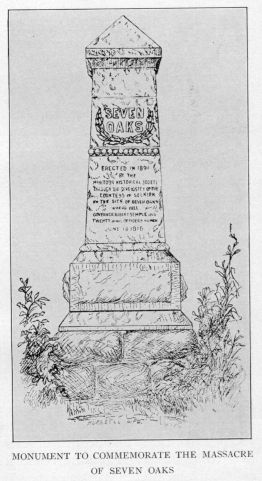
July of 1817 comes Selkirk himself to the Promised Land. There is no record that I have been able to find of his thoughts on first nearing the ground for which so much blood had been shed, and for which he himself was yet to suffer much; but {398} one can venture to say that his most daring hope did not grasp the empire that was to grow from the seed he had planted. He meets the Indians in treaty for their lands. He greets his colonists in the open one sunny August day, speaking personally to each and deeding over to them land free of all charge. "This land I give for your church," he said, standing on the ground which the cathedral now occupies. "That plot shall be for your school," pointing across the gully; "and in memory of your native land, let the parish be called Kildonan."
Of the trials and counter trials between the two companies, there is not space to tell here. Selkirk was forced to pay heavy damages for his course at Fort William, but the courts of Eastern Canada record not a single conviction against the Nor'westers for the massacre of Seven Oaks. Selkirk retired shattered in health to Europe, where he died in 1820. The same year passed away Alexander MacKenzie, his old-time rival.
The truth is, each company had gone too far and was on the verge of ruin. From Athabasca came the furs that prevented bankruptcy, and whichever company could drive the other from Athabasca could practically force its rival to ruin or union. When Colin Robertson had rallied the dispersed colonists from Lake Winnipeg, he had left John Clarke to conduct the two hundred Canadian voyageurs to Athabasca for the Hudson's Bay Company. Clarke had been a Nor'wester before he joined Astor, and was a born fighter, idolized by the Indians. So confident was he of success now that he galloped his canoes up the Saskatchewan without pause to gather provisions. Once on the ground on Athabasca Lake, he divided his party into two or three bands and sent them foraging to the Nor'westers' forts and hunting grounds up Peace River, down Slave Lake, at Athabasca itself. Weakened by division and without food to keep together, his men fell easy prey to the wily Nor'westers. Of those on Slave Lake eighteen died from starvation. Those on Peace River were captured and literally whipped out of the country, signing oaths never to return. Those at {399} Athabasca being leading officers were held prisoners. Meanwhile the Hudson's Bay Company is defeated at Seven Oaks and victorious at Fort William. The Nor'westers at Athabasca were keen to keep the frightened Indians of the north ignorant that Selkirk had triumphed at Fort William, but the news traveled over the two thousand miles of prairie in that strange hunter fashion known as "moccasin telegram," and the story is told how the captured Hudson's Bay officers let the secret out for the benefit of the Indians now afraid to carry their hunt to a Hudson's Bay man.
Revels and all-night carousals marked the winter with the triumphant Nor'westers of Athabasca Lake. Often, when wild drinking songs were ringing in the Nor'westers' dining hall, the Hudson's Bay men would be brought in to furnish a butt for their merciless victors. One night, when the hall was full of Indians, one of the Northwest bullies began to brawl out a song in celebration of the Seven Oaks affair.
"The H.B.C. came up a hill, and up a hill they came,
The H.B.C. came up the hill, but down they went again."
Tired of their rude horseplay, one of the Hudson's Bay officers spoke up: "Y' hae niver asked me for a song. I hae a varse o' me ain compaesin."
Then to the utter amaze of the drunken listeners and astonishment of the Indians, the game old officer trolled off this stave:
"But Selkirk brave went up a hill, and to Fort William came!
When in he popped and out from thence could not be driven again."
The thunderstruck Nor'wester leaped to his feet with a yell: "A hundred guineas for the name of the men who brought that news here."
"A hundred guineas for twa lines of me ain compaesin! Extravagant, sir," returns the canny Scot.
From accounts held by the Hudson's Bay Company's Montreal lawyers it is seen that Clarke's expedition cost the Company 20,000 pounds.
{400} Before the massacre of Seven Oaks Colin Robertson had gone down to Hudson Bay in high dudgeon with Semple, intending to take ship for England; but that fall the ice drive prevented one ship from leaving the bay, and Robertson was stranded at Moose Factory for the winter, whither coureurs brought him word of the Seven Oaks tragedy and Selkirk's victory at Fort William. Taking an Indian for guide, Robertson set out on snowshoes for Montreal, following the old Ottawa trail traversed by Radisson and Iberville long ago. Montreal he found in a state of turmoil almost verging on riot over the imprisonment of the Northwest partners, whom Selkirk had sent east. Nightly the goals [Transcriber's note: gaols?] were illuminated as for festivals. Nightly sound of wandering musicians came from the cell windows, where loyal friends were serenading the imprisoned partners. They were released, of course, and acquitted from the charge of responsibility for the massacre of Seven Oaks.
Presently Robertson finds himself behind the bars for his part in destroying Fort Gibraltar and arresting Duncan Cameron. He too is acquitted, and he tells us frankly that a private arrangement had been made beforehand with the presiding judge. Probably if the Nor'westers had been as frank, the same influence would explain their acquittal.
Robertson found himself free just about the time Lord Selkirk came back from Red River by way of the Mississippi in order to avoid those careful plans for his welfare on the part of the Nor'westers at "the quiet places along Winnipeg River." The Governor of Canada had notified members of both companies unofficially that the English government advised the rivals to find some basis of union, which practically meant that if the investigations under way were pushed to extremes, both sides might find themselves in awkward plight; but the fight had gone beyond the period of pure commercialism. It was now a matter of deadly personal hate between man and man, which, I am sorry to say, has been carried down by the descendants of the old fighters almost to the present day. Each side hoped to drive the other to bankruptcy; and the last throes of the {401} deadly struggle were to be in Athabasca, the richest fur field. While Selkirk is fighting his cause in the courts, he gives Robertson carte blanche to gather two hundred more French voyageurs and proceed to the Athabasca.
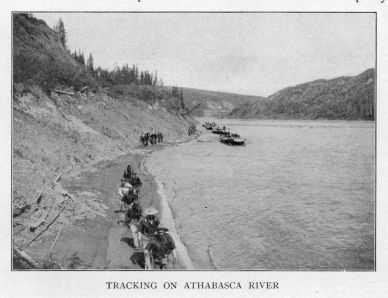
Midsummer of 1819 finds the stalwart Robertson crossing Lake Winnipeg to ascend the Saskatchewan. At the mouth of the Saskatchewan a miserable remnant of terrified men from the last Athabasca expedition is added to Robertson's party; and John Clarke, breathing death and destruction against the Nor'westers, goes along as lieutenant to Robertson. Everywhere are signs of the lawless conditions of the fur trade. Not an Indian dare speak to a Hudson's Bay man on pain of horsewhipping. Instead of canoes gliding up and down the Saskatchewan like birds of passage, reign a silence and solitude as of the dead. Though Robertson bids his voyageurs sing and fire off muskets as signals for trade, not a soul comes down to the river banks till the fleet of advancing traders is well away from the Saskatchewan and halfway across the height of land towards the Athabasca.
{402} The amazement of the Nor'westers at Fort Chippewyan in Athabasca when Robertson pulled ashore at the conglomeration of huts known as Fort Wedderburn, may be guessed. Two or three of the partners ran down to the shore and called out that they would like to parley; but John Clarke, filled with memory of former outrages and rocking the canoe in his fury so that it almost upset, met the overtures with a volley of stentorian abuse that sent the Nor'westers scampering and set Robertson laughing till the tears ran down his cheeks.
The change of spirit on the part of the Nor'westers was easily explained. The most of their men were absent on the hunting field. In a few weeks Robertson had his huts in order and had dispatched his trappers down to Slave Lake and westward up Peace River. Then, in October, came more Nor'west partners from Montreal. The Nor'westers were stronger now and not so peacefully inclined. Nightly the French bullies, well plied with whisky, would come across to the Hudson's Bay fort, bawling out challenge to fight; but Robertson held his men in hand and kept his powder dry.
Early on the morning of October the 11th, Robertson's valet roused him from bed with word that a man had been accidentally shot. Slipping a pistol in his pocket and all unsuspicious of trickery, Robertson dashed out. It happened that the most of his men were at a slight distance from his fort. Before they could rally to his rescue he was knocked down, disarmed, surrounded by the Nor'westers, thrown into a boat, and carried back to their fort a captive. In vain he stormed almost apoplectic with rage, and tried to send back Indian messengers to his men. The Nor'westers laughed at him good-naturedly and relegated him to quarters in one room of a log hut, where sole furnishings were a berth bed and a fireplace without a floor. Robertson's only possessions in captivity were the clothes on his back, a jackknife, a small pencil, and a notebook; but he probably consoled himself that his men were now on guard, and, outnumbering the Nor'westers two to one, could hold the ground for the Hudson's Bay that winter. As {403} time passed the captive Robertson began to wrack his brains how to communicate with his men. It was a drinking age; and the fur traders had the reputation of capacity to drink any other class of men off their legs. Robertson feigned an unholy thirst. Rapping for his guard, he requested that messengers might be sent across to the Hudson's Bay fort for a keg of liquor. It can be guessed how readily the Nor'westers complied; but Robertson took good care, when the guard was absent and the door locked, to pour out most of the whisky on the earth floor. Then taking slips of paper from his notebook, he cut them in strips the width of a spool. On these he wrote cipher and mysterious instructions, which only his men could understand, giving full information of the Nor'westers' movements, bidding his people hold their own, and ordering them to send messages down to the new Hudson's Bay governor at Red River,—William Williams,—to place his De Meuron soldiers in ambush along the Grand Rapids of the Saskatchewan to catch the Northwest partners on their way to Montreal the next spring. These slips of paper he rolled up tight as a spool and hammered into the bunghole of the barrel. Then he plastered clay over all to hide the paper, and bade the guard carry this keg of whisky back to the H.B.C. fort; it was musty, Robertson complained; let the men rinse out the keg and put in a fresh supply!
All that winter Robertson, the Hudson's Bay man, captive in the Nor'westers' fort, sent weekly commands to his men by means of the whisky kegs; but in the spring his trick was discovered, and the angry Nor'westers decided he was too clever a man to be kept on the field. They would ship him out of the country when their furs were sent east.
On the way east he succeeded in escaping at Cumberland House. Waiting only a few hours, he launched out in his canoe and followed on the trail of the Northwest partners, on down to see what would happen at Grand Rapids, where the Saskatchewan flows into Lake Winnipeg. A jubilant shout from a canoe turning a bend in the river presently announced the news: "All the Northwest partners captured!" When Robertson {404} came to Grand Rapids he found Governor Williams and the De Meurons in possession. Cannon pointed across the river below the rapids. The Northwest partners were prisoners in a hut. The voyageurs were allowed to go on down to Montreal with the furs. This last act in the great struggle ended tragically enough. What was to be done with the captured partners? They could not be sent to Eastern Canada. Pending investigations for the union of the companies, Governor Williams sent them to York Factory, Hudson Bay, whence some took ship to England, others set out overland on snowshoes for Canada; but in the scuffle at Grand Rapids, Frobisher, one of the oldest partners, with a reputation of great cruelty in his treatment of Hudson's Bay men, had been violently clubbed on the head with a gun. From that moment he became a raving maniac, and the Hudson's Bay people did not know what to do with such a captive. He must not be permitted to go home to England. His condition was too terrible evidence against them; so they kept him prisoner in the outhouses of York Factory, with two faithful Nor'wester half-breeds as personal attendants.
One dark cold night towards the first of October Frobisher succeeded in escaping through the broken bars of his cell window. A leap took him over the pickets. By chance an old canoe lay on Hayes River. With this he began to ascend stream for the interior, paddling wildly, laughing wildly, raving and singing. The two half-breeds knew that a voyage to the interior at this season without snowshoes, food, or heavy clothing, meant certain death; but they followed their master faithfully as black slaves. Wherever night found them they turned the canoe upside down and slept under it. Fish lines supplied food, and the deserted hut of some hunter occasionally gave them shelter for the night. Winter set in early. The ice edging of the river cut the birch canoe. Abandoning it, they went forward on foot. From York Fort, Hudson Bay, the nearest Northwest post was seven hundred miles. By the end of October they had not gone half the distance. Then came one of those changes so frequent in northern climes,—a sunburst of warm {405} weather following the first early winter, turning all the frozen fields to swimming marshes, and the travelers had no canoe. By this time Frobisher was too weak to walk. As his body failed his mind rallied, and he begged the two half-breeds to go on without him, as delay meant the death of all three; but the faithful fellows carried him by turns on their backs. They themselves were now so emaciated they were making but a few miles a day. Their moccasins had been worn to tatters, and all three looked more like skeletons than living men. Then, the third week of November, Frobisher could go no farther, and the servants' strength failed. Building a fire in a sheltered place for their master, the two faithful fellows left Frobisher somewhere west of Lake Winnipeg. Two days later they crept into a Northwest post too weak to speak, and handed the Northwesters a note scrawled by Frobisher, asking them to send a rescue party. Frobisher was found lying across the ashes of the fire. Life was extinct.

In 1820 the union of the companies put an end to the ruinous and criminal struggle. George Simpson, afterwards knighted, {406} who has been sent to look over matters in Athabasca, is appointed governor, and Nicholas Garry, one of the London directors, comes out to appoint the officers of the united companies to their new districts. The scene is one for artist brush,—the last meeting of the partners at Fort William, Hudson's Bay men and Nor'westers, such deadly enemies they would not speak, sitting in the great dining hall, glowering at each other across tables: George Simpson at one end of the tables, pompously dressed in ruffles and satin coat and silk breeches, vainly endeavoring to keep up suave conversation; Nicholas Garry at the other end of the table, also very pompous and smooth, but with a look on his face as if he were sitting above a powder mine, the Highland pipers dressed in tartans, standing at each end of the hall, filling the room with the drone and the skurl of the bagpipes.
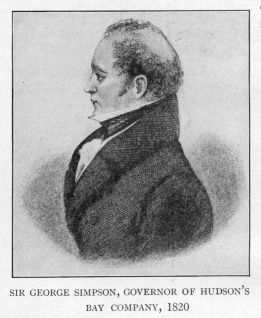
By the union of the companies both sides avoided proving their rights in the law courts. Most important of all, the Hudson's Bay Company escaped proving its charter valid; for the charter applied only to Hudson Bay and adjacent lands "not occupied by other Christian powers"; but on the union taking place, the British government granted to the new Hudson's Bay Company license of exclusive monopoly to all the Indian territory, meaning (1) Hudson Bay Country, (2) the interior, (3) New Caledonia as well as Oregon. In fact, the union left the fur traders ten times more strongly intrenched than before. {407} By the new arrangement Dr. John McLoughlin was appointed chief factor of the western territories known as Oregon and New Caledonia. When the War of 1812 closed, treaty provided that Oregon should be open to the joint occupancy of English and American traders till the matter of the western boundary could be finally settled. Oregon roughly included all territory between the Columbia and the Spanish fort at San Francisco, namely, Washington, Oregon, Northern California, Idaho, Utah, Nevada, parts of Montana and Wyoming. It was cheaper to send provisions round by sea to the fur posts of New Caledonia, in modern British Columbia, than across the continent by way of the Saskatchewan; so McLoughlin's district also included all the territory far as the Russian possessions in Alaska.
This part of the Hudson's Bay Company's history belongs to the United States rather than Canada, but it is interesting to remember that just as the French fur traders explored the Mississippi far south as the Gulf of Mexico, so English fur traders first explored the western states far south as New Spain. This western field was perhaps the most picturesque of all the Hudson's Bay Company's possessions.
Fort Vancouver, ninety miles inland from the sea on the Columbia, was the capital of this transmontane kingdom, and yearly till 1846 the fur brigades set out from Fort Vancouver two or three hundred strong by pack horse and canoe. Well-known officers became regular leaders of the different brigades. There was Ross, who led the Rocky Mountain Brigade inland across the Divide to the buffalo ranges of Montana. There was Ogden, son of the Chief Justice in Montreal, who led the Southern Brigade up Snake River to Salt Lake and the Nevada desert and Humboldt River and Mt. Shasta, all of which regions except Salt Lake he was first to discover. There was Tom McKay, son of the McKay who had crossed to the Pacific with MacKenzie, who, dressed as a Spanish cavalier, led the pack-horse brigades down the coast past the Rogue River Indians and the Klamath Lakes to San Francisco, where Dr. Glen Rae had opened a fort for the Hudson's Bay Company. {408} Then there was the New Caledonia Brigade, two hundred strong, which set out from Fort Vancouver up the Columbia in canoes to the scream of the bagpipes through the rocky canyons of the river. Close to the boundary, shift was made from canoe to pack horse, and, leaving the Columbia, the brigade struck up the Okanogan Valley to Kamloops, bound for the bridle trail up Fraser River. This brigade, in later days, was under Douglas, who became the knighted governor of British Columbia. Tricked out in gay ribbons, the long file of pack ponies, two hundred with riders, two hundred more with packs, moved slowly along the forest trail with a drone as of bees humming in midsummer. So well did ponies know the way that riders often fell asleep, to be suddenly jarred awake by the horses jamming against a tree, or running under a low branch to brush riders off, or hurdle-jumping over windfall. Each of these brigades has its own story, and each story would fill a book. For instance, Glen Rae at San Francisco has a difficult mission. The company has a plan to take over the debts of Mexico to British capitalists and exchange them for California. Glen Rae is sent to watch matters, but he commits the blunder of furnishing arms to the losing side of a revolution. The debt for the arms remains unpaid. Glen Rae suicides, and the company withdraws from California.
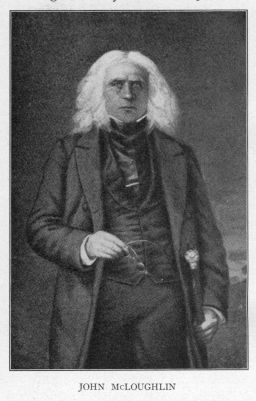
{409} Presently come American settlers and missionaries over the mountains. The American government delays settling that treaty of joint occupancy, for the more American settlers that come, the stronger will be the American claim to the territory. McLoughlin helps the settlers who would have starved without his aid, and McLoughlin receives such sharp censure from his company for this that he resigns. When the American settlers set up a provisional government, the foolish cry is raised, "54, 40 or fight," which means the Americans claim all the way up to Alaska, and for this there is no warrant either through their own occupation or discovery. The boundary is compromised by the Treaty of Oregon in 1846 at the 49th parallel.
When settlers come, fur-bearing animals leave. Long ago the Hudson's Bay Company had foreseen the end and moved the capital of its Pacific Empire up to Victoria. A string of fur posts extends up Fraser River to New Caledonia.
How the Family Compact worked—The old order changeth—"Loyalty cry"—Gourley driven mad—Richmond's tragic death—Patriots of the plow—Defeat of patriots—Duncombe's escape—Execution of patriots—Bloodshed in Quebec—Chenier's tragic death—Durham gives Canada a Magna Charta—Confederation—What of the future
It will be recalled that on the coming of the United Empire Loyalists to Canada, the form of government was changed by the Constitutional Act of 1791, dividing the country into Upper and Lower Canada, the government of each province to consist of a governor, the legislative council, and the assembly. Unfortunately, self-government for the colonies was not yet a recognized principle of English rule. While the assemblies of the two provinces were elected by the people, the power of the assemblies was practically a blank, for the governor and council were the real rulers, and they were appointed by the Crown, which meant Downing Street, which meant in turn that the two Canadas were regarded as the happy hunting ground for incompetent office seekers of the great English parties. From the governor general to the most insignificant postal clerk, all were appointed from Downing Street. Influence, not merit, counted, which perhaps explains why one can count on the fingers of one hand the number of governors and lieutenants from 1791 to 1841 who were worthy of their trust and did not disgrace their position by blunders that were simply notorious. Prevost's disgraceful retreat from Lake Champlain in the War of 1812 is a typical example of the mischief a political jobber can work when placed in position of trust; but the life-and-death struggle of the war prevented the people turning their attention to questions of misgovernment, and it is hardly an exaggeration to say that the Act of 1791 reduced Canadian affairs to the chaos of a second Ireland and retarded the progress of the country for a century.
It has become customary for English writers to slur over the disorders of 1837 as the results of the ignorant rabble following {411} the bad advice of the hot-heads, MacKenzie and Papineau; but it is worth remembering that everything the rabble fought for, and hanged for, has since been incorporated in Canada's constitution as the very woof and warp of responsible government.
Let us see how the system worked out in detail.
After the War of 1812 Prevost dies before court-martial can pronounce on his misconduct at Plattsburg, and Sir Gorden Drummond, the hero of Fort Erie's siege, is sworn in.
Canada is governed from Downing Street, and it is my Lord Bathurst's brilliant idea that forever after the war there shall be a belt of twenty miles left waste forest and prairie between Canada and the United States, presumably to prevent democracy rolling across the northern boundary. Fortunately the rough horse sense of the frontiersman is wiser than the wisdom of the British statesman, and settlement continues along the boundary in spite of Bathurst's brilliant idea.
Those who fought in the War of 1812 are to be rewarded by grants of land,—rewarded, of course, by the Crown, which means the Governor; but the Governor must listen to the advice of his councilors, who are appointed for life; and to the heroes of 1812 the councilors grant fifty acres apiece, while to themselves the said councilors vote grants of land running from twenty thousand to eighty thousand acres apiece.
After the war it is agreed that neither Canada nor the United States shall keep war vessels on the lakes, except such cruisers as shall be necessary to maintain order among the fisheries; but the credit for this wise arrangement does not belong to the councils at Toronto or Quebec, for the suggestions came from Washington.
As the legislative councilors are appointed for life, they control enormous patronage, recommending all appointments to government positions and meeting any applicants for office, who are outside the "family" ring, with the curt refusal that has become famous for its insolence, "no one but a gentleman."
Judges are appointed by favor. So are local magistrates. So are collectors at the different ports of entry. Smaller cities like {412} Kingston are year after year refused incorporation, because incorporation would confer self-government, and that would oust members of the "family compact" who held positions in these places.
Officeholders are responsible to the Crown only, not to the people. Therefore when Receiver General Caldwell of Quebec does away with 96,000 pounds, or two years' revenue of Lower Canada, he accounts for the defalcation to his friends with the explanation of unlucky investments, and goes scot free.
Quebec is a French province, but appointments are made in England; so that out of 71,000 pounds paid to its civil servants 58,000 pounds go to the English officeholders, 13,000 pounds to French; out of 36,000 pounds paid to judges only 8,000 pounds go to the French.
And in Upper Canada, Ontario, it was even worse. In Quebec there was always the division of French against English, and Catholic against Protestant; but in Upper Canada "the family compact" of councilors against commoners was a solid and unbroken ring. When the assembly raises objections to some items of expense sent down by the council, writes Lieutenant Governor Simcoe in high dudgeon, "I will send the rascals," meaning the commoners, "packing about their business," and he prorogues the House.
Not all the governors and their lieutenants are as foolishly blind to the faults of the system as Simcoe of Ontario. Sir John Sherbrooke of Quebec, who succeeds Drummond in Lower Canada, knows very well he is surrounded by a pack of thieves; but they are his councilors, appointed for life, and there he is, bound to abide by their advice. Nevertheless, he kicks over traces vigorously now and then, like the old war horse that he is. The commissary general comes to him with word that 600 pounds is missing from the military chest, and he needs a warrant for search.
"Search, indeed!" roars Sir John. "There's not the slightest need! Whenever there is a robbery in your department, it is among yourselves! Go and find it!"
{413}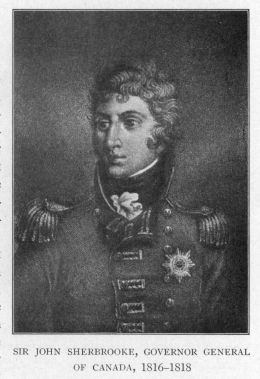
Curious it is how good men reared in the old school, where the masses exist for the benefit of the classes and the governed are to be allowed to exist only by favor of those who govern—curious how good men fail to read the sign of the times. Colonel Tom Talbot's settlement in West Ontario has, by 1832, increased to 50,000 people, and the mad harum-scarum of court days is becoming an old man. Talbot has been a legislative councilor for life, but it is not on record that he ever attended the council in Toronto. Still he views with high disfavor this universal discontent with "being governed." The secret meetings held to agitate for responsible government, Tom Talbot regards as "a pestilence" leading on to the worst disease from which humanity can suffer, namely, democracy. The old bear stirs uneasily in his lair, as reports come in of louder and louder demands that the colony shall be permitted to govern itself. What would become of kings and colonels and land grants by special favor, if colonies governed themselves? Colonel Tom Talbot doffs his homespun and his coon cap, and he dons the satin ruffles of twenty-five years ago, and he mounts his steed and he rides pompously forth to the market place of St. Thomas Town on St. George's Day of 1832. Bands play; flags wave; the country people from twenty miles round come riding to town. Banners {414} inscribed with "Loyalty to the Constitution" are carried at the head of parades. The venerable old colonel is greeted with burst after burst of shouting as he comes prancing on horseback up the hill. The band plays "the British Grenadiers." The Highland bagpipes skurl a welcome. Then the old man mounts the rostrum and delivers a speech that ought to be famous as an exposition of good old Tory doctrine:
Some black sheep have slipped into my flock, and very black they are, and what is worse, they have got the rot, a distemper not known in this settlement till some I shall call for short "rebels" began their work of darkness under cover of organizing Blanked Cold Water Drinking Societies, where they meet at night to communicate their poisonous schemes and circulate the infection and delude the unwary! Then they assumed a more daring aspect under mask of a grievance petition, which, when it was placed before me, I would not take the trouble to read, being aware it was trash founded on falsehood, fabricated to create discontent.
At the end of a half hour's tirade, of which these lines are a sample, the good old Tory raised his hands, and in the words of the Church's benediction blessed his people and prayed Heaven to keep their minds untainted by sedition.
Looking back less than a century, it is almost impossible to believe that the colonel's speech—it cannot be called reasoning—was applauded to the echo and regarded as a masterly justification of people "being governed" rather than governing themselves.
Perhaps, after all, it was not so much the Constitution of Canada that caused the conflict as the clash between the old-time feudalism and the spirit of modern, aggressive democracy. The United States fought this question out in 1776. Canada wrestled, it cannot be called a fight, the same question out in 1837.
It is necessary to give one or two cases of individual persecution to understand how the disorders flamed to open rebellion.
One Matthews, an officer of the 1812 War, living on a pension, had incurred the distrust of the governing ring by expressing sympathy with the agitators. Now to be an agitator was bad enough in the eyes of "the family compact," but for one of their {415} own social circle to sympathize with the outsiders was, to the snobocracy clique of the little city of ten thousand at Toronto, almost an unpardonable sin. Such sins were punished by social ostracism, by the grand dames of Toronto not inviting the officer's wife to social functions, by the families of the upper clique literally freezing the sinner's children out of the foremost circles of social life. Many a Canadian family is proud to trace lineage back to some old lady of this tempestuous period, whose only claim to recognition is that she waged petty persecution against the heroes of Canadian progress. Now the annals of the times do not record that this special sinner's wife and children so suffered. At all events Matthews' spirits were not cast down by social snobbery. He continued to sympathize with the agitators. The "family compact" bided their time, and their time came a few months later, when a company of American actors came to Toronto. A band concert had been given. When the British national air struck up, all hats were off. Then some one called for "Yankee Doodle," and in compliment to the visitors, when the American air struck up, Matthews shouted out for "hats off." For this sin the legislative council ordered the lieutenant governor to cut off Matthews' pension, and, to the everlasting shame of Sir Peregrine Maitland, the advice was taken, though Matthews had twenty-seven years of service to his credit. Matthews appealed to England, and his pension was restored, so that in this case "the family compact" for political reasons was pretending to be more British than Great Britain. It was not to be the last occasion on which "the loyalty cry" was to be used as a political dodge.
The persecution of Robert Gourlay was yet more outrageous.
He had come to Canada soon after the War of 1812, and in the course of collecting statistics for a book on the colony was quick to realize how Canada's progress was being literally gagged by the policy of the ruling clique. Gourlay attacked the local magistrates in the press. He pointed out that the land grants were notorious. He advocated bombarding the evils from two sides at once, by appealing to the home government and by {416} holding local conventions of protest. The pass to which things had come may be realized by the attitude of the council. It held that the colony must hold no communications with the imperial government except through the Governor General; in other words, individual appeals not passing through the hands of the legislative council were to be regarded as illegal. It is sad to have to acknowledge that such a palpably dishonest measure was ever countenanced by people in their right minds. But "the family compact" went a step farther. It passed an order forbidding meetings to discuss public grievances. This part of Canada's story reads more like Russia than America, and shows to what length men will go when special privileges rather than equal rights prevail in a country. Gourlay met these infamous measures by penning some witty doggerel, headed "Gagged, gagged, by Jingo!" The editor in whose paper Gourlay's writings had appeared, was arrested, and the offending sheet was compelled to suspend. Gourlay himself is arrested for sedition and libel at least four times, but each time the jury acquits him. At any cost the governing clique must get rid of this scribbling fellow, whose pen voices the rising discontent. An alien act, passed before the War of 1812, compelling the deportation of seditious persons, is revived. Under the terms of the act Gourlay is arrested, tried, and sentenced to be exiled, but Gourlay declares he is not an alien. He is a British subject, and he refuses to leave the country. He is thrown in jail at Niagara, and for a year and a half left in a moldy, close cell. One dislikes to write that this outrage on British justice was perpetrated under Chief Justice Powell, whose failure to obtain decisions from the jury in the Red River trials brought down such harsh criticism on the bench. At the end of twenty months Gourlay is again hauled before the jury and sentenced to deportation on pain of death if he refuses. He was calmly asked if he had anything to say, if there were any reason why sentence should not be pronounced.
"Anything … to … say? Any reason … why … sentence … should not be pronounced?" From 1818 to 1820 {417} Gourlay had been having things "to say," had been giving good and sufficient reasons why sentence should not be pronounced! The question is repeated: "Robert Gourlay stand up! Have you anything to say?" The court waits, Chief Justice Powell, bewigged and wearing his grandest manner, all unconscious that the scene is to go down to history with blot of ignominy against his name, not Gourlay's.
Gourlay's face twitches, and he breaks into shrieks of maniacal laughter. The petty persecutions of a provincial tyranny have driven a man, who is true patriot, out of his mind. As Gourlay drops out of Canada's story here, it may be added that the English government later pronounced the whole trial an outrage, and Gourlay was invited back to Canada.
If at this stage a man had come to Canada as governor, big enough and just enough to realize that colonies had some rights, there might have been remedy; for the imperial government, eager to right the wrong, was misled by the legislative councilors, and all at sea as to the source of the trouble. While men were being actually driven out of Canada by the governing ring on the charge of disloyalty, the colonial minister of England was sending secret dispatches to the Governor General, instructing him plainly that if independence was what Canada wanted, then the mother country, rather than risk a second war with the United States, or press conclusions with the Canadas themselves, would willingly cede independence. It is as well to be emphatic and clear on this point. It was not the tyranny of England that caused the troubles of 1837. It was the dishonesty of the ruling rings at Quebec and Toronto, and this dishonesty was possible because of the Constitutional Act of 1791.
Unfortunately, just when imperial statesmen of the modern school were needed, governors of the old school were appointed to Canada. After Sir John Sherbrooke came the Duke of Richmond to Quebec, and his son-in-law, Sir Peregrine Maitland, as lieutenant governor to Ontario. Men of more courtly manners never graced the vice-regal chairs of Quebec and Toronto. {418} Richmond, who was some fifty years of age, had won notoriety in his early days by a duel with a prince of the blood royal, honor on both sides being satisfied by Richmond shooting away a curl from the royal brow; but presto, an Irish barrister takes up the quarrel by challenging Richmond to a second duel for having dared to fight a prince; and here Richmond satisfies claims of honor by a well-directed ball aimed to wound, not kill. Long years after, when the duke became viceroy of Ireland, the Irishman appeared at one of Richmond's state balls.
"Hah," laughed the barrister, "the last time we met, your Grace gave me a ball."
"Best give you a brace of 'em now," retorted the witty Richmond; and he sent his quondam foe invitation to two more balls.
Richmond it was who gave the famous ball before the defeat of Napoleon at Waterloo. The story of his daughter's love match with Sir Peregrine Maitland is of a piece with the rest of the romance in Richmond's life. Richmond and Maitland had been friends in the army, but when the duke began to observe that his daughter, Lady Sarah, and the younger man were falling in love, he thought to discourage the union with a poor man by omitting Maitland's name from invitation lists. When Lady Sarah came downstairs to a ball she surmised that Maitland had not been invited, and, withdrawing from the assembled guests, drove to her lover's apartments. She married Maitland without her father's consent, but a reconciliation had been patched up. Father and son-in-law now came to Canada as governor and lieutenant governor.
The military and social life of both unfitted them to appreciate the conditions in Canada. Socially both were the lions of the hour. As a man and gentleman Richmond was simply adored, and Quebec's love of all the pomp of monarchy was glutted to the full. No more distinguished governor ever played host in the old Château St. Louis; but as rulers, as pacifiers, as guides of the ship of state, Richmond and Maitland were dismal failures. To them Canada's demand for responsible {419} government seemed the rallying cry of an impending republic. "We must overcome democracy or it will overcome us," pronounced Richmond. He failed to see that resistance to the demand for self-government would bring about the same results in Canada as resistance had brought about in the United States, and he could not guess—for the thing was new in the world's history—that the grant of self-government would but bind the colony the closer to the mother land.
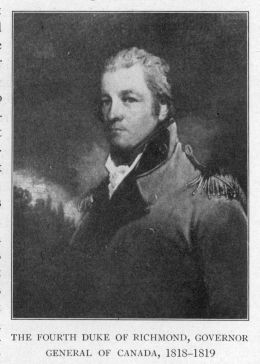
It is sad to write of two such high-minded, well-intentioned rulers, that the worst acts of misgovernment in Canada took place in their régime.
Richmond's death was as unusual as his life. Two accounts are given of the cause. One states that he permitted a pet dog to touch a cut in his face. The other account has it that he was bitten by a tame fox at a fair in Sorel, and the date of Richmond's death, late in August of 1819, exactly two months from the time he was bitten at Sorel,—which is the length of time that hydrophobia takes to develop in a grown person,—would seem to substantiate the latter story. He was traveling on horseback from Perth to Richmond, on the Ottawa, and had complained of feeling poorly. A small stream had to be crossed. The sight of the stream brought the strange water delirium to Richmond, when he begged his attendants to take him quickly to Montreal. It need scarcely be explained here that hydrophobia {420} is not caused by lack of water, but by contagious transmission. The feeling passed, as the first terrors of the disease are usually spasmodic, and the Governor was proceeding through the woods with his attendants, when he suddenly broke away deliriously, leading them a wild race to a farm shed. There he died during the night, crying out as the lucid intervals broke the delirium of his agonies: "For shame! for shame Lenox! Richmond, be a man! Can you not bear it?"
Public affairs are meanwhile passing from bad to worse. William Lyon MacKenzie has become leader of the agitators in his newspaper, The Advocate, of Toronto. A band of young vandals, sons of the ruling clique, wreck his newspaper office and throw the type into Toronto Bay, but MacKenzie recovers $3000 damages and goes on agitating. Four times he is publicly expelled from the House, and four times he is returned by the electors. What are they asking, these agitators, branded as rebels, expelled from the assembly, in some cases cast in prison by the councilors, in others threatened with death?
Control of public revenues.
Reform in the land system.
Municipal rights for towns and cities.
The exclusion of judges from Parliament.
That the council be directly responsible to the people
rather than the Crown.
Since 1818 the reformers have been agitating to have wrongs righted, and for nineteen years the clique has prevented official inquiry, gagged the press, bludgeoned conventions out of existence, and thrown leaders of opposition in prison.
MacKenzie now makes the mistake of publishing in his papers a letter from the English radical Hume, advocating the freedom of Canada "from the baneful domination of the mother country." At once, with a jingo whoop, the loyalty cry is emitted by "the family compact." Is not this what they have been telling the Governor from the first,—these reformers are republicans in {421} disguise? By trickery and manipulation they swing the next election so that MacKenzie is defeated. From that moment MacKenzie's tone changed. It may be that, losing all hope of reform, he became a republican. If this were treason, then the English ministers, who were advocating the same remedy, were guilty of the same treason. With MacKenzie, secretly and openly, are a host of sympathizers,—Dr. Rolph, Tom Talbot's old friend, come up from the London district to practice medicine in Toronto, and Van Egmond, who has helped to settle the Huron Tract of the Canada Company, founded by John Galt, the novelist, and some four thousand others whose names MacKenzie has on a list in his carpet bag.
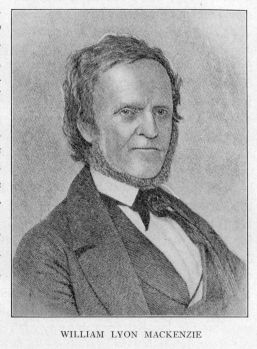
All the autumn of 1837 Fitzgibbons, now commander of the troops in Toronto, hears vague rumors of farmers secretly drilling, of workmen extemporizing swords out of scythes, of old soldiers furbishing up their arms of the 1812 War. What does it mean? Sir Francis Bond Head, the new governor of Ontario, refuses to believe his own ears. Neither does the family compact realize that there is any danger to their long tenure of power. They affect to sneer at these poor patriots of the plow, little dreaming that the rights which these poor patriots of the scythe swords are burning to defend, will, by and by, be the pride of England's colonial system. The story of plot and counter plot cannot be told in detail here; it is too {422} long. But on the night of Monday, December 4, Toronto wakes up to a wild ringing of college bells. The rebel patriots have collected at Montgomery's Tavern outside Toronto, and are advancing on the city.
Poor MacKenzie's plans have gone all awry. Four thousand patriots had pledged themselves to assemble at the tavern on December 7, but Dr. Rolph, or some other friend in the city, sends word that the date has been discovered. The only hope of seizing the city is for them to come sooner; and MacKenzie arrives at the tavern on December 3, with only a few hundred followers, who have neither food nor firearms; and I doubt much if they had even definite plans; of such there are no records. Before Van Egmond comes from Seaforth, doubt and dissension and distrust of success depress the insurgents; and it does n't help their spirits any to have four Toronto scouts break through their lines in the dark and back again with word of their weakness, though they plant a fatal bullet neatly in the back of one poor loyalist. If they had advanced promptly on the 4th, as planned, they might have given Sir Francis Bond Head and Fitzgibbons a stiff tussle for possession of the city, for Toronto's defenders at this time numbered scarcely three hundred; but during the days MacKenzie's followers delayed north of Yonge Street, Allan McNab came up from Hamilton with more troops. By Wednesday, the 6th, there were twelve hundred loyalist troops in Toronto; and noon of the 7th, out marches the loyalist army by way of Yonge Street, bands playing, flags flying, horses prancing under Fitzgibbons and McNab. It was a warm, sunny day. From the windows of Yonge Street women waved handkerchiefs and cheered. At street corners the rabble shouted itself hoarse, just as it would have cheered MacKenzie had he come down Yonge Street victorious.
MacKenzie's sentries had warned the insurgents of the loyalists' coming. MacKenzie was for immediate advance. Van Egmond thought it stark madness for five hundred poorly armed men to meet twelve hundred troopers in pitched battle; but it was too late now for stark madness to retreat. The loyalist {423} bands could be heard from Rosedale; the loyalists' bayonets could be seen glittering in the sun. MacKenzie posted his men a short distance south of the tavern in some woods; one hundred and fifty on one side of the road west of Yonge Street, one hundred on the other side. The rest of the insurgents, being without arms, did not leave the rendezvous. In the confusion and haste the tragic mistake was made of leaving MacKenzie's carpet bag with the list of patriots at the tavern. This gave the loyalists a complete roster of the agitators' names.
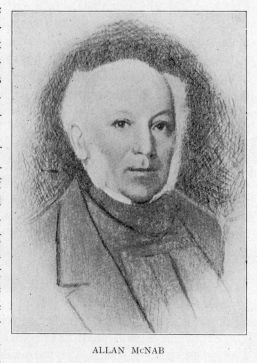
Fifteen minutes later it was all over with MacKenzie. The big guns of the Toronto troops shelled the woods, killing one patriot rebel and wounding eleven, four fatally. In answer, only a clattering spatter of shots came from the rebel side. The patriots were in headlong flight with the mounted men of Toronto in pursuit.
It was over with MacKenzie, but, as the sequence of events will show, it was not all over with the cause. A book of soldiers' yarns might be told of hairbreadth escapes, the aftermath of the rebellion. Knowing his side was doomed to defeat, Dr. Rolph tried to escape from Toronto. He was stopped by a loyalist sentry, but explained he was leaving the city to visit a patient. Farther on he had been arrested by a loyalist picket, when luckily a young doctor who had attended Rolph's medical lectures, all unconscious of MacKenzie's plot, vouched for his {424} loyalty. Riding like a madman all that night, Rolph reached Niagara and escaped to the American frontier. A reward of 1000 pounds had been offered for MacKenzie dead or alive. He had waited only till his followers fled, when he mounted his big bay horse and galloped for the woods, pursued by Fitzgibbons' men. The big bay carried him safely to the country, where he wandered openly for four days. It speaks volumes for the stanch fidelity of the country people to the cause which MacKenzie represented, that during these wanderings he was unbetrayed, spite of the 1000 pounds reward. Finally he too succeeded in crossing Niagara. Van Egmond was captured north of Yonge Street, but died from disease contracted in his prison cell before he could be tried. Lount, another of the leaders, had succeeded in reaching Long Point, Lake Erie. With a fellow patriot, a French voyageur, and a boy, he started to cross Lake Erie in an open boat. It was wintry, stormy weather. For two days and two nights the boat tossed, a plaything of the waves, the drenching spray freezing as it fell, till the craft was almost ice-logged. For food they had brought only a small piece of meat, and this had frozen so hard that their numbed hands could not break it. Weakening at each oar stroke, they at last saw the south shore of Lake Erie rise on the sky line; but before the close-muffled refugees had dared to hope for safety on the American side, a strong south wind had sprung up that drove the boat back across the lake towards Grand River. To remain exposed longer meant certain death. They landed, were mistaken for smugglers, and thrown into jail, where Lount was at once recognized.
In West Ontario one Dr. Duncombe had acted as MacKenzie's lieutenant. Allan McNab had come west with six hundred men to suppress the rebellion. Realizing the hopelessness of further resistance, Duncombe had tried to save his men by ordering them to disperse to their homes. He himself, with his white horse, took to the woods, where he lay in hiding all day—and it was a Canadian December—and foraged at night for berries and roots. Judge Ermatinger gives the graphic story of {425} Duncombe's escape. Starvation drove him to the house of a friend. The friend was out, and when the wife asked who he was, Duncombe laid his revolver on the table and made answer, "I am Duncombe; and I must have food." Here he lay disguised so completely with nightcap, nightdress, and all, as the visiting grandmother of the family, that loyalists who saw his white horse and came in to search the house, looked squarely at the recumbent figure beneath the bedclothes and did not recognize him. Duncombe at last reached his sister's home near London.
"Don't you know me?" he asked, standing in the open door, waiting for her recognition. In the few weeks of exposure and pursuit his hair had turned snow-white.
His friends suggested that he cross to the American frontier dressed as a woman, and the disguise was so perfect, curls of his sister's hair bobbing from beneath his bonnet, that two loyalist soldiers gallantly escorted the lady's sleigh across unsafe places in the ice. Duncombe waited till he was well on the American side, and his escorts on the way back to Sarnia. Then he emitted a yell over the back of the cutter, "Go tell your officers you have just helped Dr. Duncombe across!"
Having lost the fight for a cause which events have since justified, it is not surprising that the patriots on the American frontier now lost their heads. They formed organizations from Detroit to Vermont for the invasion of Canada and the establishment of a republic. These bands were known as "Hunter's Lodges." Rolph and Duncombe repudiated connection with them, but MacKenzie was head and heart for armed invasion from Buffalo. Space forbids the story of these raids. They would fill a book with such thrilling tales as make up the border wars of Scotland.
The tumultuous year of 1837 closed with the burning of the Caroline. MacKenzie had taken up quarters on Navy Island in Niagara River. The Caroline, an American ship, was being employed to convey guns and provisions to the insurgents' camp. On the Canadian side of the river camped Allan McNab with {426} twenty-five hundred loyalist troops. Looking across the river with field glasses, McNab sees the boat landing field guns on Navy Island for MacKenzie.
"I say," exclaims the future Sir Allan, "this won't do! Can't you cut that vessel out, Drew?" addressing a young officer.
"Nothing easier," answers Drew.
"Do it, then," orders McNab.
In spite of the fact "nothing was easier," Drew's men came near disaster on their midnight escapade. The river below Navy Island was three miles wide, and only a mile and a half from the rapids above the Falls, with a current like a mill race. Secretly seven boats, with four men in each, set out at half past eleven, a few friends on the river bank wishing Drew Godspeed. Out from shore Drew draws his boats together, and tells the men the perilous task they have to do: if any one wishes to go back let him do so now. Not a man speaks. Halfway across, firing from the island drives two of the boats back. The rest get under shadow from the bright moonlight and go on. The roar of the Falls now became deafening, and some of the rowers called out they were being drawn down the center of the river astern. Drew fastens his eyes on a light against the American shore to judge of their progress. For a moment, though the men were rowing with all their might, the light ashore and the boats in mid-river seemed to remain absolutely still. Finally the boats gained an oar's length. Then a mighty pull, and all forge ahead. A strip of land hides approach to the Caroline. The Canadian boatmen lie in hiding till the moon goes down, then glide in on the Caroline, when Drew mounts the decks. Three unarmed men are found on the shore side. Drew orders them to land. One fires point-blank; Drew slashes him down with a single saber cut. The rest of the crew are roused from sleep and sent ashore. The Caroline is set on fire in four places. She is moored to the shore ice; axes chop her free. She is adrift; Drew the last to jump from her flaming decks to his place in the small boats. The flames are seen from the Canadian side, and huge bonfires light up the Canadian shore; by their gleam {427} Drew steers back for McNab's army, and is welcomed with cheers that split the welkin. Slowly the flaming vessel drifted down the channel to the Falls. Suddenly the lights went out; the Caroline had either sunk on a reef or gone over the Falls. One man had been killed on the decks. As the vessel was American, and had been raided in American ports, the episode raised an international dispute that might in another mood have caused war.
Lount and Matthews pay for the rebellion on the gallows, upon which the imperial government expressed regret that the Toronto Executive "found such severity necessary." Later, when "the Hunters' Lodges" raid Prescott, and Van Shoultz, the Polish leader, with nine others, is executed at Kingston, a great revulsion of feeling takes place against the family compact. The execution of the patriots did more for their cause than all their efforts of twenty years. The Canadian people had supported the agitators up to the point of armed rebellion. That gave British blood pause, for the Britisher reveres the law next to God; but when the governing ring began to glut its vengeance under cloak of loyalty that was another matter. After the execution of Lount and Matthews the family compact could scarcely count a friend outside its own circle in Upper Canada. It is worth remembering that the young lawyer who defended Van Shoultz in the trial at Kingston was a John A. Macdonald, who later took foremost part in framing a new constitution for Canada.
Affairs had gone faster in Quebec. There the rebellion almost became war. Papineau was leader of the agitators,—Papineau, fiery, impetuous, eloquent, followed by the bold boys in the bonnets blue, marching the streets of Montreal singing revolutionary songs and planting liberty trees. In Lower Canada, too, things have come to the pass where the agitators advocate armed resistance. From the first, in Quebec, the struggle has waged round two questions,—the exclusion of the French from the council, and the right of the colony to spend its own revenues; but boil down the ninety-two resolutions of 1834, and the demands {428} of the agitators in Lower Canada are the same as in Upper Canada, for complete self-government. A dozen clashes of authority lead up to the final outbreak. For instance, the House elects Papineau, the agitator, speaker. The Governor General refuses to recognize him, and Parliament is dissolved.
Failing to obtain redress by constitutional methods, the agitators now advocate the right of a colony to abolish government unsuited to it. The constitutional party takes alarm and organizes volunteers. Papineau's party, early in 1837, begin violently advocating that all French magistrates resign their commissions from the English government. On Richelieu River and up in Two Mountains, north of Montreal, are the strongholds of the agitators, where men have been drilling, and the boys in the bonnets blue rioting through the villages to the great scandal of parish priests.
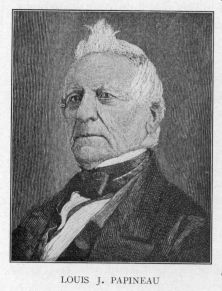
There are riots in Montreal early in November of 1837, and "the Sons of Liberty" are chased through the town. Then in the third week of November a troop of Montreal cavalry is sent to St. John's to arrest three agitators, who have been threatening a magistrate for refusing to resign his commission. The agitators are arrested and handcuffed, and at three in the morning the troops are moving along across country towards Longueuil with the prisoners in a wagon, when suddenly three hundred armed men rise on either side of the road to the fore. Shots are exchanged. In the confusion the prisoners jump from the wagon. This is not resistance to authority. It is open rebellion. Papineau intrusts the management of affairs in St. Eustache, north of Montreal, to Girod, a Swiss, and to {429} Dr. Chenier, a local patriot. Papineau himself and Dr. Nelson and O'Callaghan are down on the Richelieu at St. Denis.
Take the Richelieu region first. Colonel Gore is to strike up the river southward to St. Denis. Colonel Wetherell is to cross country from Montreal and strike down the river north to St. Charles, thus hemming in the insurgents between Gore on the north and himself on the south. There are eight hundred rebels at St. Denis, one hundred and fifty armed, and twelve hundred at St. Charles. Papineau and O'Callaghan for safety's sake slip across the line to Swanton in Vermont. One could wish that, having led their faithful followers up to the sticking point of stark madness, the agitators had remained shoulder to shoulder with the brave fellows on the field.
Colonel Gore came from Montreal by boat to the mouth of the Richelieu. At seven-thirty on the night of November 22 two hundred and fifty troopers landed to march up the Richelieu road to St. Denis. Rain turning to sleet was falling in a deluge. The roads were swimming knee-deep in slush. Bridges had been cut, and in the darkness the loyalists had to diverge to fording places, which lengthened out the march twenty-four miles. At St. Denis was Dr. Nelson with the agitators in a three-story stone house, windows bristling with muskets. By dawn Papineau and O'Callaghan had fled, and at nine o'clock came Colonel Gore's loyalist troopers, exhausted from the march, soaked to the skin, their water-sagged clothes freezing in the cold wind. The loyalists went into the fight unfed, and with a whoop; but it is not surprising that the peppering of bullets from the windows drove the troopers back, and Gore's bugles sounded retreat. Unaware of Gore's defeat, one Lieutenant Weir has been sent across country with dispatches. He is captured and bound, and, in a futile attempt to escape, shot and stabbed to death.
Wetherell comes down the river from Chambly with three hundred men. He finds St. Charles village protected by outworks of felled trees, and the houses are literally loopholed with muskets; but Wetherell has brought cannon along, and the cannon begin to sing on November 25. Then Wetherell's {430} men charge through the village with leveled bayonets. The poor habitants scatter like frightened sheep; they surrender; one hundred perish. It is estimated that on both sides three hundred are wounded, though some English writers give the list of wounded as low as forty. Messengers galloped with news of the patriots' defeat at St. Charles to Dr. Nelson at St. Denis. The habitants fled to their homes. Nelson was left without a follower. He escaped to the woods, and for two weeks wandered in the forests of the boundary, exposed to cold and hunger, not daring to kindle a fire that would betray him, afraid to let himself sleep for fear of freezing to death. He was captured near the Vermont line and carried prisoner to Montreal.
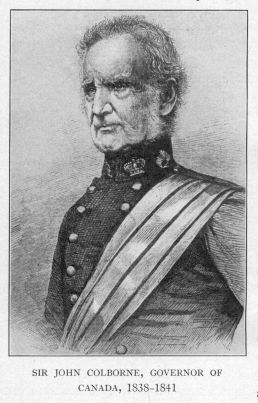
And still worse fared the fortunes of war with the patriots north of Montreal. Their defense and defeat were almost pitiable in childish ignorance of what war might mean. Boys' marbles had been gathered together for bullets. Scythes were carried as swords, and old flintlocks that had not seen service for twenty years were taken down from the chimney places. With their bonnets blue hanging down their backs, rusty firearms over their shoulders, and the village fiddler leading the march, one thousand "Sons of Liberty" had paraded the streets of St. Eustache, singing, rollicking, speechifying, unconscious as {431} children playing war that they were dancing to ruin above a volcano. Chenier, the beloved country doctor, is their leader. Girod, the Swiss, has come up to show them how to drill. They take possession of a newly built convent. Then on Sunday, the 3d of December, comes word of the defeat down on the Richelieu. The moderate men plead with Chenier to stop now before it is too late; but Chenier will not listen. He knows the cause is right, and with the credulity or faith of a simple child hopes some mad miracle will win the day. Still he is much moved; tears stream down his face. Then on December 14 the church bells ring a crazy alarm. The troops are coming, two thousand of them from Montreal under Sir John Colborne, the governor. The insurgent army melts like frost before the sun. Less than one hundred men stand by poor Chenier. At eleven-thirty the troops sweep in at both ends of the village at once, Girod, the Swiss commander, suicides in panic flight. Cooped up in the church steeple with the flames mounting closer round them and the troopers whooping jubilantly outside, Chenier and his eighty followers call out: "We are done! We are sold! Let us jump!" Chenier jumps from the steeple, is hit by the flying bullets, and perishes as he falls. His men cower back in the flaming steeple till it falls with a crash into the burning ruins. Amid the ash heap are afterwards found the corpses of seventy-two patriots. The troopers take one hundred prisoners in the region, then set fire to all houses where loyalist flags are not waved from the windows.
Matters have now come to such an outrageous pass that the British government can no longer ignore the fact that the colony has been goaded to desperation by the misgovernment of the ruling clique. Lord Durham is appointed special commissioner with extraordinary powers to proceed to Canada and investigate the whole subject of colonial government. One may guess that the ruling clique were prepared to take possession of the new commissioner and prime him with facts favorable to their side; but Durham was not a man to be monopolized by any faction. {432} When he arrived, in May of 1838, he quickly gave proof that he would follow his own counsels and choose his own councilors. His first official declaration was practically an act of amnesty to the rebels, eight only of the leading prisoners, among them Dr. Nelson, being punished by banishment to Bermuda, the rest being simply expelled from Canada.
This act was tantamount to a declaration that the rebels possessed some rights and had suffered real grievances, and the governing rings in both Toronto and Quebec took furious offense. Complaints against Durham poured into the English colonial office,—complaints, oddly enough, that he had violated the spirit of the English Constitution by sentencing subjects of the Crown without trial. Though every one knew that in Canada's turbulent condition trial by jury was impossible, Durham's political foes in England took up the cry. In addition to political complaints were grudges against Durham for personal slight; and it must be confessed the haughty earl had ridden roughshod over all the petty prejudices and little dignities of the colonial magnates. The upshot was, Durham resigned in high dudgeon and sailed for England in November of 1838.
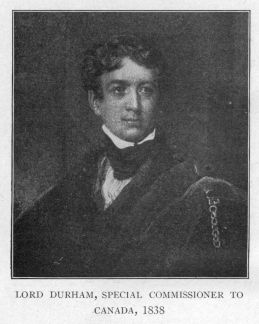
On his way home he dictated to his secretary, Charles Buller, the famous report which is to Canada what the Magna Charta is to England or the Declaration of Independence to the United States. Without going into detail, it may be said that it {433} recommended complete self-government for the colonies. As disorders had again broken out in Canada, the English government hastened to embody the main recommendations of Durham's report in the Union Act of 1840, which came into force a year later. By it Upper and Lower Canada were united on a basis of equal representation each, though Quebec's population was six hundred thousand to Ontario's five hundred thousand. The colonies were to have the entire management of their revenues and civil lists. The government was to consist of an Upper Chamber appointed by the Crown for life, a representative assembly, and the governor with a cabinet of advisers responsible to the assembly.
In all, more than seven hundred arrests had been made in Quebec Province. Of these all were released but some one hundred and thirty, and the state trials resulted in sentence of banishment against fifty, death to twelve. In modern days it is almost impossible to realize the degree of fanatical hatred generated by this half century of misgovernment. Declared one of the governing clique's official newspapers in Montreal: "Peace must be maintained, even if we make the country a solitude. French Canadians must be swept from the face of the earth.… The empire must be respected, even at the cost of the entire French Canadian people." With such sentiments openly uttered, one may surely say that the Constitutional Act of 1791 turned back the pendulum of Canada's progress fifty years, and it certainly took fifty more years to eradicate the bitterness generated by the era of misgovernment.
With the Upper and Lower Canadas united in a federation of two provinces, it was a foregone conclusion that all parts of British North America must sooner or later come into the fold. It would be hard to say from whom the idea of confederation of all the provinces first sprang. Purely as a theory the idea may be traced back as early as 1791. The truth is, Destiny, Providence, or whatever we like to call that great stream of concurrent events which carries men and nations out to the ocean {434} highway of a larger life, forced British North America into the Confederation of 1867.
In the first place, while the Union worked well in theory, it was exceedingly difficult in practice. Ontario and Quebec had equal representation. One was Protestant, the other Catholic; one French, the other English. Deadlocks, or, to use the slang of the street, even tugs of war, were inevitable and continual. All Ontario had to do to thwart Quebec, or Quebec had to do to thwart Ontario, was to stand together and keep the votes solid. Coalition ministries proved a failure.
In the second place, Ontario was practically dependent on the customs duties collected at Quebec ports of entry for a provincial revenue. The goods might be billed for Ontario; Quebec collected the tax.
Ontario was also dependent on Quebec for access to the sea. Which province was to pay for the system of canals being developed, and the deepening of the St. Lawrence?
Then the Oregon Treaty of 1846 had actually brought a cloud of war on the horizon. In case of war, there was the question of defense.
Then railways had become a very live question. Quebec wanted connection with New Brunswick and Nova Scotia. How was the cost of a railroad to be apportioned? Red River was agitating for freedom from fur-trade monopoly. How were railways to be built to Red River?
Ontario's population in twenty years jumped past the million mark. Was it fair that her million people should have only the same number of representatives as Quebec with her half million? Reformers of Ontario, voiced by George Brown of The Globe, called for "Rep. by Pop.,"—representation by population.
Civil war was raging in the United States, threatening to tear the Union to tatters. Why? Because the balance of power had been left with the states governments, and not enough authority centralized in the federal government. The lesson was not lost on struggling Canada.
{435} England's declaration of free trade brought the colonies face to face with the need of some united action to raise revenue by tariff.
Then the Hudson's Bay Company's license of monopoly over the fur trade of the west was nearing expiration. Should the license be renewed for another twenty years, or should Canada take over Red River as a new province, which was the wish of the people both east and west? And if Canada did buy out the Hudson's Bay Company's vested rights, who was to pay down the cost?
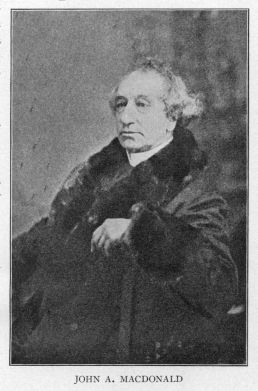
Lastly, was John A. Macdonald, the young lawyer who had pleaded the defense of the patriot trials at Kingston in 1838, now a leading politician of the United Canadas, weary of the hopeless deadlocks between Ontario and Quebec. With almost a sixth sense of divination in reading the signs of the times in the trend of events, John A. Macdonald saw that Canada's one hope of becoming a national power lay in union,—confederation. The same thing was seen by other leaders of the day, by all that grand old guard known as the Fathers of Confederation, sent from the different provinces to the conference at Quebec in October of 1864. There the outline of what is known as the British North America Act was drafted,—in the main but an amplification of Durham's scheme, made broad enough to receive all {436} the provinces whenever they might decide to come into Confederation. The delegates then go back to be indorsed by their provinces. By some provinces the scheme is rejected. Newfoundland is not yet part of Canada, but by 1867 Confederation is an accomplished fact. By 1871 the new Dominion has bought out the rights of the Hudson's Bay Company in the West and Manitoba joins the Eastern Provinces. By 1885 a railway links British Columbia with Nova Scotia. By 1905 the great hunting field of the Saskatchewan prairies has been divided into two new provinces, Saskatchewan and Alberta, each larger than France.
Such is barest outline of Canada's past. What of the future for this Empire of the North? That future is now in the making. It lies in the hands of the men and women who are living to-day. In the past Canada's makers dreamed greatly, and they dared greatly, and they took no heed of impossibles, and they spent without stint of blood and happiness for high aim. When Canada lost ground in the progress of the nations, as in the corrupt days of Bigot's rule during the French régime, or the equally corrupt days of the family compact after the Conquest, it was because the altar fires of her ideals were allowed to burn low.
It has been said that the past is but a rear light marking the back trail of the ship's passage. Say rather it is the search light on the ship's prow, pointing the way over the waters.
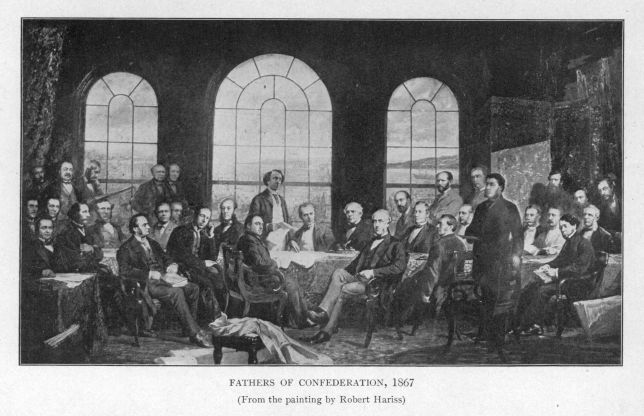
To-day Canada is in the very vanguard of the nations. Her wheat fields fill the granaries of the world; and to her ample borders come the peoples of earth's ends, bringing tribute not of incense and frankincense as of old, but of manhood and strength, of push and lift, of fire and hope and enthusiasm and the daring that conquers all the difficulties of life; bringing too, all the outworn vices of an Old World, all the vicious instincts of the powers that prey in the Under World. Canada's prosperity is literally overflowing from a cornucopia of super-abundant plenty. Will her constitution, wrested from political and civil strife; will her moral stamina, bred from the heroism of an heroic past, stand the strain, the tremendous strain of the {437} new conditions? Will she assimilate the strange new peoples—strange in thought and life and morals—coming to her borders? Will she eradicate their vices like the strong body of a healthy constitution throwing off disease; or will she be poisoned by the toxins of vicious traits inherited from centuries of vicious living? Will she remake the men, regenerate the aliens, coming to her hearth fire; or will they drag her down to their degeneracy? Above all, will she stand the strain, the tremendous strain, of prosperity, and the corruption that is attendant on prosperity? Quien sabe? Let him answer who can; and the question is best answered by watching the criminal calendar. (Is the percentage of convictions as certain and relentless as under the old régime? What manner of crimes is growing up in the land?) And the question may be answered, too, by watching whether the press and platform and pulpit stand as everlastingly and relentlessly for sharp demarkation between right and wrong, for the sharp demarkation between truth, plain truth, and intentional mendacity, as under the régime of the old hard days. When political life grows corrupt, is it now cleansed, or condoned? Let each Canadian answer for himself. If the altar fires of Canada's ideals again burn low, again she will lag in the progress of the world's great builders.
NOTE. In all names of persons, names have been spelled as signed by the person; in names of places, as written in early state documents. In all other cases the rulings of the Canadian Geographic Board have been followed, with the exception of Montagnais, which is given Montaignais, Tadousac as Tadoussac, Saut as Sault, Louisbourg as Louisburg, Denys as Denis.
Abenaki Indians, 171, 192, 193
Abercrombie, 252, 256, 258, 259
Acadia, 40, 41, 61, 64, 65, 69, 70, 192, 196, 197, 204, 214, 216, 220, 231, 233, 235, 236, 241
Agona, 19
Albany, 97, 153, 159, 160, 162
Alexander, 208
Alexander, Sir William, 61
Algonquin Indians, 52, 103, 104, 105, 106, 108
Allen, Ethan, 298
Alymer, 50
Amherst, 236
Amherst, Sir Jeffrey, 252, 253, 256, 261, 268, 274, 277
André, Mademoiselle, 122
Annapolis Basin, 35, 37, 44, 61, 65, 67, 69, 177
Anticosti Island, 12, 134, 177
Appleton, Colonel, 197
Arnold, Benedict, 300-309
Astor, John Jacob, 294, 330, 333
Athabasca, 324, 327, 390, 391, 398, 399, 401, 402
Aubert, 7
Balboa, 6
Barré, Charlotte, 78
Basin of Mines, 195
Basset, 195
Bathurst, Lord, 411
Bay of Islands, 10
Beauharnois, Governor, 206
Beaujeu, 141
Beaupré, 19
Beaver Dams, 362
Bella Coola, 330
Bering, Vitus, 212
Bigot, Intendant, 241-247, 274
Black Rock, 369
Blackwater River, 330
Bloody Brook, 202
Boerstler, Lieutenant, 360, 362
Bonaventure, 195
Boston, 66, 194, 195, 203, 216
Boucher, 394
Bourgeoys, Marguerite, 117
Braddock, General, 226-230
Bradstreet, General, 260, 287, 288
Bras d'Or Lakes, 7
Brébeuf, Jean de, 71, 80, 82-90
Bridgar, 149
Brockville, 349
Brulé, Etienne, 48, 50, 52-57, 83, 127
Buller, Charles, 432
Burton, Colonel, 272
Cabot, Sebastian, 5
Cadillac, La Motte, 119, 124, 163, 165, 205
Caldwell, General, 412
Campbell, Captain, 285
Cape Breton, 5, 6, 7, 38, 43, 61, 62, 65, 124, 204, 214, 215
Garden, Major, 299
Carillon, 50
Carleton, 62
Carleton, Sir Guy, 279, 280, 281, 298-312
Carterett, George, 114
Cartier, Jacques, 7-22, 33, 40, 45, 77, 79
Casson, Dollier de, 121, 126, 128, 130
Castle Island, 10
Catalina, 8
Chambly, Fort, 125
Champlain, Lake, 47, 203, 237, 242, 298, 299, 378
Champlain, Madame, 57
Champlain, Samuel, 32, 33, 35, 37, 38, 39, 40, 44, 45, 46, 48-60, 77, 80, 82, 83, 115
Charity Island, 92
Charlottetown, 314
Charlton Island, 156, 160, 161
Charnisay, Sieur d'Aulnay de, 65-69
Chasteaufort, Marc Antoine de, 115
Château Bay, 10
Chatham, 279
Chats Rapids, 51
Chicago Portage, 133
Chignecto, 231
Chomedey, Paul de, 75
Chrysler's Farm, 367
Church, Ben, 195
Churchill, Fort, 297, 318, 319
Clark, Lieutenant, 175
Clarke, John, 391, 398, 401, 402
Cobequid, 236
Cocking, Matthew, 297
Coffin, John, 306
Colborne, Sir John, 431
Columbia River, 321-323
Contrecoeur, 230
Coppermine River, 296
Cortereal, Caspar, 6
Cree Indians, 103, 110, 112, 208, 210, 386
Cumberland, 236
Dablon, 132
D'Ailleboust, Louis, 78, 79, 115, 119, 120, 172
Dalzell, 285
D'Anville, Duke, 220
Dauversière, Jérôme le Royer de la, 74, 117
Davis, 30
Davost, Father, 84
De Mezy, 115
De Monts, Sieur, 33-37, 40, 44, 45, 48
Denis, 7
Denonville, Marquis de, 163, 164, 167, 168
Detroit, 93, 205, 276, 286, 291, 310, 338, 339, 340, 363
De Troyes, Chevalier, 157, 158, 159, 160
Digge's Island, 154
Dinwiddie, Governor, 224
Dobbs, Captain, 376
Dochet Island, 35
Dog Rib Indians, 326
Dollard, Adam, 107, 108, 109, 110
Don Quadra, 322
Douglas, Fort, 386, 387, 390, 391, 393, 395-397
Douglas, Governor, 408
Drew, 426
Drucourt, 253
Drummond, Sir Gordon, 369, 370, 372, 374, 376, 377, 378
Duchambon, 219
Ducharme, 362
Duluth, Daniel G., 118, 124, 205
Dupuis, Major, 98
Duquesne, Fort, 224, 226, 227, 228, 252, 260
Duquesne, Marquis, 224
Durell, 261
Duval, 46
Egg Islands, 203
Elizabeth, Queen, 26
Eric, Earl, 1
Erie, Lake, 129, 130, 131, 137, 341, 349
Ermatinger, Judge, 424
Etherington, Major, 286
Evans, 344
Fidler, Peter, 389
Findley, 295
Fitzgibbons, 357, 359, 360, 362, 373, 421, 422
Fontaine, Marguerite, 170
Fontaine, Sieur Pierre, 170
Forbes, John, 260
Forsyth, 353
Franklin, Benjamin, 309
French Bay, 35
Frenchman's Bay, 42
Freneuse, Madame, 195, 196, 202
Frontenac, Count, 132, 134, 135, 136, 140, 150, 167, 171, 176-188
Frontenac, Fort, 135, 136, 137, 141, 163, 178, 179, 180, 181, 183, 252, 260
Fundy, Bay of, 35, 42, 62, 63, 66
Funk Island, 9
Gâlet, 170
Garry, Nicholas, 406
Gaspé, 11, 12, 32, 124, 177, 256
George, Fort, 342, 344, 348, 355, 356, 360, 372
Gilbert, Sir Humphrey, 25-29
Gillam, Captain, 144, 145, 149
Gillam, Zechariah, 113
Gillam's Island, 148
Gladwin, 284
Glenn, 174
Goat Island, 44
Gore, Colonel, 429
Gorham, 248
Gourlay, Robert, 415, 416, 417
Grant, Cuthbert, 390, 391, 394
Gray, Robert, 321-323
Green, Henry, 31
Green, Piper, 387
Griguet, 9
Grimmington, 154
Groseillers, Chouart, 150, 151, 152, 153, 156
Groseillers, Medard Chouart de, 85, 98-115, 118, 144-153
Gulf Stream, 6
Gull Island, 9
Ha-Ha Bay, 9
Halifax, 231, 232, 233, 248, 317
Hamilton, 129
Harrison, General, 363
Haverhill, 198
Head, Sir Francis, 421
Hearne, Samuel, 296, 297, 318, 319
Hebert, Madame, 79
Hennepin, Louis, 137, 138, 139
Henry, John, 337
Holmes, Admiral, 269
Horton, 236
Hudson Bay, 30, 32, 103, 110, 113, 115, 134, 143, 144, 146, 148, 161, 162, 164, 191, 204, 318, 406
Hudson River, 30
Hudson Straits, 30
Hull, 338-340
Hume, 420
Hume, Captain, 154
Huron, Lake, 54
Huron Indians, 46, 48, 52-57, 82-93, 98, 108-110, 126
Iberville, 157-163, 165, 172, 174, 183, 184, 185, 186, 188
Iberville, Châteauguay, 183
Iceland, 3
Ihonateria, 84
Illinois Indians, 133, 138, 163, 189
Iroquois Indians, 46-48, 52-57, 78, 79, 86, 87-102, 103, 105, 106, 108, 110, 125, 128-130, 135, 162-171, 183, 204
Island of Orleans, 13
Jacqueline, Frances Marie, 67
James Bay, 30, 31, 113, 144, 158
Jolliet, Louis, 118, 130, 132-134, 139, 146, 152, 177, 205
Jolliet, Madame, 183
Joseph, Louis, 243
Juett, 30
Jumonville, 225
Kaministiquia, 139, 143, 205, 207
Kidd, Captain, 150
King's Cove, 5
Kingston, 135, 260, 354, 370, 427
La Bonté, 170
Labrador, 1, 6, 7, 10, 30, 46, 121, 143, 147
Lachine Rapids, 17
La Fléche, Father, 41
La Fôrest, 146
Lake of the Woods, 112
La Martinière, 153
La Monnerie, Lieutenant de, 171
Lamont, 19
La Motte, Admiral, 226
La Naudière, M. de, 171
Langdale, 287
La Peltrie, Madame de, 72, 73, 74, 77, 78
La Place, 298
La Reine, Fort de, 211
La Roche, Marquis de, 23-25, 40
La Salle, Robert Cavalier de, 19, 118, 128-142, 146, 205
La Saussaye, 42
La Tour, Charles de, 61-69
La Tour, Madame Charles de, 67-69
Laurentian Hills, 50
Lauson, 75
Lauzon-Charny, Charles de, 115
Laval, Bishop, 122
La Vérendrye, Jean, 207-209
La Vérendrye, Jemmeraie, 206-208
La Vérendrye, Pierre Gauthier, 206-212
Lawrence, Colonel, 231, 233, 234, 235, 253
Le Bers, 172
Le Breton, Captain, 12
Leif, 1
Le Jeune, Pierre, 79, 80, 81, 82
Le Loutre, Louis Joseph, 213-216, 220, 231, 232, 241, 278
Le Moyne, Charles, 108, 118, 126, 146, 157
Le Moyne, Father, 98
Le Moyne, Maricourt, 157-161, 172, 173, 179, 182
Le Moyne, Ste. Helène, 157-159, 172, 173, 179, 182
Le Moyne, Sérigny, 183, 184, 187
Leslie, Captain, 286
Lévis, Chevalier de, 243, 245, 246, 249, 250, 267, 274
Lewis, 330
Long Sault Rapids, 108
Long Saut, 50
Lorette mission, 93
Louisburg, 215, 216, 218, 220, 234, 241, 248, 252
Louisiana, 140
Lundy's Lane, 373-375
MacDonell, Miles, 381, 385, 388-390, 396, 397
M'Donnell, 350
Macdillivray, William, 380, 381
McKay, Tom, 407
MacKenzie, Alexander, 324-331, 380, 398
MacKenzie, William Lyon, 420-426
MacKenzie River, 327
Mackinac, Straits of, 105
McLoughlin, Dr. John, 407, 409
Magellan, 6
Maisonneuve, Sieur de, 75-79, 108, 118, 119, 120
Maitland, Sir Peregrine, 415, 417, 418
Mandanes, 211
Manitoba, 436
Maquinna, 322
Marco Polo, 3
Marie of the Incarnation, 72-74
Marquette, Father, 118, 132, 133, 134, 205
Mascarene, Paul, 201, 202, 215
Massacre Island, 209
Massé, Father, 42
Mattawa, 52
Meares, 321
Meigs, Fort, 363
Membertou, Henry, 38, 39, 41, 42
Meneval, 177
Mercer, Colonel, 247
Miami, Fort, 284
Michigan, 339
Michilimackinac, 137, 276, 286, 310, 339, 379
Micmac Indians, 220
Midland, 54
Mingan, 12
Miramichi Indians, 10, 11, 256
Mississippi River, 106, 128, 133, 139, 141
Mohawk River, 127
Monckton, 231, 234-235, 261, 265, 270
Monro, Lieutenant, 250
Montaignais Indians, 6, 10, 46, 81, 82
Montana, 212
Montcalm, Marquis de, 44, 243-250, 257, 265-269, 271, 273
Montgomery, Richard, 300-308
Montmagny, Charles de, 71, 72, 74, 76-78, 115
Montmorency, 13
Montreal, 16, 48-51, 72-78, 94, 107, 108, 117, 120, 165, 191, 267, 274-302, 340, 367, 400, 427, 428
Moon, Captain, 162
Murray, Lord John, 234, 235, 258, 261, 270, 274, 277-280
Muskoka, 84
Nelson, Port, 152, 153, 183, 185, 384
Nepigon, 206
New Brunswick, 10, 62-65, 204, 220, 312, 313, 434
New Hampshire, 172
Newfoundland, 5-7, 9, 10, 12, 19, 23, 30, 183, 184, 204
Niagara, 129, 267, 316, 340, 351, 369, 370, 379
Nicholson, Francis, 198-203
Noel, 19
Nootka, 320-322
Norsemen, 2
Nova Scotia, 1, 34, 35, 61, 220, 312, 317, 379, 434, 436
O'Callaghan, 429
Ochagach, Chief, 206
Ochiltree, Lord, 62
Ogden, 407
Ogdensburg, 350
Ohio River, 128, 130, 133, 224, 226, 241
Onondaga, Lake,98
Ontario, 84, 127, 312, 315, 316, 338, 349
Ontario, Lake, 54, 57, 127, 129, 134, 349
Ottawa, 46
Ottawa Indians, 51
Ottawa River, 17, 49, 51, 52, 57, 86
Papineau, 427-429
Parry Sound, 54
Parsnip River, 328
Passamaquoddy, 195
Pays d'en Haut, 182
Péan, Madame, 245
Pepys, Samuel, 153
Perry, 349
Phips, Sir William, 176-178, 182
Pierre, Fort, 208
Pitt, Fort, 290
Place d'Armes, 79
Place Royale, 48
Placentia, 183
Plenderleath, Major, 358
Pontiac, 276, 281, 286, 291, 292
Port Dover, 131
Port Royal, 35-44, 57, 61, 64-70, 114, 191, 194, 202
Port Royal Basin, 198
Port Stanley, 130
Portneuf, 175
Poutrincourt, Baron de, 34-42
Presqu' Isle, 276, 284, 348, 363
Preston, Major, 300
Prevost, Sir George, 349, 370, 376, 378, 410, 411
Primeau, Louis, 297
Prince Edward Island, 214, 215, 232, 256, 312, 314
Puget Sound, 322
Quebec, 13, 17, 44, 45, 52, 57, 59, 60, 63, 71-82, 94, 107, 117, 156, 168, 171, 178-188, 202, 232, 252, 260-275, 276-309, 316, 317, 412, 432, 434, 435
Queenston Heights, 342-347, 352, 360, 372
Quesnel, 331
Quinte, Bay of, 127
Quirpon, 9
Radisson, Pierre Esprit, 95, 96, 98-115, 118, 144-154, 205
Ragueneau, Father, 91-93, 99, 100
Raleigh, Sir Walter, 25, 26, 30
Ramezay, 271
Rasle, Père, 213
Razilli, Isaac, 65
Riall, 374
Richelieu, Cardinal, 57, 58, 65
Richelieu River, 46, 48, 125, 429
Richmond, Duke of, 417, 418, 419
Richmond Gulf, 30
Robertson, Colin, 380-383, 390, 391, 393, 396, 400-403
Rogers, Robert, 242, 276, 281, 285
Rolph, Dr., 421-425
Ross, 407
Rouville, Hertel de, 193, 194, 198
Sable Island, 7, 23, 65, 114, 220
Sackett's Harbor, 370
St. Anne de Beaupré, 120
St. Anthony, Falls of, 139
St. Charles, Fort, 208
St. Charles River, 13, 14, 15, 17, 429, 430
St. Eustache, 430
St. Francis, Lake, 129
St. Jean Ba'tiste, 85
St. John River, 35, 62, 63, 64, 65, 67
St. Joseph Island, 92
St. Lawrence River, 12, 13, 15, 17, 19, 46, 71, 73, 126
St. Louis, 61, 85, 88, 89, 91, 292
St. Louis, Lake, 129
St. Lusson, 132
St. Malo, 43
St. Pierre, 204, 224, 277, 279, 280, 281
St. Thomas Town, 413
St. Vallière, Bishop, 122
Ste. Anne's, 49
Ste. Croix River, 35, 37, 44, 310
Ste. Marie Mission, 85-92
Saint-Castin, Baron de, 175, 195, 197, 200, 201, 202
Sandwich Islands, 321
Sargeant, Governor, 155, 156, 159, 160
Saskatchewan, 212, 243, 297, 401, 403, 436
Sault Ste. Marie, 106, 132, 378
Schuyler, Captain, 176
Secord, James, 360
Secord, Laura, 360-362
Sedgwick, Major, 70
Selkirk, 385
Selkirk, Lord, 317, 380, 381, 384, 388, 390, 396, 397, 398, 400
Semple, Robert, 390, 392, 393, 394
Sheaffe, General, 346, 347, 354
Sherbrooke, Sir John, 412, 417
Simcoe, Lieutenant Governor, 316, 412
Simpson, Sir George, 406
Sioux Indians, 103
Skraelings, 1
Smithsend, 154
Smyth, 348
Sorcerer Indians, 51
Sorel, Dame, 146
Sorel, Fort, 125
Stadacona, 13
Staring Hairs, 53
Stobo, Robert, 268
Stopford, Major, 300
Stuart, 331
Subercase, 197-200
Susquehanna Indians, 54
Swanton, Vt., 429
Sylvie, 157
Tadoussac, 32, 34, 44, 58, 63, 73, 74, 94, 134, 177
Talbot, Tom, 413
Talon, Jean, 123-125, 128, 132, 136, 143
Tessouat, Chief, 51
Texas, 141
Thomas, General, 309
Thorwald, 1
Three Rivers, 71, 82, 83, 94, 95, 98, 107, 113, 124, 206, 277
Ticonderoga, Fort, 242, 249, 252, 256, 260, 298
Tonty, Henry, 137-141
Toronto, 351, 353, 355, 415, 420, 422, 423, 432
Trent River, 54
Trinity River, 141
Truro, 236
Twin Cities, 139
Twin Mountains Lake, 49
Ungava Bay, 30
Van Rensselaer, 342-348
Van Shoultz, 427
Vancouver, George, 319, 321-323
Vancouver Island, 320-322
Vaudreuil, Governor de, 193, 197, 243, 262, 274
Vaughan, 216
Verchéres, Jared of, 198
Verchères, M. de, 169
Verchères, Madame de, 169
Vergor, 231
Verrazano, 7
Victoria, 409
Vikings, 1
Ville Marie, 78
Vincent, General, 355, 356, 358, 359
Walker, Sir Hovender, 202, 203
Warren, 219
Washington, George, 224, 229, 260, 310
Webb, General, 250
Weir, Lieutenant, 429
Wetherell, Colonel, 429
William, Fort, 112, 397, 398, 399
Williams, William, 403
Winchester, General, 363
Winnipeg Lake, 208
Winthrop, 176
Wisconsin, 106
Wisconsin River, 132