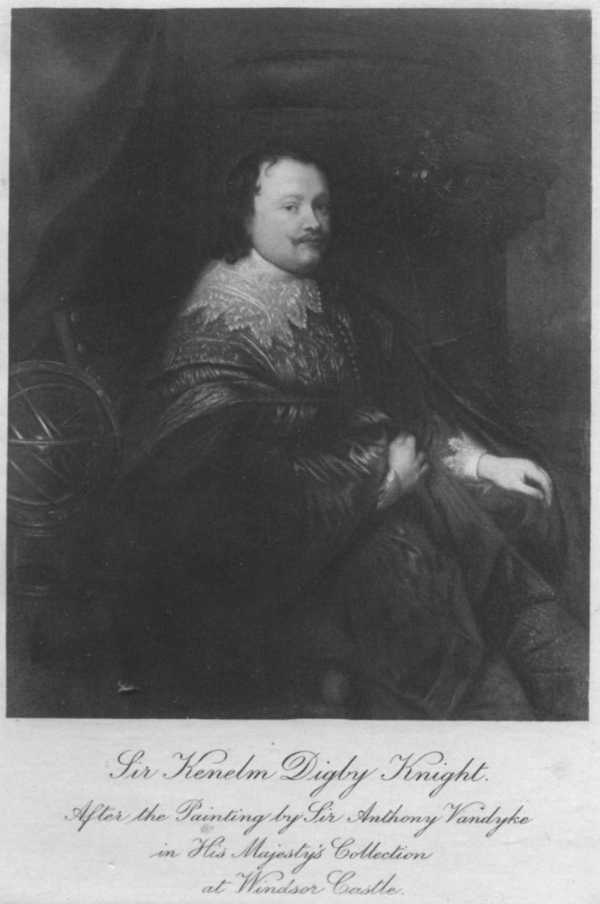
The Project Gutenberg EBook of The Closet of Sir Kenelm Digby Knight Opened
by Kenelm Digby

This eBook is for the use of anyone anywhere at no cost and with
almost no restrictions whatsoever.  You may copy it, give it away or
re-use it under the terms of the Project Gutenberg License included
with this eBook or online at www.gutenberg.org


Title: The Closet of Sir Kenelm Digby Knight Opened

Author: Kenelm Digby

Editor: Anne MacDonell

Release Date: August 5, 2005 [EBook #16441]

Language: English

Character set encoding: ISO-8859-1

*** START OF THIS PROJECT GUTENBERG EBOOK THE CLOSET OF SIR KENELM ***


Produced by Jonathan Ingram, Jason Isbell and the Online
Distributed Proofreading Team at https://www.pgdp.net

| PAGE | |
| INTRODUCTION | ix |
| THE CLOSET OF SIR KENELM DIGBY OPENED: | |
| TITLE PAGE OF THE FIRST EDITION | 1 |
| TO THE READER | 3 |
| RECEIPTS FOR MEAD, METHEGLIN, AND OTHER DRINKS | 5 |
| COOKERY RECEIPTS | 111 |
| THE TABLE | 263 |
| APPENDIX I. SOME ADDITIONAL RECEIPTS | 271 |
| II. THE POWDER OF SYMPATHY | 272 |
| III. LIST OF THE HERBS, FLOWERS, &C., REFERRED TO IN THE TEXT | 274 |
| NOTES | 277 |
| GLOSSARY | 283 |
| INDEX OF RECEIPTS | 287 |
With the waning of Sir Kenelm Digby's philosophic reputation his name has not become obscure. It stands, vaguely perhaps, but permanently, for something versatile and brilliant and romantic. He remains a perpetual type of the hero of romance, the double hero, in the field of action and the realm of the spirit. Had he lived in an earlier age he would now be a mythological personage; and even without the looming exaggeration and glamour of myth he still imposes. The men of to-day seem all of little stature, and less consequence, beside the gigantic creature who made his way with equal address and audacity in courts and councils, laboratories and ladies' bowers.
So when, in a seventeenth-century bookseller's advertisement, I lighted on a reference to the curious compilation of receipts entitled The Closet of Sir Kenelm Digby Opened, having the usual idea of him as a great gentleman, romantic Royalist, and somewhat out-of-date philosopher, I was enough astonished at seeing his name attached to what seemed to me, in my ignorance, outside even his wide fields of interest, to hunt for the book without delay, examine its contents, and inquire as to its authenticity. Of course I found it was not unknown. Page x Though the Dictionary of National Biography omits any reference to it, and its name does not occur in Mr. Carew Hazlitt's Old Cookery Books, Dr. Murray quotes it in his great Dictionary, and it is mentioned and discussed in The Life of Digby by One of his Descendants. But Mr. Longueville treats it therein with too scant deference. One of a large and interesting series of contemporary books of the kind, its own individual interest is not small; and I commend it with confidence to students of seventeenth-century domestic manners. To apologise for it, to treat it as if it were some freak, some unowned sin of Digby's, would be the greatest mistake. On the contrary, its connection with his life and career is of the closest; and I make bold to assert that of all his works, with the doubtful exception of his Memoirs, it is the one best worth reprinting. It is in no spirit of irony that I say of him who in his own day was looked on almost as Bacon's equal, who was the friend of Bacon, Galileo, Descartes, Harvey, Ben Jonson, Cromwell, and all the great spirits of his time, the intimate of kings, and the special friend of queens, that his memory should be revived for his skill in making drinks, and his interest in his own and other folks' kitchens. If to the magnificent and protean Sir Kenelm must now be added still another side, if he must appear not only as gorgeous Cavalier, inmate of courts, controversialist, man of science, occultist, privateer, conspirator, lover and wit, but asbon viveur too, he is not the ordinary bon viveur, who feasts at banquets prepared Page xi by far away and unconsidered menials. His interest in cookery—say, rather, his passion for it—was in truth an integral part of his philosophy, and quite as serious as his laboratory practice at Gresham College and Paris. But to prove what may seem an outrageous exaggeration, we must first run over the varied story of his career; and then The Closet Opened will be seen to fall into its due and important place.
Kenelm Digby owed a good deal to circumstances, but he owed most of all to his own rich nature. His family was ancient and honourable. Tiltons originally, they took their later name in Henry III's time, on the acquisition of some property in Lincolnshire, though in Warwickshire and Rutland most of them were settled. Three Lancastrian Digby brothers fell at Towton, seven on Bosworth Field. To his grandfather, Sir Everard the philosopher, he was mentally very much akin, much more so than to his father, another of the many Sir Everards, and the most notorious one. Save for his handsome person and the memory of a fervent devotion to the Catholic faith, which was to work strongly in him after he came to mature years, he owed little or nothing to that most unhappy young man, surely the foolishest youth who ever blundered out of the ways of private virtue into conspiracy and crime. Kenelm, his elder son, born July 11, 1603, was barely three years old when his father, the most guileless and the most obstinate of the Gunpowder Plotters, died on the scaffold. The main part of the family wealth, Page xii as the family mansion Gothurst—now Gayhurst—in Buckinghamshire, came from Sir Everard's wife, Mary Mulsho; and probably that is one reason why James I acceded to the doomed man's appeal that his widow and children should not be reduced to beggary. Kenelm, in fact, entered on his active career with an income of £3000 a year; but even its value in those days did not furnish a youth of such varied ambitions and such magnificent exterior over handsomely for his journey through the world. His childhood was spent under a cloud. He was bred by a mother whose life was broken and darkened, and whose faith, barely tolerated, would naturally keep her apart from the more favoured persons of the kingdom. Kenelm might have seemed destined to obscurity; but there was that about the youth that roused interest; and even the timid King James was attracted by him into a magnanimous forgetfulness of his father's offence. Nevertheless, he could never have had the easy destiny of other young men of his class, unless he had been content to be a simple country gentleman; and from the first his circumstances and his restless mind dictated his career, which had always something in it of the brilliant adventurer.
Another branch of the Digbies rose as the Buckinghamshire family fell. It was a John Digby, afterwards Earl of Bristol, who carried the news of the conspirators' design on the Princess Elizabeth. King James's gratitude was a ladder of promotion, which would have been firmer had not this Protestant Digby incurred the dislike of the royal favourite Page xiii Buckingham. But in 1617 Sir John was English ambassador in Madrid; and it may have been to get the boy away from the influence of his mother and her Catholic friends that this kinsman, always well disposed towards him, and anxious for his advancement, took him off to Spain when he was fourteen, and kept him there for a year. Nor was his mother's influence unmeddled with otherwise. During some of the years of his minority at least, Laud, then Dean of Gloucester, was his tutor. Tossed to and fro between the rival faiths, he seems to have regarded them both impartially, or indifferently, with an occasional adherence to the one that for the moment had the better exponent.
His education was that of a dilettante. A year in Spain, in Court and diplomatic circles, was followed by a year at Oxford, where Thomas Allen, the mathematician and occultist, looked after his studies. Allen "quickly discerned the natural strength of his faculties, and that spirit of penetration which is so seldom met with in persons of his age." He felt he had under his care a young Pico di Mirandola. It may have been now he made his boyish translation of the Pastor Fido, and his unpublished version of Virgil's Eclogues. As to the latter, the quite unimportant fact that he made one at all I offer to future compilers of Digby biographies. Allen till his death remained his friend and admirer, and bequeathed to him his valuable library. The MSS. part of it Digby presented to the Bodleian. A portion of the rest he seems to have kept; and though it is said his English library was Page xiv burnt by the Parliamentarians, it seems not unlikely that some of Allen's books were among his collection at Paris sold after his death by the King of France.
But Kenelm was restlessly longing to taste life outside academic circles, and already he was hotly in love with his old playmate, now grown into great beauty, Venetia Anastasia Stanley, daughter of Edward Stanley of Tonge, in Shropshire, and granddaughter of the Earl of Northumberland. If I could connect the beautiful Venetia with this cookery book, I should willingly linger over the tale of her striking and brief career. But though the elder Lady Digby contributed something to The Closet Opened, there is no suggestion that it owes a single receipt to the younger. Above Kenelm in station as she was, he could hardly have aspired to her save for her curiously forlorn situation. Mother-less, and her father a recluse, she was left to bring herself up, and to bestow her affections where she might. To Kenelm's ardour she responded readily; and he philandered about her for a year or two. But his mother would hear nothing of the match; and at seventeen he was sent out on the grand tour, the object of which, we learn from his Memoirs, was "to banish admiration, which for the most part accompanieth home-bred minds, and is daughter of ignorance." Kenelm proved better than the ideal set before him; and the more he travelled the more he admired.
Into this tale of love and adventure I must break with the disturbing intelligence that the handsome Page xv and romantic and spirited youth was in all probability already procuring material for the compilation on Physick and Chirurgery, which Hartman, his steward, published after his death. It was not as a middle-aged bon viveur, nor as an elderly hypochondriac, that he began his medical studies, but in the heyday of youth, and quite seriously, too. The explanation brings with it light on some other of his interests as well. When he set out on the grand tour, his head full of love and the prospects of adventure, he found the spare energy to write from London to a good friend of his, the Rev. Mr. Sandy, Parson of Great Lindford. In this letter—the original is in the Ashmolean—Kenelm asks for the good parson's prayers, and sends him "a manuscript of elections of divers good authors." Mr. Longueville, who gives the letter, has strangely failed to identify Sandy with the famous Richard Napier, parson, physician, and astrologer, of the well-known family of Napier of Merchistoun. His father, Alexander Napier, was often known as "Sandy"; and the son held the alternative names also. Great Lindford is two and a half miles from Gothurst; and it is possible that Protestant friends, perhaps Laud himself, urged on the good parson the duty of looking after the young Catholic gentleman. Sandy (Napier) was also probably his mother's medical adviser: he certainly acted as such to some members of her family. A man of fervent piety—his "knees were horny with frequent praying," says Aubrey—he was, besides, a zealous student of alchemy and astrology, a friend of Dee, of Lilly, and Page xvi of Booker. Very likely Kenelm had been entrusted to Allen's care at Oxford on the recommendation of Sandy; for Allen, one of his intimates, was a serious occultist, who, according to his servant's account, "used to meet the spirits on the stairs like swarms of bees." With these occupations Napier combined a large medical practice in the Midlands, the proceeds of which he gave to the poor, living ascetically himself. His favourite nephew, Richard Napier the younger, his pupil in all these arts and sciences, was about the same age as Kenelm, and spent his holidays at Great Lindford. The correspondence went on. Digby continued his medical observations abroad; and after his return we find him writing to Sandy, communicating "some receipts," and asking for pills that had been ordered. Thus we have arrived at the early influences which drew the young Catholic squire towards the art of healing and the occult sciences. The latter he dabbled in all his life. In the former his interest was serious and steadfast.
He remained out of England three years. From Paris the plague drove him to Angers, where the appearance of the handsome English youth caused such commotion in the heart of the Queen Mother, Marie de Médicis, that she evidently lost her head. His narrative of her behaviour had to be expurgated when his Memoirs were published in 1827. He fled these royal attentions; spread a report of his death, and made his way to Italy. His two years in Florence were not all spent about the Grand-ducal Court. His mind, keen and of infinite curiosity, was hungering Page xvii after the universal knowledge he aspired to; and Galileo, then writing his Dialogues in his retirement at Bellosguardo, could not have been left unvisited by the eager young student. In after years, Digby used to say that it was in Florence he met the Carmelite friar who brought from the East the secret of the Powder of Sympathy, which cured wounds without contact. The friar who had refused to divulge the secret to the Grand Duke confided it to him—of which more hereafter.
From Florence he passed to Spain; and his arrival was happily timed—probably by his ever anxious kinsman; for a few days later Prince Charles and Buckingham landed, on the Spanish Marriage business; and so agreeable was young Digby that, in spite of Buckingham's dislike of his name, he became part of the Prince's household, and returned with the party in October, 1623. Court favours seemed now to open out a career for him. King James knighted him, in what might have proved a fatal ceremony; for so tremblingly nervous of the naked steel was the royal hand, that Buckingham had to turn the sword aside from doing damage instead of honour. He was also made Gentleman of the Bedchamber to Prince Charles. But no other signal favours followed these. For all his agreeableness he was not of the stuff courtiers are made of—though James had a kindness for him, and was entertained by his eagerness and ingenuity. Bacon, too, just before his death, had come across this zealous young student of the experimental methods, and had meant, Digby said, to include an account Page xviii of the Powder of Sympathy in an appendix to his Natural History.
In Spain, Kenelm had flirted with some Spanish ladies, notably with the beautiful Donna Anna Maria Manrique, urged thereto by gibes at his coldness; but Venetia was still the lady of his heart. Her amorous adventures, in the meanwhile, had been more serious and much more notorious. His letters had miscarried, and had been kept back by his mother. Venetia pleaded her belief in his death. Aubrey's account of her is a mass of picturesque scandal. "She was a most beautiful desirable creature.... The young eagles had espied her, and she was sanguine and tractable, and of much suavity (which to abuse was great pittie)." Making all allowance for gossip, the truth seems to be that in Kenelm's absence she had been at least the mistress of Sir Edward Sackville, afterwards the fourth Earl of Dorset; that Dorset tired of her; and on Digby's return she was more than willing to return to her old love. But, alas! Sackville had her picture, which seemed to her compromising. Digby, therefore, having accepted her apologies and extenuations, challenged Sackville to a duel; whereupon the faithless one proved at least magnanimous; refused to fight, gave up the picture, and swore that Venetia was blameless as she was fair. A private marriage followed; and it was only on the birth of his second son John that Sir Kenelm acknowledged it to the world. To read nearly all his Memoirs is to receive the impression that he looked on his wife as a wronged innocent. To read the whole is to feel he Page xix knew the truth and took the risk, which was not very great after all; for the lady of the many suitors and several adventures settled down to the mildest domesticity. They say he was jealous; but no one has said she gave him cause. The tale runs that Dorset visited them once a year, and "only kissed her hand, Sir Kenelm being by."
But Digby was a good lover. All the absurd rhodomontade of his strange Memoirs notwithstanding, there are gleams of rare beauty in the story of his passion, which raise him to the level of the great lovers. His Memoirs were designed to tell "the beginning, progress, and consummation of that excellent love, which only makes me believe that our pilgrimage in this world is not indifferently laid upon all persons for a curse." And here is a very memorable thing. "Understanding and love are the natural operation of a reasonable creature; and this last, which is a gift that of his own nature must always be bestowed, being the only thing that is really in his power to bestow, it is the worthiest and noblest that can be given."
But, as he naïvely says, "the relations that follow marriage are ... a clog to an active mind"; and his kinsman Bristol was ever urging him to show his worth "by some generous action." The result of this urging was Scanderoon. His object, plainly stated, was to ruin Venetian trade in the Levant, to the advantage of English commerce. The aid and rescue of Algerian slaves were afterthoughts. King James promised him a commission; but Buckingham's secretary, on behalf of his master absent in Page xx the Ile de Ré, thought his privileges were being infringed, and the King drew back. Digby acted throughout as if he had a "publike charge," but he was really little other than a pirate. He sailed from Deal in December, 1627, his ships the "Eagle" and the "George and Elizabeth." It was six months before the decisive fight took place; but on the way he had captured some French and Spanish ships near Gibraltar; and what with skirmishes and sickness, his voyage did not want for risk and episode at any time. Digby the landsman maintained discipline, reconciled quarrels, doctored his men, ducked them for disorderliness, and directed the naval and military operations like any old veteran. At Scanderoon [now Alexandretta in the Levant] the French and Venetians, annoyed by his presence, fired on his ships. He answered with such pluck and decision that, after a three hours' fight, the enemy was completely at his mercy, and the Venetians "quitted to him the signiority of the roade." In his Journal of the Voyage you may read a sober account, considering who was the teller of the tale, of a brilliant exploit. He does not disguise the fact that he was acting in defiance of his own countrymen in the Levant. The Vice-Consul at Scanderoon kept telling him that "our nation" at Aleppo "fared much the worse for his abode there." He was setting the merchants in the Levant by the ears, and when he turned his face homewards, the English were the most relieved of all. His exploit "in that drowsy and inactive time ... was looked upon with general estimation," says Clarendon. The King gave him Page xxi a good welcome, but could not follow it up with any special favour; for there were many complaints over the business, and Scanderoon had to be repudiated.
But Digby could not be merely privateer, and in the Scanderoon expedition we are privileged to look on the Pirate as a Man of Taste. His stay in Florence had given him an interest in the fine arts; and at Milo and Delphos he contrived to make some healthy exercise for his men serve the avidity of the collector. Modern excavators will read with horror of his methods. "I went with most of my shippes to Delphos, a desert island, where staying till the rest were readie, because idlenesse should not fixe their mindes upon any untoward fansies (as is usuall among seamen), and together to avayle myselfe of the convenience of carrying away some antiquities there, I busied them in rolling of stones doune to the see side, which they did with such eagernesse as though it had been the earnestest business that they had come out for, and they mastered prodigious massie weightes; but one stone, the greatest and fairest of all, containing four statues, they gave over after they had been, 300 men, a whole day about it.... But the next day I contrived a way with mastes of shippes and another shippe to ride over against it, that brought it doune with much ease and speede"! What became of this treasure so heroically acquired?
So much for art. Literature was to have its turn with the versatile pirate ere he reached his native shores. During a time of forced inaction at Milo, Page xxii he began to write his Memoirs. A great commander was expected during a truce, it appears, to pay lavish attentions to the native ladies. Neglect of this gallantry was construed almost as a national insult. Sir Kenelm, faithful to his Venetia, excused himself on the plea of much business. But he had little or no business; and he used his retirement to pen the amazing account of his early life and his love story, where he appears as Theagenes and his wife as Stelliana, as strange a mixture of rhodomontade and real romance as exists among the autobiographies of the world. Of course it does not represent Digby at his maturity. Among his MSS. the Memoirs were found with the title of Loose Fantasies, and they were not printed till 1827.
It was quite a minor post in the Navy he received in recognition of Scanderoon, and one wonders why he took it. Perhaps to gain experience, of which he was always greedy. Or Scanderoon may have emptied his treasuries. After the Restoration he had a hard struggle to get repaid for his ransom of slaves on the Algerian coast. At any rate, as Naval Commissioner he earned the reputation of a hard-working public servant.
If his constantly-changing life can be said to have had a turning-point, it occurred in 1633, when his wife died suddenly. The death of the lovely Venetia was the signal for a great outburst of vile poetry on her beauty and merits. Ben Jonson, her loyal friend and Kenelm's, wrote several elegies, one of them the worst. Vandyck painted her several times; and so the memory of her loveliness is secure. As Page xxiii to her virtues, amiability seems to have been of their number. "Unmatcht for beauty, chaster than the ayre," wrote one poet. When they opened her head it was discovered she had little brain; and gossip attributed the fact to her having drunk viper-wine—by her husband's advice—for her complexion. This sounds absurd only to those who have not perused the Receipts in Physick and Chirurgery. Little brain or not, her husband praised her wits. Ben Jonson wrote with devotion of her "who was my muse, and life of all I did."
Digby imitated his father-in-law who, in similar circumstances, gave himself up to solitude and recollection. His place of retirement was Gresham College. Do its present students remember it once housed a hermit who "wore a long mourning cloake, a high crowned hat, his beard unshorne ... as signes of sorrowe for his beloved wife"? There "he diverted himself with chymistry and the professor's good conversation." He had "a fair and large laboratory ... erected under the lodgings of the Divinity Reader." Hans Hunneades the Hungarian was his operator.
But another influence was at work. For the first time his mind turned seriously to religion. Romanist friends were persuading him to his father's faith. His old tutor Laud and other Protestants were doing their best to settle him on their side. Out of the struggle of choice he came, in 1636, a fervent and convinced Catholic. He was to prove his devotion over and over again; but I fear that Catholics of to-day would view with suspicion his Page xxiv views on ecclesiastical authority. In his dedication of his Treatise on the Soul to his son Kenelm, there is a spirited defence of the right, of the intelligent to private judgment in matters of doctrine. Nevertheless, his Catholicism, though rationalist, was sincere, and he spent much energy in propaganda among his friends—witness his rather dull little brochure, the Conference with a Lady about Choice of Religion (1638), and his correspondence with his kinsman, Lord Digby, who did, indeed, later, come over to the older faith. Ere long he earned the reputation of being "not only an open but a busy Papist," though "an eager enemy to the Jesuits."
From this time dates his close friendship with the Queen, Henrietta Maria, and her Catholic friends, Sir Tobie Matthew, Endymion Porter, and Walter Montague. He and Montague were specially chosen by the Queen to appeal to the English Catholics for aid towards Charles's campaign in Scotland. Digby was certainly a hot inciter of the King to foolish activity; but in the light of his after history, it would seem always with a view to the complete freedom of the Catholic religion. A prominent King's man, nay, a Queen's man, which was held to be something extremer, he played, however, an individual part in the struggle. He was well fitted for the Cavalier rôle by the magnificence of his person, by his splendid hospitality, his contempt for sects, his aristocratic instincts, and his manner of the Great World. But if he liked good cheer and a great way of living, he is never to be imagined Page xxv as clinking cans with a "Hey for Cavaliers! Ho for Cavaliers!" He never fought for the King's cause—though he fought a duel in Paris with a French lord who took Charles's name in vain, and killed his man too. His rôle was always the intellectual one. He conspired for the cause—chiefly, I think, out of personal friendship, and because he held it to be the cause of his Church. He was not a virulent politician; and on the question of divine right the orthodox Cavaliers must have felt him to be very unsound indeed.
The era of Parliaments had now come, and Digby was to feel it. He was summoned to the bar of the House as a Popish recusant. Charles was ordered to banish him and Montague from his councils and his presence; and their examination continued at intervals till the middle of 1642. The Queen interceded for Digby with much warmth, but she was a dangerous friend; and in the same year Montague and he were sent to prison. I have heard a tradition that Crosby Hall was for a time his comfortable jail, but can find no corroboration of this. The serjeant-at-arms confined him for a brief space at The Three Tuns, near Charing Cross, "where his conversation made the prison a place of delight" to his fellows. Later, at Winchester House, Southwark, where he remained in honourable confinement for two years, he was busy with writing and experimenting—to preserve him from "a languishing and rusting leisure." Two pamphlets, both of them hasty improvisations, one a philosophic commentary on a certain stanza of the Faërie Queen, Page xxvi the other, his well-known Observations on the 'Religio Medici', are but mere bubbles of this seething activity, given over mostly to the preparation of his Two Treatises, "Of the Body," and "Of the Soul," published later in Paris, and to experiments on glass-making.
Many efforts were made for his release, the most efficacious by the Queen of France. It should have been the Dowager Marie de Médicis, in memory of her hot flame for him when he was a youth; but though she may have initiated the appeal, she died before his release, which he seems to have owed to Anne of Austria's good services. Freedom meant banishment, but this sentence he did not take very seriously. In these years he was continually going and coming between France and England, now warned by Parliament, now tolerated, now banished, again daring return, and escaping from the net. "I can compare him to nothing but to a great fish that we catch and let go again; but still he will come to the bait," said Selden of him in his Table-Talk.
Exile in Paris provided fresh opportunity for scientific study, though his connection with the English Catholic malcontents, and his services to the Queen Henrietta Maria, who now made him her Chancellor, absorbed much of his time. When the Cause needed him, the Cavalier broke away from philosophy; and in 1645 he set out for Rome, at the bidding of the Queen, to beg money for her schemes. With all his address, diplomacy was not among the chief of his talents. With high personages he took a high tone. Innocent X gave 10,000 Page xxvii crowns to the Cause; but they quarrelled; and the Pope went so far as to accuse Digby of misappropriation of the money. Digby, a man of clean hands, seems to have taken up the Queen's quarrel. She would have nothing to do with Rinuccini's Irish expedition, which his Holiness was supporting; and her Chancellor naturally insisted on disbursing the funds at her commands rather than at the Pope's. Moreover, he was now renewing his friendship with Thomas White, a heretic Catholic priest, of several aliases, some of whose work had been placed on the Index. White was a philosophic thinker of considerable power and subtlety, and he and Digby acted and reacted on each other strongly—though Digby's debt is perhaps the greater. Their respective parts in the Two Treatises and in the Institutionum Peripateticorum libri quinque, published under White's name, but for which Sir Kenelm is given the main credit, can hardly now be sifted. White, at all events, was not a prudent friend for an envoy to the Holy See. Digby "grew high and hectored with his holinesse, and gave him the lye. The pope said he was mad." Thus Aubrey. Henrietta Maria sent him once more on the same errand; but the Roman Curia continued to look on him as a "useless and restless man, with scanty wisdom." Before returning, however, he paid a round of visits to Italian courts, making everywhere a profound impression by his handsome person and his liveliness. He had to hasten back to England on his own business. His fortunes were desperate; and he desired to compound for his estates.
A week or so after the King's death he is proved by his correspondence to be in France, having fled after one more pronouncement of him as a dangerous man. He went into exile this time with a sad heart; and it was not only the loyalist in him that cried out. The life of an English country gentleman would never have satisfied him; yet he longed for it now it had become impossible. He writes from Calais to a friend: "Those innocent recreations you mention of tabors and pipes, and dancing ladies, and convenient country houses, shady walks and close arbours, make one sigh to be again a spectator of them, and to be again in little England, where time slides more gently away than in any part of the world. Quando sia mai ch'a rividerti io torno?"
He went this time knowing better than his fellow royalists the meaning of events. He was still a rank, but at least an intelligent, conspirator. English correspondents at Rouen and Caen report him in the company of one Watson, an Independent; and that he is proposing "to join the interests of all the English papists with the bloody party that murdered the king." Dr. Winsted, an English doctor in Rouen, asked him with indignation how he could meditate going back to England, "considering the abomination of that country." Digby replied that he was forced to it. "If he went not now he must starve." He plainly saw who was the real and only force in England; and he was going to make a bargain with the strong man for himself and his co-religionists. As a matter of fact there is no trace of his return at this moment. Not merely Page xxix was his property in danger, but his head as well. Yet he never repented of his policy, and he carried it out, so far as might be, in his dealings with Cromwell a few years later. And Henrietta Maria bore him no grudge on this score.
Exile in Paris meant friendly intercourse with, and consolation of the Queen, but also scientific research. In 1651 Evelyn was visiting him there, and being stirred by his enthusiasm into attending Fébur's chemistry lectures along with him. Before that must have taken place his pilgrimage to Descartes, who died in 1650. Apparently Sir Kenelm had gone to Egmont as an unknown stranger; and it throws light on his wide reputation as a man of ideas and a conversationalist, that into his torrent of questions and speculation Descartes broke with, "You can be none other than Digby." The English scientist's practical mind—for he had always a practical end in view, however fantastic his methods—showed itself in his counsel to the author of the Discours sur la Méthode. Why all this labour for mere abstract speculation? Why not apply his genius to the one great subject, the prolongation of human life? Descartes, it appears, did not need the advice. He said the subject was engaging his mind; and though he "dared not look forward to man being rendered immortal, he was quite certain his length of life could be made equal to the patriarch's." In fact, he was composing at the time an Abrégé de Médecine, and popular report said he believed men could live four or five hundred years. He died prematurely of too much faith in his own medical theories.
In 1653 permission was given to Digby to return, on condition he would not meddle with Royalist plots. He had been in communication with Cromwell, and had done some diplomatic business for him in Paris. On his return in 1654, and for the next few years, he was in the closest relations with the Protector, thereby carrying out the principle he had probably adopted from White, of a "universal passive obedience to any species of government that had obtained an establishment." His Royalist friends made an outcry, and so did the Puritans; but Digby was confident of obtaining from Cromwell great advantages for the English Catholics, and the Protector, it seems, fully trusted the intentions and the abilities of this strange and fascinating personality who came to him out of the enemy's camp. Delicate business was given into his hands, that of preventing an alliance between France and Spain. Prynne, in his True and Perfect Narrative, bitterly denounced Cromwell in "that Sir Kenelme Digby was his particular favourite, and lodged at Whitehall; that Maurice Conry, Provincial of the Franciscans in England, and other priests, had his protections under hand and seal." Of Digby's feelings towards Cromwell there is clear evidence. It seems his loyalty had been questioned in his absence; and he writes from Paris, in March, 1656, to Secretary Thurloe: "Whatsoever may be disliked by my Lord Protector and the Council of State must be detested by me. My obligations to his Highness are so great, etc." And again, "How passionate I am for his service and for his honour and interest, even to exposing Page xxxi my life for him." The intimacy, begun on both sides in mere policy, had evidently grown to friendship and mutual admiration.
The illness of which he died had already attacked him, and it was for his health he went to Montpelier in 1658. His stay in that seat of learning was made memorable by his reading to a company of eminent persons his Discourse on the Powder of Sympathy, which has brought him more fame and more ridicule than anything else. I have already referred to the secret confided to him as a youth in Florence by the Carmelite Friar from the East. When he came back to England he spoke of the great discovery, and had occasion to use it. Howell—of the Familiar Letters—was, according to Sir Kenelm's account, wounded while trying to part two friends who were fighting a duel. His wounds were hastily tied up with his garter, and Digby was sent for. Digby asked for the garter-bandage, and steeped it in a basin in which he had dissolved his secret powder (of vitriol). Immediately Howell felt a "pleasing kind of freshnesse, as it were a wet cold napkin did spread over my hand." "Take off all the plasters and wrappings," said Digby. "Keep the wound clean, and neither too hot nor too cold." Afterwards he took the bandage from the water, and hung it before a great fire to dry; whereupon Howell's servant came running to say his master was much worse, and in a burning fever. The bandage plunged once more in the dissolved powder, soothed the patient at a distance; and in a few days the wound was healed. Digby declared that James and Buckingham Page xxxii were interested witnesses of the cure; and the king "drolled with him about it (which he could do with a very good grace)." He said he divulged the secret to the Duke of Mayenne. After the Duke's death his surgeon sold it so that "now there is scarce any country barber but knows it." Why did not Digby try it on his wounded men at Scanderoon? His Discourse to the learned assembly is a curious medley of subtle observation and old wives' tales, set out in sober, orderly, one might almost say scientific, fashion. Roughly, the substance of it may be summed up as "Like to like." The secret powder is a medium whereby the atoms in the bandage are drawn back to their proper place in the body! After Digby's death you could buy the powder at Hartman's shop for sixpence.
At the Restoration he returned to England. He was still Henrietta Maria's Chancellor. His relations with Cromwell had never broken their friendship; and probably he still made possets for her at Somerset House as he had done in the old days. But by Charles II there was no special favour shown him, beyond repayment for his ransom of English slaves during the Scanderoon voyage; and in 1664 he was forbidden the Court. The reason is not definitely known. Charles may have only gradually, but at last grimly, resented, the more he learnt of it, Digby's recognition of the usurper.
He found happiness in science, in books, in conversation, in medicine, stilling and cookery. In 1661 he had lectured at Gresham College on The Vegetation of Plants. When the Royal Society was Page xxxiii inaugurated, in 1663, he was one of the Council. His house became a kind of academy, where wits, experimentalists, occultists, philosophers, and men of letters worked and talked. This was the house in Covent Garden. An earlier one is also noted by Aubrey. "The faire howses in Holbourne between King's Street and Southampton Street (which brake-off the continuance of them) were, about 1633, built by Sir Kenelme; where he lived before the civill warres. Since the restauration of Charles II he lived in the last faire house westward in the north portico of Covent Garden, where my lord Denzill Hollis lived since. He had a laboratory there." This latter house, which can be seen in its eighteenth-century guise in Hogarth's print of "Morning," in The Four Hours of the Day set, is now the quarters of the National Sporting Club. There he worked and talked and entertained, made his metheglin and aqua vitæ and other messes, till his last illness in 1665. Paris as ever attracted him; and in France were good doctors for his disease, the stone. He had himself borne on a litter to the coast; but feeling death's hand on him, he turned his face homeward again, and died in Covent Garden, June 11, 1665. In his will he desired to be buried by his beautiful Venetia in Christ Church, Newgate, and that no mention should be made of him on the tomb, where he had engraved four Latin inscriptions to her memory. But Ferrar wrote an epitaph for him:—
The Great Fire destroyed the tomb, and scattered their ashes.
He had died poor; and his surviving son John, with whom he had been on bad terms, declared that all the property that came to him was his father's sumptuously compiled history of the Digby family. Apparently John regained some part of the estates later, which perhaps had only been left away from him to pay off debts. A great library of Sir Kenelm's was still in Paris; and after his death it was claimed by the French king, and sold for 10,000 crowns. His kinsman, the second Earl of Bristol, bought it, and joined it to his own; and the catalogue of the combined collection, sold in London in 1683, is an interesting and too little tapped source for Digby's mental history. Of his five children, three were already dead. Kenelm, his eldest son, had fallen at St. Neot's, in 1648, fighting for the King. It was his remaining son John who sanctioned the publication of his father's receipts.
Sir Kenelm Digby has been recognised as the type of the great amateur, but always with a shaking of the head. Why this scorn of accomplished amateurs? Rather may their tribe increase, let us pray. Our world languisheth now for lack of them. He was fitted by nature to play the rôle superbly, to force his circumstances, never over pliant, to serve not his material interests, but his fame, his craving for universal knowledge and attainments. Says Wood: "His person was handsome and gigantick, Page xxxvand nothing was wanting to make him a compleat Cavalier. He had so graceful elocution and noble address that had he been dropped out of the clouds into any part of the world, he would have made himself respected; but the Jesuits who cared not for him, spoke spitefully, and said it was true, but then he must not stay there above six weeks. He had a great faculty, which proceeded from abundance of wit and invention, of proposing and reporting matters to the Virtuosi."
Women adored him; and he took great pains to please them—though in spite of the importunities of Marie de Médicis, the long friendship with Henrietta Maria, his early flirtation with the lovely Spaniard, his earnest and impolitic championship of the notorious Lady Purbeck—Romish convert and adventuress—Venetia, it seems, remained his only love. He was never the mere gallant. He treated women as his intellectual equals, but as equals who had to be splendidly entertained and amused. His conversation was "ingeniose and innocent." Lloyd speaks of "the grace wherewith he could relate magnarum rerum minutias, the little circumstances of great matters." But men were at his feet as well; and on his tour among Italian courts, one of the grandees said that, "having no children, he was very willing his wife should bring him a Prince by Sir Kenelme, whom he imagined the just measure of perfection."
A first-rate swordsman, yet was he "not apt in the least to give offence." His strength was that of a giant. Bristol related that one day at Sherborne Page xxxvi he took up "a midling man," chair and all, with one arm. But there was nothing of the swashbuckler about him, and his endless vitality was matched by his courtesy. True, he hustled a Pope; but he addressed the Short Parliament in such reverential terms as no Roundhead could have found. One who had been courtier, exile, naval commander, student, prisoner, and diplomatist, who had associated with all sorts of persons, from kings to alchemists and cooks, had learnt resourcefulness. But he was never too hard put to it perhaps, seeing that "if he had not fourpence, wherever he came he would find respect and credit." "No man knew better how to abound, and to be abased, and either was indifferent to him."
He had his detractors. One who plays so many parts incites envy and ridicule; and he laid himself particularly open to both. Fantasy was in the Digby blood; and that agility of mind and nerve that turns now here, now there, to satisfy an unquenchable curiosity, that exuberance of mental spirits that forces to rapid and continuous expression, has ever been suspect of the English mind. He was "highly caressed in France." To Evelyn Sir Kenelm was a "teller of strange things," and again the Diarist called him "an errant mountebank"—though Evelyn sought his society, and was grateful for its stimulus. Lady Fanshawe, who met him at Calais, at the Governor's table, says he "enlarged somewhat more in extraordinary stories than might be averred.... That was his infirmity, though otherwise a person of most excellent parts, Page xxxvii and a very fine bred gentleman." "A certain eccentricity and unsteadiness perhaps inseparable from a mind of such vanity," is Lodge's criticism. "The Pliny of our age for lying," quoth Stubbes. But Digby's extraordinary stories were by no means all false. He may have talked sometimes to épater le bourgeois; but his serious statements were often judged as were the wonders of evolution by country audiences in the seventies.
His offence was he must always be talking. His ideas he must share, expound, illustrate, whether or no they were ripe. It is the sign-manual of the sincere amateur. His books are probably but the lees of his conversation. He was not, in the first place, a literary person. His Memoirs are good reading for those with a touch of the fantastic in themselves; but the average literary critic will dub them rhodomontade. His scientific and controversial treatises, not at all unreadable, and full of strange old lore, survive as curiosities never to be reprinted. Nevertheless, his temper was distinctly scientific, and if his exact discoveries be limited to observing the effect of oxygen on plant-life, and his actual invention to a particular kind of glass bottle, yet he was an eager student and populariser of the work of Bacon, Galileo, and Harvey; and his laboratories were the nursing grounds of the new experimental philosophy.
With a distinctly rationalistic temper, he was yet a faithful, if independent, son of the Roman Church. He speaks sometimes as if he regarded the Church as the great storehouse of necessary authority for Page xxxviii the intellectually feeble; but he accepted the main dogmas himself, being satisfied of them by intuition and reason. Protestantism, he held, was not for the ordinary person, considering "the natural imbecility of man's wits and understandings." His piety was a thing apart, a matter of heredity perhaps, and of his poetic temperament. I have heard him called by that abused name, "mystic." He was nothing of the sort, and he said so in memorable words. As an act of devotion he translated the Adhering to God of Albertus Magnus. In the dedication to his mother he compares himself, as the translator of this mystic treatise, to certain travellers who "speak upon hearsay of countries they were never in." "The various course in the world that I have runne myself out of breath in, hath afforded me little means for solid recollection." Yet was he now and then upon the threshold. With streaks of the quack and adventurer in him, he gave out deep notes. Says Lloyd: "His soul [was] one of those few souls that understand themselves."
With an itch to use his pen as well as his tongue, he had none of the patience, the hankering after perfection of form, of the professional man of letters. His account of his Scanderoon exploit, a sea-log, a little written-up later, was perhaps not meant for publication. It did not see the light till 1868. His Memoirs were written, he says, "for my own recreation, and then continued and since preserved only for my own private content—to please myself in looking back upon my past and sweet errors." He even begs those who may come upon the MS. "to Page xxxix convert these blotted sheets into a clear flame." His commentary on the Faëry Queen stanza was thrown off in a hurry. "The same Discourse I made upon it the first half quarter of an hour that I saw it, I send you there, without having reduced it to any better form, or added anything at all to it." And so for the better-known and interesting Observations on 'Religio Medici.' Browne reproached him for his review of a pirated edition. Digby replied he had never authorised its publication, written as it was in twenty-four hours, which included his procuring and reading the book—a truly marvellous tour de force; for the thing is still worth perusal. He was always the improvisor—ready, brilliant, vivid, imperfect. He must give vent to the ideas that came upon him in gusts. "The impressions which creatures make upon me," he says, "are like boisterous winds." He fully recognised his own limitations. "I pretend not to learning," he declares, with exaggerated modesty. Amateur and improviser of genius, let us praise him as such. The spacious, generous minds that can find room for all the ideas and culture of an epoch are never numerous enough. There is no one like such amateurs for bridging two ages; and Digby, with one hand in Lilly's and the other in Bacon's, joins the mediæval to the modern world. Nor is a universal amateur a genius who has squandered his powers; but a man exercising his many talents in the only way possible to himself, and generally with much entertainment and stimulus to others. It was Ben Jonson, too great a man to Page xl be one of his detractors on this score, who wrote of him:
There was nothing singular in his interest in astrology and alchemy. Lilly and Booker, both of them among his acquaintances, were ordered to attend the parliamentary army at the siege of Colchester, "to encourage the soldiers with predictions of speedy victory." Still—though he believed in greater absurdities—his attitude towards such matters was that of his chosen motto, Vacate et Videte. "To rely too far upon that vaine art I judge to be rather folly than impiety." As with regard to spirits and witches, he says, "I only reserve my assent." That he was not altogether absorbed in the transmutation of metals in his laboratory practice, and yet that he dabbled in it, makes him historically interesting. In him better than in Newton do we realise the temper of the early members of the Royal Society. In this tale of his other activities I have not forgotten The Closet Opened. Of all Digby's many interests the most constant and permanent was medicine. How to enlarge the span of man's life was a problem much meditated on in his age. We Page xli have seen how Descartes's mind ran on it; and in Bacon's Natural History there is reference to a 'book of the prolongation of life.' In spite of what is written on his Janssen hermit portrait—Saber morir la mayor hazanza—Digby loved life. His whole exuberant career is a pæan to life, for itself and its great chances, and because "it giveth the leave to vent and boyle away the unquietnesses and turbulences that follow our passions." To prolong life, fortify it, clarify it, was a noble pursuit, and he set out on it as a youth under the tuition of the 'good parson of Lindford. His Physick and Chirurgery receipts, published by Hartman, are many of them incredible absurdities, not unfrequently repulsive; but when we compare them with other like books of the time, they fit into a natural and not too fantastic place. Sir Thomas Browne was laughing at Digby, but not at Digby alone, in the passage in Vulgar Errors—"when for our warts we rub our hands before the moon, or commit any maculated part unto the touch of the dead." Sir Kenelm gathered his receipts on all his roads through Europe, noted them down, made them up with his own hands, and administered them to his friends. In Hartman's Family Physician is given "An experienced Remedy against the Falling Sicknes, wherewith Sir K. Digby cur'd a Minister's Son at Franckfort in Germany, in the year 1659." It begins, "Take the Skull of a Man that died of a Violent Death." (Hartman says he helped to prepare the ghastly concoction.) I have already noted how he doctored his beautiful wife's complexion; and how Page xlii he was called in to cure Howell's wound. In a poetic tribute he is referred to as:
Evelyn records how Digby "advised me to try and digest a little better, and gave me a water which he said was only raine water of the autumnal equinox exceedingly rectified, and smelt like aqua fortis."
Here, at last, we have come to the end of Sir Kenelm the amateur. If he was an empiric, so were all the doctors of his time; and he may be described as a professional unpaid physician who carried on a frequently interrupted practice. That he did not publish his receipts himself does not reflect on his own idea of their importance. They had a wide circulation among his friends. And, as I have pointed out, he never showed great eagerness to publish. Such works as appeared in his lifetime were evidently printed at the request of learned societies, or by friends to whom they were dedicated, or by White.
The distance between the healer and the cook has grown to be immense in recent times. The College of Physicians and Mary Jane in the kitchen are not on nodding terms—though one sees faint signs of an effort to bridge the wide gap. But in the seventeenth century the gap can hardly be said to have existed at all. At the back of the doctor is plainly seen the figure of the herbalist and simpler, who appear again prominently in the still-room and the kitchen, by the side of great ladies and great gentlemen, Page xliii bent on making the best and the most of the pleasures of the table no doubt, but quite as much on the maintenance of health as of hospitality. Simpler, herbalist, doctor, distiller, cook—Digby was all of them, and all of them with the utmost seriousness; nor in this was he in the least singular. The great Bacon was deeply concerned with such cares, though in certain of his recommendations, such as: "To provide always an apt break-fast," to take this every morning, not to forget to take that twice a month, one may read more of the valetudinarian than in Digby. The Closet Opened is but one of an interesting series of books of the kind, which have been too much neglected by students of seventeenth-century manners and lore and language. Did not W.J. issue the Countess of Kent's Choice Manual of Physic and Chirurgey, with directions for Preserving and Candying? Patrick, Lord Ruthven's Ladies' Cabinet Opened appeared in 1639 and 1655. Nor was it only the cuisine of the nobles that roused interest. One of the curiosities of the time is The Court and Kitchen of Elizabeth, commonly called Joan Cromwell, the Wife of the Late Usurper Truly Described and Represented and now made Publick for general Satisfaction, 1644. The preface is scurrilous beyond belief. Compiled from the gossip of servants, it is meant to cast ridicule on the housekeeping of the Protector's establishment. But the second part is a sober collection of by no means very penurious recipes from Joan's own kitchen books.
Hartman, his steward, made an excellent thing out of Digby's receipts—though the publishing of The Page xliv Closet Opened was not his doing, I think. His Choice and Experimented Receipts in Physick and Chirurgery had already appeared in 1668, which suggested to some other hanger-on of the Digby household that John Digby's consent might be obtained for printing Sir Kenelm's culinary as well as his medical note-books. Hartman followed up this new track with persistence and profit to himself. As a mild example of the "choice and experimented," I transcribe "An Approved Remedy for Biting of a Mad Dog": "Take a quart of Ale, and a dram of Treacle, a handful of Rue, a spoonful of shavings or filings of Tin. Boil all these together, till half be consumed. Take of this two spoonfuls in the morning, and at night cold. It is excellent for Man or Beast." I need not continue. The receipts are there for curious searchers. They were applied to aristocratic patients; and they are no more absurd or loathsome than those of other books of the time and kind. Even Bacon is fantastic enough with his "Grains of Youth" and "Methusalem Water." In 1682, George Hartman published, "for the Publike Good," The True Preserver and Restorer of Health. It is dedicated to the Countess of Sunderland, and is described as "the collection for the most part (which I had hitherto reserved) of your incomparable kinsman and my truly Honourable Master, Sir Kenelm Digby, whom I had the Honour to serve for many years beyond the Seas, as well as in England; and so continued with him till his dying Day, and of whose Generosity and Bounty I have sufficiently tasted, and no less of your illustrious Fathers, both before and Page xlv after my Glorious Masters Decease." Of this book he says, "The world hath not yet seen such another Piece." Commend me to the forthright methods of seventeenth century advertisement! In the second part, "Excellent Directions for Cookery," The Closet Opened was largely drawn on. In 1696 appeared The Family Physician, by George Hartman, Phylo-Chymist ... who liv'd and Travell'd with the Honourable Sir Kenelm Digby in several parts of Europe, the space of Seven Years till he died. This other choice compilation owes much to the "incomparable" one, and is described as "the marrow of collections."
But Hartman is not the only witness to Digby's connoisseurship in the joint mysteries. Better to my mind than even Hartman's are the style and the spirit of Master May. In 1660 appeared The Accomplisht Cook, or the Art and Mystery of Cookery ... approved by the fifty years experience and industry of Robert May, in his attendance on Several Persons of Honour. It is dedicated to Lord Lumley, Lord Lovelace, Sir Wm. Paston, Sir Kenelme Digby, and Sir Frederick Cornwallis, "so well known to the Nation for their admired Hospitalities," and generally to
"He is an Alien, a meer Stranger in England that hath not been acquainted with your generous housekeeping; for my own part, my more particular Tyes Page xlvi of Service to you, my Honoured Lords, have built me up to the height of this experience." His preface is a heartrending cry of regret for the good old times before usurping Parliaments banished splendidly extravagant gentlemen across the seas, "those golden days of Peace and Hospitality, when you enjoy'd your own, so as to entertain and relieve others ... those golden days wherein were practised the Triumphs and Trophies of Cookery, then was Hospitality esteemed and Neighbourhood preserved, the Poor cherished and God honoured; then was Religion less talk't on and more practis't, then was Atheism and Schisme less in Fashion, and then did men strive to be good rather than to seem so." High-souled were the chefs of the seventeenth century!
The 1669 edition of The Closet Opened is evidently the first. The interleaved example mentioned in the Catalogue of the Digby Library is of the same date. Whoever prepared it for the press and wrote the egregious preface "To the Reader"—Hartman, or as I think, another—gave it the title; but it was a borrowed one. Some years earlier, in 1655, had appeared The Queen's Closet Opened, Incomparable Secrets which were presented unto the Queen by the most Experienced Persons of the Times, many wherof were had in Esteem when she pleased to descend to Private Recreation. The Queen, of course, is Henrietta Maria, and chief among the "Experienced Persons" referred to was certainly her Chancellor, Digby. Possibly he may even have suggested the printing of the collection. Like titles Page xlvii are met with again and again. Nature's Cabinet Opened, a medical work, was attributed to Browne, though he repudiated it. Ruthven's book I have already alluded to. The Queen-like Closet, a Rich Cabinet, by Hannah Wolly, came out in 1670.
Of the two books, the Queen's and her Chancellor's, Digby's has afforded me by far the most delight. Though many of the receipts are evidently given as sent in, the stamp of his personality is on the whole; and he is the poet of all these culinary artists. But on the score of usefulness to the housewife I forbear all judgment. The recipes may be thought extravagant in these late hard times—though epicurism has changed rather than vanished. Lord Bacon's receipt for making "Manus Christi for the Stomach" begins, "Take of the best pearls very finely pulverised one drachm"; and a health resolution runs, "To take once during supper wine in which gold is quenched." Costly ingredients such as pearls and leaf gold appear only once among Digby's receipts. The modern housewife may be aghast at the thought of more than a hundred ways of making mead and metheglin. Mead recalls to her perhaps her first history-book, wherein she learnt of it as a drink of the primitive Anglo-Saxons. If she doubt the usefulness of the collection in her own kitchen, let her take the little volume to her boudoir, and read it there as gossiping notes of the beau monde in the days when James I and the Charleses ruled the land. She will find herself in lofty company, and o>n intimate terms with them. They come down to our level, without any show Page xlviii of condescension. Lords and ladies who were personages of a solemn state pageant, are now human neighbourly creatures, owning to likes and dislikes, and letting us into the secrets of their daily habits.
It pleases me to think of Henrietta Maria, in her exile, busying herself in her still-room, and forgetting her dangers and sorrows in simpling and stilling and kitchen messes; and of her devoted Sir Kenelm, in the moments when he is neither abeting her Royalist plots, nor diverting her mind to matters of high science, or the mysteries of the Faith, but bringing to her such lowlier consolations as are hinted in "Hydromel as I made it weak for the Queen Mother." We are not waiting in a chill ante-chamber when we read, "The Queen's ordinary Bouillon de Santé in a morning was thus," or of the Pressis which she "used to take at nights—of great yet temperate nourishment—instead of a Supper." And who can hint at Court scandals in the face of such evidence of domesticity as "The Queen useth to baste meat with yolks of fresh eggs, &c." or "The way that the Countess de Penalva makes the Portuguese eggs for the Queen is this"? We cannot help being interested in the habits of Lady Hungerford, who "useth to make her mead at the end of summer, when she takes up her Honey, and begins to drink it in Lent." My Lady Gower and her husband were of independent tastes. Each had their own receipts. It must be remembered that Dr. Johnson said no woman could write a cookery-book; and he threatened to write one himself. And Sir Page xlix Kenelm had many serious rivals among his own sex.
In such an embarras de choix as given by all these drink receipts, we may be in doubt whether to try "My Lord Gorge's Meath," or "The Countess of Newport's" cherry wine, or "The sweet drink of my Lady Stuart," or of Lady Windebanke, or "Sir Paul Neile's way of making cider," or "my Lord Carlisle's Sack posset"; but one is strongly influenced by such a note as "Sir Edward Bainton's Receipt which my Lord of Portland (who gave it me) saith, was the best he ever drank." I had thought of Saint-Evremond as warrior and wit, delightful satirist and letter-writer. But here is a streak of new light upon him: "Monsieur St. Euvremont makes thus his potage de santé of boiled meat for dinner being very valetudinary.... When he is in pretty good health, that he may venture upon more savoury hotter things, &c." The most rigorous Protestants will relax to hear how "To make a Pan Cotto as the Cardinals use in Rome." And if "My Lord Lumley's Pease Pottage" sounds homely, be it known, on the word of the eloquent Robert May, that his lordship "wanted no knowledge in the discerning this mystery." What fastidious simplicity in the taste of the great is suggested by "My Lord d'Aubigny eats Red-herrings thus boiled"!
But if Sir Kenelm consorted only with the great, it was with the great of all social ranks. It was not merely on high questions of science he discoursed with the discoverer of the circulation of the blood Page l —witness "Dr. Harvey's pleasant water cider." Then there was that "Chief Burgomaster of Antwerpe," with whom he must have been on pretty intimate terms, to learn that he "used for many years to drink no other drink but this [mead]; at Meals and all times, even for pledging of healths. And though He was an old man, he was of an extraordinary vigor every way, and had every year a Child, had always a great appetite, and good digestion; and yet was not fat." Digby was too great a gentleman to be above exchanging receipts with the professors of the "mystery," such as the Muscovian Ambassador's steward; and when "Master Webbe who maketh the King's meath," on the 1st of September, 1663, came to his house to make some for him, Sir Kenelm stood by, a little suspicious lest the other great artist was bamboozling him. He had an eye for all—though it may have been one of his correspondents who says of the remnants of a dish that it "will make good Water-gruel for the Servants."
The seriousness of the business is tremendous; and to ignore the fine shades in the 106 receipts for mead and metheglin would have been a frivolity unknown in Digby's circle. There is care; there is conscience; there is rivalry. The ingredients are mingled with a nice discrimination between the rights of the palate and the maintenance of health. "Use only Morello cherries (I think) for pleasure, and black ones for health." You may not wait your own convenience in such serious business. "It is best made by taking all the Canicular days into your Page li fermentation." Now and again other methods of calculating than ours are used; but "whiles you can say the Miserere Psalm very leisurely" is as easily computed as "while your Pulse beateth 200 stroaks." Quantities are a more difficult affair. How is one to know how much smallage was got for a penny in mid-seventeenth century? The great connoisseur Lord Lumley is very lax, and owns that his are "set down by guess."
It is a curious old world we get glimpses of, at once barbarous, simple, and extravagant, when great ladies were expected to see to the milking of their cows, as closely as Joan Cromwell supervised her milch-kine in St. James's Park, and to the cleanliness of their servants' arms and hands, and when huntsmen rode at the bidding of the cook; for in order that venison be in good condition, "before the deer be killed he ought to be hunted and chased as much as possible." The perusal of the section, "To Feed Chickens," will shock our poultry-breeders. "To make them prodigiously fat in about twelve days," "My Lady Fanshawe gives them strong ale. They will be very drunk and sleep; then eat again. Let a candle stand all night over the coop, and then they will eat much all the night."
"Lord Denbigh's Almond Marchpane," and the 'current wine' of which it is said "You may drink safely long draughts of it," will appeal perhaps only to the schoolboy of our weaker generation. Yet there are receipts, doubtless gathered in Sir Kenelm's later years, that have the cautious invalid in view. Of these are the "Pleasant Cordial Tablets, Page lii which are very comforting and strengthen nature much," and the liquor which is called "smoothing." "In health you may dash the Potage with a little juyce of Orange" is in the same low key. The gruels are so many that we must wish Mr. Woodhouse had known of the book. If the admixture of "wood-sorrel and currens" had seemed to him fraught with peril, he could have fallen back on the "Oatmeal Pap of Sir John Colladon."
Where are all the old dishes vanished to? Who has ever known "A smoothening Quiddany of Quinces?" Who can tell the composition of a Tansy? These are tame days when we have forgotten how to make Cock-Ale. They drank 'Sack with Clove-gilly-flowers' at the "Mermaid," I am sure. What is Bragot? What is Stepony? And what Slipp-coat Cheese? Ask the baker for a Manchet. The old names call for a Ballade. Où sont les mets d'antan? And, cooks, with all your exactness about pounds and ounces and minutes of the clock, can you better directions like these? Watch for "a pale colour with an eye of green." "Let it stand till you may see your shadow in it"; or "till it begin to blink." Your liquid may boil "simpringly," or "in a great ebullition, in great galloping waves." "Make a liaison a moment, about an Ave Maria while." And all the significance of the times and seasons we have lost in our neglect to kill male hogs "in the wane of the moon!" For there is a lingering of astrology in all this kitchen lore. The irascible Culpeper, Digby's contemporary, poured scorn on such doctors as knew not the high science, Page liii "Physick without astronomy being like a lamp without Oil."
As for the poetry I promised—well, I have been quoting it, have I not? But there is more, and better. Surely it was a romantic folk that kept in its store-rooms the "best Blew raisins of the sun," or "plumpsome raisins of the sun," and made its mead with dew, and eagerly exchanged with each other recipes for "Conserve of Red Roses." And now we come to an essential feature of the whole. It is a cuisine that does not reek of shops and co-operative stores, but of the wood, the garden, the field and meadow. Like Culpeper's pharmacopeia, it is made for the most part of "Such Things only as grow in England, they being most fit for English Bodies." Is it any wonder that the metheglin should be called the "Liquor of Life," which has these among its ingredients: Bugloss, borage, hyssop, organ, sweet-marjoram, rosemary, French cowslip, coltsfoot, thyme, burnet, self-heal, sanicle, betony, blew-button, harts-tongue, meadowsweet, liverwort, bistort, St. John's wort, yellow saunders, balm, bugle, agrimony, tormentilla, comfrey, fennel, clown's allheal, maidenhair, wall-rue, spleen-wort, sweet oak, Paul's betony, and mouse-ear?
The housewife of to-day buys unrecognisable dried herbs in packets or bottles. In those days she gathered them in their season out of doors. The companions to The Closet Opened should be the hasty and entertaining Culpeper, the genial Gerard, and Coles of the delightful Adam in Eden, all the old herbals that were on Digby's bookshelves, so Page liv full of absurdities, so full of pretty wisdom. They will tell you how to mix in your liquor eglantine for coolness, borage, rosemary, and sweet-marjoram for vigour, and by which planet each herb or flower is governed. Has our sentiment for the flowers of the field increased now we no longer drink their essence, or use them in our dishes? I doubt it. It is surely a pardonable grossness that we should desire the sweet fresh things to become part of us—like children, who do indeed love flowers, and eat them. In the Appendix I have transcribed a list of the plants referred to. Most cooks would be unable to tell one from another; and even modern herbalists have let many fall out of use, while only a few are on the lists of the English pharmacopeia. To go simpling once more by field and wood and hedgerow would be a pleasant duty for country housewives to impose upon themselves; and as to the herbalists' observations on their virtues, we may say with old Coles, "Most of them I am confident are true, and if there be any that are not so, yet they are pleasant."
There is an air of flippancy about that reflexion of Coles you will never find in Sir Kenelm. Of the virtues of each plant and flower he used he was fully convinced; and when he tells of their powers, as in his "Aqua Mirabilis," the tale is like a solemn litany, and we are reminded of Clarendon's testimony to "the gravity of his motion." And so, his Closet once more open, he stands at the door, his majesty not greatly lessened; for the book contains a reminiscence of his rolling eloquence, Page lv something of his romance, and not a little of his poetry.
ANNE MACDONELL.
Chelsea, 1910.

This Collection full of pleasing variety, and of such usefulness in the Generality of it, to the Publique, coming to my hands, I should, had I forborn the Publication thereof, have trespassed in a very considerable concern upon my Countrey-men, The like having not in every particular appeared in Print in the English tongue. There needs no Rhetoricating Floscules to set it off. The Authour, as is well known, having been a Person of Eminency for his Learning, and of Exquisite Curiosity in his Researches, Even that Incomparable Sir Kenelme Digbie Knight, Fellow of the Royal Society and Chancellour to the Queen Mother, (Et omen in Nomine) His name does sufficiently Auspicate the Work. I shall only therefore add, That there is herein (as by the Table hereunto affix'd will evidently to thee appear) a sufficiency of Solids as well as Liquids for the sating the Curiosities of each or the nicest Palate; and according to that old Saw in the Regiment of HePage 4alth, Incipe cum Liquido, &c. The Liquids premitted to the Solids. These being so Excellent in their kinde, so beneficial and so well ordered, I think it unhandsome, if not injurious, by the trouble of any further Discourse, to detain thee any longer from falling to; Fall to therefore, and much good may it do thee,
FARE-WELL.
A RECEIPT TO MAKE METHEGLIN AS IT IS MADE AT LIEGE, COMMUNICATED BY MR. MASILLON
Take one Measure of Honey, and three Measures of Water, and let it boil till one measure be boiled away, so that there be left three measures in all; as for Example, take to one Pot of Honey, three Pots of Water, and let it boil so long, till it come to three Pots. During which time you must Skim it very well as soon as any scum riseth; which you are to continue till there rise no scum more. You may, if you please, put to it some spice, to wit, Cloves and Ginger; the quantity of which is to be proportioned according as you will have your Meath, strong or weak. But this you do before it begin to boil. There are some that put either Yeast of Beer, or Leaven of bread into it, to make it work. But this is not necessary at all; and much less to set it into the Sun. Mr. Masillon doth neither the one nor the other. Afterwards for to Tun it, you must let it grow Luke-warm, for to advance it. And if you do intend to keep your Meathe a long time, you may put into it some hopps on this fashion. Take to every Barrel of Meathe a Pound of Hops without leaves, that is, of Ordinary Hops used for Beer, but well cleansed, taking only the Flowers, without the Green-leaves and stalks. Boil this pound of Hops in a Pot and half of fair water, till it come to one Pot, and this quantity isPage 6 sufficient for a Barrel of Meathe. A Barrel at Liege holdeth ninety Pots, and a Pot is as much as a Wine quart in England. (I have since been informed from Liege, that a Pot of that Countrey holdeth 48 Ounces of Apothecary's measure; which I judge to be a Pottle according to London measure, or two Wine-quarts.) When you Tun your Meath, you must not fill your Barrel by half a foot, that so it may have room to work. Then let it stand six weeks slightly stopped; which being expired, if the Meath do not work, stop it up very close. Yet must you not fill up the Barrel to the very brim. After six Months you draw off the clear into another Barrel, or strong Bottles, leaving the dregs, and filling up your new Barrel, or Bottels, and stopping it or them very close.
The Meath that is made this way, (Viz. In the Spring, in the Month of April or May, which is the proper time for making of it,) will keep many a year.
WHITE METHEGLIN OF MY LADY HUNGERFORD: WHICH IS EXCEEDINGLY PRAISED
Take your Honey, and mix it with fair water, until the Honey be quite dissolved. If it will bear an Egge to be above the liquor, the breadth of a groat, it is strong enough; if not, put more Honey to it, till it be so strong; Then boil it, till it be clearly and well skimmed; Then put in one good handful of Strawberry-leaves, and half a handful of Violet leaves; and half as much Sorrel: a Douzen tops of RosePage 7mary; four or five tops of Baulme-leaves: a handful of Harts-tongue, and a handful of Liver-worth; a little Thyme, and a little Red-sage; Let it boil about an hour; then put it into a Woodden Vessel, where let it stand, till it be quite cold; Then put it into the Barrel; Then take half an Ounce of Cloves, as much Nutmeg; four or five Races of Ginger; bruise it, and put it into a fine bag, with a stone to make it sink, that it may hang below the middle: Then stop it very close.
The Herbs and Spices are in proportion for six Gallons.
Since my Lady Hungerford sent me this Receipt, she sent me word, that she now useth (and liketh better) to make the Decoction of Herbs before you put the Honey to it, This Proportion of Herbs is to make six Gallons of Decoction, so that you may take eight or nine Gallons of water. When you have drawn out into your water, all the vertue of the Herbs, throw them away, and take the clear Decoction (leaving the settlings) and when it is Lukewarm, Dissolve your proportion of Honey in it. After it is well dissolved and laved with strong Arms or woodden Instruments, like Battle-doors or Scoops, boil it gently; till you have taken away all the scum; then make an end of well boyling it, about an hour in all. Then pour it into a wooden vessel, and let it stand till it be cold. Then pour the clear through a Sieve of hair, ceasing pouring when you come to the foul thick settling. Tun the clear into your vePage 8ssel (without Barm) and stop it up close, with the Spices in it, till you perceive by the hissing that it begins to work. Then give it some little vent, else the Barrel would break. When it is at the end of the working, stop it up close. She useth to make it at the end of Summer, when she takes up her Honey, and begins to drink it in Lent. But it will be better if you defer piercing it till next Winter. When part of the Barrel is drunk, she botteleth the rest, which maketh it quicker and better. You clear the Decoction from the Herbs by a Hair-sieve.
SOME NOTES ABOUT HONEY
The Honey of dry open Countries, where there is much Wild-thyme, Rosemary, and Flowers, is best. It is of three sorts, Virgin-honey, Life-honey, and Stock-honey. The first is the best. The Life-honey next. The Virgin-honey is of Bees, that swarmed the Spring before, and are taken up in Autumn; and is made best by chusing the Whitest combs of the Hive, and then letting the Honey run out of them lying upon a Sieve without pressing it, or breaking of the Combs. The Life-honey is of the same Combs broken after the Virgin-honey is run from it; The Merchants of Honey do use to mingle all the sorts together. The first of a swarm is called Virgin-honey. That of the next year, after the Swarm was hatched, is Life-honey. And ever after, it is Honey of Old-stocks. Honey that is forced out of the Combs, will always taste of Wax. Hampshire Honey is most esteemed at London. About Bisleter there is excellent good. Some account Norfolk honey the best.
MR. CORSELLISES ANTWERP MEATH
To make good Meath, good white and thick Marsilian or Provence-honey is best; and of that, to four Holland Pints (the Holland Pint is very little bigger then the English Wine-pint:) of Water, you must put two pound of Honey; The Honey must be stirred in Water, till it be all melted; If it be stirred about in warm water, it will melt so much the sooner.
When all is dissolved, it must be so strong that an Egge may swim in it with the end upwards. And if it be too sweet or too strong, because there is too much Honey; then you must put more water to it; yet so, that, as above, an Hens Egge may swim with the point upwards: And then that newly added water must be likewise well stirred about, so that it may be mingled all alike. If the Eggs sink (which is a token that there is not honey enough) then you must put more Honey to it, and stir about, till it be all dissolved, and the Eggs swim, as abovesaid. This being done, it must be hanged over the fire, and as it beginneth to seeth, the scum, that doth arise upon it, both before and after, must be clean skimed off. When it is first set upon the fire, you must measure it first with a stick, how deep the Kettel is, or how much Liquor there be in it; and then it must boil so long, till one third part of it be boiled away. When it is thus boiled, it must be poured out into a Cooler, or open vessel, before it be tunned in the Barrel; but the Bung-hole must be left open, that it may have vent. A vessel, which hath served for Sack is best.
TO MAKE EXCELLENT MEATHE
To every quart of Honey, take four quarts of water. Put your water in a clean Kettle over the fire, and with a stick take the just measure, how high the water cometh, making a notch, where the superficies toucheth the stick. As soon as the water is warm, put in your Honey, and let it boil, skiming it always, till it be very clean; Then put to every Gallon of water, one pound of the best Blew-raisins of the Sun, first clean picked from the stalks, and clean washed. Let them remain in the boiling Liquor, till they be throughly swollen and soft; Then take them out, and put them into a Hair-bag, and strain all the juice and pulp and substance from them in an Apothecaries Press; which put back into your liquor, and let it boil, till it be consumed just to the notch you took at first, for the measure of your water alone. Then let your Liquor run through a Hair-strainer into an empty Woodden-fat, which must stand endwise, with the head of the upper-end out; and there let it remain till the next day, that the liquor be quite cold. Then Tun it up into a good Barrel, not filled quite full, but within three or four fingers breadth; (where Sack hath been, is the best) and let the bung remain open for six weeks with a double bolter-cloth lying upon it, to keep out any foulness from falling in. Then stop it up close, and drink not of it till after nine months.
This Meathe is singularly Page 11good for a Consumption, Stone, Gravel, Weak-sight, and many more things. A Chief Burgomaster of Antwerpe, used for many years to drink no other drink but this; at Meals and all times, even for pledging of healths. And though He were an old man, he was of an extraordinary vigor every way, and had every year a Child, had always a great appetite, and good digestion; and yet was not fat.
A WEAKER, BUT VERY PLEASANT, MEATHE
To every quart of Honey take six of water; boil it till 1/3 be consumed, skiming it well all the while. Then pour it into an open Fat, and let it cool. When the heat is well slakened, break into a Bowl-full of this warm Liquor, a New-laid-egge, beating the yolk and white well with it; then put it into the Fat to all the rest of the Liquor, and stir it well together, and it will become very clear. Then pour it into a fit very clean Barrel, and put to it some Mother of Wine, that is in it's best fermentation or working, and this will make the Liquor work also. This will be ready to drink in three or four Months, or sooner.
AN EXCELLENT WHITE MEATHE
Take one Gallon of Honey, and four of water; Boil and scum them till there rise no more scum; then put in your Spice a little bruised, which is most of Cinnamon, a little Ginger, a little Mace, and a very little Cloves. Boil it with the Spice in it, till it bear an Egge. Then take it from the fire, and let it Cool iPage 12n a Woodden vessel, till it be but lukewarm; which this quantity will be in four or five or six hours. Then put into it a hot tost of White-bread, spread over on both sides, pretty thick with fresh barm; that will make it presently work. Let it work twelve hours, close covered with Cloves. Then Tun it into a Runlet wherein Sack hath been, that is somewhat too big for that quantity of Liquor; for example, that it fill it not by a Gallon; You may then put a little Limon-pill in with it. After it hath remained in the vessel a week or ten days, draw it into Bottles. You may begin to drink it after two or three Months: But it will be better after a year. It will be very spritely and quick and pleasant and pure white.
A RECEIPT TO MAKE A TUN OF METHEGLIN
Take two handfuls of Dock (alias wild Carrot) a reasonable burthen of Saxifrage, Wild-sage, Blew-button, Scabious, Bettony, Agrimony, Wild-marjoram, of each a reasonable burthen; Wild-thyme a Peck, Roots and all. All these are to be gathered in the fields, between the two Lady days in Harvest. The Garden-herbs are these; Bay-leaves, and Rosemary, of each two handfuls; a Sieveful of Avens, and as much Violet-leaves: A handful of Sage; three handfuls of Sweet-Marjoram, Three Roots of young Borrage, leaves and all, that hath not born seed; Two handfuls of Parsley-roots, and all that hath not born Seed. Two Roots of Elecampane that have not seeded: Two handfuls ofPage 13 Fennel that hath not seeded: A peck of Thyme; wash and pick all your herbs from filth and grass: Then put your field herbs first into the bottom of a clean Furnace, and lay all your Garden-herbs thereon; then fill your Furnace with clean water, letting your herbs seeth, till they be so tender, that you may easily slip off the skin of your Field-herbs, and that you may break the roots of your Garden-herbs between your Fingers. Then lade forth your Liquor, and set it a cooling. Then fill your Furnace again with clear water to these Herbs, and let them boil a quarter of an hour. Then put it to your first Liquor, filling the Furnace, until you have sufficient to fill your Tun. Then as your Liquor begins to cool, and is almost cold, set your servants to temper Honey and wax in it, Combs and all, and let them temper it well together, breaking the Combes very small; let their hands and nails be very clean; and when you have tempered it very well together, cleanse it through a cleansing sieve into another clean vessel; The more Honey you have in your Liquor, the stronger it will be. Therefore to know, when it is strong enough, take two New-laid eggs, when you begin to cleanse, and put them in whole into the bottome of your cleansed Liquor; And if it be strong enough, it will cause the Egge to ascend upward, and to be on the top as broad as sixpence; if they do not swim on the top; put more.
THE COUNTESS OF BULLINGBROOK'S WHITE METHEGLIN
Take eight Gallons of Conduit-water, and boil it very well; then put as much Honey in it, as will bear an Egge, and stir it well together. Then set it upon the fire, and put in the whites of four Eggs to clarifie it; And as the scum riseth, take it off clean: Then put in a pretty quantity of Rosemary, and let it boil, till it tasteth a little of it: Then with a scummer take out the Rosemary, as fast as you can, and let it boil half a quarter of an hour; put it into earthen pans to cool; next morning put it into a barrel, and put into it a little barm, and an Ounce of Ginger scraped and sliced; And let it stand a Month or six Weeks. Then bottle it up close; you must be sure not to let it stand at all in Brass.
MR. WEBBES MEATH
Master Webbe, who maketh the Kings Meathe, ordereth it thus. Take as much of Hyde-park water as will make a Hogshead of Meathe: Boil in it about two Ounces of the best Hopp's for about half an hour. By that time, the water will have drawn out the strength of the Hopp's. Then skim them clean off, and all the froth, or whatever riseth of the water. Then dissolve in it warm, about one part of Honey to six of water: Lave and beat it, till all the Honey be perfectly dissolved; Then boil it, beginning gently, till all the scum be risen, and scummed away. It must boil in all about two hours. Half an hour, before you end your boiling, put into it some Rosemary-tops, Thyme, Sweet-marjorame, one Sprig of Minth, in all about halfPage 15 a handful, and as much Sweet-bryar-leaves as all these; in all, about a handful of herbs, and two Ounces of sliced Ginger, and one Ounce of bruised Cinamon. He did use to put in a few Cloves and Mace; But the King did not care for them. Let all these boil about half an hour, then scum them clean away; and presently let the Liquor run through a strainer-cloth into a Kiver of wood, to cool and settle. When you see it is very clear and settled, lade out the Liquor into another Kiver, carefully, not to raise the settlings from the bottom. As soon as you see any dregs begin to rise, stay your hand, and let it remain unstirred, till all be settled down. Then lade out the Liquor again, as before; and if need be, change it again into another Kiver: all which is done to the end no dregs may go along with the Liquor in tunning it into the vessel. When it is cold and perfect clear, tun it into a Cask, that hath been used for Sack, and stop it up close, having an eye to give it a little vent, if it should work. If it cast out any foul Liquor in working, fill it up always presently with some of the same liquor, that you have kept in bottles for that end. When it hath wrought, and is well settled (which may be in about two months or ten weeks) draw it into Glass-bottles, as long as it comes clear; and it will be ready to drink in a Month or two: but will keep much longer, if you have occasion: and no dregs will be in the bottom of the bottle.
He since told me, that to this Proportion of Honey and water, to Page 16make a Hogshead of Meathe, you should boil half a pound of Hopps in the water, and two good handfuls of Herbs; and six Ounces of Spice of all sorts: All which will be mellowed and rotted away quite, (as well as the lushiousness of the Honey) in the space of a year or two. For this is to be kept so long before it be drunk.
If you would have it sooner ready to drink, you may work it with a little yeast, when it is almost cold in the Kiver: and Tun it up as soon as it begins to work, doing afterwards as is said before; but leaving a little vent to purge by, till it have done working. Or in stead of yeast, you may take the yolks of four New-laid-eggs, and almost half a pint of fine Wheat-flower, and some of the Liquor you have made: beat them well together, then put them to the Liquor in the Cask, and stop it up close, till you see it needful, to give it a little vent.
Note, that yeast of good Beer, is better then that of Ale.
The first of Septemb. 1663. Mr. Webb came to my House to make some for Me. He took fourty three Gallons of water, and fourty two pounds of Norfolk honey. As soon as the water boiled, He put into it a slight handful of Hops; which after it had boiled a little above a quarter of an hour, he skimed off; then put in the honey to the boyling water, and presently a white scum rose, which he skimed off still as it rose; which skiming was ended in little above a quarter of an hour more. Then he put in his herbs Page 17and spices, which were these: Rose-mary, Thyme, Winter-savory, Sweet-marjoram, Sweet-bryar-leaves, seven or eight little Parsley-roots: There was most of the Savoury, and least of the Eglantine, three Ounces of Ginger, one Ounce and a half of Cinnamon, five Nutmegs (half an Ounce of Cloves he would have added, but did not,) And these boiled an hour and a quarter longer; in all from the first beginning to boil, somewhat less then two hours: Then he presently laded it out of the Copper into Coolers, letting it run through a Hair-sieve: And set the Coolers shelving (tilted up) that the Liquor might afterwards run the more quietly out of them. After the Liquor had stood so about two hours, he poured or laded out of some of the Coolers very gently, that the dregs might not rise, into other Coolers. And about a pint of very thick dregs remained last in the bottom of every Cooler. That which ran out, was very clear: After two hours more settling, (in a shelving situation,) He poured it out again into other Coolers; and then very little dregs (or scarce any in some of the Coolers) did remain. When the Liquor was even almost cold, He took the yolks of three New-laid-eggs, a spoonful of fine white flower, and about half a pint of new fresh barm of good strong Beer (you must have care that your barm be very white and clean, not sullied and foul, as is usual among slovenly Brewers in London). Beat this very well together, with a little of the Liquor in a skiming dish, till you see it well incorporated, and that it beginneth to work. Then pPage 18ut it to a pailful (of about two Gallons and a half) of the Liquor, and mingle it well therewith. Then leave the skiming dish reversed floating in the middle of the Liquor, and so the yest will work up into and under the hollow of the dish, and grow out round about the sides without. He left this well and thick covered all night, from about eleven a clock at night; And the next morning, finding it had wrought very well, He mingled what was in the Pail with the whole proportion of the Liquor, and so Tunned it up into a Sack-cask. I am not satisfied, whether he did not put a spoonful of fine white good Mustard into his Barm, before he brought it hither, (for he took a pretext to look out some pure clean white barm) but he protested, there was nothing mingled with the barm, yet I am in doubt. He confessed to me that in making of Sider, He put's in half as much Mustard as Barm; but never in Meathe. The fourth of September in the morning, he Bottled up into Quart-bottles the two lesser Rundlets of this Meathe (for he did Tun the whole quantity into one large Rundlet, and two little ones) whereof the one contained thirty Bottles; and the other, twenty two. There remained but little settling or dregs in the Bottom's of the Barrels, but some there was. The Bottles were set into a cool Cellar, and He said they would be ready to drink in three weeks. The Proportion of Herbs and Spices is this; That there be so much as to drown the luscious sweetness of the Honey; but not so much as to taste of herbs or spice, when Page 19you drink the Meathe. But that the sweetnes of the honey may kill their taste: And so the Meathe have a pleasant taste, but not of herbs, nor spice, nor honey. And therefore you put more or less according to the time you will drink it in. For a great deal will be mellowed away in a year, that would be ungratefully strong in three months. And the honey that will make it keep a year or two, will require a triple proportion of spice and herbs. He commends Parsley roots to be in greatest quantity, boiled whole, if young; but quarterred and pithed, if great and old.
MY OWN CONSIDERATIONS FOR MAKING OF MEATHE
Boil what quantity of Spring-water you please, three or four walms, and then let it set the twenty four hours, and pour the clear from the settling. Take sixteen Gallons of the clear, and boil in it ten handfuls of Eglantine-leaves, five of Liverwort, five of Scabious, four of Baulm, four of Rosemary; two of Bay-leaves; one of Thyme, and one of Sweet-marjoram, and five Eringo-roots splitted. When the water hath drawn out the vertue of the herbs (which it will do in half an hours boiling,) let it run through a strainer or sieve, and let it settle so, that you may pour the clear from the Dregs. To every three Gallons of the Clear, take one of Honey, and with clean Arms stripped up, lade it for two or three hours, to dissolve the honey in the water; lade it twice or thrice that day. The next day boil it very gently to make the scum rise, and scum it all the while, and nowPage 20 and then pour to it a ladle full of cold water, which will make the scum rise more: when it is very clear from scum, you may boil it the more strongly, till it bear an Egge very high, that the breadth of a groat be out of the water, and that it boil high with great walms in the middle of the Kettle: which boiling with great Bubbles in the middle is a sign it is boiled to it's height. Then let it cool till it be Lukewarm, at which time put some Ale yest into it, to make it work, as you would do Ale. And then put it up into a fit Barrel first seasoned with some good sweet White-wine (as Canary-sack) and keep the bung open, till it have done working, filling it up with some such honey-drink warmed, as you find it sink down by working over. When it hath almost done working, put into it a bag of thin stuff (such as Bakers use to bolt in) fastened by a Cord at the bung, containing two parts of Ginger-sliced, and one apiece of Cinamon, Cloves and Nutmegs, with a Pebble-stone in it to make it sink; And stop it up close for six Months or a year, and then you may draw it into bottles. If you like Cardamon-seeds, you may adde some of them to the spices. Some do like Mint exceedingly to be added to the other herbs. Where no yeast is to be had, The Liquor will work if you set it some days in the hot Sun (with a cover, like the roof of a house over it, to keep wet out, if it chance to rain) but then you must have great care, to fill it up, as it consumeth, and to stop it close a little before it hath done working, and to set it then presently in a Cool Cellar. I am told that the LeaPage 21ven of bread will make it work as well as yest, but I have not tryed it. If you will not have it so strong, it will be much sooner ready to drink; As if you take six parts of water to one of Honey. Some do like the drink better without either herbs or spices, and it will be much the whiter. If you will have it stronger, put but four Gallons and a half of water to one of honey.
You may use what Herbs or Roots you please, either for their tast or vertue, after the manner here set down.
If you make it work with yeast, you must have great care, to draw it into bottles soon after it hath done working, as after a fortnight or three weeks. For that will make it soon grow stale, and it will thence grow sower and dead before you are aware. But if it work singly of itself, and by help of the Sun without admixtion of either Leaven or Yeast, it may be kept long in the Barrel, so it be filled up to the top, and kept very close stopp'd.
I conceive it will be exceeding good thus: when you have a strong Honey-liquor of three parts of water to one of Honey, well-boiled and scummed, put into it Lukewarm, or better (as soon as you take it from the fire) some Clove-gilly-flowers, first wiped, and all the whites clipped off, one good handful or two to every Gallon of Liquor. Let these infuse 30 or 40 hours. Then strain it from the flowers, and either work it with yeast, or set it in the Sun to work; when it hath almost done working, put into it a bag of like Gilly-flowers (and if they are duly dried, I thiPage 22nk they are the better) hanging it in at the bung. And if you will put into it some spirit of wine, that hath drawn a high Tincture from Clove-gilly-flowers (dried I conceive is best) and some other that hath done the like from flowers and tops of Rosemary, and some that hath done the like from Cinnamon and Ginger, I believe it will be much the nobler, and last the longer.
I conceive, that bitter and strong herbs, as Rosemary, Bayes, Sweet-marjoram, Thyme, and the like, do conserve Meathe the better and longer, being as it were in stead of hops. But neither must they, no more than Clove-gilly-flowers, be too much boiled: For the Volatil pure Spirit flies away very quickly. Therefore rather infuse them. Beware of infusing Gillyflower in any vessel of Metal, (excepting silver:) For all Metals will spoil and dead their colour. Glased earth is best.
SACK WITH CLOVE-GILLY FLOWERS
If you will make a Cordial Liquor of Sack with Clove-gilly-flowers, you must do thus. Prepare your Gilly-flowers, as is said before, and put them into great double glass-bottles, that hold two gallons a piece, or more; and put to every gallon of Sack, a good half pound of the wiped and cut flowers, putting in the flowers first, and then the Sack upon them. Stop the glasses exceeding close, and set them in a temperate Cellar. Let them stand so, till you see that the Sack hath drawn out all the principal tincture from them, and that the flowers begin to look palish; (with an eye of pale, or faint in Colour) Then pour thePage 23 Sack from them, and throw away the exhausted flowers, or distil a spirit from them; For if you let them remain longer in the Sack, they will give an earthy tast to them. You may then put the tincted Sack into fit bottles for your use, stopping them very close. But if the season of the flowers be not yet past, your Sack will be better, if you put it upon new flowers, which I conceive will not be the worse, but peradventure the better, if they be a little dried in the shade. If you drink a Glass or two of this sack at a meal, you will find it a great Cordial.
Upon better consideration; I conceive the best way of making Hydromel with Clove-gilly-flowers, is thus: Boil your simple Liquor to its full height (with three parts of water to one of Honey), take a small parcel out, to make a strong infusion of flowers, pouring it boyling hot upon the flowers in earthen vessels. If you have great quantity, as six to one, of Liquor, you will easily draw out the tincture in fourteen or sixteen hours infusion; otherwise you may quicken your liquor with a parcel of Sack. In the mean time make the great quantity of Liquor work with yest. When it hath almost done fermenting, but not quite, put the infusion to it warm, and let it ferment more if it will. When that is almost done, put to it a bag with flowers to hang in the bung.
I conceive that Hydromel made with Juniper-berries (first broken and bruised) boiled in it, is very good. Adde also to it Rosemary and Bay-leaves.
Upon tryal of several wayPage 24s, I conclude (as things yet appear to me) that to keep Meath long, it must not be fermented with yest (unless you put Hops to it) but put it in the barrel, and let it ferment of it self, keeping a thick plate of lead upon the bung, to lie close upon it, yet so that the working of the Liquor may raise it, to purge out the foulness, and have always some new made plain Liquor, to fill it up as it sinks, warm whiles it works: but cold during three or four month's after. Then stop the bung exceeding close. And when you will make your Mead with Cherries or Morello-Cherries, or Raspes, or Bilberries, or Black-cherries, put their juyce to the Liquor when you tun it, without ever boiling it therein; about one quart of juyce to every three or four gallons of Liquor. You may squeese out the clear juyce, and mingle it with the Liquor, and hang the Magma in a bag in the bung. I think it is best to break the stones of the Cherries, before you put their Magma into the bag.
Since I conceive, that Clove-gilly-flowers must never be boiled in the Liquor: that evaporateth their Spirits, which are very volatile: But make a strong infusion of them, and besides hang a Bag of them in the bung. I conceive that it is good to make the Liquor pretty strong (not too much, but so as the taste may be gratefull) of some strong herbs, as Rosemary, Bay-leaves, Sweet-marjoram, Thyme, Broad-thyme, and the like. For they preserve the drink, and make it better for the stomack and head. Standing in the Sun is the best way of FermePage 25ntation, when the drink is strong. The root of Angelica or Elecampane, or Eringo, or Orris, may be good and pleasant, to be boiled in the Liquor. Raspes and Cherries and Bilberies are never to be boiled, but their juyce put into the Liquor, when it is tunning. Use onely Morello-Cherries (I think) for pleasure, and black ones for health. I conceive it best to use very little spice of any kind in Meathes.
METHEGLIN COMPOSED BY MY SELF OUT OF SUNDRY RECEIPTS
In sixty Gallons of water, boil ten handfuls of Sweet-bryar-leaves; Eye-bright, Liverwort, Agrimony, Scabious, Balme, Wood-bettony, Strawberry-leaves, Burnet, of each four handfuls; of Rosemary, three handfuls; of Minth, Angelica, Bayes and Wild-thyme, Sweet-Marjoram, of each two handfuls: Six Eringo-roots. When the water hath taken out the vertue of the herbs and roots, let it settle, and the next day pour off the clear, and in every three Gallons of it boil one of honey, scumming it well, and putting in a little cold water now and then to make the scum rise, as also some whites of Eggs. When it is clear scummed, take it off, and let it cool; then work it with Ale-yest; tun it up, and hang it in a bag, with Ginger, Cinamom, Cloves and Cardamom. And as it worketh over, put in some strong honey-drink warmed. When it works no more, stop it up close.
In twenty Gallons of water boil Sweet-bryar-leaves, Eye-bright, Rosemary, Bayes, Clove-gilly-flowers of each fiPage 26ve handfuls, and four Eringo-roots. To every two gallons and a half of this decoction, put one gallon of honey; boil it, &c. When it is tunned up, hang in it a bag containing five handfuls of Clove-gilly-flowers, and sufficient quantity of the spices above.
In both these Receipts, the quantity of the herbs is too great. The strong herbs preserve the drink, and make it nobler. Use Marjoram and Thyme in little quantity in all.
MY LADY COWERS WHITE MEATHE USED AT SALISBURY
Take to four Gallons of water, one Gallon of Virgin-honey; let the water be warm before you put in the honey; and then put in the whites of 3 or 4 Eggs well beaten, to make the scum rise. When the honey is throughly melted and ready to boil, put in an Egge with the shell softly; and when the Egge riseth above the water, to the bigness of a groat in sight, it is strong enough of the honey. The Egge will quickly be hard, and so will not rise; Therefore you must put in another, if the first do not rise to your sight; you must put in more water and honey proportionable to the first, because of wasting away in the boiling. It must boil near an hour. You may, if you please, boil in it, a little bundle of Rosemary, Sweet-marjoram, and Thyme; and when it tasteth to your liking, take it forth again. Many do put Sweet-bryar berries in it, which is held very good. When your Meath is boiled enough take it off the fire, and put it into a Kiver; when it is blood-warm, put inPage 27 some Ale-barm, to make it work, and cover it close with a blancket in the working. The next morning tun it up, and if you please put in a bag with a little Ginger and a little Nutmeg bruised; and when it hath done working, stop it up close for a Moneth, and then Bottle it.
SIR THOMAS GOWER'S METHEGLIN FOR HEALTH
First boil the water and scum it; Then to 12 Gallons put 6 handfuls of Sweet-bryar-leaves, of Sweet-marjoram, Rosemary, Thyme, of each one a handful: Flowers of Marigold, Borrage, Bugloss, Sage, each two handfuls. Boil all together very gently, till a third waste. To eight Gallons of this put two Gallons of pure honey, and boil them till the Liquor bear an Egge, the breadth of threepence or a Groat, together with such spices as you like (bruised, but not beaten) an ounce of all is sufficient.
You must observe carefully. 1. Before you set the Liquor to boil, to cause a lusty Servant (his Arms well washed) to mix the honey and water together, labouring it with his hands at least an hour without intermission. 2. That when it begins to boil fast, you take away part of the fire, so as it may boil slowly, and the scum and dross go all to one side, the other remaining clear. When you take it off, let none of the liquor go away with the dross. 3. When you take it from the fire, let it settle well, before it be tunned into the vessel, wherein you mean to keep it: and when it comes near the bottom, let it be taken carefully from the sediment, with a thin Dish, so Page 28as nothing be put into the vessel, but what is clear. 4. Stop it very close (when it is set in the place, where it must remain) cover it with a cloth, upon which some handfuls of Bay-salt and Salpeter is laid, and over that lay clay, and a Turf. 5. Put into it, when you stop it, some New-laid-eggs in number proportionable to the bigness of the vessel, Shell's unbroken. Six Eggs to about sixteen Gallons. The whole Egg-shell and all will be entirely consumed.
METHEGLIN FOR TASTE AND COLOUR
Must be boiled as the other, if you intend to keep it above half a year; but less according to the time, wherein you mean to use it. You must put in no Herbs, to avoid bitterness and discolouring; and the proportion of water and honey more or less, as you would drink it sooner or later; (as a Gallon of honey to 4, 5, or 6 of water.) If to be weak, and to be soon drunk, you must when it is tunned, put in a Tost of bread (hard tosted) upon which half a score drops of Spirit of yest or barm is dropped; for want of it, spread it with purest barm beaten with a few drops of Oyl of Cinnamon. If you intend to give it the taste of Raspes, then adde more barm, to make it work well, and during that time of working, put in your Raspes (or their Syrup) but the fruit gives a delicate Colour, and Syrup a duller Tincture. Drink not that made after the first manner, till six moneths, and it will endure drawing better then wine; but Bottleled, it is more spirited then any drink.
The Spirit of Barm is made Page 29by putting store of water to the barm; then distill the Spirit, as you do other Spirits; At last an oyl will come, which is not for this use.
Sir Thomas Gower maketh his ordinary drink thus: Make very small well Brewed Ale. To eight Gallons of this put one Gallon of honey; when it is well dissolved and clarified, tun up the Liquor, making it work in due manner with barm. When it hath done working, stop it up close, and in three months it will be fit to drink.
He makes Metheglin thus. Make a good Decoct of Eglantine-leaves, Cowslip flowers, a little Sweet-marjoram, and some Rosemary and Bay-leaves, Betony, and Scabious, and a little Thyme. After the sediment hath settled, put 1/3 or 1/4 or 1/5 or 1/6 part of honey, (according as you would have it strong, and soon ready) to the clear severed from the settlement, and stir it exceeding well with stripped arms 4 or 5 hours, till it be perfectly incorporated. Then boil and scum it; let it then cool and tun it up, &c. After it hath cooled, lade the clean from the settlement, so that it may not trouble it, and run up the clear thus severed from the settlings. Much of the perfection consisteth in stirring it long with stripped arms before you boil it. Then to boil it very leisurely till all the scum be off. And order your fire so, that the scum may rise and drive all to one side. This will be exceeding pale clear and pleasant Metheglin. He useth to every Gallon of water, a good handful of Eglantine-leaves, and as much Cowslip flowers; but onely a Pugil of Thyme or Marjoram.
AN EXCELLENT WAY OF MAKING WHITE METHEGLIN
Take of Sweet-bryar berries, of Rosemary, broad Thyme, of each a handful. Boil them in a quantity of fair water for half an hour; then cleanse the water from the herbs, and let it stand 24 hours, until it be thorough cold. Then put your hony into it (hony which floweth from the Combs of it self in a warm place is best) make it so strong of the honey that it bear an egge (if you will have it strong) the breadth of a groat above the Liquor. This being done, lave and bounce it very well and often, that the honey and water may incorporate and work well together. After this boil it softly over a gentle fire, and scum it. Then beat the whites of eggs with their shells, and put into it to clarifie it. After this, put some of it into a vessel, and take the whites of two eggs, and a little barm, and a small quantity of fine flower; beat them well together, and put it into the vessel close covered, that it may work. Then pour the rest into it by degrees, as you do Beer. At last take a quantity of Cinamon, 2 or 3 races of Ginger, and two Nutmegs (for more will alter the colour of it.) Hang these in a little bag in the vessel. Thus made, it will be as white as any White-wine.
ANOTHER WAY OF MAKING WHITE METHEGLIN
To three Gallons of Spring-water take three quarts of honey, and set it over the fire, till the scum rises pretty thick. Then tPage 31ake off the scum, and put in Thyme, Rosemary, Hyssop and Maiden-hair, of each one handful; and two handfuls of Eglantine leaves, and half a handful of Organ. The spices, Ginger, Nutmegs, Cinamon and a little mace, and boil all these together near half an hour. Then take it from the fire, and let it stand till it be cold, and then strain it, and so Tun it up, and stop it close. The longer you keep it, the better it will be.
ANOTHER WAY
Take two Gallons of water; one Gallon of Honey: Parietary one handful; Sage, Thyme, one Pugil; Of Hyssop half a Pugil. Six Parsley-roots; one Fennel-root, the pith taken out: Red-nettles one Pugil. Six leaves of Hearts-tongue. Boil this together one hour. Then put in the Honey, and Nutmegs, Cloves, Mace, Cinamon of each one ounce; of Ginger three ounces. Boil all these together, till the scum be boiled in, not scumming it. Then take it off, and set it to cool. When it is cold, put in it six spoonfuls of barm, and when it is ripe, it will hiss in the pail. You must take out the herbs, when you put in the honey. If you put in these herbs following, it will be far better; Sanicle, Bugloss, Avens, and Ladies-mantle, of each one handful.
TO MAKE WHITE METHEGLIN
Take of Sweet-bryar a great handful: of Violet-flowers, Sweet-marjoram, Strawberry-leaves, Violet-leaves, ana, one handful, Agrimony, Bugloss, Borrage, ana, half a handful. Rosemary four branches, Gilly-flowers, No. 4 (the Yellow-wall-flowers, with great tops) Anniseeds, FennPage 32el, and Caraway, of each a spoonful, Two large Mace. Boil all these in twelve Gallons of water for the Space of an hour; then strain it, and let it stand until it be Milk-warm Then put in as much honey, as will carry an Egge to the breadth of sixpence, at least. Then boil it again, and scum it clean; then let it stand, until it be cold; then put a pint of Ale-barm into it, and ripen it as you do Beer, and tun it. Then hang in the midst of the vessel a little bag with a Nutmeg quartered, a Race of Ginger sliced, a little Cinamon, and mace whole, and three grains of Musk in a cloth put into the bag amongst the rest of the Spices. Put a stone in the bag, to keep it in the midst of the Liquor. This quantity took up three Gallons of honey; therefore be sure to have four in readiness.
STRONG MEAD
Take one Measure of honey, and dissolve it in four of water, beating it long up and down with clean Woodden ladels. The next day boil it gently, scumming it all the while till no more scum riseth; and if you will clarifie the Liquor with a few beaten whites of Eggs, it will be the clearer. The rule of it's being boiled enough is, when it yieldeth no more scum, and beareth an Egge, so that the breadth of a groat is out of the water. Then pour it out of the Kettle into woodden vessels, and let it remain there till it be almost cold. Then Tun it into a vessel, where Sack hath been.
A RECEIPT FOR MAKING OF MEATH
Take a quart of honey, and mix it with a Gallon of Fountain-water, and work Page 33it well four days together, four times a day; The fifth day put it over the fire, and let it boil an hour, and scum it well. Then take the whites of two Eggs, and beat them to a froth, and put it into the Liquor; stirring it well, till the whites of Eggs have raised a froth of Scum; then take it off, scumming the liquor clean. Then take a handful of Strawberry-leaves and Violet-leaves together, with a little Sprig of Rosemary and two or three little Sprigs of Spike; and so boil it again (with these herbs in it) a quarter of an hour. Then take it off the fire, and when it is cold, put it into a little barrel, and put into it half a spoonful of Ale-yest, and let it work; which done, take one Nutmeg sliced, and twice as much Ginger sliced, six Cloves bruised, and a little stick of Cinamon, and sow these Spices in a little bag, and stop it well; and it will be fit for use within a fortnight, and will last half a year. If you will have your Metheglin stronger, put into it a greater quantity of honey.
MY LORD HOLLIS HYDROMEL
In four parts of Springwater dissolve one part of honey, or so much as the Liquor will bear an Egge to the breadth of a Groat. Then boil it very well, and that all the scum be taken away. He addeth nothing to it but a small proportion of Ginger sliced: of which He putteth half to boil in the Liquor, after all the scum is gone; and the other half He putteth into a bag, and hangeth in the bung, when it is tunned. The Ginger must be very little, not so much as to make the Liquor taste sPage 34trongly of it, but to quicken it. I should like to adde a little proportion of Rosemary, and a greater of Sweet-bryar leaves, in the boiling. As also, to put into the barrel a tost of white bread with mustard, to make it work. He puts nothing to it; but his own strength in time makes it work of it self. It is good to drink after a year.
A RECEIPT FOR WHITE METHEGLIN
Take to every quart of honey, 4, 5, or 6, quarts of water; boil it on a good quick fire as long as any scum riseth; as it boils, put about half a pint of water at a time very often, and scum it very well as it riseth; and be sure to keep it up to the same height and quantity as at the first: Put into it a little Rosemary, according to the quantity that you make, and boil it half a quarter of an hour; scum it very well. You may put a little Ginger into it, onely to give it a taste thereof, and let it have a little walm of heat after it. Then take and put it into a Woodden vessel, (which must be well scalded, least it taste of any thing) let it stand all night, and the next morning strain it through a sieve of hair.
Then if you please, you may boil up your grounds that are in the bottome of the vessel with three or four quarts of water; and when it is cold, strain it, to the rest, and put to it a little good light barm. That which you make in the winter, you must let it stand three days and three nights covered up, before you bottle it up; and two nights in summer, and then bottle it up. But be sure, you scum off the barm before the bottling up.
Your Vessel, which you intend to boil your Meath in, must stand in scalding water, whilst you boil your Meath; it will drink up the less of your Meath. Four spoonfuls of good new Ale-barm will serve for five quarts of honey. As you desire your Metheglin in strength, so take at the first either of the quantities of water. Five quarts is reasonable.
HYDROMEL AS I MADE IT WEAK FOR THE QUEEN MOTHER
Take 18 quarts of spring-water, and one quart of honey; when the water is warm, put the honey into it. When it boileth up, skim it very well, and continue skimming it, as long as any scum will rise. Then put in one Race of Ginger (sliced in thin slices,) four Cloves, and a little sprig of green Rosemary. Let these boil in the Liquor so long, till in all it have boiled one hour. Then set it to cool, till it be blood-warm; and then put to it a spoonful of Ale-yest. When it is worked up, put it into a vessel of a fit size; and after two or three days, bottle it up. You may drink it after six weeks, or two moneths.
Thus was the Hydromel made that I gave the Queen, which was exceedingly liked by everybody.
SEVERAL WAYS OF MAKING METHEGLIN
Take such quantity as you judge convenient of Spring, or pure rain water, and make it boil well half an hour. Then pour it out into a Woodden fat, and let it settlPage 36e 74 hours. Then power off the clear, leaving the sediment in the bottome. Let such water be the Liquor for all the several Honey-drinks, you will make.
1. Warm sixteen Gallons of this water (lukewarm) and put two Gallons of Honey to it, in a half tub or other fit Woodden vessel. Lave it very well with a clean arm, or woodden battle-door for two or three hours, dissolving the honey very well in the water. Let it stand thus two or three days in wood, laving it thrice a day, a pretty while each time. Then put it back into your Copper and boil it gently, till you have scummed away all the foulness that will rise; and clarifie it with whites of Eggs: Then put into it a little handful of cleansed and sliced white Ginger, and a little mace; when they have boiled enough, put in a few Cloves bruised, and a stick of Cinamon, and a little Limmon-peel, and after a walm or two, pour the Liquor into a woodden half tub, with the spices in it. Cover it close with a Cloth and blanquet, and let it stand so two days. Then let the liquor run through a bolter, to sever the spice, stopping before any settlings come. Then pour this clear liquor into pottle-bottles of glass, not filling them by a fingers breadth or more. Stop them close with Cork tied in, and set them in a cool place for 6, 7 or 8 weeks.
2. In fourty Gallons of the first boiled and settled water, boil five handfuls of sweet-bryar tops, as much of Cowslip-flowers, as much of Primrose-flowers, as much of Rosemary-flowers, as much of Sage-flowers, as Page 37many of Borage-flowers, as many of Bugloss-flowers; two handfuls of the tops of Betony, four handfuls of Agrimony, and as many of Scabious, one handful of Thyme, as much of Sweet-marjoram, and two ounces of Mustard-seed bruised. When this hath boiled so long, that you judge the water hath drawn out all the vertue of the Herbs (which may be in half an hour) pour out all into a vatte to cool and settle. Scum away the herbs, and pour the clear from the sediment, and to every four gallons of liquor (luke-warm) put one gallon of honey, and lave it to dissolve the honey, letting it stand two or three days, laving it well thrice every day. Then boil it till it will bear an Egge high, then clarifie it with whites and shells of Eggs, and pour it into a vatte to cool, which it will do in a days space or better. Whilst it is yet luke-warm, put Ale-yest to it, (no more then is necessary) to make it work, and then tun it into a Rundlet of a fit Size, that hath been seasoned with Sack; and hang in it a boulter bag containing half a pound of white Ginger cleansed and sliced, three ounces of Cloves and as much of Cinamon bruised, as much Coriander seed prepared, and as much Elder-flowers. As it purgeth and consumeth by running over the bung, put in fresh honey-liquor warmed, that you keep or make on purpose for that end. When the working is even almost at an end, stop it up close with clay and sand, and have great care to keep it always close stopped. After a year draw in into pottle Glass-bottles stopped with ground stoppels of glass, and keep them in a cool place, till they are ready to drink, if they as yet be not so.
Have a care, that never any Liquor stay in Copper longer then whilst it is to boil.
3. In 20 Gallons of the first boiled and settled water, boil six handfuls of Sweet-bryar-leaves, as many of Cowslip flowers, as many of Primrose-flowers, and as many of Rosemary-flowers; and half a handful of Wild thyme, during the space of a quarter or half an hour. Then take the clear, and dissolve in it a sixth part of honey, doing as above for the boiling and clarifying it. But boil it not to bear an Egge, but onely till it be well scummed and clarified. Then pour it into a woodden Tub, and Tun it with Ale-yest, when it is in due temper of coolness, as you would do Ale-wort; and let it work (close covered) sufficiently. Then Tun it up into a seasoned firkin, and put into it a tost of white-bread spread with quick Mustard, and hang it in a boulter bag containing loosly some Ginger, Cloves and Cinamon bruised, and a little Limon-peel and Elder-flowers, with a Pebble-stone at the bottome, to make it sink towards the bottom, and fastned by a string coming out of the bung to hinder it from falling quite to the bottome. Stop the bung very close, and after six weeks or two moneths draw it into bottles.
4. In 20 Gallons of boiled and settled water, boil a quarter of an hour ten handfuls of sweet bryar-leaves, and as many of Cowslips. Then let it cool and settle in wood, and take the clear; and to every four Gallons of Liquor, put one of honey, dissolving it as the others formerlyPage 39 set down. Boil it, till no more scum rise, and that a fourth part be consumed. Then clarifie it with whites of Eggs and their shells, and make it work with yest. After sufficient working Tun it up, hanging it in a bag with Ginger, Cloves, Cinamon and Limon-peel. Stop it very close, and after two or three moneths, draw it into bottles.
MY LADY MORICES MEATH
Boil first your water with your herbs. Those she likes best, are, Angelica, Balm, Borage, and a little Rosemary (not half so much as of any of the rest) a handful of all together, to two or 3 Gallons of water. After about half an hours boiling, let the water run through a strainer (to sever the herbs from it) into Woodden or earthen vessels, and let it cool and settle. To three parts of the clear, put one or more of honey, and boil it till it bear an Egge, leaving as broad as a shilling out of the water, skiming it very well. Then power it out into vessels, as before; and next day, when it is almost quite cold, power it into a Sack-cask, wherein you have first put a little fresh Ale-yest, about two spoonfuls to ten Gallons. Hang it in a bag with a little sliced Ginger, but almost a Porengerfull of Cloves. Cover the bung lightly, till it have done working; then stop it up close. You may tap and draw it a year or two after. It is excellent good.
MY LADY MORICE HER SISTER MAKES HER'S THUS:
Dissolve your honey in the water till it bear an Egge higher or lower, according to the strength you will have it of. Then putPage 40 into it some Sea-wormwood and a little Rosemary, and a little Sage; about too good handfuls of all together, to ten Gallons. When it hath boiled enough to take the vertue of the herbs, skim them out, and strew a handful or two of fine Wheat-flower upon the boyling Liquor.
This will draw all the dregs to it, and swim at the top, so that you may skim all off together. And this she holdeth the best way of clarifying the Liquor, and making it look pale. Then pour it into vessels as above to cool. Let it stand three days; then Tun it up into a Sack cask without yest or Spice, and keep it stopped till it work. Then let it be open, till it have done working, filling it up still with other honey-drink. Then stop it up close for a year or two. You may at first stop it so, that the strong working may throw out the stopple, and yet keep it close, till it work strongly. She saith, that such a small proportion of wormwood giveth it a fine quick tast, and a pale colour with an eye of green. The wormwood must not be so much, as to discern any the least bitterness in the taste; but that the composition of it with the honey may give a quickness. The Rosemary and Sage must be a great deal less then the Wormwood. Sometimes she stoppeth it up close as soon as she hath Tunned it, and lets it remain so for three moneths. Then pierce it and draw it into bottles, which stop well, and tie down the stoppels. This will keep so a long time. She useth this way most. It makes the Mead drink exceeding quick and pleasant. When you pierce the Cask, it will flie out with exceeding force, and be ready to throw out the stopper and spigot.
TO MAKE WHITE MEATH
Take Rosemary, Thyme, Sweet-bryar, Penyroyal, Bayes, of each one handful; steep them 24 hours in a bowl of fair cold water covered close; next day boil them very well in another water, till the colour be very high; then take another water, and boil the same herbs in it, till it look green; and so boil them in several waters, till they do but just change the colour of the water. The first waters are thrown away. The last water must stand 24 hours with the herbs in it. The Liquor being strained from them, you must put in as much fine honey till it will bear an Egge; you must work and labour the honey with the Liquor a whole day, till the honey be consumed; then let it stand a night a clearing. In the morning put your Liquor a boiling for a quarter of an hour, with the whites and shells of six Eggs. So strain it through a bag, and let it stand a day a cooling; so Tun it up, and put into the vessel in a Linnen bag, Cloves, Mace, Cinamon and Nutmegs bruised altogether. If you will have it to drink presently, take the whites of two or three Eggs, of barm a spoonful, and as much of Wheaten-flower. Then let it work before you stop it, afterwards stop it well with Clay and Salt. A quart of Honey to a Gallon of liquor, and so proportionably for these Herbs.
SIR WILLIAM PASTON'S MEATHE
Take ten Gallons of Spring-water, and put therein ten Pints of the best honey. Let this boil half an hour, and scum it very wPage 42ell; then put in one handful of Rosemary, and as much of Bay-leaves; with a little Limon-peel. Boil this half an hour longer, then take it off the fire, and put it into a clean Tub; and when it is cool, work it up with yest, as you do Beer. When it is wrought, put it into your vessel, and stop it very close. Within three days you may Bottle it, and in ten days after it will be fit to drink.
ANOTHER PLEASANT MEATHE OF SIR WILLIAM PASTON'S
To a Gallon of water put a quart of honey, about ten sprigs of Sweet-Majoram; half so many tops of Bays. Boil these very well together, and when it is cold, bottle it up. It will be ten days before it be ready to drink.
ANOTHER WAY OF MAKING MEATH
Boil Sweet Bryar, Sweet Marjoram, Cloves and Mace in Spring-water, till the water taste of them. To four Gallons of water put one Gallon of honey, and boil it a little to skim and clarifie it. When you are ready to take it from the fire, put in a little Limon-peel, and pour it into a Woodden vessel, and let it stand till it is almost cold. Then put in some Ale-yest, and stir it altogether. So let it stand till next day. Then put a few stoned Raisins of the Sun into every bottle, and pour the Meath upon them. Stop the bottles close, and in a week the Meath will be ready to drink.
SIR BAYNAM THROCKMORTON'S MEATHE.
Take four quarts of Honey, good measure; put to it four Gallons of water, let it stand all night, but stir it well, when you putPage 43 it together. The next day boil it, and put to it Nutmegs, Cloves, Mace and Ginger, of each half an ounce. Let these boil with the honey and water till it will bear an Egge at the top without sinking; and then it is enough, if you see the Egge the breadth of a sixpence. The next day put it in your vessel, and put thereto two or three spoonfuls of barm; and when it hath done working, you may (if you like it) put in a little Ambergreece in a clout with a stone to it to make it sink. This should be kept a whole year before it be drunk; it will drink much the better, free from any tast of the honey, and then it will look as clear as Sack. Make it not till Michaelmas, and set it in a cool place. You may drink it a quarter old, but it will not taste so pleasant then, as when it is old.
TO MAKE WHITE METHEGLIN
Take a Gallon of Honey; put to it four Gallons of water; stir them well together, and boil them in a Kettle, till a Gallon be wasted with boiling and scumming. Then put it into a vessel to cool. When it is almost as cold as Ale-wort, then clear it out into another vessel: Then put Barm upon it, as you do to your Ale, and so let it work. And then Tun it up into a vessel, and put into it a bag with Ginger, Cloves, and Cinamon bruised a little, and so hang the bag in the vessel, and stop it up very close; and when it hath stood a month or six weeks, bottle it up and so drink it. You may put in a little Limmon-peel into some of your Metheglin, for those that like that taste; which most persons do very much.
A RECEIPT FOR MAKING OF MEATH
Mistress Hebden tellPage 44eth me, that the way of making Honey-drink in Russia, is thus; Take for example, 100 Gallons of Spring water, boil it a little; then let it stand 24 hours to cool, and much sediment will fall to the bottom; from which pour the clear, and warm it, and put 20 or 25 Gallons of pure honey to it, and lade it a long time with a great woodden battle-dore, till it be well dissolved. The next day boil it gently, till you have skimed off all the scum that will rise, and that it beareth an Egge boyant. And in this Liquor you must put, in the due time, a little quantity of Hops, about two handfuls, which must boil sufficiently in the Liquor. Put this into the cooling fat to cool two or three days. When it is about milk-warm, take white-bread and cut it into tosts, upon which, (when they are hot) spread moderately thick some fresh sweet Ale-yest; and cover the superficies of the Liquor with such tosts; Then cover the Tub or Fat with a double course sheet, and a blancket or two, which tye fast about it. This will make your Liquor work up highly. When you find it is near it's height of working, and that the Liquor is risen to the top of the Tub (of which it wanted 8 or 10 Inches at first,) Skim off the tosts and yest, and Tun it up in a hogshead: which stop close; but after 24 hours draw it into another barrel: for it will leave a great deal of sediment. It will work again in this second barrel. After other 24 hours draw it into another barrel, and then it will be clear and pale like White-wine. Stop it up close, hanging a bag of bruised spice in the bung; and after five or six months, it will be fit to drink. If youPage 45 would have your Meath taste of Raspes, or Cherries (Morello, sharp Cherries, are the best) prepare the water first with them; by putting five or six Gallons of either of these fruits, or more, into this proportion of water; in which bruise them to have all their juyce: but strain the Liquor from the Grains or Seeds, or Stones. And then proceed with this tincted water, as is said above. You may make your Liquor as strong, as you like, of the fruit. Cardamon-seeds mingled with the suspended spices, adde much to the pleasantness of the drink. Limon-peel, as also Elder-flowers.
MY LADY BELLASSISES MEATH
The way of making is thus. She boileth the honey with Spring-water, as I do, till it be cleer scumed; then to every Gallon of Honey, put in a pound or two of good Raisins of the Sun; boil them well, and till the Liquor bear an Egge. Then pour it into a Cowl or Tub to cool. In about 24 hours it will be cool enough to put the yest to it, being onely Lukewarm: which do thus: spread yest upon a large hot tost, and lay it upon the top of the Liquor, and cover the Tub well, first with a sheet, then with coverlets, that it may work well. When it is wrought up to it's height, before it begin to sink, put it into your barrel, letting it run through a loose open strainer, to sever the Raisins and dregs from it. Stop it up close, and after it hath been thus eight or ten days, draw it into bottles, and into every bottle put a cod of Cardamoms, having first a little bruised them as they lie in the cod; and opening the cod a little, that the Liquor may searPage 46ch into it. Stop your bottles close, and after three or four moneths you may drink, and it will be very pleasant and quick, and look like white wine.
ANOTHER METHEGLIN
In every three Gallons of water, boil Rosemary, Liverwort, Balm, ana, half a handful, and Cowslips two handfuls. When the water hath sufficiently drawn out the vertue of the herbs, pour all into a Tub, and let it stand all night. Then strain it. And to every three Gallons of the clear Liquor (or 2-1/2, if you will have your drink stronger) put one Gallon of honey, and boil it, till it bear an Egge, scuming it till no more scum will rise: which to make rise the better, put in now and then a Porrenger full of cold water. Then pour it into a Tub, and let it stand to cool, till it be blood warm, and then put by degrees a Pint of Ale-yest to it, to make it work. So let it stand three days very close covered. Then skim off the yest, and put it into a seasoned barrel; but stop it not up close, till it have done hissing. Then either stop it very close, if you will keep it in the barrel, or draw it into bottles. Put into this proportion, Ginger sliced, Nutmegs broken, ana, one ounce, Cinamon bruised half an ounce in a bag, which hang in the bung with a stone in it to make it sink. You may add, if you please, to this proportion of water, or one Gallon more, two handfuls of Sweet-bryar-leaves, and one of Betony.
MR. PIERCE'S EXCELLENT WHITE METHEGLIN
In a Copper, that holdeth convPage 47eniently three hogsheads, or near so much, boil the best water, (as full as is fitting). As soon as it boileth well and high, put to it four handfuls of Sweet-bryar-leaves, as much of Eye-bright: two handfuls of Rosemary, as much of Sweet-Marjoram, and one of Broad-thyme. Let them boil a quarter of an hour (He letteth them boil no longer, to preserve the colour of the Metheglin pale) then scum away the herbs, scuming also the water clear. Then lade out the water, (letting it run through a Ranch-Sieve) into a wide open vessel, or large Vat to cool, leaving the settlement and dregs. (He often leaves out the Eye-bright and Thyme, when he provideth chiefly for the pure tast; though the Eye-bright hurts it but little.) When it is blood-warm, put the honey to it, about one part, to four of water; but because this doth not determine the proportions exactly (for some honey will make it stronger then other) you must do that by bearing up an Egge. But first, lave and scoop your mixture exceedingly, (at least an hour) that the honey be not onely perfectly dissolved, but uniformly mixed throughout the water. Then take out some of it in a great Woodden bowl or pail, and put a good number, (ten or twelve) New-laid-eggs into it, and as round ones as may be; For long ones will deceive you in the swiming; and stale ones, being lighter then new, will emerge out of the Liquor, the breadth of a sixpence, when new ones will not a groats-breadth. Therefore you take many, that you make a medium of their several emergings; unless you be certain, that they which you use, are immediately then laid Page 48and very round. The rule is, that a Groats-breadth (or rather but a threepence) of the Egg-shel must Swim above the Liquor; which then put again into your Copper to boil. It will be some while, before it boil, (peradventure a goodquarter of an hour) but all that while scum will rise, which skim away still as it riseth; and it should be clear scummed by then it boileth: which as soon as it doth, turn up an hour Glass, and let it boil well a good hour. A good quarter before the hour is out, put to it a pound of White-Ginger beaten exceedingly small and searsed (which will sever all the skins and course parts from the fine) which having boiled a quarter of an hour, so to make up the whole hour of boiling, pour out the Liquor into wide open Vats to cool. When it is quite cold, put a pottle of New-ale-barm into a Pipe or Butt, standing endwise with his head out, and pour upon it a Pail-full of your cool Liquor out of one of the Vats; which falling from high upon it with force, will break and dissipate the barm into atoms, and mix it with the Liquor. Pour immediately another pail-ful to that, continuing to do so, till all the Liquor be in. Which by this time and this course will be uniformly mixed with the barm, and begin to work. Yet scoop and lade it well a while, to make the mixtion more perfect, and set the working well on foot. Then cover your But-head with a sheet onely in Summer, but blankets in Winter; and let your Liquor work about 24 hours or more. The measure of that is, till the barm (which is raised to a great head) beginneth a little to fall. Then presently scum of the thiPage 49ck head of the barm, but take not all away so scrupulously, but that there may remain a little white froth upon the face of the Liquor. Which scoop and lade strongly, mingling all to the bottom, that this little remaining barm may by this agitation be mixed a new with the whole. Then immediately Tun this Liquor into two hogsheads that have served for Spanish-wine (be sure to fill them quite full) and there let it work two or three days; that is to say, till you see that all the feculent substance is wrought out, and that what runneth out, beginneth to be clear, though a little whitish or frothy on the upperside of the stream that runs down along the outside of the hogshead. (If there should be a little more then to fill two hogsheads, put it in a Rundlet by it self.) Then take some very strong firm Paper, and wet it on one side with some of the barm that works out, and lay that side over the bung to cover it close. The barm will make it stick fast to the hogshead. This covering will serve for a moneth or two. Then stop it close with strong Cork fitted to the hole, with a linnen about it, to press it fast in: But let a little vent with a peg in it be made in hogshead, in some fit place above. This may be fit to broach in five or six moneths; but three weeks or a moneth before you do so, put into each hogshead half an ounce of Cinnamon; and two ounces of Cloves beaten into most subtile powder. (Sometimes he leaves out the Cloves) which will give it a most pleasant flavor; and they (as the Ginger did) sink down to the bottome and never trouble the Liquor. If they be put in long before (much more if Page 50they be boiled) they loose all their taste and Spirits entirely. This will last very well half a year drawing. But if you stay broaching it a year, and then draw it into bottles, it will keep admirable good three or four years, growing to be much better, then when broached at six months end. It will be purer, if you first boil the water by it self, then let it settle 24 hours; and pour the clear from the earthy sediment, which will be great, and dissolve your honey in that. You may Aromatise it with Ambergreece or Musk, or both (if you like them) by dissolving a very few Pastils in a Runlet of this Liquor, when you draw it into little vessels, (as He useth to do after five or six moneths) or with a few drops of the Extract of them. This Metheglin is a great Balsom and strengthener of the Viscera; is excellent in colds and coughs and consumptions. For which last they use to burn it (like wine) or rather onely heat it. Then dissolve the yolk of an Egge or two in a Pint of it, and some fresh Butter, and drink it warm in the morning fasting. As it comes from the Barrel or Bottle, it is used to be drunk a large draught (without any alteration or admixtion, with a toste early in the morning (eating the toste) when they intend to dine late. Consider of making Metheglin thus with purified rain water (of the Æquinoxe) or Dew.
The handfuls of Herbs, are natural large handfuls (as much as you can take up in your hand) not Apothecaries handfuls, which are much less. If a pottle of Barm do not make it work enough to your mind, you may put in a little more. Discretion and Experience must regulate that.
You may make small Meathe the same way, putting but half the proportion of honey or less. But then after three weeks or a months barrelling, you must bottle it.
AN EXCELLENT WAY TO MAKE METHEGLIN, CALLED THE LIQUOR OF LIFE, WITH THESE FOLLOWING INGREDIENTS
Take Bugloss, Borage, Hyssop, Organ, Sweet-marjoram, Rosemary, French-cowslip, Coltsfoot, Thyme, Burnet, Self-heal, Sanicle a little, Betony, Blew-buttons, Harts-tongue, Meadssweet, Liverwort, Coriander two ounces, Bistort, Saint John's wort, Liquorish, Two ounces of Carraways, Two ounces of Yellow-saunders, Balm, Bugle, Half a pound of Ginger, and one ounce of Cloves, Agrimony, Tormentil-roots, Cumfrey, Fennel-root's, Clowns-all-heal, Maiden-hair, Wall-rew, Spleen-wort, Sweet-oak, Pauls-betony, Mouse ear.
For two Hogsheads of Metheglin, you take two handfuls a piece of each herb, Excepting Sanicle; of which you take but half a handful. You make it in all things as the white Meathe of Mr. Pierce's is made, excepting as followeth. For in that you boil the herbs but a quarter of an hour, that the colour may be pale: But in this, where the deepness of the colour is not regarded, you boil them a good hour, that you may get all the vertue out of them. Next for the strength of it; whereas in that, an Egge is to emerge out of the Liquor but the breadth of a three pence; in This itPage 52 is to emerge a large Groats-breadth. Then in this you take but half a pound of Ginger, and one ounce of Cloves. Whereas the white hath one pound of Ginger, and two ounces of Cloves. To this you use three quarts, or rather more of Ale-yest (fresh and new) and when all your Liquor is in a high slender tall pipe with the narrowest circumference that may be (which makes it work better then a broad one, where the Spirits loose themselves) you have the yest in a large Noggin with a handle, or pail, and put some of the Liquor to it, and make that work; then pour it from pretty high unto the whole quantity in the pipe, and lade it strongly with that Noggin five or six, or eight times, pouring it every time from high, and working it well together, that so every Atome of the yest maybe mingled with every Atome of the Liquor. And this course (in this particular) you may also use in the white. It is best not to broach this, till a year be over after the making it.
TO MAKE GOOD METHEGLIN
Take to every Gallon of Honey, three Gallons of water, and put them both together, and set them over so soft a fire, that you may endure to melt and break the honey with your hands. When the honey is all melted, put in an Egge, and let it fall gently to the bottome, and if the Egge rise up to the top again of the Liquor, then is it strong enough of the honey; but if it lie at the bottome, you must put in more honey, stirring of it till it do rise. If your honey be very good, it will bear half a Gallon of water more to a Gallon of Honey. Then take Sweet-bryar, Rose-mary, Bayes, Thyme, Page 53Marjoram, Savory, of each a good handful, which must be tyed up all together in a bundle. This Proportion of herbs will be sufficient for 12 Gallons of Metheglin; and according to the quantity you make of Metheglin, you must add of your herbs or take away. When you have put these things together set it upon a quick fire, and let it boil as fast as you can for half an hour, or better, skiming of it very clean, which you must Clarifie with two or three whites of Eggs. Then take it off from the fire, and put it presently into some clean covers, and let it stand till the next morning; then pour the clear from the bottom and tun it up; putting in a little bag of such spice as you like, whereof Ginger must be the most. After it hath stood some three or four days, you may put in some two or three spoonfuls of good-ale-yest; it will make it ready the sooner to drink, if you let it work together, before you stop it up.
The older the honey is, the whiter coloured the Metheglin will be.
TO MAKE WHITE METHEGLIN OF SIR JOHN FORTESCUE
Take twelve Gallons of water, one handful of each of these herbs, Eglantine, Rosemary, Parsley, Strawberry-leaves, Wild-thyme, Balm, Liver-wort, Betony, Scabious; when your water begins to boil, cast in your herbs, and let them boil a quarter of an hour. Then strain it from the herbs. When it is almost cold, then put in as much of the best honey, as will make it bear an Egge, to the breadth of two pence; and stir it till all the honey be melted. Then boil it well half an hour at the lePage 54ast, and put into it the whites of six Eggs beaten to a froth to clarifie it; and when it hath drawn all the scum to the top, strain it into woodden vessels. When it is almost cold, put barm to it, and when it worketh well, Tun it into a well-seasoned vessel, where neither Ale nor Beer hath been, for marring the colour; and when it hath done working, take a good quantity of Nutmegs, Mace, Cinnamon, Cloves and Ginger bruised, and put it into a boulter bag, and hang it in the barrel.
If you will have it taste much of the spice, let it boil 3 or 4 walms in it, after you have put in the honey. But that will make it have a deep colour.
A RECEIPT FOR MEATHE
To seven quarts of water, take two quarts of honey, and mix it well together; then set it on the fire to boil, and take three or four Parsley-roots, and as many Fennel-roots, and shave them clean, and slice them, and put them into the Liquor, and boil altogether, and skim it very well all the while it is a boyling; and when there will no more scum rise, then is it boiled enough: but be careful that none of the scum do boil into it. Then take it off, and let it cool till the next day. Then put it up in a close vessel, and put thereto half a pint of new good barm, and a very few Cloves pounded and put in a Linnen-cloth, and tie it in the vessel, and stop it up close; and within a fortnight, it will be ready to drink: but if it stay longer, it will be the better.
MY LORD GORGE HIS MEATHE
Take a sufficient quantity of Page 55Rain-water, and boil in it the tops of Rose-mary, Eglantine, Betony, Strawberry-leaves, Wall-flowers, Borage and Bugloss, of each one handful; one sprig of Bays; and two or three of Sage. Then take it off the fire, and put a whole raw Egge into it, and pour so much honey to it, till the Egge rise up to the top; then boil it again, skiming it very well, and so let it cool. Then Tun it up, and put Barm to it, that it may ferment well. Then stop it up, and hang in it such spices, as you like best. It will not be right to drink under three or four moneths.
THE LADY VERNON'S WHITE METHEGLIN
Take three Gallons of water (rain water is best) boil in it broad Thyme, Rose-mary, Peny-royal, of each three handfuls. Then put it into a stone Pan to cool, and strain away the herbs; and when it is cold, put in one quart of honey, and mix it very well; then put to it one Nutmeg, a little Cinnamon; Cloves and Ginger; some Orange and Limon-peels. Then boil and scum it very well, while any scum will rise. Then put in your spices, and try with a New-laid-egg; and the stronger it is, the longer you may keep it; and if you will drink it presently, put it up in bottles, and rub the Corks with yest, that it may touch it, and it will be ready in three or four days to drink. And if you make it in the spring put no spices, but Cloves and Cinnamon, and add Violets, Cowslips, Marigolds, and Gilly-flowers; and be sure to stop your vessel close with Cork; and to this put no yest, for the Clove-gilly-flowers will set it to work.
SEVERAL SORTS OF MEATH, SMALL AND STRONG
1. SMALL. Take ten Gallons of water, and five quarts of honey, with a little Rosemary, more Sweet-bryar, some Balme, Burnet, Cloves, less Ginger, Limon Peel. Tun it with a little barm; let it remain a week in the barrel with a bag of Elder-flowers; then bottle it.
2. Small. Take ten quarts of water, and one of honey, Balm a little; Minth, Cloves, Limon-peel, Elder-flowers, a little Ginger; wrought with a little yest, bottle it after a night working.
3. Strong. Take ten Gallons of water; thirteen quarts of honey, with Angelica, Borrage and Bugloss, Rosemary, Balm and Sweet-bryar; pour it into a barrel, upon three spoonfuls of yest; hang in a bag Cloves, Elder-flowers, and a little Ginger.
4. Very Strong. Take ten Gallons of Water, and four of honey, with Sea-worm-wood, a little Sage, Rosemary; put it in a barrel, after three days cooling. Put no yest to it. Stop it close, and bottle it after three or four months.
5. Very Strong. To ten Gallons of water take four of honey. Clarifie it with flower; and put into it Angelica, Rosemary, Bay-leaves, Balm. Barrel it without yest. Hang in a bag Cloves, Elder-flowers, a little Ginger.
6. Very Strong. Take ten Gallons of water, and four of Honey. Boil nothing in it. Barrel it when cold, without yest. Hang in it a bag with Cloves, Elder-flowers, a littlePage 57 Ginger and Limon peel; which throw away, when it hath done working, and stop it close. You may make also strong and small by putting into it Orris-roots; or with Rose-mary, Betony, Eye-bright and Wood-sorrel; or adding to it the tops of Hypericon with the flowers of it; Sweet-bryar, Lilly of the valley.
TO MAKE MEATH
Take three Gallons of water, a quart of Honey; if it be not strong enough, you may adde more. Boil it apace an hour, and scum it very clean. Then take it off, and set it a working at such heat as you set Beer, with good yest. Then put it in a Runlet, and at three days end, draw it out in stone-bottles; into everyone put a piece of Limon-peel and two Cloves. It is only put into the Runlet, whilest it worketh, to avoid the breaking of the Bottles.
SIR JOHN ARUNDEL'S WHITE MEATH
Take three Gallons of Honey, and twelve Gallons of water: mix the honey and water very well together, till the honey is dissolved; so let it stand twelve hours. Then put in a New-laid-egg; if the Liquor beareth the Egg, that you see the breadth of a groat upon the Egg dry, you may set it over the fire: if it doth not bear the Egg, then you must adde a quart or three pints more to the rest; and then set it over the fire, and let it boil gently, till you have skimed it very clean, and clarified it, as you would do Suggar, with the whites of three New-laid-eggs. When it is thus made clear from all scum, let it boil a full hour or more, till the fourth part of it is wasted; then take it off the fire; and let it stand till the next day. Then putPage 58 it into a vessel. When it hath been in the barrel five or six days, make a white tost, and dip it into new yeast, and put the tost into the barrel, and let it work. When it hath done working, stop it up very close. This keep three quarters of a year. You may drink it within half a year, if you please. You may adde in the boiling, of what herbs you like the taste, or what is Physical.
TO MAKE METHEGLIN
Take eight Gallons of water, and set it over a clear fire in a Kettle; and when it is warm, put into it sixteen pounds of very good honey; stir it well together, till it be all mixed; and when it boileth, take off the scum, and put in two large Nutmegs cut into quarters, and so let it boil at least an hour. Then take it off, and put into it two good handfuls of grinded Malt, and with a white staff keep beating it together, till it be almost cold; then strain it through a hair sieve into a tub, and put to it a wine pint of Ale-yest, and stir it very well together; and when it is cold, you may, if you please, Tun it up presently in a vessel fit for it, or else let it stand, and work a day: And when it hath done working in your vessel, stop it up very close. It will be three weeks or a month, before it will be ready to drink.
TO MAKE WHITE MEATH
Take six Gallons of water, and put in six quarts of honey, stirring it till the honey be throughly melted; then set it over the fire, and when it is ready to boil, skim it very clean. Then put in a quarter of ounce of Mace, so much Ginger, half an ounce of Nutmegs, Sweet-marjoram, Broad-thyme, and Sweet-bryar, of altogetherPage 59 a handful; and boil them well therein; Then set it by, till it be through cold, and then Barrel it up, and keep it till it be ripe.
TO MAKE A MEATH GOOD FOR THE LIVER AND LUNGS
Take of the Roots of Coltsfoot, Fennel and Fearn each four Ounces. Of Succory-roots, Sorrel-roots, Strawberry-roots, Bitter-sweet-roots, each two Ounces, of Scabious-roots and Elecampane-roots, each an Ounce and a half. Ground-ivy, Hore-hound, Oak of Jerusalem, Lung-wort, Liver-wort, Maiden-hair, Harts-tongue of each two good-handfulls. Licorish four Ounces. Jujubes, Raisins of the Sun and Currents, of each two Ounces; let the roots be sliced, and the herbs be broken a little with your hands; and boil all these in twenty quarts of fair running water, or, if you have it, in Rain water, with five Pints of good white honey, until one third part be boiled away; then pour the liquor through a jelly bag often upon a little Coriander-seeds, and Cinnamon; and when it runneth very clear, put it into Bottles well stopped, and set it cool for your use, and drink every morning a good draught of it, and at five in the afternoone.
TO MAKE WHITE METHEGLIN
Put to three Gallons of Spring-water, one of honey. First let it gently melt; then boil for an hour, continually skiming it; then put it into an earthen or a woodden vessel, and when it is a little more than Blood-warm, set it with Ale-yest, and so let it stand twelve hours. Then take off the yest, and bottle it up. Put into it Limon-peelPage 60 and Cloves, or what best pleaseth your taste of Spice or Herbs. Eringo-roots put into it, when it is boiling, maketh it much better.
Note, That if you make Hydromel by fermentation in the hot Sun (which will last about fourty days, and requireth the greater heat) you must take it thence, before it be quite ended working; and stop it up very close, and set it in a cold Cellar, and not pierce it in two months, at the soonest. It will be very good this way, if you make it so strong, as to bear an Egge very boyant. It is best made by taking all the Canicular days into your fermentation.
A VERY GOOD MEATH
Put three parts of water to one of honey. When the Honey is dissolved, it is to bear an Egge boyant. Boil it and skim it perfectly clear. You may boil in it Pellitory of the wall, Agrimony, or what herbs you please. To every ten Gallons of water, take Ginger, Cinnamon, ana, one Ounce, Nutmegs half an Ounce. Divide this quantity (sliced and bruised) into two parts. Boil the one in the Meath, severing it from the Liquor, when it is boiled, by running through a strainer; and hang the other parcel in the barrel by the bung in a bag with a bullet in it. When it is cold, Tun it. And then you may work it with barm if you please; but it is most commended without.
TO MAKE WHITE METHEGLIN
Take the Honey-combs, that the Honey is run out from them, and lay them in water over night; next day strain them, and put the LiqPage 61uor a boiling; Then take the whites of two or three Eggs, and clarifie the Liquor. When you have so done, skim it clean. Then take a handful of Peny-royal; four handfuls of Angelica; a handful of Rosemary; a handful of Borrage; a handful of Maidenhair, a handful of Harts-tongue; of Liverwort, of Water-cresses, of Scurvy-grass, ana, a handful; of the Roots of Marshmallows, Parsley, Fennel, ana, one Ounce. Let all these boil together in the Liquor, the space of a quarter of an hour. Then strain the Liquor from them, and let it cool, till it be Blood-warm. Put in so much honey, until an Egge swim on it; and when your honey is melted, then put it into the Barrel. When it is almost cold, put a little Ale barm to it; And when it hath done working, put into your barrel a bag of Spice of Nutmegs, Ginger, Cloves and Mace, and grains good store; and if you will, put into a Lawn-bag two grains of Ambergreece and two grains of Musk, and fasten it in the mouth of your barrel, and so let it hang in the Liquor.
A MOST EXCELLENT METHEGLIN
Take one part of honey, to eight parts of Rain or River-water; let it boil gently together, in a fit vessel, till a third part be wasted, skiming it very well. The sign of being boiled enough is, when a New-laid-egg swims upon it. Cleanse it afterwards by letting it run through a clean Linnen-cloth, and put it into a woodden Runlet, where there hath been wine in, and hang in it a bag with Mustard-seeds by the bung, that so you may take it out, when you please. This being done, put your Runlet into the hot Sun, especially during the Dog-days, (Page 62which is the onely time to prepare it) and your Metheglin will boil like Must; after which boiling take out your Mustard-seeds, and put your vessel well stopped into a Cellar. If you will have it the taste of wine, put to thirty measures of Hydromel, one measure of the juyce of hops, and it will begin to boil without any heat. Then fill up your vessel, and presently after this ebullition you will have a very strong Metheglin.
TO MAKE WHITE METHEGLIN OF THE COUNTESS OF DORSET
Take Rosemary, Thyme, Sweet-bryar, Peny-royal, Bays, Water-cresses, Agrimony, Marshmallow leaves, Liver-wort, Maiden-hair, Betony, Eye-bright, Scabious, the bark of the Ash-tree, Eringo-roots, Green-wild-Angelica, Ribwort, Sanicle, Roman-worm-wood, Tamarisk, Mother-thyme, Sassafras, Philipendula, of each of these herbs a like proportion; or of as many of them as you please to put in. But you must put in all but four handfuls of herbs, which you must steep one night, and one day, in a little bowl of water, being close covered; the next day take another quantity of fresh water, and boil the same herbs in it, till the colour be very high; then take another quantity of water, and boil the same herbs in it, until they look green; and so let it boil three or four times in several waters, as long as the Liquor looketh any thing green. Then let it stand with these herbs in it a day and night. Remember the last water you boil it in to this proportion of herbs, must be twelve gallons of water, and when it hath stood a day and a night, with these herbs in it, after the last boiliPage 63ng, then strain the Liquor from the herbs, and put as much of the finest and best honey into the Liquor, as will make it bear an Egg. You must work and labour the honey and liquor together one whole day, until the honey be consumed. Then let it stand a whole night, and then let it be well laboured again, and let it stand again a clearing, and so boil it again a quarter of an hour, with the whites of six New-laid-eggs with the shells, the yolks being taken out; so scum it very clean, and let it stand a day a cooling. Then put it into a barrel, and take Cloves, Mace, Cinamon, and Nutmegs, as much as will please your taste, and beat them altogether; put them into a linnen bag, and hang it with a thread in the barrel. Take heed you put not too much spice in; a little will serve. Take the whites of two or three New-laid-eggs, a spoonful of barm, and a spoonful of Wheat-flower, and beat them altogether, and put it into your Liquor into the barrel, and let it work, before you stop it. Then afterwards stop it well, and close it well with clay and Salt tempered together, and let it be set in a close place; and when it hath been settled some six weeks, draw it into bottles, and stop it very close, and drink it not a month after: but it will keep well half a year, and more.
ANOTHER WAY TO MAKE WHITE METHEGLIN
Take ten Gallons of water; then take six handfuls of Sweet-bryar; as much of Sweet-marjoram; and as much of Muscovy. Three handfuls of the best Broad-thyme. Boil these together half an hour; then strain them. Then Page 64take two Gallons of English-honey, and dissolve it in this hot Liquor, and brew it well together; then set it over the fire to boil again, and skim it very clean; then take the whites of thirty Eggs wel beaten, and put them into the Liquor, and let it boil an hour; then strain it through a jelly bag, and let it stand 24 hours cooling: then put it up in a vessel. Then take six Nutmegs, six fair Races of Ginger, a quarter of an Ounce of Cloves, half an Ounce of Cinamon; bruise all these together, and put them into a Linnen-bag, with a little Pebble-stone to make it sink. Then hang it in the vessel. You may adde to it, if you please, two grains of Ambergreece, and one grain of Musk. Stop the vessel with a Cork, but not too close, for six days; then taste it: and if it taste enough of the Spice, then take out the bag; if not, let the bag hang in it, and stop it very close, and meddle with it no more. It will be ready to drink in nine or ten weeks.
A RECEIPT TO MAKE GOOD MEATH
Take as many Gallons of water, as you intend to make of Meath; and to every Gallon put a quart of honey, and let it boil till it bear an Egg. To every Gallon you allow the white of an Egg, which white you must remove and break with your hands, and put into the Kettle, before you put it over the fire. Before it boileth, there will arise a skum, which must be taken off very clean, as it riseth. Put to every Gallon two Nutmegs sliced, and when it hath boiled enough, take it off, and set it a cooling in clean wort-vessels: And when it is as cold as wort, put in a little barm, and work it like Beer, and when it hath done working, stop it up, and let it stand two months.
ANOTHER TO MAKE MEATH
To every quart of honey allow six Wine-quarts of water; half an Ounce of Nutmegs, and the Peel of a Limon, and the meat of two or three, as you make the quantity. Boil these together, till the scum rise no more; It must stand till it be quite cold, and when you Tun it, you squeese into it the juyce of some Limons, and this will make it ripen quickly. It will be ready in less then a month.
ANOTHER RECIPE
Take twelve Gallons of water, a handful of Muscovy (which is an herb, that smelleth like Musk), a handful of Sweet-Marjoram, and as much of Sweet-bryar. Boil all these in the water, till all the strength be out. Then take it off and strain it out, and being almost cold, sweeten it with honey very strong, more then to bear an Egg, (the meaning of this is, that when there is honey enough to bear an Egg, which will be done by one part of honey to three or four quarts of water: then you add to it a pretty deal of honey more, at least 1/4 or 1/3 of what you did put in at first to make it bear an Egg: then it is to be boiled and scummed: when it is thus strong, you may keep it four years before you drink it. But at the end of two years you may draw it out into bottles) just above it, else it will not keep very long: for the more honey the better. Then set it over the fire till it boils, and scum it very clean. Then take it from the fire, and let it stand, till it be cold: then put it into your vessel. Take Mace, CPage 66loves, Nutmegs, Ginger, of each a quarter of an Ounce: beat them small, and hang them in your vessel (being stopped close) in a little bag.
Note, when any Meath or Metheglin grows hard or sower with keeping too long, dissolve in it a good quantity of fresh honey, to make it pleasantly Sweet; (but boil it no more, after it hath once fermented, as it did at the first Tunning) and with that it will ferment again, and become very good and pleasant and quick.
TO MAKE METHEGLIN
Take of Rosemary three handfuls, of Winter-savory a Peck by measure, Organ and Thyme, as much, White-wort two handfuls, Blood-wort half a peck, Hyssop two handfuls, Marygolds, Borage, Fennil, of each two handfuls; Straw-berries and Violet-leaves, of each one handful; Of Harts-tongue, Liverwort a peck; Ribwort half a peck, of Eglantine with the Roots, a good quantity; Wormwood as much as you can gripe in two hands; and of Sorrel, Mead-sutt Bettony with the Roots, Blew-bottles with the Roots, the like quantity; of Eye-bright two handfuls, Wood-bind one handful. Take all these herbs, and order them so, as that the hot herbs may be mastered with the cool. Then take the small herbs, and put them into the Furnace, and lay the long herbs upon them. Then take a weight or stone of Lead, having a Ring, whereunto fasten a stick to keep down the Herbs into the furnace; then boil your water and herbs three or four hours, and as the water doth boil away, adde more. Then take the water out Page 67of the Furnace seething hot, and strain it through a Range-sieve; then put in the honey, and Mash it well together: then take your Sweet-wort, and strain it through a Range. Then try it with a New-laid-egg. It must be so strong as to bear an Egg the breadth of a groat above the Liquor: and if it doth not, then put in more honey, till it will bear the Egg. Then take the Liquor, and boil it again; and as soon as it doth boil, skim the froth very clean from it: Then set it a cooling, and when it is cold, then put it into a Kive, and put barm thereto, and let it work the Space of a Week; Then Tun it up: But be careful when it is Tunned, that the vessels be not stopp'd up, till it hath done hissing.
ANOTHER SORT OF METHEGLIN
Take to one part of honey, three parts of water: and put them into clean vessels, mixing them very well together, and breaking the honey with stripped arms, till it be well dissolved. Then pour out your Liquor into a large Kettle, and let it boil for two hours and a half, over a good fire, skiming it all the while very carefully as long as any scum riseth. When it is boiled enough, pour out your Liquor into clean vessels, and set it to cool for 24 hours. Afterwards put it into some Runlets, and cover the bung with a piece of Lead: have a care to fill it up always with the same boiled Liquor for three or four months and during the time of working. This Meath the older it is, the better it is. But if you will have your Meath red, then take twenty pound of black Currants, and put them into a vessel, and pour your Liquor on them. Of this honey-Liquor you cannot drink till after nine months, or a year.
MY LORD HERBERT'S MEATH
Take ten Gallons of water; and to every Gallon of water a quart of honey, a handful and a half of Rosemary, one Ounce of Mace, one Ounce and a half of Nutmegs, as much Cinamon, half an Ounce of Cloves, a quarter of a pound of Ginger scraped and cut in pieces. Put all these into the water, and let it boil half an hour, then take it off the fire, and let it stand, till you may see your shadow in it. Then put in the honey, and set it upon the fire again. Then take the shells and whites of a dozen of Eggs, and beat them both very well together: and when it is ready to boil up, put in your Eggs, and stir it; then skim it clean, and take it off the fire, and put it into vessels to cool, as you do wort. When it is cold, set it together with some barm, as you do Beer. When it is put together leave the settlings behind in the bottom; as soon as it is white over, Tun it up in a vessel, and when it hath done working, stop it up as you do Beer. When it is three weeks old, it will be fit to bottle or drink.
ANOTHER WHITE MEATH
Take three Pound of White-honey, or the best Hampshire-honey, and dissolve it in a Gallon of water, and then boil it; and when it beginneth first to boil, put into it half a quarter of an Ounce of Ginger a little bruised; and a very little Cloves and Mace bruised, and a small quantity of Agrimony. Let all this boil together a full hour, and keep it constantly skimmed, as long as any Scum will rise upon it. Then strain it forthPage 69 into some clean Kiver or other vessel, and let stand a cooling; and when it is cold, let it stand, till it be all creamed over with a blackish cream, and that it make a kind of hissing noise; then put it up into your vessel, and in two or three months time it will be fit to drink.
Look how much you intend to make, the same quantities must be allowed to every Gallon of water.
TO MAKE METHEGLIN
Take fair water, and the best honey; beat them well together, but not in a woodden vessel, for wood drinketh up the honey, put it together in a Kettle, and try it with a New-laid-egg, which will swim at top, if it be very strong; but if it bob up and sink again, it will be too weak. Boil it an hour, and put into it a bundle of herbs, what sort you like best; and a little bag of Spice, Nutmegs, Ginger, Cloves, Mace and Cinamon; and skim it well all the while it boileth: when it hath boiled an hour, take it off, and put it into earthen Pans, and so let it stand till next day. Then pour off all the clear into a good vessel, that hath had Sack in it, or White-wine. Hang the bag of Spice in it, and so let it stand very close stopp'd and well filled for a month, or longer. Then if you desire to drink it quickly, you may bottle it up. If it be strong of the honey, you may keep it a year or two. If weak, drink it in two or three months. One quart of honey, will make one Gallon of water very strong. A sprig or two of Rose-mary, Thyme and Sweet-marjoram, are the Herbs that should go into it.
TO MAKE SMALL METHEGLIN
Take to every quart of White-Page 70honey, six quarts of fair-water. Let it boil, until a third part be boiled away; skiming it as it riseth: then put into it a small quantity of Ginger largely sliced; then put it out into earthen Pans, till it be Luke-warm, and so put it up into an earthen stand, with a tap in it. Then put to it about half a Porenger-ful of the best Ale-yest, so beat it well together; Then cover it with a cloth, and it will be twelve hours before it work; and afterwards let it stand two days, and then draw it out into stone bottles, and it will be ready to drink in five or six days after. This proportion of yest (which is about six good spoonfuls) is enough for three or four Gallons of Liquor. The yest must be of good Ale, and very new. You may mingle the yest first with a little of the Luke-warm-Liquor; then beat it, till it be well incorporated, and begins to work; Then adde a little more Liquor to it, and beat that. Continue so adding the Liquor by little and little, till a good deal of it be Incorporated with the yest; then put that to all the rest of the quantity, and beat it altogether very well; then cover it close, and keep it warm for two or three days. Before you bottle it, scum away all the barm and Ginger (whereof a spoonful or two is enough for three or four Gallons) then bottle up the clear, leaving the dregs. If you will, you may Tun it into a barrel, (if you make a greater quantity) when the barm is well Incorporated with the Liquor, in the same manner as you do Beer or Ale, and so let it work in the Barrel as long as it will; then stop it up close for a few days more, that so it may clear it self well, and separate and precipitate the dregs. Then drPage 71aw the clear into bottles. This will make it less windy, but also a little less quick, though more wholesome. You may also boil a little handful of tops of Rosemary in the Liquor, which giveth it a fine taste: but all other herbs, and particularly Sweet-marjoram and Thyme, give it a Physical taste. A little Limon-peel giveth it a very fine taste. If you Tun it in a barrel, to work there, you may hang the Ginger and Limon-peel in it in a bag, till you bottle it, or till it have done working. Then you may put two or three stoned and sliced Raisins, and a lump of fine Sugar into every bottle to make it quick.
TO MAKE METHEGLIN
Take five Gallons of water, and one Gallon of good White-honey; set it on the fire together, and boil it very well, and skim it very clean; Then take it off the fire, and set it by. Take six ounces of good Ginger, and two ounces of Cinamon, one Ounce of Nutmegs; bruise all these grosly, and put them into your hot Liquor, and cover it close, and so let it stand, till it be cold. Then put as much Ale-barm to it, as will make it work; then keep it in a warm place, as you do Ale; and when it hath wrought well, Tun it up, as you do Ale or Beer: and when it is a week old, drink of it at your pleasure.
AN EXCELLENT METHEGLIN
Take Spring-water, and boil it with Rose-mary, Sage, Sweet-Marjoram, Balm and Sassafras, until it hath boiled three or four hours: The quantity of the Herbs is a handful of them all, of each a like proportion, to a Gallon of water. And when it is boiled, set it to cool and to sePage 72ttle until the next day: Then strain your water, and mix it with honey, until it will bear an Egg the breadth of a Groat. Then set it over the fire to boil. Take the whites of twenty or thirty Eggs, and beat them mightily, and when it boileth, pour them in at twice; stir it well together, and then let it stand, until it boileth a pace before you scum it, and then scum it well. Then take it off the fire, and pour it in earthen things to cool: and when it is cold, put to it five or six spoonfuls of the best yest of Ale you can get: stir it together, and then every day scum it with a bundle of Feathers till it hath done working: Then Tun it up in a Sack-cask and to every six gallons of Metheglin put one pint of Aquavitæ, or a quart of Sack; and a quarter of a pound of Ginger sliced, with the Pills of two or three Limons and Orenges in a bag to hang in it.
The Whites of Eggs above named, is a fit proportion for 10 or 12 Gallons of the Liquor.
TO MAKE WHITE MEATHE
Take six Gallons of water, and put in six quarts of Honey, stirring it till the honey be throughly melted; then set it over the fire, and when it is ready to boil, skim it clean; then put in a quarter of an Ounce of Mace; so much Ginger; half an Ounce of Nutmegs; Sweet-marjoram, Broad-thyme and Sweet-Bryar, of all together a handful, and boil them well therein. Then set it by, till it be throughly cold, and barrel it up, and keep it till it be ripe.
ANOTHER TO MAKE MEATHE
To every Gallon of water, take a quart of Honey, to every five Gallons, a hanPage 73dful of Sweet-marjoram, half a handful of Sliced-ginger; boil all these moderately three quarters of an hour; then let it stand and cool: and being Lukewarm, put to every five Gallons, about three quarts of Yest, and let it work a night and a day. Then take off the Yest and strain it into a Runlet; and when it hath done working: then stop it up, and so let it remain a month: then drawing out into bottles, put into every bottle two or three stoned Raisins, and a lump of Loaf-sugar. It may be drunk in two months.
ANOTHER VERY GOOD WHITE MEATH
Take to every Gallon of water a quart of Honey: boil in it a little Rose-mary and Sweet-marjoram: but a large quantity of Sweet-bryar-leaves, and a reasonable proportion of Ginger: boil these in the Liquor, when it is skimed; and work it in due time with a little barm. Then tun it in a vessel; and draw it into bottles, after it is sufficiently settled. Whites of Eggs with the shells beaten together, do clarifie Meath best. If you will have your Meath cooling, use Violet and Straw-berry-leaves, Agrimony, Eglantine and the like: adding Borage and Bugloss, and a little Rosemary and Sweet-Marjoram to give it Vigor.
Tartar makes it work well.
TO MAKE WHITE METHEGLIN
Take to three Gallons of Spring-water, one of Honey; first let it gently melt, then boil for an hour, continually skiming it; then put it into an earthen or woodden vessel, and when it is little more then Blood-warm, set it with Ale-yest, and so let it stand twelve hours; then take off the Yest, and Bottle it. Put in it Limon-pePage 74el and Cloves, or what best pleaseth your taste of Herbs or Spices. Eringo-roots put into it, when it is a boiling, maketh it much better. So do Clove-gilly-flowers; a quantity of which make the Meath look like Claret-wine. I observe that Meath requireth some strong Herbs to make it quick and smart upon the Palate; as Rose-mary, Bay-leaves, Sage, Thyme, Marjoram, Winter-savory, and such like, which would be too strong and bitter in Ale or Beer.
TO MAKE WHITE MEATH
Take Rose-mary, Thyme, Sweet-bryar, Peny-royal, and Bays, Water-cresses, Agrimony, Marsh-mallows, leaves and flowers: Liver-wort, Wood-betony, Eye-bright, Scabious, of each alike quantity; of the bark of Ash-tree, of Eringo-roots-green, of each a proportion to the herbs; of wild Angelica, Ribwort, Sanicle, Roman-worm-wood, of each a proportion, which is, to every handful of the Herbs above named, a sixteenth part of a handful of these latter; steep them a night and a day, in a woodden boul of water covered; the next day boil them very well in another water, till the colour be very high; Then take another quantity of water, and boil the herbs in it, till it look green, and so let it boil three or four times, or as long as the liquor looketh any thing green; then let it stand with these herbs in it a day and a night.
To every Gallon of this water, put a quart of pure clear honey, the Liquor being first strained from the herbs. Your Liquor if it be strong enough will bear an Egg, the breadth of a three pence above water. When you have Page 75put the honey into the Liquor, you must work and Labour it together a whole day, until the honey be consumed. Then let it stand a whole night again a clearing. Then put it into a kettle, and let it boil a quarter of an hour, with the whites and shells of six Eggs; Then strain it clean, and so let it stand a cooling. Then put it into a barrel, and take Cloves, Mace, Cinamon, Nutmegs, and beat them together: put them into a linnen bag, hang it with a thread into the barrel. If you would have it work, that you may drink of it presently, take the whites of two or three Eggs, a spoonful of barm, a spoonful of wheat-flower; beat all these together: Let it work, before you stop it up. Then afterwards stop it well with clay and salt tempered together, to keep it moist.
TO MAKE METHEGLIN
If your honey be tryed, take six Gallons of Milk-warm-water, to one of honey, and stir it well together ever and anon, and so let it stand for a day and night, or half a day may serve; then boil it with a gentle fire, for the space of half an hour or thereabouts, and skim it, still as the skum ariseth. After it is scummed once or twice, you may put in your herbs, and spice grosly beaten, one half loose; the other in a bag, which afterwards may be fastned with a string to the tap-hole, as Pepper, Cloves, Mace, Ginger and the like; when it is thus boiled, let it stand in the vessel until it be cooled; then Tun it up into your barrel, and let it work two or three days, or more before you stop the bung-hole; but in putting up the boiled liquor into the barrel, reserve the thick grounds back, which will be settled in the pan or kettle.
If you would have it to drink within two or three months, let it be no stronger then to bear an Egg to the top of the water. If you would have it keep six months, or longer, before you drink it, let it bear up the Egg the breadth of two pence above the water. This is the surer way to proportion your honey then by measure. And the time of the tryal of the strength is, when you incorporate the honey and water together, before the boiling of it.
ANOTHER SORT OF MEATH
Take thirty six Gallons of fountain water (first boiled, &c.) and dissolve twelve Gallons of Honey in it. Keep them boiling an hour and a half after they begin to boil, skimming well all the while. It will be an hour upon the fire before it boil. When it is clear and enough boiled, pour it out into woodden vessels to cool. When you are ready to Tun it, have four Gallons of Black-currants, bruise them in a stone mortar, that they may the more easily part with their juyce to the Liquor. Put them and their juyce into the barrel, and pour the cool Liquor upon them, so as the vessel be quite full. Cover the bung with a plate of lead lying loose on, that the working of the Liquor may lift it up, as it needeth to cast out the filth. And still as it worketh over, fill it up with fresh Liquor, made in the same proportion of honey and water. A moneth after it works no longer, stop up the bung very close.
TO MAKE VERY GOOD METHEGLIN
Take of all sorts of herbs, that you think are good and wholesomePage 77, as Balm, Minth, Fennel, Rosemary, Angelica, Wild-thyme, Hyssop, Agrimony, Burnet, and such other as you may like; as also some field herbs; But you must not put in too many, especially Rose-mary or any strong herb. Less then half a handfull will serve of every sort. Boil your herbs, and strain them out, and let the Liquor stand till the morrow, and settle; Then take of the clearest of the Liquor two Gallons and a half to one Gallon of Honey; and in that proportion take as much of them as you will make, and let it boil an hour, and in the boiling scum it very clean. Then set it a cooling as you do Beer; and when it is cold, take some very good Ale-barm, and put it into the bottom of the Tub you mean the Metheglin shall work in, which pour into the Tub by little and little, as they do Beer, keeping back the thick settling, which lieth in the bottome of the vessels, wherein it is cooled. And when all is put together, cover it with a cloth, and let it work very near three days. And when you mean to put it up, scum off all the barm clean, and put it up into your Barrel or Firkin, which you must not stop very close in four or five days, but let it have a little vent, for it will work; and when it is close stopped, you must look to it very often, and have a peg in the top, to give it vent, when you hear it make a noise (as it will do) or else it will break the barrel. You may also, if you please, make a bag, and put in good store of sliced Ginger, and some Cloves and Cinnamon, and boil it in, or put it into the barrel and never boil it. Both ways are good.
If you will make small MPage 78etheglin, you may put five or six Gallons of water to one of honey. Put in a little Cinnamon and Cloves and boil it well. And when it is cold, put it up in bottles very close stopped, and the stopples well tyed on. This will not keep above five or six weeks, but it is very fine drink.
Make your Metheglin as soon as ever you take your Bees; for if you wash your combs in the water you boil your herbs in, when it is cold, it will sweeten much. But you must afterwards strain it through a cloth, or else there will be much wax.
TO MAKE MEATH
If you will have it to keep a year or two, take six parts of water, and one of honey; But if you will have it to keep longer, take but four parts of water to one of honey. Dissolve the honey very well in the water, then boil it gently, skimming it all the while as the scum riseth, till no more scum riseth. Then pour it out of the Copper into a fit vessel or vessels to cool. Then Tun it up in a strong and sweet cask, and let it stand in some place, where there is some little warmth; (It will do as well without warmth, but be longer growing ripe) This will make it work. At first a course foul matter will work over; to which purpose it must be kept always full with fresh Liquor of the same, as it worketh over. When it begins to work more gently, and that which riseth at the top, is no more foul, but is a white froth; then fill and stop it up close, and set it in a cool cellar, where it is to stand continually.
After half a year or a year, you may draw it off from the Lees into a clean vessel, or let it remain untouched. It is not fit to be drunPage 79k for it's perfection till the sweetness be quite worn off, yet not to be sower, but vinous. You may drink it at meals instead of wine, and is wholesomer and better then wine.
To small Meath, that is to be drunk presently, you may put a little Ginger to give it life, and work it with a little barm. If the Meath work not at all, it will nevertheless be good, and peradventure better than that which worketh; but it will be longer first, and the dregs will fall down to the bottom, though it work not.
Small Meath of eight or nine parts of water to one of honey, will be very good, though it never work, but be barrell'd up as soon as it is cold, and stopped close: and after two or three months drunk from the barrel without botteling. This is good for Meals.
TO MAKE WHITE MEATH
Take to every three Gallons of water, one Gallon of honey and set the water over the fire, and let the honey melt, before the water be too hot; then put in a New-laid-egg, and feel with your hand; if it comes half way the water, it is strong enough; Then put into it these Herbs, Thyme, Sweet-marjoram, Winter-savoury, Sweet-bryar, and Bay-leaves, in all a good great handful; which a proportion for ten Gallons; Then with a quick-fire boil it very fast half an hour, and no longer; and then take it from the fire, and let it cool in two or three woodden vessels; and let it stand without stirring twenty four hours. Then softly drain it out, leaving all the dregs behind. Put the clear into your vPage 80essel; and if you like any spice, take Ginger, Nutmeg, Cinnamon, Mace and Cloves, and bruise them a little, and put them in a bag, and let them hang in your vessel. Before you put your Meath into the vessel, try if it will bear an Egg as broad as a peny; if it do, then it is very well; and if it be made with the best White-honey, it usually is just so. But if it should prove too strong, that it bears the Egge broader; then boil a little more honey and water very small, and put to it, when it is cold: and then put it into the vessel. It is best to be made at Michaelmas, and not drunk of till Lent.
TO MAKE SMALL WHITE MEATH
Take of the best white honey six quarts; of Springwater sixteen Gallons; set it on a gentle fire at first, tell it is melted, and clean skimmed; then make it boil apace, until the third part be consumed. Then take it from the fire, and put it in a cooler, and when it is cold, Tun it up, and let it stand eight months, before you drink it. When you take it from the fire, slice in three Orris-roots, and let it remain in the Liquor, when you Tun it up.
A RECEIPT TO MAKE METHEGLIN
Take four Gallons of water, two quarts of Honey, two ounces of Ginger, one ounce of Nutmegs, a good handful of Rose-mary tops, and as much of Bay-leaves, two ounces of dried Orange-peel. Boil all these till it be so strong as will bear an Egg, and not sink; when it is milk warm, work it up with barm, during twenty four hours, and then barrel it up. And after three months you may bottle it up at your pleasure.
As you desire a greater quantity of the drink, you must augment the ingredients, according to the proportions above recited.
TO MAKE METHEGLIN
Take four Gallons of water and one of Honey; boil and skim it: then put into it, Liverwort, Harts-tongue, Wild-carrot, and Yarrow, a little Rosemary and Bays, one Parsly-root, and a Fennel-root; let them boil an hour altogether. You may, if you please, hang a little bag of spice in it. When it is cold, put a little barm to it, and let it work like Beer. The roots must be scraped, and the Pith taken out.
MEATH FROM THE MUSCOVIAN AMBASSADOUR'S STEWARD
Take three times as much water as honey; then let the tubs, that the honey must be wrought in, be cleansed very clean with scalding water, so that it may not prove sowre; also when you mix them together, take half-warm-water, and half cold, and squeese them well together; Afterwards when you think the honey is well melted, then let it run through a sieve; and see your kettle of Copper or Iron (but Copper is better than Iron) be very clean; then put in your spice, as, Nutmegs, Ginger, Cloves, Cardamome, Anisseeds, Orange peel; put these in according to the quantity you make, and let them all be bruised, except the Orange peel, which leave whole. The Meath must boil an hour by the Clock; after put it into Tubs to cool, and when it is cold, take three or four slices of White-bread, tost them very hard, and spread very good yest on both sides of the tosts; then put them inPage 82to the Tubs. If it be warm weather, let the Tubs be uncovered; but if it be cold, cover them. This being done, you will find it worked enough by the black that cometh up by the sides of the Tubs; then take a sieve and take off the yest and bread. Afterwards draw it off at a tap in the Tub into the cask you intend to keep it in; then take a quantity of spice as before, well-bruised, and put it into a bag, and make it fast at the bung, with a string, and if it begins to work, after it is in the cask, be sure to give it vent, or else you will loose all.
TO MAKE MEATH
To every quart of honey put four quarts of Springwater; temper the honey in the water, being a little warmed; then put it on the fire again, with Fennel, Rose-mary, Thyme, Agrimony, Parsley or the like. Let them boil half an hour, and upwards; and as it boileth, scum the froth; Then take it off, and strain it, and let it cool as you do your wort. Then put a little barm into it, then take off the froath again, and stir it well together. Then take two quarts of Ale, boiled with Cloves. Mace, Cinnamon, Ginger and Liquorice; and put it to the Meath and Tun it up.
A RECEIPT TO MAKE WHITE MEATH
Take Rose-mary, Thyme, Sweet-bryar, Peny-royal, Bays, Water-cresses, Agrimony, Marsh-mallow-leaves and flowers, Liver-wort, Maiden-hair, Betony, Eye-bright, Scabious, the bark of an Ash-tree, young Eringo-roots, Wild-Angelica, Ribwort, Sinacle, Roman-worm-wood, Tamarisk, Mother-thyme, Saxafrage, Philipendula, of each of these herbs a like proportion; or of as many as you please to put in. You must put in all buPage 83t four handfuls of herbs, which you must steep a night and a day, in a little bowl of water, being close covered. The next day take another fresh quantity of water, and boil the same herbs in it, till the colour be very high; then take another quantity of water, and boil the same herbs in it, untill it look green; and so let them boil three or four times in several waters, as long as the Liquor looketh anything green. Then let it stand with these herbs in it a day and a night. Remember the last water you boil it in, to this proportion of herbs, must be eighteen Gallons. And when it hath stood a day and a night with these herbs in it after the last boiling, then strain the Liquor from the herbs; and put as much of the finest and best honey into the Liquor, as will bear an Egg; you must work the honey and liquor together a whole day, until the honey be consumed; then let it stand one whole night; then let it be well laboured again, and set it a clearing; and so boil it again with the whites of six New-laid-eggs with the shells; skim it very clean; and let it stand a day a cooling; then put it into a barrel, and take Cloves, Mace, Cinnamon and Nutmegs as much as will please your taste, and beat them all together, and put them in a Linnen bag, and hang it with a thread into the barrel. Then take the whites of two or three New-laid-eggs, a spoonful of barm, a spoonful of Wheat-flower, and beat them all together, and put it into your Liquor in the barrel, and let it work before you stop it; then afterwards stop it well, and set it in a cold place, and when it hath been settled some six weeks: draw it into bottles, and stop it very close, and drink not of it in a month after.
TO MAKE METHEGLIN
Take eight Gallons of water, set it over a clear fire in a Kettle; and when it is warm, put it to sixteen pounds of very good honey, and stir it well together; take off the scum, and put two large Nutmegs cut in quarters, and so let it boil at least an hour; Then take it off the fire, and put to it two good handfulls of grinded Malt, and with a white staff keep beating it together till it be almost cold; then strain it through a hair-sieve into a Tub, and put to it a wine-pint of Ale-yest, and stir it very well together; and when it is cold, you may if you please, Tun it up presently into a vessel fit for it, or else let it stand, and work a day, and when it hath done working in your vessel, stop it up very close. It will be three weeks or a month before it be ready to drink.
TO MAKE HONEY DRINK
To two quarts of water take one pound of Honey. When it boileth, skim it clean as long as any scum ariseth; boil it a pretty while; then take it off the fire, and put it in an earthen pot, and let it stand till the next day; then put it into clean bottles, that are throughly dry, rinsing first every bottle with a little of the liquor; Fill them not too full, and put into every bottle four or five Cloves, and four or five slices of Ginger: and stop it very close, and set it in Sand; and within ten or twelve days it will be ready to drink.
Some, when they take their Bees, put the honey-combs into fair-water, and make it so strong of the honey that it will bear Page 85an Egg; and then boil it with some Spice, and put it into a barrel: but I think it not so good, as that which is made of pure honey.
THE EARL OF DENBIGH'S METHEGLIN
Take twenty Gallons of Spring-water; boil it a quarter of an hour, and let it stand, until it be all most cold; then beat in so much honey, as will make it so strong as to bear an Egg, so that on the Top, you may see the breadth of a hasel-nut swimming above; The next day boil it up with six small handfuls of Rosemary; a pound and a half of Ginger, being scraped and bruised; then take the whites of twenty Eggs shells and all; beat them very well, and put them in to clarifie it; skim it very clean, then take it off the fire and strain: But put the Rosemary and Ginger in again: then let it remain till it be all most cold: then Tun it up, and take some New-ale-yest; the whites of two Eggs, a spoonful of flower, and beat them well together, and put them into the barrel; when it hath wrought very well, stop it very close for three weeks or a month: then bottle it, and a week after you may drink it.
TO MAKE MEATH
Take to every Gallon of water, a quart of honey, and set it over a clear fire, and when it is ready to boil, skim it very clear. Then take two handfulls of Sweet-marjoram, as much Rose-mary, and as much Baulm: and two handful of Fennel-roots, as much of Parsley-roots, and as many Esparages-roots: slice them in the middle, and take out the pith, wash and scrape them very clean, and put them with your herbs into your LiqPage 86uor. Then take two Ounces of Ginger, one Ounce of Nutmegs, half an Ounce of Mace: bruise them and put them in: and let it boil till it be so strong that it will bear an Egg: then let it cool: and being cold, put in 3 or 4 spoon fulls of New-ale yest: and so skim it well, and put it into a Runlet, and it will work like Ale: and having done working, stop it up close, as you do New-beer: and lay salt upon it.
TO MAKE METHEGLIN
Take four Gallons of running water, and boil it a quarter of an hour, and put it in an earthen vessel, and let it stand all night. The next day take only the water, and leave the settling at the bottom: so put the honey in a thin bag, and work it in the water, till all the honey is dissolved. Take to four Gallons of water, one Gallon of Honey: Then put in an Egg, if it be strong enough of the honey, the Egg will part of it appear on the top of the liquor: if it do not, put more honey to it, till it do. Then take out the Egg, and let the Liquor stand till next morning. Then take two Ounces of Ginger, and slice it and pare it: Some Rose-mary washed and stripped from the stalk: dry it very well. The next day put the Rose-mary and Ginger into the drink, and so set it on the fire: when it is all most ready to boil, take the whites of three Eggs well beaten with the shells, and put all into the Liquor: and stir it about, and skim it well till it be clear. Be sure you skim not off the Rose-mary and Ginger: then take it off the fire, and let it run through a hair sieve: and when you have strained it, pick out the Rose-mary and Ginger out of the strainer, and puPage 87t it into the drink, and throw away the Eggshells, and so let it stand all night. The next day Tun it up in a barrel: Be sure the barrel be not too big: then take a little flower and a little bran, and the white of an Egg, and beat them well together, and put them into the barrel on the top of the Metheglin, after it is tunned up, and so let it stand till it hath done working; then stop it up as close as is possible: and so let it stand six or seven weeks: then draw it out and bottle it. You must tye down the Corks, and set the bottles in sand five or six weeks, and then drink it.
ANOTHER MEATH
Take twenty Gallons of fair Spring-water. Boil it a quarter of an hour, then let it stand till the next day. Then beat into it so much honey, as will make it so strong as to bear an Egg the breadth of a two pence above the water. The next day boil it up with six small handfulls of Rosemary, a pound and a half of Ginger, (being scraped and bruised) and the whites of twenty Eggs together with their shells beaten together, and well mingled with the Liquor. Clarifie it and skim it very clean, still as the scum riseth, leaving the Ginger and Rosemary in it. Let it stand till the next day, then Tun it up, and take some New-ale-yest, the whites of two Eggs, a spoonful of flower, beat all these together, and put it on the top of the barrel, when the barrel is full. Let it work, and when it hath done working, stop it up close for three weeks, or a month. Then you may bottle it, and a few days after, you may drink it.
ANOTHER
Take three Gallons of water, aPage 88nd boil in it a handful of Rose-mary (or rather the flowers) Cowslips, Sage-flowers, Agrimony, Betony, and Thyme, ana, one handful. When it hath taken the strength of the herbs, strain it through a hair-sieve, and let it cool twenty hours. Then to three Gallons of the clear part of this decoction, put one Gallon of honey, and mingle it very well with your hand, till it bear an Egg the breadth of a groat. Then boil it and skim it as long as any scum will rise. Afterwards let it cool twenty four hours. Then put to it a small quantity of Ale-barm, and skim the thin-barm that doth rise on it, morning and evening, with a feather, during four days. And so put it up into your vessel, and hang in it a thin linnen bag with two Ounces of good White-ginger bruised therein: And stop it up close for a quarter of a year. Then you may drink it.
ANOTHER
Take a quart of honey to a Gallon of water; set the Kettle over the fire, and stir it now and then, that the honey may melt; let it boil an hour; you must boil in it, a Sprig or two of Winter-savory, as much of Sweet-marjoram; put it into tubs ready scalded, till the next day towards evening. Then tun it up into your vessel, let it work for three days; after which hang a bag in the barrel with what quantity of Mace and sliced Nutmeg you please. To make it stronger then this, 'tis but adding more hony, to make it bear an Egg the breadth of a six pence, or something more. You may bottle it out after a month, when you please. This is the way, which is used in Sussex by those who are accounted to make it best.
ANOTHER RECEIPT
Take to every Gallon of Fountain-water a good quart of honey. Set the water on the fire, till it be pretty warm; then take it off, and put it in your honey, and stir it till it be dissolved. Then put into every three Gallons, two handfuls of Thyme: two good handfuls of Strawberry-leaves, one handful of Organ; one handful of Fennel-roots, the heart being taken out, and one handful of Parsley-roots the heart taken out: But as for the herbs, it must be according to the constitution of them, for whom the Mead is intended. Then set the Herbs in it on the fire, to boil for half an hour, still skimming it, as the scum riseth; it must boil but half an hour; then take it off the fire, and presently strain it from the herbs, and let it stand till it be fully cold; then pour it softly off the bottom, and put it in a vessel fit for it, and put a small quantity of barm in it, and mingle it with it, and when it hath wrought up, which will be in three or four days, skim off that barm, and set on fresh: but the second barm must not be mingled with the Meath, but onely poured on the top of it. Take an Ounce of Nutmeg sliced: one Ounce of Ginger sliced: one Ounce of Cinnamon cut in pieces, and boil them a pretty while in a quart of White-wine or Sack: when this is very cold, strain it, and put the spices in a Canvas-bag to hang in your Meath, and pour in the Wine it was boiled in.
This Meath will be drinkable, when it is a fortnight or three weeks old.
TO MAKE METHEGLIN THAT LOOKS LIKE WHITE-WINE
Take to twelve gallons of water, a handful of each of these Herbs: Parsley, Eglantine, Rosemary, Strawberry-leaves, Wild-thyme, Baulme, Liverwort, Betony, Scabious: when the water begins to boil, cast in the herbs: let them boil a quarter of an hour: then strain out the herbs; and when it is almost cold, then put in as much of the best honey, you can get, as will bear an Egg to the breadth of two pence; that is, till you can see no more of the Egge above the water, then a two pence will cover: Lave it and stir it till you see all the honey be melted; then boil it well half an hour, at the least: skim it well, and put in the whites of six Eggs beaten, to clarifie it: Then strain it into some woodden vessels; and when it is almost cold, put some Ale-barm into it. And when it worketh well, Tun it into some well seasoned vessel, where neither Ale nor Beer hath been, for marring the colour of it. When it hath done working, if you like it, Take a quantity of Cloves, Nutmegs, Mace, Cinnamon, Ginger, or any of these that you like best, and bruise them, and put them in a boulter bag, and hang it in the vessel. Put not too much of the Spice, because many do not like the taste of much Spice. If you make it at Michaelmas, you may tap it at Christmas: but if you keep it longer, it will be the better. It will look pure, and drink with as much spirit as can be, and very pleasant.
TO MAKE WHITE METHEGLIN
Take Sweet-marjoram, SPage 91weet-bryar-buds, Violet-leaves, Strawberry-leaves, of each one handful, and a good handful of Violet flowers (the dubble ones are the best) broad Thyme, Borrage, Agrimony, of each half a handful, and two or three branches of Rosemary, The seeds of Carvi, Coriander, and Fennel, of each two spoonfuls, and three or four blades of large-mace. Boil all these in eight Gallons of running-water, three quarters of an hour. Then strain it, and when it is but blood-warm, put in as much of the best honey, as will make the Liquor bear an Egg the breadth of six pence above the water. Then boil it again as long as any scum will rise. Then set it abroad a cooling; and when it is almost cold, put in half a pint of good Ale-barm; and when it hath wrought, till you perceive the barm to fall, then Tun it, and let it work in the barrel, till the barm leaveth rising, filling it up every day with some of the same Liquor. When you stop it up, put in a bag with one Nutmeg sliced, a little whole Cloves and Mace, a stick of Cinnamon broken in pieces, and a grain of good Musk. You may make this a little before Michaelmas, and it will be fit to drink at Lent.
This is Sir Edward Bainton's Receipt, Which my Lord of Portland (who gave it me) saith, was the best he ever drunk.
TO MAKE A SMALL METHEGLIN
Take four Gallons of water, and set it over the fire. Put into it, when it is warm, eight pounds of honey; as the scum riseth, take it clean off. When it is clear, put into it three Nutmegs quartered; three or four Races of Ginger sliced; Then let it boil a whole hour, Then take it off the fire, Page 92and put to it two handfuls of ground Malt; stir it about with a round stick, till it be as cold as wort, when you put yest to it. Then strain it out into a pot or Tub, that hath a spiggot and faucet, and put to it a pint of very good Ale-yest; so let it work for two days; Then cover it close for about four or five days, and so draw it out into bottles. It will be ready to drink within three weeks.
TO MAKE MEATH
Take to six quarts of water, a quart of the best honey, and put it on the fire, and stir it, till the honey is melted: and boil it well as long as any scum riseth: and now and then put in a little cold water, for this will make the scum rise: keep your kettle up as full as you did put it on; when it is boiled enough, about half an hour before you take it off, then take a quantity of Ginger sliced and well scraped first, and a good quantity of Rosemary, and boil both together. Of the Rosemary and Ginger you may put in more or less, for to please your taste: And when you take it off the fire, strain it into your vessel, either a well seasoned-tub, or a great cream pot, and the next morning when it is cold, pour off softly the top from the settlings into another vessel; and then put some little quantity of the best Ale-barm to it and cover it with a thin cloth over it, if it be in summer, but in the winter it will be longer a ripening, and therefore must be the warmer covered in a close place, and when you go to bottle it, take with a feather all the barm off, and put it into your bottles, and stop it up close. In ten days you may drink it.
If you think six quarts of water be too much, and would have it stronger, then put in a greater quantity of honey.
METHEGLIN OR SWEET DRINK OF MY LADY STUART
Take as much water as will fill your Firkin: of Rosemary, Bays, Sweet-bryar, Broad-thyme, Sweet-majoram, of each a handful; set it over the fire, until the herbs have a little coloured the water; then take it off, and when it is cold, put in as much honey, till it will bear an Egg; Then lave it three days morning and evening. After that boil it again, and skim it very clean, and in the boiling clarifie it with the whites of six Eggs, shells and all, well beaten together. Then take it off, and put it to cool; and when it is cold, put it into your vessel, and put to it three spoonfuls of yest; stop it close, and keep it, till it be old at least three months.
A METHEGLIN FOR THE COLICK AND STONE OF THE SAME LADY
Take one Gallon of Honey to seven Gallons of water; boil it together, and skim it well; then take Pelitory of the Wall, Saxifrage, Betony, Parsley, Groundsel, of each a handful, of the seeds of Parsley, of Nettles, Fennel and Carraway-seeds, Anisseeds and Grumelseeds, of each two Ounces. The roots of Parsley, of Alexander, of Fennel and Mallows of each two Ounces, being small cut; let all boil, till near three Gallons of the Liquor is wasted: Then take it off the fire, and let it stand till it be cold; then cleanse it from the drugs, and let it be put into a clean vessel welPage 94l stopped, taking four Nutmegs, one Ounce and half of Ginger, half an Ounce of Cinnamon, twelve Cloves; cut all these small, and hang them in a bag into the vessel, when you stop it up. When it is a fortnight old, you may begin to drink of it; every morning a good draught.
A RECEIPT FOR METHEGLIN OF MY LADY WINDEBANKE
Take four Gallons of water; add to it, these Herbs and Spices following. Pellitory of the Wall, Sage, Thyme, of each a quarter of a handful, as much Clove gilly-flowers, with half as much Borage and Bugloss flowers, a little Hyssop, Five or six Eringo-roots, three or four Parsley-roots: one Fennel-root, the pith taken out, a few Red-nettle-roots, and a little Harts-tongue. Boil these Roots and Herbs half an hour; Then take out the Roots and Herbs, and put in the Spices grosly beaten in a Canvass-bag, viz. Cloves, Mace, of each half an Ounce, and as much Cinnamon, of Nutmeg an Ounce, with two Ounces of Ginger, and a Gallon of Honey: boil all these together half an hour longer, but do not skim it at all: let it boil in, and set it a cooling after you have taken it off the fire. When it is cold, put six spoonfuls of barm to it, and let it work twelve hours at least; then Tun it, and put a little Limon-peel into it: and then you may bottle it, if you please.
ANOTHER OF THE SAME LADY
To four Gallons of water put one Gallon of honey; warm the water Luke-warm before you put in your honey; when it is dissolved, set it over the fire, and let it boil half an hour Page 95with these Spices grosly beaten and put in a Canvass-bag: namely, half an Ounce of Ginger, two Nutmegs, a few Cloves and a little Mace; and in the boiling put in a quart of cold water to raise the scum, which you must take clean off in the boiling. If you love herbs, put in a little bundle of Rosemary, Bays, Sweet-marjoram and Eglantine. Let it stand till it is cold, then put into it half a pint of Ale-barm, and let it work twelve hours; then Tun it, but take out the bundle of herbs first.
TO MAKE METHEGLIN
Take to every Gallon of Honey, three Gallons of water, and put them together and set them over so gentle a fire, as you might endure to break it in the water with your hand. When the Honey is all melted, put in an Egg, and let it fall gently to the bottom; and if your Egg rise up again to the top of the Liquor, then it is strong enough of the Honey. But if it lie at the bottom, you must put in more honey, and stir it, till it doth rise. If your honey be very good, it will bear half a Gallon of water more to a Gallon of Honey. Then take Sweet-bryar, Bays, Rosemary, Thyme, Marjoram, Savoury, of each a good handfull, which you must tye up all together in a bundle. This Proportion of Herbs will be sufficient for twelve Gallons of Metheglin; and according to the quantity of Metheglin you make, you must add or diminish your Herbs. When you have put these things together, set it over a quick fire, and let it boil as fast as you can for half an hour or better, skiming of it very clean and clarifying it with the whites of two or threPage 96e Eggs. Then take it from the fire, and put it into some clean vessel or other, and let it stand till the next morning; Then pour the Clear from the dregs, and Tun it up, putting in a little bag of such Spice as you like, whereof Ginger must be the most. After it hath stood three or four days, you may put in two or three spoon-fulls of good Ale-yest, it will make it the sooner ready to drink. It must work before you stop it up. The older your Honey is, the whiter your Metheglin will be.
MEATH WITH RAISINS
Put forty Gallons of water into your Caldron, and with a stick take the height of the water, making a notch, where the superficies of the water cometh. Then put to the water ten Gallons of Honey, which dissolve with much Laving it; then presently boil it gently, skimming it all the while, till it be free from scum. Then put into it a thin bag of boulter-cloth containing forty pound weight of the best blew Raisins of the Sun, well picked and washed and wiped dry; and let the bag be so large, that the Raisins may lie at ease and loosly in it. When you perceive that the Raisins are boiled enough to be very soft, that you may strain out all their substance, take out the bag, and strain out all the Liquor by a strong Press. Put it back to the Honey-liquor, and boil all together (having thrown away the husks of the Raisins with the bag) till your Liquor be sunk down to the notch of your stick, which is the sign of due strength. Then let it cool in a woodden vessel, and let it run through a strainer to sever it from the settlings, and put it into a strPage 97ong vessel, that hath had Sack or Muscadine in it, not filling it to within three fingers breadth of the top (for otherwise it will break the vessel with working) and leave the bung open whiles it worketh, which will be six weeks very strongly, though it be put into a cold cellar. And after nine moneths, you may begin to drink it.
MORELLO WINE
To half an Aume of white wine, take twenty pounds of Morello Cherries, the stalks being first plucked off. Bruise the Cherries and break the stones. Pour into the Wine the juyce that comes out from the Cherries; but put all the solid substance of them into a long bag of boulter-cloth, and hang it in the Wine at the bung, so that it lie not in the bottom, but only reach to touch it, and therefore nail it down at the mouth of the bung. Then stop it close. For variety, you may put some clear juyce of Cherries alone (but drawn from a larger proportion of Cherries) into another parcel of Wine. To either of them, if you will Aromatise the drink, take to this quantity two Ounces of Cinnamon grosly broken and bruised, and put it in a little bag at the spiggot, that all the wine you draw may run through the Cinnamon.
You must be careful in bruising the Cherries, and breaking the stones. For if you do all at once, the Liquor will sparkle about. But you must first bruise the Cherries gently in a mortar, and rub through a sieve all that will pass, and strain the Residue hard through your hands. Then beat the remaining hard so strongly, as may break all the stones. Then put all together, and strain the clean through a subtil strainer, and put the solider substance into the bag to hang in the Wine.
CURRANTS-WINE
Take a pound of the best Currants clean picked, and pour upon them in a deep straight mouthed earthen vessel six pounds or pints of hot water, in which you have dissolved three spoonfuls of the purest and newest Ale-yest. Stop it very close till it ferment, then give such vent as is necessary, and keep it warm for about three days, it will work and ferment. Taste it after two days, to see if it be grown to your liking. As soon as you find it so, let it run through a strainer, to leave behind all the exhausted currants and the yest, and so bottle it up. It will be exceeding quick and pleasant, and is admirable good to cool the Liver, and cleanse the blood. It will be ready to drink in five or six days after it is bottled; And you may drink safely large draughts of it.
SCOTCH ALE FROM MY LADY HOLMBEY
The Excellent Scotch Ale is made thus. Heat Spring-water; it must not boil, but be ready to boil, which you will know by leaping up in bubbles. Then pour it to the Malt; but by little and little, stirring them strongly together all the while they are mingling. When all the water is in, it must be so proportioned that it be very thick. Then cover the vessel well with a thick Mat made on purpose with a hole for the stick, and that with Coverlets and Blankets to keep in all the heat. After three or four hours, let it run out by the stick (putting new heated water upon the Malt, if you please, for small Ale or Beer) into aPage 99 Hogshead with the head out. There let it stand till it begin to blink, and grow long like thin Syrup. If you let it stay too long, and grow too thick, it will be sowre. Then put it again into the Caldron, and boil it an hour or an hour and a half. Then put it into a Woodden-vessel to cool, which will require near forty hours for a hogshead. Then pour it off gently from the settling. This quantity (of a hogshead) will require better then a quart of the best Ale-barm, which you must put to it thus. Put it to about three quarts of wort, and stir it, to make it work well. When the barm is risen quick scum it off to put to the rest of the wort by degrees. The remaining Liquor (that is the three quarts) will have drawn into it all the heavy dregs of the barm, and you may put it to the Ale of the second running, but not to this. Put the barm, you have scummed off (which will be at least a quart) to about two gallons of the wort, and stir it to make that rise and work. Then put two Gallons more to it. Doing thus at several times, till all be mingled, which will require a whole day to do. Cover it close, and let it work, till it be at it's height, and begin to fall, which may require ten or twelve hours, or more. Watch this well, least it sink too much, for then it will be dead. Then scum off the thickest part of the barm, and run your Ale into the hogshead, leaving all the bung open a day or two. Then lay a strong Paper upon it, to keep the clay from falling in, that you must then lay upon it, in which you must make a little hole to let it work out. You must have some of the same Liquor to fill it up, as it works over. When itPage 100 hath done working, stop it up very close, and keep it in a very cold Cellar. It will be fit to broach after a year; and be very clear and sweet and pleasant, and will continue a year longer drawing; and the last glass full be as pure and as quick as the first. You begin to broach it high. Let your Cask have served for Sweet-wine.
TO MAKE ALE DRINK QUICK
When small Ale hath wrought sufficiently, draw into bottles; but first put into every bottle twelve good raisins of the Sun split and stoned; Then stop up the bottle close, and set it in sand (gravel) or a cold dry Cellar. After a while this will drink exceeding quick and pleasant. Likewise take six Wheat-corns, and bruise them, and put into a bottle of Ale; it will make it exceeding quick and stronger.
TO MAKE CIDER
Take a Peck of Apples, and slice them, and boil them in a barrel of water, till the third part be wasted; Then cool your water as you do for wort, and when it is cold, you must pour the water upon three measures of grown Apples. Then draw forth the water at a tap three or four times a day, for three days together. Then press out the Liquor, and Tun it up; when it hath done working, then stop it up close.
A VERY PLEASANT DRINK OF APPLES
Take about fifty Pippins; quarter and core them, without paring them: for the paring is the Cordialest part of them. Therefore onely wipe or wash them well, and pick away the black excrescence at the top; and be sure to leave out all the seeds, which are hot. You may cut them (after all the superfluities are taken away) into thinPage 101ner slices, if you please. Put three Gallons of Fountain water to them in a great Pipkin, and let them boil, till the Apples become clear and transparent; which is a sign, they are perfectly tender, and will be in a good half hour, or a little more. Then with your Ladle break them into Mash and Pulpe, incorporated with the water; letting all boil half an hour longer, that the water may draw into it self all the vertue of the Apples. Then put to them a pound and a half of pure dubble refined Sugar in powder, which will soon dissolve in that hot Liquor. Then pour it into an Hippocras bag, and let it run through it two or three times, to be very clear. Then put it up into bottles; and after a little time, it will be a most pleasant, quick, cooling, smoothing drink. Excellent in sharp Gonorrhœas.
SIR PAUL NEALE'S WAY OF MAKING CIDER
The best Apples make the best Cider, as Pearmains, Pippins, Golden-pippins, and the like. Codlings make the finest Cider of all. They must be ripe, when you make Cider of them: and is in prime in the Summer season, when no other Cider is good. But lasteth not long, not beyond Autumn. The foundation of making perfect Cyder consisteth in not having it work much, scarce ever at all; but at least, no second time; which Ordinary Cider doth often, upon change of weather, and upon motion: and upon every working it grows harder. Do then thus:
Choose good Apples. Red streaks are the best for Cider to keep; Ginet-moils the next, then Pippins. Let them lie about threePage 102 weeks, after they are gathered; Then stamp and strain them in the Ordinary way, into a woodden fat that hath a spigot three or four fingers breadth above the bottom. Cover the fat with some hair or sackcloth, to secure it from any thing to fall in, and to keep in some of the Spirits, so to preserve it from dying; but not so much as to make it ferment. When the juyce hath been there twelve hours, draw it by the spigot (the fat inclining that way, as if it were a little tilted) into a barrel; which must not be full by about two fingers. Leave the bung open for the Air to come in, upon a superficies, all along the barrel, to hinder it from fermenting; but not so large a superficies as to endanger dying, by the airs depredating too many spirits from it.
The drift in both these settlings is, that the grosser parts consisting of the substance of the Apple, may settle to the bottom, and be severed from the Liquor; for it is that, which maketh it work again (upon motion or change of weather) and spoils it. After twenty four hours draw of it, to see if it be clear, by the settling of all dregs, above which your spigot must be. If it be not clear enough, draw it from the thick dregs into another vessel, and let it settle there twenty four hours. This vessel must be less then the first, because you draw not all out of the first. If then it should not be clear enough, draw it into a third, yet lesser than the second; but usually it is at the first. When it is clear enough draw it into bottles, filling them within two fingers, which stop close. After two or three days visit them; that if there be a danger of tPage 103heir working (which would break the bottles) you may take out the stopples, and let them stand open for half a quarter of an hour. Then stop them close, and they are secure for ever after. In cold freesing weather, set them upon Hay, and cover them over with Hay or Straw. In open weather in Winter transpose them to another part of the Cellar to stand upon the bare ground or pavement. In hot weather set them in sand. The Cider of the Apples of the last season, as Pippins, not Peermains, nor codlings, will last till the Summer grow hot. Though this never work, 'tis not of the Nature of Strummed Wine; because the naughty dregs are not left in it.
DOCTOR HARVEY'S PLEASANT WATER-CIDER, WHEREOF HE USED TO DRINK MUCH, MAKING IT HIS ORDINARY DRINK
Take one Bushel of Pippins, cut them into slices with the Parings and Cores; boil them in twelve Gallons of water, till the goodness of them be in the water; and that consumed about three Gallons. Then put it into an Hypocras-bag, made of Cotton; and when it is clear run out, and almost cold, sweeten it with five pound of Brown-sugar, and put a pint of Ale-yest to it, and set it a working two nights and days: Then skim off the yest clean, and put it into bottles, and let it stand two or three days, till the yest fall dead at the top: Then take it off clean with a knife, and fill it up a little within the neck (that is to say, that a little about a fingers breadth of the neck be empty, between the superficies of the Liquor, and the Page 104bottom of the stopple) and then stop them up and tye them, or else it will drive out the Corks. Within a fortnight you may drink of it. It will keep five or six weeks.
ALE WITH HONEY
Sir Thomas Gower makes his pleasant and wholesom drink of Ale and Honey thus. Take fourty Gallons of small Ale, and five Gallons of Honey. When the Ale is ready to Tun, and is still warm, take out ten Gallons of it; which, whiles it is hot, mingle with it the five Gallons of Honey, stirring it exceeding well with a clean arm till they be perfectly incorporated. Then cover it, and let it cool and stand still. At the same time you begin to dissolve the honey in this parcel, you take the other of thirty Gallons also warm, and Tun it up with barm, and put it into a vessel capable to hold all the whole quantity of Ale and Honey, and let it work there; and because the vessel will be so far from being full, that the gross foulness of the Ale cannot work over, make holes in the sides of the Barrel even with the superficies of the Liquor in it, out of which the gross feculence may purge; and these holes must be fast shut, when you put in the rest of the Ale with the Honey: which you must do, when you see the strong working of the other is over; and that it works but gently, which may be after two or three or four days, according to the warmth of the season. You must warm your solution of honey, when you put it in, to be as warm as Ale, when you Tun it; and then it will set the whole a working a fresh, and casting out more foulness; which it would do too violently, if you put it in at the first of Page 105the Tunning it. It is not amiss that some feculence lie thick upon the Ale, and work not all out; for that will keep in the spirits. After you have dissolved the honey in the Ale, you must boil it a little to skim it; but skim it not, till it have stood a while from the fire to cool; else you will skim away much of the Honey, which will still rise as long as it boileth. If you will not make so great a quantity at a time, do it in less in the same proportions. He makes it about Michaelmas for Lent.
When strong Beer groweth too hard, and flat for want of Spirits, take four or five Gallons of it out of a Hogshead, and boil five pounds of honey in it, and skim it, and put it warm into the Beer; and after it hath done working, stop it up close. This will make it quick, pleasant and stronger.
SMALL ALE FOR THE STONE
The Ale, that I used to drink constantly of, was made in these proportions. Take fourteen Gallons of Water, and half an Ounce of Hops; boil them near an hour together. Then pour it upon a peck of Malt. Have a care the Malt be not too small ground; for then it will never make clear Ale. Let it soak so near two hours. Then let it run from the Malt, and boil it only one walm or two. Let it stand cooling till it be cool enough to work with barm, which let be of Beer rather than Ale, about half a pint.
After it hath wrought some hours, when you see it come to it's height, and is near beginning to fall in working, Tun it into a barrel of eight Gallons; and in four or five days it will be fit to broach to drink. Since I have caused the woPage 106rt to be boiled a good half hour; since again I boil it a good hour, and it is much the better; because the former Ale tasted a little Raw. Now because it consumes in boiling, and would be too strong, if this Malt made a less proportion of Ale; I have added a Gallon of water at the first, taking fifteen Gallons instead of fourteen. Since I have added half a peck of Malt to the former proportions, to make it a little stronger in Winter.
APPLE DRINK WITH SUGAR, HONEY, &c
A very pleasant drink is made of Apples, thus; Boil sliced Apples in water, to make the water strong of Apples, as when you make to drink it for coolness and pleasure. Sweeten it with Sugar to your tast, such a quantity of sliced Apples, as would make so much water strong enough of Apples; and then bottle it up close for three or four months. There will come a thick mother at the top, which being taken off, all the rest will be very clear, and quick and pleasant to the taste, beyond any Cider. It will be the better to most taste, if you put a very little Rosemary into the liquor, when you boil it, and a little Limon-peel into each bottle, when you bottle it up.
TO MAKE STEPPONI
Take a Gallon of Conduit-water, one pound of blew Raisins of the Sun stoned, and half a pound of Sugar. Squeese the juyce of two Limons upon the Raisins and Sugar, and slice the rindes upon them. Boil the water, and pour it so hot upon the ingredients in an earthen pot, and stir them well together. So let it stand twenty four hours. Then put it into bottles (having first let it run through a strainer) and set them in a Cellar or other cool place.
WEAK HONEY-DRINK
Take nine pints of warm fountain water, and dissolve in it one pint of pure White-honey, by laving it therein, till it be dissolved. Then boil it gently, skimming it all the while, till all the scum be perfectly scummed off; and after that boil it a little longer, peradventure a quarter of an hour. In all it will require two or three hours boiling, so that at last one third part may be consumed. About a quarter of an hour before you cease boiling, and take it from the fire, put to it a little spoonful of cleansed and sliced Ginger; and almost half as much of the thin yellow rinde of Orange, when you are even ready to take it from the fire, so as the Orange boil only one walm in it. Then pour it into a well-glased strong deep great Gally-pot, and let it stand so, till it be almost cold, that it be scarce Luke-warm. Then put to it a little silver-spoonful of pure Ale-yest, and work it together with a Ladle to make it ferment: as soon as it beginneth to do so, cover it close with a fit cover, and put a thick dubbled woollen cloth about it. Cast all things so that this may be done when you are going to bed. Next morning when you rise, you will find the barm gathered all together in the middle; scum it clean off with a silver-spoon and a feather, and bottle up the Liquor, stopping it very close. It will be ready to drink in two or three days; but it will keep well a month or two. It will be from the first very quick and pleasant.
MR. WEBB'S ALE AND BRAGOT
Five Bushels of MaltPage 108 will make two Hogsheads. The first running makes one very good Hogshead, but not very strong; the second is very weak. To this proportion boil a quarter of a Pound of Hops in all the water that is to make the two Hogsheads; that is, two Ounces to each Hogshead. You put your water to the Malt in the Ordinary way. Boil it well, when you come to work it with yest, take very good Beer-yest, not Ale-yest.
To make Bragot, He takes the first running of such Ale, and boils a less proportion of Honey in it, then when He makes His ordinary Meath; but dubble or triple as much spice and herbs. As for Example to twenty Gallons of the Strong-wort, he puts eight or ten pound, (according as your taste liketh more or less honey) of honey; But at least triple as much herbs, and triple as much spice as would serve such a quantity of small Mead as He made Me (For to a stronger Mead you put a greater proportion of Herbs and Spice, then to a small; by reason that you must keep it a longer time before you drink it; and the length of time mellows and tames the taste of the herbs and spice). And when it is tunned in the vessel (after working with the barm) you hang in it a bag with bruised spices (rather more then you boiled in it) which is to hang in the barrel all the while you draw it.
He makes also Mead with the second weak running of the Ale; and to this He useth the same proportions of honey, herbs and spice, as for his small Mead of pure water; and useth the same manner of boiling, working with yest, and other Circumstances, as in making of that.
THE COUNTESS OF NEWPORT'S CHERRY WINE
Pick the best Cherries free from rotten, and pick the stalk from them; put them into an earthen Pan. Bruise them, by griping and straining them in your hands, and let them stand all night; on the next day strain them out (through a Napkin; which if it be a course and thin one, let the juyce run through a Hippocras or gelly bag, upon a pound of fine pure Sugar in powder, to every Gallon of juyce) and to every gallon put a pound of Sugar, and put it into a vessel. Be sure your vessel be full, or your wine will be spoiled; you must let it stand a month before you bottle it; and in every bottle you must put a lump (a piece as big as a Nutmeg) of Sugar. The vessel must not be stopt until it hath done working.
STRAWBERRY WINE
Bruise the Strawberries, and put them into a Linnen-bag which hath been a little used, that so the Liquor may run through more easily. You hang in the bag at the bung into the vessel, before you do put in your Strawberries. The quantity of the fruit is left to your discretion; for you will judge to be there enough of them, when the colour of the wine is high enough. During the working, you leave the bung open. The working being over, you stop your vessel. Cherry-wine is made after the same fashion. But it is a little more troublesome to break the Cherry-stones. But it is necessary, that if your Cherries be of the black soure Cherries, you put to it a little Cinnamon, and a few Cloves.
TO MAKE WINE OF CHERRIES ALONE
Take one hundred pounds weight, or what quantity you please, of ripe, but sound, pure, dry and well gathered Cherries. Bruise and mash them with your hands to press out all their juyce, which strain through a boulter cloth, into a deep narrow Woodden tub, and cover it close with clothes. It will begin to work and ferment within three or four hours, and a thick foul scum will rise to the top. Skim it off as it riseth to any good head, and presently cover it again. Do this till no more great quantity of scum arise, which will be four or five times, or more. And by this means the Liquor will become clear, all the gross muddy parts rising up in scum to the top. When you find that the height of the working is past, and that it begins to go less, tun it into a barrel, letting it run again through a boulter, to keep out all the gross feculent substance. If you should let it stay before you tun it up, till the working were too much deaded, the wine would prove dead. Let it remain in the barrel close stopped, a month or five weeks. Then draw it into bottles, into each of which put a lump of fine Sugar, before you draw the wine into it, and stop them very close, and set them in a cold Cellar. You may drink them after three or four months. This wine is exceeding pleasant, strong, spiritful and comfortable.
TO MAKE A SACK POSSET
Boil two wine-quarts of Sweet-cream in a Possnet; when it hath boiled a little, take it from the fire, and beat the yolks of nine or ten fresh Eggs, and the whites of four with it, beginning with two or three spoonfuls, and adding more till all be incorporated; then set it over the fire, to recover a good degree of heat, but not so much as to boil; and always stir it one way, least you break the consistence. In the mean time, let half a pint of Sack or White muscadin boil a very little in a bason, upon a Chafing-dish of Coals, with three quarters of a pound of Sugar, and three or four quartered Nutmegs, and as many pretty big pieces of sticks of Cinnamon. When this is well scummed, and still very hot, take it from the fire, and immediately pour into it the cream, beginning to pour neer it, but raising by degrees your hand so that it may fall down from a good height; and without anymore to be done, it will then be fit to eat. It is very good kept cold as well as eaten hot. It doth very well with it, to put into the Sack (immediately before you put in the cream) some Ambergreece, or Ambered-sugar, or Pastils. When it is made, you may put powder of Cinnamon and Sugar upon it, if you like it.
ANOTHER
To two quarts of CreamPage 112, if it be in the Summer, when the Cream is thick and best, take but two or three yolks of Eggs. But in the Winter when it is thin and hungry, take six or seven; but never no whites. And of Sack or Muscadin, take a good third (scarce half) of a pint; and three quarters of a pound of fine Sugar. Let the Sugar and Sack boil well together, that it be almost like a Syrup; and just as you take it from the fire, put in your ground Amber or Pastils, and constantly pour in the Cream with which the Eggs are incorporated; and do all the rest as is said in the foregoing Process.
Ambered-sugar is made by grinding very well, four grains of Ambergreece, and one of Musk, with a little fine Sugar; or grinding two or three Spanish Pastils very small.
A PLAIN ORDINARY POSSET
Put a pint of good Milk to boil; as soon as it doth so, take it from the fire, to let the great heat of it cool a little; for doing so, the curd will be the tenderer, and the whole of a more uniform consistence. When it is prettily cooled, pour it into your pot, wherein is about two spoonfuls of Sack, and about four of Ale, with sufficient Sugar dissolved in them. So let it stand a while near the fire, till you eat it.
A SACK POSSET
Take three pints of Cream; boil in it a little Cinnamon, a Nutmeg quartered, and two spoonfuls of grated bread; then beat the yolks of twelve Eggs very well with a little cold Cream, and a spoonful of Sack. When your Cream hath boiled about a quarter of an hour, thicken it up with the Eggs, and sweeten it with Sugar; and takPage 113e half a pint of Sack and six spoonfuls of Ale, and put into the basin or dish, you intend to make it in, with a little Ambergreece, if you please. Then pour your Cream and Eggs into it, holding your hand as high as conveniently you can, gently stirring in the basin with the spoon as you pour it; so serve it up. If you please you may strew Sugar upon it.
You may strew Ambred sugar upon it, as you eat it; or Sugar-beaten with Cinnamon, if you like it.
A BARLEY SACK POSSET
Take half a pound or more of French barley, (not Perle-barley) and pour scalding water upon it, and wash it well therein, and strain it from the water, & put it into the Corner of a Linnen-cloth and tie it up fast there, and strike it a dozen or twenty blows against a firm table or block, to make it tender by such bruising it, as in the Countrey is used with wheat to make frumenty. Then put it into a large skillet with three pints of good milk. Boil this till at least half be consumed, and that it become as thick as hasty pudding, which will require at least two hours; and it must be carefully stirred all the while, least it burn too: which if by some little inadvertence it should do, and that some black burned substance sticketh to the bottom of the skillet, pour all the good matter from it into a fresh skillet (or into a basin whiles you scoure this) and renew boiling till it be very thick; All which is to make the barley very tender and pulpy, and will at least require two or near three hours. Then pour to it three pints of good Cream, and boil thePage 114m together a little while, stirring them always. It will be sometime before the cold Cream boil, which when it doth, a little will suffice. Then take it from the fire, and season it well with Sugar. Then take a quarter of a pint of Sack, and as much Rhenish-wine (or more of each) and a little Verjuyce, or sharp Cider, or juyce of Orange, and season it well with Sugar (at least half a pound to both) and set it over Coals to boil. Which when it doth, and the Sugar is well melted, pour the Cream into it; in which Cream the barley will be settled to the bottom by standing still unmoved, after the Sugar is well stirred and melted in it, or pour it through a hair-sieve; and you may boil it again, that it be very hot, when you mingle them together; else it may chance not curdle. Some of the barley (but little) will go over with it, and will do no hurt. After you have thus made your Posset, let it stand warm a while that the curd may thicken: but take heed it boil not, for that would dissolve it again into the consistence of Cream. When you serve it up, strew it over with Powder of Cinnamon and Sugar. It will be much the better, if you strew upon it some Ambergreece ground with Sugar. You may boil bruised sticks of Cinnamon in the Cream, and in the Sack, before you mingle them. You must use clear Char-coal-fire under your vessels. The remaining barley will make good barley Cream, being boiled with fresh Cream and a little Cinnamon and Mace; to which you may add a little Rosemary and Sugar, when it is taken from the fire: or butter it as you do wheat. Or make a pudding of it, putting to Page 115it a Pint of Cream, which boil; then add four or five yolks, and two whites of Eggs, and the Marrow of two bones cut small, and of one in lumps: sufficient Sugar, and one Nutmeg grated. Put this either to bake raw, or with puff-past beneath and above it in the dish. A pretty smart heat, as for white Manchet, and three quarters of an hour in the Oven. You may make the like with great Oat-meal scalded (not boiled) in Cream, and soaked a night; then made up as the other.
MY LORD OF CARLILE'S SACK-POSSET
Take a Pottle of Cream, and boil in it a little whole Cinnamon, and three or four flakes of Mace. To this proportion of Cream put in eighteen yolks of Eggs, and eight of the whites; a pint of Sack; beat your Eggs very well, and then mingle them with your Sack. Put in three quarters of a pound of Sugar into the Wine and Eggs with a Nutmeg grated, and a little beaten Cinnamon; set the basin on the fire with the wine and Eggs, and let it be hot. Then put in the Cream boyling from the fire, pour it on high, but stir it not; cover it with a dish, and when it is settled, strew on the top a little fine Sugar mingled with three grains of Ambergreece, and one grain of Musk, and serve it up.
A SYLLABUB
My Lady Middlesex makes Syllabubs for little Glasses with spouts, thus. Take 3 pints of sweet Cream, one of quick white wine (or Rhenish), and a good wine glassful (better the 1/4 of a pint) of Sack: mingle with them about three quarters of a pound of fine Sugar in PowPage 116der. Beat all these together with a whisk, till all appeareth converted into froth. Then pour it into your little Syllabub-glasses, and let them stand all night. The next day the Curd will be thick and firm above, and the drink clear under it. I conceive it may do well, to put into each glass (when you pour the liquor into it) a sprig of Rosemary a little bruised, or a little Limon-peel, or some such thing to quicken the taste; or use Amber-sugar, or spirit of Cinnamon, or of Lignum-Cassiæ; or Nutmegs, or Mace, or Cloves, a very little.
A GOOD DISH OF CREAM
Boil a quart of good Cream with sticks of Cinnamon and quartered Nutmeg and Sugar to your taste. When it is boiled enough to have acquired the taste of the Spice, take the whites of six New laid eggs, and beat them very well with a little Fresh-cream, then pour them to your boyling Cream, and let them boil a walm or two. Then let it run through a boulter, and put a little Orange flower-water to it, and sliced bread; and so serve it up cold.
AN EXCELLENT SPANISH CREAM
Take two quarts (you must not exceed this proportion in one vessel) of perfectly Sweet-cream, that hath not been jogged with carriage; and in a Possnet set it upon a clear lighted Char-coal-fire, not too hot. When it beginneth to boil, cast into it a piece of double refined hard Sugar about as much as two Walnuts, and with a spoon stir the Cream all one way. After two or three rounds, you will perceive a thick Cream rise at the top. Scum it off with your spoon, and lay it in anotherPage 117 dish. And always stir it the same way, and more Cream will rise; which as it doth rise, you put it into your dish, one lare upon an other. And thus almost all the Cream will turn into this thick Cream, to within two or three spoonfuls. If you would have it sweeter, you may strew some Sugar upon the top of it. You must be careful not to have the heat too much; for then it will turn to oyl; as also if the Cream have been carried. If you would have it warm, set the dish you lay it in, upon a Chafing-dish of Coals.
ANOTHER CLOUTED CREAM
Milk your Cows in the evening about the ordinary hour, and fill with it a little Kettle about three quarters full, so that there may be happily two or three Gallons of Milk. Let this stand thus five or six hours. About twelve a Clock at night kindle a good fire of Charcoal, and set a large Trivet over it. When the fire is very clear and quick, and free from all smoak, set your Kettle of Milk over it upon the Trivet, and have in a pot by a quart of good Cream ready to put in at the due time; which must be, when you see the Milk begin to boil simpringly. Then pour in the Cream in a little stream and low, upon a place, where you see the milk simper: This will presently deaden the boiling, and then you must pour in no more Cream there, but in a fresh place, where it simpreth and bubbeleth a little. Continue this pouring in, in new places where the milk boileth, till all your Cream is in, watching it carefully to that end. Then let it continue upon the fire to boil, till you see all the Milk rise up together to the top, and not in liPage 118ttle parcels here and there, so that it would run over, if it should stay longer upon the fire. Then let two persons take it steadily off, and set it by in a Cool-room to stand unmoved, uncovered; but so as no Motes may fall in, for the rest of that night, and all the next day and night, and more, if you would have it thicker. Then an hour or two before Dinner cut the thick Cream at the top with a Knife into squares as broad as your hand, which will be the thicker the longer it hath stood. Then have a thin slice or skimmer of Latton, and with that raise up the thick Cream, putting your slice under it so nicely, that you take up no milk with it; and have a Ladle or Spoon in the other hand to help the cream upon the slice, which thereby will become mingled: and lay these parcels of Cream in a dish, into which you have first put a little raw Cream, or of that (between Cream and Milk) that is immediately under the Clouts. To take the Clouts the more conveniently, you hold a back of a Ladle or skimming-dish against the further side of the Clout, that it may not slide away when the Latton slice shuffeth it on the other side to get under it, and so the Clout will mingle together or dubble up, which makes it the thicker, and the more graceful. When you have laid a good Laire of Clouts in the dish, put upon it a little more fresh raw or boiled cream, and then fill it up with the rest of the Clouts. And when it is ready to serve in, you may strew a little Sugar upon it, if you will you may sprinkle in a little Sugar between every flake or clout of Cream. If you keep the dish thus laid a day longer before you Page 119eat it, the Cream will grow the thicker and firmer. But if you keep it, I think it is best to be without sugar or raw Cream in it, and put them in, when you are to serve it up. There will be a thin Cream swimming upon the milk of the Kettle after the Clouts are taken away, which is very sweet and pleasant to drink. If you should let your clouts lie longer upon the milk, then I have said, before you skim it off, the Milk underneath would grow soure, and spoil the cream above. If you put these clouts into a Churn with other cream, it will make very good butter, so as no sugar have been put with it.
MY LORD OF S. ALBAN'S CRESME FOUETTEE
Put as much as you please to make, of sweet thick cream into a dish, and whip it with a bundle of white hard rushes, (of such as they make whisks to brush cloaks) tyed together, till it come to be very thick, and near a buttery substance. If you whip it too long, it will become butter. About a good hour will serve in winter. In summer it will require an hour and a half. Do not put in the dish, you will serve it up in, till it be almost time to set it upon the table. Then strew some poudered fine sugar in the bottom of the dish it is to go in, and with a broad spatule lay your cream upon it: when half is laid in, strew some more fine sugar upon it, and then lay in the rest of the Cream (leaving behinde some whey that will be in the bottom) and strew more sugar upon that. You should have the sugar-box by you, to strew on sugar from time to time, as you eat off the superficies, that is strePage 120wed over with sugar. If you would have your whipped cream light and frothy, that hath but little substance in the eating, make it of onely plain milk; and if you would have it of a consistence between both, mingle cream and milk.
TO MAKE THE CREAM CURDS
Strain your Whey, and set it on the fire; make a clear and gentle fire under your kettle; as they rise, put in Whey, so continuing till they are ready to skim. Then take your skimmer, and put them on the bottom of a hair sieve, so let them drain till they are cold; then take them off, and put them into a basin, and beat them with two or three spoonfuls of Cream and Sugar.
TO MAKE CLOUTED CREAM
Take two Gallons more or less of new milk, set it upon a clear fire; when it is ready to boil, put in a quart of sweet cream, and take it off the fire, and strain it through a hair sieve into earthen pans; let it stand two days and two nights; then take it off with a skimmer; strew sugar on the cream, and serve it to the Table.
TO MAKE A WHIP SYLLABUB
Take the whites of two Eggs, and a pint of Cream, six spoonfuls of Sack, as much Sugar as will sweeten it; then take a Birchen rod and whip it; as it riseth with froth, skim it, and put it into the Syllabub pot; so continue it with whipping and skimming, till your Syllabub pot be full.
TO MAKE A PLAIN SYLLABUB
Take a pint of Verjuyce in a bowl; milk the Cow to the Verjuyce; take off the Page 121Curd; and take sweet-cream and beat them together with a little Sack and Sugar; put it into your Syllabub pot; then strew Sugar on it, and so send it to the Table.
CONCERNING POTAGES
The ground or body of Potages must always be very good broth of Mutton, Veal and Volaille. Now to give good taste, you vary every month of the year, according to the herbs and roots that are in season. In Spring and Summer you use Cersevil, Oseille, Borage, Bugloss, Pourpier, Lettice, Chicoree and Cowcombers quartered, etc. The manner of using them is to boil store of them about half an hour or a quarter, in a pot by it self, with some bouillon taken out off the great pot; half an hour before dinner, take light bread well dryed from all moisture before the fire; then cut in slices, laid in a dish over coals, pour upon it a ladleful of broath, no more then the bread can presently drink up; which when it hath done, put on another ladleful, and stew that, till it be drunk up; repeat this three or four times, a good quarter of an hour in all, till the bread is swelled like a gelly (if it be too long, it will grow glewy and stick to the dish) and strong of broth; then fill it up near full with the same strong broth, which having stewed a while, put on the broth and herbs, and your Capon or other meat upon that, and so let it stew a quarter of an hour longer, then turn it up.
In winter, boil half an hour a pretty bundle of Parsley, and half as much of Sives, and a very little Thyme, and Sweet-marjoram; when they have given their taste to the herbs, throw the bundle away, and do as abovesaid with thPage 122e bread. Deeper in the Winter, Parsley-roots, and White-chicoree, or Navets, or Cabbage, which last must be put in at first, as soon as the pot is skimmed; and to colour the bouillon it is good to put into it (sooner or later, according to the coursness or fineness of what you put in) Partridges or Wild-duck, or a fleshy piece of Beef half rosted. Green-pease may some of them be boiled a pretty while in the great pot; but others in a pot by themselves, with some Bouillon no longer then as if they were to eat buttered, and put upon the dish, containing the whole stock a quarter of an hour after the other hath stewed a quarter of an hour upon the bread. Sometimes Old-pease boiled in the broth from the first, to thicken it, but no Pease to be served in with it. Sometimes a piece of the bottom of a Venison Pasty, put in from the first. Also Venison bones.
PLAIN SAVOURY ENGLISH POTAGE
Make it of Beef, Mutton and Veal; at last adding a Capon, or Pigeons. Put in at first a quartered Onion or two, some Oat-meal, or French barley, some bottome of a Venison-pasty-crust, twenty whole grains of Pepper: four or five Cloves at last, and a little bundle of sweet-herbs, store of Marigold-flowers. You may put in Parsley or other herbs.
Or make it with Beef, Mutton and Veal, putting in some Oat-meal, and good pot-herbs, as Parsley, Sorrel, Violet-leaves, etc. And a very little Thyme and Sweet-marjoram, scarce to be tasted: and some Marigold leaves, at last. You may begin to boil it overnight, and let itPage 123 stand warm all night; then make an end of boiling it next morning. It is well to put into the pot, at first, twenty or thirty corns of whole Pepper.
POTAGE DE BLANC DE CHAPON
Make first a very good bouillon, seasoned as you like. Put some of it upon the white flesh of a Capon or Hen a little more than half-rosted. Beat them well in a Mortar, and strain out all the juyce that will come. You may put more broth upon what remains in the strainer, and beat again, and strain it to the former. Whiles this is doing, put some of your first plain broth upon some dryed bread to mittonner well. Let there be no more broth, then just to do that. None to swim thin over. When you will serve the potage in, pour the white liquor upon the swelled and gellied-bread, and let them stew together a little upon the Coals. When it is through hot, take it off, and squeese some limon or orange into it, and so send it in presently. It mendeth a Bouillon much, to boil in it some half-rosted Volaille, or other good meat.
TO MAKE SPINAGE-BROTH
Take strong broth, and boil a neck of Mutton, and a Marrow-bone in it, and skim it very well; then put in half a pound of French barley, and a bundle of sweet herbs, and two or three blades of Large-mace. Let these boil very well. Then mince half a peck of Spinage, and two great Onions very small, and let it boil one hour or more; season it with salt as you please, and send the Mutton and the Marrow-bone in a dish with French bread or Manchet to the Table.
ORDINARY POTAGE
Take the fleshy and sinewy part of a leg of Beef, crag-ends of necks of Veal and Mutton. Put them in a ten quarts pot, and fill it up with water. Begin to boil about six a clock in the Morning, to have your potage ready by Noon. When it is well skimmed, put in two or three large Onions in quarters, and half a loaf (in one lump) of light French bread, or so much of the bottom crust of a Venison Pasty; all which will be at length clean dissolved in the broth. In due time season it with Salt, a little Pepper, and a very few Cloves. Likewise at a fit distance, before it be ended boiling, put in store of good herbs, as in Summer, Borrage, Bugloss, Purslain, Sorel, Lettice, Endive, and what else you like; in Winter, Beetes, Endive, Parsley-roots, Cabbage, Carrots, whole Onions, Leeks, and what you can get or like, with a little Sweet-marjoram and exceeding little Thyme. Order it so that the broth be very strong and good. To which end you may after four hours (or three) boil a Hen or Capon in it; light French-bread sliced, must be taken about noon, and tosted a little before the fire, or crusts of crisp new French-bread; lay it in a dish, and pour some of the broth upon it, and let it stew a while upon a Chafing-dish. Then pour in more Broth, and if you have a Fowl, lay it upon the bread in the broth, and fill it up with broth, and lay the herbs and roots all over and about it, and let it stew a little longer, and so serve it up covered, after you have squeesed some juyce of OrangePage 125 or Limon, or put some Verjuyce into it. Or you may beat two or three Eggs, with part of the broth, and some Verjuyce, or juyce of Orange, and then mingle it with the rest of the broth.
BARLEY POTAGE
Take half a pound of French-barley, and wash it in three or four hot-waters; then tye it up in a course linnen-cloth and strike it five or six blows against the table; for this will make it very tender. Put it into such a pot full of meat and water, as is said in the ordinary potage, after it is skimmed; and season this with Salt, Spice, Marjoram and Thyme, as you did the other. An hour before you take it from the fire, put into it a pound of the best Raisins of the Sun well washed; at such a distance of time, that they may be well plumped and tender, but not boiled to mash. When the broth is enough boiled and consumed, and very strong, pour some of it upon sliced dry bread in a deep potage-dish, or upon crusts, and let it stew a while. Then pour on all the rest of the broth, with the barley and Raisins, upon a Capon or Hen, or piece of Mutton or Veal; and let it mittonner awhile upon the Chafing-dish, then serve it in.
STEWED BROTH
Take a like quantity of water and flesh, as in the others, adding two Marrow bones: which tie at the ends with pieces of Linnen, that the Marrow may not melt out, and make the broth too fat. A while after it is skimmed, put into it a loaf of French bread very thin sliced, (which is better than grated) and this will be all dissolved in thPage 126e broth. Season it in due time with salt, four or five flakes of Mace, and five or six Cloves; as also with sweet herbs: And an hour, or better, before you take it off, put in Raisins of the Sun, Prunes, and Currants, of each one Pound, well picked and washed. When it is boiled enough, pour the broth into a bason, that if it be too fat, you may take it off. There season it with a little Sugar, and four or five spoonfuls of White-wine or Sack. Then pour it upon sliced-bread, and stew it a while. Then squeese an Orange or Limon (or both) upon it, and serve it up with the Marrow-bones in it.
AN ENGLISH POTAGE
Make a good strong broth of Veal and Mutton; then take out the meat, and put in a good Capon or Pullet: but first, if it be very fat, parboil it a little to take away the Oyleness of it, and then put it into the broth; and when it hath boiled a little therein, put in some grated bread, a bundle of sweet herbs, two or three blades of Mace, and a peeled Onion. When it is ready to be dished up take the yolks of six Eggs, beat them very well with two or three spoonfuls of White-wine. Then take the Capon out of the broth, and thicken it up with the Eggs, and so dish it up with the Capon, and tostes of White-bread or slices, which you please; and have ready boiled the Marrow of two or three bones with some tender boiled white Endive, and strew it over the Capon.
ANOTHER POTAGE
A good Potage for dinner is thus made: Boil Beef, Mutton, Veal, Volaille, and Page 127a little piece of the Lean of a Gammon of the best Bacon, with some quartered Onions, (and a little Garlick, if you like it) you need no salt, if you have Bacon, but put in a little Pepper and Cloves. If it be in the Winter, put in a Bouquet of Sweet-herbs, or whole Onions, or Roots, or Cabbage. If season of Herbs, boil in a little of the broth apart, some Lettice, Sorrel, Borage, and Bugloss, &c. till they be only well mortified. If you put in any gravy, let it boil or stew a while with the broth; put it in due time upon the tosted-bread to Mittoner, &c. If you boil some half rosted meat with your broth, it will be the better.
PORTUGAL BROTH, AS IT WAS MADE FOR THE QUEEN
Make very good broth with some lean of Veal, Beef and Mutton, and with a brawny Hen or young Cock. After it is scummed, put in an Onion quartered, (and, if you like it, a Clove of Garlick,) a little Parsley, a sprig of Thyme, as much Minth, a little balm; some Coriander-seeds bruised, and a very little Saffron; a little Salt, Pepper and a Clove. When all the substance is boiled out of the meat, and the broth very good, you may drink it so, or, pour a little of it upon tosted sliced-bread, and stew it, till the bread have drunk up all that broth, then add a little more, and stew; so adding by little and little, that the bread may imbibe it and swell: whereas if you drown it at once, the bread will not swell, and grow like gelly: and thus you will have a good potage. You may add Parsley-roots or Leeks, Cabbage or Endive in the due time before the broth is ended boiling, and time Page 128enough for them to become tender. In the Summer you may put in Lettice, Sorrel, Purslane, Borage and Bugloss, or what other pot-herbs you like. But green herbs do rob the strength and vigor and Cream of the Potage.
The Queen's ordinary Bouillon de santé in a morning was thus. A Hen, a handful of Parsley, a sprig of Thyme, three of Spear-minth, a little balm, half a great Onion, a little Pepper and Salt, and a Clove, as much water as would cover the Hen; and this boiled to less then a pint, for one good Porrenger full.
NOURISSANT POTAGE DE SANTÉ
Fill a large earthen pot with water, and make it boil; then take out half the water, and put in Beef and Mutton (fit pieces) and boil and skim: and as soon as it boils, season it with Salt and Pepper. After an hour and half, or two hours, put in a Capon, and four or five Cloves; when it is within a good half hour of being boiled enough, put in such herbs, as you intend, as Sorrel, Lettice, Purslane, Borage and Bugloss, or Green-pease; and in the Winter, Parsley-roots and White-endive, or Navets, &c. so pour the broth upon tosted light bread, and let it stew a while in the dish covered. You should never put in fresh water. And if you should through the consuming of the water by long boiling, it must be boiling hot. The less broth remains, the better is the Potage, were it but a Porrenger full, so that it would be stiff gelly when it is cold. It is good to put into the water, at the first, a whole Onion or two; and if you will, a spoonful of well-beaten orge mondé or bottom crust of bread, or some of the bottom of a Venison Pasty.
POTAGE DE SANTÉ
Make strong broth with a piece of Beef, Mutton and Veal, adding a piece of the sinews of the leg of Beef, seasoning it with two great Onions quartered, some Cloves, and White-pepper. In due time put in a Capon, or take some broth out to boil it in. But before you put in the Capon, take out some of the Broth, in which boil and stew Turneps first prepared thus. Fry them in scalding butter, till they be tender; then take them out with a holed skimmer, and lay them in a holed dish warmed, set in another whole dish. When all the butter is quite drained out, stew them in a Pipkin in the broth, as is said above. When you will make up your potage, put some Ladlefuls of the broth of the great pot (driving away the fat with the ladle) upon slices of scorched bread in a deep dish. Let this mittonner a while. Then lay the Capon upon it, and pour the Turneps and broth of them over all. A Duck in lieu of a Capon will make very good potage. But then it is best, to fry that first, as the Turneps, then boil it.
POTAGE DE SANTÉ
Make a good and well-seasoned bouillon with lean Beef, Mutton and Veal, in which boil a Capon. Boil with it either Cabbage, or Turneps, or whole Onions. The first two you put into the broth all over the dish; but the Onions you lay all round about the brim, when you serve it in. Whiles the meat is boiling to make the bouillon, you rost a fleshy piece of Beef (withoutPage 130 fat) of two or three pound; and when it is half rosted, squeese out all the juyce, and put the flesh into the pot with the rest of the meat to boil, which will both colour and strengthen it. When you find your Bouillon good, pour it into the dish, where your bread lieth sliced (which must be very light and spungy, and dryed first, after it is sliced) and let it mittonner a little. Then pour your gravy of beef upon it, (or of mutton) and lay your Capon upon it, and lay in your roots round about it. It is best to boil by themselves in some of the bouillon in a pot a part, the roots or Onions.
POTAGE DE SANTÉ
Mounsieur De S. Euremont makes thus his potage de santé and boiled meat for dinner, being very Valetudinary. Put a knuckle of Veal and a Hen into an earthen Pipkin with a Gallon of water (about nine of the Clock forenoon) and boil it gently till you have skimmed it well. When no more scum riseth (which will be in about a quarter of an hour), take out the Hen (which else would be too much boiled,) and continue boiling gently till about half an hour past ten. Then put in the Hen again, and a handful of white Endive uncut at length, which requireth more boiling then tenderer herbs. Near half hour after eleven, put in two good handfuls of tender Sorrel, Borage, Bugloss, Lettice, Purslane (these two come later then the others, therefore are not to be had all the winter) a handful a piece, a little Cersevil, and a little Beet-leaves. When he is in pretty good health, that he may venture upon more savoury hotter thingsPage 131, he puts in a large Onion stuck round with Cloves, and sometimes a little bundle of Thyme and other hot savoury herbs; which let boil a good half hour or better, and take them out, and throw them away, when you put in the tender herbs. About three quarters after eleven, have your slice dried bread ready in a dish, and pour a ladleful of the broth upon it. Let it stew covered upon a Chafing-dish. When that is soaked in, put on more. So continue till it be well mittonée, and the bread grown spungy, and like a gelly. Then fill up the dish with broth, and put the Hen and Veal upon it, and cover them over with herbs, and so serve it in. He keeps of this broth to drink at night, or make a Pan-cotto, as also for next morning. I like to adde to this, a rand of tender brisket Beef, and the Cragg-end of a neck of Mutton. But the Beef must have six hours boiling. So put it on with all the rest at six a Clock. When it is well scummed, take out all the rest. At nine, put in the Veal and Mutton, and thenceforwards, as is said above. But to so much meat, and for so long boiling, you must have at least three Gallons of water. Either way you must boil always but leisurely, and the pot covered as much as is convenient, and season it in due time with a little salt, as also with Pepper, if you like it; and if you be in vigorous health, you may put a greater store of Onions quartered. The beets have no very good taste, peradventure it were best leave them out. In health you may season the potage with a little juyce of Orange. In season green Pease are good, also Cucumbers. In winter, Roots, Cabbage, Page 132Poix chiches, Vermicelli at any time. You may use yolks of Eggs beaten with some of the broth and juyce of Oranges or Verjuyce, then poured upon the whole quantity.
TEA WITH EGGS
The Jesuite that came from China, Ann. 1664, told Mr. Waller, That there they use sometimes in this manner. To near a pint of the infusion, take two yolks of new laid-eggs, and beat them very well with as much fine Sugar as is sufficient for this quantity of Liquor; when they are very well incorporated, pour your Tea upon the Eggs and Sugar, and stir them well together. So drink it hot. This is when you come home from attending business abroad, and are very hungry, and yet have not conveniency to eat presently a competent meal. This presently discusseth and satisfieth all rawness and indigence of the stomack, flyeth suddainly over the whole body and into the veins, and strengthneth exceedingly, and preserves one a good while from necessity of eating. Mr. Waller findeth all those effects of it thus with Eggs. In these parts, He saith, we let the hot water remain too long soaking upon the Tea, which makes it extract into it self the earthy parts of the herb. The water is to remain upon it, no longer that whiles you can say the Miserere Psalm very leisurely. Then pour it upon the sugar, or sugar and Eggs. Thus you have only the spiritual parts of the Tea, which is much more active, penetrative and friendly to nature. You may from this regard take a little more of the herb; about one dragm of Tea, will serve for a pint of water; which makes three ordinary draughts.
NOURISHING BROTH
Make a very good gelly-broth of Mutton, Veal, joynt-bones of each, a Hen, and some bones (with a little meat upon them) of rosted Veal or Mutton, breaking the bones that the marrow may boil out. Put to boil with these some barley (first boiled in water, that you throw away) some Harts-horn rasped, and some stoned raisins of the Sun. When the broth is thoroughly well boiled, pour it from the Ingredients, and let it cool and harden into a gelly: then take from it the fat on the top, and the dregs in the bottom. To a porrenger full of this melted, put the yolk of a new-laid egg beaten with the juyce of an Orange (or less if you like it not so sharp) and a little Sugar; and let this stew gently a little while altogether, and so drink it. Some flesh of rosted Veal or Mutton, or Capon, besides the rosted-bones, that have marrow in them, doth much amend the broth.
The Joynts I have mentioned above, are those, which the Butchers cut off, and throw to their dogs, from the ends of shoulders, legs, and other bare long parts, and have the sinews sticking to them.
GOOD NOURISHING POTAGE
Take any bones of rosted or boiled Beef, from which the meat is never so clean eaten and picked; as the Ribs, the Chine-bones, the buckler plate-bone, marrow-bones, or any other, that you would think never so dry and insipid. Break them into such convenient pieces, as may lie in your pipkin or pot; also you may bruise them. Put wPage 134ith them a good piece of the bloody piece of the throat of the Beef, where he is sticked, and store of water to these. Boil and scum them, till the first foul scum is risen and taken away; afterwards scum no more, but let the blood boil into the broth. You may put a quartered Onion or two to them, if you like them. After four or five hours boyling, put in a good knuckle with some of the leg of Veal; and, if you please, a crag-end or two of necks of Mutton. Let these boil very well with the rest. You may put in what herbs you please, in due time, as Lettice, Sorrel, Borage and Bugloss, Spinage and Endive, Purslane, &c. and a bundle of sweet herbs: In winter, Cabbage, or Turneps, or Parsley-roots, or Endive, &c. It will be done in two or three hours after the Veal and Mutton are in. Pour out the broth, and boil it a little by it self over a Chafing-dish, in some deep vessel, to scum off the superfluous fat. Then pour it upon tosted bread (by degrees, if you will, stewing it, to gelly it) to serve it in (after it hath stewed a little,) you must remember to season it with salt, Pepper and Cloves, in the due time. You will do well to quicken it with some Verjuyce, or juyce of Orange; or with some yolks of Eggs and the juyces, if the broth be not over-strong. Green-pease in the season do well with the Potage. You may put in, near the beginning, some bottom of a Peppered Pasty, or of a loaf of bread.
WHEATEN FLOMMERY
In the West-country, they make a kind of Flomery of wheat flower, which they judge to be more harty and pleasant thePage 135n that of Oat-meal, Thus; Take half, or a quarter of a bushel of good Bran of the best wheat (which containeth the purest flower of it, though little, and is used to make starch,) and in a great woodden bowl or pail, let it soak with cold water upon it three or four days. Then strain out the milky water from it, and boil it up to a gelly or like starch. Which you may season with Sugar and Rose or Orange-flower-water, and let it stand till it be cold, and gellied. Then eat it with white or Rhenish-wine, or Cream, or Milk, or Ale.
PAP OF OAT-MEAL
Beat Oat-meal small; put a little of it to milk, and let it boil stewingly, till you see that the milk begins to thicken with it. Then strain the milk from the Oat-meal (this is as when you soak or boil out the substance of Oatmeal with water, to make Flomery,) then boil up that milk to the height of Pap, which sweeten with a little Sugar, and put to it some yolks of Eggs dissolved in Rose or Orange-Flower-water, and let it mittonner a while upon the Chafing-dish, and a little Butter, if you like it. You may boil a little Mace in the Milk.
PANADO
Beat a couple of New-laid-eggs in good clear broth; heat this a little, stirring it all the while. Then pour this upon a Panado made thick of the same broth; and keep them a little upon a Chafing-dish to incorporate, stirring them all the while.
BARLEY PAP
Boil Barley in water usq. ad Putrilaginem, with a flake or two of Mace or a quartered Nutmeg; and when it is in a manner dissolvPage 136ed in water with long boiling, strain out all the Cream or Pap, leaving the husks behind. At the same time beat (for one mess) two Ounces of blanched Almonds with Rose-water; and when they are throughly beaten, strain out their milk, (or you may put this to the Barley before it is strained, and strain them together) and put it to the Barley Pap, and let them stew a while together; then sweeten it with Sugar to your taste. Or when you have boiled the Barley in water very tender as above, you may put Milk to it, and boil again to fitting thickness; Then strain it, adding Almonds as above. Or if you will, and your stomack will bear it, you may eat it without straining the barley (but the Almonds must be strained) and you may put Butter to it if you please.
You may do the like with Oat-meal or Rice; or put Pine Kernels (first well watered) with the Almonds.
OAT-MEAL PAP. SIR JOHN COLLADON
Put beaten Oat-meal to soak an hour or two in milk, as you do in water, when you make Flomery. Then strain it out into a Possnet through a fitting strainer; and if you judge it too thick of the Oat-meal for sufficient boiling, add more milk to it. Set this to boil, putting then into it a lump of Sugar, (about as big as a little Wall nut) and stir it well all the while, that it burn not too. About an hours boiling is sufficient, by which time it should be grown pretty thick. Put then a good lump of fresh-butter to it, which being well melted and stirred into the Pap and incorporated with it, take it from the fire, and put it intoPage 137 a dish, and strew some fine sugar upon it, or mingle some sugar with it to sweeten the whole quantity. You may season it also with Rose-water or Orange flower-water, or Ambergreece, or some Yolks of New-laid-eggs. You may put in a very little Salt at the first.
RICE AND ORGE MONDÉ
Boil a quart of Milk in a large Pipkin; as soon as it boileth, take it from the fire, and instantly put into it five or six good spoonfuls of picked Rice, and cover it close, and so let it stand soaking in the Chimney-corner two hours. Then set in on the fire again, to make it stew or boil simpringly for an hour, or an hour and half more, till it be enough. Then put sugar to it, and so serve it in.
Orge mondé is done in the same manner; only, you let that stand covered and warm all the while, during three, four or five hours, and then you boil it simpringly three or four hours more. The quantity must be more or less, as you desire it thicker or thinner, which after once tryal, you will easily know how to proportion out. The chief care must be, that the Rice or Barley be well homogeneated with the Milk.
SMALLAGE GRUEL
In a Marble mortar beat great Oat-meal to meal (which requireth long beating) then boil it three or four hours in Spring water. To a possnet full of two or three quarts of water put about half a Porrenger full of Oat-meal, before it is beaten; for after beating it appeareth more. To this quantity put as much Smallage as you buy for a peny, which maketh it strong of the HerPage 138b, and very green. Chop the smallage exceeding small, and put it in a good half hour before you are to take your possnet from the fire. You are to season your Gruel with a little salt, at the due time; and you may put in a little Nutmeg and Mace to it. When you have taken it from the fire, put into it a good proportion of butter, which stir well, to incorporate with the Gruel, when it is melted.
ABOUT WATER GRUEL
When you set to the fire a big pot of Oat-meal, (which must be but once cut, that is, every corn cut once a two) and water, to make water-gruel; Let it boil long, till it be almost boiled enough, then make it rise in a great ebullition, in great galloping waves, and skim of all the top, that riseth; which may be a third part of the whole, and is the Cream, and hath no gross-visible Oat-meal in it. Boil that a while longer by it self, with a little Mace and Nutmeg, and season it with Salt. When it is enough, take it off, and put Sugar, Butter, and a little Red rose-water to it, and an Egg with a little White-wine, if you like it, and would have it more nourishing. This is by much better, then the part which remaineth below with the body of the Oat-meal. Yet that will make good Water-gruel for the servants.
If you boil it more leisurely you must skim off the Cream, as it riseth in boiling; else it will quickly sink down again to the rest of the gross Oat-meal. And thus you may have a finer Cream then with hasty boiling.
AN EXCELLENT AND WHOLESOME WATER-GRUEL WITH WOOD-SORREL AND CURRANTS
Into a Possnet of two quarts of water, besides the due proportion of beaten Oat-meal, put two handfuls of Wood-sorrel a little-chopped and bruised, and a good quantity of picked and washed currants, tyed loosly in a thin stuff bag (as a bolter cloth). Boil these very well together, seasoning the Composition in due time, with Salt, Nutmeg, Mace, or what else you please, as Rosemary &c. when it is sufficiently boiled, strain the Oat-meal, and press out all the juyce and humidity of the Currants and Herbs, throwing away the insipid husks; and season it with Sugar and Butter; and to each Porrenger-ful two spoonfuls of Rhenish-wine and the yolk of an Egg.
THE QUEENS BARLEY-CREAM
You must make a good barley-water, throwing away the three first waters as soon as they boil; which will take up about three quarters of an hour. Then you boil a large quantity of water with the Barley (which thus prepared makes the water no more Red or Russet) during an hours space or more; (that it may be strong of the Barley; perle-Barley is best,) towards the latter end put in the Pullet flead, and the legs cut off; If it should boil too long, the emulsion would taste too fleshy. When it is enough, let the broth run clear from the Barley and pullet, and beat the Almonds with the broth, and strain them from it. Then sweeten Page 140it with Sugar. This is to make at least two English quarts of Emulsion. I should like to put some pulp of Barley, boiled by it self, to strain with the Almond-Milk, and, if you will, some Melon seeds. You may put some juyce of Limon or Orange to it. Also season it with Cinnamon, and make the broth stronger of the flesh.
The Queens white Potage is made only of the white flesh of Capon beaten with good broth and strained, and a little juyce of Limon or Orange; but no Almonds.
PRESSIS NOURISSANT
The Queen Mothers Pressis was thus made. Take un Gigot of Mutton, a piece of Veal, and a Capon (or half the quantity of each of these) and put them to rost with convenient fire, till they are above half rosted, or rather, till they be two thirds rosted. Then take them off, and squeese out all their juyce in a press with screws, and scum all the fat from it, and put it between two dishes upon a Chafing-dish of Coals to boil a very little, or rather but to heat well; for by then it is through hot, the juyce will be ripened enough to drink, whereas before it was raw and bloody; then if you perceive any fat to remain and swim upon it, clense it away with a Feather. Squeese the juyce of an Orange (through a holed spoon) into half a Porrenger full of this, and add a little Salt, and drink it. The Queen used this at nights in stead of a Supper; for when she took this, she did eat nothing else. It is of great, yet temperate nourishment. If you take a couple of Partridges in stead of a Capon, it will be of more nourishment, but hotter. Great wePage 141aknesses and Consumptions have been recovered with long use of this, and strength and long life continued notably. It is good to take two or three spoonfuls of it in a good ordinary bouillon. I should like better the boiling the same things in a close flagon in bulliente Balneo, as my Lady Kent, and My Mother used.
BROTH AND POTAGE
Mounsieur de Bourdeaux used to take a mornings a broth, thus made. Make a very good broth (so as to gelly, when it is cold), a lean piece of a leg of Veal, the Crag-end of a neck of Mutton, and a Pullet, seasoning it with a little Salt, Cloves and Pepper to your mind. Beat some of it with a handful of blanched Almonds and twenty husked-seeds of Citron and strain it to the whole; put Sugar to it, and so drink it as an Emulsion.
Otherwhiles He would make a Potage of the broth, (made without fruit), boiling and stewing it with some light-bread.
PAN COTTO
To make a Pan Cotto, as the Cardinals use in Rome, Take much thinner broth, made of the fleshes as above (or of Mutton alone) and boil it three hours, gently and close covered in una pignata, with lumps of fine light-bread tosted or dried. Un Pan grattato is made the same way with fine light-bread grated. Season the broth of either lightly with Salt, and put in the Spice at the last, when the bread is almost boiled or stewed enough. You may use juyce of Oranges to any of these. A wholesom course of diet is, to eat one of these, or Panada, or Cream of Oat-meal, or Barley, Page 142or two New-laid-eggs for break-fast; and dine at four or five a Clock, with Capon or Pullet or Partridg, &c. beginning your meal with a little good nourishing Potage. Two Poched Eggs with a few fine dry-fryed collops of pure Bacon, are not bad for break-fast, or to begin a meal.
MY LORD LUMLEY'S PEASE-PORAGE
Take two quarts of Pease, and put them into an Ordinary quantity of Water, and when they are almost boiled, take out a pint of the Pease whole, and strain all the rest. A little before you take out the pint of Pease, when they are all boiling together, put in almost an Ounce of Coriander-seed beaten very small, one Onion, some Mint, Parsley, Winter-savoury, Sweet-Marjoram, all minced very small; when you have strained the Pease, put in the whole Pease and the strained again into the pot, and let them boil again, and a little before you take them up, put in half a pound of Sweet-butter. You must season them in due time, and in the ordinary proportion with Pepper and Salt.
This is a proportion to make about a Gallon of Pease-porage. The quantities are set down by guess. The Coriander-seeds are as much as you can conveniently take in the hollow of your hand. You may put in a great good Onion or two. A pretty deal of Parsley, and if you will, and the season afford them, you may add what you like of other Porage herbs, such as they use for their Porages in France. But if you take the savoury herbs dry, you must crumble or beat them to smPage 143all Powder (as you do the Coriander-seed) and if any part of them be too big to pass through the strainer, after they have given their taste to the quantity, in boiling a sufficient while therein, you put them away with the husks of the Pease. The Pint of Pease that you reserve whole, is only to show that it is Pease-porage. They must be of the thickness of ordinary Pease-porage. For which these proportions will make about a Gallon.
BROTH FOR SICK AND CONVALESCENT PERSONS
Put a Crag-end of a Neck of Mutton, a Knuckle of Veal, and a Pullet into a Pipkin of water, with a spoonful or two of French-barley first scalded in a water or two. The Pullet is put in after the other meat is well skimmed, and hath boiled an hour. A good hour after that, put in a large quantity of Sorrel, Lettice, Purslane, Borage and Bugloss, and boil an hour more at least three hours in all. Before you put in the herbs, season the broth with Salt, a little Pepper and Cloves, strain out the broth and drink it.
But for Potage, put at first a good piece of fleshy young Beef with the rest of the meat. And put not in your herbs till half an hour before you take off the Pot. When you use not herbs, but Carrots and Turneps, put in a little Peny-royal and a sprig of Thyme. Vary in the season with Green-pease, or Cucumber quartered longwise, or Green sower Verjuyce Grapes; always well-seasoned with Pepper and Salt and Cloves. You pour some of the broth upon the sliced-bread by little and little, stewing it, before you put the Herbs upon the Potage.
The best way of ordering your bread in Potages, is thus. Take light spungy fine white French-bread, cut only the crusts into tosts. Tost them exceeding dry before the fire, so that they be yellow. Then put them hot into a hot dish, and pour upon them some very good strong broth, boiling hot. Cover this, and let them stew together gently, not boil; and feed it with fresh-broth, still as it needeth; This will make the bread swell much, and become like gelly.
AN EXCELLENT POSSET
Take half a pint of Sack, and as much Rhenish wine, sweeten them to your taste with Sugar. Beat ten yolks of Eggs, and eight of whites exceeding well, first taking out the Cocks-tread, and if you will the skins of the yolks; sweeten these also, and pour them to the wine, add a stick or two of Cinnamon bruised, set this upon a Chafing-dish to heat strongly, but not to boil; but it must begin to thicken. In the mean time boil for a quarter of an hour three pints of Cream seasoned duly with Sugar and some Cinnamon in it. Then take it off from boiling, but let it stand near the fire, that it may continue scalding-hot whiles the wine is heating. When both are as scalding-hot as they can be without boiling, pour the Cream into the wine from as high as you can. When all is in, set it upon the fire to stew for 1/8 of an hour. Then sprinkle all about the top of it the juyce of a 1/4 part of a Limon; and if you will, you may strew Powder of Cinnamon and Sugar, or Ambergreece upon it.
PEASE OF THE SEEDY BUDS OF TULIPS
In the Spring (about the beginning of May) the flowry-leaves of Tulips do fall away, and there remains within them the end of the stalk, which in time will turn to seed. Take that seedy end (then very tender) and pick from it the little excrescencies about it, and cut it into short pieces, and boil them and dress them as you would do Pease; and they will taste like Pease, and be very savoury.
BOILED RICE DRY
The manner of boiling Rice to eat with Butter, is this. In a Pipkin pour upon it as much water, as will swim a good fingers breadth over it. Boil it gently, till it be tender, and all the water drunk into the Rice; which may be in a quarter of an hour or less. Stir it often with a woodden spatule or spoon, that it burn not to the bottom: But break it not. When it is enough, pour it into a dish, and stew it with some Butter, and season it with sugar and Cinnamon. This Rice is to appear dry, excepting for the Butter, that is melted in it.
MARROW SOPS WITH WINE
Make thin tosts or slices of light French bread, which dry well, or toste a little by the fire, then Soak them in Canary or old Malaga-wine, or fine Muscat, and lay a row of them in a deep dish or bason; then a row of lumps of Marrow upon that; then strew a little fine sugar mingled with some Powder of Cinnamon and Ambergreece (and Nutmeg, if you like it) upon that. Then another row of sops, &c. repeating this, till the dish bPage 146e full: and more Sugar, Cinnamon and Amber at the top, then on the other rows. If you will, you may put a row of stoned Raisins of the Sun upon every row of Marrow. Then cover the dish, and put it in an Oven to bake for half-an hour; or till the Marrow be sufficiently baked.
CAPON IN WHITE-BROTH
My Lady of Monmouth boileth a Capon with white broth thus. Make reasonable good broth, with the crag-ends of Necks of Mutton and Veal (of which you must have so much as to be at least three quarts of White-broth in the dish with the Capon, when all is done, else it will not come high enough upon the Capon). Beat a quarter of a pound of blanched Almonds with three or four spoonfuls of Cream, and, if you will, a little Rose water; then add some of your broth to it, so to draw out all their substance, mingling it with the rest of your broth. Boil your Capon in fair-water by it self; and a Marrow-bone or two by themselves in other water. Likewise some Chess-nuts (in stead of which you may use Pistaccios, or macerated Pine kernels) and in other water some Skirrits or Endive, or Parsley-roots, according to the season. Also plumpsome Raisins of the Sun, and stew some sliced Dates with Sugar and water. When all is ready to joyn, beat two or three New-laid-eggs (whites and all) with some of the White-broth, that must then be boiling, and mingle it with the rest, and let it boil on: and mingle the other prepared things with it, as also a little sliced Oringiado (from which the hard Candy-sugar hath been soaked off with waPage 147rm-water) or a little peel of Orange (or some Limon Pickled with Sugar and Vinegar, such as serves for Salets) which you throw away, after it hath been a while boiled in it: and put a little Sack to your broth, and some Ambergreece, if you will, and a small portion of Sugar; and last of all, put in the Marrow in lumps that you have knocked out of the boiled bones. Then lay your Capon taken hot from the Liquor, he is boiled in, upon sippets and slices of tosted light bread, and pour your broth and mixture upon it, and cover it with another dish, and let all stew together a while: then serve it up. You must remember to season your broth in due time with salt and such spices as you like.
TO BUTTER EGGS WITH CREAM
Take to a dozen of Eggs a pint of Cream; beat them well together, and put three quarters of a pound of Butter to them, and so set them on the fire to harden, and stir them, till they are as hard, as you would have them.
TO MAKE COCK-ALE
Take eight Gallons of Ale; take a Cock and boil him well; then take four pounds of Raisins of the Sun well stoned, two or three Nutmegs, three or four flakes of Mace, half a pound of Dates; beat these all in a Mortar, and put to them two quarts of the best Sack; and when the Ale hath done working, put these in, and stop it close six or seven days, and then bottle it, and a month after you may drink it.
TO MAKE PLAGUE-WATER
Take a pound of Rue, Page 148of Rosemary, Sage, Sorrel, Celandine, Mugwort, of the tops of red brambles of Pimpernel, Wild-dragons, Agrimony, Balm, Angelica of each a pound. Put these Compounds in a Pot, fill it with White-wine above the herbs, so let it stand four days. Then still it for your use in a Limbeck.
ANOTHER PLAGUE-WATER
Take Rue, Agrimony, Wormwood, Celandine, Sage, Balm, Mugwort, Dragons, Pimpernel, Marygold, Fetherfew, Burnet, Sorrel, and Elicampane-roots scraped and sliced small. Scabious, Wood-betony, Brown-mayweed, Mints, Avence, Tormentil, Carduus benedictus, and Rosemary as much as of anything else, and Angelica if you will. You must have like weight of all them, except Rosemary aforesaid, which you must have twice as much of as of any of the rest; then mingle them altogether and shred them very small; then steep them in the best White-wine you can get, three days and three nights, stirring them once or twice a day, putting no more wine then will cover the Herbs well; then still it in a Common-still; and take not too much of the first-water, and but a little of the second, according as you feel the strength, else it will be sower. There must be but half so much Elicampane as of the rest.
TO MAKE RASBERY-WINE
Take four Gallons of Deal wine, put it into an earthen jugg; put to it four Gallons of Rasberries; let them stand so infusing seven days; then press it out gently; Then infuse as many more Rasberries seven days longer, anPage 149d so three times if you please; put to it as much fine Sugar as will make it pleasant; Put it into a Runlet close stopped, let it stand till it is fine; and then draw it into bottles, and keep it till it be fine.
TO KEEP QUINCE ALL THE YEAR GOOD
Take all your least and worst Quinces, that are found, and cut them in pieces, with all the Corings and Parings you make; boil them more then an hour; then put the Quinces into this boiling liquor, and take them forth presently, not letting them boil, and lay them to cool one by one a part; then take the liquor and strain it; and put for every Gallon of liquor half a pint of honey; then boil it and scum it clean; let it be cold; and then put your Quinces into a pot or tub, that they be covered with the liquor, and stop it very close with your Paste.
TO MAKE A WHITE-POT
Take three quarts of Cream, and put into it the yolks of twelve Eggs; the whites of four, being first very well beaten between three quarters of a pound of Sugar, two Nutmegs grated, a little Salt; half a pound of Raisins first plump'd. These being sliced together, cut some thin slices of a stale Manchet; dry them in a dish against the fire, and lay them on the top of the Cream, and some Marrow again upon the bread, and so bake it.
TO MAKE AN HOTCHPOT
Take a piece of Brisket-beef; a piece of Mutton; a knuckle of Veal; a good Colander of pot-herbs; half minced Carrots, Onions and Cabbage a little broken. Boil all these together until they be very thick.
ANOTHER HOTCHPOT
Take a Pot of two Gallons or more; and take a brisket rand of Beef; any piece of Mutton, and a piece of Veal; put this with sufficient water into the pot, and after it hath boiled, and been skimmed, put in a great Colander full of ordinary pot-herbs; a piece of Cabbage, all half cut; a good quantity of Onions whole, six Carrots cut and sliced, and two or three Pippins quartered. Let this boil three hours until it be almost a gelly, and stir it often, least it burn.
TO STEW BEEF
Take good fat Beef, slice it very thin into small pieces, and beat it well with the back of a chopping Knife. Then put it into a Pipkin, and cover it with wine and water, and put unto it a handful of good Herbs, and an Onion, with an Anchoves. Let it boil two hours; A little before you take it up, put in a few Marygold-flowers; and so season it with what Spice you please, and serve them up both with sippets.
ANOTHER TO STEW BEEF
Take very good Beef, and slice it very thin; and beat it with the back of a Knife; Put it to the gravy of some meat, and some wine or strong broth, sweet-herbs a quantity, let it stew till it be very tender; season it to your liking; and varnish your dish with Marygold-flowers or Barberries.
TO STEW A BREAST OF VEAL
Take a Breast of Veal half rosted, and put it a stewing with some wine and gravy; three or four yolks of Eggs minced small; a pretPage 151ty quantity of Sweet-herbs with an Onion, Anchoves or Limon; stick it either with Thyme or Limon-peels, and season it to your liking.
SAUCE OF HORSE RADISH
Take Roots of Horse-radish scraped clean, and lay them to soak in fair-water for an hour. Then rasp them upon a Grater, and you shall have them all in a tender spungy Pap. Put Vinegar to it, and a very little Sugar, not so much as to be tasted, but to quicken (by contrariety) the taste of the other.
THE QUEENS HOTCHPOT FROM HER ESCUYER DE CUISINE, MR. LA MONTAGUE
The Queen Mothers Hotchpot of Mutton, is thus made. It is exceeding good of fresh Beef also, for those whose Stomacks can digest it. Cut a neck of Mutton, Crag-end and all into steaks (which you may beat, if you will; but they will be very tender without beating) and in the mean time prepare your water to boil in a Possnet, (which must be of a convenient bigness to have water enough, to cover the meat, and serve all the stewing it, without needing to add any more to it; and yet no superfluous water at last.) Put your meat into the boiling water, and when you have scummed it clean, put into it a good handful of Parsley, and as much of Sibboulets (young Onions or Sives) chopped small, if you like to eat them in substance; otherwise tied up in a bouquet, to throw them away, when they have communicated to the water all their taste; some Pepper; three or four Cloves, and a little Salt, and half a Limon firstPage 152 pared. These must stew or boil simpringly, (covered) at least three or four hours (a good deal more, if Beef) stirring it often, that it burn not too. A good hour before you intend to take it off, put some quartered Turneps to it, or, if you like them, some Carrots. A while after, take a good lump of Houshold-bread, bigger than your fist, crust and crum, broil it upon a Gridiron, that it be throughly rosted; scrape off the black burning on the on side; then soak it throughly in Vinegar, and put this lump of tost into your possnet to stew with it; which you take out and throw away after a while. About a quarter of an hour before you serve it up melt a good lump of Butter (as much as a great Egg) till it grow red; then take it from the fire, and put to it a little fine flower to thicken it (about a couple of spoonfuls) like thick Pap. Stir them very well together; then set them on the fire again, till it grow-red, stirring it all the while; then put to it a ladleful of the liquor of the pot, and let them stew a while together to incorporate, stirring it always. Then pour this to the whole substance in the Possnet, to Incorporate with all the liquor, and so let them stew a while together. Then pour it out of the possnet into your dish, meat and all: for it will be so tender, it will not endure taking up piece by piece with your hand. If you find the taste not quick enough, put into it the juyce of the half Limon, you reserved. For I should have said, that when you put in the Herbs, you squeese in also the juyce of half a Limon (pared from the yellow rinde, which else would make it bitter) and throw the paredPage 153 and squeesed half (the substance) into it afterwards. The last things (of Butter, bread, flower) cause the liaison and thickening of the liquor. If this should not be enough, you may also put a little gravy of Mutton into it; stirring it well when it is in, least it curdle in stewing, or you may put the yolk of an Egg or two to your liaison of Butter, Flower, and ladleful of broth. For gravy of Mutton. Rost a juycy leg of Mutton three quarters. Then gash it in several places, and press out the juyce by a screw-press.
A SAVOURY AND NOURISHING BOILED CAPON DEL CONTE DI TRINO, À MILANO
Take a fat and fleshy Capon, or a like Hen; Dress it in the ordinary manner, and cleanse it within from the guts, &c. Then put in the fat again into the belly, and split the bones of the legs and wings (as far as you may, not to deface the fowl) so as the Marrow may distil out of them. Add a little fresh Butter and Marrow to it; season it with Salt, Pepper, and, what other Spice you like, as also savoury herbs. Put the Capon with all these condiments into a large strong sound bladder of an Ox (first well washed and scoured with Red-wine) and tie it very close and fast to the top, that nothing may ouse out, nor any water get in (and there must be void space in the bladder, that the flesh may have room to swell and ferment in; therefore it must be a large one). Put this to boil for a couple of hours in a Kettle of water, or till you find by touching the Bladder, that the Capon is tender and boiled enough. Then serve it up in a dish, in the BladderPage 154 (dry wiped) which when you cut, you will find a precious and nourishing liquor to eat with bread, and the Capon will be short, tender, most savoury and full of juyce, and very nourishing.
I conceive, that if you put enough Ox-marrow, you need no butter; and that it may do well to add Ambergreece, Dates-sliced and pithed, Raisins, Currants, and a little Sugar.
Peradventure this might be done well in a Silver-flagon close luted, set in Balneo bulliente, as I make the nourishing broth or gelly of Mutton or Chickens, &c.
AN EXCELLENT BAKED PUDDING
Slice thin two peny-roles, or one, of French-bread, the tender part. Lay it in a dish or pan. Pour upon it a quart of Cream, that hath been well boiled. Let it stand almost half an hour, till it be almost cold. Then stir the bread and Cream very well together, till the bread be well broken and Incorporated. (If you have no French bread, take stale Kingston bread, grated) add to this two spoonfuls of fine Wheat-flower, the yolks of four Eggs, and the whites of two; a Nutmeg—grated small; Sugar to your tast; a little Salt, and the Marrow of two bones a little shreded. Stir all these together; then pour it into a dish greased over with Butter, and set it uncovered in the Oven to bake. About half an hour will serve, and give the top a yellow crispiness. Before you put in the Marrow, put in a quarter of a pound and a half of Raisins of the Sun, and as much of Currants; Ordering them so, that they may not fall to the bottom, but be all about the pudding.
MY LADY OF PORTLAND'S MINCED PYES
Take four pounds of Beef, Veal or Neats-Tongues, and eight pounds of Suet; and mince both the meat and Suet very small, befor you put them together. Then mingle them well together and mince it very small, and put to it six pounds of Currants washed and picked very clean. Then take the Peel of two Limons, and half a score of Pippins, and mince them very small. Then take above an Ounce of Nutmegs, and a quarter of an Ounce of Mace, some Cloves and Cinnamon, and put them together, and sweeten them with Rose-water and Sugar. And when you are ready to put them into your Paste, take Citron and Orangiadoe, and slice them very thin, and lay them upon the meat. If you please, put dates upon the top of them. And put amongst the meat an Ounce of Caraway seeds. Be sure you have very fine Paste.
My Lady of Portland told me since, that she finds Neats-tongues to be the best flesh for Pies. Parboil them first. For the proportion of the Ingredients she likes best to take equal parts of flesh, of suet, of currants and of Raisins of the Sun. The other things in proportion as is said above. You may either put the Raisins in whole, or stone the greatest part, and Mince them with the Meat. Keep some whole ones, to lay a bed of them at the top of the Pye, when all is in. You will do well to stick the Candid Orange-peel, and green Citron-peel into the meat. You may put a Page 156little Sack or Greek Muscadine into each Pye. A little Amber-sugar doth well here. A pound of flesh, and proportionably of all things else, is enough for once in a large family.
ANOTHER WAY OF MAKING EXCELLENT MINCED PYES OF MY LADY PORTLANDS
Parboil Neats-tongues. Then Peel and hash them with as much as they weigh of Beef-suet, and stoned Raisins and picked Currants. Chop all exceeding small, that it be like Pap. Employ therein at least an hour more, then ordinarily is used. Then mingle a very little Sugar with them, and a little wine, and thrust in up and down some thin slices of green Candyed Citron-peel. And put this into coffins of fine light well reared crust. Half an hour baking will be enough. If you strew a few Carvi comfits on the top, it will not be amiss.
MINCED PYES
My Lady Lasson makes her finest minced Pyes of Neats-tongues; But she holdeth the most savoury ones to be of Veal and Mutton equal parts very small minced. Her finest crust is made by sprinkling the flower (as much as it needeth) with cold water, and then working the past with little pieces of raw Butter in good quantity. So that she useth neither hot water, nor melted butter in them; And this makes the crust short and light. After all the meat and seasoning, and Plums and Citron Peel, &c. is in the Coffin, she puts a little Ambered-sugar upon it, thus; Grind much two grains of Ambergreece and half a one of Musk, with a little piece of hard loaf Sugar. This will serve six or eight pyes, strewed all over the top. Then cover it with the Liddle, and set it in the oven.
TO ROST FINE MEAT
When the Capon, Chickens, or Fowl, have been long enough before the fire, to be through hot, and that it is time to begin to baste them: baste them once all over very well with fresh Butter; then presently powder it all over very thin with Flower. This by continuing turning before the fire, will make a thin crust, which will keep in all the juyce of the meat. Therefore baste no more, nor do any thing to it, till the meat be enough rosted. Then baste it well with Butter as before, which will make the crust relent and fall away; which being done, and that the meat is growing brown on the Out-side, besprinkle it over with a little ordinary white Salt in gross-grains; and continue turning, till the outside be brown enough.
The Queen useth to baste such meat with yolks of fresh Eggs beaten thin, which continue to do all the while it is rosting.
SAVOURY COLLOPS OF VEAL
Cut a Leg of Veal into thin Collops, and beat them well with the back of a Knife. Then lay them in soak a good half hour in the yolks of four eggs, and the whites of two very well beaten, and a little small shreded Thyme mingled with it; then lay them in the Frying-pan, wherein is boiling Butter, and pour upon them the rest of the Eggs, that the Collops have not Imbibed, and carry with them, and fry them very well, turning them in due time. Then pour away all the Butter, and make them a Sauce of Gravy seasoned with Salt and Spice, and juyce of Orange at last squeesed upon them.
A FRICACEE OF LAMB-STONES, OR SWEET-BREADS, OR CHICKEN, OR VEAL, OR MUTTON
Boil the meat in little pieces (if Chicken, flead and beaten) in the Pan with a pint of fair-water, with due seasoning. When it is very tender, put some Butter to it, and pour upon it a Liquor made of four yolks of Eggs beaten with a little white wine and some Verjuyce; and keep this in motion over the fire, till it be sufficiently thickened. Then pour it into a warm dish, and squeese some juyce of Orange upon it, and so serve it up. If you would have the meat first made brown and Rissolé, fry it first with Butter, till it be brown on the outside; then pour out all the Butter, and put water to it, in which boil it, and do all as before. If you like Onions or Garlike, you may put some to the water. Fresh broth may be used (both ways) instead of water, and maketh it more Savoury.
A NOURISHING HACHY
Take good Gravy of Mutton or Veal, or of both, with the fat clean skimmed off. Break into it a couple of new-laid Eggs, and stir them in it over a Chafing-dish of Coals; in the mean time, mingle some small cut juycy hashy of Rabet, Capon or Mutton with another parcel of like Gravy as above, till it be pretty thin. Then put this to the other upon the fire, and stir them well with a spoon, whiles they heat. When all is heated through, it will quicken of a sudden. You may put in at first a little chipping of crusty bread, if you will. Season this with white Pepper, Salt, juyce of Orange or Verjuyce, of Berberies, or Onion, or what you like best.
A pint of Gravy (or less) four or five spoonfulls of hashy, and two Eggs, is a convenient proportion for a light Supper.
Such Gravy, with an Onion split in two, lying in it, whiles it is heating, and a little Pepper and Salt, and juyce of Limon or Orange, and a few Chippings of light-bread, is very good Sauce for Partridges or Cocks.
EXCELLENT MARROW-SPINAGE-PASTIES
Take Spinage, and chop it a little; then boil it, till it be tender. In the mean time make the best rich light Crust you can, and roul it out, and put a little of your Spinage into it, and Currants and Sugar, and store of lumps of Marrow; Clap the Past over this to make little Pasties deep within, and fry them with clarified Butter.
TO PICKLE CAPONS MY LADY PORTLAND'S WAY
Take two large fleshy Capons, not too fat; when you have draw'd and trussed them, lay them upon a Chafing-dish of Charcoal to singe them, turning them on all sides, till the hair and down be clean singed off. Then take three pounds of good Lard, and cut it into larding pieces, about the thickness of a two-peny cord, and Lard it well, but first season your bits of Lard, with half an Ounce of Pepper, and a handful of Salt, then bind each of them well over with Pack-thread, and have ready over the fire about two Gallons of Beef-broth, and put them in a little before it boileth; when Page 160they boil, and are clean skimmed, then put in some six Bay-leaves; a little bunch of Thyme; two ordinary Onions stuck full of Cloves, and Salt, if it be not Salt enough already for pickle; when it hath boiled about half an hour, put in another half Ounce of beaten White-Pepper, and a little after, put in a quart of White-wine; So let it boil, until it hath boiled in all an hour; and so let it lie in the pickle till you use it; which you may do the next day, or any time within a fortnight; in stead of broth you may use water, which is better; in case you do four or six, which of themselves will make the pickle strong enough. If you will keep them above four days, you must make the pickle sharp with Vinegar.
VERY GOOD SAUCE FOR PARTRIDGES OR CHICKEN
To ordinary Sauce of sliced or grated-bread soaked in good Bouillon, with Butter melted in it, put Gravy of Mutton, and a Cloven-Onion or two, to stew with it whiles you put it upon the fire to heat anew. Then take out the Onion, and put in some Limon sliced, or juyce of Limon, and some white Pepper. You put in his proportion of Salt before.
TO MAKE MINCED PYES
Take two Neats-tongues, and boil them. Shred them with Beef-suet, and put in Cloves and Mace, beaten very small, with Raisins, Currants and Sugar; you must mingle them before you put in your Suet. Fat double tripes boiled tender, then minced, make very good Pyes.
TO MAKE A FRENCH BARLEY POSSET
Take two quarts of Milk to hPage 161alf a pound of French-barley; boil it, until it is enough; when the Milk is almost boiled away, put to it three Pintes of good Cream. Let it boil together a quarter of an hour; then sweeten it; and put in Mace, Cinnamon in the beginning, when you first put in your Cream. When you have done so, take White-wine a Pint, or Sack and White-wine together, of each half a Pint; sweeten it, as you love it, with Sugar; pour in all the Cream, but leave your Barley behind in the Skillet. This will make an Excellent Posset; nothing else but a tender Curd to the bottom; let it stand on the Coals half a quarter of an hour.
TO MAKE PUFF-PAST
Take a Gill of cold-water; two whites of Eggs, and one yolk; to a quart of Flower one pound of Butter; so rowl it up, but keep out of the Flower so much as will rowl it up.
TO MAKE A PUDDING WITH PUFF-PAST
Take a new French peny-loaf, and slice it very thin, and lay it in a dish; and take three pints of Cream, and boil it with a little Mace and Nutmeg grated; sweeten it with a little Sugar, and add to it a little Salt. Then let it stand till it be cold. Then take ten yolks of Eggs; and beat them very well with two or three spoonfuls of the Cream; then put it into the Cream, and stir them well together: Take the Marrow of three bones; lay half the Marrow upon the bread in good big lumps, and some Citron, and Candid Limon, and what other sweet meats you like. Then pour it all upon the bread; then put the rest of your Marrow on thePage 162 top with Citron and Candid Limon. I forgat to tell you, that you must lay a Puff-paste at the bottom of the dish, before you put in the bread, and cover it with the same.
TO MAKE PEAR-PUDDINGS
Take a cold Turky, Capon or cold Veal. Shred it very small; and put almost as much Beef-suet as your meat, and mince it very small. Then put Salt and Nutmeg grated, half a pound of Currants; a little grated-bread, and a little Flower. Then put in three yolks of Eggs, and one of the whites, beaten very well. Then take so much Cream, as will wet them, and make them up as big as a Bon-christian pear; and as you make them up, take a little flower in your hand, that they may not cling. Then put in little sticks at the bottom like the stems of Pears; or make them up in Balls. Butter the dish very well, and send them up in the same dish you bake them in. They will be baked in about half an hour: I think the dish needeth not to be covered, whiles it baketh. You may make minced Pyes thus: and bake them with Puff-past in a dish like a Florenden, and use Marrow instead of Suet.
MARROW-PUDDINGS
Take the pith of Beeves; a good spoonful of Almonds very small beaten with Rose-water: beat the pith, when the skin is taken off very well with a spoon; then mingle it with the Almonds, and put in it six yolks of Eggs well beaten, and four spoonfuls of Cream boiled and cold, it must be very thick; put in a little Ambergreece, and as much Sugar, as will sweeten them; a little Salt, and the Marrow of two good bones, cut in little pieces. When your Beefs-guts are seasoned, fit them up and boil them.
TO MAKE RED DEAR
Take a piece of the Buttock of Beef, the leanest of it, and beat it with a rowling-pin the space of an hour, till you think you have broken the grain of it, and have made it very open both to receive the sowsing-drink, and also to make it tender. Then take a pint of Vinegar, and a pint of Claret-wine and let it lie therein two nights, and two days. Then beat a couple of Nutmegs, and put them into the sowsing-drink; then Lard it. Your Lard must be as big as your greatest finger for consuming. Then take Pepper, Cloves, Mace and Nutmegs, and season it very well in every place, and so bake it in Pye-paste, and let it stand in the oven six or seven hours. And when it hath stood three hours in your oven, then put it in your sowsing-drink as is aforesaid; and you may keep it a quarter of a year, if it be kept close.
TO MAKE A SHOULDER OF MUTTON LIKE VENISON
Save the blood of your sheep, and strain it. Take grated bread almost the quantity of a Peny loaf, Pepper, Thyme, chopp'd small; mingle these Ingredients with a little of the blood, and stuff the Mutton. Then wrap up your shoulder of Mutton, and lay it in the blood twenty four hours; prick the shoulder with your Knife, to let the blood into the flesh, and so serve it with Venison Sawce.
TO STEW A RUMP OF BEEF
Take a Rump of Beef, and season it with Nutmegs grated, and some Pepper and Page 164Salt mingled together, and season the Beef on the Bony-side; lay it in a pipkin with the flat-side downward. Take three pints of Elder-wine-vinegar, and as much water, and three great Onions, and a bunch of Rosemary tyed up together. Put them all into a Pipkin, and stew them three or four hours together with a soft fire being covered close. Then dish it up upon sippets, blowing off the fat from the Gravy; and some of the Gravy put into the Beef, and serve it up.
TO BOIL SMOAKED FLESH
Mounsieur Overbec doth tell me, that when He boileth a Gambon of Bacon, or any salted flesh and hanged in the smoak (as Neats-tongues, Hung-beef, and Hogs-cheeks, &c.), He putteth into the Kettle of water to boil with them three or four handfuls of fleur de foin, (more or less according to the quantity of flesh and water,) tyed loosly in a bag of course-cloth. This maketh it much tenderer, shorter, mellower, and of a finer colour.
A PLAIN BUT GOOD SPANISH OGLIA
Take a Rump of Beef, or some of Brisket or Buttock cut into pieces, a loin of Mutton, with the superfluous fat taken off, and a fleshy piece of the Leg of Veal or a Knuckle, a piece of enterlarded Bacon, three or 4 Onions (or some Garlike) and if you will, a Capon or two, or three great tame Pigeons. First, put into the water the Beef and the Bacon; After a while, the Mutton and Veal and Onions. But not the Capon or Pigeons till only so much time remain, as will serve barely to boil them enough. If you have Garavanzas, put them in at the first, after they have bePage 165en soaked with Ashes all night in heat, and well washed with warm water, after they are taken out; or if you will have Cabbage, or Roots, or Leeks, or whole Onions, put them in time enough to be sufficiently boiled. You may at first put in some Crusts of Bread, or Venison Pye crust. It must boil in all five or six hours gently, like stewing after it is well boiled. A quarter or half an hour before you intend to take it off, take out a porrenger full of broth, and put to it some Pepper and five or six Cloves and a Nutmeg, and some Saffran, and mingle them well in it. Then put that into the pot, and let it boil or stew with the rest a while. You may put in a bundle of Sweet-herbs. Salt must be put in as soon as the water is skimmed.
VUOVA LATTATE
Take a quart of good, but fine broth; beat with it very well eight New laid-eggs (whites and all) and put in a little Sugar, and if you will a little Amber, or some Mace, or Nutmeg. Put all this into a fit Pipkin, and set this in a great one, or a kettle of boiling water, till it be stiffened like a Custard.
VUOVA SPERSA
When some broth is boiling in a Pipkin, pour into it some Eggs well beaten, and they will curdle in a lump, when they are enough; take them out with a holed ladle, and lay them upon the bread in the Minestra.
TO MAKE EXCELLENT BLACK-PUDDINGS
Take a quart of Sheeps blood, and a quart of Cream; ten Eggs, the yolks and the whites beaten well together; stir all this Liquor very wePage 166ll, then thicken it with grated Bread, and Oat-meal finely beaten, of each a like quantity; Beef-suet finely shred and Marrow in little lumps: season it with a little Nutmeg and Cloves and Mace mingled with Salt, a little Sweet-marjoram, Thyme and Peny-royal shred very well together, and mingle them with the other things: Some put in a few Currants; then fill them in cleansed guts, and boil them carefully.
A RECEIPT TO MAKE WHITE PUDDINGS
Take a fillet of Veal, and a good fleshy Capon; then half rost them both, and take off their skins: which being done, take only the wings and brawns with an equal proportion of Veal, which must be shred very small as is done for Sassages. To this shred half a pound of the belly part of interlarded Bacon, and half a pound of the finest leaf (la panne) of Hog cleared from the skin; then take the yolks of eighteen or twenty Eggs, and the whites of six well beaten with as much Milk and Cream, as will make it of convenient thickness; and then season it with Salt, Cloves, Nutmeg, Mace, Pepper, and Ginger, if you please. The Puddings must be boiled in half Milk and half water. You are to use small-guts, such as for white-Marrow-puddings, and they are to be cleansed in the Ordinary manner; and filled very lankley; for they will swell much in the boiling, and break if they be too full.
TO MAKE AN EXCELLENT PUDDING
Take of the Tripes of Veal the whitest and finest you can find; wash them well, and let them lie in fair Fountain or River water, till they do not smell like Tripes. This done, cuPage 167t them so small as is necessary to pass through a Funnel. Take also one or two pounds of Pork, that hath not been salted, and cut it as small as the Tripes, and mingle them altogether; which season with Salt, White-pepper, Anis-seeds beaten and Coriander-seeds; Then make a Liaison with a little Milk and yolks of Eggs; and after all is well mingled and thickned, as it ought to be, you must fill with it the greatest guts of a Hog, that may be had, with a Funnel of White iron, having first tyed the end of the gut below. Do not fill it too full, for fear they should break in the boiling, but leave room enough for the flesh to swell. When you are going to boil them, put them into a Kettle with as much Milk as will cover and boil them, being boiled, let them lie in the liquor till they are almost cold, then take them out and lay them in a basket upon a clean linnen cloth to cool. If they are well seasoned, they will keep twelve or fifteen days; provided you keep them in a good place, not moist, nor of any bad smell. You must still turn them and remove them from one place to another.
SCOTCH COLLOPS
My Lord of Bristol's Scotch Collops are thus made: Take a leg of fine Sweet-Mutton, that, to make it tender, is kept as long as possible may be without stinking. In Winter seven or eight days. Cut it into slices with a sharp Knife as thin as possibly you can. Then beat it with the back of a heavy Knife, as long as you can, not breaking it in pieces. Then sprinkle them with Salt, and lay them upon the Gridiron over a small CharPage 168coal-fire, to broil, till you perceive that side is enough, and before any moisture run out of them upon the fire. Then lay the Collops into a warm dish close covered, till the Gravy be run out of them. Then lay their other side upon the Gridiron, and make an end of broiling them, and put them again into the dish, where the former Gravy run out. Add to this more Gravy of Mutton, heightened with Garlike or Onions, or Eschalots; and let them stew a while together, then serve them in very hot.
They are also very good of a Rump of tender Beef.
TO ROST WILD-BOAR
At Franckfort, when they rost Wild-boar (or Robuck or other Venison) they lay it to soak, six or eight or ten days (according to the thickness and firmness of the piece and Penetrability of it) in good Vinegar, wherein is Salt and Juniper-berries bruised (if you will, you may add bruised Garlick or what other Haut-goust you like) the Vinegar coming up half way the flesh, and turn it twice a day. Then if you will, you may Lard it.
When it is rosted, it will be very mellow and tender. They do the like with a leg or other part of Fresh-pork.
PYES
I made good Pyes there with two Hares, a good Goose and (as much as the Goose is) the lean of fresh good Pork, all well hashed and seasoned; then larded with great Lardons well seasoned (first sprinkled with Vinegar and Wine) and covered with Bay-leaves, and sheets of Lard; then laid inpast, and baked.
I made also good Pyes of Red-Deer, larding well the lean, then laying under it a thick Plastron (or Cake of a Finger thick) of Beef-suet, first chapped small, and seasoned well with Pepper and Salt, then beaten into a Cake fit for the meat. And another such Cake upon the Deers-flesh, and so well baked in strong crust, and soaked two or three hours in the oven after it was baked enough, which required six good hours. If you use no Suet, put in Butter enough; as also, put in enough to fill the paste, after it is baked and half cold, by a hole made in the top, when it is near half baked.
BAKED VENISON
My Lady of Newport bakes her Venison in a dish thus; A side or a hanch serves for two dishes. Season it as for a Pasty. Line the dish with a thin crust, of good pure Past, but make it pretty thick upwards towards the brim, that it may be there Pudding crust. Lay then the Venison in a round piece upon the Paste in the dish, that must not fill it up to touch the Pudding, but lie at ease; put over it a cover, and let it over-reach upon the brim with some carved Pasty work to grace it, which must go up with a border like a lace growing a little way upwards upon the Cover, which is a little arched up, and hath a little hole in the top to pour in unto the meat the strong well seasoned broth that is made of the broken bones, and remaining lean flesh of the Venison. Put a little pure Butter or Beef-suet to the Venison, before you put the cover on, unless it be exceeding fat. This musPage 170t bake five or six hours or more as an ordinary Pasty. An hour, or an hour and half before you take it out to serve it up, open the Oven, and draw out the dish far enough to pour in at the little hole of the cover the strong decoction (in stead of decoction in water, you may boil it by it self in Balneo in duplici vase; or bake it in a pot with broth and Gravy of Mutton) of the broken bones and flesh. Then set it in again, to make an end of his baking and soaking. The meat within (even the lean) will be exceeding tender and like a gelly; so that you may cut all of it with a spoon. If you bake a side at once in two dishes, the one will be very good to keep cold; and when it is so, you may, if you please, bake it again, to have it hot; not so long as at first, but enough to have it all perfectly heated through. She bakes thus in Pewter-dishes of a large cise.
Mutton or Veal may be thus baked with their due seasoning; as with Onions, or Onions and Apples, or Larding, or a Cawdle, &c. Sweetbreads, Beatilles, Champignons, Treuffles, &c.
AN EXCELLENT WAY OF MAKING MUTTON STEAKS
Cut a Rack of Mutton into tender Steaks, Rib by Rib, and beat the flesh well with the back of a Knife. Then have a composition ready, made of Crumbs of stale Manchet grated small, and a little Salt (a fit proportion to Salt the meat) and a less quantity of White-pepper. Cover over on both sides all the flesh with this, pretty thick, pressing it on with your fingers and flat Knife, to make it lie on. Then lay the Steaks upon aPage 171 Gridiron over a very quick fire (for herein consisteth the well doing) and when the fire hath pierced in a little on the one side, turn the other, before any juyce drop down through the Powder. This turning the steaks will make the juyce run back the other way; and before it run through, and drop through this side, you must turn again the other side; doing so till the Steaks be broiled enough. Thus you keep all the juyce in them, so that when you go to eat them (which must be presently, as they are taken from the fire) abundance of juyce runneth out as soon as your Knife entereth into the flesh. The same Person, that doth this, rosteth a Capon so as to keep all its juyce in it. The mystery of it is in turning it so quick, that nothing can drop down. This maketh it the longer in rosting. But when you cut it up, the juyce runneth out, as out of a juycie leg of Mutton; and it is excellent meat.
EXCELLENT GOOD COLLOPS
Take two legs of fleshy juycie tender young Mutton, cut them into as thin slices as may be. Beat them with the back of a thick Knife, with smart, but gentle blows, for a long time, on both sides. And the stroaks crossing one another every way, so that the Collops be so short, that they scarce hang together. This quantity is near two hours beating. Then lay them in a clean frying-pan, and hold them over a smart fire: And it is best to have a fit cover for the Pan, with a handle at the top of it, to take it off when you will. Let them fry so covered, till the side next the Pan be done enough; then turn the other side, and let that Page 172fry, till it be enough. Then Pour them with all the Gravy (which will be much) into a hot dish, which cover with another hot one, and so serve it in to eat presently. You must season the Collops with Salt sprinkled upon them, either at the latter end of beating them, or whiles they fry. And if you love the taste of Onions, you may rub the Pan well over with one, before you lay in the Steaks or Collops; or when they are in the dish, you may beat some Onion-water amongst the Gravy. You may also put a little fresh-butter into the pan to melt, and line it all over before you put in the Collops, that you may be sure, they burn not to the pan. You must put no more Collops into one pan, at once, then meerly to cover it with one Lare; that the Collops may not lye one upon another.
BLACK PUDDINGS
Take three pints of Cream, and boil it with a Nutmeg quartered, three or four leaves of large Mace, and a stick of Cinnamon. Then take half a pound of Almonds, beat them and strain them with the Cream. Then take a few fine Herbs, beat them and strain them to the Cream, which came from the Almonds. Then take two or three spoonfuls (or more) of Chickens blood; and two or three spoonfuls of grated-bread, and the Marrow of six or seven bones, with Sugar and Salt, and a little Rose-water. Mix all together, and fill your Puddings. You may put in eight or ten Eggs, with the whites of two well-beaten. Put in some Musk or Ambergreece.
TO MAKE PITH PUDDINGS
Take a good quantity of the pithPage 173 of Oxen, and let it lie all night in water to soak out the blood. The next morning, strip it out of the skin, and so beat it with the back of a spoon, till it be as fine as Pap: You must beat a little Rose-water with it. Then take three pints of good thick Cream, and boil it with a Nutmeg quartered, three or four leaves of large Mace; and a stick of Cinnamon. Then take half a pound of the best Jordan Almonds. Blanch them in cold water all night; then beat them in a Mortar with some of your Cream; and as they grow dry, still put in more Cream; and when they be well beaten, strain the Cream from the Almonds into the Pith. Then beat them still, until the Cream be done, and strain it still to the pith. Then take the yolks of ten Eggs, with the Whites of two; beat them well, and put them to your former Ingredients. Then take a spoonful of grated-bread. Mingle all these together, with half a pound of fine-sugar, the Marrow of six or seven bones, and some Salt, and so fill your Puddings.
They will be much the better, if you put in some Ambergreece.
RED-HERRINGS BROYLED
My Lord d'Aubigny eats Red-herrings thus broiled. After they are opened and prepared for the Gridiron, soak them (both sides) in Oyl and Vinegar beaten together in pretty quantity in a little Dish. Then broil them, till they are hot through, but not dry. Then soak them again in the same Liquor as before, and broil them a second time. You may soak and broil them again a third time; but twice may serve. They will bPage 174e then very short and crisp and savoury. Lay them upon your Sallet, and you may also put upon it, the Oyl and Vinegar, you soaked the Herrings in.
AN OAT-MEAL-PUDDING
Take a Pint of Milk; and put to it a Pint of large or midling Oat-meal; let it stand upon the fire, until it be scalding hot: Then let it stand by and soak about half an hour: Then pick a few sweet Herbs and shred them, and put in half a pound of Currants, and half a pound of Suet, and about two spoonfuls of Sugar, and three or four Eggs. These put into a bag, and boiled, do make a very good Pudding.
TO MAKE PEAR-PUDDINGS
Take a cold Capon, or half-rosted, which is much better; then take Suet, shred very small the meat and Suet together; then half as much grated bread, two spoonfuls of Flower, Nutmegs, Clove and Mace; Sugar as much as you please; half a Pound of Currants; the yolks of two Eggs, and the white of one; and as much Cream, as will make it up in a stiff Paste. Then make it up in fashion of a pear, a stick of Cinnamon for the stalk, and the head a Clove.
TO MAKE CALL-PUDDINGS
Take three Marrow-bones, slice them; water the Marrow over night, to take away the blood. Then take the smallest of the Marrow, and put it into the Puddings, with a Peny-loaf grated, a spoonful of Flower, and Spice as before; a quarter of a pound of Currants; Sugar as much as you please, four Eggs, two of the whites taken away. Cream as much as will make it as stiff as otPage 175her Puddings. Stuff the Call of Veal cut into the bigness of little Hogs-puddings; you must sow them all to one end; and so fill them; then sow up the other end, and when they are boiled, take hold of the thred, and they will all come out. You must boil them in half white Wine and half Water; with one large Mace, a few Currants, a spoonful of the Pudding stuff, the Marrow in whole lumps; all this first boiled up, then put in your Puddings, and when half boiled, put in your Marrow. One hour will boil them. Serve them up with Sippets, and no more Liquor, then will serve them up; you must put Salt in all the Puddings.
A BARLEY PUDDING
Take two Ounces of Barley pick'd and washed; boil it in Milk, till it is tender; then let your Milk run from it; Then take half a Pint of Cream, and six spoonfuls of the boiled Barley; eight spoonfuls of grated bread, four Eggs, two whites taken away. Spice as you please, and Sugar and Salt as you think fit, one Marrow-bone, put in the lumps as whole as you can; Then make Puff-paste, and rowl a thin sheet of it, and lay it in a dish. Then take a piece of Green-citron sliced thin, lay it all over the dish. Then take Cream, grated bread, your Spice, Sugar, Eggs and Salt; beat all these very well together half a quarter of an hour, pour it on your dish where Citron is, then cover it over with puff-paste, and let it bake in a quick oven three quarters of an hour. Scrape Sugar on it, and serve it up.
A PIPPIN-PUDDING
Take Pippins and pare, andPage 176 cut off the tops of them pretty deep. Then take out as much of your Apple as you can take without breaking your Apple, then fill your Apple with pudding-stuff, made with Cream, a little Sack, Marrow, Grated bread, Eggs, Sugar, Spice and Salt; Make it pretty stiff. Put it into the Pippins; lay the tops of the Pippins upon the Pippins again, stick it through with a stick of Cinnamon. Set as many upright in your dish as you can: and so fill it up with Cream, and sweeten it with Sugar and Mace; and stew them between two dishes.
TO MAKE A BAKED OATMEAL-PUDDING
Take middle Oat-meal, pick it very clean, steep it all night in Cream, half a Pint of Oat-meal, to a quart of Cream, make your Cream scalding hot, before you put in your Oat-meal, so cover it close. Take a good handful of Penny-royal, shred it very small, with a pound of Beef-suet. Put it to your Cream with half a pound of Raisins of the Sun, Sugar, Spice, four or five Eggs, two whites away. So bake it three quarters of an hour; and then serve it up.
A PLAIN QUAKING-PUDDING
Take about three Pints of new morning Milk, and six or seven new laid Eggs, putting away half the whites, and two spoonfuls of fine-flower, about a quarter of a Nutmeg grated, and about a quarter of a pound of Sugar (more or less, according to your taste,) After all these are perfectly mingled and incorporated together, put the matter into a fit bag, and so put it into boiling water, and boil it up with a quick fire. If you boil it too long, the Milk will turn to whay in the body or substance of the Pudding, and there will be a slimy Page 177gelly all about the outside. But in about half an hour, it will be tenderly firm, and of an uniform consistence all over. You need not put in any Butter or Marrow or Suet, or other Spice, but the small proportion of Nutmeg set down, not grated bread. For the Sauce, you pour upon it thickened melted Butter, beaten with a little Sack, or Orange-flower water, and Sugar; or compounded in what manner you please, as in other such like Puddings.
A GOOD QUAKING BAG-PUDDING
Set a quart of good morning Milk upon the fire, having seasoned it with Salt, and sliced or grated Nutmeg. When it beginneth to boil, take it from the fire, and put into it four peny Manchets of light French-bread sliced very thin (If it were Kingstone-bread, which is firmer, it must be grated) and a lump of Sweet-butter as big as a Wall-nut, and enough Sugar to season it; and cover the possnet with a plate to keep the heat in, that the bread may soak perfectly. Whiles this standeth thus, take ten yolks of New-laid-eggs, with one White, and beat them very well with a spoonful or two of Milk; and when the Milk is cooled enough, pour it (with the bread in it,) into the bason, where the beaten Eggs are, (which likewise should first be sweetned with Sugar to their proportion,) and put about three spoonfuls of fine flower into the composition, and knead them well together. If you will, you may put in a spoonful of Sack or Muscadine, and Ambared Sugar, working all well together; as also, some lumps of Marrow or Suet shred very small: but it will be very good without either of these. Page 178Then put this mixtion into a deep Woodden dish (like a great Butter-box) which must first be on the inside a little greased with Butter, and a little Flower sprinkled thereon, to save the Pudding from sticking to the sides of the dish. Then put a linnen cloth or handkercher over the mouth of the dish, and reverse the mouth downwards, so that you may tye the Napkin close with two knots by the corners cross, or with a strong thred, upon the bottom of the dish, then turned upwards; all which is, that the matter may not get out, and yet the boiling water get through the linnen upon it on one side enough to bake the pudding sufficiently. Put the Woodden-dish thus filled and tyed up into a great Possnet or little Kettle of boiling water. The faster it boils, the better it will be. The dish will turn and rowl up and down in the water, as it gallopeth in boiling. An hours boiling is sufficient. Then unty your linnen, and take it off, and reverse the mouth of the dish downwards into the Silver-dish you will serve it up in; wherein is sufficient melted Butter thickened with beating, and sweetened to your taste with Sugar, to serve for Sauce. You may beat a little Sack or Muscadine, or Rose, or Orange-flower-water with the Sauce; a little of any of which may also go into the Composition of the Pudding. If you put in more Flower, or more then one white of Egg to this proportion, it will binde the Pudding too close and stiff.
In plain Bag-puddings it makes them much more savoury, to put into them a little Penny-royal shreded very small, as also other sweet-Herbs. You must put in so little, as not to taste strong of them, but onely to quicken the other flat Ingredients.
ANOTHER BAKED PUDDING
Take a Pint and half of good Sweet-cream; set it on the fire, and let it just boil up, take a peny Manchet, not too new, cut off the crust, and slice it very thin, put it into a clean earthen pan, and pour the Cream upon it, and cover it very close an hour or thereabouts, to steep the bread; when it is steeped enough, take four New laid-eggs, yolks and whites, beat them with a spoonful of Rose-water, and two of Sack; grate into it half a Nutmeg, and put into it a quarter of a pound of good white-Sugar finely beaten, stir all this together with the Cream and Bread; then shred very small half a pound of good Beef-kidney-suet, and put this to the rest, and mingle them very well together with a slice or spoon; then size your dish, that you intend to bake it in, and rub the bottom of it with a little sweet-Butter; then put your pudding into it, and take the Marrow of two good bones, and stick it in lumps here and there all over your Pudding; so put it into the oven three quarters of an hour, in which time it will be well baked. Strew on it some fine Sugar, and serve it.
TO MAKE BLACK PUDDINGS
Take a pottle of half-cut Groats; pick them clean, that there may be no husks nor foulness in them; then put them into a Mortar, bruise them a little with a Pestle; then have ready either Milk, or fresh meat-broth boiled up, and the Oat-meal immediately put into it; It must be just so much as will cover it; then cover the thing close Page 180that it is in, and let it steep twenty four hours; To this two quarts of Oatmeal, put a pint and half of blood, season it well with Salt, and a little Pepper, and a little beaten Cloves and Mace, eight Eggs, yolks and whites, five pound of Kidney-beef-suet shred, but not too small; then put in of these herbs; Peny-royal, Fennel, Leek-blades, Parsley, Sage, Straw-berry-leaves and Violet leaves, equal parts, in all to the quantity of a good handful; let them be pick'd and washed very clean, and chop'd very small, and mingled well with the former things; Then fill your Puddings.
Make ready your guts in this manner. Cleanse them very well, when they are fresh taken out of the Hog; and after they are well washed and scowred, lay them to soak in fair water three days and three nights, shifting the water twice every day: and every time you shift the water, scour them first with Water and Salt. An hour and a quarter is enough to boil them.
TO PRESERVE PIPPINS IN JELLY, EITHER IN QUARTERS, OR IN SLICES
Take good sound clear Pippins, pare, quarter and coar them; then put them into a skillet of Conduit-water, such a proportion as you intend to make; boil it very well: then let the liquor run from the pulp through a sieve, without forcing, and let it stand till the next morning. Take Orange or Limon peel, and boil in a skillet of water, till they are tender; then rowl them up in a linnen cloth to dry the water well out of them; let them lie so all night. Then take of double refined and finely beaten and searced Sugar a poundPage 181 to every pint of Pippin Liquor that ran through the sieve, and to every pound of Sugar, and pint of liquor, put ten Ounces of Pippins in quarters or in slices, but cut them not too thin; boil them a little while very fast in the Pippin-liquor, before you put in the Sugar, then strew in the Sugar all over them as it boileth, till it is all in, keeping it still fast boiling, until they look very clear; by that you may know they are enough. While they boil, you must still be scumming them; then put in your juyce of Limon to your last, and Amber, if you please; and after let it boil half a dozen walms, but no more. Then take it from the fire, and have ready some very thin Brown-paper, and clap a single sheet close upon it, and if any scum remain, it will stick to the Paper. Then put your quarters or slices into your Glasses, and strew upon them very small slices of Limon or Orange (which you please) which you had before boiled; then fill up your Glasses with your jelly.
For making your Pippin-liquor, you may take about some fourty Pippins to two quarts of water, or so much as to make your Pippin-liquor strong of the Pippins, and the juyce of about four Limons.
MY LADY DIANA PORTER'S SCOTCH COLLOPS
Cut a leg or two of Mutton into thin slices, which beat very well. Put them to fry over a very quick fire in a pan first glased over, with no more Butter melted in it, then just to besmear a little all the bottom of the Pan. Turn them in due time. There must never be but one row in the pan, nor any slice lying upon another; but evPage 182ery one immediate to the pan. When they are fryed enough, lay them in a hot dish covered, over a Chafing-dish, and pour upon them the Gravy that run out of them into the Pan. Then lay another row of slices in the Pan to fry as before; and when they are enough, put them into the dish to the other. When you have enough, by such repetitions, or by doing them in two or three pans, all at a time; take a Porrenger full of Gravy of Mutton, and put into it a piece of Butter as much a Wall-nut, and a quartered Onion if you will (or rub the dish afterwards with Garlike) and Pepper and Salt, and let this boil to be very hot; then throw away the Onion, and pour this into the dish upon the slices, and let them stew a little together; then squeese an Orange upon it, and serve it up.
A FRICACEE OF VEAL
Cut a leg of Veal into thin slices, and beat them; or the like with Chicken, which must be flead off their skin. Put about half a pint of water or flesh-broth to them in a frying-pan, and some Thyme, and Sweet-marjoram, and an Onion or two quartered, and boil them till they be tender, having seasoned them with Salt, and about twenty Corns of whole white Pepper, and four or five Cloves. When they are enough, take half a pint of White wine, four yolks of Eggs, a quarter of a pound of butter (or more) a good spoonful of Thyme, Sweet-Marjoram and Parsley (more Parsley then of the others) all minced small; a Porrenger full of gravy. When all these are well incorporated together over the fire, and well beaten, pouPage 183r it into the pan to the rest, and turn it continually up and down over the fire, till all be well incorporated. Then throw away the Onion and first sprigs of Herbs, squeese Orange to it, and so serve it up hot.
If instead of a Fricacee, you will make un estuveé de veau, stew or boil simpringly your slices of Veal in White-wine and water, ana, with a good lump of Butter, seasoning it with Pepper and Salt and Onions. When it is enough, put to it store of yolks of Eggs beaten with Verjuyce, or White-wine and Vinegar, and some Nutmeg (and gravy if you will) and some Herbs as in the Fricacee; and stir all very well over the fire till the sauce be well lié together.
A TANSY
Take three pints of Cream, fourteen New-laid-eggs (seven whites put away) one pint of juyce of Spinage, six or seven spoonfuls of juyce of Tansy, a Nutmeg (or two) sliced small, half a pound of Sugar, and a little Salt. Beat all these well together, then fryit in a pan with no more Butter then is necessary. When it is enough, serve it up with juyce of Orange or slices of Limon upon it.
TO STEW OYSTERS
Take what quantity you will of the best Oysters to eat raw. Open them, putting all their water with the fish into a bason. Take out the Oysters one by one (that you may have them washed clean in their own water) and lay them in the dish you intend to stew them in. Then let their water run upon them through a fine linnen, that all their foulness may remain behind. Then put a good great lump of Butter to them, which mPage 184ay be (when melted) half as much, as their water. Season them with Salt, Nutmeg, and a very few Cloves. Let this boil smartly, covered. When it is half boiled, put in some crusts of light French-bread, and boil on, till all be enough, and then serve them up.
You may put in three or four grains of Ambergreece, when you put in the Nutmeg, that in the boiling it may melt. You may also put in a little White-wine or Verjuyce at the last, or some juyce of Orange.
TO DRESS LAMPREY'S
At Glocester they use Lamprey's thus. Heat water in a Pot or Kettle with a narrow mouth, till it be near ready to boil; so that you may endure to dip your hand into it, but not to let it stay in. Put your Lamprey's, as they come out of the River, into this scalding-water, and cover the pot, that little while they remain in, which must be but a moment, about an Ave Maria while. Then with a Woodden ladle take them out, and lay them upon a table, and hold their head in a Napkin (else it will slip away, if held in the bare hand) and with the back of a knife scrape off the mud, which will have risen out all along the fish. A great deal and very thick will come off: and then the skin will look clean and shining and blew, which must never be flead off. Then open their bellies all along, and with a Pen-knife loosen the string which begins under the gall (having first cast away the gall and entrails) then pull it out, and in the pulling away, it will stretch much in length; then pick out a black substance, that is all along under the string, cutting tPage 185owards the back as much as is needful for this end. Then rowl them up and down in a soft and dry napkin, changing this as soon as it is wet for another, using so many Napkins as may make the fishes perfectly dry; for in that consisteth a chief part of their preparation. Then powder them well with Pepper and Salt, rubbing them in well, and lay them round in a Pot or strong crust upon a good Lare of Butter, and store of Onions every where about them, and chiefly a good company in the middle. Then put more Butter upon them, covering the pot with a fit cover, and so set them into a quick oven, that is strongly heated; where they will require three or four hours (at least) baking. When they are taken out of the oven and begin to cool, pour store of melted Butter upon them, to fill up the pot at least three fingers breadth above the fish, and then let it cool and harden; And thus it will keep a year, if need be, so the Butter be not opened, nor craked, that the air get into the fish.
To eat them presently, They dress them thus: When they are prepared, as abovesaid, (ready for baking) boil them with store of Salt and gross Pepper, and many Onions, in no more water, then is necessary to cover them, as when you boil a Carp or Pike au Court bouillon. In half or three quarters of an hour, they will be boiled tender. Then take them and drain them from the water, and serve them with thickened Butter, and some of the Onions minced into it, and a little Pepper, laying the fish upon some sippets of spungy bread, that may soak up the water, if any come from the fish; and pour butter upon the fish; so serve it up hot.
TO DRESS STOCK FISH, SOMEWHAT DIFFERINGLY FROM THE WAY OF HOLLAND
Beat the fish very well with a large Woodden-Mallet, so as not to break it, but to loosen all the flakes within. It is the best way to have them beaten with hard heavy Ropes. And though thus beaten, they will keep a long time, if you put them into Pease straw, so thrust in as to keep them from all air, and that they touch not one another, but have straw enough between every fish. When you will make the best dish of them, take only the tails, and tye up half a dozen or eight of them with White-thred. First, they must be laid to soak over night in cold water. About an hour and half, (or a little more) before they are to be eaten, put them to boil in a pot or Pipkin, that you may cover with a cover of Tin or Letton so close, that no steam can get out; and lay a stone or other weight upon it, to keep the cover from being driven off by the steam of the water. Put in no more water, then well to cover them. They must never boil strongly, but very leasurely and but simpringly. It will be near half an hour before the water begin to boil so: And from their beginning to do so, they must boil a good hour. You must never put in any new water, though hot, for that will make the fish hard. After the hour, take out the fishes and untie them, and lay them loose in a colander with holes to drain out the water, and toss them in it up and down very well, as you use to do Butter and PeasePage 187; and that will loosen and break asunder all the flakes, which will make them the more susceptible of the Butter, when you stew them in it, and make it pierce the better into the flakes, and make them tender. Then lay them by thin rows in the dish, they are to be served up in: casting upon every row a little salt, and some green Parsley minced very small. They who love young-green Onions or sives, or other savory Herbs, or Pepper, may use them also in the same manner, when they are in season. When all is in, fill up with sweet Butter well melted and thickened; and so let it stew there a while, to soak well into the fish; which will lie in fine loose tender flakes, well buttered and seasoned. You may eat it with Mustard besides.
BUTTERED WHITINGS WITH EGGS
Boil Whitings as if you would eat them in the Ordinary way with thick Butter-sauce. Pick them clean from skin and bones, and mingle them well with butter, and break them very small, and season them pretty high with Salt. In the mean time Butter some Eggs in the best manner, and mingle them with the buttered Whitings, and mash them well together. The Eggs must not be so many by a good deal as the Fish. It is a most savoury dish.
TO DRESS POOR-JOHN AND BUCKORN
The way of dressing Poor-John, to make it very tender and good meat, is this. Put it into the Kettle in cold water, and so hang it over the fire; and so let it soak and stew without boiling for 3 hours: but the water must be very hot. Then make it boil two or three walms. By this tiPage 188me it will be very tender and swelled up. Then take out the back-bone, and put it to fry with Onions. If you put it first into hot water (as ling and such salt fish,) or being boiled, if you let it cool, and heat it again it will be tough and hard.
Buckorne is to be watered a good hour before you put it to the fire. Then boil it till it be tender, which it will be quickly. Then Butter it as you do Ling; and if you will, put Eggs to it.
THE WAY OF DRESSING STOCK-FISH IN HOLLAND
First beat it exceedingly well, a long time, but with moderate blows, that you do not break it in pieces, but that you shake and loosen all the inward Fibers. Then put it into water (which may be a little warmed) to soak, and infuse so during twelve or fourteen hours (or more, if it be not yet pierced into the heart by the water, and grown tender.) Then put it to boil very gently, (and with no more water, then well to cover it, which you must supply with new hot water as it consumeth) for six or seven hours at least, that it may be very tender and loose and swelled up. Then press and drain out all the water from it; and heat it again in a dish, with store of melted Butter thickened; and if you like it, you may season it also with Pepper and Mustard. But it will be yet better, if after it is well and tender boiled in water, and that you have pressed all the water you can out of it, you boil it again an hour longer in Milk; out of which when you take it, to put it into the dish with butter, you do not industriously press out all the Milk, aPage 189s you did the water, but only drain it out gently, pressing it moderately. In the stewing it with butter, season it to your taste, with what you think fitting.
ANOTHER WAY TO DRESS STOCK-FISH
Beat it exceeding well with a large woodden Mallet, till you may easily pluck it all in pieces, severing every flake from other, and every one of them in it so being loose, spungy and limber, as the whole fish must be, and plyant like a glove, which will be in less then an hour. Pull then the bones out, and throw them away, and pluck off the skin (as whole as you can; but it will have many breaches and holes in it, by the beating) then gather all the fish together, and lap it in the skin as well as you can, into a round lump, like a bag-pudding, and tye it about with cords or strings (like a little Collar of Brawn, or souced fish) and so put it into lukewarm water (overnight) to soak, covering the vessel close; but you need not keep it near any heat whiles it lyeth soaking. Next morning take it out that water and vessel, and put it into another, with a moderate quantity of other water, to boil; which it must do very leisurely, and but simpringly. The main care must be, that the vessel it boileth in, be covered so exceeding close, that not the least breath of steam get out, else it will not be tender, but tough and hard. It will be boiled enough, and become very tender in about a good half hour. Then take it out, unty it, and throw away the skin, and lay the flaky fish in a Cullender, to drain away the water from it. You must presently throw a little Salt upon it, and all about in it, to season it. For then it will Page 190imbibe it into it self presently; whereas if you Salt it not, till it grow cold in the air, it will not take it in. Mean while prepare your sauce of melted well thickened butter (which you may heighten with shreded Onions or Syves, or what well tasted herbs you please) and if you will, you may first strew upon the fish some very small shreded young Onions, or Sibbouls, or Syves, or Parsley. Then upon that pour the melted butter to cover the fish all over, and soak into it. Serve it in warm and covered.
TO DRESS PARSNEPS
Scrape well three or four good large roots, cleansing well their outside, and cutting off as much of the little end as is Fibrous, and of the great end as is hard. Put them into a possnet or pot, with about a quart of Milk upon them, or as much as will cover them in boiling, which do moderately, till you find they are very tender. This may be in an hour and half, sooner or later, as the roots are of a good kind. Then take them out, and scrape all the outside into a pulpe, like the pulpe of roasted apples, which put in a dish upon a chafing dish of Coals, with a little of the Milk, you boiled them in, put to them; not so much as to drown them, but only to imbibe them: and then with stewing, the pulpe will imbibe all that Milk. When you see it is drunk in, put to the pulpe a little more of the same Milk, and stew that, till it be drunk in. Continue doing thus till it hath drunk in a good quantity of the Milk, and is well swelled with it, and will take in no more, which may be in a good half hour. Eat them so, without Sugar or Butter; for they will have a natural sweetness, that is beyond sugar, and will be Unctuous, so as not to need Butter.
Parsneps (raw) cut into little pieces, is the best food for tame Rabets, and makes them sweet. As Rice (raw) is for tame Pigeons, and they like it best, varying it sometimes with right tares, and other seeds.
CREAM WITH RICE
A very good Cream to eat hot, is thus made. Into a quart of sweet Cream, put a spoonful of very fine powder of Rice, and boil them together sufficiently, adding Cinnamon, or Mace and Nutmeg to your liking. When it is boiled enough take it from the fire, and beat a couple of yolks of new-laid Eggs, to colour it yellow. Sweeten it to your taste. Put bread to it, in it's due time.
GREWEL OF OAT-MEAL AND RICE
Doctor Pridion ordered my Lord Cornwallis, for his chief diet in his looseness, the following grewel, which he found very tastefull.
Take about two parts of Oat-meal well beaten in a Mortar, and one part of Rice in subtile powder. Boil these well in water, as you make water-grewel, adding a good proportion of Cinnamon to boil also in due time, then strain it through a cloth, and sweeten it to your taste.
The yolk of an Egg beaten with a little Sherry-sack, and put to it, is not bad in a looseness. At other times you may add Butter. It is very tasteful and nourishing.
SAUCE FOR A CARP OR PIKE. TO BUTTER PEASE
Take two or three spoonfuls of the Liquor the Carp was boiled in, and put it iPage 192nto a pipkin; There must be no more, then even to cover the bottom of the pipkin. Make this boil by itself; as soon as it doth so, put to this half a pound of sweet butter, let it melt gently, or suddenly, it imports not, so as the liquor boiled, when you did put the butter in; when the butter is melted, then take it from the fire, and holding the handle in your hand, shake it round a good while and strongly, and it will come to be thick, that you may almost cut it with a Knife. Then squeese juyce of Limon into it, or of sharp Orange, or Verjuyce or Vinegar; and heat it again as much as you please upon the fire. It will ever after continue thick, and never again, upon any heating, grow oily, though it be cold and heated again twenty times. Butter done with fair water, as is said above, with the other Liquor, will be thick in the same manner, (for the liquors make no difference in that:)
Put of this butter to boiled Pease in their dish, which cover with another; so shake them very strongly, and a good while together. This is by much the best way to butter pease, and not to let the butter melt in the middle of them, and then stir them long with a spoon. This will grow Oily (though it be good at the first doing) if you heat them again: The other, never; and therefore, is the best way upon all occasions to make such thickened melted Butter. You may make sauce for a Pike in the same manner you did for a Carpe; putting Horse-radish to it if you please.
A HERRING-PYE
Put great store of sliced Onions, with Currants and Raisins of the Sun both above and under the Herrings, and store of Butter, and so bake them.
A SYLLABUB
Take a reasonable quantity (as about half a Porrenger full) of the Syrup, that hath served in the making of dryed plums; and into a large Syllabub-pot milk or squirt, or let fall from high a sufficient quantity of Milk or Cream. This Syrup is very quick of the fruit, and very weak of Sugar; and therefore makes the Syllabub exceeding well tasted. You may also use the Syrup used in the like manner in the drying of Cherries.
BUTTER AND OIL TO FRY FISH
The best Liquor to fry Fish in, is to take Butter and Salet Oyl, first well clarified together. This hath not the unsavoury taste of Oyl alone, nor the blackness of Butter alone. It fryeth Fish crisp, yellow, and well tasted.
TO PREPARE SHRIMPS FOR DRESSING
When you will Butter Shrimps, first wash them well in warm Milk and Water equally mingled together, and let them soak a little in it; then wash them again in fresh Milk and Water warmed, letting them also soak therein a while. Do this twice or thrice with fresh Milk and Water. This will take away all the rankness and slimyness of them. Then Butter them, or prepare them for the table, as you think fit.
TOSTS OF VEAL
My Lady Lusson makes thus her plain tosts of kidney of Veal: Cut the kidney with all the fat about it, and a good piece of the lean flesh besides. Hash all this as smallPage 194 as you can. Put to it a quarter of a pound of picked and washed Currants, and as much Sugar, one Nutmeg grated, four yolks and two whites of new-laid Eggs raw; work all these very well together, seasoning it with Salt. Spread it thick upon slices of light white-bread cut like tosts. Then fry them in Butter, such quantity as may boil over the tops of the tosts.
TO MAKE MUSTARD
The best way of making Mustard is this: Take of the best Mustard-seed (which is black) for example a quart. Dry it gently in an oven, and beat it to subtle powder, and searse it. Then mingle well strong Wine-vinegar with it, so much that it be pretty liquid, for it will dry with keeping. Put to this a little Pepper beaten small (white is the best) at discretion, as about a good pugil, and put a good spoonful of Sugar to it (which is not to make it taste sweet, but rather quick, and to help the fermentation) lay a good Onion in the bottom, quartered if you will, and a Race of Ginger scraped and bruised; and stir it often with a Horse-radish root cleansed, which let always lie in the pot, till it have lost it's vertue, then take a new one. This will keep long, and grow better for a while. It is not good till after a month, that it have fermented a while.
Some think it will be the quicker, if the seed be ground with fair water, in stead of vinegar, putting store of Onions in it.
My Lady Holmeby makes her quick fine Mustard thus: Choose true Mustard-seed; dry it in an oven, after the bPage 195read is out. Beat and searse it to a most subtle powder. Mingle Sherry-sack with it (stirring it a long time very well, so much as to have it of a fit consistence for Mustard. Then put a good quantity of fine Sugar to it, as five or six spoonfuls, or more, to a pint of Mustard. Stir and incorporate all well together. This will keep good a long time. Some do like to put to it a little (but a little) of very sharp Wine-vinegar.
TO MAKE A WHITE-POT
Boil three pints of sweet Cream with a very little Salt and some sliced Nutmeg. As soon as it begins to boil, take it from the fire. In the mean time beat the yolks of twelve or fifteen new-laid Eggs very well with some Rose or Orange-flower-water, and sweeten the Cream to your taste with Sugar. Then beat three or four spoonfuls of Cream with them, and quickly as many more; so proceeding, till you have incorporated all the Cream and all the Eggs. Then pour the Eggs and Cream into a deep dish laid over with sippets of fine light bread, which will rise up to the top for the most part. When it is cooled and thickened enough to bear Raisins of the Sun, strew all over the top with them (well-washed.) Then press a little way into it with great lumps of raw Marrow. Two bones will suffice. Cover your dish with another, and set it upon a great pot of boiling water, with a good space between the water and the dish, that there be room for the hot steam to rise and strike upon the dish. Keep good fire always under your pot. In less then an hour (usually) it is baked enough. You will perceive that, if the MPage 196arrow look brown, and be enough baked. If it should continue longer on the heat, it would melt. You may bake it in an oven if you will; but it is hard to regulate it so, that it be not too much or too little: whereas the boiling water is certain. You may strew Ambred Sugar upon it, either before you set it to bake, or after it is done.
FOR ROSTING OF MEAT
To rost fine meat (as Partridge, Pheasant, Chicken, Pigeon) that it be full of juyce; baste it as soon as it is through hot, and time to baste, with Butter. When it is very moist all over, sprinkle flower upon it every where, that by turning about the fire, it may become a thin crust. Then baste it no more till the latter end. This crust will keep in all the juyce. A little before you take it up, baste it again with Butter, and this will melt away all the crust. Then give it three or four turns of the spit, that it may make the outside yellow and crisp.
You may also baste such meat with yolks of new-laid Eggs, beaten into a thin oyl. But with this you continue basting all the while the meat rosteth.
TO STEW A RUMP OF BEEF
Take a rump of Beef, break all the bones; season it with Pepper and Salt to your liking; Take three or four Nutmegs, and a quantity of Mace, beat them grossly; Then take a bunch of very good sweet herbs, and one good Onion cut in quarters, or Garlike, as you like it. Put in half a pint of White-wine Vinegar, and one pint of good Claret, one handful of Sugar; and a piece or two of beef Suet or Butter: shred some Cabbage under Page 197and over, and scrape in a pound of good old Cheese. Put all these into an earthen pot, and let it stand in an oven with brown-bread four or five hours; but let the pot be covered close with paste.
TO STEW A RUMP OF BEEF
Take a fat rump of young Beef, as it comes from the Butcher, and take out all the bones, excepting the tip of it towards the tail that is all fat, which you cannot take out, without spoiling or defacing or breaking it. But take out all the thick bones towards the Chine, and the thick Sinews, that are on the outer sides of the flesh; (which will never become tender with boiling) so that you have nothing but the pure flesh and fat, without any bony or tough substance. Then beat well the lean part with a woodden roling pin, and when you have beaten well one side, turn the other. Then rub it well with Pepper grosly beaten, and salt; just as you would do, to season a Venison pasty, making the seasoning higher or gentler according to your taste. Then lay it in a fit vessel, with a flat bottom (pipkin or kettle as you have conveniency) that will but just contain it, but so that it may lye at ease. Or you may tye it up in a loose thin linnen cloth, or boulter, as they do Capons à la mode, or Brawn, or the like. Then put water upon it, but just to cover it, and boil it close covered a matter of two hours pretty smartly, so that it be well half boiled. Then take it out of that, and put it into another fit vessel, or the same cleansed, and put upon it about two quarts of good strong deep well bodied Claret-wine, and a good bundle Page 198of sweet-herbs, (Penny-royal, Sweet-Marjoram, Winter-savory, Limon Thyme, &c.) and a good large Onion peeled, and stuck as close with Cloves, as you can stick it, if you like the taste of Onions. They must be the strong biting Onions, that are round and red: a little Nutmeg, and some Mace. Put to the wine about a pint of the Liquor that you have already boiled the Beef in; and if you would have it strong of the seasoning of Pepper, and Salt; take the bottom of this Liquor. Thus let it boil very gently, simpringly, or rather stew with Char-coal over a little furnace, or a fit Chafing-dish, a matter of three hours, close covered. If the Liquor waste too much, you may recruit it with what you have kept of that, which your beef was boiled in. When it is near time to take it up, stew some Oysters in their own Liquor (to which you may add at the latter end, some of the winy Liquor, that the Beef is now stewing in, or some of the first Beef-broth, or use some good pickled Oysters) and at the same time make some thin tostes of Kingstone manchet, which toste very leisurely, or rather dry them throughly, and very hard, and Crisp, but not burned, by lying long before the fire. And if you have fresh Champignons, dress a good dish full of them, to be ready at the same time, when all the rest is ready; If not, use pickled ones, without further dressing. When you find your Beef is as tender as can be, and will scarcely hold together, to be taken up together, and that all the other things are ready, lay the tostes in the dish, where the Beef is to lye; pour some of the Liquor upon it. Then lay thePage 199 Beef upon the tosts; throw away the bundle of Herbs and Onions; and pour the rest of the Liquor upon the Beef, as also the Oysters, and the Mushrooms, to which add a pretty deal, about half a pint of Broom-buds: and so let it stand a while well covered over coals to Mittoner; and to have all the several substances communicate their tastes to one another, and to have the tostes swell up like a gelly. Then serve it up. If you want Liquor, you may still recruit your self out of the first Beef-broth, which you keep all to supply any want afterwards. Have a care, whiles it is stewing, in the Winy-liquor, to lift the flesh sometimes up from the bottom of the vessel, least if it should lye always still, it may stick to the bottom, and burn; but you cannot take it out, for it would fall in pieces. It will be yet better meat, if you add to it, at the last (when you add all the other heightnings) some Marrow, and some Chess-nuts, and some Pistachios, if you will. Put to your Broom-buds (before you put them in to the rest) some elder Vinegar, enough to soak them, and even to cover them. If you find this make your composition of the whole too sharp, you may next time take less. When you put the Beef to stew with the wine (or a while after) you may put to it a pretty quantity (as much as you can take in both hands at once) of shreded Cabbage, if it be the season; or of Turneps, if you like either of these. Carrots make it somewhat flat. If the wine be not quick enough, you may put a little elder Vinegar to it. If you like Garlike, you may put in a little, or rub the dish with it.
PICKLED CHAMPIGNONS
Champignons are best, that grow upon gravelly dry rising Grounds. Gather them of the last nights growth; and to preserve them white, it is well to cast them into a pitcher of fair-water, as you gather them: But that is not absolutely necessary, if you will go about dressing them as soon as you come home. Cut the great ones into halves or quarters, seeing carefully there be no worms in them; and peel off their upper skin on the tops: the little ones, peel whole. As you peel them, throw them into a bason of fair-water, which preserves them white. Then put them into a pipkin or possnet of Copper (no Iron) and put a very little water to them, and a large proportion of Salt. If you have a pottle of Mushrooms, you may put to them ten or twelve spoonfuls of water, and two or three of Salt. Boil them with pretty quick-fire, and scum them well all the while, taking away a great deal of foulness, that will rise. They will shrink into a very little room. When they are sufficiently parboiled to be tender, and well cleansed of their scum, (which will be in about a quarter of an hour,) take them out, and put them into a Colander, that all the moisture may drain from them. In the mean time make your pickle thus: Take a quart of pure sharp white Wine Vinegar (elder-Vinegar is best) put two or three spoonfuls of whole Pepper to it, twenty or thirty Cloves, one Nutmeg quartered, two or three flakes of Mace, three Bay-leaves; (some like Limon-Thyme and Rose-mary; but then it mustPage 201 be a very little of each) boil all these together, till the Vinegar be well impregnated with the Ingredients, which will be in about half an hour. Then take it from the fire, and let it cool. When the pickle is quite cold, and the Mushrooms also quite cold, and drained from all moisture: put them into the Liquor (with all the Ingredients in it) which you must be sure, be enough to cover them. In ten or twelve days, they will have taken into them the full taste of the pickle, and will keep very good half a year. If you have much supernatant Liquor, you may parboil more Mushrooms next day, and put them to the first. If you have not gathered at once enough for a dressing, you may keep them all night in water to preserve them white, and gather more the next day, to joyn to them.
TO STEW WARDENS OR PEARS
Pare them, put them into a Pipkin, with so much Red or Claret Wine and water, ana, as will near reach to the top of the Pears. Stew or boil gently, till they grow tender, which may be in two hours. After a while, put in some sticks of Cinnamon bruised and a few Cloves. When they are almost done, put in Sugar enough to season them well and their Syrup, which you pour out upon them in a deep Plate.
TO STEW APPLES
Pare them and cut them into slices. Stew them with Wine and Water as the Pears, and season them in like manner with Spice. Towards the end sweeten them with Sugar, breaking the Apples into Pap by stirring them. When you are rPage 202eady to take them off, put in good store of fresh-butter, and incorporate it well with them, by stirring them together. You stew these between two dishes. The quickest Apples are the best.
PORTUGUEZ EGGS
The way that the Countess de Penalva makes the Portuguez Eggs for the Queen, is this. Take the yolks (clean picked from the whites and germ) of twelve new-laid Eggs. Beat them exceedingly with a little (scarce a spoonful) of Orange-flower-water. When they are exceeding liquid, clear, and uniformly a thin Liquor, put to them one pound of pure double refined Sugar (if it be not so pure, it must be clarified before) and stew them in your dish or bason over a very gentle fire, stirring them continually, whiles they are over it, so that the whole may become one uniform substance, of the consistence of an Electuary (beware they grow not too hard; for without much caution and attention, that will happen on a sudden) which then you may eat presently, or put into pots to keep. You may dissolve Ambergreece (if you will, ground first very much with Sugar) in Orange-flower or Rose-water, before hand, and put it (warm and dissolved) to the Eggs, when you set them to stew. If you clarifie your Sugar, do it with one of these waters, and whites of Eggs. The flavor of these sweet-waters goeth almost all away with boiling. Therefore half a spoonful put into the composition, when you take it from the fire, seasoneth it more then ten times as much, put in at the first.
TO BOIL EGGS
A certain and infallible method to boil new-laid Eggs to sup up, and yet that they have the white turned to milk, is thus: Break a very little hole, at the bigger end of the shell, and put it into the water, whiles it boileth. Let it remain boiling, whiles your Pulse beateth two hundred stroaks. Then take it out immediately, and you will find it of an exact temper: others put Eggs into boyling water just as you take it from the fire, and let them remain there, till the water be so cooled, that you may just put in your hand, and take out the Eggs.
Others put the Eggs into cold water, which they set upon the fire, and as soon as the water begins to boil, the Eggs are enough.
TO MAKE CLEAR GELLY OF BRAN
Take two pound of the broadest open Bran of the best Wheat, and put it to infuse in a Gallon of Water, during two or three days, that the water may soak into the pure flower, that sticks to the bran. Then boil it three or four walms, and presently take it from the fire, and strain it through some fine strainer. A milky substance will come out, which let stand to settle about half a day. Pour off the clear water, that swimmeth over the starch or flomery, that is in the bottom (which is very good for Pap, &c.) and boil it up to a gelly, as you do Harts-horn gelly or the like, and season it to your taste.
TO BAKE VENISON
Boil the bones (well broken) Page 204and remaining flesh of the Venison, from whence the meat of the Pasty is cut, in the Liquor, wherein Capons and Veal, or Mutton have been boiled, so to make very strong broth of them. The bones must be broken, that you may have the Marrow of them in the Liquor; and they must stew a long time (covering the pot close:) that you may make the broth as strong as you can; and if you put some gravy of Mutton or Veal to it, it will be the better. When the Pasty is half baked, pour some of this broth into it, by the hole at the top; and the rest of it, when it is quite baked, and wanteth but standing in the oven to soak. Or put it all in at once, when the Pasty is sufficiently baked, and afterwards let it remain in the oven a good while soaking.
You may bake the bones (broken) with the broth and gravy, or for want thereof, with only water in an earthen pot close stopped, till you have all the substance in the Liquor; which you may pour into the Pasty an hour before it is baked enough.
If you are in a Park, you may soak the Venison a night in the blood of the Deer; and cover the flesh with it, clotted together when you put it in paste. Mutton blood also upon Venison, is very good. You may season your blood a little with Pepper and Salt.
TO BAKE VENISON TO KEEP
After you have boned it, and cut away all the sinews, then season it with Pepper and Salt pretty high, and divide a Stag into four pots; then put about a pound of Butter upon the top of each pot, and cover it with Rye-past pretty thick. Your Page 205oven must be so hot, that after a whole night it maybe baked very tender, which is a great help to the keeping of it. And when you draw it, drain all the Liquor from it, and turn your pot upon a pie plate, with the bottom upwards, and so let it stand, until it is cold; Then wipe your pot, that no gravy remain therein, and then put your Venison into the same pot again; then have your Butter very well clarified, that there be no dross remaining; Then fill up your pot about two Inches above the meat with Butter, or else it will mould. And so the next day binde it up very close, with a piece of sheeps Leather so that no air can get in. After which you may keep it as long as you please.
Master Adrian May put's up His Venison in pots, to keep long, thus: Immediately as soon as He hath killed it, he seasoneth and baketh it as soon as He can, so that the flesh may never be cold. And this maketh that the fat runneth in among the lean, and is like calvered Salmon, and eats much more mellow and tender. But before the Deer be killed, he ought to be hunted and chafed as much as may be. Then seasoned and put in the oven before it be cold. Be sure to pour out all the gravy, that settleth to the bottom, under the flesh after the baking, before you put the Butter to it, that is to lie very thick upon the meat, to keep it all the year.
ABOUT MAKING OF BRAWN
It must be a very large oven, that so it may contract the stronger heat, and keep it the longer. It must be at least eight hours heating with wood, that it be as hot as is possible. If the Brawn be young, it will suffice eight hours or a little morePage 206 in the oven. But if old, it must be ten or eleven. Put but two Collars into each pot, for bigger are unwieldy. Into every pot, put twelve corns of whole Pepper, four Cloves, a great Onion peeled and quartered, and two bay-leaves, before you put them into the oven. Before they are set in, you do not fill them with water to the top, least any should spill in sliding them in; but fill them up by a bowl fastned to a long Pole. No water must be put in, after the oven is closed (nor the oven ever be opened, till after all is throughly baked) and therefore you must put in enough at first to serve to the last; you must rowl your Collars as close as may be, that no air may be left in the folds of them: and sow them up in exceeding strong cloth, which a strong man must pull as hard as He can in the sowing. Their cloths must not be pulled off, till the Collars have been three or four days out of the oven, least you pull off part of the Brawn with them. You may put the same proportion of Pepper, Cloves, &c. into the Souce drink as you did in the baking them; which at either time (especially at first) give them a fine taste. The Souce-drink is made of six shillings Beer, and Thames or River-water, of each an equal quantity, well boiled with Salt. When boiled and cold, put in to it two or three quarts of skimmed Milk, only to colour it; and so change it once in three Weeks. Tender Brawn sliced thin, and laid Sallet-wise in a dish as the sliced Capon, and seasoned with Pepper, Salt and Vinegar and Oyl, with a little Limon, is a very good Sallet.
SALLET OF COLD CAPON ROSTED
It is a good Sallet, to slice Page 207a cold Capon thin; mingle with it some Sibbolds, Lettice, Rocket and Tarragon sliced small. Season all with Pepper, Salt, Vinegar and Oyl, and sliced Limon. A little Origanum doth well with it.
MUTTON BAKED LIKE VENISON, SOAKING EITHER IN THEIR BLOOD
Take a large fat loin of Mutton (or two) boned after the manner of Venison. Season it well to your taste with Pepper and Salt. Then lay it to steep all night in enough of the sheep's blood, to cover it over, and soak well into it. Then lay it into the past, with all the clotted thick blood, under it, upon it, and hanging about it. You may season the blood with Pepper and Salt, before you lay the meat in it. But though you do not, it will not be amiss, so as the meat be seasoned high enough. Then bake it as you do an ordinary Pasty; and you may put gravy of Mutton or strong broth into it. You may do it in a dish with past; as My Lady of Newport doth Her Venison. This way of steeping in blood before you bake it, is very good also for Venison.
TO MAKE AN EXCELLENT HARE-PYE
Hash the flesh of as many Hares, as you please, very small. Then beat them strongly in a Mortar into a Paste, which season duly with Pepper and Salt. Lard it throughly all over with great Lardons of Lard well rowled in Pepper and Salt. Put this into a straight earthen pot, to lye close in it. If you like Onions, you may put one or two quartered into the bottom of the Pot. Put store of Sweet-butter upon the meat, and upon that, some strong red Claret-wine. Cover Page 208the pot with a double strong brown paper, tyed close about the mouth of it. Set it to bake with houshold-bread (or in an oven, as a Venison pasty) for eight or ten hours. Then take out the pot, and thence the meat, and pour away all the Liquor, which let settle. Then take all the congealed Butter, and clarifie it well. Put your meat again into the pot, and put upon it your clarified Butter, and as much more as is necessary. And I believe the putting of Claret-wine to it now is better, and to omit it before. Bake it again, but a less while. Pour out all the Liquor, when it is baked, and clarifie the Butter again, and pour it upon the meat, and so let it cool; The Butter must be at least two or three fingers breadth over the meat.
TO BAKE BEEF
Bone it, and beat it exceeding well on all sides, with a roling pin, upon a table. Then season it with Pepper and Salt, (rubbing them in very well) and some Parsley, and a few Sweet herbs (Penny-royal, Winter-savoury, Sweet-marjoram, Limon Thyme, Red-sage, which yet to some seems to have a Physical taste) an Onion if you will. Squeese it into the pot as close as you can. Put Butter upon it, and Claret-wine, and covered all as above. Bake it in a strong oven eight or ten hours. Take it out of the oven, and the meat out of the pot, which make clean, from all settlings; and squeese all the juyce from it (even by a gentle press.) Then put it in again hard pressed into the pot. Clarifie the Butter, that you poured with the Liquor from the meat out of the pot; and pour it again with more flesh, to have enough to cover it two or three fingers thick.
TO BAKE PIDGEONS, (WHICH ARE THUS EXCELLENT, AND WILL KEEP A QUARTER OF A YEAR) OR TEALS, OR WILD-DUCKS
Season them duly with Pepper and Salt; then lay them in the pot, and put store of Butter, and some Claret-wine to them. Cover and bake as above: but a less while according to the tenderness of the meat. In due time take out your pot, and your birds out of it, which press not, but only wipe off the Liquor. Pour it out all. Clarifie the Butter; put in the birds again, and the clarified butter, and as much more as needs (all melted) upon them, and let it cool. You may put a few Bay-leaves upon any of these baked meats, between the meat and the Butter.
GREEN-GEESE-PYE
An excellent cold Pye is thus made. Take two fat Green-geese; bone them, and lay them in paste one upon the other, seasoning them well with Pepper and Salt, and some little Nutmeg, both above and below and between the two Geese. When it is well-baked and out of the oven, pour in melted Butter at a hole made in the top. The crust is much better than of a Stubble-goose.
TO BOIL BEEF OR VENISON TENDER AND SAVOURY
The way to have Beef tenderest, short and best boiled, as my Lord of Saint Alban's useth it, is thus. Take a rump or brisket of beef; keep it without salt as long as you may, without danger to have it smell ill. For so it groweth Page 210mellow and tender, which it would not do, if it were presently salted. When it is sufficiently mortified, rub it well with Salt; let it lie so but a day and a night, or at most two nights and a day. Then boil it in no more water then is necessary. Boil it pretty smartly at first, but afterwards but a simpring or stewing boiling, which must continue seven or eight hours. Sometimes he boileth it half over night, and the rest next morning. If you should not have time to Salt it, you may supply that want thus; When the Beef is through boiled, you may put so much Salt into the pot as to make the broth like brine, and then boil it gently an hour longer; or take out the Beef, and put it into a deep dish, and put to it some of his broth made brine, and cover it with another dish, and stew it so an hour. A hanch of Venison may be done the same way.
TO BAKE WILDE-DUCKS OR TEALS
Season your Duck and Teal with Pepper and Salt, both within and without, so much as you think may season them; then crack their bones with a roling pin; then put them into an earthen pot close, and cover them with Butter, and bake them in an oven as hot as for bread, and let them stand three or four hours; when you take them out of the oven, pour out all the Liquor from them, then melt so much Butter as will cover them; when you have melted your Butter, let it stand a while, until all the dross be settled to the bottom, and put in the clear Butter, which must cover the Fowl.
TO SEASON HUMBLE-PYES: AND TO ROST WILDE-DUCKS
Bake Humble-Pyes without chapping them small in a Pye, seasoned with Pepper and Salt, adding a pretty deal of Parsley, a little sweet-marjoram and Savoury, and a very little Thyme.
Rost wilde Ducks putting into their Bellies some Sage and a little Onion (both well shreded) wrought into a lump with butter, adding a little Pepper and Salt. And let their sauce be a little gravy of Mutton, to enlarge the seasoned gravy, that comes from the Ducks when they are cut up.
TO SOUCE TURKEYS
Take a good fat Turkey or two; dress them clean, and bone them; then tye them up in the manner of Sturgeon with some thing clean washed. Take your kettle, and put into it a pottle of good White-wine, a quart of Water, and a quart of Vinegar; make it boil, and season it with Salt pretty well. Then put in your Turkeys, and let them boil till they be very tender. When they are enough boiled, take them out, and taste the Liquor; if it be not sharp enough, put more Vinegar, and let it boil a little; then put it into an earthen pot, that will hold both Turkeys. When it is cold enough, and the Turkeys through-cold, put them into the Liquor in the Pot, and be sure they be quite covered with the Liquor; Let them lye in it three weeks or a month; Then serve it to the table, with Fennel on it, and eat it with elder Vinegar.
You may do a Capon or two put together in the same manner: but first larding it with great Lardons rowled in Pepper and Salt. A shorter time lying in the pickle will serve.
AN EXCELLENT MEAT OF GOOSE OR TURKEY
Take a fat Goose, and Powder it with Salt eight or ten days; Then boil it tender, and put it into pickle, like Sturgeon-pickle. You may do the like with a very fat Turkey; but the best pickle of that is, the Italian Marinating, boiling Mace, Nutmeg, &c. in it. You may boil Garlick in the belly of the fouls, if you like it, or in the pickle.
TO PICKLE AN OLD FAT GOOSE
Cut it down the back, and take out all the bones; Lard it very well with green Bacon, and season it well with three quarters of an Ounce of Pepper; half an Ounce of Ginger; a quarter of an Ounce of Cloves, and Salt as you judge proportionable; a pint of white wine and some Butter. Put three or four Bay-leaves under the meat, and bake it with Brown-bread in an earthen pot close covered, and the edges of the cover closed with Paste. Let it stand three or four days in the pickle; then eat it cold with Vinegar.
ABOUT ORDERING BACON FOR GAMBONS, AND TO KEEP
At Franckfort they use the following cautions about the Bacon they salt for Gambons or sides to keep. The best is of male Hogs of two year old, that have been gelt, when they were young. They kill them in the wane of the Moon, from a day or two after the full, till the last quarter. They fetch off their hair with warm-water, not by burning (which melteth the fat, and maketh it apt to grow rPage 213esty), and after it hath lain in the open air a full day, they salt it with dry Salt, rubbing it in well: Then lay what quantity you will in a tub for seven or eight days (in which time the Salt dissolveth to water); then take it out, and wipe it dry, and hang it in a room, where they keep fire, either on a hearth, or that smoak cometh out of a stove into the room (as most of those rooms do smoak) but hang them not in the Chimney, that the hot smoak striketh upon them; but if you have a very large Chimney, hang them pretty high and aside, that the smoak may not come full upon them. After a while, (when they are dry) take them thence, and hang them from the smoak in a dry warm room. When the weather groweth warm as in May, there will drop from them a kinde of melted oyly grease, and they will heat, and grow resty, if not remedied. Take them down then, and lay them in a cold dry place, with hay all about them, that one may not touch another. Change the Hay every thirty, or twenty, or fifteen days, till September, when the weather groweth cool; then hang them up again in the free air, in a dry Chamber. If you make the shoulders into Gambons, you must have a care to cut away a little piece of flesh within, called in Dutch the Mause; for if that remain in it, the Bacon will grow resty.
TO MAKE A TANSEY
Take Spinage, Sorrel, Tansey, Wheat, a quart of Cream; bread (the quantity of a two peny loaf) twenty Eggs, and half the whites, one Nutmeg, half a pound of Sugar, and the juyce of a couple of Limons. Spinage is thPage 214e chief herb to have the juyce; Wheat also is very good, when it is young and tender. You must not take much Sorrel, for fear of turning the Cream; but less Tansey, so little that it may not taste distinctly in the composition. The juyce of Limons is put in at the end of all. You may lay thin slices of Limon upon the Tansey made, and Sugar upon them.
ANOTHER WAY
Beat twelve Eggs (six whites put away) by themselves exceeding well (two or three hours), sometimes putting in a spoonful of Cream to keep them from oyling; Then mingle them well with a quart of Cream; to which put about half a pint of juyce of Spinage (as much as will make the Cream green) or of green wheat, and four spoonfuls of juyce or Tansey, one Nutmeg scraped into thin slices, and half a pound of Sugar; All things exceeding well Incorporated together; Fry this with fresh butter, no more then to glase the Pan over, and keep the Tansey from sticking to the Pan.
TO MAKE CHEESE-CAKES
Take twelve quarts of Milk warm from the Cow, turn it with a good spoonful of Runnet. Break it well, and put it into a large strainer, in which rowl it up and down, that all the Whey may run out into a little tub; when all that will is run out, wring out more. Then break the curds well; then wring it again, and more whey will come. Thus break and wring till no more come. Then work the Curds exceedingly with your hand in a tray, till they become a short uniform Paste. Then put to it the yolks of eight new laid Eggs, and two whites, and a pound of butter. Work all this long together.
In the long working (at the several times) consisteth the making them good. Then season them to your taste with Sugar finely beaten; and put in some Cloves and Mace in subtile powder. Then lay them thick in Coffins of fine Paste, and bake them.
SHORT AND CRISP CRUST FOR TARTS AND PYES
To half a peck of fine flower, take a pound and half of Butter, in this manner. Put your Butter with at least three quarts of cold water (it imports not how much or how little the water is) into a little kettle to melt, and boil gently: as soon as it is melted, scum off the Butter with a ladle, pouring it by ladlefuls (one a little after another, as you knead it with the flower) to some of the flower (which you take not all at once, that you may the better discern, how much Liquor is needful) and work it very well into Paste. When all your butter is kneaded, with as much of the flower, as serves to make paste of a fitting consistence, take of the water that the Butter was melted in, so much as to make the rest of the flower into Paste of due consistence; then joyn it to the Paste made with Butter, and work them both very well together, of this make your covers and coffins thin. If you are to make more paste for more Tarts or Pyes, the water that hath already served, will serve again better then fresh.
To make Goose-pyes, and such of thick crust, you must put at least two Page 216pound of Butter to half a peck of flower. Put no more Salt to your Past, then what is in the Butter, which must be the best new Butter that is sold in the Market.
TO MAKE A CAKE
Take eight wine quarts of flower; one pound of loaf Sugar beaten and searsed; one ounce of Mace, beat it very fine: then take thirty Eggs, fifteen whites, beat them well; then put to them a quart of new Ale-yest; beat them very well together, and strain them into your flower; then take a pint of Rose-water, wherein six grains of Ambergreece and Musk have been over night. Then take a pint and half of Cream or something more, and set it on the fire, and put into it four pounds and three quarters of Butter; And when it is all melted, take it off the fire and stir it about, until it be pretty cool; And pour all into your flower, and stir it up quick with your hands, like a lith pudding; Then dust a little flower over it, and let it stand covered with a Flannel, or other woollen cloth, a quarter of an hour before the fire, that it may rise; Then have ready twelve pounds of Currants very well washed and pick'd, that there may be neither stalks, nor broken Currants in them. Then let your Currants be very well dryed before the fire, and put warm into your Cake; then mingle them well together with your hands; then get a tin hoop that will contain that quantity, and butter it well, and put it upon two sheets of paper well buttered; so pour in your Cake, and so set it into the oven, being quick that it may be well soaked, but not to burn. It must bake above an hour aPage 217nd a quarter; near an hour and half. Take then a pound and half of double refined Sugar purely beaten and searsed; put into the whites of five Eggs; two or 3 spoonfuls of rose-water; keep it a beating all the time, that the Cake is a baking which will be two hours; Then draw your Cake out of the oven, and pick the dry Currants from the top of it, and so spread all that you have beaten over it, very smooth, and set it a little into the oven, that it may dry.
ANOTHER CAKE
Take three pounds and an half of flower; one penny worth of Cloves and Mace; and a quarter of a pound of Sugar and Salt, and strew it on the flower. Then take the yolks of eight Eggs well beaten, with a spoonful and half of rose water; Then take a pint of thick Cream, and a pound of Butter; Melt them together, and when it is so, take three quarters of a pint of Ale-yest, and mingle the yest and Eggs together. Then take the warm liquor, and mingle all together; when you have done, take all, and pour it in the bowl, and so cover the flower over the liquor; then cover the pan with a Napkin, and when it is risen, take four pounds of Currants, well washed and dryed, and half a pound of Raisins of the Sun sliced, and let them be well dryed and hot, and so stir them in. When it is risen, have your oven hot against the Cake is made; let it stand three quarters of an hour. When it is half baked, Ice it over with fine Sugar and Rose-water, and the whites of Eggs, and Musk and Ambergreece.
When you mingle your yest and Eggs together for the Cake, put Musk and Amber to that.
TO MAKE A PLUMB-CAKE
Take a peck of flower, and put it in half. Then take two quarts of good Ale-yest, and strain it into half the flower, and some new milk boiled, and almost cold again; make it into a very light paste, and set it before the fire to rise; Then take five pound of Butter, and melt it in a skillet, with a quarter of a pint of Rose-water; when your paste is risen, and your oven almost hot, which will be by this time, take your paste from the fire, and break it into small pieces, and take your other part of flower, and strew it round your paste; Then take the melted Butter, and put it to the past, and by degrees work the paste and flower together, till you have mingled all very well. Take six Nutmegs, some Cinnamon and Mace well beaten, and two pound of Sugar, and strew it into the Paste, as they are a working it. Take three pounds of Raisins stoned, and twelve pounds of Currants very well washed and dryed again; one pound of Dates sliced; half a pound of green Citron dryed and sliced very thin; strew all these into the paste, till it have received them all; Then let your oven be ready, and make up your Cake, and set it into the oven; but you must have a great care, it doth not take cold. Then to Ice it, take a pound and half of double refined Sugar beaten and searsed; The whites of three Eggs new-laid, and a little Orange-flower-water, with a little musk and Ambergreece, beaten and searsed, and put to your sugar; Then strew your Sugar into the Eggs, and beat it in a stone Mortar with a WooPage 219dden Pestel, till it be as white as snow, which will be by that time the Cake is baked; Then draw it to the ovens mouth, and drop it on, in what form you will; let it stand a little again in the oven to harden.
TO MAKE AN EXCELLENT CAKE
To a Peck of fine flower, take six pounds of fresh butter, which must be tenderly melted, ten pounds of Currants, of Cloves and Mace, half an ounce of each, an ounce of Cinnamon, half an ounce of Nutmegs, four ounces of Sugar, one pint of Sack mixed with a quart at least of thick barm of Ale (as soon as it is settled, to have the thick fall to the bottom, which will be, when it is about two days old) half a pint of Rose-water; half a quarter of an ounce of Saffron. Then make your paste, strewing the spices, finely beaten, upon the flower: Then put the melted butter (but even just melted) to it; then the barm, and other liquors: and put it into the oven well heated presently. For the better baking of it, put it in a hoop, and let it stand in the oven one hour and half. You Ice the Cake with the whites of two Eggs, a small quantity of Rose-water, and some Sugar.
TO MAKE BISKET
To half a peck of flower, take three spoonfuls of barm, two ounces of seeds; Aniseeds or Fennel-seeds. Make the paste very stiff, with nothing but water, and dry it (they must not have so much heat, as to make them rise, but only dry by degrees; as in an oven after Manchet is taken out, or a gentle stove) in flat Cakes very well in an oven or stove.
TO MAKE A CARAWAY-CAKE
Take three pound andPage 220 a half of the finest flower and dry it in an oven; one pound and a half of sweet butter, and mix it with the flower, until it be crumbled very small, that none of it be seen; Then take three quarters of a pint of new Ale-yeast, and half a pint of Sack, and half a pint of new milk; six spoonfuls of Rose-water, four yolks, and two whites of Eggs; Then let it lie before the fire half an hour or more. And when you go to make it up, put in three quarters of a pound of Caraway-Confits, and a pound and half of biskets. Put it into the oven, and let it stand an hour and half.
ANOTHER VERY GOOD CAKE
Take four quarts of fine flower, two pound and half of butter, three quarters of a pound of Sugar, four Nutmegs; a little Mace; a pound of Almonds finely beaten, half a pint of Sack, a pint of good Ale-yest, a pint of boiled Cream, twelve yolks, and four whites of Eggs; four pound of Currants. When you have wrought all these into a very fine past, let it be kept warm before the fire half an hour, before you set it into the oven. If you please, you may put into it, two pound of Raisins of the Sun stoned and quartered. Let your oven be of a temperate heat, and let your Cake stand therein two hours and a half, before you Ice it; and afterwards only to harden the Ice. The Ice for this Cake is made thus: Take the whites of three new laid Eggs, and three quarters of a pound of fine Sugar finely beaten; beat it well together with the whites of the Eggs, and Ice the Cake. If you please you may add a little Musk or Ambergreece.
EXCELLENT SMALL CAKES
Take three pound of very fine flower well dryed by the fire, and put to it a pound and half of loaf Sugar sifted in a very fine sieve and dryed; Three pounds of Currants well washed and dryed in a cloth and set by the fire; When your flower is well mixed with the Sugar and Currants, you must put in it a pound and half of unmelted butter, ten spoonfuls of Cream, with the yolks of three new-laid Eggs beat with it, one Nutmeg; and if you please, three spoonfuls of Sack. When you have wrought your paste well, you must put it in a cloth, and set it in a dish before the fire, till it be through warm. Then make them up in little Cakes, and prick them full of holes; you must bake them in a quick oven unclosed. Afterwards Ice them over with Sugar. The Cakes should be about the bigness of a hand-breadth and thin: of the cise of the Sugar Cakes sold at Barnet.
MY LORD OF DENBIGH'S ALMOND MARCH-PANE
Blanch Nut-Kernels from the Husks in the best manner you can. Then pun them with a due proportion of Sugar, and a little Orange-flower, or Rose-water. When it is in a fitting uniform paste, make it into round Cakes, about the bigness of your hand, or a little larger, and about a finger thick; and lay every one upon a fine paper cut fit to it; which lay upon a table. You must have a pan like a tourtiere, made to contain coals on the top, that is flat, with edges roundPage 222 about to hold in the coals, which set over the Cakes, with fire upon it. Let this remain upon the Cakes, till you conceive, it hath dryed them sufficiently for once; which may be within a quarter of an hour; but you take it off two or three times in that time, to see you scorch not the outside, but only dry it a little. Then remove it to others, that lye by them; and pull the Papers from the first, and turn them upon new Papers. When the others are dryed enough, remove the pan back to the first, to dry their other side: which being enough, remove it back to the second, that by this time are turned, and laid upon new Papers. Repeat this turning the Cakes, and changing the Pan, till they are sufficiently dry: which you must not do all at once, least you scorch them: and though the outside be dry, the inside must be very moist and tender. Then you must Ice them thus: Make a thick pap with Orange flower or Rose-water, and purest white Sugar: a little of the whites of Eggs, not above half a spoonful of that Oyl of Eggs, to a Porrenger full of thick Pap, beaten exceeding well with it, and a little juyce of Limons. Lay this smooth upon the Cakes with a Knife, and smoothen it with a feather. Then set the pan over them to dry them. Which being if there be any unevenness, or cracks or discolouring, lay on a little more of that Mortar, and dry it as before. Repeat this, till it be as clear, and smooth, and white, as you would have it. Then turn the other sides, and do the like to them. You must take care, not to scorch them: for then they would look yellow or red, and they must Page 223be pure, white and smooth like Silver between polished and matte, or like a looking Glass. This Coat preserves the substance of the Cakes within, the longer moist. You may beat dissolved Amber, or Essence of Cinnamon, with them.
TO MAKE SLIPP COAT CHEESE
According to the bigness of your moulds proportion your stroakings for your Cheese-curds. To six quarts of stroakings, take a pint of Springwater: if the weather be hot, then let the water be cold, and before you put it into the stroakings, let them stand a while to cool after they are milked, and then put in the water with a little Salt first stirred in it: and having stirred it well together, let it stand a little while, and then put in about two good spoonfuls of Runnet, stir it well together, and cover it with a fair linnen-cloth, and when it is become hard like a thick jelly, with a skimming-dish lay it gently into the moulds, and as it sinks down into the moulds, fill it still up again, till all be in, which will require some three or four hours time. Then lay a clean fine cloth into another mould of the same cise, and turn it into it, and then turn the skirts of the cloth over it, and lay upon that a thin board, and upon that as much weight, as with the board may make two pound or thereabouts. And about an hour after, lay another clean cloth into the other mould, and turn the Cheese into that; then lay upon the board so much, as will make it six or seven pound weight; and thus continue turning of it till night: then take away the weight, and lay it no more on it; then take a vPage 224ery small quantity of Salt finely beaten, and sprinkle the Cheese all over with it as lightly as can be imagined. Next morning turn it into another dry cloth, and let it lye out of the mould upon a plain board, and change it as often as it wets the cloth, which must be three or four times a day: when it is so dry, that it wets the cloth no more, lay it upon a bed of green-rushes, and lay a row upon it; but be sure to pick the bents clean off, and lay them even all one way: if you cannot get good rushes, take nettles or grass. If the weather is cold, cover them with a linnen and woollen cloth; in case you cannot get stroakings, take five quarts of new Milk, and one of Cream. If the weather be cold, heat the water that you put to the stroakings. Turn the Cheese every day, and put to it fresh of whatsoever you keep it in. They are usually ripe in ten days.
TO MAKE SLIPP-COAT-CHEESE
Master Phillips his Method and proportions in making slippe-coat Cheese, are these. Take six wine quarts of stroakings, and two quarts of Cream; mingle these well together, and let them stand in a bowl, till they are cold. Then power upon them three pints of boiling fair water, and mingle them well together; then let them stand, till they are almost cold, colder then milk-warm. Then put to it a moderate quantity of Runnet, made with fair water (not whey, or any other thing then water; this is an important point), and let it stand till it come. Have a care not to break the Curds, nor ever to touch them with your hands, but only with your skimming dish. Page 225In due time lade the Curds with the dish, into a thin fine Napkin, held up by two persons, that the whey may run from them through the bunt of the Napkin, which you rowl gently about, that the Curds may dry without breaking. When the whey is well drained out, put the Curds as whole as you can into the Cheese-fat, upon a napkin, in the fat. Change the Napkin, and turn the Cheese every quarter of an hour, and less, for ten, twelve or fourteen times; that is, still as soon as you perceive the Napkin wet with the whay running from the Curds. Then press it with a half pound weight for two or three hours. Then add half a pound more for as long time, then another half pound for as long, and lastly another half pound, which is two pounds in all; which weight must never be exceeded. The next day, (when about twenty four hours are past in all) salt your Cheese moderately with white Salt, and then turn it but three or four times a day, and keep it in a cotton cloth, which will make it mellow and sweet, not rank, and will preserve the coat smooth. It may be ready to eat in about twelve days. Some lay it to ripen in dock-leaves, and it is not amiss; but that in rain they will be wet, which moulds the Cheese. Others in flat fit boxes of wood, turning them, as is said, three or four times a day. But a cotton cloth is best. This quantity is for a round large Cheese, of about the bigness of a sale ten peny Cheese, a good fingers-breadth thick. Long broad grass ripeneth them well, and sucketh out the moisture. Rushes are good also. They are hot, but dry not the moisture so well.
My Lady of Middlesex makes excellent slipp-coat Cheese of good morning milk, putting Cream to it. A quart of Cream is the proportion she useth to as much milk, as both together make a large round Cheese of the bigness of an ordinary Tart-plate, or Cheese-plate; as big as an ordinary soft cheese, that the Market-women sell for ten pence. Thus for want of stroakings at London, you may take one part of Cream to five or six of morning milk, and for the rest proceed as with stroakings; and these will prove as good.
SLIPP-COAT CHEESE
Take three quarts of the last of the stroakings of as many Cows as you have; keep it covered, that it may continue warm; put to it a skimming dishful of Spring-water; then put in two spoonfuls of Runnet, so let it stand until it be hard come: when it is hard come, set your fat on the bottome of a hair-sieve, take it up by degrees, but break it not; when you have laid it all in the fat, take a fine cloth, and lay it over the Cheese, and work it in about the sides, with the back of a Knife; then lay a board on it, for half an hour: after half an hour, set on the board an half pound stone, so let it stand two hours; then turn it on that board, and let the cloth be both under and over it, then pour it into the fat again; Then lay a pound and half weight on it; Two hours after turn it again on a dry cloth, and salt it, then set on it two pound weight, and let it stand until the next morning. Then turn it out of the Cheese-fat, on a dry board, and so keep it with turning on dry boards thPage 227ree days. In case it run abroad, you must set it up with wedges; when it begins to stiffen, lay green grass or rushes upon it: when it is stiff enough, let rushes be laid both under and over it. If this Cheese be rightly made, and the weather good to dry it, it will be ready in eight days: but in case it doth not dry well, you must lay it on linnen-cloth, and woollen upon it, to hasten the ripening of it.
TO MAKE A SCALDED CHEESE
Take six gallons of new milk: put to it two quarts of the evening Cream; then put to it good runnet for winter Cheese; let it stand, till it be even well, then sink it as long as you can get any whey out: then put it into your fat, and set it in the press, and let it stand half an hour: in this time turn it once. When you take it out of the Press, set on the fire two gallons of the same whey; then put your Cheese in a big bowl, break the Curd as small with your hands as you do your Cheese-cakes: when your whey is scalding hot, take off the scum: lay your strainer over the Curd, and put in your whey: take a slice, and stir up your Curd, that it may scald all alike: put in as much whey as will cover it well: if you find that cold, put it out, and put in more to it that is hot. Stir it as before: then cover it with a linnen and woollen cloth: then set some new whey on the fire, put in your Cheese-fat and suter and cloth. After three quarters of an hour, take up the Curd, and put it into the Cheese fat, as fast, as two can work it in: then put it into the hot cloth, and set it into the Press. Have a care to look to it, and after a while turn it, and so keep it in the press with turning, till the next day: then take it forth and Salt it.
THE CREAM-COURDS
Strain your Whey, and set it on the fire: make a clear and gentle fire under the kettle: as they rise, put in whey, so continuing, till they are ready to skim. Then take your skimmer, and put them on the bottom of a hair-sieve: so let them drain till they are cold. Then take them off, and put them into a bason, and beat them with three or four spoonfuls of Cream and Sugar.
SAVOURY TOSTED OR MELTED CHEESE
Cut pieces of quick, fat, rich, well tasted cheese, (as the best of Brye, Cheshire, &c. or sharp thick Cream-Cheese) into a dish of thick beaten melted Butter, that hath served for Sparages or the like, or pease, or other boiled Sallet, or ragout of meat, or gravy of Mutton: and, if you will, Chop some of the Asparages among it, or slices of Gambon of Bacon, or fresh-collops, or Onions, or Sibboulets, or Anchovis, and set all this to melt upon a Chafing-dish of Coals, and stir all well together, to Incorporate them; and when all is of an equal consistence, strew some gross White-Pepper on it, and eat it with tosts or crusts of White-bread. You may scorch it at the top with a hot Fire-Shovel.
TO FEED CHICKEN
First give them for two days paste made of Barley Meal and Milk with Clyster Sugar to scowre them. Then feed them with nothing but hashed Raisins of the Sun. The less drink they have, the better it is: for it washeth away their fat; but that little they have, let it be broken Beer; Page 229Milk were as good or better; but then you must be careful to have it always sweet in their trough, and no sowerness there to turn the Milk. They will be prodigiously fat in about twelve days: And you must kill them, when they are at their height: Else they will soon fall back, and grow fat no more.
Others make their Paste of Barley meal with Milk and a little course Sugar, and mingle with it a little (about an eight part) of powder of green Glass beaten exceeding small. Give this only for two days to cleanse their stomacks. Then feed them with paste of Barley-meal, made sometimes with Milk and Sugar, and sometimes with the fat skimmed off from the pot, giving them drink as above.
Others make a pretty stiff paste for them with Barley-meal (a little of the coursest bran sifted from it) and the fat scummed off from the boiling pot, be it of Beef (even salted) or Mutton, &c. Lay this before them for their food for four days. Then give them still the same, but mingled with a little powder of Glass for 4 or five days more. In which time they will be extremely fat and good. For their drink, give them the droppings of good Ale or good Beer. When you eat them, you will find some of the powder of glass in their stomacks, i.e. gizzards.
TO FEED POULTRY
My Lady Fanshaws way of feeding Capons, Pullets, Hens, Chickens or Turkies, is thus. Have Coops, wherein every fowl is a part, and not room to turn in, and means to cleanse daily the ordure behind them, and two troughs; for before that, one may be scalding and drying the daPage 230y the other is used, and before every fowl one partition for meat, another for drink. All their Meat is this: Boil Barley in water, till it be tender, keep some so, and another parcel of it boil with Milk, and another with strong Ale. Let them be boiled as wheat that is creed. Use them different days for variety, to get the fowl appetite. Lay it in their trough, with some Brown-Sugar mingled with it. In the partition for Liquor, let them have water or strong Ale to drink. They will be very drunk and sleep; then eat again. Let a Candle stand all night over the Coop, and then they will eat much of the night. With this course they will be prodigiously fat in a fortnight. Be sure to keep them very sweet. This maketh the taste pure.
ANOTHER WAY OF FEEDING CHICKEN
Take Barley meal, and with droppings of small Ale, (or Ale it self) make it into a consistence of batter for Pan-cakes. Let this be all their food. Which put into the troughs before them, renewing it thrice a day, morning, noon and evening; making their troughs very clean every time, and keeping their Coops always very clean and sweet. This is to serve them for drink as well as meat, and no other drink be given them. Feed them thus six days; the seventh give them nothing in their troughs but powder of brick searced, which scowreth and cleanseth them much, and makes their flesh exceeding white. The next day fall to their former food for six days more, and the seventh again to powder of Brick. Then again to barley Meal and Ale. Thus they will be exceeding fat in fifteen days, and purely white and sweet.
TO FATTEN YOUNG CHICKENS IN A WONDERFULL DEGREE
Boil Rice in Milk till it be very tender and Pulpy, as when you make Milk Potage. It must be thick, almost so thick, that a spoon may stand an-end in it. Sweeten this very well with ordinary Sugar. Put this into their troughs where they feed, that they may be always eating of it. It must be made fresh every day. Their drink must be onely Milk, in another little trough by their meat-trough. Let a candle (fitly disposed) stand by them all night; for seeing their meat, they will eat all night long. You put the Chicken up, as soon as they can feed of themselves; which will be within a day or two after they are hatched, and in twelve days, or a fortnight, they will be prodigiously fat; but after they have come to their height, they will presently fall back. Therefore they must be eaten as soon as they are come to their height. Their Pen or Coop must be contrived so, that the Hen (who must be with them, to sit over them) may not go at liberty to eat away their meat, but be kept to her own diet, in a part of the Coop that she cannot get out of. But the Chicken must have liberty to go from her to other parts of the Coop, where they may eat their own meat, and come in again to the Hen, to be warmed by her, at their pleasure. You must be careful to keep their Coop very clean.
TO FEED CHICKEN
Fatten your Chicken the first week with Oatmeal scalded in Milk; the sPage 232econd with Rice and Sugar in Milk. In a fortnight they will be prodigiously fat. It is good to give them sometimes a little Gravel, or powder of Glass, to cleanse their maws, and give them appetite.
If you put a little bran with their meat, it will keep their maws clean, and give them appetite.
ANOTHER EXCELLENT WAY TO FATTEN CHICKEN
Boil white bread in Milk, as though you were to eat it; but make it thick of the bread, which is sliced into it in thin slices, not so thick as if it were to make a pudding; but so, that when the bread is eaten out, there may some liquid milk remain for the Chicken to drink; or that at first you may take up some liquid Milk in a spoon, if you industriously avoid the bread: sweeten very well this potage with good Kitchin Sugar of six pence a pound; so put it into the trough before them. Put there but a little at a time, (two or three spoonfuls) that you may not clog them, and feed them five times a day, between their wakening in the morning, and their roosting at night. Give them no other drink; the Milk that remaineth after they have eaten the bread, is sufficient; neither give them Gravel, or ought else. Keep their Coops very clean, as also their troughs, cleansing them very well every morning. To half a dozen very little Chickens, little bigger then black-birds, an ordinary porenger full every day may serve. And in eight days they will be prodigiously fat, one peny loaf, and less then two quarts of Milk and about half a pound of Sugar will serve little ones the whole time. Bigger ChickensPage 233 will require more, and two or three days longer time. When any of them are at their height of fat, you must eat them; for if they live longer, they will fall back, and grow lean. Be sure to make their potage very sweet.
AN EXCELLENT WAY TO CRAM CHICKEN
Stone a pound of Raisins of the Sun, and beat them in a Mortar to Pulp; pour a quart of Milk upon them, and let them soak so all night. Next morning stir them well together, and put to them so much Crums of Grated stale white bread as to bring it to a soft paste, work all well together, and lay it in the trough before the Chicken (which must not be above six in a pen, and keep it very clean) and let a candle be by them all night. The delight of this meat will make them eat continually; and they will be so fat (when they are but of the bigness of a Black-bird) that they will not be able to stand, but lie down upon their bellies to eat.
TO FEED PARTRIDGES THAT YOU HAVE TAKEN WILDE
You must often change their food, giving them but of one kind at a time, that so their appetites may be fresh to the others, when they are weary of the present. Sometimes dry wheat; Sometimes wheat soaked two or three days in water, to make it soft and tender; Sometimes barley so used; Sometimes oats in like manner. Give them continually to lie by them; Some of the great green leaves of Cabbages, that grow at the bottom of the stalk, and that are thrown away, when you gather the Cabbage; which you may Page 234give them either whole or a little chopped. Give them often Ants and their Eggs, laying near them the inward mould of an Ant hill, taken up with the Ants in it.
TO MAKE PUFFS
Take new milk Curds, strained well from the whey; then rub them very well; season them with Nutmeg, Mace, Rose-water and Sugar; then take an Egg or two, a good piece of Butter, and a handful of flower; work all together, and make them into Balls; bake them in an oven, upon sheets of Paper; when they are baked, serve them up with butter melted and beaten with Rose-water and Sugar. In stead of flower, you may take fine grated-bread, dried very well, but not Crisp.
APPLES IN GELLY
My Lady Paget makes her fine preserved Pippins, thus: They are done best, when Pippins are in their prime for quickness, which is in November. Make your Pippin-water as strong as you can of the Apples, and that it may be the less boiled, and consequently the paler, put in at first the greatest quantity of pared and quartered Apples, the water will bear. To every Pint of Pippin-water add (when you put the Sugar to it) a quarter of a pint of fair spring-water, that will bear soap (of which sort only you must use) and use half a pound of Sugar, the purest double refined. If you will have much gelly, two Pippins finely pared and whole, will be enough; you may put in more, if you will have a greater proportion of substance to the gelly. Put at first but half the Sugar to the Liquor; for so it will be the paler. Boil the Apples by themselvPage 235es in fair water, with a very little Sugar, to make them tender; then put them into the liquor, and the rest, the other half of the Sugar with them. Boil them with a quick fire, till they be enough, and the liquor do gelly, and that you see the Apples look very clear, and as though they were transparent. You must put the juyce of two Limons and half an Orange to this in the due time. Every Pippin should be lapped over in a broad-pill of Orange; which you must prepare thus. Pare your Orange broad and very thin, and all hanging together, rub it with Salt, prick it, and boil it in several waters, to take away the bitterness, and make it tender. Then preserve it by it self with sufficient quantity of Sugar. When it is throughly done, and very tender (which you must cast to do before hand, to be ready when the Apples are ready to be put up) take them out of their Syrup, and lap every Pippin in an Orange-peel, and put them into a pot or glass, and pour the liquor upon them: which will be gelly over and about the Apples, when all is cold. This proportion of liquor, Apples, and Orange-peels, will take up about three quarters of a pound of Sugar in all. If you would keep them any time, you must put in weight for weight of Sugar.
I conceive Apple-John's in stead of Pippins will do better, both for the gelly and Syrup; especially at the latter end of the year; and I like them thin sliced, rather than whole; and the Orange-peels scattered among them in little pieces or chipps.
SYRUP OF PIPPINS
Quarter and Core your Pippins; then stamp them in a Mortar, and strain out Page 236the Juyce. Let it settle, that the thick dregs may go to the bottom; then pour off the clear; and to have it more clear and pure, filter it through sucking Paper in a glass funnel. To one pound of this take one pound and an half of pure double refined Sugar, and boil it very gently (scarce simpringly, and but a very little while) till you have scummed away all the froth and foulness (which will be but little) and that it be of the consistence of Syrup. If you put two pound of Sugar to one pound of juyce, you must boil it more & stronglier. This will keep longer, but the colour is not so fine. It is of a deeper yellow. If you put but equal parts of juyce and Sugar, you must not boil it, but set it in a Cucurbite in bulliente Balneo, till all the scum be taken away, and the Sugar well dissolved. This will be very pale and pleasant, but will not keep long.
You may make your Syrup with a strong decoction of Apples in water (as when you make gelly of Pippins) when they are green; but when they are old and mellow, the substance of the Apple will dissolve into pap, by boiling in water.
Take three or four spoonfuls of this Syrup in a large draught of fountain water, or small posset-Ale, pro ardore urinæ to cool and smoothen, two or three times a day.
GELLY OF PIPPINS OR JOHN-APPLES
Cut your Apples into quarters (either pared or unpared). Boil them in a sufficient quantity of water, till it be very strong of the Apples. Take the clear liquor, and put to it sufficient Sugar to make gelly, and the slices of APage 237pple; so boil them all together, till the slices be enough, and the liquor gelly; or you may boil the slices, in Apple-liquor without Sugar, and make gelly of other liquor, and put the slices into it, when it is gelly, and they be sufficiently boiled. Either way, you must put at the last some juyce of Limon to it; and Amber and Musk if you will. You may do it with halves or quartered Apples, in deep glasses, with store of gelly about them. To have these clear, take the pieces out of the gelly they are boiled in, with a slice, so as you may have all the rags run from them, and then put neat clean pieces into clear gelly.
PRESERVED WARDENS
Pare and Core the Wardens, and put a little of the thin rind of a Limon into the hole that the Core leaveth. To every pound of Wardens, take half a pound of Sugar, and half a pint of water. Make a Syrup of your Sugar and Water; when it is well scummed, put it into a Pewter dish, and your Wardens into the Syrup, and cover it with another Pewter dish; and so let this boil very gently, or rather stew, keeping it very well covered, that the steam get out as little as may be. Continue this, till the Wardens are very tender, and very red, which may be in five, or six, or seven hours. Then boil them up to the height the Syrup ought to be to keep: which yet will not be well above three or four months. The whole secret of making them red, consisteth in doing them in Pewter, which spoileth other preserves, and in any other mettal these will not be red. If you will have any Amber in them, you may to ten orPage 238 twelve pounds of Wardens, put in about twenty grains of Amber, and one, or at most, two grains of Musk, ground with a little Sugar, and so put in at the last. Though the Wardens be not covered over with the Syrup in the stewing by a good deal, yet the steam, that riseth and cannot get out, but circulateth, will serve both to stew them, and to make them red and tender.
SWEET MEAT OF APPLES
My Lady Barclay makes her fine Apple-gelly with slices of John apples. Sometimes she mingles a few Pippins with the John's to make the Gelly. But she liketh best the John's single, and the colour is paler. You first fill the glass with slices round-wise cut, and then the Gelly is poured in to fill up the vacuities. The Gelly must be boiled to a good stiffness. Then when it is ready to take from the fire, you put in some juyce of Limon, and of Orange too, if you like it: but these must not boil; yet it must stand a while upon the fire stewing in good heat, to have the juyces Incorporate and Penetrate well. You must also put in some Ambergreece, which doth exceeding well in this sweet-meat.
A FLOMERY-CAUDLE
When Flomery is made and cold, you may make a pleasant and wholesome caudle of it, by taking some lumps and spoonfuls of it, and boil it with Ale and White wine, then sweeten it to your taste with Sugar. There will remain in the Caudle some lumps of the congealed flomery, which are not ungrateful.
PLEASANT CORDIAL TABLETS, WHICH ARE VERY COMFORTING, AND STRENGTHEN NATURE MUCH
Take four ounces of blanched Almonds; of Pine kernels, and of Pistachios, ana, four Ounces. Erin-go-roots, Candid-Limon peels, ana, three Ounces, Candid Orange peels two Ounces, Candid Citron-peels four Ounces, of powder of white Amber, as much as will lie upon a shilling; and as much of the powder of pearl, 20 grains of Ambergreece, three grains of Musk, a book of leaf gold, Cloves and Mace, of each as much as will lie upon a three pence; cut all these as small as possible you can. Then take a pound of Sugar, and half a pint of water, boil it to a candy-height, then put in the Ambergreece and Musk, with three or four spoonfulls of Orange flower water. Then put in all the other things and stir them well together, and cast them upon plates, and set them to dry: when both sides are dry, take Orange-flower-water and Sugar, and Ice them.
TO MAKE HARTS-HORN GELLY
Take four Ounces of Harts-horn rasped, boil it in four pound of water, till it will be a gelly, which you may try upon a plate (it will be so, in four or five or six hours gentle boiling) and then pass the clear liquor from the horn (which will be a good quart) then set it on the fire again with fine Sugar in it to your taste; when that is dissolved (or at the same time you put that in) put half a pound of white-wine or Sack into it, and a bag of Spice, containing a little Ginger, a stick of Cinnamon bruised, a Nutmeg quartered, two or three Cloves, and what other Spice you like, but Pepper. As soon as it beginneth to boil, put into it the whites of three or four Eggs beaten, and let it boiPage 240l up gently, till the Eggs harden into a curd. Then open it with a spoon, and pour into it the juyce of three or four good Limons; then take it presently off the fire, letting it not boil more above a walm: Then run it through a Hippocras bag, putting spirit of Cinnamon, or of Ambergreece, or what you please to it.
For gelly of flesh you proceed in the same manner, with a brawny Capon or Cock, and a rouelle of Veal (first skinned, and soaked from the blood) in stead of Harts-horn: and when the broth will gelly, do as above, using a double or treble proportion of wine. Boil no Salt in it at first, for that will make the gelly black.
HARTS-HORN GELLY
Take a pound of Harts-horn, and boil it in five quarts of water, until it come to three pints, then strain it through a sieve or strainer, and so let it stand, until it be cold; and according to the strength you may take more or less of the following Ingredients. First, take your stock of gelly, & put it into a skillet or pipkin with a pound of fine loaf Sugar, and set it over a fire of Charcoal; and when it begins to boil, put in a pint or more of Rhenish-wine. Then take the whites of Eggs six or eight, beaten very well, with three or four spoonfuls of Rose-water, and put into the gelly. Then take two grains of Amber, and one grain of Musk, and put thereto, so let it boil a quarter of an hour, but not too violent; Then put in three or four spoonfuls of Cinnamon-water, with the juyce of seven or eight Limons; boil it one walm more, and run it very hot through your gelly-bag; this done, run it again as cool and softly as you can into your Glasses and Pots.
TO MAKE HARTS-HORN GELLY
Take a pound of Harts-horn, and a prety big lean Chicken, and put it into a skillet with about nine quarts of water, and boil your stock prety stiff, so that you may cut it with a knife; you may try it in a spoon, as it is a boiling. Then drain your liquor clear away from the Harts-horn through a fine searse, and let it stand until the next morning; Then if there be any fat upon it, pare it away, and likewise the settlings at the bottom. Then put your Gelly into a good big skillet, and put to it a quart of the palest white-wine that you can procure, or a quart of Rhenish-wine, and one pound of double refined Sugar, and half an Ounce of Cinnamon broken into small pieces, with three or four flakes of Mace. Then set it upon the fire, and boil it a good pace. Then have the whites of sixteen Eggs beaten to a high froth; so put in the froth of your Eggs, and boil it five or six Walms; then put in the juyce of six Limons, and boil it a little while after, and then run it into a silver bason through your gelly-bag: and keep it warm by the fire, until it have run through the second time. You must observe to put but a very little into your bag at a time for the second running, that it may but little more then drop; and it will be so much the clearer: and you must not remove the whites of Eggs nor Spice out of the bag, all the while it is running. And if the weather be hot, you need not put in so much wine; for it will not then be so apt to gelly as in cold weather.
ANOTHER WAY TO MAKE HARTS-HORN-GELLY
Take a small Cock-chick, when it is scalded, slit it in two pieces, lay it to soak in warm water, until the blood be well out of it. Then take a calves foot half boiled, slit it in the middle and pick out the fat and black of it. Put these into a Gallon of fair-water; skim it very well; Then put into it one Ounce of Harts-horn, and one Ounce of Ivory. When it is half consumed, take some of it up in a spoon; and if it gelly, take it all up, and put it into a silver bason, or such a Pewter one as will endure Char-coal. Then beat four whites of Eggs, with three or four spoonfuls of Damask-Rose-water very well together. Then put these into the gelly, with a quarter of an Ounce of Cinnamon broken into very small pieces; one flake of Mace; three or four thin slices of Ginger; sweeten it with loaf Sugar to your liking; set it then over a chafing dish of coals; stir it well, and cover it close; blow under it, until there arise a scum or curd; let it boil a little, then put into it one top of Rose-mary, two or three of sweet Marjoram; wring into it the juyce of half a Limon; let not your curd fall again, for it will spoil the clearness of the gelly. If you will have it more Cordial, you may grind in a Sawcer, with a little hard Sugar, half a grain of Musk, a grain of Ambergreece. It must be boiled in an earthen pipkin, or a very sweet Iron-pot, after the Harts-horn and Ivory is in it. It must constantly boil, until it gellieth. If there arise any scum, it must be taken off.
MARMULATE OF PIPPINS
Take the quickest Pippins, when they are newly gathered, and are sharp; Pare and Core and cut them into half quarters. Put to them their weight of the finest Sugar in Powder, or broken into little pieces. Put upon these in your preserving pan, as much fountain water, as will even cover them. Boil them with a quick-fire, till by trying a little upon a Plate, you find it gellieth. When it is cold (which may be in less then half an hour) then take it from the fire, and put into it a little of the yellow rind of Limons rasped very small, and a little of the Yellow rinde of Oranges boiled tender (casting away the first waters to correct their bitterness) and cut into narrow slices (as in the gelly of Pippins) and some Ambergreece, with a fourth part of Musk, and break the Apples with the back of your preserving spoon, whiles it cooleth. If you like them sharper, you may put in a little juyce of Limon, a little before you take the pan from the fire. When it is cold, put it into pots. This will keep a year or two.
Try if the juyce of Apples (strained out of rasped Apples) in such sort, as you make Marmulate of Quinces, with the juyce of Quinces, would not be better, then fair-water, to boil your Apples and Sugar in.
GELLY OF QUINCES
My last Gelly of Quinces I made thus. The Quinces being very ripe, and having been long gathered, I took the flesh of twelve Quinces in quarters, and the juyce of fifteen or sPage 244ixteen others, which made me two pounds of juyce; And I made a strong decoction of about twenty four others, adding to these twenty four (to make the decoction the stronger, and more slimy) the Cores and the Parings of the twelve in quarters; and I used the Cores sliced and Parings of all these. All this boiled about an hour and half in eight or ten pound of water; Then I strained and pressed out the decoction (which was a little viscous, as I desired) and had between 4 and five pound of strong decoction. To the decoction and Syrup, I put three pound of pure Sugar, which being dissolved and scummed, I put in the flesh, and in near an hour of temperate boiling (covered) and often turning the quarters, it was enough. When it was cold, it was store of firm clear red gelly, environing in great quantity the quarters, that were also very tender and well penetrated with the Sugar. I found by this making, that the juyce of Quinces is not so good to make gelly. It maketh it somewhat running like Syrup, and tasteth sweetish, mellowy, syrupy.
The Decoction of the flesh is only good for Syrup. I conceive, it would be a grateful sweetmeat to mingle a good quantity of good gelly with the Marmulate, when it is ready to put into pots. To that end they must both be making at the same time: or if one be a little sooner done then the other, they may be kept a while warm (fit to mingle) without prejudice. Though the Gelly be cold and settled, it will melt again with the warmth of the Marmulate, and so mingle with it, and make a Marmulate, that will appear Page 245very gellyish; or peradventure it may be well to fill up a pot or glass with gelly, when it is first half filled with Marmulate a little cooled.
PRESERVED QUINCE WITH GELLY
When I made Quinces with Gelly, I used the first time these proportions; of the decoction of Quinces three pound; of Sugar one pound three quarters; Flesh of Quince two pound and an half; The second time these, of decoction two pound and an half, Sugar two pound and a quarter, Of flesh two pound three quarters. I made the decoction by boyling gently each time a dozen or fourteen Quinces in a Pottle of water, an hour and a half, or two hours, so that the decoction was very strong of the Quinces. I boiled the parings (which for that end were pared very thick, after the Quinces were well wiped) with all the substance of the Quince in thick slices, and part of the Core (excepting all the Kernels) and then let it run through a loose Napkin, pressing gently with two plates, that all the decoction might come out; but be clear without any flesh or mash. The first making I intended should be red; and therefore both the decoction, and the whole were boiled covered, and it proved a fine clear red. This boiled above an hour, when all was in. The other boiled not above half an hour, always uncovered (as also in making his decoction) and the Gelly was of a fine pale yellow. I first did put the Sugar upon the fire with the decoction, and as soon as it was dissolved, I put in the flesh in quarters and halves; and turned the pieces often in the pan; elsPage 246e the bottom of such as lay long unturned, would be of a deeper colour then the upper part. The flesh was very tender and good. I put some of the pieces into Jar-glasses (carefully, not to break them,) and then poured gelly upon them. Then more pieces, then more gelly, &c. all having stood a while to cool a little.
TO MAKE FINE WHITE GELLY OF QUINCES
Take Quinces newly from the tree, fair and sound, wipe them clean, and boil them whole in a large quantity of water, the more the better, and with a quick fire, till the Quinces crack and are soft, which will be in a good half hour, or an hour. Then take out the Quinces, and press out their juyce, with your hands hard, or gently in a press through a strainer, that only the clear liquor or juyce run out, but none of the pap, or solid and fleshy substance of the Quince. (The water, they were boiled in, you may throw away.) This liquor will be slimy and mucilaginous, which proceedeth much from the seeds that remaining within the Quinces, do contribute to making this Liquor. Take three pound of it, and one pound of fine Sugar, and boil them up to a gelly, with a moderate fire, so that they boil every where, but not violently. They may require near an hours boiling to come to a gelly. The tryal of that is, to take a tin or silver plate, and wet it with fair-water, and drop a little of the boiling juyce upon the wet plate; if it stick to the plate, it is not enough; but if it fall off (when you slope the Plate) without sticking at all to it, then is it enough: and then you put it into flat shallPage 247ow Tin forms, first wetted with cold water, and let it stand in them four or five hours in a cold place, till it be quite cold. Then reverse the plates, that it may shale and fall out, and so put the parcels up in boxes.
Note, you take fountain water, and put the Quinces into it, both of them being cold. Then set your Kettle to boil with a very quick-fire, that giveth a clear smart flame to the bottom of the Kettle, which must be uncovered all the while, that the gelly may prove the whiter; And so likewise it must be whiles the juyce or expression is boiling with the Sugar, which must be the finest, that it may not need clarifying with an Egg; but that little scum that riseth at the sides at the beginning of moderate boiling must be scummed away. You let your juyce or expression settle a while, that if any of the thick substance be come out with it, it may settle to the bottom; for you are to use for this only the clear juyce: which to have it the clearer, you may let it run through a large, thin, open, strainer, without pressing it. When you boil the whole Quinces, you take them out, to strain them as soon as their skins crack, and that they are quite soft; which will not happen to them all at the same time, but according to their bigness and ripeness. Therefore first take out and press those, that are ready first: and the rest still as they grow to a fit state to press. You shall have more juyce by pressing the Quinces in a torcular, but it will be clearer, doing it with your hands; both ways, you lap them in a strainer.
WHITE MARMULATE, THE QUEENS WAY
Take a pound and an half of flesh of Quinces sliced, one pound of Sugar, and one pound of Liquor (which is a decoction made very strong of Quinces boiled in fair water). Boil these with a pretty quick fire, till they be enough, and that you find it gellieth. Then proceed as in my way.
MY LADY OF BATH'S WAY
Take six pounds of flesh of Quince, and two pound of Sugar moistened well with juyce of Quinces. Boil these together in a fit kettle; first gently, till the Liquor be sweated out from the quince, and have dissolved all the Sugar; Then very quick and fast, proceeding as in my way, (bruising the Quinces with a spoon, &c.) till it be enough. This will be very fine and quick in taste; but will not keep well beyond Easter. In this course you may make Marmulate without any juyce or water (by the meer sweeting of the flesh) if you be careful, proceeding slowly till juyce enough be sweated out, least else it burn to; and then quick, that the flesh may be boiled enough, before the Moisture be evaporated away.
PASTE OF QUINCES
Take a quart of the juyce of Quince, and when it is on the fire, put into it, pared, quartered and Cored as much Quince, as the juyce will cover; when it is boiled tender, pass the Liquor through a sieve & put the pulp into a stone Mortar, and beat it very fine with a Woodden Pestel; tPage 249hen weigh it, and to every pound of pulp, take a quarter of a pound of loaf Sugar, and boil it up to a candy-height in some of the juyce, which you passed through the sieve; then put therein your pulp, stirring it well together, till it hath had one boil and no more; Then drop it on glasses, or spread it on plates, and set it to dry.
Into the juyce that remains, you may put more flesh of Quinces, and boil it tender, doing all as at the first. Then adding it (beaten to pulp in a Mortar) unto the former pulp; repeating this, till you have taken up all your juyce. Then put your proportion of Sugar to the whole quantity of pulp, and so make it up into paste, and dry it, and sometimes before a gentle fire, sometimes in a very moderate stove.
PASTE OF QUINCES WITH VERY LITTLE SUGAR
To one pound of flesh or solid substance of Quinces (when they are pared, cored, and quartered,) take but a quarter of double refined Sugar. Do thus, scald your flesh of Quinces in a little of the juyce of other Quinces, that they may become tender, as if they were coddled.
Then beat them in a mortar to a subtle uniform smooth pulp (which you may pass through a searce.) In the mean time let your Sugar be dissolved, and boiling upon the fire. When it is of a candy-height, put the pulp of Quince to it, and let it remain a little while upon the fire, till it boil up one little puff or bubbling, and that it is uniformly mixed with the Sugar; you must stir it well all the while. Then take it off, and drop it into Page 250little Cakes, or put it thin into shallow glasses which you may afterwards cut into slices. Dry the cakes and slices gently and by degrees in a stove, turning them often. These will keep all the year, and are very quick of taste.
ANOTHER PASTE OF QUINCES
Put the Quinces whole into scalding water, and let them boil there, till they be tender. Then take them out and peel them, and scrape off the pulp, which pass through a strainer; and when it is cold enough to every pound put three quarters of a pound of double refined Sugar in subtile powder; work them well together into an uniform paste; then make little cakes of it, and dry them in a stove. If you would have the Cakes red, put a little (very little; the colour will tell you, when it is enough) of juyce of barberies to the paste or pulp. You have the juyce of Barberries thus: Put them ripe into a pot over the fire, till you see the juyce sweat out. Then strain them, and take the clear juyce. If you would have the paste tarter, you may put a little juyce of Limons to it.
A pleasant Gelly in the beginning of the winter is made, of Pearmains, Pippins and juyce of Quinces. Also a Marmulate made of those Apples, and juyce of Quinces, is very good.
A SMOOTHENING QUIDDANY OR GELLY OF THE CORES OF QUINCES
Take only the Cores, and slice them thin, with the seeds in them. If you have a pound of them, you may put a pottle of water to them. Boil them, till they be all Mash, and that the water hath drawn the Mucilage out of them, and thatPage 251 the decoction will be a gelly, when it is cold. Then let it run through a widestrainer or fitcolender (that the gross part may remain behind, but all the slyminess go through), and to every pint of Liquor take about half a pound of double refined Sugar, and boil it up to a gelly. If you put in a little juyce of Quince, when you boil it up, it will be the quicker.
You may also take a pound of the flesh of Quinces (when you have not cores enow, to make as much as you desire) and one ounce of seeds of other Quinces, and boil them each a part, till the one be a strong decoction; the other a substantial Mucilage. Then strain each from their course fæces: and mingle the decoctions, and put Sugar to them, and boil them up to a Gelly.
Or with the flesh and some juyce of Quinces, make Marmulate in the Ordinary way; which whiles it is boiling, put to it the Mucilage of the seeds to Incorporate it with the Marmulate. You may take to this a less proportion of Sugar than to my Marmulate.
MARMULATE OF CHERRIES
Take four pound of the best Kentish Cherries, before they be stoned, to one pound of pure loaf Sugar, which beat into small Powder: stone the Cherries, and put them into your preserving pan over a gentle fire, that they may not boil, but resolve much into Liquor. Take away with the spoon much of the thin Liquor, (for else the Marmulate will be Glewy) leaving the Cherries moist enough, but not swimming in clear Liquor. Then put to them half your Sugar, and boPage 252il it up quick, and scum away the froth that riseth. When that is well Incorporated and clear, strew in a little more of the Sugar; and continue doing so by little and little, till you have put in all your Sugar; which course will make the colour the finer. When they are boiled enough, take them off, and bruise them with the back of a spoon; and when they are cold, put them up in pots.
You may do the same with Morello Cherries; which will have a quicker-tast, and have a fine, pure, shining, dark colour.
Both sorts will keep well all the year.
MARMULATE OF CHERRIES WITH JUYCE OF RASPES AND CURRANTS
Mingle juyce of Raspes and red Currants with the stoned Cherries, and boil this mixture into Marmulate, with a quarter, or at most, a third part of Sugar. The juyces must be so much as to make Gelly of them to mingle handsomely with the Cherries, to appear among and between them.
Madam Plancy (who maketh this sweet-meat for the Queen) useth this proportion. Take three pounds of Cherries stoned; half a pound of clear juyce of raspes, and one pound of the juyce of red currants, and one pound of fine Sugar. Put them all together into the preserving pan; boil them with a quick fire, especially at the first, skimming them all the while, as any scum riseth. When you find them of a fit consistence, with a fine clear gelly, mingled with the Cherries, take the preserving pan from the fire, and braise the Cherries with the back of your preserving spoon; and when they are of a fit temper of coolness, pot them up.
Peradventure, to keep all the year, there may be requisite a little more Sugar.
TO MAKE AN EXCELLENT SYRUP OF APPLES
Slice a dozen or twenty Pippins into thin slices, and lay them in a deep dish, stratum super stratum, with pure double refined Sugar in powder. Put two or three spoonfuls of water to them, and cover them close with another dish, luting their joyning that nothing may expire. Then set them into an oven. And when you take out the dish, you will have an excellent Syrup, and the remaining substance of the Apples will be insipid.
You may proceed with Damsens, or other plumms, in the same manner, and you will have excellent stewed Damsens, (as fair as preserved ones) swimming in a very fine Syrup.
SWEET-MEATS OF MY LADY WINDEBANKS
She maketh the past of Apricocks (which is both very beautiful and clear, and tasteth most quick of the fruit) thus, Take six pound of pared and sliced Apricocks, put them into a high pot, which stop close, and set it in a kettle of boiling water, till you perceive the flesh is all become an uniform pulp; then put it out into your preserving pan or possenet, and boil it gently till it be grown thick, stirring it carefully all the while. Then put two pound of pure Sugar to it, and mingle it well, and let it boil gently, till you see the matter come to such a thickness and Page 254solidity, that it will not stick to a plate. Then make it up into what form you will. The like you may do with Raspes or Currants.
It is a pleasant and beautiful sweet meat to do thus: Boil Raspes in such a pot, till they be all come to such a Liquor; Then let the clear run through a strainer; to a pound, or English wine pint whereof, put a pound of red Currants (first stoned and the black ends cut off) and a pound of Sugar. Boil these, till the Liquor be gellied. Then put it in Glasses. It will look like Rubies in clear Gelly. You may do the like with Cherries, either stoned, and the stalks cut off, or three or four capped upon one stalk, and the stone left in the first, and boiled in Liquor of Raspes.
She makes her curious red Marmulate thus: Take six pounds of Quince-flesh; six pounds of pure Sugar; and eight pints of juyce; boil this up with quick fire, till you have scummed it, then pull away all the Coals, and let it but simper, for four or five hours, remaining covered, renewing from time to time so little fire, as to cause it so to continue simpring. But as soon as it is scummed, put into it a handful of Quince kernels, two races of Ginger sliced, and fourteen or fifteen Cloves whole; all these put into a Tyffany-bag tyed fast; when you finde that the colour is almost to your minde, make a quick fire, and boil it up a pace, then throw away your bag of kernels, Ginger and Cloves, and pot up your Marmulate, when it is cool enough.
She makes her red Gelly of Quince thus: Put the Quinces pared and sliced Page 255into a pot, as above; and to every pound of this flesh put about half a demistier of fair water, and put this into a kettle of boiling water, till you perceive all the juyce is boiled out of the Quince. Then strain it out, and boil this Liquor (which will not yet be clear) till you perceive it gellieth upon a plate. Then to every pint of Liquor put a pound of Sugar, and boil it up to a gelly, skimming it well, as the scum riseth, and you will have a pure gelly.
GELLY OF RED CURRANTS
Take them clean picked, and fresh gathered in the morning, in a bason, set them over the fire, that their juyce may sweat out, pressing them all the while with the back of your preserving spoon, to squeese out of them all that is good. When you see all is out, strain the Liquor from them, and let it stand to settle four or five hours, that the gross matter may sink to the bottom. Then take the pure clear, (the thick settling will serve to add in making of Marmulate of Cherries, or the like) and to every pint or pound of it, put three quarters of a pound of the purest refined Sugar, and boil them up with a quick fire, till they come to a gelly height (which will be done immediately in less then a quarter of an hour) which you may try with a drop upon a plate. Then take it off, and when it is cold enough, put it into Glasses. You must be careful to skim it well in due time, and with thin brown Paper to take off the froth, if you will be so curious.
GELLY OF CURRANTS, WITH THE FRUIT WHOLE IN IT
Take four pound of good SPage 256ugar, clarifie it with whites of Eggs, then boil it up to a candid height (that is, till throwing it, it goeth into flakes): Then put into it five pound (or at discretion) of pure juyce of red Currants first boiled to clarifie it by skimming it. Boil them together a little while, till it be well scummed, and enough to become gelly. Then put a good handful or two of the berries of Currants whole, and cleansed from the stalks and black ends, and boil them a little till they be enough.
You need not to boil the juyce, before you put it to the Sugar, and consequently do not scum it before the Sugar and it boil together: but then scum it perfectly: and take care before, that the juyce be very clear and well strained.
MARMULATE OF RED CURRANTS
Take some juyce of red Currants, and put into it a convenient proportion of some entire Currants cleansed from the stalks and buttons at the other end. Let these boil a little together. Have also ready some fine Sugar boiled to a candy height. Put of this to the Currants at discretion, and boil them together, till they be enough: and bruise them with the back of your spoon, that they may be in the consistence of Marmulate (like that of Cherries) which put in pots, when it is cool enough. You do not stone the whole Currants put into the juyce, unless you please.
SUCKET OF MALLOW STALKS
To candy or preserve the tender stalks of Mallows, do thus; Take them in the spring, when they are very young and tender; and peel off the strings that are round about the outsiPage 257de, as you do French-beans, and boil them, till they are very tender. In the mean time prepare a high Syrup of pure Sugar, and put the boiled stalkes into it, whiles it is boiling hot, but taken from the fire. Let them lie soaking there till the next morning. Then take out the stalks, and heat the Syrup again, scalding hot, and return the stalks into it, letting them lie there till next morning; (Note, that the stalks must never boil in the Syrup,) Repeat this six, or eight, or nine times, that is to say, till they are sufficiently Imbibed with the Syrup. When they are at this pass, you may either keep them as a wet sucket in Syrup, or dry them in a stove upon Papers, turning them continually, in such sort as dried sweet-meats are to be made. I like them best dry, but soft and moist within (Medullosi) like Candied Eryngos. In Italy they eat much of them, for sharpness and heat of Urine, and in Gonorrhœa's to take away pain in Urining.
A Sucket is made in like manner of the Carneous substance of stalks of Lettice. It is the knob, out of which the Lettice groweth, which being pared, and all the tough rind being taken off, is very tender and so it is a pretty way downwards the root. This also is very cooling and smoothing.
In Italy these tender stalks of Mallows are called Mazzocchi, and they eat them (boiled tender) in Sallets, either hot or cold, with Vinegar and Oyl, or Butter and Vinegar, or juyce of Oranges.
CONSERVE OF RED ROSES
Doctor Glisson makes his conserve of red Roses thus: Boil gently a pound of red Rose leaves (well picked, and the Nails cut offPage 258) in about a pint and a half (or a little more, as by discretion you shall judge fit, after having done it once; The Doctors Apothecary takes two pints) of Spring water; till the water have drawn out all the Tincture of the Roses into it self, and that the leaves be very tender, and look pale like Linnen; which may be in a good half hour, or an hour, keeping the pot covered whiles it boileth. Then pour the tincted Liquor from the pale Leaves (strain it out, pressing it gently, so that you may have Liquor enough to dissolve your Sugar) and set it upon the fire by it self to boil, putting into it a pound of pure double refined Sugar in small Powder; which as soon as it is dissolved, put in a second pound; then a third, lastly a fourth, so that you have four pound of Sugar to every pound of Rose-leaves. (The Apothecary useth to put all the four pounds into the Liquor altogether at once,) Boil these four pounds of Sugar with the tincted Liquor, till it be a high Syrup, very near a candy height, (as high as it can be, not to flake or candy) Then put the pale Rose-leaves, into this high Syrup, as it yet standeth upon the fire, or immediately upon the taking it off the fire. But presently take it from the fire, and stir them exceeding well together, to mix them uniformly; then let them stand till they be cold; then pot them up. If you put up your Conserve into pots, whiles it is yet throughly warm, and leave them uncovered some days, putting them in the hot Sun or stove, there will grow a fine candy upon the top, which will preserve the conserve without paper upon it, from moulding, till you break the candied crust, to take out some of the conserve.
The colour both of the Rose-leaves and the Syrup about them, will be exceeding beautiful and red, and the taste excellent; and the whole very tender and smoothing, and easie to digest in the stomack without clogging it, as doth the ordinary rough conserve made of raw Roses beaten with Sugar, which is very rough in the throat. The worst of it is, that if you put not a Paper to lie always close upon the top of the conserve, it will be apt to grow mouldy there on the top; especially aprés que le pot est entamé.
The Conserve of Roses, besides being good for Colds and Coughs, and for the Lunges, is exceeding good for sharpness and heat of Urine, and soreness of the bladder, eaten much by it self, or drunk with Milk, or distilled water of Mallows, and Plantaine, or of Milk.
ANOTHER CONSERVE OF ROSES
Doctor Bacon related to me, that Mr. Minito the Roman Apothecary, made him some conserve of Roses, in this manner. He took twelve pounds (of sixteen Ounces to the pound) of the best lump or Kitchin Sugar, and clarified it very well with whites of Eggs, using Spring-water in doing this. He made his reckoning, that his twelve pound of Sugar, came to be but nine pound, when all the scum was taken away, and the Sugar perfectly clarified. Boil it then to a Syrup, and when it is about half boiled, go roundly about your Rose-leaves. They must be picked and the white nails cut off before-hand; but begin not to beat them bPage 260efore your Syrup is half boiled. Then put thirty Ounces (which is two pound and an half of Roses to every pound of such Sugar) of your Red-Roses into the Mortar, and beat them well, squeesing into them, as you beat them, some of the subtilest and best part (which comes out first) of about two Limons, which brings out their colour finely. You must have finished beating your Roses, by then the Sugar is come by boiling to a high Syrup (for if you should let them lie still in the Air, but a little while, they would grow black, and of ill colour) then with your ladle put the Roses to the Sugar, and stir them very well in it, to Incorporate all well and uniformly together. So let them boil on gently (for all this while you take not your preserving pan from the fire, and a thick scum of the Roses will rise, which you scum off from time to time continually as it comes up, and reserve this in a pot by it self, for it will be good hard Sugar of Roses, and may be about an eight or ninth part of the whole. After it is clear from scum, and hath boiled near a quarter of an hour with the Roses in it, and that you see by a drop upon a plate, that it is of a due consistence; take your pan from the fire, and stir all very well together, and put it into pots, which leave uncovered during ten or twelve days, setting them in the hot strong Sun all the day long during that time, to give the Roses a fine hard crust or candy at the top; but under it, in the substance of the matter, it will be like a fine clear Syrupy gelly. If the Sun favour you not, then you may use a stove. After twelve days, tie covers of Paper, upon the pots.
Doctor Bacon useth to make a pleasant Julep of this Conserve of Roses, by putting a good spoonful of it into a large drinking glass or cup; upon which squeese the juyce of a Limon, and clip in unto it a little of the yellow rinde of the Limon; work these well together with the back of a spoon, putting water to it by little and little, till you have filled up the glass with Spring-water: so drink it. He sometimes passeth it through an Hypocras bag, and then it is a beautiful and pleasant Liquor.
FINIS
A
Scotch Ale from my Lady Holmbey 98
To make Ale drink quick 100
A very pleasant drink of Apples 100
Ale with Honey 104
Small Ale for the stone 105
Apple drink with Sugar, Honey, &c. 106
Master Webbs Ale and Bragot 107
To stew Apples 201
Apples in Gelly 234
Sweet-meat of Apples 238
To make an excellent syrup of Apples 253
B
Stewed Broth 125
Portugal Broth, as it was made for the Queen 127
Nourishing Broth 133
Broth and Potage 141
Broth for sick and convalescent Persons 143
A savoury and nourishing boiled Capon 133
To stew Beef 150
To stew a Rump of Beef 163, 196, 197
To rost Wilde Boar 168
About making of Brawn 205
To bake Beef 208
To boil Beef or Venison 209
Ordering Bacon for Gambons, and to keep 212
To make Bisket 219
C
To make Cider 100
Sir Paul Neal's way of making Cider 101
Dr. Harvey's pleasant Water Cider, whereof he used to drink much, making it his ordinary drink 103
A good Dish of Cream 116
An excellent Spanish Cream 116
Another Clouted Cream 117
My Lord of St. Alban's Cresme Fouettee 119
To make the Cream Curds 120
The Queens Barley Cream 139
Capon in White-broth 146
To make Cock-Ale 147
Savoury Collops of Veal 157
To pickle Capons my Lady Portland's way 159
Scotch Collops 167
Excellent good Collops 171
My Lady Diana Porter's Scotch Collops 181
Cream with Rice 191
Pickled Champignons 200
Sallet of cold Capon Rosted 206
To make Cheese cakes 214
Short and crisp Crust for Tarts and Pyes 215
To make a Cake 216
To make a Caraway-Cake 219
Excellent small Cakes 221
To make scalded Cheese 227
The Cream-Courds 228
Savoury tosted or melted Cheese 228
To feed Chicken 228
To fatten young Chicken in a wonderful degree 231
An excellent way to Cram Chicken 233
Gelly of Red Currants 255
Gelly of Currants with the fruit whole in it 255
D
To bake wilde Ducks or Teals 210
To Rost wilde Ducks 211
E
To butter Eggs with Cream 147
Portuguez Eggs 202
To boil Eggs 203
F
Wheaten Flomery 134
A Fricacee of Lamb-stones, &c. 158
To boil smoaked Flesh 164
Butter and Oyl to fry Fish 193
A Flomery-Caudle 238
G
Smallage Gruel 137
About water Gruel 138
An excellent and wholesome water Gruel with Wood sorrel and Currants 139
Gruel of Oatmeal and Rice 191
To make clear Gelly of Bran 203
An excellent meat of Goose or Turkey 212
To pickle an old fat Goose 212
H
Some Notes upon Honey 8
My Lord Hollis Hydromel 33
Hydromel as I made it weak for the Q. Mother 35
To make Honey drink 84
Weak Honey drink 107
The Queens Hotchpot 151
A nourishing Hachy 158
Red Herrings boiled 173
To season Humble Pyes 210
To make Harts-horn Gelly 239-242
L
To dress Lampreys 184
M
Master Corsellises Antwerp Meath 9
To make excellent Meathe 10
A weaker, but very pleasant Meathe 11
An excellent white Meathe 11
My own considerations for making of Meathe 19
My Lady Gower's white Meathe 26
Strong Meathe 32
A Receipt for making of Meathe 32
My Lord Morice's Meathe 39
My Lady Morice her Sisters Meathe 39
To make white Meath 41
Sir William Paston's Meathe 41
Another way of making Meathe 42
Sir Baynam Throckmorton's Meathe 42
My Lady Bellassises Meathe 45
My Lord Gorge his Meathe 54
Several sorts of Meathe, small and strong 56
To make Meathe 57
Sir John Arundel's white Meathe 57
To make a Meathe good for the Liver and Lungs 59
A very good Meathe 60
My Lord Herbert's Meathe 68
To make small white Meathe 80
Meathe from the Muscovian Ambassadour's Steward 81
Meathe with Raisins 96
A Receipt to make Metheglin as it is made at Liege, communicated by Mr. Masillon 5
White Metheglin of my Lady Hungerfords which is exceedingly praised 6
A Receipt to make a Tun of Metheglin 12
The Countess of Bullingbrook's white Metheg. 13
Metheglin composed by myself 25
Sir Thomas Gower's Metheglin for health 27
Metheglin for taste and colour 28
An excellent way of making white Metheglin 30
Several ways of making Metheglin 35
To make white Metheglin 31
Another Metheglin 46
Mr. Pierce's excellent white Metheglin 46
An excellent way to make Metheglin, called the Liquor of Life 51
To make good Metheglin 52
To make white Metheglin of Sir J. Fortescue 53
The Lady Vernon's white Metheglin 55
To make Metheglin 58
A most excellent Metheglin 61
To make white Metheg. of the Count. of Dorset 62
To make small Metheglin 69
The Earl of Denbigh's Metheglin 85
To make Metheglin that looks like White Wine 90
Metheglin, or sweet-drink of my Lady Stuart 93
A Metheg. for the Colick-Stone, of the same Lady 93
A Receipt for Metheglin of my Lady Windebanke 94
Marrow sops with Wine 145
To make a shoulder of Mutton like Venison 163
An excellent way of making Mutton steaks 170
To make Mustard 194
For roasting of Meat 196
Mutton baked with Venison 207
My Lord of Denbigh's Almond March-pane 221
Marmulate of Pippins 243
White Marmulate, the Queens way 248
My Lady of Bath's way 248
Marmulate of Cherries 251
Marmulate of Red Currants 256
O
A plain but good Spanish Oglia 164
To stew Oysters 183
P
Excellent Marrow-Spinage Pasties 159
To make a French Barley Posset 160
To make Puff-past 161
To make a Pudding with Puff past 161
To make Pear Puddings 162
Marrow Puddings 162
To make excellent Black Puddings 165
A Receipt to make White Puddings 166
To make an excellent Pudding 166
Pyes 168
To make Pith Puddings 172
An Oat-meal Pudding 174
To make Call Puddings 174
A Barley Pudding 175
A Pippin Pudding 175
To make a baked Oat-meal Pudding 176
A plain quaking Pudding 176
A good quaking Bag Pudding 177
To preserve Pippins in Jelly 180
To dress Poor-John, and Buckorn 187
To dress Parsneps 190
To butter Pease 191
A Herring Pye 192
To make an excellent Hare Pye 207
To bake Pidgeons, Teals or Wild ducks 209
Green-Geese Pye 209
To make a plain ordinary Posset 112
Concerning Potages 121
Plain savoury English Potage 122
Potage de blanc de Chapon 123
Ordinary Potage 124
Barley Potage 125
An English Potage 126
Another Potage 126
Nourissant Potage de santé 128
Good nourishing Potage 133
Pap of Oat-meal 135
Panado 135
Barley Pap 135
Oat-meal Pap. Sir John Colladon 136
Pressis-Nourissant 140
Pan-Cotto 141
My Lord Lumley's Pease-Potage 142
An excellent Posset 144
Pease of the seedy buds of Tulips 145
An excellent baked Pudding 154
My Lady of Portland's Minced Pyes 155
Minced Pyes 156
To feed Poultry 229
To feed Partridges that you have taken wilde 233
To make Puffs 234
Gelly of Pippins or John-Apples 236
Q
To keep Quinces all the year good 149
Gelly of Quinces 243
Preserved Quince with Gelly 245
To make fine white Gelly of Quinces 246
A smoothening Quiddany or Gelly of the Cores of Quinces 250
R [Transcribers note: "R" was missing in the original.]
Rice & Orge mondé 137
Boiled Rice dry 145
To Rost fine Meat 157
To make Red-Dear 163
Conserve of Red Roses 257, 259
S
Sack with Clove gilly-flowers 22
To make Stepponi 106
To make a Sack-posset 111
A Barley Sack-posset 113
My Lord of Carlile's Sack-posset 115
A Syllabub 115
To make a whip Syllabub 120
To make Spinage-broth 123
Sauce of Horse-Radish 151
Very good Sauce for Partridges and Chicken 160
To prepare Shrimps for dressing 193
To make Slip-coat-Cheese 223-227
Sweet-meats of my Lady Windebanks 253
Sucket of Mallow-stalks 256
T
Tea with Eggs 132
To souce Turkeys 211
Pleasant Cordial Tablets 238
V
To stew a breast of Veal 150
Vuova Lattate 165
Vuova Spersa 165
Baked Venison 169
Tosts of Veal 193
W
Morello Wine 97
Currants Wine 98
The Countess of Newport's Cherry Wine 109
Strawberry Wine 109
To make Wine of Cherries alone 110
To make Rasbery-Wine 148
Buttered Whitings with Eggs 187
To stew Wardens or Pears 201
Preserved Wardens 237
SOME ADDITIONAL RECEIPTS
1. Aqua Mirabilis. Sir Kenelm Digby's way.
Take Cubebs, Gallingale, Cardamus, Mellilot-flowers, Cloves, Mace, Ginger, Cinammon, of each one dram bruised small, juyce of Celandine one pint, juyce of Spearmint half a pint, juyce of Balm half a pint, Sugar one pound, flower of Cowslips, Rosemary, Borage, Bugloss, Marigold, of each two drams, the best Sack three pints, strong Angelica-water one pint, red Rose-water half a pint; bruise the Spices & Flowers, & steep them in the Sack & juyces one night; the next morning distil it in an ordinary or glass-still, & first lay Harts-tongue leaves in the bottom of the still.
THE VERTUES OF THE PRECEDENT WATER
This water preserveth the Lungs without grievances, & helpeth them; being wounded, it suffereth the Blood not to putrifie, but multiplieth the same. This water suffereth not the heart to burn, nor melancholly, nor the Spleen to be lifted up above nature: it expelleth the Rheum, preserveth the Stomach, conserveth Youth, & procureth a good Colour: it preserveth Memory, it destroyeth the Palsie: If this be given to one a dying, a spoonful of it reviveth him; in the Summer use one spoonful a week fasting; in the Winter two spoonfuls.
The above receipt is given in the 3rd edition of The Closet Opened, 1677, also in The Queen's Closet Opened.
2. Another more precious Cosmetick, or beautifying Water, by Sir Kenelm Digby.
Take White Lillies six drams, Florence Orrice Roots, Beans, Cicers, Lupins, of each half an ounce, fresh Bean-flowers a handful, Gum Tragant, White Lead, fine Sugar, of each half an ounce, Crums of white Bread, (steeped in Milk) an ounce, Frankincense, and Gum Arabick of each three drams, Borax, and feather'd Allom of each two drams, the White of an Egg, Camphire a dram and a half; infuse them four and twenty hours in a sufficient quantity of Rose and Bean-flower water, equal parts; then distil it in B.M.
This Water smooths, whitens, beautifies & preserves the Complexions of Ladies. They may wash their Faces with it at any time, but especially Morning and Evening.
3. Another richer Perfume; being pleasant and wholesome, to perfume Tobacco taken in a Pipe.
Take Balm of Peru half an ounce, seven or eight Drops of Oyl of Cinamon, Oyl of Cloves five drops, Oyl of Nutmegs, of Thyme, of Lavender, of Fennel, of Aniseeds (all drawn by distillation) of each a like quantity, or more or less as you like the Odour, and would have it strongest; incorporate with these half a dram of Ambergrease; make all these into a Paste; which keep in a Box; when you have fill'd your Pipe of Tobacco, put upon it about the bigness of a Pin's Head of this Composition.
It will make the Smoak most pleasantly odoriferous, both to the Takers, and to them that come into the Room; and ones Breath will be sweet all the day after. It also comforts the Head and Brains. Approved by Sir Kenelm Digby.
From Hartman, The True Preserver of Health, 1682.
The true Preparation of the Powder of Sympathy, as it was prepared every year in Sir Kenelm Digby's Elaboratory, and as I prepare it now.
Take good English Vitriol, which you may buy for two pence a pound, Page 273dissolve it in warm water, using no more water than will dissolve it, leaving some of the Impurest part at the bottom undissolved; then powr it off and filtre it, which you may do by a Coffin of fine gray paper put into a Funnel, or by laying a Sheet of gray Paper in a Sieve, and powring your water or Dissolution of Vitriol into it by degrees, setting the Sieve upon a large Pan to receive the filtred Liquor; when all your Liquor is filtred, boil it in an earthen Vessel glazed, till you see a thin Scum upon it; then Set it in a Cellar to cool, covering it loosly, so that nothing may fall in; after two or three days standing, powr off the liquor, and you will find at the bottom and on the sides large and fair green Christals like Emerauds; drain off all the Water clean from them, and dry them; then spread them abroad, in a large flat earthen Dish, & expose them to the hot Sun in the Dog-days, taking them in at Night, and setting them out in the Morning, securing them from the Rain; and when the Sun hath calcin'd them to whiteness, beat them to Powder, & set this Powder again in the Sun, stirring it sometimes, and when you see it perfectly white, powder it, & sift it finely, and set it again in the Sun for a day, and you will have a pure white Powder, which is the Powder of Sympathy; which put up in a Glass, and stop it close. The next yeare when the Dog-days come, if you have any of this Powder left, you may expose it again in the Sun, spreading it abroad to renew its Vertue by the influence of the Sun-beams.
The way of Curing Wounds, with it, is, to take some of the Blood upon a Rag, and put some of the Powder upon the Blood, then keep only the Wound clean, with a clean Linnen about it, and in a moderate Temper betwixt hot and cold, and wrap up the Rag with the Blood, and keep it either in your Pocket, or in a Box, & the Wound will be healed without any Oyntment or Plaister, and without any pain. But if the wound be somewhat old, and hot, and inflamed, you must put some of this Powder into a Porringer or Bason full of cold Water, and then put any thing into it that hath been upon the wound, and hath some of the Blood or Matter upon it, and it will presently Page 274take away all Pain and Inflammation, as you see in Sir Kenelm's Relation of Mr. Howard [sic].
To staunch the Blood either of a Wound or Bleeding at the Nose, take only some of the Blood upon a Rag, & put some powder upon it, or take a Bason with fresh water, and put some of the Powder into it, and bath the Nostrils with it.
From Hartman, The Preserver of Health.
A LIST OF THE HERBS, FLOWERS, FRUITS, ETC., REFERRED TO IN The Closet Opened:—
1. Agrimony; alexander; angelica; avens, leaves & flowers; balm; bay-leaves; beet leaves; bettony, wild; bettony, Paul's; bistort; bloodwort; bluebottles; blue-button; borage, leaves & flowers; bramble, red, tops of; broom-buds; bugle; bugloss, leaves & flowers; burnet; carduus benedictus; carrot, wild; celandine; cersevril; chicory; chives; clove gilly-flowers; clown's all-heal; coltsfoot; comfrey; cowslip & French cowslip flowers; dragons; elder flowers; endive; eyebright; fennel; fever-few; garlic; ground-ivy; groundsel; hart's tongue, leaves; hops, flowers; horehound; hypericum, tops & flowers; hyssop; ladies' mantle; lettuce, leaves & stalks; lily of the valley; liquorice; liverwort; maidenhair; marigold, flowers & leaves; marjoram, sweet; marjoram, wild; marshmallow, leaves, flowers, & stalks; may-weed, brown; meadowsweet; mellilot, flowers; mint; spearmint; mouse-ear; mugwort; muscovy; nettle, red; oak of Jerusalem; organ; origanum [wild marjoram]; oseille; parietary; peas (chick); pellitory-of-the-wall; penny-royal; philipendula; pimpernel; pourpier; primrose, flowers; purslane; ribwort; rocket; rosemary, tops, flowers, & sprigs; rose; rue; sage, (red & wild), leaves & flowers; saxifrage; sanicle; scabious; scurvy grass; self-heal; shallots; Page 275 sibboulets; skirrets; smallage; sorrel (wood); spike [spignel?]; spleenwort; spinach; St. John's wort; strawberry leaves; sweetbriar, leaves, tops, buds; sweet oak; sweetwort; tamarisk; tansy; thyme (broad, lemon, mother, & wild); violet, leaves & flowers; wallflowers (yellow); wall rue; watercress; wheat (green); white-wort; winter savoury; woodbine; wormwood (sea & Roman); yarrow. (From this list I have omitted the commoner vegetables.)
2. Roots.—Alexander; angelica; asparagus; beet; betony, bittersweet; bluebottle; borage; coltsfoot; elecampane; eringo; fennel; fern; galingale; horse-radish; marshmallow; nettle (red); orris; parsley; scabious; sorrel; strawberry; succory; thyme (wild); tormentilla.
3. Seeds.—Anise; cardamom; carraway; citron; coriander; fennel; gromwell; melon; musk grains; mustard; nettle; parsley; saffron; tulip, seedy buds of; wormwood.
4. Fruits.—Apples (codlings, ginet moils, pearmains, pippins, golden pippins, red streaks); apricots; barberries; bilberries; cherries (black, Kentish, Morello); currants (dried, black, red); damsons; dates; jujubes; juniper berries; lemons; pears (bon chrétien & wardens); plums; prunes; raisins; rasps; sweetbriar berries; strawberries.
5. Barks, woods.—Ash-tree bark; lignum cassiæ.
6. Nuts.—Almonds; chestnuts; pine kernels; pistachios; walnuts (green).
7. Juices.—Balm; celandine; cherry; hop; lemon; onion; orange; spearmint; spinach; tansy.
8.—Distilled waters of angelica; cinnamon; mallow; orange-flower; plantain; rose (red & damask).
9. Spices of all sorts; cloves; cinnamon (also oil of, & spirit of); ginger; mace; mustard; nutmeg; pepper; peppercorns.
10. Wines.—Canary sack; claret; Deal; elder; Malaga (old); Muscat; Muscadine (Greek); red; Rhenish; sack, sherry sack; Spanish; white.
11. Other liquors.—Ale & beer; afterworts; lees of beer & wine; aqua vitæ; orangeado.
12. Vinegars of elder wine, & of white wine.
13. Verjuice of cider, & green sour grapes.
14. Other notable seasonings and ingredients:—
Ambergris; ivory; leaf gold; powder of white amber; powder of pearl; Spanish pastilles (ambergris, sugar, & musk).
Introduction
p. x 1. 3 Old Cookery Books and Ancient Cuisine. By W. Carew Hazlitt. Booklovers' Library. 1886.
p. x 1. 5 The Life of Sir Kenelm Digby. By One of his Descendants [T. Longueville]. 1896.
p. xi 1. 29 For the controversy about the date of his birth, see the usual biographical authorities:—Longueville, op. cit., Digby's Memoirs, ed. Nicolas, 1827; Dict. of Nat. Biog.; Biog. Brit. (Kippis); Wood's Athenae Oxon., iii. 688; Aubrey's Lives, ii. 323, etc. etc.
p. xiv 1. 13 "the elder Lady Digby." See text, p. 141.
p. xv 1. 15 "manuscript of elections." See W.H. Black's Catalogue of the Ashmolean MSS., 240, 131 and 1730, 166.
p. xx 1. 20 Journal of a Voyage to Scanderoon, ed. J. Bruce for Camden Soc., 1868.
p. xxi 1. 3 "Scanderoon had to be repudiated." Here is a curious echo of the affair, quoted by Mr. Longueville from Blundell of Crosby. "When the same Sir Kenelm was provoked in the King's presence (upon occasion of the old business of Scanderoon) by the Venetian Ambassador, who told the King it was very strange that his Majesty should slight so much his ancient amity with the most noble state of Europe, for the affections which he bore to a man (meaning Sir Kenelm) whose father was a traitor, his wife a ——, and himself a pirate, altho' he made not the least reply (as long as the ambassador remained in England) to those great reproaches, yet after, when the quality of his enemy was changed (by his return) to that of a private person, Sir Kenelm posted after him to Italy. There sending him a challenge (from some neighbouring state) he found the discreet Magnifico as silent in Italy as himself had been in England, and so he returned home."
p. xxii 1. 13 The Memoirs were edited by Sir N.H. Nicolas from the Harleian MS. 6758 in 1827.
p. xxii 1. 28 "outburst of vile poetry." See Poems from Sir K.D.'s papers, ed. Warner. Roxburghe Club, 1877.
p. xxiii 1. 16 "hermit." The portrait of Digby in this guise, painted by Janssen, in the possession of T. Longueville, Esq., is reproduced in Mr. Longueville's life of his ancestor. Says Pennant in his Journey from Chester to London, ed. 1782, "I know of no persons who are painted in greater variety than this illustrious pair [Digby and his wife]: probably because they were the finest subjects of the time."
p. xxv 1. 3 "duel ... with a French lord." See the curious little pamphlet, Sir Kenelme Digby's Honour Maintained, 1641.
p. xxvi 1. I The Observations on Religio Medici, together with the correspondence between Browne and Digby, are often reprinted with the text of R.M.
p. xxvi 1. 5 "glass-making." See Longueville, pp. 255-6
p. xxix 1. 11 Descartes. Des Maizeaux. Viede Saint-Evremond, pp. 80-6.
p. xxxi 1. 8 A Late Discourse made in a Solemne Assembly of Nobles and Learned Men at Montpellier. By Sir K.D., Kt. Rendered faithfully into English by R. White. 2nd ed., 1658. The original was in French. Longueville gives a loathsome receipt for the Sympathetic Powder from an original in the Ashmolean. "To make a salve yt healeth though a man be 30 miles off." But vitriol is the only ingredient Digby mentions; and the receipt given by his steward Hartman [see Appendix], and sold by him, is more likely to be Digby's. Of course, there were many claimants to the credit of the invention of sympathetic powders.
p. xxxiii 1. 4 "house in Covent Garden." For a brief account of this house, see an article on Hogarth's London in the English Review, February, 1910.
p. xxxiv 1. 6 "history of the Digby family." This has disappeared.
p. xxxiv 1. 13 "Catalogue of the combined collection." Bibliotheca Digbeiana, 1680. See also Edwards's Memoirs of Libraries, II, 118, and Sir K.D. et les Anciens Rapports des Bibliothèques Françaises avec la Grande Bretagne. L. Delisle. 1892.
p. xxxviii 1. 20 Lloyd's Lives of Excellent Personages that suffered for ... Allegiance to the Soveraigne in the late Intestine Wars, ed. 1668.
p. xliv 1. 10 "remedy for Biting of a Mad Dog." There is a similar receipt in Arcana Fairfaxiana, ed. G. Waddell, 1890, a collection of old medical receipts, etc. of the Fairfax and Cholmely families. "A Cure for the Bite of a Mad Dog Published for ye Benefit of Mankind in the Newspapers of 1741 by a Person of Note.... N.B. This Medicine has stood a tryal of 50 years Experience, and was never known to fail."
p. liii 1. 30 Culpeper's English Physitian, 1653.
p. liii 1. 30 N. Culpeper. Herball.
p. liii 1. 30 John Gerard. The Historie of Plants, 1547.
p. liii 1. 31 Wm. Coles. Adam in Eden and The Art of Simpling. 1657 and 1656.
To the Reader.
p. 3 1. 20 "that old Saw in the Regiment of Health." The Regyment, or a Dyetary of Helth. By Andrew Borde, 1542. (Reprinted by the Early English Text Soc.)
Receipts.
p. 5, etc. "Metheglin is esteemed to be a very wholsom Drink; and doubtless it is so, since all the world consents that Honey is a precious Substance, being the Choice & Collection which the Bees make of the most pure, most delectable, & most odoriferous Parts of Plants, more particularly of their Flowers & Fruits. Metheglin is therefore esteemed to be an excellent Pectoral, good against Consumption, Phthisick and Asthma; it is cleansing & diuretick, good against the Stone & Gravel; it is restorative and strengthening; it comforts and strengthens the Noble parts, & affords good Nourishment, being made Use of by the Healthy, as well as by the Sick.
"My worthy Master, that Incomparable Sir Kenelm Digby, being a great lover of this Drink, was so curious in his Researches, that he made a large Collection of the choicest & best Receipts thereof."
Hartman, Select Receipts, p. 1.
Concerning the difference between Mead and Metheglin, Borde (Regyment of Helth) says:—
"Of Meade: Meade is made of honny & water boyled both togyther; yf it be fyred and pure, it preserveth helth; but it is not good for them the whiche have the Ilyache or the Colycke.
"Of Metheglyn: Metheglyn is made of honny and water, & herbes, boyled and sodden togyther: yf it be fyred and stale, it is better in the regyment of helth than meade."
But the distinction seems to have been forgotten in the hundred odd
years between the publication of Borde's book and Digby's.
Ana, of each.
Apple-Johns, or John Apples, apples considered best when shrivelled, so called because they are ripe about St. John's Day.
Aume, aam, awm, a liquid measure used for wine and oil. A Dutch aume of wine equalled about 41 English gallons.
Balneum, a vessel filled with water or sand, in which another vessel is placed to be heated.
Beatilies, beatilia, battalia, tit-bits (e.g. cockscombs or sweet-breads) in a pie.
Bragot, ale boiled with honey.
Bunt, the cavity or baggy part of a napkin when folded or tied as a bag.
Burthen, a quantity, here signifying no certain amount.
Call, a wedge.
Calvered, cut in thin slices when "fresh," and pickled.
Canicular days, dog days.
Cock's tread, "The opaque speck or germinal vesicle in the surface of the yolk in an impregnated egg." M.
Coddle, to boil gently, to stew.
Coffin, a mould of paste for a pie.
Cucurbite, a gourd-shaped vessel; also a shallow vessel with a wide mouth, used for distillation.
Demistier = demi setier, a measure of quarter-pint capacity.
Electuary, a medical conserve or paste of powder mixed with honey, syrup, etc.
Fæces, dregs.
Fearced, forced, stuffed.
Florenden, florentine, a kind of pie, of minced meats, currants, spices, etc., baked in a dish with a cover of paste.
Gambon, gammon, a smoked ham.
Garavanzas, chick-peas.
Gelt, castrated.
Ginet-moils, gennet-moil, a kind of apple ripe before others.
Hippocras, hypocras bag, a bag used in making hippocras, a medicinal drink consisting of spiced wines.
Humble-pie, a pie made of umbles or numbles (the heart, liver, kidneys, etc.) of the deer.
Kiver, kive, keever, a large vessel for fermenting liquors; a mashing tub.
Lardons, strips of bacon or salt pork used for larding.
Laton, latton, latten, a utensil made of thin brass, or mixed metal.
Lith, smooth, thick.
Lute, to close v., to adhere.
Magma, grounds.
Manchet, roll, or small loaf of fine white bread.
Marinate, to salt or pickle, and then preserve in oil or vinegar.
Medullos, medullose, having the texture of pith.
Mittoner, Fr. Mitonner.
Mother of wine, lees.
Must, new wine.
Pearmains, a variety of apple, perhaps from permagnus.
Poix-chiches, chick-peas.
Posnet, possnet, possenet, a porringer.
Pottle, a measure of two quarts.
Pugil, a pinch.
Pun, to beat, to pound as in a mortar.
Race, a root.
Ranch-sieve, perhaps a sieve mounted on a stand, from rance, ranse a prop.
Resty, reasty, rancid.
Rouelle, a rolled piece [of veal].
Rundlet, runlet, a small barrel.
Runnet, rennet.
Searse, searce, a fine sieve.
Souce-drink, pickle sauce.
Stroakings, the last milk drawn from a cow; strippings.
Stubble-goose, the grayling goose.
Tansy, see recipe. The dish has been traced to the Jewish custom of eating cakes with bitter herbs.
Tourtière, a pie-dish.
Tyffany, tyffany bag, bag made of thin silk or gauze.
Torcular, a press used in making wine.
Trivet, a tripod.
Walm, a bubble in boiling; a boiling-up.
Wardens, winter pears.
Wort, an infusion of malt which after fermentation becomes beer.
Ale with Honey, 104
Scotch, from my Lady Holmbey, 98
Small, for the stone, 105
To make Ale drink quick, 100
and Bragot, Master Webbe's, 107
Cock, 147
Apple drink with Sugar, Honey, etc., 106
Apples, A very pleasant drink of, 100
in Gelly, 234
To stew, 201
Sweet Meat of, 238
Syrup of, 253
Bacon for Gambons, and to keep, 212
Barley Cream, The Queen's, 139
Pap, 135
Beef, To bake, 208
or Venison, To boil, 209
To stew, 150
Rump of, To stew, 163, 196, 197
Bisket, To make, 219
Bragot, Master Webbe's, 108
Bran, To make clear Gelly of, 203
Brawn, About making of, 205
Broth, Nourishing, 133
Portugal, as it was made for the Queen, 127
Spinage, 123
Stewed, 125
and Potage, 141
for sick and convalescent persons, 143
Butter and Oil to fry fish, 193
Cake, To make a, 216, 217
A very good, 220
An excellent, 219
Carraway, 219
Plumb, 218
Cakes, Excellent small, 221
Capon, Boiled, Savoury and nourishing, 153
Cold Rosted, Sallet of, 206
to pickle, My Lady Portland's way, 159
in white broth, 146
Champignons, Pickled, 200
Cheese, Savoury tosted, or melted, 228
Scalded, 227
Slippcoat, 223-7
Cheese-cakes, To make, 214
Cherries, Marmulate of, 251
Marmulate of, with juyce of Raspes and Currants, 252
To make wine of, 110
Chicken, Fricacee of, 158
To cram, 233
To fatten in a wonderful degree, 231, 232
To feed, 228, 230
Cider, 100
Sir Paul Neale's way, 101
Water, Dr. Harvey's, 103
Clouted Cream, 117, 120
Cock Ale, To make, 147
Collops, Excellent good, 171
Scotch, My Lord of Bristol's, 167
Scotch, My Lady Diana Porter's, 181
of Veal, Savoury, 157
Conserve of Red Roses, 257, 259
Cordial Tablets, which strengthen nature much, 238
Cream, Clouted, 117, 120
Page 288
Curds, To make, 120
A good dish of, 116
An excellent Spanish, 116
with Rice, 191
Courdes, The, 228
Cresme fouettee, My Lord of S. Alban's, 119
Crust, Short and crisp, for tarts and pyes, 215
Currants, Gelly of, with the fruit whole in it, 255
Red, Marmulate of, 256
Red, Gelly of, 255
Wine, 98
Ducks, Wilde, To bake, 210
Wilde, To rost, 210
Eggs, To boil, 203
To butter, with cream, 147
Portuguez, 202
Flommery Caudle, A, 238
Wheaten, 134
Fricacee of Lamb-stones, Sweetbreads, etc., A., 158
of Veal, 158, 182
Goose, An excellent meat of, 212
To pickle an old fat, 212
Green geese pye, 209
Gruel of oatmeal and rice, 191
Smallage, 137
Water, 138
Water, with wood-sorrel and currants, 139
Hachy, A nourishing, 158
Hare-pye, To make, 207
Harts-horn Gelly, To make, 239, 240, 241, 242
Herring Pye, A, 192
Honey, Some notes about, 8
drink, To make, 84
drink, Weak, 107
Horse Radish, Sauce of, 151
Hotchpot, To make, 149, 150
The Queen's, 151
Humble Pyes, To season, 210
Hydromel as I made it weak for the Queen-Mother, 35
with Clove-Gilly-flowers, 23
with Juniper Berries, 23
My Lord Hollis's, 33
Julep of Conserve of Red Roses, Dr. Bacon's, 260
Lamb-stones, A fricacee of, 158
Lampreys, To dress, 184
Mallow Stalks, Sucket of, 256
Marchpane, My Lord of Denbigh's Almond, 221
Marmulate of Cherries, 251
of Cherries with juyce of raspes and Currants, 252
of Pippins, 243
of Red Currants, 256
My Lady Windebank's curious red, 253
White, My Lady of Bath's way, 248
The Queen's, 248
Marrow Puddings, 162
Sops, with wine, 145
Spinage Pasties, Excellent, 159
Meat, fine, To rost, 157
For rosting of, 196
Meathe (Mead), 32, 42, 43, 54, 57, 65, 72, 76, 78, 82, 85, 87, 89, 92
A receipt to make good, 64
A very good, 60
excellent, To make, 10
White, 41, 58, 68, 72, 73, 74, 79, 82
White, An excellent, 11
White, Small, 80
White, Sir John Arundel's, 57
White, my Lady Gower's, 26
good for liver and lungs, 59
Small, 56
Strong, 32, 56
A weaker but pleasant, 11
to keep long, 23
with Raisins, 96
Page 289
My Lady Bellassises, 45
Mr. Corsellises, Antwerp, 9
My Lord Gorge his, 54
My Lord Herbert's, 68
My Lady Morrice's, 39
My Lady Morrice, her sister's way, 39
My own considerations for making, 19
Sir Wm. Paston's, 41
Another pleasant Meathe of Sir Wm. Paston, 42
from the Muscovian Ambassador's steward, 81
Sir Baynam Throckmorton's, 42
Master Webbe's, 14-19
Metheglin, To make, 35-39, 46, 58, 66, 67, 69, 71, 75, 80, 81, 84, 86, 95
To make a tun of, 12
composed by myself out of various receipts, 25
My Lady Windebanke's, 94
Good, 52
Very good, 76
Excellent, 71
Most excellent, 61
An excellent way to make, called the Liquor of Life, 51
Small, 69, 77, 91
White, 30, 31, 34, 43, 59, 60, 63, 73, 90
White, Sir Edward Bainton's, 90
The Countess of Bullingbroke's, 13
The Countess of Dorset's, 62
Sir John Fortescue's, 53
My Lady Hungerford's, 6
Mr. Pierce's excellent, 46
The Lady Vernon's, 55
The Earl of Denbigh's, 85
Sir Thomas Gower's, 29
as it is made at Liège, 5
or sweet drink of my Lady Stuart, 93
for the colic and stone, of my Lady Stuart, 93
for health, Sir Thomas Gower's, 27
for taste and colour, 28
that looks like White Wine, 90
Minced Pyes, To make, 156, 160
My Lady of Portland's, 155, 156
Morello Wine, 97
Mustard, To make, 194
Mutton, baked like venison, 207
Fricacee of, 158
steaks, An excellent way of making, 170
To make a shoulder of, like venison, 163
Oatmeal, Pap of, 135
Pap of, Sir John Colladon's, 136
Pudding, 174
Pudding, A baked, 176
and Rice, Gruel of, 191
Oglia, Spanish, plain but good, 164
Ordinary Drink, Sir Thomas Gower's, 29
Oysters, To stew, 183
Panado, 135
Pan Cotto, 141
Pap, Barley, 135
Parsneps, To dress, 190
Partridges that you have taken wilde, To feed, 233
Pear Pudding, 162
Pears, To stew, 201
Preserved Wardens, 237
Pease, To butter, 191
Porage, My Lord Lumley's, 142
of the seedy buds of tulips, 145
Pidgeons, Teals, or Wild Ducks, To bake, 209
Pippins, Gelly of (or of John Apples), 236
Marmulate of, 243
to preserve in Gelly, 180
Syrup of, 235
Plague Water, 147, 148
Poor John and Buckorn, To dress, 187
Posset, An excellent, 144
A plain ordinary, 112
A Barley Sack, 113
A French Barley, 160
A Sack, 111, 112
Sack, My Lord of Carlile's, 115
Page 290
Potages, Concerning, 121
Barley, 125
An English, 126
Good nourishing, 133
Ordinary, 124
Plain savoury, 122
de Santé, 129, 130
de Santé, Nourissant, 128
de blanc de Chapon, 123
Poultry, To feed, 229
Pressis, Nourissant, 140
Pudding, An excellent baked, 154
Another baked, 179
A Barley, 175
Black, 172, 179
Black, Excellent, 165
Call, 174
Marrow, 162
Oatmeal, 174
Oatmeal, Baked, 176
Pear, 162, 174
Pippin, 175
Pith, 172
Quaking, Plain, 176
Quaking, bag, 177
with puff paste, 161
White, 166
White, Excellent, 166
Puff-past, 161
Puffs, To make, 234
Pyes, 168
Minced, 156
Minced, My Lady of Portland's, 155, 156
Hare, 207
Herring, 192
Quiddany of Quinces, A smoothening, 250
Quince preserved with Gelly, 245
Quinces, Gelly of, 243
Gelly of, Fine White, 246
Gelly of, Red, My Lady Windebanke's, 254
Paste of, 248, 250
Paste of, with very little sugar, 249
to keep all the year round, 149
Raspberry Wine, To make, 148
Red Dear, To make, 163
Herrings broyled, 173
Rice, boiled dry, 145
and Orge Mondé, 137
Roses, Red, Conserve of, 257, 259
Julep of, 260
Sack with Clove-Gilly-flowers, 22
Posset, 111
Posset, My Lord of Carlile's, 115
Sallet of Cold Capon rosted, 206
Sauce of Horse Radish, 151
very good for partridges, etc., 160
for a carp or pike, 191
Shrimps, To prepare for dressing, 193
Slippcoat Cheese, To make, 223, 224, 225, 226
Smallage Gruel, 137
Smoaked flesh, To boil, 164
Spinage Broth, To make, 123
Stepponi, 106
Stockfish, The way of dressing, in Holland, 188
Another way, 189
To dress, somewhat differingly from the way of Holland, 186
Strawberry Wine, 109
Sucket of Mallow Stalks, 256
of Lettuce, 257
Sweetbread, Fricacee of, 158
Sweet-meats of my Lady Windebanke, 253, 254
Syllabub, A, 115, 193
A plain, 120
A whip, 120
Tablets, Pleasant Cordial, 238
Tansy, A, 183, 213, 214
Tea with eggs, 132
Turkeys, Excellent meat of, 212
To souce, 211
Veal, Fricacee of, 158, 182
Savoury Collops of, 157
To stew a breast of, 150
Tosts of, 193
Page 291
Venison, Baked, 169, 203
to keep, 204
Vuova Lattate, 165
Spersa, 165
Wardens, Preserved, 237
To stew, 201
White Pot, To make, 149, 195
Whitings buttered with eggs, 187
Wilde Boar, To rost, 168
Wilde Ducks or Teals, To bake, 210
Ducks, To rost, 210
Wine, Cherry, 110
The Countess of Newport's, 109
Raspberry, 148
Strawberry, 109
End of the Project Gutenberg EBook of The Closet of Sir Kenelm Digby Knight
Opened, by Kenelm Digby

*** END OF THIS PROJECT GUTENBERG EBOOK THE CLOSET OF SIR KENELM ***

***** This file should be named 16441-h.htm or 16441-h.zip *****
This and all associated files of various formats will be found in:
        https://www.gutenberg.org/1/6/4/4/16441/

Produced by Jonathan Ingram, Jason Isbell and the Online
Distributed Proofreading Team at https://www.pgdp.net


Updated editions will replace the previous one--the old editions
will be renamed.

Creating the works from public domain print editions means that no
one owns a United States copyright in these works, so the Foundation
(and you!) can copy and distribute it in the United States without
permission and without paying copyright royalties.  Special rules,
set forth in the General Terms of Use part of this license, apply to
copying and distributing Project Gutenberg-tm electronic works to
protect the PROJECT GUTENBERG-tm concept and trademark.  Project
Gutenberg is a registered trademark, and may not be used if you
charge for the eBooks, unless you receive specific permission.  If you
do not charge anything for copies of this eBook, complying with the
rules is very easy.  You may use this eBook for nearly any purpose
such as creation of derivative works, reports, performances and
research.  They may be modified and printed and given away--you may do
practically ANYTHING with public domain eBooks.  Redistribution is
subject to the trademark license, especially commercial
redistribution.


*** START: FULL LICENSE ***

THE FULL PROJECT GUTENBERG LICENSE
PLEASE READ THIS BEFORE YOU DISTRIBUTE OR USE THIS WORK

To protect the Project Gutenberg-tm mission of promoting the free
distribution of electronic works, by using or distributing this work
(or any other work associated in any way with the phrase "Project
Gutenberg"), you agree to comply with all the terms of the Full Project
Gutenberg-tm License (available with this file or online at
https://gutenberg.org/license).


Section 1.  General Terms of Use and Redistributing Project Gutenberg-tm
electronic works

1.A.  By reading or using any part of this Project Gutenberg-tm
electronic work, you indicate that you have read, understand, agree to
and accept all the terms of this license and intellectual property
(trademark/copyright) agreement.  If you do not agree to abide by all
the terms of this agreement, you must cease using and return or destroy
all copies of Project Gutenberg-tm electronic works in your possession.
If you paid a fee for obtaining a copy of or access to a Project
Gutenberg-tm electronic work and you do not agree to be bound by the
terms of this agreement, you may obtain a refund from the person or
entity to whom you paid the fee as set forth in paragraph 1.E.8.

1.B.  "Project Gutenberg" is a registered trademark.  It may only be
used on or associated in any way with an electronic work by people who
agree to be bound by the terms of this agreement.  There are a few
things that you can do with most Project Gutenberg-tm electronic works
even without complying with the full terms of this agreement.  See
paragraph 1.C below.  There are a lot of things you can do with Project
Gutenberg-tm electronic works if you follow the terms of this agreement
and help preserve free future access to Project Gutenberg-tm electronic
works.  See paragraph 1.E below.

1.C.  The Project Gutenberg Literary Archive Foundation ("the Foundation"
or PGLAF), owns a compilation copyright in the collection of Project
Gutenberg-tm electronic works.  Nearly all the individual works in the
collection are in the public domain in the United States.  If an
individual work is in the public domain in the United States and you are
located in the United States, we do not claim a right to prevent you from
copying, distributing, performing, displaying or creating derivative
works based on the work as long as all references to Project Gutenberg
are removed.  Of course, we hope that you will support the Project
Gutenberg-tm mission of promoting free access to electronic works by
freely sharing Project Gutenberg-tm works in compliance with the terms of
this agreement for keeping the Project Gutenberg-tm name associated with
the work.  You can easily comply with the terms of this agreement by
keeping this work in the same format with its attached full Project
Gutenberg-tm License when you share it without charge with others.

1.D.  The copyright laws of the place where you are located also govern
what you can do with this work.  Copyright laws in most countries are in
a constant state of change.  If you are outside the United States, check
the laws of your country in addition to the terms of this agreement
before downloading, copying, displaying, performing, distributing or
creating derivative works based on this work or any other Project
Gutenberg-tm work.  The Foundation makes no representations concerning
the copyright status of any work in any country outside the United
States.

1.E.  Unless you have removed all references to Project Gutenberg:

1.E.1.  The following sentence, with active links to, or other immediate
access to, the full Project Gutenberg-tm License must appear prominently
whenever any copy of a Project Gutenberg-tm work (any work on which the
phrase "Project Gutenberg" appears, or with which the phrase "Project
Gutenberg" is associated) is accessed, displayed, performed, viewed,
copied or distributed:

This eBook is for the use of anyone anywhere at no cost and with
almost no restrictions whatsoever.  You may copy it, give it away or
re-use it under the terms of the Project Gutenberg License included
with this eBook or online at www.gutenberg.org

1.E.2.  If an individual Project Gutenberg-tm electronic work is derived
from the public domain (does not contain a notice indicating that it is
posted with permission of the copyright holder), the work can be copied
and distributed to anyone in the United States without paying any fees
or charges.  If you are redistributing or providing access to a work
with the phrase "Project Gutenberg" associated with or appearing on the
work, you must comply either with the requirements of paragraphs 1.E.1
through 1.E.7 or obtain permission for the use of the work and the
Project Gutenberg-tm trademark as set forth in paragraphs 1.E.8 or
1.E.9.

1.E.3.  If an individual Project Gutenberg-tm electronic work is posted
with the permission of the copyright holder, your use and distribution
must comply with both paragraphs 1.E.1 through 1.E.7 and any additional
terms imposed by the copyright holder.  Additional terms will be linked
to the Project Gutenberg-tm License for all works posted with the
permission of the copyright holder found at the beginning of this work.

1.E.4.  Do not unlink or detach or remove the full Project Gutenberg-tm
License terms from this work, or any files containing a part of this
work or any other work associated with Project Gutenberg-tm.

1.E.5.  Do not copy, display, perform, distribute or redistribute this
electronic work, or any part of this electronic work, without
prominently displaying the sentence set forth in paragraph 1.E.1 with
active links or immediate access to the full terms of the Project
Gutenberg-tm License.

1.E.6.  You may convert to and distribute this work in any binary,
compressed, marked up, nonproprietary or proprietary form, including any
word processing or hypertext form.  However, if you provide access to or
distribute copies of a Project Gutenberg-tm work in a format other than
"Plain Vanilla ASCII" or other format used in the official version
posted on the official Project Gutenberg-tm web site (www.gutenberg.org),
you must, at no additional cost, fee or expense to the user, provide a
copy, a means of exporting a copy, or a means of obtaining a copy upon
request, of the work in its original "Plain Vanilla ASCII" or other
form.  Any alternate format must include the full Project Gutenberg-tm
License as specified in paragraph 1.E.1.

1.E.7.  Do not charge a fee for access to, viewing, displaying,
performing, copying or distributing any Project Gutenberg-tm works
unless you comply with paragraph 1.E.8 or 1.E.9.

1.E.8.  You may charge a reasonable fee for copies of or providing
access to or distributing Project Gutenberg-tm electronic works provided
that

- You pay a royalty fee of 20% of the gross profits you derive from
     the use of Project Gutenberg-tm works calculated using the method
     you already use to calculate your applicable taxes.  The fee is
     owed to the owner of the Project Gutenberg-tm trademark, but he
     has agreed to donate royalties under this paragraph to the
     Project Gutenberg Literary Archive Foundation.  Royalty payments
     must be paid within 60 days following each date on which you
     prepare (or are legally required to prepare) your periodic tax
     returns.  Royalty payments should be clearly marked as such and
     sent to the Project Gutenberg Literary Archive Foundation at the
     address specified in Section 4, "Information about donations to
     the Project Gutenberg Literary Archive Foundation."

- You provide a full refund of any money paid by a user who notifies
     you in writing (or by e-mail) within 30 days of receipt that s/he
     does not agree to the terms of the full Project Gutenberg-tm
     License.  You must require such a user to return or
     destroy all copies of the works possessed in a physical medium
     and discontinue all use of and all access to other copies of
     Project Gutenberg-tm works.

- You provide, in accordance with paragraph 1.F.3, a full refund of any
     money paid for a work or a replacement copy, if a defect in the
     electronic work is discovered and reported to you within 90 days
     of receipt of the work.

- You comply with all other terms of this agreement for free
     distribution of Project Gutenberg-tm works.

1.E.9.  If you wish to charge a fee or distribute a Project Gutenberg-tm
electronic work or group of works on different terms than are set
forth in this agreement, you must obtain permission in writing from
both the Project Gutenberg Literary Archive Foundation and Michael
Hart, the owner of the Project Gutenberg-tm trademark.  Contact the
Foundation as set forth in Section 3 below.

1.F.

1.F.1.  Project Gutenberg volunteers and employees expend considerable
effort to identify, do copyright research on, transcribe and proofread
public domain works in creating the Project Gutenberg-tm
collection.  Despite these efforts, Project Gutenberg-tm electronic
works, and the medium on which they may be stored, may contain
"Defects," such as, but not limited to, incomplete, inaccurate or
corrupt data, transcription errors, a copyright or other intellectual
property infringement, a defective or damaged disk or other medium, a
computer virus, or computer codes that damage or cannot be read by
your equipment.

1.F.2.  LIMITED WARRANTY, DISCLAIMER OF DAMAGES - Except for the "Right
of Replacement or Refund" described in paragraph 1.F.3, the Project
Gutenberg Literary Archive Foundation, the owner of the Project
Gutenberg-tm trademark, and any other party distributing a Project
Gutenberg-tm electronic work under this agreement, disclaim all
liability to you for damages, costs and expenses, including legal
fees.  YOU AGREE THAT YOU HAVE NO REMEDIES FOR NEGLIGENCE, STRICT
LIABILITY, BREACH OF WARRANTY OR BREACH OF CONTRACT EXCEPT THOSE
PROVIDED IN PARAGRAPH F3.  YOU AGREE THAT THE FOUNDATION, THE
TRADEMARK OWNER, AND ANY DISTRIBUTOR UNDER THIS AGREEMENT WILL NOT BE
LIABLE TO YOU FOR ACTUAL, DIRECT, INDIRECT, CONSEQUENTIAL, PUNITIVE OR
INCIDENTAL DAMAGES EVEN IF YOU GIVE NOTICE OF THE POSSIBILITY OF SUCH
DAMAGE.

1.F.3.  LIMITED RIGHT OF REPLACEMENT OR REFUND - If you discover a
defect in this electronic work within 90 days of receiving it, you can
receive a refund of the money (if any) you paid for it by sending a
written explanation to the person you received the work from.  If you
received the work on a physical medium, you must return the medium with
your written explanation.  The person or entity that provided you with
the defective work may elect to provide a replacement copy in lieu of a
refund.  If you received the work electronically, the person or entity
providing it to you may choose to give you a second opportunity to
receive the work electronically in lieu of a refund.  If the second copy
is also defective, you may demand a refund in writing without further
opportunities to fix the problem.

1.F.4.  Except for the limited right of replacement or refund set forth
in paragraph 1.F.3, this work is provided to you 'AS-IS', WITH NO OTHER
WARRANTIES OF ANY KIND, EXPRESS OR IMPLIED, INCLUDING BUT NOT LIMITED TO
WARRANTIES OF MERCHANTIBILITY OR FITNESS FOR ANY PURPOSE.

1.F.5.  Some states do not allow disclaimers of certain implied
warranties or the exclusion or limitation of certain types of damages.
If any disclaimer or limitation set forth in this agreement violates the
law of the state applicable to this agreement, the agreement shall be
interpreted to make the maximum disclaimer or limitation permitted by
the applicable state law.  The invalidity or unenforceability of any
provision of this agreement shall not void the remaining provisions.

1.F.6.  INDEMNITY - You agree to indemnify and hold the Foundation, the
trademark owner, any agent or employee of the Foundation, anyone
providing copies of Project Gutenberg-tm electronic works in accordance
with this agreement, and any volunteers associated with the production,
promotion and distribution of Project Gutenberg-tm electronic works,
harmless from all liability, costs and expenses, including legal fees,
that arise directly or indirectly from any of the following which you do
or cause to occur: (a) distribution of this or any Project Gutenberg-tm
work, (b) alteration, modification, or additions or deletions to any
Project Gutenberg-tm work, and (c) any Defect you cause.


Section  2.  Information about the Mission of Project Gutenberg-tm

Project Gutenberg-tm is synonymous with the free distribution of
electronic works in formats readable by the widest variety of computers
including obsolete, old, middle-aged and new computers.  It exists
because of the efforts of hundreds of volunteers and donations from
people in all walks of life.

Volunteers and financial support to provide volunteers with the
assistance they need, is critical to reaching Project Gutenberg-tm's
goals and ensuring that the Project Gutenberg-tm collection will
remain freely available for generations to come.  In 2001, the Project
Gutenberg Literary Archive Foundation was created to provide a secure
and permanent future for Project Gutenberg-tm and future generations.
To learn more about the Project Gutenberg Literary Archive Foundation
and how your efforts and donations can help, see Sections 3 and 4
and the Foundation web page at https://www.pglaf.org.


Section 3.  Information about the Project Gutenberg Literary Archive
Foundation

The Project Gutenberg Literary Archive Foundation is a non profit
501(c)(3) educational corporation organized under the laws of the
state of Mississippi and granted tax exempt status by the Internal
Revenue Service.  The Foundation's EIN or federal tax identification
number is 64-6221541.  Its 501(c)(3) letter is posted at
https://pglaf.org/fundraising.  Contributions to the Project Gutenberg
Literary Archive Foundation are tax deductible to the full extent
permitted by U.S. federal laws and your state's laws.

The Foundation's principal office is located at 4557 Melan Dr. S.
Fairbanks, AK, 99712., but its volunteers and employees are scattered
throughout numerous locations.  Its business office is located at
809 North 1500 West, Salt Lake City, UT 84116, (801) 596-1887, email
business@pglaf.org.  Email contact links and up to date contact
information can be found at the Foundation's web site and official
page at https://pglaf.org

For additional contact information:
     Dr. Gregory B. Newby
     Chief Executive and Director
     gbnewby@pglaf.org

Section 4.  Information about Donations to the Project Gutenberg
Literary Archive Foundation

Project Gutenberg-tm depends upon and cannot survive without wide
spread public support and donations to carry out its mission of
increasing the number of public domain and licensed works that can be
freely distributed in machine readable form accessible by the widest
array of equipment including outdated equipment.  Many small donations
($1 to $5,000) are particularly important to maintaining tax exempt
status with the IRS.

The Foundation is committed to complying with the laws regulating
charities and charitable donations in all 50 states of the United
States.  Compliance requirements are not uniform and it takes a
considerable effort, much paperwork and many fees to meet and keep up
with these requirements.  We do not solicit donations in locations
where we have not received written confirmation of compliance.  To
SEND DONATIONS or determine the status of compliance for any
particular state visit https://pglaf.org

While we cannot and do not solicit contributions from states where we
have not met the solicitation requirements, we know of no prohibition
against accepting unsolicited donations from donors in such states who
approach us with offers to donate.

International donations are gratefully accepted, but we cannot make
any statements concerning tax treatment of donations received from
outside the United States.  U.S. laws alone swamp our small staff.

Please check the Project Gutenberg Web pages for current donation
methods and addresses.  Donations are accepted in a number of other
ways including including checks, online payments and credit card
donations.  To donate, please visit: https://pglaf.org/donate


Section 5.  General Information About Project Gutenberg-tm electronic
works.

Professor Michael S. Hart was the originator of the Project Gutenberg-tm
concept of a library of electronic works that could be freely shared
with anyone.  For thirty years, he produced and distributed Project
Gutenberg-tm eBooks with only a loose network of volunteer support.

Project Gutenberg-tm eBooks are often created from several printed
editions, all of which are confirmed as Public Domain in the U.S.
unless a copyright notice is included.  Thus, we do not necessarily
keep eBooks in compliance with any particular paper edition.

Most people start at our Web site which has the main PG search facility:

     https://www.gutenberg.org

This Web site includes information about Project Gutenberg-tm,
including how to make donations to the Project Gutenberg Literary
Archive Foundation, how to help produce our new eBooks, and how to
subscribe to our email newsletter to hear about new eBooks.

*** END: FULL LICENSE ***