*** START OF THE PROJECT GUTENBERG EBOOK 14279 ***
THE
ANCIENT LIFE-HISTORY
OF
THE EARTH
A COMPREHENSIVE OUTLINE OF THE PRINCIPLES AND LEADING FACTS OF
PALÆONTOLOGICAL SCIENCE
BY
H. ALLEYNE NICHOLSON
M.D., D.SC., M.A., PH. D. (GÖTT), F.R.S.E, F.L.S.
PROFESSOR OF NATURAL HISTORY IN THE UNIVERSITY OF ST ANDREWS
The study of Palæontology, or the science which is concerned
with the living beings which flourished upon the globe during
past periods of its history, may be pursued by two parallel but
essentially distinct paths. By the one method of inquiry, we may
study the anatomical characters and structure of the innumerable
extinct forms of life which lie buried in the rocks simply as so
many organisms, with but a slight and secondary reference to
the time at which they lived. By the other method, fossil
animals are regarded principally as so many landmarks in the
ancient records of the world, and are studied historically
and as regards their relations to the chronological succession
of the strata in which they are entombed. In so doing, it is of
course impossible to wholly ignore their structural characters,
and their relationships with animals now living upon the earth;
but these points are held to occupy a subordinate place, and to
require nothing more than a comparatively general attention.
In a former work, the Author has endeavoured to furnish a summary
of the more important facts of
Page vi
Palæontology regarded in its
strictly scientific aspect, as a mere department of the great
science of Biology. The present work, on the other hand, is an
attempt to treat Palæontology more especially from its
historical side, and in its more intimate relations with Geology.
In accordance with this object, the introductory portion of the
work is devoted to a consideration of the general principles of
Palæontology, and the bearings of this science upon various
geological problems—such as the mode of formation of the
sedimentary rocks, the reactions of living beings upon the crust
of the earth, and the sequence in time of the fossiliferous
formations. The second portion of the work deals exclusively with
Historical Palæontology, each formation being considered
separately, as regards its lithological nature and subdivisions,
its relations to other formations, its geographical distribution,
its mode of origin, and its characteristic life-forms.
In the consideration of the characteristic fossils of each successive
period, a general account is given of their more important zoological
characters and their relations to living forms; but the technical
language of Zoology has been avoided, and the aid of illustrations
has been freely called into use. It may therefore be hoped that
the work may be found to be available for the purposes of both the
Geological and the Zoological student; since it is essentially an
outline of Historical Palæontology, and the student of either
of the above-mentioned sciences must perforce possess some knowledge
of the last. Whilst primarily intended for students, it may be added
that the method of treatment adopted has been so far untechnical as
not to render the work useless to the general reader who may desire
Page vii
to acquire some knowledge of a subject of such vast and universal
interest.
In carrying out the object which he has held before him, the
Author can hardly expect, from the nature of the materials with
which he has had to deal, that he has kept himself absolutely
clear of errors, both of omission and commission. The subject,
however, is one to which he has devoted the labour of many years,
both in studying the researches of others and in personal
investigations of his own; and he can only trust that such errors
as may exist will be found to belong chiefly to the former class,
and to be neither serious nor numerous. It need only be added
that the work is necessarily very limited in its scope, and that
the necessity of not assuming a thorough previous acquaintance
with Natural History in the reader has inexorably restricted its
range still further. The Author does not, therefore, profess to
have given more than a merely general outline of the subject; and
those who desire to obtain a more minute and detailed knowledge
of Palæontology, must have recourse to other and more elaborate
treatises.
UNITED COLLEGE, ST ANDREWS.
October 2, 1876.
PART I.
PRINCIPLES OF PALÆONTOLOGY.
INTRODUCTION.
The general objects or geological science—The older theories
of catastrophistic and intermittent action—The more modern
doctrines of continuous and uniform action—Bearing of these
doctrines respectively on the origin or the existing terrestrial
order—Elements or truth in Catastrophism—General truth
of the doctrine of Continuity—Geological time.
CHAPTER I.
Definition of Palæontology—Nature of
Fossils—Different processes of fossilisation.
CHAPTER II.
Aqueous and igneous rocks—General characters of the
sedimentary rocks—Mode or formation of the sedimentary
rocks—Definition of the term "formation"—Chief divisions
of the aqueous rocks—Mechanically-formed rocks, their
characters and mode of origin—Chemically and organically
formed rocks—Calcareous rocks—Chalk, its microscopic
structure and mode of formation—Limestone, varieties,
structure, and origin—Phosphate of
lime—Concretions—Sulphate of lime—Silica and
siliceous deposits of various kinds—Greensands—Red
clays—Carbon and carbonaceous deposits.
CHAPTER III.
Chronological succession of the fossiliferous rocks—Tests
or age of strata—Value of Palæontological evidence
in stratigraphical Geology—General sequence of the great
formations.
Page x
CHAPTER IV.
The breaks in the palæontological and geological
record—Use of the term "contemporaneous" as applied to
groups of strata—General sequence of strata and of
life-forms interfered with by more or less extensive
gaps—Unconformability—Phenomena implied by
this—Causes of the imperfection of the
palæontological record.
CHAPTER V.
Conclusions to be drawn from fossils—Age of rocks—Mode
of origin of any fossiliferous bed—Fluviatile, lacustrine,
and marine deposits—Conclusions as to climate—Proofs
of elevation and subsidence of portions of the earth's crust
derived from fossils.
CHAPTER VI.
The biological relations of fossils—Extinction of
life-forms—Geological range of different
species—Persistent types of life—Modern origin of
existing animals and plants—Reference of fossil forms to
the existing primary divisions of the animal
kingdom—Departure of the older types of life from those
now in existence—Resemblance of the fossils of a given
formation to those of the formation next above and next
below—Introduction of new life-forms.
PART II.
HISTORICAL PALÆONTOLOGY.
CHAPTER VII.
The Laurentian and Huronian periods—General nature, divisions,
and geographical distribution of the Laurentian deposits—Lower
and Upper Laurentian—Reasons for believing that the Laurentian
rocks are not azoic based upon their containing limestones, beds of
oxide of iron, and graphite—The characters, chemical
composition, and minute structure of Eozoön
Canadense—Comparison of Eozoön with existing
Foraminifera—Archœosphœrinœ—Huronian
formation—Nature and distribution of Huronian
deposits—Organic remains of the Huronian—Literature.
CHAPTER VIII.
The Cambrian period—General succession of Cambrian deposits in
Wales—Lower Cambrian and Upper Cambrian—Cambrian deposits of
the continent of Europe and North American—Life of the Cambrian
period — Fucoids — Eophyton — Oldhamia — Sponges
— Echinoderms — Annelides — Crustaceans —
Structure of Trilobites—Brachiopods—Pteropods, Gasteropods,
and Bivalves—Cephalopods—Literature.
Page xi
CHAPTER IX.
The Lower Silurian period—The Silurian rocks generally—Limits
of Lower and Upper Silurian—General succession, subdivisions, and
characters of the Lower Silurian rocks of Wales—General succession,
subdivisions, and characters of the Lower Silurian rocks of the
North American continent—Life of the period — Fucoids —
Protozoa — Graptolites — Structure of Graptolites —
Corals — General structure of Corals — Crinoids —
Cystideans — General characters of Cystideans — Annelides
— Crustaceans — Polyzoa — Brachiopods — Bivalve
and Univalve Molluscs—Chambered Cephalopods—General
characters of the Cephalopoda—Conodonts.
CHAPTER X.
The Upper Silurian period—General succession of the Upper Silurian
deposits of Wales—Upper Silurian deposits of North
America—Life of the Upper Silurian — Plants — Protozoa
— Graptolites — Corals — Crinoids — General
structure of Crinoids — Star-fishes — Annelides —
Crustaceans — Eurypterids — Polyzoa — Brachiopods
— Structure of Brachiopods — Bivalves and Univalves —
Pteropods — Cephalopods — Fishes — Silurian literature.
CHAPTER XI.
The Devonian period—Relations between the Old Red Sandstone
and the marine Devonian deposits—The Old Red Sandstone of
Scotland—The Devonian strata of Devonshire—Sequence and
subdivisions of the Devonian deposits of North America—Life of
the period — Plants — Protozoa — Corals —
Crinoids — Pentremites — Annelides — Crustaceans
— Insects — Polyzoa — Brachiopods — Bivalves
— Univalves — Pteropods — Cephalopods —
Fishes — General divisions of the
Fishes—Palæontological evidence as to the
independent existence of the Devonian system as a distinct
formation—Literature.
CHAPTER XII.
The Carboniferous period—Relations of Carboniferous rocks to
Devonian—The Carboniferous Limestone or Sub-Carboniferous
series—The Millstone-grit and the Coal-measures—Life of
the period—Structure and mode of formation of Coal—Plants
of the Coal.
CHAPTER XIII.
Animal life of the Carboniferous period — Protozoa —
Corals — Crinoids — Pentremites — Structure of
Pentremites — Echinoids — Structure of Echinoidea
— Annelides — Crustacea — Insects —
Arachnids — Myriapods — Polyzoa — Brachiopods
— Bivalves and Univalves — Cephalopods — Fishes
— Labyrinthodont Amphibians—Literature.
Page xii
CHAPTER XIV.
The Permian period — General succession, characters, and
mode of formation of the Permian deposits — Life of the
period — Plants — Protozoa — Corals —
Echinoderms — Annelides — Crustaceans —
Polyzoa — Brachiopods — Bivalves — Univalves
— Pteropods — Cephalopods — Fishes —
Amphibians — Reptiles — Literature.
CHAPTER XV.
The Triassic period-—General characters and subdivisions of
the Trias of the Continent of Europe and Britain—Trias of
North America—Life of the period — Plants —
Echinoderms — Crustaceans — Polyzoa —
Brachiopods — Bivalves — Univalves — Cephalopods
— Intermixture of Palæozoic with Mesozoic types of
Molluscs — Fishes — Amphibians — Reptiles —
Supposed footprints of Birds — Mammals — Literature.
CHAPTER XVI.
The Jurassic period—General sequence and subdivisions of the
Jurassic deposits in Britain—Jurassic rocks of North
America—Life of the period — Plants — Corals
— Echinoderms — Crustaceans — Insects —
Brachiopods — Bivalves — Univalves — Pteropods
— Tetrabranchiate Cephalopods — Dibranchiate
Cephalopods — Fishes — Reptiles — Birds —
Mammals — Literature.
CHAPTER XVII.
The Cretaceous period—General succession and subdivisions
of the Cretaceous rocks in Britain—Cretaceous rocks of North
America—Life of the period — Plants — Protozoa
— Corals — Echinoderms — Crustaceans —
Polyzoa — Brachiopods — Bivalves — Univalves
— Tetrabranchiate and Dibranchiate Cephalopods — Fishes
— Reptiles — Birds — Literature.
CHAPTER XVIII.
The Eocene period—Relations between the Kainozoic and Mesozoic
rocks in Europe and in North America—Classification of the
Tertiary deposits—The sequence and subdivisions of the Eocene
rocks of Britain and France—Eocene strata of the United
States—Life of the period — Plants — Foraminifera
— Corals — Echinoderms — Mollusca — Fishes
— Reptiles — Birds — Mammals.
Page xiii
CHAPTER XIX.
The Miocene period—Miocene strata of Britain—Of
France—Of Belgium—Of Austria—Of Switzerland—Of
Germany—Of Greece—Of India—Of North America—Of
the Arctic regions—Life of the period—Vegetation of the
Miocene period — Foraminifera — Corals — Echinoderms
— Articulates — Mollusca — Fishes — Amphibians
— Reptiles — Mammals.
CHAPTER XX.
The Pliocene period—Pliocene deposits of Britain—Of
Europe—Of North America—Life of the period—Climate
of the period as indicated by the Invertebrate animals—The
Pliocene Mammalia—Literature relating to the Tertiary deposits
and their fossils.
CHAPTER XXI.
The Post-Pliocene period—Division of the Quaternary deposits
into Post-Pliocene and Recent—Relations of the Post-Pliocene
deposits of the northern hemisphere to the "Glacial
period"—Pre-Glacial deposits—Glacial
deposits—Arctic Mollusca in Glacial beds—Post-Glacial
deposits—Nature and mode of formation of high-level and
low-level gravels—Nature and mode of formation of
cavern-deposits—Kent's Cavern-Post—Pliocene deposits of
the southern hemisphere.
CHAPTER XXII.
Life of the Post-Pliocene period—Effect of the coming on and
departure of the Glacial period upon the animals inhabiting the
northern hemisphere—Birds of the Post-Pliocene—Mammalia
of the Post-Pliocene—Climate of the Post-Glacial period as
deduced from the Post-Glacial Mammals—Occurrence of the bones
and implements of Man in Post-Pliocene deposits in association with
the remains of extinct Mammalia—Literature relating to the
Post-Pliocene period.
CHAPTER XXIII.
The succession of life upon the globe—Gradual and successive
introduction of life-forms—What is meant by "lower" and
"higher" groups of animals and plants—Succession in time of
the great groups of animals in the main corresponding with their
zoological order—Identical phenomena in the vegetable
kingdom—Persistent types of life—High organisation of
many early forms—Bearings of Palæontology on the
general doctrine of Evolution.
APPENDIX.—Tabular view of the chief Divisions of the
Animal Kingdom.
GLOSSARY.
INDEX.
Page xv
LIST OF ILLUSTRATIONS.
| FIG. |
|
| 1. |
Cast of Trigonia longa.
|
| 2. |
Microscopic section of the wood of a fossil Conifer.
|
| 3. |
Microscopic section of the wood of the Larch.
|
| 4. |
Section of Carboniferous strata, Kinghorn, Fife.
|
| 5. |
Diagram illustrating the formation of stratified deposits.
|
| 6. |
Microscopic section of a calcareous breccia.
|
| 7. |
Microscopic section of White Chalk.
|
| 8. |
Organisms in Atlantic Ooze.
|
| 9. |
Crinoidal marble.
|
| 10. |
Piece of Nummulitic limestone, Pyramids.
|
| 11. |
Microscopic section of Foraminiferal
limestone—Carboniferous, America.
|
| 12. |
Microscopic section of Lower Silurian limestone.
|
| 13. |
Microscopic section of oolitic limestone, Jurassic.
|
| 14. |
Microscopic section of oolitic limestone, Carboniferous.
|
| 15. |
Organisms in Barbadoes earth.
|
| 15. |
Organisms in Barbadoes earth.
|
| 16. |
Organisms in Richmond earth.
|
| 17. |
Ideal section of the crust of the earth.
|
| 18. |
Unconformable junction of Chalk and Eocene rocks.
|
| 19. |
Erect trunk of a Sigillaria.
|
| 20. |
Diagrammatic section of the Laurentian rocks
|
| 21. |
Microscopic section of Laurentian limestone.
|
| 22. |
Fragment of a mass of Eozoön Canadense.
|
| 23. |
Diagram illustrating the structure of Eozoön.
|
| 24. |
Microscopic section of Eozoön Canadense.
|
| 25. |
Nonionina and Gromia.
|
| 26. |
Group of shells of living Foraminifera.
|
| 27. |
Diagrammatic section of Cambrian strata.
|
| 28. |
Eophyton Linneanum.
|
| 29. |
Oldhamia antiqua.
|
| 30. |
Scolithus Canadensis.
|
| 31. |
Group of Cambrian Trilobites.
|
| 32. |
Group of characteristic Cambrian fossils.
|
| 33. |
Fragment of Dictyonema sociale.
|
| 34. |
Generalised section of the Lower Silurian rocks
of Wales.
|
| 35. |
Generalised section of the Lower Silurian rocks
of North America.
|
| 36. |
Licrophycus Ottawaensis.
|
| 37. |
Astylospongia prœmorsa.
|
| 38. |
Stromatopora rugosa.
|
| 39. |
Dichograptus octobrachiatus.
|
| 40. |
Didymograptus divaricatus.
Page xvi
|
| 41. |
Diplograptus pristis.
|
| 42. |
Phyllograptus typus.
|
| 43. |
Zaphrentis Stokesi.
|
| 44. |
Strombodes pentagonus.
|
| 45. |
Columnaria alveolata.
|
| 46. |
Group of Cystideans.
|
| 47. |
Group of Lower Silurian Crustaceans.
|
| 48. |
Ptilodictya falciformis.
|
| 49. |
Ptilodictya Schafferi.
|
| 50. |
Group of Lower Silurian Brachiopods.
|
| 51. |
Group of Lower Silurian Brachiopods.
|
| 52. |
Murchisonia gracilis.
|
| 53. |
Bellerophon argo.
|
| 54. |
Maclurea crenulata.
|
| 55. |
Orthoceras crebriseptum.
|
| 56. |
Restoration of Orthoceras.
|
| 57. |
Generalised section of the Upper Silurian rocks.
|
| 58. |
Monograptus priodon.
|
| 59. |
Halysites catenularia and H. agglomerata.
|
| 60. |
Group of Upper Silurian Star-fishes.
|
| 61. |
Protaster Sedgwickii.
|
| 62. |
Group of Upper Silurian Crinoids.
|
| 63. |
Planolites vulgaris.
|
| 64. |
Group of Upper Silurian Trilobites.
|
| 65. |
Pterygotus Anglicus.
|
| 66. |
Group of Upper Silurian Polyzoa.
|
| 67. |
Spirifera hysterica.
|
| 68. |
Group of Upper Silurian Brachiopods.
|
| 69. |
Group of Upper Silurian Brachiopods.
|
| 70. |
Pentamerus Knightii.
|
| 71. |
Cardiola interrupta, C. fibrosa, and
Pterinœa subfalcata.
|
| 72. |
Group of Upper Silurian Univalves.
|
| 73. |
Tentaculites ornatus.
|
| 74. |
Pteraspis Banksii.
|
| 75. |
Onchus tenuistriatus and Thelodus.
|
| 76. |
Generalised section of the Devonian rocks of North America.
|
| 77. |
Psilophyton princeps.
|
| 78. |
Prototaxites Logani.
|
| 79. |
Stromatopora tuberculata.
|
| 80. |
Cystiphyllum vesiculosum.
|
| 81. |
Zaphrentis cornicula.
|
| 82. |
Heliophyllum exiguum.
|
| 83. |
Crepidophyllum Archiaci.
|
| 84. |
Favosites Gothlandica.
|
| 85. |
Favosites hemisphœrica.
|
| 86. |
Spirorbis omphalodes and S. Arkonensis.
|
| 87. |
Spirorbis laxus and S. Spinulifera.
|
| 88. |
Group of Devonian Trilobites.
|
| 89. |
Wing of Platephemera antiqua.
|
| 90. |
Clathropora intertexta.
|
| 91. |
Ceriopora Hamiltonensis.
|
| 92. |
Fenestella magnifica.
|
| 93. |
Retepora Phillipsi.
|
| 94. |
Fenestella cribrosa.
|
| 95. |
Spirifera sculptilis.
|
| 96. |
Spirifera mucronata.
|
| 97. |
Atrypa reticularis.
|
| 98. |
Strophomena rhomboidalis.
|
| 99. |
Platyceras dumosum.
|
| 100. |
Conularia ornata.
|
| 101. |
Clymenia Sedgwickii.
|
| 102. |
Group of Fishes from the Devonian rocks of North America.
|
| 103. |
Cephalaspis Lyellii.
|
| 104. |
Pterichthys cornutus.
|
| 105. |
Polypterus and Osteolepis.
|
| 106. |
Holoptychius nobilissimus.
|
| 107. |
Generalised section of the Carboniferous rocks of the
North of England.
|
| 108. |
Odontopteris Schlotheimii.
|
| 109. |
Calamites cannœformis.
|
| 110. |
Lepidodendron Sternbergii.
|
| 111. |
Sigillaria Grœseri.
|
| 112. |
Stigmaria ficoides.
|
| 113. |
Trigonocarpum ovatum.
|
| 114. |
Microscopic section of Foraminiferal
limestone—Carboniferous, North America.
|
| 115. |
Fusulina cylindrica.
|
| 116. |
Group of Carboniferous Corals.
|
| 117. |
Platycrinus tricontadactylus.
|
| 118. |
Pentremites pyriformis and P. conoideus.
Page xvii
|
| 119. |
Archœocidaris ellipticus.
|
| 120. |
Spirorbis Carbonarius.
|
| 121. |
Prestwichia rotundata.
|
| 122. |
Group of Carboniferous Crustaceans.
|
| 123. |
Cyclophthalmus senior.
|
| 124. |
Xylobius Sigillariœ.
|
| 125. |
Haplophlebium Barnesi.
|
| 126. |
Group of Carboniferous Polyzoa.
|
| 127. |
Group of Carboniferous Brachiopoda.
|
| 128. |
Pupa vetusta.
|
| 129. |
Goniatites Fossœ.
|
| 130. |
Amblypterus macropterus.
|
| 131. |
Cochliodus contortus.
|
| 132. |
Anthracosaurus Russelli.
|
| 133. |
Generalised section of the Permian rocks.
|
| 134. |
Walchia piniformis.
|
| 135. |
Group of Permian Brachiopods.
|
| 136. |
Arca antiqua.
|
| 137. |
Platysomus gibbosus.
|
| 138. |
Protorosaurus Speneri.
|
| 139. |
Generalised section of the Triassic rocks.
|
| 140. |
Zamia spiralis.
|
| 141. |
Triassic Conifers and Cycads.
|
| 142. |
Encrinus liliiformis.
|
| 143. |
Aspidura loricata.
|
| 144. |
Group of Triassic Bivalves.
|
| 145. |
Ceratites nodosus.
|
| 146. |
Tooth of Ceratodus serratus and C. Altus.
|
| 147. |
Ceratodus Fosteri.
|
| 148. |
Footprints of Cheirotherium.
|
| 149. |
Section of tooth of Labyrinthodont.
|
| 150. |
Skull of Mastodonsaurus.
|
| 151. |
Skull of Rhynchosaurus.
|
| 152. |
Belodon, Nothosaurus,
Palœosaurus, &c.
|
| 153. |
Placodus gigas.
|
| 154. |
Skulls of Dicynodon and Oudenodon.
|
| 155. |
Supposed footprint of Bird, from the Trias of Connecticut.
|
| 156. |
Lower jaw of Dromatherium sylvestre.
|
| 157. |
Molar tooth of Microlestes antiquus.
|
| 158. |
Myrmecobius fasciatus.
|
| 159. |
Generalised section of the Jurassic rocks.
|
| 160. |
Mantellia megalophylla.
|
| 161. |
Thecosmilia annularis.
|
| 162. |
Pentacrinus fasciculosus.
|
| 163. |
Hemicidaris crenularis.
|
| 164. |
Eryon arctiformis.
|
| 165. |
Group of Jurassic Brachiopods.
|
| 166. |
Ostrea Marshii.
|
| 167. |
Gryphœa incurva
|
| 168. |
Diceras arietina.
|
| 169. |
Nerinœa Goodhallii.
|
| 170. |
Ammonites Humphresianus.
|
| 171. |
Ammonites bifrons.
|
| 172. |
Beloteuthis subcostata.
|
| 173. |
Belemnite restored; diagram of Belemnite; Belemnites
canaliculata.
|
| 174. |
Tetragonolepis.
|
| 175. |
Acrodus nobilis.
|
| 176. |
Ichthyosaurus communis.
|
| 177. |
Plesiosaurus dolichodeirus.
|
| 178. |
Pterodactylus crassirostris.
|
| 179. |
Ramphorhynchus Bucklandi, restored.
|
| 180. |
Skull of Megalosaurus.
|
| 181. |
Archœopteryx macrura.
|
| 182. |
Archœopteryx, restored.
|
| 183. |
Jaw of Amphitherium Prevostii.
|
| 184. |
Jaws of Oolitic Mammals.
|
| 185. |
Generalised section of the Cretaceous rocks.
|
| 186. |
Cretaceous Angiosperms.
|
| 187. |
Rotalia Boueana.
|
| 188. |
Siphonia ficus.
|
| 189. |
Ventriculites simplex.
|
| 190. |
Synhelia Sharpeana.
|
| 191. |
Galerites albogalerus.
|
| 192. |
Discoidea cylindrica.
|
| 193. |
Escharina Oceani.
|
| 194. |
Terebratella Astieriana.
|
| 195. |
Crania Ignabergensis.
|
| 196. |
Ostrea Couloni.
|
| 197. |
Spondylus spinosus.
|
| 198. |
Inoceramus sulcatus.
|
| 199. |
Hippurites Toucasiana.
|
| 200. |
Voluta elongata.
|
| 201. |
Nautilus Danicus.
|
| 202. |
Ancyloceras Matheronianus.
Page xviii
|
| 203. |
Turrilites catenatus
|
| 204. |
Forms of Cretaceous Ammonitidœ.
|
| 205. |
Belemnitella mucronata.
|
| 206. |
Tooth of Hybodus.
|
| 207. |
Fin-spine of Hybodus.
|
| 208. |
Beryx Lewesiensis and Osmeroides Mantelli.
|
| 209. |
Teeth of Iguanodon.
|
| 210. |
Skull of Mosasaurus Camperi.
|
| 211. |
Chelone Benstedi.
|
| 212. |
Jaws and vertebræ of Odontornithes.
|
| 213. |
Fruit of Nipadites.
|
| 214. |
Nummulina lœvigata.
|
| 215. |
Turbinolia sulcata.
|
| 216. |
Cardita planicosta.
|
| 217. |
Typhis tubifer.
|
| 218. |
Cyprœa elegans.
|
| 219. |
Cerithium hexagonum.
|
| 220. |
Limnœa pyramidalis.
|
| 221. |
Physa columnaris.
|
| 222. |
Cyclostoma Arnoudii.
|
| 223. |
Rhombus minimus.
|
| 224. |
Otodus obliquus.
|
| 225. |
Myliobatis Edwardsii.
|
| 226. |
Upper jaw of Alligator.
|
| 227. |
Skull of Odontopteryx toliapicus.
|
| 228. |
Zeuglodon cetoides.
|
| 229. |
Palœotherium magnum, restored.
|
| 230. |
Feet of Equidœ.
|
| 231. |
Anoplothelium commune.
|
| 232. |
Skull of Dinoceras mirabilis.
|
| 233. |
Vespertilio Parisiensis.
|
| 234. |
Miocene Palms.
|
| 235. |
Platanus aceroides.
|
| 236. |
Cinnamomum polymorphum.
|
| 237. |
Textularia Meyeriana.
|
| 238. |
Scutella subrotunda.
|
| 239. |
Hyalea Orbignyana.
|
| 240. |
Tooth of Oxyrhina.
|
| 241. |
Tooth of Carcharodon.
|
| 242. |
Andrias Scheuchzeri.
|
| 243. |
Skull of Brontotherium ingens.
|
| 244. |
Hippopotamus Sivalensis.
|
| 245. |
Skull of Sivatherium.
|
| 246. |
Skull of Deinotherium.
|
| 247. |
Tooth of Elephas planfrons and of Mastodon
Sivalensis.
|
| 248. |
Jaw of Pliopithecus.
|
| 249. |
Rhinoceros Etruscus and R. megarhinus.
|
| 250. |
Molar tooth of Mastodon Arvernensis.
|
| 251. |
Molar tooth of Etephas meridionalis.
|
| 252. |
Molar tooth of Elephas antiquus.
|
| 253. |
Skull and tooth of Machairodus cultridens.
|
| 254. |
Pecten Islandicus.
|
| 255. |
Diagram of high-level and low-level gravels.
|
| 256. |
Diagrammatic section of Cave.
|
| 257. |
Dinornis elephantopus.
|
| 258. |
Skull of Diprotodon.
|
| 259. |
Skull of Thylacoleo.
|
| 260. |
Skeleton of Megatherium.
|
| 261. |
Skeleton of Mylodon.
|
| 262. |
Glyptodon clavipes.
|
| 263. |
Skull of Rhinoceros tichorhinus.
|
| 264. |
Skeleton of Cervus megaceros.
|
| 265. |
Skull of Bos primigenius.
|
| 266. |
Skeleton of Mammoth.
|
| 267. |
Molar tooth of Mammoth.
|
| 268. |
Skull of Ursus spelœus.
|
| 269. |
Skull of Hyœna spelœa.
|
| 270. |
Lower jaw of Trogontherium Cuvieri.
|
PRINCIPLES OF PALÆONTOLOGY.
Page 1
THE
ANCIENT LIFE-HISTORY
OF
THE EARTH
INTRODUCTION.
THE LAWS OF GEOLOGICAL ACTION.
Under the general title of "Geology" are usually included at
least two distinct branches of inquiry, allied to one another in
the closest manner, and yet so distinct as to be largely capable
of separate study. Geology,[1] in its strict sense, is
the science which is concerned with the investigation of the
materials which compose the earth, the methods in which those
materials have been arranged, and the causes and modes of origin
of these arrangements. In this limited aspect, Geology is nothing
more than the Physical Geography of the past, just as Physical
Geography is the Geology of to-day; and though it has to call in
the aid of Physics, Astronomy, Mineralogy, Chemistry, and other
allies more remote, it is in itself a perfectly distinct and
individual study. One has, however, only to cross the threshold
of Geology to discover that the field and scope of the science
cannot be thus rigidly limited to purely physical problems. The
study of the physical development of the earth throughout past
ages brings us at once in contact with the forms of animal and
vegetable life which peopled its surface in bygone epochs, and it
is found impossible adequately to comprehend
Page 2
the former, unless we possess some knowledge of the latter.
However great its physical advances may be, Geology remains
imperfect till it is wedded with Palæontology,[2] a study
which essentially belongs to the vast complex of the Biological
Sciences, but at the same time has its strictly geological side.
Dealing, as it does, wholly with the consideration of such living
beings as do not belong exclusively to the present order of
things, Palæontology is, in reality, a branch of Natural
History, and may be regarded as substantially the Zoology and
Botany of the past. It is the ancient life-history of the earth,
as revealed to us by the labours of palæontologists, with
which we have mainly to do here; but before entering upon this,
there are some general questions, affecting Geology and
Palæontology alike, which may be very briefly discussed.
The working geologist, dealing in the main with purely physical
problems, has for his object to determine the material structure
of the earth, and to investigate, as far as may be, the long chain
of causes of which that structure is the ultimate result. No wider
or more extended field of inquiry could be found; but philosophical
geology is not content with this. At all the confines of his
science, the transcendental geologist finds himself confronted
with some of the most stupendous problems which have ever engaged
the restless intellect of humanity. The origin and primæval
constitution of the terrestrial globe, the laws of geologic action
through long ages of vicissitude and development, the origin of
life, the nature and source of the myriad complexities of living
beings, the advent of man, possibly even the future history of
the earth, are amongst the questions with which the geologist
has to grapple in his higher capacity.
These are problems which have occupied the attention of philosophers
in every age of the world, and in periods long antecedent to
the existence of a science of geology. The mere existence of
cosmogonies in the religion of almost every nation, both ancient
and modern, is a sufficient proof of the eager desire of the
human mind to know something of the origin of the earth on which
we tread. Every human being who has gazed on the vast panorama
of the universe, though it may have been but with the eyes of
a child, has felt the longing to solve, however imperfectly,
"the riddle of the painful earth," and has, consciously or
unconsciously, elaborated some sort of a theory as to the why and
wherefore of what he sees. Apart from the profound and perhaps
inscrutable problems which lie at the bottom of human existence,
men have in all ages invented
Page 3
theories to explain the common phenomena of the material universe;
and most of these theories, however varied in their details, turn
out on examination to have a common root, and to be based on the
same elements. Modern geology has its own theories on the same
subject, and it will be well to glance for a moment at the
principles underlying the old and the new views.
It has been maintained, as a metaphysical hypothesis, that there
exists in the mind of man an inherent principle, in virtue of
which he believes and expects that what has been, will be; and
that the course of nature will be a continuous and uninterrupted
one. So far, however, from any such belief existing as a necessary
consequence of the constitution of the human mind, the real fact
seems to be that the contrary belief has been almost universally
prevalent. In all old religions, and in the philosophical systems
of almost all ancient nations, the order of the universe has
been regarded as distinctly unstable, mutable, and temporary.
A beginning and an end have always been assumed, and the course
of terrestrial events between these two indefinite points has
been regarded as liable to constant interruption by revolutions
and catastrophes of different kinds, in many cases emanating from
supernatural sources. Few of the more ancient theological creeds,
and still fewer of the ancient philosophies, attained body and
shape without containing, in some form or another, the belief
in the existence of periodical convulsions, and of alternating
cycles of destruction and repair.
That geology, in its early infancy, should have become imbued
with the spirit of this belief, is no more than might have been
expected; and hence arose the at one time powerful and
generally-accepted doctrine of "Catastrophism." That the succession
of phenomena upon the globe, whereby the earth's crust had assumed
the configuration and composition which we find it to possess,
had been a discontinuous and broken succession, was the almost
inevitable conclusion of the older geologists. Everywhere in
their study of the rocks they met with apparently impassable
gaps, and breaches of continuity that could not be bridged over.
Everywhere they found themselves conducted abruptly from one system
of deposits to others totally different in mineral character or
in stratigraphical position. Everywhere they discovered that
well-marked and easily recognisable groups of animals and plants
were succeeded, without the intermediation of any obvious lapse
of time, by other assemblages of organic beings of a different
character. Everywhere they found evidence that the earth's crust
Page 4
had undergone changes of such magnitude as to
render it seemingly irrational to suppose that they could have
been produced by any process now in existence. If we add to the
above the prevalent belief of the time as to the comparative
brevity of the period which had elapsed since the birth of the
globe, we can readily understand the general acceptance of some
form of catastrophism amongst the earlier geologists.
As regards its general sense and substance, the doctrine of
catastrophism held that the history of the earth, since first
it emerged from the primitive chaos, had been one of periods
of repose, alternating with catastrophes and cataclysms of a
more or less violent character. The periods of tranquillity were
supposed to have been long and protracted; and during each of them
it was thought that one of the great geological "formations" was
deposited. In each of these periods, therefore, the condition of the
earth was supposed to be much the same as it is now—sediment
was quietly accumulated at the bottom of the sea, and animals and
plants flourished uninterruptedly in successive generations.
Each period of tranquillity, however, was believed to have been,
sooner or later, put an end to by a sudden and awful convulsion
of nature, ushering in a brief and paroxysmal period, in which
the great physical forces were unchained and permitted to spring
into a portentous activity. The forces of subterranean fire,
with their concomitant phenomena of earthquake and volcano, were
chiefly relied upon as the efficient causes of these periods of
spasm and revolution. Enormous elevations of portions of the
earth's crust were thus believed to be produced, accompanied by
corresponding and equally gigantic depressions of other portions.
In this way new ranges of mountains were produced, and previously
existing ranges levelled with the ground, seas were converted into
dry land, and continents buried beneath the ocean—catastrophe
following catastrophe, till the earth was rendered uninhabitable,
and its races of animals and plants were extinguished, never to
reappear in the same form. Finally, it was believed that this
feverish activity ultimately died out, and that the ancient peace
once more came to reign upon the earth. As the abnormal throes
and convulsions began to be relieved, the dry land and sea once
more resumed their relations of stability, the conditions of
life were once more established, and new races of animals and
plants sprang into existence, to last until the supervention
of another fever-fit.
Such is the past history of the globe, as sketched for us, in
alternating scenes of fruitful peace and revolutionary destruction,
by the earlier geologists. As before said, we cannot
Page 5
wonder at the former general acceptance of Catastrophistic
doctrines. Even in the light of our present widely-increased
knowledge, the series of geological monuments remains a broken
and imperfect one; nor can we ever hope to fill up completely
the numerous gaps with which the geological record is defaced.
Catastrophism was the natural method of accounting for these gaps,
and, as we shall see, it possesses a basis of truth. At present,
however, catastrophism may be said to be nearly extinct, and its
place is taken by the modern doctrine of "Continuity" or
"Uniformity"—a doctrine with which the name of Lyell must
ever remain imperishably associated.
The fundamental thesis of the doctrine of Uniformity is, that,
in spite of all apparent violations of continuity, the sequence
of geological phenomena has in reality been a regular and
uninterrupted one; and that the vast changes which can be shown
to have passed over the earth in former periods have been the
result of the slow and ceaseless working of the ordinary physical
forces—acting with no greater intensity than they do now, but
acting through enormously prolonged periods. The essential element
in the theory of Continuity is to be found in the allotment of
indefinite time for the accomplishment of the known series of
geological changes. It is obviously the case, namely, that there
are two possible explanations of all phenomena which lie so far
concealed in "the dark backward and abysm of time," that we can
have no direct knowledge of the manner in which they were produced.
We may, on the one hand, suppose them to be the result of some
very powerful cause, acting through a short period of time. That
is Catastrophism. Or, we may suppose them to be caused by a much
weaker force operating through a proportionately prolonged period.
This is the view of the Uniformitarians. It is a question of
energy versus time and it is time which is
the true element of the case. An earthquake may remove a mountain
in the course of a few seconds; but the dropping of the gentle rain
will do the same, if we extend its operations over a millennium.
And this is true of all agencies which are now at work, or ever
have been at work, upon our planet. The Catastrophists, believing
that the globe is but, as it were, the birth of yesterday, were
driven of necessity to the conclusion that its history had been
checkered by the intermittent action of paroxysmal and almost
inconceivably potent forces. The Uniformitarians, on the other
hand, maintaining the "adequacy of existing causes," and denying
that the known physical forces ever acted in past time with greater
intensity than they do at present, are, equally of necessity,
driven to the conclusion that
Page 6
the world is
truly in its "hoary eld," and that its present state is really
the result of the tranquil and regulated action of known forces
through unnumbered and innumerable centuries.
The most important point for us, in the present connection, is
the bearing of these opposing doctrines upon the question, as
to the origin of the existing terrestrial order. On any doctrine
of uniformity that order has been evolved slowly, and, according
to law, from a pre-existing order. Any doctrine of catastrophism,
on the other hand, carries with it, by implication, the belief
that the present order of things was brought about suddenly and
irrespective of any pre-existent order; and it is important to
hold clear ideas as to which of these beliefs is the true one. In
the first place, we may postulate that the world had a beginning,
and, equally, that the existing terrestrial order had a beginning.
However far back we may go, geology does not, and cannot, reach the
actual beginning of the world; and we are, therefore, left simply
to our own speculations on this point. With regard, however, to
the existing terrestrial order, a great deal can be discovered,
and to do so is one of the principal tasks of geological science.
The first steps in the production of that order lie buried in
the profound and unsearchable depths of a past so prolonged as
to present itself to our finite minds as almost in eternity.
The last steps are in the prophetic future, and can be but dimly
guessed at. Between the remote past and the distant future, we
have, however, a long period which is fairly open to inspection;
and in saying a "long" period, it is to be borne in mind that
this term is used in its geological sense. Within this
period, enormously long as it is when measured by human standards,
we can trace with reasonable certainty the progressive march
of events, and can determine the laws of geological action, by
which the present order of things has been brought about.
The natural belief on this subject doubtless is, that the world,
such as we now see it, possessed its present form and configuration
from the beginning. Nothing can be more natural than the belief
that the present continents and oceans have always been where
they are now; that we have always had the same mountains and
plains; that our rivers have always had their present courses,
and our lakes their present positions; that our climate has always
been the same; and that our animals and plants have always been
identical with those now familiar to us. Nothing could be more
natural than such a belief, and nothing could be further removed
from the actual truth. On the contrary, a very slight acquaintance
with geology shows us, in the words of Sir John Herschel, that
Page 7
"the actual configuration of our continents
and islands, the coast-lines of our maps, the direction and
elevation of our mountain-chains, the courses of our rivers, and
the soundings of our oceans, are not things primordially arranged
in the construction of our globe, but results of successive and
complex actions on a former state of things; that, again,
of similar actions on another still more remote; and so on, till
the original and really permanent state is pushed altogether out
of sight and beyond the reach even of imagination; while on the
other hand, a similar, and, as far as we can see, interminable
vista is opened out for the future, by which the habitability
of our planet is secured amid the total abolition on it of the
present theatres of terrestrial life."
Geology, then, teaches us that the physical features which now
distinguish the earth's surface have been produced as the ultimate
result of an almost endless succession of precedent changes.
Palæontology teaches us, though not yet in such assured
accents, the same lesson. Our present animals and plants have not
been produced, in their innumerable forms, each as we now know it,
as the sudden, collective, and simultaneous birth of a renovated
world. On the contrary, we have the clearest evidence that some
of our existing animals and plants made their appearance upon the
earth at a much earlier period than others. In the confederation
of animated nature some races can boast of an immemorial antiquity,
whilst others are comparative parvenus. We have also the
clearest evidence that the animals and plants which now inhabit the
globe have been preceded, over and over again, by other different
assemblages of animals and plants, which have flourished in
successive periods of the earth's history, have reached their
culmination, and then have given way to a fresh series of living
beings. We have, finally, the clearest evidence that these successive
groups of animals and plants (faunæ and floræ) are to
a greater or less extent directly connected with one another. Each
group is, to a greater or less extent, the lineal descendant of
the group which immediately preceded it in point of time, and is
more or less fully concerned with giving origin to the group
which immediately follows it. That this law of "evolution" has
prevailed to a great extent is quite certain; but it does not
meet all the exigencies of the case, and it is probable that
its action has been supplemented by some still unknown law of
a different character.
We shall have to consider the question of geological "continuity"
again. In the meanwhile, it is sufficient to state that this
doctrine is now almost universally accepted as the basis
Page 8
of all inquiries, both in the domain of geology and
that of palæontology. The advocates of continuity possess
one immense advantage over those who believe in violent and
revolutionary convulsions, that they call into play only agencies
of which we have actual knowledge. We know that certain
forces are now at work, producing certain modifications in the
present condition of the globe; and we know that these
forces are capable of producing the vastest of the changes which
geology brings under our consideration, provided we assign a time
proportionately vast for their operation. On the other hand, the
advocates of catastrophism, to make good their views, are
compelled to invoke forces and actions, both destructive and
restorative, of which we have, and can have, no direct knowledge.
They endow the whirlwind and the earthquake, the central fire and
the rain from heaven, with powers as mighty as ever imagined in
fable, and they build up the fragments of a repeatedly shattered
world by the intervention of an intermittently active creative
power.
It should not be forgotten, however, that from one point of view
there is a truth in catastrophism which is sometimes overlooked
by the advocates of continuity and uniformity. Catastrophism
has, as its essential feature, the proposition that the known
and existing forces of the earth at one time acted with much
greater intensity and violence than they do at present, and they
carry down the period of this excessive action to the commencement
of the present terrestrial order. The Uniformitarians, in effect,
deny this proposition, at any rate as regards any period of the
earth's history of which we have actual cognisance. If, however,
the "nebular hypothesis" of the origin of the universe be well
founded—as is generally admitted—then, beyond question,
the earth is a gradually cooling body, which has at one time been
very much hotter than it is at present. There has been a time,
therefore, in which the igneous forces of the earth, to which we
owe the phenomena of earthquakes and volcanoes, must have been
far more intensely active than we can conceive of from anything
that we can see at the present day. By the same hypothesis, the
sun is a cooling body, and must at one time have possessed a
much higher temperature than it has at present. But increased
heat of the sun would seriously alter the existing conditions
affecting the evaporation and precipitation of moisture on our
earth; and hence the aqueous forces may also have acted at one
time more powerfully than they do now. The fundamental principle
of catastrophism is, therefore, not wholly vicious; and we have
reason to think that there must have been periods—very
Page 9
remote, it is true, and perhaps unrecorded
in the history of the earth—in which the known physical
forces may have acted with an intensity much greater than direct
observation would lead us to imagine. And this may be believed,
altogether irrespective of those great secular changes by which
hot or cold epochs are produced, and which can hardly be called
"catastrophistic," as they are produced gradually, and are
liable to recur at definite intervals.
Admitting, then, that there is a truth at the bottom of
the once current doctrines of catastrophism, still it remains
certain that the history of the earth has been one of law
in all past time, as it is now. Nor need we shrink back affrighted
at the vastness of the conception—the vaster for its very
vagueness—that we are thus compelled to form as to the
duration of geological time. As we grope our way backward
through the dark labyrinth of the ages, epoch succeeds to epoch,
and period to period, each looming more gigantic in its outlines
and more shadowy in its features, as it rises, dimly revealed, from
the mist and vapour of an older and ever-older past. It is useless
to add century to century or millennium to millennium. When we
pass a certain boundary-line, which, after all, is reached very
soon, figures cease to convey to our finite faculties any real
notion of the periods with which we have to deal. The astronomer
can employ material illustrations to give form and substance
to our conceptions of celestial space; but such a resource is
unavailable to the geologist. The few thousand years of which
we have historical evidence sink into absolute insignificance
beside the unnumbered æons which unroll themselves one by
one as we penetrate the dim recesses of the past, and decipher
with feeble vision the ponderous volumes in which the record of
the earth is written. Vainly does the strained intellect seek to
overtake an ever-receding commencement, and toil to gain some
adequate grasp of an apparently endless succession. A beginning
there must have been, though we can never hope to fix its point.
Even speculation droops her wings in the attenuated atmosphere
of a past so remote, and the light of imagination is quenched
in the darkness of a history so ancient. In time, as in
space, the confines of the universe must ever remain
concealed from us, and of the end we know no more than of the
beginning. Inconceivable as is to us the lapse of "geological
time," it is no more than "a mere moment of the past, a mere
infinitesimal portion of eternity." Well may "the human heart,
that weeps and trembles," say, with Richter's pilgrim through
celestial space, "I will go no farther; for the spirit of man
acheth with
Page 10
this infinity. Insufferable is the glory of God. Let me lie
down in the grave, and hide me from the persecution of the
Infinite, for end, I see, there is none."
CHAPTER I.
THE SCOPE AND MATERIALS OF PALÆONTOLOGY.
The study of the rock-masses which constitute the crust of the
earth, if carried out in the methodical and scientific manner of
the geologist, at once brings us, as has been before remarked, in
contact with the remains or traces of living beings which formerly
dwelt upon the globe. Such remains are found, in greater or less
abundance, in the great majority of rocks; and they are not only of
great interest in themselves, but they have proved of the greatest
importance as throwing light upon various difficult problems in
geology, in natural history, in botany, and in philosophy. Their
study constitutes the science of palæontology; and though it
is possible to proceed to a certain length in geology and zoology
without much palæontological knowledge, it is hardly possible
to attain to a satisfactory general acquaintance with either of
these subjects without having mastered the leading facts of the
first. Similarly, it is not possible to study palæontology
without some acquaintance with both geology and natural history.
Palæontology, then, is the science which treats of the living
beings, whether animal or vegetable, which have inhabited the earth
during past periods of its history. Its object is to elucidate,
as far as may be, the structure, mode of existence, and habits
of all such ancient forms of life; to determine their position
in the scale of organised beings; to lay down the geographical
limits within which they flourished; and to fix the period of
their advent and disappearance. It is the ancient life-history
of the earth; and were its record complete, it would furnish
us with a detailed knowledge of the form and relations of all
the animals and plants which have at any period flourished upon
the land-surfaces of the globe or inhabited its waters; it would
enable us to determine precisely their succession in time; and
it would place in our hands an unfailing key to the problems of
evolution. Unfortunately, from causes which will be subsequently
discussed, the palæontological record is extremely imperfect,
and our knowledge is interrupted
Page 11
by gaps, which not only bear a large proportion to our solid
information, but which in many cases are of such a nature that
we can never hope to fill them up.
FOSSILS.—The remains of animals or vegetables which we now
find entombed in the solid rock, and which constitute the working
material of the palæontologist, are termed "fossils,"[3] or
"petrifactions." In most cases, as can be readily understood,
fossils are the actual hard parts of animals and plants which
were in existence when the rock in which they are now found was
being deposited. Most fossils, therefore, are of the nature of
the shells of shell-fish, the skeletons of coral-zoophytes, the
bones of vertebrate animals, or the wood, bark, or leaves of
plants. All such bodies are more or less of a hard consistence
to begin with, and are capable of resisting decay for a longer
or shorter time—hence the frequency with which they occur
in the fossil condition. Strictly speaking, however, by the term
"fossil" must be understood "any body, or the traces of the
existence of any body, whether animal or vegetable, which
has been buried in the earth by natural causes" (Lyell). We shall
find, in fact, that many of the objects which we have to study
as "fossils" have never themselves actually formed parts of any
animal or vegetable, though they are due to the former existence
of such organisms, and indicate what was the nature of these.
Thus the footprints left by birds, or reptiles, or quadrupeds
upon sand or mud, are just as much proofs of the former existence
of these animals as would be bones, feathers, or scales, though
in themselves they are inorganic. Under the head of fossils,
therefore, come the footprints of air-breathing vertebrate animals;
the tracks, trails, and burrows of sea-worms, crustaceans, or
molluscs; the impressions left on the sand by stranded jelly-fishes;
the burrows in stone or wood of certain shell-fish; the "moulds"
or "casts" of shells, corals, and other organic remains; and
various other bodies of a more or less similar nature.
FOSSILISATION.—The term "fossilisation" is applied to all those
processes through which the remains of organised beings may pass
in being converted into fossils. These processes are numerous
and varied; but there are three principal modes of fossilisation
which alone need be considered here. In the first instance, the
fossil is to all intents and purposes an actual portion of the
original organised being—such as a bone, a shell, or a piece
of wood. In some rare instances, as in the case of the body of
the Mammoth discovered embedded in ice at the mouth of the Lena
in Siberia, the fossil may be preserved
Page 12
almost precisely in its original condition, and even with its soft
parts uninjured. More commonly, certain changes have taken place
in the fossil, the principal being the more or less total removal
of the organic matter originally present. Thus bones become light
and porous by the removal of their gelatine, so as to cleave to
the tongue on being applied to that organ; whilst shells become
fragile, and lose their primitive colours. In other cases, though
practically the real body it represents, all the cavities of the
fossil, down to its minutest recesses, may have become infiltrated
with mineral matter. It need hardly be added, that it is in the
more modern rocks that we find the fossils, as a rule, least
changed from their former condition; but the original structure
is often more or less completely retained in some of the fossils
from even the most ancient formations.
In the second place, we very frequently meet with fossils in
the state of "casts" or moulds of the original organic body.
What occurs in this case will be readily understood if we imagine
any common bivalve shell, as an Oyster, or Mussel, or Cockle,
embedded in clay or mud. If the clay were sufficiently soft and
fluid, the first thing would be that it would gain access to the
interior of the shell, and would completely fill up the space
between the valves. The pressure, also, of the surrounding matter
would insure that the clay would everywhere adhere closely to
the exterior of the shell. If now we suppose the clay to be in
any way hardened so as to be converted into stone, and if we were
to break up the stone, we should obviously have the following
state of parts. The clay which filled the shell would form an
accurate cast of the interior of the shell, and the clay
outside would give us an exact impression or cast of
the exterior of the shell (fig. 1). We should have, then,
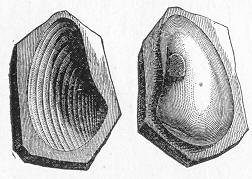
Fig. 1.—Trigonia longa, showing casts of the exterior
and interior of the shell.—Cretaceous (Neocomian).
two casts, an interior and an exterior, and the two would be
very different to one another, since the inside of a shell is
very unlike the outside. In the case, in fact, of many univalve
shells, the interior cast or "mould" is so unlike the exterior
cast, or unlike the shell itself, that it may be difficult to
determine the true origin of the former.
It only remains to add that there is sometimes a further
complication. If the rock be very porous and permeable by
Page 13
water, it may happen that the original shell is
entirely dissolved away, leaving the interior cast loose,
like the kernel of a nut, within the case formed by the exterior
cast. Or it may happen that subsequent to the attainment of this
state of things, the space thus left vacant between the interior
and exterior cast—the space, that is, formerly occupied by
the shell itself—may be filled up by some foreign mineral
deposited there by the infiltration of water. In this last case
the splitting open of the rock would reveal an interior cast,
an exterior cast, and finally a body which would have the exact
form of the original shell, but which would be really a much
later formation, and which would not exhibit under the microscope
the minute structure of shell.
In the third class of cases we have fossils which present with
the greatest accuracy the external form, and even sometimes the
internal minute structure, of the original organic body, but
which, nevertheless, are not themselves truly organic, but have
been formed by a "replacement" of the particles of the primitive
organism by some mineral substance. The most elegant example of
this is afforded by fossil wood which has been "silicified" or
converted into flint (silex). In such cases we have fossil
wood which presents the rings of growth and fibrous structure of
recent wood, and which under the microscope exhibits the minutest
vessels which characterise ligneous tissue, together with the even
more minute markings of the vessels (fig. 2). The whole, however,
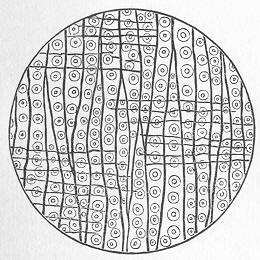
Fig. 2.—Microscopic section of the silicified
wood of a Conifer (Sequoia) cut in the long direction
of the fibres. Post-tertiary? Colorado. (Original.)
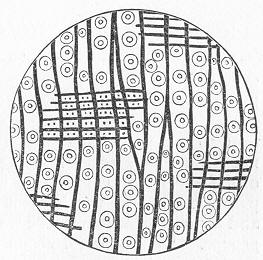
Fig. 3.—Microscopic section of the wood of the
common Larch (Abies larix), cut in the long direction
of the fibres. In both the fresh and the fossil wood (fig. 2)
are seen the discs characteristic of coniferous wood. (Original.)
instead of being composed of the original carbonaceous matter of
the wood, is now converted into flint. The only explanation that
can be given
Page 14
of this by no means rare phenomenon, is that the wood must have
undergone a slow process of decay in water charged with silica or
flint in solution. As each successive particle of wood was removed
by decay, its place was taken by a particle of flint deposited
from the surrounding water, till ultimately the entire wood was
silicified. The process, therefore, resembles what would take
place if we were to pull down a house built of brick by successive
bricks, replacing each brick as removed by a piece of stone of
precisely the same size and form. The result of this would be that
the house would retain its primitive size, shape, and outline, but
it would finally have been converted from a house of brick into a
house of stone. Many other fossils besides wood—such as shells,
corals, sponges, &c.—are often found silicified; and this
may be regarded as the commonest form of fossilisation by replacement.
In other cases, however, though the principle of the process is the
same, the replacing substance may be iron pyrites, oxide of iron,
sulphur, malachite, magnesite, talc, &c.; but it is rarely that
the replacement with these minerals is so perfect as to preserve the
more delicate details of internal structure.
CHAPTER II.
THE FOSSILIFEROUS ROCKS.
Fossils are found in rocks, though not universally or promiscuously;
and it is therefore necessary that the palæontologist should
possess some acquaintance with, at any rate, those rocks which
yield organic remains, and which are therefore said to be
"fossiliferous." In geological language, all the materials
which enter into the composition of the solid crust of the earth,
be their texture what it may—from the most impalpable mud to
the hardest granite—are termed "rocks;" and for our present
purpose we may divide these into two great groups. In the first
division are the Igneous Rocks—such as the lavas and
ashes of volcanoes—which are formed within the body of the
earth itself, and which owe their structure and origin to the
action of heat. The Igneous Rocks are formed primarily below the
surface of the earth, which they only reach as the result of
volcanic action; they are generally destitute of distinct
"stratification," or arrangement in successive layers; and they
do not contain fossils, except in the comparatively
Page 15
rare instances where volcanic ashes have enveloped
animals or plants which were living in the sea or on the land in
the immediate vicinity of the volcanic focus. The second great
division of rocks is that of the Fossiliferous, Aqueous,
or Sedimentary Rocks. These are formed at the surface of
the earth, and, as implied by one of their names, are invariably
deposited in water. They are produced by vital or chemical action,
or are formed from the "sediment" produced by the disintegration
and reconstruction of previously existing rocks, without previous
solution; they mostly contain fossils; and they are arranged in
distinct layers or "strata." The so-called "aerial" rocks which,
like beds of blown sand, have been formed by the action of the
atmosphere, may also contain fossils; but they are not of such
importance as to require special notice here.
For all practical purposes, we may consider that the Aqueous
Rocks are the natural cemetery of the animals and plants of bygone
ages; and it is therefore essential that the palæontological
student should be acquainted with some of the principal facts as
to their physical characters, their minute structure and mode of
origin, their chief varieties, and their historical succession.
The Sedimentary or Fossiliferous Rocks form the greater portion of
that part of the earth's crust which is open to our examination, and
are distinguished by the fact that they are regularly "stratified" or
arranged in distinct and definite layers or "strata." These layers
may consist of a single material, as in a block of sandstone, or
they may consist of different materials. When examined on a large
scale, they are always found to consist of alternations of layers
of different mineral composition. We may examine any given area,
and find in it nothing but one kind of rock—sandstone, perhaps,
or limestone. In all cases, however, if we extend our examination
sufficiently far, we shall ultimately come upon different rocks;
and, as a general rule, the thickness of any particular set of
beds is comparatively small, so that different kinds of rock
alternate with one another in comparatively small spaces.
As regards the origin of the Sedimentary Rocks, they are for
the most part "derivative" rocks, being derived from the wear
and tear of pre-existent rocks. Sometimes, however, they owe
their origin to chemical or vital action, when they would more
properly be spoken of simply as Aqueous Rocks. As to their mode
of deposition, we are enabled to infer that the materials which
compose them have formerly been spread out by the action of water,
from what we see going on every day
Page 16
at the mouths of our great
rivers, and on a smaller scale wherever there is running water.
Every stream, where it runs into a lake or into the sea, carries
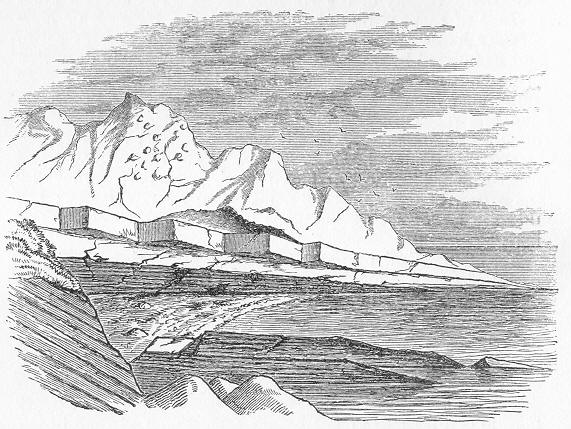
Fig. 4.—Sketch of Carboniferous strata at Kinghorn, in Fife,
showing stratified beds (limestone and shales) surmounted by an
unstratified mass of trap. (Original.)
with it a burden of mud, sand, and rounded pebbles, derived from
the waste of the rocks which form its bed and banks. When these
materials cease to be impelled by the force of the moving water,
they sink to the bottom, the heaviest pebbles, of course, sinking
first, the smaller pebbles and sand next, and the finest mud
last. Ultimately, therefore, as might have been inferred upon
theoretical grounds, and as is proved by practical experience,
every lake becomes a receptacle for a series of stratified rocks
produced by the streams flowing into it. These deposits may vary
in different parts of the lake, according as one stream brought
down one kind of material and another stream contributed another
material; but in all cases the materials will bear ample evidence
that they were produced, sorted, and deposited by running water.
The finer beds of clay or sand will all be arranged in thicker or
thinner layers or laminæ; and if there are any beds of pebbles
these will all be rounded or smooth, just like the water-worn
pebbles of any brook-course. In all probability, also, we should
find in some of the beds the remains
Page 17
of fresh-water shells or plants or other organisms which inhabited
the lake at the time these beds were being deposited.
In the same way large rivers—such as the Ganges or
Mississippi—deposit all the materials which they bring down
at their mouths, forming in this way their "deltas." Whenever
such a delta is cut through, either by man or by some channel of
the river altering its course, we find that it is composed of a
succession of horizontal layers or strata of sand or mud, varying
in mineral composition, in structure, or in grain, according to
the nature of the materials brought down by the river at different
periods. Such deltas, also, will contain the remains of animals
which inhabit the river, with fragments of the plants which grew
on its banks, or bones of the animals which lived in its basin.
Nor is this action confined, of course, to large rivers only,
though naturally most conspicuous in the greatest bodies of water.
On the contrary, all streams, of whatever size, are engaged in
the work of wearing down the dry land, and of transporting the
materials thus derived from higher to lower levels, never resting
in this work till they reach the sea.
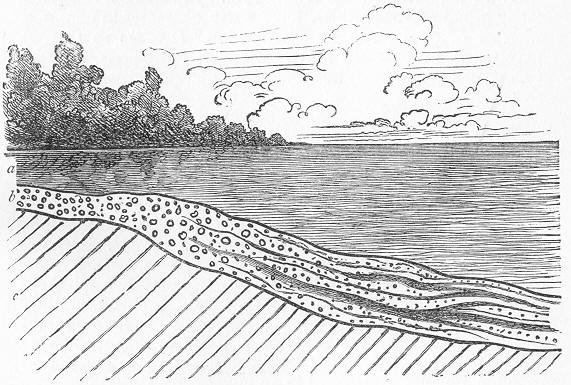 Fig. 5.—Diagram to illustrate the formation of sedimentary
deposits at the point where a river debouches into the sea.
Lastly, the sea itself—irrespective of the materials
delivered into it by rivers—is constantly preparing fresh
Page 18
by its own action.
Upon every coast-line the sea is constantly eating back into
the land and reducing its component rocks to form the shingle
and sand which we see upon every shore. The materials thus
produced are not, however, lost, but are ultimately deposited
elsewhere in the form of new stratified accumulations, in which
are buried the remains of animals inhabiting the sea at the time.
Fig. 5.—Diagram to illustrate the formation of sedimentary
deposits at the point where a river debouches into the sea.
Lastly, the sea itself—irrespective of the materials
delivered into it by rivers—is constantly preparing fresh
Page 18
by its own action.
Upon every coast-line the sea is constantly eating back into
the land and reducing its component rocks to form the shingle
and sand which we see upon every shore. The materials thus
produced are not, however, lost, but are ultimately deposited
elsewhere in the form of new stratified accumulations, in which
are buried the remains of animals inhabiting the sea at the time.
Whenever, then, we find anywhere in the interior of the land
any series of beds having these characters—composed, that is,
of distinct layers, the particles of which, both large and small,
show distinct traces of the wearing action of water—whenever
and wherever we find such rocks, we are justified in assuming that
they have been deposited by water in the manner above mentioned.
Either they were laid down in some former lake by the combined
action of the streams which flowed into it; or they were deposited
at the mouth of some ancient river, forming its delta; or they
were laid down at the bottom of the ocean. In the first two cases,
any fossils which the beds might contain would be the remains
of fresh-water or terrestrial organisms. In the last case, the
majority, at any rate, of the fossils would be the remains of
marine animals.
The term "formation" is employed by geologists to express "any
group of rocks which have some character in common, whether of
origin, age, or composition" (Lyell); so that we may speak of
stratified and unstratified formations, aqueous or igneous
formations, fresh-water or marine formations, and so on.
CHIEF DIVISIONS OF THE AQUEOUS ROCKS.
The Aqueous Rocks may be divided into two great sections, the
Mechanically-formed and the Chemically-formed, including under
the last head all rocks which owe their origin to vital action,
as well as those produced by ordinary chemical agencies.
A. MECHANICALLY-FORMED ROCKS.—These are all those Aqueous
Rocks of which we can obtain proofs that their particles have
been mechanically transported to their present situation. Thus,
if we examine a piece of conglomerate or puddingstone, we
find it to be composed of a number of rounded pebbles embedded
in an enveloping matrix or paste, which is usually of a sandy
nature, but may be composed of carbonate of lime (when the rock
is said to be a "calcareous conglomerate"). The pebbles in all
conglomerates are worn and rounded by the action of water in motion,
and thus show
Page 19
that they have been subjected
to much mechanical attrition, whilst they have been mechanically
transported for a greater or less distance from the rock of which
they originally formed part. The analogue of the old conglomerates
at the present day is to be found in the great beds of shingle
and gravel which are formed by the action of the sea on every
coast-line, and which are composed of water-worn and well-rounded
pebbles of different sizes. A breccia is a mechanically-formed
rock, very similar to a conglomerate, and consisting of larger or
smaller fragments of rock embedded in a common matrix. The fragments,
however, are in this case all more or less angular, and are not
worn or rounded. The fragments in breccias may be of large size,
or they may be comparatively small (fig. 6); and the matrix may
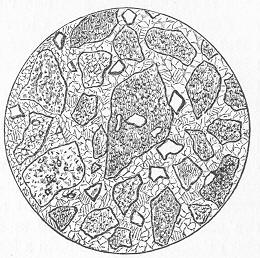
Fig. 6.—Microscopic section of a calcareous breccia in the
Lower Silurian (Coniston Limestone) of Shap Wells, Westmoreland.
The fragments are all of small size, and consist of angular
pieces of transparent quartz, volcanic ashes, and limestone
embedded in a matrix of crystalline limestone. (Original.)
be composed of sand (arenaceous) or of carbonate of lime
(calcareous). In the case of an ordinary sandstone, again, we
have a rock which may be regarded as simply a very fine-grained
conglomerate or breccia, being composed of small grains of sand
(silica), sometimes rounded, sometimes more or less angular,
cemented together by some such substance as oxide of iron, silicate
of iron, or carbonate of lime. A sandstone, therefore, like a
conglomerate is a mechanically-formed rock, its component grams
being equally the result of mechanical attrition and having equally
been transported from a distance; and the same is true of the
ordinary sand of the sea-shore, which is nothing more than an
unconsolidated sandstone. Other so-called sands and sandstones,
though equally mechanical in their origin, are truly calcareous in
their nature, and are more or less entirely composed of carbonate
of lime. Of this kind are the shell-sand so common on our coasts,
and the coral-sand which is so largely formed in the neighbourhood
of coral-reefs. In these cases the rock is composed of fragments
of the skeletons of shellfish, and numerous other marine animals,
together, in many instances, with the remains of certain sea-weeds
(Corallines, Nullipores, &c,) which are endowed
with the power of secreting
Page 20
carbonate of lime from the sea-water. Lastly, in certain rocks
still finer in their texture than sandstones, such as the various
mud-rocks and shales, we can still recognise a mechanical source
and origin. If slices of any of these rocks sufficiently thin to
be transparent are examined under the microscope, it will be found
that they are composed of minute grains of different sizes, which
are all more or less worn and rounded, and which clearly show,
therefore, that they have been subjected to mechanical attrition.
All the above-mentioned rocks, then, are mechanically-formed
rocks; and they are often spoken of as "Derivative Rocks," in
consequence of the fact that their particles can be shown to have
been mechanically derived from other pre-existent rocks.
It follows from this that every bed of any mechanically-formed
rock is the measure and equivalent of a corresponding amount of
destruction of some older rock. It is not necessary to enter
here into a minute account of the subdivisions of these rocks, but
it may be mentioned that they may be divided into two principal
groups, according to their chemical composition. In the one group
we have the so-called Arenaceous (Lat. arena, sand)
or Siliceous Rocks, which are essentially composed of
larger or smaller grains of flint or silica. In this group are
comprised ordinary sand, the varieties of sandstone and grit, and
most conglomerates and breccias. We shall, however, afterwards
see that some siliceous rocks are of organic origin. In the second
group are the so-called Argillaceous (Lat. argilla,
clay) Rocks, which contain a larger or smaller amount of clay or
hydrated silicate of alumina in their composition. Under this
head come clays, shales, marls, marl-slate, clay-slates, and
most flags and flagstones.
B. CHEMICALLY-FORMED ROCKS.—In this section are comprised all
those Aqueous or Sedimentary Rocks which have been formed by
chemical agencies. As many of these chemical agencies, however,
are exerted through the medium of living beings, whether animals
or plants, we get into this section a number of what may be called
"organically-formed rocks." These are of the greatest
possible importance to the palæontologist, as being to a
greater or less extent composed of the actual remains of animals or
vegetables, and it will therefore be necessary to consider their
character and structure in some detail.
By far the most important of the chemically-formed rocks are
the so-called Calcareous Rocks (Lat. calx, lime),
comprising all those which contain a large proportion of carbonate
Page 21
of lime, or are wholly composed of this substance.
Carbonate of lime is soluble in water holding a certain amount
of carbonic acid gas in solution; and it is, therefore, found in
larger or smaller quantity dissolved in all natural waters, both
fresh and salt, since these waters are always to some extent
charged with the above-mentioned solvent gas. A great number of
aquatic animals, however, together with some aquatic plants, are
endowed with the power of separating the lime thus held in
solution in the water, and of reducing it again to its solid
condition. In this way shell-fish, crustaceans, sea-urchins,
corals, and an immense number of other animals, are enabled to
construct their skeletons; whilst some plants form hard structures
within their tissues in a precisely similar manner. We do meet
with some calcareous deposits, such as the "stalactites" and
"stalagmites" of caves, the "calcareous tufa" and "travertine"
of some hot springs, and the spongy calcareous deposits of
so-called "petrifying springs," which are purely chemical in
their origin, and owe nothing to the operation of living beings.
Such deposits are formed simply by the precipitation of carbonate
of lime from water, in consequence of the evaporation from the
water of the carbonic acid gas which formerly held the lime in
solution; but, though sometimes forming masses of considerable
thickness and of geological importance, they do not concern us
here. Almost all the limestones which occur in the series of the
stratified rocks are, primarily at any rate, of organic
origin, and have been, directly or indirectly, produced by the
action of certain lime-making animals or plants, or both combined.
The presumption as to all the calcareous rocks, which cannot be
clearly shown to have been otherwise produced, is that they are
thus organically formed; and in many cases this presumption can
be readily reduced to a certainty. There are many varieties of
the calcareous rocks, but the following are those which are of
the greatest importance:—
Chalk is a calcareous rock of a generally soft and
pulverulent texture, and with an earthy fracture. It varies in
its purity, being sometimes almost wholly composed of carbonate
of lime, and at other times more or less intermixed with foreign
matter. Though usually soft and readily reducible to powder,
chalk is occasionally, as in the north of Ireland, tolerably
hard and compact; but it never assumes the crystalline aspect
and stony density of limestone, except it be in immediate contact
with some mass of igneous rock. By means of the microscope, the
true nature and mode of formation of chalk can be determined
with the greatest ease. In the case of the harder varieties, the
examination can be conducted by means of
Page 22
slices ground down to a thinness sufficient to render them
transparent; but in the softer kinds the rock must be disintegrated
under water, and the débris examined microscopically.
When investigated by either of these methods, chalk is found to be
a genuine organic rock, being composed of the shells or hard parts
of innumerable marine animals of different kinds, some entire,
some fragmentary, cemented together by a matrix of very finely
granular carbonate of lime. Foremost amongst the animal remains
which so largely compose chalk are the shells of the minute
creatures which will be subsequently spoken of under the name of
Foraminifera (fig. 7), and which, in spite of their
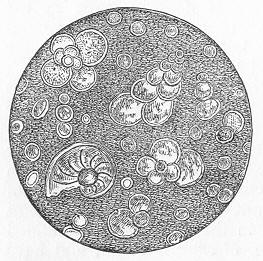
Fig. 7.—Section of Gravesend Chalk, examined by transmitted
light and highly magnified. Besides the entire shells of
Globigerina, Rotalia, and Textularia,
numerous detached chambers of Globigerina are seen.
(Original.)
microscopic dimensions, play a more important part in the process
of lime-making than perhaps any other of the larger inhabitants of
the ocean.
As chalk is found in beds of hundreds of feet in thickness,
and of great purity, there was long felt much difficulty in
satisfactorily accounting for its mode of formation and origin.
By the researches of Carpenter, Wyville Thomson, Huxley, Wallich,
and others, it has, however, been shown that there is now forming,
in the profound depths of our great oceans, a deposit which is
in all essential respects identical with chalk, and which is
generally known as the "Atlantic ooze," from its having been first
discovered in that sea. This ooze is found at great depths (5000
to over 15,000 feet) in both the Atlantic and Pacific, covering
enormously large areas of the sea-bottom, and it presents itself
as a whitish-brown, sticky, impalpable mud, very like greyish
chalk when dried. Chemical examination shows that the ooze is
composed almost wholly of carbonate of lime, and microscopical
examination proves it to be of organic origin, and to be made up
of the remains of living beings. The principal forms of these
belong to the Foraminifera, and the commonest of these
are the irregularly-chambered shells of Globigerina,
absolutely indistinguishable from the Globigerinœ
which are so largely present in the chalk (fig. 8). Along with
these occur fragments of the skeletons of other larger creatures,
Page 23
and a certain proportion of the flinty cases of minute animal
and vegetable organisms (Polycystina and Diatoms).
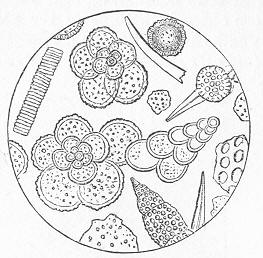
Fig. 8.—Organisms in the Atlantic Ooze, chiefly
Foraminifera (Globigerina and Textularia),
with Polycystina and sponge-spicules; highly magnified.
(Original.)
Though many of the minute animals, the hard parts of which form
the ooze, undoubtedly live at or near the surface of the sea,
others, probably, really live near the bottom; and the ooze itself
forms a congenial home for numerous sponges, sea-lilies, and
other marine animals which flourish at great depths in the sea.
There is thus established an intimate and most interesting
parallelism between the chalk and the ooze of modern oceans.
Both are formed essentially in the same way, and the latter only
requires consolidation to become actually converted into chalk. Both
are fundamentally organic deposits, apparently requiring a great
depth of water for their accumulation, and mainly composed of the
remains of Foraminifera, together with the entire or broken
skeletons of other marine animals of greater dimensions. It is to be
remembered, however, that the ooze, though strictly representative
of the chalk, cannot be said in any proper sense to be actually
identical with the formation so called by geologists. A
great lapse of time separates the two, and though composed of
the remains of representative classes or groups of animals, it
is only in the case of the lowly-organised Globigerinœ,
and of some other organisms of little higher grade, that we find
absolutely the same kinds or species of animals in both.
Limestone, like chalk, is composed of carbonate of lime,
sometimes almost pure, but more commonly with a greater or less
intermixture of some foreign material, such as alumina or silica.
The varieties of limestone are almost innumerable, but the great
majority can be clearly proved to agree with chalk in being
essentially of organic origin, and in being more or less largely
composed of the remains of living beings. In many instances the
organic remains which compose limestone are so large as to be
readily visible to the naked eye, and the rock is at once seen to
be nothing more than an agglomeration of the skeletons, generally
fragmentary, of certain marine animals, cemented together by a
matrix of carbonate of lime.
Page 24
This is the
case, for example, with the so-called "Crinoidal Limestones" and
"Encrinital Marbles" with which the geologist is so familiar,
especially as occurring in great beds amongst the older formations
of the earth's crust. These are seen, on weathered or broken
surfaces, or still better in polished slabs (fig. 9), to be
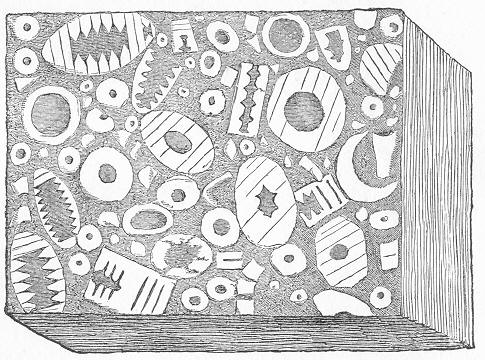
Fig. 9.—Slab of Crinoidal marble, from the Carboniferous
limestone of Dent, in Yorkshire, of the natural size. The polished
surface intersects the columns of the Crinoids at different angles,
and thus gives rise to varying appearances. (Original.)
composed more or less exclusively of the
broken stems and detached plates of sea-lilies (Crinoids).
Similarly, other limestones are composed almost entirely of the
skeletons of corals; and such old coralline limestones can readily
be paralleled by formations which we can find in actual course of
production at the present day. We only need to transport ourselves
to the islands of the Pacific, to the West Indies, or to the Indian
Ocean, to find great masses of lime formed similarly by living
corals, and well known to everyone under the name of "coral-reefs."
Such reefs are often of vast extent, both superficially and in
vertical thickness, and they fully equal in this respect any of
the coralline limestones of bygone ages. Again, we find other
limestones—such as the celebrated "Nummulitic Limestone"
(fig. 10), which sometimes attains a thickness of some thousands
of feet—which are almost entirely made up of the shells of
Foraminifera. In the case of the "Nummulitic Limestone,"
just mentioned, these shells are of large size, varying from the
up to that of a
Page 25
florin. There are, however, as we shall see, many other limestones,
which are likewise largely made up of Foraminifera, but in
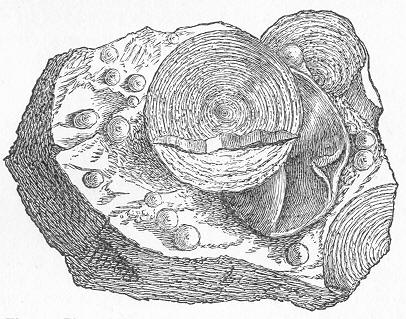
Fig. 10.—Piece of Nummulitic Limestone from the Great Pyramid.
Of the natural size. (Original.)
which the shells are very much more minute, and would hardly be
seen at all without the microscope.
We may, in fact, consider that the great agents in the production
of limestones in past ages have been animals belonging to the
Crinoids, the Corals, and the Foraminifera.
At the present day, the Crinoids have been nearly extinguished,
and the few known survivors seem to have retired to great depths
in the ocean; but the two latter still actively carry on the
work of lime-making, the former being very largely helped in
their operations by certain lime-producing marine plants
(Nullipores and Corallines). We have to remember,
however, that though the limestones, both ancient and modern,
that we have just spoken of, are truly organic, they are not
necessarily formed out of the remains of animals which actually
lived on the precise spot where we now find the limestone itself.
We may find a crinoidal limestone, which we can show to have
been actually formed by the successive growth of generations
of sea-lilies in place; but we shall find many others in
which the rock is made up of innumerable fragments of the skeletons
of these creatures, which have been clearly worn and rubbed by
the sea-waves, and which have been mechanically transported to
their present site. In the same way, a limestone may be shown
to have been an actual coral-reef, by the fact that we find in
it great masses of coral, growing in their natural position, and
Page 26
exhibiting plain proofs that they were
simply quietly buried by the calcareous sediment as they grew; but
other limestones may contain only numerous rolled and water-worn
fragments of corals. This is precisely paralleled by what we can
observe in our existing coral-reefs. Parts of the modern
coral-islands and coral-reefs are really made up of corals, dead
or alive, which actually grew on the spot where we now find them;
but other parts are composed of a limestone-rock ("coral-rock"),
or of a loose sand ("coral-sand"), which is organic in the sense
that it is composed of lime formed by living beings, but which,
in truth, is composed of fragments of the skeletons of these living
beings, mechanically transported and heaped together by the sea. To
take another example nearer home, we may find great accumulations
of calcareous matter formed in place, by the growth of
shell-fish, such as oysters or mussels; but we can also find
equally great accumulations on many of our shores in the form of
"shell-sand," which is equally composed of the shells of molluscs,
but which is formed by the trituration of these shells by the
mechanical power of the sea-waves. We thus see that though all
these limestones are primarily organic, they not uncommonly become
"mechanically-formed" rocks in a secondary sense, the materials
of which they are composed being formed by living beings, but
having been mechanically transported to the place where we now
find them.
Many limestones, as we have seen, are composed of large and
conspicuous organic remains, such as strike the eye at once.
Many others, however, which at first sight appear compact, more
or less crystalline, and nearly devoid of traces of life, are
found, when properly examined, to be also composed of the remains
of various organisms. All the commoner limestones, in fact, from
the Lower Silurian period onwards, can be easily proved to be thus
organic rocks, if we investigate weathered or polished
surfaces with a lens, or, still better, if we cut thin slices of
the rock and grind these down till they are transparent. When
thus examined, the rock is usually found to be composed of
innumerable entire or fragmentary fossils, cemented together
by a granular or crystalline matrix of carbonate of lime (figs.
11 and 12). When the matrix is granular, the rock is precisely
similar to chalk, except that it is harder and less earthy in
texture, whilst the fossils are only occasionally referable to
the Foraminifera. In other cases, the matrix is more or
less crystalline, and when this crystallisation has been carried
to a great extent, the original organic nature of the rock may
be greatly or completely obscured
Page 27
thereby. Thus, in limestones
which have been greatly altered or "metamorphosed" by the combined
action of heat and pressure, all traces of organic remains become
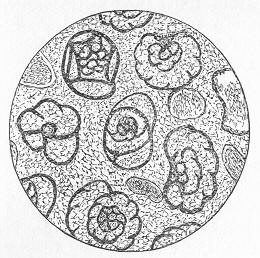
Fig. 11.—Section of Carboniferous Limestone from Spergen Hill,
Indiana, U.S., showing numerous large-sized Foraminifera
(Endothyra) and a few oolitic grains; magnified.
(Original.)
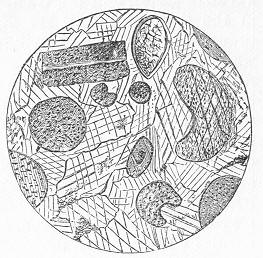
Fig 12.—Section of Coniston Limestone (Lower Silurian) from
Keisler, Westmoreland; magnified. The matrix is very coarsely
crystalline, and the included organic remains are chiefly stems
of Crinoids. (Original.)
annihilated, and the rock becomes completely crystalline throughout.
This, for example, is the case with the ordinary white "statuary
marble," slices of which exhibit under the microscope nothing but
an aggregate of beautifully transparent crystals of carbonate
of lime, without the smallest traces of fossils. There are also
other cases, where the limestone is not necessarily highly
crystalline, and where no metamorphic action in the strict sense
has taken place, in which, nevertheless, the microscope fails
to reveal any evidence that the rock is organic. Such cases are
somewhat obscure, and doubtless depend on different causes in
different instances; but they do not affect the important
generalisation that limestones are fundamentally the product
of the operation of living beings. This fact remains certain;
and when we consider the vast superficial extent occupied by
calcareous deposits, and the enormous collective thickness of
these, the mind cannot fail to be impressed with the immensity of
the period demanded for the formation of these by the agency of
such humble and often microscopic creatures as Corals, Sea-lilies,
Foraminifers, and Shell-fish.
Amongst the numerous varieties of limestone, a few are of such
interest as to deserve a brief notice. Magnesian limestone
or dolomite, differs from ordinary limestone in containing
a certain proportion of carbonate of magnesia along with the
carbonate of lime. The typical dolomites contain a large proportion
Page 28
of carbonate of magnesia, and are highly
crystalline. The ordinary magnesian limestones (such as those of
Durham in the Permian series, and the Guelph Limestones of North
America in the Silurian series) are generally of a yellowish,
buff, or brown colour, with a crystalline or pearly aspect,
effervescing with acid much less freely than ordinary limestone,
exhibiting numerous cavities from which fossils have been dissolved
out, and often assuming the most varied and singular forms in
consequence of what is called "concretionary action." Examination
with the microscope shows that these limestones are composed of an
aggregate of minute but perfectly distinct crystals, but that minute
organisms of different kinds, or fragments of larger fossils, are
often present as well. Other magnesian limestones, again, exhibit
no striking external peculiarities by which the presence of magnesia
would be readily recognised, and though the base of the rock is
crystalline, they are replete with the remains of organised beings.
Thus many of the magnesian limestones of the Carboniferous series
of the North of England are very like ordinary limestone to look
at, though effervescing less freely with acids, and the microscope
proves them to be charged with the remains of Foraminifera
and other minute organisms.
Marbles are of various kinds, all limestones which are
sufficiently hard and compact to take a high polish going by
this name. Statuary marble, and most of the celebrated foreign
marbles, are "metamorphic" rocks, of a highly crystalline nature,
and having all traces of their primitive organic structure
obliterated. Many other marbles, however, differ from ordinary
limestone simply in the matter of density. Thus, many marbles
(such as Derbyshire marble) are simply "crinoidal limestones"
(fig. 9); whilst various other British marbles exhibit innumerable
organic remains under the microscope. Black marbles owe their
colour to the presence of very minute particles of carbonaceous
matter, in some cases at any rate; and they may either be
metamorphic, or they may be charged with minute fossils such as
Foraminifera (e.g., the black limestones of Ireland,
and the black marble of Dent, in Yorkshire).
"Oolitic" limestones, or "oolites," as they
are often called, are of interest both to the palæontologist
and geologist. The peculiar structure to which they owe their name
is that the rock is more or less entirely composed of spheroidal
or oval grains, which vary in size from the head of a small pin or
less up to the size of a pea, and which may be in almost immediate
contact with one another, or may be cemented together by a
Page 29
more or less abundant calcareous matrix. When the
grains are pretty nearly spherical and are in tolerably close
contact, the rock looks very like the roe of a fish, and the name
of "oolite" or "egg-stone" is in allusion to this. When the grains
are of the size of peas or upwards, the rock is often called a
"pisolite" (Lat. pisum, a pea). Limestones having this
peculiar structure are especially abundant in the Jurassic formation,
which is often called the "Oolitic series" for this reason; but
essentially similar limestones occur not uncommonly in the Silurian,
Devonian, and Carboniferous formations, and, indeed, in almost all
rock-groups in which limestones are largely developed. Whatever may
be the age of the formation in which they occur, and whatever may
be the size of their component "eggs," the structure of oolitic
limestones is fundamentally the same. All the ordinary oolitic
limestones, namely, consist of little spherical or ovoid
"concretions," as they are termed, cemented together by a larger
or smaller amount of crystalline carbonate of lime, together, in
many instances, with numerous organic remains of different kinds
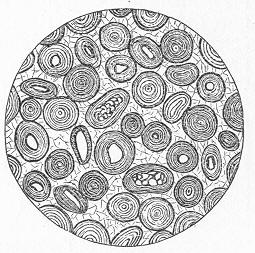
Fig. 13.—Slice of oolitic limestone from the Jurassic series
(Coral Rag) of Weymouth; magnified. (Original.)
(fig. 13). When examined in polished slabs, or in thin sections
prepared for the microscope, each of these little concretions is seen
to consist of numerous concentric coats of carbonate of lime, which
sometimes simply surround an imaginary centre, but which, more
commonly, have been successively deposited round some foreign body,
such as a little crystal of quartz, a cluster of sand-grains, or a
minute shell. In other cases, as in some of the beds of the Carboniferous
limestone in the North of England, where the limestone is highly
"arenaceous," there is a modification of the oolitic structure.
Microscopic sections of these sandy limestones (fig. 14) show
numerous generally angular or oval grains of silica or flint, each
of which is commonly surrounded by a thin coating of carbonate of
lime, or sometimes by several such coats, the whole being cemented
together along with the shells of Foraminifera and other
minute fossils by a matrix of crystalline calcite. As compared
with typical oolites, the concretions in these limestones are
usually much more irregular in shape,
Page 30
often lengthened out and
almost cylindrical, at other times angular, the central nucleus
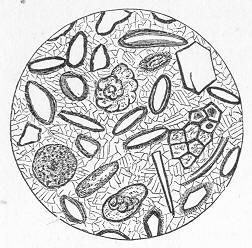
Fig. 14.—Slice of arenaceous and oolitic limestone
from the Carboniferous series of Shap, Westmoreland; magnified.
The section also exhibit Foraminifera and other minute
fossils. (Original.)
being of large size, and the surrounding envelope of lime being
very thin, and often exhibiting no concentric structure. In both
these and the ordinary oolites, the structure is fundamentally
the same. Both have been formed in a sea, probably of no great
depth, the waters of which were charged with carbonate of lime
in solution, whilst the bottom was formed of sand intermixed with
minute shells and fragments of the skeletons of larger marine
animals. The excess of lime in the sea-water was precipitated
round the sand-grams, or round the smaller shells, as so many
nuclei, and this precipitation must often have taken place time
after time, so as to give rise to the concentric structure so
characteristic of oolitic concretions. Finally, the oolitic grains
thus produced were cemented together by a further precipitation
of crystalline carbonate of lime from the waters of the ocean.
Phosphate of Lime is another lime-salt, which is of interest
to the palæontologist. It does not occur largely in the
stratified series, but it is found in considerable beds [4] in
the Laurentian formation, and less abundantly in some later
rock-groups, whilst it occurs abundantly in the form of nodules
in parts of the Cretaceous (Upper Greensand) and Tertiary deposits.
Phosphate of lime forms the larger proportion of the earthy matters
of the bones of Vertebrate animals, and also occurs in less amount
in the skeletons of certain of the Invertebrates (e.g.,
Crustacea). It is, indeed, perhaps more distinctively than
carbonate of lime, an organic compound; and though the formation
of many known deposits of phosphate of
Page 31
lime cannot be positively shown to be connected with the previous
operation of living beings, there is room for doubt whether this
salt is not in reality always primarily a product of vital action.
The phosphatic nodules of the Upper Greensand are erroneously
called "coprolites," from the belief originally entertained that
they were the droppings or fossilised excrements of extinct
animals; and though this is not the case, there can be little
doubt but that the phosphate of lime which they contain is in
this instance of organic origin.[5] It appears, in fact, that
decaying animal matter has a singular power of determining the
precipitation around it of mineral salts dissolved in water.
Thus, when any animal bodies are undergoing decay at the bottom
of the sea, they have a tendency to cause the precipitation
from the surrounding water of any mineral matters which may be
dissolved in it; and the organic body thus becomes a centre
round which the mineral matters in question are deposited in
the form of a "concretion" or "nodule." The phosphatic nodules
in question were formed in a sea in which phosphate of lime,
derived from the destruction of animal skeletons, was held largely
in solution; and a precipitation of it took place round any body,
such as a decaying animal substance, which happened to be lying on
the sea-bottom, and which offered itself as a favourable nucleus.
In the same way we may explain the formation of the calcareous
nodules, known as "septaria" or "cement stones," which occur so
commonly in the London Clay and Kimmeridge Clay, and in which the
principal ingredient is carbonate of lime. A similar origin is to
be ascribed to the nodules of clay iron-stone (impure carbonate of
iron) which occur so abundantly in the shales of the Carboniferous
series and in other argillaceous deposits; and a parallel modern
example is to be found in the nodules of manganese, which were
found by Sir Wyville Thomson, in the Challenger, to be so numerously
scattered over the floor of the Pacific at great depths. In
accordance with this mode of origin, it is exceedingly common
to find in the centre of all these nodules, both old and new,
some organic body, such as a bone, a shell, or a tooth, which
acted as the original nucleus of precipitation, and
Page 32
was thus preserved in a shroud of mineral matter.
Many nodules, it is true, show no such nucleus; but it has been
affirmed that all of them can be shown, by appropriate
microscopical investigation, to have been formed round an original
organic body to begin with (Hawkins Johnson).
The last lime-salt which need be mentioned is gypsum,
or sulphate of lime. This substance, apart from other
modes of occurrence, is not uncommonly found interstratified
with the ordinary sedimentary rocks, in the form of more or less
irregular beds; and in these cases it has a palæontological
importance, as occasionally yielding well-preserved fossils. Whilst
its exact mode of origin is uncertain, it cannot be regarded as
in itself an organic rock, though clearly the product of chemical
action. To look at, it is usually a whitish or yellowish-white
rock, as coarsely crystalline as loaf-sugar, or more so; and
the microscope shows it to be composed entirely of crystals of
sulphate of lime.
We have seen that the calcareous or lime-containing rocks
are the most important of the group of organic deposits; whilst
the siliceous or flint-containing rocks may be regarded as
the most important, most typical, and most generally distributed
of the mechanically-formed rocks. We have, however, now briefly
to consider certain deposits which are more or less completely
formed of flint; but which, nevertheless, are essentially organic
in their origin.
Flint or silex, hard and intractable as it is, is nevertheless
capable of solution in water to a certain extent, and even of
assuming, under certain circumstances, a gelatinous or viscous
condition. Hence, some hot-springs are impregnated with silica
to a considerable extent; it is present in small quantity in
sea-water; and there is reason to believe that a minute proportion
must very generally be present in all bodies of fresh water as
well. It is from this silica dissolved in the water that many
animals and some plants are enabled to construct for themselves
flinty skeletons; and we find that these animals and plants are and
have been sufficiently numerous to give rise to very considerable
deposits of siliceous matter by the mere accumulation of their
skeletons. Amongst the animals which require special mention in
this connection are the microscopic organisms which are known
to the naturalist as Polycystina. These little creatures
are of the lowest possible grade of organisation, very closely
related to the animals which we have previously spoken of as
Foraminifera, but differing in the fact that they secrete
a shell or skeleton composed of flint instead of lime. The
Polycystina occur abundantly in our present seas;
Page 33
and their shells are present in some numbers
in the ooze which is found at great depths in the Atlantic and
Pacific oceans, being easily recognised by their exquisite
shape, their glassy transparency, the general presence of longer
or shorter spines, and the sieve-like perforations in the walls.
Both in Barbadoes and in the Nicobar islands occur geological
formations which are composed of the flinty skeletons of these
microscopic animals; the deposit in the former locality
attaining a great thickness, and having been long known to
workers with the microscope under the name of "Barbadoes earth"
(fig. 15).
In addition to flint-producing animals, we have also the great
group of fresh-water and marine microscopic plants known as
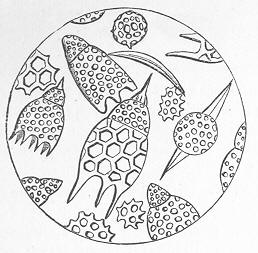
Fig. 15.—Shells of Polycystina from "Barbadoes
earth;" greatly magnified. (Original.)
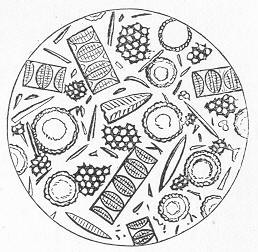
Fig 16.—Cases of Diatoms in the Richmond "Infusorial
earth;" highly magnified. (Original.)
Diatoms, which likewise secrete a siliceous skeleton, often
of great beauty. The skeletons of Diatoms are found abundantly at
the present day in lake-deposits, guano, the silt of estuaries,
and in the mud which covers many parts of the sea-bottom; they
have been detected in strata of great age; and in spite of their
microscopic dimensions, they have not uncommonly accumulated to
form deposits of great thickness, and of considerable superficial
extent. Thus the celebrated deposit of "tripoli" ("Polir-schiefer")
of Bohemia, largely worked as polishing-powder, is composed wholly,
or almost wholly, of the flinty cases of Diatoms, of which it
is calculated that no less than forty-one thousand millions go
to make up a single cubic inch of the stone. Another celebrated
deposit is the so-called "Infusorial earth" of Richmond in Virginia,
where there is a stratum in places thirty feet thick, composed
almost entirely of the microscopic shells of Diatoms.
Nodules or layers of flint, or the impure variety of flint
Page 34
known as chert, are found in limestones
of almost all ages from the Silurian upwards; but they are
especially abundant in the chalk. When these flints are examined
in thin and transparent slices under the microscope, or in polished
sections, they are found to contain an abundance of minute organic
bodies—such as Foraminifera, sponge-spicules,
&c.—embedded in a siliceous basis. In many instances the
flint contains larger organisms—such as a Sponge or a
Sea-urchin. As the flint has completely surrounded
and infiltrated the fossils which it contains, it is obvious
that it must have been deposited from sea-water in a gelatinous
condition, and subsequently have hardened. That silica is capable
of assuming this viscous and soluble condition is known; and
the formation of flint may therefore be regarded as due to the
separation of silica from the sea-water and its deposition round
some organic body in a state of chemical change or decay, just as
nodules of phosphate of lime or carbonate of iron are produced.
The existence of numerous organic bodies in flint has long been
known; but it should be added that a recent observer (Mr Hawkins
Johnson) asserts that the existence of an organic structure can
be demonstrated by suitable methods of treatment, even in the
actual matrix or basis of the flint.[6]
In addition to deposits formed of flint itself, there are other
siliceous deposits formed by certain silicates, and also of
organic origin. It has been shown, namely—by observations
carried out in our present seas—that the shells of
Foraminifera are liable to become completely infiltrated
by silicates (such as "glauconite," or silicate of iron and
potash). Should the actual calcareous shell become dissolved
away subsequent to this infiltration—as is also liable
to occur—then, in place of the shells of the
Foraminifera, we get a corresponding number of green
sandy grains of glauconite, each grain being the cast
of a single shell. It has thus been shown that the green sand
found covering the sea-bottom in certain localities (as found by
the Challenger expedition along the line of the Agulhas current)
is really organic, and is composed of casts of the shells of
Foraminifera. Long before these observations had been
made, it had been shown by Professor Ehrenberg that the green
sands of various geological formations are composed mainly of
the internal casts of the shells of Foraminifera, and
Page 35
we have thus another and a very
interesting example how rock-deposits of considerable extent
and of geological importance can be built up by the operation
of the minutest living beings.
As regards argillaceous deposits, containing alumina
or clay as their essential ingredient, it cannot be said that
any of these have been actually shown to be of organic origin. A
recent observation by Sir Wyville Thomson would, however, render it
not improbable that some of the great argillaceous accumulations of
past geological periods may be really organic. This distinguished
observer, during the cruise of the Challenger, showed that the
calcareous ooze which has been already spoken of as covering
large areas of the floor of the Atlantic and Pacific at great
depths, and which consists almost wholly of the shells of
Foraminifera, gave place at still greater depths to a
red ooze consisting of impalpable clayey mud, coloured by oxide
of iron, and devoid of traces of organic bodies. As the existence
of this widely-diffused red ooze, in mid-ocean, and at such great
depths, cannot be explained on the supposition that it is a sediment
brought down into the sea by rivers, Sir Wyville Thomson came to
the conclusion that it was probably formed by the action of the
sea-water upon the shells of Foraminifera. These shells,
though mainly consisting of lime, also contain a certain proportion
of alumina, the former being soluble in the carbonic acid dissolved
in the sea-water, whilst the latter is insoluble. There would
further appear to be grounds for believing that the solvent power
of the sea-water over lime is considerably increased at great
depths. If, therefore, we suppose the shells of Foraminifera
to be in course of deposition over the floor of the Pacific, at
certain depths they would remain unchanged, and would accumulate
to form a calcareous ooze; but at greater depths they would be
acted upon by the water, their lime would be dissolved out, their
form would disappear, and we should simply have left the small
amount of alumina which they previously contained. In process
of time this alumina would accumulate to form a bed of clay; and
as this clay had been directly derived from the decomposition
of the shells of animals, it would be fairly entitled to be
considered an organic deposit. Though not finally established,
the hypothesis of Sir Wyville Thomson on this subject is of the
greatest interest to the palæontologist, as possibly serving to
explain the occurrence, especially in the older formations, of
great deposits of argillaceous matter which are entirely destitute
of traces of life.
It only remains, in this connection, to shortly consider the
rock-deposits in which carbon is found to be present in
Page 36
greater or less quantity. In the great
majority of cases where rocks are found to contain carbon or
carbonaceous matter, it can be stated with certainty that this
substance is of organic origin, though it is not necessarily
derived from vegetables. Carbon derived from the decomposition
of animal bodies is not uncommon; though it never occurs in
such quantity from this source as it may do when it is derived
from plants. Thus, many limestones are more or less highly
bituminous; the celebrated siliceous flags or so-called
"bituminous schists" of Caithness are impregnated with oily
matter apparently derived from the decomposition of the
numerous fishes embedded in them; Silurian shales containing
Graptolites, but destitute of plants, are not uncommonly
"anthracitic," and contain a small percentage of carbon derived
from the decay of these zoophytes; whilst the petroleum so largely
worked in North America has not improbably an animal origin.
That the fatty compounds present in animal bodies should more or
less extensively impregnate fossiliferous rock-masses, is only
what might be expected; but the great bulk of the carbon which
exists stored up in the earth's crust is derived from plants;
and the form in which it principally presents itself is that of
coal. We shall have to speak again, and at greater length, of
coal, and it is sufficient to say here that all the true coals,
anthracites, and lignites, are of organic origin, and consist
principally of the remains of plants in a more or less altered
condition. The bituminous shales which are found so commonly
associated with beds of coal also derive their carbon primarily
from plants; and the same is certainly, or probably, the case
with similar shales which are known to occur in formations younger
than the Carboniferous. Lastly, carbon may occur as a conspicuous
constituent of rock-masses in the form of graphite or
black-lead. In this form, it occurs in the shape of detached
scales, of veins or strings, or sometimes of regular layers;[7]
and there can be little doubt that in many instances it has an
organic origin, though this is not capable of direct proof. When
present, at any rate, in quantity, and in the form of layers
associated with stratified rocks, as is often the case in the
Laurentian formation, there can be little hesitation in regarding
it as of vegetable origin, and as an altered coal.
CHRONOLOGICAL SUCCESSION OF THE FOSSILIFEROUS ROCKS.
The physical geologist, who deals with rocks simply as rocks,
and who does not necessarily trouble himself about what fossils
they may contain, finds that the stratified deposits which form
so large a portion of the visible part of the earth's crust are
not promiscuously heaped together, but that they have a certain
definite arrangement. In each country that he examines, he finds
that certain groups of strata lie above certain other groups;
and in comparing different countries with one another, he finds
that, in the main, the same groups of rocks are always found in the
same relative position to each other. It is possible, therefore,
for the physical geologist to arrange the known stratified rocks
into a successive series of groups, or "formations," having a
certain definite order. The establishment of this physical order
amongst the rocks introduces, however, at once the element of
time, and the physical succession of the strata can be
converted directly into a historical or chronological
succession. This is obvious, when we reflect that any bed or
set of beds of sedimentary origin is clearly and necessarily
younger than all the strata upon which it rests, and older than
all those by which it is surmounted.
It is possible, then, by an appeal to the rocks alone, to determine
in each country the general physical succession of the strata, and
this "stratigraphical" arrangement, when once determined, gives us
the relative ages of the successive groups. The task,
however, of the physical geologist in this matter is immensely
lightened when he calls in palæontology to his aid, and
studies the evidence of the fossils embedded in the rocks. Not only
is it thus much easier to determine the order of succession of the
strata in any given region, but it becomes now for the first time
possible to compare, with certainty and precision, the order of
succession in one region with that which exists in other regions
far distant. The value of fossils as tests of the relative ages
of the sedimentary rocks depends on the fact that they are not
indefinitely or promiscuously scattered through the crust of the
earth,—as it is conceivable that they might be. On the
contrary, the first and most firmly established law of
Palæontology is, that particular kinds of fossils are
confined to particular rocks, and particular groups of
fossils are confined to particular groups of rocks.
Page 38
Fossils, then, are distinctive
of the rocks in which they are found—much more distinctive,
in fact, than the mere mineral character of the rock can be, for
that commonly changes as a formation is traced from one
region to another, whilst the fossils remain unaltered. It would
therefore be quite possible for the palæontologist, by an
appeal to the fossils alone, to arrange the series of sedimentary
deposits into a pile of strata having a certain definite order.
Not only would this be possible, but it would be found—if
sufficient knowledge had been brought to bear on both
sides—that the palæontological arrangement of the
strata would coincide in its details with the stratigraphical
or physical arrangement.
Happily for science, there is no such division between the
palæontologist and the physical geologist as here supposed; but
by the combined researches of the two, it has been found possible
to divide the entire series of stratified deposits into a number
of definite rock-groups or formations, which have a
recognised order of succession, and each of which is characterised
by possessing an assemblage of organic remains which do not occur
in association in any other formation. Such an assemblage of
fossils, characteristic of any given formation, represents
the life of the particular period in which the
formation was deposited. In this way the past history of the earth
becomes divided into a series of successive life-periods,
each of which corresponds with the deposition of a particular
formation or group of strata.
Whilst particular assemblages of organic forms characterise
particular groups of rocks, it may be further said that,
in a general way, each subdivision of each formation has its own
peculiar fossils, by which it may be recognised by a skilled
worker in Palæontology. Whenever, for instance, we meet with
examples of the fossils which are known as Graptolites,
we may be sure that we are dealing with Silurian rocks
(leaving out of sight one or two forms doubtfully referred to
this family). We may, however, go much farther than this with
perfect safety. If the Graptolites belong to certain genera,
we may be quite certain that we are dealing with Lower
Silurian rocks. Furthermore, if certain special forms are present,
we may be even able to say to what exact subdivision of the Lower
Silurian series they belong.
As regards particular fossils, however, or even particular classes
of fossils, conclusions of this nature require to be accompanied
by a tacit but well-understood reservation. So far as
Page 39
our present observation goes, none of the undoubted
Graptolites have ever been discovered in rocks later than those
known upon other grounds to be Silurian; but it is possible that
they might at any time be detected in younger deposits. Similarly,
the species and genera which we now regard as characteristic of the
Lower Silurian, may at some future time be found to have survived
into the Upper Silurian period. We should not forget, therefore,
in determining the age of strata by palæontological evidence,
that we are always reasoning upon generalisations which are the
result of experience alone, and which are liable to be vitiated
by further and additional discoveries.
When the palæontological evidence as to the age of any given
set of strata is corroborated by the physical evidence, our
conclusions may be regarded as almost certain; but there are
certain limitations and fallacies in the palæontological method
of inquiry which deserve a passing mention. In the first place,
fossils are not always present in the stratified rocks; many
aqueous rocks are unfossiliferous, through a thickness of hundreds
or even thousands of feet of little-altered sediments; and even
amongst beds which do contain fossils, we often meet with strata
of many feet or yards in thickness which are wholly destitute
of any traces of fossils. There are, therefore, to begin with,
many cases in which there is no palæontological evidence extant
or available as to the age of a given group of strata. In the
second place, palæontological observers in different parts of
the world are liable to give different names to the same fossil,
and in all parts of the world they are occasionally liable to group
together different fossils under the same title. Both these sources
of fallacy require to be guarded against in reasoning as to the age
of strata from their fossil remains. Thirdly, the mere fact of
fossils being found in beds which are known by physical evidence
to be of different ages, has commonly led palæontologists
to describe them as different species. Thus, the same fossil,
occurring in successive groups of strata, and with the merely
trivial and varietal differences due to the gradual change in its
environment, has been repeatedly described as a distinct species,
with a distinct name, in every bed in which it was found. We know,
however, that many fossils range vertically through many groups
of strata, and there are some which even pass through several
formations. The mere fact of a difference of physical position
ought never to be taken into account at all in considering and
determining the true affinities of a fossil. Fourthly, the results
of experience, instead of being an assistance, are sometimes
liable to operate as a source of error. When once,
Page 40
namely, a generalisation has been established
that certain fossils occur in strata of a certain age,
palæontologists are apt to infer that all beds
containing similar fossils must be of the same age. There is a
presumption, of course, that this inference would be correct;
but it is not a conclusion resting upon absolute necessity, and
there might be physical evidence to disprove it. Fifthly, the
physical geologist may lead the palæontologist astray by
asserting that the physical evidence as to the age and position
of a given group of beds is clear and unequivocal, when such
evidence may be, in reality, very slight and doubtful. In this
way, the observer may be readily led into wrong conclusions as
to the nature of the organic remains—often obscure and
fragmentary—which it is his business to examine, or he may
be led erroneously to think that previous generalisations as to
the age of certain kinds of fossils are premature and incorrect.
Lastly, there are cases in which, owing to the limited exposure
of the beds, to their being merely of local development, or to
other causes, the physical evidence as to the age of a given
group of strata may be entirely uncertain and unreliable, and
in which, therefore, the observer has to rely wholly upon the
fossils which he may meet with.
In spite of the above limitations and fallacies, there can be
no doubt as to the enormous value of palæontology in enabling
us to work out the historical succession of the sedimentary rocks.
It may even be said that in any case where there should appear
to be a clear and decisive discordance between the physical and
the palæontological evidence as to the age of a given series
of beds, it is the former that is to be distrusted rather than
the latter. The records of geological science contain not a few
cases in which apparently clear physical evidence of superposition
has been demonstrated to have been wrongly interpreted; but the
evidence of palæontology, when in any way sufficient, has
rarely been upset by subsequent investigations. Should we find
strata containing plants of the Coal-measures apparently resting
upon other strata with Ammonites and Belemnites, we may be sure
that the physical evidence is delusive; and though the above is an
extreme case, the presumption in all such instances is rather that
the physical succession has been misunderstood or misconstrued,
than that there has been a subversion of the recognised succession
of life-forms.
We have seen, then, that as the collective result of observations
made upon the superposition of rocks in different localities, from
their mineral characters, and from their included
Page 41
fossils, geologists have been able to divide the entire
stratified series into a number of different divisions or
formations, each characterised by a general uniformity of
mineral composition, and by a special and peculiar assemblage
of organic forms. Each of these primary groups is in turn divided
into a series of smaller divisions, characterised and distinguished
in the same way. It is not pretended for a moment that all these
primary rock-groups can anywhere be seen surmounting one another
regularly.[8] There is no region upon the earth where all the
stratified formations can be seen together; and, even when most
of them occur in the same country, they can nowhere be seen all
succeeding each other in their regular and uninterrupted succession.
The reason of this is obvious. There are many places—to take
a single example—where one may see the the Silurian rocks,
the Devonian, and the Carboniferous rocks succeeding one another
regularly, and in their proper order. This is because the
particular region where this occurs was always submerged beneath
the sea while these formations were being deposited. There are,
however, many more localities in which one would find the
Carboniferous rocks resting unconformably upon the Silurians
without the intervention of any strata which could be referred
to the Devonian period. This might arise from one of two causes:
1. The Silurians might have been elevated above the sea
immediately after their deposition, so as to form dry land
during the whole of the Devonian period, in which case, of course,
no strata of the latter age could possibly be deposited in that
area. 2. The Devonian might have been deposited upon the Silurian,
and then the whole might have been elevated above the sea, and
subjected to an amount of denudation sufficient to remove the
Devonian strata entirely. In this case, when the land was again
submerged, the Carboniferous rocks, or any younger formation,
might be deposited directly upon Silurian strata. From one or
other of these causes, then, or from subsequent disturbances
and denudations, it happens that we can
Page 42
rarely find many of the primary formations following one another
consecutively and in their regular order.
In no case, however, do we ever find the Devonian resting upon
the Carboniferous, or the Silurian rocks reposing on the
Devonian. We have therefore, by a comparison of many different
areas, an established order of succession of the stratified
formations, as shown in the subjoined ideal section of the crust
of the earth (fig. 17).
The main subdivisions of the stratified rocks are known by the
following names:—
| 1. |
Laurentian. |
| 2. |
Cambrian (with
Huronian?). |
| 3. |
Silurian. |
| 4. |
Devonian or Old Red
Sandstone. |
| 5. |
Carboniferous. |
| 6. |
Permian |
}
New Red Sandstone. |
| 7. |
Triassic |
| 8. |
Jurassic or Oolitic. |
| 9. |
Cretaceous. |
| 10. |
Eocene. |
| 11. |
Miocene. |
| 12. |
Pliocene. |
| 13. |
Post-tertiary. |
|
Page 43
IDEAL SECTION OF THE CRUST OF THE EARTH.
|
| Fig. 17.
|
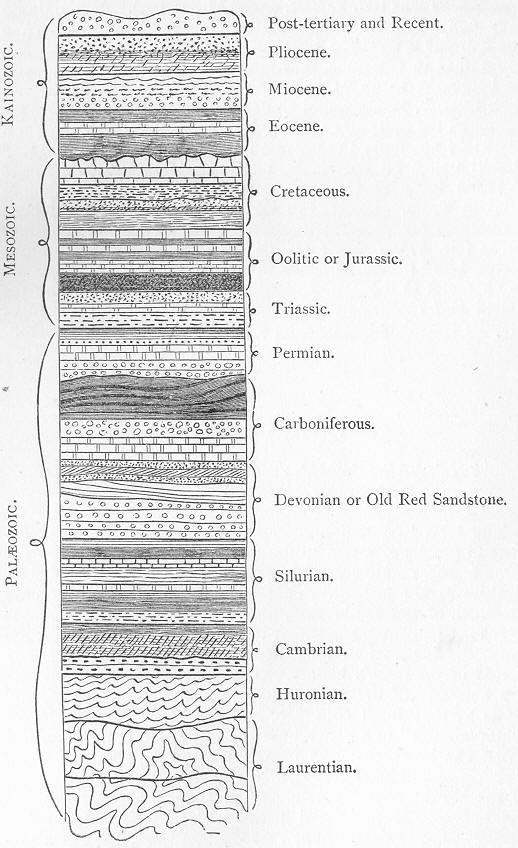
|
Page 44
Of these primary rock divisions, the Laurentian, Cambrian, Silurian,
Devonian, Carboniferous, and Permian are collectively grouped
together under the name of the Primary or Palœozoic
rocks (Gr. palaios, ancient; zoe, life). Not only do
they constitute the oldest stratified accumulations, but from the
extreme divergence between their animals and plants and those now
in existence, they may appropriately be considered as belonging to
an "Old-Life" period of the world's history. The Triassic, Jurassic,
and Cretaceous systems are grouped together as the
Secondary or Mesozoic formations (Gr. mesos,
intermediate; zoe, life); the organic remains of this
"Middle-Life" period being, on the whole, intermediate in their
characters between those of the palæozoic epoch and those of
more modern strata. Lastly, the Eocene, Miocene, and Pliocene
formations are grouped together as the Tertiary or
Kainozoic rocks (Gr. kainos, new; zoe, life);
because they constitute a "New-Life" period, in which the organic
remains approximate in character to those now existing upon the
globe. The so-called Post-Tertiary deposits are placed
with the Kainozoic, or may be considered as forming a separate
Quaternary system.
CHAPTER IV.
THE BREAKS IN THE GEOLOGICAL AND PALÆONTOLOGICAL
RECORD.
The term "contemporaneous" is usually applied by geologists to
groups of strata in different regions which contain the same
fossils, or an assemblage of fossils in which many identical
forms are present. That is to say, beds which contain identical,
or nearly identical, fossils, however widely separated they may
be from one another in point of actual distance, are ordinarily
believed to have been deposited during the same period of the
earth's history. This belief, indeed, constitutes the keystone
of the entire system of determining the age of strata by their
fossil contents; and if we take the word "contemporaneous" in a
general and strictly geological sense, this belief can be accepted
as proved beyond denial. We must, however, guard ourselves against
too literal an interpretation of the word "contemporaneous," and
we must bear in mind the enormously-prolonged periods of time with
which the geologist has to deal. When we say that two groups of
Page 45
strata in different regions are "contemporaneous," we simply mean
that they were formed during the same geological period, and
perhaps at different stages of that period, and we do not mean to
imply that they were formed at precisely the same instant of time.
A moment's consideration will show us that it is only in the
former sense that we can properly speak of strata being
"contemporaneous;" and that, in point of fact, beds containing
the same fossils, if occurring in widely distant areas, can hardly
be "contemporaneous" in any literal sense; but that the very
identity of their fossils is proof that they were deposited one
after the other. If we find strata containing identical fossils
within the limits of a single geographical region—say in
Europe—then there is a reasonable probability that these beds
are strictly contemporaneous, in the sense that they were deposited
at the same time. There is a reasonable probability of this,
because there is no improbability involved in the idea of an
ocean occupying the whole area of Europe, and peopled throughout
by many of the same species of marine animals. At the present
day, for example, many identical species of animals are found
living on the western coasts of Britain and the eastern coasts
of North America, and beds now in course of deposition off the
shores of Ireland and the seaboard of the state of New York would
necessarily contain many of the same fossils. Such beds would be
both literally and geologically contemporaneous; but the case is
different if the distance between the areas where the strata occur
be greatly increased. We find, for example, beds containing identical
fossils (the Quebec or Skiddaw beds) in Sweden, in the north of
England, in Canada, and in Australia. Now, if all these beds were
contemporaneous, in the literal sense of the term, we should have
to suppose that the ocean at one time extended uninterruptedly
between all these points, and was peopled throughout the vast area
thus indicated by many of the same animals. Nothing, however,
that we see at the present day would justify us in imagining an
ocean of such enormous extent, and at the same time so uniform
in its depth, temperature, and other conditions of marine life,
as to allow the same animals to flourish in it from end to end;
and the example chosen is only one of a long and ever-recurring
series. It is therefore much more reasonable to explain this,
and all similar cases, as owing to the migration of the
fauna, in whole or in part, from one marine area to another.
Thus, we may suppose an ocean to cover what is now the European
area, and to be peopled by certain species of animals. Beds of
sediment—clay, sands, and limestones—will be deposited
over the sea-bottom, and
Page 46
will entomb the
remains of the animals as fossils. After this has lasted for a
certain length of time, the European area may undergo elevation,
or may become otherwise unsuitable for the perpetuation of its
fauna; the result of which would be that some or all of the
marine animals of the area would migrate to some more suitable
region. Sediments would then be accumulated in the new area to
which they had betaken themselves, and they would then appear,
for the second time, as fossils in a set of beds widely
separated from Europe. The second set of beds would, however,
obviously not be strictly or literally contemporaneous with the
first, but would be separated from them by the period of time
required for the migration of the animals from the one area
into the other. It is only in a wide and comprehensive sense
that such strata can be said to be contemporaneous.
It is impossible to enter further into this subject here; but it
may be taken as certain that beds in widely remote geographical
areas can only come to contain the same fossils by reason of a
migration having taken place of the animals of the one area to
the other. That such migrations can and do take place is quite
certain, and this is a much more reasonable explanation of the
observed facts than the hypothesis that in former periods the
conditions of life were much more uniform than they are at present,
and that, consequently, the same organisms were able to range over
the entire globe at the same time. It need only be added, that
taking the evidence of the present as explaining the phenomena
of the past—the only safe method of reasoning in geological
matters—we have abundant proof that deposits which are
actually contemporaneous, in the strict sense of the term, do
not contain the same fossils, if far removed from one another in
point of distance. Thus, deposits of various kinds are now
in process of formation in our existing seas, as, for example, in
the Arctic Ocean, the Atlantic, and the Pacific, and many of these
deposits are known to us by actual examination and observation
with the sounding-lead and dredge. But it is hardly necessary to
add that the animal remains contained in these deposits—the
fossils of some future period—instead of being identical, are
widely different from one another in their characters.
We have seen, then, that the entire stratified series is capable of
subdivision into a number of definite rock-groups or "formations,"
each possessing a peculiar and characteristic assemblage of fossils,
representing the "life" of the "period" in which the formation
was deposited. We have still to inquire shortly how it came to
pass that two successive formations should
Page 47
thus be broadly distinguished by their life-forms, and why
they should not rather possess at any rate a majority of identical
fossils. It was originally supposed that this could be explained by
the hypothesis that the close of each formation was accompanied by
a general destruction of all the living beings of the period, and
that the commencement of each new formation was signalised by the
creation of a number of brand-new organisms, destined to figure
as the characteristic fossils of the same. This theory, however,
ignores the fact that each formation—as to which we have
any sufficient evidence—contains a few, at least, of the
life-forms which existed in the preceding period; and it invokes
forces and processes of which we know nothing, and for the supposed
action of which we cannot account. The problem is an undeniably
difficult one, and it will not be possible here to give more than
a mere outline of the modern views upon the subject. Without
entering into the at present inscrutable question as to the manner
in which new life-forms are introduced upon the earth, it may be
stated that almost all modern geologists hold that the living beings
of any given formation are in the main modified forms of others
which have preceded them. It is not believed that any general or
universal destruction of life took place at the termination of
each geological period, or that a general introduction of new
forms took place at the commencement of a new period. It is, on
the contrary, believed that the animals and plants of any given
period are for the most part (or exclusively) the lineal but
modified descendants of the animals and plants of the immediately
preceding period, and that some of them, at any rate, are
continued into the next succeeding period, either unchanged, or
so far altered as to appear as new species. To discuss these
views in detail would lead us altogether too far, but there is
one very obvious consideration which may advantageously receive
some attention. It is obvious, namely, that the great
discordance which is found to subsist between the animal life of
any given formation and that of the next succeeding formation,
and which no one denies, would be a fatal blow to the views just
alluded to, unless admitting of some satisfactory explanation.
Nor is this discordance one purely of life-forms, for there is
often a physical break in the successions of strata as well.
Let us therefore briefly consider how far these interruptions
and breaks in the geological and palæontological record
can be accounted for, and still allow us to believe in some
theory of continuity as opposed to the doctrine of intermittent
and occasional action.
Page 48
In the first place, it is perfectly clear that if we admit the
conception above mentioned of a continuity of life from the
Laurentian period to the present day, we could never prove
our view to be correct, unless we could produce in evidence
fossil examples of all the kinds of animals and plants
that have lived and died during that period. In order to do
this, we should require, to begin with, to have access to an
absolutely unbroken and perfect succession of all the deposits
which have ever been laid down since the beginning. If, however,
we ask the physical geologist if he is in possession of any such
uninterrupted series, he will at once answer in the negative.
So far from the geological series being a perfect one, it is
interrupted by numerous gaps of unknown length, many of which we
can never expect to fill up. Nor are the proofs of this far to
seek. Apart from the facts that we have hitherto examined only
a limited portion of the dry land, that nearly two-thirds of
the entire area of the globe is inaccessible to geological
investigation in consequence of its being covered by the sea,
that many deposits can be shown to have been more or less
completely destroyed subsequent to their deposition, and that
there may be many areas in which living beings exist where no
rock is in process of formation, we have the broad fact that
rock-deposition only goes on to any extent in water, and that
the earth must have always consisted partly of dry land and
partly of water—at any rate, so far as any period of
which we have geological knowledge is concerned. There
must, therefore, always have existed, at some part or
another of the earth's surface, areas where no deposition of
rock was going on, and the proof of this is to be found in the
well-known phenomenon of "unconformability." Whenever,
namely, deposition of sediment is continuously going on within
the limits of a single ocean, the beds which are laid down succeed
one another in uninterrupted and regular sequence. Such beds are
said to be "conformable," and there are many rock-groups known
where one may pass through fifteen or twenty thousand feet of strata
without a break—indicating that the beds had been deposited
in an area which remained continuously covered by the sea. On
the other hand, we commonly find that there is no such regular
succession when we pass from one great formation to another, but
that, on the contrary, the younger formation rests "unconformably,"
as it is called, either upon the formation immediately preceding
it in point of time, or upon some still older one. The essential
physical feature of this unconformability is that the beds of the
younger formation rest upon a worn and eroded surface formed by the
Page 49
beds of the older series (fig. 18); and a moment's
consideration will show us what this indicates. It indicates,
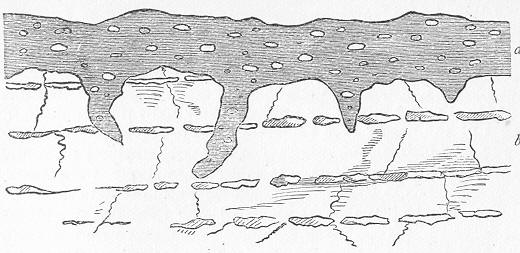
Fig. 18.—Section showing strata of Tertiary age (a)
resting upon a worn and eroded surface of White Chalk
(b), the stratification of which is marked by lines of
flint.
beyond the possibility of misconception, that there was an interval
between the deposition of the older series and that of the newer
series of strata; and that during this interval the older beds
were raised above the sea-level, so as to form dry land, and were
subsequently depressed again beneath the waters, to receive upon
their worn and wasted upper surface the sediments of the later
group. During the interval thus indicated, the deposition of rock
must of necessity have been proceeding more or less actively
in other areas. Every unconformity, therefore, indicates that
at the spot where it occurs, a more or less extensive series
of beds must be actually missing; and though we may sometimes
be able to point to these missing strata in other areas, there
yet remains a number of unconformities for which we cannot at
present supply the deficiency even in a partial manner.
It follows from the above that the series of stratified deposits
is to a greater or less extent irremediably imperfect; and in
this imperfection we have one great cause why we can never obtain
a perfect series of all the animals and plants that have lived
upon the globe. Wherever one of these great physical gaps occurs,
we find, as we might expect, a corresponding break in the series
of life-forms. In other words, whenever we find two formations
to be unconformable, we shall always find at the same time that
there is a great difference in their fossils, and that many of
the fossils of the older formation do not survive into the newer,
whilst many of those in the newer are not known to occur in the
older. The cause of this is, obviously,
Page 50
that the lapse of time, indicated by the unconformability, has
been sufficiently great to allow of the dying out or modification
of many of the older forms of life, and the introduction of new
ones by immigration.
Apart, however, altogether, from these great physical breaks
and their corresponding breaks in life, there are other reasons
why we can never become more than partially acquainted with the
former denizens of the globe. Foremost amongst these is the fact
that an enormous number of animals possess no hard parts of the
nature of a skeleton, and are therefore incapable, under any
ordinary circumstances, of leaving behind them any traces of
their existence. It is true that there are cases in which animals
in themselves completely soft-bodied are nevertheless able to leave
marks by which their former presence can be detected: Thus every
geologist is familiar with the winding and twisting "trails" formed
on the surface of the strata by sea-worms; and the impressions
left by the stranded carcases of Jelly-fishes on the fine-grained
lithographic slates of Solenhofen supply us with an example of how
a creature which is little more than "organised sea-water" may
still make an abiding mark upon the sands of time. As a general
rule, however, animals which have no skeletons are incapable of
being preserved as fossils, and hence there must always have
been a vast number of different kinds of marine animals of which
we have absolutely no record whatever. Again, almost all the
fossiliferous rocks have been laid down in water; and it is a
necessary result of this that the great majority of fossils are
the remains of aquatic animals. The remains of air-breathing
animals, whether of the inhabitants of the land or of the air
itself, are comparatively rare as fossils, and the record of
the past existence of these is much more imperfect than is the
case with animals living in water. Moreover, the fossiliferous
deposits are not only almost exclusively aqueous formations, but
the great majority are marine, and only a comparatively small
number have been formed by lakes and rivers. It follows from the
foregoing that the palæontological record is fullest and most
complete so far as sea-animals are concerned, though even here we
find enormous gaps, owing to the absence of hard structures in
many great groups; of animals inhabiting fresh waters our knowledge
is rendered still further incomplete by the small proportion
that fluviatile and lacustrine deposits bear to marine; whilst
we have only a fragmentary acquaintance with the air-breathing
animals which inhabited the earth during past ages.
Lastly, the imperfection of the palæontological record, due
Page 51
to the causes above enumerated, is greatly aggravated, especially
as regards the earlier portion of the earth's history, by the fact
that many rocks which contained fossils when deposited have since
been rendered barren of organic remains. The principal cause of
this common phenomenon is what is known as "metamorphism"—that
is, the subjection of the rock to a sufficient amount of heat to
cause a rearrangement of its particles. When at all of a pronounced
character, the result of metamorphic action is invariably the
obliteration of any fossils which might have been originally
present in the rock. Metamorphism may affect rocks of any age,
though naturally more prevalent in the older rocks, and to this
cause must be set down an irreparable loss of much fossil evidence.
The most striking example which is to be found of this is the great
Laurentian series, which comprises some 30,000 feet of
highly-metamorphosed sediments, but which, with one not wholly
undisputed exception, has as yet yielded no remains of living
beings, though there is strong evidence of the former existence
in it of fossils.
Upon the whole, then, we cannot doubt that the earth's crust, so
far as yet deciphered by us, presents us with but a very imperfect
record of the past. Whether the known and admitted imperfections
of the geological and palæontological records are sufficiently
serious to account satisfactorily for the deficiency of direct
evidence recognisable in some modern hypotheses, may be a matter
of individual opinion. There can, however, be little doubt that
they are sufficiently extensive to throw the balance of evidence
decisively in favour of some theory of continuity, as
opposed to any theory of intermittent and occasional action. The
apparent breaks which divide the great series of the stratified
rocks into a number of isolated formations, are not marks of mighty
and general convulsions of nature, but are simply indications of
the imperfection of our knowledge. Never, in all probability,
shall we be able to point to a complete series of deposits, or a
complete succession of life linking one great geological period
to another. Nevertheless, we may well feel sure that such deposits
and such an unbroken succession must have existed at one time.
We are compelled to believe that nowhere in the long series of
the fossiliferous rocks has there been a total break, but that
there must have been a complete continuity of life, and a more
or less complete continuity of sedimentation, from the Laurentian
period to the present day. One generation hands on the lamp of
life to the next, and each system of rocks is the direct offspring
of those which preceded it in time. Though there
Page 52
has not been continuity in any given area, still the
geological chain could never have been snapped at one point, and
taken up again at a totally different one. Thus we arrive at the
conviction that continuity is the fundamental law of
geology, as it is of the other sciences, and that the lines of
demarcation between the great formations are but gaps in our own
knowledge.
CHAPTER V.
CONCLUSIONS TO BE DRAWN FROM FOSSILS.
We have already seen that geologists have been led by the study
of fossils to the all-important generalisation that the vast
series of the Fossiliferous or Sedimentary Rocks may be divided
into a number of definite groups or "formations," each of which is
characterised by its organic remains. It may simply be repeated here
that these formations are not properly and strictly characterised
by the occurrence in them of any one particular fossil. It may be
that a formation contains some particular fossil or fossils not
occurring out of that formation, and that in this way an observer
may identify a given group with tolerable certainty. It very
often happens, indeed, that some particular stratum, or sub-group
of a series, contains peculiar fossils, by which its existence
may be determined in various localities. As before remarked,
however, the great formations are characterised properly by the
association of certain fossils, by the predominance of certain
families or orders, or by an assemblage of fossil remains
representing the "life" of the period in which the formation
was deposited.
Fossils, then, enable us to determine the age of the deposits
in which they occur. Fossils further enable us to come to very
important conclusions as to the mode in which the fossiliferous
bed was deposited, and thus as to the condition of the particular
district or region occupied by the fossiliferous bed at the time
of the formation of the latter. If, in the first place, the bed
contain the remains of animals such as now inhabit rivers, we
know that it is "fluviatile" in its origin, and that it must at
one time have either formed an actual riverbed, or been deposited
by the overflowing of an ancient stream. Secondly, if the bed
contain the remains of shellfish, minute crustaceans, or fish,
such as now inhabit lakes,
Page 53
we know that it is "lacustrine," and was deposited beneath the
waters of a former lake. Thirdly, if the bed contain the remains
of animals such as now people the ocean, we know that it is
"marine" in its origin, and that it is a fragment of an old
sea-bottom.
We can, however, often determine the conditions under which a bed
was deposited with greater accuracy than this. If, for example, the
fossils are of kinds resembling the marine animals now inhabiting
shallow waters, if they are accompanied by the detached relics
of terrestrial organisms, or if they are partially rolled and
broken, we may conclude that the fossiliferous deposit was laid
down in a shallow sea, in the immediate vicinity of a coast-line,
or as an actual shore-deposit. If, again, the remains are those
of animals such as now live in the deeper parts of the ocean,
and there is a very sparing intermixture of extraneous fossils
(such as the bones of birds or quadrupeds, or the remains of
plants), we may presume that the deposit is one of deep water.
In other cases, we may find, scattered through the rock, and
still in their natural position, the valves of shells such as
we know at the present day as living buried in the sand or mud
of the sea-shore or of estuaries. In other cases, the bed may
obviously have been an ancient coral-reef, or an accumulation of
social shells, like Oysters. Lastly, if we find the deposit to
contain the remains of marine shells, but that these are dwarfed
of their fair proportions and distorted in figure, we may conclude
that it was laid down in a brackish sea, such as the Baltic, in
which the proper saltness was wanting, owing to its receiving
an excessive supply of fresh water.
In the preceding, we have been dealing simply with the remains
of aquatic animals, and we have seen that certain conclusions
can be accurately reached by an examination of these. As regards
the determination of the conditions of deposition from the remains
of aerial and terrestrial animals, or from plants, there is not
such an absolute certainty. The remains of land-animals would,
of course, occur in "sub-aerial" deposits—that is, in beds,
like blown sand, accumulated upon the land. Most of the remains
of land-animals, however, are found in deposits which have been
laid down in water, and they owe their present position to the
fact that their former owners were drowned in rivers or lakes,
or carried out to sea by streams. Birds, Flying Reptiles, and
Flying Mammals might also similarly find their way into aqueous
deposits; but it is to be remembered that many birds and mammals
habitually spend a great part of their time in the water, and
that these might therefore be naturally expected to present
themselves as fossils in
Page 54
Sedimentary Rocks. Plants, again, even when undoubtedly such as
must have grown on land, do not prove that the bed in which they
occur was formed on land. Many of the remains of plants known to
us are extraneous to the bed in which they are now found, having
reached their present site by falling into lakes or rivers, or
being carried out to sea by floods or gales of wind. There are,
however, many cases in which plants have undoubtedly grown on
the very spot where we now find them. Thus it is now generally
admitted that the great coal-fields of the Carboniferous age
are the result of the growth in situ
of the plants which compose coal, and that these grew on vast
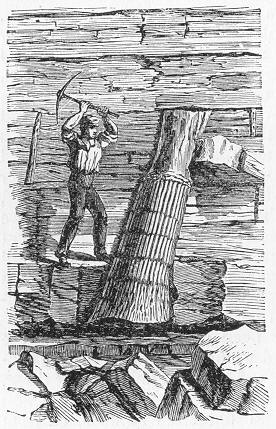
Fig. 19.—Erect Tree containing Reptilian remains.
Coal-measures, Nova Scotia. (After Dawson.)
marshy or partially submerged tracts of level alluvial land. We
have, however, distinct evidence of old land-surfaces, both in
the Coal-measures and in other cases (as, for instance, in the
well-known "dirt-bed" of the Purbeck series). When, for example,
we find the erect stumps of trees standing at right angles to
the surrounding strata, we know that the surface through which
these send their roots was at one time the surface of the dry
land, or, in other words, was an ancient soil (fig. 19).
In many cases fossils enable us to come to important conclusions
as to the climate of the period in which they lived but only a
few instances of this can be here adduced. As fossils in the
majority of instances are the remains of marine animals, it is
mostly the temperature of the sea which can alone be determined
in this way; and it is important to remember that, owing to the
existence of heated currents, the marine climate of a given area
does not necessarily imply a correspondingly warm climate in
the neighbouring land. Land-climates can only be determined by
the remains of land-animals or land-plants, and these are
comparatively rare as fossils. It is also important to remember
that all conclusions on this
Page 55
head are really based upon the present distribution of animal
and vegetable life on the globe, and are therefore liable to be
vitiated by the following considerations:—
a. Most fossils are extinct, and it is not certain that
the habits and requirements of any extinct animal were exactly
similar to those of its nearest living relative.
b. When we get very far back in time, we meet with groups
of organisms so unlike anything we know at the present day as to
render all conjectures as to climate founded upon their supposed
habits more or less uncertain and unsafe.
c. In the case of marine animals, we are as yet very far
from knowing the exact limits of distribution of many species within
our present seas; so that conclusions drawn from living forms as
to extinct species are apt to prove incorrect. For instance, it
has recently been shown that many shells formerly believed to
be confined to the Arctic Seas have, by reason of the extension
of Polar currents, a wide range to the south; and this has thrown
doubt upon the conclusions drawn from fossil shells as to the
Arctic conditions under which certain beds were supposed to have
been deposited.
d. The distribution of animals at the present day is certainly
dependent upon other conditions beside climate alone; and the causes
which now limit the range of given animals are certainly such as
belong to the existing order of things. But the establishment of
the present order of things does not date back in many cases to
the introduction of the present species of animals. Even in the
case, therefore, of existing species of animals, it can often
be shown that the past distribution of the species was different
formerly to what it is now, not necessarily because the climate
has changed, but because of the alteration of other conditions
essential to the life of the species or conducing to its extension.
Still, we are in many cases able to draw completely reliable
conclusions as to the climate of a given geological period, by
an examination of the fossils belonging to that period. Among
the more striking examples of how the past climate of a region
may be deduced from the study of the organic remains contained in
its rocks, the following may be mentioned: It has been shown that
in Eocene times, or at the commencement of the Tertiary period,
the climate of what is now Western Europe was of a tropical or
sub-tropical character. Thus the Eocene beds are found to contain
the remains of shells such as now inhabit tropical seas, as, for
example, Cowries and Volutes; and with these are the fruits of
palms, and the remains of other tropical plants. It has been shown,
Page 56
again, that in Miocene times, or
about the middle of the Tertiary period, Central Europe was
peopled with a luxuriant flora resembling that of the warmer
parts of the United States, and leading to the conclusion that
the mean annual temperature must have been at least 30°
hotter than it is at present. It has been shown that, at the
same time, Greenland, now buried beneath a vast ice-shroud, was
warm enough to support a large number of trees, shrubs, and other
plants, such as inhabit temperate regions of the globe. Lastly,
it has been shown upon physical as well as palæontological
evidence, that the greater part of the North Temperate Zone, at
a comparatively recent geological period, has been visited with
all the rigours of an Arctic climate, resembling that of
Greenland at the present day. This is indicated by the occurrence
of Arctic shells in the superficial deposits of this period,
whilst the Musk-ox and the Reindeer roamed far south of their
present limits.
Lastly, it was from the study of fossils that geologists learnt
originally to comprehend a fact which may be regarded as of cardinal
importance in all modern geological theories and
speculations—namely, that the crust of the earth is liable
to local elevations and subsidences. For long after the remains of
shells and other marine animals were for the first time observed
in the solid rocks forming the dry land, and at great heights
above the sea-level, attempts were made to explain this almost
unintelligible phenomenon upon the hypothesis that the fossils in
question were not really the objects they represented, but were
in truth mere lusus naturœ, due to some "plastic virtue
latent in the earth." The common-sense of scientific men, however,
soon rejected this idea, and it was agreed by universal consent
that these bodies really were remains of animals which formerly
lived in the sea. When once this was admitted, the further steps
were comparatively easy, and at the present day no geological
doctrine stands on a firmer basis than that which teaches us
that our present continents and islands, fixed and immovable as
they appear, have been repeatedly sunk beneath the ocean.
THE BIOLOGICAL RELATIONS OF FOSSILS.
Not only have fossils, as we have seen, a most important bearing
upon the sciences of Geology and Physical Geography, but they
have relations of the most complicated and weighty character with
the numerous problems connected with the study of living beings,
or in other words, with the science of Biology. To such an extent
is this the case, that no adequate comprehension of Zoology and
Botany, in their modern form, is so much as possible without
some acquaintance with the types of animals and plants which have
passed away. There are also numerous speculative questions in
the domain of vital science, which, if soluble at all, can only
hope to find their key in researches carried out on extinct
organisms. To discuss fully the biological relations of fossils
would, therefore, afford matter for a separate treatise; and all
that can be done here is to indicate very cursorily the principal
points to which the attention of the palæontological student
ought to be directed.
In the first place, the great majority of fossil animals and
plants are "extinct"—that is to say, they belong to species
which are no longer in existence at the present day. So far,
however, from there being any truth in the old view that there
were periodic destructions of all the living beings in existence
upon the earth, followed by a corresponding number of new creations
of animals and plants, the actual facts of the case show that
the extinction of old forms and the introduction of new forms
have been processes constantly going on throughout the whole
of geological time. Every species seems to come into being at
a certain definite point of time, and to finally disappear at
another definite point; though there are few instances indeed,
if there are any, in which our present knowledge would permit
us safely to fix with precision the times of entrance and exit.
There are, moreover, marked differences in the actual time during
which different species remained in existence, and therefore
corresponding differences in their "vertical range," or, in other
words, in the actual amount and thickness of strata through which
they present themselves as fossils. Some species are found to
range through two or even three formations, and a few have an even
more extended life. More commonly the species which begin in the
Page 58
commencement of a great formation die
out at or before its close, whilst those which are introduced for
the first time near the middle or end of the formation may either
become extinct, or may pass on into the next succeeding formation.
As a general rule, it is the animals which have the lowest and
simplest organisation that have the longest range in time, and
the additional possession of microscopic or minute dimensions
seems also to favour longevity. Thus some of the Foraminifera
appear to have survived, with little or no perceptible alteration,
from the Silurian period to the present day; whereas large and
highly-organised animals, though long-lived as individuals,
rarely seem to live long specifically, and have, therefore,
usually a restricted vertical range. Exceptions to this, however,
are occasionally to be found in some "persistent types," which
extend through a succession of geological periods with very
little modification. Thus the existing Lampshells of the genus
Lingula are little changed from the Lingulœ
which swarmed in the Lower Silurian seas; and the existing Pearly
Nautilus is the last descendant of a clan nearly as ancient. On
the other hand, some forms are singularly restricted in their
limits, and seem to have enjoyed a comparatively brief lease
of life. An example of this is to be found in many of the
Ammonites—close allies of the Nautilus—which
are often confined strictly to certain zones of strata, in some
cases of very insignificant thickness.
Of the causes of extinction amongst fossil animals and
plants, we know little or nothing. All we can say is, that the
attributes which constitute a species do not seem to be
intrinsically endowed with permanence, any more than the attributes
which constitute an individual, though the former may
endure whilst many successive generations of the latter have
disappeared. Each species appears to have its own life-period,
its commencement, its culmination, and its gradual decay; and
the life-periods of different species may be of very different
duration.
From what has been said above, it may be gathered that our existing
species of animals and plants are, for the most part, quite of modern
origin, using the term "modern" in its geological acceptation.
Measured by human standards, the majority of existing animals
(which are capable of being preserved as fossils) are known to
have a high antiquity; and some of them can boast of a pedigree
which even the geologist may regard with respect. Not a few of
our shellfish are known to have commenced their existence at some
point of the Tertiary period; one Lampshell
Page 59
(Terebratulina caput-serpentis) is believed to have
survived since the Chalk; and some of the Foraminifera date,
at any rate, from the Carboniferous period. We learn from this
the additional fact that our existing animals and plants do not
constitute an assemblage of organic forms which were introduced
into the world collectively and simultaneously, but that they
commenced their existence at very different periods, some being
extremely old, whilst others may be regarded as comparatively
recent animals. And this introduction of the existing fauna and
flora was a slow and gradual process, as shown admirably
by the study of the fossil shells of the Tertiary period. Thus,
in the earlier Tertiary period, we find about 95 per cent of the
known fossil shells to be species that are no longer in existence,
the remaining 5 per cent being forms which are known to live in
our present seas. In the middle of the Tertiary period we find
many more recent and still existing species of shells, and the
extinct types are much fewer in number; and this gradual
introduction of forms now living goes on steadily, till, at the
close of the Tertiary period, the proportions with which we
started may be reversed, as many as 90 or 95 per cent of the
fossil shells being forms still alive, while not more than 5
per cent may have disappeared.
All known animals at the present day may be divided into some
five or six primary divisions, which are known technically as
"sub-kingdoms." Each of these sub-kingdoms [9] may be
regarded as representing a certain type or plan of structure,
and all the animals comprised in each are merely modified forms
of this common type. Not only are all known living animals thus
reducible to some five or six fundamental plans of structure,
but amongst the vast series of fossil forms no one has yet been
found—however unlike any existing animal—to possess
peculiarities which would entitle it to be placed in a new
sub-kingdom. All fossil animals, therefore, are capable of
being referred to one or other of the primary divisions of the
animal kingdom. Many fossil groups have no closely-related group
now in existence; but in no case do we meet with any grand
structural type which has not survived to the present day.
The old types of life differ in many respects from those now
upon the earth; and the further back we pass in time, the more
marked does this divergence become. Thus, if we were to compare
the animals which lived in the Silurian seas with
Page 60
those inhabiting our present oceans, we should in most
instances find differences so great as almost to place us in
another world. This divergence is the most marked in the
Palæozoic forms of life, less so in those of the Mesozoic
period, and less still in the Tertiary period. Each successive
formation has therefore presented us with animals becoming
gradually more and more like those now in existence; and though
there is an immense and striking difference between the Silurian
animals and those of to-day, this difference is greatly reduced
if we compare the Silurian fauna with the Devonian; that
again with the Carboniferous; and so on till we reach the present.
It follows from the above that the animals of any given formation
are more like those of the next formation below, and of the next
formation above, than they are to any others; and this fact of
itself is an almost inexplicable one, unless we believe that
the animals of any given formation are, in part at any rate, the
lineal descendants of the animals of the preceding formation,
and the progenitors, also in part at least, of the animals of the
succeeding formation. In fact, the palæontologist is so
commonly confronted with the phenomenon of closely-allied forms of
animal life succeeding one another in point of time, that he is
compelled to believe that such forms have been developed from
some common ancestral type by some process of "evolution."
On the other hand, there are many phenomena, such as the apparently
sudden introduction of new forms throughout all past time, and
the common occurrence of wholly isolated types, which cannot
be explained in this way. Whilst it seems certain, therefore,
that many of the phenomena of the succession of animal life in
past periods can only be explained by some law of evolution, it
seems at the same time certain that there has always been some
other deeper and higher law at work, on the nature of which it
would be futile to speculate at present.
Not only do we find that the animals of each successive formation
become gradually more and more like those now existing upon the
globe, as we pass from the older rocks into the newer, but we also
find that there has been a gradual progression and development in
the types of animal life which characterise the geological
ages. If we take the earliest-known and oldest examples of any
given group of animals, it can sometimes be shown that these
primitive forms, though in themselves highly organised, possessed
certain characters such as are now only seen in the young
of their existing representatives. In technical language, the
early forms of life in some
Page 61
instances possess
"embryonic" characters, though this does not prevent them
often attaining a size much more gigantic than their nearest living
relatives. Moreover, the ancient forms of life are often what is
called "comprehensive types"—that is to say, they possess
characters in combination such as we nowadays only find separately
developed in different, groups of animals. Now, this permanent
retention of embryonic characters and this "comprehensiveness" of
structural type are signs of what a zoologist considers to be a
comparatively low grade of organisation; and the prevalence of
these features in the earlier forms of animals is a very striking
phenomenon, though they are none the less perfectly organised so
far as their own type is concerned. As we pass upwards in the
geological scale, we find that these features gradually disappear,
higher and ever higher forms are introduced, and "specialisation"
of type takes the place of the former comprehensiveness. We shall
have occasion to notice many of the facts on which these views are
based at a later period, and in connection with actual examples.
In the meanwhile, it is sufficient to state, as a widely-accepted
generalisation of palæontology, that there has been in the past
a general progression of organic types, and that the appearance
of the lower forms of life has in the main preceded that of the
higher forms in point of time.
HISTORICAL PALÆONTOLOGY.
THE LAURENTIAN AND HURONIAN PERIODS.
The Laurentian Rocks constitute the base of the entire
stratified series, and are, therefore, the oldest sediments of
which we have as yet any knowledge. They are more largely and more
typically developed in North America, and especially in Canada,
than in any known part of the world, and they derive their title
from the range of hills which the old French geographers named
the "Laurentides." These hills are composed of Laurentian Rocks,
and form the watershed between the valley of the St Lawrence river
on the one hand, and the great plains which stretch northwards
to Hudson Bay on the other hand. The main area of these ancient
deposits forms a great belt of rugged and undulating country,
which extends from Labrador westwards to Lake Superior, and then
bends northwards towards the Arctic Sea. Throughout this extensive
area the Laurentian Rocks for the most part present themselves
in the form of low, rounded, ice-worn hills, which, if generally
wanting in actual sublimity, have a certain geological grandeur
from the fact that they "have endured the battles and the storms
of time longer than any other mountains" (Dawson). In some places,
however, the Laurentian Rocks produce scenery of the most magnificent
character, as in the great gorge cut through them by the river
Saguenay, where they rise at times into vertical precipices 1500
feet in height. In the famous group of the Adirondack mountains,
also, in the state of New York, they form elevations no less than
6000 feet above the level of the sea. As a general rule, the
character of the Laurentian region is that of a rugged, rocky,
rolling country, often
Page 66
densely timbered, but rarely well fitted for agriculture, and
chiefly attractive to the hunter and the miner.
As regards its mineral characters, the Laurentian series is composed
throughout of metamorphic and highly crystalline rocks, which are
in a high degree crumpled, folded, and faulted. By the late Sir
William Logan the entire series was divided into two great groups,
the Lower Laurentian and the Upper Laurentian, of
which the latter rests unconformably upon the truncated edges
of the former, and is in turn unconformably overlaid by strata
of Huronian and Cambrian age (fig. 20).
The Lower Laurentian series attains the enormous thickness

Fig. 20.—Diagrammatic section of the Laurentian
Rocks in Lower Canada. a Lower Laurentian; b Upper
Laurentian, resting unconformably upon the lower series; c
Cambrian strata (Potsdam Sandstone), resting unconformably on
the Upper Laurentian.
of over 20,000 feet, and is composed mainly of great beds of gneiss,
altered sandstones (quartzites), mica-schist, hornblende-schist,
magnetic iron-ore, and hæmatite, together with masses of
limestone. The limestones are especially interesting, and have an
extraordinary development—three principal beds being known, of
which one is not less than 1500 feet thick; the collective
thickness of the whole being about 3500 feet.
The Upper Laurentian series, as before said, reposes
unconformably upon the Lower Laurentian, and attains a thickness of
at least 10,000 feet. Like the preceding, it is wholly metamorphic,
and is composed partly of masses of gneiss and quartzite; but it
is especially distinguished by the possession of great beds of
felspathic rock, consisting principally of "Labrador felspar."
Though typically developed in the great Canadian area already
spoken of, the Laurentian Rocks occur in other localities, both
in America and in the Old World. In Britain, the so-called
"fundamental gneiss" of the Hebrides and of Sutherlandshire is
probably of Lower Laurentian age, and the "hypersthene rocks"
of the Isle of Skye may, with great probability, be regarded
as referable to the Upper Laurentian. In other localities in
Great Britain (as in St David's, South Wales; the Malvern Hills;
and the North of Ireland) occur ancient metamorphic deposits
which also are probably referable to the Laurentian series. The
so-called "primitive gneiss" of Norway appears to belong to the
Laurentian, and the
Page 67
ancient metamorphic rocks of Bohemia and Bavaria may be regarded
as being approximately of the same age.
By some geological writers the ancient and highly metamorphosed
sediments of the Laurentian and the succeeding Huronian series
have been spoken of as the "Azoic rocks" (Gr. a, without;
zoe, life); but even if we were wholly destitute of any
evidence of life during these periods, this name would be
objectionable upon theoretical grounds. If a general name be
needed, that of "Eozoic" (Gr. eos, dawn; zoe, life),
proposed by Principal Dawson, is the most appropriate. Owing
to their metamorphic condition, geologists long despaired of
ever detecting any traces of life in the vast pile of strata
which constitute the Laurentian System. Even before any direct
traces were discovered, it was, however, pointed out that there
were good reasons for believing that the Laurentian seas had been
tenanted by an abundance of living beings. These reasons are
briefly as follows:—(1) Firstly, the Laurentian series consists,
beyond question, of marine sediments which originally differed
in no essential respect from those which were subsequently laid
down in the Cambrian or Silurian periods. (2) In all formations
later than the Laurentian, any limestones which are present can
be shown, with few exceptions, to be organic rocks, and to
be more or less largely made up of the comminuted debris of marine
or fresh-water animals. The Laurentian limestones, in consequence
of the metamorphism to which they have been subjected, are so
highly crystalline (fig. 21) that the microscope fails to detect
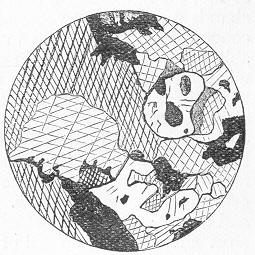
Fig. 21.—Section of Lower Laurentian Limestone from Hull,
Ottawa; enlarged five diameters. The rock is very highly
crystalline, and contains mica and other minerals. The irregular
black masses in it are graphite. (Original.)
any organic structure in the rock, and no fossils beyond those
which will be spoken of immediately have as yet been discovered in
them. We know, however, of numerous cases in which limestones,
of later age, and undoubtedly organic to begin with, have been
rendered so intensely crystalline by metamorphic action that
all traces of organic structure have been obliterated. We have
therefore, by analogy, the strongest possible ground for believing
that the vast beds of Laurentian limestone have been originally
organic in their origin, and primitively composed, in the main,
of the calcareous skeletons
Page 68
of marine
animals. It would, in fact, be a matter of great difficulty to
account for the formation of these great calcareous masses on any
other hypothesis. (3) The occurrence of phosphate of lime in the
Laurentian Rocks in great abundance, and sometimes in the form of
irregular beds, may very possibly be connected with the former
existence in the strata of the remains of marine animals of whose
skeleton this mineral is a constituent. (4) The Laurentian Rocks
contain a vast amount of carbon in the form of black-lead or
graphite. This mineral is especially abundant in the
limestones, occurring in regular beds, in veins or strings, or
disseminated through the body of the limestone in the shape of
crystals, scales, or irregular masses. The amount of graphite in
some parts of the Lower Laurentian is so great that it has been
calculated as equal to the quantity of carbon present in an equal
thickness of the Coal-measures. The general source of solid
carbon in the crust of the earth is, however, plant-life; and it
seems impossible to account for the Laurentian graphite, except
upon the supposition that it is metamorphosed vegetable matter.
(5) Lastly, the great beds of iron-ore (peroxide and magnetic
oxide) which occur in the Laurentian series interstratified with
the other rocks, point with great probability to the action of
vegetable life; since similar deposits in later formations can
commonly be shown to have been formed by the deoxidising power
of vegetable matter in a state of decay.
In the words of Principal Dawson, "anyone of these reasons might,
in itself, be held insufficient to prove so great and, at first
sight, unlikely a conclusion as that of the existence of abundant
animal and vegetable life in the Laurentian; but the concurrence
of the whole in a series of deposits unquestionably marine, forms
a chain of evidence so powerful that it might command belief
even if no fragment of any organic or living form or structure
had ever been recognised in these ancient rocks." Of late years,
however, there have been discovered in the Laurentian Rocks certain
bodies which are believed to be truly the remains of animals, and
of which by far the most important is the structure known under
the now celebrated name of Eozoön. If truly organic,
a very special and exceptional interest attaches itself to
Eozoön, as being the most ancient fossil animal of which
we have any knowledge; but there are some who regard it really
a peculiar form of mineral structure, and a severe, protracted,
and still unfinished controversy has been carried on as to its
nature. Into this controversy it is wholly unnecessary to enter
here; and it will be sufficient to briefly explain the structure
of Eozoön, as elucidated by the elaborate and masterly
investigations of Carpenter
Page 69
and Dawson, from the standpoint that it is a genuine
organism—the balance of evidence up to this moment inclining
decisively to this view.
The structure known as Eozoön is found in various
localities in the Lower Laurentian limestones of Canada, in the form
of isolated masses or spreading layers, which are composed of thin
alternating laminæ, arranged more or less concentrically (fig.
22). The laminæ of these masses are usually of different colours
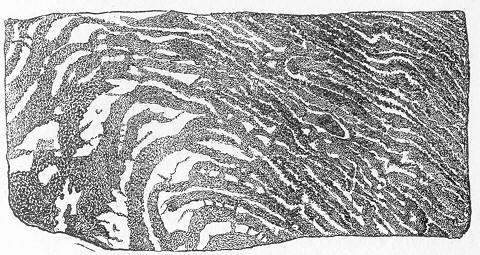
Fig. 22.—Fragment of Eozoön, of the natural size,
showing alternate laminæ of loganite and dolomite. (After
Dawson.)
and composition; one series being white, and composed of carbonate
of lime—whilst the laminæ of the second series alternate
with the preceding, are green in colour, and are found by chemical
analysis to consist of some silicate, generally serpentine or the
closely-related "loganite." In some instances, however, all the
laminæ are calcareous, the concentric arrangement still remaining
visible in consequence of the fact that the laminæ are composed
alternately of lighter and darker coloured limestone.
When first discovered, the masses of Eozoön were supposed
to be of a mineral nature; but their striking general resemblance
to the undoubted fossils which will be subsequently spoken of under
the name of Stromatopora was recognised by Sir William
Logan, and specimens were submitted for minute examination, first
to Principal Dawson, and subsequently to Dr W. B. Carpenter.
After a careful microscopic examination, these two distinguished
observers came to the conclusion that Eozoön was truly
organic, and in this opinion they were afterwards corroborated
by other high authorities (Mr W. K. Parker, Professor Rupert
Jones, Mr H. B. Brady, Professor Gümbel, &c.) Stated briefly,
the structure of Eozoön, as exhibited by the microscope,
is as follows:—
Page 70
The concentrically-laminated mass of Eozoön is composed
of numerous calcareous layers, representing the original skeleton
of the organism (fig. 23, b). These calcareous layers
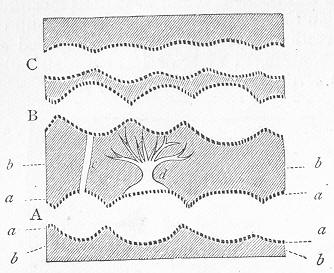
Fig. 23.—Diagram of a portion of Eozoön
cut vertically. A, B, C, Three tiers of chambers communicating
with one another by slightly constricted apertures: a a,
The true shell-wall, perforated by numerous delicate tubes; b
b. The main calcareous skeleton ("intermediate skeleton");
c, Passage of communication ("stolon-passage") from one
tier of chambers to another; d, Ramifying tubes in the
calcareous skeleton. (After Carpenter.)
serve to separate and define a series of chambers arranged in
successive tiers, one above the other (fig. 23, A, B, C); and
they are perforated not only by passages (fig. 23, c),
which serve to place successive tiers of chambers in communication,
but also by a system of delicate branching canals (fig. 23,
d). Moreover, the central and principal portion of each
calcareous layer, with the ramified canal-system just spoken
of, is bounded both above and below by a thin lamina which has
a structure of its own, and which may be regarded as the proper
shell-wall (fig. 23, a a). This proper wall forms the
actual lining of the chambers, as well as the outer surface of
the whole mass; and it is perforated with numerous fine vertical
tubes (fig. 24, a a), opening into the chambers and on to
the surface by corresponding fine pores. From the resemblance
of this tubulated layer to similar structures in the shell of
the Nummulite, it is often spoken of as the "Nummuline layer."
The chambers are sometimes piled up one above the other in an
irregular manner; but they are more commonly arranged in regular
tiers, the separate chambers being marked off from one another
by projections of the wall in the form of partitions, which are
so far imperfect as to allow of a free communication between
contiguous chambers. In the original condition of the organism,
all these chambers, of course, must have been filled with
living-matter; but they are found in the present state of the
fossil to be generally filled with some silicate, such as serpentine,
which not only fills the actual chambers, but has also penetrated
the minute tubes of the proper wall and the branching canals of
the intermediate skeleton. In some cases
Page 71
the chambers are simply filled with crystalline carbonate of lime.
When the originally porous fossil has been permeated by a silicate,
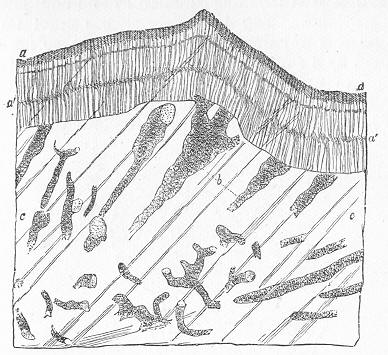
Fig. 24.—The animal of Nonionina, one of the
Foraminifera, after the shell has been removed by
a weak acid; b, Gromia, a single-chambered Foraminifer
(after Schultze), showing the shell surrounded by a network of
filaments derived from the body substance.
it is possible to dissolve away the whole of the calcareous skeleton
by means of acids, leaving an accurate and beautiful cast of the
chambers and the tubes connected with them in the insoluble silicate.
The above are the actual appearances presented by Eozoön
when examined microscopically, and it remains to see how far they
enable us to decide upon its true position in the animal kingdom.
Those who wish to study this interesting subject in detail must
consult the admirable memoirs by Dr W. B. Carpenter and Principal
Dawson: it will be enough here to indicate the results which
have been arrived at. The only animals at the present day which
possess a continuous calcareous skeleton, perforated by pores and
penetrated by canals, are certain organisms belonging to the
group of the Foraminifera. We have had occasion before
to speak of these animals, and as they are not conspicuous or
commonly-known forms of life, it may be well to say a few words as
to the structure of the living representatives of the group. The
Foraminifera are all inhabitants of the sea, and are mostly
of small or even microscopic dimensions. Their bodies are composed
Page 72
of an apparently structureless animal
substance of an albuminous nature ("sarcode"), of a gelatinous
consistence, transparent, and exhibiting numerous minute granules
or rounded particles. The body-substance cannot be said in itself
to possess any definite form, except in so far as it may be bounded
by a shell; but it has the power, wherever it may be exposed, of
emitting long thread-like filaments ("pseudopodia"), which interlace
with one another to form a network (fig. 25, b). These
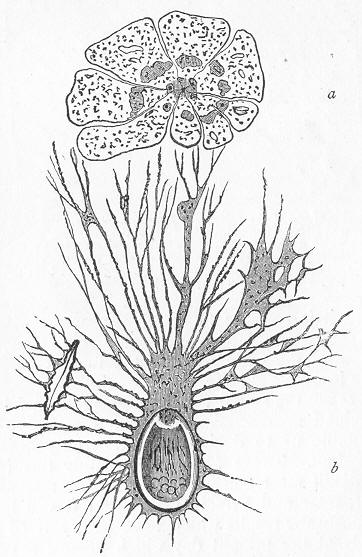
Fig. 25.—The animal of Nonionina, one of the
Foraminifera, after the shell has been removed by
a weak acid; b, Gromia, a single-chambered Foraminifer
(after Schultze), showing the shell surrounded by a network of
filaments derived from the body substance.
filaments can be thrown out at will, and to considerable distances,
and can be again retracted into the soft mass of the general
body-substance, and they are the agents by which the animal obtains
its food. The soft bodies of the Foraminifera are protected
by a shell, which is usually calcareous, but may be composed of
sand-grains cemented
Page 73
together; and it may consist
of a single chamber (fig. 26, a), or of many chambers arranged
in different ways (fig. 26, b-f). Sometimes the shell has but
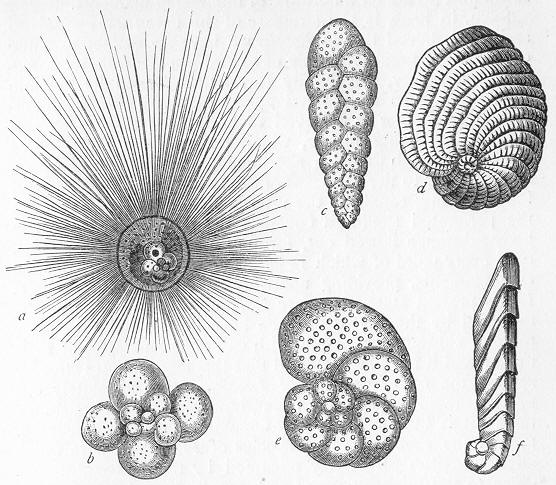
Fig. 26.—Shells of living Foraminifera.
a, Orbulina universa, in its perfect condition, showing
the tubular spines which radiate from the surface of the shell;
b, Globigerina bulloides, in its ordinary condition, the
thin hollow spines which are attached to the shell when perfect
having been broken off; c, Textularia variabilis; d, Peneroplis
planatus; e, Rotalia concamerata; f, Cristellaria subarcuatula.
[Fig. a is after Wyville Thomson; the others are after
Williamson. All the figures are greatly enlarged.
one large opening into it—the mouth; and then it is from this
aperture that the animal protrudes the delicate net of filaments
with which it seeks its food. In other cases the entire shell
is perforated with minute pores (fig. 26, e), through
which the soft body-substance gains the exterior, covering the
whole shell with a gelatinous film of animal matter, from which
filaments can be emitted at any point. When the shell consists
of many chambers, all of these are placed in direct communication
with one another, and the actual substance of the shell is often
traversed by minute canals filled with living matter (e.g.,
in Calcarina and Nummulina). The shell, therefore,
may be regarded, in such cases, as a more or less completely
porous calcareous structure,
Page 74
filled to its minutest internal recesses with the substance of the
living animal, and covered externally with a layer of the same
substance, giving off a network of interlacing filaments.
Such, in brief, is the structure of the living Foraminifera;
and it is believed that in Eozoön we have an extinct
example of the same group, not only of special interest from its
immemorial antiquity, but hardly less striking from its gigantic
dimensions. In its original condition, the entire chamber-system
of Eozoön is believed to have been filled with soft
structureless living matter, which passed from chamber to chamber
through the wide apertures connecting these cavities, and from
tier to tier by means of the tubuli in the shell-wall and the
branching canals in the intermediate skeleton. Through the
perforated shell-wall covering the outer surface the soft
body-substance flowed out, forming a gelatinous investment, from
every point of which radiated an interlacing net of delicate
filaments, providing nourishment for the entire colony. In its
present state, as before said, all the cavities originally
occupied by the body-substance have been filled with some mineral
substance, generally with one of the silicates of magnesia; and
it has been asserted that this fact militates strongly against
the organic nature of Eozoön, if not absolutely
disproving it. As a matter of fact, however—as previously
noticed—it is by no means very uncommon at the present day
to find the shells of living species of Foraminifera in
which all the cavities primitively occupied by the body-substance,
down to the minutest pores and canals, have been similarly
injected by some analogous silicate, such as glauconite.
Those, then, whose opinions on such a subject deservedly carry the
greatest weight, are decisively of opinion that we are presented
in the Eozoön of the Laurentian Rocks of Canada with an
ancient, colossal, and in some respects abnormal type of the
Foraminifera. In the words of Dr Carpenter, it is not
pretended that "the doctrine of the Foraminiferal nature of
Eozoön can be proved in the demonstrative sense;"
but it may be affirmed "that the convergence of a number of
separate and independent probabilities, all accordant with
that hypothesis, while a separate explanation must be invented
for each of them on any other hypothesis, gives it that high
probability on which we rest in the ordinary affairs of life,
in the verdicts of juries, and in the interpretation of geological
phenomena generally."
It only remains to be added, that whilst Eozoön is by far
the most important organic body hitherto found in the Laurentian,
and has been here treated at proportionate length, other
Page 75
traces of life have been detected, which may subsequently prove of
great interest and importance. Thus, Principal Dawson has recently
described under the name of Archœosphœrinœ
certain singular rounded bodies which he has discovered in the
Laurentian limestones, and which he believes to be casts of the
shells of Foraminifera possibly somewhat allied to the
existing Globigerinœ. The same eminent
palæontologist has also described undoubted worm-burrows
from rocks probably of Laurentian age. Further and more extended
researches, we may reasonably hope, will probably bring to light
other actual remains of organisms in these ancient deposits.
THE HURONIAN PERIOD.
The so-called Huronian Rocks, like the Laurentian, have
their typical development in Canada, and derive their name from
the fact that they occupy an extensive area on the borders of
Lake Huron. They are wholly metamorphic, and consist principally
of altered sandstones or quartzites, siliceous, felspathic, or
talcose slates, conglomerates, and limestones. They are largely
developed on the north shore of Lake Superior, and give rise
to a broken and hilly country, very like that occupied by the
Laurentians, with an abundance of timber, but rarely with sufficient
soil of good quality for agricultural purposes. They are, however,
largely intersected by mineral veins, containing silver, gold,
and other metals, and they will ultimately doubtless yield a rich
harvest to the miner. The Huronian Rocks have been identified,
with greater or less certainty, in other parts of North America,
and also in the Old World.
The total thickness of the Huronian Rocks in Canada is estimated
as being not less than 18,000 feet, but there is considerable
doubt as to their precise geological position. In their typical
area they rest unconformably on the edges of strata of Lower
Laurentian age; but they have never been seen in direct contact
with the Upper Laurentian, and their exact relations to
this series are therefore doubtful. It is thus open to question
whether the Huronian Rocks constitute a distinct formation, to
be intercalated in point of time between the Laurentian and the
Cambrian groups; or whether, rather, they should not be considered
as the metamorphosed representatives of the Lower Cambrian Rocks
of other regions.
As regards the fossils of the Huronian Rocks, little can be said.
Some of the specimens of Eozoön Canadense which have
Page 76
been discovered in Canada are thought to come
from rocks which are probably of Huronian age. In Bavaria,
Dr Gümbel has described a species of Eozoön under
the name of Eozoön Bavaricum, from certain metamorphic
limestones which he refers to the Huronian formation. Lastly, the
late Mr Billings described, from rocks in Newfoundland apparently
referable to the Huronian, certain problematical limpet-shaped
fossils, to which he gave the name of Aspidella.
LITERATURE.
Amongst the works and memoirs which the student may consult with
regard to the Laurentian and Huronian deposits may be mentioned
the following:[10]—
| (1) |
'Report of Progress of the Geological Survey of Canada
from its Commencement to 1863,' pp. 38-49, and pp. 50-66. |
| (2) |
'Manual of Geology.' Dana. 2d Ed. 1875. |
| (3) |
'The Dawn of Life.' J. W, Dawson. 1876. |
| (4) |
"On the Occurrence of Organic Remains in the Laurentian
Rocks of Canada." Sir W. E. Logan. 'Quart. Journ. Geol.'
Soc.,' xxi. 45-50.' |
| (5) |
"On the Structure of Certain Organic Remains in the
Laurentian Limestones of Canada." J. W. Dawson. 'Quart.
Journ. Geol. Soc.,' xxi. 51-59. |
| (6) |
"Additional Note on the Structure and Affinities of
Eozoön Canadense." W. B, Carpenter. 'Quart. Journ.
Geol. Soc.,' xxi. 59-66. |
| (7) |
"Supplemental Notes on the Structure and Affinities of
Eozoön' Canadense," W. B. Carpenter, 'Quart. Journ.
Geol. Soc.,' xxii. 219-228. |
| (8) |
"On the So-Called Eozoönal Rocks." King & Rowney.
'Quart. Journ. Geol. Soc.,' xxii. 185-218. |
| (9) |
'Chemical and Geological Essays.' Sterry Hunt. |
The above list only includes some of the more important memoirs
which may be consulted as to the geological and chemical features
of the Laurentian and Huronian Rocks, and as to the true nature
of Eozoön. Those who are desirous of studying the later
phases of the controversy with regard to Eozoön must consult
the papers of Carpenter, Carter, Dawson, King & Rowney, Hahn,
and others, in the 'Quart. Journ. of the Geological Society,'
the 'Proceedings of the Royal Irish Academy,' the 'Annals of
Natural History,' the 'Geological Magazine,' &c. Dr Carpenter's
'Introduction to the Study of the Foraminifera' should also be
consulted.
THE CAMBRIAN PERIOD.
The traces of life in the Laurentian period, as we have seen, are
but scanty; but the Cambrian Rocks—so called from their
occurrence in North Wales and its borders ("Cambria ")—have
yielded numerous remains of animals and some dubious plants. The
Cambrian deposits have thus a special interest as being the oldest
rocks in which occur any number of well-preserved and unquestionable
organisms. We have here the remains of the first fauna, or
assemblage of animals, of which we have at present knowledge.
As regards their geographical distribution, the Cambrian Rocks
have been recognised in many parts of the world, but there is
some question as to the precise limits of the formation, and
we may consider that their most typical area is in South Wales,
where they have been carefully worked out, chiefly by Dr Henry
Hicks. In this region, in the neighbourhood of the promontory
of St David's, the Cambrian Rocks are largely developed, resting
upon an ancient ridge of Pre-Cambrian (Laurentian?) strata, and
overlaid by the lowest beds of the Lower Silurian. The subjoined
sketch-section (fig. 27) exhibits in a general manner the succession
of strata in this locality.
From this section it will be seen that the Cambrian Rocks in Wales
are divided in the first place into a lower and an upper group.
The Lower Cambrian is constituted at the base by a great
series of grits, sandstones, conglomerates, and slates, which
are known as the "Longmynd group," from their vast development in
the Longmynd Hills in Shropshire, and which attain in North Wales
a thickness of 8000 feet or more. The Longmynd beds are succeeded
by the so-called "Menevian group," a series of sandstones, flags,
and grits, about 600 feet in thickness, and containing a
considerable number of fossils. The Upper Cambrian series
consists in its lower portion of nearly 5000 feet of strata,
principally shaly and slaty, which are known as the "Lingula
Flags," from the great abundance in them of a shell referable
to the genus Lingula. These are followed by 1000 feet
of dark shales and flaggy sandstones, which are known as the
"Tremadoc slates," from their occurrence near Tremadoc in North
Wales; and these in turn are surmounted, apparently quite
conformably, by the basement beds of the Lower Silurian.
Page 78
GENERALIZED SECTION OF THE CAMBRIAN ROCKS IN WALES
Fig. 27.
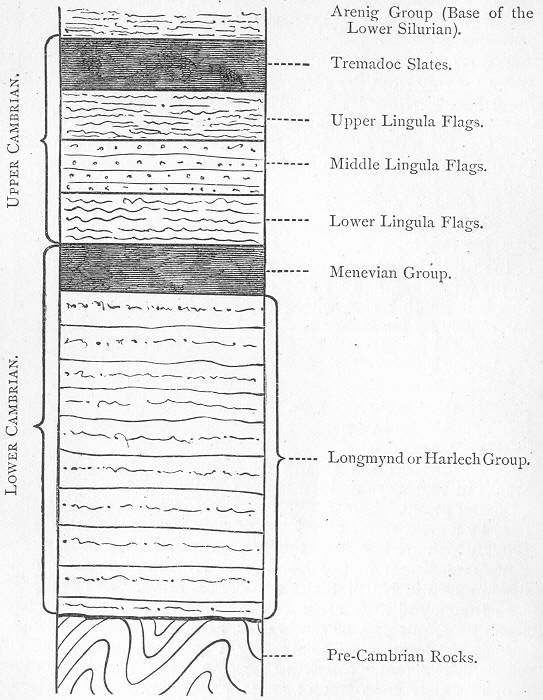 The above may be regarded as giving a typical series of the Cambrian
Rocks in a typical locality; but strata of Cambrian age are known in
many other regions, of which it is only possible here to allude to
a few of the most important. In Scandinavia occurs a well-developed
series of Cambrian deposits, representing both the lower and upper
parts of the
Page 79
formation. In Bohemia, the
Upper Cambrian, in particular, is largely developed, and constitutes
the so-called "Primordial zone" of Barrande. Lastly, in North
America, whilst the Lower Cambrian is only imperfectly developed,
or is represented by the Huronian, the Upper Cambrian formation has
a wide extension, containing fossils similar in character to the
analogous strata in Europe, and known as the "Potsdam Sandstone."
The subjoined table shows the chief areas where Cambrian Rocks are
developed, and their general equivalency:
The above may be regarded as giving a typical series of the Cambrian
Rocks in a typical locality; but strata of Cambrian age are known in
many other regions, of which it is only possible here to allude to
a few of the most important. In Scandinavia occurs a well-developed
series of Cambrian deposits, representing both the lower and upper
parts of the
Page 79
formation. In Bohemia, the
Upper Cambrian, in particular, is largely developed, and constitutes
the so-called "Primordial zone" of Barrande. Lastly, in North
America, whilst the Lower Cambrian is only imperfectly developed,
or is represented by the Huronian, the Upper Cambrian formation has
a wide extension, containing fossils similar in character to the
analogous strata in Europe, and known as the "Potsdam Sandstone."
The subjoined table shows the chief areas where Cambrian Rocks are
developed, and their general equivalency:
| TABULAR VIEW OF THE CAMBRIAN
FORMATION. |
| |
Britain. |
Europe. |
America. |
| Upper Cambrian. |
|
| a. |
Primordial zone of
Bohemia. |
|
|
|
|
| b. |
Paradoxides Schists,
Olenus Schists, and Dictyonema schists of
Sweden. |
|
| b. |
Acadian group of
New Brunswick. |
|
| Lower Cambrian. |
|
| a. |
Fucoidal Sandstone of
Sweden. |
|
Huronian
Formation? |
|
|
| b. |
Eophyton Sandstone
of Sweden. |
|
|
|
|
|
|
| d. |
Oldhamia Slates
of Ireland. |
|
|
|
| e. |
Conglomerates and
Sandstones of Sutherlandshire? |
|
|
|
|
|
|
|
Like all the older Palæozoic deposits, the Cambrian Rocks,
though by no means necessarily what would be called actually
"metamorphic," have been highly cleaved, and otherwise altered
from their original condition. Owing partly to their indurated
state, and partly to their great antiquity, they are usually
found in the heart of mountainous districts, which have undergone
great disturbance, and have been subjected to an enormous amount
of denudation. In some cases, as in the Longmynd Hills in
Shropshire, they form low rounded elevations, largely covered by
pasture, and with few or no elements of sublimity. In other cases,
however, they rise into bold and rugged mountains, girded by
precipitous cliffs. Industrially, the Cambrian Rocks are of
interest, if only for the reason that the celebrated Welsh slates
of Llanberis are derived from highly-cleaved beds of this age.
Taken as a whole, the Cambrian formation is essentially composed
of arenaceous and
Page 80
muddy sediments, the
latter being sometimes red, but more commonly nearly black in
colour. It has often been supposed that the Cambrians are a
deep-sea deposit, and that we may thus account for the few
fossils contained in them; but the paucity of fossils is to a
large extent imaginary, and some of the Lower Cambrian beds
of the Longmynd Hills would appear to have been laid down in
shallow water; as they exhibit rain-prints, sun-cracks, and
ripple-marks—incontrovertible evidence of their having been
a shore-deposit. The occurrence, of innumerable worm-tracks and
burrows in many Cambrian strata is also a proof of shallow-water
conditions; and the general absence of limestones, coupled with
the coarse mechanical nature of many of the sediments of the
Lower Cambrian, maybe taken as pointing in the same direction.
The life of the Cambrian, though not so rich as in the
succeeding Silurian period, nevertheless consists of representatives
of most of the great classes of invertebrate animals. The coarse
sandy deposits of the formation, which abound more particularly
towards its lower part, naturally are to a large extent barren
of fossils; but the muddy sediments, when not too highly cleaved,
and especially towards the summit of the group, are replete with
organic remains. This is also the case, in many localities at any
rate, with the finer beds of the Potsdam Sandstone in America.
Limestones are known to occur in only a few areas (chiefly in
America), and this may account for the apparent total absence
of corals. It is, however, interesting to note that, with this
exception, almost all the other leading groups of Invertebrates
are known to have come into existence during the Cambrian period.
Of the land-surfaces of the Cambrian period we know nothing;
and there is, therefore, nothing surprising in the fact that
our acquaintance with the Cambrian vegetation is confined to
some marine plants or sea-weeds, often of a very obscure and
problematical nature. The "Fucoidal Sandstone" of Sweden, and the
"Potsdam Sandstone" of North America, have both yielded numerous
remains which have been regarded as markings left by sea-weeds or
"Fucoids;" but these are highly enigmatical in their characters,
and would, in many instances, seem to be rather referable to the
tracks and burrows of marine worms. The first-mentioned of these
formations has also yielded the curious, furrowed and striated
stems which have been described as a kind of land-plant under the
name of Eopkyton (fig. 28). It cannot be said, however,
that the vegetable origin of these singular bodies has been
satisfactorily proved. Lastly, there are found in certain green
Page 81
and purple beds of Lower Cambrian age at Bray Head, Wicklow,
Ireland, some very remarkable fossils, which are well known under
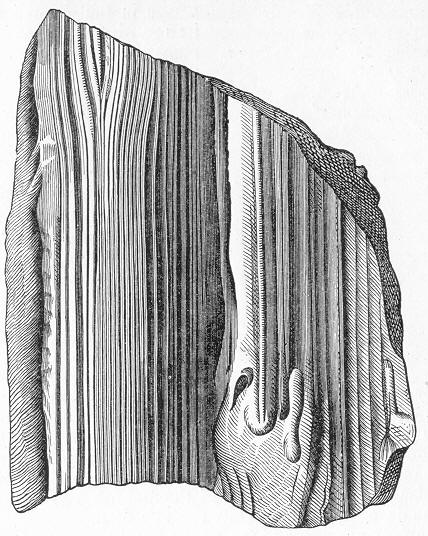
Fig. 28.—Fragment of Eophyton Linneanum, a supposed
land-plant. Lower Cambrian, Sweden, of the natural size.
the name of Oldhamia, but the true nature of which is
very doubtful. The commonest form of Oldhamia (fig. 29)
consists of a thread-like stem or axis, from which spring at
regular intervals bundles of short filamentous branches in a
fan-like manner. In the locality where it occurs, the fronds
of Oldhamia are very abundant, and are spread over the
surfaces of the strata in tangled layers. That it is organic
is certain, and that it is a calcareous sea-weed is probable;
but it may possibly belong to the sea-mosses (Polyzoa),
or to the sea-firs (Sertularians).
Amongst the lower forms of animal life (Protozoa), we
find the Sponges represented by the curious bodies, composed
of netted fibres, to which the name of Protospongia has
been given (fig. 32, a); and the comparatively gigantic,
conical, or
Page 82
cylindrical fossils termed Archœocyathus by Mr
Billings are certainly referable either to the Foraminifera
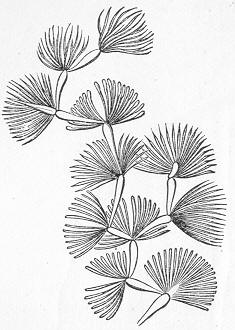
Fig. 29.—A portion of Oldhamia antiqua, Lower
Cambrian, Wicklow, Ireland, of the natural size. (After Salter.)
or to the Sponges. The almost total absence of limestones in
the formation may be regarded as a sufficient explanation of
the fact that the Foraminifera are not more largely and
unequivocally represented; though the existence of greensands
in the Cambrian beds of Wisconsin and Tennessee may be taken as
an indication that this class of animals was by no means wholly
wanting. The same fact may explain the total absence of corals,
so far as at present known.
The group of the Echinodermata (Sea-lilies, Sea-urchins,
and their allies) is represented by a few forms, which are
principally of interest as being the earliest-known examples of
the class. It is also worthy of note that these precursors of a
group which subsequently attains such geological importance, are
referable to no less than three distinct orders—the
Crinoids or Sea-lilies, represented by a species of
Dendrocrinus; the Cystideans by Protocystites; and
the Star-fishes by Palasterina and some other forms. Only
the last of these groups, however, appears to occur in the Lower
Cambrian.
The Ringed-worms (Annelida), if rightly credited with all
the remains usually referred to them, appear to have swarmed in
the Cambrian seas. Being soft-bodied, we do not find the actual
worms themselves in the fossil condition, but we have, nevertheless,
abundant traces of their existence. In some cases we find vertical
burrows of greater or less depth, often expanded towards their
apertures, in which the worm must have actually lived (fig. 30),
as various species do at the present day. In these cases, the
tube must have been rendered more or less permanent by receiving
a coating of mucus, or perhaps a genuine membranous secretion,
from the body of the animal; and it may be found quite empty, or
occupied by a cast of sand or mud. Of this nature are the burrows
which have been described under the names of Scolithus and
Scolecoderma, and probably the Histioderma of the
Lower Cambrian
Page 83
of Ireland. In other cases, as in Arenicolites
(fig. 32, b), the worm seems to have inhabited a double
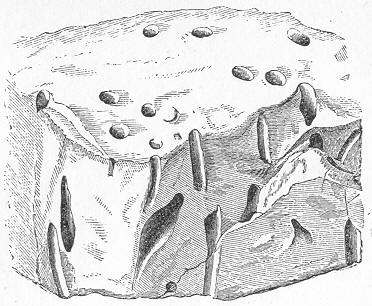
Fig. 30.—Annelide-burrows (Scolithus linearus)
from the Potsdam Sandstone of Canada, of the natural size. (After
Billings.)
burrow, shaped like the letter U, and having two openings placed
close together on the surface of the stratum. Thousands of these
twin-burrows occur in some of the strata of the Longmynd, and
it is supposed that the worm used one opening to the burrow as
an aperture of entrance, and the other as one of exit. In other
cases, again, we find simply the meandering trails caused by the
worm dragging its body over the surface of the mud. Markings of
this kind are commoner in the Silurian Rocks, and it is generally
more or less doubtful whether they may not have been caused by
other marine animals, such as shellfish, whilst some of them
have certainly nothing whatever to do with the worms. Lastly,
the Cambrian beds often show twining cylindrical bodies, commonly
more or less matted together, and not confined to the surfaces
of the strata, but passing through them. These have often been
regarded as the remains of sea-weeds, but it is more probable
that they represent casts of the underground burrows of worms
of similar habits to the common lob-worm (Arenicola) of
the present day.
The Articulate animals are numerously represented in the
Cambrian deposits, but exclusively by the class of
Crustaceans. Some of these are little double-shelled
creatures, resembling our living water-fleas (Ostracoda). A
few are larger forms, and belong to the same group as the existing
brine-shrimps and fairy-shrimps (Phyllopoda). One of the
most characteristic
Page 84
of these is the
Hymenocaris vermicauda of the Lingula Flags (fig.
32, d). By far the larger number of the Cambrian
Crustacea belong, however, to the remarkable and wholly
extinct group of the Trilobites. These extraordinary
animals must have literally swarmed in the seas of the later
portion of this and the whole of the succeeding period; and they
survived in greatly diminished numbers till the earlier portion
of the Carboniferous period. They died out, however, wholly before
the close of the Palæozoic epoch, and we have no Crustaceans
at the present day which can be considered as their direct
representatives. They have, however, relationships of a more or
less intimate character with the existing groups of the Phyllopods,
the King-crabs (Limulus), and the Isopods ("Slaters,"
Wood-lice, &c.) Indeed, one member of the last-mentioned
order, namely, the Serolis of the coasts of Patagonia, has
been regarded as the nearest living ally of the Trilobites. Be
this as it may, the Trilobites possessed a skeleton which, though
capable of undergoing almost endless variations, was wonderfully
constant in its pattern of structure, and we may briefly describe
here the chief features of this.
The upper surface of the body of a Trilobite was defended by a
strong shell or "crust," partly horny and partly calcareous in
its composition. This shell (fig. 31) generally exhibits a very
distinct "trilobation" or division into three longitudinal lobes,
one central and two lateral. It also exhibits a more important and
more fundamental division into three transverse portions, which
are so loosely connected with one another as very commonly to be
found separate. The first and most anterior of these divisions
is a shield or buckler which covers the head; the second or middle
portion is composed of movable rings covering the trunk ("thorax
"); and the third is a shield which covers the tailor "abdomen."
The head-shield (fig. 31, e) is generally more or less
semicircular in shape; and its central portion, covering the
stomach of the animal, is usually strongly elevated, and generally
marked by lateral furrows. A little on each side of the head are
placed the eyes, which are generally crescentic in shape, and
resemble the eyes of insects and many existing Crustaceans in being
"compound," or made up of numerous simple eyes aggregated together.
So excellent is the state of preservation of many specimens of
Trilobites, that the numerous individual lenses of the eyes have
been uninjured, and as many as four hundred have been counted in
each eye of some forms. The eyes may be supported upon prominences,
but they are never carried on movable stalks (as they are in
the existing lobsters and crabs); and
Page 85
in some of the Cambrian
Trilobites, such as the little Agnosti (fig. 31 g),
the animal was blind. The lateral portions of the head-shield
are usually separated from the central portion by a peculiar
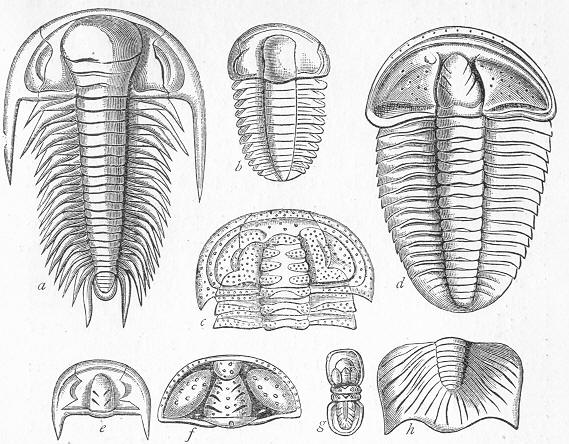
Fig. 31.—Cambrian Trilobites: a, Paradoxides
Bohemicus, reduced in size; b, Ellipsocephalus Hoffi; c,
Sao hirsuta; d, Conocorypke Sultzeri (all the above, together
with fig. g, are from the Upper Cambrian or "Primordial
Zone" of Bohemia); e, Head-shield of Dikellocephalus
Celticus, from the Lingula Flags of Wales; f, Head-shield
of Conocoryphe Matthewi, from the Upper Cambrian (Acadian
Group) of New Brunswick; g, Agnostus rex, Bohemia; h,
Tail-shield of Dikellocephalus Minnesotensis, from the
Upper Cambrian (Potsdam Sandstone) of Minnesota. (After Barrande,
Dawson, Salter, and Dale Owen.)
line of division (the so-called "facial suture") on each side;
but this is also wanting in some of the Cambrian species. The
backward angles of the head-shield, also, are often prolonged
into spines, which sometimes reach a great length. Following
the head-shield behind, we have a portion of the body which is
composed of movable segments or "body-rings," and which is
technically called the "thorax," Ordinarily, this region is
strongly trilobed, and each ring consists of a central convex
portion, and of two flatter side-lobes. The number of body-rings
in the thorax is very variable (from two to twenty-six), but is
fixed for the adult forms of each group of the Trilobites. The
young forms have much fewer rings than the full-grown ones; and
it is curious to find that the Cambrian
Page 86
Trilobites very commonly have either a great many rings (as in
Paradoxides, fig. 31, a), or else very few (as in
Agnostus, fig. 31, g). In some instances, the
body-rings do not seem to have been so constructed as to allow
of much movement, but in other cases this region of the body is
so flexible that the animal possessed the power of rolling itself
up completely, like a hedgehog; and many individuals have been
permanently preserved as fossils in this defensive condition.
Finally, the body of the Trilobite was completed by a tail-shield
(technically termed the "pygidium"), which varies much in size
and form, and is composed of a greater or less number of rings,
similar to those which form the thorax, but immovably
amalgamated with one another (fig. 31, h).
The under surface of the body in the Trilobites appears to have
been more or less entirely destitute of hard structures, with the
exception of a well-developed upper lip, in the form of a plate
attached to the inferior side of the head-shield in front. There
is no reason to doubt that the animal possessed legs; but these
structures seem to have resembled those of many living Crustaceans
in being quite soft and membranous. This, at any rate, seems to
have been generally the case; though structures which have been
regarded as legs have been detected on the under surface of one
of the larger species of Trilobites. There is also, at present,
no direct evidence that the Trilobites possessed the two pairs
of jointed feelers ("antennæ") which are so characteristic
of recent Crustaceans.
The Trilobites vary much in size, and the Cambrian formation
presents examples of both the largest and the smallest members
of the order. Some of the young forms may be little bigger than
a millet-seed, and some adult examples of the smaller species
(such as Agnostus) may be only a few lines in length;
whilst such giants of the order as Paradoxides and
Asaphus may reach a length of from one to two feet. Judging
from what we actually know as to the structure of the Trilobites,
and also from analogous recent forms, it would seem that these
ancient Crustaceans were mud-haunting creatures, denizens of
shallow seas, and affecting the soft silt of the bottom rather
than the clear water above. Whenever muddy sediments are found
in the Cambrian and Silurian formations, there we are tolerably
sure to find Trilobites, though they are by no means absolutely
wanting in limestones. They appear to have crawled out upon the
sea-bottom, or burrowed in the yielding mud, with the soft under
surface directed downwards; and it is probable that they really
derived their nutriment from the organic matter contained in the
ooze amongst which they
Page 87
lived. The vital
organs seem to have occupied the central lobe of the skeleton,
by which they were protected; and a series of delicate leaf-like
paddles, which probably served as respiratory organs, would appear
to have been carried on the under surface of the thorax. That
they had their enemies may be regarded as certain; but we have no
evidence that they were furnished with any offensive weapons, or,
indeed, with any means of defence beyond their hard crust, and
the power, possessed by so many of them, of rolling themselves
into a ball. An additional proof of the fact that they for the
most part crawled along the sea-bottom is found in the occurrence
of tracks and markings of various kinds, which can hardly be
ascribed to any other creatures with any show of probability.
That this is the true nature of some of the markings in question
cannot be doubted at all; and in other cases no explanation so
probable has yet been suggested. If, however, the tracks which
have been described from the Potsdam Sandstone of North America
under the name of Protichnites are really due to the
peregrinations of some Trilobite, they must have been produced
by one of the largest examples of the order.
As already said, the Cambrian Rocks are very rich in the remains
of Trilobites. In the lowest beds of the series (Longmynd Rocks),
representatives of some half-dozen genera have now been detected,
including the dwarf Agnostus and the giant Paradoxides.
In the higher beds, the number both of genera and species is
largely increased; and from the great comparative abundance of
individuals, the Trilobites have every right to be considered as
the most characteristic fossils of the Cambrian period,—the
more so as the Cambrian species belong to peculiar types, which,
for the most part, died out before the commencement of the Silurian
epoch.
All the remaining Cambrian fossils which demand any notice here
are members of one or other division of the great class of the
Mollusca, or "Shell-fish" properly so called. In the Lower
Cambrian Rocks the Lamp-shells (Brachiopoda) are the principal
or sole representatives of the class, and appear chiefly in three
interesting and important types—namely, Lingulella,
Discina, and Obolella. Of these the last (fig. 32,
i) is highly characteristic of these ancient deposits;
whilst Discina is one of those remarkable persistent types
which, commencing at this early period, has continued to be
represented by varying forms through all the intervening geological
formations up to the present day. Lingulella (fig. 32,
c), again, is closely allied to the existing "Goose-bill"
Lamp-shell (Lingula anatina), and thus presents us with
another example of an extremely long-lived
Page 88
type. The Lingulellœ and their successors; the
Lingulœ, are singular in possessing a shell which
is of a horny texture, and contains but a small proportion of
calcareous matter. In the Upper Cambrian Rocks, the
Lingulellœ become much more abundant, the broad
satchel-shaped species known as L. Davisii (fig. 32, e)
being so abundant that one of the great divisions of the Cambrian
is termed the "Lingula Flags." Here, also, we meet for the first
time with examples of the genus Orthis (fig. 32, f, k, l)
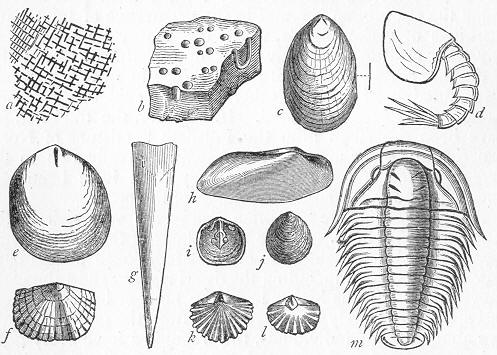
Fig. 32.—Cambrian Fossils: a, Protospongia
fenestrata, Menevian Group; b, Arenicolites didymus,
Longmynd Group; c, Lingulella ferruginea, Longmynd and
Menevian, enlarged; d, Hymenocaris vermicauda, Lingula
Flags; e, Lingulella Davisii, Lingula Flags; f, Orthis
lenticularis, Lingula Flags; g, Theca Davidii, Tremadoc
Slates; h, Modiolopsis Solvensis, Tremadoc Slates; i,
Obolela sagittalis, interior of valve, Menevian; j,
Exterior of the same; k, Orthis Hicksii, Menevian; l,
Cast of the same; m, Olenus micrurus, Lingula Flags. (Alter
Salter, Hicks, and Davidson.)
a characteristic Palæozoic type of the Brachiopods, which is
destined to undergo a vast extension in later ages.
Of the higher groups of the Mollusca the record is as yet
but scanty. In the Lower Cambrian, we have but the thin, fragile,
dagger-shaped shells of the free-swimming oceanic Molluscs or
"Winged-snails" (Pteropoda), of which the most characteristic
is the genus Theca (fig. 32, g). In the Upper Cambrian,
in addition to these, we have a few Univalves (Gasteropoda),
and, thanks to the researches of Dr Hicks, quite a small assemblage
of Bivalves (Lamellibranchiata), though these are mostly
of no great dimensions (fig. 32, h). Of the chambered
Cephalopoda (Cuttle-fishes and their allies), we have but
Page 89
few traces; and these wholly confined to the higher beds of the
formation. We meet, however, with examples of the wonderful genus
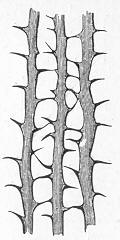
Fig. 33.—Fragment of Dictyonema sociale,
considerably enlarged, showing the horny branches, with their
connecting cross-bars, and with a row of cells on each side.
(Original.)
Orthoceras, with its straight, partitioned shell, which we
shall find in an immense variety of forms in the Silurian rocks.
Lastly, it is worthy of note that the lowest of all the groups of
the Mollusca—namely, that of the Sea-mats, Sea-mosses,
and Lace-corals (Polyzoa)—is only doubtfully known to
have any representatives in the Cambrian, though undergoing a
large and varied development in the Silurian deposits.
An exception, however, may with much probability be made to this
statement in favour of the singular genus Dictyonema (fig.
33), which is highly characteristic of the highest Cambrian beds
(Tremadoc Slates). This curious fossil occurs in the form of
fan-like or funnel-shaped expansions, composed of slightly-diverging
horny branches, which are united in a net-like manner by numerous
delicate cross-bars, and exhibit a row of little cups or cells, in
which the animals were contained, on each side. Dictyonema
has generally been referred to the Graptolites; but it
has a much greater affinity with the plant-like Sea-firs
(Sertularians) or the Sea-mosses (Polyzoa), and
the balance of evidence is perhaps in favour of placing it with
the latter.
LITERATURE.
The following are the more important and accessible works and
memoirs which may be consulted in studying the stratigraphical
and palæontological relations of the Cambrian Rocks:—
| (1) |
'Siluria.' Sir Roderick Murchison. 5th ed., pp. 21-46. |
| (2) |
'Synopsis of the Classification of the British Palæozoic
Rocks.' Sedgwick. Introduction to the 3d Fasciculus of the
'Descriptions of British Palæozoic Fossils in the Woodwardian
Museum,' by F. M'Coy, pp. i-xcviii, 1855. |
| (3) |
'Catalogue of the Cambrian and Silurian Fossils in the Geological
Museum of the University of Cambridge.' Salter. With a Preface
by Prof. Sedgwick. 1873. |
| (4) |
'Thesaurus Siluricus.' Bigsby. 1868. |
| (5) |
"History of the Names Cambrian and Silurian." Sterry
Hunt.—'Geological Magazine.' 1873. |
| (6) |
'Système Silurien du Centre de la Bohême.' Barrande.
Vol. I. |
| (7) |
'Report of Progress of the Geological Survey of Canada, from
its Commencement to 1863,' pp. 87-109. |
| (8)
Page 90 |
'Acadian Geology.' Dawson. Pp. 641-657. |
| (9) |
"Guide to the Geology of New York," Lincklaen; and "Contributions
to the Palæontology of New York," James Hall.—'Fourteenth
Report on the State Cabinet.' 1861. |
| (10) |
'Palæozoic Fossils of Canada.' Billings. 1865. |
| (11) |
'Manual of Geology.' Dana. Pp. 166-182. 2d ed. 1875. |
| (12) |
"Geology of North Wales," Ramsay; with Appendix on the
Fossils, Salter.—'Memoirs of the Geological Survey of Great
Britain,' vol. iii. 1866. |
| (13) |
"On the Ancient Rocks of the St David's Promontory, South
Wales, and their Fossil Contents." Harkness and Hicks.—'Quart.
Journ. Geol. Soc.,' xxvii. 384-402. 1871. |
| (14) |
"On the Tremadoc Rocks in the Neighbourhood of St David's,
South Wales, and their Fossil Contents." Hicks.—'Quart.
Journ. Geol. Soc.,' xxix. 39-52. 1873. |
In the above list, allusion has necessarily been omitted to numerous
works and memoirs on the Cambrian deposits of Sweden and Norway,
Central Europe, Russia, Spain, and various parts of North America,
as well as to a number of important papers on the British Cambrian
strata by various well-known observers. Amongst these latter
may be mentioned memoirs by Prof. Phillips, and Messrs Salter,
Hicks, Belt, Plant, Homfray, Ash, Holl, &c.
CHAPTER IX.
THE LOWER SILURIAN PERIOD.
The great system of deposits to which Sir Roderick Murchison
applied the name of "Silurian Rocks" reposes directly upon the
highest Cambrian beds, apparently without any marked unconformity,
though with a considerable change in the nature of the fossils. The
name "Silurian" was originally proposed by the eminent geologist
just alluded to for a great series of strata lying below the Old
Red Sandstone, and occupying districts in Wales and its borders
which were at one time inhabited by the "Silures," a tribe of
ancient Britons. Deposits of a corresponding age are now known
to be largely developed in other parts of England, in Scotland,
and in Ireland, in North America, in Australia, in India, in
Bohemia, Saxony, Bavaria, Russia, Sweden and Norway, Spain, and
in various other regions of less note. In some regions, as in
the neighbourhood of St Petersburg, the Silurian strata are found
not only to have preserved their original horizontality, but
also to have retained almost unaltered their primitive soft and
incoherent nature. In other regions, as in Scandinavia and many
Page 91
parts of North America, similar strata, now
consolidated into shales, sandstones, and limestones, may be
found resting with a very slight inclination on still older
sediments. In a great many regions, however, the Silurian
deposits are found to have undergone more or less folding,
crumpling, and dislocation, accompanied by induration and
"cleavage" of the finer and softer sediments; whilst in some
regions, as in the Highlands of Scotland, actual "metamorphism"
has taken place. In consequence of the above, Silurian districts
usually present the bold, rugged, and picturesque outlines which
are characteristic of the older "Primitive" rocks of the earth's
crust in general. In many instances, we find Silurian strata
rising into mountain-chains of great grandeur and sublimity,
exhibiting the utmost diversity of which rock-scenery is capable,
and delighting the artist with endless changes of valley, lake,
and cliff. Such districts are little suitable for agriculture,
though this is often compensated for by the valuable mineral
products contained in the rocks. On the other hand, when the
rocks are tolerably soft and uniform in their nature, or when
few disturbances of the crust of the earth have taken place, we
may find Silurian areas to be covered with an abundant pasturage
or to be heavily timbered.
Under the head of "Silurian Rocks," Sir Roderick Murchison included
all the strata between the summit of the "Longmynd." beds and
the Old Red Sandstone, and he divided these into the two great
groups of the Lower Silurian and Upper Silurian. It
is, however, now generally admitted that a considerable portion
of the basement beds of Murchison's Silurian series must be
transferred—if only upon palæontological grounds—to
the Upper Cambrian, as has here been done; and much controversy has
been carried on as to the proper nomenclature of the Upper Silurian
and of the remaining portion of Murchison's Lower Silurian. Thus,
some would confine the name "Silurian" exclusively to the Upper
Silurian, and would apply the name of "Cambro-Silurian" to the
Lower Silurian, or would include all beds of the latter age in the
"Cambrian" series of Sedgwick. It is not necessary to enter into
the merits of these conflicting views. For our present purpose,
it is sufficient to recognise that there exist two great groups
of rocks between the highest Cambrian beds, as here defined, and
the base of the Devonian or Old Red Sandstone. These two great
groups are so closely allied to one another, both physically
and palæontologically, that many authorities have established
a third or intermediate group (the "Middle Silurian"), by which a
Page 92
passage is made from one into the other. This
method of procedure involves disadvantages which appear to outweigh
its advantages; and the two groups in question are not only
generally capable of very distinct stratigraphical separation,
but at the same time exhibit, together with the alliances above
spoken of, so many and such important palæontological
differences, that it is best to consider them separately. We
shall therefore follow this course in the present instance; and
pending the final solution of the controversy as to Cambrian and
Silurian nomenclature, we shall distinguish these two groups of
strata as the "Lower Silurian" and the "Upper Silurian."
The Lower Silurian Rocks are known already to be developed
in various regions; and though their general succession
in these areas is approximately the same, each area exhibits
peculiarities of its own, whilst the subdivisions of each are
known by special names. All, therefore, that can be attempted
here, is to select two typical areas—such as Wales and
North America and to briefly consider the grouping and divisions
of the Lower Silurian in each.
In Wales, the line between the Cambrian and Lower Silurian is
somewhat ill-defined, and is certainly not marked by any strong
unconformity. There are, however; grounds for accepting the line
proposed, for palæontological reasons, by Dr Hicks, in accordance
with which the Tremadoc Slates ("Lower Tremadoc" of Salter) become
the highest of the Cambrian deposits of Britain. If we take this
view, the Lower Silurian rocks of Wales and adjoining districts
are found to have the following general succession from
below upwards (fig. 34):—
1. The Arenig Group.—This group derives its name from
the Arenig mountains, where it is extensively developed. It consists
of about 4000 feet of slates, shales, and flags, and is divisible
into a lower, middle, and upper division, of which the former
is often regarded as Cambrian under the name of "Upper Tremadoc
Slates."
2. The Llandeilo Group.—The thickness of this group
varies from about 4000 to as much as 10,000 feet; but in this
latter case a great amount of the thickness is made up of volcanic
ashes and interbedded traps. The sedimentary beds of this group
are principally slates and flags, the latter occasionally with
calcareous bands; and the whole series can be divided into a
lower, middle, and upper Llandeilo division, of which the last
is the most important. The name of "Llandeilo" is derived from
the town of the same name in Wales, where strata of this age
were described by Murchison.
Page 93
3. The Caradoc or Bala Group.—The alternative
names of this group are also of local origin, and are derived,
the one from Caer Caradoc in Shropshire, the other from Bala
in Wales, strata of this age occurring in both localities. The
series is divided into a lower and upper group, the latter chiefly
composed of shales and flags, and the former of sandstones and
shales, together with the important and interesting calcareous
band known as the "Bala Limestone." The thickness of the entire
series varies from 4000 to as much as 12,000 feet, according
as it contains more or less of interstratified igneous rocks.
4. The Llandovery Group (Lower Llandovery of
Murchison).—This series, as developed near the town of
Llandovery, in Caermarthenshire, consists of less than 1000 feet
of conglomerates, sandstones, and shales. It is probable, however,
that the little calcareous band known as the "Hirnant Limestone,"
together with certain pale-coloured slates which lie above the
Bala Limestone, though usually referred to the Caradoc series,
should in reality be regarded as belonging to the Llandovery group.
The general succession of the Lower Silurian strata of Wales
and its borders, attaining a maximum thickness (along with
contemporaneous igneous matter) of nearly 30,000 feet, is
diagramatically represented in the annexed sketch-section (fig.
34):—
Page 94
GENERALIZED SECTION OF THE LOWER SILURIAN ROCKS OF WALES.
Fig. 34.
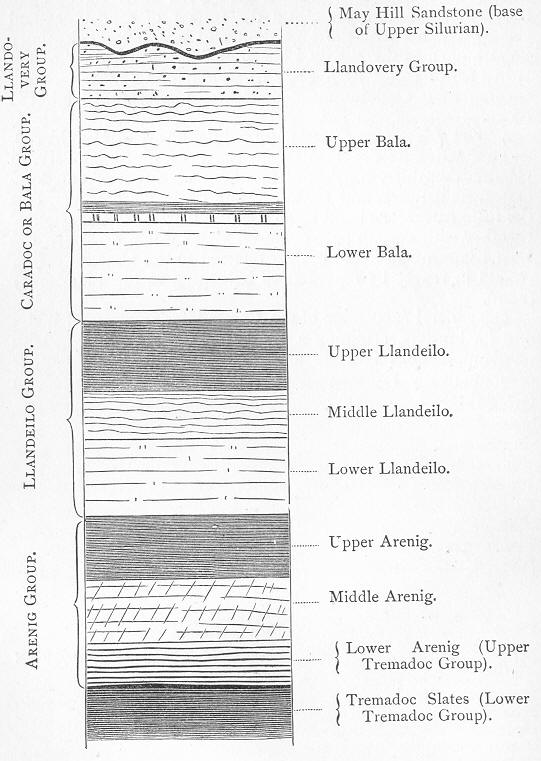 In North America, both in the United States and in Canada, the
Silurian rocks are very largely developed, and may be
Page 95
regarded as constituting an exceedingly full and
typical series of the deposits of this period. The chief groups
of the Silurian rocks of North America are as follows, beginning,
as before, with the lowest strata, and proceeding upwards (fig.
35):—
In North America, both in the United States and in Canada, the
Silurian rocks are very largely developed, and may be
Page 95
regarded as constituting an exceedingly full and
typical series of the deposits of this period. The chief groups
of the Silurian rocks of North America are as follows, beginning,
as before, with the lowest strata, and proceeding upwards (fig.
35):—
1. Quebec Group.—This group is typically developed in
the vicinity of Quebec, where it consists of about 5000 feet of
strata, chiefly variously-coloured shales, together with some
sandstones and a few calcareous bands. It contains a number of
peculiar Graptolites, by which it can be identified without
question with the Arenig group of Wales and the corresponding
Skiddaw Slates of the North of England. It is also to be noted
that numerous Trilobites of a distinct Cambrian facies
have been obtained in the limestones of the Quebec group, near
Quebec. These fossils, however, have been exclusively obtained
from the limestones of the group; and as these limestones are
principally calcareous breccias or conglomerates, there is room
for believing that these primordial fossils are really derived,
in part at any rate, from fragments of an upper Cambrian
limestone. In the State of New York, the Graptolitic shales of
Quebec are wanting; and the base of the Silurian is constituted
by the so-called "Calciferous Sand-rock" and "Chazy
Limestone."[11] The first of these is essentially and typically
calcareous, and the second is a genuine limestone.
2. The Trenton Group.—This is an essentially calcareous
group, the various limestones of which it is composed being known
as the "Bird's-eye," "Black River," and "Trenton" Limestones, of
which the last is the thickest and most important. The thickness
of this group is variable, and the bands of limestone in it are
often separated by beds of shale.
3. The Cincinnati Group (Hudson River
Formation[12]).—This group consists essentially of a lower
series of shales, often black in colour and highly charged with
bituminous matter (the "Utica Slates "), and of an upper series
of shales, sandstones,
Page 96
and limestones (the
"Cincinnati" rocks proper). The exact parallelism of the
Trenton and Cincinnati groups with the subdivisions of the Welsh
Silurian series can hardly be stated positively. Probably no
precise equivalency exists; but there can be no doubt but that
the Trenton and Cincinnati groups correspond, as a whole, with
the Llandeilo and Caradoc groups of Britain. The subjoined
diagrammatic section (fig. 35) gives a general idea of the
succession of the Lower Silurian rocks of North America:—
GENERALIZED SECTION OF THE LOWER SILURIAN ROCKS OF NORTH AMERICA.
Fig. 35.
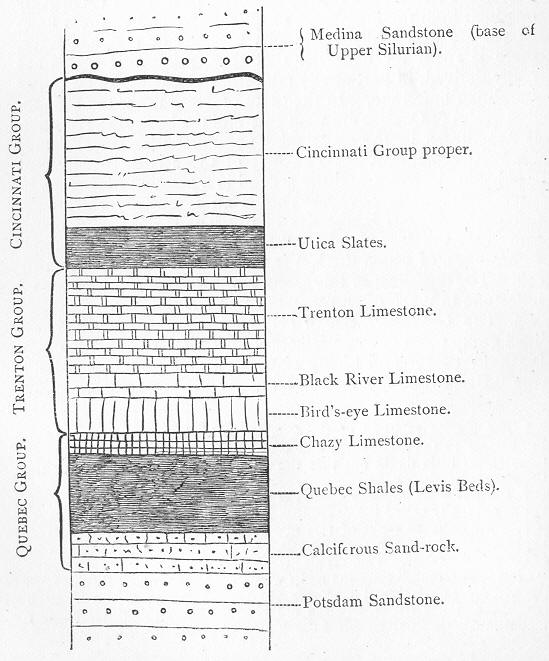
Page 97
Of the life of the Lower Silurian period we have record
in a vast number of fossils, showing that the seas of this period
were abundantly furnished with living denizens. We have, however,
in the meanwhile, no knowledge of the land-surfaces of the period.
We have therefore no means of speculating as to the nature of
the terrestrial animals of this ancient age, nor is anything
known with certainty of any land-plants which may have existed.
The only relics of vegetation upon which a positive opinion can
be expressed belong to the obscure group of the "Fucoids," and
are supposed to be the remains of sea-weeds. Some of the fossils
usually placed under this head are probably not of a vegetable
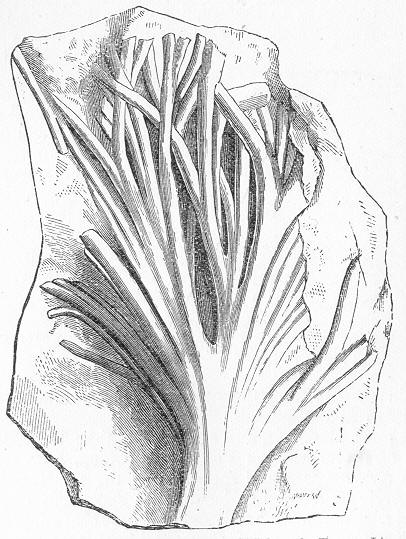
Fig. 36.—Licrophycus Ottawaensis a "Fucoid," from the
Trenton Limestone (Lower Silurian) of Canada. (After Billings.)
nature at all, but others (fig. 36) appear to be unquestionable
plants. The true affinities of these, however, are extremely
dubious. All that can be said is, that remains which appear to
be certainly vegetable,
Page 98
and which are most
probably due to marine plants, have been recognised nearly at
the base of the Lower Silurian (Arenig), and that they are found
throughout the series whenever suitable conditions recur.
The Protozoans appear to have flourished extensively in the Lower
Silurian seas, though to a large extent under forms which are
still little understood. We have here for the first time the
appearance of Foraminifera of the ordinary type—one of the
most interesting observations in this collection being that made
by Ehrenberg, who showed that the Lower Silurian sandstones of
the neighbourhood of St Petersburg contained casts in glauconite
of Foraminiferous shells, some of which are referable to the
existing genera Rotalia and Texularia. True
Sponges, belonging to that section of the group in which
the skeleton is calcareous, are also not unknown, one of the
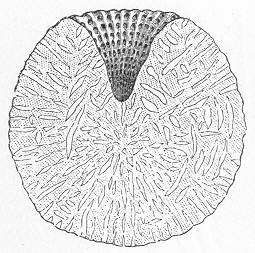
Fig. 37.—Astylospongia prœmorsa, cut
vertically so as to exhibit the canal-system in the interior.
Lower Silurian, Tennessee. (After Ferdinand Rœmer.)
most characteristic genera being Astylospongia (fig. 37).
In this genus are included more or less globular, often lobed
sponges, which are believed not to have been attached to foreign
bodies. In the form here figured there is a funnel-shaped cavity
at the summit; and the entire mass of the sponge is perforated,
as in living examples, by a system of canals which convey the
sea-water to all parts of the organism. The canals by which the
sea-water gains entrance open on the exterior of the sphere,
and those by which it again escapes from the sponge open into
the cup-shaped depression at the summit.
The most abundant, and at the same time the least understood,
of Lower Silurian Protozoans belong, however, to the genera
Stromatopora and Receptaculites, the structure
of which can merely be alluded to here. The specimens of
Stromatopora (fig. 38) occur as hemispherical, pear-shaped,
globular, or irregular masses, often of very considerable size,
and sometimes demonstrably attached to foreign bodies. In their
structure these masses consist of numerous thin calcareous
laminæ, usually arranged concentrically, and separated by
narrow interspaces. These interspaces are generally crossed by
numerous vertical calcareous pillars, giving the
Page 99
vertical section of the fossil a
lattice-like appearance. There are also usually minute pores in the
concentric laminæ, by which the successive interspaces are
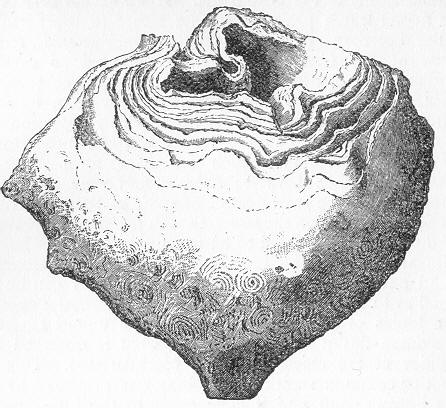
Fig. 38.—A small and perfect specimen of Stromatopora
rugosa, of the natural size, from the Trenton Limestone of
Canada. (After Billings.)
placed in communication; and sometimes the surface presents large
rounded openings, which appear to correspond with the water-canals
of the Sponges. Upon the whole, though presenting some curious
affinities to the calcareous Sponges, Stromatopora is
perhaps more properly regarded as a gigantic Foraminifer. If
this view be correct, it is of special interest as being probably the
nearest ally of Eozoön, the general appearance of the two
being strikingly similar, though their minute structure is not at
all the same. Lastly, in the fossils known as Receptaculites
and Ischadites we are also presented with certain singular
Lower Silurian Protozoans, which may with great probability be
regarded as gigantic Foraminifera. Their structure is very
complex; but fragments are easily recognised by the fact that the
exterior is covered with numerous rhomboidal calcareous plates,
closely fitting together, and arranged in peculiar intersecting
curves, presenting very much the appearance of the engine-turned
case of a watch.
Passing next to the sub-kingdom of Cœlenterate animals
(Zoophytes, Corals, &c.), we find that this great group, almost
or wholly absent in the Cambrian, is represented in Lower
Page 100
Silurian deposits by a great number of forms belonging
on the one hand to the true Corals, and en the other hand to the
singular family of the Graptolites. If we except certain
plant-like fossils which probably belong rather to the Sertularians
or the Polyzoans (e.g., Dictyonema, Dendrograptus, &c.),
the family of the Graptolites may be regarded as exclusively
Silurian in its distribution. Not only is this the case, but it
attained its maximum development almost upon its first appearance,
in the Arenig Rocks; and whilst represented by a great variety of
types in the Lower Silurian; it only exists in the Upper Silurian
in a much diminished form. The Graptolites (Gr. grapho,
I write; lithos, stone) were so named by Linnæus, from
the resemblance of some of them to written or pencilled marks upon
the stone, though the great naturalist himself did not believe
them to be true fossils at all. They occur as linear or leaf-like
bodies, sometimes simple, sometimes compound and branched; and no
doubt whatever can be entertained as to their being the skeletons
of composite organisms, or colonies of semi-independent animals
united together by a common fleshy trunk, similar to what is
observed in the colonies of the existing Sea-firs (Sertularians).
This fleshy trunk or common stem of the colony was protected
by a delicate horny sheath, and it gave origin to the little
flower-like "polypites," which constituted the active element of
the whole assemblage. These semi-independent beings were, in turn,
protected each by a little horny cup or cell, directly connected
with the common sheath below, and terminating above in an opening
through which the polypite could protrude its tentacled head or
could again withdraw itself for safety. The entire skeleton,
again, was usually, if not universally, supported by a delicate
horny rod or "axis," which appears to have been hollow, and which
often protrudes to a greater or less extent beyond one or both
of the extremities of the actual colony.
The above gives the elementary constitution of any Graptolite,
but there are considerable differences as to the manner in which
these elements are arranged and combined. In some forms the common
stem of the colony gives origin to but a single row of cells
on one side. If the common stem is a simple, straight, or
slightly-curved linear body, then we have the simplest form of
Graptolite known (the genus Monograptus); and it is worthy
of note that these simple types do not come into existence till
comparatively late (Llandeilo), and last nearly to the very close
of the Upper Silurian. In other cases, whilst there is still but
a single row of cells, the colony may consist of two of these
simple stems springing from a
Page 101
common point, as in the so-called
"twin Graptolites" (Didymograptus, fig. 40). This type is
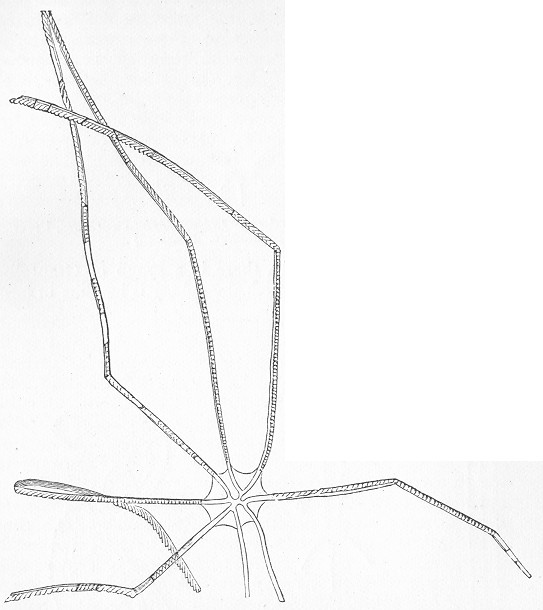
Fig. 39.—Dichograptus octobrachiatus, a branched,
"unicellular" Graptolite from the Skiddaw and Quebec Groups
(Arenig). (After Hall.)
entirely confined to the earlier portion of the Lower Silurian period
(Arenig and Llandeilo). In other cases, again, there may be four of
such stems springing from a central point (Tetragraptus).
Lastly, there are numerous complex forms (such as Dichograptus,
Loganograptus, &c.) in which there are eight or more of these
simple branches, all arising from a common centre (fig. 39),
which is sometimes furnished with a singular horny disc. These
complicated branching forms, as well as the Tetragrapti,
are characteristic of the horizon of the Arenig group. Similar
forms, often specifically identical, are found at this horizon
in Wales, in the great series of the Skiddaw Slates of the north
of England, in the Quebec group in Canada, in equivalent beds in
Sweden, and in certain gold-bearing slates of the same age in
Victoria in Australia.
In another great group of Graptolites (including the genera
Diplograptus, Dicranograptus, Climacograptus, &c.) the
common stem of the colony gives origin, over part or the whole or
its length, to two rows of cells, one on each side (fig. 41).
These "double-celled" Graptolites are highly characteristic of the
Lower Silurian deposits; and, with an exception more apparent than
Page 102
real in Bohemia, they are exclusively confined to strata of Lower
Silurian age, and are not known to occur in the Upper Silurian.
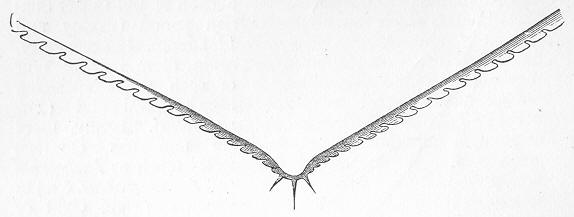
Fig. 40.—Central portion of the colony of Didymegraptus
divaricatus, Upper Llandeilo, Dumfresshire. (Original.)
Lastly, there is a group of Graptolites (Phyllograptus, fig.
42) in which the colony is leaf-like in form, and is composed
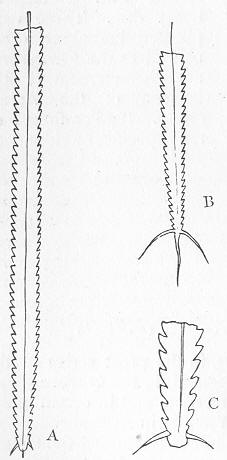
Fig. 41.—Examples of Diplograptus pristis,
showing variations in the appendages at the base. Upper Llandeilo,
Dumfriesshire. (Original.)
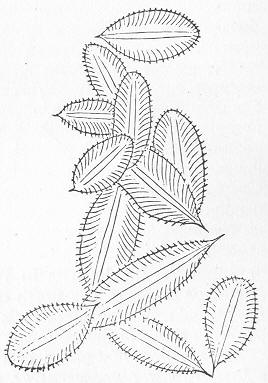
Fig. 42.—Group of individuals of Phyllograptus
typus, from the Quebec group of Canada. (After Hall.) One
of the four rows of cells is hidden on the under surface.
of four rows of cells springing in a cross-like
Page 103
manner from the common stem. These forms are highly
characteristic of the Arenig group.
The Graptolites are usually found in dark-coloured, often black
shales, which sometimes contain so much carbon as to become
"anthracitic." They may be simply carbonaceous; but they are
more commonly converted into iron-pyrites, when they glitter
with the brilliant lustre of silver as they lie scattered on the
surface of the rock, fully deserving in their metallic tracery
the name of "written stones." They constitute one of the most
important groups of Silurian fossils, and are of the greatest
value in determining the precise stratigraphical position of
the beds in which they occur. They present, however, special
difficulties in their study; and it is still a moot point as
to their precise position in the zoological scale. The balance
of evidence is in favour of regarding them as an ancient and
peculiar group of the Sea-firs (Hydroid Zoophytes), but some
regard them as belonging rather to the Sea-mosses (Polyzoa).
Under any circumstances, they cannot be directly compared either
with the ordinary Sea-firs or the ordinary Sea-mosses; for these
two groups consist of fixed organisms, whereas the Graptolites
were certainly free-floating creatures, living at large in the
open sea. The only Hydroid Zoophytes or Polyzoans which have
a similar free mode of existence, have either no skeleton at
all, or have hard structures quite unlike the horny sheaths of
the Graptolites.
The second great group of Cœlenterate animals
(Actinozoa) is represented in the Lower Silurian rocks
by numerous Corals. These, for obvious reasons, are much more
abundant in regions where the Lower Silurian series is largely
calcareous (as in North America) than in districts like Wales,
where limestones are very feebly developed. The Lower Silurian
Corals, though the first of their class, and presenting certain
peculiarities, may be regarded as essentially similar in nature
to existing Corals. These, as is well known, are the calcareous
skeletons of animals—the so-called
"Coral-Zoophytes"—closely allied to the common Sea-anemones
in structure and habit. A simple coral (fig. 43) consists
of a calcareous cup embedded in the soft tissues of the
flower-like polype, and having at its summit a more or less deep
depression (the "calice") in which the digestive organs are
contained. The space within the coral is divided into compartments
by numerous vertical calcareous plates (the "septa"), which spring
from the inside of the wall of the cup, and of which some generally
reach the centre. Compound corals, again (fig. 44), consist
of a greater or less number of structures similar in structure
to the above,
Page 104
but united together in different
ways into a common mass. Simple corals, therefore, are the
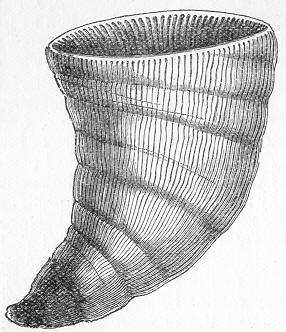
Fig. 43.—Zaphrentis Stokesi, a simple "cup-coral,"
Upper Silurian, Canada. (After Billings.)
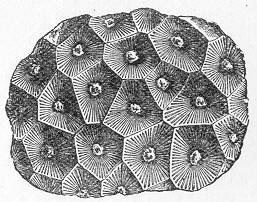
Fig. 44.—Upper surface of a mass of Strombodes
pentagonus. Upper Silurian, Canada. (After Billings.)
skeletons of single and independent polypes; whilst
compound corals are the skeletons of assemblages or
colonies of similar polypes, living united with one another
another as an organic community.
In the general details of their structure, the Lower Silurian
Corals do not differ from the ordinary Corals of the present
day. The latter, however, have the vertical calcareous plates of
the coral ("septa") arranged in multiples of six or five; whereas
the former have these structures arranged in multiples of four,
and often showing a cross-like disposition. For this reason, the
common Lower Silurian Corals are separated to form a distinct
group under the name of Rugose Corals or Rugosa.
They are further distinguished by the fact that the cavity of
the coral ("visceral chamber") is usually subdivided by more
or less numerous horizontal calcareous plates or partitions,
which divide the coral into so many tiers or storeys, and which
are known as the "tabulæ" (fig. 45).
In addition to the Rugose Corals, the Lower Silurian rocks contain
a number of curious compound corals, the tubes of which have either
no septa at all or merely rudimentary ones, but which have the
transverse partitions or "tabulæ" very highly developed. These
are known as the Tabulate Corals; and recent researches on
some of their existing allies (such as Heliopora) have shown
that they are really allied to
Page 105
the modern Sea-pens, Organ-pipe
Corals, and Red Coral, rather than to the typical stony Corals.
Amongst the characteristic Rugose Corals of the Lower Silurian
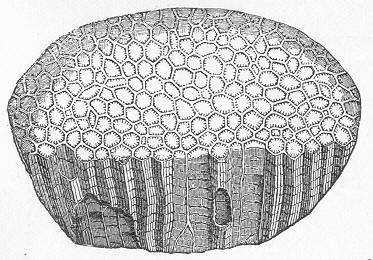
Fig. 45.—Columnaria alveolata, a Rugose compound
coral, with imperfect septa, but having the corallites partitioned
off into storeys by "tabulæ." Lower Silurian, Canada. (After
Billings.)
may be mentioned species belonging to the genera Columnaria,
Favistella, Streptelasma, and Zaphrentis; whilst amongst
the "Tabulate" Corals, the principal forms belong to the genera
Chœtetes, Halysites (the Chain-coral), Constellaria,
and Heliolites. These groups of the Corals, however, attain
a greater development at a later period, and they will be noticed
more particularly hereafter.
Passing onto higher animals, we find that the class of the
Echinodermata is represented by examples of the Star-fishes
(Asteroidea), the Sea-lilies (Crinoidea), and the
peculiar extinct group of the Cystideans (Cystoidea), with
one or two of the Brittle-stars (Ophiuroidea)—the
Sea-urchins (Echinoidea) being still wanting. The Crinoids,
though in some places extremely numerous, have not the varied
development that they possess in the Upper Silurian, in connection
with which their structure will be more fully spoken of. In the
meanwhile, it is sufficient to note that many of the calcareous
deposits of the Lower Silurian are strictly entitled to the name
of "Crinoidal limestones," being composed in great part of the
detached joints, and plates, and broken stems, of these beautiful
but fragile organisms (see fig. 12). Allied to the Crinoids are
the singular creatures which are known as Cystideans (fig.
46). These are generally composed of a globular or ovate body
(the "calyx"), supported upon a short stalk (the "column"), by
which the organism was usually attached to some foreign body. The
body was enclosed by closely-fitting calcareous plates, accurately
Page 106
jointed together; and the stem was made up of numerous distinct
pieces or joints, flexibly united to each other by membrane. The
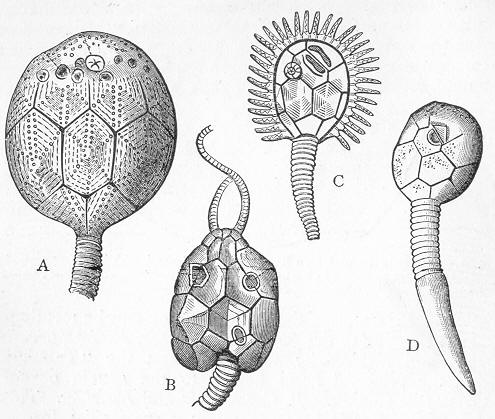
Fig. 46.—Group of Cystideans. A, Caryocrinus
ornatus,[13] Upper Silurian, America; B, Pleurocystites
squamosus, showing two short "arms," Lower Silurian, Canada;
C, Pseudocrinus bifasciatus, Upper Silurian, England; D,
Lepadocrinus Gebhartii, Upper Silurian, America. (After
Hall, Billings, and Salter.)
chief distinction which strikes one in comparing the Cystideans
with the Crinoids is, that the latter are always furnished, as
will be subsequently seen, with a beautiful crown of branched
and feathery appendages, springing from the summit of the calyx,
and which are composed of innumerable calcareous plates or joints,
and are known as the "arms." In the Cystideans, on the other hand,
there are either no "arms" at all, or merely short, unbranched,
rudimentary arms. The Cystideans are principally, and indeed
nearly exclusively, Silurian fossils; and though occurring in
the Upper Silurian in no small numbers, they are pre-eminently
characteristic of the Llandeilo-Caradoc period of Lower Silurian
time. They commenced their existence, so far as known, in the
Upper Cambrian; and though examples are not absolutely unknown
Page 107
in later periods, they are pre-eminently characteristic of the
earlier portion of the Palæozoic
epoch.
The Ringed Worms (Annelides) are abundantly represented
in the Lower Silurian, but principally by tracks and burrows
similar in essential respects to those which occur so commonly
in the Cambrian formation, and calling for no special comment.
Much more important are the Articulate animals, represented
as heretofore, wholly by the remains of the aquatic group of the
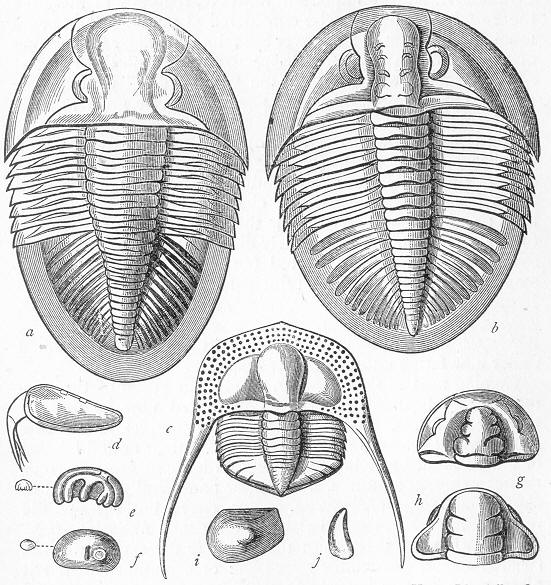
Fig. 47.—Lower Silurian Crustaceans. a, Asaphus
tyrannus, Upper Llandeilo; b. Ogygia Buchii, Upper
Llandeilo; c, Trinucleus concentricus, Caradoc; d,
Caryocaris Wrightii, Arenig (Skiddaw Slates); e, Beyrichia
complicata, natural size and enlarged, Upper Llandeilo and
Caradoc; f, Primitia strangulata, Caradoc: g.
Head-shield of Calymene Blumenbachii, var.
brevicapitata, Caradoc; h, Head-shield of Triarthrus
Becki (Utica Slates), United States: i, Shield of
Leperditia Canadensis, var. Josephiana, of the
natural size, Trenton Limestone, Canada; j, The same,
viewed from the front. (After Salter, M'Coy, Rupert Jones, and
Dana.)
Crustaceans. Amongst these are numerous little bivalved
forms—such as species of Primitia (fig. 47, f),
Page 108
Beyrichia (fig. 47, e), and
Leperditia (fig. 47, i and j). Most of these
are very small, varying from the size of a pin's head up to that
of a hemp seed; but they are sometimes as large as a small bean
(fig. 47, i), and they are commonly found in myriads
together in the rock. As before said, they belong to the same
great group as the living Water-fleas (Ostracoda). Besides
these, we find the pod-shaped head-shields of the shrimp-like
Phyllopods—such as Caryocaris (fig. 47, d)
and Ceratiocaris. More important, however, than any of
these are the Trilobites, which may be considered as
attaining their maximum development in the Lower Silurian. The
huge Paradoxides of the Cambrian have now disappeared,
and with them almost all the principal and characteristic
"primordial" genera, save Olenus and Agnostus. In
their place we have a great number of new forms—some of them,
like the great Asaphus tyrannus of the Upper Llandeilo
(fig. 47, a), attaining a length of a foot or more, and
thus hardly yielding in the matter of size to their ancient rivals.
Almost every subdivision of the Lower Silurian series has its own
special and characteristic species of Trilobites; and the study
of these is therefore of great importance to the geologist. A
few widely-dispersed and characteristic species have been here
figured (fig. 47); and the following may be considered as the
principal Lower Silurian genera—Asaphus, Ogygia, Cheirurus,
Ampyx, Caiymene, Trinucleus, Lichas, Illœnus, Æglina,
Harpes, Remopleurides, Phacops, Acidaspis, and
Homalonotus, a few of them passing upwards under new forms
into the Upper Silurian.
Coming next to the Mollusca, we find the group of the
Sea-mosses and Sea-mats (Polyzoa) represented now by quite a
number of forms. Amongst these are examples of the true Lace-corals
(Retepora and Fenestella), with their netted fan-like
or funnel-shaped fronds; and along with these are numerous delicate
encrusting forms, which grew parasitically attached to shells
and corals (Hippothoa, Alecto, &c.); but perhaps the most
characteristic forms belong to the genus Ptilodictya (figs.
48 and 49). In this group the frond is flattened, with thin striated
edges, sometimes sword-like or scimitar-shaped, but often more or
less branched; and it consists of two layers of cells, separated
by a delicate membrane, and opening upon opposite sides. Each of
these little chambers or "cells" was originally tenanted by a
minute animal, and the whole thus constituted a compound organism
or colony.
The Lamp-shells or Brachiopods are so numerous, and present
such varied types, both in this and the succeeding period of
the Upper Silurian, that the name of "Age of Brachiopods"
Page 109
has with justice been applied to the Silurian period as a whole.
It would be impossible here to enter into details as to the many
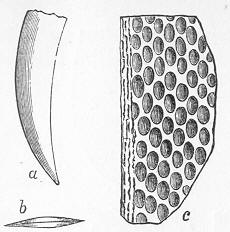
Fig. 48.—Ptilodictya falciformis. a,
Small specimen of the natural size; b, Cross-section,
showing the shape of the frond; c, Portion of the surface,
enlarged. Trenton Limestone and Cincinnati Group, America.
(Original.)
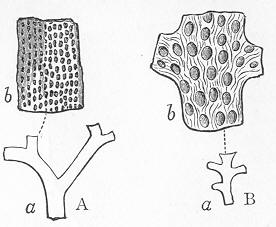
Fig. 49.—A, Ptilodictya acuta; B. Ptilodictya
Schafferi. a, Fragment, of the natural size; b,
Portion, enlarged to show the cells. Cincinnati Group of Ohio
and Canada. (Original.)
different forms of Brachiopods which present themselves in the
Lower Silurian deposits; but we may select the three genera
Orthis, Strophomena, and Leptœna for
illustration, as being specially characteristic of this period,
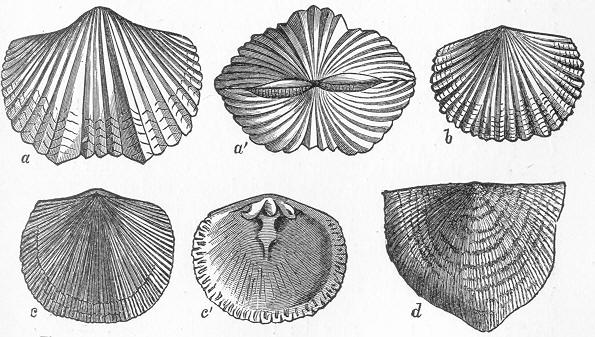
Fig. 50.—Lower Silurian Brachiopods. a
and a', Orthis biforata, Llandeilo-Caradoc, Britain
and America: b, Orthis flabellulum, Caradoc, Britain: c,
Orthis subquadrata, Cincinnati Group, America; c',
Interior of the dorsal valve of the same: d, Strophomena
deltoidea, Llandeilo-Caradoc, Britain and America. (After
Meek, Hall, and Salter.)
though not exclusively confined to it. The numerous shells which
belong to the extensive and cosmopolitan genus Orthis (fig.
50, a, b, c,
Page 110
and fig. 51, c and d), are
usually more or less transversely-oblong or subquadrate, the two
valves (as more or less in all the Brachiopods) of unequal sizes,
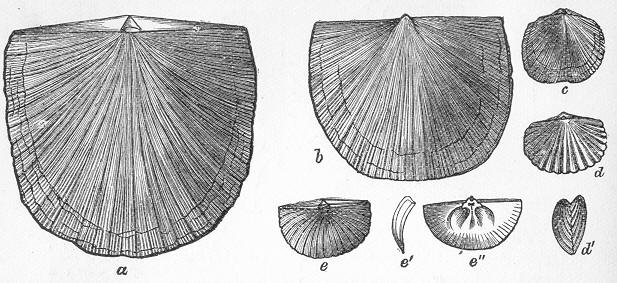
Fig. 51.—Lower Silurian Brachiopods, a,
Strophomena alternata, Cincinnati Group, America; b,
Strophomena filitexta, Trenton and Cincinnati Groups, America;
c, Orthis testudinaria, Caradoc, Europe, and America;
d, d', Orthis plicateila, Cincinnati Group, America; e,
e', e'', Leptœna sericea, Llandeilo and Caradoc, Europe
and America. (After Meek, Hall, and the Author.)
generally more or less convex, and marked with radiating ribs or
lines. The valves of the shell are united to one another by teeth
and sockets, and there is a straight hinge-line. The beaks are
also separated by a distinct space ("hinge-area"), formed in part
by each valve, which is perforated by a triangular opening, through
which, in the living condition, passed a muscular cord attaching
the shell to some foreign object. The genus Strophomena
(fig. 50, d, and 51, a and b) is very like
Orthis in general character; but the shell is usually much
flatter, one or other valve often being concave, the hinge-line is
longer, and the aperture for the emission of the stalk of attachment
is partially closed by a calcareous plate. In Leptœna,
again (fig. 51, e), the shell is like Strophomena
in many respects, but generally comparatively longer, often
completely semicircular, and having one valve convex and the
other valve concave. Amongst other genera of Brachiopods which are
largely represented in the Lower Silurian rocks may be mentioned
Lingula, Crania, Discina, Trematis, Siphonotreta, Acrotreta,
Rhynchonella, and Athyris; but none of these can claim
the importance to which the three previously-mentioned groups
are entitled.
The remaining Lower Silurian groups of Mollusca can be but
briefly glanced at here. The Bivalves (Lamellibranchiata)
find numerous representatives, belonging to such genera as
Page 111
Modiolopsis, Ctenodonta, Orthonota, Palœarca, Lyrodesma,
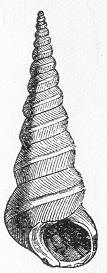
Fig. 52.—Murchisonia gracilis, Trenton Limestone,
America. (After Billings.)
Ambonychia,and Cleidophorus. The Univalves
(Gasteropoda) are also very numerous, the two most important
genera being Murchisonia (fig. 52) and Pleurotomaria.
In both these groups the outer lip of the shell is notched; but
the shell in the former is elongated and turreted, whilst in
the latter it is depressed. The curious oceanic Univalves known
as the Heteropods are also very abundant, the principal
forms belonging to Bellerophon and Maclurea. In the
former (fig. 53) there is a symmetrical convoluted shell, like
that of the Pearly Nautilus in shape, but without any internal
partitions, and having the aperture often expanded and notched
behind. The species of Maclurea (fig. 54) are found both
in North America and in Scotland, and are exclusively confined
to the Lower Silurian period, so far as known. They have the
shell coiled into a flat spiral, the mouth being furnished with
a very curious, thick, and solid lid or "operculum." The Lower
Silurian Pteropods, or "Winged snails," are numerous,
and belong principally to the genera Theca, Conularia,
and Tentaculites, the last-mentioned of these often being
extremely abundant in certain strata.
Lastly, the Lower Silurian Rocks have yielded a vast number of
chambered shells, referable to animals which belong to the same
great division as the Cuttle-fishes (the Cephalopoda), and
of which the Pearly Nautilus is the only living representative
at the present day. In this group of Cephalopods the animal
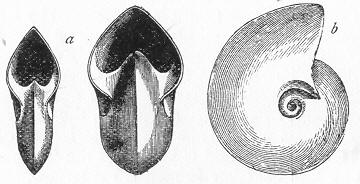
Fig. 53.—Different views of Bellerophon Argo,
Trenton Limestone, Canada. (After Billings.)
possesses a well-developed external shell, which is divided into
chambers by shelly partitions ("septa"). The animal lives in
the last-formed and largest chamber of the shell, to which
Page 112
it is organically connected by muscular attachments. The head is
furnished with long muscular processes or "arms," and can be
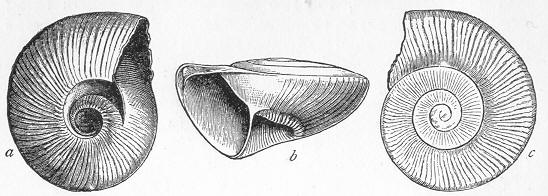
Fig. 54.—Different views of Maclurea crenulata,
Quebec Group, Newfoundland. (After Billings.)
protruded from the mouth of the shell at will, or again withdrawn
within it. We learn, also, from the Pearly Nautilus, that these
animals must have possessed two pairs of breathing organs or
"gills;" hence all these forms are grouped together under the
name of the "Tetrabranchiate" Cephalopods (Gr. tetra,
four; bragchia, gill). On the other hand, the ordinary
Cuttle-fishes and Calamaries either possess an internal skeleton,
or if they have an external shell, it is not chambered; their
"arms" are furnished with powerful organs of adhesion in the form
of suckers; and they possess only a single pair of gills. For
this last reason they are termed the "Dibranchiate" Cephalopods
(Gr. dis, twice; bragchia, gill). No trace of the
true Cuttle-fishes has yet been found in Lower Silurian deposits;
but the Tetrabranchiate group is represented by a great number
of forms, sometimes of great size. The principal Lower Silurian
genus is the well-known and widely-distributed Orthoceras
(fig. 55). The shell in this genus agrees with that of the existing
Pearly Nautilus, in consisting of numerous chambers separated
by shelly partitions (or septa), the latter being perforated by
a tube which runs the whole length of the shell after the last
chamber, and is known as the "siphuncle" (fig. 56, s).
The last chamber formed is the largest, and in it the animal
lives. The chambers behind this are apparently filled with some
gas secreted by the animal itself; and these are supposed to
act as a kind of float, enabling the creature to move with ease
under the weight of its shell. The various air-chambers, though
the siphuncle passes through them, have no direct connection
with one another; and it is believed that the animal has the
power of slightly altering its specific gravity, and thus of
rising or sinking in the water by driving additional fluid into
the siphuncle or partially emptying it. The Orthoceras
Page 113
further agrees with the Pearly Nautilus in the fact that
the partitions or septa separating the different air-chambers are
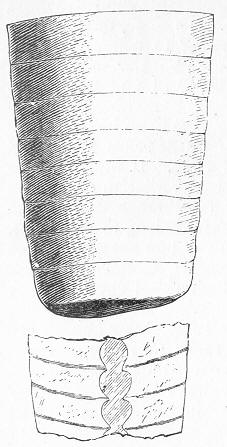
Fig. 55.—Fragment of Orthoceras crebriseptum,
Cincinnati Group, North America, of the natural size. The lower
figure section showing the air-chambers, and the form and position
of the siphuncle. (After Billings.)
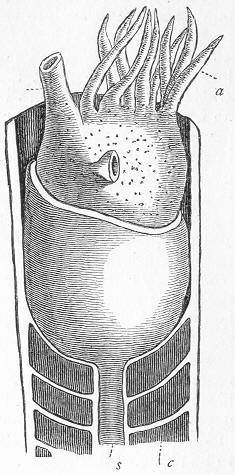
Fig. 56.—[14] Restoration of Orthoceras, the shell
being supposed to be divided vertically, and only its upper part
being shown. a, Arms; f, Muscular tube ("funnel")
by which water is expelled from the mantle-chamber; c,
Air-chambers; s, Siphuncle.
simple and smooth, concave in front and convex behind, and devoid
of the elaborate lobation which they exhibit in the Ammonites;
whilst the siphuncle pierces the septa either in the centre or
near it. In the Nautilus, however, the shell is coiled into a
flat spiral; whereas in Orthoceras the shell is a straight,
longer or shorter cone, tapering behind, and gradually expanding
towards its mouth in front. The chief objections to the belief
that the animal of the Orthoceras was essentially like
that of the Pearly Nautilus are—the comparatively small size
of the body-chamber, the often contracted aperture of the mouth,
and the enormous size of some specimens of
Page 114
the shell. Thus, some Orthocerata have been discovered
measuring ten or twelve feet in length, with a diameter of a foot
at the larger extremity. These colossal dimensions certainly make
it difficult to imagine that the comparatively small body-chamber
could have held an animal large enough to move a load so ponderous
as its own shell. To some, this difficulty has appeared so great
that they prefer to believe that the Orthoceras did not
live in its shell at all, but that its shell was an internal
skeleton similar to what we shall find to exist in many of the
true Cuttle-fishes. There is something to be said in favour of
this view, but it would compel us to believe in the existence in
Lower Silurian times of Cuttle-fishes fully equal in size to the
giant "Kraken" of fable. It need only be added in this connection
that the Lower Silurian rocks have yielded the remains of many
other Tetrabranchiate Cephalopods besides Orthoceras. Some
of these belong to Cyrtoceras, which only differs from
Orthoceras in the bow-shaped form of the shell; others
belong to Phragmoceras, Lituites, &c.; and,
lastly; we have true Nautili, with their spiral shells,
closely resembling the existing Pearly Nautilus.
Whilst all the sub-kingdoms of the Invertebrate animals are
represented in the Lower Silurian rocks, no traces of Vertebrate
animals have ever been discovered in these ancient deposits,
unless the so-called "Conodonts" found by Pander in vast numbers
in strata of this age [15] in Russia should prove to be really
of this nature. These problematical bodies are of microscopic
size, and have the form of minute, conical, tooth-shaped spines,
with sharp edges, and hollow at the base. Their original discoverer
regarded them as the horny teeth of fishes allied to the Lampreys;
but Owen came to the conclusion that they probably belonged to
Invertebrates. The recent investigation of a vast number of similar
but slightly larger bodies, of very various forms, in the
Carboniferous rocks of Ohio, has led Professor Newberry to the
conclusion that these singular fossils really are, as Pander
thought, the teeth of Cyclostomatous fishes. The whole of this
difficult question has thus been reopened, and we may yet have
to record the first advent of Vertebrate animals in the Lower
Silurian.
THE UPPER SILURIAN PERIOD.
Having now treated of the Lower Silurian period at considerable
length, it will not be necessary to discuss the succeeding group of
the Upper Silurian in the same detail—the more so, as
with a general change of species the Upper Silurian animals
belong for the most part to the same great types as those which
distinguish the Lower Silurian. As compared, also, as regards
the total bulk of strata concerned, the thickness of the Upper
Silurian is generally very much below that of the Lower Silurian,
indicating that they represent a proportionately shorter period of
time. In considering the general succession of the Upper Silurian
beds, we shall, as before, select Wales and America as being two
regions where these deposits are typically developed.
In Wales and its borders the general succession of the Upper
Silurian rocks may be taken to be as follows, in ascending order
(fig. 57):—
(1) The base of the Upper Silurian series is constituted by a
series of arenaceous beds, to which the name of "May Hill Sandstone"
was applied by Sedgwick. These are succeeded by a series of
greenish-grey or pale-grey slates ("Tarannon Shales"), sometimes
of great thickness; and these two groups of beds together form
what may be termed the "May Hill Group" (Upper Llandovery
of Murchison). Though not very extensively developed in Britain,
this zone is one very well marked by its fossils; and it corresponds
with the "Clinton Group" of North America, in which similar fossils
occur. In South Wales this group is clearly unconformable to the
highest member of the subjacent Lower Silurian (the Llandovery
group); and there is reason to believe that a similar, though
less conspicuous, physical break occurs very generally between
the base of the Upper and the summit of the Lower Silurian.
(2) The Wenlock Group succeeds the May Hill group, and
constitutes the middle member of the Upper Silurian. At its base
it may have an irregular limestone ("Woolhope Limestone"), and
its summit may be formed by a similar but thicker calcareous
deposit ("Wenlock Limestone"); but the bulk of the group is made
up of the argillaceous and shaly strata known as the "Wenlock
Shale." In North Wales the Wenlock group is, represented by a
great accumulation of flaggy and gritty strata (the "Denbighshire
Flags and Grits"), and similar beds (the
Page 116
"Coniston Flags" and "Coniston Grits") take the same place in
the north of England.
(3) The Ludlow Group is the highest member of the Upper
Silurian, and consists typically of a lower arenaceous and shaly
series (the "Lower Ludlow Rock") a middle calcareous member (the
"Aymestry Limestone"), and an upper shaly and sandy series (the
"Upper Ludlow Rock" and "Downton Sandstone"). At the summit, or
close to the summit, of the Upper Ludlow, is a singular stratum
only a few inches thick (varying from an inch to a foot), which
contains numerous remains of crustaceans and fishes, and is well
known under the name of the "bone-bed." Finally, the Upper Ludlow
rock graduates invariably into a series of red sandy deposits,
which, when of a flaggy character, are known locally as the
"Tile-stones." These beds are probably to be regarded as the
highest member of the Upper Silurian; but they are sometimes
looked upon as passage-beds into the Old Red Sandstone, or as
the base of this formation. It is, in fact, apparently impossible
to draw any actual line of demarcation between the Upper Silurian
and the overlying deposits of the Devonian or Old Red Sandstone
series. Both in Britain and in America the Lower Devonian beds
repose with perfect conformity upon the highest Silurian beds, and
the two formations appear to pass into one another by a gradual
and imperceptible transition.
The Upper Silurian strata of Britain vary from perhaps 3000 or
4000 feet in thickness up to 8000 or 10,000 feet. In North America
the corresponding series, though also variable, is generally of
much smaller thickness, and may be under 1000 feet. The general
succession of the Upper Silurian deposits of North America is
as follows:—
(1) Medina Sandstone.—This constitutes the base of the
Upper Silurian, and consists of sandy strata, singularly devoid
of life, and passing below in some localities into a conglomerate
("Oneida Conglomerate"), which is stated to contain pebbles derived
from the older beds, and which would thus indicate an unconformity
between the Upper and Lower Silurian.
(2) Clinton Group.—Above the Medina sandstone are beds
of sandstone and shale, sometimes with calcareous bands, which
constitute what is known as the "Clinton Group." The Medina and
Clinton groups are undoubtedly the equivalent of the "May Hill
Group" of Britain, as shown by the identity of their fossils.
Page 117
GENERALIZED SECTION OF THE UPPER SILURIAN STRATA OF WALES AND
SHROPSHIRE.
Fig. 57.
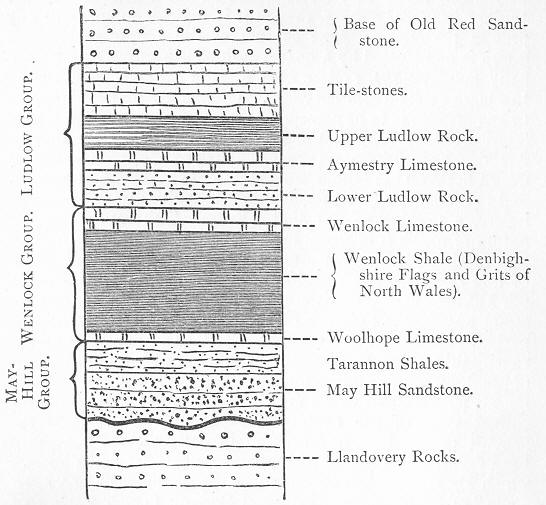 (3) Niagara Group.—This group consists typically of a
series of argillaceous beds ("Niagara Shale") capped by limestones
("Niagara Limestone"); and the name of the group is derived from
the fact that it is over limestones of this age that the Niagara
river is precipitated to form the great Falls. In places the
Niagara group is wholly calcareous, and it is continued upwards
into a series of marls and sandstones, with beds of salt and masses
of gypsum (the "Salina Group"), or into a series of magnesian
limestones ("Guelph Limestones"). The Niagara group, as a whole,
corresponds unequivocally with the Wenlock group of Britain.
(3) Niagara Group.—This group consists typically of a
series of argillaceous beds ("Niagara Shale") capped by limestones
("Niagara Limestone"); and the name of the group is derived from
the fact that it is over limestones of this age that the Niagara
river is precipitated to form the great Falls. In places the
Niagara group is wholly calcareous, and it is continued upwards
into a series of marls and sandstones, with beds of salt and masses
of gypsum (the "Salina Group"), or into a series of magnesian
limestones ("Guelph Limestones"). The Niagara group, as a whole,
corresponds unequivocally with the Wenlock group of Britain.
(4) Lower Helderberg Group.—The Upper Silurian period
in North America was terminated by the deposition of a series of
calcareous beds, which derive the name of "Lower Helderberg" from
the Helderberg mountains, south of Albany, and
Page 118
which are divided into several zones, capable of recognition
by their fossils, and known by local names (Tentaculite Limestone,
Water-lime, Lower Pentamerus Limestone, Delthyris Shaly Limestone,
and Upper Pentamerus Limestone). As a whole, this series may be
regarded as the equivalent of the Ludlow group of Britain, though
it is difficult to establish any precise parallelism. The summit
of the Lower Heiderberg group is constituted by a coarse-grained
sandstone (the "Oriskany Sandstone"), replete with organic
remains, which have to a large extent a Silurian facies.
Opinions differ as to whether this sandstone is to be regarded
as the highest bed of the Upper Silurian or the base of the
Devonian. We thus see that in America, as in Britain, no other
line than an artificial one can be drawn between the Upper
Silurian and the overlying Devonian.
As regards the life of the Upper Silurian period, we have,
as before, a number of so-called "Fucoids," the true vegetable
nature of which is in many instances beyond doubt. In addition
to these, however, we meet for the first time, in deposits of
this age, with the remains of genuine land-plants, though our
knowledge of these is still too scanty to enable us to construct
any detailed picture of the terrestrial vegetation of the period.
Some of these remains indicate the existence of the remarkable
genus Lepidodendron—a genus which played a part of
great importance in the forests of the Devonian and Carboniferous
periods, and which may be regarded as a gigantic and extinct type of
the Club-mosses (Lycopodiaceœ). Near the summit of the
Ludlow formation in Britain there have also been found beds charged
with numerous small globular bodies, which Dr Hooker has shown
to be the seed-vessels or "sporangia" of Club-mosses. Principal
Dawson further states that he has seen in the same formation
fragments of wood with the structure of the singular Devonian
Conifer known as Prototaxites. Lastly, the same distinguished
observer has described from the Upper Silurian of North America
the remains of the singular land-plants belonging to the genus
Psilophyton, which will be referred to at greater length
hereafter.
The marine life of the Upper Silurian is in the main constituted by
types of animals similar to those characterising the Lower Silurian,
though for the most part belonging to different species. The
Protozoans are represented principally by Stromatopora
and Ischadites, along with a number of undoubted sponges
(such as Amphispongia, Astrœospongia, Astylospongia,
and Palœomanon).
Amongst the Cœlenterates, we find the old group of
Graptolites now verging on extinction. Individuals still
Page 119
remain numerous, but the variety of generic
and specific types has now become greatly reduced. All the
branching and complex forms of the Arenig, the twin-Graptolites
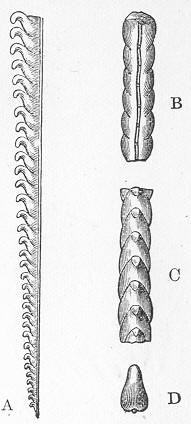
Fig. 58.—A, Monograptus priodon, slightly enlarged.
B, Fragment of the same viewed from behind. C, Fragment of the
same viewed in front, showing the mouths of the cellules. D,
Cross-section of the same. From the Wenlock Group (Coniston
Flags of the North of England). (Original.)
and Dicranograpti of the Llandeilo, and the double-celled
Diplograpti and Climacograpti of the Bala group,
have now disappeared. In their place we have the singular
Retiolites, with its curiously-reticulated skeleton; and
several species of the single-celled genus Monograptus,
of which a characteristic species (M. Priodon) is here
figured. If we remove from this group the plant-like
Dictyonemœ, which are still present, and which
survive into the Devonian, no known species of Graptolite
has hitherto been detected in strata higher in geological position
than the Ludlow. This, therefore, presents us with the first
instance we have as yet met with of the total disappearance and
extinction of a great and important series of organic forms.
The Corals are very numerously represented in the Upper
Silurian rocks some of the limestones (such as the Wenlock Limestone)
being often largely composed of the skeletons of these animals.
Almost all the known forms of this period belong to the two great
divisions of the Rugose and Tabulate corals, the former being
represented by species of Zaphrentis, Omphyma, Cystiphyllum,
Strombodes, Acervularia, Cyathophyllum, &c.; whilst the latter
belong principally to the genera Favosites, Chœtetes,
Halysites, Syringopora, Heliolites, and Plasmopora.
Amongst the Rugosa, the first appearance of the great and
important genus Cyathophyllum, so characteristic of the
Palæozoic period, is to be noted; and amongst the
Tabulata we have similarly the first appearance, in force
at any rate, of the widely-spread genus Favosites—the
"Honeycomb-corals." The "Chain-corals" (Halysites), figured
below (fig. 59), are also very common examples of the Tabulate
corals during this period, though they occur likewise in the Lower
Silurian.
Page 120
Amongst the Echinodermata, all those orders which have hard
parts capable of ready preservation are more or less largely
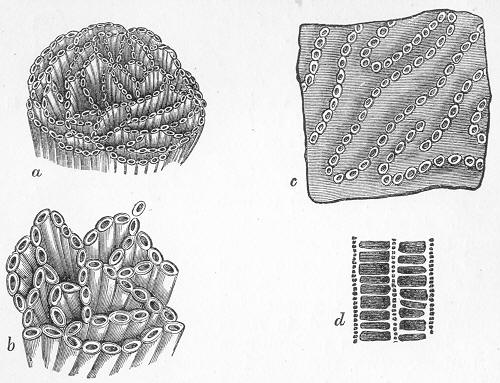
Fig. 59.—a, Halysites catenularia, small variety, of
the natural size; b, Fragment of a large variety of the
same, of the natural size; c, Fragment of limestone with
the tubes of Halysites agglomerata, of the natural size;
d, Vertical section of two tubes of the same, showing the
tabulæ, enlarged. Niagara Limestone (Wenlock), Canada.
(Original.)
represented. We have no trace of the Holothurians or Sea-cucumbers;
but this is not surprising, as the record of the past is throughout
almost silent as to the former existence of these soft-bodied
creatures, the scattered plates and spicules in their skin offering
a very uncertain chance of preservation in the fossil condition.
The Sea-urchins (Echinoids) are said to be represented by
examples of the old genus Palœchinus. The Star-fishes
(Asteroids) and the Brittle-stars (Ophiuroids) are,
comparatively speaking, largely represented; the former by species
of Palasterina (fig. 60), Palœaster (fig. 60),
Palœocoma (fig. 60), Petraster, Glyptaster, and
Lepidaster—and the latter by species of Protaster
(fig. 61), Palœodiscus, Acroura, and Eucladia.
The singular Cystideans, or "Globe Crinoids," with their
globular or ovate, tesselated bodies (fig. 46, A, C, D,), are also
not uncommon in the Upper Silurian; and if they do not become finally
extinct here, they certainly survive the close of this period by
but a very brief time. By far the most important, however, of the
Upper Silurian Echinodenns, are the Sea-lilies or Crinoids.
The limestones of this period are often largely composed of the
fragmentary columns and detached
Page 121
plates of these creatures, and some
of them (such as the Wenlock Limestone of Dudley) have yielded
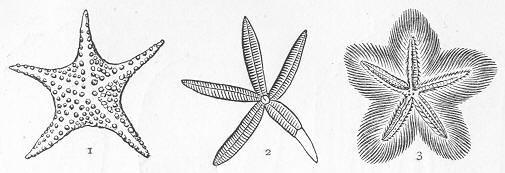
Fig. 60.—Upper Silurian Star-fishes. 1, Palasterina
primœva, Lower Ludlow; 2, Paloeaster Ruthveni,
Lower Ludlow; 3, Palœocoma Colvini, Lower Ludlow.
(After Salter.)
perhaps the most exquisitely-preserved examples of this group
with which we are as yet acquainted. However varied in their
forms, these beautiful organisms consist of a globular, ovate, or
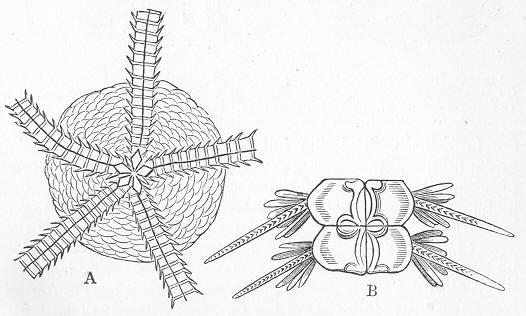
Fig. 61.—A, Protaster Sedgwickii, showing the disc and
bases of the arms; B, Portion of an arm, greatly enlarged.
Lower Ludlow. (After Salter.)
pear-shaped body (the "calyx"), supported upon a longer or shorter
jointed stem (or "column"). The body is covered externally with
an armour of closely-fitting calcareous plates (fig. 62), and
its upper surface is protected by similar but smaller plates
more loosely connected by a leathery integument. From the upper
surface of the body, round its margin, springs a series of longer
or shorter flexible processes, composed of innumerable calcareous
joints or pieces, movably united with one
Page 122
another. The arms are
typically five in number; but they generally subdivide at least
once, sometimes twice, and they are furnished with similar but
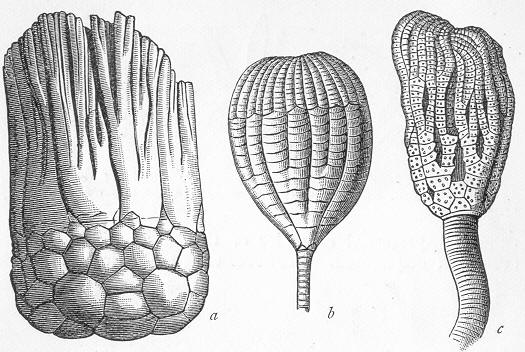
Fig. 62.—Upper Silurian Crinoids. a, Calyx and arms
of Eucalyptocrinus polydactylus, Wenlock Limestone; b,
Ichthyocrinus lœvis, Niagara Limestone, America; c,
Taxocrinus tuberculatus, Wenlock Limestone. (After M'Coy
and Hall.)
more slender lateral branches or "pinnules," thus giving rise
to a crown of delicate feathery plumes. The "column" is the stem
by which the animal is attached permanently to the bottom of the
sea; and it is composed of numerous separate plates, so jointed
together that whilst the amount of movement between any two pieces
must be very limited, the entire column acquires more or less
flexibility, allowing the organism as a whole to wave backwards
and forwards on its stalk. Into the exquisite minutiœ
of structure by which the innumerable parts entering into the
composition of a single Crinoid are adapted for their proper
purposes in the economy of the animal, it is impossible to enter
here. No period, as before said, has yielded examples of greater
beauty than the Upper Silurian, the principal genera represented
being Cyathocrinus, Platycrinus, Marsupiocrinus, Taxocrinus,
Eucalyptocrinus, Ichthyocrinus, Mariacrinus, Periechocrinus,
Glyptocrinus, Crotalocrinus, and Edriocrinus.
The tracks and burrows of Annelides are as abundant in
the Upper Silurian strata as in older deposits, and have just
as commonly been regarded as plants. The most abundant forms
are the cylindrical, twisted bodies (Planolites), which are
Page 123
so frequently found on the surfaces of sandy
beds, and which have been described as the stems of sea-weeds.
These fossils (fig. 63), however, can be nothing more, in most
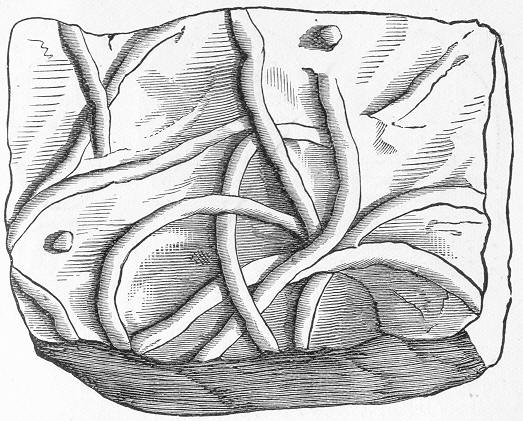
Fig. 63.—Planolites vulgaris, the filled-up burrows
of a marine worm. Upper Silurian (Clinton Group), Canada.
(Original.)
cases, than the filled-up
burrows of marine worms resembling the living Lob-worms. There
are also various remains which belong to the group of the
tube-inhabiting Annelides (Tubicola). Of this nature are
the tubes of Serpulites and Cornultites, and the
little spiral discs of Spirorbis Lewisii.
Amongst the Articulates, we still meet only with the remains
of Crustaceans. Besides the little bivalved
Ostracoda—which here are occasionally found of the size
of beans—and various Phyllopods of different kinds, we
have an abundance of Trilobites. These last-mentioned ancient
types, however, are now beginning to show signs of decadence; and
though still individually numerous, there is a great diminution
in the number of generic types. Many of the old genera, which
flourished so abundantly in Lower Silurian seas, have now died out;
and the group is represented chiefly by species of Cheirurus,
Encrinurus, Harpes, Proetus, Lichas, Acidaspis, Illœnus,
Calymene, Homalonotus, and Phacops—the last of
these, one of the
Page 124
highest and most beautiful of the groups of Trilobites, attaining
here its maximum of development. In the annexed illustration
(fig. 64) some of the characteristic Upper Silurian Trilobites are
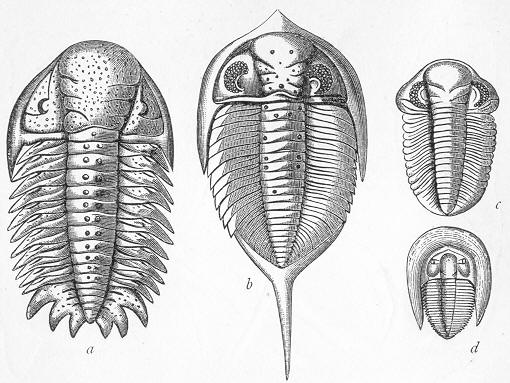
Fig. 64.—Upper Silurian Trilobites. a, Cheirurus
bimucronatus, Wenlock and Caradoc; b, Phacops
longicaudatus, Wenlock, Britain, and America; c, Phacops
Downingiœ, Wenlock and Ludlow; d, Harpes ungula,
Upper Silurian, Bohemia. (After Salter and Barrande.)
represented—all, however, belonging to genera which have their
commencement in the Lower Silurian period. In addition to the above,
the Ludlow rocks of Britain and the Lower Helderberg beds of North
America have yielded the remains of certain singular Crustaceans
belonging to the extinct order of the Eurypterida. Some
of these wonderful forms are not remarkable for their size; but
others, such as Pterygotus Anglicus (fig. 65), attain a
length of six feet or more, and may fairly be considered as the
giants of their class. The Eurypterids are most nearly allied
to the existing King-crabs (Limuli), and have the anterior
end of the body covered with a great head-shield, carrying two
pairs of eyes, the one simple and the other compound. The feelers
are converted into pincers, whilst the last pair of limbs have
their bases covered with spiny teeth so as to act as jaws, and
are flattened and widened out towards their extremities so as
to officiate as swimming-paddles. The hinder extremity of the
body is composed of thirteen rings, which have no legs attached
to them; and the last segment of the tail is either a flattened
plate or a
Page 125
narrow, sword-shaped spine. Fragments of the skeleton
are easily recognised by the peculiar scale-like markings with
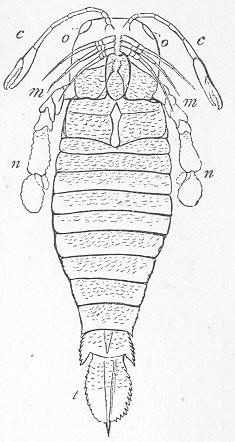
Fig. 65.—Pterygotus Anglicus, viewed
from the under side, reduced in size, and restored. c c,
The feelers (antennæ), terminating in nipping-claws; o
o, Eyes; m m, Three pairs of jointed limbs, with
pointed extremities; n n, Swimming-paddles, the bases of
which are spiny and act as jaws. Upper Silurian, Lanarkshire.
(After Henry Woodward.)
which the surface is adorned, and which look not at all unlike
the scales of a fish. The most famous locality for these great
Crustaceans is Lesmahagow, in Lanarkshire, where many different
species have been found. The true King-crabs (Limuli) of
existing seas also appear to have been represented by at least
one form (Neolimulus) in the Upper Silurian.
Coming to the Mollusca, we note the occurrence of the same
great groups as in the Lower Silurian. Amongst the Sea-mosses
(Polyzoa), we have the ancient Lace-corals (Fenestella
and Retepora), with the nearly-allied Glauconome,
and species of Ptilodictya (fig. 66); whilst many forms
often referred here may probably have to be transferred to the
Corals, just as some so-called Corals will ultimately be removed
to the present group.
The Brachiopods continued to flourish during the Upper Silurian
Period in immense numbers and under a greatly increased variety
of forms. The three prominent Lower Silurian genera Orthis,
Strophomena, and Leptœna are still well represented,
though they have lost their former preeminence. Amongst the numerous
types which have now come upon the scene for the first time, or
which have now a special development, are Spirifera and
Pentamerus. In the first of these (fig. 69. b, c),
one of the valves of the shell (the dorsal) is furnished in its
interior with a pair of great calcareous spires, which served
for the support of the long and fringed fleshy processes or "arms"
which were attached to the sides of the mouth.[16] In the genus
Pentamerus (fig. 70) the
Page 126
shell is curiously subdivided in its
interior by calcareous plates. The Pentameri commenced their
existence at the very close of the Lower Silurian (Llandovery), and
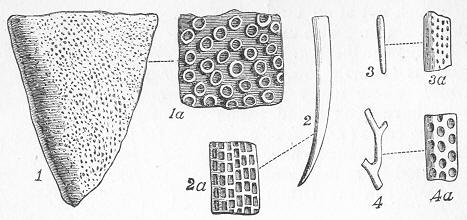
Fig. 66.—Upper Silurian Polyzoa. 1, Fan-shaped
frond of Rhinopora verrucosa; 1a, Portion of the
surface of the same, enlarged; 2 and 2a, Phœnopora
ensiformis, of the natural size and enlarged; 3 and 3a,
Helopora fragilis, of the natural size and enlarged; 4
and 4a, Ptilodictya raripora, of the natural size
and enlarged. The specimens are all from the Clinton Formation
(May Hill Group) of Canada. (Original.)
survived to the close of the Upper Silurian; but they are specially
characteristic of the May Hill and Wenlock groups, both in Britain
and in other regions. One species, Pentamerus galeatus, is
common to Sweden, Britain, and America. Amongst the remaining Upper
Silurian Brachiopods are the extraordinary
Page 127
Trimerellids; the old and at the same time modern
Lingulœ, Discinœ, and Craniœ;
together with many species of Atrypa (fig. 68, e),
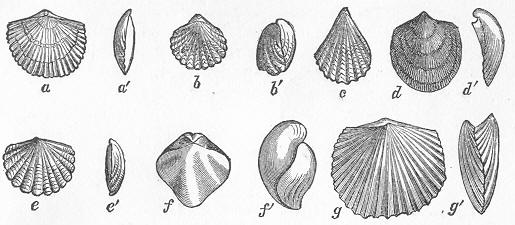
Fig. 68.—Upper
Silurian Brachiopods. a a', Leptocœlia
plano-convexa, Clinton Group, America; b b',
Rhynchonella neglecta, Clinton Group, America; c,
Rhynchonella cuneata, Niagara Group, America, and Wenlock
Group, Britain; d d', Orthis elelgantula, Llandeilo to
Ludlow, America and Europe; e e', Atrypa hemispherica,
Clinton Group, America, and Llandovery and May Hill Groups,
Britain; f f', Atrypa congesta, Clinton Group, America;
g g', Orthis Davidsoni, Clinton Group, America. (After
Hall, Billings, and the Author.)
Leptocœlia (fig. 68, a),
Rhynchonella (fig. 68, b, c), Meristella
(fig. 69, a, e, f), Athyris, Retzia, Chonetes,
&c.
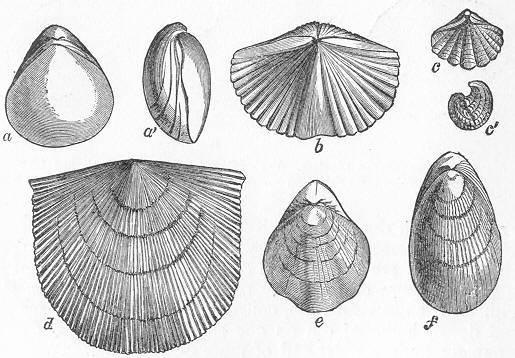
|
|
Fig. 69.—a a', Meristella intermedia, Niagara Group, America;
b, Spirifera Niagarensis, Niagara Group, America; c c',
Spirifera crispa, May Hill to Ludlow, Britain, and Niagara
Group, America; d, Strophomena (Streptorhynchus) subplana,
Niagara Group, America; e, Meristella naviformis, Niagara
Group, America; f, Meristella cylindrica, Niagara Group,
America. (After Hall, Billings, and the Author.)
|
The higher groups of the Mollusca are also largely represented
in the Upper Silurian. Apart from some singular types,
Page 128
such as the
huge and thick-shelled Megalomi of the American Wenlock
formation, the Bivalves (Lamellibranchiata) present little of
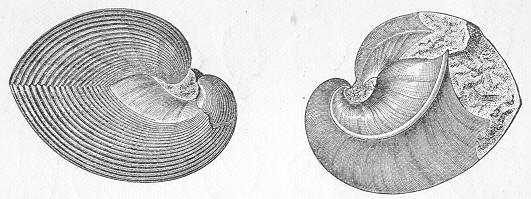
Fig. 70.—Pentamerus Knightii. Wenlock and Ludlow. The
right-hand figure shows the internal partitions of the shell.
special interest; for though sufficiently numerous, they are rarely
well preserved, and their true affinities are often uncertain.
Amongst the most characteristic genera of this period may be
mentioned Cardiola (fig. 71, A and C) and Pterinea
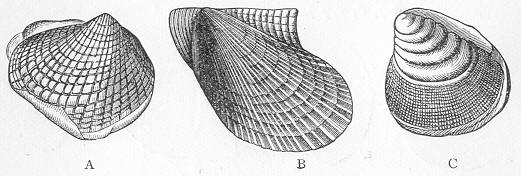
Fig. 71.—Upper Silurian Bivalves. A, Cardiola
interrupta, Wenlock and Ludlow; B, Pterinea subfalcata,
Wenlock; C, Cardiola fibrosa, Ludlow. (After Salter and
M'Coy.)
(fig. 71, B), though the latter survives to a much later date.
The Univalves (Gasteropoda) are very numerous, and a
few characteristic forms are here figured (fig. 72). Of these,
no genus is perhaps more characteristic than Euomphalus
(fig. 72, b), with its flat discoidal shell, coiled up
into an oblique spiral, and deeply hollowed out on one side;
but examples of this group are both of older and of more modern
date. Another very extensive genus, especially in America, is
Platyceras (fig. 72, a and f), with its thin fragile
shell—often hardly coiled up at all—its minute spire,
and its widely-expanded, often sinuated mouth. The British
Acroculiœ should probably be placed here, and the
group has with reason been regarded as allied to the Violet-snails
(Ianthina) of the open Atlantic. The
Page 129
species of Platyostoma (fig. 72, h) also belong
to the same family; and the entire group is continued throughout
the Devonian into the Carboniferous. Amongst other well-known
Upper Silurian Gasteropods are species of the genera Holopea
(fig. 72, g), Holopella (fig. 72. e),
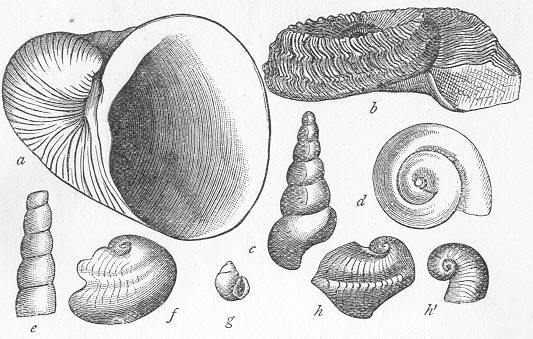
Fig. 72.—Upper Silurian Gasteropods. a, Platyceras
ventricosum, Lower Helderberg, America; b, Euomphalus
discors, Wenlock, Britain; c, Holopella obsoleta Ludlow,
Britain; d, Platyschisma helicites, Upper Ludlow, Britain;
e, Holopella gracilior, Wenlock, Britain; f, Platyceras
multisinuatum, Lower Helderberg, America; g, Holopea
subconica, Lower Helderberg, America; h, h', Platyostoma
Niagarense, Niagara Group, America. (After Hall, M'Coy, and
Salter.)
Platyschisma (fig. 72, d), Cyclonema,
Pleurotomaria, Murchisonia, Trochonema, &c. The oceanic
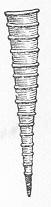
Fig. 73.—Tentaculites ornatus. Upper Silurian of Europe
and North America.
Univalves (Heteropods) are represented mainly by species of
Bellerophon; and the Winged Snails, or Pteropods, can
still boast of the gigantic Thecœ and
Conulariœ, which characterise yet older deposits. The
commonest genus of Pteropoda, however, is Tentaculites
(fig. 73), which clearly belongs here, though it has commonly been
regarded as the tube of an Annelide. The shell in this group
is a conical tube, usually adorned with prominent transverse
rings, and often with finer transverse or longitudinal striæ
as well; and many beds of the Upper Silurian exhibit myriads of
such tubes scattered promiscuously over their surfaces.
Page 130
The last and highest group of the Mollusca—that
of the Cephalopoda—is still represented only by
Tetrabranchiate forms; but the abundance and variety of
these is almost beyond belief. Many hundreds of different species
are known, chiefly belonging to the straight Orthoceratites,
but the slightly-curved Cyrtoceras is only little less
common. There are also numerous forms of the genera Phragmoceras,
Ascoceras, Gyroteras, Lituites, and Nautilus. Here, also,
are the first-known species of the genus Goniatites—a
group which attains considerable importance in later deposits, and
which is to be regarded as the precursor of the Ammonites of
the Secondary period.
Finally, we find ourselves for the first time called upon to
consider the remains of undoubted vertebrate animals, in the
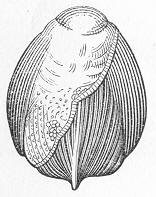
Fig. 74.—Head-shield of Pteraspis Banksii, Ludlow
rocks. (After Murchison.)
form of Fishes. The oldest of these remains, so far as
yet known, are found in the Lower Ludlow rocks, and they consist
of the bony head-shields or bucklers of certain singular armoured
fishes belonging to the group of the Ganoids, represented at
the present day by the Sturgeons, the Gar-pikes of North America,
and a few other less familiar forms. The principal Upper Silurian
genus of these is Pteraspis, and the annexed illustration
(fig. 74) will give some idea of the extraordinary form of the
shield covering the head in these ancient fishes. The remarkable
stratum near the top of the Ludlow formation known as the "bone-bed"
has also yielded the remains of shark-like fishes. Some of these,
for which the name of Onchus has been proposed, are in
the form of compressed, slightly-curved spines (fig. 75, A),
which would appear to be of the nature of the strong defensive
spines implanted in front of certain of the fins in many living
fishes. Besides these, have been found fragments of prickly skin

Fig. 75.—A, Spine of Onchus tenuistriatus; B,
Shagreen-scales of Thelodus. Both from the "bone-bed"
of the Upper Ludlow rocks. (After Murchison.)
or shagreen (Sphagodus), along with minute cushion-shaped
bodies (Thelodus, fig. 75, B), which
Page 131
are doubtless the bony scales of some fish resembling the modern
Dog-fishes. As the above mentioned remains belong to two distinct,
and at the same time highly-organised, groups of the fishes, it
is hardly likely that we are really presented here with the first
examples of this great class. On the contrary, whether the
so-called "Conodonts" should prove to be the teeth of fishes or
not, we are justified in expecting that unequivocal remains of
this group of animals will still be found in the Lower Silurian.
It is interesting, also, to note that the first appearance of
fishes—the lowest class of vertebrate animals—so far
as known to us at present, does not take place until after all
the great sub-kingdoms of invertebrates have been long in
existence; and there is no reason for thinking that future
discoveries will materially affect the relative order of
succession thus indicated.
LITERATURE.
From the vast and daily-increasing mass of Silurian literature, it
is impossible to do more than select a small number of works which
have a classical and historical interest to the English-speaking
geologist, or which embody researches on special groups of Silurian
animals—anything like an enumeration of all the works and
papers on this subject being wholly out of the question. Apart,
therefore, from numerous and in many cases extremely important
memoirs, by various well-known observers, both at home and abroad,
the following are some of the more weighty works to which the
student may refer in investigating the physical characters and
succession of the Silurian strata and their fossil contents:—
| (1) |
'Siluria.' Sir Roderick Murchison. |
| (2) |
'Geology of Russia in Europe.' Murchison (with M. de Verneuil
and Count von Keyserling). |
| (3) |
'Bassin Silurien de Bohême Centrale.' Barrande. |
| (4) |
'Introduction to the Catalogue of British Palæozoic
Fossils in the Woodwardian Museum of Cambridge.'
Sedgwick. |
| (5) |
'Die Urwelt Russlands.' Eichwald. |
| (6) |
'Report on the Geology of Londonderry, Tyrone,' &c.
Portlock. |
| (7) |
"Geology of North Wales"—'Mem. Geol. Survey of Great
Britain,' vol. iii. Ramsay. |
| (8) |
'Geology of Canada,' 1863. Sir W. E. Logan; and the
'Reports of Progress of the Geological Survey' since
1863. |
| (9) |
'Memoirs of the Geological Survey of Great
Britain.' |
| (10) |
'Reports of the Geological Surveys of the States of New
York, Illinois, Ohio, Iowa, Michigan, Vermont, Wisconsin,
Minnesota,' &c. By Emmons, Hall, Worthen, Meek, Newberry,
Orton, Winchell, Dale Owen, &c. |
| (11) |
'Thesaurus Siluricus.' Bigsby. |
| (12) |
'British Palæozoic Fossils.' M'Coy. |
| (13) |
'Synopsis of the Silurian Fossils of Ireland,'
M'Coy. |
| (14) |
"Appendix to the Geology of North Wales"—'Mem. Geol.
Survey,' vol. iii. Salter. |
|
Page 132
(15) |
'Catalogue of the Cambrian and Silurian Fossils in the
Woodwardian Museum of Cambridge.' Salter. |
| (16) |
'Characteristic British Fossils.' Baily. |
| (17) |
'Catalogue of British Fossils.' Morris. |
| (18) |
'Palæozoic Fossils of Canada.' Billings. |
| (19) |
'Decades of the Geological Survey of Canada.' Billings,
Salter, Rupert Jones. |
| (20) |
'Decades of the Geological Survey of Great Britain.' Salter,
Edward, Forbes. |
| (21) |
'Palæontology of New York,' vols. i.-iii.
Hall. |
| (22) |
'Palæontology of Illinois.' Meek and
Worthen. |
| (23) |
'Palæontology of Ohio.' Meek, Hall, Whitfield,
Nicholson. |
| (24) |
'Silurian Fauna of West Tennessee' (Silurische Fauna des
Westlichen Tennessee). Ferdinand Rœmer. |
| (25) |
'Reports on the State Cabinet of New York.'
Hall. |
| (26) |
'Lethæa Geognostica.' Bronn. |
| (27) |
'Index Palæontologicus.' Bronn. |
| (28) |
'Lethæa Rossica.' Eichwald. |
| (29) |
'Lethæa Suecica.' Hisinger. |
| (30) |
'Palæontologica Suecica.' Angelin. |
| (31) |
'Petrefacta Germaniæ.' Goldfuss. |
| (32) |
'Versteinerungen der Grauwacken-Formation in Sachsen.'
Geinitz. |
| (33) |
'Organisation of Trilobites' (Ray Society).
Burmeister. |
| (34) |
'Monograph of the British Trilobites'
(Palæontographical Society). Salter. |
| (35) |
'Monograph of the British Merostomata'
(Palæontographical Society). Henry Woodward. |
| (36) |
'Monograph of British Brachiopoda' (Palæontographical
Society). Thomas Davidson. |
| (37) |
'Graptolites of the Quebec Group.' James Hall. |
| (38) |
'Monograph of the British Graptolitidæ.'
Nicholson. |
| (39) |
'Monographs on the Trilobites. Pteropods, Cephalopods,
Graptolites,' &c. Extracted from the 'Système Silurien
du Centre de la Bohême.' Barrande. |
| (40) |
'Polypiers Fossiles des Terrains Paleozoiques,' and 'Monograph
of the British Corals' (Palæontographical Society). Milne
Edwards and Jules Haime. |
CHAPTER XI.
THE DEVONIAN AND OLD RED SANDSTONE PERIOD.
Between the summit of the Ludlow formation and the strata which
are universally admitted to belong to the Carboniferous series
Page 133
is a great system of deposits, to which the
name of "Old Red Sandstone" was originally applied, to distinguish
them from certain arenaceous strata which lie above the coal ("New
Red Sandstone"). The Old Red Sandstone, properly so called, was
originally described and investigated as occurring in Scotland
and in South Wales and its borders; and similar strata occur in
the south of Ireland. Subsequently it was discovered that sediments
of a different mineral nature, and containing different organic
remains, intervened between the Silurian and the Carboniferous
rocks on the continent of Europe, and strata with similar
palæontological characters to these were found occupying
a considerable area in Devonshire. The name of "Devonian" was
applied to these deposits; and this title, by common usage, has
come to be regarded as synonymous with the name of "Old Red
Sandstone." Lastly, a magnificent series of deposits, containing
marine fossils, and undoubtedly equivalent to the true "Devonian"
of Devonshire, Rhenish Prussia, Belgium, and France, is found to
intervene in North America between the summit of the Silurian
and the base of the Carboniferous rocks.
Much difficulty has been felt in correlating the true "Devonian
Rocks" with the typical "Old Red Sandstone"—this difficulty
arising from the fact that though both formations are fossiliferous,
the peculiar fossils of each have only been rarely and partially
found associated together. The characteristic crustaceans and many
of the characteristic fishes of the Old Red are wanting in the
Devonian; whilst the corals and marine shells of the latter do
not occur in the former. It is impossible here to enter into any
discussion as to the merits of the controversy to which this
difficulty has given origin. No one, however, can doubt the
importance and reality of the Devonian series as an independent
system of rocks to be intercalated in point of time between the
Silurian and the Carboniferous. The want of agreement, both
lithologically and palæontologically, between the Devonian
and the Old Red, can be explained by supposing that these two
formations, though wholly or in great part contemporaneous,
and therefore strict equivalents, represent deposits in two
different geographical areas, laid down under different conditions.
On this view, the typical Devonian rocks of Europe, Britain, and
North America are the deep-sea deposits of the Devonian period,
or, at any rate, are genuine marine sediments formed far from
land. On the other hand, the "Old Red Sandstone" of Britain and
the corresponding "Gaspé Group" of Eastern
Page 134
Canada represent the shallow-water shore-deposits
of the same period. In fact, the former of these last-mentioned
deposits contains no fossils which can be asserted positively
to be marine (unless the Eurypterids be considered so);
and it is even conceivable that it represents the sediments of
an inland sea. Accepting this explanation in the meanwhile, we
may very briefly consider the general succession of the deposits
of this period in Scotland, in Devonshire, and in North America.
In Scotland the "Old Red" forms a great series of arenaceous and
conglomeratic strata, attaining a thickness of many thousands
of feet, and divisible into three groups. Of these, the Lower
Old Red Sandstone reposes with perfect conformity upon the
highest beds of the Upper Silurian, the two formations being almost
inseparably united by an intermediate series of "passage-beds."
In mineral nature this group consists principally of massive
conglomerates, sandstones, shales, and concretionary limestones;
and its fossils consist chiefly of large crustaceans belonging
to the family of the Eurypterids, fishes, and plants. The
Middle Old Red Sandstone consists of flagstones, bituminous
shales, and conglomerates, sometimes with irregular calcareous
bands; and its fossils are principally fishes and plants. It
may be wholly wanting, when the Upper Old Red seems to
repose unconformably upon the lower division of the series. The
Upper Old Red Sandstone consists of conglomerates and
grits, along with a great series of red and yellow
sandstones—the fossils, as before, being fishes and remains
of plants. The Upper Old Red graduates upwards conformably into
the Carboniferous series.
The Devonian rocks of Devonshire are likewise divisible into
a lower, middle, and upper division. The Lower Devonian
or Lynton Group consists of red and purple sandstones,
with marine fossils, corresponding to the "Spirifer Sandstein" of
Germany, and to the arenaceous deposits (Schoharie and Cauda-Galli
Grits) at the base of the American Devonian. The Middle
Devonian or Ilfracombe Group consists of sandstones
and flags, with calcareous slates and crystalline limestones,
containing many corals. It corresponds with the great "Eifel
Limestone" of the Continent, and, in a general way, with the
Corniferous Limestone and Hamilton group of North America. The
Upper Devonian or Pilton Group, lastly, consists
of sandstones and calcareous shales which correspond with the
"Clymenia Limestone" and "Cypridina Shales" of the Continent,
and with the Chemung and Portage groups of
Page 135
North America. It seems quite possible, also, that the
so-called "Carboniferous Slates" of Ireland correspond with
this group, and that the former would be more properly regarded
as forming the summit of the Devonian than the base of the
Carboniferous.
In no country in the world, probably, is there a finer or more
complete exposition of the strata intervening between the Silurian
and Carboniferous deposits than in the United States. The following
are the main subdivisions of the Devonian rocks in the State of
New York, where the series may be regarded as being typically
developed (fig. 67):—
(1) Cauda-Galli Grit and Schoharie
Grit.—Considering
the "Oriskany Sandstone" as the summit of the Upper Silurian, the
base of the Devonian is constituted by the arenaceous deposits
known by the above names, which rest quite conformably upon the
Silurian, and which represent the Lower Devonian of Devonshire.
The Cauda-Galli Grit is so called from the abundance of
a peculiar spiral fossil (Spirophyton cauda-Galli), which
is of common occurrence in the Carboniferous rocks of Britain,
and is supposed to be the remains of a sea-weed.
(2) The Corniferous or Upper Helderberg
Limestone.—A
series of limestones usually charged with considerable quantities
of siliceous matter in the shape of hornstone or chert (Lat.
cornu, horn). The thickness of this group rarely exceeds
300 feet; but it is replete with fossils, more especially with the
remains of corals. The Corniferous Limestone is the equivalent of
the coral-bearing limestones of the Middle Devonian of Devonshire
and the great "Eifel Limestone" of Germany.
(3) The Hamilton Group—consisting of shales at the
base ("Marcellus shales"); flags, shales, and impure limestones
("Hamilton beds") in the middle; and again a series of shales
("Genesee Slates") at the top. The thickness of this group varies
from 200 to 1200 feet, and it is richly charged with marine
fossils.
(4) The Portage Group.—A great series of shales,
flags, and shaly sandstones, with few fossils.
(5) The Chemung Group.—Another great series of
sandstones and shales, but with many fossils. The Portage and
Chemung groups may be regarded as corresponding with the Upper
Devonian of Devonshire. The Chemung beds are succeeded by a
great series of red sandstones and shales—the
Page 136
"Catskill Group"—which pass conformably
upwards into the Carboniferous, and which may perhaps be
regarded as the equivalent of the great sandstones of the Upper
Old Red in Scotland.
Throughout the entire series of Devonian deposits in North America
no unconformability or physical break of any kind has hitherto been
detected; nor is there any marked interruption to the current of
life, though each subdivision of the series has its own fossils.
No completely natural line can thus be indicated, dividing the
Devonian in this region from the Silurian on the one hand, and the
Carboniferous on the other hand. At the same time, there is the
most ample evidence, both stratigraphical and palæontological,
as to the complete independence of the American Devonian series
as a distinct life-system between the older Silurian and the
later Carboniferous. The subjoined section (fig. 76) shows
diagrammatically the general succession of the Devonian rocks
of North America.
As regards the life of the Devonian period, we are now
acquainted with a large and abundant terrestrial
flora—this being the first time that we have met
with a land vegetation capable of reconstruction in any
fulness. By the researches of Gœppert, Unger, Dawson,
Carruthers, and other botanists, a knowledge has been acquired
of a large number of Devonian plants, only a few of which can
be noticed here. As might have been anticipated, the greater
number of the vegetable remains of this period have been
obtained from such shallow-water deposits as the Old Red
Sandstone proper and the Gaspè series of North America, and
few traces of plant-life occur in the strictly marine sediments.
Apart from numerous remains, mostly of a problematical nature,
referred to the comprehensive group of the Sea-weeds, a large
number of Ferns have now been recognised, some being, of the
ordinary plant-like type (Pecopteris, Neuropteris, Alethopteris,
Sphenopteris, &c.), whilst others belong to the gigantic
group of the "Tree-ferns" (Psaronius, Caulopteris, &c.)
Besides these there is an abundant development of the singular extinct
types of the Lepidodendroids, the Sigillarioids,
and the Calamites, all of which attained their maximum in the
Carboniferous. Of these, the Lepidodendra may be regarded as
gigantic, tree-like Club-mosses (Lycopodiaceœ); the
Calamites are equally gigantic Horse-tails
(Equisetaceœ); and the Sigillarioids, equally
huge in size, in some respects hold a position intermediate between
the Club-mosses and the Pines (Conifers). The Devonian rocks have
Page 137
GENERALIZED SECTION OF THE DEVONIAN ROCKS OF NORTH AMERICA.
Fig. 76.
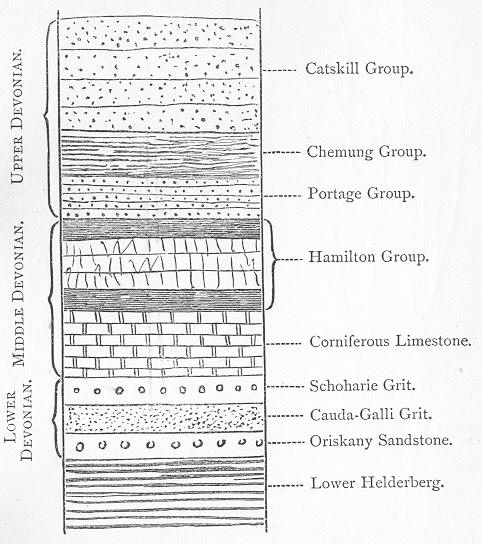 also yielded traces of many other plants (such as Annularia,
Asterophyllites, Cardiocarpon, &c.), which acquire a
greater pre-dominance in the Carboniferous period, and which
will be spoken of in discussing the structure of the plants of the
Coal-measures. Upon the whole, the one plant which may be considered
as specially characteristic of the Devonian (though not confined
to this series) is the Psilophyton (fig. 77) of Dr Dawson.
These singular plants have slender branching stems, with sparse
needle-shaped leaves, the young stems being at first coiled up,
crosier-fashion, like the young fronds of ferns, whilst the old
branches carry numerous spore-cases. The
Page 138
stems and branches seem
to have attained a height of two or three feet; and they sprang
from prostrate "root-stocks" or creeping stems. Upon the whole,
also yielded traces of many other plants (such as Annularia,
Asterophyllites, Cardiocarpon, &c.), which acquire a
greater pre-dominance in the Carboniferous period, and which
will be spoken of in discussing the structure of the plants of the
Coal-measures. Upon the whole, the one plant which may be considered
as specially characteristic of the Devonian (though not confined
to this series) is the Psilophyton (fig. 77) of Dr Dawson.
These singular plants have slender branching stems, with sparse
needle-shaped leaves, the young stems being at first coiled up,
crosier-fashion, like the young fronds of ferns, whilst the old
branches carry numerous spore-cases. The
Page 138
stems and branches seem
to have attained a height of two or three feet; and they sprang
from prostrate "root-stocks" or creeping stems. Upon the whole,
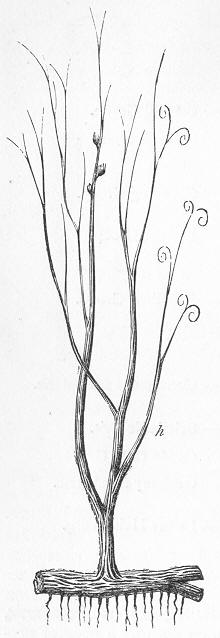
Fig. 77.—Restoration of Psilophyton princeps. Devonian,
Canada. (After Dawson.)
Principal Dawson is disposed to regard Psilophyton as
a "generalised type" of plants intermediate between the Ferns and
the Club-mosses. Lastly, the Devonian deposits have yielded the
remains of the first actual trees with which we are as yet
acquainted. About the nature of some of these (Ormoxylon
and Dadoxylon) no doubt can be entertained, since their
trunks not only show the concentric rings of growth characteristic
of exogenous trees in general, but their woody tissue exhibits
under the microscope the "discs" which are characteristic of
the wood of the Pines and Firs (see fig. 2). The singular genus
Prototaxites, however, which occurs in an older portion
of the Devonian series than the above, is not in an absolutely
unchallenged position. By Principal Dawson it is regarded as the
trunk of an ancient Conifer—the most ancient known;
but Mr Carruthers regards it as more probably the stem of a
gigantic sea-weed. The trunks of Prototaxites (fig. 78, A)
vary from one to three feet in diameter, and exhibit concentric
rings of growth; but its woody fibres have not hitherto been
clearly demonstrated to possess discs. Before leaving the Devonian
vegetation, it may be mentioned that the hornstone or chert so
abundant in the Corniferous limestone of North America has been
shown to contain the remains of various microscopic plants
(Diatoms and Desmids). We find also in the same
siliceous material the singular spherical bodies, with radiating
spines, which occur so abundantly in the chalk flints, and which
are termed Xanthidia. These may be regarded
Page 139
as probably the spore-cases of the minute plants known as
Desmidiœ.
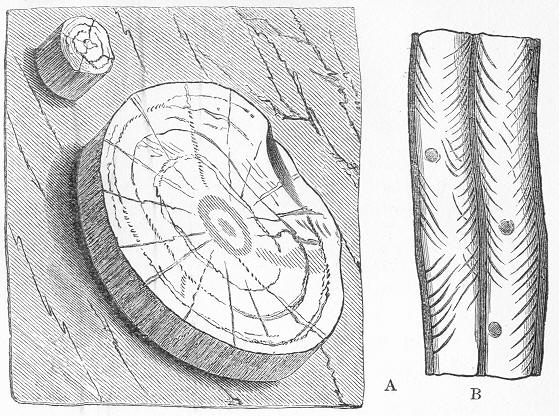
|
| Fig. 78.—A, Trunk
of Prototaxites Logani, eighteen inches in diameter, as seen
in the cliff near L'Anse Brehaut, Gaspé; B, Two wood-cells
showing spiral fibres and obscure pores, highly magnified. Lower
Devonian, Canada. (After Dawson)
|
The Devonian Protozoans have still to be fully investigated.
True Sponges (such as Astrtœospongia, Sphœrospongia,
&c.) are not unknown; but by far the commonest representatives of
this sub-kingdom in the Devonian strata are Stromatopora and its
allies. These singular organisms (fig. 79) are not only very abundant
in some of the Devonian limestones—both in the Old World and
the New—but they often attain very large dimensions. However
much they may differ in minor details, the general structure of
these bodies is that of numerous, concentrically-arranged, thin,
calcareous laminæ, separated by narrow interspaces, which in
turn are crossed by numerous delicate vertical pillars, giving the
whole mass a cellular structure, and dividing it into innumerable
minute quadrangular compartments. Many of the Devonian
Stromatoporœ also exhibit on their surface the rounded
openings of canals, which can hardly have served any other purpose
than that of permitting the sea-water to gain ready access to every
part of the organism.
No true Graptolites have ever been detected in strata of
Page 140
of Devonian age; and the whole of this group has become
extinguished—unless we refer here the still surviving
Dictyonemœ. The Cœlenterates, however,
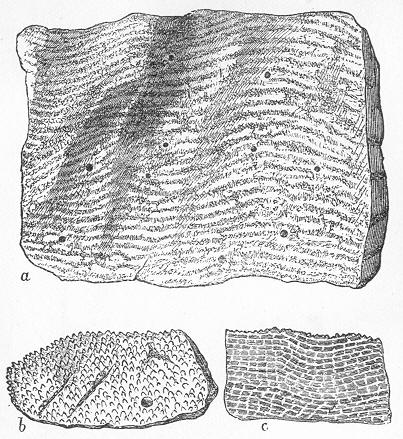
Fig. 79.—a,
Part of the under surface of Stromatopora tuberculata,
showing the wrinkled basement membrane and the openings of
water-canals, of the natural size; b, Portion of the
upper surface of the same, enlarged; c, Vertical section
of a fragment, magnified to show the internal structure.
Corniferous Limestone, Canada. (Original.)
are represented by a vast number of Corals, of beautiful
forms and very varied types. The marbles of Devonshire, the
Devonian limestones of the Eifel and of France, and the calcareous
strata of the Corniferous and Hamilton groups of America, are
often replete with the skeletons of these organisms—so much so
as to sometimes entitle the rock to be considered as representing an
ancient coral-reef. In some instances the Corals have preserved
their primitive calcareous composition; and if they are embedded
in soft shales, they may weather out of the rock in almost all
their original perfection. In other cases, as in the marbles of
Devonshire, the matrix is so compact and crystalline that the
included corals can only be satisfactorily studied by means of
polished sections. In other cases, again, the corals have been
more or less completely converted into flint, as in the Corniferous
limestone of North America. When this is the case, they often come,
by the action of the weather, to stand out from
Page 141
the enclosing
rock in the boldest relief, exhibiting to the observer the most
minute details of their organization. As before, the principal
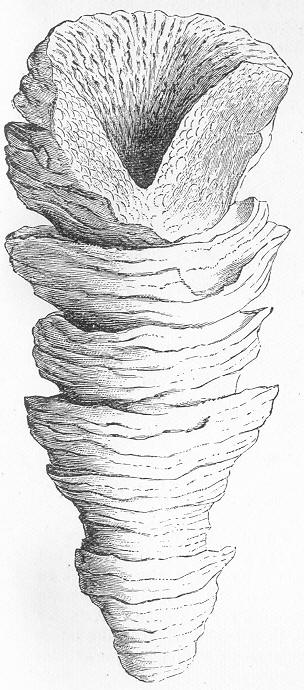
Fig. 80.—Cystiphyllum vesiculosum, showing a
succession of cups produces by budding from the original coral.
Of the natural size. Devonian, America and Europe. (Original.)
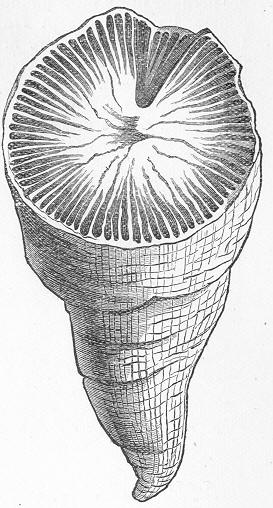
Fig. 81—Zaphrentis cornicula, of the natural size.
Devonian, America. (Original.)
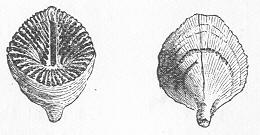
Fig. 82—Heliophyllum exiguum, viewed from in front and
behind. Of the natural size. Devonian, Canada. (Original.)
representatives of the Corals are still referable to the groups of
the Rugosa and Tabulata. Amongst the Rugose group
we find a vast number of simple "cup-corals," generally known by
the quarrymen as "horns," from their shape. Of
Page 142
the many forms of these, the species of Cyathophyllum,
Heliophyllum (fig. 82), Zaphrentis (fig. 81), and
Cystiphyllum (fig. 80), are perhaps those most abundantly
represented—none of these genera, however, except
Heliophyllum, being peculiar to the Devonian period. There
are also numerous compound Rugose corals, such as species of
Eridophyllum, Diphyphyllum, Syringopora,
Phillipsastrœa, and some of the forms of
Cyathophyllum and Crepidophyllum (fig. 83). Some
of these compound corals attain a very large size, and form of
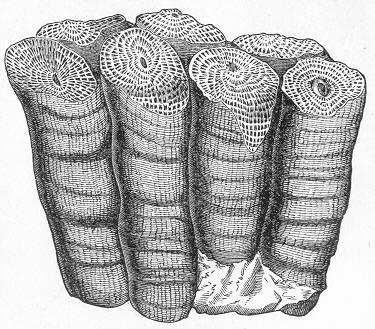
Fig. 83.—Portion of a mass of Crepidophyllum Archiaci,
of the natural size. Hamilton Formation, Canada. (After
Billings.)
themselves regular beds, which have an analogy, at any rate, with
existing coral-reefs, though there are grounds for believing that
these ancient types differed from the modern reef-builders in
being inhabitants of deep water. The "Tabulate Corals" are hardly
less abundant in the Devonian rocks than the Rugosa; and
being invariably compound, they hardly yield to the latter in the
dimensions of the aggregations which they sometimes form.
The commonest, and at the same time the largest, of these are
the "honeycomb corals," forming the genus Favosites (figs.
84, 85), which derive both their vernacular and their technical
names from their great likeness to masses of petrified honeycomb.
The most abundant species are Favosites Gothlandica and
F. Hemispherica, both here figured, which form masses
sometimes not less than two or three feet in diameter. Whilst
Favosites has acquired a popular name by its honey-combed
appearance, the resemblance of Michelinia to a fossilised
Page 143
wasp's nest with the comb exposed is hardly less striking, and
has earned for it a similar recognition from the non-scientific
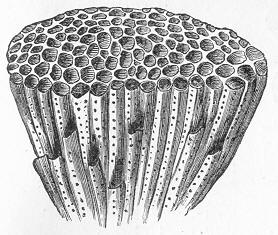
Fig. 84.—Portion of a mass of Favosites Gothlandica,
of the natural size. Upper Silurian and Devonian of Europe
and America. (Original.) Billings.
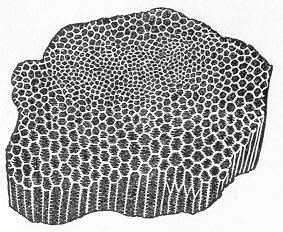
Fig. 85.—Fragment of Favosites hemispherica, of
the natural size. Upper Silurian and Devonian of America.
(After Billings.)
public. In addition to these, there are numerous branching or
plant-like Tabulate Corals, often of the most graceful form,
which are distinctive of the Devonian in all parts of the world.
The Echinoderms of the Devonian period call for little
special notice. Many of the Devonian limestones are "crinoidal;"
and the Crinoids are the most abundant and widely-distributed
representatives of their class in the deposits of this period.
The Cystideans, with doubtful exceptions, have not been
recognised in the Devonian; and their place is taken by the allied
group of the "Pentremites," which will be further spoken of as
occurring in the Carboniferous rocks. On the other hand, the
Star-fishes, Brittle-stars, and Sea-urchins are all continued
by types more or less closely allied to those of the preceding
Upper Silurian.
Of the remains of Ringed-worms (Annelides), the most numerous
and the most interesting are the calcareous envelopes of some
small tube-inhabiting species. No one who has visited the seaside
can have failed to notice the little spiral tubes of the existing
Spirorbis growing attached to shells, or covering the fronds
of the commoner Sea weeds (especially Fucus serratus).
These tubes are inhabited by a small Annelide, and structures of
a similar character occur not uncommonly from the Upper Silurian
upwards. In the Devonian rocks, Spirorbis is an extremely
common fossil, growing in hundreds attached to the outer surface
of corals and shells, and appearing
Page 144
in many specific forms (figs. 86 and 87); but almost all the known
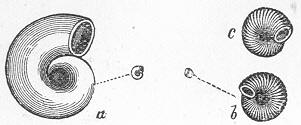
Fig. 87.—a, Spirobois omphalodes, natural size and
enlarged. Devonian, Europe and America; b, Spirorbis
Arkonensis, of the natural size and enlarged; c, The
same, with the tube twisted in the reverse direction. Devonian,
America. (Original.)
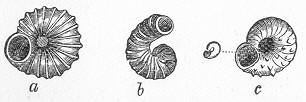 Fig. 88.—a b, Spirorbis laxus, enlarged, Upper
Silurian, America; c, Spirorbis spinulifera, of the
natural size and enlarged, Devonian, Canada. (After Hall and
the Author.)
examples are of small size, and are liable to escape a cursory
examination.
Fig. 88.—a b, Spirorbis laxus, enlarged, Upper
Silurian, America; c, Spirorbis spinulifera, of the
natural size and enlarged, Devonian, Canada. (After Hall and
the Author.)
examples are of small size, and are liable to escape a cursory
examination.
The Crustaceans of the Devonian are principally
Eurypterids and Trilobites. Some of the former
attain gigantic dimensions, and the quarrymen in the Scotch Old
Red give them the name of "seraphim" from their singular scale-like
ornamentation. The Trilobites, though still sufficiently
abundant in some localites, have undergone a yet further diminution
since the close of the Upper Silurian. In both America and Europe
quite a number of generic types have survived from the Silurian,
but few or no new ones make their appearance during this period
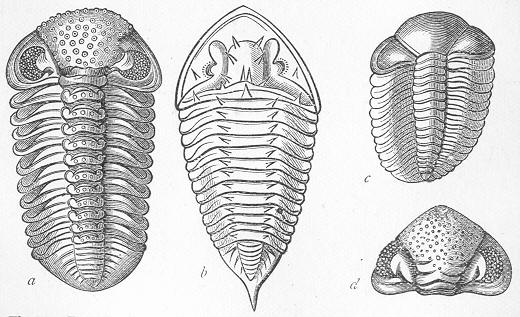
Fig. 88.—Devonian Trilobites; a, Phacops latifrons,
Devonian of Britain, the Continent of Europe, and South America;
b, Homalonotus armatus, Europe; c, Phacops
(Trimerocephalus) lœvis, Europe; d, Head-shield
of Phacops (Portlockia) granulatus, Europe. (After Salter
and Burmeister.)
in either the Old World or the New. The species, however,
are distinct; and the
Page 145
principal forms belong to the genera
Phacops (fig. 88, a, c, d), Homalonotus
(fig. 88, b), Proetus, and Bronteus. The
species figured above under the name of Phacops latifrons
(fig. 88, a), has an almost world-wide distribution, being
found in the Devonian of Britain, Belgium, France, Germany, Russia,
Spain, and South America; whilst its place is taken in North
America by the closely-allied Phacops rana. In addition
to the Trilobites, the Devonian deposits have yielded
the remains of a number of the minute Ostracoda, such as
Entomis ("Cypridina"), Leperditia, &c.,
which sometimes occur in vast numbers, as in the so-called
"Cypridina Slates" of the German Devonian. There are also
a few forms of Phyllopods (Estheria). Taken as
a whole, the Crustacean fauna of the Devonian period presents
many alliances with that of the Upper Silurian, but has only
slight relationships with that of the Lower Carboniferous.
Besides Crustaceans, we meet here for the first time with
the remains of air-breathing Articulates, in the shape of
Insects. So far, these have only been obtained from the
Devonian rocks of North America, and they indicate the existence
of at least four generic types, all more or less allied to the
existing May-flies (Ephemeridœ). One of these
interesting primitive insects, namely, Platephemera antiqua
(fig. 89), appears to have measured five inches in expanse of wing;
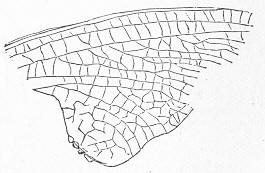
Fig. 89.—Wing of Platephemera antiqua Devonian,
America. (After Dawson.)
and another (Xelloneura antiquorum) has attached to its wing
the remains of a "stridulating-organ" similar to that possessed
by the modern Grasshoppers—the instrument, as Principal
Dawson remarks, of "the first music of living things that Geology
as yet reveals to us."
Amongst the Mollusca, the Devonian rocks have yielded a
great number of the remains of Sea-mosses (Polyzoa). Some
of these belong to the ancient type Ptilodictya, which
seems to disappear here, or to the allied Clathropora
(fig. 90), with its fenestrated and reticulated fronds. We meet
also with the graceful and delicate stems of Ceriopora
(fig. 91).
The majority of the Devonian Polyzoa belong, however,
to the great and important Palæozoic group of the Lace-corals
(Fenestella, figs. 92 and 94, Retepora, fig. 93,
Polypora, and their allies). In all these forms there is
a horny skeleton, of a
Page 146
fan-like or funnel-shaped form, which grew
attached by its base to some foreign body. The frond consists
of slightly-diverging or nearly parallel branches, which are
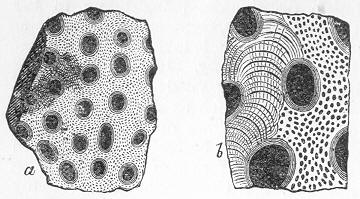
Fig. 90.—Fragment of Clathropora intertexta, of the
natural size and enlarged. Devonian, Canada. (Original.)
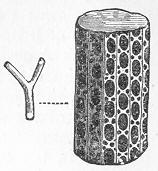
Fig. 91.—Fragment of Ceriopora Hamiltonensis, of the
natural size and enlarged. Devonian, Canada. (Original.)
either united by delicate cross-bars, or which bend alternately
from side to side, and become directly united with one another
at short intervals—in either case giving origin to numerous
oval or oblong perforations, which communicate to the whole
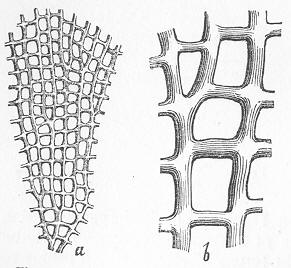
Fig. 92.—Fragment of Fenestella magnifica, of the
natural size and enlarged. Devonian, Canada. (Original.)
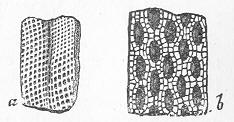
Fig. 93.—Fragment of Retepora Phillipsi, of the
natural size and enlarged. Devonian, Canada. (Original.)
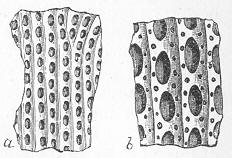
Fig. 94.—Fragment of Fenestella cribrosa, of the
natural size and enlarged. Dovonian, Canada. (Original.)
plant-like colony a characteristic netted and lace-like appearance.
On one of its surfaces—sometimes the internal, sometimes the
external—the frond carries a number of minute chambers or
Page 147
"cells," which are generally borne in rows on the branches, and of
which each originally contained a minute animal.
The Brachiopods still continue to be represented in great
force through all the Devonian deposits, though not occurring in
the true Old Red Sandstone. Besides such old types as Orthis,
Strophomena, Lingula, Athyris, and Rhynchonella, we find
some entirely new ones; whilst various types which only commenced
their existence in the Upper Silurian, now undergo a great expansion
and development. This last is especially the case with the two
families of the Spiriferidœ and the
Produclidœ. The Spirifers, in particular, are
especially characteristic of the Devonian, both in the Old and New
Worlds—some of the most typical forms, such as Spirifera
mucronata (fig. 96), having the shell "winged," or with the
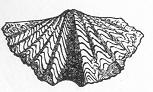
Fig. 95.—Spirifera sculptilis. Devonian,
Canada. (After Billings.)
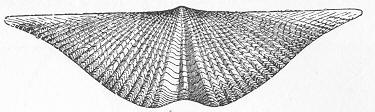
Fig. 96.—Spirifera mucronata. Devonian, America.
(After Billings.)
lateral angles prolonged to such an extent as to have earned for
them the popular name of "fossil-butterflies." The closely-allied
Spirifera disjunda occurs in Britain, France, Spain,
Belgium, Germany, Russia, and China. The family of the
Productidœ commenced to exist in the Upper Silurian,
in the genus Chonetes, and we shall hereafter find it
culminating in the Carboniferous in many forms of the great genus
Producta[17] itself. In the Devonian period, there is an
intermediate state of things, the genus Chonetes being
continued in new and varied types, and the Carboniferous
Produdœ being represented by many forms of the
allied group Productella. Amongst other well-known
Devonian Brachiopods may be mentioned the two long-lived and
persistent types Atrypa reticularis (fig. 97) and
Strophomena rhomboidalis (fig. 98). The former of these
commences in the Upper Silurian, but is more abundantly developed
in the Devonian, having a geographical range that is nothing less
than world-wide; whilst the latter commences in the Lower Silurian,
Page 148
and, with an almost equally cosmopolitan range, survives into the
Carboniferous period.
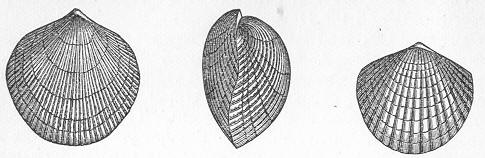
|
|
Fig. 97.—Atrypa reticularis. Upper Silurian
and Devonian of Europe and America. (After Billings.)
|
The Bivalves (Lamellibranchiata) of the Devonian call
for no special comment, the genera Pterinea and
Megalodon being, perhaps, the most noticeable. The Univalves
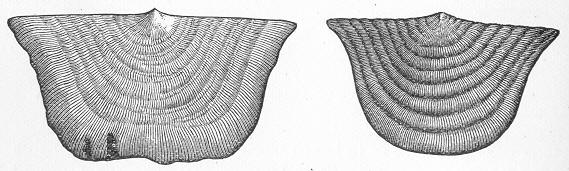
Fig. 98.—Strophomena rhomboidalis. Lower Silurian,
Upper Silurian, and Devonian of Europe and America.
(Gasteropods), also, need not be discussed in detail,
though many interesting forms of this group are known. The type
most abundantly represented, especially in America, is
Platyceras (fig. 99), comprising thin, wide-mouthed shells,
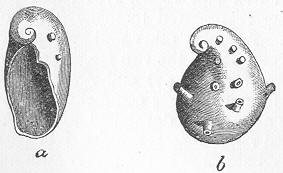
Fig. 99.—Different views of Platyceras dumosum, of
the natural size. Devonian, Canada. (Original.)
probably most nearly allied to the existing "Bonnet-limpets,"
and sometimes attaining very considerable dimensions. We may
also note the continuance of the genus Euomphalus, with
its discoidal spiral shell. Amongst the Heteropods, the
survival of Bellerophon is to be recorded; and in the
"Winged-snails," or Pteropods, we find new forms of the
old genera Tentaculites and Conularia
Page 149
(fig. 100). The latter, with its fragile, conical, and often
beautifully ornamented shell, is especially noticeable.
The remains of Cephalopoda are far from uncommon in the
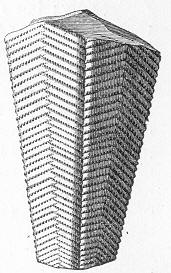
Fig. 100.—Conularia ornata, of the natural size.
Devonian, Europe.
Devonian deposits, all the known forms being still Tetrabranchiate.
Besides the ancient types Orthoceras and Cyrtoceras,
we have now a predominance of the spirally-coiled chambered shells
of Goniatites and Clymenia. In the former of these the
shell is shaped like that of the Nautilus; but the partitions
between the chambers ("septa") are more or less lobed, folded, or
angulated, and the "siphuncle" runs along the back or convex
side of the shell—these being characters which approximate
Goniatites to the true Ammonites of the later rocks. In
Clymenia, on the other hand, whilst the shell (fig. 101)
is coiled into a flat spiral, and the partitions or septa are
simple or only slightly lobed, there is still this difference, as
compared with the Nautilus, that the tube of the siphuncle
is placed on the inner or concave side of the shell. The
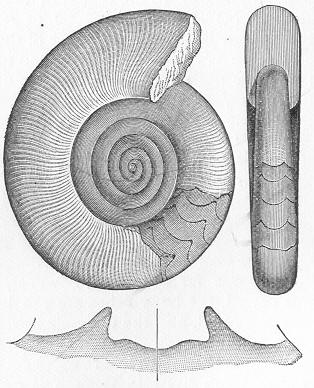
Fig. 101.—Clymenia Sedgwickii. Devonian, Europe.
species of Clymenia are exclusively Devonian in
Page 150
their range; and some of the limestones of this period in Germany
are so richly charged with fossils of this genus as to have received
the name of "Clymenien-kalk."
The sub-kingdom of the Vertebrates is still represented
by Fishes only; but these are so abundant, and belong to
such varied types, that the Devonian period has been appropriately
called the "Age of Fishes." Amongst the existing fishes there are
three great groups which are of special geological importance,
as being more or less extensively represented in past time. These
groups are: (1) The Bony Fishes (Teleostei), comprising
most existing fishes, in which the skeleton is more or less
completely converted into bone; the tail is symmetrically lobed
or divided into equal moieties; and the scales are usually thin,
horny, flexible plates, which overlap one another to a greater
or less extent. (2) The Ganoid Fishes (Ganoidei),
comprising the modern Gar-pikes, Sturgeons, &c., in which the
skeleton usually more or less completely retains its primitive
soft and cartilaginous condition; the tail is generally markedly
unsymmetrical, being divided into two unequal lobes; and the
scales (when present) have the form of plates of bone, usually
covered by a layer of shining enamel. These scales may overlap;
or they may be rhomboidal plates, placed edge to edge in oblique
rows; or they have the form of large-sized bony plates, which
are commonly united in the region of the head to form a regular
buckler. (3) The Placoid Fishes, or Elasmobranchii,
comprising the Sharks, Rays, and Chimœrœ of
the present day, in which the skeleton is cartilaginous; the tail
is unsymmetrically lobed; and the scales have the form of detached
bony plates of variable size, scattered in the integument.
It is to the two last of these groups that the Devonian fishes
belong, and they are more specially referable to the Ganoids.
The order of the Ganoid fishes at the present day comprises but
some seven or eight genera, the species of which principally or
exclusively inhabit fresh waters, and all of which are confined
to the northern hemisphere. As compared, therefore, with the Bony
fishes, which constitute the great majority of existing forms,
the Ganoids form but an extremely small and limited group. It was
far otherwise, however, in Devonian times. At this period, the
bony fishes are not known to have come into existence at all, and
the Ganoids held almost undisputed possession of the waters. To
what extent the Devonian Ganoids were confined to fresh waters
remains yet to be proved; and that many of them lived in the sea
is certain. It was formerly supposed that the Old Red Sandstone
of Scotland and Ireland, with its abundant fish-remains, might
perhaps be a fresh-water deposit, since the habitat of its fishes is
Page 151
uncertain, and it contains no indubitable
marine fossils. It has been now shown, however, that the marine
Devonian strata of Devonshire and the continent of Europe contain
some of the most characteristic of the Old Red Sandstone fishes of
Scotland; whilst the undoubted marine deposit of the Corniferous
limestone of North America contains numerous shark-like and Ganoid
fishes, including such a characteristic Old Red genus as
Coccosleus. There can be little doubt, therefore, but that
the majority of the Devonian fishes were truly marine in their
habits, though it is probable that many of them lived in shallow
water, in the immediate neighbourhood of the shore, or in
estuaries.
The Devonian Galloids belong to a number of groups; and it is
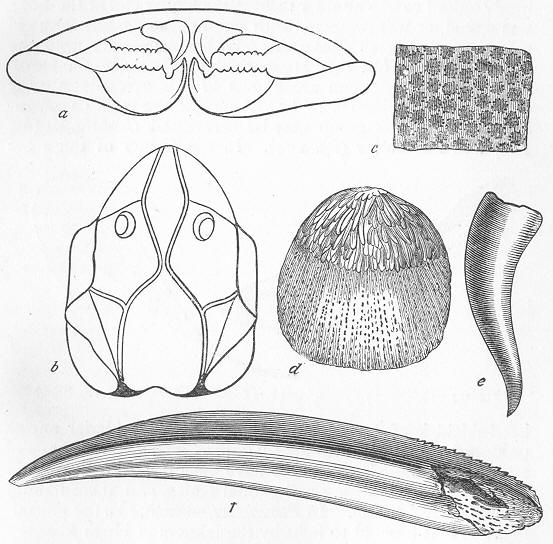
Fig. 102.—Fishes of the Devonian rocks of America. a,
Diagram of the jaws and teeth of Dinichthys Hertzeri,
viewed from the front, and greatly reduced; b, Diagram
of the skull of Macropetalichthys Sullivanti, reduced
in size; c, A portion of the enamelled surface of the
skull of the same, magnified; d, One of the scales of
Onychodus sigmoides, of the natural size; e, One
of the front teeth of the lower jaw of the same, of the natural
size: f, Fin-spine of Machœracanthus major,
a shark-like fish, reduced in size. (After Newberry.)]
only possible to notice a few of the most important forms here.
The modern group of the Sturgeons is represented,
Page 152
more or less
remotely, by a few Devonian fishes—such as Asterosteus;
and the great Macropetalichthys of the Corniferous limestone
of North America is believed by Newberry to belong to this group.
In this fish (fig. 102, b) the skull was of large size,
its outer surface being covered with a tuberculated enamel; and,
as in the existing Sturgeons, the mouth seems to have been wholly
destitute of teeth. Somewhat allied, also, to the Sturgeons, is a
singular group of armoured fishes, which is highly characteristic
of the Devonian of Britain and Europe, and less so of that of
America. In these curious forms the head and front extremity of
the body were protected by a buckler composed of large enamelled
plates, more or less firmly united to one another; whilst the
hinder end of the body was naked, or was protected with small
scales. Some forms of this group—such as Pteraspis
and Coccosteus—date from the Upper Silurian; but
they attain their maximum in the Devonian, and none of them are
known to pass upwards into the overlying Carboniferous rocks.
Amongst the most characteristic forms of this group may be
mentioned Cephalaspis (fig. 103) and Pterichthys
(fig. 104). In the former of these the head-shield is of a
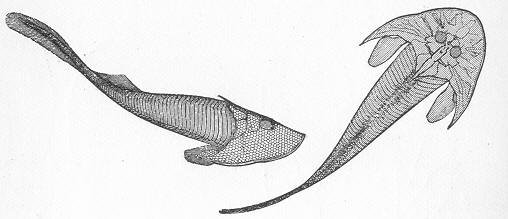
Fig. 103.—Cephalaspis Lyellii. Old Red Sandstone,
Scotland. (After Page.)
crescentic shape, having its hinder angles produced backwards
into long "horns," giving it the shape of a "saddler's knife."
No teeth have been discovered; but the body was covered with small
ganoid scales, and there was an unsymmetrical tail-fin. In
Pterichthys—which, like the preceding, was first
brought to light by the labours of Hugh Miller—the whole
of the head and the front part of the body were defended by a
buckler of firmly-united enamelled plates, whilst the rest of the
body was covered with small scales. The form of the "pectoral
fins" was quite unique—these having the shape of two long,
curved spines, somewhat like wings, covered by finely-tuberculated
ganoid plates. All the preceding forms
Page 153
of this group are of small size; but few fishes, living or extinct,
could rival the proportions of the great Dinichthys, referred
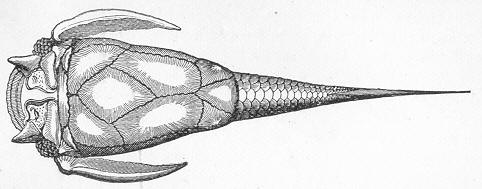
Fig. 104.—Pterichthys cornutus. Old Red Sandstone,
Scotland. (After Agassiz.)
to this family by Newberry. In this huge fish (fig. 102, a)
the head alone is over three feet in length, and the body is
supposed to have been twenty-five or thirty feet long. The head
was protected by a massive cuirass of bony plates firmly articulated
together, but the hinder end of the body seems to have been simply
enveloped in a leathery skin. The teeth are of the most formidable
description, consisting in both jaws of serrated dental plates
behind, and in front of enormous conical tusks (fig. 102, a).
Though immensely larger, the teeth of Dinichthys present
a curious resemblance to those of the existing Mud-fishes
(Lepidosiren).
In another great group of Devonian Ganoids, we meet with fishes
more or less closely allied to the living Polypteri (fig.
105) of the Nile and Senegal. In this group (fig. 106) the pectoral
fins consist of a central scaly lobe carrying the fin-rays on both
sides, the scales being sometimes rounded and overlapping (fig.
106), or more commonly rhomboidal and placed edge to edge (fig. 105,
A). Numerous forms of these "Fringe-finned" Ganoids occur in the
Devonian strata, such as Holoptychius, Glyotolœmus,
Osteolepis, Phaneropleuron, &c. To this group is also to be
ascribed the huge Onychodus (fig. 102, d and e),
with its large, rounded, overlapping scales, an inch in diameter,
and its powerful pointed teeth. It is to be remembered, however,
that some of these "Fringe-finned" Ganoids are probably referable
to the small but singular group of the "Mud-fishes" (Dipnoi),
represented at the present day by the singular Lepidosiren
of South America and Africa, and the Ceratodus of the
rivers of Queensland.
Leaving the Ganoid fishes, it still remains to be noticed that
the Devonian deposits have yielded the remains of a number of
fishes more or less closely allied to the existing Sharks,
Page 154
Rays, and Chimœrœ (the Elasmobranchii).
The majority of the forms here alluded to are allied not to the true
Sharks and Dog-fishes, but to the more peaceable "Port Jackson
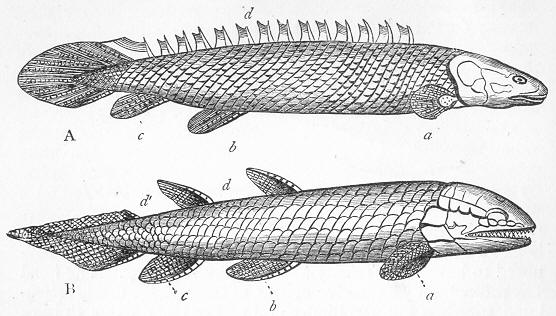
Fig. 105.—A, Polypterus, a recent Ganoid fish; B,
Osteolepis, a Devonian Ganoid; a a, Pectoral
fins, showing the fin-rays arranged round a central lobe.
Sharks," with their blunt teeth, adapted for crushing the shells of
Molluscs. The collective name of "Cestracionts" is applied to these;
and we have evidence of their past existence in the Devonian seas
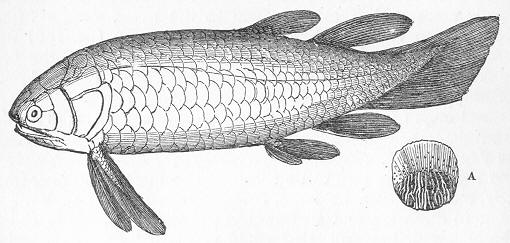
Fig. 106.—Holoptychius nobilissimus, restored. Old
Red Sandstone, Scotland. A, Scale of the same.
both by their teeth, and by the defensive spines which were implanted
in front of a greater or less number of the fins. These are bony
spines, often variously grooved, serrated, or ornamented, with
hollow bases, implanted in the integument, and capable of being
erected or depressed at will.
Page 155
Many of these "fin-spines" have been preserved to us in the fossil
condition, and the Devonian rocks have yielded examples belonging to
many genera. As some of the true Sharks and Dog-fishes, some of the
Ganoids, and even some Bony Fishes, possess similar defences, it is
often a matter of some uncertainty to what group a given spine is
to be referred. One of these spines, belonging to the genus
Machœracanthus, from the Devonian rocks of America, has
been figured in a previous illustration (fig. 102, f).
In conclusion, a very few words may be said as to the validity of
the Devonian series as an independent system of rocks, preserving
in its successive strata the record of an independent system
of life. Some high authorities have been inclined to the view
that the Devonian formation has in nature no actual existence,
but that it is made up partly of beds which should be referred
to the summit of the Upper Silurian, and partly of beds which
properly belong to the base of the Carboniferous. This view seems
to have been arrived at in consequence of a too exclusive study
of the Devonian series of the British Isles, where the physical
succession is not wholly clear, and where there is a striking
discrepancy between the organic remains of those two members
of the series which are known as the "Old Red Sandstone" and
the "Devonian" rocks proper. This discrepancy, however, is not
complete; and, as we have seen, can be readily explained on the
supposition that the one group of rocks presents us with the
shallow water and littoral deposits of the period, while in the
other we are introduced to the deep-sea accumulations of the
same period. Nor can the problem at issue be solved by an appeal
to the phenomena of the British area alone, be the testimony of
these what it may. As a matter of fact, there is at present no
sufficient ground for believing that there is any irreconcilable
discordance between the succession of rocks and of life in Britain
during the period which elapsed between the deposition of the
Upper Ludlow and the formation of the Carboniferous Limestone,
and the order of the same phenomena during the same period in
other regions. Some of the Devonian types of life, as is the
case with all great formations, have descended unchanged from
older types; others pass upwards unchanged to the succeeding
period: but the fauna and flora of the Devonian period are, as
a whole, quite distinct from those of the preceding Silurian or
the succeeding Carboniferous; and they correspond to an equally
distinct rock-system, which in point of time holds an intermediate
position between the two great groups just mentioned. As
Page 156
before remarked, this conclusion may be regarded
as sufficiently proved even by the phenomena of the British area;
but it maybe said to be rendered a certainty by the study of the
Devonian deposits of the continent of Europe—or, still more,
by the investigation of the vast, for the most part uninterrupted
and continuous series of sediments which commenced to be laid
down in North America at the beginning of the Upper Silurian,
and did not cease till, at any rate, the close of the Carboniferous.
LITERATURE.
The following list comprises the more important works and memoirs
to which the student of Devonian rocks and fossils may
refer:—
| (1) |
'Siluria.' Sir Roderick Murchison. |
| (2) |
'Geology of Russia in Europe.' Murchison (together with De
Verneuil and Count von Keyserling). |
| (3) |
"Classification of the Older Rocks of Devon and
Cornwall"—'Proc. Geol. Soc.,' vol. iii., 1839. Sedgwick
and Murchison. |
| (4) |
"On the Physical Structure of Devonshire;" and on the
"Classification of the Older Stratified Rocks of Devonshire
and Cornwall"—'Trans. Geol. Soc.,' vol. v., 1840. Sedgwick
and Murchison. |
| (5) |
"On the Distribution and Classification of the Older or
Palæozoic Rocks of North Germany and Belgium"—'Geol.
Trans.,' 2d ser., vol. vi., 1842. Sedgwick and
Murchison. |
| (6) |
'Report on the Geology of Cornwall, Devon, and West
Somerset.' De la Beche. |
| (7) |
'Memoirs of the Geological Survey of Ireland and
Scotland.' Jukes and Geikie. |
| (8) |
"On the Carboniferous Slate (or Devonian Rocks) and the
Old Red Sandstone of South Ireland and North Devon"—'Quart.
Journ. Geol. Soc.,' vol. xxii. Jukes. |
| (9) |
"On the Physical Structure of West Somerset and North
Devon;" and on the "Palæontological Value of Devonian
Fossils"—'Quart. Journ. Geol. Soc.,' vol. iii.
Etheridge. |
| (10) |
"On the Connection of the Lower, Middle, and Upper Old Red
Sandstone of Scotland"—'Trans. Edin. Geol. Soc.,' vol. i.
part ii. Powrie. |
| (11) |
'The Old Red Sandstone,' 'The Testimony of the Rocks,' and
'Footprints of the Creator.' Hugh Miller. |
| (12) |
"Report on the 4th Geological District"—'Geology of
New York,' vol. iv. James Hall. |
| (13) |
'Geology of Canada,' 1863. Sir W. E. Logan. |
| (14) |
'Acadian Geology.' Dawson. |
| (15) |
'Manual of Geology.' Dana. |
| (16) |
'Geological Survey of Ohio,' vol. i. |
| (17) |
'Geological Survey of Illinois,' vol. i. |
| (18) |
'Palæozoic Fossils of Cornwall, Devon, and West
Somerset.' Phillips. |
| (19) |
'Recherches sur les Poissons Fossiles.' Agassiz. |
| (20) |
'Poissous de l'Old Red.' Agassiz. |
| (21) |
"On the Classification of Devonian Fishes"—'Mem. Geol.
Survey of Great Britain,' Decade X. Huxley. |
|
Page 157
(22) |
'Monograph of the Fishes of the Old Red Sandstone of
Britain' (Palæontographical Society). Powrie and
Lankester. |
| (23) |
'Fishes of the Devonian System, Palæontology of
Ohio.' Newberry. |
| (24) |
'Monograph of British Trilobites'
(Palæontographical Society); Salter. |
| (25) |
'Monograph of British Merostomata'
(Palæontographical Society). Henry Woodward. |
| (26) |
'Monograph of British Brachiopoda'
(Palæontographical Society). Davidson. |
| (27) |
'Monograph of British Fossil Corals'
(Palæontographical Society). Milne-Edwards and
Haime. |
| (28) |
'Polypiers Foss. des Terrains Paléozoiques.'
Milne-Edwards and Jules Haime. |
| (29) |
"Devonian Fossils of Canada West"—'Canadian
Journal,' new ser., vols. iv.-vi. Billings. |
| (30) |
'Palæontology of New York,' vol. iv. James
Hall. |
| (31) |
'Thirteenth, Fifteenth, and Twenty-third Annual Reports
on the State Cabinet.' James Hall. |
| (32) |
'Palæozoic Fossils of Canada,' vol. ii.
Billings. |
| (33) |
'Reports on the Palæontology of the Province of
Ontario for 1874 and 1875.' Nicholson. |
| (34) |
"The Fossil Plants of the Devonian and Upper Silurian
Formations of Canada"—'Geol. Survey of Canada.'
Dawson. |
| (35) |
'Petrefacta Germaniæ.' Goldfuss. |
| (36) |
'Versteinerungen der Grauwacken-formation.' &c.
Geinitz. |
| (37) |
'Beitrag zur Palæontologie des Thüringer-Waldes.'
Richter and Unger. |
| (38) |
'Ueber die Placodermen der Devonischen System.'
Pander. |
| (39) |
'Die Gattungen der Fossilen Pflanzen.'
Gœppert. |
| (40) |
'Genera et Species Plantarum Fossilium.'
Unger. |
CHAPTER XII.
THE CARBONIFEROUS PERIOD.
Overlying the Devonian formation is the great and important series
of the Carboniferous Rocks, so called because workable
beds of coal are more commonly and more largely developed in this
formation than in any other. Workable coal-seams, however, occur
in various other formations (Jurassic, Cretaceous, Tertiary), so
that coal is not an exclusively Carboniferous product; whilst
even in the Coal-measures themselves the coal bears but a very
small proportion to the total thickness of strata, occurring
only in comparatively thin beds intercalated in a great series
of sandstones, shales, and other genuine aqueous sediments.
Page 158
Stratigraphically, the Carboniferous rocks usually repose
conformably upon the highest Devonian beds, so that the line of
demarcation between the Carboniferous and Devonian formations is
principally a palæontological one, founded on the observed
differences in the fossils of the two groups. On the other hand,
the close of the Carboniferous period seems to have been generally,
though not universally, signalised by movements of the crust of
the earth, so that the succeeding Permian beds often lie
unconformably upon the Carboniferous sediments.
Strata of Carboniferous age have been discovered in almost every
large land-area which has been sufficiently investigated; but
they are especially largely developed in Britain, in various
parts of the continent of Europe, and in North America. Their
general composition, however, is, comparatively speaking, so
uniform, that it will suffice to take a comprehensive view of
the formation without considering any one area in detail, though
in each region the subdivisions of the formation are known by
distinctive local names. Taking such a comprehensive view, it
is found that the Carboniferous series is generally divisible
into a Lower and essentially calcareous group (the
"Sub-Carboniferous" or "Carboniferous Limestone"); a Middle
and principally arenaceous group (the "Millstone Grit"); and an
Upper group, of alternating shales and sandstones, with workable
seams of coal (the "Coal-measures").
I. The Carboniferous, Sub-Carboniferous, or Mountain
Limestone Series constitutes the general base of the
Carboniferous system. As typically developed in Britain, the
Carboniferous Limestone is essentially a calcareous formation,
sometimes consisting of a mass of nearly pure limestone from
1000 to 2000 feet in thickness, or at other times of successive
great beds of limestone with subordinate sandstones and shales.
In the north of England the base of the series consists of pebbly
conglomerates and coarse sandstones; and in Scotland generally,
the group is composed of massive sandstones with a comparatively
feeble development of the calcareous element. In Ireland, again,
the base of the Carboniferous Limestone is usually considered
to be formed by a locally-developed group of grits and shales
(the "Coomhola Grits" and "Carboniferous Slate"), which attain
the thickness of about 5000 feet, and contain an intermixture
of Devonian with Carboniferous types of fossils. Seeing that the
Devonian formation is generally conformable to the Carboniferous,
we need feel no surprise at this intermixture of forms; nor does it
Page 159
appear to be of great moment whether these
strata be referred to the former or to the latter series. Perhaps
the most satisfactory course is to regard the Coomhola Grits and
Carboniferous Slates as "passage-beds" between the Devonian and
Carboniferous; but any view that may be taken as to the position
of these beds, really leaves unaffected the integrity of the
Devonian series as a distinct life-system, which, on the whole,
is more closely allied to the Silurian than to the Carboniferous.
In North America, lastly, the Sub-Carboniferous series is never
purely calcareous, though in the interior of the continent it
becomes mainly so. In other regions, however, it consists
principally of shales and sandstones, with subordinate beds of
limestone, and sometimes with this beds of coal or deposits of
clay-ironstone.
II. The Millstone Grit.—The highest beds of the
Carboniferous Limestone series are succeeded, generally with
perfect conformity, by a series of arenaceous beds, usually
known as the Millstone Grit. As typically developed in
Britain, this group consists of hard quartzose sandstones,
often so large-grained and coarse in texture as to properly
constitute fine conglomerates. In other cases there are regular
conglomerates, sometimes with shales, limestones, and thin beds
of coal—the thickness of the whole series, when well
developed, varying from 1000 to 5000 feet. In North America,
the Millstone Grit rarely reaches 1000 feet in thickness; and,
like its British equivalent, consists of coarse sandstones
and grits, sometimes with regular conglomerates. Whilst the
Carboniferous Limestone was undoubtedly deposited in a tranquil
ocean of considerable depth, the coarse mechanical sediments
of the Millstone Grit indicate the progressive shallowing of
the Carboniferous seas, and the consequent supervention of
shore-conditions.
III. The Coal-measures.—The Coal-measures properly
so called rest conformably upon the Millstone Grit, and usually
consist of a vast series of sandstones, shales, grits, and coals,
sometimes with beds of limestone, attaining in some regions a total
thickness of from 7000 to nearly 14,000 feet. Beds of workable
coal are by no means unknown in some areas in the inferior group
of the Sub-Carboniferous; but the general statement is true,
that coal is mostly obtained from the true Coal-measures—the
largest known, and at present most productive coal-fields of the
world being in Great Britain, North America, and Belgium. Wherever
they are found, with limited exceptions, the Coal-measures present
a singular general uniformity of mineral composition. They
Page 160
consist, namely, of an indefinite alternation
of beds of sandstone, shale, and coal, sometimes with bands of
clay-ironstone or beds of limestone, repeated in no constant
order, but sometimes attaining the enormous aggregate thickness
of 14,000 feet, or little short of 3 miles. The beds of coal
differ in number and thickness in different areas, but they
seldom or never exceed one-fiftieth part of the total bulk of
the formation in thickness. The characters of the coal itself,
and the way in which the coal-beds were deposited, will be
briefly alluded to in speaking of the vegetable life of the
period. In Britain, and in the Old World generally, the
Coal-measures are composed partly of genuine terrestrial
deposits—such as the coal—and partly of sediments
accumulated in the fresh or brackish waters of vast lagoons,
estuaries, and marshes. The fossils of the Coal-measures in these
regions are therefore necessarily the remains either of terrestrial
plants and animals, or of such forms of life as inhabit fresh or
brackish waters, the occurrence of strata with marine fossils being
quite a local and occasional phenomenon. In various parts of North
America, on the other hand, the Coal-measures, in addition to
sandstones, shales, coal-seams, and bands of clay-ironstone,
commonly include beds of limestone, charged with marine remains,
and indicating marine conditions. The subjoined section (fig. 107)
gives, in a generalised form, the succession of the Carboniferous
strata in such a British area as the north of England, where
the series is developed in a typical form.
As regards the life of the Carboniferous period, we naturally
find, as has been previously noticed, great differences in different
parts of the entire series, corresponding to the different mode of
origin of the beds. Speaking generally, the Lower Carboniferous
(or the Sub-Carboniferous) is characterised by the remains of
marine animals; whilst the Upper Carboniferous (or Coal-measures)
is characterised by the remains of plants and terrestrial animals.
In all those cases, however, in which marine beds are found in
the series of the Coal-measures, as is common in America, then
we find that the fossils agree in their general characters with
those of the older marine deposits of the period.
Owing to the fact that coal is simply compressed and otherwise
altered vegetable matter, and that it is of the highest economic
value to man, the Coal-measures have been more thoroughly explored
than any other group of strata of equivalent thickness in the
entire geological series. Hence we have already a very extensive
acquaintance with the plants of the Carboniferous period;
and our knowledge on this subject is
Page 161
daily undergoing increase. It is not to be supposed, however,
that the remains of plants are found solely in Coal-measures;
GENERALIZED SECTION OF THE CARBONIFEROUS STRATA OF THE NORTH OF
ENGLAND.
Fig. 107.
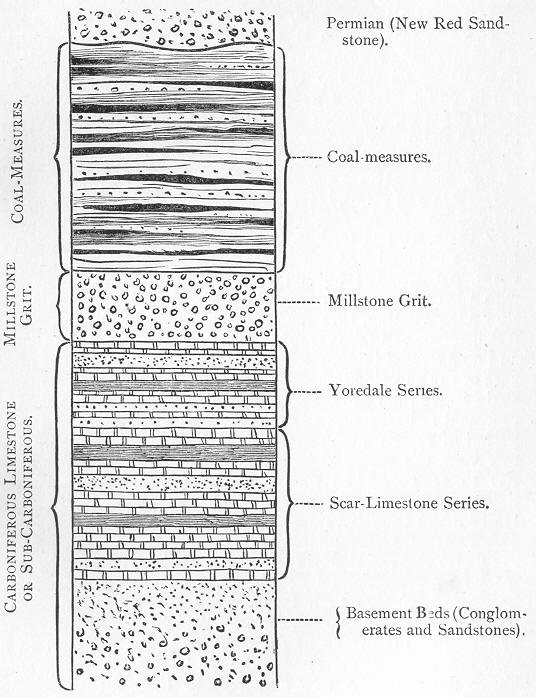 for though most abundant towards the summit, they are found in
less numbers in all parts of the series. Wherever found, they
belong to the same great types of
Page 162
vegetation; but, before reviewing these, a few words must be
said as to the origin and mode of formation of coal.
for though most abundant towards the summit, they are found in
less numbers in all parts of the series. Wherever found, they
belong to the same great types of
Page 162
vegetation; but, before reviewing these, a few words must be
said as to the origin and mode of formation of coal.
The coal-beds, as before mentioned, occur interstratified with
shales, sandstones, and sometimes limestones; and there may,
within the limits of a single coal-field, be as many as 80 or
100 of such beds, placed one above the other at different levels,
and varying in thickness from a few inches up to 20 or 30 feet.
As a general rule, each bed of coal rests upon a bed of shale or
clay, which is termed the "under-clay," and in which are found
numerous roots of plants; whilst the strata immediately on the
top of the coal may be shaly or sandy, but in either case are
generally charged with the leaves and stems of plants, and often
have upright trunks passing vertically through them. When we
add to this that the coal itself is, chemically, nearly wholly
composed of carbon, and that its microscopic structure shows it
to be composed almost entirely of fragments of stems, leaves,
bark, seeds, and vegetable débris derived from
land-plants, we are readily enabled to understand how the
coal was formed. The "under-clay" immediately beneath the
coal-bed represents an old land-surface—sometimes, perhaps,
the bottom of a swamp or marsh, covered with a luxuriant vegetation;
the coal bed itself represents the slow accumulation,
through long periods, of the leaves, seeds, fruits, stems, and
fallen trunks of this vegetation, now hardened and compressed
into a fraction of its original bulk by the pressure of the
superincumbent rocks; and the strata of sand or shale above the
coal-bed—the so-called "roof" of the coal—represent
sediments quietly deposited as the land, after a long period of
repose, commenced to sink beneath the sea. On this view, the rank
and long-continued vegetation which gave rise to each coal-bed
was ultimately terminated by a slow depression of the surface on
which the plants grew. The land-surface then became covered by
the water, and aqueous sediments were accumulated to a greater
or less thickness upon the dense mass of decaying vegetation
below, enveloping any trunks of trees which might still be in an
erect position, and preserving between their layers the leaves
and branches of plants brought down from the neighbouring land by
streams, or blown into the wafer by the wind. Finally, there set in
a slow movement of elevation,—the old land again reappeared
above the water; a new and equally luxuriant vegetation flourished
upon the new land-surface; and another coal-bed was accumulated,
to be preserved ultimately in a similar fashion. Some few beds
of coal may have been formed by drifted vegetable matter brought
down into the ocean by rivers,
Page 163
and deposited
directly on the bottom of the sea; but in the majority of cases
the coal is undeniably the result of the slow growth and decay of
plants in situ: and as the plants of the coal are not
marine plants, it is necessary to adopt some such theory
as the above to account for the formation of coal-seams. By this
theory, as is obvious, we are compelled to suppose that the vast
alluvial and marshy flats upon which the coal-plants grew were
liable to constantly-recurring oscillations of level, the successive
land-surfaces represented by the successive coal-beds of any
coal-field being thus successively buried beneath accumulations
of mud or sand. We have no need, however, to suppose that these
oscillations affected large areas at the same time; and geology
teaches us that local elevations and depressions of the land
have been matters of constant occurrence throughout the whole
of past time.
All the varieties of coal (bituminous coal, anthracite; cannel-coal,
&c.) show a more or less distinct "lamination"—that is to
say, they are more or less obviously composed of successive thin layers,
differing slightly in colour and texture. All the varieties of coal,
also, consist chemically of carbon, with varying proportions
of certain gaseous constituents and a small amount of incombustible
mineral or "ash." By cutting thin and transparent slices of coal,
we are further enabled, by means of the microscope, to ascertain
precisely not only that the carbon of the coal is derived from
vegetables, but also, in many cases, what kinds of plants, and what
parts of these, enter into the formation of coal. When examined
in this way, all coals are found to consist more or less entirely
of vegetable matter; but there is considerable difference in
different coals as to the exact nature of this. By Professor
Huxley it has been shown that many of the English coals consist
largely of accumulations of rounded discoidal sacs or bags, which
are unquestionably the seed-vessels or "spore-cases" of certain
of the commoner coal-plants (such as the Lepidodendra).
The best bituminous coals seem to be most largely composed of
these spore-cases; whilst inferior kinds possess a progressively
increasing amount of the dull carbonaceous substance which is
known as "mineral charcoal," and which is undoubtedly composed
of "the stems and leaves of plants reduced to little more than
their carbon." On the other hand, Principal Dawson finds that
the American coals only occasionally exhibit spore-cases to any
extent, but consist principally of the cells, vessels, and fibres
of the bark, integumentary coverings, and woody portions of the
Carboniferous plants.
The number of plants already known to have existed
Page 164
during the Carboniferous period is so great, that
nothing more can be done here than to notice briefly the typical
and characteristic groups of these—such as the
Ferns, the Calamites, the Lepidodendroids, the Sigillarioids,
and the Conifers.
In accordance with M. Brongniart's generalisation, that the
Palæozoic period is, botanically speaking, the "Age of
Acrogens," we find the Carboniferous plants to be still mainly
referable to the Flowerless or "Cryptogamous" division of the
vegetable kingdom. The flowering or "Phanerogamous" plants,
which form the bulk of our existing vegetation, are hardly known,
with certainty, to have existed at all in the Carboniferous era,
except as represented by trees related to the existing Pines and
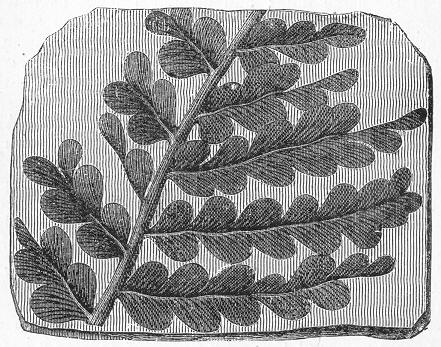
Fig. 108.—Odontopteris Schlotheimii. Carboniferous,
Europe and North America.
Firs, and possibly by the Cycads or "false palms."[18] Amongst
the "Cryptogams," there is no more striking or beautiful group of
Carboniferous plants than the Ferns. Remains of these are
found all through the Carboniferous, but in exceptional numbers
in the Coal-measures, and include both herbaceous forms like the
majority of existing species, and arborescent forms resembling
the living Tree-ferns of New Zealand. Amongst the latter, together
with some new types, are examples of the genera Psaronius
and Caulopteris, both of
Page 165
which date from the Devonian. The simply herbaceous ferns are
extremely numerous, and belong to such widely-distributed and
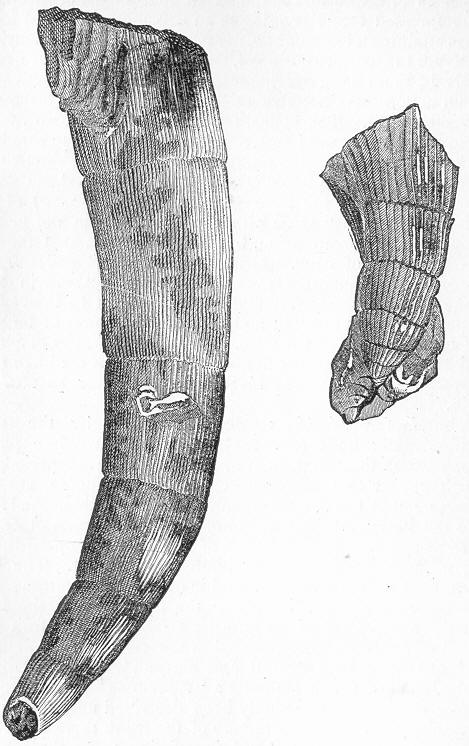
Fig. 109.—Calamites cannœformis. Carboniferous
Rocks, Europe and North America.
largely-represented genera as Neuropteris, Odontopteris
(fig. 108), Alethopteris, Pecopteris, Sphenopteris,
Hymenophyllites, &c.
The fossils known as Calamites (fig. 109) are very common
Page 166
in the Carboniferous deposits, and have given
occasion to an abundance of research and speculation. They present
themselves as prostrate and flattened striated stems, or as similar
uncompressed stems growing in an erect position, and sometimes
attaining a length of twenty feet or more. Externally, the stems
are longitudinally ribbed, with transverse joints at regular
intervals, these joints giving origin to a whorl or branchlets,
which mayor may not give origin to similar whorls of smaller
branchlets still. The stems, further, were hollow, with transverse
partitions at the joints, and having neither true wood nor bark,
but only a thin external fibrous shell. There can be little doubt
but that the Calamites are properly regarded as colossal
representatives of the little Horse-tails (Equisetaceœ)
of the present day. They agree with these not only in the general
details of their organisation, but also in the fact that the fruit
was a species of cone, bearing "spore-cases" under scales.
According to Principal Dawson, the Calamites "grew in
dense brakes on the sandy and muddy flats, subject to inundation,
or perhaps even in water; and they had the power of budding out
from the base of the stem, so as to form clumps of plants, and
also of securing their foothold by numerous cord-like roots
proceeding from various heights on the lower part of the stem."
The Lepidodendroids, represented mainly by the genus
Lepidodendron itself (fig. 110), were large tree-like
plants, which attain their maximum in the Carboniferous period,
but which appear to commence in the Upper Silurian, are well
represented in the Devonian, and survive in a diminished form into
the Permian. The trunks of the larger species of Lepidodendron
at times reach a length of fifty feet and upwards, giving off
branches in a regular bifurcating manner. The bark is marked
with numerous rhombic or oval scars, arranged in quincunx order,
and indicating the points where the long, needle-shaped leaves
were formerly attached. The fruit consisted of cones or spikes,
carried at the ends of the branches, and consisting of a central
axis surrounded by overlapping scales, each of which supports
a "spore-case" or seed-vessel. These cones have commonly been
described under the name of Lepidostrobi. In the structure
of the trunk there is nothing comparable to what is found in
existing trees, there being a thick bark surrounding a zone
principally composed of "scalariform" vessels, this in turn
enclosing a large central pith. In their general appearance the
Lepidodendra bring to mind the existing Araucarian Pines;
but they are true "Cryptogams," and are to be regarded as a
gigantic extinct type of the
Page 167
modern Club-mosses (Lycopodiaceœ). They are amongst
the commonest and most characteristic of the Carboniferous
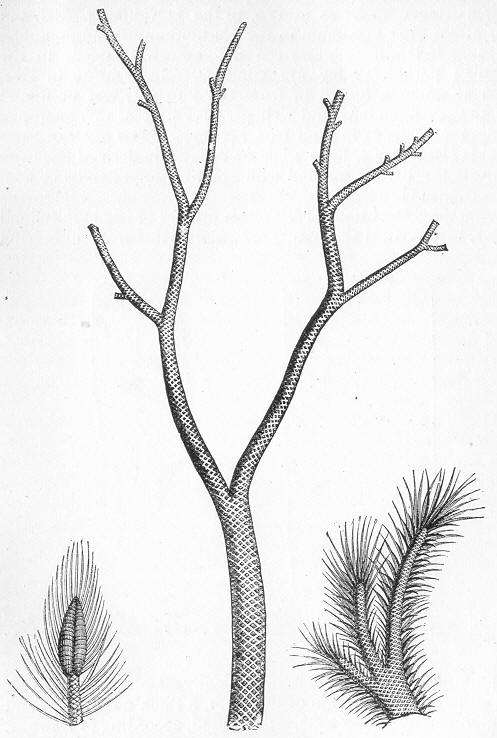
Fig. 110.—Lepidodendron Sternbergii, Carboniferous,
Europe. The central figure represents a portion of the trunk with
its branches, much reduced in size. The right-hand figure is a
portion of a branch with the leaves partially attached to it; and
the left-hand figure represents the end of a branch bearing a cone
of fructification.
plants; and the majority of the "spore-cases" so commonly found
in the coal appear to have been derived from the cones of
Lepidodendroids.
Page 168
The so-called Sigillanoids, represented
mainly by Sigillaria itself (fig. 111), were no less
abundant and characteristic of the Carboniferous forests than the
Lepidodendra. They commence their existence, so far as
known, in the Devonian period, but they attain their maximum in the
Carboniferous; and—unlike the Lepidodendroids—they are
not known to occur in the Permian period. They are comparatively
gigantic in size, often attaining a height of from thirty to
fifty feet or more; but though abundant and well preserved, great
divergence of opinion prevails as to their true affinities. The
name of Sigillarioids (Lat. sigilla, little seals
or images) is derived from the fact that the bark is marked with
seal-like impressions or leaf-scars (fig. 111).
Externally, the trunks of Sigillaria present strong
longitudinal ridges, with vertical alternating rows of oval
leaf-scars indicating the points where the leaves were originally
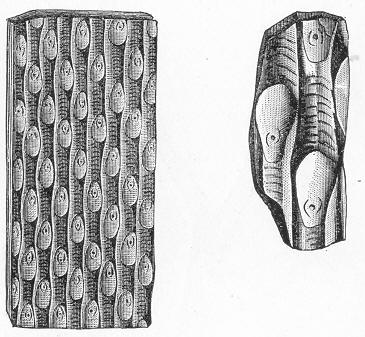
Fig. 111.—Fragment of the external surface of Sigillaria
Grœseri, showing the ribs and leaf-scars. The left-hand
figure represents a small portion enlarged. Carboniferous,
Europe.
attached. The trunk was furnished with a large central pith, a thick
outer bark, and an intermediate woody zone,—composed, according
to Dawson, partly of the disc-bearing fibres so characteristic of
Conifers; but, according to Carruthers, entirely made up of the
"scalariform" vessels characteristic of Cryptogams. The size of the
pith was very great, and the bark seems to have been the most
durable portion of the trunk. Thus we have evidence that in many
cases the stumps and "stools" of Sigillariœ, standing
Page 169
upright in the old Carboniferous swamps, were
completely hollowed out by internal decay, till nothing but an
exterior shell of bark was left. Often these hollow stumps became
ultimately filled up with sediment, sometimes enclosing the remains
of galley-worms, land-snails, or Amphibians, which formerly found in
the cavity of the trunk a congenial home; and from the sandstone or
shale now filling such trunks some of the most interesting fossils
of the Coal-period have been obtained. There is little certainty as
to either the leaves or fruits of Sigillaria, and there
is equally little certainty as to the true botanical position of
these plants. By Principal Dawson they are regarded as being
probably flowering plants allied to the existing "false palms"
or "Cycads," but the high authority of Mr Carruthers is to
be quoted in support of the belief that they are Cryptogamic,
and most nearly allied to the Club-mosses.
Leaving the botanical position of Sigillaria thus undecided,
we find that it is now almost universally conceded that the fossils
originally described under the name of Stigmaria are the
roots of Sigillaria, the actual connection between
the two having been in numerous instances demonstrated in an
unmistakable manner. The Stigmariœ (fig. 112) ordinarily
present themselves in the form of long, compressed or rounded
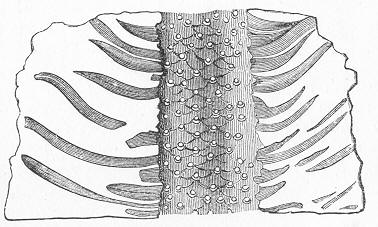
Fig. 112.—Stigmaria ficoides. Quarter natural size.
Carboniferous.
fragments, the external surface of which is covered with rounded
pits or shallow tubercles, each of which has a little pit or
depression in its centre. From each of these pits there proceeds,
in perfect examples, a long cylindrical rootlet; but in many cases
these have altogether disappeared. In their internal structure,
Stigmaria exhibits a central pith surrounded by a sheath of
scalariform vessels, the whole enclosed in a cellular envelope.
The Stigmariœ are generally found ramifying in
Page 170
the "under-clay," which forms the floor of a
bed of coal, and which represents the ancient soil upon which the
Sigillariœ
grew.
The Lepidodendroids and Sigillaroids, though the first
were certainly, and the second possibly, Cryptogamic or flowerless
plants, must have constituted the main mass of the forests of
the Coal period; but we are not without evidence of the existence
at the same time of genuine "trees," in the technical sense of
this term—namely, flowering plants with large woody stems. So
far as is certainly known, all the true trees of the Carboniferous
formation were Conifers, allied to the existing Pines and
Firs. They are recognised by the great size and concentric woody
rings of their prostrate, rarely erect trunks, and by the presence
of disc-bearing fibres in their wood, as demonstrated by the
microscope; and the principal genera which have been recognised are
Dadoxylon, Palœoxylon, Araucarioxylon, and Pinites.
Their fruit is not known with absolute certainty, unless it be
represented, as often conjectured, by Trigonocarpon (fig.
113). The fruits known under this name are nut-like, often of
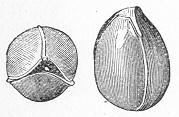
Fig. 113.—Trigonocarpon ovatum. Coal-measures, Britain.
(After Liudley and Hutton.)
considerable size, and commonly three- or six-angled. They probably
originally possessed a fleshy envelope; and if truly referable
to the Conifers, they would indicate that these ancient
evergreens produced berries instead of cones, and thus resembled
the modern Yews rather than Pines. It seems, further, that the
great group of the Cycads, which are nearly allied to the
Conifers, and which attained such a striking prominence in
the Secondary period, probably commenced its existence during the
Coal period; but these anticipatory forms are comparatively few
in number, and for the most part of somewhat dubious affinities.
CHAPTER XIII.
THE CARBONIFEROUS PERIOD—Continued.
ANIMAL LIFE OF THE CARBONIFEROUS.
We have seen that there exists a great difference as to the mode
of origin of the Carboniferous sediments, some being purely marine,
whilst others are terrestrial; and others, again,
Page 171
have been formed in inland swamps and morasses, or in
brackish-water lagoons, creeks, or estuaries. A corresponding
difference exists necessarily in the animal remains of these
deposits, and in many regions this difference is extremely well
marked and striking. The great marine limestones which
characterise the lower portion of the Carboniferous series in
Britain, Europe, and the eastern portion of America, and the
calcareous beds which are found high up in the Carboniferous in
the western States of America, may, and do, often contain the
remains of drifted plants; but they are essentially characterised
by marine fossils; and, moreover, they can be demonstrated by
the microscope to be almost wholly composed of the remains of
animals which formerly inhabited the ocean. On the other hand,
the animal remains of the beds accompanying the coal are typically
the remains of air-breathing, terrestrial, amphibious, or aerial
animals, together with those which inhabit fresh or brackish
waters. Marine fossils may be found in the Coal-measures, but
they are invariably confined to special horizons in the strata,
and they indicate temporary depressions of the land beneath the
sea. Whilst the distinction here mentioned is one which cannot
fail to strike the observer, it is convenient to consider the
animal life of the Carboniferous as a whole: and it is simply
necessary, in so doing, to remember that the marine fossils are
in general derived from the inferior portion of the system;
whilst the air-breathing, fresh-water, and brackish-water forms
are almost exclusively derived from the superior portion of the
same.
The Carboniferous Protozoans consist mainly of
Foraminifera and Sponges. The latter are still
very insufficiently known, but the former are very abundant,
and belong to very varied types. Thin slices of the limestones
of the period, when examined by the microscope, very commonly
exhibit the shells of Foraminifera in greater or less
plenty. Some limestones, indeed, are made up of little else than
these minute and elegant shells, often belonging to types, such
as the Textularians and Rotalians, differing little or not at
all from those now in existence. This is the case, for example,
with the Carboniferous Limestone of Spergen Hill in Indiana (fig.
114), which is almost wholly made up of the spiral shells of a
species of Endothyra. In the same way, though to a less
extent, the black Carboniferous marbles of Ireland, and the similar
marbles of Yorkshire, the limestones of the west of England and
of Derbyshire, and the great "Scar Limestones" of the north of
England, contain great numbers of Foraminiferous shells; whilst
similar organisms commonly occur in the shale-beds associated
Page 172
with the limestones throughout the Lower Carboniferous series.
One of the most interesting of the British Carboniferous forms
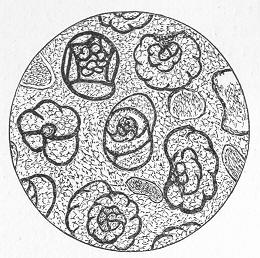
Fig. 114.—Transparent slice of Carboniferous Limestone,
from Spergen Hill, Indiana, U.S., showing numerous shells of
Endothyra (Rotalia), Baiteyi slightly
enlarged. (Original.)
is the Saccammina of Mr Henry Brady, which is sometimes
present in considerable numbers in the limestones of Northumberland,
Cumberland, and the west of Scotland, and which is conspicuous
for the comparatively large size of its spheroidal or pear-shaped
shell (reaching from an eighth to a fifth of an inch in size).
More widely distributed are the generally spindle-shaped shells
of Fusulina (fig. 115), which occur in vast numbers in
the Carboniferous Limestone of Russia, Armenia, the Southern
Alps, and Spain, similar forms occurring in equal profusion in
the higher limestones which are found in the Coal-measures of the
United States, in Ohio, Illinois, Indiana, Missouri, &c. Mr
Henry Brady, lastly, has shown that we have in the Nummulina
Pristina of the Carboniferous Limestone of Namur a genuine
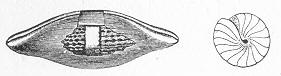
Fig. 115.—Fusulina cylindrica, Carboniferous
Limestone, Russia.
Nummulite, precursor of the great and important family
of the Tertiary Nummulites.
The sub-kingdom of the Cœlenterates, so far as certainly
known, is represented only by Corals;[19] but the remains of
these are so abundant in many of the limestones of the Carboniferous
formation as to constitute a feature little or not at all less
conspicuous than that afforded by the Crinoids. As is the case in
the preceding period, the Corals belong, almost exclusively, to
the groups of the Rugosa and Tabulata; and there is
a general and striking resemblance and relationship between the
coral-fauna of the Devonian as a whole, and that
Page 173
of the Carboniferous. Nevertheless, there is an equally decided and
striking amount of difference between these successive faunas, due
to the fact that the great majority of the Carboniferous species
are new; whilst some of the most characteristic Devonian genera
have nearly or quite disappeared, and several new genera now make
their appearance for the first time. Thus, the characteristic Devonian
types Heliophyllum, Pachyphyllum, Chonophyllum, Acervularia,
Spongophyllum, Smithia, Endophyllum, and Cystiphyllum,
have now disappeared; and the great masses of Favosites
which are such a striking feature in the Devonian limestones,
are represented but by one or two degenerate and puny successors.
On the other hand, we meet in the Carboniferous rocks not only with
entirely new genera—such as Axophyllum, Lophophyllum,
and Londsdaleia—but we have an enormous expansion of
certain types which had just begun to exist in the preceding
period. This is especially well seen in the Case of the genus
Lithostrotion (fig. 116, b), which more than any
other may be considered as the predominant Carboniferous group
of Corals. All the species of Lithostrotion are compound,
consisting either of bundles of loosely-approximated cylindrical
stems, or of similar "coral-lites" closely aggregated together into
astræiform colonies, and rendered polygonal by mutual pressure.
This genus has a historical interest, as having been noticed as
early as in the year 1699 by Edward Lhwyd; and it is geologically
important from its wide distribution in the Carboniferous rocks
of both the Old and New Worlds. Many species are known, and whole
beds of limestone are often found to be composed of little else
than the skeletons of these ancient corals, still standing upright
as they grew. Hardly less characteristic of the Carboniferous
than the above is the great group of simple "cup-corals," of
which Clisiophyllum is the central type. Amongst types
which commenced in the Silurian and Devonian, but which are still
well represented here, may be mentioned Syringopora (fig.
116, e), with its colonies of delicate cylindrical tubes
united at intervals by cross-bars; Zaphrentis (fig. 116,
d), with its cup-shaped skeleton and the well-marked
depression (or "fossula") on one side of the calice; Amplexus
(fig. 116, c), with its cylindrical, often irregularly
swollen coral and short septa; Cyathophyllum (fig. 116,
a), sometimes simple, sometimes forming great masses of
star-like corallites; and Chœtetes, with its branched
stems, and its minute, "tabulate" tubes (fig. 116, f).
The above, together with other and hardly less characteristic
forms, combine to constitute a coral-fauna which is not only in
itself perfectly distinctive, but which is of especial interest,
Page 174
from the fact that almost all the varied types of which it is
composed disappeared utterly before the close of the Carboniferous
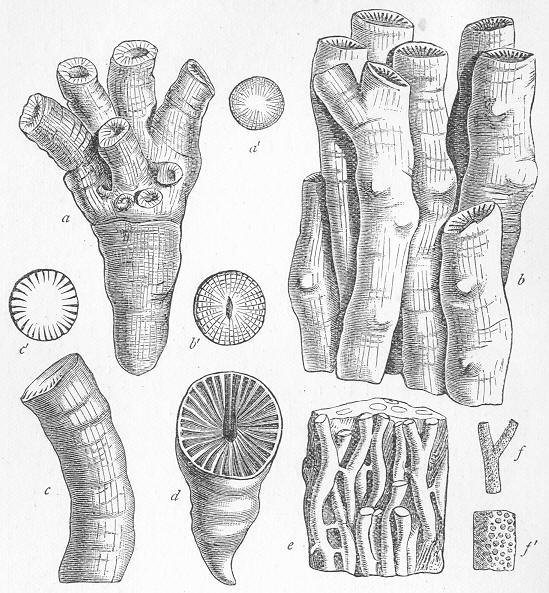
Fig. 116—Corals of the Carboniferous Limestone. a.
Cyathophyllum paracida, showing young corallites budded forth
from the disc of the old one; a', One of the corallites of
the same, seen in cross-section; b, Fragment of a mass of
Lithostrotion irregulare; b', One of the corallites of the
same, divided transversely; c, Portion of the simple
cylindrical coral of Amplexus coralloides; c', Transverse
section of the same species; d, Zaphrentis vermicularis,
showing the depression or "fossula" on one side of the cup;
e, Fragrent of a mass of Syringopora ramulosa; f,
Fragment of Cœtetes tumidus; f', Portion of the same
of the same, enlarged. From the Carboniferous Limestone of Britain
and Belgium. (After Thomson, De Koninck, Milne-Edwards and Haime,
and the Author.)
period. In the first marine sediments of a calcareous nature
which succeeded to the Coal-measures (the magnesian limestones
of the Permian), the great group of the Rugose corals,
which flourished so largely throughout the Silurian, Devonian,
and Carboniferous periods, is found to have all but
Page 175
disappeared, and it is never again represented save
sporadically and by isolated forms.
Amongst the Echinoderms, by far the most important forms
are the Sea-lilies and the Sea-urchins—the former from their
great abundance, and the latter from their singular structure; but
the little group of the "Pentremites" also requires to be noticed.
The Sea-lilies are so abundant in the Carboniferous rocks, that it
has been proposed to call the earlier portion of the period the
"Age of Crinoids." Vast masses of the limestones of the period are
"crinoidal," being more or less extensively composed of the broken
columns, and detached plates and joints of Sea-lilies, whilst
perfect "heads" may be exceedingly rare and difficult to procure.
In North America the remains of Crinoids are even more abundant
at this horizon than in Britain, and the specimens found seem
to be commonly more perfect. The commonest of the Carboniferous
Crinoids belong to the genera Cyathocrinus, Actinocrinus,
Platycrinus, (fig. 117), Poteriocrinus, Zeacrinus,
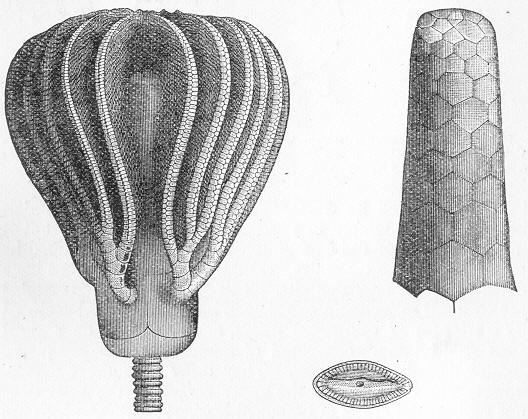
Fig. 117.—Platycrinus tricontadactylus, Lower
Carboniferous. The left-hand figure shows the calyx, arms, and
upper part of the stem; and the figure next this shows the surface
of one of the joints of the column. The right-hand figure shows
the proboscis. (After M'Coy.)
and Forbesiocrinus. Closely allied to the Crinoids, or
forming a kind of transition
Page 176
between these and the Cystideans, is the
little group of the "Pentremites," or Blastoids (fig. 118).
This group is first known to have commenced its existence in
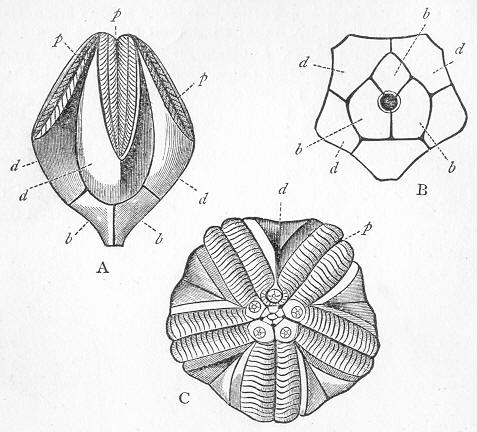
Fig. 118.—A, Pentremites pyriformis, side-view of the
body ("calyx"); B, The same viewed from below, showing the
arrangement of the plates; C, Body of Pentremites conoideus,
viewed from above. Carboniferous.
the Upper Silurian, and it increased considerably in numbers in
the Devonian; but it was in the seas of the Carboniferous period
that it attained its maximum, and no certain representative of the
family has been detected in any later deposits. The "Pentremites"
resemble the Crinoids in having a cup-shaped body (fig. 118, A)
enclosed by closely-fitting calcareous plates, and supported on
a short stem or "column," composed of numerous calcareous pieces
flexibly articulated together. They differ from the Crinoids,
however, in the fact that the upper surface of the body does
not support the crown of branched feathery "arms," which are
so characteristic of the latter. On the contrary, the summit of
the cup is closed up in the fashion of a flower-bud, whence the
technical name of Blastoidea applied to the group (Gr.
blastos, a bud; eidos, form). From the top of the
cup radiate five broad, transversely-striated areas (fig. 118, C),
each with a longitudinal groove down its middle; and along each
side of each of
Page 177
these grooves there seems to have been attached a row of short
jointed calcareous filaments or "pinnules."
A few Star-fishes and Brittle-stars are known to occur in the
Carboniferous rocks; but the only other Echinodemls of this period
which need be noticed are the Sea-urchins (Echinoids).
Detached plates and spines of these are far from rare in the
Carboniferous deposits; but anything like perfect specimens are
exceedingly scarce. The Carboniferous Sea-urchins agree with those
of the present day in having the body enclosed in a shell formed
by an enormous number of calcareous plates articulated together.
The shell may be regarded as, typically, nearly spherical in
shape, with the mouth in the centre of the base, and the excretory
opening or vent at its summit. In both the ancient forms and the
recent ones, the plates of the shell are arranged in ten zones
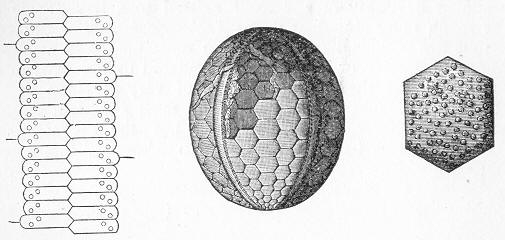
Fig. 119.—Palœchinus ellipticus, one of the
Carboniferous Sea-urchins. The left-hand figure shows one of the
"ambulacral areas" enlarged, exhibiting the perforated plates.
The right-land figure exhibits a single plate from one of the
"inter-ambulacral areas." (After M'Coy.)
which generally radiate from the summit to the centre of the base. In
five of these zones—termed the "ambulacral areas"—the
plates are perforated by minute apertures or "pores," through which
the animal can protrude the little water-tubes ("tube-feet") by which
its locomotion is carried on. In the other five zones—the
so-called "inter-ambulacral areas"—the plates are of larger
size, and are not perforated by any apertures. In all the modern
Sea-urchins each of these ten zones, whether perforate or imperforate,
is composed of two rows of plates; and there are thus twenty rows of
plates in all. In the Palæozoic Sea-urchins, on the other hand,
the "ambulacral areas" are often like those of recent forms, in
consisting of two rows of perforated plates (fig. 119); but
the "inter-ambulacral areas" are always quite
Page 178
peculiar in consisting each of three, four, five, or more rows of large
imperforate plates, whilst there are sometimes four or ten rows of
plates in the "ambulacral areas" also: so that there are many more than
twenty rows of plates in the entire shell. Some of the Palæozoic
Sea-urchins, also, exhibit a very peculiar singularity of structure
which is only known to exist in a very few recently-discovered
modern forms (viz., Calveria and Phormosoma). The
plates of the inter-ambulacral areas, namely, overlap one another
in an imbricating manner, so as to communicate a certain amount
of flexibility to the shell; whereas in the ordinary living forms
these plates are firmly articulated together by their edges,
and the shell forms a rigid immovable box. The Carboniferous
Sea-urchins which exhibit this extraordinary peculiarity belong
to the genera Lepidechinus and Lepidesthes, and
it seems tolerably certain that a similar flexibility of the
shell existed to a less degree in the much more abundant genus
Archœocidaris. The Carboniferous Sea-urchins, like
the modern ones, possessed movable spines of greater or less
length, articulated to the exterior of the shell; and these
structures are of very common occurrence in a detached condition.
The most abundant genera are Archœocidaris and
Palœchinus; but the characteristic American forms
belong principally to Melonites, Oligoporus, and
Lepidechinus.
Amongst the Annelides it is only necessary to notice the
little spiral tubes of Spirorbis Carbonarius (fig. 120),
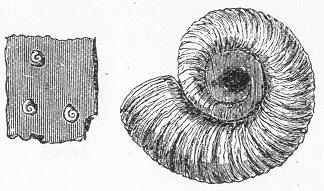
Fig. 120.—Spirorbis (Microconchus) Carbonarius, of
the natural size, attached to a fossil plant, and magnified.
Carboniferous Britain and North America. (After Dawson.)
which are commonly found attached to the leaves or stems of the
Coal-plants. This fact shows that though the modern species of
Spirorbis are inhabitants of the sea, these old
representatives of the genus must have been capable of living
in the brackish waters of lagoons and estuaries.
The Crustaceans of the Carboniferous rocks are numerous,
Page 179
and belong partly to structural types with which we are already
familiar, and partly to higher groups which come into existence
here for the first time. The gigantic Eurypterids of the
Upper Silurian and Devonian are but feebly represented, and make
their final exit here from the scene of life. Their place, however,
is taken by peculiar forms belonging to the allied group of the
Xiphosura, represented at the present day by the King-crabs
or "Horse-shoe Crabs" (Limulus). Characteristic forms of this
group appear in the Coal-measures both of Europe and America; and
though constituting three distinct genera (Prestwichia, Belinurus,
and Euproöps), they are all nearly related to one
another. The best known of them, perhaps, is the Prestwichia
rotundala of Coalbrookdale, here figured (fig. 121). The ancient
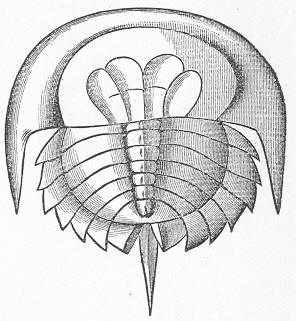
Fig. 121.—Prestwichia rotundata, a Limuloid Crustacean.
Coal-measures, Britain. (After Henry Woodward.)
and formerly powerful order of the Trilobites also undergoes
its final extinction here, not surviving the deposition of the
Carboniferous Limestone series in Europe, but extending its range
in America into the Coal-measures. All the known Carboniferous forms
are small in size and degraded in point of structure, and they are
referable to but three genera (Phillipsia, Griffithides,
and Brachymetopus), belonging to a single family. The
Phillipsia seminifera here figured (fig. 122, a)
is a characteristic species in the Old World. The Water-fleas
(Ostracoaa) are extremely abundant in the Carboniferous
rocks, whole strata being often made up of little else than the
little bivalved shells of these Crustaceans. Many of them are
extremely small, averaging about the size of a millet-seed; but
a few forms, such as Entomoconchus Scouleni (fig. 122,
c), may attain a length of from one to three quarters of
an inch. The old group of the Phyllopods is is likewise
still represented in some abundance, partly by tailed forms of a
shrimp-like appearance, such as Dithyrocaris (fig. 122,
d), and partly by the curious striated Estheriœ
and their allies, which present a curious
Page 180
resemblance to the true Bivalve Molluscs (fig. 122, b).
Lastly, we meet for the first time in the Carboniferous rocks
with the remains of the highest of all the groups of
Crustaceans—namely, the so-called "Decapods," in
which there are five pairs of walking-limbs, and the hinder end
of the body ("abdomen") is composed of separate rings, whilst
the anterior end is covered by a head-shield or "carapace." All
the Carboniferous Decapods hitherto discovered resemble the
existing Lobsters, Prawns, and
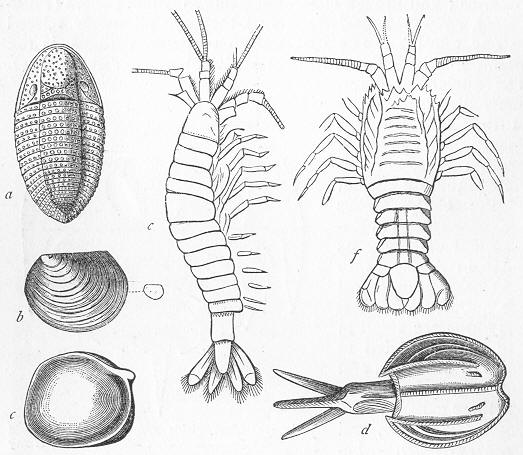
Fig. 122.—Crustaceans of the Carboniferous Rocks. a,
Phillipsia seminifera, of the natural size—Mountain
Limestone, Europe; b, One valve of the shell of Estheria
tenella, of the natural size and enlarged—Coal-measures,
Europe; c, Bivalved shell of Entomoconchus Scouleri,
of the natural size—Mountain Limestone, Europe; d,
Dithyrocaris Scouleri, reduced in size—Mountain Limestone,
Ireland; e, Palœocaris typus, slightly
enlarged—Coal-measures, North America; f,
Anthrapalœmon gracilis, of the natural
size—Coal-measures, North America. (After De Koninck, M'Coy,
Rupert Jones, and Meek and Worthen.)
Shrimps (the Macrura), in having a long and well-developed
abdomen terminated by an expanded tail-fin. The Palœocaris
typus (fig. 122, e) and the Anthrapalœmon
gracilis (fig. 122, f), from the Coal-measures of
Illinois, are two of the best understood and most perfectly
preserved of the few known representatives of the "Long-tailed"
Decapods in the Carboniferous series. The group of the Crabs or
"Short-tailed"
Page 181
Decapods (Brachyura), in which the abdomen is short, not
terminated by a tail-fin, and tucked away out of sight beneath
the body, is at present not known to be represented at all in
the Carboniferous deposits.
In addition to the water-inhabiting group of the Crustaceans, we
find the articulate animals to be represented by members belonging
to the air-breathing classes of the Arachnida, Myriapoda,
and Insecta. The remains of these, as might have been
expected, are not known to occur in the marine limestones of the
Carboniferous series, but are exclusively found in beds associated
with the Coal, which have been deposited in lagoons, estuaries, or
marshes, in the immediate vicinity of the land, and which actually
represent an old land-surface. The Arachnids are at present
the oldest known of their class, and are represented both by true
Spiders and Scorpions. Remains of the latter (fig. 123) have been
found both in the Old and New Worlds, and indicate the existence
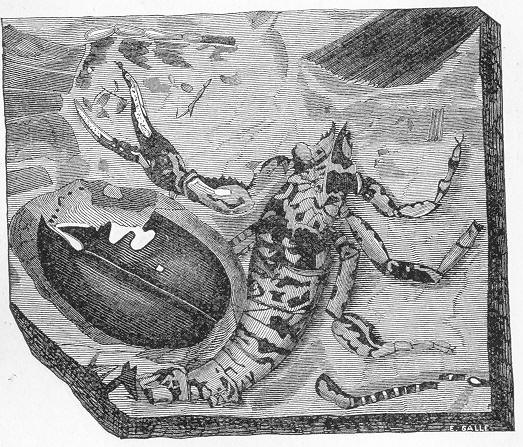
Fig. 123.—Cyclophthalmus senior. A fossil Scorpion
from the Coal-measures of Bohemia.
in the Carboniferous period of Scorpions differing but very little
from existing forms. The group of the Myriapoda, including
the recent Centipedes and Galley-worms, is likewise represented
in the Carboniferous strata,
Page 182
but by forms in many respects
very unlike any that are known to exist at the present day.
The most interesting of these were obtained by Principal Dawson,
along with the bones of Amphibians and the shells of Land-snails,
in the sediment filling the hollow trunks of Sigillaria,
and they belong to the genera Xylobius (fig. 124) and
Archiulus. Lastly, the true insects are represented by
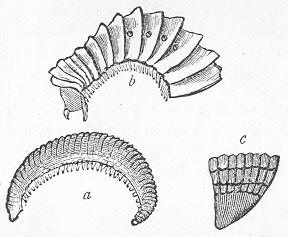
Fig. 124.—Xylobius Sigillariœ, a Carboniferous
Myriapod. a, A specimen, of the natural size; b,
Anterior portion of the same, enlarged; c, Posterior
portion, enlarged. From the Coal-measures of Nova Scotia.
(After Dawson.)
various forms of Beetles (Coleoptera), Orthoptera
(such as Cockroaches), and Neuropterous insects resembling
those which we have seen to have existed towards the close of
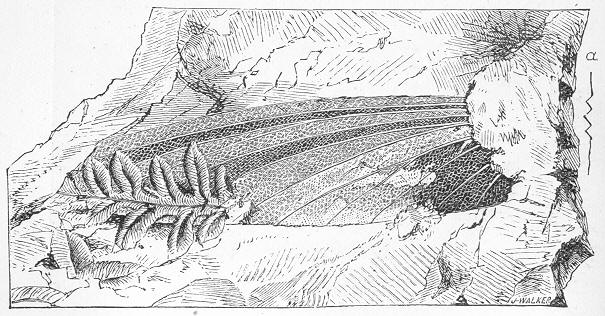
Fig. 125—Haplophlebium Barnesi, a Carboniferous
insect, from the Coal-meastures of Nova Scotia. (After Dawson.)
the Devonian period. One of the most remarkable of the latter
is a huge May-fly (Haplophlebium Barnesi, fig. 125), with
Page 183
netted wings attaining an expanse of fully seven inches, and
therefore much exceeding any existing Ephemerid in point of size.
The lower groups of the Mollusca are abundantly represented
in the marine strata of the Carboniferous series by Polyzoans
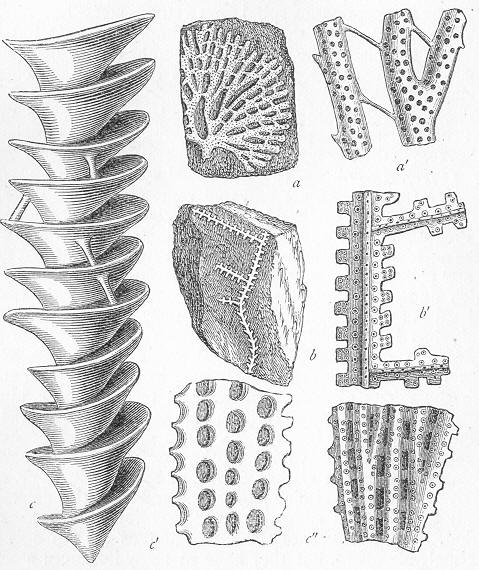
Fig. 126.—Carboniferous Polyzoa. a, Fragment of
Polypora dendroides, of the natural size, Ireland; a'
Small portion of the same, enlarged to show the cells; b,
Glauconome pulcherrima, a fragment, of the natural size,
Ireland; b', Portion of the same, enlarged; c, The
central screw-like axis of Archimedes Wortheni, of the
natural size—Carboniferous, America; c', Portion of
the exterior of the frond of the same, enlarged; c'',
Portion of the interior of the frond of the same showing the
mouths of the cells, enlarged. (After M'Coy and Hall.)]
and Brachiopods. Amongst the former, although a variety
of other types are known, the majority still belong to the old
group of the "Lace-corals" (Fenestellidœ), some of
the characteristic forms of which are here figured (fig. 126).
The graceful
Page 184
netted fronds of Fenestella,
Retepora, and Polypora (fig. 126, a) are highly
characteristic, as are the slender toothed branches of
Glauconome (fig. 126, b). A more singular form,
however, is the curious Archimedes (fig. 126, c),
which is so characteristic of the Carboniferous formation of
North America. In this remarkable type, the colony consists of
a succession of funnel-shaped fronds, essentially similar to
Fenestella in their structure, springing in a continuous
spiral from a strong screw-like vertical axis. The outside of
the fronds is simply striated; but the branches exhibit on the
interior the mouths of the little cells in which the
semi-independent beings composing the colony originally lived.
The Brachiopods are extremely abundant, and for the most
part belong to types which are exclusively or principally
Palæozoic in their range. The old genera Strophomena,
Orthis (fig. 127, c), Athyris (fig. 127,
e), Rhynchonella (fig. 127, g), and
Spirifera (fig. 127, h), are still well
represented—the latter, in particular, existing under
numerous specific forms, conspicuous by their abundance and
sometimes by their size. Along with these ancient groups, we
have representatives—for the first time in any plenty—of
the great genus Terebratula (fig. 127, d), which
underwent a great expansion during later periods, and still exists
at the present day. The most characteristic Carboniferous
Brachiopods, however, belong to the family of the
Productidœ, of which the principal genus is
Producta itself. This family commenced its existence in
the Upper Silurian with the genus Chonetes, distinguished
by its spinose hinge-margin. This genus lived through the
Devonian, and flourished in the Carboniferous (fig. 127,
f). The genus Producta itself, represented in the
Devonian by the nearly allied Productella, appeared first
in the Carboniferous, at any rate, in force, and survived into
the Permian; but no member of this extensive family has yet been
shown to have over-lived the Palæozoic period. The
Productœ of the Carboniferous are not only
exceedingly abundant, but they have in many instances a most
extensive geographical range, and some species attain what may
fairly be considered-gigantic dimensions. The shell (fig. 127,
a and b) is generally more or less semicircular,
with a straight hinge-margin, and having its lateral angles
produced into larger or smaller ears (hence its generic
name—"cochlea producta"). One valve (the ventral) is
usually strongly convex, whilst the other (the dorsal) is flat
or concave, the surface of both being adorned with radiating
ribs, and with hollow tubular spines, often of great length.
The valves are not locked together by teeth, and there is no
sign in the
Page 185
fully-grown shell of an opening in or between the valves for
the emission of a muscular stalk for the attachment of the shell
to foreign objects. It is probable, therefore, that the
Productœ, unlike the ordinary Lamp-shells, lived
an independent existence, their long spines apparently serving
to anchor them firmly in the mud or ooze of the sea-bottom; but
Mr Robert Etheridge, jun.; has recently shown that in one species
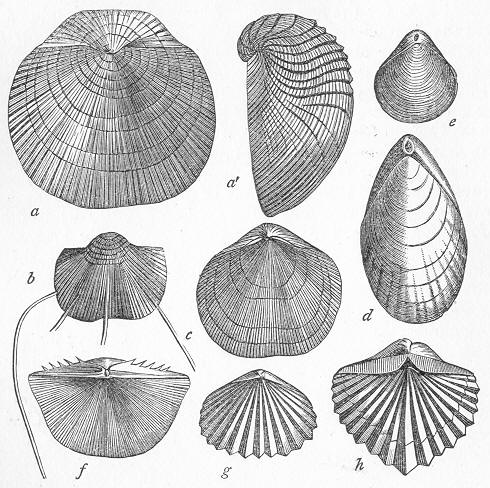
Fig. 127.—Carboniferous Braciopoda. a, Producta
semireticulata, showing the slightly concave dorsal valve;
a' Side view of the same, showing the convex ventral valve;
b, Producta longispina; c, Orthis resupinata; d, Terebratula
hastata; e, Athyris subtilita; f, Chonetes Hardrensis; g,
Rhynchonella pleurodon; h, Spirifera trigonalis. Most of
these forms are widely distributed in the Carboniferous Limestone
of Britain, Europe, America, &c. All the figures are of the
natural size. (After Davidson, De Koninck, and Meek.)
the spines were actually employed as organs of adhesion, whereby
the shell was permanently attached to some extraneous object,
such as the stem of a Crinoid. The two species here figured are
interesting for their extraordinarily extensive geographical
range—Producta semireticulata (fig. 127, a)
being found in the Carboniferous rocks of Britain, the continent
of Europe, Central Asia, China, India, Australia, Spitzbergen,
and North
Page 186
and South America; whilst P. Longispina (fig. 127,
b) has a distribution little if at all less wide.
The higher Mollusca are abundantly represented in the
Carboniferous rocks by Bivalves (Lamellibranchs), Univalves
(Gasteropoda), Winged-snails (Pteropoda), and
Cephalopods. Amongst the Bivalves we may note the great
abundance of Scallops (Aviculopecten and other allied forms),
together with numerous other types—some of ancient origin,
others represented here for the first time. Amongst the Gasteropods,
we find the characteristically Palæozoic genera
Macrocheilus and Loxonema, the almost exclusively
Palæozoic Euomphalus, and the persistent, genus
Pleurotomaria; whilst the free-swimming Univalves
(Heteropoda)are represented by Bellerophon and
Porcellia, and the Pteropoda by the old genus
Conularia. With regard to the Carboniferous Univalves,
it is also of interest to note here the first appearance of true
air-breathing or terrestrial Molluscs, as discovered by
Dawson and Bradley in the Coal-measures of Nova Scotia and Illinois.
Some of these (Conulus priscus) are true Land-snails,
resembling the existing Zonites; whilst others (Pupa
vetusta, fig. 128) appear to be generically inseparable from
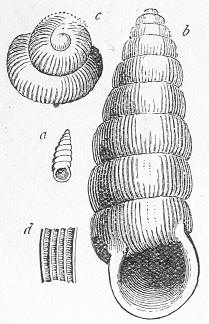
Fig. 128.—Pupa (Dendropupa) vetusta, a Carboniferous
Land-snail from the Coal-measures of Nova Scotia. a, The
shell, of the natural size; b, The same, magnified;
c, Apex of the shell, enlarged; d, Portion of the
surface, enlarged. (After Dawson.)
the "Chrysalis-shells" (Pupa) of the present day. All the
known forms—three in number—are of small size, and appear
to have been local in their distribution or in their preservation.
More important, however, than any of the preceding, are the
Cephalopoda, represented, as before, exclusively by the
chambered shells of the Tetrabranchiates. The older and simpler
type of these, with simple plain septa, and mostly a central
siphuncle, is represented by the straight conical shells of the
ancient genus Orthoceras, and the bow-shaped shells of the equally
ancient Cyrtoceras—some of the former attaining a
great size. The spirally-curved discoidal shells of the persistent
genus Nautilus are also not unknown, and some of these
likewise exhibit very considerable dimensions. Lastly, the more
complex family of the Ammonitidœ,
Page 187
with lobed or angulated septa, and a dorsally-placed
siphuncle (situated on the convex side of the curved shells), now
for the first time commences to acquire a considerable prominence.
The principal representative of this group is the genus
Goniatites (fig. 129), which
commenced its existence in the Upper Silurian, is well represented
in the Devonian, and attains its maximum here. In this genus,
the shell is spirally curved, the septa are strongly lobed or
angulated, though not elaborately frilled as in the Ammonites,
and the siphuncle is dorsal. In addition to Goniatites,
the shells of true Ammonites, so characteristic of the
Secondary period, have been described by Dr Waagen as occurring
in the Carboniferous rocks of India.
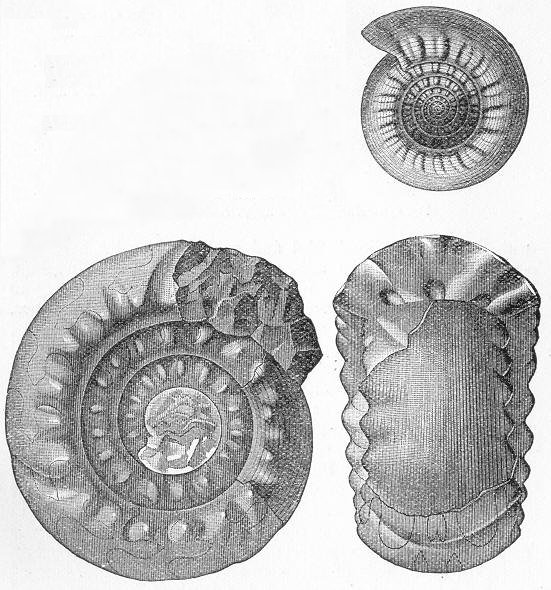
|
|
Fig. 129.—Goniatites (Aganides) Fossœ.
Carboniferous Limestone.
|
Coming finally to the Vertebrata, we have in the first
place to very briefly consider the Carboniferous fishes.
These are numerous; but, with the exception of the still dubious
"Conodonts," belong wholly to the groups of the Ganoids and
the Placoids (including under the former head remains which
perhaps are truly referable to the group of the Dipnoi or
Mud-fishes). Amongst the Ganoids, the singular buckler-headed
fishes of the Upper Silurian and Devonian (Cephalaspidœ)
Page 188
have apparently disappeared; and the principal
types of the Carboniferous belong to the groups respectively
represented at the present day by the Gar pike (Lepidosteus)
of the North American lakes, and the Polypterus of the rivers
of Africa. Of the former, the genera Palœoniscus and
Amblypterus (fig. 130), with their small rhomboidal and
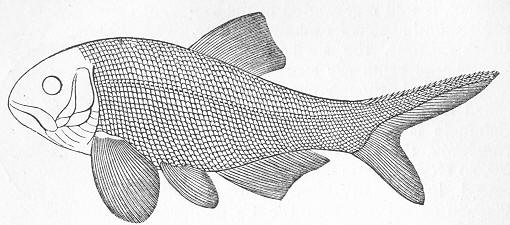
Fig. 130.—Amblypterus macropterus.
enamelled scales, and their strongly unsymmetrical tails, are
perhaps the most abundant. Of the latter, the most important are
species belonging to the genera Megalichthys and
Rhizodus, comprising large fishes, with rhomboidal scales,
unsymmetrical ("heterocercal") tails, and powerful conical teeth.
These fishes are sometimes said to be "sauroid," from their
presenting some Reptilian features in their organisation, and
they must have been the scourges of the Carboniferous seas. The
remains of Placoid fishes in the Carboniferous strata are
very numerous, but consist wholly of teeth and fin-spines,
referable to forms more or less closely allied to our existing
Port Jackson Sharks, Dog-fishes, and Rays. The teeth are of very
various shapes and sizes,—some with sharp, cutting edges
(Petalodus, Cladodus, &c.); others in the form of
broad crushing plates, adapted, like the teeth of the existing
Port Jackson Shark (Cestracion Philippi), for breaking
down the hard shells of Molluscs and Crustaceans. Amongst the
many kinds of these latter, the teeth of Psammodus and
Cochliodus (fig. 131) may be mentioned as specially
characteristic. The fin-spines are mostly similar to those so
common in the Devonian deposits, consisting of hollow defensive
spines implanted in front of the pectoral or other fins, usually
slightly curved, often superficially ribbed or sculptured, and
not uncommonly serrated or toothed. The genera Ctenacanthus,
Gyracanthus, Homacanthus, &c., have been founded for the
reception of these defensive weapons, some of which indicate
fishes of great size and predaceous habits.
Page 189
In the Devonian rocks we meet with no
other remains of Vertebrated animals save fishes only; but the
Carboniferous deposits have yielded remains of the higher group
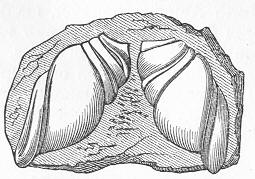
Fig. 131.—Teeth of Cochliodus contortus.
Carboniferous Limestone, Britain.
of the Amphibians. This class, comprising our existing
Frogs, Toads, and Newts, stands to some extent in a position
midway between the class of the fishes and that of the true
reptiles, being distinguished from the latter by the fact
that its members invariably possess gills in their early
condition, if not throughout life; whilst they are separated
from the former by always possessing true lungs when adult, and
by the fact that the limbs (when present at all) are never in
the form of fins. The Amphibians, therefore, are all
water-breathers when young, and have respiratory organs adapted
for an aquatic mode of life; whereas, when grown up, they
develop lungs, and with these the capacity for breathing air
directly. Some of them, like the Frogs and Newts, lose their
gills altogether on attaining the adult condition; but others,
such as the living Proteus and Menobranchus, retain
their gills even after acquiring their lungs, and are thus fitted
indifferently for an aquatic or terrestrial existence. The name
of "Amphibia," though applied to the whole class, is thus not
precisely appropriate except to these last-mentioned forms
(Gr. amphi, both; bios, life). The Amphibians also
differ amongst themselves according as to whether they keep
permanently the long tail which they all possess when young
(as do the Newts and Salamanders), or lose this appendage when
grown up (as do the Frogs and Toads). Most of them have naked
skins, but a few living and many extinct forms have hard
structures in the shape of scales developed in the integument.
All of them have well-ossified skeletons, though some fossil
types are partially deficient in this respect; and all of them
which possess limbs at all have these appendages supported by
bones essentially similar to those found in the limbs of the
higher Vertebrates. All the Carboniferous Amphibians belong to
a group which has now wholly passed away—namely, that of
the Labyrinthodonts. In the marine strata which form the
base of the Carboniferous series these creatures have only been
recognised by their curious hand-shaped footprints, similar
Page 190
in character to those which occur in the
Triassic rocks, and which will be subsequently spoken of under
the name of Cheirotherium. In the Coal-measures of
Britain, the continent of Europe, and North America, however,
many bones of these animals have been found, and we are now
tolerably well acquainted with a considerable number of forms.
All of them seem to have belonged to the division of Amphibians
in which the long tail of the young is permanently retained; and
there is evidence that some of them kept the gills also throughout
life. The skull is of the characteristic Amphibian type (fig. 132,
a), with two occipital condyles, and having its surface
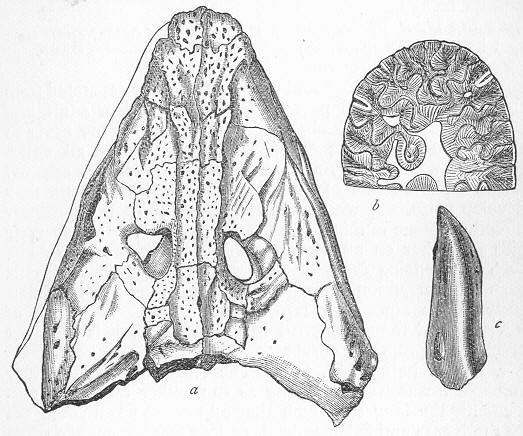
Fig. 132.—a, Upper surface of the skull of
Anthracosaurus Russelli, one-sixth of the natural size:
b, Part of one of the teeth cut across, and highly magnified
to show the characteristic labyrinthine structure; c, One
of the integumentary shields or scales, one-half of the natural
size. Coal-measures, Northumberland. (After Atthey.)
singularly pitted and sculptured; and the vertebræ are
hollowed out at both ends. The lower surface of the body was
defended by an armour of singular integumentary shields or scales
(fig. 132, c); and an extremely characteristic feature
(from which the entire group derives its name) is, that the walls
of the teeth are deeply folded, so as to give rise to an
extraordinary "labyrinthine" pattern when they are cut across
(fig. 132, b). Many of the Carboniferous Labyrinthodonts
are of no great size, some of them
Page 191
very small, but others attain comparatively gigantic dimensions,
though all fall short in this respect of the huge examples of
this group which occur in the Trias. One of the largest, and
at the same time most characteristic, forms of the Carboniferous
series, is the genus Anthracosaurus, the skull of which
is here figured.
No remains of true Reptiles, Birds, or Quadrupeds have as yet
been certainly detected in the Carboniferous deposits in any part
of the world. It should, however, be mentioned, that Professor
Marsh, one of the highest authorities on the subject, has described
from the Coal-formation of Nova Scotia certain vertebræ which
he believes to have belonged to a marine reptile (Eosaurus
Acadianus), allied to the great Ichthyosauri of the
Lias. Up to this time no confirmation of this determination has
been obtained by the discovery of other and more unquestionable
remains, and it therefore remains doubtful whether these bones of
Eosaurus may not really belong to large Labyrinthodonts.
LITERATURE.
The following list contains some of the more important of the
original sources of information to which the student of Carboniferous
rocks and fossils may refer:—
| (1) |
'Geology of Yorkshire,' vol. ii.; 'The Mountain Limestone
District.' John Phillips. |
| (2) |
'Siluria.' Sir Roderick Murchison. |
| (3) |
'Memoirs of the Geological Survey of Great Britain and
Ireland.' |
| (4) |
'Geological Report on Londonderry,' &c. Portlock. |
| (5) |
'Acadian Geology.' Dawson. |
| (6) |
'Geology of Iowa,' vol. i. James Hall. |
| (7) |
'Reports of the Geological Survey of Illinois' (Geology and
Palæontology). Meek, Worthen, &c. |
| (8) |
'Reports of the Geological Survey of Ohio' (Geology and
Palæontology). Newberry, Cope, Meek, Hall, &c. |
| (9) |
'Description des Animaux fossiles qui se trouvent dans le
Terrain Carbonifère de la Belgique,' 1843; with subsequent
monographs on the genera Productus and Chonetes,
on Crinoids, on Corals, &c. De Koninck. |
| (10) |
'Synopsis of the Carboniferous Fossils of Ireland.'
M'Coy. |
| (11) |
'British Palæozoic Fossils.' M'Coy. |
| (12) |
'Figures of Characteristic British Fossils.' Baily. |
| (13) |
'Catalogue of British Fossils.' Morris. |
| (14) |
'Monograph of the Carboniferous Brachiopoda of Britain'
(Palæontographical Society). Davidson. |
| (15) |
'Monograph of the British Carboniferous Corals'
(Palæontographical Society). Milne-Edwards and
Haime. |
| (16) |
'Monograph of the Carboniferous Bivalve Entomostraca of
Britain' (Palæontographical Society). Rupert Jones,
Kirkby, and George S. Brady. |
|
Page 192
(17) |
'Monograph of the Carboniferous Foraminifera of Britain'
(Palæontographical Society). H. B. Brady. |
| (18) |
"On the Carboniferous Fossils of the West of
Scotland"—'Trans. Geol. Soc.,' of Glasgow, vol. iii.,
Supplement. Young and Armstrong. |
| (19) |
'Poissons Fossiles.' Agassiz. |
| (20) |
"Report on the Labyrinthodonts of the
Coal-measures"—'British Association Report,' 1873. L. C.
Miall. |
| (21) |
'Introduction to the Study of Palæontological
Botany.' John Hutton Balfour. |
| (22) |
'Traité de Paléontologie
Végétale.' Schimper. |
| (23) |
'Fossil Flora.' Lindley and Hutton. |
| (24) |
'Histoire des Végétaux Fossiles.'
Brongniart. |
| (25) |
'On Calamites and Calamodendron' (Monographs of the
Palæontographical Society). Binney. |
| (26) |
'On the Structure of Fossil Plants found in the
Carboniferous Strata' (Palæontographical Society).
Binney. |
Also numerous memoirs by Huxley, Davidson, Martin Duncan, Professor
Young, John Young, R. Etheridge, jun., Baily, Carruthers, Dawson,
Binney, Williamson, Hooker, Jukes, Geikie, Rupert Jones, Salter,
and many other British and foreign observers.
CHAPTER XIV.
THE PERMIAN PERIOD.
The Permian formation closes the long series of the Palæozoic
deposits, and may in some respects be considered as a kind of
appendix to the Carboniferous system, to which it cannot be compared
in importance, either as regards the actual bulk of its sediments
or the interest and variety of its life-record. Consisting, as it
does, largely of red rocks—sandstones and marls—for the
most part singularly destitute of organic remains, the Permian
rocks have been regarded as a lacustrine or fluviatile deposit;
but the presence of well-developed limestones with indubitable
marine remains entirely negatives this view. It is, however,
not improbable that we are presented in the Permian formation,
as known to us at present, with a series of sediments laid down
in inland seas of great extent, due to the subsidence over large
areas of the vast land-surfaces of the Coal-measures. This view,
at any rate, would explain some of the more puzzling physical
characters of the formation, and would not be definitely negatived
by any of its fossils.
A large portion of the Permian series, as already remarked, consists
of sandstones and marls, deeply reddened by peroxide
Page 193
of iron, and often accompanied by beds of gypsum or deposits
of salt. In strata of this nature few or no fossils are found; but
their shallow-water origin is sufficiently proved by the presence of
the footprints of terrestrial animals, accompanied in some cases by
well-defined "ripple-marks." Along with these are occasionally found
massive breccias, holding larger or smaller blocks derived from the
older formations; and these have been supposed to represent an old
"boulder-clay," and thus to indicate the prevalence of an arctic
climate. Beds of this nature must also have been deposited in
shallow water. In all regions, however, where the Permian formation
is well developed, one of its most characteristic members is a
Magnesian limestone, often highly and fantastically concretionary,
but containing numerous remains of genuine marine animals, and
clearly indicating that it was deposited beneath a moderate depth
of salt water.
It is not necessary to consider here whether this formation can
be retained as a distinct division of the geological series. The
name of Permian was given to it by Sir Roderick Murchison,
from the province of Perm in Russia, where rocks of this age are
extensively developed. Formerly these rocks were grouped with
the succeeding formation of the Trias under the common name of
"New Red Sandstone." This name was given them because they contain
a good deal of red sandstone, and because they are superior to the
Carboniferous rocks, while the Old Red Sandstone is inferior.
Nowadays, however, the term "New Red Sandstone" is rarely employed,
unless it be for red sandstones and associated rocks, which are
seen to overlie the Coal-measures, but which contain no fossils by
which their exact age may be made out. Under these circumstances,
it is sometimes convenient to employ the term "New Red Sandstone."
The New Red, however, of the older geologists, is now broken up
into the two formations of the Permian and Triassic rocks—the
former being usually considered as the top of the Palæozoic
series, and the latter constituting the base of the Mesozoic.
In many instances, the Permian rocks are seen to repose unconformably
upon the underlying Carboniferous, from which they can in addition
be readily separated by their lithological characters. In other
instances, however, the Coal-measures terminate upwards in red
rocks, not distinguishable by their mineral characters from the
Permian; and in other cases no physical discordance between the
Carboniferous and Permian strata can be detected. As a general
rule, also, the Permian rocks appear to pass upwards conformably
into the
Page 194
Trias. The division, therefore,
between the Permian and Triassic rocks, and consequently between
the Palæozoic and Mesozoic series, is not founded upon any
conspicuous or universal physical break, but upon the difference
in life which is observed in comparing the marine animals of the
Carboniferous and Permian with those of the Trias. It is to be
observed, however, that this difference can be solely due to the
fact that the Magnesian Limestone of the Permian series presents
us with only a small, and not a typical, portion of the marine
deposits which must have been accumulated in some area at present
unknown to us during the period which elapsed between the
formation of the great marine limestones of the Lower
Carboniferous and the open-sea and likewise calcareous sediments
of the Middle Trias.
The Permian rocks exhibit their most typical features in Russia
and Germany, though they are very well developed in parts of
Britain, and they occur in North America. When well developed,
they exhibit three main divisions: a lower set of sandstones,
a middle group, generally calcareous, and an upper series of
sandstones, constituting respectively the Lower, Middle, and Upper
Permians.
In Russia, Germany, and Britain, the Permian rocks consist of
the following members:—
1. The Lower Permians, consisting mainly of a great series
of sandstones, of different colours, but usually red. The base
of this series is often constituted by massive breccias with
included fragments of the older rocks, upon which they may happen
to repose; and similar breccias sometimes occur in the upper
portion of the series as well. The thickness of this group varies
a good deal, but may amount to 3000 or 4000 feet.
2. The Middle Permians, consisting, in their typical
development, of laminated marls, or "marl-slate," surmounted
by beds of magnesian limestone (the "Zechstein" of the German
geologists). Sometimes the limestones are degenerate or wholly
deficient, and the series may consist of sandy shales and gypsiferous
clays. The magnesian limestone, however, of the Middle Permians
is, as a rule, so well marked a feature that it was long spoken
of as the Magnesian Limestone.
3. The Upper Permians, consisting of a series of sandstones
and shales, or of red or mottled marls, often gypsiferous, and
sometimes including beds of limestone.
In North America, the Permian rocks appear to be confined to the
region west of the Mississippi, being especially well developed
in Kansas. Their exact limits have not as yet been
Page 195
made out, and their total thickness is not more than
a few hundred feet. They consist of sandstones, conglomerates,
limestones, marls, and beds of gypsum.
The following diagrammatic section shows the general sequence of
the Permian deposits in the north of England, where the series
is extensively developed (fig. 133):—
|
GENERALISED SECTION OF THE PERMIAN ROCKS IN THE NORTH OF ENGLAND.
|
|
Fig. 133.
|
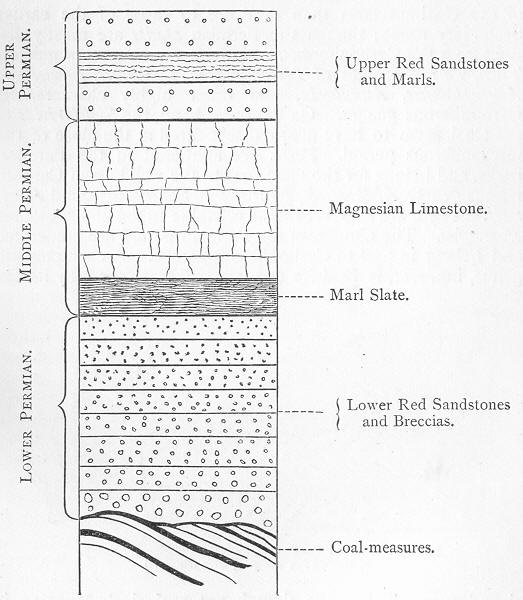
|
The record of the life of the Permian period is but a scanty
one, owing doubtless to the special peculiarities of such of the
Page 196
deposits of this age with which we are as yet
acquainted. Red rocks are, as a general rule, more or less completely
unfossiliferous, and sediments of this nature are highly
characteristic of the Permian. Similarly, magnesian limestones are
rarely as highly charged with organic remains as is the case with
normal calcareous deposits, especially when they have been subjected
to concretionary action, as is observable to such a marked extent in
the Permian limestones. Nevertheless, much interest is attached to
the organic remains, as marking a kind of transition-period between
the Palæozoic and Mesozoic epochs.
The plants of the Permian period, as a whole, have a
distinctly Palæozoic aspect, and are far more nearly allied to
those of the Coal-measures than they are to those of the earlier
Secondary rocks; though the Permian species are mostly
distinct from the Carboniferous, and there are some new genera.
Thus, we find species of Lepidodendron, Calamites, Equisetites,
Asterophyllites, Annularia, and other highly characteristic
Carboniferous genera. On the other hand, the Sigillariods
of the Coal seem to have finally disappeared at the close of the
Carboniferous period. Ferns are abundant in the Permian rocks,
and belong for the most part to the well-known Carboniferous
genera Alethopteris, Neuropteris, Sphenopteris, and
Pecopteris. There are also Tree-ferns referable to the
ancient genus Psaronius. The Conifers of the Permian
period are numerous, and belong in part to Carboniferous genera.
A characteristic genus, however, is Walchia (fig. 134),
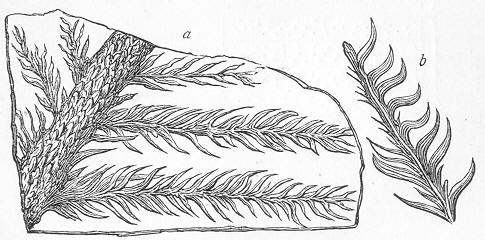
Fig. 134.—Walchia piniformis, from the Permian of
Saxony, a, Branch; b, Twig, (After Gutbier.)
distinguished by its lax short leaves. This genus, though not
exclusively Permian, is mainly so, the best-known species being
the W. Piniformis. Here, also, we meet with Conifers which
produce true cones, and which differ, therefore, in an important
degree from the
Page 197
Taxoid Conifers of the
Coal-measures. Besides Walchia, a characteristic form of
these is the Ullmania selaginoides, which occurs in the
Magnesian Limestone of Durham, the Middle Permian of Westmorland,
and the "Kupfer-schiefer" of Germany. The group of the
Cycads, which we shall subsequently find to be so
characteristic of the vegetation of the Secondary period, is, on
the other hand, only doubtfully represented in the Permian
deposits by the singular genus Nœggerathia.
The Protozoans of the Permian rocks are few in number, and
for the most part imperfectly known. A few Foraminifera
have been obtained from the Magnesian Limestone of England, and
the same formation has yielded some ill-understood Sponges. It
does not seem, however, altogether impossible that some of the
singular "concretions" of this formation may ultimately prove to
have an organic structure, though others would appear to be clearly
of purely inorganic origin. From the Permian of Saxony, Professor
Geinitz has described two species of Spongillopsis, which
he believes to be most nearly allied to the existing fresh-water
Sponges (Spongilla). This observation has an interest as
bearing upon the mode of deposition and origin of the Permian
sediments.
The Cœlenterates are represented in the Permian by
but a few Corals. These belong partly to the Tabulate and
partly to the Rugose division; but the latter great group,
so abundantly represented in Silurian, Devonian, and Carboniferous
seas, is now extraordinarily reduced in numbers, the British
strata of this age yielding only species of the single genus
Polycœlia. So far, therefore, as at present known, all
the characteristic genera of the Rugose Corals of the Carboniferous
had become extinct before the deposition of the limestones of
the Middle Permian.
The Echinoderms are represented by a few Crinoids,
and by a Sea-urchin belonging to the genus Eocidaris. The
latter genus is nearly allied to the Archœocidaris
of the Carboniferous, so that this Permian form belongs to a
characteristically Palæozoic type.
A few Annelides (Spirorbis, Vermilia, &c.) have
been described, but are of no special importance. Amongst the
Crustaceans, however, we have to note the total absence
of the great Palæozoic group of the Trilobites; whilst
the little Ostracoda and Phyllopods still continue
to be represented. We have also to note the first appearance
here of the "Short-tailed" Decapods or Crabs (Brachyura),
the highest of all the groups of Crustacea, in the person
of Hemitrochiscus paradoxus, an extremely minute Crab
from the Permian of Germany.
Page 198
Amongst the Mollusca, the remains of Polyzoa may
fairly be said to be amongst the most abundant of all the fossils
of the Permian formation, The principal forms of these are the
fronds of the Lace-corals (Fenestella, Retepora, and
Synocladia), which are very abundant in the Magnesian
Limestone of the north of England, and belong to various highly
characteristic species (such as Fenestella retiformis, Retepora
Ehrenbergi, and Synocladia virgulacea). The
Brachiopoda are also represented in moderate numbers in the
Permian. Along with species of the persistent genera Discina,
Crania, and Lingula, we still meet with representatives of
the old groups Spirifera, Athyris, and Streptorhynchus;
and the Carboniferous Productœ yet survive under
well-marked and characteristic types, though in much-diminished
numbers. The species of Brachiopods here figured (fig. 135) are
characteristic of the Magnesian Limestone in Britain and of the
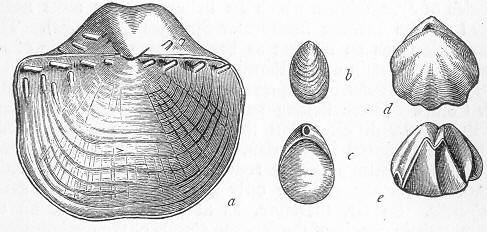
Fig. 135.—Brachiopods of the Permian formation. a,
Producta horrida; b, Lingula Credneri; c, Terebratula elongata;
d and e, Camarophoria globulina. (After King.)
corresponding strata on the Continent. Upon the whole, the most
characteristic Permian Brachiopods belong to the genera
Producta, Strophalosia, and Camarophoria.
The Bivalves (Lamellibranchiata) have a tolerably
varied development in the Permian rocks; but nearly all the old
types, except some of those which occur in the Carboniferous, have
now disappeared. The principal Permian Bivalves belong to the groups
of the Pearl Oysters (Aviculidœ) and the
Trigoniadœ, represented by genera such as Bakewellia
and Schizodus; the true Mussels (Mytilidœ),
represented by species which have been referred to Mytilus
itself; and the Arks (Arcadœ), represented by species
of the genera Arca (fig. 136) and Byssoarca. The first
and last of these three families have a very ancient origin; but
the family of the Trigoniadœ, though
Page 199
feebly represented at the present day, is one which attained
its maximum development in the Mesozoic period.
The Univalves (Gasteropoda) are rare, and do not
demand special notice. It may be observed, however, that the
Fig. 136.—Arca antiqua. Permian.
Palæozoic genera Euomphalus, Murchisonia, Loxonema,
and Macrocheilus are still in existence, together with the
persistent genus Pleurotomaria. Pteropods of the
old genera Theca and Conularia have been discovered;
but the first of these characteristically Palæozoic types
finally dies out here, and the second only survives but a short time
longer. Lastly, a few Cephalopods have been found, still
wholly referable to the Tetrabranchiate group, and belonging
to the old genera Orthoceras and Cyrtoceras and
the long-lived Nautilus.
Amongst Vertebrates, we meet in the Permian period not
only with the remains of Fishes and Amphibians, but also, for
the first time, with true Reptiles. The Fishes are mainly
Ganoids, though there are also remains of a few Cestraciont
Fig. 137.—Platysomus gibbosus, a "heterocercal"
Ganoid, from the Middle Permian of Russia.
Sharks. Not only are the Ganoids still the predominant group
of Fishes, but all the known forms possess the unsymmetrical
("heterocercal") tail which is so characteristic of the
Palæozoic Ganoids. Most of the remains of the Permian Fishes
have been obtained from the "Marl-slate" of Durham and the
corresponding "Kupfer-schiefer" of Germany, on the horizon
Page 200
of the Middle Permian; and the principal genera of the Ganoids
are Palœoniscus and Platysomus (fig. 137).
The Amphibians of the Permian period belong principally
to the order of the Labyrinthodonts, which commenced to
be represented in the Carboniferous, and has a large development
in the Trias. Under the name, however, of Palœosiren
Beinerti, Professor Geinitz has described an Amphibian from
the Lower Permian of Germany, which he believes to be most nearly
allied to the existing "Mud-eel" (Siren lacertina) of
North America, and therefore to be related to the Newts and
Salamanders (Urodela).
Finally, we meet in the Permian deposits with the first undoubted
remains of true Reptiles. These are distinguished, as a
class, from the Amphibians, by the fact that they are
air-breathers throughout the whole of their life, and therefore
are at no time provided with gills; whilst they are exempt from
that metamorphosis which all the Amphibia undergo in early
life, consequent upon their transition from an aquatic to a more
or less purely aerial mode of respiration. Their skeleton is well
ossified; they usually have horny or bony plates, singly or in
combination, developed in the skin; and their limbs (when present)
are never either in the form of fins or wings,
though sometimes capable of acting in either of these capacities,
and liable to great modifications of form and structure. Though
there can be no doubt whatever as to the occurrence of genuine
Reptiles in deposits of unquestionable Permian age, there is
still uncertainty as to the precise number of types which may
have existed at this period. This uncertainty arises partly from
the difficulty of deciding in all cases. whether a given bone
be truely Labyrinthodont or Reptilian, but more especially from
the confusion which exists at present between the Permian and
the overlying Triassic deposits. Thus there are various deposits
in different regions which have yielded the remains of Reptiles,
and which cannot in the meanwhile be definitely referred either
to the Permian series or to the Trias by clear stratigraphical
or palæontological evidence. All that can be done in such
cases is to be guided by the characters of the Reptiles themselves,
and to judge by their affinities to remains from known Triassic
or Permian rocks to which of these formations the beds containing
them should be referred; but it is obvious that this method of
procedure is seriously liable to lead to error. In accordance,
however, with this, the only available mode of determination
in some cases, the remains of Thecodontosaurus and
Palæosaurus discovered in the dolomitic conglomerates
Page 201
near Bristol will be considered as Triassic, thus leaving
Protorosaurus[20] as the principal and most important
Fig. 138.—Protorosaurus Speneri, Middle Permian,
Thuringia, reduced in size. (After Von Meyer.) [Copied from
Dana.
representative of the Permian Reptiles.[21] The type-species
of the genus Protorusaurus is the P. Speneri(fig.
138) of the "Kupfer-schiefer" of
Page 202
Thuringia, but other allied
species have been detected in the Middle Permian of Germany and
the north of England. This Reptile attained a length of from
three to four feet; and it has been generally referred to the
group of the Lizards (Lacertilia), to which it is most
nearly allied in its general structure, at the same time that it
differs from all existing members of this group in the fact that
its numerous conical and pointed teeth were implanted in distinct
sockets in the jaws—this being a Crocodilian character. In
other respects, however, Protorosaurus approximates closely
to the living Monitors (Varanidœ); and the fact that
the bodies of the vertebræ are slightly cupped or hollowed
out at the ends would lead to the belief that the animal was aquatic
in its habits. At the same time, the structure of the hind-limbs
and their bony supports proves clearly that it must have also
possessed the power of progression upon the land. Various other
Reptilian bones have been described from the Permian formation, of
which some are probably really referable to Labyrinthodonts, whilst
others are regarded by Professor Owen as referable to the order of
the "Theriodonts," in which the teeth are implanted in sockets,
and resemble those of carnivorous quadrupeds in consisting of
three groups in each jaw (namely, incisors, canines, and molars).
Lastly, in red sandstones of Permian age in Dumfriesshire have
been discovered the tracks of what would appear to have been
Chelonians (Tortoises and Turtles); but it would not be
safe to accept this conclusion as certain upon the evidence of
footprints alone. The Chelichnus Duncani, however, described
by Sir William Jardine in his magnificent work on the 'Ichnology
of Annandale,' bears a great resemblance to the track of a Turtle.
No remains of Birds or Quadrupeds have hitherto been detected
in deposits of Permian age.
LITERATURE.
The following works may be consulted by the student with regard
to the Permian formation and its fossils:—
| (1) |
"On the Geological Relations and Internal Structure of the
Magnesian Limestone and the Lower Portions of the New Red
Sandstone Series, &c."—'Trans. Geol. Soc.,' ser. 2,
vol. iii. Sedgwick. |
| (2) |
'The Geology of Russia in Europe.' Murchison, De Verneuil,
and Von Keyserling. |
| (3) |
'Siluria,' Murchison. |
| (4) |
'Permische System in Sachsen.' Geinitz and
Gutbier. |
| (5) |
'Die Versteinerungen des Deutschen Zechsteingebirges,'
Geinitz. |
| (6) |
'Die Animalischen Ueberreste der Dyas.'
Geinitz. |
|
Page 203
(7) |
'Monograph of the Permian Fossils of England'
(Palæontographical Society). King. |
| (8) |
'Monograph of the Permian Brachiopoda of Britain'
(Palæontographical Society). Davidson. |
| (9) |
"On the Permian Rocks of the North-West of England and
their Extension into Scotland"—'Quart. Journ. Geol.
Soc.,' vol. xx. Murchison and Harkness. |
| (10) |
'Catalogue of the Fossils of the Permian System of the
Counties of Northumberland and Durham.' Howse. |
| (11) |
'Petrefacta Germaniæ.' Goldfuss. |
| (12) |
'Beiträge zur Petrefaktenkunde.' Munster. |
| (13) |
'Ein Beitrag zur Palæontologie des Deutschen
Zechsteingebirges.' Von Schauroth. |
| (14) |
'Saurier aus dem Kupfer-schiefer der
Zechstein-formation.' Von Meyer. |
| (15) |
'Manual of Palæontology.' Owen. |
| (16) |
'Recherches sur les Poissons Fossiles.'
Agassiz. |
| (17) |
'Ichnology of Annandale.' Sir William Jardine. |
| (18) |
'Die Fossile Flora der Permischen Formation.'
Gœppert. |
| (19) |
'Genera et Species Plantarum Fossilium.' Unger. |
| (20) |
"On the Red Rocks of England of older Date than the
Trias"—'Quart. Journ. Geol. Soc.,' vol. xxvii.
Ramsay. |
CHAPTER XV.
THE TRIASSIC PERIOD.
We come now to the consideration of the great Mesozoic, or
Secondary series of formations, consisting, in ascending order,
of the Triassic, Jurassic, and Cretaceous systems. The Triassic
group forms the base of the Mesozoic series, and corresponds
with the higher portion of the New Red Sandstone of the older
geologists. Like the Permian rocks, and as implied by its name,
the Trias admits of a subdivision into three groups—a
Lower, Middle, and Upper Trias. Of these sub-divisions the middle
one is wanting in Britain; and all have received German names,
being more largely and typically developed in Germany than in any
other country. Thus, the Lower Trias is known as the Bunter
Sandstein; the Middle Trias is called the Muschelkalk;
and the Upper Trias is known as the Keuper.
I. The lowest division of the Trias is known as the Bunter
Sandstein (the Grès bigarré of the French),
from the generally variegated colours of the beds which compose it
(German, bunt, variegated). The Bunter Sandstein of the
continent of Europe consists of red and white sandstones, with red
Page 204
clays, and thin limestones, the whole
attaining a thickness of about 1500 feet. The term "marl" is very
generally employed to designate the clays of the Lower and Upper
Trias; but the term is inappropriate, as they may contain no lime,
and are therefore not always genuine marls. In Britain the Bunter
Sandstein consists of red and mottled sandstones, with
unconsolidated conglomerates, or "pebble-beds," the whole having a
thickness of 1000 to 2000 feet. The Bunter Sandstein, as a rule,
is very barren of fossils.
II. The Middle Trias is not developed in Britain, but it is largely
developed in Germany, where it constitutes what is known as the
Muschelkalk (Germ. Muschel, mussel; kalk,
limestone), from the abundance of fossil shells which it contains.
The Muschelkalk (the Calcaire coquillier of the French)
consists of compact grey or yellowish limestones, sometimes
dolomitic, and including occasional beds of gypsum and rock-salt.
III. The Upper Trias, or Keuper (the Marnes
irisées of the French), as it is generally called,
occurs in England; but is not so well developed as it is in
Germany. In Britain, the Keuper is 1000 feet or more in thickness,
and consists of white and brown sandstones, with red marls, the
whole topped by red clays with rock-salt and gypsum.
The Keuper in Britain is extremely unfossiliferous; but it passes
upwards with perfect conformity into a very remarkable group of
beds, at one time classed with the Lias, and now known under
the names of the Penarth beds (from Penarth, in Glamorganshire),
the Rhætic beds (from the Rhætic Alps), or the Avicula
contorta beds (from the occurrence in them of great numbers
of this peculiar Bivalve). These singular beds have been variously
regarded as the highest beds of the Trias, or the lowest beds of
the Lias, or as an intermediate group. The phenomena observed
on the Continent, however, render it best to consider them as
Triassic, as they certainly agree with the so-called Upper St
Cassian or Kössen beds which form the top of the Trias in the
Austrian Alps.
The Penarth beds occur in Glamorganshire, Gloucestershire,
Warwickshire, Staffordshire, and the north of Ireland; and they
generally consist of a small thickness of grey marls, white
limestones, and black shales, surmounted conformably by the lowest
beds of the Lias. The most characteristic fossils which they
contain are the three Bivalves Cardium Rhœticum, Avicula
contorta, and Pecten Valoniensis; but they have yielded
many other fossils, amongst which the most important are the
remains of Fishes and small Mammals (Microlestes).
In the Austrian Alps the Trias terminates upwards in an
Page 205
extraordinary series of fossiliferous beds, replete with
marine fossils. Sir Charles Lyell gives the following table of
these remarkable deposits:—
Strata below the Lias in the Austrian Alps, in descending
order.
| 1. |
Koessen beds.
(Synonyms, Upper St Cassian
beds of Escher and Merian. |
|
Grey and black limestone, with calcareous marls having a thickness
of about 50 feet. Among the fossils, Brachiopoda very numerous;
some few species common to the genuine Lias; many peculiar.
Avicula contorta, Pecten Valoniensis, Cardium Rhœticum,
Avicula inœquivalvis, Spirifer Münsteri, Dav.
Strata containing the above fossils alternate with the Dachstein
beds, lying next below.
|
|
|
White or greyish limestone, often in beds three or four feet
thick. Total thickness of the formation above 2000 feet. Upper
part fossiliferous, with some strata composed of corals
(Lithodendron.) Lower portion without fossils. Among the
characteristic shells are Hemicardium Wulfeni,
Megalodon triqueler, and other large bivalves.
|
| 3. |
Hallstadt beds
(or St Cassian) |
|
Red, pink, or white marbles, from 800 to 1000 feet in thickness,
containing more than 800 species of marine fossils, for the most
part mollusca. Many species of Orthoceras. True
Ammonites, besides Ceratites and Goniatites,
Belemnites (rare), Porcellia, Pleurotomania, Trochus,
Monotis salinaria, &c.
|
| 4. |
A. |
Guttenstein beds. |
| B. |
Werfen beds, base of Upper Trias?
Lower
Trias of some geologists. |
|
| A. |
Black and grey limestone 150 feet thick,
alternating with the underlying Werfen beds. |
| B. |
Red and green shale and sandstone, with salt
and gypsum. |
|
Among the fossils are Ceratites cassianus, Myacites fassaensis,
Naticella costata, &c.
|
In the United States, rocks of Triassic age occur in several
areas between the Appalachians and the Atlantic seaboard; but
they show no such triple division as in Germany, and their exact
place in the system is uncertain. The rocks of these areas consist
of red sandstones, sometimes shaly or conglomeratic, occasionally
with beds of impure limestone. Other more extensive areas where
Triassic rocks appear at the surface, are found west of the
Mississippi, on the slopes of the Rocky Mountains, where the beds
consist of sandstones and gypsiferous
Page 206
marls. The American Trias is chiefly remarkable for having yielded
the remains of a small Marsupial (Dromatherium), and numerous
footprints, which have generally been referred to Birds
(Brontozoum), along with the tracks of undoubted Reptiles
(Otozoum, Anisopus, &c.)
The subjoined section (fig. 139) expresses, in a diagrammatic
manner, the general sequence of the Triassic rocks when fully
developed, as, for example, in the Bavarian Alps:—
|
GENERALIZED SECTION OF THE TRIASSIC ROCKS OF CENTRAL EUROPE.
|
| Fig.
139. |
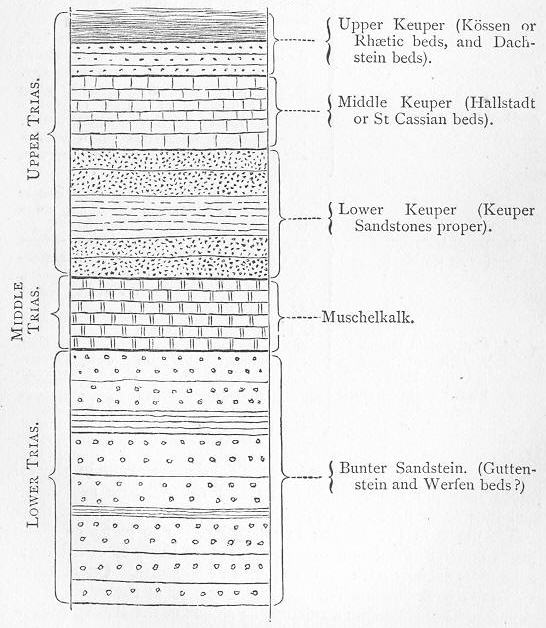
|
With regard to the life of the Triassic period, we have to
Page 207
notice a difference as concerns the
different members of the group similar to that which has been
already mentioned in connection with the Permian formation. The
arenaceous deposits of the series, namely, resemble those of the
Permian, not only in being commonly red or variegated in their
colour, but also in their conspicuous paucity of organic remains.
They for the most part are either wholly unfossiliferous, or they
contain the remains of plants or the bones of reptiles, such as
may easily have been drifted from some neighbouring shore. The
few fossils which may be considered as properly belonging to
these deposits are chiefly Crustaceans (Estheria) or
Fishes, which may well have lived in the waters of estuaries or
vast inland seas. We may therefore conclude, with considerable
probability, that the barren sandy and marly accumulations of
the Bunter Sandstein and Lower Keuper were not laid down in an
open sea, but are probably brackish-water deposits, formed in
estuaries or land-locked bodies of salt water. This at any rate
would appear to be the case as regards these members of the
series as developed in Britain and in their typical areas on
the continent of Europe; and the origin of most of the North
American Trias would appear to be much the same. Whether this
view be correct or not, it is certain that the beds in question
were laid down in shallow water, and in the immediate
vicinity of land, as shown by the numerous drifted plants
which they contain and the common occurrence in them of the
footprints of air-breathing animals (Birds, Reptiles, and
Amphibians). On the other hand, the middle and highest members
of the Trias are largely calcareous, and are replete with the
remains of undoubted marine animals. There cannot, therefore,
be the smallest doubt but that the Muschelkalk and the Rhætic
or Kössen beds were slowly accumulated in an open sea, of at
least a moderate depth; and they have preserved for us a very
considerable selection from the marine fauna of the Triassic
period.
The plants of the Trias are, on the whole, as distinctively
Mesozoic in their aspect as those of the Permian are Palæozoic.
In spite, therefore, of the great difficulty which is experienced
in effecting a satisfactory stratigraphical separation between the
Permian and the Trias, we have in this fact a proof that the two
formations were divided by an interval of time sufficient to allow
of enormous changes in the terrestrial vegetation of the world. The
Lepidodendroids, Asterophyllites, and Annulariœ,
of the Coal and Permian formations, have now apparently wholly
disappeared: and the Triassic flora consists mainly of Ferns,
Cycads, and Conifers, of which only the two
Page 208
last need special
notice. The Cycads (fig. 140) are true exogenous plants,
which in general form and habit of growth present considerable
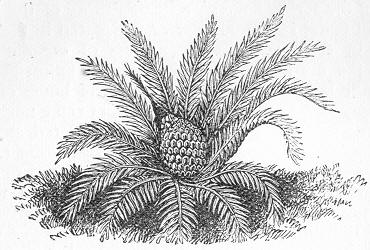
Fig. 140.—Zamia spiralis, a living Cycad. Australia.
resemblance to young Palms, but which in reality are most nearly
related to the Pines and Firs (Coniferœ). The trunk
is unbranched, often much shortened, and bears a crown of feathery
pinnate fronds. The leaves are usually "circinate"—they unroll
in expanding, like the fronds of ferns. The seeds are not protected
by a seed-vessel, but are borne upon the edge of altered leaves,
or are carried on the scales of a cone. All the living species of
Cycads are natives of warm countries, such as South America, the
West Indies, Japan, Australia, Southern Asia, and South Africa.
The remains of Cycads, as we have seen, are not known to occur
in the Coal formation, or only to a very limited extent towards
its close; nor are they known with certainty as occurring in
Permian deposits. In the Triassic period, however, the remains
of Cycads belonging to such genera as Pterophyllum (fig.
141, b), Zamites, and Podozamites (fig. 141,
c), are sufficiently abundant to constitute quite a marked
feature in the vegetation; and they continue to be abundantly
represented throughout the whole Mesozoic series. The name "Age
of Cycads," as applied to the Secondary epoch, is therefore,
from a botanical point of view, an extremely appropriate one.
The Conifers of the Trias are not uncommon, the principal
form being Veltzia (fig. 141, a), which possesses
some peculiar characters, but would appear to be most nearly
related to the recent Cypresses.
As regards the Invertebrate animals of the Trias, our
knowledge is still principally derived from the calcareous beds
which constitute the centre of the system (the Muschelkalk)
Page 209
on the continent
of Europe, and from the St Cassain and Rhætic beds
still higher in the series; whilst some of the Triassic strata
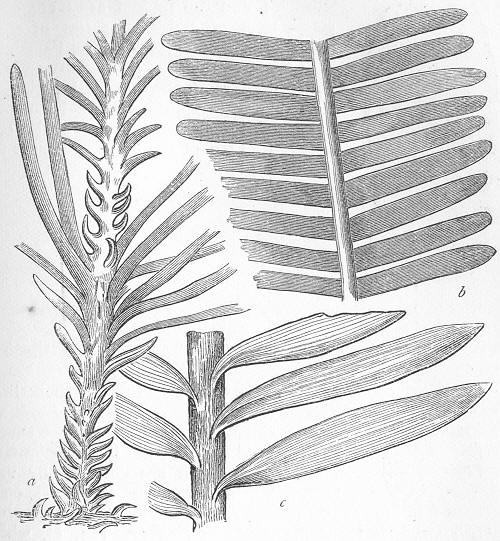
Fig. 141.—Triassic Conifers and Cycads. a, Voltzia
(Schizoneura) heterophylla, portion of a branch,
Europe and America; b, Part of the frond of
Pterophyllum Jœgeri, Europe; c, Part of the
frond of Podozamites lanceolatus, America.
of California and Nevada have likewise yielded numerous
remains of marine Invertebrates. The Protozoans are
represented by Foraminifera and Sponges, and the
Cœlenterates by a small number of Corals; but
these require no special notice. It may be mentioned, however,
that the great Palæozoic group of the Rugose corals
has no known representative here, its place being taken by corals
of Secondary type (such as Montlivaltia, Synastœa,
&c.)
The Echinoderms are represented principally by
Crinoids, the remains of which are extremely abundant
in some of the limestones. The best-known species is the famous
"Lily-Encrinite" (Encrinus liliiformis, fig. 142), which
is characteristic
Page 210
of the Muschelkalk. In this beautiful species,
the flower-like head is supported upon a rounded stem, the joints
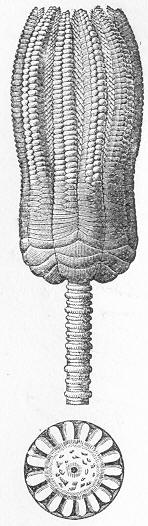
Fig. 142.—Head and upper part of the column of Encrinus
liliiformis. The lower figure shows the articulating surface
of one of the joints of the column. Muschelkalk, Germany.
of which are elaborately articulated with one another; and the
fringed arms are composed each of a double series of alternating
calcareous pieces. The Palæozoic Urchins, with their
supernumerary rows of plates, the Cystideans, and the Pentremites
have finally disappeared; but both Star-fishes and Brittle-stars
continue to be represented. One of the latter—namely, the
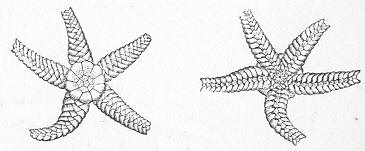
Fig. 143.—Aspidura loricata, a Triassic
Ophiuroid. Muschelkalk, Germany.
Aspidura loricata of Goldfuss (fig. 143)—is highly
characteristic of the Muschelkalk.
The remains of Articulate Animals are not very abundant in
the Trias, if we except the bivalved cases of the little Water-fleas
(Ostracoda), which are occasionally very plentiful. There
are also many species of the horny, concentrically-striated valves
of the Estheriœ (see fig. 122, b), which might
easily be taken for small Bivalve Molluscs. The "Long-tailed"
Decapods of the type of the Lobster, are not without examples
but they become much more numerous in the succeeding Jurassic
period. Remains of insects have also been discovered.
Amongst the Mollusca we have to note the disappearance,
amongst the lower groups, of many characteristic Palæozoic
types. Amongst the Polyzoans, the characteristic "Lace-corals,"
Fenestella, Retepora,[22] Synocladia, Polypora, &c.,
Page 211
have become apparently extinct. The same is true of many of the ancient
types of Brachiopods, and conspicuously so of the great family
of the Productidœ, which played such an important part in
the seas of the Carboniferous and Permian periods.
Bivalves (Lamellibranchiata) and Univalves
(Gasteropoda) are well represented in the marine beds of
the Trias, and some of the former are particularly characteristic
either of the formation as a whole or of minor subdivisions of it. A
few of these characteristic species are figured in the accompanying
illustration (fig. 144). Bivalve shells of the genera Daonella
(fig. 144, a) and Halobia (Monotis) are very
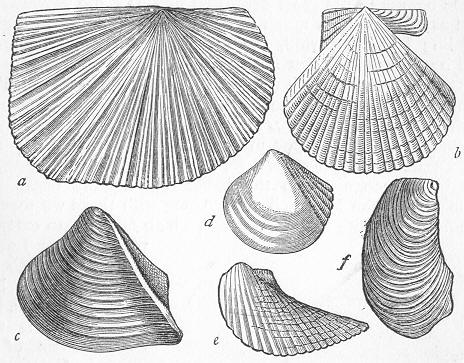
Fig. 144. Triassic Lamellibranchs. a, Daonella (Halobia)
Lommelli; b, Pecten Valoniensis; c, Myophoria lineata; d. Cardium
Rhœticum; e. Avicula contorta; f. Avicula socialis.
abundant, and are found in the Triassic strata of almost all
regions. These groups belong to the family of the Pearl-oysters
(Aviculidœ), and are singular from the striking
resemblance borne by some of their included forms to the
Strophomenœ amongst the Lamp-shells, though, of course,
no real relation exists between the two. The little Pearl-oyster,
Avicula socialis (fig. 144, f), is found throughout
the greater part of the Triassic series, and is especially abundant
in the Muschelkalk. The genus Myophoria (fig. 144, c),
belonging to the Trigoniadœ, and related therefore to
the Permian Schizodus, is characteristically Triassic, many
species of the genus being known in deposits of this age. Lastly,
the so-called "Rhætic" or "Kössen" beds are
Page 212
characterised by the occurrence in them of the Scallop,
Pecten Valoniensis (fig. 144, b); the small Cockle,
Cardium Rhœticum (fig. 144, d); and the
curiously-twisted Pearl-oyster, Avicula contorta (fig. 144,
e)—this last Bivalve being so abundant that the strata
in question are often spoken of as the "Avicula contorta beds."
Passing over the groups of the Heteropods and
Pteropods, we have to notice the Cephalopoda, which
are represented in the Trias not only by the chambered shells
of Tetrabranchiates, but also, for the first time, by
the internal skeletons of Dibranchiate forms. The Trias,
therefore, marks the first recognised appearance of true
Cuttle-fishes. All the known examples of these belong to the great
Mesozoic group of the Belemnitidœ; and as this family
is much more largely developed in the succeeding Jurassic period,
the consideration of its characters will be deferred till that
formation is treated of. Amongst the chambered Cephalopods
we find quite a number of the Palæozoic Orthoceratites,
some of them of considerable size, along with the ancient
Cyrtoceras and Goniatites; and these old types,
singularly enough, occur in the higher portion of the Trias (St
Cassian beds), but have, for some unexplained reason, not yet
been recognised in the lower and equally fossiliferous formation
of the Muschelkalk. Along with these we meet for the first time
with true Ammonites, which fill such an extensive place
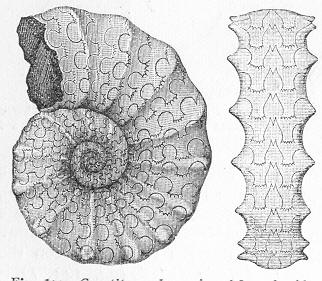
Fig. 145.—Ceratites nodosus, viewed from the side and
from behind. Muschelkalk.
in the Jurassic seas, and which will be spoken of hereafter. The
form, however, which is most characteristic of the Trias is
Ceratites (fig. 145). In this genus the shell is curved
into a flat spiral, the volutions of which are in contact; and it
further agrees with both Goniatites and Ammonites
in the fact that the septa or partitions between the air-chambers
are not simple and plain (as in the Nautilus and its allies),
but are folded and bent as they approach the outer wall of the
shell. In the Goniatite these foldings of the septa are
of a simply lobed or angulated nature, and in the Ammonite
Page 213
they are extremely complex; whilst in the
Ceratite there is an intermediate state of things, the
special feature of which is, that those foldings which are turned
towards the mouth of the shell are merely rounded, whereas those
which are turned away from the mouth are characteristically
toothed. The genus Ceratites, though principally Triassic,
has recently been recognised in strata of Carboniferous age in
India.
From the foregoing it will be gathered that one of the most important
points in connection with the Triassic Mollusca is the
remarkable intermixture of Palæozoic and Mesozoic types which
they exhibit. It is to be remembered, also, that this intermixture
has hitherto been recognised, not in the Middle Triassic limestones
of the Muschelkalk, in which—as the oldest Triassic beds with
marine fossils—we should naturally expect to find it, but in
the St Cassian beds, the age of which is considerably later than
that of the Muschelkalk. The intermingling of old and new types of
Shell-fish in the Upper Trias is well brought out in the annexed
table, given by Sir Charles Lyell in his 'Student's Elements of
Geology' (some of the less important forms in the table being
omitted here):—
GENERA OF FOSSIL MOLLUSCA IN THE ST CASSIAN AND HALLSTADT BEDS.
|
Common to Older Rocks.
|
Characteristic of Triassic Rocks.
|
Common to Newer Rocks.
|
| Orthoceras. |
| Bactrites. |
| Macrocheilus. |
| Loxonema. |
| Holopella. |
| Murchisonia. |
| Porcellia. |
| Athyris. |
| Retzia. |
| Cyrtina. |
| Euomphalus. |
|
| Ceratites. |
| Cochloceras. |
| Rhabdoceras. |
| Aulacoceras. |
| Naticella. |
| Platystoma. |
| Halobia. |
| Hörnesia. |
| Koninckia. |
| Scoliostoma. |
| Myophoria. |
(The last two are principally but not exclusively Triassic.)
|
| Ammonites. |
| Chemnitzia. |
| Cerithium. |
| Monodonta. |
| Sphœra. |
| Cardita. |
| Myoconcha. |
| Hinnites. |
| Monotis. |
| Plicatula. |
| Pachyrisma. |
| Thecidium. |
|
Thus, to emphasise the more important points alone, the Trias
has yielded, amongst the Gasteropods, the characteristically
Palæozoic Loxonema, Holopella, Murchisonia, Euomphalus,
and Porcellia, along with typically Triassic forms like
Platystoma and Scoliostoma, and the great modern
groups Chemnitzia and Cerithium. Amongst the Bivalves
we find the Palæozoic Megalodon side by side with the
Triassic Halobia and Myophoria, these being associated
with the Carditœ, Hinnites, Plicatulœ, and
Trigoniœ of later deposits. The Brachiopods
Page 214
exhibit the Palæozoic Athyris, Retzia, and
Cyrtina, with the Triassic Koninckia and the modern
Thecidium. Finally, it is here that the ancient genera
Orthoceras, Cyrtoceras, and Goniatites make their
last appearance upon the scene of life, the place of the last of
these being taken by the more complex and almost exclusively
Triassic Ceratites, whilst the still more complex genus
Ammonites first appears here in force, and is never again
wanting till we reach the close of the Mesozoic period. The first
representatives of the great Secondary family of the
Belemnites are also recorded from this horizon.
Amongst the Vertebrate Animals of the Trias, the Fishes
are represented by numerous forms belonging to the Ganoids and
the Placoids. The Ganoids of the period are still all provided
with unsymmetrical ("heterocercal") tails, and belong principally
to such genera as Palœoniscus and Catopterus.
The remains of Placoids are in the form of teeth and spines, the
two principal genera being the two important Secondary groups
Acrodus and Hybodus. Very nearly at the summit
of the Trias in England, in the Rhætic series, is a singular
stratum, which is well known as the "bone-bed," from the number
of fish-remains which it contains. More interesting, however,
than the above, are the curious palate-teeth of the Trias, upon
which Agassiz founded the genus Ceratodus. The teeth of
Ceratodus (fig. 146) are singular flattened plates, composed
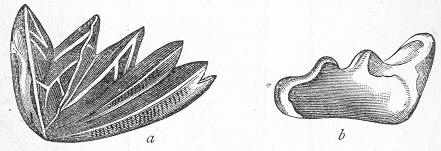
Fig. 146.—a, Dental plate of Ceratodus serratus,
Keuper; b, Dental plate of Ceratodus altus,
Keuper; (After Agassiz.)
of spongy bone beneath, covered superficially with a layer of
enamel. Each plate is approximately triangular, one margin (which
we now know to be the outer one) being prolonged into prongs or
conical prominences, whilst the surface is more or less regularly
undulated. Until recently, though the master-mind of Agassiz
recognised that these singular bodies were undoubtedly the teeth
of fishes, we were entirely ignorant as to their precise relation
to the animal, or as to the exact affinities of the fish thus
armed. Lately, however, there has been discovered in the rivers
of Queensland (Australia) a living species of Ceratodus
(C. Fosteri, fig. 147),
Page 215
with teeth precisely similar to those
of its Triassic predecessor; and we thus have become acquainted
with the use of these structures and the manner in which they
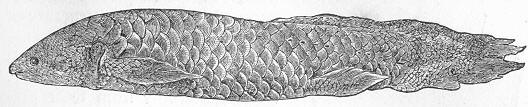
Fig. 147.—Ceratodus Fosteri, the Australian Mud-fish,
reduced in size.
were implanted in the mouth. The palate carries two of these
plates, with their longer straight sides turned towards each other,
their sharply-sinuated sides turned outwards, and their short
straight sides or bases directed backwards. Two similar plates in
the lower jaw correspond to the upper, their undulated surfaces
fitting exactly to those of the opposite teeth. There are also
two sharp-edged front teeth, which are placed in the front of
the mouth in the upper jaw; but these have not been recognised
in the fossil specimens. The living Ceratodus feeds on
vegetable matters, which are taken up or tom off from plants by
the sharp front teeth, and then partially crushed between the
undulated surfaces of the back teeth (Günther); and there need
be little doubt but that the Triassic Ceratodi followed
a similar mode of existence. From the study of the living
Ceratodus, it is certain that the genus belongs to the
same group as the existing Mud-fishes (Dipnoi); and we
therefore learn that this, the highest, group of the entire class
of Fishes existed in Triassic times under forms little or not
at all different from species now alive; whilst it has become
probable that the order can be traced back into the Devonian
period.
The Amphibians of the Trias all belong to the old order
of the Labyrinthodonts, and some of them are remarkable
for their gigantic dimensions. They were first known by their
footprints, which were found to occur plentifully in the Triassic
sandstones of Britain and the continent of Europe, and which
consisted of a double series of alternately-placed pairs of
hand-shaped impressions, the hinder print of each pair being
much larger than the one in front (fig. 148). So like were these
impressions to the shape of the human hand, that the at that
time unknown animal which produced them was at once christened
Cheirotherium, or "Hand-beast." Further discoveries, however,
soon showed that the footprints of Cheirotherium were really
produced by species of Amphibians which, like the existing Frogs,
possessed hind-feet of a much larger size than the fore-feet,
Page 216
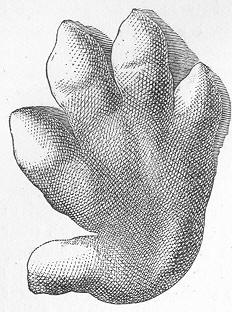
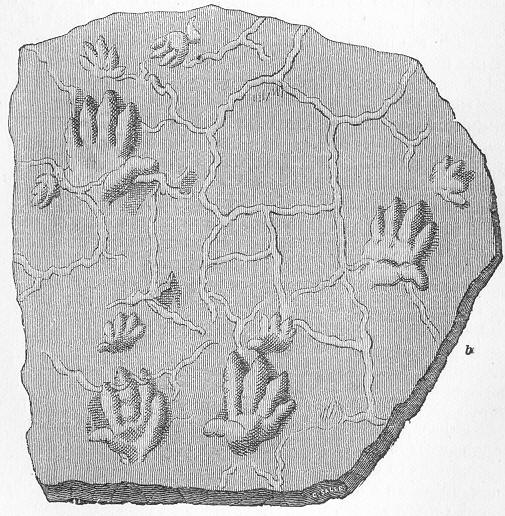
Fig. 148.—Footprints of a Labyrinthodont (Cheirotherium),
from the Triassic Sandstones of Hessberg, near Hildburghausen,
Germany, reduced one-eighth. The lower figure shows a slab, with
several prints, and traversed by reticulated sun-cracks: the upper
figure shows the impression of one of the hind-feet, one-half of
the natural size. (After Sickler.)
and to which the name of Labyrinthodonts was applied in
consequence of the complex microscopic structure of the teeth
(fig. 149). In the essential details of their structure, the
Triassic Labyrinthodonts did not differ materially from their
predecessors in the Coal-measures and Permian rocks. They possessed
the same frog-like skulls (fig. 150), with a lizard-like body, a
long tail, and comparatively feeble limbs. The hind-limbs were
stronger and longer than the fore-limbs, and the lower
Page 217
surface of the body was protected by an armour of bony
plates. Some of the Triassic Labyrinthodonts must have attained
dimensions utterly unapproached amongst existing Amphibians, the
skull of Labyrinthodon Jœgeri (fig. 150) being upwards
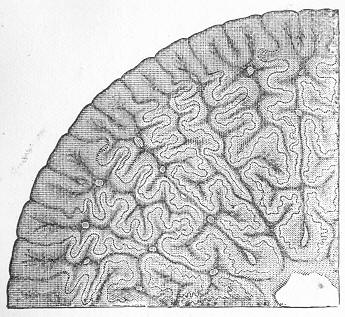
Fig. 149.—Section of the tooth of Labryinthodon
(Mastodonsaurus) Jœgeri, showing the microscopic
structure. Greatly enlarged. Trias.
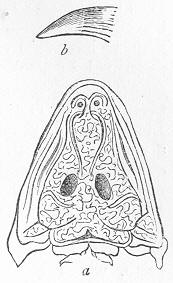
Fig. 150.—a, Skull of Labyrinthodon Jœgeri,
much reduced in size; b, Tooth of the same. Trias
Württemberg.
of three feet in length and two feet in breadth. Restorations of
some of these extraordinary creatures have been attempted in the
guise of colossal Frogs; but they must in reality have more
closely resembled huge Newts.
Remains of Reptiles are very abundant in Triassic deposits,
and belong to very varied types. The most marked feature, in fact,
connected with the Vertebrate fauna of the Trias, and of the
Secondary rocks in general, is the great abundance of Reptilian
life. Hence the Secondary period is often spoken of as the "Age
of Reptiles." Many of the Triassic reptiles depart widely in
their structure from any with which we are acquainted as existing
on the earth at the present day, and it is only possible here to
briefly note some of the more important of these ancient forms.
Amongst the group of the Lizards (Lacertilia), represented
by Protorosaurus in the older Permian strata, three types
more or less certainly referable to this order may be mentioned.
One of these is a small reptile which was found many years ago
in sandstones near Elgin, in Scotland, and which excited special
interest at the time in consequence of the fact that the strata
in question were believed to belong to the Old Red Sandstone
formation. It is, however,
Page 218
now certain that
the Elgin sandstones which contain Telerpeton Elginense, as
this reptile is termed, are really to be regarded as of Triassic
age. By Professor Huxley, Telerpeton is regarded as a
Lizard, which cannot be considered as "in any sense a less
perfectly-organised creature than the Gecko, whose swift and
noiseless run over walls and ceilings surprises the traveller
in climates warmer than our own." The "Elgin Sandstones" have
also yielded another Lizard, which was originally described by
Professor Huxley under the name of Hyperodapedon, the
remains of the same genus having been subsequently discovered
in Triassic strata in India and South Africa. The Lizards of
this group must therefore have at one time enjoyed a very wide
distribution over the globe; and the living Sphenodon of
New Zealand is believed by Professor Huxley to be the nearest
living ally of this family. The Hyperodapedon of the
Elgin Sandstones was about six feet in length, with limbs adapted
for terrestrial progression, but with the bodies of the
vertebræ slightly biconcave, and having two rows of palatal
teeth, which become worn down to the bone in old age. Lastly, the
curious Rhynchosaurus of the Trias is also referred, by
the eminent comparative anatomist above mentioned, to the order
of the Lizards. In this singular reptile
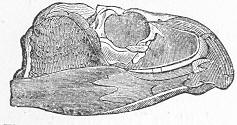
Fig. 151.—Skull of Rhynchosaurus articeps. Trias.
(After Owen.)
(fig. 151) the skull is somewhat bird-like, and the jaws appear
to have been destitute of teeth, and to have been encased in a
horny sheath like the beak of a Turtle or a Bird. It is possible,
however, that the palate was furnished with teeth.
The group of the Crocodiles and Alligators (Crocadilia),
distinguished by the fact that the teeth are implanted in distinct
sockets and the skin more or less extensively provided with bony
plates, is represented in the Triassic rocks by the
Stagonolepis of the Elgin Sandstones. The so-called
"Thecodont" reptiles (such as Belodon, Thecodontosaurus,
and Palœosaurus, fig. 152, c, d, e) are also
nearly related to the Crocodiles, though it is doubtful if they
should be absolutely referred to this group. In these reptiles, the
teeth are implanted in distinct sockets in the jaws, their crowns
being more or less compressed and pointed, "with trenchant and
finely serrate margins" (Owen). The bodies of the vertebræ are
hollowed out at both ends, but the limbs appear to be adapted
for progression on the land. The genus Belodon (fig. 152,
c) is known to occur in the Keuper of Germany and in America;
Page 219
and Palœosaurus (fig. 153. e) has also been
found in the Trias of the same region. Teeth of the latter, however,
are found, along with remains of Thecodontosaurus (fig. 153,
d), in a singular magnesian conglomerate near Bristol, which
was originally believed to be of Permian age, but which appears to
be undoubtedly Triassic.
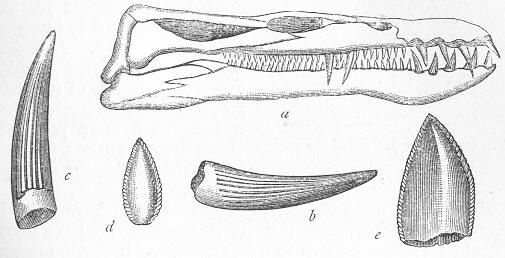
|
|
Fig. 152.—Triassic Reptiles. a, Skull of Nothosaurus
mirabilis, reduced in size—Muschelkalk, Germany; b,
Tooth of Simosaurus Gaillardoti, of the natural
size—Muschelkalk, Germany; c, Tooth of Beladon
Carolinensis—Trias, America; d, Tooth of
Thecodontosaurus antiquus, slightly enlarged—Britain;
e, Tooth of Palœosaurus platyodon, of the
natural size—Britain.
|
The Trias has also yielded the remains of the great marine reptiles
which are often spoken of collectively as the "Enaliosaurians"
or "Sea-lizards," and which will be more particularly spoken
of in treating of the Jurassic period, of which they are more
especially characteristic. In all these reptiles the limbs are
flattened out, the digits being enclosed in a continuous skin,
thus forming powerful swimming-paddles, resembling the "flippers"
of the Whales and Dolphins both in their general structure and
in function. The tail is also long, and adapted to act as a
swimming-organ; and there can be no doubt but that these
extraordinary and often colossal reptiles frequented the sea, and
only occasionally came to the land. The Triassic Enaliosaurs belong
to a group of which the later genus Plesiosaurus is the type
(the Sauropterygia). One of the best known of the Triassic
genera is Nothosaurus (fig. 152, a), in which the
neck was long and bird-like, the jaws being immensely elongated,
and carrying numerous powerful conical teeth implanted in distinct
sockets. The teeth in Simosaurus (152, b) are of a
similar nature; but the orbits are of enormous size, indicating
eyes of corresponding dimensions, and perhaps pointing to the
nocturnal habits of the animal. In the singular
Page 220
Placodus,
again, the teeth are in distinct sockets, but resemble those
of many fishes in being rounded and obtuse (fig. 153), forming
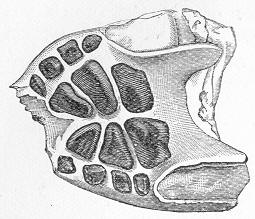
Fig. 153.—Under surface of the upper jaw and palate of
Placodus gigas. Muschelkalk, Germany.
broad crushing plates adapted for the comminution of shell-fish.
There is a row of these teeth all round the upper jaw proper,
and a double series on the palate, but the lower jaw has only a
single row of teeth. Placodus is found in the Muschelkalk,
and the characters of its dental apparatus indicate that it was
much more peaceful in its habits than its associates the Nothosaur
and Simosaur.
The Triassic rocks of South Africa and India have yielded the
remains of some extraordinary Reptiles, which have been placed
by Professor Owen in a separate order under the name of
Anomodontia. The two principal genera of this group are
Dicynodon and Oudenodon, both of which appear to
have been large Reptiles, with well-developed limbs, organised
for progression upon the dry land. In Oudenodon (fig.
154, B) the jaws seem to have been wholly destitute of teeth, and
must have been encased in a horny sheath, similar to that with
which we are familiar in the beak of a Turtle. In Dicynodon
(fig. 154, A), on the other hand, the front of the upper jaw
and the whole of the lower jaw were destitute of teeth, and the
front of the mouth must have constituted a kind of beak; but
the upper jaw possessed on each side a single huge conical tusk,
which is directed downwards, and must have continued to grow
during the life of the animal.
It may be mentioned that the above-mentioned Triassic sandstones of
South Africa have recently yielded to the researches of Professor
Owen a new and unexpected type of Reptile, which exhibits some
of the structural peculiarities which we have been accustomed
to regard as characteristic of the Carnivorous quadrupeds. The
Reptile in question has been named Cyanodraco, and it is
looked upon by its distinguished discoverer as the type of a new
order, to which he has given the name of Theriodontia. The
teeth of this singular form agree with those of the Carnivorous
quadrupeds in consisting of three distinct groups—namely,
front teeth or incisors, eye teeth or canines, and
back teeth or molars. The canines
Page 221
also are long and pointed,
very much compressed, and having their lateral margins finely
serrated, thus presenting a singular resemblance to the teeth
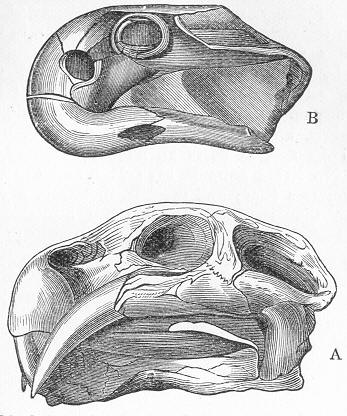
Fig. 154.—Triassic Anomodont Reptiles. A, Skull of
Dicynodon lacerticeps, showing one of the great maxillary
tusks; B, Skull of Oudenodon Bainii, showing the toothless,
beak-like jaws. From the Trias of South Africa. (After Owen.)
of the extinct "Sabre-toothed Tiger" (Machairodus). The
bone of the upper arm (humerus) further shows some remarkable
resemblances to the same bone in the Carnivorous Mammals. As
has been previously noticed, Professor Owen is of opinion that
some of the Reptilian remains of the Permian deposits will also
be found to belong to this group of the "Theriodonts."
Lastly, we find in the Triassic rocks the remains of Reptiles
belonging to the great Mesozoic order of the Deinosauria.
This order attains its maximum at a later period, and will be
spoken of when the Jurassic and Cretaceous deposits come to be
considered. The chief interest of the Triassic Reptiles of this
group arises from the fact that they are known by their footprints
as well as by their bones; and a question has arisen whether the
supposed footprints of birds which occur in the Trias
have not really been produced by Deinosaurs. This leads us,
therefore, to speak at the same time as to the evidence which we
have of the existence of the class of Birds during the Triassic
period. No actual bones of any bird have as
Page 222
yet been detected in any Triassic deposit; but we have tolerably
clear evidence of their existence at this time in the form of
footprints. The impressions in question are found in
considerable numbers in certain red sandstones of the age of the
Trias in the valley of the Connecticut River, in the United States.
They vary much in size, and have evidently been produced by many
different animals walking over long stretches of estuarine mud
and sand exposed at low water. The footprints now under
consideration form a double series of single prints, and
therefore, beyond all question, are the tracks of a
biped—that is, of an animal which walked upon two
legs. No living animals, save Man and the Birds, walk habitually
on two legs; and there is, therefore, a primâ facie
presumption that the authors of these prints were Birds. Moreover,
each impression consists of the marks of three toes turned
forwards (fig. 155), and therefore are precisely such as might be
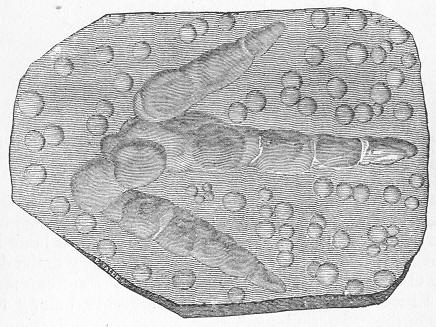
Fig. 155.—Supposed footprint of a Bird, from the Triassic
Sandstones of the Connecticut River. The slab shows also numerous
"rain-prints."
produced by Wading or Cursorial Birds. Further, the impressions
of the toes show exactly the same numerical progression in the
number of the joints as is observable in living Birds—that is
to say, the innermost of the three toes consists of three joints,
the middle one of four, and the outer one of five joints. Taking
this evidence collectively, it would have seemed, until lately,
quite certain that these tracks could only have been formed by
Birds. It has, however, been shown that the Deinosaurian Reptiles
possess, in some cases at any rate, some singularly bird-like
characters, amongst
Page 223
which is the fact that
the animal possessed the power of walking, temporarily at least,
on its hind-legs, which were much longer and stronger than the
fore-limbs, and which were sometimes furnished with no more than
three toes. As the bones and teeth of Deinosaurs have been found
in the Triassic deposits of North America, it may be regarded as
certain that some of the bipedal tracks originally ascribed
to Birds must have really been produced by these Reptiles. It seems
at the same time almost a certainty that others of the three-toed
impressions of the Connecticut sandstones were in truth produced
by Birds, since it is doubtful if the bipedal mode of progression
was more than an occasional thing amongst the Deinosaurs, and the
greater number of the many known tracks exhibit no impressions
of fore-feet. Upon the whole, therefore, we may, with much
probability, conclude that the great class of Birds (Aves)
was in existence in the Triassic period. If this be so, not only
must there have been quite a number of different forms, but some
of them must have been of very large size. Thus the largest
footprints hitherto discovered in the Connecticut sandstones are
22 inches long and 12 inches wide, with a proportionate length
of stride. These measurements indicate a foot four times as large
as that of the African Ostrich; and the animal which produced
them—whether a Bird or a Deinosaur—must have been of
colossal dimensions.
Finally, the Trias completes the tale of the great classes of
the Vertebrate sub-kingdom by presenting us with remains of the
first known of the true Quadrupeds or Mammalia. These
are at present only known by their teeth, or, in one instance,
by one of the halves of the lower jaw; and these indicate minute
Quadrupeds, which present greater affinities with the little Banded
Anteater (Myrmecobius fasciatus, fig. 158) of Australia
than with any other living form. If this conjecture be correct,
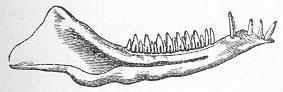
Fig. 156.—Lower jaw of Dromatherium sylvestre. Trias,
North Carolina. (After Emmons.)
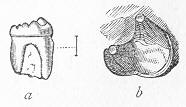
Fig. 157.—a, Molar tooth of Micro estes antiquus,
magnified; b, Crown of the same, magnified still further.
Trias, Germany.
these ancient Mammals belonged to the order of the Marsupials or
Pouched Quadrupeds (Marsupialia), which
Page 224
are now exclusively confined
to the Australian province, South America, and the southern
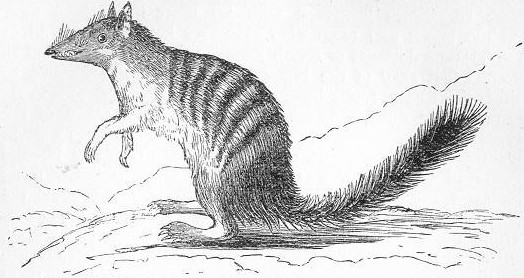
Fig. 158.—The Banded Ant-eater (Myrmecobius fasciatus)
of Australia.
portion of North America. In the Old World, the only known Triassic
Mammals belong to the genus Microlestes, and to the probably
identical Hypsiprymnopsis of Professor Boyd Dawkins. The
teeth of Microlestes (fig. 157) were originally discovered
by Plieninger in 1847 in the "bone-bed" which is characteristic
of the summit of the Rhætic series both in Britain and on the
continent of Europe; and the known remains indicate two species.
In Britain, teeth of Microlestes have been discovered
by Mr Charles Moore in deposits of Upper Triassic age, filling
a fissure in the Carboniferous limestone near Frome, in Somersetshire;
and a molar tooth of Hypsiprymnopsis was found by Professor
Boyd Dawkins in Rhætic marls below the "bone-bed" at Watchet,
also in Somersetshire. In North America, lastly, there has been
found in strata of Triassic age one of the branches of the lower
jaw of a small Mammal, which has been described under the name of
Dromatherium sylvestre (fig. 156). The fossil exhibits ten
small molars placed side by side, one canine, and three incisors,
separated by small intervals, and it indicates a small insectivorous
animal, probably most nearly related to the existing
Myrmecobius.
LITERATURE.
The following list comprises a few of the more important sources of
information as to the Triassic strata and their fossil
contents:—
| (1) |
'Geology of Oxford and the Valley of the Thames.'
Phillips. |
| (2) |
'Memoirs of the Geological Survey of Great Britain and
Ireland.' |
| (3) |
'Report on the Geology of Londonderry,' &c. Portlock. |
|
Page 225
(4) |
"On the Zone of Avicula contorta," &c.—'Quart. Journ.
Geol. Soc.,' vol. xvi., 1860. Dr Thomas Wright. |
| (5) |
"On the Zones of the Lower Lias and the Avicula contorta
Zone"—'Quart. Journ. Geol. Soc.,' vol. xvii., 1861. Charles
Moore. |
| (6) |
"On Abnormal Conditions of Secondary Deposits," &c.—'Quart.
Journ. Geol. Soc.,' vol. xxiii., 1876-77. Charles Moore. |
| (7) |
'Geognostische Beschreibung des Bayerischen Alpengebirges.'
Gümbel. |
| (8) |
'Lethæa Rossica.' Pander. |
| (9) |
'Lethæa Geognostica.' Bronn. |
| (10) |
'Petrefacta Germaniæ.' Goldfuss. |
| (11) |
'Petrefaktenkunde.' Quenstedt. |
| (12) |
'Monograph of the Fossil Estheriæ'
(Palæontographical Society). Rupert Jones. |
| (13) |
"Fossil Remains of Three Distinct Saurian Animals,
recently discovered in the Magnesian Conglomerate near
Bristol"—'Trans. Geol. Soc.,' ser. 2, vol. v., 1840. Riley
and Stutchbury. |
| (14) |
'Die Saurier des Muschekalkes.' Von Meyer. |
| (15) |
'Beiträge zur Palæontologie Württembergs.' Von
Meyer and Plieninger. |
| (16) |
'Manual of Palæontology.' Owen. |
| (17) |
'Odontography:' Owen. |
| (18) |
'Report on Fossil Reptiles' (British Association, 1841).
Owen. |
| (19) |
"On Dicynodon"—'Trans. Geol. Soc.,' vol. iii., 1845.
Owen. |
| (20) |
'Descriptive Catalogue of Fossil Reptilia and Fishes in the
Museum of the Royal College of Surgeons, England.'
Owen. |
| (21) |
"On Species of Labyrinthodon from Warwickshire"—'Trans.
Geol. Soc.,' ser. 2, vol. vi. Owen. |
| (22) |
"On a Carnivorous Reptile" (Cynodraco major),
&c.—'Quart. Journ. Geol. Soc.,' vol. xxxii., 1876.
Owen. |
| (23) |
"On Evidences of Theriodonts in Permian Deposits,"
&c.—'Quart. Journ. Geol. Soc.,' vol. xxxii., 1876.
Owen. |
| (24) |
"On the Stagonolepis Robertsoni," &c.—'Quart. Journ.
Geol. Soc.,' vol. xv., 1859. Huxley. |
| (25) |
"On a New Specimen of Telerpeton Elginense"—'Quart. Journ.
Geol. Soc.,' vol. xxiii., 1866. Huxley. |
| (26) |
"On Hyperodapedon"—'Quart. Journ. Geol. Soc.,' vol. xxv.,
1869. Huxley. |
| (27) |
"On the Affinities between the Deinosaurian Reptiles and
Birds"—'Quart. Journ. Geol. Soc.,' vol. xxvi., 1870.
Huxley. |
| (28) |
"On the Classification of the Deinosauria,"
&c.—'Quart. Journ. Geol. Soc.,' vol. xxvi., 1870.
Huxley. |
| (29) |
"Palæontologica Indica"—'Memoirs of the Geol.
Survey of India.' |
| (30) |
"On the Geological Position and Geographical Distribution of
the Dolomitic Conglomerate of the Bristol Area"—'Quart.
Journ. Geol. Soc.,' vol. xxvi., 1870. R. Etheridge, sen. |
| (31) |
"Remains of Labyrinthodonta from the Keuper Sandstone of
Warwick"—'Quart. Journ. Geol. Soc.,' vol. xxx., 1874
Miall. |
| (32) |
'Manual of Geology.' Dana. |
| (33) |
'Synopsis of Extinct Batrachia and Reptilia of North America.'
Cope. |
| (34) |
'Fossil Footmarks.' Hitchcock. |
| (35) |
'Ichnology of New England.' Hitchcock. |
| (36) |
'Traité de Paléontologie
Végétale.' Schimper. |
| (37) |
'Histoire des Végétaux Fossiles.'
Brongniart. |
| (38) |
'Monographie der Fossilen Coniferen.' Gœppert. |
THE JURASSIC PERIOD.
Resting upon the Trias, with perfect conformity, and with an almost
undeterminable junction, we have the great series of deposits which
are known as the Oolitic Rocks, from the common occurrence
in them of oolitic limestones, or as the Jurassic Rocks,
from their being largely developed in the mountain-range of the
Jura, on the western borders of Switzerland. Sediments of this
series occupy extensive areas in Great Britain, on the continent
of Europe, and in India. In North America, limestones and marls
of this age have been detected in "the Black Hills, the Laramie
range, and other eastern ridges of the Rocky Mountains; also over
the Pacific slope, in the Uintah, Wahsatch, and Humboldt Mountains,
and in the Sierra Nevada" (Dana); but in these regions their
extent is still unknown, and their precise subdivisions have
not been determined. Strata belonging to the Jurassic period
are also known to occur in South America, in Australia, and in
the Arctic zone. When fully developed, the Jurassic series is
capable of subdivision into a number of minor groups, of which
some are clearly distinguished by their mineral characters, whilst
others are separated with equal certainty by the differences of
the fossils that they contain. It will be sufficient for our
present purpose, without entering into the more minute subdivisions
of the series, to give here a very brief and general account of the
main sub-groups of the Jurassic rocks, as developed in
Britain—the arrangement of the Jura-formation of the continent
of Europe agreeing in the main with that of England.
I. THE LIAS.—The base of the Jurassic series of Britain is
formed by the great calcareo-argillaceous deposit of the "Lias,"
which usually rests conformably and almost inseparably upon the
Rhætic beds (the so-called "White Lias"), and passes up,
generally conformably, into the calcareous sandstones of the
Inferior Oolite. The Lias is divisible into the three principal
groups of the Lower, Middle, and Upper Lias, as under, and these
in turn contain many well-marked "zones;" so that the Lias has
some claims to be considered as an independent formation,
equivalent to all the remaining Oolitic rocks. The Lower
Lias (Terrain Sinemurien of D'Orbigny) sometimes
attains a thickness of as much as 600 feet, and consists of a
great series of bluish or greyish laminated clays,
Page 227
alternating with thin bands of blue or grey
limestone—the whole, when seen in quarries or cliffs from a
little distance, assuming a characteristically striped and banded
appearance. By means of particular species of Ammonites,
taken along with other fossils which are confined to particular
zones, the Lower Lias may be subdivided into several well-marked
horizons. The Middle Lias, or Marlstone Series
(Terrain Liasien of D'Orbigny), may reach a thickness
of 200 feet, and consists of sands, arenaceous marls, and
argillaceous limestones, sometimes with ferruginous beds. The
Upper Lias (Terrain Toarcien of D'Orbigny) attains
a thickness of 300 feet, and consists principally of shales below,
passing upwards into arenaceous strata.
II. THE LOWER OOLITES.—Above the Lias comes a complex series
of partly arenaceous and argillaceous, but principally calcareous
strata, of which the following are the more important groups:
a, The Inferior Oolite (Terrain Bajocien
of D'Orbigny), consisting of more than 200 feet of oolitic
limestones, sometimes more or less sandy; b, The Fuller's
Earth, a series of shales, clays, and marls, about 120 feet in
thickness; c, The Great Oolite or Bath Oolite
(Terrain Bathonien of D'Orbigny), consisting principally
of oolitic limestones, and attaining a thickness of about 130
feet. The well-known "Stonesfield Slates" belong to this horizon;
and the locally developed "Bradford Clay," "Corn brash," and
"Forest-marble" may be regarded as constituting the summit of
this group.
III. THE MIDDLE OOLITES.—The central portion of the Jurassic
series of Britain is formed by a great argillaceous deposit,
capped by calcareous strata, as follows: a, The Oxford
Clay (Terrain Callovien and Terrain Oxfordien of
D'Orbigny), consisting of dark-coloured laminated clays, sometimes
reaching a thickness of 700 feet, and in places having its lower
portion developed into a hard calcareous sandstone ("Kelloway
Rock"); b, The Coral-Rag (Terrain Corallien of
D'Orbigny, "Nerinean Limestone" of the Jura, "Diceras Limestone"
of the Alps), consisting, when typically developed, of a central
mass of oolitic limestone, underlaid and surmounted by calcareous
grits.
IV. THE UPPER OOLITES.—a, The base of the Upper Oolites
of Britain is constituted by a great thickness (600 feet or more)
of laminated, sometimes carbonaceous or bituminous clays, which are
known as the Kimmeridge Clay (Terrain Kimméridgien
of D'Orbigny); b, The Portland Beds (Terrain
Portlandien of D'Orbigny) succeed the Kimmeridge clay, and
consist inferiorly of sandy beds surmounted by oolitic limestones
Page 228
("Portland Stone"), the whole series attaining
a thickness of 150 feet or more, and containing marine fossils;
c, The Purbeck Beds are apparently peculiar to Great
Britain, where they form the summit of the entire Oolitic series,
attaining a total thickness of from 150 to 200 feet. The Purbeck
beds consist of arenaceous, argillaceous, and calcareous strata,
which can be shown by their fossils to consist of a most remarkable
alternation of fresh-water, brackish-water, and purely marine
sediments, together with old land-surfaces, or vegetable soils,
which contain the upright stems of trees, and are locally known as
"Dirt-beds."
One of the most important of the Jurassic deposits of the continent
of Europe, which is believed to be on the horizon of the Coral-rag
or of the lower part of the Upper Oolites, is the "Solenhofen
Slate" of Bavaria, an exceedingly fine-grained limestone,
which is largely used in lithography, and is celebrated for the
number and beauty of its organic remains, and especially for
those of Vertebrate animals.
The subjoined sketch-section (fig. 159) exhibits in a diagrammatic
form the general succession of the Jurassic rocks of Britain.
Regarded as a whole, the Jurassic formation is essentially marine;
and though remains of drifted plants, and of insects and other
air-breathing animals, are not uncommon, the fossils of the formation
are in the main marine. In the Purbeck series of Britain,
anticipatory of the great river-deposit of the Wealden, there are
fresh-water, brackish-water, and even terrestrial strata, indicating
that the floor of the Oolitic ocean was undergoing upheaval, and
that the marine conditions which had formerly prevailed were nearly
at an end. In places also, as in Yorkshire and Sutherlandshire,
are found actual beds of coal: but the great bulk of the formation
is an indubitable sea-deposit; and its limestones, oolitic as
they commonly are, nevertheless are composed largely of the
comminuted skeletons of marine animals. Owing to the enormous
number and variety of the organic remains which have been yielded
by the richly fossiliferous strata of the Oolitic series, it will
not be possible here to do more than to give an outline-sketch
of the principal forms of life which characterise the Jurassic
period as a whole. It is to be remembered, however, that every
minor group of the Jurassic formation has its own peculiar fossils,
and that by the labours of such eminent observers as Quenstedt,
Oppel, D'Orbigny, Wright, De la Beche, Tate, and others, the
entire series of Jurassic sediments admits of a more complete
and more elaborate subdivision into zones
Page 229
characterised by special life-forms than has as yet been found
practicable in the case of any other rock-series.
| GENERALIZED SECTION OF THE JURASSIC
ROCKS OF ENGLAND. |
| Fig. 159. |
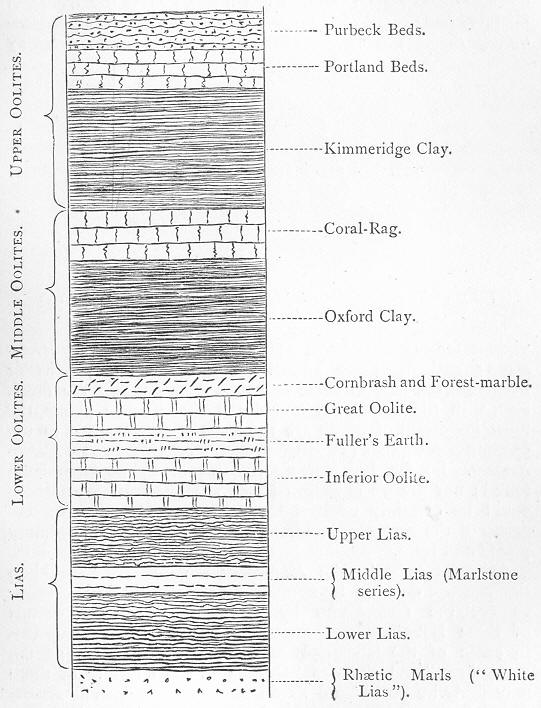
|
The plants of the Jurassic period consist principally of
Ferns, Cycads, and Conifers—agreeing in this respect,
Page 230
therefore, with those of the preceding
Triassic formation. The Ferns are very abundant, and
belong partly to old and partly to new genera. The Cycads
are also very abundant, and, on the whole, constitute the most
marked feature of the Jurassic vegetation, many genera of this
group being known (Pterophyllum, Otozamites, Zamites,
Crossozamia, Williamsonia, Bucklandia, &c.) The so-called
"dirt-bed" of the Purbeck series consists of an ancient soil,
in which stand erect the trunks of Conifers and the silicified
stools of Cycads of the genus Mantellia (fig.160). The
Coniferœ of the Jurassic are represented by various
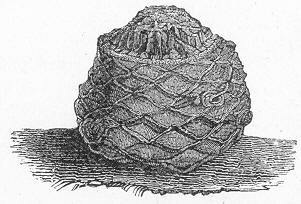
Fig. 160.—Mantellia (Cycadeoidea)
megalophylla, a Cycad from the Purbeck "dirt-bed." Upper
Oolites, England.
forms more or less nearly allied to the existing
Araucariœ; and these are known not only by their
stems or branches, but also in some cases by their cones. We meet,
also, with the remains of undoubted Endogenous plants, the most
important of which are the fruits of forms allied to the existing
Screw-pines (Pandaneœ), such as Podocarya and
Kaidacarpum. So far, however, no remains of Palms have been
found; nor are we acquainted with any Jurassic plants which could
be certainly referred to the great "Angiospermous" group of the
Exogens, including the majority of our ordinary plants and trees.
Amongst animals, the Protozoans are well represented in
the Jurassic deposits by numerous Foraminifers and
Sponges; as are the Cœlenterates by numerous
Corals. Remains of these last-mentioned organisms are
extremely abundant in some of the limestones of the formation,
such as the "Coral-rag" and the Great Oolite; and the former of
these may fairly be considered as an ancient "reef." The Rugose
Corals have not hitherto been detected in the Jurassic rocks;
and the "Tabulate Corals," so-called, are represented
only by examples of the modern genus Millepora. With this
Page 231
exception, all the Jurassic Corals belong to
the great group which predominates in recent seas (Zoantharia
sclerodermata); and the majority belong to the important
reef-building family of the "Star-corals" (Astrœidoe).
The form here figured (Thecosmilia annularis, fig. 161) is
one of the characteristic species of the Coral-rag.
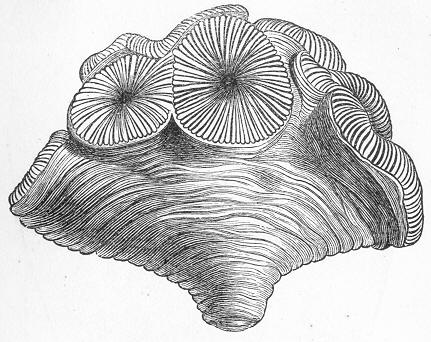
|
|
Fig. 161.—Thecosmilia annularis, Coral-rag, England.
|
The Echinoderms are very numerous and abundant fossils
in the Jurassic series, and are represented by Sea-lilies,
Sea-urchins, Star-fishes, and Brittle-stars. The Crinoids
are still common, and some of the limestones of the series are
largely composed of the débris of these organisms.
Most of the Jurassic forms resemble those with which we are already
familiar, in having the body permanently attached to some foreign
object by means of a longer or shorter jointed stalk or "column."
One of the most characteristic Jurassic genera of these "stalked"
Crinoids (though not exclusively confined to this period) is
Pentacrinus (fig. 162). In this genus, the column is
five-sided, with whorls of "side-arms;" and the arms are long,
slender, and branched. The genus is represented at the present
day by the beautiful "Medusa-head Pentacrinite" (Pentacrinus
caput-medusœ). Another characteristic Oolitic genus is
Apiocrinus, comprising the so-called "Pear Encrinites." In
this group the column is long and rounded, with a dilated base,
and having its uppermost joints expanded so as to form, with the
cup itself, a pear-shaped mass, from the summit of which spring
the comparatively short arms. Besides the
Page 232
"stalked" Crinoids, the
Jurassic rocks have yielded the remains of the higher group of the
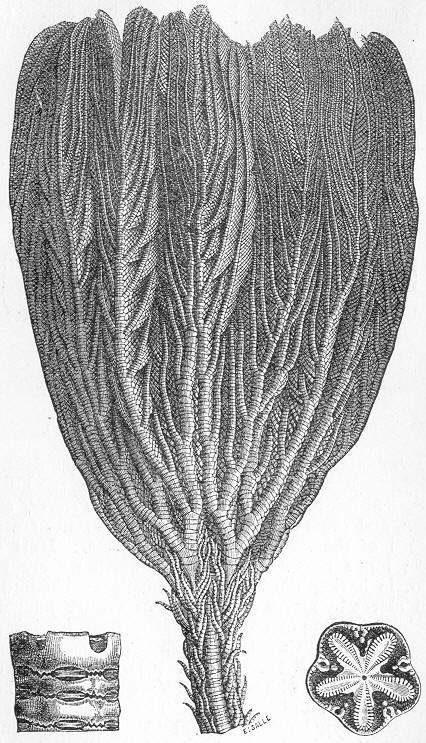
Fig. 162.—Pentacrinus fasciculos, Lias. The left-hand
figure shows a few or the joints of the column; the middle figure
shows the arms, and the summit of the column with its side-arms;
and the right-hand figure shows the articulating surface of one
of the column-joints.
"free" Crinoids, such as Saccosoma. These forms resemble the
existing "Feather-stars" (Comatula) in being attached when
Page 233
young to some foreign body by means of a
jointed stem, from which they detach themselves when fully grown
to lead an independent existence. In this later stage of their
life, therefore, they closely resemble the Brittle-stars in
appearance. True Star-fishes (Asteroids) and Brittle-stars
(Ophiuroids) are abundant in the Jurassic rocks, and the
Sea-urchins (Echinoids) are so numerous and so well
preserved as to constitute quite a marked feature of some beds
of the series. All the Oolitic urchins agree with the modern
Echinoids in having the shell composed of no more than
twenty rows of plates. Many different genera are known, and a
characteristic species of the Middle Oolites (Hemicidaris
crenularis, fig. 163) is here figured.
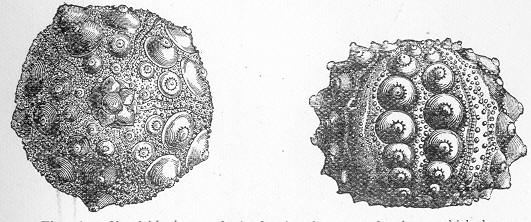
|
|
Fig. 163.—Hemicidaris crenularis, showing the great
tubercles on which the spines were supported. Middle Oolites.
|
Passing over the Annelides, which, though not uncommon,
are of little special interest, we come to the Articulates,
which also require little notice. Amongst the Crustaceans,
whilst the little Water-fleas (Ostracoda) are still abundant,
the most marked feature is the predominance which is now assumed
by the Decapods—the highest of the known groups of
the class. True Crabs (Brachyura) are by no means unknown;
but the principal Oolitic Decapods belonged to the "Long-tailed"
group (Macrura), of which the existing Lobsters, Prawns,
and Shrimps are members. The fine-grained lithographic slates of
Solenhofen are especially famous as a depot for the remains of
these Crustaceans, and a characteristic species from this locality
(Eryon arctiformis, fig. 164) is here represented. Amongst
the air-breathing Articulates, we meet in the Oolitic
rocks with the remains of Spiders (Arachnida), Centipedes
(Myriapoda), and numerous true Insects (Insecta).
In connection with the last-mentioned of these groups, it is of
interest to note the occurrence of the oldest known fossil
Butterfly—the Palœontina Oolitica of the
Stonesfield slate—the
Page 234
relationships of which appear to be with some of the living
Butterflies of Tropical America.
Coming to the Mollusca, the Polyzoans, numerous
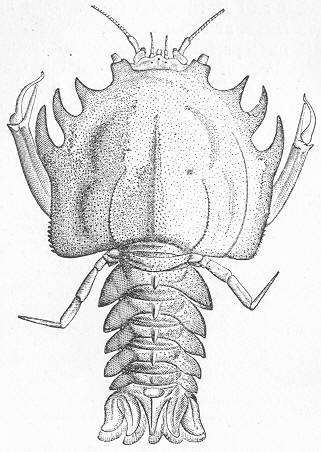
Fig. 164.—Eryon arctiformis, a "Long-tailed Decapod,"
from the Middle Oolites (Solenhofen Slate).
and beautiful as they are, must be at once dismissed; but the
Brachiopods deserve a moment's attention. The Jurassic
Lamp-shells (fig. 165) do not fill by any means such a predominant
place in the marine fauna of the period, as in many Palæozoic
deposits, but they are still individually numerous. The two ancient
genera Leptœna (fig. 165, a) and Spirifera
(fig. 165, b), dating the one from the Lower and the other
from the Upper Silurian, appear here for the last time upon the
scene, but they have not hitherto been recognised in deposits later
than the Lias. The great majority of the Jurassic Brachiopods,
however, belong to the genera Terebratula (fig. 165, c,
e, f) and Rhynchonella (fig. 165. d), both of
which are represented by living forms at the present day. The
Terebratulœ, in particular, are very abundant, and
the species are often confined to special horizons in the series.
Remains of Bivalves (Lamellibranchiata) are very
Page 235
numerous in the
Jurassic deposits, and in many cases highly characteristic.
In the marine beds of the Oolites, which constitute
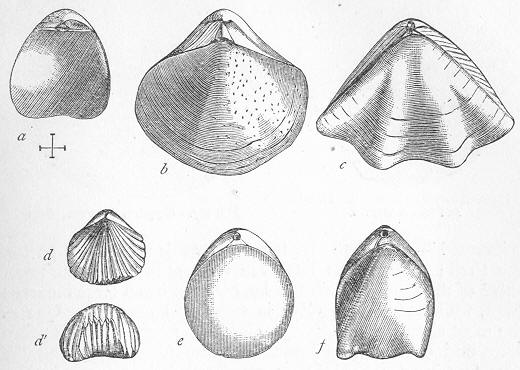
Fig. 165.—Jurassic
Brachiopod. a. Leptœna Liassica, enlarged, the small
cross below the figure indicating the true size of the
shell—Lias; b, Spirifera rostrata, Lias;
c, Terebratula quadrifida, Lias; d, d', Rhynchonella
varians, Fulter's Earth and Kelloway Rock; e, Terebratula
sphœroidalis, Inferior Oolite; f, Terebratula
digona, Bradford Clay, Forest-marble, and Great Oolite.
(After Davidson).
by far the greater portion of the whole formation, the Bivalyes
are of course marine, and belong to such genera as Trigonia,
Lima, Pholadomya, Cardinia, Avicula, Hippopodium, &c.;
but in the Purbeck beds, at the summit of the series, we find
bands of Oysters alternating with strata containing fresh-water
or brackish-water Bivalves, such as Cyrenœ and
Corbulœ. The predominant Bivalves of the Jurassic,
however, are the Oysters, which occur under many forms,
and often in vast numbers, particular species being commonly
restricted to particular horizons. Thus of the true Oysters,
Ostrea distorta is characteristic of the Purbeck series,
where it forms a bed twelve feet in thickness, known locally as
the "Cinder-bed;" Ostrea expansa abounds in the Portland
beds; Ostrea deltoidea is characteristic of the Kimmeridge
clay; Ostrea gregaria predominates in the Coral-rag;
Ostrea acuminata characterises the small group of the
Fuller's Earth; whilst the plaited Ostrea Marshii (fig.
166) is a common shell in the Lower and Middle Oolites. Besides
the more typical Oysters, the Oolitic rocks abound in examples
of the singularly unsymmetrical forms belonging
Page 236
to the genera Exogyra and Gryphœa (fig. 167).
In the former of these are included Oysters with the beaks
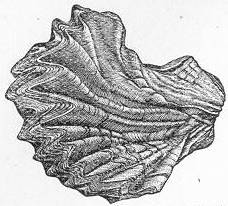
Fig. 166.—Ostrea Marshii. Middle and Lower Oolites.
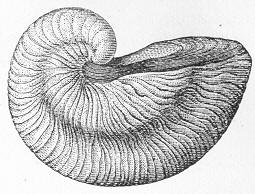
Fig. 167.—Gryphœa incurva. Lias.
"reversed"—that is to say, turned towards the hinder part
of the shell; whilst in the latter are Oysters in which the lower
valve of the shell is much the largest, and has a large incurved
beak, whilst the upper valve is small and concave. One of the
most characteristic Exogyrœ is the E.
Virgula of the Oxford Clay, and of the same horizon on the
Continent; and the Gryphœa incurva (fig. 167) is
equally abundant in, and characteristic of, the formation of
the Lias. Lastly, we may notice the extraordinary shells
belonging to the genus Diceras (fig. 168), which are
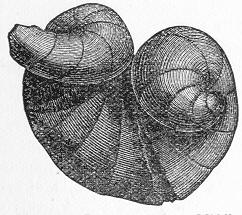
Fig. 168.—Diceras arietina. Middle Oolite.
exclusively confined to the Middle Oolites. In this formation
in the Alps they occur in such abundance as to give rise to the
name of "Calcaire à Dicerates," applied to beds of the
same age as the Coral-rag of Britain. The genus Diceras
belongs to the same family as the "Thorny Clams" (Chama) of the
present day—the shell being composed of nearly equally-sized
valves, the beaks of which are extremely prominent and twisted
into a spiral. The shell was attached to some foreign body by
the beak of one of its valves.
Amongst the Jurassic Univalves (Gasteropoda) there are
many examples of the ancient and long-lived Pleurotomaria;
but on the whole the Univalves begin to have a modern aspect.
The round-mouthed ("holostomatous"), vegetable-eating
Page 237
Sea-snails, such as the Limpets (Patellidœ), the Nerites
(Nerita), the Turritellœ, Chemnitziœ, &c.,
still hold a predominant place. The two most noticeable genera of
this group are Cerithium and Nerinœa—the
former of these attaining great importance in the Tertiary and Recent
seas, whilst the latter (fig. 169) is highly characteristic of the
Jurassic series, though not exclusively confined to it. One of the
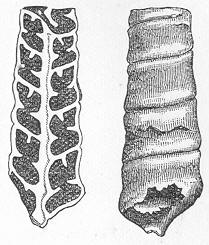
Fig. 169.—Nerinœa Goodhallii, one-fourth of the
natural size. The left-hand figure shows the appearance presented
by the shell when vertically divided. Coral-rag, England.
limestones of the Jura, believed to be of the age of the Coral-rag
(Middle Oolite) of Britain, abounds to such an extent in the turreted
shells of Nerinœa as to have gained the name of "Calcaire
à Nérinées." In addition to forms such as the
preceding, we now for the first time meet, in any force, with the
Carnivorous Univalves, in which the mouth of the shell is notched or
produced into a canal, giving rise to the technical name of
"siphonostomatous" applied to the shell. Some of the carnivorous
forms belong to extinct types, such as the Purpuroidea of the
Great Oolite; but others are referable to well-known existing genera.
Thus we meet here with species of the familiar groups of the Whelks
(Buccinum), the Spindle-shells (Fusus), the Spider-shells
(Pteroceras), Murex, Rostellaria, and others which are
not at present known to occur in any earlier formation.
Amongst the Wing-shells (Pteropoda), it is sufficient
to mark the final appearance in the Lias of the ancient genus
Conularia.
Lastly, the order of the Cephalopoda, in both its
Tetrabranchiate and Dibranchiate sections, undergoes a vast
development in the Jurassic period. The old and comparatively
simple genus Nautilus is still well represented, one
species being very similar to the living Pearly Nautilus (N.
Pompilius); but the Orthocerata and Goniatites
of the Trias have finally disappeared; and the great majority
of the Tetrabranchiate forms are referable to the comprehensive
genus Ammonites, with its many sub-genera and its hundreds
of recorded species. The shell in Ammonites is in the
form of a flat spiral, all the coils of which are in contact
(figs. 170 and 171). The innermost whorls of the shell are more
or less concealed; and the body-chamber is elongated and narrow,
rather than expanded towards the mouth. The tube or siphuncle
Page 238
which runs through the air-chambers is placed on the dorsal or
convex side of the shell; but the principal character
which distinguishes Ammonites from Goniatites and
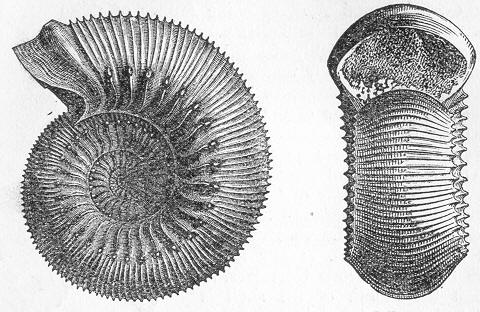
Fig. 170.—Ammonites Humphresianus. Inferior Oolite.
Ceratites is the wonderfully complex manner in which the
septa, or partitions between the air-chambers, are folded and
undulated. To such an extent does this take place, that the edges
of the septa, when exposed by the removal of the shell-substance,
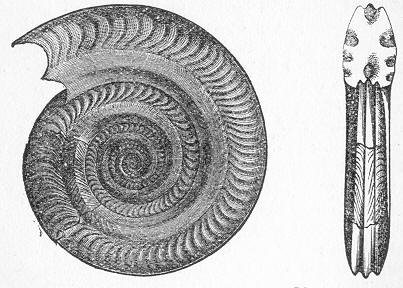
Fig. 171.—Ammonites bifrons. Lias.
present in an exaggerated manner the appearance exhibited by
an elaborately-dressed shirt-frill when viewed edgewise. The
species of Ammonites range from the Carboniferous to the
Chalk; but they have not been found in
Page 239
deposits older than the Secondary, in any region except India;
and they are therefore to be regarded as essentially Mesozoic
fossils. Within these limits, each formation is characterised
by particular species, the number of individuals being often
very great, and the size which is sometimes attained being
nothing short of gigantic. In the Lias, particular species of
Ammonites may succeed one another regularly, each having
a more or less definite horizon, which it does not transgress.
It is thus possible to distinguish a certain number of zones,
each characterised by a particular Ammonite, together with
other associated fossils. Some of these zones are very
persistent and extend over very wide areas, thus affording
valuable aid to the geologist in his determination of rocks.
It is to be remembered, however, that there are other species
which are not thus restricted in their vertical range, even
in the same formations in which definite zones occur.
The Cuttle-fishes or Dibranchiate Cephalopods constitute a
feature in the life of the Jurassic period little less conspicuous
and striking than that afforded by the multitudinous and varied
chambered shells of the Ammonitidœ. The remains by
which these animals are recognised are necessarily less perfect, as
a rule, than those of the latter, as no external shell is present
(except in rare and more modern groups), and the internal skeleton
is not necessarily calcareous. Nevertheless,we have an ample
record of the Cuttle-fishes of the Jurassic period, in the shape
of the fossilised jaws or beak, the ink-bag, and, most commonly
of all, the horny or calcareous structure which is embedded in
the soft tissues, and is variously known as the "pen" or "bone."
The beaks of Cuttle-fishes, though not abundant, are sufficiently
plentiful to have earned for themselves the general title of
"Rhyncholites;" and in their form and function they resemble the
horny, parrot-like beak of the existing Cephalopods. The ink-bag
or leathery sac in which the Cuttle-fishes store up the black
pigment with which they obscure the water when attacked, owes its
preservation to the fact that the colouring-matter which it contains
is finely-divided carbon, and therefore nearly indestructible except
by heat. Many of these ink-bags have been found in the Lias; and
the colouring-matter is sometimes so well preserved that it has
been, as an experiment, employed in painting as a fossil "sepia."
The "pens" of the Cuttle-fishes are not commonly preserved, owing
to their horny consistence, but they are not unknown. The form
here figured (Beloteuthis subcostata, fig. 172) belonged
to an old type essentially similar to our modern Calamaries, the
skeleton of which consists of a horny shaft
Page 240
and two lateral wings,
somewhat like a feather in general shape. When, on the other
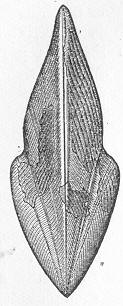
Fig. 172.—Beloteuthis subcostata Jurassic (Lias).
hand, the internal skeleton is calcareous, then it is very easily
preserved in a fossil condition; and the abundance of remains of
this nature in the Secondary rocks, combined with their apparent
total absence in Palæozoic strata, is a strong presumption in
favour of the view that the order of the Cuttle-fishes did not
come into existence till the commencement of the Mesozoic period.
The great majority of the skeletons of this kind which are found
in the Jurassic rocks belong to the great extinct family of the
"Belemnites" (Belemnitidoa), which, so far as known, is
entirely confined to rocks of Secondary age. From its pointed,
generally cylindro-conical form, the skeleton of the Belemnite is
popularly known as a "thunderbolt". (fig. 173, C). In its perfect
condition—in which it is, however, rarely obtainable—the
skeleton consists of a chambered conical shell (the "phragmacone"),
the partitions between the chambers of which are pierced by a
marginal tube or "siphuncle." This conical shell—curiously
similar in its structure to the external shell of the
Nautilus—is extended forwards into a horny "pen," and is sunk
in a corresponding conical pit (fig. 173, B), excavated in the
substance of a nearly cylindrical fibrous body or "guard," which
projects backwards for a longer or shorter distance, and is the
part most usually found in a fossil condition. Many different
kinds of Belemnites are known, and their guards literally
swarm in many parts of the Jurassic series, whilst some specimens
attain very considerable dimensions. Not only is the internal
skeleton known, but specimens of Belemnites and the nearly
allied Belemnoteuthis have been found in some of the
fine-grained sediments of the Jurassic formation, from which much
has been learnt even as to the anatomy of the soft parts of the
animal. Thus we know that the Belemnites were in many respects
comparable with the existing Calamaries or Squids, the body being
furnished with lateral fins, and the head carrying a circle of ten
"arms," two of which were longer than the others (fig. 173, A).
The suckers on the arms were provided, further, with horny hooks;
there was a large ink-sac; and the mouth was armed with horny
mandibles resembling in shape the beak of a parrot.
Coming next to the Vertebrates, we find that the Jurassic
Page 241
Fishes are still represented by Ganoids and
Placoids. The Ganoids, however, unlike the old forms, now
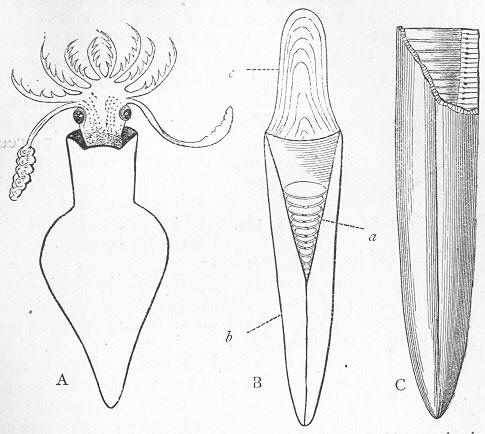
Fig. 173.—A, Restoration of the animal of the Belemnite; B,
Diagram showing the complete skeleton of a Belemnite, consisting
of the chambered phragmacone (a), the guard (b),
and the horny pen (c); C, Specimen of Belemnites
canaliculatus, from the Inferior Oolite. (After Phillips.)
for the most part possess nearly or quite symmetrical ("homocercal")
tails. A characteristic genus is Tetragonolepis (fig. 174),
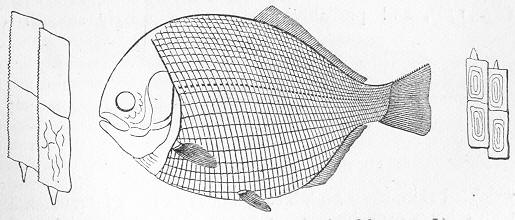
Fig. 174.—Tetragonolepis (restored), and scales of the
same. Lias.
with its deep compressed body, its rhomboidal, closely-fitting
scales, and its single long dorsal fin. Amongst the Placoids
Page 242
the teeth of true Sharks (Notidanus) occur for the first
time; but by far the greater number of remains referable to this
group are still the fin-spines and teeth of "Cestracionts,"
resembling the living Port-Jackson Shark. Some of these teeth are
pointed (Hybodus); but others are rounded, and are adapted
for crushing shell-fish. Of these latter, the commonest are the
teeth of Acrodus (fig. 175), of which the hinder ones are
Fig. 175.—Tooth of Acrodus nobilis. Lias.
of an elongated form, with a rounded surface, covered with fine
transverse striæ proceeding from a central longitudinal line.
From their general form and striation, and their dark colour, these
teeth are commonly called "fossil leeches" by the quarrymen.
The Amphibian group of the Labyrinthodonts, which was
so extensively developed in the Trias, appears to have become
extinct, no representative of the order having hitherto been
detected in rocks of Jurassic age.
Much more important than the Fishes of the Jurassic series are
the Reptiles, which are both very numerous, and belong to
a great variety of types, some of these being very extraordinary
in their anatomical structure. The predominant group is that
of the "Enaliosaurs" or "Sea-lizards," divided into two great
orders, represented respectively by the Ichthyosaurus
and the Plesiosaurus.
The Ichthyosauri or "Fish-Lizards" are exclusively Mesozoic
in their distribution, ranging from the Lias to the Chalk, but
abounding especially in the former. They were huge Reptiles, of
a fish-like form, with a hardly conspicuous neck (fig. 176),
and probably possessing a simply smooth or wrinkled skin, since
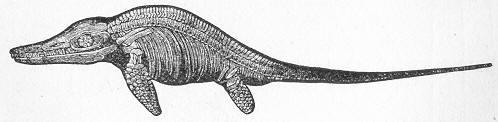
Fig. 176.—Ichthyosaurus communis. Lias.
no traces of scales or bony integumentary plates have ever been
discovered. The tail was long, and was probably furnished at its
extremity with a powerful expansion of the skin, constituting a
tail-fin similar to that possessed by the Whales. The limbs are
also like those of
Page 243
Whales in the essentials
of their structure, and in their being adapted to act as
swimming-paddles. Unlike the Whales, however, the Ichthyosaurs
possessed the hind-limbs as well as the fore-limbs, both pairs
having the bones flattened out and the fingers completely
enclosed in the skin, the arm and leg being at the same time
greatly shortened. The limbs are thus converted into efficient
"flippers," adapting the animal for an active existence in the
sea. The different joints of the backbone (vertebræ) also
show the same adaptation to an aquatic mode of life, being
hollowed out at both ends, like the biconcave vertebræ
of Fishes. The spinal column in this way was endowed with the
flexibility necessary for an animal intended to pass the
greater part of its time in water. Though the Ichthyosaurs
are undoubtedly marine animals, there is, however, reason to
believe that they occasionally came on shore, as they possess
a strong bony arch, supporting the fore-limbs, such as would
permit of partial, if laborious, terrestrial progression. The
head is of enormous size, with greatly prolonged jaws, holding
numerous powerful conical teeth lodged in a common groove. The
nature of the dental apparatus is such as to leave no doubt as to
the rapacious and predatory habits of the Ichthyosaurs—an
inference which is further borne out by the examination of their
petrified droppings, which are known to geologists as "coprolites,"
and which contain numerous fragments of the bones and scales
of the Ganoid fishes which inhabited the same seas. The orbits
are of huge size; and as the eyeball was protected, like that
of birds, by a ring of bony plates in its outer coat, we even
know that the pupils of the eyes were of correspondingly large
dimensions. As these bony plates have the function of protecting the
eye from injury under sudden changes of pressure in the surrounding
medium, it has been inferred, with great probability, that the
Ichthyosaurs were in the habit of diving to considerable depths
in the sea. Some of the larger specimens of Ichthyosaurus
which have been discovered in the Lias indicate an animal of
from 20 to nearly 40 feet in length; and many species are known
to have existed, whilst fragmentary remains of their skeletons
are very abundant in some localities. We may therefore safely
conclude that these colossal Reptiles were amongst the most
formidable of the many tyrants of the Jurassic seas.
The Plesiosaurus (fig. 177) is another famous Oolitic
Reptile, and, like the preceding, must have lived mainly or
exclusively in the sea. It agrees with the Ichthyosaur in some
important features of its organisation, especially in the fact
that both pairs of limbs are converted into "flippers" or
Page 244
swimming-paddles,
whilst the skin seems to have been equally destitute
of any scaly or bony investiture. Unlike the Ichthyosaur,
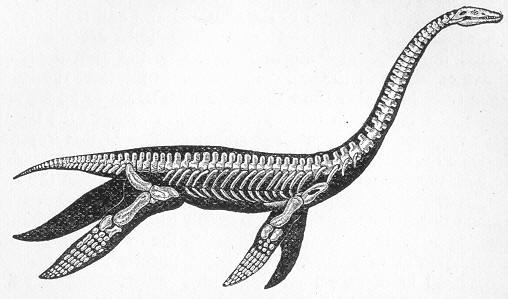
Fig. 177.—Plesiosaurus dolichodeirus, restored. Lias.
however, the Plesiosaur had the paddles placed
far back, the tail being extremely short, and the neck greatly
lengthened out, and composed of from twenty to forty vertebræ.
The bodies of the vertebræ, also, are not deeply biconcave, but
are flat, or only slightly cupped. The head is of relatively small
size, with smaller orbits than those of the Ichthyosaur,
and with a snout less elongated. The jaws, however, were armed
with numerous conical teeth, inserted in distinct sockets. As
regards the habits of the Plesiosaur, Dr Conybeare arrives at
the following conclusions: "That it was aquatic is evident from
the form of its paddles; that it was marine is almost equally so
from the remains with which it is universally associated; that
it may have occasionally visited the shore, the resemblance of
its extremities to those of the Turtles may lead us to conjecture:
its movements, however, must have been very awkward on land;
and its long neck must have impeded its progress through the
water, presenting a strong contrast to the organisation which so
admirably fits the Ichthyosaurus to cut through the waves."
As its respiratory organs were such that it must of necessity
have required to obtain air frequently, we may conclude "that
it swam upon or near the surface, arching back its long neck
like a swan, and occasionally darting it down at the fish which
happened to float within its reach. It may perhaps have lurked
in shoal water along the coast, concealed amongst the sea-weed;
and raising its nostrils to a level with
Page 245
the surface from a considerable depth, may have found a secure
retreat from the assaults of powerful enemies; while the length
and flexibility of its neck may have compensated for the want
of strength in its jaws, and its incapacity for swift-motion
through the water."
About twenty species of Plesiosaurus are known, ranging
from the Lias to the Chalk, and specimens have been found indicating
a length of from eighteen to twenty feet. The nearly related
"Pliosaurs," however, with their huge heads and short
necks, must have occasionally reached a length of at least forty
feet—the skull in some species being eight, and the paddles
six or seven feet long, whilst the teeth are a foot in length.
Another extraordinary group of Jurassic Reptiles is that of the
"Winged Lizards" or Pterosauria. These are often spoken
of collectively as "Pterodactyles," from Pterodactylus,
the type-genus of the group. As now restricted, however, the
genus Pterodactylus is more Cretaceous than Jurassic, and
it is associated in the Oolitic rocks with the closely allied
genera Dimorphodon and Rhamphorhynchus. In all
three of these genera we have the same general structural
organisation, involving a marvellous combination of characters,
which we are in the habit of regarding as peculiar to Birds on
the one hand, to Reptiles on another hand, and to the Flying
Mammals or Bats in a third direction. The "Pterosaurs" are "Flying"
Reptiles, in the true sense of the term, since they were indubitably
possessed of the power of active locomotion in the air, after the
manner of Birds. The so-called "Flying" Reptiles of the present
day, such as the little Draco volans of the East Indies
and Indian Archipelago, possess, on the other hand, no power
of genuine flight, being merely able to sustain themselves in
the air through the extensive leaps which they take from tree
to tree, the wing-like expansions of the skin simply exercising
the mechanical function of a parachute. The apparatus of flight
in the "Pterosaurs" is of the most remarkable character, and most
resembles the "wing" of a Bat, though very different in some
important particulars. The "wing" of the Pterosaurs is like that
of Bats, namely, in consisting of a thin leathery expansion of the
skin which is attached to the sides of the body, and stretches
between the fore and hind limbs, being mainly supported by an
enormous elongation of certain of the digits of the hand. In
the Bats, it is the four outer fingers which are thus lengthened
out; but in the Pterosaurs, the wing-membrane is borne by a single
immensely-extended finger (fig. 178). No trace of the actual
wing-membrane itself has, of course,
Page 246
been found fossilised; but
we could determine that the "Pterodactyles" possessed the power
of flight, quite apart from the extraordinary conformation of
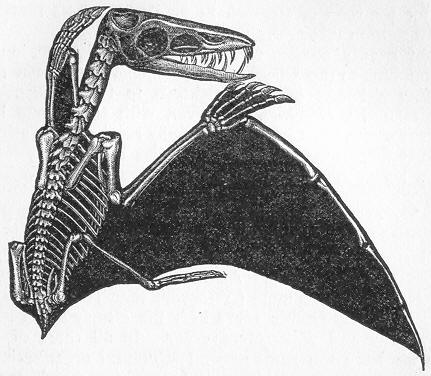
Fig. 178.—Pterodactylus crassirostis. From the
Lithographic Slates of Solenhofen (Middle Oolite). The figure is
"restored," and it seems certain that the restoration is incorrect
in the comparatively unimportant particular, that the hand should
consist of no more than four fingers, three short and one long,
instead of five, as represented.
the hand. The proofs of this are to be found partly in the fact
that the breast-bone was furnished with an elevated ridge or
keel, serving for the attachment of the great muscles of flight,
and still more in the fact that the bones were hollow and were
filled with air—a peculiarity wholly confined amongst living
animals to Birds only. The skull of the Pterosaurs is long, light,
and singularly bird-like in appearance—a resemblance which is
further increased by the comparative length of the neck and the size
of the vertebræ of this region (fig. 178). The jaws, however,
unlike those of any existing Bird, were, with one exception to be
noticed hereafter, furnished with conical teeth sunk in distinct
sockets; and there was always a longer or shorter tail composed
of distinct vertebræ; whereas in all existing Birds the tail
is abbreviated, and the terminal vertebræ are amalgamated to
form a single bone, which generally supports the great feathers
of the tail.
Modern naturalists have been pretty generally agreed that the
Pterosaurs should be regarded as a peculiar group of the
Reptiles; though they have been and are still regarded by high
authorities, like Professor Seeley, as being really referable
Page 247
to the Birds, or as forming a class by
themselves. The chief points which separate them from Birds, as
a class, are the character of the apparatus of flight, the
entirely different structure of the fore-limb, the absence of
feathers, the composition of the tail out of distinct
vertebræ, and the general presence of conical teeth sunk
in distinct sockets in the jaws. The gap between the Pterosaurs
and the Birds has, however, been greatly lessened of late by
the discovery of fossil animals (Ichthyornis and
Hesperornis) with the skeleton proper to Birds combined
with the presence of teeth in the jaws, and by the still more
recent discovery of other fossil animals (Pteranodon)
with a Pterosaurian skeleton, but without teeth; whilst the
undoubtedly feathered Archœopteryx possessed a long
tail composed of separate vertebræ. Upon the whole, therefore,
the relationships of the Pterosaurs cannot be regarded as absolutely
settled. It seems certain, however, that they did not possess
feathers—this implying that they were cold-blooded animals;
and their affinities with Reptiles in this, as in other characters,
are too strong to be overlooked.
The Pterosaurs are wholly Mesozoic, ranging from the Lias
to the Chalk inclusive; and the fine-grained Lithographic Slate
of Solenhofen has proved to be singularly rich in their remains.
The genus Pterodactylus itself has the jaws toothed to the
extremities with equal-sized conical teeth, and its species range
from the Middle Oolites to the Cretaceous series, in connection
with which they will be again noticed, together with the toothless
genus Pteranodon. The genus Dimorphodon is Liassic,
and is characterised by having the front teeth long and pointed,
whilst the hinder teeth are small and lancet-shaped. Lastly,
the singular genus Rhamphorhynchus, also from the Lower
Oolites, is distinguished by the fact that there are teeth present
in the hinder portions of both jaws; but the front portions are
toothless, and may have constituted a horny beak. Like most of
the other Jurassic Pterosaurs, Rhamphorhynchus (fig. 179)
does not seem to have been much bigger than a pigeon, in this
respect falling far below the giant "Dragons" of the Cretaceous
period. It differed from its relatives, not only in the armature of
the mouth, but also in the fact that the tail was of considerable
length. With regard to its habits and mode of life, Professor
Phillips remarks that, "gifted with ample means of flight, able
at least to perch on rocks and scuffle along the shore, perhaps
competent to dive, though not so well as a Palmiped bird, many
fishes must have yielded to the cruel beak and sharp teeth of
Rhamphorhynchus. If we ask to which of the many families of Birds
the analogy of
Page 248
structure and probable way of life would lead us
to assimilate Rhamphorhynchus, the answer must point to the
swimming races with long wings, clawed feet, hooked beak, and
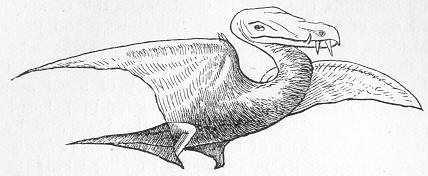
Fig. 179—Rhamphorhynchus Bucklandi, restored. Bath
Oolite, England. (After the late Professor Phillips.)
habits or violence and voracity; and for preference, the shortness
of the legs, and other circumstances, may be held to claim for
the Stonesfield fossil a more than fanciful similitude to the
groups of Cormorants, and other marine divers, which constitute
an effective part of the picturesque army of robbers of the sea."
Another extraordinary and interesting group of the Mesozoic Reptiles
is constituted by the Deinosauria, comprising a series of
mostly gigantic forms, which range from the Trias to the Chalk.
All the "Deinosaurs" are possessed of the two pairs of limbs
proper to Vertebrate animals, and these organs are in the main
adapted for walking on the dry land. Thus, whilst the Mesozoic
seas swarmed with the huge Ichthyosaurs and Plesiosaurs, and
whilst the air was tenanted by the Dragon-like Pterosaurs, the
land-surfaces of the Secondary period were peopled by numerous
forms of Deinosaurs, some of them of even more gigantic dimensions
than their marine brethren. The limbs of the Deinosaurs
are, as just said, adapted for progression on the land; but in
some cases, at any rate, the hind-limbs were much longer and
stronger than the fore-limbs; and there seems to be no reason to
doubt that many of these forms possessed the power of walking,
temporarily or permanently, on their hind-legs, thus presenting
a singular resemblance to Birds. Some very curious and striking
points connected with the structure of the skeleton have also
been shown to connect these strange Reptiles with the true Birds;
and such high authorities as Professors Huxley and Cope are of
opinion that the Deinosaurs are distinctly related to this class,
being in some respects intermediate between the proper Reptiles
and the great wingless Birds, like the Ostrich and Cassowary.
On the other hand, Professor Owen has shown that the Deinosaurs
Page 249
possess some weighty points of relationship
with the so-called "Pachydermatous" Quadrupeds, such as the
Rhinoceros and Hippopotamus. The most important Jurassic genera
of Deinosauria are Megalosaurus and
Cetiosaurus, both of which extend their range into the
Cretaceous period, in which flourished, as we shall see, some
other well-known members of this order.
Megalosaurus attained gigantic dimensions, its thigh and
shank bones measuring each about three feet in length, and its
total length, including the tail, being estimated at from forty
to fifty feet. As the head of the thigh-bone is set on nearly at
right angles with the shaft, whilst all the long bones of the
skeleton are hollowed out internally for the reception of the
marrow, there can be no doubt as to the terrestrial habits of
the animal. The skull (fig. 180) was of large size, four or five
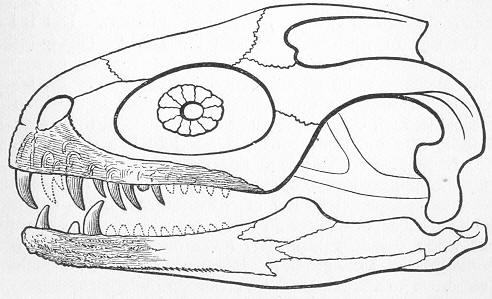
Fig. 180.—Skull of Megalosaurus, on a scale
one-tenth of nature. Restored. (After Professor Phillips.)
feet in length, and the jaws were armed with a series of powerful
pointed teeth. The teeth are conical in shape, but are strongly
compressed towards their summits, their lateral edges being finely
serrated. In their form and their saw-like edges, they resemble
the teeth of the "Sabre-toothed Tiger" (Machairodus), and
they render it certain that the Megalosaur was in the highest
degree destructive and carnivorous in its habits. So far as is
known, the skin was not furnished with any armour of scales or bony
plates; and the fore-limbs are so disproportionately small as
compared with the hind-limbs, that this huge Reptile—like
the equally huge Iguanodon—may be
Page 250
conjectured to have commonly supported itself on its hind-legs
only.
The Cetiosaur attained dimensions even greater than those
of the Megalosaur, one of the largest thigh-bones measuring over
five feet in length and a foot in diameter in the middle, and the
total length of the animal being probably not less than fifty
feet. It was originally regarded as a gigantic Crocodile, but
it has been shown to be a true Deinosaur. Having obtained a
magnificent series of remains of this reptile, Professor Phillips
has been able to determine many very interesting points as to
the anatomy and habits of this colossal animal, the total length
of which he estimates as being probably not less than sixty or
seventy feet. As to its mode of life, this accomplished writer
remarks:—
"Probably when 'standing at ease' not less than ten feet in height,
and of a bulk in proportion, this creature was unmatched in magnitude
and physical strength by any of the largest inhabitants of the
Mesozoic land or sea. Did it live in the sea, in fresh waters,
or on the land? This question cannot be answered, as in the case
of Ichthyosaurus, by appeal to the accompanying organic remains;
for some of the bones lie in marine deposits, others in situations
marked by estuarine conditions, and, out of the Oxfordshire district,
in Sussex, in fluviatile accumulations. Was it fitted to live
exclusively in water? Such an idea was at one time entertained,
in consequence of the biconcave character of the caudal vertebræ,
and it is often suggested by the mere magnitude of the creature,
which would seem to have an easier life while floating in water,
than when painfully lifting its huge bulk, and moving with slow
steps along the ground. But neither of these arguments is valid. The
ancient earth was trodden by larger quadrupeds than our elephant;
and the biconcave character of vertebræ, which is not uniform
along the column in Cetiosaurus, is perhaps as much a character
of a geological period as of a mechanical function of life. Good
evidence of continual life in water is yielded in the case of
Ichthyosaurus and other Enaliosaurs, by the articulating surfaces
of their limb-bones, for these, all of them, to the last phalanx,
have that slight and indefinite adjustment of the bones, with much
intervening cartilage, which fits the leg to be both a flexible
and forcible instrument of natation, much superior to the ordinary
oar-blade of the boatman. On the contrary, in Cetiosaur, as well as
in Megalosaur and Iguanodon, all the articulations are definite,
and made so as to correspond to determinate movements in particular
directions, and these are such as to be suited
Page 251
for walking. In particular, the femur, by its head projecting
freely from the acetabulum, seems to claim a movement of free
stepping more parallel to the line of the body, and more
approaching to the vertical than the sprawling gait of the
crocodile. The large claws concur in this indication of
terrestrial habits. But, on the other hand, these characters are
not contrary to the belief that the animal may have been
amphibious; and the great vertical height of the anterior part
of the tail seems to support this explanation, but it does not
go further.... We have therefore a marsh-loving or river-side
animal, dwelling amidst filicine, cycadaceous, and coniferous
shrubs and trees full of insects and small mammalia. What was
its usual diet? If ex ungue leonem, surely ex dente
cibum. We have indeed but one tooth, and that small and
incomplete. It resembles more the tooth of Iguanodon than that
of any other reptile; for this reason it seems probable that
the animal was nourished by similar vegetable food which
abounded in the vicinity, and was not obliged to contend with
Megalosaurus for a scanty supply of more stimulating diet."
All the groups of Jurassic Reptiles which we have hitherto been
considering are wholly unrepresented at the present day, and
do not even pass upwards into the Tertiary period. It may be
mentioned, however, that the Oolitic deposits have also yielded
the remains of Reptiles belonging to three of the existing orders
of the class-namely, the Lizards (Lacertilia), the Turtles
(Chelonia), and the Crocodiles (Crocodilia). The
Lizards occur both in the marine strata of the Middle Oolites and
also in the fresh-water beds of the Purbeck series; and they are of
such a nature that their affinities with the typical Lacertilians
of the present day cannot be disputed. The Chelonians, up to
this point only known by the doubtful evidence of footprints
in the Permian and Triassic sandstones, are here represented by
unquestionable remains, indicating the existence of marine Turtles
(the Chelone planiceps of the Portland Stone). No remains
of Serpents (Ophidians) have as yet been detected in the
Jurassic; but strata of this age have yielded the remains of
numerous Crocodilians, which probably inhabited the sea.
The most important member of this group is Teleosaurus,
which attained a length of over thirty feet, and is in some
respects allied to the living Gavials of India.
The great class of the Birds, as we have seen, is represented
in rocks earlier than the Oolites simply by the not absolutely
certain evidence of the three-toed footprints of the Connecticut
Trias. In the Lithographic Slate of Solenhofen (Middle
Page 252
Oolite), there has been discovered,
however, the at present unique skeleton of a Bird well known
under the name of the Archœopteryx macrura (figs.
181, 182). The only known specimen—now in the British
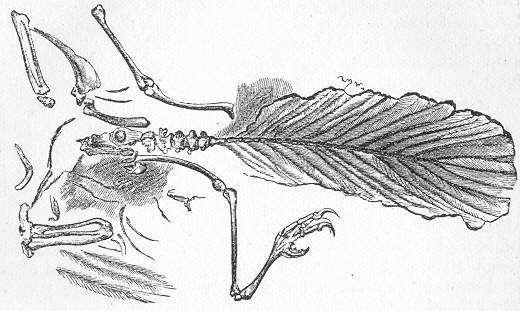
Fig. 181.—Archœopteryx macrura, showing
tail and tail-feathers, with detached bones. Reduced. From the
Lithographic Slate of Solenhofen.
Museum—unfortunately does not exhibit the skull; but the
fine-grained matrix has preserved a number of the other bones
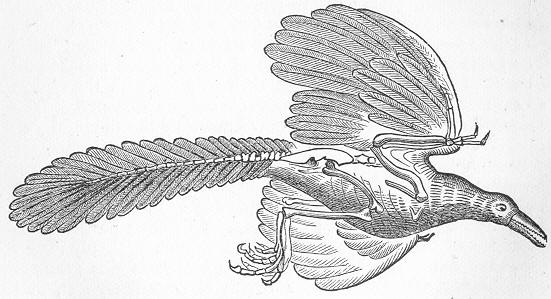
Fig. 182.—Restoration of Archœopteryx macrura.
(After Owen.)
of the skeleton, along with the impressions of the tail and wing
feathers. From these remains we know that Archœopteryx
differed in some remarkable
Page 253
peculiarities of its structure from all existing members of the
class of Birds. This extraordinary Bird (fig. 182) appears to
have been about as big as a Rook—the tail being long and
extremely slender, and composed of separate vertebræ, each
of which supports a single pair of quill-feathers. In the flying
Birds of the present day, as before mentioned, the terminal
vertebræ of the tail are amalgamated to form a single bone
("ploughshare-bone"), which supports a cluster of tail-feathers;
and the tail itself is short. In the embryos of existing Birds
the tail is long, and is made up of separate vertebræ, and the
same character is observed in many existing Reptiles. The tail
of Archœopteryx, therefore, is to be regarded as the
permanent retention of an embryonic type of structure, or as an
approximation to the characters of the Reptiles. Another remarkable
point in connection with Archœopteryx, in which it
differs from all known Birds, is, that the wing was furnished with two
free claws. From the presence of feathers, Archœopteryx
may be inferred to have been hot-blooded; and this character,
taken along with the structure of the skeleton of the wing, may
be held as sufficient to justify its being considered as belonging
to the class of Birds. In the structure of the tail, however,
it is singularly Reptilian; and there is reason to believe that
its jaws were furnished with teeth sunk in distinct sockets,
as is the case in no existing Bird. This conclusion, at any rate,
is rendered highly probable by the recent discovery of "Toothed
Birds" (Odonturnithes) in the Cretaceous rocks of North
America.
The Mammals of the Jurassic period are known to us by
a number of small forms which occur in the "Stonesfield Slate"
(Great Oolite) and in the Purbeck beds (Upper Oolite). The remains
of these are almost exclusively separated halves of the lower
jaw, and they indicate the existence during the Oolitic period in
Europe of a number of small "Pouched animals" (Marsupials).
In the horizon of the Stonesfield Slate four genera of these
little Quadrupeds have been described—viz., Amphilestes,
Amphitherium, Phascolotherium, and Stereognathus. In
Amphitherium (fig. 183), the molar teeth are furnished with
small pointed eminences or "cusps;" and the animal was doubtless
insectivorous. By Professor Owen, the highest living authority
on the subject, Amphitherium is believed to be a small
Marsupial, most nearly allied to the living Banded Ant-eater
(Myrmecobius) of Australia (fig. 158). Amphilestes
and Phascolotherium (fig. 184) are also believed by the
same distinguished anatomist and palæontologist to have been
insect-eating Marsupials, and
Page 254
the latter is supposed to
find its nearest living ally in the Opossums (Didelphys)
of America. Lastly, the Stereognathus of the Stonesfield
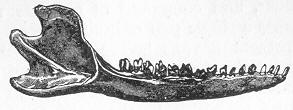
Fig. 183.—Lower jaw of Amphitherium
(Thylacotherium) Prevostii. Stonesfield Slate
(Great Oolite.)
Slate is in a dubious position. It may have been a Marsupial;
but, upon the whole, Professor Owen is inclined to believe that
it must have been a hoofed and herbivorous Quadruped belonging
to the series of the higher Mammals (Placentalia). In the
Middle Purbeck beds, near to the close of the Oolitic period, we
have also evidence of the existence of a number of small Mammals,
all of which are probably Marsupials. Fourteen species are known,
all of small size, the largest being no bigger than a Polecat
or Hedgehog. The genera to which these little quadrupeds have
been referred are Plagiaulax, Spalacotherium, Triconodon,
and Galestes. The first of these (fig. 184, 4) is believed
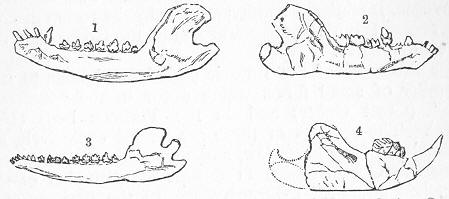
Fig. 184. Oolitic Mammals.—1, Lower jaw and teeth of
Phascolotherium, Stonesfield Slate; 2, Lower jaw and
teeth of Amphitherium, Stonesfield Slate; 3, Lower jaw
and teeth of Triconodon, Purbeck beds; 4, Lower jaw and
teeth of Plagiaulax, Purbeck beds. All the figures are
of the natural size.
by Professor Owen to have been carnivorous in its habits; but
other authorities maintain that it was most nearly allied to
the living Kangaroo-rats (Hypsiprymnus) of Australia,
and that it was essentially herbivorous. The remaining three
genera appear to have been certainly insectivorous, and find
their nearest living representatives in the Australian Phalangers
and the American Opossums.
Finally, it is interesting to notice in how many respects the
Page 255
Jurassic fauna of Western Europe approached
to that now inhabiting Australia. At the present day, Australia
is almost wholly tenanted by Marsupials; upon its land-surface
flourish Araucariœ and Cycadaceous plants, and in
its seas swims the Port-Jackson Shark (Cestracion
Philippi); whilst the Molluscan genus Trigonia is
nowadays exclusively confined to the Australian coasts. In
England, at the time of the deposition of the Jurassic rocks,
we must have had a fauna and flora very closely resembling what
we now see in Australia. The small Marsupials, Amphitherium,
Phascolotherium, and others, prove that the Mammals were
the same in order; cones of Araucarian pines, with tree-ferns
and fronds of Cycads, occur throughout the Oolitic series;
spine-bearing fishes, like the Port-Jackson Shark, are abundantly
represented by genera such as Acrodus and Strophodus;
and lastly, the genus Trigonia, now exclusively Australian,
is represented in the Oolites by species which differ little
from those now existing. Moreover, the discovery during recent
years of the singular Mud-fish, the Ceratodus Fosteri in
the rivers of Queensland, has added another and a very striking
point of resemblance to those already mentioned; since this genus
of Fishes, though preeminently Triassic, nevertheless extended
its range into the Jurassic. Upon the whole, therefore, there
is reason to conclude that Australia has undergone since the
close of the Jurassic period fewer changes and vicissitudes than
any other known region of the globe; and that this wonderful
continent has therefore succeeded in preserving a greater number
of the characteristic life-features of the Oolites than any other
country with which we are acquainted.
LITERATURE.
The following list comprises some of the more important sources
of information as to the rocks and fossils of the Jurassic
series:—
| (1) |
'Geology of Oxford and the Thames Valley.' Phillips. |
| (2) |
'Geology of Yorkshire,' vol. ii. Phillips. |
| (3) |
'Memoirs of the Geological Survey of Great Britain.' |
| (4) |
'Geology of Cheltenham.' Murchison, 2d ed. Buckman. |
| (5) |
'Introduction to the Monograph of the Oolitic Asteriadæ'
(Palæontographical Society). Wright. |
| (6) |
"Zone of Avicula contorta and the Lower Lias of the South of
England"—'Quart. Journ. Geol. Soc.,' vol. xvi., 1860.
Wright. |
| (7) |
"Oolites of Northamptonshire"—'Quart. Journ. Geol. Soc.,'
vols. Xxvi. and xxix. Sharp. |
| (8) |
'Manual of Geology.' Dana. |
| (9) |
'Der Jura.' Quenstedt. |
| (10) |
'Das Flötzgebirge Württembergs.'
Quenstedt. |
| (11) |
'Jura Formation.' Oppel. |
|
Page 256
(12) |
'Paléontologie du Département de la Moselle.'
Terquem. |
| (13) |
'Cours élémentaire de Paléontologie.'
D'Orbigny. |
| (14) |
'Paléontologie Française.' D'Orbigny. |
| (15) |
'Fossil Echinodermata of the Oolitic Formation'
(Palæontographical Society). Wright. |
| (16) |
'Brachiopoda of the Oolitic Formation'
(Palæontographical Society). Davidson. |
| (17) |
'Mollusca of the Great Oolite' (Palæontographical
Society). Morris and Lycett. |
| (18) |
'Monograph of the Fossil Trigoniæ'
(Palæontographical Society). Lycett. |
| (19) |
'Corals of the Oolitic Formation' (Palæontographical
Society). Edwards and Haime. |
| (20) |
'Supplement to the Corals of the Oolitic Formation'
(Palæontographical Society). Martin Duncan. |
| (21) |
'Monograph of the Belemnitidæ'
(Palæontographical Society). Phillips. |
| (22) |
'Structure of the Belemnitidæ' (Mem. Geol. Survey).
Huxley. |
| (23) |
'Sur les Belemnites.' Blainville. |
| (24) |
'Cephalopoden.' Quenstedt. |
| (25) |
'Mineral Conchology.' Sowerby. |
| (26) |
'Jurassic Cephalopoda' (Palæontologica Indica).
Waagen. |
| (27) |
'Manual of the Mollusca.' Woodward. |
| (28) |
'Petrefaktenkunde.' Schlotheim. |
| (29) |
'Bridgewater Treatise.' Buckland. |
| (30) |
'Versteinerungen des Oolithengebirges.' Roemer. |
| (31) |
'Catalogue of British Fossils.' Morris. |
| (32) |
'Catalogue of Fossils in the Museum of Practical Geology.'
Etheridge. |
| (33) |
'Beiträge zur Petrefaktenkunde.'
Münster. |
| (34) |
'Petrefacta Germaniæ.' Goldfuss. |
| (35) |
'Lethæa Rossica.' Eichwald. |
| (36) |
'Fossil Fishes' (Decades of the Geol. Survey). Sir Philip
Egerton. |
| (37) |
'Manual of Palæontology.' Owen. |
| (38) |
'British Fossil Mammals and Birds.' Owen. |
| (39) |
'Monographs of the Fossil Reptiles of the Oolitic
Formation' (Palæontographical Society). Owen. |
| (40) |
'Fossil Mammals of the Mesozoic Formations'
(Palæontographical Society). Owen. |
| (41) |
'Catalogue of Ornithosauria.' Seeley. |
| (42) |
"Classification of the Deinosauria"—'Quart. Journ.
Geol. Soc.,' vol. xxvi., 1870. Huxley. |
CHAPTER XVII.
THE CRETACEOUS PERIOD.
The next series of rocks in ascending order is the great and
important series of the Cretaceous Rocks, so called from the
general occurrence in the system of chalk (Lat. creta,
Page 257
chalk). As developed in Britain and Europe generally, the
following leading subdivisions may be recognised in the
Cretaceous series:—
1. Wealden,
2. Lower Greensand or Neocomian,
| Lower Cretaceous. |
3. Gault,
4. Upper Greensand,
5. Chalk,
6. Maestricht beds,
| Upper Cretaceous. |
I. Wealden.—The Wealden formation, though of
considerable importance, is a local group, and is confined to
the southeast of England, France, and some other parts of Europe.
Its name is derived from the Weald, a district comprising
parts of Surrey, Sussex, and Kent, where it is largely developed.
Its lower portion, for a thickness of from 500 to 1000 feet,
is arenaceous, and is known as the Hastings Sands. Its Upper
portion, for a thickness of 150 to nearly 300 feet, is chiefly
argillaceous, consisting of clays with sandy layers, and occasionally
courses of limestone. The geological importance of the Wealden
formation is very great, as it is undoubtedly the delta of an
ancient river, being composed almost wholly of fresh-water beds,
with a few brackish-water and even marine strata, intercalated
in the lower portion. Its geographical extent, though uncertain,
owing to the enormous denudation to which it has been subjected,
is nevertheless great, since it extends from Dorsetshire to France,
and occurs also in North Germany. Still, even if it were continuous
between all these points, it would not be larger than the delta
of such a modern river as the Ganges. The river which produced
the Wealden series must have flowed from an ancient continent
occupying what is now the Atlantic Ocean; and the time occupied
in the formation of the Wealden must have been very great, though
we have, of course, no data by which we can accurately calculate
its duration.
The fossils of the Wealden series are, naturally, mostly the
remains of such animals as we know at the present day as inhabiting
rivers. We have, namely, fresh-water Mussels (Unio),
River-snails (Paludina), and other fresh-water shells,
with numerous little bivalved Crustaceans, and some fishes.
II. Lower Greensand (Néocomien of
D'Orbigny).—The Wealden beds pass upward, often by insensible
gradations, into the Lower Greensand. The name Lower Greensand is
not an appropriate one, for green sands only occur sparingly and
occasionally, and are found in other formations. For this
Page 258
reason it has been proposed to substitute for Lower Greensand the
name Neocomian, derived from the town of
Neufchâtel—anciently called Neocomum—in
Switzerland. If this name were adopted, as it ought to be, the
Wealden beds would be called the Lower Neocomian.
The Lower Greensand or Neocomian of Britain has a thickness of
about 850 feet, and consists of alternations of sands, sandstones,
and clays, with occasional calcareous bands. The general colour
of the series is dark brown, sometimes red; and the sands are
occasionally green, from the presence of silicate of iron.
The fossils of the Lower Greensand are purely marine, and among
the most characteristic are the shells of Cephalopods.
The most remarkable point, however, about the fossils of the
Lower Cretaceous series, is their marked divergence from the
fossils of the Upper Cretaceous rocks. Of 280 species of fossils
in the Lower Cretaceous series, only 51, or about 18 per cent, pass
on into the Upper Cretaceous. This break in the life of the two
periods is accompanied by a decided physical break as well; for the
Gault is often, if not always, unconformably superimposed on the
Lower Greensand. At the same time, the Lower and Upper Cretaceous
groups form a closely-connected and inseparable series, as shown
by a comparison of their fossils with those of the underlying
Jurassic rocks and the overlying Tertiary beds. Thus, in Britain
no marine fossil is known to be common to the marine beds of
the Upper Oolites and the Lower Greensand; and of more than 500
species of fossils in the Upper Cretaceous rocks, almost everyone
died out before the formation of the lowest Tertiary strata, the
only survivors being one Brachiopod and a few Foraminifera.
III. Gault (Aptien of D'Orbigny).—The lowest
member of the Upper Cretaceous series is a stiff, dark-grey, blue,
or brown clay, often worked for brick-making, and known as the
Gault, from a provincial English term. It occurs chiefly
in the south-east of England, but can be traced through France
to the flanks of the Alps and Bavaria. It never exceeds 100 feet
in thickness; but it contains many fossils, usually in a state
of beautiful preservation.
IV. Upper Greensand (Albien of D'Orbigny;
Unterquader and Lower Plänerkalk of
Germany).—The Gault is succeeded upward by the Upper
Greensand, which varies in thickness from 3 up to 100 feet,
and which derives its name from the occasional occurrence in it
of green sands. These, however, are local and sometimes wanting,
and the name "Upper
Page 259
Greensand" is to be
regarded as a name and not a description. The group
consists, in Britain, of sands and clays, sometimes with bands
of calcareous grit or siliceous limestone, and occasionally
containing concretions of phosphate of lime, which are largely
worked for agricultural purposes.
V. White Chalk.—The top of the Upper Greensand becomes
argillaceous, and passes up gradually into the base of the great
formation known as the true Chalk, divided into the three
subdivisions of the chalk-marl, white chalk without flints, and
white chalk with flints. The first of these is simply argillaceous
chalk, and passes up into a great mass of obscurely-stratified white
chalk in which there are no flints (Turonien of D'Orbigny;
Mittelquader of Germany). This, in turn, passes up into a
great mass of white chalk, in which the stratification is marked
by nodules of black flint arranged in layers (Sénonien
of D'Orbigny; Oberquader of Germany). The thickness of
these three subdivisions taken together is sometimes over 1000
feet, and their geographical extent is very great. White Chalk,
with its characteristic appearance, may be traced from the north
of Ireland to the Crimea, a distance of about 1140 geographical
miles; and, in an opposite direction, from the south of Sweden
to Bordeaux, a distance of about 840 geographical miles.
VI. In Britain there occur no beds containing Chalk fossils, or
in any way referable to the Cretaceous period, above the true
White Chalk with flints. On the banks of the Maes, however, near
Maestricht in Holland, there occurs a series of yellowish limestones,
of about 100 feet in thickness, and undoubtedly superior to the
White Chalk. These Maestricht beds (Danien of
D'Orbigny) contain a remarkable series of fossils, the characters
of which are partly Cretaceous and partly Tertiary. Thus, with
the characteristic Chalk fossils, Belemnites, Baculites,
Sea-Urchins, &c., are numerous Univalve Molluscs, such as
Cowries and Volutes, which are otherwise exclusively Tertiary or
Recent.
Holding a similar position to the Maestricht beds, and showing
a similar intermixture of Cretaceous forms with later types, are
certain beds which occur in the island of Seeland, in Denmark,
and which are known as the Faxöe Limestone.
Of a somewhat later date than the Maestricht beds is the Pisolitic
Limestone of France, which rests unconformably on the White
Chalk, and contains a large number of Tertiary fossils along
with some characteristic Cretaceous types.
The subjoined sketch-section exhibits the general succession of
the Cretaceous deposits in Britain:—
Page 260
GENERALIZED SECTION OF THE CRETACEOUS SERIES OF BRITAIN.
Fig. 185.
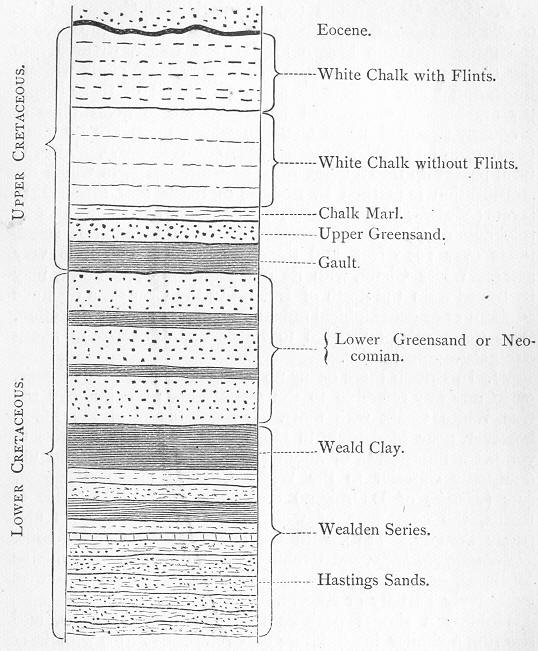 In North America, strata of Lower Cretaceous age are well represented
in Missouri, Wyoming, Utah, and in some other areas; but the greater
portion of the American deposits of this period are referable
to the Upper Cretaceous. The rocks of this series are mostly
sands, clays, and limestones—Chalk itself being unknown
except in Western Arkansas. Amongst the sandy accumulations, one
of the most important is the
Page 261
so-called "marl"
of New Jersey, which is truly a "Greensand," and contains a large
proportion of glauconite (silicate of iron and potash). It also
contains a little phosphate of lime, and is largely worked for
agricultural purposes. The greatest thickness attained by the
Cretaceous rocks of North America is about 9000 feet, as in Wyoming,
Utah, and Colorado. According to Dana, the Cretaceous rocks of the
Rocky Mountain territories pass upwards "without interruption into
a coal-bearing formation, several thousand feet thick, on which the
following Tertiary strata lie unconformably." The lower portion of
this "Lignitic formation" appears to be Cretaceous, and contains
one or more beds of Coal; but the upper part of it perhaps belongs
to the Lower Tertiary. In America, therefore, the lowest Tertiary
strata appear to rest conformably upon the highest Cretaceous;
whereas in Europe, the succession at this point is invariably an
unconformable one. Owing, however, to the fact that the American
"Lignitic formation" is a shallow-water formation, it can hardly
be expected to yield much material whereby to bridge over the
great palæontological gap between the White Chalk and Eocene
in the Old World.
In North America, strata of Lower Cretaceous age are well represented
in Missouri, Wyoming, Utah, and in some other areas; but the greater
portion of the American deposits of this period are referable
to the Upper Cretaceous. The rocks of this series are mostly
sands, clays, and limestones—Chalk itself being unknown
except in Western Arkansas. Amongst the sandy accumulations, one
of the most important is the
Page 261
so-called "marl"
of New Jersey, which is truly a "Greensand," and contains a large
proportion of glauconite (silicate of iron and potash). It also
contains a little phosphate of lime, and is largely worked for
agricultural purposes. The greatest thickness attained by the
Cretaceous rocks of North America is about 9000 feet, as in Wyoming,
Utah, and Colorado. According to Dana, the Cretaceous rocks of the
Rocky Mountain territories pass upwards "without interruption into
a coal-bearing formation, several thousand feet thick, on which the
following Tertiary strata lie unconformably." The lower portion of
this "Lignitic formation" appears to be Cretaceous, and contains
one or more beds of Coal; but the upper part of it perhaps belongs
to the Lower Tertiary. In America, therefore, the lowest Tertiary
strata appear to rest conformably upon the highest Cretaceous;
whereas in Europe, the succession at this point is invariably an
unconformable one. Owing, however, to the fact that the American
"Lignitic formation" is a shallow-water formation, it can hardly
be expected to yield much material whereby to bridge over the
great palæontological gap between the White Chalk and Eocene
in the Old World.
Owing to the fact that so large a portion of the Cretaceous formation
has been deposited in the sea, much of it in deep water, the
plants of the period have for the most part been found
special members of the series, such as the Wealden beds, the
Aix-la-Chapelle sands, and the Lignitic beds of North America. Even
the purely marine strata, however, have yielded plant-remains, and
some of these are peculiar and proper to the deep-sea deposits of
the series. Thus the little calcareous discs termed "coccoliths,"
which are known to be of the nature of calcareous sea-weeds
(Algœ) have been detected in the White Chalk; and the
flints of the same formation commonly contain the spore-cases of
the microscopic Desmids (the so-called Xanthidia), along
with the siliceous cases of the equally diminutive Diatoms.
The plant-remains of the Lower Cretaceous greatly resemble those
of the Jurassic period, consisting mainly of Ferns, Cycads, and
Conifers. The Upper Cretaceous rocks, however, both in Europe and
in North America, have yielded an abundant flora which resembles
the existing vegetation of the globe in consisting mainly of
Angiospermous Exogens and of Monocotyledons.[23] In Europe the
plant-remains in question have
Page 262
been found chiefly in certain sands in the neighbourhood of
Aix-la-Chapelle, and they consist of numerous Ferns, Conifers
(such as Cycadopteris), Screw Pines (Pandanus), Oaks
(Quercus), Walnut (Juglans), Fig (Ficus), and
many Proteaceœ, some of which are referred to existing
genera (Dryandra, Banksia, Grevillea, &c.)
In North America, the Cretaceous strata of New Jersey, Alabama,
Nebraska, Kansas, &c., have yielded the remains of numerous
plants, many of which belong to existing genera. Amongst these
may be mentioned Tulip-trees (Liriodendron), Sassafras (fig.
186), Oaks (Quercus), Beeches (Fagus), Plane-trees
(Platanus), Alders (Alnus), Dog-wood (Cornus),
Willows (Salix), Poplars (Populus), Cypresses
(Cupressus), Bald Cypresses (Taxodium), Magnolias,
&c. Besides these, however, there occur other forms which have
now entirely disappeared from North America—as, for example,
species of Cinnamomum and Araucaria.
It follows from the above, that the Lower and Upper Cretaceous
rocks are, from a botanical point of view, sharply separated
from one another. The Palæozoic period, as we have seen, is
characterised by the prevalance of "Flowerless" plants
(Cryptogams), its higher vegetation consisting almost
exclusively of Conifers. The Mesozoic period, as a whole, is
characterised by the prevalence of the Cryptogamic group of the
Ferns, and the Gymnospermic groups of the Conifers and the Cycads.
Up to the close of the Lower Cretaceous, no Angiospermous Exogens
are certainly known to have existed, and Monocotyledonous plants
or Endogens are very poorly represented. With the Upper Cretaceous,
however, a new era of plant-life, of which our present is but
the culmination, commenced, with a great and apparently sudden
development of new forms. In place of the Ferns, Cycads, and
Conifers of the earlier Mesozoic deposits, we have now an
astonishingly large number of true Angiospermous Exogens, many
of them belonging to existing types; and along with these are
various Monocotyledonous plants, including the first examples of
the great and important
Page 263
group of the Palms. It is thus a matter
of interest to reflect that plants closely related to those now
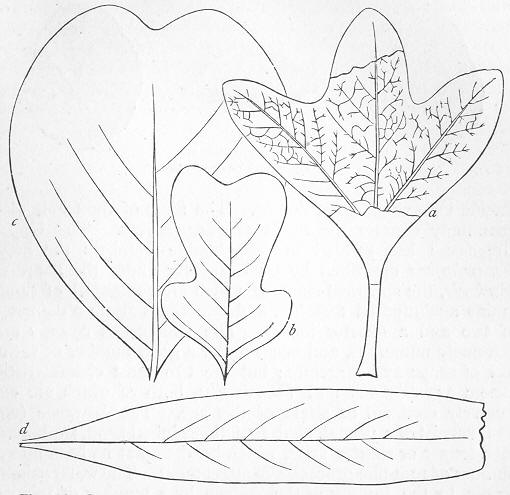
Fig. 186.—Cretaceous Angiosperms. a. Sassafras Cretaceum;
b, Liriodendron Meekii; c, Leguminosites Marcouanus; d, Salix
Meekii. (After Dana.)
inhabiting the earth, were in existence at a time when the ocean
was tenanted by Ammonites and Belemnites, and when land and sea
and air were peopled by the extraordinary extinct Reptiles of
the Mesozoic period.
As regards animal life, the Protozoans of the Cretaceous
period are exceedingly numerous, and are represented by
Foraminifera and Sponges. As we have already seen,
the White Chalk itself is a deep-sea deposit, almost entirely
composed of the microscopic shells of Foraminifers, along
with Sponge-spicules, and organic débris of different
kinds (see fig. 7). The green grains which are so abundant in several
minor subdivisions of the Cretaceous, are also in many instances
really casts in glauconite of the chambered shells of these minute
organisms. A great many species of Foraminifera have been
recognised in the Chalk; but the three principal genera are
Page 264
Globigerina, Rotalia (fig. 187), and Textularia—groups
which are likewise characteristic of the "ooze" of the Atlantic and
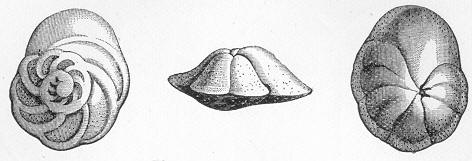
Fig. 187—Kotalia Boueana.
Pacific Oceans at great depths. The flints of the Chalk also commonly
contain the shells of Foraminifera. The Upper Greensand
has yielded in considerable numbers the huge Foraminifera
described by Dr Carpenter under the name of Parkeria, the
spherical shells of which are composed of sand-grains agglutinated
together, and sometimes attain a diameter of two and a quarter
inches. The Cretaceous Sponges are extremely numerous, and occur
under a great number of varieties of shape and structure; but
the two most characteristic genera are Siphonia and
Ventriculites, both of which are exclusively confined to
strata of this age. The Siphoniœ (fig. 188) consist of a
pear-shaped, sometimes lobed head, supported by a longer or shorter
stern, which breaks up at its base into a number of root-like
processes of attachment. The water gained access to the interior
of the Sponge by a number of minute openings covering the surface,
and ultimately escaped by a single, large, chimney-shaped aperture
at the summit. In some respects these sponges present a singular
resemblance to the beautiful "Vitreous Sponges" (Holtenia
or Pheronema) of the deep Atlantic; and, like these, they
were probably denizens of a deep sea, The Ventriculites
of the Chalk (fig. 189) is, however, a genus still more closely
allied to the wonderful flinty Sponges, which have been shown,
by the researches of the Porcupine, Lightning, and Challenger
expeditions, to live half buried in the Calcareous ooze of the
abysses of our great oceans. Many forms of this genus are known,
having "usually the form of graceful vases, tubes, or funnels,
variously ridged or grooved, or otherwise ornamented on the surface,
frequently expanded above into a cup-like lip, and continued
below into a bundle of fibrous roots. The minute structure of
these bodies shows an extremely delicate tracery of fine tubes,
sometimes empty, sometimes filled with loose calcareous matter
Page 265
dyed with peroxide of iron."—(Sir Wyville Thomson.) Many of
the Chalk sponges, originally calcareous, have been converted into
flint subsequently; but the Ventriculites are really composed
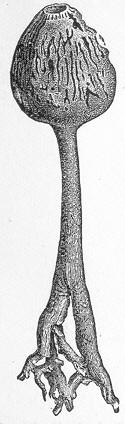
Fig. 188.—Siphonia ficus. Upper Greensand. Europe.
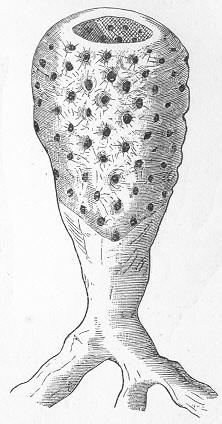
Fig. 189.—Ventriculites simplex. White Chalk. Britain.
of this substance, and are therefore genuine "Siliceous Sponges,"
like the existing Venus's Flower-Basket (Euplectella).
Like the latter, the skeleton was doubtless originally composed,
in the young state, of disconnected six-rayed spicules, which
ultimately become fixed together to constitute a continuous
frame-work. The sea-water, as in the recent forms, must have
been admitted to the interior of the Sponge by numerous apertures
on its exterior, subsequently escaping by a single large opening
at its summit.
Amongst the Cœlenterates, the "Hydroid Zoophytes" are
represented by a species of the encrusting genus Hydractinia,
the horny polypary of which is so commonly found at the present
day adhering to the exterior of shells. The occurrence of this
genus is of interest, because it is the first known instance in
the entire geological series of the occurrence of an unquestionable
Hydroid of a modern type, though many of the existing forms of
these animals possess structures which are
Page 266
perfectly fitted for
preservation in the fossil condition. The corals of the Cretaceous
series are not very numerous, and for the most part are referable
to types such as Trochocyathus, Stephanophyllia, Parasmilia,
Synhelia (fig. 190), &c., which belong to the same great
group of corals as the majority of existing forms. We have also
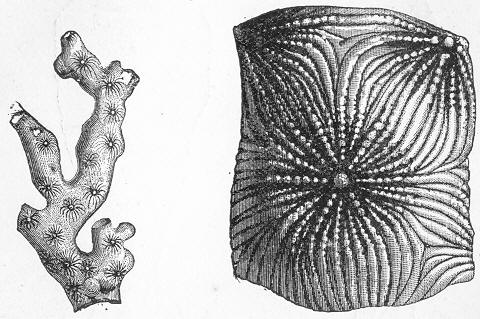
Fig. 190.—Synhelia Sharpeana. Chalk, England.
a few "Tabulate Corals" (Polytremacis), hardly, if at all,
generically separable from very ancient forms (Heliolites);
and the Lower Greensand has yielded the remains of the little
Holocystis elegans, long believed to be the last of the
great Palæozoic group of the Rugosa.
As regards the Echinoderms, the group of the Crinoids
now exhibits a marked decrease in the number and variety of its
types. The "stalked" forms are represented by Pentacrinus
and Bourgueticrinus, and the free forms by Feather-stars
like our existing Comatulœ; whilst a link between the
stalked and free groups is constituted by the curious "Tortoise
Encrinite (Marsupites). By far the most abundant Cretaceous
Echinoderms, however, are Sea-urchins (Echinoids); though
several Star-fishes are known as well. The remains of Sea-urchins
are so abundant in various parts of the Cretaceous series, especially
in the White Chalk, and are often so beautifully preserved, that
they constitute one of the most marked features of the fauna
of the period. From the many genera of Sea-urchins which occur
in strata of this age, it is difficult to select characteristic
types; but the genera Galerites (fig. 191), Discoidea
(fig. 192), Micraster, Ananchytes, Diadema, Salenia, and
Page 267
Cidaris, may be mentioned as being all important Cretaceous
groups.
Coming to the Annulose Animals of the Cretaceous period,
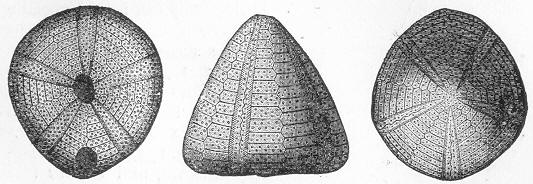
Fig. 191.—Galerites albogalerus, viewed from below,
from the side, and from above. White Chalk.
there is little special to remark. The Crustaceans belong
for the most part to the highly-organised groups of the Lobsters
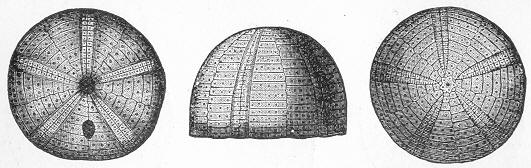
Fig. 192.—Discoidea cylindrica; under, side, and
upper aspect. Upper Greensand.
and the Crabs (the Macrurous and Brachyurous Decapods); but there
are also numerous little Ostracodes, especially in the
fresh-water strata of the Wealden. It should further be noted
that there occurs here a great development of the singular
Crustaceous family of the Barnacles (Lepadidœ),
whilst the allied family of the equally singular Acorn-shells
(Balanidœ) is feebly represented as well.
Passing on to the Mollusca, the class of the Sea-mats
and Sea-mosses (Polyzoa) is immensely developed in the
Cretaceous period, nearly two hundred species being known to
occur in the Chalk. Most of the Cretaceous forms belong to the
family of the Escharidœ, the genera Eschara and
Escharina (fig. 193) being particularly well represented.
Most of the Cretaceous Polyzoans are of small size, but
some attain considerable dimensions, and many simulate Corals
in their general form and appearance.
Page 268
The Lamp-shells (Brachiopods) have now reached a further
stage of the progressive decline, which they have been undergoing
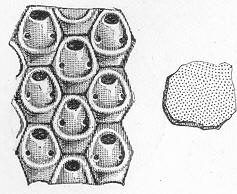
Fig. 193.—A small fragment of Escharina Oceani,
of the natural size; and a portion of the same enlarged. Upper
Greensand.
ever since the close of the Palæozoic period. Though
individually not rare, especially in certain minor subdivisions of
the series, the number of generic types has now become distinctly
diminished, the principal forms belonging to the genera
Terebratula, Terebratella (fig. 194), Terebratulina,
Rhynchonella, and Crania (fig. 195). In the last
mentioned of these, the shell is attached to foreign bodies by
the substance of one of the valves (the ventral), whilst the other
or free valve is more or less limpet-shaped. All the above-mentioned
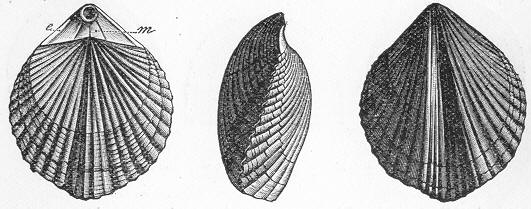
Fig. 194.—Terebratella Astieriana. Gault.
genera are in existence at the present day; and one
species—namely, Terebratulina
striata—appears to be undistinguishable from one now
living—the Terebratulina caputserpentis.
Whilst the Lamp-shells are slowly declining, the Bivalves
(Limellibranchs) are greatly developed, and are amongst
the most abundant and characteristic fossils of the Cretaceous
period. In the great river-deposit of the Wealden, the Bivalves
are forms proper to fresh water, belonging to the existing
River-mussels (Unio), Cyrena and Cyclas;
but most of the Cretaceous Lamellibranchs are marine. Some of
the most abundant and characteristic of these belong to the great
family of the Oysters (Ostreidœ). Amongst these are
the genera Gryphtœa and Exogyra, both of which
we have seen to occur
Page 269
abundantly in the Jurassic; and there are
also numerous true Oysters (Ostrea, fig. 196) and Thorny
Oysters (Spondylus, fig. 197). The genus Trigonia,
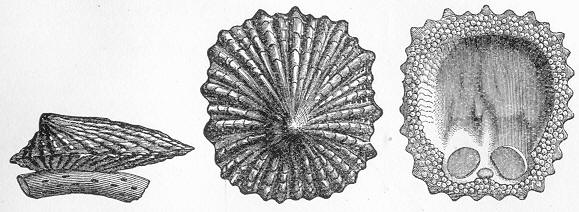
Fig. 195.—Crania Ignabergensis. The left-hand
figure shows the perfect shell, attached by its ventral valve
to a foreign body; the middle figure shows the exterior of the
limpet-shaped dorsal valve; and the right-hand figure represents
the interior of the attached valve. White Chalk.
so characteristic of the Mesozoic deposits in general, is likewise
well represented in the Cretaceous strata. No single genus of
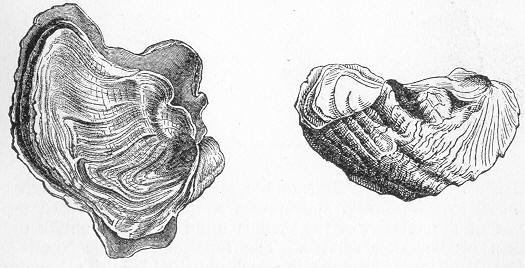
Fig. 196.—Ostrea Couloni. Lower Greensand.
Bivalves is, however, so highly characteristic of the Cretaceous
period as Inoceramus, a group belonging to the family of the
Pearl-mussels (Aviculidœ). The shells of this genus
(fig. 198) have the valves unequal in size, the larger valve often
being much twisted, and both valves being marked with radiating
ribs or concentric furrows. The hinge-line is long and straight,
with numerous pits for the attachment of the ligament which serves
to open the shell. Some of the Inocerami attain a length
of two or three feet, and fragments of the shell are often found
perforated by boring
Page 270
Sponges. Another extraordinary family of
Bivalves, which is exclusively confined to the Cretaceous rocks, is
that of the Hippuritidœ. All the members of this group
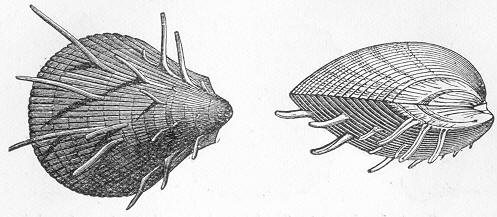
Fig. 197.—Spondylus spinosus. White Chalk.
(fig. 199) were attached to foreign objects, and lived associated
in beds, like Oysters. The two valves of the shell are always
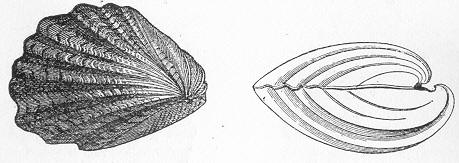
Fig. 198.—Inoceramus sulcatus. Gault.
altogether unlike in sculpturing, appearance, shape, and size;
and the cast of the interior of the shell is often extremely
unlike the form of the outer surface. The type-genus of the family
is Hippurites itself (fig. 199), in which the shell is in
the shape of a straight or slightly-twisted horn, sometimes a
foot or more in length, constituted by the attached lower valve,
and closed above by a small lid-like free upper valve. About
a hundred species of the family of the Hippuritidœ
are known, all of these being Cretaceous, and occurring in Britain
(one species only), in Southern Europe, the West Indies, North
America, Algeria, and Egypt. Species of this family occur in
such numbers in certain compact marbles in the south of Europe,
of the age of the Upper Cretaceous (Lower Chalk), as to have
given origin to the name of "Hippurite Limestones," applied to
these strata.
Page 271
The Univalves (Gasteropods) of the Cretaceous period are
not very numerous, nor particularly remarkable. Along with species
of the persistent genus Pleurotomaria and the Mesozoic
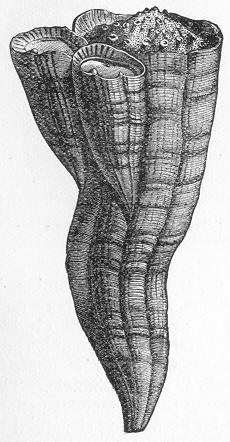
Fig. 199.—Hippurites Toucasiana. A large individual,
with two smaller ones attached to it. Upper Cretaceous, South
of Europe.
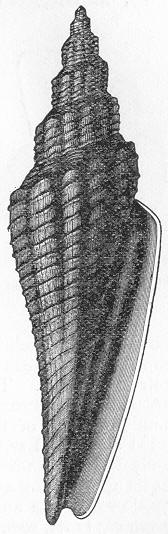
Fig. 200.—Voluta elongata. White Chalk.
Nerinœa, we meet with examples of such modern types
as Turritella and Natica, the Staircase-shells
(Solarium), the Wentle-traps (Scalaria), the
Carrier-shells (Phorus), &c. Towards the close of the
Cretaceous period, and especially in such transitional strata
as the Maestricht beds, the Faxöe Limestone, and the Pisolitic
Limestone of France, we meet with a number of carnivorous
("siphonostomatous") Univalves, in which the mouth of the shell is
notched or produced into a canal. Amongst these it is interesting
to recognise examples of such existing genera as the Volutes
(Voluta, fig. 200), the Cowries (Cyprœa), the
Mitre-shells (Mitra), the Wing - shells (Strombus),
the Scorpion-shells (Pteroceras), &c.
Page 272
Upon the whole, the most characteristic of all the Cretaceous
Molluscs are the Cephalopods, represented by the remains
of both Tetrabranchiate and Dibranchiate forms.
Amongst the former, the long-lived genus Nautilus (fig.
201) again reappears, with its involute shell, its capacious
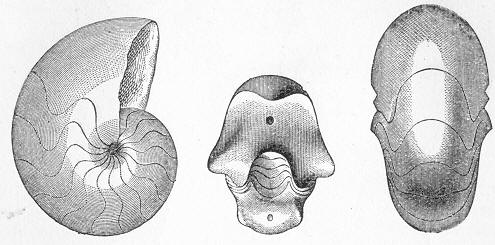
Fig. 201.—Different views of Nautilus Danicus.
Faxöe Limestone (Upper Cretaceous), Denmark.
body-chamber, its simple septa between the air-chambers, and its
nearly or quite central siphuncle. The majority of the chambered
Cephalopods of the Cretaceous belong, however, to the
complex and beautiful family of the Ammonitidœ, with
their elaborately folded and lobed septa and dorsally-placed
siphuncle. This family disappears wholly at the close of the
Cretaceous period; but its approaching extinction, so far from
being signalised by any slow decrease and diminution in the number
of specific or generic types, seems to have been attended by the
development of whole series of new forms. The genus Ammonites
itself, dating from the Carboniferous, has certainly passed its
prime, but it is still represented by many species, and some of
these attained enormous dimensions (two or three feet in diameter).
The genus Ancyloceras (fig. 202), though likewise of more
ancient origin (Jurassic), is nevertheless very characteristic
of the Cretaceous. In this genus the first portion of the shell
is in the form of a flat spiral, the coils of which are not in
contact; and its last portion is produced at a tangent, becoming
ultimately bent back in the form of a crosier. Besides these
pre-existent types, the Cretaceous rocks have yielded a great
number of entirely new forms of the Ammonitidœ, which
are not known in any deposits of earlier or later date. Amongst the
more important of these may be mentioned Crioceras, Turrilites,
Scaphites, Hamites,
Page 273
Ptychoceras, and Baulites. In the
genus Crioceras (fig. 204, d), the shell consists
of an open spiral, the volutions of which are not in contact,
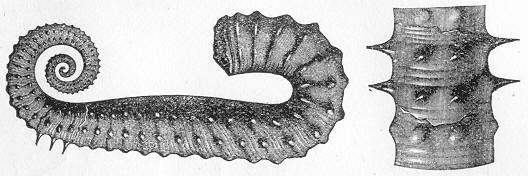
Fig. 202.—Ancyloceras Matheronianus. Gault.
thus resembling a partially-unrolled Ammonite or the inner
portion of an Ancyloceras. In Turrilites (fig.
203), the shell is precisely like that of the Ammonite
in its structure; but instead of forming a flat spiral, it is
coiled into an elevated turreted shell, the whorls of which are
in contact with one another. In the genus Scaphites (fig.
204, e), the shell resembles that of Ancyloceras in
consisting of a series of volutions coiled into a flat spiral,
the last being detached from the others, produced, and ultimately
bent back in the form of a crosier; but the whorls of the enrolled
part of the shell are in contact, instead of being separate as
in the latter. In the genus Hamites (fig. 204, f),
the shell is an extremely elongated cone, which is bent upon
itself more than once, in a hook-like manner, all the volutions
being separate. The genus Ptychoteras (fig. 204, a)
is very like Hamites, except that the shell is only bent
once; and the two portions thus bent are in contact with one
another. Lastly, in the genus Baculites (fig. 204, b
and c) the shell is simply a straight elongated cone, not
bent in any way, but possessing the folded septa which characterise
the whole Ammonite family. The Baculite is the simplest of all
the forms of the Ammonitidœ; and all the other forms,
however complex, may be regarded as being simply produced by the
bending or folding of such a conical septate shell in different
ways. The Baculite, therefore, corresponds, in the series of
the Ammonitidœ, to the Orthoceras in the series
of the Nautilidœ. All the above-mentioned genera are
characteristically, or exclusively, Cretaceous, and they are
accompanied by a number of other allied forms, which cannot be
noticed here. Not a single one of these genera, further, has hitherto
been detected in any strata higher than the Cretaceous. We may
therefore consider that these wonderful, varied, and elaborate
Page 274
forms of Ammonitidœ constitute one of the most
conspicuous features in the life of the Chalk period.
The Dibranchiate Cephalopods are represented partly by
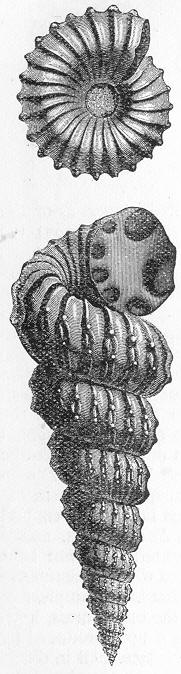
Fig. 203.—Turrilites catenatus. The lower figure
represents the entire shell; the upper figure represents the base
of the shell seen from below. Gault.
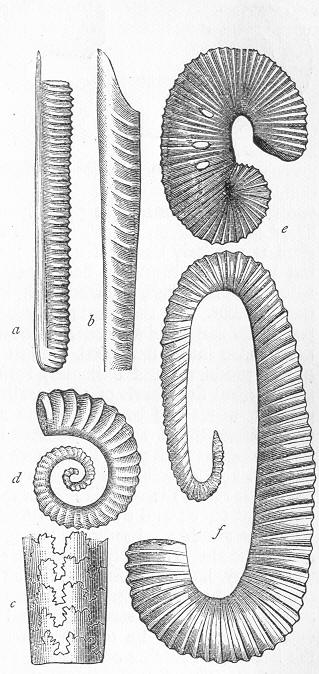
Fig. 204.—a, Ptychoceras Emericianum,
reduced—Lower Greensand; b, Baculites anceps,
reduced—Chalk; c, Portion of the same, showing the
folded edges of the septa; d, Crioceras cristatum,
reduced—Gault; e, Scaphites œqualis, natural
size—Chalk; f, Hamites rotundus, restored—Gault.
the beak-like jaws of unknown species of Cuttle-fishes and partly
by the internal skeletons of Belemnites. Amongst the latter, the
genus Belemnites itself holds its place in the lower part
Page 275
of the Cretaceous series; but it disappears in the upper portion
of the series, and its place is taken by the nearly-allied genus
Belemnitella (fig. 205), distinguished by the possession
of a straight fissure in the upper end of the guard. This also

Fig. 205.—Guard of Belemnitella mucronata.
disappears at the close of the Cretaceous period; and no member of
the great Mesozoic family of the Belemnitidœ has
hitherto been discovered in any Tertiary deposit, or is known to
exist at the present day.
Passing on next to the Vertebrate Animals of the Cretaceous
period, we find the Fishes represented as before by the
Ganoids and the Placoids, to which, however, we can now add the
first known examples of the great group of the Bony Fishes
or Teleosteans, comprising the great majority of existing
forms. The Ganoid fishes of the Cretaceous (Lepidotus,
Pycnodus, &c.) present no features of special interest.
Little, also, need be said about the Placoid fishes of this
period. As in the Jurassic deposits, the remains of these consist
partly of the teeth of genuine Sharks (Lamna, Odontaspis,
&c.) and partly of the teeth and defensive spines of Cestracionts,
such as the living Port-Jackson Shark. The pointed and sharp-edged
teeth of true Sharks are very abundant in some beds, such as
the Upper Greensand, and are beautifully preserved. The teeth
of some forms (Carcharias, &c.) attain occasionally a
length of three or four inches, and indicate the existence in the
Cretaceous seas of huge predaceous fishes, probably larger than
any existing Sharks. The remains of Cestracionts consist
partly of the flattened teeth of genera such as Acrodus
and Ptychodus (the latter confined to rocks of this age),
and partly of the pointed teeth of Hybodus, a genus which
dates from the Trias. In this genus the teeth (fig. 206) consist
of a principal central cone, flanked by minor lateral cones; and
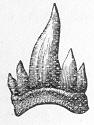
Fig. 206.—Tooth of Hybodus.

Fig. 207.—Fin-spine of Hybodus. Lower Greensand.
the fin-spines (fig. 207) are longitudinally grooved, and carry
a series of small spines on their hinder or concave margin. Lastly,
Page 276
the great modern
order of the Bony Fishes or Teleosteans makes its first
appearance in the Upper Cretaceous rocks, where it is represented by
forms belonging to no less than three existing groups—namely,
the Salmon family (Salmonidœ), the Herring family
(Clupeidœ), and the Perch family (Percidœ).
All these fishes have thin, horny, overlapping scales, symmetrical
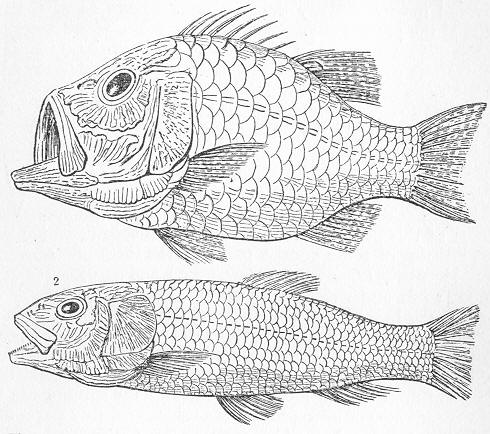
Fig. 208.—1, Beryx Lewesiensis, a Percoid fish from
the Chalk; 2, Osmeroides Mantelli, a Salmonoid fish from
the Chalk.
("homocercal") tails, and bony skeletons. The genus Beryx
(fig. 208, 1) is one represented by existing species at the present
day, and belongs to the Perch family. The genus Osmeroides,
again (fig. 208, 2), is supposed to be related to the living Smelts
(Osmerus), and, therefore, to belong to the Salmon tribe.
No remains of Amphibians have hitherto been detected in any
part of the Cretaceous series; but Reptiles are extremely
numerous, and belong to very varied types. As regards the great
extinct groups of Reptiles which characterise the Mesozoic period
as a whole, the huge "Enaliosaurs" or "Sea-Lizards" are still
represented by the Ichthyosaur and the Plesiosaur.
Nearly allied to the latter of these is the Elasmosaurus
of the American Cretaceous, which combined
Page 277
the long tail of the Ichthyosaur with the long neck of the
Plesiosaur. The length of this monstrous Reptile could not have
been less than fifty feet, the neck consisting of over sixty
vertebræ and measuring over twenty feet in length. The
extraordinary Flying Reptiles of the Jurassic are likewise well
represented in the Cretaceous rocks by species of the genus
Pterodactylus itself, and these later forms are much more
gigantic in their dimensions than their predecessors. Thus some of
the Cretaceous Pterosaurs seem to have had a spread of wing of from
twenty to twenty-five feet, more than realising the "Dragons" of
fable in point of size. The most remarkable, however, of the
Cretaceous Pterosaurs are the forms which have recently
been described by Professor Marsh under the generic title of
Pteranodon. In these singular forms—so far only known
as American—the animal possessed a skeleton in all respects
similar to that of the typical Pterodactyles, except that the jaws
are completely destitute of teeth. There is, therefore, the
strongest probability that the jaws were encased in a horny sheath,
thus coming to resemble the beak of a Bird. Some of the recognised
species of Pteranodon are very small; but the skull of one
species (P. Longiceps) is not less than a yard in length,
and there are portions of the skull of another species which would
indicate a length of four feet for the cranium. These measurements
would point to dimensions larger than those of any other known
Pterosaurs.
The great Mesozoic order of the Deinosaurs is largely
represented in the Cretaceous rocks, partly by genera which
previously existed in the Jurassic period, and partly by entirely new
types. The great delta-deposit of the Wealden, in the Old World, has
yielded the remains of various of these huge terrestrial Reptiles,
and very many others have been found in the Cretaceous deposits
of North America. One of the most celebrated of the Cretaceous
Deinosaurs is the Iguanodon, so called from the curious
resemblance of its teeth to those of the existing but comparatively
diminutive Iguana. The teeth (fig. 209) are soldered to the
inner face of the jaw, instead of being sunk in distinct sockets;
and they have the form of somewhat flattened prisms, longitudinally
ridged on the outer surface, with an obtusely triangular crown,
and having the enamel crenated on one or both sides. They present
the extraordinary feature that the crowns became worn down flat
by mastication, showing that the Iguanodon employed its
teeth in actually chewing and triturating the vegetable matter
on which it fed. There can therefore be no doubt but that the
Iguanodon, in spite of its immense bulk, was an herbivorous
Reptile, and
Page 278
lived principally on the foliage of the Cretaceous forests
amongst which it dwelt. Its size has been variously estimated
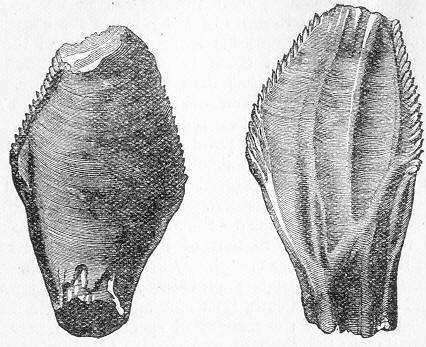
Fig. 209.—Teeth of Iguanodon Mantellii. Wealden, Britain.
at from thirty to fifty feet, the thigh-bone in large examples
measuring nearly five feet in length, with a circumference of
twenty-two inches in its smallest part. With the strong and massive
hind-limbs are associated comparatively weak and small fore-limbs;
and there seems little reason to doubt that the Iguanodon
must have walked temporarily or permanently upon its hind-limbs,
after the manner of a Bird. This conjecture is further supported
by the occurrence in the strata which contain the bones of the
Iguanodon of gigantic three-toed foot-prints, disposed
singly in a double track. These prints have undoubtedly
been produced by some animal walking on two legs; and they can
hardly, with any probability, be ascribed to any other than this
enormous Reptile. Closely allied to the Iguanodon is the
Hadrosaurus of the American Cretaceous, the length of
which is estimated at twenty-eight feet. Iguanodon does
not appear to have possessed any integumentary skeleton; but the
great Hylœosaurus of the Wealden seems to have been
furnished with a longitudinal crest of large spines running down
the back, similar to that which is found in the comparatively
small Iguanas of the present day. The Megalosaurus of
the Oolites continued to exist in the Cretaceous period; and,
as we have previously seen, it was carnivorous in its habits.
The American Lœlaps was also carnivorous, and, like
the Megalosaur,
Page 279
which it very closely resembles, appears to have walked upon its
hind-legs, the fore-limbs being disproportionately small.
Another remarkable group of Reptiles, exclusively confined to
the Cretaceous series, is that of the Mosasauroids, so
called from the type-genus Mosasaurus. The first species
of Mosasaurus known to science was the M. Camperi
(fig. 210), the skull of which—six feet in length—was
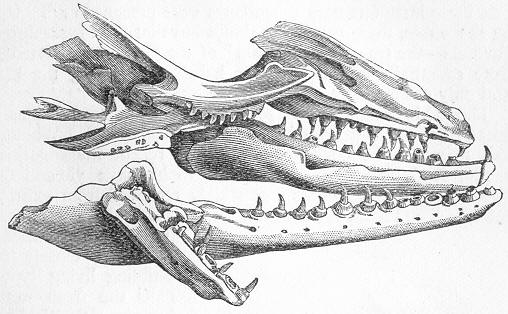
Fig. 210.—Skull of Mosasaurus Camperi, greatly
reduced. Maestricht Chalk.
discovered in 1780 in the Maestricht Chalk at Maestricht. As this
town stands on the river Meuse, the name of Mosasaurus
("Lizard of the Meuse") was applied to this immense Reptile. Of
late years the remains of a large number of Reptiles more or less
closely related to Mosasaurus, or absolutely belonging to
it, have been discovered in the Cretaceous deposits of North
America, and have been described by Professors Cope and Marsh.
All the known forms of this group appear to have been of large
size—one of them, Mosasaurus princeps, attaining
the length of seventy-five or eighty feet, and thus rivalling
the largest of existing Whales in its dimensions. The teeth in
the "Mosasauroids" are long, pointed, and slightly curved; and
instead of being sunk in distinct sockets, they are firmly
amalgamated with the jaws, as in modern Lizards. The palate
also carried teeth, and the lower jaw was so constructed as to
allow of the mouth being opened to an immense width, somewhat
as in the living Serpents. The body was long and snake-like,
with a very long tail, which is laterally compressed, and must
have served as a powerful swimming-apparatus. In addition to
this, both pairs of limbs have the bones connecting them with
Page 280
the trunk greatly shortened; whilst the digits were enclosed in
the integuments, and constituted paddles, closely resembling in
structure the "flippers" of Whales and Dolphins. The neck is
sometimes moderately long, but oftener very short, as the great
size and weight of the head would have led one to anticipate.
Bony plates seem in some species to have formed an at any rate
partial covering to the skin; but it is not certain that these
integumentary appendages were present in all. Upon the whole,
there can be no doubt but that the Mosasauroid Reptiles—the
true "Sea-serpents" of the Cretaceous period—were
essentially aquatic in their habits, frequenting the sea, and
only occasionally coming to the land.
The "Mosasauroids" have generally been regarded as a greatly
modified group of the Lizards (Lacertilia). Whether this
reference be correct or not—and recent investigations render
it dubious—the Cretaceous rocks have yielded the remains of
small Lizards not widely removed from existing forms. The recent
order of the Chelonians is also represented in the
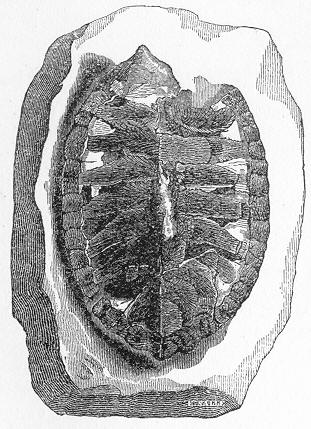
Fig. 211.—Carapace of Chelone Benstedi. Lower Chalk.
(After Owen.)
Cretaceous rocks, by forms closely resembling living types. Thus
the fresh-water deposits of the Wealden have yielded examples of
the "Terrapins" or "Mud-Turtles" (Emys); and the marine
Cretaceous strata have been found to contain the remains of various
species of Turtles, one of which is here figured (fig. 211). No
true Serpents (Ophidia) have as yet been detected in the
Cretaceous rocks; and this order does not appear to have come
into existence till the Tertiary period. Lastly, true Crocodiles
are known to have existed in considerable numbers in the Cretaceous
period. The oldest of these occur in the fresh-water deposit of the
Wealden; and they differ from
Page 281
the existing forms of
the group in the fact that the bodies of the vertebræ, like
those of the Jurassic Crocodiles, are bi-concave, or hollowed out
at both ends. In the Greensand of North America, however, occur
the remains of Crocodiles which agree with all the living species
in having the bodies of the vertebræ in the region of the
back hollowed out in front and convex behind.
Birds have not hitherto been shown, with certainty, to
have existed in Europe during the Cretaceous period, except in
a few instances in which fragmentary remains belonging to this
class have been discovered. The Cretaceous deposits of North
America have, however, been shown by Professor Marsh to contain
a considerable number of the remains of Birds, often in a state
of excellent preservation. Some of these belong to Swimming or
Wading Birds, differing in no point of special interest from
modern birds of similar habits. Others, however, exhibit such
extraordinary peculiarities that they merit more than a passing
notice. One of the forms in question constitutes the genus
Ichthyornis of Marsh, the type-species of which (I.
Dispar) was about as large as a Pigeon. In two remarkable
respects, this singular Bird differs from all known living members
of the class. One of these respects concerns the jaws, both of
which exhibit the Reptilian character of being armed with numerous
small pointed teeth (fig. 212, a), sunk in distinct
sockets. No existing bird possesses teeth; and this character
forcibly recalls the Bird-like Pterosaurs, with their toothed
jaws. Ichthyornis, however, possessed fore-limbs constructed
strictly on the type of the "wing" of the living Birds; and it
cannot, therefore, be separated from this class. Another
extraordinary peculiarity of Ichthyornis is, that the
bodies of the vertebrie (fig. 212, c) were
bi-concave, as is the case with many extinct Reptiles and
almost all Fishes, but as does not occur in any living Bird. There
can be little doubt that Ichthyornis was aquatic in its
habits, and that it lived principally upon fishes; but its powerful
wings at the same time indicate that it was capable of prolonged
flight. The tail of Ichthyornis has, unfortunately, not
been discovered; and it is at present impossible to say whether
this resembled the tail of existing Birds, or whether it was
elongated and composed of separate vertebræ, as in the
Jurassic Archœopteryx.
Still more wonderful than Ichthyornis is the marvellous
bird described by Marsh under the name of Hesperornis
regalis. This presents us with a gigantic diving bird,
somewhat resembling the existing "Loons" (Colymbus), but
agreeing with Ichthyornis in having the jaws furnished
Page 282
with conical, recurved, pointed teeth (fig. 212, b).
Hence these forms are grouped together in a new sub-class, under
the name of Odontornithes or "Toothed Birds." The teeth
of Hesperornis (fig. 212, d) resemble those of
Ichthyornis in their general form; but instead of being
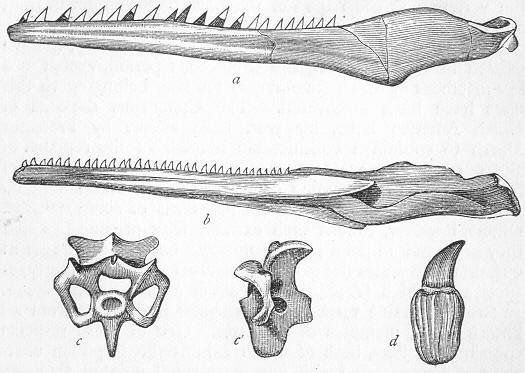
Fig. 212.—Toothed Birds (Odontornithes) of the
Cretaceous Rocks of America. a. Left lower jaw of
Ichthyornis dispar, slightly enlarged; b, Left
lower jaw of Hesperornis regalis, reduced to nearly
one-fourth of the natural size; c. Cervical vertebra
of Ichthyornis dispar, front view, twice the natural
size; c', Side view of the same; d, Tooth of
Hesperornis regalis, enlarged to twice the natural
size. (After Marsh.)
sunk in distinct sockets, they are simply implanted in a deep
continuous groove in the bony substance of the jaw. The front of
the upper jaw does not carry teeth, and was probably encased in
a horny beak. The breast-bone is entirely destitute of a central
ridge or keel, and the wings are minute and quite rudimentary;
so that Hesperornis, unlike Ichthyornis, must have
been wholly deprived of the power of flight, in this respect
approaching the existing Penguins. The tail consists of about
twelve vertebræ, of which the last three or four are amalgamated
to form a flat terminal mass, there being at the same time clear
indications that the tail was capable of up and down movement
in a vertical plane, this probably fitting it to serve as a
swimming-paddle or rudder. The legs were powerfully constructed,
and the feet were adapted to assist the bird in rapid motion through
the water. The known remains of Hesperornis regalis prove
it to have been a swimming and diving bird, of larger dimensions
Page 283
than any of the aquatic members of the class of Birds with which
we are acquainted at the present day. It appears to have stood
between five and six feet high, and its inability to fly is fully
compensated for by the numerous adaptations of its structure to a
watery life. Its teeth prove it to have been carnivorous in its
habits, and it probably lived upon fishes. It is a curious fact
that two Birds agreeing with one another in the wholly abnormal
character of possessing teeth, and in other respects so entirely
different, should, like Ichthyornis and Hesperornis,
have lived not only in the same geological period, but also in the
same geographical area; and it is equally curious that the area
inhabited by these toothed Birds should at the same time have been
tenanted by winged and bird-like Reptiles belonging to the toothed
genus Pterodactylus and the toothless genus Pteranodon.
No remains of Mammals, finally, have as yet been detected
in any sedimentary accumulations of Cretaceous age.
LITERATURE.
The following list comprises some of the more important works and
memoirs which may be consulted with reference to the Cretaceous
strata and their fossil contents:—
| (1) |
'Memoirs of the Geological Survey of Great Britain.' |
| (2) |
'Geology of England and Wales.' Conybeare and
Phillips. |
| (3) |
'Geology of Yorkshire,' vol. ii. Phillips. |
| (4) |
'Geology of Oxford and the Thames Valley.' Phillips. |
| (5) |
'Geological Excursions through the Isle of Wight.'
Mantell. |
| (6) |
'Geology of Sussex.' Mantell. |
| (7) |
'Report on Londonderry,' &c. Portlock. |
| (8) |
'Recherches sur le Terrain Crétacé
Supérieur de l'Angleterre et de l'Irlande.'
Barrois. |
| (9) |
"Geological Survey of Canada"—'Report of Progress,
1872-73.' |
| (10) |
'Geological Survey of California.' Whitney. |
| (11) |
'Geological Survey of Montana, Idaho, Wyoming, and Utah.'
Hayden and Meek. |
| (12) |
'Report on Geology,' &c. (British North American
Boundary Commission). G. M. Dawson. |
| (13) |
'Manual of Geology.' Dana. |
| (14) |
'Lethæa Rossica.' Eichwald. |
| (15) |
'Petrefacta Germaniæ.' Goldfuss. |
| (16) |
'Fossils of the South Downs.' Mantell. |
| (17) |
'Medals of Creation.' Mantell. |
| (18) |
'Mineral Conchology.' Sowerby. |
| (19) |
'Lethæa Geognostica.' Bronn. |
| (20) |
'Malacostracous Crustacea of the British Cretaceous
Formation' (Palæontographical Society). Bell. |
| (21) |
'Brachiopoda of the Cretaceous Formation'
(Palæontographical Society). Davidson. |
| (22) |
'Corals of the Cretaceous Formation'
(Palæontographical Society). Milne-Edwards and
Haime. |
|
Page 284
(23) |
'Supplement to the Fossil Corals' (Palæontographical
Society). Martin Duncan. |
| (24) |
'Echinodermata or the Cretaceous Formation'
(Palæontographical Society). Wright. |
| (25) |
'Monograph of the Belemnitidæ' (Palæontographical
Society). Phillips. |
| (26) |
'Monograph of the Trigoniæ' (Palæontographical
Society). Lycett. |
| (27) |
'Fossil Cirripedes' (Palæontographical Society).
Darwin. |
| (28) |
'Fossil Mollusca of the Chalk of Britain'
(Palæontographical Society). Sharpe. |
| (29) |
'Entomostraca of the Cretaceous Formation'
(Palæontographical Society). Rupert Jones. |
| (30) |
'Monograph of the Fossil Reptiles of the Cretaceous
Formation' (Palæontographical Society). Owen. |
| (31) |
'Manual of Palæontology.' Owen. |
| (32) |
'Synopsis of Extinct Batrachia and Reptilia.' Cope. |
| (33) |
"Structure of the Skull and Limbs in Mosasauroid
Reptiles"—'American Journ. Sci. and Arts, 1872.'
Marsh. |
| (34) |
"On Odontornithes"—'American Journ. Sci. and Arts,
1875.' Marsh. |
| (35) |
'Ossemens Fossiles.' Cuvier. |
| (36) |
'Catalogue of Ornithosauria.' Seeley. |
| (37) |
'Paléontologie Française.' D'Orbigny. |
| (38) |
'Synopsis des Echinides fossiles.' Desor. |
| (39) |
'Cat. Raisonné des Echinides.' Agassiz and
Desor. |
| (40) |
"Echinoids"—'Decades of the Geol. Survey of Britain.'
E. Forbes. |
| (41) |
'Paléontologie Française.' Cotteau. |
| (42) |
'Versteinerungen der Böhmischen Kreide-formation.'
Reuss. |
| (43) |
"Cephalopoda, Gasteropoda, Pelecypoda, Brachiopoda; &c.,
of the Cretaceous Rocks of India"—'Palæontologica
Indica,' ser. i., iii., v., vi., viii. Stoliczka. |
| (44) |
"Cretaceous Reptiles of the United States"—'Smithsonian
Contributions to Knowledge,' vol. xiv. Leidy. |
| (45) |
'Invertebrate Cretaceous, and Tertiary Fossils of the Upper
Missouri Country,' 1876. Meek. |
CHAPTER XVIII.
THE EOCENE PERIOD.
Before commencing the study of the subdivisions of the Kainozoic
series, there are some general considerations to be noted. In
the first place, there is in the Old World a complete and entire
physical break between the rocks of the Mesozoic and Kainozoic
periods. In no instance in Europe are Tertiary strata to be found
resting conformably upon any Secondary rock. The Chalk has invariably
suffered much erosion and denudation before the lowest Tertiary
strata were deposited upon it. This is shown by the fact that the
Page 285
actually eroded surface of the Chalk can often
be seen; or, failing this, that we can point to the presence of the
chalk-flints in the Tertiary strata. This last, of course, affords
unquestionable proof that the Chalk must have been subjected to
enormous denudation prior to the formation of the Tertiary beds,
all the chalk itself having been removed, and nothing left but the
flints, while these are all rolled and rounded. In the continent
of North America, on the other hand, the lowest Tertiary strata
have been shown to graduate downwards conformably with the highest
Cretaceous beds, it being a matter of difficulty to draw a precise
line of demarcation between the two formations.
In the second place, there is a marked break in the life
of the Mesozoic and Kainozoic periods. With the exception of a
few Foraminifera, and one Brachiopod (the latter
doubtful), no Cretaceous species is known to have survived the
Cretaceous period; while several characteristic families,
such as the Ammonitidœ, Belemnitidœ, and
Hippuritidœ, died out entirely with the close of the
Cretaceous rocks. In the Tertiary rocks, on the other hand, not
only are all the animals and plants more or less like existing
types, but we meet with a constantly-increasing number of living
species as we pass from the bottom of the Kainozoic series to
the top. Upon this last fact is founded the modern classification
of the Kainozoic rocks, propounded by Sil Charles Lyell.
The absence in strata of Tertiary age of the chambered Cephalopods,
the Belemnites, the Hippurites, the Inocerami, and
the diversified types of Reptiles which form such conspicuous
features in the Cretaceous fauna, render the palæontological
break between the Chalk and the Eocene one far too serious to
be overlooked. At the same time, it is to be remembered that
the evidence afforded by the explorations carried out of late
years as to the animal life of the deep sea, renders it certain
that the extinction of marine forms of life at the close of the
Cretaceous period was far less extensive than had been previously
assumed. It is tolerably certain, in fact, that we may look upon
some of the inhabitants of the depths of our existing oceans
as the direct, if modified, descendants of animals which were
in existence when the Chalk was deposited.
It follows from the general want of conformity between the Cretaceous
and Tertiary rocks, and still more from the great difference in
life, that the Cretaceous and Tertiary periods are separated, in
the Old World at any rate, by an enormous lapse of unrepresented
time. How long this interval may have been, we have no means of
judging exactly, but it very possibly was as long as the whole
Kainozoic epoch itself. Some day we shall
Page 286
doubtless find, at some part of the earth's surface, marine strata
which were deposited during this period, and which will contain
fossils intermediate in character between the organic remains
which respectively characterise the Secondary and Tertiary periods.
At present, we have only slight traces of such deposits—as,
for instance, the Maestricht beds, the Faxöe Limestone, and
the Pisolitic Limestone of France.
CLASSIFICATION OF THE TERTIARY ROCKS.—The classification
of the Tertiary rocks is a matter of unusual difficulty, in
consequence of their occurring in disconnected basins, forming
a series of detached areas, which hold no relations of
superposition to one another. The order, therefore, of the
Tertiaries in point of time, can only be determined by an appeal
to fossils; and in such determination Sir Charles Lyell proposed
to take as the basis of classification the proportion of
living or existing species of Mollusca which occurs in each
stratum or group of strata. Acting upon this principle,
Sir Charles Lyell divides the Tertiary series into four
groups:—
I. The Eocene formation (Gr. eos, dawn; kainos,
new), containing the smallest proportion of existing species, and
being, therefore, the oldest division. In this classification,
only the Mollusca are taken into account; and it was found
that of these about three and a half per cent were identical
with existing species.
II. The Miocene formation (Gr. meion, less;
kainos, new), with more recent species than the Eocene,
but less than the succeeding formation, and less than
one-half the total number in the formation. As before, only the
Mollusca are taken into account, and about 17 per cent
of these agree with existing species.
III. The Pliocene formation (Gr. pleion, more;
kainos, new), with generally more than half the
species of shells identical with existing species—the
proportion of these varying from 35 to 50 per cent in the lower
beds of this division, up to 90 or 95 per cent in its higher
portion.
IV. The Post-Tertiary Formations, in which all the
shells belong to existing species. This, in turn, is divided
into two minor groups—the Post-Pliocene and Recent
Formations. In the Post-Pliocene formations, while
all the Mollusca belong to existing species, most of the
Mammals belong to extinct species. In the Recent period,
the quadrupeds, as well as the shells, belong to living species.
The above, with some modifications, was the original classification
proposed by Sir Charles Lyell for the Tertiary rocks, and now
universally accepted. More recent researches, it is true, have
somewhat altered the proportions of existing species
Page 287
to extinct, as stated above. The general principle, however, of
an increase in the number of living species, still holds good; and
this is as yet the only satisfactory basis upon which it has been
proposed to arrange the Tertiary deposits.
EOCENE FORMATION.
The Eocene rocks are the lowest of the Tertiary series, and comprise
all those Tertiary deposits in which there is only a small proportion
of existing Mollusca—from three and a half to five per
cent. The Eocene rocks occur in several basins in Britain, France,
the Netherlands, and other parts of Europe, and in the United
States. The subdivisions which have been established are extremely
numerous, and it is often impossible to parallel those of one
basin with those of another. It will be sufficient, therefore,
to accept the division of the Eocene formation into three great
groups—Lower, Middle, and Upper Eocene—and to consider
some of the more important beds comprised under these heads in
Europe and in North America.
I. EOCENE OF BRITAIN. (1.) LOWER EOCENE.—The base of the Eocene
series in Britain is constituted by about 90 feet of light-coloured,
sometimes argillaceous sands (Thanet Sands), which are of
marine origin. Above these, or forming the base of the formation
where these are wanting, come mottled clays and sands with lignite
(Woolwich and Reading series), which are estuarine or
fluvio-marine in origin. The highest member of the Lower Eocene
of Britain is the "London Clay," consisting of a great mass of
dark-brown or blue clay, sometimes with sandy beds, or with layers
of "septaria," the whole attaining a thickness of from 200 to as
much as 500 feet. The London Clay is a purely marine deposit,
containing many marine fossils, with the remains of terrestrial
animals and plants; all of which indicate a high temperature of
the sea and tropical or sub-tropical conditions of the land.
(2.) MIDDLE EOCENE.—The inferior portion of the Middle
Eocene of Britain consists of marine beds, chiefly consisting
of sand, clays, and gravels, and attaining a very considerable
thickness (Bag-shot and Bracklesham beds). The superior
portion of the Middle Eocene of Britain, on the other hand,
consists of deposits which are almost exclusively fresh-water
or brackish-water in origin (Headon and Osborne series).
The chief Continental formations of Middle Eocene age are the
"Calcaire grossier" of the Paris basin, and the "Nummulitic
Limestone" of the Alps.
(3.) UPPER EOCENE.—If the Headon and Osborne beds of
Page 288
the Isle of Wight be placed in the Middle Eocene, the only
British representatives of the Upper Eocene are the Bembridge
beds. These strata consist of limestones, clays, and marls,
which have for the most part been deposited in fresh or brackish
water.
II. EOCENE BEDS OF THE PARIS BASIN.—The Eocene strata are
very well developed in the neighbourhood of Paris, where they
occupy a large area or basin scooped out of the Chalk. The beds
of this area are partly marine, partly freshwater in origin; and
the following table (after Sir Charles Lyell) shows their
subdivisions and their parallelism with the English series:—
GENERAL TABLE OF FRENCH EOCENE STRATA.
| UPPER EOCENE. |
| |
French Subdivisions. |
English Equivalents. |
| A. |
1. |
Gypseous series of Mont
Montmartre. |
1. |
Bembridge series. |
| A. |
2. |
Calcaire silicieux, or Travertin
Inférieur. |
2. |
Osborne and Headon series. |
| A. |
3. |
Grès de Beauchamp, or Sables Moyens. |
3. |
White sand and clay of Barton Cliff,
Hants. |
| MIDDLE EOCENE. |
| B. |
1. |
Calcaire Grossier. |
1. |
Bagshot and Bracklesham beds. |
| B. |
2. |
Soissonnais Sands, or Lits Coquilliers. |
2. |
Wanting. |
| LOWER EOCENE. |
| C. |
1. |
Argile de Londres at base of Hill of Cassel,
near Dunkirk. |
1. |
London clay. |
| C. |
2. |
Argile plastique and lignite. |
2. |
Plastic clay and sand with lignite (Woolwich
and Reading series). |
| C. |
3. |
Stables de Bracheux. |
3. |
Thanet sands. |
III. EOCENE STRATA OF THE UNITED STATES.—The lowest member of
the Eocene deposits of North America is the so-called "Lignitic
Formation," which is largely developed in Mississippi, Tennessee,
Arkansas, Wyoming, Utah, Colorado, and California, and sometimes
attains a thickness of several thousand feet. Stratigraphically,
this formation exhibits the interesting point that it graduates
downwards insensibly and conformably into the Cretaceous, whilst
it is succeeded uncomformably by strata of Middle Eocene
age. Lithologically, the series consists principally of sands
and clays, with beds of lignite and coal, and its organic remains
show that it is principally of fresh-water origin with a partial
intermixture of marine beds.
Page 289
These marine
strata of the "Lignitic formation" are of special interest, as
showing such a commingling of Cretaceous and Tertiary types of
life, that it is impossible to draw any rigid line in this region
between the Mesozoic and Kainozoic systems. Thus the marine beds
of the Lignitic series contain such characteristic Cretaceous
forms as Inoceramus and Ammonites, along with a great
number of Univalves of a distinctly Tertiary type (Cones, Cowries,
&c.) Upon the whole, therefore, we must regard this series of
deposits as affording a kind of transition between the Cretaceous
and the Eocene, holding in some respects a position which may be
compared with that held by the Purbeck beds in Britain as regards
the Jurassic and Cretaceous.
The Middle Eocene of the United States is represented by the
Claiborne and Jackson beds. The Claiborne series
is extensively developed at Claiborne, Alabama, and consists of
sands, clays, lignites, marls, and impure limestones, containing
marine fossils along with numerous plant-remains. The Jackson
series is represented by lignitic clays and marls which occur
at Jackson, Mississippi. Amongst the more remarkable fossils of
this series are the teeth and bones of Cetaceans of the genus
Zeuglodon.
Strata of Upper Eocene age occur in North America at Vicksburg,
Mississippi, and are known as the Vicksburg series. They
consist of lignites, clays, marls, and limestones. Freshwater
deposits of Eocene age are also largely developed in parts of
the Rocky Mountain region. The most remarkable fossils of these
beds are Mammals, of which a large number of species have been
already determined.
LIFE OF THE EOCENE PERIOD.
The fossils of the Eocene deposits are so numerous that nothing
more can be attempted here than to give a brief and general sketch
of the life of the period, special attention being directed to some
of the more prominent and interesting types, amongst which—as
throughout the Tertiary series—the Mammals hold the first place.
It is not uncommon, indeed, to speak of the Tertiary period as a
whole under the name of the "Age of Mammals," a title at least
as well deserved as that of "Age of Reptiles" applied to the
Mesozoic, or "Age of Molluscs" applied to the Palæozoic epoch.
As regards the plants of the Eocene, the chief point to
be noticed is, that the conditions which had already set in with
the commencement of the Upper Cretaceous, are here continued,
Page 290
and still further enforced. The
Cycads of the Secondary period, if they have not totally
disappeared, are exceedingly rare; and the Conifers,
losing the predominance which they enjoyed in the Mesozoic, are
now relegated to a subordinate though well-defined place in the
terrestrial vegetation. The great majority of the Eocene plants
are referable to the groups of the Angiospermous Exogens and the
Monocotyledons; and the vegetation of the period, upon the whole,
approximates closely to that now existing upon the earth. The
plants of the European Eocene are, however, in the main most
closely allied to forms which are now characteristic of tropical
or sub-tropical regions. Thus, in the London Clay are found
numerous fruits of Palms (Napdites, fig. 213), along with
various other plants,
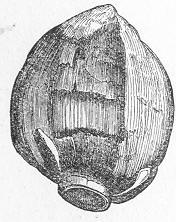
Fig. 213.—Napadites ellipticus, the fruit of a fossil
Palm. London Clay, Isle of Sheppey.
most of which indicate a warm climate as prevailing in the south
of England at the commencement of the Eocene period. In the Eocene
strata of North America occur numerous plants belonging to existing
types—such as Palms, Conifers, the Magnolia, Cinnamon, Fig.
Dog-wood, Maple, Hickory, Poplar, Plane, &c. Taken as a whole,
the Eocene flora of North America is nearly related to that of
the Miocene strata of Europe, as well as to that now existing
in the American area. We conclude, therefore, that "the forests
of the American Eocene resembled those of the European Miocene,
and even of modern America" (Dana).
As regards the animals of the Eocene period, the
Protozoans are represented by numerous Foraminifera,
which reach here their maximum of development, both as regards
the size of individuals and the number of generic types. Many
of the Eocene Foraminifers are of small size; but even these not
uncommonly form whole rock-masses. Thus, the so-called "Miliolite
Limestone" of the Paris basin, largely used as a building-stone,
is almost wholly composed of the shells of a small species of
Miliola. The most remarkable, however, of the many members
of this group of animals which flourished in Eocene times, are the
"Nummulites" (Nummulina), so called from their resemblance
in shape to coins (Lat. nummus, a coin). The Nummulites are
amongst the largest of all known Foraminifera, sometimes
attaining a size of three inches in circumference; and their
internal structure is very complex (fig. 214).
Page 291
Many species are
known, and they are particularly characteristic of the Middle and
Upper of these periods—their place being sometimes taken
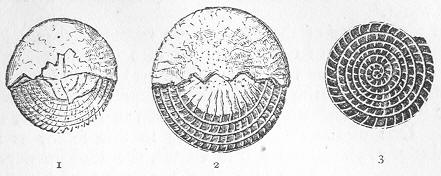
Fig. 214.—Nummulina lœvigata. Middle Eocene.
by Orbitoides, a form very similar to the Nummulite in
external appearance, but differing in its internal details. In
the Middle Eocene, the remains of Nummulites are found in vast
numbers in a very widely-spread and easily-recognised formation
known as the "Nummulitic Limestone" (fig. 10). According to Sir
Charles Lyell, "the Nummulitic Limestone of the Swiss Alps rises
to more than 10,000 feet above the level of the sea, and attains
here and in other mountain-chains a thickness of several thousand
feet. It may be said to play a far more conspicuous part than
any other Tertiary group in the solid framework of the earth's
crust, whether in Europe, Asia, or Africa. It occurs in Algeria
and Morocco, and has been traced from Egypt, where it was largely
quarried of old for the building of the Pyramids, into Asia Minor,
and across Persia by Bagdad to the mouths of the Indus. It has
been observed not only in Cutch, but in the mountain-ranges which
separate Scinde from Persia, and which form the passes leading
to Cabul; and it has been followed still further eastward into
India, as far as Eastern Bengal and the frontiers of China." The
shells of Nummulites have been found at an elevation of 16,500
feet above the level of the sea in Western Thibet; and the
distinguished and philosophical geologist just quoted, further
remarks, that "when we have once arrived at the conviction that
the Nummulitic formation occupies a middle and upper place in the
Eocene series, we are struck with the comparatively modern date to
which some of the greatest revolutions in the physical geography
of Europe, Asia, and Northern Africa must be referred. All the
mountain-chains—such as the Alps, Pyrenees, Carpathians, and
Himalayas—into the composition of whose central and loftiest
parts the Nummulitic
Page 292
strata enter bodily, could have had no existence till after the
Middle Eocene period. During that period, the sea prevailed where
these chains now rise; for Nummulites and their accompanying
Testacea were unquestionably inhabitants of salt water."
The Cœlenterates of the Eocene are represented
principally by Corals, mostly of types identical with or
nearly allied to those now in existence. Perhaps the most
characteristic group of these is that of the Turbinolidœ,
comprising a number of simple "cup-corals," which probably lived in
moderately deep water. One of the forms belonging to this family is
here figured (fig. 215). Besides true Corals, the Eocene deposits have
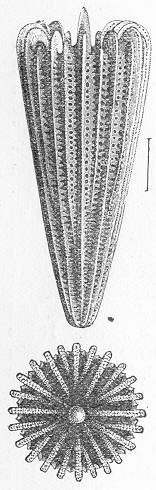
Fig. 215.—Turbinolia sulcata, viewed from one side,
and from above. Eocene.
yielded the remains of the "Sea-pens" (Pennatulidœ) and
the branched skeletons of the "Sea-shrubs" (Gorgontidœ).
The Echinoderms are represented principally by Sea-urchins,
and demand nothing more than mention. It is to be observed, however,
that the great group of the Sea-lilies (Crinoids) is now
verging on extinction, and is but very feebly represented.
Amongst the Mollusca, the Polyzoans and
Brachiopods also require no special mention, beyond the
fact that the latter are greatly reduced in numbers, and belong
principally to the existing genera Terebratula and
Rhynchonella. The Bivalves (Lamellibranchs) and
the Univalves (Gasteropods) are exceedingly numerous, and
almost all the principal existing genera are now represented;
though less than five percent of the Eocene species are
identical with those now living. It is difficult to make any
selection from the many Bivalves which are known in deposits of
this age; but species of Cardita, Crassatella, Leda, Cyrena,
Mactra, Cardium, Psammobia, &c., may be mentioned as very
characteristic. The Caradita planicosta here figured (fig.
216) is not only very abundant in the Middle Eocene, but is very
widely distributed, ranging from Europe to the Pacific coast of
North America. The Univalves of the Eocene are extremely
numerous, and generally beautifully preserved. The majority of them
belong to that great section of the Gasteropods in which the
mouth of the shell is notched or produced into
Page 293
a canal (when the
shell is said to be "siphonostomatous")—this section including
the carnivorous and most highly-organized groups of the class. Not
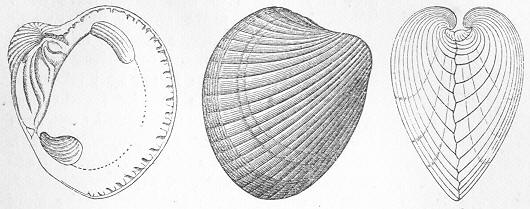
Fig. 216.—Cardita planicosta. Middle Eocene.
only is this the case, but a large number of the Eocene Univalves
belong to types which now attain their maximum of development in the
warmer regions of the globe. Thus we find numerous species of Cones
(Conus), Volutes (Voluta), Cowries (Cyprœa,
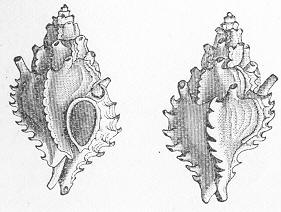
Fig. 217.—Typhis tubifer, a "siphonostomatous" Univalve.
Eocene.
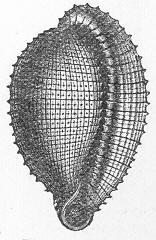
Fig. 218.—Cyprœa elegans. Eocene.
fig. 218), Olives and Rice-shells (Oliva), Mitre-shells
(Mitra), Trumpet-shells (Triton), Auger-shells
(Terebra), and Fig-shells (Pyrula). Along with these
are many forms of Pleurotoma, Rostellaria, Spindle-shells
(Fusus), Dog-whelks (Nassa), Murices, and
many round-mouthed ("holostomatous") species, belonging to such
genera as Turritella, Nerita, Natica, Scalaria, &c.
The genus Cerithium (fig. 219), most of the living forms
of which are found in warm regions, inhabiting fresh or brackish
waters, undergoes a vast development in the Eocene period, where
Page 294
it is represented by an immense number of specific forms, some
of which attain very large dimensions. In the Eocene strata of
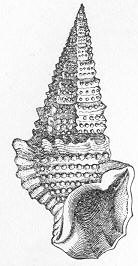
Fig. 219.—Cerithium hexagonum. Eocene.
the Paris basin alone, nearly one hundred and fifty species of
this genus have been detected. The more strictly fresh-water
deposits of the Eocene period have also yielded numerous remains
of Univalves such as are now proper to rivers and lakes, together
with the shells of true Land-snails. Amongst these may be mentioned
numerous species of Limnœa (fig. 220), Physa
(fig. 221), Melania, Paludina, Planorbis, Helix, Bulimus,
and Cyclostoma (fig. 222).
With regard to the Cephalopods, the chief point to be
noticed is, that all the beautiful and complex forms which peculiarly
characterised the Cretaceous period have here disappeared. We no
longer meet with a single example of the Turrilite, the Baculite,
the Hamite, the Scaphite, or the Ammonite. The only exception
to this statement is the occurrence of one species of Ammonite
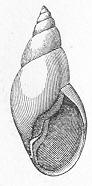
Fig. 220.—Limnœa pyramidalis. Eocene.
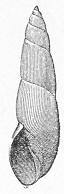
Fig. 221.—Physa columnaris. Eocene.
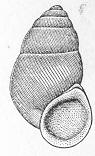
Fig. 222.—Cyclostoma Arnoudii. Eocene.
in the so-called "Lignitic Formation" of North America; but the
beds containing this may possibly be rather referable to the
Cretaceous—and this exception does not affect the fact
that the Ammonitidœ, as a family, had become
extinct before the Eocene strata were deposited. The ancient
genus Nautilus still survives, the sole representative
of the once mighty order of the Tetrabranchiate Cephalopods.
In the order of the Dibranchiates, we have a like
phenomenon to observe in the total extinction of the great
family of the "Belemnites." No form referable to this group
Page 295
has hitherto been found in any Tertiary stratum; but the
internal skeletons of Cuttle-fishes (such as Belosepia)
are not unknown.
Remains of Fishes are very abundant in strata of Eocene
age, especially in certain localities. The most famous depot for
the fossil fishes of this period is the limestone of Monte Bolca,
near Verona, which is interstratified with beds of volcanic ashes,
the whole being referable to the Middle Eocene. The fishes here
seem to have been suddenly destroyed by a volcanic eruption,
and are found in vast numbers. Agassiz has described over one
hundred and thirty species of Fishes from this locality, belonging
to seventy-seven genera. All the species are extinct; but
about one-half of the genera are represented by living
forms. The great majority of the Eocene Fishes belong to the
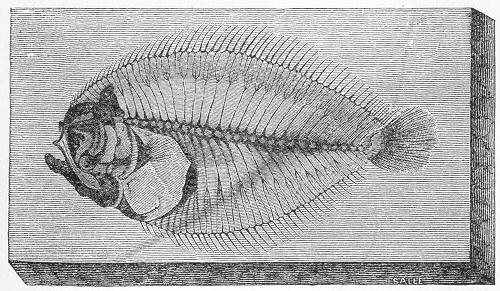
Fig. 223.—Rhombus minimus, a small fossil Turbot from
the Eocene Tertiary, Monte Bolca.
order of the "Bony Fishes" (Teleosteans), so that in the
main the forms of Fishes characterising the Eocene are similar
to those which predominate in existing seas. In addition to the
above, a few Ganoids and a large number of Placoids
are known to occur in the Eocene rocks. Amongst the latter are
found numerous teeth of true Sharks, such as Otodus (fig.
224) and Carcharodon. The pointed and serrated teeth of the
latter sometimes attain a length of over half a foot, indicating
that these predaceous fishes attained gigantic dimensions; and it
is interesting to note that teeth, in external appearance very
similar to those of the early Tertiary genus Carcharodon,
have been dredged from great depths during the recent expedition
of the Challenger. There also occur not uncommonly the flattened
Page 296
teeth of Rays (fig. 225), consisting of flat bony pieces placed
close together, and forming "a kind of mosaic pavement on both
the upper and lower jaws" (Owen).
In the class of the Reptiles, the disappearance of the
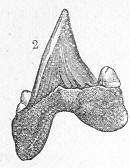
Fig. 224.—Tooth of Otodus obliquus. Eocene.
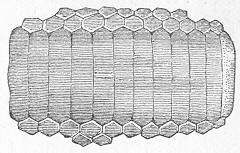
Fig. 225.—Flattened dental plates of a Ray (Myliobatis
Edwardsii). Eocene.
characteristic Mesozoic types is as marked a phenomenon as the
introduction of new forms. The Ichthyosaurs, the Plesiosaurs,
the Pterosaurs, and the Mosasaurs of the Mesozoic, find no
representatives in the Eocene Tertiary; and the same is true
of the Deinosaurs, if we except a few remains from the
doubtfully-situated "Lignitic formation" of the United States,
On the other hand, all the modern orders of Reptiles are known to
have existed during the Eocene period. The Chelonians are
represented by true marine Turtles, by "Terrapins"
(Emydidœ), and by "Soft Tortoises"
(Trionycidœ). The order of the Snakes and Serpents
(Ophidia) makes its appearance here, for the first time
under several forms—all of which, however, are referable to
the non-venomous group of the "Constricting Serpents"
(Boidœ). The oldest of these is the Palœophis
toliapicus of the London Clay of Sheppey, first made known to
science by the researches of Professor Owen. The nearly-allied
Palœophis typhœus of the Eocene beds of
Bracklesham appears to have been a Boa-constrictor-like Snake of
about twenty feet in length. Similar Python-like Snakes
(Palœophis, Dinophis, &c.) have been described
from the Eocene deposits of the United States. True Lizards
(Lacertilians) are found in some abundance in the Eocene
deposits,—some being small terrestrial forms, like the
common European lizards of the present day; whilst others equal or
exceed the living Monitors in size. Lastly, the modern order of
the Crocodilia is largely represented in Eocene times, by
species belonging to all the existing genera, together with
others referable to extinct types. As pointed out by Owen, it
is an interesting fact that in the Eocene rocks of the south-west
Page 297
of England, there occur fossil remains of all the three living
types of Crocodilians—namely, the Gavials, the true
Crocodiles, and the Alligators (fig. 226)—though at the
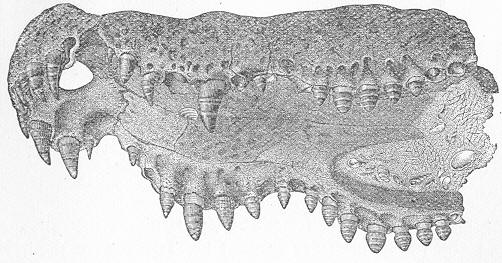
Fig. 226.—Upper jaw of Alligator. Eocene Tertiary, Isle of
Wight.
present day these forms are all geographically restricted in
their range, and are never associated together.
Almost all the existing orders of Birds, if not all, are
represented in the Eocene deposits by remains often very closely
allied to existing types. Thus, amongst the Swimming Birds
(Natatores) we find examples of forms allied to the living
Pelicans and Mergansers; amongst the Waders (Grallatores)
we have birds resembling the Ibis (the Numenius gypsorum of
the Paris basin); amongst the Running Birds (Cursores) we
meet with the great Gastornis Parisiensis, which equalled
the African Ostrich in height, and the still more gigantic
Dasornis Londinensis; remains of a Partridge represent
the Scratching Birds (Rasores); the American Eocene has
yielded the bones of one of the Climbing Birds (Scansores),
apparently referable to the Woodpeckers; the Protornis
Glarisiensis of the Eocene Schists of Glaris is the oldest
known example of the Perching Birds (Insessores); and
the Birds of Prey (Raptores) are represented by Vultures,
Owls, and Hawks. The toothed Birds of the Upper Cretaceous are no
longer known to exist; but Professor Owen has recently described
from the London Clay the skull of a very remarkable Bird, in
which there is, at any rate, an approximation to the structure of
Ichthyornis and Hesperornis. The bird in question
has been named the Odontopteryx totiapicus, its generic
title being derived from the very remarkable characters of its
jaws. In this singular form (fig. 227) the margins of both jaws
Page 298
are furnished with tooth-like denticulations, which differ from
true teeth in being actually portions of the bony substance of
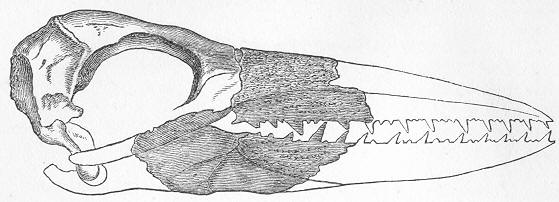
Fig. 227.—Skull of Odontopteryx toliapicus restored.
(After Owen.)
the jaw itself, with which they are continuous, and which were
probably encased by extensions of the horny sheath of the bill.
These tooth-like processes are of two sizes, the larger ones
being comparable to canines; and they are all directed forwards,
and have a triangular or compressed conical form. From a careful
consideration of all the discovered remains of this bird, Professor
Owen concludes that "Odontopteryx was a warm-blooded
feathered biped, with wings; and further, that it was web-footed
and a fish-eater, and that in the catching of its slippery prey
it was assisted by this Pterosauroid armature of its jaws." Upon
the whole, Odontopteryx would appear to be most nearly
related to the family of the Geese (Anserinœ) or Ducks
(Anatidœ); but the extension of the bony substance of
the jaws into tooth-like processes is an entirely unique character,
in which it stands quite alone.
The known Mammals of the Mesozoic period, as we have seen,
are all of small size; and with one not unequivocal exception,
they appear to be referable to the order of the Pouched Quadrupeds
(Marsupials), almost the lowest group of the whole class
of the Mammalia. In the Eocene rocks, on the other hand, numerous
remains of Quadrupeds have been brought to light, representing
most of the great Mammalian orders now in existence upon the
earth, and in many cases indicating animals of very considerable
dimensions. We are, in fact, in a position to assert that the
majority of the great groups of Quadrupeds with which we are
familiar at the present day were already in existence in the
Eocene period, and that their ancient root-stocks were even in
this early time separated by most of the fundamental differences
of structure
Page 299
which distinguish their living representatives. At the same time,
there are some amongst the Eocene quadrupeds which have a
"generalised" character, and which may be regarded as structural
types standing midway between groups now sharply separated from
one another.
The order of the Marsupials—including the existing
Kangaroos, Wombats, Opossums, Phalangers, &c.—is poorly
represented in deposits of Eocene age. The most celebrated
example of this group is the Didelphys gypsorum of the
Gypseous beds of Montmartre, near Paris, an Opossum very nearly
allied to the living Opossums of North and South America.
No member of the Edenates (Sloths, Ant-eaters, and Armadillos)
has hitherto been detected in any Eocene deposit. The aquatic
order of the Sirenians (Dugongs and Manatees), with their
fish-like bodies and tails, paddle-shaped forelimbs, and wholly
deficient hind-limbs, are represented in strata of this age by
remains of the ancient "Sea-Cows," to which the name of
Halitherium has been applied. Nearly allied to the preceding
is the likewise aquatic order of the Whales and Dolphins
(Cetaceans), in which the body is also fish-like, the
hind-limbs are wanting, the fore-limbs are converted into powerful
"flippers" or swimming-paddles, and the terminal extremity of
the body is furnished with a horizontal, tail-fin. Many existing
Cetaceans (such as the Whalebone Whales) have no true teeth;
but others (Dolphins, Porpoises, Sperm Whales) possess simple
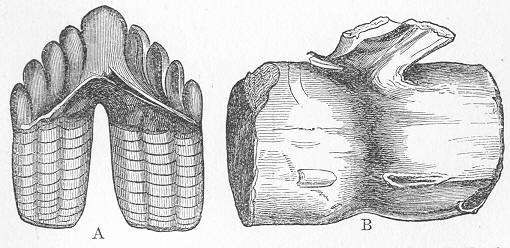
Fig. 228.—Zeuglodon cetoides. A, Molar
tooth of the natural size; B, Vertebra, reduced in size. From the
Middle Eocene of the United States. (After Lyell.)
conical teeth. In strata of Eocene age, however, we find a singular
group of Whales, constituting the genus Zeuglodon (fig. 228),
Page 300
in which the teeth differed from those of all
existing forms in being of two kinds,—the front ones being
conical incisors, whilst the back teeth or molars have serrated
triangular crowns, and are inserted in the jaw by two roots. Each
molar (fig. 228, A) looks as if it were composed of two separate
teeth united on one side by their crowns; and it is this peculiarity
which is expressed by the generic name (Gr. zeugle, a yoke;
odous, tooth). The best-known species of the genus is
the Zeuglodon cetoides of Owen, which attained a length
of seventy feet. Remains of these gigantic Whales are very common
in the "Jackson Beds" of the Southern United States. So common
are they that, according to Dana, "the large vertebræ, some of
them a foot and a half long and a foot in diameter, were formerly
so abundant over the country, in Alabama, that they were used
for making walls, or were burned to rid the fields of them."
The great and important order of the Hoofed Quadrupeds
(Ungulata) is represented in the Eocene by examples of both
of its two principal sections—namely, those with an uneven
number of toes (one or three) on the foot (Perissodactyle
Ungulates), and those with an even number of toes (two or four)
to each foot (Artiodactyle Ungulates). Amongst the Odd-toed
Ungulates, the living family of the Tapirs (Tapirdœ) is
represented by the genus Coryphodon of Owen. Nearly related
to the preceding are the species of Palœotherium,
which have a historical interest as being amongst the first of the
Tertiary Mammals investigated by the illustrious Cuvier. Several
species of Palœothere are known, varying greatly in
size, the smallest being little bigger than a hare, whilst the
largest must have equalled a good-sized horse in its dimensions. The
species of Palœotherium appear to have agreed with the
existing Tapirs in possessing a lengthened and flexible nose, which
formed a short proboscis or trunk (fig. 229), suitable as an
instrument for stripping off the foliage of trees—the characters
of the molar teeth showing them to have been strictly herbivorous
in their habits. They differ, however, from the Tapirs, amongst
other characters, in the fact that both the fore and the hind feet
possessed three toes each; whereas in the latter there are four
toes on each fore-foot, and the hind-feet alone are three-toed. The
remains of Palœotheria have been found in such abundance
in certain localities as to show that these animals roamed in great
herds over the fertile plains of France and the south of England
during the later portion of the Eocene period. The accompanying
illustration (fig. 229) represents the notion which the great
Cuvier was induced by
Page 301
his researches to form as to the outward
appearance of Palœotherium magnum. Recent discoveries,
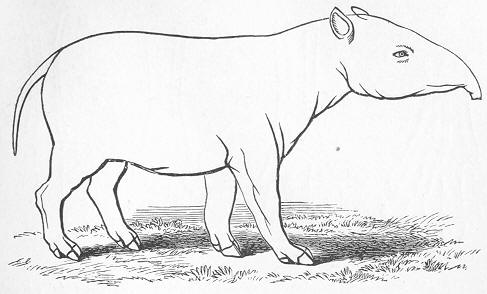
Fig. 229.—Outline of Palœotherium magnum,
restored. Upper Eocene, Europe. (After Cuvier.)
however, have rendered it probable that this restoration is in some
important respects inaccurate. Instead of being bulky, massive,
and more or less resembling the living Tapirs in form, it would
rather appear that Palœotherium magnum was in reality a
slender, graceful, and long-necked animal, more closely resembling
in general figure a Llama, or certain of the Antelopes.
The singular genus Anchitherium forms a kind of transition
between the Palœotheria and the true Horses
(Equidœ). The Horse (fig. 230, D) possesses but one
fully-developed toe to each foot, this being terminated by a single
broad hoof, and representing the middle toe—the
third of the typical five-fingered or five-toed limb of
Quadrupeds in general. In addition, however, to this fully-developed
toe, each foot in the horse carries two rudimentary toes which are
concealed beneath the skin, and are known as the "splint-bones."
These are respectively the second and fourth toes,
in an aborted condition; and the first and fifth toes are wholly
wanting. In Hipparion (fig. 230, C), the foot is essentially
like that of the modern Horses, except that the second and fourth
toes no longer are mere "splint-bones," hidden beneath the skin;
but have now little hoofs, and hang freely, but uselessly, by the
side of the great middle toe, not being sufficiently developed to
reach the ground. In Anchitherium, again (fig. 230, B),
the foot is three-toed, like that of Hipparion; but the
two lateral toes (the second and fourth) are so far
Page 302
developed that they now reach the ground.
The first digit (thumb or great toe) is still wanting;
as also is the fifth digit (little finger or little toe).
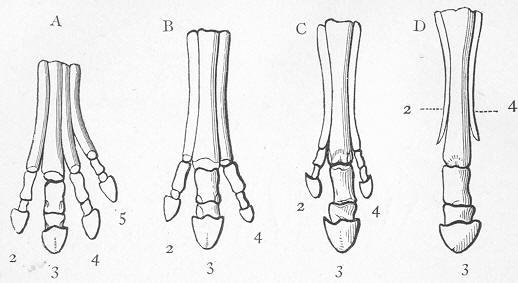
Fig. 230.—Skeleton of the foot in various forms belonging to
the family of the Equidœ. A, Foot of Orohippus,
Eocene; B, Foot of Anchitherium, Upper Eocene and Lower
Miocene; C, Foot of Hipparion, Upper Miocene and Pliocene:
D, Foot of Horse (Equus), Pliocene and Recent. The figures
indicate the numbers of the digits in the typical five-fingered
hand of Mammals. (After Marsh.)
Lastly, the Eocene rocks have yielded in North America the remains
of a small Equine quadruped, to which Marsh has given the name of
Orohippus. In this singular form—which was not larger
than a fox—the foot (fig. 230, A) carries four toes,
all of which are hoofed and touch the ground, but of which the
third toe is still the largest. The first toe
(thumb or great toe) is still wanting; but in this ancient
representative of the Horses, the fifth or "little" toe
appears for the first time. As all the above-mentioned forms
succeed one another in point of time, it may be regarded as
probable that we shall yet be able to point, with some certainty,
to some still older example of the Equidœ, in which
the first digit is developed, and the foot assumes its typical
five-fingered condition.
Passing on to the Even-toed or Artiodactyle Ungulates, no
representative of the Hippotamus seems yet to have existed,
but there are several forms (Chœropotamus, Hyopotamus,
&c.) more or less closely allied to the Pigs (Suida); and
the singular group of the Anoplotheridœ may be regarded
as forming a kind of transition between the Swine and the Ruminants.
The Anoplotheria (fig. 231) were slender in form, the
largest not exceeding a donkey in size, with long tails, and
having the feet terminated by two hoofed toes each, sometimes
with a pair of small accessory hoofs as well. The teeth exhibit
Page 303
the peculiarity that they are arranged in a continuous series,
without any gap or interval between the molars and the canines;
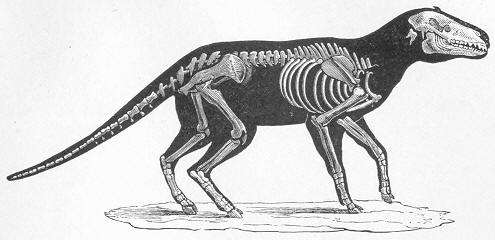
Fig. 231.—Anoplotherium commune. Eocene Tertiary,
France. (After Cuvier.)
and the back teeth, like those of all the Ungulates, are adapted
for grinding vegetable food, their crowns resembling in form
those of the true Ruminants. The genera Dichobune and
Xiphodon, of the Middle and Upper Eocene, are closely related
to Anoplotherium, but are more slender and deer-like in
form. No example of the great Ruminant group of the Ungulate
Quadrupeds has as yet been detected in deposits of Eocene age.
Whilst true Ruminants appear to be unknown, the Eocene strata
of North America have yielded to the researches of Professor
Marsh examples of an extraordinary group (Dinocerata),
which may be considered as in some respects intermediate between
the Ungulates and the Proboscideans. In Dinoceras itself
(fig. 232) we have a large animal, equal in dimensions to the
living Elephants, which it further resembles in the structure
of the massive limbs, except that there are only four toes to
each foot. The upper jaw was devoid of front teeth, but there
were two very large canine teeth, in the form of tusks directed
perpendicularly downwards; and there was also a series of six small
molars on each. Each upper jaw-bone carried a bony projection, which
was probably of the nature of a "horn-core," and was originally
sheathed in horn. Two similar, but smaller, horn-cores are carried
on the nasal bones; and two much larger projections, also probably
of the nature of horn-cores, were carried upon the forehead. We
may thus infer that Dinoceras possessed three pairs of
horns, all of which resembled the horns of the Sheep and Oxen
in consisting of a central bony "core," surrounded by a horny
Page 304
sheath. The nose was not prolonged into a proboscis or "trunk,"
as in the existing Elephants; and the tail was short and slender.
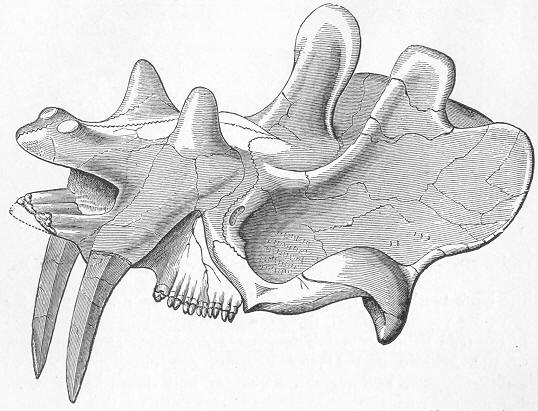
Fig. 232.—Skull of Dinoceras mirabilis, greatly
reduced. Eocene, North America. (After Marsh.)
Many forms of the Dinocerata are known; but all these
singular and gigantic quadrupeds appear to have been confined
to the North American continent, and to be restricted to the
Eocene period.
The important order of the Elephants (Proboscidea) is
also not known to have come into existence during the Eocene
period. On the other hand, the great order of the Beasts of Prey
(Carnivora) is represented in Eocene strata by several
forms belonging to different types. Thus the Ardocyon
presents us with an Eocene Carnivore more or less closely allied
to the existing Racoons; the Palœonyctis appears to
be related to the recent Civet-cats; the genus Hyœnodon
is in some respects comparable to the living Hyænas; and the
Canis Parisiensis of the gypsum-bearing beds of Montmartre
may perhaps be allied to the Foxes.
The order of the Bats (Cheiroptera) is represented in Eocene
strata of the Paris basin (Gypseous series of Montmartre) by the
Vespertilio Parisiensis (fig. 233), an insect-eating Bat
very similar to some of the existing European forms. Lastly, the
Eocene deposits have yielded more or less satisfactory evidence of
Page 305
the existence in Europe at this period of examples of the orders
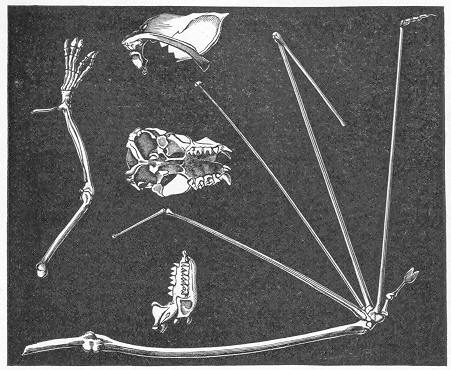
Fig. 233.—Portion of the skeleton of Vespertilio
Parisienis. Eocene Tertiary, France.
of the Gnawing Mammals (Rodentia), the Insect-eating Mammals
(Insectivora), and the Monkeys (Quadrumana).[24]
CHAPTER XIX.
THE MIOCENE PERIOD.
The Miocene rocks comprise those Tertiary deposits which contain
less than about 35 per cent of existing species of shells
(Mollusca), and more than 5 per cent—or those deposits
in which the proportion of living shells is less than of extinct
species. They are divisible into a Lower Miocene
(Oligocene) and an Upper Miocene series.
In Britain, the Miocene rocks are very poorly developed, one
of their leading developments being at Bovey Tracy in Devonshire,
where there occur sands, clays, and beds of lignite
Page 306
or imperfect coal. These strata contain numerous plants,
amongst which are Vines, Figs, the Cinnamon-tree, Palms, and many
Conifers, especially those belonging to the genus Sequoia (the
"Red-Foods"). These Bovey Tracy lignites are of Lower Miocene age,
and they are lacustrine in origin. Also of Lower Miocene age are
the so-called "Hempstead Beds" of Yarmouth in the Isle of Wight.
These attain a thickness of less than 200 feet, and are shown by
their numerous fossils to be principally a true marine formation.
Lastly, the Duke of Argyll, in 1851, showed that there existed at
Ardtun, in the island of Mull, certain Tertiary strata containing
numerous remains of plants; and these also are now regarded as
belonging to the Lower Miocene.
In France, the Lower Miocene is represented in Auvergne,
Cantal, and Velay, by a great thickness of nearly horizontal
strata of sands, sandstone, clays, marls, and limestones, the
whole of fresh-water origin. The principal fossils of these
lacustrine deposits are Mammalia, of which the remains
occur in great abundance. In the valley of the Loire occur the
typical European deposits of Upper Miocene age. These are known
as the "Faluns," from a provincial term applied to shelly sands,
employed to spread upon soils which are deficient in lime; and
the Upper Miocene is hence sometimes spoken of as the "Falunian"
formation. The Faluns occur in scattered patches, which are rarely
more than 50 feet in thickness, and consist of sands and marls.
The fossils are chiefly marine; but there occur also land and
fresh-water shells, together with the remains of numerous Mammals.
About 25 per cent of the shells of the Faluns are identical with
existing species. The sands, limestones, and marls of the Department
of Gers, near the base of the Pyrenees, rendered famous by the
number or Mammalian remains exhumed from them by M. Lartet, also
belong to the age of the Faluns.
In Switzerland, between the Alps and the Jura, there occurs
a great series of Miocene deposits, known collectively as the
"Molasse," from the soft nature of a greenish sandstone, which
constitutes one of its chief members. It attains a thickness of
many thousands of feet, and rises into lofty mountains, some of
which—as the Rigi—are more than 6000 feet in height.
The middle portion of the Molasse is of marine origin, and is
shown by its fossils to be of the age of the Faluns; but the
lower and upper portions of the formation are mainly or entirely
of fresh-water origin. The Lower Molasse (of Lower Miocene age)
has yielded about 500 species of plants, mostly of tropical or
sub-tropical forms. The Upper
Page 307
Molasse has yielded about the same number of plants, with about
900 species of Insects, such as wood-eating Beetles Water-beetles,
White Ants, Dragon-flies, &c.
In Belgium, strata of both Lower and Upper Miocene age are
known,—the former (Rupelian Clays) containing numerous
marine fossils; whilst the latter (Bolderberg Sands) have
yielded numerous shells corresponding with those of the Faluns.
In Austria, Miocene strata are largely developed, marine
beds belonging to both the Lower and Upper division of the formation
occurring extensively in the Vienna basin. The well-known Brown
Coals of Radaboj, in Croatia, with numerous plants and insects,
are also of Lower Miocene age.
In Germany, deposits belonging to both the Lower and Upper
division of the Miocene formation are extensively developed. To
the former belong the marine strata of the Mayence basin, and
the marine Rupelian Clay near Berlin; whilst a celebrated
group of strata belonging to the Upper Miocene occurs near
Epplesheim, in Hesse-Darmstadt, and is well known for the number
of its Mammalian remains.
In Greece, at Pikermé, near Athens, there occurs a
celebrated deposit of Upper Miocene age, well known to
palæontologists through the researches of M. M. Wagner, Roth,
and Gaudry upon the numerous Mammalia which it contains. In
Italy, also, strata of both Lower and Upper Miocene age are
well developed in the neighbourhood of Turin.
In the Siwâlik Hills, in India, at the southern foot
of the Himalayas, occurs a series of Upper Miocene strata, which
have become widely celebrated through the researches of Dr Falconer
and Sir Proby Cautley upon the numerous remains of Mammals and
Reptiles which they contain. Beds of corresponding age, with
similar fossils, are known to occur in the island of Perim in
the Gulf of Cambay.
Lastly, Miocene deposits are found in North America, in
New Jersey, Maryland, Virginia, Missouri, California, Oregon,
&c., attaining a thickness of 1500 feet or more. They consist
principally of clays, sands, and sandstones, sometimes of marine
and sometimes of fresh-water origin. Near Richmond, in Virginia,
there occurs a remarkable stratum, wrongly called "Infusorial
Earth," which is occasionally 30 feet in thickness, and consists
almost wholly of the siliceous envelopes of certain low forms of
plants (Diatoms), along with the spicules of Sponges and other
siliceous organisms (see fig. 16). The White River Group of
Hayden occurs in the Upper Missouri region, and is largely exposed
over the barren and desolate
Page 308
district known as the "Mauvaises Terres." They have a thickness of
1000 feet or more, and contain numerous remains of Mammals. They
are of lacustrine origin, and are believed to be of the age of the
Lower Miocene. Upon the whole, about from 15 to 30 per cent of the
Mollusca of the American Miocene are identical with
existing species.
In addition to the regions previously enumerated, Miocene strata
are known to be developed in Greenland, Iceland, Spitzbergen,
and in other areas of less importance.
The life of the Miocene period is extremely abundant,
and, from the nature of the deposits of this age, also extremely
varied in its character. The marine beds of the formation have
yielded numerous remains of both Vertebrate and Invertebrate
sea-animals; whilst the fresh-water deposits contain the skeletons
of such shells, fishes, &c., as now inhabit rivers or lakes.
Both the marine and the lacustrine beds have been shown to contain
an enormous number of plants, the latter more particularly; whilst
the Brown Coals of the formation are made up of vegetable matter
little altered from its original condition. The remains of
air-breathing animals, such as Insects, Reptiles, Birds, and
Mammals, are also abundantly found, more especially in the
fresh-water beds.
The plants of the Miocene period are extraordinarily numerous,
and only some of the general features of the vegetation of this
epoch can be indicated here. Our chief sources of information as
to the Miocene plants are the Brown Coals of Germany and Austria,
the Lower and Upper Molasse of Switzerland, and the Miocene strata
of the Arctic regions. The lignites of Austria have yielded very
numerous plants, chiefly of a tropical character—one of the
most noticeable forms being a Palm of the genus Sabal
(fig. 234, B), now found in America. The plants of the Lower
Miocene of Switzerland are also mostly of a tropical character,
but include several forms now found in North America, such as a
Tulip-tree (Liriodendron) and a Cypress (Taxodium).
Amongst the more remarkable forms from these beds may be mentioned
Fan-Palms (Chamœrops, fig. 234, A), numerous tropical
ferns, and two species of Cinnamon. The plant-remains of the
Upper Molasse of Switzerland indicate an extraordinarily rank and
luxuriant vegetation, composed mainly of plants which now live
in warm countries. Among the commoner plants of this formation may
be enumerated many species of Maple (Acer), Plane-trees
(Platanus fig. 235), Cinnamon-trees (fig. 236), and other
members of the Lauraceœ, many species of
Proteaccœ (Banksia, Grevillea, &c.),
several species of Sarsaparilla (Smilax), Palms, Cypresses,
&c.
Page 309
In Britain, the Lower Miocene strata of Bovey Tracy have yielded
remains of Ferns, Vines, Fig, Cinnamon, Proteaccœ, &c.,
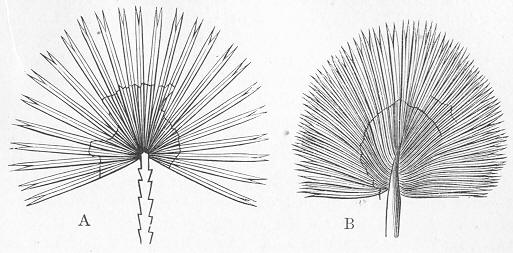
Fig. 234.—Miocene Palms A, Chamœrops Helvetica; B,
Sabal major. Lower Miocene of Switzerland and France.
along with numerous Conifers. The most abundant of these last is a
gigantic pine—the Sequoia Couttsiœ—which is
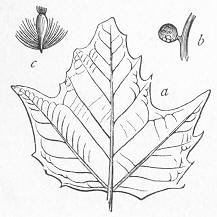
Fig. 235.—Platanus aceroides, an Upper Miocene
Plane-tree. a, Leaf; b, The core of a bundle
of fruits; c, A single fruit.
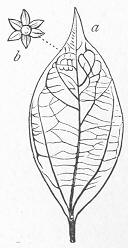
Fig. 236.—Cinnamomum polymorphum. a, Leaf;
b, Flower. Upper Miocene.
very nearly allied to the huge Sequoia (Wellingtonia)
gigantea of California. A nearly-allied form (Sequoia
Langsdorffi) has been detected in the leaf-bed of Ardtun,
in the Hebrides.
In Greenland, as well as in other parts of the Arctic regions,
Miocene strata have been discovered which have yielded a great
number of plants, many of which are identical with species found
in the European Miocene. Amongst these
Page 310
plants are found many trees, such as Conifers, Beeches, Oaks,
Maples, Plane-trees, Walnuts, Magnolias, &c., with numerous
shrubs, ferns, and other smaller plants. With regard to the Miocene
flora of the Arctic regions, Sir Charles Lyell remarks that "more
than thirty species of Coniferæ have been found, including
several Sequoias (allied to the gigantic Wellingtonia of California),
with species of Thujopsis and Salisburia, now peculiar
to Japan. There are also beeches, oaks, planes, poplars, maples,
walnuts, limes, and even a magnolia, two cones of which have
recently been obtained, proving that this splendid evergreen not
only lived but ripened its fruit within the Arctic circle. Many
of the limes, planes, and oaks were large-leaved species; and both
flowers and fruits, besides immense quantities of leaves, are in
many cases preserved. Among the shrubs are many evergreens, as
Andromeda, and two extinct genera, Daphnogene and
M'Clintockia, with fine leathery leaves, together with
hazel, blackthorn, holly, logwood, and hawthorn. A species of
Zamia (Zimites) grew in the swamps, with Potamogeton,
Sparganium, and Menyanthes; while ivy and villes twined
around the forest-trees, and broad-leaved ferns grew beneath their
shade. Even in Spitzbergen, as far north as lat. 78° 56', no
less than ninety-five species of fossil plants have been obtained,
including Taxodium of two species, hazel, poplar, alder,
beech, plane-tree, and lime. Such a vigorous growth of trees within
12° of the pole, where now a dwarf willow and a few herbaceous
plants form the only vegetation, and where the ground is covered
with almost perpetual snow and ice, is truly remarkable."
Taking the Miocene flora as a whole, Dr Heer concludes from his
study of about 3000 plants contained in the European Miocene
alone, that the Miocene plants indicate tropical or sub-tropical
conditions, but that there is a striking inter-mixture of forms
which are at present found in countries widely removed from one
another. It is impossible to state with certainty how many of the
Miocene plants belong to existing species, but it appears that
the larger number are extinct. According to Heer, the American
types of plants are most largely represented in the Miocene flora,
next those of Europe and Asia, next those of Africa, and lastly
those of Australia. Upon the whole, however, the Miocene flora
of Europe is mostly nearly allied to the plants which we now
find inhabiting the warmer parts of the United States; and this
has led to the suggestion that in Miocene times the Atlantic
Ocean was dry land, and that a migration of
Page 311
American plants to Europe was thus permitted. This view is
borne out by the fact that the Miocene plants of Europe are most
nearly allied to the living plants of the eastern or Atlantic
seaboard of the United States, and also by the occurrence of a
rich Miocene flora in Greenland. As regards Greenland, Dr Heer
has determined that the Miocene plants indicate a temperate
climate in that country, with a mean annual temperature at least
30° warmer than it is at present.
The present limit of trees is the isothermal which gives the
mean temperature of 500 Fahr. in July, or about the parallel of
67° N. latitude. In Miocene times, however, the Limes, Cypresses,
and Plane-trees reach the 79th degree of latitude, and the Pines
and Poplars must have ranged even further north than this.
The Invertebrate Animals of the Miocene period are very
numerous, but they belong for the most part to existing types,
and they can only receive scanty consideration here. The little
shells of Foraminifera are extremely abundant in some beds,
the genera being in many cases such as now flourish abundantly in
our seas. The principal forms belong to the genera Textularia
(fig. 237), Robulina, Glandulina, Polystomella, Amplistegina,
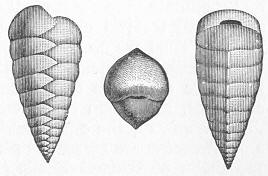
Fig. 237.—Textularia Meyeriana, greatly
enlarged. Miocene Tertiary.
&c. Corals are very abundant, in many instances forming regular
"reefs;" but all the more important groups are in existence at
the present day. The Red Coral (Corallium), so largely
sought after as an ornamental material, appears for the first
time in deposits of this age. Amongst the Echinoderms,
we meet with Heart-Urchins (Spatangus), Cake-Urchins
(Scutella; fig. 238), and various other forms, the majority
of which are closely allied to forms now in existence.
Numerous Crabs and Lobsters represent the Crustacea; but
the most important of the Miocene Articulate Animals are the
Insects. Of these, more than thirteen hundred species
have been determined by Dr Heer from the Miocene strata of
Switzerland alone. They include almost all the existing orders
of insects, such as numerous and varied forms of Beetles
(Coleoptera), Forest-bugs (Hemiptera), Ants
(Hymenoptera), Flies (Diptera), Termites and
Dragon-flies (Neuroptera), Grasshoppers (Orthoptera),
and Butterflies (Lepidoptera).
Page 312
One of the latter,
the well-known Vanessa Pluto of the Brown Coals of Croatia,
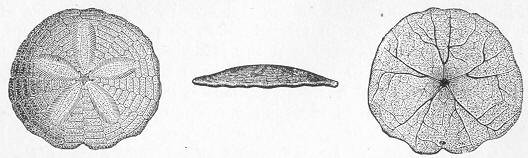
Fig. 238.—Different views of Scutella subrotunda,
a Miocene "Cake-Urchin" from the south of France.
even exhibits the pattern of the wing, and to some extent its
original coloration; whilst the more durably-constructed insects
are often in a state of exquisite preservation.
The Mollusca of the Miocene period are very numerous,
but call for little special comment. Upon the whole, they are
generically very similar to the Shell-fish of the present day;
whilst, as before stated, from fifteen to thirty per cent of
the species are identical with those now in existence.
So far as the European area is concerned, the Molluscs indicate
a decidedly hotter climate than the present one, though they
have not such a distinctly tropical character as is the case
with the Eocene shells. Thus we meet with many Cones, Volutes,
Cowries, Olive-shells, Fig-shells, and the like, which are
decidedly indicative of a high temperature of the sea.
Polyzoans are abundant, and often attain considerable
dimensions; whilst Brachiopods, on the other hand, are
few in number. Bivalves and Univalves are extremely
plentiful; and we meet here with the shells of Winged-Snails
(Pteropods), belonging to such existing genera as
Hyalea (fig. 239) and Cleodora. Lastly, the
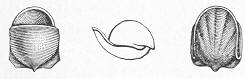
Fig. 239.—Different views of the shell of Hyalea
Orbignyana, a Miocene Pteropod.
Cephalopods are represented both by the chambered shells
of Nautili and by the internal skeletons of Cuttle-fishes
(Spirulirostra.)
The Fishes of the Miocene Period are very abundant but of
little special importance. Besides the remains of Bony Fishes, we
meet in the marine deposits of this age with numerous pointed
teeth belonging to different kinds of Sharks. Some of the genera of
these—such as Carcharodon (fig. 241), Oxyrhina
(fig. 240), Lamna, and Galeocerdo—are very
widely distributed, ranging through
Page 313
both the Old and New Worlds; and some of the species attain gigantic
dimensions.
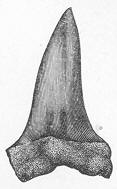
| |
Fig. 240.—Tooth of Oxyrhina xiphodon. Miocene.
|
|
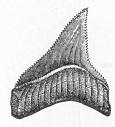
| |
Fig. 241.—Tooth of Carcharodon productus. Miocene.
|
|
Amongst the Amphibians we meet with distinctly modern
types, such as Frogs (Rana) and Newts or Salamanders.
The most celebrated of the latter is the famous Andrias
Scheuchzeri (fig. 242), discovered in the year 1725 in the
fresh-water Miocene deposits of Œningen, in Switzerland.
The skeleton indicates an animal nearly five feet in length; and
it was originally described by Scheuchzer, a Swiss physician, in
a dissertation published in 1731, as the remains of one of the
human beings who were in existence at the time of the Noachian
Deluge. Hence he applied to it the name of Homo diluvii
testis. In reality, however, as shown by Cuvier, we have here
the skeleton of a huge Newt, very closely allied to the Giant
Salamander (Menopoma maxima) of Java.
The remains of Reptiles are far from uncommon in the Miocene
rocks, consisting principally of Chelonians and Crocodilians. The
Land-tortoises (Testudinidœ) make their first appearance
during this period. The most remarkable form of this group is the
huge Colossochelys Atlas of the Upper Miocene deposits of
the Siwâlik Hills in India, described by Dr Falconer and Sir
Proby Cautley. Far exceeding any living Tortoise in its dimensions,
this enormous animal is estimated as having had a length of about
twenty feet, measured from the tip of the snout to the extremity
of the tail, and to have stood upwards of seven feet high. All the
details of its organisation, however, prove that it must have been
"strictly a land animal, with herbivorous habits, and probably of
the most inoffensive nature." The accomplished palæontologist
just quoted, shows further that some of the traditions of the
Hindoos would render it not improbable that this colossal Tortoise
had survived into the earlier portion of the human period.
Of the Birds of the Miocene period it is sufficient to
remark that though specifically distinct, they belong, so far
as known, wholly to existing groups, and therefore present no
points of special palæontological interest.
The Mammals of the Miocene are very numerous, and only
Page 314
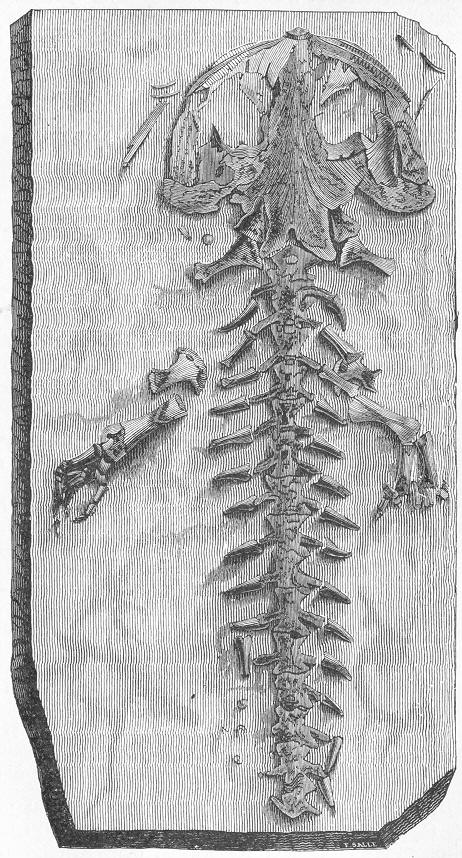
Fig. 242.—Front portion of the skeleton of Andrias
Scheuchzeri, a Giant Salamander from the Miocene Tertiary of
Œningen, in Switzerland. Reduced in size.
the more important forms can be here alluded to. Amongst the
Marsupials, the Old World still continued to possess species
Page 315
of Opossum (Didephys), allied to the existing American
forms. The Edentates (Sloths, Armadillos, and Ant-eaters),
at the present day mainly South American, are represented by two
large European forms. One of these is the large Macrotherium
giganteum of the Upper Miocene of Gers in Southern France,
which appears to hare been in many respects allied to the existing
Scaly Ant-eaters or Pangolins, at the same time that the
disproportionately long fore-limbs would indicate that it possessed
the climbing habits of the Sloths. The other is the still more
gigantic Ancylotherium Pentelici of the Upper Miocene of
Pikermé, which seems to have been as large as, or larger than,
the Rhinoceros, and which must have been terrestrial in its habits.
This conclusion is further borne out by the comparative equality
of length which subsists between the fore and hind limbs, and is
not affected by the curvature and crookedness of the claws, this
latter feature being well marked in such existing terrestrial
Edentates as the Great Ant-eater.
The aquatic Sirenians and Cetaceans are represented
in Miocene times by various forms of no special importance. Amongst
the former, the previously existing genus Halitherium
continued to survive, and amongst the latter we meet with remains
of Dolphins and of Whales of the "Zeuglodont" family. We may
also note here the first appearance of true "Whalebone Whales,"
two species of which, resembling the living "Right Whale" of
Arctic seas, and belonging to the same genus (Balœna),
have been detected in the Miocene beds of North America.
The great order of the Ungulates or Hoofed Quadrupeds
is very largely developed in strata of Miocene age, various new
types of this group making their appearance here for the first
time, whilst some of the characteristic genera of the preceding
period are still represented under new shapes. Amongst the Odd-toed
or "Perissodactyle" Ungulates, we meet for the first time with
representatives of the family Rhinoceridœ comprising
only the existing Rhinoceroses. In India in the Upper Miocene beds
of the Siwâlik Hills, and in North America, several species
of Rhinoceros have been detected, agreeing with the existing forms
in possessing three toes to each foot, and in having one or two
solid fibrous "horns" carried upon the front of the head. On the
other hand, the forms of this group which distinguish the Miocene
deposits of Europe appear to have been for the most part hornless,
and to have resembled the Tapirs in having three-toed hind-feet,
but four-toed fore-feet.
Page 316
The family of the Tapirs is represented, both in the Old and New
Worlds, by species of the genus Lophiodon, some of which
were quite diminutive in point of size, whilst others attained
the dimensions of a horse. Nearly allied to this family, also,
is the singular group of quadrupeds which Marsh has described
from the Miocene strata of the United States under the name of
Brontotheridœ. These extraordinary animals, typified
by Brontotherium (fig. 243) itself, agree with the existing
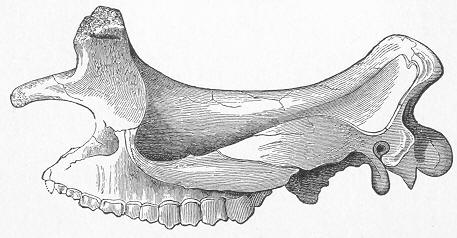
Fig. 243.—Skull of Brontotherium ingens. Miocene
Tertiary, United States. (After Marsh.)
Tapirs of South America and the Indian Archipelago in having the
fore-feet four-toed, whilst the hind-feet are three-toed; and
a further point of resemblance is found in the fact (as shown by
the form of the nasal bones) that the nose was long and flexible,
forming a short movable proboscis or trunk, by means of which the
animal was enabled to browse on shrubs or trees. They differ,
however, from the Tapirs, not only in the apparent presence of
a long tail, but also in the possession of a pair of very large
"horn-cores," carried upon the nasal bones, indicating that the
animal possessed horns of a similar structure to those of the
"Hollow-horned" Ruminants (e.g., Sheep and Oxen).
Brontotherium gigas is said to be nearly as large as an
Elephant, whilst B. Ingens appears to have attained dimensions
still more gigantic. The well-known genus Titanotherium of
the American Miocene would also appear to belong to this group.
The family of the Horses (Equidœ) appears under
various forms in the Miocene, but the most important and best
known of these is Hipparion. In this genus the general
conformation of the skeleton is extremely similar to that of the
existing Horses, and the external appearance of the animal must
have been very much the same. The foot of Hipparion,
Page 317
however, as has been previously mentioned,
differed from that of the Horse in the fact that whilst both
possess the middle toe greatly developed and enclosed in a
broad hoof, the former, in addition, possessed two lateral
toes, which were sufficiently developed to carry hoofs, but
were so far rudimentary that they hung idly by the side of the
central toe without touching the ground (see fig. 230). In the
Horse, on the other hand, these lateral toes, though present,
are not only functionally useless, but are concealed beneath
the skin. Remains of the Hipparion have been found in
various regions in Europe and in India; and from the immense
quantities of their bones found in certain localities, it may
be safely inferred that these Middle Tertiary ancestors of the
Horses lived, like their modern representatives, in great
herds, and in open grassy plains or prairies.
Amongst the Even-toed or Artiodactyle Ungulates, we for
the first time meet with examples of the Hippopotamus, with
its four-toed feet, its massive body, and huge tusk-like lower
canine teeth. The Miocene deposits of Europe have not hitherto
yielded any remains of Hippopotamus; but several species
have been detected in the Upper Miocene of the Siwâlik Hills
by Dr Falconer and Sir Proby Cautley. These ancient Indian forms,
however, differ from the existing Hippopotamus amphibius
of Africa in the fact that they possessed six incisor teeth in
each jaw (fig. 244), whereas the latter has only four.
Amongst the other Even-toed Ungulates, the family of the Pigs
(Suida) is represented by true Swine (Sus Erymanthius),
Peccaries (Dicotyles antiquus), and by forms which, like
the great Elotherium of the American Miocene, have no
representative at the present day. The Upper Miocene of India has
yielded examples of the Camels. Small Musk-deer (Amphitragulus
and Dremotherium) are known to have existed in France and
Greece; and the true Deer (Cervidœ), with their solid
bony antlers, appear for the first time here in the person of
species allied to the living Stags (Cervus), accompanied
by the extinct genus Dorcatherium. The Giraffes
(Camelopardalidœ), now confined to Africa, are known to
have lived in India and Greece; and the allied Helladotherium,
in some respects intermediate between the Giraffes and the Antelopes,
ranged over Southern Europe from Attica to France. The great group
of the "Hollow-horned" Ruminants (Cavicornia), lastly,
came into existence in the Miocene period; and though the typical
families of the Sheep and Oxen are apparently wanting, there are
true Antelopes, together with forms which, if systematically
referable to the Antilopidœ, nevertheless are more or
less clearly transitional between this and the family of the Sheep
Page 318
and Goats. Thus the Palœoreas of
the Upper Miocene of Greece may be regarded as a genuine Antelope;
but the Tragoceras of the same deposit is intermediate in
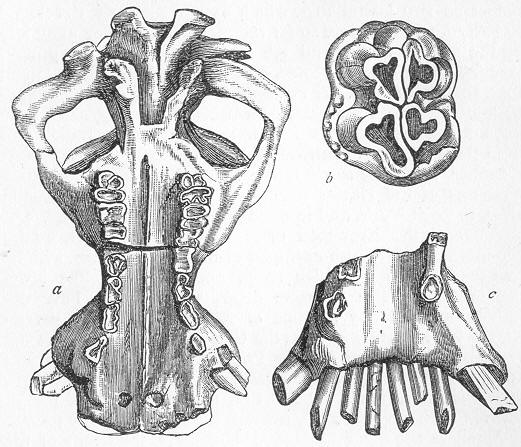
Fig. 244.—a, Skull of Hippopotamus Sivalensis,
viewed from below, one-eighth of the natural size; b, Molar
tooth of the same, showing the surface of the crown, one-half of
the natural size: c, Front of the lower jaw of the same,
showing the six incisors and the tusk-like canines, one-eighth of
the natural size. Upper Miocene, Siwâlik Hills; (After
Falconer and Cautley.)
its characters between the typical Antelopes and the Goats. Perhaps
the most remarkable, however, of these Miocene Ruminants is the
Sivatherium giganteum (fig. 245) of the Siwâlik Hills,
in India. In this extraordinary animal there were two pairs of horns,
supported by bony "horn-cores," so that there can be no hesitation
in referring Sivatherium to the Cavicorn Ruminants. If all
these horns had been simple, there would have been no difficulty
in considering Sivatherium as simply a gigantic four-horned
Antelope, essentially similar to the living Antilope
(Tetraceros) quadricornis of India. The hinder pair
of horns, however, is not only much larger than the front pair,
but each possesses two branches or snags—a peculiarity
not to be paralleled amongst any existing Antelope, save the
abnormal Prongbuck (Antilocapra) of North America. Dr
Murie, however, in an admirable memoir on the structure and
relationships
Page 319
of Sivatherium, has drawn attention
to the fact that the Prongbuck sheds the sheath of its
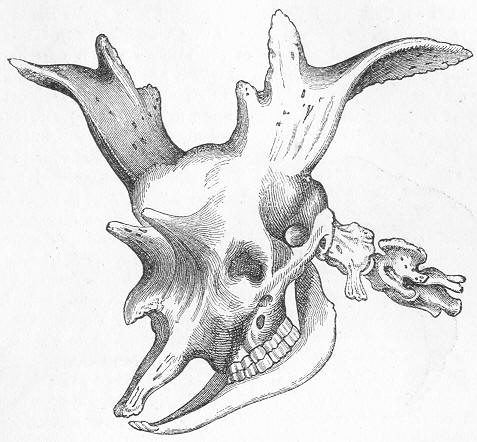
Fig. 245.—Skull of Sivatherium giganteum, reduced
in size. Miocene, India. (After Murie.)
horns annually, and has suggested that this may also have been the
case with the extinct form. This conjecture is rendered probable,
amongst other reasons, by the fact that no traces of a horny
sheath surrounding the horn-cores of the Indian fossil have been
as yet detected. Upon the whole, therefore, we may regard the
elephantine Sivatherium as being most nearly allied to
the Prongbuck of Western America, and thus as belonging to the
family of the Antelopes.
It is to the Miocene period, again, to which we must refer the
first appearance of the important order of the Elephants and their
allies (Proboscideans), all of which are characterised by
their elongated trunk-like noses, the possession of five toes to
the foot, the absence of canine teeth, the development of two or
more of the incisor teeth into long tusks, and the adaptation of
the molar teeth to a vegetable diet. Only three generic groups of
this order are known-namely, the extinct Deinotherium, the
equally extinct Mastodons, and the Elephants; and all
these three types are known to have been in existence as
Page 320
early as the Miocene period, the first of them being exclusively
confined to deposits of this age. Of the three, the genus
Deinotherium is much the most abnormal in its characters; so
much so, that good authorities regard it as really being one of the
Sea-cows (Sirenia)—though this view has been rendered
untenable by the discovery of limb-bones which can hardly belong
to any other animal, and which are distinctly Proboscidean in
type. The most celebrated skull of the Deinothere (fig. 246) is one
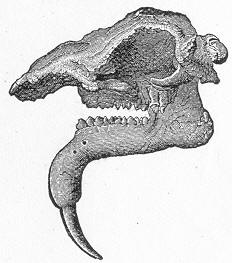
Fig. 246.—Skull of Deinotherium giganteum, greatly
reduced. From the Upper Micene of Germany.
which was exhumed from the Upper Miocene deposits of Epplesheim,
in Hesse-Darmstadt, in the year 1836. This skull was four and a
half feet in length, and indicated an animal larger than any
existing species of Elephant. The upper jaw is destitute of incisor
or canine teeth, but is furnished on each side with five molars,
which are opposed to a corresponding series of grinding teeth in
the lower jaw. No canines are present in the lower jaw; but the
front portion of the jaw is abruptly bent downwards, and carries
two huge tusk-like incisor teeth, which are curved downwards and
backwards, and the use of which is rather problematical. Not
only does the Deinothere occur in Europe, but remains belonging
to this genus have also been detected in the Siwâlik Hills, in
India.
The true Elephants (Elephas) do not appear to have existed
during the Miocene period in Europe, but several species have been
detected in the Upper Miocene deposits of the Siwâlik Hills,
in India. The fossil forms, though in all cases specifically, and
in some cases even sub-generically, distinct, agree with those
now in existence in the general conformation of their skeleton,
and in the principal characters of their dentition. In all, the
canine teeth are wanting in both jaws; and there are no incisor
teeth in the lower jaw, whilst there are two incisors in the
front of the upper jaw, which are developed into two huge "tusks."
There are six molar teeth on each side of both the upper and lower
jaw, but only one, or at most a part of two, is in actual use
at any given time; and as this becomes worn away, it is pushed
forward and replaced by its successor behind it. The molars are of
Page 321
very large size, and are each composed of a number of transverse
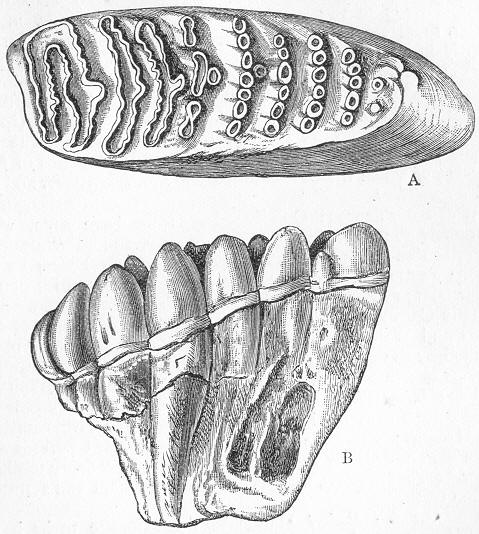
Fig. 247.—A, Molar tooth of Elephas planifrons,
one-third of the natural size, showing the grinding
surface—from the Upper Miocene of India; B, Profile view
of the last upper molar of Mastodon Sivalensis, one-third
of the natural size—from the Upper Miocene of India. (After
Falconer.)
plates of enamel united together by ivory; and by the process
of mastication, the teeth become worn down to a flat surface,
crossed by the enamel-ridges in varying patterns; These patterns
are different in the different species of Elephants, though constant
for each; and they constitute one of the most readily available
means of separating the fossil forms from one another. Of the
seven Miocene Elephants of India, as judged by the characters of
the molar, teeth, two are allied to the existing Indian Elephant,
one is related to the living African Elephant, and the remaining
four are in some respects intermediate between the true Elephants
and the Mastodons.
The Mastodons, lastly, though quite elephantine in their
Page 322
general characters, possess molar teeth
which have their crowns furnished with conical eminences or
tubercles placed in pairs (fig. 247, B), instead of having the
approximately flat surface characteristic of the grinders of the
Elephants. As in the latter, there are two upper incisor teeth,
which grow permanently during the life of the animal, and which
constitute great tusks; but the Mastodons, in addition, often
possess two lower incisors, which in some cases likewise grow
into small tusks. Three species of Mastodon are known to
occur in the Upper Miocene of the Siwâlik Hills of India;
and the Miocene deposits of the European area have yielded the
remains of four species, of which the best known are the M.
Longirostris and the M. Angustidens.
Whilst herbivorous Quadrupeds, as we have seen, were extremely
abundant during Miocene times, and often attained gigantic
dimensions, Beasts of Prey (Carnivora) were by no means
wanting, most of the principal existing families of the order
being represented in deposits of this age. Thus, we find aquatic
Carnivores belonging to both the living groups of the Seals and
Walruses; true Bears are wanting, but their place is filled by the
closely-allied genus Amphicyon, of which various species
are known; Weasels and Otters were not unknown, and the
Hyœnictis and Iditherium of the Upper Miocene
of Greece are apparently intermediate between the Civet-cats and
the Hyænas; whilst the great Cats of subsequent periods are
more than adequately represented by the huge "Sabre-toothed Tiger"
(Machairodus), with its immense trenchant and serrated
canine teeth.
Amongst the Rodent Mammals, the Miocene rocks have yielded
remains of Rabbits, Porcupines (such as the Hystrix
primigenius of Greece), Beavers, Mice, Jerboas, Squirrels,
and Marmots. All the principal living groups of this order were
therefore differentiated in Middle Tertiary times.
The Cheiroptera are represented by small insect-eating
Bats; and the order of the Insectivorous Mammals is represented
by Moles, Shrew-mice, and Hedgehogs.
Lastly, the Monkeys (Quadrumana) appear to have existed
during the Miocene period under a variety of forms, remains of
these animals having been found both in Europe and in India; but
no member of this order has as yet been detected in the Miocene
Tertiary of the North American continent. Amongst the Old World
Monkeys of the Miocene, the two most interesting are the
Pliopithecus and Dryopithecus of France. The former
of these (fig. 248) is supposed to have been most nearly related
to the living Semnopitheci of Southern Asia, in
Page 323
which case it must have possessed a long tail. The Mesopithecus
of the Upper Miocene of Greece is also one of the lower Monkeys,
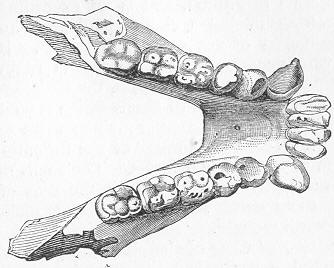
Fig. 248.—Lower jaw of Pliopithcus antiquus. Upper
Miocene, France.
as it is most closely allied to the existing Macaques. On the
other hand, the Dryopithecus of the French Upper Miocene
is referable to the group of the "Anthropoid Apes," and is most
nearly related to the Gibbons of the present day, in which the tail
is rudimentary and there are no cheek-pouches. Dryopithecus
was, also, of large size, equalling Man in stature, and apparently
living amongst the trees and feeding upon fruits.
CHAPTER XX.
THE PLIOCENE PERIOD.
The highest division of the Tertiary deposits is termed the
Pliocene formation, in accordance with the classification
proposed by Sir Charles Lyell. The Pliocene formations contain
from 40 to 95 per cent of existing species of Mollusca,
the remainders belonging to extinct species. They are divided
by Sir Charles Lyell into two divisions, the Older Pliocene and
Newer Pliocene.
The Pliocene deposits of Britain occur in Suffolk, and are known
by the name of "Crags," this being a local term used for certain
shelly sands, which are employed in agriculture. Two of these
Crags are referable to the Older Pliocene, viz.,
Page 324
the White and Red Crags,—and one belongs to the Newer
Pliocene, viz., the Norwich Crag.
The White or Coralline Crag of Suffolk is the oldest of
the Pliocene deposits of Britain, and is an exceedingly local
formation, occurring in but a single small area, and having a
maximum thickness of not more than 50 feet. It consists of soft
sands, with occasional intercalations of flaggy limestone. Though
of small extent and thickness, the Coralline Crag is of importance
from the number of fossils which it contains. The name "Coralline"
is a misnomer; since there are few true Corals, and the so-called
"Corals" of the formation are really Polyzoa, often of
very singular forms. The shells of the Coralline Crag are mostly
such as inhabit the seas of temperate regions; but there occur
some forms usually looked upon as indicating a warm climate.
The Upper or Red Crag of Suffolk—like the
Coralline Crag—has a limited geographical extent and a
small thickness, rarely exceeding 40 feet. It consists of
quartzose sands, usually deep red or brown in colour, and
charged with numerous fossils.
Altogether more than 200 species of shells are known from the
Red Crag, of which 60 per cent are referable to existing species.
The shells indicate, upon the whole, a temperate or even cold
climate, decidedly less warm than that indicated by the organic
remains of the Coralline Crag. It appears, therefore, that a
gradual refrigeration was going on during the Pliocene period,
commencing in the Coralline Crag, becoming intensified in the Red
Crag, being still more severe in the Norwich Crag, and finally
culminating in the Arctic cold of the Glacial period.
Besides the Mollusca, the Red Crag contains the ear-bones of
Whales, the teeth of Sharks and Rays, and remains of the Mastodon,
Rhinoceros, and Tapir.
The Newer Pliocene deposits are represented in Britain
by the Norwich Crag, a local formation occurring near
Norwich. It consists of incoherent sands, loams, and gravels,
resting in detached patches, from 2 to 20 feet in thickness,
upon an eroded surface of Chalk. The Norwich Crag contains a
mixture of marine, land, and fresh-water shells, with remains of
fishes and bones of mammals; so that it must have been deposited
as a local sea-deposit near the mouth of an ancient river. It
contains altogether more than 100 marine shells, of which 89
per cent belong to existing species. Of the Mammals, the two
most important are an Elephant (Elephas meridionalis),
and the characteristic Pliocene Mastodon
Page 325
(M. Arvernensis), which is hitherto the only Mastodon
found in Britain.
According to the most recent views of high authorities, certain
deposits—such as the so-called "Bridlington Crag" of
Yorkshire, and the "Chillesford beds" of Suffolk—are to
be also included in the Newer Pliocene, upon the ground that
they contain a small proportion of extinct shells. Our knowledge,
however, of the existing Molluscan fauna, is still so far
incomplete, that it may reasonably be doubted if these supposed
extinct forms have actually made their final disappearance,
whilst the strata in question have a strong natural connection
with the "Glacial deposits," as shown by the number of Arctic
Mollusca which they contain. Here, therefore, these beds will
be included in the Post-Pliocene series, in spite of the fact
that some of their species of shells are not known to exist at
the present day.
The following are the more important Pliocene deposits which have
been hitherto recognised out of Britain:—
1. In the neighbourhood of Antwerp occur certain "crags," which
are the equivalent of the White and Red Crag in part. The lowest
of these contains less than 50 per cent, and the highest 60 per
cent, of existing species of shells, the remainder being extinct.
2. Bordering the chain of the Apennines, in Italy, on both sides
is a series of low hills made up of Tertiary strata, which are
known as the Sub-Apennine beds. Part of these is of Miocene age,
part is Older Pliocene, and a portion is Newer Pliocene. The
Older Pliocene portion of the Sub-Apennines consists of blue or
brown marls, which sometimes attain a thickness of 2000 feet.
3. In the valley of the Arno, above Florence, are both Older
and Newer Pliocene strata. The former consist of blue clays and
lignites, with an abundance of plants. The latter consist of sands
and conglomerates, with remains of large Carnivorous Mammals,
Mastodon, Elephant, Rhinoceros, Hippopotamus, &c.
4. In Sicily, Newer Pliocene strata are probably more largely
developed than anywhere else in the world, rising sometimes to a
height of 3000 feet above the sea. The series consists of clays,
marls, sands, and conglomerates, capped by a compact limestone,
which attains a thickness of from 700 to 800 feet. The fossils of
these beds belong almost entirely to living species, one of the
commonest being the Great Scallop of the Mediterranean (Pecten
Jacobœus).
5. Occupying an extensive area round the Caspian, Aral,
Page 326
and Azof Seas, are Pliocene deposits known
as the "Aralo-Caspian" beds. The fossils in these beds are partly
freshwater, partly marine, and partly intermediate in character,
and they are in great part identical with species now inhabiting
the Caspian. The entire formation appears to indicate the former
existence of a great sheet of brackish water, forming an inland
sea, like the Caspian, but as large as, or larger than, the
Mediterranean.
6. In the United States, strata of Pliocene age are found in
North and South Carolina. They consist of sands and clays, with
numerous fossils, chiefly Molluscs and Echinoderms.
From 40 to 60 per cent of the fossils belong to existing species.
On the Loup Fork of the river Platte, in the Upper Missouri region,
are strata which are also believed to be referable to the Pliocene
period, and probably to its upper division. They are from 300 to
400 feet thick, and contain land-shells, with the bones of numerous
Mammals, such as Camels, Rhinoceroses, Mastodons, Elephants, the
Horse, Stag, &c.
As regards the life of the Pliocene period, there are
only two classes of organisms to which our attention need be
directed—namely, the Shell-fish and the Mammals. So far as
the former are concerned, we have to note in the first place that
the introduction of new species of animals upon the globe went
on rapidly during this period. In the Older Pliocene deposits,
the number of shells of existing species is only from 40 to 60
per cent; but in the Newer Pliocene the proportion of living
forms rises to as much as from 80 to 95 per cent. Whilst the
Molluscs thus become rapidly modernised, the Mammals still all
belong to extinct species, though modern generic types gradually
supersede the more antiquated forms of the Miocene. In the second
place, there is good evidence to show that the Pliocene period
was one in which the climate of the northern hemisphere underwent
a gradual refrigeration. In the Miocene period, there is evidence
to show that Europe possessed a climate very similar to that
now enjoyed by the Southern United States, and certainly very
much warmer than it is at present. The presence of Palm-trees
upon the land, and of numerous large Cowries, Cones, and other
shells of warm regions in the sea, sufficiently proves this. In
the Older Pliocene deposits, on the other hand, northern forms
predominate amongst the Shells, though some of the types of hotter
regions still survive. In the Newer Pliocene, again, the Molluscs
are such as almost exclusively inhabit the seas of temperate
or even cold regions; whilst if we regard deposits like the
"Bridlington Crag" and
Page 327
"Chillesford beds"
as truly referable to this period, we meet at the close of this
period with shells such as nowadays are distinctively
characteristic of high latitudes. It might be thought that the
occurrence of Quadrupeds such as the Elephant, Rhinoceros, and
Hippopotamus, would militate against this generalisation, and
would rather support the view that the climate of Europe and
the United States must have been a hot one during the later
portion of the Pliocene period. We have, however, reason to
believe that many of these extinct Mammals were more abundantly
furnished with hair, and more adapted to withstand a cool
temperature, than any of their living congeners. We have also
to recollect that many of these large herbivorous quadrupeds
may have been, and indeed probably were, more or less migratory
in their habits; and that whilst the winters of the later portion
of the Pliocene period were cold, the summers might have been
very hot. This would allow of a northward migration of such
terrestrial animals during the summer-time, when there would be
an ample supply of food and a suitably high temperature, and a
southward recession towards the approach of winter.
The chief palæontological interests of the Pliocene deposits,
as of the succeeding Post-Pliocene, centre round the Mammals of the
period; and amongst the many forms of these we may restrict our
attention to the orders of the Hoofed Quadrupeds (Ungulates),
the Proboscideans, the Carnivora, and the
Quadrumana. Almost all the other Mammalian orders are
more or less fully represented in Pliocene times, but none of them
attains any special interest till we enter upon the Post-Pliocene.
Amongst the Odd-toed Ungulates, in addition to the remains of
true Tapirs (Tapirus Arvernensis), we meet with the bones
of several species of Rhinoceros, of which the Rhinoceros
Etruscus and R. Megarhinus (fig. 249) are the most
important. The former of these (fig. 249, A) derives its specific
name from its abundance in the Pliocene deposits of the Val d'Arno,
near Florence, and though principally Pliocene in its distribution,
it survived into the earlier portion of the Post-Pliocene period.
Rhinoceros Etruscus agreed with the existing African forms
in having two horns placed one behind the other, the front one
being the longest; but it was comparatively slight and slender in
its build, whilst the nostrils were separated by an incomplete bony
partition. In the Rhinoceros megarhinus (fig. 249, B), on
the other hand, no such partition exists between the nostrils, and
the nasal bones are greatly developed in size. It was a two-horned
form, and is found associated with Elephas meridionalis and
E. Antiquus in the Pliocene deposits of the
Page 328
Val d'Arno, near Florence. Like the preceding, it survived, in
diminished numbers, into the earlier portion of the Post-Pliocene
period.
The Horses (Equidœ) are represented, both in Europe
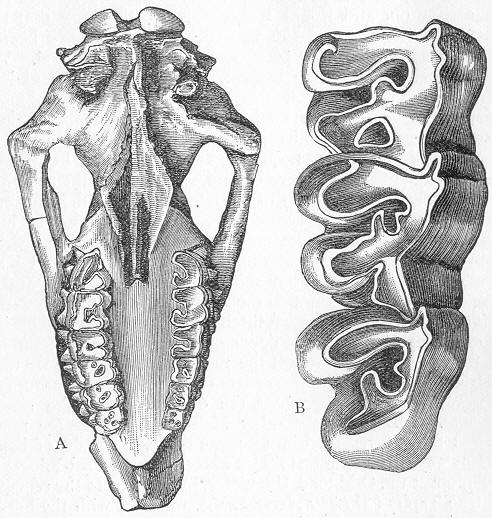
Fig. 249.—A. Under surface of the skull of Rhinoceros
Etruscus, one-seventh of the natural size—Pliocene,
Italy.; B, Crowns of the three true molars of the upper jaw,
left side, of Rhinoceros megarhinus (R. Leptorhinus,
Falconer), one-half of the natural size—Pliocene, France.
(After Falconer.)
and America, by the three-toed Hipparions, which survive from the
Miocene, but are now verging upon extinction. For the first time,
also, we meet with genuine Horses (Equus), in which each
foot is provided with a single complete toe only, encased in a
single broad hoof. One of the American species of this period
(the Equus excelsus) quite equalled the modern Horse in
stature; and it is interesting to note the occurrence of indigenous
horses in America at such a comparatively late geological epoch,
seeing that this continent certainly possessed none of these
animals when first discovered by the Spaniards.
Amongst the Even-toed Ungulates, we may note the occurrence of
Page 329
Swine (Suida), of forms allied to
the Camels (Camelidœ), and of various kinds of Deer
(Cervidœ); but the most interesting Pliocene Mammal
belonging to this section is the great Hippopotamus major
of Britain and Europe. This well-known species is very closely
allied to the living Hippopotamus amphibius of Africa,
from which it is separated only by its larger dimensions, and by
certain points connected with the conformation of the skeleton.
It is found very abundantly in the Pliocene deposits of Italy
and France, associated with the remains of the Elephant, Mastodon,
and Rhinoceros, and it survived into the earlier portion of the
Post-Pliocene period. During this last-mentioned period, it
extended its range northwards, and is found associated with the
Reindeer, the Bison, and other northern animals. From this fact
it has been inferred, with great probability, that the
Hippotamus major was furnished with a long coat of hair
and fur, thus differing from its nearly hairless modern
representative, and resembling its associates, the Mammoth and
the Woolly Rhinoceros.
Passing on to the Pliocene Proboscideans, we find that the great
Deinotheria of the Miocene have now wholly disappeared,
and the sole representatives of the order are Mastodons and
Elephants. The most important member of the former group is the
Mastodon Arvernensis (fig. 250), which ranged widely over
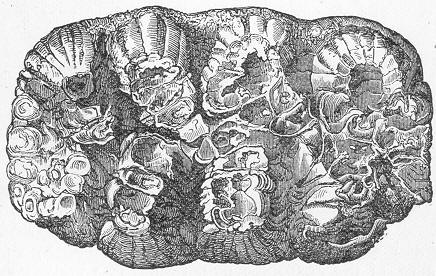
Fig. 250.—Third milk-molar of the left side of the upper
jaw of Mastodon Arvernensis, showing the grinding surface.
Pliocene.
Southern Europe and England, being generally associated with
remains of the Elephas meridionalis, E. antiquus, Rhinoceros
megarhinus, and Hippopotamus major. The lower jaw
seems to have been destitute of incisor teeth; but the upper
incisors are developed into great tusks, which sometimes reach a
Page 330
length of nine feet, and which have the simple curvature of the
tusks of the existing Elephants. Amongst the Pliocene Elephants
the two most important are the Elephas meridionalis and the
Elephas antiquus. Of these, the Elephas meridionalis
(fig. 251) is found abundantly in the Pliocene deposits of Southern
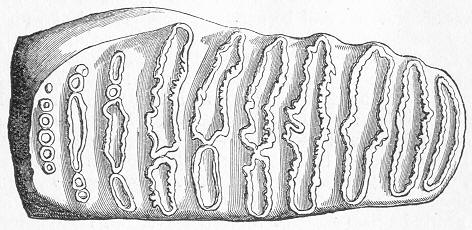
Fig. 251.—Molar tooth of Elephas meridionalis,
one-third of the natural size. Pliocene and Post-Pliocene.
Europe and England, and also survived into the earlier portion
of the Post-Pliocene period. Its molar teeth are of the type of
those of the existing African Elephant, the spaces enclosed by the
transverse enamel-plates being more or less lozenge-shaped, whilst
the curvature of the tusks is simple. The Elephas antiquus
(fig. 252) is very generally associated with the preceding, and
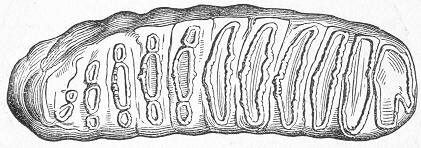
Fig. 252.—Molar tooth of Elephas antiquus, one-third
of the natural size. Pliocene and Post-Pliocene.
it survived to an even later stage of the Post-Pliocene period.
The molar teeth are of the type of the existing Indian Elephant,
with comparatively thin enamel-ridges, placed closer together
than in the African type; whilst the tusks were nearly straight.
Amongst the Pliocene Carnivores, we meet with true Bears
(Ursus Arvernensis), Hyænas (such as Hyœna
Hipparionum), and genuine Lions (such as the Felis
angustus of North America); but the most remarkable of the
beasts of prey of
Page 331
this period is the great "Sabre-toothed Tiger" (Machairodus),
species of which existed in the earlier Miocene,
and survived to the later Post-Pliocene. In this remarkable
form we are presented with perhaps the most highly carnivorous
type of all known beasts of prey. Not only are the jaws shorter
in proportion even than those of the great Cats of the present
day, but the canine teeth (fig. 253) are of enormous size, greatly
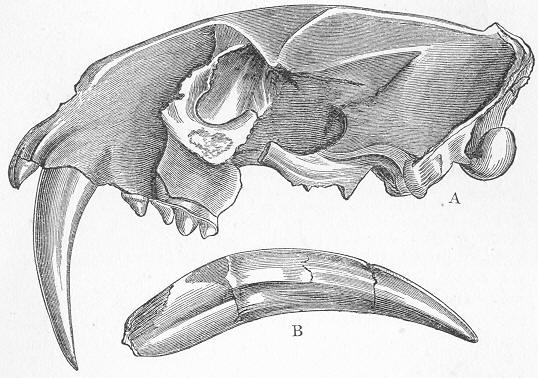
Fig. 253.—A, Skull of Machairodus cultridens,
without the lower jaw, reduced in size; B, Canine tooth of the
same, one-half the natural size. Pliocene, France.
flattened so as to assume the form of a poignard, and having
their margins finely serrated. A part from the characters of the
skull, the remainder of the skeleton, so far as known, exhibits
proofs that the Sabre-toothed Tiger was extraordinarily muscular
and powerful, and in the highest degree adapted for a life of
rapine. Species of Machairodus must have been as large
as the existing Lion; and the genus is not only European, but
is represented both in South America and in India, so that the
geographical range of these predaceous beasts must have been
very extensive.
Lastly, we may note that the Pliocene deposits of Europe have
yielded the remains of Monkeys (Quadrumana), allied to
the existing Semnopitheci and Macaques.
The following list comprises a small selection of some of the
more important and readily accessible works and memoirs relating
to the Tertiary rocks and their fossils. With few exceptions,
foreign works relating to the Tertiary strata of the continent
of Europe or their organic remains have been omitted:—
| (1) |
'Elements of Geology.' Lyell. |
| (2) |
'Students' Elements of Geology.' Lyell. |
| (3) |
'Manual of Palæontology.' Owen. |
| (4) |
'British Fossil Mammals and Birds.' Owen. |
| (5) |
'Traité de Paléontologie.' Pictet. |
| (6) |
'Cours Elémentaire de Paléontologie.' D'Orbigny. |
| (7) |
"Probable Age of the London Clay," &c.—'Quart.
Journ. Geol. Soc.,' vol. iii. Prestwich. |
| (8) |
'Structure and Probable Age of the Bagshot
Sands'—Ibid., vol. iii. Prestwich. |
| (9) |
'Tertiary Formations of the Isle of Wight'—Ibid.,
vol. ii. Prestwich. |
| (10) |
'Structure of the Strata between the London Clay and the
Chalk,' &c.—Ibid., vols. vi., viii., and x.
Prestwich. |
| (11) |
'Correlation of the Eocene Tertiaries of England, France,
and Belgium'—Ibid., vol. xxvii. Prestwich. |
| (12) |
'On the Fluvio-marine Formations of the Isle of
Wight'—Ibid., vol. ix. Edward Forbes. |
| (13) |
'Newer Tertiary Deposits of the Sussex Coast'—Ibid.,
vol. xiii. Godwin-Austen. |
| (14) |
'Kainozoic Formations of Belgium'—Ibid., vol. xxii.
Godwin-Austen. |
| (15) |
'Tertiary Strata of Belgium and French
Flanders'—Ibid., vol. viii. Lyell. |
| (16) |
'On Tertiary Leaf-beds in the Isle of Mull'—Ibid.,
vol. vii. The Duke of Argyll. |
| (17) |
'Newer Tertiaries of Suffolk and their Fauna'—Ibid.,
vol. xxvi. Ray Lankester. |
| (18) |
'Lower London Tertiaries of Kent'—Ibid., vol. xxii.
Whitaker. |
| (19) |
"Guide to the Geology of London"—'Mem. Geol. Survey.'
Whitaker. |
| (20) |
'Memoirs of the Geological Survey of Great Britain.' |
| (21) |
'Introductory Outline of the Geology of the Crag District'
(Supplement to Crag Mollusca, Palæontographical
Society). S. V. Wood, jun., and F. w. Harmer. |
| (22) |
"Tertiary Fluvio-marine Deposits of the Isle of Wight."
Edward Forbes. Edited by Godwin-Austen; with Descriptions of
the Fossils by Morris, Salter, and Rupert Jones—'Memoirs
of the Geological Survey.' |
| (23) |
'Geological Excursions round the Isle of Wight.'
Mantell. |
| (24) |
'Catalogue of British Fossils.' Morris. |
| (25) |
'Catalogue of Fossils in the Museum of Practical Geology.'
Etheridge. |
| (26) |
'Monograph of the Crag Polyzoa' (Palæontographical
Society). Busk. |
| (27) |
'Monograph of the Tertiary Brachiopoda' (Ibid.)
Davidson. |
| (28) |
'Monograph of the Tertiary Malacostracous Crustacea'
(Ibid.) Bell. |
|
Page 333
(29) |
'Monograph of the Tertiary Corals' (Ibid.) Milne-Edwards
and Haime. |
| (30) |
'Supplement to the Tertiary Corals' (Ibid.) Martin
Duncan. |
| (31) |
'Monograph of the Eocene Mollusca' (Ibid.) Fred. E.
Edwards. |
| (32) |
'Monograph of the Eocene Mollusca' (Ibid.) Searles V.
Wood. |
| (33) |
'Monograph of the Crag Mollusca' (Ibid.) Searles V.
Wood. |
| (34) |
'Monograph of the Tertiary Entomostraca' (Ibid.) Rupert
Jones. |
| (35) |
'Monograph of the Foraminifera of the Crag' (Ibid.) Rupert
Jones, Parker, and H. B. Brady. |
| (36) |
'Monograph of the Radiaria of the London Clay' (Ibid.)
Edward Forbes. |
| (37) |
'Monograph of the Cetacea of the Red Crag' (Ibid.)
Owen. |
| (38) |
'Monograph of the Fossil Reptiles of the London Clay'
(Ibid.) Owen and Bell. |
| (39) |
"On the Skull of a Dentigerous Bird from the London Clay
of Sheppey"—'Quart. Journ. Geol. Soc.,' vol. xxix.
Owen. |
| (40) |
'Ossemens Fossiles.' Cuvier. |
| (41) |
'Fauna Antiqua Sivalensis.' Falconer and Sir Proby
Cautley. |
| (42) |
'Palæontological Memoirs.' Falconer. |
| (43) |
'Animaux Fossiles et Géologie de l'Attique.'
Gaudry. |
| (44) |
"Principal Characters of the Dinocerata"—'American
Journ. of Science and Arts,' vol. xi. Marsh. |
| (45) |
'Principal Characters of the Brontotheridæ' (Ibid.)
Marsh. |
| (46) |
'Principal Characters of the Tillodontia' (Ibid.)
Marsh. |
| (47) |
"Extinct Vertebrata of the Eocene of
Wyoming"—'Geological Survey of Montana,' &c.,
1872. Cope. |
| (48) |
"Ancient Fauna of Nebraska"—'Smithsonian
Contributions to Knowledge,' vol. vi. Leidy. |
| (49) |
'Manual of Geology.' Dana. |
| (50) |
"Palæontology and Evolution" (Presidential Address
to the Geological Society of London, 1870)—'Quart.
Journ. Geol. Soc.,' vol. xxvi. Huxley.' |
| (51) |
'Mineral Conchology.' Sowerby. |
| (52) |
'Description des Coquilles Fossiles,' &c.
Deshayes. |
| (53) |
'Description des Coquilles Tertiaires de Belgique.'
Nyst. |
| (54) |
'Fossilen Polypen des Wiener Tertiär-beckens.'
Reuss. |
| (55) |
'Palæontologische Studien über die älteren
Tertiär-schichten der Alpen.' Reuss. |
| (56) |
'Land und Süss-wasser Conchylien der Vorwelt.'
Sandberger. |
| (57) |
'Flora Tertiaria Helvetica.' Heer. |
| (58) |
'Flora Fossilis Arctica.' Heer. |
| (59) |
'Recherches sur le Climat et la Végétation
du Pays Tertiaire.' Heer. |
| (60) |
'Fossil Flora of Great Britain.' Lindley and Hutton. |
| (61) |
'Fossil Fruits and Seeds of the London Clay.'
Bowerbank. |
| (62) |
"Tertiary Leaf-beds of the Isle of Mull"—'Quart.
Journ. Geol. Soc.,' vol. vii. Edward Forbes. |
| (63) |
'The Geology of England and Wales.' Horace B.
Woodward.[25] |
THE QUATERNARY PERIOD.
THE POST-PLIOCENE PERIOD.
Later than any of the Tertiary formations are various detached and
more or less superficial accumulations, which are generally spoken
of as the Post-Tertiary formations, in accordance with the
nomenclature of Sir Charles Lyell—or as the Quaternary
formations, in accordance with the general usage of Continental
geologists. In all these formations we meet with no Mollusca
except such as are now alive—with the partial and very limited
exception of some of the oldest deposits of this period, in which
a few of the shells occasionally belong to species not known to
be in existence at the present day. Whilst the Shell-fish
of the Quaternary deposits are, generally speaking, identical
with existing forms, the Mammals are sometimes referable
to living, sometimes to extinct species. In accordance with this,
the Quaternary formations are divided into two groups: (1) The
Post-Pliocene, in which the shells are almost invariably
referable to existing species, but some of the Mammals are
extinct; and (2) the Recent, in which the shells
and the Mammals alike belong to existing species. The
Post-Pliocene deposits are often spoken of as the Pleistocene
formations (Gr. pleistos, most; kainos, new or
recent), in allusion to the fact that the great majority of the
living beings of this period belong to the species characteristic
of the "new" or Recent period.
The Recent deposits, though of the highest possible interest,
do not properly concern the palæontologist strictly so-called,
but the zoologist, since they contain the remains of none but
existing animals. They are "Pre-historic," but they belong entirely
to the existing terrestrial order. The Post-Pliocene deposits,
on the other hand, contain the remains of various extinct Mammals;
and though Man undoubtedly existed in, at any rate, the later
portion of this period, if not throughout the whole of it, they
properly form part of the domain of the palæontologist.
The Post-Pliocene deposits are extremely varied, and very widely
distributed; and owing to the mode of their occurrence, the ordinary
geological tests of age are in their case but very partially
available. The subject of the classification of these deposits
Page 335
is therefore an extremely complicated one;
and as regards the age of even some of the most important of them,
there still exists considerable difference of opinion. For our
present purpose, it will be convenient to adopt a classification
of the Post-Pliocene deposits founded on the relations which they
bear in time to the great "Ice-age" or "Glacial period;" though
it is not pretended that our present knowledge is sufficient to
render such a classification more than a provisional one.
In the early Tertiary period, as we have seen, the climate of the
northern hemisphere, as shown by the Eocene animals and plants, was
very much hotter than it is at present—partaking, indeed, of
a sub-tropical character. In the Middle Tertiary or Miocene period,
the temperature, though not so high, was still much warmer than
that now enjoyed by the northern hemisphere; and we know that the
plants of temperate regions at this time flourished within the
Arctic circle. In the later Tertiary or Pliocene period, again,
there is evidence that the northern hemisphere underwent a further
progressive diminution of temperature; though the climate of Europe
generally seems at the close of the Tertiary period to have been
if anything warmer, or at any rate not colder, than it is at
the present day. With the commencement of the Quaternary period,
however, this diminution of temperature became more decided; and
beginning with a temperate climate, we find the greater portion
of the northern hemisphere to become gradually subjected to all
the rigours of intense Arctic cold. All the mountainous regions
of Northern and Central Europe, of Britain, and of North America,
became the nurseries of huge ice-streams, and large areas of the
land appear to have been covered with a continuous ice-sheet.
The Arctic conditions of this, the well-known "Glacial period,"
relaxed more than once, and were more than once re-established
with lesser intensity. Finally, a gradual but steadily progressive
amelioration of temperature took place; the ice slowly gave way,
and ultimately disappeared altogether; and the climate once more
became temperate, except in high northern latitudes.
The changes of temperature sketched out above took place slowly
and gradually, and occupied the whole of the Post-Pliocene period.
In each of the three periods marked out by these changes—in
the early temperate, the central cold, and the later temperate
period—certain deposits were laid down over the surface of
the northern hemisphere; and these deposits collectively constitute
the Post-Pliocene formations. Hence we may conveniently classify
all the accumulations of
Page 336
this age under the
heads of (1) Pre-Glacial deposits, (2) Glacial
deposits, and (3) Post-Glacial deposits, according as they
were formed before, during, or after the "Glacial period." It cannot
by any means be asserted that we can definitely fix the precise
relations in time of all the Post-Pliocene deposits to the Glacial
period. On the contrary, there are some which hold a very disputed
position as regards this point; and there are others which do not
admit of definite allocation in this manner at all, in consequence
of their occurrence in regions where no "Glacial Period" is known
to have been established. For our present purpose, however, dealing
as we shall have to do principally with the northern hemisphere,
the above classification, with all its defects, has greater
advantages than any other that has been yet proposed.
I. PRE-GLACIAL DEPOSITS.—The chief pre-glacial deposit of
Britain is found on the Norfolk coast, reposing upon the Newer
Pliocene (Norwich Crag), and consists of an ancient land-surface
which is known as the "Cromer Forest-bed."
This consists of an ancient soil, having embedded in it the stumps
of many trees, still in an erect position, with remains of living
plants, and the bones of recent and extinct quadrupeds. It is
overlaid by fresh-water and marine beds, all the shells of which
belong to existing species, and it is finally surmounted by true
"glacial drift." While all the shells and plants of the Cromer
Forest-bed and its associated strata belong to existing species,
the Mammals are partly living, partly extinct. Thus we find the
existing Wolf (Canis lupus), Red Deer (Cervus elaphus),
Roebuck (Cervus capreolus), Mole (Talpa Europtœa),
and Beaver (Castor fiber), living in western England side
by side with the Hippopotamus major, Elephas antiquus, Elephas
meridionalis, Rhinoceros Etruscus, and R. Megarhinus
of the Pliocene period, which are not only extinct, but imply
an at any rate moderately warm climate. Besides the above, the
Forest-bed has yielded the remains of several extinct species of
Deer, of the great extinct Beaver (Trogontherium Cuvieri),
of the Caledonian Bull or "Urus" (Bos primigenius), and of
a Horse (Equus fossilis), little if at all distinguishable
from the existing form.
The so-called "Bridlington Crag" of Yorkshire, and the "Chillesford
Beds" of Suffolk, are probably to be regarded as also belonging
to this period; though many of the shells which they contain
are of an Arctic character, and would indicate that they were
deposited in the commencement of the Glacial period itself. Owing,
however, to the fact that a few of the shells of these deposits
are not known to occur in a living
Page 337
condition, these, and some other similar accumulations, are
sometimes considered as referable to the Pliocene period.
II. GLACIAL DEPOSITS.—Under this head is included a great
series of deposits which are widely spread over both Europe and
America, and which were formed at a time when the climate of
these countries was very much colder than it is at present, and
approached more or less closely to what we see at the present
day in the Arctic regions. These deposits are known by the
general name of the Glacial deposits, or by the more
specialised names of the Drift, the Northern Drift, the
Boulder-clay, the Till, &c.
These glacial deposits are found in Britain as far south as the
Thames, over the whole of Northern Europe, in all the more elevated
portions of Southern and Central Europe, and over the whole of
North America, as far south as the 39th parallel. They generally
occur as sands, clays, and gravels, spread in widely-extended
sheets over all the geological formations alike, except the most
recent, and are commonly spoken of under the general term of
"Glacial drift." They vary much in their exact nature in different
districts, but they universally consist of one, or all, of the
following members:—
1. Unstratified clays, or loams, containing numerous angular
or sub-angular blocks of stone, which have often been transported
for a greater or less distance from their parent rock, and which
often exhibit polished, grooved, or striated surfaces. These
beds are what is called Boulder-clay, or Till.
2. Sands, gravels, and clays, often more or less regularly
stratified, but containing erratic blocks, often of large
size, and with their edges unworn, derived from considerable
distances from the place where they are now found. In these beds it
is not at all uncommon to find fossil shells; and these, though of
existing species, are generally of an Arctic character, comprising
a greater or less number of forms which are now exclusively found
in the icy waters of the Arctic seas. These beds are often spoken
of as "Stratified Drift."
3. Stratified sands and gravels, in which the pebbles
are worn and rounded, and which have been produced by a
rearrangement of ordinary glacial beds by the sea. These beds
are commonly known as "Drift-gravels," or "Regenerated Drift".
Some of the last-mentioned of these are doubtless post-glacial;
but, in the absence of fossils, it is often impossible to arrive at
a positive opinion as to the precise age of superficial accumulations
of this nature. It is also the opinion of high authorities that
a considerable number of the so-called "cave-deposits,"
Page 338
with the bones of extinct Mammals, truly belong
to the Glacial period, being formed during warm intervals when
the severity of the Arctic cold had become relaxed. It is further
believed that some, at any rate, of the so-called "high-level"
river-gravels and "brick-earths" have likewise been deposited during
mild or warm intervals in the great age of ice; and in two or three
instances this has apparently been demonstrated—deposits of
this nature, with the bones of extinct animals and the implements
of man, having been shown to be overlaid by true Boulder-clay.
The fossils of the undoubted Glacial deposits are principally
shells, which are found in great numbers in certain localities,
sometimes with Foraminifera, the bivalved cases of Ostracode
Crustaceans, &c. Whilst some of the shells of the "Drift" are
such as now live in the seas of temperate regions, others, as
previously remarked, are such as are now only known to live in the
seas of high latitudes; and these therefore afford unquestionable
evidence of cold conditions. Amongst these Arctic forms of shells
which characterise the Glacial beds may be mentioned Pecten
Islandicus (fig. 254),
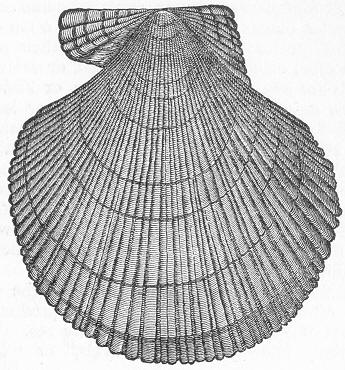
Fig. 254.—Left valve of Pecten Islandicus, Glacial
and Recent.
Pecten Grœnlandicus, Scalaria Grœnlandica, Leda
truncata, Astarte borealis, Tellina proxima, Nattra clausa,
&c.
III. POST-GLACIAL DEPOSITS.—As the intense cold of the
Glacial period became gradually mitigated, and temperate
Page 339
conditions of climate were once more
re-established, various deposits were formed in the northern
hemisphere, which are found to contain the remains of extinct
Mammals, and which, therefore, are clearly of Post-Pliocene
age. To these deposits the general name of Post-Glacial
formations is given; but it is obvious that, from the nature
of the case, and with our present limited knowledge, we cannot
draw a rigid line of demarcation between the deposits formed
towards the close of the Glacial period, or during warm
"interglacial" periods, and those laid down after the ice had
fairly disappeared. Indeed it is extremely improbable that any
such rigid line of demarcation should ever have existed; and it
is far more likely that the Glacial and Post-Glacial periods,
and their corresponding deposits, shade into one another by an
imperceptible gradation. Accepting this reservation, we may group
together, under the general head of "Post-Glacial Deposits,"
most of the so-called "Valley-gravels," "Brick-earths," and
"Cave-deposits," together with some "raised beaches" and various
deposits of peat. Though not strictly within the compass of this
work, a few words may be said here as to the origin and mode of
formation of the Brick-earths, Valley-gravels, and Cave-deposits,
as the subject will thus be rendered more clearly intelligible.
Every river produces at the present day beds of fine mud and
loam, and accumulations of gravel, which it deposits at various
parts of its course—the gravel generally occupying the
lowest position, and the finer sands and mud coming above. Numerous
deposits of a similar nature are found in most countries in various
localities, and at various heights above the present channels of
our rivers. Many of these fluviatile (Lat. fluvius, a
river) deposits consist of fine loam, worked for brick-making,
and known as "Brick-earths;" and they have yielded the remains
of numerous extinct Mammals, of which the Mammoth (Elephas
primigenius) is the most abundant. In the valley of the Rhine
these fluviatile loams (known as "Loess") attain a thickness of
several hundred feet, and contain land and fresh-water shells of
existing species. With these occur the remains of Mammals, such
as the Mammoth and Woolly Rhinoceros. Many of these Brick-earths
are undoubtedly Post-Glacial, but others seem to be clearly
"inter-glacial;" and instances have recently been brought forward
in which deposits of Brick-earth containing bones and shells of
fresh-water Molluscs have been found to be overlaid by regular
unstratified boulder-clay.
The so-called "Valley-gravels," like the Brick-earths, are
Page 340
fluviatile deposits, but are of a coarser nature, consisting of
sands and gravels. Every river gives origin to deposits of this kind
at different points along the course of its valley; and it is not
uncommon to find that there exist in the valley of a single river
two or more sets of these gravel-beds, formed by the river itself,
but formed at times when the river ran at different levels, and
therefore formed at different periods. These different accumulations
are known as the "high-level" and "low-level" gravels; and
a reference to the accompanying diagram will explain the origin
and nature of these deposits (fig. 255). When a river begins
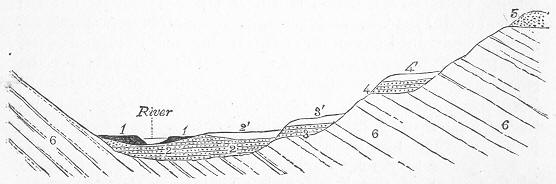
Fig. 255.—Recent and Post-Pliocene Alluvial Deposits. 1,
Peat of the recent period; 2, Gravel of the modern river: 2',
Loam of the modern river; 3. Lower-level valley-gravel with
bones of extinct Mammals (Post-Pliocene); 3', Loam of the same
age as 3; 4. Higher-level valley-gravel (Post-Pliocene); 4',
Loam of the same age as 4; 5. Upland gravels of various kinds
(often glacial drift); 6, Older rock. (After Sir Charles Lyell.)
to occupy a particular line of drainage, and to form its own
channel, it will deposit fluviatile sands and gravels along its
sides. As it goes on deepening the bed or valley through which
it flows, it will deposit other fluviatile strata at a lower
level beside its new bed. In this way have arisen the terms
"high-level" and "low-level" gravels. We find, for instance, a
modern river flowing through a valley which it has to a great
extent or entirely formed itself; by the side of its immediate
channel we may find gravels, sand, and loam (fig. 255, 2 2')
deposited by the river flowing in its present bed. These are
recent fluviatile or alluvial deposits. At some distance
from the present bed of the river, and at a higher level, we
may find other sands and gravels, quite like the recent ones
in character and origin, but formed at a time when the stream
flowed at a higher level, and before it had excavated its valley
to its present depth. These (fig. 255, 3 3') are the so-called
"low-level gravels" of a river. At a still higher level,
and still farther removed from the present bed of the river, we
may find another terrace, composed of just the same materials
as the lower one, but formed at a still earlier period, when the
Page 341
excavation of the valley had proceeded to a much less extent.
These (fig. 255, 4 4') are the so-called "high-level
gravels" of a river, and there may be one or more terraces of these.
The important fact to remember about these fluviatile deposits is
this—that here the ordinary geological rule is reversed. The
high-level gravels are, of course, the highest, so far as their
actual elevation above the sea is concerned; but geologically the
lowest, since they are obviously much older than the low-level
gravels, as these are than the recent gravels. How much older
the high-level gravels may be than the low-level ones, it is
impossible to say. They occur at heights varying from 10 to 100
feet above the present river-channels, and they are therefore
older than the recent gravels by the time required by the river
to dig out its own bed to this depth. How long this period may
be, our data do not enable us to determine accurately; but if
we are to calculate from the observed rate of erosion of the
actually existing rivers, the period between the different
valley-gravels must be a very long one.
The lowest or recent fluviatile deposits which occur beside the
bed of the present river, are referable to the Recent period,
as they contain the remains of none but living Mammals. The two
other sets of gravels are Post-Pliocene, as they contain the
bones of extinct Mammals, mixed with land and fresh-water shells
of existing species. Among the more important extinct Mammals of
the low-level and high-level valley-gravels may be mentioned the
Elephas antiquus, the Mammoth (Elephas primigenius),
the Woolly Rhinoceros (R. Tichorhinus), the Hippopotamus,
the Cave-lion, and the Cave-bear. Along with these are found
unquestionable traces of the existence of Man, in the form of
rude flint implements of undoubted human workmanship.
The so-called "Cave-deposits," again, though exhibiting
peculiarities due to the fact of their occurrence in caverns
or fissures in the rocks, are in many respects essentially
similar to the older valley-gravels. Caves, in the great
majority of instances, occur in limestone. When this is not
the case, it will generally be found that they occur along
lines of sea-coast, or along lines which can be shown to have
anciently formed the coast-line. There are many caves, however,
in the making of which it can be shown that the sea has had no
hand; and these are most of the caves of limestone districts.
These owe their origin to the solvent action upon lime of water
holding carbonic acid in solution. The rain which falls upon a
limestone district absorbs a certain amount of carbonic acid from
Page 342
the air, or from the soil. It then
percolates through the rock, generally along the lines of jointing
so characteristic of limestones, and in its progress it dissolves
and carries off a certain quantity of carbonate of lime. In this
way, the natural joints and fissures in the rock are widened, as
can be seen at the present day in any or all limestone districts.
By a continuance of this action for a sufficient length of time,
caves may ultimately be produced. Nothing, also, is commoner in
a limestone district than for the natural drainage to take the
line of some fissure, dissolving the rock in its course. In this
way we constantly meet in limestone districts with springs issuing
from the limestone rock—sometimes as large rivers—the
waters of which are charged with carbonate of lime, obtained by
the solution of the sides of the fissure through which the waters
have flowed. By these and similar actions, every district in which
limestones are extensively developed will be found to exhibit
a number of natural caves, rents, or fissures. The first element,
therefore, in the production of cave-deposits, is the existence
of a period in which limestone rocks were largely dissolved, and
caves were formed in consequence of the then existing drainage
taking the line of some fissure.
Secondly, there must have been a period in which various deposits
were accumulated in the caves thus formed. These cavern-deposits
are of very various nature, consisting of mud, loam, gravel,
or breccias of different kinds. In all cases, these materials
have been introduced into the cave at some period subsequent to,
or contemporaneous with, the formation of the cave. Sometimes
the cave communicates with the surface by a fissure through which
sand, gravel, &c., may be washed by rains or by floods from
some neighbouring river. Sometimes the cave has been the bed of an
ancient stream, and the deposits have been formed as are fluviatile
deposits at the surface. Or, again, the river has formerly flowed
at a greater elevation than it does at present, and the cave
has been filled with fluviatile deposits by the river at a time
prior to the excavation of its bed to the present depth (fig.
256). In this last case, the cave-deposits obviously bear exactly
the same relation in point of antiquity to recent deposits, as
do the low-level and high-level valley-gravels to recent
river-gravels. In any case, it is necessary for the physical
geography of the district to change to some extent, in order
that the cave-deposits should be preserved. If the materials
have been introduced by a fissure, the cave will probably become
ultimately filled to the roof, and the aperture of admission
thus blocked up. If a river has flowed through the cave, the
surface configuration
Page 343
of the district must be altered so far as to divert the river
into a new channel. And if the cave is placed in the side of
a river-valley, as in fig. 256, the river must have excavated
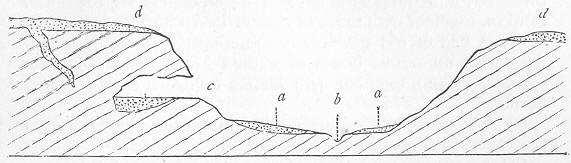
Fig. 256.—Diagrammatic section across a river-valley and
cave. a a, Recent valley-gravels near the channel
(b) of the existing river; c, Cavern, partly filled
with cave-earth; d d, High-level gravels, filling fissures
in the limestone, which perhaps communicate in some instances
with the cave, and form a channel by which materials of various
kinds were introduced into it; e e, Inclined beds of
limestone.
its channel to such a depth that it can no longer wash out the
contents of the cave even in high floods.
If the cave be entirely filled, the included deposits generally
get more or less completely cemented together by the percolation
through them of water holding carbonate of lime in solution. If
the cave is only partially filled, the dropping of water from
the roof holding lime in solution, and its subsequent evaporation,
would lead to the formation over the deposits below of a layer of
stalagmite, perhaps several inches, or even feet, in thickness.
In this way cave-deposits, with their contained remains, may
be hermetically sealed up and preserved without injury for an
altogether indefinite period of time.
In all caves in limestone in which deposits containing bones are
found, we have then evidence of three principal sets of changes.
(1.) A period during which the cave was slowly hollowed out by
the percolation of acidulated water; (2.) A period in which the
cave became the channel of an engulfed river, or otherwise came
to form part of the general drainage-system of the district; (3.)
A period in which the cave was inhabited by various animals.
As a typical example of a cave with fossiliferous Post-Pliocene
deposits, we may take Kent's Cavern, near Torquay, in which a
systematic and careful examination has revealed the following
sequence of accumulations in descending order:—
(a) Large blocks of limestone, which lie on the floor of
the cave, having fallen from the roof, and which are sometimes
cemented together by stalagmite.
(b) A layer of black mould, from three to twelve inches
thick, with human bones, fragments of pottery, stone and
Page 344
bronze implements, and the bones of animals now living in Britain.
This, therefore, is a recent deposit.
(c) A layer of stalagmite, from sixteen to twenty inches
thick, but sometimes as much as five feet, containing the bones
of Man, together with those of extinct Post-Pliocene Mammals.
(d) A bed of red cave-earth, sometimes four feet in thickness,
with numerous bones of extinct Mammals (Mammoth, Cave-bear, &c.),
together with human implements of flint and horn.
(e) A second bed of stalagmite, in places twelve feet in
thickness, with bones of the Cave-bear.
(f) A red-loam and cave-breccia, with remains of the Cave-bear
and human implements.
The most important Mammals which are found in cave-deposits in
Europe generally, are the Cave-bear, the Cave-lion, the Cave-hyæna,
the Reindeer, the Musk-ox, the Glutton, and the Lemming—of which
the first three are probably identical with existing forms, and
the remainder are certainly so—together with the Mammoth and
the Woolly Rhinoceros, which are undoubtedly extinct. Along with
these are found the implements, and in some cases the bones, of
Man himself, in such a manner as to render it absolutely certain
that an early race of men was truly contemporaneous in Western
Europe with the animals above mentioned.
IV. UNCLASSIFIED POST-PLIOCENE DEPOSITS.—Apart from any
of the afore mentioned deposits, there occur other
accumulations—sometimes superficial, sometimes in
caves—which are found in regions where a "Glacial period"
has not been fully demonstrated, or where such did not take
place; and which, therefore, are not amenable to the above
classification. The most important of these are known to occur
in South America and Australia; and though their numerous
extinct Mammalia place their reference to the Post-Pliocene
period beyond doubt, their relations to the glacial period and
its deposits in the northern hemisphere have not been precisely
determined.
CHAPTER XXII.
THE POST-PLIOCENE PERIOD—Continued.
As regards the life of the Post-Pliocene period, we have,
in the first place, to notice the effect produced throughout the
Page 345
northern hemisphere by the gradual
supervention of the Glacial period. Previous to this the climate
must have been temperate or warm-temperate; but as the cold
gradually came on, two results were produced as regards the
living beings of the area thus affected. In the first place,
all those Mammals which, like the Mammoth, the Woolly Rhinoceros,
the Lion, the Hyæna, and the Hippopotamus, require, at
any rate, moderately warm conditions, would be forced to
migrate southwards to regions not affected by the new state
of things. In the second place, Mammals previously inhabiting
higher latitudes, such as the Reindeer, the Musk-ox, and the
Lemming, would be enabled by the increasing cold to migrate
southwards, and to invade provinces previously occupied by the
Elephant and the Rhinoceros. A precisely similar, but more
slowly-executed process, must have taken place in the sea, the
northern Mollusca moving southwards as the arctic conditions of
the Glacial period became established, whilst the forms proper
to temperate seas receded. As regards the readily locomotive
Mammals, also, it is probable that this process was carried on
repeatedly in a partial manner, the southern and northern forms
alternately fluctuating backwards and forwards over the same
area, in accordance with the fluctuations of temperature which
have been shown by Mr James Geikie to have characterised the
Glacial period as a whole. We can thus readily account for the
intermixture which is sometimes found of northern and southern
types of Mammalia in the same deposits, or in deposits apparently
synchronous, and within a single district. Lastly, at the final close
of the arctic cold of the Glacial period, and the re-establishment
of temperate conditions over the northern hemisphere, a reversal of
the original process took place—the northern Mammals retiring
within their ancient limits, and the southern forms pressing
northwards and reoccupying their original domains.
The Invertebrate animals of the Post-Pliocene deposits
require no further mention—all the known forms, except a
few of the shells in the lowest beds of the formation, being
identical with species now in existence upon the globe. The
only point of importance in this connection has been previously
noticed—namely, that in the true Glacial deposits
themselves a considerable number of the shells belong to
northern or Arctic types.
As regards the Vertebrate animals of the period, no extinct
forms of Fishes, Amphibians, or Reptiles are known to occur, but we
meet with both extinct Birds and extinct Mammals. The remains of
the former are of great interest, as indicating
Page 346
the existence during Post-Pliocene times, at widely remote
points of the southern hemisphere, of various wingless, and for the
most part gigantic, Birds. All the great wingless Birds of the order
Cursores which are known as existing at the present day upon
the globe, are restricted to regions which are either wholly or
in great part south of the equator. Thus the true Ostriches are
African; the Rheas are South American; the Emeus are Australian;
the Cassowaries are confined to Northern Australia, Papua, and the
Indian Archipelago; the species of Apteryx are natives of New
Zealand; and the Dodo and Solitaire (wingless, though probably not
true Cursores), both of which have been exterminated within
historical times, were inhabitants of the islands of Mauritius
and Rodriguez, in the Indian Ocean. In view of these facts, it
is noteworthy that, so far as known, all the Cursorial Birds
of the Post-Pliocene period should have been confined to the
same hemisphere as that inhabited by the living representatives
of the order. It is still further interesting to notice that
the extinct forms in question are only found in geographical
provinces which are now, or have been within historical times,
inhabited by similar types. The greater number of the remains of
these have been discovered in New Zealand, where there now live
several species of the curious wingless genus Apteryx;
and they have been referred by Professor Owen to several generic
groups, of which Dinornis is the most important (fig.
257). Fourteen species of Dinornis have been described by
the distinguished palæontologist just mentioned, all of them
being large wingless birds of the type of the existing Ostrich,
having enormously powerful hind-limbs adapted for running, but
with the wings wholly rudimentary, and the breast-bone devoid
of the keel or ridge which characterises this bone in all birds
which fly. The largest species is the Dinornis giganteus,
one of the most gigantic of living or fossil birds, the shank
(tibia) measuring a yard in length, and the total height being at
least ten feet. Another species, the Dinornis Elephantopus
(fig. 257), though not standing more than about six feet in height,
was of an even more ponderous construction—"the framework of
the skeleton being the most massive of any in the whole class of
Birds," whilst "the toe-bones almost rival those of the Elephant"
(Owen). The feet in Dinornis were furnished with three
toes, and are of interest as presenting us with an undoubted
Bird big enough to produce the largest of the foot-prints of
the Triassic Sandstones of Connecticut. New Zealand has now been
so far explored, that it seems questionable if it can retain in
its recesses any living example of Dinornis; but it
Page 347
is certain that species of this genus were alive during the human
period, and survived up to quite a recent date. Not only are the
bones very numerous in certain localities, but they are found in
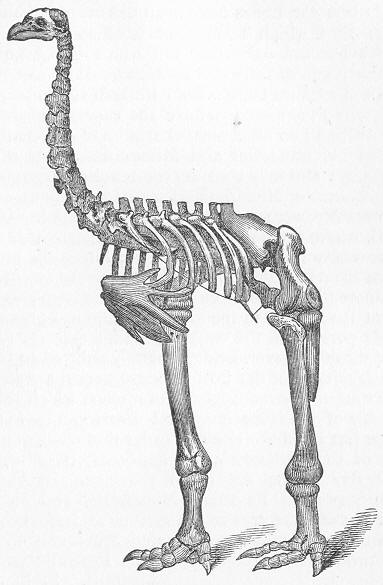
Fig. 257.—Skeleton of Dinornis elephantopus, greatly
reduced. Post-Pliocene, New Zealand. (After Owen.)
the most recent and superficial deposits, and they still contain a
considerable proportion of animal matter; whilst in some instances
bones have been found with the feathers attached, or with the horny
skin of the legs still adhering to them. Charred bones have been
found in connection with native "ovens;" and the traditions of
the Maories contain circumstantial accounts of gigantic wingless
Birds, the "Moas," which were hunted both for their flesh and
their plumage. Upon the whole, therefore, there can be no doubt
Page 348
but that the Moas of New Zealand have been exterminated at quite
a recent period—perhaps within the last century—by the
unrelenting pursuit of Man,—a pursuit which their wingless
condition rendered them unable to evade.
In Madagascar, bones have been discovered of another huge wingless
Bird, which must have been as large as, or larger than, the
Dinornis giganteus, and which has been described under the
name of Æpiornis maximus. With the bones have been found
eggs measuring from thirteen to fourteen inches in diameter, and
computed to have the capacity of three Ostrich eggs. At least two
other smaller species of Æpiornis have been described by
Grandidier and Milne-Edwards as occurring in Madagascar; and they
consider the genus to be so closely allied to the Dinornis
of New Zealand, as to prove that these regions, now so remote,
were at one time united by land. Unlike New Zealand, where there
is the Apteryx, Madagascar is not known to possess any
living wingless Birds; but in the neighbouring island of Mauritius
the wingless Dodo (Didus ineptus) has been exterminated
less than three hundred years ago; and the little island of
Rodriguez, in the same geographical province, has in a similar
period lost the equally wingless Solitaire (Pezophaps), both
of these, however, being generally referred to the Rasores.
The Mammals of the Post-Pliocene period are so numerous,
that in spite of the many points of interest which they present,
only a few of the more important forms can be noticed here, and
that but briefly. The first order that claims our attention is
that of the Marsupials, the headquarters of which at the
present day is the Australian province. In Oolitic times Europe
possessed its small Marsupials, and similar forms existed in the
same area in the Eocene and Miocene periods; but if size be any
criterion, the culminating point in the history of the order was
attained during the Post-Pliocene period in
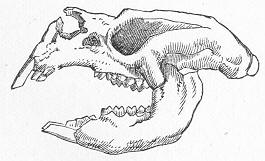
Fig. 258.—Skull of Diprotodon Australis, greatly
reduced. Post-Pliocene, Australia.
Australia. From deposits of this age there has been disentombed
a whole series of remains of extinct, and for the most part
gigantic, examples of this group of Quadrupeds. Not to speak of
Wombats and Phalangers, two forms stand out prominently as
representatives of the Post-Pliocene animals of Australia. One
of these is Diprotodon (fig. 258), representing, with
many differences, the well-known modern group of the Kangaroos.
Page 349
In its teeth, Diprotodon shows
itself to be closely allied to the living, grass-eating Kangaroos;
but the hind-limbs were not so disproportionately long. In size,
also, Diprotodon must have many times exceeded the
dimensions of the largest of its living successors, since the
skull measures no less than three feet in length. The other form
in question is Thylacoleo (fig. 259), which is believed by
Professor Owen to belong to the same group as the existing "Native
Devil" (Dasyurus) of Van Diemen's Land, and therefore to
have been flesh-eating and rapacious in its habits, though this
view is not accepted by others. The principal feature in the skull
of Thylacoleo is the presence, on each side of each jaw,
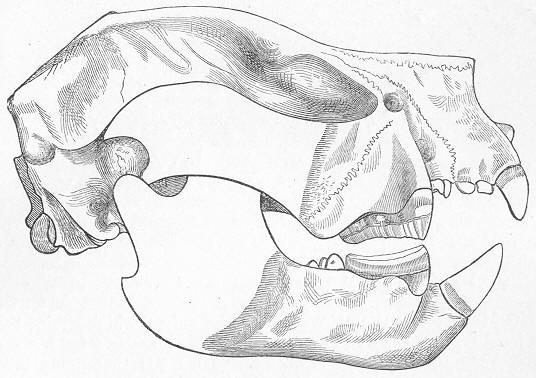
Fig. 259.—Skull of Thylacoleo. Post-Pliocene,
Australia. Greatly reduced. (After Flower.)
of a single huge tooth, which is greatly compressed, and has a
cutting edge. This tooth is regarded by Owen as corresponding to
the great cutting tooth of the jaw of the typical Carnivores,
but Professor Flower considers that Thylacoleo is rather
related to the Kangaroo-rats. The size of the crown of the tooth
in question is not less than two inches and a quarter; and whether
carnivorous or not, it indicates an animal of a size exceeding
that of the largest of existing Lions.
The order of the Edentates, comprising the existing Sloths,
Ant-eaters, and Armadillos, and entirely restricted at the present
day to South America, Southern Asia, and Africa, is one alike
Page 350
singular for the limited geographical range
of its members, their curious habits of life, and the well-marked
peculiarities of their anatomical structure. South America is the
metropolis of the existing forms; and it is an interesting fact
that there flourished within Post-Pliocene times in this continent,
and to some extent in North America also, a marvellous group of
extinct Edentates, representing the living Sloths and Armadillos,
but of gigantic size. The most celebrated of these is the huge
Megatherium Cuvieri (fig. 260) of the South American Pampas.
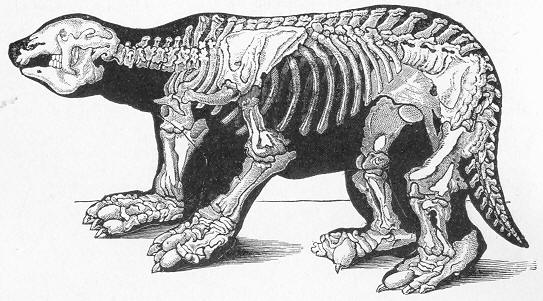
Fig. 260.—Megatherium Cuvieri. Post-Pliocene, South
America.
The Megathere was a colossal Sloth-like animal which attained a
length of from twelve to eighteen feet, with bones more massive
than those of the Elephant. Thus the thigh-bone is nearly thrice
the thickness of the same bone in the largest of existing Elephants,
its circumference at its narrowest point nearly equalling its
total length; the massive bones of the shank (tibia and fibula)
are amalgamated at their extremities; the heel-bone (calcaneum)
is nearly half a yard in length; the haunch-bones (ilia) are
from four to five feet across at their crests; and the bodies of
the vertebræ at the root of the tail are from five to seven
inches in diameter, from which it has been computed that the
circumference of the tail at this part might have been from five
to six feet. The length of the fore-foot is about a yard, and
the toes are armed with powerful curved claws. It is known now
that the Megathere, in spite of its enormous weight and ponderous
construction, walked, like the existing Ant-eaters and Sloths,
upon the outside edge of the fore-feet, with the claws more or
less bent inwards
Page 351
towards the palm of the
hand. As in the great majority of the Edentate order, incisor and
canine teeth are entirely wanting, the front of the jaws being
toothless. The jaws, however, are furnished with five upper and
four lower molar teeth on each side. These grinding teeth are from
seven to eight inches in length, in the form of four-sided prisms,
the crowns of which are provided with well-marked transverse ridges;
and they continue to grow during the whole life of the animal.
There are indications that the snout was prolonged, and more or
less flexible; and the tongue was probably prehensile. From the
characters of the molar teeth it is certain that the Megathere was
purely herbivorous in its habits; and from the enormous size and
weight of the body, it is equally certain that it could not have
imitated its modern allies, the Sloths, in the feat of climbing,
back downwards, amongst the trees. It is clear, therefore, that
the Megathere sought its sustenance upon the ground; and it was
originally supposed to have lived upon roots. By a masterly piece
of deductive reasoning, however, Professor Owen showed that this
great "Ground-Sloth" must have truly lived upon the foliage of
trees, like the existing Sloths—but with this difference,
that instead of climbing amongst the branches, it actually
uprooted the tree bodily. In this tour de force, the animal
sat upon its huge haunches and mighty tail, as on a tripod, and
then grasping the trunk with its powerful arms, either wrenched it
up by the roots or broke it short off above the ground. Marvellous
as this may seem, it can be shown that every detail in the skeleton
of the Megathere accords with the supposition that it obtained
its food in this way. Similar habits were followed by the allied
Mylodon (fig. 261), another of the great "Ground-Sloths,"
which inhabited South America during the Post-Pliocene period. In
most respects, the Mylodon is very like the Megathere; but
the crowns of the molar teeth are flat instead of being ridged.
The nearly-related genus Megalonyx, unlike the Megathere,
but like the Mylodon, extended its range northwards as far as
the United States.
Just as the Sloths of the present day were formerly represented
in the same geographical area by the gigantic Megatheroids, so
the little banded and cuirassed Armadillos of South America were
formerly represented by gigantic species, constituting the genus
Glyptodon. The Glyptodons (fig. 262) differed from
the living Armadillos in having no bands in their armour, so that
they must have been unable to roll themselves up. It is rare
at the present day to meet with any
Page 352
Armadillo over two or three feet in length; but the length of the
Glyptodon clavipes, from the tip of the snout to the end
of the tail, was more than nine feet.
There are no canine or incisor teeth in the Glyptodon, but
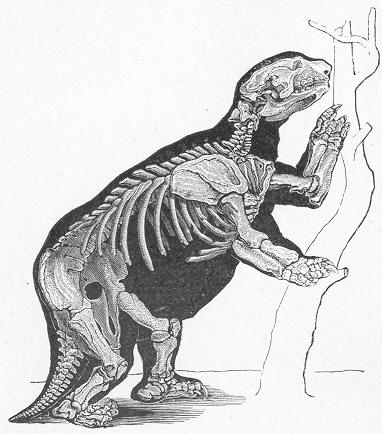
Fig. 261.—Skeleton of Mylodon robustus. Post-Pliocene,
South America.
there are eight molars on each side of each jaw, and the crowns
of these are fluted and almost trilobed. The head is covered
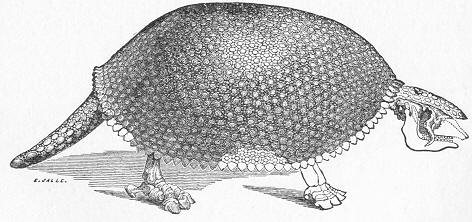
Fig. 262.—Skeleton of Glyptodon clavipes.
Post-Pliocene, South America.
by a helmet of bony plates, and the trunk was defended by an
armour of almost hexagonal bony pieces united by sutures, and
Page 353
exhibiting special patterns of sculpturing
in each species. The tail was also defended by a similar armour,
and the vertebræ were mostly fused together so as to form
a cylindrical bony rod. In addition to the above-mentioned forms,
a number of other Edentate animals have been discovered by the
researches of M. Lund in the Post-Pliocene deposits of the
Brazilian bone-caves. Amongst these are true Ant-eaters,
Armadillos, and Sloths, many of them of gigantic size, and
all specifically or generically distinct from existing forms.
Passing over the aquatic orders of the Sirenians and
Cetaceans, we come next to the great group of the Hoofed
Quadrupeds, the remains of which are very abundant in Post-Pliocene
deposits both in Europe and North America. Amongst the Odd-toed
Ungulates the most important are the Rhinoceroses, of which three
species are known to have existed in Europe during the Post-Pliocene
period. Two of these are the well-known Pliocene forms, the
Rhinoceros Etruscus and the R. Megarhinus still
surviving in diminished numbers; but the most famous is the
Rhinoceros tichorhinus (fig. 263), or so-called "Woolly
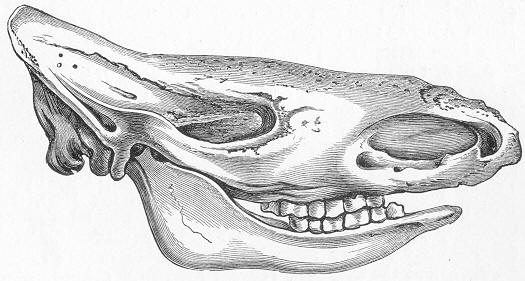
Fig. 263.—Skull of the Tichorhine Rhinoceros, the horns
being wanting. One-tenth of the natural size. Post-Pliocene
deposits of Europe and Asia.
Rhinoceros." This species is known not only by innumerable bones,
but also by a carcass, at the time of its discovery complete,
which was found embedded in the frozen soil of Siberia towards
the close of last century, and which was partly saved from
destruction by the exertions of the naturalist Pallas. From this,
we know that the Tichorhine Rhinoceros, like its associate the
Mammoth, was provided with a coating of hair, and therefore was
enabled to endure a more severe climate than any existing
Page 354
species. The skin was not thrown into the folds
which characterise most of the existing forms; and the technical
name of the species refers to the fact that the nostrils were
completely separated by a bony partition. The head carried two
horns, placed one behind the other, the front one being unusually
large. As regards its geographical range, the Woolly Rhinoceros
is found in Europe in vast numbers north of the Alps and Pyrenees,
and it also abounded in Siberia; so that it would appear to be a
distinctly northern form, and to have been adapted for a temperate
climate. It is not known to occur in Pliocene deposits, but it
makes its first appearance in the Pre-Glacial deposits, surviving
the Glacial period, and being found in abundance in Post-Glacial
accumulations. It was undoubtedly a contemporary of the earlier
races of men in Western Europe; and it may perhaps be regarded as
being the actual substantial kernel of some of the "Dragons" of
fable.
The only other Odd-toed Ungulate which needs notice is the so-called
Equus fossilis of the Post-Pliocene of Europe. This made
its appearance before the Glacial period, and appears to be in
reality identical with the existing Horse (Equus caballus).
True Horses also occur in the Post-Pliocene of North America;
but, from some cause or another, they must have been exterminated
before historic times.
Amongst the Even-toed Ungulates, the great Hippopotamus major
of the Pliocene still continued to exist in Post-Pliocene times in
Western Europe; and the existing Wild Boar (Sus scrofa),
the parent of our domestic breeds of Pigs, appeared for the first
time. The Old World possessed extinct representatives of its
existing Camels, and lost types of the living Llamas inhabited
South America. Amongst the Deer, the Post-Pliocene accumulations
have yielded the remains of various living species, such as the
Red Deer (Cervus elaphus), the Reindeer (Cervus
tarandus), the Moose or Elk (Alces malchis), and the
Roebuck (Cervus capreolus), together with a number of
extinct forms. Among the latter, the great "Irish Elk" (Cervus
megaceros) is justly celebrated both for its size and for
the number and excellent preservation of its discovered remains.
This extinct species (fig. 264) has been found principally in
peat-mosses and Post-Pliocene lake-deposits, and is remarkable
for the enormous size of the spreading antlers, which are widened
out towards their extremities, and attain an expanse of over
ten feet from tip to tip. It is not a genuine Elk, but is
intermediate between the Reindeer and the Fallow-deer. Among the
existing Deer
Page 355
of the Post-Pliocene, the most noticeable is the
Reindeer, an essentially northern type, existing at the present
day in Northern Europe, and also (under the name of the "Caribou")
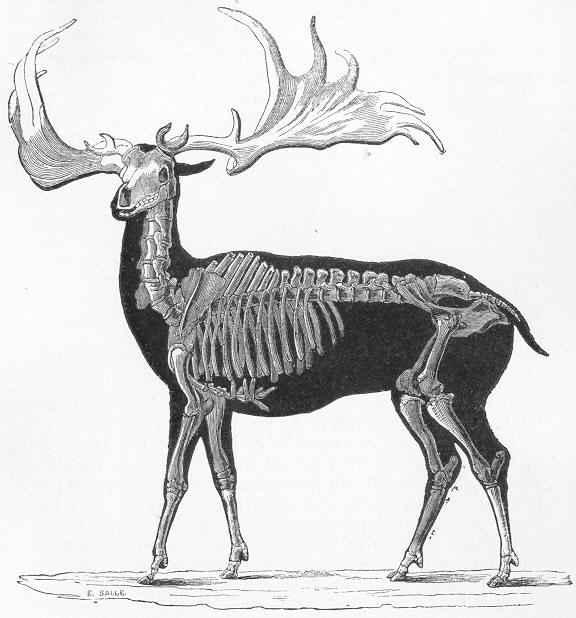
Fig. 264—Skeleton of the "Irish Elk" (Cervus
megaceros). Post-Pliocene, Britain.
in North America. When the cold of the Glacial period became
established, this boreal species was enabled to invade Central
and Western Europe in great herds, and its remains are found
abundantly in cave-earths and other Post-Pliocene deposits as
far south as the Pyrenees.
In addition to the above, the Post-Pliocene deposits of Europe
and North America have yielded the remains of various Sheep and
Oxen. One of the most interesting of the latter is
Page 356
the "Urus" or Wild Bull (Bos primigenius, fig. 265), which,
though much larger than any of the existing fossils, is believed to
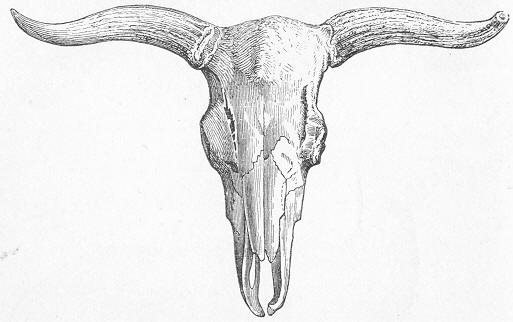
Fig. 265.—Skull of the Urns (Bos primigenius).
Post-Pliocene and Recent. (After Owen.)
be specifically undistinguishable from the domestic Ox (Bos
taurus), and to be possibly the ancestor of some of the larger
European varieties of oxen. In the earlier part of its existence
the Urus ranged over Europe and Britain in company with the Woolly
Rhinoceros and the Mammoth; but it long survived these, and does
not appear to have been finally exterminated till about the twelfth
century. Another remarkable member of the Post-Pliocene Cattle,
also to begin with an associate of the Mammoth and Rhinoceros,
is the European Bison or "Aurochs" (Bison priscus). This
"maned" ox formerly abounded in Europe in Post-Glacial times,
and was not rare even in the later periods of the Roman empire,
though much diminished in numbers, and driven back into the wilder
and more inaccessible parts of the country. At present this fine
species has been so nearly exterminated that it no longer exists in
Europe save in Lithuania, where its preservation has been secured
by rigid protective laws. Lastly, the Post-Pliocene deposits have
yielded the remains of the singular living animal which is known
as the Musk-ox or Musk-sheep (Ovibos moschatus). At the
present day, the Musk-ox is an inhabitant of the "barren grounds"
of Arctic America, and it is remarkable for the great length of
its hair. It is, like the Reindeer, a
Page 357
distinctively northern animal; but it enjoyed during the Glacial
period a much wider range than it has at the present day, the
conditions suitable for its existence being then extended over
a considerable portion of the northern hemisphere. Thus remains
of the Musk-Ox are found in greater or less abundance in
Post-Pliocene deposits over a great part of Europe, extending
even to the south of France; and closely-related forms are found
in similar deposits in the United States.
Coming to the Proboscideans, we find that the
Mastodons seem to have disappeared in Europe at the
close of the Pliocene period, or at the very commencement
of the Post-Pliocene. In the New World, on the other hand,
a species of Mastodon (M. Americanus or M.
Ohioticus) is found abundantly in deposits of Post-Pliocene
age, from Canada to Texas. Very perfect skeletons of this
species have been exhumed from morasses and swamps, and large
individuals attained a length (exclusive of the tusks) of
seventeen feet and a height of eleven feet, the tusks being
twelve feet in length. Remains of Elephants are also
abundant in the Post-Pliocene deposits of both the Old and the
New World. Amongst these, we find in Europe the two familiar
Pliocene species E. Meridionales and E. Antiquus
still surviving, but in diminished numbers. With these are found
in vast abundance the remains of the characteristic Elephant
of the Post-Pliocene, the well-known "Mammoth" (Elephas
primigenius), which is accompanied in North America by the
nearly-allied, but more southern species, the Elephas
Americanus. The Mammoth (fig. 266) is considerably larger
than the largest of the living Elephants, the skeleton being
over sixteen feet in length, exclusive of the tusks, and over
nine feet in height. The tusks are bent almost into a circle,
and are sometimes twelve feet in length, measured along their
curvature. In the frozen soil of Siberia several carcasses of
the Mammoth have been discovered with the flesh and skin still
attached to the bones, the most celebrated of these being a Mammoth
which was discovered at the beginning of this century at the
mouth of the Lena, on the borders of the Frozen Sea, and the
skeleton of which is now preserved at St Petersburg (fig. 266).
From the occurrence of the remains of the Mammoth in vast numbers
in Siberia, it might have been safely inferred that this ancient
Elephant was able to endure a far more rigorous climate than its
existing congeners. This inference has, however, been rendered
a certainty by the specimens just referred to, which show that
the Mammoth was protected against the cold by a thick coat of
reddish-brown wool, some nine or ten inches long, interspersed
with strong, coarse black
Page 358
hair more than a foot in length. The
teeth of the Mammoth (fig.267) are of the type of those of the
existing Indian Elephant, and are found in immense numbers in
certain localities. The Mammoth was essentially northern in its
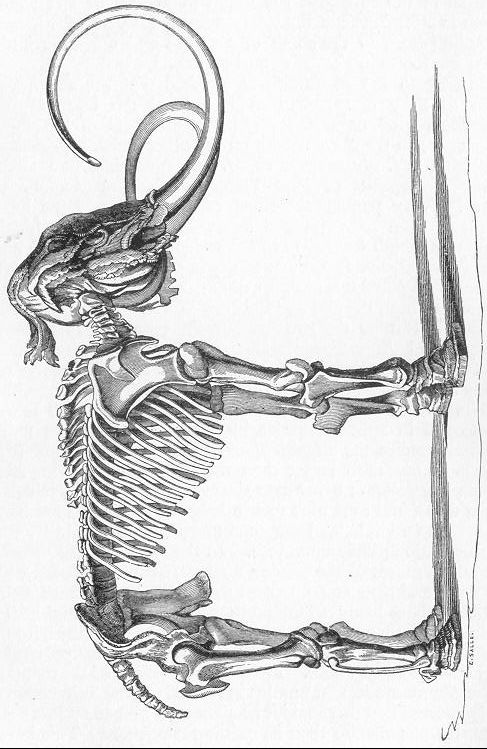
Fig. 266.—Skeleton of the Mammoth (Elephas
primigenius). Portions of the integument still adhere
to the head, and the thick skin of the soles is still
attached to the feet. Post-Pliocene.
distribution, never passing south of a line drawn through the
Pyrenees, the Alps, the northern shores of the Caspian, Lake
Page 359
Baikal, Kamschatka, and the Stanovi Mountains (Dawkins). It
occurs in the Pre-Glacial forest-bed of Cromer in Norfolk,
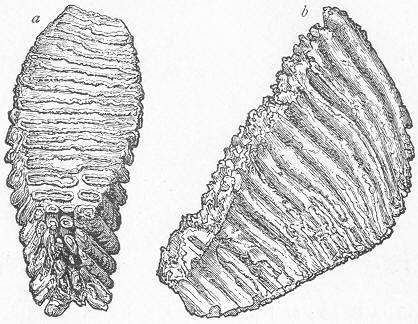
Fig. 267.—Molar tooth of the Mammoth (Elephas
primigenius), upper jaw, right side, one-third of the natural
size. a, Grinding surface; b, Side view.
Post-Pliocene.
survived the Glacial period, and is found abundantly in
Post-Glacial deposits in France, Germany, Britain, Russia in
Europe, Asia, and North America, being often associated with the
Reindeer, Lemming, and Musk-ox. That it survived into the earlier
portion of the human period is unquestionable, its remains having
been found in a great number of instances associated with
implements of human manufacture; whilst in one instance a
recognisable portrait of it has been discovered, carved on bone.
Amongst other Elephants which occur in Post-Pliocene deposits
may be mentioned, as of special interest, the pigmy Elephants of
Malta. One of these—the Elephas Melitensis, or
so-called "Donkey-Elephant"—was not more than four and a
half feet in height. The other—the Elephas Falconeri,
of Busk—was still smaller, its average height at the
withers not exceeding two and a half to three feet.
Whilst herbivorous animals abounded during the Post-Pliocene,
we have ample evidence of the coexistence with them of a number
of Carnivorous forms, both in the New and the Old World. The
Bears are represented in Europe by at least three species, two
of which—namely, the great Grizzly Bear (Ursus ferox)
and the smaller Brown Bear (Ursus arctos)—are in
existence at the present day. The third species is the
Page 360
celebrated Cave-bear
(Ursus spelœus, fig. 268), which is now extinct. The
Cave-bear exceeded in its dimensions the largest of modern Bears;
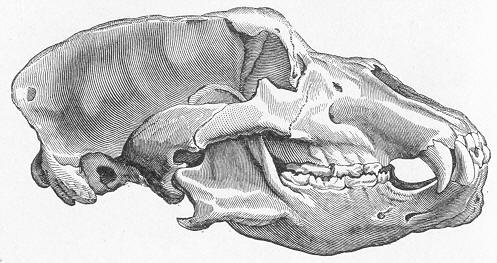
Fig. 268.—Skull of Ursus spelpeus. Post-Pliocene,
Europe. One-sixth of the natural size.
and its remains, as its name implies; have been found mainly in
cavern-deposits. Enormous numbers of this large and ferocious
species must have lived in Europe in Post-Glacial times; and that
they survived into the human period, is clearly shown by the common
association of their bones with the implements of man. They are
occasionally accompanied by the remains of a Glutton (the Gulo
spelœus), which does not appear to be really separable from
the existing Wolverine or Glutton of northern regions (the Gulo
luscus). In addition, we meet with the bones of the Wolf, Fox,
Weasel, Otter, Badger, Wild Cat, Panther, Hyæna, and Lion,
&c., together with the extinct Machairodus or "Sabre-toothed
Tiger." The only two of these that deserve further mention are
the Hyæna and the Lion. The Cave-hyæna (Hyœna
spelœa, fig. 269) is regarded by high authorities as nothing
more than a variety of the living Spotted Hyæna (H.
Crocuta) of South Africa. This well-known species inhabited Britain
and a considerable portion of Europe during a large part of the
Post-Pliocene period; and its remains often occur in great abundance.
Indeed, some caves, such as the Kirkdale Cavern in Yorkshire, were
dens inhabited during long periods by these animals, and thus contain
the remains of numerous individuals and of successive generations of
Hyænas, together with innumerable gnawed and bitten bones of
their prey. That the Cave-hyæna was a contemporary with Man in
Western Europe during Post-Glacial times is shown beyond a doubt by
the common association of its bones with human implements.
Page 361
Lastly, the so-called Cave-lion (Felis spelœa), long
supposed to be a distinct species, has been shown to be nothing
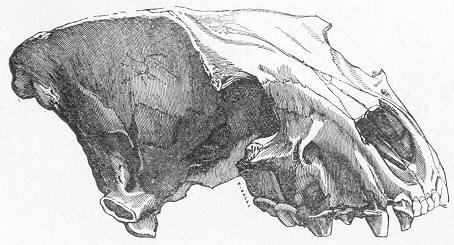
Fig. 269.—Skull of Hyœna spelœa, one-fourth
of the natural size. Post-Phocene, Europe.
more than a large variety of the existing Lion (Felis leo).
This animal inhabited Britain and Western Europe in times posterior
to the Glacial period, and was a contemporary of the Cave-hyæna,
Cave-bear, Woolly Rhinoceros, and Mammoth. The Cave-lion also
unquestionably survived into the earlier portion of the human
period in Europe.
The Post-Pliocene deposits of Europe have further yielded the remains
of numerous Rodents—such as the Beaver, the Northern
Lemming, Marmots, Mice, Voles, Rabbits, &c.—together with
the gigantic extinct Beaver known as the Trogontherium Cuvieri
(fig. 270). The great Castoroides Ohioensis of the
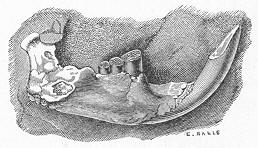
Fig. 270.—Lower jaw of Trogontherium Cuvieri, one-fourth
of the natural size. Post-Pliocene, Britain.
Post-Pliocene of North America is also a great extinct Beaver,
which reached a length of about five feet. Lastly, the Brazilian
bone-caves have yielded the remains of numerous Rodents of types
now characteristic of South America, such as Guinea-pigs, Capybaras,
tree-inhabiting Porcupines, and Coypus.
The deposits just alluded to have further yielded the remains of
various Monkeys, such as Howling Monkeys, Squirrel Monkeys, and
Marmosets, all of which belong to the group of Quadrumana
which is now exclusively confined to the
Page 362
South American continent—namely, the "Platyrhine" Monkeys.
We still have very briefly to consider the occurrence of Man
in Post-Pliocene deposits; but before doing so, it will be well
to draw attention to the evidence afforded by the Post-Pliocene
Mammals as to the climate of Western Europe at this period. The
chief point which we have to notice is, that a considerable
revolution of opinion has taken place on this point. It was
originally believed that the presence of such animals as Elephants,
Lions, the Rhinoceros, and the Hippopotamus afforded an irrefragable
proof that the climate of Europe must have been a warm one, at any
rate during Post-Glacial times. The existence, also, of numbers
of Mammoths in Siberia, was further supposed to indicate that
this high temperature extended itself very far north. Upon the
whole, however, the evidence is against this view. Not only is
there great difficulty in supposing that the Arctic conditions of
the Glacial period were immediately followed by anything warmer
than a cold-temperate climate; but there is nothing in the nature
of the Mammals themselves which would absolutely forbid their
living in a temperate climate. The Hippopotamus major,
though probably clad in hair, offers some difficulty—since,
as pointed out by Professor Busk, it must have required a climate
sufficiently warm to insure that the rivers were not frozen over
in the winter; but it was probably a migratory animal, and its
occurrence may be accounted for by this. The Woolly Rhinoceros
and the Mammoth are known with certainty to have been protected
with a thick covering of wool and hair; and their extension
northwards need not necessarily have been limited by anything
except the absence of a sufficiently luxuriant vegetation to
afford them food. The great American Mastodon, though not certainly
known to have possessed a hairy covering, has been shown to have
lived upon the shoots of Spruce and Firs, trees characteristic of
temperate regions—as shown by the undigested food which has
been found with its skeleton, occupying the place of the stomach.
The Lions and Hyænas, again, as shown by Professor Boyd Dawkins,
do not indicate necessarily a warm climate. Wherever a sufficiency
of herbivorous animals to supply them with food can live, there
they can live also; and they have therefore no special bearing
upon the question of climate. After a review of the whole evidence,
Professor Dawkins concludes that the nearest approach at the
present day to the Post-Pliocene climate of Western Europe is
to be found in the climate of the great Siberian plains which
stretch from the Altai Mountains to the Frozen Sea. "Covered
Page 363
by impenetrable forests, for the most part
of Birch, Poplar, Larch, and Pines, and low creeping dwarf Cedars,
they present every gradation in climate from the temperate to that
in which the cold is too severe to admit of the growth of trees,
which decrease in size as the traveller advances northwards, and
are replaced by the grey mosses and lichens that cover the low
marshy 'tundras.' The maximum winter cold, registered by Admiral
Von Wrangel at Nishne Kolymsk, on the banks of the Kolyma,
is—65° in January. 'Then breathing becomes difficult;
the Reindeer, that citizen of the Polar region, withdraws to the
deepest thicket of the forest, and stands there motionless as
if deprived of life;' and trees burst asunder with the cold.
Throughout this area roam Elks, Black Bears, Foxes, Sables, and
Wolves, that afford subsistence to the Jakutian and Tungusian
fur-hunters. In the northern part countless herds of Reindeer,
Elks, Foxes, and Wolverines make up for the poverty of vegetation
by the rich abundance of animal life. 'Enormous flights of Swans,
Geese, and Ducks arrive in the spring, and seek deserts where
they may moult and build their nests in safety. Ptarmigans run in
troops amongst the bushes; little Snipes are busy along the brooks
and in the morasses; the social Crows seek the neighbourhood of
new habitations; and when the sun shines in spring, one may even
sometimes hear the cheerful note of the Finch, and in autumn
that of the Thrush.' Throughout this region of woods, a hardy,
middle-sized breed of horses lives under the mastership and care
of man, and is eminently adapted to bear the severity of the
climate.... The only limit to their northern range is the difficulty
of obtaining food. The severity of the winter through the southern
portion of this vast wooded area is almost compensated for by the
summer heat and its marvellous effect on
vegetation."—(Dawkins, 'Monograph of Pleistocene Mammalia.')
Finally, a few words must be said as to the occurrence of the
remains of Man in Post-Pliocene deposits. That Man existed in
Western Europe and in Britain during the Post-Pliocene period, is
placed beyond a doubt by the occurrence of his bones in deposits
of this age, along with the much more frequent occurrence of
implements of human manufacture. At what precise point of time
during the Post-Pliocene period he first made his appearance is
still a matter of conjecture. Recent researches would render
it probable that the early inhabitants of Britain and Western
Europe were witnesses of the stupendous phenomena of the Glacial
period; but this cannot be said to have been demonstrated. That
Man existed in these
Page 364
regions during the
Post-Glacial division of Post-Pliocene time cannot be doubted
for a moment. As to the physical peculiarities of the ancient
races that lived with the Mammoth and the Woolly Rhinoceros,
little is known compared with what we may some day hope to know.
Such information as we have, however, based principally on the
skulls of the Engis, Neanderthal, Cro-Magnon, and Bruniquel
caverns, would lead to the conclusion that Post-Pliocene Man
was in no respect inferior in his organisation to, or less
highly developed than, many existing races. All the known
skulls of this period, with the single exception of the
Neanderthal cranium, are in all respects average and normal in
their characters; and even the Neanderthal skull possessed a
cubic capacity at least equal to that of some existing races. The
implements of Post-Pliocene Man are exclusively of stone or bone;
and the former are invariably of rude shape and undressed.
These "palæolithic" tools (Gr. palaios; ancient;
lithos, stone) point to a very early condition of the
arts; since the men of the earlier portion of the Recent period,
though likewise unacquainted with the metals, were in the habit
of polishing or dressing the stone implements which they
fabricated.
It is impossible here to enter further into this subject; and
it would be useless to do so without entering as well into a
consideration of the human remains of the Recent period—a
period which lies outside the province of the present work. So
far as Post-Pliocene Man is concerned, the chief points which
the palæontological student has to remember have been
elsewhere summarised by the author as follows:—
1. Man unquestionably existed during the later portion of what
Sir Charles Lyell has termed the "Post-Pliocene" period. In other
words, Man's existence dates back to a time when several remarkable
Mammals, previously mentioned, had not yet become extinct; but he
does not date back to a time anterior to the present Molluscan
fauna.
2. The antiquity of the so-called Post-Pliocene period is a matter
which must be mainly settled by the evidence of Geology proper,
and need not be discussed here.
3. The extinct Mammals with which man coexisted in Western Europe
are mostly of large size, the most important being the Mammoth
(Elephas primogenius), the Woolly Rhinoceros (Rhinoceros
tichorhinus), the Cave-lion (Felis spelœa), the
Cave-hyæna(Hyœna spelœa), and the Cave-bear
(Ursus spelœus). We do not know the causes which led
to the extinction of these Mammals; but we know that hardly any
Mammalian species has become extinct during the historical period.
Page 365
4. The extinct Mammals with which man coexisted are referable in
many cases to species which presumably required a very different
climate to that now prevailing in Western Europe. How long a period,
however, has been consumed in the bringing about of the climatic
changes thus indicated, we have no means of calculating with any
approach to accuracy.
5. Some of the deposits in which the remains of man have been
found associated with the bones of extinct Mammals, are such as
to show incontestably that great changes in the physical geography
and surface-configuration of Western Europe have taken place
since the period of their accumulation. We have, however, no
means at present of judging of the lapse of time thus indicated
except by analogies and comparisons which may be disputed.
6. The human implements which are associated with the remains
of extinct Mammals, themselves bear evidence of an exceedingly
barbarous condition of the human species. Post-Pliocene or
"Palæolithic" Man was clearly unacquainted with the use
of any of the metals. Not only so, but the workmanship of these
ancient races was much inferior to that of the later tribes, who
were also ignorant of the metals, and who also used nothing but
weapons and tools of stone, bone, &c.
7. Lastly, it is only with the human remains of the Post-Pliocene
period that the palæontologist proper has to deal. When we
enter the "Recent" period, in which the remains of Man are
associated with those of existing species of Mammals, we
pass out of the region of pure palæontology into the domain
of the Archæologist and the Ethnologist.
LITERATURE.
The following are some of the principal works and memoirs to which
the student may refer for information as to the Post-Pliocene
deposits and the remains which they contain, as well as to the
primitive races of mankind:—
| (1) |
'Elements of Geology.' Lyell. |
| (2) |
'Antiquity of Man.' Lyell. |
| (3) |
'Palæontological Memoirs.' Falconer. |
| (4) |
'The Great Ice-age.' James Geikie. |
| (5) |
'Manual of Palæontology.' Owen. |
| (6) |
'British Fossil Mammals and Birds.' Owen. |
| (7) |
'Cave-Hunting.' Boyd Dawkins. |
| (8) |
'Prehistoric Times.' Lubbock. |
| (9) |
'Ancient Stone Implements.' Evans. |
| (10) |
'Prehistoric Man.' Daniel Wilson. |
| (11) |
'Prehistoric Races of the United States.' Foster. |
| (12) |
'Manual of Geology.' Dana. |
|
Page 366
(13) |
'Monograph of Pleistocene Mammalia' (Palæontographical
Society). Boyd Dawkins and Sanford. |
| (14) |
'Monograph of the Post-Tertiary Entomostraca of Scotland,
&c., with an Introduction on the Post-Tertiary Deposits
of Scotland' (Ibid.) G. S. Brady, H. W. Crosskey, and D.
Robertson. |
| (15) |
"Reports on Kent's Cavern"—'British Association
Reports.' Pengelly. |
| (16) |
"Reports on the Victoria Cavern, Settle"—'British
Association Reports.' Tiddeman. |
| (17) |
'Ossemens Fossiles.' Cuvier. |
| (18) |
'Reliquiæ Diluvianæ.' Buckland. |
| (19) |
"Fossil Mammalia"—'Zoology of the Voyage of the
Beagle.' Owen. |
| (20) |
'Description of the Tooth and Part of the Skeleton of
the Glyptodon.' Owen. |
| (21) |
"Memoir on the Extinct Sloth Tribe of North
America"—'Smithsonian Contributions to Knowledge.'
Leidy. |
| (22) |
"Report on Extinct Mammals of Australia"—'British
Association,' 1844. Owen. |
| (23) |
'Description of the Skeleton of an Extinct Gigantic
Sloth (Mylodon robtutus).' Owen. |
| (24) |
"Affinities and Probable Habits of Thylacoleo"—'Quart.
Journ. Geol. Soc.,' vol. xxiv. Flower. |
| (25) |
'Prodromus of the Palæontology of Victoria.'
M'Coy. |
| (26) |
'Les Ossemens Fossiles des Cavernes de Liège.'
Schmerling. |
| (27) |
'Die Fauna der Pfahlbauten in der Schweiz.'
Rütimeyer. |
| (28) |
"Extinct and Existing Bovine Animals of
Scandinavia"—'Annals of Natural History,' ser. 2, vol.
iv., 1849. Nilsson. |
| (29) |
'Man's Place in Nature.' Huxley. |
| (30) |
'Les Temps Antéhistoriques en Belgique.'
Dupont. |
| (31) |
"Classification of the Pleistocene Strata of Britain and
the Continent"—'Quart. Journ. Geol. Soc.,' vol. xxviii.
Boyd Dawkins. |
| (32) |
'Distribution of the Post-Glacial Mammalia' (Ibid.), vol.
xxv. Boyd Dawkins. |
| (33) |
'On British Fossil Oxen' (Ibid.), vols. xxii. and xxiii.
Boyd Dawkins. |
| (34) |
'British Prehistoric Mammals' (Congress of Prehistoric
Archæology, 1868). Boyd Dawkins. |
| (35) |
'Reliquiæ Aquitanicæ.' Lartet and
Christy. |
| (36) |
'Zoologie et Paléontologie Françaises.'
Gervais. |
| (37) |
'Notes on the Post-Pliocene Geology of Canada.' Dawson. |
| (38) |
"On the Connection between the existing Fauna and Flora of
Great Britain and certain Geological Changes"—'Mem. Geol.
Survey.' Edward Forbes. |
| (39) |
'Cavern-Researches.' M'Enery. Edited by Vivian. |
| (40) |
"Quaternary Gravels"—'Quart. Journ. Geol. Soc.,' vol.
xxv. Tylor. |
THE SUCCESSION OF LIFE UPON THE GLOBE.
In conclusion, it may not be out of place if we attempt to summarise,
in the briefest possible manner, some of the principal results
which may be deduced as to the succession of life upon the earth
from the facts which have in the preceding portion of this work
been passed in review. That there was a time when the earth was
void of life is universally admitted, though it may be that the
geological record gives us no direct evidence of this. That the
globe of to-day is peopled with innumerable forms of life whose
term of existence has been, for the most part, but as it were
of yesterday, is likewise an assertion beyond dispute. Can we
in any way connect the present with the remote past, and can we
indicate even imperfectly the conditions and laws under which the
existing order was brought about? The long series of fossiliferous
deposits, with their almost countless organic remains, is the
link between what has been and what is; and if any answer to the
above question can be arrived at, it will be by the careful and
conscientious study of the facts of Palæontology. In the present
state of our knowledge, it may be safely said that anything like
a dogmatic or positive opinion as to the precise sequence of
living forms upon the globe, and still more as to the manner in
which this sequence may have been brought about, is incapable of
scientific proof. There are, however, certain general deductions
from the known facts which may be regarded as certainly established.
In the first place, it is certain that there has been a
succession of life upon the earth, different specific and
generic types succeeding one another in successive periods. It
follows from this, that the animals and plants with which we are
familiar as living, were not always upon the earth, but that they
have been preceded by numerous races more or less differing from
them. What is true of the species of animals and plants, is true
also of the higher zoological divisions; and it is, in the second
place, quite certain that there has been a similar succession
in the order of appearance of the primary groups ("sub-kingdoms,"
"classes," &c.) of animals and vegetables. These great groups did
not all come into existence at once, but they made their appearance
successively. It is true that we cannot be said to be certainly
acquainted with the first absolute
Page 368
appearance of any great group of animals. No one dare assert
positively that the apparent first appearance of Fishes in the
Upper Silurian is really their first introduction upon the earth:
indeed, there is a strong probability against any such supposition.
To whatever extent, however, future discoveries may push back the
first advent of any or of all of the great groups of life, there is
no likelihood that anything will be found out which will materially
alter the relative succession of these groups as at present
known to us. It is not likely, for example, that the future has
in store for us any discovery by which it would be shown that
Fishes were in existence before Molluscs, or that Mammals made their
appearance before Fishes. The sub-kingdoms of Invertebrate animals
were all represented in Cambrian times—and it might therefore
be inferred that these had all come simultaneously into
existence; but it is clear that this inference, though incapable
of actual disproof, is in the last degree improbable. Anterior
to the Cambrian is the great series of the Laurentian, which,
owing to the metamorphism to which it has been subjected, has so
far yielded but the singular Eozoön. We may be certain,
however, that others of the Invertebrate sub-kingdoms besides
the Protozoa were in existence in the Laurentian period; and we
may infer from known analogies that they appeared successively,
and not simultaneously.
When we come to smaller divisions than the sub-kingdoms—such
as classes, orders, and families—a similar succession of groups
is observable. The different classes of any given sub-kingdom, or
the different orders of any given class, do not make their
appearance together and all at once, but they are introduced upon
the earth in succession. More than this, the different classes
of a sub-kingdom, or the different orders of a class, in the
main succeed one another in the relative order of their zoological
rank—the lower groups appearing first and the higher groups
last. It is true that in the Cambrian formation—the
earliest series of sediments in which fossils are abundant—we
find numerous groups, some very low, others very high, in the
zoological scale, which appear to have simultaneously
flashed into existence. For reasons stated above, however, we
cannot accept this appearance as real; and we must believe that
many of the Cambrian groups of animals really came into being long
before the commencement of the Cambrian period. At any rate, in the
long series of fossiliferous deposits of later date than the Cambrian
the above-stated rule holds good as a broad generalisation—that
the lower groups, namely, precede the higher in point of time;
Page 369
and though there are apparent exceptions to the rule, there are none
of such a nature as not to admit of explanation. Some of the leading
facts upon which this generalisarion is founded will be enumerated
immediately; but it will be well, in the first place, to consider
briefly what we precisely mean when we speak of "higher" and "lower"
groups.
It is well known that naturalists are in the habit of "classifying"
the innumerable animals which now exist upon the globe; or, in
other words, of systematically arranging them into groups. The
precise arrangement adopted by one naturalist may differ in minor
details from that adopted by another; but all are agreed as to the
fundamental points of classification, and all, therefore, agree in
placing certain groups in a certain sequence. What, then, is the
principle upon which this sequence is based? Why, for example, are
the Sponges placed below the Corals; these below the Sea-urchins;
and these, again, below the Shell-fish? Without entering into
a discussion of the principles of zoological classification,
which would here be out of place, it must be sufficient to say
that the sequence in question is based upon the relative type
of organisation of the groups of animals classified. The
Corals are placed above the Sponges upon the ground that, regarded
as a whole, the plan or type of structure of a Coral is
more complex than that of a Sponge. It is not in the slightest
degree that the Sponge is in any respect less highly organised
or less perfect, as a Sponge, than is the Coral as a Coral. Each
is equally perfect in its own way; but the structural pattern
of the Coral is the highest, and therefore it occupies a higher
place in the zoological scale. It is upon this principle, then,
that the primary subdivisions of the animal kingdom (the so-called
"sub-kingdoms") are arranged in a certain order. Coming, again, to
the minor subdivisions (classes, orders, &c.) of each sub-kingdom,
we find a different but entirely analogous principle employed as
a means of classification. The numerous animals belonging to
any given sub-kingdom are formed upon the same fundamental plan
of structure; but they nevertheless admit of being arranged in
a regular series of groups. All the Shell-fish, for example,
are built upon a common plan, this plan representing the ideal
Mollusc; but there are at the same time various groups of the
Mollusca, and these groups admit of an arrangement in a
given sequence. The principle adopted in this case is simply of
the relative elaboration of the common type. The Oyster
is built upon the same ground-plan as the Cuttle-fish; but this
plan is carried out with much greater elaboration, and with many
more complexities, in the latter than in the former: and
Page 370
in accordance with this, the Cephalopoda constitute a
higher group than the Bivalve Shell-fish. As in the case of
superiority of structural type, so in this case also, it is not
in the least that the Oyster is an imperfect animal. On
the contrary, it is just as perfectly adapted by its
organisation to fill its own sphere and to meet the exigencies
of its own existence as is the Cuttle-fish; but the latter lives
a life which is, physiologically, higher than the former, and its
organisation is correspondingly increased in complexity.
This being understood, it may be repeated that, in the main,
the succession of life upon the globe in point of time
has corresponded with the relative order of succession of the
great groups of animals in zoological rank; and some of
the more striking examples of this may be here alluded to. Amongst
the Echinoderms, for instance, the two orders generally
admitted to be the "lowest" in the zoological scale—namely,
the Crinoids and the Cystoids—are likewise the
oldest, both, appearing in the Cambrian, the former slowly dying
out as we approach the Recent period, and the latter disappearing
wholly before the close of the Palæozoic period. Amongst the
Crustaceans, the ancient groups of the Trilobites, Ostracodes,
Phyllopods, Eurypterids, and Limuloids, some of which exist at the
present day, are all "low" types; whereas the highly-organised
Decapods do not make their appearance till near the close of the
Palæozoic epoch, and they do not become abundant till we reach
Mesozoic times. Amongst the Mollusca, those Bivalves which
possess breathing-tubes (the "siphonate" Bivalves) are generally
admitted to be higher than those which are destitute of these
organs (the "asiphonate" Bivalves); and the latter are especially
characteristic of the Palæozoic period, whilst the former abound
in Mesozoic and Kainozoic formations. Similarly, the Univalves
with breathing-tubes and a corresponding notch in the mouth of the
shell ("siphonostomatous" Univalves) are regarded as higher in the
scale than the round-mouthed vegetable-eating Sea-snails, in which
no respiratory siphons exist ("holostomatous" Univalves); but the
latter abound in the Palæozoic rocks—whereas the former
do not make their appearance till the Jurassic period, and their
higher groups do not seem to have existed till the close of the
Cretaceous. The Cephalopods, again—the highest of all
the groups of Mollusca—are represented in the Palæozoic
rocks exclusively by Tetrabranchiate forms, which constitute the
lowest of the two orders of this class; whereas the more highly
specialised Dibranchiates do not make their appearance till the
commencement of the Mesozoic. The Palæozoic
Page 371
Tetrabranchiates, also, are of a much simpler type than the highly
complex Ammonitidœ of the Mesozoic.
Similar facts are observable amongst the Vertebrate animals.
The Fishes are the lowest class of Vertebrates, and they are the
first to appear, their first certain occurrence being in the
Upper Silurian; whilst, even if the Lower Silurian and Upper
Cambrian "Conodonts" were shown to be the teeth of Fishes, there
would still remain the enormously long periods of the Laurentian
and Lower Cambrian, during which there were Invertebrates, but no
Vertebrates. The Amphibians, the next class in zoological
order, appears later than the Fishes, and is not represented
till the Carboniferous; whilst its highest group (that of the
Frogs and Toads) does not make its entrance upon the scene till
Tertiary times are reached. The class of the Reptiles,
again, the next in order, does not appear till the Permian, and
therefore not till after Amphibians of very varied forms had
been in existence for a protracted period. The Birds seem
to be undoubtedly later than the Reptiles; but, owing to the
uncertainty as to the exact point of their first appearance, it
cannot be positively asserted that they preceded Mammals, as they
should have done. Finally, the Mesozoic types of Mammals are
mainly, if not exclusively, referable to the Marsupials,
one of the lowest orders of the class; whilst the higher orders
of the "Placental" Quadrupeds are not with certainty known to
have existed prior to the commencement of the Tertiary period.
Facts of a very similar nature are offered by the succession of
Plants upon the globe. Thus the vegetation of the Palæozoic
period consisted principally of the lowly-organised groups of
the Cryptogamous or Flowerless plants. The Mesozoic formations,
up to the Chalk, are especially characterised by the naked-seeded
Flowering plants—the Conifers and the Cycads; whilst the
higher groups of the Angiospermous Exogens and Monocotyledons
characterise the Upper Cretaceous and Tertiary rocks.
Facts of the above nature—and they could be greatly
multiplied—seem to point clearly to the existence of some
law of progression, though we certainly are not yet in a position
to formulate this law, or to indicate the precise manner in which
it has operated. Two considerations, also, must not be overlooked.
In the first place, there are various groups, some of them highly
organised, which make their appearance at an extremely ancient
date, but which continue throughout geological time almost
unchanged, and certainly unprogressive. Many of these "persistent
types" are known—such as various of the
Page 372
Foraminifera, the Lingulœ, the Nautili,
&c.; and they indicate that under given conditions, at present
unknown to us, it is possible for a life-form to subsist for an
almost indefinite period without any important modification of
its structure. In the second place, whilst the facts above
mentioned point to some general law of progression of the great
zoological groups, it cannot be asserted that the primeval types
of any given group are necessarily "lower," zoologically
speaking, than their modern representatives. Nor does this seem to
be at all necessary for the establishment of the law in question.
It cannot be asserted, for example, that the Ganoid and Placoid
Fishes of the Upper Silurian are in themselves less highly organised
than their existing representatives; nor can it even be asserted
that the Ganoid and Placoid orders are low groups of the
class Pisces. On the contrary, they are high groups; but
then it must be remembered that these are probably not really
the first Fishes, and that if we meet with Fishes at some future
time in the Lower Silurian or Cambrian, these may easily prove
to be representatives of the lower orders of the class. This
question cannot be further entered into here, as its discussion
could be carried out to an almost unlimited length; but whilst
there are facts pointing both ways, it appears that at present
we are not justified in asserting that the earlier types of each
group—so far as these are known to us, or really are without
predecessors—are necessarily or invariably more
"degraded" or "embryonic" in their structure than their more
modern representatives.
It remains to consider very briefly how far Palæontology
supports the doctrine of "Evolution," as it is called; and this,
too, is a question of almost infinite dimensions, which can but
be glanced at here. Does Palæontology teach us that the
almost innumerable kinds of animals and plants which we know to
have successively flourished upon the earth in past times were
produced separately and wholly independently of each other, at
successive periods? or does it point to the theory that a large
number of these supposed distinct forms, have been in reality
produced by the slow modification of a comparatively small number
of primitive types? Upon the whole, it must be unhesitatingly
replied that the evidence of Palæontology is in favour of
the view that the succession of life-forms upon the globe has
been to a large extent regulated by some orderly and
constantly-acting law of modification and evolution. Upon no
other theory can we comprehend how the fauna of any given
formation is more closely related to that of the formation next
below in the series, and to that of
Page 373
the formation next above, than to that of any other series of
deposits. Upon no other view can we comprehend why the
Post-Tertiary Mammals of South America should consist
principally of Edentates, Llamas, Tapirs, Peccaries, Platyrhine
Monkeys, and other forms now characterising this continent;
whilst those of Australia should be wholly referable to the
order of Marsupials. On no other view can we explain the common
occurrence of "intermediate" or "transitional" forms of life,
filling in the gaps between groups now widely distinct.
On the other hand, there are facts which point clearly to the
existence of some law other than that of evolution, and probably
of a deeper and more far-reaching character. Upon no theory of
evolution can we find a satisfactory explanation for the constant
introduction throughout geological time of new forms of life, which
do not appear to have been preceded by pre-existent allied types;
The Graptolites and Trilobites have no known predecessors, and leave
no known successors. The Insects appear suddenly in the Devonian,
and the Arachnides and Myriapods in the Carboniferous, under
well-differentiated and highly-specialised types. The Dibranchiate
Cephalopods appear with equal apparent suddenness in the older
Mesozoic deposits, and no known type of the Palæozoic period can
be pointed to as a possible ancestor. The Hippuritidœ
of the Cretaceous burst into a varied life to all appearance
almost immediately after their first introduction into existence.
The wonderful Dicotyledonous flora of the Upper Cretaceous period
similarly surprises us without any prophetic annunciation from
the older Jurassic.
Many other instances could be given; but enough has been said
to show that there is a good deal to be said on both sides, and
that the problem is one environed with profound difficulties.
One point only seems now to be universally conceded, and that
is, that the record of life in past time is not interrupted by
gaps other than those due to the necessary imperfections of the
fossiliferous series, to the fact that many animals are incapable
of preservation in a fossil condition, or to other causes of a
like nature. All those who are entitled to speak on this head
are agreed that the introduction of new and the destruction of
old species have been slow and gradual processes, in no sense of
the term "catastrophistic." Most are also willing to admit that
"Evolution" has taken place in the past, to a greater or less
extent, and that a greater or less number of so-called species of
fossil animals are really the modified descendants of pre-existent
forms. How this process of evolution has
Page 374
been effected, to what extent it has taken place, under what
conditions and laws it has been carried out, and how far it may
be regarded as merely auxiliary and supplemental to some deeper
law of change and progress, are questions to which, in spite of
the brilliant generalisations of Darwin, no satisfactory answer
can as yet be given. In the successful solution of this
problem—if soluble with the materials available to our
hands—will lie the greatest triumph that Palæontology
can hope to attain; and there is reason to think that, thanks to
the guiding-clue afforded by the genius of the author of the
'Origin of Species,' we are at least on the road to a sure,
though it may be a far-distant, victory.
TABULAR VIEW OF THE CHIEF DIVISIONS OF THE ANIMAL KINGDOM.
(Extinct groups are marked with an asterisk. Groups not represented
at all as fossils are marked with two asterisks.)
INVERTEBRATE ANIMALS.
SUB-KINGDOM I.—PROTOZOA.
Animal simple or compound; body composed of "sarcode," not definitely
segmented; no nervous system; and no digestive apparatus, beyond
occasionally a mouth and gullet.
| CLASS I. | GREGARINIDÆ.** |
| CLASS II. | RHIZOPODA. |
| |
| Order |
1. Monera.** |
| " |
2. Amœbea.** |
| " |
3. Foraminifera. |
| " |
4. Radiolaria (Polycystines, &c.) |
| " |
5. Spongida (Sponges). |
|
| CLASS III. | INFUSORIA.** |
SUB-KINGDOM II.—CŒLENTERATA.
Animal simple or compound; body-wall composed of two principal
layers; digestive canal freely communicating with the general
cavity of the body; no circulating organs, and no nervous system
or a rudimentary one; mouth surrounded by tentacles, arranged,
like the internal organs, in a "radiate" or star-like manner.
| CLASS I. | HYDROZOA. |
| |
| Sub-class |
1. Hydroida ("Hydroid Zoophytes"). Ex.
Fresh-water Polypes,** Pipe-corallines (Tubularia),
Sea-Firs (Sertularia). |
| Sub-class |
2. Siphonophora** ("Oceanic Hydrozoa").
Ex. Portuguese Man-of-war (Physalia). |
|
Page 376
Sub-class |
3. Discophora ("Jelly-fishes"). Only known as
fossils by impressions of their stranded carcasses. |
| Sub-class |
4. Lucernarida ("Sea-blubbers"). Also only known as
fossils by impressions left in fine-grained strata. |
| Sub-class |
5. Graptolitidœ* ("Graptolites"). |
|
| CLASS II. | ACTINOZOA. |
| |
| Order |
1. Zoantharia. Ex. Sea-anemones**
(Actinidœ), Star-corals
(Astrœidœ). |
| Order |
2. Alcyonaria. Ex. Sea-pens
(Pennatula), Organ-pipe Coral (Tubipora),
Red Coral (Corallium). |
| Order |
3. Rugosa ("Rugose Corals"). |
| " |
4. Ctenophora.** Ex. Venus's Girdle
(Cestum). |
|
SUB-KINGDOM III.—ANNULOIDA.
Animals in which the digestive canal is completely shut off from
the cavity of the body; a distinct nervous system; a system of
branched "water-vessels," which usually communicate with the
exterior. Body of the adult often "radiate," and never composed
of a succession of definite rings.
| CLASS I. | ECHINODERMATA. |
| |
| Order |
1. Crinoidea ("Sea-lilies"). Ex.
Feather-star (Comatula), Stone-lily
(Encrinus*). |
| Order |
2. Blastoidea* ("Pentremites"). |
| " |
3. Cystoidea* ("Globe-lilies"). |
| " |
4. Ophiuroidea ("Brittle-stars").
Ex. |
| " |
Sand-stars (Ophiura), Brittle-stars
(Ophiocoma). |
| Order |
5. Asteroidea ("Star-fishes"). Ex. Cross-fish
(Uraster), Sun-star (Solaster). |
| Order |
6. Echinoidea ("Sea-urchins"). Ex. Sea-eggs
(Echinus), Heart-urchins (Spatangus). |
| Order |
7. Holothuroidea ("Sea-cucumbers"). Ex.
Trepangs (Holothuria). |
|
| CLASS II. | SCOLECIDA** (Intestinal Worms, Wheel
Animalcules, &c.) |
SUB-KINGDOM IV.—ANNULOSA.
Animal composed of numerous definite segments placed one behind
the other; nervous system forming a knotted cord placed along
the lower (ventral) surface of the body.
Division A. Anarthropoda. No jointed limbs.
| CLASS I. | GEPHYREA** ("Spoon-worms"). |
| CLASS II. | ANNELIDA. ("Ringed-worms"). |
| |
Ex. Leeches** (Hirudinea), Earthworms**
(Oligochœta), Tube-worms (Tubicola),
Sea-worms and Sea-centipedes (Errantia). |
| CLASS III. | CHÆTOGNATHA**
("Arrow-worms"). |
Division B. Arthropoda or Articulata. Limbs jointed to
the body.
| CLASS I. | CRUSTACEA ("Crustaceans"). |
| |
Ex. Barnacles and Acorn-shells (Cirripedia),
Water-fleas (Ostracoda), Brine-shrimps and Fairy-shrimps
(Phyllopoda), Trilobites* (Trilobita), King-crabs
and Eurypterids* (Merostomata), Wood-lice and Slaters
(Isopoda), Sand-hoppers (Amphipoda), Lobsters,
Shrimps, Hermit-crabs, and Crabs (Decapoda). |
| CLASS II. |
Page 377
ARACHNIDA. |
| |
Ex. Mites (Acarina), Scorpions
(Pedipalpi), Spiders (Araneida). |
| CLASS III. | MYRIAPODA. |
| |
Ex. Centipedes (Chilopoda), Millipedes and
Galley-worms (Chilignatha). |
| CLASS IV. | INSECTA ("Insects"). |
| |
Ex. Field-bugs (Hemiptera); Crickets,
Grasshoppers, &c. (Orthoptera); Dragon-flies and
May-flies (Neuroptera); Goats and House-flies
(Diptera); Butterflies and Moths (Lepidoptera);
Bees, Wasps, and Ants (Hymenoptera); Beetles
(Coleoptera). |
SUB-KINGDOM V.—MOLLUSCA.
Animal soft-bodied, generally with a hard covering or shell; no
distinct segmentation of the body; nervous system of scattered
masses.
| CLASS I. | POLYZOA ("Sea-Mosses"). |
| |
Ex. Sea-mats (Flustra), Lace-corals
(Fenestellidœ*). |
| CLASS II. | TUNICATA** ("Tunicaries"). |
| |
Ex. Sea-squirts (Ascidia). |
| CLASS III. | BRACHIOPODA ("Lamp-shells"). |
| |
Ex. Goose-bill Lamp-shell (Lingula). |
| CLASS IV. | LAMELLIBRANCHIATA ("Bivalves"). |
| |
Ex. Oyster (Ostrea), Mussel (Mytilus),
Scallop (Pecten), Cockle (Cardium). |
| CLASS V. | GASTEROPODA ("Univalves"). |
| |
Ex. Whelks (Buccinum), Limpets
(Patella), Sea-slugs** (Doris), Land-snails
(Helix). |
| CLASS VI. | PTEROPODA ("Winged Snails"). |
| |
Ex. Hyalea, Cleodora. |
| CLASS VII. | CEPHALOPODA ("Cuttle-fishes"). |
| |
Ex. Calamary (Loligo), Poulpe (Octopus),
Paper Nautilus (Arganauta), Pearly Nautilus
(Nautilus), Belemnites,* Orthoceratites,*
Ammonites.* |
VERTEBRATE ANIMALS.
SUB-KINGDOM VI.—VERTEBRATA.
Body composed of definite segments arranged longitudinally one
behind the other; main masses of the nervous system placed dorsally;
a backbone or "vertebral column" in the majority.
| CLASS I. | PISCES ("Fishes"). |
| |
Ex. Lancelet** (Amphioxus); Lampreys and Hag-fishes
(Marsipobranchii**); Herring, Salmon, Perch, &c.
(Teleostei or "Bony Fishes"); Gar-pike, Sturgeon, &c.
(Ganoidei); Sharks, Dog-fishes, Rays, &c.
(Elasmobranchii or "Placoids"). |
| CLASS II. | AMPHIBIA ("Amphibians"). |
| |
Ex. Labyrinthodontia,* Cæcilians,** Newts and
Salamanders (Urodela), Frogs and Toads (Anoura). |
| CLASS III. | REPTILIA ("Reptiles"). |
| |
Ex. Deinosauria,* Pterosauria,* Anomodontia,*
Plesiosaurs (Sauropterygia*), Ichthyosaurs
(Ichthyopterygia*), Tortoises and Turtles (Chelonia),
Snakes (Ophidia), Lizards (Lacertilia), Crocodiles
(Crocodilia). |
| CLASS IV. | AVES ("Birds"). |
| |
Ex. Toothed Birds (Odontornithes*); Lizard-tailed
Birds (Archœopteryx*); Ducks, Geese, Gulls, &c.
(Natatores); Storks, Herons, Snipes, Plovers, &c.
(Grallatores); Ostrich, Emeu, Cassowary, Dinornis,*
Æpiornis,* &c. (Cursores); Fowls, Game Birds, and
Doves (Rasores); Cuckoos, Woodpeckers, Parrots, &c.
(Scansores); Crows, Starlings, Finches, Hummingbirds,
Swallows, &c. (Insessores); Owls, Hawks, Eagles, Vultures
(Raptores). |
| CLASS V. |
Page 378
MAMMALIA ("Quadrupeds"). |
| |
Ex. Duck-mole and Spiny Ant-eater
(Monotremata**); Kangaroos, Phalangers, Opossums,
Tasmanian Devil, &c. (Marsupialia); Sloths, Ant-eaters,
Armadillos (Edentata); Manatees and Dugongs
(Sirenia); Whales, Dolphins, Porpoises (Cetacea);
Rhinoceros, Tapir, Horses, Hippopotamus, Pigs, Camels and
Llamas, Giraffes, Deer, Antelopes, Sheep, Goats, Oxen
(Ungulata); Hyrax (Hyracoidea**); Elephants,
Mastodon,* Deinotherium* (Proboscidea); Seals,
Walrus, Bears, Dogs, Wolves, Cats, Lions, Tigers, &c.
(Carnivora); Hares, Rabbits, Porcupines, Beavers,
Rats, Mice, Lemmings, Squirrels, Marmots, &c. (Rodentia);
Bats (Cheiroptera); Moles, Shrew-mice, Hedgehogs
(Insectivora); Lemurs, Spider-monkeys, Macaques,
Baboons, Apes (Quadrumana); Man (Bimana). |
ABDOMEN (Lat. abdo, I conceal). The posterior cavity of
the body, containing the intestines and others of the viscera. In
many Invertebrates there is no separation of the body-cavity into
thorax and abdomen, and it is only in the higher Annulosa
that a distinct abdomen can be said to exist.
ABERRANT (Lat. aberro, I wander away). Departing from the
regular type.
ABNORMAL (Lat. ab, from; norma, a rule). Irregular;
deviating from the ordinary standard.
ACRODUS (Gr. akros, high; odous, tooth). A genus
of the Cestraciont fishes, so called from the elevated teeth.
ACROGENS (Gr. akros, high; gennao, I produce).
Plants which increase in height by additions made to the summit
of the stem by the union of the bases of the leaves.
ACROTRETA (Gr. akros, high; tretos, pierced). A
genus of Brachiopods, so called from the presence of a foramen
at the summit of the shell.
ACTINOCRINUS (Gr. aktin, a ray; krinon, a lily).
A genus of Crinoids.
ACTINOZOA (Gr. aktin, a ray; and zoön, an animal).
That division of the Cœlenterata of which the
Sea-anemones may be taken as the type.
ÆGLINA (Æglé, a sea-nymph). A genus of
Trilobites.
ÆPIORNIS (Gr. aipus, huge; ornis, bird). A genus
of gigantic Cursorial birds.
AGNOSTUS (Gr. a, not; gignosko, I know). A genus
of Trilobites.
ALCES (Lat. alces, elk). The European Elk or Moose.
ALECTO (the proper name of one of the Furies). A genus of
Polyzoa.
ALETHOPTERIS (Gr. alethes, true; pteris, fern).
A genus of Ferns.
ALGÆ. (Lat. alga, a marine plant). The order of plants
comprising the Sea-weeds and many fresh-water plants.
ALVEOLUS (Lat. alvus, belly). Applied to the sockets of
the teeth.
AMBLYPTERUS (Gr. amblus, blunt; pteron, fin). An
order of Ganoid Fishes.
AMBONYCHIA (Gr. ambon, a boss; onux, claw). A genus
of Palæozoic Bivalves.
AMBULACRA (Lat. ambulacrum, a place for walking). The
perforated spaces or "avenues" through which are protruded the
tube-feet, by means of which locomotion is effected in the
Echinodermata.
AMMONITIDÆ. A family of Tetrabranchiate Cephalopods, so called
from the resemblance of the shell of the type-genus, Ammonites,
to the horns of the Egyptian God, Jupiter-Ammon.
AMORPHOZOA (Gr. a, without; morphe, shape;
zoön, animal). A name sometimes used to designate the
Sponges.
AMPHIBIA (Gr. amphi, both; bios, life). The Frogs,
Newts, and the like, which have gills when young, but can always
breathe air directly when adult.
AMPHICYON (Gr. amphi, both—implying doubt; kuon,
dog). An extinct genus of Carnivora.
Page 380
AMPHILESTES (Gr. amphi, both; lestes, a thief). A
genus of Jurassic Mammals.
AMPHISPONGIA (Gr. amphi, both; spoggos, sponge).
A genus of Silurian sponges.
AMPHISTEGINA (Gr. amphi, both; stegé, roof). A
genus of Foraminifera.
AMPHITHERIUM (Gr. amphi, both; therion, beast).
A genus of Jurassic Mammals.
AMPHITRAGULUS (Gr. amphi, both; dim. of tragos,
goat). An extinct genus related to the living Musk-deer.
AMPLEXUS (Lat. an Ambrace). A genus of Rugose Corals.
AMPYX (Gr. ampux, a wreath or wheel). A genus of
Trilobites.
ANARTHROPODA (Gr. a. without; arthros, a joint;
pous, foot). That division of Annulose animals
in which there are no articulated appendages.
ANCHITHERIUM (Gr. agchi, near; therion, beast). An
extinct genus of Mammals.
ANCYLOCERAS (Gr. agkulos, crooked; ceras, horn).
A genus of Ammonitidœ.
ANCYLOTHERIUM (Gr. agkulos, crooked; therion, beast).
An extinct genus of Edentate Mammals.
ANDRIAS (Gr. andrias, image of man). An extinct genus of
tailed Amphibians.
ANGIOSPERMS (Gr. angeion, a vessel; sperma, seed).
Plants which have their seeds enclosed in a seed-vessel.
ANNELIDA (a Gallicised form of Annulata). The Ringed Worms,
which form one of the divisions of the Anarthropoda.
ANNULARIA (Lat. annulus, a ring). A genus of Palæozoic
plants, with leaves in whorls.
ANNULOSA (Lat. annulus). The sub-kingdom comprising the
Anarthropoda and the Arthropoda or Articulata,
in all of which the body is more or less evidently composed of
a succession of rings.
ANOMODONTIA (Gr. anomos, irregular; odous, tooth).
An extinct order of Reptiles, often called Dicynodontia.
ANOMURA (Gr. anomos, irregular; oura, tail). A
tribe of Decapod Crustacea, of which the Hermit-crab is
the type.
ANOPLOTHERIDÆ (Gr. anoplos, unarmed; ther, beast).
A family of Tertiary Ungulates.
ANOURA (Gr. a, without; oura, tail). The order
of Amphibia comprising the Frogs and Toads, in which the
adult is destitute of a tail. Often, called Batrachia.
ANTENNÆ (Lat. antenna, a yard-arm). The jointed horns
or feelers possessed by the majority of the Articulata.
ANTENNULES (dim. of Antennœ). Applied to the smaller
pair of antennæ in the Crustacea.
ANTHRACOSAURUS (Gr. anthrax, coal; saura, lizard).
A genus of Labyrinthodont Amphibians.
ANTHRAPALÆMON (Gr. anthrax, coal; palœmon, a
prawn—originally a proper name). A genus of long-tailed
Crustaceans from the Coal-measures.
ANTLERS. Properly the branches of the horns of the Deer tribe
(Cervidœ), but generally applied to the entire horns.
APIOCRINIDÆ (Gr. apion, a pear; krinon, lily). A
family of Crinoids—the "Pear-encrinites."
APTERYX (Gr. a, without; pterux, a wing). A wingless
bird of New Zealand, belong to the order Cursores.
AQUEOUS (Lat. aqua, water). Formed in or by water.
ARACHNIDA (Gr. arachne, a spider). A class of the
Articulata, comprising Spiders, Scorpions, and allied
animals.
ARBORESCENT. Branched like a tree.
ARCHÆOCIDARIS (Gr. archaios, ancient; Lat. cidaris,
a diadem). A Palæozoic genus of Sea-urchins, related to the
existing Cidaris.
ARCHÆOCYATHUS (Gr. archaios, ancient; kuathos, cup).
A genus of Palæozoic fossils allied to the Sponges.
ARCHÆOPTERYX (Gr. archaios, ancient; pterux, a
wing). The singular fossil bird which alone constitutes the order
of the Saururœ.
Page 381
ARCTOCYON (Gr. arctos, bear; kuon, dog). An extinct
genus of Carnivora.
ARENACEOUS. Sandy, or composed of grains of sand.
ARENICOLITES (Lat. arena, sand; colo, I inhabit). A
genus founded on burrows supposed to be formed by worms resembling
the living Lobworms (Arenicola).
ARTICULATA (Lat. articulus, a joint). A division of the
animal kingdom, comprising Insects, Centipedes, Spiders, and
Crustaceans, characterised by the possession of jointed bodies
or jointed limbs. The term Arthropoda is now more usually
employed.
ARTIODACTYLA (Gr. artios, even; daktulos, a finger
or toe). A division of the hoofed quadrupeds (Ungulata)
in which each foot has an even number of toes (two or four).
ASAPHUS (Gr. Asaphes, obscure). A genus of Trilobites.
ASCOCERAS (Gr. askos, a leather bottle; keras, horn).
A genus of Tetrabranchiate Cephalopods.
ASIPHONATE. Not possessing a respiratory tube or siphon. (Applied
to a division of the Lamellibranchiate Molluscs.)
ASTEROID (Gr. aster, a star; and eidos, form).
Star-shaped, or possessing radiating lobes or rays like a
star-fish.
ASTEROIDEA. An order of Echinodermata, comprising the
Star-fishes, characterised by their rayed form.
ASTEROPHYLLITES (Gr. aster, a star; phullon, leaf).
A genus of Palæozoic plants, with leaves in whorls.
ASTRÆIDÆ (Gr. Astrœa, a proper name).
The family of the Star-corals.
ASTYLOSPONGIA (Gr. a, without; stulos, a column;
spoggos, a sponge). A genus of Silurian Sponges.
ATHYRIS (Gr. a, without; thura, door). A genus of
Brachiopods.
ATRYPA (Gr. a, without; trupa, a hole). A genus
of Brachiopods.
AVES (Lat. avis, a bird). The class of the Birds.
AVICULA (Lat. a little bird). The genus of Bivalve Molluscs
comprising the Pearl-oysters.
AXOPHYLLUM (Gr. axon, a pivot; phullon, a leaf).
A genus of Rugose Corals.
AZOIC (Gr. a, without; zoé, life). Destitute of
traces of living beings.
BACULITES (Lat. baculum, a staff). A genus of the
Ammonitidœ.
BALÆNA (Lat. a whale). The genus of the Whalebone Whales.
BALANIDÆ (Gr. balanos, an acorn). A family of sessile
Cirripedes, commonly called "Acorn-shells."
BATRACHIA (Gr. batrachos, a frog). Often loosely applied
to any of the Amphibia, but sometimes restricted to the
Amphibians as a class, or to the single order of the
Anoura.
BELEMNITIDÆ (Gr. belemnon, a dart). An extinct group
of Dibranchiate Cephalopods, comprising the Belemnites and their
allies.
BELEMNOTEUTHIS (Gr. belemnon, a dart; teuthis, a
cuttle-fish). A genus allied to the Belemnites proper.
BELINURUS (Gr. belos, a dart; oura, tail). A genus
of fossil King-crabs.
BELLEROPHON (Gr. proper name). A genus of oceanic Univalves
(Heteropoda).
BELOTEUTHIS (Gr. belos, a dart; teuthis, a
cuttle-fish). An extinct genus of Dibranchiate Cephalopods.
BEYRICHIA (named after Prof. Beyrich). A genus of Ostracode
Crustaceans.
BILATERAL. Having two symmetrical sides.
BIMANA (Lat. Bis, twice; manus, a hand). The order
of Mammalia comprising man alone.
BIPEDAL (Lat. bis, twice; pes, foot). Walking upon
two legs.
BIVALVE (Lat. bis, twice; valvœ, folding-doors).
Composed of two plates or valves; applied to the shell of the
Lamellibranchiata and Brachiopoda, and to the
carapace of certain Crustacea.
BLASTOIDEA (Gr. blastos, a bud; and eidos, form).
An extinct order of Echinodermata, often called
Pentremites.
BRACHIOPODA (Gr. brachion, an arm; pous, the foot).
Page 382
A class or the Molluscoida, often called "Lamp-shells,"
characterised by possessing two fleshy arms continued from the sides
of the mouth.
BRACHYURA (Gr. brachus, short; oura, tail). A tribe
of the Decapod Crustaceans with short tails (i.e.,
the Crabs).
BRADYPODIDÆ. (Gr. bradus, slow; podes, feet). The
family of Edentata comprising the Sloths.
BRANCHIA (Gr. bragchia, the gill of a fish). A respiratory
organ adapted to breathe air dissolved in water.
BRANCHIATE. Possessing gills or branchiæ.
BRONTEUS (Gr. broné, thunder—an epithet of Jupiter
the Thunderer). A genus of Trilobites.
BRONTOTHERIUM (Gr. bronté, thunder; therion beast).
An extinct genus of Ungulate Quadrupeds.
BRONTOZOUM (Gr. bronté, thunder; zoön, animal).
A genus founded on the largest footprints of the Triassic Sandstones
of Connecticut.
BUCCINUM (Lat. buccinun, a trumpet). The genus of Univalves
comprising the Whelks.
CAINOZOIC (See Kainozoic.)
CALAMITES (Lat. calamus, a reed). Extinct plants with
reed-like stems, believed to be gigantic representatives of the
Equisetaceœ.
CALCAREOUS (Lat. calx, lime). Composed of carbonate of
lime.
CALICE. The little cup in which the polype of a coralligenous
Zoophyte (Actinozoön) is contained.
CALYMENE (Gr. kalumené, concealed). A genus of
Trilobites.
CALYX (Lat. a cup). Applied to the cup-shaped body of a
Crinoid (Echinodermata).
CAMAROPHORIA (Gr. kamara, a chamber; phero, I
carry). A genus of Brachiopods.
CAMELOPARDALIDÆ. (Lat. camelus, a camel;
pardalis, a panther). The family of the Giraffes.
CANINE (Lat. canis, a dog). The eye-tooth of Mammals,
or the tooth which is placed at or close to the præmaxillary
suture in the upper jaw, and the corresponding tooth in the lower
jaw.
CARAPACE. A protective shield. Applied to the upper shell of
Crabs, Lobsters, and many other Crustacea. Also the upper
half of the immovable case in which the body of a Chelonian is
protected.
CARCHARODON (Gr. karcharos. rough; odous, tooth).
A genus of Sharks.
CARDIOCARPON (Gr. kardia, the heart; karpos, fruit).
A genus of fossil fruit from the Coal-measures.
CARDIUM (Gr. kardia, the heart). The genus of Bivalve
Molluscs comprising the Cockles. Cardinia, Cardiola, and
Cardita have the same derivation.
CARNIVORA (Lat. caro, flesh; voro, I devour). An
order of the Mammalia. The "Beasts of Prey."
CARNIVOROUS (Lat. caro, flesh; voro, I devour).
Feeding upon flesh.
CARYOCARIS (Gr. karua, a nut; karis, a shrimp).
A genus of Phyllopod Crustaceans.
CARYOCRINUS (Gr. karua, a nut; krinon, a lily).
A genus of Cystideans.
CAUDAL (Lat. cauda, the tail). Belonging to the
tail.
CAVICORNIA (Lat. cavus, hollow; cornu, a horn).
The "hollow-horned" Ruminants, in which the horn consists of
a central bony "horn-core" surrounded by a horny sheath.
CENTRUM (Gr. kentron, the point round which a circle is
described by a pair of compasses). The central portion or "body"
of a vertebra.
CEPHALASPIDÆ. (Gr. kephale, head; aspis,
shield). A family of fossil fishes.
CEPHALIC (Gr. kephale, head). Belonging to the head.
CEPHALOPODA (Gr. kephale; and podes, feet). A class
of the Mollusca, comprising the Cuttle-fishes and their
allies, in which there is a series of arms ranged round the
head.
CERATIOCARIS (Gr. keras, a horn; karis, a shrimp).
A genus of Phyllopod Crustaceans.
Page 383
CERATITES (Gr. keras, a horn). A genus
of Ammonitidœ.
CERATODUS (Gr. keras, a horn; odous, tooth). A
genus of Dipnoous fishes.
CERVICAL (Lat. cervix, the neck). Connected with or
belonging to the region of the neck.
CERVIDÆ (Lat. cervus, a stag). The family of the
Deer.
CESTRAPHORI (Gr. kestra, a weapon; phero, I carry).
The group of the "Cestraciont Fishes," represented at the present
day by the Port-Jackson Shark; so called from their defensive
spines.
CETACEA (Gr. ketos, a whale). The order of Mammals
comprising the Whales and the Dolphins.
CETIOSAURUS (Gr. ketos, whale; saura, lizard). A
genus of Deinosaurian Reptiles.
CHEIROPTERA (Gr. cheir, hand; pteron, wing). The
Mammalian order of the Bats.
CHEIROTHERIUM (Gr. cheir, hand; therion, beast).
The generic name applied originally to the hand-shaped footprints
of Labyrinthodonts.
CHEIRURUS (Gr. cheir, hand; oura, tail). A genus
of Trilobites.
CHELONIA (Gr. cheloné, a tortoise). The Reptilian
order of the Tortoises and Turtles.
CHONETES (Gr. choné or choané, a
chamber or box). A genus of Brachiopods.
CIDARIS (Lat. a diadem). A genus of Sea-urchins.
CLADODUS (Gr. klados, branch; odous, tooth). A genus
of Fishes.
CLATHROPORA (Lat. clathti, a trellis; porus, a pore).
A genus of Lace-corals (Polyzoa).
CLISIOPHYLLUM (Gr. klision, a hut; phullon, leaf).
A genus of Rugose Corals.
CLYMENIA (Clumene, a proper name). A genus of
Tetrabranchiate Cephalopods.
COCCOSTEUS (Gr. kokkos, berry; osteon, bone). A
genus of Ganoid Fishes.
COCHLIODUS (Gr. kochlion, a snail-shell; odous,
tooth). A genus of Cestraciont Fishes.
CŒLENTERATA (Gr. koilos, hollow; enteron, the
bowel). The sub-kingdom which comprises the Hydrozoa and
Actinozoa. Proposed by Frey and Leuckhart in place of the
old term Radiata, which included other animals as
well.
COLEOPTERA (Gr. koleos, a sheath; pteron, wing).
The order of Insects (Beetles) in which the anterior pair of wings
are hardened, and serve as protective cases for the posterior
pair of membranous wings.
COLOSSOCHELYS (Gr. kolossos, a gigantic statue; chelus,
a tortoise). A huge extinct Land-tortoise.
COMATULA (Gr. koma, the hair). The Feather-star, so called
in allusion to its tress-like arms.
CONDYLE (Gr. kondulos, a knuckle). The surface by which
one bone articulates with another. Applied especially to the
articular surface or surfaces by which the skull articulates with
the vertebral column.
CONIFERÆ (Lat. conus, a cone; fero, I carry).
The order of the Firs, Pines, and their allies, in which the
fruit is generally a "cone" or "fir-apple."
CONULARIA (Lat. conulus, a little-cone). An extinct genus
of Pteropods.
COPRALITES (Gr. kopros, dung; lithos, stone). Properly
applied to the fossilised excrements of animals; but often employed
to designate phosphatic concretions which are not of this
nature.
CORALLITE. The corallum secreted by an Actinozoön which
consists of a single polype; or the portion of a composite corallum
which belongs to, and is secreted by, an individual polype.
CORALLUM (from the Latin for Red Coral). The hard structures
deposited in, or by the tissues of an
Actinozoön,—commonly called a "coral."
CORIACEOUS (Lat. corium. hide). Leathery.
CORYPHODON (Gr. korus, helmet; odous, tooth). An
extinct genus of Mammals, allied to the Tapirs.
CRANIUM (Gr. kranion, the skull). The bony or cartilaginous
case in which the brain is contained.
CRETACEOUS (Lat. creta, chalk). The formation which in
Europe contains white chalk as one of its most conspicuous
members.
Page 384
CRINOIDEA (Gr. krinon, a lily; eidos, form). An order
of Echinodermata, comprising forms which are usually stalked,
and sometimes resemble lilies in shape.
CRIOCERAS (Gr. krios, a ram; keras, a horn). A genus
of Ammonitidœ.
CROCODILIA (Gr. krokodeilos, a crocodile). An order of
Reptiles.
CROSSOPTERYGIDÆ. (Gr. krossotos, a fringe;
pterux, a fin). A sub-order of Ganoids in which the paired
fins possess a central lobe.
CRUSTACEA (Lat. crusta, a crust). A class of Articulate
animals, comprising Crabs, Lobsters, &c., characterised by the
possession of a hard shell or crust, which they cast
periodically.
CRYPTOGAMS (Gr. kruptos, concealed; gamos, marriage).
A division of plants in which the organs of reproduction are
obscure and there are no true flowers.
CTENACANTHUS (Gr. kteis, a comb; akantha, a thorn).
A genus of fossil fishes, named from its fin-spines.
CTENOID (Gr. kteis, a comb; eidos, form). Applied
to those scales of fishes the hinder margins of which are fringed
with spines or comb-like projections.
CURSORES (Lat. curro, I run). An order of Aves,
comprising birds destitute of the power of flight, but formed
for running vigorously (e.g., the Ostrich and Emeu).
CUSPIDATE. Furnished with small pointed eminences or "cusps."
CYATHOCRINUS (Gr. kuathos, a cup; krinon, a lily).
A genus of Crinoids.
CYATHOPHYLLUM (Gr. kuathos, a cup; phullon, a leaf).
A genus of Rugose Corals.
CYCLOID (Gr. kuklos, a circle; eidos, form). Applied
to those scales of fishes which have a regularly circular or
elliptical outline with an even margin.
CYCLOPHTHALMUS (Gr. kuklos, a circle; ophthalmos,
eye). A genus of fossil Scorpions.
CYCLOSTOMI (Gr. kuklos, and stoma, mouth). Sometimes
used to designate the Hag-fishes and Lampreys, forming the order
Marsipobranchii.
CYPRÆA (a name of Venus). The genus of Univalve Molluscs
comprising the Cowries.
CYRTOCERAS (Gr. kurtos. crooked; keras, horn). A
genus of Tetrabranchiate Cephalopods.
CYSTIPHYLLUM (Gr. kustis, a bladder; phullon, a
leaf). A genus of Rugose Corals.
CYSTOIDEA (Gr. kustis, a bladder; eidos, form).
The "Globe-crinoids," an extinct order of
Echinodermata.
DADOXYLON (Gr. dadion, a torch; xulon, wood). An
extinct genus of Coniferous trees.
DECAPODA (Gr. deka, ten; podes, feet). The division
of Crustacea which have ten feet; also the family of
Cuttle-fishes, in which there are ten arms or cephalic
processes.
DECIDUOUS (Lat. decido, I fall off). Applied to parts which
fall off or are shed during the life of the animal.
DEINOSAURIA (Gr. deinos, terrible; saura, lizard).
An extinct order of Reptiles.
DEINOTHERIUM (Gr. deinos, terrible; therion, beast).
An extinct genus of Proboscidean Mammals.
DENDROGRAPTUS (Gr. dendron, tree; grapho, I write).
A genus of Graptolites.
DESMIDIÆ. Minute fresh-water plants, of a green colour, without
a siliceous epidermis.
DIATOMACEÆ (Gr. diatemno, I sever). An order of minute
plants which are provided with siliceous envelopes.
DIBRANCHIATA (Gr. dis; twice; bragchia, gill).
The order of Cephalopoda (comprising the Cuttle-fishes,
&c.) in which only two gills are present.
DICERAS (Gr. dis, twice; keras, horn). An extinct
genus of Bivalve Molluscs.
DICTYONEMA (Gr. diktuon, a net; nema, thread). An
extinct genus of Polyzoa.
Page 385
DICYNODONTIA (Gr. dis, twice; kuon, dog; odous,
tooth). An extinct order of Reptiles.
DIDYMOGRAPTUS (Gr. didumos, twin; grapho, I write).
A genus of Graptolites.
DIMORPHODON (Gr. dis, twice; morphé, shape;
oduos, tooth). A genus of Pterosaurian reptiles.
DINICHTHYS (Gr. deinos, terrible; ichthus, fish).
An extinct genus of Fishes.
DINOCERAS (Gr. deinos, terrible; keras, horn). An
extinct genus of Mammals.
DINOPHIS (Gr. deinos, terrible; ophis, snake). An
extinct genus of Snakes.
DINORNIS (Gr. deinos, terrible; ornis, bird). An
extinct genus of Birds.
DIPLOGRAPTUS (Gr. diplos, double; grapho, I write).
A genus of Graptolites.
DIPNOI (Gr. dis, twice; pnoé, breath). An order
of Fishes, comprising the Mud-fishes, so called in allusion to
their double mode of respiration.
DIPROTODON (Gr. dis, twice; protos, first;
odous, tooth). A genus of extinct Marsupials.
DIPTERA (Gr. dis, twice; pteron, wing). An order
of Insects characterised by the possession of two wings.
DISCOID (Gr. diskos, a quoit; eidos, form). Shaped
like a round plate or quoit.
DOLOMITE (named after M. Dolomieu). Magnesian limestone.
DORSAL (Lat. dorsum, the back). Connected with or placed
upon the back.
DROMATHERIUM (Gr. dromaios, nimble; therion, beast).
A genus of Triassic Mammals.
DRYOPITHECUS (Gr. drus, an oak; pithekos, an ape).
An extinct genus of Monkeys.
ECHINODERMATA (Gr. echinos; and derma, skin). A
class of animals comprising the Sea-urchins, Star-fishes, and
others, most of which have spiny skins.
ECHINOIDEA (Gr. echinos; and eidos, form). An order
of Echinodermata, comprising the Sea-urchins.
EDENTATA (Lat. e, without; dens, tooth). An order
of Mammalia often called Bruta.
EDENTULOUS. Toothless, without any dental apparatus. Applied to
the mouth of any animal, or to the hinge of the Bivalve
Molluscs.
ELASMOBRANCHII (Gr. elasma, a plate; bragchia, gill).
An order of Fishes, including the Sharks and Rays.
ENALIOSAURIA (Gr. enalios, marine; saura, lizard),
Sometimes employed as a common term to designate the extinct
Reptilian orders of the Ichthyosauria and
Plesiosauria.
EOCENE (Gr. eos, dawn; kainos, new or recent).
The lowest division of the Tertiary rocks, in which species of
existing shells are to a small extent represented.
EOPHYTON (Gr. eos, dawn; phuton, a plant). A genus
of Cambrian fossils, supposed to be of a vegetable nature.
EOZOÖN (Gr. eos, dawn; zoön, animal). A
genus of chambered calcareous organisms found in the Laurentian and
Huronian formations.
EQUILATERAL (Lat. œquus, equal; latus, side).
Having its sides equal. Usually applied to the shells of the
Brachiopoda. When applied to the spiral shells of the
Foraminifera, it means that all the convolutions of the
shell lie in the same plane.
EQUISETACEÆ (Lat. equus, horse; seta, bristle). A
group of Cryptogamous plants, commonly known as "Horse-tails."
EQUIVALVE (Lat. œquus, equal; valvœ,
folding-doors). Applied to shells which are composed of two equal
pieces or valves.
ERRANTIA (Lat. erro, I wander). An order of Annelida,
often called Nereidea, distinguished by their great locomotive
powers.
EUOMPHALUS (Gr. eu, well; omphalos, navel). An extinct
genus of Univalve Molluscs.
EURYPTERIDA (Gr. eurus, broad; pteron, wing). An
extinct sub-order of Crustacea.
EXOGYRA (Gr. exo, outside; guros, circle). An extinct
genus of Oysters.
Page 386
FAUNA (Lat. Fauni, the rural deities of the Romans). The
general assemblage of the animals of any region or district.
FAVOSITES (Lat. favus, a honeycomb). A genus of Tabulate
Corals.
FENESTELLIDÆ. (Lat. fenestella, a little window). The
"Lace-corals," a group of Palæozoic Polyzoans.
FILICES (Lat. filix, a fern). The order of Cryptogamic
plants comprising the Ferns.
FILIFORM (Lat. filum, a thread; forma, shape).
Thread-shaped.
FLORA (Lat. Flora, the goddess of flowers). The general
assemblage of the plants of any region or district.
FORAMINIFERA (Lat. foramen, an aperture; fero,
I carry). An order of Protozoa, usually characterised by the
possession of a shell perforated by numerous pseudopodial
apertures.
FRUGIVOROUS (Lat. frux, fruit; voro, I devour).
Living upon fruits.
FUCOIDS (Lat. fucus, sea-weed; Gr. eidos, likeness).
Fossils, often of an obscure nature, believed to be the remains
of sea-weeds.
FUSULINA (Lat. fusus, a spindle). An extinct genus of
Foraminifera.
GANOID (Gr, ganos, splendour, brightness). Applied to
those scales or plates which are composed of an inferior layer
of true bone covered by a superior layer of polished enamel.
GANOIDEI. An order of Fishes.
GASTEROPODA (Gr. gaster, stomach; pous, foot).
The class of the Mollusca comprising the ordinary Univalves,
in which locomotion is usually effected by a muscular expansion
of the under surface of the body (the "foot").
GLOBIGERINA (Lat. globus, a globe; gero, I carry).
A genus of Foraminifera.
GLYPTODON (Gr. glupho, I engrave; odous, tooth). An
extinct genus of Armadillos, so named in allusion to the fluted
teeth.
GONIATITES (Gr. gonia, angle). A genus of Tetrabranchiate
Cephalopods.
GRALLATORES (Lat. grallœ, stilts). The order of the
long-legged Wading Birds.
GRAPTOLITIDÆ. (Gr. grapho, I write; lithos,
stone). An extinct sub-class of the Hydrozoa.
GYMNOSPERMS (Gr. gumnos, naked; sperma, seed). The
Conifers and Cycads, in which the seed is not protected within
a seed-vessel.
HALITHERIUM (Gr. hals, sea; therion, beast). An
extinct genus of Sea-cows (Sirenia).
HAMITES (Lat. hamus, a hook). A genus of the
Ammonitidœ.
HELIOPHYLLUM (Gr. helios, the sun; phullon, leaf).
A genus of Rugose Corals.
HELLADOTHERIUM (Gr. Hellas, Greece; therion, beast).
An extinct genus of Ungulate Mammals.
HEMIPTERA (Gr. hemi, and pteron, wing). An order
of Insects in which the anterior wings are sometimes
"hemelytra."
HESPERORNIS (Gr. Hesperos, the evening star; ornis,
bird). An extinct genus of Birds.
HETEROCERCAL (Gr. heteros, diverse; kerkos, tail).
Applied to the tail of Fishes when it is unsymmetrical, or composed
of two unequal lobes.
HETEROPODA (Gr. heteros, diverse; podes, feet). An
aberrant group of the Gasteropods, in which the foot is modified
so as to form a swimming organ.
HIPPARION (Gr. hipparion, a little horse). An extinct genus
of Equidœ.
HIPPOPOTAMUS (Gr. hippos, horse; potamos, river).
A genus of Hoofed Quadrupeds—the "River-horses."
HIPPURITIDÆ. (Gr. hippos, horse; oura, tail). An
extinct family of Bivalve Molluscs.
HOLOPTYCHIUS (Gr. holos, whole; ptucé, wrinkle).
An extinct genus of Ganoid Fishes.
HOLOSTOMATA (Gr. holos, whole; stoma, mouth). A
division of Gasteropodous Molluscs, in which the aperture
of the shell is rounded, or "entire."
HOLOTHUROIDEA (Gr. holothourion, and eidos, form).
An order of Echinodermata comprising the Trepangs.
Page 387
HOMOCERCAL (Gr. homos, same; kerkol, tail). Applied
to the tail of Fishes when it is symmetrical, or composed of two
equal lobes.
HYBODUNTS (Gr. hubos, curved; odous, tooth). A group
of Fishes of which Hybodus is the type-genus.
HYDROIDA (Gr. hudra; and eidos, form). The sub-class
of the Hydrozoa, which comprises the animals most nearly
allied to the Hydra.
HYDROZOA (Gr. hudra; and zoön, animal). The class
of the Cœlenterata which comprises animals constructed
after the type of the Hydra.
HYMENOPTERA (Gr. humen, a membrane; pteron, a wing).
An order of Insects (comprising Bees, Ants, &c.) characterised
by the possession of four membranous wings.
ICHTHYODORULITE (Gr. ichthus, fish; dorus, spear;
lithos, stone). The fossil fin-spine of Fishes.
ICHTHYOPTERYGIA (Gr. ichthus; pterux, wing). An
extinct order of Reptiles.
ICHTHYORNIS (Gr. ichthus, fish; ornis, bird). An
extinct genus of Birds.
ICHTHYOSAURIA (Gr. ichthus; saura, lizard). Synonymous
with Ichthyopterygia.
IGUANODON (Iguana, a living lizard; Gr. odous, tooth).
A genus of Deinosaurian Reptiles.
INCISOR (Lat. incido, I cut). The cutting teeth fixed
in the intermaxillary bones of the Mammalia, and the
corresponding teeth in the lower jaw.
INEQUILATERAL. Having the two sides unequal, as in the case of
the shells of the ordinary bivalves (Lamellibranchiata).
When applied to the shells of the Foraminifera, it implies
that the convolutions of the shell do not lie in the same plane,
but are obliquely wound round an axis.
INEQUIVALVE. Composed of two unequal pieces or valves.
INOCERAMUS (Gr. is, a fibre; keramos, an earthen
vessel). An extinct genus of Bivalve Molluscs.
INSECTA (Lat. inseco, I cut into). The class of articulate
animals commonly known as Insects.
INSECTIVORA (Lat. insectum, an insect; voro, I
devour). An order of Mammals.
INSECTIVOROUS. Living upon Insects.
INSESSORES (Lat. insedeo, I sit upon). The order of the
Perching Birds, often called Passeres.
INTERAMBULACRA. The rows of plates in an Echinoid which
are not perforated for the emission of the "tube-feet."
INTERMMAXILLÆ or PRÆMAXILLÆ. The two bones
which are situated between the two superior maxillæ in
Vertebrata. In man, and some monkeys, the
præmaxillæ anchylose with the maxillæ, so
as to be irrecognisable in the adult.
INVERTEBRATA (Lat. in, without; vertebra, a bone
of the back). Animals without a spinal column or backbone.
ISOPODA. (Gr. isos, equal; podes, feet). An order
of Crustacea in which the feet are like one another and
equal.
KAINOZOIC (Gr. kainos, recent; zoe, life). The
Tertiary period in Geology comprising those formations in which
the organic remains approximate more or less closely to the existing
fauna and flora.
LABYRINTHODONTIA (Gr. laburinthos, a labyrinth; odous,
tooth). An extinct order of Amphibia, so called from the
complex microscopic structure of the teeth.
LACERTILIA (Lat. lacerta, a lizard). An order of
Reptilia comprising the Lizards and Slow-worms.
LAMELLIBRANCHIATA (Lat. lamella, a plate; Gr. bragchia,
gill). The class of Mollusca comprising the ordinary bivalves,
characterised by the possession of lamellar gills.
LEPIDODENDRON (Gr. lepis, a scale; dendron, a tree).
A genus of extinct plants, so named from the scale-like scars
upon the stem left by the falling off of the leaves.
Page 388
LEPIDOPTERA (Gr. lepis, a scale; pteron, a wing). An
order of Insects, comprising Butterflies and Moths, characterised by
possessing four wings which are usually covered with minute scales.
LEPIDOSIREN (Gr. lepis, a scale; seiren, a
siren—the generic name of the Mud-eel or Siren
lacertina). A genus of Dipnoous fishes, comprising the
"Mud-fishes."
LEPIDOSTROBUS (Gr. lepis, a scale; strobilos, a
fir-cone). A genus founded on the cones of Lepidodendron.
LEPTÆNA (Gr. leptos. slender). A genus of
Brachiopods.
LINGULA (Lat. lingula, a little tongue). A genus of
Brachiopods.
LYCOPODIACEÆ (Gr. lupos, a wolf; pous, foot). The
group of Cryptogamic plants generally known as "Club-mosses."
MACHÆRACANTHUS (Gr. machaira, a sabre; acantha,
thorn or spine). An extinct genus of Fishes.
MACHAIRODUS (Gr. machaira, a sabre; odous, tooth).
An extinct genus of Carnivora.
MACROTHERIUM (Gr. makros, long; therion. beast).
An extinct genus of Edentata.
MACRURA (Gr. makros, long; oura, tail). A tribe of
Decapod Crustaceans with long tails (e.g., the Lobster,
Shrimp, &c.)
MAMMALIA (Lat. mamma, the breast). The class of Vertebrate
animals which suckle their young.
MANDIBLE (Lat. mandibulum, a jaw). The upper pair of jaws
in Insects; also applied to one of the pairs of jaws in
Crustacea and Spiders, to the beak of Cephalopods, the
lower jaw of Vertebrates, &c.
MANTLE. The external integument of most of the Mollusca, which
is largely developed, and forms a cloak in which the viscera
are protected. Technically called the "pallium."
MANUS (Lat. the hand). The hand of the higher Vertebrates.
MARSIPOBRANCHII (Gr. marsipos, a pouch; bragchia,
gill). The order of Fishes comprising the Hag-fishes and Lampreys,
with pouch-like gills.
MARSUPIALIA (Lat. marsupium, a pouch). An order of Mammals
in which the females mostly have an abdominal pouch in which
the young are carried.
MASTODON (Gr. mastos, nipple; odous, tooth). An
extinct genus of Elephantine Mammals.
MEGALONYX (Gr. megas, great; onux, nail). An extinct
genus of Edentate Mammals.
MEGALOSAURUS (Gr. megas, great; saura, lizard).
A genus of Deinosaurian Reptiles.
MEGATHERIUM (Gr. megas, great; therion, beast).
An extinct genus of Edentata.
MESOZOIC (Gr. mesos, middle; and zoe, life). The
Secondary period in Geology.
MICROLESTES (Gr. mikros, little; lestes, thief).
An extinct genus of Triassic Mammals.
MILLEPORA (Lat. mille, one thousand; porus, a pore).
A genus of "Tabulate Corals."
MIOCENE (Gr. meion, less; kainol, new). The Middle
Tertiary period.
MOLARS (Lat. mola, a mill). The "grinders" in man, or the
teeth in diphyodont Mammals which are not preceded by
milk-teeth.
MOLLUSCA (Lat. mollis, soft). The sub-kingdom which includes
the Shell-fish proper, the Polyzoa, the Tunicata,
and the Lamp-shells; so called from the generally soft nature
of their bodies.
MOLLUSCOIDA (Mollusca; Gr. eidos, form). The lower
division of the Mollusca, comprising the Polyzoa,
Tunicata, and Brachiopoda.
MONOGRAPTUS (Gr. monos, single; grapho, I write).
A genus of Graptolites.
MYLODON (Gr. mulos, a mill; odous, tooth). An extinct
genus of Edentate Mammals.
MYRIAPODA or MYRIOPODA (Gr. murios, ten thousand;
podes, feet). A class of Arthropoda comprising
the Centipedes and their allies, characterised by their numerous
feet.
Page 389
NATATORES (Lat. nare, to swim). The order of the Swimming
Birds.
NATATORY (Lat. nare, to swim). Formed for swimming.
NAUTILOID. Resembling the shell of the Nautilus in
shape.
NERVURES (Lat. nervus, a sinew). The ribs which support
the membranous wings of insects.
NEUROPTERA (Gr. neuron, a nerve; pteron, a wing).
An order of Insects characterised by four membranous wings with
numerous reticulated nervures (e.g., Dragon-flies).
NEUROPTERIS (Gr. neuron, a nerve; pteris, a fern).
An extinct genus of Ferns.
NOTHOSAURUS (Gr. nothos, spurious; saura, lizard).
A genus of Plesiosaurian Reptiles.
NOTOCHORD (Gr. notos, back; chorde, string). A
cellular rod which is developed in the embryo of Vertebrates
immediately beneath the spinal cord, and which is usually replaced
in the adult by the vertebral column. Often it is spoken of as
the "chorda dorsalis."
NUDIBRANCHIATA (Lat. nudus, naked; and Gr. bragchia,
gill). An order of the Gasteropoda in which the gills
are naked.
NUMMULINA (Lat. nummus, a coin). A genus of
Foraminifera, comprising the coin-shaped "Nummulites."
OBOLELLA (Lat. dim. of obolus, a small coin). An extinct
genus of Brachiopods.
OCCIPITAL. Connected with the occiput, or the back part
of the head.
OCEANIC. Applied to animals which inhabit the open ocean (=
pelagic).
ODONTOPTERYX (Gr. oduos, tooth; pterux, wing). An
extinct genus of Birds.
ODONTORNITHES (Gr. oduos, tooth; ornis, bird).
The extinct order of Birds, comprising forms with distinct teeth
in sockets.
OLIGOCENE (Gr. oligos, few; kainos, new). A name
used by many Continental geologists as synonymous with the Lower
Miocene.
OPHIDIA (Gr. ophis, a serpent). The order of Reptiles
comprising the Snakes.
OPHIUROIDEA (Gr. ophis, snake; oura, tail;
eidos, form). An order of Echinodermata, comprising
the Brittle-stars and Sand-stars.
ORNITHOSCELIDA (Gr. ornis, bird; skelos, leg).
Applied by Huxley to the Deinosaurian Reptiles, together with the
genus Compsognathus, on account of the bird-like character
of their hind-limbs.
ORTHIS (Gr. orthos, straight). A genus of Brachiopods,
named in allusion to the straight hinge-line.
ORTHOCERATIDÆ (Gr. orthos, straight; keras,
horn). A family of the Nautilidœ, in which the shell
is straight, or nearly so.
ORTHOPTERA (Gr. orthos, straight; pteron, wing).
An order of Insects.
OSTEOLEPIS (Gr. osteon, bone; lepis, scale). An
extinct genus of Ganoid Fishes.
OSTRACODA (Gr. ostrakon, a shell). An order of small
Crustaceans which are enclosed in bivalve shells.
OTODUS (Gr. ota, ears; odous, tooth). An extinct
genus of Sharks.
OUDENODON (Gr. ouden, none; odous, tooth). A genus
of Dicynodont Reptiles.
OVIBUS (Lat. ovis, sheep; bos, ox). The genus
comprising the Musk-ox.
PACHYDERMATA (Gr. pachus, thick; derma, skin).
An old Mammalian order constituted by Cuvier for the reception
of the Rhinoceros, Hippopotamus, Elephant, &c.
PALÆASTER (Gr. palaios, ancient; aster, star).
An extinct genus of Star-fishes.
PALÆOCARIS (Gr. palaios, ancient; karis, shrimp).
An extinct genus of Decapod Crustaceans.
PALÆOLITHIC (Gr. palaios, ancient; lithos,
stone). Applied to the rude stone implements of the earliest known
races of men, to the men who made these implements, or to the
period at which they were made.
Page 390
PALÆONTOLOGY (Gr. palaios, ancient; and logos,
discourse). The science of fossil remains or of extinct organised
beings.
PALÆOPHIS (Gr. palaios, ancient; ophis, serpent).
An extinct genus of Snakes.
PALÆOSAURUS (Gr. palaios, ancient; saura, lizard).
A genus of Thecodont Reptiles.
PALÆOTHERIDÆ. (Gr. palaios, ancient; ther,
beast). A group of Tertiary Ungulates.
PALÆOZOIC (Gr. palaios, ancient; and zoe, life).
Applied to the oldest of the great geological epochs.
PARADOXIDES (Lat. paradoxus, marvellous). A genus of
Trilobites.
PATAGIUM (Lat. the border of a dress). Applied to the expansion
of the integument by which Bats, Flying Squirrels, and other
animals support themselves in the air.
PECOPTERIS (Gr. peko, I comb; pteris, a fern). An
extinct genus of Ferns.
PECTEN (Lat. a comb). The genus of Bivalve Molluscs comprising
the Scallops.
PECTORAL (Lat. pectus, chest). Connected with, or placed
upon, the chest.
PENTACRINUS (Gr. penta, five; krinon, lily). A genus
of Crinoids in which the column is five-sided.
PENTAMERUS (Gr. penta, five; meros, part). An extinct
genus of Brachiopods.
PENTREMITES (Gr. penta, five; trema, aperture). A
genus of Blastoidea, so named in allusion to the apertures
at the summit of the calyx.
PERENNIBRANCHIATA (Lat. perennis, perpetual; Gr.
bragchia, gill). Applied to those Amphibia in which the
gills are permanently retained throughout life.
PERISSODACTYLA (Gr. perissos, uneven; daktulos,
finger). Applied to those Hoofed Quadrupeds (Ungulata)
in which the feet have an uneven number of toes.
PETALOID. Shaped like the petal of a flower.
PHACOPS (Gr. phaké, a lentil; ops, the eye).
A genus of Trilobites.
PHALANGES (Gr. phalanx, a row). The small bones composing
the digits of the higher Vertebrata. Normally each digit
has three phalanges.
PHANEROGAMS (Gr. phaneros, visible; gamos, marriage).
Plants which have the organs of reproduction conspicuous, and
which bear true flowers.
PHARYNGOBRANCHII (Gr. pharugx, pharynx; bragchia,
gill). The order of Fishes comprising only the Lancelet.
PHASCOLOTHERIUM (Gr. phaskolos, a pouch; therion,
a beast). A genus of Oolitic Mammals.
PHRAGMACONE (Gr. phragma, a partition; and konos,
a cone). The chambered portion of the internal shell of a
Belemnite.
PHYLLOPODA (Gr. phullon, leaf; and pous, foot).
An order of Crustacea.
PINNATE (Lat. pinna, a feather). Feather-shaped; or possessing
lateral processes.
PINNIGRADA (Lat. pinna, a feather; gradior, I walk).
The group of Carnivora, comprising the Seals and Walruses,
adapted for an aquatic life. Often called Pinnipedia.
PINNULÆ. (Lat. dim. of pinna). The lateral processes of
the arms of Crinoids.
PISCES (Lat. piscis, a fish). The class of Vertebrates
comprising the Fishes.
PLACOID (Gr. plax, a plate; eidos, form). Applied
to the irregular bony plates, grains, or spines which are found
in the skin of various fishes (Elasmobranchii).
PLAGIOSTOMI (Gr. plagios, transverse; stoma, mouth).
The Sharks and Rays, in which the mouth is transverse, and is
placed on the under surface of the head.
PLATYCERAS (Gr. platus, broad; keras, horn). A genus
of Univalve Molluscs.
PLATYCRINUS (Gr. platus, broad; krinom, lily). A
genus of Crinoidea.
PLATYRHINA (Gr. platus, broad; rhines, nostrils).
A group of the Quadrumana.
PLATYSOMUS (Gr. platus, wide; soma, body). A genus
of Ganoid Fishes.
PLEISTOCENE (Gr. pleistos, most; kainos, new). Often
used as synonymous with "Post-Pliocene."
Page 391
PLEUROTOMARIA (Gr. pleura, the side; tomé,
notch). A genus of Univalve shells.
PLIOCENE (Gr. pleion, more; kainos, new). The later
Tertiary period.
PLIOPITHECUS (Gr. pleion, more; pithekos, ape).
An extinct genus of monkeys.
PLIOSAURUS (Gr. pleion, more; saura, lizard). A
genus of Plesiosaurian Reptiles.
POLYCYSTINA (Gr. polus, many; and kustis, a cyst).
An order of Protozoa with foraminated siliceous shells.
POLYPARY. The hard chitinous covering secreted by many of the
Hydrozoa.
POLYPE (Gr. polus, many; pous, foot). Restricted
to the single individual of a simple Actinozoön, such
as a Sea-anemone, or to the separate zooids of a compound
Actinozoön. Often applied indiscriminately to any of
the Cœlenterata, or even to the Polyzoa.
POLYPORA (Gr. polus, many; poros, a passage). A
genus of Lace-corals (Fenestellidœ).
POLYTHALAMOUS (Gr. polus; and thalamos, chamber).
Having many chambers; applied to the shells of Foraminifera
and Cephalopoda.
POLYZOA (Gr. polus; and zoön, animal). A division
of the Molluscoida comprising compound animals, such as
the Sea-mat—sometimes called Bryozoa.
PORIFERA (Lat. porus, pore; and fero, I carry).
Sometimes used to designate the Foraminifera, or the
Sponges.
PRÆMOLARS (Lat. prœ, before; molares, the
grinders). The molar teeth of Mammals which succeed the molars of the
milk-set of teeth. In man, the bicuspid teeth.
PROBOSCIDEA (Lat. proboscis, the snout). The order of Mammals
comprising the Elephants.
PROCŒLOUS (Gr. pro, before; koilos, hollow).
Applied to vertebræ the bodies of which are hollow or concave
in front.
PRODUCTA (Lat. productus, drawn out or extended). An extinct
genus of Brachiopods, in which the shell is "eared," or has its
lateral angles drawn out.
PROTICHNITES (Gr. protos, first; ichnos, footprint).
Applied to certain impressions in the Potsdam sandstone of North
America, believed to have been produced by large Crustaceans.
PROTOPHYTA (Gr. protos; and phuton, plant). The
lowest division of plants.
PROTOPLASM (Gr. protos; and plasso I mould). The
elementary basis of organised tissues. Sometimes used synonymously
for the "sarcode" of the Protozoa.
PROTOROSAURUS or PROTEROSAURUS (Gr. protos, first;
orao, I see or discover; saura, lizard: or
proteros, earlier; saura, lizard). A genus of Permian
lizards.
PROTOZOA (Gr. protos; and zoön, animal). The
lowest division of the animal kingdom.
PSAMMODUS (Gr. psammos, sand; odous, tooth). An
extinct genus of Cestraciont Sharks.
PSEUDOPODIA (Gr. pseudos, falsity; and pous, foot).
The extensions of the body-substance which are put forth by the
Rhizopoda at will, and which serve for locomotion and
prehension.
PSILOPHYTON (Gr. psilos, bare; phuton, plant). An
extinct genus of Lycopodiaceous plants.
PTERANODON (Gr. pteron, wing; a, without; odous,
tooth). A genus of Pterosaurian Reptiles.
PTERASPIS (Gr. pteron, wing; aspis, shield). A genus
of Ganoid Fishes.
PTERICHTHYS (Gr. pteron, wing; ichthus, fish). A
genus of Ganoid Fishes.
PTERODACTYLUS (Gr. pteron, wing; daktulos, finger).
A genus of Pterosaurian Reptiles.
PTEROPODA (Gr. pteron, wing; and pous, foot). A
class of the Mollusca which swim by means of fins attached
near the head.
PTEROSAURIA (Gr. pteron, wing; saura, lizard). An
extinct order of Reptiles.
PTILODICTYA (Gr. ptilon, a feather; diktuon, a net).
An extinct genus of Polyzoa.
Page 392
PTYCHOCERAS (Gr. ptucé, a fold; keras, a
horn). A genus of Ammonitidœ.
PULMONATE. Possessing lungs.
PYRIFORM (Lat. pyrus, a pear; and forma, form).
Pear-shaped.
QUADRUMANA (Lat. quatuor, four; manus, hand). The
order of Mammals comprising the Apes, Monkeys, Baboons, Lemurs,
&c.
RADIATA (Lat. radius, a ray). Formerly applied to a large
number of animals which are now placed in separate sub-kingdoms
(e.g., the Cœlenterata, the Echinodermata, the
Infusoria, &c.)
RADIOLARIA (Lat. radius, a ray). A division of
Protozoa.
RAMUS (Lat. a branch). Applied to each half or branch of the lower
jaw, or mandible, of Vertebrates.
RAPTORES (Lat. rapto, I plunder). The order of the Birds
of Prey.
RASORES (Lat. rado, I scratch). The order of the Scratching
Birds (Fowls. Pigeons, &c.)
RECEPTACULITES (Lat. receptaculum, a storehouse). An extinct
genus of Protozoa.
REPTILIA (Lat. repto, I crawl). The class of the
Vertebrata comprising the Tortoises, Snakes, Lizards,
Crocodiles, &c.
RETEPORA (Lat. reté, a net; porus, a pore). A
genus of Lace-corals (Polyzoa).
RHAMPHORHYNCHUS (Gr. rhamphos, beak; rhugchos, nose).
A genus of Pterosaurian Reptiles.
RHINOCEROS (Gr. rhis, the nose; keras, horn). A
genus of Hoofed Quadrupeds.
RHIZOPODA (Gr. rhiza, a root; and pous, foot).
The division of Protozoa comprising all those which are
capable of emitting pseudopodia.
RHYNCHOLITES (Gr. rhugchos, beak; and lithos, stone).
Beak-shaped fossils consisting of the mandibles of
Cephalopoda.
RHYNCHONELLA (Gr. rhugchos, nose or beak). A genus of
Brachiopods.
RODENTIA (Lat. rodo, I gnaw). An order of the Mammals;
often called Glires (Lat. glis, a dormouse).
ROTALIA (Lat. rota, a wheel). A genus of
Foraminifera.
RUGOSA (Lat. rugosus, wrinkled). An order of Corals.
RUMINANTIA (Lat. ruminor, I chew the cud). The group of
Hoofed Quadrupeds (Ungulata) which "ruminate" or chew
the cud.
SARCODE (Gr. sarx, flesh; eidos, form). The jelly-like
substance of which the bodies of the Protozoa are composed.
It is an albuminous body containing oil-granules, and is sometimes
called "animal protoplasm."
SAURIA (Gr. saura, a lizard). Any lizard-like Reptile is
often spoken of as a "Saurian;" but the term is sometimes restricted
to the Crocodiles alone, or to the Crocodiles and Lacertilians.
SAUROPTERYGIA (Gr. sauro; pterux, wing). An extinct
order of Reptiles, called by Huxley Plesiosauria, from
the typical genus Plesiosaurus.
SAURURÆ (Gr. saura; oura, tail). The extinct order
of Birds comprising only the Archœopteryx.
SCANSORES (Lat. scando, I climb). The order of the Climbing
Birds (Parrots, Woodpeckers, &c.)
SCAPHITES (Lat. scapha, a boat). A genus of the
Ammonitidœ.
SCOLITHUS (Gr. skolex, a worm; lithos, a stone).
The vertical burrows of sea-worms in rocks.
SCUTA (Lat. scutum, a shield). Applied to any shield-like
plates; especially to those which are developed in the integument
of many Reptiles.
SELACHIA or SELACHII (Gr. selachos, a cartilaginous fish,
probably a shark). The sub-order of Elasmobranchii comprising
the Sharks and Dog-fishes.
SEPIOSTAIRE. The internal shell of the Sepia, commonly known as
the "cuttle-bone."
SEPTA. Partitions.
SERPENTIFORM. Resembling a serpent in shape.
SERTULARIDA (Lat. sertum, a wreath). An order of
Hydrozoa.
Page 393
SESSILE (Lat. sedo, I sit). Not supported upon a stalk or
peduncle; attached by a base.
SETHÆ (Lat. bristles). Bristles or long stiff hairs.
SIGILLARIOIDS (Lat. sigilla, little images). A group of
extinct plants of which Sigillaria is the type, so called
from the seal-like markings on the bark.
SILICEOUS (Lat. silex, flint). Composed of flint.
SINISTRAL (Lat. sinistra, the left hand). Left-handed;
applied to the direction of the spiral in certain shells, which
are said to be "reversed."
SIPHON (Gr. a tube). Applied to the respiratory tubes in the
Mollusca; also to other tubes of different functions.
SIPHONIA (Gr. siphon, a tube). A genus of fossil Sponges.
SIPHONOSTOMATA (Gr. siphon; and stoma, mouth). The
division of Gasteropodous Molluscs in which the aperture
of the shell is not "entire," but possesses a notch or tube for
the emission of the respiratory siphon.
SIPHUNCLE (Lat. siphunculus, a little tube). The tube
which connects together the various chambers of the shell of
certain Cephalopoda (e.g., the Pearly Nautilus).
SIRENIA (Gr. seiren. a mermaid). The order of Mammalia
comprising the Dugongs and Manatees.
SIVATHERIUM (Siva, a Hindoo deity; Gr. therion,
beast). An extinct genus of Hoofed Quadrupeds.
SOLIDUNGULA (Lat. solidus, solid; ungula, a hoof).
The group of Hoofed Quadrupeds comprising the Horse, Ass, and
Zebra, in which each foot has only a single solid hoof. Often
called Solipedia.
SPHENOPTERIS (Gr. sphen, a wedge; pteris, a fern).
An extinct genus of ferns.
SPICULA (Lat. spicidum, a point). Pointed needle-shaped
bodies.
SPIRIFERA (Lat. spira, a spire or coil; fero, I
carry). An extinct genus of Brachiopods, with large spiral supports
for the "arms."
SPIRORBIS (Lat. spira, a spire; orbis, a circle).
A genus of tube-inhabiting Annelides, in which the shelly tube
is coiled into a spiral disc.
SPONGIDA (Gr. spoggos, a sponge). The division of
Protozoa commonly known as sponges.
STALACTITES (Gr. stalasso, I drop). Icicle-like encrustations
and deposits of lime, which hang from the roof of caverns in
limestone.
STALAGMITE (Gr. stalagma, a drop). Encrustations of lime
formed on the floor of caverns which are hollowed out of
limestone.
STIGMARIA (Gr. stigma, a mark made with a pointed instrument).
A genus founded on the roots of various species of
Sigillaria.
STRATUM (Lat. stratus, spread out; or stratum, a
thing spread out). A layer of rock.
STROMATOPORA (Gr. stroma, a thing spread out; paras,
a passage or pore). A Palæozoic genus of Protozoa.
STROPHOHENA (Gr. strophao, I twist; mené, moon).
An extinct genus of Brachiopods.
SUB-CALCAREOUS. Somewhat calcareous.
SUB-CENTRAL. Nearly central, but not quite.
SUTURE (Lat. suo, I sew). The line of junction of two
parts which are immovably connected together. Applied to the
line where the whorls of a univalve shell join one another; also
to the lines made upon the exterior of the shell of a chambered
Cephalopod by the margins of the septa.
SYRINGOPORA (Gr. surigx, a pipe; poros, a pore).
A genus of Tabulate Corals.
TABULÆ. (Lat. tabula, a tablet). Horizontal plates or
floors found in some Corals, extending across the cavity of the
"theca" from side to side.
TEGUMENTARY (Lat. tegumentum, a covering). Connected with
the integument or skin.
TELEOSAURUS (Gr. teleios, perfect; saura, lizard).
An extinct genus of Crocodilian Reptiles.
TELEOSTEI (Gr. teleios, perfect; osteon, bone).
The order of the "Bony Fishes."
Page 394
TELSON (Gr. a limit). The last joint in the abdomen of
Crustacea; variously regarded as a segment without
appendages, or as an azygous appendage.
TENTACULITES (Lat. tentaculum, a feeler). A genus of
Pteropoda.
TEREBRATULA (Lat. terebratus, bored or pierced). A genus
of Brachiopoda, so called in allusion to the perforated
beak of the ventral valve.
TEST (Lat. testa, shell). The shell of Mollusca,
which are for this reason sometimes called "Testacea;"
also, the calcareous case of Echinoderms; also, the thick
leathery outer tunic in the Tunicata.
TESTACEOUS. Provided with a shell or hard covering.
TESTUDINIDÆ (Lat. testudo, a tortoise). The family of
the Tortoises.
TETRABRANCHIATA (Gr. tetra, four; bragchia, gill).
The order of Cephalopoda characterised by the possession
of four gills.
TEXTULARIA. (Lat. textilis, woven). A genus of
Foraminifera.
THECA (Gr. theké, a sheath). A genus of Pteropods.
THECODONTOSAURUS (Gr. theké, a sheath; odous,
tooth; saura, lizard). A genus of "Thecodont" Reptiles, so
named in allusion to the fact that the teeth are sunk in distinct
sockets.
THERIODONT (Gr. therion, a beast; odous, tooth). A
group of Reptiles so named by Owen in allusion to the Mammalian
character of their teeth.
THORAX (Gr. a breastplate). The region of the chest.
THYLACOLEO (Gr. thulakos, a pouch; leo, a lion).
An extinct genus of Marsupials.
TRIGONIA (Gr. treis, three; gonia, angle). A genus
of Bivalve Molluscs.
TRIGONOCARPON (Gr. treis, three; gonia. angle;
karpos, fruit). A genus founded on fossil fruits of a
three-angled form.
TRILOBITA (Gr. treis, three; lobos, a lobe). An
extinct order of Crustaceans.
TRINUCLEUS (Lat. tris, three; nucleus, a kernel).
A genus of Trilobites.
TROGONTHERIUM (Gr. trogo, I gnaw; therion, beast).
An extinct genus of Beavers.
TUBICOLA (Lat. tuba, a tube; and colo, I inhabit).
The order of Annelida which construct a tubular case in
which they protect themselves.
TUBICOLOUS. Inhabiting a tube.
TUNICATA (Lat. tunica, a cloak). A class of Molluscoida
which are enveloped in a tough leathery case or "test."
TURBINATED (Lat. turbo, a top). Top-shaped; conical with
a round base.
TURRILITES (Lat, turris, a tower). A genus of the
Ammonitidœ.
UMBO (Lat. the boss of a shield). The beak of a bivalve shell.
UNGUICULATE (Lat. unguis, nail). Furnished with claws.
UNGULATA (Lat. ungula, hoof). The order of Mammals comprising
the Hoofed Quadrupeds.
UNGULATE. Furnished with expanded nails constituting hoofs.
UNILOCULAR (Lat. unus, one; and loculus. a little
purse). Possessing a single cavity or chamber. Applied to the
shells of Foraminifera and Mollusca.
UNIVALVE (Lat. unus, one; valvœ, folding-doors).
A shell composed of a single piece or valve.
URODELA (Gr. oura, tail; delos, visible). The order
of the Tailed Amphibians (Newts, &c.)
VENTRAL (Lat. venter, the stomach). Relating to the inferior
surface of the body.
VENTRICULITES (Lat. ventriculum, a little stomach). A genus
of siliceous Sponges.
VERMIFORM (Lat. vermis, worm; and forma, form).
Worm-like.
VERTEBRA (Lat. verto, I turn). One of the bony segments
of the vertebral column or backbone.
VERTEBRATA (Lat. vertebra, a bone of the back, from
vertere, to turn). The division of the Animal Kingdom
roughly characterised by the possession of a backbone.
VESICLE (Lat. vesica, a bladder). A little sac or cyst.
Page 395
WHORL. The spiral turn of a univalve shell.
XIPHOSURA (Gr. xiphos, a sworn; and oura, tail).
An order of Crustacea, comprising the Limuli or
King-Crabs, characterised by their long sword-like tails.
XYLOBIUS (Gr. xulon, wood; bios, life). An extinct
genus of Myriapods, named in allusion to the fact that the animal
lived on decaying wood.
ZAPHRENTIS (proper name). A genus of Rugose Corals.
ZEUGLODONTIDÆ. (Gr. zeuglé, a yoke;
odous, a tooth). An extinct family of Cetaceans, in which
the molar teeth are two-fanged, and look as if composed of two
parts united by a neck.
ZOOPHYTE (Gr. zoön, animal; phuton, plant).
Loosely applied to many plant-like animals, such as Sponges,
Corals, Sea-anemones, Sea-mats, &c.
Acadian Group, 79.
Acer, 308.
Acervularia, 119,
173.
Acidaspis, 123.
Acorn-shells, 267.
Acroculia, 128.
Acrodus, 214,
242, 275;
nobilis, 242.
Acrotreta, 110.
Acroura, 120.
Actinocrinus, 175.
Æglina, 108.
Æpiornis, 348.
Agnostus, 85-87,
108; rex,
85.
Alces malchis, 354.
Alecto, 108.
Alethopteris, 136,
165, 196.
Algœ (see Sea-weeds).
Alligators, 218,
297.
Alnus, 262.
Amblypterus, 188;
macropterus, 188.
Ambonychia, 111.
Ammonites, 187,
212-214, 237-239,
272;
Humpresianus, 238;
bifrons, 238.
Ammonitidœ, 239,
272, 285,
294.
Amphibia, 189; of the Carboniferous,
189-191; of the Permian,
200; of the Trias,
215-217;
of the Jurassic, 242;
of the Miocene, 313.
Amphicyon, 322.
Amphilestes, 253.
Amphispongia, 118.
Amphistegina, 311.
Amphitherium, 253,
255; Prevostii,
254.
Amphitragulus, 317.
Amplexus, 173;
coralloides, 174.
Ampyx, 108.
Anachytes, 266.
Anchitherium, 301-302.
Ancyloceras, 272,
273; Matheronianus,
273.
Ancylotherium Pentelici, 315.
Andrias Scheuchzeri, 313,
314.
Angiosperms, 261,
262.
Animal Kingdom, divisions of, 375-378.
Anisopus, 206.
Annelida, of the Cambrian period, 82,
83; of the Lower Silurian,
107; of the Upper Silurian,
122, 123;
of the Devonian, 143,
144; of the Carboniferous,
178.
Annularia, 137,
196, 207.
Anomodontia, 220.
Anoplotheridœ, 302.
Anoplotherium, 302,
303; commune,
303.
Ant-eaters, 299,
315, 349,
350, 353.
Antelopes, 317.
Anthracosaurus Russelli, 190.
Anthrapalœmon gracilis,
180.
Antilocapra, 318.
Antilope quadricornis, 318.
Antwerp Crag, 325.
Apes, 323.
Apiocrinus, 231.
Apteryx, 346,
348.
Aqueous rocks, 15.
Arachnida of the Coal-measures,
181.
Aralo-Caspian Beds, 326.
Araucaria, 262.
Araucarioxylon, 170.
Arca, 198;
antiqua, 199.
Archœocidaris, 178.
Archœocyathus, 82.
Archœopteryx, 252,
281; macrura,
252, 253.
Archœospœrinœ,
75.
Archimedes, 184;
Wortheni, 183.
Archiulus, 182.
Arctic regions, Miocene flora of,
310.
Arctocyon, 304.
Arenaceous rocks, 20.
Arenicolites, 83;
didymus, 88.
Arenig rocks, 92,
94.
Argillaceous rocks, 20.
Armadillos, 299,
351, 353.
Artiodactyle Ungulates, 300.
Asaphus, 108;
tyrannus, 107,
108.
Ascoceras, 130.
Aspidella, 76.
Aspidura loricata, 210.
Astarte borealis, 338.
Asterophyllites, 137,
196.
Asterosteus, 152.
Astrœidœ, 231.
Astrœospongia, 118,
139.
Astylospongia, 98;
prœmorsa, 139.
Athyris, 110,
127, 147,
198; subtilita,
185.
Atlantic Ooze, 22,
23.
Atrypa, 127; congesta,
127; hemispœrica,
127; reticularis,
147, 148.
Auger-shells, 293.
Aurochs, 356.
Aves (see Birds).
Page 397
Avicula, 235; cantorta,
211, 212;
socialis, 211.
"Avicula contorta Beds", 204,
212.
Aviculidœ, 198,
269.
Aviculopecten, 186.
Axophyllum, 173.
Aymestry Limestone, 116,
117.
Azoic rocks, 67.
Baculites, 273;
anceps, 274.
Bagshot and Bracklesham Beds, 287.
Bakewellia, 198.
Balœna, 315.
Bala Group, 93,
94.
Bala Limestone, 93.
Balanidœ, 267.
Banksia, 262,
308.
Barbadoes Earth, 33.
Barnacles, 267.
Bath Oolite, 227.
Bats, 304, 322.
Bears, 330, 359.
Beaver, 322, 336.
Beetles, 182, 311.
Belemnitella mucronata, 275.
Beleminites, 214,
240, 274;
canaliculatus, 241.
Belemnitidœ, 240,
285.
Belemnoteuthis, 240.
Belinurus, 179.
Bellerophon, 111,
129, 148,
186; Argo,
111.
Belodon, 218;
Carolinensis, 219.
Belosepia, 295.
Beloteuthis subcostata, 239,
240.
Bembridge Beds, 288.
Beryx, 276;
Lewesiensis, 276.
Beyrichia, 107;
complicata, 107.
Bird's-eye Limestone, 95,
96.
Birds, of the Trias, 222;
of the Jurassic, 251-253;
of the Cretaceous, 281,
282; of the Eocene,
297; of the Post-Pliocene,
345-348.
Bison priscus, 356.
Bituminous Schists of Caithness, 36.
Bivalves (see Lamellibranchiata).
Black-lead (see Graphite).
Black-River Limestone, 95,
96.
Blastoidea, 176;
of the Devonian, 143;
of the Carboniferous, 176.
Boidœ, 296.
Bolderberg Beds, 307.
Bone-bed, of the Upper Ludlow, 116;
of the Trias, 224.
Bony Fishes (see Teleostean Fishes).
Bos primigenius, 356;
taurus, 356.
Boulder-clay, 337.
Bourgueticrinus, 266.
Bovey-Tracy Beds, 305,
309.
Brachiopoda, 125;
of the Cambrian rocks, 87;
of the Lower Silurian, 108-110;
of the Upper Silurian, 125-128;
of the Devonian, 147,
148; of the Carboniferous,
184-186; of the Permian,
198; of the Trias,
211; of the Jurassic,
234; of the Cretaceous,
268; of the Eocene,
292.
Brachymetopus, 179.
Brachyurous Crustaceans, 180,
197.
Bradford Clay, 227.
Breaks in the Geological and Palæontological record,
44-52.
Breccia, 19.
Brick-earths, 339.
Bridlington Crag, 325,
326, 336.
Brittle-stars (see Ophiuroidea).
Bronteus, 145.
Brontotheridœ, 316.
Brontotherium ingens, 316.
Brontozoum, 206.
Buccinum, 237.
Bucklandia, 230.
Bulimus, 294.
Bunter Sandstein, 203,
204, 206.
Butterflies, 233,
311.
Byssoarca, 198.
Cainozoic (see Kainozoic).
Calamaries, 239.
Calamites, 165,
166, 196;
cannœformis, 166.
Calcaire Grossier, 287,
288.
Calcareous rocks, 20-32; Tufa,
21.
Calciferous Sand-rock, 95,
96.
Calveria, 178.
Calymene, 108,
123; Blumenbachii,
107.
Camarophoria globulina, 198.
Cambrian period, 77-90;
rocks of, in Britain, 77,
78; in Bohemia, 79;
in North America, 79; life of,
80-90.
Camelopardalidœ, 317.
Camels, 317, 354.
Canis lupus, 336;
Parisiensis, 304.
Caradoc rocks, 93,
94, 96.
Carbon, origin of, 36.
Carboniferous Limestone, 157,
158.
Carboniferous period, 157-192;
rocks of, 157-160; life of,
160-191.
Carboniferous Slates of Ireland, 135,
158, 159.
Carcharias, 275.
Carcharodon, 295,
312; productus,
313.
Cardinia, 235.
Cardiocarpon, 137.
Cardiola, 128;
fibrosa, 128;
interrupta, 128.
Cardita, 213,
292; planicosta,
292, 293.
Cardium, 292;
Rhœticum, 211,
212.
Caribou, 355.
Carnivora, of the Eocene, 304;
of the Miocene, 322; of the Pliocene,
330, 331;
of the Post-Pliocene, 359-361.
Caryocaris, 107,
108.
Caryocrinus ornatus, 106.
Castor fiber, 336.
Castoroides Ohioensis, 361.
Catastrophism, theory of, 3.
Catopterus, 214.
Cauda-Galli Grit, 135,
137.
Caulopteris, 136,
164.
Cave-bear, 360.
Cave-deposits, 337,
339, 341-344.
Cave-hyæna, 360.
Cave-lion, 361.
Caves, formation of, 341; deposits in,
342.
Cavicornia, 317.
Cement-stones, 31.
Cephalaspis, 152.
Cephalopoda, of the Cambrian period,
88; of the Lower Silurian,
111-114; of the Upper Silurian,
130; of the Devonian,
149; of the Carboniferous,
186, 187;
of the Permian, 199; of the Trias,
212; of the Jurassic,
237-240; of the Cretaceous,
272-275; of the Eocene,
294; of the Miocene,
312.
Page 398
Ceratiocaris, 108.
Ceratites, 212-214;
nodosus, 212.
Ceratodus, 214;
altus, 214;
Fosteri, 214;
serratus, 214.
Ceriopora, 145;
Hamiltonensis, 146.
Cerithium, 213,
293; hexagonum,
294.
Cervidœ, of the Miocene period,
314; of the Pliocene,
329; of the Post-Pliocene,
354, 355.
Cervus, 317;
capreolus, 336,
354; elaphus,
336, 355;
megaceros, 354,
355; tarandus,
354.
Cestracion Philippi, 188,
255.
Cestracionts, of the Devonian, 154;
of the Carboniferous, 188;
of the Permian, 199;
of the Trias, 214;
of the Jurassic, 242;
of the Cretaceous, 275.
Cetacea, 299;
of the Eocene, 299;
of the Miocene, 315.
Cetiosaurus, 249,
25.
Chœropotamus, 302.
Chœtetes, 105,
173; tumidus,
174.
Chain-coral, 119.
Chalk, 259; structure of,
21-23; Foraminifera of,
22, 263;
origin of, 23; with flints,
253; without flints,
259.
Chama, 236.
Chamœrops, 308;
Helvetica, 309.
Chazy Limestone, 95,
96.
Cheiroptera, of the Eocene, 304,
305; of the Miocene,
322.
Cheirotherium, 215,
216.
Cheirurus, 108,
123; bimucronatus,
124.
Chelichnus Duncani, 202.
Chelone Benstedi, 280;
planiceps, 251.
Chelonia, of the Permian, 202;
of the Jurassic, 251;
of the Cretaceous, 280;
of the Eocene, 296;
of the Miocene, 213.
Chemnitzia, 213.
Chemung Group, 135,
136, 137.
Chert, 34.
Chillesford Beds, 325,
326, 336.
Chonetes, 127,
147, 184;
Hardrensis, 185.
Chonophyllum, 173.
Cidaris, 266.
Cincinnati Group, 95,
96.
Cinnamomum polymorphum, 309.
Cinnamon-trees, 262,
290, 306,
308, 309.
Cladodus, 188.
Claiborne Beds, 289.
Clathropora, 145;
intertexta, 146.
Clay, 20; Red, origin of,
35.
Clay-ironstone, nodules of, 31.
Cleidophorus, 111.
Cleodora, 312.
Climacograptus, 101,
119.
Clinton Formation, 116,
117.
Clisiophyllum, 173.
Clupeidœ, 276.
Clymenia, 149;
Sedgwickii, 149.
Coal, 36; structure of,
163; mode of formation of,
162.
Coal-measures, 159,
160; mineral characters of,
159; mode of formation of,
160, 162;
plants of, 162-170.
Coccoliths, 261.
Coccosteus, 151,
152.
Cochliodus, 188;
cantortus, 189.
Coleoptera, 182,
311.
Colossochelys Atlas, 313.
Columnaria, 105;
alveolata, 105.
Comatula, 232,
266.
Conclusions to be drawn from Fossils,
52-56.
Concretions, calcareous, 29;
phosphatic, 31; of clay-ironstone,
31; of manganese,
31.
Conglomerate, 18.
Coniferœ, 262;
wood of, 13; of Devonian period,
138; of the Carboniferous,
170; of the Permian,
196; of the Trias,
208; of the Jurassic period,
230.
Coniston Flags and Grits, 116.
Connecticut Sandstones, footprints of,
222, 346.
Conocoryphe Mathewi, 85;
Sultzeri, 85.
Conodonts, 114,
131.
Constellaria, 105.
Constricting serpents of the Eocene,
296.
Contemporaneity of strata, 44-46.
Continuity, theory of, 5-7.
Conularia, 111,
129, 148,
186, 199,
237; ornata,
149.
Conulus, 186.
Conus, 293.
Coomhola Grits, 158,
159.
Coprolites, 31,
243.
Coralline Crag, 324.
Corallines, 25.
Corallium, 311.
Coral-rag, 227,
229, 230.
Coral-reefs, 24-26.
Coral-rock, 26.
Coral-sand, 19,
26.
Corals, 103; of the Lower Silurian,
104; of the Upper Silurian,
119; of the Devonian,
140-143; of the Carboniferous,
172-175; of the Permian,
197; of the Trias,
209; of the Jurassic,
230, 231;
of the Cretaceous, 266;
of the Eocene, 292; of the
Miocene, 311.
Corbula, 235.
Cornbrash, 227,
229.
Corniferous Limestone, 135,
137.
Cornulites, 123.
Cornus, 262.
Coryphodon, 300.
Cowries, 259,
271, 293.
Crabs, 180, 197,
233, 267.
Crag, Red, 324; White,
324; Norwich,
324; Antwerp,
325; Bridlington,
325; Coralline,
324.
Crania, 110,
127, 198,
269; Ignabergensis,
269.
Crassatella, 292.
Crepidophyllum, 142;
Archiaci, 142.
Cretaceous period, 256-283;
rocks of, in Britain, 257-259;
in North America, 260,
261; life of,
261-283.
Crinoidal Limestone, 24,
25.
Crinoidea, 120; of the Cambrian,
82; of the Lower Silurian,
105; of the Upper Silurian,
120-122; of the Devonian,
143; of the Carboniferous,
175; of the Permian,
197; of the Triss,
209; of the Jurassic,
231; of the Cretaceous,
266; of the Eocene,
292.
Crioceras, 273;
cristatum, 274.
Crocodilia, 218; of the Trias,
218; of the Jurassic,
251; of the Cretaceous,
280; of the Eocene,
296, 297.
Cromer Forest-bed, 336.
Crossozamites, 230.
Crotalocrinus, 122.
Page 399
Crustacea, of the Cambrian, 83-87;
of the Lower Silurian, 107,
108; of the Upper Silurian,
123-125; of the Devonian,
144; of the Carboniferous,
178-181; of the Permian,
197; of the Trias,
210; of the Jurassic,
233; of the Cretaceous,
267.
Cryptogams, 164,
262.
Ctenacanthus, 188.
Ctenodonta, 111.
Cupressus, 262.
Cursores, 297,
346.
Cuttle-fishes (see Dibranchiate Cephalopods).
Cyathocrinus, 175.
Cyathophyllum, 119,
142, 173.
Cycadopteris, 262.
Cycads, 208; of the Carboniferous,
170; of the Permian,
197; of the Trias,
208; of the Jurassic,
230; of the Cretaceous,
261.
Cyclas, 268.
Cyclonema, 129.
Cyclophthalmus senior, 181.
Cyclostoma, 294;
Arnoudii, 294.
Cynodraco, 220.
Cyprœa, 271,
293; elegans,
393.
Cypress, 262,
308, 311.
Cypridina, 145.
Cypridina Slates, 145.
Cyrena, 235,
268, 292.
Cyrtina, 213,
214.
Cyrtoceras, 114.
Cystiphyllum, 119,
142, 173;
vesiculosum, 141.
Cystoidea, 105-107; of the
Cambrian, 82; of the Lower Silurian,
106; of the Upper Silurian,
120.
Dachstein Beds, 205,
206.
Dadoxylon, 138,
170.
Daonella, 211;
Lommelli, 211.
Dasornis Londinensis, 297.
Decapod Crustaceans, 180.
Deer, 317,
329, 354.
Deinosauria, 248; of the Trias,
221; of the Jurassic,
248-251; of the Cretaceous,
277-279.
Deinotherium, 319,
320; giganteum,
320.
Denbighshire Flags and Grits, 115.
Dendrocrinus, 82.
Dendrograptus, 100.
Desmids, 138,
262.
Devonian Formation, 133-136; origin of
name, 133; relation to Old Red
Sandstone, 133,
134; of Devonshire,
134; of North America,
135, 136;
life of, 136-156.
Diadema, 266.
Diatoms, 33; of the Devonian,
138; of the Carboniferous,
164; of flints,
261; of Richmond Earth,
33, 307.
Dibranchiate Cephalopods, 112;
of the Trias, 212; of the Jurassic,
239-241; of the Cretaceous,
274, 275;
of the Eocene, 294; of the Miocene,
312.
Diceras, 236;
arietina, 236.
Diceras Limestone, 227,
236.
Dichobune, 303.
Dichograptus, 101;
octobrachiatus, 101.
Dicotyledonous plants, 262.
Dicotyles antiquus, 317.
Dicranograptus, 101,
119.
Dictyonema, 89,
100, 119;
sociale, 89.
Dicynodon, 220;
lacerticeps, 221.
Didelphys, 254,
315; gypsorum,
299.
Didus ineptus, 348.
Didymograptus, 101;
divaricatus, 102.
Dikellocephalus Celticus, 84;
Minnesotensis, 84.
Dimorphodon, 247.
Dinichthys, 153;
Hertzeri, 151.
Ditoceras, 303;
mirabilis, 304.
Dinocerata, 303,
304.
Dinophis, 296.
Dinornis, 346,
348; elephantopus,
346; giganteus,
346.
Dinosauria (see Deinosauria).
Dinotherium (see Deinotherium).
Diphyphyllum, 142.
Diplograptus, 101,
119; pristis,
102.
Dipnoi, 153,
187, 215.
Diprotodon, 348,
349; australis,
348.
Diptera, 311.
Discina, 87,
110, 127,
198.
Discoidea, 266;
cylindrica, 267.
Dithyrocaris, 179;
Scouleri, 180.
Dodo, 348.
Dog whelks.
Dolomite, 293.
Dolomitic Couglomerate of Bristol, 201,
219.
Dolphins, 299,
315.
Dorcatherium, 317.
Downton Sandstone, 116.
Draco volans, 245.
Dragon-flies, 311.
Drift, Glacial, 337.
Dremotherium, 317.
Dromatherium sylvestre, 223,
224.
Dryandra, 262.
Dryopithecus, 323.
Dugougs, 299.
Echinodermata, of the Cambrian,
82; of the Lower Silurian,
105; of the Upper Silurian,
120; of the Devonian,
143; of the Carboniferous,
175; of the Permian,
197; of the Trias,
209; of the Jurassic,
231; of the Cretaceous,
266; of the Eocene,
292.
Echinoidea, 177; of the Upper
Silurian, 120; or the Devonian,
143; of the Carboniferous,
177; of the Permian,
197; of the Jurassic,
233; of the Cretaceous,
266.
Edentata, 349;
of the Eocene, 299;
of the Miocene, 315;
of the Post-Pliocene, 349-353.
Edriocrinus, 122.
Eifel Limostone, 135.
Elasmobranchii (See Placoid Fishes).
Elasmosaurus, 276.
Elephants, 319,
320, 330.
Elphas, 320;
Americanus, 357;
antiquus, 329,
330, 336,
341, 357;
Falconeri, 359;
Melitensis, 359;
meridionalis, 329,
330, 336,
357; planifrons,
321; primigenius,
339, 341,
357, 358.
Elk, 354; Irish,
354, 355.
Ellipsocephalus Hoffi, 84.
Elotherium, 317.
Emydidœ, 296.
Emys, 280.
Enaliosaurians, 219,
242, 276.
Encrinital warble, 24.
Page 400
Encrinurus, 123.
Encrinus liliiformis, 209,
210.
Endogenous plants, 261.
Endophyllum, 173.
Endothyra, 171;
Bailyi, 172.
Engis skull, 364.
Entomis, 145.
Entomoconchus Scouleri, 179,
180.
Eocene period, 284; rocks of, in
Britain, 287,
288; in France,
288; in North America,
288, 289;
life of, 289, 305.
Eocidaris, 197.
Eophyton, 80;
Linneanum, 81.
Eophyton Sandstone, 79.
Eosaurus Acadianus, 191.
Eozoic rocks, 67.
Eozoön Bavaricum, 76.
Eozoön Canadense, 68,
76; appearance of, in mass,
69; minute structure of,
70, 71;
affinities of, with Foraminifera,
71-74.
Ephemeridœ, 145,
183.
Equisetaceœ, 166.
Equisetites, 196.
Equidœ, 301,
302, 316,
328.
Equus, 302; caballus,
354; excelsus,
328; fossilis,
336, 354.
Eridophyllum, 142.
Eryon arctiformis, 233,
234.
Eschara, 267.
Escharidœ, 267.
Escharina, 267;
Oceani, 268.
Estheria, 145,
179, 210;
tenella, 180.
Eucalyptocrinus, 122;
polydactylus, 122.
Eucladia, 120.
Euomphalus, 128,
148, 186,
199, 213;
discors, 129.
Euplectella, 265.
Euproöps, 179.
European Bison, 356.
Eurypterida, 124,
179; of the Upper Silurian,
124; of the Devonian,
144.
Even-toed Ungulates, 300,
317, 354.
Exogenous plants, 266.
Exogyra, 236;
virgula, 236.
Extinction of species, 57,
58.
Fagus, 262.
Faluns, 306.
Fan-palms, 308.
Favistella, 105.
Favostites, 119,
142; Gothlandica,
143; hemisphœrica,
143.
Faxöe Limestone, 259,
286.
Felis angustus, 330;
leo, 361; spelœa,
361.
Fenestella, 108,
125, 145,
184, 198,
210; cribrosa,
146; magnifica,
146; retiformis,
198.
Fenestellidœ, 183.
Ferns, of the Devonian, 136;
of the Carboniferous, 164;
of the Permian, 196; of the Trias,
207; of the Jurassic,
229; of the Cretaceous,
261.
Fig-shells, 293.
Fishes, 150; of the Upper Silurian,
130, 131;
of the Devonian, 150-155; of the
Carboniferous, 187,
188; of the Permian,
199, 200;
of the Trias, 214,
215; of the Jurassic,
240-242; of the Cretaceous,
275, 276; of
the Eocene, 295,
296; of the Miocene,
312, 313.
Flint, 33; structure of,
34; origin of, 34;
organisms of, 34,
138, 263;
of Chalk, 34, 259,
261.
Human implements associated with bones of extinct Mammals,
363, 364.
Flora (see Plants).
Footprints of Cheirotherium, 215,
216; of the Triassic sandstones of
Connecticut, 222.
Foraminifera, 22-24,
71-74; of the Cambrian,
82; of the Lower Silurian,
98; of the Carboniferous,
171, 172;
of the Permian, 197; of the Trias,
209; of the Jurassic,
230; of the Cretaceous,
21, 22,
263; of the Eocene,
290; of the Miocene,
311; of the Post-Pliocene,
338; of Atlantic ooze,
22, 23; as
builders of limestone, 24,
25, 28;
as forming green sands, 34.
Forbesiocrinus, 175.
Forest-bed of Cromer, 336.
Forest-bugs, 311.
Forest-marble, 227.
Formation, definition of, 18;
succession of, 42.
Fossiliferous rocks, 14-37;
chronological succession of, 37-44.
Fossilisation, processes of, 11-14.
Fossils, definition of, 11; distinctive,
of rock-groups, 38; conclusions
to be drawn from, 52-56; biological
relations of, 57-61.
Foxes, 304.
Fringe-finned Ganoids, 153.
Fucoidal Sandstone, 79,
80.
Fucoids, 80, 97.
Fuller's Earth, 227,
229.
Fusulina, 172; cylindrica,
172.
Fusus, 237,
293.
Galeocerdo, 312.
Galerites, 266;
albo-galerus, 267.
Galestes, 254.
Ganoid Fishes, 150; of the Upper
Silurian, 130; of the Devonian,
150-153; of the Carboniferous,
187, 188;
of the Permian, 199; of the Trias,
214; of the Jurassic,
241; of the Cretaceous,
275; of the Eocene,
292, 293.
Gaspé Beds, 134.
Gasteropoda, of the Cambrian, 88;
of the Lower Silurian, 111; of the
Upper Silurian, 128,
129; of the Devonian,
148; of the Carboniferous,
186; of the Permian,
199; of the Trias,
213; of the Jurassic,
236, 237;
of the Cretaceous, 271; of the
Eocene, 292,
293.
Gastornis Parisiensis, 297.
Gault, 257, 258.
Gavial, 251, 297.
Genesee Slates, 135.
Geological record, breaks in the, 47-52.
Giraffes, 317.
Glacial period, 335; deposits of,
337, 338.
Glandulina, 311.
Glauconite, 34, 74,
98, 263.
Glauconome, 126,
184; pulcherrima,
183.
Globe Crinoids (see Cystoidea).
Globigerina, 22,
23, 264.
Glutton, 360.
Glyptaster, 120.
Glyptocrinus, 122.
Glyptodon, 351,
352; clavipes,
352.
Glyptolœmus, 153.
Goats, 318.
Goniatites, 130,
149, 187,
214; Jossœ,
187.
Page 401
Gorgonidœ, 292.
Grallatores, 297.
Graphite, 36; mode of occurrence of,
36, 68; origin of,
36.
Graptolites, 89,
100; structure of,
100; of the Lower Silurian,
100-103; of the Upper Silurian,
118, 119.
Great Oolite, 227,
229; Upper, 257,
258, 260.
Greenland. Miocene plants of, 311.
Greensand, Lower, 257.
Green sands, origin of, 44,
263.
Grevillea, 262,
308.
Griffithides, 197.
Grizzly Bear, 359.
Groond Sloths, 351.
Gryphœa, 236;
incurva, 236.
Guelph Limestone, 117.
Gulo luscus, 360;
spelœus, 360.
Guttenstein Beds, 205,
206.
Gymnospermous Exogens, 262.
Gypsum, 32, 193,
204.
Gyracanthus, 188.
Gyroceras, 130.
Hadrosaurus, 278.
Halitherium, 299.
Hallstadt Beds, 205,
206.
Halobia, 211.
Halysites, 119;
agglomerata, 120;
catenularia, 120.
Hamilton formation, 135,
137.
Hamites, 273;
rotundus, 274.
Haplophlebium Barnesi, 182.
Harlech Grits, 78,
79.
Harpes, 108,
123; ungula,
124.
Hastings Sands, 257.
Headon and Osborne series, 287,
288.
Heart-urchins, 311.
Heliolites, 105,
119, 266.
Heliophyllum, 142,
173; exiguum,
141.
Helix, 294.
Helladotherium, 317.
Helopora fragilis, 126.
Hemicidaris crenularis, 233.
Hemiptera, 311.
Hemitrochiscus paradoxus, 197.
Hempstead Beds, 306.
Hesperornis, 281,
282; regalis,
282.
Heteropoda, 111;
of the Lower Silurian, 111;
of the Upper Silurian, 129;
of the Devonian, 148;
of the Carboniferous, 186.
Hinnites, 213.
Hipparion, 301,
302, 316,
317, 328.
Hippopodium, 235.
Hippopotamus, 302;
amphibus, 317,
329; major,
329, 336,
354; Sivalensis,
318.
Hippothoa, 108.
Hippurite Marble, 270.
Hippurites, 270;
Toucasiana, 271.
Hippuritidœ, 270,
285.
Histioderma, 82.
Hollow-horned Ruminants, 317.
Holocystis elegan, 266.
Holopea, 129;
Subconica, 129.
Holopella, 129,
213; obsoleta,
129.
Holoptychius, 153;
nobilissimus, 154.
Holostomatous Univalves, 236,
293.
Holothurians, 120.
Holtenia, 264.
Homacanthus, 188.
Homalonotus, 123,
145; armatus,
144.
Homo diluvii testis, 313.
Honeycomb Corals, 142.
Hoofed Quadrupeds, 300.
Hudson River Group, 95.
Huronian Period, 75,
76; rocks of,
75.
Hyœna crocuta, 360;
spelœa, 360;
Hipparionum, 330.
Hyœnictis, 322.
Hyœnodon, 304.
Hyalea D'Orbignyana, 312.
Hybodus, 214,
242, 275.
Hydractinia, 265.
Hydroid Zoophytes, 103,
265.
Hymenocaris vermicauda, 84,
88.
Hymenophyllites, 165.
Hymenoptera, 311.
Hyopotamus, 302.
Hyperodapedon, 218.
Hypsiprymnopsis, 224.
Hystrix primigenius, 322.
Ichthyocrinus lœvis, 122.
Ichthyornis, 281,
282; dispar,
281, 282.
Ichthyosaurus, 242,
243, 276;
communis, 242.
Ictitherium, 322.
Iguana, 277.
Iguanodon, 277,
278; Mantelli,
278.
Ilfracombe Group, 134.
Illœnus, 108,
123.
Imperfection of the palæontological record,
50, 51.
Inferior Oolite, 227,
229.
Infusorial Earth, 33.
Inoceramus, 269; sulcatus,
270.
Insectivora, of the Eocene, 305;
of the Miocene, 322.
Insects, of the Devonian, 145; of the
Carboniferous, 182; of the Jurassic,
233; of the Miocene,
311, 312.
Irish Elk, 354,
355.
Ischadites, 99,
118.
Isopod Crustaceans, 84.
Jackson Beds, 289.
Jurassic period, 226; rocks of,
226-229; life of,
229-255.
Kaidacarpum, 230.
Kainozoic period, 44,
284-287.
Kangaroo, 348.
Kelloway Rock, 227.
Kent's Cavern, deposits in, 343.
Keuper, 204,
206.
Kimmeridge Clay, 227,
229.
King-crabs, 84,
124, 125,
179.
Koninckia, 213,
214.
Kössen Beds, 205,
206.
Labyrinthodon Jœgeri, 217.
Labyrinthodontia, 290; of the
Carboniferous, 189-191; of the Permian,
200; of the Trias,
215-217.
Lace-corals, 108,
125, 145,
183, 198,
210.
Lacertilia, 202; of the Permian,
201, 202;
of the Trias, 217,
218; of the Jurassic,
251; of the Cretaceous,
280.
Lœlaps, 278.
Lamellibranchiata, of the Cambrian,
88; of the Lower Silurian,
110; of the Upper Silurian,
128; of the Devonian,
Page 402
148; of the Carboniferous,
186; of the Permian,
198; of the Trias,
211; of the Jurassic,
234-236; of the Cretaceous,
268-270; of the Eocene,
292.
Lamna, 275,
312.
Lamp-shells (see Brachiopoda).
Land-tortoises, 313.
Lauraceœ, 308.
Laurentian period, 65; rocks of,
65, 66;
Lower Laurentian, 66; Upper
Laurentian, 66; areas occupied by
Laurentian rocks, 66; limestones of,
66; iron-ores of,
68; phosphate of lime of,
68; graphite of,
68; life of,
67-75.
Leaf-beds of the Isle of Mull, 306.
Leda, 292; truncata,
338.
Leguminosites Marcouanus, 263.
Lemming, 344,
345.
Lepadidœ, 267.
Lepadocrinus Gebhardi, 106.
Leperditia, 108;
canadensis, 107.
Lepidaster, 120.
Lepidechinus, 178.
Lepidesthes, 178.
Lepidodendroids, 166,
167, 207.
Lepidodendron, 118,
136, 166,
196; Sternberg,
167.
Lepidoptera, 311.
Lepidosiren, 153.
Lepidosteus, 188.
Lepidostrobus, 166.
Lepidotus, 275.
Leptœna, 109,
110, 125,
234; Liassica,
235; sericea,
110.
Leptocœlia, 127;
plano-convexa, 127.
Lias, 226, 227,
229.
Lichas, 108.
Licrophycus Ottawaensis, 97.
Lignitic Formation of North America,
288, 297.
Lily-encrinite, 209,
210.
Lima, 235.
Lime, phosphate of, 30,
31.
Limestone, 23-27; varieties of,
27-30; origin of,
21; microscopical structure of,
26; Crinoidal, 24;
Foraminiferal, 24,
26; coralline,
24; magnesian, 27;
metamorphic, 27; oolitic,
28-30; pisolitic,
29; bituminous, 36;
Laurentian, 67.
Limnœa, 294;
pyramidalis, 294.
Limulus, 84,
124, 125,
179.
Lingula, 87,
88, 110,
127, 147,
198; Credneri,
198.
Lingula Flags, 77,
78, 79,
88.
Lingulella, 87,
88; Davisii,
88; ferruginea,
88.
Liriodendron, 262,
308; Meeki,
263.
Lithostrotion, 173;
irregulare, 174.
Lituites, 130.
Lizards (see Lacertilia).
Llama, 354.
Llanberis Slates, 79.
Llandeilo rocks, 92,
94, 96.
Llandovery rocks, 93; Lower,
93; Upper,
115.
Lobsters, 180,
210, 233,
267.
Loess, 339.
London Clay, 287,
288.
Longmynd rocks, 77-80,
83.
Lonsdaleia, 173.
Lophiodon, 316.
Lophophyllum, 173.
Lower Cambrian, 77-79; Chalk,
259; Cretaceous,
257, 258;
Devonian, 134; Eocene,
287, 288;
Greensand, 257,
258; Helderberg,
117, 118;
Laurentian rocks, 66; Ludlow rock,
116; Miocene,
305; Old Red Sandstone,
134; Oolites,
229; Silurian period,
90-114; rocks of, in Britain,
92-94; in North America,
94-96; life of,
97-114.
Loxonema, 186,
199, 213.
Ludlow rock, 116,
117.
Lycopodiaceœ, 118,
136, 167.
Lynton Group, 134.
Lyrodesma, 111.
Macaques, 323,
331.
Machœracanthus major,
151, 155.
Machairodus, 221,
249, 322,
331, 360;
cultridens, 331.
Maclurea, 111; crenulata,
112.
Macrocheilus, 186,
199, 213.
Macropetalichthys, 152;
Sullivanti, 151.
Macrotherium giganteum, 315.
Macrurous Crustaceans, 180.
Mactra, 292.
Maestricht Chalk, 259,
279, 286.
Magnesian Limestone, 27; nature and
structure of, 28; of the Permian
series, 194, 196.
Magnolia, 262, 290,
310.
Mammalia, of the Trias, 223,
224; of the Jurassic,
253, 254;
of the Eocene, 299-305; of the Miocene,
313-323; of the Pliocene,
327-331; of the Post-Pliocene,
348-362.
Mammoth, 339, 341,
344, 357-359.
Man, remains of, in Post-Pliocene deposits,
341, 344.
Manatee, 299.
Mantellia, 230;
megalophylla, 230.
Maple, 290, 308,
310.
Marble, 28; encrinital,
24; statuary, 27.
Marcellus Shales, 135.
Mariacrinus, 122.
Marmots, 322.
Marsupials, 299; of the Trias,
223; of the Jurassic,
253, 254;
of the Eocene, 299; of the Miocene,
315; of the Post-Pliocene,
348, 319.
Marsupiocrinus, 122.
Marsupites, 266.
Mastodon, 319,
321, 322;
Americanus, angustidens, 322;
Arvenensis, 329;
longirostris, 322;
Ohioticus, 357;
Sivalensis, 321.
Medina Sandstone, 116.
Megalichthys, 188.
Megalodon, 148.
Megalomus, 128.
Megalonyx, 351.
Megalosaurus, 249,
278.
Megatherium, 350,
351; Cuvieri,
350.
Melania, 294.
Melonites, 178.
Menevian Group, 77-79.
Menobranchus, 189.
Meristella, 127;
cylindrica, 127;
intermedia, 127;
naviformis, 127.
Mesopithecus, 323.
Mesozoic Period, 44.
Michelinia, 142.
Micraster, 266.
Microlestes, 224;
antiquus, 223.
Page 403
Middle Devonian, 134; Eocene,
287, 288,
289; Oolites,
227; Silurian,
91.
Miliolite Limestone, 290.
Millepora, 230.
Millstone Grit, 159,
161.
Miocene period, 305; rocks of,
in Britain, 305,
306; in France,
306; in Belgium,
307; in Switzerland,
306; in Austria,
307; in Germany,
307; in Italy,
307; in India,
307; in North America,
307; life of,
308-323.
Mitre-shells, 371,
293.
Mitra, 271,
293.
Moas of New Zealand, 346-348.
Modiolopsis, 111;
Solvensis, 88.
Molasse, 306.
Mole, 322,
336.
Monkeys, 305,
331.
Monocotyledonous plant, 262.
Monograptus, 100,
119; priodon,
119.
Monotis, 211.
Monte Bolca, fishes of, 295.
Montlivaltia, 209.
Mosasauroids, 279,
280.
Mosasaurus, 279;
Camperi, 279;
princeps, 279.
Mountain Limestone, 158,
161.
Mud-fishes, 153,
215.
Mud-turtles, 280.
Mull, Miocene strata of, 306.
Murchisonia, 111,
129, 199,
213; gracilis,
11.
Murex, 237,
293.
Muschelkalk, 203,
204, 206.
Musk-deer, 317.
Musk-ox, 344,
345, 356.
Musk-sheep, 356.
Myliobatis Edwardsii, 296.
Mylodon, 351;
robustus, 352.
Myophoria, 211;
lineata, 211.
Myriapoda of the Coal, 181,
182.
Nassa, 293.
Natatores, 297.
Natica, 271,
293.
Nautilus, 112-114,
130, 149,
186, 199,
237, 272,
294; Danicus,
272; pompilius,
237.
Neanderthal skull, 364.
Neocomian series, 257,
260.
Neolimulus, 125.
Nerinœa, 237,
271; Goodhallii,
237.
Nerita, 393.
Neuroptera, 311.
Neuropteris, 136.
Newer Pliocene, 323,
324.
New Red Sandstone, 193,
203.
Newts, 189, 200,
217.
Niagara Limestone, 117.
Nipadites, 290;
ellipticus, 290.
Nœggerathia, 197.
Norwich Crag, 324.
Nothosaurus, 219;
mirabilis, 219.
Notidanus, 241.
Numenius gypsorum, 297.
Nummulina, 172,
290; lœvigata,
290; pristina,
172.
Nummulitic Limestone, 24,
287, 291.
Oak, 262, 310.
Obolella, 87; sagittalis,
88.
Odd-toed Ungulates, 300,
315, 327,
353.
Odontaspis, 275.
Odontopteris, 165;
Schlotheimi, 164.
Odontopteryx, 297;
toliapicus, 297,
298.
Odontornithes, 282.
Ogygia, 108; Buchii,
107.
Older Pliocene, 323,
324.
Oldhamia, 81; antiqua,
82; slates of Ireland,
79, 80.
Old Red Sandstone, 133; origin of name,
133; of Scotland,
134; relations of, to Devonian,
133, 134,
155.
Olenus, 108; micrurus,
88.
Oligocene, 305.
Oligoporus, 178.
Olive-shells, 293.
Omphyma, 119.
Onchus, 130;
tenuistriatus, 131.
Oneida Conglomerate, 116.
Onychodus, 153;
sigmoides, 151.
Oolitic limestone, structure of, 28;
mode of formation of, 30.
Oolitic rocks (see Jurassic).
Ooze, Atlantic, 22,
33.
Ophidia, 251; of the Eocene,
296.
Ophiuroidea, of the Lower Silurian,
105; of the Upper Silurian,
120; of the Carboniferous,
177; of the Trias,
210; of the Jurassic,
233.
Opossum, 299,
315.
Orbitoides, 291.
Oriskany Sandstone, 135.
Ormoxylon, 138.
Orohippus, 302.
Orthis, 38,
109, 125,
147, 184,
199; biforata,
109; Davidsoni,
127; elegantula,
127; flabellulum,
109; Hicksii,
38; lenticularis,
38; plicatella,
110; resupinata,
185; subquadrala,
109; testudinaria,
110.
Orthoceras, 89,
112, 113,
130, 149,
186, 213;
crebriseptum, 113.
Orthonota, 111.
Orthoptera, 182,
311.
Osmeroides, 276;
Mantelli, 276.
Osmerus, 276.
Ostealepis, 153.
Ostracode Crustaceans of the Cambrian,
83; of the Lower Silurian,
107; of the Upper Silurian,
123; of the Devonian,
145; of the Carboniferous,
179; of the Permian,
197; of the Trias,
210; of the Jurassic,
233; of the Cretaceous,
267.
Ostrea acuminata, 235;
Couloni, 269;
deltoidea, 235;
distorta, 235;
expansa, gregarea, 235;
Marshii, 235,
236.
Otodus, 295;
obtiquus, 296.
Otozamites, 230.
Otozoum, 206.
Oudenodon, 220;
Bainii, 221.
Ovibos moschatus, 356.
Oxford Clay, 227,
229.
Oxyrhina, 312;
xiphodon, 313.
Oysters, 235,
236, 269.
Pachyphyllum, 173.
Palœarca, 111.
Palœaster, 120;
Ruthveni, 121.
Palasterina, 120;
primœva, 121.
Palœchinus, 120,
178; ellipticus,
177.
Palœocaris, 180;
typus, 180.
Palœocoma, 120;
Colvini, 121.
Palœocoryne, 172.
Palæolithic man, remains of,
363-365.
Palœomanon, 118.
Palœoniscus, 188,
200.
Page 404
Palœontina Oolitica, 233.
Palæontological evidence as to Evolution,
60, 372-374.
Palæontological record, imperfection of the,
50, 51.
Palæontology, definition of, 10.
Palœonyctis, 304.
Palœophis, 296;
toliapictus, 296;
typhœus, 296.
Palœoreas, 318.
Palœosaurus, 200,
218, 219;
platyodon, 219.
Palœosiren Beinerti, 200.
Palœotherium, 300;
magnum, 301.
Palœoxylon, 170.
Palæozoic period, 44.
Palms, 230, 263,
290, 308,
309.
Paludina, 257,
294.
Pandaneœ, 230.
Pandanus, 262.
Paradoxides, 86,
87, 108;
Bohemicus, 85.
Parasmilia, 266.
Parkeria, 264.
Pear Encrinite, 231.
Pearly Nautilus, 58,
111, 112,
237.
Peccaries, 317.
Pecopteris, 136,
165, 196.
Pecten Grœnlandicus, 338;
Islandicus, 338;
Valoniensis, 211,
212, 204.
Penarth Beds, 204.
Pennatulidœ, 292.
Pentacrinus, 231;
caput-medusœ, 231;
fasciculosus, 232.
Pentamerus, 125,
126; galeatus,
126; Knightii,
128.
Pentremites (see Blastoidea).
Pentremites conoideus, 176;
pyriformis, 176.
Perching Birds, 297.
Percidœ, 276.
Periechocrinus, 122.
Perissodactyle Ungulates, 300,
315, 327.
Permian period, 192-202; rocks of, in
Britain, 194; in North America,
194; life of,
195-302.
Persistent types of life, 58,
371.
Petalodus, 188.
Petraster, 120.
Petroleum, origin of, 36.
Pezophaps, 348.
Phacops, 108,
123, 145;
Downingiœ, 124;
granulatus, 144;
lœvis, 144;
latifrons, 144,
145; longicaudatus,
124; rana,
145.
Phœnopora ensiformis, 126.
Phalangers, 348.
Phanerogams, 164.
Phaneropleuron, 153.
Phascolotherium, 253,
254.
Pheronema, 164.
Phillipsastrœa, 142.
Phillipsia, 179;
seminifera, 180.
Pholadomya, 235.
Phormosoma, 178.
Phorus, 271.
Phosphate of lime, concretions of, 30;
disseminated in rocks, 30; origin of,
31.
Phyllograptus, 102;
typus, 102.
Phyllopoda, of the Cambrian, 83;
of the Lower Silurian, 108; of the
Upper Silurian, 123; of the Devonian,
145; of the Carboniferous,
179; of the Permian,
197; of the Trias,
210.
Phyllopora, 210.
Physa, 294;
columnaris, 294.
Pigs, 302, 317,
329, 354.
Pilton Group, 135.
Pinites, 170.
Pisces (see Fishes).
Pisolite, 29.
Pisolitic Limestone of France, 259,
286.
Placodus, 220; gigas,
220.
Placoid Fishes, 150; of the Upper
Silurian, 130, 131;
of the Devonian, 153-155; of the
Carboniferous, 188; of the Permian,
199; of the Trias,
214; of the Jurassic,
241; of the Cretaceous,
275; of the Eocene,
295; of the Miocene,
312.
Plagiaulax, 254.
Planolites, 122;
vulgaris, 123.
Planorbis, 294.
Plants, of the Cambrian, 80,
81; of the Lower Silurian,
97, 98; of the
Upper Silurian, 118; of the Devonian,
136-139; of the Carboniferous,
163-170; of the Permian,
196; of the Trias,
207, 208;
of the Jurassic, 229,
230; of the Cretaceous,
261-263; of the Eocene,
289, 290;
of the Miocene, 308-311.
Plasmopora, 119.
Platanus, 262,
308; aceroides,
309.
Platephemera antiqua, 145.
Platyceras, 128,
148; dumosum,
148; multisinuatum,
129; ventricosum,
129.
Platycrinus, 122,
175; tricontadactylus,
175.
Platyostoma, 129;
Niagarense, 129.
Platyrhine Monkeys, 362.
Platyschisma helicites, 129.
Platysomus, 200;
gibbosus, 199.
Platystoma, 213.
Pleistocene period; climate of.
Plesiosaurus, 334;
dolichodeirus, 244.
Pleurocystites squamosus, 106.
Pleurotoma, 293.
Pleurotomaria, 111,
129, 186,
199, 236,
271.
Plicatula, 213.
Pliocene period, 323; rocks of, in
Britain, 324; in Belgium,
325; in Italy,
325; in North America,
326; life of,
326-331.
Pliopithecus, 322;
antiquus, 323.
Pliosaurus, 245.
Podocarya, 230.
Podozamites, 208;
lanceolatus, 209.
Polir-schiefer, 33.
Polycystina, 32; of
Barbadoes-earth, 33.
Polypora, 145,
184; dendroides,
183.
Polypterus, 153,
188.
Polystomella, 311.
Polytremacis, 266.
Polyzoa, of the Cambrian, 81,
89; of the Lower Silurian,
108; of the Upper Silurian,
125; of the Devonian,
145, 146;
of the Carboniferous, 183,
184; of the Permian,
198; of the Trias,
210; of the Cretaceous,
267; of the Miocene,
312.
Populus, 262.
Porcellia, 186.
Porcupines, 322.
Portage Group, 135.
Port-Jackson Shark, 154.
Portland beds, 227,
229.
Post-Glacial deposits, 336,
338.
Page 405
Post-Pliocene period, 334.
Post-Tertiary period, 286.
Poteriocrinus, 175.
Potsdam Sandstone, 79.
Pre-Glacial deposits, 336.
Prestwichia, 179;
rotundata, 179.
Primitia, 107;
strangulata, 107.
Primordial Trilobites, 85.
Primordial zone, 79.
Proboscidea, of the Miocene,
319, 322;
of the Pliocene, 329,
330; of the Post-Pliocene,
357-359.
Producta, 147,
184, 198;
horrida, 198;
longispina, 185;
semireticulata, 185.
Productella, 147,
184.
Productidœ, 147,
211.
Proëtus, 123.
Prong-buck, 318.
Protaster, 120;
Sedgwickii, 121.
Proteaceœ, 262,
308, 309.
Proteus, 189.
Protichnites, 87.
Protocystites, 82.
Protornis Glarisiensis, 279.
Protorosaurus, 201,
202; Speneri,
201.
Protospongia, 81;
fenestrata, 88.
Prototaxites, 118,
138; Logani,
139.
Psammobia, 292.
Psammodus, 188.
Psaronius, 136,
164.
Pseudocrinus bifasciatus, 106.
Psilophyton, 118,
137, 138;
princeps, 138.
Pteranodon, 247,
277; longiceps,
277.
Pteraspis, 130,
152; Banksii,
130.
Pterichthys, 152;
cornutus, 153.
Pterinœa, 128;
subfalcata, 128.
Pteroceras, 237,
271.
Pterodactylus, 245,
277; crassirostris,
246.
Pterophyllum, 208,
230; Jœgeri,
209.
Pteropoda, of the Cambrian, 88;
of the Lower Silurian, 111; of the
Upper Silurian, 129; of the Devonian,
148; of the Carboniferous,
186; of the Permian,
199; of the Jurassic,
237.
Pterosauria, 245; of the
Jurassic, 245-248; of the
Cretaceous, 277.
Pterygotus Anglicus, 124,
125.
Ptilodictya, 108,
125; acuta,
109; falciformis,
109; raripora,
126; Schafferi,
109.
Ptychoceras, 273;
Emericianum, 274.
Ptychodus, 275.
Pupa vetusta, 186.
Purbeck Beds, 228; Mammals of,
254.
Puryuroidea, 237.
Pycnodus, 275.
Pyrula, 293.
Quadrumana, of the Eocene, 305;
of the Miocene, 322,
323; of the Pliocene,
331; of the Post-Pliocene,
361.
Quadrupeds (see Mammalia).
Quaternary period, 334.
Quebec Group, 95,
96.
Quercus, 262.
Rabbits, 322.
Rana, 313.
Raptores, 297.
Rasores, 297.
Recent period, 286,
334.
Reptaculites, 99.
Red clays, origin of, 35.
Red Coral, 311.
Red Crag, 324.
Red Deer, 336,
354.
Reindeer, 344,
345, 354,
355.
Remopleurides, 188.
Reptiles, 200; of the Permian,
200-202; of the Trias,
217-221; of the Jurassic,
242-251; of the Cretaceous,
276-281; of the Eocene,
296, 297.
Retepora, 108,
125, 145,
184, 198,
210; Ehrenbergi,
198; Phillipsi,
146.
Retiolites, 119.
Retzia, 127.
Rhætic Beds, 204-206.
Rhamphorhynchus, 247;
Bucklandi, 248.
Rhinoceridœ, 315.
Rhinoceros Etruscus, 327,
328, 336,
353; leptorhinus,
328; megarhinus,
327-329, 336,
335; tichorhinus,
353, 354.
Rhinopora verrucosa, 126.
Rhizodus, 188.
Rhombus minimus, 295.
Rhyncholites, 239.
Rhynchonella, 110,
127, 147,
184, 234,
268, 292;
cuneata, 127; neglecta,
127; pleurodon,
185; varians,
235.
Rhynchosaurus, 218;
articeps, 218.
Rice-shells, 293.
Richmond Earth, 33,
307.
Ringed Worms (see Annelida).
River-gravels, high-level and low-level,
340, 341.
Robulina, 311.
Rocks, definition of, 14; divisions of,
14, 15; igneous,
14; aqueous,
15-18; mechanically-formed,
18-20; chemically-formed,
20; organically-formed,
20-37; arenaceous,
20; argillaceous,
20; calcareous,
20-32; siliceous,
20, 32-34.
Rodentia, of the Eocene, 305;
of the Miocene, 322; of the
Post-Pliocene, 361.
Roebuck, 336,
354.
Rostellaria, 237,
293.
Rotalia, 22,
98, 171,
264; Boueana,
264.
Rugose Corals, 104; of the Lower
Silurian, 104,
105; of the Upper Silurian,
119; of the Devonian,
141; of the Carboniferous,
172-174; of the Permian,
197; of the Upper Greensand,
266.
Rupelian Clay, 307.
Sabal major, 309.
Sabre-toothed Tiger, 322,
331.
Saccammina, 172.
Saccosoma, 232.
Salamanders, 189,
313.
Salina Group, 117.
Salix, 262; Meeki,
263.
Salmonidœ, 276.
Sao hirsuta, 85.
Sassafras cretacea, 263.
Sauropterygia, 219.
Scalaria, 271,
293; Grœnlandica,
338.
Scaphites, 272,
273; œqualis,
274.
Schizodus, 198,
211.
Schoharie Grit, 135,
137.
Scolecoderma, 82.
Scoliostoma, 213.
Scolithus, 82;
Canadensis, 83.
Scorpions of the Coal-measures,
181.
Scorpion-shells, 271.
Page 406
Screw-pines, 230.
Scutella, 311;
subrotunda, 312.
Sea-cows (see Sirenia).
Sea-lilies (see Crinoidea).
Sea-lizards (see Enaliosaurians).
Seals, 322.
Sea-mats and Sea-mosses (see Polyzoa).
Sea-shrubs (see Gorgonidæ).
Sea-urchins (see Echinoidea).
Sea-weeds, 80, 81,
83, 97,
136, 164,
261.
Secondary period, 44.
Sedimentary rocks, 15.
Semnopithecus, 322,
331.
Septaria, 31.
Sequoia, 306,
309, 310;
Couttsiœ, 309;
gigantea, 309;
Langsdorffii, 309.
Serolis, 84.
Serpents (see Ophidia).
Serpulites, 123.
Sewâlik Hills (see Siwâlik Hills).
Sheep, 355.
Shell-sands, 19.
Sigillaria, 168;
Grœseri, 168.
Sigillarioids, 136,
168, 170,
196.
Silicates, infiltration of the shells of Foraminifera by,
34, 74.
Siliceous rocks, 20,
32.
Siliceous Sponges, 265.
Silicification, 13,
14.
Silurian period (see Lower Silurian and Upper Silurian),
90-114, 115-132.
Simosaurus, 219; Gaillardoti,
219.
Siphonia, 264; ficus,
265.
Siphonostomatous Univalves, 237,
271, 293.
Siphonotreta, 110.
Sirenia, 299,
320; of the Eocene,
299; of the Miocene,
315.
Siren lacertina, 200.
Sivatherium, 318;
giganteum, 319.
Siwâlik Hills, Miocene strata of,
307.
Skiddaw Slates, 101.
Sloths, 315,
349-351.
Smilax, 308.
Smithia, 173.
Snakes (see Ophidia).
Soft Tortoises, 296.
Solarium, 271.
Solenhofen Slates, 228.
Solitaire, 346,
348.
Spalacotherium, 254.
Spatangus, 311.
Sphœrospongia, 139.
Sphagodus, 130.
Sphenodon, 218.
Sphenopteris, 136,
165, 196.
Spiders of the Coal-measures, 181.
Spider-shells, 237.
Spindle-shells, 237.
Spirifera, 125,
147, 184,
198, 234;
crispa, 127;
disjuncta, 147;
hysterica, 126;
mucronata, 147;
Niagarensis, 127;
rostrata, 235;
sculptilis, 147;
trigonalis, 185.
Spiriferidœ, 147.
Spirophyton cauda-Galli, 135,
164.
Spirorbis, 123,
143, 178;
Arkonensis, 144;
Carbonarus, 178;
laxus, 144; Lewisii,
123; omphalodes,
144; spinulifera,
144.
Spirulirostra, 312.
Spondylus, 269;
spinosus, 270.
Sponges, of the Cambrian, 81; of the
Lower Silurian, 98; of the Upper
Silurian, 119; of the Devonian,
139; of the Carboniferous,
171; of the Permian,
197; of the Trias,
209; of the Jurassic,
230; of the Cretaceous,
264, 265.
Spongilla, 197.
Spongillopsis, 197.
Spongophyllum, 173.
Spore-eases, of Cryptogams in the Ludlow rocks,
118; in the Coal,
163.
Squirrels, 322.
Stagonolepis, 218.
Staircase-shell, 271.
Stalactite, 21.
Stalagmite, 21.
Star-corals, 231.
Star-fishes, 105,
120, 210.
St Cassian Beds, 205,
206.
Stephanophyllia, 266.
Stereognathus, 253,
254.
Stigmaria, 169;
ficoides, 169.
Stonesfield Slate, 227;
Mammals of, 253.
Strata, contemporaneity of, 44.
Stratified rock, 15-18.
Streptelasma, 105.
Streptorhynchus, 198.
Stromatopora, 98,
99, 118,
139; rugosa,
99; tuberculata,
140.
Strombodes, 119;
pentagonus, 104.
Strombus, 271.
Strophalosia, 198.
Strophodus, 255.
Strophomena, 109,
110; alternata,
110; deltoidea,
109; filitexta,
110; rhomboidalis,
147, 148;
Subplana, 127.
Sub-Apennine Beds, 325.
Sub-Carboniferous rocks, 158,
161.
Succession of life upon the globe,
367-374.
Suida, 302,
317, 329.
Sulphate of lime, 22.
Sus Erymanthius, 317;
scrofa, 354.
Synastrœa, 209.
Synhelia Sharpeana, 266.
Synocladia, 198;
virgulacea, 198.
Syringopora, 119,
173; ramulosa,
174.
Tabulate Corals, 104; of the Lower
Silurian, 105; of the Upper
Silurian, 142; of the Devonian,
142; of the Carboniferous,
172; of the Permian,
197.
Talpa Europœa, 336.
Tapiridœ, 300.
Tapirs, 300.
Tapirus Arvernensis, 327.
Taxocrinus tuberculatus, 122.
Taxodium, 262,
308, 310.
Teleosaurus, 251.
Teleostean Fishes, 150; of the
Cretaceous, 276.
Telerpeton Elginense, 218.
Tellina proxima, 338.
Tentaculites, 129,
148; ornatus,
129.
Terebra, 293.
Terebratella, 268,
Astleriana, 268.
Terebratula, 184,
234; digona,
235; elongata,
168; hastata,
185; quadrifida,
235; sphœroidalis,
235.
Terebratulina, 268;
caput-serpentis, 268;
striata, 268.
Termites, 311.
Terrapins, 280,
296.
Tertiary period, 44,
284-287.
Tertiary rocks, classification of,
284-287.
Page 407
Testudinidœ, 313.
Tetrabranchiate Cephalopods, 112; of
the Cambrian, 89; of the Lower
Silurian, 112-114; of the Upper
Silurian, 130; of the Devonian,
149; of the Carboniferous,
186, 187;
of the Permian, 199; of the Trias,
212; of the Jurassic,
237-239; of the Cretaceous,
272-274; of the Eocene,
294; of the Miocene,
312.
Textularia, 22,
264, 311;
Meyeriana, 311.
Thanet Sands, 287,
288.
Theca, 88,
111, 129.
Theca Davidii, 88.
Thecidium, 213.
Thecodont Reptiles, 218.
Thecodontosaurus, 200,
218; antiquus,
219.
Thecosmilia annularis, 231.
Thelodus, 131.
Theriodont Reptiles, 202,
220.
Thylacoleo, 349.
Tile-stones, 116.
Titanotherium, 316.
Toothed Birds, 281-283.
Tortoises, 202,
296.
Tragoceras, 318.
Travertine, 21.
Tree-Ferns, of the Devonian, 136;
of the Coal-measures, 164.
Tremadoc Slates, 77-79.
Trematis, 110.
Trenton Limestone, 95,
96.
Trianthrus Beckii, 107.
Triassic period, 203; rocks of, in
Britain, 204; in Germany,
204; in the Austrian Alps,
205; in North America,
205; life of,
206-224.
Triconodon, 254.
Trigonia, 235,
255, 269.
Trigoniadœ, 198,
211.
Trigonocarpum, 170;
ovatum, 170.
Trilobites, 84-87; of the Cambrian,
85, 87; of the
Lower Silurian, 107,
108; of the Upper Silurian,
123, 124; of
the Devonian, 144,
145; of the Carboniferous,
179.
Trimerellidœ, 127.
Trinucleus, 108;
concentricus, 107.
Trionycidœ, 296.
Triton, 293.
Trochocyathus, 266.
Trochonema, 129.
Trogontherium, 361;
Cuvieri, 336,
361.
Trumpet-shells, 293.
Tulip-tree, 262,
308.
Turbinolia sulcata, 292.
Turbinolidœ, 292.
Turrilites, 272,
273; catenulatus,
274.
Turritella, 271,
293.
Turtles, 202,
251, 280,
296.
Typhis tubifer, 293.
Ullmania selaginoides, 197.
Unconformability of strata, 48.
Under-clay of coal, 162.
Ungulata, of the Eocene, 300-303;
of the Miocene, 315-319; of the
Pliocene, 327-329; of the
Post-Pliocene, 353-357.
Uniformity, doctrine of, 5-7.
Unio, 250.
Univalves (see Gasteropoda).
Upper Cambrian, 77-79; Chalk,
259; Cretaceous,
257, 259;
Devonian, 135; Eocene,
287, 288;
Greensand, 258; Helderberg,
135; Laurentian,
66; Llandovery,
115; Ludlow rock,
116; Miocene,
305; Oolites,
227; Silurian period,
115; rocks of, in Britain,
115, 116;
in North America, 116-118; life of,
118-131.
Ursus arctos, 359;
Arvernensis, 339;
ferox, 359;
spelœa, 360.
Ursus, 336,
356.
Valley-gravels, high-level and low-level,
339-341.
Vanessa Pluto, 312.
Varanidœ, 202.
Vegetation (see Plants).
Ventriculites, 264,
265; simplex,
265.
Venus's Flower-basket, 265.
Vermilia, 197.
Vespertilio Parisiensis,
304, 305.
Vicksburg Beds, 289.
Vines, 306,
309, 310.
Vitreous Sponges, 264.
Voltzia, 208;
heterophylla, 209.
Voluta, 271,
293; elongata,
271.
Volutes, 271,
293, 312.
Walchia, 196,
197; piniformis,
196.
Walrus, 322.
Wealden Beds, 257.
Wellingtonia, 309,
310.
Wenlock Beds, 115,
117; Limestone,
115; Shale,
115.
Wentle-traps, 271.
Werfen Beds, 205,
206.
Whalebone Whales, 299,
315.
Whales, 299,
315.
Whelks, 237.
White Chalk, 259; structure of,
21, 22;
origin of, 23,
263.
White Crag, 324.
White River Beds, 307.
Wild Boar, 354.
Williamsonia, 230.
Winged Lizards (see Pterosauria).
Winged Snails (see Pteropods).
Wing-shells, 271.
Wolf, 336,
360.
Wolverine, 360.
Wombats, 348.
Woolhope Limestone, 115.
Woolly Rhinoceros, 339,
341, 344,
353.
Woolwich and Reading Beds, 287.
Worm-burrows, 82,
83, 123.
Xanthidia, 138,
161.
Xenoneura antiquorum, 145.
Xiphodon, 303.
Xylobius, 182;
Sigillariœ, 182.
Zamia spiralis, 208.
Zamites, 208,
230, 310.
Zaphrentis, 105,
119, 142,
173; cornicula,
141; Stokesi,
104; vermicularis,
174.
Zeacrinus, 175.
Zechstein, 194.
Zeuglodon, 299,
315; cetoides,
200, 300.
*** END OF THE PROJECT GUTENBERG EBOOK 14279 ***