THE STORY OF THE FOUR LITTLE CHILDREN WHO WENT ROUND THE WORLD.
Once upon a time, a long while ago, there were four little
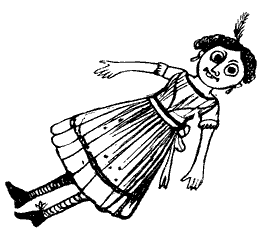
people whose names were
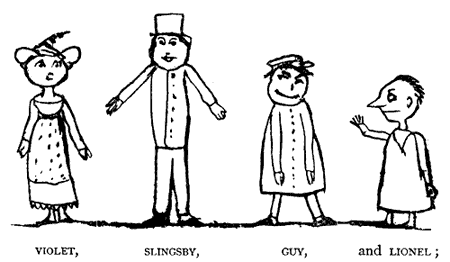
and they all thought they should like to see the world. So they
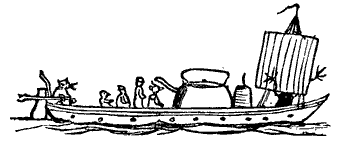
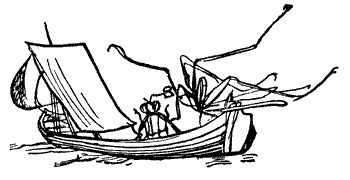
bought a large boat to sail quite round the world by sea, and then
they were to come back on the other side by land. The boat was
painted blue with green spots, and the sail was yellow with red
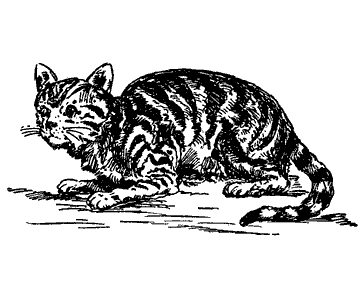
stripes: and, when they set off, they only took a small Cat to steer
and look after the boat, besides an elderly Quangle-Wangle, who
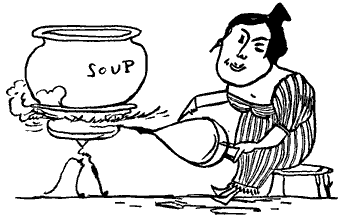
had to cook the dinner and make the tea; for which purposes they
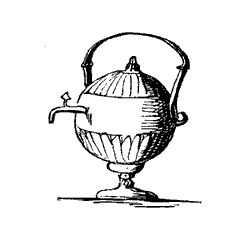
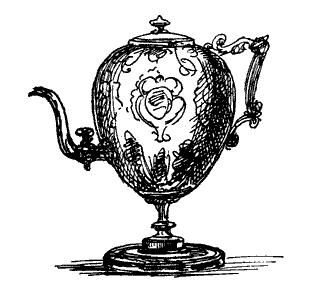
took a large kettle.
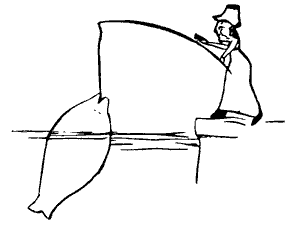
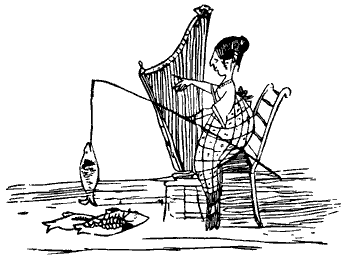
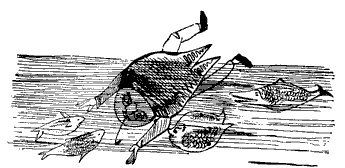
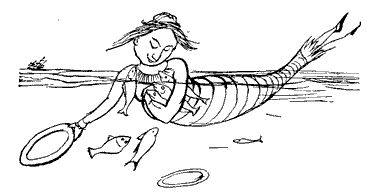
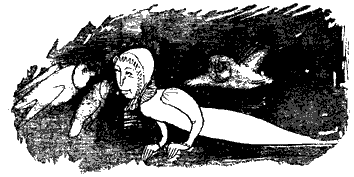
For the first ten days they sailed on beautifully, and found plenty
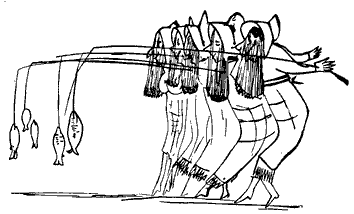
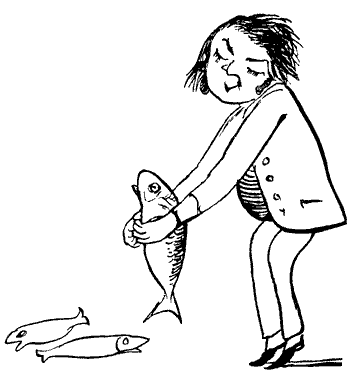
to eat, as there were lots of fish; and they had only to take them
out of the sea with a long spoon, when the Quangle-Wangle instantly
cooked them; and the Pussy-Cat was fed with the bones,
with which she expressed herself pleased, on the whole: so that all
the party were very happy.
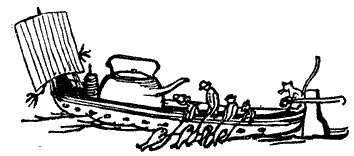
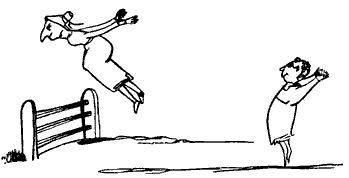
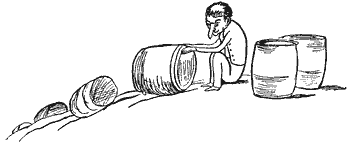
During the daytime, Violet chiefly occupied herself in putting
salt water into a churn; while her three brothers churned it violently,
in the hope that it would turn into butter, which it seldom
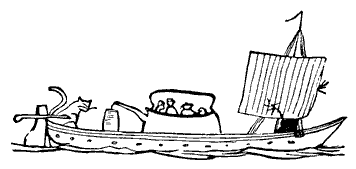
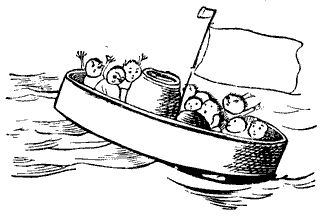
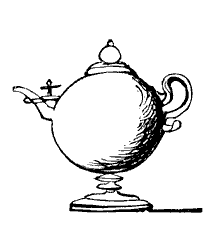
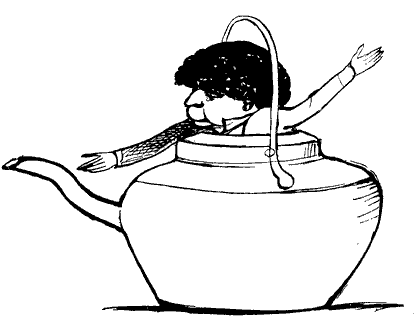
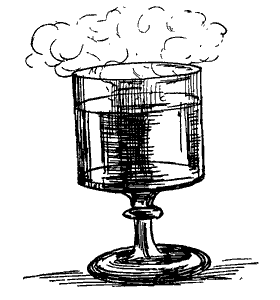
if ever did; and in the evening they all retired into the tea-kettle,
where they all managed to sleep very comfortably, while Pussy and
the Quangle-Wangle managed the boat.
After a time, they saw some land at a distance; and, when they
came to it, they found it was an island made of water quite surrounded
by earth. Besides that, it was bordered by evanescent
isthmuses, with a great gulf-stream running about all over it; so
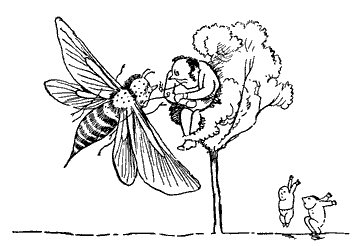
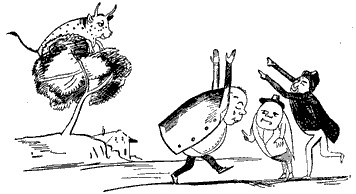
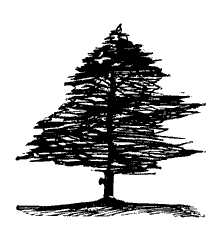
that it was perfectly beautiful, and contained only a single tree,
503 feet high.
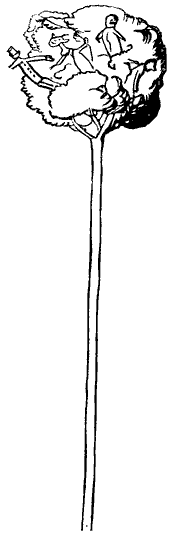
When they had landed, they walked about, but found, to their
great surprise, that the island was quite full of veal-cutlets and
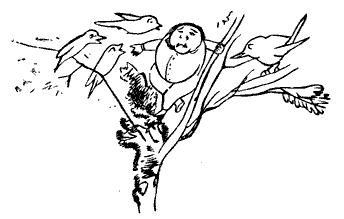
chocolate-drops, and nothing else. So they all climbed up the
single high tree to discover, if possible, if there were any people;
but having remained on the top of the tree for a week, and not
seeing anybody, they naturally concluded that there were no inhabitants;
and accordingly, when they came down, they loaded
the boat with two thousand veal-cutlets
and a million of chocolate-drops;
and these afforded
them sustenance for more than
a month, during which time
they pursued their voyage with
the utmost delight and apathy.
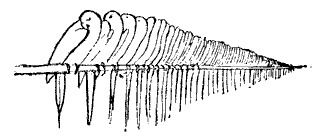
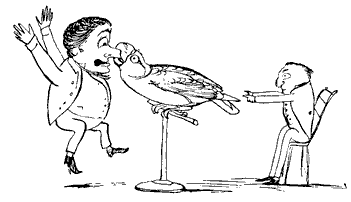
After this they came to a
shore where there were no less than sixty-five
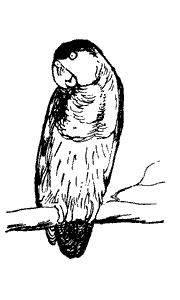
great red parrots with blue tails, sitting
on a rail all of a row, and all fast asleep.
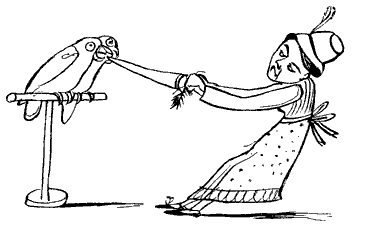
And I am sorry to say that the Pussy-Cat
and the Quangle-Wangle crept softly, and
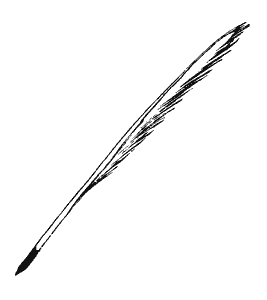
bit off the tail-feathers of all the sixty-five
parrots; for which Violet reproved them
both severely.
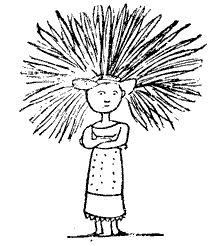
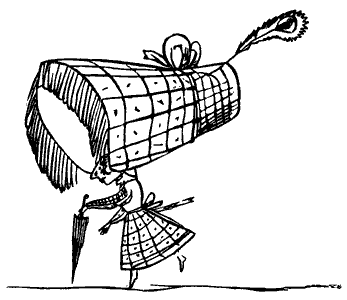
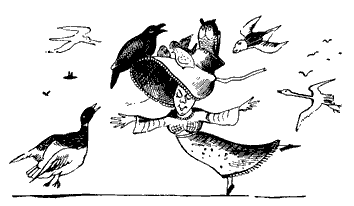
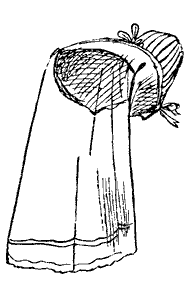
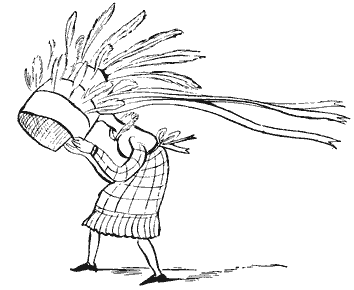
Notwithstanding which, she proceeded
to insert all the feathers—two hundred
and sixty in number—in her bonnet;
thereby causing it to have a lovely and
glittering appearance, highly prepossessing
and efficacious.
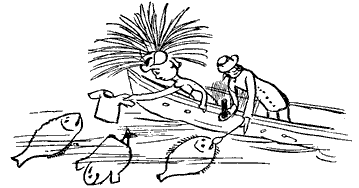
The next thing that happened to them
was in a narrow part of the sea, which was
so entirely full of fishes that the boat could
go on no farther: so they remained there
about six weeks, till they had eaten nearly
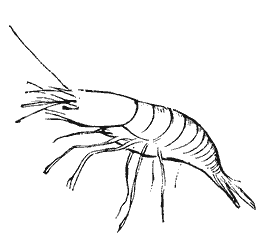
all the fishes, which were soles, and all
ready-cooked, and covered with shrimp-sauce,
so that there was no trouble whatever.
And as the few fishes who remained uneaten complained of
the cold, as well as of the difficulty they had in getting any sleep on
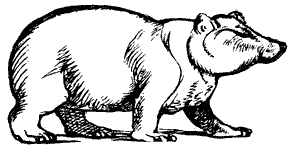
account of the extreme noise made by the arctic bears and the tropical
turnspits, which frequented the neighborhood in great numbers,
Violet most amiably knitted a small woollen frock for several of
the fishes, and Slingsby administered some opium-drops to them;
through which kindness they became quite warm, and slept soundly.
Then they came to a country which was wholly covered with
immense orange-trees of a vast size, and quite full of fruit. So they
all landed, taking with them the tea-kettle, intending to gather some
of the oranges, and place them in it. But, while they were busy
about this, a most dreadfully high wind rose, and blew out most of
the parrot-tail feathers from Violet's bonnet. That, however, was
nothing compared with the calamity of the oranges falling down on
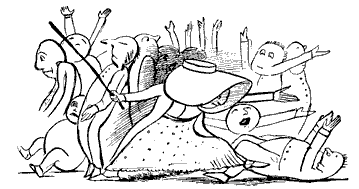
their heads by millions and millions, which thumped and bumped
and bumped and thumped them all so seriously, that they were
obliged to run as hard as they could for their lives; besides that
the sound of the oranges rattling on the tea-kettle was of the most
fearful and amazing nature.
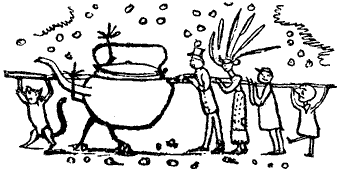
Nevertheless, they got safely to the boat, although considerably
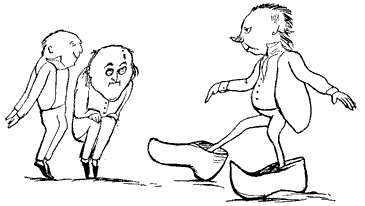
vexed and hurt; and the Quangle-Wangle's right foot was so
knocked about, that he had to sit with his head in his slipper for
at least a week.
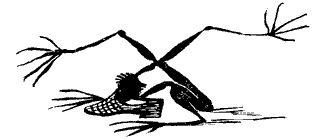
This event made them all for a time rather melancholy: and perhaps
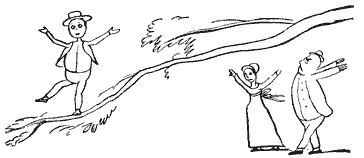
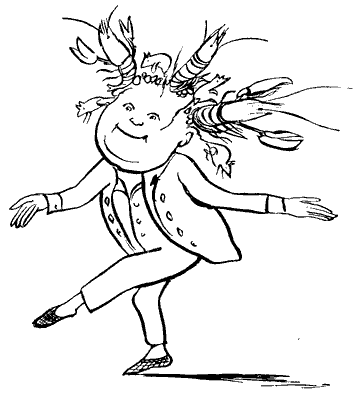
they might never have become less so, had not Lionel, with a
most praiseworthy devotion and perseverance, continued to stand
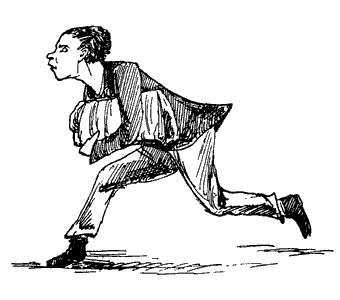
on one leg,
and whistle to them in a loud and lively manner; which
diverted the whole party so extremely
that they gradually recovered
their spirits, and agreed
that whenever they should reach
home, they would subscribe towards
a testimonial to Lionel, entirely
made of gingerbread and
raspberries, as an earnest token of
their sincere and grateful infection.

After sailing on calmly for
several more days, they came to another country, where they were
much pleased and surprised to see a countless multitude of white
Mice with red eyes, all sitting in a great circle, slowly eating
custard-pudding with the most satisfactory and polite demeanor.
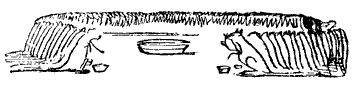
And as the four travellers were rather hungry, being tired of eating
nothing but soles and oranges for so long a period, they held
a council as to the propriety of asking the Mice for some of their
pudding in a humble and affecting manner, by which they could
hardly be otherwise than gratified. It was agreed, therefore, that
Guy should go and ask the Mice, which he immediately did; and
the result was, that they gave a walnut-shell only half full of custard
diluted with water. Now, this displeased Guy, who said, "Out of
such a lot of pudding as you have got, I must say, you might have
spared a somewhat larger quantity." But no sooner had he finished
speaking than the Mice turned round at once, and sneezed at him
in an appalling and vindictive manner (and it is impossible to
imagine a more scroobious and unpleasant sound than that caused by
the simultaneous sneezing of many millions of angry Mice); so that
Guy rushed back to the boat, having first shied his cap into the
middle of the custard-pudding, by which means he completely
spoiled the Mice's dinner.
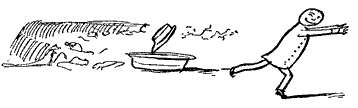
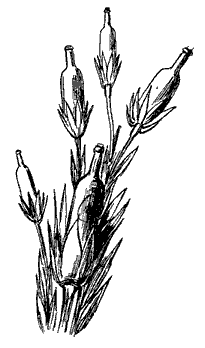
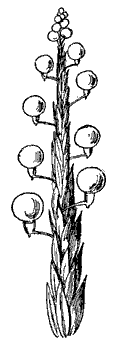
By and by the four children came to a country where there were
no houses, but only an incredibly innumerable number of large
bottles without corks, and of a dazzling and sweetly susceptible blue
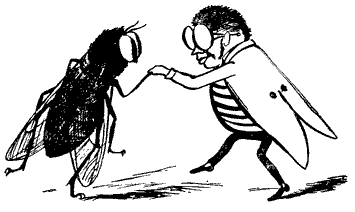
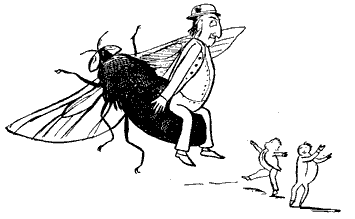
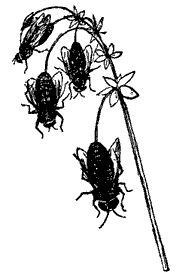
color. Each of these blue bottles contained a Blue-Bottle-Fly; and
all these interesting animals live continually together in the most
copious and rural harmony: nor perhaps in many parts of the world
is such perfect and abject happiness to be found. Violet and
Slingsby and Guy and Lionel were greatly struck with this singular
and instructive settlement; and, having previously asked permission
of the Blue-Bottle-Flies (which was most courteously granted), the
boat was drawn up to the shore, and they proceeded to make tea in
front of the bottles: but as they had no tea-leaves, they merely
placed some pebbles in the hot water; and the Quangle-Wangle
played some tunes over it on an accordion, by which, of course, tea
was made directly, and of the very best quality.
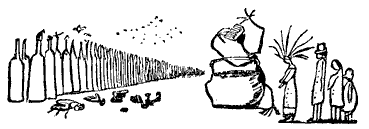
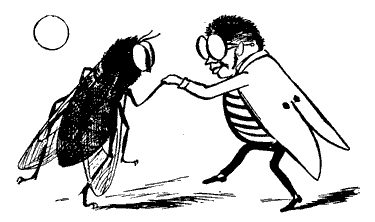
The four children then entered into conversation with the Blue-Bottle-Flies,
who discoursed in a placid and genteel manner, though
with a slightly buzzing accent, chiefly owing to the fact that they
each held a small clothes-brush between their teeth, which naturally
occasioned a fizzy, extraneous utterance.
"Why," said Violet, "would you kindly inform us, do you reside
in bottles; and, if in bottles at all, why not, rather, in green or purple,
or, indeed, in yellow bottles?"
To which questions a very aged Blue-Bottle-Fly answered, "We
found the bottles here all ready to live in; that is to say, our
great-great-great-great-great-grandfathers did: so we occupied them at
once. And, when the winter comes on, we turn the bottles upside
down, and consequently rarely feel the cold at all; and you know
very well that this could not be the case with bottles of any other
color than blue."
"Of course it could not," said Slingsby. "But, if we may take
the liberty of inquiring, on what do you chiefly subsist?"
"Mainly on oyster-patties," said the Blue-Bottle-Fly; "and,
when these are scarce, on raspberry vinegar and Russian leather
boiled down to a jelly."
"How delicious!" said Guy.
To which Lionel added, "Huzz!" And all the Blue-Bottle-Flies
said, "Buzz!"
At this time, an elderly Fly said it was the hour for the evening-song
to be sung; and, on a signal being given, all the Blue-Bottle-Flies
began to buzz at once in a sumptuous and sonorous manner,
the melodious and mucilaginous sounds echoing all over the waters,
and resounding across the tumultuous tops of the transitory titmice
upon the intervening and verdant mountains with a serene and
sickly suavity only known to the truly virtuous. The Moon was
shining slobaciously from the star-bespangled sky, while her light
irrigated the smooth and shiny sides and wings and backs of the
Blue-Bottle-Flies with a peculiar and trivial splendor, while all
Nature cheerfully responded to the cerulean and conspicuous
circumstances.
In many long-after years, the four little travellers looked back to
that evening as one of the happiest in all their lives; and it was
already past midnight when—the sail of the boat having been set
up by the Quangle-Wangle, the tea-kettle and churn placed in their
respective positions, and the Pussy-Cat stationed at the helm—the
children each took a last and affectionate farewell of the Blue-Bottle-Flies,
who walked down in a body to the water's edge to see the
travellers embark.
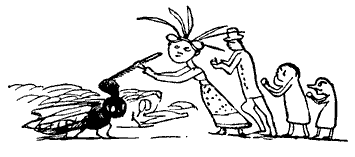
As a token of parting respect and esteem, Violet made a courtesy
quite down to the ground, and stuck one of her few remaining
parrot-tail feathers into the back hair of the most pleasing of the
Blue-Bottle-Flies; while Slingsby, Guy, and Lionel offered them
three small boxes, containing, respectively, black pins, dried figs,
and Epsom salts; and thus they left that happy shore forever.
Overcome by their feelings, the four little travellers instantly
jumped into the tea-kettle, and fell fast asleep. But all along
the shore, for many hours, there was distinctly heard a sound of
severely-suppressed sobs, and of a vague multitude of living creatures
using their pocket-handkerchiefs in a subdued simultaneous
snuffle, lingering sadly along the walloping waves as the boat sailed
farther and farther away from the Land of the Happy Blue-Bottle-Flies.
Nothing particular occurred for some days after these events,
except that, as the travellers were passing a low tract of sand, they
perceived an unusual and gratifying spectacle; namely, a large
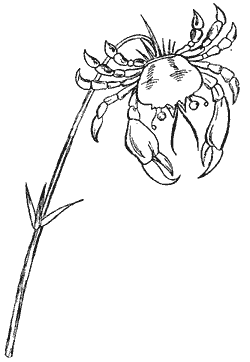
number of Crabs and Crawfish—perhaps six or seven hundred—sitting
by the water-side, and endeavoring to disentangle a vast
heap of pale pink worsted, which they moistened at intervals with
a fluid composed of lavender-water and white-wine negus.
"Can we be of any service to you, O crusty Crabbies?" said the
four children.
"Thank you kindly," said the Crabs consecutively. "We are
trying to make some worsted mittens, but do not know how."
On which Violet, who was perfectly acquainted with the art of
mitten-making, said to the Crabs, "Do your claws unscrew, or are
they fixtures?"
"They are all made to unscrew," said the Crabs; and forthwith
they deposited a great pile of claws close to the boat, with which
Violet uncombed all the pale pink worsted, and then made the loveliest
mittens with it you can imagine. These the Crabs, having
resumed and screwed on their claws, placed cheerfully upon their
wrists, and walked away rapidly on their hind-legs, warbling songs
with a silvery voice and in a minor key.
After this, the four little people sailed on again till they came to
a vast and wide plain of astonishing dimensions, on which nothing
whatever could be discovered at first; but, as the travellers walked
onward, there appeared in the extreme and dim distance a single
object, which on a nearer approach, and on an accurately cutaneous
inspection, seemed to be somebody in a large white wig, sitting on
an arm-chair made of sponge-cakes and oyster-shells. "It does not
quite look like a human being," said Violet doubtfully; nor could
they make out what it really was, till the Quangle-Wangle (who had
previously been round the world) exclaimed softly in a loud voice,
"It is the co-operative Cauliflower!"
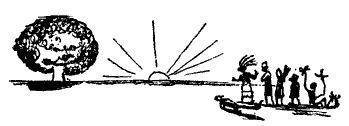
And so, in truth, it was: and they soon found that what they had
taken for an immense wig was in reality the top of the Cauliflower;
and that he had no feet at all, being able to walk tolerably well with
a fluctuating and graceful movement on a single cabbage-stalk,—an
accomplishment which naturally saved him the expense of stockings
and shoes.
Presently, while the whole party from the boat was gazing at
him with mingled affection and disgust, he suddenly arose, and,
in a somewhat plumdomphious manner, hurried off towards the
setting sun,—his steps supported by two superincumbent confidential
Cucumbers, and a large number of Waterwagtails proceeding
in advance of him by three and three in a row,—till he finally
disappeared on the brink of the western sky in a crystal cloud of
sudorific sand.
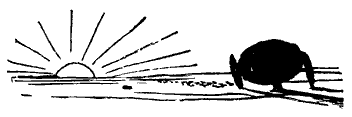
So remarkable a sight, of course, impressed the four children very
deeply; and they returned immediately to their boat with a strong
sense of undeveloped asthma and a great appetite.
Shortly after this, the travellers were obliged to sail directly below
some high overhanging rocks, from the top of one of which a particularly
odious little boy, dressed in rose-colored knickerbockers,
and with a pewter plate upon his head, threw an enormous pumpkin
at the boat, by which it was instantly upset.
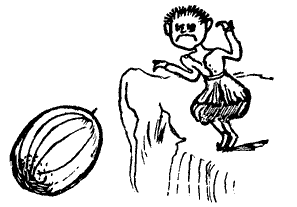
But this upsetting was of no consequence, because all the party
knew how to swim very well: and, in fact, they preferred swimming
about till after the moon rose; when, the water growing chilly, they
sponge-taneously entered the boat. Meanwhile the Quangle-Wangle
threw back the pumpkin with immense force, so that it hit the rocks
where the malicious little boy in rose-colored knickerbockers was
sitting; when, being quite full of lucifer-matches, the pumpkin
exploded surreptitiously into a thousand bits; whereon the rocks
instantly took fire, and the odious little boy became unpleasantly
hotter and hotter and hotter, till his knickerbockers were turned
quite green, and his nose was burnt off.
Two or three days after this had happened, they came to another
place, where they found nothing at all except some wide and deep
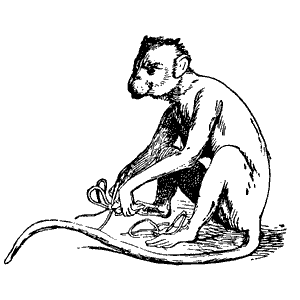
pits full of mulberry-jam. This is the property of the tiny, yellow-nosed
Apes who abound in these districts, and who store up the
mulberry-jam for their food in winter, when they mix it with pellucid
pale periwinkle-soup, and serve it out in wedgewood china-bowls,
which grow freely all over that part of the country. Only
one of the yellow-nosed Apes was on the spot, and he was fast
asleep; yet the four travellers and the Quangle-Wangle and Pussy
were so terrified by the violence and sanguinary sound of his snoring,
that they merely took a small cupful of the jam, and returned
to re-embark in their boat without delay.
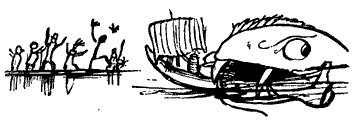
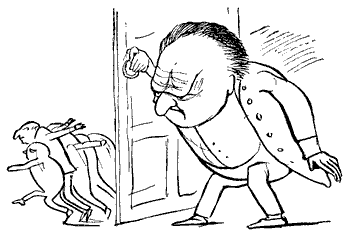
What was their horror on seeing the boat (including the churn
and the tea-kettle) in the mouth of an enormous Seeze Pyder, an
aquatic and ferocious creature truly dreadful to behold, and,
happily, only met with in those excessive longitudes! In a moment,
the beautiful boat was bitten into fifty-five thousand million hundred
billion bits; and it instantly became quite clear that Violet, Slingsby,
Guy, and Lionel could no longer preliminate their voyage by sea.
The four travellers were therefore obliged to resolve on pursuing
their wanderings by land: and, very fortunately, there happened
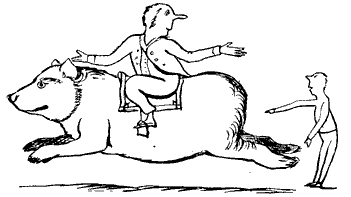
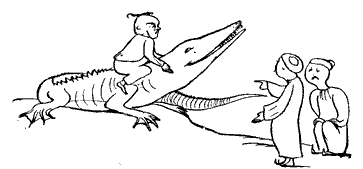
to pass by at that moment an elderly Rhinoceros, on which they
seized; and, all four mounting on his back,—the Quangle-Wangle
sitting on his horn, and holding on by his ears, and the Pussy-Cat
swinging at the end of his tail,—they set off, having only four small
beans and three pounds of mashed potatoes to last through their
whole journey.
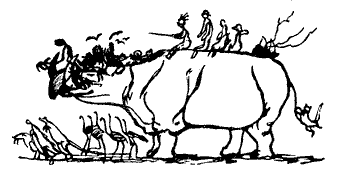
They were, however, able to catch numbers of the chickens and
turkeys and other birds who incessantly alighted on the head of the
Rhinoceros for the purpose of gathering the seeds of the rhododendron-plants which grew there; and these creatures they cooked in
the most translucent and satisfactory manner by means of a fire
lighted on the end of the Rhinoceros's back. A crowd of Kangaroos
and gigantic Cranes accompanied them, from feelings of curiosity
and complacency; so that they were never at a loss for company,
and went onward, as it were, in a sort of profuse and triumphant
procession.
Thus in less than eighteen weeks they all arrived safely at
home, where they were received by their admiring relatives with
joy tempered with contempt, and where they finally resolved to
carry out the rest of their travelling-plans at some more favorable
opportunity.
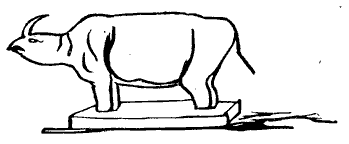
As for the Rhinoceros, in token of their grateful adherence, they
had him killed and stuffed directly, and then set him up outside
the door of their father's house as a diaphanous doorscraper.
THE HISTORY OF THE SEVEN FAMILIES OF THE LAKE PIPPLE-POPPLE.
CHAPTER I.
INTRODUCTORY.
In former days,—that is to say, once upon a time,—there lived
in the Land of Gramble-Blamble seven families. They lived
by the side of the great Lake Pipple-Popple (one of the seven
families, indeed, lived in the lake), and on the outskirts of the city
of Tosh, which, excepting when it was quite dark, they could see
plainly. The names of all these places you have probably heard
of; and you have only not to look in your geography-books to
find out all about them.
Now, the seven families who lived on the borders of the great
Lake Pipple-Popple were as follows in the next chapter.
CHAPTER II.
THE SEVEN FAMILIES.
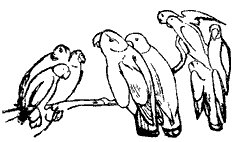
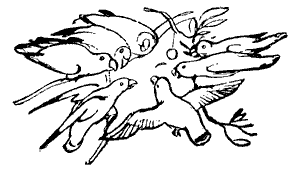
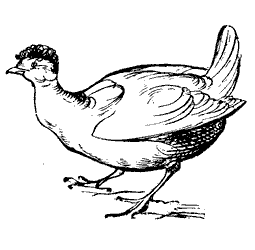
There was a family of two old Parrots and seven young
Parrots.
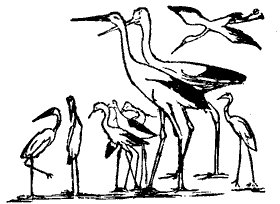
There was a family of two old Storks and seven young Storks.
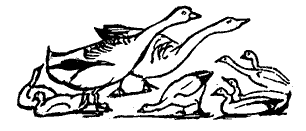
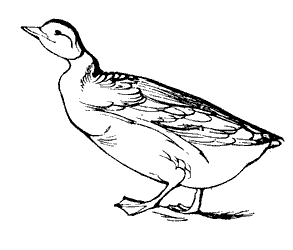
There was a family of two old Geese and seven young Geese.
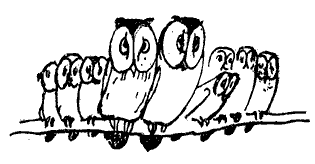
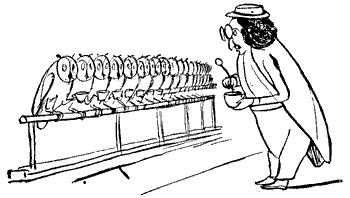
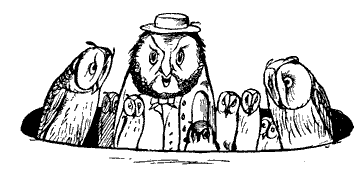
There was a family of two old Owls and seven young Owls.
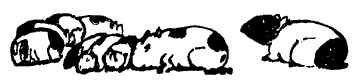
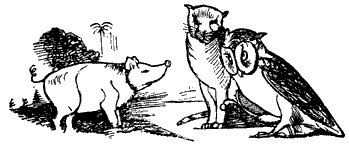
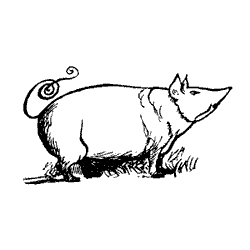
There was a family of two old Guinea Pigs and seven young
Guinea Pigs.
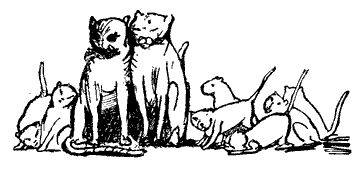
There was a family of two old Cats and seven young Cats.
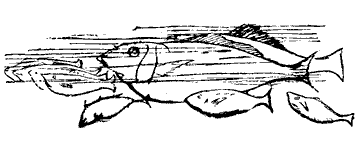
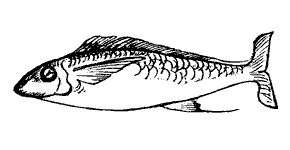
And there was a family of two old Fishes and seven young
Fishes.
CHAPTER III.
THE HABITS OF THE SEVEN FAMILIES.
The Parrots lived upon the Soffsky-Poffsky trees, which were
beautiful to behold, and covered with blue leaves; and they
fed upon fruit, artichokes, and striped beetles.
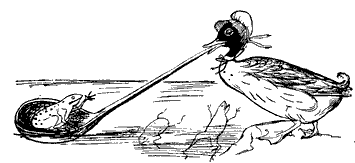
The Storks walked in and out of the Lake Pipple-Popple, and
ate frogs for breakfast, and buttered toast for tea; but on account
of the extreme length of their legs they could not sit down, and so
they walked about continually.
The Geese, having webs to their feet, caught quantities of flies,
which they ate for dinner.
The Owls anxiously looked after mice, which they caught, and
made into sago-puddings.
The Guinea Pigs toddled about the gardens, and ate lettuces
and Cheshire cheese.
The Cats sate still in the sunshine, and fed upon sponge biscuits.
The Fishes lived in the lake, and fed chiefly on boiled periwinkles.
And all these seven families lived together in the utmost fun and
felicity.
CHAPTER IV.
THE CHILDREN OF THE SEVEN FAMILIES ARE SENT AWAY.
One day all the seven fathers and the seven mothers of the
seven families agreed that they would send their children
out to see the world.
So they called them all together, and gave them each eight
shillings and some good advice, some chocolate-drops, and a small
green morocco pocket-book to set down their expenses in.
They then particularly entreated them not to quarrel; and all
the parents sent off their children with a parting injunction.
"If," said the old Parrots, "you find a cherry, do not fight
about who should have it."
"And," said the old Storks, "if you find a frog, divide it carefully
into seven bits, but on no account quarrel about it."
And the old Geese said to the seven young Geese, "Whatever
you do, be sure you do not touch a plum-pudding flea."
And the old Owls said, "If you find a mouse, tear him up into
seven slices, and eat him cheerfully, but without quarrelling."
And the old Guinea Pigs said, "Have a care that you eat your
lettuces, should you find any, not greedily, but calmly."
And the old Cats said, "Be particularly careful not to meddle
with a clangle-wangle if you should see one."
And the old Fishes said, "Above all things, avoid eating a blue
boss-woss; for they do not agree with fishes, and give them a pain
in their toes."
So all the children of each family thanked their parents; and,
making in all forty-nine polite bows, they went into the wide
world.
CHAPTER V.
THE HISTORY OF THE SEVEN YOUNG PARROTS.
The seven young Parrots had not gone far, when they saw
a tree with a single cherry on it, which the oldest Parrot
picked instantly; but the other six, being extremely hungry, tried
to get it also. On which all the seven began to fight; and they
scuffled,
and huffled,
and ruffled,
and shuffled,
and puffled,
and muffled,
and buffled,
and duffled,
and fluffled,
and guffled,
and bruffled, and
screamed, and shrieked, and squealed,
and squeaked, and clawed, and snapped, and bit, and bumped,
and thumped, and dumped, and flumped each other, till they were
all torn into little bits; and at last there was nothing left to record
this painful incident except the cherry and seven small green
feathers.
And that was the vicious and voluble end of the seven young
Parrots.
CHAPTER VI.
THE HISTORY OF THE SEVEN YOUNG STORKS.
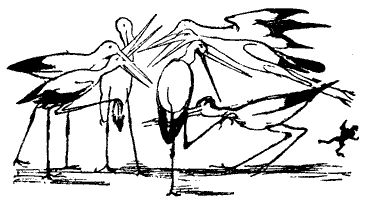
When the seven young Storks set out, they walked or flew for
fourteen weeks in a straight line, and for six weeks more in
a crooked one; and after that they ran as hard as they could for
one hundred and eight miles; and after that they stood still, and
made a himmeltanious chatter-clatter-blattery noise with their bills.
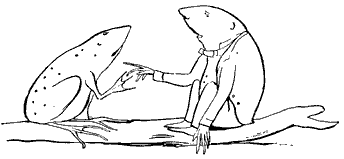
About the same time they perceived a large frog, spotted with
green, and with a sky-blue stripe under each ear.
So, being hungry, they immediately flew at him, and were going
to divide him into seven pieces, when they began to quarrel as to
which of his legs should be taken off first. One said this, and
another said that; and while they were all quarrelling, the frog
hopped away. And when they saw that he was gone, they began
to chatter-clatter,
blatter-platter,
patter-blatter,
matter-clatter,
flatter-quatter,
more violently than ever; and after they
had fought for a week, they pecked each other all to little pieces,
so that at last nothing was left of any of them except their bills.
And that was the end of the seven young Storks.
CHAPTER VII.
THE HISTORY OF THE SEVEN YOUNG GEESE.
When the seven young Geese began to travel, they went over
a large plain, on which there was but one tree, and that was,
a very bad one.
So four of them went up to the top of it, and looked about
them; while the other three waddled up and down, and repeated
poetry, and their last six lessons in arithmetic, geography, and
cookery.
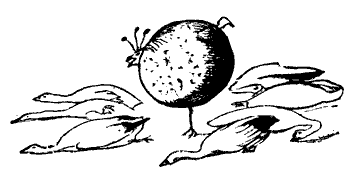
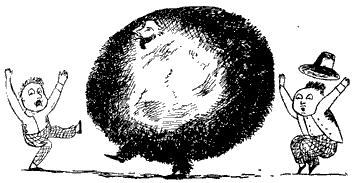
Presently they perceived, a long way off, an object of the most
interesting and obese appearance, having a perfectly round body
exactly resembling a boiled plum-pudding, with two little wings, and
a beak, and three feathers growing out of his head, and only one
leg.
So, after a time, all the seven young Geese said to each
other, "Beyond all doubt this beast must be a Plum-pudding
Flea!"
On which they incautiously began to sing aloud,
"Plum-pudding Flea,
Plum-pudding Flea,
Wherever you be,
Oh! come to our tree,
And listen, oh! listen, oh! listen to me!"
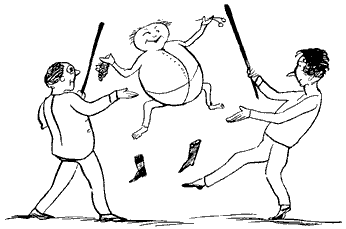
And no sooner had they sung this verse than the Plum-pudding
Flea began to hop and skip on his one leg with the
most dreadful velocity, and came straight to the tree, where he
stopped, and looked about him in a vacant and voluminous
manner.
On which the seven young Geese were greatly alarmed, and all
of a tremble-bemble: so one of them put out his long neck, and
just touched him with the tip of his bill; but no sooner had he
done this than the Plum-pudding Flea skipped and hopped about
more and more, and higher and higher; after which he opened
his mouth, and, to the great surprise and indignation of the seven
Geese, began to bark so loudly and furiously and terribly, that
they were totally unable to bear the noise; and by degrees every
one of them suddenly tumbled down quite dead.
So that was the end of the seven young Geese.
CHAPTER VIII.
THE HISTORY OF THE SEVEN YOUNG OWLS.
When the seven young Owls set out, they sate every now and
then on the branches of old trees, and never went far at
one time.
And one night, when it was quite dark, they thought they heard
a mouse; but, as the gas-lamps were not lighted, they could not
see him.
So they called out, "Is that a mouse?"
On which a mouse answered, "Squeaky-peeky-weeky! yes, it is!"
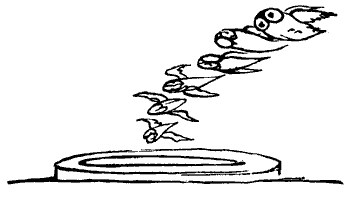
And immediately all the young Owls threw themselves off the
tree, meaning to alight on the ground; but they did not perceive
that there was a large well below them, into which they all fell superficially,
and were every one of them drowned in less than half a
minute.
So that was the end of the seven young Owls.
CHAPTER IX.
THE HISTORY OF THE SEVEN YOUNG GUINEA PIGS.
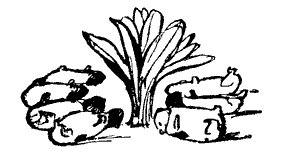
The seven young Guinea Pigs went into a garden full of goose-berry-bushes
and tiggory-trees, under one of which they fell
asleep. When they awoke, they saw a large lettuce, which had
grown out of the ground while they had been sleeping, and which
had an immense number of green leaves. At which they all
exclaimed,—
"Lettuce! O lettuce
Let us, O let us,
O lettuce-leaves,
O let us leave this tree, and eat
Lettuce, O let us, lettuce-leaves!"
And instantly the seven young Guinea Pigs rushed with such extreme
force against the lettuce-plant, and hit their heads so vividly
against its stalk, that the concussion brought on directly an incipient
transitional inflammation of their noses, which grew worse and worse
and worse and worse, till it incidentally killed them all seven.
And that was the end of the seven young Guinea Pigs.
CHAPTER X.
THE HISTORY OF THE SEVEN YOUNG CATS.
The seven young Cats set off on their travels with great delight
and rapacity. But, on coming to the top of a high hill, they
perceived at a long distance off a Clangle-Wangle (or, as it is more
properly written, Clangel-Wangel); and, in spite of the warning
they had had, they ran straight up to it.
(Now, the Clangle-Wangle is a most dangerous and delusive
beast, and by no means commonly to be met with. They live in
the water as well as on land, using their long tail as a sail when in
the former element. Their speed is extreme; but their habits of
life are domestic and superfluous, and their general demeanor pensive
and pellucid. On summer evenings, they may sometimes be
observed near the Lake Pipple-Popple, standing on their heads, and
humming their national melodies. They subsist entirely on vegetables,
excepting when they eat veal or mutton or pork or beef or
fish or saltpetre.)
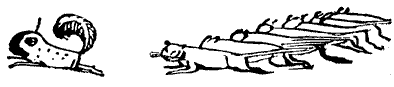
The moment the Clangle-Wangle saw the seven young Cats approach,
he ran away; and as he ran straight on for four months,
and the Cats, though they continued to run, could never overtake
him, they all gradually died of fatigue and exhaustion, and never
afterwards recovered.
And this was the end of the seven young Cats.
CHAPTER XI.
THE HISTORY OF THE SEVEN YOUNG FISHES.
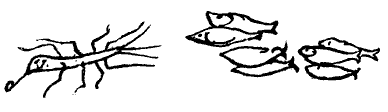
The seven young Fishes swam across the Lake Pipple-Popple,
and into the river, and into the ocean; where, most unhappily
for them, they saw, on the fifteenth day of their travels, a
bright-blue Boss-Woss, and instantly swam after him. But the Blue
Boss-Woss plunged into a perpendicular,
spicular,
orbicular,
quadrangular,
circular depth of soft mud;
where, in fact, his house was.
And the seven young Fishes, swimming with great and uncomfortable
velocity, plunged also into the mud quite against their will,
and, not being accustomed to it, were all suffocated in a very short
period.
And that was the end of the seven young Fishes.
CHAPTER XII.
CHAPTER XII.
OF WHAT OCCURRED SUBSEQUENTLY.
After it was known that the
seven young Parrots,
and the seven young Storks,
and the seven young Geese,
and the seven young Owls,
and the seven young Guinea Pigs,
and the seven young Cats,
and the seven young Fishes,
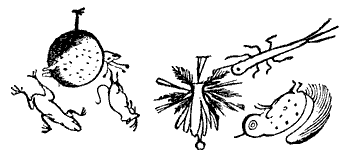
were all dead, then the Frog, and the Plum-pudding Flea, and the
Mouse, and the Clangle-Wangle, and the Blue Boss-Woss, all met
together to rejoice over their good fortune. And they collected
the seven feathers of the seven young Parrots, and the seven bills of
the seven young Storks, and the lettuce, and the cherry; and
having placed the latter on the lettuce, and the other objects in a
circular arrangement at their base, they danced a hornpipe round
all these memorials until they were quite tired; after which they
gave a tea-party, and a garden-party, and a ball, and a concert, and
then returned to their respective homes full of joy and respect,
sympathy, satisfaction, and disgust.
CHAPTER XIII.
OF WHAT BECAME OF THE PARENTS OF THE FORTY-NINE CHILDREN.
BUT when the two old Parrots,
and the two old Storks,
and the two old Geese,
and the two old Owls,
and the two old Guinea Pigs,
and the two old Cats,
and the two old Fishes,
became aware, by reading in the newspapers, of the calamitous extinction
of the whole of their families, they refused all further sustenance;
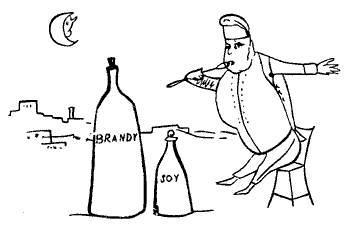
and, sending out to various shops, they purchased great
quantities of Cayenne pepper and brandy and vinegar and blue
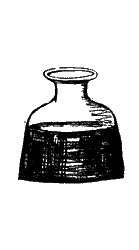
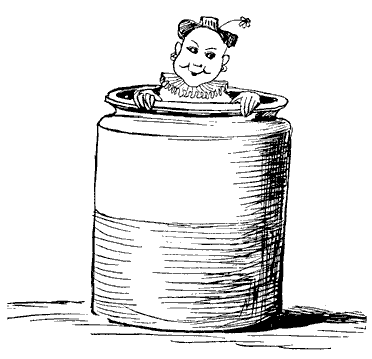
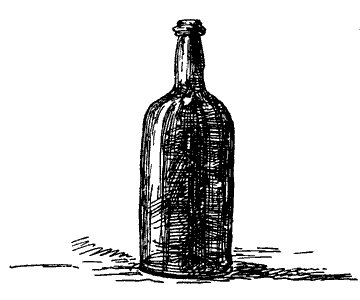
sealing-wax, besides seven immense glass bottles with air-tight
stoppers. And, having done this, they ate a light supper of brown-bread
and Jerusalem artichokes, and took an affecting and formal
leave of the whole of their acquaintance, which was very numerous
and distinguished and select and responsible and ridiculous.
CHAPTER XIV.
CONCLUSION.
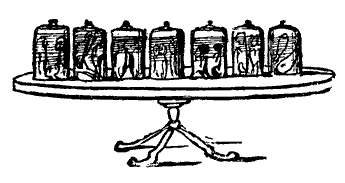
And after this they filled the bottles with the ingredients for
pickling, and each couple jumped into a separate bottle; by
which effort, of course, they all died immediately, and became
thoroughly pickled in a few minutes; having previously made
their wills (by the assistance of the most eminent lawyers of the
district), in which they left strict orders that the stoppers of the
seven bottles should be carefully sealed up with the blue sealing-wax
they had purchased; and that they themselves, in the bottles,
should be presented to the principal museum of the city of Tosh,
to be labelled with parchment or any other anti-congenial succedaneum,
and to be placed on a marble table with silver-gilt legs, for
the daily inspection and contemplation, and for the perpetual
benefit, of the pusillanimous public.
And if you ever happen to go to Gramble-Blamble, and visit
that museum in the city of Tosh, look for them on the ninety-eighth
table in the four hundred and twenty-seventh room of the
right-hand corridor of the left wing of the central quadrangle of
that magnificent building; for, if you do not, you certainly will
not see them.

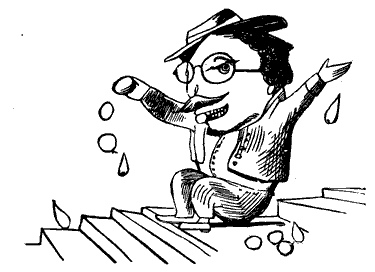
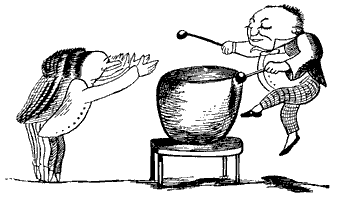
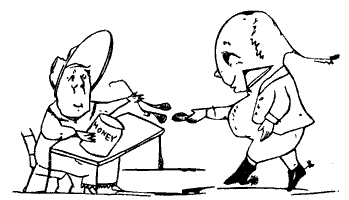
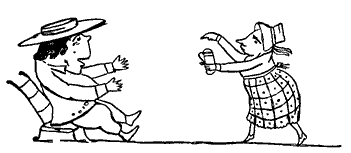
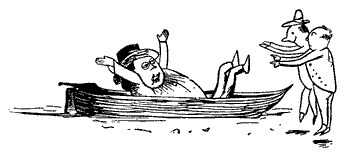
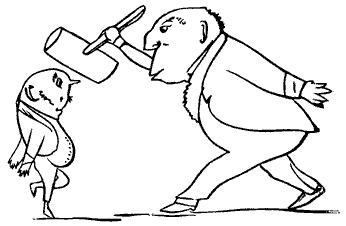
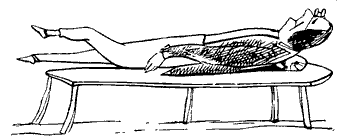
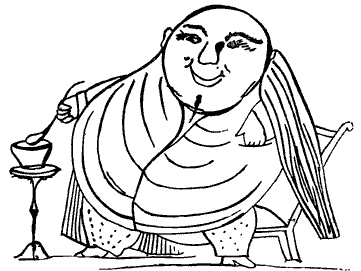
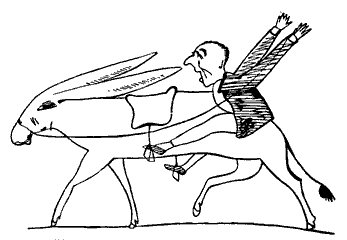
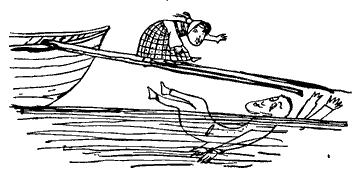
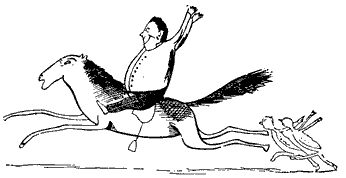
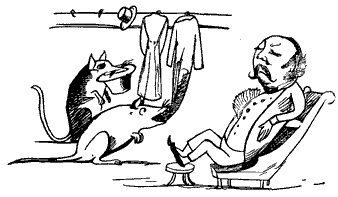
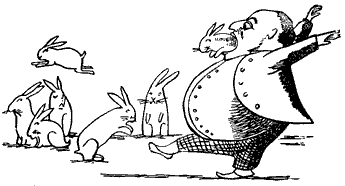
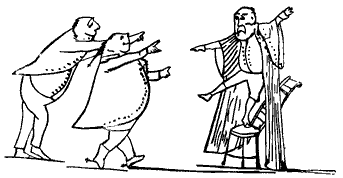
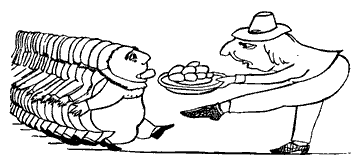
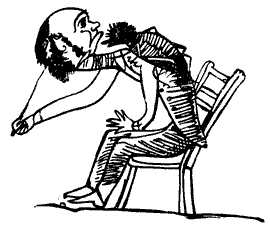
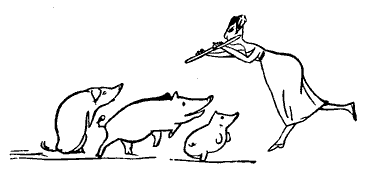
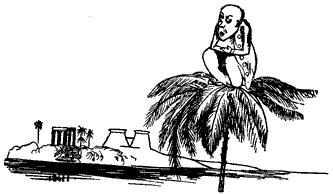
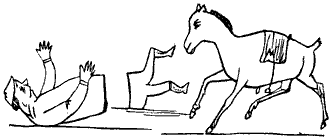
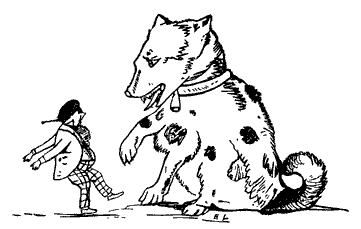
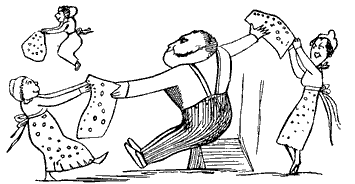
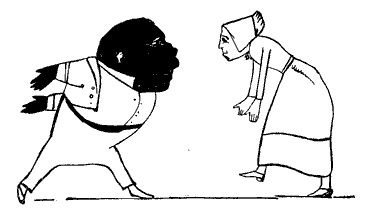
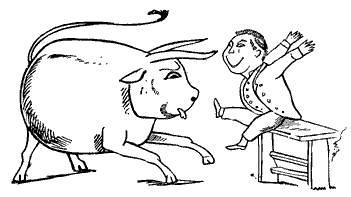
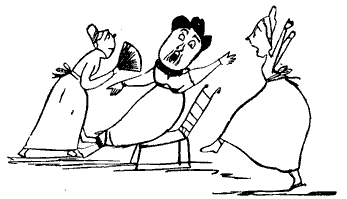
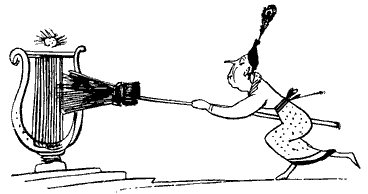
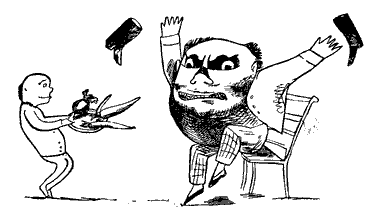
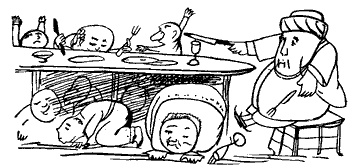
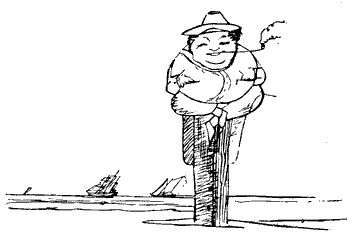
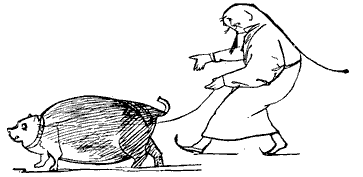
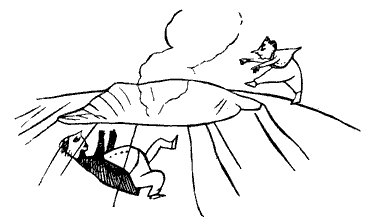
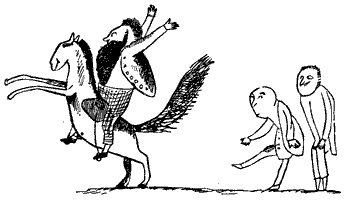
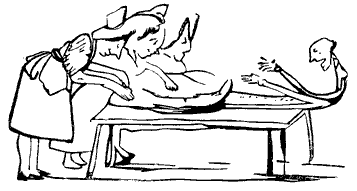
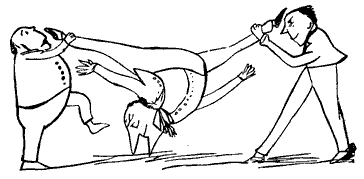
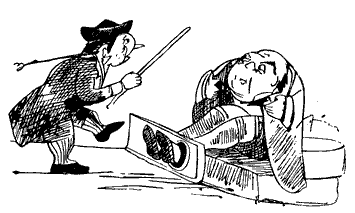
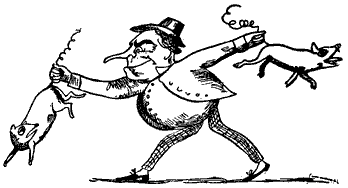
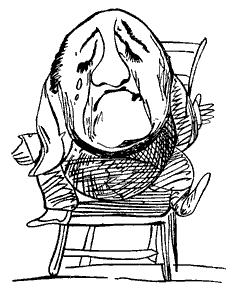
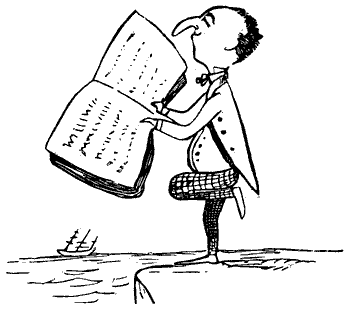
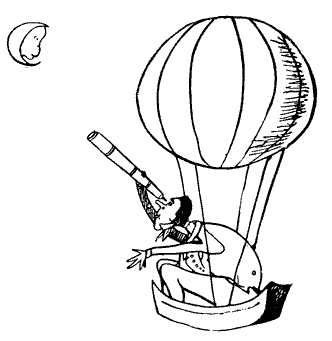
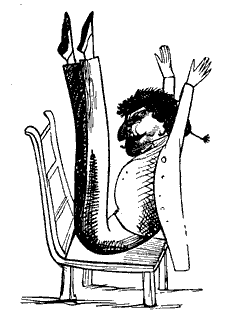
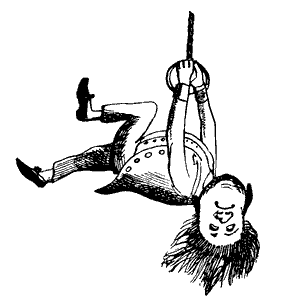
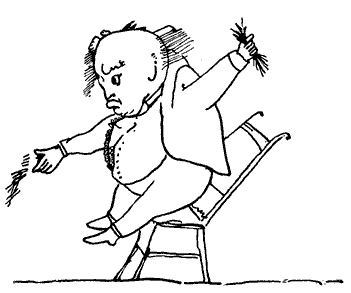
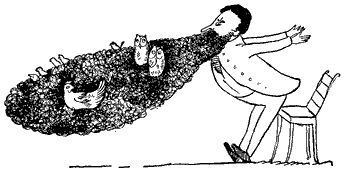
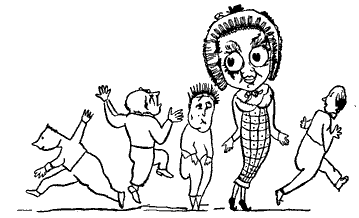
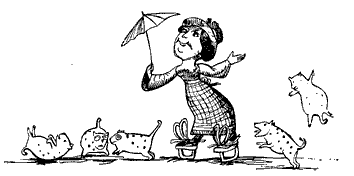
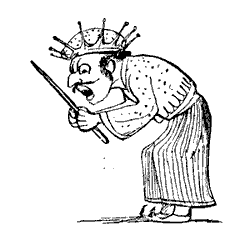
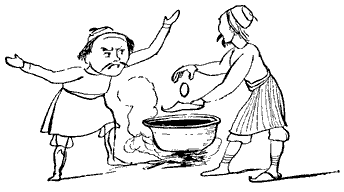
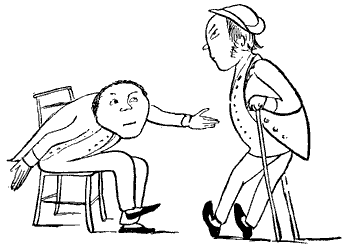
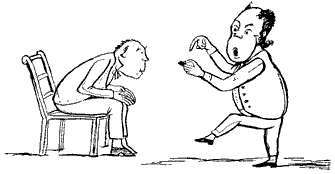
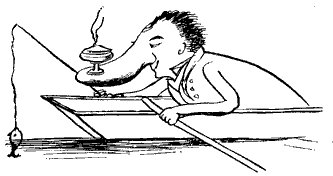
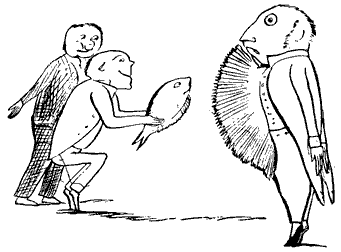
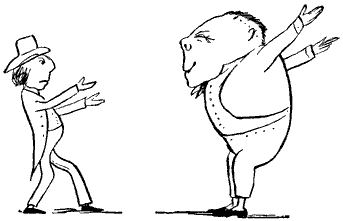
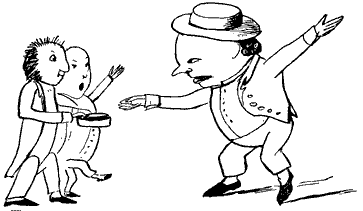
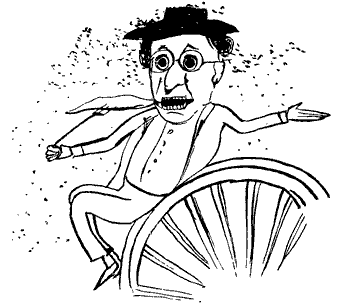
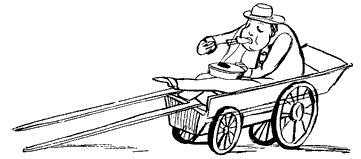
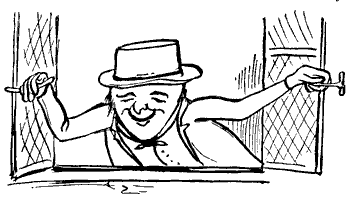
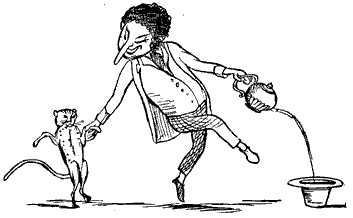
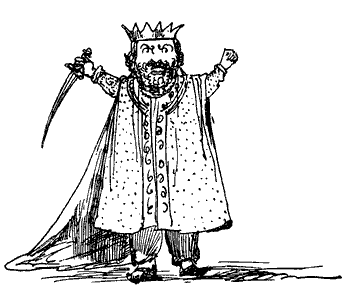
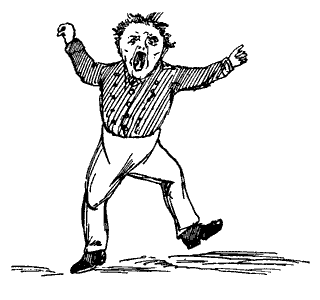
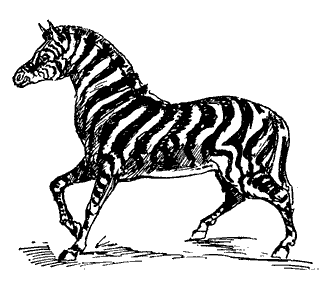
 tumbled down, and hurt his Arm, against a bit of wood,
 said. "My Boy, oh, do not cry; it cannot do you good!"
 said, "A Cup of Coffee hot can't do you any harm."
 said, "A Doctor should be fetched, and he would cure the arm."
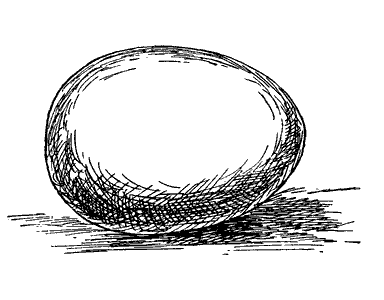
 said, "An Egg beat up with milk would quickly make him well."
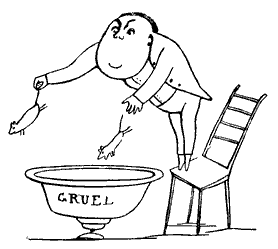
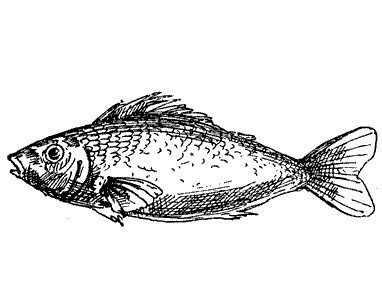
 said, "A Fish, if broiled, might cure, if only by the smell."
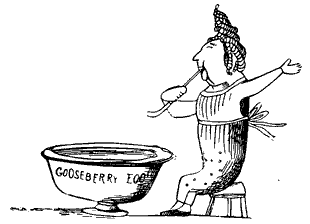
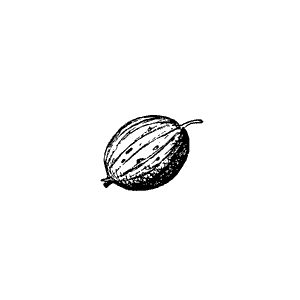
 said, "Green Gooseberry fool, the best of cures I hold."
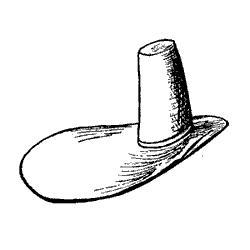
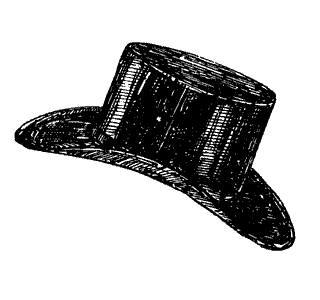
 said, "His Hat should be kept on, to keep him from the cold."
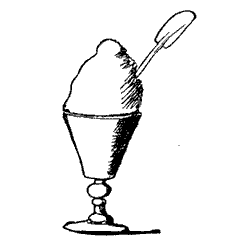
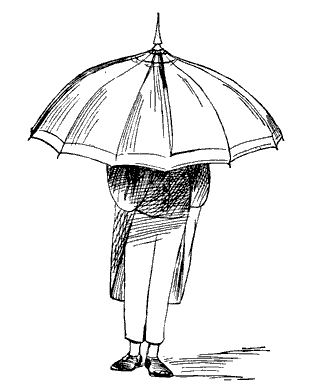
 said, "Some Ice upon his head will make him better soon."
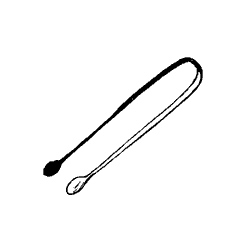
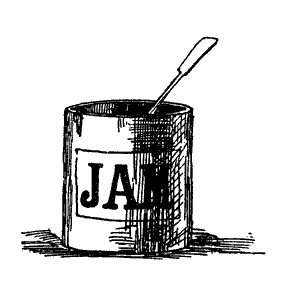
 said, "Some Jam, if spread on bread, or given in a spoon!"
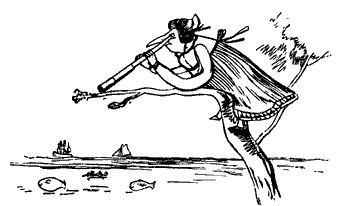
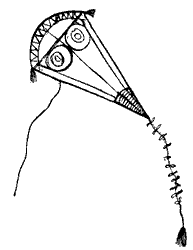
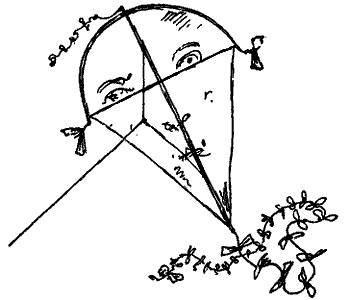
 said, "A Kangaroo is here,—this picture let him see."
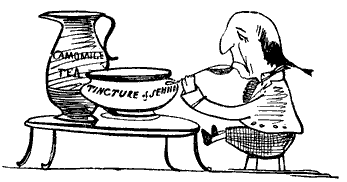
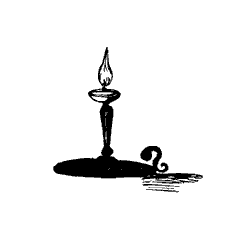
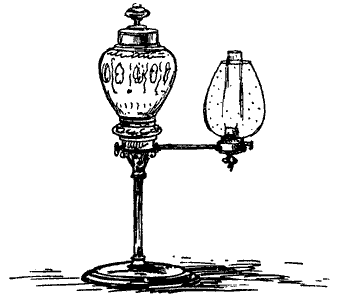
 said, "A Lamp pray keep alight, to make some barley tea."
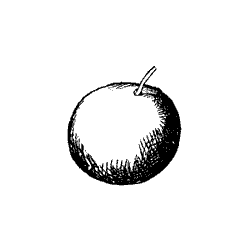
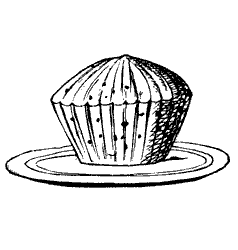
 said, "A Mulberry or two might give him satisfaction."
 said, "Some Nuts, if rolled about, might be a slight attraction."
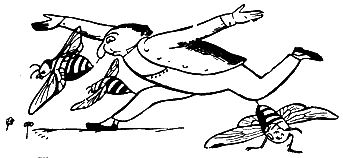
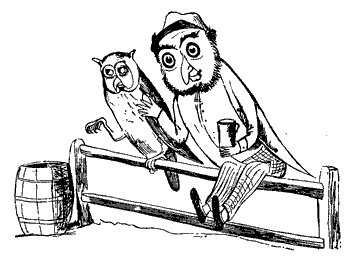
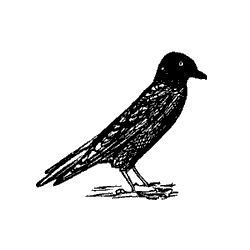
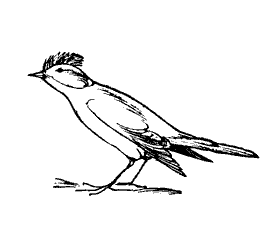
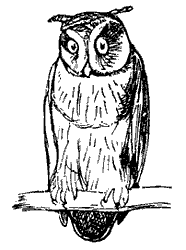
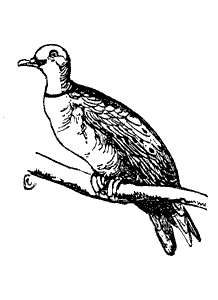
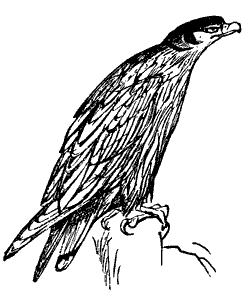
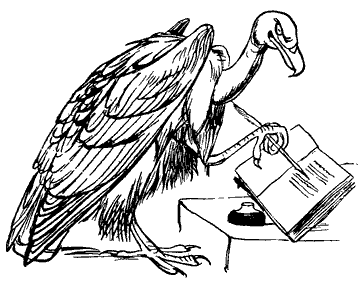
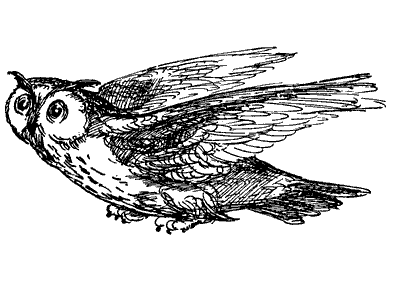
 said, "An Owl might make him laugh, if only it would wink."

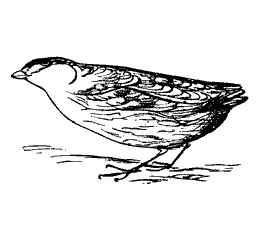
 said, "A Quince I recommend,—a Quince, or else a Quail."
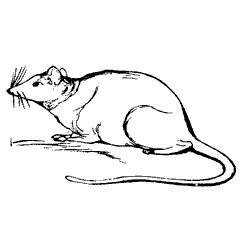
 said, "Some Rats might make him move, if fastened by their tail."
 said, "A Song should now be sung, in hopes to make him laugh!"
 said, "A Turnip might avail, if sliced or cut in half!"
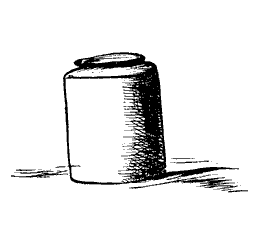
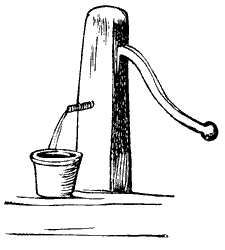
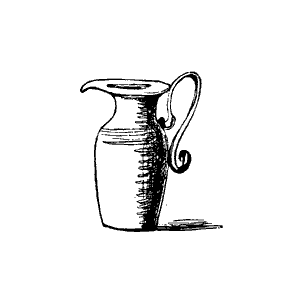
 said, "An Urn, with water hot, place underneath his chin!"
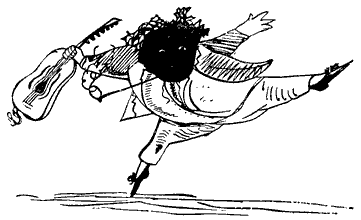
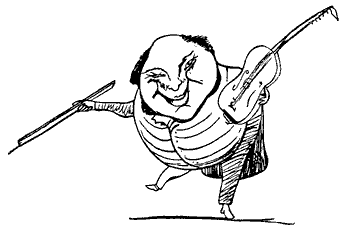
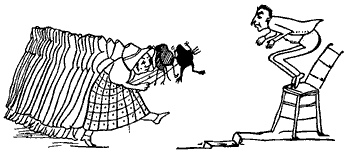
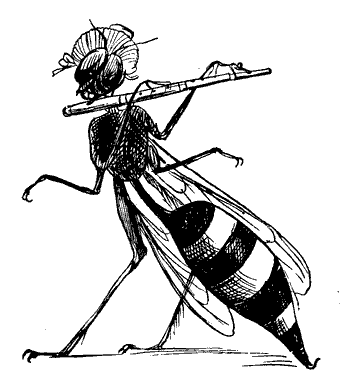
 said, "I'll stand upon a chair, and play a Violin!"
 said, "Some Whisky-Whizzgigs fetch, some marbles and a ball!"
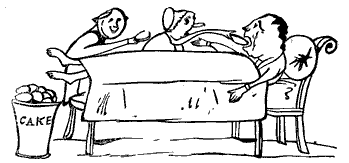
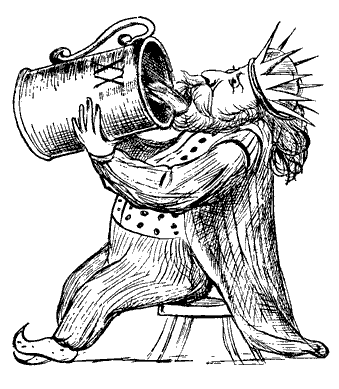
 said, "Some double XX ale would be the best of all!"
 said, "Some Yeast mixed up with salt would make a perfect plaster!"
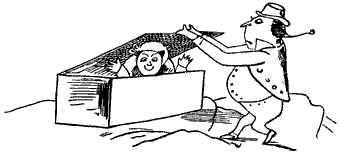
 said, "Here is a box of Zinc! Get in, my little master!